
energy Crossword Puzzles
Energy Forms, transfers and transfermations and specific heat 2023-11-21

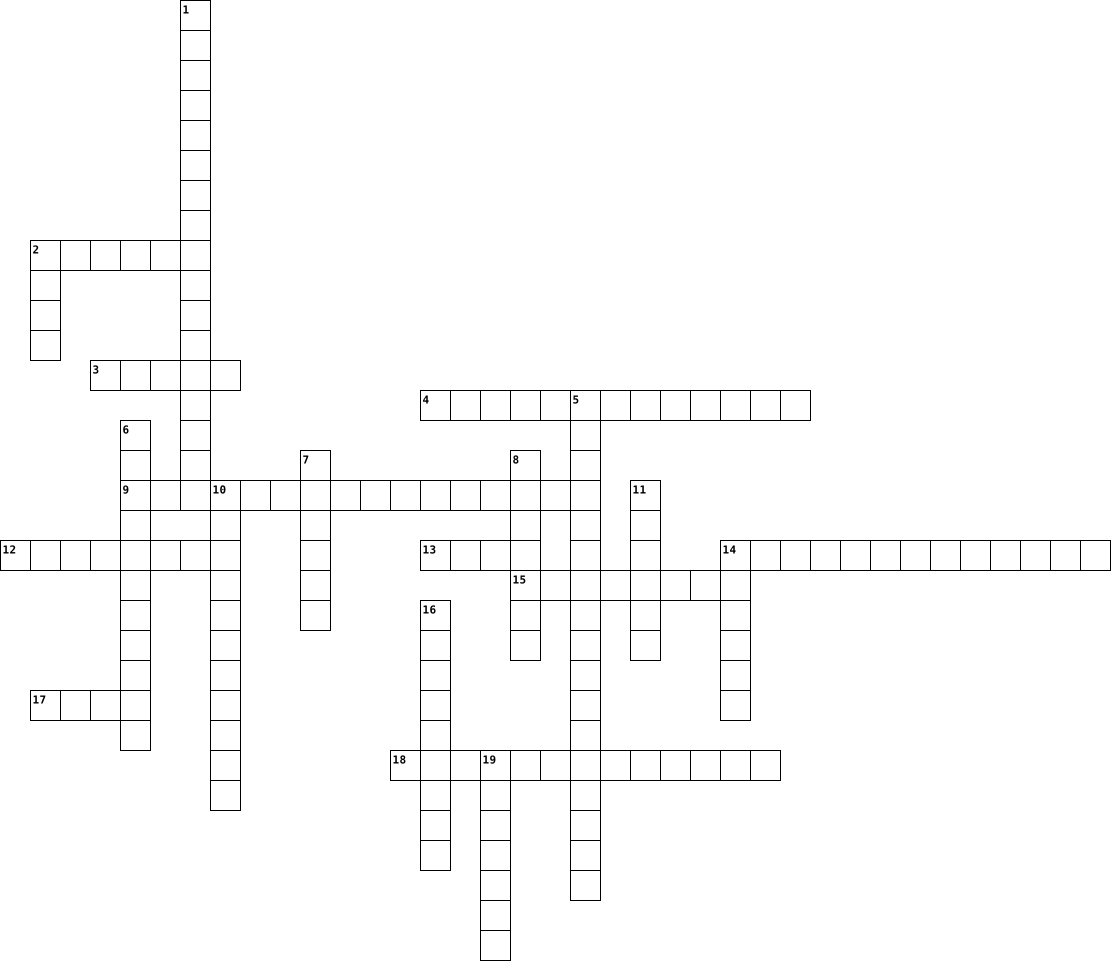
Across
- a region around a magnetic material
- the change of energy from one form to another
- the measure of energy
- the heat required to raise an objects tempture
- is the power of ann atoms charged particles
- the heat present in a substance
- the process in which energy transfers from one place to another
- the energy due to its motion or position
Down
- the force exerted by magnets
- the result when a force either sound or pressure makes a substance vibrate
- the energy responsible for the temperature
- the radiant energy that travels in waves
- the energy released during a nuclear fission or fusion
- the ability to do work
- energy in motion
- Energy due to its position or chemical composition
16 Clues: energy in motion • the measure of energy • the ability to do work • the force exerted by magnets • the heat present in a substance • a region around a magnetic material • the radiant energy that travels in waves • the energy due to its motion or position • the energy responsible for the temperature • is the power of ann atoms charged particles • ...
energy forms and sources 2020-11-04

Across
- the ability to do work
- a form of energy that is not moving
- bow and arow's use this form of energy
- is a form of gas
- energy from dead and alive things
Down
- energy from the flow of water
- a form of energy that is moving
- helps extract most forms of energy
- energy from the core of the earth
- a form of energy from the air
- energy from the sun
- energy from animals
- kinetic and potential energy
- a form of energy from the sun
14 Clues: is a form of gas • energy from the sun • energy from animals • the ability to do work • kinetic and potential energy • energy from the flow of water • a form of energy from the air • a form of energy from the sun • a form of energy that is moving • energy from the core of the earth • energy from dead and alive things • helps extract most forms of energy • ...
Matter, Motion and Friction 2018-11-23

Across
- change in position over a period of time
- the tendency of an object to resist change in the distance or speed of its motion
- energy energy made by a change in a substance or substances
- strength or energy as an attribute of physical action
- the power to do work, make a change, or move objects
- the way or course by which something moves or faces
- large body of matter with no definite shape
- energy the energy a body has because of its position, electrical change or structure
- metric until of measurement for volume
- occupies space and mass
- an object that has mass
Down
- how heavy something is determined by the pull of gravity on the object's mass
- the amount of space that a substance or object occupies
- energy the energy an object has because of its motion
- the rate of movement
- the amount of space between things
- in a state in which equal and opposite forces cancel each other out
- the resistance of one object against another
- a force that pushed or pulls certain metals
- energy a form of energy that allows us to hear
- the rate of movement in a certain direction
- metric unit of measurement for mass
- to pull toward
- of force invisible limes of magnetic force that flow through and around an object
- metric unit of measurement for length
25 Clues: to pull toward • the rate of movement • occupies space and mass • an object that has mass • the amount of space between things • metric unit of measurement for mass • metric unit of measurement for length • metric until of measurement for volume • change in position over a period of time • a force that pushed or pulls certain metals • the rate of movement in a certain direction • ...
Physics Crossword 2022-05-26

Across
- The law of F=-kx
- a quantity without direction
- The gravitational force
- The energy obtained by position
- The force resisting relative motion
- Energy of electromagnetic radiation
- the electric potential difference
- The amount of matter in an object
- The length of which traveled.
- The rate of change in velocity
- Contact force perpendicular to the surface
- mass per volume
- The energy obtained by motion
- quantity of inertia
- The change in position
- The time of one cycle of a wave
Down
- A push or pull
- The rate of change in position
- opposition to current flow
- Sum of potential and kinetic energy
- a quantity with direction
- The type of energy due to chemical bonds.
- The maximum change within a period
- The energy of gravitational fields
- net rate of flow of electric particles
- the absolute value regardless of a direction
- the amount of space an object takes up
- Transfer of hear through waves
- The rotational force
- mass times velocity
- The number of waves per second
- Physicist famous for his 3 laws
- Energy of movement of charged particles
- The change in kinetic energy
- Energy generated by heat
- Transfer of heat of fluid movement
- The type of energy in the nucleus
- Transfer of heat through contact
- The rate something is moving.
- the change of momentum
40 Clues: A push or pull • mass per volume • The law of F=-kx • mass times velocity • quantity of inertia • The rotational force • The change in position • the change of momentum • The gravitational force • Energy generated by heat • a quantity with direction • opposition to current flow • a quantity without direction • The change in kinetic energy • The length of which traveled. • ...
Physical Science Unit 3a Vocab 2023-08-10

Across
- the work done on a machine as the input force acts through the input distance
- the SI unit of power, equal to one joule per second
- the force exerted by a machine
- a common unit of power, equal to about 746 watts
- the rate of doing work
- a device that changes a force
- the energy an object has due to its motion
- the energy associated with electric charges
- the energy associated with the motion and position of everyday objects
- a form of energy consisting of changing electric and magnetic fields
Down
- potential energy that depends upon an object’s height above a reference point
- the potential energy of an object that is stretched or compressed
- the distance an output force acts through in a machine
- the force exerted on a machine
- the energy stored in chemical bonds
- the work done by a machine as the output force acts through the output distance
- the SI unit of work, equal to 1 newton-meter
- the product of distance and the force in the direction an object moves
- the distance through which the input force acts in a machine
- energy that is stored as a result of position or shape
- the total potential and kinetic energy related to the motion of all the particles in an object
- the ability to do work
22 Clues: the rate of doing work • the ability to do work • a device that changes a force • the force exerted on a machine • the force exerted by a machine • the energy stored in chemical bonds • the energy an object has due to its motion • the energy associated with electric charges • the SI unit of work, equal to 1 newton-meter • a common unit of power, equal to about 746 watts • ...
adrian.echeveste-Energy puzzle 2017-04-25

Across
- form of energy we can hear
- the ability to do work
- stored energy
- energy of objects in motion
- energy of particles moving through a wire
- energy from the sun
Down
- turbines move and generate electricity
- energy causing push or pull
- energy of moving particles(heat)
- energy stored in centre of particles
- formed from plants and animals that died millions of years sgo
- energy stored in food,fuel
- energy of movement
- form of energy our eyes can detect
14 Clues: stored energy • energy of movement • energy from the sun • the ability to do work • form of energy we can hear • energy stored in food,fuel • energy causing push or pull • energy of objects in motion • energy of moving particles(heat) • form of energy our eyes can detect • energy stored in centre of particles • turbines move and generate electricity • ...
Kinetic and Potential energy 2023-10-30

Across
- energy has the ability to
- kinetic is the energy of
- what is the abbreviation for potential energy
- the amount of PE is determined by its...
- when a roller coaster is at its highest point
- the unit (J)
- potential energy is stored in what kind of materials
- the ... an object moves the more kinetic energy
Down
- energy that is moving
- potential energy can be found in all...
- when a roller coaster is at its lowest point
- the amount of kinetic energy is determined by its
- what is the abbreviation for kinetic energy
- energy that is stored
- the higher something is the ... its potential energy
15 Clues: the unit (J) • energy that is moving • energy that is stored • kinetic is the energy of • energy has the ability to • potential energy can be found in all... • the amount of PE is determined by its... • what is the abbreviation for kinetic energy • when a roller coaster is at its lowest point • what is the abbreviation for potential energy • ...
work and energy crossword 2024-08-01

Across
- measure of how quickly energy can be transfered, units are watts
- units for energy
- units for distance
- Ways energy can change from one type to another
- Energy stored in chemical bonds, e.g. batteries and food
- units for power
- units for force
- energy when force is being used to move an object
- Energy objects above the ground have
Down
- a measure of how much energy is being wasted
- Energy moving objects have
- units for efficiency
- Energy store in objects that can stretch
- A way energy can be held to be used at another time
- Another word for heat energy
15 Clues: units for power • units for force • units for energy • units for distance • units for efficiency • Energy moving objects have • Another word for heat energy • Energy objects above the ground have • Energy store in objects that can stretch • a measure of how much energy is being wasted • Ways energy can change from one type to another • ...
The 5 Kingdoms 2013-02-21

Across
- Plantae: autotrophic (photosynthesis)
- Protista: cilia, flagella, ameboid, sessile
- Monera: Blue-green bacteria
- Locomotion: light weight spores float in air
- Energy: Heterotrophic (filter feeders)
- Monera: Locomotion
- Monera: Energy
- Protista: Characteristics
- Characteristics: Single celled, no nucleus
- Animalia: eukaryotic, multicellular, heterotrophs
- Reproduction: Asexual forms plus gametes for sexual
- Monera: Reproduction
- Protista: Forms
Down
- Energy: autotrophic and heterotroph
- Fungi: budding or mating types
- Animalia: Locomotion (two words)
- Animalia: Forms
- Fungi: Energy
- Protista: Reproduction (two words)
- Fungi: Forms
- Plantae: Characteristics
- Plantae: Locomotion
- Plantae: Forms
23 Clues: Fungi: Forms • Fungi: Energy • Monera: Energy • Plantae: Forms • Animalia: Forms • Protista: Forms • Monera: Locomotion • Plantae: Locomotion • Monera: Reproduction • Plantae: Characteristics • Protista: Characteristics • Monera: Blue-green bacteria • Fungi: budding or mating types • Animalia: Locomotion (two words) • Protista: Reproduction (two words) • Energy: autotrophic and heterotroph • ...
Astronomy 101 Chapter 4 Crossword 2019-01-12

Across
- Small tides
- Stored energy
- a vector
- Gravity pulls you _________
- Twisting force
- Astronauts on the International Space Station experience this
- Energy Energy of motion
- Amount of matter in an object
- Angular momentum is _______________
- He developed three laws of motion
Down
- The universal law of _________________
- Absolute zero is 0 degrees on this scale
- Change in velocity
- Similar to velocity, but without a direction
- Light energy
- Temperature scale
- Push or pull
- Water boils at 100 degrees on this scale
- Einstein’s energy
- Large tides
20 Clues: a vector • Small tides • Large tides • Light energy • Push or pull • Stored energy • Twisting force • Temperature scale • Einstein’s energy • Change in velocity • Energy Energy of motion • Gravity pulls you _________ • Amount of matter in an object • He developed three laws of motion • Angular momentum is _______________ • The universal law of _________________ • ...
Motion and Forces, Newton's Laws, Energy 2023-01-11

Across
- unit of voltage or potential difference
- unit of force
- unit of time
- unit of mass
- potition in gravitational field
- unit of distance
- food and fuels has this energy
- unit of speed
- unit of resistance
Down
- unit of current
- unit of temperature.This isn't degrees celsius
- elastic objects has this energy
- unit of energy
- hot objects has this energy
- unit of power
- unit of area
- moving objects of energy name
- unit of pressure
- unit of volume
- force╳distance
- unit of acceleration
21 Clues: unit of time • unit of mass • unit of area • unit of force • unit of power • unit of speed • unit of energy • unit of volume • force╳distance • unit of current • unit of pressure • unit of distance • unit of resistance • unit of acceleration • hot objects has this energy • moving objects of energy name • food and fuels has this energy • elastic objects has this energy • potition in gravitational field • ...
Physics Project Crossword 2025-12-09

Across
- push/pull on an object
- U.S. unit for energy
- value that does not change
- stored energy
- chemical AKA _____ energy
- type of kinetic energy
Down
- type of potential energy
- unit of power
- force times distance
- rate of doing work
- metric system unit for energy
- ability to do work
- statement describing a natural principle
- energy in motion
- rate of change of velocity
15 Clues: unit of power • stored energy • energy in motion • rate of doing work • ability to do work • force times distance • U.S. unit for energy • push/pull on an object • type of kinetic energy • type of potential energy • chemical AKA _____ energy • value that does not change • rate of change of velocity • metric system unit for energy • statement describing a natural principle
Work, Energy and Power 2022-03-27

Across
- is the rate at which ...... is done
- What is the SI unit of power
- energy stored in a fuel
- Work done = ...... x Displacement
- the rate at which work is done
- energy carried by an electric current
- energy of a moving object
- energy stored in the nucleus of an atom
- energy escaping from a hot object
Down
- Name the energy possessed by a stretched
- What is the SI unit of work done
- energy that we can see
- power is the rate at which ...... is transferred
- Name the practical unit of power in engineering
- band lying on the table
- energy stored in a squashed spring
16 Clues: energy that we can see • energy stored in a fuel • band lying on the table • energy of a moving object • What is the SI unit of power • the rate at which work is done • What is the SI unit of work done • Work done = ...... x Displacement • energy escaping from a hot object • energy stored in a squashed spring • is the rate at which ...... is done • ...
solar-eneegy-56 2023-03-15

Across
- The energy that holds protons and neutrons together in the nucleus of the atom. (17.4)
- The practice of digging shafts deep into the ground to find and remove a mineral. (17.2)
- Energy that an object has due to motion – Energy in action. (17.1)
- An energy source that is readily available or that can be replaced in a relatively short amount of time. (17.1)
- Generates electricity by controlled fission reactions in power plants. (17.4)
- Energy An energy resource that cannot be replaced in a relatively short amount of time. (17.1)
- the splitting of the atom that creates the reaction that drives the release of nuclear energy in power plants. (17.3)
- Conditions in which the fuel rods produce so much heat that they melt. (17.4)
- Consist of the gas methane mixed in with other amounts of gases. (17.2)
Down
- An expression of how much of the energy put into a system does useful work. (17.1)
- The extraction of a mineral by removing a strip of layer of soil and rock on top of the mineral deposit. (17.2)
- Radioactive material left over from production of energy and other processes. (17.4)
- Energy that an object has because of its position or shape – Energy that is stored. (17.1)
- Or oil, is a dark, liquid fossil fuel made up mostly of hydrocarbons. (17.2)
- The process in which fuels burns because it combines rapidly with oxygen. (17.1)
- A carbon-containing fuel formed over millions of years from the remains of living things. (17.2)
- The practice of reducing energy use to prolong the supply of fossil fuels. (17.3)
- to do work or cause a change. (17.1)
- Energy made available by the flow of an electric charge. (17.1)
19 Clues: to do work or cause a change. (17.1) • Energy made available by the flow of an electric charge. (17.1) • Energy that an object has due to motion – Energy in action. (17.1) • Consist of the gas methane mixed in with other amounts of gases. (17.2) • Or oil, is a dark, liquid fossil fuel made up mostly of hydrocarbons. (17.2) • ...
Types of Energy 2023-05-19

Across
- the ability to do work
- Energy associated with vibrating air particles wiggling your ear drum.
- Energy stored in the nucleus of an atom.
- When energy changes from one form to another
- Energy is never created nor destroyed, but transferred from one form to another
- Energy stored in a stretched or pressed object
- Energy associated with moving electrons
- Energy associated with the motion or position of an object.
Down
- Energy an object has due to is height above ground.
- energy of vibrating molecules that affect temperature
- Energy from light waves
- stored energy
- Energy stored in chemical bonds.
- Energy of motion
14 Clues: stored energy • Energy of motion • the ability to do work • Energy from light waves • Energy stored in chemical bonds. • Energy associated with moving electrons • Energy stored in the nucleus of an atom. • When energy changes from one form to another • Energy stored in a stretched or pressed object • Energy an object has due to is height above ground. • ...
Citlaly Energy Puzzle 2016-05-20

Across
- An example of an inclined plane
- Boiling water is an example of boiling water
- Energy that involves movement trough substances in waves
- Forces causes an object to gain?
- chemical energy
- Heat transfers thought waves
- Example of a bike
- Solar power lets plants produce..
- Jovles are also used to measure..
- An elevator is an example of a..
- Unit we use for a force
- Solar power is..
- Heat always moves from _____ to colder
Down
- Kinetic energy is energy is energy in ...
- Fossil fuels are not...
- don't do work for you
- Force that attracts a body toward the center of the earth
- Decomposition of animals and plants
- A example of a axe
- A microwave produces ______ energy
- Renewable source
- Example: Touching a hot spoon
- Doms are a example of what?
- Make simple machines..
24 Clues: chemical energy • Renewable source • Solar power is.. • Example of a bike • A example of a axe • don't do work for you • Make simple machines.. • Fossil fuels are not... • Unit we use for a force • Doms are a example of what? • Heat transfers thought waves • Example: Touching a hot spoon • An example of an inclined plane • Forces causes an object to gain? • An elevator is an example of a.. • ...
Physics Crossword 2013-03-11

Across
- between any two surfaces that are touching and moving
- energy that can be converted into another energy
- has size but no direction
- the energy associated with movement
- speed at any moment in its travel
- energy that is stored when stretched or extended so that it can be released
- the amount of matter in an object
- force of repulsion or attraction
- the rate at which speed decreases
- a floating force
- force of attraction between unlike charges or repulsion of like charges
- what is needed for anything to perform somthing
Down
- energy that is converted due to gravity
- the unit for energy
- has size and direction
- what happens when something is shifted by a force
- the rate at which speed increases
- is speed in a direction
- caused between air and a moving object
- (input/output) x100%
- the force of gravity
21 Clues: a floating force • the unit for energy • (input/output) x100% • the force of gravity • has size and direction • is speed in a direction • has size but no direction • force of repulsion or attraction • the rate at which speed increases • speed at any moment in its travel • the amount of matter in an object • the rate at which speed decreases • the energy associated with movement • ...
Photosynthesis 2022-03-04

Across
- Stack of thylakoids
- organic compounds formed from C02 and ATP
- Converting c02 and water to sugar using sunlight Used in photosynthesis and is the main source of all energy
- Organisms that make their own food
- The end result of photosynthesis and is used as energy.
- absorbs energy from sunlight
- Compounds that absorb light
- a carrier molecule
- fluids outside of thylakoids
Down
- sugar that is used as energy for plants
- plants using calvin cycle are called
- ATP but before a phosphate group is added.
- a series of molecules in thylakoids
- Organisms that need other sources as energy.
- flattened discs in the chloroplasts
- other accessory pigments
- plants us 6 of these in photosynthesis to create glucose.
- Waste product of photosynthesis
- Responsible for collecting sunlight
- light energy from sun is converted to chemical energy
20 Clues: a carrier molecule • Stack of thylakoids • other accessory pigments • Compounds that absorb light • absorbs energy from sunlight • fluids outside of thylakoids • Waste product of photosynthesis • Organisms that make their own food • a series of molecules in thylakoids • flattened discs in the chloroplasts • Responsible for collecting sunlight • plants using calvin cycle are called • ...
Unit 2 Review 2023-11-08

Across
- an electrical circuit with multiple branches
- the best thermal insulator
- the amount of energy needed to raise 1kg of something 1 degrees C
- what a positive and negative charge do together
- two or more simple machines
- sum of KE and GPE
- the transfer of thermal energy by electromagnetic waves
- the energy of motion
- the force the opposes the sliding motion of objects
- The generation of an electric current by a changing magnetic field
Down
- a machine that does work with one motion
- the energy transferred between objects due to a temperature difference
- what two positive or two negative charges do together
- the average KE of particles
- area where magnetic fields are the strongest
- the transfer of thermal energy by touching
- force x distance
- the transfer of thermal energy in liquid/air
- an electrical circuit with only one branch
- the ability to cause change
20 Clues: force x distance • sum of KE and GPE • the energy of motion • the best thermal insulator • the average KE of particles • two or more simple machines • the ability to cause change • a machine that does work with one motion • the transfer of thermal energy by touching • an electrical circuit with only one branch • an electrical circuit with multiple branches • ...
there are no miners in my basement :) 2024-02-08
Across
- the measurement of electrical current
- a device that converts electrical energy into mechanical energy
- a circular path which electricity passe
- a flow of electricity created by a steam of moving electrons
- a negative charge
- the unit measurement of electrical power
- small plastic object with two or three metal pins which fit into the holes of an electric socket, connecting the equipment to the electricity supply.
- a negative charge
- the unit measurement of electrical pressure or force
- the space around a magnet
Down
- a source of energy that is not depleted
- that objects are made of
- when energy gathers in one place and dosen't move
- the flow of electrical power or charge
- in my basement
- a device that produces electricity
- the using of a resource
- a positive charge
- the ability to work
- a device that produces electricity by converting mechanical energy into electrical energy
- center of an atom
21 Clues: in my basement • a positive charge • a negative charge • a negative charge • center of an atom • the ability to work • the using of a resource • that objects are made of • the space around a magnet • a device that produces electricity • the measurement of electrical current • the flow of electrical power or charge • a source of energy that is not depleted • ...
Thermochemistry 2023-01-28

Across
- the amount of energy required to raise 1 gram of a substance 1°C
- stored energy
- heat change when one mole of a compound is formed in standard conditions
- the enthalpy of a reaction is equal to the sum of enthalpies of individual reactions
- specific heat of 0.033 cal/g°C
- the capacity to do work or change heat
- reactions that release heat
- measurement of change in heat energy
- most stable form of carbon
Down
- enthalpy of +33.2 kJ/mol
- energy of motion
- enthalpy of -393.5 kJ/mol
- enthalpy of -436.7 kJ/mol
- specific heat of 0.46 J/g°C
- a tool used to measure changes in heat energy during reactions
- most stable form of a substance at 1 atm and 25°C
- specific heat of 0.24 J/g°C
- transfer of thermal energy (q)
- reactions that require heat
- enthalpy of -241.8 kJ/mol
20 Clues: stored energy • energy of motion • enthalpy of +33.2 kJ/mol • enthalpy of -393.5 kJ/mol • enthalpy of -436.7 kJ/mol • enthalpy of -241.8 kJ/mol • most stable form of carbon • specific heat of 0.46 J/g°C • specific heat of 0.24 J/g°C • reactions that require heat • reactions that release heat • transfer of thermal energy (q) • specific heat of 0.033 cal/g°C • ...
Charged by Light: How Plants Power Up 2026-04-27

Across
- – First photosystem involved in light reactions
- – Barriers that separate different areas in cells
- – Structures that control movement of substances
- – Negatively charged particles energized by light
- – Groups of pigments and proteins that absorb light
- – Molecules that absorb light energy
- – Energy source that powers photosynthesis
- – Charged particles involved in energy storage
- – Membrane stacks where light-dependent reactions occur
Down
- – Molecule that carries high-energy electrons
- – Element that forms H⁺ ions inside thylakoids
- – Gas released as a by-product of splitting water
- – Molecule split to provide electrons and hydrogen ions
- – Positive and negative particles kept separate
- – Main green pigment that captures light energy
- – State in which oxygen is released into the air
- – Organelles where photosynthesis takes place
- – Build-up of charge across a membrane
- – Energy-carrying molecule produced in light reactions
- – What is transferred through excited electrons
20 Clues: – Molecules that absorb light energy • – Build-up of charge across a membrane • – Energy source that powers photosynthesis • – Molecule that carries high-energy electrons • – Organelles where photosynthesis takes place • – Element that forms H⁺ ions inside thylakoids • – Charged particles involved in energy storage • – First photosystem involved in light reactions • ...
CAST Physical Science Review 2026-05-11

Across
- Ability to cause change or do work
- Number of waves passing a point in a given time
- When a wave bounces off a surface
- Change in position over time
- When a wave bends passing through materials
- Movement of energy from one object to another
- Speed in a specific direction
- Energy related to temperature
- Distance between repeating parts of a wave
- When two objects hit each other
- Force that slows motion when surfaces rub together
Down
- Forces that change motion
- Equal forces that do not change motion
- When energy is taken in by matter
- Disturbance that transfers energy through matter or space
- Energy of motion
- Tendency of an object to resist changes in motion
- Stored energy based on position or condition
- A push or pull on an object
- Change in velocity over time
- Force that pulls objects towards each other
- When a wave passes through a material
22 Clues: Energy of motion • Forces that change motion • A push or pull on an object • Change in position over time • Change in velocity over time • Speed in a specific direction • Energy related to temperature • When two objects hit each other • When energy is taken in by matter • When a wave bounces off a surface • Ability to cause change or do work • When a wave passes through a material • ...
science 2023-12-07

Across
- 1
- energy transfer to an object by a force, making the object move in the direction of the force
- energy stored in the
- energy sum of kinetic and
- waves
- current
- energy of the particles in matter due to their random
- energy total energy of
Down
- of an atom
- energy carried by
- energy carried by an
- ability to cause change
- energy due to motion
- energy stored energy due to interactions between objects or particles
- object or group of objects due to large-scale motions and interactions
- energy carried by sound
16 Clues: 1 • waves • current • of an atom • energy carried by • energy carried by an • energy due to motion • energy stored in the • energy total energy of • ability to cause change • energy carried by sound • energy sum of kinetic and • energy of the particles in matter due to their random • energy stored energy due to interactions between objects or particles • ...
WelseyHuff 2023-10-13

Across
- Spreading out
- releases energy using O2
- energy is used for molecules to LEAVE the cell
- process of making glucose from CO2, water, and sunlight
- transport type with using energy
- water molecules spread out.
- transport type without using energy
Down
- energy stored in bonds
- chemical that captures sunlight
- energy is used for molecules to go INTO the cell
- releases energy without using O2
- builds and repairs tissue
- fats, oils, and waxes that don't mix with water and make up the cell membrane
- chain of sugar molecules, used for energy
- sugar energy from food
- stores info for all cellular functions
16 Clues: Spreading out • energy stored in bonds • sugar energy from food • releases energy using O2 • builds and repairs tissue • water molecules spread out. • chemical that captures sunlight • releases energy without using O2 • transport type with using energy • transport type without using energy • stores info for all cellular functions • chain of sugar molecules, used for energy • ...
Alejandro 2025-01-23

Across
- - a substance that does not possess a definite shape and easily yields to external pressure. Fluid is any liquid or gas or any material that is unable to withstand a shearing or tangential force, when at rest.
- Energy (PE) - is the energy found in the nuclei of atoms.
- - a device consisting of a hub fitted with blades that is made to turn rapidly by an
- - a machine that transforms rotational energy from a fluid that is picked up by a rotor system into usable work or energy.
- Energy (PE) - energy stored in the bonds of atoms and molecules. Batteries, biomass, petroleum, natural gas, and coal are examples of chemical energy.
- Energy (KE) - moving energy. It is the movement of tiny particles called electrons and protons. Electrical energy can be seen in nature in a bolt of lightning, which is a large number of electrons flowing through air all at once.
- Energy (KE) - Sound is energy that we can hear. It is a type of kinetic energy that is made from the vibration of matter. Sound moves from the source of its vibration through other matter, like air or water.
Down
- Energy (PE) - the energy that is needed to move a charge against an electric field.
- Energy (KE) - the energy of motion. All moving objects have kinetic energy.
- Energy (KE) - the energy contained within a system that is responsible for its temperature.
- Energy (PE) - the energy that an object has because of its position and is measured in Joules (J).
- Energy (KE & PE) - all the energy that an object has because of its motion (kinetic energy) and its position (potential energy)
- Transformation- the changing of energy from one type to another, e.g. from kinetic energy to electrical energy, or from potential energy to kinetic energy.
- Energy (KE) - the physical energy resulting from electromagnetic radiation, usually observed as it radiates from a source into the surrounding environment. Radiant energy sources include the entire electromagnetic radiation spectrum, including gamma rays, x-rays, radio frequencies, microwaves, light and heat.
- of Energy - a principle stating that energy cannot be created or destroyed, but can be altered from one form to another.
15 Clues: Energy (PE) - is the energy found in the nuclei of atoms. • Energy (KE) - the energy of motion. All moving objects have kinetic energy. • Energy (PE) - the energy that is needed to move a charge against an electric field. • - a device consisting of a hub fitted with blades that is made to turn rapidly by an • ...
alejandro 2025-01-23

Across
- Energy (PE) - the energy that is needed to move a charge against an electric field.
- Energy (PE) - the energy that an object has because of its position and is measured in Joules (J).
- Energy (KE) - the energy contained within a system that is responsible for its temperature.
- Energy (PE) - is the energy found in the nuclei of atoms.
- Energy (KE) - moving energy. It is the movement of tiny particles called electrons and protons. Electrical energy can be seen in nature in a bolt of lightning, which is a large number of electrons flowing through air all at once.
- of Energy - a principle stating that energy cannot be created or destroyed, but can be altered from one form to another.
Down
- Energy (PE) - energy stored in the bonds of atoms and molecules. Batteries, biomass, petroleum, natural gas, and coal are examples of chemical energy.
- Energy (KE & PE) - all the energy that an object has because of its motion (kinetic energy) and its position (potential energy)
- - a substance that does not possess a definite shape and easily yields to external pressure. Fluid is any liquid or gas or any material that is unable to withstand a shearing or tangential force, when at rest.
- - a machine that transforms rotational energy from a fluid that is picked up by a rotor system into usable work or energy.
- - a device consisting of a hub fitted with blades that is made to turn rapidly by an engine.
- Energy (KE) - the energy of motion. All moving objects have kinetic energy.
- Energy (KE) - the physical energy resulting from electromagnetic radiation, usually observed as it radiates from a source into the surrounding environment. Radiant energy sources include the entire electromagnetic radiation spectrum, including gamma rays, x-rays, radio frequencies, microwaves, light and heat.
- Transformation- the changing of energy from one type to another, e.g. from kinetic energy to electrical energy, or from potential energy to kinetic energy.
- Energy (KE) - Sound is energy that we can hear. It is a type of kinetic energy that is made from the vibration of matter. Sound moves from the source of its vibration through other matter, like air or water.
15 Clues: Energy (PE) - is the energy found in the nuclei of atoms. • Energy (KE) - the energy of motion. All moving objects have kinetic energy. • Energy (PE) - the energy that is needed to move a charge against an electric field. • Energy (KE) - the energy contained within a system that is responsible for its temperature. • ...
Electricity 2020-11-29

Across
- Force between two surfaces that are sliding
- Energy from chemical reactions
- is energy from natural sources
- particles which are negatively charged
- is energy from unnatural sources
- Energy from the sun
Down
- Materials that let electrons flow through
- energy from water
- A device that harness kinetic energy
- particles which are positively charged
- device which converts solar energy into electricity
- Particles which are neutral
- Is everything around you
- Materials that don’t let electrons flow
- Energy from atoms splitting from uraniums
- made out of protons, electron and neutrons
16 Clues: energy from water • Energy from the sun • Is everything around you • Particles which are neutral • Energy from chemical reactions • is energy from natural sources • is energy from unnatural sources • A device that harness kinetic energy • particles which are positively charged • particles which are negatively charged • Materials that don’t let electrons flow • ...
Judy's Crossword Puzzle 2016-12-08

Across
- The most common pigment in plants
- Chemical energy/inorganic substances
- Energy gets stormed in organic molecules
- Sac like membrane
- Does not use energy
- Uses energy
Down
- An organism that makes its own food
- Captures light energy
- The cycle in cellular respiration
- Powerhouse of the cell; cellular respiration occurs
- When light energy is converted to chemical energy by autotrophs
- Occurs in cytoplasm
- The acid that causes the muscles to burn
- Organism that rely on autotrophs for food and energy
- A denisine tryphosphilate
- A denisine diphosphate
16 Clues: Uses energy • Sac like membrane • Occurs in cytoplasm • Does not use energy • Captures light energy • A denisine diphosphate • A denisine tryphosphilate • The cycle in cellular respiration • The most common pigment in plants • An organism that makes its own food • Chemical energy/inorganic substances • The acid that causes the muscles to burn • ...
Are you smarter than a Grade 10 Physicist? 2024-04-23

Across
- caused by the attractive forces between the negative end of one molecule and the positive end of another.
- the study of the relations between heat, work, temperature, and energy.
- The energy that is contained within a system that is responsible for its temperature.
- Over small temperature ranges, the linear nature of … leads to expansion relationships for length, area, and volume in terms of the linear expansion coefficient .
- something that are held together by intermolecular forces.
- a thermodynamic process where the volume of the closed system undergoing such a process remains constant.
- The transfer of energy from a higher temperature object to a lower temperature object.
- Expresses something about the way a physical system is
- Energy that transfers by electromagnetic waves ____.
- releases energy into the surrounding of the system
- A ratio of heat absorbed by a material to the temperature change.
- A physical change in a matter
- For a constant temperature process involving an ideal gas, pressure can be expressed in terms of the volume
- An amount of heat needed to raise the temperature of 1kg of the substance by 1K.
- the sum of total kinetic energy (total thermal energy) and total potential energy.
- A state variable whose change is defined for a reversible process at T where Q is the heat absorbed.
- when temperature and kinetic energy remain constant and potential energy changes
- a device that measures temperature
Down
- Energy that transfers by the mass motion of molecules
- Energy that is transferred in direct contact
- Describes how hot or cold an object is and determines the direction of heat flow between two bodies.
- The space between two molecules or atoms.
- A system that exchanges energy but not matter with its surroundings.
- Everything outside the system interacting with it.
- It is observed that a higher temperature object which is in contact with a lower temperature object will transfer heat to the lower temperature object.
- absorbs energy from the surrounding that is in the form of heat
- A system that doesn't exchange energy or matter with its surroundings.
- An ___ process is one in which no heat is gained or lost by the system.
- The specific part of the universe under study.
- a process occurring at a constant pressure.
- A process in which the molecules are moved from the region of higher temperature to lower temperature.
- The barrier separating a system from its surroundings.
- A system that exchanges both energy and matter with its surroundings.
- the measurement of energy in a thermodynamic system.
- The energy contained in a system that is responsible for its temperature.
- The energy required to convert states of matter from one form to another without the change of temperature.
36 Clues: A physical change in a matter • a device that measures temperature • The space between two molecules or atoms. • a process occurring at a constant pressure. • Energy that is transferred in direct contact • The specific part of the universe under study. • Everything outside the system interacting with it. • releases energy into the surrounding of the system • ...
Conservation of Energy Crossword Puzzle 2025-12-09

Across
- ___ energy is energy in motion.
- Due to the ___, the potential energy will make.
- In the space, things get pulled to each other because of its ___.
- Due to ___, a ball can never countinousely moving forever if there is no extra force applying on it.
- In scientific vocabulary, total energy is also can be called ___ energy.
Down
- ___ energy is the sum of potential energy and kinetic energy.
- The ___ place you stand, the less potential energy will be.
- The ___ place you stand, the more potential energy will be.
- ___ energy is stored energy.
- If a ball drop and bounce back to its original height, it will violates the law of ___.
- Energy never cancel, it only ___ to a different forms.
- The ball is moving because it has ___.
- In real life, energy often transferred to sound energy and ___ energy.
- Potential energy is find by using ___ x gravity x height.
14 Clues: ___ energy is stored energy. • ___ energy is energy in motion. • The ball is moving because it has ___. • Due to the ___, the potential energy will make. • Energy never cancel, it only ___ to a different forms. • Potential energy is find by using ___ x gravity x height. • The ___ place you stand, the less potential energy will be. • ...
Physics Final Exam Review 2025-05-23

Across
- energy of motion
- equal to 1/10 of a gram
- stored energy
- energy from electricity
- energy from heat
- equal to 1000 grams
- equal to 1/1000 of a gram
- equal to 1/100 of a gram
Down
- energy from light
- energy from gravity
- equal to 100 grams
- active energy
- energy from sound
- equal to 10 grams
- term for speeding up
15 Clues: active energy • stored energy • energy of motion • energy from heat • energy from light • energy from sound • equal to 10 grams • equal to 100 grams • energy from gravity • equal to 1000 grams • term for speeding up • equal to 1/10 of a gram • energy from electricity • equal to 1/100 of a gram • equal to 1/1000 of a gram
Elle fry 6 2022-10-17

Across
- process of making glucose from co2 water and sunlight
- Energy is used for molecules to go into the cell
- sugar energy from food
- chain sugar molecules
- builds and repairs tissue
- energy stored in bonds
Down
- energy is required for molecules
- releases energy without using 02
- spreading out
- releases energy using 02
- energy is used for molecules to leave the cell
- no energy is required for movement
- water molecules spread out
- chemical that captures sunlight
- dna and rna stors information for all cellular funcshuns
- fats, oils, and waxes: stores
16 Clues: spreading out • chain sugar molecules • sugar energy from food • energy stored in bonds • releases energy using 02 • builds and repairs tissue • water molecules spread out • fats, oils, and waxes: stores • chemical that captures sunlight • energy is required for molecules • releases energy without using 02 • no energy is required for movement • ...
Energy Crossword Puzzle 2023-02-06

Across
- links to force of the gravity
- flow of the object temperature
- a skill to do something
- how fast something goes
- its vibrations from something that is moving
- energy on how something moves
- how much matter something has
- energy of something that's moving
- is responsible for an object climate
Down
- energy can't be destroyed
- helps people see light
- energy that something keeps
- something that's flexible
- is energy that's inside of the nucleus
- energy that moves
- energy that is kept inside of a compound
16 Clues: energy that moves • helps people see light • a skill to do something • how fast something goes • energy can't be destroyed • something that's flexible • energy that something keeps • links to force of the gravity • energy on how something moves • how much matter something has • flow of the object temperature • energy of something that's moving • is responsible for an object climate • ...
Thermal Processes IGCSE 2023-04-10

Across
- heat energy.
- convection results in .......... forming inside the liquids and gases.
- black, mat black are good .........
- is the best emitter of heat energy.
- is a good absorber of heat energy.
- cold air and cold gases are ......
- heat emitted from all matter even cold objects.
- is best reflector of heat energy.
- objects give off more radiation than cold objects.
Down
- radiation is given off by all objects.
- are good insulators.
- is a bad absorber of heat energy.
- infrared radiation is transmitted from object in form of .........
- sum of the potential and kinetic energy.
- are good conductors of thermal energy.
- infrared radiation can travel through the ......... of space.
- heat transfer in liquids and gases.
- heat transfer through contact only.
- warm air and warm gases are .....
19 Clues: heat energy. • are good insulators. • is a bad absorber of heat energy. • warm air and warm gases are ..... • is best reflector of heat energy. • is a good absorber of heat energy. • cold air and cold gases are ...... • black, mat black are good ......... • is the best emitter of heat energy. • heat transfer in liquids and gases. • heat transfer through contact only. • ...
Nolan 6 2023-10-13

Across
- release energy from O2
- energy is required for movement
- energy is needed for molecules to go into the cell
- energy stored in bonds
- energy is used for molecules to leave the cell
- chemical that captures sunlight
- no energy required for moving
- fats, oil and waxes and does not like water
Down
- chain of sugar molecules that are used for energy
- builds and repairs tissue
- spreading out
- DNA and RNA, stores information for all cellular functions
- water molecules spreading out
- releases energy without using O2
- process of making glucose from CO2, water, and sunlight
- sugar energy from food
16 Clues: spreading out • release energy from O2 • energy stored in bonds • sugar energy from food • builds and repairs tissue • water molecules spreading out • no energy required for moving • energy is required for movement • chemical that captures sunlight • releases energy without using O2 • fats, oil and waxes and does not like water • energy is used for molecules to leave the cell • ...
MaxT P7 2023-10-13

Across
- Energy stored in bonds
- Stored energy from food
- Process of making glucose from CO2, Water, and Sunlight
- Transport that requires energy
- Builds and Repairs tissue
- Energy is used to kick out molecules
- Releases energy without using oxygen
- Fats, Oils, and Waxes, Doesn't get along with water
- Water molecules spread out; Diffusion with water
- Chemical that captures sunlight; Green in Chloroplast
- Spreading out in all directions
Down
- Releases energy using Oxygen
- DNA and RNA, stores info for all cellular functions
- Chain of sugar molecules; Used for energy
- Energy is used to take in molecules
- Transport that requires no energy
16 Clues: Energy stored in bonds • Stored energy from food • Builds and Repairs tissue • Releases energy using Oxygen • Transport that requires energy • Spreading out in all directions • Transport that requires no energy • Energy is used to take in molecules • Energy is used to kick out molecules • Releases energy without using oxygen • Chain of sugar molecules; Used for energy • ...
Light, Electrical, & Heat Energy 2026-02-09

Across
- – a path where electricity can flow
- ENERGY – energy from moving air
- – material electricity travels through easily
- – energy source that won’t run out
- – energy that powers light bulbs
- ENERGY – energy we can see
- TRANSFER – when energy moves from one place to another
Down
- TURBINE – turns moving air into electricity
- – a person who uses science to solve problems
- – material electricity does not travel through easily
- – a dark rock burned for energy
- – something harmful in the environment
- PANEL – turns sunlight into electricity
- – a test used to discover new information
- – the ability to do an action
- – a device that stores energy
- ENERGY – energy in the form of heat
- often project these and let students find them in the grid.)
18 Clues: ENERGY – energy we can see • – the ability to do an action • – a device that stores energy • – a dark rock burned for energy • ENERGY – energy from moving air • – energy that powers light bulbs • – energy source that won’t run out • – a path where electricity can flow • ENERGY – energy in the form of heat • – something harmful in the environment • ...
Bio Vocab Practice Test 2023-12-05

Across
- organism that is able to capture energy from sunlight or chemicals and use it to produce its own food; also called a producer
- process used by plants and autotrophs to capture light energy and use it to power chemical reactions that convert carbon dioxide -rich carbohydrates such as sugars and water into oxygen
- set of reactions in photosynthesis that use energy from light to produce ATP and NADPH
- Fluid portion of the chloroplast; outside of the thylakoid
- Principal pigment of plants and other photosynthetic organisms
- Saclike photosynthetic membranes found in chloroplasts
- Carrier molecule that transfers high-energy electrons from chlorophyll to other molecules
- organism that obtains food by consuming other living things; also called a consumer
Down
- when a phosphoryl group is transferred from a substrate to ADP or GDP to form ATP or GTP, coupled with the release of free energy
- set of reactions in photosynthesis that do not require light; energy from ATP and NADPH is used to build high-energy compounds such as sugar
- Gain of electrons
- Process in which chemical energy is used to produce carbohydrates
- Cluster of chlorophyll and proteins found in thylakoids
- the light-independent reactions of photosynthesis in which energy from ATP and NADPH is used to build high-energy compounds such as sugar
- Loss of electrons
- light-absorbing molecules used by plants to gather the sun's energy
- Compound used by cells to store and release energy
- series of electron carrier proteins that shuttle high-energy electrons during ATP-generating reactions
- Cluster of proteins that span the thylakoid membrane and allow hydrogen ions (H+) to pass through it
19 Clues: Gain of electrons • Loss of electrons • Compound used by cells to store and release energy • Saclike photosynthetic membranes found in chloroplasts • Cluster of chlorophyll and proteins found in thylakoids • Fluid portion of the chloroplast; outside of the thylakoid • Principal pigment of plants and other photosynthetic organisms • ...
Chapter 17 2021-11-17

Across
- a liquid fossil fuel made up mostly of hydrocarbons
- the accidental melting of the uranium fuel rods inside the core of a nuclear reactor, causing the release of radiation
- the energy that holds protons and neutrons together in the nucleus of an atom
- a chemical compound derived from oil that is used to make plastics
- reducing energy use to prolong the supply of fossil fuels
- how much work a system can actual do
- the energy produced by motion
- the radioactive material left over from the production of energy and other processes in a nuclear power plant
- rock that contains hydrocarbons
- the energy an object has because of its position or shape
- a deposit of moist sand and clay that can be mined to extract bitumen
- a facility within a nuclear power plant that generates electricity through controlled nuclear fission
- a type of mining pollution that occurs when oxygen and rainwater react with newly exposed rock that contains iron sulfide
Down
- the energy produced by the flow and interaction of electrons
- an energy source that cannot be replaced in a relatively short time
- the chemical reaction when fuel combines rapidly with oxygen
- the conversion of the energy within an atom's nucleus to usable thermal energy by splitting apart atomic nuclei
- an energy source that can be replaced in a relatively short time
- an ice like solid that consists of molecules of methane within a crystal network of water molecules
- the ability to do work or cause a change
- a type of mining in which layers of surface soil and rock are removed from large areas to expose the resource
- the conversion of the energy within an atom's nucleus to usable thermal energy by forcing together the small nuclei of lightweight elements under high temperature and pressure
22 Clues: the energy produced by motion • rock that contains hydrocarbons • how much work a system can actual do • the ability to do work or cause a change • a liquid fossil fuel made up mostly of hydrocarbons • reducing energy use to prolong the supply of fossil fuels • the energy an object has because of its position or shape • ...
The Earth and Ecosystems 2021-09-09

Across
- the process in which the sun's energy is converted into chemical energy
- the zone around earth where life can exist
- _______________ energy, is a form of energy transferred during heating or cooling
- the _________ hypothesis: a theory that the earth behaves like an organism
- all the living organisms and their environment
- _________________ respiration is the process by which sugar and oxygen are converted into carbon dioxide and water
- _______ require a continuous supply of energy to stay alive
- _______________ energy, is energy that travels through empty space
- the ability to maintain an ecological balance
- all individuals of a single species in a particular area make a ________________
- _______________ depend on photosynthesizing organisms for food and oxygen
- in __________ ecosystems, the main producers are microscopic organisms
Down
- all of the earth's water in solid, liquid and gas form
- ________phere; means stone; the earth's solid outer layer
- example of an ecosystem found in Ontario
- non-living physical and chemical components of of an ecosystem
- example of an ecosystem found in a park
- like all _________, humans can be influenced by biotic and abiotic factors
- ____________ energy, is a visible form of radiant energy
- all the individuals of all the various populations form a _______________
- individual ____________ form many species that share an ecosystem
- the community of _____________ and fungi living in a rotting log is an ecosystem
- an organism that makes its own energy-rich food compounds using the sun's energy
- an organism that obtains its energy from consuming other organisms
- ________phere; means vapour; the layer of gases surrounding earth
- ________________ ecosystems are generally sustainable
- during photosynthesis, green plants use the sun's ____________ to convert C02 and water into sugar and oxygen
- a ___________________ ecosystem is maintained through natural processes
- ________________ created ecosystems must usually be managed
- living things, their remains, and features (i.e. nests)
30 Clues: example of an ecosystem found in a park • example of an ecosystem found in Ontario • the zone around earth where life can exist • the ability to maintain an ecological balance • all the living organisms and their environment • ________________ ecosystems are generally sustainable • all of the earth's water in solid, liquid and gas form • ...
Physics and Energy Crossowrd 2022-05-24

Across
- When two waves combine and their troughs and crests cancel out
- When a light ray slow down due a change in medium
- Energy that carries in waves
- Rate at which vibrations are produced
- The rules of physics and the way things move
- Sound must have
- Lens that are thicker at the edges than the middle
- Type of circuit that doesn't go out when one goes out
- In order for there to be sounds there must be a
- Not affected by gravity
- Transforms electrical energy to mechanical energy
- A mirror with a flat reflecting surface
- A reflection of a sound
- The bending of waves
- An object at rest stays in rest and an object in motion stays in motion
- Silence is a
- The medium sound travels slowest in
- Sound is a
- stored energy
- When two waves combine to make their troughs and crests larger
- the form of energy that has to do with sound
Down
- Energy that powers all things electrical
- How fast something is going and the direction
- changes over a period of time
- When a wave bounces off of a surface
- carrying an object across the room
- Temporary magnet made with coils of wire
- Energy cannot be created or destroyed it can only change
- Mass x acceleration
- Transforms mechanical energy to electrical energy
- Lens that are thicker in the middle than the edges
- Sound travels slower in
- Sound travels faster in
- The medium sound travels fastest in
- Magnets are strongest at their
- energy a ball rolling down the driveway
- Type of wave that must travel through a medium
- The energy form that is present in all energy transfers
- Loudness of a wave
- energy a bike at the top of a hill
- Inside the nucleus of an atom
41 Clues: Sound is a • Silence is a • stored energy • Sound must have • Loudness of a wave • Mass x acceleration • The bending of waves • Sound travels slower in • Sound travels faster in • Not affected by gravity • A reflection of a sound • Energy that carries in waves • changes over a period of time • Inside the nucleus of an atom • Magnets are strongest at their • carrying an object across the room • ...
Cellular respiration 2025-02-05

Across
- process by which energy can be released from food molecules in the absence of oxygen
- reactions^process by which chlorophyll absorbs the energy from sunlight
- does glycolysis occur?
- production that needs oxygen
- shaped membrane that contains chlorophyll
- essential liquid for plants and animals
- breathe in ___ and exhale carbon dioxide
- Transport Chain^Third stage of cellular respiration
- dioxide^what does C02 stand for?
- production that doesn't require oxygen
- Acid^type of fermentation that occurs in animals and some bacteria
- subatomic particle that is found in all atoms
- Cycle^second stage of cellular respiration
- does energy originate from?
- of fermentation that occurs in yeast and bacteria
- energy carrying molecules of cells or the fuel for cells
- respiration^The main process that converts glucose into ATP
- does photosynthesis occur?
- dioxide and water are ___ of cellular respiration
Down
- energy^an energy converted from chemical energy so organisms can use it
- and Oxygen are ___ of cellular respiration
- carrier
- energy^energy that's stored in the bonds between atoms and molecules in substances
- in which organisms use energy from sunlight to make the sugar glucose
- reactions^a process by which carbon dioxide and energy from ATP and NADPH are used to make glucose
- breaks into 2 pieces and enters the Kreb Cycle ATP & electrons made
- part of the Mitochondria does the Krebs Cycle occur?
- unit of life
- organelles
- is glucose broken down into?
- sugar and your body's main source of energy
- that do cellular respiration
- triphosphate^what does ATP stand for?
- that surrounds the thylakoid
- Respiration is used to generate usable ATP ___
35 Clues: carrier • organelles • unit of life • does glycolysis occur? • does photosynthesis occur? • does energy originate from? • production that needs oxygen • is glucose broken down into? • that do cellular respiration • that surrounds the thylakoid • dioxide^what does C02 stand for? • triphosphate^what does ATP stand for? • production that doesn't require oxygen • ...
You are smarter than the average Indonesian if you could solve this 2023-11-14

Across
- The energy that involves movement
- Newton got his head hit by an apple because of ... potential energy
- Indonesia's best potetntial and renewable resource
- large scale hydropower plants produce more then 10 ..
- ... potential is an energy that involves the storage of energy in a battery
- it can't be created or destroyed
- Bobby owned a property with 4 hour daily mean sun coverage/year, and a small waterway with 500 L/MIN flow at a 10 degrees incline, what energy production method should he choosefossilfuel what is the number 1 energy source in germany
- a diesel generator transforms ... energy to electrical energy
- ... energy is released as a side result of wireless charging
Down
- an iron transforms ... energy to heat energy
- indonesia has a high potential of solar energy because of our position to the...
- energy can't be created or destroyed, but it can be...
- works by tapping into underground reservoirs of heat
- an IFP transforms electrical energy to sound
- you could obtain geothermal energy near ...
- what is the highest producer of geothermal energy
16 Clues: it can't be created or destroyed • The energy that involves movement • you could obtain geothermal energy near ... • an iron transforms ... energy to heat energy • an IFP transforms electrical energy to sound • what is the highest producer of geothermal energy • Indonesia's best potetntial and renewable resource • works by tapping into underground reservoirs of heat • ...
Physics Paper 1 Energy 2022-05-05

Across
- Energy store found when there are opposing charges.
- An energy transfer such as the one between the flame on a cooker hob and the bottom of a saucepan.
- this is a system where neither matter nor energy can enter or leave.
- This is just the scientific word for a single object or group of objects.
- Energy store of a moving car.
- Energy store of a book on a shelf.
- Another way of saying 'energy transferred'.
- An energy transfer involving work done by moving charges such as electrons in a circuit.
Down
- Energy store within the water of a boiled kettle.
- Energy store existing within magnets.
- Energy store within fuels including glucose found in our food and a battery.
- An energy transfer using waves (sound and light).
- Energy store within a compressed spring.
- An energy transfer completed by the force of doing work.
- Energy store found in the fuels of nuclear power stations.
15 Clues: Energy store of a moving car. • Energy store of a book on a shelf. • Energy store existing within magnets. • Energy store within a compressed spring. • Another way of saying 'energy transferred'. • Energy store within the water of a boiled kettle. • An energy transfer using waves (sound and light). • Energy store found when there are opposing charges. • ...
Physics and Energy Crossword 2022-05-20

Across
- when energy is transferred through the application of a force
- the capacity for doing work
- a push or pull which is measured in newtons
- the range of all electromagnetic radiation
- has the largest wavelength in the electromagnetic spectrum
- the amount of space an object takes up
- the energy used in nuclear fusion
- the amount of matter an object contains
- energy based on an object's position in gravity
- the location of something relative to something else
- heat energy
- is known as inertia
- energy stored as a result of stretching an object
- an object at rest stays at rest
- the energy of motion
- the type of waves that cause sunburn
- the type of wave that uses thermal en energy
- work over a period of time
- when the forces on an object are not equal
- an object that has mass and takes up volume
Down
- a type of energy an object has because of its position
- something that does not change
- the type of waves used to see bones in the body
- food, batteries, etc.
- the speed and the direction of something
- the rate someone or something is able to move
- an object with a magnetic force
- force equals mass times acceleration
- the action of an object or surface rubbing against another
- the rate of change of velocity over time
- the energy of light
- the only waves the human eye can see
- the movement of an object without direction
- the waves with the smallest wavelength
- a disturbance that carries energy
- the type of wave used for wifi
- the energy in computers
- a type of energy an object has because of motion
- when all forces are equal on an object
- with every action there is an equal and opposite reaction
40 Clues: heat energy • the energy of light • is known as inertia • the energy of motion • food, batteries, etc. • the energy in computers • work over a period of time • the capacity for doing work • something that does not change • the type of wave used for wifi • an object with a magnetic force • an object at rest stays at rest • the energy used in nuclear fusion • ...
Energy, Forces, & Motion 2023-12-18

Across
- also known as electromagnetic radiation, includes visible light
- the attractive force that exists between all objects with mass
- the energy stored in the bonds of chemical compounds
- increase in the rate or speed of something
- when energy moves from one place or object to another
- energy contained within a system that is responsible for its temperature, also known as heat
- a force that brings something closer
- when energy changes from one form to another
- continuous physical force exerted on or against an object by something in contact with it
- the ability to do something
- the action or process of moving or being moved
- the rate at which someone or something is able to move
- the energy released during nuclear fission or fusion
Down
- law of science that explains energy cannot be created or destroyed
- stored energy
- vibrations traveling through matter, also known as sound
- electromagnetic radiation that can be detected by the human eye and makes things visible
- the position of something that is not moving
- a measure, quantity, or frequency that is measured
- energy in motion
- energy from charged particles, also known as electricity
- the energy released when an object is compressed or stretched and then returns to its original shape
- the measurement of the average kinetic energy of the particles in area or substance
- a vibration that multiplies as an acoustic wave through a medium such as a gas, liquid, or solid
- any push or pull that maintains or changes the position of an object
- the ability to do work, produce heat, or cause change
- activity involving mental or physical effort done in order to achieve a purpose or result
- a force that pushes something away
- energy that is transferred from one body to another as the result of a difference in temperature
- (in science) a widely accepted statement based on repeated experiments and observations that explains a phenomena
30 Clues: stored energy • energy in motion • the ability to do something • a force that pushes something away • a force that brings something closer • increase in the rate or speed of something • the position of something that is not moving • when energy changes from one form to another • the action or process of moving or being moved • ...
Cellular respiration 2025-02-05

Across
- process by which energy can be released from food molecules in the absence of oxygen
- reactions^process by which chlorophyll absorbs the energy from sunlight
- does glycolysis occur?
- production that needs oxygen
- shaped membrane that contains chlorophyll
- essential liquid for plants and animals
- breathe in ___ and exhale carbon dioxide
- Transport Chain^Third stage of cellular respiration
- dioxide^what does C02 stand for?
- production that doesn't require oxygen
- Acid^type of fermentation that occurs in animals and some bacteria
- subatomic particle that is found in all atoms
- Cycle^second stage of cellular respiration
- does energy originate from?
- of fermentation that occurs in yeast and bacteria
- energy carrying molecules of cells or the fuel for cells
- respiration^The main process that converts glucose into ATP
- does photosynthesis occur?
- dioxide and water are ___ of cellular respiration
Down
- energy^an energy converted from chemical energy so organisms can use it
- and Oxygen are ___ of cellular respiration
- carrier
- energy^energy that's stored in the bonds between atoms and molecules in substances
- in which organisms use energy from sunlight to make the sugar glucose
- reactions^a process by which carbon dioxide and energy from ATP and NADPH are used to make glucose
- breaks into 2 pieces and enters the Kreb Cycle ATP & electrons made
- part of the Mitochondria does the Krebs Cycle occur?
- unit of life
- organelles
- is glucose broken down into?
- sugar and your body's main source of energy
- that do cellular respiration
- triphosphate^what does ATP stand for?
- that surrounds the thylakoid
- Respiration is used to generate usable ATP ___
35 Clues: carrier • organelles • unit of life • does glycolysis occur? • does photosynthesis occur? • does energy originate from? • production that needs oxygen • is glucose broken down into? • that do cellular respiration • that surrounds the thylakoid • dioxide^what does C02 stand for? • triphosphate^what does ATP stand for? • production that doesn't require oxygen • ...
Bio_Unit 4_Respiration Crossword Puzzle (NO SPACES BETWEEN WORDS) 2025-08-22

Across
- Energy of motion.
- Another name for the Krebs Cycle
- Respiration requiring oxygen; occurs in mitochondria and produces a lot of ATP.
- Final stage of aerobic respiration; occurs on the cristae, uses NADH and FADH₂, requires oxygen, and produces a lot of ATP and water.
- Stored energy (e.g., energy in chemical bonds).
- The first stage of respiration; occurs in the cytoplasm, does not require oxygen, and breaks down glucose into pyruvate.
- Energy stored in the chemical bonds of compounds like glucose.
- The folded inner membrane of the mitochondrion where the electron transport chain occurs.
- The breakdown of glucose to release energy (ATP and heat); occurs in 3 stages; needs oxygen.
Down
- The inner compartment of the mitochondrion where the Krebs cycle/CAC takes place.
- Respiration that occurs without oxygen; produces only small amounts of ATP.
- Fluid inside the cell where glycolysis occurs.
- An electron carrier molecule produced only in the Krebs cycle/CAC that carries electrons to the electrons transport chain.
- A stage of aerobic respiration in the mitochondrial matrix; produces ATP, CO₂, NADH, and FADH₂.
- Energy cannot be created or destroyed; it can only change form or be transferred.
- The organelle that is the “powerhouse” of the cell where aerobic respiration occurs.
- A unit of chemical energy; the energy needed to raise 1 gram of water by 1°C.
- A three-carbon molecule that is produced as an output from glucose in glycolysis.
- Acts as the final electron acceptor at the end of the ETC; combines with electrons and H+ to make water
- The energy currency of the cell; energy is stored in its high-energy phosphate bond.
- An electron carrier molecule produced in both glycolysis and the Krebs cycle/CAC; carries high-energy electrons to the electron transport chain.
- The ability to perform work.
22 Clues: Energy of motion. • The ability to perform work. • Another name for the Krebs Cycle • Fluid inside the cell where glycolysis occurs. • Stored energy (e.g., energy in chemical bonds). • Energy stored in the chemical bonds of compounds like glucose. • Respiration that occurs without oxygen; produces only small amounts of ATP. • ...
P1.3 PARTICLE MODEL OF MATTER SUMMARY 2026-04-13

Across
- Particles in a liquid ....
- Solid particles ......
- As a liquid evaporates, the average KE of the particles in the liquid is .....
- The higher the potential energy, the ..... the forces of attraction.
- The movement of gas particles is ....
- As kinetic energy increases, there are ..... collisions with a surface.
- The change of state from a gas to a liquid.
- When a liquid evaporations, particles with the ..... kinetic energy leave the liquid.
- Another name for a displacement can is a .... can.
- When a liquid evaporates, the temperature of the liquid ......
- This is used to measure the mass of an object.
- Pressure is the ..... of particles with the surface.
- ...... ...... = kinetic energy + potential energy.
- Specific latent heat of .... is the amount of energy to change state between a liquid and gas.
- This is the units of energy.
- The change of state from a gas to a solid.
- Boiling happens ...... the surface of a liquid.
Down
- As temperature increases, pressure ......
- Specific latent heat of ....... is the amount of energy to change state between a solid and liquid.
- This is used to measure temperature.
- As temperature decreases, kinetic energy ....
- These are units for ..... : kg/m3 and g/cm3
- This is when energy is transferred when particles collide.
- The change of state from a solid to a gas.
- To increase pressure, ..... can be increased.
- A ruler cannot be used to determine the volume of a rock, as the rock is .....
- The state with the highest potential energy.
- This is used to measure the volume of a liquid.
- Evaporation happens ..... the surface of a liquid.
- Specific heat capacity = the amount of energy required to raise a ..... mass by 1 degree.
- Gas particles move with .... speeds.
- Evaporation happens when particles .... the surface.
- This is used to reduce heat energy loss by convection and conduction.
33 Clues: Solid particles ...... • Particles in a liquid .... • This is the units of energy. • This is used to measure temperature. • Gas particles move with .... speeds. • The movement of gas particles is .... • As temperature increases, pressure ...... • The change of state from a solid to a gas. • The change of state from a gas to a solid. • ...
Physical quantities 2026-06-03

Across
- name of the arrow diagrams used to show energy transfers
- the type of energy received by the sun
- the increased length of an object
- the rate of change of an objects velocity
- the pressure that results from being submerged in a fluid
- the type of energy generated due to the difference in heights of the ocean cycles
- the downward force of gravity that acts on an object because of its mass
- the energy stored within the central body of each atom
- energies that will not run out within the time frame of humankind
- a physical quantity that has magnitude but no direction
- the ratio of mass to the volume of a substance
- when the magnitude of one quantity is directly related to the magnitude of another quantity
- the rate of work done
- the type of energy due to an object in motion
- the type of energy transferred between objects of different temperatures
Down
- useful energy
- the ratio of useful energy to total input energy
- the product of an objects mass and velocity
- the turning force causing an object to rotate
- quantity of matter a body is composed of
- the rate of change in displacement
- the ratio of the force applied to the area the force is applied to
- the average kinetic energy of a group of particles
- the fixed point about which a lever turns
- a push or pull
- the type of energy generated using flowing water
- the potential energy stored in a mass at a height above the ground
- a physical quantity with both magnitude and direction
- the potential energy stored within bonds inside molecules
- the force that acts against motion when two surfaces rub over one another
- the distance travelled by an object per unit of time
- the change in momentum
32 Clues: useful energy • a push or pull • the rate of work done • the change in momentum • the increased length of an object • the rate of change in displacement • the type of energy received by the sun • quantity of matter a body is composed of • the rate of change of an objects velocity • the fixed point about which a lever turns • the product of an objects mass and velocity • ...
Energy Task 3 Vocab Quiz 2022-01-28

Across
- the energy of motion
- a measure of how hot or cold something is because of the movement of particles
- movement of thermal energy from an area of high temperature to an area of low temperature
- to build
- energy is transferred by the mass motion of particles
- to work or operate in a proper or particular way
- the mental activity of transforming information to reach conclusions
- a space where no particles of matter exist
- energy is transferred by direct contact
- the total energy of motion in the particles of a substance
- the act of noticing and describing events or processes in a careful, orderly way
- the energy transferred between objects that are at different temperatures
- a material that allows heat and electricity to pass through it easily
- energy - stored energy
- a very small piece of matter
Down
- the ability to do work
- a representation of an object or event
- a belief or thought, usually supported by evidence
- information and facts that help prove something
- a group of parts that work together as a whole
- to move from one place to another
- energy is transferred by electromagnetic radiation
- a group of things
- to produce a plan, simulation or model
- a material that does not allow heat or electricity to move through it easily
- a place, person, or thing from which something comes from
26 Clues: to build • a group of things • the energy of motion • the ability to do work • energy - stored energy • a very small piece of matter • to move from one place to another • a representation of an object or event • to produce a plan, simulation or model • energy is transferred by direct contact • a space where no particles of matter exist • ...
Climate Change and Human Impacts 2023-05-02

Across
- energy source that uses sunlight
- energy source that uses the movement of air
- energy source that uses naturally running water
- energy resources we use faster than they are made
- type of extreme weather when an area has hot temperatures for a long period of time
- energy source made from decaying living things over millions of years
- to use a resource again
- type of extreme weather when an area receives too much precipitation
- type of light wave that greenhouse gases reflect
- the removal of mass amounts of trees without replanting
Down
- process of plants turning CO2 and sunlight into energy
- average longterm conditions of a location
- energy resource that uses energy stored in the nucleus of an atom
- type of extreme weather characterized by extremely strong winds and heavy precipitation, forms over oceans
- warming effect caused by gases like carbon dioxide and methane
- dioxide gas that animals breathe out and plants use for photosynthesis
- building material made of lime and clay. Makes concrete
- energy from sources that do not run out
- solid carbon deposit burned for energy
- adding harmful substances to an environment that have a negative effect
- gas often made from livestock
- unwanted byproduct when making something. CO2 is an example
- type of extreme weather where an area receives little to no rain
23 Clues: to use a resource again • gas often made from livestock • energy source that uses sunlight • solid carbon deposit burned for energy • energy from sources that do not run out • average longterm conditions of a location • energy source that uses the movement of air • energy source that uses naturally running water • type of light wave that greenhouse gases reflect • ...
Physics Crossword 2022-05-26

Across
- The amount of matter in an object
- quantity of inertia
- Energy of movement of charged particles
- The force resisting relative motion
- The energy of gravitational fields
- The rate of change in velocity
- a quantity without direction
- Physicist famous for his 3 laws
- Energy generated by heat
- Transfer of hear through waves
- The number of waves per second
- Transfer of heat through contact
- Contact force perpendicular to the surface
- mass per volume
- The time of one cycle of a wave
- the electric potential difference
- Energy of electromagnetic radiation
- mass times velocity
- A push or pull
- The maximum change within a period
Down
- the change of momentum
- The rotational force
- The gravitational force
- The type of energy due to chemical bonds.
- The energy obtained by position
- Sum of potential and kinetic energy
- the absolute value regardless of a direction
- The energy obtained by motion
- The length of which traveled.
- The change in position
- The type of energy in the nucleus
- The rate of change in position
- The law of F=-kx
- The rate something is moving.
- Transfer of heat of fluid movement
- opposition to current flow
- net rate of flow of electric particles
- a quantity with direction
- the amount of space an object takes up
- The change in kinetic energy
40 Clues: A push or pull • mass per volume • The law of F=-kx • quantity of inertia • mass times velocity • The rotational force • the change of momentum • The change in position • The gravitational force • Energy generated by heat • a quantity with direction • opposition to current flow • a quantity without direction • The change in kinetic energy • The energy obtained by motion • ...
Alternative Energy Sources 2016-10-26

Across
- Extracting fossil fuels by removing soil and rock overlying the mineral deposit
- Energy harnessed by the sun
- An intergovernmental organization that focuses on transitioning into alternative energy sources
- A system that maintains its own viability for continual use
- Chemical reaction between two substances that gives off carbon dioxide
- Energy harnessed from the flow of water
- Release of harmful gasses into the atmosphere
- A gas obtained from combustion of coal, natural gas, and oil
- Energy harnessed from heat sources within the Earth's crust
- An agency in the US responsible for creating green solutions and renewable energy sources
- Deposits of tar that is turned into oil
Down
- Harnessing energy through biological materials
- Gases released into the atmosphere create this effect that traps the sun's warmth
- Extracting coal from within the Earth
- Harmful man-made substances and products in an environment
- A machine used to harness wind energy
- A unit of power used to measure electricity
- A method for generating power using solar cells to convert energy from the sun into a flow of electrons
- Combustible organic material derived from the remains of former life
- Any source of usable power
- Precipitation that contains acid-forming chemicals
- A way to extract fossil fuels by fracturing rocks in the Earth's surface and injecting chemicals at a high pressure
- Energy harnessed from ocean tides
23 Clues: Any source of usable power • Energy harnessed by the sun • Energy harnessed from ocean tides • Extracting coal from within the Earth • A machine used to harness wind energy • Energy harnessed from the flow of water • Deposits of tar that is turned into oil • A unit of power used to measure electricity • Release of harmful gasses into the atmosphere • ...
Final Review 2026-05-13

Across
- The Second Law of Thermodynamics involves increasing __________.
- Energy is __________ when chemical bonds are formed.
- The “p” in pH stands for __________.
- The _________ reactant is used up first in a chemical reaction.
- This law of thermodynamics states that energy cannot be created or destroyed.
- A type of acid/base reaction that produces a salt & water.
- Increasing concentration increases the number of __________ between particles.
- This gaw law states that volume & pressure are inversely proportional.
- This gas law states that temperature & volume are proportional.
- The number 6.022 × 10²³ is known as __________ number.
- ________ energy is the amount of energy needed to start a chemical reaction.
Down
- This type of formula shows the ratio of atoms in a compound.
- Capacity of a system to undergo changes.
- A pH of 7 is considered __________.
- Gases are _______, meaning they do not lose energy after collisions.
- A reaction that releases energy.
- Energy is __________ when chemical bonds are broken.
- A reaction that absorbs energy.
- Oxidation is the process of _________ electrons.
- A substance that is corrosive to organic material, but not metals.
- Something that speeds up a chemical reaction by lowering activation energy.
- ________ rate is the rate at which reactants turn into products.
- An ionic compound with water in its crystal structure.
- A substance with a pH of 2, and is reactive to metals.
24 Clues: A reaction that absorbs energy. • A reaction that releases energy. • A pH of 7 is considered __________. • The “p” in pH stands for __________. • Capacity of a system to undergo changes. • Oxidation is the process of _________ electrons. • Energy is __________ when chemical bonds are formed. • Energy is __________ when chemical bonds are broken. • ...
Kessler Physical Science Vocabulary Review 2022-05-17

Across
- to change state, you need to add or remove this
- a type of kinetic energy, movement of something from one place to another
- Law of _______ of Energy states energy cannot be created or destroyed
- a change between a solid, liquid, and a gas is called a _______ change
- the rate of motion
- the action of process of something moving or being moved, described by speed and direction
- atoms gaining energy, moving from a liquid to a gas
- a solid changing to a gas (example is dry ice)
- a phase of matter that has a definite volume but no definite shape
- anything that has mass and takes up space
- a phase of matter that has a definite shape or volume
Down
- something you use to determine the position of an object
- anything that can cause a change in matter
- stored energy or energy of position
- in a solid, the _______ vibrate in place
- the energy of movement
- a gas changing to a solid, atoms moving slower
- energy produced from vibrating waves
- a phase of matter that has no definite shape and volume
- the process of a liquid changing to a solid
20 Clues: the rate of motion • the energy of movement • stored energy or energy of position • energy produced from vibrating waves • in a solid, the _______ vibrate in place • anything that has mass and takes up space • anything that can cause a change in matter • the process of a liquid changing to a solid • a gas changing to a solid, atoms moving slower • ...
Thermal Energy & Phase Changes 2023-03-05

Across
- A physical change which depends on the movement of atoms/molecules in a substance
- the unit of energy
- moderate energy phase of a substance in which particles can move around, but have a fixed volume
- a reaction that releases energy; creates a warming sensation
- the absorption of energy which takes a substance from solid to liquid
- the absorption of energy which takes a substance from liquid to gas
- the release of energy which takes a substance from gas to liquid
- the rapid release of energy which takes a substance from a gas to solid
- the ability to do work
- highest energy phase of a substance in which particles can move around freely, does not have a fixed volume or shape
Down
- lowest temperature theoretically achievable, when all molecules/atoms stop movement completely
- a reaction that absorbs energy; creates a cooling sensation
- associated with temperature and deals with vibrations of atoms/molecules
- the rapid absorption of energy which takes a substance from solid to gas
- the amount of energy required to change 1 gram of a substance by 1 degree celsius
- the release of energy which takes a substance from a liquid to solid
- lowest energy phase of a substance in which particles are limited to vibration or rotation only and have a fixed volume and shape
17 Clues: the unit of energy • the ability to do work • a reaction that absorbs energy; creates a cooling sensation • a reaction that releases energy; creates a warming sensation • the release of energy which takes a substance from gas to liquid • the absorption of energy which takes a substance from liquid to gas • ...
Apologia Chemistry and Physics Lesson 8 2017-11-02

Across
- Gas that's maded naturally, under the earth
- A source of energy made from falling water
- Energy found inside the nucleus of an atom
- The ability of someone or something to do work
- Lakes of oil deep in the earth produced by fossils
- Fossilized forms of energy
- Energy made from sources that don't run out
- Energy in motion
Down
- A source of electricity made from moving air
- Potential energy that is dependent on gravity
- Stored energy waiting to be used
- Thin plates that turn solar energy directly into electricity
- Energy that doesn't produce chemicals and waste
- A source of energy from the sun
- An energy source made up of dead plants that turned into carbon
15 Clues: Energy in motion • Fossilized forms of energy • A source of energy from the sun • Stored energy waiting to be used • A source of energy made from falling water • Energy found inside the nucleus of an atom • Gas that's maded naturally, under the earth • Energy made from sources that don't run out • A source of electricity made from moving air • ...
extra credit puzzle-macklin/favorite student/5000000%better than Hudson 2024-04-15

Across
- object that easily allows heat to transfer
- PE made due to compression or expansion of elastic object
- measurement of heat
- heat transfers by heat or water currents
- what type of energy is energy that is heat
- energy source that can be renewed
- measurement of energy
Down
- heat transfers by objects touching.
- heat transfers by electromagnetic waves
- object that doesn't easily allow heat to transfer
- what type of energy is energy in motion
- energy source that can't be renewed
- Energy stored due to objects position above earth surface
- what type of energy is energy that is stored
- total amount of energy
15 Clues: measurement of heat • measurement of energy • total amount of energy • energy source that can be renewed • heat transfers by objects touching. • energy source that can't be renewed • heat transfers by electromagnetic waves • what type of energy is energy in motion • heat transfers by heat or water currents • object that easily allows heat to transfer • ...
Camilo 1st 2021-10-14

Across
- energy is used for molecules to go into the cell
- releases energy without using 02
- takes things out of the cell
- sugar energy from food
- process of making glucose from C02 water,and sunlight
- no energy required for movement
- builds and repairs tissue
- energy stored in bonds
Down
- water molecules spread out
- releases energy using 02
- spreading out
- DNA and RNA stores info for cell functions
- stores fats,oils and waxes
- energy is required for movement
- chemical that captures sunlight
- chain of sugar molecules used for energy
16 Clues: spreading out • sugar energy from food • energy stored in bonds • releases energy using 02 • builds and repairs tissue • water molecules spread out • stores fats,oils and waxes • takes things out of the cell • energy is required for movement • chemical that captures sunlight • no energy required for movement • releases energy without using 02 • ...
teagan 5 2022-10-17

Across
- buildsandrepairstissue
- chemical that captures sunlight
- energy used for molecules to go into the cell
- fats,oils,and waxes:stores
- energy is required for movement
- energy is used for molecules to LEAVE the cell
- no energy required for movement
- process of making glucose from CO2 water and sunlight
- spreading out
Down
- DNA and RNA:stores information for all celluar functions
- releases energy using 02
- sugar energy from food
- chain of sugar molecules:used for energy
- releases energy without using 02
- energystoredinbounds
- water molecules spread out
16 Clues: spreading out • energystoredinbounds • buildsandrepairstissue • sugar energy from food • releases energy using 02 • fats,oils,and waxes:stores • water molecules spread out • chemical that captures sunlight • energy is required for movement • no energy required for movement • releases energy without using 02 • chain of sugar molecules:used for energy • ...
Physics Words 2021-04-14

Across
- a unit of force that will accelerate one kilogram of mass one meter per second squared
- phenomenon in which an object changes its position over time
- used in different forms and is conserved quantity
- measurement of how much matter is in an object; measure of the inertia
- something measured vertically whether high or low
- energy, stored energy
- defined as a force causing the movement; calculated as the force times the distance
- the force exerted on a body by gravity
- acceleration, energy an object possesses because of its position in a gravitational field
- the action of dividing or splitting something into two or more parts
Down
- a measure of how fast something moves in a particular direction
- a type of energy source that uses water
- the tendency of a body to resist a change in motion or rest
- is a push or pull upon an object resulting from the object's interaction with another object
- the process of combining two or more things together into one
- energy, energy of an object due to its motion or position
- an invisible force that pulls objects toward each other
- energy, form of energy that an object or a particle has by reason of its motion
- power, a type of energy source that uses wind
- the rate of change of velocity; the speed is changing, but not always
20 Clues: energy, stored energy • the force exerted on a body by gravity • a type of energy source that uses water • power, a type of energy source that uses wind • used in different forms and is conserved quantity • something measured vertically whether high or low • an invisible force that pulls objects toward each other • ...
Electromagnetic Spectrum 2023-02-16

Across
- contains all colors of light; only part of the EMS that we can see
- the color with the longest wavelength on the visible light spectrum
- high energy, short wavelengths; used for medical applications
- more energy than microwaves; used for satellite sensors and night vision goggles
- longest wavelength, lowest energy; used for TV and radio broadcasting
- a disturbance that transfers energy from point to point
- the color with the shortest wavelength on the visible light spectrum
- how we describe the frequency of a wave with long wavelengths and low energy
- the bending of a wave around barriers or through openings
- most energy on the EMS; used to treat cancer
- the distance between two consecutive crests of a wave
- highest point of a wave
Down
- shorter wavelengths, greater energy than visible light; small amounts good for you, large amounts dangerous
- change in direction of a wave due to a change in medium
- the only color not absorbed by a surface
- number of waves generated in a given amount of time
- shorter wavelengths and higher frequency than radio waves; used in microwaves
- are waves made up of matter or energy
- how we describe the frequency of a wave with short wavelengths and high energy
- the abbreviation for the range of radiation arranged in order of frequency
20 Clues: highest point of a wave • are waves made up of matter or energy • the only color not absorbed by a surface • most energy on the EMS; used to treat cancer • number of waves generated in a given amount of time • the distance between two consecutive crests of a wave • change in direction of a wave due to a change in medium • ...
Intro to Physics Review 2023-05-17

Across
- Energy of motion
- the rate at which an object is moving at any given moment in time (2 words)
- Kinetic or potential energy associated with the motion or position of an object
- the total distance traveled divided by the time it takes to travel that distance (2 words)
- (J)SI unit of work
- the ratio of the distance an object moves to the amount of time the object moves (distance/time)
- The rate at which work is done, Work/Time
- A push or pull exerted on an object
- Heat energy, the total potential and kinetic energy of all the microscopic particles in an object.
- the amount of matter in an object
- Energy that depends on the height of an object.
- Change in velocity divided by the time it takes for the change to occur
Down
- The energy of electric charges
- A force that opposes motion between two surfaces that are in contact
- The length of a path between two points
- the length of a straight line from the starting point to the ending point and the direction
- Energy that is stored as a result of position or shape.
- Energy the potential energy of an object that is stretched or compressed
- The ability to do work.
- unit of force
- distance x force, done when a force acts on an object in the direction the object moves
21 Clues: unit of force • Energy of motion • (J)SI unit of work • The ability to do work. • The energy of electric charges • the amount of matter in an object • A push or pull exerted on an object • The length of a path between two points • The rate at which work is done, Work/Time • Energy that depends on the height of an object. • Energy that is stored as a result of position or shape. • ...
Forms of Energy Dessert 2014-01-20

Across
- vibrates air molecules
- stored energy
- phase chane that goes from liquid to gas
- holds atoms in molecules together
- holds protons & neutrons together in the nucleus of atoms. This energy powers the sun and nuclear power plants.
- movement of electrons through matter
- point liquid turns into gas
- the most common state of matter in the universe. Plasma occurs when matter is heated so much that the atoms begin to break apart.
- point liquid turns into gas
- vibration of particles within matter. The faster they vibrate the more heat energy they have
- average energy of molecules
- point at which a solid turns into a liquid
- liquid turns into a solid
Down
- energy changes from one form to anothe
- definite size and shape. The particles which make it solid vibrate but do not change position.
- Although energy changes form and is not lost
- phase change that goes from liquid to gas
- tiny particles that make up matter
- energy of moving things
- energy carried by light nucleus of atoms
- always has a definite volume but not a definite shape. The molecules that make it up can move over & around each other, but do not separate from one another.
- energy of motion
- has no definite size or shape. The molecules that make it up can move freely & separately from one another.
- ability to make things move
24 Clues: stored energy • energy of motion • vibrates air molecules • energy of moving things • liquid turns into a solid • point liquid turns into gas • point liquid turns into gas • average energy of molecules • ability to make things move • holds atoms in molecules together • tiny particles that make up matter • movement of electrons through matter • energy changes from one form to anothe • ...
Thermodynamics Vocab. 2015-09-17

Across
- organic molecule that participates in reaction, but is left unchanged afterward
- hydrolysis of this molecule can be coupled to an endergonic reaction to make the whole reaction be spontaneous
- reactants that bind to active site
- law of thermodynamics that says that entropy always increases
- name of site where reaction takes place
- type of energy that is initially needed to start a reaction
- another word for not spontaneous
- an agent that speeds up the rate of a chemical reaction without being changed during the reaction (WILL NOT MAKE ANYTHING HAPPEN THAT WOULDN'T HAPPEN ANYWAY)
- sum of all chemical reactions in a cell
- synthesis of cellular components
- total energy
- law of thermodynamics that says that energy cannot be created or destroyed
- usually inorganic ion that temporarily binds to enzyme
- RNA molecules with catalytic properties
Down
- this happens when nearly all active sites are occupied by substrate
- a subset of potential energy that is due to the energy in molecular bonds
- ability to promote change or do work
- type of energy due to structure or location
- a reaction is said to be this when delta G is negative, and it will occur without the input of additional energy
- type of energy associated with movement
- breakdown of cellular components
- another word for spontaneous
- unusable energy
- protein catalysts in living cells
24 Clues: total energy • unusable energy • another word for spontaneous • another word for not spontaneous • breakdown of cellular components • synthesis of cellular components • protein catalysts in living cells • reactants that bind to active site • ability to promote change or do work • name of site where reaction takes place • type of energy associated with movement • ...
It's Electrifying! 2017-01-18

Across
- the force or energy
- a device that raises or lowers the voltage or force of alternating current electricity
- energy produced by splitting atoms in a nuclear reactor
- a machine that captures the energy of the wind and transfers the motion to an electric generator shaft
- energy created using heat
- te electric charge at rest on the surface of an insulated body
- substance or material that allows electrons, or electrical current, to flow through it
- electric current that reverses directions at regular intervals
- negatively charged atom that rotates around the nucleus of an atom
- the electrical device or devices that use electric power
- the flow of electricity through a conductor
Down
- electric energy made by the conversion of energy produced from running water
- heat energy that is stored below the earth's surface
- energy produced by the action of the sun's light or heat
- electrical charge that builds up due to friction between two dissimilar materials
- a single electric cell, or group of connected cells, that produces a direct electric current
- object or material that does not let electricity pass through it
- a form of energy from the movement of electrons from one element to another producing a charge
- complete or partial path followed by a flow of electric current
- electric current flowing in only one direction
- the power of doing work
21 Clues: the force or energy • the power of doing work • energy created using heat • the flow of electricity through a conductor • electric current flowing in only one direction • heat energy that is stored below the earth's surface • energy produced by splitting atoms in a nuclear reactor • energy produced by the action of the sun's light or heat • ...
Energy, Electricity and Particle Theory: Review Crossword 2026-03-24

Across
- charge is measured in these units
- type of circuit where all the components are in a single loop
- the rate of flow of charge around a circuit
- this is the total kinetic and potential energy of all the particles in an object
- type of circuit made of separate loops
- a bungee cord would have this type of energy
- the energy associated with moving objects
- this is caused by the particles in a gas colliding with the container walls
- there is a change of this when going from solid to liquid
- if this increases, so does the pressure of a gas
- if this decreases the pressure of a gas increases (aka Boyle's law)
- this component heats up and its resistance increases
Down
- the change of state from solid straight to a gas
- the energy transferred per coulomb of charge
- atoms contain this kind of energy
- these exist between atoms and molecules
- specific heat ________
- a component designed to have a fixed resistance
- a type of energy associated with melting or evaporating
- the type of energy associated with objects that are placed high up
- the ratio of useful energy transferred by an appliance to the total energy supplied
- resistance is measured in these units
- atoms in a solid are closely _______
- the amount of energy transferred each second
24 Clues: specific heat ________ • charge is measured in these units • atoms contain this kind of energy • atoms in a solid are closely _______ • resistance is measured in these units • type of circuit made of separate loops • these exist between atoms and molecules • the energy associated with moving objects • the rate of flow of charge around a circuit • ...
energy crossword #1 2024-01-22

Across
- sound is generated by _____ particles (usually air)
- the force that opposes motion or attempted motion
- _____ energy is the energy found in objects that are in motion
- Which of these light waves has more energy: ultraviolet or infrared?
- the acronym for the colors in visible light
- In a closed electric circuit, _____ are moving
- _____ energy is the energy found in objects that have the capacity for motion
- In this course, how many types of kinetic energy have we discussed?
- the force that a solid surface exerts in order to prevent an object from breaking through it
Down
- _____ in the universe has energy
- anything on the _____ spectrum is categorized as light
- a push or a pull
- Are radio waves categorized as sound or as light?
- word that means "large-scale"
- the total amount of energy in the universe is _____
- an object that is experiencing only the force of gravity is in _____ fall
- objects that are in _____ have kinetic energy
- molecules at a high temperature move _____ than molecules at a low temperature
- we have not mentioned this person in a while
19 Clues: a push or a pull • word that means "large-scale" • _____ in the universe has energy • the acronym for the colors in visible light • we have not mentioned this person in a while • objects that are in _____ have kinetic energy • In a closed electric circuit, _____ are moving • the force that opposes motion or attempted motion • ...
Forms of Energy 2024-05-29

Across
- Turning off lights switches when not in use conserves ________ energy
- It is the ability to do work
- A hot mug has more _____ energy than the ice cube tray
- The vibrating particles of a ______ wave
- Energy from moving charged electrons.
- Something in a particular condition or ______ has potential energy.
- Radium and uranium contain this type of energy.
Down
- A child sitting in a classroom without any other movement.
- Ultraviolet waves and microwaves have this type of energy.
- The ________ has to be powered up for magnetic energy
- Energy is mostly _______ in objects
- This type of energy is stored when an object is in its vertical position.
- A stretched rubber band contains this type of energy.
- Energy stored in a body due to its motion.
- In the bonds of _________ this type of energy is stored.
15 Clues: It is the ability to do work • Energy is mostly _______ in objects • Energy from moving charged electrons. • The vibrating particles of a ______ wave • Energy stored in a body due to its motion. • Radium and uranium contain this type of energy. • The ________ has to be powered up for magnetic energy • A stretched rubber band contains this type of energy. • ...
Karsen Puzzle 2023-04-26

Across
- energy -Thermal energy refers to the energy contained within a system that is responsible
- a large meeting of people who come to a place for usually several days to talk about their shared work
- energy- energy at rest
- Theory -states that matter is composed of discrete units called atoms
- weight
- the process where water vapor becomes liquid
- effect the way in which heat is trapped close to Earth's surface by “greenhouse gases
- activity in which one exerts strength or faculties to do or perform something
- A small, positively charged particle of matter found in the atoms of all elements.
Down
- energy-the energy of either an object in motion
- zero
- - how hot or cold something is
- the rubbing of one thing against anothe
- energy - energy in motion
- a large meeting of people who come to a place for usually several days to talk about their shared work
- A basic part of a whole evaporation
- the process by which heat energy is transmitted through
- the structure in a cell that contains the chromosomes
- n uncharged atomic particle that has a mass nearly equal to that of the proton
19 Clues: zero • weight • energy- energy at rest • energy - energy in motion • - how hot or cold something is • A basic part of a whole evaporation • the rubbing of one thing against anothe • the process where water vapor becomes liquid • energy-the energy of either an object in motion • the structure in a cell that contains the chromosomes • ...
Karsen Puzzle 2023-04-26

Across
- energy -Thermal energy refers to the energy contained within a system that is responsible
- a large meeting of people who come to a place for usually several days to talk about their shared work
- energy- energy at rest
- Theory -states that matter is composed of discrete units called atoms
- weight
- the process where water vapor becomes liquid
- effect the way in which heat is trapped close to Earth's surface by “greenhouse gases
- activity in which one exerts strength or faculties to do or perform something
- A small, positively charged particle of matter found in the atoms of all elements.
Down
- energy-the energy of either an object in motion
- zero
- - how hot or cold something is
- the rubbing of one thing against anothe
- energy - energy in motion
- a large meeting of people who come to a place for usually several days to talk about their shared work
- A basic part of a whole evaporation
- the process by which heat energy is transmitted through
- the structure in a cell that contains the chromosomes
- n uncharged atomic particle that has a mass nearly equal to that of the proton
19 Clues: zero • weight • energy- energy at rest • energy - energy in motion • - how hot or cold something is • A basic part of a whole evaporation • the rubbing of one thing against anothe • the process where water vapor becomes liquid • energy-the energy of either an object in motion • the structure in a cell that contains the chromosomes • ...
N R GEE 2020-05-04

Across
- The ability to make things move.
- The movement of tiny particles called atoms and can be transferred from one object to another.
- The energy moves an object because of it’s motion.
- The burning of wood
- Is the kinetic energy caused by moving electric charges.
- Energy from a source that is not depleted when used, such as wind or solar power.
- Nuclear energy comes from splitting atoms.
- Energy from moving air is converted by moving turbians.
- Stored energy in an object.
Down
- These sources of energy are being used much faster than they can be replaced or renewed.
- Energy of objects in motion, this energy is stored in objects by tension thermal or electrical energy.
- The energy from the sun that is converted into electrical energy.
- Energy that is stored in things.
- A form of energy that can be heard by humans.
- A form of electromagnetic radition emitted by hot objects like lazors, lightbulbs and the sun.
15 Clues: The burning of wood • Stored energy in an object. • The ability to make things move. • Energy that is stored in things. • Nuclear energy comes from splitting atoms. • A form of energy that can be heard by humans. • The energy moves an object because of it’s motion. • Energy from moving air is converted by moving turbians. • ...
project 2022-05-18

Across
- a source of energy that can be replaced in a relatively short period of time
- energy in a mechanical form
- the energy of moving electric charges
- stored energy
- coal, oil, natural gas, and other fuels that are ancient remains of plants and animals.
- a source of energy that exits in limited quantities and, once used, cannot be replaced except over the course of millions of years
- that part of the energy in a substance that can be released by a chemical reaction
- the energy of motion
- the total kinetic and potential energy of all the particles in a substance.
- the energy of light and other forms of radiation
Down
- the practice of finding ways to use less energy or to use energy more efficiently
- the energy released by a nuclear reaction
- potential energy that depends on the height of an object
- potential energy that is stored when a body is deformed
- the capacity of a physical system to do work
15 Clues: stored energy • the energy of motion • energy in a mechanical form • the energy of moving electric charges • the energy released by a nuclear reaction • the capacity of a physical system to do work • the energy of light and other forms of radiation • potential energy that is stored when a body is deformed • potential energy that depends on the height of an object • ...
ENERGY CROSSWORD QUIZ 2025-02-07

Across
- The energy (both kinetic and potential) in the charged particles of an atom that can be used to apply force and/or do work
- The sum of potential energy and kinetic energy
- Light - visible light, microwaves, x-rays)
- Process where there is a change in energy from one form to another
- The energy of chemical substances that is released when they undergo a chemical reaction and transform into other substances
- Stored energy
- Accomplished when an object moves as a result of a force acting upon it
Down
- It is the heat made when molecules move
- Law of _________ of Energy states energy cannot be created or destroyed but it can be changed
- Energy associated with gravity. It is the potential energy stored by an object because of its position
- Energy associated with a magnetic field
- Energy of motion
- The ability to do work
- Energy released during nuclear fission or fusion, especially when used to generate electricity
- Energy stored in an object when there is a temporary strain on it
15 Clues: Stored energy • Energy of motion • The ability to do work • It is the heat made when molecules move • Energy associated with a magnetic field • Light - visible light, microwaves, x-rays) • The sum of potential energy and kinetic energy • Energy stored in an object when there is a temporary strain on it • Process where there is a change in energy from one form to another • ...
PHYSICS - ENERYGY 2014-02-24

Across
- 1/2mv^2
- stretching or compressing
- origins from law of gravity
- compression waves
- similar, but not the same as heat
- what magnetic energy attracts
- energy with chemical compounds
- energy that is not kinetic
- sometimes cited as dangerous
- electrons moving through a wire
Down
- what Thermal relates to
- what nuclear splits
- we eat this, and it has chemical bonds (energy)
- visible light
- making cations from electrons
- take place in chemical reactions
- uses electric energy; found in remote controls
- often measured in joules
18 Clues: 1/2mv^2 • visible light • compression waves • what nuclear splits • what Thermal relates to • often measured in joules • stretching or compressing • energy that is not kinetic • origins from law of gravity • sometimes cited as dangerous • making cations from electrons • what magnetic energy attracts • energy with chemical compounds • electrons moving through a wire • ...
Y8 Energy Topic Revision 2023-03-14

Across
- '___________ of energy' is the total energy stored before = total energy stored after.
- Device that is made to rotate by mechanical working.
- The rate of energy transfer. Measured in watts (W).
- Energy resources that can be easily replenished or are effectively limitless. These resources will not run out by being used.
- energy store of a moving object.
- Thermal ___________ - A situation where two objects are at the same temperature and there is no overall transfer of energy by heating between them.
- When energy is transferred so that it is stored in less useful ways, eg by heating to the surroundings.
- A material that does not allow current to flow through it easily, eg wood or glass.
- Hotter fluid is less dense than colder fluid so it rises. Energy is transferred by the moving fluid.
- Energy = power X ________
Down
- The rise in the average temperature of the Earth's surface.
- Energy transfer by heating through a material due to collisions between particles.
- An energy resource that cannot be replenished. This resource will eventually run out because we are using it.
- Electromagnetic wave emitted from a hot object.
- Batteries, foods and fuels store energy in their ___________ energy stores.
- The unit of measurement for energy (J). A kilojoule (kJ) is 1000 joules.
16 Clues: Energy = power X ________ • energy store of a moving object. • Electromagnetic wave emitted from a hot object. • The rate of energy transfer. Measured in watts (W). • Device that is made to rotate by mechanical working. • The rise in the average temperature of the Earth's surface. • The unit of measurement for energy (J). A kilojoule (kJ) is 1000 joules. • ...
Day 8 Puzzle 2025-12-11

Across
- this increases as potential energy turns into kinetic energy because the stored energy is changing into motion
- there are ___ main types of energy
- inclined planes can be useful when sending things downhill because ___ is working in your favor, but that same force is why moving uphill can be challenging
- the energy of moving things
- surface tilted at an angle that reduces force by increasing distance
- sources of potential energy are considered ___ ___ and must be identified when performing risk assessments of an area
- a massive object raised very high has a lot of potential energy because of its ___ and height
- as something travels downhill, potential energy is ___ into kinetic energy
Down
- stored energy that can be used later
- materials contain a lot of potential energy when they are compressed or stretched
- energy of heat from tiny moving particles
- potential energy increases with ___, like at the top of a hill
- muscular ___ is a group of diseases that cause muscles to become weak and get smaller over time
- potential energy is stored in objects that are NOT in ___
- the more potential energy that is converted, the ___ the object moves
- special type of inclined plane that works in a winding pattern around a cylindrical shaft
16 Clues: the energy of moving things • there are ___ main types of energy • stored energy that can be used later • energy of heat from tiny moving particles • potential energy is stored in objects that are NOT in ___ • potential energy increases with ___, like at the top of a hill • surface tilted at an angle that reduces force by increasing distance • ...
Food Webs and Energy Pyramids Review 2022-01-10

Across
- Which is an autotroph: flower, insect, or dog?
- eats secondary consumers
- An energy _________ shows how much food energy is at each trophic level in an ecosystem.
- another word for an autotroph
- an organism that eats food for energy
- eats other consumers only
- eats both producers and consumers
- Which is a consumer: lettuce, cat, or berries?
- Which is a carnivore: tree, rabbit, or lion?
- where all energy comes from first
- eats producers only
Down
- eats tertiary consumers
- a measure of the amount of energy in food
- an organism that makes its own energy using sunlight
- eats producers
- eats primary consumers
- Which is a producer: grass, fish, or bird?
- another word for a heterotroph
- Which is most likely the secondary consumer?: grass, cow, or wolf?
- Which is a heterotroph: tree, flower, or human?
- the percent of energy that is passed from one trophic level to the next
21 Clues: eats producers • eats producers only • eats primary consumers • eats tertiary consumers • eats secondary consumers • eats other consumers only • another word for an autotroph • another word for a heterotroph • eats both producers and consumers • where all energy comes from first • an organism that eats food for energy • a measure of the amount of energy in food • ...
De Los Santos 3/4B - Physics Crossword Puzzle 2020-05-28

Across
- How far one thing is from the other
- Horizontal distance by a projectile
- Multitude or magnitude
- Exact measure
- Moving opposite directions
- Regular
- Energy transferred
- Unit of force
- Unit of energy
- Has magnitude only
- No loss of kinetic energy
- Force from rope, string, or wire
- Doing work
- Speed
- Location
- In this, kinetic energy is changed into another form of energy
- If an object is sitting, it will have this force
- Power of a circuit
Down
- Unchanged
- Resistance to motion
- Going faster
- Has both magnitude and direction
- Universal force of attraction
- Distance over time
- Pulls two masses toward each other
- Any motion of a body that has no force acting on it
- An object that is moving has this
- Push or pull
- Energy transfer
- Meter, kilogram, time, etc
- Rise over run
31 Clues: Speed • Regular • Location • Unchanged • Doing work • Going faster • Push or pull • Exact measure • Unit of force • Rise over run • Unit of energy • Energy transfer • Energy transferred • Distance over time • Has magnitude only • Power of a circuit • Resistance to motion • Multitude or magnitude • No loss of kinetic energy • Moving opposite directions • Meter, kilogram, time, etc • ...
Kinetic Molecular Theory of Matter 2022-02-13

Across
- the colder the substance the _______ the molecules move
- liquids take the _____ of their container
- solids have a _____ shape and volume
- state of matter that has the lowest attraction between molecules
- all matter is made of particles that are constantly moving
- the movement of thermal energy
- flows from hot to ______
- the higher the temperature the _____ the kinetic energy
- thermal energy is measured in _______
- energy of motion
Down
- all matter is constantly in ________
- the coldest theoretical temperature of matter
- state of matter that has the greatest attraction between molecules
- gases have an ______ shape and volume
- is the measure of average kinetic energy
- attraction between molecules or atoms
- kinetic energy is based on mass and _______
- gas molecules are very ______ out
- the total amount of kinetic energy in a substance
- gas molecules move the _____ out of solids, liquids and gases.
20 Clues: energy of motion • flows from hot to ______ • the movement of thermal energy • gas molecules are very ______ out • all matter is constantly in ________ • solids have a _____ shape and volume • gases have an ______ shape and volume • attraction between molecules or atoms • thermal energy is measured in _______ • is the measure of average kinetic energy • ...
science vocab 2016-01-26

Across
- anything that has mass and takes up space
- border the zigzag line
- allows heat and energy to flow through
- charge of an ion
- energy due to an objects motion
- all of an objects kinetic energy
- smallest particle of an element
- vertical columns on the periodic table
- energy of and object due to its height or position
- exact opposite of metals
- the ability to do work
- distance from nucleus to the outermost layer of electrons
- horizontal row on the periodic table
- force exerted through a distance
Down
- smallest breakdown of a substance
- kinetic and potential energy
- -273 Celsius
- atoms gain or lose electrons
- to gently wave fumes
- blocks the flow of heat
- measurement of temperature
- organization of elements
- energy from changes in the nucleus of an atom
- electrons transferred between atoms
- occurs or repeats in regular intervals
25 Clues: -273 Celsius • charge of an ion • to gently wave fumes • border the zigzag line • the ability to do work • blocks the flow of heat • organization of elements • exact opposite of metals • measurement of temperature • kinetic and potential energy • atoms gain or lose electrons • energy due to an objects motion • smallest particle of an element • all of an objects kinetic energy • ...
Chapter 16 - Sound and Light 2022-04-14

Across
- color of visible photon of highest energy
- cell phone signals associated with these
- packets of light energy
- caused by refracting light
- high energy waves that cause sunburn
- primary colors of light, alphabetically
- measure loudness of sound
- light does this off rough surfaces
- rate at which light energy flows
- intensity affects the ___ of sound
- light usually travels fastest through this
- the bending of light between mediums
- frequency of wave corresponds to photon's ___
Down
- sound travels fastest through these
- causes sound of guitar to get louder
- frequency affects the ____ of a sound
- color of visible photon of lowest energy
- this increases as energy of wave increases
- frequency too high to hear
- affects the speed of sound
- spectrum containing x-rays, visible, etc
- frequency too low to hear
- waves that give off heat
23 Clues: packets of light energy • waves that give off heat • frequency too low to hear • measure loudness of sound • frequency too high to hear • caused by refracting light • affects the speed of sound • rate at which light energy flows • light does this off rough surfaces • intensity affects the ___ of sound • sound travels fastest through these • causes sound of guitar to get louder • ...
Newtons Laws, Forces, Motion and Energy:) 2023-01-10

Across
- Potential energy+kinetic energy
- 1/2 mass×Speed^2
- Measurement of change in position
- No energy or matter flows in or out of the systems
- How far an object is from start~finish with direction
- When a force moves and object in the direction of the force
- Quantity with direction
- An object that does not return to its original shape
- Energy can flow freely in and out the system but not matter
- Ability to do work
Down
- (weight of an object)×height
- Energy and matter can flow freely in and out of the system
- An object that returns to its original shape
- Force that pulls or tension
- Force that squeezes and shortens an object
- Mass affected by gravity
- Moving at a changing speed
- Energy can not be created or destroyed, it can be transformed
- Given space
- Quantity without direction
20 Clues: Given space • 1/2 mass×Speed^2 • Ability to do work • Quantity with direction • Mass affected by gravity • Moving at a changing speed • Quantity without direction • Force that pulls or tension • (weight of an object)×height • Potential energy+kinetic energy • Measurement of change in position • Force that squeezes and shortens an object • An object that returns to its original shape • ...
Periodic Table and Electron Configurations 2022-11-07

Across
- electromagnetic waves with the most energy
- the state in which electrons absorb energy and move to higher shells (not permanently)
- waves that have less energy than visible light, but more energy than microwaves
- electrons will enter the first and simplest energy shell first, then move farther out
- positively charged ion
- pocket or bundle of energy that is released
- column family #18
- visible light spectrum (colors)
- c (in c=λν), = 3.00*10^8
- λ
Down
- column family #17
- column family #1
- an orbital can hold a maximum of two electrons, that have to spin in opposite directions
- unit of energy
- electrons that are found in the shell farthest from the nucleus
- elements exhibiting properties of metals and non-metals
- negatively charged ion
- list the element given the electron configuration: [Ar]4s^2 3d^10 4p^4
- column family #15
- ν
20 Clues: ν • λ • unit of energy • column family #1 • column family #17 • column family #15 • column family #18 • negatively charged ion • positively charged ion • c (in c=λν), = 3.00*10^8 • visible light spectrum (colors) • electromagnetic waves with the most energy • pocket or bundle of energy that is released • elements exhibiting properties of metals and non-metals • ...
ECOLOGY CROSSWORD 2023-12-09

Across
- organisms that can't produce energy, they eat for energy
- Group of organisms that are individuals that can reproduce in nature
- Organsims that produce energy
- Organisms role played in a community
- Organisms that makes energy
- Studies interactions of organisms
- Pattern of growth that increases then declines
- same organisms living in one location
- Species average population size in a particular habitat
- Cell replication through asexual reproduction
Down
- A growth of exponential increase
- sequence of organisms nutrients and passing of energy
- Graphical representation that shows energy found within trophic levels of an ecosytem
- Succession that starts with soil until climax community
- Groups of something
- Organisms that can't make energy, so they eat others
- Food chains in an ecosystem
- Removal and destruction of forests
- Succession that starts with bare rock until climax community
- They alter characteristics of an organisms
- Change to environment caused by humans
21 Clues: Groups of something • Food chains in an ecosystem • Organisms that makes energy • Organsims that produce energy • A growth of exponential increase • Studies interactions of organisms • Removal and destruction of forests • Organisms role played in a community • same organisms living in one location • Change to environment caused by humans • ...
States of Matter Vocabulary Review 2024-03-21

Across
- Phase changes that absorb heat
- Stored energy or energy at rest
- The level of kinetic energy a liquid has
- A type of change that can be reversed/undone
- A solid turning to a gas
- Active energy or energy in motion
- A gas turning to a solid
- A solid turning to a liquid
- Matter that has no definite shape and no definite volume
Down
- Phase changes that release heat
- A gas turning to a liquid
- Matter that has been stripped of electrons
- Matter that has a definite volume, but no definite shape
- A liquid turning to a gas
- The amount of space a piece of matter takes up
- Matter that has a definite shape and definite volume
- A liquid turning to a solid
- The level of kinetic energy a gas has
- A type of change that cannot be reversed/undone
- The level of kinetic energy a solid has
20 Clues: A solid turning to a gas • A gas turning to a solid • A gas turning to a liquid • A liquid turning to a gas • A liquid turning to a solid • A solid turning to a liquid • Phase changes that absorb heat • Phase changes that release heat • Stored energy or energy at rest • Active energy or energy in motion • The level of kinetic energy a gas has • ...
HP Chem Crossword Review 2025-09-05

Across
- Acronym for rainbow colors
- Disturbance that transfers energy
- Color with highest energy
- Name of h = 6.626 × 10⁻³⁴ J·s
- Neutral particle in nucleus
- Highest point of a wave
- Lower frequency → longer wavelength
- Smallest particle of an element that keeps identity
- Number Number of protons in an atom
- Election state gains energy, higher level
- Wavelength shorter than violet light
- Electron state in lowest energy level
- Positively charged particle in nucleus
- Same element, different neutrons
Down
- Electrons Outermost electrons used in bonding
- Color with lowest energy
- Negatively charged particle orbiting nucleus
- Speed of a wave through medium
- Rays Shortest wavelength, highest energy radiation
- Higher frequency → shorter wavelength
- Configurations Arrangement of electrons in orbitals
- Lowest point of a wave
- Distance between two crests/troughs
- Maximum displacement of a wave
- Unit of frequency, 1 cycle per second
- Atoms that gain/lose electrons
26 Clues: Lowest point of a wave • Highest point of a wave • Color with lowest energy • Color with highest energy • Acronym for rainbow colors • Neutral particle in nucleus • Name of h = 6.626 × 10⁻³⁴ J·s • Speed of a wave through medium • Maximum displacement of a wave • Atoms that gain/lose electrons • Same element, different neutrons • Disturbance that transfers energy • ...
Do you feel energized? 2023-10-13

Across
- The law of conservation of energy states that energy cannot be created or __________
- This potential energy is stored when we squash a spring or pull a rubberband
- The ability to do work
- The energy possessed by a moving object
- Any object above ground level will experience ________ energy
- The other name for heat energy
- This force opposes movement and produces heat energy
- An object that has both kinetic and potential energy has _________ energy
Down
- The unit for energy is _________
- The term for an energy that is stored and not currently being used
- When energy changes forms we call this an energy ___________
- Energy caused by moving atoms, we experience it by a change in temperature
- The energy produced that enters our eyes for us to see
- The potential energy stored in a fuel or food
14 Clues: The ability to do work • The other name for heat energy • The unit for energy is _________ • The energy possessed by a moving object • The potential energy stored in a fuel or food • This force opposes movement and produces heat energy • The energy produced that enters our eyes for us to see • When energy changes forms we call this an energy ___________ • ...
Chapter 13 Vocabulary Review 2019-02-06

Across
- Carbon in fossil fuels.
- The greatest quantity of energy used at any one time.
- Energy generated from the kinetic energy of moving air.
- The implementation of methods to use less energy.
- An electrical-chemical device that converts fuel, such as hydrogen, into an electrical current.
- Construction designed to take advantage of solar radiation without active technology.
- Heat energy that comes from the natural radioactive decay of elements deep within Earth.
- An energy source that can be regenerated indefinitely as long as it is not overharvested.
- A billing system used by some electric companies in which customers pay higher rates as their use goes up.
- An activity that does not change atmospheric CO2 concentrations.
- Liquid fuels created from processed or refined biomass.
Down
- An energy source with a finite supply, primarily the fossil fuels and nuclear fuels.
- A diesel substitute produced by extracting and chemically altering oil from plants.
- The storage of water in a reservoir behind a dam.
- The ability of a material to maintain its temperature.
- A technology that transfers heat from the ground to a building.
- Energy that comes from the movement of water driven by the gravitational pull of the Moon.
- Energy captured from sunlight with intermediate technologies.
- The application of an electric current to water molecules to split them into hydrogen and oxygen.
- Hydroelectricity generation in which water is retained behind a low dam or no dam. (Include hyphens)
- A turbine that converts wind energy into electricity.
- Alcohol made by converting starches and sugars from plant material into alcohol and CO2.
- Carbon in biomass that was recently in the atmosphere.
- In energy management, an energy source that is either potentially renewable or nondepletable.
- An energy source that cannot be used up.
- The process of removing more than is replaced by growth, typically used when referring to carbon.
26 Clues: Carbon in fossil fuels. • An energy source that cannot be used up. • The storage of water in a reservoir behind a dam. • The implementation of methods to use less energy. • The greatest quantity of energy used at any one time. • A turbine that converts wind energy into electricity. • The ability of a material to maintain its temperature. • ...
Chapter 13 Vocabulary Review 2019-02-06

Across
- The storage of water in a reservoir behind a dam.
- Alcohol made by converting starches and sugars from plant material into alcohol and CO2.
- Construction designed to take advantage of solar radiation without active technology.
- The greatest quantity of energy used at any one time.
- An activity that does not change atmospheric CO2 concentrations.
- Hydroelectricity generation in which water is retained behind a low dam or no dam.
- A diesel substitute produced by extracting and chemically altering oil from plants.
- An energy source that can be regenerated indefinitely as long as it is not overharvested.
- In energy management, an energy source that is either potentially renewable or nondepletable.
Down
- A billing system used by some electric companies in which customers pay higher rates as their use goes up.
- Energy captured from sunlight with intermediate technologies.
- A turbine that converts wind energy into electricity.
- The process of removing more than is replaced by growth, typically used when referring to carbon.
- Energy that comes from the movement of water driven by the gravitational pull of the Moon.
- Energy generated from the kinetic energy of moving air.
- A technology that transfers heat from the ground to a building.
- Liquid fuels created from processed or refined biomass.
- The implementation of methods to use less energy.
- Heat energy that comes from the natural radioactive decay of elements deep within Earth.
- An energy source that cannot be used up.
- The ability of a material to maintain its temperature.
- Carbon in fossil fuels.
- The application of an electric current to water molecules to split them into hydrogen and oxygen.
- An energy source with a finite supply, primarily the fossil fuels and nuclear fuels.
- An electrical-chemical device that converts fuel, such as hydrogen, into an electrical current.
- Carbon in biomass that was recently in the atmosphere.
26 Clues: Carbon in fossil fuels. • An energy source that cannot be used up. • The storage of water in a reservoir behind a dam. • The implementation of methods to use less energy. • A turbine that converts wind energy into electricity. • The greatest quantity of energy used at any one time. • The ability of a material to maintain its temperature. • ...
Chapter 10 Modern Atomic Theory and the Periodic Table 2016-01-11

Across
- A _______ is emitted when white light passes through a prism.
- When an electron moves away from the nucleus energy is ______
- are in different energy levels
- Electrons and protons ____ one another.
- _____ is the orbital configuration of electrons in an atom (TW)
- The letter in an electron configuration shows the type of (example: 2p5)
- No more than _____ electrons can occupy an electron
- Longest wavelength
- The raised number at the end of an electron configuration shows the number of _______ in sublevel orbitals
- The lowest available energy level is the
- Principle energy levels are divided into
- _____ are a stream of tiny packets of energy
- Shortest wavelength
- The number of the period (on the periodic table) corresponds with the ______ energy level occupied by electrons in that period
- The third principal energy level has ______ sublevels
Down
- Each horizontal row in the periodic table is called a ______
- The spectrum may have the same colors but each _______ is different.
- Light is ______ in the electron transition
- A continuous stream in small discrete packets _____
- The elements of a family have the same _______ electron configuration except that the \
- For an electron to move from an energy level far from the nucleus, it would need to ____ energy
- “An atomic orbital can hold a maximum of two electrons, which must have opposite
- When the light emitted by a gas passes through a prism or diffraction grating, the set of brightly colored lines are called a (TW)
- The number at the beginning of an electron configuration shows the _______ energy level (example: 2p5)
- The electrons in the outermost (highest) energy level of an atom (TW)
- Elements that behave in similar ways are found in ______ or groups
- Who discovered that electrons exist in specific regions at various distances from the nucleus?
- is called the _______ exclusion principle
- When the wavelengths are _______, the energy of light is lower.
- Basic characteristics of waves are: ______, frequency, and speed
- When the wavelengths are ______, the energy of light is higher.
- is how fast a wave moves through space
32 Clues: Longest wavelength • Shortest wavelength • are in different energy levels • is how fast a wave moves through space • Electrons and protons ____ one another. • The lowest available energy level is the • Principle energy levels are divided into • is called the _______ exclusion principle • Light is ______ in the electron transition • ...
Energy, Forces, & Motion 2023-12-18

Across
- also known as electromagnetic radiation, includes visible light
- the attractive force that exists between all objects with mass
- the energy stored in the bonds of chemical compounds
- increase in the rate or speed of something
- when energy moves from one place or object to another
- energy contained within a system that is responsible for its temperature, also known as heat
- a force that brings something closer
- when energy changes from one form to another
- continuous physical force exerted on or against an object by something in contact with it
- the ability to do something
- the action or process of moving or being moved
- the rate at which someone or something is able to move
- the energy released during nuclear fission or fusion
Down
- law of science that explains energy cannot be created or destroyed
- stored energy
- vibrations traveling through matter, also known as sound
- electromagnetic radiation that can be detected by the human eye and makes things visible
- the position of something that is not moving
- a measure, quantity, or frequency that is measured
- energy in motion
- energy from charged particles, also known as electricity
- the energy released when an object is compressed or stretched and then returns to its original shape
- the measurement of the average kinetic energy of the particles in area or substance
- a vibration that multiplies as an acoustic wave through a medium such as a gas, liquid, or solid
- any push or pull that maintains or changes the position of an object
- the ability to do work, produce heat, or cause change
- activity involving mental or physical effort done in order to achieve a purpose or result
- a force that pushes something away
- energy that is transferred from one body to another as the result of a difference in temperature
- (in science) a widely accepted statement based on repeated experiments and observations that explains a phenomena
30 Clues: stored energy • energy in motion • the ability to do something • a force that pushes something away • a force that brings something closer • increase in the rate or speed of something • the position of something that is not moving • when energy changes from one form to another • the action or process of moving or being moved • ...
6th Grade Science Vocabulary 2023-05-12

Across
- – stored energy of an object because of its position or shape
- – movement of waves through a substance or object caused by vibrations
- – equal and opposite forces on an object that result in no change in position, direction, or motion
- – management of the use of energy resources
- – natural resources that can be used as a source of energy to do work
- – changing from one form to another (e.g., energy transformation)
- – energy stored in the bonds of atoms and molecules of substances (e.g., food, biomass, petroleum, natural gas, and propane contain stored chemical energy)
- – energy of motion
- – when an object’s speed remains unchanged
- – a form of kinetic energy resulting from the motion of particles that is transferred as heat; associated with the temperature of substances
- (conversion) – process of energy changing from one form to anotherLaw of conservation of energy – states that energy is neither created or destroyed; it only changes form
- – natural resources that can be replaced by nature (e.g., solar, hydropower, wind, biomass)
Down
- – unequal forces on an object that may result in a change in position, direction, or motion
- – the ability to cause change or do work
- – the total distance traveled by an object over a total amount of time
- – stored in objects by force (e.g., stretched rubber band or balloon)
- – movement of electrons (e.g., electrons moving through wires is electricity; lightning)
- – change in an object’s motion (position, direction, speed); caused by unbalanced forces
- – how far an object has moved from its original position; the difference between the final and initial positions
- – natural resources that cannot be replaced once depleted (e.g., oil, coal, natural gas, nuclear)
- movement of objects or substances from one place to another
- – the transfer of energy from a light source (e.g., Sun, fire, light bulb, burner) to an object or substance
22 Clues: – energy of motion • – the ability to cause change or do work • – when an object’s speed remains unchanged • – management of the use of energy resources • movement of objects or substances from one place to another • – stored energy of an object because of its position or shape • – changing from one form to another (e.g., energy transformation) • ...
Bio Vocab Practice Test 2023-12-05

Across
- organism that is able to capture energy from sunlight or chemicals and use it to produce its own food; also called a producer
- process used by plants and autotrophs to capture light energy and use it to power chemical reactions that convert carbon dioxide -rich carbohydrates such as sugars and water into oxygen
- set of reactions in photosynthesis that use energy from light to produce ATP and NADPH
- Fluid portion of the chloroplast; outside of the thylakoid
- Principal pigment of plants and other photosynthetic organisms
- Saclike photosynthetic membranes found in chloroplasts
- Carrier molecule that transfers high-energy electrons from chlorophyll to other molecules
- organism that obtains food by consuming other living things; also called a consumer
Down
- when a phosphoryl group is transferred from a substrate to ADP or GDP to form ATP or GTP, coupled with the release of free energy
- set of reactions in photosynthesis that do not require light; energy from ATP and NADPH is used to build high-energy compounds such as sugar
- Gain of electrons
- Process in which chemical energy is used to produce carbohydrates
- Cluster of chlorophyll and proteins found in thylakoids
- the light-independent reactions of photosynthesis in which energy from ATP and NADPH is used to build high-energy compounds such as sugar
- Loss of electrons
- light-absorbing molecules used by plants to gather the sun's energy
- Compound used by cells to store and release energy
- series of electron carrier proteins that shuttle high-energy electrons during ATP-generating reactions
- Cluster of proteins that span the thylakoid membrane and allow hydrogen ions (H+) to pass through it
19 Clues: Gain of electrons • Loss of electrons • Compound used by cells to store and release energy • Saclike photosynthetic membranes found in chloroplasts • Cluster of chlorophyll and proteins found in thylakoids • Fluid portion of the chloroplast; outside of the thylakoid • Principal pigment of plants and other photosynthetic organisms • ...
Energy Crossword Puzzle 2022-03-04

Across
- reflected or emitted energy in electrical and magnetic waves than can travel through space
- Energy stored in objects that are above Earth's surface
- what energy is measured in
- Energy in motion
- an atom used in nuclear power plants
- energy stored in chemical bonds of compounds
- light comes from sun and lightbulbs
- Stored Energy
- the ability to cause change
Down
- The total ke and pe in a system
- Energy stored in objects
- comes from the nucleus
- used for communication
- Another name for radiant energy
- comes from outlets and power plants used to power electrical devices
- heat that fire or sun used to heat objects
16 Clues: Stored Energy • Energy in motion • comes from the nucleus • used for communication • Energy stored in objects • what energy is measured in • the ability to cause change • The total ke and pe in a system • Another name for radiant energy • light comes from sun and lightbulbs • an atom used in nuclear power plants • heat that fire or sun used to heat objects • ...
PHYSICS - ENERYGY 2014-02-24

Across
- 1/2mv^2
- stretching or compressing
- origins from law of gravity
- compression waves
- similar, but not the same as heat
- what magnetic energy attracts
- energy with chemical compounds
- energy that is not kinetic
- sometimes cited as dangerous
- electrons moving through a wire
Down
- what Thermal relates to
- what nuclear splits
- we eat this, and it has chemical bonds (energy)
- visible light
- making cations from electrons
- take place in chemical reactions
- uses electric energy; found in remote controls
- often measured in joules
18 Clues: 1/2mv^2 • visible light • compression waves • what nuclear splits • what Thermal relates to • often measured in joules • stretching or compressing • energy that is not kinetic • origins from law of gravity • sometimes cited as dangerous • making cations from electrons • what magnetic energy attracts • energy with chemical compounds • electrons moving through a wire • ...
Energy Extra Credit assignment 2023-04-05

Across
- moving from one form of Energy to another
- Energy stored in the nucleus of an atom
- Energy like light, x rays and microwaves
- Energy stored in the bonds of molecules and compounds
- Energy of position push or pull
- stored energy
Down
- Kinetic Energy is the greatest at the ________ of the hill
- Energy of moving electrons
- Where is the potential Energy greatest on a roller coaster: ____ of the hill
- __________ and speed make up Kinetic Energy
- energy that is moving
- Energy of the vibration of atoms in an object
- ___________ of Energy (cant be made or destroyed)
- the ability to do work.
14 Clues: stored energy • energy that is moving • the ability to do work. • Energy of moving electrons • Energy of position push or pull • Energy stored in the nucleus of an atom • Energy like light, x rays and microwaves • moving from one form of Energy to another • __________ and speed make up Kinetic Energy • Energy of the vibration of atoms in an object • ...
Wyatt's big boi puzzle 2025-01-23

Across
- the energy contained within a system that is responsible for its temperature.
- a device consisting of a hub fitted with blades that is made to turn rapidly by an engine.
- a machine that transforms rotational energy from a fluid that is picked up by a rotor system into usable work or energy.
- the energy that an object has because of its position and is measured in Joules (J).
- nothing
- is the energy found in the nuclei of atoms.
- energy stored in the bonds of atoms and molecules. Batteries, biomass, petroleum, natural gas, and coal are examples of chemical energy.
- a principle stating that energy cannot be created or destroyed, but can be altered from one form to another.
Down
- the changing of energy from one type to another, e.g. from kinetic energy to electrical energy, or from potential energy to kinetic energy.
- a substance that does not possess a definite shape and easily yields to external pressure. Fluid is any liquid or gas or any material that is unable to withstand a shearing or tangential force, when at rest.
- the energy of motion. All moving objects have kinetic energy.
- the energy that is needed to move a charge against an electric field.
- moving energy. It is the movement of tiny particles called electrons and protons. Electrical energy can be seen in nature in a bolt of lightning, which is a large number of electrons flowing through air all at once.
- all the energy that an object has because of its motion (kinetic energy) and its position (potential energy)
- the physical energy resulting from electromagnetic radiation, usually observed as it radiates from a source into the surrounding environment. Radiant energy sources include the entire electromagnetic radiation spectrum, including gamma rays, x-rays, radio frequencies, microwaves, light and heat.
- Sound is energy that we can hear. It is a type of kinetic energy that is made from the vibration of matter. Sound moves from the source of its vibration through other matter, like air or water.
16 Clues: nothing • is the energy found in the nuclei of atoms. • the energy of motion. All moving objects have kinetic energy. • the energy that is needed to move a charge against an electric field. • the energy contained within a system that is responsible for its temperature. • the energy that an object has because of its position and is measured in Joules (J). • ...