
forms of energy Crossword Puzzles
Heat, Light and Sound 2017-05-09

Across
- Relating to an object that lets most light pass through
- An object that heat can move through easily
- Energy Form of energy that moves particles of matter
- Relating to an object that lets some light pass through
- The highness or lowness of a sound
- The bending of light as it moves from one material to another
- Relating to objects that don't let light pass through
- The movement of heat between objects that are touching each other
- The dark area that forms when an object blocks the path of light
Down
- Amount of energy that a sound has
- Measure of hotness and coldness
- The bouncing of light off an object
- A series of back and forth movements
- Taken in by an object
- An object that does not conduct heat well
- The movement of thermal energy from hotter to cooler objects
16 Clues: Taken in by an object • Measure of hotness and coldness • Amount of energy that a sound has • The highness or lowness of a sound • The bouncing of light off an object • A series of back and forth movements • An object that does not conduct heat well • An object that heat can move through easily • Relating to objects that don't let light pass through • ...
Physics Review 2024-05-10

Across
- 2 objects are not moving with respect to eachother
- contact force that is perpendicular to a surface
- the gravitational force of an object
- interaction between two objects
- collision where objects bounce apart and momentums conserved
- number of waves passing through a point in a certain amount of time
- type of wave where vibrations are parallel to direction of travel
- energy of an object due to its position in a force field
- straight line distance and direction from A-B
- energy of an object in motion
- max distance moved by a particle from its resting position
- type of wave where vibrations are perpendicular to direction of travel
- J, units for gravitational potential energy
- variable is N
- ability to do work, ability to exert a force causing displacement of an object
- a force acting over a time interval causing a change in momentum
Down
- mass in motion; speed, velocity, etc..
- 2 objects moving with respect to eachother
- potential of an object to do work based on its position in a gravitational field
- measures the length between 2 objects or points without regard for direction
- change in velocity over change in time
- from one peak to the next
- the variable is T
- total amount of matter an object has
- force that turns energy into other forms of mechanical energy
25 Clues: variable is N • the variable is T • from one peak to the next • energy of an object in motion • interaction between two objects • the gravitational force of an object • total amount of matter an object has • mass in motion; speed, velocity, etc.. • change in velocity over change in time • 2 objects moving with respect to eachother • J, units for gravitational potential energy • ...
Unit 6: Atmosphere and Weather 2017-02-08

Across
- tropical cyclone that produce sustained winds of at least 119 km per hour
- forms when cold dense air moves into a region occupied by warmer air
- a mixture of gases that surrounds a planet, such as Earth
- primary energy source for Earth
- the coldest layer of the atmosphere
- air masses that form over land are called
- produces precipitation over a large area for an extended period of time
- the spinning of the Earth around its axis
- violent windstorm that take the formation of a rotating column of air
Down
- a boundary that separates two air masses of different properties
- the transfer of heat through matter by molecular activity
- a gas molecule that is made up of three oxygen atoms
- a vertical cylinder of rotating air that develops in the updraft of a thunderstorm
- the lowest layer of the atmosphere where weather conditions exist
- an immense body of air that is characterized by similar temperatures and moisture
- occurs when particles and gas molecules in the atmosphere reflect and bend solar rays
- makes up 78% of the atmosphere
- the transfer of heated by mass movements or circulation
- air masses that form over the ocean
- includes all forms of energy that travel through space as waves
20 Clues: makes up 78% of the atmosphere • primary energy source for Earth • the coldest layer of the atmosphere • air masses that form over the ocean • air masses that form over land are called • the spinning of the Earth around its axis • a gas molecule that is made up of three oxygen atoms • the transfer of heated by mass movements or circulation • ...
Ecosystems 2022-12-19

Across
- process by which bacteria convert nitrates into nitrogen gas
- process used by plants to capture light energy and use it to convert carbon dioxide and water into oxygen and carbohydrates
- an organism that relies on other organisms for energy
- chemical substance that an organism needs to sustain life
- material made up of decaying bits of plant and animal material
- network of complex interactions formed by the feeding relationships among the various organisms in an ecosystem
- tiny algae found near the ocean's surface
- the relative amounts of energy or matter contained within each trophic level
- process in which elements, chemical compounds, and other forms of matter are passed from one organism to another and from on part of the biosphere to another
- process in which chemical energy is used to produce carbohydrates
- total amount of living tissue within a given trophic level
- first producer of energy-rich compounds that are later used by other organisms
Down
- organism that gets energy from eating other animals
- single essential nutrient that limits productivity in an ecosystem
- a series of steps in an ecosystem in which organisms transfer energy
- organism that can capture sunlight or chemicals as energy to make its own food
- process of converting nitrogen gas into nitrogen compounds that plants can absorb and use
- each step in a food chain or web
18 Clues: each step in a food chain or web • tiny algae found near the ocean's surface • organism that gets energy from eating other animals • an organism that relies on other organisms for energy • chemical substance that an organism needs to sustain life • total amount of living tissue within a given trophic level • ...
candis 2017-10-16

Across
- needed for blood clotting
- needed for healthy skin, healthy cells, and other bodily functions
- body's main source of energy
- provides energy
- forms red blood cells
- essential for life
- build new cells and repair injured ones
Down
- "sunlight" vitamin
- helps bones,teeth,skin and hair stay healthy
- vitamins stored in the body
- combine in different ways to make different proteins
- keeps things moving in digestion
- length of complete digestion process
- helps fight infection and heal wounds
- digestion begins here
15 Clues: provides energy • "sunlight" vitamin • essential for life • forms red blood cells • digestion begins here • needed for blood clotting • vitamins stored in the body • body's main source of energy • keeps things moving in digestion • length of complete digestion process • helps fight infection and heal wounds • build new cells and repair injured ones • ...
Vocabulary Lesson 1+2 on Energy 2023-01-09

Across
- 1.The force that two surfaces exert on each other when they rub against each other. 2. The transfer of electrons from one uncharged object to another uncharged object by rubbing.
- The energy of electric charges.
- A form of potential energy that is stored in chemical bonds between atoms.
- The ability to do work or cause change.
- The total kinetic and potential energy of all the particles of an object.
- Energy that an object has due to its motion.
- The potential energy stored in the nucleus of an atom.
Down
- The rule that energy cannot be created or destroyed.
- A change from one form of energy to another; also called an energy conversion.
- The energy of light and other forms of radiation, which travels through space as waves.
- Kinetic or potential energy associated with the motion or position of an object.
- The energy an object has because of its position also the internal stored energy of an object, such as energy stored in chemical bonds.
12 Clues: The energy of electric charges. • The ability to do work or cause change. • Energy that an object has due to its motion. • The rule that energy cannot be created or destroyed. • The potential energy stored in the nucleus of an atom. • The total kinetic and potential energy of all the particles of an object. • ...
EXTRA CREDIT Macromolecules Crossword 2026-03-18

Across
- A type of protein that speeds up chemical reactions in the body
- A large molecule made of many repeating monomers
- A macromolecule used for long-term energy storage and insulation (fats and oils)
- The monomer (building block) of nucleic acids like DNA and RNA
- A small unit that joins together to form a larger molecule
- A macromolecule made of sugars that provides quick energy for cells
Down
- A molecule that combines with fatty acids to form fats
- A macromolecule made of amino acids that builds and repairs body tissues
- A molecule that helps make proteins using DNA instructions
- A carbohydrate that makes up plant cell walls
- acid The building block (monomer) of proteins
- A simple sugar that cells use for immediate energy
- A carbohydrate that plants use to store energy
- acid A component of lipids that forms long chains used for energy storage
- The molecule that stores genetic information in cells
15 Clues: A carbohydrate that makes up plant cell walls • acid The building block (monomer) of proteins • A carbohydrate that plants use to store energy • A large molecule made of many repeating monomers • A simple sugar that cells use for immediate energy • The molecule that stores genetic information in cells • A molecule that combines with fatty acids to form fats • ...
Anatomy 2012-08-26

Across
- / the study of the functions of body parts, what they do and how they do it
- / the basic unit of structure and function
- / preffix for heart
- / passge of substances through membranes and into body fluids
- / reaction to a change inside or outside the body
- / preffix for change
- / preffix for back
- / preffix for wall
- / obtaining oxygen, removing carbon dioxide, and releasing energy from foods
- / preffix for same
Down
- / the study of the structure of body parts, their forms and how they are organized
- / suffix for study of
- / production of new organisms and new cells
- / increase in body size without change in shape
- / breakdown of food substances into simpler forms that can be absorbed and used
- point / tells what a particular value should be
- / removal of wastes produced by metabolic reactions
- / change in position of the body or of a body part
- / changing absorbed substances into chemically different forms
- / preffix for rib
- / suffix for standing still
- / suffix for cutting
- / sum total of all of the chemical reactions in the body that break substances down and build them up
- / movement of substances in body fluid
- / preffix for around
25 Clues: / preffix for rib • / preffix for back • / preffix for wall • / preffix for same • / preffix for heart • / preffix for change • / suffix for cutting • / preffix for around • / suffix for study of • / suffix for standing still • / movement of substances in body fluid • / the basic unit of structure and function • / production of new organisms and new cells • ...
Enzymes 2021-10-25

Across
- monomers of enzymes
- the activation energy _____ when an enzyme is used.
- the activation energy _______ when an enzyme isn't used.
- when an enzyme is done breaking/building a molecule, it's free to ______ another
- factor of enzyme reactions
- breaking bonds releases energy
- energy required to turn a substrate into a product
- ______ are released after an enzyme finishes its function.
- spot where a substrate and an enzyme bind together
- help to speed up chemical reactions in the body, and reduce the amount of activation energy being used for reactions.
Down
- sugar in dairy products that must be broken down by the enzyme lactase in order to be digested. It's broken down into glucose and galactose.
- __________ forms when a substrate and enzyme bind together.
- change in pH or temperature can result in ______.
- ______ binds with an enzyme to facilitate a reaction
- factor of enzyme reactions
- building bonds that require energy
16 Clues: monomers of enzymes • factor of enzyme reactions • factor of enzyme reactions • breaking bonds releases energy • building bonds that require energy • change in pH or temperature can result in ______. • energy required to turn a substrate into a product • spot where a substrate and an enzyme bind together • the activation energy _____ when an enzyme is used. • ...
Grade 7 Review 2022-01-03

Across
- Your teacher.
- One type of circuit.
- We only need small amounts of this food substance.
- The taste of some alkalis.
- Using these can tell you the pH of a substance.
- One type of circuit.
- How much energy is given by a cell to make a current.
- These move through a circuit to make current.
- A solution becomes this when no more particles can dissolve.
- Substance that another substance dissolves into.
- Substance that dissolves into another substance.
- Food substances that provide us with a lot of energy.
- A solution with very few dissolved particles.
- Food substance that is good for building muscle.
- One source of electrical energy.
- This can open or close a circuit.
- Substances that will not dissolve are _________.
Down
- What happens when an acid and an alkali are mixed.
- Unit for measuring the size of currents.
- Problem caused by sulfur dioxide and nitrogen oxides dissolving in rainwater.
- A substance with pH of 7.0.
- Unit used for measuring energy from food.
- Eating a variety of foods in the right amounts.
- A slippery alkali.
- This gas makes normal rain slightly acidic.
- Breaking down food substances into smaller and simpler forms.
- Substances that cannot conduct electricity well.
- Food substance that has no energy value.
- A product of neutralization.
- A product of neutralization.
- When current passes through a conductor, some of the energy is changed to this type of energy.
- Part of the digestive system.
- An acidic fruit.
33 Clues: Your teacher. • An acidic fruit. • A slippery alkali. • One type of circuit. • One type of circuit. • The taste of some alkalis. • A substance with pH of 7.0. • A product of neutralization. • A product of neutralization. • Part of the digestive system. • One source of electrical energy. • This can open or close a circuit. • Unit for measuring the size of currents. • ...
Natural Hazards Review Crossword 2026-01-21

Across
- a rapidly whirling, funnel-shaped cloud that reaches down from a storm cloud
- vibrations traveling through the Earth carrying energy from an earthquake
- a period of abnormally hot weather lasting more than two days
- an uncontrolled fire that burns through wild vegetation
- a sudden spark between an area of positive and negative electrical charge
- a winter storm with large amounts of snow and winds over 35 mph
- a small storm with heavy precipitation and lightning
- point beneath Earth's surface where rock breaks and causes and earthquake
- an extended period of time with much less precipitation than normal
Down
- scale used to measure how much energy an earthquake releases
- low pressure and high winds from a hurricane causing a rapid rise in sea level
- type of volcano that forms at convergent boundaries
- point on Earth's surface directly above an earthquake's focus
- scale used to measure earthquake damage and intensity
- scale used to rate hurricanes
- type of volcano that forms at divergent boundaries and hot spots
- scale used to rate tornadoes
- a tropical cyclone with winds of at least 119 km/hr
- type of volcano that erupts explosively and lives a short time
19 Clues: scale used to rate tornadoes • scale used to rate hurricanes • type of volcano that forms at convergent boundaries • a tropical cyclone with winds of at least 119 km/hr • a small storm with heavy precipitation and lightning • scale used to measure earthquake damage and intensity • an uncontrolled fire that burns through wild vegetation • ...
Ecology Part 1 2023-03-01

Across
- how energy and nutrients move throughout an ecosystem
- things that represent living and non living things in an ecosystem
- Graphical demostraion of the energy transfer throughout tropic levels
- all the food chains in an ecosystem
- an area that a number of species use
- a area that living organisms and landscape play a role to form a circle of life
- organism fight for the same resource
- a percent of energy that is passed through trophic levels
- something that is food for another organism
- the posistions and roles of orgnaims in a food chain
- something that makes its own food
Down
- is a nonnative species that does harm to a partcular enviorment
- all the different forms of life in an area
- something that holds a polulation form growing
- the total amount of space living organisms take up in an enviorment
- something that eats other things
- a natural behavior
- Species that play a crucial role in en enviorment
- the way energy transfers form organism to organism
- a orgnaism that breaks down dead organic material
20 Clues: a natural behavior • something that eats other things • something that makes its own food • all the food chains in an ecosystem • an area that a number of species use • organism fight for the same resource • all the different forms of life in an area • something that is food for another organism • something that holds a polulation form growing • ...
Nutrition 2022-09-06

Across
- A waxy fat like substance only found in animal products
- Condition where red blood cells do not contain enough hemoglobin
- Process of maintaining a steady state inside the body
- When the body uses nutrients in food for energy.
- A result from too much sodium
- Nutrients made by living things required by the body
- Nutrients that occur naturally in rocks and soil
Down
- Weakness, rapid breathing, weak heartbeat
- Help repair body tissue
- Supplies energy, forms cells, maintain body temperature
- Long chains of smaller links bound together chemically
- Carbs, fats, proteins, vitamins, minerals, water
- Supply energy for your body functions.
- Amount of energy released when nutrients are broken down
- Dissolved substances that regulate processes inside cells
15 Clues: Help repair body tissue • A result from too much sodium • Supply energy for your body functions. • Weakness, rapid breathing, weak heartbeat • Carbs, fats, proteins, vitamins, minerals, water • When the body uses nutrients in food for energy. • Nutrients that occur naturally in rocks and soil • Nutrients made by living things required by the body • ...
CROSS WORD PUZZLE 2015-04-11

Across
- to measure electrical resistance
- protects appliance from excess current
- through which we can vary resistance
- units for resistance
- current controlled device, used as a switch
- units of capacitance
Down
- to dispaly and analyze wave forms
- makes current flow in one direction
- tempurature sensing device
- coaxial cable and acts as a medium in between funtion generator and CRO
- to generate diffent waveforms
- units of conductanc
- stores magnetic energy temporarily
- stores elctrical energy temporarily
- to turn on or off current in a circuit
15 Clues: units of conductanc • units for resistance • tempurature sensing device • to generate diffent waveforms • units of capacitance • to measure electrical resistance • to dispaly and analyze wave forms • stores magnetic energy temporarily • makes current flow in one direction • stores elctrical energy temporarily • through which we can vary resistance • ...
Energy 1.1 Vocabulary Words 2021-05-11

Across
- one item in a circuit
- movement of energy from one component to another
- the ability to do work
- the flow of electricity through a wire
- a filament held by two stiff wires and surrounded by a clear, glass globe
- a metal or other solid substance through which electric current moves
- observable evidence of energy
Down
- a circuit in which the current flows from one end of the d-cell directly to the other end without flowing through any other component
- the place in a circuit where connections are made to allow electricity to flow
- energy that flows through circuits and can produce heat, light, motion, and sound
- an organized group of related objects that forms a whole
- a place where energy comes from, such as batteries, food, fuels, and the sun
- a pathway for the flow of electricity
- a source of stored energy
14 Clues: one item in a circuit • the ability to do work • a source of stored energy • observable evidence of energy • a pathway for the flow of electricity • the flow of electricity through a wire • movement of energy from one component to another • an organized group of related objects that forms a whole • a metal or other solid substance through which electric current moves • ...
Renewable Energy- Tabitha McCleary 2016-04-05

Across
- the use of the sun's energy for the heating and cooling of living spaces
- specialized semiconductor diode that converts visible light into direct current
- uses mechanical and electrical equipment to enhance the conversion of solar energy to heat and electric power
- the heat from from Earth
- a fuel derived directly from living matter
- a turbine having a large vaned wheel rotated by the wind to generate electricity
Down
- a cell producing an electric current directly from a chemical reaction
- Concentrated Solar Power
- central building heating and/or cooling system
- water creates energy that can be captured and turned into electricity
- chemical decomposition produced by passing an electric current through a liquid or solution containing ions
- a form of hydropower that converts the energy obtained from tides into useful forms of power
- when burned, this stored energy is released as heat
- an area of land with a group of energy-producing windmills or wind turbines
14 Clues: Concentrated Solar Power • the heat from from Earth • a fuel derived directly from living matter • central building heating and/or cooling system • when burned, this stored energy is released as heat • water creates energy that can be captured and turned into electricity • a cell producing an electric current directly from a chemical reaction • ...
Thermochemistry 2020-05-01

Across
- a reaction that takes in energy from its surroundings and feels cold
- Energy is neither created nor destroyed, only changed as it moves from system to system
- Enter your initials and class period after the j (Suzi Smith in 5th period would be jSS5
- a measure of the average kinetic energy of the particles in a sample of matter
- the amount of energy required to raise the temperature of one gram of a substance by one kelvin
- the energy transferred between samples of matter because of a difference in their temperatures
- a reaction that releases heat into its surroundings and feel warm
- the study of the transfers of energy as heat that accompany chemical reactions and physical changes
Down
- a type of potential energy stored in the bonds of atoms and molecules; an example is food
- the SI unit of heat as well as all other forms of energy
- the enthalpy change that occurs during the complete combustion of one mole of a substance
- Stored energy, energy waiting to be used
- heat transfer by currents in the air or water
- energy that comes from heat and the vibration of atoms and molecules
14 Clues: Stored energy, energy waiting to be used • heat transfer by currents in the air or water • the SI unit of heat as well as all other forms of energy • a reaction that releases heat into its surroundings and feel warm • a reaction that takes in energy from its surroundings and feels cold • energy that comes from heat and the vibration of atoms and molecules • ...
Thermochemistry 2020-05-01

Across
- the enthalpy change that occurs during the complete combustion of one mole of a substance
- the energy in a system that is available for work; a system's capacity to do useful work
- an equation that includes the quantity of energy released or absorbed as heat during the reaction as written
- heat transfer by electromagnetic energy
- the energy transferred between samples of matter because of a difference in their temperatures
- the SI unit of heat as well as all other forms of energy
Down
- heat transfer by currents in the air or water
- measures the energy absorbed or released as heat in a chemical or physical change
- a type of potential energy stored in the bonds of atoms and molecules; an example is food
- the amount of energy required to raise the temperature of one gram of a substance by one kelvin
- Stored energy, energy waiting to be used
- the study of the transfers of energy as heat that accompany chemical reactions and physical changes
- a measure of the degree of randomness of the particles, such as molecules, in a system
- Enter your initials and class period after the j (Suzi Smith in 5th period would be jSS5
14 Clues: heat transfer by electromagnetic energy • Stored energy, energy waiting to be used • heat transfer by currents in the air or water • the SI unit of heat as well as all other forms of energy • measures the energy absorbed or released as heat in a chemical or physical change • a measure of the degree of randomness of the particles, such as molecules, in a system • ...
Chapter 2 2017-01-22

Across
- factors- Living components
- cycle- every particle in an organism is part of this cycle
- obtain energy and building materials by eating other organisms
- energy- Warms the atmosphere, evaporates water, and produces winds
- cycle- Nitrogen enters and leaves the atmosphere through a complex biochemical pathway
- The ability to maintain an ecological balance
- factor- Any factor that places an upper limit on the size of a population
- cycle- Carbon moves between the abiotic and biotic parts of an ecosystem in this cycle
- The mass of living organisms in a given area
- bodies of water that are rich in nutrients
- The zone around the earth where life can exist
- an organism that makes its own energy rich food components using the sun's energy
- Composed of both living and nonliving things
- respiration- A chemical process in which energy is released from food
Down
- chain- A way to illustrate who eats whom in an ecosystem
- factors- Nonliving components
- An important characteristic of freshwater ecosystems
- capacity- The maximum population size of a particular species that a given ecosystem can sustain
- without this process most life on earth would not exist
- bodies of water that are low in nutrients
- ecosystem- Maintained through natural processes
- acts like a blanket and moderates surface temperatures
- energy- 70% of this energy is absorbed by the hydrosphere and lithosphere
- cycle- The most obvious of the biogeochemical cycles
- niche- This is the role of a species within its ecosystem
- range- the abiotic conditions within which a species can survive
- level- describes the position of an organism along a food chain
- a large geographical region defined by climate with a specific set of biotic and abiotic features.
- energy- visible forms of radiant energy
29 Clues: factors- Living components • factors- Nonliving components • energy- visible forms of radiant energy • bodies of water that are low in nutrients • bodies of water that are rich in nutrients • The mass of living organisms in a given area • Composed of both living and nonliving things • The ability to maintain an ecological balance • ...
Question on science :) 2025-02-04

Across
- Potential energy is also known as what energy that can be changed to other forms of
- Has potential energy when water is flowing from a higher/lower grounds?
- The sun is a what source of energy for all living things?
- What energy help us to see things?
- Energy can cause things to move or change in?
- What is a man-made source of light?
Down
- The energy moving in objects are?
- Photosynthesis is light energy changed to what potential energy which is stored as food in plant
- What energy do we use to cook?
- Energy from the sun is called what energy?
10 Clues: What energy do we use to cook? • The energy moving in objects are? • What energy help us to see things? • What is a man-made source of light? • Energy from the sun is called what energy? • Energy can cause things to move or change in? • The sun is a what source of energy for all living things? • Has potential energy when water is flowing from a higher/lower grounds? • ...
Unit 2 Gameboard 2018-10-10

Across
- the average of kinetic energy particles in a object
- all energy can't be created or destroyed it can only change forms
- energy transfer from a different object that are different temperature
- transfer of energy through electromagnetic waves
- the movement of air caused by difference in air pressure;or the uneven heating of the sun
- the ability to cause change
Down
- as temperature increases so does volume
- the mixture of gasses that surrounds a planet
- transfer of energy through liquids or gasses
- transfer of energy through direct contact
10 Clues: the ability to cause change • as temperature increases so does volume • transfer of energy through direct contact • transfer of energy through liquids or gasses • the mixture of gasses that surrounds a planet • transfer of energy through electromagnetic waves • the average of kinetic energy particles in a object • ...
Elements and Compounds 2023-05-16

Across
- Smallest unit of a substance
- Atoms that have gained or lost electrons
- Number of protons on periodic table
- Substance made of one type of atom
- Negatively charged particle
- Energy level in an atom where an electron is
Down
- Number of protons and neutrons on periodic table
- Positively charged particle
- Atoms with same numbers of protons but different numbers of neutrons
- Element that forms positive ions
- Element that forms negative ions
- Substance made of more than one type of atom chemically bonded together
- Substance made of other substances not chemically joined together
- Uncharged particle
14 Clues: Uncharged particle • Positively charged particle • Negatively charged particle • Smallest unit of a substance • Element that forms positive ions • Element that forms negative ions • Substance made of one type of atom • Number of protons on periodic table • Atoms that have gained or lost electrons • Energy level in an atom where an electron is • ...
Thermal Power 2015-01-22

Across
- where nuclear energy is made
- energy that doesn't use up fossil fuels
- common place to collect oil
- people who go underground to find coal
Down
- controversial energy supply
- liquid that forms power
- what energy can produce
- can be mined
- British gas is a supplier of this
9 Clues: can be mined • liquid that forms power • what energy can produce • controversial energy supply • common place to collect oil • where nuclear energy is made • British gas is a supplier of this • people who go underground to find coal • energy that doesn't use up fossil fuels
Endothermic vs Exothermic Reactions 2025-11-24

Across
- more energy goes to the ___________________ in an endothermic reaction
- chemical connection between atoms
- what happens to energy when bonds are broken
- temperature goes ________ in endothermic reactions
- reaction that absorbs more energy than it releases
- what happens to energy when bonds are formed
- how the surroundings feel in an exothermic reaction
- substances formed after a chemical reaction
Down
- how the surroundings feel in an endothermic reaction
- more energy goes to the ___________________ in an exothermic reaction
- absorbing energy ___________ bonds
- reaction that releases more energy than it absorbs
- releasing energy ___________ bonds
- temperature goes _______ in exothermic reactions
14 Clues: chemical connection between atoms • absorbing energy ___________ bonds • releasing energy ___________ bonds • substances formed after a chemical reaction • what happens to energy when bonds are broken • what happens to energy when bonds are formed • temperature goes _______ in exothermic reactions • temperature goes ________ in endothermic reactions • ...
Candis 2017-10-16

Across
- needed for healthy skin, healthy cells, and other bodily functions
- length of complete digestion process
- "sunlight" vitamin
- needed for blood clotting
- helps bones,teeth,skin and hair stay healthy
- forms red blood cells
- body's main source of energy
- vitamins stored in the body
Down
- keeps things moving in digestion
- build new cells and repair injured ones
- helps fight infection and heal wounds
- provides energy
- combine in different ways to make different proteins
- digestion begins here
- essential for life
15 Clues: provides energy • "sunlight" vitamin • essential for life • forms red blood cells • digestion begins here • needed for blood clotting • vitamins stored in the body • body's main source of energy • keeps things moving in digestion • length of complete digestion process • helps fight infection and heal wounds • build new cells and repair injured ones • ...
Science Vocab 2022-05-11

Across
- energy of movement
- a push or pull
- combined forces
- stored energy
- liquid part of blood
- circuit with more than one path
- blood cell that fights disease
- Equal forces acting on an object in opposite directions
Down
- circuit with 1 path
- force x distance
- Speed that is not uniform and changes
- the rate of change of position in which the same distance is traveled each second
- The steepness of a line on a graph
- dry and warm air mass
- a force that causes an object to change its motion
- moist and cold air mass
- absorbs water and forms feces
- blood cell that carries oxygen
- force that pulls objects to the earth
- a sloped path like a ramp
20 Clues: stored energy • a push or pull • combined forces • force x distance • energy of movement • circuit with 1 path • liquid part of blood • dry and warm air mass • moist and cold air mass • a sloped path like a ramp • absorbs water and forms feces • blood cell that carries oxygen • blood cell that fights disease • circuit with more than one path • The steepness of a line on a graph • ...
Chapter Three Vocab 2022-01-07

Across
- one of Earth's layers made of hot rock.
- where Earth's solid rocks and metal are found.
- the parts of Earth that contain living organisms.
- layer of rock that forms Earths outer surface.
- produced when an earthquake occurs.
- group of crust and uppermost layer.
- moving water
- layer that contains all of Earths water.
- dense ball of solid metal.
Down
- forces that destroy and wear away landmass.
- shape the lands surface by building up mountains and other forces.
- layer of molten metal surrounding middle
- the thin envelope that forms Earths outer layer.
- results from a force pressing down.
- the ability to do work.
15 Clues: moving water • the ability to do work. • dense ball of solid metal. • produced when an earthquake occurs. • group of crust and uppermost layer. • results from a force pressing down. • one of Earth's layers made of hot rock. • layer of molten metal surrounding middle • layer that contains all of Earths water. • forces that destroy and wear away landmass. • ...
Chapter 16 Section 2 Crossword 2016-02-04

Across
- Conductor, A material that conducts thermal energy well
- Zero, The term for the lowest temperature that you can possibly reach
- Heat, Thermal energy discharged into an area at lower temperature without being converted into useful energy
- Witch law of thermodynamics states that absolute Zero cannot be reached?
- insulator, A material that conducts thermal energy poorly
- The transfer of thermal with no overall transfer of matter
- Witch law of thermodynamics states that energy can flow from colder objects to hotter ones only when work is done?
- Current, Circulation of a fluid in a loop as the fluid alternately heats up and cools
- Witch law of thermodynamics states that energy is conserved?
Down
- The study of conversion between thermal energy and other forms of energy
- The transfer of energy by waves moving through space
- Engine, Any device that converts thermal energy into work
- The transfer of thermal energy when particles of a fluid move from one place to another
13 Clues: The transfer of energy by waves moving through space • Conductor, A material that conducts thermal energy well • Engine, Any device that converts thermal energy into work • insulator, A material that conducts thermal energy poorly • The transfer of thermal with no overall transfer of matter • Witch law of thermodynamics states that energy is conserved? • ...
Chapter 4 Vocabulary 2025-09-18

Across
- process by which bacteria convert nitrates into nitrogen gas
- An organism that makes its own food
- process of converting nitrogen gas into nitrogen compounds that plants can absorb and use
- A community of organisms where there are several interrelated food chains
- Microscopic, free-floating, autotrophic organisms that function as producers in aquatic ecosystems
- organism that obtains energy from the foods it consumes; also called a consumer
- An organism that obtains energy by feeding on other organisms
Down
- total amount of living tissue within a given trophic level
- diagram that shows the relative amounts of energy or matter within each trophic level in a food chain or food web
- A series of steps in which organisms transfer energy by eating and being eaten
- Each step in a food chain or food web
- single essential nutrient that limits productivity in an ecosystem
- chemical substance that an organism needs to sustain life
- Plants use the sun's energy to convert water and carbon dioxide into sugars
- process in which elements, chemical compounds, and other forms of matter are passed from one part of the biosphere to another
- Dead organic matter
- producer first producer of energy-rich compounds that are later used by other organisms
- process in which chemical energy is used to produce carbohydrates
18 Clues: Dead organic matter • An organism that makes its own food • Each step in a food chain or food web • chemical substance that an organism needs to sustain life • total amount of living tissue within a given trophic level • process by which bacteria convert nitrates into nitrogen gas • An organism that obtains energy by feeding on other organisms • ...
P2: Energy, Forces and Earth's Crust 2025-03-16

Across
- Energy in waves, like infrared radiation.
- One crust block moves down, common at divergent boundaries.
- Earth's outermost layer where energy transfer occurs.
- Continents move over time due to plate tectonics.
- Energy transfer by electromagnetic waves without a medium.
- Sudden energy release in Earth's crust from plate movement.
- Heat flows from hotter to colder objects.
- Semi-fluid layer beneath lithosphere allowing plate movement.
- Magma rising through crust, creating volcanic islands.
- Heat from within Earth's crust.
- Edges where tectonic plates meet and interact.
- Stored energy due to position or structure.
- Movement of energy between places or systems.
- Gravity pushes plates apart at ridges.
- Energy flow affecting itself, like in climate systems.
- Plates move apart, creating new crust (e.g., mid-ocean ridges).
- Plates move horizontally past each other.
- Earth's innermost layer, generating heat.
Down
- Energy waves traveling through Earth during an earthquake.
- Deep ocean depression where a plate is subducted.
- Underwater mountain range at a divergent boundary.
- Plates collide, forming mountains or subduction zones.
- Movement of thermal energy from warmer to cooler objects.
- Plates slide past each other, causing earthquakes.
- Slow mantle circulation driving plate tectonics.
- Total kinetic energy of particles, related to temperature.
- Volcano chain above a subduction zone.
- One plate sinks beneath another, forming trenches and volcanoes.
- New oceanic crust forms at ridges and moves outward.
- Energy of motion.
- Heat transfer through direct contact.
- Sum of kinetic and potential energy.
- Landform at a divergent boundary where crust stretches and cracks.
- Energy is transferred or transformed, not created or destroyed.
- Layer beneath the crust driving plate movement.
- Crack in Earth's crust with movement.
- Large lithosphere sections moving over the asthenosphere.
- Heat transfer by fluid movement.
- Rigid outer layer, including crust and upper mantle.
- Energy in chemical bonds, like fossil fuels.
- Sinking plate pulls the rest with it.
- Measure of system disorder as energy spreads.
- Ancient supercontinent that broke apart.
- Large ocean wave from underwater earthquakes or eruptions.
- One crust block moves up, common at convergent boundaries.
45 Clues: Energy of motion. • Heat from within Earth's crust. • Heat transfer by fluid movement. • Sum of kinetic and potential energy. • Heat transfer through direct contact. • Crack in Earth's crust with movement. • Sinking plate pulls the rest with it. • Volcano chain above a subduction zone. • Gravity pushes plates apart at ridges. • Ancient supercontinent that broke apart. • ...
Chapter 12 Vocab 2025-03-07

Across
- Resource: A natural resource that can be replenished by natural resources at least as quickly as it is used.
- A deposit of minerals that is large enough to be mined for profit
- Energy: Energy stored in and released from the nucleus of an atom
- A process in which mined land must be recovered with soil and replanted with vegetation
- Precipitation: Precipitation that has a lower pH than that of normal water
- Smog: Air pollution that forms from the interaction between chemicals in the air and sunlight
- Energy: Energy from the sun
- Farm: A group of wind turbines that produce electricity
Down
- Resource: A natural resource that is being used up faster than it can be replaced in nature
- The removal of large areas of forests for human purposes
- Energy: Thermal energy from earth’s interior
- Energy: Energy produced by burning organic matter, such as wood, food scraps, and alcohol
- Power: Electricity produced by flowing water
13 Clues: Energy: Energy from the sun • Energy: Thermal energy from earth’s interior • Power: Electricity produced by flowing water • Farm: A group of wind turbines that produce electricity • The removal of large areas of forests for human purposes • A deposit of minerals that is large enough to be mined for profit • ...
5th Grade Science Puzzle 4 2017-02-21

Across
- matter that is made up of only one kind of atom
- that state of matter that has a definite volume but no definite shape
- small bits of weathered rock
- the amount of space taken up by an object; the loudness of sound
- the boundary formed when two unlike air masses meet
- rock that forms by heat and pressure deep below the earth's crust
- moving air
Down
- rock that forms when layers of weathered rock, minerals, and organisms harden
- the ability of a mineral to resist scratching
- the ability to do work
- the breaking of a mineral along smooth, straight lines or into flat sheets
- the ability of a solvent to dissolve a certain amount of a solute
- matter that consists of two or more substances that are physically combined
- the amount of thermal energy needed to raise the temperature of one gram of water one degree Celsius
- the amount of material in a substance
15 Clues: moving air • the ability to do work • small bits of weathered rock • the amount of material in a substance • the ability of a mineral to resist scratching • matter that is made up of only one kind of atom • the boundary formed when two unlike air masses meet • the amount of space taken up by an object; the loudness of sound • ...
chemistry crossword puzzle 2021-10-26

Across
- the state that has the higher potential energy
- distance between corresponding points
- all forms of electromagnetic radiation form
- energy is the minimum quantity of energy that can be lost or gained
- refers to the emission of electrons
Down
- the four bands of light
- a form of energy
- lowest energy state
- defines as the number of waves that pass a given point
9 Clues: a form of energy • lowest energy state • the four bands of light • refers to the emission of electrons • distance between corresponding points • all forms of electromagnetic radiation form • the state that has the higher potential energy • defines as the number of waves that pass a given point • energy is the minimum quantity of energy that can be lost or gained
STAAR Review Crossword 2023-04-21

Across
- the type of boundary that creates faults
- the number of atoms in one molecule of water
- the number of valence electrons all halogens have
- the number of organisms in a habitat
- a solid that forms when two liquids are mixed together at room temperature
- the moon phase during which a lunar eclipse can also occur
- dense central region of an atom
- the force that is equal and opposite to an action force
- tectonic plates move at this speed per month
- the scientist that created the periodic table
- when you are in a car, it stops and you fly forward because of this
Down
- a molecule with two or more of an identical atom
- a curved line on a distance-time graph
- forms trenches and volcanoes
- this type of mark on a topographic map shows a depression
- smallest tidal range
- the second energy level can fit this many electrons
- the kingdom of multicellular autotrophs
- the number of energy levels of all elements in period 4
- the sum of all forces acting on an object
- when offspring are produced by asexual reproduction they are
- causes biological weathering of rock into soil
- elements that donate electrons
- occurs when a super red giant stops fusing elements
24 Clues: smallest tidal range • forms trenches and volcanoes • elements that donate electrons • dense central region of an atom • the number of organisms in a habitat • a curved line on a distance-time graph • the kingdom of multicellular autotrophs • the type of boundary that creates faults • the sum of all forces acting on an object • the number of atoms in one molecule of water • ...
Bioenergetics 2022-01-20

Across
- _______ bond is a high-energy bond that links acetyl group and Coenzyme A.
- When a substrate recognizes and binds to the active site of an enzyme, it forms an __________ complex.
- In order to provide energy, the ___ bond in ATP has to be broken down.
- _______ reaction is a type of spontaneous reaction that results in a negative change in free energy.
- ______ Energy is Energy required to convert a molecule to lower energy state.
- Pyruvate carboxylase is an example of enzymes that use biotin to transfer a ____ group to a specific substrate.
- The Chemical group carried by ATP
- A term that refers to a reaction that breaks down larger molecules into smaller molecules to produce energy for the cell.
Down
- ATP ______ provides phosphate groups for phosphorylation reactions.
- NADH and NADPH transport energy in the form of a ________ion.
- ________ is a process that involves the addition of a phosphate group to an organic compound.
- ______________ reaction is a reaction that occurs only when it is coupled with an energetically favorable reaction.
- _______ route is A mechanism of ATP hydrolysis that produces twice as much energy.
- A term that refers to reactions that utilize catabolic energy to drive the synthesis of numerous molecules that make up a cell.
- Intracellular reactions are primarily driven by ___ of organic molecules.
- _______ is a measure of randomness or disorder in a system.
- ______ Reactions requires reactions that share one or more intermediates and has a negative overall delta G.
- Activated carriers are small organic molecules that temporarily store energy in the form of ______ bonds.
18 Clues: The Chemical group carried by ATP • _______ is a measure of randomness or disorder in a system. • NADH and NADPH transport energy in the form of a ________ion. • ATP ______ provides phosphate groups for phosphorylation reactions. • In order to provide energy, the ___ bond in ATP has to be broken down. • ...
4th Grade Energy 2021-05-19

Across
- This is transferred when sound travels from a source to another object.
- This energy makes things hotter!
- Example of heat energy transfer.
- Energy that moves from one place to another, and can move in different forms.
Down
- It is the only form of energy we can see.
- Example of sound energy transfer.
- This changes one form of energy to another.
- The ability to do work. It makes things happen!
- Example of light energy transfer.
9 Clues: This energy makes things hotter! • Example of heat energy transfer. • Example of sound energy transfer. • Example of light energy transfer. • It is the only form of energy we can see. • This changes one form of energy to another. • The ability to do work. It makes things happen! • This is transferred when sound travels from a source to another object. • ...
Biology Crossword 2016-02-05

Across
- A tiny pore on the outer leaf layer
- Fermentation: Converts sugars into cellular energy, producing ethanol
- The chemical breakdown of a substance by bacteria
- A green pigment, present in green plants that are responsible for the absorption of sunlight
- Acid Fermentation: converts six-carbon sugars into cellular energy and the metabolite lactate
- Organelles in plant cells that absorb energy
Down
- Respiration: Process most living things undergo to use food energy
- Organelle where the biological processes of respiration and energy production occurs
- Formed in living cells and is reversibly converted to ATP
- The breakdown of glucose by enzymes
- Supplies energy for many biological cellular processes
- Forms about 20% of earths atmosphere and is produced during photosynthesis
12 Clues: A tiny pore on the outer leaf layer • The breakdown of glucose by enzymes • Organelles in plant cells that absorb energy • The chemical breakdown of a substance by bacteria • Supplies energy for many biological cellular processes • Formed in living cells and is reversibly converted to ATP • Respiration: Process most living things undergo to use food energy • ...
Machine and Motion Lesson 3-5 2023-08-23

Across
- A continuous pull on an object.
- Movement due to mass and velocity in a certain direction.
- The amount of tension that a material can withstand is called tensile _______.
- A force that is exerted by liquids and gases.
- A push or pull.
Down
- The first law of ________ is a generalized form of the law of conservation of energy.
- Law of conservation of ______ states energy cannot be created or destroyed; it can only change forms.
- Law of conservation of ______ states matter cannot be created or destroyed; it can only change forms.
- The sum of all the forces on an object is _______ force.
9 Clues: A push or pull. • A continuous pull on an object. • A force that is exerted by liquids and gases. • The sum of all the forces on an object is _______ force. • Movement due to mass and velocity in a certain direction. • The amount of tension that a material can withstand is called tensile _______. • ...
Ella Knapke Unit 2 2025-03-24

Across
- moving molecules across the membrane without using ATP
- cells spread energy to more molecules across the membrane
- water fearing
- forms oorgans(ex. heart)
- molecules naturally move from being together to being spaced out
- water loving
- the basic unit of life
- when the active site's shape changes
- orgins combined
- the diffusion of water across the membrane
- combined to form cells
- energy required to activate the reaction
Down
- border patrol
- region on each enzyme
- all of the orgian systems combine to form this
- this and substrates are the two main parts in chemical reactions
- atoms combine to form this
- phospholipid bilayer is made of this
- special proteins
- another name for reactants
- basic unit of matter
21 Clues: water loving • border patrol • water fearing • orgins combined • special proteins • basic unit of matter • region on each enzyme • the basic unit of life • combined to form cells • forms oorgans(ex. heart) • atoms combine to form this • another name for reactants • when the active site's shape changes • phospholipid bilayer is made of this • energy required to activate the reaction • ...
Energy 2026-05-04

Across
- Mechanical energy
- the use of nuclear reactions in order to create electricity
- Individual impact on greenhouse gas or carbon emissions
- Gases that trap heat
- Energy that comes from a source that will one day run out
Down
- The idea that energy can not be created or destroyed
- The ability to do work, coming in many forms
- Energy moving between objects of different temperatures
- energy Energy resulting from electrically charged particles
- Energy coming from a source that can be replenished as quickly as one uses it
10 Clues: Mechanical energy • Gases that trap heat • The ability to do work, coming in many forms • The idea that energy can not be created or destroyed • Energy moving between objects of different temperatures • Individual impact on greenhouse gas or carbon emissions • Energy that comes from a source that will one day run out • ...
Biology H Crossword: Chapter 2 2023-11-17

Across
- 6.02 × 10²³ molecules
- two forms of an element with different numbers of neutrons
- Thermal energy in transfer from one body of matterto another
- the clinging of one substance to another,also plays a role
- a substance consisting of two or more elements
- A unit of energy where 1 cal = 4.184 J
- compounds formed by ionic bonds
- Calcium,Phosphorus,Sulfur,Sodium,Iodine
- an atom’s attraction for the electrons of a covalent bond
- A homogeneous liquid mixture
Down
- negatively charged ion
- reached when the forward and reverse reaction rates are equal
- anything that takes up space and has mass
- the starting molecules of a chemical reaction
- The final molecules of a chemical reaction are called
- The notation used to represent atoms and bonding
- represents the average kinetic energy of molecules
- positively charged ion
- is the amount of heat required to raise the temperature of 1 g of water by 1°C
- the unit of measurement for the mass of protons/neutrons
20 Clues: 6.02 × 10²³ molecules • negatively charged ion • positively charged ion • A homogeneous liquid mixture • compounds formed by ionic bonds • A unit of energy where 1 cal = 4.184 J • Calcium,Phosphorus,Sulfur,Sodium,Iodine • anything that takes up space and has mass • the starting molecules of a chemical reaction • a substance consisting of two or more elements • ...
A.2 & A.4 Review 2023-01-12

Across
- builds structures that support loads and protect us from the environment
- creates tools to treat diseases and injury
- the process of gathering and storing data to be used in various forms
- provides a way for people, animals, products, and materials to be moved from one place to the next
- study of the natural world; "what is"
- completely brand new idea
- creates tools to minimize the effect of technology on the development of living things
- changes natural or synthetic materials into usable products
Down
- deals with living things; produces plants and animals for food, fiber, and fuel
- the rate at which energy is transformed from one form to another
- something you can live without
- the ability or capacity to do work
- giving or exchanging information
- something you have to have to survive
- manipulating materials on an atomic or molecular level
- something improved; not a brand new idea
- deals with living things; transforms living things into products or new forms of life
- development of materials with outstanding combinations of mechanical, chemical, and electrical properties that make other advances possible
- study of human- made world; "what can be"
19 Clues: completely brand new idea • something you can live without • giving or exchanging information • the ability or capacity to do work • something you have to have to survive • study of the natural world; "what is" • something improved; not a brand new idea • study of human- made world; "what can be" • creates tools to treat diseases and injury • ...
Chapter 5 2022-05-04

Across
- focusing on one’s attention
- Number in front of chemical formula
- change Reversible change in physical properties
- energy minimum quantity
- Substance formed as a result of a chemical
- change substance minced with another to form new one
- catalyst living in organisms
- breaking down something
- reaction Chemical reaction that takes heat from the environment
- of conversation Chemical reaction mass is not created or destroyed
Down
- combination of parts
- reaction Energy is transferred to its surroundings
- Substance that undergoes change while happening
- substance that slows down Chemical reaction
- Solid that forms solutions during chemical
- the act of replacing something with something else
- change Irreversible chemical reaction
- equation Symbols of elements for amount of substance
- substance increases rate of reaction
19 Clues: combination of parts • breaking down something • energy minimum quantity • focusing on one’s attention • catalyst living in organisms • Number in front of chemical formula • substance increases rate of reaction • change Irreversible chemical reaction • Solid that forms solutions during chemical • Substance formed as a result of a chemical • ...
metabolism 2024-04-10

Across
- electrons added to molecule
- reaction that breaks bonds
- formation of new glucose from non- carbohydrate sources
- molecules from food metabolized within cells
- overall rate of heat production
Down
- anabolism of glucose to glycogen
- reaction that requires energy
- a reaction that forms bonds
- electrons removed from molecule
- energy-releasing reaction
- basal metabolic rate
11 Clues: basal metabolic rate • energy-releasing reaction • reaction that breaks bonds • a reaction that forms bonds • electrons added to molecule • reaction that requires energy • electrons removed from molecule • overall rate of heat production • anabolism of glucose to glycogen • molecules from food metabolized within cells • formation of new glucose from non- carbohydrate sources
Ecosystem vocabulary 2021-02-25

Across
- differences in allelic frequ.
- non living physical factor
- alternative forms of a gene
- natural home of animal or plant
Down
- nutrients moving in an ecosystem
- organisms consisting of similar
- all living organisms
- energy moving in an ecosystem
- worldwide sum of all ecosystems
- animals of a particular region
- community of interacting organisms
11 Clues: all living organisms • non living physical factor • alternative forms of a gene • energy moving in an ecosystem • differences in allelic frequ. • animals of a particular region • organisms consisting of similar • worldwide sum of all ecosystems • natural home of animal or plant • nutrients moving in an ecosystem • community of interacting organisms
weather chapter 8 2022-04-12

Across
- The energy source behind the water cycle
- A global wind that affects us in TN
- A huge low pressure storm that forms in the ocean
- A cloud that forms close to the ground
- Dew that forms below freezing
- The distance from the equator, measured in degrees
- The process that forms clouds
- These global winds blow around the equator
- The instrument used to measure wind speed
- Wispy,feathery clouds in high altitudes
- This effect causes wind and water to curve
- This effect says a small change now can make large changes in weather later
- The boundary between two air masses
- Any form of water that falls from a cloud
- A center of low pressure
- H is the weather map symbol
- This front stays in one place for many days
Down
- An air mass that forms over land
- When the wind makes the air feel colder
- Areas of very little winds found at equator
- A weather instrument that send pictures to of weather events to earth.
- An instrument that measures relative humidity
- This front causes light rain and clouds
- the amount of water vapor in the air
- This type of front can bring storms, severe weather
- Where the Sun hits Earth most directly
- This weather event occurs when to much rain falls in a short period of time and can be very dangerous
- Movement of air
- The temperature that condensation occurs
- Large bands of wind that blow in upper atmosphere
- This is how water vapor gets into the air
- This front causes feet of snow to fall quickly
- A long period of time with no rainfall
- A scientist that studies weather events
- An air mass that forms over an ocean
- This breeze occurs at night
- A huge body of air with similar temp. and moisture
37 Clues: Movement of air • A center of low pressure • This breeze occurs at night • H is the weather map symbol • Dew that forms below freezing • The process that forms clouds • An air mass that forms over land • A global wind that affects us in TN • The boundary between two air masses • the amount of water vapor in the air • An air mass that forms over an ocean • ...
Physics - 8 Science 2022-11-08

Across
- energy stored within a substance such as fuel or food that may be released when the substance is burnt or digested.
- the conversion of one type of energy in into another type of energy.
- energy possessed by a moving object. law of conservation, energy cannot be created or destroyed, it can only be transferred from one object to another or transformed into another form of energy.
- potential, Energy stored within a stretched or compressed object, like a spring or elastic material.
- energy stored inside an atom.
Down
- the flow of the same type of energy from one object into another object.
- ability to make a change happen. (2)
- the amount of kinetic energy possessed by particles in a substance, can measure this with temperature.
- potential, stored energy of an object that is held above the Earth's surface, from a height. (2)
- form of energy that is visible such as that produced by the sun, also called solar.
- the proportion of useful energy output from a device compared to the amount of energy that is input. This is usually expressed as a percentage.
- flow diagram, using arrows that show the way energy is passed on or changed into other forms in a particular situation. (3)
- energy that travels as vibrating waves and can be heard by our ears.
- unit of measurement for energy
14 Clues: energy stored inside an atom. • unit of measurement for energy • ability to make a change happen. (2) • the conversion of one type of energy in into another type of energy. • energy that travels as vibrating waves and can be heard by our ears. • the flow of the same type of energy from one object into another object. • ...
Magnetism and Electricity 2022-11-29

Across
- regions of magnet that exert the strongest force
- interaction between electrical charges and magnets
- when a material resist the flow of electrons and converts electrical energy into other forms of energy
- a single wire wrapped into a cylindrical wire coil
- movement of electric charged in a single direction
- a closed path that electric current follows
Down
- a material in which electrons do not move easily through
- uses electromagnetic induction to transform mechanical energy into electrical energy
- a device that can detect electric charge
- a atom that is neutral
- Negatively Charged atom
- a material in which electrons move easily through
- Positivity Charged atom
13 Clues: a atom that is neutral • Negatively Charged atom • Positivity Charged atom • a device that can detect electric charge • a closed path that electric current follows • regions of magnet that exert the strongest force • a material in which electrons move easily through • interaction between electrical charges and magnets • a single wire wrapped into a cylindrical wire coil • ...
Ions 2020-11-06

Across
- number of electrons lost or gained when an atom of Na forms an ion
- name of an element which forms a -1 ion
- charge of an ion with 53p, 54e-
- number of electrons lost or gained when an atom of Al forms an ion
- name of an element which forms a -3 ion
- name of an element which forms a +1 ion
- charge of an ion with 34p 36e-
- name of an element which forms a -2 ion
- number of electrons lost or gained when an atom of P forms an ion
- loses 3 electrons to form an ion
Down
- charge of an ion with 11p, 10e-
- name of an element which forms a +2 ion
- charge of an ion with 33p, 36e-
- name of an element which forms a +3 ion
- number of electrons lost or gained when an atom of Ca forms an ion
- number of electrons lost or gained when an atom of Br forms an ion
- number of electrons lost or gained when an atom of S forms an ion
- charge of an ion with 13p, 10e-
- loses 2 electrons to form an ion
- gains 1 electron to form an ion
- charge of an ion with 56p, 54e-
- name of an element which does not form ions
22 Clues: charge of an ion with 34p 36e- • charge of an ion with 11p, 10e- • charge of an ion with 33p, 36e- • charge of an ion with 53p, 54e- • charge of an ion with 13p, 10e- • gains 1 electron to form an ion • charge of an ion with 56p, 54e- • loses 2 electrons to form an ion • loses 3 electrons to form an ion • name of an element which forms a +2 ion • ...
Science word 2013-03-13

Across
- the transfer of heat energy that happens when heated gas or liquid particles move from one location to another
- the ability of a substance to hold heat
- the circular pattern of heat energy when it is transferred by convection, especially to gases and liquid
- the transfer of heat energy between substances that are in contact
Down
- increase the volume of a substance
- the process of changing state from a gas to liquid
- the process of changing state from a liquid to gas
- the point at which a liquid change state to a solid
- decrease the volume of a substance
- The point at which a liquid changes state
- a probe that uses a thermistor at its tip that is connected to a computer
- a change from one state of matter to another
- The technology of generating two or more forms of energy from the same energy converter
- a substance that lets heat energy (and electrical energy)move through it easily
14 Clues: increase the volume of a substance • decrease the volume of a substance • the ability of a substance to hold heat • The point at which a liquid changes state • a change from one state of matter to another • the process of changing state from a gas to liquid • the process of changing state from a liquid to gas • the point at which a liquid change state to a solid • ...
Matter & Energy 2022-08-09

Across
- basic building block of matter
- forms of an element that have the same atomic number but different atomic masses
- heat
- an atom or group of atoms with a charge
- energy associated with motion
- matter than cannot be broken down into simpler substances
- carbon-based compound
- the capacity to do work
Down
- change in the chemical composition of a substance
- combination of two or more atoms of the same or different elements held together
- stored energy
- change in matter where there is no change in chemical composition
- anything that has mass and takes up space
- combinations of two or more different elements
14 Clues: heat • stored energy • carbon-based compound • the capacity to do work • energy associated with motion • basic building block of matter • an atom or group of atoms with a charge • anything that has mass and takes up space • combinations of two or more different elements • change in the chemical composition of a substance • ...
Energy Crossword 2022-03-03

Across
- Energy that is doing work or has the potential to do work.
- Energy that travels in wavelengths
- energy that is released when chemicals combine, Example, hot and cold packs used for injuries.
- Energy that is stored and waiting to be used
- Energy that is in motion
- energy from the vibrations of atoms that form a wave based on Compressions and Rarefactions.
- energy from random vibrating atoms.
Down
- Energy from inside the nucleus of the atom.
- A natural resource that can be converted into other forms of energy in order to do useful work.
- Energy from the electrons of the atom
10 Clues: Energy that is in motion • Energy that travels in wavelengths • energy from random vibrating atoms. • Energy from the electrons of the atom • Energy from inside the nucleus of the atom. • Energy that is stored and waiting to be used • Energy that is doing work or has the potential to do work. • ...
Nucleic acids, proteins and enzymes 2022-03-22

Across
- Enzymes lower the _______ energy required
- The group present on the 3' end of DNA
- To make a protein each amino acid is joined by a _______ reaction
- This type of bond forms between nucleotides to form double stranded DNA
- A dehydration reaction between amino acids forms a _______ bond
- Van der Waals interactions _______ the structure
- Proteins in the cell which make chemical reactions occur faster and easier
- The sugar present in RNA
- ______ interactions allow molecules and parts of molecules to interact
- Polymers of amino acids
- DNA is _______ stranded
- Alpha helix and beta-pleated sheets are forms of what level of protein structure?
- The unfolding of a protein, due to environmental changes causing loss of biological function
- DNA is anti-parallel which means it runs in _______ directions
Down
- The sugar present in DNA
- Ionic or polar molecules are this?
- The group present on the 5' end of DNA
- Thymine pairs with what?
- Adenine and guanine are ________
- Cytosine, thymine and uracil are ________
- What type of sugar is found in nucleotides?
- Cytosine pairs with what?
- A linear polymer of covalently bonded amino acids
- How many levels of protein structure are there?
24 Clues: Polymers of amino acids • DNA is _______ stranded • The sugar present in DNA • Thymine pairs with what? • The sugar present in RNA • Cytosine pairs with what? • Adenine and guanine are ________ • Ionic or polar molecules are this? • The group present on the 3' end of DNA • The group present on the 5' end of DNA • Enzymes lower the _______ energy required • ...
Unit 2 Choice Board 2024-09-22

Across
- Adenosine diphosphate, uncharged energy storage molecule with 2 phosphates
- Second step of anaerobic respiration, 2 types include alcoholic and lactic acid
- First step of photosynthesis, uses sunlight to slit H2O & make ATP & NADPH, O2 is released
- Sphere of earth, all gases surrounding earth
- Anything that has mass and takes up space, makes up everything
- Type of organism that breaks down biotic compounds into abiotic compounds, recyclers
- process of breaking down glucose to make ATP, starts with glucose and oxygen and ends with carbon dioxide and water
- Type of organism that must eat other organisms to obtain energy
- organelle - site of photosynthesis
- Describes a situation which oxygen is not present
- Sphere of earth, all living things on earth
Down
- Shere of earth, all water on earth
- pigment in chloroplasts, used to trap light energy during photosynthesis
- Sphere of earth, all soil and rocks on earth
- Describes a situation which oxygen is present
- Type of organism that is able to make its own food, base of the food chain
- Adenosine Triphosphate, charged energy storage molecule with 3 phosphorus groups
- Organelle, site of steps 2 and 3 of aerobic cellular respiration
- Second step of photosynthesis, uses energy in ATP & NADPH to make glucose from co2
- Nutrient, forms backbone for all macromolecules in living things
20 Clues: Shere of earth, all water on earth • organelle - site of photosynthesis • Sphere of earth, all living things on earth • Sphere of earth, all soil and rocks on earth • Sphere of earth, all gases surrounding earth • Describes a situation which oxygen is present • Describes a situation which oxygen is not present • ...
Unit 10 Review 2020-02-01

Across
- This renewable energy source comes from the burning of organic matter.
- The final and most energy-rich form of coal; also the most commonly used
- These types of nonrenewable energies come from the remains of dead organisms. (Two words)
- This type of fossil fuel is formed by plankton that died in the ocean. It is in liquid form.
- This form of energy cannot be replenished by natural means during our lifetime.
- This is a collection of wind turbines that create electricity from the wind.
- This form of farming works on growing crops with minimal harm to the environment.
- This form of water energy comes from building a dam across a flowing river.
- The most common form of biofuel.
- These forms of energy are capable of being replenished naturally if they are not overused.
- This type of energy comes from the heat within the Earth’s interior.
- This type of water energy comes from the differences in high and low tides across coastlines.
- This element is the fuel for nuclear energy
Down
- This type of fossil fuel is formed by plants that died in swamps
- Reduce, Reuse, Recycle
- This form of nuclear reaction occurs when atoms are split by neutrons.
- This can occur in areas such as a forest when animals and habitat are separated and no longer accessible.
- This is the effect of all human activities on the environment (two words)
- Biomass that is used in a liquid form.
- This four-letter organization stands for the National Environmental Policy Act
- This form of fossil fuel is formed by plankton that died in the ocean but is found in a gaseous form (two words)
- This renewable energy comes from the sun.
- This form of energy comes from the release of energy by atomic reactions.
23 Clues: Reduce, Reuse, Recycle • The most common form of biofuel. • Biomass that is used in a liquid form. • This renewable energy comes from the sun. • This element is the fuel for nuclear energy • This type of fossil fuel is formed by plants that died in swamps • This type of energy comes from the heat within the Earth’s interior. • ...
Chris's crossword puzzle 2016-12-16

Across
- the material that forms Earth's surface
- Jupiter, Saturn, Uranus, and Neptune
- the force that opposes the motion of one surface
- water that flows over ground surface instead of soaking into the ground
- a big body of air
- rian that is acidic
- a change to the atmosphere that has harmful effects
- a push or pull exerted on an object
Down
- the layer of rock that forms Earth's outer layer
- the combined force of attraction
- a way of learning about natural world
- the ability to do work or to cause change
- the smallest unit of a element
- where weather occurs
- Mercy,Venus,Earth,and Mars
15 Clues: a big body of air • rian that is acidic • where weather occurs • Mercy,Venus,Earth,and Mars • the smallest unit of a element • the combined force of attraction • a push or pull exerted on an object • Jupiter, Saturn, Uranus, and Neptune • a way of learning about natural world • the material that forms Earth's surface • the ability to do work or to cause change • ...
Chapter 1 Vocab 2017-09-20

Across
- Results from a force pressing on an area
- The ability to do work
- The transfer of energy that is carried in carried in rays like light
- Heat transfer by the movement of fluid
- Uppermost mantle and the crust
- A dark, fine grained rock
- The layer of rock that forms Earth’s outer skin
- The flow that transfers heat within a fluid
- The part of the mantle that is not the lithosphere
- Living organisms
- A layer of hot rock
- A group of parts that work together as a whole
Down
- A dense ball of solid metal in the middle of the Earth
- Is a rock that usually is a light color and has coarse grains
- Forces that destroy and wear away land masses through processes like erosion and weathering
- A measure of how much mass is in a given volume of a substance
- The relatively small thin envelope of gases that forms Earth's outermost layer
- A layer of molten metal surrounding the inner core
- Forces that construct or build up
- Heat transfer between materials that are touching
- Contains all of Earth's Water
- When earthquakes occur they produce these waves
- Has three main parts: a metal core, a solid middle layer, and an outer rocky layer
23 Clues: Living organisms • A layer of hot rock • The ability to do work • A dark, fine grained rock • Contains all of Earth's Water • Uppermost mantle and the crust • Forces that construct or build up • Heat transfer by the movement of fluid • Results from a force pressing on an area • The flow that transfers heat within a fluid • A group of parts that work together as a whole • ...
Chapter 1 Vocab 2017-09-20

Across
- Is a rock that usually is a light color and has coarse grains
- Living organisms
- Forces that construct or build up
- A group of parts that work together as a whole
- The relatively small thin envelope of gases that forms Earth's outermost layer
- Heat transfer between materials that are touching
- A layer of hot rock
- Forces that destroy and wear away land masses through processes like erosion and weathering
- A measure of how much mass is in a given volume of a substance
Down
- A dense ball of solid metal in the middle of the Earth
- Contains all of Earth's Water
- When earthquakes occur they produce these waves
- Heat transfer by the movement of fluid
- The flow that transfers heat within a fluid
- The ability to do work
- A dark, fine grained rock
- Results from a force pressing on an area
- Has three main parts: a metal core, a solid middle layer, and an outer rocky layer
- The layer of rock that forms Earth’s outer skin
- Uppermost mantle and the crust
- The part of the mantle that is not the lithosphere
- A layer of molten metal surrounding the inner core
- The transfer of energy that is carried in carried in rays like light
23 Clues: Living organisms • A layer of hot rock • The ability to do work • A dark, fine grained rock • Contains all of Earth's Water • Uppermost mantle and the crust • Forces that construct or build up • Heat transfer by the movement of fluid • Results from a force pressing on an area • The flow that transfers heat within a fluid • A group of parts that work together as a whole • ...
Chapter 1 Vocab 2017-09-20

Across
- The transfer of energy that is carried in carried in rays like light
- A layer of hot rock
- A dark, fine grained rock
- A layer of molten metal surrounding the inner core
- Heat transfer between materials that are touching
- Has three main parts: a metal core, a solid middle layer, and an outer rocky layer
- Forces that construct or build up
- Results from a force pressing on an area
- A measure of how much mass is in a given volume of a substance
- Living organisms
- Contains all of Earth's Water
- Uppermost mantle and the crust
- Forces that destroy and wear away land masses through processes like erosion and weathering
Down
- Is a rock that usually is a light color and has coarse grains
- A dense ball of solid metal in the middle of the Earth
- The flow that transfers heat within a fluid
- The relatively small thin envelope of gases that forms Earth's outermost layer
- The part of the mantle that is not the lithosphere
- Heat transfer by the movement of fluid
- When earthquakes occur they produce these waves
- The layer of rock that forms Earth’s outer skin
- The ability to do work
- A group of parts that work together as a whole
23 Clues: Living organisms • A layer of hot rock • The ability to do work • A dark, fine grained rock • Contains all of Earth's Water • Uppermost mantle and the crust • Forces that construct or build up • Heat transfer by the movement of fluid • Results from a force pressing on an area • The flow that transfers heat within a fluid • A group of parts that work together as a whole • ...
Chapter 1 Vocab 2017-09-21

Across
- When earthquakes occur they produce these waves
- The flow that transfers heat within a fluid
- Is a rock that usually is a light color and has coarse grains
- A group of parts that work together as a whole
- Forces that destroy and wear away land masses through processes like erosion and weathering
- The relatively small thin envelope of gases that forms Earth's outermost layer
- A dense ball of solid metal in the middle of the Earth
- A measure of how much mass is in a given volume of a substance
Down
- The part of the mantle that is not the lithosphere
- Uppermost mantle and the crust
- Heat transfer by the movement of fluid
- Forces that construct or build up
- A dark, fine grained rock
- Has three main parts: a metal core, a solid middle layer, and an outer rocky layer
- Contains all of Earth's Water
- The layer of rock that forms Earth’s outer skin
- The ability to do work
- Heat transfer between materials that are touching
- The transfer of energy that is carried in carried in rays like light
- A layer of molten metal surrounding the inner core
- Living organisms
- A layer of hot rock
- Results from a force pressing on an area
23 Clues: Living organisms • A layer of hot rock • The ability to do work • A dark, fine grained rock • Contains all of Earth's Water • Uppermost mantle and the crust • Forces that construct or build up • Heat transfer by the movement of fluid • Results from a force pressing on an area • The flow that transfers heat within a fluid • A group of parts that work together as a whole • ...
Ecosystems 2023-01-19

Across
- only eat plants
- show the direction of energy flowing through the food chain
- process that plants use to turn light energy into chemical energy
- linear representation that shows the flow of energy from the sun to a producer, to a series of consumers, and to decomposers (this word includes a hyphen (-) in the middle where there should be a space)
- when competing forces within a system are in balance
- eat both plants and meat
- only eat meat
- get less water than forests, making the soil more fertile
- to organize by certain characteristics in order to make groups of similar things
- organisms that eat other organisms for energy
Down
- organisms that break down dead organisms and their wastes into small and simpler forms of matter
- non-living
- ecosystems that are land based and include forests
- animals that feed on dead or decaying animals and plants
- varies based on where the forest is located on Earth
- non-linear representation that shows the flow between many organisms of the same ecosystem (this word includes a hyphen (-) in the middle where there should be a space)
- living
- organisms that produce their own energy from sunlight
18 Clues: living • non-living • only eat meat • only eat plants • eat both plants and meat • organisms that eat other organisms for energy • ecosystems that are land based and include forests • varies based on where the forest is located on Earth • when competing forces within a system are in balance • organisms that produce their own energy from sunlight • ...
Chapter 12 Vocab 2025-03-07

Across
- Resource- A natural resource that can be replenished by natural processes at least as quickly as it's used.
- A deposit of minerals that is large enough to be mined for a profit.
- Energy- Energy stored in and released from the nucleus of an atom.
- A process in which mined land must be recovered with soil and replanted with vegetation.
- Precipitation- Precipitation that has a lower pH than that of normal rain water.
- Smog- Air pollution that forms from the interactions between chemicals in the air and sunlight.
- Energy- Energy from the Sun.
- Farm- A group of wind turbines that produce electricity.
Down
- Resource- A natural resource that is being used up faster then it is replaced by natural resources.
- The removal of large areas of forests for human purposes.
- Energy- Thermal energy from Earth’s interior.
- Energy- Energy produced by burning organic matter, such as wood, food scraps, and alcohol.
- Power- Electricity produced by flowing water.
13 Clues: Energy- Energy from the Sun. • Energy- Thermal energy from Earth’s interior. • Power- Electricity produced by flowing water. • Farm- A group of wind turbines that produce electricity. • The removal of large areas of forests for human purposes. • Energy- Energy stored in and released from the nucleus of an atom. • ...
Energy Test Review 2025-01-21

Across
- energy - the internal energy present in a system due to the kinetic energy of its particles; relates to temperature.
- of Energy - a fundamental principle stating that energy cannot be created or destroyed, only transformed from one form to another.
- energy - the energy of electromagnetic waves, including visible light, which can travel through a vacuum.
- level - the scale at which quantum mechanics operates, focusing on the behavior of particles at the atomic and subatomic levels.
- - the transfer of thermal energy through direct contact between materials.
- equivalence - the principle that mass and energy are interchangeable, represented by the equation
- - the SI unit of energy, defined as the work done when a force of one newton displaces an object by one meter.
- energy - the potential of a chemical substance to undergo a transformation through a chemical reaction, releasing energy.
Down
- - the transfer of thermal energy in fluids (liquids and gases) through the movement of the fluid itself.
- potential energy - the energy an object possesses due to its position in a gravitational field, calculated as PE=mgh.
- energy - the energy of an object in motion, depending on its mass and velocity.
- - the capacity to do work or produce change; it exists in various forms (e.g., kinetic, potential).
- potential energy - the energy stored in an object due to its position or configuration, often related to stretching or compressing.
- energy - the energy released during nuclear reactions, such as fission or fusion, typically found in the nucleus of atoms.
14 Clues: - the transfer of thermal energy through direct contact between materials. • energy - the energy of an object in motion, depending on its mass and velocity. • equivalence - the principle that mass and energy are interchangeable, represented by the equation • - the capacity to do work or produce change; it exists in various forms (e.g., kinetic, potential). • ...
physics WL 2020-03-08

Across
- When two objects touch against or rub against each other
- anything that is capable of changing an object's state of motion
- the change of momentum of an object when the object is acted upon by a force for an interval of time
- collision one in which there is no loss of kinetic energy in a collision
- a vector quantity that is defined as the rate at which an object changes its velocity.
- a form of energy that can be transferred from one object to another or even created at the expense of the loss of other forms of energy and its warm
- it has this if it is in motion
- the loss of energy available to do work
- The inertia or resistance to change of motion
Down
- an object's change in position
- the measure of energy transfer that occurs when an object is moved over a distance by an external force at least part of which is applied in the direction of the displacement
- definition mas times gravity
- collision in which part of the kinetic energy is changed to some other form of energy in a collision
- the capacity for doing work
- energy an example of kinetic energy, as it is due to the motion of particles, with the motion being the key
15 Clues: the capacity for doing work • definition mas times gravity • an object's change in position • it has this if it is in motion • the loss of energy available to do work • The inertia or resistance to change of motion • When two objects touch against or rub against each other • anything that is capable of changing an object's state of motion • ...
Desert Ecosystem Crossword 2022-05-16

Across
- _____ factor is a living organism that shapes its environment
- the diet of these organisms is made up of decaying organic material
- species _____ is the number of different species in a community
- dead material produced by organisms on all trophic levels
- _____ abundance is the proportional representation of a species in a community
- _____ succession occurs when disturbed areas are colonized by a variety of species which are gradually replaced by a succession of other species
- _____ structure is a pattern of feeding relationships consisting of several different levels
- secrete enzymes that digest molecules in organic forms into inorganic forms
- _____ succession occurs where a disturbance has cleared away an existing community but leaves soil
- _____ consumers are the top level of the trophic structure
- _____ consumers include mostly herbivores
- organisms that produce their own sources of energy
- species _____ is defined by species richness and relative abundance
Down
- _____ species is a species whose impact is larger on its community relative to its abundance
- a network of interconnecting food chains that shows what animals eat in an ecosystem
- organisms that rely on other organisms as a source of energy
- events that damage biological communities and alter the availability of resources
- _____ species is a non-native species that spreads beyond the point of introduction and causes environmental/ecological damage
- biological _____ is the intentional release of a natural enemy to attack a pest population
- linear network that connects organisms based on what they eat
- these organisms feast on detritus
- _____ succession is when ecological succession begins in a virtually lifeless area with no soil
- _____ consumers include mostly small mammals
- _____ consumers get their energy from secondary consumers
24 Clues: these organisms feast on detritus • _____ consumers include mostly herbivores • _____ consumers include mostly small mammals • organisms that produce their own sources of energy • dead material produced by organisms on all trophic levels • _____ consumers get their energy from secondary consumers • _____ consumers are the top level of the trophic structure • ...
Energy Unit Crossword 2022-01-23

Across
- This is the same as a Joule per second.
- This concept is the thing that enables an object to do work.
- To find power, you divide work by this scalar quantity.
- The rate at which work is done is known as this.
- The theorem that states that when work is done, the energy of an object changes.
- The energy due to the position of something as well as the movement of the object.
- The energy of motion of an object that just depends upon its mass and speed.
- The law of __________ of energy states that various forms of energy transform from one form into another.
Down
- This kind of potential energy depends on an object's weight and its height above the ground.
- Energy that is stored in objects.
- Kinetic and potential energy are these types of quantity that do not depend upon direction.
- The resulting unit of work is N*m, which is also known as the ______.
- When multiplying force and distance together, you get this.
- When you do push-ups, you are doing something in physics called work ______ gravity.
14 Clues: Energy that is stored in objects. • This is the same as a Joule per second. • The rate at which work is done is known as this. • To find power, you divide work by this scalar quantity. • When multiplying force and distance together, you get this. • This concept is the thing that enables an object to do work. • ...
Energy source 2022-04-22

Across
- How the energy is interacting in the bodies or the particles that has been closed, and remains constant.
- the most effective energy source.
- Produced by the heat on the earth surface.
- Converting waste into something that can be reused.
- It can generate electricity, with stuff like sails, windmills and wind pumps
Down
- Can be used to turn create energy, plant based materials are used.
- The radiant light and heat from the sun.
- generation of electricity using flowing water
- fuel forms from the remains of deaths.
- Energy that is not able to be renewed.
- A substance that is harmful in the environment.
- making something smaller or lower.
- A source of energy that can't be depleted.
13 Clues: the most effective energy source. • making something smaller or lower. • fuel forms from the remains of deaths. • Energy that is not able to be renewed. • The radiant light and heat from the sun. • A source of energy that can't be depleted. • Produced by the heat on the earth surface. • generation of electricity using flowing water • ...
Chapter 1 Vocab 2017-09-21

Across
- A dark, fine grained rock
- The relatively small thin envelope of gases that forms Earth's outermost layer
- Living organisms
- Heat transfer between materials that are touching
- Has three main parts: a metal core, a solid middle layer, and an outer rocky layer
- The flow that transfers heat within a fluid
- A dense ball of solid metal in the middle of the Earth
- A layer of hot rock
- Contains all of Earth's Water
- Heat transfer by the movement of fluid
- Forces that destroy and wear away land masses through processes like erosion and weathering
- A group of parts that work together as a whole
- The layer of rock that forms Earth’s outer skin
Down
- The transfer of energy that is carried in carried in rays like light
- The part of the mantle that is not the lithosphere
- Uppermost mantle and the crust
- Forces that construct or build up
- A layer of molten metal surrounding the inner core
- When earthquakes occur they produce these waves
- The ability to do work
- Is a rock that usually is a light color and has coarse grains
- A measure of how much mass is in a given volume of a substance
- Results from a force pressing on an area
23 Clues: Living organisms • A layer of hot rock • The ability to do work • A dark, fine grained rock • Contains all of Earth's Water • Uppermost mantle and the crust • Forces that construct or build up • Heat transfer by the movement of fluid • Results from a force pressing on an area • The flow that transfers heat within a fluid • A group of parts that work together as a whole • ...
Photosynthesis and Cellular Respiration 2017-09-21

Across
- Cycle the citric acid system
- Respiration take place in the cells of organisms
- Cycle occur in the stroma of cloroplasts
- act like a digestive system
- using energy from sun and chlorophyll
- an organelle in a plant cell
Down
- the breakdown of a substance by bacteria
- one or more carbon-containing molecule
- a saclike membrane
- breaks down glucose and forms pyruvate
- absence of oxygen
- Acid produced in carbohydrate by bacterial ferentation
- primarily involved in absorbing light energy
- adenosine and three phosphate groups
14 Clues: absence of oxygen • a saclike membrane • act like a digestive system • Cycle the citric acid system • an organelle in a plant cell • adenosine and three phosphate groups • using energy from sun and chlorophyll • one or more carbon-containing molecule • breaks down glucose and forms pyruvate • the breakdown of a substance by bacteria • Cycle occur in the stroma of cloroplasts • ...
Ion formation 2020-11-03

Across
- charge of an ion with 56p,54e-
- number of electrons lost or gained when an atom of Ca forms an ion
- name of an element which forms a +2 ion
- number of electrons lost or gained when an atom of Na forms an ion
- loses 3 electrons to form an ion
- name of an element which forms a -1 ion
- charge of an ion with 34p,36e-
- loses 1 electron to form an ion
- number of electrons lost or gained when an atom of S forms an ion
- number of electrons lost or gained when an atom of P forms an ion
Down
- name of an element which forms a +3 ion
- name of an element which forms a +1 ion.
- charge of an ion with 11p,10e-
- charge of an ion with 13p,10e-
- name of an element which forms a -2 ion
- name of an element which forms a -3 ion
- charge of an ion with 33p,36e-
- number of electrons lost or gained when an atom of Br forms an ion
- charge of an ion with 53p,54e-
- number of electrons lost or gained when an atom of Al forms an ion
- loses 2 electrons to form an ion
- name of an element which does not form ions
22 Clues: charge of an ion with 56p,54e- • charge of an ion with 11p,10e- • charge of an ion with 13p,10e- • charge of an ion with 33p,36e- • charge of an ion with 53p,54e- • charge of an ion with 34p,36e- • loses 1 electron to form an ion • loses 3 electrons to form an ion • loses 2 electrons to form an ion • name of an element which forms a +3 ion • ...
Sc 7: pp 364-371 2025-04-30

Across
- energy cannot be created or destroyed
- eat primary consumers
- movement of nitrogen between the environment and living things
- describes how water travels from Earth's surface to the atmosphere and back
- breakdown of dead organisms and wastes
- burning of materials, including wood and fossil fuels
- mass cannot be created or destroyed
Down
- ability to do work and enables organisms to use matter and in life processes
- carbon moves through organisms and between organisms and the physical environment
- formed from decomposing organisms that were buried deeply millions of years ago
- tool that can be used to trace the flow of energy through an ecosystem
- process in which the soil is able to fix nitrogen gas into forms that plants can use
- the amount of energy available and population size _____ as you go up the energy pyramid
- anything that has mass and takes up space
14 Clues: eat primary consumers • mass cannot be created or destroyed • energy cannot be created or destroyed • breakdown of dead organisms and wastes • anything that has mass and takes up space • burning of materials, including wood and fossil fuels • movement of nitrogen between the environment and living things • ...
1st Year Geography 2025-03-18

Across
- A famous building made from marble
- Rock formed from extreme heat/pressure
- Renewable energy that uses the sun
- Rock formed from compaction and cementation
- Rock that forms from volcanic activity
- The latest folding period
- Non-renewable source of energy found in Ireland
Down
- Process of removing rock and other material the ground
- Environmental consequence of non-renewable energy
- A karst location found in Ireland
- The biggest exporter of crude oil
- Word used to describe something that will run out
12 Clues: The latest folding period • A karst location found in Ireland • The biggest exporter of crude oil • A famous building made from marble • Renewable energy that uses the sun • Rock formed from extreme heat/pressure • Rock that forms from volcanic activity • Rock formed from compaction and cementation • Non-renewable source of energy found in Ireland • ...
physics WL 2020-03-08

Across
- When two objects touch against or rub against each other
- anything that is capable of changing an object's state of motion
- the change of momentum of an object when the object is acted upon by a force for an interval of time
- collision one in which there is no loss of kinetic energy in a collision
- a vector quantity that is defined as the rate at which an object changes its velocity.
- a form of energy that can be transferred from one object to another or even created at the expense of the loss of other forms of energy and its warm
- it has this if it is in motion
- the loss of energy available to do work
- The inertia or resistance to change of motion
Down
- an object's change in position
- the measure of energy transfer that occurs when an object is moved over a distance by an external force at least part of which is applied in the direction of the displacement
- definition mas times gravity
- collision in which part of the kinetic energy is changed to some other form of energy in a collision
- the capacity for doing work
- energy an example of kinetic energy, as it is due to the motion of particles, with the motion being the key
15 Clues: the capacity for doing work • definition mas times gravity • an object's change in position • it has this if it is in motion • the loss of energy available to do work • The inertia or resistance to change of motion • When two objects touch against or rub against each other • anything that is capable of changing an object's state of motion • ...
Chapter 14 Heat, Light, and Sound Vocabulary Crossword 2022-03-21

Across
- The movement of heat between objects that are touching each other
- The amount of energy a sound has
- Relating to an object that lets most light pass through
- A series of back-and-forth movements
- An object that doesn't conduct heat well
- The bending of light as it moves from one material to another
- movement of thermal energy from hotter to cooler objects
- The bouncing of light off an object
Down
- An object that heat can move through easily
- The measure of how hot or cold something is
- energy The form of energy that moves particles of matter
- Relating to an object that lets most light pass through
- Taken in by an object
- The highness or lowness of a sound
- Relating to an object that lets some light pass through
- A dark area that forms when an object blocks the path of light
16 Clues: Taken in by an object • The amount of energy a sound has • The highness or lowness of a sound • The bouncing of light off an object • A series of back-and-forth movements • An object that doesn't conduct heat well • An object that heat can move through easily • The measure of how hot or cold something is • Relating to an object that lets most light pass through • ...
Ch.3 Vocab Words 2023-01-05

Across
- a layer of molten metal surrounding the inner core
- dark fine grained rock
- the thin envelope of gases that forms Earths outer layer
- light in color and has coarse grains
- the ability to do work
- the layer of rock that forms earth outer skin
Down
- flat wide area along a river
- a layer of hot rock
- contains all of Earths water
- the crust and uppermost mantle in a single layer
- a group of parts that work together
- moving water
- stream or river that flows into a larger river
- a dense ball of solid metal
14 Clues: moving water • a layer of hot rock • dark fine grained rock • the ability to do work • a dense ball of solid metal • flat wide area along a river • contains all of Earths water • a group of parts that work together • light in color and has coarse grains • the layer of rock that forms earth outer skin • stream or river that flows into a larger river • ...
APES Review 2 2026-05-06

Across
- practices like monocultures affect this soil quality
- this is prevented by 22 Down
- the evaporation of water through the leaves of plants
- __ effect measures the ability to reflect light
- liquid that passes through matter (often landfills) and accumulates toxic substances
- this type of disruptor negatively affects hormone production
- roads and trails cause this to habitats
- this type of solar cell is used to generate electricity
- carbon monoxide forms from this type of combustion
- a high density livestock feeding area, common in industrial agriculture
- this cold terrestrial biome is characterized by a lack of trees
- this transforms mechanical power into electrical power
Down
- this greenhouse gas is released from melting permafrost and decaying matter from bogs
- this type of energy releases water and oxygen as waste products
- the most biodiverse aquatic biome
- also known as a sink, it is a place where a significant element/compound is stored
- the abbreviation for a type of chemical used in pesticides and other chemical processes that can bioaccumulate
- this is another name for a tropical grassland
- a hybrid colony of bacteria and algae that help break down rock into soil
- this international agreement monitors the illegal trade of endangered species
- the type of reaction that produces energy in nuclear power
- this type of water pollution is common from nuclear power
- this type of plate boundary is when plates slide past each other
- this type of coal is the densest, most energy rich, and most valuable
- this type of practice forms step-like structures into steep slopes
25 Clues: this is prevented by 22 Down • the most biodiverse aquatic biome • roads and trails cause this to habitats • this is another name for a tropical grassland • __ effect measures the ability to reflect light • carbon monoxide forms from this type of combustion • practices like monocultures affect this soil quality • the evaporation of water through the leaves of plants • ...
Science 12 Reviewer 2026-01-28

Across
- – Macromolecules that build and repair tissues
- Bang Nucleosynthesis – Formation of light elements after the Big Bang
- Molecule – Molecule with uneven charge distribution
- Theory – Model used to predict molecular shape
- Rate – Speed at which reactants form products
- – Heaviest element formed by fusion inside stars
- – Ability of an atom to attract electrons
- der Waals Forces – Weak intermolecular attractions
- – Second most abundant light element formed early in the universe
- Molecule – Molecule with equal charge distribution
- Geometry – Shape of a molecule based on atom arrangement
Down
- – Macromolecules that provide quick energy
- – Unequal distribution of electric charge in a molecule
- Moment – Measure of molecular polarity
- Bonding – Strong intermolecular force involving H, O, N, or F
- – Stellar event that forms elements heavier than iron
- Acids – Macromolecules that store genetic information
- Point – Temperature where liquid changes to gas
- Nucleosynthesis – Process where stars form heavier elements
- – Most abundant element formed in the Big Bang
- – Biological catalysts made of protein
- Energy – Minimum energy needed for a reaction to occur
- – Substance that speeds up a reaction without being used up
- Forces – Forces acting between molecules
- – Macromolecules used for long-term energy storage
25 Clues: Moment – Measure of molecular polarity • – Biological catalysts made of protein • Forces – Forces acting between molecules • – Ability of an atom to attract electrons • – Macromolecules that provide quick energy • Rate – Speed at which reactants form products • – Macromolecules that build and repair tissues • Theory – Model used to predict molecular shape • ...
Concept 2 2023-01-12

Across
- has an affinity for water; water loving
- the smallest part of an element that still has the properties of that element
- uniform mixture of 2 or more substances
- 2 or more atoms covalently bonded together
- does the dissolving
- the tension of the surface film of a liquid caused by the attraction of the particles in the surface layer by the bulk of the liquid, which tends to minimize surface area.
- 2 or more forms of the same element with different numbers of neutrons
- doesn't have an affinity for water; water fearing
Down
- electrons in the outermost energy level
- what is being dissolved
- forms when an atom gains an electron, it becomes more negatively charged
- anything that has mass and occupies space
- forms when an atom loses an electron; a positive ion
- 2 or more atoms of different elements bonded
- most basic unit of life
15 Clues: does the dissolving • what is being dissolved • most basic unit of life • electrons in the outermost energy level • has an affinity for water; water loving • uniform mixture of 2 or more substances • anything that has mass and occupies space • 2 or more atoms covalently bonded together • 2 or more atoms of different elements bonded • ...
biology 2023-11-21

Across
- second biggest classification of life
- the thing all life strives for
- organized DNA
- the place where proteins are built
- fills the empty space inside cells
- Taxis
- a segment of DNA
- holds all code for an organism
- one of the oldest forms of life
- basic cells
- made up of amino acids
- complex cells
- the basic unit of life
- the standard of which an organism burns calories
- apple-tree car-garage
- sun into energy.
Down
- a scientific idea
- h2o
- delivers protein instructions
- the building blocks of protein
- the organ that is the control station
- holds dna
- the recyclers of the planet
- testing an idea
- the study of life.
- Ms.tanner's favorite form of life
- cellular energy
27 Clues: h2o • Taxis • holds dna • basic cells • organized DNA • complex cells • testing an idea • cellular energy • a segment of DNA • sun into energy. • a scientific idea • the study of life. • apple-tree car-garage • made up of amino acids • the basic unit of life • the recyclers of the planet • delivers protein instructions • the thing all life strives for • the building blocks of protein • ...
Building blocks of matter 2026-03-09

Across
- Ag
- The energy produced during respiration
- Sodium chloride
- Au
- When two or more atoms are joined together
- When a molecule forms or combines chemically
- This table is an arrangement of the elements based on shared characteristics
- Iron oxide
- Positive charged particle
- This number also refers to how many protons an element has
- Vertical columns of the periodic table
Down
- Horizontal rows of the periodic table
- Neutral of no charge
- Co
- The smallest particle with lots of energy
- Negative charged particle
- The type of acid that has carbon, hydrogen and oxygen atoms
- A pure substance made up of one type of atom
- The atomic_ is the weight of one atom of that element and is shown at the bottom of the element block.
- Cu
20 Clues: Ag • Co • Au • Cu • Iron oxide • Sodium chloride • Neutral of no charge • Negative charged particle • Positive charged particle • Horizontal rows of the periodic table • The energy produced during respiration • Vertical columns of the periodic table • The smallest particle with lots of energy • When two or more atoms are joined together • A pure substance made up of one type of atom • ...
Science word 2013-03-13

Across
- the transfer of heat energy that happens when heated gas or liquid particles move from one location to another
- the ability of a substance to hold heat
- the circular pattern of heat energy when it is transferred by convection, especially to gases and liquid
- the transfer of heat energy between substances that are in contact
Down
- increase the volume of a substance
- the process of changing state from a gas to liquid
- the process of changing state from a liquid to gas
- the point at which a liquid change state to a solid
- decrease the volume of a substance
- The point at which a liquid changes state
- a probe that uses a thermistor at its tip that is connected to a computer
- a change from one state of matter to another
- The technology of generating two or more forms of energy from the same energy converter
- a substance that lets heat energy (and electrical energy)move through it easily
14 Clues: increase the volume of a substance • decrease the volume of a substance • the ability of a substance to hold heat • The point at which a liquid changes state • a change from one state of matter to another • the process of changing state from a gas to liquid • the process of changing state from a liquid to gas • the point at which a liquid change state to a solid • ...
Science word 2013-03-13

Across
- the process of changing state from a gas to liquid
- The point at which a liquid changes state
- the process of changing state from a liquid to gas
- increase the volume of a substance
- the ability of a substance to hold heat
- the circular pattern of heat energy when it is transferred by convection, especially to gases and liquid
- the transfer of heat energy between substances that are in contact
Down
- decrease the volume of a substance
- a substance that lets heat energy (and electrical energy)move through it easily
- a probe that uses a thermistor at its tip that is connected to a computer
- the point at which a liquid change state to a solid
- a change from one state of matter to another
- The technology of generating two or more forms of energy from the same energy converter
- the transfer of heat energy that happens when heated gas or liquid particles move from one location to another
14 Clues: decrease the volume of a substance • increase the volume of a substance • the ability of a substance to hold heat • The point at which a liquid changes state • a change from one state of matter to another • the process of changing state from a gas to liquid • the process of changing state from a liquid to gas • the point at which a liquid change state to a solid • ...
Q3 Reflection 2024-04-10

Across
- (Many food chains put together)
- (The amount of crabs in the bay currently)
- (How scientists count the amount of crabs in the Bay)
- (Chemical needed for algae blooms to flourish)
- (Wet and muddy)
- (Fast and wet)
- (Algae blooms block out the sunlight, preventing plants from making this chemical)
- (How energy flows through an ecosystem)
- (Structure made of oysters)
Down
- (The breaking apart of rock by water, wind, or other agents)
- (Type of rock that forms from compaction)
- (Explored the Chesapeake Bay)
- (Estuary in our backyard)
- (The removal of weathered rock)
- (Disease that decimated the oyster population)
- (Type of rock that forms from lava and magma)
16 Clues: (Fast and wet) • (Wet and muddy) • (Estuary in our backyard) • (Structure made of oysters) • (Explored the Chesapeake Bay) • (Many food chains put together) • (The removal of weathered rock) • (How energy flows through an ecosystem) • (Type of rock that forms from compaction) • (The amount of crabs in the bay currently) • (Type of rock that forms from lava and magma) • ...
Chapter 1 Vocab 2017-09-20

Across
- A dark, fine grained rock
- The ability to do work
- Uppermost mantle and the crust
- A dense ball of solid metal in the middle of the Earth
- Heat transfer between materials that are touching
- The part of the mantle that is not the lithosphere
- A group of parts that work together as a whole
- Results from a force pressing on an area
- A measure of how much mass is in a given volume of a substance
- The layer of rock that forms Earth’s outer skin
- Heat transfer by the movement of fluid
- The flow that transfers heat within a fluid
Down
- The transfer of energy that is carried in carried in rays like light
- Living organisms
- When earthquakes occur they produce these waves
- Has three main parts: a metal core, a solid middle layer, and an outer rocky layer
- Contains all of Earth's Water
- A layer of hot rock
- Forces that construct or build up
- Forces that destroy and wear away land masses through processes like erosion and weathering
- Is a rock that usually is a light color and has coarse grains
- A layer of molten metal surrounding the inner core
- The relatively small thin envelope of gases that forms Earth's outermost layer
23 Clues: Living organisms • A layer of hot rock • The ability to do work • A dark, fine grained rock • Contains all of Earth's Water • Uppermost mantle and the crust • Forces that construct or build up • Heat transfer by the movement of fluid • Results from a force pressing on an area • The flow that transfers heat within a fluid • A group of parts that work together as a whole • ...
Energy Transfer 2025-09-08

Across
- energy transferred between 2 objects of different temperatures that moves from the hotter to the cooler until they are the same temperature
- the TOTAL kinetic energy of all the particles in material
- waves of energy made by vibrations requiring a medium to travel
- distinct forms of matter (solid/liquid/gas)
- transfer of thermal energy when 2 substances touch
- the ability of a system to do work/ required for changes to happen within a system
Down
- a circular movement of fluids caused by the rising and falling of fluids based on temperature and density
- anything that has volume and mass
- the transfer of thermal energy by waves
- the AVERAGE kinetic energy of all the particles in material/ measured in Celsius or Fahrenheit
- the thermal energy exchange between 2 objects of different temperatures
- transfer of thermal energy caused by the rising of hotter & less dense fluids and the falling of cooler & denser fluids
12 Clues: anything that has volume and mass • the transfer of thermal energy by waves • distinct forms of matter (solid/liquid/gas) • transfer of thermal energy when 2 substances touch • the TOTAL kinetic energy of all the particles in material • waves of energy made by vibrations requiring a medium to travel • ...
Thermodynamics & Heat Transfer crossword puzzle 2023-02-23

Across
- flow of energy from high to low temperatures
- the measure of kinetic energy of particles in a system
- a substance that allows energy to flow through it
- physical science that deals with the relations between heat and other forms of energy
Down
- the transfer of heat through contact
- the transfer of heat through waves
- blocks off heat and sound
- a substance with no fixed shape
- energy arising from a random motion of molecules
- the transfer of heat through fluid/gasses
10 Clues: blocks off heat and sound • a substance with no fixed shape • the transfer of heat through waves • the transfer of heat through contact • the transfer of heat through fluid/gasses • flow of energy from high to low temperatures • energy arising from a random motion of molecules • a substance that allows energy to flow through it • ...
Ch.3 Ecosystem Dynamics 2022-10-31

Across
- total amount of solar energy that producers in an ecosystem.
- An organism that can make its own food.
- Conversion of light energy from the sun into chemical energy.
- An organism that eats primary consumers.
- the relationship between feeding organisms.
- Each step in a food chain or food web.
- An organism that eats producers.
- The organic circulation of carbon from the atmosphere into organisms and back again
Down
- A consumer that eats only plants.
- the movement of water through the biospheresurfacerunoff
- An underground layer of rock or soil that holds water.
- cyclic movement of phosphorus in different chemical forms from the environment to organisms and then back to the environment
- network of food chains representing the flow of energy in an ecosystem.
- An organism that obtains energy by feeding on other organisms.
14 Clues: An organism that eats producers. • A consumer that eats only plants. • Each step in a food chain or food web. • An organism that can make its own food. • An organism that eats primary consumers. • the relationship between feeding organisms. • An underground layer of rock or soil that holds water. • the movement of water through the biospheresurfacerunoff • ...
Macromolecules 2024-12-11

Across
- The Monomer of Lipids
- Element that starts with a P
- Element that starts with a O
- The Monomer of Carbohydrates
- The Monomer of Proteins (2 words)
- The Monomer of Nucleic Acids
- Enzymes,Hormones,Antibodies
- Small molecule that makes up a macromolecule
- Many sugars (polymer of carbohydrate)
- A larger chain of monomers put together (like a necklace)
- DNA and RNA (2 words)
- Nucleic Acids store and transmit _______ information
- Proteins help _____ and _____ the body
- Fats,Oils,Waxes
Down
- Element that starts with a H
- Forms polymers and REMOVES a water molecule (2 words)
- Element that starts with a N
- The Function of Lipids (3 words)
- Divides a polymer into monomers through the ADDITION of water
- 2 sugars (polymer of carbohydrate)
- The Function of Carbohydrates (2 words)
- Element that starts with a S
- Fast source of energy
- Element that starts with a C
24 Clues: Fats,Oils,Waxes • The Monomer of Lipids • DNA and RNA (2 words) • Fast source of energy • Enzymes,Hormones,Antibodies • Element that starts with a H • Element that starts with a P • Element that starts with a N • Element that starts with a O • The Monomer of Carbohydrates • The Monomer of Nucleic Acids • Element that starts with a S • Element that starts with a C • ...
2025-26 Semester Final Crossword 2026-01-15

Across
- A hard mineral that makes up most of the rocks in the crust
- This is where one might easily find an igneous rock.
- A mineral may display this if it breaks along flat surfaces.
- This type of rock forms when magma or lava solidify.
- The thickets layer of the Earth's interior.
- A rock must do this first before it can become an igneous rock.
- This layer of super heated metal is under so much pressure it is squeezed into a solid sphere.
- A combination of the crust and uppermost part of the mantle
- The physical breakdown of rock
- Small weathered rock particles.
- This rock type forms when another rock is exposed to high amounts of heat and pressure.
- This type of rock forms from compacted and cemented sediments.
- The color of a minerals powder.
- This mineral property describes how light reflects off its surface.
- The breakdown of rock to create sediment.
- This is the source of energy for most of the rock cycle.
- A minerals resistance to being scratched
- Precipitation that is more acidic than normal and can dissolve certain types of rock.
- Composed of rock particles, minerals, water, air and humus.
Down
- The A horizon in soil layers is also often referred to as the _________.
- This subsystem contains all of Earth's rock and land features.
- The movement of matter and energy within a fluid due to differences in density.
- This principle states that geologic processes that occur today also occurred in the past.
- This layer of Earth is molten metal and creates the magnetic field.
- This is the source of energy for weathering and erosion.
- The movement of sediment from one place to another.
- The breakdown of rock through chemical reaction.
- This dense igneous rock makes up oceanic crust.
- Both temperature and pressure ____________ as you go deeper within the Earth.
- This intrusive igneous rock makes up continental crust
- The dark colored substance found in soil.
- The series of processes that describe how one rock and turn into any other kind of rock.
- The thinnest layer of the Earth.
- This force of weathering occurs when sand is picked up by wind and thrown into another rock, slowly wearing it away.
- A naturally occurring solid that can form inorganically, has a definite chemical composition and crystal structure.
- Waves of energy sent out by an earthquake. Used as indirect evidence by geologists.
- This mineral forms when graphite deep within the Earth is exposed to high heat and pressure.
- These substances are made of minerals or organic matter and are constantly changing.
- this property of minerals is easy to identify, but not very reliable to use by itself.
39 Clues: The physical breakdown of rock • Small weathered rock particles. • The color of a minerals powder. • The thinnest layer of the Earth. • A minerals resistance to being scratched • The dark colored substance found in soil. • The breakdown of rock to create sediment. • The thickets layer of the Earth's interior. • This dense igneous rock makes up oceanic crust. • ...
Nutrition 2023-01-26

Across
- What kind of acids form proteins
- Gets broken down into glucose when in body
- Helps to reduce risks of Colon cancer and Heart disease
- Supplies your body with energy, forms your cells, etc
- Makes cell membranes and nerve tissue
- Unit of measurement used to determine food value
- Trans fats contains ____ benefits for your body
- Number of essential amino acids
- Extra carbs are converted into this
Down
- Gives vitamins C and B
- First class of nutrients
- Carbohydrates ____ energy for your body functions
- ___ Amino acids are ones that your body can make on its own
- Fat that's solid at room temperature
- What is released when your body uses nutrients
15 Clues: Gives vitamins C and B • First class of nutrients • Number of essential amino acids • What kind of acids form proteins • Extra carbs are converted into this • Fat that's solid at room temperature • Makes cell membranes and nerve tissue • Gets broken down into glucose when in body • What is released when your body uses nutrients • ...
Chapter 5 2026-01-11

Across
- One major belt of volcanoes
- The Transfer of thermal energy through fluid
- Deep valley along the ocean floor
- A plate boundary where two plates move apart
- When ocean crust sinks beneath a deep ocean trench
- When magma reaches the surface
- When two plates move past each other
Down
- A plate where two plates come together
- When all continents were combined
- Transfer of energy by electromagnetic waves
- The Transfer of thermal energy through touch
- The flow that transfers heat within a fluid
- A mountain that forms in the Earth's crust when molten material, or magma reaches the surface
- When Magma melts the crust above it
- The molten mixture of rock below
15 Clues: One major belt of volcanoes • When magma reaches the surface • The molten mixture of rock below • When all continents were combined • Deep valley along the ocean floor • When Magma melts the crust above it • When two plates move past each other • A plate where two plates come together • Transfer of energy by electromagnetic waves • The flow that transfers heat within a fluid • ...
Biology 2024-03-04
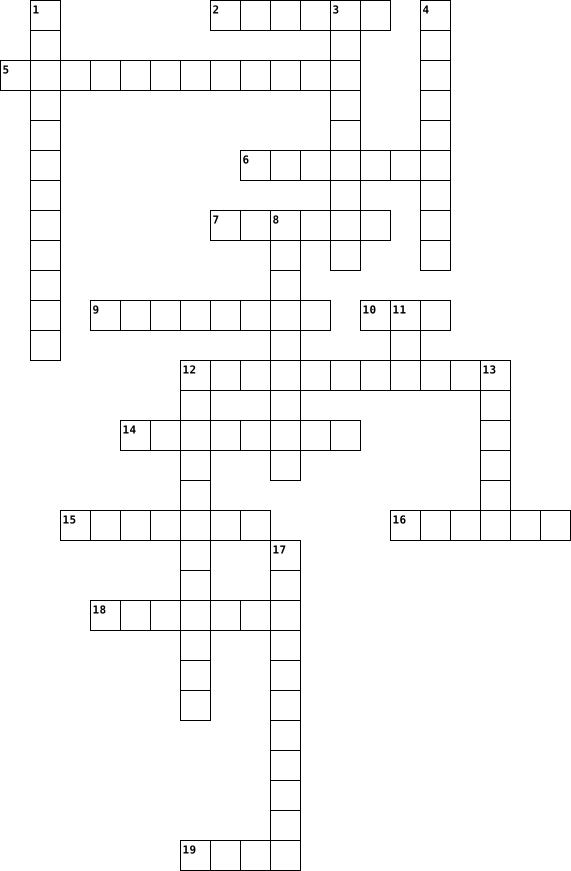
Across
- What does an aerobic process require?
- Glycerol with 3 fatty acids is called a ____?
- What type of cell division results in clones of the original cell?
- RNA replaces Thymine with ____?
- Different forms of the same element are called ___
- What is known as the energy currency of the cell?
- Most humans have 46 of these
- What is gene expression regulated by?
- In DNA replication the ____ strand has okazaki fragments?
- Most common type of mutation in DNA (for short)
- What is the FLUID inside the cell called?
- What part of a phospholipid is hydrophobic?
Down
- Which macromolecule’s basic formula is (CH2O)n?
- Which type of chemical reaction has energy as a product?
- Transport in the cell that requires no energy is called Passive transport or___
- What type of respiration does not require oxygen?
- The first shell of an atom holds a maximum of ___ electrons
- occurs only in prophase 1 of meiosis (2words)
- RNA structure is usually _____ stranded
- What is the pigment that makes plants green called?
20 Clues: Most humans have 46 of these • RNA replaces Thymine with ____? • What does an aerobic process require? • What is gene expression regulated by? • RNA structure is usually _____ stranded • What is the FLUID inside the cell called? • What part of a phospholipid is hydrophobic? • Glycerol with 3 fatty acids is called a ____? • occurs only in prophase 1 of meiosis (2words) • ...
Chapter 14 Heat, Light, and Sound Vocabulary Crossword 2022-03-21

Across
- An object that does not conduct heat well
- Relating to an object that lets most light
- The amount of energy a sound has
- An object that heat can move through easily
- The form of energy that moves particles of matter
- to another
- The movement of heat between objects that are touching each other
- Taken in by an object
Down
- A series of back-and-forth movements
- Relating to to an object that lets some light pass through
- A dark area that forms when an object blocks the path of light
- The highness or lowness of a sound
- The bending of light as it moves from one
- The measure of how hot or cold something is
- through
- Relating to objects that don't let light pass through
- The bouncing of light off an object
- movement of thermal energy from hotter to cooler objects
18 Clues: through • to another • Taken in by an object • The amount of energy a sound has • The highness or lowness of a sound • The bouncing of light off an object • A series of back-and-forth movements • An object that does not conduct heat well • The bending of light as it moves from one • Relating to an object that lets most light • The measure of how hot or cold something is • ...
Nutrition 2022-09-06

Across
- Weakness, rapid breathing, weak heartbeat
- Nutrients that occur naturally in rocks and soil
- Supplies energy, forms cells, maintain body temperature
- Supply energy for your body functions.
- Amount of energy released when nutrients are broken down
- Carbs, fats, proteins, vitamins, minerals, water
- Nutrients made by living things required by the body
Down
- Dissolved substances that regulate processes inside cells
- A waxy fat like substance only found in animal products
- Help repair body tissue
- Process of maintaining a steady state inside the body
- When the body uses nutrients in food for energy.
- Condition where red blood cells do not contain enough hemoglobin
- Long chains of smaller links bound together chemically
14 Clues: Help repair body tissue • Supply energy for your body functions. • Weakness, rapid breathing, weak heartbeat • When the body uses nutrients in food for energy. • Nutrients that occur naturally in rocks and soil • Carbs, fats, proteins, vitamins, minerals, water • Nutrients made by living things required by the body • ...
Past Forms of Verbs 2018-11-27

Across
- II pf of 'hear'
- II pf of 'steal'
- II pf of 'drink'
- III pf of 'go'
- III pf of 'find'
- III pf of 'break'
- II pf of 'throw'
- III pf of 'sing'
- II pf of 'think'
- III pf of 'eat'
Down
- II pf of 'drive'
- II pf of 'leave'
- III pf of 'pay'
- II pf of 'speak'
- II pf of 'fly'
- II pf of 'fight'
- III pf of 'write'
- II pf of 'teach'
- II pf of 'see'
- III pf of 'choose'
20 Clues: III pf of 'go' • II pf of 'fly' • II pf of 'see' • II pf of 'hear' • III pf of 'pay' • III pf of 'eat' • II pf of 'drive' • II pf of 'leave' • II pf of 'steal' • II pf of 'speak' • II pf of 'drink' • III pf of 'find' • II pf of 'fight' • II pf of 'throw' • II pf of 'teach' • III pf of 'sing' • II pf of 'think' • III pf of 'break' • III pf of 'write' • III pf of 'choose'
Forms of business organization 2023-11-16

Across
- Business entity with shareholders.
- Organization with a mission, not focused on profit.
- Large corporation with diverse holdings.
- Legal entity managing assets for beneficiaries.
- Liability Company (LLC): Hybrid business structure.
- Business model involving licensing.
- Enterprise: Business owned by individuals or groups.
- Organization formed for a common purpose.
Down
- Company controlled by another.
- Traded: Company whose shares are on the stock market.
- Company: Owned by policyholders or members.
- A collaborative alliance of businesses or organizations working together for a common purpose.
- Business structure involving shared ownership.
- Member-owned business.
- Interest Company (CIC): Socially focused business.
- Nonprofit organization supporting a cause.
- Enterprise: Business with social and environmental goals.
- Proprietorship: Business owned by a single individual.
- Venture: Collaboration between businesses.
- Company: Controls other companies' stocks.
20 Clues: Member-owned business. • Company controlled by another. • Business entity with shareholders. • Business model involving licensing. • Large corporation with diverse holdings. • Organization formed for a common purpose. • Nonprofit organization supporting a cause. • Venture: Collaboration between businesses. • Company: Controls other companies' stocks. • ...
30 forms of transport 2022-10-27

Across
- a medium-sized sailing boat equipped for cruising or racing.
- a large, heavy road vehicle used for carrying goods, materials, or troops
- a medium-sized motor vehicle, typically without side windows in the rear part, for transporting goods.
- a vehicle with two wheels tandem, handlebars for steering, a saddle seat, and pedals by which it is propelled
- a powered flying vehicle with fixed wings and a weight greater than that of the air it displaces; an aeroplane.
- a passenger vehicle powered by electricity conveyed by overhead cables, and running on rails laid in a public road.
- a vehicle that hangs from and is pulled by a moving cable and that carries passengers up and down a mountain
- a short narrow board with two small wheels fixed to the bottom of either end, on which a person can ride in a standing or crouching position, propelling themselves by occasionally pushing one foot against the ground.
- teach (a person or animal) a particular skill or type of behaviour through practice and instruction over a period of time.
- a boat or ship for conveying passengers and goods, especially over a relatively short distance and as a regular service.
- a comfortably equipped single-decker bus used for longer journeys
- a four-wheeled road vehicle that is powered by an engine and is able to carry a small number of people.
- a short narrow board with two small wheels fixed to the bottom of either end, on which a person can ride in a standing or crouching position, propelling themselves by occasionally pushing one foot against the ground.
- a type of aircraft which derives both lift and propulsion from one or more sets of horizontally revolving overhead rotors. It is capable of moving vertically and horizontally, the direction of motion being controlled by the pitch of the rotor blades.
- a light two-wheeled open motor vehicle on which the driver sits over an enclosed engine with their legs together and their feet resting on a floorboard.
- a suspended, inclined cable equipped with a pulley and down which a harnessed rider glides for recreation: The most popular rides at the fair are the two ziplines.
Down
- a large bag filled with hot air or gas to make it rise in the air, typically one carrying a basket for passengers.
- a wide canopy resembling a parachute that is attached to a person's body by a harness in order to allow them to glide through the air after jumping from or being hauled to a height.
- used for transportation in sandy desert areas throughout Asia and northern Africa
- a ship, boat, or locomotive powered by steam.
- a boat usually propelled by sail.
- an underground railway.
- a four-wheeled road vehicle that is powered by an engine and is able to carry a small number of people.
- a cloth canopy which fills with air and allows a person or heavy object attached to it to descend slowly when dropped from an aircraft, or which is released from the rear of an aircraft on landing to act as a brake.
- private four-wheeled vehicle for people and is most commonly horse-drawn
- a cycle with a single wheel, typically used by acrobats.
- a warship with a streamlined hull designed to operate completely submerged in the sea for long periods, equipped with a periscope and typically armed with torpedoes or missiles.
- a small jet-propelled vehicle that skims across the surface of water and typically is ridden like a motorcycle.
- a light, narrow boat with pointed ends and no keel, propelled with a paddle or paddles.
- a large ship that takes many people on a cruise at one time
30 Clues: an underground railway. • a boat usually propelled by sail. • a ship, boat, or locomotive powered by steam. • a cycle with a single wheel, typically used by acrobats. • a large ship that takes many people on a cruise at one time • a medium-sized sailing boat equipped for cruising or racing. • a comfortably equipped single-decker bus used for longer journeys • ...
Basic forms of Histology 2024-09-07

Across
- Glossy appearing, can see the substance between cells
- Contains elastic fibers between cells
- Extra layer of dead cells present
- Rectangle shaped cells
- Empty looking cells with thin walls around it
- Porous appearance with a thick wall
- "Tree-like" dark centers with thinner layers surrounding
- Thin and flat cells
- Cells change from round to flat when stretched
- Long muscle fibers with multiple nuclei, lacking striations
- Consists of neurons and glial cells
Down
- Contains large bundles of organized collagen fibers
- Loosely organized fibers with an abundance of blood vessels, and seemingly empty space
- Densely packed, parallel collagen fibers
- Densely packed, randomly arranged collagen fibers with few visible cells
- Present in simple and pseudostratified columnar epithelia, secretes mucus
- Falsely appearing multi-layer epithelia (typically columnar), all cells touch basement membrane
- Mesh of reticular fibers and fibroblasts
- Square shaped cells
- Long thin muscle fiber cells with multiple nuclei and striations
- One layer of epithelial tissue, all cells touch basement membrane
- Multiple layers of epithelial tissue, some cells do not touch basement membrane
- Centrally located nuclei with striations and intercalated discs
- No extra later of dead cells present
24 Clues: Square shaped cells • Thin and flat cells • Rectangle shaped cells • Extra layer of dead cells present • Porous appearance with a thick wall • Consists of neurons and glial cells • No extra later of dead cells present • Contains elastic fibers between cells • Densely packed, parallel collagen fibers • Mesh of reticular fibers and fibroblasts • ...
Forms of Business Ownership 2022-09-21

Across
- The amount of sales that corporations earn in America (a percentage).
- A big disadvantage of the franchise model is a _____ __ _________.
- A big advantage of the partnership model is ______ _________; there is a greater chance someone knows how to do each unique task.
- You will have full ______ when you are a sole-proprietor.
- A major advantage to the franchise form of business ownership is ______ ____________.
- A corporation that is public (as opposed to private) lacks _________ in relation to their governance, finances, etc.
- Split in a partnership ownership structure.
- Perhaps the biggest disadvantage of the corporate organizational form is ________ ________ where the corporation must pay federal and state income taxes on their profits AND any profits (in the form of dividends) paid to stockholders are taxed as personal income.
- Using a lot of ________ _____ is one of the biggest detriments to running your own business.
- In the corporate form of ownership, there are extensive government ____________ in place to ensure fairness and integrity.
Down
- When all losses fall on one owner or 2+ partners it is known as _________ ___________.
- The amount of profit sole-proprietorships are responsible for in America (a percentage).
- A form of business organization in which the company provides resources and direction to private owners who apply to sell company goods and services in a certain geographic area.
- Once incorporated and publicly listed, those who invest in this organizational structure are known as ___________.
- An association of two or more individuals who agree to operate a business together for profit.
- A business organization that is established, owned, operated, and often financed by one person is known as a ____ ______________.
- The number of small businesses in America that have a partnership structure (a percentage).
- A type of partnership in which one partner has limited liability, while another has unlimited liability.
- This form of ownership can own property, enter into contracts, sue and be sued, and engage in business operations under the terms of its charter.
- A type of partnership in which partners share the same profits and losses evenly.
20 Clues: Split in a partnership ownership structure. • You will have full ______ when you are a sole-proprietor. • A big disadvantage of the franchise model is a _____ __ _________. • The amount of sales that corporations earn in America (a percentage). • A type of partnership in which partners share the same profits and losses evenly. • ...
Chemical Reactions 2026-04-27

Across
- used to extract metals
- loss of electrons
- absorbs energy
- produces salt and water
- releases heat
- has a pH above 7
- join to make polymers
- prevents rusting
- biological catalyst
- positive ions
Down
- acid + base
- breaks down glucose
- joins monomers
- shows pH
- forms simper substances
- wears away metal
- extracts metal from ore
- speeds up reactions
- negative ions
19 Clues: shows pH • acid + base • releases heat • negative ions • positive ions • joins monomers • absorbs energy • wears away metal • has a pH above 7 • prevents rusting • loss of electrons • breaks down glucose • speeds up reactions • biological catalyst • join to make polymers • used to extract metals • forms simper substances • produces salt and water • extracts metal from ore