
heart Crossword Puzzles
Unit 5 Med Term Crossword Puzzle 2025-10-17

Across
- A Muscular organ that pumps blood through the body
- This abbreviation is used for Blood Pressure
- ultrasound movie of the inside of the heart
- This abbreviation is used for Myocardial Infraction
- A condition where the heart cant pump enough blood
- This abbreviation is used for Electrocardiogram
- Cardiac catheterization is the insertion of a catheter into a chamber or vessel of the heart.
- The root word that means artery
- The root word that means veins
- a recording of the heart's electrical activity through repeated cardiac cycles
- Known as high blood pressure
- measures how healthy your heart is and how well it works during physical stress
Down
- Blood vessels that carry oxygen away from the heart
- The fluid that circulates throughout the body
- Blood vessels that carry deoxygenated blood from body to the heart
- The root word that means blood
- Tiny blood vessels that connect arteries and veins
- A laboratory analysis performed on a blood sample that is usually extracted from a vein in the arm using a hypodermic needle,
- An abnormal heart rhythm
- A condition where the blood vessels that supply the heart get blocked or narrowed
- This abbreviation is used for coronary Artery Disease
- This happens when one or more of the hearts valves dont open or close properly
- This abbreviation is used for Cardiopulmonary Resuscitation
- The root word that means heart
- The root word that means blood vessel
25 Clues: An abnormal heart rhythm • Known as high blood pressure • The root word that means blood • The root word that means heart • The root word that means veins • The root word that means artery • The root word that means blood vessel • ultrasound movie of the inside of the heart • This abbreviation is used for Blood Pressure • The fluid that circulates throughout the body • ...
CONGENITAL HEART DISEASE 2022-04-08

Across
- irregular or abnormal rhythm of the heart
- most heart defects are detected by these
- medication class that helps with fluid overload
- absence or abnormal narrowing of an opening
- shortness of breath
- Main artery of the body
- maternal condition- transposition of great vessels
- effect of enlarged, floppy mitral valve
- bluish discoloration of the skin
- these defects allow mixing of oxy and deoxy blood
- septum involved in VSD
- a VSD leads to less blood flowing from this ventricle
Down
- decreased oxygen content in arterial blood
- abnormal enlargement of the heart.
- most common congenital heart defect (initials)
- narrowing of heart valve
- abnormally rapid heart rate
- abnormally low blood pressure
- extreme tiredness
- swelling of soft tissue from fluid retention
- ventricle that pumps to the lungs
21 Clues: extreme tiredness • shortness of breath • septum involved in VSD • Main artery of the body • narrowing of heart valve • abnormally rapid heart rate • abnormally low blood pressure • bluish discoloration of the skin • ventricle that pumps to the lungs • abnormal enlargement of the heart. • effect of enlarged, floppy mitral valve • most heart defects are detected by these • ...
Cardiovascular System 2023-11-13

Across
- a scan used to look at the heart and nearby blood vessels
- red
- Heart
- cerebral vascular accident
- occurs when something blocks the blood supply
- Main organ
- blood
- Customer relationship management
- Any disorder that affects the heart
- Cardiovascular diseases
- Specialized body fluids
- Made of blood vessels
- Disorders and conditions that affect the aorta
- pictures of the anatomy and the physiological processes of the body
- Tiny blood vessels
- type of portable electrocardiogram
Down
- blood clot
- test that looks at the arteries that supply blood to the heart
- irregular heartbeat
- Cell
- simplest and fastest tests used to evaluate the heart
- Peripheral vascular disease
- transient ischemic attack
- Blood can't get enough oxygen
- Blood vessels that collect oxygen
25 Clues: red • Cell • Heart • blood • blood clot • Main organ • Tiny blood vessels • irregular heartbeat • Made of blood vessels • Cardiovascular diseases • Specialized body fluids • transient ischemic attack • cerebral vascular accident • Peripheral vascular disease • Blood can't get enough oxygen • Customer relationship management • Blood vessels that collect oxygen • type of portable electrocardiogram • ...
Chapter 6: The Heart 2024-11-30

Across
- the majority percentage of blood is made up by
- ventricle hardest working chamber of the heart
- lower than 60 bpm
- pumps blood to the heart
- the top number of a blood pressure reading
- the printout of the ECG
- node most important node in the cardiac conduction system
- tough membranous sac that surrounds the heart
- node node found on the right atrial wall near the center of the heart
Down
- rest and digest
- amount of blood pumped during one beat
- narrowing of the coronary arteries due to the accumulation of plaque and inflammation
- pressure sensors
- formed elements / total blood volume
- preload
- maintains resting heart rate
- valve between the left atrium and let ventricle
- output HR * SV
- pumps blood away from the heart
- cardiac muscle
20 Clues: preload • output HR * SV • cardiac muscle • rest and digest • pressure sensors • lower than 60 bpm • the printout of the ECG • pumps blood to the heart • maintains resting heart rate • pumps blood away from the heart • formed elements / total blood volume • amount of blood pumped during one beat • the top number of a blood pressure reading • tough membranous sac that surrounds the heart • ...
Cardiovascular Disease Crossword 2019-10-12

Across
- A generic name for an abnormal heart beat
- This is the acronym for the syndrome that occurs when angina ceases to be stable
- I am the cardiac biomarker that can tell you if cardiac damage is happening fast, but I stay elevated for a longer period of time
- Acronym for the heart surgery that opens up pathways for multiple coronary arteries
- Acronym for the amount of resistance the heart has to overcome to pump blood to the body
- An assessment finding common in right sided heart failure- signifies an accumulation of fluid
- I am the rhythm when your heart rate is above 100
- If you have this kind of IV, you should not be taking a BP on the same arm
- I am the rhythm when your heart rate is below 60 bpm
- In this type of fibrillation the bottom of the heart is not properly contracting, they will not have a pulse
- I am the amount of resistance the heart has to overcome to push blood forward
- This can help to convert a patient out of an abnormal heart rhythm that still has a pulse
- I am the diagnostic test that allows you to view the visual structures of the heart and see how it is pumping
- I am the general name for the procedure that is used to visualize the inside of the heart and perform interventions
- I am the type of angina that gets better when you rest or take nitroglycerin
Down
- I am the cardiac biomarker that takes awhile to rise but I do not stay elevated for long
- I am the type of angina that is not relieved with rest or nitroglycerin
- I am the acronym for the diagnostic test that will tell you if the electrical pattern of your heart is abnormal
- I am a device that can be utilized to maintain electrical activity of the heart
- In this type of fibrillation the top of the heart is chaotic putting the patient at risk for hypotension and blood clots
- This will restart the heart if you have no pulse but still have electrical activity
- Acronym for the amount of blood pumped from the heart in one beat
- I am the amount of blood that your heart begins with- I am an overall measure of how much fluid your body has onboard
- If your blood pressure cuff is too small then you will have a falsely ______ reading
- If your blood pressure cuff is too large then you will have a falsely ______ reading
- This is the recommended diet for patients with cardiovascular disease
- Acronym for the amount of blood pumped from the heart in one minute
- This is an acronym for procedures performed to open and allow for reperfusion of the coronary arteries
- I am the type of test that can see how your heart handles being strained
- Acronym for the percentage of blood ejected from the left ventricle with each contraction
30 Clues: A generic name for an abnormal heart beat • I am the rhythm when your heart rate is above 100 • I am the rhythm when your heart rate is below 60 bpm • Acronym for the amount of blood pumped from the heart in one beat • Acronym for the amount of blood pumped from the heart in one minute • This is the recommended diet for patients with cardiovascular disease • ...
10.7 crossword puzzle 2022-11-11

Across
- Beat of the heart
- Abnormal swishing sound
- pacemaker of the heart
- Inner lining of the heart
- Record of electrical activity of heart
- One of two upper chambers of the heart
- Contraction phase of the heartbeat
- Relaxation phase of the heartbeat
- Largest type of blood vessel
Down
- double layered membrane around heart
- One of two lower chambers of the heart
- Largest artery in the body
- Small vein
- Muscular middle layer of the heart
- Smallest type of blood vessel
15 Clues: Small vein • Beat of the heart • pacemaker of the heart • Abnormal swishing sound • Inner lining of the heart • Largest artery in the body • Largest type of blood vessel • Smallest type of blood vessel • Relaxation phase of the heartbeat • Muscular middle layer of the heart • Contraction phase of the heartbeat • double layered membrane around heart • ...
Cardiovascular system terms 2023-11-13

Across
- structure in veins or in the heart that temporarily closes an opening so that blood flows only one direction
- smooth layer of endothelial cells that lines the interior of the hear and heart valves
- beat of the heart that is felt through the walls of the arteries
- small artery
- two lower chambers of the heart
- upper chambers of the heart
- valve between the left atrium and left ventricle
- smallest type of blood vessel
Down
- located between the right atrium and the right ventricle
- largest artery in the body
- partition dividing a cavity in the heart
- thin-walled vessel the carries blood from the body tissues and lungs back to the heart
- flow of blood from the body tissue to the heart and then from the heart back to body tissue
- largest vein in the body with both a superior and inferior
- largest type of blood vessel that carries blood away from the heart
- double-layered membrane surrounding the heart
16 Clues: small artery • largest artery in the body • upper chambers of the heart • smallest type of blood vessel • two lower chambers of the heart • partition dividing a cavity in the heart • double-layered membrane surrounding the heart • valve between the left atrium and left ventricle • located between the right atrium and the right ventricle • ...
Circulatory System 2023-02-15

Across
- These are used in blood clotting when there's a cut.
- This type of blood vessel carries blood BACK to the heart under low pressure.
- This cells engulf bacteria and protect the body.
- This vein carries oxygenated blood from the lungs to the heart.
- This type of blood vessel carries blood AWAY from heart under high pressure.
- This artery carries deoxygenated blood from the heart to the lungs.
- This component of blood is light yellow liquid containing mostly water with dissolved nutrients.
- The heart has lower chambers called _____________
- tubes that carry blood within the body
- This artery carries oxygenated blood to all parts of the body.
- This side of the heart contains blood with more carbon dioxide (deoxygenated).
Down
- In general, the size of your heart is like your clenched ______.
- This side of the heart contains blood rich in oxygen (oxygenated).
- This cells have biconcave shape and no nucleus.
- This part of the heart ensure blood flows in one direction. It prevent bloods from going backwards.
- it is an organ that pumps blood throughout the body
- This type of blood vessels is only one cell thick and used for exchange of substances between blood and the tissues.
- The left ventricle has thicker and muscular __________ to withstand pressure as blood are pumped blood to all parts of the body.
- The blood circulates around the body and passes through the heart twice hence why it's called __________ circulation.
- This blood vessel leads to right atrium and contain blood rich in carbon dioxide.
- The heart has upper chambers called ___________
- A fluid that transport substances throughout the body
- The right ventricle pump blood to this organ.
23 Clues: tubes that carry blood within the body • The right ventricle pump blood to this organ. • This cells have biconcave shape and no nucleus. • The heart has upper chambers called ___________ • This cells engulf bacteria and protect the body. • The heart has lower chambers called _____________ • it is an organ that pumps blood throughout the body • ...
Cardiovascular System 2021-12-08

Across
- contraction phase of the heartbeat
- relaxion phase of the heartbeat
- the beat of the heart
- double layered membrane surrounding the heart
- smallest blood vessel
- artery carrying oxygen
- record of the electricity flowing through the heart
Down
- innermost lining of the blood vessel
- partition or wall dividing cavities
- inner lining of the heart
- valve between the left atrium and the left ventricle
- the largest artery in the heart
- normal heart sound caused by improper closer of heart valves
- one of the two upper chambers of the heart
- middle layer of the heart
15 Clues: the beat of the heart • smallest blood vessel • artery carrying oxygen • inner lining of the heart • middle layer of the heart • relaxion phase of the heartbeat • the largest artery in the heart • contraction phase of the heartbeat • partition or wall dividing cavities • innermost lining of the blood vessel • one of the two upper chambers of the heart • ...
Chapter 2: Day 2- Muscles 2023-10-03

Across
- rythmic change of pressure that causes artery walls outward and return to normal
- brings oxygen-rich blood away from the heart
- blood flow through all parts of body except lungs
- thin-walled upper chambers of heart
- thick-walled lower chambers of heart
Down
- largest vein in the heart
- circulation of blood from heart to lungs and back to heart
- pulse found in arteries in neck
- amount of force blood exerts upon the walls of blood vessels
- refers to the heart
- largest artery in heart
- carries deoxygenated blood to the heart
- number of chambers in human heart
- pulse found in wrists
- tissue that divides left and right ventricles
15 Clues: refers to the heart • pulse found in wrists • largest artery in heart • largest vein in the heart • pulse found in arteries in neck • number of chambers in human heart • thin-walled upper chambers of heart • thick-walled lower chambers of heart • carries deoxygenated blood to the heart • brings oxygen-rich blood away from the heart • ...
Cardiovascular System 2025-05-06

Across
- Large vein carrying blood to the heart
- Double-layered sac enclosing the heart
- Blood vessels that carry oxygenated blood from the lungs to the heart
- The main artery carrying blood from the heart to the rest of the body
- The muscular middle layer of the heart wall
- White blood cells that fight infection
- A blood vessel that carries blood away from the heart
- Vessels that carry deoxygenated blood for the heart to the lungs
Down
- The innermost layer lining the heart chambers
- Heart chamber that receives blood
- A blood vessel that carries blood towards the heart
- A small blood vessel for exchanging materials with tissue
- Blood cells that help with clotting
- Heart chambers that pump blood out
- Red blood cells that call oxygen
15 Clues: Red blood cells that call oxygen • Heart chamber that receives blood • Heart chambers that pump blood out • Blood cells that help with clotting • Large vein carrying blood to the heart • Double-layered sac enclosing the heart • White blood cells that fight infection • The muscular middle layer of the heart wall • The innermost layer lining the heart chambers • ...
Cardiovascular System 2021-10-28

Across
- abnormality in rhythm of heart
- cancers of blood cells
- one of two large chambers at the base of the heart
- necessary to rid the body of carbon dioxide
- supplies blood to the heart muscle
- fist-sized muscular organ, necessary for life
- collects oxygenated blood from lungs and carries back to heart
- the smallest unit of life
Down
- condition in which an individual lacks adequate blood red cells
- natural pacemaker of heart
- carry blood away from the heart
- disease that involves plaque build-up in artery wall
- constantly circulating fluid in the body
- carry blood to the heart
- upper chamber though which blood enters the heart
- fluid that carries blood components in one’s body
16 Clues: cancers of blood cells • carry blood to the heart • the smallest unit of life • natural pacemaker of heart • abnormality in rhythm of heart • carry blood away from the heart • supplies blood to the heart muscle • constantly circulating fluid in the body • necessary to rid the body of carbon dioxide • fist-sized muscular organ, necessary for life • ...
The Circulatory System 2018-03-11

Across
- The red blood cells carry this gas to every cell in the body.
- The smallest blood vessel.
- The biggest and longest artery in the body. It carries oxygenated blood from the left ventricle of the heart to the body.
- dioxide The red blood cells take this waste gas away from the cells.
- The valve between the left atrium and the left ventricle.
- The ted blood cells drop off carbon dioxide and pick up oxygen in this organ.
- The lower chamber on the left side of the heart.
- A large vein that carries deoxygenated blood to the right atrium from the lower half of the body.
- The blood vessel that carries blood from the body to the heart.
- In order to stay alive, cells need food,water,gas exchange and waste______.
- The basic unit of life
- The valve between the right ventricle and the pulmonary artery.
- A blood vessel that carries blood from the heart to the body.
- There are three kinds of blood_________s: artery, vein and capillary.
- The muscular wall that separates the left and right sides of the heart.
Down
- A large vein that carries deoxygenated blood to the right atrium from the upper parts of the body.
- A muscular organ that pumps blood.
- The blood vessel that carries oxygenated blood from the lungs to the left atrium of the heart.
- The valve between the right atrium ad the right ventricle.
- The blood vessel that carries deoxygenated blood from the right ventricle of the heart to the lungs.
- The upper chamber on the right side of the heart.
- The right lower chamber of the heart.
- The system of blood vessels and the heart. This system circulates blood to every cell in the body.
- The left upper chamber of the heart.
- The valve between the left ventricle and the aorta.
25 Clues: The basic unit of life • The smallest blood vessel. • A muscular organ that pumps blood. • The left upper chamber of the heart. • The right lower chamber of the heart. • The lower chamber on the left side of the heart. • The upper chamber on the right side of the heart. • The valve between the left ventricle and the aorta. • ...
YR 10 Transport in animals 2025-04-14

Across
- Cell fragment that triggers the conversion of fibrinogen to fibrin in clotting.
- Compound formed when oxygen binds to haemoglobin in red blood cells.
- Ensures blood flows in one direction through the heart and veins.
- Passive movement of molecules from high to low concentration.
- Protein produced by lymphocytes that binds to antigens.
- Blood passes through the heart twice during one full circuit of the body.
- Help maintain osmotic balance and transport substances in the blood.
- Narrow vessel with walls one cell thick for efficient exchange of substances.
- Lower chambers of the heart that contract to pump blood out.
- Fluid formed from plasma that bathes body cells for exchange.
- Transports dissolved substances including carbon dioxide, urea, hormones, and heat.
- Divides the left and right sides of the heart to keep blood separated.
Down
- Carries deoxygenated blood from the heart to the lungs.
- Fights infection by engulfing pathogens or producing antibodies.
- Produces antibodies to attack specific pathogens.
- Thick muscular vessel that carries blood away from the heart under high pressure.
- The pressure exerted by blood against the walls of arteries.
- Iron-based molecule in red blood cells that binds oxygen.
- Major vein that brings deoxygenated blood from the body to the heart.
- Returns blood to the heart; contains valves to prevent backflow.
- Carries oxygenated blood from the lungs to the heart.
- Upper chambers of the heart that receive incoming blood.
- Supply the heart muscle with oxygenated blood for respiration.
- Carries oxygen using haemoglobin; has no nucleus to maximise space.
- Blood that has delivered oxygen to tissues and collected carbon dioxide.
- Largest artery; carries oxygenated blood from the left ventricle to the body.
- A substance on a pathogen that triggers an immune response.
- Expansion and recoil of an artery as blood is forced through by the heart.
- The central cavity inside a blood vessel through which blood flows.
- Type of white blood cell that engulfs and digests pathogens.
30 Clues: Produces antibodies to attack specific pathogens. • Carries oxygenated blood from the lungs to the heart. • Carries deoxygenated blood from the heart to the lungs. • Protein produced by lymphocytes that binds to antigens. • Upper chambers of the heart that receive incoming blood. • Iron-based molecule in red blood cells that binds oxygen. • ...
Circulatory System 2023-04-16

Across
- This blood vessel is the largest artery in the body and carries blood from the left ventricle to the entire body
- The pigment in red blood cells that carry oxygen around the body
- These blood vessels carry blood away from the heart
- The smallest of the blood vessels. These are only one cell thick
- The tissue responsible for transporting nutrients and oxygen around the body
- This blood vessel enters the heart through the right atrium
- The shape of red blood cells that allows for maximum surface area
- Veins have these to prevent backflow of blood
- The space in the middle of veins and arteries where the blood flows
Down
- This blood vessel carries blood from the heart to the lungs
- The piece of muscle that divides the two sides of the heart
- This vibration of the beating fo the heart can be felt at certain points of the body
- The specialized blood cells that help to fight infection
- These blood cells help to form blood clots
- The right and left lower chambers of the heart
- The liquid part of the blood that carries digested materials
- The right and left upper chambers of the heart
- These blood vessels provide oxygen for the heart
- This blood vessel carries oxygenated blood from the lungs into the left atrium
- The heart is made up of this type of muscle
- These blood vessels carry blood toward the heart
21 Clues: These blood cells help to form blood clots • The heart is made up of this type of muscle • Veins have these to prevent backflow of blood • The right and left lower chambers of the heart • The right and left upper chambers of the heart • These blood vessels provide oxygen for the heart • These blood vessels carry blood toward the heart • ...
Cadiovascular Crossword Fun by Magali M. 2025-01-15

Across
- Blood vessels that carry oxygen blood away from the heart
- Pertaining to
- A quivering or irregular heartbeat
- A test that records the heart's electrical activity
- Blood flow to the brain is stopped
- Work in the heart and veins as one-way traffic signs
- Also known as a heart attack caused by the blockage of the coronary artery
- A condition when the arteries that supply blood to the legs are narrowed
- Related to
- An exercise tool that can be used to conduct a stress test
- Radiograph / An X-ray that is used to view the lungs and heart to view the shape and size
- When the blood pressure in the arteries is always too high
Down
- Blood vessels that carry deoxygenated blood to the heart
- Build up of plaque in the vessels
- A medical device that analyzes the heart's rhythm and delivers an electric shock to jumpstart it
- An ultrasound scan that creates images showing the heart and blood flow
- Thin vessels that serve as networks linking network between veins and arteries
- Pain
- The ____ is to your body as an engine is to a car
- A needle that collects blood
- The group of conditions that may arise from blockages in the arteries
- Relating to
- When the heart is unable to pump the sufficient amount of blood for the body's needs
- Taken before meals
- A red liquid that courses through your veins.
25 Clues: Pain • Related to • Relating to • Pertaining to • Taken before meals • A needle that collects blood • Build up of plaque in the vessels • A quivering or irregular heartbeat • Blood flow to the brain is stopped • A red liquid that courses through your veins. • The ____ is to your body as an engine is to a car • A test that records the heart's electrical activity • ...
Take care of your heart 2025-01-30

Across
- – An embrace or act of holding someone tightly, often as an expression of affection.
- – The branch of medicine that deals with heart conditions.
- – A type of fat found in the blood, can affect heart health.
- – The movement of blood through the heart and blood vessels.
- – The main artery in the body, carrying blood from the heart to the rest of the body.
- – Roman god of love, often depicted with a bow and arrow.
- – Perfect happiness; a state of complete contentment.
- – Showing gentleness and concern, often associated with affection.
- – Expressions of love and affection, often associated with Valentine's Day.
- – A term of endearment for a loved one.
- – Central organ that pumps blood throughout the body.
- – A gentle feeling of fondness or liking.
- – A blood vessel that carries blood back to the heart.
Down
- – An abnormal heart rhythm.
- – To look after or provide for someone’s well-being.
- – The rhythmic beating of the heart, felt in arteries.
- – Pertaining to the heart.
- – To hold dear or treat with great care and affection.
- – The quality of being friendly, generous, and considerate.
- – Related to blood vessels.
- – The state of being free from illness or injury.
- – A deep affection or attachment.
- – A large blood vessel that carries blood away from the heart.
- – Belief in the reliability or ability of someone or something.
- – The state of being in good health, especially as an actively pursued goal.
25 Clues: – Pertaining to the heart. • – An abnormal heart rhythm. • – Related to blood vessels. • – A deep affection or attachment. • – A term of endearment for a loved one. • – A gentle feeling of fondness or liking. • – The state of being free from illness or injury. • – To look after or provide for someone’s well-being. • – Perfect happiness; a state of complete contentment. • ...
Circulatory System 2023-02-08

Across
- This is the component of blood that carries oxygen
- This is the component of blood that forms clots in blood vessels to stop bleeding
- This is a yellow liquid in the blood that carries nutrients and waste products
- These blood vessels carry oxygenated blood away from the heart to the rest of the body
- These blood vessels carry deoxygenated blood from the body back to the heart
- The circulatory system is made up of the ______, blood, and blood vessels
- In this type of circulation, the blood flows between the heart and the lungs
- ________ is the process that transports blood through the circulatory system
- In this heart movement, the heart contracts and sends blood to the arteries
- In this heart movement, the heart relaxes and blood enters from veins
- The ______ carry oxygenated blood from the lungs back to the heart
- Deoxygenated blood enters the _____ through the vena cava
- These are very small, thin vessels that connect arteries to veins
Down
- The oxygenated blood goes from the left atrium to the ______
- The right ventricle pumps blood through the _____ to the lungs
- This is the component of blood that attacks bacteria and viruses to defend the body
- The oxygenated blood is carried from the pulmonary veins into the _______
- The right atrium pushes blood into the _______
- In this type of circulation, the blood flows between the heart and the rest of the body
- The blood carries nutrients and _______ to the cells of the body
20 Clues: The right atrium pushes blood into the _______ • This is the component of blood that carries oxygen • Deoxygenated blood enters the _____ through the vena cava • The oxygenated blood goes from the left atrium to the ______ • The right ventricle pumps blood through the _____ to the lungs • The blood carries nutrients and _______ to the cells of the body • ...
Cardiovascular Crossword 2025-05-06

Across
- smallest blood vessel
- carries blood toward the heart
- clots blood
- main vein in the body
- inner layer of the heart
- main artery in the body
- white blood cells
Down
- muscle layer of the heart
- main artery carrying blood from the heart to the rest of the body
- bottom half of the heart
- deoxygenated blood
- carries blood away from the heart
- outer layer of the heart
- the top half of the heart
- disk shaped cells
15 Clues: clots blood • disk shaped cells • white blood cells • deoxygenated blood • smallest blood vessel • main vein in the body • main artery in the body • bottom half of the heart • outer layer of the heart • inner layer of the heart • muscle layer of the heart • the top half of the heart • carries blood toward the heart • carries blood away from the heart • ...
Cardiovascular Disease Crossword 2019-10-12

Across
- This is the acronym for the syndrome that occurs when angina ceases to be stable
- I am the diagnostic test that allows you to view the visual structures of the heart and see how it is pumping
- If you have this kind of IV, you should not be taking a BP on the same arm
- I am the type of angina that gets better when you rest or take nitroglycerin
- I am the rhythm when your heart rate is below 60 bpm
- This is an acronym for procedures performed to open and allow for reperfusion of the coronary arteries
- I am a device that can be utilized to maintain electrical activity of the heart
- I am the cardiac biomarker that can tell you if cardiac damage is happening fast, but I stay elevated for a longer period of time
- In this type of fibrillation the bottom of the heart is not properly contracting, they will not have a pulse
- I am the type of test that can see how your heart handles being strained
- I am the general name for the procedure that is used to visualize the inside of the heart and perform interventions
- If your blood pressure cuff is too large then you will have a falsely ______ reading
- Acronym for the heart surgery that opens up pathways for multiple coronary arteries
Down
- I am the rhythm when your heart rate is above 100
- Acronym for the amount of resistance the heart has to overcome to pump blood to the body
- This will restart the heart if you have no pulse but still have electrical activity
- A generic name for an abnormal heart beat
- This is the recommended diet for patients with cardiovascular disease
- This can help to convert a patient out of an abnormal heart rhythm that still has a pulse
- An assessment finding common in right sided heart failure- signifies an accumulation of fluid
- In this type of fibrillation the top of the heart is chaotic putting the patient at risk for hypotension and blood clots
- I am the amount of resistance the heart has to overcome to push blood forward
- I am the amount of blood that your heart begins with- I am an overall measure of how much fluid your body has onboard
- Acronym for the amount of blood pumped from the heart in one minute
- I am the type of angina that is not relieved with rest or nitroglycerin
- Acronym for the amount of blood pumped from the heart in one beat
- Acronym for the percentage of blood ejected from the left ventricle with each contraction
- If your blood pressure cuff is too small then you will have a falsely ______ reading
- I am the cardiac biomarker that takes awhile to rise but I do not stay elevated for long
- I am the acronym for the diagnostic test that will tell you if the electrical pattern of your heart is abnormal
30 Clues: A generic name for an abnormal heart beat • I am the rhythm when your heart rate is above 100 • I am the rhythm when your heart rate is below 60 bpm • Acronym for the amount of blood pumped from the heart in one beat • Acronym for the amount of blood pumped from the heart in one minute • This is the recommended diet for patients with cardiovascular disease • ...
Cardiovascular Disease Crossword 2019-10-12

Across
- If you have this kind of IV, you should not be taking a BP on the same arm
- I am the type of angina that is not relieved with rest or nitroglycerin
- Acronym for the amount of resistance the heart has to overcome to pump blood to the body
- This is the acronym for the syndrome that occurs when angina ceases to be stable
- I am the amount of resistance the heart has to overcome to push blood forward
- Acronym for the amount of blood pumped from the heart in one minute
- An assessment finding common in right sided heart failure- signifies an accumulation of fluid
- If your blood pressure cuff is too small then you will have a falsely ______ reading
- I am the type of test that can see how your heart handles being strained
- This will restart the heart if you have no pulse but still have electrical activity
- This is an acronym for procedures performed to open and allow for reperfusion of the coronary arteries
- In this type of fibrillation the top of the heart is chaotic putting the patient at risk for hypotension and blood clots
- I am the type of angina that gets better when you rest or take nitroglycerin
- I am the diagnostic test that allows you to view the visual structures of the heart and see how it is pumping
- This is the recommended diet for patients with cardiovascular disease
- I am the acronym for the diagnostic test that will tell you if the electrical pattern of your heart is abnormal
Down
- A generic name for an abnormal heart beat
- I am the amount of blood that your heart begins with- I am an overall measure of how much fluid your body has onboard
- I am the cardiac biomarker that takes awhile to rise but I do not stay elevated for long
- I am a device that can be utilized to maintain electrical activity of the heart
- In this type of fibrillation the bottom of the heart is not properly contracting, they will not have a pulse
- I am the rhythm when your heart rate is above 100
- I am the general name for the procedure that is used to visualize the inside of the heart and perform interventions
- This can help to convert a patient out of an abnormal heart rhythm that still has a pulse
- Acronym for the amount of blood pumped from the heart in one beat
- I am the cardiac biomarker that can tell you if cardiac damage is happening fast, but I stay elevated for a longer period of time
- I am the rhythm when your heart rate is below 60 bpm
- If your blood pressure cuff is too large then you will have a falsely ______ reading
- Acronym for the heart surgery that opens up pathways for multiple coronary arteries
- Acronym for the percentage of blood ejected from the left ventricle with each contraction
30 Clues: A generic name for an abnormal heart beat • I am the rhythm when your heart rate is above 100 • I am the rhythm when your heart rate is below 60 bpm • Acronym for the amount of blood pumped from the heart in one beat • Acronym for the amount of blood pumped from the heart in one minute • This is the recommended diet for patients with cardiovascular disease • ...
Unit 5 Medical Terminology Crossword Puzzle 2021-04-28

Across
- A condition in which the pericardial sac around the heart is inflamed
- This abbreviation stands for implantable cardioverter defibrillator
- This is the wall between the right and left ventricles
- A prefix that means fast
- A procedure done in a specialized area of radiology. X-ray dye called contrast is injected into blood vessels to diagnose things like narrowing (stenosis) or aneurysms
- This is what the bottom portion of the heart is called
- This abbreviation stands for diabetes mellitus
- A suffix that means an instrument to measure pressure
- A test that uses ultrasound to look at the heart and its vessels
- A condition in which the heart is not efficiently pumping from the left ventricle, causing reduced blood flow
- A combining word that means plug or blockage
Down
- This the wall between the right and left atria
- These are swollen and dilated veins
- It works with a network of blood vessels that includes arteries, veins, and capillaries
- A disorder in which there is a narrowing in the arteries surrounding the heart
- A prefix that means slow
- The heart wall has three layers, this one is the muscular layer that contracts to pump blood
- In this test, a catheter is used to inject the dye into the vessels surrounding the heart
- This abbreviation stands for coronary artery bypass graft
- This abbreviation stands for point of maximum impulse of the heart when felt during examination
- This test helps check heart rhythm and may diagnosis other heart issues
- A test that measures certain items in the blood that may indicate heart muscle damage
- A suffix that means hardening
- This abbreviation stands for vital signs stable
- A condition in which an artery has a weakened wall, causing it to swell, like a balloon
25 Clues: A prefix that means slow • A prefix that means fast • A suffix that means hardening • These are swollen and dilated veins • A combining word that means plug or blockage • This the wall between the right and left atria • This abbreviation stands for diabetes mellitus • This abbreviation stands for vital signs stable • A suffix that means an instrument to measure pressure • ...
Review: Cardiovascular System 2026-02-18

Across
- The heart is found in this body cavity
- The chordae tendineae found with AV valves is sometimes called this due to its appearance
- The largest vein returning blood from the lower half of the body is the ______ vena cava
- The number on "bottom" of a blood pressure reading
- Valves between the atria and ventricles (tricuspid and bicuspid)
- Carries blood away from the heart
- Occurs when you are cold &/or your body is trying to increase blood pressure
- The largest artery that leaves the heart
- The oxygenated blood enters the left _______ from the pulmonary vein
- Outermost tissue layer of the heart, made of connective tissue that covers and protects the heart
- Arteries have a thick tunica ____________
- Valve between the left atrium and ventricle
- Occurs when you are hot &/or your body is trying to decrease blood pressure
- The pressure in the blood vessels when the ventricle contracts
- Another term for red blood cells
Down
- Pulmonary artery carries ________ blood to the lungs
- Middle tissue layer of the heart, made of cardiac muscle
- Helps scabs to form & prevents uncontrolled bleeding
- Blood from the inferior & superior vena cavas enter into this chamber of the heart
- Valve between the right atrium & ventricle
- When the _________ of the heart close, it creates the "lub-dub" sound of a heartbeat
- Innermost tissue layer of the heart,made up of simple squamous epithelium.
- Carries blood back to the heart
- The left _______________ then pumps the oxygenated blood to the body
- Blood collects in this chamber and is then pumped to the lungs
- The serous membrane that encases and protects the heart
- Pulmonary vein carries __________ back to the heart
- The "liquid" portion of blood
- Very small, the site of nutrient and waste exchange
- The ____________ valves connect to the pulmonary artery & aorta
30 Clues: The "liquid" portion of blood • Carries blood back to the heart • Another term for red blood cells • Carries blood away from the heart • The heart is found in this body cavity • The largest artery that leaves the heart • Arteries have a thick tunica ____________ • Valve between the right atrium & ventricle • Valve between the left atrium and ventricle • ...
L6 Heart Failure: Heart Failure with Reduced Ejection Fraction (HFrEF) Treatment 2024-09-19

Across
- Combined with sacubitril to block angiotensin II receptor in heart failure.
- Aldosterone antagonist used to reduce mortality in HFrEF.
- SGLT2 inhibitor used to treat heart failure, regardless of diabetic status.
- Dinitrate Reduces preload by dilating veins in heart failure patients.
- Blockers Reduces heart rate and improves survival in heart failure patients.
- Loop diuretic commonly used for fluid retention in heart failure.
- Antagonist Prevents sodium retention and potassium excretion in HFrEF.
Down
- SGLT2 inhibitor that reduces heart failure hospitalization.
- Vasodilator used for heart failure patients intolerant to RAAS inhibitors.
- Stimulates guanylate cyclase to reduce heart failure hospitalization.
- Diuretics Promotes sodium and fluid loss to manage fluid overload.
- Reduces heart rate by inhibiting the funny current in pacemaker cells.
- Reduces sodium retention and vasoconstriction by inhibiting neprilysin.
- Cardiac resynchronization therapy device used for heart failure patients with wide QRS.
- Inhibitors First-line medication for heart failure patients with LVEF < 40%.
15 Clues: Aldosterone antagonist used to reduce mortality in HFrEF. • SGLT2 inhibitor that reduces heart failure hospitalization. • Loop diuretic commonly used for fluid retention in heart failure. • Diuretics Promotes sodium and fluid loss to manage fluid overload. • Stimulates guanylate cyclase to reduce heart failure hospitalization. • ...
Unit 5 Words 2025-02-25

Across
- Smallest blood vessel where gas exchange occurs
- The muscular layer of the heart
- Artery
- Heart
- High blood pressure
- Slow
- Bursting forth
- Blood
- Narrowing
- The largest artery in the body
Down
- Abnormal heart rhythm
- Enlargement
- Blood vessel that carries blood toward the heart
- Vein
- Lack of blood supply to tissue
- Disease
- Blood condition
- Vessel
- Fast
- Surgical Repair
20 Clues: Vein • Fast • Slow • Heart • Blood • Artery • Vessel • Disease • Narrowing • Enlargement • Bursting forth • Blood condition • Surgical Repair • High blood pressure • Abnormal heart rhythm • Lack of blood supply to tissue • The largest artery in the body • The muscular layer of the heart • Smallest blood vessel where gas exchange occurs • Blood vessel that carries blood toward the heart
Cardiovascular system 2023-03-08

Across
- middle, muscle layer of the heart wall
- artery supplies blood to the head and neck
- carries blood away from the heart
- cavae two largest veins in the heart
- conduct blood toward the heart
- beat of heart as felt through walls of arteries
- small vein
- valve valve between right atrium and ventricle
- upper chambers of the heart
- valve valve between the left atrium and ventricle
Down
- small artery
- largest artery in the body
- lower chambers of the heart
- fibrous membranous sac that surrounds heart
- partitions that separate the four chambers of heart
15 Clues: small vein • small artery • largest artery in the body • lower chambers of the heart • upper chambers of the heart • conduct blood toward the heart • carries blood away from the heart • cavae two largest veins in the heart • middle, muscle layer of the heart wall • artery supplies blood to the head and neck • fibrous membranous sac that surrounds heart • ...
Cardiovascular Crossword 2025-05-06

Across
- Scientific name for a white blood cell
- Lower chambers of the heart
- Largest Artery in your body
- Middle layer of the heart
- Vein that bring oxygenated blood to the heart from the lungs
- Double layered membrane that surrounds the heart
- Carries blood away from heart, to the body
- Carries blood to the heart
- Scientific name for a red blood cell
Down
- Where gas exchange happens in blood
- innermost layer of the heart wall
- Veins with a superior and inferior
- Scientific name for platelets
- Top chambers of the heart
- Artery that carriesdeoxygenated blood to the lungs from heart
15 Clues: Top chambers of the heart • Middle layer of the heart • Carries blood to the heart • Lower chambers of the heart • Largest Artery in your body • Scientific name for platelets • innermost layer of the heart wall • Veins with a superior and inferior • Where gas exchange happens in blood • Scientific name for a red blood cell • Scientific name for a white blood cell • ...
Cardiovascular System Crossword Review 2022-01-12

Across
- Tissue separating the heart in left/right sides
- Fragmented cells that help form clots
- Valve that separates right atrium and ventricle
- Blood type that is considerd the universal donor
- Circuit of blood between heart and body
- Process of stopping blood flow to form a clot
- Blood vessel that delivers blood away from heart
- Large vein that supplies blood to the heart
- Blood cells that contain oxygen
Down
- Blood disorder that prevent blood clots
- Largest ventricle in the heart
- Blood that is lacking oxygen
- Circuit of blood between heart and lungs
- Blood vessel narrows to slow blood loss
- Protein in RBCs that carry oxygen
- Main artery that carries blood from heart to body
- Blood vessel that delivers blood to the heart
17 Clues: Blood that is lacking oxygen • Largest ventricle in the heart • Blood cells that contain oxygen • Protein in RBCs that carry oxygen • Fragmented cells that help form clots • Blood disorder that prevent blood clots • Circuit of blood between heart and body • Blood vessel narrows to slow blood loss • Circuit of blood between heart and lungs • ...
Heart Failure 2014-02-05

Across
- Where fluid will back up in left sided heart failure
- cardiac workload ,Slow the progression of heart failure. You would place the PT in high fowler's position with ______ legs.
- The most common Increased cardiac workload cause of heart failure
- This drug is an Atrial nateuretic peptide hormone given for CHF based on BNP level
- JVD is a clinical manifestation of what type of HF
- Decrease muscle ability to contract or pump resulting in inability to move blood forward is a cause of what type of Ventricular HF
- S/S: SOB, tachypnea, crackles if LV is affected, distended neck veins, liver enlargement , anorexia and nausea if RV is affected are what type of Ventricular HF
- Best indicator of water retention
Down
- Hyperthyroidism, infection, anemia or pregnancy are all caused of what type of HF
- The most common impaired myocardial contraction cause of heart failure
- SOB is a clinical manifestation of what type of HF
- To improve cardiac function and control fluid retention
- Molecular marker that is unequivocally associated with CHF
- Where fluid will back up in right sided heart failure
14 Clues: Best indicator of water retention • SOB is a clinical manifestation of what type of HF • JVD is a clinical manifestation of what type of HF • Where fluid will back up in left sided heart failure • Where fluid will back up in right sided heart failure • To improve cardiac function and control fluid retention • ...
Heart Failure 2014-02-05

Across
- S/S: SOB, tachypnea, crackles if LV is affected, distended neck veins, liver enlargement , anorexia and nausea if RV is affected are what type of Ventricular HF
- Decrease muscle ability to contract or pump resulting in inability to move blood forward is a cause of what type of Ventricular HF
- The most common Increased cardiac workload cause of heart failure
- This drug is an Atrial nateuretic peptide hormone given for CHF based on BNP level
- JVD is a clinical manifestation of what type of HF
- SOB is a clinical manifestation of what type of HF
Down
- cardiac workload ,Slow the progression of heart failure. You would place the PT in high fowler's position with ______ legs.
- Hyperthyroidism, infection, anemia or pregnancy are all caused of what type of HF
- Where fluid will back up in right sided heart failure
- The most common impaired myocardial contraction cause of heart failure
- To improve cardiac function and control fluid retention
- Where fluid will back up in left sided heart failure
- Molecular marker that is unequivocally associated with CHF
- Best indicator of water retention
14 Clues: Best indicator of water retention • JVD is a clinical manifestation of what type of HF • SOB is a clinical manifestation of what type of HF • Where fluid will back up in left sided heart failure • Where fluid will back up in right sided heart failure • To improve cardiac function and control fluid retention • ...
Human heart 2020-02-26

Across
- per minute What does BPM stand for?
- Name the top left chamber of the heart
- Name an exercise that would make your heart beat fast beginning with r?
- Name the bottom right chamber of the heart
- Name the bottom left chamber of the heart
- Name the wall of muscle separating the two sides of the heart
- Where in your body can you find a pulse?
Down
- atrium Name the top right chamber of the heart
- What saint's day of the year is associated with hearts?
- How many chambers are there in the heart?
- What is your heart rate called when you are sitting down, beginning with r?
- What colour is your blood?
- From where does your blood get oxygen?
- How much exercise should you get each day for a healthy heart in minutes?
14 Clues: What colour is your blood? • per minute What does BPM stand for? • Name the top left chamber of the heart • From where does your blood get oxygen? • Where in your body can you find a pulse? • How many chambers are there in the heart? • Name the bottom left chamber of the heart • Name the bottom right chamber of the heart • atrium Name the top right chamber of the heart • ...
The heart 2020-12-06

Across
- carries deoxygenated blood from the body to the heart
- this seperates the two sides of the heart
- blood passes into this chamber before being pumped out through the aorta at high pressure
- thin tissue that prevents the blood from flowing backwards between chambers and blood vessels
- blood passes into this chamber before being pumped out into the pulmonary artery and the lungs
- carries oxygenated blood from the heart to the body
- first branch of the aorta that provides oxygenated blood to the cardiac muscle
Down
- thin tissue that prevents the blood from flowing backwards between two chambers
- carries oxygenated blood from the lungs to the heart
- the cells will contain lots of mitochondria to provide energy and they are myogenic (contract itself)
- carries deoxygenated blood from the heart to the lungs
- oxygenated blood from the lungs enters this chamber
- Deoxygenated blood in the vena cava passes into this chamber under low pressure
- these insert into the ventricle wall, are very tough and prevent the valves from turning inside out
14 Clues: this seperates the two sides of the heart • oxygenated blood from the lungs enters this chamber • carries oxygenated blood from the heart to the body • carries oxygenated blood from the lungs to the heart • carries deoxygenated blood from the body to the heart • carries deoxygenated blood from the heart to the lungs • ...
scarlett heart 2024-02-07

Across
- extrmely unplesent
- does not show
- exsiting in hidden
- puts you to sleep
- delicate, light
- impossible
- to tell someone
- excats pain in return
Down
- to offer
- intrest to hurt
- to cause horror
- standing above
- feeling of replusion
- to be honest
14 Clues: to offer • impossible • to be honest • does not show • standing above • intrest to hurt • to cause horror • delicate, light • to tell someone • puts you to sleep • extrmely unplesent • exsiting in hidden • feeling of replusion • excats pain in return
Heart embryology 2022-03-09

Across
- This syndrome often leads to abnormal valve function and mitral regurgitation due to weakening of heart tissues.
- A common birth defect can occur at this valve, leading to risk of aortic stenosis.
- This common site of ASDs forms before the ostium primum closes. Foramen ___.
- This process occurs during Week 3-7 of pregnancy.
- CHD characterized by overriding aorta, pulmonary stenosis, VSD and RV hypertrophy.
- If aortic coarctation occurs before the ductus arteriosus, it is termed ___.
- These structures develop simultaneously with the atrial/ventricular septa to achieve atrio-ventricular separation.
Down
- Superior portion of the primitive heart tube. ___ arteriosus.
- Of the arterial arches, this arch does not develop into major vessel.
- This syndrome occurs when a left-to-right shunt eventually evolves into a right-left shunt due to RV hypertrophy.
- This type of shunt would likely manifest a blue-ish tint in the lips and tongue.
- During primitive folding, this structure extends inferior to the primitive atrium. Sinus ___.
- These cells migrate from the neural tube and undergo transition to initiate aorticopulmonary septation.
- This arterial arch forms the proximal section of pulmonary arteries and ductus arteriosus.
14 Clues: This process occurs during Week 3-7 of pregnancy. • Superior portion of the primitive heart tube. ___ arteriosus. • Of the arterial arches, this arch does not develop into major vessel. • This common site of ASDs forms before the ostium primum closes. Foramen ___. • If aortic coarctation occurs before the ductus arteriosus, it is termed ___. • ...
The Heart 2022-05-11

Across
- The heart is made up of four spaces these spaces are called ____________
- The left side is filled with ___________ blood.
- The heart is the major organ of this system.
- The lower chambers are called _________.
- The heart is also __________ onto the left and the right side.
- The ventricles are call the _________.
Down
- Or Squeezes to push blood through its chambers and out to your body.
- The blood vessels that are full of oxygen and nutrients are called___________
- The right side of the heart is filled with ________________blood.
- Contains nutrients and oxygen that are needed by all parts of your body.
- These protects the circulatory system.
- Your heart's job is to _______ your blood through your body.
- The upper chambers are called _________.
- These carry the blood back to the heart in blood vessels called ________________
14 Clues: These protects the circulatory system. • The ventricles are call the _________. • The lower chambers are called _________. • The upper chambers are called _________. • The heart is the major organ of this system. • The left side is filled with ___________ blood. • Your heart's job is to _______ your blood through your body. • ...
BRAIN & HEART 2026-01-18

Across
- Ongoing real-world clinical outcomes with MITRIS
- Edwards trusted valve platform
- Founder of Edwards Lifesciences
- Designed to enable future ViV procedures
- CEO of Edwards Lifesciences
- Valves between ventricles and great arteries
- Novel LifePolymer meets robotic manufacturing
Down
- Right for today. Ready for tomorrow
- Edwards enhanced anti-calcification technology
- Pivotal evidence we have been waiting for in 2026
- Latest triple composite design valve from Meril
- New division of Edwards Lifesciences
- KONECT RESILIA AVC graft
- MITRIS sewing cuff shape
14 Clues: KONECT RESILIA AVC graft • MITRIS sewing cuff shape • CEO of Edwards Lifesciences • Edwards trusted valve platform • Founder of Edwards Lifesciences • Right for today. Ready for tomorrow • New division of Edwards Lifesciences • Designed to enable future ViV procedures • Valves between ventricles and great arteries • Novel LifePolymer meets robotic manufacturing • ...
BRAIN & HEART 2026-01-18

Across
- Latest triple composite design valve from Meril
- Right for today. Ready for tomorrow
- Founder of Edwards Lifesciences
- Ongoing real-world clinical outcomes with MITRIS
- MITRIS sewing cuff shape
- Designed to enable future ViV procedures
- Pivotal evidence we have been waiting for in 2026
- CEO of Edwards Lifesciences
Down
- Edwards trusted valve platform
- KONECT RESILIA AVC graft
- Edwards enhanced anti-calcification technology
- New division of Edwards Lifesciences
- Valves between ventricles and great arteries
- Novel LifePolymer meets robotic manufacturing
14 Clues: KONECT RESILIA AVC graft • MITRIS sewing cuff shape • CEO of Edwards Lifesciences • Edwards trusted valve platform • Founder of Edwards Lifesciences • Right for today. Ready for tomorrow • New division of Edwards Lifesciences • Designed to enable future ViV procedures • Valves between ventricles and great arteries • Novel LifePolymer meets robotic manufacturing • ...
The Heart 2025-12-09

Across
- After the lungs fill blood with oxygen, the pulmonary veins carry the blood to the left atrium.
- Opens when blood flows out of your left ventricle to your aorta (artery that carries oxygen-rich blood to your body).
- The left ventricle is slightly larger than the right. It pumps oxygen-rich blood to the rest of your body.
- Protective outer layer.
- Inner layer.
Down
- Muscular middle layer.
- Opens when blood flows from your right ventricle to your pulmonary arteries (the only arteries that carry oxygen-poor blood to your lungs).
- small blood vessels where your body exchanges oxygen-rich and oxygen-poor blood.
- Door between your left atrium and left ventricle.
- The lower right chamber pumps the oxygen-poor blood to your lungs through the pulmonary artery.
- Two large veins deliver oxygen-poor blood to your right atrium.
- carry oxygen-poor blood back to your heart.
- The lower right chamber pumps the oxygen-poor blood to your lungs through the pulmonary artery.
- valve, Door between your right atrium and right ventricle.
- carry oxygen-rich blood from your heart to your body’s tissues. The exception is your pulmonary arteries, which go to your lungs.
15 Clues: Inner layer. • Muscular middle layer. • Protective outer layer. • carry oxygen-poor blood back to your heart. • Door between your left atrium and left ventricle. • valve, Door between your right atrium and right ventricle. • Two large veins deliver oxygen-poor blood to your right atrium. • small blood vessels where your body exchanges oxygen-rich and oxygen-poor blood. • ...
10.7 Crossword Puzzle Challenge Part 1 2021-06-22

Across
- Beat of the heart as felt through the walls of the arteries
- Small artery
- The largest artery in the body
- Structure in veins or in the heart that temporarily closes an opening so that blood flows in one direction
- Innermost lining of blood vessels
- Gas that enters the blood through the lungs and travels to the heart to be pumped via arteries to all body cells
Down
- Double layered membrane surrounding the heart
- One of two lower chambers of the heart
- A small vein
- Inner lining of the heart
- Abnormal swishing sound caused by improper closure of the heart valves
- Contraction phase of the heartbeat
- Largest type of blood vessel; carries blood away from the heart to all parts of the body
- An electronic apparatus implanted in the chest to stimulate heart muscle that is weak and not functioning
- Thin-walled vessel that carries blood from body tissues and lungs back to the heart
- Muscular, middle layer of the heart
16 Clues: A small vein • Small artery • Inner lining of the heart • The largest artery in the body • Innermost lining of blood vessels • Contraction phase of the heartbeat • Muscular, middle layer of the heart • One of two lower chambers of the heart • Double layered membrane surrounding the heart • Beat of the heart as felt through the walls of the arteries • ...
Assignment 10.7 Cardiovascular Crossword 2023-06-20

Across
- largest artery in the body
- the cone-shaped lower tip of the heart
- smallest blood vessel
- valve between the left atrium and ventricle
- valve between the right atrium and ventricle
- carries oxygenated blood from the lungs to the left atrium of the heart
- this septum separates the upper two chambers of the heart
- upper chamber of the heart
Down
- this septum separates the lower two chambers of the heart
- vessel that carries blood back to the heart
- middle muscular layer of the heart
- valve between the left ventricle and the aorta
- lower chamber of the heart
- outer double-layer membrane surrounding the heart
- inner lining of the heart
15 Clues: smallest blood vessel • inner lining of the heart • largest artery in the body • lower chamber of the heart • upper chamber of the heart • middle muscular layer of the heart • the cone-shaped lower tip of the heart • vessel that carries blood back to the heart • valve between the left atrium and ventricle • valve between the right atrium and ventricle • ...
11. Transport system 2025-09-29

Across
- a blood vessel of the heart that carry blood away from the heart and to the lungs.
- a blood vessel of the heart that carry blood away from the heart and to the body.
- it is a blood that has more carbon dioxide and less oxygen.
- the upper chamber of the heart.
- it is a blood that has more oxygen and less carbon dioxide.
- a blood vessel that has a one-cell thick wall.
Down
- part of the blood that can heal wound or cuts.
- a blood vessel of the heart that carry blood from the body to the heart.
- a blood vessel that carry blood away from the heart.
- a blood vessel of the heart that carry blood from the lungs and to the heart.
- a structure that prevent the blood from flowing backwards.
- a blood vessel that carry blood to the heart.
- the lower chamber of the heart.
- a cell that fight infections.
- a cell that transport oxygen.
- part of the blood that transport nutrients and waste.
16 Clues: a cell that fight infections. • a cell that transport oxygen. • the lower chamber of the heart. • the upper chamber of the heart. • a blood vessel that carry blood to the heart. • part of the blood that can heal wound or cuts. • a blood vessel that has a one-cell thick wall. • a blood vessel that carry blood away from the heart. • ...
Cardiology Crossword 2024-01-18

Across
- clumping caused by antibodies binding to antigens on RBCs
- a hereditary bleeding disorder, lacks clotting factors
- abnormal or unusual heart sounds
- artery walls thicken due to fatty deposits (plaques)
- blood circulates inside closed transport systems
- prolonged angina, heart cells may die
- foreign substance that the immune system recognizes
- events of one heartbeat
- uncoordinated shuddering of the blood heart muscle, useless pump
Down
- rapid heart rate
- high blood pressure
- Y-shaped proteins secreted by WBCs that attach to antigens
- blood cell formation
- clot in unbroken blood vessel
- abnormally shaped hemoglobin
- stoppage of bleeding
- heart muscle deprived of O2 -> crushing chest pain
- decrease in the carrying ability of blood
- thrombus breaks away from vessel
- very slow prolonged heart rate
20 Clues: rapid heart rate • high blood pressure • blood cell formation • stoppage of bleeding • events of one heartbeat • abnormally shaped hemoglobin • clot in unbroken blood vessel • very slow prolonged heart rate • abnormal or unusual heart sounds • thrombus breaks away from vessel • prolonged angina, heart cells may die • decrease in the carrying ability of blood • ...
Chapter 6: The Heart 2024-11-30

Across
- tough membranous sac that surrounds the heart
- narrowing of the coronary arteries due to the accumulation of plaque and inflammation
- pumps blood away from the heart
- the top number of a blood pressure reading
- rest and digest
- the majority percentage of blood is made up by
- node most important node in the cardiac conduction system
- lower than 60 bpm
- node found on the right atrial wall near the center of the heart
- preload
Down
- pressure sensors
- valve between the left atrium and let ventricle
- amount of blood pumped during one beat
- formed elements / total blood volume
- the printout of the ECG
- hardest working chamber of the heart
- maintains resting heart rate
- cardiac muscle
- output HR * SV
- pumps blood to the heart
20 Clues: preload • cardiac muscle • output HR * SV • rest and digest • pressure sensors • lower than 60 bpm • the printout of the ECG • pumps blood to the heart • maintains resting heart rate • pumps blood away from the heart • formed elements / total blood volume • hardest working chamber of the heart • amount of blood pumped during one beat • the top number of a blood pressure reading • ...
Chapter 6: The Heart 2024-11-30

Across
- the majority percentage of blood is made up by
- ventricle hardest working chamber of the heart
- lower than 60 bpm
- pumps blood to the heart
- the top number of a blood pressure reading
- the printout of the ECG
- node most important node in the cardiac conduction system
- tough membranous sac that surrounds the heart
- node node found on the right atrial wall near the center of the heart
Down
- rest and digest
- amount of blood pumped during one beat
- narrowing of the coronary arteries due to the accumulation of plaque and inflammation
- pressure sensors
- formed elements / total blood volume
- preload
- maintains resting heart rate
- valve between the left atrium and let ventricle
- output HR * SV
- pumps blood away from the heart
- cardiac muscle
20 Clues: preload • output HR * SV • cardiac muscle • rest and digest • pressure sensors • lower than 60 bpm • the printout of the ECG • pumps blood to the heart • maintains resting heart rate • pumps blood away from the heart • formed elements / total blood volume • amount of blood pumped during one beat • the top number of a blood pressure reading • tough membranous sac that surrounds the heart • ...
Cardiovascular System 2025-11-17

Across
- electrocardiogram
- Pumps blood
- The thin inner layer lining each chamber
- Heart
- uses X-ray dye to see the hearts vessels
- uses ultrasound to look at blood going through blood vessels
- condition
- intravenous
- X-ray dye is used to look at any vessels
- Hardening of the arteries
- Chest
- Potassium chloride
- Normal sinus rhythm
- Muscular layer that contracts to pump blood
- uses ultrasound to look at the heart and vessels
Down
- Left ventricle is not getting enough blood
- Leads are attached to a patients chest recording electrical activity
- A double-layered sack that encloses everything
- Valve
- Heart attack
- complete stopping of the heart
- Where the heart lies
- pertaining to
- potassium
- Weakened artery wall
25 Clues: Valve • Heart • Chest • condition • potassium • Pumps blood • intravenous • Heart attack • pertaining to • electrocardiogram • Potassium chloride • Normal sinus rhythm • Where the heart lies • Weakened artery wall • Hardening of the arteries • complete stopping of the heart • The thin inner layer lining each chamber • uses X-ray dye to see the hearts vessels • X-ray dye is used to look at any vessels • ...
Cardiovascular System 2012-12-10

Across
- lower than normal number of red blood cells
- rapid uncoordinated shuttering of the heart muscle
- heart is depressed so that cirrculation in inadequate to meet tissue needs
- infarction commonly called a heart attack or coronary
- ventricles begin to beat at their own rate; much slower than normal
- lack of adequete blood supply to heart muscle
- when a thrombus breaks away from vessel walls and floats freely in bloodstream
- oxygen deprived heart cells
Down
- abnormal or unusual heart sounds
- decrease of serous fluid
- abnormal hemoglobin formed becomes spiky and sharp when Red blood cells unload oxygen molecules
- many small purplish blotches
- air is thinner and less oxygen is availiable
- white blood; bone marrow cancerous
- forces heart to vigorously increase
- bleeding disorder; lack of any of factors needed to clot
- swelling in the lungs
- insufficient number of circulating platelets
- myocardium suffers from lack of oxygen
- a clot that develops and persists in an unbroken blood vessel
20 Clues: swelling in the lungs • decrease of serous fluid • oxygen deprived heart cells • many small purplish blotches • abnormal or unusual heart sounds • white blood; bone marrow cancerous • forces heart to vigorously increase • myocardium suffers from lack of oxygen • lower than normal number of red blood cells • air is thinner and less oxygen is availiable • ...
The Circulatory Unit 2020-12-18

Across
- allows heart to create synchronized contractions of the ventricles
- the amount of valves and chambers in the heart
- How fast your heart beats in a minute
- recently discovered, purely hereditary, (found in monkeys)
- diffuses nutrients diretly to muscles
- control of blood pressure
- the system that pumps blood into the heart
- made of organic and inorganic substances that is dissolved in water
- allows blood to flow to the pulmonary arteries and to the lungs
Down
- create blood clotting that helps fight invaders
- allow the heart to synchronize its contractions as it pumps blood
- controls where blood flows in the body
- where blood ends up from the coronary pathway
- transports nutrients to the whole body
- indicates how dilated your blood vessels are
- distributes oxygenated blood to the body
- help protect against infections, and important aspect of body's defense systems
- The pacemaker of the heart
- only veins that carries oxygenated blood
- de-oxygenated blood coming from the body back to heart through the _______
20 Clues: control of blood pressure • The pacemaker of the heart • How fast your heart beats in a minute • diffuses nutrients diretly to muscles • controls where blood flows in the body • transports nutrients to the whole body • distributes oxygenated blood to the body • only veins that carries oxygenated blood • the system that pumps blood into the heart • ...
Cardiovascular Terms 2021-05-17

Across
- take oxygenated blood away from the heart and towards organs in the body
- responsible for getting blood to all parts of the body.
- coronary artery bypass graft surgery
- vessel
- prevents an artery from collapsing on itself
- cardiovascular disease
- the lining around the heart is inflamed
- muscle
- heart
- your heart does not pump blood as effectively as it should or used to
- take deoxygenated blood back to the heart
Down
- branching blood vessels that form a network between the arterioles and venules.
- transcatheter aortic valve replacement
- placed at the beginning of a blood vessel to deliver treatments inside that blood vessel
- used to place balloons or stents
- atrium
- implantable cardioverter defibrillator
- cardiac resynchronization therapy
- the blood-flow to your brain is blocked
- inflatable portion of a catheter that inflates to push debris out of the way of blood-flow
- crown
- plaque builds up and hardens the arteries that give your heart vital oxygen
22 Clues: crown • heart • vessel • atrium • muscle • cardiovascular disease • used to place balloons or stents • cardiac resynchronization therapy • coronary artery bypass graft surgery • transcatheter aortic valve replacement • implantable cardioverter defibrillator • the blood-flow to your brain is blocked • the lining around the heart is inflamed • take deoxygenated blood back to the heart • ...
Unit 5 Lab 2021-05-25

Across
- ventricular fibrillation
- hearts walls
- it to swell like a balloon
- double-layered sac that contains the heart
- above/over excessive
- an artery has a weakened wall,
- thin layer that lines each chamber of
- written record
- stenosis or aneurysms
- valve separates the right ventricle
- high blood pressure
- into blood vessels to
- activity of the heart
- coronary artery bypass graft
- test that uses an ultrasound to look
- one who studies
- the pulmonary artery
- congestive heart failure
Down
- inner part of the epicardium
- septum wall between the right and left atria
- pericardial sac around the heart is inflamed
- major part of the respiratory system
- leads attached to chest records
- veins dilated and swollen veins
- shortness of breath
- arrest complete stopping of the heart
- chest pain
- the heart and its vessels
- inside
- used to measure blood pressure
- indicate heart muscle failure
- measure certain items in the blood
- x-ray dye called contrast is
33 Clues: inside • chest pain • hearts walls • written record • one who studies • shortness of breath • high blood pressure • above/over excessive • the pulmonary artery • stenosis or aneurysms • into blood vessels to • activity of the heart • ventricular fibrillation • congestive heart failure • the heart and its vessels • it to swell like a balloon • inner part of the epicardium • ...
Unit 5 2021-10-19

Across
- the muscular organ that pumps blood through the arteries and veins
- check how your hearts valves are pumping blood
- prefix meaning "blood vessel"
- a test used to evaluate the heart
- blood vessels in humans
- prefix meaning "joint"
- a type of portable electrocardiogram
- a blood clot that develops in a blood vessel
- cardiovascular disease
- a genetic condition that affects connective tissue
- one of the most common forms of cardiovascular disease
- drug-eluting stent
Down
- very tiny blood vessels
- percutaneous coronary intervention
- burning mouth syndrom
- used to view your heart and blood vessels
- a tube that carries blood through the tissue and organs
- the buildup of plaque in the arteries
- an electrocardiogram
- prefix meanign "artery"
- a test that takes pictures of your heart
- reduces the heart's ability to pump blood
- a procedure to diagnose or treat heart conditions
- prefix meaning "heart"
- blood vessels that deliver blood from the heart
25 Clues: drug-eluting stent • an electrocardiogram • burning mouth syndrom • prefix meaning "joint" • cardiovascular disease • prefix meaning "heart" • very tiny blood vessels • prefix meanign "artery" • blood vessels in humans • prefix meaning "blood vessel" • a test used to evaluate the heart • percutaneous coronary intervention • a type of portable electrocardiogram • ...
Unit 5 2021-10-19

Across
- the muscular organ that pumps blood through the arteries and veins
- check how your hearts valves are pumping blood
- prefix meaning "blood vessel"
- a test used to evaluate the heart
- blood vessels in humans
- prefix meaning "joint"
- a type of portable electrocardiogram
- a blood clot that develops in a blood vessel
- cardiovascular disease
- a genetic condition that affects connective tissue
- one of the most common forms of cardiovascular disease
- drug-eluting stent
Down
- very tiny blood vessels
- percutaneous coronary intervention
- burning mouth syndrom
- used to view your heart and blood vessels
- a tube that carries blood through the tissue and organs
- the buildup of plaque in the arteries
- an electrocardiogram
- prefix meanign "artery"
- a test that takes pictures of your heart
- reduces the heart's ability to pump blood
- a procedure to diagnose or treat heart conditions
- prefix meaning "heart"
- blood vessels that deliver blood from the heart
25 Clues: drug-eluting stent • an electrocardiogram • burning mouth syndrom • prefix meaning "joint" • cardiovascular disease • prefix meaning "heart" • very tiny blood vessels • prefix meanign "artery" • blood vessels in humans • prefix meaning "blood vessel" • a test used to evaluate the heart • percutaneous coronary intervention • a type of portable electrocardiogram • ...
Unit 5 Lab 2021-11-09

Across
- Causes blood vessels to narrow and cause discoloration and pain
- Test that uses ultrasound to look at the heart and it’s vessels
- Prefix: De-
- Suffix: -algia
- Outer layer of the heart
- CV
- A procedure done in a specialized area of radiology
- Test that records the electrical activity of the heart
- the wall between the right and left atria
- A device that delivers electrical signals to regulate heart beats
- Root Word: angi(o)-
- the thin, inner layer of the heart that lines each chamber
- Prefix: Bi-
Down
- semilunar valve between the right ventricle and pulmonary artery
- Suffix: -ia
- A condition that causes the pericardial sac around the heart to become inflamed
- Abbreviation: ECG/EKG
- A complete stopping of the heart
- IMP
- Abbreviation: HTN
- Abbreviation: BLD
- Instrument to measure blood pressure
- Swollen/Dilated veins
- A condition in which an artery has a weakened wall causing it to swell, like a balloon
- Middle, muscular layer that contracts to pump blood
25 Clues: CV • IMP • Suffix: -ia • Prefix: De- • Prefix: Bi- • Suffix: -algia • Abbreviation: HTN • Abbreviation: BLD • Root Word: angi(o)- • Abbreviation: ECG/EKG • Swollen/Dilated veins • Outer layer of the heart • A complete stopping of the heart • Instrument to measure blood pressure • the wall between the right and left atria • A procedure done in a specialized area of radiology • ...
Cardiovascular System 2022-03-31

Across
- thin sheet that lines the walls of the heart chambers
- high blood pressure
- blood supply to the brain is interrupted or reduced
- acronym used to help diagnose a stroke
- another name for the bicuspid valve
- structure that carries oxygenated blood out of the heart to the body
- sac that encloses the heart
- thick bundles of cardiac muscle that contract
- buildup of fats, cholesterol & other substances on the artery walls
- valve between the left atrium and left ventricle
- circuit of blood from heart, out to the body, and back to the heart
Down
- the sinoatrial node
- chamber receiving deoxygenated blood from the body
- pressure when the ventricles are relaxing
- the only vessels that directly serve the body cells
- a free-floating blood clot in a blood vessel
- an abnormal or unusual heart sound, usually from a valve problem
- valve between the right atrium & right ventricle
- vessels that carry blood to the heart
- tiny veins that drain the capillary beds
20 Clues: the sinoatrial node • high blood pressure • sac that encloses the heart • another name for the bicuspid valve • vessels that carry blood to the heart • acronym used to help diagnose a stroke • tiny veins that drain the capillary beds • pressure when the ventricles are relaxing • a free-floating blood clot in a blood vessel • thick bundles of cardiac muscle that contract • ...
Circulation and Respiration 2022-04-12

Across
- take oxygenated blood away from the heart
- large artery that takes blood to the body
- blood cells that fight infections
- take deoxygenated blood to the heart
- small whip-like projections that move mucus
- a small artery
- heart doorways that control blood flow direction
- regulating chemicals carried by the blood
- protein found in A, B, and AB blood
- binds with oxygen and makes blood red
Down
- yellowish, watery liquid found in blood
- tube connecting your pharnyx to the bronchi
- type of muscle found in the heart
- chamber of the heart that pumps blood
- blood cells that carry oxygen
- air sacs in lungs where gas exchange occurs
- number of heart beats per minute
- trap dust and allergens in your nose
- blood cells used in clotting
- respiratory organs divided into lobes
- molecule used by your cells for energy capillaries small vessels where gas exchange occurs
- chamber of the heart that fills with blood
22 Clues: a small artery • blood cells used in clotting • blood cells that carry oxygen • number of heart beats per minute • type of muscle found in the heart • blood cells that fight infections • protein found in A, B, and AB blood • take deoxygenated blood to the heart • trap dust and allergens in your nose • chamber of the heart that pumps blood • respiratory organs divided into lobes • ...
Assignment 2- Danielle Rosenbauer 2020-04-10

Across
- Carries blood from heart to lungs
- Collects blood from capillaries
- Carries oxygenated blood from the heart to the body
- Carries deoxygenated blood to heart
- Allows bloodflow from right atrium to right ventricle
- To become fewer in size or quantity
- A hollow part or cavity in an organ
- Carries deoxygenated blood to the heart from body
- An artery supplying blood to the heart
- Abnormally high blood pressure;high amount of stress
Down
- A condition caused by insufficient blood supply to the heart
- Colorless,odorless; created by burning carbon
- Part of the system that controls the heart rate
- Maintains the flow of blood in one direction
- Supplied with oxygen
- Deprived of oxygen
- Valve between left atrium and left ventricle
- Form network between arterioles and venules
- A small branch of an artery that leads to capillaries
- To grow in quantity or size
- Main artery of the body;carries oxygenated blood
- Something done without conscious control
- Two organs that help you breathe
23 Clues: Deprived of oxygen • Supplied with oxygen • To grow in quantity or size • Collects blood from capillaries • Two organs that help you breathe • Carries blood from heart to lungs • Carries deoxygenated blood to heart • To become fewer in size or quantity • A hollow part or cavity in an organ • An artery supplying blood to the heart • Something done without conscious control • ...
Medical terms 2024-04-29

Across
- inflammation in which the pericardial sac is inflamed
- x-ray dye is injected into blood vessels to diagnose stenosis or aneurysms
- hypertension
- heart or crown
- implantable cardiovascular defibrillator
- Enzymes. measures certain items in the blood that may indicate heart disease
- ultrasound to look at heart
- heart failure. heart is not efficiently pumping from left ventricle
- valve. between left ventricle and atrium, has two flaps
- regulates heartbeat
- artery has weakened wall causing it to swell
- pulse
Down
- to hold back
- valve. semilunar valve between right ventricle and pulmonary artery. It is half moon shaped
- fatty substance
- ventricular fibrillation
- valve. Semilunar valve between left ventricle and aorta
- premature ventricular contraction
- inner wall which is a thin inner layer that lines each chamber
- valve. between right ventricle and atrium, and has three flaps
- point of maximum impulse of the heart
- arrest. heart stops working completely
- veins. swollen and dilated veins usually in the legs
- Monitor. portable ECG machine that patients wear for a few days. It tracks heart activity
- skin
25 Clues: skin • pulse • to hold back • hypertension • heart or crown • fatty substance • regulates heartbeat • ventricular fibrillation • ultrasound to look at heart • premature ventricular contraction • point of maximum impulse of the heart • implantable cardiovascular defibrillator • arrest. heart stops working completely • artery has weakened wall causing it to swell • ...
Circulatory System 2024-05-27

Across
- cells that line the internal and external surfaces of the body
- large vein that carries blood throughout the body
- organ that pumps blood around the body
- lack of blood
- major artery on the side of the neck
- a disease that causes sickle cells
- the two cavaties of the heart
- a muscular chamber that pumps blood
- the pressure of the circulating blood against the walls of blood vessels
Down
- small vessels in the body
- blockage of blood flow to the heart
- a cell that has blood
- facilitates the transport of oxygen into the red blood cells
- the main type of cell found in the lining of a blood vessel
- dr that specializes in heart and vessels
- help form blood clots/small circular shaped cells in the blood
- cane shaped vessel in the heart
- carries oxygenated blood from the heart
- the irregular beating of the heart
- the organ that supplies the body with oxygen
- blood vessels that carry the blood around the body
21 Clues: lack of blood • a cell that has blood • small vessels in the body • the two cavaties of the heart • cane shaped vessel in the heart • the irregular beating of the heart • a disease that causes sickle cells • blockage of blood flow to the heart • a muscular chamber that pumps blood • major artery on the side of the neck • organ that pumps blood around the body • ...
Cardiovascular Puzzle 2024-03-27

Across
- display of a persons heart beat
- single cell layer that lines all blood vessels
- surgical puncture to aspirate fluid
- process of recording
- Pumps blood through system
- prefix for two
- network of small vessels that perfuse tissue
- medical imaging technique used in radiology
- when a blood clot gets stuck in an artery in the lung
- problems with blood flow to the brain
- abbreviation for do not resuscitate
- below deficient
Down
- vessels that deliver blood to the tissues
- abbreviation for coronary artery bypass graft
- prefix for slow
- vessels that return blood to the heart
- pain in the chest caused by an inadequate blood supply to the heart
- disease that affects the connective heart tissue
- imaging made using form of tomography
- flow of blood to your heart muscle suddenly blocks
- abbreviation for implanted cardioverter defibrillator
- abbreviation for automated external defibrillator
- device that records the rhythm of heart
- uses sound waves to show blood flow
24 Clues: prefix for two • prefix for slow • below deficient • process of recording • Pumps blood through system • display of a persons heart beat • surgical puncture to aspirate fluid • uses sound waves to show blood flow • abbreviation for do not resuscitate • imaging made using form of tomography • problems with blood flow to the brain • vessels that return blood to the heart • ...
MEDICAL TERMINOLOGY 2022-12-12

Across
- premature ventricular contraction
- the process of recording vessels
- atherosclerotic cardiovascular disease
- have very thin walls so the exchange of oxygen and carbon dioxide can occur
- have thinner walls and carry blood toward the heart
- congestive heart failure
- surgical removal/excision
- have thick walls and carry blood away from the heart
- the pericardial sac around the heart is inflamed
- state or condition of
- catheterization
- keep blood flowing in the right direction and don’t allow it to go backwards
- nursing care plan
Down
- across or through
- uses electrical signals to change irregular heartbeats
- coronary artery disease
- process of cutting
- Cardiopulmonary resuscitation
- a test that uses ultrasound to look at the heart and its vessels
- artery has a weakened wall, causing it to swell, like a balloon
- its function is to pump blood to the rest of the body
- high blood pressure
- implantable cardioverter defibrillator
- used to listen for the sounds of the heart
- small
25 Clues: small • catheterization • across or through • nursing care plan • process of cutting • high blood pressure • state or condition of • coronary artery disease • congestive heart failure • surgical removal/excision • Cardiopulmonary resuscitation • the process of recording vessels • premature ventricular contraction • atherosclerotic cardiovascular disease • ...
Chapter 5 Phlebotomy 2022-12-10

Across
- the outer layer of blood vessels
- carry blood away from the heart
- carry blood toward the heart
- are low pressure compared to arteries and capillaries
- the outer layer of the heart
- this is the fluid that is between the cells
- the last small branches of the arterial system
- the inner layer of the heart
- this side is rich in carbon dioxide
- is unique because it touches every other system on a cell-by-cell basis
- this will form if blood escapes into the surrounding tissue
- the force aqueous blood exerts on arterial walls
Down
- is also known as clotting
- how many chambers of the heart are there
- where arteries join together
- where veins join together
- the middle layer of blood vessels
- the site at which cells exchange products of metabolism with adjoining cells
- how long you apply pressure in the event of a accidental arterial stick
- the inner layer of the blood vessels
- the middle layer of the heart
- this side of the heart is rich in oxygen
22 Clues: is also known as clotting • where veins join together • where arteries join together • carry blood toward the heart • the outer layer of the heart • the inner layer of the heart • the middle layer of the heart • carry blood away from the heart • the outer layer of blood vessels • the middle layer of blood vessels • this side is rich in carbon dioxide • ...
allisson valdes 2024-11-21

Across
- diagnostic imaging procedure that uses a combination of x rays
- made bigger
- coronary artery disease
- condition when blood produces a lower than normal amount of red blood cells
- review of systems
- chest x ray
- systematic disorder that involves the narrowing of peripheral blood vessels
- little
- chest pain or discomfort felt when there is not enough blood flow to the heart muscle
Down
- one or more problems with the heart structure that are presented at birth
- patients heart is replaced with the heart from a donor
- multiple
- fluid that circulates all around the body
- sends electrical signal to regulate heart beats
- delicate blood vessels that deliver blood
- imaging test that uses x ray to look at the structures and organs in your chest
- nursing care plan
- distribute oxygen rich blood to your body
- inflammation of the pericardium
- organ between the lungs
- blood pressure
- blood
- blood vessels that carry blood to the heart
- pain
24 Clues: pain • blood • little • multiple • made bigger • chest x ray • blood pressure • nursing care plan • review of systems • coronary artery disease • organ between the lungs • inflammation of the pericardium • fluid that circulates all around the body • delicate blood vessels that deliver blood • distribute oxygen rich blood to your body • blood vessels that carry blood to the heart • ...
Cardiovascular Terms Puzzle 2024-11-21

Across
- abbreviation for left ventricle
- abbreviation for deep vein thrombosis
- central organ of the body
- abbreviation for blood pressure
- ultrasound test that uses sound waves to create images of the heart
- x-ray to get internal images of the body
- Imaging test that uses radioactive tracers to detect disease
- prefix for vessel
- Imaging technique used to view blood vessels
- tiny blood vessels that connect arteries/veins
- low blood pressure
- abbreviation hypertension
- prefix for blood
- vessels that return blood to the heart
Down
- Medical test that records the electrical activity of the heart
- high blood pressure
- prefix related to veins
- Sudden loss of brain function due to interrupted blood supply
- Condition where the heart is unable to pump blood effectively
- prefix for fast/rapid heart rate
- vessels that deliver blood to tissues
- suffix for stopping or controlling blood flow
- Condition where the body can't properly regulate blood sugar
- channels that carry blood throughout the body
- abbreviation for congestive heart failure
25 Clues: prefix for blood • prefix for vessel • low blood pressure • high blood pressure • prefix related to veins • central organ of the body • abbreviation hypertension • abbreviation for left ventricle • abbreviation for blood pressure • prefix for fast/rapid heart rate • abbreviation for deep vein thrombosis • vessels that deliver blood to tissues • vessels that return blood to the heart • ...
Cardiovascular System 2024-11-18

Across
- between right ventricle and pulmonary artery
- do not resuscitate
- procedure using x-ray dye and a tiny tibe called a catheter
- test that uses ultrasound to look at the heart and its vessels
- four
- made from cardiac muscle and has four chambers
- way to evaluate how well the system is functioning
- condition in which an artery has a weakened wall causing it to swell
- between right atrium and ventricle
- against
- electrocardiogram
- clot
- disorder in which there is a narrowing in the arteries surrounding the heart
- millimeters of mercury
- condition in which the heart is not efficiently pumping from left ventricle, causing reduced blood flow
Down
- heart attack
- laboratory test used to measure certain items in the blood that may indicate heart damage
- wall between right and left ventricles
- wall between right and left atria
- procedure done in specialized area of radiology
- potassium chloride
- complete stopping of the heart
- growth
- destruction
- syspnea on exertion
25 Clues: four • clot • growth • against • destruction • heart attack • electrocardiogram • do not resuscitate • potassium chloride • syspnea on exertion • millimeters of mercury • complete stopping of the heart • wall between right and left atria • between right atrium and ventricle • wall between right and left ventricles • between right ventricle and pulmonary artery • ...
Med term unit 5 lab 2024-10-22

Across
- abbreviation used for medical history
- prefix that means fast
- muscular layer of the heart that contracts to pump blood
- prefix that means slow
- ultrasound used to look at blood traveling through vessels
- transportation system for blood
- testing tool used to measure functionality of cardiovascular system
- Center of the cardiovascular system
- uses x-ray dye to look at blood vessels
- where the artery has a weakened wall
- pericardial sac around heart is inflamed
Down
- tool used to measure pressure
- tool used to measure electrical activity in the heart
- veins where veins are swollen and dialated
- root word that means clot
- carry blood away from heart
- abbreviation used for discharge
- abbreviation used for Blood pressure
- more commonly known as high blood pressure
- abbreviation used for blood
- carry blood to heart
- root word that means blood vessel
- arrest when the heart completely stops
- suffix that means rupture
24 Clues: carry blood to heart • prefix that means fast • prefix that means slow • root word that means clot • suffix that means rupture • carry blood away from heart • abbreviation used for blood • tool used to measure pressure • abbreviation used for discharge • transportation system for blood • root word that means blood vessel • Center of the cardiovascular system • ...
Cardiovascular system crossword puzzle 2021-11-23

Across
- instrument with earphones and a tube with a flat metal disk at the end, that a doctor uses to listen to a patient's heart and lungs
- abbreviation for "congestive heart failure"
- muscular organ that by its rhythmic contraction acts as a force-pump maintaining the circulation of blood
- A tissue covering the inside of the heart
- A procedure to view blood vessels after injecting them with a dye that outlines them on x-ray
- a medical device that controls a person's heartbeat, its implanted within the body
- combining word, meaning clot
- known as "high blood pressure", a condition in which the blood vessels have raised pressure
- the use of ultrasound to examine the structure and functioning of the heart for abnormalities and disease
- is the outermost layer of the heart wall
- an abnormal swelling or ballooning in the wall of a blood vessel
- abbreviation for "shortness of breath"
Down
- an inflammation of the 2 layers of the thin, sac-like membrane that surrounds the heart, the pericardium
- abbreviation for "cardiopulmonary resuscitation"
- also known as "blood pressure cuff", it's an instrument for measuring blood pressure and especially arterial blood pressure
- Tube-like, branching, muscular- and elastic-walled blood vessels that carry blood from the heart through the body
- prefix, meaning fast
- combining word, meaning vein
- Many blood vessels that convey blood from the capillaries to the heart
- suffix, meaning narrowing
- a buildup of cholesterol and fat that makes the arteries narrower so less blood can flow through
- combining word, meaning heart
- abbreviation for "implantable cardioverter defibrillator"
- abnormally fast heart rate, above 100 bpm
- abbreviation for "coronary artery bypass graft"
25 Clues: prefix, meaning fast • suffix, meaning narrowing • combining word, meaning vein • combining word, meaning clot • combining word, meaning heart • abbreviation for "shortness of breath" • is the outermost layer of the heart wall • A tissue covering the inside of the heart • abnormally fast heart rate, above 100 bpm • abbreviation for "congestive heart failure" • ...
CVD and Physiology Crossword Puzzle 2022-03-26

Across
- these appear blue when you see them, think circulation system
- refers to blood that has been exposed to oxygen
- Valve the function is to allow blood flow into the heart from the body to the right ventricle where it is pumped to the lungs from oxygen
- another word for high blood pressure
- Artery carries blood from the right side to the left side of the heart
- you need these 2 things to breathe
- there are more than 20 of these in the body, they carry blood to all different parts of the body.
- the main artery that carries blood away from your heart to the rest of the body
- when you are resting after a hard workout your heart rate________
- Valve allows blood flow from the left ventricle to the aorta and prevents blood from flowing backward
Down
- when you are exercising, your heart rate ________
- blood that has little to no oxygen saturation
- these things prevent the backward flow of blood
- considered a hollow part of a organ or cavity
- this is a type of chest pain that occurs when there isn't enough blood
- Node muscle fibers that are located in the right atrium of the heart and are responsible for the heart beat
- these are considered the smallest and most numerous of blood vessels, they form a connection between the vessels that carry blood away from the heart
- Cava A large vein that carries blood to the heart from other areas of the body, there are two parts the superior and the inferior
- a heart chamber, pumps away from the heart
- Dioxide- we breathe this out
20 Clues: Dioxide- we breathe this out • you need these 2 things to breathe • another word for high blood pressure • a heart chamber, pumps away from the heart • blood that has little to no oxygen saturation • considered a hollow part of a organ or cavity • these things prevent the backward flow of blood • refers to blood that has been exposed to oxygen • ...
Circulatory Crossword 2022-12-08

Across
- Where your Red Blood Cells are produced? (2 words)
- This organ is responsible for pumping blood all throughout the body.
- Hemostasis is the scientific term for the process of blood _____.
- AKA Thrombocytes are part of the blood that helps with clotting.
- The concentration of glucose in the blood is know as blood _____.
- part of the red blood cell that carries out gas exchange.
- Blood vessels that carry oxygen-rich blood away from the heart to the body
- This blood types is known as the universal receiver.
- The ___ artery carries deoxygenated blood from the heart to the lungs
- ___ Blood Cells are the blood cells responsible for transporting oxygen.
Down
- The Left & Right _______ are the two chambers responsible for pumping blood from the heart out to the rest of the body/lungs.
- The heart is made up of this type of muscle
- Blood vessels that carry blood that is low in oxygen from the body back to the heart
- These are the smallest blood vessels in your body and place where blood exchanges gas/nutrients with tissue.
- Blood ____ is a measure of the force that your heart uses to pump blood around your body.
- The liquid part of you blood.
- ____ Blood Cells, aka Leukocytes, are the infection fighters of the body.
- The Pulmonary vein carries oxygenated blood from the _____ back to the heart.
- The human heart has this made chambers
- These prevent blood from flowing the wrong way in the heart.
- Blood type O is know as the universal ______.
- The Left & Right ____ are two chambers near the top of the heart that receive incoming blood.
- abbreviation for "Beats per minute"
23 Clues: The liquid part of you blood. • abbreviation for "Beats per minute" • The human heart has this made chambers • The heart is made up of this type of muscle • Blood type O is know as the universal ______. • Where your Red Blood Cells are produced? (2 words) • This blood types is known as the universal receiver. • part of the red blood cell that carries out gas exchange. • ...
Cardiovascular system crossword - Kendall Schreifels 2022-12-12

Across
- Damage to the brain from interruption of its blood supply.
- electrocardiogram
- a hollow muscular organ that pumps the blood through the circulatory system by rhythmic contraction and dilation.
- Damage or disease in the heart's major blood vessels.
- type of artery with blood vessels that provide blood to the legs, pelvis, reproductive organs and other organs in the pelvic area.
- chronic disease of the heart muscle.
- type of artery with blood vessels that carry oxygen-poor blood from the right side of your heart to your lungs.
- Sudden, unexpected loss of heart function, breathing, and consciousness.
- Improper beating of the heart, whether irregular, too fast, or too slow.
- prefix denoting blood or lymph vessels (prefix)
Down
- technology that looks inside arteries of the heart to identify blockages
- hardening of an artery (suffix)
- technology that uses a balloon to open up a blocked artery
- implantable device that returns heart rate to normal pace (speeding up or slowing down heart rate)
- arterial conditions that are characterized by gruel-like lesions (prefix)
- pair of organs situated within the rib cage, consisting of elastic sacs with branching passages into which air is drawn, so that oxygen can pass into the blood and carbon dioxide be removed.
- cardiovascular disease
- denoting slowness (prefix)
- abdominal aortic aneurysm
- main artery of the body, supplying oxygenated blood to the circulatory system.
- node "pacemaker" of the heart located at the top of the right atrium; first structure of the ICS to receive the action potential from the nervous system
- means heart (prefix)
- metal scaffold that props open a blocked heart artery
- Percutaneous coronary intervention
- high blood pressure
25 Clues: electrocardiogram • high blood pressure • means heart (prefix) • cardiovascular disease • abdominal aortic aneurysm • denoting slowness (prefix) • hardening of an artery (suffix) • Percutaneous coronary intervention • chronic disease of the heart muscle. • prefix denoting blood or lymph vessels (prefix) • Damage or disease in the heart's major blood vessels. • ...
Circulatory System 2023-02-15

Across
- These are used in blood clotting when there's a cut.
- This type of blood vessel carries blood BACK to the heart under low pressure.
- This cells engulf bacteria and protect the body.
- This vein carries oxygenated blood from the lungs to the heart.
- This type of blood vessel carries blood AWAY from heart under high pressure.
- This artery carries deoxygenated blood from the heart to the lungs.
- This component of blood is light yellow liquid containing mostly water with dissolved nutrients.
- The heart has lower chambers called _____________
- tubes that carry blood within the body
- This artery carries oxygenated blood to all parts of the body.
- This side of the heart contains blood with more carbon dioxide (deoxygenated).
Down
- In general, the size of your heart is like your clenched ______.
- This side of the heart contains blood rich in oxygen (oxygenated).
- This cells have biconcave shape and no nucleus.
- This part of the heart ensure blood flows in one direction. It prevent bloods from going backwards.
- it is an organ that pumps blood throughout the body
- This type of blood vessels is only one cell thick and used for exchange of substances between blood and the tissues.
- The left ventricle has thicker and muscular __________ to withstand pressure as blood are pumped blood to all parts of the body.
- The blood circulates around the body and passes through the heart twice hence why it's called __________ circulation.
- This blood vessel leads to right atrium and contain blood rich in carbon dioxide.
- The heart has upper chambers called ___________
- A fluid that transport substances throughout the body
- The right ventricle pump blood to this organ.
23 Clues: tubes that carry blood within the body • The right ventricle pump blood to this organ. • This cells have biconcave shape and no nucleus. • The heart has upper chambers called ___________ • This cells engulf bacteria and protect the body. • The heart has lower chambers called _____________ • it is an organ that pumps blood throughout the body • ...
Unit 4 - Concept 2 - Cardiovascular System 2023-03-29

Across
- responsible for the heart's pumping
- noncontractile cells that can spontaneously depolarize
- pumps O2-poor blood to the lungs
- sound made when the AV valves close
- what is heard through a stethoscope
- prevent backflow into the ventricles
- number of chambers in the heart
- when the heart contracts
- mini-arteries that branch out of arteries into capillaries
- SL valve with 3 cusps that guards the base of the aorta
- the node that receives and distributes the AP from the SA node down to the ventricles
- AV valve with 3 cusps between right atrium and right ventricle
- transfer blood between veins and arteries
- prevent backflow into the atria when the ventricles contract
- arteries, capillaries and veins
Down
- SL valve with 3 cusps that guards the base of the pulmonary trunk
- pumps O2-rich blood to the body
- receives O2-rich blood from the lungs
- blood rushes out of ventricles and into aorta and pulmonary trunk
- what the heart pumps
- smallest vein components that pull blood out of capillaries
- receives O2-poor blood from the body
- carry blood towards the heart
- carry blood away from the heart
- main trunk of the heart
- the receiving chambers of the heart
- AV valve with 2 cusps between left atrium and left ventricle
- type of muscle tissue found in the heart
- the node that initiate the action potential that will cause the heart to beat
- when the heart relaxes
- ventricles relax, pressure drops, SL valves close
- made when the SL valves close
- the discharging chambers of the heart
33 Clues: what the heart pumps • when the heart relaxes • main trunk of the heart • when the heart contracts • carry blood towards the heart • made when the SL valves close • pumps O2-rich blood to the body • carry blood away from the heart • number of chambers in the heart • arteries, capillaries and veins • pumps O2-poor blood to the lungs • responsible for the heart's pumping • ...
AICE Biology Chapter 8 Vocab 2019-04-02

Across
- An almost colorless fluid present in lymph vessels; similar in composition to blood plasma.
- Red pigment found in red blood cells that reversibly binds to oxygen.
- A patch of muscle in the wall of the right atrium whose rate of contraction is faster than the rest of the cardiac muscle and initiates the contraction of the heart.
- Originating in muscle tissue rather than nerve impulses.
- The sequence of events taking place during one heart beat.
- The smallest type of blood vessel whose function is to facilitate the exchange of substances between blood and tissues.
- Blood vessels that carry blood away from the heart.
- A hollow muscular organ that pumps blood through the circulatory system by rhythmic contraction and dilation.
Down
- Red liquid that circulates in the arteries and veins carrying oxygen to and carbon dioxide away from the tissues of the body.
- Valve with two flaps that lies between the left atrium and the left ventricle.
- Yellowish liquid component of blood that holds blood cells and proteins.
- Blood vessels that carry blood to the heart from other parts of the body.
- Maintaining a relatively constant environment for the cells within the body.
- Circulation from the heart to the lungs and back.
- Circulation from the heart to the rest of the body and then back to the heart.
- Valve with three flaps that lies between the right atrium and the right ventricle.
- The muscle tissue that makes up most of the heart.
- Large veins that carry deoxygenated blood to the heart.
- A partition separating the two chambers of the heart.
- The main artery of the body.
20 Clues: The main artery of the body. • Circulation from the heart to the lungs and back. • The muscle tissue that makes up most of the heart. • Blood vessels that carry blood away from the heart. • A partition separating the two chambers of the heart. • Large veins that carry deoxygenated blood to the heart. • Originating in muscle tissue rather than nerve impulses. • ...
Pulmonary and Circulatory System 2025-04-29

Across
- A waste gas removed from the body during exhalation.
- Large vein that carries oxygen-poor blood back to the heart.
- The liquid part of the blood.
- The movement of blood through the body.
- The process of taking air into the lungs.
- The process by which cells use oxygen to produce energy.
- Blood passes through the heart twice in one complete cycle.
- Blood vessels that carry blood away from the heart.
- Flap in the heart that prevents blood from flowing backward.
- Carries deoxygenated blood from the heart to the lungs.
- The windpipe; connects the throat to the lungs.
- Muscle that helps expand and contract the lungs during breathing.
- Cells that fight infection.
- Cell fragments that help with blood clotting.
- The force of blood pushing against the walls of blood vessels.
Down
- The rhythmic beating of arteries as blood is pumped.
- Muscular organ that pumps blood throughout the body.
- Blood vessels that carry blood back to the heart.
- Tiny air sacs in the lungs where oxygen and carbon dioxide are exchanged.
- Carries oxygenated blood from the lungs to the heart.
- Two main branches from the trachea that lead into each lung.
- Tiny blood vessels where exchange of gases and nutrients occurs.
- The process of releasing air from the lungs.
- Organs responsible for gas exchange in the body.
- The largest artery that carries oxygen-rich blood from the heart to the body.
- The transfer of oxygen into the blood and carbon dioxide out of the blood.
- Upper chamber of the heart that receives blood.
- Lower chamber of the heart that pumps blood out.
- Cells that carry oxygen.
- A gas that the body needs for cellular respiration.
30 Clues: Cells that carry oxygen. • Cells that fight infection. • The liquid part of the blood. • The movement of blood through the body. • The process of taking air into the lungs. • The process of releasing air from the lungs. • Cell fragments that help with blood clotting. • Upper chamber of the heart that receives blood. • The windpipe; connects the throat to the lungs. • ...
chapter 11 Cardiovascular system 2023-03-10

Across
- Inner lining of the heart.
- Pacemaker of the heart.
- Contraction phase of the heartbeat.
- Relaxation phase of the heartbeat.
- Flow of blood from the heart to the lungs and back to the heart.
- Instrument for measuring blood pressure.
- Muscular middle layer of the heart.
- Beat of the heart as felt through the walls of the arteries.
- Heart rhythm originating in the sinoatrial node with a rate in patients at rest of 60 to 100 beats per minute.
- Blood vessels that branch from the aorta and carry oxygen-rich blood to the heart muscle.
Down
- Blood that is oxygen-poor.
- Innermost lining of blood vessels.
- Largest artery in the body.
- Record of the electrical activity of the heart.
- One of two lower chambers of the heart.
- Located between the right atrium and the right ventricle; it has three (tri-) leaflets, or cusps.
16 Clues: Pacemaker of the heart. • Blood that is oxygen-poor. • Inner lining of the heart. • Largest artery in the body. • Innermost lining of blood vessels. • Relaxation phase of the heartbeat. • Contraction phase of the heartbeat. • Muscular middle layer of the heart. • One of two lower chambers of the heart. • Instrument for measuring blood pressure. • ...
Unit 5 Lab - Kathleen Vermedahl 2023-07-05

Across
- suffix meaning disease
- is the narrowing or blockage of the vessels that carry blood from the heart to the legs
- a thin wall of tissue that makes up the wall between the right and left ventricles
- is an abbreviation for electrocardiogram
- is an abbreviation for blood
- is an abbreviation for echocardiogram
- is a chronic disease of the heart muscle
- prefix meaning inner
- a thin wall of tissue that makes up the wall between the right and left atria
- is an instrument that measures blood pressure, aka blood pressure cuff
- suffix meaning surgical removal/excision of
- condition commonly referred to as a heart attack
- is an abbreviation for cardiovascular
- is a test that uses ultrasound to look at the heart and its vessels
- is a thin layer of connective tissue that is the outer layer of the heart
Down
- is a test that uses ultrasound to look at blood going through blood vessels to determine if they are narrowed or have a clot
- is thin, smooth tissue that makes up the lining of the chambers and valves of the heart
- is when an X-ray dye is injected into blood vessels to diagnose things like narrowing or aneurysms as well as to look at any vessel
- conditions that are present at birth and can affect the structure of a baby's heart and the way it works
- which there is a narrowing in the arteries surrounding the heart
- is an abbreviation for cardiopulmonary resucitation
- is a tool used to listen for the sounds of the heart, but also helps us listen to other body sounds
- combining form meaning heart
- is the middle, muscular layer of the heart that contracts to pump blood
- combining form meaning vein
25 Clues: prefix meaning inner • suffix meaning disease • combining form meaning vein • is an abbreviation for blood • combining form meaning heart • is an abbreviation for echocardiogram • is an abbreviation for cardiovascular • is an abbreviation for electrocardiogram • is a chronic disease of the heart muscle • suffix meaning surgical removal/excision of • ...
Unit 5 Lab - Abby Chu 2020-11-12

Across
- instrument for measuring blood pressure
- complete stopping of the heart
- root word for skin
- suffix for small
- abbreviation for electrolytes
- root word for chest
- swollen, dilated veins
- suffix for rupture
- injects X-ray dye into vessels to look for clots
- prefix for four
- abbreviation for milliliters of mercury
Down
- portable ECG machine
- between the right atrium and right ventricle
- the middle heart layer that contracts to pump blood
- the space where the heart lies
- test that uses ultrasound to look at the heart and vessels
- increased blood pressure in vessels
- test that has the patient exercise to see how hard the heart works
- abbreviation for 'nothing by mouth'
- inner layer that lines each chamber
- inflammation of the sac around the heart
- abbreviation for 'as needed'
- abbreviation for ventricular fibrillation
- the outer layer of the heart
- when an artery has a weakened wall
25 Clues: prefix for four • suffix for small • root word for skin • suffix for rupture • root word for chest • portable ECG machine • swollen, dilated veins • abbreviation for 'as needed' • the outer layer of the heart • abbreviation for electrolytes • the space where the heart lies • complete stopping of the heart • when an artery has a weakened wall • increased blood pressure in vessels • ...
Cardiovascular study 2021-10-20

Across
- Small, branched off veins
- combining form pertaining to the veins
- Used to measure pressure
- Hypertension
- Atherosclerotic cardiovascular disease
- Small, branched off arteries
- blood vessel that takes blood away from the heard
- Point of maximum impulse of the heart when felt during examination
- combining form pertaining to the heart
- swollen and dilated veins
- complete stopping of the heart
- swelling of the pericardial sac
Down
- Used to listen to sounds in the body
- combining form pertaining to the aorta
- takes deoxygenated blood away from the hear to the lungs
- combining form pertaining to blood
- ballooning/swelling of an artery
- Used to test how hard the heart is working during activity
- high blood pressure
- Uses ultrasound to view the heart and blood vessels
- as needed
- Do not resuscitate
- Small tube used in cardiac catheterization
- combining form pertaining to the heart or crown
- blood vessel that takes blood back to the heart
25 Clues: as needed • Hypertension • Do not resuscitate • high blood pressure • Used to measure pressure • Small, branched off veins • swollen and dilated veins • Small, branched off arteries • complete stopping of the heart • swelling of the pericardial sac • ballooning/swelling of an artery • combining form pertaining to blood • Used to listen to sounds in the body • ...
Cardiovascular study 2021-10-20

Across
- Small, branched off veins
- combining form pertaining to the veins
- Used to measure pressure
- Hypertension
- Atherosclerotic cardiovascular disease
- Small, branched off arteries
- blood vessel that takes blood away from the heard
- Point of maximum impulse of the heart when felt during examination
- combining form pertaining to the heart
- swollen and dilated veins
- complete stopping of the heart
- swelling of the pericardial sac
Down
- Used to listen to sounds in the body
- combining form pertaining to the aorta
- takes deoxygenated blood away from the hear to the lungs
- combining form pertaining to blood
- ballooning/swelling of an artery
- Used to test how hard the heart is working during activity
- high blood pressure
- Uses ultrasound to view the heart and blood vessels
- as needed
- Do not resuscitate
- Small tube used in cardiac catheterization
- combining form pertaining to the heart or crown
- blood vessel that takes blood back to the heart
25 Clues: as needed • Hypertension • Do not resuscitate • high blood pressure • Used to measure pressure • Small, branched off veins • swollen and dilated veins • Small, branched off arteries • complete stopping of the heart • swelling of the pericardial sac • ballooning/swelling of an artery • combining form pertaining to blood • Used to listen to sounds in the body • ...
Unit 5 Lab 2021-11-21

Across
- middle
- Thick walls and carry blood away from the heart.
- sodium
- infarction Heart attack
- Increased pressure in the blood vessels.
- instrument to measure pressure
- against
- chest pain
- An artery has a weakened wall.
- enzymes Used to measure certain items in the blood.
- arrest Complete stop of the heart.
- A machine that records the electrical activity of the heart.
Down
- Very thin walls so the exchange of oxygen, carbon dioxide, and nutrients can occur.
- A text that uses ultrasound to look at the heart and its vessels.
- Muscular layer that contracts to pump blood.
- vital signs stable
- Contrast is injected into blood vessels to diagnose things.
- Thinner walls and carry blood to the heart.
- ultrasonography A test that uses ultrasound to look at blood going through blood vessels.
- myocardial infarction
- Pericardial sac around the heart is inflamed.
- Sits in the center of the chest more to the left and is divided into 4 chambers.
- blood
- disease
- vessel
25 Clues: blood • middle • sodium • vessel • against • disease • chest pain • vital signs stable • myocardial infarction • infarction Heart attack • instrument to measure pressure • An artery has a weakened wall. • Increased pressure in the blood vessels. • Thinner walls and carry blood to the heart. • Muscular layer that contracts to pump blood. • Pericardial sac around the heart is inflamed. • ...
medical terminology 2019-03-04
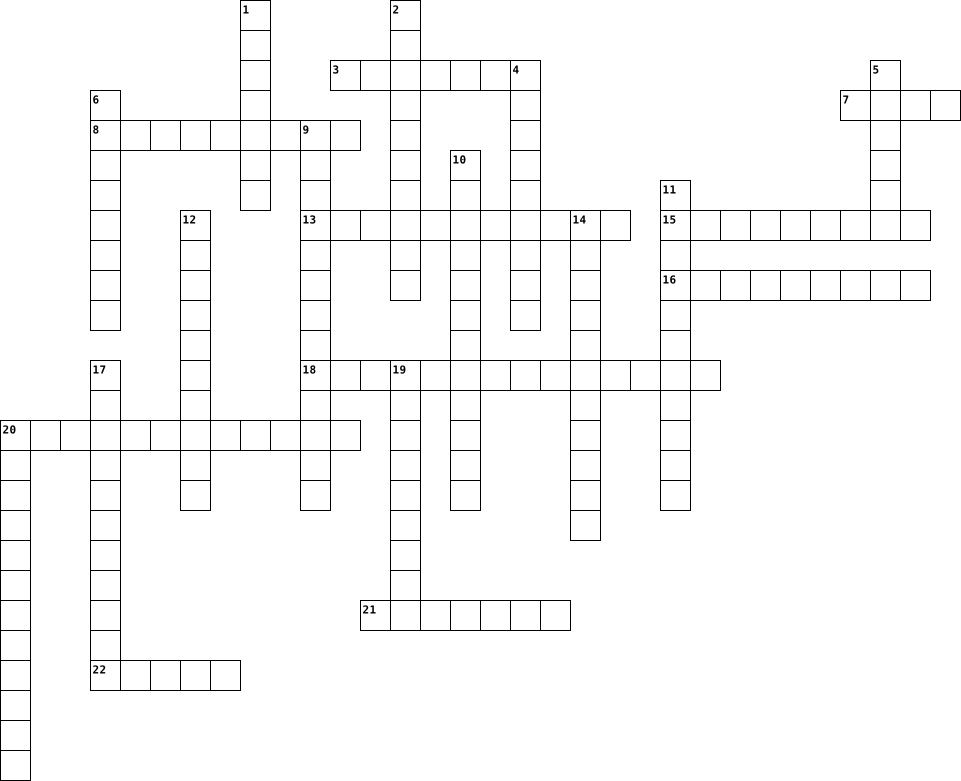
Across
- the body cavity that includes the thoracic, abdominal and pelvic cavity
- atrium name of the left upper chamber of the heart
- outer layer of the skin
- red blood cell
- the body system responsible for the secretion of hormones
- components of blood essential to clotting
- the body system responsible for transporting blood carrying oxygen, carbon dioxide, nutrients and waste. Organs include the heart and blood vessels
- enlargement of the liver
- relating to the liver
- largest artery located near the heart
Down
- painful or difficult urination
- inflammation of the tendon
- white blood cell
- the first vein of choice in blood collection
- the second choice of vein in blood collection
- between the muscle
- specialist doctor for the heart
- the body system that ensures a constant supply of oxygen and removes carbon dioxide
- abnormal heart rate
- fast heart rate
- slow heart rate
- the body system involved in breaking down food into smaller particles
- high blood pressure
23 Clues: red blood cell • fast heart rate • slow heart rate • white blood cell • between the muscle • abnormal heart rate • high blood pressure • relating to the liver • outer layer of the skin • enlargement of the liver • inflammation of the tendon • painful or difficult urination • specialist doctor for the heart • largest artery located near the heart • components of blood essential to clotting • ...
circulatory system 2013-05-21

Across
- a simple carbohydrate
- vessels that transport oxygenated blood from arteries to capillaries
- minute tubes carrying blood to body cells
- lower right section of the heart
- a gas you breathe out
- through the heart in a spacific pathway
- the red pigment in the red blood cells
- the stuff that makes blood red
- hollow tubes with thick walls carrying blood
- helps you breathe
- upper left section of the heart
- blood vessels that carry blood back to the heart
Down
- lower left section of the heart
- a large arterie through which oxygenated blood is pumped
- muscular organ that pumps blood through the circlatory system
- moves blood to and around parts of the body
- a form of energy released during celluar respriation
- upper section of the heart
- the vessle through which oxygenated blood
- the red stuff inside you
- a gas in the air that you need to breathe
- helps you think
22 Clues: helps you think • helps you breathe • a simple carbohydrate • a gas you breathe out • the red stuff inside you • upper section of the heart • the stuff that makes blood red • lower left section of the heart • upper left section of the heart • lower right section of the heart • the red pigment in the red blood cells • through the heart in a spacific pathway • ...
Circulatory Vocabulary 2013-11-12

Across
- Arteries, veins, and capillaries for example
- High blood pressure
- ECF stands for
- Blood going away from the lungs is this ______________
- A permanent cardiac or arterial dilatation
- Type of white blood cell starting with the letter "l"
- The number of chambers in the heart
- What does AV stand for in "AV valve"
- Veins carry blood __ the heart
- Number of heart beats per minute
Down
- Veins branch out into these
- The highest arterial blood pressure reached during any given ventricular cycle
- The fluid portion of blood
- Single beat of the arteries or heart
- Arteries branch out into these
- Blood going towards the lungs is this ________________
- Amount of blood pumped in one heart beat
- Stroke volume times heart rate
- The lowest arterial blood pressure reached during any given ventricular cycle
- A device used to measure blood pressure
- There are _____ in veins to keep blood from moving backwards
- Arteries carry blood ____ from the heart
22 Clues: ECF stands for • High blood pressure • The fluid portion of blood • Veins branch out into these • Arteries branch out into these • Stroke volume times heart rate • Veins carry blood __ the heart • Number of heart beats per minute • The number of chambers in the heart • Single beat of the arteries or heart • What does AV stand for in "AV valve" • ...
Cardiovascular System 2024-11-15

Across
- Instrument to measure pulse pressure.
- Procedure using x-ray dye and a tiny tube called a catheter.
- Hardening of the arteries.
- above/over excessive
- lung
- Inflammation of the sac around the heart.
- Premature ventricular contraction
- A condition in which an artery has a weakened wall, so it swells like a balloon.
- Organs responsible for adding Oxygen and removing carbon dioxide from blood.
- Process of recording blood vessels using X-ray dye
- Deep Vein Thrombosis
- Rupture
- Coronary artery bypass graft
- Filter blood and eliminate waste.
Down
- Where digestion occurs with receptors that regulate blood pressure.
- A test that shows electrical activity of the heart.
- Congestive Heart Failure
- Mediastinum
- Organ that works with a network of blood vessels, arteries, veins and capillaries.
- Hypertension
- formation of an opening
- Enlarged Heart.
- A test that uses ultrasound to look at the heart and its vessels.
- Hardening of the arteries.
- Provided with a constant supply of oxygen-rich blood it regulates your heart and blood pressure.
25 Clues: lung • Rupture • Mediastinum • Hypertension • Enlarged Heart. • above/over excessive • Deep Vein Thrombosis • formation of an opening • Congestive Heart Failure • Hardening of the arteries. • Hardening of the arteries. • Coronary artery bypass graft • Premature ventricular contraction • Filter blood and eliminate waste. • Instrument to measure pulse pressure. • ...
Emilio's CW Puzzle 2 2024-11-18

Across
- Blood Pressure
- Beats per minute
- suffix meaning low or below
- Machine sends electrical shocks to a patient with no pulse and is not awake
- preffix meaning vein
- Where do you place your hand for the pledge of allegiance
- when the blood pressure is 90/40
- suffix relating to blood vessels
- When the heart committed a crime
- When the heartbeat is slow
- This Artery is always on top
- Condition of a heart w/o rhythm
Down
- Chest Pain
- AKA a Los Angeles Gang name
- Carries blood TO the heart
- it's a class in Harlandale High School
- you work out too much and blood pressure becomes high
- if you were a blood cell in the vein you would tell them "move out the way!!"
- you could say this person is very nice
- prefix Pertaining to the heart
- The acronym for performing open-heart surgery (sounds like a veggie)
- Chief Complaint
- Carries blood AWAY from the heart
- Pertaining to
- Intensive care unit
25 Clues: Chest Pain • Pertaining to • Blood Pressure • Chief Complaint • Beats per minute • Intensive care unit • preffix meaning vein • Carries blood TO the heart • When the heartbeat is slow • AKA a Los Angeles Gang name • suffix meaning low or below • This Artery is always on top • prefix Pertaining to the heart • Condition of a heart w/o rhythm • when the blood pressure is 90/40 • ...
Chapter 10: Enhancing Your Cardiovascular Health 2023-04-05

Across
- – drugs that prevent arterial spasms; used in the control of blood pressure and the long-term management of angina pectoris.
- – inability of the heart to pump out all the blood that returns to it; can lead to dangerous fluid accumulations in veins, lungs, and kidneys.
- – blood pressure against blood vessel walls when the heart relaxes.
- – vessels that supply oxygenated blood to heart muscle tissues.
- – an atypical heart sound that suggests a backflow of blood into a chamber of the heart from which it has just left.
- – a chemical compound found in the blood that is associated with inflammation; high levels are related to increased risk of coronary heart disease.
- – excessively rapid heartbeat, as evidenced by a resting pulse rate of greater than 100.
- – any of a group of procedures used to treat patients suffering from an obstruction in an artery. Typically, a PCI involves inserting a slender balloon-tipped tube into an artery of the heart.
- – heart attack; the death of part of the heart muscle as a result of a blockage in one or more of the coronary arteries.
- – the buildup of plaque on the inner walls of arteries.
- – a surgical procedure designed to improve blood flow to the heart by providing alternative routes for blood to take around points of blockage.
- – specialized muscle tissue that forms the middle (muscular) layer of the heart wall.
Down
- – pertaining to the heart (cardio) and blood vessels (vasculara).
- – an imaging procedures that uses a powerful magnet to generate an image of body tissue.
- – the type of lipoprotein that transports the largest amount of cholesterol in the bloodstream; high levels of LDL are related to heart disease.
- – atherosclerotic blockages that occur in arteries that supply blood to the legs and arms.
- – a device inserted inside a coronary artery during a percutaneous coronary intervention (PCI) to prevent the artery from narrowing at that site. systolic pressure – blood pressure against blood vessel walls when the heart contracts.
- – chronic damage to the heart (especially the heart valves) resulting from a streptococcal infection within the heart; a complication of rheumatic fever.
- – blockages to arteries supplying blood to the cerebral cortex of the brain; cause of the most common type of stroke.
- – an amino acid found in the bloodstream; high levels of homocysteine are thought to be related to an increased risk of coronary heart disease.
- – term used to describe people whose bodies overreact to the presence of sodium by retaining fluid, thus increasing blood pressure.
- – drugs that reduce the workload of the heart, which reduces blood pressure and decreases the occurrence of angina pectoris.
- – an x-ray procedure designed to illustrate structures within the body that would not normally be seen through conventional x-ray procedures.
- – the chest; portion of the torso above the diaphragm and within the rib cage.
- – uncontrolled bleeding from arteries within the eye’s retina.
- – the type of lipoprotein that transports cholesterol from the bloodstream to the liver, where it is eventually removed from the body; high levels of HDL are related to a reduction in heart disease.
- – strokelike symptoms caused by temporary spasm of cerebral blood vessels.
- – slowness of the heartbeat, as evidenced by a resting pulse rate of less than 60.
28 Clues: – the buildup of plaque on the inner walls of arteries. • – uncontrolled bleeding from arteries within the eye’s retina. • – vessels that supply oxygenated blood to heart muscle tissues. • – pertaining to the heart (cardio) and blood vessels (vasculara). • – blood pressure against blood vessel walls when the heart relaxes. • ...
Cardiovascular system terms. 2025-04-15

Across
- inner layer of the heart
- another name for the bicuspid valve that is located between the left atrium and left ventricle
- if the valves are not closed properly. There may be an additional sound called a.
- heart rate above 100 bpm
- Lower chambers of the heart.
- Fatty plaque builds up in the arteries.
- small thin walled vessels where oxygen and carbon dioxide gas exchange occur.
- Myocardium attack.
Down
- a life threatening condition in which the heart ventricles quiver at a rate greater than 350 bpm
- Myocardial infraction/blockage of normal blood supply to an are of the hart causes permanent damage.
- an irregular ryhthem in the heart beat.
- affects blood pressure, cardiovascular fitness level, and body temperature.
- Vessels that carry blood away from the heart.
- pectories back pain.
- The amount of blood pumped from the heart per beat.
- is recorded as systole diastole.
- a type of cancer affecting the blood and bone marrow, characterized by the rapid production of abnormal white blood cells.
- pacemaker of the heart
- when the brain is damaged because the blood supply to the brain is stopped.
- the period of contraction when chambers are pumping blood out of the heart
20 Clues: Myocardium attack. • pectories back pain. • pacemaker of the heart • inner layer of the heart • heart rate above 100 bpm • Lower chambers of the heart. • is recorded as systole diastole. • an irregular ryhthem in the heart beat. • Fatty plaque builds up in the arteries. • Vessels that carry blood away from the heart. • The amount of blood pumped from the heart per beat. • ...
Cardiology 2025-08-14

Across
- An ultrasound of the heart.
- Plaque buildup in the arteries, leading to reduced blood
- Disease of the heart muscle.
- A blood vessel carrying blood away from the heart
- A small tube inserted into an artery to keep it open.
- vessels Tubes that carry blood throughout the body
Down
- A device that sends electrical impulses to regulate the heartbeat.
- myocardial infarction
- the branch of medicine that deals with diseases and abnormalities of the heart
- A blood vessel carrying blood towards the heart
- Failure The heart's inability to pump enough blood to meet the body's needs.
- A procedure to widen narrowed arteries using a balloon catheter.
- high blood pressure
- Cath A procedure where a catheter is inserted into a blood vessel to examine the heart.
- heart rhythm disorder where the upper chambers of the heart (atria) beat irregularly and rapidly
- Chest pain caused by reduced blood flow to the heart muscle.
16 Clues: high blood pressure • myocardial infarction • An ultrasound of the heart. • Disease of the heart muscle. • A blood vessel carrying blood towards the heart • A blood vessel carrying blood away from the heart • vessels Tubes that carry blood throughout the body • A small tube inserted into an artery to keep it open. • Plaque buildup in the arteries, leading to reduced blood • ...
THE CIRCULATORY SYSTEM. 2025-05-11

Across
- The upper left chamber of the heart that receives oxygenated blood from the lungs.
- The collective term for arteries, veins, and capillaries.
- Cells in the blood that help fight infections.
- A condition characterized by high blood pressure.
- Blood vessels that carry blood toward the heart.
- A sudden interruption in the blood supply to the brain.
- Tiny blood vessels where the exchange of oxygen, nutrients, and waste occurs between blood and tissues.
- Blood vessels that carry blood away from the heart.
- The fluid component of blood that carries cells and nutrients.
- Cells in the blood responsible for transporting oxygen.
- The lower right chamber of the heart that pumps deoxygenated blood to the lungs.
- A condition where the body cannot properly regulate blood sugar levels.
- The vein that returns deoxygenated blood from the body to the heart.
Down
- The muscular organ that pumps blood throughout the body.
- The lower left chamber of the heart that pumps oxygenated blood into the aorta.
- A disease where the coronary arteries become narrowed or blocked.
- The upper right chamber of the heart that receives deoxygenated blood from the body.
- Fragments in the blood that help in clotting.
- The largest artery in the body, carrying oxygen-rich blood from the heart to the rest of the body.
19 Clues: Fragments in the blood that help in clotting. • Cells in the blood that help fight infections. • Blood vessels that carry blood toward the heart. • A condition characterized by high blood pressure. • Blood vessels that carry blood away from the heart. • A sudden interruption in the blood supply to the brain. • Cells in the blood responsible for transporting oxygen. • ...
Circulatory System 2022-05-03

Across
- Keeps blood from flowing backwards
- Smallest blood vessels
- Take blood back to the heart
- Part of the circulatory system; the pump
- Top chambers of the heart
- Take blood away from the heart
- Blood that has oxygen
- Where blood gets oxygen from
Down
- Bottom chambers of the heart
- Help clot blood
- Blood that is low in oxygen
- Having to do with the lungs
- Another name for the circulatory system
- Rooms of the heart
- Largest artery in the body
- Wall separating right and left chambers of the heart
16 Clues: Help clot blood • Rooms of the heart • Blood that has oxygen • Smallest blood vessels • Top chambers of the heart • Largest artery in the body • Blood that is low in oxygen • Having to do with the lungs • Bottom chambers of the heart • Take blood back to the heart • Where blood gets oxygen from • Take blood away from the heart • Keeps blood from flowing backwards • ...
Crossword Key 2026-03-23

Across
- ____ Circuit; Carries oxygenated blood
- Blood clotting
- Tissue barrier that separates the heart in two
- Protective layer surrounding the heart
- Percentage of red blood cells
- Relaxation of the heart muscle
Down
- Lower chambers of the heart
- ____ Circuit; Carries deoxygenated blood
- Thickest layer of the heart
- Cells that protect the body from foreign substances
- Transports oxygen, waste, and hormones
- Upper chambers of the heart
- Contraction of the heart muscle
- The fluid matrix of blood
- Pump of the cardiovascular system
15 Clues: Blood clotting • The fluid matrix of blood • Lower chambers of the heart • Thickest layer of the heart • Upper chambers of the heart • Percentage of red blood cells • Relaxation of the heart muscle • Contraction of the heart muscle • Pump of the cardiovascular system • ____ Circuit; Carries oxygenated blood • Transports oxygen, waste, and hormones • ...
cardiovascular system 2025-05-06

Across
- smallest blood vessel
- upper Chambers of the heart
- outer layer of the heart
- Largest vein
- Platelet
- Red blood cells
- White blood cells
- The most inside layer of the heart
Down
- vein that carries oxygenated blood to heart
- The largest artery
- artery that carries deoxyginated blood away from the heart
- Blood vessel that carries blood away from the heart
- lower Chambers of the heart
- the middle layer of the hearts wall
- Blood vessel that carries blood to the heart
15 Clues: Platelet • Largest vein • Red blood cells • White blood cells • The largest artery • smallest blood vessel • outer layer of the heart • upper Chambers of the heart • lower Chambers of the heart • The most inside layer of the heart • the middle layer of the hearts wall • vein that carries oxygenated blood to heart • Blood vessel that carries blood to the heart • ...
Cardiovascular Terminology 2019-10-14

Across
- CIRCULATION the part of systemic circulation that provides the heart muscle with oxygen and nutrients and carries away waste products
- a portion of a thrombus that breaks off and moves through the bloodstream.
- the constriction of the muscular wall of an artery to increase blood pressure.
- the widening of the muscular wall of an artery to decrease blood pressure
- the middle and thickest layer of the heart. It is made primarily of cardiac muscle.
- a membrane that covers the heart and large blood vessels attached to it.
- the outermost layer of the wall of the heart.
- PRESSURE the blood pressure measured when the left ventricle of the heart contracts.
Down
- NODE a small bundle of heart muscle tissue in the superior wall of the right atrium that sets the rhythm of the heart’s contractions.
- OF HIS this is the node located between the ventricles of the heart that carries the electricl impulse from the AV node to the bundle branches.
- NODE node that is located between the atria of the heart. After the electrical impulse reaches the atrioventricular node, the atria contract and the impulse is sent to the ventricles.
- thickness
- CIRCULATION the circulation of blood through the arteries, capilaries and veins of the general system, from the left ventricle to the right atrium.
- the innermost layer of the heart.
- an abnormal narrowing of a body passage
- TENDINEAE cord-like structures that attach the cusps of the heart valves to the papillary muscles in the ventricles.
- PORTAL SYSTEM the collection of veins carrying blood to the liver.
- OUTPUT the product of heart rate and stroke volume, measured in liters per minute; the amount of blood that is pumped by the heart in 1 minute.
- FIBERS cardiac fibers that are located in the lateral walls of the ventricles.
- CIRCULATION the passage of blood from the right ventricle through the pulmonary artery to the lungs and back through the pulmonary veins to the left atrium.
- PRESSURE the blood pressure measured when the heart relaxes.
21 Clues: thickness • the innermost layer of the heart. • an abnormal narrowing of a body passage • the outermost layer of the wall of the heart. • PRESSURE the blood pressure measured when the heart relaxes. • PORTAL SYSTEM the collection of veins carrying blood to the liver. • a membrane that covers the heart and large blood vessels attached to it. • ...
Cardiovascular system 2023-09-11

Across
- Abbreviation for a non-surgical procedure used to treat the blockages in a coronary artery
- An inflammation of the pericardium or sac that contains your heart
- Caused by plaque buildup in the wall of the arteries that supply blood to the heart
- Prefix meaning heart
- Records the electrical signals in the heart
- Any of the muscular-walled tubes forming part of the circulation system by which blood is conveyed from the heart to all parts of the body
- A very small artery connecting a larger artery to capillaries
- Combining form meaning vessel
- Relating to the aorta
- A sudden blockage in your pulmonary arteries, the blood vessels that send blood to your lungs
- Uses sound waves to show how blood flows through the heart and heart valves
- Abbreviation for recording the electrical signal from the heart to check for different heart conditions
Down
- General term that describes a disease of the heart or blood vessels
- A hollow muscular organ that pumps blood through the circulatory system by rhythmic contraction and dilation
- A painless and harmless test that uses high-frequency sound waves to create pictures of the insides of the two large arteries in your neck
- Any of the fine branching blood vessels that form a network between the arterioles and venules
- A disease that affects the arteries leading to and within the brain
- Abbreviation for vascular prostheses used by interventional cardiologists to reopen and maintain patent coronary arteries narrowed by arteriosclerosis
- Magnetic resonance imaging technology is used for non-invasive assessment of the function and structure of the cardiovascular system
- Any of the tubes forming part of the blood circulation system of the body, carrying in most cases oxygen-depleted blood toward the heart
- Cardiological test that measures the heart's ability to respond to external stress in a controlled clinical environment
- Happens when the flow of blood that brings oxygen to a part of your heart muscle suddenly becomes blocked
- Relating to the blood vessels
- Relating to blood
- Abbreviation for a procedure that prevents the vascular recoil cardiologists observed with balloon angioplasty
25 Clues: Relating to blood • Prefix meaning heart • Relating to the aorta • Combining form meaning vessel • Relating to the blood vessels • Records the electrical signals in the heart • A very small artery connecting a larger artery to capillaries • An inflammation of the pericardium or sac that contains your heart • ...
Fetal Heart Rate Terminology 2025-01-31

Across
- This fetal heart rate category may indicate intrauterine resuscitative measures are necessary
- This can be placed in the uterus to evaluate the exact strength of contractions
- This is measured from the beginning of a contraction to the end of the same contraction and is recorded in seconds
- This fetal heart rate category has a normal fetal heart rate baseline with moderate variability and no late or variable decelerations
- This is determined by palpating the abdomen during a contraction and comparing it to facial features
- The term for a fetal heart rate baseline greater than 160 bpm
- The term for the average fetal heart rate
- The type of variability that has an undetectable range
- This can be placed on the fetal scalp to evaluate fetal heart rate
- The type of deceleration caused by placental insufficiency and requires resuscitative measures
- The type of deceleration in which the heart rate decreases by at least 15 bpm and lasts for 2-10 minutes
- The term for a fetal heart rate baseline less than 110 bpm
- The term for 6 or more contraction in a 10 minute period
Down
- The first resuscitative intervention to do when fetal heart rate baseline is abnormal is to change the maternal ____________
- The type of variability that has a range of 6-10 bpm and shows the fetus has good oxygen reserves
- A smooth undulating fetal heart rate pattern with a frequency of 3-5 bpm and is a sign of severe fetal distress, severe fetal anemia, and frequently indicates a fetus that is incompatible with life
- The type of deceleration that is due to cord compression and is the most common type of deceleration
- this fetal heart rate category requires immediate resuscitative measures and notification of the healthcare provider
- The type of deceleration that is due to head compression and does not require any resuscitative measures
- An increase in the fetal heart rate of at least 15 bpm and lasts at least 15 seconds
- The type of variability that has a range of less than 5 bpm
- The beat-to-beat changes in the fetal heart rate
22 Clues: The term for the average fetal heart rate • The beat-to-beat changes in the fetal heart rate • The type of variability that has an undetectable range • The term for 6 or more contraction in a 10 minute period • The term for a fetal heart rate baseline less than 110 bpm • The type of variability that has a range of less than 5 bpm • ...
Cardiovascular System 2019-12-31

Across
- Monitor / Ambulatory Electrocardiography Device
- Artery Disease / narrowing or blockage of the coronary arteries
- / X-Ray Of Blood And Lymph Vessels
- / Shortness Of Breath
- / Prefix Meaning Slow
- / Records Electrical Activity Of The Heart
- / Root Word Meaning Muscle
- / High Blood Pressure
- / Blood Vessel Network Between The Arterioles And Venules
- / Swelling And Weakening Of An Area In The Artery
- / Carries Oxygen To Cells
Down
- / Pumps Blood
- Infarction / Another Term For Heart Attack
- / Ventricular Tachycardia
- Arrest / Sudden Stopping Of Heart Function
- / Heart Ultrasound
- / Do Not Resuscitate
- / Blood Vessels Carrying Blood To The Heart
- / Suffix Meaning Growth
- / Oxygen Rich Blood Vessels
- / Suffix Meaning Pertaining to
- / Chest Pain
- / Prefix Meaning Excess
- Test / Test Assessing The Hearts Ability To Handle External Stress
- / Intensive Care Unit
25 Clues: / Chest Pain • / Pumps Blood • / Heart Ultrasound • / Do Not Resuscitate • / Shortness Of Breath • / Prefix Meaning Slow • / High Blood Pressure • / Intensive Care Unit • / Suffix Meaning Growth • / Prefix Meaning Excess • / Ventricular Tachycardia • / Carries Oxygen To Cells • / Root Word Meaning Muscle • / Oxygen Rich Blood Vessels • / Suffix Meaning Pertaining to • ...
Cardiovascular System 2021-02-09

Across
- a clot that develops in and unbroken blood vessel
- lack of adequate blood supply to the heart muscle
- arteries are narrowed
- heart is forced to pump against increased resistance
- blood vessels within lungs become swollen with blood
- clot detachment
- thrombus that breaks away from blood vessel and flows freely
- ventricles beat a their own rate
- rapid uncoordinated shuddering of the heart muscle
- account for about half of infant deaths
- inflammation of the pericardium
Down
- purplish blotches
- abnormal or unusual heart sounds
- heart attack
- myocardium is deprived of oxygen
- serious complication of varicose veins
- circulation is inadequate to meet tissue needs
- common in people who stand for long periods of time
- bacterial infection of the endocardium
- heart cells die
20 Clues: heart attack • clot detachment • heart cells die • purplish blotches • arteries are narrowed • inflammation of the pericardium • abnormal or unusual heart sounds • myocardium is deprived of oxygen • ventricles beat a their own rate • serious complication of varicose veins • bacterial infection of the endocardium • account for about half of infant deaths • ...
PBL: Cardiovascular System (AC) 2022-10-18

Across
- irregular rhythm in the heartbeat
- medical device that restarts hearts
- white blood cells
- high blood pressure
- large veins carrying blood to the heart
- protein inside erythrocytes
- relating to the heart vessels
- two upper cavities of the heart
- platelets of the blood
- medical instrument that listens to the heart
Down
- chest pain
- study of the heart
- red blood cells
- related to the lungs
- small blood vessel connecting arteries and veins
- actual term for blood pressure cuff
- two main arteries carrying blood to the head and neck
- procedure that opens up blocked blood vessels
- blood vessels that carry blood
- artery that carries blood away from the heart to the rest of your body
- hollow part of the cavity or organ
- low blood pressure
22 Clues: chest pain • red blood cells • white blood cells • study of the heart • low blood pressure • high blood pressure • related to the lungs • platelets of the blood • protein inside erythrocytes • relating to the heart vessels • blood vessels that carry blood • two upper cavities of the heart • irregular rhythm in the heartbeat • hollow part of the cavity or organ • ...
cardiovascular system 2022-11-15

Across
- Gas that enters the blood in lungs
- Largest artery in the body.
- Double-layered membrane around heart
- Smallest type of blood vessel.
- Relaxation phase of the heartbeat.
- Innermost lining of blood vessels.
- Special nervous tissue of right atrium
- Muscular middle layer of the heart.
- Abnormal swishing sound of the heart
Down
- Small vein.
- One of two lower chambers of the heart.
- Small artery.
- vessel carrying blood to the heart
- Regulators of blood flow in the heart or vein
- Contraction phase of the heartbeat
- Inner lining of the heart.
16 Clues: Small vein. • Small artery. • Inner lining of the heart. • Largest artery in the body. • Smallest type of blood vessel. • Gas that enters the blood in lungs • Contraction phase of the heartbeat • Relaxation phase of the heartbeat. • Innermost lining of blood vessels. • vessel carrying blood to the heart • Muscular middle layer of the heart. • Double-layered membrane around heart • ...
Cardiovascular Fun 2022-02-08

Across
- Known as the silent killer
- Symptom of heart disease
- Acid builds up as you work out in anaerobic zone
- Buildup in arteries causes infarction
- abnormal sounds associated with abnormal valves
- Carry blood away from the heart
- Improves cardiovascular fitness
- Carry blood to the heart
Down
- Slow heart rate
- Volume of blood pumped in one minute
- Contraction of the heart
- Affected by diet and genetics
- The number one cause of death for Americans
- Valve located between RV and pulmonary artery
- Factor that causes heart disease
- Causes heart disease, diabetes, and obesity
- Causes hypertension, insomnia, and weak immune system
17 Clues: Slow heart rate • Contraction of the heart • Symptom of heart disease • Carry blood to the heart • Known as the silent killer • Affected by diet and genetics • Carry blood away from the heart • Improves cardiovascular fitness • Factor that causes heart disease • Volume of blood pumped in one minute • Buildup in arteries causes infarction • ...
Cardiovascular Puzzle_SamuelAsareBoahen 2023-06-22

Across
- Double-layered membrane surrounding the heart.
- cava Largest vein in the body.
- is the Largest artery in the body.
- Innermost lining of blood vessels.
- Beat of the heart as felt through the walls of the arteries.
- Small artery.
- Abnormal swishing sound caused by improper closure of the heart valves
- One of two lower chambers of the heart.
- Muscular middle layer of the heart.
Down
- Instrument to measure blood pressure.
- Inner lining of the heart.
- Contraction phase of the heartbeat.
- One of two upper chambers of the heart.
- Relaxation phase of the heartbeat.
- Record of the electrical activity of the heart.
- Small vein.
16 Clues: Small vein. • Small artery. • Inner lining of the heart. • cava Largest vein in the body. • is the Largest artery in the body. • Innermost lining of blood vessels. • Relaxation phase of the heartbeat. • Contraction phase of the heartbeat. • Muscular middle layer of the heart. • Instrument to measure blood pressure. • One of two upper chambers of the heart. • ...
10.7 crossword puzzle Linda Cowden 2023-11-16

Across
- smallest blood vessel
- largest artery in the body
- lower chamber of the heart
- small artery
- recording of electrical activity of the heart
- air that you breath
- upper chamber of the heart
- small vein
- blood into heart from the upper parts of the body
Down
- valve that lies between the right atrium and the right ventricle
- carries blood to the lungs from the heart
- valve that lies between the left atrium and the left ventricle
- abnormal swishing sound
- blood from lower half of body to the heart
- carries blood from the lungs to the heart
- inner lining of the heart
16 Clues: small vein • small artery • air that you breath • smallest blood vessel • abnormal swishing sound • inner lining of the heart • largest artery in the body • lower chamber of the heart • upper chamber of the heart • carries blood to the lungs from the heart • carries blood from the lungs to the heart • blood from lower half of body to the heart • ...