
heart Crossword Puzzles
EKG Crossword 2025-09-02

Across
- specialized areas of tissue within the heart's electrical conduction system
- Muscular tissue of the heart
- Electrocardiogram shortened
- the series of events that occur during a single heartbeat
- Lower chambers of heart that pumps blood
- The force exerted on the walls of arteries by blood
- The largest artery
- The blood vessel that carries blood through the body
- Upper chambers of heart that receive blood
- a specific view of the heart's electrical activity from a unique angle
- Contraction stage of the heartbeat
Down
- The mapping of the hearts electrical signals as they travel
- A test that records electrical heart signals
- The rate at which the heart is beating
- The rhythmic physical sensation of the heartbeat
- The blood vessel that returns blood to the heart
- blood flow and oxygen supply to the heart muscle
- The smallest blood vessel of the body
- Relaxation stage of the heartbeat
19 Clues: The largest artery • Electrocardiogram shortened • Muscular tissue of the heart • Relaxation stage of the heartbeat • Contraction stage of the heartbeat • The smallest blood vessel of the body • The rate at which the heart is beating • Lower chambers of heart that pumps blood • Upper chambers of heart that receive blood • A test that records electrical heart signals • ...
Heart Disease & Medical Terminology 2025-11-19

Across
- arrest - the heart stops beating
- a small device that uses electrical pulses to keep the heart beating normal
- An x ray where special dye is injected into the blood vessels to make them visible to check for blockages
- (Percutaneous Coronary Intervention)- a procedure using a catheter
- a diagnostic test that records electrical activity from the heart
- bluish or purplish discoloration
- replacement- removing a bad valve and putting in a new one
- inflammation
Down
- replacing the aortic valve
- an ultrasound test that uses sound waves to create moving pictures of the heart
- (Coronary Artery Bypass Graft)- open heart surgery to create a new path for blood to flow
- difficulty breathing
- a blockage of the atery or vein
- swelling cause by to much fluid trapped in the tissue
- chest pain or discomfort
- tissue death
- (Implantable Cardioverter Defibrillator)- a device that shocks the heart
- repair- fixing a damaged heart valve to help it work better
- a mechanical pump
- a tiny mesh tube
20 Clues: tissue death • inflammation • a tiny mesh tube • a mechanical pump • difficulty breathing • chest pain or discomfort • replacing the aortic valve • a blockage of the atery or vein • arrest - the heart stops beating • bluish or purplish discoloration • swelling cause by to much fluid trapped in the tissue • replacement- removing a bad valve and putting in a new one • ...
Human heart 2020-02-26

Across
- Name an exercise that would make your heart beat fast beginning with r?
- How much exercise should you get each day for a healthy heart in minutes?
- What is your heart rate called when you are sitting down, beginning with r?
- Name the bottom left chamber of the heart
- Name the top right chamber of the heart
- What colour is your blood?
- What does BPM stand for?
- Name the top left chamber of the heart
Down
- From where does your blood get oxygen?
- Name the bottom right chamber of the heart
- How many chambers are there in the heart?
- Name the wall of muscle separating the two sides of the heart
- What saint's day of the year is associated with hearts?
- Where in your body can you find a pulse?
14 Clues: What does BPM stand for? • What colour is your blood? • From where does your blood get oxygen? • Name the top left chamber of the heart • Name the top right chamber of the heart • Where in your body can you find a pulse? • How many chambers are there in the heart? • Name the bottom left chamber of the heart • Name the bottom right chamber of the heart • ...
The Heart 2020-04-29

Across
- ventricle, responsible for pumping oxygenated blood to tissues all over the body
- the internal cavity is divided into how many chambers?
- main artery that carries blood away from your heart to the rest of your body
- carries oxygenated blood from heart to the body
- cava, large vein that carries deoxygenated blood to the right atrium
- carry blood away from the body and exchange nutrients waste and oxygen with tissues at the cellular level.
- atruim, receives deoxygenated blood from systemic veins
Down
- middle layer of the heart
- one of the small branches of an artery especially one that connects with capillaries
- atruim, receives oxygenated blood from pulmonary veins
- system, the system that circulates blood and lymph through the body consisting of the heart blood vessels blood lymph and the lymphatic vessels and glands.
- carries deoxygenated blood back to the heart
- the inner layer of the heart
- a four-chambered muscular organ, shaped and sized roughly like a man's closed fist
- The outer layer of the heart wall
15 Clues: middle layer of the heart • the inner layer of the heart • The outer layer of the heart wall • carries deoxygenated blood back to the heart • carries oxygenated blood from heart to the body • atruim, receives oxygenated blood from pulmonary veins • the internal cavity is divided into how many chambers? • atruim, receives deoxygenated blood from systemic veins • ...
Heart Anatomy 2022-02-06

Across
- collects deoxygenated blood
- carries blood back to heart from lungs
- valve that prevents back flow into left ventricle
- pumps oxygenated blood into body
- largest vein; drains blood into right atrium
- collects oxygenated blood
- valve between the left atrium and left ventricle
- pumps deoxygenated blood into lungs
Down
- carries blood away from heart to lungs
- largest artery; delivers oxygenated blood to body
- valve that prevents back flow into right ventricle
- circuit to and from body to deliver oxygen
- circuit to and from lungs to collect oxygen
- valve between right atrium and right ventricle
14 Clues: collects oxygenated blood • collects deoxygenated blood • pumps oxygenated blood into body • pumps deoxygenated blood into lungs • carries blood away from heart to lungs • carries blood back to heart from lungs • circuit to and from body to deliver oxygen • circuit to and from lungs to collect oxygen • largest vein; drains blood into right atrium • ...
Heart Month 2022-02-09

Across
- blood vessels that bring blood back to the heart
- fatty substance causing heart disease
- machine that picks up heart's electrical signals
- part of the body in which heart is located
- carries blood to the lung
- pumping chambers of the heart
- test conducted on a treadmill
Down
- 24 Hour monitor
- Medical Term for "Passing Out"
- collecting chamber of the heart
- carries blood to the body
- doctor who examines the heart
- organ that pumps blood
- blood vessels leaving the heart
14 Clues: 24 Hour monitor • organ that pumps blood • carries blood to the body • carries blood to the lung • doctor who examines the heart • pumping chambers of the heart • test conducted on a treadmill • Medical Term for "Passing Out" • collecting chamber of the heart • blood vessels leaving the heart • fatty substance causing heart disease • part of the body in which heart is located • ...
Human Heart 2022-01-27

Across
- Separates left and right sides of the heart
- Chambers that pump blood to parts of the body
- Blood rich in oxygen
- Vessels that take blood away from the heart
- Vessel that carries blood to all parts of the body
- Initiates heart beat
Down
- Ensures unidirectional flow of blood
- Double walled membrane of the heart
- Blood rich in carbon dioxide
- Brings blood from the lungs to the heart
- Brings blood to the right auricles
- Vessels that bring blood towards the heart
- Circulation between heart and body parts
- Muscles of the heart
14 Clues: Blood rich in oxygen • Muscles of the heart • Initiates heart beat • Blood rich in carbon dioxide • Brings blood to the right auricles • Double walled membrane of the heart • Ensures unidirectional flow of blood • Brings blood from the lungs to the heart • Circulation between heart and body parts • Vessels that bring blood towards the heart • ...
Heart Valves 2022-02-14

Across
- Main actor in the opening and closing of the semilunar valves
- Semilunar valves control blood into____ vessels
- The papillary muscles are a type of ____
- The ____ skeleton provides structural support of the heart valves
- The semilunar valve located between the left ventricle and a particular great vessel
- Site of the most common valve disorders
- Phase of cardiac cycle when papillary muscles are contracted
Down
- Backflow of blood into atria
- Action of the papillary muscles upon ventricular contraction
- The tissue that covers / lines the heart valves
- State of the chordae tendineae during diastole
- Muscle that is part of the subvalvular apparatus
- Narrowing
- Heart valves prevent blood from flowing ____
14 Clues: Narrowing • Backflow of blood into atria • Site of the most common valve disorders • The papillary muscles are a type of ____ • Heart valves prevent blood from flowing ____ • State of the chordae tendineae during diastole • Semilunar valves control blood into____ vessels • The tissue that covers / lines the heart valves • Muscle that is part of the subvalvular apparatus • ...
Berlin Heart 2022-04-26

Across
- Emergency equipment used in case of pump failure
- How often the berlin should be checked and charted
- __________ Assist Device
- An underfilled pump can lead to an incomplete filling/ejection, which presents as a _______
- VAD coordinator to contact in case of emergency
- A Berlin heart is a _________ pump
- Tool used to inspect the underside of the pump
- Number of minutes of battery life
Down
- Continuous anticoagulation checked via unfractionated heparin level
- Driver that controls pressure, rate, and fill
- A malleable membrane that separates the blood side from the air side
- Stringy white deposits that cling to the sides of the pump
- Continuous anticoagulation checked via hepzyme PTT level
- Deep red deposit that clings to the sides of the pump
14 Clues: __________ Assist Device • Number of minutes of battery life • A Berlin heart is a _________ pump • Driver that controls pressure, rate, and fill • Tool used to inspect the underside of the pump • VAD coordinator to contact in case of emergency • Emergency equipment used in case of pump failure • How often the berlin should be checked and charted • ...
Berlin Heart 2022-04-26

Across
- Emergency equipment used in case of pump failure
- How often the berlin should be checked and charted
- __________ Assist Device
- An underfilled pump can lead to an incomplete filling/ejection, which presents as a _______
- VAD coordinator to contact in case of emergency
- A Berlin heart is a _________ pump, powered by air
- Tool used to inspect the underside of the pump
- Number of minutes of battery life
Down
- Continuous anticoagulation checked via unfractionated heparin level
- Driver that controls pressure, rate, and fill
- A malleable membrane that separates the blood side from the air side
- Stringy white deposits that cling to the sides of the pump
- Continuous anticoagulation checked via hepzyme PTT level
- Deep red deposit that clings to the sides of the pump
14 Clues: __________ Assist Device • Number of minutes of battery life • Driver that controls pressure, rate, and fill • Tool used to inspect the underside of the pump • VAD coordinator to contact in case of emergency • Emergency equipment used in case of pump failure • How often the berlin should be checked and charted • A Berlin heart is a _________ pump, powered by air • ...
Heart Failure 2014-02-05

Across
- cardiac workload ,Slow the progression of heart failure. You would place the PT in high fowler's position with ______ legs.
- Hyperthyroidism, infection, anemia or pregnancy are all caused of what type of HF
- Where fluid will back up in left sided heart failure
- The most common impaired myocardial contraction cause of heart failure
- To improve cardiac function and control fluid retention
- SOB is a clinical manifestation of what type of HF
Down
- The most common Increased cardiac workload cause of heart failure
- S/S: SOB, tachypnea, crackles if LV is affected, distended neck veins, liver enlargement , anorexia and nausea if RV is affected are what type of Ventricular HF
- JVD is a clinical manifestation of what type of HF
- Molecular marker that is unequivocally associated with CHF
- Decrease muscle ability to contract or pump resulting in inability to move blood forward is a cause of what type of Ventricular HF
- This drug is an Atrial nateuretic peptide hormone given for CHF based on BNP level
- Best indicator of water retention
- Where fluid will back up in right sided heart failure
14 Clues: Best indicator of water retention • JVD is a clinical manifestation of what type of HF • SOB is a clinical manifestation of what type of HF • Where fluid will back up in left sided heart failure • Where fluid will back up in right sided heart failure • To improve cardiac function and control fluid retention • ...
The Heart 2016-05-04

Across
- brings oxygen poor blood into the heart from the body
- sends oxygen rich blood to the body
- separates the right atrium and right ventricle
- separates the left atrium and left ventricle
- keeps blood moving in a forward direction
Down
- upper chambers of the heart
- sends oxygen poor blood to the lungs
- waste product of cells
- blood vessel that has valves
- brings oxygen rich blood from the lungs to the left atrium
- sends blood away from the heart
- strongest ventricle in the heart
- smallest blood vessels
- lower chambers of the heart
14 Clues: waste product of cells • smallest blood vessels • upper chambers of the heart • lower chambers of the heart • blood vessel that has valves • sends blood away from the heart • strongest ventricle in the heart • sends oxygen rich blood to the body • sends oxygen poor blood to the lungs • keeps blood moving in a forward direction • separates the left atrium and left ventricle • ...
Heart Failure 2024-02-28

Across
- In systolic HF the chambers are thin and_____
- Vein distention Elevated neck veins
- Decrease in GFR is evidenced by a decrease in ____.
- Diagnostic of heart failure
- Compensation
- Will measure pulmonary and atrial wedge pressure
- Stop or it can progress to hypertension and Heart failure
Down
- Three pillows please
- _____of the fingers is a sign of heart failure
- pressure in the L. ventricle at end of diastole
- Heart cannot pump
- Stiff and thick chambers
- You hear evidence of pleural effusion
- Causes retention of H2O
14 Clues: Compensation • Heart cannot pump • Three pillows please • Causes retention of H2O • Stiff and thick chambers • Diagnostic of heart failure • Vein distention Elevated neck veins • You hear evidence of pleural effusion • In systolic HF the chambers are thin and_____ • _____of the fingers is a sign of heart failure • pressure in the L. ventricle at end of diastole • ...
Heart Health 2025-02-12

Across
- ________ benefits the heart
- Managing _______ pressure can help avoid heart disease
- The heart begins beating ______ weeks after conception
- Approximately 2,300 Americans die from ____________ disease every day
- High __________ level is a risk factor for heart disease
- __________ fats are a healthy fat
- This occurs when the heart malfunctions and the heart stops beating
Down
- Eat healthy and maintain a healthy _________ to
- Dark Chocolate is rich in _____________
- ________ Juice is considered a heart healthy drink
- The most important key to heart health is....
- Your body uses about 9 cups of this to transport nutrients and keep skin moist
- When blood flow is blocked from the heart
- __________ is the strongest muscle in the body
14 Clues: ________ benefits the heart • __________ fats are a healthy fat • Dark Chocolate is rich in _____________ • When blood flow is blocked from the heart • The most important key to heart health is.... • __________ is the strongest muscle in the body • Eat healthy and maintain a healthy _________ to • ________ Juice is considered a heart healthy drink • ...
Unit 5 2022-06-21

Across
- enzymes / It is used to find factors in blood that can cause heart muscle damage.
- / The outer layer of the heart.
- / Leads are attached to the chest to record heart rhythm.
- / Graphic record of heart and vessels using ultrasound.
- arrest / The heart stops pumping completely.
- valve / The valve between right ventricle and pulmonary artery that controls the blood flow.
- / A prefix meaning fast.
- / Electrocardiogram
- / The abnormal bulge in the wall of blood vessels.
- / A root word meaning skin.
- / The inflammation of pericardium.
- / A suffix meaning instrument to measure pressure.
Down
- / The smallest blood vessels in the vascular system.
- / A suffix meaning surgical removal.
- veins / Enlarged veins.
- / Dyspnea on exertion
- / The innermost layer of the heart.
- / Coronary artery bypass graft
- / X-ray dye is used to check blood vessels.
- / High blood pressure.
- / The muscular layer of the heart.
- monitor / It is a machine that can records heart activity as the patient wears it.
- / A suffix meaning involuntary muscle contraction.
- / Acute myocardial infarction.
- / Implantable cardioverter defibrillator
25 Clues: / Electrocardiogram • / Dyspnea on exertion • / High blood pressure. • veins / Enlarged veins. • / A prefix meaning fast. • / A root word meaning skin. • / Coronary artery bypass graft • / Acute myocardial infarction. • / The outer layer of the heart. • / The muscular layer of the heart. • / The inflammation of pericardium. • / The innermost layer of the heart. • ...
Unit 5 Lab 2022-10-20

Across
- do not resuscitate
- the area where the heart lies
- instrument to measure pressure
- _______ septum the wall between the right and left atria
- blood
- the outer layer
- cardiopulmonary resuscitation
- within
- records the electrical activity of the heart
- used to measure blood pressure
- _____ artery there is a narrowing in the arteries surrounding the heart
Down
- thin inner layer that lines each chamber
- test that uses ultrasound to look at the heart and its vessels
- ______ complete stopping of the heart
- rupture
- ventricular tachycardia
- the pericardial sac around the heart is inflamed
- swollen or dilated veins
- surgical puncture to remove fluid
- artery has a weakened wall, causing it to swell
- the middle, muscular layer that contracts to pump blood
- normal sinus rhythm
- automated external defibrillator
- x-ray dye called contrast is injected into blood vessels to diagnose things like narrowing (stenosis) or aneurysms
- cardiac _____ measure certain items in the blood that may indicate heart muscle damage
25 Clues: blood • within • rupture • the outer layer • do not resuscitate • normal sinus rhythm • ventricular tachycardia • swollen or dilated veins • the area where the heart lies • cardiopulmonary resuscitation • instrument to measure pressure • used to measure blood pressure • automated external defibrillator • surgical puncture to remove fluid • ______ complete stopping of the heart • ...
Unit 5 2021-10-19

Across
- the muscular organ that pumps blood through the arteries and veins
- check how your hearts valves are pumping blood
- prefix meaning "blood vessel"
- a test used to evaluate the heart
- blood vessels in humans
- prefix meaning "joint"
- a type of portable electrocardiogram
- a blood clot that develops in a blood vessel
- cardiovascular disease
- a genetic condition that affects connective tissue
- one of the most common forms of cardiovascular disease
- drug-eluting stent
Down
- very tiny blood vessels
- percutaneous coronary intervention
- burning mouth syndrom
- used to view your heart and blood vessels
- a tube that carries blood through the tissue and organs
- the buildup of plaque in the arteries
- an electrocardiogram
- prefix meanign "artery"
- a test that takes pictures of your heart
- reduces the heart's ability to pump blood
- a procedure to diagnose or treat heart conditions
- prefix meaning "heart"
- blood vessels that deliver blood from the heart
25 Clues: drug-eluting stent • an electrocardiogram • burning mouth syndrom • prefix meaning "joint" • cardiovascular disease • prefix meaning "heart" • very tiny blood vessels • prefix meanign "artery" • blood vessels in humans • prefix meaning "blood vessel" • a test used to evaluate the heart • percutaneous coronary intervention • a type of portable electrocardiogram • ...
Cardiovascular System 2021-04-22

Across
- a free-floating blood clot in a blood vessels
- high blood pressure
- buildup of fats, cholesterol & other substances on the artery walls
- another name for the sinoatrial node
- valve between the right atrium and right ventricle
- sac that encloses the heart
- blood supply to the brain is interrupted or reduced
- the only vessels that directly serve the body cells
- valve located between the left atrium and left ventricle
- an abnormal or unusual heart sound, usually from a valve problem
- pressure when the ventricles are relaxing
Down
- chamber receiving deoxygenated blood from the body
- circuit of blood from heart, out to the body, and back to the heart
- tiny veins that drain the capillary beds
- thin sheet that lines the walls of the heart chambers
- structure that carries oxygenated blood out of the heart to the body
- thick bundles of cardiac muscle that contract
- carry blood to the heart
- acronym used to help diagnose a stroke
- another name for the bicuspid valve
20 Clues: high blood pressure • carry blood to the heart • sac that encloses the heart • another name for the bicuspid valve • another name for the sinoatrial node • acronym used to help diagnose a stroke • tiny veins that drain the capillary beds • pressure when the ventricles are relaxing • a free-floating blood clot in a blood vessels • thick bundles of cardiac muscle that contract • ...
FoAP PALS CVS Crossword 2023-04-10

Across
- Moves blood between the heart and lungs
- These return blood to the heart and contains valves
- The number of valves the heart has
- Blood plasma contains antibodies called
- The volume of blood being ejected from left ventricle per min is known as
- Wrinkled pouchlike structures that increases volume of atria
- Moves blood between the heart and body
- Valve between right ventricle and pulmonary trunk
- The heart is located within the...
- Atrioventricular valve between left atrium and ventricle
Down
- Receives oxygenated blood from pulmonary veins
- Receives deoxygenated blood from superior and inferior venacava
- This part of the pericardium is thin and delicate, reduces friction
- These carry blood away from the heart
- Opposition to blood flow due to friction between blood and walls of blood vessels
- Process of turning liquid blood into gel
- Valve between left ventricle and aorta
- Smooth endothelial layer of heart
- Cardiac muscle
- Atrioventricular valve between right atrium and ventricle
- Site of exchange of nutrients and waste between blood and surrounding cells
21 Clues: Cardiac muscle • Smooth endothelial layer of heart • The number of valves the heart has • The heart is located within the... • These carry blood away from the heart • Valve between left ventricle and aorta • Moves blood between the heart and body • Moves blood between the heart and lungs • Blood plasma contains antibodies called • Process of turning liquid blood into gel • ...
Cardiovascular System 2025-12-05

Across
- artery in the thigh
- the muscular wall dividing the heart's left and right sides
- artery in the lower arm
- microscopic vessels that carry blood between the arterial and venous vessels
- smaller vessels branched from arteries
- artery in the foot
- beats more than 100,000 times a day
- type of blood in vein structure
- carries blood back to the heart
- a heart valve located between the right atrium and right ventricle
- a one-way valve in the heart that regulates the flow of oxygen-poor blood from the right ventricle to the pulmonary artery
- helps control body temperature and maintain electrolyte balance
Down
- flows from the capillaries into tiny veins
- artery in the lower leg
- the muscular tissue of the heart
- type of blood in artery structure
- carries blood away from the heart
- a one-way valve in the heart that sits between the left atrium and the left ventricle
- the largest artery in the body
- prevents backwards flow
20 Clues: artery in the foot • artery in the thigh • artery in the lower leg • artery in the lower arm • prevents backwards flow • the largest artery in the body • type of blood in vein structure • carries blood back to the heart • the muscular tissue of the heart • type of blood in artery structure • carries blood away from the heart • beats more than 100,000 times a day • ...
Circulatory system 2026-04-27

Across
- Blood that is low in oxygen.
- Blood rich in oxygen.
- The expansion of an artery as blood is pumped.
- Activity that strengthens the heart.
- Cell fragments that help the blood to clot.
- Main vein returning deoxygenated blood to the heart.
- Upper chamber of the heart that receives blood.
- Proteins that fight infection.
- Chemical in cigarettes that damages arteries.
- Relates to the lungs.
Down
- Prevents blood from flowing backwards.
- The largest artery in the body.
- Vessel with valves that carries blood back to the heart.
- Vessel with thick walls that carries blood away from heart.
- The liquid part of blood that transports nutrients.
- The protein in red blood cells that carries oxygen.
- The main job of the circulatory system.
- Tiny vessel where gas exchange takes place.
- The red fluid that circulates in the body.
- The sound made by the valves closing.
- Lower chamber that pumps blood out of the heart.
- The wall separating the left and right sides of heart.
22 Clues: Blood rich in oxygen. • Relates to the lungs. • Blood that is low in oxygen. • Proteins that fight infection. • The largest artery in the body. • Activity that strengthens the heart. • The sound made by the valves closing. • Prevents blood from flowing backwards. • The main job of the circulatory system. • The red fluid that circulates in the body. • ...
AICE Biology Chapter 8 Vocab 2019-04-02

Across
- An almost colorless fluid present in lymph vessels; similar in composition to blood plasma.
- Blood vessels that carry blood away from the heart.
- A hollow muscular organ that pumps blood through the circulatory system by rhythmic contraction and dilation.
- The sequence of events taking place during one heart beat.
- Valve with three flaps that lies between the right atrium and the right ventricle.
- Red pigment found in red blood cells that reversibly binds to oxygen.
- Circulation from the heart to the lungs and back.
- The main artery of the body.
- Valve with two flaps that lies between the left atrium and the left ventricle.
- Originating in muscle tissue rather than nerve impulses.
Down
- Maintaining a relatively constant environment for the cells within the body.
- Yellowish liquid component of blood that holds blood cells and proteins.
- A patch of muscle in the wall of the right atrium whose rate of contraction is faster than the rest of the cardiac muscle and initiates the contraction of the heart.
- A partition separating the two chambers of the heart.
- Large veins that carry deoxygenated blood to the heart.
- Circulation from the heart to the rest of the body and then back to the heart.
- The smallest type of blood vessel whose function is to facilitate the exchange of substances between blood and tissues.
- The muscle tissue that makes up most of the heart.
- Blood vessels that carry blood to the heart from other parts of the body.
- Red liquid that circulates in the arteries and veins carrying oxygen to and carbon dioxide away from the tissues of the body.
20 Clues: The main artery of the body. • Circulation from the heart to the lungs and back. • The muscle tissue that makes up most of the heart. • Blood vessels that carry blood away from the heart. • A partition separating the two chambers of the heart. • Large veins that carry deoxygenated blood to the heart. • Originating in muscle tissue rather than nerve impulses. • ...
AICE Biology Chapter 8 Vocab 2019-04-02

Across
- Blood vessels that carry blood to the heart from other parts of the body.
- The main artery of the body.
- Circulation from the heart to the rest of the body and then back to the heart.
- A partition separating the two chambers of the heart.
- A patch of muscle in the wall of the right atrium whose rate of contraction is faster than the rest of the cardiac muscle and initiates the contraction of the heart.
- Maintaining a relatively constant environment for the cells within the body.
- The muscle tissue that makes up most of the heart.
- The smallest type of blood vessel whose function is to facilitate the exchange of substances between blood and tissues.
- A hollow muscular organ that pumps blood through the circulatory system by rhythmic contraction and dilation.
- Valve with two flaps that lies between the left atrium and the left ventricle.
Down
- Large veins that carry deoxygenated blood to the heart.
- An almost colorless fluid present in lymph vessels; similar in composition to blood plasma.
- Valve with three flaps that lies between the right atrium and the right ventricle.
- Blood vessels that carry blood away from the heart.
- The sequence of events taking place during one heart beat.
- Circulation from the heart to the lungs and back.
- Red pigment found in red blood cells that reversibly binds to oxygen.
- Originating in muscle tissue rather than nerve impulses.
- Red liquid that circulates in the arteries and veins carrying oxygen to and carbon dioxide away from the tissues of the body.
- Yellowish liquid component of blood that holds blood cells and proteins.
20 Clues: The main artery of the body. • Circulation from the heart to the lungs and back. • The muscle tissue that makes up most of the heart. • Blood vessels that carry blood away from the heart. • A partition separating the two chambers of the heart. • Large veins that carry deoxygenated blood to the heart. • Originating in muscle tissue rather than nerve impulses. • ...
Quiz Chapter 1 and 2 2025-02-27

Across
- The word heart in arabic is ______
- The hheart which is overturned is also known as the hearts of ___________ which always doubt the command of Allah
- الصَّبْرُ مِنَ الإِيمَان means Patience is a part of _________
- A __________ heart is a heart which is able to steer clear of foggy issues which are forbidden and unbeneficial matters.
- Healthy heart is freeing oneslf from _______ attributes and defiance against the laws of Allah swt in all matters.
- "Muslims who be;lieve in Allah and are open to receive teachings of Islam are those with heart which is _____________.
- قُل لَِلْمُؤْمِنِينَ يَغُضّوا مِنْ أَبصَرِهِم... The following verse is about protecting one's ________ against watching the forbidden
- يَخَافُونَ رَبَّهُم مِن فَوْقِهِم وَيَفْعَلُونَ مَا يُؤْمَرُونَ This quranic verse is about fear of the ___________ from Allah swt
- Humans are created with two constitutions; physical and _________
Down
- The pure heart is mentioned as ______________ in the Quran
- Sign of a person with the character of piousness is those who refraining themselves from __________
- خَتَمَ اللّهُ عَلَى قُلُوبِهِم وَعَلَى سَمْعِهِم . The verse is about the heart which is ________
- وَاخْفِضْ جَنَاحَكَ لِمَنِ اتَّبَعَكَ مِنَ المُؤْمِنِينَ .. The verse is about the the signs of healthy heart : ______________
- Tranquility is also known as ___________
- A heart which is ________ can infuse conviction in a believer and take hold of his life with full of trials and tests.
- Humans creation : sperm-clot of blood- piece of _______ - bones - flesh - spirit is blown.
- Conscious of Allah swt, piety, humbleness are among the _______ of heart.
- There are three types of hearts, the heart which is healthy, _________ and ill.
- : Verily, we created man in the best _________
- Qana'ah is ________ which will not be depleted and savings which will not disappear
20 Clues: The word heart in arabic is ______ • Tranquility is also known as ___________ • : Verily, we created man in the best _________ • The pure heart is mentioned as ______________ in the Quran • الصَّبْرُ مِنَ الإِيمَان means Patience is a part of _________ • Humans are created with two constitutions; physical and _________ • ...
The Heart - Recap 2022-01-10

Across
- The normal transmission of an electrical impulse through the heart is described as _____
- The electrical pathways that disseminate an impulse throughout the ventricular muscle
- procedure to restore normal heart beat in the presence of tachycardia
- Giving oxygen to a patient with a VSD will increase left to right shunt due to pulmonary _____
- valves ensure _____ blood flow through the heart
- What layer lines the chambers and valves of the heart
- 'The more the heart fills with blood, the greater the force of contraction'. This represents the _____ law
- cardiac output is affected by heart rate and _____
- This medication is a prostaglandin used in the management of duct-dependent cardiac defects
- Structure between left atrium and ventricle
Down
- Name the semi-lunar valve on the right side of the heart
- Patients with a VSD are likely to be in cardiac failure from birth
- AV Valve _____ is commonly seen post AVSD repair
- When semi-lunar valves open, is arterial or ventricular pressure greater?
- Which clinical feature would you not expect to see in a patient with a left to right shunt, and would be a sign of pulmonary hypertension?
- Congenital heart defect characterized by a VSD, pulmonary stenosis, overriding aorta and right ventricular hypertrophy
- Perfusion of the heart muscle occurs during _____
- one of the shunts of foetal circulation
- Blood flow to the lungs is ____ in patients with a left to right shunt
- These arteries deliver blood to the heart muscle
- Blood flow to the lungs is ____ in patients with a right to left shunt
- Name the thickest heart layer
- A patient with an ASD is unlikely to be symptomatic in childhood
23 Clues: Name the thickest heart layer • one of the shunts of foetal circulation • Structure between left atrium and ventricle • AV Valve _____ is commonly seen post AVSD repair • These arteries deliver blood to the heart muscle • valves ensure _____ blood flow through the heart • Perfusion of the heart muscle occurs during _____ • ...
Cardiovascular System 2022-05-18

Across
- Blood vessels with valves.
- Sudden coronary thrombosis.
- Inflamed lining of the heart.
- Inflatable portion of a catheter.
- When the heart stops working.
- Intravascular Ultrasound
- Optical Coherence Tomography
- Largest blood vessel.
- The organ that pumps blood.
Down
- Pumping chambers.
- The tissue that wraps the heart.
- Enlarged heart.
- Fractional Flow Reserve
- Blocked blood flow to the brain.
- Metal mesh tube.
15 Clues: Enlarged heart. • Metal mesh tube. • Pumping chambers. • Largest blood vessel. • Fractional Flow Reserve • Intravascular Ultrasound • Blood vessels with valves. • Sudden coronary thrombosis. • The organ that pumps blood. • Optical Coherence Tomography • Inflamed lining of the heart. • When the heart stops working. • The tissue that wraps the heart. • Blocked blood flow to the brain. • ...
chapter 11: Cardiovascular system 2023-11-15

Across
- inflammation of the sac surrounding the heart
- inflammation of the inner lining of the heart
- The inner lining of the heart is the
- Lower chamber of the heart
- Largest artery in the body
- The beat of the heart as felt through the walls of arteries is called the
- The relaxation phase of the heartbeat is called
- upper chamber of the heart
- small vein
Down
- An abnormal heart sound due to improper closure of heart valves is a
- Smallest blood vessel
- rapid but regular atrial or ventricular contractions
- The sac-like membrane surrounding the heart is the
- rapid, random, ineffectual, and irregular contractions of the heart
- small artery
15 Clues: small vein • small artery • Smallest blood vessel • Lower chamber of the heart • Largest artery in the body • upper chamber of the heart • The inner lining of the heart is the • inflammation of the sac surrounding the heart • inflammation of the inner lining of the heart • The relaxation phase of the heartbeat is called • The sac-like membrane surrounding the heart is the • ...
chapter 11: Cardiovascular system 2023-11-15

Across
- inflammation of the sac surrounding the heart
- inflammation of the inner lining of the heart
- The inner lining of the heart is the
- Lower chamber of the heart
- Largest artery in the body
- The beat of the heart as felt through the walls of arteries is called the
- The relaxation phase of the heartbeat is called
- upper chamber of the heart
- small vein
Down
- An abnormal heart sound due to improper closure of heart valves is a
- Smallest blood vessel
- rapid but regular atrial or ventricular contractions
- The sac-like membrane surrounding the heart is the
- rapid, random, ineffectual, and irregular contractions of the heart
- small artery
15 Clues: small vein • small artery • Smallest blood vessel • Lower chamber of the heart • Largest artery in the body • upper chamber of the heart • The inner lining of the heart is the • inflammation of the sac surrounding the heart • inflammation of the inner lining of the heart • The relaxation phase of the heartbeat is called • The sac-like membrane surrounding the heart is the • ...
Cardiovascular System Crossword 2025-05-06

Across
- the middle muscle/layer of the heart
- the outermost muscle/layer of the heart
- smallest blood vessels in the body
- also known as RBC
- The innermost muscle/layer of the heart, thinnest layer
- also known as WBC
Down
- large vein carrying deoxygenated blood to the heart
- upper cavities of the heart
- arteries that carry deoxygenated blood to your lungs
- veins carrying oxygenated blood from your lungs to your heart
- carrying deoxygenated blood from the body to the heart
- carrying oxygenated blood away from the heart
- the largest artery in the human body, at the top of the heart
- also known as platelets
- lower cavities of the heart
15 Clues: also known as RBC • also known as WBC • also known as platelets • upper cavities of the heart • lower cavities of the heart • smallest blood vessels in the body • the middle muscle/layer of the heart • the outermost muscle/layer of the heart • carrying oxygenated blood away from the heart • large vein carrying deoxygenated blood to the heart • ...
10.6 Crossword Puzzle Challenge Tara Lytle 2023-06-17

Across
- beat of heart felt through arteries
- person trained to remove blood from veins
- smallest blodd vessel
- where blood enters heart
- enlargement of heart
- rare tumor that frequently occurs in left atrium
- irregular heart beat
- upper part of heart
- degeneration of arteries due to fatty deposits
Down
- double-layer membrane
- heart's inner lining
- rapid heart beat
- largest blood vessel
- bluish tint to skin due to lack of oxygen
- abnormal sound that heart makes when valves aren't functioning correctly
- sever lack of oxygen in tissues
16 Clues: rapid heart beat • upper part of heart • heart's inner lining • largest blood vessel • enlargement of heart • irregular heart beat • double-layer membrane • smallest blodd vessel • where blood enters heart • sever lack of oxygen in tissues • beat of heart felt through arteries • person trained to remove blood from veins • bluish tint to skin due to lack of oxygen • ...
Cardiovascular Disease (CVD) 2016-06-14

Across
- A risk factory defined as LDL over 130 mg/dL, HDL less than 40 mg/dL, or a total cholesterol over 200 mg/dL.
- The leading cause of death in the United States and often can be attributed to the lifestyle factors that increase the risk of atherosclerosis or narrowing of arteries (2 words, no space).
- The feeling or feelings associated with impaired breathing, shortness of breath.
- A risk factor defined as a systolic blood pressure at or above 140 mmHg and/or a diastolic blood pressure at or above 90 mmHg, also the largest risk factor for a stroke.
- What occurs when a blood vessel within the brain bursts(2 words, no space).
- When the valve leaflets bulge or prolapse back into the upper chamber (3 words, no space)
- What happens when the blood flow to a part of the heart is blocked by a blood clot (2 words,no space.)
- The classic symptoms of chest pain or pressure and shortness of breath due to cardiovascular or coronary artery disease
- When the heart rate is more than 100 beats per minute.
- Medication that can reduce the heart's workload by helping the heart beat slower (2 words, no space).
Down
- Medication that reduces amount of fluid in the tissues and bloodstream which can lessen the workload on the heart.
- Heart infection which affects the tissue surrounding the heart.
- What happens when a blood vessel that feeds the brain gets blocked, usually from a blood clot (2 words, no space.)
- Heart infection which affects the muscular middle layer of the walls of the heart.
- A condition that develops when a substance called plaque builds up in the walls of the arteries.
- When the heart rate is less than 60 beats per minute.
- A common type of CVD relating to an abnormality in the heart that develops before birth (3 words, no space).
- A common type of CVD relating to Sudden, unexpected loss of heart function, breathing, and consciousness.
- Medication that can lower the heart's work by opening and relaxing the blood vessels.
- Heart infection which affects the inner membrane that separates the chambers and valves of the heart.
- What happens when the heart isn't pumping blood as well as it should (2 words, no space).
21 Clues: When the heart rate is less than 60 beats per minute. • When the heart rate is more than 100 beats per minute. • Heart infection which affects the tissue surrounding the heart. • What occurs when a blood vessel within the brain bursts(2 words, no space). • The feeling or feelings associated with impaired breathing, shortness of breath. • ...
The Heart 2020-03-28

Across
- The left atrioventricular valve (between the left atrium and left ventricle)
- The primary function of the heart is to act as a ...
- A heart rate of < 60 bpm
- A tracing of the electrical signal of the heart
- A syndrome characterised by long limbs and aortic dilatation/dissection
- When all organs are mirrored
- The larger ventricle
- The right atrioventricular valve (between the right atrium and right ventricle)
Down
- When an individuals heart points to the right
- An ultrasound of the heart (Hint: what Beth does)
- A type of cardiomyopathy characterised by thick myocardium
- The type of blood that flows though the right heart and to the lungs
- A shunt between the left atrium and right atrium
- The part of the ECG that reflects ventricular contraction
14 Clues: The larger ventricle • A heart rate of < 60 bpm • When all organs are mirrored • When an individuals heart points to the right • A tracing of the electrical signal of the heart • A shunt between the left atrium and right atrium • An ultrasound of the heart (Hint: what Beth does) • The primary function of the heart is to act as a ... • ...
The Heart 2020-03-28

Across
- The left atrioventricular valve (between the left atrium and left ventricle)
- The primary function of the heart is to act as a ...
- A heart rate of < 60 bpm
- A tracing of the electrical signal of the heart
- A syndrome characterised by long limbs and aortic dilatation/dissection
- When all organs are mirrored
- The larger ventricle
- The right atrioventricular valve (between the right atrium and right ventricle)
Down
- When an individuals heart points to the right
- An ultrasound of the heart (Hint: what Beth does)
- A type of cardiomyopathy characterised by thick myocardium
- The type of blood that flows though the right heart and to the lungs
- A shunt between the left atrium and right atrium
- The part of the ECG that reflects ventricular contraction
14 Clues: The larger ventricle • A heart rate of < 60 bpm • When all organs are mirrored • When an individuals heart points to the right • A tracing of the electrical signal of the heart • A shunt between the left atrium and right atrium • An ultrasound of the heart (Hint: what Beth does) • The primary function of the heart is to act as a ... • ...
The Heart 2020-04-29

Across
- ventricle, responsible for pumping oxygenated blood to tissues all over the body
- the internal cavity is divided into how many chambers?
- main artery that carries blood away from your heart to the rest of your body
- carries oxygenated blood from heart to the body
- cava, large vein that carries deoxygenated blood to the right atrium
- carry blood away from the body and exchange nutrients waste and oxygen with tissues at the cellular level.
- atruim, receives deoxygenated blood from systemic veins
Down
- middle layer of the heart
- one of the small branches of an artery especially one that connects with capillaries
- atruim, receives oxygenated blood from pulmonary veins
- system, the system that circulates blood and lymph through the body consisting of the heart blood vessels blood lymph and the lymphatic vessels and glands.
- carries deoxygenated blood back to the heart
- the inner layer of the heart
- a four-chambered muscular organ, shaped and sized roughly like a man's closed fist
- The outer layer of the heart wall
15 Clues: middle layer of the heart • the inner layer of the heart • The outer layer of the heart wall • carries deoxygenated blood back to the heart • carries oxygenated blood from heart to the body • atruim, receives oxygenated blood from pulmonary veins • the internal cavity is divided into how many chambers? • atruim, receives deoxygenated blood from systemic veins • ...
your heart 2021-11-01

Across
- cell pieces that form clots
- the transport of blood back and forth between the heart and lungs
- the flow of blood between the heart and everything but the lungs
- study of the heart
- upper chamber of the heart
- lower chamber of the heart
- blood vessels that carry blood away from the heart
Down
- what arteries branch off into
- slippery membrane that covers the heart
- these transport oxygen to other cells of the body
- these carry blood from capillary networks to veins
- a straw colored liquid
- what arterioles branch off into
- blood vessels that carry blood back to the heart
14 Clues: study of the heart • a straw colored liquid • upper chamber of the heart • lower chamber of the heart • cell pieces that form clots • what arteries branch off into • what arterioles branch off into • slippery membrane that covers the heart • blood vessels that carry blood back to the heart • these transport oxygen to other cells of the body • ...
Heart & CVS 2025-07-11

Across
- Relaxation Phase where the heart muscles relax
- Carry oxygenated blood only
- Carry blood from the heart to tissues
- Lower chamber of heart
- __________ are site of gas and nutrient exchange
Down
- help fight infections (write in short form)
- long-term medical condition in which the blood pressure in the arteries is persistently elevated
- Middle layer of heart
- Heart Failure with Preserved Ejection Fraction (write in short form)
- The natural ____________ of the heart is called the SA node (sinoatrial node), located in the right atrium
- Blood Pressure = cardiac Output * __________ (write in short form)
- Return blood to the heart from tissues
- are located inside the veins that prevent backflow of blood
- Medicines that help body get rid of extra salt and water through urine
- Upper chamber of heart
15 Clues: Middle layer of heart • Lower chamber of heart • Upper chamber of heart • Carry oxygenated blood only • Carry blood from the heart to tissues • Return blood to the heart from tissues • help fight infections (write in short form) • Relaxation Phase where the heart muscles relax • __________ are site of gas and nutrient exchange • ...
Heart failure 2025-02-28

Across
- (Shortness of Breath) - A common clinical symptom in DCM.
- - A common symptom of DCM.
- - A clinical manifestation often seen in DCM.
- - A diagnostic tool used in DCM
- - Referring to the enlargement of the heart chambers in DCM.
- - A risk factor for DCM.
Down
- Blockers - Medications used in managing DCM.
- Failure - A common manifestation of DCM.
- Ventricle - The chamber that is most affected in DCM.
- - Myocardial infarction can sometimes lead to DCM.
- Inhibitors - A common class of medications used in the treatment of DCM.
- - A hormone often elevated in heart failure, including DCM.
- - The condition itself, often related to DCM.
- - A treatment option for heart conditions related to DCM.
14 Clues: - A risk factor for DCM. • - A common symptom of DCM. • - A diagnostic tool used in DCM • Failure - A common manifestation of DCM. • Blockers - Medications used in managing DCM. • - A clinical manifestation often seen in DCM. • - The condition itself, often related to DCM. • - Myocardial infarction can sometimes lead to DCM. • ...
Your Heart & Circulatory System 2020-03-12

Across
- Don't smoke. It can damage the heart and blood _____.
- To stay alive, a person needs _____, living cells.
- the heart beats _____ when a person is scared or excited
- The _____ side of your heart receives blood from the body and pumps it to the lungs.
- The two chambers on top are called the _____
- Running down the middle of the heart is a thick wall of muscle called the _____
- When the cells use the oxygen, they make _____ and other stuff that gets carried away by the blood.
- It receives blood from the _____ and pumps it out to the body
- It's located a little to the left of the _____ of your chest, and it's about the size of your fist
- The heart is made up of four different blood-filled areas, and each of these areas is called a _____
- When you go for a checkup, your doctor uses a _____ to listen carefully to your heart.
- The heart sends _____ around your body.
- These valves all work to keep the blood flowing _____
- When you run around a lot, your body needs a lot more oxygen-_____ blood
- The right _____ pumps the blood to the lungs for a little freshening up.
Down
- Eat a variety of healthy foods and avoid foods high in unhealthy fats, such as _____ fats and trans fats.
- Each beat is caused by the _____(squeezing) of your heart
- The blood vessels that carry blood away from the heart are called _____.
- The movement of the blood through the heart and around the body is called _____.
- The ventricles then _____, pumping blood out of the heart.
- You can find your pulse by lightly pressing on the _____ anywhere there's a large artery running just beneath your skin
- Try to eat at least five servings of fruits and _____ each day.
- By being active in a way that gets you huffing and puffing, like jumping rope, dancing, or playing _____.
- Before each beat, your heart _____ with blood
24 Clues: The heart sends _____ around your body. • The two chambers on top are called the _____ • Before each beat, your heart _____ with blood • To stay alive, a person needs _____, living cells. • Don't smoke. It can damage the heart and blood _____. • These valves all work to keep the blood flowing _____ • the heart beats _____ when a person is scared or excited • ...
Elizabeth Ryder - The Heart 2025-02-27

Across
- the number of times the heart beats per minute.
- between 60 and 100 beats per minute.
- created by the vibrations of the valve leaflets as they close against the ventricular walls when the ventricles begin to contract.
- the series of events that occur during a single heartbeat, from the beginning of ventricular contraction to the start of the next contraction.
- second sound heard during a heartbeat, following the "lub" sound which occurs when the atrioventricular valves close.
- the bottom number in a blood pressure reading, typically expressed in millimeters of mercury.
- the force of blood pushing against the walls of your arteries.
- a condition in which the force of blood against the artery walls is consistently too high.
- a medical test that records the electrical activity of the heart.
Down
- a small group of cells in the heart that connects the electrical systems of the atria and ventricles.
- generates an electrical signal that causes the upper heart chambers (atria) to contract.
- the measurement of the force exerted on the arteries by the heart when it pumps blood out.
- systolic pressure (top number) of less than 120 mmHg and a diastolic pressure (bottom number) of less than 80 mmHg.
- a network of blood vessels within the heart that carry deoxygenated blood back to the right atrium.
- specialized nerve cells located in the inner walls of the heart's ventricles.
- a bundle of specialized heart muscle fibers that carries electrical impulses from the AV node to the ventricles.
- two pathways in the heart that carry electrical impulses to the ventricles.
- places on the body where you can feel your pulse, or heartbeat.
- a network of specialized cells within the heart that generates and transmits electrical impulses, coordinating the rhythmic contractions of the heart chambers.
- two major blood vessels that supply the heart muscle with oxygen-rich blood.
- fibrous cords that connect the papillary muscles to the atrioventricular (AV) valves of the heart.
21 Clues: between 60 and 100 beats per minute. • the number of times the heart beats per minute. • the force of blood pushing against the walls of your arteries. • places on the body where you can feel your pulse, or heartbeat. • a medical test that records the electrical activity of the heart. • two pathways in the heart that carry electrical impulses to the ventricles. • ...
Broken heart syndrome 2026-03-02

Across
- Key feature of this condition.
- Group most commonly affected (especially older adults).
- Another name for broken heart syndrome.
- Test used to see heart wall motion.
- Shortness of breath symptom.
- Main symptom that mimics a heart attack.
- Heart chamber mainly affected.
Down
- Part of the heart that balloons outward.
- Medication used to reduce heart stress.
- Heart function usually returns to normal.
- Describes how the left ventricle looks on imaging.
- Stress chemicals that affect the heart.
- Cardiac lab that may be slightly elevated.
- Coronary vessels are usually this on angiogram.
- Common emotional or physical trigger.
- Test that may show ST changes.
16 Clues: Shortness of breath symptom. • Key feature of this condition. • Test that may show ST changes. • Heart chamber mainly affected. • Test used to see heart wall motion. • Common emotional or physical trigger. • Medication used to reduce heart stress. • Stress chemicals that affect the heart. • Another name for broken heart syndrome. • Part of the heart that balloons outward. • ...
Crossword 2023-05-09

Across
- Condition characterized by abnormal accumulation of fluid around the heart
- Heart condition in which the heart muscle becomes enlarged and weakened
- Type of cardiomyopathy characterized by stiffening of the heart muscle
- Abnormality of the aortic valve that can cause chest pain and fainting
- DYSTROPHY, Genetic disorder that can cause cardiomyopathy and other heart problems
- What is the most common cause of sudden cardiac death in children with arrhythmogenic right ventricular dysplasia
- Non-infectious inflammation of the heart muscle
Down
- Rare type of non-rheumatic carditis characterized by fibrous thickening of the endocardium
- What is the most common congenital heart defect associated with dilated cardiomyopathy
- Congenital heart defect that can lead to heart failure
- Rare autoimmune disorder that can cause inflammation and damage to the heart muscle
- SYNDROME, Genetic disorder that can cause hypertrophic cardiomyopathy and arrhythmia
- Genetic disorder that can cause heart defects and aortic dilation
- Cardiac condition characterized by abnormal thickening of the heart muscle
- Autoimmune disease that can cause inflammation and damage to the heart valves
15 Clues: Non-infectious inflammation of the heart muscle • Congenital heart defect that can lead to heart failure • Genetic disorder that can cause heart defects and aortic dilation • Type of cardiomyopathy characterized by stiffening of the heart muscle • Abnormality of the aortic valve that can cause chest pain and fainting • ...
Medical Terminology: Chapter 9 2021-03-10

Across
- a device used to treat slow heart rates (bradycardia) by electrically stimulating the heart to contract
- fluid-filled protective sac enclosing the heart composed of two layers
- ___________ pericardium is the layer of the pericardium closest to the heart
- ___________ circulation is the circulation of blood throughout the body via arteries, arterioles, capillaries, venules, and veins to deliver oxygen and nutrients
- what is the acronym for regular heart rhythm of the heart cycle stimulated by the SA node (average rate of 60-100 beats/minute)
- surgical repair of a heart valve
- a localized area of necrosis (dead tissue cells) caused by ischemia resulting from occlusion of a blood vessel
- Beta-_____________ blocking agents inhibit responses to sympathetic adrenergic nerve activity, causing a slowing of electrical conduction and heart rate and a lowering of the pressure within the walls
- A in ACE stands for _____________- converting enzyme
- ___cuspid valve is the valve between the right atrium and the right ventricle
- the root word atri means
- the interatrial _______ is the partition between the right and left atria
- to contract; the period during the cardiac cycle when the heart is in contraction and blood is ejected through the aorta and the pulmonary artery
- this term means the heart muscle in short
Down
- limping; pain in a limb (especially the calf) while walking that subsides after rest
- what membrane lines the cavities of the heart
- small vessels that receive blood from the arteries
- the heart valve between the left atrium and the left ventricle AKA bicuspid valve
- the root word steth/o and pector/o means _______
- root word coron/o means _______or crown
- this is a condition of low blood pressure
- the P in BP stands for blood ____________
- a procedure that joins two blood vessels to allow flow from one to the other
- the root word angi/o andvascul/o means
- capillaries are tiny vessels that join arterioles and _________
- to expand; the period during the cardiac cycle when blood enters the relaxed ventricles from the atria
- the resting state of a myocardial cell ixin______________
- a drug that increases the force of myocardial contractions in the heart commonly used to treat congestive heart failure
- fusiform ____________ a spindle-shaped bulge of an artery
- ______ is the root word for pulse
30 Clues: the root word atri means • surgical repair of a heart valve • ______ is the root word for pulse • the root word angi/o andvascul/o means • root word coron/o means _______or crown • this is a condition of low blood pressure • the P in BP stands for blood ____________ • this term means the heart muscle in short • what membrane lines the cavities of the heart • ...
Cardiovascular 2025-05-06

Across
- keeps heart in stable location
- pumps blood out to that e lungs or body
- 4th step of path through heart
- 9th step of path through heart
- middle muscular layer
- first step of path through heart
- Disk shaped
- smallest blood vessel
- Carry deoxygenated blood away from capillaries to the heart
Down
- 6th step of path through heart
- makes up the lining of the chambers and valves of the heart
- 10th step of path through heart
- upper chamber of the heart that receives blood
- 5 types
- Help to clot blood
15 Clues: 5 types • Disk shaped • Help to clot blood • middle muscular layer • smallest blood vessel • keeps heart in stable location • 6th step of path through heart • 4th step of path through heart • 9th step of path through heart • 10th step of path through heart • first step of path through heart • pumps blood out to that e lungs or body • upper chamber of the heart that receives blood • ...
Unit 4 Crossword 2018-04-09

Across
- This separates the two sides of the heart
- These carry blood away from the heart and normally carry oxygenated blood
- uses a balloon type tool to open up blood vessels
- Lower chambers of the heart
- This type of muscle is found in the heart
- These are transport molecules(they transport cholesterol and triglycerides)
- the constriction of the tunica media and lumen
- this tool is used to find chromosomal abnormalities
Down
- This is the wave that travels from the SA node to the AV node
- Small chambers that receive blood
- The wall of the heart is _____.
- threatening infectious disease caused by parasites that are transmitted to people through the bites of infected mosquitoes
- This is a higher than normal heart rate
- valve This prevents blood from going into the left ventricle
- This process causes artery walls to thicken and stiffen
- These carry blood to the heart and are normally deoxygenated blood
- Anything relating to the heart, blood vessels, or arteries
- relaxation of the tunica media and lumen
- High blood pressure
- This develops and blocks arteries
- This helps to control the hearts rhythm
21 Clues: High blood pressure • Lower chambers of the heart • The wall of the heart is _____. • Small chambers that receive blood • This develops and blocks arteries • This is a higher than normal heart rate • This helps to control the hearts rhythm • relaxation of the tunica media and lumen • This separates the two sides of the heart • This type of muscle is found in the heart • ...
Body Systems 2015-06-11

Across
- Part of the circulatory system. Pumps blood
- Holds urine before it is excreted
- Name for blood vessels that carry blood to the heart
- intestine Longest part of the digestive system
- Name for the wind pipe after it branches off towards the left and right lung
- Name of the major vein that returns blood to the heart
- Carries blood to the lungs
- Name for blood vessels that carry blood away from the heart
- Smallest blood vessel. Only one cell thick
- Part of the digestive system
Down
- Carries blood from the lungs back to the heart
- The top chamber in the heart
- Filter blood and create urine. Part of the excretory system
- The bottom camber in the heart
- Name for the vena cava that comes from the top half of the body
- Major artery that carries blood away from the heart
- Tiny air sac in the lungs
- Name for the vena cava that comes from the bottom half of the body
- Bring in oxygen and exchange carbon dioxide. Part of the respiratory and excretory systems
- Excretes sweat as part of the excretory system
20 Clues: Tiny air sac in the lungs • Carries blood to the lungs • The top chamber in the heart • Part of the digestive system • The bottom camber in the heart • Holds urine before it is excreted • Smallest blood vessel. Only one cell thick • Part of the circulatory system. Pumps blood • Carries blood from the lungs back to the heart • intestine Longest part of the digestive system • ...
Unit 5 Lab 2022-10-19

Across
- condition in which the pericardial sac around the heart is inflamed
- IMP
- suffix meaning surgical removal/excision
- portable device that produces an electrocardiogram once several electrodes have been connected to the chest
- prefix meaning slow
- a test that uses ultrasound to look at the heart and its vessels.
- works with a network of blood vessels
- suffix meaning surgical puncture to remove fluid
- blood vessels located throughout your body that collect oxygen-poor blood and return it to your heart
- the blood vessels that bring oxygen-rich blood from your heart to all of your body's cells
- increased pressure in the blood vessels
- suffix meaning process of freeing or destroying
- instrument to measure pressure
- prefix meaning many
Down
- delicate blood vessels that exist throughout your body
- prn
- IV
- include arteries, veins, and capillaries
- commonly referred to as a heart attack
- x-ray dye called contrast is injected into blood vessels
- swollen and dilated veins
- this test helps check heart rhythm and may diagnosis other heart issues
- artery has a weakened wall, causing it to swell, like a balloon
- K
- Na
25 Clues: K • IV • Na • prn • IMP • prefix meaning slow • prefix meaning many • swollen and dilated veins • instrument to measure pressure • works with a network of blood vessels • commonly referred to as a heart attack • increased pressure in the blood vessels • include arteries, veins, and capillaries • suffix meaning surgical removal/excision • suffix meaning process of freeing or destroying • ...
Medical Termonology Crossword puzzel 2023-11-17

Across
- Carry oxygen-poor blood
- A small branch of an artery leading into capillaries
- Abbreviation for hypertension
- Combining word meaning heart
- Abbreviation for test that uses ultrasound to look at the heart and its vessels
- A condition where the pericardial sac around the heart is inflamed
- Surgical puncture to remove fluid
- Under or insufficient
- Contains 4 chambers
- Test when x-ray dye is injected into blood vessels to diagnose
- Test that uses ultrasound to look at the heart and its vessels
- artery 3 word disorder where there is a narrowing in the arteries surrounding the heart
- Condition where the artery has a weakened wall which causes it to swell
- Carry oxygen-rich blood
Down
- Condition of high blood pressure
- Instrument that is used to measure pressure
- Also called treadmill or exercise test
- Process of cutting
- Condition that causes irregular heart beats that makes it not able to pump efficiently
- Test that helps check heart rhythm using leads
- Abbreviation for atherosclerotic cardiovascular disease
- Abbreviation for acute myocardial infarction
- Helps connect arteries and veins
- Abbreviation for coronary artery bypass graft
- Above or excessive
25 Clues: Process of cutting • Above or excessive • Contains 4 chambers • Under or insufficient • Carry oxygen-poor blood • Carry oxygen-rich blood • Combining word meaning heart • Abbreviation for hypertension • Condition of high blood pressure • Helps connect arteries and veins • Surgical puncture to remove fluid • Also called treadmill or exercise test • ...
Cardiovascular System 2024-02-05

Across
- These fibres carry electrical signal to the base of the heart to contract ventricles.
- White blood cells that use T cells and produce antibodies to attack bacteria.
- Carry oxygen and haemoglobin.
- Chambers at top of heart.
- Tiny vessel supplying tissues with blood.
- The name of the build-up of fats and cells in blood vessels.
- This pressure forces plasma through capillary walls.
- ________ is regulated by blood.
- Ventricles contracting.
- This node passes signal to the atrium to contract.
- The chemical to which oxygen binds in red blood cells.
- The heart has 4 of these.
Down
- White blood cells that kill bacteria.
- Ventricles relaxing.
- Often a type of vessel relating to the lungs.
- Blood vessels supplying blood to the heart's own muscle.
- Major vein at the heart.
- Carries water-soluble nutrients in the blood.
- Muscle that pumps blood around the body.
- Stops the backflow of blood.
- Blood vessel with thick walls.
- The main artery at the heart.
- Malfunction relating to high blood pressure.
- Chambers at bottom of heart.
- Valve also known as Tricuspid.
- Measures electrical activity in the heart.
26 Clues: Ventricles relaxing. • Ventricles contracting. • Major vein at the heart. • Chambers at top of heart. • The heart has 4 of these. • Stops the backflow of blood. • Chambers at bottom of heart. • Carry oxygen and haemoglobin. • The main artery at the heart. • Blood vessel with thick walls. • Valve also known as Tricuspid. • ________ is regulated by blood. • ...
Diana's crossword 2024-03-22

Across
- rhythmic throbbing generated by contractions of the health detected over the major arteries of the body
- condition of diseased heart muscle
- sound
- pathological condition in which excess fluid accumulates in the pericardium
- pressure
- cardiovascular disease
- made up of blood vessels that carry blood away from and towards the heart
- not slow but____.
- heartbeat
- abnormal sound heard during auscultation of the heart
- vessels that return blood to the heart
- a fibroserous sac that encloses the heart
Down
- condition in which the atria beats more rapidly than the ventricles causing a quivering movement
- procedure used to stop atrial or ventricular fibrillation
- high blood pressure
- inflammation of the inner layer of the heart muscle
- networks of small vessels that perfuse tissue
- electrical device that is implanted in the chest to control abnormal cardiac rhythms
- prevent the backflow of blood between chambers
- atrial fibrillation
- a record of the electrical activity of the heart
- a shunt established surgically that allows blood to travel from the aorta to a branch of the coronary artery
- process of listening to the internal sounds of the body using a stethoscope
- pumps blood through the system
- surgical opening
25 Clues: sound • pressure • heartbeat • surgical opening • not slow but____. • high blood pressure • atrial fibrillation • cardiovascular disease • pumps blood through the system • condition of diseased heart muscle • vessels that return blood to the heart • a fibroserous sac that encloses the heart • networks of small vessels that perfuse tissue • prevent the backflow of blood between chambers • ...
Cardiovascular System Crossword Puzzle 2025-02-25

Across
- Largest vein consisting of two parts, superior and inferior.
- Tool used to measure blood pressure.
- Smallest blood vessels that allow for the exchange of oxygen, nutrients, and waste.
- Abbreviation for "nursing care plan".
- Test using ultrasound to inspect the heart and vessels.
- Abbreviation for "electrolytes".
- Prefix meaning "fast".
- Condition in which the pericardial sac is inflamed.
- Inferior two chambers of the heart.
- Root word meaning "clot".
- Largest artery that carries blood down the center of the body.
- Tool used to listen for the sounds of the heart, lungs, and even intestines.
Down
- Known as high blood pressure.
- Condition in which a part of the heart lacks needed blood flow; known as a heart attack.
- Root word meaning "plug" or "blockage".
- Root word meaning "vessel".
- Double-layered sac that encloses the heart.
- Abbreviation for "cardiopulmonary resuscitation".
- Abbreviation for "automated external defibrillator".
- Device that delivers electrical signals to regulate heartbeats.
- Portable EKG that records heart activity over a few days.
- Condition in which an artery wall is weakened and swells, almost like a balloon.
- The complete stopping of the heart.
- Abbreviation for "dyspnea on exertion".
- Suffix meaning "enlarged".
25 Clues: Prefix meaning "fast". • Root word meaning "clot". • Suffix meaning "enlarged". • Root word meaning "vessel". • Known as high blood pressure. • Abbreviation for "electrolytes". • The complete stopping of the heart. • Inferior two chambers of the heart. • Tool used to measure blood pressure. • Abbreviation for "nursing care plan". • Root word meaning "plug" or "blockage". • ...
Cardiovascular Crossword 2025-10-16

Across
- occurs when blood flow to the heart is blocked
- group of conditions that affect the heart and blood vessels
- abbreviation for Defibrillation Threshold
- abbreviation for ventricular tachycardia
- tubelike structures responsible for transporting fluid
- a condition where the force of blood against the artery walls is consistently too high
- abbreviation for ventricular fibrillation
- main artery that supplies oxygenated blood
- body fluid in the circulatory system
- medical imaging procedure that uses ultrasound waves to create real-time images of the heart (abbreviation)
- pumps blood
Down
- lab analysis of a blood sample
- means relating to an artery
- meaning vascular
- imaging test that uses a powerful magnet and radio waves
- meaning vessel
- occurs when blood flow to the brain is interrupted, resulting in brain cells dying
- meaning heart
- abbreviation for emergency room
- a severe catastrophe of the heart
- blood vessels that carry deoxygenated blood from tissues back to the heart
- medical test that records the electrical activity of the heart (abbreviation)
- procedure used to assess the heart's function under physical exertion
- abbreviation for chest x-ray
- referring to the blood
25 Clues: pumps blood • meaning heart • meaning vessel • meaning vascular • referring to the blood • means relating to an artery • abbreviation for chest x-ray • lab analysis of a blood sample • abbreviation for emergency room • a severe catastrophe of the heart • body fluid in the circulatory system • abbreviation for ventricular tachycardia • abbreviation for Defibrillation Threshold • ...
The Heart (and other stuff) 2015-01-20

Across
- Caused by restricted blood flow to the heart
- Specialised muscle fibres that conduct electrical impulses
- Inefficient pumping of the heart
- The result of oxygen and haemoglobin
- The patch of tissue that initiates the heart beat
- The wall that separates the atria from the ventricles
- This bathes the cells of individual tissues
- Prevents valves from turning inside out
- red fluid that flows through our bodies
- A type of white blood cell activated as part of the immune system
- Allows red blood cells to have a larger surface area
- A structural fibrous protein
Down
- An attraction
- A compound that can maintain a constant pH
- The concentration of oxygen
- The stage of the heart cycle in which heart muscle must contract to pump blood
- The term that states that the heart can cause its own electrical impulses
- Red blood cells
- The effect of carbon dioxide concentration on the affinity of haemoglobin for oxygen
- Tissue that lines the inside of a blood vessel
- Oxyhaemoglobin must release oxygen for this to happen
- The sequence of events making up one heart beat
- Chambers located at the top of the heart
23 Clues: An attraction • Red blood cells • The concentration of oxygen • A structural fibrous protein • Inefficient pumping of the heart • The result of oxygen and haemoglobin • Prevents valves from turning inside out • red fluid that flows through our bodies • Chambers located at the top of the heart • A compound that can maintain a constant pH • ...
U5 Heart Crossword 2022-10-20

Across
- apart of through
- any of the fine branching blood vessels that form a network between the arterioles and venules
- automated external defirilator
- fat like cholesterol, building up on the walls of the arteries
- without
- the patient lies still while a machine records the electrical activity of the heart
- hypertension
- the pericardial sac around the heart is inflamed
- Four
- under, insufficient
- coronary care unit
Down
- done in a specialized area of radiology
- a complete stopping of the heart
- a condition in which the artery has a weakened wall
- evaluate how well this system is functioning
- blood vessels located throughout your body that collect oxygen-poor blood and return it to your heart
- distribute oxygen-rich blood to your body
- high blood pressure
- used to measure certain items in the blood that may indicate heart muscle damage
- outside of
- a test that uses ultrasound to look at the heart and its vessels
- basic metabolic panel
- dyspnea on exertion
- one of two large chambers toward the bottom of the heart that collect and expel blood towards the peripheral beds within the body and lungs
- artery that brings blood from heart to rest of body
25 Clues: Four • without • outside of • hypertension • apart of through • coronary care unit • high blood pressure • dyspnea on exertion • under, insufficient • basic metabolic panel • automated external defirilator • a complete stopping of the heart • done in a specialized area of radiology • distribute oxygen-rich blood to your body • evaluate how well this system is functioning • ...
Cardiovascular Study Guide 2024-10-29

Across
- what is cholesterol buildup in an artery called?
- where are platelets made?
- flow of blood between heart and the rest of the body
- caused by rhythmic contractions of the heart
- what is another name for high blood pressure?
- allow exchanges between blood and cells
- what can happen when a brain artery clogs?
- the cardiovascular system helps maintain this.
- the heart is about the size of a
- carry blood away from the heart
- carry blood to the heart
Down
- blood is pumped through the body by this.
- what attaches to the oxygen you breathe and carries oxygen on red blood cells?
- condition in which blood does not clot normally
- what kind of blood gets sent to the lungs?
- the heart and blood vessels are part of this system.
- what kind of blood gets sent to the body?
- cancer that affects blood cells
- flow of blood between heart and lungs
- how much blood does an adult have?
- what are the heart’s lower chambers called?
- blood vessels carry this throughout the body.
- includes arteries, capillaries, and veins
- chemicals on red blood cells that determine blood type
- what are the heart’s upper chambers called?
25 Clues: carry blood to the heart • where are platelets made? • cancer that affects blood cells • carry blood away from the heart • the heart is about the size of a • how much blood does an adult have? • flow of blood between heart and lungs • allow exchanges between blood and cells • blood is pumped through the body by this. • what kind of blood gets sent to the body? • ...
Week 5 - Lifespan (wounds and devices) 2025-02-20

Across
- Medication used in a pharmacologic stress test to simulate exercise
- Disease of the heart muscle that impairs pumping ability
- Part of an LVAD that regulates pump function
- Implantable device that shocks the heart to correct arrhythmias
- Type of cardiomyopathy where the heart muscle becomes stiff
- Swelling caused by fluid retention, common in heart failure
- Reduced blood flow to tissues, often leading to ulcer formation
- A diagnostic procedure that evaluates heart function under exertion
- Process of removing dead tissue from a wound to promote healing
- Component of an LVAD that provides power and must be recharged
Down
- Type of ulcer characterized by irregular borders and drainage
- Type of ulcer often seen in diabetics due to nerve damage
- Therapy commonly used to treat venous ulcers
- Thick, black necrotic tissue that forms over deep wounds
- Yellow, moist, stringy tissue in a wound that needs removal
- Type of cardiomyopathy where the heart chambers enlarge and weaken
- Device that regulates heart rate using electrical impulses
- Type of ulcer with a "punched-out" appearance, commonly on the toes
- Abbreviation for a mechanical pump that assists the left ventricle
- Type of cardiomyopathy characterized by thickened heart muscle
20 Clues: Therapy commonly used to treat venous ulcers • Part of an LVAD that regulates pump function • Thick, black necrotic tissue that forms over deep wounds • Disease of the heart muscle that impairs pumping ability • Type of ulcer often seen in diabetics due to nerve damage • Device that regulates heart rate using electrical impulses • ...
Cardiovascular System Terminology 2024-12-14

Across
- Test that records the electrical activity of the heart
- Disorder where there is a narrowing of the coronary arteries (omit spaces)
- Root word meaning fatty substance (include combining vowel)
- Tool utilized to listen to the sounds of the heart and other organs
- Abbreviation for intravenous
- Abbreviation for sodium
- Outer layer of the heart
- Insertion of a catheter that is guided into the the arteries and chambers of the heart (omit spaces)
- Instrument to measure blood pressure
- Middle, muscular layer of the heart responsible for pumping blood
Down
- Inflammation of the pericardial sac
- Suffix meaning narrowing
- Bulging area of an artery due to a weak spot in its wall
- High blood pressure
- Hardening of arteries due to buildup of fat on their walls
- Portable ECG machine that a patient wears for days (omit spaces)
- Abbreviation for hypertension
- Inner layer of heart that lines each chamber
- Prefix meaning fast
- Blood vessel that carries blood towards the heart
- Suffix meaning chest
- Blood vessel that carries blood away from the heart
- Abbreviation for echocardiogram
- Prefix meaning around
- Abbreviation for catheterization
25 Clues: High blood pressure • Prefix meaning fast • Suffix meaning chest • Prefix meaning around • Abbreviation for sodium • Suffix meaning narrowing • Outer layer of the heart • Abbreviation for intravenous • Abbreviation for hypertension • Abbreviation for echocardiogram • Abbreviation for catheterization • Inflammation of the pericardial sac • Instrument to measure blood pressure • ...
CARDIOVASCULAR CROSSWORD 2025-08-25

Across
- – Inotrope given in shock to increase cardiac output.
- – Disorder of weakened, enlarged heart muscle.
- – Relaxation and filling of the atria and ventricles; ~two thirds of the cardiac cycle.
- Hypertrophy – Thickening of heart walls to increase contractility and cardiac output.
- – Medication that dilates coronary arteries, relieves angina.
- – Myocardial muscle protein released into blood with myocardial injury.
- Surgical or natural connection between vessels.
- Minimally invasive procedure using a balloon catheter to open blocked coronary arteries.
- – Sac surrounding the heart.
Down
- – Exaggerated decrease in systolic pressure (>10 mmHg) during inspiration.
- – Given in acute heart failure to reduce anxiety, preload, afterload, respirations, and pain in MI.
- – Constriction or pain around the heart, often radiating to arm/shoulder, triggered by exertion.
- Hormone released by ventricles during fluid overload/heart failure.
- – Test that assesses cardiovascular response to increased workload.
- – Terminal fibers of the cardiac conduction system; carry impulses through ventricles.
- – Delays conduction between atria and ventricles.
- – Valve thickening (fibrosis/calcification), often from rheumatic carditis.
- – Ultrasound imaging used to assess heart structures and function.
- Measures the heart’s electrical activity.
- Compression of the heart due to fluid in the pericardium.
20 Clues: – Sac surrounding the heart. • Measures the heart’s electrical activity. • – Disorder of weakened, enlarged heart muscle. • Surgical or natural connection between vessels. • – Delays conduction between atria and ventricles. • – Inotrope given in shock to increase cardiac output. • Compression of the heart due to fluid in the pericardium. • ...
CardiovascularCrosswordCalebCastillo 2025-10-17

Across
- Blood vessels that transport deoxygenated blood, along with metabolic waste products, back toward the heart.
- irregular heartbeat that can be too fast, too slow, or irregular
- electrical signals to change irregular heartbeats.
- Blood Pressure
- The fluid that flows through the circulatory system
- inner
- uses ultrasound to look at the heart and its vessels.
- This muscular organ pumps blood throughout your body
- Myocardial Infarction
- Coronary artery disease
- plaque, made up of fat, cholesterol, and other substances, builds up inside the arteries
- the four valves of the heart, which may not open or close properly
- The smallest blood vessels that form a network connecting arteries and veins
Down
- type of X-ray
- Electrocardiogram
- instrument to measure pressure
- against
- heart muscle can't pump enough blood to meet the body's needs
- outside of
- Cardiopulmonary Resuscitation
- blood flow decreases or stops in one of the arteries of the heart, causing infarction to the heart muscle
- Blood vessels that carry oxygen-rich blood away from the heart to the body's tissues
- four
- apart or through
- noninvasive imaging technique that produces 3D images of the arteries to detect abnormalities
25 Clues: four • inner • against • outside of • type of X-ray • Blood Pressure • apart or through • Electrocardiogram • Myocardial Infarction • Coronary artery disease • Cardiopulmonary Resuscitation • instrument to measure pressure • electrical signals to change irregular heartbeats. • The fluid that flows through the circulatory system • This muscular organ pumps blood throughout your body • ...
Cardiovascular System 2025-10-16

Across
- a type of cell that carries nutrients, oxygen, and waste to and from cells
- carries blood back to the heart
- a test that uses ultrasound to look at the heart
- muscle that pushes blood through the cardiovascular system
- Ventricular fibrillation
- a test that monitors the hearts electrical activity
- myocardial infarction
- a disease that causes the heart muscle to be weakened, stiff, or thickened
- arterial fibrillation
- a test that draws blood from a vein to be analyzed in a lab
- suffix meaning narrowing
- often called a treadmill or exercise test
- root word meaning vessel
Down
- uses a catheter to access blood vessels and image them with a x-ray fluid
- a disease that causes irregularities in heartbeat
- a disease that indicates birth defects in major arteries/veins and/or the heart
- an internal tube that carries blood; as small as a hair
- congestive heart failure
- root word meaning artery
- ventricular tachycardia
- a disease that causes lesions in the walls of arteries
- a condition that causes high blood pressure
- root word meaning heart
- root word meaning blood
- large passageway that carries blood away from the heart
25 Clues: myocardial infarction • arterial fibrillation • ventricular tachycardia • root word meaning heart • root word meaning blood • congestive heart failure • root word meaning artery • Ventricular fibrillation • suffix meaning narrowing • root word meaning vessel • carries blood back to the heart • often called a treadmill or exercise test • a condition that causes high blood pressure • ...
Cardiovascular Crossword 2025-10-16

Across
- abbreviation for ventricular fibrillation
- group of conditions that affect the heart and blood vessels
- a condition where the force of blood against the artery walls is consistently too high
- meaning heart
- meaning vascular
- means relating to an artery
- medical imaging procedure that uses ultrasound waves to create real-time images of the heart (abbreviation)
- occurs when blood flow to the heart is blocked
- lab analysis of a blood sample
- tubelike structures responsible for transporting fluid
Down
- blood vessels that carry deoxygenated blood from tissues back to the heart
- procedure used to assess the heart's function under physical exertion
- a severe catastrophe of the heart
- meaning vessel
- main artery that supplies oxygenated blood
- referring to the blood
- abbreviation for Defibrillation Threshold
- abbreviation for chest x-ray
- occurs when blood flow to the brain is interrupted, resulting in brain cells dying
- abbreviation for ventricular tachycardia
- body fluid in the circulatory system
- pumps blood
- imaging test that uses a powerful magnet and radio waves
- abbreviation for emergency room
- medical test that records the electrical activity of the heart (abbreviation)
25 Clues: pumps blood • meaning heart • meaning vessel • meaning vascular • referring to the blood • means relating to an artery • abbreviation for chest x-ray • lab analysis of a blood sample • abbreviation for emergency room • a severe catastrophe of the heart • body fluid in the circulatory system • abbreviation for ventricular tachycardia • abbreviation for ventricular fibrillation • ...
Heart Crossword - JL 2026-04-24

Across
- top part of the largest vein in the body, returns all used blood to the heart
- Valve that prevents backflow into the Left Atrium
- (PT): splits to provide blood to both the LEFT & RIGHT lungs
- only artery that carries deoxygenated blood
- functions to stop the blood from moving backwards
- upper right chamber of heart
- Valve prevents backflow into the Right Atrium
- small, very thin blood vessels the function to transfer gases + nutrients between the blood and body tissues.
- lower right chamber of heart
- Valve that prevents backflow into the Left Ventricle
Down
- lower part of the largest vein in the body, returns all used blood to the heart
- where gas is exchanged between the blood & the cells
- lower left chamber of heart
- Valve that prevents backflow into Right Ventricle
- only vein that carries oxygenated blood
- upper left chamber of heart
- other name for bicuspid valve
- largest artery in the body
- has thick walls to carry blood AWAY from the heart & TOWARDS the body tissues
- gas is exchanged at the alveoli across the respiratory membrane
- has thin wall to carry blood TOWARDS the heart & AWAY from the body tissues
21 Clues: largest artery in the body • lower left chamber of heart • upper left chamber of heart • upper right chamber of heart • lower right chamber of heart • other name for bicuspid valve • only vein that carries oxygenated blood • only artery that carries deoxygenated blood • Valve prevents backflow into the Right Atrium • Valve that prevents backflow into the Left Atrium • ...
Blood 2020-12-01

Across
- part of the heart that receives oxygenated blood from the pulmonary vein
- organ that pumps blood around the body
- part of the blood responsible for fighting infection
- blood vessel that transports deoxygenated blood from the body to the heart
- type of blood vessel that carries blood away from the heart
- blood vessel that transports oxygenated blood from the left ventricle to the body
- part of the heart that receives blood from the pulmonary vein
- blood that does not have oxygen in it
- type of blood vessel that carries blood to the heart
- small blood vessels that exchange blood between arteries and veins
- part of the heart that receives blood from the vena cava
Down
- part of the blood that carries nutrients
- this part of the blood is used to make blood clots
- blood flows from the right atrium to this part of the heart
- blood vessel that carries oxygenated blood from the lungs to the left atrium
- blood that has oxygen in it
- part of the blood that carries oxygen
- carries deoxygenated blood from the heart to the lungs
18 Clues: blood that has oxygen in it • part of the blood that carries oxygen • blood that does not have oxygen in it • organ that pumps blood around the body • part of the blood that carries nutrients • this part of the blood is used to make blood clots • part of the blood responsible for fighting infection • type of blood vessel that carries blood to the heart • ...
Human Transport Crossword 2017-03-15

Across
- A small branch of an artery leading into capillaries
- White blood cell with a large, round nucleus
- Blood vessel that transports oxygenated blood to the heart
- Small veins that branch out from capillaries
- valves The atrioventricular valves found at the right side of the heart
- A device used to measure pulse
- Cells in the blood that transport oxygen
- Stage of a heart beat when heart muscles contraction of the artery caused by the ejection of blood from the left side of the heart
Down
- Blood vessels responsible for delivering oxygen to body tissues on a cellular level
- Stage of the cardiac cycle when heart muscles relax
- Circulation where blood passes through the heart twice in one circuit
- Chamber of the heart with the thickest walls
- A pair of valves consisting of three cusps that prevents the flow of blood back into the heart
- White blood cell with a lobed nucleus
- Fragments of cells that assist in clotting blood
- The expansion and contraction
- Blood vessel carrying oxygenated blood away from the heart
17 Clues: The expansion and contraction • A device used to measure pulse • White blood cell with a lobed nucleus • Cells in the blood that transport oxygen • White blood cell with a large, round nucleus • Small veins that branch out from capillaries • Chamber of the heart with the thickest walls • Fragments of cells that assist in clotting blood • ...
Cardiovascular System 2022-11-19

Across
- Beat of the heart as felt through the walls of the arteries.
- Lower tip of the heart.
- Relaxation phase of the heartbeat. (From Greek diastole, dilation)
- Muscular middle layer of the heart.
- Largest type of blood vessel; carries blood away from the heart to all parts of the body.
- Largest artery in the body.
- Gas (waste) released by body cells, transported via veins to the heart
- Small artery
- Two common carotid arteries located on each side of the neck branch from the aorta and provide blood to head, neck and brain
- Valve between the left atrium and the left ventricle; bicuspid valve.
Down
- Smallest type of blood vessel.
- Double-layered membrane surrounding the heart.
- Record of the electrical activity of the heart. The electricity is represented by waves or defl ections called P, QRS, or T.
- Blood vessels that branch from the aorta and carry oxygen-rich blood to the heart muscle.
- One of two upper chambers of the heart.
- Innermost lining of blood vessels.
- Inner lining of the heart.
17 Clues: Small artery • Lower tip of the heart. • Inner lining of the heart. • Largest artery in the body. • Smallest type of blood vessel. • Innermost lining of blood vessels. • Muscular middle layer of the heart. • One of two upper chambers of the heart. • Double-layered membrane surrounding the heart. • Beat of the heart as felt through the walls of the arteries. • ...
Circulatory and Respiratory System Word Vocabulary Review 2024-09-02

Across
- 6. A blood vessel that returns blood from the body to the heart
- 14. the smallest blood vessel
- 11. Erythrocytes, or blood cells, transport oxygen.
- 10. the build-up of fatty deposits in artery walls
- 8. a muscle layer in the heart
- 3. Fluid and the small particles it contain that leave blood cells
- 7. a structure that keeps blood moving through the heart in one direction
- 15. Leukocytes, or. _ blood cells, guard against infection.
- 5. The circulation pathway that sends blood from the heart to the lungs and back to the heart
Down
- 16. the protein in the blood that binds oxygen Down
- 13. a cell fragment that makes blood clotting possible
- 10. A blood vessel that carries blood from the heart to body tissues
- 2. an upper chamber of the heart
- 9. A lower chamber of the heart
- 1. The sinoatrial node of the heart
- 12. The circulation that sends blood from the heart to all the body except the lungs
- 4. The fluid portion of the blood
17 Clues: 14. the smallest blood vessel • 8. a muscle layer in the heart • 9. A lower chamber of the heart • 2. an upper chamber of the heart • 4. The fluid portion of the blood • 1. The sinoatrial node of the heart • 10. the build-up of fatty deposits in artery walls • 16. the protein in the blood that binds oxygen Down • 11. Erythrocytes, or blood cells, transport oxygen. • ...
Cardiovascular System Teigin Moore 2020-09-24

Across
- veins are swollen and dilated veins
- a condition in which an artery has a weakened wall, causing it to swell, like a balloon
- used to listen for the sounds of the heart
- cardiopulmonary resuscitation
- largest artery in the body
- X-ray dye called contrast is injected into blood vessels to diagnose things like narrowing (stenosis) or aneurysms.
- do not resuscitate
- largest type of blood vessel; carries blood away from the heart to all parts of the body
- inner
- small artery
- slow
- atherosclerotic cardiovascular disease
- coronary artery bypass graft
- High Blood Pressure
- many
- one of two upper chambers of the heart
Down
- record of the electricity flowing through the heart.
- smallest blood vessel
- instrument to measure blood pressure
- within
- a test that uses ultrasound to look at the heart and its vessels.
- against
- a condition in which the pericardial sac around the heart is inflamed
- arrest a complete stopping of the heart
- normal sinus rhythm
25 Clues: slow • many • inner • within • against • small artery • do not resuscitate • High Blood Pressure • normal sinus rhythm • smallest blood vessel • largest artery in the body • coronary artery bypass graft • cardiopulmonary resuscitation • veins are swollen and dilated veins • instrument to measure blood pressure • atherosclerotic cardiovascular disease • one of two upper chambers of the heart • ...
Unit 4 lab 2022-04-05

Across
- is the middle, muscular layer that contracts to pump blood
- to view
- the thin inner layer that lines each chamber
- monitor records heart activity to show a possible pattern for the symptoms the patient may be having.
- temperature
- The machine records the electrical activity of the heart
- inflammation of any of the layers of the pericardium
- against
- is a muscular organ that pumps blood through the blood vessels of the circulatory system
- self
Down
- is the outer layer
- process of recording
- instrument to measure pressure
- is the outer layer
- used to inject the dye into the vessels surrounding the heart
- occurs when the heart muscle doesn't pump blood as well as it should
- history of
- small
- emergency room
- growth
- blood
- an irregular heartbeat
- .a disorder in which there is a narrowing in the arteries surrounding the heart
- a general term for a range of birth defects that affect the normal way the heart works
- automated external defibrillator
25 Clues: self • small • blood • growth • to view • against • history of • temperature • emergency room • is the outer layer • is the outer layer • process of recording • an irregular heartbeat • instrument to measure pressure • automated external defibrillator • the thin inner layer that lines each chamber • inflammation of any of the layers of the pericardium • ...
Unit 12 Crossword 2014-05-26

Across
- sets the tempo of the heart beat
- brain and spinal cord
- long, single fiber, conducts signal to another neuron
- where digestive and respiratory organs meet
- heart chamber that pumps blood away from the heart
- voice box
- master control center
- relay point between cells
- lobe part of brain for vision
- anything that causes a nerve signal to start
- carry signals to skeletal muscles
- carry blood to the heart
- conducts signals from integration to effector cells
- heart chamber that receives blood
- moist internal surface is exposed to air,O2 diffuses into blood
Down
- method of adding dye to blood to determine if you have a blood clot
- nerves that go in and out of CNS
- presence of CNS separate from PNS
- rhythmic contraction and relaxation of the heart
- carries blood between heart and rest of body
- layers of connective tissue for protection
- hormone released during stress
- cluster of air sacs
- caused by iron deficiency
- relays signals to another neuron or effector
25 Clues: voice box • cluster of air sacs • brain and spinal cord • master control center • carry blood to the heart • relay point between cells • caused by iron deficiency • lobe part of brain for vision • hormone released during stress • sets the tempo of the heart beat • nerves that go in and out of CNS • presence of CNS separate from PNS • carry signals to skeletal muscles • ...
Medical Terminology Unit % 2020-05-04

Across
- arrest stoppin gof the heart
- meaning middle
- ultrasonograph test that can be used to estimate the blood flow through your veins
- atrial fibrillation
- pericardial sac around the heart is inflamed
- blood pressure
- pericardium outer layer
- EKG or ECG
- transplatation surgical procdure where the paitent is getting their heart replaced with a donors heart
- veins swollen and dilated veins
- atherosclerotic cardiovascular disease
- thin layer that lines each chamber
- acute myocardial infarction
- artery disease narrowing in the arteries surrounding the heart
- basic metabolic panel
- beats per minute
Down
- blood
- automated external defibrillator
- of recodring, examination by X-ray of blood or lymph vessels
- pericardium part of the epicurdium, inner layer
- inner or within
- outer layer of the hear
- monitor portable ECG machine
- infaraction heart attack
- mascular layer that contracts to pump blood
- around
- artery has a weakened wall
- upon or on
- A-V atrioventricular
29 Clues: blood • around • EKG or ECG • upon or on • meaning middle • blood pressure • inner or within • beats per minute • atrial fibrillation • A-V atrioventricular • basic metabolic panel • outer layer of the hear • pericardium outer layer • artery has a weakened wall • infaraction heart attack • acute myocardial infarction • arrest stoppin gof the heart • monitor portable ECG machine • ...
Cardiovascular system 2022-05-25

Across
- networks of smell vessels perfuse tissues
- test- ultrasounds to look at heart and blood vessels
- Deep Vein Thrombosis
- vessels
- Atrioventricular
- pumps blood
- leads (wires) attached to chest that record electrical activity
- vessels that return blood back to the heart
- cutting into
- narrowing
- Acute Myocardial Infraction
- intensive care unit
- Automated External Defibrillator
- hardening in the arteries, can be caused by fat build up
Down
- heart not pumping from left ventricle resulting in reduced blood flow
- vessels that deliver blood to tissue
- x-ray dye called contrast is injected into blood vessels to diagnose things like stenosis
- portable ECG, records activity to show possible pattern for symptoms that are occurring
- used to measure certain items in blood that may indicate heart muscle damage
- pulse
- carries blood away from heart to the rest of your body
- hardening
- high blood pressure; increased pressure in blood vessels
- weakened wall in artery
- lack of blood flow/blockage in coronary arteries; "heart attack"
25 Clues: pulse • vessels • hardening • narrowing • pumps blood • cutting into • Atrioventricular • intensive care unit • Deep Vein Thrombosis • weakened wall in artery • Acute Myocardial Infraction • Automated External Defibrillator • vessels that deliver blood to tissue • networks of smell vessels perfuse tissues • vessels that return blood back to the heart • ...
the body 2023-07-27

Across
- the back head of your arm
- bottom right of the heart
- the main part of your back
- top right of the heart
- the front head of your arm
- your calf
- the main part of your top leg
- starts at the hip and extends to the outer side of the shinbone just below the knee joint.
- volume of blood pumped out of the left ventricle of the heart during each systolic
- the amount of blood pumped by the heart minute
- your chest
- your front shoulder
- the back of your shoulders and neck
Down
- how much your heart beats per minute
- side of your body
- the amount of air that moves in or out of the lungs with each respiratory cycle
- located between the ribs and the pelvis on the front of the body.
- number of breathes you take per minute
- the main part of your back leg
- top left of the heart
- bottom left of the heart
21 Clues: your calf • your chest • side of your body • your front shoulder • top left of the heart • top right of the heart • bottom left of the heart • the back head of your arm • bottom right of the heart • the main part of your back • the front head of your arm • the main part of your top leg • the main part of your back leg • the back of your shoulders and neck • ...
Unit 5 2023-10-19

Across
- Meaning middle
- Lower chambers
- X-ray dye called contrast is injected into blood vessels to diagnose things like narrowing (stenosis) or aneurysms
- Meaning muscle
- test that uses ultrasound to look at the heart and its vessels.
- Meaning around
- thick walls and carry blood away from the heart
- This test uses ultrasound to look at blood going through blood vessels to determine if they are narrowed or have a thrombus
- Meaning inner or within
- heart attack
- Cardiopulmonary resuscitation
- between the left atrium and left ventricle is the
Down
- between the left ventricle and the left aorta
- Upper chambers
- instrument to measure pressure
- an artery has a weakened wall
- Meaning heart
- instrument for viewing used to listen for the sounds of the heart
- Congestive heart failure
- blood pressure
- Do not resuscitate
- complete stopping of the heart
- high blood pressure
- hardening of the arteries
- automated external defibrillator
25 Clues: heart attack • Meaning heart • Meaning middle • Upper chambers • Lower chambers • Meaning muscle • blood pressure • Meaning around • Do not resuscitate • high blood pressure • Meaning inner or within • Congestive heart failure • hardening of the arteries • an artery has a weakened wall • Cardiopulmonary resuscitation • instrument to measure pressure • complete stopping of the heart • ...
Medical terminology 2025-11-12

Across
- prefix meaning "vessel"
- suffix meaning "blood condition"
- coronary artery disease
- root word meaning "blood"
- blood pressure
- measures the electrical activity of the heart
- irregular heartbeat, potentially leading to various complications
- used to auscultate heart sounds, detecting abnormalities
- congestive heart failure
- root word meaning "Heart"
- electrocardiogram
- measures blood pressure, a crucial indicator of cardiovascular health
Down
- a minimally invasive procedure to visualize the hearts chambers and blood vessels
- the hearts inability to pump enough blood to meet body's needs
- composed of myocardium, endocardium, and epicardium
- interruption of blood supply to the brain, causing brain damage
- persistently elevated blood pressure, increasing the risk of cardiovascular events
- fluid medium carrying oxygen, nutrient, and waste
- uses ultrasound to visualize the hearts structure and function
- nodes play a role in the immune response, influencing cardiovascular health
- myocardial infraction
- artery disease(CAD) narrowing of the coronary arteries, reducing blood flow to the heart
- marrow site of hematopoiesis
- prefix meaning "vessel"
- vessels including arteries, veins, and capillaries
25 Clues: blood pressure • electrocardiogram • myocardial infraction • prefix meaning "vessel" • coronary artery disease • prefix meaning "vessel" • congestive heart failure • root word meaning "blood" • root word meaning "Heart" • marrow site of hematopoiesis • suffix meaning "blood condition" • measures the electrical activity of the heart • fluid medium carrying oxygen, nutrient, and waste • ...
Arrhythmias and Conduction Problems 2026-01-16

Across
- Represents atrial depolarization
- Main concern for client with arrhythmias
- Medication given for asystole
- Medication for symptomatic bradycardias
- Medication that temporarily stops the heart
- Priority maneuver for supraventricular tachycardia
- Intervention that must be synchronized
- Device used to treat complete heart block
- Electrolyte imbalance that can lead to fatal arrhythmias
- EKG representation of asystole
- Diagnostic test that measures heart rhythms
- Atrial rhythm that is always irregular
Down
- Common cause of sinus bradycardia
- Procedure that destroys heart cells to fix arrhythmia
- Shape of rhythm strip for atrial flutter
- Priority intervention for ventricular fibrillation
- Rhythm >100 bpm
- Normal heart rhythm
- Intervention for pulseless rhythms
- Common cause of sinus tachycardia
- The most dangerous heart rhythm
- Represents ventricular depolarization
- Node that is natural pacemaker of the heart
- Description of QRS complex in ventricular tachycardia
- Medication given to treat uncontrolled atrial fibrillation
- Should be avoided for clients with chronic tachycardias
- Medication to prevent blood clots
27 Clues: Rhythm >100 bpm • Normal heart rhythm • Medication given for asystole • EKG representation of asystole • The most dangerous heart rhythm • Represents atrial depolarization • Common cause of sinus bradycardia • Common cause of sinus tachycardia • Medication to prevent blood clots • Intervention for pulseless rhythms • Represents ventricular depolarization • ...
Cardiovascular System 2025-04-08

Across
- / Instrument used to hear the heartbeat
- / Word meaning heart
- / Abbreviation for beats per minute
- / Chest
- / Electrical signals sent to identify heart rate
- / Abbreviation for blood pressure
- / Small device that helps send electrical shocks to control an abnormal heartbeat
- / Condition where the heart is unable to properly pump blood
- / Red liquid that makes up your body
- / Tissue that protects and supports the heart
- / Atrium
Down
- BP / The force of blood is too high against the walls of the arteries
- / Pathway that carries red liquid around the body
- / Ultrasound picture of the heart
- / Means blood
- / Abbreviation for blood
- / Vein
- / Irregular heartbeat
- / Condition where there is an issue with the blood supply to the brain
- / Instrument that sends electrical shocks to the heart in emergencies
- / Abbreviation for chest pain
- / Disease where arteries get blocked and there is a build-up of fat
- / Muscle
- / Organ that pumps blood
- / Abbreviation for cardiovascular
25 Clues: / Vein • / Chest • / Atrium • / Muscle • / Means blood • / Word meaning heart • / Irregular heartbeat • / Abbreviation for blood • / Organ that pumps blood • / Abbreviation for chest pain • / Ultrasound picture of the heart • / Abbreviation for blood pressure • / Abbreviation for cardiovascular • / Abbreviation for beats per minute • / Red liquid that makes up your body • ...
The Cardiovascular system! 2025-09-05

Across
- blood vessel carrying blood away from heart
- suffix meaning meaning condition or disease
- prefix referring to veins
- reduced blood flow to organ or tissue
- abbreviation to a condition where heart cant pump enough blood
- root word referring to blood vessels
- abbreviation for a test that records hearts electrical system
- tube inserted into a blood vessel for diagnostic or therapeutic purpose
- high blood pressure
- used to measure blood pressure
- irregular heart beat
- adjective relating to heart
- structure in the heart that prevents back flow of blood
- blood vessel carrying blood to heart
Down
- prefix referring to muscle
- blockage of an artery
- abbreviation for blood pressure
- fat found in blood
- prefix meaning rapid or fast
- arteries that supply blood to the hearts muscle
- suffix meaning surgical removal
- a small mesh tube to keep arteries open
- root word referring to fatty plaque
- relating to blood vessels
- the sack surrounding the heart
25 Clues: fat found in blood • high blood pressure • irregular heart beat • blockage of an artery • prefix referring to veins • relating to blood vessels • prefix referring to muscle • adjective relating to heart • prefix meaning rapid or fast • used to measure blood pressure • the sack surrounding the heart • abbreviation for blood pressure • suffix meaning surgical removal • ...
Cardiovascular System 2025-09-05

Across
- suffix meaning meaning condition or disease
- reduced blood flow to organ or tissue
- suffix meaning surgical removal
- blood vessel carrying blood to heart
- root word referring to blood vessels
- prefix meaning rapid or fast
- blockage of an artery
- adjective relating to heart
- fat found in blood
- root word referring to fatty plaque
- prefix referring to muscle
- blood vessel carrying blood away from heart
- abbreviation to a condition where heart cant pump enough blood
- prefix referring to veins
- irregular heart beat
Down
- relating to blood vessels
- a small mesh tube to keep arteries open
- arteries that supply blood to the hearts muscle
- used to measure blood pressure
- high blood pressure
- the sack surrounding the heart
- abbreviation for a test that records hearts electrical system
- structure in the heart that prevents back flow of blood
- abbreviation for blood pressure
- tube inserted into a blood vessel for diagnostic or therapeutic purpose
25 Clues: fat found in blood • high blood pressure • irregular heart beat • blockage of an artery • relating to blood vessels • prefix referring to veins • prefix referring to muscle • adjective relating to heart • prefix meaning rapid or fast • used to measure blood pressure • the sack surrounding the heart • suffix meaning surgical removal • abbreviation for blood pressure • ...
cardiovascular system 2023-06-22

Across
- gas inhaled for respiration
- contraction phase of the heartbeat
- smallest type of blood vessel
- upper chamber of the heart
- inner lining of the heart
- local widening of an arterial wall
- rapid but regular contractions
- peacemaker of the heart
- instrument to measure blood presure
- irregular contractions of the heart
Down
- high blood pressure
- largest vein in the body
- heartbeat felt by the walls of the arteries
- largest artery in the body
- muscular middle layer of the heart
- abnormal swishing sound
- one of two lower chambers of the heart
17 Clues: high blood pressure • abnormal swishing sound • peacemaker of the heart • largest vein in the body • inner lining of the heart • largest artery in the body • upper chamber of the heart • gas inhaled for respiration • smallest type of blood vessel • rapid but regular contractions • contraction phase of the heartbeat • muscular middle layer of the heart • ...
Chapter 28 & Chapter 29 Review 2023-02-27

Across
- the extreme condition in which no oxygenated blood gets through to the heart muscle. also known as AMI
- the result of your heart beating erratically. also known as SCD
- the continuum of conditions affecting blood flow. also known as ACS
- the complete absence of any cardiac motion including the ventricles, atria and valves
- the condition of having a heartbeat per minute below 60 beats
- the result of when the blood backing up from the left heart also swells blood vessels in the lungs
- a chaotic, unorganized electrical malfunction of the heart that results in no useful heartbeat
- the vessels that supply the heart with oxygenated blood
- the heart muscle
- the condition of your heart not getting enough oxygen
- high blood pressure
- the condition of having a heartbeat per minute over 100 beats
- when the heart's electrical system is functioning properly.
- the process of fatty streaks building up on blood vessels
Down
- This is used for patients who are at risk for developing recurrent ventricular tachycardia or fibrillation, this is also known as AICD
- a medical device designed to analyze the heart rhythm and deliver an electric shock to victims of ventricular fibrillation to restore the heart rhythm to normal known as a AED
- A concept embraced by the American Heart Association that refers to the multiple elements needed in response system in order to have a successful resuscitation.
- the condition of your coronary artery becoming more blocked
- the process of delivering a shock to the heart
- a record or display of a person's heartbeat produced by electrocardiography also referred as a ECG
- A man made electronic device that will create an electrical impulse signaling the heart to beat.
- the condition of appearing sweaty
- the machines that are used to deliver shock during open chest surgery
- A disruption of the normal sinus rhythm
24 Clues: the heart muscle • high blood pressure • the condition of appearing sweaty • A disruption of the normal sinus rhythm • the process of delivering a shock to the heart • the condition of your heart not getting enough oxygen • the vessels that supply the heart with oxygenated blood • the process of fatty streaks building up on blood vessels • ...
Chapter 9 Vocab 2022-10-17

Across
- surgical repair of a heart valve
- small vessels that gather blood from the capillaries into the veins
- surgical removal of the lining of an artery to clear a blockage caused by a clot or atherosclerotic plaque build up
- to contract; period during the cardiac cycle (complete heart beat) when the heart is in contraction and blood is ejected through the aorta and the pulmonary artery
- vessels that carry blood away from the heart to the arterioles
- thickening, loss of elasticity, and calcification (hardening) of arterial walls
- recharging of the myocardial cell from a contracted state back to a resting state
- a form of arteriosclerosis characterized by the buildup of fatty substances that harden within the walls of arteries
- membrane forming the outer layer of the heart
- upper right or left chamber of the heart
- profuse sweating (perspiration)
- heart muscle
- condition of narrowing of a part
- to expand; period during the cardiac cycle (complete heart beat) when blood enters the relaxed ventricles from the atria
Down
- a stationary blood clot
- high blood pressure
- replacement surgery to replace a diseased heart valve with an artificial valve
- an abnormal growth of tissue around a valve
- normal blood pressure
- tiny vessels that join arterioles and venules
- large artery that is the main trunk of the arterial system branching from the left ventricle
- small vessels that receive blood from the arteries
- protective sac enclosing the heart composed of two layers with fluid between
- joining of two blood vessels to allow flow from one to the other
- resting; resting state of a myocardial cell
- limping; pain in a limb (especially the calf) while walking that subsides after rest; caused by inadequate blood supply
- membrane lining the cavities of the heart
- change of a myocardial cell from a polarized
- subjective experience of pounding, skipping, or racing heartbeat
- vessels that carry blood to the heart from the venules
- low blood pressure
31 Clues: heart muscle • low blood pressure • high blood pressure • normal blood pressure • a stationary blood clot • profuse sweating (perspiration) • surgical repair of a heart valve • condition of narrowing of a part • upper right or left chamber of the heart • membrane lining the cavities of the heart • an abnormal growth of tissue around a valve • ...
NASM Chapter 1 Vocabulary 2022-08-18

Across
- The social standing of a person or group that includes education, income, and work.
- The pressure in arteries and other blood vessels when the heart is at rest or between beats.
- A sudden lack of blood supply to the brain, caused by either a blockage in an artery or ruptured blood vessel.
- A general term used to describe progressive lung disease.
- Chronic metabolic disorder caused by insulin deficiency, which impairs carbohydrate usage and enhances usage of fat and protein.
- A state of lost physical fitness, which may include imbalances, decreased flexibility, and a lack of core and joint stability.
- Any attribute, characteristic or exposure of an individual that increases the likelihood of developing a disease or injury.
- when muscles on each side of a joint have altered length tension relationships.
- The pressure in arteries and other vessels when the heart is contracting.
Down
- The action that occurs when an artery supplying the heart with blood and oxygen becomes blocked; medically known as myocardial infection.
- A category of heart-related problems caused by the narrowing of coronary arteries, which supply blood and oxygen to the heart muscle.
- The processes by which plaque is formed in arteries leading to reduced blood flow.
- The support provided by tissues surrounding a joint to maintain and provide control during movement.
- A problem with the rate or rhythm of a person's heartbeat. The heart beats too quickly, too slowly, or with an irregular pattern.
- A condition that occurs when one or more heart valves do not function properly, causing shortness of breath and reduced oxygen supply.
- The state of having a disease.
- Consistently elevated blood pressure.
- Study of movement as it relates to anatomy and physiology.
- A condition in which the heart can't pump enough blood to meet the body's needs.
- A stretching or tearing of ligaments.
20 Clues: The state of having a disease. • Consistently elevated blood pressure. • A stretching or tearing of ligaments. • A general term used to describe progressive lung disease. • Study of movement as it relates to anatomy and physiology. • The pressure in arteries and other vessels when the heart is contracting. • ...
CIRCULATORY SYSTEM 2025-06-29

Across
- – Main organ that pumps blood throughout the body
- – The body’s largest artery
- – Movement of blood from the heart to the lungs and back
- – Vessel that carries deoxygenated blood from the heart to the lungs
- – Large vein that brings blood from the upper body to the heart
- – Blood vessels that carry oxygen-rich blood away from the heart
- – Tiny blood vessels where oxygen and carbon dioxide are exchanged
- – Blood vessels that return blood to the heart
Down
- – Large vein that brings blood from the lower body to the heart
- – Blood flow that supplies the heart muscle itself
- – Blood flow from the heart to the rest of the body and back
- – Lower chamber of the heart that pumps blood out
- – Vessel that brings oxygenated blood from the lungs to the heart
- – The rhythmic throbbing of arteries as blood is pushed through
- – Flap in the heart or veins that prevents backflow of blood
15 Clues: – The body’s largest artery • – Blood vessels that return blood to the heart • – Lower chamber of the heart that pumps blood out • – Main organ that pumps blood throughout the body • – Blood flow that supplies the heart muscle itself • – Movement of blood from the heart to the lungs and back • – Blood flow from the heart to the rest of the body and back • ...
Circulatory System 2025-03-30

Across
- The artery that carries deoxygenated blood from the right ventricle to the lungs.
- The lower chamber of the heart that pumps oxygenated blood to the rest of the body.
- The arteries that supply oxygenated blood to the heart muscle itself.
- The lower chamber of the heart that pumps deoxygenated blood to the lungs for oxygenation.
- The upper chamber of the heart that receives oxygenated blood from the lungs.
- The blood vessels that carry blood away from the heart, typically oxygenated (except pulmonary arteries).
Down
- The vein that carries deoxygenated blood from the body to the right atrium.
- A device implanted in the heart to regulate the heartbeat and ensure it beats at a proper rate.
- A structure in the heart and veins that prevents the backward flow of blood.
- The large artery that carries oxygenated blood from the left ventricle to the body.
- The blood vessels that carry blood toward the heart, typically deoxygenated (except pulmonary veins).
- The veins that carry oxygenated blood from the lungs to the left atrium.
- A condition that occurs when the blood flow to a part of the heart is blocked, causing damage to the heart muscle.
- The upper chamber of the heart that receives deoxygenated blood from the body.
- The tiny blood vessels that allow exchange of gases, nutrients, and waste between the blood and tissues.
- The muscular organ that pumps blood throughout the body.
- The muscular wall that separates the right and left sides of the heart.
17 Clues: The muscular organ that pumps blood throughout the body. • The arteries that supply oxygenated blood to the heart muscle itself. • The muscular wall that separates the right and left sides of the heart. • The veins that carry oxygenated blood from the lungs to the left atrium. • The vein that carries deoxygenated blood from the body to the right atrium. • ...
The Cardiovascular System-Avani Sethi 2024-05-23

Across
- bulk of the matter of the heart wall; middle layer, made up of cardiac muscle
- small diameter vessels part of microcirculation; derived from arteries branching when they reach the organs they are supplying O2, nutrients, etc too
- type of cell that do the mechanical work of pumping; are 99% of cardiac muscle cells
- Which atrium receives O2-poor blood from the systemic venous circulation through the inferior&superior vena cava veins
- What is is called once a certain membrane potential is reached?
- smallest blood tubes formed from when arterioles branch; help connect arterioles to venules
- period of cardiac cycle with contraction and emptying
- nervous system that controls its affect on heart rate through NE; causes faster heart rate
- pathway in heart going from right atrium to left; conduct pacemaker activity/information to the left
- type of exam that can discover if the patient has heart valve disease
- # of valves in the heart
- specialized regions where pacemaker cells group together; specialized into SA and AV regions
- type of cell that initiate and conduct the action potentials that promote muscle contraction
Down
- thin outside layer covering the surface of heart; filled with a small volume of pericardial fluid
- nervous system whose input to heart rate is controlled through ACh; causes slower heart ratenerves supply the atria (SA and AV nodes) and richly innervate the ventricles; mediated by NE
- tubes formed from when capillaries connect together
- pathway in heart traveling form the SA to AV node; conduct pacemaker activity across
- period of cardiac cycle with relaxation and filling
- depends on vessel radius and length as well as blood viscosity
- end___volume; the volume of blood left in the ventricle after filling is completed
- large diameter vessels formed by the accumulation of venules; carry O2 poor blood back towards the heart
- thin inner layer of heart; composed of endothelial tissue
- device used to calculate blood pressure
- end___volume; volume of blood left in the ventricle after pumping out is complete
- large vessels that transport blood from the heart to the rest of the body
- What is the type of abnormal heart sound which sounds like something in addition to the usual lub-dub? It's often due to the unstable flow of blood through improper valves
26 Clues: # of valves in the heart • device used to calculate blood pressure • tubes formed from when capillaries connect together • period of cardiac cycle with relaxation and filling • period of cardiac cycle with contraction and emptying • thin inner layer of heart; composed of endothelial tissue • depends on vessel radius and length as well as blood viscosity • ...
General terms 2017-03-28
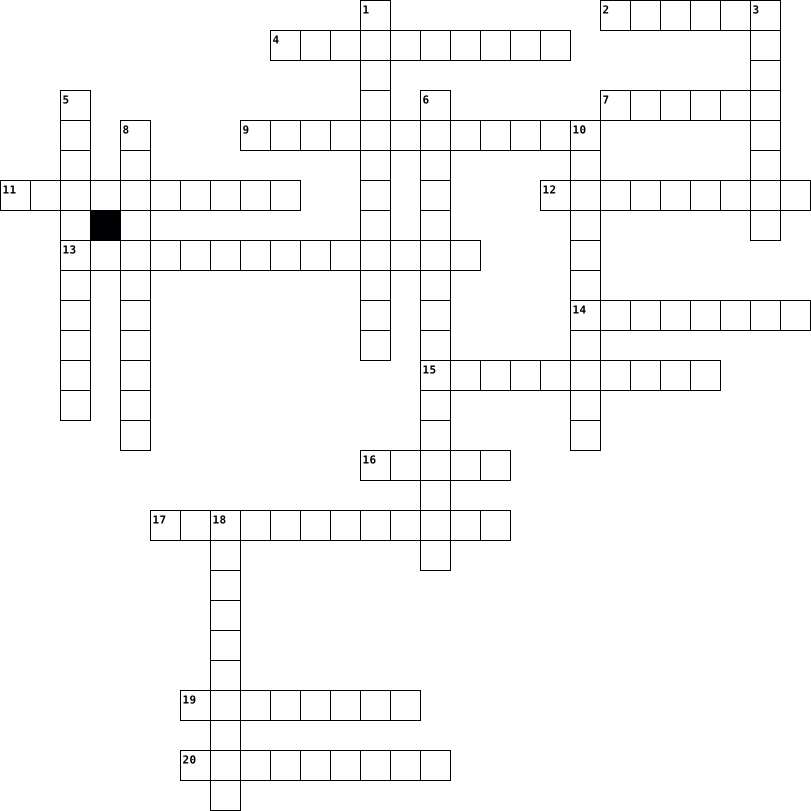
Across
- presence of partition
- condition of a blood clot
- chest
- inflammation around the heart
- presence of heart muscle
- white blood cell
- formation of red blood cell
- pressure pertaining to the contraction phase of the heart cycle
- clear blood cell
- instrument used to examine
- condition of excessive blood pressure
- swelling that contains blood
- pressure pertaining to the relaxation phase of the heart
Down
- many blood cells
- type of white blood cell with one large nucleus
- condition of low blood pressure
- hardening of the arteries
- condition of slow heart
- instrument used to examine the chest
- refers to disease producing
20 Clues: chest • many blood cells • white blood cell • clear blood cell • presence of partition • condition of slow heart • presence of heart muscle • condition of a blood clot • hardening of the arteries • instrument used to examine • formation of red blood cell • refers to disease producing • swelling that contains blood • inflammation around the heart • condition of low blood pressure • ...
Week 9 2017-03-28

Across
- chest
- condition of low blood pressure
- white blood cell
- condition of excessive blood pressure
- refers to disease producing
- hardening of the arteries
- condition of slow heart
- instrument used to examine the chest
- condition of a blood clot
Down
- pressure pertaining to the contraction phase of the heart cycle
- pressure pertaining to the relaxation phase of the heart
- instrument used to examine
- many blood cells
- formation of red blood cell
- swelling that contains blood
- inflammation around the heart
- clear blood cell
- presence of heart muscle
- type of white blood cell with one large nucleus
- presence of partition
20 Clues: chest • many blood cells • white blood cell • clear blood cell • presence of partition • condition of slow heart • presence of heart muscle • hardening of the arteries • condition of a blood clot • instrument used to examine • formation of red blood cell • refers to disease producing • swelling that contains blood • inflammation around the heart • condition of low blood pressure • ...
Cardiovascular 2023-10-05

Across
- surgical repair of a blood vessel
- one who studies blood
- excision of a vein
- excision of the plug
- one who studies the heart
- deficiency of blood
- narrowing off the blood vessels
- state of a plug
- disease of the heart muscle
- condition of a slow heart
Down
- inflammation of the valve
- originating in the blood
- pertaining to the narrowing of the aorta
- excessive flow of blood
- hardening of the fatty plaque
- inner lining of the heart
- abnormal condition of a blood clot
- inflammation of the heart
- visual exam of a blood vessel
- tumor composed of blood vessels
20 Clues: state of a plug • excision of a vein • deficiency of blood • excision of the plug • one who studies blood • excessive flow of blood • originating in the blood • inflammation of the valve • inner lining of the heart • one who studies the heart • inflammation of the heart • condition of a slow heart • disease of the heart muscle • hardening of the fatty plaque • visual exam of a blood vessel • ...
Body Systems 2020-10-22

Across
- muscle this muscle looks smooth
- bone hard outside part of bone
- carry blood to heart
- continuation of airflow below the larynx
- what coordinates muscle movements
- cortex what sends signals to nerves
- protects the heart and lungs
- biggest part of respiratory system
- two sides of brain
- back of nose and mouth
- framework of a protein called
Down
- carries blood to body
- contains voice box
- nervous system brain and spinal cord
- pounds how much the brain weighs
- carry blood away from heart
- protects the brain
- outer layer of cerebrum
- blood what does the heart do
- muscle muscle found in heart
20 Clues: contains voice box • protects the brain • two sides of brain • carry blood to heart • carries blood to body • back of nose and mouth • outer layer of cerebrum • carry blood away from heart • protects the heart and lungs • blood what does the heart do • muscle muscle found in heart • framework of a protein called • bone hard outside part of bone • muscle this muscle looks smooth • ...
20 Disorders Chapters 10 & 11 2023-02-07

Across
- fluid leaking into lung tissue
- decrease in serous fluid
- abnormal increase in the number of erythrocytes
- circulation is inadequate to meet tissue needs
- bone marrow becomes cancerous
- unusual heart sounds
- bleeders disease
- lack of adequate blood supply
- oxygen-deprived heart cells may die
- heart beating at its own rate
- crushing chest pain
- heart attack or coronary
Down
- insufficient number of circulating platelets
- clot in an unbroken blood vessel
- thrombus breaking away from the vessel wall
- standing for long periods of time
- shuddering of the heart muscle
- small purplish blotches
- bacterial infection of the endocardium
- lacking blood
20 Clues: lacking blood • bleeders disease • crushing chest pain • unusual heart sounds • small purplish blotches • decrease in serous fluid • heart attack or coronary • bone marrow becomes cancerous • lack of adequate blood supply • heart beating at its own rate • fluid leaking into lung tissue • shuddering of the heart muscle • clot in an unbroken blood vessel • ...
Circulatory System 2024-01-04

Across
- Vessels "below" the heart
- The number of valves in the heart
- Vessels that carry oxygen away from the heart
- The number of chambers in the heart
- Directs the flow of blood in the heart
- The upper chambers of the heart
- The exchange zone in the body where arteries and veins connect to exchange oxygen and carbon dioxide.
- The heart sounds come from the one directional "doors" in the heart called ______
- Another word for pulmonary
Down
- The vessels that take unoxygenated blood to the lungs to pick up oxygen are pulmonary _________
- Vessels "above" the heart
- The system that consists of the heart, blood and blood vessels
- The arteries on the outside of the heart, "like a crown."
- Cane shaped artery that carries "red rich blood and oxygen" to the body.
- Relating to the stomach area
- The lower chambers of the heart
- Vessels that collect oxygen-poor blood and bring it back to the heart.
- The normal heartbeat range is 60-100 beats per _________.
- The vessels that bring back oxygenated blood from the lungs are pulmonary ________
19 Clues: Vessels "above" the heart • Vessels "below" the heart • Another word for pulmonary • Relating to the stomach area • The lower chambers of the heart • The upper chambers of the heart • The number of valves in the heart • The number of chambers in the heart • Directs the flow of blood in the heart • Vessels that carry oxygen away from the heart • ...
cardiovascular system 2025-05-06

Across
- vein that carry blood from lungs to heart
- blood vessels that carry blood from heart to lungs
- first layer of heart
- 2 large veins superior and inferior
- contains hemoglobin
- helps fight infection
- second layer of heart
Down
- carry blood away from heart
- the lower chambers of the heart
- the uventricles s of the heart
- third layer of heart
- carry blood towards heart
- help clot blood
- largest artery in body
14 Clues: help clot blood • contains hemoglobin • third layer of heart • first layer of heart • helps fight infection • second layer of heart • largest artery in body • carry blood towards heart • carry blood away from heart • the uventricles s of the heart • the lower chambers of the heart • 2 large veins superior and inferior • vein that carry blood from lungs to heart • ...
10.7 Pertaining to the Heart 2023-03-09

Across
- sac surrounding the heart
- heartbeat
- the heart lies in this cavity
- largest artery
- arteries supplying blood to head and neck
- infarction (heart attack)
- one of the upper chambers of the heart
- phase of heartbeat (relaxation)
- one of the lower chambers of the heart
Down
- waxy substance narrowing arteries
- quarts of blood in the body
- only artery that carries oxygen-deficient blood
- records electrical changes in the heart
- not enough oxygen
- small branches of arteries
- phase of heartbeat (contraction)
- a waste product
17 Clues: heartbeat • largest artery • a waste product • not enough oxygen • sac surrounding the heart • infarction (heart attack) • small branches of arteries • quarts of blood in the body • the heart lies in this cavity • phase of heartbeat (relaxation) • phase of heartbeat (contraction) • waxy substance narrowing arteries • one of the upper chambers of the heart • ...
The Circulatory System 2015-02-24

Across
- Upper chamber of the heart
- Regulates the pace of the heart
- Makes up more than half your blood
- Fights bacteria that make you sick
- The liquid that moves around in blood vessels
- The smallest blood vessel in the body
- Carries blood away from the heart
- To breathe out
- Carries blood to the heart
- The smallest item in your body
Down
- Things that you need to live and grow
- Carries oxygen throughout the body
- A pump
- Makes you sick
- The lower chamber of your heart
- A chemical messenger
- An artery or vein
- Helps your blood clot
18 Clues: A pump • Makes you sick • To breathe out • An artery or vein • A chemical messenger • Helps your blood clot • Upper chamber of the heart • Carries blood to the heart • The smallest item in your body • Regulates the pace of the heart • The lower chamber of your heart • Carries blood away from the heart • Carries oxygen throughout the body • Makes up more than half your blood • ...
medical terminology 2022-03-28

Across
- angiography, imagine to see your hearts blood vessels
- irregular heartbeat
- the largest blood vessel in body
- root for heart
- ischemia, lack of blood flow to heart muscle
- study of
- an artery disease where they make the arteries hard
- peripheral vascular disease
- veins
- Transient ischemic attack
Down
- machine you can see the electrodes in heart
- vasc
- slow rhythm
- attack, a blockage of blood flow to the heart
- Cardiac rhythm management
- fast rhythm
- red
- Cerebrovascular accident
- tests, measure of examination of cells, chemicals, and proteins
- symptom of coronary artery disease
- channels that carry blood throughout your body
- Cardiovascular disease
22 Clues: red • vasc • veins • study of • slow rhythm • fast rhythm • root for heart • irregular heartbeat • Cardiovascular disease • Cerebrovascular accident • Cardiac rhythm management • Transient ischemic attack • peripheral vascular disease • the largest blood vessel in body • symptom of coronary artery disease • machine you can see the electrodes in heart • ...
Unit 5 Activity 2 2023-10-29

Across
- suffix for study of
- prefix for many
- cardio vascular
- chest pain
- helps someone breath
- surgery to implant a new heart
- complete stopping of the heart
- carry blood from the heart
- root word for vessel
- double-layered sack
- the outer layer
- high blood pressure
- pericardial sack is inflamed
Down
- heart attack
- test to look at blood
- muscle layer that contracts to pump blood
- narrowing in the arteries
- ultrasound used for heart
- prefix for back
- blood
- against prefix
- sodium
- cheif complaint
- thin layer that line each chamber
- test how well the system is functioning
25 Clues: blood • sodium • chest pain • heart attack • against prefix • prefix for many • cardio vascular • prefix for back • cheif complaint • the outer layer • suffix for study of • double-layered sack • high blood pressure • helps someone breath • root word for vessel • test to look at blood • narrowing in the arteries • ultrasound used for heart • carry blood from the heart • pericardial sack is inflamed • ...
Cardiovascular Crossword Puzzle Review 2024-01-12

Across
- Clot in unbroken blood vessel
- Relaxation of Ventricles
- Records the Electrical Activity of the Heart
- Pacemaker of the heart
- High Blood Pressure
- Lack of adequate blood supply to the heart
- Smooth Muscle and Elastic Tissue
- Contract spontaneously and independently
- Decreases in oxygen-carrying ability of the blood
- Blood Cell Formation
Down
- Peak of Ventricular Contraction
- Outer Layer of the heart
- Low Blood platelet count
- Prevent Backflow of Blood
- Rapid Heart Rate
- Ventricles Relax
- Carries on the signal from the SA node to the bundle of His
- Pumps blood out
- Events of one heartbeat
- Recieve Blood
20 Clues: Recieve Blood • Pumps blood out • Rapid Heart Rate • Ventricles Relax • High Blood Pressure • Blood Cell Formation • Pacemaker of the heart • Events of one heartbeat • Relaxation of Ventricles • Outer Layer of the heart • Low Blood platelet count • Prevent Backflow of Blood • Clot in unbroken blood vessel • Peak of Ventricular Contraction • Smooth Muscle and Elastic Tissue • ...
CARDIOVASCULAR UNIT 2014-02-07

Across
- lower part of heart
- types, O A B AB
- group of heart cells in the atria, adjusts heart to meet oxygen needs
- Center, sympathetic innervation of the periphery causing vasoconstriction – Relaxation (vasodilatation) due to inhibition (or withdraw) of the VMC
- blood cells, Helps fights disease, produced in bone marrow, larger than but not as many as red blood cells, live longer-months or years
- a cardiovascular diseased cause by the buildup of fatty material in the arteries
- Liquid part of blood, caries nutrients, waste, and chemical messengers
- upper part of heart
Down
- hollow muscular organ that pumps blood throughout the body
- carry blood away from heart
- a one way door which doesn't allow blood to back flow-V shaped-
- narrow blood vessels that are one cell thick so nutrients, oxygen and waster can diffuse through, connects arteries and veins
- system blood heart blood vessels
- carry blood to the heart
- a cardiovascular disease contributed with high blood-pressure
- located in the carotid arch and the aortic arch of the heart. Baroreceptors tell whether the pressure is increased or decreased in the system and sends signals to the brain.
- blood cells, picks up oxygen from lungs and carry it to body cells, produced on bone marrow, contain hemoglobin- iron-containing protein that helps red blood cells carry oxygen, pick up waste from blood cells and carries it away, no nuclei live about 120 days
- Acceleratory Center, sympathetic innervation of the heart causing increase in heart rate and contraction
- Alternating expansion and relaxation of artery walls
19 Clues: types, O A B AB • lower part of heart • upper part of heart • carry blood to the heart • carry blood away from heart • system blood heart blood vessels • Alternating expansion and relaxation of artery walls • hollow muscular organ that pumps blood throughout the body • a cardiovascular disease contributed with high blood-pressure • ...
Therapeutic Agents of the Cardio. Vocab. 2024-01-03

Across
- secreted by adrenal gland to regulate salt and water.
- genetic coding for high LDL.
- double layer sac that surrounds the heart.
- inner lining of the heart.
- lower chambers of the heart.
- enlargement of an artery due to weakening wall.
- largest vein in the body.
- blood clot in vessel.
- mini stroke.
- prevent blood clots
- used for treatment of high cholesterol.
- tube to keep vessel open.
- Good cholesterol
- smallest vessels that allow gas exchange.
- low BP due to standing suddenly.
- liquid to solid
- entry chambers of heart.
- carry blood back to the heart.
- medication to break up blood clots.
- muscular layer of the heart.
- death of brain cells due to lack of 02 by obstructed or ruptured arteries.
- occurs in the absence of any evident cause.
- aka hypercholesterolemia.
- released in response to low sodium levels.
- causes vasoconstriction and increased blood pressure
- largest artery in the body.
- primarily lowers triglycerides.
- results from identifiable causes.
Down
- material that travels in blood stream and can obstruct a blood vessel.
- vitamin B-niacin
- set of conditions.
- major form of body stored fat.
- a coagulating enzyme.
- low blood pressure
- accelerates a reaction.
- thickening and hardening of arterial walls.
- treats angina
- inner layer of the pericardium.
- heart contraction.
- period of cardiac relaxation
- blood vessel widening.
- carry blood away from the heart.
- irregular heart beats.
- fast heart rate, above 100 bpm.
- only artery that carries deoxygenated blood to the lungs.
- Bad cholesterol.
- vessels directly on the heart that provide it with oxygen
- chest pain
- thickening and hardening due to fat deposits.
- narrowing blood vessel.
- amount of blood circulated in a minute.
- used to treat hyperlipidemia.
- pressure within arteries.
- heart that cannot keep up with demand.
- enzyme that binds and breaks down LDLR.
- heart tissue death due to lack of oxygen.
- high blood pressure
57 Clues: chest pain • mini stroke. • treats angina • liquid to solid • vitamin B-niacin • Bad cholesterol. • Good cholesterol • set of conditions. • low blood pressure • heart contraction. • prevent blood clots • high blood pressure • a coagulating enzyme. • blood clot in vessel. • blood vessel widening. • irregular heart beats. • accelerates a reaction. • narrowing blood vessel. • entry chambers of heart. • ...
Cardiovascular System Crossword 2024-05-25

Across
- thin outer layer that covers the heart and has pericardial fluid
- turbulent blood flow causes these sounds
- carries blood from the heart to the body
- leads pacemaker activity and has the fastest action potentials per minute (two words, no space)
- vessels carrying blood from the heart that branch into capillaries
- formed by grouped specialized cells that perform pacemaker activity in the heart
- oxygen-poor blood flows here from the right atrium and gets pumped into the pulmonary artery (two words, no space)
- without this, blood squeezed by contracted skeletal muscle would flow both away and towards the heart (two words, no space)
- a mechanism where the capillary walls only allow plasma to flow through (two words, no space)
- last place in the current flow sequence through the heart wall (two words, no space)
- type of circulation where oxygenated blood is pumped from left chambers to tissues of the body
- thin inner lining of each heart chamber
- oxygenated blood flows here from the right and left pulmonary veins (two words, no space)
- heart relaxes in this period of the cardiac cycle
Down
- depolarization of ventricles is shown in this part of the ECG record (two words, no space)
- abnormally high blood pressure
- mechanoreceptors that sense and respond to changes in average pulse pressure and arterial pressure
- type of circulation where oxygen-poor is pumped from right chambers to the lungs to absorb oxygen
- happens when the net pressure, influencing bulk flow, is positive
- end-diastolic volume minus end-systolic volume (two words, no space)
- the smallest blood vessels
- type of cell that makes up majority of cardiac muscle cells
- one of the four heart valves
- large vessels that serves as a reservoir for oxygen-poor blood and returns it to the heart
- expressed by the pressure gradient divided by the resistance to flow (two words, no space)
- middle cardiac muscle layer of the heart wall
- ability of the heart muscle to generate electrical activity through spontaneous action potentials
- heart contracts in this period of the cardiac cycle
- materials independently move down concentration gradients
29 Clues: the smallest blood vessels • one of the four heart valves • abnormally high blood pressure • thin inner lining of each heart chamber • turbulent blood flow causes these sounds • carries blood from the heart to the body • middle cardiac muscle layer of the heart wall • heart relaxes in this period of the cardiac cycle • heart contracts in this period of the cardiac cycle • ...
Medical Terminology Chapter 5 Part 1 2025-10-22

Across
- disease of the heart muscle that reduces its ability to pump blood
- abnormally slow heart rate
- hardening and narrowing of arteries due to plaque buildup
- catheterization procedure where a catheter is inserted into the heart to examine it or perform a procedure
- sudden blockage of a blood vessel by a clot or foreign material
- medication that reduces the workload of the heart and slows heart rate
- chest pain caused by reduced blood flow to the heart
- record of the electrical activity of the heart
- localized weak spot or balloon-like enlargement of the wall of an artery
- surgical removal of plaque from the carotid artery to restore blood flow to the brain
- abnormal heart rhythm
- object such as a blood clot or air bubble that travels through the bloodstream and causes a blockage
- that increases urine secretion to reduce fluid buildup in the body
- inhibitor medication that blocks the action of the enzyme that causes blood vessels to contract, used to treat hypertension and heart failure
Down
- dyscrasia any disease or disorder of the blood
- use of electrical shock to restore the heart’s normal rhythm
- surgical removal of plaque buildup from the interior of an artery
- fatty substance in the blood that can contribute to plaque buildup in arteries
- condition where veins cannot pump enough blood back to the heart
- medication that slows or prevents blood clot formation
- arrest sudden stopping of the heart’s function
- anemia condition where the bone marrow fails to produce enough blood cells
- surgical repair or unblocking of a blood vessel, especially a coronary artery
- narrowing or blockage of the coronary arteries caused by atherosclerosis
- fibrillation irregular and often rapid heart rhythm originating in the atria
- blockage of a coronary artery by a blood clot
- inflammation of the inner lining of the heart and its valves
- external defibrillator device used to restart the heart by delivering an electric shock
- condition marked by a deficiency of red blood cells or hemoglobin
- fatty deposit within the wall of an artery
30 Clues: abnormal heart rhythm • abnormally slow heart rate • fatty deposit within the wall of an artery • blockage of a coronary artery by a blood clot • dyscrasia any disease or disorder of the blood • arrest sudden stopping of the heart’s function • record of the electrical activity of the heart • chest pain caused by reduced blood flow to the heart • ...