
heart Crossword Puzzles
The Heart 2021-12-09

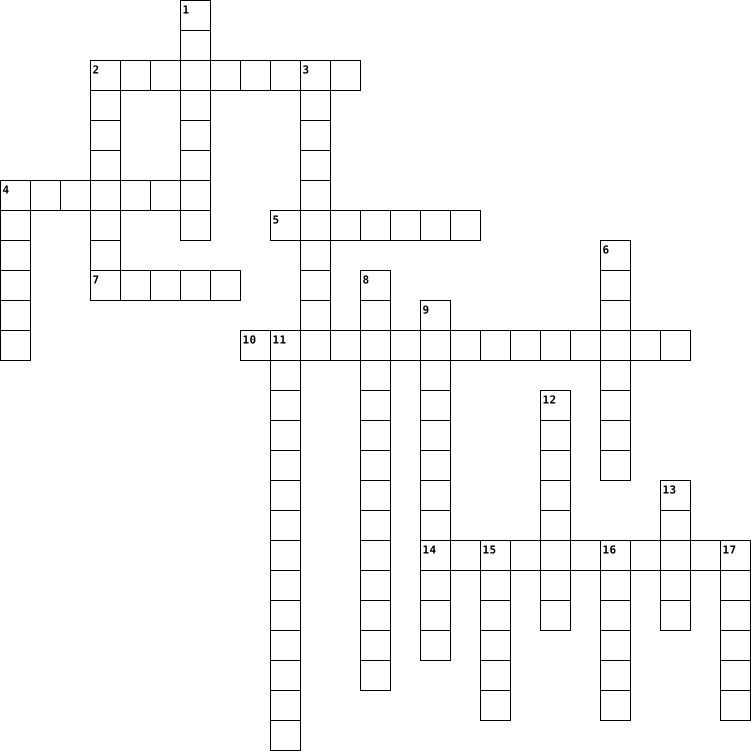
Across
- brings blood away from the heart
- side of the heart that is oxygen poor
- how many chambers the heart has
- measurement of heart rate
- a flap that makes blood only flow one direction
- bottom chambers of the heart
Down
- universal recipient
- what triggers the creation of new blood cells
- top chambers of the heart
- universal donor of blood
- brings blood to the heart
- side of the heart that is oxygen rich
12 Clues: universal recipient • universal donor of blood • top chambers of the heart • measurement of heart rate • brings blood to the heart • bottom chambers of the heart • how many chambers the heart has • brings blood away from the heart • side of the heart that is oxygen poor • side of the heart that is oxygen rich • what triggers the creation of new blood cells • ...
The Heart 2021-12-09

Across
- brings blood away from the heart
- side of the heart that is oxygen poor
- how many chambers the heart has
- measurement of heart rate
- a flap that makes blood only flow one direction
- bottom chambers of the heart
Down
- universal recipient
- what triggers the creation of new blood cells
- top chambers of the heart
- universal donor of blood
- brings blood to the heart
- side of the heart that is oxygen rich
12 Clues: universal recipient • universal donor of blood • top chambers of the heart • measurement of heart rate • brings blood to the heart • bottom chambers of the heart • how many chambers the heart has • brings blood away from the heart • side of the heart that is oxygen poor • side of the heart that is oxygen rich • what triggers the creation of new blood cells • ...
The Heart 2020-06-30

Across
- How many chambers are there in your heart?
- Left and right...
- What type of blood does the right side of the heart take?
- What carries oxygenated blood?
- Where does the heart pump the oxygenated blood to?
- What is your heart?
- What is the average beats per minute in a heart for a 10 year old?
Down
- What is the most common day of the year to have a heart attack?
- Where does the heart pump the deoxygenated blood to?
- Left and right...
- What carries the deoxygenated blood?
- What makes sure your blood doesn’t go the wrong way in your heart?
- What is the most common day of the week for someone to have a heart attack?
13 Clues: Left and right... • Left and right... • What is your heart? • What carries oxygenated blood? • What carries the deoxygenated blood? • How many chambers are there in your heart? • Where does the heart pump the oxygenated blood to? • Where does the heart pump the deoxygenated blood to? • What type of blood does the right side of the heart take? • ...
Heart Transplant 2019-10-28

Across
- induced ___________ (2 words)
- of unknown origin
- CAB
- four _____________ veins that run lung to heart.
- deficient movement/beating of the heart
Down
- chilly ______ solution
- below the ______ clamp
- something wrong with the muscles of the heart
- median __________ on the recipient
- that runs heart to lung (2 words)
- two large vessels that return blood from the body into the right atrium (2 words)
- membrane that covers the heart
12 Clues: CAB • of unknown origin • chilly ______ solution • below the ______ clamp • induced ___________ (2 words) • membrane that covers the heart • that runs heart to lung (2 words) • median __________ on the recipient • deficient movement/beating of the heart • something wrong with the muscles of the heart • four _____________ veins that run lung to heart. • ...
The Heart 2025-03-03

Across
- an atrium and a ventricle, connected by a valve.
- sudden loss of one or more brain functions.
- Membrane enveloping the heart and the origin of the large vessels.
- excessive pressure in the blood vessels
- One of the vessels with diverging branches which, starting from the heart's ventricles, distribute blood throughout the body.
Down
- device implanted to maintain an adequate heart rate
- Beating of the arteries produced by successive waves of blood projected from the heart
- Vessel that carries blood from the organs and muscles to the heart.
- Each of the two lower compartments of the heart, separated by a partition.
- upper chamber of the heart, bounded by a thin wall, which receives blood from the circulatory system
- the body's largest artery
- Central organ of the circulatory system
12 Clues: the body's largest artery • excessive pressure in the blood vessels • Central organ of the circulatory system • sudden loss of one or more brain functions. • an atrium and a ventricle, connected by a valve. • device implanted to maintain an adequate heart rate • Membrane enveloping the heart and the origin of the large vessels. • ...
The Heart 2024-11-04

Across
- flat discs with no nuclei.
- red blood cells.
- protects body from diseases.
- carries blood to from heart.
- exchange substances between blood and cells.
Down
- prevents back flow of blood from Aorta into ventricles.
- produces antibodies and destroys bacteria.
- carries blood away from heart.
- thick walls to pump blood put of heart.
- prevents back flow from ventricles into atria.
- contains haemoglobin.
- white blood cells.
12 Clues: red blood cells. • white blood cells. • contains haemoglobin. • flat discs with no nuclei. • protects body from diseases. • carries blood to from heart. • carries blood away from heart. • thick walls to pump blood put of heart. • produces antibodies and destroys bacteria. • exchange substances between blood and cells. • prevents back flow from ventricles into atria. • ...
The Heart 2024-11-04

Across
- Protein in red blood cells that binds with oxygen
- Phase in the cardiac cycle when the heart contracts
- Red blood cells responsible for transporting oxygen
- Blood vessels that carry blood towards the heart
- The 2 upper chambers of the heart
- Thin membrane lining the inside of the heart
- Another word for the SA node that regulates heartbeat
Down
- White blood cells that help protect the body from infection
- Muscular organ that pumps blood throughout the body
- Watery fluid in blood that transports nutrients and waste.
- Platelets that play a role in blood clotting
- Muscular wall dividing the left and right side of the heart
12 Clues: The 2 upper chambers of the heart • Platelets that play a role in blood clotting • Thin membrane lining the inside of the heart • Blood vessels that carry blood towards the heart • Protein in red blood cells that binds with oxygen • Muscular organ that pumps blood throughout the body • Phase in the cardiac cycle when the heart contracts • ...
Heart Words 2025-09-12

Across
- the competence or skill expected of a professional.
- a person’s standards of behavior or beliefs concerning what is and is not acceptable for them to do.
- publicly recommend or support.
- a person’s principals or standards of behavior; one’s judgement of what is important in life.
- the quality of being honest and having strong moral principles; moral uprightness
- a letter from a previous employer testifying to someone's ability or reliability, used when applying for a new job.
Down
- the quality of being suitable for paid work.
- Ethic a belief in work as a moral good : a set of values centered on the importance of doing work and reflected especially in a desire or determination to work hard
- obtain or bring about by discussion.
- the action or process of interacting with others to exchange information and develop professional or social contacts.
- a settled way of thinking or feeling about someone or something, typically one that is reflected in a person's behavior.
- the general character or attitude of a place, piece of writing, situation, etc
12 Clues: publicly recommend or support. • obtain or bring about by discussion. • the quality of being suitable for paid work. • the competence or skill expected of a professional. • the general character or attitude of a place, piece of writing, situation, etc • the quality of being honest and having strong moral principles; moral uprightness • ...
Heart Arrhythmias 2025-09-17

Across
- Rapid, regular atrial contractions, often with a saw-tooth pattern on ECG
- Common abbreviation for the answer to 7 Across
- Abnormally fast heart rate
- Irregular heart rhythm characterized by rapid, chaotic atrial contractions
- Type of node that typically controls heart rhythm
- Device used to regulate heart rhythm
- Polymorphic ventricular tachycardia with a characteristic twisting QRS morphology
Down
- General term for irregular heartbeat
- Abnormally slow heart rate
- Abbreviation for a life-threatening rapid ventricular rhythm
- Absence of electrical activity in the heart
- Abbreviation for early, wide QRS complex without preceding P wave
12 Clues: Abnormally slow heart rate • Abnormally fast heart rate • General term for irregular heartbeat • Device used to regulate heart rhythm • Absence of electrical activity in the heart • Common abbreviation for the answer to 7 Across • Type of node that typically controls heart rhythm • Abbreviation for a life-threatening rapid ventricular rhythm • ...
21 2025-08-19

Across
- Spine bone
- Backbone related
- Sugar organ
- Heart muscle
- Eye covering
- Smooth tissue
- Storage organ
- Brain part
- Bile crystal
- Filter organ
- Air tube
- Muscle rope
Down
- Heart chamber
- Main artery
- Body material
- Breathing muscle
- Bone connector
- Heart room
- Tiny vessel
- Body damage
- Eye opening
- Body catalyst
- Knife wielder
- Digestion organ
- Eye screen
25 Clues: Air tube • Spine bone • Heart room • Brain part • Eye screen • Main artery • Sugar organ • Tiny vessel • Body damage • Eye opening • Muscle rope • Heart muscle • Eye covering • Bile crystal • Filter organ • Heart chamber • Body material • Smooth tissue • Storage organ • Body catalyst • Knife wielder • Bone connector • Digestion organ • Backbone related • Breathing muscle
Cirulatory System 2022-05-16

Across
- branches that form a network of vessels
- white blood cells
- the lower chambers of the heart
- a substance that provides nourishment
- a hollow container used to hold thing
Down
- platelets
- clear to white fluid
- the upper chambers of the heart
- bodily fluid throughout system
- minimally invasive procedure
- vital organ that pumps blood to the body
- transports blood away from the heart
- red blood cells
- not oxygen
- liquid portion of blood without blood cells
- transports blood to the heart
16 Clues: platelets • not oxygen • red blood cells • white blood cells • clear to white fluid • minimally invasive procedure • transports blood to the heart • bodily fluid throughout system • the upper chambers of the heart • the lower chambers of the heart • transports blood away from the heart • a substance that provides nourishment • a hollow container used to hold thing • ...
Cardiovascular Vocab! 2022-01-24

Across
- pertaining to the heart and lungs on their function of gas exchange
- a small branch of an artery leading into capillaries
- a part of cardiac cycle characterized by relaxation of the heart chambers, during which they fill with blood
- the study of the structures that make up a discrete body system
- a recording of the electrical changes that occur in the heart during a cardiac cycle
- the thin outer layer of the heart wall
Down
- an increase in blood flow through a blood vessel
- the rhythmic flow of blood through arteries that can be felt by pressing the arteries near the skin
- the serous membrane associated with the heart that is composed of two layers
- the restriction of blood flow through a blood vessel by the contraction of smooth muscles in its walls
- one of the two inferior, highly muscular chambers of the heart that push blood into major arteries during contraction
- a stage in the cardiac cycle during which the heart chambers contract
- the primary layer of the heart wall, which is composed of cardiac muscle tissue
- one of two superior chambers of the heart
- the inner layer of the heart wall, which forms a thin, smooth lining covering the chambers and valves
- a microscopic blood vessel that interconnects arterioles with venules
16 Clues: the thin outer layer of the heart wall • one of two superior chambers of the heart • an increase in blood flow through a blood vessel • a small branch of an artery leading into capillaries • the study of the structures that make up a discrete body system • pertaining to the heart and lungs on their function of gas exchange • ...
Circulatory system 2021-03-23

Across
- largest artery that carries blood from heart to body
- organ that stop backflow
- pulmonary artery is located at _______
- related to lungs
- blood cells with high amount of oxygen
- blood cells with low amount of oxygen
- blood vessel that takes away blood from heart to body
- heart upper chamber
Down
- largest vein that carries blood back from the body
- inside space of any blood vessel
- a collection of the smallest blood vessel in the body
- blood vessel that return blood to heart
- heart lower chamber
- smallest blood vessel in the body
- where bicuspid valve is located
- pump blood to lungs and then to the body
16 Clues: related to lungs • heart lower chamber • heart upper chamber • organ that stop backflow • where bicuspid valve is located • inside space of any blood vessel • smallest blood vessel in the body • blood cells with low amount of oxygen • pulmonary artery is located at _______ • blood cells with high amount of oxygen • blood vessel that return blood to heart • ...
Cardiovascular System 2025-05-21

Across
- record of the electrical activity of the heart
- relaxation phase of the heartbeat
- This bluish discoloration of the skin, indicates diminished oxygen content of the blood
- trained in opening veins for phlebotomy
- upper chamber of the heart
- contraction phase of the heartbeat
- medical terminology for myx/o
Down
- small artery
- deficient or decreased
- body system that includes the heart and the blood vessels
- blood vessels that carry blood away from the heart
- meaning of medical terminology thromb/o
- lipid substance
- tiniest blood vessel
- abnormal swishing sound caused by improper closure of the heart valves
- blood vessels that carry blood back to the heart
16 Clues: small artery • lipid substance • tiniest blood vessel • deficient or decreased • upper chamber of the heart • medical terminology for myx/o • relaxation phase of the heartbeat • contraction phase of the heartbeat • meaning of medical terminology thromb/o • trained in opening veins for phlebotomy • record of the electrical activity of the heart • ...
Cardiovascular System 2022-11-17

Across
- record of the electrical activity of the heart
- relaxation phase of the heartbeat
- This bluish discoloration of the skin, indicates diminished oxygen content of the blood
- trained in opening veins for phlebotomy
- upper chamber of the heart
- contraction phase of the heartbeat
- medical terminology for myx/o
Down
- small artery
- deficient or decreased
- body system that includes the heart and the blood vessels
- blood vessels that carry blood away from the heart
- meaning of medical terminology thromb/o
- lipid substance
- tiniest blood vessel
- abnormal swishing sound caused by improper closure of the heart valves
- blood vessels that carry blood back to the heart
16 Clues: small artery • lipid substance • tiniest blood vessel • deficient or decreased • upper chamber of the heart • medical terminology for myx/o • relaxation phase of the heartbeat • contraction phase of the heartbeat • meaning of medical terminology thromb/o • trained in opening veins for phlebotomy • record of the electrical activity of the heart • ...
CARDIAC MUSCLE 2019-12-11

Across
- Involuntary heart ________ also a function of cardiac muscle.
- Cardiac muscle cells appear striated or striped under a __________.
- Cardiac muscle tissue is one of the three types of _______ tissue.
- Cardiac muscle cells also contain _________.
- Its contraction is not under ________ control.
- ________ muscle is found in the heart wall.
- Cells joined end-to-end with ________ disk in between.
- When a cardiac muscle cell contracts, the ________ filament pulls the actin filaments toward each other.
- The heart acts as a pump to propel blood through the _______ vessels.
- Cardiac muscle tissue, or myocardium, contains cells that expand and contract in __________ to electrical impulses from the nervous system.
- Cardiac cells have only a single _________.
- Your nervous system sends _________ to pacemaker cells that prompt them to either speed up or slow down your heart rate.
- It is responsible for keeping the heart pumping and blood circulating around the _______.
- The cell uses ATP to ______ this contraction.
Down
- Pacemaker cells are ________ to other cardiac muscle cells, allowing them to pass along signals.
- Cardiac muscle also called heart muscle or ________.
- Pacemaker cells control the ________ of your heart.
- Exercise can __________ your cardiac muscle.
- cardiac muscle has __________.
- _________ of cardiac muscle is pumping blood.
- Cardiac muscle fibers also possess many mitochondria and _______.
- This through specialized cells called _______ cells.
- Cardiac cells have only a _________ nucleus.
- Cardiac muscle fibers are ________ than skeletal muscle fibers.
- The heart acts as a ________ to propel blood.
25 Clues: cardiac muscle has __________. • ________ muscle is found in the heart wall. • Cardiac cells have only a single _________. • Exercise can __________ your cardiac muscle. • Cardiac muscle cells also contain _________. • Cardiac cells have only a _________ nucleus. • _________ of cardiac muscle is pumping blood. • The heart acts as a ________ to propel blood. • ...
Cardiovascular System 2023-08-22

Across
- Abbreviation for mitral valve prolapse
- Middle, muscular layer that contracts to pump blood
- Test that uses ultrasound to look at blood going through blood vessels to determine if they are narrowed or have thrombus.
- Abbreviation for atherosclerotic cardiovascular disease
- Thin walls so the exchange of oxygen and carbon dioxide as well as the exchange of nutrients can occur.
- Largest artery in the body
- Thin inner layer that lines each chamber of the heart
- suffix meaning rupture
- Portable ECG machine that the patient wears over a few days
- Test that uses ultrasound to look at the heart and its vessels
- Measures certain items in the blood that may indicate heart muscle damage
- Complete stopping of the heart
- suffix meaning process of freeing or destroying
- root word meaning clot
Down
- Condition in which the pericardial sac around the heart is inflamed
- Another name for a heart attack which is when a part of the heart doesn't get the blood flow it needs.
- Procedure using x-ray dye and a tiny tube called a catheter.
- Swollen and dilated veins
- root word meaning fatty substance
- Have thick walls and carry blood away from the heart
- Abbreviation for implantable cardiovert defibrillator
- Abbreviation for premature ventricular contraction
- Condition in which a artery has a weakened wall causing it to swell like a balloon.
- Prefix meaning self
- Abbreviation for ventricular tachycardia
25 Clues: Prefix meaning self • suffix meaning rupture • root word meaning clot • Swollen and dilated veins • Largest artery in the body • Complete stopping of the heart • root word meaning fatty substance • Abbreviation for mitral valve prolapse • Abbreviation for ventricular tachycardia • suffix meaning process of freeing or destroying • ...
Cardio & Blood System Assignment 2021-10-13

Across
- Blood vessel surgical repair
- Skin has a bluish coloration (abnormal)
- Removal of an organized blood clot from arteries.
- Coronary Artery Disease
- Arteriosclerotic Heart Disease
- Blood cell deficiency
- Stoppage of bleeding
- Heartbeat is rapid
- Myocardial Infarction
Down
- Heart is enlarged
- Production of platelets in bone marrow
- Heart rhythm is abnormal
- White blood cells are mechanically separated from the rest of the blood
- Coronary Artery Bypass Graft
- Surgical incision of an artery
- Percutaneous Transluminal Coronary Angioplasty
- X-ray of blood vessels record
- Congestive Heart Failure
- Hypertension
19 Clues: Hypertension • Heart is enlarged • Heartbeat is rapid • Stoppage of bleeding • Blood cell deficiency • Myocardial Infarction • Coronary Artery Disease • Heart rhythm is abnormal • Congestive Heart Failure • Blood vessel surgical repair • Coronary Artery Bypass Graft • X-ray of blood vessels record • Surgical incision of an artery • Arteriosclerotic Heart Disease • ...
Medical Terminology Cardiovascular disease 2025-11-21

Across
- surgical removal
- hardening & narrowing of arteries from plaque build up
- disease
- ischemia- reduced blood flow to heart and muscle
- Heart enlargement
- record or picture
- referring to arteries or veins
- (HLD)- high levels of lipids like cholesterol
- Heart
Down
- Abnormally fast heart rate
- surgical repair
- (HTN) High blood pressure
- infarction (MI)- blockage of blood flow to the heart
- Blood condition
- Inflammation
- Enlargement
- muscle
- any pathological hardening or thickening of body tissue
- blood or lymph vessel
- cholesterol- too much fat in blood that can clog arteries
20 Clues: Heart • muscle • disease • Enlargement • Inflammation • surgical repair • Blood condition • surgical removal • Heart enlargement • record or picture • blood or lymph vessel • Abnormally fast heart rate • referring to arteries or veins • (HTN) High blood pressure • hardening & narrowing of arteries from plaque build up • (HLD)- high levels of lipids like cholesterol • ...
Human Biology Crossword 2025-05-20

Across
- has 3 holes and part of heart
- dividing wall in the heart
- what colour people think blood is and is a cell
- In the blood
- only exception for num1s rules
- receiving chamber for blood in the heart
- makes blood clots and stops bleeding
Down
- when stuff spreads out
- light blood cell
- diffuses blood into muscles and organs
- Away form heart
- Towards heart
- lack of oxygen
- you can donate this and is a part of blood
- returns deoxygenated blood from the body to the heart
15 Clues: In the blood • Towards heart • lack of oxygen • Away form heart • light blood cell • when stuff spreads out • dividing wall in the heart • has 3 holes and part of heart • only exception for num1s rules • makes blood clots and stops bleeding • diffuses blood into muscles and organs • receiving chamber for blood in the heart • you can donate this and is a part of blood • ...
cardiovascular system 2023-11-15

Across
- contraction phase of the heartbeat
- smallest blood vessel
- dilation of the heart
- condition of slow-moving heartbeat
- product of catabolism
- beat of the heart
Down
- say something in a low, soft voice
- chamber of the heart
- breakdown a clot
- deficient oxygen
- inner lining of the heart
- relaxation of the heartbeat
- small artery
- dimituive vein
- membrane surrounding the heart
15 Clues: small artery • dimituive vein • breakdown a clot • deficient oxygen • beat of the heart • chamber of the heart • smallest blood vessel • dilation of the heart • product of catabolism • inner lining of the heart • relaxation of the heartbeat • membrane surrounding the heart • say something in a low, soft voice • contraction phase of the heartbeat • condition of slow-moving heartbeat
Anatomical Terms 2025-04-29

Across
- muscular middle layer of the heart
- inner lining of the heart
- Upper chambers of the heart
- carries oxygenated blood from the left ventricle
- larger chambers of the heart that pump blood out of the body and the lungs
- structures that control blood flow through heart
- blood vessels that supply the heart muscle with oxygen
Down
- outer layer of the heart
- valves between atria and ventricles
- valves between ventricles and arteries
- blood vessels that drain deoxygenated blood from the heart muscle
- A wall of muscle tissue that separates the right and left sides of the heart.
- protective sac around the heart
13 Clues: outer layer of the heart • inner lining of the heart • Upper chambers of the heart • protective sac around the heart • muscular middle layer of the heart • valves between atria and ventricles • valves between ventricles and arteries • carries oxygenated blood from the left ventricle • structures that control blood flow through heart • ...
Unit 12 Crossword Puzzle By Adam Goldberg 2014-05-28

Across
- Carries blood toward the heart at low pressure and velocity.
- Carries blood away from the heart at high pressure and velocity.
- Pumps blood to body and back from the heart.
- Where digestive and respiratory systems meet.
- An inflammation of the lungs that causes them to fill with fluid.
- Prevents backflow of blood in the Heart.
- FIght or Flight hormone released during stress.
- Long, single fiber, conducts signal toward another neuron or effector.
- Scientific name for red blood cells.
- Heart chamber that receives blood.
- Relaxation phase of the Cardiac Cycle.
- Small wire mesh tubes to prop open the arteries.
- Voice box.
- Keep Oxygen rich blood and Oxygen poor blood separate in the heart.
- Rhythmic stretching of the arteries caused by the pressure that is forced through the vessels during systole.
Down
- Disease that causes alveoli to disintegrate.
- Anything that causes a nerve signal so start.
- Chronic cardiovascular disease.
- An infection or irritation of the air passages. (Ain’t nobody got time for dat!)
- Nerve cell specialized for carrying signals from one part of the body to another.
- Clusters of air sacs.
- Windpipe.
- Contraction phase of the Cardiac Cycle.
- Communication made from bundles of neuron fibers wrapped in connective tissue.
- Only pumps blood to the ventricle in the heart.
25 Clues: Windpipe. • Voice box. • Clusters of air sacs. • Chronic cardiovascular disease. • Heart chamber that receives blood. • Scientific name for red blood cells. • Relaxation phase of the Cardiac Cycle. • Contraction phase of the Cardiac Cycle. • Prevents backflow of blood in the Heart. • Disease that causes alveoli to disintegrate. • Pumps blood to body and back from the heart. • ...
Bio Anna #2 2025-06-21

Across
- Valves between the atriums and ventricles
- State of the heart where it is filling up
- Atria beats chaotically and irregularly. Can lead to blood clots and strokes.
- State of the heart where it is contracting
- Main heart chambers (2) that contract and pump
- Too slow heartbeat. Like Anna. Umbrella term.
- Disorganized hearts signals cause the ventricles to twitch uselessly. Requires immediate medical attention.
- Means 'irregular rythm'. Starts with A like "Anna" and "Asshole"
- Too fast heartbeat. Umbrella term.
- Sort of defibrillator to correct arrhythmia. The acronym is used here, so 3 letters.
- Cardiac cycle, when all valves are closed and ventricles are generating negative pressure.
Down
- Amplifies left-side murmurs.
- Umbrella term for and interruption of the electrical signal from the atria to the ventricules. Three degrees.
- The heart cycle follows the right order but the ventricles are beating too fast.
- Step of the cardiac cycle where the ventricles contract and the valves are closed.
- Atria beats too quickly, sawtooth appearance.
- Amplifies right-side heart murmurs.
- Physical examination that consists of hearing the heart.
- Valves at the end of ventricles that open during systole
- The heart's pacemaker is sick.
- Small heart chambers where arteries and veins meet, right before the ventricles.
21 Clues: Amplifies left-side murmurs. • The heart's pacemaker is sick. • Too fast heartbeat. Umbrella term. • Amplifies right-side heart murmurs. • Valves between the atriums and ventricles • State of the heart where it is filling up • State of the heart where it is contracting • Atria beats too quickly, sawtooth appearance. • Too slow heartbeat. Like Anna. Umbrella term. • ...
Cardiovascular Circulatory System 2025-03-30

Across
- body not receiving enough oxygen
- blockage of a blood vessel by a blood clot
- chest pain
- medication that relaxes the walls of the coronary arteries
- vessel that carries blood away from the heart
- vessels that carry blood to the heart
- phase when the heart muscle relaxes
- Contraction of the heart
Down
- red blood cells are less than normal
- lack of blood supply to an area
- the two upper chambers of the heart
- irregular heartbeat
- the two lower chambers of the heart
- four-chambered organ that pumps blood throughout the body
14 Clues: chest pain • irregular heartbeat • Contraction of the heart • lack of blood supply to an area • body not receiving enough oxygen • the two upper chambers of the heart • the two lower chambers of the heart • phase when the heart muscle relaxes • red blood cells are less than normal • vessels that carry blood to the heart • blockage of a blood vessel by a blood clot • ...
Cardiovascular System Vocab 2025-02-25

Across
- Blood blood on the right side of the heart
- circulates through vessels in body
- vessel that blood away from heart
- Circulation circulation pertaining to the lungs
- Circulation circulation pertaining to the whole body
- allows exchange of nutrients and gases
- abnormal heart rhythm
Down
- Vessels after blood leaves the heart
- blood from left atrium
- System pertaining to heart and lungs
- arteries first branch of of aorta
- carries oxygen from lungs to the tissues
- hollow organ that pumps blood
- vessel that carries blood back to heart
- largest artery in body
15 Clues: abnormal heart rhythm • blood from left atrium • largest artery in body • hollow organ that pumps blood • arteries first branch of of aorta • vessel that blood away from heart • circulates through vessels in body • Vessels after blood leaves the heart • System pertaining to heart and lungs • allows exchange of nutrients and gases • vessel that carries blood back to heart • ...
Cardiovascular System 2020-12-03

Across
- Swollen and dilated veins
- Ultrasound to view heart vessels
- For listening to the heartbeat
- A disorder in which there is a narrowing in the arteries surrounding the heart
- Middle
- Instrument that measures pressure
- Also known as an EKG test
- Inner
- Where you go in emergencies
- When instructed not to resuscitate
- Another word for swollen
- The heart is not efficiently pumping from the left ventricle, causing reduced blood flow
- Removal
Down
- Outer
- Portable device that produces an electrocardiogram
- An artery has a weakened wall, causing it to swell, like a balloon
- The opposite of full breaths
- septum Left and right atria
- What carries blood
- A complete stopping of the heart
- More than needed
- What you breath in
- Double Layer
- Not enough
- What the heart pumps
25 Clues: Outer • Inner • Middle • Removal • Not enough • Double Layer • More than needed • What carries blood • What you breath in • What the heart pumps • Another word for swollen • Swollen and dilated veins • Also known as an EKG test • septum Left and right atria • Where you go in emergencies • The opposite of full breaths • For listening to the heartbeat • Ultrasound to view heart vessels • ...
circulatory stuff 2021-01-13

Across
- device that helps the heart beat
- blood cells / help prevent disease
- the hole in the middle of veins and arteries
- red pigment in blood
- flaps in the heart that prevent backflow of blood.
- they carry oxygen around the body
- pumps deoxygenated blood to lungs
- carries oxygenated blood from the lungs
Down
- carries blood to the heart
- recieves oxygenated blood from lungs
- the main artery
- one of the proteins in blood
- carries deoxygenated blood to the lungs
- part of the heart that recieves deoxygenated blood
- pumps oxygenated blood to the body
- arteries that have one cell thick walls
- liquid part of blood
- is carried in red blood cells
- / they help blood clot, sealing a wound
- carries blood away from the heart
20 Clues: the main artery • liquid part of blood • red pigment in blood • carries blood to the heart • one of the proteins in blood • is carried in red blood cells • device that helps the heart beat • they carry oxygen around the body • carries blood away from the heart • pumps deoxygenated blood to lungs • pumps oxygenated blood to the body • recieves oxygenated blood from lungs • ...
unit 5 crossword 2021-10-20

Across
- a test that uses a ultrasound to look at the heart and its vessels
- chest pain
- bottom of the heart
- fast
- records the electrical activity of the heart
- many
- condition in which an artery has a week wall
- procedure done in a specialized area of radiology
- any of the muscular walled tubes forming part of the circulation system
- outer layer
- a doctor who specializes in study or treatment of heart diseases
Down
- ultrasound to look at the blood flow
- muscular layer that contracts to pump blood
- better known as high blood pressure
- instrument to pressure
- cardiovascular
- treatment
- blood pressure
- coronary artery disease
- thin inner layer that lines that line each chamber
- middle
- blood
- top of the heart
- before/ form or in front of
- two
25 Clues: two • fast • many • blood • middle • treatment • chest pain • outer layer • cardiovascular • blood pressure • top of the heart • bottom of the heart • instrument to pressure • coronary artery disease • before/ form or in front of • better known as high blood pressure • ultrasound to look at the blood flow • muscular layer that contracts to pump blood • records the electrical activity of the heart • ...
Richa's Rambunctious Review - Part Two 2020-03-16

Across
- where oxyhemoglobin is made
- circulatory system for oxygenated blood
- pressure exerted by gas
- what hemoglobin is made of
- how deoxygenated blood enters heart
- type of change that changes shape
- carbon dioxide and water
- softer sound
- node controlling heart rate
Down
- left atrioventricular valve
- heart contraction phase
- control blood movement from arterioles to capillaries
- carbon dioxide and hemoglobin
- circulatory system for deoxygenated blood
- cardiac muscle
- muscle that contracts to help veins pump blood
- right atrioventricular valve
- oxygen transport protein
18 Clues: softer sound • cardiac muscle • heart contraction phase • pressure exerted by gas • oxygen transport protein • carbon dioxide and water • what hemoglobin is made of • left atrioventricular valve • where oxyhemoglobin is made • node controlling heart rate • right atrioventricular valve • carbon dioxide and hemoglobin • type of change that changes shape • ...
23 2025-08-19

Across
- Brain doctor
- Medical helper
- Image doctor
- Heat measurer
- Drug study
- Child doctor
- Mind doctor
- Mind medicine
- Elder medicine
Down
- Sleep doctor
- Skin medicine
- Heart listener
- Disease tracking
- Heart medicine
- Sleep medicine
- Skin doctor
- Pressure gauge
- Disease doctor
- Brain medicine
- Birth medicine
- Image medicine
- Drug expert
- Child medicine
- Ambulance worker
- Heart doctor
25 Clues: Drug study • Skin doctor • Drug expert • Mind doctor • Sleep doctor • Brain doctor • Image doctor • Child doctor • Heart doctor • Skin medicine • Heat measurer • Mind medicine • Heart listener • Heart medicine • Sleep medicine • Medical helper • Pressure gauge • Disease doctor • Brain medicine • Birth medicine • Image medicine • Child medicine • Elder medicine • Disease tracking • Ambulance worker
Cardiovascular and Respiratory Systems 2026-01-09

Across
- Small airways in the lungs that branch from the bronchi
- The two upper chambers of the heart that receive blood
- Receptors that detect changes in blood oxygen, carbon dioxide, or pH
- A protein in red blood cells that carries oxygen
- An obstructive respiratory condition causing inflammation and narrowing of the airways
- A blood vessel that carries blood back to the heart
- A test used to measure lung volumes and airflow
- The largest artery that carries oxygenated blood from the heart to the body
- Tiny air sacs in the lungs where gas exchange takes place
- The phase of the cardiac cycle when the heart contracts
Down
- Relating to the valves between the atria and ventricles
- The movement of particles from a high to a low concentration
- A recording of the electrical activity of the heart
- The part of the brain that controls breathing and heart rate
- A blood vessel that carries blood away from the heart
- Tiny blood vessels where exchange of gases and nutrients occurs
- Specialised fibres that rapidly conduct electrical impulses through the ventricles
- The windpipe that carries air to and from the lungs
- A dome-shaped muscle that helps breathing by changing chest volume
19 Clues: A test used to measure lung volumes and airflow • A protein in red blood cells that carries oxygen • A recording of the electrical activity of the heart • A blood vessel that carries blood back to the heart • The windpipe that carries air to and from the lungs • A blood vessel that carries blood away from the heart • ...
Aerobics 2014-01-23

Across
- This term refers to the heart muscle.
- to Fifty Per Cent Suggested target heart rate to warm-up
- to continue exercising for 20 minutes without having to stop to catch our breath
- impact aerobics - One foot is always in contact with the floor when performing/executing exercises.
- Heart Rate The number of beats your heart can beat at maximum exercise.
- we want our heart muscle to get
- Heart Rate The suggested heart rate to exercise
- to Seventy Per Cent Suggested target heart rate to lose body fat
- Minutes Suggested amount of time to exercise in your target heart rate in order to get good benefits.
Down
- Space Your own area to exercise so you won't interfere with you peers
- One component of physical fitness
- You want to keep track of how many of these you burn when you exercise
- This is where the blood goes from the heart to pick up oxygen.
- You only have one of these and it is a muscle
14 Clues: we want our heart muscle to get • One component of physical fitness • This term refers to the heart muscle. • You only have one of these and it is a muscle • Heart Rate The suggested heart rate to exercise • to Fifty Per Cent Suggested target heart rate to warm-up • This is where the blood goes from the heart to pick up oxygen. • ...
The Cardiovascular System 2024-05-26

Across
- The name given to the collection of arterioles, capillaries the venules (Organization).
- The abnormal heart sounds that happen from blood flowing through malfunctioning valves turbulently (Sounds).
- What heart sound is known as dup and is high-pitched, sharp, relatively short, and associated with the semilunar valves? (Sounds).
- Blood pressure reflexes monitor and regulate this type of arterial pressure (Pressure).
- The blood vessels that are formed when capillaries join together (Organization).
- The blood vessels that are formed by the merging of venules (Organization).
- This pathway conducts pacemaker activity from the SA node to the AV node (Pathways).
- Left or Right? What ventricular pressure swings between a low of 0 mm Hg during heart chamber refilling with blood to a high of 120 mm Hg during heart chamber contracting (Pressure)?
- The blood vessels that branch from the arteries when they reach the organs they are supplying (Organization).
- This node exhibits an autorhythmicity of 50 action potentials and is found at the base of the right atrium (Nodes).
- The middle layer of the heart wall that is composed of cardiac muscle (Heart walls).
- The blood vessels that are formed when arterioles branch (Organization).
- This pressure drops dramatically across the length of the arterioles. This causes systolic to diastolic swings in pressure that are converted to a non-pulsatile pressure when blood flows through the arterioles (Pressure).
- A structurally damaged valve that produces an abnormal swishing sound (Sounds).
Down
- The thin layer of endothelial tissue that lines the inside of the heart chambers (Heart walls).
- What heart sound is known as a lub and is low-pitched, soft, relatively long, and associated with the AV valve? (Sounds).
- a device used to measure systolic and diastolic arterial blood pressure (Pressure).
- The end volume of blood remaining in the ventricle when ejection is complete (Volumes).
- This pressure is the difference between systolic pressure and diastolic pressure (Pressure).
- This node exhibits 70 action potentials and is found in the wall of the right atrium (Nodes).
- This pathway conducts pacemaker activity from the right atrium to the left atrium (Pathways).
- What pressure fluctuates between a peak pressure of 80 mm Hg for heart chamber contracting and a low pressure of 80 mm Hg for heart chamber refilling with blood (Pressure)?
- The end volume of blood in the ventricle when filling is complete (Volumes).
- Blood vessels that act as a pressure reservoir and carry oxygenated blood away from the heart(Organization).
- This is a thin membrane filled with pericardial fluid that covers the surface of the heart (Heart walls).
- The volume of blood ejected/pumped out with each contraction (Volumes).
- an autoimmune disease triggered by streptococcal bacteria. It has the word fever at the end (Sounds).
- A stiff narrow valve that produces an abnormal whistling sound (Sounds).
28 Clues: The volume of blood ejected/pumped out with each contraction (Volumes). • The blood vessels that are formed when arterioles branch (Organization). • A stiff narrow valve that produces an abnormal whistling sound (Sounds). • The blood vessels that are formed by the merging of venules (Organization). • ...
Circulatory System 2013-02-02

Across
- Component of blood that stop bleeding by clotting
- Muscle that pumps blood around the body
- Carries deoxygenated blood away from the heart, to the lungs
- Large sacks of air
- No oxygen in the blood means it is ___
Down
- Stop blood from going backwards
- Component of blood that fight infection
- Blood is ____ when it is taken to the lungs
- Carry blood away from heart
- Carries oxygenated blood to the heart from the lungs
- Small chambers located at the top of the heart
- Larger chambers situated at the bottome of the heart
- Carry blood to the heart
- Stop deoxygenated and oxygenated blood from mixing
- Component of blood that carry nutrients and oxygen
15 Clues: Large sacks of air • Carry blood to the heart • Carry blood away from heart • Stop blood from going backwards • No oxygen in the blood means it is ___ • Component of blood that fight infection • Muscle that pumps blood around the body • Blood is ____ when it is taken to the lungs • Small chambers located at the top of the heart • ...
Cardiovascular System 2023-11-16

Across
- Smooth layer of cells lining the interior of the heart
- Structure that prevents backward flow of blood
- Blood vessels that carry blood towards the heart
- Process of preventing and stopping bleeding
- Outermost layer of the heart wall
- Relating to the lungs
- Tiny blood vessels where gas exchange occurs
Down
- Iron-containing protein in the red blood cell that carriers oxygen
- Pertaining to the heart and blood vessels
- Middle layer of the heart wall, composed of muscle tissue
- Blood vessels that carriers blood away from the heart
- Rhythmic throbbing of the arteries, often felt at the wrist.
- Tubes that carry blood
- Partition separating the chambers of the heart.
- Largest artery in the body
15 Clues: Relating to the lungs • Tubes that carry blood • Largest artery in the body • Outermost layer of the heart wall • Pertaining to the heart and blood vessels • Process of preventing and stopping bleeding • Tiny blood vessels where gas exchange occurs • Structure that prevents backward flow of blood • Partition separating the chambers of the heart. • ...
CARDIOVASCULAR SYSTEM 2022-06-21

Across
- Innermost lining of blood vessels
- Gas that enters the body through the lungs and travels to the heart
- Small vein
- Contraction phase of the heartbeat
- Thin-walled vessel that carries blood from body tissues and lungs back to the heart
- small artery
- two upper chambers of the heart
- Muscular middle layer of the heart
Down
- valve Valve between the left atrium and left ventricle;bicuspid valve
- Beat of the heart as felt through the walls of the arteries
- Relaxation phase of the heartbeat
- Inner lining of the heart
- largest artery in the body
- One of two lower chambers of the heart
- smallest type of blood vessel
15 Clues: Small vein • small artery • Inner lining of the heart • largest artery in the body • smallest type of blood vessel • two upper chambers of the heart • Innermost lining of blood vessels • Relaxation phase of the heartbeat • Contraction phase of the heartbeat • Muscular middle layer of the heart • One of two lower chambers of the heart • ...
Cardiovascular system 2022-11-19

Across
- the largest vein in the body
- largest type of blood vessel, carries blood away from the heart to all parts of the body
- one of two lower chambers of the heart
- double-layer membrane that surrounds the heart
- innermost lining of the blood vessels
- smallest type of blood vessel
- beat of the heart as felt through the arteries
Down
- inner lining of the heart
- relaxation phase of the heartbeat
- largest artery in the body
- muscular middle layer of the heart
- small vein
- contraction part of the heart beat
- small artery
14 Clues: small vein • small artery • inner lining of the heart • largest artery in the body • the largest vein in the body • smallest type of blood vessel • relaxation phase of the heartbeat • muscular middle layer of the heart • contraction part of the heart beat • innermost lining of the blood vessels • one of two lower chambers of the heart • ...
The works of the Cardio Thorastic cavity 2013-11-19

Across
- The lower two chambers of the heart.
- A double membrane sac that covers the heart.
- Refers to blood vessels.
- What kind of blood does the right atrium receive from all parts of the body?
- The heart is located in between the lungs in the__________, and posterior to the sternum.
- A thin outer layer of the visceral layer of the pericardium.
- The upper two chambers of the heart.
Down
- Refers to the heart.
- What kind of blood does the left atrium receive from the lungs via the four pulmonary veins?
- The inner layer that covers the heart.
- Septum What the two upper chambers are separated by?
- The right ventricle chamber receives blood from the right atrium and pumps blood to the _______ via the pulmonary artery?
- The inner, thin layer, next to the blood.
- Septum What the two lower chambers are separated by?
- System Contains the spleen, lymphatic, tissues, and vessels
- The middle thickest layer of the heart, it also contains the heart muscle.
16 Clues: Refers to the heart. • Refers to blood vessels. • The lower two chambers of the heart. • The upper two chambers of the heart. • The inner layer that covers the heart. • The inner, thin layer, next to the blood. • A double membrane sac that covers the heart. • Septum What the two upper chambers are separated by? • Septum What the two lower chambers are separated by? • ...
The works of the Cardio Thorastic cavity 2013-11-19

Across
- The heart is located in between the lungs in the__________, and posterior to the sternum.
- Refers to blood vessels.
- The upper two chambers of the heart.
- The right ventricle chamber receives blood from the right atrium and pumps blood to the _______ via the pulmonary artery?
- System Contains the spleen, lymphatic, tissues, and vessels
- The inner, thin layer, next to the blood.
Down
- The middle thickest layer of the heart, it also contains the heart muscle.
- The inner layer that covers the heart.
- What kind of blood does the left atrium receive from the lungs via the four pulmonary veins?
- Septum What the two lower chambers are separated by?
- Refers to the heart.
- Septum What the two upper chambers are separated by?
- A double membrane sac that covers the heart.
- A thin outer layer of the visceral layer of the pericardium.
- What kind of blood does the right atrium receive from all parts of the body?
- The lower two chambers of the heart.
16 Clues: Refers to the heart. • Refers to blood vessels. • The upper two chambers of the heart. • The lower two chambers of the heart. • The inner layer that covers the heart. • The inner, thin layer, next to the blood. • A double membrane sac that covers the heart. • Septum What the two lower chambers are separated by? • Septum What the two upper chambers are separated by? • ...
Cardiovascular System Crossword 2024-01-15

Across
- fast heartbeat
- surgical repair of the blood vessel
- disease of the heart muscle
- hardening of the arteries
- inflammation surrounding the heart
- picture/record of blood vessels
Down
- inflammation of inner lining of the heart
- electric written record of the heartbeats
- below normal blood pressure
- muscle of the heart
- enlargement of the heart
- slow heartbeat
- high blood pressure
- irregular heartbeat
- presence of a blood clot
15 Clues: fast heartbeat • slow heartbeat • muscle of the heart • high blood pressure • irregular heartbeat • enlargement of the heart • presence of a blood clot • hardening of the arteries • below normal blood pressure • disease of the heart muscle • picture/record of blood vessels • inflammation surrounding the heart • surgical repair of the blood vessel • ...
Circulation & Immunity 2014-02-11
Across
- The two lower chambers of the heart.
- A substance used to stimulate an immune response to create antibodies, to prevent future attacks from a certain pathogen.
- A foreign substance that results in an immune response from the body.
- The largest artery in the heart; supplies oxygenated blood to the circulatory system.
- When someone is given antibodies rather than producing it in their own immune system.
- Thin blood vessels used for exchange of materials.
Down
- Thick blood vessel that carries blood away from the heart.
- A large vein that delivers deoxygenated blood to the heart.
- Remove dead cells and bacteria.
- Controls the passage of blood in and out of the heart chambers.
- A blood protein that specializes in counteracting a specific antigen.
- Cells involved in immunity, fighting off pathogens and disease.
- Cells that contain hemoglobin and carry oxygen.
- When the immune system is triggered to create antibodies because of exposure to a disease.
- Cell fragment involved in blood clotting.
- Blood vessels that carry oxygen depleted blood towards the heart.
- The liquid part of the blood.
- The two upper chambers of the heart.
- A division that separates two chambers.
19 Clues: The liquid part of the blood. • Remove dead cells and bacteria. • The two lower chambers of the heart. • The two upper chambers of the heart. • A division that separates two chambers. • Cell fragment involved in blood clotting. • Cells that contain hemoglobin and carry oxygen. • Thin blood vessels used for exchange of materials. • ...
Cardiovascular System Crossword 2023-11-17

Across
- Largest artery in the body.
- Blood vessels that branch from the aorta and carry oxygen-rich blood to the heart muscle.
- Lower tip of the heart.
- Gas (waste) released by body cells, transported via veins to the heart, and then to the lungs for exhalation.
Down
- Located between the right atrium and the right ventricle; it has three (tri-) leaflets, or cusps.
- Largest vein in the body. The superior and inferior venae cavae return blood to the right atrium of the heart.
- One of two pairs of vessels carrying oxygenated blood from the lungs to the left atrium of the heart.
- Valve positioned between the right ventricle and the pulmonary artery.
- One of two lower chambers of the heart.
- Beat of the heart as felt through the walls of the arteries.
- Gas that enters the blood through the lungs and travels to the heart to be pumped via arteries to all body cells.
- Small artery.
- Smallest type of blood vessel. Materials pass to and from the bloodstream through the thin capillary walls.
- One of two upper chambers of the heart.
- Inner lining of the heart.
15 Clues: Small artery. • Lower tip of the heart. • Inner lining of the heart. • Largest artery in the body. • One of two lower chambers of the heart. • One of two upper chambers of the heart. • Beat of the heart as felt through the walls of the arteries. • Valve positioned between the right ventricle and the pulmonary artery. • ...
Blood Flow 2024-10-18

Across
- The upper part of heart that has thin wall to deliver blood from others organ
- Blood vessels that send blood from the heart to the rest of the body
- Organ that deliver blood from and to other organ and heart
- The lower part of heart that has thick wall to send blood to other organ
- Blood vessels that send blood from the lungs to the heart
- Side of heart that contain Oxygen rich blood
- Side of heart that contain Carbon Dioxide rich blood
Down
- Blood vessels that recieve blood from the heart to the lungs
- Gas that rich in blood after traveling the body
- Circulation that brings oxygen rich blood from lungs to the whole body
- Gas that rich in blood to traveling the whole body
- Circulation that brings carbon dioxide rich blood from the body to the lungs.
- Organ that works to pump blood to all organs in body
- Blood vessels that recieve blood from the rest of the body to the heart
- Organ that works to change oxygen and carbon dioxyde in blood
15 Clues: Side of heart that contain Oxygen rich blood • Gas that rich in blood after traveling the body • Gas that rich in blood to traveling the whole body • Organ that works to pump blood to all organs in body • Side of heart that contain Carbon Dioxide rich blood • Blood vessels that send blood from the lungs to the heart • ...
The works of the Cardio Thorastic cavity 2013-11-19

Across
- cavity The heart is located in between the lungs in the__________, and posterior to the sternum.
- What kind of blood does the left atrium receive from the lungs via the four pulmonary veins?
- The upper two chambers of the heart.
- Refers to blood vessels.
- The inner, thin layer, next to the blood.
- System Contains the spleen, lymphatic, tissues, and vessels
- A double membrane sac that covers the heart.
- Cardium The middle thickest layer of the heart, it also contains the heart muscle.
- The lower two chambers of the heart.
Down
- Layer The inner layer that covers the heart.
- Septum What the two upper chambers are separated by?
- Septum What the two lower chambers are separated by?
- A thin outer layer of the visceral layer of the pericardium.
- Refers to the heart.
- What kind of blood does the right atrium receive from all parts of the body?
- The right ventricle chamber receives blood from the right atrium and pumps blood to the _______ via the pulmonary artery?
16 Clues: Refers to the heart. • Refers to blood vessels. • The upper two chambers of the heart. • The lower two chambers of the heart. • The inner, thin layer, next to the blood. • Layer The inner layer that covers the heart. • A double membrane sac that covers the heart. • Septum What the two upper chambers are separated by? • Septum What the two lower chambers are separated by? • ...
wellness thing 2024-01-30

Across
- the amount your heart beats while inactive
- how you breathe
- 60-75% of your max heart rate
- 220 - your age
- takes oxygenated blood to your body
Down
- how you can feel your heart rate
- takes un-oxygenated blood back to the heart
- part heart
- muscle that helps your lungs breathe
- connects muscle to bone
- what makes your bones move
- the main entrance of air to your lungs
- makes up most of your blood
- muscle in joints
- the organ made of muscle that pumps blood
15 Clues: part heart • 220 - your age • how you breathe • muscle in joints • connects muscle to bone • what makes your bones move • makes up most of your blood • 60-75% of your max heart rate • how you can feel your heart rate • takes oxygenated blood to your body • muscle that helps your lungs breathe • the main entrance of air to your lungs • the organ made of muscle that pumps blood • ...
The Hellbound Heart 2022-04-11

Across
- deep insight; great depth of knowledge or thought
- He offered her an indulgent smile. “You’re such a perfect _________.” he said.
- in common law, a ____ is a formal written order issued by a court
- a temporary stay
- the click to open Lemarchand's box was almost _______.
- Julia was having to _______ perfectly useless items to get access to the bare necessities.
- Rory, by comparison, looked _____.
- sharpness or keenness of thought
Down
- a surgical practice found mainly in Northeastern Africa
- The Cenobites are the ________ of the Order of the Gash.
- mid 19th century French phrase, literally translating to accomplished fact
- Their coupling had had in every regard but the matter of her __________, all the aggression and the joylessness of rape.
- excessive admiration or praise
- complimentary or flattering to an excessive degree
- antonym for originality
- As Frank awaited the Cenobites, he had no time for _______.
- The afternoon was tinged with a smoky scent that _______ autumn.
- Unlike ________ products, fluorescent pigments stop glowing after exposure.
- relentless; unstoppable.
19 Clues: a temporary stay • antonym for originality • relentless; unstoppable. • excessive admiration or praise • sharpness or keenness of thought • Rory, by comparison, looked _____. • deep insight; great depth of knowledge or thought • complimentary or flattering to an excessive degree • the click to open Lemarchand's box was almost _______. • ...
Heart and CHD 2022-03-02

Across
- the major artery that carries blood from the heart to the body
- cell fragments that help the blood to clot
- acids when lipids are digested glycerol is produced along with this other substance
- builds up in the artery wall causing it to narrow
- another word for biological catalysts in the body
- small metal devices inserted in to arteries to open them up
- the upper chambers of the heart
- the side of the heart with a thicker muscle wall
- prevents backflow
Down
- carried by red blood cells
- proteins made by white blood cells that kill pathogens
- the pigment in red blood cells
- drugs used to reduce Cholesterol
- a sugar needed for respiration
- emulsifies lipids
- cells that kill pathogens
- a process that releases energy
- located in the right atrium and regulates heart rate
- the small arteries that provide the heart with blood
19 Clues: emulsifies lipids • prevents backflow • cells that kill pathogens • carried by red blood cells • the pigment in red blood cells • a sugar needed for respiration • a process that releases energy • the upper chambers of the heart • drugs used to reduce Cholesterol • cell fragments that help the blood to clot • the side of the heart with a thicker muscle wall • ...
happy heart day 2024-02-14

Across
- PARTICULAR INDIVIDUAL
- FEELINGS, SENTIMENTS
- BELONGING, POSSESSIVE
- TO HONOR, RESPECT, LOVE
- TO EXIST OR LIVE
- MORAL GOODNESS, EXCELLENCE
- EXPRESSION OF AFFECTION USING LIPS
- INFATUATED
Down
- STRONG FONDNESS, TENDERNESS, YEARNING
- SPEAK FONDLY OR AMOROUSLY
- WITHOUT ENDING
- REAL, GENUINE, NOT FALSE
- EXIGENCYIES OR REQUIREMENTS
- BELOVED OR LOVED
- STANDARD OF PERFECTION OR EXCELLENCE
- HUGS AND KISSES
- TO GRASP WITH ARMS
- A SWEETHEART OR LOVER
- HAPPY EXPRESSION
19 Clues: INFATUATED • WITHOUT ENDING • HUGS AND KISSES • BELOVED OR LOVED • TO EXIST OR LIVE • HAPPY EXPRESSION • TO GRASP WITH ARMS • FEELINGS, SENTIMENTS • PARTICULAR INDIVIDUAL • BELONGING, POSSESSIVE • A SWEETHEART OR LOVER • TO HONOR, RESPECT, LOVE • REAL, GENUINE, NOT FALSE • SPEAK FONDLY OR AMOROUSLY • MORAL GOODNESS, EXCELLENCE • EXIGENCYIES OR REQUIREMENTS • EXPRESSION OF AFFECTION USING LIPS • ...
Tell-Tale Heart 2023-10-26

Across
- Willingness to take bold risks
- Almost not enough
- Enough
- Poe moved back to _______ in 1844.
- Poe also wrote a poem called _______.
- When imagining the old man's heartbeat (after he died), the narrator is likely feeling this emotion.
- In a very intense intense or forceful way
- The color of the old man's name.
- Poe uses lots of _____ to create pauses, show the narrator's thinking, and to add to the tense mood.
- The man carefully hid the body then confessed. This was not expected. This is ______.
- We know the body is under the floorboards, but the police do not. This is ____.
Down
- Noticeably different from others
- Very deep or intense
- Tell-Tale Heart is told in ______ point of view.
- Smoothly, effortlessly
- Wrap up, cover, or surround completely
- Smart enough to predict what will happen
- Edgar Allen Poe married his _____.
- An uncertain belief
19 Clues: Enough • Almost not enough • An uncertain belief • Very deep or intense • Smoothly, effortlessly • Willingness to take bold risks • Noticeably different from others • The color of the old man's name. • Poe moved back to _______ in 1844. • Edgar Allen Poe married his _____. • Poe also wrote a poem called _______. • Wrap up, cover, or surround completely • ...
Cardiovascular System 2023-10-26

Across
- also known as heart strings
- organ that pumps blood throughout body
- discharging chambers
- enters right atrium
- the first heart tone
- outside layer
- leaves left ventricle
- inner layer
- the second heart tone
Down
- open as blood is pumped through
- send elecrical impulses to help heart beat
- valves between ventricle and artery
- the receiving chambers
- double serous membrane
- sound made by backflow of blood
15 Clues: inner layer • outside layer • enters right atrium • discharging chambers • the first heart tone • leaves left ventricle • the second heart tone • the receiving chambers • double serous membrane • also known as heart strings • open as blood is pumped through • sound made by backflow of blood • valves between ventricle and artery • organ that pumps blood throughout body • ...
structure of heart 2018-06-14

Across
- chamber that recieves blood from pulmonary veins
- discharging chamber of heart
- vein which collects impure blood from the leg.
- Muscular wall that separates right and left side of the heart
- membrane of heart
- circulation of blood between heart and other body organs
Down
- organ for pumping of blood
- the blood vessel which carry deoxygenated blood from the heart to lungs
- site of purification of blood
- valve present at the point of origin of aorta
- artery that supplies blood to different body parts
- supply oxygenated blood to heart muscles
- transport of the secretion of endocrine glands
- valve present between right auricle and ventricle
- solid part of the blood
15 Clues: membrane of heart • solid part of the blood • organ for pumping of blood • discharging chamber of heart • site of purification of blood • supply oxygenated blood to heart muscles • valve present at the point of origin of aorta • vein which collects impure blood from the leg. • transport of the secretion of endocrine glands • chamber that recieves blood from pulmonary veins • ...
HDVCH Betz Heart Center (Moderate) 2024-02-09

Across
- Largest vessel in the heart
- The typical heart has four ______.
- Test to check the rhythm of the heart (abbreviated)
- Vessels that carry "blue", oxygen poor blood through the body back to the heart
- ______ pressure
Down
- A condition or trait present at birth
- Number of leaflets on a heart valve
- What you feel for to detect a heartbeat
- Number of valves in the heart
- _____-maker. Implanted device to keep heart beating
- Red blood cells carry this element to your organs
- Ultrasound of the heart (abbreviated)
- The organ that works closely with the heart to oxygenate the blood
13 Clues: ______ pressure • Largest vessel in the heart • Number of valves in the heart • The typical heart has four ______. • Number of leaflets on a heart valve • A condition or trait present at birth • Ultrasound of the heart (abbreviated) • What you feel for to detect a heartbeat • Red blood cells carry this element to your organs • ...
The Heart Grid Challenge 2025-10-14

Across
- – Abnormally fast heart rate.
- – Persistently high blood pressure.
- – Chest pain due to reduced blood flow to heart muscle.
- – Reduced blood supply to tissues, causing oxygen shortage.
- – Test recording the electrical activity of the heart.
- – The muscular layer of the heart wall responsible for contraction.
Down
- – Irregular heartbeat or abnormal cardiac rhythm.
- – Abnormally slow heart rate.
- – Listening to heart sounds using a stethoscope.
- – The smooth inner lining of the heart chambers.
- – Narrowing of a heart valve or vessel.
- – Death of tissue due to prolonged lack of blood supply.
- – Double-layered sac that surrounds and protects the heart.
13 Clues: – Abnormally slow heart rate. • – Abnormally fast heart rate. • – Persistently high blood pressure. • – Narrowing of a heart valve or vessel. • – Listening to heart sounds using a stethoscope. • – The smooth inner lining of the heart chambers. • – Irregular heartbeat or abnormal cardiac rhythm. • – Test recording the electrical activity of the heart. • ...
Cardiovascular and Blood 2023-02-04

Across
- Wall that separates the two sides of the heart
- blood vessel carry blood from heart
- yellow fluid where most the blood contents suspended
- Is the blood flow from heart to all body parts
- Flap like structure that prevent blood back flow
- chemical that identifies blood type and found on its surface
- Happens when part of heart is damaged due to lack of oxygen supply
- blood pumping machine in human
- universal acceptor
- Connective tissue that contains plasma, RBCs, WBCs and platelets
- Known as oxygen carrying protein in blood
- one of blood contents that doesnt have nucleus
- Blood vessel carry blood to heart
- Is the blood flow from heart to lung and back to heart
- Where most of the blood is being made
Down
- Chambers that receives blood from body parts
- Nucleated blood cell that fight pathogens
- Plays very important role in blood bleeding
- Is when heart doesn't pump enough blood
- Receives deoxygenated blood
- is the buildup of fats, cholesterol and other substances in and on the artery walls
- Tiny blood vessel where gas exchange happens
- Chambers that pumps blood to body parts
- Chemical that released by some WBCs to mark and kill pathogens
- pumps blood for short distance in human
- Only vein that carry oxygenated blood
- Force acting by blood to the internal walls of arteries
27 Clues: universal acceptor • Receives deoxygenated blood • blood pumping machine in human • Blood vessel carry blood to heart • blood vessel carry blood from heart • Only vein that carry oxygenated blood • Where most of the blood is being made • Is when heart doesn't pump enough blood • Chambers that pumps blood to body parts • pumps blood for short distance in human • ...
Test your cardiac knowledge 2023-05-02

Across
- What is the ductus that allows blood to flow between the pulmonary artery and the aorta
- What colour is used to denote oxygenated blood on heart diagrams
- What is a univentricular repair more commonly called
- A patient with TGA may require this catheter procedure
- Most common heart defect (abbr.)
- Connection between atria allowing right to left blood flow in fetal life
- Number of defects in Fallots
- What clinical feature would indicate pulmonary hypertension in a patient with a left to right shunt
- Opening in septum of upper heart chambers permitting left to right shunting (abbr.)
- When a person is born with a condition we say it is_
- Congenital connection of the great vessels (abbr.)
Down
- What happens to the right ventricular muscle in Fallots
- Which ventricle has the least workload in a normal heart
- What is usually the first stage repair for HLHS
- Reversal of the left to right shunt in a patient with a VSD is called what
- A boot-shaped heart on x-ray would be suggestive of which heart condition (abbr.)
- Narrowed aorta defect
- Narrowing of a heart valve
- Valve separating the left atrium and left ventricle
- Valve separating right atrium and right ventricle
20 Clues: Narrowed aorta defect • Narrowing of a heart valve • Number of defects in Fallots • Most common heart defect (abbr.) • What is usually the first stage repair for HLHS • Valve separating right atrium and right ventricle • Congenital connection of the great vessels (abbr.) • Valve separating the left atrium and left ventricle • ...
Unit 5 lab 2022-10-19

Across
- X-ray dye called contrast is injected into blood vessels to diagnose things like narrowing (stenosis) or aneurysms.
- is a test that uses ultrasound to look at the heart and its vessels.
- muscular layer that contracts to pump blood
- basic metabolic panel
- is a condition in which the pericardial sac around the heart is inflamed.
- atherosclerotic cardiovascular disease
- enlarged
- rupture
- coronary artery bypass graft
- occurs when a part of the heart doesn’t get the blood flow it needs.
- condition in which an artery has a weakened wall, causing it to swell, like a balloon.
- fast
- emergency department
- is the outer layer of the heart
- is the thin inner layer that lines each chamber
Down
- is used to listen for the sounds of the heart, but it also helps us listen to other body sounds like the lungs and intestines.
- outer layer of the heart
- beyond or excess
- meaning instrument to measure pressure
- within
- is caused by fat, like cholesterol, building up on the walls of the arteries.
- deep vein thrombosis
- used to measure certain items in the blood that may indicate heart muscle damage.
- The wall between the right and left atria
- swollen and dilated veins
25 Clues: fast • within • rupture • enlarged • beyond or excess • deep vein thrombosis • emergency department • basic metabolic panel • outer layer of the heart • swollen and dilated veins • coronary artery bypass graft • is the outer layer of the heart • meaning instrument to measure pressure • atherosclerotic cardiovascular disease • The wall between the right and left atria • ...
chapter 26 2023-12-01

Across
- when heart enlarges it's chambers and develops hypertrophy
- excess voiding during sleep
- (3)procedure where recipient heart and donor heart are joined
- implantable device that gives electrical shock to a shockable arrhythmia
- (3)amount of resistance in aorta/arteries to force open aortic valve
- (2)when right ventricular hypertrophies or fails from a lung disorder
- force needed for venticle to contract to eject blood
- (2)dysfunction of the ventricle to contract effectively
- when heart rate increases the need for which element increases
- (2)SOB with activity
Down
- (3)this sytem releases epinephrine/norepinephrine with low CO2
- (3)when heart muscle fibers stretch
- (3)sudden SOB after being supine for a time
- (3)procedure where recipient heart replaced with donor heart
- (2)sudden, severe fluid within alveoli
- (2)dysfunction of the ventricle to relax/fill
- (3)therapy that restores normal timing of ventricle contraction
- implanted device that paces the HR/rhythm
- (3)pattern of shallow resp. that builds to deep resp. then a period of apnea
- (2)affects perfusion, decreased ventricular activity lowering O2/nutrients to body
- balloon pump placed in the descending aortic arch
- portable device that provides resp./circulatory support
- which organ activates renin angiotensin aldosterone system
- SOB when supine
24 Clues: SOB when supine • (2)SOB with activity • excess voiding during sleep • (3)when heart muscle fibers stretch • (2)sudden, severe fluid within alveoli • implanted device that paces the HR/rhythm • (3)sudden SOB after being supine for a time • (2)dysfunction of the ventricle to relax/fill • balloon pump placed in the descending aortic arch • ...
Circulatory System 2024-02-29

Across
- protein found in erythrocytes
- supplies blood to the head, face & neck
- the upper chamber of the heart
- a cone shaped muscular organ located in the chest cavity
- filters foreign particles from the lymph vessels
- supplies blood to the sides and top of head
- the fluid part of the blood
- the lower chamber of the heart
- carries impure blood from the capillaries to the heart
- carries pure blood from the heart to the body
- small vessels that take nutrients & oxygen from the arteries to the cells
- another name for white blood cells
Down
- supplies blood to the lower portion of the face
- supplies blood to the back of the head
- another name for blood platelets
- returns all blood from the head, face & neck to the heart
- a sticky, salty fluid that brings nourishment and oxygen to the body
- picks up and returns leaked tissue fluid & plasma proteins to the cardiovascular system
- supplies blood to the upper surface of the foot
- another name for red blood cells
- phase of circulation when blood travels through the artery to the lungs, where it is oxygenated
- supplies blood to the thumb side of the arm and hand
- the membrane that encases the heart
23 Clues: the fluid part of the blood • protein found in erythrocytes • the upper chamber of the heart • the lower chamber of the heart • another name for blood platelets • another name for red blood cells • another name for white blood cells • the membrane that encases the heart • supplies blood to the back of the head • supplies blood to the head, face & neck • ...
CARDIO CHAOS - A Crossword Challenge 2026-03-26

Across
- the only artery that carries deoxygenated blood
- a 24-year-old athlete is found to have a resting heart rate of 55bpm. what is this condition called? (hint: normal BPM is 60-100)
- the waves in an ECG
- irregular rhythm of the heart is known as _________.
- the largest artery in the body.
- persistantly elevated blood pressure results in what disease?
- a vessel that carries deoxygenated blood.
- the organ that pumps blood
Down
- the smallest blood vessel
- the heart’s natural pacemaker is the ________ node.
- a life-threatening condition when blood cannot reach a part of the brain.
- the structure that separates the two halves of the heart
- cardiovascular problems often present as pain in the _________ region
- a 40-year-old male presents with fever and chest pain that is relieved when leaning forward in a seated position. on auscultation, a friction rub is heard. diagnosis? (hint: related to the heart’s covering membrane)
- specialised fibres responsible for impulse conduction in the ventricle walls.
- Ion responsible for cardiac muscle contraction
- heart rate that exceeds 100 bpm
- a condition where one of the heart valve is narrowed resulting in obstruction of blood flow.
- crushing chest pain
- which nerve causes the classic left arm referred pain in heart attacks?
20 Clues: the waves in an ECG • crushing chest pain • the smallest blood vessel • the organ that pumps blood • heart rate that exceeds 100 bpm • the largest artery in the body. • a vessel that carries deoxygenated blood. • Ion responsible for cardiac muscle contraction • the only artery that carries deoxygenated blood • the heart’s natural pacemaker is the ________ node. • ...
Heart, Blood and Health 2024-11-07

Across
- What happens to the DNA which can lead to cancer?
- What is the name of uncontrolled cellular division?
- How does cancer spread around the body?
- Where does the left side of the heart pump to?
- The left side of the heart is thicker to increase the ____.
- ____ cava - vein that brings blood back to the heart.
- Side of the heart that is thicker.
- Pulmonary ____ brings oxygenated blood back to the lungs.
- Which type of tumour spreads?
- Bottom chambers of the heart
- Blood vessels that contain valves.
- Biggest artery in the body.
- Blood is an example of a what?
- Blood vessels that carry high pressure blood.
- Which blood cell fights infection?
Down
- Blood vessels that carry oxygenated blood.
- What is the name of the cells that control heartbeat?
- Which gas is picked up in the lungs?
- Blood vessels that go to every cell in the body.
- Which type of tumour does not spread?
- Which part of the blood is responsible for clotting?
- Prevent back flow of blood
- What is the liquid portion of blood called?
- Blood vells that carry low pressure blood.
- _____ artery takes blood to the lungs.
- Top chambers of the heart
- Which blood cell carries oxygen?
- Side of the heart that pumps to the lungs.
28 Clues: Top chambers of the heart • Prevent back flow of blood • Biggest artery in the body. • Bottom chambers of the heart • Which type of tumour spreads? • Blood is an example of a what? • Which blood cell carries oxygen? • Side of the heart that is thicker. • Blood vessels that contain valves. • Which blood cell fights infection? • Which gas is picked up in the lungs? • ...
Maggie Dunn Unit 4 2018-04-10

Across
- contraction of the ventricle
- when the ventricles contract
- separates the chambers of the heart
- when the charges return to resting state
- the upper chambers of the heart
- when the ventricles fill with blood
- deviation from this line indicates electrical activity of the heart
- loss of rhythm
- goes to the right ventricle from the bundle of His
Down
- controls the heart rate
- resting state of the myocardium
- also called an EKG or ECG
- the initial flow of charge
- start of diastole; atria contract
- relaxation of the ventricles
- goes to the left ventricle from the bundle of His
- The Hearts natural pacemaker
- the lower chambers of the heart
- carry the contraction from the bundle branches to the myocardium of the ventricles
- transmits electrical impulses from the AV Node to the ventricles
20 Clues: loss of rhythm • controls the heart rate • also called an EKG or ECG • the initial flow of charge • contraction of the ventricle • when the ventricles contract • relaxation of the ventricles • The Hearts natural pacemaker • resting state of the myocardium • the lower chambers of the heart • the upper chambers of the heart • start of diastole; atria contract • ...
Chapter 11 Terms 2019-03-01

Across
- Surgical repair of a blood vessel
- Removal of a fatty mass in a vessel
- Pertaining to veins
- Widening of vessels
- Hardening of the arteries
- Surgical repair of a valve
- Narrowing of vessels
- Record (x-ray) of a blood vessel
- Incision of a valve
- Inflammation of a vein with clots
- Condition of slow heartbeat
- Destruction of clots
Down
- Condition of decreased oxygen in inspired air
- Instrument to examine the chest
- Abnormal heart rhythm
- Enlargement of the heart
- Surgical puncture of the membrane surrounding the heart (to remove fluid)
- Pertaining to an atrium and ventricle
- Pertaining to blood vessels
- Disease of heart muscle
- Incision of a vein
- Removal of the inner lining of the artery
- Inflammation of the inner lining of the heart
- Condition of fast heartbeat
24 Clues: Incision of a vein • Pertaining to veins • Widening of vessels • Incision of a valve • Narrowing of vessels • Destruction of clots • Abnormal heart rhythm • Disease of heart muscle • Enlargement of the heart • Hardening of the arteries • Surgical repair of a valve • Pertaining to blood vessels • Condition of fast heartbeat • Condition of slow heartbeat • Instrument to examine the chest • ...
Cardiovascular Disease 2016-11-16

Across
- infarction dead tissue in heart muscle
- choking, suffocating, chest pain
- electric shock used to restore the heart rhythm
- listening with a stethoscope
- balloonlike enlargement of an artery wall
- hardening of the arteries due to a buildup of cholesterol plaques
- cholesterol lowering drug
- enalrgement of the heart
- occlusion blockage of a vessel due to a clot
- medication that expands the blood vessels
- medication that slows blood coagulation
- instrument to measure blood pressure
Down
- abnormally slow heartbeat
- loss of normal heartbeat rhythm
- buildup of fatty deposit within an artery
- pain, tension, and weakness in a limb after walking has begun
- blood supply deficiency due to obstruction of a blood vessel
- disease condition of heart muscle
- study of electrical activity of the heart
- record / x-ray of a blood vessel
20 Clues: enalrgement of the heart • abnormally slow heartbeat • cholesterol lowering drug • listening with a stethoscope • loss of normal heartbeat rhythm • choking, suffocating, chest pain • record / x-ray of a blood vessel • disease condition of heart muscle • instrument to measure blood pressure • infarction dead tissue in heart muscle • medication that slows blood coagulation • ...
Human body crossword 2020-10-27

Across
- the protein that makes up bones
- The heart is a
- air enters through your nose or
- hold the skeleton together
- The walls of the trachea are strengthened by stiff rings of
- the trachea splits into how many air tubes
- how much does the human body weight
- How long is the spinal cord
- Carries blood away from the heart
- the type of muscle found in the heart
- The heart sends
Down
- the lungs are apart of what system
- protects the brain
- the largest part of the brain
- pull on the joints allowing us to move
- Carry blood back to the heart
- the human brain is incredibly
- humans have how many types of muscles
- a pathway for messages between the brain and the body
- protects organs in our body
20 Clues: The heart is a • The heart sends • protects the brain • hold the skeleton together • How long is the spinal cord • protects organs in our body • the largest part of the brain • Carry blood back to the heart • the human brain is incredibly • the protein that makes up bones • air enters through your nose or • Carries blood away from the heart • the lungs are apart of what system • ...
Human body crossword 2020-10-27

Across
- pull on the joints allowing us to move
- how much does the human body weight
- Carries blood away from the heart
- hold the skeleton together
- the human brain is incredibly
- the lungs are apart of what system
- The heart sends
- How long is the spinal cord
Down
- the protein that makes up bones
- the largest part of the brain
- humans have how many types of muscles
- The walls of the trachea are strengthened by stiff rings of
- The heart is a
- a pathway for messages between the brain and the body
- Carry blood back to the heart
- protects the brain
- the type of muscle found in the heart
- air enters through your nose or
- the trachea splits into how many air tubes
- protects organs in our body
20 Clues: The heart is a • The heart sends • protects the brain • hold the skeleton together • protects organs in our body • How long is the spinal cord • the largest part of the brain • Carry blood back to the heart • the human brain is incredibly • the protein that makes up bones • air enters through your nose or • Carries blood away from the heart • the lungs are apart of what system • ...
Human body systems 2020-10-27

Across
- break down bone
- carry blood towards the heart
- the act of breathing in oxygen for it to be used
- the muscles found in the heart
- solid outside part of the bone
- make new bone and help repair
- the system that goes throughout the whole body
- inside the compact bone
- short loop from heart to lungs and back
- Muscles attached by tendons to the bone
Down
- carry blood away from the heart
- controls what you think and feel
- soft tissue that contains protein
- blowing out carbon dioxide because we don’t need to use it
- the system that contains the brain and spinal cord
- contains nerves that branch out into every organ
- allow us to breathe
- where the two openings meet when inhaling
- carry blood away and towards the heart
- muscles we can’t control
20 Clues: break down bone • allow us to breathe • inside the compact bone • muscles we can’t control • carry blood towards the heart • make new bone and help repair • the muscles found in the heart • solid outside part of the bone • carry blood away from the heart • controls what you think and feel • soft tissue that contains protein • carry blood away and towards the heart • ...
Body Systems Crossword Puzzle 2020-10-22

Across
- what carry your blood away from the heart
- bone that is hard
- leads to stomach
- What type of muscle is also made of fibers, but this type of muscle looks smooth, not striated.
- what carries your blood to the heart
- Makes new bone
- what is located on the bottom of your heart
- sponge looking bone
- Nerves that go through the whole body
- what type of muscle is found in the heart
- which nervous system has the brains and spinal cord
- what is located on the top of your heart
Down
- air only passage
- mature bone
- windpipe
- outer layer of cerebrum
- What system coordinates your muscles
- what type of muscle is attached by cord-like tendons to bone, such as in the legs, arms, and face.
- contains information
- voice box
20 Clues: windpipe • voice box • mature bone • Makes new bone • air only passage • leads to stomach • bone that is hard • sponge looking bone • contains information • outer layer of cerebrum • What system coordinates your muscles • what carries your blood to the heart • Nerves that go through the whole body • what is located on the top of your heart • what carry your blood away from the heart • ...
Medical Terminology Crossword Challenge 2025-10-01

Across
- Blood; bleeding outside of blood vessel due to disease or trauma
- fast; heart rate that exceeds the normal resting rate
- death; death of cells in living tissues
- Slow; slow heart rate
- Female; woman's bodies/reproductive health
- Upon; Outside of outermost layer of the skin
- Prostate; all or part of prostate gland is removed
- joint; joint replaced or remolded
- Black; provide pigments of organisms
Down
- Skin; Branch of medicine dealing with the skin
- Hardness; stiffening of a tissue or anatomical feature
- Chemistry, used to treat cancer
- separation; taking apart
- Artery; small branches of an artery
- white; white blood cells
- glucose; sugar, energy storage
- Electrical Activity; records the hearts electrical signals to assess heart rhythms
- Heart; Study of the heart
- Air; lung, inflammatory condition with alveoli
- Bad; Abnormal cancerous
20 Clues: Slow; slow heart rate • Bad; Abnormal cancerous • separation; taking apart • white; white blood cells • Heart; Study of the heart • glucose; sugar, energy storage • Chemistry, used to treat cancer • joint; joint replaced or remolded • Artery; small branches of an artery • Black; provide pigments of organisms • death; death of cells in living tissues • ...
Patho: Cardiovascular #1 2025-02-14

Across
- the space inside of a blood vessel (L)
- inadequate blood supply to an organ (I)
- the pressure in the arteries when the heart's ventricles relax (D)
- highest pressure in arteries when ventricles contracts (S)
- Heart muscle tissue (M)
- Factors that are hereditary (G)
- chest pain (A)
- number of heart beat per minute (HR)
- Feeling low energy (F)
- Listening to the flow of blood through the heart and vessels with a stethoscope (A)
- high blood pressure; BP above 140/90 (H)
Down
- Bad cholesterol from our diet (LDC)
- Cardiac ultrasound that examines the stuctures of the heart (E)
- An unusually strong, rapid, or irregular heart beat (P)
- nicotine causes high BP (S)
- fast heart rate above 100BPM (T)
- using x-rays to take a picture of blood vessels
- Invasive procedure to determine O2 content and BP (C)
18 Clues: chest pain (A) • Feeling low energy (F) • Heart muscle tissue (M) • nicotine causes high BP (S) • Factors that are hereditary (G) • fast heart rate above 100BPM (T) • Bad cholesterol from our diet (LDC) • number of heart beat per minute (HR) • the space inside of a blood vessel (L) • inadequate blood supply to an organ (I) • high blood pressure; BP above 140/90 (H) • ...
The heart and blood vessels 2012-11-07

Across
- The heart has four ________.
- The part marked ‘2’ in the diagram.
- The part marked ‘1’ in the diagram.
- The heart pumps this around the body.
- The type of blood in the right hand side of the heart.
- The part marked ‘4’ in the diagram.
- A high tech piece of equipment used to measure pulse rate.
Down
- A type of blood vessel that is only one cell thick.
- The part marked ‘3’ in the diagram.
- The type of blood in the left hand side of the heart.
- These stop blood flowing in the wrong directions.
- The heart is made of this.
- Type of blood vessel that takes blood to the heart.
- Type of blood vessel that takes blood away from the heart.
- The side of the heart which has the thickest muscle.
15 Clues: The heart is made of this. • The heart has four ________. • The part marked ‘2’ in the diagram. • The part marked ‘3’ in the diagram. • The part marked ‘1’ in the diagram. • The part marked ‘4’ in the diagram. • The heart pumps this around the body. • These stop blood flowing in the wrong directions. • A type of blood vessel that is only one cell thick. • ...
The cardiovascular system 2024-02-04

Across
- large vein that brings deoxygenated blood into the heart (TWO WORDS)
- phrase when the heart relaxes and the heart fills up with blood
- prevent the backflow of blood
- the chambers in the heart that pump blood out of the heart
- condition where there is a low red blood cell count
- hormone that causes the blood vessels to contract reducing the flow of blood
- to do with the lungs
Down
- a hormone that makes the heart beat faster
- process that increases blood flow to active areas (TWO WORDS)
- when the lumen of the blood vessel widen
- distributes blood within the organs
- fluid part of the blood that transports substances
- pigment that that gives red blood cells their colour and transports oxygen
- carries blood to the heart
- carries blood away from the heart
15 Clues: to do with the lungs • carries blood to the heart • prevent the backflow of blood • carries blood away from the heart • distributes blood within the organs • when the lumen of the blood vessel widen • a hormone that makes the heart beat faster • fluid part of the blood that transports substances • condition where there is a low red blood cell count • ...
Cardiovascular System Vocabulary 2025-02-24

Across
- Pertaining to the lungs.
- Connects arteries with ventricles with the smallest vein..
- Carried to the left side of the heart by pulmonary veins.
- Blood that leaves through the heart and carried though the body.
- Blood vessels that carry blood back to the heart.
- The iron-containing protein of the red blood cells; carry's oxygen to lungs to tissues.
- Which divides into a right and left coronary.
- Largest artery in the body; carries blood away from the heart.
- It releases into the lungs.
Down
- Pertaining to the heart and blood vessels.
- Carry blood away from the heart.
- Pertaining to the whole body.
- It flows through the circulatory system and has many kinds of cells.
- Abnormal heart rhythms and can be mild to life-threatening.
- A hollow organ that pumps blood through your body.
15 Clues: Pertaining to the lungs. • It releases into the lungs. • Pertaining to the whole body. • Carry blood away from the heart. • Pertaining to the heart and blood vessels. • Which divides into a right and left coronary. • Blood vessels that carry blood back to the heart. • A hollow organ that pumps blood through your body. • ...
Blood and Cardiovascular Disorders 2021-02-09

Across
- embolism, clot detachment which is life-threatening
- abnormal or unusual heart sounds
- heart failure, reflects weakening of the heart by clogging of coronary vessels with fatty build up
- rapid heart rate
- lack of an adequate blood supply to the heart muscle
- bone marrow becomes cancerous and huge numbers of WBCs are turned out rapidly
- a rapid uncoordinated shuddering of the heart muscle
- small purplish blotches
- abnormally high blood pressure
- repeated bacterial infection of the endocardium
Down
- inflammation of a vein that results when a clot forms
- heredity bleeding disorders that result from lack of a factor needed for clotting
- a clot that develops and persists in an unbroken blood vessel
- an excessive or abnormal increase in the number of erythrocytes
- inflammation of the pericardium
- veins, common in people who stand for long periods of time
- when a thrombus breaks away from the vessel wall and floats
- edema, condition caused by excess fluid to the lungs
- insufficient number of circulating platelets
- a decrease in the oxygen-carrying ability of the blood
20 Clues: rapid heart rate • small purplish blotches • abnormally high blood pressure • inflammation of the pericardium • abnormal or unusual heart sounds • insufficient number of circulating platelets • repeated bacterial infection of the endocardium • embolism, clot detachment which is life-threatening • lack of an adequate blood supply to the heart muscle • ...
Intro of the heart 2022-12-12

Across
- Valves,How many valves does the heart have
- is the heart mostly made of
- is the thin wall of the heart called
- are the receiving stations of the heart aorta,what is the largest artery of the heart called
- does rusty blood come from
- are the heart muscles called
- organ pumps blood to your whole body called
- disease,What is the name forheartdisease
Down
- is an abnormal heartbeat called
- chambers, How many chambers is the heart divided
- does the blood run through
- side ,What side or your chest is the heart located
- are the shipping stations of the heart
- is the middle layer of the heart called
14 Clues: does the blood run through • does rusty blood come from • is the heart mostly made of • are the heart muscles called • is an abnormal heartbeat called • is the thin wall of the heart called • are the shipping stations of the heart • is the middle layer of the heart called • disease,What is the name forheartdisease • Valves,How many valves does the heart have • ...
Intro of the heart 2022-12-12

Across
- Valves,How many valves does the heart have
- is the heart mostly made of
- is the thin wall of the heart called
- are the receiving stations of the heart aorta,what is the largest artery of the heart called
- does rusty blood come from
- are the heart muscles called
- organ pumps blood to your whole body called
- disease,What is the name forheartdisease
Down
- is an abnormal heartbeat called
- chambers, How many chambers is the heart divided
- does the blood run through
- side ,What side or your chest is the heart located
- are the shipping stations of the heart
- is the middle layer of the heart called
14 Clues: does the blood run through • does rusty blood come from • is the heart mostly made of • are the heart muscles called • is an abnormal heartbeat called • is the thin wall of the heart called • are the shipping stations of the heart • is the middle layer of the heart called • disease,What is the name forheartdisease • Valves,How many valves does the heart have • ...
Circulatory System 2024-05-27

Across
- facilitates the transport of oxygen into the red blood cells
- dr that specializes in heart and vessels
- help form blood clots/small circular shaped cells in the blood
- - blood vessels that carry the blood around the body
- - organ that pumps blood around the body
- Pressure the pressure of the circulating blood against the walls of blood vessels
- lack of blood
- Fibrillation the irregular beating of the heart
- Attack blockage of blood flow to the heart
- the two cavaties of the heart
Down
- cells the main type of cell found in the lining of a blood vessel
- Cell Anemia a disease that causes sickle cells
- the organ that supplies the body with oxygen
- ventricle a muscular chamber that pumps blood
- small vessels in the body
- cava large vein that carries blood throughout the body
- cane-shaped vessel in the heart
- carotid artery major artery on the side cavitieseck
- cells cells that line the internal and external surfaces of the body
- cells a cell that has blood
- - carries oxygenated blood from the heart
21 Clues: lack of blood • small vessels in the body • the two cavaties of the heart • cells a cell that has blood • cane-shaped vessel in the heart • dr that specializes in heart and vessels • - organ that pumps blood around the body • - carries oxygenated blood from the heart • the organ that supplies the body with oxygen • Attack blockage of blood flow to the heart • ...
Phlebotomy Fundamentals 2025-02-11

Across
- Congestive Heart Failure
- System related to circulation, veins and arteries
- A graduated instrument used to draw blood, with a needle
- Vein that takes blood back to heart from lower extremities
- The machine that uses high pressure and heat to sterilize instruments
- Vessel that returns blood back to the heart
- Acronym for what to do in the case of a fire
- Protein that holds O2 with iron and gives blood its red color
- Positioning of the body to reduce pain while doing work
- The vessel that takes oxygenated blood from the heart to the rest of the body
Down
- Muscular layer of the heart
- Water pill for edema
- Sharp thin tool used for dermal puncture
- The vessel that returns blood back to heart from brain and head
- A sloping surface or edge; point of needle
- Thick mucus coughed up from the throat
- Hand sanitizer
- Thickness, size, or capacity of something
18 Clues: Hand sanitizer • Water pill for edema • Congestive Heart Failure • Muscular layer of the heart • Thick mucus coughed up from the throat • Sharp thin tool used for dermal puncture • Thickness, size, or capacity of something • A sloping surface or edge; point of needle • Vessel that returns blood back to the heart • Acronym for what to do in the case of a fire • ...
The Circulatory System 2014-07-18

Across
- Blood Cells Which blood component is responsible for carrying oxygen and carbon dioxide
- Your ______ controls your heart rate
- ______ of the heart aid in moving blood around the body
- One of the roles of the circulatory system
- The liquid part of blood
- _______ blood enters the left atrium through the pulmonary veins
- Carry oxygenated blood away from the heart
- The centre of the circulatory system
Down
- The circulatory system has ____ main components
- The ________ your heart rate, the faster your heart needs to pump
- Control release of blood from one chamber to another
- Vessels that connect arteries to veins
- The heart is divided into ______ chambers
- Thin outer walls with thin inner layers and a wide central tube is the physical structure of which type of vessel
- Blood is carried away from the heart to the body through the _______
15 Clues: The liquid part of blood • Your ______ controls your heart rate • The centre of the circulatory system • Vessels that connect arteries to veins • The heart is divided into ______ chambers • One of the roles of the circulatory system • Carry oxygenated blood away from the heart • The circulatory system has ____ main components • ...
Cardiovascular System 2023-11-16

Across
- This is an electronic apparatus implanted in the chest to stimulate the heart muscle that is weak and not functioning.
- A trained professional in taking samples of blood for testing.
- Structure in veins or in the heart that temporarily closes an opening so that blood flows in only one direction.
- Specialized tissue in the wall between the atria and ventricles.
- An abnormal heart rhythm.
Down
- Instrument to measure blood pressure.
- Pacemaker of the heart.
- Innermost lining of the blood vessels.
- This occurs when blood clots block veins or arteries.
- The name of the two lower chambers of the heart.
- The largest artery in the body.
- Double-layered membrane surrounding the heart.
- A small vein.
- The artery that carries oxygen-poor blood from the heart to the lungs.
- The upper chambers of the heart.
15 Clues: A small vein. • Pacemaker of the heart. • An abnormal heart rhythm. • The largest artery in the body. • The upper chambers of the heart. • Instrument to measure blood pressure. • Innermost lining of the blood vessels. • Double-layered membrane surrounding the heart. • The name of the two lower chambers of the heart. • This occurs when blood clots block veins or arteries. • ...
Cardiovascular System 2023-11-17

Across
- A powerful muscular pump.
- Lines the interior of the heart and heart valves.
- Secrete factors that affect the size of blood vessels, reduce blood clotting, and promote the growth of blood vessels.
- A fibrous and membranous sac, surrounds the heart.
- The beat pf the heart as felt through the walls of arteries.
- smaller branches of arteries.
Down
- Two upper chambers of the heart.
- Lower chambers of the heart.
- microscopic vessels carry nutrient-rich, oxygenated blood from the arteries and arterioles to the body cells.
- Means wall.
- Largest single artery in the body.
- The______ arteries supply blood to the head and neck.
- Prevent the backflow of blood and keep the blood moving in one direction.
- Muscular layer of the heart wall, is its thickest layer.
- Blood pressure is extremely low compared with pressure in arteries.
15 Clues: Means wall. • A powerful muscular pump. • Lower chambers of the heart. • smaller branches of arteries. • Two upper chambers of the heart. • Largest single artery in the body. • Lines the interior of the heart and heart valves. • A fibrous and membranous sac, surrounds the heart. • The______ arteries supply blood to the head and neck. • ...
Heart Crossword MC 2024-03-26

Across
- Side of the heart that has oxygenated blood
- Brings oxygenated blood to from the lungs to the heart
- One-cell thick blood vessel that blood cells move through single file
- Type of circulation between the heart and lungs
- Type of circulation between the heart and the body
- Bead-like structures found throughout the lymphatic system
- Largest artery in the body
- These prevent backflow of blood in the heart
Down
- Type of circulation where fluid that leaks out of the capillaries is captured and returned to the blood
- Type of circulation between the heart and heart muscle
- Chamber of the heart that pumps blood to everywhere except the lungs
- Nickname for lymph
- Brings deoxygenated blood to the right atrium
- Organ the pulmonary arteries bring blood to
- This-walled, muscular blood vessels that stretch
15 Clues: Nickname for lymph • Largest artery in the body • Side of the heart that has oxygenated blood • Organ the pulmonary arteries bring blood to • These prevent backflow of blood in the heart • Brings deoxygenated blood to the right atrium • Type of circulation between the heart and lungs • This-walled, muscular blood vessels that stretch • ...
Roscoe Ch 8 Cardiac MT 2026-01-22

Across
- Major vein that collects blood from the upper body
- The largest artery in the body
- Abreviation for the conduction system of the heart (hint: Santa)
- Abnormal dilation of an artery (condition)
- The type of vessel that carries blood from the heart to all cells in the body
- The two lower chambers of the heart are each individually called a...
- As blood leaves the right atrium, it passes through the __ valve
- This pressure goes on top when recording blood pressure
- Major vein that collects blood from the lower body
Down
- The study of cardiovascular disorders
- The surge of blood felt in the arteries as blood pumps from the heart (hint: wrist & neck)
- The type of vessel that returns blood to the heart
- Word root meaning blood clot
- The two upper chambers of the heart are each individually called an...
- Word root meaning blood clot
- The microscopic vessels that connect the arterial and venous systems
- The mitral valve is also called the __ valve
- Suffix meaning heart condition
- This pressure goes on bottom when recording blood pressure
19 Clues: Word root meaning blood clot • Word root meaning blood clot • The largest artery in the body • Suffix meaning heart condition • The study of cardiovascular disorders • Abnormal dilation of an artery (condition) • The mitral valve is also called the __ valve • Major vein that collects blood from the upper body • The type of vessel that returns blood to the heart • ...
Cardiovascular crossword puzzle 2021-03-07

Across
- Smallest blood vessel. Materials pass to and from the bloodstream through the thin capillary walls.
- Partition or wall dividing a cavity; such as between the right and left atria and right and left ventricles.
- Gas that enters the blood through the lungs and travels to the heart to be pumped via arteries to all body cells.
- Thin-walled vessel that carries blood from body tissues and lungs back to the heart. Veins contain valves to prevent backflow of blood.
- Small artery.
- One of two lower chambers of the heart.
- Inner lining of the heart.
- Abnormal swishing sound caused by improper closure of the heart valves.
Down
- Largest artery in the body.
- Beat of the heart as felt through the walls of the arteries.
- Double-layered membrane surrounding the heart.
- Small vein.
- Muscular, middle layer of the heart.
- Largest type of blood vessel; carries blood away from the heart to all parts of the body.
- Structure in veins or in the heart that temporarily closes an opening so that blood flows in only one direction.
15 Clues: Small vein. • Small artery. • Inner lining of the heart. • Largest artery in the body. • Muscular, middle layer of the heart. • One of two lower chambers of the heart. • Double-layered membrane surrounding the heart. • Beat of the heart as felt through the walls of the arteries. • Abnormal swishing sound caused by improper closure of the heart valves. • ...
Cardiovascular system 2023-11-23

Across
- rate The number of heartbeats per minute.
- The muscular middle layer of the heart wall responsible for the heart's contractions.
- Blood vessels that carry oxygenated blood away from the heart to the rest of the body
- The two lower chambers of the heart.
- Blood Cells Blood cells involved in the immune response to defend against infections.
- The wall of tissue that separates the left and right side of the heart.
- The two upper chambers of the heart.
Down
- The liquid components of blood that carries cells, nutrients, hormones, and waste products.
- Small blood vessels that connect arteries and veins, facilitating the exchange of nutrients and gases between blood and tissues.
- Blood Cells Blood cells that contain hemoglobin and transport oxygen.
- Blood vessels that carry deoxygenated blood back to the heart.
- A test that records the electrical activity if the heart.
- The largest artery in the body, originating from the left ventricle, then carrying oxygenated blood to the rest of the body.
- Pertains to the muscular layer of the heart (myocardium)
- A structure within the heart that ensures blood flows in the correct direction.
15 Clues: The two lower chambers of the heart. • The two upper chambers of the heart. • rate The number of heartbeats per minute. • Pertains to the muscular layer of the heart (myocardium) • A test that records the electrical activity if the heart. • Blood vessels that carry deoxygenated blood back to the heart. • ...
Cardiovascular System 2023-11-28

Across
- Double-layered membrane surrounding the heart
- Innermost lining of blood vessels
- Small artery
- blood Blood that is oxygen-poor
- Relaxation phase of the heartbeat
- Largest artery in the body
- Smallest type of blood vessel
- Small vein
Down
- Instrument to measure blood pressure
- Inner lining of the heart
- Contraction phase of the heartbeat
- One of two lower chambers of the heart
- One of two upper chambers of the heart
- Beat of the heart as felt through the walls of the arteries
- Lower tip of the heart
15 Clues: Small vein • Small artery • Lower tip of the heart • Inner lining of the heart • Largest artery in the body • Smallest type of blood vessel • blood Blood that is oxygen-poor • Innermost lining of blood vessels • Relaxation phase of the heartbeat • Contraction phase of the heartbeat • Instrument to measure blood pressure • One of two lower chambers of the heart • ...
Cardiovascular system 2023-03-08

Across
- double layered membrane surrounding the heart
- small vein
- takes blood from the lower part of the body to the heart
- small artery
- largest blood vessel,carries blood away from the heart
- connects the left atrium and ventricle
- smallest blood vessel
- partition dividing a cavity
Down
- another name for mitral valve
- connects the right atrium and ventricle
- largest veins
- takes blood from the upper part of the body to the heart
- largest artery
- middle layer of the heart
- carries blood to the heart
15 Clues: small vein • small artery • largest veins • largest artery • smallest blood vessel • middle layer of the heart • carries blood to the heart • partition dividing a cavity • another name for mitral valve • connects the left atrium and ventricle • connects the right atrium and ventricle • double layered membrane surrounding the heart • ...
Cardiovascular System 2025-05-06

Across
- Gas exchange occurs here
- Carries oxygenated blood away from the heart to the capillaries
- Carries Deoxygenated blood away from capillaries to the heart
- The innermost layer of the heart wall
- The third path through the heart
- Has two layers
- The second path through the heart
- White blood cells
- Part of the Oxygenated
Down
- Part of the Deoxygenated
- The thick middle layer of the heart wall
- Help to Clot blood
- The first start of Deoxygenated
- Transportation: Oxygen and Carbon Dioxide
- The main blood vessel
15 Clues: Has two layers • White blood cells • Help to Clot blood • The main blood vessel • Part of the Oxygenated • Part of the Deoxygenated • Gas exchange occurs here • The first start of Deoxygenated • The third path through the heart • The second path through the heart • The innermost layer of the heart wall • The thick middle layer of the heart wall • ...
Circulatory System 2013-05-02

Across
- A very small vein, esp. one collecting blood from the capillaries.
- vena cava receives blood from the head and arms and chest and empties into the right atrium of the heart; formed from the azygos and both brachiocephalic veins
- pressure is the pressure exerted by circulating blood upon the walls of blood vessels, and is one of the principal vital signs
- a small branch of an artery leading into capillaries
- an extremely small blood vessel located within the tissues of the body, that transports blood from arteries to veins
- The phase of the heartbeat when the heart muscle relaxes and allows the chambers to fill with blood.
- is one of two large chambers that collect and expel blood received from an atrium towards the peripheral beds within the body and lungs
- is an elastic blood vessel that transports blood from various regions of the body to the heart
- in vertebrates and the higher invertebrates, heart chamber that receives blood into the heart and drives it into a ventricle, or chamber, for pumping blood away from the heart.
- The phase of the heartbeat when the heart muscle contracts and pumps blood from the chambers into the arteries.
- blood vessels which carry blood away from the heart
Down
- vena cave receives blood from lower limbs and abdominal organs and empties into the posterior part of the right atrium of the heart; formed from the union of the two iliac veins
- refers to a protein, found in red blood cells, that is responsible for carrying oxygen from the lungs to all other tissues of the body
- valve with three cusps; situated between the right atrium and the right ventricle; allows blood to pass from atrium to ventricle and closes to
- backflow when the ventricle contracts
- The main artery of the body, supplying oxygenated blood to the circulatory system.
- A rhythmical throbbing of the arteries as blood is propelled through them.
- node is a section of nodal tissue that lies on the right side of the partition that divides the atria, near the bottom of the right atrium.
- vein a vein carrying oxygenated blood from the lungs to the left atrium of the heart
- node is a section of nodal tissue that is located in the upper wall of the right atrium. This node is also referred to as the pacemaker of the heart.
- A partition separating two chambers, such as that between the nostrils or the chambers of the heart.
- is located on the right side of the heart. Oxygenated blood from the left ventricle is pumped throughout the body as the mitral valve stays closed during compression. Also functions similarly to maintain blood flow in one direction only.
22 Clues: backflow when the ventricle contracts • blood vessels which carry blood away from the heart • a small branch of an artery leading into capillaries • A very small vein, esp. one collecting blood from the capillaries. • A rhythmical throbbing of the arteries as blood is propelled through them. • ...
Circulatory System 2023-04-19

Across
- Forms blood clots to stop bleeding
- The bottom two chambers of the heart
- The upper two chambers of the heart
- A phase in the heartbeat where the heart contracts
- Arteries that carry blood to the neck & head
- The smallest type of blood vessel
- Tube-like structures that transport fluids to and from organs in the body
Down
- The largest artery in the body
- A test that records electrical activity from the heart
- A network of tubes through which the blood circulates through the body
- When your face turns red
- Collects & returns oxygen-poor blood back to the heart
- An oath doctors take
- Prevents the backflow of blood
- A phase in the heartbeat where the heart relaxes
- A wall of tissue that separates the left and right sides of the heart
16 Clues: An oath doctors take • When your face turns red • The largest artery in the body • Prevents the backflow of blood • The smallest type of blood vessel • Forms blood clots to stop bleeding • The upper two chambers of the heart • The bottom two chambers of the heart • Arteries that carry blood to the neck & head • A phase in the heartbeat where the heart relaxes • ...
UNIT 5 LAB 2021-06-09

Across
- occurs when the heart muscle doesn't get enough blood
- Electrocardiogram
- computerized tomography
- plug or blockage
- a hollow muscular organ that pumps the blood through the circulatory system by rhythmic contraction and dilation.
- beyond or excess
- each of the pair of organs situated within the rib cage, consisting of elastic sacs with branching passages into which air is drawn, so that oxygen can pass into the blood and carbon dioxide be removed.
- Positron emission tomography
- diabetes mellitus
- The sudden death of brain cells due to lack of oxygen caused by blockage of blood flow or rupture of an artery to the brain
- a serous membrane that forms the innermost layer of the pericardium and the outer surface of the heart.
- basic metabolic panel
- refers to any condition affecting the heart
Down
- Transesophageal echocardiogram
- hardening of the arteries
- the muscular tissue of the heart.
- automated external defibrillator
- any of the tubes forming part of the blood circulation system of the body, carrying in most cases oxygen-depleted blood toward the heart.
- study of
- inflammation
- Transthoracic echocardiogram
- emergency department
- condition in which the heart beats with an irregular or abnormal rhythm
- implantable cardioverter defibrillator
- catheterization
- two
26 Clues: two • study of • inflammation • catheterization • plug or blockage • beyond or excess • Electrocardiogram • diabetes mellitus • emergency department • basic metabolic panel • computerized tomography • hardening of the arteries • Positron emission tomography • Transthoracic echocardiogram • Transesophageal echocardiogram • automated external defibrillator • the muscular tissue of the heart. • ...
Chapter 5 2024-05-29

Across
- blood vessels that carry oxygen blood from heart to whole body
- cardiological examination that evaluates the cardiovascular system's response to external stress within a controlled clinical setting.
- extracted from a vein in the arm using a hypodermic needle, or via fingerprick.
- a long-term medical condition in which the blood pressure in the arteries is persistently elevated.
- characterized by development of abnormalities called lesions in walls of arteries.
- portable ECG device that's worn for a day or more to record the heart's activity during daily activities.
- Peripheral vascular disease
- when the flow of blood that brings oxygen to a part of your heart muscle suddenly becomes blocked
- poor blood flow to the brain causes cell death.
- collects waste to prevent from products affecting tissues
- occurs when your heart isn't getting enough oxygen.
- muscular organ that pumps blood
- abnormal pain
- deficinet
- Acute coronary syndromes
Down
- within
- Cardiovascular Disease
- Short for Cardiovascular
- records electrical signals from your heart.
- one of the two upper chambers in the heart that receives blood from the circulatory system.
- excessive
- tubes around the body
- performed before and after exercise is also used to detect areas of the heart where the blood supply through the coronary arteries
- slow paste
- Transient ischemic attack
25 Clues: within • excessive • deficinet • slow paste • abnormal pain • tubes around the body • Cardiovascular Disease • Short for Cardiovascular • Acute coronary syndromes • Transient ischemic attack • Peripheral vascular disease • muscular organ that pumps blood • records electrical signals from your heart. • poor blood flow to the brain causes cell death. • ...
Cardiovascular System 2023-03-02

Across
- This layer of the heart lines the cavities and valves of the heart
- Occurs when the brain’s blood vessels become narrowed or blocked causing reduced blood flow
- Condition where the heart isn’t pumping blood efficiently
- Enlargement of an organ or tissue from the increase in size of its cells
- Thin-walled chambers that receive blood from the veins
- Cancer that is formed in blood cells
- Blood vessels that transport blood, nutrients and oxygen to body cells
- Middle layer of the heart
- Liquid component of blood that helps your body remove waste and prevent infection issues all over the body
Down
- Responsible for pumping oxygenated blood into systemic and pulmonary circulations
- Blockage of blood flow to the heart
- Mass in bloodstream causing blockages
- Another name for WBC that help the body fight infection and other diseases
- Blood vessels that distribute oxygen-rich blood to the cells
- Tube that carries oxygen-depleted blood toward the heart
- small device that's placed (implanted) in the chest to help control the heartbeat
- Outermost layer of the heart
- A blood clot formed in situ within the vascular system of the body and impeding blood flow
- Lack of healthy red blood cells
- Responsible for relaying information between your brain and the rest of your body
20 Clues: Middle layer of the heart • Outermost layer of the heart • Lack of healthy red blood cells • Blockage of blood flow to the heart • Cancer that is formed in blood cells • Mass in bloodstream causing blockages • Thin-walled chambers that receive blood from the veins • Tube that carries oxygen-depleted blood toward the heart • ...
Chapter 15: Transport 2023-05-08

Across
- One of two more muscular lower chambers of the heart that pump blood out of the heart
- one of two upper chambers of the heart that receives blood from the circulatory system
- Contain large amounts of hemoglobin that carries the oxygen
- Contains white blood cells that attack bacteria in the blood and body tissues
- Blood travels away from the heart through this
- A change in blood pressure when the heart beats
- Major air passages that branch off from the trachea
- Also called a windpipe
- Filter substances within the lymphatic system
- Forms clots when a blood vessel is cut or broken
- tiny tubes that connect the veins and arteries
Down
- Deals with viruses and bacteria in the blood
- Blood travels to the heart through this
- Recycles worn-out red blood cells and produces some white blood cells
- Tiny sacs where gas is exchanged in the lungs
- Mostly water, transports substances through circulatory system
- Connects the passages of your nose and mouth to your esophagus
- keeps food from entering your trachea and also contains your vocal cords
- White blood cells that mature in this
- This warms and moistens the air entering your nose
- Act like doors in the heart; they open and close to allow blood to flow only one direction
21 Clues: Also called a windpipe • White blood cells that mature in this • Blood travels to the heart through this • Deals with viruses and bacteria in the blood • Tiny sacs where gas is exchanged in the lungs • Filter substances within the lymphatic system • Blood travels away from the heart through this • tiny tubes that connect the veins and arteries • ...
Applied Anatomy & Physiology Revision 2023-03-28

Across
- This supports inspiration during exercise
- a type of PNF stretching
- which node is found in the wall of the septum?
- which anaerobic energy system lasts the longest?
- When the oxyhaemoglobin dissociation curve shifts to the right
- this muscle fibre type is used in the 400m sprint
- Exercising with the presence of oxygen
- where there Is a repeated nerve impulse and no time to relax
- muscle that shortens during a contraction
- t is the stress hormone released which increases heart rate/
- has a higher affinity for oxygen than Haemoglobin
Down
- which receptor in the body detects movement?
- When your heart rate is below 60 BPM at rest
- what is the outside layer of the heart called?
- They are one cell thick
- the end result of starlings law
- which part of the nervous system speeds up heart rate?
- this happens during recovery to repair an oxygen debt
- this is an active mechanism which forces blood back to the heart from the veins
- the good form of cholesterol
- this deters a change in blood pressure
- this domes during expiration
- if the heart tissue creates its own impulses it is known as …
- what part of the cardiac cycle is the relaxation of the heart muscle
24 Clues: They are one cell thick • a type of PNF stretching • the good form of cholesterol • this domes during expiration • the end result of starlings law • this deters a change in blood pressure • Exercising with the presence of oxygen • This supports inspiration during exercise • muscle that shortens during a contraction • which receptor in the body detects movement? • ...
Andy Huang - Circulatory System Crossword Puzzle 2023-03-28

Across
- A super scientist in Mrs. Cacao's class who plays badminton!
- The largest and most important artery in the human body.
- Receives deoxygenated blood from the veins.
- Transports oxygen-depleted blood from the upper extremities, head, and neck.
- The narrow end of the heart.
- A thoracic compartment in which the heart is located in.
- The artery through which blood exits the right ventricle.
- Receives oxygenated blood from the lungs through the pulmonary veins.
- Controls blood flow from the right atrium to the right ventricle.
- Covers the outer surface of the heart.
- Pumps blood through the long systemic circulatory system.
Down
- Returns oxygenated blood from the lungs to the left atrium (left one).
- Complex fluid that transports oxygen and nutrients to cells and carries away waste products.
- A muscular organ that pumps blood through the body.
- Controls blood flow from the left atrium to the left ventricle.
- Covers the inner surface of the heart wall.
- A fibrous sac that surrounds the heart.
- Transports oxygen-depleted blood from the thorax, abdomen, and lower extremities.
- Pumps blood through the pulmonary circulatory system.
- The thick middle layer of the heart wall.
- A small, ear shaped appendage that expands the volume of the chamber.
21 Clues: The narrow end of the heart. • Covers the outer surface of the heart. • A fibrous sac that surrounds the heart. • The thick middle layer of the heart wall. • Covers the inner surface of the heart wall. • Receives deoxygenated blood from the veins. • A muscular organ that pumps blood through the body. • Pumps blood through the pulmonary circulatory system. • ...
Toxicology Crossword 2021-12-06

Across
- A poisonous substance that is naturally produced
- Difficulty breathing, low blood pressure, weakness, dizziness
- high blood pressure, rapid heart rate, agitation, irregular heartbeat, etc.
- Naturally occurring or manufactured substance
- difficulty breathing, drowsiness, coma, low blood pressure, muscle twitches, etc.
- An addictive drug that causes sleep or feelings of mental illness
- A drug regulated by the legal system
- Hallucinations, euphoria, dizziness, vomiting, dilated pupils, etc.
- Sleeplessness, hallucinations, loss of apatite, dilated pupils, distortion of reality, etc.
Down
- profuse sweating, confusion, rapid heart rate, rapid heart beat, kidney failure, bleeding in brain, etc.
- promote cell tissue growth and division, have a chemicals structure similar to testosterone
- Difficulty breathing, lows blood pressure, spasms of the stomach, nausea, blue fingernails and lips, etc.
- slow difficult breathing, seizures, dizziness, weakness, cold clammy hands, etc.
- Derived from plants, such as LSD, MDMA
- drugs that relieve anxiety and produce sleep, reduce body functions such as heart rate
- How harmful a substance is
- Increased heart rate, dizziness, convulsions, sweating, numbness, etc.
- dangerous rise in body temp, sweating tremors seizures, heart attack, bleeding in the brain, etc.
- Increased heart rate, blood pressure, stroke, kidney failure and death, etc.
- Chemical substance that affects the mind and body
20 Clues: How harmful a substance is • A drug regulated by the legal system • Derived from plants, such as LSD, MDMA • Naturally occurring or manufactured substance • A poisonous substance that is naturally produced • Chemical substance that affects the mind and body • Difficulty breathing, low blood pressure, weakness, dizziness • ...
Circulatory System 2021-12-07

Across
- Enable exchange of oxygen with body.
- Veins which connect with the left lung.
- Receives blood low in oxygen from the body and then empties the blood into the right ventricle.
- A semilunar valve between the aorta and the left ventricle of the heart.
- Pumps blood throughout your body.
- Tiny air sacs at the end of the bronchioles.
- This system delivers oxygen and nutrients to cells and takes away wastes.
- Pumps blood low in oxygen to the lungs.
- The main artery of the body.
- Transport blood cells throughout your body.
Down
- Normally acts like a one-way door from your heart's right ventricle to the lungs.
- Carry blood away from the heart.
- Transporting oxygen and nutrients to the lungs and tissues.
- Carry air in and out of your lungs.
- Receives blood full of oxygen from the lungs and then empties the blood into the left ventricle.
- Help the body fight infection and other diseases.
- Opens to allow blood to leave the heart from the left ventricle through the aorta and the body.
- Carry blood from the right side of the heart through to the capillaries of the lungs.
- A condition in which the heart beats with an irregular or abnormal rhythm.
- Carry blood toward the heart.
- Vein that carries blood to the heart from other areas of the body.
21 Clues: The main artery of the body. • Carry blood toward the heart. • Carry blood away from the heart. • Pumps blood throughout your body. • Carry air in and out of your lungs. • Enable exchange of oxygen with body. • Veins which connect with the left lung. • Pumps blood low in oxygen to the lungs. • Transport blood cells throughout your body. • ...
Chapter 7&8 2025-03-21

Across
- system maintains blood volume
- flu like symptoms
- 4 chambers & 4 valves
- Does not have a nucleus or organelles
- side oxygenated blood throughout the body/tissues
- exchange solutes,water,and gases with cells of the body
- defect in arterial wall
- Defend against large parasites
- First responders
- fibrous sac that surrounds the heart
- electrical signals flow directly from cell to cell
- mechanisms assisting in blood return to the heart
- proteins Beta globulins, Gamma globulins clotting proteins
- carry blood away from the heart
- enhance inflammation (histamine)
- 2 types B cells T cells
Down
- Neutrophils Eosinophils Basophils
- pressure measured as the systolic over the diastolic pressure
- forms of blood cancer characterized by over proliferation of WBC
- MYELOMA form of cancer involving the over proliferation of plasma cells
- Sphincters controls the flow of blood into individual capillaries
- mature red blood cells
- pressure amount of pressure experienced by the arteries while the heart is beating
- system Heart and blood vessels
- infection of blood by bacteria or viruses
- Eat pathogens and old cells
- return blood to the heart
- very temporary leave blood/body via lungs within 2 days
- side Deoxygenated blood to the lungs
- essential role in blood clotting
- pressure refers to the amount of pressure in the arteries while the heart is resting in between heartbeats
31 Clues: First responders • flu like symptoms • 4 chambers & 4 valves • mature red blood cells • defect in arterial wall • 2 types B cells T cells • return blood to the heart • Eat pathogens and old cells • system maintains blood volume • system Heart and blood vessels • Defend against large parasites • carry blood away from the heart • essential role in blood clotting • ...
Unit 5 Activity 2 2025-04-10

Across
- heart is not efficiently pumping from the left ventricle
- catheterization
- mitral valve prolapse
- The machine records the electrical activity of the heart. This test helps check heart rhythm and may diagnosis other heart issues.
- swollen and dilated veins
- the thin, smooth membrane which lines the inside of the chambers of the heart and forms the surface of the valves.
- procedure using x-ray dye and a tiny tube called a catheter
- the heart's muscular layer, made up of cardiac muscle cells.
- a portable ECG machine that the patient wears over a few days
- echocardiogram
- test to evaluate how well this system is functioning
- premature ventricular contraction
- meaning vessel
Down
- heart attack
- an artery has a weakened wall, causing it to swell, like a balloon
- instrument to measure pressure or a blood pressure cuff
- any of the fine branching blood vessels that form a network between the arterioles and venules.
- meaning aorta
- meaning artery
- the membrane enclosing the heart, consisting of an outer fibrous layer and an inner double layer of serous membrane.
- a very small vein, especially one collecting blood from the capillaries.
- meaning atrium
- hardening of the arteries
- meaning "deficiency" or "blockage".
- coronary artery bypass graft
25 Clues: heart attack • meaning aorta • meaning artery • meaning atrium • echocardiogram • meaning vessel • catheterization • mitral valve prolapse • swollen and dilated veins • hardening of the arteries • coronary artery bypass graft • premature ventricular contraction • meaning "deficiency" or "blockage". • test to evaluate how well this system is functioning • ...