
immunity Crossword Puzzles
Module Two 2012-06-20

Across
- most frequently reported cancer symptom
- preinvasive tumors of squamous cell origin
- spread of malignant cells
- Programmed cell death
- immunity mediated by B-lymphocytes
- tumor where cells appear relatively normal
- third stage of stress response per Selye
- active ________ immunity via vaccine
- headache related to changes in cerebral blood flow
- bites from both wild and domesticated animals may cause this
- benign neoplasm of adipose tissue
Down
- phagocytic cells
- common route of metastasis
- drugs that reduce blood supply to tumor
- absence of signs and symptoms
- inflammation in multiple organs
- steroids that can permanently damage the heart
- location nociceptors are found
- opiate-like blocking agents in CNS
- _______ T-lymphocytes target HIV
- degree of pain endured before action
21 Clues: phagocytic cells • Programmed cell death • spread of malignant cells • common route of metastasis • absence of signs and symptoms • location nociceptors are found • inflammation in multiple organs • _______ T-lymphocytes target HIV • benign neoplasm of adipose tissue • immunity mediated by B-lymphocytes • opiate-like blocking agents in CNS • active ________ immunity via vaccine • ...
Survivor 2022-10-28

Across
- group of people who chooses who wins
- the item that can keep you safe
- my name
- when the 2 tribes become 1
- the challenge with 3 options for answers
- when you tie you draw ...
- the video game you're currently playing
- What you use to send someone out
- name of the place where you vote
- name of the teams
- ___ represents life
Down
- Name of the show
- at the final 8 you slide off these
- name of the voted out tribe
- name of the second tribe immunity challenge
- name of the main Host of Survivor
- ___endurance
- winner of this challenge gets this
- group of people working together
- what the players wear to show what tribe they are on
20 Clues: my name • ___endurance • Name of the show • name of the teams • ___ represents life • when you tie you draw ... • when the 2 tribes become 1 • name of the voted out tribe • the item that can keep you safe • group of people working together • What you use to send someone out • name of the place where you vote • name of the main Host of Survivor • at the final 8 you slide off these • ...
Lecture 2: Immunology and Parasitic Disease 2016-04-20

Across
- Common modification of host immune response
- Cell with functions including antigen presentation, phagocytosis, tissue reorganization and wound healing and secretion of cytokines, enzymes and other factors
- Average number of parasites per sampling unit
- Specialized tissues capable of recognizing and protecting against non-self invaders
- PMN associated with allergic reactions
- PMN associated with parasitic disease
- Fraction of hosts infected at a given time
- Rate of new infections occurring over a unit of time
Down
- Branch of immunity responsible for antibody production
- Immunity in which pathogen confers the immune response to prevent reinfection but remains in the host unaffected
- Engulfment of small parasites
- Quantity of parasites in infected hosts
- May result from chronic inflammation if the immune system attempts to wall off a parasite
- Immune system does not completely rid the host of a pathogen, but the host recovers from disease symptoms and is resistant to further challenge
- Branch of the immune response that is specific and has memory
- Non-specific second tier of the immune response
16 Clues: Engulfment of small parasites • PMN associated with parasitic disease • PMN associated with allergic reactions • Quantity of parasites in infected hosts • Fraction of hosts infected at a given time • Common modification of host immune response • Average number of parasites per sampling unit • Non-specific second tier of the immune response • ...
Health Science Crossword 2022-06-17

Across
- toxic substance, produces immune response
- rod shaped bacteria
- contains instructions for protein creation
- spherical bacteria
- body's response to hypothermia
- ball shaped virus
- blood cell made in bone marrow
- blood protein produced against specific antigens
- virus with capsid made of triangles
- disease which overtakes a country or more
- habitat of infectious agents
Down
- gene editing technology
- resistance to specific pathogens
- study of diseases
- medicine that destroys microorganims
- substance that helps build immunity
- disease causing organism
- body's response to hyperthermia
- protein shell of virus
- disease transmitting organism
- unicellular microorganism, cell walls, no organelles
- converts dna into protein
- structure/function disorder in animals/plants
- helix shaped virus
- typically consists of nucleic acid, infective
25 Clues: study of diseases • ball shaped virus • spherical bacteria • helix shaped virus • rod shaped bacteria • protein shell of virus • gene editing technology • disease causing organism • converts dna into protein • habitat of infectious agents • disease transmitting organism • body's response to hypothermia • blood cell made in bone marrow • body's response to hyperthermia • ...
Puzzle 27: Microbiology and Microorganisms 2025-09-09

Across
- – Stimulates immunity.
- – Tool to view microbes.
- – Carries genetic instructions.
- – Growing microorganisms in lab.
- – Hair-like structures for movement.
- – Organism harboring a microbe.
- – Resistance to infection.
- – Dish for cultures.
- – Resistant structure for survival.
- – Spore-producing decomposers.
- – Pathogen entering body.
- – Produces energy anaerobically.
- – Single-celled eukaryotes.
- – Speeds chemical reactions.
- – Disease-causing organism.
Down
- – Genetic material.
- – Kills bacteria.
- – Basic unit of life.
- – Photosynthetic microorganisms.
- – Copying genetic material.
- – Strength of a pathogen.
- – Spread of disease.
- – Group of microorganisms.
- – Poison produced by organism.
- – Microscopic organism.
- – Non-cellular infectious agent.
- – Microbial community on surfaces.
- – Stimulates immune response.
- – Single-celled prokaryotes.
- – Tail-like structure for movement.
30 Clues: – Kills bacteria. • – Genetic material. • – Spread of disease. • – Dish for cultures. • – Basic unit of life. • – Stimulates immunity. • – Microscopic organism. • – Tool to view microbes. • – Strength of a pathogen. • – Pathogen entering body. • – Group of microorganisms. • – Resistance to infection. • – Copying genetic material. • – Single-celled eukaryotes. • – Disease-causing organism. • ...
Med Term Combing Forms 2022-12-09

Across
- White
- Cough
- Straight
- Vessel
- Clotting
- Eardrum/tympanic membrane
- Hearing
- To breathe
- Intestines
- Vein
- Disease
- Nose
Down
- Immunity/protection
- Colon
- Tonsils
- Heart
- Fat
- Water/sweat
- Blood
- Liver
- Bone
21 Clues: Fat • Vein • Bone • Nose • White • Colon • Cough • Heart • Blood • Liver • Vessel • Tonsils • Hearing • Disease • Straight • Clotting • To breathe • Intestines • Water/sweat • Immunity/protection • Eardrum/tympanic membrane
Crossword for BLS 2023-03-31

Across
- elinkykyisyys
- ristata
- taittava
- sauva
- hylätä
- vastustuskyky
- muodostuminen
- verihiutale
Down
- lima
- pesuaine
- taudin istutus
- objektilasi
- pilaantunut
- hajonta
- sakka
- kasvu
- pesäke
17 Clues: lima • sakka • sauva • kasvu • hylätä • pesäke • ristata • hajonta • pesuaine • taittava • objektilasi • pilaantunut • verihiutale • elinkykyisyys • vastustuskyky • muodostuminen • taudin istutus
immunity 2022-02-21

Across
- white blood cells
- An increase in body temperature
- Any substance that triggers an immune response in the body
- Red blood cells
Down
- process of phagocytes engulfing pathogens
- chemicals released by mast cells and basophils
- Leucocytes with granules in the cytoplasm
7 Clues: Red blood cells • white blood cells • An increase in body temperature • process of phagocytes engulfing pathogens • Leucocytes with granules in the cytoplasm • chemicals released by mast cells and basophils • Any substance that triggers an immune response in the body
Immunity 2019-02-15

Across
- immunity that includes T and B cells
- parasite-destroying cells
- immunity that includes skin, NK cells, and inflammation
Down
- cardinal signs include redness, heat, swelling, and pain
- fever-inducing molecules
- includes opsonization, inflammation, and cytolysis
- cells cause apoptosis by using perforin and granzymes
7 Clues: fever-inducing molecules • parasite-destroying cells • immunity that includes T and B cells • includes opsonization, inflammation, and cytolysis • cells cause apoptosis by using perforin and granzymes • immunity that includes skin, NK cells, and inflammation • cardinal signs include redness, heat, swelling, and pain
Immunity 2023-10-23

Across
- expel microbes from body
- disease causing organisms
- ingest foreign particulate matter
Down
- filter out microbes
- destroy microbes
- trap microbes in respiration
- inhibits growth of some microbes
7 Clues: destroy microbes • filter out microbes • expel microbes from body • disease causing organisms • trap microbes in respiration • inhibits growth of some microbes • ingest foreign particulate matter
UNIT 8 - A HISTORY OF SOUND RECORDING 2024-05-15

Across
- COMFORT
- FURIOUS
- EXCELLENT
- FOUND
- THIN
- RESPONSIBILITY
- SANCTUARY
- FOND OF FIGHTING
- RISKY UNDERTAKING
- BECOME LARGER
Down
- DISRESPECTFUL
- MAD
- WASTE
- KINGDOM
- RIDICULOUS
- PAY
- DECREASE
- RESISTANCE
- FREEDOM FROM DOUBT
- RENEW
- TWIST
21 Clues: MAD • PAY • THIN • WASTE • FOUND • RENEW • TWIST • COMFORT • KINGDOM • FURIOUS • DECREASE • EXCELLENT • SANCTUARY • RIDICULOUS • RESISTANCE • DISRESPECTFUL • BECOME LARGER • RESPONSIBILITY • FOND OF FIGHTING • RISKY UNDERTAKING • FREEDOM FROM DOUBT
Principle of immunity 2025-04-07

Across
- This is type of cancer, that causes of a high white blood cell count of the bone marrow. WBC is abnormal and non-functional.
- Can act as antigens in our body.
- This the synonym of antibodies.
- In structure of antibody which has other pair shorter known as...
- How many different types of lymphocytes are there?
- This is a binding site that are different on different antibodies.
- In structure of antibody which has one pair are long called as...
- When viruses and bacteria come to the body, WBC will have high amount in the body, it would indicate that the body has...
Down
- It is a condition when B lymphocytes fail to differentiate self and non-self, and produce antibodies against protein naturally occuring in the body (self).
- This a disease that result from the body's immune system attacking its own cells and tissues is known as...
- Where the lympocytes are constantly colliding with other cells?
- The disease when the red blood cells have reduction amount in body.
- The disease of reduction of platelets make the blood hardly to clot, can not stop the bleeding.
- This cell should be able to distinguish the own cells and chemical from those foreign object (non-self).
- The structure of antibodies which has the same in all antibodies known as...
- Substance that is recognized as non-self (foreign) by the immune system and provokes response.
- This cell plays an important role in the immune response to invasion by viruses and bacteria.
17 Clues: This the synonym of antibodies. • Can act as antigens in our body. • How many different types of lymphocytes are there? • Where the lympocytes are constantly colliding with other cells? • In structure of antibody which has other pair shorter known as... • In structure of antibody which has one pair are long called as... • ...
Vocabulary for biomedical laboratory scientists 2022-03-21

Across
- verivirtsaisuus
- sieni
- solu
- kalium
- geeni
- lämpökaappi
- leukosyytti
- sentrifugi
- agglutinaatio
Down
- laimennettu
- lymfosyytti
- vastustuskyky
- näyte
- immunologia
- kolesteroli
- mikroskooppi
16 Clues: solu • sieni • näyte • geeni • kalium • sentrifugi • laimennettu • lymfosyytti • immunologia • kolesteroli • lämpökaappi • leukosyytti • mikroskooppi • vastustuskyky • agglutinaatio • verivirtsaisuus
superheroes 2024-03-03

Across
- puissants
- identité
- toiles
- drapeau
- force
- laboratoire
- timide
Down
- combattre
- immeubles
- orphelins
- immunité
- habituellement
- énervé
- peurs
- armes
- espoirs
16 Clues: peurs • armes • force • toiles • énervé • timide • drapeau • espoirs • identité • immunité • combattre • immeubles • puissants • orphelins • laboratoire • habituellement
immune system 2023-03-02

Across
- a type of cell within the body capable of engulfing and absorbing bacteria and other small cells and particles.
- when a person is given antibodies to a disease rather than producing them through his or her own immune system.
- a blood protein produced in response to and counteracting a specific antigen.
- A complex network of cells, tissues, organs, and the substances they make that helps the body fight infections and other diseases.
- a mean by which the body is given immunity to a disease by intentional exposure to small quantities of it.
- the lymphocytes that produce antibodies to specific antigenic fragments.
- physical and chemical barriers that are always ready and prepared to defend the body from infection
- A type of white blood cell that surrounds and kills microorganisms, removes dead cells, and stimulates the action of other immune system cells.
- treatment with a vaccine to produce immunity to a particular infectious disease or pathogen.
- key player of the adaptive immune response that is responsible for humoral immunity in mammals.
Down
- a group of cells, tissues and organs that work together to protect the body.
- Immunity that is naturally existing, Natural immunity does not require prior sensitization to an antigen.
- happens when germs like bacteria and fungi develop the ability to defeat the drugs designed to kill them
- an infective agent that typically consists of a nucleic acid molecule in a protein coat, is too small to be seen by light microscopy, and is able to multiply only within the living cells of a host.
- a form of small leukocyte (white blood cell) with a single round nucleus, occurring especially in the lymphatic syst
- a medicine (such as penicillin or its derivatives) that inhibits the growth of or destroys microorganisms.
- results when exposure to a disease organism triggers the immune system to produce antibodies to that disease.
- a toxin or other foreign substance which induces an immune response in the body, especially the production of antibodies.
- A complex network of cells, tissues, organs, and the substances they make that helps the body fight infections and other diseases
- part of the immune system and develop from stem cells in the bone marrow.
- A type of blood cell that is made in the bone marrow and found in the blood and lymph tissue.
21 Clues: the lymphocytes that produce antibodies to specific antigenic fragments. • part of the immune system and develop from stem cells in the bone marrow. • a group of cells, tissues and organs that work together to protect the body. • a blood protein produced in response to and counteracting a specific antigen. • ...
Vaccines - Immunology & Biotechnology 2019-12-02

Across
- Forms of influenza viruses
- Additive used in vaccines to kill the microbe
- Vaccine that uses MF59 as an adjuvant
- One of four condition that may warrant patient to receive 3 lifetime doses of Pneumovax23
- Vaccines produced from killed form of microbes
- Type of immunity is generated as a result of antigen-specific response
- Salt forms used as additives to boost immune response
- Another name for whooping cough
- Technology used to develop vaccines such as Flublok and Shingrix
- Hepatitis vaccine that only requires a 2-dose series and has better efficacy data
- Chemical used in vaccines that enhances the ability to induce a stronger immune response
- Substance released by tetanus and diphtheria that are used to develop vaccines with antigen specificity
- Pneumococcal vaccine recommended for adults with tobacco use
- Most abundant antibody found in the human body
- Type of mercury that does not cause mercury toxicity and thus used in vaccines
- Prevnar13 is this type of pneumococcal vaccine
- These vaccinations should be avoided in immunosuppressed patients
- This was the first vaccine to be successfully developed for human use
Down
- Another word for adaptive immunity
- Vaccine that has 4 times antigen concentration as regular influenza vaccine
- Most common preservative used in vaccines manufactured as MDVs
- Sub-type of inactivated pneumococcal vaccines
- Influenza vaccine that does not use egg-culture, but instead uses cell-culture for inoculation of the virus
- These vaccines are developed using a specific piece of microbe that causes the disease
- Form of live vaccine which means "weakened"
- Flumist vaccine denoted by the number of influenza strains it consists
- This is a combination subunit vaccine that is given to adults every 10 years
- Another word for antibody
- Acquired immunity that is passive-natural
- Type of immunity provided by vaccines (two-words)
- Route of administration for injectable live vaccines
- Produced as a result of a new influenza infection
- Substance that triggers an immune response in the body
- Vaccine recommended to every women during 3rd trimester of pregnancy
- Immunity that does not generate immunological memory
- This is the part of antigen that the antibody attaches itself to
- Another name (short code) for Pneumovax23 vaccine
37 Clues: Another word for antibody • Forms of influenza viruses • Another name for whooping cough • Another word for adaptive immunity • Vaccine that uses MF59 as an adjuvant • Acquired immunity that is passive-natural • Form of live vaccine which means "weakened" • Sub-type of inactivated pneumococcal vaccines • Additive used in vaccines to kill the microbe • ...
Specific Defences: Introduction 2016-11-08

Across
- Type of lymphocyte involved in cell-mediated immunity.
- Substance produced during the humoral response; they circulate body and attack invading pathogens.
- Type of immune response which involves the production of antibodies.
- B cells and T cells travel via the ______________ system to lymphoid tissue.
- Type of lymphocyte involved in antibody-mediated immunity.
- Specific defence which deals with invasion of pathogens in body and restores internal environment to normal conditions.
- Type of tissue in human body that is mostly composed of lymphocytes.
Down
- Type of immune response where special lymphocytes are formed; these destroy invading pathogens.
- The immune response is a ______________ _______________.
- An alternative name for antibody-mediated immunity.
- Most lymphoid tissue is found in these structures.
- Location in body where T cells mature.
- Lymphoid tissue can also be found in this organ.
- Location where B cells mature in the body.
14 Clues: Location in body where T cells mature. • Location where B cells mature in the body. • Lymphoid tissue can also be found in this organ. • Most lymphoid tissue is found in these structures. • An alternative name for antibody-mediated immunity. • Type of lymphocyte involved in cell-mediated immunity. • The immune response is a ______________ _______________. • ...
Specific Defences: Introduction 2016-11-08

Across
- Type of lymphocyte involved in cell-mediated immunity.
- Location where B cells mature in the body.
- Lymphoid tissue can also be found in this organ.
- Location in body where T cells mature.
- Type of tissue in human body that is mostly composed of lymphocytes.
- The immune response is a ______________ _______________.
- Type of immune response where special lymphocytes are formed; these destroy invading pathogens.
Down
- Type of immune response which involves the production of antibodies.
- Most lymphoid tissue is found in these structures.
- B cells and T cells travel via the ______________ system to lymphoid tissue.
- Substance produced during the humoral response; they circulate body and attack invading pathogens.
- Specific defence which deals with invasion of pathogens in body and restores internal environment to normal conditions.
- Type of lymphocyte involved in antibody-mediated immunity.
- An alternative name for antibody-mediated immunity.
14 Clues: Location in body where T cells mature. • Location where B cells mature in the body. • Lymphoid tissue can also be found in this organ. • Most lymphoid tissue is found in these structures. • An alternative name for antibody-mediated immunity. • Type of lymphocyte involved in cell-mediated immunity. • The immune response is a ______________ _______________. • ...
Chapter 19 Key Terms 2014-10-30

Across
- Disease that is communicable
- Persistent infection with recurrent symptoms that "come and go"
- Ability of the body to resist disease
- Guidlines based on treating all human blood as potentially infectious
- Through the skin such as with a needle, stick, cut or human bite
- Diseases such as HBV, HCV, or HIV infection that is cause by a microorganism such as viruses and bacteria that are carried in blood
- Disease-causing organisms transferred through contact with blood or other body fluids
- Strength of a pathogen's ability to cause disease
- Pointed or cutting instruments, including needles, scalpel blades, orthodontic wires, and endodontic instruments
- Immunity that occurs when a person has contacted and is recovering from a disease
- Items such as mask, gloves, and eyewear used to protect employees
- Touching or contact with a patient's blood or saliva
- Items such as gloves and patient napkins that may contain potentially infectious body fluids of patients
Down
- Contact with mucous membranes such as eyes or mouth
- Ultimate goal of all infection control procedures and policies
- Waste that is capable of transmitting an infectious disease
- Immunity that results from a vaccination
- Conditions that all must be present for an infection to occur
- Touching or contact with a contaminated surface or instrument
- Immunity that is developed during a persons lifetime
- Standard of care designed to protect healthcare providers from pathogens that can be spread by blood or any other body fluid via secretion or excretion
- Waste that poses a danger to humans or to the environment
- Condition caused by an infection that can be spread from person to person through contact with body fluids
- Disease-causing organism
- Guidelines designed to protect employees against occupational exposure to blood-borne pathogens
- An infection that occurs through the mucosal surfaces of the eyes, nose, or mouth
- Any reasonably anticipated skin, eye, or mucous membrane contact or percutaneous injury involving blood or any potentially infectious materials
- Immunity that is present at birth
- Extreme hypersensitivity to a substance that can lead to shock and life-threatening respiratory collapse
- An infection of long duration
- Studies of the patterns and causes of diseases
- Policies and practices designed to prevent the spread of infectious agents
- An infection of short duration
33 Clues: Disease-causing organism • Disease that is communicable • An infection of long duration • An infection of short duration • Immunity that is present at birth • Ability of the body to resist disease • Immunity that results from a vaccination • Studies of the patterns and causes of diseases • Strength of a pathogen's ability to cause disease • ...
Health and Disease 2023-08-29

Across
- In order for a disease to occur, three elements must be present; Pathogen, susceptible host and ______.
- the ability of a pathogen to overcome the resistance of the host defenses
- This type of response enables the body to kill off the invading pathogen.
- an increase in the number of cases of a particular disease that would normally occur in a given population
- refers to the usual amount of a disease found in a given population.
- a state of an individual living in complete harmony with its environment.
- defined as measures of health that fall within predictable routine ranges
- This type of disease results from injury, improper nutrition, genetic abnormality, unfavorable environmental conditions (heat, cold), or exposure to toxic materials.
- is the ability of white blood cells to fight a pathogen and is created by actually having the disease.
- a condition in the individual animal overtly shows bodily changes that are outside the normal range for that species.
- Infectious diseases are __________ if they are transmitted by being passed from animal to animal
- refers to when the majority of a population are immune and/or resistant to a disease and protect the minority of the population who are not immune or resistant.
- The organism that causes an infectious disease is a
- is acquired by the animal as a result of an infection (or vaccination) followed by full recovery.
- PorcineEpidemicDiarrhea
- is transferred from another animal that has active immunity.
Down
- are created by the host’s body in response to the presence of an attacking pathogen.
- this type of immunity is acquired due to vaccination
- is a serum blood protein that is produced by the body to fight the pathogen.
- a disease caused by microorganisms (bacteria, fungi, viruses, etc.)
- a situation in which a disease spreads over multiple countries or even continents… COVID!
- refers to a lack of genetic susceptibility to a pathogen.
- The organism affected by infectious disease is called the
- an organism that introduces the pathogen that causes a disease
- A type of disease is one that can be passed from animals to humans.
- What percentage of herd immunity is needed to protect the minority
- This type of immunity is acquired due to infection
27 Clues: PorcineEpidemicDiarrhea • This type of immunity is acquired due to infection • The organism that causes an infectious disease is a • this type of immunity is acquired due to vaccination • refers to a lack of genetic susceptibility to a pathogen. • The organism affected by infectious disease is called the • is transferred from another animal that has active immunity. • ...
Specific Defences: Introduction 2016-11-08

Across
- Most lymphoid tissue is found in these structures.
- Type of tissue in human body that is mostly composed of lymphocytes.
- Type of immune response which involves the production of antibodies.
- Type of lymphocyte involved in antibody-mediated immunity.
- Type of lymphocyte involved in cell-mediated immunity.
- Lymphoid tissue can also be found in this organ.
Down
- B cells and T cells travel via the ______________ system to lymphoid tissue.
- Type of immune response where special lymphocytes are formed; these destroy invading pathogens.
- The immune response is a ______________ _______________.
- Location in body where T cells mature.
- Location where B cells mature in the body.
- Substance produced during the humoral response; they circulate body and attack invading pathogens.
- An alternative name for antibody-mediated immunity.
- Specific defence which deals with invasion of pathogens in body and restores internal environment to normal conditions.
14 Clues: Location in body where T cells mature. • Location where B cells mature in the body. • Lymphoid tissue can also be found in this organ. • Most lymphoid tissue is found in these structures. • An alternative name for antibody-mediated immunity. • Type of lymphocyte involved in cell-mediated immunity. • The immune response is a ______________ _______________. • ...
Specific Defences: Introduction 2016-11-08

Across
- B cells and T cells travel via the ______________ system to lymphoid tissue.
- Most lymphoid tissue is found in these structures.
- Lymphoid tissue can also be found in this organ.
- The immune response is a ______________ _______________.
- Location in body where T cells mature.
- Type of lymphocyte involved in cell-mediated immunity.
- Type of immune response where special lymphocytes are formed; these destroy invading pathogens.
Down
- Type of immune response which involves the production of antibodies.
- An alternative name for antibody-mediated immunity.
- Type of lymphocyte involved in antibody-mediated immunity.
- Location where B cells mature in the body.
- Substance produced during the humoral response; they circulate body and attack invading pathogens.
- Specific defence which deals with invasion of pathogens in body and restores internal environment to normal conditions.
- Type of tissue in human body that is mostly composed of lymphocytes.
14 Clues: Location in body where T cells mature. • Location where B cells mature in the body. • Lymphoid tissue can also be found in this organ. • Most lymphoid tissue is found in these structures. • An alternative name for antibody-mediated immunity. • Type of lymphocyte involved in cell-mediated immunity. • The immune response is a ______________ _______________. • ...
Chapter 19 Crossword Puzzle 2014-10-29

Across
- guidelines designed to protect employees against occupational exposure to blood-borne pathogens
- ability of the body to resist disease
- an infection of short duration that's often severe
- touching or contact with a patient's blood or saliva
- immunity that's developed during a person's lifetime
- through the skin, such as with a needle stick, cut, or human bite
- ultimate goal of all infection control procedures and policies
- condition caused by an infection that can be spread from person to person or through contact with body fluids
- guidelines based on treating all human blood and body fluids as potentially infectious
- standard of care designed to protect healthcare providers from pathogens that can be spread by blood or any other body fluids
- an infection that occurs through mucosal surfaces of the eyes, nose, or mouth
- immunity that occurs when a person has contracted and is recovering from a disease
- any reasonably anticipated skin, eye, or mucosa membrane contact or percutaneous injury involving blood or any other potentially infectious materials
- extreme hypersensitivity to a substance that can lead to shock and life-threatening respiratory collapse
- waste that poses a danger to humans or to the environment
- strength of a pathogen's ability to cause disease; also known as pathogenicity
- disease-causing organism
- waste that's capable of transmitting an infectious disease
- policies and practices designed to prevent the spread of infectious agents
- disease that's communicable
Down
- touching or contact with a contaminated surface or instrument
- an infection of long duration
- persistent infection with recurrent symptoms that 'come and go'
- disease such as HBV, HCV, or HIV infection that's carried by microorganisms such as viruses carried in blood
- immunity that results from a vaccination
- contact with mucous membranes such as the eyes or mouth
- conditions that all must be present for infection to occur
- disease-causing organisms transferred through contact with blood or other body fluids
- items such as gloves and patient napkins that may contain potentially infectious body fluids or patients
- items such as protective clothing, masks, gloves, and eyewear used to protect employees
- immunity that's present at birth
- studies of the patterns and causes of diseases
- pointed or cutting instruments
33 Clues: disease-causing organism • disease that's communicable • an infection of long duration • pointed or cutting instruments • immunity that's present at birth • ability of the body to resist disease • immunity that results from a vaccination • studies of the patterns and causes of diseases • an infection of short duration that's often severe • ...
Vaccines - Immunology & Biotechnology 2019-12-02

Across
- Salt forms used as additives to boost immune response
- Vaccine recommended to every women during 3rd trimester of pregnancy
- Route of administration for injectable live vaccines
- One of four condition that may warrant patient to receive 3 lifetime doses of Pneumovax23
- Pneumococcal vaccine recommended for adults with tobacco use
- Another word for adaptive immunity
- Influenza vaccine that does not use egg-culture, but instead uses cell-culture for inoculation of the virus
- Type of immunity provided by vaccines (two-words)
- Flumist vaccine denoted by the number of influenza strains it consists
- Vaccines produced from killed form of microbes
- Prevnar13 is this type of pneumococcal vaccine
- Substance that triggers an immune response in the body
- Immunity that does not generate immunological memory
- Another word for antibody
- Type of immunity is generated as a result of antigen-specific response
- Sub-type of inactivated pneumococcal vaccines
- Most abundant antibody found in the human body
Down
- Vaccine that uses MF59 as an adjuvant
- Vaccine that has 4 times antigen concentration as regular influenza vaccine
- Type of mercury that does not cause mercury toxicity and thus used in vaccines
- Hepatitis vaccine that only requires a 2-dose series and has better efficacy data
- This is a combination subunit vaccine that is given to adults every 10 years
- Chemical used in vaccines that enhances the ability to induce a stronger immune response
- Another name for whooping cough
- Additive used in vaccines to kill the microbe
- Most common preservative used in vaccines manufactured as MDVs
- These vaccines are developed using a specific piece of microbe that causes the disease
- Acquired immunity that is passive-natural
- Technology used to develop vaccines such as Flublok and Shingrix
- This is the part of antigen that the antibody attaches itself to
- Form of live vaccine which means "weakened"
- Forms of influenza viruses
- This was the first vaccine to be successfully developed for human use
- These vaccinations should be avoided in immunosuppressed patients
- Another name (short code) for Pneumovax23 vaccine
- Substance released by tetanus and diphtheria that are used to develop vaccines with antigen specificity
- Produced as a result of a new influenza infection
37 Clues: Another word for antibody • Forms of influenza viruses • Another name for whooping cough • Another word for adaptive immunity • Vaccine that uses MF59 as an adjuvant • Acquired immunity that is passive-natural • Form of live vaccine which means "weakened" • Additive used in vaccines to kill the microbe • Sub-type of inactivated pneumococcal vaccines • ...
Innate immunity 2021-04-20

Across
- In the complement system, this makes a hole in the cell's membrane and allows fluids to flow in
- there is more blood flowing to the area as well as an increase in permeability
- After a foreign substance is swallowed, it fuses with a lysosome and forms this
- this pathway does not need any specific thing to bind to the cell as C3 just binds to it.
Down
- phagocytic cells that are the first to respond when there are signs of a pathogen
- Redness, heat, pain, edema, and sometimes the inability to move the area.
- Cells that are derived from monocytes and "eat" foreign material
- A specific antibody binds which leads to the activation of this pathway
- The process where the foreign substance is made "tastier" for phagocytes to swallow
- Manose binds and causes the activation of this pathway
- Resets the hypothalamic thermostat raising body temperature
11 Clues: Manose binds and causes the activation of this pathway • Resets the hypothalamic thermostat raising body temperature • Cells that are derived from monocytes and "eat" foreign material • A specific antibody binds which leads to the activation of this pathway • Redness, heat, pain, edema, and sometimes the inability to move the area. • ...
Specific Defences: Introduction 2016-11-08

Across
- B cells and T cells travel via the ______________ system to lymphoid tissue.
- Location in body where T cells mature.
- An alternative name for antibody-mediated immunity.
- Type of lymphocyte involved in cell-mediated immunity.
- Location where B cells mature in the body.
- Type of tissue in human body that is mostly composed of lymphocytes.
- Type of immune response which involves the production of antibodies.
- Substance produced during the humoral response; they circulate body and attack invading pathogens.
Down
- Specific defence which deals with invasion of pathogens in body and restores internal environment to normal conditions.
- Type of lymphocyte involved in antibody-mediated immunity.
- The immune response is a ______________ _______________.
- Type of immune response where special lymphocytes are formed; these destroy invading pathogens.
- Most lymphoid tissue is found in these structures.
- Lymphoid tissue can also be found in this organ.
14 Clues: Location in body where T cells mature. • Location where B cells mature in the body. • Lymphoid tissue can also be found in this organ. • Most lymphoid tissue is found in these structures. • An alternative name for antibody-mediated immunity. • Type of lymphocyte involved in cell-mediated immunity. • The immune response is a ______________ _______________. • ...
ภูมิคุ้มกัน 2021-12-19

Across
- ร่างกายได้รับภูมิทันทีหลังจากฉีด
- เกิดอาการอักเสบที่กระดูกและกระดูกอ่อนที่ข้อต่อ
- ต่อต้านและกำจัดแบบเจาะจงกับชนิดของเชื้อโรค
- ร่างกายสร้างขึ้นภายหลังได้รับเชื้อโรคหรือวัคซีน
- โรคภูมิแพ้ตัวเองอย่างหนึ่ง
- สารกระตุ้นให้ร่างกายต่อสู้กับเชื้อบางอย่างโดยเฉพาะ
Down
- โปรตีนที่เม็ดเลือดขาวสร้างขึ้น
- สารก่อภูมิต้านทาน
- แอนติเจนที่ทำให้เกิดอาการแพ้
- ระบบตอบสนองต่อต่อแอนติเจนที่ได้รับรุนแรงเกินไป
- นำพิษมาทำให้หมดความเป็นพิษ
- ป้องกันและทำลายเชื้อโรคเพียงบางส่วน
- เหลวใสสีเหลืองอ่อนสกัดจากเลือดสัตว์
- กลไกของร่างกายสร้างสำหรับป้องกันสิ่งแปลกปลอม
- ยาต้านอาการแพ้รุนแรงจากสารก่อภูมิแพ้
- โรคที่เริ่มต้นจากการติดเชื้อHIV
16 Clues: สารก่อภูมิต้านทาน • นำพิษมาทำให้หมดความเป็นพิษ • โรคภูมิแพ้ตัวเองอย่างหนึ่ง • แอนติเจนที่ทำให้เกิดอาการแพ้ • โปรตีนที่เม็ดเลือดขาวสร้างขึ้น • โรคที่เริ่มต้นจากการติดเชื้อHIV • ร่างกายได้รับภูมิทันทีหลังจากฉีด • ป้องกันและทำลายเชื้อโรคเพียงบางส่วน • เหลวใสสีเหลืองอ่อนสกัดจากเลือดสัตว์ • ยาต้านอาการแพ้รุนแรงจากสารก่อภูมิแพ้ • ต่อต้านและกำจัดแบบเจาะจงกับชนิดของเชื้อโรค • ...
BLS crossword 2023-12-21

Across
- solu
- suorittaa
- staasi
- reference
- määritys
- analysoida
- sylki
- seuloa
- koepala
Down
- saastuttaminen
- vastustuskyky
- käsittely
- objektilasi
- tehdä verensiirto
- värjätä
- menetelmä
16 Clues: solu • sylki • staasi • seuloa • värjätä • koepala • määritys • suorittaa • käsittely • reference • menetelmä • analysoida • objektilasi • vastustuskyky • saastuttaminen • tehdä verensiirto
The Immune System Crossword - 4th Period 2022-04-05

Across
- Short-term immunity gained from introducing antibodies from another person or animal
- A bacteria, virus, or other microorganisms that can cause disease
- Substance prepared from killed or weakened pathogens and introduced into a body to produce immunity
- A substance that causes an allergic reaction in an individual
- Nonliving particle that invades and reproduces inside a living cell
- A compound that is released by cells in response to injury and allergic reactions
Down
- A type of blood cell that destroys disease-causing microorganisms
- A toxin or other foreign substance that induces an immune response in the body
- A abnormal reaction of the immune system to a foreign and frequently harmless substance
- The ability to resist an infection or toxin, with the help of antibodies or white blood cells
- A chemical that kills or slows the growth of bacteria, without harming blood cells
- Immunity that results from the production of antibodies, in response to the presence of an antigen
12 Clues: A substance that causes an allergic reaction in an individual • A type of blood cell that destroys disease-causing microorganisms • A bacteria, virus, or other microorganisms that can cause disease • Nonliving particle that invades and reproduces inside a living cell • A toxin or other foreign substance that induces an immune response in the body • ...
Immunity by Noel 2021-10-18

Across
- - binds to the receptors of helper T-cells to trigger rapid mitosis.
- - The first line of defence against antigens.
- - B-cells reacts to antigens, giving rise to mitosis. Mitosis results in additional cells and what?
- - A phagoyctic cell which consumes cancer and antigen cells. Has antigens on its surface to trigger an adaptive immune system.
- - A type of antibody which is artificially produced.
- - Serine proteases that activates apoptosis.
- - Location where lymphocytes mature into T-cells.
Down
- - Type of cell which become activated after a pathogen infects a cell.
- - The result of neturalization, agglunation of microbes and the precipitation of antigens.
- - The structure of immunoglobin A.
- - B and T cell responses happen ____________.
- - The number of days it takes for the body to produce antibodies after the detection of antigens.
- - Type of cell which secretes antibodies.
- - The B and T cells are connected through what cell?
- - A cell type which is similar to its original B cell.
- - Y-shaped protein.
- - Inactive phase of the memory cells.
17 Clues: - Y-shaped protein. • - The structure of immunoglobin A. • - Inactive phase of the memory cells. • - Type of cell which secretes antibodies. • - Serine proteases that activates apoptosis. • - B and T cell responses happen ____________. • - The first line of defence against antigens. • - Location where lymphocytes mature into T-cells. • ...
QMA Lesson 25 2023-07-25

Across
- System that removes dead blood cells, cancer cells, and pathogens
- Rubeola
- German measles
- Organ that breaks down and removes old, damaged blood cells
- Lockjaw
Down
- Contagious airborne infection caused by varicella-zoster virus
- AIDS drug
- Influenza vaccine
- Eradicated worldwide in 1980
- Gland that promotes development of T-cells
- infection caused by human immunodeficiency virus
- Type of immunity that lasts several years
- Type of immunity that is temporary
13 Clues: Rubeola • Lockjaw • AIDS drug • German measles • Influenza vaccine • Eradicated worldwide in 1980 • Type of immunity that is temporary • Type of immunity that lasts several years • Gland that promotes development of T-cells • infection caused by human immunodeficiency virus • Organ that breaks down and removes old, damaged blood cells • ...
Immune System 2023-11-07

Across
- antimalarial for lupus
- human immune deficiency virus
- antibiotic
- body recognizes it's own tissue as foreign
- immunity due to exposure
- affects connective tissue of skin and organs
Down
- vaccines to provide immunity
- first line host defense
- deterioration of immune system due to age
- butterfly rash
- antibody immune response
11 Clues: antibiotic • butterfly rash • antimalarial for lupus • first line host defense • immunity due to exposure • antibody immune response • vaccines to provide immunity • human immune deficiency virus • deterioration of immune system due to age • body recognizes it's own tissue as foreign • affects connective tissue of skin and organs
crossword 2022-11-01

Across
- tarkka
- keinotekoinen
- seos,sekoitus
- analyysi
- hematologia
- emäksinen
- vasta-aine
- soluviljelmä
Down
- hapan
- verisairaus
- vastustuskyky
- kuivuminen
- puskuri
- leukosyytti
- solu
- verihiutale
- koepala
17 Clues: solu • hapan • tarkka • puskuri • koepala • analyysi • emäksinen • kuivuminen • vasta-aine • verisairaus • leukosyytti • hematologia • verihiutale • soluviljelmä • keinotekoinen • vastustuskyky • seos,sekoitus
Absent Work 10/19 - Madeline Sawicz 2023-10-19

Across
- a form of direct disease transmission through contact with other people
- acquired naturally or vaccine-induced immunity
- the number of people in a population who currently have the disease
- refers to immunity that occurs in response to exposure to a particular antigen
- short-term immunity which results from the introduction of antibodies from the outside
- cannot survive without a host are extremely small and mostly cause disease.
- skin, saliva, blood, mucous, bodily secretions
- charged with fighting off bacteria, viruses, and cancers
- are infections spread between people and animals
- an infection passed from one person to another during a sexual act
Down
- when a bacteria, virus, or parasite enters and grows in or on your body
- the action of structures and substances that are naturally present
- the study of outbreaks of diseases, the causes, locations, and how various communities are affected, utilizing relative information to aid in the prevention of future outbreaks.
- estimated number of newly infected during a specific time
- attack and kill infected cells in the body, secretes anti-bodies
- measure of frequency
- are used to treat or prevent some types of bacterial infection
- an STD that starts with the letter C
- are single-celled organisms that can survive on their own.
- a form of indirect disease transmission through food
20 Clues: measure of frequency • an STD that starts with the letter C • acquired naturally or vaccine-induced immunity • skin, saliva, blood, mucous, bodily secretions • are infections spread between people and animals • a form of indirect disease transmission through food • charged with fighting off bacteria, viruses, and cancers • ...
Cytokines: OCAT Practice #4 2026-03-01

Across
- Nuclear process activated downstream of cytokine signaling.
- Non self invader detected by innate immune cells.
- Soluble immune mediators that coordinate systemic responses to infection.
- Antiviral cytokine class essential for defense against viruses.
- Molecule that binds specifically to a receptor to initiate signaling.
- Functional outcome of interferon stimulated gene expression.
- Cell surface protein that binds cytokine ligands to initiate signaling.
- Sequential amplification process in intracellular signaling pathways.
- Systemic signaling through the bloodstream.
- Cytotoxic lymphocyte active in early antiviral defense.
- Local signaling affecting neighboring cells.
- Describes interferon receptor expression on nearly all nucleated cells.
- Genes turned on in response to interferon receptor activation.
- System responsible for distinguishing self from nonself.
- Functional DNA unit whose expression is altered by cytokines.
Down
- Post translational modification central to cytokine receptor pathways.
- Tissue resident immune cells that detect invading pathogens.
- Slower antigen specific immune response developing over days.
- Intracellular cascade triggered after ligand receptor engagement.
- Rapid first arm of immunity activated within minutes to hours.
- Signaling mode where a cell responds to its own secreted cytokine.
- Phagocytic cell that secretes cytokines upon activation.
- Professional antigen presenting cell bridging innate and adaptive immunity.
- Organelle where interferon stimulated genes are induced.
- Route allowing cytokines to mediate total body responses.
25 Clues: Systemic signaling through the bloodstream. • Local signaling affecting neighboring cells. • Non self invader detected by innate immune cells. • Cytotoxic lymphocyte active in early antiviral defense. • Phagocytic cell that secretes cytokines upon activation. • Organelle where interferon stimulated genes are induced. • ...
Youanna 2025-02-20

Across
- – The body's first line of defense against pathogens, which is non-specific.
- – You enjoy crocheting.
- – A sudden increase in the number of cases of a disease in a specific region.
- – A microscopic pathogen that can infect living cells, causing diseases like flu or COVID-19.
- – A method of stimulating the immune system to protect against specific diseases.
- – A type of immune cell that helps recognize and kill infected cells.
- – Immunity passed from mother to infant, or through antibody injections.
- – Immune cells that produce antibodies to fight pathogens.
- – The ability of the immune system to remember past infections.
Down
- – An organism that carries and transmits a pathogen.
- – The immunity that develops after exposure to a pathogen, involving specialized cells.
- – Single-celled organisms that can cause diseases like pneumonia or tuberculosis.
- – The science of protecting and improving the health of communities.
- – The body's reaction to harmful pathogens.
- – An environment where pathogens live and multiply, often without causing disease.
- – The process by which an infectious agent is spread.
- – The microorganism responsible for causing a disease.
- – Immunity developed after exposure to a pathogen or through vaccination.
- – An outbreak of disease that spreads across countries or continents.
- – When harmful microorganisms invade and multiply in the body.
20 Clues: – You enjoy crocheting. • – The body's reaction to harmful pathogens. • – An organism that carries and transmits a pathogen. • – The process by which an infectious agent is spread. • – The microorganism responsible for causing a disease. • – Immune cells that produce antibodies to fight pathogens. • – When harmful microorganisms invade and multiply in the body. • ...
Lymphatic System Review! 2025-11-14

Across
- immunoglobulins produced by B cells; responsible for destroy foreign proteins
- lymphatic vessels that resemble veins but have more valves
- transplant used to treat leukemia lymphomas and immunological deficiencies
- forgein proteins found in the body
- meaning of the word part onc/o-
- accumilation of lymph fluid, results in tissue inflmmation
- lymphatic trunk tht drains lymph from the thoracic cavity (including heart, lungs, etc.)
- engulf and digest antigens; monocytes
- STD infection caused by T. pallidum
- type of immunity acquired naturally when exposed to a bacterium or virus or acquired artificially through a vaccine
Down
- types of lymphocytes that kill virus-invaded and cancerous body cell
- part of a lymphatic node that produces lymphocytes
- type of immunity that occurs naturally when a fetus receives its mother’s antibodies through the placenta
- blind end tubes that are the origin of lymphatic vessels
- aggregated lymphatic follicles found in the wall of the small intestine
- lymphatic vessel that absorbs fats and transports them from the digestive tract to the blood
- hypersensitive reactions to common, normally harmless environmental substances
- the ability of the body to resist infection from disease-causing microorganisms
- disease-causing microorganism
- tonsils commonly removed in a tonsillectomy
- meaning of the word part immun/o-
21 Clues: disease-causing microorganism • meaning of the word part onc/o- • meaning of the word part immun/o- • forgein proteins found in the body • STD infection caused by T. pallidum • engulf and digest antigens; monocytes • tonsils commonly removed in a tonsillectomy • part of a lymphatic node that produces lymphocytes • blind end tubes that are the origin of lymphatic vessels • ...
Measles Review 2024-05-06

Across
- Body's defence against pathogens
- percentage of the populationneeded for herd immunity to measles
- Protection from a disease in a community due to a large enough proportion of the population having immunity to prevent the disease from spreading from person to person.
- Age in NZ for first MMR vaccination
- Resistance to an infections
- Age in NZ for second MMR vaccination
- One of the hallmark symptoms of measles is the appearance of small red spots with blue-white centers, known as
Down
- Measles can be particularly severe in populations with poor ___ coverage.
- Measles is most contagious during this period before the rash appears
- The component of a pathogen that triggers an immune response
- Each person with a measles infection could on average infect 12-18 people in a susceptible population
- Cells that produce antibodies
- Measles is spread through respiratory droplets from coughing and
- The measles rash typically begins on the face and then spreads downward to involve the trunk and
- Virus causing measles
- An indication of infection
- Triple vaccine given to stimulate immunity to measles
17 Clues: Virus causing measles • An indication of infection • Resistance to an infections • Cells that produce antibodies • Body's defence against pathogens • Age in NZ for first MMR vaccination • Age in NZ for second MMR vaccination • Triple vaccine given to stimulate immunity to measles • The component of a pathogen that triggers an immune response • ...
L12 Innate Immunity 2025-11-04

Across
- Tissue cell that triggers localized allergic inflammation
- First-aid acronym for reducing swelling
- Most abundant polymorphonuclear phagocyte
- Liver macrophage
- Brain macrophage
- Vasoactive amine released by mast cells that causes vasodilation
- Enzyme in tears and saliva that digests peptidoglycan
- Process of engulfing microbes by a cell
- Granulocyte involved in helminth and fungal defense
Down
- Antigen-specific immunity with memory
- Large phagocytes that develop from monocytes
- Small antimicrobial peptides of innate immunity
- Immediate, non-specific defense present at birth
- Passage of leukocytes through vessel walls
- Granulocyte involved in allergies and inflammation
- Low pH stomach chemical
16 Clues: Liver macrophage • Brain macrophage • Low pH stomach chemical • Antigen-specific immunity with memory • First-aid acronym for reducing swelling • Process of engulfing microbes by a cell • Most abundant polymorphonuclear phagocyte • Passage of leukocytes through vessel walls • Large phagocytes that develop from monocytes • Small antimicrobial peptides of innate immunity • ...
Immunopathology 2025-06-14

Across
- Genetic proteins in the body that determine one's own tissue from non-self (histocompatibility)
- What class of MHC molecules present antigens to cytotoxic T cells (CD8+)?
- Name one disease associated with Class II MHC.
- Which are involved in growth regulation by cell signaling pathways, inflammation and in activation of immune system.
- when it acts on another target cell in the vicinity.
- Which type of immunity includes cytotoxic T cells and antibodies?
- These cells play a role in allergic reactions and in intestinal helminthiasis.
- Name one soluble mediator involved in inflammation?
- Which protein is a liver-derived acute phase reactant involved in innate immunity?
- Which immune cell is specialized in antigen presentation under mucosal surfaces?
Down
- when a cytokine acts on the cell which produced
- Which cytokine group includes PDGF and TGF-β?
- What type of hypersensitivity is mediated by IgE antibodies?
- Name two families of cytokines?
- Which type of immunity acts as the first line of defense?
- Which lymphocyte type performs antibody-dependent cell-mediated cytotoxicity (ADCC)?
- when the cytokine secreted in circulation acts on a distant target.
17 Clues: Name two families of cytokines? • Which cytokine group includes PDGF and TGF-β? • Name one disease associated with Class II MHC. • when a cytokine acts on the cell which produced • Name one soluble mediator involved in inflammation? • when it acts on another target cell in the vicinity. • Which type of immunity acts as the first line of defense? • ...
IMMUNOLOGY 2025-01-13

Across
- RBC ANTIGENS ARE ____ TYPE OF ANTIGEN
- PRR BINDS TO ____ ON PATHOGEN SURFACE
- PROCESS OF ANTIGEN ENGLUFMENT BY MACROPHAGE
- CELLS PRODUCING LARGE AMOUNT OF ANTIBODIES
- IMMUNOGLOBULIN NOT HAVING HINGE REGION
Down
- IMMUNOGLOBULINS PASSING THE PLACENTA
- PRIMARY LYMPHOID ORGANS
- THE MILLIONARIE MOLECULE
- ORGAN RESPONSIBLE FOR T CELL MATURATION
- MOST ABUNDANT ANTIBODY IN SECRETIONS
- IMMUNITY BY BIRTH
- FIRST IMMUNOGLOBULIN PRODUCED AFTER ANTIGEN EXPOSURE
- ANTIBODY GIVING IMMUNITY AGAINST PROTOZOA
- COMPLEMENTARITY DETERMINING REGIONS
14 Clues: IMMUNITY BY BIRTH • PRIMARY LYMPHOID ORGANS • THE MILLIONARIE MOLECULE • COMPLEMENTARITY DETERMINING REGIONS • IMMUNOGLOBULINS PASSING THE PLACENTA • MOST ABUNDANT ANTIBODY IN SECRETIONS • RBC ANTIGENS ARE ____ TYPE OF ANTIGEN • PRR BINDS TO ____ ON PATHOGEN SURFACE • IMMUNOGLOBULIN NOT HAVING HINGE REGION • ORGAN RESPONSIBLE FOR T CELL MATURATION • ...
Lymphatic System Terms 2022-02-27

Across
- Y-shaped protein produced by plasma B cells that recognizes and binds to a foreign antigen specific to it
- a partial antigen connected to a carrier molecule
- process of covering a pathogen with antibodies and complement proteins to make it sticky, which enhances phagocytosis
- type of stem cell that produces T cells, B cells, and NK cells
- genetically programmed cell death
- destruction of a cell by breaking it apart
- vessels of the lymphatic system
- a protein marker unique to a cell
- immunity type that involves T cells
Down
- any substance that causes the body to raise its internal temperature
- another name for "antibody"
- the process of exposing an inactive B cell to an antigen
- a chemical messenger transmitted between cells to stimulate an immune system response
- chemical released by NK and cytotoxic T cells that creates holes in a targeted cell's membrane
- a second (or confirmation) signal that activates a T cell or B cell
- immunity type that involves antibodies; also called antibody-mediated immunity
- fluid of the lymphatic system
17 Clues: another name for "antibody" • fluid of the lymphatic system • vessels of the lymphatic system • genetically programmed cell death • a protein marker unique to a cell • immunity type that involves T cells • destruction of a cell by breaking it apart • a partial antigen connected to a carrier molecule • the process of exposing an inactive B cell to an antigen • ...
law 2024-03-06

Across
- "Claimant, petitioner, accuser, person bringing lawsuit."
- "Court officer, sheriff, law enforcement official, marshal."
- "Exemption, protection, privilege, legal immunity, indemnity."
- "Lawyer, counsel, advocate, legal representative, barrister."
- "Punishment, consequence, fine, sentence, repercussion."
- "Agreement, approval, permission, authorization, compliance."
- "Court order, restraining order, prohibition, ban."
- "Legal summons, court order, directive, command."
Down
- "Authorization, permit, legal document, search warrant."
- "Accused, respondent, person on trial, culprit."
- "Proof, testimony, facts, exhibits, documentation, witness."
- "Legal action, lawsuit, legal dispute, court case."
- "Statement, evidence, witness account, sworn declaration."
- "Accusation, claim, assertion, charge, complaint."
- "Opposition, protest, disagreement, disapproval, challenge."
15 Clues: "Accused, respondent, person on trial, culprit." • "Legal summons, court order, directive, command." • "Accusation, claim, assertion, charge, complaint." • "Legal action, lawsuit, legal dispute, court case." • "Court order, restraining order, prohibition, ban." • "Authorization, permit, legal document, search warrant." • ...
vaccince 2025-10-12

Across
- Large marsupial
- Likes to chase mice
- : Describes a very dangerous or harmful virus.
- Flying mammal
- : The body's ability to resist a disease.
- : To give a vaccine or medicine by injection.
- Has a trunk
- : A weakened virus used to make a live vaccine.
Down
- : A dead virus used in certain vaccines.
- Man's best friend
- : An extra dose of vaccine to strengthen protection.
- : When a virus changes its genetic form.
- : A white blood cell that fights infection.
- : A microorganism that causes disease.
- : To give someone a vaccine to create immunity.
15 Clues: Has a trunk • Flying mammal • Large marsupial • Man's best friend • Likes to chase mice • : A microorganism that causes disease. • : A dead virus used in certain vaccines. • : When a virus changes its genetic form. • : The body's ability to resist a disease. • : A white blood cell that fights infection. • : To give a vaccine or medicine by injection. • ...
Chapter 10 Crossword 2017-09-20

Across
- Feline immunodeficiency causes enlarged____________nodes
- ____________and eye discharge are some clinical signs of distemper
- This feline disease is almost always fatal
- ______________of the tongue are clinical signs of cat flu
- Death of puppies occurs within hours of infection of this
- Another name for Chlamydiosis
- Immunity refers to the body's natural protection against__________
- Leptospirosis attacks the liver, who is the host?
- The lentivirus group causes feline______________
- The second stage of rabies
- This can help minimize transmission of kennel cough
- ______________cough syndrome is linked to a number of viruses
- Feline infectious peritonitis is caused by_______________
- A clouding of this can occur in dogs with hepatitis
Down
- Feline infectious anemia is caused by a blood_______________
- When mucous membranes appear yellow
- Tumors of the lymph system
- Commonly seen in puppies 4-5 months old
- Distemper is passed through________________exposure
- Vaccines stimulate the immune system which then produces________
- This is Weils disease in humans
- The virus that causes cat flu
- Active immunity can come from this
- Leptospirosis attacks the kidneys, who is the host?
- This disease will travel to the brain and spinal cord
- Parvovirus is also called feline infectious______________
- Passive immunity is gained through________________
- An infectious canine disease
- Feline pneumonitis affects these organs
29 Clues: Tumors of the lymph system • The second stage of rabies • An infectious canine disease • Another name for Chlamydiosis • The virus that causes cat flu • This is Weils disease in humans • Active immunity can come from this • When mucous membranes appear yellow • Commonly seen in puppies 4-5 months old • Feline pneumonitis affects these organs • ...
Grade 11 Micro-organisms crossword 2022-05-11

Across
- Acquired immunity obtained through artificial means via a weakend form of the pathogen.
- An organism that carries a disease without being affected by it.
- Reproductive structure in breadmould.
- The bacterium type which is spherical in shape.
- Whip-like structures which are used for movement in bacteria.
- Threadlike structures that anchor lower plants and fungi to a surface.
- A relationship between two organisms which live together for the benefit of one or both organisms.
- Virus which infects bacteria.
- The variety of organisms found in an area or on Earth.
- The vegetative part of a fungus.
Down
- An organism that harbours a parasite.
- Organisms which can synthesis their own food.
- Organisms that cause disease.
- The symbiotic association of fungi with the roots of trees.
- Symbiotic relationship between humans and E.coli bacteria living in the gut.
- The micro-organism used in the manufacturing of beer and bread.
- The structure with a nucleic acid core and a protein coat.
- Chemical substances used to kill bacteria
- Substances used to stimulate the production of antibodies and provide immunity against one or several diseases.
- The Parasitic protozoan that causes malaria.
- The ability to produce antibodies to fight diseases.
- Mass of fungal threads.
- Unicellular organisms than can exist in coccus, spirillium or bacillus form.
23 Clues: Mass of fungal threads. • Organisms that cause disease. • Virus which infects bacteria. • The vegetative part of a fungus. • An organism that harbours a parasite. • Reproductive structure in breadmould. • Chemical substances used to kill bacteria • The Parasitic protozoan that causes malaria. • Organisms which can synthesis their own food. • ...
Immuno Exam 1 Vocab 2019-07-08

Across
- ____________ identified B and T lymphocytes
- an anti-FC antibody would bind to the ________ region of the target antibody.
- the JAK-STAT pathway is activated by this family of cytokines
- A __________________ provides immunity by introducing a small amount of pathogen to induce immune response.
- stem cells found in the bone marrow
- the process by which immune cells differentiate
- tumor necrosis family cytokines can cause apoptosis via
- the FAB region contain _____________ binding sites.
- Immunoglobulin is another word for ________________
- A lipid raft containing __________ is found in a B-cell membrane
Down
- binds a receptor to initiate cellular signaling response
- Mediated T lymphocytes are the main cell type of the ______________ Immunity
- ____________ are both granulocytes and phagocytes
- small cytokines with G protein coupled receptors
- ligands that activate MyD88 leading to NF-kB activation
- Calcium secondary signals are used in the ________ pathway
- node which is the site of antigen encounter
- Pair of beta sheets bound by a disulfide bond is a __________ domain.
- ____________ discovered gene rearrangement in B cells.
- B lymphocytes are the main cell type of the ____________ immunity.
- __________________ was the first to treat smallpox with cowpox
- White blood cells that “eat” pathogens
- must be degraded to release NF-kB
- Killer the only innate immune cell to arise from a common lymphoid progenitor
24 Clues: must be degraded to release NF-kB • stem cells found in the bone marrow • White blood cells that “eat” pathogens • ____________ identified B and T lymphocytes • node which is the site of antigen encounter • the process by which immune cells differentiate • small cytokines with G protein coupled receptors • ____________ are both granulocytes and phagocytes • ...
Youanna 2025-02-20

Across
- – The body's first line of defense against pathogens, which is non-specific.
- – I enjoy crochet.
- – A sudden increase in the number of cases of a disease in a specific region.
- – A microscopic pathogen that can infect living cells, causing diseases like flu or COVID-19.
- – A method of stimulating the immune system to protect against specific diseases.
- – A type of immune cell that helps recognize and kill infected cells.
- – Immunity passed from mother to infant, or through antibody injections.
- – Immune cells that produce antibodies to fight pathogens.
- – The ability of the immune system to remember past infections.
Down
- – An organism that carries and transmits a pathogen.
- – The immunity that develops after exposure to a pathogen, involving specialized cells.
- – Single-celled organisms that can cause diseases like pneumonia or tuberculosis.
- – The science of protecting and improving the health of communities.
- – The body's reaction to harmful pathogens.
- – An environment where pathogens live and multiply, often without causing disease.
- – The process by which an infectious agent is spread.
- – The microorganism responsible for causing a disease.
- – Immunity developed after exposure to a pathogen or through vaccination.
- – An outbreak of disease that spreads across countries or continents.
- – When harmful microorganisms invade and multiply in the body.
20 Clues: – I enjoy crochet. • – The body's reaction to harmful pathogens. • – An organism that carries and transmits a pathogen. • – The process by which an infectious agent is spread. • – The microorganism responsible for causing a disease. • – Immune cells that produce antibodies to fight pathogens. • – When harmful microorganisms invade and multiply in the body. • ...
Basics of Immunology 2024-09-19

Across
- cell development and maturation occurs in (primary/secondary?)lymphoid organs
- branch of active immunity that involves B cells and antibody production
- T cells that have a CD8 receptor are ____
- proteins produced by B cells that react when exposed to a foreign substance
- the primary function of neutrophils during an immune response
- Type of immunity that is natural and non-specific
Down
- the process of lymphocyte production
- selection during antigen-presentation where the T cell is presented self-antigens
- The lymphoid organ where t-cells develop
- a foreign substance that initiates a reaction
- the study of a host's reaction to a foreign substance
- type of immunity that is learned and can have memory
12 Clues: the process of lymphocyte production • The lymphoid organ where t-cells develop • T cells that have a CD8 receptor are ____ • a foreign substance that initiates a reaction • Type of immunity that is natural and non-specific • type of immunity that is learned and can have memory • the study of a host's reaction to a foreign substance • ...
Chapter 10 Crossword 2017-09-20

Across
- This feline disease is almost always fatal
- Vaccines stimulate the immune system which then produces________
- Another name for Chlamydiosis
- Feline infectious peritonitis is caused by_______________
- This disease will travel to the brain and spinal cord
- An infectious canine disease
- Distemper is passed through________________exposure
- This is Weils disease in humans
- Leptospirosis attacks the kidneys, who is the host?
- Feline pneumonitis affects these organs
- The second stage of rabies
- Passive immunity is gained through________________
- Active immunity can come from this
- When mucous membranes appear yellow
- ______________of the tongue are clinical signs of cat flu
Down
- Death of puppies occurs within hours of infection of this
- Leptospirosis attacks the liver, who is the host?
- A clouding of this can occur in dogs with hepatitis
- The lentivirus group causes feline______________
- Parvovirus is also called feline infectious______________
- Feline infectious anemia is caused by a blood_______________
- Tumors of the lymph system
- Immunity refers to the body's natural protection against__________
- The virus that causes cat flu
- This can help minimize transmission of kennel cough
- ____________and eye discharge are some clinical signs of distemper
- Commonly seen in puppies 4-5 months old
- ______________cough syndrome is linked to a number of viruses
- Feline immunodeficiency causes enlarged____________nodes
29 Clues: Tumors of the lymph system • The second stage of rabies • An infectious canine disease • Another name for Chlamydiosis • The virus that causes cat flu • This is Weils disease in humans • Active immunity can come from this • When mucous membranes appear yellow • Feline pneumonitis affects these organs • Commonly seen in puppies 4-5 months old • ...
Chapter 10 Crossword 2017-09-20

Across
- Feline immunodeficiency causes enlarged____________nodes
- Commonly seen in puppies 4-5 months old
- Passive immunity is gained through________________
- Active immunity can come from this
- Leptospirosis attacks the liver, who is the host?
- An infectious canine disease
- ______________cough syndrome is linked to a number of viruses
- This feline disease is almost always fatal
- Leptospirosis attacks the kidneys, who is the host?
- Vaccines stimulate the immune system which then produces________
- The lentivirus group causes feline______________
- This disease will travel to the brain and spinal cord
- Tumors of the lymph system
- ____________and eye discharge are some clinical signs of distemper
- Parvovirus is also called feline infectious______________
- Feline pneumonitis affects these organs
Down
- ______________of the tongue are clinical signs of cat flu
- Immunity refers to the body's natural protection against__________
- Distemper is passed through________________exposure
- The second stage of rabies
- The virus that causes cat flu
- Another name for Chlamydiosis
- Feline infectious peritonitis is caused by_______________
- This is Weils disease in humans
- When mucous membranes appear yellow
- Feline infectious anemia is caused by a blood_______________
- This can help minimize transmission of kennel cough
- Death of puppies occurs within hours of infection of this
- A clouding of this can occur in dogs with hepatitis
29 Clues: The second stage of rabies • Tumors of the lymph system • An infectious canine disease • The virus that causes cat flu • Another name for Chlamydiosis • This is Weils disease in humans • Active immunity can come from this • When mucous membranes appear yellow • Commonly seen in puppies 4-5 months old • Feline pneumonitis affects these organs • ...
Immunology 2024-02-07

Across
- A type of white blood cell that engulfs and digests pathogens.
- A substance that enhances the body's immune response.
- This immune cell is responsible for killing virus-infected cells.
- Type of immunity that is acquired through vaccination.
- A condition where the immune system mistakenly attacks the body's own cells.
- The primary organ for the development of T cells.
- The type of immunity passed from mother to baby through breast milk.
- The process of intentionally exposing the immune system to a weakened or inactivated pathogen.
- This immune cell orchestrates the immune response and activates other immune cells.
Down
- A type of vaccine that contains inactivated or weakened pathogens.
- The process by which pathogens or damaged cells are engulfed and broken down.
- Protein molecules produced by the immune system to neutralize pathogens.
- The process of immune cells recognizing and destroying abnormal cells.
- Small proteins released by cells to regulate the immune response.
- The system of organs and cells responsible for protecting the body from foreign invaders.
- These cells are responsible for antibody production.
- A foreign substance that triggers an immune response.
- The body's first line of defense against pathogens.
- The class of antibodies that is most abundant in the bloodstream.
- What is the protective response of the immune system to an antigen?
20 Clues: The primary organ for the development of T cells. • The body's first line of defense against pathogens. • These cells are responsible for antibody production. • A substance that enhances the body's immune response. • A foreign substance that triggers an immune response. • Type of immunity that is acquired through vaccination. • ...
Theology Midterm 2022-03-15

Across
- Believe what you want.
- Think what you want.
- Freedom to make your life.
- ___ of the poor and vulnerable.
- Ideological agreement on limited government when preventing restriction against economic civil liberties.
- Classical liberalism emerged from the ____ revolution.
- Work without negatively affecting others.
- Immigration and emigration.
- Ability to live and be free while being safe while doing so.
- The equal treatment of everyone.
- Classical liberalism is built off some of ____'s ideas (last name).
- Life and dignity of the human person is what?
- One in another.
Down
- The political theory that focuses more on each individual for the well being of the whole.
- Rights and responsibilities.
- Call to family, community, and participation.
- A political ideology that the government should have limited power and people should have political freedom.
- Making enough to live.
- Whose belief is that government was created by individuals to protect themselves from one another?
- Learn.
- Immunity to excruciating pain as a means of punishment.
- Right to breaks.
- Immunity to becoming a slave for someone else.
- Immunity to discrimination.
- The political theory that is more concerned with the group as a whole instead of each individuals' well being.
- Care for God's creation.
26 Clues: Learn. • One in another. • Right to breaks. • Think what you want. • Believe what you want. • Making enough to live. • Care for God's creation. • Freedom to make your life. • Immigration and emigration. • Immunity to discrimination. • Rights and responsibilities. • ___ of the poor and vulnerable. • The equal treatment of everyone. • Work without negatively affecting others. • ...
Lymphatic System (Taylor&Emily&Kara) 2022-11-02

Across
- Shrinks as you get older, babies use it.
- Virus that causes AIDS.
- Overreaction of the immune system, treated with epinephrine.
- EBV, contracted through kissing and drinking after someone.
- Autoimmune disease, face rash in the shape of a butterfly.
- Syndrome/disorder caused by HIV.
- Adenoids, located in the midline of the nasopharynx.
- Swelling in arms and legs due to blocked lymphatic system.
- Abnormal growth of cells.
- The body's ability to resist disease.
- Transports excess tissue fluid back to the circulatory system.
- Travel through the lymphatic system.
- Located in the left abdominal cavity, destroys fragile red blood cells.
- Inherited immunity, born with it.
Down
- Lymph node cells or lymphocytes begin to multiply, lymphoma.
- Immune system mistakenly attacks normal tissue, with no cure.
- Drains lymph from the left upper body and lower body.
- Drains lymph from the right upper body.
- Straw-colored fluid, moves by skeletal action.
- Located at the base of the tongue.
- Immunity developed/gained during lifetime.
- Masses of lymphatic tissue, filters bacteria.
- Diffuses out of blood with nutrients, vessels empty into veins through right lymphatic and thoracic ducts.
- Throat pain, blisters on the throat, and swollen glands in the neck.
- Produce lymphocytes, which can become inflamed, throughout the body.
- Located in the back of the throat.
26 Clues: Virus that causes AIDS. • Abnormal growth of cells. • Syndrome/disorder caused by HIV. • Inherited immunity, born with it. • Located at the base of the tongue. • Located in the back of the throat. • Travel through the lymphatic system. • The body's ability to resist disease. • Drains lymph from the right upper body. • Shrinks as you get older, babies use it. • ...
Lymphatic System Crossword 2022-11-03

Across
- located in back of throat
- Lymph nodes act as filters by detecting bacteria, viruses or other foreign substances
- Masses of lymphocytes and filters
- Transports excessive tissue fluid back to circulatory system
- Too much lymph fluid causing swelling
- Overreaction of immune system to an allergen like bee stings, nuts, medication, etc.
- Tiny oval shaped structures located through out the body.including neck and axillary area
- the bodies ability to resist disease
- Acquired Immunodeficiency syndrome
- also known as adenoids
- Caused by Epstein-Barr virus
- Autoimmune disease when the immune system attacks its own tissues
- Straw colored fluid that goes between capillary blood and tissues
- Streptococcus is a common Autoimmunedisorders Body’s immune system mistakenly attacks normal tissue
- located at the base of the tongue
- Drains lymph from right upper body
- Begins with pathogens enters body
- Human immunodeficiency virus
Down
- antibodies are developed in response to a vaccination
- Lymphocytes travel through the lymphatic system through lymph nodes substances
- Produces lymphocytes
- fluid diffuses out blood with nutrients
- Immunity you're born with
- Lymphoma, cancer of the lymphatic
- Abnormal growth of cells
- Largest and drains lymph from left upper body and all of lower body
- Immunity developed during lifetime
- Sac like mass of lymphatic tissue
28 Clues: Produces lymphocytes • also known as adenoids • Abnormal growth of cells • located in back of throat • Immunity you're born with • Caused by Epstein-Barr virus • Human immunodeficiency virus • Masses of lymphocytes and filters • Lymphoma, cancer of the lymphatic • located at the base of the tongue • Begins with pathogens enters body • Sac like mass of lymphatic tissue • ...
Lymphatic System 2022-11-03

Across
- located in back of throat
- Lymph nodes act as filters by detecting bacteria, viruses or other foreign substances
- Masses of lymphocytes and filters
- Transports excessive tissue fluid back to circulatory system
- Too much lymph fluid causing swelling
- Overreaction of immune system to an allergen like bee stings, nuts, medication, etc.
- Tiny oval shaped structures located through out the body.including neck and axillary area
- the bodies ability to resist disease
- Acquired Immunodeficiency syndrome
- also known as adenoids
- Caused by Epstein-Barr virus
- Autoimmune disease when the immune system attacks its own tissues
- Straw colored fluid that goes between capillary blood and tissues
- Streptococcus is a common Autoimmunedisorders Body’s immune system mistakenly attacks normal tissue
- located at the base of the tongue
- Drains lymph from right upper body
- Begins with pathogens enters body
- Human immunodeficiency virus
Down
- antibodies are developed in response to a vaccination
- Lymphocytes travel through the lymphatic system through lymph nodes substances
- Produces lymphocytes
- fluid diffuses out blood with nutrients
- Immunity you're born with
- Lymphoma, cancer of the lymphatic
- Abnormal growth of cells
- Largest and drains lymph from left upper body and all of lower body
- Immunity developed during lifetime
- Sac like mass of lymphatic tissue
28 Clues: Produces lymphocytes • also known as adenoids • Abnormal growth of cells • located in back of throat • Immunity you're born with • Caused by Epstein-Barr virus • Human immunodeficiency virus • Masses of lymphocytes and filters • Lymphoma, cancer of the lymphatic • located at the base of the tongue • Begins with pathogens enters body • Sac like mass of lymphatic tissue • ...
Transmission of Infection 2022-08-27

Across
- Showing no symptoms of illness when sick
- An infection that causes abnormal tissue growth and other changes to cells
- Small raised bumps that are contagious caused by itch mites
- Making something impure by having contact with something unclean
- The invasion and growth of germs in the body
- A black, green, or whitish area caused by fungus that grows in warm/wet environments
- infection transferred to a suitable host through contact like hand shaking or droplet spread
- Neutralization of germs or dangerous substances from an area or object
- Small single-celled organisms found almost everywhere
Down
- Production of antibodies by the immune system in response to antigens
- Bacteria that causes disease
- Slimy film of bacteria that adheres to a surface
- Short-term immunity from the introduction of ready-made antibodies
- Tiny particles that cause disease in people, animals, and plants
- A bacterium with antibiotic resistance
- Antibody with the ability to eliminate toxins
- Protein used by the immune system to identify and neutralize infection
- An infection that affects one area or organ
- A contagious itching skin disease caused by fungus showing small circular patches
- An organism that lives on a host and benefits by taking nutrients at the host expense
20 Clues: Bacteria that causes disease • A bacterium with antibiotic resistance • Showing no symptoms of illness when sick • An infection that affects one area or organ • The invasion and growth of germs in the body • Antibody with the ability to eliminate toxins • Slimy film of bacteria that adheres to a surface • Small single-celled organisms found almost everywhere • ...
Lymphatic/Immune System 2012-11-21

Across
- Infectious agent that causes disease
- White blood cell
- Type of immunity that is inherited and permanent, simply destroying non-self molecules
- Infection caused by HIV; kills helper T cells and destroys lymph nodes
- Filters placed along system that help destroy pathogens
- Response to injury that isolates the infected site
- Soft organ important in small children to fight off infection
- White blood cells that destroy pathogens and release chemicals that activate inflammation
- Type of immunity that remembers previous encounters and improves with age
- Immune system response deliberatly raising body temperature
- Anything that prevents invaders from getting inside, chemical and physical
Down
- White blood cell that ingests antigens, signaling macrophages; make up 50-70% of white blood cells
- Cancer of the bone marrow, overproduction of white blood cells
- Cells responsible for making and releasing antibodies
- Chronic disease that destroys a patient's joints; women more susceptible
- Proteins that bind together antigens leading to their destruction
- White blood cell found in lymph nodes; 25-35% of all white blood cells
- Type of immunity that an individual gets through vaccinations
- Fluid in lymphatic system that collects unwanted materials and disposes them
- Molecules on surface of cells that distinguish if cells is good or bad, identity codes
20 Clues: White blood cell • Infectious agent that causes disease • Response to injury that isolates the infected site • Cells responsible for making and releasing antibodies • Filters placed along system that help destroy pathogens • Immune system response deliberatly raising body temperature • Type of immunity that an individual gets through vaccinations • ...
distemper 2025-08-13

Across
- a follow up dose of a vaccine to maintain or increase immunity
- a mircoorganism
- care medical treatment aimed at relieving systems rather than curing the diseases
- A disease that can be transmitted between animals and humans
- Signs indicating the nervous systoms is affected such as seizures
- A blood test measuring antibodies to determine immunity or past exposure to a virus
- Isolation of an animal to prevent the spread of disease
- Thickening of the skin often seen on the paw pads and noses in canine distemper
Down
- The virus responsible for causing canine distemper belonging to the morbillvirus genus
- The time between exposure to a pathogen and the appearance of symptoms
- The process by which a disease spreads from one host to another
- The presence of viruses in the bloodstream
- a weakened immune system making the body more vulnerable to other infection
- observable symptoms of a disease
- tiny particles from coughing sneezes or respiratory secretion
- The admiration of a vaccine to stimulate immunity against a disease
- the percentage of animals that die from a specific disease
- The percentage of animal that die from a specific disease
- an organism that transmits a pathogen
- A genius of Vuruses that includes canine distemper virus measles virus and rinderpest viruses
20 Clues: a mircoorganism • observable symptoms of a disease • an organism that transmits a pathogen • The presence of viruses in the bloodstream • Isolation of an animal to prevent the spread of disease • The percentage of animal that die from a specific disease • the percentage of animals that die from a specific disease • ...
Immune System 2026-04-26

Across
- A nursing infant will receive this type of immunity from its mother's breast milk
- Vasodilation and "leaky" vessels are caused by this.
- Immune response that produces fewer antibodies at a slower speed
- A sudden and severe drop in blood pressure (perhaps caused by an allergic reaction to a bee sting)
- Programmed cell death
- Where B cells originate
- Y-shaped proteins that offer active immunity
- Some B cells can develop into these cells that will produce antibodies
- This is the body's "self marker" and is abbreviated MHC.
- Chemical produced by white blood cells to produce a fever
Down
- When the body can't recognize self from non-self and wrongly attacks health tissue, this can result.
- Swelling and redness, a response to tissue damage
- Protein that punches holes in viral infected cells
- A phagocytic cell that ingests foreign cells or material
- Specialized white blood cells that kill infected cells or cancerous cells (also called killer T cells)
- A vaccine will provide this type of immunity
- Any foreign material that causes an immune response
- These cells (which can last for decades) are responsible for the secondary immune response
- Where B Cells mature
- Where T cells mature
- ______ defenses are non-specific and always deployed
- A fever is part of this nonspecific immune response
- Cells responsible for making antibodies
23 Clues: Where B Cells mature • Where T cells mature • Programmed cell death • Where B cells originate • Cells responsible for making antibodies • A vaccine will provide this type of immunity • Y-shaped proteins that offer active immunity • Swelling and redness, a response to tissue damage • Protein that punches holes in viral infected cells • ...
Med Term 2 2023-11-08

Across
- chest
- lung
- tendo
- nerve
- nose
- eye
- bone
- liver
- muscle
- immunity
- joint
- water
- blood
Down
- vertebra
- stomach
- head
- disease
- brain
- skin
- blood vessel
- kidney
- straight
- heart
- cartilage
24 Clues: eye • head • lung • skin • nose • bone • chest • brain • tendo • nerve • heart • liver • joint • water • blood • kidney • muscle • stomach • disease • vertebra • straight • immunity • cartilage • blood vessel
Vocabulary unit 8 2023-04-21

Across
- Kingdom
- Furious
- brings about
- risky
- nonserious
- to lessen
- Thin amount
- make larger
- to comfort
- disadvantage
- Fight known
Down
- Satisfy
- exemption
- refuse
- to make young
- ridiculous
- sureness
- Sanctuary
- outstanding
- distort
20 Clues: risky • refuse • Kingdom • Satisfy • Furious • distort • sureness • exemption • to lessen • Sanctuary • ridiculous • nonserious • to comfort • Thin amount • make larger • outstanding • Fight known • brings about • disadvantage • to make young
Infectious Midterm 2019-03-06

Across
- / types of cytokines that attract white blood cells to site of infection
- / antimicrobial product used on objects (example: Lysol)
- / process that recruits leukocytes into sites of inflammation and infection
- / clumping of particles commonly used in blood grouping
- VACCINE / type of vaccine using part of venus or bacteria
- / large white blood cells that fight infections
- / “bacterio___,” slows bacterial growth or reproduction
- / “bacteri___,” kills bacteria
- VACCINE / type of vaccine using inactivated bacterial toxin
- / elimination of disease
- / breaking down of cells
- / describes anything located inside of a cell
- / type of cell that triggers histamine
- / used to genetically engineer bacteria to produce medicines
- / “T” antibiotics in 7 classes of antibiotics
- / “P” antibiotic in 7 classes of antibiotics
- / lessening of number of cases of disease
- / extracellular immunity that is antibody-mediated by B-lymphocytes (faster)
- / “M” antibiotics in 7 classes of antibiotics
- / “C” antibiotics in 7 classes of antibiotics
- / zone on agar plate that reflects sensitivity or resistance of antibiotic
- / “A” antibiotics in 7 classes of antibiotics
- / “S” antibiotics in 7 classes of antibiotics
Down
- CONJUGATION / transfer of DNA between bacterial cells through direct cell-cell contact
- / final type of prevention when patient already has disease (examples: rehabilitation, treatment) /
- / sexually transmitted infection that has not yet developed into a disease
- / most abundant types of white blood cells, play major part in innate immunity
- / process by which a phagocytic cell engulfs another cell
- / immunity acquired from transfer of antibody from one person to another (example: mother to offspring)
- / type of white blood cells that can bind to certain tumor cells and virus-infected cells
- / redness (cardinal sign of inflammatory response)
- / immune process where bacteria are targeted for destruction by phagocytes
- / describes anything located outside of a cell
- / type of prevention that comes first (example: wearing sunscreen) /
- / heat (cardinal sign of inflammatory response)
- / swelling (cardinal sign of inflammatory response)
- / compound released by cells in allergic/inflammatory reactions
- CELLS / cells that process antigen material and present it on the surface of T cells (act as messengers between innate and adaptive immune systems)
- / antimicrobial product used on humans (example: mouthwash)
- / sexually transmitted infection after signs and symptoms appear
- / “F” antibiotics in 7 classes of antibiotics
- / pain (cardinal sign of inflammatory response)
- / immunity that develops in response to infection
- / any process that eliminates, removes, or deactivates all forms of microbiotic life in a specific region
- / relatively short-lived cell that defends body during immune response
- / process by which DNA is transferred from one bacterium to another by a virus
- / inherent immunity present before infection
- / type of vaccine using attenuated viruses or bacteria
- / this type of prevention includes cancer screenings /
- / intracellular immunity that is cell-mediated by T-lymphocytes (slower)
- / type of vaccine using inactivated viruses or bacteria
51 Clues: / elimination of disease • / breaking down of cells • / “bacteri___,” kills bacteria • / type of cell that triggers histamine • / lessening of number of cases of disease • / inherent immunity present before infection • / “P” antibiotic in 7 classes of antibiotics • / “F” antibiotics in 7 classes of antibiotics • / describes anything located inside of a cell • ...
Turning adjectives into nouns using the suffix ity. 2014-12-03

Across
- simplicity
- density
- stupidity
- opportunity
- complexity
- divinity
- nationality
- purity
- activity
Down
- ability
- security
- responsibility
- community
- immunity
- reality
15 Clues: purity • ability • density • reality • security • divinity • immunity • activity • stupidity • community • simplicity • complexity • opportunity • nationality • responsibility
Infectious Diseases 2016-05-03

Across
- diseases non-living so medicines you take for the cold or flu don't effect these viruses
- Immunity results when antibodies are given to a person
- Immunity if you had a disease twice and the second time your body produces antibodies that fight pathogens quickly
- the process which harmless antigens are put into your body to produce active immunity
- Resistance results when some bacteria can become resistant to the effects off an antibiotic
Down
- Tuberculosis
- helps to destroy pathogens
- non-living things that make you sick
- the bodys ability to destroy pathogens before they can cause diseases
- triggers the immune system into action using weakened or dead pathogens
- stores memories of antigens so if you get the same sickness your body will recognize it is harmful and start the immune system response so quickly that you sometimes don't feel sick
11 Clues: Tuberculosis • helps to destroy pathogens • non-living things that make you sick • Immunity results when antibodies are given to a person • the bodys ability to destroy pathogens before they can cause diseases • triggers the immune system into action using weakened or dead pathogens • ...
Immunity and Nutrition 2020-08-26

Across
- primary lymphoid organ
- an agent that causes diseases
- vitamin most linked with boosting the immune system
- the process of administration of vaccine
- also called as immunoglobulin
- medicines that stop the infections caused by bacteria
- keeps immunity up and helps stave of infection
- enzyme in saliva that kills bacteria
Down
- cells which remember antigens that have already attacked the body
- engulfs pathogens
- viral infection of nose and throat
- its number increases during infection
- process where immune system attacks healthy cells
- substance that can provoke an immune response
- immunity present at birth
- destroys damaged RBC's
16 Clues: engulfs pathogens • primary lymphoid organ • destroys damaged RBC's • immunity present at birth • an agent that causes diseases • also called as immunoglobulin • viral infection of nose and throat • enzyme in saliva that kills bacteria • its number increases during infection • the process of administration of vaccine • substance that can provoke an immune response • ...
COVID-19 Pandemic: Global Health Crisis 2023-06-09

Across
- Immunity - Collective immunity achieved through vaccination or infection (12)
- Distancing - Practice of keeping physical distance from others (15)
- - Isolation period to prevent the spread of the virus (9)
- - Separation or quarantine of infected individuals (9)
- - Infectious virus responsible for the pandemic (11)
- - Personal Protective Equipment used by healthcare workers (3)
Down
- Workers - Essential personnel at the forefront of the pandemic response (15)
- Tracing - Process of identifying and monitoring individuals exposed to the virus (14)
- Variant - Highly transmissible strain of the virus (12)
- - Chinese city where the COVID-19 outbreak began (5)
- - Medical intervention to provide immunity against the virus (7)
- - Measures to restrict movement and prevent the spread of the virus (8)
12 Clues: - Chinese city where the COVID-19 outbreak began (5) • - Infectious virus responsible for the pandemic (11) • - Separation or quarantine of infected individuals (9) • Variant - Highly transmissible strain of the virus (12) • - Isolation period to prevent the spread of the virus (9) • - Personal Protective Equipment used by healthcare workers (3) • ...
graft vs host 2023-07-25

Across
- A type of immunity acquired through exposure to a disease or vaccination.
- The process of weakening or attenuating pathogens for use in vaccines.
- The term used when the immune system rejects a transplanted organ or tissue.
Down
- A type of vaccine that uses a harmless virus to deliver genetic material from the target pathogen.
- The immune system's ability to recognize and remember specific pathogens for future defense.
- Specific proteins produced by the immune system to neutralize foreign invaders.
- A chemical substance added to vaccines to enhance the immune response.
- A process that stimulates the immune system to develop immunity to a specific disease.
- The body's ability to resist and fight off infections.
- A biological preparation containing weakened or killed pathogens to confer immunity.
10 Clues: The body's ability to resist and fight off infections. • A chemical substance added to vaccines to enhance the immune response. • The process of weakening or attenuating pathogens for use in vaccines. • A type of immunity acquired through exposure to a disease or vaccination. • The term used when the immune system rejects a transplanted organ or tissue. • ...
355 Module 4 Ch 18 2025-09-30

Across
- These organs work in collaboration with specialized immunity and immune responses
- Produced by B cells and include five classes
- Formed in the bone marrow and lymph tissue; mature in the thymus or bone marrow
- Changes in the ability to fight infection that occur with aging
- This immunity is acquired after birth, and can be either active or passive
- Associated with allergic reactions
- A subset of lymphocytes taht mature in the bone marrow and produce antibodies
Down
- This immunity provides protective barriers that are immediate, nonspecific, and without memory
- This response occurs due to tissue damage
- Involved in phagocytosis
- Release histamine, heparin when stimulated
- Activation occurs when macrophages present this cell with a phagocytized antigen
12 Clues: Involved in phagocytosis • Associated with allergic reactions • This response occurs due to tissue damage • Release histamine, heparin when stimulated • Produced by B cells and include five classes • Changes in the ability to fight infection that occur with aging • This immunity is acquired after birth, and can be either active or passive • ...
Corona is very bad 2020-08-18
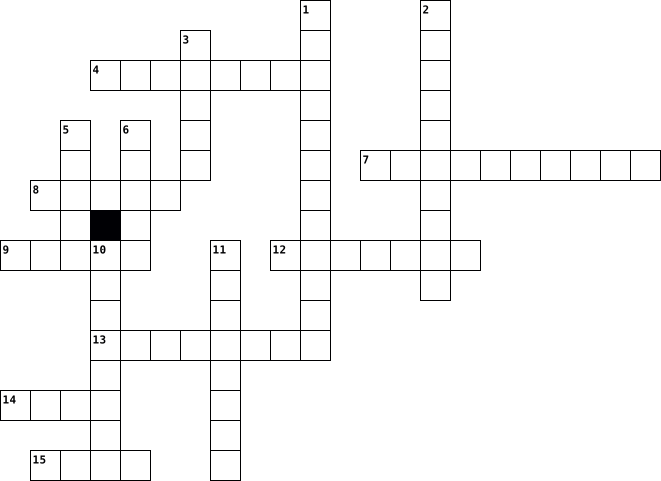
Across
- Not affected by a disease
- A device to help a patient breathe when they cannot by themselves
- country Where Covid-19 originated
- Wash these all the time
- provides immunity from a virus or disease
- When a virus has spreads all over the world
- Stay _____
- device used to provide some protection from the Covid-19
Down
- Having the disease by not hving the symptoms
- Social ______
- Flatten the _______
- city Where the Covid-19 originated
- The organ Covid-19 affects the most
- How Covid-19 spreads
- One way Covid-19 spreads
15 Clues: Stay _____ • Social ______ • Flatten the _______ • How Covid-19 spreads • Wash these all the time • One way Covid-19 spreads • Not affected by a disease • country Where Covid-19 originated • city Where the Covid-19 originated • The organ Covid-19 affects the most • provides immunity from a virus or disease • When a virus has spreads all over the world • ...
Revision Breaking News English 2025-05-11

Across
- dominujący
- unikatowy
- odporność
- uzależniony
- dreszczyk emocji
- prześladować
- odra
- podobny
Down
- mieszkańcy
- bezwartościowy
- nieświadomy
- chronić
- hydraulik
- rdzenni
- umysłowy
- stopień naukowy
16 Clues: odra • chronić • rdzenni • podobny • umysłowy • hydraulik • unikatowy • odporność • mieszkańcy • dominujący • nieświadomy • uzależniony • prześladować • bezwartościowy • stopień naukowy • dreszczyk emocji
Immune Response 2018-09-28

Across
- first phagocytic step
- another name of innate immune response
- lymphocyte that is part of the innate immunity
- cell for tissue repair
- abnormally high body temperature
- third phagocytic step
- second phagocytic step
Down
- movement of phagocytes from the blood to the tissue
- caused by increase blood flow to the site of injury
- iron-binding protein
- increase diameter of blood vessels
- defensive response of tissues to any damage
- substance that interferes with viral replication
- type of adaptive immunity
- endogenous antimicrobial substance against gram positive bacteria
15 Clues: iron-binding protein • first phagocytic step • third phagocytic step • cell for tissue repair • second phagocytic step • type of adaptive immunity • abnormally high body temperature • increase diameter of blood vessels • another name of innate immune response • defensive response of tissues to any damage • lymphocyte that is part of the innate immunity • ...
Heartfelt S13 2026-05-03

Across
- Walked from redemption
- Won immunity and hoh the same week
- Saved themselves with the pov
- Won redemption
- Clocked the houses tea on misgendering them
- Won immunity to be sent home the next week
- Admitted to being the sole vote for farrah
Down
- Only houseguest to win full power
- First houseguest saved by the POV
- Sent home 6 - 5
- Nominated both before and after their hoh reign
- fully dressed in red
- Leaked felix's game with screenshots after eviction
- Survived both tie votes
14 Clues: Won redemption • Sent home 6 - 5 • fully dressed in red • Walked from redemption • Survived both tie votes • Saved themselves with the pov • Only houseguest to win full power • First houseguest saved by the POV • Won immunity and hoh the same week • Won immunity to be sent home the next week • Admitted to being the sole vote for farrah • Clocked the houses tea on misgendering them • ...
Disease and Immunity 2021-11-12

Across
- A protein produced by lymphocytes, which attaches to a certain specific antigen.
- A microorganism that can enter the body and causes disease.
- A hormone made by the pancreas, which regulates the amount of glucose in the blood.
- Resistance to infection by a particular pathogen, can be obtained either by having the disease itself or acquiring antibodies from other individuals.
- Contains weakened or dead pathogens with the same antigens, inserted into the body to be recognised by lymphocytes so that it can produce antibodies and memory cells.
- A chemical barrier that can trap pathogens in the airways.
- Practices that are conducive for maintaining health and preventing disease through cleanliness.
- A type of pathogen which can cause diseases such as cholera, tuberculosis and tetanus.
- A type of pathogen which can cause diseases such as malaria and amoebic dysentery.
Down
- A type of pathogen which can cause diseases such as athlete’s foot and ringworm.
- A disease that occurs when the sugar level in the blood is too high.
- A type of white blood cell that ingests and digests pathogens.
- A type of white blood cell that produces antibodies.
- A disease caused by a malfunction in the immune system which makes them attack parts of the body.
- The virus that causes AIDS.
- Chemicals on the outer surface of a pathogen that are recognised as foreign by lymphocytes.
- A type of pathogen which can cause diseases such as influenza, common cold and AIDS.
17 Clues: The virus that causes AIDS. • A type of white blood cell that produces antibodies. • A chemical barrier that can trap pathogens in the airways. • A microorganism that can enter the body and causes disease. • A type of white blood cell that ingests and digests pathogens. • A disease that occurs when the sugar level in the blood is too high. • ...
Disorders in Immunity 2026-03-26

Across
- A seasonal or chronic allergic reaction to inhaled plant pollen, molds, or airborne allergens that targets respiratory mucous membranes, causing nasal congestion, sneezing, and itchy eyes.
- A T-cell mediated delayed hypersensitivity reaction that develops one to several days after antigen contact, including contact dermatitis and graft rejection.
- An underreactive immune response where the immune system is incompletely developed, suppressed, or destroyed.
- A chronic localized allergic reaction such as hay fever or asthma.
- An antigen that induces an allergic response in sensitive individuals, with proteins being more allergenic than other biomolecules.
- A Type III hypersensitivity autoimmune disease characterized by a butterfly-shaped rash and autoantibodies against organs, tissues, or intracellular materials.
- An overreactive immune response involving allergy and autoimmunity where immune components attack one’s own tissues, failing to distinguish them from foreign material.
- An immune deficiency often due to inherited abnormalities where lymphocytes are absent, present at low levels, or do not function normally.
- Clicking, bubbling, or rattling sounds in the lungs, often heard in asthma patients.
- An acquired immune deficiency caused by infection, malnutrition, chemotherapy, or radiation, with AIDS being the most recognized infection—induced form.
Down
- A reaction involving IgG and IgM antibodies plus complement that act upon cells causing lysis, including blood group incompatibility, and some autoimmune diseases.
- The theory that immune systems need to be trained by interaction with microbes during development, and that overly hygienic environments in industrialized societies may lead to increased allergies.
- A Type III hypersensitivity disorder where antibody-streptococcal antigen complexes settle into the kidney, leading to complement activation, neutrophil infiltration, and kidney damage.
- A primary immunodeficiency involving dysfunction in both B and T lymphocyte systems, causing severe infections from birth and requiring isolation from pathogens.
- An immediate, IgE-mediated allergic reaction involving mast cells, basophils, and allergic mediators, including anaphylaxis, hay fever, and asthma.
- An immune complex-mediated reaction where circulating IgG complexes are deposited in basement membranes of target organs, causing inflammation and including diseases like lupus and rheumatoid arthritis.
- The most profuse and fast-acting allergic mediator released from mast cells that constricts bronchi, dilates blood vessels, and stimulates eosinophils to release inflammatory cytokines.
17 Clues: A chronic localized allergic reaction such as hay fever or asthma. • Clicking, bubbling, or rattling sounds in the lungs, often heard in asthma patients. • An underreactive immune response where the immune system is incompletely developed, suppressed, or destroyed. • ...
EIM Test 2023-02-18

Across
- Body's ability to resist foreign organisms and toxins that damage tissues and organs. This includes natural immunity and adaptive immunity. The word immunity comes from the Latin immunis, meaning exempt or protected from.
- Lymphocyte that matures into a plasma cell to secrete antibodies. The refers to the bone marrow, which is where B cells most often originate.
- The ability to recognize and remember specific antigens and mount and attack on them. Humoral (B cells) and cell-mediated immunity (T cells) are examples.
Down
- Lymphocyte that acts directly on antigens to destroy them or produce chemicals (cytokines) such as interferons and interleukins that are toxic to antigens.
- Protection that an individual is born with to fight infection such as neutrophils, monocytes, macrophages, and NK cells. It is not antigen-specific and does not elicit memory.
- T cells (cytotoxic, helper and suppressor) respond to antigens and destroy them; a type of adaptive immunity.
- Weakened or dead antigen is given to induce production of antibodies. This results in adaptive immunity.
- B cells produce antibodies after exposure to specific antigens; type of adaptive immunity.
8 Clues: B cells produce antibodies after exposure to specific antigens; type of adaptive immunity. • Weakened or dead antigen is given to induce production of antibodies. This results in adaptive immunity. • T cells (cytotoxic, helper and suppressor) respond to antigens and destroy them; a type of adaptive immunity. • ...
graft vs host 2023-07-25

Across
- A type of immunity acquired through exposure to a disease or vaccination.
- The process of weakening or attenuating pathogens for use in vaccines.
- The term used when the immune system rejects a transplanted organ or tissue.
Down
- A type of vaccine that uses a harmless virus to deliver genetic material from the target pathogen.
- The immune system's ability to recognize and remember specific pathogens for future defense.
- Specific proteins produced by the immune system to neutralize foreign invaders.
- A chemical substance added to vaccines to enhance the immune response.
- A process that stimulates the immune system to develop immunity to a specific disease.
- The body's ability to resist and fight off infections.
- A biological preparation containing weakened or killed pathogens to confer immunity.
10 Clues: The body's ability to resist and fight off infections. • A chemical substance added to vaccines to enhance the immune response. • The process of weakening or attenuating pathogens for use in vaccines. • A type of immunity acquired through exposure to a disease or vaccination. • The term used when the immune system rejects a transplanted organ or tissue. • ...
graft vs host 2023-07-25

Across
- A type of immunity acquired through exposure to a disease or vaccination.
- The process of weakening or attenuating pathogens for use in vaccines.
- The term used when the immune system rejects a transplanted organ or tissue.
Down
- A type of vaccine that uses a harmless virus to deliver genetic material from the target pathogen.
- The immune system's ability to recognize and remember specific pathogens for future defense.
- Specific proteins produced by the immune system to neutralize foreign invaders.
- A chemical substance added to vaccines to enhance the immune response.
- A process that stimulates the immune system to develop immunity to a specific disease.
- The body's ability to resist and fight off infections.
- A biological preparation containing weakened or killed pathogens to confer immunity.
10 Clues: The body's ability to resist and fight off infections. • A chemical substance added to vaccines to enhance the immune response. • The process of weakening or attenuating pathogens for use in vaccines. • A type of immunity acquired through exposure to a disease or vaccination. • The term used when the immune system rejects a transplanted organ or tissue. • ...
Lymphatic System 2020-11-05

Across
- inflamed lymph nodes
- immunity passed from mom to baby
- straw colored fluid composed of water, lymphocytes, oxygen, hormones and digested nutrients
- masses of lymphatic tissues that filter bacteria in the throat
- immunity you are born with
Down
- produces T-lymphocytes
- bodies ability to fight off pathogens
- antigen introduced to the body to trigger an immune response
- site for lymphocyte production
9 Clues: inflamed lymph nodes • produces T-lymphocytes • immunity you are born with • site for lymphocyte production • immunity passed from mom to baby • bodies ability to fight off pathogens • antigen introduced to the body to trigger an immune response • masses of lymphatic tissues that filter bacteria in the throat • ...
Vaccination 2024-05-29

Across
- A protein produced as part of the humoral immune response, involved in pathogen detection and neutralization.
- The type of immunity aimed to be achieved through vaccination, resulting in permanent antigenic memory or lifelong protection.
- To stimulate the body's own immune system, and to protect the person against subsequent infection or disease.
- Protection developed after vaccination.
- The ingredients in vaccines include antigens, stabilizers, adjuvants, and preservatives, which can sometimes cause what reactions and side effects.
- Immunity in a population due to high vaccination rates.
- Benefits of this vaccine is it can be mass-produced and are relatively inexpensive to make.
Down
- Type of immunity achieved through vaccination.
- Having a functioning immune system.
- Materials used in vaccines that include live suspensions of weakened cells, inactivated cells, subunits, and extracted bacterial products.
- Bacterial toxins whose toxicity has been inactivated or suppressed, used to immunize against diphtheria and tetanus.
11 Clues: Having a functioning immune system. • Protection developed after vaccination. • Type of immunity achieved through vaccination. • Immunity in a population due to high vaccination rates. • Benefits of this vaccine is it can be mass-produced and are relatively inexpensive to make. • ...
VACCINES AND IMMUNE SYSTEM 2023-07-13

Across
- The substance in the vaccine that actives the immune system.
- Viruses that cause waves of infections months or years apart.
- Type of immunity achieve by getting infected showing symptoms or not.
- Vaccines protect us from...
- The presence of a disease-causing organism in the body.
Down
- Vaccines that need two doses to protect adequately.
- Process of being resistant to an infectious factor.
- Cells produced by the immune system to protect against infections.
- Immunity that fades away within weeks.
- Type of immunity that lasts longer
10 Clues: Vaccines protect us from... • Type of immunity that lasts longer • Immunity that fades away within weeks. • Vaccines that need two doses to protect adequately. • Process of being resistant to an infectious factor. • The presence of a disease-causing organism in the body. • The substance in the vaccine that actives the immune system. • ...
The Paediatrics Crossword 2024-03-12

Across
- The power to produce the desired result
- Treatment with an injection to produce immunity
- When something like a disease or war suddenly begins
- The branch of medicine concerned with the treatment of infants and children
- Relating to or involving the immunity of particular infections
Down
- Immunity When a large proportion of the community becomes resistant to a disease
- The action of making someone resistant to a disease
- The action of stopping something from happening
- Ability to be prevented
- Amount or size of a medicine or drug
10 Clues: Ability to be prevented • Amount or size of a medicine or drug • The power to produce the desired result • The action of stopping something from happening • Treatment with an injection to produce immunity • The action of making someone resistant to a disease • When something like a disease or war suddenly begins • ...
Hannah Hickey’s crossword puzzle SURVIVOR 2023-05-13

Across
- a thing that you need to solve
- item that keeps you safe
- where people try to win IMMUNITY
- name of one of the tribes
- adventage in the game
- name of one of the tribes
- where they find fuel for the fire
- a piece of land surrounded by water
- hosts name
- a thing that is popular in the game
Down
- three teams (blank)into one
- group of people who vote at the end
- thing that creates heat
- name of one of the tribes
- where people get voted out
- a skill that comes in handy
- where idols are hidden
- a piece of paper usually mailed
- where they bathe and fish for food
- people who ban together
20 Clues: hosts name • adventage in the game • where idols are hidden • thing that creates heat • people who ban together • item that keeps you safe • name of one of the tribes • name of one of the tribes • name of one of the tribes • where people get voted out • three teams (blank)into one • a skill that comes in handy • a thing that you need to solve • a piece of paper usually mailed • ...
Immunology week 1 - 3 2025-07-09

Across
- class II that have two long chains alpha and beta
- Engulfing and digesting pathogens
- when a macrophage is activated by LPS
- feedback loop of C3, to C3Bb
- Toll like receptors
- Pattern recognition receptors
- immunity with no memory
- response that is T cell mediated
Down
- Macrophages back in cause of infection
- immunity with antigen recognition molecules
- monocyte that has left the bloodstream.
- immune response mediated by B-cells
- Antigen binding region of the antibodies
- Marking a cell for phagocytosis
- first line of defense
- t cell that stops overreactions
- t cell that directs other cells with cytokines
- t cell which kills cells infected with viruses
18 Clues: Toll like receptors • first line of defense • immunity with no memory • feedback loop of C3, to C3Bb • Pattern recognition receptors • Marking a cell for phagocytosis • t cell that stops overreactions • response that is T cell mediated • Engulfing and digesting pathogens • immune response mediated by B-cells • when a macrophage is activated by LPS • ...
History Vocabulary 2020-10-08

Across
- pipe
- corn
- government official
- azure
- agreement
- spear/dart thrower
- ancient
Down
- group
- resistant
- dunghill
- occupancy
- gypsy
- history expert
- relic
- financial scheme
- farming
- administrator
- ethnicity
18 Clues: pipe • corn • group • gypsy • relic • azure • farming • ancient • dunghill • resistant • occupancy • ethnicity • agreement • administrator • history expert • financial scheme • spear/dart thrower • government official
Immunity for MR V 2022-02-15

Across
- what the immune system fights
- active immunity
- what a vaccine gives you
- what mothers milk provides
- disease the first vaccine was made for
- what remembers the pathogen next time
- First line of defense
- these are pathogens that are not alive
Down
- better defense the second time
- the white blood cells that eat
- what white blood cells make
- whats on the outside of a virus
- what destroys infected cells
13 Clues: active immunity • First line of defense • what a vaccine gives you • what mothers milk provides • what white blood cells make • what destroys infected cells • what the immune system fights • better defense the second time • the white blood cells that eat • whats on the outside of a virus • what remembers the pathogen next time • disease the first vaccine was made for • ...
SEND THE SOLUTION FOR A CLUE TO AN IMMUNITY IDOL 2025-05-11

Across
- THE TRUE DECIDERS OF THE OUTCOME
- REPRESENTS YOUR LIFE IN THIS GAME
- A HIGH STAKES EXPERIENCE
- SYMBOLIZES YOUR TRIBE
- WHAT EVERYONE CRAVES ABOVE ALL ELSE
- WHEN PLAYERS FORMALLY TEAM UP
- GIVES YOU EXTRA POWER IN THE GAME
Down
- OFTEN THE RESULT OF A DOUBLE CROSS
- A RISKY ENDEAVOR, POTENTIALLY LOSING A VOTE
- BRINGS TEMPORARY SAFETY
- WHERE RELATIONSHIPS ARE TESTED
- NOT AS GOOD AS IMMUNITY, BUT STILL NICE
- YOUR HOME BASE
13 Clues: YOUR HOME BASE • SYMBOLIZES YOUR TRIBE • BRINGS TEMPORARY SAFETY • A HIGH STAKES EXPERIENCE • WHEN PLAYERS FORMALLY TEAM UP • WHERE RELATIONSHIPS ARE TESTED • THE TRUE DECIDERS OF THE OUTCOME • REPRESENTS YOUR LIFE IN THIS GAME • GIVES YOU EXTRA POWER IN THE GAME • OFTEN THE RESULT OF A DOUBLE CROSS • WHAT EVERYONE CRAVES ABOVE ALL ELSE • NOT AS GOOD AS IMMUNITY, BUT STILL NICE • ...
Human Health 2025-10-16

Across
- Caused by genetic factor or lifestyle
- Foreign substance that comes from outside the body and induces the production of antibodies
- membrane A membrane that lines the digestive tract and respiratory tract
- White blood cells engulf and digest the pathogens using enzymes through...
- The body produces its own antibodies when stimulated by antigens
- Made of a tough layer and is difficult to be penetrated by microorganisms
- Animals that transmit pathogens
- Ability of the body system to resist pathogens before it is infected
- All virus, some bacteria, protozoa, fungi and worms
Down
- Can be transmitted from one individual to another
- Earwax, tears and vaginal secretions also function as....
- Abnormal condition of body or mind that causes discomfort,difficulty to function or stress to an individual
- Contains antigens obtained from a part or the whole structure of a weakened or dead virus or bacterium
- Victim who is weak and easily infected
- Spread through sexual intercourse
- The body gains antibody from external sources
- Example of a disease that can be transmitted through contact
- Protein produced by white blood cells into the bloodstream in response to antigens
18 Clues: Animals that transmit pathogens • Spread through sexual intercourse • Caused by genetic factor or lifestyle • Victim who is weak and easily infected • The body gains antibody from external sources • Can be transmitted from one individual to another • All virus, some bacteria, protozoa, fungi and worms • Earwax, tears and vaginal secretions also function as.... • ...
Immune system 2026-02-11

Across
- The type of immunity you're born with
- Released by CD8 T Cells
- These DON'T cause autism and save lives
- The type of T cell that activates B cells and cytotoxic cells
- antibodies don't kill they
Down
- The type of active immunity you get through a vaccine
- Protein marker on the cell surface
- The kind of immunity that develops after exposure to an antigen
- Type of cell that has lots of rough endoplasmic reticulum
- Most abundant immunoglobulin in the body
10 Clues: Released by CD8 T Cells • antibodies don't kill they • Protein marker on the cell surface • The type of immunity you're born with • These DON'T cause autism and save lives • Most abundant immunoglobulin in the body • The type of active immunity you get through a vaccine • Type of cell that has lots of rough endoplasmic reticulum • ...
Bio 2 - Module 9 2022-11-04

Across
- - The process of inducing immunity artificially. It is the exposure of a person to material (a vaccine) that is antigenic but not pathogenic.
- - --- mediated immunity or AMI is triggered by antigens and involves B lymphocytes for antibody reproduction.
- - Originate in the bone marrow and mature in the thymus. They make up 60 to 70% of circulating lymphocytes. Three subclasses: Helper, cytotoxic, and suppressor T cells.
- - --- presenting cells include macrophages and dendritic cells.
- - Secretes antibodies. Effective against microorganisms in the extracellular fluids. Originate in foetal bone marrow where it migrates to foetal liver and lymphoid tissues to mature. It makes up 10 to 20% of circulating lymphocytes.
- - --- T cells secrete cytokines, regular IR, and activate other T cells and B cells.
Down
- - --- immunity is acquired during an infection (naturally) or vaccination (artificially). Provides immunological memory from memory lymphocytes.
- - --- T cells dampen down responses and rid intracellular microorganisms.
- - --- T cells kill virus-infected and cancerous cells.
- - --- immunity is acquired from the mother through the placenta or colostrum (naturally) or a donor animal/human (artificially). Is short-lived with no memory.
- - --- mediated immunity or CMI is triggered by antigens and involves the destruction of pathogens by T lymphocytes.
11 Clues: - --- T cells kill virus-infected and cancerous cells. • - --- presenting cells include macrophages and dendritic cells. • - --- T cells dampen down responses and rid intracellular microorganisms. • - --- T cells secrete cytokines, regular IR, and activate other T cells and B cells. • ...
The Immune System (BIO224) 2022-10-24

Across
- TYPE OF IMMUNITY, DEVELOPS IN RESPONSE TO A PATHOGEN
- SECOND LINE OF DEFENSE, BIG EATERS
- TC
- FOUR LETTER WORDS, 1 OF 2 OF YOUR FIRST LINE OF DEFENSE
- PART OF YOUR INNATE IMMUNE SYSTEM, RAISES BODY TEMPERATURE
- IMMUNITY PRODUCED BY TRANSFER OF ANTIBODIES FROM ANOTHER SOURCE
Down
- ANOTHER WORD FOR ANTIBODIES, ABBREVIATED AS "IG"
- IMMUNITY THAT IS NOT PRESENT AT BIRTH, ACQUIRED WHEN YOU HAVE BEEN EXPOSED TO A SPECIFIC ANTIGEN
- WHERE AN ANTIBODY ATTACHES TO AN ANTIGEN
- ANTIBODY GENERATORS
10 Clues: TC • ANTIBODY GENERATORS • SECOND LINE OF DEFENSE, BIG EATERS • WHERE AN ANTIBODY ATTACHES TO AN ANTIGEN • ANOTHER WORD FOR ANTIBODIES, ABBREVIATED AS "IG" • TYPE OF IMMUNITY, DEVELOPS IN RESPONSE TO A PATHOGEN • FOUR LETTER WORDS, 1 OF 2 OF YOUR FIRST LINE OF DEFENSE • PART OF YOUR INNATE IMMUNE SYSTEM, RAISES BODY TEMPERATURE • ...
Immunisation and Vaccines 2024-12-05

Across
- the type of immunity that arises when antibodies are transferred from mother to fetus
- a form of naturally acquired immunity due to direct infection by a pathogen
- a synonym for vaccination
- a weakened strand of a pathogen
- there already exists a vaccine for this disease
- a follow-up vaccination after the initial vaccination
Down
- another word for "clumping together"
- a form of acquired immunity through immunisation
- being resistant to a particular infectious disease
- these types of cells are produced by lymphocytes
10 Clues: a synonym for vaccination • a weakened strand of a pathogen • another word for "clumping together" • there already exists a vaccine for this disease • a form of acquired immunity through immunisation • these types of cells are produced by lymphocytes • being resistant to a particular infectious disease • a follow-up vaccination after the initial vaccination • ...
Disease Prevention Awareness Month 2021-12-13

Across
- you've got the ---- gotta have the ----
- period of isolation when exposed
- movie watched in HSE/HMS about infections
- respiratory illness caused by a virus;
- a substance used to produce antibodies
- blood cells that help fight diseases
- best defense against germs
- contagious skin infection
- a disorder caused by a bacteria or virus
Down
- a blood protein made due to an antigen
- commonly referred to as the flu
- causing a risk of human health
- an inoculation to produce immunity
- a temperature of at least 100.4 degrees F
- toxin that produces an immunity
- cover your mouth when you.....
- human immunodeficiency disease
- a covering for all or part of the face
- bacteria or viruses that are spread easily
19 Clues: contagious skin infection • best defense against germs • causing a risk of human health • cover your mouth when you..... • human immunodeficiency disease • commonly referred to as the flu • toxin that produces an immunity • period of isolation when exposed • an inoculation to produce immunity • blood cells that help fight diseases • a blood protein made due to an antigen • ...
Bioanalytics 2021-11-25

Across
- laimennettu
- verenpunan niukkuus
- soluviljelmä
- väkevöity
- verivirtsaisuus
- sylki
- vasta-aine
- näyte
Down
- verihiutale
- vastustuskyky
- verenvähyys
- valkosolu
- staasi
- hyytyminen
- liuos
- koepala
16 Clues: liuos • sylki • näyte • staasi • koepala • valkosolu • väkevöity • hyytyminen • vasta-aine • verihiutale • laimennettu • verenvähyys • soluviljelmä • vastustuskyky • verivirtsaisuus • verenpunan niukkuus
Chapter 4 The Healthy Professional 2025-08-15

Across
- a test for identifying a possible allergy in a client
- nutrients needed for energy
- nutrients needed for many body functions, including hormones, sebum production
- immunity that is developed after overcoming a disease, through inoculation
- the processes involved in taking in nutrients and assimilating and utilizing them
- the science of designing the workplace to make specific body movements more comfortable
- nutrients used by cells to produce important biochemicals that have many body functions
- the ability of the body to resist and destroy pathogens and respond to infection
- nutrients required for many body functions to occur, including normal metabolism
Down
- makes up 50 to 70 percent of the body’s weight
- nutrients important for building muscle and blood tissues
- hypersensitivity disorders of the immune system
- immunity that is partly inherited and partly developed through healthy living
- substances that kill or slow the growth of bacteria and other microorganisms
14 Clues: nutrients needed for energy • makes up 50 to 70 percent of the body’s weight • hypersensitivity disorders of the immune system • a test for identifying a possible allergy in a client • nutrients important for building muscle and blood tissues • immunity that is developed after overcoming a disease, through inoculation • ...
Spooked the Aftermath 2021-02-08

Across
- protection
- marked
- civilian-force
- accusation
- refusal
- underworld
- killed
Down
- duty
- medicine
- cause
- destroy
- overprotective
- unable
- unexpected
- nonfunctional
15 Clues: duty • cause • marked • unable • killed • destroy • refusal • medicine • protection • accusation • unexpected • underworld • nonfunctional • civilian-force • overprotective
travel log 2023-06-17

Across
- - Indifferent
- - Evade
- - Skill
- - Anxiety
- - Disturbing
- ease - Comfortable
- - Vaccinations
- - Gaze
Down
- - Uncertain
- - Bargain
- - Dash
- - Negotiating
- - Disorderly
- - Peculiarity
- - Protection
15 Clues: - Dash • - Gaze • - Evade • - Skill • - Bargain • - Anxiety • - Uncertain • - Disorderly • - Disturbing • - Protection • - Indifferent • - Negotiating • - Peculiarity • - Vaccinations • ease - Comfortable
Immune & Lymphatic System 2021-05-24

Across
- duct/runs up through the chest and empties into the blood through a large vein near the left side of the neck
- immunity/a type of general protection
- nodes/like the body's military intelligence system
- kill bacteria, viruses, or infected cells
- proteins that stop infections from spreading by trapping disease causing germs & destroying them
- lymphatic duct/collects lymph from the right side of the neck, chest, and arm and empties into a large vein near the right side of the neck
- the body to an antigen in a way that doesn't make someone sick
- clear, watery fluid that follows through its own vessels branching throughout the body
- bacteria
- bacteria
- nodes/small, round bumps in the body that may get swollen when sick
Down
- in the upper left part of the body under the ribcage
- immunity/develops throughout out lives
- system/an extensive drainage network
- immunity/"borrowed" from another source & it lasts for a short time
- doctors check for swollen lymph nodes in the neck when someone has a sore throat
- the body's soldiers
- type of white blood cell
- toxins/produced by different organisms
19 Clues: bacteria • bacteria • the body's soldiers • type of white blood cell • system/an extensive drainage network • immunity/a type of general protection • immunity/develops throughout out lives • toxins/produced by different organisms • kill bacteria, viruses, or infected cells • nodes/like the body's military intelligence system • ...
Immune & Lymphatic System 2021-05-24

Across
- the body's soldiers
- toxins/produced by different organisms
- nodes/small, round bumps in the body that may get swollen when sick
- the body to an antigen in a way that doesn't make someone sick
- in the upper left part of the body under the ribcage
- doctors check for swollen lymph nodes in the neck when someone has a sore throat
- bacteria
- system/an extensive drainage network
Down
- duct/runs up through the chest and empties into the blood through a large vein near the left side of the neck
- immunity/develops throughout out lives
- type of white blood cell
- proteins that stop infections from spreading by trapping disease causing germs & destroying them
- immunity/a type of general protection
- kill bacteria, viruses, or infected cells
- nodes/like the body's military intelligence system
- immunity/"borrowed" from another source & it lasts for a short time
- clear, watery fluid that follows through its own vessels branching throughout the body
- bacteria
- lymphatic duct/collects lymph from the right side of the neck, chest, and arm and empties into a large vein near the right side of the neck
19 Clues: bacteria • bacteria • the body's soldiers • type of white blood cell • system/an extensive drainage network • immunity/a type of general protection • immunity/develops throughout out lives • toxins/produced by different organisms • kill bacteria, viruses, or infected cells • nodes/like the body's military intelligence system • ...
Immunity and Defence 2020-10-12

Across
- 80% of circulating antibodies.
- Serine proteases that trigger programmed cell death.
- Neutrophils, basophils, and eosinophils are examples of ______.
- The first line of defence in innate/natural immunity.
- The adjective used to describe a mix of antibodies that bind to multiple epitopes.
- What is stimulated (in B cells) when the antigen is first exposed to B cells and interact with a receptor on one of the B cells?
- Attenuated virus/bacteria that trigger an immune response and memory cells.
- what do macrophages do to pathogens?
- A second exposure of the antigen stimulates memory cells, resulting in a rapid response to produce plasma cells and ________ t cells.
- CD4 amplifies the signal generated by the TCR by recruiting "Tyrosine ______ Lck."
Down
- Antibody-mediated immune response.
- Binding of the Antibodies can _________ the pathogen in a number of ways.
- An antigen can be a bacteria or a ______.
- Besides bone marrow, what is the site of white blood cell production?
- Macrophages will become antigen-________ cells.
- B and T cell responses happen at the ____ time.
- What do secreted antibodies (from plasma) bind to?
17 Clues: 80% of circulating antibodies. • Antibody-mediated immune response. • what do macrophages do to pathogens? • An antigen can be a bacteria or a ______. • Macrophages will become antigen-________ cells. • B and T cell responses happen at the ____ time. • What do secreted antibodies (from plasma) bind to? • Serine proteases that trigger programmed cell death. • ...