
mesopotamia Crossword Puzzles
Peradaban Awal Dunia (Asia & Afrika) 2022-05-11

Across
- salah satu peninggalan peradaban mesir kuno
- bangsa yang diperkirakan telah melakukan upacara pembakaran jenazah pada peradaban lembah sungai indus.
- wilayah yang dikelilingi gurun pasir luas, yaitu Gurun Nafud dan Gurun Samad.
- sistem kepercayaan masyarakat Mesopotamia.
- sungai yang menjadikan wilayah mesir sebagai wilayah yang subur.
- celah yang dilalui bangsa arya untuk masuk ke wilayah lembah sungai indus.
- memiliki luas wilayah dan jumlah penduduk terbesar di dunia.
- teknik pengobatan melalui tusuk jarum.
Down
- kuil yang dibangun untuk memuja dewa pada masa peradaban mesopotamia.
- media tulis yang dibuat oleh masyarakat mesir kuno.
- sungai yang memiliki kedudukan penting dalam peradaban cina kuno.
- peradaban yang berpusat di hilir sungai nil.
- salah satu dewa pada masa peradaban mesir kunoyang memiliki hubungan dengan akhirat.
- salah satu filsuf yang muncul untuk mengembangkan aliran kepercayaan bagi masyarakat cina.
- nama salah satu dinasti dimana bangsa cina kuno mengalami perkembangan pada sistem kepercayaannya.
- sebutan untuk pemimpin kerajaan pada peradaban mesir kuno.
- teknik yang diterapkan untuk mengawetkan jasad firaun yang wafat.
17 Clues: teknik pengobatan melalui tusuk jarum. • sistem kepercayaan masyarakat Mesopotamia. • salah satu peninggalan peradaban mesir kuno • peradaban yang berpusat di hilir sungai nil. • media tulis yang dibuat oleh masyarakat mesir kuno. • sebutan untuk pemimpin kerajaan pada peradaban mesir kuno. • memiliki luas wilayah dan jumlah penduduk terbesar di dunia. • ...
world history Unit 1 2012-09-22

Across
- river in egypt
- egyptian phaoroah
- picture use to explain something
- second longest river in china
- acient egyptian writing system
- belief in more than one god
- ancientkingofmacedon
- age marked by prevelant use of iron
- preserved remains of things from the past
Down
- one of the earliest known forms of written expression
- acient semetic civilization
- study of humans
- the second great river that defines Mesopotamia
- belief in only one god
- one of the world's earliest urban civilizations
- ancient age marked by imense use of bronze
- sixth king of babylon
- ancient mesopitamian semetic people
- the study of past humans
- farming
- the first great river that defines Mesopotamia
21 Clues: farming • river in egypt • study of humans • egyptian phaoroah • ancientkingofmacedon • sixth king of babylon • belief in only one god • the study of past humans • acient semetic civilization • belief in more than one god • second longest river in china • acient egyptian writing system • picture use to explain something • ancient mesopitamian semetic people • ...
Ulangan Harian Sejarah Peminatan materi Peradaban Awal Dunia 2024-05-07

Across
- "Gerbang Menuju Tuhan"
- Salah satu negara yang dilalui sungai Nil
- Cikal bakal peradaban Yunani
- Gelar raja di Mesir
- Bangsa yang dijuluki "Romawi Asia"
- gabungan banyak polis dengan polis Athena
- Pengawetan jasad raja Mesir dengan cara dibalsem
- Sebelah barat Yunani kuno
- Dewa tertinggi dalam peradaban Yunani
- Tokoh yang mengatakan "Mesir adalah hadiah dari sungai Nil"
Down
- Asas undang-undang Hammurabi
- "Potamos" dalam bahasa Yunani
- Polis yang melahirkan banyak pemikir ahli
- Tulisan kuno di mesir
- Sebutan Mesopotamia saat ini
- Sisa peninggalan pulau Kreta
- tempat pemujaan para Dewa di Mesopotamia
- Perang Athena dan Sparta
- Cerita berisi bukti peradaban pulau Kreta
- Tempat mendarat para penyerang dari Persia dalam serangan kedua
20 Clues: Gelar raja di Mesir • Tulisan kuno di mesir • "Gerbang Menuju Tuhan" • Perang Athena dan Sparta • Sebelah barat Yunani kuno • Asas undang-undang Hammurabi • Sebutan Mesopotamia saat ini • Sisa peninggalan pulau Kreta • Cikal bakal peradaban Yunani • "Potamos" dalam bahasa Yunani • Bangsa yang dijuluki "Romawi Asia" • Dewa tertinggi dalam peradaban Yunani • ...
Unit 2, Chapter 4 Lessons 1.1, 1.2, 1.3, 2.1, 2.2 2021-11-01

Across
- the sun god thought to have created the world
- the worlds longest river (1.1)
- unlike Mesopotamia, Egypt became _______ rather than a group of city-states (1.3)
- rock formations causing churning rapids (1.1)
- meaning people belonged to different social classes (2.2)
- the nile served as a ____________ encouraging contact between upper and lower Egypt (1.2)
- the bodies of powerful people and pharaohs were preserved as _______
- massive monumental tombs for pharaohs (2.1)
Down
- fan shaped area where the river empties into a larger body of water (1.1)
- a series of rulers from the same family (1.3)
- the great pyramid stood 481 ____ tall (2.1)
- unlike in Mesopotamia the nile flooded in a more ____________ pattern (1.1)
- had complete control of the military and religious ceremonies (1.3)
- unlike Mesopotamia in Egypt women shared some ______ with men (2.2)
- a proper burial would have ensured a smooth ________ to the afterlife (2.1)
- god of the underworld (2.2)
- the pharaohs main religious role was to keep _______ by maintaining communication with the gods (1.3)
17 Clues: god of the underworld (2.2) • the worlds longest river (1.1) • the great pyramid stood 481 ____ tall (2.1) • massive monumental tombs for pharaohs (2.1) • a series of rulers from the same family (1.3) • the sun god thought to have created the world • rock formations causing churning rapids (1.1) • meaning people belonged to different social classes (2.2) • ...
Puzzle one 2023-01-21
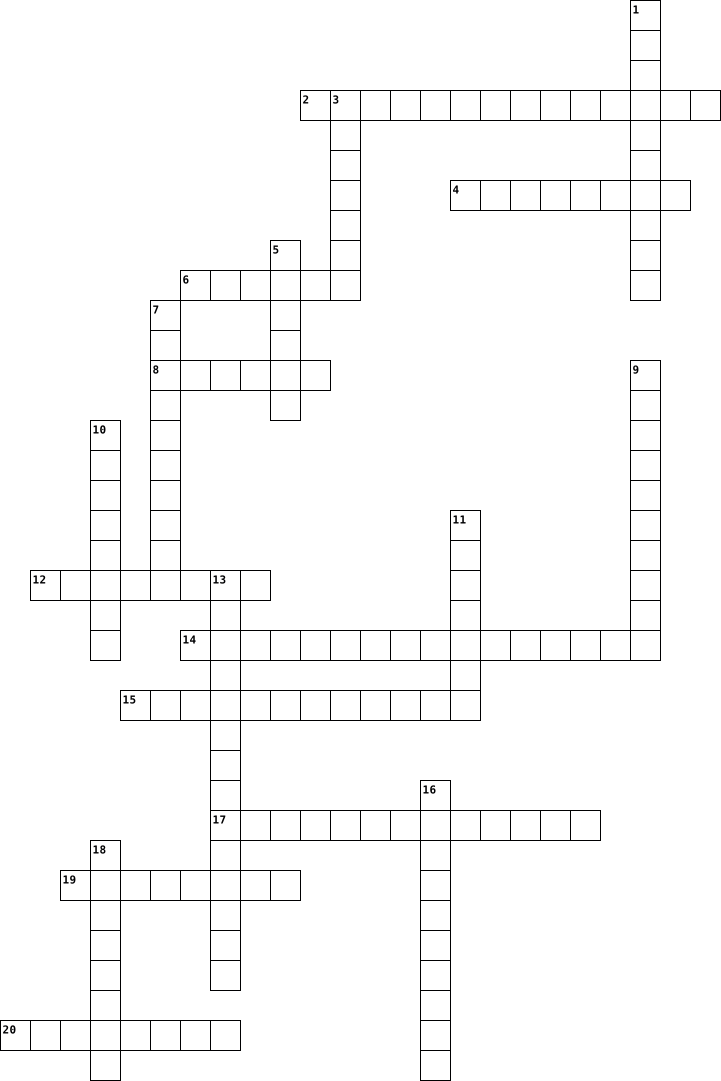
Across
- he
- diffusion/ him
- you
- people
- cake
- the
- for
- her
- cows
- rat
Down
- pickles
- we
- she
- Gautama/ to
- quit
- I
- love
- ate
- just
- your
20 Clues: I • he • we • she • you • ate • the • for • her • rat • quit • love • cake • just • your • cows • people • pickles • Gautama/ to • diffusion/ him
Puzzle one 2023-01-21
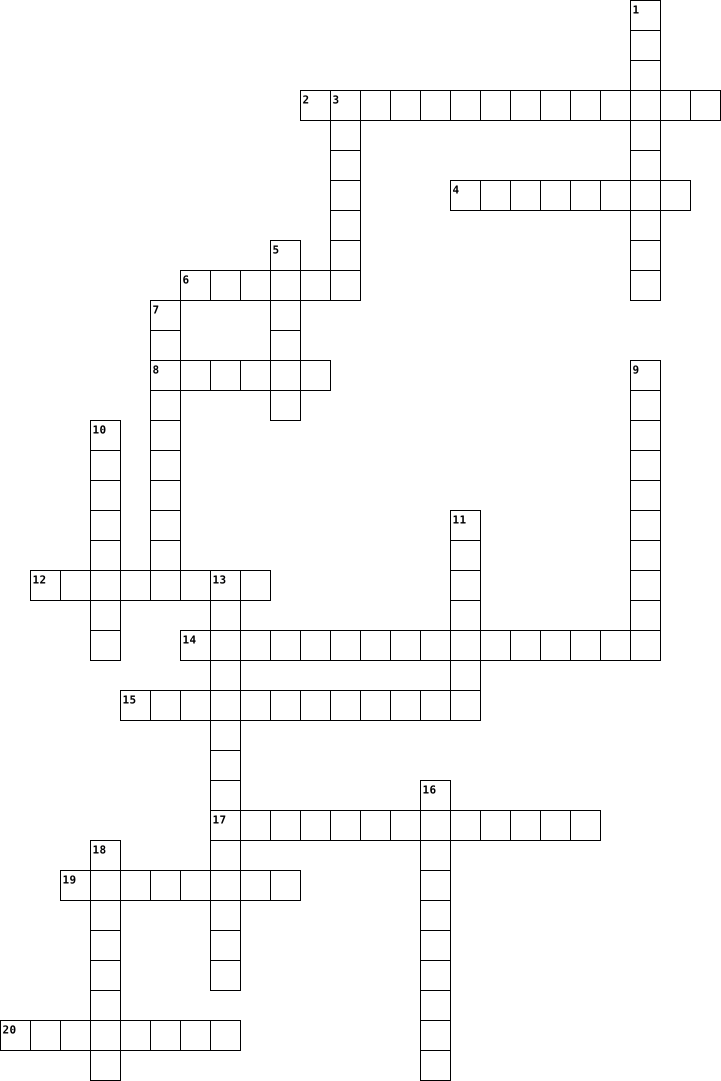
Across
- he
- diffusion/ him
- you
- people
- cake
- the
- for
- her
- cows
- rat
Down
- pickles
- we
- she
- Gautama/ to
- quit
- I
- love
- ate
- just
- your
20 Clues: I • he • we • she • you • ate • the • for • her • rat • quit • love • cake • just • your • cows • people • pickles • Gautama/ to • diffusion/ him
Let's make a review 2025-04-04

Across
- main complex institution of Mesopotamia
- Firt record keeping
- Method used to provide water
- Egyptian believed in many Gods, so they were
- Event that involved the deceased's heart being weighed against the feather
Down
- Record keeping used by Egyptians
- The first pharaoh who unified Ancient Egypt
- Main political referent in Egypt
- place where the early civilizations were born
- One of the main rivers of Mesopotamia
10 Clues: Firt record keeping • Method used to provide water • Record keeping used by Egyptians • Main political referent in Egypt • One of the main rivers of Mesopotamia • main complex institution of Mesopotamia • The first pharaoh who unified Ancient Egypt • Egyptian believed in many Gods, so they were • place where the early civilizations were born • ...
MESOPOTAMIA 2017-04-20

Across
- Percaya dan menyembah banyak dewa dikenal sebagai
- Bangsa pertama yang tinggal di mesopotamia
- Sebagian besar bangsa yang membentuk peradaban mesopotamia
- Bangsa yang membangun kota asshur dan niniveh
Down
- Salah satu peradaban tertua di Indonesia
- Eufrat dan Tigris merupakan nama
- Mesopotamia terletak di asia
- Raja yang memimpin bangsa akkadia
8 Clues: Mesopotamia terletak di asia • Eufrat dan Tigris merupakan nama • Raja yang memimpin bangsa akkadia • Salah satu peradaban tertua di Indonesia • Bangsa pertama yang tinggal di mesopotamia • Bangsa yang membangun kota asshur dan niniveh • Percaya dan menyembah banyak dewa dikenal sebagai • Sebagian besar bangsa yang membentuk peradaban mesopotamia
Mesopotamia V Ancient Egypt Crossword 2015-03-10

Across
- The homes in Mesopotamia were made from these types of bricks
- This river gave the Egyptians everything that they needed
- This tool was invented by Sumerians to help them farm
- This was known as "the land between the rivers"
- Sumerians invented this to help them water crops
- One of the two rivers in Mesopotamia
- The first female Pharaoh of ancient Egypt
- An ancient Mesopotamian temple
Down
- The writing system invented by the Sumerians
- An Egyptian King or Queen
- The Egyptians believed that you go here after you die
- One of the two rivers in Mesopotamia
- The process of trying to preserve a body after it has died
- The Pharaohs were mummified and then placed in these enormous buildings
14 Clues: An Egyptian King or Queen • An ancient Mesopotamian temple • One of the two rivers in Mesopotamia • One of the two rivers in Mesopotamia • The first female Pharaoh of ancient Egypt • The writing system invented by the Sumerians • This was known as "the land between the rivers" • Sumerians invented this to help them water crops • ...
Ancient Civilizations 2020-12-01

Across
- A king and religious leader of an ancient Egyptian theocracy
- An independent city that has its own ruler, government, and name
- and Euphrates, The rivers that flow through Ancient Mesopotamia
- Mesopotamia and the Indus river valley are ______ of Egypt
- The river that flows through Ancient Egypt
- A complex society
- An amount of goods that is greater than what is needed
- Ancient Mesopotamian temple in the shape of a pyramid with staircases and a shrine on top
Down
- Egyptian writing system
- The indus river valley is located in this country today
- Means "land between two rivers"
- The river that flows through Ancient India
- Canals used to water crops
13 Clues: A complex society • Egyptian writing system • Canals used to water crops • Means "land between two rivers" • The river that flows through Ancient Egypt • The river that flows through Ancient India • An amount of goods that is greater than what is needed • The indus river valley is located in this country today • Mesopotamia and the Indus river valley are ______ of Egypt • ...
Mesopatamia Early Life 2026-03-08

Across
- People who grow crops and help produce food.
- Pieces of clay used for writing in ancient Mesopotamia.
- The exchange of goods between people or cities.
- One of the first writing systems, made by pressing symbols into clay.
- Decorative items such as necklaces made from gold or copper.
- One of the earliest known cities in the world.
- Large settlements where many people lived and worked.
- One of the earliest civilizations in Mesopotamia.
- Early people who first inhabited Sumer around 4500–4000 BCE.
Down
- Ancient region located where modern-day Iraq is today.
- People who take care of flocks of animals like sheep.
- Large buildings built to honor the gods of each city.
- Metal weapons used in ancient times.
- Common material used to make pottery, sculptures, and writing tablets.
- People who catch fish for food.
15 Clues: People who catch fish for food. • Metal weapons used in ancient times. • People who grow crops and help produce food. • One of the earliest known cities in the world. • The exchange of goods between people or cities. • One of the earliest civilizations in Mesopotamia. • People who take care of flocks of animals like sheep. • ...
Mesopotamia 2024-08-07

Across
- Part of Fertile Crescent Mesopotamia is located
- Part of Asia Mesopotamia is historical region of
- People that dominated Mesopotamia from beginning of recorded history
Down
- River system Mesopotamia is situated within
- Revolution Mesopotamia is site of
- Invention of this was inspired in Neolithic Revolution
- Modern day country this historical region of Mesopotamia includes
7 Clues: Revolution Mesopotamia is site of • River system Mesopotamia is situated within • Part of Fertile Crescent Mesopotamia is located • Part of Asia Mesopotamia is historical region of • Invention of this was inspired in Neolithic Revolution • Modern day country this historical region of Mesopotamia includes • ...
Mesopotamian Innovations 2017-11-06

Across
- belief in multiple goddesses
- of Gilgamesh worlds oldest story
- First civilization in human history
- Empire powerful group of central mesopotamia
- Most well know Mesopotamian group
- Mesopotamian temple
- hierarchy organizing groups into ranks
Down
- Gardens of Babylon Gardens built by King Nebuchadnezzar
- family based around males
- high position in hierarchy
- earliest form of writing
- powerful group of northern Mesopotamia
- carve open the ground
- most famous city state
- of Hammurabi oldest complete code of law
15 Clues: Mesopotamian temple • carve open the ground • most famous city state • earliest form of writing • family based around males • high position in hierarchy • belief in multiple goddesses • of Gilgamesh worlds oldest story • Most well know Mesopotamian group • First civilization in human history • powerful group of northern Mesopotamia • hierarchy organizing groups into ranks • ...
Mesopotamia Crossword 2024-10-14

Across
- the writing system of mesopotamia
- a system that divides people
- a way to control water
- a place between two rivers
Down
- to have lots of
- laws of mesopotamia
- to have good soil
- a place used for worship
- used in farming, made of rock and soil
9 Clues: to have lots of • to have good soil • laws of mesopotamia • a way to control water • a place used for worship • a place between two rivers • a system that divides people • the writing system of mesopotamia • used in farming, made of rock and soil
M 2023-09-19

Across
- hshsjsjs
- hshsjsjs
- jsjsjsjs
- ehshusus
- shhehsjeje
- hehshsjs
- benejsjsj
- uahajsjss
- jsnsjsj
- sjsjs
- sjshjs
Down
- hejejej
- sjsjjsjs
- jsjsjsjsjs
- shhsjsjs
- hshshshs
- bebehs
- jejejeje
- hsshjsjs
- hdjshehe
20 Clues: sjsjs • bebehs • sjshjs • hejejej • jsnsjsj • sjsjjsjs • hshsjsjs • hshsjsjs • jsjsjsjs • ehshusus • shhsjsjs • hshshshs • hehshsjs • jejejeje • hsshjsjs • hdjshehe • benejsjsj • uahajsjss • jsjsjsjsjs • shhehsjeje
PALEOLITHIC / NEOLITHIC REVOLUTION CROSSWORD PUZZLE 2018-09-23

Across
- The way of life a people follows
- Any man-made object that was left behind
- A skilled worker who makes products such as weapons and jewelry
- The world's longest river
- A term used to describe the lands between and near the Tigris and Euphrates Rivers
- The act of embalming, drying, and wrapping a dead body
- A socially expected behavior pattern
- Period time in history when man learned to farm, settled in communities, and populations grew
- And overthrow of government
- An important and powerful person who supervised rituals aimed at pleasing the gods and goddesses
Down
- The title of the ancient Egyptian kings
- Belief in multiple gods
- Civilization the bronze-age culture of the Indus valley that flourished from about 2600-1750 BC
- A language spoken by most of Mesopotamia
- An ancient wedge-shaped script used in Mesopotamia
- Era time period in history when man hunted, gathered and migrated often
- Agriculture the keeping of animals and the growing of food on a regular basis
- The study of human life and culture based on artifacts and human fossils
- People who move from place to place in search of food
- Humans and other humanlike creatures that walk upright
20 Clues: Belief in multiple gods • The world's longest river • And overthrow of government • The way of life a people follows • A socially expected behavior pattern • The title of the ancient Egyptian kings • A language spoken by most of Mesopotamia • Any man-made object that was left behind • An ancient wedge-shaped script used in Mesopotamia • ...
Unit 1 2024-09-16

Across
- Where the world’s earliest civilization was settled
- the longest river in the world
- A massive structure built in ancient Mesopotamia
- a line of hereditary rulers of a country.
- King of Babylon
- the king of the Neo-Assyrian Empire from the death of his father Sargon II in 705 BC to his own death in 681 BC
- Believing in or worshipping multiple gods
- an indigenous ethnic group native to Mesopotamia
- conqueror who founded the Achaemenian empire
- World’s oldest city
- Southern portion of Egypt
Down
- The stone age
- the king of Persia in 522–486 BC, one of the greatest rulers of the Achaemenid dynasty.
- Someone who lives by traveling from place to place
- used in a system of pictorial writing used on ancient Egyptian monuments.
- An inhabitant of Akkad
- First ruler of Akkadian Empire
- the second King of Kings of the Achaemenid Empire from 530 to 522 BC. He was the son and successor of Cyrus the Great.
- the longest-reigning king of the Babylonian dynasty.
- The earliest known writing system
- the king of the Neo-Assyrian Empire from 669 BC to his death in 631.
21 Clues: The stone age • King of Babylon • World’s oldest city • An inhabitant of Akkad • Southern portion of Egypt • the longest river in the world • First ruler of Akkadian Empire • The earliest known writing system • a line of hereditary rulers of a country. • Believing in or worshipping multiple gods • conqueror who founded the Achaemenian empire • ...
TTS SEJARAH 2026-03-10

Across
- – Sistem tulisan kuno berbentuk paku dari Mesopotamia.
- – Dewa tertinggi dalam mitologi Yunani yang bersemayam di Gunung Olimpus.
- – Pemimpin tertinggi di Mesir Kuno yang dianggap sebagai titisan dewa.
- – Kota kuno di India yang memiliki tata kota dan sistem sanitasi modern.
- – Peradaban di Amerika Selatan yang dikenal dengan situs Machu Picchu.
- – Peradaban kuno di Meksiko yang terkenal dengan kalender dan piramida.
- – Peradaban yang tumbuh di lembah Sungai Nil.
- – Salah satu filsuf terkenal dari Yunani Kuno.
- – Peradaban kuno yang dikenal dengan sebutan "Negeri Tirai Bambu".
- – Struktur piramida bertingkat di Mesopotamia sebagai tempat pemujaan.
- – Pemikiran yang mengutamakan kepemilikan bersama secara kolektif.
- – Wilayah subur di Timur Tengah tempat lahirnya Mesopotamia (Bulan Sabit Subur).
Down
- – Siklus peradaban yang menyatakan bahwa setiap kejayaan pasti akan mengalami...
- – Peradaban yang menjadi cikal bakal demokrasi dan filsafat barat.
- – Ibukota Kekaisaran Romawi yang sangat kuat di wilayah Mediterania.
- – Negara yang menjadi pelopor utama kebijakan Merkantilisme di Eropa.
- – Kepercayaan kepada banyak dewa yang dianut mayoritas peradaban kuno.
- – Bangunan pertahanan raksasa di Tiongkok untuk menghalau serangan bangsa Mongol.
- – Sungai suci yang menjadi pusat perkembangan peradaban India Kuno.
- – Paham ekonomi yang menekankan pengumpulan logam mulia oleh negara.
20 Clues: – Peradaban yang tumbuh di lembah Sungai Nil. • – Salah satu filsuf terkenal dari Yunani Kuno. • – Sistem tulisan kuno berbentuk paku dari Mesopotamia. • – Peradaban yang menjadi cikal bakal demokrasi dan filsafat barat. • – Peradaban kuno yang dikenal dengan sebutan "Negeri Tirai Bambu". • – Pemikiran yang mengutamakan kepemilikan bersama secara kolektif. • ...
Mesopotamia Review 2013-12-16

Across
- The New Babylonians
- There were lots of these in Ancient Sumer. city-
- Sumerian writing system
- King who rebuilt Babylon
- The Assyrians had a great one full of tablets
- The belief in more than one god
- A large area of territories controlled by one government
- A long poem about heroes and legends
- An exotic marketplace
- Groups of travelers
- Capital city of the Assyrians
- A sovereign ruler of a kingdom or empire
Down
- Empire known for their brutal treatment of captives
- Temple found at the center of every Sumerian city-state
- Someone who records taxes for the king
- Famous gate in the city of Babylon
- The Land between the Rivers
- Ancient city famous for its Hanging Gardens
- The Tigris and the ...
- He wrote a lot of codes
- He fought the demon Humbaba
- "An eye for an ..."
- The Fertile ...
- metal used by the Assyrians
24 Clues: The Fertile ... • The New Babylonians • "An eye for an ..." • Groups of travelers • An exotic marketplace • The Tigris and the ... • Sumerian writing system • He wrote a lot of codes • King who rebuilt Babylon • The Land between the Rivers • He fought the demon Humbaba • metal used by the Assyrians • Capital city of the Assyrians • The belief in more than one god • ...
Ancient Mesopotamia 2017-10-30

Across
- A group that was around from about 2350-2050 BCE. They were also ruled by Sargon the Great.
- One of the first known empires in history.
- Parallel rivers in Syria and Iraq where the first civilizations were developed.
- The most well-known Mesopotamian civilization which was conquered by the Persians.
- A wall to keep a river from overflowing the banks.
- A worker who makes things by hand.
- Also called the "land between the rivers."
- Someone who sells or trades away goods made by artisans.
Down
- A group that gives men unfair advantages over women.
- Someone who kept records in ancient times.
- The world's first ever code of law in the world.
- This story influenced many Bible stories.
- A belief in multiple gods or goddesses.
- The biggest and most important building in a city-state.
- A system to move water for agricultural purposes.
- Also called the cradle of civilization.
- A large city that operates like a small country.
- A farm tool used for carving the ground for planting.
- Northern Mesopotanians that lasted from about 2300-1800 BCE
- An ancient written language written in lines and arrows.
20 Clues: A worker who makes things by hand. • A belief in multiple gods or goddesses. • Also called the cradle of civilization. • This story influenced many Bible stories. • Someone who kept records in ancient times. • One of the first known empires in history. • Also called the "land between the rivers." • The world's first ever code of law in the world. • ...
Ancient Mesopotamia 2020-09-14

Across
- a region in Southwest Asia; site of the first civilization
- a religious teacher who is regarded as someone who speaks for God or for a god
- the capital of Babylonia; a city of great wealth and luxury
- a professional writer
- A group led by Abraham, first known as Hebrews, they were monotheistic
- an ancient region in present day Lebanon, known in ancient times for purple dye
- the scattering of people who have a common background or beliefs
- a time when there is so little food that many people starve
- the belief in one god
- many territories and peoples controlled by one government
- a market selling different kinds of goods
- a city that is also a separate, independent state
- a region occupied by the ancient Israelites, located between the Syrian Desert and the Mediterranean Sea
Down
- a religion that developed in ancient Persia
- an Israelite leader whom the Torah credits with leading the Israelites from Egypt to Canaan
- the belief in many gods
- a region in Southwest Asia; site of the first civilization
- an organized list of laws and rules
- to force someone to live in another country
- a group of travelers journeying together
- a set of symbols that represent the sounds of a language
- the king of Babylon from about 1792 to 1750 B.C.; creator of the Babylonian Empire
- a binding agreement
- groups of wedges and lines used to write several languages of the Fertile Crescent
- a historical kingdom in northern Mesopotamia around present day Turkey and Iraq
- a traditional story; in some cultures, alegendthat explains people's beliefs
26 Clues: a binding agreement • a professional writer • the belief in one god • the belief in many gods • an organized list of laws and rules • a group of travelers journeying together • a market selling different kinds of goods • a religion that developed in ancient Persia • to force someone to live in another country • a city that is also a separate, independent state • ...
LA MESOPOTAMIA 2023-06-15

Across
- alquilaban las tierras que rodeaban la ciudad que pertenecía al rey o al templo.
- Llamado así porque sus orígenes tenían forma de cuña.
- Eran propiedad de los varones, aunque si trabajaban cobraban un salario menor al de un varón adulto.
- Un pueblo semita sojuzgado a las ciudades estado sumerias.
- Emplearon sistemas de riego e inventaron el arado.
- Los primeros Estados mesopotámicos.
- Grupos privilegiados formados por el rey, su familia y la nobleza.
- Narra las aventuras del héroe de la mitología sumeria.
- Utilizaron el sistema sexagesimal, base para el cálculo,
- Zona pantanosa ubicada alrededor de la desembocadura de los ríos.
Down
- Tiene 282 leyes, un prólogo y un epilogo.
- Un pueblo indoeuropeo que, entre los siglos XV Y XII a. C. construyo un imperio en la zona noroeste del Creciente Fértil.
- Crearon un ejercito profesional y organizaron un eficaz sistema de recaudación de tributos.
- Estaba a cargo de los sacerdotes.
- Trabajaban en talleres.
- Reconocieron y ubicaron constelaciones de estrellas y cinco planetas del sistema solar.
- principal economía de Mesopotamia.
- Arribaron desde la península arábiga hacia 2500 a. C.
- Tenia las aguas violentas e irregulares.
- Se encargaban de rituales religiosos, vivían en templos y colaboraban con el gobierno; y los funcionarios, entre los que destacaban los escribas.
20 Clues: Trabajaban en talleres. • Estaba a cargo de los sacerdotes. • principal economía de Mesopotamia. • Los primeros Estados mesopotámicos. • Tenia las aguas violentas e irregulares. • Tiene 282 leyes, un prólogo y un epilogo. • Emplearon sistemas de riego e inventaron el arado. • Llamado así porque sus orígenes tenían forma de cuña. • ...
LA MESOPOTAMIA 2023-06-15

Across
- alquilaban las tierras que rodeaban la ciudad que pertenecía al rey o al templo.
- Llamado así porque sus orígenes tenían forma de cuña.
- Eran propiedad de los varones, aunque si trabajaban cobraban un salario menor al de un varón adulto.
- Un pueblo semita sojuzgado a las ciudades estado sumerias.
- Emplearon sistemas de riego e inventaron el arado.
- Los primeros Estados mesopotámicos.
- Grupos privilegiados formados por el rey, su familia y la nobleza.
- Narra las aventuras del héroe de la mitología sumeria.
- Utilizaron el sistema sexagesimal, base para el cálculo,
- Zona pantanosa ubicada alrededor de la desembocadura de los ríos.
Down
- Tiene 282 leyes, un prólogo y un epilogo.
- Un pueblo indoeuropeo que, entre los siglos XV Y XII a. C. construyo un imperio en la zona noroeste del Creciente Fértil.
- Crearon un ejercito profesional y organizaron un eficaz sistema de recaudación de tributos.
- Estaba a cargo de los sacerdotes.
- Trabajaban en talleres.
- Reconocieron y ubicaron constelaciones de estrellas y cinco planetas del sistema solar.
- principal economía de Mesopotamia.
- Arribaron desde la península arábiga hacia 2500 a. C.
- Tenia las aguas violentas e irregulares.
- Se encargaban de rituales religiosos, vivían en templos y colaboraban con el gobierno; y los funcionarios, entre los que destacaban los escribas.
20 Clues: Trabajaban en talleres. • Estaba a cargo de los sacerdotes. • principal economía de Mesopotamia. • Los primeros Estados mesopotámicos. • Tenia las aguas violentas e irregulares. • Tiene 282 leyes, un prólogo y un epilogo. • Emplearon sistemas de riego e inventaron el arado. • Llamado así porque sus orígenes tenían forma de cuña. • ...
Mesopotamia Geography 2021-12-16

Across
- created to store water for later use
- located outside the city wall
- very fine mud
- one of the rivers within the Fertile
- surrounds a city-state for protection
- modern-day country in which Mesopotamia
- brought water to the crops from the
- main reason for fighting between
- water levels in a canal
- region in the Middle East; shaped like
- earth walls to help prevent flooding
- located
Down
- Sea
- Sumerians built this to control the
- forced people to move from the
- Mesopotamians moved from here to the
- river that empties into the
- valley
- Oldest Mesopotamian settlement
- independent self-governing city
- to flow farmland during droughts
- to the river valleys
- "land between the rivers"
- low lying, flat land
- special gates that raised and lowered
- are poked into the leeves to allow
- Gulf
- controlled the flow of trade on the
28 Clues: Sea • Gulf • valley • located • very fine mud • to the river valleys • low lying, flat land • water levels in a canal • "land between the rivers" • river that empties into the • located outside the city wall • forced people to move from the • Oldest Mesopotamian settlement • independent self-governing city • to flow farmland during droughts • main reason for fighting between • ...
Mesopotamia wordsearch 2021-05-07

Across
- People who formed religious ceremonies
- Another term for cultural diffusion
- Tablet A tablet used to write on
- government-created laws or rules that the people had to follow to keep order
- The belief in one god
- Synonym for countryside
- A religious song or poem that is used to worship a certain god
- A dry barren area of land
- The main person worshipped by a certain religion
- A plant that can be harvested.
- Bringing water to land or crops
- The act of water washing up at very high levels of land
- When Babylonia fell
- A group of individuals that can have certain cultural beliefs
- Social system that has its own practices, morals, and beliefs
- The river located south of the fertile crescent
- Long poem that told tales of heroes
- A pyramid shaped temple tower
- Person mentioned in the mesopotamian bible ( 4th son of Jacob and Leah)
- A land with different territories and people under one rule
- Sumerians created ______ under streets
- Sumerian King
- Cultivate (a plant) for food
- circular object that can be found on cars and trucks
- a complex society shaped by religion, development, and government
- a type of government in which power is transferred by family
- the northern part of Mesopotamia was a _______
- The art of making pots from mud and clay
- The ideas, customs, art, and religion of a society
- The very first king of Mesopotamia
- a main monarch (leader) of a major territorial (land) area
- a ruler of a kingdom or empire
- A region of land that contains a city and all the countryside around it
- People that trade with others
- A trained military group trained to fight on land
- A long wall that prevents flooding.
- The world's first form of writing
- a region of land that is present day Turkey
- King Sargon’s son
- a healing drug made from the Sumerians
- Man-Made waterways
- Another word for writer
- settled in Mesopotamia at about 12,000 years ago
- A type of fertile soil mixed with tiny rocks
Down
- The number of people in a certain area
- The diversion of society by rank or class
- Synonym for city-like
- The first empire in Mesopotamia/ Conquered Sumer
- A geographical area of fertile land in the Middle East stretching in a broad semicircle from the Nile to the Tigris and Euphrates
- A wheeled horse drawn cart mostly used during battle
- first king of empire was Hammurabi
- More than needed.
- When Babylonia was founded
- trading system in which people exchange goods without using money
- Based standard english off of their language
- independent state that works with other states to achieve a shared military or political goal
- Picture symbols
- A set of letters that can be combined into words
- a civilization that developed on or near a river valley (China/India)
- A body of water that separates Europe and Africa
- a long period of dry weather
- located at the south-east of Mesopotamia
- People that have been taught to write Cuneiform
- The people of southern mesopotamia that got captured by the Akkadians
- The science of building.
- of Labor An arrangement in where a worker specializes in doing a certain task
- Relating to the government or public affairs of a country
- freed the israelites
- Ruler of a kingdom or empire
- The empire that settled in Mesopotamia
- The science or practice of farming, including cultivation of the soil for the growing of crops and the rearing of animals to provide food, wool, and other products
- Mesopotamian goddess associated with love and beauty
- A precious gemstone that holds a yellow metallic color
- The belief in many gods
- A farming tool used to loosen up soil
- the first woman writer in history
- The river located North of the fertile crescent
- A tool used to write on clay tablets
- The land between the rivers
- city state that was conquered by Sargon
- Another mesopotamian empire
81 Clues: Sumerian King • Picture symbols • More than needed. • King Sargon’s son • Man-Made waterways • When Babylonia fell • freed the israelites • Synonym for city-like • The belief in one god • Synonym for countryside • The belief in many gods • Another word for writer • The science of building. • A dry barren area of land • When Babylonia was founded • The land between the rivers • ...
Mesopotamia - JP 2023-10-06

Across
- religious temples
- The problem of the Tigris and Euphrates Rivers
- the first ruler of the Akkadian Empire (3 words)
- the largest city
- an independent city with its own government
- one of the most famous and important inventions that is still used today
- "The land between the rivers"
- type of religion they had
- a permanent ruler
- important Sumerian goddess
- created a number system of ___ that is still used for time today
- important Sumer city
Down
- the oldest known epic story
- fertile land is western Asia (2 words)
- a temporary ruler
- first civilization
- civilization known for codified laws and gardens
- a civilization ruled by a religious figure
- civilization known for military expertise
- The system of writing in Mesopotamia
20 Clues: the largest city • religious temples • a temporary ruler • a permanent ruler • first civilization • important Sumer city • type of religion they had • important Sumerian goddess • the oldest known epic story • "The land between the rivers" • The system of writing in Mesopotamia • fertile land is western Asia (2 words) • civilization known for military expertise • ...
Ancient mesopotamia 2025-05-05

Across
- The most famous Chaldean king was
- The type of arrangement in which each worker specializes in a particular task or job is called a
- consisted of a city
- The fertile Crescent boarders a sea called the
- more of something than needed
- Long poems that tell the stories of Heroes are
- a mixture of rich soil and tiny rocks
- A pyramid shaped temple tower is
- the science of a building is
- human made water ways
- The division of society by rank or class
- Creascent where most of there farm land was
- A set of words the can be combined to form words
- A ruler of a Kingdom or Empire is a
- The worlds first writing system
Down
- Land with different territories and peoples under a single rule
- Was a set of 282 laws that dealt with almost every part of daily life was
- The area between the Tigris and Euphrates river is called
- picture symbols are
- people who performed religious ceremonies
- One of Uruk's kings known as
- A writer is a
- A wheeled horse drawn cart used in battle is
- The worship of many gods
- A way of supplying water to an area of land
25 Clues: A writer is a • picture symbols are • consisted of a city • human made water ways • The worship of many gods • One of Uruk's kings known as • the science of a building is • more of something than needed • The worlds first writing system • A pyramid shaped temple tower is • The most famous Chaldean king was • A ruler of a Kingdom or Empire is a • a mixture of rich soil and tiny rocks • ...
Mesopotamia Vocab 2021-09-07

Across
- Belief or worship of one god.
- A city and its surrounding area that forms a state.
- A form of school in Mesopotamia where student would learn to write, a place where writings were kept.
- System in which a man is in charge.
- Person who copies and writes documents, keeps written records of various things.
- Head of state, person who controls a civilization.
- The story of a famous sumerian king.
- Large area of rich fertile farm land stretching from the Mediterranean to the Persian Gulf.
- System in which a women is in charge.
- Relating to cities and larger towns.
- Belief or worship of multiple gods.
- Form of stepped pyramid or tower, with each level slightly smaller that the one below it.
Down
- A form of societal arrangement in which some people are higher than other based on many factors.
- A large group of cities or countries under one ruler.
- A system of writing using pictures to represent words or phrases.
- Area between the Tigris and Euphrates rivers, literally means “between the rivers”.
- Writing utensil resembling a pencil that was used to etch into clay or wax covered tablets.
- Relating to a wedge like shape, the system of writing in and around ancient Mesopotamia.
- Relating to the countryside or farming, away from large civilizations.
- The watering of crops with water supplied by a river, stream, channel or other means of reaching the intended location.
20 Clues: Belief or worship of one god. • System in which a man is in charge. • Belief or worship of multiple gods. • The story of a famous sumerian king. • Relating to cities and larger towns. • System in which a women is in charge. • Head of state, person who controls a civilization. • A city and its surrounding area that forms a state. • ...
Crossword: Mesopotamia 2025-10-28

Across
- Debido a que los mesopotámicos poseían una religión con muchos dioses, religiosamente eran…
- 1, de los 2 ríos más importantes en Mesopotamia.
- Al igual que los egipcios, los mesopotámicos, también tenían canales de _________.
- La escritura ____________ fue creada por los sumerios, algo, que sin lugar a dudas fue algo muy importante.
- Biología, el estudio de la vida. Esa es la raíz o ____________ de esa palabra.
- En el Museo del _________ de París, podemos ver el famoso código de Hammurabi.
- ¿Qué fue Mesopotamia, un país o una zona?
- Una de las innovaciones de la arquitectura mesopotámica fue:
- Debido a que nosotros, los cristianos, poseemos una religión con 1 solo dios, religiosamente somos…
Down
- La ciudad capital del imperio babilónico o babilonio:
- Los ___________ dominaron y le pusieron punto final a todas esas culturas mesopotámicas, siendo la última cultura babilónica y vista brevemente en clase, los…
- La escritura mesopotámica no se llevaba a cabo sobre papel, sino en tabletas de…
- Este es un nombre que se interpreta como “tierra entre ríos”.
- Conocemos a las orillas de un río con el siguiente nombre:
- Importante río egipcio ya visto y estudiado en clase:
- Nombre de una pirámide escalonada allá en la zona mesopotámica.
- Algo que leemos, algo así como, 50% realidad y 50% fantasía.
- ¿Cuál fue el nombre del rey y del escritor de una famosa épica o epopeya?
- Tiipo de piedra donde está escrito el código de Hammurabi.
- ¡Curioso! Una ciudad mesopotámica de solamente dos letras.
20 Clues: ¿Qué fue Mesopotamia, un país o una zona? • 1, de los 2 ríos más importantes en Mesopotamia. • La ciudad capital del imperio babilónico o babilonio: • Importante río egipcio ya visto y estudiado en clase: • Conocemos a las orillas de un río con el siguiente nombre: • Tiipo de piedra donde está escrito el código de Hammurabi. • ...
Ancient Mesopotamia 2025-10-07

Across
- - Anno domini
- - belief in more than 1 god
- - world’s first system of writing
- - Mesopotamian temple
- - the method of supplying water to an area of land or crops
- - part god, part human King of Uruk in one of the oldest epics
- - a diary is an example of this source
- - Writer
- - a political unit with a city and the surrounding area
- - this class was made up of farmers and merchants
Down
- - exchange of goods without money
- hierarchy - division of society by rank or class
- - common era
- - territories and groups of people under a single rule
- - before Christ
- - this class was made up of priests and nobles
- - “between the rivers”
- - King of Babylon who made the first code of laws
- - a textbook is an example of this source
- crescent - Curved shaped region with rich soil in the Middle East
20 Clues: - Writer • - common era • - Anno domini • - before Christ • - Mesopotamian temple • - “between the rivers” • - belief in more than 1 god • - exchange of goods without money • - world’s first system of writing • - a diary is an example of this source • - a textbook is an example of this source • - this class was made up of priests and nobles • ...
Mesopotamia 2022-11-10

Across
- the type of government that is ruled by kings
- the other river that was used for travel and trading
- where writing was created
- one of the two rivers that surrounds mesopotamia
Down
- believed that the gods would indicate future events to mankind
- the code that established standards for commercial interactions and set fines and punishments to meet the requirements of justice
- founder of the Achaemenian Empire
- the contient mesopotamia is located in
- the main religion of Mesopotamia
9 Clues: where writing was created • the main religion of Mesopotamia • founder of the Achaemenian Empire • the contient mesopotamia is located in • the type of government that is ruled by kings • one of the two rivers that surrounds mesopotamia • the other river that was used for travel and trading • believed that the gods would indicate future events to mankind • ...
First civilizations 2024-05-20

Across
- A very fertile region that includes the Mesopotamia and has the shape of a crescent moon.
- a place in South West Asia between the Tigris and Euphrates River
- the first writing system
- A sumerian invention that we still use nowadays.
Down
- An ancient temple
- is the belief in many gods. Most of the Ancient civilizations shared this belief.
- professional record keepers
- The assyrians and the babylonians use this method to defend from possible enemies.
- the first civilization in the Mesopotamia, they were farmers and city builders.
- the ruler of an empire
- a king that concentrated the power of Babylon.
- Alphabet The first known alphabet.
- The first written code of laws
13 Clues: An ancient temple • the ruler of an empire • the first writing system • professional record keepers • The first written code of laws • Alphabet The first known alphabet. • a king that concentrated the power of Babylon. • A sumerian invention that we still use nowadays. • a place in South West Asia between the Tigris and Euphrates River • ...
Mesopotamia Crossword 2024-02-20

Across
- Producing more goods or crops than what is needed.
- The two rivers in Mesopotamia and the Euphrates and the .
- A system that divides people into classes based on the job of your family.
- A large arc of richand fertile farmland.
- Independent territories that make up a civilization.
- This word means the land between two rivers.
Down
- First set of 282 laws created by a king from Babylon.
- A pyramid-shaped temple.
- A mixture of soil and rocks that is very fertile
- The first empire of Mesopotamia.
- The world’s first system of writing.
- A way of controlling water for farming.
12 Clues: A pyramid-shaped temple. • The first empire of Mesopotamia. • The world’s first system of writing. • A way of controlling water for farming. • A large arc of richand fertile farmland. • This word means the land between two rivers. • A mixture of soil and rocks that is very fertile • Producing more goods or crops than what is needed. • ...
The Fertile Crescent Vocab Check For Understanding #1 2022-11-04

Across
- a tool used to make a trench for seeds
- One of the rivers that supplies Sumer with water
- the lower part of Mesopotamia
- a way to bring water to plants
- a person who lives in Sumer
- a place that is very good for growing something
Down
- One of the rivers that supplies Sumer with water
- trading goods for goods, no money
- a city inside a wall with its own government and laws
- a large part of the Fertile Crescent
- a shape
- the first city state in Mesopotamia
12 Clues: a shape • a person who lives in Sumer • the lower part of Mesopotamia • a way to bring water to plants • trading goods for goods, no money • the first city state in Mesopotamia • a large part of the Fertile Crescent • a tool used to make a trench for seeds • a place that is very good for growing something • One of the rivers that supplies Sumer with water • ...
Ancient Mesopotamia 2024-11-07

Across
- The collection of city-states and first civilization that developed in Mesopotamia
- a blue stone found in Sumer
- a society dominated by men
- Gilgamesh's best friend
- the type of farming used by Sumerian farmers
- the name of the god that created humans according to the Enuma Elish
- the belief in many gods
Down
- Name of the guardian of the forest in the Epic of Gilgamesh
- the particles of soil that rose from the flooding rivers
- a long poem that tells the story of a hero
- temple created by Sumerians to honor their gods
- an extra amount; having more than what you need
- one of the two rivers that surrounded Mesopotamia
- one of the two rivers that surrounded Mesopotamia (the other one)
- the name of the writing system created by Sumerians
- the crescent shape of land where civilizations began
- A Sumerian invention that was used carts; the first one was made of stone
17 Clues: Gilgamesh's best friend • the belief in many gods • a society dominated by men • a blue stone found in Sumer • a long poem that tells the story of a hero • the type of farming used by Sumerian farmers • temple created by Sumerians to honor their gods • an extra amount; having more than what you need • one of the two rivers that surrounded Mesopotamia • ...
Ancient Mesopotamia 2021-02-04

Across
- The place of worship of gods and goddesses in Mesopotamian cities.
- To remove dirt carefully from an area in order to find buried remains and artifacts.
- A Babylonian king famous for creating a set of strict laws.
- works The creation of commonly used things in a city like roads, bridges, tall walls, etc.
- The creation of buildings in a city.
- The name of the first empire.
- An object produced or shaped by human craft, especially a tool, weapon, etc. of archaeological or historical interest.
- specialization People had specific jobs in cities.
- This involves worship of a god or gods, and the belief in certain ideas about right and wrong behavior.
- Growing food (i.e. vegetables, grains, etc.) in order to have a surplus of food.
- A famous city that would later grow its own empire. Established by King Sargon.
Down
- The rulers and officials responsible for creating laws and managing society.
- The study of human history and prehistory through the excavation of sites and the analysis of artifacts and other physical remains.
- classes This feature of civilization helped to organize people in society and determined how much power you had.
- Many Mesopotamian religions were __________.
- A word that tells us something is from the distant past and does not exist anymore.
- The places that people lived in ancient civilizations.
- The creation of paintings, jewelry, sculptures, etc.
- This feature of civilization helped people to record stories, history, ideas, etc.
- The process of getting water from the rivers to the farms in a city.
20 Clues: The name of the first empire. • The creation of buildings in a city. • Many Mesopotamian religions were __________. • specialization People had specific jobs in cities. • The creation of paintings, jewelry, sculptures, etc. • The places that people lived in ancient civilizations. • A Babylonian king famous for creating a set of strict laws. • ...
Mesopotamia Review 2020-11-13

Across
- world's first writing system that use clay tablets and a reed stylus
- the practice of designing and constructing buildings
- territories and groups of people under a single rule
- pyramid-shaped temple tower
- more than what is needed, surplus
- a group of soldiers who ride horses
- an arrangement in which workers specialize in a particular task
- division of society by rank or class
- an area referring to a town or city
- a mixture of rocks and soil
- a writer
- worship of many gods
- a set of letters than can be combined to form words, the Phoenicians created the first one!
- long poems that tell stories of heroes, such as Gilgamesh
Down
- Persian leader who conquered a large amount of territory to form the world's largest empire at that time
- the method of supplying water to an area of land or crops
- waterways made by humans
- a political unit with a city and the surrounding area
- a large region of farmland near the Tigris and Euphrates Rivers and between the Persian Gulf and the Mediterranean Sea
- King of Uruk and the main character and hero from the Epic of Gilgamesh
- an area of countryside, rather than a town or city
- the society, culture, and way of life in a particular region
- wheeled, horse-drawn cart used in battle
- a Babylonian King responsible for the Code of Hammurabi, a famous law code
- Akkadian leader who established the world's first empire
25 Clues: a writer • worship of many gods • waterways made by humans • pyramid-shaped temple tower • a mixture of rocks and soil • more than what is needed, surplus • a group of soldiers who ride horses • an area referring to a town or city • division of society by rank or class • wheeled, horse-drawn cart used in battle • an area of countryside, rather than a town or city • ...
Mesopotamia Crossword 2021-04-29

Across
- Indiana Jones probably will go to one he hasn’t been to one already.
- Democracy.
- Girl Currency.
- oplimsythe.
- wow! Gnarly bruh!
- Sea it's in your veins and myths say its blue.
- Arch all the gists.
- SUCCESS!
- taming of animals.
- probably was there in the declaration of independence.
- MrSkinnyLegs
- plumbing.
Down
- mihtoesnom.
- Ostrich Pillow
- modern but not modern.
- See vill saw shawn.
- World Changing
- Gibberish.
- Mess a pot, am I a.
- Zues.
- Expanding.
- smackeroonies.
- Pencil
- Spear it well.
- Modern but still modern
25 Clues: Zues. • Pencil • SUCCESS! • plumbing. • Democracy. • Gibberish. • Expanding. • mihtoesnom. • oplimsythe. • MrSkinnyLegs • Ostrich Pillow • Girl Currency. • World Changing • smackeroonies. • Spear it well. • wow! Gnarly bruh! • taming of animals. • See vill saw shawn. • Mess a pot, am I a. • Arch all the gists. • modern but not modern. • Modern but still modern • ...
Ancient Mesopotamia 2020-09-14

Across
- a region in Southwest Asia; site of the first civilization
- a religious teacher who is regarded as someone who speaks for God or for a god
- the capital of Babylonia; a city of great wealth and luxury
- a professional writer
- A group led by Abraham, first known as Hebrews, they were monotheistic
- an ancient region in present day Lebanon, known in ancient times for purple dye
- the scattering of people who have a common background or beliefs
- a time when there is so little food that many people starve
- the belief in one god
- many territories and peoples controlled by one government
- a market selling different kinds of goods
- a city that is also a separate, independent state
- a region occupied by the ancient Israelites, located between the Syrian Desert and the Mediterranean Sea
Down
- a religion that developed in ancient Persia
- an Israelite leader whom the Torah credits with leading the Israelites from Egypt to Canaan
- the belief in many gods
- an ancient region between the Tigris and Euphrates Rivers in Southwest Asia
- an organized list of laws and rules
- to force someone to live in another country
- a group of travelers journeying together
- a set of symbols that represent the sounds of a language
- the king of Babylon from about 1792 to 1750 B.C.; creator of the Babylonian Empire
- a binding agreement
- groups of wedges and lines used to write several languages of the Fertile Crescent
- a historical kingdom in northern Mesopotamia around present day Turkey and Iraq
- a traditional story; in some cultures, a legend that explains people's beliefs
26 Clues: a binding agreement • a professional writer • the belief in one god • the belief in many gods • an organized list of laws and rules • a group of travelers journeying together • a market selling different kinds of goods • a religion that developed in ancient Persia • to force someone to live in another country • a city that is also a separate, independent state • ...
Mesopotamia Vocab 2021-09-21

Across
- A sovereign ruler, usually a king or queen.
- The belief that there is only one god.
- A pictorial symbol for a word or phrase.
- Clay tablets used for writing
- An area of the countryside rather than a town or city.
- A hard point, typically a diamond or sapphire.
- A city with its surrounding territory forms an independent state
- A poem from the Mesopotamia region.
- The supply of water to land or crops to help growth.
- The belief in more than one god.
Down
- Crescent An agricultural region extending from the Levant to Iraq.
- A characteristic of a town or city.
- A stratified ranking of group members.
- A person who copies out documents.
- An ancient region in Western Asia between the Tigris and Euphrates rivers.
- Ancient writing on old clay tablets.
- A rectangular stepped tower, sometimes surmounted by a temple .
- A group of states or countries under a single supreme authority.
- A civilization where a woman makes the decisions.
- A civilization where a man makes the decisions.
20 Clues: Clay tablets used for writing • The belief in more than one god. • A person who copies out documents. • A characteristic of a town or city. • A poem from the Mesopotamia region. • Ancient writing on old clay tablets. • The belief that there is only one god. • A stratified ranking of group members. • A pictorial symbol for a word or phrase. • ...
Mesopotamia Crossword 2021-09-07

Across
- Crescent Large arch of fertile farmland
- ruler of a kingdom
- area between the tigris river and Euphrates River
- the first system of writing
- countryside
- a school that taught writing
- a system were a man is in charge
- writer
- of Gilgamesh story of a great sumarean king
- hierarchy a division in a society made with rank or class
- city
- the worship of one god
Down
- a city and the surrounding countryside
- picture symbols
- a tower made of rectangles that help a temple
- land with multiple territories under one rule
- a system where a woman is in charge
- way to supply water to an area of land
- the worship of many gods
- a tool used to inscribe symbols into a clay tablet
20 Clues: city • writer • countryside • picture symbols • ruler of a kingdom • the worship of one god • the worship of many gods • the first system of writing • a school that taught writing • a system were a man is in charge • a system where a woman is in charge • a city and the surrounding countryside • way to supply water to an area of land • Crescent Large arch of fertile farmland • ...
Ancient Mesopotamia 2017-10-23

Across
- Crescent Also called the cradle of civilization, an area of modern day Iraq, Syria and Turkey where human civilization developed.
- of Gilgamesh Believed to the world’s oldest story that dates back to at least 2100 BCE. The story is known to have influence many Bible stories.
- A society or family that is based around the males.
- The “land between the rivers” a general names for the area and the people where civilization first developed.
- Thought to be the first civilization in human history, dating back to 3500 BCE, this southern Mesopotamian group developed many things later groups advanced.
- and Euphrates Rivers
- The most well known Mesopotamian group rose to power around 1800 BCE and dominated region until the Persians took over in 529 BCE.
- A Mesopotamian religious temple. Ziggurats are tiered buildings and where often the biggest and most important building within a city-state.
- parallel rivers in Iraq and Syria where civilization first developed around. The rivers flooded annually providing rich farmland for humans to use.
Down
- A man-made earthen wall designed to keep a river within its bank or to separate different farm fields.
- A small independant city that operates like a tiny country. Controls city and lands surrounding with own government.
- Empire A Powerful group of central Mesopotamia from about 2350 BCE to 2050 BCE highlighted by the rise of Sargon the Great.
- The belief in multiple gods or goddesses in religion.
- One of the earliest forms of writing developed by mankind.
- Code The world's oldest complete Code of Law. Created around 1800 BCE in Babylon, the laws listed crime and punishments.
- A powerful group of northern Mesopotamians from about 2300 BCE to 1800 BCE.
- A person who has the ability to write in ancient times. Often used to keep records for the government.
- A business person who trades things made by other people (artisans) in order to make a profit.
- A method in which water is supplied to plants at regular intervals for agriculture.
- Metal tool that is used to carve open the ground planting - likely dates back to about 3200 BCE. Revolutionary invention in the development of farming.
- A worker in a skilled trade that involves making things by hand. This was a specialization of labor where people focused on makings things to support society.
21 Clues: and Euphrates Rivers • A society or family that is based around the males. • The belief in multiple gods or goddesses in religion. • One of the earliest forms of writing developed by mankind. • A powerful group of northern Mesopotamians from about 2300 BCE to 1800 BCE. • A method in which water is supplied to plants at regular intervals for agriculture. • ...
Ancient Mesopotamia 2017-10-24

Across
- Metal tool that is used to carve open the ground planting - likely dates back to about 3200 BCE. Revolutionary invention in the development of farming.
- A worker in a skilled trade that involves making things by hand. This was a specialization of labor where people focused on makings things to support society.
- Thought to be the first civilization in human history, dating back to 3500 BCE, this southern Mesopotamian group developed many things later groups advanced.
- Code The world's oldest complete Code of Law. Created around 1800 BCE in Babylon, the laws listed crime and punishments.
- One of the earliest forms of writing developed by mankind.
- A method in which water is supplied to plants at regular intervals for agriculture.
- A person who has the ability to write in ancient times. Often used to keep records for the government.
- A Powerful group of central Mesopotamia from about 2350 BCE to 2050 BCE highlighted by the rise of Sargon the Great.
- Also called the cradle of civilization, an area of modern day Iraq, Syria and Turkey where human civilization developed.
Down
- The belief in multiple gods or goddesses in religion.
- The most well known Mesopotamian group rose to power around 1800 BCE and dominated region until the Persians took over in 529 BCE.
- A Mesopotamian religious temple. Ziggurats are tiered buildings and where often the biggest and most important building within a city-state.
- Believed to the world’s oldest story that dates back to at least 2100 BCE. The story is known to have influence many Bible stories.
- A powerful group of northern Mesopotamians from about 2300 BCE to 1800 BCE.
- A business person who trades things made by other people (artisans) in order to make a profit.
- and Euphrates Rivers Two parallel rivers in Iraq and Syria where civilization first developed around. The rivers flooded annually providing rich farmland for humans to use.
- A small independant city that operates like a tiny country. Controls city and lands surrounding with own government.
- The “land between the rivers” a general names for the area and the people where civilization first developed.
- A society or family that is based around the males.
- A man-made earthen wall designed to keep a river within its bank or to separate different farm fields.
20 Clues: A society or family that is based around the males. • The belief in multiple gods or goddesses in religion. • One of the earliest forms of writing developed by mankind. • A powerful group of northern Mesopotamians from about 2300 BCE to 1800 BCE. • A method in which water is supplied to plants at regular intervals for agriculture. • ...
Ancient Mesopotamia 2017-10-24

Across
- One of the earliest forms of writing developed by mankind.
- Thought to be the first civilization in human history, dating back to 3500 BCE, this southern Mesopotamian group developed many things later groups advanced.
- The “land between the rivers” a general names for the area and the people where civilization first developed.
- The belief in multiple gods or goddesses in religion.
- The most well known Mesopotamian group rose to power around 1800 BCE and dominated region until the Persians took over in 529 BCE.
- A small independant city that operates like a tiny country. Controls city and lands surrounding with own government.
- Two parallel rivers in Iraq and Syria where civilization first developed around. The rivers flooded annually providing rich farmland for humans to use.
- A Powerful group of central Mesopotamia from about 2350 BCE to 2050 BCE highlighted by the rise of Sargon the Great.
- A powerful group of northern Mesopotamians from about 2300 BCE to 1800 BCE.
- A Mesopotamian religious temple. Ziggurats are tiered buildings and where often the biggest and most important building within a city-state.
- Metal tool that is used to carve open the ground planting - likely dates back to about 3200 BCE. Revolutionary invention in the development of farming.
Down
- A business person who trades things made by other people (artisans) in order to make a profit.
- A method in which water is supplied to plants at regular intervals for agriculture.
- The world's oldest complete Code of Law. Created around 1800 BCE in Babylon, the laws listed crime and punishments.
- Believed to the world’s oldest story that dates back to at least 2100 BCE. The story is known to have influence many Bible stories.
- Also called the cradle of civilization, an area of modern day Iraq, Syria and Turkey where human civilization developed.
- A man-made earthen wall designed to keep a river within its bank or to separate different farm fields.
- A society or family that is based around the males.
- A worker in a skilled trade that involves making things by hand. This was a specialization of labor where people focused on makings things to support society.
- A person who has the ability to write in ancient times. Often used to keep records for the government.
20 Clues: A society or family that is based around the males. • The belief in multiple gods or goddesses in religion. • One of the earliest forms of writing developed by mankind. • A powerful group of northern Mesopotamians from about 2300 BCE to 1800 BCE. • A method in which water is supplied to plants at regular intervals for agriculture. • ...
Mesopotamia Crossword 2012-11-28

Across
- An independent state that works together with other states to achieve a shared military or political goal
- A state containing several countries or territories
- An idea or way of doing things that is common in a certain culture
- A small set of letters that stand for a single sound
- Soldiers who fight while riding horses
- A wide flat plain; present day Iraq
- A large crescent-shaped region in the Middle East
- The idea of all members of society have to obey this law
- The belief in more than one god
- A good or service sold within a country that is produced in another country
Down
- The art of steering a ship from place to place
- A set of laws that governed life in the Babylonian empire
- The spreading of cultural traits from one religion to another
- An area ruled by a distant country
- To supply water to their crops
- Pyramid-shaped brick towers
- A trading system in which people exchange goods directly without using money
- An independent state that includes a city and its surrounding territory
- A system of writing that uses triangle-shaped symbols
- A good or service produced within a country and sold outside its borders
20 Clues: Pyramid-shaped brick towers • To supply water to their crops • The belief in more than one god • An area ruled by a distant country • A wide flat plain; present day Iraq • Soldiers who fight while riding horses • The art of steering a ship from place to place • A large crescent-shaped region in the Middle East • A state containing several countries or territories • ...
Ancient Mesopotamia 2015-09-29

Across
- fair
- mixture of copper and tin
- many territories and peoples controlled by one government
- King who created just/unjust laws for his citizens
- created the first alphabet
- empire known for their warriors
- Mountains closest to the mediterranean sea(use map on page 29)
- a region in southwest Asia that was the site of the worlds's first civilizations
- inventions that made wagons possible
- Mountains closest to the tigris river (use map on page 29)
- belief in many gods
- phoenicians were known for what skill?
Down
- Professional record keeper
- an open market selling and trading different kinds of goods
- Mesopotamian river
- belief in one god
- a time when there is so little food that many people starve
- lots of a certain item
- city that is also a separate, independent state
- Mesopotamian building materials
- Mesopotamian river
- wedge-shaped writing
- reed used for writing
23 Clues: fair • belief in one god • Mesopotamian river • Mesopotamian river • belief in many gods • wedge-shaped writing • reed used for writing • lots of a certain item • mixture of copper and tin • Professional record keeper • created the first alphabet • empire known for their warriors • Mesopotamian building materials • inventions that made wagons possible • ...
Ancient Mesopotamia 2024-01-31

Across
- Neolithic settlement known for its early agriculture and large population.
- Ancient empire known for its advanced astronomy and mathematical achievements.
- Method of supplying water to crops.
- Ancient kingdom ruled by Hammurabi.
- King who established the world's first empire.
- Period of human history marked by the use of stone tools.
- River flowing through ancient Mesopotamia, parallel to the Euphrates.
- King of Babylon known for his law code.
- Civilization that developed the world's first writing system.
- Legal system developed by Hammurabi.
- Empire established by Sargon the Great, known for its military conquests.
- Person who writes or copies documents by hand.
- Legendary king of Uruk, subject of an epic poem.
Down
- Region between the Tigris and Euphrates rivers, known for its fertile soil.
- Simple drawings representing objects.
- River that supported ancient Mesopotamian civilizations.
- Independent city and its surrounding territory.
- Legendary lush garden built by Nebuchadnezzar II.
- Ancient temple tower with different sized levels.
- Empire known for its military might and cruelty.
- Wedge-shaped writing system used in ancient Mesopotamia.
- Period of human history characterized by the development of agriculture.
- Region often called the "cradle of civilization."
23 Clues: Method of supplying water to crops. • Ancient kingdom ruled by Hammurabi. • Legal system developed by Hammurabi. • Simple drawings representing objects. • King of Babylon known for his law code. • King who established the world's first empire. • Person who writes or copies documents by hand. • Independent city and its surrounding territory. • ...
Ancient Mesopotamia 2023-09-07

Across
- used by empire builders to consolidate their territory and power
- a system of writing developed by the Sumerians using a reed stylus to create wedge-shaped impressions on a clay tablet
- a large political unit or state, usually under a single leader, that controls many peoples or territories
- a massive stepped tower on which was built a temple dedicated to the chief god or goddess of a Sumerian city
- made by mixing heated copper and tin
- believing in many gods
- Epic of ____: Sumerian epic poem about a legendary king
- Akkadian ruler
- the western river that makes up Mesopotamia
- a state with political and economic control over the surrounding countryside
- ____ of Hammurabi: codified law that covered nearly every aspect of Babylonian life
- Babylonian ruler
Down
- earliest Mesopotamian civilization
- ____ and conquer; Hammurabi's chief military tactic
- ____ Crescent: the region where the first settled agricultural communities of the Middle East and Mediterranean basin are thought to have emerged
- the eastern river that makes up Mesopotamia
- Sumerian invention
- Empire that followed the Akkadians
- government by divine authority
- a society dominated by men
- First empire in world history
21 Clues: Akkadian ruler • Babylonian ruler • Sumerian invention • believing in many gods • a society dominated by men • First empire in world history • government by divine authority • earliest Mesopotamian civilization • Empire that followed the Akkadians • made by mixing heated copper and tin • the eastern river that makes up Mesopotamia • the western river that makes up Mesopotamia • ...
Mesopotamia/Sumerian 2023-05-02

Across
- an ancient instrument
- bringing water to fields to grow crops
- an ancient object put on carts
- a king or queen who rules their land
- a powerful city-state, 3500 B.C.
- buildings/ structures
- when people got different jobs, this was called
- the Upper Mesopotamian river
- an area ruled with multiple cultural groups
- the same thing as farming
- the tool used to write their language
- the items made out of gems, such as necklaces or rings
Down
- the writing used at the time
- letters that can make words
- the religious leaders who did rituals and offerings
- ancient Mesopotamian temple
- an ancient war machine driven by horses
- the group ruled by Sargon
- the belief in MULTIPLE gods
- an ancient record keeper
- the social order of a society
- the ancient area of fertile land, which Mesopotamian people settled in
- a figure in an ancient epic
- the Lower Mesopotamian river
- the leader of a Sumerian city-state
25 Clues: an ancient instrument • buildings/ structures • an ancient record keeper • the group ruled by Sargon • the same thing as farming • letters that can make words • ancient Mesopotamian temple • the belief in MULTIPLE gods • a figure in an ancient epic • the writing used at the time • the Lower Mesopotamian river • the Upper Mesopotamian river • the social order of a society • ...
Mesopotamia Crossword 2023-05-02

Across
- what is a set of letters that can be combined to make words
- what is a wheeled horse-drawn cart used in battle
- the type of arrangement in which each worker specializes in a particular task or job.
- which river sits on the bottom of the fertile crescent
- what are picture symbols
- what means countryside
- what is a pyramid shaped temple tower
- People who performed religious ceremonies
- what is a human-made waterway
- worship of many gods
- what is a mixture of rich soil and tiny rocks.
- a ruler of a kingdom or empire
- the world's first system of writing
- who was the most famous Chaldean king
Down
- what was the large arc of rich, fertile, farm land.
- the division of society by rank or class
- which river sits on top of the fertile crescent
- the way of supplying water onto an area of land
- more than what they need
- During Hammurabi’s reign, what was the most important city in Mesopotamia?
- what is the science of building
- a land with different territories and people under a single rule
- a set of two hundred and eighty two laws that dealt with about every part of daily life
- a long poem that tells stories about or of heroes
- whats a writer
- what means city
26 Clues: whats a writer • what means city • worship of many gods • what means countryside • more than what they need • what are picture symbols • what is a human-made waterway • a ruler of a kingdom or empire • what is the science of building • the world's first system of writing • what is a pyramid shaped temple tower • who was the most famous Chaldean king • ...
Mesopotamia Vocab 2024-09-26

Across
- A Mesopotamian writing system.
- Group of territories or cultures controlled by one ruler.
- A mix of rock and fertile soil deposited by rivers.
- A sacred building used for religious purposes.
- An excess amount of food that can lead to expanding population.
- A Babylonian king who made the code of laws of Sumer and Mesopotamia.
- When different cultures exchange ideas and learn new things to take back to their homes.
- A person who studies the lives and cultures of ancient people.
- A fertile place in the desert that plants and water.
- A person who specializes in writing and serves as a record keeper.
- A rectangular pyramid with terraces. Used for religious purposes or as a government building.
- an arc of fertile land between the Persian Gulf and the Mediterranean.
- Sumerian King of the city-state Uruk.
- to move around without a permanent home.
- To trade one idem for another.
Down
- supplying water to plants to aid farming.
- Capable of reproducing.
- Set of rules or laws.
- A religion that believes in many gods.
- A river in Mesopotamia.
- An object which has been made or modified by man.
- a severe shortage of food leading to starvation or death.
- People being able to settle down and work on different "special" jobs.
- A river in Mesopotamia.
- First civilization in Mesopotamia.
25 Clues: Set of rules or laws. • Capable of reproducing. • A river in Mesopotamia. • A river in Mesopotamia. • A Mesopotamian writing system. • To trade one idem for another. • First civilization in Mesopotamia. • Sumerian King of the city-state Uruk. • A religion that believes in many gods. • to move around without a permanent home. • supplying water to plants to aid farming. • ...
Mesopotamia #1 2025-01-22

Across
- were allowed to learn to read and write in scribe school
- as a result of literature, this type of story was written in Mesopotamia
- These structures provided... for the Babylonian people
- Sumerians were the first to invent and use ...that were pulled
- acts as an independent country in Mesopotamia
- Assyrians were the first to use this metal to make body armor for protection
- Sumerians created the world's first...
- Assyria developed the world's first...
- was the main character in the epic we read in class
Down
- a second hand account of an event, a biography, notes taken about a historical document.
- if something is in fact credible, then it is...
- a first hand account of an event, a journal entry, an autobiography, a video recording.
- to take over another group of people by force, usually done by a government
- is the disruption of the natural flow of water to support agriculture and complex societies
- Babylonians built the first... and it was giant
- Assyrians had this tool always ready to go in case they needed to defend themselves, first of its kind.
- is the process of planting crops and herding animals
- Mesopotamian soldiers captured in war were the first of their kind in ancient history
- Babylonians were the first to build these around their city
- King Hammurabi developed a code of...
- violent conflicts between nations organized by governments
21 Clues: King Hammurabi developed a code of... • Sumerians created the world's first... • Assyria developed the world's first... • acts as an independent country in Mesopotamia • if something is in fact credible, then it is... • Babylonians built the first... and it was giant • was the main character in the epic we read in class • ...
Middle East Review 2023-01-06

Across
- this type of water is needed for drinking and farming
- process of getting water from the rivers/lakes to the fields
- belief in many gods
- Islamic holy building
- Jewish day of worship
- Christian day of worship
- this type of water is not used for drinking or farming
- person who reads and writes in ancient time- keeps records for the ruler
- Islamic day of worship
- leader of Mesopotamia who created the first set of written laws- many were harsh
- Jews only follow the Old Testament of this holy book
- Christians follow the Old and New Testament of this holy book
Down
- people who follow the Islamic religion are called this
- people who follow Christianity are called this
- religious practice where you focus your attention on your god instead of eating
- ground is good for growing crops
- The other river that is important to Mesopotamia
- Christian holy building
- Islamic holy book
- people who follow the Jewish religion are called this
- another name for farming
- ancient Mesopotamian form of writing
- belief in only 1 god
- One of the rivers important to Mesopotamia
- Jewish holy building
- ALL ancient civilizations looked for a fresh form of this to settle by
26 Clues: Islamic holy book • belief in many gods • belief in only 1 god • Jewish holy building • Islamic holy building • Jewish day of worship • Islamic day of worship • Christian holy building • another name for farming • Christian day of worship • ground is good for growing crops • ancient Mesopotamian form of writing • One of the rivers important to Mesopotamia • ...
Ancient Mesopotamia 2017-10-24

Across
- The “land between the rivers” a general names for the area and the people where civilization first developed.
- A small independant city that operates like a tiny country. Controls city and lands surrounding with own government.
- The world's oldest complete Code of Law. Created around 1800 BCE in Babylon, the laws listed crime and punishments.
- The belief in multiple gods or goddesses in religion.
- Also called the cradle of civilization, an area of modern day Iraq, Syria and Turkey where human civilization developed.
- A person who has the ability to write in ancient times. Often used to keep records for the government.
- The most well known Mesopotamian group rose to power around 1800 BCE and dominated region until the Persians took over in 529 BCE.
- A Powerful group of central Mesopotamia from about 2350 BCE to 2050 BCE highlighted by the rise of Sargon the Great.
- A Mesopotamian religious temple. Ziggurats are tiered buildings and where often the biggest and most important building within a city-state.
- One of the earliest forms of writing developed by mankind.
Down
- Two parallel rivers in Iraq and Syria where civilization first developed around. The rivers flooded annually providing rich farmland for humans to use.
- A worker in a skilled trade that involves making things by hand. This was a specialization of labor where people focused on makings things to support society.
- of Gilgamesh Believed to the world’s oldest story that dates back to at least 2100 BCE. The story is known to have influence many Bible stories.
- A society or family that is based around the males.
- A man-made earthen wall designed to keep a river within its bank or to separate different farm fields.
- Metal tool that is used to carve open the ground planting - likely dates back to about 3200 BCE. Revolutionary invention in the development of farming.
- Thought to be the first civilization in human history, dating back to 3500 BCE, this southern Mesopotamian group developed many things later groups advanced.
- A method in which water is supplied to plants at regular intervals for agriculture.
- A powerful group of northern Mesopotamians from about 2300 BCE to 1800 BCE.
- A business person who trades things made by other people (artisans) in order to make a profit.
20 Clues: A society or family that is based around the males. • The belief in multiple gods or goddesses in religion. • One of the earliest forms of writing developed by mankind. • A powerful group of northern Mesopotamians from about 2300 BCE to 1800 BCE. • A method in which water is supplied to plants at regular intervals for agriculture. • ...
Ancient Mesopotamia 2017-10-24

Across
- The belief in multiple gods or goddesses in religion.
- A Powerful group of central Mesopotamia from about 2350 BCE to 2050 BCE highlighted by the rise of Sargon the Great.
- A method in which water is supplied to plants at regular intervals for agriculture.
- A society or family that is based around the males.
- Believed to the world’s oldest story that dates back to at least 2100 BCE. The story is known to have influence many Bible stories.
- A small independent city that operates like a tiny country. Controls city and lands surrounding with own government.
- Thought to be the first civilization in human history, dating back to 3500 BCE, this southern Mesopotamian group developed many things later groups advanced.
- A powerful group of northern Mesopotamians from about 2300 BCE to 1800 BCE
- A worker in a skilled trade that involves making things by hand. This was a specialization of labor where people focused on makings things to support society.
- A person who has the ability to write in ancient times. Often used to keep records for the government.
Down
- The most well known Mesopotamian group rose to power around 1800 BCE and dominated region until the Persians took over in 529 BCE.
- The “land between the rivers” a general names for the area and the people where civilization first developed.
- A business person who trades things made by other people (artisans) in order to make a profit.
- One of the earliest forms of writing developed by mankind.
- Two parallel rivers in Iraq and Syria where civilization first developed around. The rivers flooded annually providing rich farmland for humans to use.
- Metal tool that is used to carve open the ground planting - likely dates back to about 3200 BCE. Revolutionary invention in the development of farming.
- Also called the cradle of civilization, an area of modern day Iraq, Syria and Turkey where human civilization developed.
- The world's oldest complete Code of Law. Created around 1800 BCE in Babylon, the laws listed crime and punishments.
- A man-made earthen wall designed to keep a river within its bank or to separate different farm fields.
- A Mesopotamian religious temple. Ziggurats are tiered buildings and where often the biggest and most important building within a city-state.
20 Clues: A society or family that is based around the males. • The belief in multiple gods or goddesses in religion. • One of the earliest forms of writing developed by mankind. • A powerful group of northern Mesopotamians from about 2300 BCE to 1800 BCE • A method in which water is supplied to plants at regular intervals for agriculture. • ...
Ancient Mesopotamia 2017-10-24

Across
- A Mesopotamian religious temple. Ziggurats are tiered buildings and where often the biggest and most important building within a city-state.
- The “land between the rivers” a general names for the area and the people where civilization first developed.
- A worker in a skilled trade that involves making things by hand. This was a specialization of labor where people focused on makings things to support society.
- Believed to the world’s oldest story that dates back to at least 2100 BCE. The story is known to have influence many Bible stories.
- A small independant city that operates like a tiny country. Controls city and lands surrounding with own government.
- Thought to be the first civilization in human history, dating back to 3500 BCE, this southern Mesopotamian group developed many things later groups advanced.
- The world's oldest complete Code of Law. Created around 1800 BCE in Babylon, the laws listed crime and punishments.
- A man-made earthen wall designed to keep a river within its bank or to separate different farm fields.
- Also called the cradle of civilization, an area of modern day Iraq, Syria and Turkey where human civilization developed.
Down
- A society or family that is based around the males.
- Two parallel rivers in Iraq and Syria where civilization first developed around. The rivers flooded annually providing rich farmland for humans to use.
- Metal tool that is used to carve open the ground planting - likely dates back to about 3200 BCE. Revolutionary invention in the development of farming.
- A powerful group of northern Mesopotamians from about 2300 BCE to 1800 BCE.
- The belief in multiple gods or goddesses in religion.
- A method in which water is supplied to plants at regular intervals for agriculture.
- A Powerful group of central Mesopotamia from about 2350 BCE to 2050 BCE highlighted by the rise of Sargon the Great.
- A person who has the ability to write in ancient times. Often used to keep records for the government.
- The most well known Mesopotamian group rose to power around 1800 BCE and dominated region until the Persians took over in 529 BCE.
- One of the earliest forms of writing developed by mankind.
- A business person who trades things made by other people (artisans) in order to make a profit.
20 Clues: A society or family that is based around the males. • The belief in multiple gods or goddesses in religion. • One of the earliest forms of writing developed by mankind. • A powerful group of northern Mesopotamians from about 2300 BCE to 1800 BCE. • A method in which water is supplied to plants at regular intervals for agriculture. • ...
Ancient Mesopotamia 2017-10-24

Across
- A person who has the ability to write in ancient times. Often used to keep records for the government.
- The belief in multiple gods or goddesses in religion.
- Metal tool that is used to carve open the ground planting - likely dates back to about 3200 BCE. Revolutionary invention in the development of farming.
- A man-made earthen wall designed to keep a river within its bank or to separate different farm fields.
- Two parallel rivers in Iraq and Syria where civilization first developed around. The rivers flooded annually providing rich farmland for humans to use.
- A method in which water is supplied to plants at regular intervals for agriculture.
- A small independant city that operates like a tiny country. Controls city and lands surrounding with own government.
- A Powerful group of central Mesopotamia from about 2350 BCE to 2050 BCE highlighted by the rise of Sargon the Great.
- A society or family that is based around the males.
Down
- Also called the cradle of civilization, an area of modern day Iraq, Syria and Turkey where human civilization developed.
- Believed to the world’s oldest story that dates back to at least 2100 BCE. The story is known to have influence many Bible stories.
- Thought to be the first civilization in human history, dating back to 3500 BCE, this southern Mesopotamian group developed many things later groups advanced.
- The world's oldest complete Code of Law. Created around 1800 BCE in Babylon, the laws listed crime and punishments.
- One of the earliest forms of writing developed by mankind.
- A business person who trades things made by other people (artisans) in order to make a profit.
- The “land between the rivers” a general names for the area and the people where civilization first developed.
- The most well known Mesopotamian group rose to power around 1800 BCE and dominated region until the Persians took over in 529 BCE.
- A worker in a skilled trade that involves making things by hand. This was a specialization of labor where people focused on makings things to support society.
- A Mesopotamian religious temple. Ziggurats are tiered buildings and where often the biggest and most important building within a city-state.
- A powerful group of northern Mesopotamians from about 2300 BCE to 1800 BCE.
20 Clues: A society or family that is based around the males. • The belief in multiple gods or goddesses in religion. • One of the earliest forms of writing developed by mankind. • A powerful group of northern Mesopotamians from about 2300 BCE to 1800 BCE. • A method in which water is supplied to plants at regular intervals for agriculture. • ...
Ancient Mesopotamia 2017-10-25

Across
- The world's oldest complete Code of Law. Created around 1800 BCE in Babylon, the laws listed crime and punishments.
- The belief in multiple gods or goddesses in religion.
- The most well known Mesopotamian group rose to power around 1800 BCE and dominated region until the Persians took over in 529 BCE.
- Also called the cradle of civilization, an area of modern day Iraq, Syria and Turkey where human civilization developed.
- A method in which water is supplied to plants at regular intervals for agriculture.
- A Powerful group of central Mesopotamia from about 2350 BCE to 2050 BCE highlighted by the rise of Sargon the Great.
- A person who has the ability to write in ancient times. Often used to keep records for the government.
- A man-made earthen wall designed to keep a river within its bank or to separate different farm fields.
- A powerful group of northern Mesopotamians from about 2300 BCE to 1800 BCE.
Down
- One of the earliest forms of writing developed by mankind.
- A society or family that is based around the males.
- Two parallel rivers in Iraq and Syria where civilization first developed around. The rivers flooded annually providing rich farmland for humans to use.
- Believed to the world’s oldest story that dates back to at least 2100 BCE. The story is known to have influence many Bible stories.
- The “land between the rivers” a general names for the area and the people where civilization first developed.
- A business person who trades things made by other people (artisans) in order to make a profit.
- A small independant city that operates like a tiny country. Controls city and lands surrounding with own government.
- Thought to be the first civilization in human history, dating back to 3500 BCE, this southern Mesopotamian group developed many things later groups advanced.
- A Mesopotamian religious temple. Ziggurats are tiered buildings and where often the biggest and most important building within a city-state.
- A worker in a skilled trade that involves making things by hand. This was a specialization of labor where people focused on makings things to support society.
- Metal tool that is used to carve open the ground planting - likely dates back to about 3200 BCE. Revolutionary invention in the development of farming.
20 Clues: A society or family that is based around the males. • The belief in multiple gods or goddesses in religion. • One of the earliest forms of writing developed by mankind. • A powerful group of northern Mesopotamians from about 2300 BCE to 1800 BCE. • A method in which water is supplied to plants at regular intervals for agriculture. • ...
Ancient Mesopotamia 2017-10-20

Across
- A method in which water is supplied to plants at regular intervals for agriculture.
- Thought to be the first civilization in human history, dating back to 3500 BCE, this southern Mesopotamian group developed many things later groups advanced.
- A man-made earthen wall designed to keep a river within its bank or to separate different farm fields.
- The world's oldest complete Code of Law. Created around 1800 BCE in Babylon, the laws listed crime and punishments.
- Two parallel rivers in Iraq and Syria where civilization first developed around. The rivers flooded annually providing rich farmland for humans to use.
- A business person who trades things made by other people (artisans) in order to make a profit.
- Also called the cradle of civilization, an area of modern day Iraq, Syria and Turkey where human civilization developed.
- The belief in multiple gods or goddesses in religion.
- The most well known Mesopotamian group rose to power around 1800 BCE and dominated region until the Persians took over in 529 BCE.
Down
- The “land between the rivers” a general names for the area and the people where civilization first developed.
- A Powerful group of central Mesopotamia from about 2350 BCE to 2050 BCE highlighted by the rise of Sargon the Great.
- A small independant city that operates like a tiny country. Controls city and lands surrounding with own government.
- A powerful group of northern Mesopotamians from about 2300 BCE to 1800 BCE.
- Believed to the world’s oldest story that dates back to at least 2100 BCE. The story is known to have influence many Bible stories.
- A Mesopotamian religious temple. Ziggurats are tiered buildings and where often the biggest and most important building within a city-state.
- A person who has the ability to write in ancient times. Often used to keep records for the government.
- Metal tool that is used to carve open the ground planting - likely dates back to about 3200 BCE. Revolutionary invention in the development of farming.
- A worker in a skilled trade that involves making things by hand. This was a specialization of labor where people focused on makings things to support society.
- A society or family that is based around the males.
- One of the earliest forms of writing developed by mankind.
20 Clues: A society or family that is based around the males. • The belief in multiple gods or goddesses in religion. • One of the earliest forms of writing developed by mankind. • A powerful group of northern Mesopotamians from about 2300 BCE to 1800 BCE. • A method in which water is supplied to plants at regular intervals for agriculture. • ...
Ancient Mesopotamia 2017-11-06

Across
- Empire A Powerful group of central Mesopotamia from about 2350 BCE to 2050 BCE highlighted by the rise of Sargon the Great.
- Metal tool that is used to carve open the ground planting - likely dates back to about 3200 BCE. Revolutionary invention in the development of farming.
- The world's oldest complete Code of Law. Created around 1800 BCE in Babylon, the laws listed crime and punishments.
- A society or family that is based around the males.
- A man-made earthen wall designed to keep a river within its bank or to separate different farm fields.
- A small independant city that operates like a tiny country. Controls city and lands surrounding with own government.
- two parallel rivers in Iraq and Syria where civilization first developed around. The rivers flooded annually providing rich farmland for humans to use.
- The “land between the rivers” a general names for the area and the people where civilization first developed.
- A Mesopotamian religious temple. Ziggurats are tiered buildings and where often the biggest and most important building within a city-state.
- A powerful group of northern Mesopotamians from about 2300 BCE to 1800 BCE.
- a person who has the ability to write in ancient times. Often used to keep records for the government.
Down
- A business person who trades things made by other people (artisans) in order to make a profit.
- One of the earliest forms of writing developed by mankind.
- A method in which water is supplied to plants at regular intervals for agriculture.
- also called the cradle of civilization, an area of modern day Iraq, Syria and Turkey where human civilization developed.
- The most well known Mesopotamian group rose to power around 1800 BCE and dominated region until the Persians took over in 529 BCE.
- The belief in multiple gods or goddesses in religion.
- Believed to the world’s oldest story that dates back to at least 2100 BCE. The story is known to have influence many Bible stories.
- A worker in a skilled trade that involves making things by hand. This was a specialization of labor where people focused on makings things to support society.
- Thought to be the first civilization in human history, dating back to 3500 BCE, this southern Mesopotamian group developed many things later groups advanced.
20 Clues: A society or family that is based around the males. • The belief in multiple gods or goddesses in religion. • One of the earliest forms of writing developed by mankind. • A powerful group of northern Mesopotamians from about 2300 BCE to 1800 BCE. • A method in which water is supplied to plants at regular intervals for agriculture. • ...
Mesopotamia Crossword 2014-04-22

Across
- a market selling different kinds of goods.
- surface soil.
- the site of the world's first civilization.
- an ancient region around southeastern Mesopotamia and between the Tigris and Euphrates rivers.
- more of a thing or product that is needed.
- a traditional story.
- a group of traders traveling together.
- a river in Iraq and Turkey.
- the occupation or business of a person who farms.
- many territories and people who are controlled by one government.
Down
- a person who fights in wars.
- king of Assyria and conquered Babylonia.
- the main temple to the Gods of the city.
- the belief in many Gods.
- an organized list of laws.
- the cite of the earliest known civilizations.
- a professional writer.
- a river flowing south from Turkey through Syria and Iraq.
- a historical kingdom of northern Mesopotamia, around present day Iraq and Turkey.
- a city with it's own tradition and it's own government.
20 Clues: surface soil. • a traditional story. • a professional writer. • the belief in many Gods. • an organized list of laws. • a river in Iraq and Turkey. • a person who fights in wars. • a group of traders traveling together. • king of Assyria and conquered Babylonia. • the main temple to the Gods of the city. • a market selling different kinds of goods. • ...
Mesopotamia Vocab 2021-09-21

Across
- A sovereign ruler, usually a king or queen.
- The belief that there is only one god.
- A pictorial symbol for a word or phrase.
- Clay tablets used for writing
- An area of the countryside rather than a town or city.
- A hard point, typically a diamond or sapphire.
- A city with its surrounding territory forms an independent state
- A poem from the Mesopotamia region.
- The supply of water to land or crops to help growth.
- The belief in more than one god.
Down
- Crescent An agricultural region extending from the Levant to Iraq.
- A characteristic of a town or city.
- A stratified ranking of group members.
- A person who copies out documents.
- An ancient region in Western Asia between the Tigris and Euphrates rivers.
- Ancient writing on old clay tablets.
- A rectangular stepped tower, sometimes surmounted by a temple .
- A group of states or countries under a single supreme authority.
- A civilization where a woman makes the decisions.
- A civilization where a man makes the decisions.
20 Clues: Clay tablets used for writing • The belief in more than one god. • A person who copies out documents. • A characteristic of a town or city. • A poem from the Mesopotamia region. • Ancient writing on old clay tablets. • The belief that there is only one god. • A stratified ranking of group members. • A pictorial symbol for a word or phrase. • ...
Mesopotamia Vocabulary 2021-11-19

Across
- an early city that was like a small, independent country with its own laws and government
- the way a civilization is organized
- a means of supplying land with water
- writing that uses wedge-shaped characters
- a collection of written laws and rules
- a large territory in which several groups of people are ruled by a single leader or government
- a craftsperson
- wealth sent from one country or ruler to another as a sign that the other is superior
- fine particles of rock
- a military blockade and attack on a city to force it to surrender
- the use of tools and other inventions for practical purposes
- an ancient Mesopotamian temple tower with outside staircases and a shrine at the top
- a city that is the center of government
- a society marked by developed arts, sciences, government, and social structure
- a person who makes money by selling goods
- an area in southern Mesopotamia, where cities first appeared
Down
- a characteristic of civilization that includes the beliefs and behaviors of a society or group of people
- the way a region or country uses resources to produce and sell or trade goods and services to meet people’s needs and wants
- someone who forces entry into a place where they are unwanted
- a person who writes
- a planned approach
- the geographic area located between the Tigris and Euphrates rivers
- an arc-shaped region in Southwest Asia, with rich soil
- a symbol that stands for an object
- a wall of earth built to prevent a river from flooding its banks
25 Clues: a craftsperson • a planned approach • a person who writes • fine particles of rock • a symbol that stands for an object • the way a civilization is organized • a means of supplying land with water • a collection of written laws and rules • a city that is the center of government • writing that uses wedge-shaped characters • a person who makes money by selling goods • ...
Mesopotamia Vocabulary 2022-10-07

Across
- to be made up of
- fine particles of fertile soil
- a long poem that records the deeds of a legendary or real hero
- a pyramid-shaped structure with a temple at the top
- a territory governed as a political district of a country or empire
- a person who studies planets and stars
- a large territory or group of many territories governed by one ruler
- a person who copies or writes out documents; often a record keeper
- a belief in more than one god
- relating to soldiers, arms, or war
Down
- a city that governs itself and its surrounding territory
- a set of official laws
- an amount that is left over after a need has been met
- a system of writing developed by the Sumerians that used wedge-shaped marks made in soft clay
- a system that supplies dry land with water through ditches, pipes, or streams
- moving or lying in the same direction and the same distance apart
- a group of merchants traveling together for safety, usually with a large number of camels
- a payment made to a ruler or state as a sign of surrender
- having many parts, details, or ideas
- a geographic area
20 Clues: to be made up of • a geographic area • a set of official laws • a belief in more than one god • fine particles of fertile soil • relating to soldiers, arms, or war • having many parts, details, or ideas • a person who studies planets and stars • a pyramid-shaped structure with a temple at the top • an amount that is left over after a need has been met • ...
Mesopotamia Puzzle 2023-10-18

Across
- channels Construction that diverts water onto farmland that should make the ground fertile and water crops.
- A government ruled by a king or queen and their family.
- A person whose job is to read and write cuneiform
- when each person has a specific job to do
- Extreme lack or shortage of food, usually leads to mass starvation.
- temples built by Sumerians to honor the gods and goddesses they worshipped
- A society with cities, a central government, job specialization, and social classes; Society is based on people with the same culture and territory.
- workers learn how to perform specific tasks very well rather than focusing on doing many different tasks
- Able to produce good crops, rich in nutrients
- Ruler of Babylon best known for his 282 code of laws, inscribed on a black stone pillar. One of the first (but not THE first) examples of written law in the ancient world.
Down
- belief and worship of many/ multiple Gods
- when something is important or has special meaning.
- something new or different introduced; improvement on existing technology
- A group of people who keep law and order, and make laws.
- extremely dry
- Practice of farming, including growing of crops, feeding, breeding and raising animals to provide food, wool, and other products.
- capture or taking something by force
- A city that rules itself and surrounding territory. Making its own laws and government.
- An amount greater than needed, EXTRA
- A large arc of rich, or fertile, farmland
- A form of writing developed by the Sumerians using a wedge shaped stylus and clay tablets.
- drama of government
22 Clues: extremely dry • drama of government • capture or taking something by force • An amount greater than needed, EXTRA • belief and worship of many/ multiple Gods • when each person has a specific job to do • A large arc of rich, or fertile, farmland • Able to produce good crops, rich in nutrients • A person whose job is to read and write cuneiform • ...
Thursday Mesopotamia 2025-12-10

Across
- first writing system with wedge marks.
- person with no rights, owned by others.
- rich landowners.
- organized military.
- rules to keep order.
- skilled worker who makes things.
- person who grows food.
- structures that carry water.
- picture representing a thing.
- land between two rivers.
- people who apply laws and collect taxes.
- extra food
- connected system (canals)
- trained writer
Down
- human-made water channels.
- Egyptian picture writing.
- bringing water to fields.
- production amount of food grown.
- rivers that made farming possible.
- person who catches fish.
- Babylonian king who made laws.
- religious leader.
- clay ball used to record goods.
- rivers overflowing with water.
- government ruled by a king.
- symbol representing an idea.
- person who takes care of animals.
27 Clues: extra food • trained writer • rich landowners. • religious leader. • organized military. • rules to keep order. • person who grows food. • person who catches fish. • land between two rivers. • Egyptian picture writing. • bringing water to fields. • connected system (canals) • human-made water channels. • government ruled by a king. • structures that carry water. • symbol representing an idea. • ...
Mesopotamia Dominick Susi 2021-12-17

Across
- what lots of houses where made out of
- what scribes pushed into clay
- a set of laws
- lowest class job back then
- ruler of one land
- a person who talks to the gods a lives in the ziggurant
- a craftsperson (potter,wever, blacksmith
- the first written story
- mesopotamia today
- a group of people who have an organized society with a culture
- mesopotamias number
- a records keeper
- An early writing mesopotamias used
- to tame a wild animal
- a rule hammurabi beleived in
Down
- an object from long ago thats been dug up
- the land hammurabi was the empire of
- the rivers next to mesopotamia
- rich soil in a shape
- a land between to rivers
- a ruler who rules over more than one land
- temple in the middle of a city-state
- people who do not move from place to place
- a city with an indvisual unit,complete with its own goverment and traditions
- to trade
- a way of getting water through canals
- people they praded to
27 Clues: to trade • a set of laws • a records keeper • ruler of one land • mesopotamia today • mesopotamias number • rich soil in a shape • people they praded to • to tame a wild animal • the first written story • a land between to rivers • lowest class job back then • a rule hammurabi beleived in • what scribes pushed into clay • the rivers next to mesopotamia • An early writing mesopotamias used • ...
Social Studies Quiz 2024-03-25

Across
- The instrument to make markings on the clay tablets
- The key to unlocking the meaning of the ancient Egyptian Language
- The land between two rivers in the Greek
- "The overseer of all works of the King"
- The first "King of Upper and Lower Egypt"
- Temples the Sumerians devoted to the gods
- Egyptians harvested their crops
- Loose sand that builds up slowly at the mouth of a river
- Farmers held back extra water and planted their crops
- The sun god
- The plant from which our word "paper" came
- The only female pharaoh
Down
- A tall, pointed pillar that honored and represented the sun god
- no farm work could be done during this season
- The most influential writing system
- The largest desert in the world
- The Egyptian practiced this process to prevent dead bodies from rotting
- Black, fertile farmland
- The two rivers surrounding Mesopotamia
- The dry, sandy desert where Egyptians built their homes
- The longest river in the world
- First known civilization in Mesopotamia
- The Egyptian writing method
- The Gift of the Nile
- Burial sites of their pharaoh
25 Clues: The sun god • The Gift of the Nile • Black, fertile farmland • The only female pharaoh • The Egyptian writing method • Burial sites of their pharaoh • The longest river in the world • The largest desert in the world • Egyptians harvested their crops • The most influential writing system • The two rivers surrounding Mesopotamia • "The overseer of all works of the King" • ...
Vocab words 2015-08-28

Across
- Wedge-shaped characters used in the ancient writing systems of Mesopotamia.
- The belief in or worship of more than one god.
- The artificial application of water to the land or soil.
- An artificial waterway constructed to allow the passage of boats or ships inland or to convey water for irrigation.
- A rectangular stepped tower, sometimes surmounted by a temple.
- The longest and one of the most historically important rivers of Western Asia.
- The establishment of a dominance-subordination relationship among higher animal societies.
- A two-wheeled horse-drawn vehicle used in ancient warfare and racing.
- The assignment of different parts of a manufacturing process or task to different people in order to improve efficiency.
- Mesopotamia is a name for the area of the Tigris–Euphrates river system.
- An ordained minister of the Catholic, Orthodox, or Anglican Church having the authority to perform certain rites and administer certain sacraments.
Down
- An amount of something left over when requirements have been met.
- A city that with its surrounding territory forms an independent state.
- The eastern member of the two great rivers that define Mesopotamia.
- A pictorial symbol for a word or phrase.
- Fine sand, clay, or other material carried by running water and deposited as a sediment.
- A crescent-shaped region containing the comparatively moist and fertile land of otherwise arid and semi-arid Western Asia.
- An extensive group of states or countries under a single supreme authority, formerly especially an emperor or empress.
- A standard set of letters
19 Clues: A standard set of letters • A pictorial symbol for a word or phrase. • The belief in or worship of more than one god. • The artificial application of water to the land or soil. • A rectangular stepped tower, sometimes surmounted by a temple. • An amount of something left over when requirements have been met. • ...
Meso Crossword 2021-04-28

Across
- Iraq
- Very powerful
- Grow or develop/ Succeed
- Many gods
- _______ Crescent
- Studying history
- The higher the ladder the more money you make
- A sea between Egypt and Saudi Arabia
- invention of writing
- Farming
- The longest river ever
- Starts with second letter is e and fifth letter is c
- Euprhates and Tigris
- Person’s religion
- One of the rivers in Mesopotamia
Down
- Many levels and steps
- Raotcvsnolier
- Abandoned city
- Writing
- Buying your wife
- Changing wild animals
- The Great Long Story of Dyllan
- One God
- Caillou
- Giving Wife money
- pipes canals sprinkler
- Headscarf
- Leading and organizing
- Babylon, Catalhoyuk, Rome
- Writer
30 Clues: Iraq • Writer • Writing • One God • Caillou • Farming • Many gods • Headscarf • Raotcvsnolier • Very powerful • Abandoned city • Buying your wife • _______ Crescent • Studying history • Giving Wife money • Person’s religion • invention of writing • Euprhates and Tigris • Many levels and steps • Changing wild animals • pipes canals sprinkler • Leading and organizing • The longest river ever • Grow or develop/ Succeed • ...
world history Unit 1 2012-09-22

Across
- ancient mesopitamian semetic people
- preserved remains of things from the past
- age marked by prevelant use of iron
- ancient age marked by imense use of bronze
- acient egyptian writing system
- egyptian phaoroah
- one of the world's earliest urban civilizations
- belief in only one god
- river in egypt
- second longest river in china
Down
- study of humans
- belief in more than one god
- one of the earliest known forms of written expression
- the second great river that defines Mesopotamia
- ancientkingofmacedon
- acient semetic civilization
- farming
- the first great river that defines Mesopotamia
- picture use to explain something
- the study of past humans
- sixth king of babylon
21 Clues: farming • river in egypt • study of humans • egyptian phaoroah • ancientkingofmacedon • sixth king of babylon • belief in only one god • the study of past humans • belief in more than one god • acient semetic civilization • second longest river in china • acient egyptian writing system • picture use to explain something • ancient mesopitamian semetic people • ...
Mid-year review 2024-02-01

Across
- writing system during Ancient Mesopotamia
- process to prepare the body for afterlife
- belief in one God
- large temple in Mesopotamia
- writing system during Ancient Egypt
- jar body parts were placed in these to preserve
- aka Old Stone Age
- belief in many gods
- extra, more than what you need
- walk on two feet
Down
- top advisor to the pharaoh
- social scientist who digs up the past
- Era words for C.E.
- training animals to do work for you
- aka New Stone Age
- decorative coffin
- building used to bury dead pharaohs
- farming and domestication of animals
- River that the Egyptians settled near
- someone who reads and writes for their job
20 Clues: walk on two feet • aka New Stone Age • belief in one God • decorative coffin • aka Old Stone Age • Era words for C.E. • belief in many gods • top advisor to the pharaoh • large temple in Mesopotamia • extra, more than what you need • training animals to do work for you • building used to bury dead pharaohs • writing system during Ancient Egypt • farming and domestication of animals • ...
gggg 2024-02-27

Across
- Brought to India by the Aryans
- This influenced all social interactions
- the people who emerged in East Africa
- The main Persian religion
- Sumerian pictograms
- Another civilization located in Mesopotamia
- The Land bridge between Asia North America
- Known as the Buddha
Down
- Greatest leader from Persia
- What societies were shaped by their physical environment
- Land between the rivers
- Strong winds that happens in India
- This road facilitated trade and contact
- arc shaped, fertile land
- A river in India
- The meaning to homosapiens
- The wall Qin Shi Huang built
- The 1st civilization
- Tin and Yang symbol
- HomoSapiens did this from Africa to Eurasia
20 Clues: A river in India • Tin and Yang symbol • Sumerian pictograms • Known as the Buddha • The 1st civilization • Land between the rivers • arc shaped, fertile land • The main Persian religion • The meaning to homosapiens • Greatest leader from Persia • The wall Qin Shi Huang built • Brought to India by the Aryans • Strong winds that happens in India • the people who emerged in East Africa • ...
Vocab. Consolidation 2023-09-12

Across
- the culture and way of life of a society
- soil of good quality
- settled
- Sumerian writing system
- the study of ancient cultures
- area between two rivers
- all people are equally important
- Pharaoh's tomb
- king famous for his law code
- process of preserving a dead body
Down
- temple in Mesopotamia
- social stratification
- process of bringing animals or plants
- no rain for a long time
- period when humans used tools
- covered with much water
- belief in many gods
- subject about the universe
- Egyptian ruler
- Period when farming was developed
- rule by religious leaders
- longest river in Egypt
- people migrate a lot
23 Clues: settled • Egyptian ruler • Pharaoh's tomb • belief in many gods • soil of good quality • people migrate a lot • temple in Mesopotamia • social stratification • longest river in Egypt • Sumerian writing system • no rain for a long time • covered with much water • area between two rivers • rule by religious leaders • subject about the universe • king famous for his law code • ...
Vocab. Consolidation 2023-09-12

Across
- culture and way of life of a society
- soil of good quality
- settled
- Sumerian's writing
- the study of ancient cultures
- area between two rivers
- all people are equal
- Pharaoh's tomb
- king famous for his law code
- process of preserving a dead body
Down
- temple in Mesopotamia
- social stratification
- raise animal/plant
- no rain for a long time
- period when humans use stone tools
- too much rain for a long time
- belief in many gods
- science about the universe
- Ruler in Egypt
- period when farming was developed
- ruled by religious leaders
- Longest river in Egypt
- people migrate a lot
23 Clues: settled • Ruler in Egypt • Pharaoh's tomb • raise animal/plant • Sumerian's writing • belief in many gods • soil of good quality • people migrate a lot • all people are equal • temple in Mesopotamia • social stratification • Longest river in Egypt • no rain for a long time • area between two rivers • science about the universe • ruled by religious leaders • king famous for his law code • ...
kabihasnan 2024-09-11

Across
- Tagapag-ugnay ng mga tao sa Dyos
- Sistema nhg pagsulatsa Ehipto
- Nasakop ang mga lungsod ng Sumer
- tirahan ng mga pari
- Pinakamataas na uri ng tao sa lipunan
- nagpatayo ng Great Pyramid sa Giza
- Nagbibigay buhay sa lupain ng Ehipto
- Diyos ng Araw
- sa panahon niya itinatatag ang unang pyramide
Down
- Ilog na dumadaloy sa Fertile Cresent
- unang uri ng pamahalaan sa Mesopotamia
- Tumalo sa mga Assyrian
- Pinakamababag uri
- Pagsamba sa mga Diyos at dyosa
- materyales na gamit upang gumawa ng laryo o bricks
- Pangunahing hanapbuhay
- Nagsisilbing libingan ng mga paraon
- sistema ng pagsulat sa Mesopotamia
- tanyag na hari ng Chaldean
- Nagtatag ng kabisera sa Babylon
20 Clues: Diyos ng Araw • Pinakamababag uri • tirahan ng mga pari • Tumalo sa mga Assyrian • Pangunahing hanapbuhay • tanyag na hari ng Chaldean • Sistema nhg pagsulatsa Ehipto • Pagsamba sa mga Diyos at dyosa • Nagtatag ng kabisera sa Babylon • Tagapag-ugnay ng mga tao sa Dyos • Nasakop ang mga lungsod ng Sumer • sistema ng pagsulat sa Mesopotamia • nagpatayo ng Great Pyramid sa Giza • ...
Early Civilization 2023-04-25

Across
- it is an advanced state of human society.
- This was the main character in the world's first epic.
- They invented cuneiform, and they live in Mesopotamia.
- Form of writing found in Mesopotamia.
- Their king is Hammurabi, who is best known for creating Hammurabi's code.
- They were soldiers that created advance military techniques.
- Their king Sargon, created the first empire in the world.
- A person in the past that knew how to read and write.
- A sculpture that has a bull and two wings.
Down
- Form of writing found in Egypt.
- A building where gods are worshipped.
- The worship of many gods.
- This is a Mesopotamian word for temple.
- arose in Mesopotamia around 3500 BC because it was necessary for government and trade.
- They had a large empire and had many famous kings. They were defeated by the greeks.
- A person who communicates with the gods and people.
- The main entrance to Babylon.
17 Clues: The worship of many gods. • The main entrance to Babylon. • Form of writing found in Egypt. • A building where gods are worshipped. • Form of writing found in Mesopotamia. • This is a Mesopotamian word for temple. • it is an advanced state of human society. • A sculpture that has a bull and two wings. • A person who communicates with the gods and people. • ...
Mesopotamia Cross Word 2022-12-16

Across
- Who is the female god in Mesopotamia?
- Another name for houses in Mesopotamia?
- What is the first writing system?
- Babylon was the ancient of what empire?
- Who created the laws?
- who was the inventor of the wheel?
Down
- What is the main religion of Mesopotamia?
- What do they use to drink out of?
- What government did Mesopotamians have?
- What did they make houses out of?
10 Clues: Who created the laws? • What do they use to drink out of? • What is the first writing system? • What did they make houses out of? • who was the inventor of the wheel? • Who is the female god in Mesopotamia? • What government did Mesopotamians have? • Another name for houses in Mesopotamia? • Babylon was the ancient of what empire? • What is the main religion of Mesopotamia?
TEST 1 VOCABULARY REVIEW 2025-08-27

Across
- TECHNOLOGICAL ADVANCEMENT THAT HELPED BRING WATER TO FARMLANDS
- EGYPTIAN WRITING
- WEDGE SHAPED WRITING THAT WAS IMPRINTED ON CLAY TABLETS
- KING IN MESOPOTAMIA WHO DEVELOPED THE 1ST LAW CODE
- IT IS THOUGHT THAT SOCIETY IN INDUS VALLEY COULD BE DESCRIBED AS THIS
- OLD STONE AGE MAN LIVED AS A HUNTER GATHERER
- RULING FAMILIES OF THE CHINA RIVER VALLEY
- PRODUCTION OF THIS MATERIAL WAS UNIQUE TO THE PEOPLE OF CHINA RIVER VALLEY
- GOVERNMENT THAT WAS RULED BY A KING/QUEEN
- ...AND THE EUPHRATES WERE THE 2 RIVERS THAT HELPED PRODUCE THE MESOPOTAMIAN CIVLIZATION
- PALEOLITHIC MAN LIVED IN TEMPORARY HOUSING AND COULD BE DESCRIBED AS THIS
Down
- GOVERNMENT THAT WAS RULED BY A RELIGIOUS LEADER
- THE PEOPLE IN MESOPOTAMIA HAD GREAT AGRICULTURAL PRODUCTION BUT LACKED THIS
- THE PEOPLE IN INDUS VALLEY BUILT THEIR CITIES PLANNED OUT ON THESE
- PHARAOHS IN EGYPT WERE SEEN AS THIS
- ASPECTS OF CHINA RIVER VALLEY WRITING THAT IS SIMILAR TO MODERN CHINESE
- EGYPTIAN PROCESS OF PREPARING THE BODY FOR BURIAL. THIS LED TO ADVANCED KNOWLEDGE IN MEDICINE
- BELIEF IN THIS WAS PROVEN IN EGYPT BY THE PYRAMID AND MUMMIFICATION
- MAN LIVED IN PERMANENT SETTLEMENTS, USED AGRICULTURE FOR FOOD AND DEVELOPED SPECIALIZED JOBS
- THIS RIVER IN EGYPT FLOODED AT THE SAME TIME EVERY YEAR
- HAVING MORE THAN WHAT YOU NEED - THIS LED TO DIVERSIFICATION OF LABOR AND TRADE
- CULTURE THAT INVENTED THE PLOW AND CUNEIFORM
- BELIEF IN MANY GODS - MANY OF THE RIVER VALLEY CIVILIZATIONS COULD BE DESCRIBED AS THIS
- GEOGRAPHICAL FACTOR THAT WAS UNIQUE TO THE PEOPLE OF INDUS VALLEY
- MESOPOTAMIA GOVERNMENT WAS LOCAL AND SPECIFIC TO INDIVIDUAL CITIES
25 Clues: EGYPTIAN WRITING • PHARAOHS IN EGYPT WERE SEEN AS THIS • RULING FAMILIES OF THE CHINA RIVER VALLEY • GOVERNMENT THAT WAS RULED BY A KING/QUEEN • CULTURE THAT INVENTED THE PLOW AND CUNEIFORM • OLD STONE AGE MAN LIVED AS A HUNTER GATHERER • GOVERNMENT THAT WAS RULED BY A RELIGIOUS LEADER • KING IN MESOPOTAMIA WHO DEVELOPED THE 1ST LAW CODE • ...
ANCIENT MESOPOTAMIA 2026-01-22

Across
- It is one of the rivers in Mesopotamia.
- It was an important city.
- It is a Mesopotamian temple; a stepped pyramid.
- It is the land between two rivers.
- It was one of the main gates in Babylon. Now it is exhibited in the Pergamon Museum (Berlin).
- He was the Akkadian emperor.
- He was the emperor of the Neobabylonian empire. He believed he was a wolf.
Down
- It is a group of people that share language, religion, traditions and inventions.
- It is a Summerian city.
- A compilation of laws. The oldest one was by Hammurabi.
- It is the northern part of Mesopotamia.
- He was the Babylonian emperor.
- It is a slave that can write and read.
13 Clues: It is a Summerian city. • It was an important city. • He was the Akkadian emperor. • He was the Babylonian emperor. • It is the land between two rivers. • It is a slave that can write and read. • It is one of the rivers in Mesopotamia. • It is the northern part of Mesopotamia. • It is a Mesopotamian temple; a stepped pyramid. • ...
Mesopotamia 2022-10-06

Across
- used for religious purposes (temple)
- Known as the land between 2 rivers?
- the land was good for farming
- the people in Assyria were called?
Down
- one of the rivers surrounding Mesopotamia?
- kept people from rebelling
- the people who lived in sumer were called?
- What country is Mesopotamia located?
- one of the rivers surrounding Mesopotamia?
- first writing system?
10 Clues: first writing system? • kept people from rebelling • the land was good for farming • the people in Assyria were called? • Known as the land between 2 rivers? • used for religious purposes (temple) • What country is Mesopotamia located? • one of the rivers surrounding Mesopotamia? • the people who lived in sumer were called? • one of the rivers surrounding Mesopotamia?
LE PAROLE CHIAVE DELLA MESOPOTAMIA 2020-11-30

Across
- si trovava nella terrazza più alta del tempio
- costruiti per avere la riserva d'acqua per gli abitanti dei villaggi, per irrigare i campi e abbeverare il bestiame
- acquistavano e vendevano prodotti
- in seguito alla divisione dei lavori si formarono le..
- fiumi che circondavano la mesopotamia
- costruiti dalle popolazioni per controllare le piene
- territorio governato dal re nelle civiltà mesopotamiche
- difendevano la città
- zona fertile che ha favorito la nascita delle civiltà
- una seconda civiltà mesopotamica
Down
- svolgevano i lavori più faticosi e appartenevano ad un padrone
- in uso per entrambi i sessi come cura della persona
- partecipavano al banchetto ufficiale accanto al re
- frequentata solo dai maschi, le prime scuole dell'umanità
- costruiti per far defluire l'acqua durante le piene
- l'hanno inventata i sumeri
- indossati dal popolo comune con argilla, rame e pietre
- scambio di beni senza l'uso della moneta
- fango fertile che rimaneva sul suolo terminata la stagione delle piogge e fertilizzava il terreno
- affiancavano il re
- mosaico che ci racconta le vicende di una guerra combattuta e la pace riconquistata
- tempio, casa del dio protettore della città
- primo popolo insediato stabilmente in mesopotamia
23 Clues: affiancavano il re • difendevano la città • l'hanno inventata i sumeri • una seconda civiltà mesopotamica • acquistavano e vendevano prodotti • fiumi che circondavano la mesopotamia • scambio di beni senza l'uso della moneta • tempio, casa del dio protettore della città • si trovava nella terrazza più alta del tempio • primo popolo insediato stabilmente in mesopotamia • ...
Aralin: 18 - Mga Unang Kabihasnan sa Asya 2013-02-07

Across
- sinakop ng _____ ang dalawang lungsod at ito ay kanilang sinunog.
- sa kanila nagsimula ang paggamit ng panlipunan kalendaryo.
- ito ay isa o dalawang pinaniniwalaan na maraming diyos at diyosa.
- indus naging sentro ng sibilisasyon ang _____ na nagbigay irigasyon sa lugar.
- ito ay isang sistema ng pagsulat ng mga sumerian.
- ito ay binansagang _____ o kuna ng sibilisasyon sa Asya.
- ito ay nabuo sa may timog kanlurang Asya.
- ito ay ginamit ng mga pari at ni pinunong Shang.
- ang hanging garden of babylonia ay inaalay para kay _______.
- tang ang dinastiyang Shang ay pinangunahan ni________.
- ang unang monoteistikong relihiyon.
Down
- ho ang kabihanang tsino ay lumago sapaligid ng________.
- ng indus nabuo ang sibilisasyon ng india sa may bahadi ng________.
- nagkaroon ng mga _______ ang mga karaniwang tao at ang mga alipin.
- kilala sa pagkakaroon ng matibay na sistemang panlipunan.
- ito ay naglalakihang lungsod na kilala sa pagkakaroon ng mga kalsadang nalilinyahan.
- at euphrates ang mesopotamia ay nasa pagitan ng __________.
- kaya naman sa mga natuklasan na ______ makikita na ang pagbagsak ng lungsod ay dahil sa malaking sunog.
- gumamit ang mga tsino na _____ na naimbento ni Shou Hsin.
- isang grupo ng mga taga Mesopotamia.
20 Clues: ang unang monoteistikong relihiyon. • isang grupo ng mga taga Mesopotamia. • ito ay nabuo sa may timog kanlurang Asya. • ito ay ginamit ng mga pari at ni pinunong Shang. • ito ay isang sistema ng pagsulat ng mga sumerian. • tang ang dinastiyang Shang ay pinangunahan ni________. • ho ang kabihanang tsino ay lumago sapaligid ng________. • ...
Neo vs Paleo Review 2023-11-05

Across
- Rivers in the Middle East that form the region called Mesopotamia where the first civilizations were established
- The Era/Age that was after the Paleolithic and Neolithic
- A place where people start a new place to live
- Something that happens because something else happened
- The change from hunting for animals to keeping them
- Known as Mesopotamia, where the first human civilizations emerged
- To compare pieces of evidence to see where they agree or disagree.
- Moving from one place to another
- The change from hunting and gathering to farming
- The discovery of this person changed the way scientist looked at humans
Down
- They way Paleolithic era humans found food
- A decorative horizontal band running along the top of a wall inside or outside a building
- Another name for farming
- To make changes by introducing new methods, ideas, or products
- Another name for the Paleolithic Era
- A region in the Middle East where the first early river valley civilizations started
- A challenge or problem that has been debated or discussed across time
- Artwork that was used in the Paleolithic Era
- Period of time before written history
- An event that leads to lasting change
20 Clues: Another name for farming • Moving from one place to another • Another name for the Paleolithic Era • Period of time before written history • An event that leads to lasting change • They way Paleolithic era humans found food • Artwork that was used in the Paleolithic Era • A place where people start a new place to live • The change from hunting and gathering to farming • ...
tts sejarah 2026-03-09

Across
- Sistem tulisan kuno berbentuk paku dari Mesopotamia.
- Ibukota Kekaisaran Romawi yang sangat kuat di wilayah Mediterania.
- Sungai suci yang menjadi pusat perkembangan peradaban India Kuno.
- Peradaban yang menjadi cikal bakal demokrasi dan filsafat barat.
- Peradaban di Amerika Selatan yang dikenal dengan situs Machu Picchu.
- Negara yang menjadi pelopor utama kebijakan Merkantilisme di Eropa
- Kota kuno di India yang memiliki tata kota sangat maju dan sistem sanitasi modern
- Peradaban yang tumbuh di lembah Sungai Nil.
- Kepercayaan kepada banyak dewa yang dianut mayoritas peradaban kuno.
- Bangunan pertahanan raksasa di Tiongkok untuk menghalau serangan bangsa Mongol.
- Wilayah subur di Timur Tengah tempat lahirnya peradaban Mesopotamia
- Struktur piramida bertingkat di Mesopotamia sebagai tempat pemujaan.
Down
- Dewa tertinggi dalam mitologi Yunani yang bersemayam di Gunung Olimpus
- Paham ekonomi yang menekankan pengumpulan logam mulia sebanyak-banyaknya oleh negara.
- Pemimpin tertinggi di Mesir Kuno yang dianggap sebagai titisan dewa.
- Salah satu filsuf terkenal dari Yunani Kuno
- Pemikiran yang mengutamakan kepemilikan bersama secara kolektif untuk menghapus kesenjangan kelas.
- Peradaban kuno di Meksiko yang terkenal dengan kalender dan piramida Chichen Itza.
- Nama lain dari peradaban Tiongkok Kuno yang dikenal dengan "Negeri Tirai Bambu".
- Siklus peradaban yang menyatakan bahwa setiap kejayaan pasti akan mengalami
20 Clues: Salah satu filsuf terkenal dari Yunani Kuno • Peradaban yang tumbuh di lembah Sungai Nil. • Sistem tulisan kuno berbentuk paku dari Mesopotamia. • Peradaban yang menjadi cikal bakal demokrasi dan filsafat barat. • Sungai suci yang menjadi pusat perkembangan peradaban India Kuno. • Ibukota Kekaisaran Romawi yang sangat kuat di wilayah Mediterania. • ...
Neolithic Revolution & River Valleys Crossword 2025-08-21

Across
- Writing system of ancient Mesopotamia, pressed into clay tablets.
- Region in Southwest Asia with rich soil where farming began early.
- Living in one place permanently instead of moving from place to place.
- Period called the “New Stone Age” when farming and permanent villages began.
- Extra food produced by farming.
- South Asian river valley where Harappa developed.
- Massive stone tombs built for pharaohs in Egypt.
- Civilization that developed along the Huang He (Yellow River).
- Chinese dynasty that used oracle bones and early bronze tools.
- One of the “founder crops” first grown in Southwest Asia
- The era where people were hunter-gatherers.
- Early Chinese belief that rulers had the right to rule as long as they governed fairly.
- Writing system of ancient Egypt.
Down
- in Egypt that flooded predictably, leaving fertile soil.
- invention of farming
- Advanced system in the Indus Valley that carried away waste water.
- Large temples built in Mesopotamia with step-like designs.
- Early civilization that developed between the Tigris and Euphrates Rivers.
- Social order in Egypt placed this ruler at the very top.
- Lifestyle of constantly moving to follow animals and plants for food.
- To tame plants and animals for human use.
21 Clues: invention of farming • Extra food produced by farming. • Writing system of ancient Egypt. • To tame plants and animals for human use. • The era where people were hunter-gatherers. • Massive stone tombs built for pharaohs in Egypt. • South Asian river valley where Harappa developed. • in Egypt that flooded predictably, leaving fertile soil. • ...
DEEP TIME HISTORY 1/2020 2020-01-22

Across
- this was the first life form on earth
- having a steady crop of food led to this
- waste product from plants helped other forms of life succeed on Earth
- an animal that only eats plants
- this climate event made rainfall for farming become unreliable
- having no rules and laws, civilization could lead to this
- the first civilization began in this area
- an animal that only eats other animals
Down
- beside controlling plants for farming what other life forms were humans able to control
- the first plant that made farming possible
- the other main river of Mesopotamia
- one of the two main rivers of Mesopotamia
- this invention helped bypass rainfall as a major need for farming
- an animal that eats both plants and animals
14 Clues: an animal that only eats plants • the other main river of Mesopotamia • this was the first life form on earth • an animal that only eats other animals • having a steady crop of food led to this • one of the two main rivers of Mesopotamia • the first civilization began in this area • the first plant that made farming possible • an animal that eats both plants and animals • ...
DEEP TIME HISTORY 1/2020 2020-01-22

Across
- one of the two main rivers of Mesopotamia
- having no rules and laws, civilization could lead to this
- beside controlling plants for farming what other life forms were humans able to control
- an animal that eats both plants and animals
- an animal that only eats plants
- this climate event made rainfall for farming become unreliable
- the first civilization began in this area
Down
- the first plant that made farming possible
- having a steady crop of food led to this
- this was the first life form on earth
- an animal that only eats other animals
- the other main river of Mesopotamia
- this invention helped bypass rainfall as a major need for farming
- this waste product from plants helped other forms of life succeed on Earth
14 Clues: an animal that only eats plants • the other main river of Mesopotamia • this was the first life form on earth • an animal that only eats other animals • having a steady crop of food led to this • one of the two main rivers of Mesopotamia • the first civilization began in this area • the first plant that made farming possible • an animal that eats both plants and animals • ...
Aralin: 18 - Mga Unang Kabihasnan sa Asya 2013-02-07

Across
- sinakop ng _____ ang dalawang lungsod at ito ay kanilang sinunog.
- ang hanging garden of babylonia ay inaalay para kay _______.
- tang ang dinastiyang Shang ay pinangunahan ni________.
- ito ay binansagang _____ o kuna ng sibilisasyon sa Asya.
- gumamit ang mga tsino na _____ na naimbento ni Shou Hsin.
- ito ay nabuo sa may timog kanlurang Asya.
- ng indus nabuo ang sibilisasyon ng india sa may bahadi ng________.
- kaya naman sa mga natuklasan na ______ makikita na ang pagbagsak ng lungsod ay dahil sa malaking sunog.
- indus naging sentro ng sibilisasyon ang _____ na nagbigay irigasyon sa lugar.
- ito ay isang sistema ng pagsulat ng mga sumerian.
Down
- isang grupo ng mga taga Mesopotamia.
- ang unang monoteistikong relihiyon.
- ito ay isa o dalawang pinaniniwalaan na maraming diyos at diyosa.
- ito ay naglalakihang lungsod na kilala sa pagkakaroon ng mga kalsadang nalilinyahan.
- nagkaroon ng mga _______ ang mga karaniwang tao at ang mga alipin.
- sa kanila nagsimula ang paggamit ng panlipunan kalendaryo.
- ito ay ginamit ng mga pari at ni pinunong Shang.
- at euphrates ang mesopotamia ay nasa pagitan ng __________.
- kilala sa pagkakaroon ng matibay na sistemang panlipunan.
- ho ang kabihanang tsino ay lumago sapaligid ng________.
20 Clues: ang unang monoteistikong relihiyon. • isang grupo ng mga taga Mesopotamia. • ito ay nabuo sa may timog kanlurang Asya. • ito ay ginamit ng mga pari at ni pinunong Shang. • ito ay isang sistema ng pagsulat ng mga sumerian. • tang ang dinastiyang Shang ay pinangunahan ni________. • ho ang kabihanang tsino ay lumago sapaligid ng________. • ...
TTS SEJARAH 2026-03-09

Across
- Kasta tertinggi dalam sistem sosial masyarakat India Kuno.
- Sungai yang menjadi sumber kehidupan bagi peradaban Tiongkok Kuno.
- Sistem kepercayaan yang menyembah banyak dewa/dewi.
- Peradaban Mesoamerika yang memiliki ibukota di Tenochtitlan.
- Sungai terpanjang di dunia yang menjadi pusat peradaban Mesir Kuno.
- Tulisan kuno bangsa Mesir yang berbentuk gambar atau simbol.
- Teknik pengawetan jenazah yang dilakukan oleh masyarakat Mesir Kuno.
- Raja Babilonia (Mesopotamia) yang terkenal dengan kodifikasi hukum tertulisnya.
- Sungai utama yang mengaliri wilayah peradaban India Kuno.
Down
- Nama daratan subur di antara sungai Tigris dan Eufrat.
- Kitab suci kuno yang menjadi dasar ajaran agama Hindu di India.
- Kota kuno di Peru yang menjadi simbol kejayaan kekaisaran Inca.
- Arena gladiator yang sangat besar di Romawi Kuno.
- Kota di Yunani yang dikenal sebagai pusat pemikiran filsafat dan demokrasi.
- Sebutan untuk kota negara yang mandiri di peradaban Yunani Kuno.
- Pemimpin tertinggi di Mesir Kuno yang dianggap sebagai titisan dewa.
- Penulis Yunani Kuno yang mengarang kitab Illiad dan Odysseia.
- Struktur pertahanan rahasia di Tiongkok yang dibangun untuk menghalau serangan bangsa Mongol.
- Peradaban di Mesoamerika yang terkenal dengan sistem kalender yang sangat akurat.
- Bangunan berbentuk piramida bertingkat di Mesopotamia sebagai tempat pemujaan dewa.
20 Clues: Arena gladiator yang sangat besar di Romawi Kuno. • Sistem kepercayaan yang menyembah banyak dewa/dewi. • Nama daratan subur di antara sungai Tigris dan Eufrat. • Sungai utama yang mengaliri wilayah peradaban India Kuno. • Kasta tertinggi dalam sistem sosial masyarakat India Kuno. • Peradaban Mesoamerika yang memiliki ibukota di Tenochtitlan. • ...
Mesopotamia 2021-10-28

Across
- fought against Mesopotamians for the land
- first writing language
- growing first writing language
- social studies
Down
- like a church
- advanced human society
- system of watering crops
- dark
- hunting
- Mesopotamia
10 Clues: dark • hunting • Mesopotamia • like a church • social studies • advanced human society • first writing language • system of watering crops • growing first writing language • fought against Mesopotamians for the land
Mesopotamian Civilisation 2017-12-10

Across
- Ancient Mesopotamia is also known as the "____ of Civilisation."
- The people who were the first to write down their system of law were the ____
- These people put an end to the rule of Babylonians and the Assyrians: ____
- The language spoken by most people in Ancient Mesopotamia
Down
- The Tigris and the Euphrates River flow into the Persian ____
- Mesopotamia was also called "the Land between Two ____."
- The Center of _____ was situated in the King's Palace in a City-State.
- Sumer was the ___ human civilisation formed.
- The major invention of the Sumerians was ____
- The present day Mesopotamia is located in the present-day Country of ____
10 Clues: Sumer was the ___ human civilisation formed. • The major invention of the Sumerians was ____ • Mesopotamia was also called "the Land between Two ____." • The language spoken by most people in Ancient Mesopotamia • The Tigris and the Euphrates River flow into the Persian ____ • Ancient Mesopotamia is also known as the "____ of Civilisation." • ...
Geography of the Ancient Middle East 2022-06-21

Across
- ____ Gulf; large body of water into which the Tigris and Euphrates Rivers flow
- Sumerian city-state famous for its clash with the city of Umma
- name of the capital of the Hittite Empire
- an early kingdom in Syria known for being a major commercial center; in the mid-3rd Millennium, it was unique for electing rulers for seven-year periods of time.
- large desert region filled with mostly nomadic tribes, would later be the region where Islam was founded
- ancient city in Syria situated on the bank of the Mediterranean Sea; also the site where a number of cuneiform texts were discovered in 1928
- name of the narrow region on the eastern bank of the Mediterranean Sea
- ancient Sumerian city that was the religious center of Mesopotamia and seat of the god Enlil
- region situated on the northern part of the Mediterranean Sea, composed of numerous islands and a mountainous mainland
- region today known as Turkey, land of the Hittites
- capital of Egypt for most of the Old Kingdom period
- major capital city of the Assyrian Empire, founded by Ashurnasirpal II; possibly the actual site of the famous Hanging Gardens
- one of the earliest city-states in Mesopotamia, considered by the Sumerians to be the first city in the world; home of the god Enki
- major capital of the Assyrian Empire
- a once-coastal city that was very influential during the mid-3rd millennium until about 500 BCE; site of the famed Great Ziggurat built by Ur-Nammu and Shulgi
- capital city of the Babylonian Empire; supposed site of famous Hanging Gardens, city of luxury and advanced living
- Sea large body of water to the north of Anatolia
- region to the east of the Zagros Mountains, today known as Iran
- ancient name of the southern region of Mesopotamia
Down
- Egyptian site of the Great Pyramid and the Sphinx
- capital of the Elamite kingdom and of the Achaemenid Empire
- ____ River; one of the two rivers that forms the river valley in which the region of Mesopotamia is situated; this one is the western river
- capital of Egypt for most of the Middle and New Kingdom periods
- southern region of Mesopotamia, was known by another name for over a thousand years
- region in northeast Africa, known for its pyramids and situated on the Nile River
- ____ River; the north-flowing river along which the region of Egypt is situated
- capital of the Akkadian Empire
- city founded by Akhenaten to be the capital of the Egyptian Empire during his attempt to make Egypt a monotheistic theocracy
- ____ Sea; large body of water to the northeast of Persia
- ____ River; one of the two rivers that forms the river valley in which the region of Mesopotamia is situated; this one is the eastern river
- ____ Sea; large body of water to the east of Egypt, famed for having been the river Moses allegedly led the Hebrews through
- ____ Sea; largest body of water in the ancient Near East, on the banks of which numerous famous ancient civilizations flourished
- northern region of Mesopotamia
- city in the Levant, site of a major battle against the Egyptians which resulted in the coining of the term “Armageddon”
- ____ Mountains; mountain range that delineates the boundary between Mesopotamia and Persia
- considered the first major metropolitan city in the world, it boasted a population of around 40,000 people within the city limits in 3100 BCE
- island just off the western coast of the Levant in the eastern Mediterranean Sea
- early civilization just west of the Zagros Mountains, a major thorn in the side of most Mesopotamian civilizations
38 Clues: capital of the Akkadian Empire • northern region of Mesopotamia • major capital of the Assyrian Empire • name of the capital of the Hittite Empire • Sea large body of water to the north of Anatolia • Egyptian site of the Great Pyramid and the Sphinx • region today known as Turkey, land of the Hittites • ancient name of the southern region of Mesopotamia • ...
Mesopotamia 2023-02-21

Across
- The main building that is in the middle of the city, the top layer is where the priest and Gods go
- Their writing
- The other river the surrounds Mesopotamia that starts with an E
- The dispersion or spread of people from their homeland
- The first set of rules in Mesopotamia
- The present day location
Down
- The main city in Mesopotamia
- One of the rivers that surround Mesopotamia that starts with a T
- Tame (an animal) and keeps it as a pet or for farm produce
9 Clues: Their writing • The present day location • The main city in Mesopotamia • The first set of rules in Mesopotamia • The dispersion or spread of people from their homeland • Tame (an animal) and keeps it as a pet or for farm produce • The other river the surrounds Mesopotamia that starts with an E • One of the rivers that surround Mesopotamia that starts with a T • ...
Mesopotamia crossword 2021-12-17

Across
- something in the middle of a city state
- something they made during those times
- one of the rivers
- to trade
- Hammurabi ruled over this
- lots of city states
- land between two rivers
- not an emporor, a _____
- a way to bring water into city states
Down
- The epic of _________
- worth nothing
- someone who owns many city states
- someones customs or beiliefs
- artsy-fartsy
- current day Mesopotamia
- a form of writing they used
- city with its own goverment and leaders
- Hammurabi ruled over these people
- someone who writes or reads writing
- _______ made the first written laws
- people who bartered with stuff
- the first emperor
- people who kept the gods happy
- became besties with gilgamesh
24 Clues: to trade • artsy-fartsy • worth nothing • one of the rivers • the first emperor • lots of city states • The epic of _________ • current day Mesopotamia • land between two rivers • not an emporor, a _____ • Hammurabi ruled over this • a form of writing they used • someones customs or beiliefs • became besties with gilgamesh • people who bartered with stuff • people who kept the gods happy • ...
Mesopotamia Geography 2021-12-16

Across
- Oldest Mesopotamian settlement
- brought water to the crops from the
- forced people to move from the
- very fine mud
- Sea
- surrounds a city-state for protection
- to flow farmland during droughts
- located
- Sumerians built this to control the
- earth walls to help prevent flooding
- water levels in a canal
- to the river valleys
- "land between the rivers"
Down
- Gulf
- one of the rivers within the Fertile
- low lying, flat land
- modern-day country in which Mesopotamia
- are poked into the leeves to allow
- main reason for fighting between
- Mesopotamians moved from here to the
- valley
- controlled the flow of trade on the
- region in the Middle East; shaped like
- river that empties into the
- special gates that raised and lowered
- independent self-governing city
- located outside the city wall
- created to store water for later use
28 Clues: Sea • Gulf • valley • located • very fine mud • low lying, flat land • to the river valleys • water levels in a canal • "land between the rivers" • river that empties into the • located outside the city wall • Oldest Mesopotamian settlement • forced people to move from the • independent self-governing city • main reason for fighting between • to flow farmland during droughts • ...
Mesopotamia Geography 2021-12-16

Across
- river that empties into the Mediterranean Sea
- located outside the city wall
- low lying, flat land
- Mesopotamians moved from here to the river valley
- main reason for fighting between city-states
- created to store water for later use
- region in the Middle East; shaped like
- very fine mud
- one of the rivers within the Fertile
- forced people to move from the foothills to the river valleys
Down
- surrounds a city-state for protection
- brought water to the crops from the river
- Sumerians built this to control the
- "land between the rivers"
- special gates that raised and lowered the water levels in a canal
- independent self-governing city
- are poked into the leeves to allow water to flow farmland during droughts
- controlled the flow of trade on the Persian Gulf
- earth walls to help prevent flooding
- Oldest Mesopotamian settlement
- modern-day country in which Mesopotamia is located
21 Clues: very fine mud • low lying, flat land • "land between the rivers" • located outside the city wall • Oldest Mesopotamian settlement • independent self-governing city • Sumerians built this to control the • earth walls to help prevent flooding • created to store water for later use • one of the rivers within the Fertile • surrounds a city-state for protection • ...
Mesopotamia Crossword 2016-11-21

Across
- / goddess of the sea
- / king of akkad that conquered sumer
- / people who were responsible for daily prayers, ceremonies and sacrifices
- / a person who buys and sells goods for profit
- / a club-like weapon
- / a temple in the shape of a tiered pyramid
- / belief in more than one god
- / one of the major rivers in Mesopotamia
- / king who reestablished babylon as a major empire in 600 B.C.E
- / system of ditches the mesopotamians used to water their crops
- / the babylonian king known as the "strong king of babel"
- / the social class that included kings, priests and government officials
Down
- / the assyrian armies used this as a weapon
- / god of the air
- / the capital city of assyria
- / a government run through many departments and administrators
- / the people who conquered mesopotamia in 539 B.C.E.
- / an independent state made up of a city and the surrounding land and villages
- / the name of the mesopotamian afterlife
- / a territory made up of many nations or groups of people that is ruled by an emperor
- / an invention of the assyrians
- / the type of grain that mesopotamian bread was made out of
- / the patron god of assyria
- / the patron god of babylon
24 Clues: / god of the air • / goddess of the sea • / a club-like weapon • / the patron god of assyria • / the patron god of babylon • / the capital city of assyria • / belief in more than one god • / an invention of the assyrians • / king of akkad that conquered sumer • / the name of the mesopotamian afterlife • / one of the major rivers in Mesopotamia • ...
Mesopotamia Words 2022-12-15

Across
- The conquer of Mesopotamia
- Aboxy temple the priests live in
- Rules you have to follow
- A written langue
- An independent state
- An extra amount of something
- The belief in many gods
- The growing of crops and rearing of animals to provide goods
- An invention made to make farming easier
- was An invention to make transporting goods easier
- An invention used to make cloths
- The land between the rivers
- An artificial waterway
- An invention to help prevent flooding
Down
- Devices created to solve problems
- A supply to water crops
- The different foods, clothes, languages, and skin tones depending on where you live
- the belief in one god
- A set of laws created by Hammurabi
- A water source also used for transportation and trade
- Rich soil from deposition
- Classes divided by wealth and power
- is the belief in one or many gods
23 Clues: A written langue • An independent state • the belief in one god • An artificial waterway • A supply to water crops • The belief in many gods • Rules you have to follow • Rich soil from deposition • The conquer of Mesopotamia • The land between the rivers • An extra amount of something • Aboxy temple the priests live in • An invention used to make cloths • ...
Ancient Mesopotamia 2021-02-04

Across
- The place of worship of gods and goddesses in Mesopotamian cities.
- To remove dirt carefully from an area in order to find buried remains and artifacts.
- A Babylonian king famous for creating a set of strict laws.
- works The creation of commonly used things in a city like roads, bridges, tall walls, etc.
- The creation of buildings in a city.
- The name of the first empire.
- An object produced or shaped by human craft, especially a tool, weapon, etc. of archaeological or historical interest.
- specialization People had specific jobs in cities.
- This involves worship of a god or gods, and the belief in certain ideas about right and wrong behavior.
- Growing food (i.e. vegetables, grains, etc.) in order to have a surplus of food.
- A famous city that would later grow its own empire. Established by King Sargon.
Down
- The rulers and officials responsible for creating laws and managing society.
- The study of human history and prehistory through the excavation of sites and the analysis of artifacts and other physical remains.
- classes This feature of civilization helped to organize people in society and determined how much power you had.
- Many Mesopotamian religions were __________.
- A word that tells us something is from the distant past and does not exist anymore.
- The places that people lived in ancient civilizations.
- The creation of paintings, jewelry, sculptures, etc.
- This feature of civilization helped people to record stories, history, ideas, etc.
- The process of getting water from the rivers to the farms in a city.
20 Clues: The name of the first empire. • The creation of buildings in a city. • Many Mesopotamian religions were __________. • specialization People had specific jobs in cities. • The creation of paintings, jewelry, sculptures, etc. • The places that people lived in ancient civilizations. • A Babylonian king famous for creating a set of strict laws. • ...