
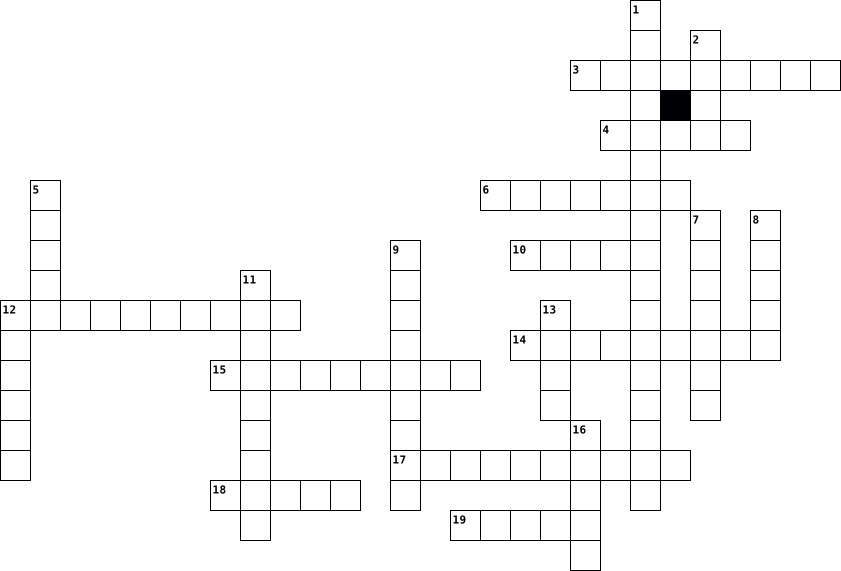
moon phases Crossword Puzzles
Q1 Reflection 2024-10-28

Across
- When the Moon is fully illuminated to our view
- When the Moon is fully dark to our view
- A fossil used to define and identify geologic periods
- The planets in the Solar System ________ around the Sun
- The force that attracts any two objects with mass
- If a rock layer is at the top, then it is what(age)
- When the Moon falls into the Earth's shadow, making it appear reddish
- Earth spins on its _______
- Gravity holds the Moon in _____ around the Earth
- Matter that settles at the bottom of a liquid
- Half of a planet(northern and southern)
Down
- When the Moon is in between the Earth and the Sun, blocking its light
- Larger, gaseous, and colder planets
- Smaller, rocky, and warmer planets
- All the planets in the Solar System do this on their axis
- If a rock layer is at the bottom, then it is what(age)
16 Clues: Earth spins on its _______ • Smaller, rocky, and warmer planets • Larger, gaseous, and colder planets • When the Moon is fully dark to our view • Half of a planet(northern and southern) • Matter that settles at the bottom of a liquid • When the Moon is fully illuminated to our view • Gravity holds the Moon in _____ around the Earth • ...
Q1 Reflection 2025-10-30

Across
- When the Earth’s axis is pointing at the sun
- When the moon is completely dark
- When a layer gets eroded from rain, wind, or snow
- These are the imprints or tracks left by creatures that lived long ago
- These planets have a longer revolution and are gaseous
- This is the weakest force in the solar system
- Gravity does this to hold the planets together
- When the Earth is between the moon and the Earth
Down
- The movement of one object going around another
- A creature that lived in the Paleozoic era and the ocean
- When an object is spinning on it’s axis
- When the Earth’s axis is pointing away from from the Sun
- When the moon is between the sun and moon
- When the moon is completely light
- These form over millions and millions of years
- These planets have a shorter revolution and they are rocky
16 Clues: When the moon is completely dark • When the moon is completely light • When an object is spinning on it’s axis • When the moon is between the sun and moon • When the Earth’s axis is pointing at the sun • This is the weakest force in the solar system • Gravity does this to hold the planets together • These form over millions and millions of years • ...
Eclipse Crossword Puzzle 2024-01-05

Across
- Which phase of the moon must occur to create a lunar eclipse?
- During a ________ lunar eclipse, the moon passes through Earth's penumbra shadow.
- When the antumbra touches Earth, an ________ solar eclipse occurs.
- Which phase of the moon must occur to create a lunar eclipse?
- When the moon is as far away from the Earth as possible a space forms called the ________
- This type of eclipse occurs when the moon comes between the Earth and the sun and the shadow of the moon falls on part of the Earth.
Down
- The cone shaped region of full shadow cast by Earth and the Moon during an eclipse (the darkest part of a shadow).
- The total of partial obscuring of a planet, star, or moon by another celestial object.
- The area of partial shadow surrounding the total shadow (umbra) cast by the Earth and Moon.
- This type of eclipse occurs when the Earth comes between the sun and the moon and the shadow of the Earth falls on the moon.
- In a _______ solar eclipse, the sun is completely blocked by the moon.
- A lunar eclipse happens when the _______ is between the sun and the Earth.
12 Clues: Which phase of the moon must occur to create a lunar eclipse? • Which phase of the moon must occur to create a lunar eclipse? • When the antumbra touches Earth, an ________ solar eclipse occurs. • In a _______ solar eclipse, the sun is completely blocked by the moon. • A lunar eclipse happens when the _______ is between the sun and the Earth. • ...
seasons of the earth 2016-03-15

Across
- the appearance of the moon's reflection
- an imaginary line at which a body rotates
- phase getting smaller
- the movement of an object around another object
- a diagonal path of sunlight
- either of the two times in the year, the summer solstice and the winter solstice, when the sun reaches its highest or lowest point in the sky at noon, marked by the longest and shortest days
- the curved path of a celestial object or spacecraft around a star, planet, or moon, especially a periodic elliptical revolution
- when the moon is between the earth and sun
Down
- moon is not visible
- phase getting bigger
- a round solid 3d figure
- earth between sun and moon
- straight path of sunlight on something
- the action of rotating around an axis
- moon is between sun and earth
- move or cause to move into a sloping position
- the time or date (twice each year) at which the sun crosses the celestial equator, when day and night are of equal length
17 Clues: moon is not visible • phase getting bigger • phase getting smaller • a round solid 3d figure • earth between sun and moon • a diagonal path of sunlight • moon is between sun and earth • the action of rotating around an axis • straight path of sunlight on something • the appearance of the moon's reflection • an imaginary line at which a body rotates • ...
Man Goes to the Moon 2013-09-10

Across
- One small______ for Man,one giant leap for Mankind
- What was the name of the spaceship
- What did the astronauts feel when they returned home
- The emotion felt standing on the moon and looking out
- The second man on the moon
- Who was the third astronaut who piloted the spacecraft
- Who was the first person on the moon
- The name of the organisation in charge of the space program
Down
- Aldrin's famous statement, "Houston, the Eagle has ________"
- Where did the lunar module land
- An emotion felt prior to landing on the Moon
- Which month did the first moon landig take place
- The US state where the spaceships take off
- The name of the first lunar module
- The area where most spaceship end up on Earth
15 Clues: The second man on the moon • Where did the lunar module land • What was the name of the spaceship • The name of the first lunar module • Who was the first person on the moon • The US state where the spaceships take off • An emotion felt prior to landing on the Moon • The area where most spaceship end up on Earth • Which month did the first moon landig take place • ...
choice board 2024-10-14

Across
- high and low tides are similar
- moon is between sun and earth
- turning or spinning on an axis
- occurs as the lit portion of the moon becomes
- large object that revolves around a star
- one object that moves completely around anther
Down
- natural object that revolves around a planet
- when the sun is exactly above the equator
- occurs as the lit portion of the moon becomes smaller
- earth is between the sun and the moon
- a huge burning sphere of gases held together by gravity
- when the sun is furthest from the equator
- huge grouping of starts gas and dust held together by gravity
- higher high tides and lower low tides
- the rise and fall of the water level in the oceans
15 Clues: moon is between sun and earth • high and low tides are similar • turning or spinning on an axis • earth is between the sun and the moon • higher high tides and lower low tides • large object that revolves around a star • when the sun is exactly above the equator • when the sun is furthest from the equator • natural object that revolves around a planet • ...
science vocab crossword 2024-11-26

Across
- comes with 1/4 moon and 3/4 moon
- when almost all the moon is showing
- comes with full and new moon
- more and more of the moon is showing
- the rise and fall of water
Down
- less and less of the moon is showing
- when only a sliver of the moon is showing
- when all the moon is showing
- the force that keeps you on the ground
- when none of the moon is showing
10 Clues: the rise and fall of water • when all the moon is showing • comes with full and new moon • comes with 1/4 moon and 3/4 moon • when none of the moon is showing • when almost all the moon is showing • less and less of the moon is showing • more and more of the moon is showing • the force that keeps you on the ground • when only a sliver of the moon is showing
Cooking techniques 2025-05-27

Across
- mixing two immiscible phases
- solid cooked in liquid
- preserve in airtight container
- to prepare bao buns
- cake decoration
- in an oven
- from boiling to iced water
- cooked in even more oil
Down
- not boiling yet
- make chocolate shinier
- enhance flavor in a liquid
- HOT
- put in salted water
- cooked in oil
14 Clues: HOT • in an oven • cooked in oil • not boiling yet • cake decoration • to prepare bao buns • put in salted water • make chocolate shinier • solid cooked in liquid • cooked in even more oil • enhance flavor in a liquid • from boiling to iced water • mixing two immiscible phases • preserve in airtight container
vocab 2026-01-09

Across
- the four giant outer planets of our solar system
- system for detecting the presence
- Jupiter's four largest moons
- Ishtar Terra is the second largest of the three continental terrae regions on the planet Venus
- Saturn's largest moon
- astronomical rings around planets
- the smaller, outermost moon of Mars
- Neptune's largest moon
Down
- the inner four planets of our solar system
- the largest canyon system in the Solar System, a massive rift on Mars
- the largest volcano and tallest mountain in the solar system, located on Mars
- the minimum distance at which a celestial body held together by its own gravity
- the process where a molecule breaks apart (dissociates) after absorbing light energy (a photon), leading to the cleavage of chemical bonds, forming smaller fragments like atoms or radicals
- narrow, fast-flowing air currents in the upper atmosphere
- the planet's largest impact basin and one of the largest recognized basins in the Solar System.
- Jupiter's largest moon
- Steep slope or cliff
- the inner, larger moon of Mars
18 Clues: Steep slope or cliff • Saturn's largest moon • Jupiter's largest moon • Neptune's largest moon • Jupiter's four largest moons • the inner, larger moon of Mars • system for detecting the presence • astronomical rings around planets • the smaller, outermost moon of Mars • the inner four planets of our solar system • the four giant outer planets of our solar system • ...
Moon Mouse 2015-03-26

Across
- Moon Mouse has a lot of _____ to eat
- One day, Moon Mouse saw ______ getting into a spaceship
- The astronauts wanted some ______
- Moon Mouse lived in an old hole by the ______
Down
- Moon Mouse is a ___ (V.I.M)
- Now Moon Mouse has a furry ___
- The astronauts thought Moon Mouse came from the ____
- There was no _____ to eat
- The spaceship blasted off into ____
- Moon Mouse was inside the ___
10 Clues: There was no _____ to eat • Moon Mouse is a ___ (V.I.M) • Moon Mouse was inside the ___ • Now Moon Mouse has a furry ___ • The astronauts wanted some ______ • The spaceship blasted off into ____ • Moon Mouse has a lot of _____ to eat • Moon Mouse lived in an old hole by the ______ • The astronauts thought Moon Mouse came from the ____ • ...
Science Vocab 2024-10-14

Across
- high tides and low tides are similar
- large object that revolves around a star
- huge groupings of stars, gas, and dust held together by high
- when the Sun is exactly above the equator
- a huge burning sphere of gases held together by gravity
- moon is between Earth and Sun
- higher high tides and lower low tides
- turning or spinning on an axis
Down
- when the Sun is furthest from the equator
- natural object that revolves around a planet
- Earth is between the Sun and the moon
- the rise and fall of the water level in the oceans
- occurs as the lit portion of the moon becomes larger
- one object moves completely around another
- occurs as the lit portion of the moon becomes smaller
15 Clues: moon is between Earth and Sun • turning or spinning on an axis • high tides and low tides are similar • Earth is between the Sun and the moon • higher high tides and lower low tides • large object that revolves around a star • when the Sun is furthest from the equator • when the Sun is exactly above the equator • one object moves completely around another • ...
Earth and Moon relationships 2026-02-19

Across
- If the white part of the moon is getting bigger each day we say it is
- When the Earth goes between the moon and the Sun
- When the moon, Earth, and sun are at right angles,
- When the moon, Earth, and sun are in a line, more extreme tide
- When the moon is between the Sun and the Earth
- If the white part of the moon is getting smaller each day we say it is
Down
- what holds the moon in place
- last name of the first man to walk on the moon
- what makes the moon look like it gives off light
- happens every 4 years
- caused by the Earth's tilt and light shining on the Earth at different angles, less extreme
11 Clues: happens every 4 years • what holds the moon in place • last name of the first man to walk on the moon • When the moon is between the Sun and the Earth • When the Earth goes between the moon and the Sun • what makes the moon look like it gives off light • When the moon, Earth, and sun are at right angles, • When the moon, Earth, and sun are in a line, more extreme tide • ...
important words for science 2021-06-08

Across
- guess
- something that doesnt live
- mass the mass of the element
- number the number of an element
- moon phase of the moon
- periodic table
- salt
- what makes up you and objects
- two or more
Down
- to look at
- mass mass of the air
- property you cant change it in any way
- pressure pressure of the air
- mix two or more things together
- change change of the climant
- sun over the moon
- outside of an atom
- cloud holds the electrons
- property something you can change about it
- of matter gas, liquid, solid
20 Clues: salt • guess • to look at • two or more • periodic table • sun over the moon • outside of an atom • mass mass of the air • moon phase of the moon • cloud holds the electrons • something that doesnt live • mass the mass of the element • pressure pressure of the air • change change of the climant • of matter gas, liquid, solid • what makes up you and objects • mix two or more things together • ...
EAA 322 "Space Exploration" Test Your Knowledge 2026-05-29

Across
- monkey, first type of mammal in space launched in 1949
- ARMSTRONG, First human to walk on the Moon
- Path an object follows around a planet or star
- observation or reference orbit type abbreviation
- Person trained for spaceflight missions
- First artificial satellite launched into orbit
- letter commonly used in astronomy and science
- Russian astronaut
- Data transmitted from spacecraft back to Earth
- Artificial object placed into orbit for communication or research
- Private aerospace company led by Elon Musk
Down
- first female astronaut on a moon mission
- Robotic explorers sent to study planetary surfaces
- NASA program returning humans to the Moon
- Famous NASA Moon mission program
- Vehicle designed to travel beyond Earth’s atmosphere
- Pressurised compartment used for space travel
17 Clues: Russian astronaut • Famous NASA Moon mission program • Person trained for spaceflight missions • first female astronaut on a moon mission • NASA program returning humans to the Moon • ARMSTRONG, First human to walk on the Moon • Private aerospace company led by Elon Musk • letter commonly used in astronomy and science • Pressurised compartment used for space travel • ...
Mr Pickarts- 6th hour 2019-04-03

Across
- The rising of the sea right after the first or third quarter of the moon
- The path of an object as it revolves around another object in space
- Every particle attracts every other particle in the universe with a force
- The rising of the sea right after the full moon
- A large, bowl shaped cavity on the surface of a planet or moon
- When the moon seems darkened as it passes the Earth’s shadow
- An object that orbits a planet
- Either the two days of the year on which neither hemisphere is titled toward or away from the sun
- Moving in space and if it passes the Earth’s atmosphere then considered a meteor
- A streak of light in the sky
- The blocking of the moon or the sun
- A ball of hot gas
- A fully shaded shadow that covers the spot of the Earth the eclipse is happening on
- The rising and falling of the sea controlled by the moon
Down
- The attractive force between objects
- An imaginary line that passes through a planet's center and its north and south poles
- A partially shaded shadow that covers part of the Earth the eclipse is happening on
- The movement of an object around another object
- A pattern or grouping of stars
- A system of organizing time that defines the beginning, length, and divisions of a year
- The blocking of sunlight to Earth
- An object that orbits a star
- Either on two days of the year on which the sun reaches its greatest distance north or south
- The spinning motion of a planet on its axis
- Appear to be spots on the moon and are dubbed latin seas
- A loose collection of ice and dust
- A stage of events in a series
27 Clues: A ball of hot gas • An object that orbits a star • A streak of light in the sky • A stage of events in a series • A pattern or grouping of stars • An object that orbits a planet • The blocking of sunlight to Earth • A loose collection of ice and dust • The blocking of the moon or the sun • The attractive force between objects • The spinning motion of a planet on its axis • ...
the very complex solar system (and all things in space) 2025-12-02

Across
- the biggest star.
- the most known space franchise in the world.
- Water ice is also present on its surface
- planet 7
- the farthest dwarf planet in the solar system.
- leading provider of launch
- the biggest dwarf planet.
- Anti-Pluto
- the largest moon of neptun
- our home star.
- planet 1
- the planet with the most rings.
- The most volcanically active body.
- the egg shaped planet.
- icy surface and is a moon of jupiter.
- the fourth largest trans-Neptunian object
- the most famous probe.
- the belt with the most dwarf planets.
- planet 4
- the newest telescope
- our home galaxy.
- a large and oddly round asteroid.
- flew by Venus in 1962.
- planet 3
- the most icy moon of saturn.
- the most known telescope
- the biggest moon, it is bigger than Mercury.
- the most know dwarf planet.
- the sixth-farthest known dwarf planet.
- the biggest moon of saturn
- the end of the solal system.
Down
- the belt between Mars and Jupiter
- first to soft-land on the Moon
- the closest galaxy to our home galaxy.
- visited planets 7 and 8
- which orbited Saturn.
- planet 9
- first appeared in Pluto is a Planet Again!.
- one of the newest nebula
- ringed dwarf planet in the Kuiper belt
- planet 5
- the usa's first space station
- a new dwarf planet candidate
- planet 2
- internatanal space station.
- the amaracin space agency.
- orbital-class reusable rocket
- conducted a fly-by of planet 5
- the darkest of the 4 main moons of Jupiter.
- the age of our universe.
- the closest star to earth.
- the only dwarf planet in the asteroid belt
- is the biggest moon of pluto.
- appears dark and moderately red.
54 Clues: planet 7 • planet 9 • planet 1 • planet 5 • planet 2 • planet 4 • planet 3 • Anti-Pluto • our home star. • our home galaxy. • the biggest star. • the newest telescope • which orbited Saturn. • the egg shaped planet. • the most famous probe. • flew by Venus in 1962. • visited planets 7 and 8 • one of the newest nebula • the age of our universe. • the most known telescope • the biggest dwarf planet. • ...
Solar System Review 2024-04-25

Across
- Which planet is the largest?
- During a lunar eclipse, what is in the middle and casts a shadow on the moon?
- What causes planets to orbit the sun?
- How many planets are in our solar system?
- What is the shape of the orbit for planets?
- What do the planets orbit around?
- Which is actually called a dwarf planet now?
- Which planet is 7th farthest away from the sun?
- What is the name of our galaxy? (2 wds)
- What type of eclipse happens when the moon is between the Earth and Sun.
- During a solar eclipse, what is in the middle and casts a shadow?
- Name for the theory of how the solar system formed(2 wds)
- Which planet has the most rings?
- As the distance between 2 objects increases, the gravitation force ________.
- Who wrote 3 laws that describe how planets orbit the sun?
- Who said gravity is a result of curved space?
Down
- Which phase of the moon has the smallest amount of the moon showing to us? (2 wds)
- Which planet has the most extreme range of temperatures (high and low)?
- Which planet has a giant storm on its surface?
- Many very small particles orbiting the Sun between Mars and Jupiter
- What is the name for the unit used for distances in the universe? (2 wds)
- During a lunar eclipse, what phase is the moon in?(2 wds)
- Which planet is 1 AU from the sun?
- During a solar eclipse, what phase is the moon in?(2 wds)
- Which planet takes the longest time to rotate once on its axis ("day")?
- A space cloud made of gas and dust.
- Cosmic snowballs of frozen gasses, rock, and dust that orbit the Sun
- When planets move closer to the sun while orbiting, this happens to their speed.
- Who describes gravity as a force that attracts?
29 Clues: Which planet is the largest? • Which planet has the most rings? • What do the planets orbit around? • Which planet is 1 AU from the sun? • A space cloud made of gas and dust. • What causes planets to orbit the sun? • What is the name of our galaxy? (2 wds) • How many planets are in our solar system? • What is the shape of the orbit for planets? • ...
The History of the US Space Agency 2024-04-29

Across
- NASA’s Apollo program sent this many astronauts to the Moon
- The name of the first space station launched by NASA
- Viking 1 landed on this planet
- This Space Telescope is the most powerful ever put into space
- The astronauts of Apollo 13 had to work closely with this to safely return home
- This program was NASA’s response to Kennedy’s challenge
- The name of the three-phase program with a goal of sending humans back to the Moon
- The name of the rover that is still on Mars
- The name of the famous photograph that shows the Earth rising up beyond the surface of the Moon
- This shuttle was destroyed in 2003
- NASA was founded in 1958 during this season
- This Apollo mission sent humans to the Moon and back for the first time
- The name of the first person to walk on the Moon
- This former country included Russia
- Mae Jemison said she was inspired to become an astronaut by an actress on this show
- This president’s famous speech challenged NASA to put an astronaut on the Moon
Down
- The term for robotic vehicles
- The first American sent into space
- The name of the person who walked on the Moon 20 minutes after the first person did
- The first Black American to explore space flew on this in August 1983
- This astronaut returned to space at age 77
- The name of the robotic vehicle that landed on Mars in 1997
- This satellite was launched by the USSR in 1957
- The first Black American woman traveled to space aboard this space shuttle
- This retired US astronaut spent more days in space than any other American
- The term for the first reusable vehicle for space flight introduced in 1981
- This president created NASA on July 29, 1958
- This astronaut broke the barrier for women when she traveled into space in 1983
28 Clues: The term for robotic vehicles • Viking 1 landed on this planet • The first American sent into space • This shuttle was destroyed in 2003 • This former country included Russia • This astronaut returned to space at age 77 • The name of the rover that is still on Mars • NASA was founded in 1958 during this season • This president created NASA on July 29, 1958 • ...
Integrated Science Vocabulary - Chapter 2 2025-10-07

Across
- occurs as the lit portion of the moon becomes larger
- moon is between Earth and Sun
- large object that revolves around a star
- high tides and low tides are similar
- the rise and fall of the water level in the oceans
- turning or spinning on an axis
- occurs as the lit portion of the moon becomes smaller
Down
- natural object that revolves around a planet
- huge groupings of stars, gas, and dust held together by gravity
- higher high tides and lower low tides
- a huge burning sphere of gases held together by gravity
- one object moves completely around another
- Earth is between the Sun and the moon
- when the Sun is exactly above the equator
- when the Sun is furthest from the equator
15 Clues: moon is between Earth and Sun • turning or spinning on an axis • high tides and low tides are similar • higher high tides and lower low tides • Earth is between the Sun and the moon • large object that revolves around a star • when the Sun is exactly above the equator • when the Sun is furthest from the equator • one object moves completely around another • ...
Eclipses 2026-03-05

Across
- The ___ of the moon falls on the earth
- This is the moons state during a solar eclipse
- Lit on the Right
- The moon is tilted on this
- Moon,sun, and earth positioning during a lunar eclipse
- This eclipse follows a certain path and covers more area
- The earth is at a ___ degree tilt
Down
- This eclipse follows a certain path and is smaller
- This red moon can only happen during a total lunar eclipse
- This is the moons state during a lunar eclipse
- This eclipse is known to happen less often
- These are when three celestial bodies like up in a row
- You have to wear special glasses to look at this eclipse
- Moon,sun,and earth positioning during a solar eclipse
- Lit on the left
15 Clues: Lit on the left • Lit on the Right • The moon is tilted on this • The earth is at a ___ degree tilt • The ___ of the moon falls on the earth • This eclipse is known to happen less often • This is the moons state during a lunar eclipse • This is the moons state during a solar eclipse • This eclipse follows a certain path and is smaller • ...
love 2020-07-04
Across
- first kiss
- province number
- kate lived
- met
- drive fav street
- fav bevy
- love
- first date
- kate's uni
- tae's sport
Down
- food idol
- years togeths
- tae's moon
- fist met
- many kids
- fall asleep
- kate's moon
- worst vacay
- provinces lived
- languages tae speaks
20 Clues: met • love • fist met • fav bevy • food idol • many kids • first kiss • tae's moon • kate lived • first date • kate's uni • fall asleep • kate's moon • worst vacay • tae's sport • years togeths • province number • provinces lived • drive fav street • languages tae speaks
Modern Astronomy 2014-05-01

Across
- Earth centered universe
- a large, level basalt plain on the surface of the moon, appearing dark by contrast with highland areas.
- a fissure or narrow channel on the moon's surface.
- a unit of measurement equal to 149.6 million kilometers, the mean distance from the center of the earth to the center of the sun
- a regular oval path
- Sun centered universe
- an eclipse in which the sun is obscured by the moon.
- the action of rotating around an axis or center
Down
- a large, bowl-shaped hole in the ground or on the surface of a planet or the moon
- an eclipse in which the moon appears darkened as it passes into the earth's shadow.
- the point in the orbit of a planet, asteroid, or comet at which it is closest to the sun
- each of the lines in which light (and heat) may seem to stream from the sun or any luminous body, or pass through a small opening.
- Study of the universe
- refers to the backwards motion of planets
- is composed in part of rock and mineral fragments that were broken apart from underlying bedrock by the impact of meteorites
- the point in the orbit of the moon or a satellite at which it is nearest to the earth.
- a single orbit of one object around another or about an axis or center
- the slow movement of the axis of a spinning body around another axis due to a torque (such as gravitational influence) acting to change the direction of the first axis
- the curved path of a celestial object or spacecraft around a star, planet, or moon, especially a periodic elliptical revolution
- the point in the orbit of the moon or a satellite at which it is furthest from the earth.
- the point in the orbit of a planet, asteroid, or comet at which it is furthest from the sun.
21 Clues: a regular oval path • Study of the universe • Sun centered universe • Earth centered universe • refers to the backwards motion of planets • the action of rotating around an axis or center • a fissure or narrow channel on the moon's surface. • an eclipse in which the sun is obscured by the moon. • a single orbit of one object around another or about an axis or center • ...
Mr Pickarts- 6th hour 2019-04-03

Across
- The rising of the sea right after the first or third quarter of the moon
- The path of an object as it revolves around another object in space
- Every particle attracts every other particle in the universe with a force
- The rising of the sea right after the full moon
- A large, bowl shaped cavity on the surface of a planet or moon
- When the moon seems darkened as it passes the Earth’s shadow
- An object that orbits a planet
- Either the two days of the year on which neither hemisphere is titled toward or away from the sun
- Moving in space and if it passes the Earth’s atmosphere then considered a meteor
- A streak of light in the sky
- The blocking of the moon or the sun
- A ball of hot gas
- A fully shaded shadow that covers the spot of the Earth the eclipse is happening on
- The rising and falling of the sea controlled by the moon
Down
- The attractive force between objects
- An imaginary line that passes through a planet's center and its north and south poles
- A partially shaded shadow that covers part of the Earth the eclipse is happening on
- The movement of an object around another object
- A pattern or grouping of stars
- A system of organizing time that defines the beginning, length, and divisions of a year
- The blocking of sunlight to Earth
- An object that orbits a star
- Either on two days of the year on which the sun reaches its greatest distance north or south
- The spinning motion of a planet on its axis
- Appear to be spots on the moon and are dubbed latin seas
- A loose collection of ice and dust
- A stage of events in a series
27 Clues: A ball of hot gas • An object that orbits a star • A streak of light in the sky • A stage of events in a series • A pattern or grouping of stars • An object that orbits a planet • The blocking of sunlight to Earth • A loose collection of ice and dust • The blocking of the moon or the sun • The attractive force between objects • The spinning motion of a planet on its axis • ...
Sun, Moon, and Earth Systems 2023-05-09

Across
- a bright streak that radiates from some craters on the moon's surface
- an astronomical event that occurs when the sun, earth, and moon are aligned so that the moon blocks a portion of the sunlight falling on the earth
- the sun's output of protons, electrons, and small atomic nuclei into the solar system
- the line separating the light and dark sides of any astronomical body
- the regular, repeatedly changing appearance of the shape of the lightened face of the moon visible from the earth
- the hot outer atmosphere of the sun that extends far out into space to become solar wind
- the process that powers stars
- the spin of an object around its center of mass, such as the earth rotating about its axis
- a broad, lowland plain on the moon made of hardened lava
- a small, cool area on the sun's photosphere
Down
- a stream of solar plasma that rises into the corona from the chromosphere and then gradually falls back
- a unit of astronomical distance equal to the earth's average distance from the sun
- the visible surface of the sun
- orbital motion around a point, such as the earth revolving around the sun
- an astronomical event that occurs when the sun, earth, and moon are aligned so that the earth clocks the sunlight falling on the moon
- the lowest layer of the sun's atmosphere starting at the photosphere and extending out to 2000km from the surface
- the entire range of electromagnetic wavelengths that the sun emits
- the sun's apparent path among the stars as observed from Earth
- a sudden explosion of the plasma from the sun's surface that emits a burst of energetic rays and particles into space
- a long, narrow channel on a moon or planet that is believed to have originated from tectonic processes
20 Clues: the process that powers stars • the visible surface of the sun • a small, cool area on the sun's photosphere • a broad, lowland plain on the moon made of hardened lava • the sun's apparent path among the stars as observed from Earth • the entire range of electromagnetic wavelengths that the sun emits • ...
Intro to Physics + Science Review 2025-04-01

Across
- When the Sun, Earth and moon line up, causing the sunlight to get blocked. There are two kinds: solar and lunar
- If the altitude of the sun is HIGH, then the weather will be _________ because the sunlight is really focused
- June 20th is the end of Spring because it is the day of the summer _________
- What season is it when the sun's altitude is really low and the sunlight is really stretched out
- When the visible part of the moon is getting bigger, it is _________
- A change in speed and/or direction
- ______________ is the science of motion
- When the Earth's shadow blocks light from reaching the full moon, you see the moon turn blood red. What kind of eclipse is this?
- right-handedness is more common because it's a _____________ trait
- The phase of the moon when it looks like a finger nail
- B = brown eyes, b = blue eyes. What is Jimbo's eye color if his genotype is bb?
- Earth has seasons because our planet has a ___________ axis. This means that one half of the Earth gets more direct sunlight than the other
- The first day of spring (March 20) is called the Spring ___________ (Equal Night)
- These determine your traits
Down
- The moon "lights up" because it ____________ sunlight
- The super important molecule that your cells make. They change your eye color, build your muscles and keep you from getting sick
- ___________ selection is the process where traits that help living things adapt to their environment (bigger, stronger, faster) get passed on to the next generation, while useless genes die off.
- An object's speed AND direction
- The phase of the moon when we can't see anything
- _____________ velocity is when an object's speed and direction stay the SAME
- The angle of the sun to the Earth's surface. NOT a distance.
- Diseases like sick cell anemia are very rare because they are ______________ genes
- The smallest unit of life
23 Clues: The smallest unit of life • These determine your traits • An object's speed AND direction • A change in speed and/or direction • ______________ is the science of motion • The phase of the moon when we can't see anything • The moon "lights up" because it ____________ sunlight • The phase of the moon when it looks like a finger nail • ...
science chapter 11 The Universe Near and Far 2 2018-04-23

Across
- when the moon is going from full moon to new moon; able to see less moon
- the phase of the moon in which only a dim outline of its shape is visible
- the phase of the moon when it is three-quarters of the way through its orbit, and we see half of the moon lighted
- a ball or ice, rock, and frozen gases that orbits the sun
Down
- the phase of the moon in which we see the entire moon lighted, and it appears bright and round
- when the moon is going from new moon to full moon; able to see less moon
- a huge system of stars
- a chunk of rock that survives its fall to Earth or another body
- quartermoon the phase of the moon when it is one-quarter of the way through its orbit, and we see half of the moon lighted
- a process that joins or fuses the nuclei of hydrogen atoms to form the nuclei of helium atoms
10 Clues: a huge system of stars • a ball or ice, rock, and frozen gases that orbits the sun • a chunk of rock that survives its fall to Earth or another body • when the moon is going from full moon to new moon; able to see less moon • when the moon is going from new moon to full moon; able to see less moon • ...
vocab 2025-11-20

Across
- in astronomy, the change in the sunlit area of one celestial body as seen from another celestial body; phases of the moon are caused by the changing positions of Earth, the sun, and the moon
- the path that a body follows as it travels around another body in space
- a division of the year that is characterized by recurring weather conditions, and determined by both Earth's tilt relative to the sun and Earth's position in its orbit around the sun
Down
- an event in which the shadow of one celestial body falls on another
4 Clues: an event in which the shadow of one celestial body falls on another • the path that a body follows as it travels around another body in space • a division of the year that is characterized by recurring weather conditions, and determined by both Earth's tilt relative to the sun and Earth's position in its orbit around the sun • ...
Eclipse Crossword Puzzle 2024-01-05

Across
- When the antumbra touches Earth, an _______ solar eclipse occurs.
- This type of eclipse occurs when the moon comes between the Earth and the sun and the shadow of the moon falls on part of the Earth.
- In a ________ solar eclipse, the sun is completely blocked by the moon.
- The total of partial obscuring of a planet, star, or moon by another celestial object.
- When the moon is as far away from the Earth as possible a space forms called the ________.
- The cone shaped region of full shadow cast by Earth and the moon during an eclipse (the darkest part of a shadow).
Down
- Which phase of the moon must occur to create a lunar eclipse?
- During a _________ lunar eclipse, the moon passes through Earth's penumbra shadow.
- This type of eclipse occurs when the Earth comes between the sun and the moon and the shadow of earth falls on the moon.
- A solar eclipse happens when the _________ is between the sun and the Earth.
- The area of partial shadow surrounding the total shadow (umbra) cast by the Earth and moon.
11 Clues: Which phase of the moon must occur to create a lunar eclipse? • When the antumbra touches Earth, an _______ solar eclipse occurs. • In a ________ solar eclipse, the sun is completely blocked by the moon. • A solar eclipse happens when the _________ is between the sun and the Earth. • ...
EARTH, MOON AND SUN 2025-03-18

Across
- What we wouldn't have if there was no tilt
- Earth's _____ is 23.5 degrees
- When the visibility of the moon is "decreasing"
- The lighter part of an Eclipse shadow
- A word starting with R when Earth goes around the Sun
- A type of eclipse where the moon passes between the Earth and Sun
Down
- When most of the moon is visible (opposite of crescent)
- When the visibility of the moon is "increasing"
- Every 24 hours
- A word starting with R when Earth spins on it's axis
- A type of eclipse where the moon is in Earth's shadow
- What every lunar cycle starts with
- When the planets go around the sun once
- The darkest part of an Eclipse shadow
- Season when that hemisphere is tilted towards the Sun
15 Clues: Every 24 hours • Earth's _____ is 23.5 degrees • What every lunar cycle starts with • The lighter part of an Eclipse shadow • The darkest part of an Eclipse shadow • When the planets go around the sun once • What we wouldn't have if there was no tilt • When the visibility of the moon is "increasing" • When the visibility of the moon is "decreasing" • ...
Eclipse 2025-10-29

Across
- what the Earth orbits
- When the Sun is completely blocked by the Moon except for a ring around the edge
- Our natural satellite
- When the Sun is completely blocked by the Moon
- The dark shadow cast over the Earth or Moon
- When the Sun is only partially covered by the Moon
Down
- The slightly lighter shadow cast on the outskirts of the Eclipse
- Our planet
- When the Sun and the Moon perfectly align creating a shadow over the Earth
- When the Moon is fully in shadow but not the Umbra's shadow
- The eclipse when the moon is in the umbra
- The eclipse where the Earth blocks all light and leaves the moon a reddish colour
12 Clues: Our planet • what the Earth orbits • Our natural satellite • The eclipse when the moon is in the umbra • The dark shadow cast over the Earth or Moon • When the Sun is completely blocked by the Moon • When the Sun is only partially covered by the Moon • When the Moon is fully in shadow but not the Umbra's shadow • ...
Earth-Sun-Mooon 2025-11-20

Across
- a division of the year that is characterized by recurring weather conditions, and determined by both Earth's tilt relative to the sun and Earth's position in its orbit around the sun
- an event in which the shadow of one celestial body falls on another
Down
- in astronomy, the change in the sunlit area of one celestial body as seen from another celestial body; phases of the moon are caused by the changing positions of Earth, the sun, and the moon
- the path that a body follows as it travels around another body in space
4 Clues: an event in which the shadow of one celestial body falls on another • the path that a body follows as it travels around another body in space • a division of the year that is characterized by recurring weather conditions, and determined by both Earth's tilt relative to the sun and Earth's position in its orbit around the sun • ...
Earth-Sun-Moon 2025-11-20

Across
- a division of the year that is characterized by recurring weather conditions, and determined by both Earth's tilt relative to the sun and Earth's position in its orbit around the sun.
- In astronomy, the change in the sunlit area of one celestial body as seen from another celestial body; phases of the moon are caused by the changing positions of Earth, the sun, and the moon.
Down
- an event in which the shadow of one celestial body falls on another
- A path a body follows as it travels around another body in space.
4 Clues: A path a body follows as it travels around another body in space. • an event in which the shadow of one celestial body falls on another • a division of the year that is characterized by recurring weather conditions, and determined by both Earth's tilt relative to the sun and Earth's position in its orbit around the sun. • ...
Earth and moon vocabulary 2025-11-17

Across
- a division of the year that is characterized by recurring weather conditions, and determined by both Earth's tilt relative to the sun and Earth's position in its orbit around the sun
- an event in which the shadow of one celestial body falls on another
Down
- in astronomy, the change in the sunlit area of one celestial body as seen from another celestial body; phases of the moon are caused by the changing positions of Earth, the sun, and the moon
- the path that a body follows as it travels around another body in space
4 Clues: an event in which the shadow of one celestial body falls on another • the path that a body follows as it travels around another body in space • a division of the year that is characterized by recurring weather conditions, and determined by both Earth's tilt relative to the sun and Earth's position in its orbit around the sun • ...
Unit Three Vocabulary 2025-11-17

Across
- An event in which the shadow of one celestial body falls on another.
- In astronomy, the change in the sunlit area of one celestial body as seen from another celestial body; phases of the moon are caused by the changing positions of Earth, the sun, and the moon.
- The path that a body follows as it travels around another body in space.
Down
- A division of the year that is characterized by recurring weather conditions, and determined by both Earth's tilt relative to the sun and Earth's position in its orbit around the sun.
4 Clues: An event in which the shadow of one celestial body falls on another. • The path that a body follows as it travels around another body in space. • A division of the year that is characterized by recurring weather conditions, and determined by both Earth's tilt relative to the sun and Earth's position in its orbit around the sun. • ...
Unit three vocab 2025-11-17

Across
- A division of the year that is characterized by recurring weather conditions, and determined by both Earth's tilt relative to the sun and Earth's position in its orbit around the sun
- In astronomy, the change in the sunlit area of one celestial body as seen from another celestial body; phases of the moon are caused by the changing positions of Earth, the sun, and the moon
Down
- An event in which the shadow of one celestial body falls on another
- The path that a body follows as it travels around another body in space
4 Clues: An event in which the shadow of one celestial body falls on another • The path that a body follows as it travels around another body in space • A division of the year that is characterized by recurring weather conditions, and determined by both Earth's tilt relative to the sun and Earth's position in its orbit around the sun • ...
CIRCULATION OF EARTHS AIR & WATER 2025-11-17

Across
- a division of the year that is characterized by recurring weather conditions, and determined by both Earth's tilt relative to the sun and Earth's position in its orbit around the sun
- in astronomy, the change in the sunlit area of one celestial body as seen from another celestial body; phases of the moon are caused by the changing positions of Earth, the sun, and the moon
Down
- an event in which the shadow of one celestial body falls on another
- the path that a body follows as it travels around another body in space
4 Clues: an event in which the shadow of one celestial body falls on another • the path that a body follows as it travels around another body in space • a division of the year that is characterized by recurring weather conditions, and determined by both Earth's tilt relative to the sun and Earth's position in its orbit around the sun • ...
Modern Astronomy 2014-05-01

Across
- a single orbit of one object around another or about an axis or center
- the point in the orbit of the moon or a satellite at which it is furthest from the earth.
- a fissure or narrow channel on the moon's surface.
- refers to the backwards motion of planets
- the curved path of a celestial object or spacecraft around a star, planet, or moon, especially a periodic elliptical revolution
- a large, bowl-shaped hole in the ground or on the surface of a planet or the moon
- is composed in part of rock and mineral fragments that were broken apart from underlying bedrock by the impact of meteorites
- Earth centered universe
- the point in the orbit of a planet, asteroid, or comet at which it is closest to the sun
- the slow movement of the axis of a spinning body around another axis due to a torque (such as gravitational influence) acting to change the direction of the first axis
- a large, level basalt plain on the surface of the moon, appearing dark by contrast with highland areas.
Down
- the point in the orbit of a planet, asteroid, or comet at which it is furthest from the sun.
- an eclipse in which the moon appears darkened as it passes into the earth's shadow.
- a unit of measurement equal to 149.6 million kilometers, the mean distance from the center of the earth to the center of the sun
- a regular oval path
- an eclipse in which the sun is obscured by the moon.
- the action of rotating around an axis or center
- Study of the universe
- Sun centered universe
- the point in the orbit of the moon or a satellite at which it is nearest to the earth.
- each of the lines in which light (and heat) may seem to stream from the sun or any luminous body, or pass through a small opening.
21 Clues: a regular oval path • Study of the universe • Sun centered universe • Earth centered universe • refers to the backwards motion of planets • the action of rotating around an axis or center • a fissure or narrow channel on the moon's surface. • an eclipse in which the sun is obscured by the moon. • a single orbit of one object around another or about an axis or center • ...
Mr Pickarts- 6th hour 2019-04-03

Across
- The rising of the sea right after the first or third quarter of the moon
- The path of an object as it revolves around another object in space
- Every particle attracts every other particle in the universe with a force
- The rising of the sea right after the full moon
- A large, bowl shaped cavity on the surface of a planet or moon
- When the moon seems darkened as it passes the Earth’s shadow
- An object that orbits a planet
- Either the two days of the year on which neither hemisphere is titled toward or away from the sun
- Moving in space and if it passes the Earth’s atmosphere then considered a meteor
- A streak of light in the sky
- The blocking of the moon or the sun
- A ball of hot gas
- A fully shaded shadow that covers the spot of the Earth the eclipse is happening on
- The rising and falling of the sea controlled by the moon
Down
- The attractive force between objects
- An imaginary line that passes through a planet's center and its north and south poles
- A partially shaded shadow that covers part of the Earth the eclipse is happening on
- The movement of an object around another object
- A pattern or grouping of stars
- A system of organizing time that defines the beginning, length, and divisions of a year
- The blocking of sunlight to Earth
- An object that orbits a star
- Either on two days of the year on which the sun reaches its greatest distance north or south
- The spinning motion of a planet on its axis
- Appear to be spots on the moon and are dubbed latin seas
- A loose collection of ice and dust
- A stage of events in a series
27 Clues: A ball of hot gas • An object that orbits a star • A streak of light in the sky • A stage of events in a series • A pattern or grouping of stars • An object that orbits a planet • The blocking of sunlight to Earth • A loose collection of ice and dust • The blocking of the moon or the sun • The attractive force between objects • The spinning motion of a planet on its axis • ...
Mr Pickarts- 6th hour 2019-04-03

Across
- The rising of the sea right after the first or third quarter of the moon
- The path of an object as it revolves around another object in space
- Every particle attracts every other particle in the universe with a force
- The rising of the sea right after the full moon
- A large, bowl shaped cavity on the surface of a planet or moon
- When the moon seems darkened as it passes the Earth’s shadow
- An object that orbits a planet
- Either the two days of the year on which neither hemisphere is titled toward or away from the sun
- Moving in space and if it passes the Earth’s atmosphere then considered a meteor
- A streak of light in the sky
- The blocking of the moon or the sun
- A ball of hot gas
- A fully shaded shadow that covers the spot of the Earth the eclipse is happening on
- The rising and falling of the sea controlled by the moon
Down
- The attractive force between objects
- An imaginary line that passes through a planet's center and its north and south poles
- A partially shaded shadow that covers part of the Earth the eclipse is happening on
- The movement of an object around another object
- A pattern or grouping of stars
- A system of organizing time that defines the beginning, length, and divisions of a year
- The blocking of sunlight to Earth
- An object that orbits a star
- Either on two days of the year on which the sun reaches its greatest distance north or south
- The spinning motion of a planet on its axis
- Appear to be spots on the moon and are dubbed latin seas
- A loose collection of ice and dust
- A stage of events in a series
27 Clues: A ball of hot gas • An object that orbits a star • A streak of light in the sky • A stage of events in a series • A pattern or grouping of stars • An object that orbits a planet • The blocking of sunlight to Earth • A loose collection of ice and dust • The blocking of the moon or the sun • The attractive force between objects • The spinning motion of a planet on its axis • ...
Science Word Puzzle Lock 2023-05-10

Across
- a plate boundary where tectonic plates move away from each other can result in seafloor spreading, earthquakes, mid ocean ridges, rift valleys, and ocean basins
- A single celled organism
- have some properties of both metals and nonmetals semiconductors
- change in appearance; nothing new is formed ex: ice melting, kool aid, tearing paper
- A chemical substance that is present at the start of a chemical reaction
- the number of protons and neutrons
- the number of protons in an atom of one element
- to move around the sun takes 365 days for the earth to go around the sun (a year)
- Place where an organism lives
- columns on the periodic table same number of valence electrons similar properties and reactivity
Down
- Moon phase that occurs when the Moon is between Earth and the Sun, at which point the Moon cannot be seen because its lighted half is facing the Sun and its dark side faces Earth.
- speed with direction
- A substance made of two or more elements chemically bonded ex: NH3
- forces acting on an object that combine and form a net force of zero
- a plate boundary where tectonic plates slide past each other can result in earthquakes and fault lines
- A severe storm that develops over tropical oceans and whose strong winds of more than 120 km/h spiral in toward the intensely low-pressure storm center
- = Mass / Volume
- moon phase that comes after a first quarter moon and before a full moon; more than half of the moon is lit up on the right side, but it isn't completely full
- A collection of stars, dust, and gas held together by gravity
- change in velocity speeding up, slowing down, changing direction
- A large cloud of gas and dust where stars are born
- Living parts of an ecosystem
- An organism that lives on or in a host and causes harm to the host
23 Clues: = Mass / Volume • speed with direction • A single celled organism • Living parts of an ecosystem • Place where an organism lives • the number of protons and neutrons • the number of protons in an atom of one element • A large cloud of gas and dust where stars are born • A collection of stars, dust, and gas held together by gravity • ...
artemis 2026-04-27

Across
- According to Mr. Keyser, a master's degree in statistics and taking up ____ is a good way to get into mission control
- This zero gravity indicator was awfully adorable
- Artemis II launched from this NASA Space Center
- This was the first thing to fail on Orion
- Artemis plans to go to the lunar ____ pole
- Artemis's twin
- Astronauts saw the lunar ___ side
- First Canadian around the moon
- First Black man around the moon
- First woman around the moon
Down
- Commander of the mission
- This Keyser was inn mission control for the Apollo days
- Splash down was off of the coast of
- This network allowed mission control to communicate with Artemis Astronauts
- After splash down, astronauts were delivered to the U.S.S. John P. ____
- SLS = Space ____ System
- Artemis is the greek goddess of the...
- The last lunar landing was Apollo 17 in 197X
- Artemis II was a crewed lunar ______
19 Clues: Artemis's twin • SLS = Space ____ System • Commander of the mission • First woman around the moon • First Canadian around the moon • First Black man around the moon • Astronauts saw the lunar ___ side • Splash down was off of the coast of • Artemis II was a crewed lunar ______ • Artemis is the greek goddess of the... • This was the first thing to fail on Orion • ...
Space Crossword 2013-05-15

Across
- "Dirty Snowball"
- Neptune's smallest moon
- Rotates on its side
- Earth's only moon
- Saturn's largest moon
- Death of a large, High mass star
- Uranus's largest moon
Down
- Pulsating star
- Death of a small, High mass star
- Glowing ball of gas
- Second planet from the sun
- Our galaxy
12 Clues: Our galaxy • Pulsating star • "Dirty Snowball" • Earth's only moon • Glowing ball of gas • Rotates on its side • Saturn's largest moon • Uranus's largest moon • Neptune's smallest moon • Second planet from the sun • Death of a small, High mass star • Death of a large, High mass star
The Solar System 2017-04-04

Across
- It is the coldest planet
- It is the red planet
- It is how we don't float off into space
- It is when the moon blocks out the sun
- Jupiter, Saturn, Uranus and Neptune have these
- It is a dwarf planet
- They are little lights we see in the night sky
- It is the eighth planet from the sun
Down
- It is Earth's sister planet
- It is the planet we live on
- Saturday was named after this planet
- It is what a planet spins on
- It is the galaxy we live in
- It is the largest planet
- It is when we do not see the moon
- It is how we describe the changes in the moon
- It is when you can see the whole moon
- It is the planet closest to the sun
- It lights the day
19 Clues: It lights the day • It is the red planet • It is a dwarf planet • It is the coldest planet • It is the largest planet • It is Earth's sister planet • It is the planet we live on • It is the galaxy we live in • It is what a planet spins on • It is when we do not see the moon • It is the planet closest to the sun • Saturday was named after this planet • ...
The Universe 2024-03-28

Across
- the shape of our galaxy
- the name of our galaxy
- a object that makes its own light
- the color of the coolest stars
- this is in the center of our galaxy
- more mass than a star but less than a nebula
- the moon phase for a solar eclipse
- the force that holds our solar system together
- my hair style
- a rock in our atmosphere
- the moon phase for a lunar eclipse
Down
- this is how many galaxies there are in our universe
- more mass than a moon but less than a star
- a large spacerock in outerspace
- the color of the hottest stars
- an object made up of ice and rock with a tail
- where stars are formed
- the type of eclipse we will see soon
- less mass than a planet but more than an asteroid
19 Clues: my hair style • the name of our galaxy • where stars are formed • the shape of our galaxy • a rock in our atmosphere • the color of the hottest stars • the color of the coolest stars • a large spacerock in outerspace • a object that makes its own light • the moon phase for a solar eclipse • the moon phase for a lunar eclipse • this is in the center of our galaxy • ...
Solar Eclipse Crossword! 2024-04-15

Across
- Relating to the sun
- A bright star in our solar system
- When two objects touch
- One celestial object blocking another
- Revolves around Earth
- The sun's upper atmosphere
- The "ring of fire"
- An eclipse where some places see totality and some see partial coverage
Down
- The last Baily's Bead
- Seen just before totality
- Relating to the moon
- The phase when the moon completely blocks the sun
- The month of the great American eclipse
- An eclipse where the moon doesn't fully block the sun
14 Clues: The "ring of fire" • Relating to the sun • Relating to the moon • The last Baily's Bead • Revolves around Earth • When two objects touch • Seen just before totality • The sun's upper atmosphere • A bright star in our solar system • One celestial object blocking another • The month of the great American eclipse • The phase when the moon completely blocks the sun • ...
THRAPEUTIC COMMUNITY 2023-09-21

Across
- PILLAR THREE
- DON'T EVEN KNOW IT'S A LIE
- DOESN'T HAVE TO BE WHAT YESTERDAY WAS
- WHEN YOU FINISH
- PILLAR TWO
- PILLAR ONE
- ARE CASTLES IN THE SKY
Down
- THE CASTLE
- PILLAR FOUR
- WHY ARE WE HERE?
- PHASES
- ARE CASTLES IN THE SKY
- IT IS JUST THAT
13 Clues: PHASES • THE CASTLE • PILLAR TWO • PILLAR ONE • PILLAR FOUR • PILLAR THREE • WHEN YOU FINISH • IT IS JUST THAT • WHY ARE WE HERE? • ARE CASTLES IN THE SKY • ARE CASTLES IN THE SKY • DON'T EVEN KNOW IT'S A LIE • DOESN'T HAVE TO BE WHAT YESTERDAY WAS
march 2026 2026-02-19

Across
- famous constellation
- what the moon does
- the moon does this
- exploding star
- what bats use to navigate
- haunting spirits
- fairies have these
Down
- type of flower
- the universe or a flower
- winged creatures who like the dark
- the moon does this too
- light at night
12 Clues: type of flower • exploding star • light at night • haunting spirits • what the moon does • the moon does this • fairies have these • famous constellation • the moon does this too • the universe or a flower • what bats use to navigate • winged creatures who like the dark
Mr Pickarts- 6th hour 2019-04-03

Across
- The rising of the sea right after the first or third quarter of the moon
- The path of an object as it revolves around another object in space
- Every particle attracts every other particle in the universe with a force
- The rising of the sea right after the full moon
- A large, bowl shaped cavity on the surface of a planet or moon
- When the moon seems darkened as it passes the Earth’s shadow
- An object that orbits a planet
- Either the two days of the year on which neither hemisphere is titled toward or away from the sun
- Moving in space and if it passes the Earth’s atmosphere then considered a meteor
- A streak of light in the sky
- The blocking of the moon or the sun
- A ball of hot gas
- A fully shaded shadow that covers the spot of the Earth the eclipse is happening on
- The rising and falling of the sea controlled by the moon
Down
- The attractive force between objects
- An imaginary line that passes through a planet's center and its north and south poles
- A partially shaded shadow that covers part of the Earth the eclipse is happening on
- The movement of an object around another object
- A pattern or grouping of stars
- A system of organizing time that defines the beginning, length, and divisions of a year
- The blocking of sunlight to Earth
- An object that orbits a star
- Either on two days of the year on which the sun reaches its greatest distance north or south
- The spinning motion of a planet on its axis
- Appear to be spots on the moon and are dubbed latin seas
- A loose collection of ice and dust
- A stage of events in a series
27 Clues: A ball of hot gas • An object that orbits a star • A streak of light in the sky • A stage of events in a series • A pattern or grouping of stars • An object that orbits a planet • The blocking of sunlight to Earth • A loose collection of ice and dust • The blocking of the moon or the sun • The attractive force between objects • The spinning motion of a planet on its axis • ...
Dragonwings crossword 2022-11-14

Across
- after the earthquake, Moon and Windrider moved to _______
- Windrider's goal was to build and fly an ________
- These people inspired Windrider to try and fly with an airplane
- the company ran a business doing _______
- The tang people called referred to the white people as ______
- this is what the tang people called their homeland
- "only between them, no bridge of _______ formed a bridge across the ocean."
- One of the only things moon's father left him and his mother before going to America
- The owner of the property that moon and his father stayed at for the second half of the book
- dog the member if the company who was very mean and grumpy
- Moon's friend
- the Chinese people called themselves the ____ people
- The city in which most of the book takes place
- Before Windrider and moon left, Lefty wrote them a ____ to protect them
Down
- main character of the book
- when Moon first met Mrs. Whitlaw, she gave him ___________ cookies
- A major event for San Francisco that was also a major event for the book
- On the first night moon stayed with the company, Uncle made a beautiful carved ______ for him.
- when Windrider had his dream, he met the __________.
- the substance Black dog and many of the Tang people were addicted to
- "but the ________ are looters themselves"
- "your both rather ______, but otherwise intact"
- "_________ was without a doubt the laziest, slowest horse in the demon land"
- the main owner of he company was Moon's _____
- what the tang people called America
- lefty had been mostly cured but still didn't really like to talk his former addiction to _________
- Moon's father's name
- ____ tried to bully Moon until he beat him up
- Moon sometimes worried that one day everything would just disappear like the _________ demons made to trick people.
- Windrider moved away from the company because he needed to lay low and avoid the ___________
- author of the book
31 Clues: Moon's friend • author of the book • Moon's father's name • main character of the book • what the tang people called America • the company ran a business doing _______ • "but the ________ are looters themselves" • the main owner of he company was Moon's _____ • ____ tried to bully Moon until he beat him up • The city in which most of the book takes place • ...
Scientific Revolution 2026-04-22

Across
- The ancient Aristotelian/Ptolemaic belief that the Earth is stationary at the center of the universe, with all other celestial bodies revolving around
- A systematic, step-by-step procedure for collecting and analyzing evidence
Down
- The theory, formalized by Francis Bacon, that all knowledge is derived from sense-experience, emphasizing experimentation and observation over speculation
- The belief that reason and logical thought are the primary paths to understanding the world
- Used by Galileo to discover craters on the moon, moons around Jupiter, and phases of Venus
- The astronomical model proposed by Nicolaus Copernicus that places the sun, rather than the Earth, at the center of the solar system
6 Clues: A systematic, step-by-step procedure for collecting and analyzing evidence • Used by Galileo to discover craters on the moon, moons around Jupiter, and phases of Venus • The belief that reason and logical thought are the primary paths to understanding the world • ...
Astronomy 2022-11-04

Across
- A curved path of a celestial object or a spacecraft around a star, planet, or moon.
- The outermost layer of the Sun’s atmosphere, also emits light but is only visible as a white halo during a solar eclipse.
- a star in the Milky Way galaxy located in a spiral arm about two-thirds of the way from the center of the galaxy.
- When the Sun and the Moon are aligned so that the Moon is between the Sun and the Earth (New Moon) or the Earth is between the Sun and the Moon (Full Moon) high tides are higher and the low tides are lower.
- Tool that uses mirrors to focus light rays to produce images of objects in space
- occurs when the Moon passes directly between the Sun and Earth, blocking the Sun’s light and casting a shadow over a certain area on Earth.This can only occur during a New Moon.
- Appear as dark spots on the photosphere. They are actually moving areas of magnetic activity with temperatures that are cooler than the area of the photosphere in which they are located.
Down
- Tool that uses convex lenses to bend and focus light rays to produce images of objects in space.
- Made up of the planets, moons, asteroids, comets, dust and gas that orbit the Sun
- When the Sun and the Moon are at right angles to each other (first and last quarter), lower high tides and higher low tides are experienced.
- The spinning of a planet on its axis. For Earth it takes 24 hours to complete 1 rotation. It is the reason we have day and night.
- parts of rocks that burn up when they enter the Earth's atmosphere.
- The rise and fall of Earth's ocean waves that is caused by the gravitational effect from the Sun and Moon.
- The visible surface of the Sun that emits the light that we see. It is the lowest layer of the Sun’s atmosphere.
- Made up of gas, dust, and many stars and it has many different shapes it can be.
- occurs when an object in space passes directly between two other objects or between the object and the viewer.
- the galaxy in which you live in
17 Clues: the galaxy in which you live in • parts of rocks that burn up when they enter the Earth's atmosphere. • Made up of gas, dust, and many stars and it has many different shapes it can be. • Tool that uses mirrors to focus light rays to produce images of objects in space • Made up of the planets, moons, asteroids, comets, dust and gas that orbit the Sun • ...
march 2026 2026-02-19

Across
- famous constellation
- what the moon does
- the moon does this
- exploding star
- what bats use to navigate
- haunting spirits
- fairies have these
Down
- type of flower
- the universe or a flower
- winged creatures who like the dark
- the moon does this too
- light at night
12 Clues: type of flower • exploding star • light at night • haunting spirits • what the moon does • the moon does this • fairies have these • famous constellation • the moon does this too • the universe or a flower • what bats use to navigate • winged creatures who like the dark
Apollo Program 2023-07-31

Across
- (The last name of a renowned astronaut)
- (Space travelers)
- (Mission Control Center)
- (Program name)
- (First name of a famous astronaut)
- (President who announced the program)
Down
- V (Rocket)
- (Related to the moon)
- (Spacecraft)
- (Takeoff)
- (Module that touched down on the moon)
- (Module piloted in lunar orbit)
- (Space Agency)
- (Lunar landing site of Apollo 11)
- (Destination)
15 Clues: (Takeoff) • V (Rocket) • (Spacecraft) • (Destination) • (Space Agency) • (Program name) • (Space travelers) • (Related to the moon) • (Mission Control Center) • (Module piloted in lunar orbit) • (Lunar landing site of Apollo 11) • (First name of a famous astronaut) • (President who announced the program) • (Module that touched down on the moon) • (The last name of a renowned astronaut)
Moon Base Alpha crossword 2026-02-01

Across
- Dashs friend
- Last name of the dead guy
- to kill someone on purpose
- Moon cars
- The buff scientist
- access to the moon outside
- Transportation to the moon
- authors first name
- The tech obsessed kid
Down
- Roddy's obsession
- This happens to Dash
- Authors last name
- abbreviation for the base
- Many of them on MBA
- An American island
15 Clues: Moon cars • Dashs friend • Roddy's obsession • Authors last name • The buff scientist • An American island • authors first name • Many of them on MBA • This happens to Dash • The tech obsessed kid • Last name of the dead guy • abbreviation for the base • to kill someone on purpose • access to the moon outside • Transportation to the moon
Henry's crossword 2022-02-11

Across
- the moon follows a daily pattern and it takes 24 ____ to rise and set
- the _____ of you shadow depends on what time it is
- the sun looks bigger than all the other stars because
- the sun looks like it's moving but the _____ is
- how many stars there are in the universe
- what holds our solar system together
- the earth is _____ scientists think that it was caused by a giant asteroid
- the ___ gravity keeps our solar system together
- Due to earth's tilt the______ faces the sun in June
- where your shadow faces at noon depends on what ______ your in
Down
- the _____ follows a pattern of how much of the moon you can see because the sun will shine on certain parts of the moon
- Earth's ______ causes a daily pattern
- Groton Dunstable mascot
- at all times the earth faces ___ to the sun
- shadows follow a ____ pattern
- what effects the strength of the pull of gravity
- People in different ___ zones will have different time
- due to the tilt the north pole faces away from the sun in December
- the moon ____ over and under us
19 Clues: Groton Dunstable mascot • shadows follow a ____ pattern • the moon ____ over and under us • what holds our solar system together • Earth's ______ causes a daily pattern • how many stars there are in the universe • at all times the earth faces ___ to the sun • the sun looks like it's moving but the _____ is • the ___ gravity keeps our solar system together • ...
Intro to Space 2026-03-11

Across
- Developed the Wheels on Wheels geocentric model and thought planets moved at a constant speed
- Thought the Earth was the center of the universe because he observed the sun and stars rise in the east and fall in the west
- First to see the moons of Jupiter through an improved telescope
- The amount of matter that makes up an object
- shape when the moon is less than half illuminated
- Spinning on an axis; gives us day and night
- shape when the moon in more than half illuminated but less than full
- illuminated part of the moon is increasing
- Modified the Wheels on wheels model to put the sun at the center
Down
- earth centered
- sun centered
- used to describe the movement around the sun (orbit)
- Proposed 3 laws of planetary motion
- force of attraction between any two objects
- Marks the longest/ shortest day of the year
- First to propose a heliocentric model and attempted to measure the distance of the earth, moon, and sun
- Marks the time start of spring and fall/ equal amounts of daylight and nighttime hours
- illuminated part of the moon is decreasing
- The measure of the force of gravity on an object
19 Clues: sun centered • earth centered • Proposed 3 laws of planetary motion • illuminated part of the moon is increasing • illuminated part of the moon is decreasing • force of attraction between any two objects • Marks the longest/ shortest day of the year • Spinning on an axis; gives us day and night • The amount of matter that makes up an object • ...
amor e desejos 2022-08-28

Across
- por onde a moon entra
- o que o eztli é?
- pessoa favorita do eztli
- como o tablet da cloe ficava
- coisas que a moon corta
- sinônimo de cloe
Down
- lagarta silvestre
- melhor região do Brasil
- o abortado
- alter ego da moon
- pra quem a femea tocaria
- lua
12 Clues: lua • o abortado • o que o eztli é? • sinônimo de cloe • lagarta silvestre • alter ego da moon • por onde a moon entra • melhor região do Brasil • coisas que a moon corta • pessoa favorita do eztli • pra quem a femea tocaria • como o tablet da cloe ficava
the moon 2023-12-15

Across
- the changing of the moon as it makes a full revolution around earth
- the movement of an object around another object
- more than half of the moon is illuminated
- a force that tries to pull two objects towards each other
- the moon and the sun are on the same side of the earth
Down
- the left side of the moon is illuminated
- less than half of the moon is illuminated
- the sun and moon are on different sides of the earth
- are caused by the pull of gravity on the moon
- the right side of the moon is illuminated
- spinning on an axis
11 Clues: spinning on an axis • the left side of the moon is illuminated • less than half of the moon is illuminated • more than half of the moon is illuminated • the right side of the moon is illuminated • are caused by the pull of gravity on the moon • the movement of an object around another object • the sun and moon are on different sides of the earth • ...
Unit 2 Review 2025-10-09

Across
- When the left side of the moon is reflecting light, we call this phase _________ quarter.
- When the northern hemisphere is tilted away from the sun it's ________.
- When the right side of the moon is reflecting light, we call this phase ________ quarter.
- These bright lights form from charged gas particles in our atmosphere caused by solar storms
- This causes our seasons.
- This layer contains the ozone layer and protects us from solar radiation.
- This means to spin around another object.
- We studied these to help determine how old Earth is.
- When solar storms come towards Earth, our magnetic force field pushes them out into
- When we can't see any light reflecting off the moon, we call it's phase _________.
- Earth has a tilt because of its ______.
- When the moon is becoming darker and reflecting less light, it's called ____________.
- This is the coldest layer.
- 21% of the air we breathe is made up of this gas.
- Earth is 4.5 ___________ years old.
Down
- This magnetic force field around our planet protects us from solar storms
- This is the biggest layer in our atmosphere.
- This means to spin in place.
- These burn up in the mesosphere.
- When the moon is becoming brighter and reflecting more light, it's __________________.
- When the northern hemisphere is tilted towards the sun, it's ________.
- This is the first layer of the atmosphere.
- 78% of the air we breathe is made up of this gas.
- layer This layer is like a warm blanket around Earth to keep us warm.
- When the moon is completely lit, it's phase is _______.
25 Clues: This causes our seasons. • This is the coldest layer. • This means to spin in place. • These burn up in the mesosphere. • Earth is 4.5 ___________ years old. • Earth has a tilt because of its ______. • This means to spin around another object. • This is the first layer of the atmosphere. • This is the biggest layer in our atmosphere. • ...
Space exploration 2024-08-05

Across
- shuttle Reusable spacecraft
- Venus and Mercury probe
- Extravehicular activity
- Study of life in space
- Final moon landing mission
- Moon landing vehicle
Down
- Space telescope launch
- Interstellar space probe
- Saturn mission launch
- Soviet mission to Mars
- First US space station
- First moon landing mission
- Mars lander and orbiter
- Spacecraft used by USSR
- Launch vehicles used
15 Clues: Launch vehicles used • Moon landing vehicle • Saturn mission launch • Space telescope launch • Soviet mission to Mars • First US space station • Study of life in space • Venus and Mercury probe • Extravehicular activity • Mars lander and orbiter • Spacecraft used by USSR • Interstellar space probe • First moon landing mission • Final moon landing mission • shuttle Reusable spacecraft
Lunar Cycle 2021-11-05

Across
- half of the moon filled up on the left
- the spinning of an object
- a sliver of the moon that is shown on the left
- the moon is filled up
Down
- half of the moon filled to the right side
- a quarter of the moon that is not shown on the left
- a sliver of the moon that is shown on the right
- a quarter of the moon that is not shown on the right
- moon phase that shows no moon
- the movement of an object
10 Clues: the moon is filled up • the spinning of an object • the movement of an object • moon phase that shows no moon • half of the moon filled up on the left • half of the moon filled to the right side • a sliver of the moon that is shown on the left • a sliver of the moon that is shown on the right • a quarter of the moon that is not shown on the left • ...
Science Unit Test Review - Space Crossword Puzzle 2025-11-16

Across
- The Sun appears larger and brighter than other stars like Betelgeuse because it is__________to the Earth.
- The first phase after the New Moon, where its light appears to be growing.
- The measure of how bright a star appears from Earth.
- The NAME of the time period in which the Moon makes one full revolution around the Earth.
- The time it take for the Earth to orbit the Sun.
- To turn around on an axis.
- A group of stars in the sky that form a pattern in the shape of an animal, object, or person.
Down
- How long it takes the Moon to orbit the Earth.
- Physical or visual representations that help us understand complex phenomena in science.
- A natural object that orbits the Earth.
- A dark image cast on a surface by an object blocking light.
- The term that describes what the Moon is doing when it appears smaller each night.
- Scientists use observations to make these.
- The curved path in which a planet or satellite moves around another body.
- The point where the sky appears to meet with the surface of the Earth called.
- The phase of the Moon when the dark side of the Moon is facing the Earth.
- The cause of day and night on Earth.
- A round, solid figure in which every point on the surface is an equal distance from the center.
- The unit of distance equal to the distance light can travel in one year through empty space.
- The type of shadow cast when the sun appears low in the sky.
20 Clues: To turn around on an axis. • The cause of day and night on Earth. • A natural object that orbits the Earth. • Scientists use observations to make these. • How long it takes the Moon to orbit the Earth. • The time it take for the Earth to orbit the Sun. • The measure of how bright a star appears from Earth. • A dark image cast on a surface by an object blocking light. • ...
Henry's crossword 2022-02-11

Across
- shadows follow a ____ pattern
- the sun looks like it's moving but the _____ is
- Due to earth's tilt the______ faces the sun in June
- at all times the earth faces ___ to the sun
- the ___ gravity keeps our solar system together
- Groton Dunstable mascot
- the _____ follows a pattern of how much of the moon you can see because the sun will shine on certain parts of the moon
- the earth is _____ scientists think that it was caused by a giant asteroid
- what holds our solar system together
- where your shadow faces at noon depends on what ______ your in
- the sun looks bigger than all the other stars because
Down
- how many stars there are in the universe
- due to the tilt the north pole faces away from the sun in December
- the moon follows a daily pattern and it takes 24 ____ to rise and set
- what effects the strength of the pull of gravity
- the _____ of you shadow depends on what time it is
- the moon ____ over and under us
- People in different ___ zones will have different time
- Earth's ______ causes a daily pattern
19 Clues: Groton Dunstable mascot • shadows follow a ____ pattern • the moon ____ over and under us • what holds our solar system together • Earth's ______ causes a daily pattern • how many stars there are in the universe • at all times the earth faces ___ to the sun • the sun looks like it's moving but the _____ is • the ___ gravity keeps our solar system together • ...
PLANET EARTH AND BEYOND 2023-11-06

Across
- located in the habitable zone around the Sun, also known as the
- "lord of light and life" to the Khoi people
- ice giant; have a distinct blue colour due to the
- twice a month, when the Earth, Sun, and Moon line up, their gravitational power combines to make very high tides and very low tides
- When the Earth’s shadow falls on the Moon; the Nyae Nyae !Kung Bushmen said that this was caused by the lion, putting his paw over the Moon to darken the night so he could have better hunting
- causes Earth's oceans to have tides
- reactions convert hydrogen into
- the solar system in their
- phase of the moon where it appears invisible
- belt located between Mars and Jupiter
- the season in the Southern Hemisphere when the Northern Hemisphere experiences winter
- transform sun's energy into electrical energy
Down
- the process where plants turn solar energy into food (glucose)
- in the atmosphere
- This is the largest single optical telescope in the Southern Hemisphere and located in the Northern Cape; abbreviated as SALT
- holds all the other objects
- harvest season
- number of seasons on Earth
- and release vast amounts of energy
- dwarf planet
- the form of light and heat
21 Clues: dwarf planet • harvest season • in the atmosphere • the solar system in their • number of seasons on Earth • the form of light and heat • holds all the other objects • reactions convert hydrogen into • and release vast amounts of energy • causes Earth's oceans to have tides • belt located between Mars and Jupiter • "lord of light and life" to the Khoi people • ...
The Ultimate Crew Kids Easter/Spring Crossword Puzzle 2017-03-30
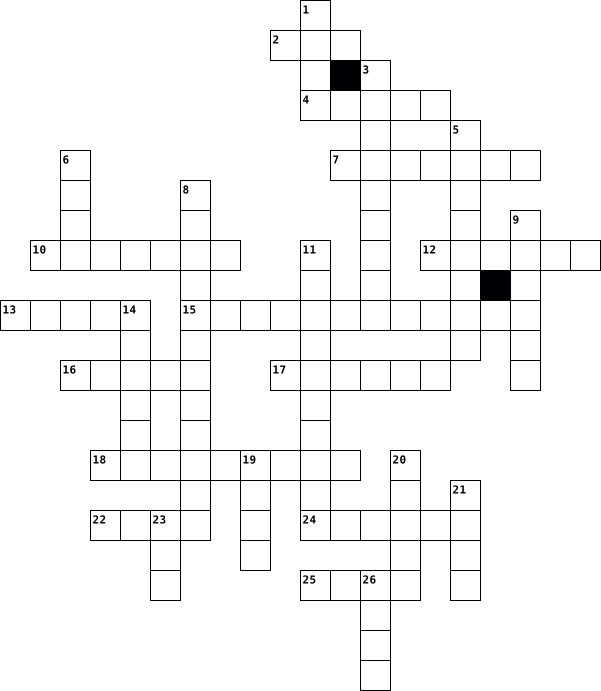
Across
- A female rabbit
- The first Easter baskets were designed to resemble birds' ____
- Country that brought us the tradition of Easter Eggs
- What the egg is a symbol of
- Country with the largest collection of Easter eggs
- For last year's Easter prank, the Brouns got ____ed
- On Easter Sunday we celebrate Christ's _____
- Birds are more vocal in Spring to attract _____
- First Day of Spring is known as the _____ equinox
- Who we rely on to tell us if Spring is coming early
- 76% of people eat this part of their chocolate bunny first
- Anglo-Saxon goddess that Easter is named for
- Flower associated with Easter
Down
- the date of Easter changes each year because of the phases of this
- Name of the "Easter Hare" in Germany
- Yellow flower that blooms in Spring
- Gender of last year's winning team in the Crewlywed game
- One of the earliest Easter treats given to the poor by European monks during Lent
- Crew family with Christmas lights seen all over Wallingford
- According to Greek myth, Spring coincides with the return of this goddess of plants and fertility
- Last name of author from whom Peter Cottontail got his name
- Creator of fun activities for Crew Kids on Easter
- Singer of the original version of Peter Cottontail
- Easter word meanig "Lengthening of Days"
- Favorite color of Easter Sunday pancake maker (also most popular jelly bean color)
- Animal representing the blood that Hebrews had to put on their doors so the angel would pass over their home
26 Clues: A female rabbit • What the egg is a symbol of • Flower associated with Easter • Yellow flower that blooms in Spring • Name of the "Easter Hare" in Germany • Easter word meanig "Lengthening of Days" • On Easter Sunday we celebrate Christ's _____ • Anglo-Saxon goddess that Easter is named for • Birds are more vocal in Spring to attract _____ • ...
Semester 1 exam 2021-11-27

Across
- pants
- take a rest
- bill please
- face shield
- horse race
- flu
- woman's suit
- black
- gloves
- white tea
- but
- mooncake
- red
- dragon boat festival
- clothes
- mid autumn festival
Down
- type/kind
- oolong tea
- carrier
- beggining of the year
- mask
- yellow tea
- enjoy the moon
- moon
24 Clues: flu • but • red • mask • moon • pants • black • gloves • carrier • clothes • mooncake • type/kind • white tea • oolong tea • horse race • yellow tea • take a rest • bill please • face shield • woman's suit • enjoy the moon • mid autumn festival • dragon boat festival • beggining of the year
The Disappearing Moon 2024-03-19

Across
- Owl told the animals that the moon is shaped like a ___________.
- The animals ___________ that the moon was getting smaller.
- This word means a small slice of something.
- The first character we read about in this story is ___________.
- Squirrel thought that the moon was ___________.
Down
- You can divide something into four ___________.
- The other animals began to feel better after listening to ___________ talk.
- If you look into the sky at night, you might see the ___________.
- When they saw the moon was back, the animals all had a full moon ___________.
- I didn't do my homework, so my teacher ___________ at me.
- When the sun rises in the morning, it will ___________ bright.
- "Didn't eat the whole pie, I only ate ___________.
- The Owl was very ___________.
13 Clues: The Owl was very ___________. • This word means a small slice of something. • You can divide something into four ___________. • Squirrel thought that the moon was ___________. • "Didn't eat the whole pie, I only ate ___________. • I didn't do my homework, so my teacher ___________ at me. • The animals ___________ that the moon was getting smaller. • ...
Summer School 2022 2022-06-23

Across
- Lunar eclipses only take place during a _____ moon.
- Earth's orbital movement around the sun is called its _________.
- We experience one full lunar cycle every ______.
- Our solar system is a part of the ______ galaxy.
- We experience the summer solstice in _____.
- When the moon appears to be getting larger, it is ________.
- Related to the sun.
Down
- Earth turns one _________ every 24 hours.
- When the moon appears to be getting smaller, it is _______.
- Related to the moon.
- This word describes the shape of Earth's orbital path.
- We live in the __________ hemisphere.
- Solar eclipses only take place during a ______ moon.
- When one space body crosses in front of the sun, casting a shadow onto a 3rd space body.
14 Clues: Related to the sun. • Related to the moon. • We live in the __________ hemisphere. • Earth turns one _________ every 24 hours. • We experience the summer solstice in _____. • We experience one full lunar cycle every ______. • Our solar system is a part of the ______ galaxy. • Lunar eclipses only take place during a _____ moon. • ...
Henry's crossword 2022-02-11

Across
- the moon follows a daily pattern and it takes 24 ____ to rise and set
- the _____ of you shadow depends on what time it is
- the sun looks bigger than all the other stars because
- the sun looks like it's moving but the _____ is
- how many stars there are in the universe
- what holds our solar system together
- the earth is _____ scientists think that it was caused by a giant asteroid
- the ___ gravity keeps our solar system together
- Due to earth's tilt the______ faces the sun in June
- where your shadow faces at noon depends on what ______ your in
Down
- the _____ follows a pattern of how much of the moon you can see because the sun will shine on certain parts of the moon
- Earth's ______ causes a daily pattern
- Groton Dunstable mascot
- at all times the earth faces ___ to the sun
- shadows follow a ____ pattern
- what effects the strength of the pull of gravity
- People in different ___ zones will have different time
- due to the tilt the north pole faces away from the sun in December
- the moon ____ over and under us
19 Clues: Groton Dunstable mascot • shadows follow a ____ pattern • the moon ____ over and under us • what holds our solar system together • Earth's ______ causes a daily pattern • how many stars there are in the universe • at all times the earth faces ___ to the sun • the sun looks like it's moving but the _____ is • the ___ gravity keeps our solar system together • ...
Space race 2024-04-09

Across
- winner of the space race
- started the space race
- Apollo mission that landed on the moon
- President who made the claim that we would reach the moon first
- First man on the moon
- Apollo mission that orbited the moon first
Down
- First artificial satellite
- Second man on the moon
- President who created NASA
- National Aeronautics and Space Administration
- First person to orbit the earth
- Rocket scientist who worked for the US
12 Clues: First man on the moon • started the space race • Second man on the moon • winner of the space race • First artificial satellite • President who created NASA • First person to orbit the earth • Apollo mission that landed on the moon • Rocket scientist who worked for the US • Apollo mission that orbited the moon first • National Aeronautics and Space Administration • ...
Busy work Puzzle 2025-02-17

Across
- mangde
- lunch
- yundong
- read
- star
- bye bye
- thing you wear
- daughter
- past tense of eat
- ?
- moon
- past tense of know
Down
- thing you ride
- meow
- ride something
- meiguoren
- fix something
- past tense of fly
- past tense of sit
- hear
- yinwei
- we live
- rock
23 Clues: ? • meow • read • star • hear • rock • moon • lunch • mangde • yinwei • yundong • bye bye • we live • daughter • meiguoren • fix something • thing you ride • ride something • thing you wear • past tense of fly • past tense of sit • past tense of eat • past tense of know
Persona Q Sub-Personas 10-19 2024-02-27

Across
- Strength 17
- Justice 14
- Lovers 17
- Temperance 12
- Hanged Man 15
- Moon 11
- Moon 16 (DLC)
- Emperor 18
- Magician 16
- Empress 11
- Sun 10
Down
- Chariot 17
- Devil 13
- Chariot 10
- Hermit 13
- Hierophant 18
- Sun 18
- Star 12
- Empress 19
- Priestess 15
- Tower 12
21 Clues: Sun 18 • Sun 10 • Star 12 • Moon 11 • Devil 13 • Tower 12 • Hermit 13 • Lovers 17 • Chariot 17 • Justice 14 • Chariot 10 • Empress 19 • Emperor 18 • Empress 11 • Strength 17 • Magician 16 • Priestess 15 • Hierophant 18 • Temperance 12 • Hanged Man 15 • Moon 16 (DLC)
Tx - Literacy - Crossword - SW - Unit 10 - Long-'oo' <o> <oo> <ew> <ue> <u-e> 2025-11-12

Across
- root
- igloo
- rude
- flute
- cashew
- blew
- cartoon
- broom
- seafood
- crew
- blue
- loop
- june
- drew
- grew
- doing
- moon
Down
- include
- hoop
- true
- clue
- to
- flew
- today
- food
- chew
- who
- bamboo
- unscrew
- do
- brute
- bedroom
- glue
33 Clues: to • do • who • hoop • true • clue • root • rude • flew • food • chew • blew • crew • blue • loop • june • drew • grew • glue • moon • igloo • flute • today • broom • brute • doing • cashew • bamboo • include • unscrew • cartoon • seafood • bedroom
AST Chapter 9 CROSSWORD REVIEW 2025-04-04

Across
- The fine, powdery dust on the Moon's surface, resulting from impacts.
- Dark, younger, roughly circular regions on the Moon, formed by lava flows.
- The gaseous envelope Mercury and the Moon lack.
- Theory that the Moon formed elsewhere and was snagged by Earth's gravity.
- Large impact basin on Mercury.
- Planet closest to the Sun, heavily cratered like the Moon.
Down
- Material thrown out from an impact.
- US program that landed astronauts on the Moon.
- Property relating mass to volume; Mercury's is very high.
- General term for a hole excavated by a rock hitting a surface.
- The older, lighter-colored, heavily cratered regions of the Moon.
- The type of impact theory currently favored for the Moon's origin.
- Long cliffs on Mercury, indicating the crust shrank.
13 Clues: Large impact basin on Mercury. • Material thrown out from an impact. • US program that landed astronauts on the Moon. • The gaseous envelope Mercury and the Moon lack. • Long cliffs on Mercury, indicating the crust shrank. • Property relating mass to volume; Mercury's is very high. • Planet closest to the Sun, heavily cratered like the Moon. • ...
The Tides 2023-02-03

Across
- Force that makes water on the side of the moon bulge
- Highest point of the tide
- What the moon does to the water
- Cause of the rise and fall of the tide
- When there is only one high and one low
- Lowest point in the tide
- Gravity draws object towards the....
Down
- The moon orbits the...
- When the tidal cycle has 2 lows and 2 highs
- How many sides of the Earth had a tidal bulge?
- Earth and Moon both have this force
- How many times a day the ocean rises and falls
- When ocean water starts spilling onto the streets or coming up from drains
- When the tidal range is at it's smallest
14 Clues: The moon orbits the... • Lowest point in the tide • Highest point of the tide • What the moon does to the water • Earth and Moon both have this force • Gravity draws object towards the.... • Cause of the rise and fall of the tide • When there is only one high and one low • When the tidal range is at it's smallest • When the tidal cycle has 2 lows and 2 highs • ...
The Tides 2023-02-03

Across
- Force that makes water on the side of the moon bulge
- Highest point of the tide
- What the moon does to the water
- Cause of the rise and fall of the tide
- When there is only one high and one low
- Lowest point in the tide
- Gravity draws object towards the....
Down
- The moon orbits the...
- When the tidal cycle has 2 lows and 2 highs
- How many sides of the Earth had a tidal bulge?
- Earth and Moon both have this force
- How many times a day the ocean rises and falls
- When ocean water starts spilling onto the streets or coming up from drains
- When the tidal range is at it's smallest
14 Clues: The moon orbits the... • Lowest point in the tide • Highest point of the tide • What the moon does to the water • Earth and Moon both have this force • Gravity draws object towards the.... • Cause of the rise and fall of the tide • When there is only one high and one low • When the tidal range is at it's smallest • When the tidal cycle has 2 lows and 2 highs • ...
Tides 2021-04-20

Across
- any star around which planets revolve
- relating to water
- having to do with the ocean
- a group of organisms that share similar characteristics and can mate with each other to produce offspring
- a situation in which water has flowed over the edges of a river; (v) to overflow
- the movement of air due to atmospheric pressure differences
- a body in outer space that orbits a planet; a natural satellite
- a force that exists between any two objects that have mass
- the top of an object; the outside of an object; the boundary between two objects or materials
- the ability to do work or cause change; the ability to move an object some distance
Down
- to guess what will happen in the future
- the large, empty part of the universe that does not contain any matter
- a large body of salt water that covers most of Earth
- the rise and fall of the ocean's surface levels due to the gravitational pull of the sun and moon
- a disturbance caused by a vibration; Waves travel away from the source that makes them.
- a compound made of hydrogen and oxygen
- an animal that hunts and eats another animal
- a type of tide that occurs when the sun, moon, and Earth are in a straight line; alignment and gravity from the moon and the sun pull the water in the same direction
- having to do with the moon or moon cycles
- the amount of matter in an object
- a pull or push that is applied to an object
21 Clues: relating to water • having to do with the ocean • the amount of matter in an object • any star around which planets revolve • a compound made of hydrogen and oxygen • to guess what will happen in the future • having to do with the moon or moon cycles • a pull or push that is applied to an object • an animal that hunts and eats another animal • ...
5th six weeks vocab words 2024-03-17

Across
- Showing 75% on left or right side of moon
- Showing 25% on left or right side of moon
- Seperates
- water stored underground
- moon Not showing the mooon
- water that runs off on the surface(creeks and rivers)
Down
- whichever hemisphere is away from the sun
- goes towards each other
- breeze that comes from the sea
- Whichever hemisphere is towards the sun
- Slides past each other
- moon showing all of the moon
12 Clues: Seperates • Slides past each other • goes towards each other • water stored underground • moon Not showing the mooon • moon showing all of the moon • breeze that comes from the sea • Whichever hemisphere is towards the sun • whichever hemisphere is away from the sun • Showing 75% on left or right side of moon • Showing 25% on left or right side of moon • ...
Solar System Crossword v5 2026-01-05

Across
- You, plants, and animals are examples of this
- Smallest of Jupiter's Galilean moons. Has subsurface ocean
- Object with most of the mass (stuff) in the Solar System
- Color of the sky on the Moon
- Comets often have these when they get closer to the Sun
- The only moon with a thick atmosphere
- Venus has a thick one of these
- The time for a planet to orbit the Sun once
- The time it takes a planet to rotate one time
- Mars is called the _____ Planet because of its color
- This planet is tilted on its side as it goes around the Sun
- The Sun is this kind of object.
- Forms when a fast space rock hits the surface of a planet
- The galaxy we live in The _____ Way.
Down
- Color of the Sun (don’t look at it or your eyes could get hurt)
- The Moon is ____ when we see the all the lit-up day side
- The largest moon of Neptune – it has geysers
- The biggest planet
- Its biggest moon is Charon
- these rocky objects mostly orbit between Mars and Jupiter
- Pluto, Eris, and Ceres are all classified as _____ Planets
- The fastest planet around the Sun
- The gas we breathe to live
- A natural object that orbits a planetary body
- What trees and other plants use for energy.
- Planet with the hottest surface in the Solar System
- This planet has the most impressive rings
- All the planets _____ the Sun
28 Clues: The biggest planet • Its biggest moon is Charon • The gas we breathe to live • Color of the sky on the Moon • All the planets _____ the Sun • Venus has a thick one of these • The Sun is this kind of object. • The fastest planet around the Sun • The galaxy we live in The _____ Way. • The only moon with a thick atmosphere • This planet has the most impressive rings • ...
Henry's crossword 2022-02-11

Across
- shadows follow a ____ pattern
- the sun looks like it's moving but the _____ is
- Due to earth's tilt the______ faces the sun in June
- at all times the earth faces ___ to the sun
- the ___ gravity keeps our solar system together
- Groton Dunstable mascot
- the _____ follows a pattern of how much of the moon you can see because the sun will shine on certain parts of the moon
- the earth is _____ scientists think that it was caused by a giant asteroid
- what holds our solar system together
- where your shadow faces at noon depends on what ______ your in
- the sun looks bigger than all the other stars because
Down
- how many stars there are in the universe
- due to the tilt the north pole faces away from the sun in December
- the moon follows a daily pattern and it takes 24 ____ to rise and set
- what effects the strength of the pull of gravity
- the _____ of you shadow depends on what time it is
- the moon ____ over and under us
- People in different ___ zones will have different time
- Earth's ______ causes a daily pattern
19 Clues: Groton Dunstable mascot • shadows follow a ____ pattern • the moon ____ over and under us • what holds our solar system together • Earth's ______ causes a daily pattern • how many stars there are in the universe • at all times the earth faces ___ to the sun • the sun looks like it's moving but the _____ is • the ___ gravity keeps our solar system together • ...
Idiomatic expression 2023-11-02

Across
- _______ town
- scared ______
- under the ______
- ______Of work
- ________cats and dogs
- Over the _____
- scaredy
- drop_____ gorgeous
- once in a _____ moon
- a_____for your thoughts
- _____things up
Down
- graveyard _____
- the ball is in your ______
- ________ in the closet
- couch _______
- dig your own ______
- get _______ feet
- over my dead ____
- night ___
- two_____in a pod
20 Clues: scaredy • night ___ • _______ town • scared ______ • ______Of work • couch _______ • Over the _____ • _____things up • graveyard _____ • under the ______ • get _______ feet • two_____in a pod • over my dead ____ • drop_____ gorgeous • dig your own ______ • once in a _____ moon • ________cats and dogs • ________ in the closet • a_____for your thoughts • the ball is in your ______
school spirit 2025-11-25

Across
- lucky bone
- small light
- colorful bird
- hair tool
- writing tool
- cup for drinks
- measuring stick
- thin sharp tool
- king’s hat
- holds salt
- stick for golf
Down
- hook for fish
- toothpaste tube
- brush for teeth
- yellow fruit
- book open
- moon curved moon
- country sign
- small tea cup
- food tool
20 Clues: hair tool • book open • food tool • lucky bone • king’s hat • holds salt • small light • yellow fruit • writing tool • country sign • hook for fish • colorful bird • small tea cup • cup for drinks • stick for golf • toothpaste tube • brush for teeth • measuring stick • thin sharp tool • moon curved moon
Lunar Cycle 2021-11-05

Across
- a quarter of the moon that is not shown on the left
- half of the moon filled to the right side
- the moon is filled up
- half of the moon filled up on the left
- the spinning of an object
Down
- a sliver of the moon that is shown on the right
- the movement of an object
- a sliver of the moon that is shown on the left
- moon phase that shows no moon
- a quarter of the moon that is not shown on the right
10 Clues: the moon is filled up • the movement of an object • the spinning of an object • moon phase that shows no moon • half of the moon filled up on the left • half of the moon filled to the right side • a sliver of the moon that is shown on the left • a sliver of the moon that is shown on the right • a quarter of the moon that is not shown on the left • ...
Sky Science - Kluane Raggett 2024-02-05

Across
- the lit part of the Moon is getting smaller
- The collection of the eight planets and there moons in orbit
- The spinning of an object on an axis
- less than half of the Moon is lit
- A group of stars forming a recognizable shape
- A smaller celestial body that is made from dust, ice, and small rocky particles
- More than half of the Moon is lit
- The lit part of the Moon is getting bigger
Down
- The Earth blocks the sunlight from reaching the Moon
- Chunks of rock and metal in outer space the orbit the sun
- Earth's natural satellite
- A medium size star that is in the center of our Solar System
- The movement of one object around another object
13 Clues: Earth's natural satellite • less than half of the Moon is lit • More than half of the Moon is lit • The spinning of an object on an axis • The lit part of the Moon is getting bigger • the lit part of the Moon is getting smaller • A group of stars forming a recognizable shape • The movement of one object around another object • ...
Orlandia Moon 2024-06-13

Across
- On an Axis
- The Lesser Lights of Night
- Solar or Lunar Events
- When Darkness Falls
- What the Eclipse Opens
- Really, It's More Like Half
Down
- Also Known as Fingernail
- Revolve
- Seas, If You're on the Moon
- Orlandia Has Two
- Scars From Meteors
- When you Cannot See the Moon
12 Clues: Revolve • On an Axis • Orlandia Has Two • Scars From Meteors • When Darkness Falls • Solar or Lunar Events • What the Eclipse Opens • Also Known as Fingernail • The Lesser Lights of Night • Seas, If You're on the Moon • When you Cannot See the Moon • Really, It's More Like Half
Turtle moon 2024-10-29

Across
- the name of the beautiful bilingual bird they saw when they arrived to the new country
- the monkey that bothered dad while painting
- a facility where eggs are laid in artificial conditions
- the month the eggs of the turtles were born
- the place where they travelled to
- name of the main character of the girl
Down
- the main language in the country they are travelling to
- one of the largest of all living turtles and heaviest non crocodile reptile
- a device invented to monitor something
- a broad flat limb without fingers used for swimming by various sea animals
- the adorable hanging three toed sloth
- the name of the turtle that was in the centre for so long
12 Clues: the place where they travelled to • the adorable hanging three toed sloth • a device invented to monitor something • name of the main character of the girl • the monkey that bothered dad while painting • the month the eggs of the turtles were born • the main language in the country they are travelling to • a facility where eggs are laid in artificial conditions • ...
6th grade Planet Mercury Review Classwork 2021-02-08

Across
- not a planet
- Mercury's not dense air prevents______retention
- Mercury's revolution around Sun is __days
- another word for atmosphere
- the Sun looks ____times bigger on Mercury
- solid land
- its gravity affects Mercury having a moon
- Mercury's temperature can reach up to _______ degrees Fahrenheit
Down
- Mercury is very ________ at night
- layer of gases around planet
- must be a sphere
- has one Moon
- also has no moons
- rocky planet besides Earth
- has no moons
- revolves around a planet
- Mercury has very __________atomosphere
17 Clues: solid land • not a planet • has one Moon • has no moons • must be a sphere • also has no moons • revolves around a planet • rocky planet besides Earth • another word for atmosphere • layer of gases around planet • Mercury is very ________ at night • Mercury has very __________atomosphere • Mercury's revolution around Sun is __days • the Sun looks ____times bigger on Mercury • ...
Moon Tourism 2014-01-02

Across
- relating to the sky (5)
- Vergnügungsfahrt (18)
- a share in a company (21)
- the noun for "to explore" (2)
- not from the planet earth (2)
- offizieller Verkaufspreis (2 words) (22)
- a short journey for pleasure (HL)
Down
- relating to the moon (4)
- to visit the sights of city (4)
- the first flight (2 words) (16)
- tollkühn, waghalsig (24)
- a person who starts a business and is willing to take risks to make a lot of money (17)
12 Clues: Vergnügungsfahrt (18) • relating to the sky (5) • relating to the moon (4) • tollkühn, waghalsig (24) • a share in a company (21) • the noun for "to explore" (2) • not from the planet earth (2) • to visit the sights of city (4) • the first flight (2 words) (16) • a short journey for pleasure (HL) • offizieller Verkaufspreis (2 words) (22) • ...
Moon vocabulary 2016-01-26

Across
- an obscuring of the light from one celestial body by the passage of another between it and the observer or between it and its source of illumination.
- the shape of the visible part of the moon when it is less than half full.
- the movement of an object in a circular or elliptical course around another or about an axis or center.
- an imaginary line about which a body rotates.
- move or cause to move into a sloping position.
- each of the four divisions of the year (spring, summer, autumn, and winter) marked by particular weather patterns and daylight hours, resulting from the earth's changing position with regard to the sun.
Down
- a half of a celestial sphere
- the action of rotating around an axis or center.
- The lunar phase or phase of the moon is the shape of the illuminated (sunlit) portion of the Moon as seen by an observer on Earth.
- the curved path of a celestial object or spacecraft around a star, planet, or moon, especially a periodic elliptical revolution.
- (of the moon) have a progressively smaller part of its visible surface illuminated, so that it appears to decrease in size.
- (of the moon between new and full) have a progressively larger part of its visible surface illuminated, increasing its apparent size.
12 Clues: a half of a celestial sphere • an imaginary line about which a body rotates. • move or cause to move into a sloping position. • the action of rotating around an axis or center. • the shape of the visible part of the moon when it is less than half full. • the movement of an object in a circular or elliptical course around another or about an axis or center. • ...
Moon Girl 2024-01-13

Across
- A small round hill
- Fly but not too high
- Meets Randomly
- Sadness
- Own
- A police 10-15; prisoner in ____
Down
- Carved in the moon
- Sun in your face
- Charitable
- Self Obsessed
- To take to court
- Not stuck anymore
12 Clues: Own • Sadness • Charitable • Self Obsessed • Meets Randomly • Sun in your face • To take to court • Not stuck anymore • Carved in the moon • A small round hill • Fly but not too high • A police 10-15; prisoner in ____
moon tea 2025-10-21

Across
- July 4th is the celebration of American Xxxxxx.
- The Xxxxxx eclipse was visible across the entire continent.
- The Xxxxxx lands yielded a plentiful harvest this year.
- The police Xxxxxx the scene of the crime for clues.
- My uncle speaks with a thick Xxxxxx accent.
- The coach gave a Xxxxxx speech to the team before the game.
Down
- The Xxxxxx of the small village lived a simple life.
- Don't Xxxxxx the surprise party; keep it a secret!
- Xxxxxx are essential for growing tropical plants in cold climates.
- After the accident, he gave her a Xxxxxx hug.
- He will Xxxxxx the proper way to tie a Windsor knot.
- It was a Xxxxxx for the tiny bird to fly against the strong wind.
12 Clues: My uncle speaks with a thick Xxxxxx accent. • After the accident, he gave her a Xxxxxx hug. • July 4th is the celebration of American Xxxxxx. • Don't Xxxxxx the surprise party; keep it a secret! • The police Xxxxxx the scene of the crime for clues. • The Xxxxxx of the small village lived a simple life. • He will Xxxxxx the proper way to tie a Windsor knot. • ...
The Moon 2025-11-05

Across
- Night
- Change
- Bright
- Around
- See
- Orbit
- Move
Down
- Different
- Little
- Dark
- Fuller
- shine
12 Clues: See • Dark • Move • Night • shine • Orbit • Change • Little • Bright • Fuller • Around • Different
moon water 2025-10-04

Across
- Oil is a natural ****** that is used to power many vehicles and factories.
- A fallen tree completely ****** the road, so we had to take a detour.
- The brave ****** live and work on the International Space Station for months.
- Goods are often ****** across the country by large freight trains.
- The smallest particles of a substance are called ****** and are constantly moving.
- The volume of the box was measured in ****** meters, describing its three-dimensional space.
- The smooth ****** of the lake reflected the tall mountains perfectly.
- We must conserve the planet's fresh ****** because it is essential for all life.
Down
- Press the pedal to make the race car ****** and increase its speed quickly.
- The company switched to ****** methods that don't harm the environment for the future.
- It's important to keep ****** clean water when exercising in the heat.
- Plants need ****** to perform photosynthesis and make their food.
12 Clues: Plants need ****** to perform photosynthesis and make their food. • Goods are often ****** across the country by large freight trains. • A fallen tree completely ****** the road, so we had to take a detour. • The smooth ****** of the lake reflected the tall mountains perfectly. • It's important to keep ****** clean water when exercising in the heat. • ...
Stars and Solar System 2020-08-18

Across
- The second moon of Mars
- The ______ depends on surface temperature.
- Elliptical paths for the planets to revolve.
- This star is the second closest to Earth.
- A celestial body which means 'a hairy star'.
Down
- One of the largest stars in Orion.
- The constellation which looks like a distorted M.
- Surname of second person on the moon.
- 'Approximately' how long does it take for Moon to revolve around earth?
- Other name for Mercury is __________.
- The moon ________ (decreases)during its second half of the orbit.
- Shape which the moon acquires on the days after the new moon day (Amavasya).
12 Clues: The second moon of Mars • One of the largest stars in Orion. • Surname of second person on the moon. • Other name for Mercury is __________. • This star is the second closest to Earth. • The ______ depends on surface temperature. • Elliptical paths for the planets to revolve. • A celestial body which means 'a hairy star'. • ...
Q1 reflection crossword 2024-10-25

Across
- The season where the northern hemisphere is tilted TOWARDS the sun
- The force of gravity depends on the distance and _____ of two objects
- Rock layers are formed over time in a process called ____________
- The same fossilized organism from the same time period/rock layer are called _________
- When a planet spins on its axis
- True or False: Gravity holds the planets in orbit around the sun
- The remains/impressions of ancient organisms preserved in rock
Down
- The act of an object circling another object
- The moon phase when you can only see a piece of the moon
- True or False: the layer or rock on the bottom is the YOUNGEST layer
- Eclipse When the Earth casts a shadow on the moon
- The season where the northern hemisphere is tilted AWAY from the sun
- Eclipse When the moon casts a shadow on the Earth, blocking the sun
- The moon phase when you can't see the moon
14 Clues: When a planet spins on its axis • The moon phase when you can't see the moon • The act of an object circling another object • Eclipse When the Earth casts a shadow on the moon • The moon phase when you can only see a piece of the moon • The remains/impressions of ancient organisms preserved in rock • True or False: Gravity holds the planets in orbit around the sun • ...
Happy Anniversary 2021-02-10

Across
- folksy art
- towers
- restaurant dessert
- eldest
- Viking pad
- honey moon
- honey moon chef
- father piano on Saturday
- years espoused
Down
- greek cat
- Emma's Man
- Jerry Garcia's
- almost her name
- in freezer
- initials
- Menke's hair
- whiskey from the Highlands
- Emma's diaper
- Mexican walking fish
- new yorker
20 Clues: towers • eldest • initials • greek cat • Emma's Man • folksy art • in freezer • Viking pad • honey moon • new yorker • Menke's hair • Emma's diaper • Jerry Garcia's • years espoused • almost her name • honey moon chef • restaurant dessert • Mexican walking fish • father piano on Saturday • whiskey from the Highlands
Security Crosswords 2022-10-27

Across
- Test which verifies that unexpected input cannot affect the system in an unpredictable way.
- A set of measures to be taken to protect our product.
- A process used by the software industry to design, develop and test high quality software.
- Person who uses their technical computer skill to breach computer system.
- Reactive approach used in Nokia to build secure product.
- Designing a new product or defining a new software, the three security elements shall always be considered: Confidentiality, Integrity, and Availability
Down
- Process which has it's own phases that run in parallel with SDLC phases
- design for security.
- Nokia has a process for developing secure products and systems.
- Attacker sends a bogus requests to exhaust system resources.
- Proactive process used in Nokia to build secure product.
- User require to enter multiple credentials for login.
12 Clues: design for security. • A set of measures to be taken to protect our product. • User require to enter multiple credentials for login. • Proactive process used in Nokia to build secure product. • Reactive approach used in Nokia to build secure product. • Attacker sends a bogus requests to exhaust system resources. • ...
Phases of Matter 2018-04-11

Across
- A state of matter with a definite shape and definite volume
- Force exerted by a gas
- A measure of the average kinetic energy of the particles in a material
- The opposite of vaporization
- State of matter with a definite volume, but not definite shape
- Occurs within a liquid and at the surface of a liquid
- The temperature at which a solid melts to become a liquid
- Water in its invisible gas form
Down
- Vaporization that takes place at the surface of a liquid
- Occurs when a substance changes directly from a solid to a gas
- The temperature at which a liquid becomes a solid
- The temperature at which a liquid boils
- State of matter with no definite volume or shape
13 Clues: Force exerted by a gas • The opposite of vaporization • Water in its invisible gas form • The temperature at which a liquid boils • State of matter with no definite volume or shape • The temperature at which a liquid becomes a solid • Occurs within a liquid and at the surface of a liquid • Vaporization that takes place at the surface of a liquid • ...
Space Crossword 2023-11-15

Across
- The left side of the moon phase
- First person on the moon
- Space debris and dust clumped together into a rock form
- The name of our solar system
- The Red Planet
- Eighth planet from the sun
- Gas giant with rings
Down
- National Aeronautics and Space Administration
- The biggest planet in our solar system
- Gases surrounding the Earth that protect us
- This holds Earth's atmosphere
- A small celestial body orbiting the Earth
- The giant ball of gas our solar system revolves around
- When the moon is full
- How many planets are in our solar system?
15 Clues: The Red Planet • Gas giant with rings • When the moon is full • First person on the moon • Eighth planet from the sun • The name of our solar system • This holds Earth's atmosphere • The left side of the moon phase • The biggest planet in our solar system • A small celestial body orbiting the Earth • How many planets are in our solar system? • ...
Layers of the Earth Vocabulary 2025-08-22

Across
- a large celestial body that orbits the sun
- stage in formation of solar system where matter naturally gathers in to lumps
- Origin of the Moon hypothesis that states the Moon was once a part of the Earth and separated from it early in the planet's history
- small rocky or metallic fragments in space
- gas and dust
- When a planetesimal becomes large enough, it becomes a _______
- Mercury, Venus, Earth, and Mars are these types of planets
- a meteoroid that survives its passage through the Earth's atmosphere and lands on Earth's surface
Down
- explosion of a massive star
- small bodies collide and combine to make larger ones
- "building blocks" of planets -- small solid objects, usually kilometers wide
- Origin of Moon hypothesis that states a Mars-sized celestial body collided with the Earth and eventually formed the moon
- an icy body composed of water(ice), frozen gases, dust, and organic compounds
- caused the nebula to collapse inward towards the center, forming the early Sun
- rocky objects that orbit the sun, primarily found in the asteroid belt between Mars and Jupiter
- Origin of the Moon hypothesis that states the moon was formed elsewhere in the solar system and was later captured by Earth's gravitational pull
- a meteoroid when it is in earth's atmosphere
- Jupiter, Saturn, Uranus, Neptune are these types of planets
18 Clues: gas and dust • explosion of a massive star • a large celestial body that orbits the sun • small rocky or metallic fragments in space • a meteoroid when it is in earth's atmosphere • small bodies collide and combine to make larger ones • Mercury, Venus, Earth, and Mars are these types of planets • Jupiter, Saturn, Uranus, Neptune are these types of planets • ...