
moon phases Crossword Puzzles
Satellites & The Moon 2024-10-29

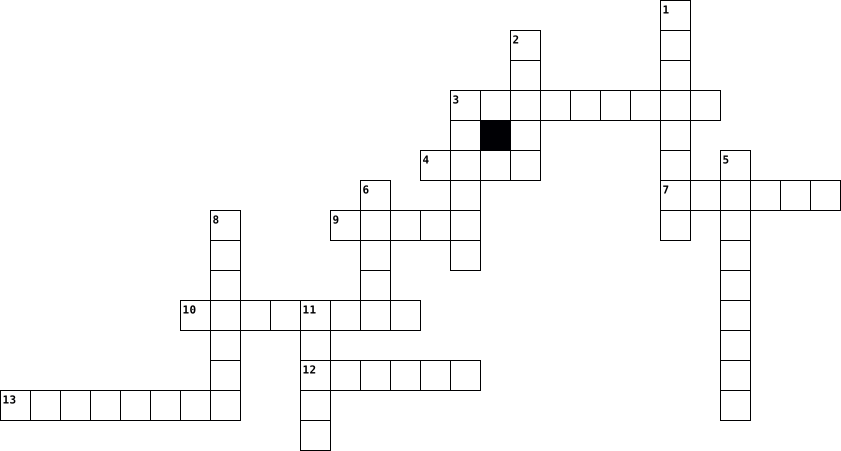
Across
- The first spaceship that went to the Moon
- One of the four natural elements
- The closest planet to the Sun
- The opposite of natural
- A hole on the ground of a planet
- One of the satellites of Jupiter
- The first man on the Moon
- The satellite of Saturn
Down
- Invisible circle around the Sun
- The instrument that we use to observe space
- When a planet makes one turn on itself
- When we go to a planet and our spaceship arrives
- When a planet goes around the Sun
- The satellite of Earth
14 Clues: The satellite of Earth • The opposite of natural • The satellite of Saturn • The first man on the Moon • The closest planet to the Sun • Invisible circle around the Sun • One of the four natural elements • A hole on the ground of a planet • One of the satellites of Jupiter • When a planet goes around the Sun • When a planet makes one turn on itself • ...
Conspiracy Theories - Gavin 2025-05-06

Across
- Where Obama was allegedly from
- CIA mind control
- They crashed here and watch us like groundhogs
- Knicks rigged the draft to get this guy
- Kissed Patrick Mahomes
- the reason we have life on earth
Down
- Would obliterate 100 men
- The only reason the Chiefs are famous
- He was shot from multiple angles
- What the moon shuttle should have left when leaving the moon
- We never actually went there
- Likes his island and kids
- Lasted 34 minutes during the second half of the superbowl
- Penguins "won" the lottery and got this person
14 Clues: CIA mind control • Kissed Patrick Mahomes • Would obliterate 100 men • Likes his island and kids • We never actually went there • Where Obama was allegedly from • He was shot from multiple angles • the reason we have life on earth • The only reason the Chiefs are famous • Knicks rigged the draft to get this guy • They crashed here and watch us like groundhogs • ...
science 2025-10-08

Across
- our solar systems star
- To travel around another object
- the layer around earth that keeps oxygen on earth
- the study of space is called _______.
- the point which earth rotates on
- the force of earths mass pulling you down
- The object orbiting earth
Down
- 4 different parts stages of a year caused by Earth's rotation and orbit around the sun
- the spinning of an object
- the moon has indentations called _______s.
- There is no _______ on the moon.
- our earth is a _______
- the moons darker spots are called _________s.
- the center of a solar system has a ______.
- what pulls you to the ground
15 Clues: our solar systems star • our earth is a _______ • the spinning of an object • The object orbiting earth • what pulls you to the ground • To travel around another object • There is no _______ on the moon. • the point which earth rotates on • the study of space is called _______. • the force of earths mass pulling you down • the moon has indentations called _______s. • ...
THE MOON BY: SHUAIB IBRAHEEM 2013-03-21

Across
- _______ name:'luna", named after the roman moon goddess
- gravity Because of the moon's __________
- why does the moon _____
- __________ would have been an amazing sight it formed, as a fiery new world
- the_____ is smaller than the earth.
Down
- the ___________ is a huge open space made up of billions galaxies and an larger number of stars.
- the planet's impact was massive some of the earth's rock hurtled off into space, to from a __________
- what we think the moon looks like inside surface,crust,mantle,____
- there no ___
- off into ______
- 80 moons to match the earth's _____
11 Clues: there no ___ • off into ______ • why does the moon _____ • the_____ is smaller than the earth. • 80 moons to match the earth's _____ • gravity Because of the moon's __________ • _______ name:'luna", named after the roman moon goddess • what we think the moon looks like inside surface,crust,mantle,____ • ...
Space 2024-04-25

Across
- the first person to walk on the Moon
- the first Czechoslovak cosmonaut
- the first Slovak astronaut
- one of the three astronauts to orbit the Moon
Down
- the copilot of the first person in an open space
- the first female pilot to fly across the Atlantic
- the astronaut of Slovak origin who walked on the Moon
- plans to put a plantgrowing chamber on Mars
- commander of simulated missions to the Moon and Mars
- Slovak inventor who invented the parachute
- the first person to go into an open space
11 Clues: the first Slovak astronaut • the first Czechoslovak cosmonaut • the first person to walk on the Moon • the first person to go into an open space • Slovak inventor who invented the parachute • plans to put a plantgrowing chamber on Mars • one of the three astronauts to orbit the Moon • the copilot of the first person in an open space • ...
Happy Talk 2022-07-26

Across
- You got have a _____
- You got to have a dream, if ___ don't have a dream
- Golly baby I'm a lucky _____
- Golly baby ___ a lucky
- Then ____ never have a dream come true
- if you ____ have a dream
- Happy talk, ____ talkin' happy talk
Down
- Talk about the moon _____ in the sky
- Talk about things ____ like to do
- How you gonna have a dream come ____
- Talk ____ a bird learning' how to fly
- Talk about the girl sayin' to the boy
- Talk about the moon floatin' in the sky
- ____ at a lily on the lake
14 Clues: You got have a _____ • Golly baby ___ a lucky • if you ____ have a dream • ____ at a lily on the lake • Golly baby I'm a lucky _____ • Talk about things ____ like to do • Happy talk, ____ talkin' happy talk • Talk about the moon _____ in the sky • How you gonna have a dream come ____ • Talk ____ a bird learning' how to fly • Talk about the girl sayin' to the boy • ...
October Adult Anime Club 2023-10-24
Across
- [Naruto]Uchiha clan kekkei genkai
- [Kiki's Delivery Service]Name of Kiki’s feline companion
- [Totoro]Number of legs on the catbus
- [Inuyasha]Archer who once sealed Inuyasha
- [Ruruoni Kenshin]Name of Kenshin's reverse-blade sword
- [Sailor Moon]Item Luna gives to Sailor Moon
- [Ruruoni Kenshin]Kenshin Himura’s nickname (Japanese)
Down
- [Shield Hero]Naofumi fights the Waves of...
- [Sailor Moon]Sailor Moon’s given name (Japanese)
- [Inuyasha]Magical jewel Inuyasha is pursuing (English)
- [Shield Hero]Kingdom to which Naofumi is summoned
- [Cowboy Bebop]Which of Spike Spiegel’s eyes is cybernetic?
- [Naruto]Team 7's Leader
- [Cowboy Bebop]Jet Black’s ship’s name
14 Clues: [Naruto]Team 7's Leader • [Naruto]Uchiha clan kekkei genkai • [Totoro]Number of legs on the catbus • [Cowboy Bebop]Jet Black’s ship’s name • [Inuyasha]Archer who once sealed Inuyasha • [Shield Hero]Naofumi fights the Waves of... • [Sailor Moon]Item Luna gives to Sailor Moon • [Sailor Moon]Sailor Moon’s given name (Japanese) • ...
Space Science 2023-01-25

Across
- is also called the North Star
- moon, the moon is between the earth and the sun
- is the path that a body follows as it travels around another body
- has a daily cycle of light and dark
Down
- always rise along the eastern horizon
- is the change in the sunlit area
- earth and the moon move around it
- orbits the sun and the moon
- are there day and night
- rotation, spin around in one place
10 Clues: are there day and night • orbits the sun and the moon • is also called the North Star • is the change in the sunlit area • earth and the moon move around it • rotation, spin around in one place • has a daily cycle of light and dark • always rise along the eastern horizon • moon, the moon is between the earth and the sun • ...
Torra 2023-02-28

Across
- shrinking
- barley noticable
- patterns of weather
- going in shadow
- sun blocked
- extra high tide
- orbit
- growing
Down
- hole from the impact or something
- moon blocked
- lightest shadow
- imaginary line through poles
- dark colored lava filled craters
- causes the seasons
- maximum and minimum hours of sunlights
- a small planet collided with the earth
- light colored old and cratered areas
17 Clues: orbit • growing • shrinking • sun blocked • moon blocked • lightest shadow • going in shadow • extra high tide • barley noticable • causes the seasons • patterns of weather • imaginary line through poles • dark colored lava filled craters • hole from the impact or something • light colored old and cratered areas • maximum and minimum hours of sunlights • a small planet collided with the earth
THE MOON BY: SHUAIB IBRAHEEM 2013-03-21

Across
- 80 moons to match the earth's _____
- the ___________ is a huge open space made up of billions galaxies and an larger number of stars.
- __________ would have been an amazing sight it formed, as a fiery new world
- gravity Because of the moon's __________
- there no ___
Down
- off into ______
- _______ name:'luna", named after the roman moon goddess
- what we think the moon looks like inside surface,crust,mantle,____
- the planet's impact was massive some of the earth's rock hurtled off into space, to from a __________
- the_____ is smaller than the earth.
- why does the moon _____
11 Clues: there no ___ • off into ______ • why does the moon _____ • 80 moons to match the earth's _____ • the_____ is smaller than the earth. • gravity Because of the moon's __________ • _______ name:'luna", named after the roman moon goddess • what we think the moon looks like inside surface,crust,mantle,____ • ...
THE MOON BY: SHUAIB IBRAHEEM 2013-03-21

Across
- 80 moons to match the earth's _____
- why does the moon _____
- the ___________ is a huge open space made up of billions galaxies and an larger number of stars.
- there no ___
- gravity Because of the moon's __________
- __________ would have been an amazing sight it formed, as a fiery new world
Down
- the_____ is smaller than the earth.
- off into ______
- _______ name:'luna", named after the roman moon goddess
- the planet's impact was massive some of the earth's rock hurtled off into space, to from a __________
- what we think the moon looks like inside surface,crust,mantle,____
11 Clues: there no ___ • off into ______ • why does the moon _____ • 80 moons to match the earth's _____ • the_____ is smaller than the earth. • gravity Because of the moon's __________ • _______ name:'luna", named after the roman moon goddess • what we think the moon looks like inside surface,crust,mantle,____ • ...
Vocab practice 2023-09-29

Across
- An equinox is an event in which a planet's subsolar point passes through its Equator.
- the point in the orbit of an object (such as a satellite) orbiting the earth that is at the greatest distance from the center of the earth.
- tilt Axial tilt is the angle between the planet's rotational axis and its orbital axis.
- the point in the orbit of a planet, asteroid, or comet at which it is furthest from the sun.
- the point in the orbit of a planet, asteroid, or comet at which it is closest to the sun
- revolution Revolution" refers the object's orbital motion around another object. For example, Earth rotates on its own axis, producing the 24-hour day. Earth revolves about the Sun, producing the 365-day year.
- eclipse an eclipse in which the moon appears darkened as it passes into the earth's shadow.
- the shadow cast by the earth or moon over an area experiencing a partial eclipse
- The maximum phase of a total solar eclipse, during which the Moon's disk completely covers the Sun's bright face.
- Latitude measures the distance north or south of the equator.
Down
- the point where the Sun appears to reach either its highest or lowest point in the sky for the year.
- An equator is an imaginary line around the middle of a planet or other celestial body.
- half of a spherical or approximately spherical body (like a planet)
- eclipse an eclipse in which the sun is obscured by the moon.
- rotation "Rotation" refers to an object's spinning motion about its own axis.
- eclipse an eclipse of the sun in which the edge of the sun remains visible as a bright ring around the moon.
- the fully shaded inner region of a shadow cast by an opaque object, especially the area on the earth or moon experiencing the total phase of an eclipse.
- the point in the orbit of the moon or a satellite at which it is nearest to the earth
18 Clues: eclipse an eclipse in which the sun is obscured by the moon. • Latitude measures the distance north or south of the equator. • half of a spherical or approximately spherical body (like a planet) • rotation "Rotation" refers to an object's spinning motion about its own axis. • the shadow cast by the earth or moon over an area experiencing a partial eclipse • ...
Space Light 2025-09-15

Across
- A natural satellite that orbits a planet
- When one space object blocks another
- Imaginary line Earth rotates around
- Icy object that orbits the Sun with a tail
- Imaginary line around the middle of Earth
- Path a planet takes around the Sun
- Relating to the Moon
- Rise and fall of sea levels caused by the Moon
Down
- When Earth spins on its axis
- Time of year caused by Earth’s tilt
- A large body that orbits a star
- Relating to the Sun
- Shooting star that burns in Earth’s atmosphere
- Small rocky object orbiting the Sun
14 Clues: Relating to the Sun • Relating to the Moon • When Earth spins on its axis • A large body that orbits a star • Path a planet takes around the Sun • Time of year caused by Earth’s tilt • Imaginary line Earth rotates around • Small rocky object orbiting the Sun • When one space object blocks another • A natural satellite that orbits a planet • ...
Astronomy Vocabulary Review 2024-12-16

Across
- constellations on the ecliptic
- path of the sun
- of the moon
- sun stands at highest or lowest point
- of the spring
- equal day and night
- of the fall
- where earth and sky meet
Down
- of the winter
- of the summer
- slanted
- highest point directly above
- getting larger
- getting smaller
- of the sun
- more than half and less than full moon phase
- lowest point directly below
17 Clues: slanted • of the sun • of the moon • of the fall • of the winter • of the summer • of the spring • getting larger • path of the sun • getting smaller • equal day and night • where earth and sky meet • lowest point directly below • highest point directly above • constellations on the ecliptic • sun stands at highest or lowest point • more than half and less than full moon phase
The Pares 2025-05-11

Across
- Pizza topping fave
- Month we moved house
- Animal escapees on mini moon
- Favourite pastry (so far)
- Carbis Bay restaurant animal name
- Free dinner item on honeymoon
- Ceremony venue
- Bobby’s birthday age this year
- Half marathon completed
- Wedding cake flavour
Down
- Honeymoon location
- Pre wedding night drinks location
- Second mini moon location
- First anniversary theme
- Afternoon tea location
- Second dress reveal band
- Sorbet flavour at Carbis bay
17 Clues: Ceremony venue • Honeymoon location • Pizza topping fave • Month we moved house • Wedding cake flavour • Afternoon tea location • First anniversary theme • Half marathon completed • Second dress reveal band • Second mini moon location • Favourite pastry (so far) • Animal escapees on mini moon • Sorbet flavour at Carbis bay • Free dinner item on honeymoon • Bobby’s birthday age this year • ...
Starry Starry Night 2026-04-29

Across
- Constellation with Antares
- The type of eclipse where the moon is blocked by the Earth's shadow
- An icy ball of rock that grows a tail when it travels close to the sun
- The largest moon in the solar system
- The shape of Mercury's orbit
- The largest planet in our solar system
Down
- What Uranus does on its axis
- What is happening in the sun's core
- What comes after a red supergiant
- The second full moon in the same month
- The point in the orbit of the moon closest to Earth
11 Clues: Constellation with Antares • What Uranus does on its axis • The shape of Mercury's orbit • What comes after a red supergiant • What is happening in the sun's core • The largest moon in the solar system • The second full moon in the same month • The largest planet in our solar system • The point in the orbit of the moon closest to Earth • ...
Solar System 2023-06-13

Across
- The eighth and farthest planet from the Sun, known for its vivid blue color and strong winds
- The fourth planet from the Sun, known as the "Red Planet," with a thin atmosphere and polar ice caps
- The largest planet in the Solar System, known for its colorful bands and the Great Red Spot
- Rocky objects that orbit the Sun, mostly found in the asteroid belt between Mars and Jupiter
- Way The galaxy that contains our Solar System, appearing as a hazy band of light in the night sky
- Earth's natural satellite that orbits around it, reflecting sunlight and causing lunar phases
- The second planet from the Sun, often called Earth's "sister planet," known for its thick atmosphere
- The star at the center of the Solar System that provides heat and light to all the planets
Down
- A dwarf planet located in the outer regions of the Solar System, once considered the ninth planet
- The closest planet to the Sun, known for its extreme temperatures and rocky surface
- Our home planet, the third planet from the Sun, with a diverse ecosystem and suitable for life
- A small rocky or metallic object that burns up upon entering Earth's atmosphere, also called a "shooting star"
- The seventh planet from the Sun, characterized by its blue-green color and tilted axis
- The second-largest planet, famous for its prominent ring system that is made up of ice and debris
- A celestial object composed of ice, dust, and gas that orbits the Sun and forms a glowing tail
15 Clues: The closest planet to the Sun, known for its extreme temperatures and rocky surface • The seventh planet from the Sun, characterized by its blue-green color and tilted axis • The star at the center of the Solar System that provides heat and light to all the planets • The largest planet in the Solar System, known for its colorful bands and the Great Red Spot • ...
Space race 2023-03-24

Across
- The first man in space
- Name of a Soviet spaceman
- The name of the period when the USA and the USSR were competing aignst each other
- Name of the winner's capital
- People who were in charge of calculating
- The first woman to fly in space
- National Aeronautics and Space Administration
- A country which join today's space race
- The first satelite launched in space
Down
- This NASA project involved the human exploration of the moon.
- The first man who walk on the Moon
- " Ground controle to ... " (lyrics 2 words)
- "That's one small step for a man, one big leap for..."
- Natural Earth satellite
- The American president who boosted the American space industry
- Name of an American spaceman
16 Clues: The first man in space • Natural Earth satellite • Name of a Soviet spaceman • Name of the winner's capital • Name of an American spaceman • The first woman to fly in space • The first man who walk on the Moon • The first satelite launched in space • A country which join today's space race • People who were in charge of calculating • " Ground controle to ... " (lyrics 2 words) • ...
Halloween Crossword 2023-10-14

Across
- What a spider spins.
- A witch's familiar.
- Witch transportation.
- October 31st.
- Disguise.
- Frighten.
Down
- A skeleton is just a bunch of these.
- Where a vampire sleeps.
- ______ or treat.
- Comes out on full moon nights.
- It might be full, half, crescent or new.
- Hates garlic.
- What the pot might call the kettle.
- Found in Egypt.
- Incey Wincey is one of these.
- Frankenstein had one of these
- Mr. O'Lantern.
17 Clues: Disguise. • Frighten. • Hates garlic. • October 31st. • Mr. O'Lantern. • Found in Egypt. • ______ or treat. • A witch's familiar. • What a spider spins. • Witch transportation. • Where a vampire sleeps. • Incey Wincey is one of these. • Frankenstein had one of these • Comes out on full moon nights. • What the pot might call the kettle. • A skeleton is just a bunch of these. • ...
Ila’s crossword 2025-11-25

Across
- what we do every time we sleepover
- what we do every time we hang out
- Vacation we went on (abbr.)
- What we do all the time (even if we just saw each other)
Down
- A group we made
- Your favorite restaurant
- Your favorite football team
- Dream car
- One of our song phases
- What I call you
- First football game together
- One of our favorite Roblox games
12 Clues: Dream car • A group we made • What I call you • One of our song phases • Your favorite restaurant • Your favorite football team • Vacation we went on (abbr.) • First football game together • One of our favorite Roblox games • what we do every time we hang out • what we do every time we sleepover • What we do all the time (even if we just saw each other)
Save The Moon Bears 2015-10-08

Across
- planned actions for a special purpose
- an alphabetical list of technical terms and their definitions
- a place of refuge built for the bears
- the process of getting well again
- identifying and understanding another’s feelings
Down
- the type of text the Save The Moon Bears brochure is
- a sense of beauty or an appreciation of artistic expression
- the symbol found on the Moon Bears chest
- kept in confinement
- stomach juices stored in the gall bladder
- average number of years a Moon Bear will live for in the wild
11 Clues: kept in confinement • the process of getting well again • planned actions for a special purpose • a place of refuge built for the bears • the symbol found on the Moon Bears chest • stomach juices stored in the gall bladder • identifying and understanding another’s feelings • the type of text the Save The Moon Bears brochure is • ...
Chapter 29 2022-09-20

Across
- is defined as the plane of Earth’s orbit
- is the spinning of Earth on its axis
- is a rise or fall in the ocean surface
- occurs when Earth passes between the Sun and the Moon and casts a shadow on the Moon
- is an area in which the time is the same
- a layer of dusty lunar material produced by collisions between asteroids and comets and the Moon
- reflects the change in appearance
Down
- is the motion of Earth in orbit around the Sun
- occurs when Earth’s rotational axis is tilted directly toward the Sun
- an elongated closed curve with two foci
- a round three dimensional object
- the dark-colored, flat, lava-filled regions on the Moon’s surface
- occurs when the Moon moves directly between the Sun and Earth and casts a shadow on Earth
- the number of daylight hours and the number of nighttime hours are nearly the same everywhere
14 Clues: a round three dimensional object • reflects the change in appearance • is the spinning of Earth on its axis • is a rise or fall in the ocean surface • an elongated closed curve with two foci • is defined as the plane of Earth’s orbit • is an area in which the time is the same • is the motion of Earth in orbit around the Sun • ...
Astronomy Crossword Prelims (Juniors) 2014-10-15

Across
- An event that occurs when the shadow of a planet or moon falls upon a second body.
- Last name of the second man to walk on the moon
- A solid piece of debris,that originates in outer space and survives the fall through the Earth’s atmosphere and collides with the Earth’ surface.
- Closest star to the earth, after the sun
- Outer part of the sun's atmosphere
- Name of Jupiter's largest moon
- A series or chain of craters
Down
- a ______ satellite appears nearly stationary in the sky as seen by a ground-based observer
- ______ said, "That's one small step for man, one giant leap for mankind
- First Indian to venture into space
- An explosion caused when a star exhausts fuel and ends its life
- This constellation is named after a hunter in Greek mythology
- A branch of science that deals with studying the origin, structure, and nature of the universe.
- Name of the first dog that went into space
- One of the two planets that don't have a moon
15 Clues: A series or chain of craters • Name of Jupiter's largest moon • First Indian to venture into space • Outer part of the sun's atmosphere • Closest star to the earth, after the sun • Name of the first dog that went into space • One of the two planets that don't have a moon • Last name of the second man to walk on the moon • ...
ASTRO crossword 2024-10-08

Across
- any planet visible in the evening sky
- any planet visible in the sky shortly before sunrise
- December 22, the sun is farthest south
- the turning of a body about an axis through its center
- the apparent path of the sun around the sky
- January 4, earth's closest point to the sun
- the motion of a body around a point located outside the body
Down
- September 22, the place where it crosses the celestial equator moving southward
- June 22, the sun is farthest north
- occur at every new and full moon, not just in spring
- an object's orbital period relative to the sun
- March 21, the place where the sun crosses the celestial equator moving northward
- the 27.322 days it takes the moon to orbit eastward around the Earth
- July 4, earth farthest point from the sun
- occur at 1st and 3rd qtr moon, when the moon and sun pull at right angles to each other
15 Clues: June 22, the sun is farthest north • any planet visible in the evening sky • December 22, the sun is farthest south • July 4, earth farthest point from the sun • the apparent path of the sun around the sky • January 4, earth's closest point to the sun • an object's orbital period relative to the sun • occur at every new and full moon, not just in spring • ...
PS Grade 5 2025-10-20

Across
- the other word for send
- A vehicle used to travel in space
- milkyway, andromeda are the name of....
- A tool to distant object
- is the fifth planet from the sun
- The Hubble Telescope captures ……… from outer space
- Neil....is the first person to set foot on the moon
- Mars, Jupiter and Earth are all
Down
- The path of a planet or a satellite
- Scientist send instruments to moon to collect
- is the person who travels through space
- All of space and everything in it
- is a place where astronauts live and work in space
- Two planets from our solar ……… farther from the sun
- moon moves around the………
- A ………is a moving cloud of rock, ice and gas
16 Clues: the other word for send • A tool to distant object • moon moves around the……… • Mars, Jupiter and Earth are all • is the fifth planet from the sun • All of space and everything in it • A vehicle used to travel in space • The path of a planet or a satellite • is the person who travels through space • milkyway, andromeda are the name of.... • ...
solar eclipse 2024-04-06

Across
- The partially shaded outer region of a shadow during an eclipse.
- The star at the center of our solar system.
- The third planet from the Sun, where we live.
- The curved shape of the Moon or Sun when it is less than half illuminated.
- The natural satellite of Earth.
- This type of eclipse occurs when the Moon passes between the Earth and the Sun, blocking the Sun's light.
- A dark area or shape produced by an object blocking light.
- The fully shaded inner region of a shadow during an eclipse.
Down
- A solar eclipse where only part of the Sun is obscured.
- A remarkable event or occurrence.
- A phenomenon where the Sun is obscured by the Moon.
- The route or course taken by the Moon's shadow during an eclipse.
- A scientist who studies stars, planets, and other celestial bodies.
- The outermost layer of the Sun's atmosphere, visible during a total solar eclipse.
- The state of complete darkness during a solar eclipse.
15 Clues: The natural satellite of Earth. • A remarkable event or occurrence. • The star at the center of our solar system. • The third planet from the Sun, where we live. • A phenomenon where the Sun is obscured by the Moon. • The state of complete darkness during a solar eclipse. • A solar eclipse where only part of the Sun is obscured. • ...
Key People in the History of Rockets 2025-10-28

Across
- The first person in space.
- A German scientist who designed the Saturn V moon rocket.
- The second person to step foot on the moon.
- The third member on the Apollo 11 moon landing mission who stayed in lunar orbit.
- The first American to travel to space.
- The first person to step foot on the moon.
Down
- A Russian astronaut.
- Romanian scientist who proposed practical rocket designs and space stations in 1930.
- In the 1600's he discovered inertia.
- In the 16th century he constructed a chair and attached gunpowder rockets to its base.
- In 1920, he built the first liquid propellant rocket. Is considered the father of modern rocketry.
- A Russian school teacher who in 1903 wrote about human space flight. Is considered the father of cosmonautics.
- In the 1700's he discovered 3 laws of motion.
- The first American to orbit the Earth.
- A person from the United States who has traveled to space.
15 Clues: A Russian astronaut. • The first person in space. • In the 1600's he discovered inertia. • The first American to orbit the Earth. • The first American to travel to space. • The first person to step foot on the moon. • The second person to step foot on the moon. • In the 1700's he discovered 3 laws of motion. • A German scientist who designed the Saturn V moon rocket. • ...
Space Race 2026-05-18

Across
- US President who challenged America to land on the Moon by the end of the 1960s
- The first American in space, flying a suborbital trajectory in 1961
- The US space program that successfully landed humans on the Moon
- The US government agency created in 1958 to lead civilian space exploration
- The Soviet space dog who became one of the first animals in space
- The massive American rocket that propelled astronauts to the Moon
- The two-man US space program that mastered docking and spacewalks
Down
- Soviet spacecraft series introduced in the 1960s and still used today
- America's first human spaceflight program, featuring solo astronauts
- The first successful satellite launched by the United States
- The Soviet space program that carried the first human into orbit
- The world's first artificial satellite, launched by the USSR in 1957
- First human in space, orbiting Earth in 1961
- The first person to walk on the Moon
- Acronym for the long-range missiles that doubled as early space rockets
15 Clues: The first person to walk on the Moon • First human in space, orbiting Earth in 1961 • The first successful satellite launched by the United States • The Soviet space program that carried the first human into orbit • The US space program that successfully landed humans on the Moon • The Soviet space dog who became one of the first animals in space • ...
Q1 Reflection 2025-11-01

Across
- Fossils are?
- If there is more gravity I will jump?
- What layers are on the bottem
- to spin on an axis
- If the Northern Hemisphere is experenting winter what is the Southern Hemisphere experentsing?
- when the earth is in between the sun and earth
- Inside the astroid belt
- when the moon is fully dark
Down
- Icey and gasspheres
- Fossils are important because they tell us about Earth's
- The force of gravity depends on what?
- when the earth is in between the sun and moon
- moving around another object
- Rock layers scientific name is?
- when the moon is full lit
- If it is spring in the Northern Hemisphere what is it in the southern Hemishpere?
16 Clues: Fossils are? • to spin on an axis • Icey and gasspheres • Inside the astroid belt • when the moon is full lit • when the moon is fully dark • moving around another object • What layers are on the bottem • Rock layers scientific name is? • The force of gravity depends on what? • If there is more gravity I will jump? • when the earth is in between the sun and moon • ...
opinon phases and conectives 2022-11-29

Across
- because(2 words)
- although (2 words)
- i believe (2 words)
- words)
- but
- i hate
- however (2 words)
- I like
Down
- given that(2 words)
- and
- in my opinon (3 words)
- I love
- because
- I think that (2 words)
14 Clues: and • but • I love • words) • i hate • I like • because • because(2 words) • however (2 words) • although (2 words) • given that(2 words) • i believe (2 words) • in my opinon (3 words) • I think that (2 words)
Man on the Moon Crossword 2015-07-19

Across
- He has to check in _______ to make sure people haven't fallen in.
- What is the name of the Man on the Moon?
- What doesn't the Man on the Moon believe in?
- What does the Man on the Moon travel in?
Down
- What does the Man on the Moon drink for breakfast?
- He talks about the stars or tells _______ with his friends.
- What flavour toffees does the Man on the Moon buy?
- Who is the Man on the Moon's friend from Saturn?
- What foood does the Man on the Moon eat for breakfast?
9 Clues: What is the name of the Man on the Moon? • What does the Man on the Moon travel in? • What doesn't the Man on the Moon believe in? • Who is the Man on the Moon's friend from Saturn? • What does the Man on the Moon drink for breakfast? • What flavour toffees does the Man on the Moon buy? • What foood does the Man on the Moon eat for breakfast? • ...
Topic 7 Vocabulary 2026-03-26

Across
- an imaginary line that goes through the center of an object
- the rising and falling of the ocean caused by the moon's gravitational pull on Earth
- a force of attraction between two objects
- the spinning of an object around its axis
- apply
- eclipse when the moon passes between the sun and Earth, hiding the sun
- objects or events that occur in the same order or manner
- a dark area or shape made by an object or organism blocking a source of light
Down
- to use evidence to find a reasonable value
- a group of stars that appear to form a shape or picture
- the movement of one object around another object
- the curved path of an object around a star, a planet, or a moon
- eclipse when Earth is between the moon and sun, creating a shadow on the moon
- connected
14 Clues: apply • connected • a force of attraction between two objects • the spinning of an object around its axis • to use evidence to find a reasonable value • the movement of one object around another object • a group of stars that appear to form a shape or picture • objects or events that occur in the same order or manner • ...
nash's puzzle 2023-10-30

Across
- A hemisphere experiences this when it's tilted towards the Sun
- A time of year with typical weather patterns and daylight hours
- When the Moon passes into the Earth's shadow
- The galaxy in which the Solar System is located
- A half of the Earth, either north or south of the Equator
Down
- The phase when the sunlit side of the Moon is facing away
- satellite An object that orbits a planet or star and is human-made
- The motion of one object around another because of gravityThe Earth orbits the Sun and the Moon orbits the Earth.
- Any object that orbits a planet or star
- A ball of gas that releases light and heat
- A large natural object that orbits a planet
- The regular rising and falling of the sea
- A large space rock that orbits the Sun
- The time it takes a planet to orbit once around the Sun
- An imaginary line through an object around which it spins
15 Clues: A large space rock that orbits the Sun • Any object that orbits a planet or star • The regular rising and falling of the sea • A ball of gas that releases light and heat • A large natural object that orbits a planet • When the Moon passes into the Earth's shadow • The galaxy in which the Solar System is located • The time it takes a planet to orbit once around the Sun • ...
SCIENTIFIC MINDSET! 2023-08-11

Across
- the Earth has a _____________ of 23.5 degrees
- if gravity wins out, on object in water will _______
- the force that pulls us downward the Earth
- Earth is a ____________.
- without the moon, we couldn't predict the _______
- you must have your _____________ everyday.
- an event or object that scientists study
Down
- out of seat, walking around = #1 cause of _______
- the heaviness of an person or thing
- This is the force that pushes upward in a liquid
- achieved if weight or force is equal
- the moon is responsible for these, here on Earth
- In the science lab,Mr.G worries about your _______
- This friend of the Earth is 237,000 miles away
- used to sweep the floor
- we follow time with this, due to the moons orbit
16 Clues: used to sweep the floor • Earth is a ____________. • the heaviness of an person or thing • achieved if weight or force is equal • an event or object that scientists study • the force that pulls us downward the Earth • you must have your _____________ everyday. • the Earth has a _____________ of 23.5 degrees • This friend of the Earth is 237,000 miles away • ...
science 2013-11-24

Across
- natural light display in the sky
- ocean movement
- dark spots on the sun
- getting less and less
Down
- eclipse- moon passes directly behind earth
- impact from asteroids
- moving toward a full moon
- eclipse- moon passes between sun and earth
- impact theory- what made the moon
9 Clues: ocean movement • impact from asteroids • dark spots on the sun • getting less and less • moving toward a full moon • natural light display in the sky • impact theory- what made the moon • eclipse- moon passes directly behind earth • eclipse- moon passes between sun and earth
Aerospace 2022-09-13

Across
- New space race company
- USA space program
- Small rotating object around our earth
- first satellite
- Name of rocket that made it to the moon
Down
- First man in space
- President during the space race
- first man on moon
- Type of aircraft that travels to space
- person who travels to space
- Lead the US space program
11 Clues: first satellite • USA space program • first man on moon • First man in space • New space race company • Lead the US space program • person who travels to space • President during the space race • Type of aircraft that travels to space • Small rotating object around our earth • Name of rocket that made it to the moon
Astronomy 101 Chapter 9 Crossword 2019-01-12

Across
- Olympus Mons is located near the _______________ on Mars
- The “blueberries” on Mars contain this mineral
- This geological process can create mountain regions when plates collide
- Study of differences between geology of planets
- High density interior of planet
- Process shaping planetary surfaces
- Grand Canyon of Mars
- Light regions on the Moon
- This volcano is the size of Arizona, and taller than Mt. Everest!
- Dark regions on the Moon
- One method of interior cooling where hot material rises
- Eruptive process shaping planetary surfaces
Down
- Process by which gravity separates materials
- One way interiors get hot
- The Moon is covered in this “powdery soil”
- Wind and water can create this geological process
- Source of internal heat
- when an asteroid impacts a planet, the crater is this much bigger than the asteroid
- Outer floating layer of a planet
- Method of interior cooling
- One method of interior cooling
- Represents the outer skin of a planet
22 Clues: Grand Canyon of Mars • Source of internal heat • Dark regions on the Moon • One way interiors get hot • Light regions on the Moon • Method of interior cooling • One method of interior cooling • High density interior of planet • Outer floating layer of a planet • Process shaping planetary surfaces • Represents the outer skin of a planet • The Moon is covered in this “powdery soil” • ...
Astronomy 101 Chapter 9 Crossword 2019-01-12

Across
- High density interior of planet
- when an asteroid impacts a planet, the crater is this much bigger than the asteroid
- Outer floating layer of a planet
- Dark regions on the Moon
- Study of differences between geology of planets
- This geological process can create mountain regions when plates collide
- Wind and water can create this geological process
- Process shaping planetary surfaces
- One method of interior cooling where hot material rises
- Light regions on the Moon
- Olympus Mons is located near the _______________ on Mars
- This volcano is the size of Arizona, and taller than Mt. Everest!
Down
- One method of interior cooling
- The Moon is covered in this “powdery soil”
- The “blueberries” on Mars contain this mineral
- Grand Canyon of Mars
- Process by which gravity separates materials
- Method of interior cooling
- Eruptive process shaping planetary surfaces
- Source of internal heat
- Represents the outer skin of a planet
- One way interiors get hot
22 Clues: Grand Canyon of Mars • Source of internal heat • Dark regions on the Moon • One way interiors get hot • Light regions on the Moon • Method of interior cooling • One method of interior cooling • High density interior of planet • Outer floating layer of a planet • Process shaping planetary surfaces • Represents the outer skin of a planet • The Moon is covered in this “powdery soil” • ...
science chapter 6 2023-03-07

Across
- Moon reflects light of this
- The tilt of the Earth gives us our _____
- Hole on surface of the moon or other planet
- The phrase for the sun & bodies that orbit it
- The only planet that is habitable
- Group of stars that make a picture
- The smallest planet
- The planet tipped on it's side
- The sun is at the ___ of our solar system
- Planet that takes longest to orbit the sun
- Planets orbit the sun because of the sun's ___
Down
- station scientists in space can live and work in this
- The ____ is a natural satellite of Earth
- Means suitable for life
- Name of our Galaxy
- The red planet
- A continual path around the sun
- The four planets farthest from the sun are ___planets
- Moon's gravity affects the ocean's ______
- The brightest planet; Earth's twin
- When N.America is tilted toward sun,it's ___ season
- The planet with rings
- The Earth continuously spins or rotates on it's ___
- The star closest to Earth
- The largest planet; has a Great Red spot
25 Clues: The red planet • Name of our Galaxy • The smallest planet • The planet with rings • Means suitable for life • The star closest to Earth • Moon reflects light of this • The planet tipped on it's side • A continual path around the sun • The only planet that is habitable • The brightest planet; Earth's twin • Group of stars that make a picture • The ____ is a natural satellite of Earth • ...
Daniella's Space Crossword 2013-06-04

Across
- A large bowl shaped dent in a surface caused by an impact
- The curved path of a celestial object around a star, planet, or moon.
- Comes after the full moon!
- We live on it.
- A very bright meteor
- One of Jupiters moons, the 6th closest to Jupiter.
- The height of something in relation to sea level.
- The spin of a body around it's axis
- Disk-shaped region outside the orbit of Neptune.
- The force that holds us to earth
Down
- The sun is a ___
- atmosphere melts away, removes the surface of a meteorite
- the part of the Sun's atmosphere just above the surface
- Brightest star
- Pluto isn't considered a planet it's considered a _______
- one of these are equal to 0.987 atmospheres
- We've landed here
- An American space probe to Jupiter launched in 1989
- a small rocky body orbiting the sun.
- An obscuring of the light from one celestial body to another.
- Ours is the milky way!
21 Clues: Brightest star • We live on it. • The sun is a ___ • We've landed here • A very bright meteor • Ours is the milky way! • Comes after the full moon! • The force that holds us to earth • The spin of a body around it's axis • a small rocky body orbiting the sun. • one of these are equal to 0.987 atmospheres • Disk-shaped region outside the orbit of Neptune. • ...
Space Intro 2017-04-24

Across
- the sun is about a _________ miles wide
- a cold, dark, and windy planet
- the planet closest to the sun
- the ____ is the centre of the solar system
- the Earth's galaxy is The ______ Way
- shooting stars are actually _______ burning up in our atmosphere
- the third planet from the sun
- the moon is covered in _____ and is made of rocks
- the planet that has mountains and volcanos that spray
- even the sun is a _______
Down
- the biggest and fastest spinning planet
- small stars are called dwarfs, while big stars are called ______
- a bunch of stars together form a ________
- patterns of stars
- the sun is made of gas like hydrogen and ________
- Saturn's rings are made of billions of _____
- the planet the spins on its side
- the moon is like a mirror because it reflects _____
- the moon ______ the Earth in a loop (like a hula-hoop)
- the red planet with deserts, ice, and two moons
- stars a big balls of ______ that shine in the sky
21 Clues: patterns of stars • even the sun is a _______ • the planet closest to the sun • the third planet from the sun • a cold, dark, and windy planet • the planet the spins on its side • the Earth's galaxy is The ______ Way • the biggest and fastest spinning planet • the sun is about a _________ miles wide • a bunch of stars together form a ________ • ...
Yulisa Briceno 2018-02-21

Across
- Large group of stars in space.
- So strong even light cannot escape it.
- When a pate is forced under one that's denser than the other.
- Solid layer with plasticity in the upper mantel under the lithosphere.
- The brightest moon phase.
- Cool, rigid, outermost layer of Earth.
- All space and matter space contains.
- And _____ on the left.
- Water found on the surface of the Earth.
- The smallest daily tidal range.
- When an ocean tide is at its highest level of elevation.
Down
- It _____on the right...
- When an ocean tide is at its lowest level of elevation.
- The type of moon description that looks like a fingernail.
- Theory continents were once connected.
- Death of a star by explosion.
- Tides with the longest daily tidal range.
- Deep and narrow depressions in the seafloor.
- Cloud of gas and dust ; Location of star formation.
- A description of the moon that is almost full but not yet.
20 Clues: And _____ on the left. • It _____on the right... • The brightest moon phase. • Death of a star by explosion. • Large group of stars in space. • The smallest daily tidal range. • All space and matter space contains. • Theory continents were once connected. • So strong even light cannot escape it. • Cool, rigid, outermost layer of Earth. • Water found on the surface of the Earth. • ...
Crossword 2016-02-23

Across
- the planet where we live.
- It is also called as the universe.
- It is another word for Sun, and ______ system refers to the Sun and the planets around it.
- A person who is trained to expolore the universe.
- The biggest planet.
- A space_________ is for helping astronaut stay and explore in the universe longer.
- We also call it a shooting star.
- is another word for the Milky Way.
- The second furthest planet from the Sun.
- It moves around the earth
Down
- All the planets moves round this.
- This planet looks red.
- A machine that is sent to the space and moves around the Sun and the Moon etc.
- The closest planet to the Sun.
- The furthest planet from the Sun
- We cannot fly to the moon without getting on this!
- the study of the sapce and planets
- You can see lots _____s in. the sky at night.
- It has beautiful rings surround.
- The secon closest planet from the Sun.
20 Clues: The biggest planet. • This planet looks red. • the planet where we live. • It moves around the earth • The closest planet to the Sun. • The furthest planet from the Sun • We also call it a shooting star. • It has beautiful rings surround. • All the planets moves round this. • It is also called as the universe. • the study of the sapce and planets • ...
SPACE 2020-04-08
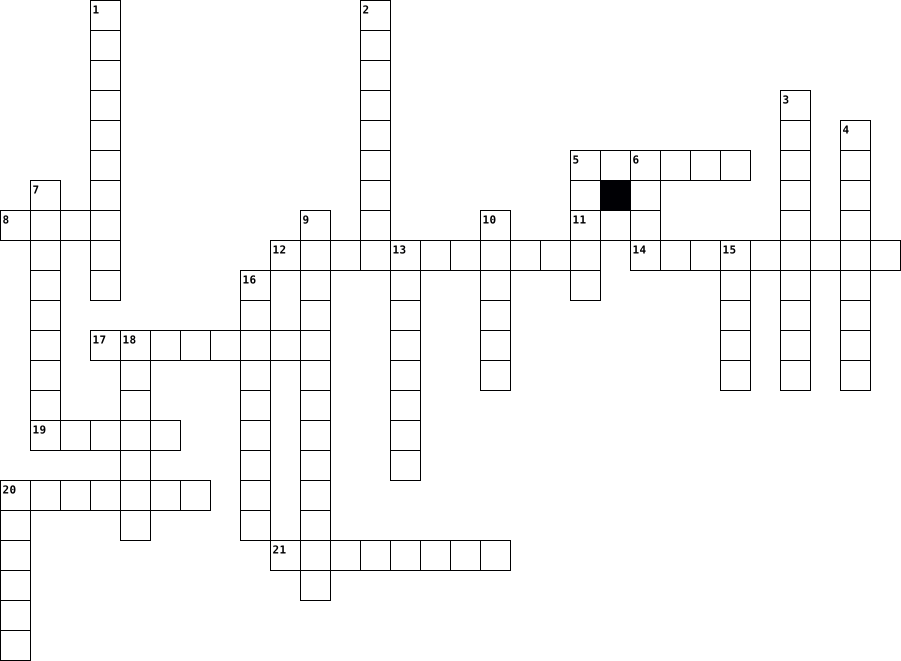
Across
- the fourth state of matter
- what Saturn's rings are made of
- unidentified flying object
- what keeps astronauts alive inside a spaceship or spacestation
- a piece of rock that has landed on the earth
- he's the cutest thing in space
- extraterrestrial life
- the force of two objects pulling on each other
- the estimated length of space
Down
- a theoretical substance that is said to be everywhere
- created when a star dies and becomes infinitely dense
- an asteroid belt beyond Neptune
- the distance light travels in a year
- this object is not a planet but many people believe it should be
- particles that make up everything
- what it's called when a star explodes
- first man on the moon
- the first moon program
- the coolest space movie around! may the force be with you
- where we live (you should know)
- a planet outside of our solar system
- the second moon program
- Milky Way, Pegasus, and Black Eye to name a few
23 Clues: first man on the moon • extraterrestrial life • the first moon program • the second moon program • the fourth state of matter • unidentified flying object • the estimated length of space • he's the cutest thing in space • an asteroid belt beyond Neptune • what Saturn's rings are made of • where we live (you should know) • particles that make up everything • ...
ASTRONOMY 2017-03-19

Across
- Greek for “Circle of Animals”
- Event where the sun is directly overhead at noon as seen from Earth’s equator
- One of Jupiter’s Moons
- Star ending its life in a huge explosion
- Ionization trail produced by meteoroid as it enters the Earth’s atmosphere
- Changing illumination of the Moon over time
- Seventh sign of the zodiac symbolized by scales or balance
- Point on the sky that is directly overhead
- Vast collection of stars, gas and dust
- Scientific Study of the Celestial Objects and their Phenomena
Down
- Benefic Fixed Star in the 10th degree of Sagittarius; One of the four royal stars
- Largest planet in the Solar System
- Grouping of Stars
- Event when the Sun reaches its maximum declination
- Study of stars
- Means “moon”
- Dirty snowball of ice and rocky debris
- Event that occurs when the shadow of a planet or moon falls upon a second body
- Region of indistinct nebulosity
- Galaxy where the Solar System belongs
20 Clues: Means “moon” • Study of stars • Grouping of Stars • One of Jupiter’s Moons • Greek for “Circle of Animals” • Region of indistinct nebulosity • Largest planet in the Solar System • Galaxy where the Solar System belongs • Dirty snowball of ice and rocky debris • Vast collection of stars, gas and dust • Star ending its life in a huge explosion • ...
Surprise?♥️ 2018-06-13

Across
- When the night is still,it brings me closest to you
- Thats your favourite girl no?
- Lemons or tomatoes?
- Pizza with a fork?
- And whoever you'll meet whatever you'll,nothing will be like it would be with him.
- The two of us on a ride in the sky
- Yummy surprises I love
- Who needs to create a puzzle in a hurry to avoid messing up a surprise?
- When you got pricked by the rose
- You kissed him!!!
- The belt that shines bright.
Down
- The robot that created a bond
- The moon on Earth
- When bangla came to rescue
- First and perfect
- We love shakes.
- What should you check on your phone to know all the answers?
- Was the moon blue or red?
- Shadow room and cravings.Hihi.
- Dont call me that!!
- Moon or stars?
- 23k came with my first surprise
- You eat it only with me and I would love to eat it just with you.
23 Clues: Moon or stars? • We love shakes. • The moon on Earth • First and perfect • You kissed him!!! • Pizza with a fork? • Lemons or tomatoes? • Dont call me that!! • Yummy surprises I love • Was the moon blue or red? • When bangla came to rescue • The belt that shines bright. • The robot that created a bond • Thats your favourite girl no? • Shadow room and cravings.Hihi. • ...
Earth and life science 2018-08-06

Across
- moon un-illuminated side
- It is a blue planet due to methane gas in its athmosphere
- It has a fastest winds in the solar system and has 8 moons
- Solid debris colliding to form planet
- Largest and most massive planet
- An intentional split
- It dissolves minerals
- theory Automatically mean that the creationist theory is wrong
- This theory is far different from all other theories
Down
- theory Explanation for the formation of solar system
- weathering Changes the shape and size
- action It is the process of freezing and thawing
- gibbous Appears to be more than one half but not fully illuminated by direct sunlight
- The study of solar system
- Revolves in 88 days
- Quarter one-half of the moon appears to be illuminated by direct sunlight
- Moon of pluto
- action Root system causes rocks to crack
- bang theory This theory says that universe was in tiny ball,and it exploded and created all the stars and planets to existence
- Study of earth
20 Clues: Moon of pluto • Study of earth • Revolves in 88 days • An intentional split • It dissolves minerals • The study of solar system • Largest and most massive planet • moon un-illuminated side • Solid debris colliding to form planet • weathering Changes the shape and size • action Root system causes rocks to crack • ...
Space Puzzle 2020-10-07

Across
- Scientist who first realized satellites can be launched into space
- The point on the sky directly below your feet
- milkyway is this type of galaxy
- Nation that launched first artificial satellite
- when energy from blackhole outshines the surrounding galaxy
- stars that never rise or set
- type of rock that gives moon its characteristic light color and is of low density
- this mission detected water on Moon
- first space station (albeit temporary)
- first space probe to take close up images of a comet
- satellites are launched using
- Maximum number of astronauts ISS can hold
Down
- when a satellite has same period of orbit as Earth's rotation
- CEO of Mars One
- the motion in which mars moved that proved geocentric theory wrong
- evolution of stars diagram
- size of star can be determined by this law
- Zero g airplane
- time of the day when waning crescent moon is highest in the sky
- Astronauts of this mission were the first to escape Earth's gravity
20 Clues: CEO of Mars One • Zero g airplane • evolution of stars diagram • stars that never rise or set • satellites are launched using • milkyway is this type of galaxy • this mission detected water on Moon • first space station (albeit temporary) • Maximum number of astronauts ISS can hold • size of star can be determined by this law • The point on the sky directly below your feet • ...
Astronomy 101 Chapter 9 Crossword 2019-01-12

Across
- Olympus Mons is located near the _______________ on Mars
- Grand Canyon of Mars
- The Moon is covered in this “powdery soil”
- High density interior of planet
- when an asteroid impacts a planet, the crater is this much bigger than the asteroid
- Study of differences between geology of planets
- Outer floating layer of a planet
- Wind and water can create this geological process
- One method of interior cooling where hot material rises
- Represents the outer skin of a planet
- Dark regions on the Moon
- Method of interior cooling
Down
- Process by which gravity separates materials
- The “blueberries” on Mars contain this mineral
- Eruptive process shaping planetary surfaces
- Source of internal heat
- One way interiors get hot
- Process shaping planetary surfaces
- Light regions on the Moon
- This volcano is the size of Arizona, and taller than Mt. Everest!
- This geological process can create mountain regions when plates collide
- One method of interior cooling
22 Clues: Grand Canyon of Mars • Source of internal heat • Dark regions on the Moon • One way interiors get hot • Light regions on the Moon • Method of interior cooling • One method of interior cooling • High density interior of planet • Outer floating layer of a planet • Process shaping planetary surfaces • Represents the outer skin of a planet • The Moon is covered in this “powdery soil” • ...
science chapter 6 2023-03-07

Across
- Planets orbit the sun because of the sun's ___
- Hole on surface of the moon or other planet
- The red planet
- The tilt of the Earth gives us our _____
- Planet that takes longest to orbit the sun
- The phrase for the sun & bodies that orbit it
- Moon's gravity affects the ocean's ______
- The smallest planet
- A continual path around the sun
- When N.America is tilted toward sun,it's ___ season
- The four planets farthest from the sun are ___planets
- The Earth continuously spins or rotates on it's ___
Down
- The largest planet; has a Great Red spot
- The brightest planet; Earth's twin
- The sun is at the ___ of our solar system
- The planet tipped on it's side
- The only planet that is habitable
- Group of stars that make a picture
- Moon reflects light of this
- station scientists in space can live and work in this
- Means suitable for life
- The planet with rings
- Name of our Galaxy
- The star closest to Earth
- The ____ is a natural satellite of Earth
25 Clues: The red planet • Name of our Galaxy • The smallest planet • The planet with rings • Means suitable for life • The star closest to Earth • Moon reflects light of this • The planet tipped on it's side • A continual path around the sun • The only planet that is habitable • The brightest planet; Earth's twin • Group of stars that make a picture • The largest planet; has a Great Red spot • ...
planets cross puzzle 2023-05-04

Across
- used to be a planet
- scientist believe there was this on mars long ago
- Neptune have a big one of these called the great blue spot
- these are very small planets
- this moon is believed to have water.
- this planet once had water on it
- is the hottest planet
- Pluto is a part of this belt
- has the great red spot
- the advanced organisms that reside on earth
- travel eleven km per second
- has light rings that rotate vertically
Down
- these have two tails, gas tails and Ion tails
- Venus surface is covered with these landforms
- has the dark blue spot
- Saturn is most know for this
- Made of rock and iron
- this moon orbit Jupiter and its the largest moon
- this planet is most naturist for its rings
- Uranus is one of these(hint frozen)
- the only planet that can support life
- these orbit around planets
- takes eighty-eight earth days for one year
23 Clues: used to be a planet • Made of rock and iron • is the hottest planet • has the dark blue spot • has the great red spot • these orbit around planets • travel eleven km per second • these are very small planets • Saturn is most know for this • Pluto is a part of this belt • this planet once had water on it • Uranus is one of these(hint frozen) • this moon is believed to have water. • ...
Bill, Moon, and Tides 2025-04-15

Across
- Used to show the rotation of the Earth.
- We take 365.25 days to go around the sun.
- Gaining light, looks like a breakfast pastry.
- The upper half of the world.
- The solstice with the shortest day.
- Moon is fully lit by the sun.
- 2 high and 2 low tides at the same height.
- Type of current that moves horizontally.
- Density current moves like this.
- Days are the same length around the world.
Down
- 2 high and 2 low tides at different heights.
- Losing light, looks "hunched".
- Moon and Sun pull on the Earth to create a tidal _____.
- 1 high and 1 low tide per day.
- Moon's this creates the tides.
- Coastal water where fresh and salt water meets.
- Gaining light.
- The solstice with the longest day.
- Losing light.
- The lower half of the world.
- When the moon is between the sun and earth.
- Gaining light, half way to full.
- AKA Tsunami
23 Clues: AKA Tsunami • Losing light. • Gaining light. • The lower half of the world. • The upper half of the world. • Moon is fully lit by the sun. • Losing light, looks "hunched". • 1 high and 1 low tide per day. • Moon's this creates the tides. • Gaining light, half way to full. • Density current moves like this. • The solstice with the longest day. • The solstice with the shortest day. • ...
Rovers in Space 2023-11-07

Across
- The first remote-controlled roving robot on the Moon
- The rover that discovered the ancient volcano on planet Mars
- The Mars rover with the nickname Percy is?
- What was the first successful Mars rover name?
- Name of the rover by Chinese Chang'e 3 mission to the Moon
Down
- The first rover to dig on Mars?
- What is the name of the second rover to Mars by NASA?
- Rover on the Moon by ISRO is named as?
- Name of the United Arab Emirates rover to the moon is?
- what was the recent Russian lunar mission that crashed on the surface of the moon?
10 Clues: The first rover to dig on Mars? • Rover on the Moon by ISRO is named as? • The Mars rover with the nickname Percy is? • What was the first successful Mars rover name? • The first remote-controlled roving robot on the Moon • What is the name of the second rover to Mars by NASA? • Name of the United Arab Emirates rover to the moon is? • ...
tides and eclipses crossword 2024-11-21

Across
- the shadow caused by the moon/earth when a partial eclipse
- when low tides are lower and high tides are higher
- a shadow created by a sunspot
- covering something a rounded object that protrudes from a flat surface
Down
- a word to show not exact but about
- when the moon blocks the light of the sun hitting the earth
- to cover something
- the rising and falling of a sea
- when the high tides are lower and low tides are higher
- when the moon is exactly between the sun and the moon making the moon appear red
10 Clues: to cover something • a shadow created by a sunspot • the rising and falling of a sea • a word to show not exact but about • when low tides are lower and high tides are higher • when the high tides are lower and low tides are higher • the shadow caused by the moon/earth when a partial eclipse • when the moon blocks the light of the sun hitting the earth • ...
Moons of Jupiter, Saturn, etc. 2024-05-05

Across
- Rising and falling of planet's oceans
- Plumes of vapor erupting from Enceladus
- Speed at which a moon spins on its axis
- How tightly a moon's materials packed
- Many of the larger moons are this shape
Down
- The limit for a moon to break apart
- How many moons may have formed
- Pockmarked depressions on many moons
- Outermost layer of solid moons like the Moon
- Different geology seen on moon surfaces
10 Clues: How many moons may have formed • The limit for a moon to break apart • Pockmarked depressions on many moons • Rising and falling of planet's oceans • How tightly a moon's materials packed • Different geology seen on moon surfaces • Plumes of vapor erupting from Enceladus • Speed at which a moon spins on its axis • Many of the larger moons are this shape • ...
Space Race 2023-05-16

Across
- The first people to get a human being into orbit.
- The combined three first letters of the title of the program used for space travel in Russia.
- The name of the organization that sent the first human to the moon.
- The combined first and last name of the first human to go into orbit.
- The name of a dog, who was the first living being to go into orbit.
- The first rocket to fly with a human crew.
- Name of the monkey that the United States sent to orbit.
- The combined first and last name of the first man on the moon.
Down
- The last name of the president in 1969, the year that the first human landed on the moon.
- Rocket that launched the first American into space.
- Combined first and last name of the second man on the moon, who was part of the crew of the Apollo 11.
- The winners of the space race.
- A three letter nickname for the president who first set the sights of the U.S. on space in 1961.
- Name of the NASA program that sent the first human to the moon.
14 Clues: The winners of the space race. • The first rocket to fly with a human crew. • The first people to get a human being into orbit. • Rocket that launched the first American into space. • Name of the monkey that the United States sent to orbit. • The combined first and last name of the first man on the moon. • ...
Space Week! 2023-10-10

Across
- A device used to observe distant objects in space
- the type of eclipse that occurs when the Earth comes directly between the Sun and the Moon, casting a shadow on the Moon
- the process by which a star explodes, releasing a tremendous amount of energy
- The phase of a lunar eclipse where the Moon is completely in the Earth's shadow
- the force that keeps planets in orbit around the Sun
- the outermost layer of the Sun's atmosphere, which is visible during a total solar eclipse
- study of celestial bodies in the sky
- closest star to earth
Down
- the partial covering of one celestial body by another, such as the Sun being partially covered by the Moon
- A hypothetical substance that may make up a large portion of the universe's mass and energy
- the type of eclipse that occurs when the Moon comes directly between the Earth and the Sun, casting a shadow on the Earth
- the largest planet in our solar system
- A large group of stars, gas, dust, and dark matter bound together by gravity
- the theory that the universe began as a singularity and has been expanding ever since
14 Clues: closest star to earth • study of celestial bodies in the sky • the largest planet in our solar system • A device used to observe distant objects in space • the force that keeps planets in orbit around the Sun • A large group of stars, gas, dust, and dark matter bound together by gravity • the process by which a star explodes, releasing a tremendous amount of energy • ...
Earth, Moon, and Sun Vocabulary 2025-03-03

Across
- moon, a phase that looks like a half-circle from Earth
- eclipse, when the moon is completely dark
- the border between light and dark on the moon
- to shine light on an object
Down
- moon, looks like less than half a circle
- the amount of time it takes for a planet to complete one orbit around the star or stars
- the star that is the main source of light at the center of our solar system
- the relative size of things
- moon, looks like a full circle from Earth
- the nearly circular path a smaller object travels
10 Clues: the relative size of things • to shine light on an object • moon, looks like less than half a circle • eclipse, when the moon is completely dark • moon, looks like a full circle from Earth • the border between light and dark on the moon • the nearly circular path a smaller object travels • moon, a phase that looks like a half-circle from Earth • ...
QUIZ ABOUT ECLIPSE 2024-04-17

Across
- OCCURS WHEN THE ENTIRE FULL MOON FALLS WITHIN THE CENTER OF EARTH'S SHADOW OR UMBRA
- BECAUSE OF THIS POSITION OF THE MOON ECLIPSES BECOME UNUSUAL
- OCCURS WHEN THE MOON IS DIRECTLY BETWEEN EARTH AND SUN
- SOURCE OF LIGHT
- OCCURS WHEN SOURCE OF LIGHT IS BLOCKED
- DARK INNER PORTION OF THE SHADOW CONE
Down
- OCCURS WHEN THE MOON IS FARTHEST FROM THE EARTH IN ITS ORBIT
- LIGHTER OUTER PORTION OF THE SHADOW
- a cylinder-shaped device for making objects that are far away look closer and larger, using a combination of lenses, or lenses and curved mirrors
- MOON PASSES THROUGH EARTH'S SHADOW
10 Clues: SOURCE OF LIGHT • MOON PASSES THROUGH EARTH'S SHADOW • LIGHTER OUTER PORTION OF THE SHADOW • DARK INNER PORTION OF THE SHADOW CONE • OCCURS WHEN SOURCE OF LIGHT IS BLOCKED • OCCURS WHEN THE MOON IS DIRECTLY BETWEEN EARTH AND SUN • OCCURS WHEN THE MOON IS FARTHEST FROM THE EARTH IN ITS ORBIT • BECAUSE OF THIS POSITION OF THE MOON ECLIPSES BECOME UNUSUAL • ...
Science Review #1 2023-04-29

Across
- The Earth going around itself
- The Earth’s ___ effects seasons
- Has a North and a South
- We have different types of ___.
- Earth revolves on its axis once every day
- Gibbous The stage after a full moon
Down
- How many days are a between a new and full moon?
- The Earth going around the Sun.
- days How many days are between each moon phase?
- Crecent The stage after a New Moon
10 Clues: Has a North and a South • The Earth going around itself • The Earth’s ___ effects seasons • The Earth going around the Sun. • We have different types of ___. • Crecent The stage after a New Moon • Gibbous The stage after a full moon • Earth revolves on its axis once every day • days How many days are between each moon phase? • How many days are a between a new and full moon?
Density and Moon 2021-12-08

Across
- when half of the moon appears illuminated
- needed to find the density of an object
- when the moon appears fully lit
- When an object circles around another object
- a large object that orbits Earth
Down
- star that keeps all the planets in orbit
- takes one month
- Moon is not visible from Earth
- the amount of mass in a given area or space
- amount of matter in an object
10 Clues: takes one month • amount of matter in an object • Moon is not visible from Earth • when the moon appears fully lit • a large object that orbits Earth • needed to find the density of an object • star that keeps all the planets in orbit • when half of the moon appears illuminated • the amount of mass in a given area or space • When an object circles around another object
Density and Moon 2021-12-08

Across
- a large object that orbits Earth
- amount of matter in an object
- takes one month
- star that keeps all the planets in orbit
Down
- when half of the moon appears illuminated
- the amount of mass in a given area or space
- needed to find the density of an object
- Moon is not visible from Earth
- when the moon appears fully lit
- When an object circles around another object
10 Clues: takes one month • amount of matter in an object • Moon is not visible from Earth • when the moon appears fully lit • a large object that orbits Earth • needed to find the density of an object • star that keeps all the planets in orbit • when half of the moon appears illuminated • the amount of mass in a given area or space • When an object circles around another object
Lethal Company 2024-08-21

Across
- An indoor enemy most common in Dine. It is invisible until close, and jumps toward you slowly with scissors.
- The first moon in the list and where you go to sell scrap.
- The seventh moon in the list and has a cabin with a code to a new moon. It is forested, low, and most known for its large spawn rate of baboon hawks.
- An indoor enemy most common in Assurance. To kill, it drops on a player's head and suffocates them.
- An outdoor enemy most common in March. They start swarming the player when it gets too close to their nest.
- The tenth moon in the list and has a large building with stairs going up to the entrance. It is snowy, foggy, and most known for its high loot spawn and high danger.
- An indoor enemy most common in Assurance. It gathers scrap and brings it to its nest, and when provoked swirls slowly around trying to hit you.
- An outdoor enemy most common in Embrion. These robots scan for players, and when finding a player, can stomp on, explode, or burn the player.
- An enemy most common in Artifice. These are basically zombies, if touching the player turning them into another.
- An enemy most common in Rend. This enemy stalks one player at a time until it gets tired of its hide and seek game and skips towards the player to kill.
- An indoor enemy most common in Rend. This enemy is like a jack-in-the-box, but don't let it finish Pop Goes the Weasel. Once it pops, it goes berserk, knowing the location of every player and killing them instantly upon impact.
- An indoor enemy most common in Embrion. This enemy is mostly passive, releasing a pink cloud when scared.
- An indoor enemy most common in Dine. These odd-looking humanoids shuffle around the mansion cleaning, but when finding an alone player pulls out its knife and attacks.
- An outdoor enemy most common in Titan. These dinosaur-like animals are blind, lunging to where it last heard a noise.
- An indoor enemy most common in Offense. Said to be related to sharks, these enemies charge the player, but can run into walls.
- An outdoor enemy most common in Vow. These are childish; once seeing something, it eats it.
- An outdoor animal most common in Offense. They fly around the map idly.
- A unique enemy that appears when killing a butler. These flying insects fly around unstoppably and act as indoor bees.
- An outdoor animal most common in Experimentation. They spawn in swarms and fly away when the player comes near.
- The only unused moon, and is said to be a water planet with high scrap value.
- The third moon in the list and has a ladder onto a large boulder. It is rocky, sandy, and it is most known for its fire exit and good scrap amount.
- The fifth moon in the list and has a jump to get closer to the fire exit before the time starts. It is rocky, sandy, and most known for its layout confusing to those unfamiliar with it.
Down
- The eighth moon in the list and has the first (update-wise) appearance of the forest keeper cabin. It is foggy, snowym and most known for its enemy spawns.
- The second moon in the list and the simplest. It is rocky, small, and it is most known for being a good starting moon.
- An indoor enemy most common in Vow. This enemy acts like a baby, and if you don't rock it enough, it will transform into a vicious, murderous monster.
- An indoor enemy most common in Offense. This enemy is like a weeping angel; it only attacks when not looked at.
- An outdoor (currently unused) enemy found everywhere evenly. They spawn when enough Vain Shrouds are in the map and drag the player to their nest to kill.
- An outdoor enemy most common in Assurance. These large enemies hide in the ground until detecting prey, lunging to eat it.
- The first hidden moon, and has multiple buildings in its area, along with a fence. It is quite grassy, and is most known for its high loot value and Old Bird spawns.
- An outdoor enemy most common in Adamance. These are only dangerous in groups; when in groups, they can all latch onto the player and fly them upward. The fan in the facility lobby can even be flown into and cause the player to die.
- An indoor enemy most common in Experimentation. It marks its territory with webs and is just as fast as the player.
- An outdoor enemy most common in Adamance. These enemies are mostly found in groups, coming together to attack players for loot.
- The fourth moon in the list and has a rickety bridge and a dam. It is forested, damp, and it is most known for its high spawn of brackens and its chance of the Mineshaft interior.
- The sixth moon in the list and has a large lake in the ce
- An indoor enemy most common in Vow. It stalks the player waiting for the right time to attack; when looked at, it stands up and backs away.
- An indoor enemy most common in Rend. This enemy stomps around and after a while scans the area with its eye for movement; if it detects movement it loads its shotgun and shoots.
- The ninth moon in the list and has mountains inbetween paths to the entrance. It is snowy, foggy, and is most known for its spawns of butlers and barbers.
- An indoor (unused) enemy. The entity uses the Thumper's AI and is made of twine.
- The second hidden moon, and is a large rocky surface with no life. It is most known for its low scrap and ridiculous amounts of Old Birds.
- An indoor enemy most common in Offense. A slow-moving slime-like enemy, it enjoys music.
40 Clues: The sixth moon in the list and has a large lake in the ce • The first moon in the list and where you go to sell scrap. • An outdoor animal most common in Offense. They fly around the map idly. • The only unused moon, and is said to be a water planet with high scrap value. • An indoor (unused) enemy. The entity uses the Thumper's AI and is made of twine. • ...
Astronomy 2021-11-01

Across
- a galaxy
- a dirty snowball
- A timetable with celestial coordinates
- when a celestial body crossed the meridian
- a type of telescope
Down
- Latin for cloud
- second full moon
- illuminated piece of the moon
- north-south line
- faint streak of light caused from a small piece of matter
- a measure of an orbit
11 Clues: a galaxy • Latin for cloud • second full moon • north-south line • a dirty snowball • a type of telescope • a measure of an orbit • illuminated piece of the moon • A timetable with celestial coordinates • when a celestial body crossed the meridian • faint streak of light caused from a small piece of matter
Y2W11 2022-12-15

Across
- city
- moon
- face
- few
- story
Down
- took
- area
- mile
- left
- far
10 Clues: few • far • city • took • area • moon • mile • left • face • story
Jade words 1 Crossword 2020-07-18

Across
- sun
- sea
- earth
- land
- ground
Down
- space
- sky
- world
- moon
- star
10 Clues: sun • sea • sky • moon • star • land • space • world • earth • ground
Sputnik 2023-03-10

Across
- moon
- probe
- asteroid
- lunar
Down
- rocket
- ancillary
- apollo
- Craft
- satellite
- Gemini
10 Clues: moon • Craft • probe • lunar • rocket • apollo • Gemini • asteroid • ancillary • satellite
Listen to the moon 2021-12-11

Across
- Speak
- Germans
- Bait
- Solder
- Piano
Down
- St.Helens
- Boat
- Island
- Water
- Moon
10 Clues: Boat • Bait • Moon • Speak • Water • Piano • Island • Solder • Germans • St.Helens
raya 2022-04-25

Across
- moon
- visiting
- dates
- card
- ketupat
- mosque
Down
- cookies
- envelope
- lamp
- mat
10 Clues: mat • moon • lamp • card • dates • mosque • cookies • ketupat • visiting • envelope
1234 2024-10-08

Across
- Spider
- Mask
- Claw
- Moon
- Rain
Down
- Shadow
- Potion
- Demon
- Storm
- Lantern
10 Clues: Mask • Claw • Moon • Rain • Demon • Storm • Shadow • Potion • Spider • Lantern
Gravity crossword 2025-12-12

Across
- mass
- orbit
- Star
- weight
- Inertia
- sun
Down
- earth
- IssacNewton
- moon
- Gravity
10 Clues: sun • mass • Star • moon • earth • orbit • weight • Gravity • Inertia • IssacNewton
tides 2023-03-01

Across
- land mass of water
- moon pulled waves
- water from ocean
- moon has one of these
- body of water making up most of earth
Down
- to do with land
- highest and lowest tide
- smallest tide
- to do with water
- causes night
10 Clues: causes night • smallest tide • to do with land • water from ocean • to do with water • moon pulled waves • land mass of water • moon has one of these • highest and lowest tide • body of water making up most of earth
Chemotherapy 2020-10-25

Across
- Most vulnerable cell phase to chemotherapy damage
- DNA synthesis inhibited
- Cause mitotic arrest in metaphase
- Agents Prevents mitosis
- The target of chemotherapy drugs
- Works as a radiosensitizer and radioprotector
Down
- Limit the effect of radiation on normal cells
- Disrupt DNA and RNA transcription
- Enhance sensitivity to radiation
- Chemotherapy used with another treatment
- Active on cells that are in certain phases
- Interfere with synthesis of nucleic acids
- Action is independent of cell phase
- Tumor growth affected by manipulating hormones
14 Clues: DNA synthesis inhibited • Agents Prevents mitosis • Enhance sensitivity to radiation • The target of chemotherapy drugs • Disrupt DNA and RNA transcription • Cause mitotic arrest in metaphase • Action is independent of cell phase • Chemotherapy used with another treatment • Interfere with synthesis of nucleic acids • Active on cells that are in certain phases • ...
Marketing Notes 2015-10-02

Across
- renewing part of the business cycle
- customer will buy the product no matter the price
- there are more products than are being bought
- slow part of of business cycle
- percentage of total revenue
- there are not enough products to go around
- growing part of business cycle
- bought for business uses.
- groups based on location
- groups based on population
- a need
Down
- a want
- when both consumer and producers are happy with price
- movement of an economy through 4 phases
- consumers ability to buy products
- down part of a business cycle
- Gross national product
- bought for personal use
- Gross domestic product
- the amount of goods producers produce
20 Clues: a want • a need • Gross national product • Gross domestic product • bought for personal use • groups based on location • bought for business uses. • groups based on population • percentage of total revenue • down part of a business cycle • slow part of of business cycle • growing part of business cycle • consumers ability to buy products • renewing part of the business cycle • ...
PACU PUZZLER 2016-01-31

Across
- Reversal agent for Benzodiazipines
- Initial treatment of Laryngospasm
- Numerical Scoring System
- American Board of Perianesthesia Nursing Certification
- Certified perianesthesia nurse
- Rare complication after thyroid surgery
- "Milk of Anesthesia"
- Important aspect of care of Sickle-cell patient
- Certified Ambulatory Perianesthesia Nurse
- Non-depolarizing neuromuscular blocking agent
Down
- Temperature less than 96.8
- Systematic response to infection
- Most important indicator of brain function
- "Forgetazam"
- Framework for perianesthesia practice in all phases of care
- GI procedure which commonly requires intubation
- New PACU RN's best friend
- Sign of acute ischemia
- American Society of PeriAnesthesia Nurses
- Frequent postop complaint of cystoscopy patients
- Antibotics that can prolong neuromuscular block
21 Clues: "Forgetazam" • "Milk of Anesthesia" • Sign of acute ischemia • Numerical Scoring System • New PACU RN's best friend • Temperature less than 96.8 • Certified perianesthesia nurse • Systematic response to infection • Initial treatment of Laryngospasm • Reversal agent for Benzodiazipines • Rare complication after thyroid surgery • American Society of PeriAnesthesia Nurses • ...
Tiger Air - HVAC 2024-12-31

Across
- a process used to contain temperature, moisture, or sound
- opposite of heating
- monitors indoor temperature
- reduces volume of a gas like refrigerant
- a tube for air to pass through
- a device for moving air
- large striped predator cat
- substance we breathe
- generates motion
Down
- coolant; changes phases at low temperature
- our beautiful city
- converts liquid coolant into gas
- sucks air from a room
- enclosed structure in which heat is produced
- moves air through your home
- adds moisture to atmosphere
- opposite of cooling
- blows out air
- opening; allows air in and out
- absorbs heat from the air in your home
- catches dirt and particles
21 Clues: blows out air • generates motion • our beautiful city • opposite of heating • opposite of cooling • substance we breathe • sucks air from a room • a device for moving air • catches dirt and particles • large striped predator cat • moves air through your home • monitors indoor temperature • adds moisture to atmosphere • a tube for air to pass through • opening; allows air in and out • ...
Mitosis/Meiosis 2023-11-01

Across
- results in 4 new cells with half the number of chromosomes as parent cell
- human gamete cells chromosomes
- one set of chromosomes
- human body cells chromosomes
- two sets of chromosomes
- what is the S phase for?
- how many phases of mitosis?
- for plant cells
- the cells meiosis is for
- the failure of homologous chromosomes to seperate properly
- for animal cells in mitosis
Down
- silent, substitution, addition, etc
- the cells mitosis is for
- sexual reproduction
- fertilized egg
- what are the 2 daughter cells compared to parent?
- the 3 things mitosis is for
- sperm and egg combine
- increases genetic variation
- what are prophase, metaphase, anaphase, and telophase?
- asexual reproduction
21 Clues: fertilized egg • for plant cells • sexual reproduction • asexual reproduction • sperm and egg combine • one set of chromosomes • two sets of chromosomes • the cells mitosis is for • what is the S phase for? • the cells meiosis is for • the 3 things mitosis is for • how many phases of mitosis? • increases genetic variation • for animal cells in mitosis • human body cells chromosomes • ...
Oh Baby Babyy 2025-06-02

Across
- natural stripes of motherhood,
- babes first photoshoot,
- when is this babe due,
- pregnancy phases, there is three,
- doctor approved sleepless night remedy,
- little bean wardrobe staple,
- a suggested expiration date,
- third trimester strut,
- baby’s preferred way of communicating,
- parenthood perfume ,
- a moment of silence ranging anywhere from 5 minutes- 3 hours,
Down
- need to clean before bean gets here,
- applause after the bottle from the baby,
- shoulder saving square,
- scheduled labor,
- the baby’s biggest secret… for now,
- wrapped like a burrito,
- Bag: purse replacement,
- tight squeeze with a purpose, wave like,
- sudden need for pickles at dinner,
- baby’s very first dump,
21 Clues: scheduled labor, • parenthood perfume , • when is this babe due, • third trimester strut, • shoulder saving square, • babes first photoshoot, • wrapped like a burrito, • Bag: purse replacement, • baby’s very first dump, • little bean wardrobe staple, • a suggested expiration date, • natural stripes of motherhood, • pregnancy phases, there is three, • sudden need for pickles at dinner, • ...
MATTER 2018-06-19

Across
- Universal Solvent
- Liquids that can be mixed together
- Substance that dissolves
- Mixture that becomes one because it is uniformly distributed
- combination of two or more substances
- substance that is being dissolve
Down
- Anything that occupies space and has mass
- Mixture with two phases
- Particles settle at the bottom overtime
- Solute + Solvent
10 Clues: Solute + Solvent • Universal Solvent • Mixture with two phases • Substance that dissolves • substance that is being dissolve • Liquids that can be mixed together • combination of two or more substances • Particles settle at the bottom overtime • Anything that occupies space and has mass • Mixture that becomes one because it is uniformly distributed
Cardano Puzzle 2022-09-27

Across
- new to crypto market
- one of the Cardano phases
- the co-founder of Ethereum
- eco-friendly blockchain
- Decentralized Applications
Down
- used for better security and privacy in mobile DApps
- recent hard fork
- crypto wallet for Cardano assets
- schedule for crypto project
- named after the daughter of poet Lord Byron and Lady Byron
10 Clues: recent hard fork • new to crypto market • eco-friendly blockchain • one of the Cardano phases • the co-founder of Ethereum • Decentralized Applications • schedule for crypto project • crypto wallet for Cardano assets • used for better security and privacy in mobile DApps • named after the daughter of poet Lord Byron and Lady Byron
Astronomy 101 Chapter 9 Crossword 2019-01-12

Across
- Olympus Mons is located near the _______________ on Mars
- Grand Canyon of Mars
- The Moon is covered in this “powdery soil”
- High density interior of planet
- when an asteroid impacts a planet, the crater is this much bigger than the asteroid
- Study of differences between geology of planets
- Outer floating layer of a planet
- Wind and water can create this geological process
- One method of interior cooling where hot material rises
- Represents the outer skin of a planet
- Dark regions on the Moon
- Method of interior cooling
Down
- Process by which gravity separates materials
- The “blueberries” on Mars contain this mineral
- Eruptive process shaping planetary surfaces
- Source of internal heat
- One way interiors get hot
- Process shaping planetary surfaces
- Light regions on the Moon
- This volcano is the size of Arizona, and taller than Mt. Everest!
- This geological process can create mountain regions when plates collide
- One method of interior cooling
22 Clues: Grand Canyon of Mars • Source of internal heat • Dark regions on the Moon • One way interiors get hot • Light regions on the Moon • Method of interior cooling • One method of interior cooling • High density interior of planet • Outer floating layer of a planet • Process shaping planetary surfaces • Represents the outer skin of a planet • The Moon is covered in this “powdery soil” • ...
science unit 1 crossword 2022-03-08

Across
- famous for its large rings
- an extremely dense ball where not even light can escape its pull
- a ball of ice and gas shooting through our solar system
- a massive explosion cause by the death of a star
- when the earth in in between the sun and the moon
- the biggest planet in our solar system
- a small ball orbiting a planet
- when the moon in between the sun and the earth
- a collection of planets, nebulas, stars, and rocks
- the planet the furthest away from the sun in the solar system
Down
- the study of space
- the hottest and brightest star
- an object that orbits another object
- a burning ball of gas at the center of out solar system
- the largest measurement or distance
- this star is also known as the north star
- the suns upper atmosphere
- the most common type of galaxy
- the planet we live on
- the largest type of star
- the biggest russian based space program
21 Clues: the study of space • the planet we live on • the largest type of star • the suns upper atmosphere • famous for its large rings • the hottest and brightest star • the most common type of galaxy • a small ball orbiting a planet • the largest measurement or distance • an object that orbits another object • the biggest planet in our solar system • ...
The Planets Crossword 2014-10-20

Across
- a dwarf planet
- asteroids are mostly made of air and ?
- ? second brightest object in the night sky(after the moon)
- Saturn is surrounded by ?
- Uranus can not be seen from the Earth without a ?
- a person who goes into space by a rocket
- surname of the first person on the moon
- ? is the most distant planet from the sun
- how many planets are there? (do not count Pluto)
- mercury is the closest planet to the ?
- our galaxy is called the ?
- the sun is a very large ?
Down
- a stellar explosion of stars
- groups of stars that form patterns in the night sky
- the only celestial body humans have set foot, other than Earth
- the largest planet in the solar system
- solid piece of debis that survives impact with the Earth
- a planet where humans live
- each star in the sky is an enormous glowing ball of ?
- known as the red planet
20 Clues: a dwarf planet • known as the red planet • Saturn is surrounded by ? • the sun is a very large ? • a planet where humans live • our galaxy is called the ? • a stellar explosion of stars • asteroids are mostly made of air and ? • the largest planet in the solar system • mercury is the closest planet to the ? • surname of the first person on the moon • ...
science chapter 6 2023-03-07

Across
- The four planets farthest from the sun are ___planets
- The planet with rings
- Moon's gravity affects the ocean's ______
- Hole on surface of the moon or other planet
- Planets orbit the sun because of the sun's ___
- The ____ is a natural satellite of Earth
- Name of our Galaxy
- Group of stars that make a picture
- The star closest to Earth
- The tilt of the Earth gives us our _____
- The smallest planet
- The brightest planet; Earth's twin
Down
- A continual path around the sun
- The phrase for the sun & bodies that orbit it
- The red planet
- The largest planet; has a Great Red spot
- Means suitable for life
- The only planet that is habitable
- The planet tipped on it's side
- Moon reflects light of this
- The sun is at the ___ of our solar system
- The Earth continuously spins or rotates on it's ___
- station scientists in space can live and work in this
- When N.America is tilted toward sun,it's ___ season
- Planet that takes longest to orbit the sun
25 Clues: The red planet • Name of our Galaxy • The smallest planet • The planet with rings • Means suitable for life • The star closest to Earth • Moon reflects light of this • The planet tipped on it's side • A continual path around the sun • The only planet that is habitable • Group of stars that make a picture • The brightest planet; Earth's twin • The largest planet; has a Great Red spot • ...
Science Review 2023-01-20

Across
- constellation mentioned in the Bible
- first out planet
- largest star in the Herdsman constellation
- first inner planet
- the brightest planet
- in southern hemisphere, seen all year
- dark spots on the sun
- stars that outline person, animal, object
- day of creation that light was made
- part of Orion, supergiant
- part of Big Dog
- front paw of the constellation Leo
- how long does it take for the sun to reach Earth
- the red planet
- only planet suitable for life, Venus's twin
- ancient people thought the sun was a _
Down
- discovered by Sir William Herschel
- part of Great Bear
- part of Scorpion
- fiery atmosphere surrounds photosphere
- farthest planet in solar system
- plants combine water/carbon dioxide
- closest celestial neighbor
- the north star
- moon passes in front of sun and blocks
- the innermost section of the sun
- the plains of the moon
- seven bands of rings at its equator
28 Clues: the north star • the red planet • part of Big Dog • first out planet • part of Scorpion • part of Great Bear • first inner planet • the brightest planet • dark spots on the sun • the plains of the moon • part of Orion, supergiant • closest celestial neighbor • farthest planet in solar system • the innermost section of the sun • discovered by Sir William Herschel • ...
Chinese 4 2021-09-03

Across
- spring festival
- night of the fifteenth of the first lunar month
- to replace
- in bamboo
- succesful
- moon festival
- first
- emotions
- with
- lantern festival
- to continue
- meaning
- meal
- original
- traditional chinese lunar calender
- cheers
- chinese new years eve dinner
- to end
- holiday
- to be left
- wife of mothers brother
- liquor
- moon cake
- to pay a chinese new years call
- wall
- to spare
- to lift
- lively
Down
- smooth
- thanksgiving
- to reunite
- dragon boat festival
- residential complex
- pyramid shaped dumpling with glutinous rice
- to congradulate
- Chinese new years eve
- count time
- to get rich
- enviorment
- firecracker
- wasteful
- strange
- to glue
- first moon
- soiree
- blessing
- atmosphere
- red envelope with money
- traditional
- mothers brother
- used to emphasize the obvious
- happy
- progressive
- to go backwards
- home
55 Clues: with • meal • wall • home • first • happy • smooth • cheers • soiree • to end • liquor • lively • meaning • strange • to glue • holiday • to lift • emotions • wasteful • original • blessing • to spare • in bamboo • succesful • moon cake • to reunite • to replace • count time • enviorment • first moon • atmosphere • to be left • to get rich • to continue • firecracker • traditional • progressive • thanksgiving • moon festival • spring festival • to congradulate • ...
Inter Apocalypse - Crossword 2021-09-23

Across
- - Covering for your face
- - Pointy hat and broom
- - Main ingredient in a popular pie
- - What do you wear on this holiday?
- - Scary creature
- - The holiday name
- - Ring the doorbell and say
- - A celebration of the holiday with a lot of people
- - When visited by ghosts you are
- - A large flat stone that lies over a grave
- - The round light in the sky at night
- - Meow, don't let this animal cross your path
Down
- - He wants to drink your blood!
- - Boo!
- - Howdy pardner!
- - Witches cook up spells in this
- - Your skin does this when you get frightened or surprised
- - All our bones
- - Sound made by a type of monster at full moon
- - An area of ground where people are buried
- - Carved pumpkins
- - Someone who transforms at the time of full moon
- - A long coat without sleeves that fastens around your neck
- - They fly but they are mammals
- - People burn things on this at halloween
25 Clues: - Boo! • - All our bones • - Howdy pardner! • - Scary creature • - Carved pumpkins • - The holiday name • - Pointy hat and broom • - Covering for your face • - Ring the doorbell and say • - He wants to drink your blood! • - They fly but they are mammals • - Witches cook up spells in this • - When visited by ghosts you are • - Main ingredient in a popular pie • ...
Surprise?♥️ 2018-06-13

Across
- When the night is still,it brings me closest to you
- Thats your favourite girl no?
- Lemons or tomatoes?
- Pizza with a fork?
- And whoever you'll meet whatever you'll,nothing will be like it would be with him.
- The two of us on a ride in the sky
- Yummy surprises I love
- Who needs to create a puzzle in a hurry to avoid messing up a surprise?
- When you got pricked by the rose
- You kissed him!!!
- The belt that shines bright.
Down
- The robot that created a bond
- The moon on Earth
- When bangla came to rescue
- First and perfect
- We love shakes.
- What should you check on your phone to know all the answers?
- Was the moon blue or red?
- Shadow room and cravings.Hihi.
- Dont call me that!!
- Moon or stars?
- 23k came with my first surprise
- You eat it only with me and I would love to eat it just with you.
23 Clues: Moon or stars? • We love shakes. • The moon on Earth • First and perfect • You kissed him!!! • Pizza with a fork? • Lemons or tomatoes? • Dont call me that!! • Yummy surprises I love • Was the moon blue or red? • When bangla came to rescue • The belt that shines bright. • The robot that created a bond • Thats your favourite girl no? • Shadow room and cravings.Hihi. • ...
Space vocab- Ethan Church 2019-04-05

Across
- moon ________s
- space ice that orbits the sun
- spinning on an axis
- two days of the year when the sun farthest away
- an object moving around another
- a fake through the center of the earth
- a picture in the stars
- when something block another
- the rise and fall of water
- a chunk of rock in space
- the path of a moving object
- when the earth blocks the sun
- the force that pushes down
- orbits the sun
Down
- A system of a year
- Every object in space attracts each other
- A machine in space
- when the moon blocks the sun
- the lowest waves
- the darkest parts of the moon
- surrounds the darkest part of a shadow
- The highest waves
- a ball of hot gas
- small space rock in the atmosphere
- the darkest part of a shadow
- two days the year when the sun is closest
- a pit made by a meteoroid
27 Clues: moon ________s • orbits the sun • the lowest waves • The highest waves • a ball of hot gas • A system of a year • A machine in space • spinning on an axis • a picture in the stars • a chunk of rock in space • a pit made by a meteoroid • the rise and fall of water • the force that pushes down • the path of a moving object • when the moon blocks the sun • when something block another • ...
The Solar System 2023-05-04

Across
- More than ten times larger than Earth
- The color of Uranus
- Also known as minor planets
- Nobody knows the age of this planet's defining feature
- Partner of meteor, baby, or head
- Brighter than Venus and dimmer than the Sun from Earth
- A space rock that hits Earth's surface
- Mars is the last of this type of planet
- Jupiter's largest moon
- A little larger than Earth's moon
- Nighttime temperatures on Mercury
Down
- A type of planet that hasn't cleared its orbit of similar objects
- ____ and Deimos
- Neptune's winds
- No longer a member of a very exclusive club
- This belt contains dwarf planets
- *cue sniggers*
- The main asteroid belt is between ___ and Jupiter
- Halley's ___
- Coldest body in the solar system
- Notable feature of a comet
- Known as Poseidon by the Greeks
- Named for the goddess of love
- Home sweet home
- These of Saturn are made of ice and rock
25 Clues: Halley's ___ • *cue sniggers* • ____ and Deimos • Neptune's winds • Home sweet home • The color of Uranus • Jupiter's largest moon • Notable feature of a comet • Also known as minor planets • Named for the goddess of love • Known as Poseidon by the Greeks • This belt contains dwarf planets • Coldest body in the solar system • Partner of meteor, baby, or head • ...
OUTER SPACE 2023-07-12

Across
- COLDEST PLANET IN OUR SOLAR SYSTEM
- FIRST ARTIFICIAL EARTH SATELLITE
- DEMOTED TO "DWARF PLANET" IN 2006
- THE "RED PLANET"
- BIG ________, CONSTELLATION WITH 7 BRIGHT STARS
- ASTEROID _____ ORBITING BETWEEN MARS AND JUPITER
- NEIL ______
- POLARIS, ALSO KNOWN AS "THE ____ STAR"
- "HEY DIDDLE DIDDLE, THE CAT AND THE _____, THE COW JUMPED OVER THE MOON"
- PERSON TRAINED TO TRAVEL IN SPACE
- FIRST PLANET FROM THE SUN
- ICE AND DUST PARTICLES ORBIT THE SUN, HAS A "TAIL"
- LARGEST PLANET IN OUR SOLAR SYSTEM
Down
- PLANET WHO SHARES NAME WITH ROMAN GOD OF THE SEA
- U.S. GOVERNMENT AGENCY IN CHARGE OF SPACE SCIENCE AND TRAVEL
- SPACE CRAFT DESIGNED TO PROPEL INTO THE AIR
- HOTTEST PLANET IN OUR SOLAR SYSTEM
- LAYERS OF GAS THAT ENVELOP A PLANET
- THIS SPACE SHUTTLE EXPLODED JANUARY 28TH, 1986
- CONTROLS THE OCEAN TIDES
- COLD WAR RIVALRY TO REACH THE MOON FIRST
- PLANET FAMOUS FOR ITS RINGS
- SMALL ROCKY OBJECT THAT ORBITS THE SUN
- WHERE WE LIVE
- _____ ALDRIN
25 Clues: NEIL ______ • _____ ALDRIN • WHERE WE LIVE • THE "RED PLANET" • CONTROLS THE OCEAN TIDES • FIRST PLANET FROM THE SUN • PLANET FAMOUS FOR ITS RINGS • FIRST ARTIFICIAL EARTH SATELLITE • DEMOTED TO "DWARF PLANET" IN 2006 • PERSON TRAINED TO TRAVEL IN SPACE • COLDEST PLANET IN OUR SOLAR SYSTEM • HOTTEST PLANET IN OUR SOLAR SYSTEM • LARGEST PLANET IN OUR SOLAR SYSTEM • ...
POP QUIZ 2026-04-12

Across
- Name of previous missions to the moon.
- A washed-up pop star character in Empire Records.
- Name of the canal that has been transformed into a mangrove forest.
- Hometown of Cooper Flagg, an NBA history maker.
- Abbreviation for Video Assistant Referee.
- ______-like crustaceans identified in deep-sea region near Mexico.
- Name of newest A24 movie featuring Zendaya and Robert Pattinson.
- Third word of the 1997 documentary shown by Students for Change.
- Name of current mission to the moon.
- First name of Superman's significant other.
Down
- Anonymous social media platform for students.
- The cumber one seed ____ became the National Champions for women's results.
- The Osher School of Music's ____ Annual Honors Recital.
- Name of famous web-shooting superhero.
- Abbreviation for Student Body President.
- First name of the first woman to travel around the moon.
- Place where you should toss The One Ring.
- City where resident repainted more than a dozen rainbow crosswalks.
- Month of Earth Day.
- USM Theatre Department's that just closed on Sunday.
20 Clues: Month of Earth Day. • Name of current mission to the moon. • Name of previous missions to the moon. • Name of famous web-shooting superhero. • Abbreviation for Student Body President. • Place where you should toss The One Ring. • Abbreviation for Video Assistant Referee. • First name of Superman's significant other. • Anonymous social media platform for students. • ...
JLC Outside Reading Project - Finn McCarthy Period 3 2025-04-23

Across
- Waverly's daughter
- symbol of long life
- Waverly's late brother
- The Moon Lady was actually a...
- Rich merchant
- respect for elders
- What is Lena stuck in?
- Lena's eating disorder
- Piano teacher
- Ying-ying's English name
- When Waverly quit chess for good
- Jade necklace
- Rose's ex-husband
- Rose's late brother
- The Moon Lady's husband
- Where An-mei and Lindo met
Down
- where things begin
- Lena's indignant husband
- Lindo's ex-husband
- Waverly's game
- An-Mei's mother
- Ying-ying is...
- the game the Joy Luck Club plays
- What First Wife was addicted to
- traitor to the family
- What did Lindo promise to never forget?
- What Ying-Ying did to her son
- Burned during the Moon Festival
- the city Jing-Mei's sisters live in
- How An-mei's mother died
- the old man Waverly played chess with
- What did An-mei's mother cut?
32 Clues: Rich merchant • Piano teacher • Jade necklace • Waverly's game • An-Mei's mother • Ying-ying is... • Rose's ex-husband • where things begin • Waverly's daughter • Lindo's ex-husband • respect for elders • symbol of long life • Rose's late brother • traitor to the family • Waverly's late brother • What is Lena stuck in? • Lena's eating disorder • The Moon Lady's husband • Lena's indignant husband • ...
THE SOLAR SYSTEM 2017-07-20

Across
- ''The water planet''
- Shape of the planet's orbits
- The number of planets in the Solar System
- A group of stars that form a recognizable pattern
- in space
- The largest dwarf planet
- Closest planet to the Sun
- A luminous sphere of plasma
- Way The name of the galaxy we live in
- The closest star to the Earth
Down
- The gravitationally curved path of an object around a
- The planet with the shortest day
- A celestial body moving in an elliptical orbit around a star
- When the Sun or the Moon passes through a shadow of another heavenly body
- The largest moon in the Solar System
- The second largest planet in the Solar System
- The force that keeps all of the planets in orbit around the Sun
- The coldest planet in the Solar System
- The planet named after the Roman God of War
- The hottest planet in the Solar System
- The natural satellite of a planet
21 Clues: in space • ''The water planet'' • The largest dwarf planet • Closest planet to the Sun • A luminous sphere of plasma • Shape of the planet's orbits • The closest star to the Earth • The planet with the shortest day • The natural satellite of a planet • The largest moon in the Solar System • Way The name of the galaxy we live in • The coldest planet in the Solar System • ...
Daniella's Space Crossword 2013-06-04

Across
- A large bowl shaped dent in a surface caused by an impact
- The curved path of a celestial object around a star, planet, or moon.
- Comes after the full moon!
- We live on it.
- A very bright meteor
- One of Jupiters moons, the 6th closest to Jupiter.
- The height of something in relation to sea level.
- The spin of a body around it's axis
- Disk-shaped region outside the orbit of Neptune.
- The force that holds us to earth
Down
- The sun is a ___
- atmosphere melts away, removes the surface of a meteorite
- the part of the Sun's atmosphere just above the surface
- Brightest star
- Pluto isn't considered a planet it's considered a _______
- one of these are equal to 0.987 atmospheres
- We've landed here
- An American space probe to Jupiter launched in 1989
- a small rocky body orbiting the sun.
- An obscuring of the light from one celestial body to another.
- Ours is the milky way!
21 Clues: Brightest star • We live on it. • The sun is a ___ • We've landed here • A very bright meteor • Ours is the milky way! • Comes after the full moon! • The force that holds us to earth • The spin of a body around it's axis • a small rocky body orbiting the sun. • one of these are equal to 0.987 atmospheres • Disk-shaped region outside the orbit of Neptune. • ...
Science 2021-01-27

Across
- Cold air has more
- Non-metal bond
- DNA is one of this
- Caused by Earth's uneven heating
- Metal and Non-metal bond
- These types of elements don't bond
- This holds heat longer
- Rarest element on Earth
- Less than 1% of this is in the atmosphere
- The Moon is one
- Made up of protons and neutrons
- Greenhouse gas
- Peanut butter and Spinach have this
- Happens during a full or new moon
- Chlorine is one
- This diagram shows the valence electrons
- Meteorites burn up here
Down
- First day of spring
- The amount of force being pulled down on an object
- Winds that blow from west to east
- Water and sugar are this
- Bread and Pasta have this
- Number of protons
- Partly caused by Earth's orbit
- Space shuttle orbits here
- NaCl?
- Jelly beans is an example of this
- Happens during a First or Last Quarter moon
- Ozone layer is in here
- This is mostly in Earth's atmosphere
30 Clues: NaCl? • Non-metal bond • Greenhouse gas • The Moon is one • Chlorine is one • Cold air has more • Number of protons • DNA is one of this • First day of spring • This holds heat longer • Ozone layer is in here • Rarest element on Earth • Meteorites burn up here • Water and sugar are this • Metal and Non-metal bond • Bread and Pasta have this • Space shuttle orbits here • ...
Year 7 Science (3) 2021-11-04

Across
- Non-renewable, mined from the ground
- Biggest moon we see
- Non-renewable, drilled for under the ground
- Largest planet
- Sun blocked by moon's path
- This is added to waste water to get 'bits' to stick together
- Day and night equal
- Name for treated water put back into rivers
- Earth orbits the sun
- Precipitation in ice form
- The solids stuck together at the bottom of a treatment tank
- Earth rotates once on its axis
- Energy from steam in the ground
Down
- When 'bits' stick together in waste water
- Pumping air into waste water to make small particles float
- Water condenses to make these in the sky
- Water passed through sand to remove remaining particles of waste
- First stage of water treatment
- Smallest planet
- Chlorine added to kill bacteria in waste water
- Eclipse where Earth blocks sun from shining on the moon at night
- No moon
- Taking just what you need
23 Clues: No moon • Largest planet • Smallest planet • Biggest moon we see • Day and night equal • Earth orbits the sun • Taking just what you need • Precipitation in ice form • Sun blocked by moon's path • First stage of water treatment • Earth rotates once on its axis • Energy from steam in the ground • Non-renewable, mined from the ground • Water condenses to make these in the sky • ...
Astronomy 101 Chapter 9 Crossword 2019-01-12

Across
- Wind and water can create this geological process
- Olympus Mons is located near the _______________ on Mars
- One method of interior cooling
- The “blueberries” on Mars contain this mineral
- Process by which gravity separates materials
- Source of internal heat
- Represents the outer skin of a planet
- Outer floating layer of a planet
- Light regions on the Moon
- This geological process can create mountain regions when plates collide
- Eruptive process shaping planetary surfaces
Down
- Dark regions on the Moon
- Method of interior cooling
- Study of differences between geology of planets
- One way interiors get hot
- High density interior of planet
- Grand Canyon of Mars
- Process shaping planetary surfaces
- This volcano is the size of Arizona, and taller than Mt. Everest!
- One method of interior cooling where hot material rises
- The Moon is covered in this “powdery soil”
- when an asteroid impacts a planet, the crater is this much bigger than the asteroid
22 Clues: Grand Canyon of Mars • Source of internal heat • Dark regions on the Moon • One way interiors get hot • Light regions on the Moon • Method of interior cooling • One method of interior cooling • High density interior of planet • Outer floating layer of a planet • Process shaping planetary surfaces • Represents the outer skin of a planet • The Moon is covered in this “powdery soil” • ...
Astronomy 101 Chapter 9 Crossword* 2019-01-12

Across
- This geological process can create mountain regions when plates collide
- Source of internal heat
- Olympus Mons is located near the _______________ on Mars
- Method of interior cooling
- One method of interior cooling where hot material rises
- Outer floating layer of a planet
- Light regions on the Moon
- Process shaping planetary surfaces
- Represents the outer skin of a planet
Down
- One way interiors get hot
- The “blueberries” on Mars contain this mineral
- Process by which gravity separates materials
- when an asteroid impacts a planet, the crater is this much bigger than the asteroid
- Study of differences between geology of planets
- Grand Canyon of Mars
- This volcano is the size of Arizona, and taller than Mt. Everest!
- Dark regions on the Moon
- Wind and water can create this geological process
- One method of interior cooling
- Eruptive process shaping planetary surfaces
- High density interior of planet
- The Moon is covered in this “powdery soil”
22 Clues: Grand Canyon of Mars • Source of internal heat • Dark regions on the Moon • One way interiors get hot • Light regions on the Moon • Method of interior cooling • One method of interior cooling • High density interior of planet • Outer floating layer of a planet • Process shaping planetary surfaces • Represents the outer skin of a planet • The Moon is covered in this “powdery soil” • ...
SPACE 2019-09-19

Across
- The path of a planet around a star
- This star gives us light
- The nationality of the first man in space
- The first animal in space was one of these
- Vehicle to transport people into space
- Our planet
- The number of planets that have been discovered in our Solar System
- The red planet
- Neil... The first man to walk on the moon
- No longer a planet
Down
- Largest planet in the Solar System
- The group of planets and star that Earth is part of
- A natural satellite
- The hottest planet in the Solar System
- Some planets are made of rock and some are made of ...
- Planet closest to the Sun
- One of the gases that is found in the Sun
- This is found in between Mars and Jupiter
- The time it takes for a planet to complete an orbit
- This was left on the moon
- the force that makes any two objects that have mass move towards each other
21 Clues: Our planet • The red planet • No longer a planet • A natural satellite • This star gives us light • Planet closest to the Sun • This was left on the moon • Largest planet in the Solar System • The path of a planet around a star • The hottest planet in the Solar System • Vehicle to transport people into space • The nationality of the first man in space • ...