
nutrition in plants Crossword Puzzles
NUTRITION 2022-05-12

Across
- Month in which Mr. Raúl was born
- Process by which cells break down organic nutrients in the prescence of oxygen to get energy
- Process by which gas exchange happens in the body
- Process that happens during daytime in plants and it is the opposite of cellular respiration
- Type of nutrient that, in the presence of oxygen, gives you energy
- type of nutrition in which the organism consumes other organisms to obtain organic and inorganic nutrients
- Type of sugar found exclusively in plants, mainly in seeds
Down
- Process by which organisms get rid of wastes
- type of nutrition in which the organism produces its own organic nutrients
- Plant structure that stores a large amount of organic nutrients
- Process by which water exchange happens in the body
- Reactant used to detect starch in plants
- Cellular respiration takes place in this organelle
- Liquid substance in mammals' mouth that breaks sugar down
- Cellular respiration is a process by which our cells get _________
15 Clues: Month in which Mr. Raúl was born • Reactant used to detect starch in plants • Process by which organisms get rid of wastes • Process by which gas exchange happens in the body • Cellular respiration takes place in this organelle • Process by which water exchange happens in the body • Liquid substance in mammals' mouth that breaks sugar down • ...
Nutrition 2022-03-30
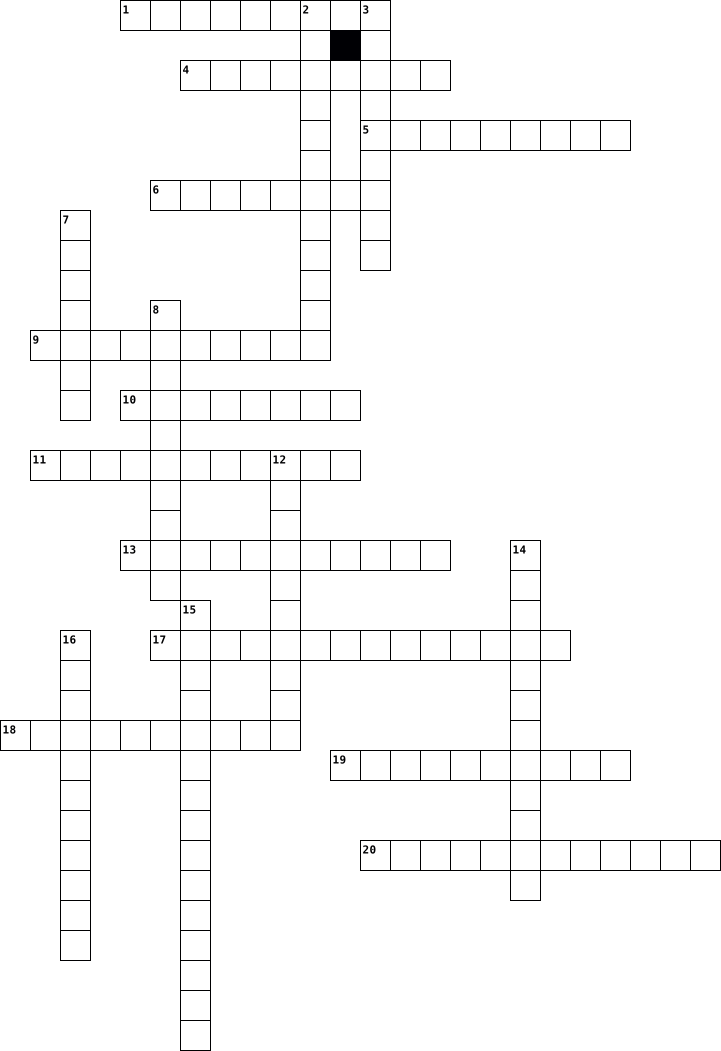
Across
- the process by which an organism takes food and utilizes it to get energy, for growth, repair, maintenance is called ________
- The type of nutrition in which the organisms live on or inside the body of their host and derive their food from them
- Poor health may be due to an _______ of nutrients, either a deficiency or excess, which in turn, affects bodily functions cumulatively.
- the act or process of discharging undigested or waste material from a cell or organism specifically.
- ________ rely on other animals for their food
- The type of nutrition in which an organism takes the complex organic food materials into its body by the process of ingestion
- a plastid in green plant cells
- The _______ pigment is responsible for the green colouration in plants
- The process by which phototrophs convert light energy into chemical energy is
- Koala is the example of ___________
- The ______ is a long, hollow tube that forms part of the alimentary canal organs of the digestive system.
- Heterotrophs are organisms that ingest organic carbon from other sources to produce energy and maintain their own life.
Down
- an animal that feeds on insects, worms, and other invertebrates
- The materials which provide nutrition to living organisms are called ______
- Exchange of gases in the leaves take place with the help of ________
- It is estimated that ________ comprise more than half of all microscopic plankton.
- The simple inorganic substances from which an organism is able to form nutritional organic substances is called
- the absorption and digestion of food or nutrients by the body or any biological system.
- _________ are cells that create their own energy and biological materials from inorganic chemicals.
- The mode of nutrition in which an organism obtains nutrients from dead and decaying organic matter is called ________ nutrition.
20 Clues: a plastid in green plant cells • Koala is the example of ___________ • ________ rely on other animals for their food • an animal that feeds on insects, worms, and other invertebrates • Exchange of gases in the leaves take place with the help of ________ • The _______ pigment is responsible for the green colouration in plants • ...
Biology-Nutrition in Plants 2017-09-16

Across
- the green colour pigment which helps leaves to capture energy from sunlight to carry out the food making process of plants by the leaves.
- Mode of nutrition in which organisms or plants that obtain their nutrition from dead and decaying organic matter.
- Purely depend on other insects and small animals for their nutrition.
- The cell is enclosed by a thin outer boundary, called the
Down
- In this mode of nutrition there is a close association between two different plants of different categories.
- The building blocks of living organism.
- Green Plants That Prepare Their Own Food
- the process by which green plants and some other organisms use sunlight to synthesize nutrients from carbon dioxide and water.
8 Clues: The building blocks of living organism. • Green Plants That Prepare Their Own Food • The cell is enclosed by a thin outer boundary, called the • Purely depend on other insects and small animals for their nutrition. • In this mode of nutrition there is a close association between two different plants of different categories. • ...
Crossword Grade 5 2023-07-12

Across
- The longest tunnel in India
- The Parsis ate followers of
- The windiest continent
- Flat part of the leaf
- one who feels what others feel
- Who is the Showman
- Founder of Microsoft
- Antonym of Knowledge
Down
- Which Rishi wrote Vishnu Puran
- Who is Shahid-e-azam
- People watching a cricket match
- The first Indian commercial pilot
- Hirakud dam is in
- Animal that can store food
- Folk dance of Maharashtra
- Bhim's son
- MGR memorial is in
- plants that grow in water
- Plants get nutrition from
- Animal with long hair to protect itself from cold
20 Clues: Bhim's son • Hirakud dam is in • MGR memorial is in • Who is the Showman • Who is Shahid-e-azam • Founder of Microsoft • Antonym of Knowledge • Flat part of the leaf • The windiest continent • Folk dance of Maharashtra • plants that grow in water • Plants get nutrition from • Animal that can store food • The longest tunnel in India • The Parsis ate followers of • ...
kenia 2026-02-05

Across
- cell
- common recovery diet
- takes in nutrients
- lack of appetite
- hurry
- skinny
- diet that’s standard
- fatness
- opposite of illness
- weight
Down
- stress
- low sugar or low calorie
- eating chicken
- diet modified diet
- energy food
- bulky or plants
- study of food/health
- aides
- binge purge cycle
- digestion
20 Clues: cell • hurry • aides • stress • skinny • weight • fatness • digestion • energy food • eating chicken • bulky or plants • lack of appetite • binge purge cycle • takes in nutrients • diet modified diet • opposite of illness • common recovery diet • study of food/health • diet that’s standard • low sugar or low calorie
Nutrition & Transports in Plants 2024-09-17

Across
- type of mseophyll cell found at the lower layers of a leaf
- a type of sugar produced during photosynthesis
- the openings found mostly at the lower epidermal layer
- the loss of water vapour through the aerial parts of a plant
- air movement
- tubes that transport water in a plant
- a type of energy needed for photosynthesis
Down
- tubes that transport nutrients in a plant
- the transport of nutrients in a plant
- a pigment needed for photosynthesis
- type of mesophyll cell found at the top layers of a leaf
- concentration of water vapour
12 Clues: air movement • concentration of water vapour • a pigment needed for photosynthesis • the transport of nutrients in a plant • tubes that transport water in a plant • tubes that transport nutrients in a plant • a type of energy needed for photosynthesis • a type of sugar produced during photosynthesis • the openings found mostly at the lower epidermal layer • ...
PRE RL LES 14 REVISION 2020-05-04

Across
- harmless
- plants
- point out
- harmful
- best
- animals
- use up
- live longer than
- the biological clock
- summary
Down
- relating to or providing nutrition
- drink
- able to be dissolved
- exactly the same
- change
- hand in formally
16 Clues: best • drink • plants • change • use up • harmful • animals • summary • harmless • point out • exactly the same • hand in formally • live longer than • able to be dissolved • the biological clock • relating to or providing nutrition
Container Gardening 2024-04-16

Across
- Type of plant varieties specially bred to do well in small spaces.
- Essential plant nutrition practice, especially important in container gardening.
- Essential feature in containers to prevent waterlogging.
- Describes containers that can be easily moved.
- Placed under a pot to catch excess water.
- A container used for cultivating plants.
- Plants that return year after year, suitable for permanent containers.
- The type of soil best suited for containers.
- Cutting back plants to promote health and bushiness, especially in pots.
Down
- A structure used to support climbing plants in containers.
- A clay-based ceramic often used for garden pots.
- Easy-to-grow plants ideal for small containers.
- Necessary for photosynthesis, its availability must be considered when placing containers.
- Part of the plant that requires careful consideration in confined spaces.
- Crucial, regular task to ensure container plants thrive.
- A common place to arrange container plants in urban areas.
- A space-saving gardening method perfect for containers.
- Plants that live for one season and are popular in container displays.
- Organic matter added to the soil to help plants grow.
- Material used to retain moisture in container soil.
20 Clues: A container used for cultivating plants. • Placed under a pot to catch excess water. • The type of soil best suited for containers. • Describes containers that can be easily moved. • Easy-to-grow plants ideal for small containers. • A clay-based ceramic often used for garden pots. • Material used to retain moisture in container soil. • ...
NUTRITION IN PLANTS CROSSWORD 2016-04-26

Across
- A bacteria in soil that converts nitrogen to water soluble compounds
- They secrete digestive juices on the dead and decaying matter
- Mode of nutrition where green plants make food themselves from simple substances
Down
- They use the nutrition obtained from insects
- Process of taking in food by an organism and its utilization by the body
- Pores that are located on the underside of the leaves
- A mutually beneficial relationship
- Non-green plants living on other organisms and derive their food from them
- Organisms that germinate when on wet and warm things
- Contain nitrogen
10 Clues: Contain nitrogen • A mutually beneficial relationship • They use the nutrition obtained from insects • Organisms that germinate when on wet and warm things • Pores that are located on the underside of the leaves • They secrete digestive juices on the dead and decaying matter • A bacteria in soil that converts nitrogen to water soluble compounds • ...
Nutrition in plants 2017-05-06

Across
- saprophytic plants
- carbohydrate,fats,protein,vitamins and minerals
- carnivorous plants
Down
- provide nutrition to carry out life processes
- food making process in plants
- green plants
- small openings
7 Clues: green plants • small openings • saprophytic plants • carnivorous plants • food making process in plants • provide nutrition to carry out life processes • carbohydrate,fats,protein,vitamins and minerals
Biology-Nutrition in Plants 2017-09-16

Across
- Mode of nutrition in which organisms or plants that obtain their nutrition from dead and decaying organic matter.
- Purely depend on other insects and small animals for their nutrition.
- The building blocks of living organism.
- Green Plants That Prepare Their Own Food
Down
- the green colour pigment which helps leaves to capture energy from sunlight to carry out the food making process of plants by the leaves.
- In this mode of nutrition there is a close association between two different plants of different categories.
- the process by which green plants and some other organisms use sunlight to synthesize nutrients from carbon dioxide and water.
- The cell is enclosed by a thin outer boundary, called the
8 Clues: The building blocks of living organism. • Green Plants That Prepare Their Own Food • The cell is enclosed by a thin outer boundary, called the • Purely depend on other insects and small animals for their nutrition. • In this mode of nutrition there is a close association between two different plants of different categories. • ...
Nutrition in plants 2017-05-06

Across
- the process of taking in food by an organism and it's utilisation by the body
- nutrition nutrition in which hetero trophic plants cannot make their own food and decent on other plants for food
- the mode of nutrition where two different organisms work together for their mutual benefit
Down
- dioxide + water = glucose + oxygen formula of photosynthesis
- organisms that can make their own food from simple non living substances
- organisms that live on dead plants and animals and derive their food from them
- plant example of Autrotrophs
- chemical that can convert atmospheric nitrogen to water soluble compounds
8 Clues: plant example of Autrotrophs • dioxide + water = glucose + oxygen formula of photosynthesis • organisms that can make their own food from simple non living substances • chemical that can convert atmospheric nitrogen to water soluble compounds • the process of taking in food by an organism and it's utilisation by the body • ...
Bryophytes 2026-04-20

Across
- Reproductive units in non-flowering plants
- Type of tissue absent in bryophytes
- Essential for fertilization
- Process of switching between haploid and diploid stages
- Specialized conducting cells inside bryophytes
- Rely directly on the moisture in their surroundings
- Plant ancestor closely related to land plants
- Dominant haploid stage in bryophytes
- Stalk connecting foot to capsule in the sporophytes
- Structure that reduces water loss in plants
Down
- Gas exchange structure
- Flask-shaped reproductive organ
- Mode of nutrition in bryophytes
- Generation that produces spores
- Structure that protect gametes
- Flat, ribbon-like body seen in liverwort
16 Clues: Gas exchange structure • Essential for fertilization • Structure that protect gametes • Flask-shaped reproductive organ • Mode of nutrition in bryophytes • Generation that produces spores • Type of tissue absent in bryophytes • Dominant haploid stage in bryophytes • Flat, ribbon-like body seen in liverwort • Reproductive units in non-flowering plants • ...
Bryophytes 2026-04-20

Across
- Reproductive units in non-flowering plants
- Type of tissue absent in bryophytes
- Essential for fertilization
- Process of switching between haploid and diploid stages
- Specialized conducting cells inside bryophytes
- Rely directly on the moisture in their surroundings
- Plant ancestor closely related to land plants
- Dominant haploid stage in bryophytes
- Stalk connecting foot to capsule in the sporophytes
- Structure that reduces water loss in plants
Down
- Gas exchange structure
- Flask-shaped reproductive organ
- Mode of nutrition in bryophytes
- Generation that produces spores
- Structure that protect gametes
- Flat, ribbon-like body seen in liverwort
16 Clues: Gas exchange structure • Essential for fertilization • Structure that protect gametes • Flask-shaped reproductive organ • Mode of nutrition in bryophytes • Generation that produces spores • Type of tissue absent in bryophytes • Dominant haploid stage in bryophytes • Flat, ribbon-like body seen in liverwort • Reproductive units in non-flowering plants • ...
Plant kingdom 2025-03-18

Across
- nutrition
- example of angiosperm
- leaves are responsible for the exchange of this
- plants are classified into these 2 groups
- example of gymnosperm
- type of cells
- produce their own organic matter
- example of non-flowering plant
- 1 type of flowering plant
- flowers become this in angiosperms, they contain the seeds
Down
- plants are classified into these 2 groups
- the main photosynthetic organs
- they keep the plant straight
- flowers become this in gymnosperms, they contain the seeds
- 1 type of flowering plant
- non-flowering plants reproduce through this
- they absorb water and minerals from soil
- non-flowering plants don't have these, flowering plants do
18 Clues: nutrition • type of cells • example of angiosperm • example of gymnosperm • 1 type of flowering plant • 1 type of flowering plant • they keep the plant straight • the main photosynthetic organs • example of non-flowering plant • produce their own organic matter • they absorb water and minerals from soil • plants are classified into these 2 groups • ...
Sri Mahadeva International School, kottur 2024-05-27

Across
- What is the process by which green plants prepare their own food.
- The gas taken in by plants for photosynthesis is
- which part of leaf regulates opening and closing of stomata
- The nutrition gained on feeding other organisms is called
- which ensures the life of the individual
Down
- The food prepared by the plant is
- which part of leaf let's Air in and out
- The nutrition gained by self preparation is called
- which life process is doens't involves maintaining the life force
- water for photosynthesis is gain by which tissue
- What pigment is essential for photosynthesis in plants?
- The waste product of photosynthesis that is released into the atmosphere is
12 Clues: The food prepared by the plant is • which part of leaf let's Air in and out • which ensures the life of the individual • The gas taken in by plants for photosynthesis is • water for photosynthesis is gain by which tissue • The nutrition gained by self preparation is called • What pigment is essential for photosynthesis in plants? • ...
Plants and animals 2021-03-26

Across
- animals that have a backbone.
- Some plants produce this to reproduce.
- animals that lay eggs.
- Process when pollen joins the stigma.
- life function to obtain oxygen.
- type of plants that have trunk and are high.
- flowering plant that produces seeds.
- vertebrates that have feathers and a beak.
- vertebrates that have fur in theor body.
Down
- vertebrate animals that have moist skin.
- flowering plants that have cones.
- type of plants with a thick woody stem.
- process that plants do to obtain energy.
- Animals that give birth to live babies.
- life process which means to communicate.
- to create new living things.
- Life process that means to get nutrients.
- vertebrate animals that live under the sea.
- plants that are thin, flexible and soft.
19 Clues: animals that lay eggs. • to create new living things. • animals that have a backbone. • life function to obtain oxygen. • flowering plants that have cones. • flowering plant that produces seeds. • Process when pollen joins the stigma. • Some plants produce this to reproduce. • type of plants with a thick woody stem. • Animals that give birth to live babies. • ...
Guess the Term 2021-03-23

Across
- The components of food that are necessary for our body
- The green pigment that helps the leaves in photosynthesis
- The mode of nutrition in which organisms make food themselves
- Tiny pores present in the under surface of a leaf
- The plants which eat insects
- The synthesis of food that occurs in the presence of sunlight
- Organisms live together and share shelter and nutrients
Down
- It deprives the host of the plant and takes in valuable nutrients
- The mode of taking food by an organism and its utilisation by the body
- Slimy, Green patches in ponds or in other stagnant water
- The plant on which a parasite climbs
- The mode of nutrition in which organisms take in ready-made food
- The bodies of living organisms that are made of tiny units
- The mode of nutrition in which organisms take in nutrients in solution form from dead and decaying matter
- A chlorophyll containing partner, which is an algae and a fungus live together
15 Clues: The plants which eat insects • The plant on which a parasite climbs • Tiny pores present in the under surface of a leaf • The components of food that are necessary for our body • Organisms live together and share shelter and nutrients • Slimy, Green patches in ponds or in other stagnant water • The green pigment that helps the leaves in photosynthesis • ...
No Scrubs Crossword Puzzle 2024-01-12

Across
- Last name of Nutrition & Healthy Living faculty author
- Cornell __________ College of Business
- Full name of the "custom programs" team
- Company that partners with employers to provide tuition assistance to employees
- Our programs are taught on an ____________ platform
- Team that handles re-takes
Down
- Opportunity Stage for PS enrolling in 4-6 months
- Our LMS platform
- What Cornell employees must have to enroll using CU employee portal
- Last name of Healthcare Management faculty author
- First course in NHL: Nutrition & the ________________
- Team that handles PAYG changes
- Highschool-level knowledge of this is recommended for students enrolling in Nutrition & Healthy Living
- Last name of Medical Cannabis faculty author
- Acronym for the college that issues the Medicinal Plants Certificate
- Department of _____________-dept that issues the Wellness Counseling certificate
- Law that provides veteran benefits, such as tuition assistance
17 Clues: Our LMS platform • Team that handles re-takes • Team that handles PAYG changes • Cornell __________ College of Business • Full name of the "custom programs" team • Last name of Medical Cannabis faculty author • Opportunity Stage for PS enrolling in 4-6 months • Last name of Healthcare Management faculty author • Our programs are taught on an ____________ platform • ...
Improvement of Crop Production 2020-07-19

Across
- Unwanted plants growing in crop fields
- Chemical added to soil for plant nutrition
- Poison sprayed to kill organism that attack crop
- A practice of growing two or more types of crops in the same field as the same time to improve yield
- A channel that carries water from rivers to fields
- killing pests in crop stores with toxic vapour
- A natural additive put in soil to increase nutrition
Down
- A movement in which scientists improved crop variety to increase food production
- System of providing water to plants artificially
- A method of improving crop producting by selective breeding
- Once of the three macronutrients needed by plants
- A macro nutrient taken by plant from soil though abundant in air
12 Clues: Unwanted plants growing in crop fields • Chemical added to soil for plant nutrition • killing pests in crop stores with toxic vapour • System of providing water to plants artificially • Poison sprayed to kill organism that attack crop • Once of the three macronutrients needed by plants • A channel that carries water from rivers to fields • ...
Chapter 8 Vocab Quiz 2023-03-09

Across
- rate at which the body uses energy
- food guidance system created by USDA
- units of energy that provide little or no nutrients
- process of choosing and consuming food
- substance that helps the body eliminate water
- complex carbohydrate found only in plants
- Fat soluable vitamins
- inorganic nutrients
- solid at room temperature
Down
- organic nutrients that regulate body processes
- plant based, liquid at room temperature
- unit of energy in food
- simple carbohydrate and preferred energy for brain
- fat found in many processed foods
- chemical subsances that provide nutrition
- major energy source
- stylish weight loss plans
- uses height and weight to determine health
- energy source with 9 calories per gram
19 Clues: major energy source • inorganic nutrients • Fat soluable vitamins • unit of energy in food • stylish weight loss plans • solid at room temperature • fat found in many processed foods • rate at which the body uses energy • food guidance system created by USDA • process of choosing and consuming food • energy source with 9 calories per gram • plant based, liquid at room temperature • ...
nutrition crossword 2026-02-05

Across
- Green pigment that absorbs light energy.
- Enzyme in saliva that breaks down starch.
- Type of nutrition where the organism derives nutrition from a host without killing it.
- Organisms that cannot produce their own food and depend on others.
- Enzyme that breaks down proteins in the stomach.
- Small pores on leaves for gas exchange.
Down
- Organisms that prepare their own food (e.g., green plants).
- Simple sugar produced during photosynthesis, \(C_{6}H_{12}O_{6}
- Small finger-like projections in the small intestine that increase surface area for absorption.
- Process by which green plants make their own food using sunlight, \(CO_{2}\), and water.
- Nutrition obtained from dead and decaying matter.
11 Clues: Green pigment that absorbs light energy. • Small pores on leaves for gas exchange. • Enzyme in saliva that breaks down starch. • Enzyme that breaks down proteins in the stomach. • Nutrition obtained from dead and decaying matter. • Organisms that prepare their own food (e.g., green plants). • Simple sugar produced during photosynthesis, \(C_{6}H_{12}O_{6} • ...
Nutrients in plants 2017-05-10

Across
- the process of taking in food by an organism and it's utilisation by th body
- tiny pores in leaves that take in co2 and give out O2
- the process of making food in plants
- soil contains a certain bacteria
Down
- organisms that live on dead plants
- organisms that prepare their own food
- the cells of green leaves and young stems of plants contain numerous green structures
- the plant from which a parastic gets it's food
- organisms that depend on others for food
- the mode of nutrition where 2 different organisms work toghter
10 Clues: soil contains a certain bacteria • organisms that live on dead plants • the process of making food in plants • organisms that prepare their own food • organisms that depend on others for food • the plant from which a parastic gets it's food • tiny pores in leaves that take in co2 and give out O2 • the mode of nutrition where 2 different organisms work toghter • ...
Functions of subcellular structures 2026-05-19

Across
- cells releasing energy from glucose
- sweating / removing carbon dioxide
- walking / plants bending toward light
- pulling hand away from hot object
- Site of chemical reactions
- Controls cell activities
- Supports plant cell
- child getting taller / plant increasing in size
Down
- Contains cell sap
- Photosynthesis
- eating food / plants making glucose by photosynthesis
- humans having babies / plants producing seeds
- membrane Controls movement in and out
13 Clues: Photosynthesis • Contains cell sap • Supports plant cell • Controls cell activities • Site of chemical reactions • pulling hand away from hot object • sweating / removing carbon dioxide • cells releasing energy from glucose • walking / plants bending toward light • membrane Controls movement in and out • humans having babies / plants producing seeds • ...
1.1 1.2 2014-06-30

Across
- PHOTOSYNTHESIS occurs in these, which are found in plant cells
- Life process: action of muscles, slow in plants
- Carbohydrate store in animals
- Vertebrates have these (4,4)
- Life process: response to ________ (changes) in surroundings
- Placing organisms into groups
- Life process: getting rid of waste
- These do not have a BACKBONE
- Largest grouping of organisms (e.g. plant or animal)
- Makes cell walls
- Life process: make energy from food
Down
- Plants carry out this process in order to make food
- Storage molecule of cells
- Life process: produce offspring
- Made up of many cells
- Life process: making food or eating other organisms
- Sugar made, transported and stored in plants
- Life process: increase in size/mass
- Life process: _________ of internal conditions
- This system controls movement in animals
20 Clues: Makes cell walls • Made up of many cells • Storage molecule of cells • Vertebrates have these (4,4) • These do not have a BACKBONE • Carbohydrate store in animals • Placing organisms into groups • Life process: produce offspring • Life process: getting rid of waste • Life process: increase in size/mass • Life process: make energy from food • ...
Nutrition health crossword Scarlett Duston 2024-12-06

Across
- the sweet and fleshy product that's on a plant and is usually food
- an establishment for the sale or distribution chiefly of milk and milk products
- usually herbaceous plant
- the act or process of nourishing or being nourished
- any of various neutral compounds of carbon, hydrogen, and oxygen most of which are formed by green plants and which constitute a major class of animal foods
Down
- have oil in it
- used to represent the three main health chunks
- organic substances that are essential in minute quantities to the nutrition of most animals and some plants
- the seeds or fruits of various food plants including the cereal grasses and in commercial and statutory usage other plants
- Dense substances in food that your body needs to stay healthy
- are neither animal nor vegetable
- the total nitrogenous material in plant or animal substances
12 Clues: have oil in it • usually herbaceous plant • are neither animal nor vegetable • used to represent the three main health chunks • the act or process of nourishing or being nourished • the total nitrogenous material in plant or animal substances • Dense substances in food that your body needs to stay healthy • ...
STEM Careers 2022-05-18

Across
- studies outer space
- studies living beings
- educates others on subjects they are knowledgeable in
- is an expert on human diets and nutrition
- performs medical procedures on the human body
- studies animals
- studies plants
- studies rocks and the earth
- studies the weather and its patterns
- dispenses medicinal drugs
Down
- is qualified to work with medicine
- medical expert with non-human animals
- specializes in nutrition
- studies human teeth and works on them
- studies human history through artifacts
- studies chemicals and their reactions
- is trained to work with the sick or infirm
- studies the environment and how living beings interact with it
18 Clues: studies plants • studies animals • studies outer space • studies living beings • specializes in nutrition • dispenses medicinal drugs • studies rocks and the earth • is qualified to work with medicine • studies the weather and its patterns • medical expert with non-human animals • studies human teeth and works on them • studies chemicals and their reactions • ...
crossword 2022-06-13

Across
- Tiny pores present in the epidermis of leaf or stem through which gaseous exchange and transpiration occur.
- simplest sugar
- eat this to overcome anaemia
- a region that contains a common opening for oesophagus and trachea
- air sacs at the end of bronchioles
- The process by which green plants prepare food .
- flap that covers the trachea during swallowing so that food does not enter the lungs.
- solid ball of food churned into a paste like mixture in the stomach
- The process of taking in the food
Down
- broken down by peptidase
- a series of muscle contractions.
- water conduction tissue of the plant
- The process by which an organism takes food and utilizes it, is called nutrition.
- voicebox
- living tissue that carries food materials in plants
15 Clues: voicebox • simplest sugar • broken down by peptidase • eat this to overcome anaemia • a series of muscle contractions. • The process of taking in the food • air sacs at the end of bronchioles • water conduction tissue of the plant • The process by which green plants prepare food . • living tissue that carries food materials in plants • ...
life processes 2013-09-08

Across
- absorbed by plants' leaves
- to get rid of waste
- plants use these to absorb water
- plants will do this to reach light
- plants use flowers to do this
- made by plants by doing photosynthesis
Down
- the colour of leaves if healthy
- another word for nutrition
- the life process that means detects changes in surroundings
- plants need this gas to do respiration
- this is where plants get nutrients
- ..... dixide is needed by plants to do photosynthesis
12 Clues: to get rid of waste • absorbed by plants' leaves • another word for nutrition • plants use flowers to do this • the colour of leaves if healthy • plants use these to absorb water • this is where plants get nutrients • plants will do this to reach light • plants need this gas to do respiration • made by plants by doing photosynthesis • ...
Ruminant crossword 2024-10-29

Across
- The fourth compartment or true stomach of the Ruminant animal
- The second compartment of the Ruminant stomach
- an organic compound needed in small amounts for nutrition
- the type and amount of feed and animal receives.
- feed containing only plants
- The first and largest compartment of the Ruminant stomach
- Feed allowance for an animal during a 24-hour period
- good tasting
- A molecule made up of amino acids
- the organ in the digestive system that receives the feed and adds chemicals that help in the digestive process
- An animal that eats both plants and animals
Down
- Feed containing less than 18 percent crude fiber when dry
- organic compound containing carbon, hydrogen, and oxygen that is solid at body temperature
- A feeding containing more than 18 percent crude fiber
- Inorganic substance needed in small amounts for proper nutrition
- An animal that feeds on flesh
- complex carbohydrates such as cellulose
- A feed material high in specific nutrients.
- organic compound containing carbon, hydrogen, and oxygen
- The third compartment of the Ruminant stomach
20 Clues: good tasting • feed containing only plants • An animal that feeds on flesh • A molecule made up of amino acids • complex carbohydrates such as cellulose • A feed material high in specific nutrients. • An animal that eats both plants and animals • The third compartment of the Ruminant stomach • The second compartment of the Ruminant stomach • ...
Life Processes 2021-04-20

Across
- form in which the food is prepared by the green plants
- by-product of photosynthesis
- splitting of water during photosynthesis
- parasite that lives inside the body of the host
- form in which the food is stored by the green plants
Down
- false feet of Amoeba
- gas needed for photosynthesis
- first step of nutrition in Amoeba
- organism at borderline between living and non-living
- nutrition in which the food is digested inside the body
10 Clues: false feet of Amoeba • by-product of photosynthesis • gas needed for photosynthesis • first step of nutrition in Amoeba • splitting of water during photosynthesis • parasite that lives inside the body of the host • organism at borderline between living and non-living • form in which the food is stored by the green plants • ...
Nutrition in plants by ALKA 2016-04-19

Across
- green plants are
- the process of taking in food by an organism and its utilisation by the body is called
- energy for photosynthesis is obtained from sunlight trapped by
- ultimate source of all the energy
- fungi and bacteria that use this mode of nutrition
Down
- an example of parasites
- the cells of green leaves and young stems of plants contain green structures called
- what does photo in photosynthesis refer to
- a type of bacteria that can convert atmospheric nitrogen into water soluble compounds
- the mode of nutrition where two different organisms work together for their mutual benefit
10 Clues: green plants are • an example of parasites • ultimate source of all the energy • what does photo in photosynthesis refer to • fungi and bacteria that use this mode of nutrition • energy for photosynthesis is obtained from sunlight trapped by • the cells of green leaves and young stems of plants contain green structures called • ...
Ruminant 2022-10-10

Across
- organic compound made up of amino acids
- complex carbohydrates
- the fact or quality of being acceptable or agreeable to the taste
- the third compartment of the stomach
- animal that feeds on plants
- the type and amount of food and drink an animal will take in.
- the fourth compartment or true stomach of the animal
- something that completes or makes an addition.
- animal that feeds on both plants and flesh
- organic compound composed of carbon, hydrogen, and oxygen that is solid at body temperature
- organ in the digestive system that receives the feed and adds chemicals that help in the process.
Down
- an organic compound needed in small amounts for nutrition
- animal that feeds on flesh
- food allowance of an animal for a 24 hour period
- second compartment of the stomach
- a feed containing more than 18 percent crude fiber when dry
- organic compound containing carbon, hydrogen, and oxygen
- feed containing less than 18 percent crude fiber when dry
- first and largest compartment of the ruminent
- inorganic substance needed in small amounts for proper nutrition
20 Clues: complex carbohydrates • animal that feeds on flesh • animal that feeds on plants • second compartment of the stomach • the third compartment of the stomach • organic compound made up of amino acids • animal that feeds on both plants and flesh • first and largest compartment of the ruminent • something that completes or makes an addition. • ...
Biology Crossword Puzzle Activity 2023-04-23

Across
- They survive on rotting plants and animals.
- It helps organisms to maintain themselves and reproduce.
- A close relative to fungi, it grows on rotting organisms and feeds on them.
- When 2 or more organisms depend on each other for survival.
- It feeds on non-living organic matter.
- The substance that turns the plants green.
Down
- These plants create food using photosynthesis.
- Chemicals that are meant to help protect plants.
- The plant that feeds on insects for nutrition.
- An organism that lives on another one for its own survival.
- The pores through which the plant respires
- Plants use this to create food.
12 Clues: Plants use this to create food. • It feeds on non-living organic matter. • The pores through which the plant respires • The substance that turns the plants green. • They survive on rotting plants and animals. • These plants create food using photosynthesis. • The plant that feeds on insects for nutrition. • Chemicals that are meant to help protect plants. • ...
nutrition in plants 2017-05-24

Across
- organisms that live on dead plants and animals and derive their food from them
- organisms that can make their food from simple non-living substances
- plants plants that feed on insects
- the mode of nutrition where two different organisim work together for their mutual benefit
Down
- some non-green plants live in or on other living organisim and derive their food from them
- organism that directly or indirectly depend on green plants for nutrition
- the process of taking in food by an organism and its utilization by the body
- plant from which a parasites get its food
8 Clues: plants plants that feed on insects • plant from which a parasites get its food • organisms that can make their food from simple non-living substances • organism that directly or indirectly depend on green plants for nutrition • the process of taking in food by an organism and its utilization by the body • ...
nutrition in plants 2017-05-24

Across
- organisms that live on dead plants and animals and derive their food from them
- organisms that can make their food from simple non-living substances
- plants plants that feed on insects
- the mode of nutrition where two different organisim work together for their mutual benefit
Down
- some non-green plants live in or on other living organisim and derive their food from them
- organism that directly or indirectly depend on green plants for nutrition
- the process of taking in food by an organism and its utilization by the body
- plant from which a parasites get its food
8 Clues: plants plants that feed on insects • plant from which a parasites get its food • organisms that can make their food from simple non-living substances • organism that directly or indirectly depend on green plants for nutrition • the process of taking in food by an organism and its utilization by the body • ...
Ruminant 2022-10-10

Across
- the fourth compartment or true stomach of the animal
- feed containing less than 18 percent crude fiber when dry
- organic compound made up of amino acids
- the type and amount of food and drink an animal will take in.
- food allowance of an animal for a 24 hour period
- organic compound composed of carbon, hydrogen, and oxygen that is solid at body temperature
- complex carbohydrates
- something that completes or makes an addition.
- first and largest compartment of the ruminent
- the fact or quality of being acceptable or agreeable to the taste
Down
- organ in the digestive system that receives the feed and adds chemicals that help in the process.
- animal that feeds on flesh
- animal that feeds on plants
- animal that feeds on both plants and flesh
- organic compound containing carbon, hydrogen, and oxygen
- a feed containing more than 18 percent crude fiber when dry
- an organic compound needed in small amounts for nutrition
- the third compartment of the stomach
- second compartment of the stomach
- inorganic substance needed in small amounts for proper nutrition
20 Clues: complex carbohydrates • animal that feeds on flesh • animal that feeds on plants • second compartment of the stomach • the third compartment of the stomach • organic compound made up of amino acids • animal that feeds on both plants and flesh • first and largest compartment of the ruminent • something that completes or makes an addition. • ...
Ruminant crossword 2021-10-06

Across
- a feed containing crude fiber when dry, such as hay
- the taste of the food
- an animal that eats meat
- organic compound made up of amino acids and containing carbon, hydrogen, oxygen, and nitrogen
- organic compund needed in smaller amounts for nutrition
- the fourth compartment or true stomach of the ruminant animal
- feed allowance for an animal during a 24 hour period that has all the nutrients the animal needs in the right proportions and amounts
- organic compound containing carbon, hydrogen, and oxygen
- the amount of food the animal eats
- the first and largest compartment of the ruminent stomach
Down
- complex carbs such as cellulose and lignin
- a feed material high in specific nutrients
- an animal that eats meat, plants and berries
- part of the food groups
- the organ in the digestive system that receives food
- the third compartment of the ruminent stomach
- an animal that eats plants and berries
- the second part of the ruminent stomach
- feed containing crude fiber when dry, grains and protein supplements
- inorganic substance needed in small amounts for proper nutrition
20 Clues: the taste of the food • part of the food groups • an animal that eats meat • the amount of food the animal eats • an animal that eats plants and berries • the second part of the ruminent stomach • complex carbs such as cellulose and lignin • a feed material high in specific nutrients • an animal that eats meat, plants and berries • ...
Ruminant crossword 2021-10-06

Across
- a feed containing crude fiber when dry, such as hay
- the taste of the food
- an animal that eats meat
- organic compound made up of amino acids and containing carbon, hydrogen, oxygen, and nitrogen
- organic compund needed in smaller amounts for nutrition
- the fourth compartment or true stomach of the ruminant animal
- feed allowance for an animal during a 24 hour period that has all the nutrients the animal needs in the right proportions and amounts
- organic compound containing carbon, hydrogen, and oxygen
- the amount of food the animal eats
- the first and largest compartment of the ruminent stomach
Down
- complex carbs such as cellulose and lignin
- a feed material high in specific nutrients
- an animal that eats meat, plants and berries
- part of the food groups
- the organ in the digestive system that receives food
- the third compartment of the ruminent stomach
- an animal that eats plants and berries
- the second part of the ruminent stomach
- feed containing crude fiber when dry, grains and protein supplements
- inorganic substance needed in small amounts for proper nutrition
20 Clues: the taste of the food • part of the food groups • an animal that eats meat • the amount of food the animal eats • an animal that eats plants and berries • the second part of the ruminent stomach • complex carbs such as cellulose and lignin • a feed material high in specific nutrients • an animal that eats meat, plants and berries • ...
ruminant stomach 2024-10-29

Across
- The fourth compartment or true stomach of the Ruminant animal
- The second compartment of the Ruminant stomach
- an organic compound needed in small amounts for nutrition
- the type and amount of feed and animal receives.
- feed containing only plants
- The first and largest compartment of the Ruminant stomach
- Feed allowance for an animal during a 24-hour period
- good tasting
- A molecule made up of amino acids
- the organ in the digestive system that receives the feed and adds chemicals that help in the digestive process
- An animal that eats both plants and animals
Down
- Feed containing less than 18 percent crude fiber when dry
- organic compound containing carbon, hydrogen, and oxygen that is solid at body temperature
- A feeding containing more than 18 percent crude fiber
- Inorganic substance needed in small amounts for proper nutrition
- An animal that feeds on flesh
- complex carbohydrates such as cellulose
- A feed material high in specific nutrients.
- organic compound containing carbon, hydrogen, and oxygen
- The third compartment of the Ruminant stomach
20 Clues: good tasting • feed containing only plants • An animal that feeds on flesh • A molecule made up of amino acids • complex carbohydrates such as cellulose • A feed material high in specific nutrients. • An animal that eats both plants and animals • The third compartment of the Ruminant stomach • The second compartment of the Ruminant stomach • ...
NUTRITION IN PLANTS 2016-04-26

Across
- organisms that live on other living organisms and derive the food from them.
- the non-green plants live on dead and decaying plants and animals.
- the process of taking in food by an organism and its utilization by the body.
- plant that depend directly or indirectly on other plants.
- the cell of green leaves and young stems of plants contain numerous green structure.
Down
- glucose is synthesized from carbon dioxide and water in the presence of sunlight and chlorophyll.
- the mode of nutrition where two different organisms work together for their mutual benefit.
- plants that make there own food.
8 Clues: plants that make there own food. • plant that depend directly or indirectly on other plants. • the non-green plants live on dead and decaying plants and animals. • organisms that live on other living organisms and derive the food from them. • the process of taking in food by an organism and its utilization by the body. • ...
Nutrition in plants 2016-04-26

Across
- cells control the opening and closing of a stomata
- is not necessary for photosynthesis
- living organisms that cannot make their own food are called
- plants which make there own food is called
- the plant from which a parasitic gets its food is called
Down
- respiration are the two main food obtained by the body
- green plants are called
- black iodine is added to starch it becomes
8 Clues: green plants are called • is not necessary for photosynthesis • black iodine is added to starch it becomes • plants which make there own food is called • cells control the opening and closing of a stomata • the plant from which a parasitic gets its food is called • respiration are the two main food obtained by the body • ...
Nutrition in plants 2016-04-19

Across
- -a gas needed for photosynthesis
- - organisms like green plants who can make their own food
- -organisms that cannot make their own food
- - the pores which are located on the underside of the leaves
Down
- - when 2 organisms work together for their mutual benefit
- cells - they control the opening and closing of the stomata
- and mineral salts -roots absorb these salts from the soil
- - a plant pigment which traps sunlight
8 Clues: -a gas needed for photosynthesis • - a plant pigment which traps sunlight • -organisms that cannot make their own food • - when 2 organisms work together for their mutual benefit • and mineral salts -roots absorb these salts from the soil • - organisms like green plants who can make their own food • cells - they control the opening and closing of the stomata • ...
Nutrition in plants 2016-05-15

Across
- The green pigment present in a plant
- Relation of mutual benefits
- Water pipe of a plant
Down
- Organisms that feed on producers
- Another name for saprophytic plants
- A single disk like structure in cloroplast
- Bacteria present in the leguminous plants
- A plant which curls it leaves to kill the insect
8 Clues: Water pipe of a plant • Relation of mutual benefits • Organisms that feed on producers • Another name for saprophytic plants • The green pigment present in a plant • Bacteria present in the leguminous plants • A single disk like structure in cloroplast • A plant which curls it leaves to kill the insect
Nutrition in Plants 2016-05-22

Across
- tiny pores underside the leaves
- White, green, or brow patches of thread like growth
- The bacteria that can convert atmospheric nitrogen into nitrates
- the liquid used for testing starch
Down
- The substance that absorbs carbon dioxide
- mutual benefit relationship among different organisms
- cells that control the opening and closing of stomata
- The by-product of photosynthesis
8 Clues: tiny pores underside the leaves • The by-product of photosynthesis • the liquid used for testing starch • The substance that absorbs carbon dioxide • White, green, or brow patches of thread like growth • mutual benefit relationship among different organisms • cells that control the opening and closing of stomata • ...
Nutrition in plants 2017-05-01

Across
- the process of taking in food by an organism and its utilization by the body
- green pigment
- plants that consume insects
- ultimate source of energy
Down
- fungi and bacteria use this mode of nutrition
- the plant from which a parasite gets its food
- organisms that directly or indirectly depend on green plants for nutrition
- mutually beneficial relationship
8 Clues: green pigment • ultimate source of energy • plants that consume insects • mutually beneficial relationship • fungi and bacteria use this mode of nutrition • the plant from which a parasite gets its food • organisms that directly or indirectly depend on green plants for nutrition • the process of taking in food by an organism and its utilization by the body
nutrition in plants 2017-05-08

Across
- mutually beneficial relationship
- means self feeding
- example for parasites
Down
- transports mineral and water to other part of the plants
- traps energy from sunlight
- not necessary for photosynthesis
- the color when we put iodine to starch
- can convert nitrogen into soluble liquid so plants can absorb it
8 Clues: means self feeding • example for parasites • traps energy from sunlight • not necessary for photosynthesis • mutually beneficial relationship • the color when we put iodine to starch • transports mineral and water to other part of the plants • can convert nitrogen into soluble liquid so plants can absorb it
nutrition in plants 2017-05-07

Across
- it is bounded by 2 kidney like cells
- nutrition where organisms prepare get their food directly or indirectly
- plants live together and share food and shelter
- plants prepare their own food using sunlight, water, oxygen, carbon dioxide and chlorophyll
Down
- I'm a partial parasite
- nutrition where organisms prepare their own food
- we live in soils that lack in nutrition
- I'm a total parasite
8 Clues: I'm a total parasite • I'm a partial parasite • it is bounded by 2 kidney like cells • we live in soils that lack in nutrition • plants live together and share food and shelter • nutrition where organisms prepare their own food • nutrition where organisms prepare get their food directly or indirectly • ...
Nutrition in Plants 2017-05-30

Across
- organism feed on their host
- organisms which prepare food for themselves using simple naturally available raw materials.
- organism that derives its nutritional requirements from complex organic substances.
- the process by which green plants and some other organisms use sunlight to synthesise nutrients from carbon dioxide and water.
Down
- the term that is used for the mode of nutrition in yeast, mushroom and bread mould.
- tiny pores present in the leaves
- plants carnivorous plants that feed on insects
- in the absence of this photosynthesis will not occur in leaves.
8 Clues: organism feed on their host • tiny pores present in the leaves • plants carnivorous plants that feed on insects • in the absence of this photosynthesis will not occur in leaves. • the term that is used for the mode of nutrition in yeast, mushroom and bread mould. • organism that derives its nutritional requirements from complex organic substances. • ...
nutrition in plants 2017-05-22

Across
- taking in of food and its utilization by the body is called.
- organism that cannot make their own food .
- plants that take food from host plants.
- which is not necessary for photosynthesis.
Down
- it traps energy from sunlight.
- the structures in cell that contain chlorophyll.
- they work together for their mutual benefit .
- they are partial parasites.
8 Clues: they are partial parasites. • it traps energy from sunlight. • plants that take food from host plants. • organism that cannot make their own food . • which is not necessary for photosynthesis. • they work together for their mutual benefit . • the structures in cell that contain chlorophyll. • taking in of food and its utilization by the body is called.
NUTRITION IN PLANTS 2017-05-22

Across
- Organisms that live in or near the host and obtain their nutrition from the host
- All non-green plants and animals
- 'Photo' in 'photosynthesis' refers to _____
- An example of a parasite
Down
- Two different kinds of organisms working together for mutual benifit, such as Butterfly and Flower
- Green plants that make their own food
- Also known as Saprotrophs, obtain its nutrients from dead and decaying matter
- Taking in of food by an organism and utilization by its body
8 Clues: An example of a parasite • All non-green plants and animals • Green plants that make their own food • 'Photo' in 'photosynthesis' refers to _____ • Taking in of food by an organism and utilization by its body • Also known as Saprotrophs, obtain its nutrients from dead and decaying matter • ...
NUTRITION IN PLANTS 2017-05-23

Across
- AR ORGANISMS THAT CAN MAKE THEIR OWN FOOD
- ARE ORGANISMS THAT DIRECTLY OR INDIRECTLY DEPEND ON GREEN PLANTS
- IS A MODE OF NUTITIONS WHERE TWO ORGANISMS WORK TOGETHER FOR THEIR MUTUAL BENEFIT
Down
- ARE EXAMPLES OF AUTOTROPHS
- ARE ORGANISMS THAT LIVE ON DEAD AND DECAYED
- ARE ORGANISMS THAT LIVE ON OR IN OTHER LIVING ORGANISMS AND DERIVE FOOD FROM THEM
- ARE BACTERICA THAT CAN CONVERT ATMOSPHERIC NITROGEN INTO WATER-SOLUBLE COMPOUNDS
- IS A INSECTIVOROUS PLANT
8 Clues: IS A INSECTIVOROUS PLANT • ARE EXAMPLES OF AUTOTROPHS • AR ORGANISMS THAT CAN MAKE THEIR OWN FOOD • ARE ORGANISMS THAT LIVE ON DEAD AND DECAYED • ARE ORGANISMS THAT DIRECTLY OR INDIRECTLY DEPEND ON GREEN PLANTS • ARE BACTERICA THAT CAN CONVERT ATMOSPHERIC NITROGEN INTO WATER-SOLUBLE COMPOUNDS • ...
Nutrition in plants 2017-05-21

Across
- Small openings on the leaves of the plant.
- The one who cannot make food on their own are called.
- is the process called in which green plants make their own food.
- Organisms that live on dead plants and animals and derive their food from them
- the mode of nutrition where two different Organisms work together
Down
- The one who can make food on their own are called.
- The green pigment present in the leaves of the plant.
- Organisms that live in or on other living organisms and derive their food from them are called.
8 Clues: Small openings on the leaves of the plant. • The one who can make food on their own are called. • The green pigment present in the leaves of the plant. • The one who cannot make food on their own are called. • is the process called in which green plants make their own food. • the mode of nutrition where two different Organisms work together • ...
Nutrition In Plants 2017-06-24

Across
- A plant parasite.
- Organism that cannot prepare its own food.
- The process by which green plants prepare their food.
- The living organisms from which a parasite derives its food.
- The food factory of the plant.
Down
- Organism feeding on dead matter.
- Green pigment present in the leaves of the plant.
- The process of obtaining and utilising food by an organism.
8 Clues: A plant parasite. • The food factory of the plant. • Organism feeding on dead matter. • Organism that cannot prepare its own food. • Green pigment present in the leaves of the plant. • The process by which green plants prepare their food. • The process of obtaining and utilising food by an organism. • The living organisms from which a parasite derives its food.
nutrition in plants 2017-05-03

Across
- what is the substance that helps in keeping a plant upright
- what fertilizer are not added in leguminous plants
- what are the food producers of cell
- PLANT the plant that catches insects
Down
- organisms that live on dead plants and animals
- what is the substance that gives us energy
- plants that depend on other plants for food
- the plant from which a parasite gets it's food
8 Clues: what are the food producers of cell • PLANT the plant that catches insects • what is the substance that gives us energy • plants that depend on other plants for food • organisms that live on dead plants and animals • the plant from which a parasite gets it's food • what fertilizer are not added in leguminous plants • ...
NUTRITION IN PLANTS 2017-05-03

Across
- A mutually beneficial relationship.
- A kind of plant which makes its own food.
- Plants that catch insects by ingenious methods.
- The spacial cells that surround the stomata.
Down
- Plants that live on dead and decaying organic matter.
- Found on roots of plants that contain bacteria.
- A green colour substance in leaves.
- Bacteria that converts atmoshperic nitrogen into a soluble form.
8 Clues: A mutually beneficial relationship. • A green colour substance in leaves. • A kind of plant which makes its own food. • The spacial cells that surround the stomata. • Found on roots of plants that contain bacteria. • Plants that catch insects by ingenious methods. • Plants that live on dead and decaying organic matter. • ...
Nutrition In Plants 2017-05-05

Across
- Organisms that depend on plants for their food
- Deccaying matter in the form of liquid
- The components of food Carbohydrates,Fats,Proteins,Vitamins and Minerals
- Plants that make their own food
Down
- Small tiny pigments which make the leaves green
- The mode of taking in food and its utelization in the body
- Process by which plants make their own food by sunlight,carbon dioxide and chlorophyll
- Small openings in the leaves which is controlled by the guard cells
8 Clues: Plants that make their own food • Deccaying matter in the form of liquid • Organisms that depend on plants for their food • Small tiny pigments which make the leaves green • The mode of taking in food and its utelization in the body • Small openings in the leaves which is controlled by the guard cells • ...
NUTRITION IN PLANTS 2017-05-04

Across
- organisms that live in or on other living organisms and derive their food from them
- a green pigment present in chloroplast
- a non-green plant that lives on dead and decane plants and animals and derive their food from them
- plant that grow in not so rich soil
- organisms that make their own food
Down
- the process of taking in food by an organism iandts utilization by the body
- the mood of nutrition where 2 different organisms work together for their mutual benefit
- process in which plants make their own food
8 Clues: organisms that make their own food • plant that grow in not so rich soil • a green pigment present in chloroplast • process in which plants make their own food • the process of taking in food by an organism iandts utilization by the body • organisms that live in or on other living organisms and derive their food from them • ...
nutrition in plants 2017-05-16

Across
- organisms that make their food from simple non living substances
- the pigment in a plant that captures solar energy
- the mode of nutrition where two different organisms work together for their mutual benifit
- structure that carry sugar to various parts of plant
Down
- the substance that is broken down
- a plant that traps and feeds on insect
- structure in leaves that contain green pigment
- the gas released during photosyenthesis
8 Clues: the substance that is broken down • a plant that traps and feeds on insect • the gas released during photosyenthesis • structure in leaves that contain green pigment • the pigment in a plant that captures solar energy • structure that carry sugar to various parts of plant • organisms that make their food from simple non living substances • ...
NUTRITION IN PLANTS 2016-04-20

Across
- Absorb water and nutrient from the soil
- Other name for dodder.
- The plants that sucks the food from the other plant.
- The green pigment found in leaves.
Down
- The meaning of photo in photosynthesis.
- Plants that can make their own food.
- A gas needed for photosynthesis.
- The cells that control the open and closing of stomato
8 Clues: Other name for dodder. • A gas needed for photosynthesis. • The green pigment found in leaves. • Plants that can make their own food. • The meaning of photo in photosynthesis. • Absorb water and nutrient from the soil • The plants that sucks the food from the other plant. • The cells that control the open and closing of stomato
Nutrition in Plants 2021-04-06

Across
- fixation,The process by which nitrogen is converted into a form that can be used by plants and other living organisms is called
- relationship, Organisms that live together and share their shelter and nutrients are said to be in a
- Organisms that make food themselves are called
- is a type of bacteria that convert atmospheric nitrogen into a soluble form that can be utilized by plants
Down
- which rely on dead and decaying matter for their food are called
- are tiny units that help make up a living organism. Hence, they are also called building blocks of an organism.
- is the mode of taking food by an organism and its utilization by the body.
- is the pigment that is responsible for the synthesis of food in green plants.
8 Clues: Organisms that make food themselves are called • which rely on dead and decaying matter for their food are called • is the mode of taking food by an organism and its utilization by the body. • is the pigment that is responsible for the synthesis of food in green plants. • ...
Nutrition in plants 2021-07-26

Across
- tiny pores on leaves
- used to test starch
- make their own food from simple substances
Down
- food in photosynthesis is produced in this form
- take food from dead decaying matter
- green pigment in leaves
- example of parasitic mode of nutrition
- An example of symbiosis
8 Clues: used to test starch • tiny pores on leaves • green pigment in leaves • An example of symbiosis • take food from dead decaying matter • example of parasitic mode of nutrition • make their own food from simple substances • food in photosynthesis is produced in this form
Nutrition in plants 2025-06-15

Across
- Decomposed matter of animal and plant waste
- Symbiosis is also known as this
- bacteria which can convert atmospheric nitrogen into a soluble form
Down
- pores through which leaves exchange gases
- A plant having both autotrophic and heterotrophic nutrition
- parasite plant with yellow, slender tubular stem
- chlorophyll traps this energy during photosynthesis
- A product released during photosynthesis
8 Clues: Symbiosis is also known as this • A product released during photosynthesis • pores through which leaves exchange gases • Decomposed matter of animal and plant waste • parasite plant with yellow, slender tubular stem • chlorophyll traps this energy during photosynthesis • A plant having both autotrophic and heterotrophic nutrition • ...
Nutrition in Plants 2022-12-27

Across
- The plant that anchor to host plant on branch
- The plant that eat insects
- The plant with haustoria root
- Large amount of nutrient that plant need
- A way for an organism obtain nutrients and energy from the food for its life processes
Down
- Provide anchor to plant and absorb water
- Yellowing of the leaves
- Small amount of nutrient that plant need
8 Clues: Yellowing of the leaves • The plant that eat insects • The plant with haustoria root • Provide anchor to plant and absorb water • Small amount of nutrient that plant need • Large amount of nutrient that plant need • The plant that anchor to host plant on branch • A way for an organism obtain nutrients and energy from the food for its life processes
Nutrition in plants by ALKA 2016-04-19

Across
- green plants are
- the process of taking in food by an organism and its utilisation by the body is called
- energy for photosynthesis is obtained from sunlight trapped by
- ultimate source of all the energy
- fungi and bacteria that use this mode of nutrition
Down
- an example of parasites
- the cells of green leaves and young stems of plants contain green structures called
- what does photo in photosynthesis refer to
- a type of bacteria that can convert atmospheric nitrogen into water soluble compounds
- the mode of nutrition where two different organisms work together for their mutual benefit
10 Clues: green plants are • an example of parasites • ultimate source of all the energy • what does photo in photosynthesis refer to • fungi and bacteria that use this mode of nutrition • energy for photosynthesis is obtained from sunlight trapped by • the cells of green leaves and young stems of plants contain green structures called • ...
Nutrition in plants by ALKA 2016-04-19

Across
- green plants are
- the process of taking in food by an organism and its utilisation by the body is called
- energy for photosynthesis is obtained from sunlight trapped by
- ultimate source of all the energy
- fungi and bacteria that use this mode of nutrition
Down
- an example of parasites
- the cells of green leaves and young stems of plants contain green structures called
- what does photo in photosynthesis refer to
- a type of bacteria that can convert atmospheric nitrogen into water soluble compounds
- the mode of nutrition where two different organisms work together for their mutual benefit
10 Clues: green plants are • an example of parasites • ultimate source of all the energy • what does photo in photosynthesis refer to • fungi and bacteria that use this mode of nutrition • energy for photosynthesis is obtained from sunlight trapped by • the cells of green leaves and young stems of plants contain green structures called • ...
NUTRITION IN PLANTS 2017-05-22

Across
- SOIL CONTAINS CERTAIN BACTERIA.
- ORGANISMS THAT CAN MAKE THEIR FOOD FROM SIMPLE NON LIVING SUBSTANCES.
- THE CELLS OF GREEN LEAVES AND YOUNG STEMS OF PLANTS CONTAIN NUMEROUS GREEN STRUCTURES.
Down
- THE PROCESS OF TAKING IN FOOD BY AN ORGANISM AND ITS UTILIZATION BY THE BODY IS CALLED NUTRITION.
- THE MODE OF NUTRITION WHERE TWO DIFFERENT ORGANISMS WORK TOGETHER FOR THEIR MUTUAL BENEFIT.
- ORGANISMS THAT DIRECTLY OR INDIRECTLY DEPEND ON GREEN PLANTS FOR NUTRITION.
- ORGANISMS THAT LIVE ON DEAD PLANTS AND ANIMALS AND DERIVE THEIR FOOD FROM THEM.
- ORGANISMS THAT LIVE IN OR ON OTHER LIVING ORGANISMS AND DERIVE THEIR FOOD FROM THEM.
8 Clues: SOIL CONTAINS CERTAIN BACTERIA. • ORGANISMS THAT CAN MAKE THEIR FOOD FROM SIMPLE NON LIVING SUBSTANCES. • ORGANISMS THAT DIRECTLY OR INDIRECTLY DEPEND ON GREEN PLANTS FOR NUTRITION. • ORGANISMS THAT LIVE ON DEAD PLANTS AND ANIMALS AND DERIVE THEIR FOOD FROM THEM. • ORGANISMS THAT LIVE IN OR ON OTHER LIVING ORGANISMS AND DERIVE THEIR FOOD FROM THEM. • ...
nutrition in plants 2016-05-22

Across
- bacteria that changes nitrogen into water-soluble compounds.
- example of an insectivorous plant.
- green pigment present in the leaf.
- beneficial relationship.
- take in carbon dixode from the air.
Down
- process in which plants get their food.
- plant-example of an parasitic plant.
- vessels-they transport the water and minerals from the roots.
8 Clues: beneficial relationship. • example of an insectivorous plant. • green pigment present in the leaf. • take in carbon dixode from the air. • plant-example of an parasitic plant. • process in which plants get their food. • bacteria that changes nitrogen into water-soluble compounds. • vessels-they transport the water and minerals from the roots.
nutrition in plants 2016-05-22

Across
- bacteria that changes nitrogen into water-soluble compounds.
- example of an insectivorous plant.
- green pigment present in the leaf.
- beneficial relationship.
- take in carbon dixode from the air.
Down
- process in which plants get their food.
- plant-example of an parasitic plant.
- vessels-they transport the water and minerals from the roots.
8 Clues: beneficial relationship. • example of an insectivorous plant. • green pigment present in the leaf. • take in carbon dixode from the air. • plant-example of an parasitic plant. • process in which plants get their food. • bacteria that changes nitrogen into water-soluble compounds. • vessels-they transport the water and minerals from the roots.
NUTRITION IN PLANTS 2016-04-27

Across
- GREEN PIGMENT IN LEAVES
- PROCESS OF PRODUCING FOOD IN PLANTS
- DI OXIDE- GAS REQUIRED TO DO PHOTOSYNTHESIS
- IN WHICH ALGAE & FUNGI LIVE TOGETHER
- ULTIMATE SOURCE OF ENERGY
Down
- WHO DEPEND ON GREEN PLANTS FOR FOOD
- ORGANISM WHO CAN PRODUCE THEIR OWN FOOD
- BACTERIA THAT TURNS N2 INTO WATER SOLUBLE COMPOUNDS
8 Clues: GREEN PIGMENT IN LEAVES • ULTIMATE SOURCE OF ENERGY • WHO DEPEND ON GREEN PLANTS FOR FOOD • PROCESS OF PRODUCING FOOD IN PLANTS • IN WHICH ALGAE & FUNGI LIVE TOGETHER • ORGANISM WHO CAN PRODUCE THEIR OWN FOOD • DI OXIDE- GAS REQUIRED TO DO PHOTOSYNTHESIS • BACTERIA THAT TURNS N2 INTO WATER SOLUBLE COMPOUNDS
Nutrition in plants 2016-04-26

Across
- Soil contains certain bacteria called _______ that can convert atmospheric nitrogen into water-soluble compounds
- Organisms that can make their own food from simple non-living substances
- Organisms that live in or near the host and obtain their nutrition from the host are called
- The process of taking in food by an organism and it's utilization by the body is called
Down
- The cells of green leaves and young stems of plants contain green structures called
- What does 'PHOTO' in photosynthesis mean ?
- cells The cells that control the opening and closing of stomata
- Element that is needed in addition to carbon dioxide, hydrogen and oxygen to make proteins
8 Clues: What does 'PHOTO' in photosynthesis mean ? • cells The cells that control the opening and closing of stomata • Organisms that can make their own food from simple non-living substances • The cells of green leaves and young stems of plants contain green structures called • The process of taking in food by an organism and it's utilization by the body is called • ...
Nutrition in plants 2016-04-26

Across
- green plants are called
- plants which make there own food is called
- is not necessary for photosynthesis
- respiration are the two main food obtained by the body
Down
- cells control the opening and closing of a stomata
- the plant from which a parasitic gets its food is called
- living organisms that cannot make their own food are called
- black iodine is added to starch it becomes
8 Clues: green plants are called • is not necessary for photosynthesis • plants which make there own food is called • black iodine is added to starch it becomes • cells control the opening and closing of a stomata • the plant from which a parasitic gets its food is called • respiration are the two main food obtained by the body • ...
nutrition in plants 2016-04-26

Across
- It is stored in the form of food in plants
- cells These control the opening or closing of stomata
- Parasitic plants growing on mango trees or Mahua
- Numerous green structures that are found in the cells of green leaves and stems
Down
- Complete the equation Co2 + ___ + Chlorophyll + Sunlight = Glucose + O2
- Bacteria that has symbiotic relation with leguminous plants
- This saprophyte has symbiotic relation with fungs
- Plant with leaves partly green and partly non-green
8 Clues: It is stored in the form of food in plants • Parasitic plants growing on mango trees or Mahua • This saprophyte has symbiotic relation with fungs • Plant with leaves partly green and partly non-green • cells These control the opening or closing of stomata • Bacteria that has symbiotic relation with leguminous plants • ...
Nutrition In Plants 2016-04-20

Across
- an opening for water loss and exchange of gasses
- insectivorous plant
- plants who rely on others for food or other resources
Down
- a green pigment in plants used for photosynthesis
- the disced like structures inside the chloroplast
- a symbiotic plant
- the liquid inside the chloroplast
- plants. Plants who get their nuetrients from dead and decayed plants
8 Clues: a symbiotic plant • insectivorous plant • the liquid inside the chloroplast • an opening for water loss and exchange of gasses • a green pigment in plants used for photosynthesis • the disced like structures inside the chloroplast • plants who rely on others for food or other resources • plants. Plants who get their nuetrients from dead and decayed plants
Nutrition In Plants 2016-04-20

Across
- they live out of dead matter
- plants respire and transpire through this
- organisms that dont make their own food
- a green pigment for photosynthesis
Down
- they eat insects
- reproductive organ of plant
- iodine solution proves its presence
- plants release this after photosynthesis
8 Clues: they eat insects • reproductive organ of plant • they live out of dead matter • a green pigment for photosynthesis • iodine solution proves its presence • organisms that dont make their own food • plants release this after photosynthesis • plants respire and transpire through this
nutrition in plants 2017-05-04

Across
- plant from whch a parasite gets its food
- plants that live on dead and decaying plants and animals
- located on the underside of the leaves
- produces food for all living things
- bacteria that lives in the roots of leguminous plants
Down
- plants that suck food from other plants
- green substance necessary for photosynthesis
- taking in food by an organism and is used by the body
8 Clues: produces food for all living things • located on the underside of the leaves • plants that suck food from other plants • plant from whch a parasite gets its food • green substance necessary for photosynthesis • taking in food by an organism and is used by the body • bacteria that lives in the roots of leguminous plants • ...
Nutrition in Plants 2017-05-04

Across
- cells control the opening or closing of stomata
- organisms that depend directly or indirectly on green plants for nutrition
- organisms that can make their food from simple raw materials
- the mode of nutrition where 2 different organisms work together for their mutual benifit
Down
- organisms that live in or on other living organisms and derive food from them
- process of taking in food by an organism and its utilization by the body
- the green substance present in the leaves that traps energy from sunlight
- organisms that live on dead plants and animals and derive food fro them
8 Clues: cells control the opening or closing of stomata • organisms that can make their food from simple raw materials • process of taking in food by an organism and its utilization by the body • organisms that live on dead plants and animals and derive food fro them • organisms that depend directly or indirectly on green plants for nutrition • ...
Nutrition in Plants 2017-05-04

Across
- cells control the opening or closing of stomata
- process of taking in food by an organism and its utilization by the body
- organisms that depend directly or indirectly on green plants for nutrition
- the green substance present in the leaves that traps energy from sunlight
- the mode of nutrition where 2 different organisms work together for their mutual benifit
Down
- organisms that live in or on other living organisms and derive food from them
- organisms that can make their food from simple raw materials
- organisms that live on dead plants and animals and derive food fro them
8 Clues: cells control the opening or closing of stomata • organisms that can make their food from simple raw materials • organisms that live on dead plants and animals and derive food fro them • process of taking in food by an organism and its utilization by the body • organisms that depend directly or indirectly on green plants for nutrition • ...
Nutrition in Plants 2017-05-04

Across
- cells control the opening or closing of stomata
- process of taking in food by an organism and its utilization by the body
- organisms that depend directly or indirectly on green plants for nutrition
- the green substance present in the leaves that traps energy from sunlight
- the mode of nutrition where 2 different organisms work together for their mutual benifit
Down
- organisms that live in or on other living organisms and derive food from them
- organisms that can make their food from simple raw materials
- organisms that live on dead plants and animals and derive food fro them
8 Clues: cells control the opening or closing of stomata • organisms that can make their food from simple raw materials • organisms that live on dead plants and animals and derive food fro them • process of taking in food by an organism and its utilization by the body • organisms that depend directly or indirectly on green plants for nutrition • ...
NUTRITION IN PLANTS 2017-05-07

Across
- plants make their own food
- partial plants are
- food occurs in presence of light
- organisms that can live on dead plants and animals
Down
- organisms that live in or on other living organisms
- structures cells that contain chlorophyll
- living organisms that cannot make their own food
- taking in food by an organism and its utilization
8 Clues: partial plants are • plants make their own food • food occurs in presence of light • structures cells that contain chlorophyll • living organisms that cannot make their own food • taking in food by an organism and its utilization • organisms that can live on dead plants and animals • organisms that live in or on other living organisms
NUTRITION IN PLANTS 2017-05-08

Across
- organism which make their own food
- soil contains a bacteria called
- organism that live on dead plants and animals
Down
- organism that live in or on other living organism
- animals and non green plants
- mutually beneficial relationship
- dioxide gas needed for photosynthesis
- the plant from which a parasite gets its food
8 Clues: animals and non green plants • soil contains a bacteria called • mutually beneficial relationship • organism which make their own food • dioxide gas needed for photosynthesis • the plant from which a parasite gets its food • organism that live on dead plants and animals • organism that live in or on other living organism
NUTRITION IN PLANTS 2017-05-08

Across
- organism that live in or on other living organism
- organism which make their own food
- animals and non green plants
- mutually beneficial relationship
Down
- organism that live on dead plants and animals
- dioxide gas needed for photosynthesis
- the plant from which a parasite gets its food
- soil contains a bacteria called
8 Clues: animals and non green plants • soil contains a bacteria called • mutually beneficial relationship • organism which make their own food • dioxide gas needed for photosynthesis • organism that live on dead plants and animals • the plant from which a parasite gets its food • organism that live in or on other living organism
Nutrition in Plants 2017-03-29

Across
- Glucose is used during this process to generate energy.
- Light energy is absorbed by this.
Down
- Before you do the iodine test on leaf, you need to do this.
- A factor that directly affects a process if its concentration is altered.
- Sodium hydrogencarbonate is used to provide ____________ during experiments.
- Helps to position the leaf for maximum absorption of sunlight
- This gas is released during photosynthesis.
- The large surface area allows it to maximise absorption of sunlight.
8 Clues: Light energy is absorbed by this. • This gas is released during photosynthesis. • Glucose is used during this process to generate energy. • Before you do the iodine test on leaf, you need to do this. • Helps to position the leaf for maximum absorption of sunlight • The large surface area allows it to maximise absorption of sunlight. • ...
NUTRITION IN PLANTS 2017-05-09

Across
- it is a type of symbiotic plants
- chlorophyll is present inside this
- plants that derive some or most of their nutrients by trapping and consuming animal mainly insects
- it is found inside the chloroplast
- substance that can be broken down by chemical processes in the body of an organism to give energy.
Down
- organisms that cannot make food on its own
- it is formed as the result of photosynthesis is stored in various parts of the plant
- it is present in the chloroplast
8 Clues: it is a type of symbiotic plants • it is present in the chloroplast • chlorophyll is present inside this • it is found inside the chloroplast • organisms that cannot make food on its own • it is formed as the result of photosynthesis is stored in various parts of the plant • ...
Nutrition in plants 2017-05-28

Across
- ultimate source of energy
- example of parasites
- the plant the parasite gets it food
- chloroplast are green beacause of the green pigment called______
- pores found in the underside of leaves
Down
- organisms tht can make the food from simple substance
- Baxter tthat can convert atmospheric nitrogen to water souluble compounds
- pipes that run throght the root stem branches and leaves
8 Clues: example of parasites • ultimate source of energy • the plant the parasite gets it food • pores found in the underside of leaves • organisms tht can make the food from simple substance • pipes that run throght the root stem branches and leaves • chloroplast are green beacause of the green pigment called______ • ...
nutrition in plants 2017-05-23

Across
- a gas needed for photosynthesis
- tiny pores located on the undersides of the leaves
- green plants that prepare their own food
- the green pigment present on the leaves
- plants that obtain nutrients from the host plant
Down
- a bacteria in the soil
- a plant that has root nodules
- plant that get its nutrients from the dead and decaying matter.
8 Clues: a bacteria in the soil • a plant that has root nodules • a gas needed for photosynthesis • the green pigment present on the leaves • green plants that prepare their own food • plants that obtain nutrients from the host plant • tiny pores located on the undersides of the leaves • plant that get its nutrients from the dead and decaying matter.
nutrition in plants 2017-05-22

Across
- when iodine added to starch what colours it becomes.
- plants that consume inscect .
- structure in cells that contain chlorophyll.
Down
- plants that benifitial relationship between two organism.
- these are pipes that transport water & minerals.
- taking of food by an organism and utilizing the food by the body.
- it is a green pigment that traps sunlight.
- which type of plant is mushroom.
8 Clues: plants that consume inscect . • which type of plant is mushroom. • it is a green pigment that traps sunlight. • structure in cells that contain chlorophyll. • these are pipes that transport water & minerals. • when iodine added to starch what colours it becomes. • plants that benifitial relationship between two organism. • ...
nutrition in plants 2017-05-22

Across
- ____________ can take atmospheric nitrogen and convert it into a soluble form that the plants can absorb.
- the process of taking in food by an organism and its utilization by the body is called __________.
- organisms that live on dead plants and animals and derive there food from them.
- chlorophyll is present in___________.
Down
- ____________ can make their own food by simple non-living substance.
- ______________ is the process when carbon dioxide and water are converted into food in form of glucose and oxygen is released.
- autotrophs are __________.
- ____________traps the energy from sunlight in the leaves.
8 Clues: autotrophs are __________. • chlorophyll is present in___________. • ____________traps the energy from sunlight in the leaves. • ____________ can make their own food by simple non-living substance. • organisms that live on dead plants and animals and derive there food from them. • ...
Nutrition In Plants. 2017-05-16

Across
- Plays a good role in turning the soil layers and replenishing he nutrients.
- Fats,Proteins,Vitamins and Minerals are called this.
- A nutrition in which organisms can prepare their own food.
- The small openings of pores usually at the under surface of the leave.
Down
- It lives in the root nodules of legumes.
- A heterotrophic mode of nutrition.
- Farmers add this to the soil to increase the nutrients in the soil.
- An example of a partial parasite.
8 Clues: An example of a partial parasite. • A heterotrophic mode of nutrition. • It lives in the root nodules of legumes. • Fats,Proteins,Vitamins and Minerals are called this. • A nutrition in which organisms can prepare their own food. • Farmers add this to the soil to increase the nutrients in the soil. • ...
Nutrition in plants 2017-05-16

Across
- is necessary for photosynthesis.
- are organisms that live in or on other living oraganismsand derive their food from them.
- helps keep the plant rigid and upright.
- dioxide is necessary for photosynthesis.
- grow on shoes,clothes,pickles etc...
- vessels are pipe like structures.
Down
- is an autotroph.
- converts atmospheric nitrogen into water soluble compounds.
8 Clues: is an autotroph. • is necessary for photosynthesis. • vessels are pipe like structures. • grow on shoes,clothes,pickles etc... • helps keep the plant rigid and upright. • dioxide is necessary for photosynthesis. • converts atmospheric nitrogen into water soluble compounds. • are organisms that live in or on other living oraganismsand derive their food from them.
nutrition in plants 2017-05-15

Across
- an organism that is able to form nutritional organic substances from simple inorganic substances such as carbon dioxide.
- the process of taking in food by an organism and its utilization is called
- an organism that feeds on or derives nourishment from decaying organic matter.
- a mutually beneficial relationship between different people or groups.
Down
- a substance that provides nourishment essential for the maintenance of life and for growth.
- organisms that live in or on other living organisms and derive their food from them
- he process by which green plants and some other organisms use sunlight to synthesize nutrients from carbon dioxide and water. Photosynthesis in plants generally involves the green pigment chlorophyll and generates oxygen as a by-product.
- a nitrogen-fixing bacterium that is common in the soil, especially in the root nodules of leguminous plants.
8 Clues: a mutually beneficial relationship between different people or groups. • the process of taking in food by an organism and its utilization is called • an organism that feeds on or derives nourishment from decaying organic matter. • organisms that live in or on other living organisms and derive their food from them • ...
nutrition in plants 2019-04-11

Across
- insectivorous plant
- bacterium that can take atmospheric nitrogen and convert it into usable form
- organism that derives nutrients from another organism without being benefitted
- interaction between two organisms which live close together and benefit each other
Down
- parasite
- organisms with saprotrophic mode of nutrition
- symbiotic
- saprotroph
8 Clues: parasite • symbiotic • saprotroph • insectivorous plant • organisms with saprotrophic mode of nutrition • bacterium that can take atmospheric nitrogen and convert it into usable form • organism that derives nutrients from another organism without being benefitted • interaction between two organisms which live close together and benefit each other
Nutrition in plants 2024-09-03

Across
- Mode of taking nutrients in body
- Slimy green patches present in pond
- Humans are
- Organisms that make their own food
- Green pigment in plant
Down
- Components present in food
- Mode of nutrition organism get from dead and deacying matter
- Small pores present in leaves
8 Clues: Humans are • Green pigment in plant • Components present in food • Small pores present in leaves • Mode of taking nutrients in body • Organisms that make their own food • Slimy green patches present in pond • Mode of nutrition organism get from dead and deacying matter
Nutrition in plants 2025-07-12

Across
- A water-conducting tissue.
- The form in which food is stored in plants.
- A plant having colourful leaves.
- Plants that capture tiny creatures.
Down
- The process where plants use CO₂, water, and sunlight to make food.
- A kind of fungus.
- A process in living beings that burns food and gives energy.
- The green colouring matter used in photosynthesis.
8 Clues: A kind of fungus. • A water-conducting tissue. • A plant having colourful leaves. • Plants that capture tiny creatures. • The form in which food is stored in plants. • The green colouring matter used in photosynthesis. • A process in living beings that burns food and gives energy. • The process where plants use CO₂, water, and sunlight to make food.
nutrition in plants 2017-05-14

Across
- mode of nutrition where two different organisms work together for mutual benefits
- plants taking water and minerals from the host plants.
- means self feeding
Down
- the process in which plants make their own food
- colour of the leaf when iodine is added to starch
- a saprophyte
- the cells pf green leaves carry numerous green structure
- insectivorous plant
8 Clues: a saprophyte • means self feeding • insectivorous plant • the process in which plants make their own food • colour of the leaf when iodine is added to starch • plants taking water and minerals from the host plants. • the cells pf green leaves carry numerous green structure • mode of nutrition where two different organisms work together for mutual benefits
nutrition in plants 2017-05-16

Across
- the substance that is broken down
- a plant that traps and feeds on insect
- structure that carry sugar to various parts of plant
- structure in leaves that contain green pigment
Down
- the gas released during photosyenthesis
- organisms that make their food from simple non living substances
- the pigment in a plant that captures solar energy
- the mode of nutrition where two different organisms work together for their mutual benifit
8 Clues: the substance that is broken down • a plant that traps and feeds on insect • the gas released during photosyenthesis • structure in leaves that contain green pigment • the pigment in a plant that captures solar energy • structure that carry sugar to various parts of plant • organisms that make their food from simple non living substances • ...
Nutrition in Plants 2017-05-02

Across
- Organisms that live in/or other living organisms & derive food from them
- The process by which cells use oxygen to break down sugar and obtain energy.
- Gas used for photosynthesis
- Cells of green leaves and young stems (green structures)
- Organisms that make their own food & are not dependent on others
Down
- Organisms that live on dead plants/animals and derive food from them
- Organisms that are dependent on green plant for nutrition
- The mode of nutrition where two diff organims work together for their mutual benifit
8 Clues: Gas used for photosynthesis • Cells of green leaves and young stems (green structures) • Organisms that are dependent on green plant for nutrition • Organisms that make their own food & are not dependent on others • Organisms that live on dead plants/animals and derive food from them • Organisms that live in/or other living organisms & derive food from them • ...
nutrition in plants 2017-05-01

Across
- organisms that can make their own food
- example of insectivorous
- process when the plants make their own food
- c6h12o6 is the chemical formula for
Down
- organisms that depend on green plants for nutrition
- example of symbiosis plants
- example of parasites
- small disc shaped structure in the chloroplast
8 Clues: example of parasites • example of insectivorous • example of symbiosis plants • c6h12o6 is the chemical formula for • organisms that can make their own food • process when the plants make their own food • small disc shaped structure in the chloroplast • organisms that depend on green plants for nutrition
nutrition in plants 2016-05-17

Across
- A plant which lives on another plant and takes nutrients.
- The process of utilization of food by a living organism to obtain energy.
- Organisms that make their food themselves.
- organisms that takes food from another organism.
- A plant which fulfills its nitrogenous needs by eating insects.
- It is a relationship between two organisms in which both the organisms benefit each other.
Down
- The process of making food in green plants in the presence of sunlight.
- Plants which get their nutrition from dead or decaying plants in liquid form.
8 Clues: Organisms that make their food themselves. • organisms that takes food from another organism. • A plant which lives on another plant and takes nutrients. • A plant which fulfills its nitrogenous needs by eating insects. • The process of making food in green plants in the presence of sunlight. • ...
Nutrition In Plants 2016-04-20

Across
- Taking in food by an organism and utilization by the body.
- Tiny pores in the leaf which help in taking in carbondioxide.
- Green pigment called chloroplasts.
- Ultimate source of energy for all living organisms.
Down
- Bacteria contained in the soil.
- Organism depend on green plants for their nutrition.
- It controls the opening and closing of stomata.
- Dodder is an example of.
8 Clues: Dodder is an example of. • Bacteria contained in the soil. • Green pigment called chloroplasts. • It controls the opening and closing of stomata. • Ultimate source of energy for all living organisms. • Organism depend on green plants for their nutrition. • Taking in food by an organism and utilization by the body. • ...