
plants Crossword Puzzles
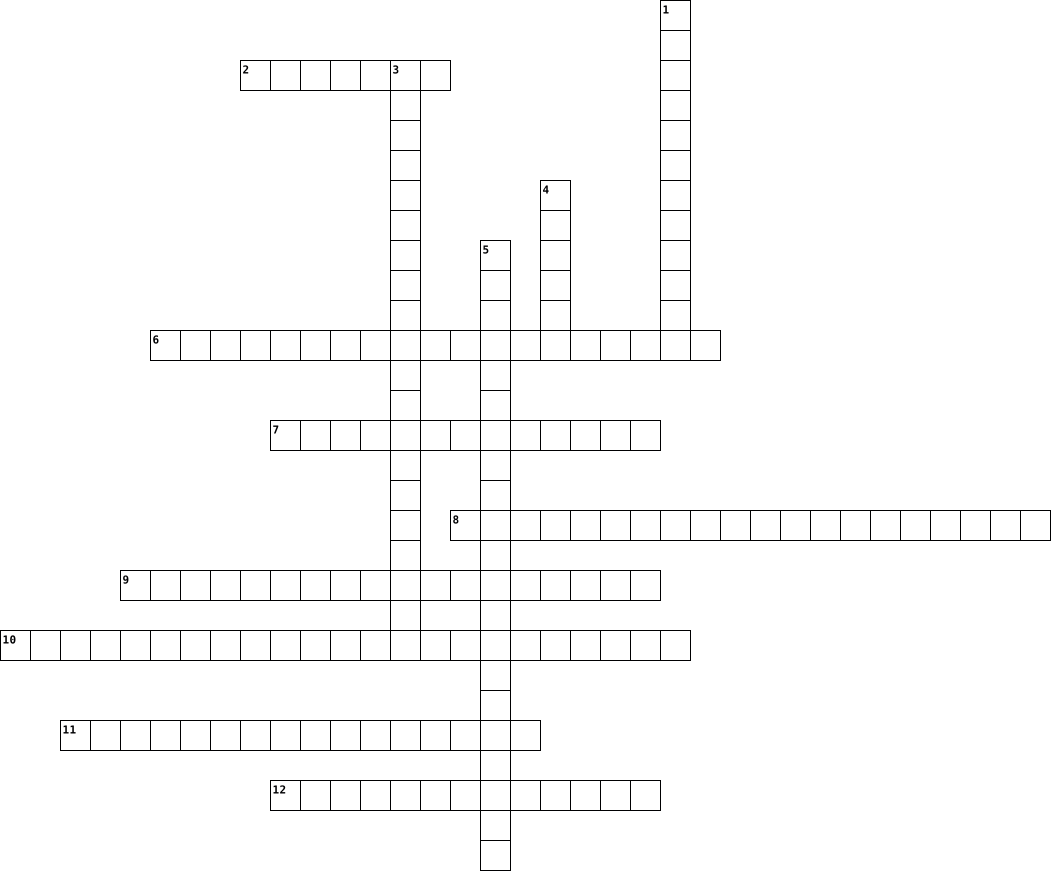
Reproduction in flowering plants 2021-08-20

Across
- _________-like structure that allows the seed to glide along the wind direction.
- dispersal _____ is a process where the seed is thrown far away from the parent plant.
- seed needs_____, ________and ________to grow.
- _____ is a sticky surface for pollen grains land.
- ______ is a process where pollen grains are being transferred from anther to stigma.
- ______holds and support anther.
- ______ protects pollen tube.
- husk ________ traps air so that the seed can float on water.
- ______ becomes a fruit after fertilisation.
- _____ and male part will wither when fertilisation occurs.
Down
- seed grows ________ first to anchor the plant firmly to the ground and absorb water
- _____ is a process where the seed grows into an adult plant.
- ______ is a process where a male cell and a female cell fuses together.
- seed needs_____, ________and ________to grow.
- seed needs_____, ________and ________to grow.
- fruit _____ and is dispersed nearest to the parent plant.
- seed grows _______ so that the plant can make food
- ______contains and protects pollen grains.
- ______ becomes a seed after fertilisation.
- seed has sweet and juicy flesh to ________ animals.
20 Clues: ______ protects pollen tube. • ______holds and support anther. • ______contains and protects pollen grains. • ______ becomes a seed after fertilisation. • ______ becomes a fruit after fertilisation. • seed needs_____, ________and ________to grow. • seed needs_____, ________and ________to grow. • seed needs_____, ________and ________to grow. • ...
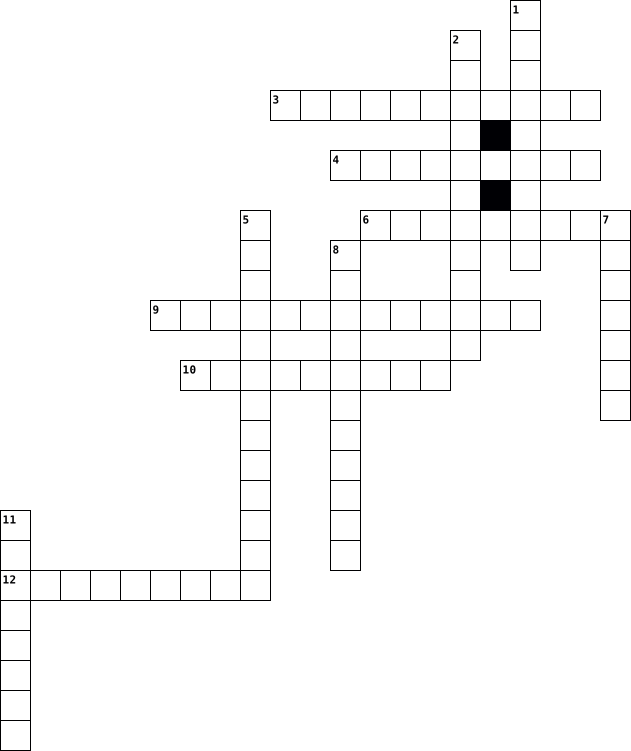
Local Wildlife and Plants 2025-06-01

Across
- Small animal with big ears that like carrots
- bird named after this country
- Tree found along rivers
- Dinosaur fish
- Bambi is a baby what?
- animals that hop on lily pads
- "In North America reindeer are called _____"
- Tree whos wood doesn't rot in water
Down
- Largest water bird in North America
- Fish with red/pink coloured flesh
- Bear without a hump on its back
- Hawk like Bird with a white head
- "Not a chipmunk a _______"
- Animals that hold hands when they sleep
- Animal with long pokey quills
- A berry that tastes like soap
- Bird that makes thumping noises when startled
- Animal with a flat tail
18 Clues: Dinosaur fish • Bambi is a baby what? • Tree found along rivers • Animal with a flat tail • "Not a chipmunk a _______" • bird named after this country • Animal with long pokey quills • A berry that tastes like soap • animals that hop on lily pads • Bear without a hump on its back • Hawk like Bird with a white head • Fish with red/pink coloured flesh • ...
S2 Lesson * 2021-06-11

Across
- to start to grow
- substances fond in food that are healthy
- when seeds start to grow
- a long thin part of some plants that contains seeds
- to stay on top of water
- a small hard piece of something
- to fall or let something fall
- what your body needs to stay healthy
- to make something wet with water
- part of a new plant that just begins to grow
Down
- to keep safe from harm
- grows on a plant and turns to flower or leaf
- the dirt were plants grow
- the transfer of pollen between like plants
- to become ready to eat
- the part of the plant in the ground
- a curved piece of something
- having a good flavor
18 Clues: to start to grow • having a good flavor • to keep safe from harm • to become ready to eat • to stay on top of water • when seeds start to grow • the dirt were plants grow • a curved piece of something • to fall or let something fall • a small hard piece of something • to make something wet with water • the part of the plant in the ground • what your body needs to stay healthy • ...
Food chain and Food web 2022-05-12

Across
- water food chain or web
- a path by which energy passes from one living thing to another
- hunt and gather and store food
- position or function (job) of an organism
- shows how the energy decreases among consumers
- the animals that is captured and then eaten
- animals who only eat plants
- not living
- animal that captures and eats other animals
- animals who only eat meat
Down
- microorganisms who break large particles into smaller ones
- living
- organisms who lives off a host to survive
- a more realistic way of looking at the relationships of plants and animals
- animals who eat plants and meat
- this makes its own food
- organism who supports a parasite
- land food chain or web
18 Clues: living • not living • land food chain or web • water food chain or web • this makes its own food • animals who only eat meat • animals who only eat plants • hunt and gather and store food • animals who eat plants and meat • organism who supports a parasite • organisms who lives off a host to survive • position or function (job) of an organism • ...
Science unit 2 review 2024-12-31

Across
- contains ovules/eggs
- to sprout or grow
- cells that form tubes to transport water throughout a plant
- cone bearing/ evergreens
- rigidity of plants cell walls
- first leaves to form on sprouting plant; seed leaves
- waxy covering to protect plant leaves/reduce water loss
- largest part of the seed; provides stored energy for the embryo
- internal transport system of plant for sugar and minerals
Down
- phylum class includes all moss
- flowering plants
- pollen filled sac on top of stamen
- one large, main root system growing straight down
- another term for conifers
- female reproductive organ of plant
- plant loses leaves in fall
- pigment gives plants green color; necessary for photosynthesis
- male reproductive part of a flower
18 Clues: flowering plants • to sprout or grow • contains ovules/eggs • cone bearing/ evergreens • another term for conifers • plant loses leaves in fall • rigidity of plants cell walls • phylum class includes all moss • pollen filled sac on top of stamen • female reproductive organ of plant • male reproductive part of a flower • one large, main root system growing straight down • ...
new crossword 30_06 2026-05-03

Across
- : Food additive used to improve flavour
- : Plants used to add flavour to food
- : Building used to grow plants in controlled conditions
- : Small balls of ice that fall from the sky
- : Produced without synthetic chemicals
- : Substance added to soil to help plants grow
- : Area where fruit trees are grown
- : Bird raised for its meat and eggs
Down
- : Available only during a particular season
- : Gathering of ripe crops
- : Containing no sugar
- : Pleasant smell, especially of food or coffee
- : Area where flowers or vegetables are grown
- : Birds raised for meat or eggs
- : Chemical used to kill insects or weeds
- : Decayed plant material used to enrich soil
- : Frozen rain falling in small pieces
- : Organism whose genes have been modified
18 Clues: : Containing no sugar • : Gathering of ripe crops • : Birds raised for meat or eggs • : Area where fruit trees are grown • : Bird raised for its meat and eggs • : Plants used to add flavour to food • : Frozen rain falling in small pieces • : Produced without synthetic chemicals • : Food additive used to improve flavour • : Chemical used to kill insects or weeds • ...
agricultural crossword 2025-06-12

Across
- the act of taming an animal.
- the way of restoring and repairing forests/woodland areas.
- when the ground is ploughed but left unsown in furrows.
- the method of
- a water-based way of farming used for fish, mussels and other sea creatures/plants.
- the act of being "fertile".
- when two different plants have a ____ relationship, they work together and help each other to survive.
Down
- prepping the land for crops/gardening.
- a very small organism, like a virus, bacteria or fungus.
- when an area has lots of different plants and animals, it has a lot of ________.
- either a chemical or natural agent added to the soil to help the plants is known as ________.
- man-made ground cover to protect soil/garden beds. usually moist or made of bark chips.
- a method of watering crops or plants to help them grow, generally machine operated and used on a large scale.
- when a product like milk (for example) is left for partial sterilization, especially involving heat treatment.
14 Clues: the method of • the act of being "fertile". • the act of taming an animal. • prepping the land for crops/gardening. • when the ground is ploughed but left unsown in furrows. • a very small organism, like a virus, bacteria or fungus. • the way of restoring and repairing forests/woodland areas. • ...
Crossword 1 2016-09-07

Across
- an underwater plant
- an aquatic plant
- main vein in the centre of a leaf
- process of food-preparing in plants
- substance that gives green colour to leaf
- flytrap an insectivorous plant
Down
- a tree growing on mountain
- simple sugar
- an evergreen tree
- plants that grow on land
- plants that grow in water
- a saprophytic plant
- a desert plant with spines
13 Clues: simple sugar • an aquatic plant • an evergreen tree • an underwater plant • a saprophytic plant • plants that grow on land • plants that grow in water • a tree growing on mountain • a desert plant with spines • flytrap an insectivorous plant • main vein in the centre of a leaf • process of food-preparing in plants • substance that gives green colour to leaf
Plant Classification and Anatomy 2020-02-01

Across
- vascular tissue that forms tubes that transport dissolved sugar throughtout a plant
- species species that break down rock and build up decaying plant material so that other plants can grow
- vascular plants that do not flower, generally have needle like or scale like leaves, and produce seeds that are not protected by fruits
- plant plant with tube like structures that move minerals, water, and other substances throughout the plant
- chemical compound made out of sugar that provides structure and support
- tiny openings in a plant's epidermis through which carbon dioxide, water vapor, and oxygen enter and exit
- angiosperm with two cotyledons inside its seed, flower parts in multiples of four or five, and vascular bundles in rings
- waxy, protective layer that covers the leaves, stems, and flowers of many plants and helps prevent water loss
Down
- vascular tissue that produces xylem and phloem cells as a plant grows
- vascular tissue that forms hollow vessels that transport substances, other than sugar, throughout the plant
- cell pairs of cells that surround stomata and control their opening and closing
- flowering vascular plants that produce fruits containing one or more seeds
- plant plants that absorbs water and other substances directly through its cells wall
- thread like structures that anchor non-vascular plants to the ground
- angiosperm with one cotyledon inside its seed, flower parts in multiples of three, and vascular tissues in bundles scattered throughout the stem
15 Clues: thread like structures that anchor non-vascular plants to the ground • vascular tissue that produces xylem and phloem cells as a plant grows • chemical compound made out of sugar that provides structure and support • flowering vascular plants that produce fruits containing one or more seeds • ...
Plant Classification and Anatomy Terms 2024-03-28

Across
- Angiosperm with one cotyledon inside its seed, flower parts in multiples of three, and vascular tissues in bundles scattered throughout the stem
- Threadlike structures that anchor nonvascular plants to the ground
- Plant with tubelike structures that move minerals, water, and other substances throughout the plant
- Vascular tissue that produces xylem and phloem cells as a plant grows
- Chemical compound made out of sugar that provides structure and support
- Vascular tissue that forms hollow vessels that transport substances, other than sugar, throughout the plant
- Species that break down rock and build up decaying plant material so that other plants can grow
- Vascular tissue that forms tubes that transport dissolved sugar throughtout a plant
Down
- Vascular plants that do not flower, generally have needlelike or scalelike leaves, and produce seeds that are not protected by fruits
- Tiny openings in a plant's epidermis through which carbon dioxide, water vapor, and oxygen enter and exit
- Pairs of cells that surround stomata and control their opening and closing
- Flowering vascular plants that produce fruits containing one or more seeds
- Angiosperm with two cotyledons inside its seed, flower parts in multiples of four or five, and vascular bundles in rings
- Waxy, protective layer that covers the leaves, stems, and flowers of many plants and helps prevent water loss
- Plants that absorbs water and other substances directly through its cells wall
15 Clues: Threadlike structures that anchor nonvascular plants to the ground • Vascular tissue that produces xylem and phloem cells as a plant grows • Chemical compound made out of sugar that provides structure and support • Pairs of cells that surround stomata and control their opening and closing • ...
Photosynthesis(pages 117-119) 2021-01-21

Across
- Plants need food, water, air and this to live and grow
- these move water, minerals, and sugar through the leaf
- leaves, stems, flowers, along with these are the parts of a plant
- gas in the air that plants and animals need
- source of energy for photosynthesis
- gas in hair absorbed by most plants
Down
- food is made in this part of plants
- photosynthesis takes place in this part of the leaf
- process by which plants use air, water, and energy from the sun to make food
- food made by plants in process called photosynthesis
10 Clues: food is made in this part of plants • source of energy for photosynthesis • gas in hair absorbed by most plants • gas in the air that plants and animals need • photosynthesis takes place in this part of the leaf • food made by plants in process called photosynthesis • Plants need food, water, air and this to live and grow • ...
Light 2022-10-20

Across
- a plants response to light duration/length
- What wavelengths are measured in
- long day plants
- measurement of light
Down
- The process where light is used for energy
- how we organize light
- appears green
- day neutral plants
- appears purple or red
- short day plants
10 Clues: appears green • long day plants • short day plants • day neutral plants • measurement of light • how we organize light • appears purple or red • What wavelengths are measured in • The process where light is used for energy • a plants response to light duration/length
Gotong Royong 2023-09-25

Across
- tidying up
- watering (the plants)
- floor
- table
- book
- dish
Down
- plants
- washing (the dishes)
- mopping (the floor)
- pushing (the chair)
- toys
- sweeping (the floor)
- chair
13 Clues: toys • book • dish • floor • table • chair • plants • tidying up • mopping (the floor) • pushing (the chair) • washing (the dishes) • sweeping (the floor) • watering (the plants)
Horticulture Soils and Media 2023-12-05

Across
- Decayed remains of plant and animals.
- Heat treated Mica that holds moisture.
- Essential elements for plant growth.
- Large particle
- Ranks just behind nitrogen in the amount needed for plants.
- Helps plants hold and transfer energy.
- Top layer of the earths crust.
- Application of fertilizers through an irrigation system
- Key element in growing vegetative plant tissue.
Down
- Most important nutrients for plant growth.
- Act of adding plant nutrients to soil or growing medium
- Small particle
- structure Physical arrangement of soil particles.
- Movement of atmospheric air into the soil.
- When soil is compressed into a dense mass.
- Growing plants in a nutrient solution.
- Volcanic material that provides drainage and aeration.
- Medium particle
- Any material used to provide the nutrients a plant needs.
19 Clues: Small particle • Large particle • Medium particle • Top layer of the earths crust. • Essential elements for plant growth. • Decayed remains of plant and animals. • Heat treated Mica that holds moisture. • Growing plants in a nutrient solution. • Helps plants hold and transfer energy. • Most important nutrients for plant growth. • Movement of atmospheric air into the soil. • ...
Food Chain Review 2024-04-21

Across
- Level The position an organism occupies in a food chain or energy pyramid, determined by its feeding relationships.
- Organisms that eat other organisms for energy.
- An animal that hunts and kills other animals for food.
- An animal that eats only other animals.
- Consumer An organism that feeds on primary consumers.
- An animal that is hunted and eaten by other animals.
- Chain A series of organisms, each dependent on the next as a source of food.
- An animal that eats only plants.
- Predator A predator at the top of a food chain, not typically preyed upon by other animals in the ecosystem.
Down
- Consumer An organism that feeds directly on producers (plants).
- Web A network of interconnected food chains showing the flow of energy through an ecosystem.
- Consumer An organism that feeds on secondary consumers.
- Organisms, like bacteria and fungi, that break down dead plants and animals into simpler substances, returning nutrients to the soil.
- Organisms, usually plants, that make their own food through photosynthesis.
- Pyramid A graphical representation of the trophic levels in an ecosystem, showing the flow of energy from one level to another.
- An animal that eats both plants and animals.
16 Clues: An animal that eats only plants. • An animal that eats only other animals. • An animal that eats both plants and animals. • Organisms that eat other organisms for energy. • An animal that is hunted and eaten by other animals. • Consumer An organism that feeds on primary consumers. • An animal that hunts and kills other animals for food. • ...
deforestation 2022-06-21

Across
- humans burn this which makes carbon dioxide go into the atmosphere.
- Tropical deforestation causes 20% of the world’s __________emision.
- Deforestation is _______ destroying forests.
- we pump waste into the ocean threatening this sphere.
- Dioxide This thing is pulled from the air when plants do photosynthesis.
- The atmosphere brings the hydrosphere water up for precipitation. These things also help the water cycle.
Down
- Through this process, plants convert the sunlight, carbon dioxide and water into food for itself.
- when plants are _____ the carbon moves up the food chain and gets transferred.
- if one of the four major spheres does this, the rest will also be affected.
- humans overfishing, destroying habitats and over hunting effects this sphere.
- humans pile up a lot of trash in the land affecting this earth sphere.
- 25% of the atmosphere carbon dioxide from burnt fossil fuels are absorbed by certain area of _____
- Through this process humans can put carbon dioxide into the atmosphere.
- When plants do this, the carbon from them can go back into the ground.
- this thing can take in some of the carbon dioxide exhaled for photosynthesis.
15 Clues: Deforestation is _______ destroying forests. • we pump waste into the ocean threatening this sphere. • humans burn this which makes carbon dioxide go into the atmosphere. • Tropical deforestation causes 20% of the world’s __________emision. • humans pile up a lot of trash in the land affecting this earth sphere. • ...
Ecosystems 5.1 OpenSE 2025-11-10

Across
- an animal that eats only other animals
- changes in an organism that make it better able to live in a particular place or situation
- an animal that eats only plants and plant products
- an animal that eats both plants and animals
- a community that includes all the living and nonliving things found in a certain area
- a living thing
Down
- the natural home of an animal, plant, or other organism
- the path of energy from one organism to another
- anything that takes up space and can be measured by its weight or mass
- this is formed by overlapping food chains; it shows different pathways for the flow of energy in an ecosystem
- the process that plants go through to make their own food using light energy from the sun, water, carbon dioxide, and chlorophyll
- an organism that can make its own food through the process of photosynthesis
- an organism that feeds on dead plants and animals
- an organism that feeds on other organisms because it cannot make its own food
- a large community of plants and animals that occupies a distinct region.
15 Clues: a living thing • an animal that eats only other animals • an animal that eats both plants and animals • the path of energy from one organism to another • an organism that feeds on dead plants and animals • an animal that eats only plants and plant products • the natural home of an animal, plant, or other organism • ...
Module 1 vocaB 2022-02-07

Across
- flowering plants
- plants capable of making their own food through photosynthesis
- decaying organic matter
- plants with naked seeds
- land plants
Down
- plants and algae use solar energy to convert CO2 into H2O
- organisms that recycle nutrients into the environment
- the study of periodic life cycle events in plants and animals
- plants with seeds enclosed in the fruit
- fungi reproductive structures
10 Clues: land plants • flowering plants • decaying organic matter • plants with naked seeds • fungi reproductive structures • plants with seeds enclosed in the fruit • organisms that recycle nutrients into the environment • plants and algae use solar energy to convert CO2 into H2O • the study of periodic life cycle events in plants and animals • ...
7C Ecology Revision 2013-03-06

Across
- An animal that catches and eats other animals.
- An animal that only eats other animals.
- An organism that has to eat other organisms to stay alive.
- Small areas of a habitat with certain conditions (e.g. under a log in a woodland habitat.)
- an organism that can make its own food (e.g. plants).
- The conditions around a certain organism caused by environmental factors.
- A way of showing what eats what in a habitat.
- The place an organism lives in (e.g. woodland).
Down
- Something that eats dead plants.
- an animal that is caught and eaten by another animal.
- An animal that only eats plants.
- The features that plants and animals have to help them live in a particular place.
- Many food chains linked together.
- When animals hide during winter and go to sleep.
- When something has certain features to do a particular function.
- Organisms that are active at night.
- Organisms that are active at night.
- Organism that lives in or on another living thing (its host). and gets its food from its host.
18 Clues: Something that eats dead plants. • An animal that only eats plants. • Many food chains linked together. • Organisms that are active at night. • Organisms that are active at night. • An animal that only eats other animals. • A way of showing what eats what in a habitat. • An animal that catches and eats other animals. • The place an organism lives in (e.g. woodland). • ...
math, animals, and plants 2021-05-10

Across
- looks like a small lobster
- distance around the perimeter of a circle
- sea creature called calamare In Italian and Spanish
- a dot or point between two numbers
- has three sides and three angles or corners
- part of a plant grows underground and usually orange
- two times seven
- an tiny animal the makes webs
Down
- has an 10x ocular lens and helps to see small things
- a set of twelve like eggs in a carton
- the shape of a can and also starts with letter C
- has a birthday on May 24th
- four sided
- shape of a ball but starts with letter S
- fruit used to make spaghetti sauce
- has a brother named Chris at Lincoln school
- flower that smells nice and red in popular
- has eight arms and lives in the sea
18 Clues: four sided • two times seven • looks like a small lobster • has a birthday on May 24th • an tiny animal the makes webs • a dot or point between two numbers • fruit used to make spaghetti sauce • has eight arms and lives in the sea • a set of twelve like eggs in a carton • shape of a ball but starts with letter S • distance around the perimeter of a circle • ...
Shoot System in Plants 2023-09-24

Across
- Plant food produced during photosynthesis.
- Plants with soft, weak stems and have tendrils that twist around for support.
- the green pigment of the leaves
- It is formed from the plant’s flower; It carries and protects the seeds inside it.
- Part of the plant that supports the plant above the ground and holds the leaves, buds, flowers, and fruits.
- thick, Type of plant with hard trunks to hold them up.
- A kind of gas we breathe, produced during photosynthesis.
- They grow into new plants when the right conditions are met.
- Type of plant with thin wood stems growing near the ground, such as sampaguita and gumamela.
Down
- Type of stem bamboo and kangkong have easy water transport from roots to the leaves.
- Part of a leaf that connects the leaf blade to the stem to bring water and minerals to the its veins.
- Parts of a leaf that lets it breathe, gives out excess water, and allows carbon dioxide to enter the plant.
- Plants with green and soft stems
- the “food factory” of a plant
- Plants that crawl along the ground as they grow, like watermelon and squash.
- The reproductive parts of a plant and contain seeds.
- They cover the stems of sunflowers and daisies for protection
- What roses and bougainvillea have on their stems for protection
18 Clues: the “food factory” of a plant • the green pigment of the leaves • Plants with green and soft stems • Plant food produced during photosynthesis. • The reproductive parts of a plant and contain seeds. • thick, Type of plant with hard trunks to hold them up. • A kind of gas we breathe, produced during photosynthesis. • ...
Cows Ted talk 2023-09-22

Across
- these have a trunk, leaves,and branches
- many things are made of this
- nutrient filled dirt
- these are migratory animals that used to be hunted
- this thing makes leaves and plants green
- the study of organisms in relation to their surroundings
- the sun makes these
- this grows out of the ground
Down
- putting this in the soil makes certain things grow faster or healthier
- light into energy
- people or animals go very far
- humans breathe this
- this woodland biome has many trees
- these eat plants
- these grow into plants
15 Clues: these eat plants • light into energy • humans breathe this • the sun makes these • nutrient filled dirt • these grow into plants • many things are made of this • this grows out of the ground • people or animals go very far • this woodland biome has many trees • these have a trunk, leaves,and branches • this thing makes leaves and plants green • ...
7th Review Module 2 2021-10-04

Across
- long periods of freezing weather
- people who hunt animals or wild plants
- handheld object that has been modified
- relative who lived in the past
- development of farming from domestic plants
- stones used for religious gatherings/ monuments
- process of changing plants and animals
- community of people who share a common culture
Down
- middle part of the Stone Age
- the first part of the Stone Ages
- the New Stone Age
- strip of land connecting two continents
- early ancestor of humans
- time before there was writing
- to move to a new place
15 Clues: the New Stone Age • to move to a new place • early ancestor of humans • middle part of the Stone Age • time before there was writing • relative who lived in the past • the first part of the Stone Ages • long periods of freezing weather • people who hunt animals or wild plants • handheld object that has been modified • process of changing plants and animals • ...
companion planting 2025-11-14

Across
- an unwanted plant
- the amount of crop produced
- to help or be useful to something
- a gas in the air that plants need
- small round green seeds
- the ground where plants grow
- a type of grain grown with hay
- a living thing that grows in soil
Down
- to become bigger or healthier
- dried grass used for animals
- to let something out
- to act together or affect each other
- a type of legume plant
- an insect that harms plants
- to keep something safe
15 Clues: an unwanted plant • to let something out • a type of legume plant • to keep something safe • small round green seeds • the amount of crop produced • an insect that harms plants • dried grass used for animals • the ground where plants grow • to become bigger or healthier • a type of grain grown with hay • to help or be useful to something • a gas in the air that plants need • ...
Memory Cafe 3/12 - Spring 2026-02-06

Across
- – A colorful insect seen in spring
- – Popular spring flowers
- – Spring weather that helps plants grow
- – A light spring wind
- – Colorful plants that bloom in spring
- – The season after winter
- – A holiday often celebrated in spring
- – An outdoor meal enjoyed in nice weather
Down
- – Bright light from the sun
- – When a flower opens
- – A place where plants and flowers grow
- – Yellow flowers that bloom early in spring
- – Sounds birds make in the morning
- – How spring air often feels
- – The color of new grass and leaves
15 Clues: – When a flower opens • – A light spring wind • – Popular spring flowers • – The season after winter • – Bright light from the sun • – How spring air often feels • – A colorful insect seen in spring • – Sounds birds make in the morning • – The color of new grass and leaves • – Colorful plants that bloom in spring • – A holiday often celebrated in spring • ...
11GEO FORESTS - Anniemay Parker 2015-05-26

Across
- any form of liquid or solid water particles that fall from the atmosphere and reach the surface of the earth
- the process of how carbon moves in a forest
- forests characterised by dense upper canopies
- a relationship between 2 species of organisms which both benefit from pairing up
- the process by which moisture is carried through plants and changes into water vapour
- the process where nitrogen is converted between numerous chemical forms
- all trees in an area are removed
- dead and decaying animal substances
- rivalry between different organisms
Down
- forests characterised by low rainfall and less fertile soil
- the cutting out of trees that are mature or defective.
- the upper layer of earth which plants grow
- controls the distribution of plants
- the starting point of all life
- involves the circulation of water in the forest and out
- when plants lose leaves to save water loss
- the process of organisms taking in oxygen and releasing CO2
- an organism or animal which hunts or searches for food and dominates others
18 Clues: the starting point of all life • all trees in an area are removed • controls the distribution of plants • dead and decaying animal substances • rivalry between different organisms • the upper layer of earth which plants grow • when plants lose leaves to save water loss • the process of how carbon moves in a forest • forests characterised by dense upper canopies • ...
Horticulture Career crossword 2022-11-08

Across
- Responsible for reproducing all plants needed for growing into salable size products.
- Ensures optimal plant growth while maintaining soil health.
- Improves the quality of environment and your life through plants.
- - Wine maker.
- A belief that nature is inherently valuable in and of itself.
- Develops plan for the planted area around homes and small commercial buildings.
- Responsible for determining that plants are insect free.
- Licensed professional that advises growers about appropriate chemicals to control pests.
- Responsible for planting, scheduling, monitoring crop growth, supervising pest and disease control, and supervising harvest.
- This grower produces this tree around the holidays in December.
Down
- Caretaker for large trees.
- Produces drawings for photos or books, catalogs, plant care tags, and magazines.
- Assists customers in selecting the right plants to suit the growing conditions around their homes.
- Produces the pictures seen in garden magazines.
- Diagnostician of plant problems.
- Integrates knowledge of weed control, disease, insect problems to ensure plant health.
- To serve our clients with integrity, knowledge, and creative ability.
- branch of horticulture dealing with lawns.
18 Clues: - Wine maker. • Caretaker for large trees. • Diagnostician of plant problems. • branch of horticulture dealing with lawns. • Produces the pictures seen in garden magazines. • Responsible for determining that plants are insect free. • Ensures optimal plant growth while maintaining soil health. • A belief that nature is inherently valuable in and of itself. • ...
Human Impact 2024-01-02

Across
- Humans and animals breath this in
- Humans and other living things depend on clean
- the cultivation of plants and animals for food, medicine or other products.
- clearing large areas of natural land to build housing or farmland for human use.
- the extraction of minerals, metals, and natural resources from the ground.
- the mass production of synthetic products from natural resources.
- the amount of plants or animals living in a geographically defined area
- resources that can be regenerated through biological or chemical processes
- the process of converting natural habitats into cities and towns.
- the process of converting wild animals into tame.
- resources with a finite amount. Once they are used up, they are gone forever.
Down
- the clearing of forests to make land for agriculture, building supplies, or housing.
- can be a food source, help with work, provide transportation, and food.
- nonrenewable energy sources that humans rely on.
- when plants or animals are accidentally or purposefully moved to a new environment.
- harms the environment.
- precipitation that is more acidic than normal
- All animals depend on these to provide them with food.
18 Clues: harms the environment. • Humans and animals breath this in • precipitation that is more acidic than normal • Humans and other living things depend on clean • nonrenewable energy sources that humans rely on. • the process of converting wild animals into tame. • All animals depend on these to provide them with food. • ...
Photosynthesis + Biology 2025-07-02

Across
- Also known as the light-dependent reaction.
- An organism that creates its own food. A producer.
- A stack of these is called a granum. Where sun light is being absorbed.
- The organelle responsible for photosynthesis.
- Something that can help with the result. Speed up or slow down a reaction.
- An organism that eats producers. A consumer.
- A type of sugar, and the food for plants and other organisms.
Down
- A liquid taken up by plant roots in the soil.
- Gas that is taken by plants, to create food. CO2
- A green pigment, that helps plants absorb energy
- The acronym for adenosine triphosphate. An energy molecule.
- A type of cell found in the leaf, lots of organelles for creating food.
- The theory that organelles, were once prokaryotic cells.
- A plant that lives in the water and is also unicellular.
- A chemical reaction that uses light, for plants to make food.
- A waste product after creating food, used for other organisms.
- The study of living things.
- A star that provides light energy to organisms on Earth.
18 Clues: The study of living things. • Also known as the light-dependent reaction. • An organism that eats producers. A consumer. • A liquid taken up by plant roots in the soil. • The organelle responsible for photosynthesis. • Gas that is taken by plants, to create food. CO2 • A green pigment, that helps plants absorb energy • An organism that creates its own food. A producer. • ...
Photosynthesis + Biology 2025-07-02

Across
- Also known as the light-dependent reaction.
- An organism that creates its own food. A producer.
- A stack of these is called a granum. Where sun light is being absorbed.
- The organelle responsible for photosynthesis.
- Something that can help with the result. Speed up or slow down a reaction.
- An organism that eats producers. A consumer.
- A type of sugar, and the food for plants and other organisms.
Down
- A liquid taken up by plant roots in the soil.
- Gas that is taken by plants, to create food. CO2
- A green pigment, that helps plants absorb energy
- The acronym for adenosine triphosphate. An energy molecule.
- A type of cell found in the leaf, lots of organelles for creating food.
- The theory that organelles, were once prokaryotic cells.
- A plant that lives in the water and is also unicellular.
- A chemical reaction that uses light, for plants to make food.
- A waste product after creating food, used for other organisms.
- The study of living things.
- A star that provides light energy to organisms on Earth.
18 Clues: The study of living things. • Also known as the light-dependent reaction. • An organism that eats producers. A consumer. • A liquid taken up by plant roots in the soil. • The organelle responsible for photosynthesis. • Gas that is taken by plants, to create food. CO2 • A green pigment, that helps plants absorb energy • An organism that creates its own food. A producer. • ...
Biology Puzzle 2026-01-11

Across
- What gas do plants take in during photosynthesis?
- What do we call living things that make their own food?
- What do we call the place where an organism lives?
- What do we call the group of organs working together?
- How do we call animals that eat both plants and meat?
- What do we call the process of breathing in and out?
- What is the smallest living unit of life?
- What process do plants use to make their own food?
Down
- What do we call animals that eat only meat?
- What do we call the movement of blood in the body?
- What do we call animals that eat only plants?
- What do we call all living things?
- What green part of a plant helps it make food?
- What part of the plant absorbs water from the soil?
- What sense do we use to see?
- What part of the cell controls its activities?
- What do we call living things that eat other organisms?
- What gas do humans and animals breathe in?
18 Clues: What sense do we use to see? • What do we call all living things? • What is the smallest living unit of life? • What gas do humans and animals breathe in? • What do we call animals that eat only meat? • What do we call animals that eat only plants? • What green part of a plant helps it make food? • What part of the cell controls its activities? • ...
Plant life 2024-11-09

Across
- Energy source
- Contains seeds
- Colorful part
- Green pigment
- Attracts bees
- Released by plants
- Supports plant
- Essential for growth
Down
- Plant medium
- Tiny leaf pores
- Absorbs water
- Helps in reproduction
- Green, makes food
- Makes food process
- Grows new plants
15 Clues: Plant medium • Energy source • Absorbs water • Colorful part • Green pigment • Attracts bees • Contains seeds • Supports plant • Tiny leaf pores • Grows new plants • Green, makes food • Makes food process • Released by plants • Essential for growth • Helps in reproduction
Gardening made Easy 2013-09-09

Across
- where the seeds make their home
- the main source of energy for plants
- the colorful parts of the plant that attract pollinators
- a place where we plant and grow lots of plants
- carrots potatoes beets
Down
- usually the green parts coming from the stem
- what the plants need to eat
- the plants need this when they are thirsty
- the baby stage of a plant
- what all plants produce
10 Clues: carrots potatoes beets • what all plants produce • the baby stage of a plant • what the plants need to eat • where the seeds make their home • the main source of energy for plants • the plants need this when they are thirsty • usually the green parts coming from the stem • a place where we plant and grow lots of plants • ...
Amoeba Sisters Video 2025-11-24

Across
- waxy layer on leaves that prevents water loss
- vascular tissue that transports sugars
- process by which plants make their own food
- plants that produce seeds in cones
- plants that produce flowers and fruits
- plants without vascular tissue
Down
- pigment that captures light energy for photosynthesis
- vascular tissue that transports water and minerals
- vascular plants with vascular tissue but no seeds
- opening on leaves that allows for gas exchange
10 Clues: plants without vascular tissue • plants that produce seeds in cones • vascular tissue that transports sugars • plants that produce flowers and fruits • process by which plants make their own food • waxy layer on leaves that prevents water loss • opening on leaves that allows for gas exchange • vascular plants with vascular tissue but no seeds • ...
MRS C GREN 2013-08-27

Across
- Response to your 5 senses
- Plants main respirtaion
- Main respiration in humans
- When you lose sensitivity
- A type of movement
Down
- A main nutrient
- One of your 5 senses
- A type of excretion
- Another type of movement
- Plants growing with gravity
- When plants grow towards light
- Get bigger over time
12 Clues: A main nutrient • A type of movement • A type of excretion • One of your 5 senses • Get bigger over time • Plants main respirtaion • Another type of movement • Response to your 5 senses • When you lose sensitivity • Main respiration in humans • Plants growing with gravity • When plants grow towards light
Plant Science (Botany) 2024-04-18

Across
- type of cell found in plants
- Plants on energy pyramid
- attracts pollinators
- part of stamen
- site of most photosynthesis
Down
- how plants make food
- female half of a seed
- type of predator
- male half of a seed
- pollen fertilizing ovule
- Reproductive part of a plant
- Part of pistil between stigma and ovary
12 Clues: part of stamen • type of predator • male half of a seed • how plants make food • attracts pollinators • female half of a seed • Plants on energy pyramid • pollen fertilizing ovule • site of most photosynthesis • type of cell found in plants • Reproductive part of a plant • Part of pistil between stigma and ovary
vocabulary 2023-06-21

Across
- what it is above everything
- a place where plants and some animals grow and live.
- a liquid that all animals and plants need to live
- a type of plant that grows in the forest
- the opposite of warm
- a habitat that is also called a rain forest
- a synonym of wet
- animals that can live in any habitat.
- the jungle sare near this invisible line
Down
- what covers the body of animals
- the part of a plant that is under the ground
- the opposite of wet
- the opposite of thin
- to give
- in the ocean we can´t find these.
- the opposite of shallow
- plants that grow in the ocean
- the water in oceans
- the opposite of cold
19 Clues: to give • a synonym of wet • the opposite of wet • the water in oceans • the opposite of thin • the opposite of warm • the opposite of cold • the opposite of shallow • what it is above everything • plants that grow in the ocean • what covers the body of animals • in the ocean we can´t find these. • animals that can live in any habitat. • a type of plant that grows in the forest • ...
Environmental Science Vocabulary 2024-02-01

Across
- would become over-populated if the fourth tropic level disappeared
- an organism that eats other organisms
- Consumes other organisms
- Consumes meat and plants
- Consumes plants only
- growth that stops once carrying capacity is reached
- when organisms leave a habitat it's called
- No limiting factors causes
- also known as a producer
Down
- dictates where an organism should be in the food web
- Breaks down organic material
- the maximum amount of life a habitat can support
- Damages to this trophic level can cause the whole ecosystem to collapse
- Individuals moving into an ecosystem
- biotic and abiotic factors that stop the population from increasing
- consumes only plants
- occupy to top of the trophic level pyramid
- creates conditions for natural selection to take place
- Abiotic limiting factor
19 Clues: consumes only plants • Consumes plants only • Abiotic limiting factor • Consumes other organisms • Consumes meat and plants • also known as a producer • No limiting factors causes • Breaks down organic material • Individuals moving into an ecosystem • an organism that eats other organisms • occupy to top of the trophic level pyramid • when organisms leave a habitat it's called • ...
Unit 3 Vocabulary- 5th 2024-03-11

Across
- you keep it until it is needed
- animal that eats other animals
- makes things
- to move from one place to another
- individuals that work together and share results
Down
- to work together
- sequence in which plants and animals feed on the one below it
- eats plants or animals
- an animal that eats only plants
- important or necessary
- animals that eats both plants and meat
11 Clues: makes things • to work together • eats plants or animals • important or necessary • you keep it until it is needed • animal that eats other animals • an animal that eats only plants • to move from one place to another • animals that eats both plants and meat • individuals that work together and share results • sequence in which plants and animals feed on the one below it
Plant Science 2021-02-09

Across
- a plant category of large woody plants like trees and shrubs
- the part of the plant that helps with pollination
- the type of plant use that uses plants as they are either fresh, cooked, or baked into something
- a category of plants that is grown large scale like silage corn, rice, and wheat
- the part of the plant that transports nutrients to the rest of the plant and stabilizes the plant body
- the part of the plant where sunlight is converted into usable energy
Down
- the vascular tissue that transports water and nutrients up the plant from the roots
- when plants are fed to livestock and we harvest the livestock for meat or for their products
- small strings along roots that increase root surface area
- the study of the structure, function, growth, and protection of plants
- the part of the plant that absorbs water and nutrients
- the vascular tissue that transports energy from the leaves down to the rest of the plant
- a category of plants that is mainly fruits and vegetables
13 Clues: the part of the plant that helps with pollination • the part of the plant that absorbs water and nutrients • small strings along roots that increase root surface area • a category of plants that is mainly fruits and vegetables • a plant category of large woody plants like trees and shrubs • the part of the plant where sunlight is converted into usable energy • ...
Chayse Doerr Biology 2 Gymnosperm Vocab 2017-12-07

Across
- each of the microscopic particles, typically single cells, of which pollen is composed
- an embryonic plant enclosed in a protective outer covering
- a group of seed-producing plants that includes conifers, cycads, Ginkgo, and gnetophytes
- a small group of gymnospermous vascular plants that are represented by three living genera: Ephedra, Gnetum, and Welwitschia
- the central part of an ovule, containing the embryo sac
- seed plants with a long fossil history that were formerly more abundant and more diverse than they are today. They typically have a stout and woody trunk with a crown of large, hard and stiff, evergreen leaves
Down
- a tough outer protective layer
- also known as Coniferophyta or Coniferae, or commonly as conifers, are a division of vascular land plants containing a single class, Pinopsida. They are gymnosperms, cone-bearing seed plants
- a leaf that bears sporangia
- "solid or highly viscous substance" of plant or synthetic origin that is typically convertible into polymers
- monotypic genus of highly unusual non-flowering plants
- the protective outer coat of a seed
- having the male and female reproductive organs in separate individuals
13 Clues: a leaf that bears sporangia • a tough outer protective layer • the protective outer coat of a seed • monotypic genus of highly unusual non-flowering plants • the central part of an ovule, containing the embryo sac • an embryonic plant enclosed in a protective outer covering • having the male and female reproductive organs in separate individuals • ...
Support Ecological Restoration-Weeds 2023-03-25

Across
- Small plants with a non-woody stem
- To remove weeds by hand
- Thin weak stemmed plant that climbs up other objects to grow
- Botanical name for Tropical Wild Petunia
- A plant growing where you don't want it
- Knapsak chemical application is a form of?
- Botanical name for Camphor Laurel
- Tall perennial plants, with a single woody stem or trunk
- Species name for Lantana
Down
- Botanical name for Blue Billy Goat Weed
- Botanical name for Maderia Vine
- Botanical name for Ornamental Ginger
- Weeds displace many
- Medium bushy plants with multiple woody stems
- Botanical name for Coral Berry
- Botanical name for Easter Cassia
- Botanical name for Cats Claw Creepe
- Species name for Syngonium
18 Clues: Weeds displace many • To remove weeds by hand • Species name for Lantana • Species name for Syngonium • Botanical name for Coral Berry • Botanical name for Maderia Vine • Botanical name for Easter Cassia • Botanical name for Camphor Laurel • Small plants with a non-woody stem • Botanical name for Cats Claw Creepe • Botanical name for Ornamental Ginger • ...
Ecology Crossword 2023-05-30

Across
- Sun energy
- A meat and plant eater
- Also found in the Earth, plants use it, animals release it in fecal matter
- The relationship between 2 organisms
- A plant eater
- Air energy
- An H2O cycle
- Atomic number 6 on the Periodic Table
- Plant energy
- Rock energy
Down
- (2 words, no spaces) Plants use this for photosynthesis
- (2 words, no space) Relates to resources that can be used to power machines instead of fossil fuels
- (2 words, no space) Relates to elements and compounds that the Earth renews
- Relating to "food"
- Water energy
- The study of the interactions between animals and their environment
- A meat eater
- Found in the Earth, plants use it, animals release it in fecal matter
18 Clues: Sun energy • Air energy • Rock energy • Water energy • An H2O cycle • A meat eater • Plant energy • A plant eater • Relating to "food" • A meat and plant eater • The relationship between 2 organisms • Atomic number 6 on the Periodic Table • (2 words, no spaces) Plants use this for photosynthesis • The study of the interactions between animals and their environment • ...
Science Review 2022-12-14

Across
- A process all plants go through
- Any animal that carries pollen
- Used for energy and found in Virginia
- E in a CER
- The living and nonliving things that interact within a given area
- C in a CER
- The female part of the flower
- Surface water flowing to a collection place
- Land that can be used for crops
- Trees in an area not made by man
Down
- R in a CER
- Natural or artificial lake used as water supply
- Sugar that plants make
- Little green particles in plants
- Trees in an area planted by man
- Contains pollen sacs
- The male part of a flower
- All of the members of a single species in the same geographical area
18 Clues: R in a CER • E in a CER • C in a CER • Contains pollen sacs • Sugar that plants make • The male part of a flower • The female part of the flower • Any animal that carries pollen • A process all plants go through • Trees in an area planted by man • Land that can be used for crops • Little green particles in plants • Trees in an area not made by man • Used for energy and found in Virginia • ...
Science 2025-02-13

Across
- Energy from the sun
- power energy from the wind
- An animal that eat both plants and meat
- The instrument used to measure temperature.
- Flying mammal
- An area where living things and Non living things interact
- A process by which plants make their own food
- Illegal mining
- A form of energy which flows due to temperature differences
Down
- Has a trunk
- organisms that create food from inorganic matter
- A place we can find lions and giraffes
- The natural home of organisms
- organisms that eat only plants
- Terrestrial and
- Measure of the hotness or coldness of a body
- Likes to chase mice
- A large area of land filled with animals and covered with trees
18 Clues: Has a trunk • Flying mammal • Illegal mining • Terrestrial and • Energy from the sun • Likes to chase mice • power energy from the wind • The natural home of organisms • organisms that eat only plants • A place we can find lions and giraffes • An animal that eat both plants and meat • The instrument used to measure temperature. • Measure of the hotness or coldness of a body • ...
EP 5 Cover 2025-11-17

Across
- — Common white-petaled garden flower.
- — Flat and green during the summer, they captures sunlight.
- — To draw in (as scent or color might do).
- — Small undeveloped flower or shoot.
- — Colorful parts that surround a flower’s center.
- — Energy from the sun used for photosynthesis.
- — Tiny single-celled organisms, some helpful, some harmful.
- — Sharp protective points on a stem.
- — To transfer pollen and fertilize a flower.
- — The colorful part of a plant.
Down
- — What bright petals often do to pollinators.
- — Underground part that absorbs water.
- — Change over time to survive (verb).
- — Substances plants take from soil to grow.
- — Method carnivorous plants use to catch prey.
- — Plant part that supports leaves and flowers.
- — Small creature with antennae and an exoskeleton.
- — Ground material where plants grow.
- — Plant with a long, climbing stem.
19 Clues: — The colorful part of a plant. • — Plant with a long, climbing stem. • — Small undeveloped flower or shoot. • — Sharp protective points on a stem. • — Ground material where plants grow. • — Common white-petaled garden flower. • — Change over time to survive (verb). • — Underground part that absorbs water. • — To draw in (as scent or color might do). • ...
Plant reproduction 2026-02-25

Across
- Plant need it to continue to grow
- ... plants are adapted to extreme cold
- ... are enclosed inside the fruit
- Best pollinator
- Pollen transferred from anther of one flower to stigma of another
- ... plant live only in water
- Cross pollination makes ... plants
- Begin to grow
- An organism that can take seeds to another location
Down
- Energy from the sun gets taken in through ...
- A special underground stem
- New plants made from one or more parent plant
- Something sweet flowers give to insects
- Part of a flower that produces pollen
- Pollen transferred form anther to stigma of same flower
- Animals don't ... seeds
- Pollen is usually this colour
- Produces pollen
- This characteristic of pollen lets it sit on insects
19 Clues: Begin to grow • Best pollinator • Produces pollen • Animals don't ... seeds • A special underground stem • ... plant live only in water • Pollen is usually this colour • Plant need it to continue to grow • ... are enclosed inside the fruit • Cross pollination makes ... plants • Part of a flower that produces pollen • ... plants are adapted to extreme cold • ...
Dessert 2022-12-07

Across
- angiosperm with one cotyledon inside its seed, flower parts in multiples of three, and vascular tissues in bundles scattered throughout the stem
- chemical compound made out of sugar that provides structure and support
- plants that absorbs water and other substances directly through its cells wall
- vascular plants that do not flower, generally have needlelike or scalelike leaves, and produce seeds that are not protected by fruits
- species that break down rock and build up decaying plant material so that other plants can grow
- vascular tissue that forms tubes that transport dissolved sugar throughtout a
Down
- pairs of cells that surround stomata and control their opening and closing
- plant with tubelike structures that move minerals, water, and other substances throughout the plant
- waxy, protective layer that covers the leaves, stems, and flowers of many plants and helps prevent water loss
- tiny openings in a plant's epidermis through which carbon dioxide, water vapor, and oxygen enter and exit
- threadlike structures that anchor nonvascular plants to the ground
- angiosperm with two cotyledons inside its seed, flower parts in multiples of four or five, and vascular bundles in rings
- vascular tissue that forms hollow vessels that transport substances, other than sugar, throughout the plant
- flowering vascular plants that produce fruits containing one or more seeds
- vascular tissue that produces xylem and phloem cells as a plant grows
15 Clues: threadlike structures that anchor nonvascular plants to the ground • vascular tissue that produces xylem and phloem cells as a plant grows • chemical compound made out of sugar that provides structure and support • pairs of cells that surround stomata and control their opening and closing • ...
Pests and diseases 2024-08-24

Across
- Personal protective equipment worn when handling pesticides or working with infected plants.
- Lay eggs on the underside of leaves and excrete a sticky substance called honeydew.
- Nocturnal pests that feed on plant leaves and hide during the day.
- Larva of moths or butterflies, known for being very hungry and damaging plants.
Down
- These pests can come in various colors like green, yellow, or black and cause wilting and yellowing of plants.
- miners Larvae that live and feed inside leaves, leaving behind white patches and lines.
- Relatives of mites that are not true insects but can also damage plants.
- A soil-inhabiting fungus that causes wilt and affects many types of plants.
- Causes powdery mildew, which appears as white powdery spots on plant leaves.
- virus This plant virus causes a mottling or mosaic pattern on the leaves of infected plants.
- Can cause leaf spot and soft rot, damaging fruits, vegetables, and ornamentals.
- rot A bacterial disease that causes rotting in vegetables and ornamentals.
- This spicy vegetable can be used in natural sprays to deter pests like aphids and caterpillars.
13 Clues: Nocturnal pests that feed on plant leaves and hide during the day. • Relatives of mites that are not true insects but can also damage plants. • rot A bacterial disease that causes rotting in vegetables and ornamentals. • A soil-inhabiting fungus that causes wilt and affects many types of plants. • ...
nutrition in plants 2017-05-12

Across
- non-green plants which live in or on other living organisms and derive their food from them
- the cell of leaves and young stems of plants which contain numerous green structures
- the process of taking in food by an organism and its utilization by the body is calles
- a green pigment present in all green plants
- a bacteria which lives in the roots of leguminous plants
Down
- the water and minerals absorbed by plants and transported to leaves by vessel like pipes which are called
- a process in which green plants use carbon dioxide,water and sunlight to prepare their food
- organisms that can make food from simple non-living substances
- some non-green plants which live on dead and decaying plants and animals
- a mode of nutrition in which two different kinds of organisms work together for their mutual benifit.
10 Clues: a green pigment present in all green plants • a bacteria which lives in the roots of leguminous plants • organisms that can make food from simple non-living substances • some non-green plants which live on dead and decaying plants and animals • the cell of leaves and young stems of plants which contain numerous green structures • ...
Air 2023-12-07

Across
- Everything around us, like the air, water, and trees.
- What makes plants green and helps them make food.
- Dirty things that can harm the air, water, or land.
- A liquid that turns cloudy when carbon dioxide is added.
- Something we breathe in to stay alive.
- How plants make food using sunlight.
- A tool to put out fires.
Down
- Tubes in our lungs that carry air.
- A gas we breathe out, and plants use it to make food.
- The force that pushes on things.
- A gas in the air that plants need to grow.
- Parts of our body that help us breathe.
- System: The parts of our body that help us breathe.
- The tube in our throat that helps us breathe.
14 Clues: A tool to put out fires. • The force that pushes on things. • Tubes in our lungs that carry air. • How plants make food using sunlight. • Something we breathe in to stay alive. • Parts of our body that help us breathe. • A gas in the air that plants need to grow. • The tube in our throat that helps us breathe. • What makes plants green and helps them make food. • ...
Science 2023-05-14

Across
- is a living thing that can use energy from the sun to make food itself.
- is a place that protect animals.
- has plants that are like trees.
- are very cold.
- is a place where a plant or animal lives
- the way plants and other living things grow and change.
- means to scatter in different directions.
Down
- is a material that helps living things grow.
- is the spreading of pollen from flower to flower.
- has plants that are like grasses.
- are characteristics of a living thing that help it survive in its habitat.
- is how many different plants and animals live in a place.
- is a living thing that cannot make its own food.
- is a habitat that has both land and water.
14 Clues: are very cold. • has plants that are like trees. • is a place that protect animals. • has plants that are like grasses. • is a place where a plant or animal lives • means to scatter in different directions. • is a habitat that has both land and water. • is a material that helps living things grow. • is a living thing that cannot make its own food. • ...
Plant Classification and Anatomy Terms 2023-05-04

Across
- angiosperm with one cotyledon inside its seed, flower parts in multiples of three, and vascular tissues in bundles scattered throughout the stem
- threadlike structures that anchor nonvascular plants to the ground
- plant with tubelike structures that move minerals, water, and other substances throughout the plant
- vascular tissue that produces xylem and phloem cells as a plant grows
- chemical compound made out of sugar that provides structure and support
- vascular tissue that forms hollow vessels that transport substances, other than sugar, throughout the plant
- species that break down rock and build up decaying plant material so that other plants can grow
- vascular tissue that forms tubes that transport dissolved sugar throughtout a plant
Down
- vascular plants that do not flower, generally have needlelike or scalelike leaves, and produce seeds that are not protected by fruits
- tiny openings in a plant's epidermis through which carbon dioxide, water vapor, and oxygen enter and exit
- pairs of cells that surround stomata and control their opening and closing
- flowering vascular plants that produce fruits containing one or more seeds
- angiosperm with two cotyledons inside its seed, flower parts in multiples of four or five, and vascular bundles in rings
- waxy, protective layer that covers the leaves, stems, and flowers of many plants and helps prevent water loss
- plants that absorbs water and other substances directly through its cells wall
15 Clues: threadlike structures that anchor nonvascular plants to the ground • vascular tissue that produces xylem and phloem cells as a plant grows • chemical compound made out of sugar that provides structure and support • flowering vascular plants that produce fruits containing one or more seeds • ...
Plant Classification Crossword Puzzle 2022-04-29

Across
- plants that absorbs water and other substances directly through its cells wall
- Angiosperm with one cotyledon inside its seed, flower parts in multiples of three, and vascular tissues in bundles scattered throughout the stem
- Flowering vascular plants that produce fruits and one or more seeds.
- Vascular tissue that forms hollow vessels that transport substances, other than sugar, throughout the plant
- Angiosperm with two cotyledons inside its seed, flower parts in multiples of four or five,and vascular bundles in rings.
- Waxy, protective layer that covers the leaves, stems,and flowers of many plants and helps prevent water loss.
Down
- Plant with tubelike structures that move minerals, water, and other substances throughout the plant
- pairs of cells that surround stomata and control their opening and closing.
- Chemical compound made out of sugar that provides structure and support.
- Tiny openings in a plant's epidermis through which carbon dioxide, water vapor, and oxygen enter and exit
- Species that break down rock and build up decaying plant material so that other plants can grow
- Vascular plants that do not flower, generally have needlelike or scalelike leaves, and produce seeds that are not protected by fruits
- Threadlike structures that anchor nonvascular plants to the ground
- plants that absorbs water and other substances directly through its cells wall
- Vascular tissue that produces xylem and phloem cells as plant grows.
- Vascular tissue that forms tubes that transport dissolved sugar throughout a plant
16 Clues: Threadlike structures that anchor nonvascular plants to the ground • Vascular tissue that produces xylem and phloem cells as plant grows. • Flowering vascular plants that produce fruits and one or more seeds. • Chemical compound made out of sugar that provides structure and support. • pairs of cells that surround stomata and control their opening and closing. • ...
Desert section 2023-12-19

Across
- vascular tissue that forms hollow vessels that transport substances, other than sugar, throughout the plant
- pairs of cells that surround stomata and control their opening and closing
- chemical compound made out of sugar that provides structure and support
- threadlike structures that anchor nonvascular plants to the ground
- vascular tissue that forms tubes that transport dissolved sugar throughtout a plant
- plant plants that absorb water and other substances directly through its cells wall
- angiosperm with two cotyledons inside its seed, flower parts in multiples of four or five, and vascular bundles in rings
- tiny openings in a plant's epidermis through which carbon dioxide, water vapor, and oxygen enter and exit
Down
- vascular plants that do not flower, generally have needlelike or scalelike leaves, and produce seeds that are not protected by fruits
- flowering vascular plants that produce fruits containing one or more seeds
- species species that break down rock and build up decaying plant material so that other plants can grow
- vascular tissue that produces xylem and phloem cells as a plant grows
- plant with tubelike structures that move minerals, water, and other substances throughout the plant
- angiosperm with one cotyledon inside its seed, flower parts in multiples of three, and vascular tissues in bundles scattered throughout the stem
- waxy, protective layer that covers the leaves, stems, and flowers of many plants and helps prevent water loss
15 Clues: threadlike structures that anchor nonvascular plants to the ground • vascular tissue that produces xylem and phloem cells as a plant grows • chemical compound made out of sugar that provides structure and support • pairs of cells that surround stomata and control their opening and closing • ...
Reproduction in Plants 2020-04-09

Across
- This is present at the tip of the style
- The stalk to support the flower
- The process by which pollen grains from anther are transferred to stigma
- This comes out from the ovary
- The male whorl of the flower
- The ovary contains this
- Calyx consists of this
- The structural unit of sexual reproduction in plants
Down
- The other name of Androecium
- Members of gynaecium
- Members of Corolla
- Flowers without stalk
12 Clues: Members of Corolla • Members of gynaecium • Flowers without stalk • Calyx consists of this • The ovary contains this • The other name of Androecium • The male whorl of the flower • This comes out from the ovary • The stalk to support the flower • This is present at the tip of the style • The structural unit of sexual reproduction in plants • ...
reproductuion in plants 2020-04-09

Across
- this is present at the tip of style
- The stalk to support flower
- the process in which pollengrains from anther are transferred to stigma.
- this comes out from the ovary
- The male whorl of the flower
- they are in the ovary
- calyx consists of this
- The structural unit of sexual reproduction in plant.
Down
- the other name of androecium
- members of gynoecium
- members of corolla
- The flowers without stalk
12 Clues: members of corolla • members of gynoecium • they are in the ovary • calyx consists of this • The flowers without stalk • The stalk to support flower • the other name of androecium • The male whorl of the flower • this comes out from the ovary • this is present at the tip of style • The structural unit of sexual reproduction in plant. • ...
Reproduction in Plants 2020-04-18

Across
- holds up the anther
- mother of the new plant
- protects the bud
- anther+filament
- attracts pollinators
- stigma+style+ovary
Down
- contains male reproductive cell
- where seeds grow
- contains female reproductive cell
- womb of the new plant
- top of style
- produces pollen grains
12 Clues: top of style • anther+filament • where seeds grow • protects the bud • stigma+style+ovary • holds up the anther • attracts pollinators • womb of the new plant • produces pollen grains • mother of the new plant • contains male reproductive cell • contains female reproductive cell
Cameron's Crossword PLANTS! 2012-11-26

Across
- Producer
- O2
- Co2
- Co2, H2o, Sunlight
Down
- Controlled by Guard Cells
- Carries Water and Minerals UP
- Plants making food
- Molecule that absorbs sunlight for energy
- Sugar
- Make photosynthesis and other reactions
- Sunlight
- Ending Materials
12 Clues: O2 • Co2 • Sugar • Producer • Sunlight • Ending Materials • Plants making food • Co2, H2o, Sunlight • Controlled by Guard Cells • Carries Water and Minerals UP • Make photosynthesis and other reactions • Molecule that absorbs sunlight for energy
nutrition in plants 2016-04-26

Across
- surrounded the stomata
- plants eat insects
- give energy
- is the mode of two different organisms working together for mutual benefit
- are heterotrophs
Down
- is the green pigment
- transport nutrients to the plant parts
- is a saprotrophs
- means self
- converts atmospheric nitrogen to water soulbe componets
- are partial parasites
- is the ultimate source of energy
12 Clues: means self • give energy • is a saprotrophs • are heterotrophs • plants eat insects • is the green pigment • are partial parasites • surrounded the stomata • is the ultimate source of energy • transport nutrients to the plant parts • converts atmospheric nitrogen to water soulbe componets • is the mode of two different organisms working together for mutual benefit
Non-Vascular Plants 2016-04-21

Across
- name for first species involved in rebuilding soil
- Green, important producers in aquatic food webs
- leaves are feather-like
- reproduction without genetic shuffling
- red, can live deeper in the ocean than other types
- present in bryophytes, this contains the eggs
Down
- multicellular in mosses, absorbs water and nutrients from the soil
- present in bryophytes, this contains the sperm
- produces a thickener used in ice cream
- reproduction which creates variation in DNA
- leaves are flattened on the same plane
- structural material present in all vascular plants, but not in bryophytes
12 Clues: leaves are feather-like • produces a thickener used in ice cream • reproduction without genetic shuffling • leaves are flattened on the same plane • reproduction which creates variation in DNA • present in bryophytes, this contains the eggs • present in bryophytes, this contains the sperm • Green, important producers in aquatic food webs • ...
nutrition in plants 2017-05-24
Across
- parasites-taking water and minerals from the host plants
- that live on other living organisms
- that directly or indirectly depend on green plants
- of green pigment
- of green leaves
- of sunlight
- in food by an organisms
- different organisms work together for their mutal benefit
Down
- the air through tiny pores
- that can make their food from non-living substances
- parasite get its food
- that live on dead plants and animals
12 Clues: of sunlight • of green leaves • of green pigment • parasite get its food • in food by an organisms • the air through tiny pores • that live on other living organisms • that live on dead plants and animals • that directly or indirectly depend on green plants • that can make their food from non-living substances • parasites-taking water and minerals from the host plants • ...
nutrition in plants 2017-04-30
Across
- the structures in cells that contain chlorophyll is called
- type of bacteria which converts atmospheric nitrogen into water-soluble compounds .
- the components of food such as fats , carbohydrates , proteins , vitamins and minerals are nutrients
- nutrition nutrition where plants directly or indirectly get food by dead or decaying matter
- provide food to carry out life processes
- the mode of nutrition where 2 different organisms work together for their mutual benefit
Down
- organisms that live in or on other living organisms and derive their food from them
- organisms that live on dead plants and animals and derive their food from them
- plants plants that catch insects by ingenious methods are known as
- leaves take in carbon dioxide from air through tiny pores on the bottom of the leaf called
- nutrition nutrition where plants prepare food by themselves
- ------ is a saprophyte
12 Clues: ------ is a saprophyte • provide food to carry out life processes • the structures in cells that contain chlorophyll is called • nutrition nutrition where plants prepare food by themselves • plants plants that catch insects by ingenious methods are known as • organisms that live on dead plants and animals and derive their food from them • ...
Nutrition in Plants 2017-07-19
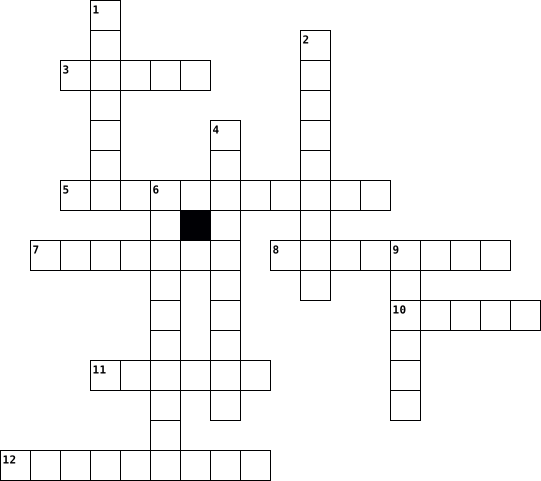
Across
- ________ cells control the size of the stomata.
- Factors affecting rate of photosynthesis include light intensity, carbon dioxide concentration and ____________.
- This form of sugar is being transported from the leave to other parts of the plant.
- The mesophyll layer has one or two layers of closely packed, long and cylindrical cells called ____________ mesophyll cells.
- Glucose in leaf reacts with nitrates and other mineral salts absorbed from soil to form ________ acids.
- Photosynthesis is important as it removes carbon dioxide from the air and provides __________.
- Carbon dioxide enters the stomata into the air spaces inside the leaf through the process of ___________.
Down
- This form of sugar is formed by the leaf during photosynthesis.
- The spongy mesophyll cells are ____________ in shape and has numerous large intercellular air spaces between them.
- A leaf which has some parts that contains chlorophyll and some parts without chlorophyll is called a __________ leaf.
- During light-dependent stage of photosynthesis, light energy is used to split water through a process called ___________.
- This form of carbohydrate is stored in the leaves because of excess glucose.
12 Clues: ________ cells control the size of the stomata. • This form of sugar is formed by the leaf during photosynthesis. • This form of carbohydrate is stored in the leaves because of excess glucose. • This form of sugar is being transported from the leave to other parts of the plant. • ...
Seedless Plants Crossword 2018-02-04

Across
- essential for making glucose
- Each alga has a light sensitive _________, which is not capable of vision and serves only to help the organism detect light for photosynthesis
- A specialized spot on the chloroplast that serves as the center for starch production________
- Reproduction in which when a filamentous alga breaks, it can continue to grow
- Marine algae are often referred to as _______
- Mosses are ecologically significant as pioneer species in the process of ______
Down
- lack vascular tissue
- Planktonic algae that conduct a very significant amount of the photosynthesis that supports the higher trophic levels in the oceans of the world are called _________
- Unicellular egg-shaped green algae
- "range", such as the spectrum of light meaning the range of colours (energies and wavelengths)
- Moss that lives in bogs where water is constantly available is called ________
- Algae flexible stem-like structures are called _______
12 Clues: lack vascular tissue • essential for making glucose • Unicellular egg-shaped green algae • Marine algae are often referred to as _______ • Algae flexible stem-like structures are called _______ • Reproduction in which when a filamentous alga breaks, it can continue to grow • Moss that lives in bogs where water is constantly available is called ________ • ...
plants increasing numbers 2018-04-24

Across
- seed coconut seed
- transpiration
- cloud
- plants
- condensation
- vegetables
Down
- dispersal
- germination
- pestiside
- maize
- erosion conservation
- seed dicot seed
12 Clues: cloud • maize • plants • dispersal • pestiside • vegetables • germination • condensation • transpiration • seed dicot seed • seed coconut seed • erosion conservation
Trees and Plants 2024-12-17

Across
- Which iron-rich leafy green vegetable is widely used in Indian cooking, known as "palak"?
- What protein and fiber-rich legume comes in various types and is a staple in Indian dal dishes?
- Which nutrient-dense tree, often called the "drumstick tree," has leaves used in Indian cuisine?
- What protein-rich legume is a staple in Indian cuisine and often used in dishes like chana masala?
- What large, nutrient-rich fruit is often used as a meat substitute in Indian vegetarian dishes?
- Which herb, known as "methi" in Hindi, is used both as a vegetable and a spice in Indian dishes?
- Which bright yellow spice is widely used in Indian cooking and known for its anti-inflammatory properties?
Down
- seeds What tiny, nutrient-packed seed is often used as a spice and for tempering in Indian dishes?
- What vitamin C-rich fruit, also known as Indian gooseberry, is used in Ayurvedic medicine?
- gourd Which intensely bitter vegetable is used in Indian cooking and known for its potential anti-diabetic properties?
- leaves Which aromatic herb is commonly used in South Indian cooking and rich in antioxidants?
- What versatile fruit provides healthy fats and is extensively used in South Indian cooking?
12 Clues: Which iron-rich leafy green vegetable is widely used in Indian cooking, known as "palak"? • What vitamin C-rich fruit, also known as Indian gooseberry, is used in Ayurvedic medicine? • What versatile fruit provides healthy fats and is extensively used in South Indian cooking? • ...
Plants and Propagation 2024-09-06

Across
- bears flowers for reproduction
- soft stems plants
- more than two year lifespan
- Plant without stem/roots/leaves
- two copies of each chromosome
- Rigid, lignified stems
Down
- two year lifespan
- Cannot move
- One year lifespan
- bears cones for reproduction
- one copy of each chromosome
- Creates own food
12 Clues: Cannot move • Creates own food • two year lifespan • One year lifespan • soft stems plants • Rigid, lignified stems • one copy of each chromosome • more than two year lifespan • bears cones for reproduction • two copies of each chromosome • bears flowers for reproduction • Plant without stem/roots/leaves
Plants & Human Systems 2026-03-11

Across
- This system is made up of bones to protect organs and give the body shape.
- When teeth breaks food into smaller pieces.
- This system allows your body to move.
- This system breaks down food into simpler substances.
- This part of the skeletal system holds your body upright.
- A substance which breaks food down into simpler substances.
- This holds the plant firmly to the ground.
- This system transports blood containing digested food, oxygen and water around the body.
Down
- Water is absorbed by this part in the digestive system.
- The roots of a plant absorbs this substance and water.
- This system helps you to take in and give out gases.
- The leaves of a plant make this for the plant to grow.
12 Clues: This system allows your body to move. • This holds the plant firmly to the ground. • When teeth breaks food into smaller pieces. • This system helps you to take in and give out gases. • This system breaks down food into simpler substances. • The roots of a plant absorbs this substance and water. • The leaves of a plant make this for the plant to grow. • ...
Mammals, Plants, Basketball 2024-09-30

Across
- thin strands that grow on animals and people
- ropes tied together
- round objects from which young animals hatch
- having blood that stays one temperature
- pretty plants with petals
- what you get when you score
Down
- leafy green plants without petals
- something you play for fun
- areas where plants are cared for
- to glide through the air
- to spring up and down
- what we eat to stay alive
12 Clues: ropes tied together • to spring up and down • to glide through the air • pretty plants with petals • what we eat to stay alive • something you play for fun • what you get when you score • areas where plants are cared for • leafy green plants without petals • having blood that stays one temperature • thin strands that grow on animals and people • ...
Reproduction in plants 2024-11-05

Across
- Tuber
- Ripened ovary
- Fusion of male and female gametes
- The zygote develops into
- Seeds are dispersed by water
Down
- Seeds are dispersed by wind
- Process of transfer of pollen grains from one flower to another
- The female gamete or the eggs are formed here
- Seeds are dispersed by animal
- Rhizome
- Ovule develops into a
- Reproduction by leaves
12 Clues: Tuber • Rhizome • Ripened ovary • Ovule develops into a • Reproduction by leaves • The zygote develops into • Seeds are dispersed by wind • Seeds are dispersed by water • Seeds are dispersed by animal • Fusion of male and female gametes • The female gamete or the eggs are formed here • Process of transfer of pollen grains from one flower to another
Photosynthesis 2023-03-15

Across
- Plants, Bacteria, and Fungi are examples of this
- Photosynthesis is what kind of reaction?
- dioxide Humans emit this chemical when we breathe
Down
- Responsible for the green color of plants and algae.
- Another word for sugar
- We need this to breathe
- Plants and animals need this to stay alive
- Only plant cells have this organelle
- Plants need this to perform photosynthesis
- Plants use this process to make food
10 Clues: Another word for sugar • We need this to breathe • Only plant cells have this organelle • Plants use this process to make food • Photosynthesis is what kind of reaction? • Plants and animals need this to stay alive • Plants need this to perform photosynthesis • Plants, Bacteria, and Fungi are examples of this • dioxide Humans emit this chemical when we breathe • ...
Photosynthesis Crossword 2022-04-15

Across
- The result of a chemical reaction like photosynthesis
- The things that have a chemical reaction occur
- The part of the plant that distributes water
- Process that plants use to create food
Down
- The organelle that can only be found in plants
- Exchanges carbon dioxide and oxygen through plants
- Energy that comes from the sun
- The place where photosynthesis occurs
- Carries glucose through the plants
- The pigment that makes plants green
10 Clues: Energy that comes from the sun • Carries glucose through the plants • The pigment that makes plants green • The place where photosynthesis occurs • Process that plants use to create food • The part of the plant that distributes water • The organelle that can only be found in plants • The things that have a chemical reaction occur • ...
PLANT KINGDOM 2024-06-19

Across
- a gas taken in by plants
- this is the stem of the tree
- a gas given out by plants
- by this process plants manufacture their food
Down
- tallest trees in the world
- this is an example of an evergreen tree
- trees that lose their leaves in autumn
- this is the study of life
- a scientist who studies plants
- the green pigment found in plants that give it the green colour
10 Clues: a gas taken in by plants • this is the study of life • a gas given out by plants • tallest trees in the world • this is the stem of the tree • a scientist who studies plants • trees that lose their leaves in autumn • this is an example of an evergreen tree • by this process plants manufacture their food • the green pigment found in plants that give it the green colour
SDSM SCHOOL FOR EXCELLENCE 2021-04-30

Across
- has medicinal value
- several small sharp teeth
- flesh eaters
- an omnivore
- required for nerve functioning
- sucks food
- gnaws food
- leaves that we eat
- swallows food
Down
- don't hunt live animals
- green pigment in leaves
- a spice
- eaten as salads or cooked
- decomposes dead plants and animals
- made by churning fresh cream
- a dairy product
- producers
- made from curdled milk
- wide blunt teeth
19 Clues: a spice • producers • sucks food • gnaws food • an omnivore • flesh eaters • swallows food • a dairy product • wide blunt teeth • leaves that we eat • has medicinal value • made from curdled milk • don't hunt live animals • green pigment in leaves • several small sharp teeth • eaten as salads or cooked • made by churning fresh cream • required for nerve functioning • ...
Food :Where does it come from ? 2021-04-30

Across
- sucks food
- a spice
- has medicinal value
- swallows teeth
- a dairy product
- eaten as salads or cooked
- required for nerve functioning
- leaves that we eat
- plants producers
Down
- made by churning fresh cream
- wide blunt teeth
- feed on dead plants and animals
- green pigment in leaves
- don't hunt live animals
- flesh eaters
- gnaws food
- made from curdled milk
- several small sharp teeth
- an omnivore
19 Clues: a spice • sucks food • gnaws food • an omnivore • flesh eaters • swallows teeth • a dairy product • wide blunt teeth • plants producers • leaves that we eat • has medicinal value • made from curdled milk • don't hunt live animals • green pigment in leaves • eaten as salads or cooked • several small sharp teeth • made by churning fresh cream • required for nerve functioning • ...
Science- Parts of Plants/ Different Plants 2022-09-27

Across
- this is the seed of a plant.
- these use sunlight and air to make food.
- this is a plant part you eat.
- this plant spreads out along the ground.
- when you eat this you eat part of a tree trunk.
Down
- when you eat this you eat the leaves of a plant.
- these keep the plant in the ground.
- when you eat this you eat root of a plant.
- this is the thick stem of a tree.
- this part holds up the plant.
10 Clues: this is the seed of a plant. • this part holds up the plant. • this is a plant part you eat. • this is the thick stem of a tree. • these keep the plant in the ground. • these use sunlight and air to make food. • this plant spreads out along the ground. • when you eat this you eat root of a plant. • when you eat this you eat part of a tree trunk. • ...
Year 8 Plants 2012-11-22

Across
- the green pigment in chloroplasts
- C6H12O6
- helps to make protein
- helps to make roots
- helps to make chlorophyll
Down
- ______ is used to test for starch
- the way in which plants make their own food
- the main layer where photosynthesis takes place
- these holes let CO2 into the leaf and O2 out
- helps to make flowers
- the tubes that carry water through the veins
- plants absorb water through their _____
12 Clues: C6H12O6 • helps to make roots • helps to make protein • helps to make flowers • helps to make chlorophyll • ______ is used to test for starch • the green pigment in chloroplasts • plants absorb water through their _____ • the way in which plants make their own food • these holes let CO2 into the leaf and O2 out • the tubes that carry water through the veins • ...
Plants and Trees 2016-06-07

Across
- Can be made from a tree
- Something you eat that is not a vegetable
- You can put it in turtle tanks
- Trees that belong to the Conifer family
- Food factories
Down
- Beau
- How a plant makes its food
- Big, red, juicy fruit
- loses its leaves
- Grows in Minecraft
- Cory is allergic to this
- A plant with a truck and branches high off the ground
12 Clues: Beau • Food factories • loses its leaves • Grows in Minecraft • Big, red, juicy fruit • Can be made from a tree • Cory is allergic to this • How a plant makes its food • You can put it in turtle tanks • Trees that belong to the Conifer family • Something you eat that is not a vegetable • A plant with a truck and branches high off the ground
Plants and Stems 2017-03-22

Across
- Transfers water throughout plant
- Photosynthesis occurs here
- location between two nodes
- Transfer sugar throughout plant
- Part of plant that absorbs glucose
- transfer nutrients from roots to leaves
Down
- Plants release this during photosynthesis
- Outer layer of the stem
- Part of plant that grows flower
- C6H12O6
- made of harden vascular bundles
- Seed protection
12 Clues: C6H12O6 • Seed protection • Outer layer of the stem • Photosynthesis occurs here • location between two nodes • Part of plant that grows flower • Transfer sugar throughout plant • made of harden vascular bundles • Transfers water throughout plant • Part of plant that absorbs glucose • transfer nutrients from roots to leaves • Plants release this during photosynthesis
nutrition in plants 2017-05-09

Across
- cells controlling opening and closing of stomata
- when iodine is added to starch it becomes __________ in colour
- gas we gfet after photosynthesis
- the process of taking in food by an organism and its utilization by the body is called
- organisms that directly or indirectly depend on green plant for nutrition
- the mode of nutrition where two different organisms work together
- the ultimate source of energy
Down
- gas needed for photosynthesis
- what does photo refer to
- type of plant that can make food on their own
- a bacteria in the soil can convert atmospheric nitrogen into soluble compound
- the organisms that live in or on other organisms and derive their food from them
12 Clues: what does photo refer to • gas needed for photosynthesis • the ultimate source of energy • gas we gfet after photosynthesis • type of plant that can make food on their own • cells controlling opening and closing of stomata • when iodine is added to starch it becomes __________ in colour • the mode of nutrition where two different organisms work together • ...
Plants as food 2017-05-29

Across
- Popeye's vegetable
- Popular actor screen name famous for comedy, Mr. ……………
- Bugs Bunny's favorite food
- An ………… a day, keeps the doctor away
- Used as an assortment in cakes, desserts and ice-creams
- French fries are made from it
Down
- Root vegetable used in salads
- Used in oils, attractive to sunlight
- A fox story based on it who fails to get it..Sometimes sour
- Yellow in color. Liked by monkeys
- Common salad ingredient
- Veggie that may cause tears
12 Clues: Popeye's vegetable • Common salad ingredient • Bugs Bunny's favorite food • Veggie that may cause tears • Root vegetable used in salads • French fries are made from it • Yellow in color. Liked by monkeys • Used in oils, attractive to sunlight • An ………… a day, keeps the doctor away • Popular actor screen name famous for comedy, Mr. …………… • ...
~Nutrition in Plants~ 2017-05-03

Across
- __________ gets it food from dead and decaying matter.
- What is the meaning of synthesis from the word photosynthesis?
- Mushroom and Bread Mould are examples of ________ plants.
- Cascuta(Amrbel)are examples of these types of plants.
- All parasites are __________ in colour.
- When iodine is added to starch it becomes _________ in colour.
Down
- We get most of our pulses from ______________ plants.
- Which elements is need to be added to carbon, hydrogen and oxygen to make proteins?
- A pigment present in plants which help in photosynthesis.
- The process of taking in food by an organism and its utilization by the body is called _________.
- Which bacteria in the soil can convert atmospheric nitrogen into a soluble compound?
- What should be added to carbon dioxide, chlorophyll and sunlight to get glucose and oxygen?
12 Clues: All parasites are __________ in colour. • We get most of our pulses from ______________ plants. • Cascuta(Amrbel)are examples of these types of plants. • __________ gets it food from dead and decaying matter. • A pigment present in plants which help in photosynthesis. • Mushroom and Bread Mould are examples of ________ plants. • ...
Nutrition in plants 2024-06-01

Across
- - An essential mineral nutrient involved in energy transfer within plant cells.
- - The movement of water and nutrients from roots to leaves.
- - Tiny openings on the surface of leaves for gas exchange.
- - The green pigment in plants that absorbs light energy for photosynthesis.
- - The process by which green plants make their own food using sunlight.
- - The fluid-filled space inside the chloroplast where the Calvin cycle occurs.
Down
- - Organisms that can produce their own food through photosynthesis.
- - A type of nutrient absorbed by plants from the soil, essential for growth.
- - The sugar produced by plants during photosynthesis.
- fixation - The process of converting nitrogen from the atmosphere into a form usable by plants.
- - Plant structures where photosynthesis primarily takes place.
- - The initial stage of photosynthesis where light energy splits water molecules.
12 Clues: - The sugar produced by plants during photosynthesis. • - Tiny openings on the surface of leaves for gas exchange. • - The movement of water and nutrients from roots to leaves. • - Plant structures where photosynthesis primarily takes place. • - Organisms that can produce their own food through photosynthesis. • ...
animals and plants 2023-09-04

Across
- a pet that starts with a d
- home of an animal
- a small animal that has six legs
- semi aquatic family that includes frogs
- a pet that starts with c
- king of the jungle
- another name for an animal
Down
- another name for a plant
- fastest animal
- a warm blooded animal that has hair or fur
- warm blooded animals that lays eggs
- a baby dog
12 Clues: a baby dog • fastest animal • home of an animal • king of the jungle • another name for a plant • a pet that starts with c • a pet that starts with a d • another name for an animal • a small animal that has six legs • warm blooded animals that lays eggs • semi aquatic family that includes frogs • a warm blooded animal that has hair or fur
Types of Plants 2023-09-20

Across
- a common bryophyte with carpet-like structure
- a plant with one seed leaf and parallel leaf veins
- Grows for many years
- Grows for one year
- non-vascular plant
- a plant with two seed leaves
- Flowering vascular plant
Down
- Seeds are mainly dispersed by wind
- Grows for two years only
- a single cell that grows into a full organism
- a vascular plant that does not grow seeds
- Plants can move water up through the plant
12 Clues: Grows for one year • non-vascular plant • Grows for many years • Grows for two years only • Flowering vascular plant • a plant with two seed leaves • Seeds are mainly dispersed by wind • a vascular plant that does not grow seeds • Plants can move water up through the plant • a common bryophyte with carpet-like structure • a single cell that grows into a full organism • ...
Unit 4: Plants 2024-07-15

Across
- A woody or scaly part of a plant. It holds seeds.
- This is used to grow a new plant!
- This is a place where you can find many tall trees.
- Also known as a bloom or a blossom.
- Usually green, this part of a plant grows from its stem. It soaks up light from the sun to produce food.
- A word used in taxonomy to classify living things. It's bigger than a species, but smaller than a kingdom.
- This is a living organism that gets energy from the sun. Hint: it's the title of this unit!
Down
- This type of plant grows tall, with a thick trunk.
- This tree makes beautiful flowers in spring! You can see them outside our school!
- This is a place where many flowers are grown.
- This tree has pointy, sharp leaves.
- This is an edible part of the fruit. It can be sweet or sour.
12 Clues: This is used to grow a new plant! • This tree has pointy, sharp leaves. • Also known as a bloom or a blossom. • This is a place where many flowers are grown. • A woody or scaly part of a plant. It holds seeds. • This type of plant grows tall, with a thick trunk. • This is a place where you can find many tall trees. • ...
Plants and that 2023-03-27

Across
- The highest part of something
- The description of a bud that grows to the sides
- A plant response to light
- A hormone that is essential for seed germination
- The description given to a bud that grows vertically upwards
- The hard outer layer that prevents shoots and roots from escaping during germination (Two words)
- A hormone that controls growth by changing the pH of plant cells
Down
- The behaviour of large plants like trees to access higher levels of light intensity (Two words)
- A part of a plant that has a negative geotropism
- The part of the seed that grows during germination
- A type of tropism where the plant responds by moving towards a stimulus
- The food store used by seeds to make ATP during germination
12 Clues: A plant response to light • The highest part of something • A part of a plant that has a negative geotropism • The description of a bud that grows to the sides • A hormone that is essential for seed germination • The part of the seed that grows during germination • The food store used by seeds to make ATP during germination • ...
Fertilization in plants 2021-12-07

Across
- Eggs are stored here
- The part that the bee makes pollen from
- Male part of flower.Makes pollen.made up of anther Filament
- Special leaves from a ring around the bottom
- Supports & hold anther.Part of stamen
- Green stalk. provides support
Down
- Brightly coloured
- Female part,seeds made here
- Top part of stalk were flower attached
- Supports stigma
- Sticky to catch pollen
- Part of stamen contains pollen
12 Clues: Supports stigma • Brightly coloured • Eggs are stored here • Sticky to catch pollen • Female part,seeds made here • Green stalk. provides support • Part of stamen contains pollen • Supports & hold anther.Part of stamen • Top part of stalk were flower attached • The part that the bee makes pollen from • Special leaves from a ring around the bottom • ...
Common Hedge Plants 2024-10-19

Across
- Evergreen, native (3)
- Spiky, evergreen (5)
- Crinkled leaves (8)
- Conifer (9)
- Common, evergreen (6)
Down
- Thorny, native (8)
- Produces Sloes (10)
- Red tips (3,5)
- Prone to pests (3)
- Produces nuts (5)
- Used in cooking (3)
- Native to Asia (6)
12 Clues: Conifer (9) • Red tips (3,5) • Produces nuts (5) • Thorny, native (8) • Prone to pests (3) • Native to Asia (6) • Produces Sloes (10) • Crinkled leaves (8) • Used in cooking (3) • Spiky, evergreen (5) • Evergreen, native (3) • Common, evergreen (6)
Animals and Plants 2025-05-07

Across
- Living things can ____________ to produce offsprings
- Ferns do not produce seeds. They reproduce by releasing these.
- A _________ plant has vascular tissues
- Animals without a backbone
- Animals with a backbone
- For flowering plants, their seeds are protected in these.
Down
- They (adults) breathe with lungs and skin
- Mammals and birds can a ___________ body temperature
- Living things in danger of extinction are called _____ species
- Fish use these for breathing
- Mammals have __________ glands
- Animals with dry, hard scales
12 Clues: Animals with a backbone • Animals without a backbone • Fish use these for breathing • Animals with dry, hard scales • Mammals have __________ glands • A _________ plant has vascular tissues • They (adults) breathe with lungs and skin • Living things can ____________ to produce offsprings • Mammals and birds can a ___________ body temperature • ...
Biodiversity of plants 2025-05-17

Across
- plants that have only one cotyledon
- diagram a diagram which shows the evolutionary relationship between
- a fleshy, often sweet layer, formed around
- ovules are produced
- the gamete-producing generation
- a cluster of sporangia found on the underside of fern leaves
Down
- the spore-producing generation
- anthers.
- a sugar-rich liquid produced
- roots roots which arise at the nodes of stems
- male part of the flower consisting of a filament and pollen
- female part of the flower consisting of a stigma, style and an ovary
12 Clues: anthers. • ovules are produced • a sugar-rich liquid produced • the spore-producing generation • the gamete-producing generation • plants that have only one cotyledon • a fleshy, often sweet layer, formed around • roots roots which arise at the nodes of stems • male part of the flower consisting of a filament and pollen • ...
Plants and Animals 2025-10-22

Across
- blooded temperature stays the same
- vertebrate with gills and lays eggs
- having a backbone
- having no backbone
- has no tubes and gets water from around it
- blooded temperature changes with environment
Down
- has hair and feeds young milk
- lives part of life on land and part in water
- largest group of classified organisms
- vertebrate with scaly skin and lays eggs
- having tissue to transport water and nutrients
- vertebrate with feathers and warm blooded
12 Clues: having a backbone • having no backbone • has hair and feeds young milk • blooded temperature stays the same • vertebrate with gills and lays eggs • largest group of classified organisms • vertebrate with scaly skin and lays eggs • vertebrate with feathers and warm blooded • has no tubes and gets water from around it • lives part of life on land and part in water • ...
Cycles 2020-08-18

Across
- In germination, _____ appear first.
- These found in fruits that helps a plant to reproduce.
- At this stage before the adult stage, the animal does not eat/drink/move.
- Plants and animals need to __________ to ensure their kind do not go extinct.
- This stage is found in both the frog and the chicken's 3 stage life cycle.
- An insect does this as it grows.
- this part provides food for the seedling to grow until the leaves appear.
- this is another stage where the animal does not eat/drink/move.
Down
- This animal has a 4 stage life cycle and lays its eggs in water.
- Only adult plants has this.
- A cockroach has this stage in its life cycle.
- this word represents look like.
- Seeds need ____, air and water to germinate.
- This animal has a 3 stage life cycle and lays its eggs on leaves
- Only adult plants has this too.
- Animals and plants have 3 or 4 ____ in their life cycle.
- This stage represents the stage where the animal or plant can reproduce.
- this outer layer protects the seed.
18 Clues: Only adult plants has this. • this word represents look like. • Only adult plants has this too. • An insect does this as it grows. • In germination, _____ appear first. • this outer layer protects the seed. • Seeds need ____, air and water to germinate. • A cockroach has this stage in its life cycle. • These found in fruits that helps a plant to reproduce. • ...
Environmental Science 2021-11-22

Across
- organisms that produce their own food
- an animal that kills other animals for food
- natural home of a plant or animal
- water vapor forms clouds and returns to Earth
- organisms that get nutrients by eating other organisms
- the number of different organisms in an ecosystem
- network or related food chain
- plants and animals in an area, functioning together with their surroundings
- a partnership between organisms that helps one of both of them survive
Down
- a type of consumer that eats plant material
- water lost to the atmosphere by the activities of plants
- an animal killed for food
- change of water from a liquid to a gas state
- tiny plants and animals that break down dead materials into nutrients
- living factors that directly or indirectly affect an organism in its environment, such as disease, predators, and parasites
- the process plants use to make food from sunlight, water, and carbon dioxide
- non-living factors that affect organism survival, such as water availability, pollution, and temperature range
- a type of consumer that eats animal material
18 Clues: an animal killed for food • network or related food chain • natural home of a plant or animal • organisms that produce their own food • a type of consumer that eats plant material • an animal that kills other animals for food • change of water from a liquid to a gas state • a type of consumer that eats animal material • water vapor forms clouds and returns to Earth • ...
Lesson 14 Crossword - Diversity - Plants 2016-07-03

Across
- Female reproductive part of a flower
- Male reproductive part of a flower
- Type of vascular plant that has flowers
- Type of tissue that transports water and nutrients to different parts of a plant
- When two different species evolve together
- Adaptation of plants of pores in leaves to regulate water conservation and gas exchange
- Contains embryo and source of food for the embryo
- The male gametophyte in gymnosperms and angiosperms
- Vascular tissue type that conducts nutrients
Down
- During a plant's life cycle, form of the plant that creates gametes
- During a plant's life cycle, form of the plant that creates spores
- Type of vascular plant that has xylem and phloem, but no seeds
- Type of plants that do not have xylem and phloem
- Type of vascular plant that does not have flowers, but cones
- Organisms that rely on photosynthesis to produce sugar
- Adaptation of plants to absorb nutrients and minerals in the soil
- Adaptation of plants of a waxy, water-tight covering on stems and leaves
- Vascular tissue type that conducts water
18 Clues: Male reproductive part of a flower • Female reproductive part of a flower • Type of vascular plant that has flowers • Vascular tissue type that conducts water • When two different species evolve together • Vascular tissue type that conducts nutrients • Type of plants that do not have xylem and phloem • Contains embryo and source of food for the embryo • ...
Ecology 2016-11-05

Across
- The place where a particular organism lives
- Another name for a producer
- An animal that is able to eat both plants and animals
- An organism that feeds on and breaks down dead plants or animals
- The interaction between living and non-living things in a particular environment
- A group or collection of organisms that live together in the same location and interact with each other
- An organism that hunts and kills another organism
- All the organisms of the same kind living in the same area
- An organism that eats only plants
Down
- Living parts in an ecosystem e.g. animals and plants
- Non-living parts in an ecosystem e.g. sunlight, air, water, temperature, soil
- Another name for a consumer
- An organism that makes its own food through the Sun's energy
- An organism that obtains food by eating other organisms
- An organism that is hunted and killed by another
- An organism that eats only meat
- A living thing
- The study of the way in which organisms interact with other organisms and with their environment
18 Clues: A living thing • Another name for a consumer • Another name for a producer • An organism that eats only meat • An organism that eats only plants • The place where a particular organism lives • An organism that is hunted and killed by another • An organism that hunts and kills another organism • Living parts in an ecosystem e.g. animals and plants • ...
Photosynthesis 2023-05-17

Across
- A property of leaves that allow them to absorb as much sunlight as possible
- Openings on the bottom of the leaf to allow gases in and out
- A product of photosynthesis that humans and animals need to breathe
- bring up water to leaves and take away excess sugars
- The main energy source in plants and animals
- A molecule created when ATP loses a phosphate group
- The processes in a cell that allow it to live
- The sugar produced as a result of photosynthesis
- A resource needed to power the reaction between water and carbon dioxide
- A green pigment that absorbs sunlight
- A water proof layer on the top and bottom of a leaf
Down
- The organelle that carries out photosynthesis
- A type of mesophyll that are rectangular and have many chloroplasts in them
- A resource needed by plants to make energy
- the cells controlling the opening and closing of stoma
- The process used by plants to make energy
- a type of parenchyma that have irregular shapes
- A two word substance needed by plants for photosynthesis
18 Clues: A green pigment that absorbs sunlight • The process used by plants to make energy • A resource needed by plants to make energy • The main energy source in plants and animals • The organelle that carries out photosynthesis • The processes in a cell that allow it to live • a type of parenchyma that have irregular shapes • The sugar produced as a result of photosynthesis • ...
chapter 10 2024-11-19

Across
- Carnivores that eat primary consumers.
- Organisms that eat other organisms for energy.
- Organisms like plants that create their own energy through photosynthesis.
- A species found only in a specific geographical area.
- The animal life in a particular area or ecosystem.
- Herbivores that eat producers like plants.
- Organisms that break down dead material, returning nutrients to the soil.
- A diagram representing energy flow and trophic levels in an ecosystem.
Down
- A tropical biome with high rainfall, warm temperatures, and dense vegetation.
- The process by which plants convert sunlight into chemical energy.
- The plant life in a particular area or ecosystem.
- The variety of life forms in a specific area or on Earth as a whole.
- A position in the food pyramid based on an organism's role in energy transfer.
- The study of the distribution of living organisms across the Earth.
- The total collection of flora and fauna in a specific region.
- A natural event that clears dead vegetation and promotes new growth.
- The process by which plants release energy by breaking down sugars.
- A sequence showing how energy and nutrients flow through organisms.
18 Clues: Carnivores that eat primary consumers. • Herbivores that eat producers like plants. • Organisms that eat other organisms for energy. • The plant life in a particular area or ecosystem. • The animal life in a particular area or ecosystem. • A species found only in a specific geographical area. • The total collection of flora and fauna in a specific region. • ...
Plants REVIEW day 2 2025-03-31

Across
- colorful parts of a flower
- “filler tissue” that surrounds xylem and phloem
- produces pollen
- inside a stem forms ducts to transport substances
- the female part of the flower
- sticky so pollen can adhere to it
- stems have no problem blowing their noses, because they are made of this
- thin and branching, grow outward from a plant
Down
- long and straight, grow downward
- protects and waterproofs the stem
- the amount of flowering plants
- the male part of the flower
- nonvascular plants don't really have these
- some of these are taproots
- Water, CO2 and oxygen enter and leave plants through this
- enclose a flower bud
- main sites of photosynthesis in a plant
17 Clues: produces pollen • enclose a flower bud • colorful parts of a flower • some of these are taproots • the male part of the flower • the female part of the flower • the amount of flowering plants • long and straight, grow downward • protects and waterproofs the stem • sticky so pollen can adhere to it • main sites of photosynthesis in a plant • ...