
plants Crossword Puzzles
Plants 2026-03-09

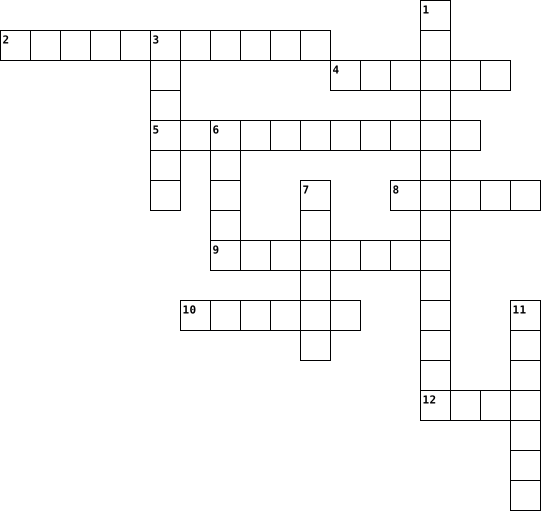
Across
- Ferns and ________ are non-seed plants.
- People cultivate plants for food or ________.
- Non-seed plants reproduce with __________.
- Wild plants grow in ______.
- Farmers grow crops in big ________.
- We grow plants in gardens and _______.
- These trees keep their leaves all year round.
Down
- The seeds fall onto the soil and grow into ____.
- _________ plants are planted on purpose.
- Seed plants can have _______, fruit or cones.
- These trees lose their leaves in autumn.
- The sprouts grow into _________.
12 Clues: Wild plants grow in ______. • The sprouts grow into _________. • Farmers grow crops in big ________. • We grow plants in gardens and _______. • Ferns and ________ are non-seed plants. • _________ plants are planted on purpose. • These trees lose their leaves in autumn. • Non-seed plants reproduce with __________. • People cultivate plants for food or ________. • ...
Plants 2026-04-13

Across
- - Uses sunlight to make glucose; not found in animal cells
- - The energy factory of the cell
- - male part
- - Plants respond to touch
Down
- - Zips water up
- tropism - movement toward a stimulus
- - plants response to light
- - Flows sugar down
- - plants respond to water
- tropism - movement away from a stimulus
- - Plants response to gravity
- - female part
12 Clues: - male part • - female part • - Zips water up • - Flows sugar down • - plants respond to water • - Plants respond to touch • - plants response to light • - Plants response to gravity • - The energy factory of the cell • tropism - movement toward a stimulus • tropism - movement away from a stimulus • - Uses sunlight to make glucose; not found in animal cells
Plants 2026-04-13

Across
- Zips water up (stem)
- Plants response to touch
- Plants response to light
- A way underwater plants make energy without using the sun.
- Product of Carbon Dioxide, Sunlight, and water.
- Female Reproductive system in flower
- Male reproductive system in flower
Down
- Plants response to gravity
- Plants response to water
- Uses sunlight to make glucose, not in animal cells.
- Powerhouse of the Cell (ATP)
- Flows sugar down (stem)
- Product of Carbon Dioxide, Sunlight, and water.
13 Clues: Zips water up (stem) • Flows sugar down (stem) • Plants response to water • Plants response to touch • Plants response to light • Plants response to gravity • Powerhouse of the Cell (ATP) • Male reproductive system in flower • Female Reproductive system in flower • Product of Carbon Dioxide, Sunlight, and water. • Product of Carbon Dioxide, Sunlight, and water. • ...
Plants 2026-04-13

Across
- Flows sugar down
- product of photosynthesis
- part of the photosynthesis formula reactant
- part of the photosynthesis formula reactant
- plants response to touch
- plants response to light
Down
- product of photosynthesis
- A way organisms can get energy from abiotic sources
- Zips water up
- Plants response to water
- female part of the flower
- uses sunlight to make glucose
- Male part of the flower
- plants response to gravity
14 Clues: Zips water up • Flows sugar down • Male part of the flower • Plants response to water • plants response to touch • plants response to light • product of photosynthesis • product of photosynthesis • female part of the flower • plants response to gravity • uses sunlight to make glucose • part of the photosynthesis formula reactant • part of the photosynthesis formula reactant • ...
Plants 2026-04-13

Across
- Flows sugar down
- Plants response to gravity
- Plants response to touch
- Plants responses
- Plants response to light
- Movement away from a stimulus
Down
- Another way that organisms can get energy from abiotic sources.
- Zips water up
- Uses sunlight to make glucose; not found in animal cells.
- Plants response to water
- Powerhouse of the cell
- Movement towards a stimulus
12 Clues: Zips water up • Flows sugar down • Plants responses • Powerhouse of the cell • Plants response to touch • Plants response to water • Plants response to light • Plants response to gravity • Movement towards a stimulus • Movement away from a stimulus • Uses sunlight to make glucose; not found in animal cells. • Another way that organisms can get energy from abiotic sources.
Plants 2022-08-02

Across
- green on the ground
- a spiky weed
- a wild plant that grows where it is not wanted
- common tree native to Australia
- tall and leafy and nutty
Down
- skin of a tree
- a tall plant with a thick wooden stem, branches and leaves
- mainly green source of food for a plant. can be yellow, orange or brown.
- green, rough and spiky
- yellow, fluffy flowers
- can be many colours
- a small tree
12 Clues: a spiky weed • a small tree • skin of a tree • green on the ground • can be many colours • green, rough and spiky • yellow, fluffy flowers • tall and leafy and nutty • common tree native to Australia • a wild plant that grows where it is not wanted • a tall plant with a thick wooden stem, branches and leaves • ...
plants 2019-12-10

Across
- solid or highly viscous substance of plant or synthetic origin that is typically convertible into polymers
- having the male and female reproductive organs in separate individuals.
- a plant that has seeds unprotected by an ovary or fruit. Gymnosperms include the conifers, cycads, and ginkgo.
- coat the protective outer coat of a seed.
- grain each of the microscopic particles, typically single cells, of which pollen is composed
- seed plants with a very long fossil history that were formerly more abundant and more diverse than they are today
Down
- a genus of highly unusual non-flowering plants
- division of plants, grouped within the gymnosperms
- division of vascular land plants
- the central part of an ovule, containing the embryo sac
- a tough outer protective layer, especially that of an animal or plant.
- A sporophyll is a leaf that bears sporangia
12 Clues: division of vascular land plants • coat the protective outer coat of a seed. • A sporophyll is a leaf that bears sporangia • a genus of highly unusual non-flowering plants • division of plants, grouped within the gymnosperms • the central part of an ovule, containing the embryo sac • a tough outer protective layer, especially that of an animal or plant. • ...
Plants 2021-05-06

Across
- a type of fertilizer
- Comes back every year
- grows into a plant
- different plants need to be planted at different times/_____.
- provide nutrients for plants
- collection of crops
- some plants prefer this to full sun
- absorb nutrients
Down
- _____ greatly affects how a certain plant will be able to grow
- something all plants need to stay alive (other than water)
- plants have different heat/cold _____.
- used to keep plants alive and healthy
12 Clues: absorb nutrients • grows into a plant • collection of crops • a type of fertilizer • Comes back every year • provide nutrients for plants • some plants prefer this to full sun • used to keep plants alive and healthy • plants have different heat/cold _____. • something all plants need to stay alive (other than water) • ...
PLANTS 2023-05-01

Across
- Collects water and nutrients from the soil
- This is the baby plant or new plant created from the parent plant
- The process in which pollen is collected and transferred to another plant
- The process of creating new plants, offsprings
- Collects sunlight and carbon doxide for the plant
- Supports the leaves, branches, flowers and fruits of a plant
Down
- The process in which sunlight, carbon dioxide and water are turned into sugar
- All plants need this to survive, however some do not need much of this at all
- A behavior or structure that allows an organims to grow, reproduce and survive
- Most plants must be planted in some form of this in order to sprout
- Has petals and pollen; attracts pollinators
- A living organism with roots that usually relies on sunlight and water to survive
12 Clues: Collects water and nutrients from the soil • Has petals and pollen; attracts pollinators • The process of creating new plants, offsprings • Collects sunlight and carbon doxide for the plant • Supports the leaves, branches, flowers and fruits of a plant • This is the baby plant or new plant created from the parent plant • ...
plants 2023-06-12

Across
- A vegetable is a part of a plant. It can be made up of leaves, stems, roots, flowers, or fruit. Vegetables provide nutrients to our diet.
- A seed is the reproductive organ of a plant. It can be planted in the ground and will germinate into a new plant.
- A mushroom is a type of fungus. It grows on the ground and has a cap that can be red, white, yellow, or black. There are edible and poisonous mushrooms.
- A leaf is a part of a plant that grows from the main body of the plant. It uses sunlight to make glucose.
- A root is the part of a plant that is below the ground. It absorbs water from the ground and supplies it to the plant.
- A plant is a living thing that lives on the ground. It has roots, a stem, leaves, flowers, and fruit. Plants use sunlight to make glucose.
Down
- A flower is a reproductive organ of a plant. It has a variety of colors and shapes, and it can be planted for beauty or for fruit.
- A stem is the main body of a plant. It supports the leaves and flowers.
- Moss is a type of lichen. It grows in moist areas and can be green, brown, or black. It helps to protect the soil.
- A tree is a plant that lives on the ground. It has a trunk, branches, and leaves, and it uses its leaves to absorb sunlight and make glucose.
- A fruit is the reproductive organ of a plant. It protects the seeds and makes it easier for animals to eat.
- Grass is a plant that lives on the ground. It has a thin stem and many leaves. Grass can be a food source for animals, and it can help to protect the soil.
12 Clues: A stem is the main body of a plant. It supports the leaves and flowers. • A leaf is a part of a plant that grows from the main body of the plant. It uses sunlight to make glucose. • A fruit is the reproductive organ of a plant. It protects the seeds and makes it easier for animals to eat. • ...
Plants 2013-10-17

Across
- The first stage in the germination of a moss spore; Tiny, flattened out therad like structures.
- Non-vascular plants that were thought to help with sicknesses of the liver.
- Tissue Main component of vascular plants; Is made up of tube like structures that transport water and nutrients.
- Tiny hair-like structures that non-vascular plants use as an anchor to attach to a surface.
- The part of the plant that's main use is making food by photosynthesis; it also contains the chlorophyll.
Down
- Non-vascular plants that grow in dark, damp areas.
- Some plants _____ using spores, and other plants use seeds.
- Tiny pods that grow on the underside of leaves; Used by nonvascular plants to reproduce.
- The green pigment that is found in the leaves of many plants.
- The part of a vascular plant that sucks up,and in some cases, store water and nutrients.
- Contains a xylem and phloem, provides support to the plant, and in some cases, stores water.
- To get from one cell to another, water must _____ from cell to cell
12 Clues: Non-vascular plants that grow in dark, damp areas. • Some plants _____ using spores, and other plants use seeds. • The green pigment that is found in the leaves of many plants. • To get from one cell to another, water must _____ from cell to cell • Non-vascular plants that were thought to help with sicknesses of the liver. • ...
Plants 2016-04-22

Across
- crops are grown in the month of November to April (Winter)
- is growing of plants on a large scale
- development form a seed to a seedling
- is a seed having two seed leaves
- crops are grown in the month June to October (Summer)
- is a chemical to protect the crop from pests.
Down
- are grains used for the food such as maize jowar,rice,bajra....
- is a chemical to protect the crop from insects
- means artificially watering of plants
- is a seed having a single seed leaf
- means man made fertilizers for the growth of plant.
- of seed means scattering of seed through agents such as wind, animals, water and wind
12 Clues: is a seed having two seed leaves • is a seed having a single seed leaf • is growing of plants on a large scale • means artificially watering of plants • development form a seed to a seedling • is a chemical to protect the crop from pests. • is a chemical to protect the crop from insects • means man made fertilizers for the growth of plant. • ...
Plants 2016-04-22

Across
- means man made fertilizers for the growth of plant.
- of seed means scattering of seed through agents such as wind, animals, water and wind
- development form a seed to a seedling
- is a seed having two seed leaves
- are grains used for the food such as maize jowar,rice,bajra....
Down
- crops are grown in the month June to October (Summer)
- means artificially watering of plants
- is a chemical to protect the crop from pests.
- is a seed having a single seed leaf
- crops are grown in the month of November to April (Winter)
- is growing of plants on a large scale
- is a chemical to protect the crop from insects
12 Clues: is a seed having two seed leaves • is a seed having a single seed leaf • means artificially watering of plants • is growing of plants on a large scale • development form a seed to a seedling • is a chemical to protect the crop from pests. • is a chemical to protect the crop from insects • means man made fertilizers for the growth of plant. • ...
PLANTS 2017-10-01

Across
- A FERTILIZER
- A CROP THAT GROWS IN CENTRAL AND WESTERN INDIA
- IN PUNJAB
- A SEED WITH TWO SEED LEAVES
- A SEED WITH ONE SEED LEAF
Down
- A KHARIF CROP
- A RABI VEGETABLE
- A PLANT THAT GROWS FROM THE LEAVES
- CHEMICAL SPRAYED ON CROPS
- GROWING CROPS ON A LARGE SCALE
- A SEED DISPERSED BY THE WIND
- ANOTHER NAME FOR SEED LEAF
12 Clues: IN PUNJAB • A FERTILIZER • A KHARIF CROP • A RABI VEGETABLE • CHEMICAL SPRAYED ON CROPS • A SEED WITH ONE SEED LEAF • ANOTHER NAME FOR SEED LEAF • A SEED WITH TWO SEED LEAVES • A SEED DISPERSED BY THE WIND • GROWING CROPS ON A LARGE SCALE • A PLANT THAT GROWS FROM THE LEAVES • A CROP THAT GROWS IN CENTRAL AND WESTERN INDIA
Plants 2022-04-08

Across
- Ağacın parçasıdır.
- Bir bacağım var bir de şapkam
- Dal ucunda tüylü top
- Ağaç gövdesinde kavuklar cevizi fındığı oraya toplar.
- Yer altında sakallı dede
- Sonbaharda sararır.
- Hayvanların yuvası ağaç doludur orası.
Down
- Dalda sallanır düşer ballanır.
- Oksijen kaynağımızdır.
- Nisan ayı temamız
- Dal üstünde al yanaklı oğlan
- Yazın giyinir kışın soyunur
12 Clues: Nisan ayı temamız • Ağacın parçasıdır. • Sonbaharda sararır. • Dal ucunda tüylü top • Oksijen kaynağımızdır. • Yer altında sakallı dede • Yazın giyinir kışın soyunur • Dal üstünde al yanaklı oğlan • Bir bacağım var bir de şapkam • Dalda sallanır düşer ballanır. • Hayvanların yuvası ağaç doludur orası. • Ağaç gövdesinde kavuklar cevizi fındığı oraya toplar.
Plants 2021-11-30

Across
- supports the plant
- plant reproduction
- what makes a plant green
- holds a seed inside
- makes a new plant
- the female part of a flower
Down
- a new growing plant
- holds a plant in place
- the male part of a flower
- process of makes food for the plant
- makes food from sunlight
- attracts butterflies
12 Clues: makes a new plant • supports the plant • plant reproduction • a new growing plant • holds a seed inside • attracts butterflies • holds a plant in place • makes food from sunlight • what makes a plant green • the male part of a flower • the female part of a flower • process of makes food for the plant
Plants 2022-05-03

Across
- A plant breathes this out.
- It carries water to the leaves and flower.
- The process of making food.
- This is where the seeds are located.
- Bees and butterflies are called this.
- The plant makes food using water, air and this.
- It gets stuck on bees as they fly from plant to plant.
Down
- A plant breathes this in.
- It holds the plant in the ground.
- This makes food for the plants.
- This is where the pollen is located.
- It holds onto the pollen from other plants.
- The plant uses this to drink in water.
- This is where the stigma is located.
- This contains chlorophyll.
15 Clues: A plant breathes this in. • A plant breathes this out. • This contains chlorophyll. • The process of making food. • This makes food for the plants. • It holds the plant in the ground. • This is where the pollen is located. • This is where the seeds are located. • This is where the stigma is located. • Bees and butterflies are called this. • ...
Plants 2023-07-18

Across
- coriander and mint are examples of this
- process by which green plants make food
- a gas we need to survive
- money plant is an example of this
- chief source of energy in living things
- tiny openings on a leaf
Down
- a green pigment in leaves
- loss of water in a plant
- it protects the seed
- it produces a new plant
- it joins the leaf to the stem
- breaking down of sugar for energy
12 Clues: it protects the seed • it produces a new plant • tiny openings on a leaf • loss of water in a plant • a gas we need to survive • a green pigment in leaves • it joins the leaf to the stem • money plant is an example of this • breaking down of sugar for energy • coriander and mint are examples of this • process by which green plants make food • ...
PLANTS 2023-07-31

Across
- MAKES A WONDERFUL PIE OR A CRUNCHY HEALTHY SNACK
- SOMETHING THAT ABSORBS WATER AND FOOD FROM THE SOIL TO FEED A PLANT
- MAIN TRUNK OF A PLANT
- CRUNCHY, ORANGE AND RABBITS LOVE THEM
- DARK RED JUICY FRUIT CAN BE MADE INTO JAM OR JELLY
- SOMETHING THAT ATTRACTS INSECTS TO GATHER FOOD AND POLLINATE
Down
- CAN BE ANY COLOUR AND ONE OF MANY TO MAKE A BLOSSOM
- A PROCESS USING SUNLIGHT TO CREATE FOOD FOR A PLANT
- A THING THAT CONTAINS ALL THE INFORMATION NEEDED TO GROW A PLANT
- JUICY AND SMALL AND AND CAN BE SQUASHED TO MAKE WINE
- STARTS GREEN THEN CHANGES COLOUR TOWARDS AUTUMN
- THIS PLANT GROWS ACORNS
12 Clues: MAIN TRUNK OF A PLANT • THIS PLANT GROWS ACORNS • CRUNCHY, ORANGE AND RABBITS LOVE THEM • STARTS GREEN THEN CHANGES COLOUR TOWARDS AUTUMN • MAKES A WONDERFUL PIE OR A CRUNCHY HEALTHY SNACK • DARK RED JUICY FRUIT CAN BE MADE INTO JAM OR JELLY • CAN BE ANY COLOUR AND ONE OF MANY TO MAKE A BLOSSOM • A PROCESS USING SUNLIGHT TO CREATE FOOD FOR A PLANT • ...
Plants 2024-09-06

Across
- they don’t need a flower or cones for reproduction
- support for the plant
- need bear flowers for reproduction
- have soft stems
- has no typical plant parts
- most plants are growing in
Down
- need cones for reproduction
- is living more than two years
- doing photosynthesis
- is in the soil
- live one year
- live two years
12 Clues: live one year • is in the soil • live two years • have soft stems • doing photosynthesis • support for the plant • has no typical plant parts • most plants are growing in • need cones for reproduction • is living more than two years • need bear flowers for reproduction • they don’t need a flower or cones for reproduction
Plants 2025-07-01

Across
- The part of plant that store seeds.
- Money Plant
- Flying mammal
- Muskmelon
- Big plant
- Large marsupial
Down
- Prepare food for the plant
- Thin green stem
- Bushy Plant
- Has a trunk
- Likes to chase mice
- Man's best friend
12 Clues: Muskmelon • Big plant • Money Plant • Bushy Plant • Has a trunk • Flying mammal • Thin green stem • Large marsupial • Man's best friend • Likes to chase mice • Prepare food for the plant • The part of plant that store seeds.
PLANTS 2026-02-10

Across
- HOW STRAWBERRIES GROW INTO NEW PLANTS
- HOW PLANTS SENSE WATER
- STEALS FOOD FROM OTHER PLANTS
- OF A MEAT EATING PLANT
- FEMALE PART OF A FLOWER
Down
- GREEN SCUM
- SURVIVES A LONG TIME WITHOUT WATER
- EDIBLE FUNGUS
- PLANT THAT GROWS IN WET AREAS
- MALE PART OF A FLOWER
- WHAT A BEE IS CONSIDERED
- LEAVES OF FERNS
12 Clues: GREEN SCUM • EDIBLE FUNGUS • LEAVES OF FERNS • MALE PART OF A FLOWER • HOW PLANTS SENSE WATER • OF A MEAT EATING PLANT • FEMALE PART OF A FLOWER • WHAT A BEE IS CONSIDERED • PLANT THAT GROWS IN WET AREAS • STEALS FOOD FROM OTHER PLANTS • SURVIVES A LONG TIME WITHOUT WATER • HOW STRAWBERRIES GROW INTO NEW PLANTS
Plants 2024-12-10

Across
- The stem of a tree
- It contains the reproductive organs
- A red fruit that grows on vines
- A red fruit that grows on bushes
- It supports the plants and hold up the leaves
- They have a short, thin stems
Down
- It protects the seeds
- They are the tallest plant
- They absorb sunlight and carbon dioxide
- A type of tree
- They have low branches
- They anchor the plant to the ground
12 Clues: A type of tree • The stem of a tree • It protects the seeds • They have low branches • They are the tallest plant • They have a short, thin stems • A red fruit that grows on vines • A red fruit that grows on bushes • It contains the reproductive organs • They anchor the plant to the ground • They absorb sunlight and carbon dioxide • It supports the plants and hold up the leaves
Plants 2025-12-08

Across
- take in sunlight and air to make food
- brings water and nutrients up into plant
- suck water and nutrients from the soil
- holds up the plant and contains the phloem and xylem
- attracts bees and creates seeds
- baby flower
- making of food for the plant
Down
- helps plant grow
- brings food and energy from leaves to rest of plant
- pulling water through the stem
- tiny mouths n leaves that allow plant to breathe
- protects the seeds
12 Clues: baby flower • helps plant grow • protects the seeds • making of food for the plant • pulling water through the stem • attracts bees and creates seeds • take in sunlight and air to make food • suck water and nutrients from the soil • brings water and nutrients up into plant • tiny mouths n leaves that allow plant to breathe • brings food and energy from leaves to rest of plant • ...
Plants 2020-04-30

Across
- a field full of corn,wheat , sunflowers and loosened hay
- the result of cutting down or burning tree's
- is a type of mushroom
- a land covered in trees and bushes
- a grassy tropical place
- natural forces such as water wind or ice
Down
- plants that live in a particular environment
- everything that exist on the environment
- a place covered in shallow water
- a green plant turns water or carbine dioxide into food when the plant is exposed to light
- animals that live in a particular environment
- a series of activities designed to produce a particular result
12 Clues: is a type of mushroom • a grassy tropical place • a place covered in shallow water • a land covered in trees and bushes • everything that exist on the environment • natural forces such as water wind or ice • plants that live in a particular environment • the result of cutting down or burning tree's • animals that live in a particular environment • ...
Plants 2021-04-27

Across
- spreads the seeds around when it gusts
- what the leaves and buds grow on
- the fruit that this tree grows
- a source of food for the plant
- what grows into the ground to help the plant stay in place
- fruit and seeds come from these
Down
- what the plant grows in
- these things spread seeds, might fall off their fur or after they've eaten them
- one source of food for a plant
- these and fruit help plants reproduce and regrow
- the third element that at plant needs to grow
- a type of plant that has leaves
12 Clues: what the plant grows in • one source of food for a plant • the fruit that this tree grows • a source of food for the plant • a type of plant that has leaves • fruit and seeds come from these • what the leaves and buds grow on • spreads the seeds around when it gusts • the third element that at plant needs to grow • these and fruit help plants reproduce and regrow • ...
Plants 2020-07-25

Across
- Green pigment in plants
- Tissue that carries sugars (food) down
- stage of plant life when the seed begins to grow
- Tissue that carries water and nutrients up
- Plants need water, _______, and carbon dioxide for photosynthesis
- _______ helps to make food for the plant
- Main support of a plant
Down
- Process by which plants use sunlight to make food
- Gas that plants breathe out
- holds the plant in place and grows underground
- Powdery substance in the middle of a flower
- Opening in the leaf that allows gas exchange
12 Clues: Green pigment in plants • Main support of a plant • Gas that plants breathe out • Tissue that carries sugars (food) down • _______ helps to make food for the plant • Tissue that carries water and nutrients up • Powdery substance in the middle of a flower • Opening in the leaf that allows gas exchange • holds the plant in place and grows underground • ...
Plants 2020-07-25

Across
- Green pigment in plants
- Tissue that carries sugars (food) down
- stage of plant life when the seed begins to grow
- Tissue that carries water and nutrients up
- Plants need water, _______, and carbon dioxide for photosynthesis
- _______ helps to make food for the plant
- Main support of a plant
Down
- Process by which plants use sunlight to make food
- Gas that plants breathe out
- holds the plant in place and grows underground
- Powdery substance in the middle of a flower
- Opening in the leaf that allows gas exchange
12 Clues: Green pigment in plants • Main support of a plant • Gas that plants breathe out • Tissue that carries sugars (food) down • _______ helps to make food for the plant • Tissue that carries water and nutrients up • Powdery substance in the middle of a flower • Opening in the leaf that allows gas exchange • holds the plant in place and grows underground • ...
Plants 2020-06-29

Across
- process of plants making food
- green pigment that absorbs sunlight
- substance made after photosynthesis
- a changed form of glucose
- part of plant which anchors the plant and absorbs nutrients in the soil
- carries up the nutrients and water absorbed from the roots to the leaves
- substance that humans and plants need to live(people drink it)
Down
- part of plant which contains chlorophyll
- light that plants need to make glucose
- Contains chlorophyll
- part of plant where oxygen leaves and carbon dioxide enters
- gas that plants need to make glucose
12 Clues: Contains chlorophyll • a changed form of glucose • process of plants making food • green pigment that absorbs sunlight • substance made after photosynthesis • gas that plants need to make glucose • light that plants need to make glucose • part of plant which contains chlorophyll • part of plant where oxygen leaves and carbon dioxide enters • ...
Plants 2020-10-27

Across
- important part of plant that sucks up water and nutrients
- Humans use this plant for clothing
- plants give us this
- this allows people to grow plants that need warmer temperatures
- an important pollinator
- living things that make their own energy
Down
- an important need of plants
- a process where plants use the sun’s energy to make food
- when there is no rain for a long time
- living thing that must eat another living thing
- animals use plants for this
- a large piece of land used for growing crops or raising livestock
12 Clues: plants give us this • an important pollinator • an important need of plants • animals use plants for this • Humans use this plant for clothing • when there is no rain for a long time • living things that make their own energy • living thing that must eat another living thing • a process where plants use the sun’s energy to make food • ...
Plants 2022-03-29

Across
- carries water to different parts of the plant
- colourful part of a plant
- bears seeds
- you sow the seed inside
- helps the plant to grow
- baby flower
Down
- it is juicy and has many seeds
- kitchen of the plant
- it has one big seed
- absorbs water and minerals
- grows under the soil
- carry baby plant
12 Clues: bears seeds • baby flower • carry baby plant • it has one big seed • kitchen of the plant • grows under the soil • you sow the seed inside • helps the plant to grow • colourful part of a plant • absorbs water and minerals • it is juicy and has many seeds • carries water to different parts of the plant
Plants 2022-01-25

Across
- female part which contains an egg cell. This part will eventually develop into a seed
- female part which supports the stigma and holds it in a position which enables the pollen grains to enter the stigma
- process where plants take in carbon dioxide and water, in the presence of light, produces oxygen and glucose
- openings that allow for exchange of gases between plant and surroundings
- The place where pollen sacs are found. Pollen sacs produce pollen grains
- vessel that transports water from the roots to all parts of the plant; only moves upwards from the roots
Down
- It is the stalk which supports the anther.
- plants part which absorbs water and mineral salts from the soil
- vessel that transports food from the leaves to all parts of the plant; moves upwards and downwards
- female part where the ovule is formed and once fertilisation takes place, it will become the fruit
- plant part which holds the plant upright
- female part where the pollen grains enter as they travel downwards towards the style
12 Clues: plant part which holds the plant upright • It is the stalk which supports the anther. • plants part which absorbs water and mineral salts from the soil • openings that allow for exchange of gases between plant and surroundings • The place where pollen sacs are found. Pollen sacs produce pollen grains • ...
Plants 2013-10-13

Across
- dioxide needed for photosynthesis
- needed for a cell growth
- plants are an example to what kind of energy source
- is where photosynthesis takes place
- energy for cell growth
- bundles takes the water to the cell
- warming renewable source to prevent it
Down
- tested for starch
- needed for photosynthesis
- hair cells this takes in water for photosynthesis
- energy is converted to make the plant to grow
- a substance that contains chlorophyll
12 Clues: tested for starch • energy for cell growth • needed for a cell growth • needed for photosynthesis • dioxide needed for photosynthesis • is where photosynthesis takes place • bundles takes the water to the cell • a substance that contains chlorophyll • warming renewable source to prevent it • energy is converted to make the plant to grow • ...
Plants 2024-01-17

Across
- Plants we grow for food.
- Container for growing plants.
- How the sky feels each day.
- Clear liquid plants need.
- Everything around us.
- Plants that grow on its own.
Down
- Helps plants grow better.
- Plants that we help grow.
- Tall plant with leaves.
- Place with growing plants.
- Yummy plant part with seeds.
- Tiny part that grows a plant.
12 Clues: Everything around us. • Tall plant with leaves. • Plants we grow for food. • Helps plants grow better. • Plants that we help grow. • Clear liquid plants need. • Place with growing plants. • How the sky feels each day. • Yummy plant part with seeds. • Plants that grow on its own. • Container for growing plants. • Tiny part that grows a plant.
Plants 2024-09-05

Across
- typically doesn’t grow tall
- lucky number 3
- makes the food
- the baby plant
- where the plant grows
- holds the seed
Down
- once a year
- absorbs the water
- the support of the whole plant
- very strong
- where the reproduces
- lucky clover
12 Clues: once a year • very strong • lucky clover • lucky number 3 • makes the food • the baby plant • holds the seed • absorbs the water • where the reproduces • where the plant grows • typically doesn’t grow tall • the support of the whole plant
Plants 2024-09-06

Across
- bear cones for respiration
- rigid, lignificad stems
- bear flowers for reproduction
- plants that do not use a cone
- completes its life cycle in a year
- plant with two seed leaves, flower
Down
- can live for then two years
- soft stems
- plants without stems, roots or leaves
- completes its life cycle in two years
- a plant with one seed leaf flower parts
- protect the seed
12 Clues: soft stems • protect the seed • rigid, lignificad stems • bear cones for respiration • can live for then two years • bear flowers for reproduction • plants that do not use a cone • completes its life cycle in a year • plant with two seed leaves, flower • plants without stems, roots or leaves • completes its life cycle in two years • a plant with one seed leaf flower parts
Plants 2023-07-04

Across
- things to keep plants healthy
- seeds are inside this
- holds up the plant and transports water
- where the roots are
- the roots ____________ water and nutrients; to take
Down
- where the plant makes food
- all animals and plants need this
- A plant can grow in this
- this part of the plant absorbs water
- plants need this from the sun
- what there is before a fruit
- where a new plant comes from
12 Clues: where the roots are • seeds are inside this • A plant can grow in this • where the plant makes food • what there is before a fruit • where a new plant comes from • things to keep plants healthy • plants need this from the sun • all animals and plants need this • this part of the plant absorbs water • holds up the plant and transports water • ...
Plants 2023-01-05

Across
- I am responsible for making seeds or fruit. I am colorful
- Where plants grow
- The part of a plant that takes in sunlight to make food
- Plants can make their own
- I'm yellow on the outside and you can peel me
- Something a plant needs to grow
- The part of a plant that takes in water and nutrient
Down
- When plants make food, they give us something we breathe
- To make more plants is to __________
- The part of a plant that holds the plant up
- I am a big star that provides light
- I make sure your plant does not go thirsty
12 Clues: Where plants grow • Plants can make their own • Something a plant needs to grow • I am a big star that provides light • To make more plants is to __________ • I make sure your plant does not go thirsty • The part of a plant that holds the plant up • I'm yellow on the outside and you can peel me • The part of a plant that takes in water and nutrient • ...
Plants 2023-01-22

Across
- The part of the xylem that appears as a grain of wood. It looks like a band stacked in layers. of older perennial plants Visible when cutting trees crosswise.
- The male reproductive organs of flowering plants consist of the anther and the stalk.
- Green substance found in plants used in the photosynthesis process of plants
- Tissues that carry food in higher plants It consists of cells of different shapes.
- Small openings between the cells of the leaves of the plant are passages for water and gases.
- More than one flower grows on the same stalk. There are many types of inflorescences.
Down
- A name given to a plant whose life cycle is alternating during one set of chromosomes (n).
- part of the structure within the grain Contains starch-like substances that are accumulated for feeding the seedlings of plants.
- The first leaf of the embryo of a flowering plant. serves to feed the embryo when the embryo grows This card will expire and fall off.
- vascular plant have flowers as reproductive organs The seeds are covered with ovaries. It is the most abundant plant.
- A group of cells that can divide themselves to increase the number of cells. to create growth for Small openings between the cells of the leaves of the plant are passages for water and gases. plants Usually Small openings between the cells of the leaves of the plant are passages for water and gases. found on the tops and roots of plants.
- Some plant organs and protists have root-like functions. but no vascular
12 Clues: Some plant organs and protists have root-like functions. but no vascular • Green substance found in plants used in the photosynthesis process of plants • Tissues that carry food in higher plants It consists of cells of different shapes. • The male reproductive organs of flowering plants consist of the anther and the stalk. • ...
Plants 2025-02-05

Across
- to join together differently
- the green substance found in most plants
- very tiny living organisms
- a simple sugar
- necessary for something to be whole
- a substance that gives color to plant or animal tissues
- putting things together
- things that are ready to use, to meet needs
Down
- parts of the leaf where photosynthesis happens
- the process by which green plants use the sun's energy to make food
- a very small amount, formed by combining atoms
- related to cells
12 Clues: a simple sugar • related to cells • putting things together • very tiny living organisms • to join together differently • necessary for something to be whole • the green substance found in most plants • things that are ready to use, to meet needs • parts of the leaf where photosynthesis happens • a very small amount, formed by combining atoms • ...
plants 2025-09-19

Across
- part growing from the main trunk
- colorful parts in the plant
- flat green part on stem
- wide part of a leaf
- parts growing above the ground
- beginning of flower or leaf
Down
- green color in leaves that helps make food
- tiny holes on leaves for air
- fix a plant firmly in the soil.
- make food using sunlight
- parts that we eat
- support the plant above the ground
12 Clues: wide part of a leaf • parts that we eat • colorful parts in the plant • make food using sunlight • beginning of flower or leaf • flat green part on stem • tiny holes on leaves for air • parts growing above the ground • part growing from the main trunk • fix a plant firmly in the soil. • support the plant above the ground • ...
Plants 2026-03-19

Across
- a black and white animal that sprays a bad scent
- happening or moving fast
- To appear to be something
- moves suddenly with a sharp sound or movement
- a round, underground part of a plant
- doing something to protect oneself from harm or danger
- a strong smell, usually stinky
- precisely; no more or less than needed
Down
- something that is not fun
- different from usual; important or unique
- the way something or someone looks
- to match or mix with ones surroundings
12 Clues: happening or moving fast • something that is not fun • To appear to be something • a strong smell, usually stinky • the way something or someone looks • a round, underground part of a plant • to match or mix with ones surroundings • precisely; no more or less than needed • different from usual; important or unique • moves suddenly with a sharp sound or movement • ...
Plants 2026-01-30

Across
- — Grass that masquerades as wood
- — Thrives on neglect
- — Spring bloomer with a scent
- — Flower with a thorny reputation
- — Cone bearer that’s evergreen
- — Chain in a field
Down
- — Green carpet in damp places
- — Leaf on a flag
- — Bulb that once broke markets
- — Shade lover without seeds
- — Wall climber with staying power
- — Acorn source
12 Clues: — Acorn source • — Leaf on a flag • — Chain in a field • — Thrives on neglect • — Shade lover without seeds • — Green carpet in damp places • — Spring bloomer with a scent • — Bulb that once broke markets • — Cone bearer that’s evergreen • — Grass that masquerades as wood • — Flower with a thorny reputation • — Wall climber with staying power
Plants 2018-03-13

Across
- the number of ways seeds can be moved
- help make the fruit or seeds
- the first stage of the growth of many plants
- plants need energy from this
- the food making process in plants
- helps to transport water and nutrients
Down
- some people call this CO2
- when a seed swells up, begins to sprout, and develop
- plants make their own food so they are called_____
- help the plant get light and air
- protects the seed and helps with seed dispersal
- supports plant and takes in water
12 Clues: some people call this CO2 • help make the fruit or seeds • plants need energy from this • help the plant get light and air • supports plant and takes in water • the food making process in plants • the number of ways seeds can be moved • helps to transport water and nutrients • the first stage of the growth of many plants • protects the seed and helps with seed dispersal • ...
plants 2017-05-14

Across
- grown in clayey soil
- crops grown during winter
- i seed lings
- dispersed by wind
- dispersed by water
- dispersed by explosion
Down
- grows from stem cuttings
- 2 seedlings
- new plants can grow from the leaves of this plant
- germination the dedivvelopment of a seed into a seedling
- plants of one kind grown in a particular area or region during a particular period
- grows from eyes
12 Clues: 2 seedlings • i seed lings • grows from eyes • dispersed by wind • dispersed by water • grown in clayey soil • dispersed by explosion • grows from stem cuttings • crops grown during winter • new plants can grow from the leaves of this plant • germination the dedivvelopment of a seed into a seedling • ...
Plants 2020-06-29

Across
- process of plants making food
- green pigment that absorbs sunlight
- substance made after photosynthesis
- a changed form of glucose
- part of plant which anchors the plant and absorbs nutrients in the soil
- carries up the nutrients and water absorbed from the roots to the leaves
- substance that humans and plants need to live(people drink it)
Down
- part of plant which contains chlorophyll
- light that plants need to make glucose
- Contains chlorophyll
- part of plant where oxygen leaves and carbon dioxide enters
- gas that plants need to make glucose
12 Clues: Contains chlorophyll • a changed form of glucose • process of plants making food • green pigment that absorbs sunlight • substance made after photosynthesis • gas that plants need to make glucose • light that plants need to make glucose • part of plant which contains chlorophyll • part of plant where oxygen leaves and carbon dioxide enters • ...
Plants 2020-07-25
Across
- Green pigment in plants
- Tissue that carries sugars (food) down
- stage of plant life when the seed begins to grow
- Tissue that carries water and nutrients up
- Plants need water, _______, and carbon dioxide for photosynthesis
- _______ helps to make food for the plant
- Main support of a plant
Down
- Process by which plants use sunlight to make food
- Gas that plants breathe out
- holds the plant in place and grows underground
- Powdery substance in the middle of a flower
- Opening in the leaf that allows gas exchange
12 Clues: Green pigment in plants • Main support of a plant • Gas that plants breathe out • Tissue that carries sugars (food) down • _______ helps to make food for the plant • Tissue that carries water and nutrients up • Powdery substance in the middle of a flower • Opening in the leaf that allows gas exchange • holds the plant in place and grows underground • ...
plants 2013-11-27

Across
- The female par of the plant
- Holds and collects pollen
- The word that describes how a plant gets food from sunlight
- Draws the water up from the roots
- I hold the ovules
Down
- Anchors the plant into the ground
- Holds the anther
- Holds up the plant
- The male part of the plant
- The start of a plant
- Collects pollen druing fertalization
- The pretty part of the flower
12 Clues: Holds the anther • I hold the ovules • Holds up the plant • The start of a plant • Holds and collects pollen • The male part of the plant • The female par of the plant • The pretty part of the flower • Anchors the plant into the ground • Draws the water up from the roots • Collects pollen druing fertalization • The word that describes how a plant gets food from sunlight
Plants 2020-02-25

Across
- the part of a plant which attaches it to the ground
- to change food in your stomach into substances that your body can use
- plural form of leaf
- to change to suit different conditions
- any substance that plants or animals need in order to live and grow
- the act or fact of surviving
Down
- a powder produced by the male part of a flower that produce seeds
- any small animals such as a spider or ant
- a device or hole for catching animals or people:The fox got its foot caught in a t........
- the way in which an animal or person behaves
- You .......... lovely - what's your perfume?
- an action that is intended to deceive someone, as a joke or form of entertainment
12 Clues: plural form of leaf • the act or fact of surviving • to change to suit different conditions • any small animals such as a spider or ant • the way in which an animal or person behaves • You .......... lovely - what's your perfume? • the part of a plant which attaches it to the ground • a powder produced by the male part of a flower that produce seeds • ...
PLANTS 2021-03-02

Across
- diffuses into leaves
- where a pollen grows a pollen tube, which enters the ovule containing an egg cell.
- type of reproduction that happens when one parent is able to produce offspring.
- the nucleus from the male gamete inside the pollen grain joins with the nucleus inside the egg cell to form a zygote
Down
- process which the function is to carrying the pollen from an anther to a stigma.
- where carbon dioxide diffuses into the leaves
- come from carbon dioxide, water and light energy.
- fuse to produce a fertilised egg or zygote.
- is taken out of the soil by roots and is needed because of their minerals.
- comes from respiration.
- water releases energy from that.
- the local where the glucose is stored.
12 Clues: diffuses into leaves • comes from respiration. • water releases energy from that. • the local where the glucose is stored. • fuse to produce a fertilised egg or zygote. • where carbon dioxide diffuses into the leaves • come from carbon dioxide, water and light energy. • is taken out of the soil by roots and is needed because of their minerals. • ...
plants 2022-05-13

Across
- plant from the grape family
- grows very tall
- grows on trees
- the main substance of a tree
- has a woody stem
- many people plant there leading into the summer
Down
- type of fungus
- this flower grows in the wild
- this plant is purple
- often given in bouquets on valentines day
- green and grows everywhere
- this plants rhymes with earn
12 Clues: type of fungus • grows on trees • grows very tall • has a woody stem • this plant is purple • green and grows everywhere • plant from the grape family • the main substance of a tree • this plants rhymes with earn • this flower grows in the wild • often given in bouquets on valentines day • many people plant there leading into the summer
Plants 2023-06-01

Across
- A tree that often grows at lakesides. Its branches are hanging so that it looks like it's weeping
- Tree with white bark
- There is a myth that this flower turns, so it's always facing the sun
- We've watched a film about it called "The Wonderful ......"
- A herb that tastes good on pizza
Down
- Small white flower with a yellow middle. Donald Duck's girlfriend's name
- They grow on lily pads
- A flower that symbolizes love
- Yellow flower that grows in the spring. Classified as a weed
- It can be red, yellow, orange or green. Liva is allergic to it
- Used to make white flour
- The fruit that Eve stole from the Tree of Eden
12 Clues: Tree with white bark • They grow on lily pads • Used to make white flour • A flower that symbolizes love • A herb that tastes good on pizza • The fruit that Eve stole from the Tree of Eden • We've watched a film about it called "The Wonderful ......" • Yellow flower that grows in the spring. Classified as a weed • ...
Plants 2023-08-30
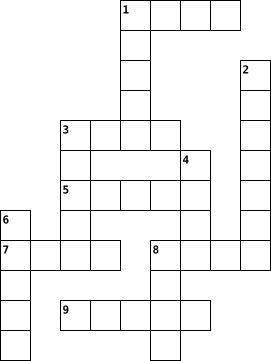
Across
- Seeds (dalam bahasa Indonesia)
- Daun (dalam bahasa Inggris)
- Batang Pohon (dalam bahasa Inggris)
- Mawar (dalam bahasa Inggris)
- Pohon (dalam bahasa Inggris)
- Buah-buahan (dalam bahasa Inggris)
Down
- Flower (dalam bahasa Indonesia)
- Melati (dalam bahasa Inggris)
- Tereatai (dalam bahasa Inggris)
- Roots (dalam bahasa Indonesia)
- Rumput (dalam bahasa Inggris)
- Ranting (dalam bahasa Inggris)
12 Clues: Daun (dalam bahasa Inggris) • Mawar (dalam bahasa Inggris) • Pohon (dalam bahasa Inggris) • Melati (dalam bahasa Inggris) • Rumput (dalam bahasa Inggris) • Seeds (dalam bahasa Indonesia) • Roots (dalam bahasa Indonesia) • Ranting (dalam bahasa Inggris) • Flower (dalam bahasa Indonesia) • Tereatai (dalam bahasa Inggris) • Buah-buahan (dalam bahasa Inggris) • ...
Plants 2024-05-18

Across
- Reactant of cellular respiration.
- Allow gas exchange.
- Transports water.
- Is used in photosynthesis.
- Stores water in plant cells.
- Support of plants.
Down
- Anchor plants.
- Plants are this.
- Product of photosynthesis.
- Process which plants go through.
- Contains the pigment.
- Transports nutrients.
12 Clues: Anchor plants. • Plants are this. • Transports water. • Support of plants. • Allow gas exchange. • Contains the pigment. • Transports nutrients. • Product of photosynthesis. • Is used in photosynthesis. • Stores water in plant cells. • Process which plants go through. • Reactant of cellular respiration.
Plants 2024-02-15

Across
- Brightly colored flower with cup-shaped petals.
- Small flower with white petals and a yellow center.
- Large, yellow flower with a dark center that turns to face the sun.
- Fast-growing plant with tall, hollow stems used for various purposes
- tree Evergreen tree with needle-like leaves and pine cones.
- Fragrant flower with a large, showy bloom and thorny stems.
Down
- tree Tropical tree with a tall, unbranched trunk and large, fan-shaped leaves.
- Green plants with slender leaves that cover the ground in lawns or fields.
- Tall woody plant with a single main trunk and many branches.
- Colorful and fragrant part of a plant that blooms.
- Tree with colorful leaves in the fall and helicopter-like seeds.
- Large, sturdy tree with broad leaves that turn brown in the fall.
12 Clues: Brightly colored flower with cup-shaped petals. • Colorful and fragrant part of a plant that blooms. • Small flower with white petals and a yellow center. • tree Evergreen tree with needle-like leaves and pine cones. • Fragrant flower with a large, showy bloom and thorny stems. • Tall woody plant with a single main trunk and many branches. • ...
Plants 2024-09-01

Across
- makes new plants
- the first part of the plant to come out of the seed
- the baby plant inside the seed
- a leaf
- makes enery for the plant
- takes in water and nutrients
Down
- makes the seeds and the fuit
- a root
- a stem
- where seeds are planted
- carries water and nutrients to the leaves
- gives energy to plants
12 Clues: a root • a stem • a leaf • makes new plants • gives energy to plants • where seeds are planted • makes enery for the plant • makes the seeds and the fuit • takes in water and nutrients • the baby plant inside the seed • carries water and nutrients to the leaves • the first part of the plant to come out of the seed
PLANTS 2024-12-10

Across
- reproduction method used by ferns and carried by the wind to a safe place to grow
- process by which plants change the sun's energy into food(later use)
- female part of the plant
- physical parts of living things
- protects the tree and shrubs. tough so animals can't eat through it
Down
- capture sunlight and use it to make food
- male part of the flower
- part of the stamen produces pollen
- also called the egg where the seed is produced
- helps the stay in place and absorbs water and nutrients
- outside of flower. brightly colored to attract insects
- outer part of the flower that protects the flower
12 Clues: male part of the flower • female part of the plant • physical parts of living things • part of the stamen produces pollen • capture sunlight and use it to make food • also called the egg where the seed is produced • outer part of the flower that protects the flower • outside of flower. brightly colored to attract insects • ...
plants 2026-05-30

Across
- - this tropical plant would theoretically fruit in its normal climes
- - a climbing thorny flower gifted by our wonderful neighbours
- - this herb’s large leaves are so yum in browned butter
- - a herb loved in mediterannean cuisine, that keeps flowering despite our best efforts
- - the branches from this silver green shrub are perfect for a bouquet and live in our front planter!
- - a low growing fruiting plant that makes tiny versions of a favourite fruit!
- - this exotic plant flowers a surprising amount with just the smallest amounts of water
Down
- - this wee tree has moved outdoors after it decorated our living room this winter
- - this huge leafed climbing tropical plant is slowly getting as tall as our living room!
- - these little succulents grow on top of our rubbish bin house
- - a fragrant purple flower bees and Andrews love
- - we keep propagating these climbing vines despite running out of space
12 Clues: - a fragrant purple flower bees and Andrews love • - this herb’s large leaves are so yum in browned butter • - a climbing thorny flower gifted by our wonderful neighbours • - these little succulents grow on top of our rubbish bin house • - this tropical plant would theoretically fruit in its normal climes • ...
Plants and Plants Processes 2022-04-03

Across
- The process by which solar energy is converted to chemical energy.
- A system of tube-like tissues that transports water, nutrients, and other materials from one part of an organism to another.
- A tiny structure in which sperm forms.
- The green pigment that captures energy from sunlight.
- The loss of water from leaves.
- Vascular plants that produce flowers and fruits which surround and protect seeds
- Plant growth in response to a stimulus.
- The male reproductive structure of flowering plants.
- Plants that produce seeds that are not enclosed in a fruit.
Down
- Anything that causes a reaction or change.
- The inactive state of a seed or another plant part when conditions are not favorable for growth.
- When pollen lands on the female plant reproductive structure and fertilizes the eggs.
- The female reproductive structure of flowering plants.
- Make their own food.
- A plant embryo enclosed in a protective coating.
- Respiration The process by which cells use oxygen to release the stored energy from the bonds of sugar molecules.
16 Clues: Make their own food. • The loss of water from leaves. • A tiny structure in which sperm forms. • Plant growth in response to a stimulus. • Anything that causes a reaction or change. • A plant embryo enclosed in a protective coating. • The male reproductive structure of flowering plants. • The green pigment that captures energy from sunlight. • ...
Plants and Plants Processes 2022-04-03

Across
- The green pigment that captures energy from sunlight.
- Anything that causes a reaction or change.
- Make their own food.
- The process by which cells use oxygen to release the stored energy from the bonds of sugar molecules.
- Plants that produce seeds that are not enclosed in a fruit.
- The female reproductive structure of flowering plants.
- The loss of water from leaves.
- Plant growth in response to a stimulus.
- A system of tube-like tissues that transports water, nutrients, and other materials from one part of an organism to another.
Down
- The process by which solar energy is converted to chemical energy.
- The male reproductive structure of flowering plants.
- When pollen lands on the female plant reproductive structure and fertilizes the eggs.
- Vascular plants that produce flowers and fruits which surround and protect seeds
- The inactive state of a seed or another plant part when conditions are not favorable for growth.
- A tiny structure in which sperm forms.
- A plant embryo enclosed in a protective coating.
16 Clues: Make their own food. • The loss of water from leaves. • A tiny structure in which sperm forms. • Plant growth in response to a stimulus. • Anything that causes a reaction or change. • A plant embryo enclosed in a protective coating. • The male reproductive structure of flowering plants. • The green pigment that captures energy from sunlight. • ...
Flowering Plants 2016-05-06

Across
- Plants need ___ for support, cooling transport and photosynthesis
- Glucose is the store of ___ potential energy
- Male parts of a flower
- The way plants make food
- When two gametes join together, it forms a new cell called ___
- Contains the female gametes (inside)
- What is used for plants and put in soil to make them grow better?
- These have bright colours and strong scents to attract insects/birds
- Part of a flower in which pollen is made
- Water ___ out of the plant's leaves, as water vapour
Down
- Mineral salt used to help the plant to make proteins and cell growth
- Reproduction in flowers is ___ reproduction
- Transfer of pollen from an anther to a stigma
- ___ pollinated flowers are not brightly coloured and have smooth pollen
- Mineral salt needed for making chlorophyll
- Joinging together of the nuclei of a male gamete and female gamete
- ___ pollinated flowers are brightly coloured and have spiky/sticky pollen
- Plants often change glucose into ___ for storage
- Contains the male gametes (inside)
- The female parts of a flower are the ___, style and stigma
20 Clues: Male parts of a flower • The way plants make food • Contains the male gametes (inside) • Contains the female gametes (inside) • Part of a flower in which pollen is made • Mineral salt needed for making chlorophyll • Reproduction in flowers is ___ reproduction • Glucose is the store of ___ potential energy • Transfer of pollen from an anther to a stigma • ...
Plants Vocabulary 2015-11-11

Across
- The most common example of nonvascular plant in Virginia.
- Plants are __ because they have membrane bound organelles.
- Plants make __ gas.
- Plants are __ because they make their own food.
- Plants use __ gas and turn the C in it into sugar.
- Flowers turn into __ with seeds in them.
- Plants are __ because they have many different cells.
- When a seed begins to grow, it will __.
- The green bottom of a flower.
- Vascular plants that grow seeds in cones.
- The green chemical that that is used for photosynthesis.
- The part of the flower that holds eggs.
- Plants have a __ to store water and sometimes sugar in.
- The part of the stamen that holds up the anther.
- The part of the stamen that makes pollen.
- The most common example of gymnosperm in our area.
- The organelle in the center of the cell that all eukaryotes have.
- Angiosperms that make two cotyledons.
- Angiosperms reproduce using these.
- Plants that reproduce with flowers.
- The female part of a flower.
Down
- Vascular plants that reproduce with spores.
- The part of the seed that is the actual baby plant.
- The part of the seed that protects the insides.
- The part of the pistil that takes in pollen.
- Gymnosperms produce seeds in __.
- The tube part of the pistil in a flower.
- Plants are __ because they make their own food.
- Plants have a __ that protects and filters their cells.
- The entire male piece of a flower.
- The organelle that holds chlorophyll.
- Plants with tubes in them to carry water.
- The part of the seed that is stored food.
- Angiosperms that only make one cotyledon.
- The part of the flower used to attract pollinators.
- Ferns and mosses reproduce with __ instead of seeds.
- The male cells from the plant.
- The part of the plant that absorbs water and holds the plants in place.
- A fertilized plant egg.
- The growth towards the light.
- The growth to or away from gravity.
- Plants without tubes in them to carry water.
42 Clues: Plants make __ gas. • A fertilized plant egg. • The female part of a flower. • The green bottom of a flower. • The growth towards the light. • The male cells from the plant. • Gymnosperms produce seeds in __. • The entire male piece of a flower. • Angiosperms reproduce using these. • The growth to or away from gravity. • Plants that reproduce with flowers. • ...
Biodiversity & Plants 2018-06-07

Across
- Controls all cell activities.
- Technique to gather organisms using a net: "... netting".
- Scientists use these to identify unkown things in the environment: "... keys"
- Plants produce this chemical using light energy.
- Absorbs light energy for photosynthesis.
- Process in which green plants make their own food.
- Range of living things in an ecosystem.
- Plants breathe that gas in: "... dioxide".
- Controls what enters and exits the cell: "cell ...".
- Chemical Used to test if starch is present.
- Technique to explore and research what is within an environment.
Down
- Maintains structure of plant cell: "cell ...".
- Tool to estimate the population of living things in an environment.
- Plants convert light energy into this type of energy: "... energy".
- Where all cell reactions take place.
- Plants breathe that gas out.
- Stores water and cell sap.
- Fancy name for chopping down more trees than can grow to replace them.
- Method to find organisms living in trees: "tree ...".
- Fancy name for the environment in which a particular animal or organism lives.
- Fancy name for the community of living and non-living things.
- The long string of sugar bits that plants use to store energy.
- A healing use of plants.
- Technique to collect organisms living in leaf litter: "... traps".
24 Clues: A healing use of plants. • Stores water and cell sap. • Plants breathe that gas out. • Controls all cell activities. • Where all cell reactions take place. • Range of living things in an ecosystem. • Absorbs light energy for photosynthesis. • Plants breathe that gas in: "... dioxide". • Chemical Used to test if starch is present. • ...
Seed Plants 2012-09-16

Across
- The unusual anatomy of C4 plants
- The sterile structure surrounding an ovule
- The ovaries of Proteaceae and Leguminosae have this structure
- The specialized seed-bearing branches of conifers
- Specialized styles that initially bear pollen in Proteaceae and Compositae
- The placentation of orchid ovaries
- The combination of the 4 pollen grains of a spore mother cell
- The stellar arrangement of monocotyledons
Down
- the inner bract of a grass floret
- The unusual pollen of epacrids with only 1 functional grain
- Sticky glands attached to the pollen masses of orchids
- The secondary wood of cycads
- The specialized pollen-bearing leaves of cycads and conifers
- The unit of the gynoecium
- Aggregated pollen masses of Orchidaceae
- Stalks of most flowers and of grass spikelets
- The typical number of nuclei in an embryo sac
- Ovaries derived from the fusion of gynoecial units
- Where the male organs mature ahead of the females
- Single-seeded, indehiscent fruits of daisies
- The distinctive pollen of the eudicots
21 Clues: The unit of the gynoecium • The secondary wood of cycads • The unusual anatomy of C4 plants • the inner bract of a grass floret • The placentation of orchid ovaries • The distinctive pollen of the eudicots • Aggregated pollen masses of Orchidaceae • The stellar arrangement of monocotyledons • The sterile structure surrounding an ovule • ...
Plants Revision 2015-06-29

Across
- large starchy storage area for many plants
- liquid needed for photosynthesis
- these make up proteins
- glucose is a type of this
- needed with glucose to make proteins
- long and narrow plastic greenhouse
- how living things change to fit their environment
- provides the energy for photosynthesis
- when results refer to number they are this
- process in which plants make their own food
- colour iodine goes in the presence of starch
- chemical to test for starch
- product of photosynthesis
- provided by light
- singular of algae
- contains the xylem and phloem in a plant
Down
- glass building for plants
- when biodiversity is observed along a line
- green organelle in plant cells
- when gas moves from high concentration to a low
- gadget for measuring biodiversity
- gaseous waste from photosynthesis
- a factor that restricts a reaction
- when results are descriptive they are this
- when water moves from a high concentration to a low
- single-celled photosynthetic organism
- gas needed for photosynthesis
- chemical in chloroplasts
- when plants are grown in controlled liquid only they are called this
- if not needed, the glucose goes here into storage
- transports food in a plant
- could limit the rate of photosynthesis
- this means it doesn't dissolve in water
- transports water in a plant
- storage molecule in a plant
35 Clues: provided by light • singular of algae • these make up proteins • chemical in chloroplasts • glass building for plants • glucose is a type of this • product of photosynthesis • transports food in a plant • chemical to test for starch • transports water in a plant • storage molecule in a plant • gas needed for photosynthesis • green organelle in plant cells • ...
Nuclear Plants 2015-01-05

Across
- Its job is slowing down neutron speed
- increases the cost of a nuclear plant
- Uranium isotope used in nuclear plants
- One of the most dangerous fission product
- Uncontrolled reaction
- force liquid to circulate
- Is connected to a turbine to produce electricity
- Its job is to recycle steam
- is capable to rotate a turbine
- Allows to exchange heating
Down
- A sub-product of fission reaction
- The action of splitting a nucleus
- When low, rises the probability of fission reaction
- The material the nuclear reactor container is made of
- Is formed by neutrons and protons
- Allow to take under control fission reactions
- Difference between initial and final mass
- Contain the uranium
- After this time radiation is decreased by 50%
- The major problem of a nuclear plant
20 Clues: Contain the uranium • Uncontrolled reaction • force liquid to circulate • Allows to exchange heating • Its job is to recycle steam • is capable to rotate a turbine • A sub-product of fission reaction • The action of splitting a nucleus • Is formed by neutrons and protons • The major problem of a nuclear plant • Its job is slowing down neutron speed • ...
Plants Vocab 2021-03-01

Across
- structures that make food
- green pigment found in chloroplasts of plants
- pores of a leaf's surface
- fern's leaves
- storage sac that can expand and shrink
- cells are organized into this
- plants that lack vascular tissue
- layer of cells that produces new xylem and phloem
- rootlike structures
- water evaporating from a plant's leaf
- plant that develops from a zygote
Down
- plants with true vascular tissue
- waterproof layer reducing water loss
- water and minerals travel through this vascular tissue
- angiosperms with two seed leaves
- plants process of using sunlight to synthesize foods from carbon dioxide and water
- tube structure that moves water and minerals
- protects root from injury
- vascular tissue through food moves
- embryo grows and pushes out seed again
- seed leaf that provides food for an embryo
- angiosperms with one seed leaf
22 Clues: fern's leaves • rootlike structures • structures that make food • pores of a leaf's surface • protects root from injury • cells are organized into this • angiosperms with one seed leaf • plants with true vascular tissue • angiosperms with two seed leaves • plants that lack vascular tissue • plant that develops from a zygote • vascular tissue through food moves • ...
Plants Crossword 2022-04-13

Across
- turning sunlight into food.
- shed their leaves at end of the growing season
- A simple sugar produced by plants
- list of organisms showing who eats who
- A gas that plants release during photosynthesis
- The male reproductive part of the flower.
- Word for a developing root
- The sticky part of the carpel
- These vessels transport water and minerals
- Word for a developing shoot
- The male reproductive cell.
- Makes pollen at the top of the stamen.
- organisms which consume animals for food
- Female reproductive cell.
- Small openings on the underside of a leaf
- Sugar is stored in the _____________of a plant
- The female reproductive part.
- Absorbs water and minerals from the ground.
- A gas that plants take in
Down
- does not lose its leaves in the winter,
- organisms which consume plants for food
- Protects bud before it opens
- Where the seed develops.
- E_____________ Layer-outer layer of leaf
- These vessels transport glucose
- The stem of the stamen; it holds up the anther
- plants store glucose as _________________
- The pollen reaches the ovules
- A tube that goes down the carpel
- When pollen gets from male to female part.
- These open up to collect sunlight
- Attracts bugs and protects the flower
- attribute that makes plants grow towards light.
- organisms that capture light & make food
34 Clues: Where the seed develops. • Female reproductive cell. • A gas that plants take in • Word for a developing root • turning sunlight into food. • Word for a developing shoot • The male reproductive cell. • Protects bud before it opens • The pollen reaches the ovules • The sticky part of the carpel • The female reproductive part. • These vessels transport glucose • ...
Seedless Plants 2022-03-01

Across
- have leaves 1 cell layer thick
- makes
- what they are
- plants take in to create oxygen
- seedless non vascular plants are ________
- the earliest group of seedless vascular plants
- have fronds
- outside layer of leaf
- makes leaves green
- kingdom that they are in
- need a __ environment
Down
- lost leaves and roots from evolutionary reduction
- look like mini pine trees
- plants create
- their decomposition produced lots of _____
- responsible for the long distance transport of water
- most primitive non vascular plant
- need ___ for photosynthesis
- responsible for the transport of sugar
- how plants make food
20 Clues: makes • have fronds • plants create • what they are • makes leaves green • how plants make food • outside layer of leaf • need a __ environment • kingdom that they are in • look like mini pine trees • need ___ for photosynthesis • have leaves 1 cell layer thick • plants take in to create oxygen • most primitive non vascular plant • responsible for the transport of sugar • ...
Plants Crossword 2022-06-22

Across
- a fertilized egg attaches itself to uterus
- cells need water,oxygen,sugars to function.
- Made by White Blood Cells
- the tube through which an egg passes
- midline of the chest
- fight against bacteria not viruses
- releasing an ovum into the fallopian tube
- Largest artery in the body
- upper chambers of the heart
- Produce sperm and testosterone
- An organism's physical appearance
- carries oxygen IN red blood cells.
- female gamete
- male gamete, has a head, body and tail
Down
- Blood cells that carry oxygen
- Genetic makeup of an organism
- the leg bone above the knee
- Hip Bone
- part of DNA that passes on family characteristics
- can benefit us or cause infection
- microscopic blood vessels
- shoulder
- Different forms of a gene.
- allows embryo to be supplied with Mum's blood
- An allele that dominates or masks the other allele.
- carry blood AWAY from the heart
- Having two different alleles
- Hidden when a dominant allele is present.
- Produces eggs and female hormones
- An oval, bony case that protects the brain.
- Having two identical alleles
- tiny sac like structure in the lungs
- An organism in the earliest stage of development
- liquid part of blood
- create clotting in blood
35 Clues: Hip Bone • shoulder • female gamete • midline of the chest • liquid part of blood • create clotting in blood • microscopic blood vessels • Made by White Blood Cells • Different forms of a gene. • Largest artery in the body • the leg bone above the knee • upper chambers of the heart • Having two different alleles • Having two identical alleles • Blood cells that carry oxygen • ...
Medicinal plants 2021-05-02

Across
- works to promote digestive health
- is useful for relieving joint paint
- whiskers benefits of cat whiskers treat gout
- benefits of pomegranate for health relieve arthritis and joint Pain
- benefits of Ginger boiled water, can overcome nausea maintain digesteve heald.
- leaves are often used to relieve inflammation, upper respiratory tract infections, and comlaints related to the liver
- useful for neutralizing toxins in the body
- benefits of dlingo for health relieves inflammation and fever
- fruits containts vitamin C, potassium, and magnesium which are useful for maintaining heart health
Down
- leaves are efficacious to alliviate the negative effects of stomach acid
- benefits for health is to help lower blood pressure
- of god belive to be used for the treatment of diseases such as diabetes, fever, hypertension and constipation
- of god benefits for reducing the risk of cancer and tumors
- benefits for health treat diarrhea to lose weight
- benefits for health increase endurance. Turmeric contanints curcumin wich works to increase endurance
- leaves benefits for the health is of your body provides nutrition for the body
- benefits of temulawak for health prevent cancer
- flowers the benefits of rosella flowers for health as a source of antioxidants for the body
- Vera the benefits of aloe Vera for your health is overcoming dry skin
- benefits to boots the immune syatem and natural moisturizer
- is a herbal remed to help dissolve kidney and blader stones
21 Clues: works to promote digestive health • is useful for relieving joint paint • useful for neutralizing toxins in the body • whiskers benefits of cat whiskers treat gout • benefits of temulawak for health prevent cancer • benefits for health treat diarrhea to lose weight • benefits for health is to help lower blood pressure • ...
Poisionous Plants 2023-08-21

Across
- these plants contain ___: chokecherry, hydrangea, vetch, johnson grass (sorghum)
- causes damage generally in the least protected areas of body: white skin on dorsum and lateral body wall, thin and non pigmented areas
- ricin containing plant (highly toxic glycoprotein); CS may have lag period: anorexia/v/d, weakness/thirst, m spasms/uremia/death, sweating/ataxia(horses), extensive organ edema/damage
- nitrate causes _____ leading to dark brown/chocolate colored blood
- plants that causes ____photosensitization = any plant causing liver failure: rape (brassica), blue-green algae, grounsel(senecio), crotalaria,
- horses most susceptible; found in sawdust/shaving from this type of trees that may be used for bedding; CS= acute onset of laminitis (may progress to necrosis of dorsal laminae), distal limb edema and fever
- neurotoxic plant that contains polycyclic diterpene alkaloids that are neuromuscular blockers, cholinergic and nicotinic antag. CS- bloat, excitability, muscle tremors/stiff/paresis/seizures, arrhythmia, death from resp paralysis. cattle are most susceptible
- plant that causes primary photosensitization
- (astragalus and oxytropis) cs: ataxia/hypermetria, clicking of the dew claws (cracker heels), CP deficits, emaciation, emphysema (sheep), abortion, teratogenesis (contracted tendon)
- affects horses/cattle, contains ketone and rematches which is passed to young in milk. CS= weakness/depression; horses — myocardial necrosis and CHF, cattle - ataxia, depression, m tremors +/- acetone breath
- causes abortions (“pine needle abortion”) characterized by weak contractions, excessive discharge, a small calf and RFM
- ___toxic plants: oleander, foxglove, lily-of-the-valley, yew, azalea/rhododendron
Down
- plant that may cause cs that last for d-wk: irriation of mm, ptyalism, edematous swelling of tongue/lips, difficulty swallow/breathing
- neurotoxic plant that also has the potential to accumulate nitrates; has 2 toxins (GI and neuro). cs- anorexia/nausea/abd pain/v/d, apathy/paresis/paralysis, prostration, unconsciousness
- toxicity in horses most commonly from consuming senecio sp, crotalaria sp, heliotropium sp. Cs - non specific liver disease = wt loss, icterus, photosensitization. dx based on observation of fibrosis, megalocytosis and bile duct prolif/hyperplasia
- primary photosensitization effects are usually restricted to ____. caused by membrane and free radical damage
- pigweed, nightshade, oat hay, sorghum, rye, alfalfa
- in addition to the skin, secondary photosensitization also causes damage to __
- treatment that may reverse neuromuscular blcokade
- contains several teratogenic compounds, mainly affects sheep and most lambs are stillborn; effects depend on stage of gestation eaten: d14 monkey faced lambs, d17-18 PL motor n paralysis, d12-30 craniofacial deformities (cleft palate/lip, brachygnathia), d30-36 shortened legs from metacarpal/tarsal bone hypoplasia
- neurotoxic plant that most commonly affects sheep, induces nicotinic effects: salivation, incoordination, headpressing/wander/excitement, muscle tremors/seizures, dyspnea. teratogen in cattle = crooked calf syndrome
- causes RBC lysis in horses. CS - depression/icterus/anemia/hemoglobinemia/uria
- odor produced from gas in rumen with cyanide ingestion
- color of blood found in cyanide ingestion
- treatment for nitrate that reduces methemoglobin
- plant that affects horses and causes nigropallidal encephalomalacia “chewing disease”. most common CS - chewing/drooping food; cs usu irreversible
- (cicuta) one of the most toxic plants known; contains cicutoxin = highly toxic to cattle/horses. CS - acute violent tetanic seizures, rapid progression from salivation to m twitch/seizures/coma/death
- neurotoxic plant in cattle/sheep/pigs/horses that contains thiaminase which can lead to cardiogenicity/BM suppression only in rums, BUT leads to PEM. CS - incoordination/wide base, depression, m tremors/ataxia, blindness/retinal degeneration
- neurotoxic plant that contains coniine and pyridine-type alkaloids. CS dev acutely: salivation, v/d, muscle tremors/weak/convulsions, death from resp failure
- plant that may contain gossypol = cardiotoxic esp to young animals (cattle/sheep/pig). CS - sudden death due to HF, anorexia/red urine/thin pot bellied, poor performance in adults
30 Clues: color of blood found in cyanide ingestion • plant that causes primary photosensitization • treatment for nitrate that reduces methemoglobin • treatment that may reverse neuromuscular blcokade • pigweed, nightshade, oat hay, sorghum, rye, alfalfa • odor produced from gas in rumen with cyanide ingestion • ...
Plants Review 2019-02-05

Across
- Photosynthesis is a chemical change in plants which recombine water and carbon dioxide into glucose _____ and oxygen.
- What is the process in which a plant takes in carbon dioxide and releases oxygen?
- What is the process that leaves do that uses light to make food for the plant?
- Which part of the plant attracts insects to help with pollination?
- When a seed germinates it makes a _____.
- Where do plants get their energy?
- True or false: stems transport air
- What is the term used when a seed begins to grow?
- What do most plants begin their life as?
- Which component of soil absorbs the most water?
- When a plant responds to light
- What part of the plant breathes in carbon dioxide?
Down
- When a plant responds to gravity: roots grow down and stems grow up.
- What part of the flower contains the pollen?
- Plants give off what type of air that animals use to breathe?
- The role of a flower is to make _______.
- The turning or bending of a plant in response to being touched.
- Anything that causes a response in an organism.
- Soil with ______matter is made up of previously living material.
- A plant's response to stimulus
- If you put an insect and a plant in an airtight container, should they both continue to live?
- True or false: all plants do not need soil.
22 Clues: A plant's response to stimulus • When a plant responds to light • Where do plants get their energy? • True or false: stems transport air • The role of a flower is to make _______. • When a seed germinates it makes a _____. • What do most plants begin their life as? • True or false: all plants do not need soil. • What part of the flower contains the pollen? • ...
Reproducing Plants 2024-04-23

Across
- one that has both male and female parts
- contains sepals, petals, pistils, and stamens
- the transfer of pollen to a stigma, ovule, flower, or plant to allow fertilization
- the action of arranging something in layers
- is a horticultural technique whereby tissues of plants are joined so as to continue their growth together
- a mode of reproduction in which only one parent is involved to reproduce offspring
- an asexual reproduction method in which a new organism develops from a bud of an existing organism.
- an asexual reproduction method in which a new organism develops from a bud of an existing organism
- A flower, also known as a bloom or blossom, is the reproductive structure found in flowering plants.
Down
- develops from a single ovary (pistil)
- the process by which a plant grows from a seed into a seedling
- Dried fruit is fruit from which the majority of the original water content has been removed either naturally, through sun drying, or through the use of specialized dryers or dehydrators
- a thing at a rudimentary stage that shows potential for development
- the part of a seed which acts as a food store for the developing plant embryo, usually containing starch with protein and other nutrients
- GP = seeds germinated/total seeds x 100
- a fine powder produced by certain plants when they reproduce
- the usually edible reproductive body of a seed plant
- the part of the ovary of seed plants that contains the female germ cell and after fertilization becomes the seed
- 1.5 to 2.0 inches or even deeper
- a piece cut off from something, especially what remains when something is being trimmed or prepared
- flowers that have either male parts or female parts, but not both
21 Clues: 1.5 to 2.0 inches or even deeper • develops from a single ovary (pistil) • one that has both male and female parts • GP = seeds germinated/total seeds x 100 • the action of arranging something in layers • contains sepals, petals, pistils, and stamens • the usually edible reproductive body of a seed plant • a fine powder produced by certain plants when they reproduce • ...
Mecical Plants 2024-09-18

Across
- Drug
- Eternity god person
- Minty plant
- za warndo
- Emergency food
- Vera Stubby And prickly and green
- Spicy thing
- Child with bomb
- Person in red shirt
- Anemo Support/Main DPS
- Hold E win
Down
- Genshin Impact
- 7A student that uses glasses when looking at screens
- A rythm game
- a game based on a sport anime
- 70% ULT?!!?!
- based on multiple shonen anime
- people who use it should die
- drug plant
- used to be fugding garbage now is ok is not op
20 Clues: Drug • za warndo • drug plant • Hold E win • Minty plant • Spicy thing • A rythm game • 70% ULT?!!?! • Genshin Impact • Emergency food • Child with bomb • Eternity god person • Person in red shirt • Anemo Support/Main DPS • people who use it should die • a game based on a sport anime • based on multiple shonen anime • Vera Stubby And prickly and green • used to be fugding garbage now is ok is not op • ...
Crossword Plants 2024-06-07

Across
- Plants use these to absorb nutrients and water from the soil (5.1)
- What we call it when a plant cell is swollen (=opgezwollen) and firm (5.1)
- The start of reproduction in plants (5.4)
- The most attractive part of the plant (5.4)
- The green leaves that protect the flower bud (5.4)
- These are tiny mouths in the plants' leaves (5.1)
- These are necessary for all kinds of processses in the plant (5.3)
- The base of the flower (5.4)
- The base of a new plant (5.2)
- Things plants need that they get from the soil. Nitrogen is one of them (5.3)
Down
- The gas created when plants make food (5.3)
- A sugar that is the main food source of the plant (5.3)
- The female part of a plant (5.4)
- A part of the plant cell that makes the plant green. They make sugar. (5.1)
- How plants make their food (5.3)
- It keeps the plant upright and is important for transporting water and nutrients (5.1)
- Type of vessel in the plant that brings water from the leaves to the roots (5.1)
- The male part of a plant (5.4)
- What plants need to spread around to reproduce (5.4)
- Type of vessel in the plant that brings water to the leaves (5.1)
- The colourful parts of a flower (5.4)
- The part of the plant where cells divide the most (5.2)
- This keeps the cells of the plant the right size (5.1)
23 Clues: The base of the flower (5.4) • The base of a new plant (5.2) • The male part of a plant (5.4) • The female part of a plant (5.4) • How plants make their food (5.3) • The colourful parts of a flower (5.4) • The start of reproduction in plants (5.4) • The gas created when plants make food (5.3) • The most attractive part of the plant (5.4) • ...
Plants, Siesjö 2024-10-01

Across
- pudel
- ormbunke
- spång
- bok
- ekollon
- mossa
- fibbla
- gran
- fläder
- yarrow
- slånbär
Down
- näckrosor
- rödklöver
- röksvamp
- vass
- nysört
- blackberries
- rönnbär
- björk
- brännässlor
- grävling
- ek
22 Clues: ek • bok • vass • gran • pudel • spång • björk • mossa • nysört • fibbla • fläder • yarrow • rönnbär • ekollon • slånbär • röksvamp • ormbunke • grävling • näckrosor • rödklöver • brännässlor • blackberries
Plants I 2025-03-24

Across
- outer layer of the stem/root
- transparent upper layer of cells in a leaf containing no chloroplasts
- bundles areas where phloem and xylem are bundled together
- layer in a leaf that contains air spaces to allow easy diffusion of gases
- layer of cells that contain stomata
- one of the most important minerals for plant growth; needed for chlorophyll to work
- transports water and minerals to the leaf from the roots; made of dead cells
- one of the most important minerals for plant growth; needed to make proteins, chlorophyll and DNA
- controls the opening and closing of the stomata
- the carbohydrate that plants use to make cell walls
- layer of lipid that prevents water loss from leaf
- indicator solution which changes in colour in response to changes in carbon dioxide concentration; yellow – high CO2 levels, orange – atmospheric CO2, purple – low CO2 levels
- the loss of water vapour from the leaves of plants; rate affected by light intensity, temperature, humidity & wind
- the carbohydrate molecule that plants use to store glucose/energy
Down
- main site of photosynthesis in a leaf; cells contain lots of chloroplasts
- transports sucrose and amino acids from the leaf
- carbon dioxide + water → glucose + oxygen; requires light and chlorophyll
- one of the most important minerals for plant growth; need to make DNA and cell membranes
- allow easy diffusion of gases through the leaf
- the organelle where photosynthesis occurs; contains chlorophyll
- specialised pore in a leaf to allow gases to move in and out of leaf
- one of the most important minerals for plant growth; needed for enzymes to work
- of the stem/root that produces new plant cells
- factor the component of a reaction which is it shortest supply so prevents the rate increasing
- passage of water and minerals through the roots, stem and leaves of a plant
- main organ of a plant for photosynthesis
- the movement of oxygen and carbon dioxide in and out of the leaf
27 Clues: outer layer of the stem/root • layer of cells that contain stomata • main organ of a plant for photosynthesis • allow easy diffusion of gases through the leaf • of the stem/root that produces new plant cells • controls the opening and closing of the stomata • transports sucrose and amino acids from the leaf • layer of lipid that prevents water loss from leaf • ...
Green Plants 2025-06-03

Across
- The extra food made by plants is stored as this.
- The energy source for photosynthesis.
- Tiny pores on the underside of a leaf.
- What plants take in from the air for photosynthesis.
- The flat, broad part of a leaf.
- Water is absorbed by this part of the plant from the soil.
- What plants give out during photosynthesis.
- A baby plant found inside a seed.
- Plants need this from the soil for healthy growth.
- The stalk that joins the leaf to the stem.
Down
- The process by which plants make their own food.
- The water-carrying tubes in a leaf.
- The main vein running through the middle of a leaf.
- The process of losing excess water from leaves.
- The part of the plant that grows under the ground.
- Plants are called this because they make their own food.
- The green substance in leaves that traps sunlight.
- The main part of a plant that grows above the ground.
- Small plants that cannot make their own food, like mushrooms.
- The part of a plant that holds it upright and carries water.
20 Clues: The flat, broad part of a leaf. • A baby plant found inside a seed. • The water-carrying tubes in a leaf. • The energy source for photosynthesis. • Tiny pores on the underside of a leaf. • The stalk that joins the leaf to the stem. • What plants give out during photosynthesis. • The process of losing excess water from leaves. • ...
Identify plants 2021-06-04

Across
- receives pollen
- smooth margin
- fertile parts of cycads and conifers
- flowering plant
- uneven leaf base
- new growth unfurls
- flower parts in threes with parallel venation
- dry dehiscent fruit of many Myrtaceae
- moth juvenile
- not alternate or whorled
- star shaped flower
- relating to the physical senses
- calyx and corolla collectively
- insect eating plant
- Eucalyptus leaf shape
Down
- arrangement of flowers
- arborescent monocot
- Big Scrub soil
- inflorescence with sessile flowers
- fig fruit
- combined perianth segments into a cap
- separate male and female flowers on the same plant
- without hairs or scales.
- Fabaceae fruit
- makes plants green
- takes 2 years to complete its life cycle
- no petiole
- study of shape
- leaves of a dandelion
29 Clues: fig fruit • no petiole • smooth margin • moth juvenile • Big Scrub soil • Fabaceae fruit • study of shape • receives pollen • flowering plant • uneven leaf base • new growth unfurls • makes plants green • star shaped flower • arborescent monocot • insect eating plant • leaves of a dandelion • Eucalyptus leaf shape • arrangement of flowers • without hairs or scales. • not alternate or whorled • ...
shoshone plants 2021-05-19

Across
- tree, wongovi
- puuhwipe
- grass, puhipe
- tree, sohovi
- pogombe
- naagwaisih
- tevope
- tree, wapi
- apoq
- padekapi
- tedeena
- huupi
- pagandekape
- hanrif
Down
- engapadanki
- tanrape
- tree, sehevi
- wongoqapoq
- seqa
- segiipe
- pepper, aingaonrafi
- panhu
- ohayamba
- carrots, yambah
- aingaweaq
- ogwaifi
- kenka
- tsiinaq
- pihuudah
29 Clues: seqa • apoq • panhu • kenka • huupi • tevope • hanrif • tanrape • segiipe • pogombe • ogwaifi • tsiinaq • tedeena • puuhwipe • ohayamba • padekapi • pihuudah • aingaweaq • wongoqapoq • naagwaisih • tree, wapi • engapadanki • pagandekape • tree, sehevi • tree, sohovi • tree, wongovi • grass, puhipe • carrots, yambah • pepper, aingaonrafi
9.3 Plants 2022-11-28

Across
- a group of plants hormones that controls growth, fruit development, and germination
- a group of plant hormones that interacts with auxin to control cell division, cell differentiation, apical dominance, and germination
- embryonic or young developing leaf (2 words)
- an important plant hormone that control primary growth, cell differentiation, apical dominance and leaf development
- directional growth responses to external stimuli
- a gas plant that promotes growth, fruit ripening, and plant death
- area of dividing cells to produce layers of stem and root bark (2 words)
- growing toward or away from gravitational pull
- enzyme that loosens cell walls to enable cell elongation
- growth or movement toward a stimuli (2 words)
- process of cell division that produces identical diploid daughter cells
Down
- Meristem in stem and roots that causes secondary growth
- thickening of plant parts (2 words)
- only terminal buds experience growth due to high concentration of auxin (2 words)
- process of leaf death and dropping
- area of dividing cells to produce xylem and phloem tissue (2 words)
- a region of plant tissue consisting of undifferentiated cells that are actively dividing
- growth or movement away from a stimuli (2 words)
- phase of cell division where the cytoplasm are separated
- growing toward light
- undifferentiated tissue that will mature to produce dermal tissue
21 Clues: growing toward light • process of leaf death and dropping • thickening of plant parts (2 words) • embryonic or young developing leaf (2 words) • growth or movement toward a stimuli (2 words) • growing toward or away from gravitational pull • directional growth responses to external stimuli • growth or movement away from a stimuli (2 words) • ...
Pvz Plants 2022-10-18

Across
- produces twice the sun of a sunflower
- can light up fog around it
- shoots weak projectiles and butter
- redirects zombies who bite it to nearby lanes
- shoots homing projectiles, water only
- automatically collects coins
- removes metal objects from zombie
- can upgrade any peas into fire peas
- can do chip damage to zombies who step on it
- converts zombies who eat it to your side
- melon-pult but can slow down zombies
- mushroom that Shoots through multiple zombies
- Can be placed on the roof as a platform
- can shoot piercing shots and shoot balloons
- shoots four peas at the same time
- Peashooter that slows down zombies when shot
- copies a plant of your choice, monochrome
- High health wall that costs 50 sun
- a water variant of puff-shroom
- shoots one pea forward and two peas back
- blocks projectiles and bungee zombies
- Requires time to activate, can kill most zombies
- 0 sun cost mushroom that’s very spammable
Down
- can have plants placed on it on water
- can survive 3 gargantuar and Zamboni hits
- can blow away balloon zombies and fog
- Cheap and weak straight-shooting plant
- high and fast dps around a 3x3 area
- cheap straight shooter that hides when scared
- destroys graves it is placed on
- shoots a giant cob missile where you click
- Instant use plant that blows up in a 3x3 area
- a peashooter that shoots in three lanes
- First sun producer gained by player
- Explodes a large area and leaves a crater
- strongest wall in game, can block zombies
- shoots over obstacles and has pea stats
- Plant that eats 3 zombies and then has to chew
- cheap instant kill that jumps onto zombies
- strong damage with splash damage, also a pult
- Cheap sun producer that grows over time
- produces coins passively when placed
- When touched by a zombie in water, kills them
- freezes all zombies on map when placed
- wakes up sleeping mushroom plants
- shoots in the shape of a star
- sets fire to the lane it’s placed in
- can be placed on plants and acts as a wall
- Peashooter that shoots two peas at the same time
49 Clues: can light up fog around it • automatically collects coins • shoots in the shape of a star • a water variant of puff-shroom • destroys graves it is placed on • removes metal objects from zombie • shoots four peas at the same time • wakes up sleeping mushroom plants • shoots weak projectiles and butter • High health wall that costs 50 sun • high and fast dps around a 3x3 area • ...
PLANTS 2023 2023-01-03

Across
- trap light energy to carry out photosynthesis
- first type of (green) plant
- surrounds and protects seeds
- exchanging genetic material (in simple algae)
- hollow tube-like cells with lignin
- Autotrophic eukaryotes with cellulose cell walls
- absorb water and minerals needed
- chemical compound that supports taller plants
- they use chlorophyll to do this
- tissue which makes up the protective outer covering of the plant
- tissue that produces and stores sugars and contributes to suppoert
- male gametophyte
- small nonvascular plants that need to be near water
- angiosperm with a taproot
Down
- tubes that carry water through the plant
- tissue which enables passage of materials through the plant
- tubes that carry carbohydrates and solutions
- angiosperm with one cotyledon
- dry fruit that opens when ripe
- flower bearing seed plants
- another name for bryophytes
- seed leaves
- example of seedless vascular plants
- protects seeds and aid in seed dispersal
- another name for vascular plants
- cone bearing seed plants
26 Clues: seed leaves • male gametophyte • cone bearing seed plants • angiosperm with a taproot • flower bearing seed plants • first type of (green) plant • another name for bryophytes • surrounds and protects seeds • angiosperm with one cotyledon • dry fruit that opens when ripe • they use chlorophyll to do this • absorb water and minerals needed • another name for vascular plants • ...
Indigenous plants 2019-01-31

Across
- thank you
- when heated it is easy to bend
- show this to elders
- used to make baskets
- used to thicken stew
- bear with a hump on its back
- the bulb of this is eaten
- digs up roots from trees
- furry plant used for rope
- stories, wisdom
- used to make canoes
- it is prickly on its stem
- white rain
- this one stole the bear's tail
Down
- use this tool to make ice cream
- hunts in a pack
- used for carving tools, drying frames
- the plant used to make ice cream
- helps your stomach when you don't feel well
- is like a potato plant
- yummy soopalalie treat
- whose tail was stolen
- make from berries and can be eaten
- ash mixed with water to clean clothes
24 Clues: thank you • white rain • hunts in a pack • stories, wisdom • show this to elders • used to make canoes • used to make baskets • used to thicken stew • whose tail was stolen • is like a potato plant • yummy soopalalie treat • digs up roots from trees • the bulb of this is eaten • furry plant used for rope • it is prickly on its stem • bear with a hump on its back • when heated it is easy to bend • ...
B3 Plants 2020-09-25

Across
- the animal Mr Carter drew in the Carbon Cycle
- true or false? When enzymes get too hot, they die.
- This 'p' means that particles move without the use of energy
- Active t________t allows molecules to be moved from low to high concentrations (like nitrates in plant roots)
- this'ph' carries food around plants.
- like fats, these are made of glycerol and fatty acids (start with l)
- which broad group of rocks contain LOADS of Carbon, because they have loads of squished seashells and skeletons in them.
- Diffusion and o-----s are both passive processes
- this stage of p'syn combines H and CO2 to make glucose
- this is the sugar made in p'syn
- the a----e site is where reactions are sped-up by enzymes
- Stomata are tiny h_____ that are found on the undersides of leaves. They let gases move in and out.
- this dead, straw-like tissue carries water up, down and around plants.
Down
- Nitrates are essential so plants can produce p-o-e-n
- the process by which water is lost from leaves, pulling water ultimately in through the plant roots
- a nutrient that ONLY contains atoms of C, H and O
- an organism (usually plant) that makes its OWN food
- proteins that SPEED UP chemical reactions
- an organism that eats other organisms
- complex series of reactions by which plants make food
- CO2 can just d______e into oceans
- this delicious green food is the foundation of guacamole. It contains many lipids.
- living things that break down dead things -can include microorganisms like bacteria and fungi
23 Clues: this is the sugar made in p'syn • CO2 can just d______e into oceans • this'ph' carries food around plants. • an organism that eats other organisms • proteins that SPEED UP chemical reactions • the animal Mr Carter drew in the Carbon Cycle • Diffusion and o-----s are both passive processes • a nutrient that ONLY contains atoms of C, H and O • ...
Plants & Trees 2014-04-02

Across
- Don't touch it you'll get itchy.
- Has Annoying pine cones that fall.
- Roses are red ...
- Makes good soup
- It will stain your cloths.
- Commonly used in Quebec for maple syrup.
- And a ... on top
Down
- Good luck.
- Makes good ... tea
- A common cat name.
- Makes good sauce
- Good spice to spice things up. get it?
- Pretty during early spring and delicious during late spring.
- During spring grows big juicy bitter red berrys.
- The furst nations commonly used this tree.
- Smell and look pretty but to feel so good.
- Good for bad breath.
- Rad? ish.
- Soft tree
- That orange thing.
20 Clues: Rad? ish. • Soft tree • Good luck. • Makes good soup • Makes good sauce • And a ... on top • Roses are red ... • Makes good ... tea • A common cat name. • That orange thing. • Good for bad breath. • It will stain your cloths. • Don't touch it you'll get itchy. • Has Annoying pine cones that fall. • Good spice to spice things up. get it? • Commonly used in Quebec for maple syrup. • ...
Seed Plants 2014-09-11

Across
- collective noun for sepals and petals
- mint (lamiaceae) ovaries have 4 of them
- the protective structure around the ovule
- the modified cotyledon of grasses
- the 2n nutritive tissue of gymnosperm ovules
- xylem cell with solid end walls
- the ovary type linking most lilies and Asparagales
- the largest subfamily of orchids
- the wood of cycads
- the common pollen unit of Ericaceae
- pollen masses of orchids
- gymnosperms with ovuliferous scales
Down
- the modified calyx of daisies
- the nutritive product of double fertilization
- the structures housing N-fixing bacteria in legumes
- the ovary of Proteaceae and Leguminosae
- a modified perianth segment from a grass
- cup-shaped receptacle
- aestivation of Caesalpinioideae and Papilionoideae
- dairy florets modified to resemble petals
- the multigrained pollen unit of Mimosoideae
- extant gymnosperm order with pinnate leaves
- the fruit of grasses also called a grain
- the lip of orchid flowers
24 Clues: the wood of cycads • cup-shaped receptacle • pollen masses of orchids • the lip of orchid flowers • the modified calyx of daisies • xylem cell with solid end walls • the largest subfamily of orchids • the modified cotyledon of grasses • the common pollen unit of Ericaceae • gymnosperms with ovuliferous scales • collective noun for sepals and petals • ...
Identify Plants 2022-03-25

Across
- A grouping of a number of genera, that have similar flowers, fruit and/or seeds
- A naming system for plants that uses two names, Genus and species
- Flowers arranged on umbrella-like inflorescence Name of Plant family
- - Composite flowerhead - made up of disk and ray florets Name of Plant family
- The study of external features of a plant, helpful for identification
- Make up the corolla, the whorl of a flower that is often colourful or adapted to attract pollinators Name of part of a flower
- The female part of the flower ovary, style and stigma Name of part of a flower
- Inflorescences arranged on a coiled stem, flowers often blue or purple Name of Plant family
- Flowers have four petals arranged in the shape of a cross Name of Plant family
- A group of flowers arranged on a stem. The way they are arranged can help identify the plant family and therefore the plant
- The way scientists name, describe and organize plants into closely related groups
Down
- Flowers have two lips, inflorescence flowers arranged in whorls on stem, often have square stems Name of Plant family
- Flowers have 2 wings a keel and a standard/bearer, roots host bacteria which make atmospheric Nitrogen available to plants Name of Plant family
- A type of inflorescence, each flower arranged around a main stem, without individual stalks
- Make up the calyx, whorl on a flower below the petals Name of part of a flower
- Has a seed with a foot. Important NZ Genus of trees
- The first part of binomial name, starts with a capital letter
- Each one in a particular genus is similar, but not identical. Starts with a small letter
- Flowers typically have 5 petals fused or joined, 5 sepals joined, 5 stamens. Many plants have some part that is poisonous Name of Plant family
- The part of the flower that carries the pollen Name of part of a flower
- A variety of plant that exists because people have selected and grown it in cultivation. Written with capital letters and in ‘inverted commas’. No underline or italics. Doesn’t sound like Latin.
21 Clues: Has a seed with a foot. Important NZ Genus of trees • The first part of binomial name, starts with a capital letter • A naming system for plants that uses two names, Genus and species • Flowers arranged on umbrella-like inflorescence Name of Plant family • The study of external features of a plant, helpful for identification • ...
Identify Plants 2022-03-25

Across
- The part of the flower that carries the pollen Name of part of a flower
- A group of flowers arranged on a stem. The way they are arranged can help identify the plant family and therefore the plant
- The way scientists name, describe and organize plants into closely related groups
- Each one in a particular genus is similar, but not identical. Starts with a small letter
- The first part of binomial name, starts with a capital letter
- Make up the corolla, the whorl of a flower that is often colourful or adapted to attract pollinators Name of part of a flower
- Flowers arranged on umbrella-like inflorescence Name of Plant family
- The female part of the flower ovary, style and stigma Name of part of a flower
- Inflorescences arranged on a coiled stem, flowers often blue or purple Name of Plant family
- - Composite flowerhead - made up of disk and ray florets Name of Plant family
- A grouping of a number of genera, that have similar flowers, fruit and/or seeds
- Edge of leaf, can be toothed, or smooth/entire
Down
- Flowers have four petals arranged in the shape of a cross Name of Plant family
- The study of external features of a plant, helpful for identification. Can include details of leaves, flowers, fruit, stems/trunk, roots
- A naming system for plants that uses two names, Genus and species
- Make up the calyx, whorl on a flower below the petals Name of part of a flower
- Flowers have 2 wings a keel and a standard/bearer, roots host bacteria which make atmospheric Nitrogen available to plants Name of Plant family
- Flowers typically have 5 petals fused or joined, 5 sepals joined, 5 stamens. Many plants have some part that is poisonous Name of Plant family
- Has a seed with a foot. Important NZ Genus of trees
- The end result after a flower has been pollinated. The beginning of a new plant.
- A variety of plant that exists because people have selected and grown it in cultivation. Written with capital letters and in ‘inverted commas’. No underline or italics. Doesn’t sound like Latin.
- A type of inflorescence, each flower arranged around a main stem, without individual stalks
- Flowers have two lips, inflorescence flowers arranged in whorls on stem, often have square stems Name of Plant family
- Name for a woody stem with bark
- Where most photosynthesis takes place, may be simple or compound
25 Clues: Name for a woody stem with bark • Edge of leaf, can be toothed, or smooth/entire • Has a seed with a foot. Important NZ Genus of trees • The first part of binomial name, starts with a capital letter • Where most photosynthesis takes place, may be simple or compound • A naming system for plants that uses two names, Genus and species • ...
iGCSE Plants 2022-03-11

Across
- A photosynthetic pigment found in chloroplasts that transfers light energy into chemical energy in molecules.
- Water loss from plant leaves and shoots via diffusion and evaporation. The rate of transpiration is affected by temperature and humidity.
- area The total area occupied by the surface of an object. The larger the surface area, the faster the rate of diffusion.
- (water movement) The ‘sticking’ together of water molecules due to attractive forces between them. This enables water molecules to move up the xylem in a continuous stream.
- A variable that is in short supply and limits the rate of a particular reaction.
- A reaction that takes place inside photosynthetic organisms (e.g. plants, algae) and manufactures carbohydrates from raw materials using light energy. Overall in the presence of light and chlorophyll: carbon dioxide + water ⟶ glucose + oxygen 6CO2 + 6H2O ⟶ C6H12O6 + 6O2
- A layer of cells on the leaf’s lower surface that contains stomata and guard cells.
- An organelle found in plants and algae that is the site for photosynthesis.
- Small holes found on the surface of a plant (typically leaves) that can be opened or closed by guard cells to control water loss and gas exchange.
- Cells that surround the stomata and change shape depending on the volume of water. They control the rate of transpiration by becoming turgid or flaccid, opening or closing stomata.
- A transport tissue found in plants that is specialised to transport sugars from the leaves to the rest of the plant in both directions.
- The main photosynthetic tissue in plants located below the upper epidermis. It receives the most light so contains the greatest concentration of chloroplasts.
- The regions of a plant that store or remove sugars e.g. roots, buds, fruits.
- The movement of sugars (sucrose, amino acids, etc.) up and down a .plant, from sources to sinks, via the phloem. Requires energy.
- A type of carbohydrate made from many glucose molecules joined together. It serves as an energy store in plants.
- A layer of transparent cells that allows light to strike the palisade mesophyll tissue.
Down
- Specialised cells responsible for the uptake of water and minerals from the soil. They have long hair like extensions known as root hairs, which provide a large surface area for absorption of ions by active transport and water by osmosis.
- Part of the transport system in vascular plants that consists of xylem and phloem tissue.
- spaces Intracellular spaces within the spongy mesophyll layer of the leaf that enable gaseous exchange. The air becomes saturated with water vapour providing a high concentration gradient for its diffusion into the atmosphere.
- A transport tissue in plants that is specialised to transport water and dissolved minerals from the roots of the plant to the leaves.
- The tissue located between the epidermis and the vascular bundles in a plant stem or root.
- A type of loosely packed mesophyll tissue with air pockets, which is specialised for gas exchange. It contains some chloroplasts for photosynthesis.
- A type of mineral element required by plants for the production of amino acids.
- A large molecule that is synthesised from simple sugars.
- A type of mineral element required by plants for the production of chlorophyll.
- The regions of a plant that produce sugars e.g. leaves, storage organs.
- A soluble sugar produced from the breakdown of starch in plants. It can be stored, used in respiration or used to synthesise other substances.
27 Clues: A large molecule that is synthesised from simple sugars. • The regions of a plant that produce sugars e.g. leaves, storage organs. • An organelle found in plants and algae that is the site for photosynthesis. • The regions of a plant that store or remove sugars e.g. roots, buds, fruits. • ...
Plants Vocabulary 2022-05-02

Across
- sticky part of carpel that pollen lands on
- contains the eggs/ovules
- protects the tip of the root as it grows
- the collective female parts of the flower
- Angiosperms whose seeds have two cotyledons
- Plants that do not have special water conducting tissues
- pollen producing structure
- A plant embryo and its food supply encased in a protective covering
- Angiosperms whose seeds have only one cotyledon
- Tissue that carries water upward from the roots to every part of a plant
- The part of the seed which acts as the food store
- Tissue that transports nutrients and carbohydrates from photosynthesis
Down
- The branch of science concerned with classifying organisms into groups based on similarities
- Plants that have special water conducting tissues
- increase surface area for absorption
- Flowering plants that bear their seeds in flowers
- Plants that bear their seeds directly on the surface of cones
- plants that reproduce using spores
- The sexual reproductive organs of angiosperms
- the collective male parts of the flower
20 Clues: contains the eggs/ovules • pollen producing structure • plants that reproduce using spores • increase surface area for absorption • the collective male parts of the flower • protects the tip of the root as it grows • the collective female parts of the flower • sticky part of carpel that pollen lands on • Angiosperms whose seeds have two cotyledons • ...
Plants Vocabulary 2022-04-15

Across
- covers and protects the tip of a root
- embryo sprouting out of a seed
- waxy, waterproof layer
- part of stamen, holds up anther
- plant with vascular tissue
- part of stamen, holds the pollen
- plant structure containing the embryo in a protective covering
- female reproductive part of a flower
- reproductive part of an angiosperm
- small openings on the surface of a leaf
- colorful, leaf-like part of a flower
- part of pistil, receives pollen
- process of making food and oxygen
- seed leaf
- vascular tissue water moves through
- young organism
Down
- transfer of pollen between plants
- flowering plant
- angiosperm with 1 seed leaf
- process of making carbon dioxide, water, and energy
- low growing plants without vascular tissue
- angiosperm with 2 seed leaves
- leaf-like covering over the flower bud
- plant that produced seeds not in a fruit
- vascular tissue food moves through
- tiny particles that later become sperm cells
- male reproductive part of a flower
- part of pistil, holds up stigma
- part of a flower, protects the seeds
29 Clues: seed leaf • flowering plant • young organism • waxy, waterproof layer • plant with vascular tissue • angiosperm with 1 seed leaf • angiosperm with 2 seed leaves • embryo sprouting out of a seed • part of stamen, holds up anther • part of pistil, receives pollen • part of pistil, holds up stigma • part of stamen, holds the pollen • transfer of pollen between plants • ...
Biology Plants 2023-07-30

Across
- Where water and minerals enter the plant from the soil
- In photosynthesis sunlight splits ………. To make oxygen and hydrogen
- Required for respiration
- Uses energy/ cools
- Lignified dead plant cells making up the xylem
- Specialist cells joined together in a tube in the xylem
- transport of food in phloem in plants
- CO2+water=>sunlight/chlorophyll-> glucose + oxygen
- transports water from roots to leaves
- Glucose + oxygen -> CO2 + water (and energy)
- Small Holes in leaves where CO2 enters the plant
Down
- Glucose is converted into this to be carried around the plant
- ….. and water are the reactants in photosynthesis
- transport of water and minerals in plants
- Gives off energy /heats
- Absorbs sunlight reflects green light absorbs blue and red light
- Splits water in photosynthesis to make oxygen and glucose
- ……………. transport how minerals enter the roots
- Moves food made by photosynthesis to stores in plant
- How water enters the plant through the root hairs
20 Clues: Uses energy/ cools • Gives off energy /heats • Required for respiration • transport of food in phloem in plants • transports water from roots to leaves • transport of water and minerals in plants • Glucose + oxygen -> CO2 + water (and energy) • ……………. transport how minerals enter the roots • Lignified dead plant cells making up the xylem • ...
Carnivorous Plants 2024-01-15

Across
- capture the fascinated attention of
- Two or more things having parts that fit together
- synonym of cigarette boat
- an expert in the scientific study of plants
- feeding on other animals
- synonym of energetic
- the quality of being inventive or creative
- eat and drink sumptuously
- synonym of internal
- to fall suddenly and helplessly
- antonym of life
- synonym of unusual
Down
- feeing on insects
- synonym of smashed
- long flexible structures that are used for feeling
- antonym of releasing
- a substance that acts as a catalyst in living organisms
- antonym of naive
- synonym of disobedience
- contains all an animal needs to survive such as food and shelter
20 Clues: antonym of life • antonym of naive • feeing on insects • synonym of smashed • synonym of unusual • synonym of internal • antonym of releasing • synonym of energetic • synonym of disobedience • feeding on other animals • synonym of cigarette boat • eat and drink sumptuously • to fall suddenly and helplessly • capture the fascinated attention of • the quality of being inventive or creative • ...
CLASSIFYING PLANTS 2024-02-28

Across
- A LOW-GROWING PLANT THAT LACKS TRUE VASCULAR TISSUE FOR TRANSPORTING MATERIAL
- THE INTERNAL TRANSPORTING TISSUE IN SOME PLANTS THAT IS MADE UP OF TUBE-LIKE STRUCTURES THAT CARRY WATER, FOOD, AND MINERALS
- THE WAXY, WATERPROOF LAYER THAT COVERS LEAVES AND STEMS OF MOST PLANTS
- A LEAF PRODUCED BY AN EMBRYO OF A SEED PLANT; SOMETIMES STORES FOOD
- THE LEAF OF A FERN PLANT
- AN ORGANELLE IN THE CELLS OF PLANTS AND SOME OTHER ORGANISMS THAT CAPTURE ENERGY FROM SUNLIGHT AND USE IT TO MAKE FOOD
- AN ANGIOSPERM THAT HAS ONLY 1 SEED LEAF
- AN ANGIOSPERM THAT HAS 2 SEEDS
- THE PROCESS BY WHICH PLANTS AND OTHER AUTOTROPHS CAPTURE AND USE LIGHT ENERGY TO MAKE FOOD FROM CARBON DIOXIDE AND WATER
- THE PLANT STRUCTURE THAT CONTAINS A YOUNG PLANT AND A FOOD SUPPLY INSIDE A PROTECTIVE COATING
- A PLANT THAT PRODUCES SEEDS DIRECTLY ON THE SCALES OF CONES- NOT ENCLOSED IN A PROTECTIVE FRUIT
- THE VASCULAR TISSUE THROUGH WHICH WATER AND MINERALS MOVE IN PLANTS
Down
- A PLANT STRUCTURE (MALE GAMETOPHYTE) PRODUCED BY SEED PLANTS THAT CONTAIN THE CELL THAT LATER BECOMES A SPERM CELL
- A FLOWERING PLANT THAT PRODUCES SEEDS ENCLOSED IN A PROTECTIVE FRUIT
- A PLANT THAT HAS TRUE VASCULAR TISSUE FOR TRANSPORTING MATERIAL
- A THIN, ROOT-LIKE STRUCTURE THAT ANCHORS A MOSS AND ABSORBS WATER AND NUTRIENTS FOR THE PLANT
- A SAC-LIKE ORGANELLE THAT STORES WATER, FOOD, AND OTHER MATERIALS
- A GREEN PHOTOSYNTHETIC PIGMENT FOUND IN THE CHLOROPLASTS OF PLANTS, ALGAE, AND SOME BACTERIA
- A GROUP OF SIMILAR CELLS THAT PERFORM A SPECIFIC FUNCTON
- THE VASCULAR TISSUE THROUGH WHICH FOOD MOVES IN SOME PLANTS
20 Clues: THE LEAF OF A FERN PLANT • AN ANGIOSPERM THAT HAS 2 SEEDS • AN ANGIOSPERM THAT HAS ONLY 1 SEED LEAF • A GROUP OF SIMILAR CELLS THAT PERFORM A SPECIFIC FUNCTON • THE VASCULAR TISSUE THROUGH WHICH FOOD MOVES IN SOME PLANTS • A PLANT THAT HAS TRUE VASCULAR TISSUE FOR TRANSPORTING MATERIAL • A SAC-LIKE ORGANELLE THAT STORES WATER, FOOD, AND OTHER MATERIALS • ...
Plants crossword 2024-03-27

Across
- Source of chelidonine
- green borscht ingredient
- Buckwheat
- Source of opium
- Source of avicularine Polygonum...
- Strawberry
- Mustard
- Cranberry or Oxycoccus...
- Black chokeberry or Aronia...
- Redhaw hawthorn or Crataegus
Down
- Bear grapes or...
- Wallflower or Erysimum...
- Shepherd's bag or
- Source of glaucin
- Water pepper or Polygonum...
- Used to treat heart diseases
- Raspberry or Rubus...
- Blueberry or Vaccinium...
- erect cinquefoil or Potentila...
- Dog rose or Rosa...
20 Clues: Mustard • Buckwheat • Strawberry • Source of opium • Bear grapes or... • Shepherd's bag or • Source of glaucin • Dog rose or Rosa... • Source of chelidonine • Raspberry or Rubus... • green borscht ingredient • Wallflower or Erysimum... • Blueberry or Vaccinium... • Cranberry or Oxycoccus... • Water pepper or Polygonum... • Used to treat heart diseases • Redhaw hawthorn or Crataegus • ...
Medicinal Plants 2025-03-04

Across
- A white Chinese root with adaptogenic properties
- A white bulb often used in cooking with strong anti bacterial properties
- A blood purifying root that grows wild in the Northeastern USA
- A thick, fleshy succulent with a gelatinous exterior used in soothing burns and skin healing
- This Ayurvedic herb offers potent anxiety relief and improves brain function
- A yellow flower used for skin soothing effects
- An invasive weed that supports digestion and is said to enhance dreams
- A natural analgesic known as the Toothache Plant
- This breath freshening herb is also used to ease digestive discomfort
- A small white and yellow flower often used as a sleep aid
- A purple berry native to the Northeastern USA with antiviral properties
- A low growing herb with tiny white flowers used for weight loss
- A fan shaped tree leaf used for memory and brain function
- This herb is a powerful sleep aid and also used to brew beer
- A fragrant purple flower used in aromatherapy to reduce anxiety
Down
- Woody vine anti-inflammatory effects; used as a flavoring in old-fashioned root beer
- Pink to purple flower native the the Northeastern USA used for cold and flu
- This mushroom grows on birch trees in cold climates and is a powerful immune booster
- An upright flower used for heart health
- A common kitchen herb often used for coughs and colds
- A weed with jagged leaves with stinging hairs on them; Nutrient dense/highly nourishing
- A weed with large fuzzy leaves used to relieve respiratory ailments
- A White flower used in fever reduction, wound healing, and for inflammation
- This grain is commonly used in warm baths to soothe eczema and other skin conditions
- An orange root that reduces inflammation
- A mushroom used for immune support in Chinese medicine
- A common weed, this yellow flower support liver health
- Felines love this herb! It is also used as a sleep aid and for pain relief
- A yellow rhizome root which aids digestion and relieves nausea
- A common weed used for wound healing and skin care
30 Clues: An upright flower used for heart health • An orange root that reduces inflammation • A yellow flower used for skin soothing effects • A white Chinese root with adaptogenic properties • A natural analgesic known as the Toothache Plant • A common weed used for wound healing and skin care • A common kitchen herb often used for coughs and colds • ...
Bio Plants 2025-02-18

Across
- plants that possess two seed leaves
- gymnosperm with only one living species remaining
- a flowering plant whose entire life cycle take place in a single year
- process by which plants synthesize sugars
- part of a plant that supports a taller structure for better access to the sun
- vascular tissue responsible for transporting water
- plants that possess one seed leaf
- non-specialized cells that divide to assist in the growth of a plant
- seed plant with seeds not enclosed in fruit
- chemical in plants that provides a more rigid structure
- a flowing plant that lives for more than two years
Down
- found inside of a seed which will develop into a new plant
- method of fertilization for plants
- seed plant with seeds enclosed in fruit
- structures that most often house the chloroplasts
- type of plants that liverworts, hornworts, and mosses are
- embryonic leaves inside of a seed
- the evaporation of water from the leaves
- small holes that open and close on the underside of a leaf
- waxy layer on the top surface of a leaf
- vascular tissue responsible for transporting sugars and minerals
21 Clues: embryonic leaves inside of a seed • plants that possess one seed leaf • method of fertilization for plants • plants that possess two seed leaves • seed plant with seeds enclosed in fruit • waxy layer on the top surface of a leaf • the evaporation of water from the leaves • process by which plants synthesize sugars • seed plant with seeds not enclosed in fruit • ...
Plants Crossword 2024-05-28

Across
- "To hold and take something from one place to another."
- "Opposite of mean. A ____ person."
- "Vitamins and minerals are examples of these."
- "Not bright or shiny; not interesting."
- "You wait for the train here. Bus ____."
- "Opposite of past."
- "You ____ money when you work."
- "Watching paint dry is ____."
- "B, C, D are examples of these letters."
- "Things that are the same between two or more items."
- "The sun is very ____."
Down
- "Not wet; without water or moisture."
- "Farmers do this when crops are ready. ____ the crops."
- "You do this in math to find an answer."
- "Superman is very ____."
- "After rain, the ground is ____."
- "A, E, I, O, U are examples of these letters."
- "Opposite of similarities."
- "To look for something."
- "Plants grow in this. Another word for dirt."
20 Clues: "Opposite of past." • "The sun is very ____." • "Superman is very ____." • "To look for something." • "Opposite of similarities." • "Watching paint dry is ____." • "You ____ money when you work." • "After rain, the ground is ____." • "Opposite of mean. A ____ person." • "Not wet; without water or moisture." • "Not bright or shiny; not interesting." • ...