
plate tectonics Crossword Puzzles
Earth and Earth Subsystems 2024-08-14

Across
- The process by which plants convert sunlight, carbon dioxide, and water into energy and oxygen.
- The process by which organisms convert oxygen and glucose into energy, releasing carbon dioxide and water.
- The variety of life in the world or in a particular habitat or ecosystem.
- The process of settling and accumulating particles, often forming sedimentary rock.
- The rigid outer layer of Earth, including the crust and upper mantle.
- The long-term pattern of weather conditions in a region, including temperature, humidity, and precipitation.
- The frozen water part of the Earth system, including ice caps, glaciers, and sea ice.
- Effect The trapping of heat in the Earth's atmosphere by greenhouse gases, contributing to global warming.
Down
- A community of living organisms and their interactions with the environment.
- The layer of gases surrounding Earth, essential for life and weather patterns.
- The solid part of Earth, consisting of rocks, minerals, and soil.
- Layer A layer in the Earth's stratosphere that absorbs most of the Sun's ultraviolet radiation.
- A mixture of minerals, organic matter, water, and air that supports plant life.
- All the living organisms on Earth, interacting with the lithosphere, hydrosphere, and atmosphere.
- The breaking down of rocks and minerals by natural forces such as wind, water, and temperature changes.
- Cycle The process by which carbon is exchanged between the Earth's atmosphere, oceans, biosphere, and geosphere.
- Cycle The continuous movement of water on, above, and below the surface of the Earth.
- Tectonics The theory explaining the movement of Earth's lithospheric plates and the associated phenomena like earthquakes and volcanism.
- All the water on Earth's surface, including oceans, lakes, rivers, and glaciers.
- The process by which soil and rock are removed from the Earth's surface by wind, water, or ice and transported elsewhere.
20 Clues: The solid part of Earth, consisting of rocks, minerals, and soil. • The rigid outer layer of Earth, including the crust and upper mantle. • The variety of life in the world or in a particular habitat or ecosystem. • A community of living organisms and their interactions with the environment. • ...
Physical Geography 2024-10-03

Across
- A large natural elevation of the Earth's surface rising abruptly from the surrounding area.
- The thin, outermost layer of the Earth where we live.
- A fracture in Earth's crust where blocks of rock have slipped past each other.
- Molten rock located beneath the Earth's surface.
- The layer of gases surrounding Earth, held in place by gravity.
- Natural features of the Earth's surface, such as mountains, valleys, and plains.
- The central part of the Earth below the mantle, consisting of a liquid outer core and solid inner core.
- The breaking down of rocks and minerals on Earth's surface through exposure to the atmosphere.
- The rigid outer layer of the Earth, comprising the crust and upper mantle.
- All the water on Earth's surface, including oceans, lakes, rivers, and glaciers.
- Drift The gradual movement of continents across the Earth's surface over geological time.
Down
- A broad area of flat or gently rolling land with minimal elevation changes.
- The regions of Earth where living organisms exist, encompassing land, water, and air.
- An opening in Earth's crust where molten rock, ash, and gases erupt.
- Molten rock that reaches the Earth's surface during a volcanic eruption.
- A low area of land between hills or mountains, often with a river running through it.
- The thick layer of solid and molten rock beneath the Earth's crust.
- A sudden shaking of the ground caused by the movement of tectonic plates.
- Tectonics The theory explaining the movement of large pieces of the Earth's crust over the mantle.
- The process by which soil and rock are worn away and moved elsewhere by wind, water, or ice.
20 Clues: Molten rock located beneath the Earth's surface. • The thin, outermost layer of the Earth where we live. • The layer of gases surrounding Earth, held in place by gravity. • The thick layer of solid and molten rock beneath the Earth's crust. • An opening in Earth's crust where molten rock, ash, and gases erupt. • ...
Earth and Its Crust 2023-03-01

Across
- – molten rock (magma) that has reached the Earth’s surface
- drift – the slow movement of the Earth’s landmasses
- – the breaking down of minerals and rocks into small sediments (wind, water, ice, and chemical reactions cause weathering)
- rock – formed when magma cools and hardens
- – a fan shaped sediment deposit formed at the mouth of a river
- Boundary – where plates are moving apart (creates mid-ocean ridges)
- rock – hard matter formed by extreme heat and pressure deep within the Earth
- – an ancient landmass believed to have broken up into today’s continents
- boundary – where plates are pushed together creating mountains & volcanoes
- – a process in which wind, water, and gravity leave eroded sediments in new locations
Down
- (transform) boundary – where plates are sliding past each other
- – a location where one of the Earth’s plates meets another
- core – the layer of the Earth made of liquid iron and nickel just below the mantle
- core – the center region of the Earth made of solid iron and nickel
- – the middle layer of the Earth made of melted rock
- – the outer layer of the Earth made of solid rock
- rock – formed when layers of sediment are pressed together
- – a shaking movement of the ground caused by a sudden shift of the Earth’s crust
- – hot, melted rock that makes up the Earth’s mantle
- – a mountain with vents where lava, gases, and ash erupt
- – the moving away of sediments caused by wind, ice, and WATER
- Tectonics- a theory that the Earth’s crust is broken into distinct pieces
- – the remains of an organism that lived in the past (cast, mold, and imprint fossils)
23 Clues: rock – formed when magma cools and hardens • – the outer layer of the Earth made of solid rock • – the middle layer of the Earth made of melted rock • drift – the slow movement of the Earth’s landmasses • – hot, melted rock that makes up the Earth’s mantle • – a mountain with vents where lava, gases, and ash erupt • ...
Woodlawn 8th Grade Crossword Puzzle 2025-01-27

Across
- the layer of the Earth we live on
- height of a wave from the surface to its highest point
- The passage of water vapor from a plant into the atmosphere
- name of the mountain we talked about in the Plate Tectonics Unit
- the layer found at the center of the Earth
- Oil, Natural Gas and coal are all examples of this type of resource
- 2nd most abundant part of the air
- differences between cells, individual organisms, or groups of organisms
- two plates that are sliding past each other
- the type of current found in the Mantle of the Earth
- two plates that are moving toward each other
Down
- Solar and wind are examples of this type of resource
- any form of water that falls from the sky
- _______ dating is when the layer of Rock underneath another one is older than the one above. No dates are used.
- large wave formed from earthquakes
- is an anchor that is pulled on to move our muscles
- most of the air is made of this element
- besides carbon dioxide, this is the other greenhouse gas we talked about in class
- two plates that are moving away from each other
- cooling of water in the atmosphere changing it into a liquid
- genetically determined characteristic
- the layer of Earth just below the crust
- renewable resource created from the burning of wood
- nonrenewable resource formed from tiny sea animals millions of years ago
- acts as the motor to move our muscles
- water changes from a liquid to a gas under 100 degrees Celsius
26 Clues: the layer of the Earth we live on • 2nd most abundant part of the air • large wave formed from earthquakes • genetically determined characteristic • acts as the motor to move our muscles • most of the air is made of this element • the layer of Earth just below the crust • any form of water that falls from the sky • the layer found at the center of the Earth • ...
Earth Spheres Rocks and Minerals 2024-11-01

Across
- - The thick layer of hot, solid rock beneath the crust.
- - A solid material made up of one or more minerals.
- - The process of sediment settling and building up in a new location.
- - A naturally occurring, inorganic solid with a specific structure.
- - Molten rock that erupts onto Earth’s surface.
- - Remains or impression of a prehistoric organism preserved in rock.
- - Type of rock formed when existing rock is changed by heat and pressure.
- - A solid material with atoms arranged in a highly ordered structure.
- - A measure of how resistant a mineral is to being scratched.
- - The breaking down of rocks into smaller pieces by wind, water, or ice.
- - The way a mineral breaks along flat planes.
- - A sudden and violent shaking of the ground, often due to tectonic movements.
- Core - The solid, innermost layer of Earth, made of iron and nickel.
- - The thin, outermost layer of Earth where we live.
Down
- - The process of moving sediment from one place to another.
- Core - The layer of liquid iron and nickel beneath the mantle.
- - An opening in Earth’s crust that allows magma, ash, and gases to escape.
- - Molten rock beneath Earth’s surface.
- - The way a mineral reflects light, such as shiny, metallic, or dull.
- Tectonics - Theory explaining the movement of Earth’s plates.
- - Small particles of rock and other material that settle to the bottom of a liquid.
- - The color of the powder left behind when a mineral is rubbed on a surface.
- - A scientist who studies rocks, minerals, and Earth’s processes.
- - Type of rock formed from compressed particles or sediment.
- - Type of rock that forms from cooling and solidifying magma or lava.
- Cycle - The ongoing process by which rocks are formed, broken down, and transformed.
26 Clues: - Molten rock beneath Earth’s surface. • - The way a mineral breaks along flat planes. • - Molten rock that erupts onto Earth’s surface. • - A solid material made up of one or more minerals. • - The thin, outermost layer of Earth where we live. • - The thick layer of hot, solid rock beneath the crust. • - The process of moving sediment from one place to another. • ...
sc 2025-08-13

Across
- ranges – chains of mountains related in origin and age.
- waves – seismic waves that travel through Earth's interior.
- – tall, steep volcanoes with a cone-shaped peak.
- core – the layer beneath the mantle.
- boundaries – boundaries where two tectonic plates move away from each other.
- mountains – mountains formed from the erosion of a plateau.
- – the study of earthquakes and Earth's internal structure.
- – locating the exact point on Earth's surface above the focus.
- – a series of seismic waves traveling through Earth.
- volcanoes – volcanoes with broad, gently sloping sides.
- waves – the most damaging type of surface wave.
- – the longest continental mountain range in the world.
- – layer made of molten iron and minerals that can flow.
- waves – surface waves causing a rolling, elliptical motion.
- – the point inside Earth where an earthquake starts.
Down
- ridges – underwater mountains where new ocean crust forms.
- boundaries – boundaries where plates slide past each other.
- core – the deepest layer of the Earth.
- boundaries – boundaries where plates move toward one another.
- mountains – mountains formed when magma pushes up but does not erupt.
- – the Earth's outermost layer.
- – an instrument that measures and records earthquake details.
- – large, rigid slabs of solid rock in the Earth's lithosphere.
- tectonics – theory explaining the movement of Earth's lithosphere.
- mountains – mountains formed when tectonic plates push together.
- – the point on Earth's surface directly above the focus.
- – landforms where molten rock, ash, and gas escape from Earth.
- – the highest mountain range in the world.
- waves – waves radiating from an earthquake through Earth's interior.
- Volcanic Arc – a chain of volcanoes in the Philippines.
30 Clues: – the Earth's outermost layer. • core – the layer beneath the mantle. • core – the deepest layer of the Earth. • – the highest mountain range in the world. • waves – the most damaging type of surface wave. • – tall, steep volcanoes with a cone-shaped peak. • – a series of seismic waves traveling through Earth. • – the point inside Earth where an earthquake starts. • ...
Plate Tectonic 2013-01-04

Across
- Where the earthquake mainly happened.
- A molten rock material found under earth’s surface.
- Magma coming out from narrow cracks in earth’s crust.
- When two lithospheric plates scrape sideways past each other.
- Normal reverse and strike slips.
- Volcanoes that do not form along the plate boundary.
- The opening of a volcano.
Down
- The supercontinent that Alfred Wegener discovered in the early 1900s.
- Compression, tension, and shearing have this in common.
- The first waves that get to the epicenter of an earthquake.
- When two lithospheric plates move towards each other.
- Magma erupted from a volcano.
- When two lithospheric plates move away from each other.
- The process when one plate is pushed downward beneath another plate.
- A unexpected movement of rocks in the earth’s crust
- The second set of waves that get to the epicenter of an earthquake.
- The point beneath earth surface where rock under stress breaks to cause an earthquake.
17 Clues: The opening of a volcano. • Magma erupted from a volcano. • Normal reverse and strike slips. • Where the earthquake mainly happened. • A molten rock material found under earth’s surface. • A unexpected movement of rocks in the earth’s crust • Volcanoes that do not form along the plate boundary. • When two lithospheric plates move towards each other. • ...
My Plate 2019-04-11

Across
- A sweet, smooth, calcium-rich snack that comes in many flavors
- Fits into the "Grains" group; goes great with stir-fry
- This makes a quick, "ready-to-eat" breakfast with milk
- Spaghetti is a type of ____
- Chicken and turkey are examples of ____
- Lean ____ is an excellent source of protein, iron, and zinc
- Broccoli and green beans are examples of a ____
- Try to eat fat-free or low ____ foods when you can
- Salmon and trout are examples of ____
Down
- Use whole-grain ____ for your sandwiches
- Vegetable or olive ____ are often used for cooking
- Apples, oranges, and bananas fit into this food group
- An orange vegetable packed with Vitamin A
- Cheddar, Swiss, mozzarella, and jack are examples
- You can hard-boil, scramble, fry or poach these
- Pinto, kidney, black, refried - lots of different kinds
- Eat a variety of ____ from all of the groups
17 Clues: Spaghetti is a type of ____ • Salmon and trout are examples of ____ • Chicken and turkey are examples of ____ • Use whole-grain ____ for your sandwiches • An orange vegetable packed with Vitamin A • Eat a variety of ____ from all of the groups • Broccoli and green beans are examples of a ____ • You can hard-boil, scramble, fry or poach these • ...
Rock Cycle Crossword 2020-02-25

Across
- the part of the earth between the core and the the crust
- Time- is a system of chronological dating that relates
- decay-spontaneous breakdown of an atomic nucleus resulting in the release of energy and matter
- is the outermost layer of a planet.
- theory that changes in the earth's crust during geological history
- density- or specific gravity, is the ratio of the density
- refers to the mode of igneous volcanic rock formation
- A large mass of ice moving very slowly through a valley or spreading outward from a center
- that has formed through the deposition and solidification
- action of arranging something
- chain-a series of mountains or hills ranged in a line
- a measure of mass per unit of volume.
- surface of contact between two groups of unconformable strata.
- a fracture or zone of fractures between two blocks
Down
- by extreme heat and pressure
- Record- which has been analyzed and arranged chronologically and in taxonomic order.
- called plutonic rock
- Fossil- hardened remains or imprints of plant or animal life
- layering in metamorphic rocks
- geology, vertical elevation of the Earth's surface in response to natural causes.
- The principle that in a group of stratified sedimentary rocks
- tectonics-the earth is divided into a small number of
- Composition- the arrangement, type, and ratio of atoms in molecules Core-The central or innermost portion of the Earth
- very harmful or disastrous.
- Strata- layers of rock, or sometimes soil
- fossil-is one of the three main rock types
- is one of the three main rock types
27 Clues: called plutonic rock • very harmful or disastrous. • by extreme heat and pressure • layering in metamorphic rocks • action of arranging something • is the outermost layer of a planet. • is one of the three main rock types • a measure of mass per unit of volume. • Strata- layers of rock, or sometimes soil • fossil-is one of the three main rock types • ...
CROSSWORD 2019-08-02

Across
- separation of two plates
- magnetic reversal is also called _______ of the earth
- planar farcture,significant displacement as a result rock mass movement
- produce by vibrating or flowing charges
- magnet whose magnetic properties are produced by electric current
- object that has the magnetic to attract objects
- are preserved remains or traces of organism
- is destroyed at the subduction zone and melts inside the mantle
- the ability of solid to flow
- the boundary that seperates the crust and the mantle
- the process by which tge crust plunges back into the earth
- ______ based his theory on evidences from fossils
- supercontinenet
- theory that states that all the continents were once one landmass that broke apart
- big waves in the ocean
- device that converts mechanical energy into electrical energy
- branch that deals with the movement that shape the Earth's crust
- particles,are soureces of electric fields results in an attraction or repultionof other nearby charges
Down
- compass that tells us directions on earth
- the rigid outerpart of the earth consisiting of the crust and upper mantle
- sliding past each other
- force,voltage that gives rise to an electric current
- collision of two plates
- process by which new ocean floor is formed
- can step-up or step-down voltages
- rigde where a new ocean floor is formed
- current in the mantle heat from the inner layers the topmost solid part of the earth
- low resistance instrument used to measure very small currents
- is the other possible process involved in the tectonic plate movement
- is the area around a magnet in which there is magnetic force
- soft,weak upper portion of the mantle
31 Clues: supercontinenet • big waves in the ocean • sliding past each other • collision of two plates • separation of two plates • the ability of solid to flow • can step-up or step-down voltages • soft,weak upper portion of the mantle • produce by vibrating or flowing charges • rigde where a new ocean floor is formed • compass that tells us directions on earth • ...
Astrobiology 2015 2015-10-04

Across
- We are all….
- An iron ore Pennsylvanian puff
- Surname of the gallery’s benefactor
- A big, predatory fish that lived 89-85 mya.
- What month is this?
- Fluorescent minerals glow when exposed to this kind of light
- Age of the Microbes
- Massive Manganese
- A yellow, nonmetallic mineral collected from Louisa County, Virginia.
- Columbia (South America) mineral that is May’s birthstone
- Era of the petrified wood
- Where the sulfur mouse comes from.
- Property of minerals in the UV room
- Description of the Nautilus’ shell
- A top shelf Silurian sea scorpion.
- Color of the rock in the lady’s restroom
- The largest physiographic province in Virginia
- A hollow nodule lined with crystals.
- All the early Precambrian fossils are this type of tiny organism.
- Rainbow crystals made in a German lab
Down
- Process by which organisms change and diversify over time.
- Type of rock most fossils are found in.
- A round, green mineral ball of unknown origin
- Massive, shiny heavy metal silver from the Huanzala Mine, Peru
- WHERE WAS I OVER FALL BREAK? (one word)
- Xylabion, Drotops, Leonaspis, Phacops, Elrathia
- Xiphactinus’ vampiric oral feature.
- The science of life in the universe.
- You wouldn’t be blue with 2,491 carats of this Brazilian Bling (one word)
- An odd bending thing from Virginia
- Big rusty from Oklahoma
- Congolese broccoli mineral from Africa
- A space rock
- Blue eggs from Arizona
- __________ Tectonics
- Gallery has a lot of these rock parts on display
- Name of the current special gallery exhibit
- Tracey’s massively long thing
- Most massive mined museum specimen
- The big Manitoceras rock is from here
40 Clues: We are all…. • A space rock • Massive Manganese • What month is this? • Age of the Microbes • __________ Tectonics • Blue eggs from Arizona • Big rusty from Oklahoma • Era of the petrified wood • Tracey’s massively long thing • An iron ore Pennsylvanian puff • An odd bending thing from Virginia • Where the sulfur mouse comes from. • Description of the Nautilus’ shell • ...
Astronomy 2022-05-02

Across
- points in same direction as gas tail
- contains remnants of the formation of the solar system
- originate from kuiper belt
- does not contain a pole star, only shows up in the southern hemisphere
- appears every 76 years
- only planet to have plate tectonics
- points away from sun no matter what direction comet is moving
- cotains the little dipper
- long period comets originate here
- has liquid underneath its icy surface
- a failed star, has a huge red spot
- rising heat shows yellow rings
- shows location of planets, sun, and stars at a date & time of someone's birth
- most visible part of comet and contains gas and dust
- has giant storms due to a turbulent atmosphere
Down
- is blue, has 11 rings, and has highly reflective clouds
- has 2 moons named hi'laka and namaka
- used to be a planet, atmosphere changes state throughout its orbit
- center of a comet
- has a greenhouse effect, atmosphere does not allow heat to escape
- Thousands of these small objects orbit the sun and are too small to be considered planets
- closest planet to the sun
- contains betelgeuse, and is located on the celestial equator
- 'w' shaped
- small object that heats up as it enters earth's atmosphere
- called dirty snowballs
- contains huge volcanoes and deep canyons
- located in scattered disk, orbits the sun farther than neptune
- a meteor before it enters earth's atmosphere
- a meteor after it collides into earth
- tail portion of ursa major
- one revolution around the sun takes about 600 years
- has no moons
33 Clues: 'w' shaped • has no moons • center of a comet • called dirty snowballs • appears every 76 years • closest planet to the sun • cotains the little dipper • originate from kuiper belt • tail portion of ursa major • rising heat shows yellow rings • long period comets originate here • a failed star, has a huge red spot • only planet to have plate tectonics • ...
Abby Sliker-The Land 2025-04-24

Across
- currents a process that involves movement of energy from place to place
- an opening in earth's crust through which lava, ash, and gass erupt
- 1 of 2 ancient supercontinents produced by the first split of Pangaea
- ancient continental mass in the Northern Hemisphere
- a theory which states the earth's surface is made of plates that move with respect to one another
- outside layer of earth made from solid rock
- innermost layer of earth
- German meteorologist and geophysicist who formulated the continental drift hypothesis
- point where 2 or more plates meet
- molten rock that is underground
- the movement of continents resulting from motion of tectonic plates
Down
- hot or cold mixture of water and rock fragments the flow quickly down the slope of a volcano
- molten rock ejected by volcanos in liquid form
- mostly solid bulk of Earth's interior
- a seafloor mountain system formed by plate tectonics
- on of the earth's 7 main divisions of land
- when 2 blocks of earth slip past one another
- major fracture of Earth's crust in Wester North America
- gradual destruction of rock or solid in a particular area by water or other weather
- flow dense, fast-moving flow of solidified lava pieces, volcanic ash, and hot gas
- liquid, iron-nickel layer of the earth between solid inner core and lower mantle
- most recent supercontinent meaning whole earth
- volcanos that haven't erupted in a long time but are predicted to
- breaking down of rocks and minerals on the surface of the earth
- features on the earths surface that makes up the terrain
25 Clues: innermost layer of earth • molten rock that is underground • point where 2 or more plates meet • mostly solid bulk of Earth's interior • on of the earth's 7 main divisions of land • outside layer of earth made from solid rock • when 2 blocks of earth slip past one another • molten rock ejected by volcanos in liquid form • most recent supercontinent meaning whole earth • ...
Outdoor Ed Science Vocabulary 2025-01-06

Across
- A plant that sheds its leaves seasonally.
- The process of breaking down rock by mechanical and chemical forces such as water, oxidation, and growing plants.
- An organism that obtains its energy by eating other organisms.
- A testable educated guess, explanation, or answer to a question.
- A plant that retains some of its leaves throughout the year.
- An animal that primarily eats other animals.
- A behavior or characteristic that helps a plant or animal survive.
- The transport of rock by forces such as wind and water.
- Rock changed by heat and pressure.
- An organism that obtains its energy by breaking down waste products and dead
Down
- An organism (usually a green plant) that produces its own food.
- Primarily awake and active during the day (e.g., lizard, hawk, squirrel).
- The concept that everything in an ecosystem is related to everything else.
- An area with living and nonliving things that interact. All components are linked together through energy flow and nutrient cycling.
- An animal that primarily eats plants.
- Rock Sediment that is transported, deposited in water, then compressed into rock.
- Primarily awake and active during the night (e.g., owl, bobcat).
- The study of the Earth, its structure, history, and the forces that affect it.
- The process by which organisms, including green plants, utilize sunlight, carbon dioxide, and water to produce their own food.
- The area where an animal naturally lives. It must include food, water, shelter, and space suitable to the animal's needs.
- Tectonics The theory that the Earth's crust is divided into plates that move.
- Rock formed by the cooling and hardening of magma.
22 Clues: Rock changed by heat and pressure. • An animal that primarily eats plants. • A plant that sheds its leaves seasonally. • An animal that primarily eats other animals. • Rock formed by the cooling and hardening of magma. • The transport of rock by forces such as wind and water. • A plant that retains some of its leaves throughout the year. • ...
Mark Brylle 2026-02-26

Across
- Unit of life – Cell
- Planet known for its rings – Saturn
- Study of the structure of the Earth – Geology
- of heat through touch – Conduction
- rock fragments – Tephra
- Device measuring temperature – Thermometer
- of a cell that controls activities – Nucleus
- of volcano with broad shape – Shield volcano
- Type of rock formed from magma – Igneous rock
- with particles suspended – Suspension
- building block of matter – Atom
- hot cloud of gas – Pyroclastic flow
- Process plants make food – Photosynthesis
- of particles from high to low concentration – Diffusion
- of sifting materials – Sieving
- of matter with no fixed shape or volume – Gas
- of sorting materials based on size – Screening
- that makes its own food – Producer (Autotroph)
- of rock formed under pressure – Metamorphic rock
- of bones increasing in size – Growth
Down
- source of energy – Sun
- Instrument to observe distant objects – Telescope
- of matter with fixed shape – Solid
- of state from solid to liquid – Melting
- of measurement for force – Newton
- Opening in Earth’s crust of lava – Volcanic vent
- Sudden shaking of Earth’s crust – Earthquake
- Instruments used to see microorganisms – Microscopes
- type of volcanic eruption – Plinian eruption
- attracting objects to Earth – Gravity
- Largest planet in our solar system – Jupiter
- Earth’s natural satellite – Moon
- rock beneath Earth’s surface – Magma
- to do work – Energy
- Earth’s outermost layer – Crust
- Boundary where plates move apart – Divergent boundary
- Type of energy from the sun – Solar energy
- of water moving from Earth to air – Evaporation
- Gas needed for burning – Oxygen
- of Earth’s plates moving – Plate tectonics
40 Clues: Unit of life – Cell • to do work – Energy • source of energy – Sun • rock fragments – Tephra • of sifting materials – Sieving • building block of matter – Atom • Earth’s outermost layer – Crust • Gas needed for burning – Oxygen • Earth’s natural satellite – Moon • of measurement for force – Newton • of matter with fixed shape – Solid • of heat through touch – Conduction • ...
Me 2026-02-27

Across
- Unit of life – Cell
- Planet known for its rings – Saturn
- Study of the structure of the Earth – Geology
- of heat through touch – Conduction
- rock fragments – Tephra
- Device measuring temperature – Thermometer
- of a cell that controls activities – Nucleus
- of volcano with broad shape – Shield volcano
- Type of rock formed from magma – Igneous rock
- with particles suspended – Suspension
- building block of matter – Atom
- hot cloud of gas – Pyroclastic flow
- Process plants make food – Photosynthesis
- of particles from high to low concentration – Diffusion
- of sifting materials – Sieving
- of matter with no fixed shape or volume – Gas
- of sorting materials based on size – Screening
- that makes its own food – Producer (Autotroph)
- of rock formed under pressure – Metamorphic rock
- of bones increasing in size – Growth
Down
- source of energy – Sun
- Instrument to observe distant objects – Telescope
- of matter with fixed shape – Solid
- of state from solid to liquid – Melting
- of measurement for force – Newton
- Opening in Earth’s crust of lava – Volcanic vent
- Sudden shaking of Earth’s crust – Earthquake
- Instruments used to see microorganisms – Microscopes
- type of volcanic eruption – Plinian eruption
- attracting objects to Earth – Gravity
- Largest planet in our solar system – Jupiter
- Earth’s natural satellite – Moon
- rock beneath Earth’s surface – Magma
- to do work – Energy
- Earth’s outermost layer – Crust
- Boundary where plates move apart – Divergent boundary
- Type of energy from the sun – Solar energy
- of water moving from Earth to air – Evaporation
- Gas needed for burning – Oxygen
- of Earth’s plates moving – Plate tectonics
40 Clues: Unit of life – Cell • to do work – Energy • source of energy – Sun • rock fragments – Tephra • of sifting materials – Sieving • building block of matter – Atom • Earth’s outermost layer – Crust • Gas needed for burning – Oxygen • Earth’s natural satellite – Moon • of measurement for force – Newton • of matter with fixed shape – Solid • of heat through touch – Conduction • ...
SSA Review 2025-05-09

Across
- The part of a plant cell where photosynthesis takes place
- Smallest particle found inside an atom, has a negative charge
- This property can be used to identify an unknown substance
- The law of conservation of energy says that energy can't be _____ or destroyed
- The trait that will be expressed if the genotype is LL or Ll
- A group of cells working together
- Caused by the Earth's tilted axis and revolution around the sun
- An example of these would be a mitochondria, nucleus, or vacuole
- A well-tested explanation of a scientific idea
- Cellular respiration creates ______ dioxide as a waste product
- When a scientist repeats measurements as multiple trials
- The trait that will be expressed if the genotype is bb
Down
- The layer of the Earth where the plates are found
- When once space object blocks another in space
- A push or pull on an object
- When another scientist tries to repeat another's experiment
- A type of mechanical wave that can't travel through empty space
- The variable changed during an experiment
- Forms when air flows from high to low pressure
- How heat transfers from direct contact with a solid
- An organism that reproduces ______ makes an identical copy of itself as offspring
- The layer of the Earth where convection causes the Earth's plates to move
- Can be a solution, suspension, or colloid
- The number of these is the same as an element's atomic number
- An explanation of what has happened with no explanation of why(example, Plate tectonics, Gravity)
- The smallest unit of matter that cannot be divided
- The variable that is measured during an experiment
27 Clues: A push or pull on an object • A group of cells working together • The variable changed during an experiment • Can be a solution, suspension, or colloid • When once space object blocks another in space • Forms when air flows from high to low pressure • A well-tested explanation of a scientific idea • The layer of the Earth where the plates are found • ...
Indy pacific ring of fire 2018-07-04

Across
- the length of the ring of fire
- the name of the ring of volcanoes on the edge of the Pacific plate
- the name of the plate other than the Pacific that is part of the ring of fire
- there are 452 _____ in the ring of fire
- New Zealand lies on the Pacific plate and witch other
- the name of the plate that makes up the majority of the ring of fire
Down
- the number of volcanos in the ring of fire
- the deepest point in the ocean which is located on the edge of the Pacific plate
- the most common plate boundary zone we see on the ring of fire
- the type of plate that the Pacific plate is
10 Clues: the length of the ring of fire • there are 452 _____ in the ring of fire • the number of volcanos in the ring of fire • the type of plate that the Pacific plate is • New Zealand lies on the Pacific plate and witch other • the most common plate boundary zone we see on the ring of fire • the name of the ring of volcanoes on the edge of the Pacific plate • ...
Flexographic Platemaking 2025-01-27

Across
- The variation in thickness within one plate, usually expressed in mils
- A face exposure procedure which temporarily covers portions of a negative prone to fill-in or shoulder broadening during long exposures
- Exposure of a photopolymer with ultraviolet light through a photographic negative to create an image. The clear areas of the negative allow light to pass through, curing the photopolymer. The black, opaque areas of the negative screen the light and the photopolymer under these areas remains unchanged and can be washed away
- Distortion of the surface of image characters on a printing plate into a cup shape
- A photopolymer plate with a thin (2-7 mil) top layer of a photopolymer material, added to improve image fidelity at the printing surface
- A thin (less than I mil) protective coating applied by the plate manufacturer to the surface of sheet photopolymer plates.
- A removable cylinder covering on which plates are mounted
Down
- Term to describe the hardness of the plate
- A thin (5 mil to 10 mil), dimensionally stable material adhered to the back of most photopolymer plates.
- The ability of a material to rebound, or bounce back after being impacted.
- Exposure of a photopolymer with ultraviolet light, usually through a transparent polyester backing sheet, to create the plate floor:
- The amount of photopolymer material washed away in a set period of time, usually expressed in mils/minute.
- A polymer material which is sensitive to ultraviolet light
- The raised image on a flexographic printing plate.
- A measure of distance equal to 1/1000 of an inch
15 Clues: Term to describe the hardness of the plate • A measure of distance equal to 1/1000 of an inch • The raised image on a flexographic printing plate. • A removable cylinder covering on which plates are mounted • A polymer material which is sensitive to ultraviolet light • The variation in thickness within one plate, usually expressed in mils • ...
Food Portions: How much should I eat? 2024-01-09

Across
- doing this on your plate helps you eat a balanced meal
- is good to eat extra of these
- gives how much a person should eat
- amount on plate for starches/grains
- snack size of chips or ice cream recommended
- = clenched fist
- amount of recommended meat serving
- part of plate for fruits and veggies
Down
- nutrition information section giving a serving size
- number of food groups given by My Plate
- amount of protein should take on the plate
- drinking a glass before meals helps control hunger
- number of balanced meals per day recommended
- eat at this speed to help not to over-eat
14 Clues: = clenched fist • is good to eat extra of these • gives how much a person should eat • amount of recommended meat serving • amount on plate for starches/grains • part of plate for fruits and veggies • number of food groups given by My Plate • eat at this speed to help not to over-eat • amount of protein should take on the plate • number of balanced meals per day recommended • ...
Unit 2: The Lithosphere 2018-09-27

Across
- The type of plate boundary where the plates move towards each other.
- This is the name given to the strength of an earthquake.
- The passage through which magma flows in a volcano.
- Scale This measures the magnitude of an earthquake.
- A super volcano found in North America.
- The process of compaction and cementation in rocks.
- These rocks are made through lithification over many years.
- A fast-moving, incandescent mass of gas-enveloped particles.
- Lava found underneath the Earth's surface.
- A fast moving current of hot gas and volcanic matter.
Down
- Also known as intra-plate volcanism.
- The point on the Earth's surface where an earthquake does most damage.
- The type of plate boundary where the plates move away from each other.
- These rocks are made from immense heat and pressure.
- The point where an earthquake begins.
- The type of plate boundary where the plates slide past each other.
- A famous fault line in North America responsible for earthquakes.
- These rocks are made from cooling and hardening of magma.
- The name given to the waves produced by earthquakes.
- The name given to a type of surface wave produced by an earthquake.
20 Clues: Also known as intra-plate volcanism. • The point where an earthquake begins. • A super volcano found in North America. • Lava found underneath the Earth's surface. • The passage through which magma flows in a volcano. • Scale This measures the magnitude of an earthquake. • The process of compaction and cementation in rocks. • ...
MGH Micro 2022-04-25

Across
- plate used to grow gram negative rods
- the study of microorganisms and where we work
- a common specimen type in the non sterile hood
- tests that stopped being performed at the onset of the COVID pandemic
- plate used to grow more fastidious bacteria
- the machine that runs our routine COVID tests
- disease for which the RPR test can help monitor
- bacteria which do not prefer or cannot tolerate oxygenated conditions
- agar used for CSF and pleural fluid cultures
- a very common mold that can grow from respiratory specimens,
Down
- a parasitology test that requires an induced sputum or a specimen that is more invasive
- where respiratory culture and MRST cultures are worked up
- where tissue and fluid cultures are worked up
- additional plate for stool cultures
- where urine and stool cultures are worked up
- the plate that we use which will grow most bacteria
- a test which can help diagnosis sepsis
- the sensi room gives MIC levels for these
- a common specimen type in the planting room
- caused by a bacterium the TB lab cannot grow and can be transmitted by armadillos
- a common specimen type in the sterile hood
21 Clues: additional plate for stool cultures • plate used to grow gram negative rods • a test which can help diagnosis sepsis • the sensi room gives MIC levels for these • a common specimen type in the sterile hood • plate used to grow more fastidious bacteria • a common specimen type in the planting room • where urine and stool cultures are worked up • ...
Geology unit 3 2025-03-13

Across
- When a denser plate descends into the mantle at the same rate as seafloor production
- Mountain formed by subduction of oceanic lithosphere beneath a continent
- boundary in which two plates slide past each other
- a continuous elevated zone on the floor of all major ocean basins
- processes that deform Earth’s crust to create major structural features
- Formed from transform boundaries
- Volcanic islands created by subduction of one oceanic plate under another
- boundary in which two plates move apart
- hypothesis suggesting new oceanic crust is created at the crests of mid ocean ridges
Down
- boundary in which two plates move together
- The primary source of plate movement
- The largest tectonic plate
- Supercontinent containing all of the existing continents
- The place where convection takes place in the earth
- Suggests that all present continents once existed as a supercontinent
- Came up with the continental drift theory
- Age of lithosphere that results in a high angle of decent/deep trench
- Common disaster at or near faults
- Age of lithosphere that results in a low angle of decent/shallow trench
- narrow, elongated depression of the seafloor
20 Clues: The largest tectonic plate • Formed from transform boundaries • Common disaster at or near faults • The primary source of plate movement • boundary in which two plates move apart • Came up with the continental drift theory • boundary in which two plates move together • narrow, elongated depression of the seafloor • boundary in which two plates slide past each other • ...
Plate motion study help 2025-11-05

Across
- a set of interacting parts forming a complex whole
- the layer of soft solid rock underneath earths plates
- something that happens over and over again
- how often or fast something happens
- a very large section of earths hard solid rock layer
- any of the many processes (such as eruptions)in which has and lava are pushed to the surface of earth
- an object or diagram that helps us understand something by making it easier
- an underwater mountain range formed when two plates move apart
- how many different plate boundaries are there
- a trench is formed at this plate boundary
Down
- one of earths layers made of hard solid rock
- the place where two plates meet
- A diagram that shows the inside of something
- a mid ocean ridge is formed at this plate boundary
- they introduced the continental drift theory
- a sudden shaking of earths surface
- is an explanation of a scientific process that has been successfully tested in many different ways
- to examine in detail for a purpose
- any of earths main continuous areas of land such as Africa and North America
- a long deep indentation in the ocean floor formed when two plates move together
20 Clues: the place where two plates meet • a sudden shaking of earths surface • to examine in detail for a purpose • how often or fast something happens • a trench is formed at this plate boundary • something that happens over and over again • one of earths layers made of hard solid rock • A diagram that shows the inside of something • they introduced the continental drift theory • ...
Earth 2023-02-15

Across
- A food soaked in vinegar
- A crazy little man
- causes a trench
- floating ground
- heat cycle of density
- separating type of plate
Down
- slight moving of puzzle pieces
- A common lunch food
- Floating or not floating
- cute rodent
- Moving closer type of plate
- sliding type of plate
12 Clues: cute rodent • causes a trench • floating ground • A crazy little man • A common lunch food • sliding type of plate • heat cycle of density • A food soaked in vinegar • Floating or not floating • separating type of plate • Moving closer type of plate • slight moving of puzzle pieces
Chapter 8 2018-12-10

Across
- Earth's surface is made up of rigid slabs of rock that move with respect of each other.
- The upward vertical motion of the Earth's surface.
- Enormous splits in Earth's crust.
- A change in the shape of rock caused by stress.
- Flat regions with high elevations.
- A curved line of volcanoes that form parallel to a plate boundary.
- Made of layers of rocks that are folded.
- When large regions rise vertically with very little deformation.
- Made from layers of cooled molten rock and ash.
- Stress that pulls something apart.
Down
- Deep, underwater troughs created by one plate subducting under another plate at a convergent plate boundary.
- Where tectonic plates slide horizontally past each other.
- The equilibrium between continental crust and the denser mantle below it.
- Areas of subsidence and regions with low elevation.
- Parallel ridges that form where blocks of crust move up or down along faults.
- Parallel forces acting in opposite directions.
- An extensive area of level or rolling land.
- The downward vertical movement of the Earth's surface.
- An area of many fractured pieces of crust along a large fault.
- Squeezing stress.
20 Clues: Squeezing stress. • Enormous splits in Earth's crust. • Flat regions with high elevations. • Stress that pulls something apart. • Made of layers of rocks that are folded. • An extensive area of level or rolling land. • Parallel forces acting in opposite directions. • A change in the shape of rock caused by stress. • Made from layers of cooled molten rock and ash. • ...
Why live in a Tectonic Place? 2024-05-03

Across
- The plate boundary where plates move next to eachother
- The continent our volcano case study is on
- The plate boundary type that forms the Great Rift Valley
- The tectonic plate that China sits on
- The point on land directly above the focus of an earthquake
- The name of the scale that earthquakes are measured on
- The abbreviated country that our volcano case study is located in
- The name given to an area in China
- The name for magma once erupted and on the earth's surface
- The currents in the earth that move tectonic plates
- The name of the city effected by our volcano case study
Down
- The name of the earthquake case study we have studied
- The plate boundary where plates move towards eachother
- A crack in the earth's crust due to pressure
- The continent that China is on
- What unit earthquakes are measured in
- The name for impacts on people
- The point below the earth's surface where pressure is released to cause an earthquake
- The renewable energy that uses heat from the ground
- The Volcano case study
- A person who designs earthquake proof buildings
- The name for financial impacts
22 Clues: The Volcano case study • The continent that China is on • The name for impacts on people • The name for financial impacts • The name given to an area in China • What unit earthquakes are measured in • The tectonic plate that China sits on • The continent our volcano case study is on • A crack in the earth's crust due to pressure • ...
Engineering Vocabulary 2024-07-15

Across
- Circuits with components that are opposite and equal distance apart from each other.
- The difference in electrical energy in a circuit.
- An early version of a design, often used for testing.
- A force that tends to lengthen objects.
- What the "S" stands for in S-Wave.
- Charged particles moving through a conductor.
- The type of plate boundary where one plate slides under the other.
- The type of plate boundary made from a sliding motion.
- Machine which measures the magnitude of an earthquake.
- Outermost layer of the Earth.
Down
- The type of plate boundary where the plates separate.
- The force which opposes the direction of movement.
- A force which acts vertically on an object. It helps objects to rise when greater than the weight.
- A force that tends to shorten objects.
- What the "P" stands for in P-Wave.
- The number of Newton's Law which says that "Any action has an equal and opposite reaction."
- This step follows brainstorming and involves looking into materials, permits, and economics.
- Circuits in a simple loop.
- Limitations, restrictions, or challenges to a design.
- A bridge with only compression forces.
20 Clues: Circuits in a simple loop. • Outermost layer of the Earth. • What the "P" stands for in P-Wave. • What the "S" stands for in S-Wave. • A force that tends to shorten objects. • A bridge with only compression forces. • A force that tends to lengthen objects. • Charged particles moving through a conductor. • The difference in electrical energy in a circuit. • ...
Sienna’s 6th grade Amplify plate motion science crossword! 🌎🌋 2024-10-28

Across
- an extinct dinosaur that lived in the water
- hot liquid rock on the surface of the earth
- a plate boundary that moves apart
- something that occurs only at a divergent boundary
- the outer layer of the earth
- hot liquid underneath the surface of the earth
- a natural spring that erupts hot water and steam into the air
- a great country to visit if you want to learn about geology
Down
- an opening that erupts lava and smoke on the earths surface
- evidence that shows us things about life millions of years ago
- a plate boundary that moves toward each other
- a group of working parts making something
- a sudden pushing out of something like lava
- the inside of the earth
- how long it typically takes for a plate to move in a year
- when the land gets pulled apart because of plate movement
- the space in between the crust and core
- where most of the worlds earthquakes and volcanoes occur
- a movement of plates that shakes the ground and causes lots of damage
- an indentation in the ocean floor when two plates move towards each other
20 Clues: the inside of the earth • the outer layer of the earth • a plate boundary that moves apart • the space in between the crust and core • a group of working parts making something • an extinct dinosaur that lived in the water • a sudden pushing out of something like lava • hot liquid rock on the surface of the earth • a plate boundary that moves toward each other • ...
Anson Health 7 2017-06-21

Across
- who you can ask for help
- milk and ______ are part of the plate as drinks
- something that someone doesnt agree with can make them
- id you dont eat meat you are
- the abilty to bounce back is being ______
- when someone is watching you get hurt and dont help
- when you puke up what you eat
- what takes up the second most on the eat well plate
- how many calories is in a bottle of water
- when someone is making fun of you you are getting
Down
- what is a important grooming product
- when you keeping hurt by someone you are getting _______
- what takes up the most room on the eat well plate
- hurting someone smaller or being rude to someone is
- teasing can be very ______
- adults should have ______ calories a day
- what you are if you don't want to eat
- if you dont eat meat or diary you are
- when harrasment doesnt stop it can make someone
- when you dont eat anything prossesed you are on what kind of diet
- takes up the least amount on the eat well plate
21 Clues: who you can ask for help • teasing can be very ______ • id you dont eat meat you are • when you puke up what you eat • what is a important grooming product • what you are if you don't want to eat • if you dont eat meat or diary you are • adults should have ______ calories a day • the abilty to bounce back is being ______ • how many calories is in a bottle of water • ...
Chapter 9&10 2020-08-14

Across
- also known as ingrown nails
- tough band of fibrous tissue that connects bones
- also known as lateral nail fold
- common bacteria that can lead to a bacterial infection tat appears green, yellow or black
- lack of circulating oxygen in the red blood cells
- separation and falling off of a nail plate from the nail bed
Down
- fungal infection of the natural nail plate
- thickening of nails
- folds of normal skin that surrounds the natural nail plate
- furrow on each side of the nail
- dead colorless tissue
- any deformity or disease of the natural nails
- living tissue surrounding the nail plate splits or tears
- tissue bordering the root and sides of a fingernail or toenail
- concave shape that appear to be scooped out
15 Clues: thickening of nails • dead colorless tissue • also known as ingrown nails • also known as lateral nail fold • furrow on each side of the nail • fungal infection of the natural nail plate • concave shape that appear to be scooped out • any deformity or disease of the natural nails • tough band of fibrous tissue that connects bones • ...
Earth Dynamics Extra Credit 2022-04-07

Across
- The upward vertical motion of Earth's surface.
- A curved line of volcanoes that forms parallel to a plate boundary.
- Made of layers of rocks that are folded.
- A change in the shape of rock caused by stress.
- Areas of subsidence and regions with low elevation.
- Parallel forces acting in opposite directions.
- Stress that pulls something apart.
- An area of many fractured pieces of crust along a large fault.
Down
- Flat regions with high elevations.
- Where blocks of crust slide horizontally past each other.
- An extensive area of level or rolling land.
- Squeezing stress
- The equilibrium between continental crust and the denser mantle below it.
- Deep, underwater troughs created by an oceanic plate subducting under another plate at a convergent plate boundary.
- The downward vertical motion of Earth's surface.
15 Clues: Squeezing stress • Flat regions with high elevations. • Stress that pulls something apart. • Made of layers of rocks that are folded. • An extensive area of level or rolling land. • The upward vertical motion of Earth's surface. • Parallel forces acting in opposite directions. • A change in the shape of rock caused by stress. • ...
Tribute to Hope's succelent 2022-06-14

Across
- Somebody's home
- slow down and sleep 'cause its cold
- Not living
- What you yell when you attack
- Speeeeeeeeeeed
- Plate hides under plate
- The thing over your fireplace
- The the part of the earth that we stand on
- The type of heat that doesn't rely on matter
Down
- The area that a magnet has power over
- Living or once living
- The very middle of an earthquake
- The thing that teachers often lecture about
- How much stuff in an object
- The place between plates
- The cause of a volcano in the middle of a plate
16 Clues: Not living • Speeeeeeeeeeed • Somebody's home • Living or once living • Plate hides under plate • The place between plates • How much stuff in an object • What you yell when you attack • The thing over your fireplace • The very middle of an earthquake • slow down and sleep 'cause its cold • The area that a magnet has power over • The the part of the earth that we stand on • ...
Chapter 7 vocab 2021-10-12

Across
- magnetic feild reverses direction
- when the seafloor seperates
- magnets point north
- the contenets conected
- when one plate goes under the other
- the product of two plates seperating
- the crust and upper mantle
Down
- when two plates hit eachother
- when matereals move based on density and tepature
- the term for the contenents shifting
- giant underwater mountain ranges
- the idea that earth's crust is made of gint rock slabs
- magnets point south
- when plates slide past eachother
- caused by magma rising from plate seperation
- when [art of a plate pulls down on the rest of it
16 Clues: magnets point south • magnets point north • the contenets conected • the crust and upper mantle • when the seafloor seperates • when two plates hit eachother • giant underwater mountain ranges • when plates slide past eachother • magnetic feild reverses direction • when one plate goes under the other • the term for the contenents shifting • the product of two plates seperating • ...
Chapter 7 vocab 2021-10-12

Across
- when the seafloor seperates
- when two plates hit eachother
- caused by magma rising from plate seperation
- when one plate goes under the other
Down
- the term for the contenents shifting
- when plates slide past eachother
- magnets point north
- the product of two plates seperating
- magnetic feild reverses direction
- when part of a plate pulls down on the rest of it
- magnets point south
- giant underwater mountain ranges
- the idea that earth's crust is made of gint rock slabs
- the contenets conected
- when matereals move based on density and tepature
- the crust and upper mantle
16 Clues: magnets point north • magnets point south • the contenets conected • the crust and upper mantle • when the seafloor seperates • when two plates hit eachother • when plates slide past eachother • giant underwater mountain ranges • magnetic feild reverses direction • when one plate goes under the other • the term for the contenents shifting • the product of two plates seperating • ...
Tribute to Hope's succelent 2022-06-14

Across
- Somebody's home
- slow down and sleep 'cause its cold
- Not living
- What you yell when you attack
- Speeeeeeeeeeed
- Plate hides under plate
- The thing over your fireplace
- The the part of the earth that we stand on
- The type of heat that doesn't rely on matter
Down
- The area that a magnet has power over
- Living or once living
- The very middle of an earthquake
- The thing that teachers often lecture about
- How much stuff in an object
- The place between plates
- The cause of a volcano in the middle of a plate
16 Clues: Not living • Speeeeeeeeeeed • Somebody's home • Living or once living • Plate hides under plate • The place between plates • How much stuff in an object • What you yell when you attack • The thing over your fireplace • The very middle of an earthquake • slow down and sleep 'cause its cold • The area that a magnet has power over • The the part of the earth that we stand on • ...
James McLester 3 2023-12-12

Across
- the quakes that happen before the quake
- the more dense type of crust
- the inner most part of the earth
- very explosive with steep sides
- the place where the earthquake is the strongest
- mini earthquakes that take place after the quake
- Sliding plate boundary
- why is the inner core solid
- a crack in the earths crust
Down
- the flat volcano
- plate boundary that pulls apart
- made mostly of ash and cinders
- plate boundary that come together
- the place under ground bellow the epicenter
- where is the asthenosphere
- lava before it leaves the volcanoe
16 Clues: the flat volcano • Sliding plate boundary • where is the asthenosphere • why is the inner core solid • a crack in the earths crust • the more dense type of crust • made mostly of ash and cinders • plate boundary that pulls apart • very explosive with steep sides • the inner most part of the earth • plate boundary that come together • lava before it leaves the volcanoe • ...
Pacific ring of fire- 2016-06-13

Across
- Taupo A lake in new zealand that starts with a T
- plate starts with p and ends with plate
- something pritika not good at being
- zealand the country we are living in
- starts with b and ends with dary
- there is heaps of this in christchurch
- volcanoes have ---------
Down
- not shallow and not deep, its the -------
- they explode with magma
- plate starts with n and ends with plate
- sub and duck together makes this word
- its on the hoof of a horse
12 Clues: they explode with magma • volcanoes have --------- • its on the hoof of a horse • starts with b and ends with dary • something pritika not good at being • sub and duck together makes this word • there is heaps of this in christchurch • zealand the country we are living in • not shallow and not deep, its the ------- • plate starts with p and ends with plate • ...
Earthquakes 2023-11-20

Across
- removing people from a place before an earthquake
- only earthquakes occur at this plate boundary
- at a conservative plate boundary plates move ___ each other
- instrument used to measure earthquake intensity
- _____ scale measures the effects of an earthquake
Down
- another name for constructive plate boundaries
- the outermost layer of Earth
- Zimbabwe is not on a plate ____.
- where an earthquake starts in the ground
- the area on the earth's surface directly above the focus
- a giant wave
- _____ scale measures the energy released by an earthquake
12 Clues: a giant wave • the outermost layer of Earth • Zimbabwe is not on a plate ____. • where an earthquake starts in the ground • only earthquakes occur at this plate boundary • another name for constructive plate boundaries • instrument used to measure earthquake intensity • removing people from a place before an earthquake • _____ scale measures the effects of an earthquake • ...
Chapter 8 2018-12-08

Across
- Made of layers of rocks that are folded.
- The downward vertical movement of the Earth's surface.
- Squeezing stress.
- When large regions rise vertically with very little deformation.
- Areas of subsidence and regions with low elevation.
- An area of many fractured pieces of crust along a large fault.
- Stress that pulls something apart.
- A curved line of volcanoes that forms parallel to a plate boundary.
- _______ move only 1-9 cm per year, creating tall mountains.
- When divergent boundaries occur within a continent, they can form ________, or enormous splits in Earth's crust.
Down
- Made from layers of cooled molten rock and ash.
- Flat regions with high elevation.
- An extensive area of level or rolling land.
- Parallel forces acting in opposite directions.
- The upward vertical motion of the Earth's surface.
- Parallel ridges that form where blocks of crust move up or down along faults.
- Deep, underwater troughs created by one plate subducting under another plate at a convergent plate boundary.
- Where tectonic plates slide horizontally past each other.
- A change in the shape of rock caused by stress.
- The equilibrium between continental crust and the denser mantle below it.
20 Clues: Squeezing stress. • Flat regions with high elevation. • Stress that pulls something apart. • Made of layers of rocks that are folded. • An extensive area of level or rolling land. • Parallel forces acting in opposite directions. • Made from layers of cooled molten rock and ash. • A change in the shape of rock caused by stress. • ...
Chapter 8 2018-12-08

Across
- The upward vertical motion of the Earth's surface.
- A curved line of volcanoes that forms parallel to a plate boundary.
- Parallel forces acting in opposite directions.
- The equilibrium between continental crust and the denser mantle below it.
- When large regions rise vertically with very little deformation.
- An area of many fractured pieces of crust along a large fault.
- A change in the shape of rock caused by stress.
- Made from layers of cooled molten rock and ash.
- Deep, underwater troughs created by one plate subducting under another plate at a convergent plate boundary.
- Squeezing stress.
- Areas of subsidence and regions with low elevation.
Down
- An extensive area of level or rolling land.
- Made of layers of rocks that are folded.
- _______ move only 1-9 cm per year, creating tall mountains.
- When divergent boundaries occur within a continent, they can form ________, or enormous splits in Earth's crust.
- Where tectonic plates slide horizontally past each other.
- Parallel ridges that form where blocks of crust move up or down along faults.
- The downward vertical movement of the Earth's surface.
- Flat regions with high elevation.
- Stress that pulls something apart.
20 Clues: Squeezing stress. • Flat regions with high elevation. • Stress that pulls something apart. • Made of layers of rocks that are folded. • An extensive area of level or rolling land. • Parallel forces acting in opposite directions. • A change in the shape of rock caused by stress. • Made from layers of cooled molten rock and ash. • ...
Y7 End of topic crossword 2020-12-07

Across
- the point at which an earthquake origniated in the crust
- This is a famous shield volcano in Hawaii
- the area where an oceanic plate sinks beneath a continental plate
- capital city of Australia
- molten rock that can be found in the mantle
- another name for the crust of the earth
- the name of magma once it reaches the crust
- a tall and explosive volcano
- the point on the earths surface directly above the focus
- these rise and fall in the mantle and are responsible for plates moving
- the capital city of South Korea
Down
- the method of measuring the amount of damage caused by an earthquake
- the hottest layer of the earth
- the capital city of France
- Madrid is the capital city of this country
- instrument used to measure the magnitude of an earthquake
- slabs of rock that make of the crust of the earth
- A deep part of the ocean above a subduction zone. Mariana Trench is an example
- a type of plate boundary that sides past one another. Causes earthquakes
- also known as the strength of the earthquake
- type of volcano with a wide base and runny lava. Found at constructive plate margins
21 Clues: capital city of Australia • the capital city of France • a tall and explosive volcano • the hottest layer of the earth • the capital city of South Korea • another name for the crust of the earth • This is a famous shield volcano in Hawaii • Madrid is the capital city of this country • molten rock that can be found in the mantle • the name of magma once it reaches the crust • ...
Integrated Midterm Practice 2024-03-06

Across
- Rock type that can be dated with Uranium-238
- Amalgamation of all continents between 335-220 Ma
- Contains Cambrian, Ordovician, Silurian, Devonian, Carboniferous, and Permian periods
- Plates slide towards each other (boundary)
- Duration of time involving isotopic decay rate
- Amalgamation of most continents between 635-200 Ma
- The upwelling of magma to Earth’s surface
- A material datable using Carbon-14
- Two plates pulling part on land (formation)
- Original isotope
- Contains Paleogene, Neogene, and Quaternary periods
- Plates slide along each other (boundary)
- Period between 201.3-145 Ma
- Two plates pulling apart in the ocean (formation)
- Contains Triassic, Jurassic, and Cretaceous periods
Down
- Islands created by oceanic plate subduction
- Plates move apart from each other in opposing directions (boundary)
- Version of atom with extra neutrons
- Contains Hadean, Archean, and Proterozoic Eons
- Period between 251.9-201.3 Ma
- Period between 358.9-298.9 Ma
- Two plates pushing together on land (formation)
- Release of energy from transform fault slip
- When a plate is pulled beneath another plate and into the mantle
- Period between 419.2-358.9 Ma
- Valley in the ocean created by oceanic plate subduction
- Isotope after decay
27 Clues: Original isotope • Isotope after decay • Period between 201.3-145 Ma • Period between 251.9-201.3 Ma • Period between 358.9-298.9 Ma • Period between 419.2-358.9 Ma • A material datable using Carbon-14 • Version of atom with extra neutrons • Plates slide along each other (boundary) • The upwelling of magma to Earth’s surface • Plates slide towards each other (boundary) • ...
Geology 2025-05-21

Across
- Large pieces of Earth's crust that move and cause earthquakes and volcanoes.
- A boundary where two plates move away from each other.
- Waves Vibrations that travel through the Earth during an earthquake.
- When one plate sinks under another plate.
- A sudden shaking of the ground caused by moving plates.
- Heat movement in the mantle that causes plate motion.
- The layer beneath the crust where convection causes plate movement.
- Spot A fixed place where magma melts through the crust to form volcanoes.
Down
- An underwater mountain range formed at divergent boundaries.
- A boundary where two plates slide past each other.
- Melted rock beneath Earth’s surface.
- A boundary where two plates move toward each other.
- A landform created when plates push together and crust crumples.
- A crack in Earth’s crust where movement happens.
- Magma that has reached the surface of Earth.
- The place underground where an earthquake begins.
- The point on Earth’s surface directly above the earthquake's origin.
- of Fire An area around the Pacific Ocean where many volcanoes and earthquakes occur.
- The thin, outer layer of Earth we live on.
- A mountain that forms when magma erupts through the crust.
20 Clues: Melted rock beneath Earth’s surface. • When one plate sinks under another plate. • The thin, outer layer of Earth we live on. • Magma that has reached the surface of Earth. • A crack in Earth’s crust where movement happens. • The place underground where an earthquake begins. • A boundary where two plates slide past each other. • ...
super elaborate complicated extreme plate convection via convection extreme again crossword 2023-10-06

Across
- the center of the earth
- what happens when the liquid in mantel heats up
- what happens during convection
- what liquid submerges into the crust from the mantle
- what dose convection move on the crust
- an area where magma from deep within the mantle melts through the crust above it
- a plate boundary where two plates move away from each other
- a break in Earth's crust where masses of rock slip past each other
- what happens in the mantel
Down
- a plate boundary where two plates slide past each other
- a plate boundary where two plates move toward each other
- top layer of the earth
- what is caused by plate movement
- the middle liquidity part of the earth
- what happens when liquid in the mantel cools
15 Clues: top layer of the earth • the center of the earth • what happens in the mantel • what happens during convection • what is caused by plate movement • the middle liquidity part of the earth • what dose convection move on the crust • what happens when liquid in the mantel cools • what happens when the liquid in mantel heats up • ...
Earth's Structure 2019-12-16

Across
- Type of stress where an object is stretched.
- Number of physical layers of Earth.
- A break in a rock layer.
- Layer of the Earth below the tectonic plate lithosphere.
- Tectonic plate boundary where tectonic plates collide into each other.
- The deepest hole ever dug went about half way through this layer of Earth.
Down
- Type of stress where an object is squeezed together.
- Large pieces of Earth's lithosphere.
- Earth's crust makes up less than what percent of Earth by mass.
- Continental crust is about 25 _____________ thick.
- Number of chemical layers of Earth.
- Tectonic plate boundary where tectonic plates are pulled away from each other.
- A bend in a rock layer.
- _____________ crust is 3-5 miles thick.
- Tectonic plate boundary where tectonic plates slide past each other.
15 Clues: A bend in a rock layer. • A break in a rock layer. • Number of physical layers of Earth. • Number of chemical layers of Earth. • Large pieces of Earth's lithosphere. • _____________ crust is 3-5 miles thick. • Type of stress where an object is stretched. • Continental crust is about 25 _____________ thick. • Type of stress where an object is squeezed together. • ...
Subduction plate boundary 2025-11-11

Across
- This plate combines with the Philippine plate to create the Mariana Trench
- The layer of the earth which the submerging plate is being forced into
- The deepest example of an oceanic trench
- This type of plate gets subducted underneath the continental
Down
- The process of one plate being forced under another
- A narrow deep valley caused by one plate being pushed under another
- These happen when the 2 plates scrape across each other
- These form when the magma explodes out the crust
- The area in which the subducted plate gets pushed down into is the subduction _ _ _ _
- This country has a large arc of volcanos across it
10 Clues: The deepest example of an oceanic trench • These form when the magma explodes out the crust • This country has a large arc of volcanos across it • The process of one plate being forced under another • These happen when the 2 plates scrape across each other • This type of plate gets subducted underneath the continental • ...
Tectonics 2021-11-07

Across
- The line of weakness where tectonic plates meet
- The waves of energy released by an earthquake
- Area where the 2011 earthquake stuck Japan
- The ring of _______________ is a place of high tectonic activity
- Large waves caused by earthquakes in the ocean
Down
- The name of the scale used to measure magnitude of earthquakes
- The machine used to measure earthquakes
- The point of an earthquake underground where energy is released
- The parts of earth's surface which move on the mantle
9 Clues: The machine used to measure earthquakes • Area where the 2011 earthquake stuck Japan • The waves of energy released by an earthquake • Large waves caused by earthquakes in the ocean • The line of weakness where tectonic plates meet • The parts of earth's surface which move on the mantle • The name of the scale used to measure magnitude of earthquakes • ...
Nail Structure and Growth 2022-03-31

Across
- where the nail plate cells are formed
- thickened layer of skin under the nail that lies between the fingertip and the free edge of the nail plate
- is known as the onyx
- living skin at the base of the natural nail plate covering the matrix area
- tough band of fibrous tissue that connects bones and holds organs in place
- dead, colorless tissue attached to the natural nail plate
Down
- several major parts, including the nail plate, bed, matrix, cuticle eponychium, perionychium, hyponychium, ligaments, and nail folds
- hardened keratin plate that sits on and covers the nail bed
- extends over the fingertip
- living skin that supports the nail plate
10 Clues: is known as the onyx • extends over the fingertip • where the nail plate cells are formed • living skin that supports the nail plate • dead, colorless tissue attached to the natural nail plate • hardened keratin plate that sits on and covers the nail bed • living skin at the base of the natural nail plate covering the matrix area • ...
chapter 18 2025-12-08

Across
- is a way of serving bowls and placed in front of the host
- is givin to serving containers made of sliver, siler plate, or stainless steel
- The tableware needed by one person to eat a meal
- require more, and more vaired
- small pieces of bread
- is the most elaborate style of serving
- come in different sizes
- includes knives, forks, and spoons
- each course that follows arrives on its own plate
Down
- includes items like the dinner plate
- A long, narrow cloth that runs the length of the table
- A small portion of food served at the beginning of a meal
- refers to any item used for serving and eating food
- A beverage glass sits just above the tip of the
- is served after the table has been cleared
- place to folded napkin on the of the forks
16 Clues: small pieces of bread • come in different sizes • require more, and more vaired • includes knives, forks, and spoons • includes items like the dinner plate • is the most elaborate style of serving • is served after the table has been cleared • place to folded napkin on the of the forks • A beverage glass sits just above the tip of the • ...
Tectonic movement 2026-04-12

Across
- The rigid outer layer of the Earth, consist of crust and the uppermost part of mantle.
- Boundary where two plates slide past each other.
- A sudden release of energy in the Earth’s crust.
- The process of one plate sinking beneath another.
- Molten rock beneath the Earth’s surface.
- Boundary where two tectonic plates move apart.
- The semi-fluid layer beneath the lithosphere.
Down
- Molten rock that has erupted onto the Earth’s surface.
- The study of the movement and deformation of the Earth’s crust.
- Large, rigid pieces of the Earth’s lithosphere.
- Plate where Hong Kong is located.
- The earth layer with the highest temperature.
- The layer of the Earth between the crust and the core.
- Plate around which vibrant and frequent tectonic movement occur.
- Boundary where two tectonic plates move toward each other.
- An opening in the Earth’s surface where magma erupts.
16 Clues: Plate where Hong Kong is located. • Molten rock beneath the Earth’s surface. • The earth layer with the highest temperature. • The semi-fluid layer beneath the lithosphere. • Boundary where two tectonic plates move apart. • Large, rigid pieces of the Earth’s lithosphere. • Boundary where two plates slide past each other. • ...
Digital Radiographic Artifact QA/QC – Bushong Chapter 21 2025-10-26

Across
- : A graph showing the frequency of occurrence versus pixel value.
- : Unwanted image pattern caused by scatter from behind the image receptor.
- detection : Too many fields on one plate, such as three-on-one, confuses this detection algorithm.
- : Leaving CR plates in an x-ray room can result in this unwanted exposure.
- algorithm : Algorithm used by DR systems to match acquired histogram to stored reference histogram.
- : Software correction that adjusts image data for dead pixels or rows.
- : Failure to correctly identify exposure field boundaries results in a _______ analysis error.
- : Type of compression that allows the image to be reconstructed exactly.
- artifact : Physical damage to a CR plate from rough handling or scratches produces this visible effect.
- : Process that adjusts image brightness and contrast based on histogram data.
- : Technique that allows more than one exposure field on a single imaging plate.
- : Imaging plates that have not been used for several days must undergo this before reuse.
Down
- : Damaged or scratched imaging plate often requires _______ to restore performance.
- : Misaligned exposure field edges can cause this kind of processing error.
- : Software process that equalizes pixel response to a uniform x-ray beam.
- : Mathematical process that replaces missing pixel data based on neighbors.
- : Type of compression that permanently discards some image data.
- : CR plates are sensitive to both background and _______ radiation.
- artifacts : Artifacts that arise from technologist errors in positioning, collimation, or histogram selection.
- image : Digital artifact caused by incomplete erasure of a CR imaging plate.
20 Clues: : Type of compression that permanently discards some image data. • : A graph showing the frequency of occurrence versus pixel value. • : CR plates are sensitive to both background and _______ radiation. • : Software correction that adjusts image data for dead pixels or rows. • : Type of compression that allows the image to be reconstructed exactly. • ...
Plate Bounderies 2022-03-07

Across
- each cycle of spreading and intrusion of magma during seafloor spreading results in
- Subduction results in the formation of
- what forms when plates move apart
- Volcanoes that form far from plate boundaries are associated with
- what forms when the top or side of a volcano collapses into the magma chamber
- Which volcanoes are the most explosive?
- Which boundary is crust neither formed along nor destroyed
- What can the differences in travel times between P and S waves be used to determine?
Down
- Where do most volcanoes form?
- many early mapmakers thought earth's continents had moved based on
- Compared to ocean crust near deep-sea Trenches, crust near ocean ridges is
- What is oceanic crust made of
- The magnetic pattern of ocean-floor rocks on one side of an ocean ridge is
- Features found at divergent boundaries include
- the driving forces of tectonic plates are related to convection currents in earths
- continental-continental plate collisions produce what?
- Approximately, how much of earths surface is above sea level
17 Clues: Where do most volcanoes form? • What is oceanic crust made of • what forms when plates move apart • Subduction results in the formation of • Which volcanoes are the most explosive? • Features found at divergent boundaries include • continental-continental plate collisions produce what? • Which boundary is crust neither formed along nor destroyed • ...
Plate Motion 2024-03-19

Across
- An underwater mountain chain where new ocean floor is formed as two tectonic plates pull away from each other.
- The theory that Earth's outer shell is divided into several plates that glide over the mantle, the rocky inner layer above the core.
- The very hot center of the Earth, consisting of a solid inner core and a liquid outer core.
- Large pieces of the Earth's lithosphere that move and interact with one another.
- A fracture along which rocks on either side have moved relative to each other.
- A plate boundary where two tectonic plates slide past each other horizontally.
- An instrument used to measure and record earthquakes.
- The shaking and trembling that results from movement of rock beneath Earth's surface.
- Molten rock beneath the Earth's surface that forms igneous rock when it cools.
Down
- A plate boundary where two tectonic plates move away from each other, often leading to the formation of new crust.
- An area where one tectonic plate is being forced down into the mantle beneath another plate.
- Molten rock that flows out of a volcano during an eruption.
- A natural feature of the Earth's surface, like a mountain, valley, or plain.
- A plate boundary where two tectonic plates move toward each other, leading to collisions.
- A mountain that opens downward to a pool of molten rock below the surface of the Earth.
- The layer of rock between the Earth's crust and core.
- The gradual movement of the continents across Earth's surface through geological time.
17 Clues: The layer of rock between the Earth's crust and core. • An instrument used to measure and record earthquakes. • Molten rock that flows out of a volcano during an eruption. • A natural feature of the Earth's surface, like a mountain, valley, or plain. • A fracture along which rocks on either side have moved relative to each other. • ...
Plate Boundaries 2020-04-14

Across
- sliding
- thicker, less dense plate
- dividing
- creates earthquakes
- creates mid-ocean ridges
Down
- oceanic plate collides with a continental plate
- thinner, more dense plate
- oceanic plate goes into the mantle
- creates mountains and volcanoes
9 Clues: sliding • dividing • creates earthquakes • creates mid-ocean ridges • thinner, more dense plate • thicker, less dense plate • creates mountains and volcanoes • oceanic plate goes into the mantle • oceanic plate collides with a continental plate
Plates tectonic 2023-12-07

Across
- currents in the mantle that cause the movement of Earth's plates
- an underwater chain of mountains.
- Theory hat the continents were once as one large, single land mass.
- Type of plate boundary where two plates separate or move apart.
- a deep valley that forms on land at a divergent boundary where two plates move apart
- These are formed under water at divergent plate boundaries. They are areas where new ocean crust is formed.
- This forms on land at divergent plate boundaries. There is a great one in Eastern Africa.
- When one tectonic plate moves underneath another one, it's called this.
- the process by which molten material adds new crust to the ocean floor
- Theory that the lithosphere is divided into tectonic plates that move on the asthenosphere.
Down
- Type of plate boundary where two plates slide past each other in opposite directions.
- Rift This place is in Africa and the plates are coming apart.
- a mountain or hill, typically conical, having a crater or vent through which lava, rock fragments, hot vapor, and gas are being or have been erupted from the earth's crust.
- Type of plate boundary where two plates collide.
- Type of crust that is thinner and contains basalt.
- These form underwater (on the ocean floor) at most convergent boundaries.
- Layer of earth with the lowest temperature.
- The cool, outermost layer of Earth that consists of the crust and uppermost part of the mantle.
- The layer just below the lithosphere.
- the supercontinent that existed millions of years ago
20 Clues: an underwater chain of mountains. • The layer just below the lithosphere. • Layer of earth with the lowest temperature. • Type of plate boundary where two plates collide. • Type of crust that is thinner and contains basalt. • the supercontinent that existed millions of years ago • Rift This place is in Africa and the plates are coming apart. • ...
Unit 2 Lesson 2 Vocabulary Practice 2022-09-29

Across
- Type of plate boundary where a plate subducts (moves)under another
- Remove features from the surface of Earth
- Another work for mountain building
- Loosening and removal of weather rocks
- Processes that break down rock into smaller materials
- When wind, water, glaciers and gravity move weathered and eroded materials to another place
- Type of plate boundary where two plates move apart
Down
- Force in the mantle responsible for moving plates and drive continental drift
- Type of plate boundary where new crust is made
- Build features on the surface of Earth
- Type of plate boundary where two plates collide
- Type of plate boundary where two plates slide past each other
- There are two types of _________, continental and oceanic
- Occurs at a convergent boundary where one plate moves under another
14 Clues: Another work for mountain building • Build features on the surface of Earth • Loosening and removal of weather rocks • Remove features from the surface of Earth • Type of plate boundary where new crust is made • Type of plate boundary where two plates collide • Type of plate boundary where two plates move apart • Processes that break down rock into smaller materials • ...
Earth Forces 2024-11-04

Across
- The type of plate boundary where the plates slide past each other.
- Iceland sits on this type of plate boundary.
- The scale used to measure an earthquake.
- There are two types of crust - continental and?
- These happen at every type of plate boundary.
- This is the type of current that moves the tectonic plates.
Down
- The type of plate boundary where the plates move towards each other.
- Scientists used these to prove there was once one large super continent.
- The hottest layer in the Earth
- An earthquake under water can trigger one of these.
- The name for hot molten rock which spews from a volcano.
- The UK sits on this tectonic plate.
12 Clues: The hottest layer in the Earth • The UK sits on this tectonic plate. • The scale used to measure an earthquake. • Iceland sits on this type of plate boundary. • These happen at every type of plate boundary. • There are two types of crust - continental and? • An earthquake under water can trigger one of these. • The name for hot molten rock which spews from a volcano. • ...
Plate Motion 2024-10-24

Across
- (2 words)any of the many processes (such as eruptions and lava flows) in which gas, lava,and ash are pushed out on the surface of Earth
- the slow pulling apart of land that is caused by plate movement
- moving apart in different directions
- a sudden shaking of Earth's surface
- the layer of soft, solid rock underneath Earth's plates
- (2 words) Earth’s outermost layer of hard, solid rock that is underneath the soil, vegetation, and water
- (2 words) the place where two plates meet
- (2 words) a diagram that shows what the inside of something looks like
- a feature that forms on the surface of a planet, such as a mountain, channel, or sand dune
- hot liquid rock below the surface of Earth
Down
- moving toward the same place
- one of the very large sections of hard, solid rock that make up Earth’s outer layer
- hot liquid rock on the surface of Earth
- a long, deep indentation in the ocean floor formed when two plates move together
- (3 words)an underwater mountain range formed when two plates move apart
- evidence of life from the past, such as fossilized bones, footprints, or leaf prints
- a natural spring that sends hot water and steam suddenly into the air from a hole in the ground
17 Clues: moving toward the same place • a sudden shaking of Earth's surface • moving apart in different directions • hot liquid rock on the surface of Earth • (2 words) the place where two plates meet • hot liquid rock below the surface of Earth • the layer of soft, solid rock underneath Earth's plates • the slow pulling apart of land that is caused by plate movement • ...
nails disease and disorders 2025-04-03

Across
- any deformity or disease of the natural nails
- nail that has turned a variety of colors; may indicate surface staining, a systemic disorder, or poor blood circulation
- nail plate fungal infection, consisting of whitish patches that can be scraped off the nail’s surface or long whitish or pale yellowish streaks within the nail plate
- also known as trumpet nail; a form of dramatically increased nail curvature of the free edge, whereby the nail can curl in upon itself or may be deformed only on one sidewall
- inflammation of the nail matrix followed by shedding of the natural nail caused by infection or injury
- separation and falling off of a nail plate from the nail bed; caused by infection, matrix injury, systemic illness, or medical procedure
- also known as bitten nails; result of a habit of chewing the nail or chewing the hardened skin surrounding the nail plate
Down
- bacterial inflammation of the tissues surrounding the nail; redness, pus, and swelling are usually present
- separation of the nail plate and bed, often due to injury or allergic reactions
- irregular split or brittle nails appearing as nail plate surface roughness; potentially caused by heredity, matrix injury, excessive exposure to cuticle removers, harsh cleaning agents, or aggressive filing techniques
- damaged skin around the nail plate (often on the eponychium) becomes split or torn
- whitish discoloration found inside the nail plate, usually caused by injury to the nail matrix
- also known as ingrown nail; nail grows into the living tissue around the nail
13 Clues: any deformity or disease of the natural nails • also known as ingrown nail; nail grows into the living tissue around the nail • separation of the nail plate and bed, often due to injury or allergic reactions • damaged skin around the nail plate (often on the eponychium) becomes split or torn • ...
Volcanoes 2023-03-18

Across
- A volcano that will not erupt again
- Magma that flows out onto the Earth’s surface
- Molten rock beneath the Earth’s crust
- A volcano with regular eruptions
- A low, flat volcano, made from runny lava
- Differences in temperature of material beneath the plates of the Earth’s crust leads to the creation of currents to transfer the heat. These currents move the plates above them
- Region created by the action of two tectonic plates colliding and the less dense plate, submerges underneath the denser one
- A volcanic mudlfow that contains a mixture of rocky debris, ash and water
- A volcano that hasn’t erupted for many years but activity can be detected inside
Down
- Type of energy that can be derived from heat within the Earth's crust
- Plate boundaries where two plates are sliding past eachother in opposite directions
- Rigid segments of rock that make up the Earth’s crust, they meet at plate boundaries where volcanoes are created
- Plate boundaries where two plates are moving away from eachother
- A high, steep-sided volcano made from thick lava
- Mass movement of rocks and soil down a slope that is often triggered by heavy rain
- Plate boundaries that move towards eachother and collide
16 Clues: A volcano with regular eruptions • A volcano that will not erupt again • Molten rock beneath the Earth’s crust • A low, flat volcano, made from runny lava • Magma that flows out onto the Earth’s surface • A high, steep-sided volcano made from thick lava • Plate boundaries that move towards eachother and collide • ...
7th grade Ch. 10 Science vocab 2023-01-26

Across
- Is the equilibrium between continental crust and the denser mantle below it
- squeezing stress
- stress that pulls something apart
- areas of subsidence and regions with low elevation
- mountains are made of layers of rocks that are folded
- flat regions with high elevations
- mountain are parallel ridges that form where blocks of crust move up or down along faults
- zone an area of many fractured pieces of crust along a large fault
Down
- arc a curved line of volcanoes that forms parallel to a plate boundary
- a change in the shape of rock caused by stress
- trenches are deep underwater troughs created by an oceanic plate subducting under another plate at a convergent plate boundary
- parallel forces acting in opposite directions
- the downward motion of earth's surface
- the upward motion of earth’s surface
- faults where blocks of crust slide horizontally past each other
- is an extensive area of level or rolling land
16 Clues: squeezing stress • stress that pulls something apart • flat regions with high elevations • the upward motion of earth’s surface • the downward motion of earth's surface • parallel forces acting in opposite directions • is an extensive area of level or rolling land • a change in the shape of rock caused by stress • areas of subsidence and regions with low elevation • ...
Nail Structure and Growth Review 2024-08-09

Across
- What part of the nail unit protects the tips of fingers and toes?
- The length, width, and curvature of the matrix determine the _______, width, and curvature of the nail plate.
- Toenails are ______ than fingernails because the toenail matrix is longer.
- ________ can make the nail plate grow thicker.
- What is the living skin that supports the nail plate as it grows to the free edge?
- The thickened layer of skin that connects the fingertip to the free edge of the nail is the ________.
- The ______ content of a healthy nail is 15-25%
- The visible part of the matrix that extends from underneath the living skin to create a half-moon shape is the _____.
- If the hyponychium is damaged, _______ under the nail plate is possible.
Down
- The nail plate is made up of a _______ layers.
- The average rate of nail growth in normal adults is one/______ to one/eighth inch per month.
- Do not get confused and cut the eponychium instead of the ______.
- A _____ nail is firm and flexible.
- The lateral nail fold is also known as the ________.
- The PNF is the entire flap of skin that covers the _____.
- It takes 4-6 months for the ________ plates to be replaced.
- What is the technical term for the entire nail unit?
- Cuticle moisturizers are designed for all except the _______.
- The natural nail unit includes the tip to the _____ knuckle.
19 Clues: A _____ nail is firm and flexible. • The nail plate is made up of a _______ layers. • ________ can make the nail plate grow thicker. • The ______ content of a healthy nail is 15-25% • The lateral nail fold is also known as the ________. • What is the technical term for the entire nail unit? • The PNF is the entire flap of skin that covers the _____. • ...
Tectonic Plate Vocab Quiz 2021-10-01

Across
- When magnetized objects, such as compass needles, orient themselves to point north.
- When magnetized objects reverse direction and orient themselves to point south.
- The rigid outermost layer of the Earth that includes the uppermost mantle and crust.
- The boundary between two plates that slide past each other.
- The circulation of particles within a material caused by differences in thermal energy and density.
- The process that occurs when one tectonic plate moves under another tectonic plate.
- The process by which new oceanic crust forms along a mid-ocean ridge and older oceanic crust moves away from the ridge.
- The boundary between two plates that move toward each other.
Down
- The process that results when magma rises at a mid-ocean ridge and pushes oceanic plates in two different directions.
- Theory that Earth's surface is broken into large, rigid pieces that move with respect to each other.
- An event that causes a magnetic field to reverse direction.
- The boundary between two plates that move away from each other.
- The process that results when a dense oceanic plate sinks beneath a more buoyant plate along a subduction zone, pulling the rest of the plate that trails behind it.
- The movement of Earth's continents over time.
- Name given to a supercontinent that began to break apart approximately 168 million years ago.
- Long, narrow mountain range on the ocean floor; formed by magma at divergent plate boundaries.
16 Clues: The movement of Earth's continents over time. • An event that causes a magnetic field to reverse direction. • The boundary between two plates that slide past each other. • The boundary between two plates that move toward each other. • The boundary between two plates that move away from each other. • ...
Colin Street 4 2023-12-07

Across
- mixture of rock,mineral,and glass particles
- this plate boundary occurs when two plates slip past each other
- a fluid or hardened stream or avalanche of mud
- The blank is the mostly solid bulk of Earth's interior. The mantle lies between Earth's dense, super-heated core and its thin outer layer, the crust.
- the blank is broken up of moving plates
- A volcanic crater is a bowl- or funnel-shaped depression that usually lies directly above the vent from which volcanic material is ejected.
- a type of "mass wasting," which denotes any down-slope movement of soil and rock under the direct influence of gravity.
- this plate boundary occurs when two plate boundaries move away from each other.
- the underground space usually deep below the earth's surface occupied by magma that may ascend from it to or toward the surface
Down
- this plate boundary occurs when oceanic crust sinks under continental crust
- when loosely packed, water-logged sediments at or near the ground surface lose their strength in response to strong ground shaking.
- An earthquake generates blank that pass through the ground.
- this plate boundary occurs when two plate boundaries move toward each other
- the blank is liquid layer.
- the blank is a solid ball of metal
- Lava is molten or partially molten rock (magma) that has been expelled from the interior of a terrestrial planet (such as Earth) or a moon onto its surface.
16 Clues: the blank is liquid layer. • the blank is a solid ball of metal • the blank is broken up of moving plates • mixture of rock,mineral,and glass particles • a fluid or hardened stream or avalanche of mud • An earthquake generates blank that pass through the ground. • this plate boundary occurs when two plates slip past each other • ...
tectonic plates 2022-12-14

Across
- it is below the lithosphere
- the biggest plate
- the first layer
- long, narrow depressions on the seafloor that
- the outer part of the core
- the cause of convergent boundaries
- hot liquid under the earths crust
- when they move past each other
- when one plate moves under another
- when two tectonic plates move away from each other
Down
- a sudden movement of materials within the Earth
- the rigid outer part of the earth consisting of the crust and upper mantle.
- the thickest layer
- a famous super continent
- when two tectonic plates bump into each other
- when two tectonic plats push into each other
- the mostly-solid bulk of Earth's interior
- helps track plate movement
- a fracture or zone of fractures between two blocks of rock
- the inner part of the core
20 Clues: the first layer • the biggest plate • the thickest layer • a famous super continent • the outer part of the core • helps track plate movement • the inner part of the core • it is below the lithosphere • when they move past each other • hot liquid under the earths crust • the cause of convergent boundaries • when one plate moves under another • ...
tectonic plates 2022-12-19

Across
- the rigid outer part of the earth consisting of the crust and upper mantle.
- the cause of convergent boundaries
- when one plate moves under another
- the first layer
- the outer part of the core
- a fracture or zone of fractures between two blocks of rock
- it is below the lithosphere
- when two tectonic plates bump into each other
- the mostly-solid bulk of Earth's interior
Down
- the inner part of the core
- a sudden movement of materials within the Earth
- the biggest plate
- helps track plate movement
- when two tectonic plates move away from each other
- the thickest layer
- a famous super continent
- when they move past each other
- when two tectonic plats push into each other
- long, narrow depressions on the seafloor that
- hot liquid under the earths crust
20 Clues: the first layer • the biggest plate • the thickest layer • a famous super continent • the inner part of the core • helps track plate movement • the outer part of the core • it is below the lithosphere • when they move past each other • hot liquid under the earths crust • the cause of convergent boundaries • when one plate moves under another • ...
Bay Boughan Puzzle on Geology 2024-01-30

Across
- when one plate moves under the other.
- the layers on the earth.
- the gas all around the earth.
- how fast or often something happens.
- a long deep indention in the ocean floor.
- the outside or top layer of something.
- A solid substance with crystal structure.
- moving apart in different directions.
- A planet with layers and crusts.
- hot liquid rock on Earth.
- seven plates on top of the earth.
- any of earths lands.
Down
- earths living organisms.
- All of earths water.
- the layer of soft solid rock under Earth.
- a feature that forms on the surface of a planet.
- Fossilized evidence of life from the past.
- a sudden shaking on earth surface.
- the study of rocks.
- A plate under the earth’s surface.
- one of the large rock sections that make earth.
21 Clues: the study of rocks. • All of earths water. • any of earths lands. • earths living organisms. • the layers on the earth. • hot liquid rock on Earth. • the gas all around the earth. • A planet with layers and crusts. • seven plates on top of the earth. • a sudden shaking on earth surface. • A plate under the earth’s surface. • how fast or often something happens. • ...
ON THE ROAD 2026-04-27

Across
- an area of natural scenery
- a very important place, event, achievement
- the amount of vehicles
- to show
- to get better
- a synonym of "practical"
- a man who serves customers
- a part of a road wide enough for one vehicle
- obligatory
- a board on which a large advertisement is posted
- a slogan
- customised
- a place where you can be served without leaving your car
Down
- to travel back and forth
- the act of visiting places of interests
- a personalised car plate
- The adjective coming from "width"
- travelling from one place to another
- A number displayed at the front or/and back of your car
- an area outside the city centre
- to ask for something in a shop for example
- a main road
22 Clues: to show • a slogan • obligatory • customised • a main road • to get better • the amount of vehicles • to travel back and forth • a personalised car plate • a synonym of "practical" • an area of natural scenery • a man who serves customers • an area outside the city centre • The adjective coming from "width" • travelling from one place to another • the act of visiting places of interests • ...
interphase 2022-11-11

Across
- alternating
- heated water
- never again
- sleeping
- thick liquid
- runny lava
- cone violent with cinders
- springs water heated by magma
- magma chambers hardens
- opening
- chamber stores magma
- up and down
Down
- connects chambers to vent
- pacific plate
- calm lava flows
- hole
- thick magma
- thick lava
- earths heat
- flow hot gas ash
- spot middle of the plate
- currently errupting
- sideways
- arc subduction
- flow when lava poursout
25 Clues: hole • opening • sleeping • sideways • thick lava • runny lava • alternating • thick magma • never again • earths heat • up and down • heated water • thick liquid • pacific plate • arc subduction • calm lava flows • flow hot gas ash • currently errupting • chamber stores magma • magma chambers hardens • flow when lava poursout • connects chambers to vent • spot middle of the plate • cone violent with cinders • ...
4/1 Quizz หน่วยที่ 2 การแปรสัณฐานของแผ่นธรณี 2021-08-21

Across
- สิ่งที่เป็นหลักฐานร่องรอยบนชั้นหินฐานจากการเคลื่อนที่ผ่านของธารน้ำแข็งที่เกิดขึ้นในอดีต
- ทวีปที่พบว่าหลักฐานจากธารน้ำแข็งบรรพกาลมีการเคลื่อนที่กระจายตัวออกจากทวีปนี้ในอดีต
- นักธรณีวิทยาที่นำเสนอแนวคิดการแผ่นขยายพื้นสมุทร
- แผ่นดินส่วนที่อยู่ใต้เส้นศูนย์สูตรหลักจากที่แผ่นทวีปเริ่มมีการแยกตัวออกจากกันเป็นสองแผ่นดินใหญ่
- plate หรือ lithospheric plate หรือ แผ่นเปลือกโลก
- การแทรกตัวขึ้นมาของลาวาตามรอยแยกของมหาสมุทร เกิดเป็นลักษณะธรณีที่ยกตัวสูงขึ้นเมื่อเทียบกับบริเวณข้างเคียง
- hanging-wall block
- แนวเทือกเขาสูงที่เกิดขึ้นจากแผ่นธรณียูเรเซียเข้าชนกับแผ่นอินเดีย
- แนวเทือกเขาที่ในอดีตเชื่อว่าเชื่อมต่อกับแนวเทือกเขาคาเลโดเนียน ปัจจุบันตั้งอยู่บนทวีปอเมริกาเหนือ
- มหาสมุทรที่ล้อมรอบมหาทวีปตั้งแต่ซีกโลกเหนือถึงซีกโลกใต้ในอดีต
- โครงสร้างทางธรณีแบบหนึ่งที่เกิดจากการเคลื่อนที่ผ่านกันของแผ่นธรณี
- ภูมิลักษณ์ หรือ ลักษณะของผิวโลกที่เกิดขึ้นตามธรรมชาติ เช่น หาดทราย ภูเขา ที่ราบสูง เป็นต้น
- บริเวณที่เกิดขึ้นจากการมุดตัวของแผ่นธรณี
Down
- แรงกระทำต่อหินในชั้นเปลือกโลก ส่งผลให้หินอยู่ในภาวะความเครียด จนเกิดการเปลี่ยนแปลงได้
- ชั้นน้ำแข็งปกคลุมพื้นดินเป็นบริเวณกว้างใหญ่แถบขั้วโลก
- แผ่นดินทั้งหมด
- อัลเฟรด เวเกเนอร์ เป็นผู้เสนอแนวคิดทฤษฎีนี้ไว้เป็นครั้งแรก
- หลักฐานสนับสนุนแนวคิดทวีปเคยติดกันมาก่อน พบได้ทั้งพืชและสัตว์ เช่น ไซโนเนทัส กลอสโซพเทรีส เป็นต้น
- แนวคิดที่สนับสนุนการเคลื่อนที่ของแผ่นธรณี โดยเกิดจากความร้อนภายในเนื้อโลก
- หินที่เกิดจากการแทรกตัวของลาวาบริเวณรอยแยกแล้วเย็นตัวลง
- ธรณีโครงสร้างที่เกิดขึ้นจากความเค้นบีบอัดมากระทำกับชั้นหินที่มีสภาพพลาสติกจนชั้นหินเกิดการเปลี่ยนแปลงโครงสร้างไปจากเดิม
- บริเวณที่แผ่นธรณีที่มีความหนาแน่นมากกว่าเคลื่อนที่เข้าหาแล้วเกิดการจมตัวลงใต้อีกแผ่นธรณีหนึ่ง
- นักวิทยาศาสตร์ผู้โด่งดังจากการเขียนตำรา "The Origin of Continents and Oceans"
- เป็นหลักฐานหนึ่งที่สนับสนุนการแผ่ขยายพื้นสมุทรซึ่งเป็นภาวะที่สัมพันธ์กับทิศทางของสนามแม่เหล็กโลกในอดีตจนถึงปัจจุบัน ซึ่งศึกษาได้จากกลุ่มหินตัวอย่างที่ค้นพบตามบริเวณรอยแยกของพื้นสมุทร
- ลักษณะธรณีสันฐานจากการเคลื่อนที่เข้าหากันของแผ่นธรณีทวีปกับแผ่นธรณีมหาสมุทร เช่น เทือกเขาแอนดีส
25 Clues: แผ่นดินทั้งหมด • hanging-wall block • บริเวณที่เกิดขึ้นจากการมุดตัวของแผ่นธรณี • นักธรณีวิทยาที่นำเสนอแนวคิดการแผ่นขยายพื้นสมุทร • plate หรือ lithospheric plate หรือ แผ่นเปลือกโลก • ชั้นน้ำแข็งปกคลุมพื้นดินเป็นบริเวณกว้างใหญ่แถบขั้วโลก • หินที่เกิดจากการแทรกตัวของลาวาบริเวณรอยแยกแล้วเย็นตัวลง • อัลเฟรด เวเกเนอร์ เป็นผู้เสนอแนวคิดทฤษฎีนี้ไว้เป็นครั้งแรก • ...
Continental Drift 2026-01-24

Across
- a plate boundary where two plates slide past each other
- when one tectonic plates is more dense than another and goes under another less dense tectonic plate
- the theory that the continents move due to convection currents in Earth's mantel
- a fault that occurs at convergent boundaries
- a fault that occurs at transform boundaries
- the layer of the Earth where the tectonic plates are
- a plate boundary where two plate slide into one another
- a floating of matter with more energy over matter with less energy that sinks
- a land formation made by a divergent boundary on continental crust
- a string of islands formed by subduction at a convergent boundary where oceanic crust meets oceanic crust
Down
- a land form caused by subduction at a convergent boundary where oceanic crust meets continental crust
- the layer of the Earth that the tectonic plates float on
- a land form that is created by pressure above a convergent boundary
- a growth of the ocean floor where the newest part is in the middle, while the oldest is at the furthest edges due to a divergent boundary
- a land formation made by a divergent boundary on the sea floor
- a fault that occurs at divergent boundaries
- a violent sudden shaking of the Earth's surface due to slippage
- a super continent where all land was once together billions of years ago
- a plate boundary where two plates move away from each other
19 Clues: a fault that occurs at divergent boundaries • a fault that occurs at transform boundaries • a fault that occurs at convergent boundaries • the layer of the Earth where the tectonic plates are • a plate boundary where two plates slide past each other • a plate boundary where two plate slide into one another • the layer of the Earth that the tectonic plates float on • ...
Bodega Bay 2025-11-14

Across
- a very large wave of water
- The study of physical features
- A parallel
- A plate below the land
- A large slab of earth
- a slip in the ground
- A compacted substance
- To hit with force
Down
- Changing unexpectedly
- a zone where two rock bodies meet
- The shaking of earths crust
- An event that causes suffering
- The plate below the ocean
13 Clues: A parallel • To hit with force • a slip in the ground • Changing unexpectedly • A large slab of earth • A compacted substance • A plate below the land • The plate below the ocean • a very large wave of water • The shaking of earths crust • The study of physical features • An event that causes suffering • a zone where two rock bodies meet
Volcano Puzzle 2025-02-18

Across
- An oceanic tectonic plate that lies beneath the Pacific Ocean.
- The upper layer of the earth's mantle, below the lithosphere.
- Coming closer together, especially in characteristics or ideas.
- An island of volcanic origin.
- A fast-moving current of hot gas and volcanic matter that flows along the ground away from a volcano.
- A destructive mudflow on the slopes of a volcano.
- A sudden and violent shaking of the ground, sometimes causing great destruction.
- Change of motion of one lithospheric plate relative to the adjacent lithospheric plate.
Down
- The relatively thin part of the earth's crust which underlies the ocean basins.
- The powdery residue left after the burning of a substance.
- The outermost layer of Earth's lithosphere that makes up the planet's continents.
- The sideways and downward movement of the edge of a plate of the earth's crust into the mantle beneath another plate.
- A mountain or hill, typically conical, having a crater or vent through which lava, rock fragments, hot vapor, and gas are being or have been erupted from the earth's crust.
- Hot fluid or semifluid material below or within the earth's crust.
- A special class of mountains.
- A tectonic belt of volcanoes and earthquakes.
- Hot molten or semifluid rock erupted from a volcano or fissure, or solid rock resulting from cooling of this.
- The rigid outer part of the earth, consisting of the crust and upper mantle.
- Formed from the cooling and solidification of molten (melted) rock.
- A small area or region with a relatively hot temperature in comparison to its surroundings.
20 Clues: An island of volcanic origin. • A special class of mountains. • A tectonic belt of volcanoes and earthquakes. • A destructive mudflow on the slopes of a volcano. • The powdery residue left after the burning of a substance. • The upper layer of the earth's mantle, below the lithosphere. • An oceanic tectonic plate that lies beneath the Pacific Ocean. • ...
Softball Crossword 2026-01-09

Across
- the total ground covered by grass behind the infield would be the ? of the outfield
- the lines created from first to third and second to home ? at the pitchers mound
- the distance across a softball which is 3.82 is also known as the ?
- the maximum height of the path of a pop fly
- the first baseline and the third baseline meet at the back of home plate at a right angle, making them...
- both bases on the double first base are ? to each other
- the total length of the boundary of the field
- type of line created from home plate to the foul pole
Down
- the corners of the bases create ?
- the angle formed by the base paths at any of the bases are ? angles
- when the pitchers arms get towards the bottom of her wind up they are creating a ? angle
- all the bases lie on the same plane making them...
- the boundaries of the batters boxes and the foul lines extending from home plate create line...
- first base and third base meet at second base and create an angle, making second base the ?
- younger players often use a softball with a smaller ?, or reduction, than high school players
- the shape of home plate
- the position a cutoff would be at if they were directly in between the outfielder and infielder
- second base, the pitchers mound, and home plate are all in a straight line making them ? points
- the geometric property used to define the official size of the ball
- lines home to first are ? to third to second
20 Clues: the shape of home plate • the corners of the bases create ? • the maximum height of the path of a pop fly • lines home to first are ? to third to second • the total length of the boundary of the field • all the bases lie on the same plane making them... • type of line created from home plate to the foul pole • both bases on the double first base are ? to each other • ...
Physical Geography 2023-10-24

Across
- Landform farthest north
- Day to day characteristics of the atmosphere
- Range Hottest temp minus the coldest
- Largest Landform
- This part of the Earth's Interior is cold
- Long term atmospheric conditions
- We live in this Landform
- Causes volcanos
Down
- When Igneous experiences weathering and erosion
- Mix of air pressures
- Great Lakes St. Lawrence Lowlands and this landform are good for farming
- Landform on the west coast
- Most important factor that effects climate
- Main plate of the Ring of Fire
- Only non mountain making plate movement
- Two plates pushed together
- This creates a new rock
- One plate goes under another
- Landform on the east coast
- Higher you go the cooler the temperature is
- When magma cools it turns to this
- Mountains act as a barrier
- Crack in the earth's crust
23 Clues: Causes volcanos • Largest Landform • Mix of air pressures • Landform farthest north • This creates a new rock • We live in this Landform • Landform on the west coast • Two plates pushed together • Landform on the east coast • Mountains act as a barrier • Crack in the earth's crust • One plate goes under another • Main plate of the Ring of Fire • Long term atmospheric conditions • ...
Alfred wegener's save the world crossword 2022-12-15

Across
- Formed at the pacific plate
- Formed when two plates collide with each other.
- Can form valleys
- Moving away from each other
- Move towards each other.
- The theory for why the continents moved to their current position
- Thought of a theory that all continents were together.
- Where new ocean floor is made
- formed with the sea floor
- Shockwaves that cause mass destruction
Down
- what some plates are made out of
- Study of earthquakes
- Smallest plate
- like the one in California
- when multiple land masses are together
- biggest plate
- Scrap past each other
- Name for a supercontinent that was once on earth
- Can be formed by magma
- Things that are under the sea floor
- When magma is out of a volcano
- Things that spew lava and ash.
22 Clues: biggest plate • Smallest plate • Can form valleys • Study of earthquakes • Scrap past each other • Can be formed by magma • Move towards each other. • formed with the sea floor • like the one in California • Formed at the pacific plate • Moving away from each other • Where new ocean floor is made • When magma is out of a volcano • Things that spew lava and ash. • ...
4/2 Quizz หน่วยที่ 2 การแปรสัณฐานของแผ่นธรณี 2021-08-22

Across
- แรงกระทำต่อหินในชั้นเปลือกโลก ส่งผลให้หินอยู่ในภาวะความเครียด จนเกิดการเปลี่ยนแปลงได้
- แผ่นดินทั้งหมด
- ชั้นน้ำแข็งปกคลุมพื้นดินเป็นบริเวณกว้างใหญ่แถบขั้วโลก
- แนวเทือกเขาสูงที่เกิดขึ้นจากแผ่นธรณียูเรเซียเข้าชนกับแผ่นอินเดีย
- มหาสมุทรที่ล้อมรอบมหาทวีปตั้งแต่ซีกโลกเหนือถึงซีกโลกใต้ในอดีต
- แผ่นดินส่วนที่อยู่ใต้เส้นศูนย์สูตรหลักจากที่แผ่นทวีปเริ่มมีการแยกตัวออกจากกันเป็นสองแผ่นดินใหญ่
- หินที่เกิดจากการแทรกตัวของลาวาบริเวณรอยแยกแล้วเย็นตัวลง
- บริเวณที่เกิดขึ้นจากการมุดตัวของแผ่นธรณี
- แนวเทือกเขาที่ในอดีตเชื่อว่าเชื่อมต่อกับแนวเทือกเขาคาเลโดเนียน ปัจจุบันตั้งอยู่บนทวีปอเมริกาเหนือ
- หลักฐานสนับสนุนแนวคิดทวีปเคยติดกันมาก่อน พบได้ทั้งพืชและสัตว์ เช่น ไซโนเนทัส กลอสโซพเทรีส เป็นต้น
- ภูมิลักษณ์ หรือ ลักษณะของผิวโลกที่เกิดขึ้นตามธรรมชาติ เช่น หาดทราย ภูเขา ที่ราบสูง เป็นต้น
- plate หรือ lithospheric plate หรือ แผ่นเปลือกโลก
Down
- เป็นหลักฐานหนึ่งที่สนับสนุนการแผ่ขยายพื้นสมุทรซึ่งเป็นภาวะที่สัมพันธ์กับทิศทางของสนามแม่เหล็กโลกในอดีตจนถึงปัจจุบัน ซึ่งศึกษาได้จากกลุ่มหินตัวอย่างที่ค้นพบตามบริเวณรอยแยกของพื้นสมุทร
- ทวีปที่พบว่าหลักฐานจากธารน้ำแข็งบรรพกาลมีการเคลื่อนที่กระจายตัวออกจากทวีปนี้ในอดีต
- บริเวณที่แผ่นธรณีที่มีความหนาแน่นมากกว่าเคลื่อนที่เข้าหาแล้วเกิดการจมตัวลงใต้อีกแผ่นธรณีหนึ่ง
- hanging-wall block
- แนวคิดที่สนับสนุนการเคลื่อนที่ของแผ่นธรณี โดยเกิดจากความร้อนภายในเนื้อโลก
- นักธรณีวิทยาที่นำเสนอแนวคิดการแผ่นขยายพื้นสมุทร
- ธรณีโครงสร้างที่เกิดขึ้นจากความเค้นบีบอัดมากระทำกับชั้นหินที่มีสภาพพลาสติกจนชั้นหินเกิดการเปลี่ยนแปลงโครงสร้างไปจากเดิม
- โครงสร้างทางธรณีแบบหนึ่งที่เกิดจากการเคลื่อนที่ผ่านกันของแผ่นธรณี
- นักวิทยาศาสตร์ผู้โด่งดังจากการเขียนตำรา "The Origin of Continents and Oceans"
- สิ่งที่เป็นหลักฐานร่องรอยบนชั้นหินฐานจากการเคลื่อนที่ผ่านของธารน้ำแข็งที่เกิดขึ้นในอดีต
- อัลเฟรด เวเกเนอร์ เป็นผู้เสนอแนวคิดทฤษฎีนี้ไว้เป็นครั้งแรก
- ลักษณะธรณีสันฐานจากการเคลื่อนที่เข้าหากันของแผ่นธรณีทวีปกับแผ่นธรณีมหาสมุทร เช่น เทือกเขาแอนดีส
- การแทรกตัวขึ้นมาของลาวาตามรอยแยกของมหาสมุทร เกิดเป็นลักษณะธรณีที่ยกตัวสูงขึ้นเมื่อเทียบกับบริเวณข้างเคียง
25 Clues: แผ่นดินทั้งหมด • hanging-wall block • บริเวณที่เกิดขึ้นจากการมุดตัวของแผ่นธรณี • นักธรณีวิทยาที่นำเสนอแนวคิดการแผ่นขยายพื้นสมุทร • plate หรือ lithospheric plate หรือ แผ่นเปลือกโลก • ชั้นน้ำแข็งปกคลุมพื้นดินเป็นบริเวณกว้างใหญ่แถบขั้วโลก • หินที่เกิดจากการแทรกตัวของลาวาบริเวณรอยแยกแล้วเย็นตัวลง • อัลเฟรด เวเกเนอร์ เป็นผู้เสนอแนวคิดทฤษฎีนี้ไว้เป็นครั้งแรก • ...
4/4 Quizz หน่วยที่ 2 การแปรสัณฐานของแผ่นธรณี 2021-08-22

Across
- แผ่นดินส่วนที่อยู่ใต้เส้นศูนย์สูตรหลักจากที่แผ่นทวีปเริ่มมีการแยกตัวออกจากกันเป็นสองแผ่นดินใหญ่
- hanging-wall block
- นักวิทยาศาสตร์ผู้โด่งดังจากการเขียนตำรา "The Origin of Continents and Oceans"
- บริเวณที่เกิดขึ้นจากการมุดตัวของแผ่นธรณี
- แนวเทือกเขาสูงที่เกิดขึ้นจากแผ่นธรณียูเรเซียเข้าชนกับแผ่นอินเดีย
- แนวเทือกเขาที่ในอดีตเชื่อว่าเชื่อมต่อกับแนวเทือกเขาคาเลโดเนียน ปัจจุบันตั้งอยู่บนทวีปอเมริกาเหนือ
- ธรณีโครงสร้างที่เกิดขึ้นจากความเค้นบีบอัดมากระทำกับชั้นหินที่มีสภาพพลาสติกจนชั้นหินเกิดการเปลี่ยนแปลงโครงสร้างไปจากเดิม
- นักธรณีวิทยาที่นำเสนอแนวคิดการแผ่นขยายพื้นสมุทร
- การแทรกตัวขึ้นมาของลาวาตามรอยแยกของมหาสมุทร เกิดเป็นลักษณะธรณีที่ยกตัวสูงขึ้นเมื่อเทียบกับบริเวณข้างเคียง
Down
- ทวีปที่พบว่าหลักฐานจากธารน้ำแข็งบรรพกาลมีการเคลื่อนที่กระจายตัวออกจากทวีปนี้ในอดีต
- บริเวณที่แผ่นธรณีที่มีความหนาแน่นมากกว่าเคลื่อนที่เข้าหาแล้วเกิดการจมตัวลงใต้อีกแผ่นธรณีหนึ่ง
- แนวคิดที่สนับสนุนการเคลื่อนที่ของแผ่นธรณี โดยเกิดจากความร้อนภายในเนื้อโลก
- หินที่เกิดจากการแทรกตัวของลาวาบริเวณรอยแยกแล้วเย็นตัวลง
- อัลเฟรด เวเกเนอร์ เป็นผู้เสนอแนวคิดทฤษฎีนี้ไว้เป็นครั้งแรก
- plate หรือ lithospheric plate หรือ แผ่นเปลือกโลก
- ลักษณะธรณีสันฐานจากการเคลื่อนที่เข้าหากันของแผ่นธรณีทวีปกับแผ่นธรณีมหาสมุทร เช่น เทือกเขาแอนดีส
- แรงกระทำต่อหินในชั้นเปลือกโลก ส่งผลให้หินอยู่ในภาวะความเครียด จนเกิดการเปลี่ยนแปลงได้
- เป็นหลักฐานหนึ่งที่สนับสนุนการแผ่ขยายพื้นสมุทรซึ่งเป็นภาวะที่สัมพันธ์กับทิศทางของสนามแม่เหล็กโลกในอดีตจนถึงปัจจุบัน ซึ่งศึกษาได้จากกลุ่มหินตัวอย่างที่ค้นพบตามบริเวณรอยแยกของพื้นสมุทร
- โครงสร้างทางธรณีแบบหนึ่งที่เกิดจากการเคลื่อนที่ผ่านกันของแผ่นธรณี
- ภูมิลักษณ์ หรือ ลักษณะของผิวโลกที่เกิดขึ้นตามธรรมชาติ เช่น หาดทราย ภูเขา ที่ราบสูง เป็นต้น
- สิ่งที่เป็นหลักฐานร่องรอยบนชั้นหินฐานจากการเคลื่อนที่ผ่านของธารน้ำแข็งที่เกิดขึ้นในอดีต
- หลักฐานสนับสนุนแนวคิดทวีปเคยติดกันมาก่อน พบได้ทั้งพืชและสัตว์ เช่น ไซโนเนทัส กลอสโซพเทรีส เป็นต้น
- ชั้นน้ำแข็งปกคลุมพื้นดินเป็นบริเวณกว้างใหญ่แถบขั้วโลก
- แผ่นดินทั้งหมด
- มหาสมุทรที่ล้อมรอบมหาทวีปตั้งแต่ซีกโลกเหนือถึงซีกโลกใต้ในอดีต
25 Clues: แผ่นดินทั้งหมด • hanging-wall block • บริเวณที่เกิดขึ้นจากการมุดตัวของแผ่นธรณี • นักธรณีวิทยาที่นำเสนอแนวคิดการแผ่นขยายพื้นสมุทร • plate หรือ lithospheric plate หรือ แผ่นเปลือกโลก • ชั้นน้ำแข็งปกคลุมพื้นดินเป็นบริเวณกว้างใหญ่แถบขั้วโลก • หินที่เกิดจากการแทรกตัวของลาวาบริเวณรอยแยกแล้วเย็นตัวลง • อัลเฟรด เวเกเนอร์ เป็นผู้เสนอแนวคิดทฤษฎีนี้ไว้เป็นครั้งแรก • ...
Earth and Space Science 2025-11-04

Across
- – The circular movement of molten rock in the mantle that drives plate motion.
- – A mountain formed when magma erupts through the Earth’s surface.
- – The process where one tectonic plate slides beneath another.
- – A dark volcanic rock formed from runny lava, common in Auckland’s volcanoes.
- Pits – Storage pits made by Māori to keep sweet potatoes safe from frost and moisture.
- – Auckland’s youngest and largest volcano, formed around 600 years ago.
Down
- – The scientist who proposed the theory of continental drift.
- – The mostly submerged continent that includes New Zealand.
- – A measure of how thick or runny lava is; affects how a volcano erupts.
- – A type of volcanic rock formed from thicker lava, often found in subduction zones.
- – A metal found in Earth’s core, often mixed with iron.
- – A place in the mantle where heat rises, creating volcanoes away from plate boundaries.
- – The planet we live on, made up of layers like the crust, mantle, and core.
- Plate – The tectonic plate that New Zealand partly sits on.
- – An ancient supercontinent that included what is now New Zealand.
15 Clues: – A metal found in Earth’s core, often mixed with iron. • – The mostly submerged continent that includes New Zealand. • Plate – The tectonic plate that New Zealand partly sits on. • – The scientist who proposed the theory of continental drift. • – The process where one tectonic plate slides beneath another. • ...
Tectonic Plates & Weather 2023-09-21

Across
- A natural disaster that happens when plates move
- _______ pressure system: makes storms worse. Expect lousy weather.
- ________ rocks that proved Alfred Wegener was right
- A type of plate boundary where plates move side by side and create fault lines
- A type of plate boundary where plates move together and forms mountains
Down
- the guy who came up with continental drift theory
- Where the earth is hotter and the hurricanes are formed/ are worse.
- A type of plate boundary where plates move together, but one plate is lighter than the other. Creates trenches and volcanic island arcs
- A type of plate boundary where plates move apart. Creates rift valleys and mid-ocean ridges
- ___________ cycle: hot rises, cold sinks
- _______ front: light rain and warmer, humid weather
- _______ front: severe storms and cooler weather
- _______ pressure system: happy weather :)
13 Clues: ___________ cycle: hot rises, cold sinks • _______ pressure system: happy weather :) • _______ front: severe storms and cooler weather • A natural disaster that happens when plates move • the guy who came up with continental drift theory • _______ front: light rain and warmer, humid weather • ________ rocks that proved Alfred Wegener was right • ...
science crossword project 2023-02-06

Across
- A rigid layer made up of the uppermost part of the mantle and the crust.
- A sudden tremor of Earth's surface caused by movement of the crust and mantle, usually along a fault line.
- A row of connected mountains.
- A map that shows the surface features of an area.
- A parallel pattern of rock material found at identical locations on each side of the Mid-Atlantic Ridge reveals rock of the same geologic age and polarity.
- A plate boundary where two plates move past each other in opposite directions.
- Volcanoes that rise above the surface of the water and create land with their magma. Some of these include Iceland and Hawaii.
- a convergent boundary where an oceanic plate is plunging beneath another, overriding plate.
- tectonic plates that are colliding.
- An undersea mountain chain where new ocean floor is produced; a divergent plate boundary.
- A plate boundary where two plates move away from each other.
Down
- Idea that the lithosphere is made up of moving tectonic plates.
- features that are caused by erosion.
- land features on the surface, as well as those not as visible.
- image taken by a man made satellite used to identify land and erosional features.
- The hypothesis that states that the continents once formed a single landmass, broke up, and drifted to their present locations.
- Chemical or physical process that breaks down rocks into smaller pieces
- Material that makes up landmasses.
- fossils of same animals found great distances apart.
- earths crust located under the ocean.
20 Clues: A row of connected mountains. • Material that makes up landmasses. • tectonic plates that are colliding. • features that are caused by erosion. • earths crust located under the ocean. • A map that shows the surface features of an area. • fossils of same animals found great distances apart. • A plate boundary where two plates move away from each other. • ...
Tic-Tac-Tonic 2023-02-02

Across
- When two tectonic plates move towards each other and collide
- made from Transform boundaries
- Tectonic plates that are at the bottom of the ocean
- happens at a convergent boundary and is when a denser plate is pushed down and beneath a less dense plate
- 1st theory describes the history of Earth’s Surface and said the continents were once connected but have since drifted apart
- Supercontinent incorporated most all of the landmasses on Earth
- solid fragments of weathered rock are eroded (moved) and then dropped into a new place
- made Plate Tectonic Theory
- When two plates slide past each other and makes Fault lines and usually earthquakes
- study of shape of Earth’s surface & it’s physical features
Down
- mechanical or chemical processes that break rocks into smaller pieces
- Seafloor mountain system formed by divergent Oceanic boundaries
- difference (subtract) in elevation between two adjacent contour lines of a topo. map
- thicker line marking every 5th contour line of a map
- Made Continental Drift Theory
- line on a map that connects points with the same elevation
- 2nd theory describes the history of the Earth’s surface and said that the lithosphere is divided into plates that are moving on top of the asthenosphere
- process by which water, ice, wind, and gravity remove and transport sediments
- map showing the shape and elevation of the land surface using contour lines
- When two plates move away from each other; continental and oceanic
20 Clues: made Plate Tectonic Theory • Made Continental Drift Theory • made from Transform boundaries • Tectonic plates that are at the bottom of the ocean • thicker line marking every 5th contour line of a map • line on a map that connects points with the same elevation • study of shape of Earth’s surface & it’s physical features • ...
Motor Vehicle 2024-05-30

Across
- Local taxes have a $2500 ______
- Department that handles problem title work
- Red Wolves home
- License plate that supports Meals on Wheels
- 2024 Game & Fish Plate
- Locked our fixer
- Breezy Corning Supervisor
- Intelligent DM
- Title & _______
- Christmas Capital of Arkansas
Down
- Hanger
- Payment type
- Newport River Color
- _____ Shoals
- NMVTIS won't clear
- Letters Location
- NE District Co-Captain
- Bad weather/Heber Springs Supervisor
- $50 additional fee
- Insurance Non-Compliance website
20 Clues: Hanger • Payment type • _____ Shoals • Intelligent DM • Red Wolves home • Title & _______ • Locked our fixer • Letters Location • NMVTIS won't clear • $50 additional fee • Newport River Color • 2024 Game & Fish Plate • NE District Co-Captain • Breezy Corning Supervisor • Christmas Capital of Arkansas • Local taxes have a $2500 ______ • Insurance Non-Compliance website • ...
4/1 Quizz หน่วยที่ 2 การแปรสัณฐานของแผ่นธรณี 2021-08-22

Across
- แรงกระทำต่อหินในชั้นเปลือกโลก ส่งผลให้หินอยู่ในภาวะความเครียด จนเกิดการเปลี่ยนแปลงได้
- ลักษณะธรณีสันฐานจากการเคลื่อนที่เข้าหากันของแผ่นธรณีทวีปกับแผ่นธรณีมหาสมุทร เช่น เทือกเขาแอนดีส
- มหาสมุทรที่ล้อมรอบมหาทวีปตั้งแต่ซีกโลกเหนือถึงซีกโลกใต้ในอดีต
- บริเวณที่แผ่นธรณีที่มีความหนาแน่นมากกว่าเคลื่อนที่เข้าหาแล้วเกิดการจมตัวลงใต้อีกแผ่นธรณีหนึ่ง
- บริเวณที่เกิดขึ้นจากการมุดตัวของแผ่นธรณี
- แผ่นดินทั้งหมด
- นักวิทยาศาสตร์ผู้โด่งดังจากการเขียนตำรา "The Origin of Continents and Oceans"
- หินที่เกิดจากการแทรกตัวของลาวาบริเวณรอยแยกแล้วเย็นตัวลง
- แนวคิดที่สนับสนุนการเคลื่อนที่ของแผ่นธรณี โดยเกิดจากความร้อนภายในเนื้อโลก
- นักธรณีวิทยาที่นำเสนอแนวคิดการแผ่นขยายพื้นสมุทร
- ธรณีโครงสร้างที่เกิดขึ้นจากความเค้นบีบอัดมากระทำกับชั้นหินที่มีสภาพพลาสติกจนชั้นหินเกิดการเปลี่ยนแปลงโครงสร้างไปจากเดิม
- สิ่งที่เป็นหลักฐานร่องรอยบนชั้นหินฐานจากการเคลื่อนที่ผ่านของธารน้ำแข็งที่เกิดขึ้นในอดีต
- อัลเฟรด เวเกเนอร์ เป็นผู้เสนอแนวคิดทฤษฎีนี้ไว้เป็นครั้งแรก
Down
- หลักฐานสนับสนุนแนวคิดทวีปเคยติดกันมาก่อน พบได้ทั้งพืชและสัตว์ เช่น ไซโนเนทัส กลอสโซพเทรีส เป็นต้น
- การแทรกตัวขึ้นมาของลาวาตามรอยแยกของมหาสมุทร เกิดเป็นลักษณะธรณีที่ยกตัวสูงขึ้นเมื่อเทียบกับบริเวณข้างเคียง
- เป็นหลักฐานหนึ่งที่สนับสนุนการแผ่ขยายพื้นสมุทรซึ่งเป็นภาวะที่สัมพันธ์กับทิศทางของสนามแม่เหล็กโลกในอดีตจนถึงปัจจุบัน ซึ่งศึกษาได้จากกลุ่มหินตัวอย่างที่ค้นพบตามบริเวณรอยแยกของพื้นสมุทร
- แนวเทือกเขาสูงที่เกิดขึ้นจากแผ่นธรณียูเรเซียเข้าชนกับแผ่นอินเดีย
- hanging-wall block
- ภูมิลักษณ์ หรือ ลักษณะของผิวโลกที่เกิดขึ้นตามธรรมชาติ เช่น หาดทราย ภูเขา ที่ราบสูง เป็นต้น
- แผ่นดินส่วนที่อยู่ใต้เส้นศูนย์สูตรหลักจากที่แผ่นทวีปเริ่มมีการแยกตัวออกจากกันเป็นสองแผ่นดินใหญ่
- ทวีปที่พบว่าหลักฐานจากธารน้ำแข็งบรรพกาลมีการเคลื่อนที่กระจายตัวออกจากทวีปนี้ในอดีต
- ชั้นน้ำแข็งปกคลุมพื้นดินเป็นบริเวณกว้างใหญ่แถบขั้วโลก
- แนวเทือกเขาที่ในอดีตเชื่อว่าเชื่อมต่อกับแนวเทือกเขาคาเลโดเนียน ปัจจุบันตั้งอยู่บนทวีปอเมริกาเหนือ
- plate หรือ lithospheric plate หรือ แผ่นเปลือกโลก
- โครงสร้างทางธรณีแบบหนึ่งที่เกิดจากการเคลื่อนที่ผ่านกันของแผ่นธรณี
25 Clues: แผ่นดินทั้งหมด • hanging-wall block • บริเวณที่เกิดขึ้นจากการมุดตัวของแผ่นธรณี • นักธรณีวิทยาที่นำเสนอแนวคิดการแผ่นขยายพื้นสมุทร • plate หรือ lithospheric plate หรือ แผ่นเปลือกโลก • ชั้นน้ำแข็งปกคลุมพื้นดินเป็นบริเวณกว้างใหญ่แถบขั้วโลก • หินที่เกิดจากการแทรกตัวของลาวาบริเวณรอยแยกแล้วเย็นตัวลง • อัลเฟรด เวเกเนอร์ เป็นผู้เสนอแนวคิดทฤษฎีนี้ไว้เป็นครั้งแรก • ...
s 2025-09-09

Across
- – oceanic mountain chain
- - a plate covering Philippines
- – largest plate
- – floating freshwater ice
- – Sierra Madre (Philippines)
- – mountain range and earthquake zone
- – underground water reservoir
- – subduction feature
- – surface point above focus
- – covers Europe & Asia
- – fracture in crust
Down
- – North American range
- – water beneath Earth’s surface
- – tallest mountain range
- – frozen freshwater reservoir
- – earthquake origin point
- – highest African mountain
- – oceans and seas
- – rivers, lakes, groundwater
- – water flowing on land to rivers/oceans
20 Clues: – largest plate • – oceans and seas • – fracture in crust • – subduction feature • – North American range • – covers Europe & Asia • – oceanic mountain chain • – tallest mountain range • – earthquake origin point • – floating freshwater ice • – highest African mountain • – surface point above focus • – Sierra Madre (Philippines) • – rivers, lakes, groundwater • ...
Plate Tectonic Boundaries & Features 2021-11-02

Across
- when two tectonic plates move away from eachother
- Super continent
- creates new oceanic crust at a mid-ocean ridge
- a long narrow ditch
- underwater mountain range
- Big lithosphere puzzle
- edge of one plate descending below the edge of another
- formed by convergent plate boundaries
Down
- when two tectonic plates slide past eachother
- The movment of the continents across the earth's surface
- underwater volcano
- Made the theory of continential drift
- when two tectonic plates collide
- formed by divergent plate boundaries
- consisting of the crust and the upper mantle
15 Clues: Super continent • underwater volcano • a long narrow ditch • Big lithosphere puzzle • underwater mountain range • when two tectonic plates collide • formed by divergent plate boundaries • Made the theory of continential drift • formed by convergent plate boundaries • consisting of the crust and the upper mantle • when two tectonic plates slide past eachother • ...
Plate Tectonic Boundaries & Features 2021-11-02

Across
- edge of one plate descending below the edge of another
- Made the theory of continential drift
- formed by convergent plate boundaries
- consisting of the crust and the upper mantle
- underwater mountain range
- The movment of the continents across the earth's surface
- when two tectonic plates collide
- creates new oceanic crust at a mid-ocean ridge
Down
- when two tectonic plates move away from eachother
- Big lithosphere puzzle
- formed by divergent plate boundaries
- underwater volcano
- a long narrow ditch
- Super continent
- when two tectonic plates slide past eachother
15 Clues: Super continent • underwater volcano • a long narrow ditch • Big lithosphere puzzle • underwater mountain range • when two tectonic plates collide • formed by divergent plate boundaries • Made the theory of continential drift • formed by convergent plate boundaries • consisting of the crust and the upper mantle • when two tectonic plates slide past eachother • ...
BONUS Livia Ownby 3rd 2023-12-12

Across
- the plate boundary that makes mountains form
- the more dense crust
- a volcano that is erupting
- the plate boundary that causes sea floor spreading
- the sudden shaking of the ground
- the plate boundary that causes earthquakes
Down
- the lower mantle
- the upper mantle
- the plate boundary where subduction happens
- a dead volcano
- the resistance of a fluid to change shape
- a break or crack in the lithosphere
- where an Earthquake starts and energy is released
- the less dense crust
- the location on the surface of the Earth directly
- a sleeping volcano
16 Clues: a dead volcano • the lower mantle • the upper mantle • a sleeping volcano • the more dense crust • the less dense crust • a volcano that is erupting • the sudden shaking of the ground • a break or crack in the lithosphere • the resistance of a fluid to change shape • the plate boundary that causes earthquakes • the plate boundary where subduction happens • ...
kitchen 2021-04-30
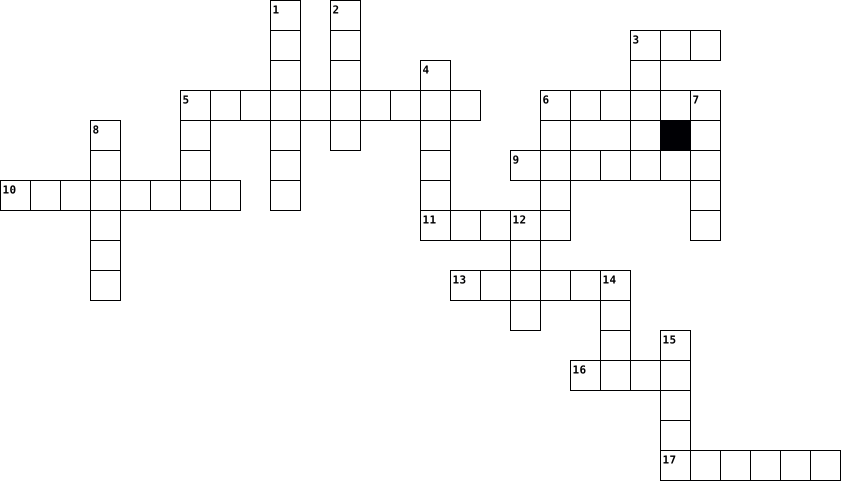
Across
- penggorengan in english
- tools to cooking rice
- plate in indonesia
- cup in english
- saringan in english
- cutlery for meat and vegetables
- napkin in indonesia
- mangkuk in english
- sendok in english
Down
- pemanggang kue in english
- sapu in english
- pengocok in english
- spoond in indonesia
- nasi in english
- piring in english
- fork in indonesia
- parutan in english
- garpu in english
- teapot in indonesia
- glas in english
20 Clues: cup in english • sapu in english • nasi in english • glas in english • garpu in english • piring in english • fork in indonesia • sendok in english • plate in indonesia • parutan in english • mangkuk in english • pengocok in english • spoond in indonesia • saringan in english • napkin in indonesia • teapot in indonesia • tools to cooking rice • penggorengan in english • pemanggang kue in english • ...
Quiz การแปรสัณฐานของแผ่นธรณี 2021-10-14

Across
- สิ่งที่เป็นหลักฐานร่องรอยบนชั้นหินฐานจากการเคลื่อนที่ผ่านของธารน้ำแข็งที่เกิดขึ้นในอดีต
- ลักษณะธรณีสันฐานจากการเคลื่อนที่เข้าหากันของแผ่นธรณีทวีปกับแผ่นธรณีมหาสมุทร เช่น เทือกเขาแอนดีส
- ทวีปที่พบว่าหลักฐานจากธารน้ำแข็งบรรพกาลมีการเคลื่อนที่กระจายตัวออกจากทวีปนี้ในอดีต
- นักวิทยาศาสตร์ผู้โด่งดังจากการเขียนตำรา "The Origin of Continents and Oceans"
- ธรณีโครงสร้างที่เกิดขึ้นจากความเค้นบีบอัดมากระทำกับชั้นหินที่มีสภาพพลาสติกจนชั้นหินเกิดการเปลี่ยนแปลงโครงสร้างไปจากเดิม
- เป็นหลักฐานหนึ่งที่สนับสนุนการแผ่ขยายพื้นสมุทรซึ่งเป็นภาวะที่สัมพันธ์กับทิศทางของสนามแม่เหล็กโลกในอดีตจนถึงปัจจุบัน ซึ่งศึกษาได้จากกลุ่มหินตัวอย่างที่ค้นพบตามบริเวณรอยแยกของพื้นสมุทร
- hanging-wall block
- แผ่นดินส่วนที่อยู่ใต้เส้นศูนย์สูตรหลักจากที่แผ่นทวีปเริ่มมีการแยกตัวออกจากกันเป็นสองแผ่นดินใหญ่
- หินที่เกิดจากการแทรกตัวของลาวาบริเวณรอยแยกแล้วเย็นตัวลง
- แนวเทือกเขาที่ในอดีตเชื่อว่าเชื่อมต่อกับแนวเทือกเขาคาเลโดเนียน ปัจจุบันตั้งอยู่บนทวีปอเมริกาเหนือ
Down
- แผ่นดินทั้งหมด
- การแทรกตัวขึ้นมาของลาวาตามรอยแยกของมหาสมุทร เกิดเป็นลักษณะธรณีที่ยกตัวสูงขึ้นเมื่อเทียบกับบริเวณข้างเคียง
- อัลเฟรด เวเกเนอร์ เป็นผู้เสนอแนวคิดทฤษฎีนี้ไว้เป็นครั้งแรก
- ภูมิลักษณ์ หรือ ลักษณะของผิวโลกที่เกิดขึ้นตามธรรมชาติ เช่น หาดทราย ภูเขา ที่ราบสูง เป็นต้น
- แนวเทือกเขาสูงที่เกิดขึ้นจากแผ่นธรณียูเรเซียเข้าชนกับแผ่นอินเดีย
- แนวคิดที่สนับสนุนการเคลื่อนที่ของแผ่นธรณี โดยเกิดจากความร้อนภายในเนื้อโลก
- นักธรณีวิทยาที่นำเสนอแนวคิดการแผ่นขยายพื้นสมุทร
- บริเวณที่เกิดขึ้นจากการมุดตัวของแผ่นธรณี
- แรงกระทำต่อหินในชั้นเปลือกโลก ส่งผลให้หินอยู่ในภาวะความเครียด จนเกิดการเปลี่ยนแปลงได้
- โครงสร้างทางธรณีแบบหนึ่งที่เกิดจากการเคลื่อนที่ผ่านกันของแผ่นธรณี
- ชั้นน้ำแข็งปกคลุมพื้นดินเป็นบริเวณกว้างใหญ่แถบขั้วโลก
- หลักฐานสนับสนุนแนวคิดทวีปเคยติดกันมาก่อน พบได้ทั้งพืชและสัตว์ เช่น ไซโนเนทัส กลอสโซพเทรีส เป็นต้น
- มหาสมุทรที่ล้อมรอบมหาทวีปตั้งแต่ซีกโลกเหนือถึงซีกโลกใต้ในอดีต
- plate หรือ lithospheric plate หรือ แผ่นเปลือกโลก
- บริเวณที่แผ่นธรณีที่มีความหนาแน่นมากกว่าเคลื่อนที่เข้าหาแล้วเกิดการจมตัวลงใต้อีกแผ่นธรณีหนึ่ง
25 Clues: แผ่นดินทั้งหมด • hanging-wall block • บริเวณที่เกิดขึ้นจากการมุดตัวของแผ่นธรณี • นักธรณีวิทยาที่นำเสนอแนวคิดการแผ่นขยายพื้นสมุทร • plate หรือ lithospheric plate หรือ แผ่นเปลือกโลก • ชั้นน้ำแข็งปกคลุมพื้นดินเป็นบริเวณกว้างใหญ่แถบขั้วโลก • หินที่เกิดจากการแทรกตัวของลาวาบริเวณรอยแยกแล้วเย็นตัวลง • อัลเฟรด เวเกเนอร์ เป็นผู้เสนอแนวคิดทฤษฎีนี้ไว้เป็นครั้งแรก • ...
Sam porath 2024-03-14

Across
- opposite of the inner core
- weight
- made by convergent plate
- holds lava
- ring of volcanoes
- type of shiny rock
- molten rock
- running into each other
- a feature feature
- a natural thing made by pressure
- steel blade
Down
- moves towards
- thing that moves convergent or divergent
- a feature
- surrounded by water
- center of the earth
- core inner most layer
- odor most layer
- moves away
- under the crust
20 Clues: weight • a feature • holds lava • moves away • molten rock • steel blade • moves towards • odor most layer • under the crust • ring of volcanoes • a feature feature • type of shiny rock • surrounded by water • center of the earth • core inner most layer • running into each other • made by convergent plate • opposite of the inner core • a natural thing made by pressure • ...
Colin Street 4 2023-12-07

Across
- mixture of rock,mineral,and glass particles
- this plate boundary occurs when two plates slip past each other
- a fluid or hardened stream or avalanche of mud
- The blank is the mostly solid bulk of Earth's interior. The mantle lies between Earth's dense, super-heated core and its thin outer layer, the crust.
- the blank is broken up of moving plates
- A volcanic crater is a bowl- or funnel-shaped depression that usually lies directly above the vent from which volcanic material is ejected.
- a type of "mass wasting," which denotes any down-slope movement of soil and rock under the direct influence of gravity.
- this plate boundary occurs when two plate boundaries move away from each other.
- the underground space usually deep below the earth's surface occupied by magma that may ascend from it to or toward the surface
Down
- this plate boundary occurs when oceanic crust sinks under continental crust
- when loosely packed, water-logged sediments at or near the ground surface lose their strength in response to strong ground shaking.
- An earthquake generates blank that pass through the ground.
- this plate boundary occurs when two plate boundaries move toward each other
- the blank is liquid layer.
- the blank is a solid ball of metal
- Lava is molten or partially molten rock (magma) that has been expelled from the interior of a terrestrial planet (such as Earth) or a moon onto its surface.
16 Clues: the blank is liquid layer. • the blank is a solid ball of metal • the blank is broken up of moving plates • mixture of rock,mineral,and glass particles • a fluid or hardened stream or avalanche of mud • An earthquake generates blank that pass through the ground. • this plate boundary occurs when two plates slip past each other • ...
ASIA! 2025-02-14

Across
- Densely populated urban area with poor living conditions and inadequate housing
- The most populated continent in the whole world
- An opening in the Earth's crust that allows lava, ash, and gases to erupt
- The increase in the proportion of people living in towns and cities (moving away from rural)
- This plate boundary has an oceanic plate colliding and subducting underneath a continental plate boundary
- The most populated country in the whole world
- Sudden shaking of the ground due to tectonic plate movement
- A city with more than 10 million people
Down
- Massive ocean wave caused by an underwater earthquake or volcano
- The liquid rock that erupts from a volcano
- This Indian city's nickname is the "Tech-hub of India / Silicon Valley of India"
- There are two different tectonic plate types: one is continental and the other is...
- An area of lush green landscapes, low population and minimal infrastructure (very natural)
- The Asian country which is home to many active volcanoes, including Anak Krakatau
- The area in the Pacific where many volcanoes and earthquakes occur, known as the ring of...
15 Clues: A city with more than 10 million people • The liquid rock that erupts from a volcano • The most populated country in the whole world • The most populated continent in the whole world • Sudden shaking of the ground due to tectonic plate movement • Massive ocean wave caused by an underwater earthquake or volcano • ...
Chapter 7 Vocaburary Parker Andres 2021-10-11

Across
- polarity happens when magnetic objects orient themselves to point south
- All continents are slowly drifting away
- When a slab sinks it also pulls on the rest of
- Earths surface is made of rigid slabs of rock or plates, that move with respect to each other.
- Forms where two plates slide past each other
- is when magnetized objects orient themselves to point north
- Rising mantle material at mid-ocean ridges creates the potential for the plate to move away
- the circulation of material caused by differences in density and tempature
Down
- happens when magnetic forces reverse
- the cold and rigid outermost rock layer is called
- forms when two plates seperate
- The process by which new oceanic crusts forms along a mid-ocean ridge.
- plate with a force called
- The mountain ranges in the middle of the ocean.
- When the denser plate sinks below the more buoyant plate
- All continents were once part of a supercontinent
- Form when two plates collide
17 Clues: plate with a force called • Form when two plates collide • forms when two plates seperate • happens when magnetic forces reverse • All continents are slowly drifting away • Forms where two plates slide past each other • When a slab sinks it also pulls on the rest of • The mountain ranges in the middle of the ocean. • the cold and rigid outermost rock layer is called • ...
Plate Tectonic Boundaries & Features 2021-10-31

Across
- A supercontinent that incorporated almost all the landmasses on Earth.
- A long, narrow and deep depression on the ocean floor caused by convergent plate boundaries.
- When new oceanic crust is formed through volcanic activity then moves away from the ridge
- At a convergent plate boundary, a process in which one lithospheric plate moves beneath another.
- On the ocean floor, at the boundary between two diverging tectonic plates, a mountain range with a central valley creates upwelling magma.
- The thinner and dense plate
- When two plates come together
- An area where cold water that seeped into the Earth's crust is superheated by underlying magma and forced through the vents in the ocean floor
- When two plates slide against each other causing friction
Down
- When large parts of the Earth's crust are constantly moving across the fluid mantle, earthquakes or volcanoes occur between the plates.
- The individual who proposed the theory of continental drift
- The thicker and less dense plate
- Theory suggesting that continents may be able to travel on the Earth's surface
- The Earth's crust's outermost layer
- When two plates move away from each other
15 Clues: The thinner and dense plate • When two plates come together • The thicker and less dense plate • The Earth's crust's outermost layer • When two plates move away from each other • When two plates slide against each other causing friction • The individual who proposed the theory of continental drift • A supercontinent that incorporated almost all the landmasses on Earth. • ...
Hazards_ken 2019-03-13

Across
- a mountain with a hole filled with lava
- a place where there are a lot of water
- a destructive natural disaster (device)
- top layer of the earth
- something that drift
- metal what innercore is made out of
- the opposite of innercore
Down
- the crust breaks ______.
- goes under the continental plate
- a molten solid rock
- when lava comes out of a volcano
- solid layer of the earth
- where convection current happen
- metal what outer is made out off
- what happens with the North America plate and the pacific plate
15 Clues: a molten solid rock • something that drift • top layer of the earth • the crust breaks ______. • solid layer of the earth • the opposite of innercore • where convection current happen • goes under the continental plate • when lava comes out of a volcano • metal what outer is made out off • metal what innercore is made out of • a place where there are a lot of water • ...
Briella-5 2023-12-07

Across
- giant,dangerous ocean wave
- the outermost layer of the earth
- tool that measures earthquakes
- between the crust and outer core
- this plate boundary slides past each other
- this plate boundary comes together
- the center of the earth
- crack within earths rocky crust
Down
- between the mantle and inner core
- this plate boundary pulls apart
- the "SUPER CONTINENT!"
- this lava is slower
- a mixture of rock,mineral,and glass particles
- this lava has low viscosity
- point on earths surface directly above the location of an earthquake
15 Clues: this lava is slower • the "SUPER CONTINENT!" • the center of the earth • giant,dangerous ocean wave • this lava has low viscosity • tool that measures earthquakes • this plate boundary pulls apart • crack within earths rocky crust • the outermost layer of the earth • between the crust and outer core • between the mantle and inner core • this plate boundary comes together • ...
Seafloor Spreading 2026-04-23

Across
- deepest flattest parts of the earth
- a superheated water spout found at midocean ridges
- a linear lowland area between two uplifted areas found at a divergent plate boundary
- a divergent boundary between two oceanic plates
- India into Asia
- plate boundary "slip and slide"
- steepest part of a continental margin
- bump of sediment found at the base of a passive continental margin
Down
- continental volcanic arc due to oceanic-continental plate convergence
- the Aleutian Islands and the islands of Japan are formed in this convergent boundary
- stripes that form a symmetrical pattern around mid ocean ridges showing ancient pole reversals
- the earths crust
- area of high earthquake and volcanic activity around the Pacific ocean due to convergent plate boundaries
- molten lava from the upper mantle that wells up forming new seafloor
- an underwater volcano
- forms at convergent boundaries
- volcanic island shape that forms on the less dense of two oceanic plates at a subduction zone
17 Clues: India into Asia • the earths crust • an underwater volcano • forms at convergent boundaries • plate boundary "slip and slide" • deepest flattest parts of the earth • steepest part of a continental margin • a divergent boundary between two oceanic plates • a superheated water spout found at midocean ridges • bump of sediment found at the base of a passive continental margin • ...
Cereal box puzzle 2025-02-19

Across
- The surface rapidly shaking/moving
- The plate located in the pacific
- an area that is hotter then the areas surrounding it
- A line in the pacific ocean of just active volcanoes
- Where one plate goes under another plate
- Mud slides
- The crust that underlines the ocean
- rock made from solidified magma/lava
- Lava/molten gas traveling rapidly
Down
- Hot molten rock
- the layer of rock on top of the Asthenosphere
- The molten layer of rock below the initial crust
- Where two plates collide or meet
- A mountain that has molten lava inside of it
- Old land mass of earths crust
- Powdery substance after the burning of a substance fire
- The mountain in place of a volcano
- hot molten liquid
- two plates come together
19 Clues: Mud slides • Hot molten rock • hot molten liquid • two plates come together • Old land mass of earths crust • Where two plates collide or meet • The plate located in the pacific • Lava/molten gas traveling rapidly • The surface rapidly shaking/moving • The mountain in place of a volcano • The crust that underlines the ocean • rock made from solidified magma/lava • ...