
plate Crossword Puzzles
Geology (and some previously-revised units) vocabulary revision 2025-10-29

Across
- An ion that is made up of more than one atom from the periodic table. Example: carbonate
- The number that tells us how many protons or electrons an atom has.
- Blood vessel that carries deoxygenated blood back to the heart. Thin muscle and elastic tissue with a large lumen.
- The main artery carrying blood to all parts of the body.
- Plate boundary where two tectonic plates are sliding sideways past each other.
- The unit for resistance.
- The unit for power.
- The breaking down of rocks into smaller pieces.
- a rock that forms from compressed or cemented layers of sediment building up on top of each other.
- The unit for power.
- The smallest type of blood vessel that delivers oxygen and glucose to the cells. One cell thick blood vessel.
- A massive layer of very hot rock beneath the Earth's crust.
- Underground location of the fracture in the crust that causes an earthquake.
- The number that tells us how many protons plus neutrons an atom’s nucleus has.
- A substance which releases hydrogen ions (H+).
- New Zealand lies on the Indo-Australian plate and the ....... plate.
- Cells that are responsible for clotting blood for injuries.
- Scale used to assess how much energy is released during an earthquake.
Down
- A type of rock that forms from the cooling of molten rock at or below the surface.
- A large vein that carries deoxygenated blood from the body to the heart.
- An electric circuit where the components are connected in multiple loops.
- Plate boundary where plates are moving towards each other and colliding.
- A type of rock that forms from an existing rock that is changed by heat or pressure.
- A material that does not allow electrons / electric current to flow through it.
- Movement of a large amount of liquid or gas. Hot particles rise & cold particles sink.
- Plate boundary where plates are moving apart, resulting in new crust being formed in between.
- A substance which releases hydroxide ions (OH-).
- Type of blood vessel that carries oxygenated blood AWAY from the heart. Thick muscle and elastic tissue with small lumen.
- A positively charged ion. The positive charge is from the loss of electrons.
- A volcano with broad, gentle slopes. Its lava has a low viscosity. E.g. Banks Peninsula
- A negatively charged ion. The negative charge is from the gain of electrons.
- The electrons in the outermost shell of an atom.
- The transport of broken-down material.
33 Clues: The unit for power. • The unit for power. • The unit for resistance. • The transport of broken-down material. • A substance which releases hydrogen ions (H+). • The breaking down of rocks into smaller pieces. • A substance which releases hydroxide ions (OH-). • The electrons in the outermost shell of an atom. • The main artery carrying blood to all parts of the body. • ...
Rock Transformations 2023-10-27

Across
- the type of rock formed when heat or pressure deep underground changes existing rock
- small pieces of rock
- the movement of sediment from one place to another, often caused by wind or flowing water
- hot liquid rock below the surface of earth
- the process of sediment being buried and pressed together
- the ability to make things move or change
- the process by which all rock formations of a region are pushed up due to plate motion
- a _____ section shows what the inside of something looks like
- the process of rock breaking down into smaller pieces due to wind or moving water
Down
- the process of one plate moving under another and into the mantle
- a small part that is meant to show what the whole is like
- one of the many different types of matter that make up rocks
- the process of sediment being glued together
- everything made of rock can be called rock ____
- a large section of hard solid rock that makes up Earth's outer layer
- the type of rock formed when magma cools and becomes solid
- anything that has mass and takes up space
17 Clues: small pieces of rock • the ability to make things move or change • anything that has mass and takes up space • hot liquid rock below the surface of earth • the process of sediment being glued together • everything made of rock can be called rock ____ • a small part that is meant to show what the whole is like • the process of sediment being buried and pressed together • ...
Ceiling Joists and Roof Framing 2023-03-13

Across
- The board nailed to the rafter tails in order to space the rafters
- A framework extending from the roof surface that provides additional light
- Fastened to the tops of ceiling joists to keep them in alignment. in the shape of an L
- A roof member that runs parallel to the plate and installed between the plate and ridgeboard.
- the board where upper ends of rafters are attached
- Nailed to ceiling joists to prevent twisting and bowing
- The amount of rise per foot of run
- Type of framing when members are assembled one piece at a time
Down
- A rafter that extends beyond the gable and supports a decorative piece
- A bar that is used when lifting large members with a crane
- Are used to fasten framing members to each other
- Should be attached to a truss that is being set by a crane
- Steel joists found on commercial roofs
- A truss is attached to a top plate by toenailing through
- Roof where four sides extend toward a center point
- A roof that has two slopes that meet at the center to form a point
- An overhang is framed using short lengths of boards
17 Clues: The amount of rise per foot of run • Steel joists found on commercial roofs • Are used to fasten framing members to each other • Roof where four sides extend toward a center point • the board where upper ends of rafters are attached • An overhang is framed using short lengths of boards • Nailed to ceiling joists to prevent twisting and bowing • ...
Rock Transformations 2024-02-21

Across
- The process by which sediment is being glued together
- A diagram that shows what the inside of something looks like
- One of the very large sections of hard, solid rock that make up the Earth's outer layer
- Anything that has mass and takes up space
- A region of rock that formed together as a single rock type
- The rock type formed when magma becomes a solid
- The process of sediment being buried and pressed together
Down
- The rock type formed when heat or pressure deep underground changes existing rock
- The rock type formed when sediment is pressed and glued together
- Hot liquid rock below the surface of Earth
- Small pieces of rock
- The process of rock breaking down into smaller pieces due to wind, rain, snow, or ice
- The process by which rock material moves under Earth's outer layer and into the mantle due to plate motion
- All rocks are made of various _________.
- The processby which all the rock formations of a region are pushed up due to plate motion
- The movement of sediment from one place to another
- A small part that is meant to show what the whole is like
17 Clues: Small pieces of rock • All rocks are made of various _________. • Anything that has mass and takes up space • Hot liquid rock below the surface of Earth • The rock type formed when magma becomes a solid • The movement of sediment from one place to another • The process by which sediment is being glued together • A small part that is meant to show what the whole is like • ...
Nail Structure & Growth 2025-01-14

Across
- tough band of fibrous tissue that connects bones or holds an organ in place
- important seal between the PNF and nail plate
- technical term for the nail
- slightly thickened skin layer between the fingertip and the nail plate
- light-colored visible part of the matrix that extends from underneath theliving skin to the nail plate’s base
- tissue layer that helps guide the nail plate along the nail bed as it grows
Down
- The nail itself
- Skin folds that surround the nail plate
- The nail itself
9 Clues: The nail itself • The nail itself • technical term for the nail • Skin folds that surround the nail plate • important seal between the PNF and nail plate • slightly thickened skin layer between the fingertip and the nail plate • tough band of fibrous tissue that connects bones or holds an organ in place • ...
iLeY rInG oF fIrE 2018-07-04

Across
- Where it is believed to close
- One of the main Plates in the Ring of fire
- A type of Jewelry
- A burning substance
- The other plate of the Ring of fire
Down
- A hole in the earth that spits out magma
- An ocean
- The type of plate the Pacific Plate is
8 Clues: An ocean • A type of Jewelry • A burning substance • Where it is believed to close • The other plate of the Ring of fire • The type of plate the Pacific Plate is • A hole in the earth that spits out magma • One of the main Plates in the Ring of fire
Rock Transformations 2023-01-11

Across
- a diagram that shows what the inside of something looks like
- the process of sediment being glued together
- one of the many different types of matter that make up rocks
- hot liquid rock below the surface of Earth
- a region of rock that formed together as a single rock type
- the process by which all the rock formations of a region are pushed up due to plate motion
- the rock type formed when sediment is pressed and glued together
- everything made of rock magma, sediment, and all rock types
Down
- the process of rock breaking down into smaller pieces due to wind or moving
- a small part that is meant to show what the whole is like
- the process by which rock material moves under Earth's outer layer and into the mantle due to plate motion
- one of the very large sections of hard, solid rock that make up Earth’s outer layer
- anything that has mass and takes up space
- small pieces of rock
- the rock type formed when heat or pressure deep underground changes existing rock
- the rock type formed when magma cools and becomes solid
- the ability to make things move or change
- the process of sediment being buried and pressed together
- the place where two plates meet
- the movement of sediment from one place to another, often caused by wind or flowing water
20 Clues: small pieces of rock • the place where two plates meet • anything that has mass and takes up space • the ability to make things move or change • hot liquid rock below the surface of Earth • the process of sediment being glued together • the rock type formed when magma cools and becomes solid • a small part that is meant to show what the whole is like • ...
Changing Earth's Surface 2019-05-05

Across
- creates a large depression in the center of the volcanic
- process of laying down eroded mineral in new location.
- is the repture and sudden movement of rocks along a break or a crack in Earth's crust
- the squeezing force at a convergent boundary
- the process of breaking rocks into small pices without changing the compostion of the rocks
- where two plates move apart from each other
- long streams of molten rocks
- refers to the processes that breaks down rockss, changing Earth's surface over time
- ash small pieces of lava
- the minerals and small pices of rocks
- where two plates move from toward each other
Down
- the area where one plate slides under another
- the pulling force at a divergent boundary
- the mountains that forms as this lava builds up and cools
- the process of changing the compostion of rocks and minerals by exposure to water and the atmosphere
- states that Earth's crust is broken into rigid plates that move slowly over Earth's surface
- the hypothesis that continents move
- the surface along which the crust moves
- where plates slide horizontally past each other
- locations wheree volcanoes form far from plate boundaries
- the side-by-side dragging force at transform boundaries
- is the moving of waethered material, or sediment, from one location to another
22 Clues: ash small pieces of lava • long streams of molten rocks • the hypothesis that continents move • the minerals and small pices of rocks • the surface along which the crust moves • the pulling force at a divergent boundary • where two plates move apart from each other • the squeezing force at a convergent boundary • where two plates move from toward each other • ...
Fitz's Comp Sci 2 Adv Cumulative Review 2021-03-05

Across
- Type of heat transfer that requires direct contact
- The movement of sediment
- Energy of motion
- Data in science that is represented by numbers
- Organisms that make their own food using the Sun’s energy
- Organisms that must eat other organisms for energy
- Plate boundary that forms mountains and volcanoes
- Physical or chemical processes that break rocks down into sediment
- Symbiotic relationship where both individuals benefit
- Plate boundary where new lithosphere is created
- The alleles of the genotype are different
- Symbiotic relationship where one organisms benefits and the other is unaffected
Down
- Type of heat transfer that causes warm fluids to rise
- Stored energy
- Plate boundary most commonly associated with earthquakes
- Data in science that is represented by words
- Variable that the scientist is testing during the experiment
- Sediment is dropped into a new location as the agent of erosion slows
- Variable that changes in response to the independent variable
- Reproduction that involves two parents and results in offspring that are genetically different from the parents
- Rock that forms when sediment is compacted and cemented
- Lake that forms next to a meandering river after deposition cuts off one of the bends
- Both alleles of the genotype are the same
- Cell division that results in two identical daughter cells
- Rock that forms when magma cools and hardens
25 Clues: Stored energy • Energy of motion • The movement of sediment • Both alleles of the genotype are the same • The alleles of the genotype are different • Data in science that is represented by words • Rock that forms when magma cools and hardens • Data in science that is represented by numbers • Plate boundary where new lithosphere is created • ...
Exam 2 Tectonics 2023-04-11

Across
- Rocks upwell, enter lower pressure zone and expand rapidly, creates major force of plate tectonics
- hinge of fold is oriented downward with limbs that rise up away from the hinge
- weakest of 3 forces of plate tectonics, between crust and mantle
- faults that have vertical motion – can be reverse or normal
- Bending, squishing, or stretching deformation occurs slowly over time.
- coarsening upward pattern of sediments as sea level drops
- lateral or transform faults form when fault movement is horizontal as plates slide past each other
- unseen force applied to rocks that can build up and eventually produce strain
- zone of earthquakes that form along a subducting tectonic plate
Down
- Strain in which an object suddenly breaks, fractures, or otherwise fails
- result of an applied force, either ductile, brittle, or elastic deformation
- Tectonic boundary where two plates move toward each other, O-O, O-C, or C-C.
- Driving force of tectonics exerted by old, dense, cold crust sinking into the mantle.
- downfolded circular structure formed by intersecting synclines
- hinge of a fold pushes upward with limbs that dip away and down from it
- continental drift hypothesis using many lines of evidence but lacked mechanism.
- uplifted circular structure forms by intersecting anticlines
- parent rock material, before metamorphism
- where two plates move apart from each other
- fining upward pattern of sediments as sea level rises
20 Clues: parent rock material, before metamorphism • where two plates move apart from each other • fining upward pattern of sediments as sea level rises • coarsening upward pattern of sediments as sea level drops • faults that have vertical motion – can be reverse or normal • uplifted circular structure forms by intersecting anticlines • ...
Geosphere Review 2022-04-12

Across
- _________ trends can significantly affect the value of a gemstone
- number of major plates of the Earth’s crust
- name for a solid with a specific structure
- a rock or mineral formed from molten material
- what scientists cannot do for the date, time, and size of an earthquake
- the way a mineral reflects light
- type of boundary seen in continental rifts and mid-ocean ridges
- nickname for a mantle plume volcano in the middle of a plate
- molten rock below the earth’s surface
- a rock or mineral formed when heat and pressure are applied to existing rock
- occur as the first sign of volcanic activity
- plate boundary in California
Down
- molten rock on the earth surface (including in the ocean)
- definition of mineral – state of matter
- definition of a mineral – how it’s made
- the actual location of an earthquake
- type of boundary producing the most severe earthquakes and volcanoes
- the surface location above an earthquake focus
- property of a mineral breaking along flat surfaces
- minimum number of sites needed for triangulation
- a rock or mineral that forms from water or from pieces of other rocks
- a large section of the Earth’s crust
- measured on Moh’s Scale
- the rock _________ describes the continual recycling of rock types
- definition of a mineral – type of compounds
25 Clues: measured on Moh’s Scale • plate boundary in California • the way a mineral reflects light • the actual location of an earthquake • a large section of the Earth’s crust • molten rock below the earth’s surface • definition of mineral – state of matter • definition of a mineral – how it’s made • name for a solid with a specific structure • ...
Space and Earth Review 2021-12-09

Across
- massive nucleus splits into smaller nuclei with the release of energy
- spinning motion of a planet on its axis
- Plate Boundary two plates move away from each other, and new crust is created between them
- transfer of energy by electromagnetic waves
- formed from an existing rock that is changed by heat and pressure
- Plate Boundary two plates collide, come together, or crash into each other
- nuclei of two smaller atoms join to form a larger atom releasing energy
- slow motion of Earth's axis that traces out a cone over a period of 26,000 years
- Plate Boundary two plates that are sliding past each other often forming earthquakes
- circular movement of an object around another object; orbit
- center of mass of two or more bodies orbiting around each other
Down
- description of surface features of land
- periodic oscillation or wobbling of the Earth's axis
- formed from broken pieces from other rocks or fossils are pressed and cemented together
- directly above an earthquake's focus on the surface of the earth
- formed from the cooling of molten rock at or below the surface of Earth
- arrangement of minerals in flat or wavy parallel bands
- transfer of energy by collisions or direct contact
- transfer of energy by the movement of a fluid
- Magnitude measurement of ground shaking during an earthquake
20 Clues: description of surface features of land • spinning motion of a planet on its axis • transfer of energy by electromagnetic waves • transfer of energy by the movement of a fluid • transfer of energy by collisions or direct contact • periodic oscillation or wobbling of the Earth's axis • arrangement of minerals in flat or wavy parallel bands • ...
Quarter 3 crossword voacb 2022-02-24

Across
- subject matter that looks real, representational
- a closed figure that is 3D
- color
- the lightness and darkness of a color
- a hole or an empty space
- a difference in the use of two elements
- copying another person’s idea or work, claiming it as original and/or not crediting the source Non-Objective No recognizable subject matter
- an artwork that was created with more than one material
- 1 material used by an artist
- image of a person or group of people Portfolio holds and displays an artist’s best work or an assessment tool that shows a student’s progress over time
- the way something feels
- gradual blending from one color to another
- an image of land or natural objects
Down
- the figure itself
- an element that looks like a shadow
- exactly the same on both sides of the access
- a closed figure that is 2D flat
- identifiable subject matter with simplified or rearranged visual elements
- the roller used to apply ink to a surface
- the total # of prints created from a plate
- Colors black, grey, brown and white
- the outline
- the surface on which the image is created from a plate
- placement of elements in an artwork
- the basis of a sculpture
- Life arrangement of objects that cannot move on their own
26 Clues: color • the outline • the figure itself • the way something feels • a hole or an empty space • the basis of a sculpture • a closed figure that is 3D • 1 material used by an artist • a closed figure that is 2D flat • an element that looks like a shadow • Colors black, grey, brown and white • placement of elements in an artwork • an image of land or natural objects • ...
Science Chapters 4-5 2023-11-13

Across
- long chain of mountains that form new ocean floor.
- The force that moves the tectonic plates and happens in the mantle
- Process where the ocean floor is destroyed.
- A wave released by an earthquake, the first wave to appear.
- Term for when the ground shakes and can cause little to massive damage.
- The part of crust that is the ocean floor.
- "ring" where volcanoes are most likely to be.
- Plate boundary where two plates slip past each other.
- A wave released by an earthquake, its the third to appear and the most destructive wave.
- Part of Earth that is below the crust but above the outer core, has the asthenosphere in it.
Down
- Wave that earthquakes release.
- Part of the ocean floor where plates are destroyed.
- A wave released by an earthquake, the second wave to appear.
- Plate boundary where two plates go away from each other.
- Spot where magma comes up from inside the Earth.
- The part of crust that is on land.
- The point right above the focus of an earthquake.
- Scientist that helped prove the theory of continental drift.
- Instrument that measures an earthquake.
- Plate boundary where two plates collide with each other.
- Scientist who discovered and came up with the idea of Pangaea and continental drift.
21 Clues: Wave that earthquakes release. • The part of crust that is on land. • Instrument that measures an earthquake. • The part of crust that is the ocean floor. • Process where the ocean floor is destroyed. • "ring" where volcanoes are most likely to be. • Spot where magma comes up from inside the Earth. • The point right above the focus of an earthquake. • ...
Rock Transformation 2023-12-01

Across
- hot liquid rock below the surface of Earth
- the process of rock breaking down into smaller pieces due to wind or moving water
- the rock type formed when heat or pressure deep underground changes existing rock
- a small part that is meant to show what the whole is like
- the ability to make things move or change
- everything made of rock: magma, sediment, and all rock types
- anything that has mass and takes up space
- the process by which all the rock formations of a region are pushed up due to plate motion
- the rock type formed when magma cools and becomes solid
- the rock type formed when sediment is pressed and glued together
- small pieces of rock
- one of the many different types of matter that make up rocks
Down
- the place where two plates meet
- the movement of sediment from one place to another, often caused by wind or flowing water
- the process of sediment being buried and pressed together
- a diagram that shows what the inside of something looks like
- the process of sediment being glued together
- the process by which rock material moves under Earth's outer layer and into the mantle due to plate motion
- a region of rock that formed together as a single rock type
- one of the very large sections of hard, solid rock that make up Earth’s outer layer
20 Clues: small pieces of rock • the place where two plates meet • the ability to make things move or change • anything that has mass and takes up space • hot liquid rock below the surface of Earth • the process of sediment being glued together • the rock type formed when magma cools and becomes solid • the process of sediment being buried and pressed together • ...
Crossword 2024-02-20

Across
- describes the processes through which the three main rock types
- weaker layer beneath the lithospheric mantle
- a scientific theory that explains how major landforms are created as a result of Earth's subterranean movements
- the equilibrium that exists between parts of the earth's crust
- places where plates slide sideways past each other
- types of rock that are formed by the accumulation or deposition of mineral or organic particles at Earth's surface
- most extensive chain of mountains on Earth
- the deformation of a material from stress
Down
- geologic structure that is formed by layers or beds of rock being bent or folded
- the usual process at work at divergent plate boundaries, leading to the creation of new ocean floor
- the rigid outer part of the earth
- Drift the movement of continents resulting from the motion of tectonic plates
- formed from the cooling and solidification of molten (melted) rock
- the study of ancient pole positions
- planar fracture or discontinuity in a volume of rock
- started out as some other type of rock, but have been substantially changed from their original igneous,
- long chains of active volcanoes with intense seismic activity found along convergent tectonic plate boundaries
- boundary when two plates come together
- boundary occurs when two tectonic plates move away from each other
- action of distorting
20 Clues: action of distorting • the rigid outer part of the earth • the study of ancient pole positions • boundary when two plates come together • the deformation of a material from stress • most extensive chain of mountains on Earth • weaker layer beneath the lithospheric mantle • places where plates slide sideways past each other • ...
Science Crossword 2023-12-06

Across
- One of the many different types of matter that makes up rocks
- The place where two plates meet
- Small pieces of rock
- Everything made of rock: magma, sediment, and all rock types
- The ability to make things move or change
- The process of sediment being glued together
- the rock type formed when magma cools and becomes solid
- The rock type formed when sediment is pressed and glued together
- A region of rock that formed together as a single rock type
- The movement of sediment from one place to another, often caused by wind or flowing water
Down
- Hot liquid rock below the surface of earth
- The process of rock breaking down into smaller pieces due to wind or moving water
- One of the very large sections of hard, solid rock that makes up Earth's outer layer
- The rock type formed when heat or pressure deep underground changes existing rock
- The process by which rock material moves under Earth's outer layer and into the mantle due to plate motion
- A small part that is meant to show what the whole is like
- Anything that has mass and takes up space
- The process of sediment being buried and pressed together
- The process by which all the rock formations of a region are pushed up due to plate motion
- A diagram that that shows what the inside of something looks like
20 Clues: Small pieces of rock • The place where two plates meet • Anything that has mass and takes up space • The ability to make things move or change • Hot liquid rock below the surface of earth • The process of sediment being glued together • the rock type formed when magma cools and becomes solid • A small part that is meant to show what the whole is like • ...
Rock Transformation Vocab 2023-12-07

Across
- The rock type formed when sediment is pressed and glued together
- The process of rock breaking down into smaller pieces due to wind or moving water
- Hot liquid rock below the surface of earth
- The process by which rock material moves under earths outer layer and into the mantle due to plate motion
- Everything made of rock
- Section A diagram that shows what the inside of something looks like
- The ability to make things move or change
- A region of rock that formed together as a single rock type
- The process of sediment being glued together
- The process by which all the rock formations of a region are pushed up due to plate motion
- The process of sediment being buried and pressed together
- Anything that has mass and takes up space
Down
- The movement of sediment from one place to another, often caused by wind or flowing water
- The rock type formed when heat of pressure deep underground changes existing rock
- The rock type formed when magma cools and becomes solid
- A small part that is meant to show what the whole is like
- The place where two plates meet
- Small pieces of rock
- One of the many different types of matter that make up rocks
- One of the very large sections of hard, solid rock that make up earths outer layer
20 Clues: Small pieces of rock • Everything made of rock • The place where two plates meet • The ability to make things move or change • Anything that has mass and takes up space • Hot liquid rock below the surface of earth • The process of sediment being glued together • The rock type formed when magma cools and becomes solid • ...
rock transformations glossary 2023-12-07

Across
- the rock type formed when heat or pressure deep underground changes existing rock
- the process of rock breaking into smaller pieces due to wind or moving water
- a small part that is meant to show what the whole is like
- the rock formed when magma cools and becomes solid
- one of the many different types of matter that makes up rocks
- the process by which all the rock formations of a region are pushed up due to plate motion
- the process of sediment being glued together
- everything made of rock: magma, sediment, and all rock types
Down
- a region of rock that formed together as a single rock type
- the rock type formed when sediment is pressed and glued together
- the process of sediment being buried and pressed together
- the place were to plates meet
- a diagram that shows what the inside of something looks like
- one of the very large sections of hard, solid rock that makes up earths outer layer
- small pieces of rock
- the process by which rock material moves under earths outer layer and into the mantle due to plate motion
- the ability to make things move or change
- the movement of sediment from one place to another, often caused by wind or flowing water
- anything that has mass or takes up space
- hot liquid rock under earth's surface surface
20 Clues: small pieces of rock • the place were to plates meet • anything that has mass or takes up space • the ability to make things move or change • the process of sediment being glued together • hot liquid rock under earth's surface surface • the rock formed when magma cools and becomes solid • the process of sediment being buried and pressed together • ...
rock transformations glossary 2023-12-07

Across
- the rock type formed when heat or pressure deep underground changes existing rock
- the process of rock breaking into smaller pieces due to wind or moving water
- a small part that is meant to show what the whole is like
- the rock formed when magma cools and becomes solid
- one of the many different types of matter that makes up rocks
- the process by which all the rock formations of a region are pushed up due to plate motion
- the process of sediment being glued together
- everything made of rock: magma, sediment, and all rock types
Down
- a region of rock that formed together as a single rock type
- the rock type formed when sediment is pressed and glued together
- the process of sediment being buried and pressed together
- the place were to plates meet
- a diagram that shows what the inside of something looks like
- one of the very large sections of hard, solid rock that makes up earths outer layer
- small pieces of rock
- the process by which rock material moves under earths outer layer and into the mantle due to plate motion
- the ability to make things move or change
- the movement of sediment from one place to another, often caused by wind or flowing water
- anything that has mass or takes up space
- hot liquid rock under earth's surface surface
20 Clues: small pieces of rock • the place were to plates meet • anything that has mass or takes up space • the ability to make things move or change • the process of sediment being glued together • hot liquid rock under earth's surface surface • the rock formed when magma cools and becomes solid • the process of sediment being buried and pressed together • ...
Rock Transformations 2023-12-14

Across
- the process of sediment being glued together
- the process of depositing/dropping sediment off
- one of the very large sections of hard, solid rock that make up Earth’s outer layer
- the place where two plates meet
- the rock type formed when magma cools and becomes solid
- the rock type formed when heat or pressure deep underground changes existing rock
- anything that has mass and takes up space
- a region of rock that formed together as a single rock type
- the movement of sediment from one place to another, often caused by wind or flowing water
Down
- hot liquid rock below the surface of Earth
- the rock type formed when sediment is pressed and glued together
- applying force by pushing or pressing
- small pieces of rock
- the process of rock breaking down into smaller pieces due to wind or moving water
- process by which all the rock formations of a region are pushed up due to plate motion
- the quality of being hot or high temperature
- the ability to make things move or change
- the process by which rock material moves under Earth’s outer layer and into the mantle due to plate motion
- the process of sediment being buried and pressed together
- one of the many different types of matter that make up rocks
20 Clues: small pieces of rock • the place where two plates meet • applying force by pushing or pressing • the ability to make things move or change • anything that has mass and takes up space • hot liquid rock below the surface of Earth • the process of sediment being glued together • the quality of being hot or high temperature • the process of depositing/dropping sediment off • ...
BUCKLING OF PLATES AND AIRCRAFT LOAD ANALYSIS 2025-03-20

Across
- Load Analysis The study of forces acting on an aircraft structure during flight
- The behavior of structures that continue to carry loads after initial buckling
- Loads Loads induced by sudden wind changes during flight
- Formula A mathematical equation used to calculate the buckling load of columns
- Stress Stress that reduces the volume of a material or structure
- Box A key structural component of an aircraft that supports aerodynamic loads
- Ratio Ratio of the length to width of a plate, influencing buckling characteristics
- Conditions Constraints applied to the edges of plates affecting their buckling behavior
- Element Method A numerical technique used for analyzing structural stability
Down
- Structural reinforcements used to prevent buckling in aircraft panels
- Sudden failure of a structural element under compressive stress
- Loads Forces experienced by an aircraft during banking, pitching, and rolling
- Analysis The study of internal forces within aircraft structures under various loads
- Buckling Instability that occurs in thin plates under compression
- Load The maximum load a structure can withstand before failure
- Load The maximum load a plate or column can bear before buckling
- Loads Forces exerted on an aircraft due to airflow, such as lift and drag
- of Safety The ratio of ultimate strength to allowable stress in a structure
- Buckling A failure mode in thin plates subjected to shear forces
- Loading Repeated stress cycles leading to structural weakening over time
20 Clues: Sudden failure of a structural element under compressive stress • Loads Loads induced by sudden wind changes during flight • Stress Stress that reduces the volume of a material or structure • Load The maximum load a structure can withstand before failure • Structural reinforcements used to prevent buckling in aircraft panels • ...
Earth's Systems puzzle 2024-04-12

Across
- Fractures or zones of weakness in the Earth's crust
- Tectonic plates move away from each other, usually forms mountains and volcanoes
- An opening in the Earth's crust through which molten rock is pushed out and creates new rock.
- Where tectonic plates SLIDE past each other. Causes earthquakes
- New oceanic crust is formed as tectonic plates pull apart and magma rises.
- Forms after weathering and erosion when sediments compact and cement
- Instrument used to measure and record seismic waves
- The semi-fluid layer of the mantle where convection currents happen
- Hot material rises, cooler materials sink. It drives plate tectonics
- Name of the ancient supercontinent when it was all one landmass
Down
- Sudden events that led to mass extinction
- Deep elongated depressions in the ocean, often associated with subduction zones.
- Located between the mantle and the outer core.
- Includes the crust and upper part of the mantle, and is divided into tectonic plates
- Formed as a result of high temperatures and pressure deep within Earth changing a rock that already existed
- extinction events that occur over a longer period of time
- A group of the same species living in the same area
- Large, rigid pieces of the Earth's Lithosphere that move and interact with each other along plate boundaries
- Formed at plate boundaries usually when plates collide.
- Rock formed when lava or magma cools and hardens
20 Clues: Sudden events that led to mass extinction • Located between the mantle and the outer core. • Rock formed when lava or magma cools and hardens • Fractures or zones of weakness in the Earth's crust • A group of the same species living in the same area • Instrument used to measure and record seismic waves • Formed at plate boundaries usually when plates collide. • ...
Earth Systems TCAP Vocab Game 2024-04-12

Across
- sudden events that lead to mass extinction
- instruments used to measure and record seismic waves
- tectonic plates SLIDE past each other. causes earthquakes
- tectonic plates move toward each other, usually forms mountains and volcanoes
- formed at plate boundaries usually when plates collide
- rock formed when lava or magma cools and hardens
- includes the crust and upper part of the mantle, and is divided into tectonic plates
- fractures or zones of weakness in the Earth's crust
- deep, elongated depressions in the ocean, often associated with subduction zones
- located between the mantle and outer core
- name of the ancient supercontinent when it was all one landmass
- formed as a result of high temperature and pressure deep within earth
- an opening in Earth's crust through which molten rock is pushed out and creates new rock
- a group of the same species living in the same area
Down
- tectonic plates move away from each other, usually forms new crust and rift valleys
- new oceanic crust is formed as tectonic pull apart and magma rises
- extinction events that occur over a longer time period
- hot material rises, cooler materials sink. Drives plate tectonics
- the semi-fluid layer of the mantle where convection currents happen
- large, rigid pieces of the Earth's lithosphere that move and interact with each other along plate boundaries
- forms after weathering and erosion when sediments compact and cement
21 Clues: located between the mantle and outer core • sudden events that lead to mass extinction • rock formed when lava or magma cools and hardens • fractures or zones of weakness in the Earth's crust • a group of the same species living in the same area • instruments used to measure and record seismic waves • extinction events that occur over a longer time period • ...
Seafloor Spreading and Seafloor Features 2025-04-11

Across
- An underwater mountain with a steep top.
- The flow of magma in the mantle thought to be the cause of seafloor spreading.
- This man discovered the process of seafloor spreading.
- The first region of the continental margin that is submerged under water.
- The rock type that makes up the ocean crust.
- A geyser of hot water in the bottom of the ocean that carries minerals.
- This man created the idea of continental drift.
- The edge of the continent.
- The rock type that makes up the continental crust.
- An underwater mountain with a rounded top.
- The steeply sloping region of the continental margin.
- The process the creates new ocean floor at the mid ocean ridge and recycles it at the deep-sea trench
Down
- The sediment laden edge of the continental margin where continental crust becomes oceanic.
- The deepest spot in the ocean.
- When one ocean plate descends beneath another oceanic plate or continental plate.
- A deep valley cut into the continental shelf caused by erosion.
- The large mountain range in the middle of the ocean created by seafloor spreading.
- A deep depression in the ocean caused by subduction.
- Continental margins that are geologically active and common on the Pacific Coast.
- Continental margins that aren't geologically active and found on the Atlantic Coast.
- The idea that the continents used to be connected.
21 Clues: The edge of the continent. • The deepest spot in the ocean. • An underwater mountain with a steep top. • An underwater mountain with a rounded top. • The rock type that makes up the ocean crust. • This man created the idea of continental drift. • The idea that the continents used to be connected. • The rock type that makes up the continental crust. • ...
chapter 4 and 5 2021-11-10

Across
- a narrow strip of land connects two large land
- earth crust bends as a result of compression
- a flat area on earth's surface
- one plate slide under another plate
- a crack on the earth's surface
- the upward part of a fold
- the downward part of a fold
- a large crack in the earth formed by a river
- a place that is much higher than the land around
- the supercontinent all land once joined together
- the land sinks between 2 paralle faults
- the plastic layer that affect plate tectonic
- the sections that lithospher was seperated
- a pulling force to stretch something
- two plates collide with each other
Down
- a strip of land extends out into water
- the rock that made up of oceanic crust
- the surface shape of a landform
- low water area formed at the mouth of a river
- a low area between higher lands
- a hot dry place with little or no rain
- natural features on the earth's surface
- the height above sea level
- a land has water all around it
- the action of volcano eruption
- two plates move away
- a force pressing something together
- the rock that made up of continental crust
- a flat area higher than the land around it
- the land rise between 2 parallel faults
30 Clues: two plates move away • the upward part of a fold • the height above sea level • the downward part of a fold • a flat area on earth's surface • a crack on the earth's surface • a land has water all around it • the action of volcano eruption • the surface shape of a landform • a low area between higher lands • two plates collide with each other • one plate slide under another plate • ...
J 2018-01-04

Across
- the overall appearance of the rock based on the size, shape, and arrangement of its interlocking crystals.
- What is a force that acts on rock to change its shape and/or volume?
- Which surface layer of the Earth is made up of solid rock?
- is the study of rock layering, succession, age, distribution, form, and composition of sedimentary rocks.
- Normal (gravity) faults are associated with_________ plate boundaries
- __________ is a thick mass of ice that originates on land from the accumulation, compaction, and recrystallization of snow.
- Material that is deposited directly by the ice is called ________.
- upfolded or arched rock layers.
- The remains of ancient living organisms
- Rocks formed from lava at the surface are classified as ____________ rocks.
Down
- Metamorphic rocks with a banded texture are called __________
- ___________ faults are associated with convergent plate boundaries.
- If one limb of a fold is tilted beyond the vertical, that is said to be ___________ fold.
- - The type of rock in which petroleum is found.
- Fractures in rocks along which appreciable displacement has taken place
- downfolds or troughs of rock layers.
- Molten rock that reaches the surface is called ___________.
- Rocks formed from magma that crystallizes at depth are termed ___________ rocks
- Strike slip faults associated with __________ plate boundaries.
- Particles of sediment from 1/16 mm to 2 mm diameter are called __________
20 Clues: upfolded or arched rock layers. • downfolds or troughs of rock layers. • The remains of ancient living organisms • - The type of rock in which petroleum is found. • Which surface layer of the Earth is made up of solid rock? • Molten rock that reaches the surface is called ___________. • Metamorphic rocks with a banded texture are called __________ • ...
Chapter 9 2018-12-08

Across
- Small, steep-sided volcanoes that erupt gas-rich basaltic lavas.
- Cause particles in the ground to move in a push-pull motion similar to a coiled spring.
- Scientists that study earthquakes.
- Volcanoes that are not associated with plate boundaries.
- Common along divergent plate boundaries and oceanic hot spots.
- A vent in Earth's crust through which melted-or molten-rock flows.
- Measures and records ground motion and can be used to determine the distance seismic waves travel.
- Cause particles in the ground to move up and down in a rolling motion.
- A break in Earth's lithosphere where one block of rock moves toward, away from, or past another.
- A graphical illustration of seismic waves.
Down
- The location on Earth's surface directly above the earthquake's focus.
- Large, steep-sided volcanoes that result from explosive eruptions of andesitic and rhyolitic lava and ash along convergent plate boundaries.
- A liquid's resistance to flow.
- These waves originate where rocks first move along the fault, at a location inside Earth.
- Molten rock that erupts onto Earth's surface.
- Energy that travels as vibrations on and in Earth.
- Molten rock below Earth's surface.
- Cause particles to move up and down at right angles relative to the direction the wave travels.
- Tiny particles of pulverized volcanic rock and glass.
- Vibrations in the ground that result from movement along breaks in Earth's lithosphere.
20 Clues: A liquid's resistance to flow. • Molten rock below Earth's surface. • Scientists that study earthquakes. • A graphical illustration of seismic waves. • Molten rock that erupts onto Earth's surface. • Energy that travels as vibrations on and in Earth. • Tiny particles of pulverized volcanic rock and glass. • Volcanoes that are not associated with plate boundaries. • ...
◜??????? ? : ?????? ???? ??? ??????◞ 2019-06-27

Across
- Concentration of heat in the mantle capable of creating magma
- Boundary where plates slide past each other
- Theory which suggests that earth is made up of plates that interact in various ways
- A depression in the seafloor produced by subduction process
- Refers to the deformation of the earth's crust
- Any break in a rock in which no significant event has taken place
- A continuous mass of land with long width and height on the ocean floor
- A vibration of the earth due to rapid release of energy
- The outer solid portion of the earth which includes the crust
- The process of one lithospheric plate descending under another
- A break in a rock along which movement occurs
- There are consolidated mixture of minerals
- A device used to record earthquake waves
- The outer portion of the earth
- Molten material formed at a depth
Down
- Plate that consists primarily of the earth's outher crust
- Where plates meet
- Boundary where plates move away from each other
- Plate that consists primarily of oceanic crust
- The first type of seismic wave to be recorded
- The thin part of the earth's crust located under the ocean
- Boundary where plates move towards each other
- The science that studies earth
- The graph output by a seismograph
- Rigid sections of the lithosphere that move as one unit
25 Clues: Where plates meet • The science that studies earth • The outer portion of the earth • The graph output by a seismograph • Molten material formed at a depth • A device used to record earthquake waves • There are consolidated mixture of minerals • Boundary where plates slide past each other • The first type of seismic wave to be recorded • ...
Changing Earth's Surface 2019-05-05

Across
- Weathering/ the process of breaking rocks into small pices without changing the compostion of the rocks
- the minerals and small pices of rocks
- Ridges/ the mountains that forms as this lava builds up and cools
- refers to the processes that breaks down rockss, changing Earth's surface over time
- Spot/ locations wheree volcanoes form far from plate boundaries
- is the moving of waethered material, or sediment, from one location to another
- Drift/ the hypothesis that continents move
- the side-by-side dragging force at transform boundaries
- Tectonics/ states that Earth's crust is broken into rigid plates that move slowly over Earth's surface
- creates a large depression in the center of the volcanic
- Boundary/ where two plates move from toward each other
- Zone/ the area where one plate slides under another
Down
- process of laying down eroded mineral in new location.
- the pulling force at a divergent boundary
- Flows/ long streams of molten rocks
- Weathering/ the process of changing the compostion of rocks and minerals by exposure to water and the atmosphere
- is the repture and sudden movement of rocks along a break or a crack in Earth's crust
- Ash/ small pieces of lava
- the surface along which the crust moves
- the squeezing force at a convergent boundary
- Boundary/ where plates slide horizontally past each other
- Boundary/ where two plates move apart from each other
22 Clues: Ash/ small pieces of lava • Flows/ long streams of molten rocks • the minerals and small pices of rocks • the surface along which the crust moves • the pulling force at a divergent boundary • Drift/ the hypothesis that continents move • the squeezing force at a convergent boundary • Zone/ the area where one plate slides under another • ...
Volcanoes 2014-02-20

Across
- A type of volcano with broad, gentle slopes and built by the eruption of fluid basalt lava
- Occurs where the edge of a continental plate collides with an oceanic plate
- In 1980, this Washington State mountain gave North America its largest volcanic eruption
- A string of islands formed by the volcanoes along a deep ocean trench
- Marks a divergent plate boundary
- Large ocean wave created by undersea earthquakes or volcanic eruptions
- The eruption of Nevado del Ruiz with its devastating mud slides occurred in this South American nation in 1985
- An opening or crack in the earth's surface through which lava flows
Down
- Active volcanoes on land
- Mountains formed from the build-up of volcanic lava often take this shape
- 1883 volcanic eruption in southeast Asia that killed 36,000 people
- Adds new rock to existing land and forms near new islands
- An area where magma from deep within the mantle melts through the crust like a blow torch
- Molten rock that erupts from volcanoes
- A volcano that is erupting or has erupted recently
- A volcano that has not erupted recently, but may do so in the future
- A vent at the earth's surface through which magma and gases erupt
- A volcano that will not erupt again
- The zone of earthquakes and volcanoes surrounding the Pacific Ocean
- Molten rock that is found beneath the earth's surface
20 Clues: Active volcanoes on land • Marks a divergent plate boundary • A volcano that will not erupt again • Molten rock that erupts from volcanoes • A volcano that is erupting or has erupted recently • Molten rock that is found beneath the earth's surface • Adds new rock to existing land and forms near new islands • ...
Review Crossword Puzzle for Test 2016-03-28

Across
- magma that squeezes between horizontal rock layers
- molten mix of rock, gas, and water underground
- the term for a sleeping volcano
- the man on page 76 who thought that South America and Africa look like they fit together
- a mountain that forms when magma reaches the surface
- the vlcano on page 142
- preserved organism in rock
- the type of flow that is a mixture of hot gas and ash
- the term for a volcano that will not erupt again
- the type of volcano that has steep sides and erupts high silica content lava
- the name of the small sub on page 83
- magma moves up through a long tube to the top of a volcano
- the type of plate boundary when the plates move away from each other
- the broken pieces of crust that float above the mantle
Down
- the type of volcano that produces a gradual slope
- a hole left when a volcano collapses, Yellowstone is on one
- super continent
- the volcano on page 140
- the volcano on page 145
- the term for a plate sinking under another
- the type of lava that is more than 2 letters
- a belt of volcanoes around the Pacific plate
- the type of boundary when two plates come together
- a bowl shaped area at the top of a volcano
- magma that has reached the surface
25 Clues: super continent • the vlcano on page 142 • the volcano on page 140 • the volcano on page 145 • preserved organism in rock • the term for a sleeping volcano • magma that has reached the surface • the name of the small sub on page 83 • the term for a plate sinking under another • a bowl shaped area at the top of a volcano • the type of lava that is more than 2 letters • ...
rock transformations glossary 2023-12-07

Across
- the rock type formed when heat or pressure deep underground changes existing rock
- the process of rock breaking into smaller pieces due to wind or moving water
- a small part that is meant to show what the whole is like
- the rock formed when magma cools and becomes solid
- one of the many different types of matter that makes up rocks
- the process by which all the rock formations of a region are pushed up due to plate motion
- the process of sediment being glued together
- everything made of rock: magma, sediment, and all rock types
Down
- a region of rock that formed together as a single rock type
- the rock type formed when sediment is pressed and glued together
- the process of sediment being buried and pressed together
- the place were to plates meet
- a diagram that shows what the inside of something looks like
- one of the very large sections of hard, solid rock that makes up earths outer layer
- small pieces of rock
- the process by which rock material moves under earths outer layer and into the mantle due to plate motion
- the ability to make things move or change
- the movement of sediment from one place to another, often caused by wind or flowing water
- anything that has mass or takes up space
- hot liquid rock under earth's surface surface
20 Clues: small pieces of rock • the place were to plates meet • anything that has mass or takes up space • the ability to make things move or change • the process of sediment being glued together • hot liquid rock under earth's surface surface • the rock formed when magma cools and becomes solid • the process of sediment being buried and pressed together • ...
Science Vocab 2023-12-06

Across
- a small part that is meant to show what the whole is like
- anything that has mass and takes up space
- the process by which rock material moves under Earth's outer layer and into the mantle due to plate motion
- the movement of sediment from one place to another, often caused by wind or flowing water
- the ability to make things move or change
- the place where two plates meet
- small pieces of rock
- the process of sediment being buried and pressed together
- the process of sediment being glued together
- the process by which all the rock formations of a region are pushed up due to plate motion
- the rock formed when heat or pressure deep underground changes existing rock
Down
- a region of rock that formed together as a single rock type
- one of the very large sections of hard, solid rock that make up the Earth's outer layer
- a diagram that shows what the inside of something looks like
- the rock type formed when sediment is pressed and glued together
- one of the many different types of matter that makes up rocks
- the rock type formed when magma cools and becomes solid
- hot liquid rock below the surface of Earth
- the process of rock breaking down into smaller pieces due to wind or moving water
- everything made of rock: magma, sediment, and all types of rocks
20 Clues: small pieces of rock • the place where two plates meet • anything that has mass and takes up space • the ability to make things move or change • hot liquid rock below the surface of Earth • the process of sediment being glued together • the rock type formed when magma cools and becomes solid • a small part that is meant to show what the whole is like • ...
zkovelman@jlastudents.org 2024-01-16

Across
- Long deep ditch on the seafloor
- process where sediments and other materials are added together to "build"
- Plate boundary where two lithospheric plates collide and destroy.
- Rupture in the crust that has magma inside and erupts hot lava.
- Naturally occurring, inorganic solid substance having a specific chemical composition and characteristic crystalline structure, color, and hardness.
- cooled lava under the earth's surface.
- when the earth shakes
- process when bits of rock get broken down into small pieces.
- Crust and upper part of the mantle
- a type of rock made by cooled magma, which is molten rock melted from pressure and heat under earths crust.
- Plate bound
- Plate tectonics that go in opposite directions
Down
- type of volcano with deep cracks, when under tension they pull apart and lava comes out.
- the process when sediments turn into rocks
- a type of rock formed by small sediments cementing together.
- Upper layer of earth's mantle, below the lithosphere, very weak
- movement of sediments from one place to another
- Cracks in the earths crust
- the substance that comes out of volcanoes, the stage before magma cools is called...
- Outermost layer of the earth
- volcano and earthquake activity
- a type of rock formed by any type of existing rock, in which minerals are changed in structure of composition by pressure and heat.
22 Clues: Plate bound • when the earth shakes • Cracks in the earths crust • Outermost layer of the earth • Long deep ditch on the seafloor • volcano and earthquake activity • Crust and upper part of the mantle • cooled lava under the earth's surface. • the process when sediments turn into rocks • Plate tectonics that go in opposite directions • ...
Rock Transformations Vocabulary 2023-04-04

Across
- a diagram that shows what the inside of something looks like
- the rock type formed when magma cools and becomes solid
- the ability to make things move or change
- hot liquid rock below the surface of Earth
- the rock type formed when heat or pressure deep underground changes existing rock
- the movement of sediment from one place to another, often caused by wind or flowing water
- the process of rock breaking down into smaller pieces due to wind or moving water
- the place where two plates meet
- the process by which all the rock formations of a region are pushed up due to plate motion
Down
- the rock type formed when sediment is pressed and glued together
- one of the many different types of matter that make up rocks
- the process by which rock material moves under Earth’s outer layer and into the mantle due to plate motion
- the process of sediment being buried and pressed together
- the process of sediment being glued together
- everything made of rock: magma, sediment, and all rock types
- a region of rock that formed together as a single rock type
- small pieces of rock
- anything that has mass and takes up space
- a small part that is meant to show what the whole is like
- one of the very large sections of hard, solid rock that make up Earth’s outer layer
20 Clues: small pieces of rock • the place where two plates meet • the ability to make things move or change • anything that has mass and takes up space • hot liquid rock below the surface of Earth • the process of sediment being glued together • the rock type formed when magma cools and becomes solid • the process of sediment being buried and pressed together • ...
waves choiceboard 2024-04-15

Across
- instruments used to measure and record seismic waves
- formed at plate boundaries usually when plates collide
- includes the crust and upper part of the mantle and is divided into tectonic plates
- large Rigid pieces of the Earth's lithosphere that move and interact with each other along plate boundries
- name of the ancient supercontinent when it was all one landmass
- a group of the same species living in the same area
- deep elongated depressions In the ocean often accociated with subduction
- where tectonics plates slide past each other causes earthquakes
- rock formed when lava or magma cools and hardens
Down
- hot material rises cooler materials sink it drives plate tectonics
- tectonic plates move towards each other usually forms mountians and volcanoes
- fractures or zones of weakness in the Earth's crust
- an opening in the Earth's crust through which molten rock is pushed out and creates new rock
- extinction events that occur over a longer time
- forms after weathering and erosion when sediments compact and cement
- located in-between the mantle and outer core
- formed as a result of high temperature and pressure deep within earth changing a rock that already existed
- new oceanic crust is formed as tectonic plates pull apart and magma rises
- sudden events that led to a mass extinction
- the semi fluid layer of the mantle where convection currents happen
20 Clues: sudden events that led to a mass extinction • located in-between the mantle and outer core • extinction events that occur over a longer time • rock formed when lava or magma cools and hardens • fractures or zones of weakness in the Earth's crust • instruments used to measure and record seismic waves • a group of the same species living in the same area • ...
Earth's systems puzzle 2024-04-15

Across
- rock formed from when lava or magma cools and hardens
- sudden events that led to mass extinction
- hot material rises, cool material sinks. It drives plate tectonics
- formed at plate boundaries usually when plates collide
- includes the crust and upper part of the mantle, an is divided into tectonic plates
- deep, elongated depressions
- where tectonic plates slide past each other. causes earthquakes
- name of the ancient super-continent when it was all one land mass
- the semi-fluid layer of the mantle and the outer core.
Down
- forms after weathering and erosion when sediments compact and cement
- tectonic plates move away from each other, usually forms new crust and rift valleys
- formed as a result of high temperature and pressure deep within earth changing a rock that already existed
- tectonic plates move toward each other, usually forms mountains and volcanoes
- large, rigid pieces of the earth's lithosphere that move and interact with each other along plate boundaries
- instruments used to measure and record seismic waves
- Extinction events that occur over a longer time period
- new oceanic crust is formed as tectonic plates pull apart and magma rises
- an opening in the earths crust through which molten rock is pushed out and creates new rock
- a group of the same species living in the same area
- fractures or zones of weakness in the earths crust
20 Clues: deep, elongated depressions • sudden events that led to mass extinction • fractures or zones of weakness in the earths crust • a group of the same species living in the same area • instruments used to measure and record seismic waves • rock formed from when lava or magma cools and hardens • Extinction events that occur over a longer time period • ...
Softball Crossword 2024-05-21

Across
- The player's uniform number
- Another term for a baseball glove
- The number of chances a team has in a game
- A person who calls the game
- Hitting the ball out of the park
- Area where the batter stands
- The markers a runner must touch to score a run
- Provides guidance and strategy to players
- List of players on a team
- Large open area in the field
- The batting order of a team
- A high, short fly ball
- The area behind the bases
- A ball hit outside the foul lines
- A pitch thrown with high speed
- Player positioned behind home plate
Down
- Position responsible for throwing the ball
- A position between second and third base
- A swing and miss
- Where the players sit when not on the field
- The leather equipment used to catch the ball
- The shape formed by the bases
- A defensive play with two outs
- Advancing to first base after four balls
- Action of propelling the ball to a teammate or base
- Player standing at home plate
- A hit that allows the batter to reach third base
- Touching a runner with the ball to get them out
- The type of ball used in the sport
- To run to the next base without being hit
- A hit that allows the batter to reach second base
31 Clues: A swing and miss • A high, short fly ball • List of players on a team • The area behind the bases • The player's uniform number • A person who calls the game • The batting order of a team • Area where the batter stands • Large open area in the field • The shape formed by the bases • Player standing at home plate • A defensive play with two outs • A pitch thrown with high speed • ...
Rock Transformations Crossword Puzzle 2024-12-09

Across
- small pieces of rock
- a small part that is menat to show what the whole is like
- a region of rock that formed together as a signle rock type
- the place where two plates meet
- the rock type forned when heat or pressure deep underground changes existing rock
- a diagram that shows what the inside of something looks like
- hot liquid rock below the surface of Earth
- the process of rock breaking down into smaller pieces due to wind or moving water
- the ability to make things move or change
- one of the many different types of matter that make up rocks
Down
- the rock type formed when sediment is pressed and glued together
- the process by which rock material moves under Earth's outer layer and into the mantle due to plate motion
- the process of sediment being buried and pressed together
- one of the very large sections of hard, solid rock that make up Earth's outer layer
- the process of sediment being glued together
- everything made of rock: magma, sediment, and all rock types
- the movement of sediment from one place to another, often caused by wind or flowing water
- the rock type formed when magma cools and becomes solid
- anything that has mass and takes up space
- the process by which all the rock formations of a region are pushed up due to plate motion
20 Clues: small pieces of rock • the place where two plates meet • anything that has mass and takes up space • the ability to make things move or change • hot liquid rock below the surface of Earth • the process of sediment being glued together • the rock type formed when magma cools and becomes solid • a small part that is menat to show what the whole is like • ...
Rock Transformation Vocabulary 2026-01-14

Across
- the movement of sediment from one place to another, often caused by wind or flowing water
- the process by which all the rock formations of a region are pushed up due to plate motion
- the place where two plates meet
- the process by which rock material moves under Earth's outer layer and into the mantle due to plate motion
- the rock type formed when heat or pressure deep underground changes existing rock
- the process of sediment being buried and pressed together
- one of the very large sections of hard, solid rock that make up Earth’s outer layer
- a small part that is meant to show what the whole is like
- the process of sediment being glued together
- one of the many different types of matter that make up rocks
- the rock type formed when magma cools and becomes solid
Down
- the ability to make things move or change
- a region of rock that formed together as a single rock type
- the rock type formed when sediment is pressed and glued together
- hot liquid rock below the surface of Earth
- anything that has mass and takes up space
- small pieces of rock
- the process of rock breaking down into smaller pieces due to wind or moving water
- everything made of rock: magma, sediment, and all rock types
- a diagram that shows what the inside of something looks like
20 Clues: small pieces of rock • the place where two plates meet • the ability to make things move or change • anything that has mass and takes up space • hot liquid rock below the surface of Earth • the process of sediment being glued together • the rock type formed when magma cools and becomes solid • the process of sediment being buried and pressed together • ...
Tectonic Hazards Part 1 2026-01-28

Across
- The point inside the Earth where an earthquake begins
- A plate boundary where plates slide past each other
- The rigid outer layer made up of the crust and upper mantle
- A volcanic mudflow made from ash and water
- A steep-sided volcano formed by layers of ash and lava
- This is a small, steep volcano formed from ash and volcanic fragments
- The semi-molten layer beneath the crust where convection currents occur
- Fragments of rock and ash thrown out during a volcanic eruption
Down
- The point on the Earth’s surface directly above the earthquake focus
- A volcano with gentle slopes and low-viscosity lava
- A volcano that is not currently erupting but may erupt again
- An opening in the Earth’s crust through which magma escapes
- Molten rock beneath the Earth’s surface
- Harmful gases released during a volcanic eruption are said to be this
- Waves of energy released during an earthquake
- A plate boundary where plates move towards each other and subduction occurs
- The solid centre of the Earth made mainly of iron and nickel
- This type of flow is fast-moving, extremely hot flow of gas, ash and rock
- Molten rock that flows on the Earth’s surface
- A plate boundary where tectonic plates move apart
- A scale that measures earthquake magnitude based on energy released
21 Clues: Molten rock beneath the Earth’s surface • A volcanic mudflow made from ash and water • Waves of energy released during an earthquake • Molten rock that flows on the Earth’s surface • A plate boundary where tectonic plates move apart • A volcano with gentle slopes and low-viscosity lava • A plate boundary where plates slide past each other • ...
Science 2018-03-21

Across
- the birthplace of most stars
- proposed the idea called continental drift
- the actual brightness of a star
- the fault that runs though California
- large moving pieces of Earth
- the force that holds galaxies together
- the planet with the most moons
Down
- closest star to Earth
- the color of the hottest stars
- two plates move away from each other
- one large landmass
- tectonic plates collide
- the bending, tilting, and breaking of rock
- molten rock beneath the Earth’s surface
- tectonic plates move past one another in opposite directions
- one tectonic plate is pulled beneath another plate
- the rigid solid layer of Earth made of rock
- a body composed of gas that emits light
18 Clues: one large landmass • closest star to Earth • tectonic plates collide • the birthplace of most stars • large moving pieces of Earth • the color of the hottest stars • the planet with the most moons • the actual brightness of a star • two plates move away from each other • the fault that runs though California • the force that holds galaxies together • ...
Geography Review 2023-09-13

Across
- ANOTHER NAME FOR LINE OF LATITUDE
- CONSISTS OF MOLTEN ROCKS CALLED MAGMA
- HILL/MOUNTAIN WITH STEEP SIDES AND FLAT TOP
- CONDITIONS ON A SHORT TERM OR DAILY BASIS
- LAYER OF EARTH THAT INCLUDES LANDMASSES AND OCEANS
- PROCESS BY WHICH ROCKS/SOIL BREAK APART
- PLATES SLIDE PAST EACH OTHER
- ELEVATION OF LAND SURFACE
- PLATE DIVES UNDER ANOTHER PLATE
Down
- PLAIN THAT SITS HIGH WITH CLIFFS ON ALL SIDES
- LONG TERM AVERAGE WEATHER PATTERNS
- ANOTHER NAME FOR LINE OF LONGITUDE
- WIDE SPREAD WINDSTORM WITH 50 MPH WINDS
- PLATES COLLIDE AND PUSH UPWARD
- LARGE POWERFUL WAVE IN OCEAN AS RESULT OF EARTHQUAKE
- PLATES SPREADS APART
- LOW LYING AREA SURROUNDED BY MOUNTAINS
- MARKS BEGINNING OF SPRING AND FALL
18 Clues: PLATES SPREADS APART • ELEVATION OF LAND SURFACE • PLATES SLIDE PAST EACH OTHER • PLATES COLLIDE AND PUSH UPWARD • PLATE DIVES UNDER ANOTHER PLATE • ANOTHER NAME FOR LINE OF LATITUDE • LONG TERM AVERAGE WEATHER PATTERNS • ANOTHER NAME FOR LINE OF LONGITUDE • MARKS BEGINNING OF SPRING AND FALL • CONSISTS OF MOLTEN ROCKS CALLED MAGMA • LOW LYING AREA SURROUNDED BY MOUNTAINS • ...
layers of the earth 2024-03-22

Across
- discovered a layer between the crust and mantle
- together with south america forms a perfect puzzle match
- super hot yet solid layer
- potions of the crust that moves
- fault that affects san francisco and los angeles
- partially melted layer
- hot molten layer
- formed when molten magna scapes through the lithosphere
Down
- the super continent
- plates are colliding
- areas where volcanoes will emerge away from the plate boundaries
- current that causes movement of the plates
- volcanoes that tell the direction of the plate
- the layer of the earth where we live
- moving away from each other
- lies between Earth's dense, superheated core and its thin outer layer, the crust.
- plates are sliding
- proposed that the earth has different layers
18 Clues: hot molten layer • plates are sliding • the super continent • plates are colliding • partially melted layer • super hot yet solid layer • moving away from each other • potions of the crust that moves • the layer of the earth where we live • current that causes movement of the plates • proposed that the earth has different layers • volcanoes that tell the direction of the plate • ...
Charles Schwaiger 2023-02-01

Across
- to bend
- caused by the sudden movement of materials
- rocks are subjected to high heat/pressure
- two plates are moving away from each other
- most common rock on Earth's surface
- the planet's magnetic field
- hot mantle material rising from deep within Earth
- begin to separate from one another
- less dense plate slides under denser plate
- the bulk of Earth's interior
- a record of the ground motions
Down
- how major landforms are created
- form when hot, molten rock solidifies
- is the oldest igneous rock in the world
- the very hot, very dense center of our planet
- often have distinctive layering or bedding
- the outermost shell of a terrestrial planet
- plates slide sideways past each other
18 Clues: to bend • the planet's magnetic field • the bulk of Earth's interior • a record of the ground motions • how major landforms are created • begin to separate from one another • most common rock on Earth's surface • form when hot, molten rock solidifies • plates slide sideways past each other • is the oldest igneous rock in the world • rocks are subjected to high heat/pressure • ...
D1-3 Mackenzie 2023-02-08

Across
- huge crack in the earths crust.
- very hot part of the earths mantle
- magma that reaches the earths surface and flows out.
- boundry where plates are moving apat from eachother.
- where earthquakes start.
- a cup like hollow that forms around the vent.
- huge ocean wave.
- heat from below earths surface
- the largest super continents name
- earths surface broken into plates.
Down
- Earths rocky surface.
- the central opening of a volcano where magma flows.
- boundry where plates are colliding
- the sliding of a dencer ocean plate with another plate colliding
- point directly above the surface
- amount of energy releaced by an earthquake
- device that checks earths crust during a earthquake.
- vibration that spreads away from the surface.
- hot moltent rock form below earths surface
19 Clues: huge ocean wave. • Earths rocky surface. • where earthquakes start. • heat from below earths surface • huge crack in the earths crust. • point directly above the surface • the largest super continents name • boundry where plates are colliding • very hot part of the earths mantle • earths surface broken into plates. • amount of energy releaced by an earthquake • ...
Earth Science and Soils 2022-01-04

Across
- four soil forming factors
- breaking down of rock
- divided into tectonic plates
- young, thin areas of oceanic crust
- decomposed organic material
- strong winds in the tropics
- air moving from west to east in the temperate zone (30-60 degrees latitude)
- oceanic plate is forced under the continental plate
- plates slamming together
- air moves from the poles down to 60 degrees latitude
- algae blooms in water from fertilizer
Down
- plates sliding past each other
- ability of water to move through the soil
- thin layer of gases held to us by gravity
- reduces soil quality by wind and water
- pattern of how new ecosystems are formed
- solar radiation or heat from the sun
- plates pulling apart from each other
- nutrient holding capacity
19 Clues: breaking down of rock • plates slamming together • four soil forming factors • nutrient holding capacity • decomposed organic material • strong winds in the tropics • divided into tectonic plates • plates sliding past each other • young, thin areas of oceanic crust • solar radiation or heat from the sun • plates pulling apart from each other • algae blooms in water from fertilizer • ...
Kitchen equipment 2021-05-02

Across
- A tool for storing noodles and food
- Place for making tea and coffee
- a tool for taking rice from a plate
- a place to store rice
- Saji closes food at the table so that animals do not enter
- Cooker Tool for cooking rice
- Storing hot water so that it is not cold
- Place to bake bread or cake
- Smooth fruit and make juice
- Cutting meat and vegetables
- Tool for frying fish, Saturday, eggs
Down
- Place to store drinking water
- Place to make dough, store clothes for washing
- Smooth cooking spices
- rack Place to store dishes
- a place to store teaching food ingredients that are durable
- Place to cook water and make soup
- To grate coconut and salute spices.
- Cooking water, vegetables
- Tool for beating eggs and dough
20 Clues: Smooth cooking spices • a place to store rice • Cooking water, vegetables • rack Place to store dishes • Place to bake bread or cake • Smooth fruit and make juice • Cutting meat and vegetables • Cooker Tool for cooking rice • Place to store drinking water • Place for making tea and coffee • Tool for beating eggs and dough • Place to cook water and make soup • ...
Nail Tech Terms 2022-06-16

Across
- cleaning and beautifying the nails
- liquid used to remove polish
- a nail file or buffer
- formed when liquids evaporate
- technical term for nail
- dead colorless tissue attached to the nail plate
Down
- tools used to perform nail services
- used to remove dead tissue from nail plate
- a resin and polymer powder system
- liquid used to make nail enhancements
- they regulate all disinfectants in the U.S.
- substances that speed up chemical reactions
- type of nail product that cures in a lamp
- enhancement product is applied to new growth
14 Clues: a nail file or buffer • technical term for nail • liquid used to remove polish • formed when liquids evaporate • a resin and polymer powder system • cleaning and beautifying the nails • tools used to perform nail services • liquid used to make nail enhancements • type of nail product that cures in a lamp • used to remove dead tissue from nail plate • ...
Procedure Text 2024-03-15

Across
- Using imperative sentences
- Text that show a process in order
- The most common example of a procedural text
- Listed in order of use
- a knife, a frying pan, a spatula
- to tell or describe the reader
- Mix in the milk, heavy cream and sugar
- State what is to be done or showing the purpose
Down
- detail information on how
- a plate of rice, 5 shallots, 1 egg
- Piring
- Mencampurkan
- a series of steps to achieve the purpose
- Linking word to do with time
14 Clues: Piring • Mencampurkan • Listed in order of use • detail information on how • Using imperative sentences • Linking word to do with time • to tell or describe the reader • a knife, a frying pan, a spatula • Text that show a process in order • a plate of rice, 5 shallots, 1 egg • Mix in the milk, heavy cream and sugar • a series of steps to achieve the purpose • ...
Module 6 Cross Word 2023-03-14

Across
- wall
- hard
- in
- cavity
- fear
- wall or fence
- fork-shaped
- lip
- machine
Down
- calcium
- small
- change
- quite or clam
- taking steps
- twin
- plate
- cavity
- in front of or before
- root
19 Clues: in • lip • wall • hard • twin • fear • root • small • plate • change • cavity • cavity • calcium • machine • fork-shaped • taking steps • quite or clam • wall or fence • in front of or before
plate tectonics XD 2021-02-02

Across
- the full name of the plates
- a type of heat waves
- a hot mountain
- part of the earths crust
- the thinnest layer of the earth
- the sea floor
- when the continents moved
- the thickest layer of the earth
Down
- a region of the earths crust
- when two plates move away
- old bones
- a bord zone
- a long part of the ocean
- part of the mantle
- when two plates collide
- when plates of the earth move
- what the crust is made of
17 Clues: old bones • a bord zone • the sea floor • a hot mountain • part of the mantle • a type of heat waves • when two plates collide • a long part of the ocean • part of the earths crust • when two plates move away • what the crust is made of • when the continents moved • the full name of the plates • a region of the earths crust • when plates of the earth move • the thinnest layer of the earth • ...
Tectonic Plate Boundaries 2020-12-07

Across
- mineralized remains of organisms (shows how long the dead organisms lived and how their bodies were structured)
- Map showing the shape and elevation of the land surface using contour lines
- solid fragments of weathered rock are eroded (moved) and then dropped into a new place (wind, water, ice, and gravity)
- Solid layer with some plasticity located just below the lithosphere (plates float and move on this layer)
- mechanical or chemical processes that break rocks into smaller pieces
- 1st theory describing the history of Earth’s surface that says the continents were once connected, and have since drifted apart (Alfred Wegener)
- outermost layer of Earth that is divided into enormous pieces called tectonic plates (consists of the crust and top part of the mantle)
- parallel pattern of rock material found at identical locations across the Mid-Atlantic Ridge, reveals rock of the same geologic age (Harry Hess)
Down
- The study of many different kinds of earth science and could be inside or outside of Earth(atmosphere, weather, etc.)
- Maps Photos or images taken of Earth from space
- 2nd theory describing the history of the Earth’s surface that says the lithosphere is divided into plates that are moving on top of the asthenosphere (Dan McKenzie)
- Interval The difference in elevation between two adjacent contour lines of a map.
- Natural physical features of the Earth’s surface (ex: hills, valleys, and rivers)
- the study of Earth’s surface and its features (especially in terms of elevation)
- when a denser plate is pushed down beneath a less dense plate that occurs at a convergent boundary which creates volcanoes and trenches
- distance above sea level
- Process by which water, ice, wind, and gravity remove and transport sediments
17 Clues: distance above sea level • Maps Photos or images taken of Earth from space • mechanical or chemical processes that break rocks into smaller pieces • Map showing the shape and elevation of the land surface using contour lines • Process by which water, ice, wind, and gravity remove and transport sediments • ...
Plate Tectonics Crossword 2021-10-05

Across
- Cause of volcanoes and earthquakes
- Fire hill
- Evidence for the Continental Drift Theory
- Sphere below lithosphere
- Islands with a volanic chain
- Narrow mountain range
- Evidence for the Continental Drift Theory
- Depression in ocean floor
- Mr. Wegner
- The San Andreas _____ Zone
- Mr. Wilson
Down
- Evidence for the Continental Drift Theory
- Layer of Earth between its core and crust
- Hot material below or within Earth's crust
- Shaking ground
- Evidence for the Continental Drift Theory
- Super-continent
- Sphere above asthenosphere
- Study of physical features of Earth
- Innermost layer of Earth
20 Clues: Fire hill • Mr. Wegner • Mr. Wilson • Shaking ground • Super-continent • Narrow mountain range • Sphere below lithosphere • Innermost layer of Earth • Depression in ocean floor • Sphere above asthenosphere • The San Andreas _____ Zone • Islands with a volanic chain • Cause of volcanoes and earthquakes • Study of physical features of Earth • Evidence for the Continental Drift Theory • ...
Paddock to Plate 2021-09-06

Across
- eggs that comes from hens that have access to outdoor areas
- A place that sells multiple things
- a type of meat coming from cows
- a product that bees create
- a type of meat that comes from birds
- a category of products derived from milk
- A category of food that is usually the flower,root,leaf or stem of a plan
- a product that poultry animals produce.
Down
- someone who does not eat animal meat
- a category of food that are from a tree of flower
- something have additives to make it look/taste better
- an animal product produced from the sea
- A powder usually created by wheat
- a grain, that is commonly eaten around the world
- Something that is beneficial to your health
- A grain used for flour, which is commonly used for cooking
- someone who does not consume animal products
17 Clues: a product that bees create • a type of meat coming from cows • A powder usually created by wheat • A place that sells multiple things • someone who does not eat animal meat • a type of meat that comes from birds • an animal product produced from the sea • a product that poultry animals produce. • a category of products derived from milk • ...
glosor kap 2 2019-09-18

Across
- platta
- konstig, märklig
- plötsligt
- tung
- stol
- flytta
- tvätta, putsa
Down
- lyfta
- något
- måla
- bokstav
- undra
- oljud
- söka
14 Clues: måla • söka • tung • stol • lyfta • något • undra • oljud • platta • flytta • bokstav • plötsligt • tvätta, putsa • konstig, märklig
la mascotte 2025-01-13

Across
- boy
- mood
- yellow
- he is
- plate
- cheese
- good
Down
- bald
- stupid
- tall
- green
- he has
- fat
- eyes
14 Clues: boy • fat • bald • tall • mood • eyes • good • green • he is • plate • stupid • yellow • he has • cheese
Special People page 72 אנשים מיוחדים עמוד 2025-12-28

Across
- מחר
- מקום
- כי
- מעניין
- צייר
Down
- אנשים
- לזוז,להזיז
- מיוחד
- נקרא
- מירוץ
- קל
- שוב
- צלחת
- אותם,אותן
14 Clues: כי • קל • מחר • שוב • מקום • נקרא • צלחת • צייר • אנשים • מיוחד • מירוץ • מעניין • אותם,אותן • לזוז,להזיז
Module 2: Cells & Tissues Chapter 6 2021-09-15

Across
- Sheet of hyaline cartilage in the metaphysis of an immature bone; replaced by bone tissue as the organ grows in length (2)
- Region, deep in the periosteal collar, where bone development starts during endochondral ossification (3)
- Surgical exposure of a bone to reset a fracture (2)
- Thin layer of cartilage covering an epiphysis; reduces friction and acts as a shock absorber (2 words)
- Semi-rigid connective tissue found on the skeleton in areas where flexibility and smooth surfaces support movement
- Channels within the bone matrix that house one of an osteocyte's many cytoplasmic extensions that it uses to communicate and receive nutrients
- Production of blood cells, which occurs in the red marrow of the bones
- Blood clot that forms at the site of a broken bone (2)
- Organ system composed of bones and cartilage that provides for movement, support, and protection (2)
- Hard, dense connective tissue that forms the structural elements of the skeleton
- Small, round bone embedded in a tendon; protects the tendon from compressive forces (2)
- Connective tissue in the interior cavity of a bone where fat is stored (2)
- Cylinder-shaped bone that is longer than it is wide; functions as a lever (2)
- process by which bone forms directly from mesenchymal tissue (2)
- Process in which bone forms by replacing hyaline cartilage (2)
- Delicate membranous lining of a bone's medullary cavity
- Cube-shaped bone that is approximately equal in length, width, and thickness; provides limited motion (2)
- Uncalcified bone matrix secreted by osteoblasts
- (Also, Haversian system) basic structural unit of compact bone; made of concentric layers of calcified matrix
- Cell responsible for forming new bone
- Connective tissue in the interior cavity of a bone where hematopoiesis takes place (2)
- Completely ossified remnant of the epiphyseal plate (2)
- Volkmann’s canal) channel that branches off from the central canal and houses vessels and nerves that extend to the periosteum and endosteum (2)
- Condition characterized by abnormally low levels of calcium
- Primary cell in mature bone; responsible for maintaining the matrix
- Spikes or sections of the lattice-like matrix in spongy bone
- Region of the epiphyseal plate where chondrocytes from the proliferative zone grow and mature and contribute to the longitudinal growth of the epiphyseal plate (5)
- Fibrocartilaginous matrix, in the endosteal region, between the two ends of a broken bone (2)
- Collar of hyaline cartilage and bone that forms around the outside of fracture
Down
- Membrane that covers cartilage
- Broken bone
- Bone of complex shape; protects internal organs from compressive forces (2)
- Undifferentiated cell with high mitotic activity; the only bone cells that divide; they differentiate and develop into osteoblasts (2)
- Region of the epiphyseal plate that makes new chondrocytes to replace those that die at the diaphyseal end of the plate and contributes to longitudinal growth of the epiphyseal plate (2)
- Region of bone development in the epiphyses (3)
- Hollow region of the diaphysis; filled with yellow marrow (2)
- Cluster of osteoblasts found in the early stages of intramembranous ossification (2)
- Spaces in a bone that house an osteocyte
- Condition characterized by abnormally high levels of calcium
- Longitudinal channel in the center of each osteon; contains blood vessels, nerves, and lymphatic vessels; also known as the Haversian canal (2)
- Bone formation
- Bone tissue; a hard, dense connective tissue that forms the structural elements of the skeleton (2)
- Layer of spongy bone, that is sandwiched between two the layers of compact bone found in flat bones
- Bone markings where part of the surface sticks out above the rest of the surface, where tendons and ligaments attach
- Wide section at each end of a long bone; filled with spongy bone and red marrow
- Dense osseous tissue that can withstand compressive forces (2)
- Region of the epiphyseal plate closest to the diaphyseal end; functions to connect the epiphyseal plate to the diaphysis (4)
- Doctor who specializes in diagnosing and treating musculoskeletal disorders and injuries
- Thin an curved bone ; serves as a point of attachment for muscles and protects internal organs (2)
- Region of the epiphyseal plate that anchors the plate to the osseous tissue of the epiphysis (2)
- Process, during bone growth, by which bone is resorbed on one surface of a bone and deposited on another
- Fibrous membrane covering the outer surface of bone and continuous with ligaments
- Where two bone surfaces meet
- (Also, cancellous bone) trabeculated osseous tissue that supports shifts in weight distribution (2)
- Cell responsible for resorbing bone
- Disease characterized by a decrease in bone mass; occurs when the rate of bone resorption exceeds the rate of bone formation, a common occurrence as the body ages
- Small opening in the middle of the external surface of the diaphysis, through which an artery enters the bone to provide nourishment (2)
- Manual manipulation of a broken bone to set it into its natural position without surgery (2)
- Tubular shaft that runs between the proximal and distal ends of a long bone
- Process by which osteoclasts resorb old or damaged bone at the same time as and on the same surface where osteoblasts form new bone to replace that which is resorbed
- Opening or depression in a bone
61 Clues: Broken bone • Bone formation • Where two bone surfaces meet • Membrane that covers cartilage • Opening or depression in a bone • Cell responsible for resorbing bone • Cell responsible for forming new bone • Spaces in a bone that house an osteocyte • Region of bone development in the epiphyses (3) • Uncalcified bone matrix secreted by osteoblasts • ...
Plate Tectonics 2013-10-22

Across
- ridge huge underwater mountain range
- layer of hot, soft rock in the upper mantle
- plates large and small slabs of rock that makes up the lithosphere.
- ball of hot, solid materials
Down
- Earth's thickest layer
- one plate sinking beneath another
- transfer of heat within a material
- liquid metals that surround the
- Earth's crust and the very top of the mantle combined
- huge supercontinent
- when two plates push together
11 Clues: huge supercontinent • Earth's thickest layer • ball of hot, solid materials • when two plates push together • liquid metals that surround the • one plate sinking beneath another • transfer of heat within a material • ridge huge underwater mountain range • layer of hot, soft rock in the upper mantle • Earth's crust and the very top of the mantle combined • ...
Plate Tectonics 2013-10-22

Across
- liquid metals that surround the
- layer of hot, soft rock in the upper mantle
- plates large and small slabs of rock that makes up the lithosphere
- huge supercontinent
- ridge huge underwater mountain range
Down
- ball of hot, solid materials
- when two plates push together
- transfer of heat within a material
- Earth's crust and the very top of the mantle combined
- one plate sinking beneath another
- Earth's thickest layer
11 Clues: huge supercontinent • Earth's thickest layer • ball of hot, solid materials • when two plates push together • liquid metals that surround the • one plate sinking beneath another • transfer of heat within a material • ridge huge underwater mountain range • layer of hot, soft rock in the upper mantle • Earth's crust and the very top of the mantle combined • ...
plate tectonics 2014-04-02

Across
- a deep trench in the ocean floor that is much deeper than the rest of the ocean floor
- a layer of plastic semi-solid rock in the lower mantle
- molten rock that has erupted onto the earths surface
- the process of new crust forming at the ocean ridges and spreading outwards
- where the crust is sinking down into the earth
- a huge wave in the ocean caused by and earthquake occurring on the seafloor
- molten rock below the earth surface
Down
- the process of the
- the separating of continents by drifting across the ocean
- a place where extremely hot material from inside the earth erupts at the surface
- a seismic wave that travels along the surface of the earth in the crust
11 Clues: the process of the • molten rock below the earth surface • where the crust is sinking down into the earth • molten rock that has erupted onto the earths surface • a layer of plastic semi-solid rock in the lower mantle • the separating of continents by drifting across the ocean • a seismic wave that travels along the surface of the earth in the crust • ...
Plate Tectonics 2021-11-18

Across
- the engine that moves the plates and transfers energy in the mantle
- a geological landmark that is created at divergent boundaries
- the super-continent that was believed to be all of the continents connected together that eventually drifted away from each other
- the scientist that came up with the theory that the continents moved
- the scientist that figured out how the continents move
Down
- two tectonic plates moving away from each other
- two tectonic plates sliding past each other
- two tectonic plates pushing against each other
- plate tectonic boundaries where two plates converge, and one plate is pushed under the other
- famous mountains created by a convergent boundary
- molten rock
11 Clues: molten rock • two tectonic plates sliding past each other • two tectonic plates pushing against each other • two tectonic plates moving away from each other • famous mountains created by a convergent boundary • the scientist that figured out how the continents move • a geological landmark that is created at divergent boundaries • ...
plate tectonics 2021-11-18

Across
- a sudden shake of the ground.
- occurs at divergent boundaries
- a mountain or hill typically conical haveing
- A thin layer of crust that underlies the ocean basins
- tectonic plates moving away from each othe in oppsite divections
Down
- two plates sliding past eachthere
- or vent through lava
- two tectonic plates come together
- hot magma rising in the mantle caused the seafloor
- molten rock housed in the mantle
- Layer of rock which forms the continents
11 Clues: or vent through lava • a sudden shake of the ground. • occurs at divergent boundaries • molten rock housed in the mantle • two plates sliding past eachthere • two tectonic plates come together • Layer of rock which forms the continents • a mountain or hill typically conical haveing • hot magma rising in the mantle caused the seafloor • ...
Plate Tectonics 2021-11-19

Across
- this boundary creates rift valleys
- this area around the west coast, pacific ocean, and asia house many volcanoes and earthquakes
- this process in the mantle is the reason the plates move
- this layer of the upper mantle allows the plates to slide over it
Down
- the Himalayas are an example of this boundary
- This happens when 2 plates of different densities collide
- this boundary creates fault lines
- tectonic activity creates these
- molten rock in the mantle
- this is an example of a divergent boundary in the sea
- this commonly happens at transform boundaries
11 Clues: molten rock in the mantle • tectonic activity creates these • this boundary creates fault lines • this boundary creates rift valleys • the Himalayas are an example of this boundary • this commonly happens at transform boundaries • this is an example of a divergent boundary in the sea • this process in the mantle is the reason the plates move • ...
Plate Techtonics 2021-12-19

Across
- THE MATERIAL THAT FORMS EARTH'S HARD SURFACE
- THE AMOUNT OF FORCE PUSHING ON A SURFACE OR AREA
- THE SOFT LAYER OF THE MANTLE O WHICH THE LITHOSHERE FLOATS
- FORCE, A FORCE THAT BUILDS UP MOUNTAINS AND LANDMASSES ON EARTH'S SURFACE
- A SCIENTIST WHO STUDIES THE FORCES THAT MAKE AND SHAPE PLANET EARTH
Down
- DRIFT, THE HYPOTHESIS THAT THE CONTINENTS SLOWLY MOVE ACROSS EARTH'S SURFACE
- A USUALLY LIGHT COLORED ROCK THAT IS FOUND IN THE CONTINENTAL CRUST
- THE LAYER OF ROCK THAT FORMS EARTH'S OUTER SURFACE
- CORE, A LAYER OF MOLTEN IRON AND NICKEL THAT SURROUNDS THE INNER CORRE OF EARTH
- Techtonics, A THEORY EXPLAINING THE STURCTURE OF THE EARTH'S CRUST
- THE LAYER OF HOT, SOLID MATERIAL BETWEEN THE EARTH'S CRUST AND CORE
11 Clues: THE MATERIAL THAT FORMS EARTH'S HARD SURFACE • THE AMOUNT OF FORCE PUSHING ON A SURFACE OR AREA • THE LAYER OF ROCK THAT FORMS EARTH'S OUTER SURFACE • THE SOFT LAYER OF THE MANTLE O WHICH THE LITHOSHERE FLOATS • Techtonics, A THEORY EXPLAINING THE STURCTURE OF THE EARTH'S CRUST • A USUALLY LIGHT COLORED ROCK THAT IS FOUND IN THE CONTINENTAL CRUST • ...
Plate Boundaries 2022-03-11

Across
- a layer of rock that includes both dry land and ocean floor.
- The slabs or pieces that make up the
- When two plates get pushed upward, they can form this natural land feature.
- of the Earth.
- The plates push away from each other, splitting the Earth and creating Mid-Ocean Ridges and Rift Valleys. It only occurs with two plates carrying oceanic crust.
- determines the outcome of a convergent boundary, and which plate will sink or be forced over the other.
- A natural feature that can form at a subduction zone.
Down
- these can occur at a transform boundary if enough pressure builds up.
- At a convergent boundary, land is neither created nor _________.
- There are two types of this plate boundary. They can occur with two plates carrying continental crust, or two plates - one carrying oceanic crust, and the other carrying continental crust.
- activity can occur when magma pushes upward at a Mid-Ocean Ridge.
- This boundary is when plates slip past one another, and occurs with two plates carrying continental crust.
12 Clues: of the Earth. • The slabs or pieces that make up the • A natural feature that can form at a subduction zone. • a layer of rock that includes both dry land and ocean floor. • At a convergent boundary, land is neither created nor _________. • activity can occur when magma pushes upward at a Mid-Ocean Ridge. • ...
plate tectonics 2022-03-11

Across
- this is the largest ocean
- this plate in next to the Eurasian
- this happen in hawaii
- home to Russia and china
- it happend in calafonia and starts with a S
Down
- home to a famous rain forest
- we live here
- this plate is home to Himalayans
- a mummy lives here
- it gets really shaky when this happens
- theory explaining the structure of the earth's crust
11 Clues: we live here • a mummy lives here • this happen in hawaii • home to Russia and china • this is the largest ocean • home to a famous rain forest • this plate is home to Himalayans • this plate in next to the Eurasian • it gets really shaky when this happens • it happend in calafonia and starts with a S • theory explaining the structure of the earth's crust
Plate Tectonics 2022-04-15

Across
- Areas between two crustal plates that are moving past each other in opposite directions or at different speeds.
- The surface of the Earth's crust found underneath the oceans, forming the ocean floor.
- A term used to describe a liquid substance (eg rock, glass or metal) formed by heating a solid.
- When two tectonic plates move towards one another. The oceanic crust is forced to sink back into the mantle, whilst the continental crust rises above. Volcanoes and earthquakes are found here.
Down
- An area where two tectonic plates are moving away from one another.
- Molten rock that is released from the Earth's core in a volcano or fissure.
- When one crustal plate is forced beneath the other.
- Something that is partly melted.
- Belonging to a continent, eg Africa, Asia, Europe.
- Occurs when older, denser tectonic plates sink into the mantle, pulling newer and less dense sections of plate along behind.
- The outermost layer of the Earth.
11 Clues: Something that is partly melted. • The outermost layer of the Earth. • Belonging to a continent, eg Africa, Asia, Europe. • When one crustal plate is forced beneath the other. • An area where two tectonic plates are moving away from one another. • Molten rock that is released from the Earth's core in a volcano or fissure. • ...
Plate Tectonics 2022-11-10

Across
- A convergent plate boundary where one plate goes under the other
- When two tectonic plates moving away from each other in opposite directions
- a linear depression produced by faulting; a small narrow valley within a major fault line
- long, narrow ditch
- molten rock
Down
- causes tectonic plates to move
- a path along the Pacific Ocean characterized by active volcanoes and frequent earthquakes
- When two tectonic plates come together and over lap
- large slabs of rock that divide Earth's crust
- occurs at divergent boundaries
- When two plates slide past each other in opposite directions
11 Clues: molten rock • long, narrow ditch • causes tectonic plates to move • occurs at divergent boundaries • large slabs of rock that divide Earth's crust • When two tectonic plates come together and over lap • When two plates slide past each other in opposite directions • A convergent plate boundary where one plate goes under the other • ...
Plate Tectonics 2022-10-18

Across
- area where mantle is hot and burns through crust
- as plates collide,one sinks
- dense with rock like basalt
- causes the movement of plates
- form near trenches
Down
- process of the lithosphere divided into plates
- fluffy with rock like granite
- quartz, feldspar, mica, amphibole, olivine, and calcite.
- a layer of silicate rock in between the crust and core
- where plates are pulling apart
- where the oldest rocks on earth are found
11 Clues: form near trenches • as plates collide,one sinks • dense with rock like basalt • fluffy with rock like granite • causes the movement of plates • where plates are pulling apart • where the oldest rocks on earth are found • process of the lithosphere divided into plates • area where mantle is hot and burns through crust • a layer of silicate rock in between the crust and core • ...
Plate Motion 2023-10-16

Across
- Most successful, considering the situation
- one very large sections of hard, solid rock that make up Earth's outer layer
- A device that detects information in its environment and responds
- Repeating a process in a way that considers the results of a previous design
- A feature that forms on the surface of a planet, such as a mountain, channel, or sand dune
Down
- An object, diagram, or computer program that helps understand something by making it simpler or easier to see
- coordinator The person who supervises interns during a project
- something we observe to be similar over and over again
- a natural disaster on Earth, such as an Earthquake, tornado, or flood
- The size or strength of something , such as an earthquake or tsunami
- Beginners at a workplace who do work that is closely supervised because they are learning on the job
11 Clues: Most successful, considering the situation • something we observe to be similar over and over again • coordinator The person who supervises interns during a project • A device that detects information in its environment and responds • The size or strength of something , such as an earthquake or tsunami • ...
Plate Boundaries 2024-02-15

Across
- the sudden release of strain energy in in the Earths crust
- Zone the location where the more dense of two converging plates slides beneath
- range a crustal feature formed by two converging continental plates
- of Fire long chain of volcanoes that surround the Pacific Ocean
- plates collide and push against each other
- other
- boundary the location where to tectonic plates melt
Down
- Plates Large pieces of Earth's crust
- dividing or moving apart
- crust layer of rock which forms the continent
- Crust a thin layer of crust that underlies the ocean basis
11 Clues: other • dividing or moving apart • Plates Large pieces of Earth's crust • plates collide and push against each other • crust layer of rock which forms the continent • boundary the location where to tectonic plates melt • Crust a thin layer of crust that underlies the ocean basis • the sudden release of strain energy in in the Earths crust • ...
Plate Boundary's 2024-01-29

Across
- How many types of plate boundary's are there
- Where two tectonic plates move TOWARDS each other.
- When tectonic plates horizontally slide past each other in opposite directions
- Something that two tectonic plates do in a convergent boundary
- Something that two tectonic plates do in a divergent boundary
Down
- Where two tectonic plates move APART from each other.
- There are ____ types of convergent boundary's
- Something that tectonic plates do in a transform boundary
- A pattern of volcanos form in the _______ ___ ________
- Plates form on the _________________________________
- Volcano's can form in ____ types of plate boundary's
- Lots of these happen in a transform boundary
12 Clues: How many types of plate boundary's are there • Lots of these happen in a transform boundary • There are ____ types of convergent boundary's • Where two tectonic plates move TOWARDS each other. • Plates form on the _________________________________ • Volcano's can form in ____ types of plate boundary's • Where two tectonic plates move APART from each other. • ...
Plate tectonic 2024-03-06

Across
- German meteorologist
- a well-tested theory
- look like they fit together
- heat is continuously flowing
- 94%of earth
Down
- small aquatic freshwater reptile
- chains similar age and structure
- supercontinent
- seed fern
- a hypothesis suggested
- how many continents are there
11 Clues: seed fern • 94%of earth • supercontinent • German meteorologist • a well-tested theory • a hypothesis suggested • look like they fit together • heat is continuously flowing • how many continents are there • small aquatic freshwater reptile • chains similar age and structure
Plate Tectonics 2023-02-16

Across
- When two plates move away from each other
- When two plates slide past each other
- Hot melted rock on earth's surface
- When two plates push against each other
- Chain of island volcanoes located near a trench at a plate boundry
- Created at subduction zones
Down
- Theory that the lithosphere is broken into plates that move around
- A deep valley that forms when two plates move away from each other
- Plates on the ocean floor move apart creating new ocean floor
- Hot melted rock underground
- When two plates collide and one goes under the other
11 Clues: Hot melted rock underground • Created at subduction zones • Hot melted rock on earth's surface • When two plates slide past each other • When two plates push against each other • When two plates move away from each other • When two plates collide and one goes under the other • Plates on the ocean floor move apart creating new ocean floor • ...
Plate Tectonics 2023-02-07

Across
- zone the region where an oceanic plate sinks down into the asthenosphere
- a break in the Earth's crust along which two blocks of the crust slide
- core the solid, dense center of the Earth
- coming closer together
- the rising of regions of the Earth's crust to higher elevations
- drift the theory that continents can drift apart from one another and have in the past
Down
- plate a piece of the lithosphere that moves around on top the asthenosphere
- outer layer of the Earth
- the center part of the Earth
- develop in different directions
- the layer of Earth between the crust and the core
11 Clues: coming closer together • outer layer of the Earth • the center part of the Earth • develop in different directions • core the solid, dense center of the Earth • the layer of Earth between the crust and the core • the rising of regions of the Earth's crust to higher elevations • a break in the Earth's crust along which two blocks of the crust slide • ...
Plate tectonics 2022-12-12

Across
- where two tectonic plates meet
- tectonic plates move away from each other
- liquid iron and nickel
- the hot, soft layer of the mantle that tectonic plates float on
- dense oceanic crust sinks under continental crust
Down
- tectonic plates slide past each other
- solid iron and nickel at the very center of Earth
- made up of the crust and upper mantle
- tectonic plates move toward each other
- the outer-most layer of Earth
- a piece of the lithosphere
11 Clues: liquid iron and nickel • a piece of the lithosphere • the outer-most layer of Earth • where two tectonic plates meet • tectonic plates slide past each other • made up of the crust and upper mantle • tectonic plates move toward each other • tectonic plates move away from each other • solid iron and nickel at the very center of Earth • ...
Plate tectonics 2024-10-31

Across
- caused by a convergent boundary in water
- a sudden shaking in the ground
- where two plates move away from each other
- big rocks that move
- caused by a divergent boundary under water
- where two plates move by each other
- when lava or gas leaves the mantle
Down
- where two plates move towards each other
- why the oceans are getting bigger or smaller
- the very center of the earth
- underneath the crust
11 Clues: big rocks that move • underneath the crust • the very center of the earth • a sudden shaking in the ground • when lava or gas leaves the mantle • where two plates move by each other • where two plates move towards each other • caused by a convergent boundary in water • where two plates move away from each other • caused by a divergent boundary under water • ...
my plate 2025-08-28

Across
- the the second largest food group
- the smallest food group, is
- most important nutrients from veggies
- what disease do fruits reduce
- what is the most healthy grain
Down
- is most important for proper bowel movements
- what kinda grain takes out all the fiber
- higher nutritions
- the the largest food group
- how many sub groups dose grains have
- fruits are naturally low in
11 Clues: higher nutritions • the the largest food group • the smallest food group, is • fruits are naturally low in • what disease do fruits reduce • what is the most healthy grain • the the second largest food group • how many sub groups dose grains have • most important nutrients from veggies • what kinda grain takes out all the fiber • is most important for proper bowel movements
Plate Tectonics 2026-02-04

Across
- Convection currents act as giant "_____"
- The driving force for the movement of Earth's plates
- Transform=________
- One of three Wegener's evidence to support continental drift
- The Supercontinent
- Divergent=_________
Down
- Convergent=_______
- The location where two tectonic plates meet
- The thicker crust that covers Earth's surface
- The German scientist
- Did scientists accept Wegener's theory
11 Clues: Convergent=_______ • Transform=________ • The Supercontinent • Divergent=_________ • The German scientist • Did scientists accept Wegener's theory • Convection currents act as giant "_____" • The location where two tectonic plates meet • The thicker crust that covers Earth's surface • The driving force for the movement of Earth's plates • ...
Plate motion 2025-10-24

Across
- where two plates move towards each other
- things on earth that spew lava
- a long narrow ditch
- the layer below the crust
- earths outmost layer
Down
- displacement as a result of rock movements
- earths mental is made of this type of rock
- where two plates move away from each other
- earths solid inner layer
- movement of earths plates
- force that drives plate motion
11 Clues: a long narrow ditch • earths outmost layer • earths solid inner layer • movement of earths plates • the layer below the crust • things on earth that spew lava • force that drives plate motion • where two plates move towards each other • displacement as a result of rock movements • earths mental is made of this type of rock • where two plates move away from each other
Plate Boundaries 2022-05-23

Across
- When two plates converge and buckle upwards, ___ can form.
- Mountain ranges and volcanic activity can be signs of a ___ plate boundary.
- When an oceanic plate converges with a continental plate, oftentimes, a ___ is present.
- The name of the pig in Olivia.
Down
- A ___ may form along the jagged edges of a transform boundary.
- Mountain ranges,trenches, and volcanoes are often evident of a ___ plate boundary.
- Faults and earthquakes can occur along ___ boundaries.
- ___ are often formed by the motion of two plates moving.
8 Clues: The name of the pig in Olivia. • Faults and earthquakes can occur along ___ boundaries. • ___ are often formed by the motion of two plates moving. • When two plates converge and buckle upwards, ___ can form. • A ___ may form along the jagged edges of a transform boundary. • Mountain ranges and volcanic activity can be signs of a ___ plate boundary. • ...
Crustal Features 2021-04-09

Across
- the relatively thick part of the earth's crust that forms the large landmasses. It is generally older and more complex than the oceanic crust.
- Form where one oceanic plate collides with and slides beneath another oceanic plate.
- the soft layer of the mantle on which the tectonic plates move.
- a break in a body of rock along which one block moves relative to another.
- the process by which one lithospheric plate moves beneath another plate as a result of tectonic forces.
- two tectonic plates that are moving away from each other.
Down
- tectonic plates that are colliding.
- the relatively thin part of the earth's crust which underlies the ocean basins.
- the solid, outer layer of Earth that consists of the crust and the rigid upper part of the mantle.
- tectonic plates that are sliding past each other horizontally.
10 Clues: tectonic plates that are colliding. • two tectonic plates that are moving away from each other. • tectonic plates that are sliding past each other horizontally. • the soft layer of the mantle on which the tectonic plates move. • a break in a body of rock along which one block moves relative to another. • ...
Plate Tectonics 2016-10-17

Across
- a plate boundary where tow plates move away from each other
- a plate boundary where two plates move past each other in opposite directions
- the hypothesis that the continents slowly move across Earth's surface
- the name of the single landmass that broke apart 200 million years ago and gave rise to today's continents
- a deep valley that forms where two plates move apart
Down
- a plate boundary where two plates move toward each other
- the process by which oceanic crust sinks beneath a deep-ocean trench and back into the mantle at a convergent plate boundary
- a deep valley along the ocean floor through which oceanic crust slowly sinks towards the mantle
- a rigid layer made up of the uppermost part of the mantle and the crust
- a break in Earth's crust where slabs of rock slip past each other
10 Clues: a deep valley that forms where two plates move apart • a plate boundary where two plates move toward each other • a plate boundary where tow plates move away from each other • a break in Earth's crust where slabs of rock slip past each other • the hypothesis that the continents slowly move across Earth's surface • ...
Topic 4.1 / 4.2 Plate Tectonics 2023-01-24

Across
- -A theory that states that the lithosphere the crust and upper mantle
- -The process by which oceanic crust sinks beneath a deep-ocean trench and back into the mantle at a convergent plate boundary.
- -A valley that forms at a divergent boundary on land.
- -The process that creates new sea floor as plates move away from each other at the mid-ocean ridges
- -Last name of a German scientist who proposed the theory of continental drift
Down
- - A supercontinent containing all of Earth's land that existed about 225 million years ago.
- -A plate boundary where two plates move past each other in opposite directions.
- -An undersea mountain chain where new ocean floor is produced; a divergent plate boundary under the ocean.
- - The preserved remains or traces of an organism that lived in the past.
- -A tectonic plate boundary where two plates collide, come together, or crash into each other.
- drift -The hypothesis that states that the continents once formed a single landmass, broke up, and drifted to their present locations
11 Clues: -A valley that forms at a divergent boundary on land. • -A theory that states that the lithosphere the crust and upper mantle • - The preserved remains or traces of an organism that lived in the past. • -Last name of a German scientist who proposed the theory of continental drift • -A plate boundary where two plates move past each other in opposite directions. • ...
Dynamic Earth 2022-01-27

Across
- The sphere that contains all of the Earth's waters
- systems where energy enters and leaves the system but matter does not
- The atmospheric layer that contains meteor showers
- The atmospheric layer that contains the Ozone Layer
- Any form of water that falls to the Earth’s surface from the clouds
- Most of the algae that floats at the surface of the ocean
- The plate boundary where two plates are moving away from one another
- The plate boundary where two plates are sliding past one another
- The plate boundary where two plates are coming at one another
Down
- The atmospheric layer closest to Earth
- systems that can exchange both matter and energy with its surroundings
- The atmospheric layer that is furthest from the Earth
- The change of a substance from a liquid to a gas
- a hierarchical series of organisms each dependent on the next as a source of food
- The sphere that contains all of the Earth's layers
- The theory that all of the continents were once one supercontinent
- The sphere that contains all of the Earth's life
- The change of a substance from a gaseous state to a liquid
- The continuous movement of water from the ocean to the atmosphere to the land and back to the ocean
- The sphere that contains all of the Earth's layers of air
20 Clues: The atmospheric layer closest to Earth • The change of a substance from a liquid to a gas • The sphere that contains all of the Earth's life • The sphere that contains all of the Earth's waters • The sphere that contains all of the Earth's layers • The atmospheric layer that contains meteor showers • The atmospheric layer that contains the Ozone Layer • ...
PLATE TECTONICS CROSSWORD PUZZLE 2023-03-18
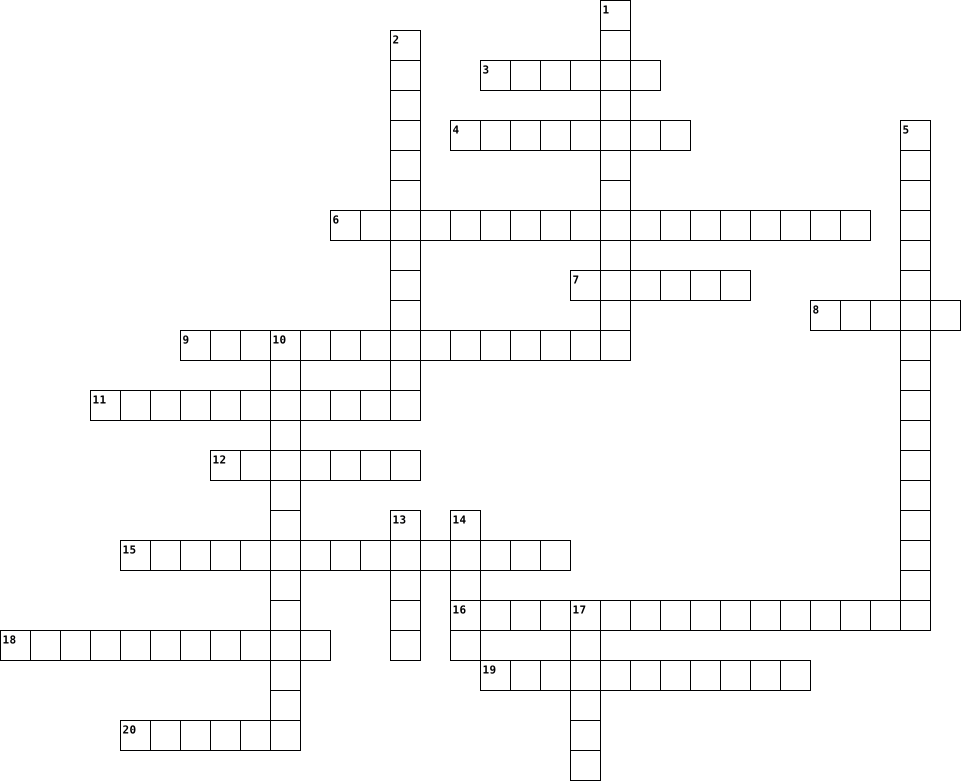
Across
- an area of fracturing between rocks resulting from stress.
- a visible exposure of bedrock or ancient superficial deposits on the surface of the Earth.
- a geologic process in which tectonic plates—large slabs of Earth's lithosphere split apart from each other.
- the outermost shell of a terrestrial planet.
- It's made up of a liquid metal outer core that flows around a solid metal inner core.
- occur along divergent plate boundaries, where new ocean floor is created as the Earth's tectonic plates spread apart.
- a depression in the earth's crust.
- the mostly solid bulk of Earth's interior.
- THE MOVEMENT OR STUDY OF THE MOVEMENT OF EARTHS CRUST
- where crust is neither produced nor destroyed as the plates slide horizontally past each other.
- when an oceanic plate runs into a continental plate and slides beneath it.
- occurs when two tectonic plates move away from each other.
- molten rock in the earths crust.
Down
- includes the brittle upper portion of the mantle and the crust, the outermost layers of Earth's structure.
- bounderies between plates.
- The plates have moved across Earth's surface for hundreds of millions of years.
- long, narrow depressions on the seafloor.
- an area of rock that has been bent by stress.
- is a split between 2 plates that were once joined.
- When forces are parallel but moving in opposite directions.
20 Clues: bounderies between plates. • molten rock in the earths crust. • a depression in the earth's crust. • long, narrow depressions on the seafloor. • the mostly solid bulk of Earth's interior. • the outermost shell of a terrestrial planet. • an area of rock that has been bent by stress. • is a split between 2 plates that were once joined. • ...
Chapter 5 - Plate Tectonic 2023-02-13

Across
- molten rock that is underground
- energy that comes from a source and travels through space at the speed of light
- long chain of oceanic islands with intense volcanic and seismic activity and orogenic processes
- the geologically altered remains of a once-living organism and/or its behaviour
- current, heat transfer involving the movement of energy and heat from one place to another
- the movement of continents resulting from the motion of tectonic plates
- when two plates come together
- a lowland region that forms where Earth's tectonic plates move apart
- a fracture or zone of fractures between two blocks of rock
- heat is transferred by movement of a heated fluid such as air or water
- large slabs of rock that divide Earth's crust
Down
- a supercontinent that incorporated almost all the landmasses on Earth
- a path along the Pacific Ocean with active volcanoes and frequent earthquakes
- magma emerging as a liquid onto Earth's surface
- heat energy is transmitted through collisions between atoms or molecules
- places where plates slide sideways past each other
- plate tectonics of the edge of one crustal plate descending below the edge of another
- a scientific theorymajor landforms are created as a result of Earth's subterranean movements
- an opening in the Earth's crust through which lava ash and gases erupt
- a small area with a relatively hot temperature in comparison to its surroundings
- the quantity of something per unit volume unit area or unit length
21 Clues: when two plates come together • molten rock that is underground • large slabs of rock that divide Earth's crust • magma emerging as a liquid onto Earth's surface • places where plates slide sideways past each other • a fracture or zone of fractures between two blocks of rock • the quantity of something per unit volume unit area or unit length • ...
Earth Structure Vocabulary Review 2023-02-16

Across
- The process of sediments being placed in a new location from its original placement.
- The movement of sediments from one location to another location.
- A break in earth's crust.
- A boundary type where two plates slide past one another. Causing Earthquakes.
- A boundary where two plates collide into one another.
- The process of rotating crops each year to preserve the nutrients in the soil.
- The remains of animals and plants.
- Layer of Earth made of solid iron and nickel.
- Growing of crops without tilling the soil to prevent erosion.
- Earth's outermost layer.
- Rigid layer made of the uppermost part of the mantle and crust.
Down
- The movement of one plate going under another tectonic plate.
- The process that breaks rock down into sediments.
- Soft layer of mantle that tectonic plates float on.
- The rock that was weathered to become the soil.
- Responsibility of maintaining the health of the lithosphere for human usage.
- Plowing the soil on the curve or slope of a hill.
- Theory stating that the continents were once one large land mass and seperated into the continents that we have today.
- Layer of Earth made of molten iron and nickel.
- A boundary type where two plates move away from one another.
- The layer responsible for the movement of plate tectonics.
21 Clues: Earth's outermost layer. • A break in earth's crust. • The remains of animals and plants. • Layer of Earth made of solid iron and nickel. • Layer of Earth made of molten iron and nickel. • The rock that was weathered to become the soil. • The process that breaks rock down into sediments. • Plowing the soil on the curve or slope of a hill. • ...
Rock Transformation Crossword Puzzle 2023-02-16

Across
- a small part that is meant to show what the whole is like
- the process by which rock material moves under Earth’s outer layer and into the mantle due to plate motion
- the process by which all the rock formations of a region are pushed up due to plate motion
- small pieces of rock
- one of the very large sections of hard, solid rock that make up Earth’s outer layer
- the process of sediment being buried and pressed together
- a region of rock that formed together as a single rock type
- the process of rock breaking down into smaller pieces due to wind or moving water
- rock the rock type formed when magma cools and becomes solid
- the rock type formed when sediment is pressed and glued together
Down
- the process of sediment being glued together
- anything that has mass and takes up space
- a diagram that shows what the inside of something looks like
- the place where two plates meet
- one of the many different types of matter that make up rocks
- the ability to make things move or change
- the rock type formed when heat or pressure deep underground changes existing rock
- the movement of sediment from one place to another, often caused by wind or flowing water
- everything made of rock: magma, sediment, and all rock types
- hot liquid rock below surface of the Earth
20 Clues: small pieces of rock • the place where two plates meet • anything that has mass and takes up space • the ability to make things move or change • hot liquid rock below surface of the Earth • the process of sediment being glued together • a small part that is meant to show what the whole is like • the process of sediment being buried and pressed together • ...
charlie rosenbeck 2023-02-08

Across
- a huge crack in earth's crust
- the boundary where plates are colliding
- the amount of energy released by an earthquake
- the sliding of denser ocean plate under another plate when they collide
- The idea that many kinds of rocks form flat,horizontal layers
- earths solid,rocky surface containing the continents and ocean floor
- the boundarie where plates are sliding past eachother
- the point in the earth where earth quakes actually start
- the name of a large super continent
- the point on earths surface directly above the focus
Down
- the idea a super continent split apart into peices,the continents,which drift into their present locantions
- magma that reaches earths surface and flows out the vent
- the idea earths surface is broken into plates
- a vibration that spreads out away from a focus when an earthquake happens
- the central opening in a volcanic through which magma may flow
- giant ocean waves formed when an earthquake occurs under the ocean floor
- hot,molten rock,below earths surface
- a sensitive device that detects the shaking of earths crust during a earthquake
- the boundary where plates are moving past eachother
- a cup like hollow that forms at the top of the volcano at the vent
- a very hot of earths mantle,where magma can melt through a moving plate above it
21 Clues: a huge crack in earth's crust • the name of a large super continent • hot,molten rock,below earths surface • the boundary where plates are colliding • the idea earths surface is broken into plates • the amount of energy released by an earthquake • the boundary where plates are moving past eachother • the point on earths surface directly above the focus • ...
Vocabulary Crossword Puzzle 2020-12-16

Across
- Plate, Large pieces of land that connect together on Earth’s outer shell.
- The lowest region of the atmosphere.
- The layer of Earth's atmosphere that is directly above the stratosphere.
- Contains all of the Earth’s water.
- A layer of gas that blocks harmful ultraviolet rays.
- The largest layer of the Earth.
- The part of Earth in which living things interact with nonliving things.
- Plate Boundaries, When two plates meet and slip/grind alongside one another.
- Process by which the ocean floor sinks beneath a deep-ocean trench and back into the mantle.
Down
- line, A line on a rock surface or the ground that traces a geological fault.
- The sphere that involves the rock cycle and all of our studies of plate tectonics.
- A sea of gases that support and protect the entire biosphere.
- The outermost layer of the atmosphere.
- Quarter, You can see exactly half of the illuminated part of the moon.
- Gibbous, More than half of the illuminated part of the moon is seen.
- The second layer of Earth's atmosphere.
- Boundaries, Boundary between two plates that are moving apart or rifting.
- boundary, When two or more tectonic plates collide and eventually one slides under the other.
- The rigid, rocky outer surface of the Earth.
- Moon, You can see the entire illuminated side of the moon.
20 Clues: The largest layer of the Earth. • Contains all of the Earth’s water. • The lowest region of the atmosphere. • The outermost layer of the atmosphere. • The second layer of Earth's atmosphere. • The rigid, rocky outer surface of the Earth. • A layer of gas that blocks harmful ultraviolet rays. • Moon, You can see the entire illuminated side of the moon. • ...
Tectonic Plates Crossword Puzzle 2021-02-26

Across
- a type of boundary where crust is formed
- the point on the earth's surface directly above the focus of an earthquake
- a type of boundary where lithosphere is destroyed
- the very outer layer of the earth
- molten rock that has erupted onto earth's surface
- layer beneath earth's crust
- molten rock beneath the earth's surface
- a place where extremely hot material from inside the earth erupts at the surface
- a boundary where plates are moving apart from each other in opposite directions
- a boundary where plates collide with each other
Down
- a zone where earth's crust and mantle are being pulled apart
- an isolated place away from plate boundaries where a lot of magma is collected
- a type of crust that forms the continents
- a section of the earth's crust that moves about on the earth's surface
- a boundary where a section of earth's crust is sliding parallel to each other but in opposite directions
- the centre of the earth
- a huge wave in the ocean caused by an earthquake occuring in the seafloor
- a type of crust that forms the ocean floor
- name for the crust and upper mantle together
- the rapid movement of the ground due to the movement of tectonic plates
- the point below the ground where the earthquake starts
- when one plate sinks below another plate during a collision
22 Clues: the centre of the earth • layer beneath earth's crust • the very outer layer of the earth • molten rock beneath the earth's surface • a type of boundary where crust is formed • a type of crust that forms the continents • a type of crust that forms the ocean floor • name for the crust and upper mantle together • a boundary where plates collide with each other • ...
Tectonic Plates 2021-04-22

Across
- Wegener’s 3 pieces of evidence to support continental drift – _________, Fossils, and climate
- an organism preserved in rock
- a large, broken section of Earth’s lithosphere
- <— —>
- most scientists __________ his theory because he was unable to prove the driving force causing the movement of the continents
- convection currents act as giant “________” and drive the movement of Earth’s plates
- the continuous heating and cooling of magma in the mantle creates _________ currents
- _______ and South America look as though they could fit together like puzzle pieces
- scientists believe convection ________ within the Earth’s mantle are slowly causing the plates to move
- scientists estimate that most of Earth’s plates move at a rate of 2.5 _________ per year
- a theory that states that the continents are slowly moving or “drifting” to new locations
Down
- there are _____ main types of crust that cover Earth’s surface
- an extinct fern-like plant whose fossil remains have been found on several continents separated by large distances
- German scientist and meteorologist
- plate _________ is a location where 2 tectonic plates meet
- plate _________ is a theory that the Earth’s lithosphere is broken into plates that move slowly over time
- ________ boundaries is a location where 2 tectonic plates slide past each other
- Wegener’s 3 pieces of evidence to support continental drift – Landforms, _______, and climate
- all of Earth’s continents joined together as one giant landmass
- —> <—
20 Clues: <— —> • —> <— • an organism preserved in rock • German scientist and meteorologist • a large, broken section of Earth’s lithosphere • plate _________ is a location where 2 tectonic plates meet • there are _____ main types of crust that cover Earth’s surface • all of Earth’s continents joined together as one giant landmass • ...
Datoruzbūve, Kristine Upmane 2018-11-07

Across
- karte ir personālo datoru papildierīce, kas ļauj lietot multimediju programmas ar skaņu, kā arī ļauj klausīties mūziku
- disks jeb SSD datu uzglabāšanas tehnoloģija
- paplašināšanas plate, kas ģenerē tekstu vai grafikas attēlus monitora ekrānā
- ar kuru palīdzību datorā ievada datus, piemēram, pele, tastatūra, skeneris, mikrofons
- kontaktligzdas, ar kuru starpniecību datoram var pievienot izvērses plates
- atmiņas ierīces kurās ilgstoši uzglabā datus, piemēram, cietais disks, kompaktdisks
- ar kuras palīdzību var izvēlēties komandas, zīmēt un veikt citas darbības
- disks ir personālā datora lielas ietilpības palīgatmiņa, kas sastāv no vairākiem magnētiskajiem diskiem, to piedziņas iekārtas
- maģistrāles elektrisko signālu vadītāju (vadu) komplekts
Down
- bloks pieslēgto elektrību sadala un aizvada visām nepieciešamajām ierīcēm
- jeb čipsets ir starpnieks saziņā starp centrālo procesoru un citām sistēmas sastāvdaļām, tai skaitā galveno atmiņu.
- ekrāns kas pārklāts ar caurspīdīgu skārienjūtīgu pārklājums
- plate montāžas plate, kas veido datora pamatstruktūru?
- ir galvenā sistēmas bloka komponente
- ar kuru palīdzību var sekot līdzi tam, kas datorā tiek veikts, piemēram, monitors, printeris, skaļruņi
- kuras specifikācija ir publiski pieejama un kuru brīvi var izmantot citi izgatavotāji savas produkcijas ražošanai
- kurā īslaicīgi vai ilglaicīgi uzglabā programmas un datus
- savienojumi, ar kuru starpniecību sinhronizē un vada datu plūsmu starp centrālo procesoru un dažādām ārējām iekārtām
- karte ir personālā datora izvērses karte, kas kopā ar tīkla operētājsistēmu vada informācijas plūsmu datoru tīklā.
- kas datu apstrādes gaitā veic instrukciju interpretāciju un Ieva Hermane vada citu datora bloku darbību
20 Clues: ir galvenā sistēmas bloka komponente • disks jeb SSD datu uzglabāšanas tehnoloģija • plate montāžas plate, kas veido datora pamatstruktūru? • maģistrāles elektrisko signālu vadītāju (vadu) komplekts • kurā īslaicīgi vai ilglaicīgi uzglabā programmas un datus • ekrāns kas pārklāts ar caurspīdīgu skārienjūtīgu pārklājums • ...
Rock Formations 2023-05-11

Across
- hot liquid rock below the surface of Earth
- the process of rock breaking down into smaller pieces due to wind or moving water
- the rock type formed when heat or pressure deep underground changes existing rock
- a small part that is meant to show what the whole is like
- the ability to make things move or change
- everything made of rock- magma, sediment, and all rock types
- anything that has mass and takes up space
- the process by which all the rock formations of a region are pushed up due to plate motion
- the rock type formed when magma cools and becomes solid
- the rock type formed when sediment is pressed and glued together
- small pieces of rock
- one of the many different types of matter that make up rocks
Down
- the place where two plates meet
- the movement of sediment from one place to another, often caused by wind or flowing water
- the process of sediment being buried and pressed together
- a diagram that shows what the inside of something looks like
- the process of sediment being glued together
- the process by which rock material moves under Earth's outer layer and into the mantle due to plate motion
- a region of rock that formed together as a single rock type
- one of the very large sections of hard, solid rock that make up Earth’s outer layer
20 Clues: small pieces of rock • the place where two plates meet • the ability to make things move or change • anything that has mass and takes up space • hot liquid rock below the surface of Earth • the process of sediment being glued together • the rock type formed when magma cools and becomes solid • the process of sediment being buried and pressed together • ...
rock transformations glossary 2023-12-07

Across
- the rock type formed when heat or pressure deep underground changes existing rock
- the process of rock breaking into smaller pieces due to wind or moving water
- a small part that is meant to show what the whole is like
- the rock formed when magma cools and becomes solid
- one of the many different types of matter that makes up rocks
- the process by which all the rock formations of a region are pushed up due to plate motion
- the process of sediment being glued together
- everything made of rock: magma, sediment, and all rock types
Down
- a region of rock that formed together as a single rock type
- the rock type formed when sediment is pressed and glued together
- the process of sediment being buried and pressed together
- the place were to plates meet
- a diagram that shows what the inside of something looks like
- one of the very large sections of hard, solid rock that makes up earths outer layer
- small pieces of rock
- the process by which rock material moves under earths outer layer and into the mantle due to plate motion
- the ability to make things move or change
- the movement of sediment from one place to another, often caused by wind or flowing water
- anything that has mass or takes up space
- hot liquid rock under earth's surface surface
20 Clues: small pieces of rock • the place were to plates meet • anything that has mass or takes up space • the ability to make things move or change • the process of sediment being glued together • hot liquid rock under earth's surface surface • the rock formed when magma cools and becomes solid • the process of sediment being buried and pressed together • ...
rock transformations glossary 2023-12-07

Across
- the rock type formed when heat or pressure deep underground changes existing rock
- the process of rock breaking into smaller pieces due to wind or moving water
- a small part that is meant to show what the whole is like
- the rock formed when magma cools and becomes solid
- one of the many different types of matter that makes up rocks
- the process by which all the rock formations of a region are pushed up due to plate motion
- the process of sediment being glued together
- everything made of rock: magma, sediment, and all rock types
Down
- a region of rock that formed together as a single rock type
- the rock type formed when sediment is pressed and glued together
- the process of sediment being buried and pressed together
- the place were to plates meet
- a diagram that shows what the inside of something looks like
- one of the very large sections of hard, solid rock that makes up earths outer layer
- small pieces of rock
- the process by which rock material moves under earths outer layer and into the mantle due to plate motion
- the ability to make things move or change
- the movement of sediment from one place to another, often caused by wind or flowing water
- anything that has mass or takes up space
- hot liquid rock under earth's surface surface
20 Clues: small pieces of rock • the place were to plates meet • anything that has mass or takes up space • the ability to make things move or change • the process of sediment being glued together • hot liquid rock under earth's surface surface • the rock formed when magma cools and becomes solid • the process of sediment being buried and pressed together • ...