
plate Crossword Puzzles
James Bickett's Crossword Puzzle 2015-04-30

Across
- The boundary of tectonic plates that move into each other.
- Sliding plate force.
- The device that measures small changes in magnetic fields.
- A large depression with steep walls formed by downward displacement of a block of the Earth's surface.
- The tone of regular beats of a single tone.
- Another name for plate boundary.
- Alfred Wegner's idea that the continents all used to be part of a single landmass.
- the sideways and downward movement of the edge of a plate of the earth's crust into the mantle beneath another plate.
Down
- The study of magnetic record in rocks.
- The name of the idea of plate tectonics.
- The change in the direction of the earth' polarity?
- Alfred Wegner's name for the supercontinent.
- Process of the ocean floor moving away from an ocean ridge.
- The boundary of tectonic plates that move a part from each other.
- The portion of motion of a tectonic plate.
15 Clues: Sliding plate force. • Another name for plate boundary. • The study of magnetic record in rocks. • The name of the idea of plate tectonics. • The portion of motion of a tectonic plate. • The tone of regular beats of a single tone. • Alfred Wegner's name for the supercontinent. • The change in the direction of the earth' polarity? • ...
Plate Tectonics 2022-11-16

Across
- Soft layer of the mantle
- These events are common at plate boundaries and are caused by the motions of the plates or of magma.
- Plate boundary where the plates slide past each other
- Sections of the Earth’s surface that move-- these sections can include both continental and oceanic crust
- One tectonic plate is pushed beneath another plate
- Plate boundary where the plates move apart
- Layer between the crust and the core
Down
- The dividing line where tectonic plates meet
- Plate boundary where the plates collide
- Outermost layer of the Earth
- This happens at a mid-oceanic ridge where 2 plates are moving apart and a new crust is forming
- This type is thinner and denser than continental
- Outermost rigid layer of the Earth
- The point on the Earth’s surface directly above the earthquake
- This type is thicker than oceanic and doesn't subduct
15 Clues: Soft layer of the mantle • Outermost layer of the Earth • Outermost rigid layer of the Earth • Layer between the crust and the core • Plate boundary where the plates collide • Plate boundary where the plates move apart • The dividing line where tectonic plates meet • This type is thinner and denser than continental • One tectonic plate is pushed beneath another plate • ...
Nail Care Quiz 2024-08-08

Across
- The technical term for nails
- the eight bones of the wrist
- The non-living epidermis around the base of the nail
- the thin layer between the nail bed and nail plate
- Another term for nail body
- The living skin at the base of the nail plate
- the skin that overlaps on the side of the nail plate
- also known as nail slits
Down
- Another name for the kneecap
- The color of the nail plate
- bitten nails
- The nail that extends past the nail plate
- Where you perform a manicure
- A type of muscle that spreads the fingers and toes apart
- The skin between the free edge and fingertip
15 Clues: bitten nails • also known as nail slits • Another term for nail body • The color of the nail plate • Another name for the kneecap • The technical term for nails • the eight bones of the wrist • Where you perform a manicure • The nail that extends past the nail plate • The skin between the free edge and fingertip • The living skin at the base of the nail plate • ...
Briella's crossword 2023-12-06

Across
- this plate boundary one plate slides under the other plate.
- magma that reaches the surface.
- this plate boundary slides past each other.
- closes to the crust.
- this plate boundary come's together.
- the tool that measures earthquakes.
Down
- between mantle and inner core.
- this plate boundary pulls apart.
- the outside of the earth.
- this lava has low viscosity,high heat,and fast moving.
- the middle of the earth.
- this lava is slower moving,and cooler.
12 Clues: closes to the crust. • the middle of the earth. • the outside of the earth. • between mantle and inner core. • magma that reaches the surface. • this plate boundary pulls apart. • the tool that measures earthquakes. • this plate boundary come's together. • this lava is slower moving,and cooler. • this plate boundary slides past each other. • ...
hazards_Por 2019-03-13

Across
- This is formed when the plates has moved apart
- This is a example of a conservative plate boundary located in America
- The temperature of the inner core
- This layer surrounds the inner core
- This melts the oceanic crust which goes underneath the continental crust
- This pushes the plates together
- This is a type of boundary where the plates are just sliding past each other
- The less dense type of plate
- This is an example of a constructive boundary
- This is another name for a conservative plate boundary
Down
- Thinnest layer or the Earth
- The denser type of plate
- This is formed when there is a lot of pressure created by the friction force when the plates move past each other
- On the San Andreas Fault the Pacific Plate is the...
- This is a place where a new crust is created
- Where the convection currents are
- This pushes areas of ocean plates apart
- This layer is made of solid (metal)
18 Clues: The denser type of plate • Thinnest layer or the Earth • The less dense type of plate • This pushes the plates together • The temperature of the inner core • Where the convection currents are • This layer surrounds the inner core • This layer is made of solid (metal) • This pushes areas of ocean plates apart • This is a place where a new crust is created • ...
6 Science Plate Tectonics 2023-12-07

Across
- boundary at which two plates slide past each other
- _______ pull occurs when the edge of a plate pulls the rest of the plate with it
- huge mountain ranges found in the mid oceans
- place in the United States that has a transform boundary
- name for Earth's single land mass about 245 million years ago
- movement of material due to differences of temperature and density
- boundary found where two plates move away from each other
- when one plate sinks under another plate
Down
- boundary found where two plates collide
- mountain range created when India collided with Eurasia
- evidence of remains of once living things found in separate continents
- tectonic plates fit together like the pieces of this puzzle
- _________ plates are much more dense than continental plates
- plate _______ describe movements of Earth's lithosphere
- ridge _______ force moves plates away from the mid-ocean ridge
- deep canyons in the ocean's floor
- mountains found along the west coast of South America
- continental _________ hypothesis describing how the continents are moving
18 Clues: deep canyons in the ocean's floor • boundary found where two plates collide • when one plate sinks under another plate • huge mountain ranges found in the mid oceans • boundary at which two plates slide past each other • mountains found along the west coast of South America • mountain range created when India collided with Eurasia • ...
Plate Tectonics Features Crossword Puzzle 2025-10-04

Across
- giant cracks in a rock formed by compression or tension
- the rocky part of the crust and upper mantle
- formed by a divergent boundary on land
- a place where lava erupts and forms some mountains
- the place where convection currents are happening
- when one plate slides beneath another
- plate boundary where plates slide parallel
- formed when undersea earthquakes push water upwards
- formed where magma upwells from a convection current
Down
- the type of crust that is thicker
- formed when two continental plates collide
- the place where old crust is destroyed, deep in the ocean
- the type of plate boundary that is at the mid-ocean ridge
- the type of plate boundary where plates come together
- a vibration of earth's crust caused by plate movement
- the less dense and thinner crust
- Japan and the Aleutian islands are an example. Formed when subducted crust melts and rises as volcanoes
- happens when rocks are slowly compressed over time
18 Clues: the less dense and thinner crust • the type of crust that is thicker • when one plate slides beneath another • formed by a divergent boundary on land • formed when two continental plates collide • plate boundary where plates slide parallel • the rocky part of the crust and upper mantle • the place where convection currents are happening • ...
Plate tectonics 2024-03-21

Across
- Breaking/cracking of the Earth's crust.
- Hot semi-fluid material under the crust of the Earth.
- According to the Theory of Continental Drift, the British Isles, Scandinavia and Caledonian Mountains were once connected to the ________ Mountains.
- The main divisions of land.
- The thinnest layer of the Earth.
- One example of proof of Continental Drift.
- The original continent made up of all plate tectonics.
- The cool outermost layer of the Earth that consists the crust and the uppermost part of the mantle.
Down
- Process of creating a new oceanic crust.
- Lines present between 2 plates.
- word to describe the state of the mantle.
- Thickest layer of the Earth.
- When one Plate tectonics moves on top of another.
- Forms underwater when two plate tectonics converge.
- occurs when 2 plate tectonics grind against each other.
- When continents drift apart, it is called Continental ______
- One result of Continental Drift.
- The amount of major plate tectonics.
18 Clues: The main divisions of land. • Thickest layer of the Earth. • Lines present between 2 plates. • The thinnest layer of the Earth. • One result of Continental Drift. • The amount of major plate tectonics. • Breaking/cracking of the Earth's crust. • Process of creating a new oceanic crust. • word to describe the state of the mantle. • One example of proof of Continental Drift. • ...
Plate Tectonics Crossword 2021-12-01

Across
- type of plate made from Earth's crust that are moving around
- Other name for molten rock
- a trench of hardened magma caused by two plates moving away
- plates sliding next to each other
- Caused by underwater plates converging
- Well known transform plate boundary in California
- Outermost layer of the earth
Down
- Well known rift valley caused by a divergent plate boundary
- Tectonic plate underneath land
- plates moving away from each other
- when two plates converge and eventually push magma out onto the land
- Main cause of two plates sliding against each other
- Main cause of two plates converging together and crumpling
- plates moving towards each other
- Tectonic plate underneath the ocean
- when two plates converge and one goes under the other
16 Clues: Other name for molten rock • Outermost layer of the earth • Tectonic plate underneath land • plates moving towards each other • plates sliding next to each other • plates moving away from each other • Tectonic plate underneath the ocean • Caused by underwater plates converging • Well known transform plate boundary in California • ...
Earth Science (Word Search) 2023-10-13

Across
- Movement - Term for the motion of Earth's tectonic plates.
- Boundary - Boundary where tectonic plates move away from each other.
- Boundary - Boundary where tectonic plates slide past each other.
- of Plate Tectonics - Scientific theory explaining movement of Earth's tectonic plates.
- Boundary - Boundary where tectonic plates collide.
- Suction - Convection currents near the crust contributing to plate movement.
Down
- Spreading - Process of new crust being formed at divergent boundaries.
- Ranges - Geological features formed by the collision of tectonic plates.
- - Process where one tectonic plate sinks beneath another at a convergent boundary.
- Plates - Large pieces of Earth's lithosphere floating on the asthenosphere.
- Forces - Forces influencing plate movement, such as ridge push and slab pull.
- Pull - Action of subducting crust pulling tectonic plates.
- of Fire - Region in the Pacific Ocean known for high volcanic and seismic activity.
- - Method of heat transfer related to plate movement.
- Push - Process where new crust is formed at divergent boundaries.
15 Clues: Boundary - Boundary where tectonic plates collide. • - Method of heat transfer related to plate movement. • Movement - Term for the motion of Earth's tectonic plates. • Pull - Action of subducting crust pulling tectonic plates. • Boundary - Boundary where tectonic plates slide past each other. • Push - Process where new crust is formed at divergent boundaries. • ...
Convection, Plates, and Plate Movement 2022-11-09

Across
- the more dense type of crust found under oceans
- this represented the oceanic plate in the Great Towel Experiment
- the type of plate move that scrapes along side one another
- this represented the continental crust in the Great Towel experiment
- the layer of Earth that is made up of tectonic plates
- a very deep underwater valley
- the process in the mantle that makes plates move
- the type of plate movement that created the Himalayan Mountains
- these seismic activities occur at all types of plate boundaries
Down
- the type of plate movement that creates trenches and volcanoes
- a long crack in the crust that lets magma seep up to the Earth's surface
- the layer directly below the crust
- the thick type of crust that has continents attached
- the type of plate movement that has two plates moving away from one another
- the layer of the Earth that heats up the mantle
15 Clues: a very deep underwater valley • the layer directly below the crust • the more dense type of crust found under oceans • the layer of the Earth that heats up the mantle • the process in the mantle that makes plates move • the thick type of crust that has continents attached • the layer of Earth that is made up of tectonic plates • ...
Los Angeles cross word puzzle 2025-11-17

Across
- when two plates merge together
- ground shakes
- a bunch of water in a certain area
- plate on water
Down
- a city
- when two plates go away from each other
- plate on land
- a dip in the ground
- type of boundaries and plate
- Earth's surface
- one plate sliding under another or new crust forming
- Big wave
12 Clues: a city • Big wave • plate on land • ground shakes • plate on water • Earth's surface • a dip in the ground • type of boundaries and plate • when two plates merge together • a bunch of water in a certain area • when two plates go away from each other • one plate sliding under another or new crust forming
Laboratory equipment 2023-03-27

Across
- brush
- graduated cylinder
- balance
- watch glass
- tongs
- tweezers
- dropper
- ring stand
- wire gauze
- bunsen burner
Down
- pestle
- spatula
- glass slide
- beaker
- mortar
- funnel
- hot plate
- test tube
- microscopi
- goggles
- pipette
21 Clues: brush • tongs • pestle • beaker • mortar • funnel • spatula • balance • dropper • goggles • pipette • tweezers • hot plate • test tube • microscopi • ring stand • wire gauze • glass slide • watch glass • bunsen burner • graduated cylinder
Plate_tectonics 2015-05-01

Across
- two plates sliding past each other
- when earths magnetic poles shift direction
- when the ocean floor gets pushed away by a ridge
- when one plate dives under another plate
- set of conditions that lead to same long term condition
- motion of tectonic plate accounted for by subduction
Down
- theory that outer layer of earth is divided into plates
- super continent "all of the earth"
- one tectonic plate moves under another tectonic plate
- ocean floor moving away from ridge
- study of magnetic records in rocks
- two plates moving away from each other
- theory that continents move
- device that measures magnetic field
- linear lowlands formed in between highlands
15 Clues: theory that continents move • super continent "all of the earth" • two plates sliding past each other • ocean floor moving away from ridge • study of magnetic records in rocks • device that measures magnetic field • two plates moving away from each other • when one plate dives under another plate • when earths magnetic poles shift direction • ...
thermal energy transfer and plate tectonics 2024-12-17

Across
- high temprature
- heat moving through convection, conduction, radiation
- large mountains caused by the splitting of plate tectonics
- transfer of heat through air or water
- large eruption due to the sliding of plate tectonics
- magma traveling through the crust of the surface
- plate tectonics that slide under each other
- Molten rock
- large plates in the ocean and land
- a very large volcano over a hot spot
Down
- transfer of energy through heat giving energy
- when plate tectonics slide beside each other
- When plate tectonics move away from each other
- transfer of heat through physical touch
14 Clues: Molten rock • high temprature • large plates in the ocean and land • a very large volcano over a hot spot • transfer of heat through air or water • transfer of heat through physical touch • plate tectonics that slide under each other • when plate tectonics slide beside each other • transfer of energy through heat giving energy • When plate tectonics move away from each other • ...
Development of a Theory 2026-04-07

Across
- not flexible
- a system that uses reflected sound waves to detect and locate objects underwater
- A geologist and an oceanographer who mapped the ocean floor and proved plate
- magma that erupts onto Earth's surface
- long narrow mountain range on the ocean floor; formed by magma at divergent
- boundaries.
- each other.
- rock is near Ridges.
- a system that accurately determines the precise position of something on Earth
- A description of surface features of land.
Down
- Map made of the ages of the sea floor. Indicated oldest rock is near continents,
- the process by which new oceanic crust forms along a mid-ocean ridge and older
- theory that Earth's surface is broken into large, rigid pieces that move with respect
- molten rock stored below earth's surface
- The geologist that discovered sea floor spreading
- crust moves away from the ridge
- a convergent plate boundary.
- trench a deep, underwater trough created by one plate subducting under another plate
18 Clues: boundaries. • each other. • not flexible • rock is near Ridges. • a convergent plate boundary. • crust moves away from the ridge • magma that erupts onto Earth's surface • molten rock stored below earth's surface • A description of surface features of land. • The geologist that discovered sea floor spreading • ...
Maltese 750 words - Lesson 1 - At the Dining Table 2021-08-23

Across
- wine
- bottle
- cup
- pan
- vinegar
- glass
- fork
- napkin
Down
- side plate
- knife
- teaspoon
- spoon
- plate
- sugar
- pepper
- salt
16 Clues: cup • pan • wine • fork • salt • knife • spoon • plate • glass • sugar • bottle • pepper • napkin • vinegar • teaspoon • side plate
Milk vocab 2022-01-06

Across
- thermization
- ripening
- coalesce
- vacuum-evaporation
- uht
- ultrapasteurization
- ropey
- rennet
- ltlt
Down
- standard-plate-count
- solids-not-fat
- curd
- Buttermilk
- spc
- churning
- standardized
- lipolysis
- htst
18 Clues: spc • uht • curd • htst • ltlt • ropey • rennet • ripening • coalesce • churning • lipolysis • Buttermilk • thermization • standardized • solids-not-fat • vacuum-evaporation • ultrapasteurization • standard-plate-count
Unit 4 Week 1 2022-11-03

Across
- What is the lower mantle called
- what does divergent plate boundaries cause
- When the plates a rubbing up against each other
- what can be released from convergent plate boundaries
- type of plate
- What is the crust called
- When two plates are pushing toward each other
Down
- When two plates are pulling away from each other
- what causes tsunamis
- what is the earth made of
- long sea wave that can be caused by underwater landslides
- What is the upper mantle called
- What does convergent plate boundaries cause
- how many plate boundaries are there
14 Clues: type of plate • what causes tsunamis • What is the crust called • what is the earth made of • What is the lower mantle called • What is the upper mantle called • how many plate boundaries are there • what does divergent plate boundaries cause • What does convergent plate boundaries cause • When two plates are pushing toward each other • ...
Plate Tectonics Vocab 2018-09-17

Across
- the theory that the Earth’s surface is made up of giant, moving slabs of lithosphere, made of both oceanic and continental slabs.
- a plate boundary in which plates move past one another in opposite directions.
- the study of changes in Earth's magnetic field, as shown by patterns of magnetism in rocks that have formed over time
- when a plate slides under another plate as it more dense than the plate above, occurs at convergent boundaries.
- the process by which new oceanic crust forms as magma rises towards the surface and solidifies, occur at mid-ocean ridges.
- a valley created at a divergent boundary where plates are spreading apart.
Down
- a plate boundary in which plates move towards one another.
- deep underwater depressions created by one plate subducting under another plate at a convergent plate boundary.
- a single land mass, or supercontinent, that existed from about 350 to 200 million years ago.
- An area far from a plate boundary in which magma rises from deep within Earth through the lithosphere to reach the ocean floor.
- a plate boundary in which plates move away from one another.
- an undersea mountain chain where new ocean floor is produced at a divergent plate boundary, also includes underwater volcanoes.
- the idea that continents were once joined in a single landmass that eventually broke apart into pieces that slowly moved away from each other
13 Clues: a plate boundary in which plates move towards one another. • a plate boundary in which plates move away from one another. • a valley created at a divergent boundary where plates are spreading apart. • a plate boundary in which plates move past one another in opposite directions. • ...
Plate Tectonics Vocab 2018-09-17

Across
- an undersea mountain chain where new ocean floor is produced at a divergent plate boundary, also includes underwater volcanoes.
- the theory that the Earth’s surface is made up of giant, moving slabs of lithosphere, made of both oceanic and continental slabs.
- deep underwater depressions created by one plate subducting under another plate at a convergent plate boundary.
- a plate boundary in which plates move towards one another.
- the study of changes in Earth's magnetic field, as shown by patterns of magnetism in rocks that have formed over time
- the process by which new oceanic crust forms as magma rises towards the surface and solidifies, occur at mid-ocean ridges.
Down
- a valley created at a divergent boundary where plates are spreading apart.
- a single land mass, or supercontinent, that existed from about 350 to 200 million years ago.
- a plate boundary in which plates move past one another in opposite directions.
- the idea that continents were once joined in a single landmass that eventually broke apart into pieces that slowly moved away from each other
- a plate boundary in which plates move away from one another.
- when a plate slides under another plate as it more dense than the plate above, occurs at convergent boundaries.
- an area far from a plate boundary in which magma rises from deep within Earth through the lithosphere to reach the ocean floor.
13 Clues: a plate boundary in which plates move towards one another. • a plate boundary in which plates move away from one another. • a valley created at a divergent boundary where plates are spreading apart. • a plate boundary in which plates move past one another in opposite directions. • ...
Nail Structure and Growth 2024-02-26

Across
- part of the nail plate that extends over the tip of the finger or toe
- slit or furrow on the sides of the nail
- visible part of the matrix that extends from underneath the living skin; whitish half-moon shape at the base of the nail
- technical term for nails of the fingers or toes
- folds of skin that surround the nail plate
- nonliving colorless tissue attached to the nail plate
Down
- thin layer of tissue between the nail plate and the nail bed
- collectively; the nail bed (or sterile matrix), nail fold, eponychium, paronychium, and hyponychium
- part of the matrix that extends from underneath the living skin; whitish half-moon shape at the base of the
- area where the nail plate cells are formed; composed of matrix cells that produce the nail plate
- hard keratin plate on top of and slowly sliding across the nail bed as it grows; the most visible and functional part of the nail unit
- slightly thickened layer of skin that lies between the fingertip and free edge of the nail plate, forming a protective barrier that prevents microorganisms from invading and infecting the nail bed
- living skin underneath the PNF found at the nail plate’s base covering the matrix area
- portion of living skin that supports the nail plate as it grows toward the free edge
- tough band of fibrous tissue that connects bones or holds an organ in placebed
15 Clues: slit or furrow on the sides of the nail • folds of skin that surround the nail plate • technical term for nails of the fingers or toes • nonliving colorless tissue attached to the nail plate • thin layer of tissue between the nail plate and the nail bed • part of the nail plate that extends over the tip of the finger or toe • ...
nail structure and growth 2024-02-26

Across
- nonliving colorless tissue attached to the nail plate
- area where the nail plate cells are formed; composed of matrix cells that produce the nail plate
- technical term for nails of the fingers or toes
- hard keratin plate on top of and slowly sliding across the nail bed as it grows; the most visible and functional part of the nail unit
- abbreviated PNF; entire flap of skin covering the matrix, extending from the edge of the visible nail plate to the first joint of the finger or toe
- part of the nail plate that extends over the tip of the finger or toe
- slit or furrow on the sides of the nail
Down
- tough band of fibrous tissue that connects bones or holds an organ in place
- also known as the sidewall; folds of skin that line the sides of the nail plate
- all parts of the finger from the tip to the first knuckle; technically referred to as the onyx and is composed mainly of keratin
- living skin underneath the PNF found at the nail plate’s base covering the matrix area
- portion of living skin that supports the nail plate as it grows toward the free edge
- visible part of the matrix that extends from underneath the living skin; whitish half-moon shape at the base of the nail
- folds of skin that surround the nail plate
- collectively; the nail bed (or sterile matrix), nail fold, eponychium, paronychium, and hyponychium
15 Clues: slit or furrow on the sides of the nail • folds of skin that surround the nail plate • technical term for nails of the fingers or toes • nonliving colorless tissue attached to the nail plate • part of the nail plate that extends over the tip of the finger or toe • tough band of fibrous tissue that connects bones or holds an organ in place • ...
Plate tectonics 2022-10-11
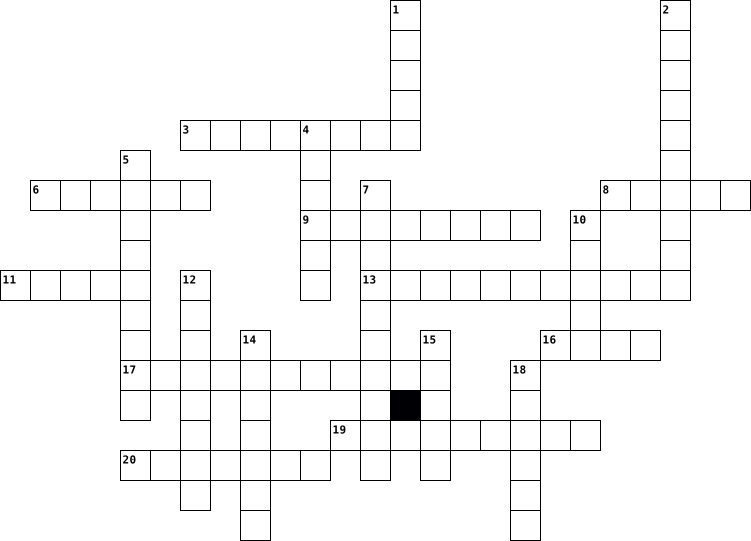
Across
- something that starts moving is ————.
- who invented plate tectonics.
- where everyone lives.
- pertaining to the surface.
- latitude are zones.
- shake the floor.
- Blazing hot.
- something that has energy and is dangerous.
- something that is different is —————.
- a geographic area.
Down
- the outer most shell.
- where plates meet.
- Mostly solids bulk on earths interior.
- things that shift.
- scientists usually make a ————— method.
- Something you eat food on.
- feature on earths surface.
- gushing out hot liquid.
- how many major plate tectonics are there.
- an idea that somebody believes in but others don’t.
20 Clues: Blazing hot. • shake the floor. • where plates meet. • things that shift. • a geographic area. • latitude are zones. • the outer most shell. • where everyone lives. • gushing out hot liquid. • pertaining to the surface. • Something you eat food on. • feature on earths surface. • who invented plate tectonics. • something that starts moving is ————. • something that is different is —————. • ...
emily D first hour word wall 2022-11-11

Across
- caved in volcano
- water heated by magma
- up and down
- hole
- alternating lava
- stores magma
- calm lava flows
- when lava flows out of the hole
- subduction of oceanic plate
- sits sideways
- edge of pacific plate
- currently erupting
- makes thicker magma
- opening
Down
- hot gas ash cinders and bombs
- sleeping
- runny lava
- violent with cinders
- connects chambers to a vent
- earths heat
- thickness of a liquid
- magma chamber hardens
- magma hardens in the pipe
- middle of plate
- thick lava
- euruptions of hot water
- never again
27 Clues: hole • opening • sleeping • runny lava • thick lava • earths heat • up and down • never again • stores magma • sits sideways • calm lava flows • middle of plate • caved in volcano • alternating lava • currently erupting • makes thicker magma • violent with cinders • water heated by magma • thickness of a liquid • magma chamber hardens • edge of pacific plate • euruptions of hot water • magma hardens in the pipe • ...
Camilo 4th 2022-11-11

Across
- middle of a plate
- water heated by magma
- thickness of liquid
- opening
- up and down
- stores lava
- edge of pacific plate
- voilent with cinders
- subduction of oceanic plate
- magma chamber hardens
- when lava pour out
- eruption of heated water
Down
- never again
- hot gas,ash,cinders,and bombs
- magma hardens in the pipe
- current
- makes magma thicker
- caved in volcano
- volcano calm,lava flows
- hole
- thick lava
- connects cambers to a vent
- earths heat
- sits sideways
- alternating lava
- sleeping
- runny lava
27 Clues: hole • current • opening • sleeping • thick lava • runny lava • never again • up and down • stores lava • earths heat • sits sideways • caved in volcano • alternating lava • middle of a plate • when lava pour out • makes magma thicker • thickness of liquid • voilent with cinders • water heated by magma • edge of pacific plate • magma chamber hardens • volcano calm,lava flows • eruption of heated water • ...
Tectonic Plates 2026-04-14

Across
- Plates moving together
- Opening where magma escapes
- Large section of Earth’s lithosphere
- Crack where plates pull apart
- Underwater mountain range
- Ocean bottom that spreads
- Ancient supercontinent
- Study of Earth’s crust movement
- Occurs at all 3 boundary types
- Magma that reaches the surface
Down
- One plate sinking beneath another
- Plates sliding past each other
- Melted rock beneath Earth’s surface
- Plates moving apart
- Deep valley in ocean floor
- Edge where tectonic plates meet
- Layer beneath the crust
- Break in Earth’s crust
- Plate made of land crust
- Outer layer of Earth
20 Clues: Plates moving apart • Outer layer of Earth • Plates moving together • Break in Earth’s crust • Ancient supercontinent • Layer beneath the crust • Plate made of land crust • Underwater mountain range • Ocean bottom that spreads • Deep valley in ocean floor • Opening where magma escapes • Crack where plates pull apart • Plates sliding past each other • Occurs at all 3 boundary types • ...
Tectonic Plates Crossword. 2017-01-26

Across
- The ancient super continent thought to be around million years old.
- Kilimanjaro: tallest mountain in Africa made by two continental plates.
- Mountains with magma from the earths core.
- Crust: This crust is less dense than the other.
- upper layer of the mantel under the lithosphere.
- Where two transform boundaries rub together causing earthquakes.
- of Fire: A hot spot around the pacific ocean causing a chain of volcanoes to form.
- Floor spreading: plates diverging causing magma to come up from the earth to the sea floor.
- Plate Boundary: Two plates rubbing together
- Plate Boundary: Two plates coming together
Down
- The layer directly underneath the crust containing the asthenosphere
- Crust: This crust is more dense than the other.
- Trench: Part of the world's longest mountain chain on the ocean floor.
- The solid outer section of the earths crust.
- Currents: currents in the earths mantle causing plates to shift.
- Plate Boundary:Two plates dividing away
- When one plate goes under another plate.
- Andreas Fault: 800 mile transform fault in California.
- valley: A depression between two different fault lines.
19 Clues: Plate Boundary:Two plates dividing away • When one plate goes under another plate. • Mountains with magma from the earths core. • Plate Boundary: Two plates coming together • Plate Boundary: Two plates rubbing together • The solid outer section of the earths crust. • Crust: This crust is more dense than the other. • Crust: This crust is less dense than the other. • ...
Ella1 2023-11-03

Across
- currently erupting
- makes magma thicker
- opening
- hot gas, ash, cinders, and bombs
- middle of a plate
- earth's heat
- runny lava
- violent with cinders
- subduction of ocean plate
- hole
- alternating lava
- eruption of heated water
Down
- up and down
- stores magma
- sits sideways
- magma chamber hardens
- when lava pours out
- connects chambers to a vent
- thickness of a liquid
- caved in volcano
- edge of Pacific plate
- thick lava
- magma hardens in the pipe
- water heated by magma
- never again
- sleeping
- calm, lava flows
27 Clues: hole • opening • sleeping • thick lava • runny lava • up and down • never again • stores magma • earth's heat • sits sideways • caved in volcano • calm, lava flows • alternating lava • middle of a plate • currently erupting • makes magma thicker • when lava pours out • violent with cinders • magma chamber hardens • thickness of a liquid • edge of Pacific plate • water heated by magma • eruption of heated water • ...
unit 5 earth's systems vocabulary 2026-03-06

Across
- core: the solid super hot center of the earth made of mostly iron and nickel
- boundary: a place where two tectonic plates push together
- spot: a place where magma rises from deep inside earth, forming volcanoes
- boundary: a place where two tectonic plates move apart
- the thickest layer of earth between the crust and the core it has hot moving rock that slowly circulates, like thick soup
- crust: the part of earth's crust that forms land
- field: the invisible force around the earth that protects us from the sun's radiation
- crust: the crust under the ocean, thinner but heavier than continental crust
- boundary: the edges where tectonic plates meet
- the rigid, outermost shell of the Earth, encompassing the crust and the solid, brittle portion of the upper mantle.
- something melted due to extreme heat like lava from a volcano
Down
- boundary: a place where two tectonic plates slide past each other causing earthquakes
- plate: a large piece of earth's crust that carries land
- core: the liquid layer around the inner core is also made of iron and nickel
- the flowing layer of the mantle that allows the tectonic plates to slide around.
- plate: a huge piece of the lithosphere that moves on the asthenosphere
- plate: a tectonic plate under the ocean, it is thinner but denser than a continental plate
- the thin outermost layer of earth where we live
- trench: a deep valley in the ocean floor, formed when one plate sinks under another
19 Clues: boundary: the edges where tectonic plates meet • the thin outermost layer of earth where we live • crust: the part of earth's crust that forms land • boundary: a place where two tectonic plates move apart • plate: a large piece of earth's crust that carries land • boundary: a place where two tectonic plates push together • ...
Volcanoes 2021-12-22

Across
- What is formed beneath the ocean at a divergent boundary
- Lava from this Volcano flows slowly
- Plate boundaries that move towards each other
- These islands were formed by Shield Volcanoes
- Mountain which erupted in Washington in 1980
- When one plate collides and goes beneath another plate
- Very dangerous ash cloud that comes out of a Volcano quickly and can be deadly
- A spot with a lot of magma beneath the surface in the middle of a tectonic plate
- Explosive Volcano that looks like a giant mountain
- What is stored inside a Volcano
- Plate Boundaries that move away from each other
Down
- Most active region of Volcanoes
- When Magma cools beneath the surface it forms this
- This is what magma becomes when it reaches the surface
- Another name for a Composite Volcano
- Forms very quickly and can be explosive
- Can be found in the crater of other Volcanoes
- Where mamgma is stored beneath the Volcano
- This is the weak point in the surface and main place where lava escapes a volcano
19 Clues: Most active region of Volcanoes • What is stored inside a Volcano • Lava from this Volcano flows slowly • Another name for a Composite Volcano • Forms very quickly and can be explosive • Where mamgma is stored beneath the Volcano • Mountain which erupted in Washington in 1980 • Plate boundaries that move towards each other • These islands were formed by Shield Volcanoes • ...
Tectonic Plates Crossword. 2017-01-26

Across
- Andreas Fault: 800 mile transform fault in California.
- valley: A depression between two different fault lines.
- Mountains with magma from the earths core.
- Crust: This crust is less dense than the other.
- Trench: Part of the world's longest mountain chain on the ocean floor.
- upper layer of the mantel under the lithosphere.
- Kilimanjaro: tallest mountain in Africa made by two continental plates.
- Plate Boundary:Two plates dividing away
- The ancient super continent thought to be around million years old.
Down
- The layer directly underneath the crust containing the asthenosphere
- Crust: This crust is more dense than the other.
- Plate Boundary: Two plates coming together
- Plate Boundary: Two plates rubbing together
- The solid outer section of the earths crust.
- Currents: currents in the earths mantle causing plates to shift.
- Floor spreading: plates diverging causing magma to come up from the earth to the sea floor.
- When one plate goes under another plate.
- of Fire: A hot spot around the pacific ocean causing a chain of volcanoes to form.
- Where two transform boundaries rub together causing earthquakes.
19 Clues: Plate Boundary:Two plates dividing away • When one plate goes under another plate. • Plate Boundary: Two plates coming together • Mountains with magma from the earths core. • Plate Boundary: Two plates rubbing together • The solid outer section of the earths crust. • Crust: This crust is more dense than the other. • Crust: This crust is less dense than the other. • ...
Plate tectonics 2022-10-11
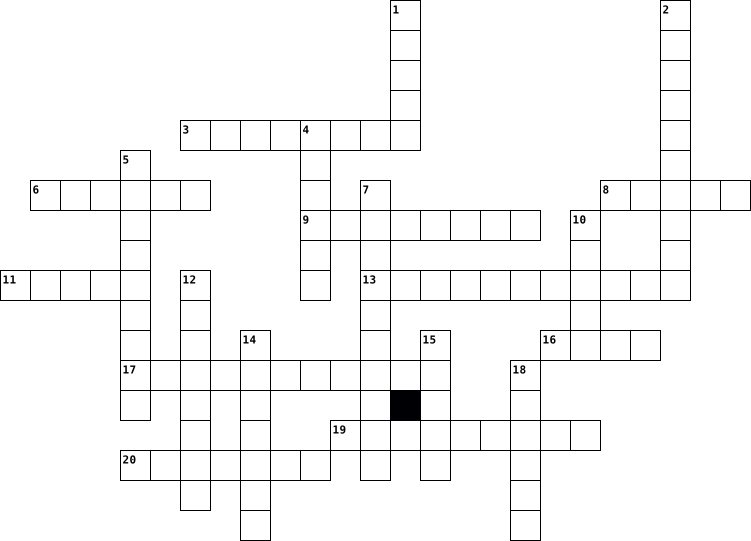
Across
- something that starts moving is ————.
- who invented plate tectonics.
- where everyone lives.
- pertaining to the surface.
- latitude are ————.
- shake the floor.
- Blazing hot.
- something that has energy and is dangerous.
- something that is different is —————.
- a geographic area.
Down
- the outer most shell.
- where plates meet.
- Mostly solids bulk on earths interior.
- things that shift.
- scientists usually make a ————— method.
- Something you eat food on.
- feature on earths surface.
- gushing out hot liquid.
- how many major plate tectonics are there.
- an idea that somebody believes in but others don’t.
20 Clues: Blazing hot. • shake the floor. • where plates meet. • things that shift. • latitude are ————. • a geographic area. • the outer most shell. • where everyone lives. • gushing out hot liquid. • pertaining to the surface. • Something you eat food on. • feature on earths surface. • who invented plate tectonics. • something that starts moving is ————. • something that is different is —————. • ...
logan1 2022-11-11

Across
- magma hardens in the pipe
- runny lava
- never again
- edge of pacific plate
- calm, lava flows
- makes magma thicker
- sleeping
- hole
- thick lava
- sits side ways
- middle of a plate
- when lava pores out
- opening
- connects chamber to a vent
- up down
Down
- violent with cinders
- water heated by magma
- earths pipe
- stores magma
- eruption of heated water
- thickness of a liquid
- magma chamber hardens
- alternate lava
- flow hot gas ash cinder and bombs
- currently erupting
- subduction of oceanic plate
- caved in volcano
27 Clues: hole • opening • up down • sleeping • runny lava • thick lava • earths pipe • never again • stores magma • sits side ways • alternate lava • calm, lava flows • caved in volcano • middle of a plate • currently erupting • makes magma thicker • violent with cinders • when lava pores out • water heated by magma • edge of pacific plate • thickness of a liquid • magma chamber hardens • eruption of heated water • ...
Plate Tectonics Vocab 2018-09-17

Across
- an undersea mountain chain where new ocean floor is produced at a divergent plate boundary, also includes underwater volcanoes.
- a single land mass, or supercontinent, that existed from about 350 to 200 million years ago.
- the idea that continents were once joined in a single landmass that eventually broke apart into pieces that slowly moved away from each other
- a valley created at a divergent boundary where plates are spreading apart.
- a plate boundary in which plates move past one another in opposite directions.
- the process by which new oceanic crust forms as magma rises towards the surface and solidifies, occur at mid-ocean ridges.
Down
- the theory that the Earth’s surface is made up of giant, moving slabs of lithosphere, made of both oceanic and continental slabs.
- the study of changes in Earth's magnetic field, as shown by patterns of magnetism in rocks that have formed over time
- a plate boundary in which plates move away from one another.
- a plate boundary in which plates move towards one another.
- An area far from a plate boundary in which magma rises from deep within Earth through the lithosphere to reach the ocean floor.
- deep underwater depressions created by one plate subducting under another plate at a convergent plate boundary.
- when a plate slides under another plate as it more dense than the plate above, occurs at convergent boundaries.
13 Clues: a plate boundary in which plates move towards one another. • a plate boundary in which plates move away from one another. • a valley created at a divergent boundary where plates are spreading apart. • a plate boundary in which plates move past one another in opposite directions. • ...
Chapter 2 Review 2024-09-09

Across
- sea plate and a continental plate collide
- Earth's super hot and solid inner part
- sea plates pull apart
- a layer of gases surrounding the earth
- rain, snow, or sleet
- the watery areas of Earth
- Earth's middle layer of hot dense rock
- When water wears away rock and moves soil
Down
- vapor converts into liquid
- liquid converts into vapor
- ocean water into freshwater; removing salt
- a crack or break within Earth's crust
- surface land areas of Earth's crust
- the parts of Earth which has existing life
- sea plate slides under a continental plate
- Earth's rocky shell
16 Clues: Earth's rocky shell • rain, snow, or sleet • sea plates pull apart • the watery areas of Earth • vapor converts into liquid • liquid converts into vapor • surface land areas of Earth's crust • a crack or break within Earth's crust • Earth's super hot and solid inner part • a layer of gases surrounding the earth • Earth's middle layer of hot dense rock • ...
Plate tectonics 2022-09-15

Across
- semifluid below or within the crust
- when the sea floor diverges
- what boundary has the plates come apart
- what happens to divergent plates
- what plate is under the ocean
- what boundary has the plates come together
- what boundary has plates slide past each other
- the semi fluid that spews out of
- the upper mantle and crust of the earth
- when magma rises cools and sinks back down
- how many boundaries are there
- what does cold air do
Down
- the thin layer below the lithosphere
- what happens to plates in a convergent boundary
- what forms when you have a oceanic plate in a convergent boundary
- this forms when 3 oceanic plates collide
- what plate is under the continent’s
- what happens in a transform boundary
- when a oceanic and continental plate collide this forms
- when 2 continental plates collide what forms
- what forms when 2 oceanic plates are in a convergent boundary
- what does hot air do
22 Clues: what does hot air do • what does cold air do • when the sea floor diverges • what plate is under the ocean • how many boundaries are there • what happens to divergent plates • the semi fluid that spews out of • semifluid below or within the crust • what plate is under the continent’s • the thin layer below the lithosphere • what happens in a transform boundary • ...
Plate Tectonics 2013-01-01

Across
- The theory of Earth's continents being all together and then splitting into several different continents.
- The transfer of energy through space or air.
- Beginning of the formation of new ocean floor.
- The largest layer of Earth.
- The thinnest layer of Earth.
- Plate boundaries that move together.
- The hottest layer of Earth.
- The reason Earth's plates move.
- Deep V-shaped valleys where subduction occurs.
- The transfer of heat between two solid objects that are touching.
Down
- Formed the longest mountain chain in the world.
- The along which rocks break move.
- Continental Drift led to this theory.
- The transfer of heat by movement of particles in liquids.
- Plate boundaries that move past each other, horizontally
- The name of the ancient continent.
- Proposed the theory of Continental Drift.
- Where pressure increases inside the Earth
- Plate boundaries that move apart.
- The process of ocean crust diving under continental crust.
20 Clues: The largest layer of Earth. • The hottest layer of Earth. • The thinnest layer of Earth. • The reason Earth's plates move. • The along which rocks break move. • Plate boundaries that move apart. • The name of the ancient continent. • Plate boundaries that move together. • Continental Drift led to this theory. • Proposed the theory of Continental Drift. • ...
PREPARING FOOD 2020-03-12

Across
- next, jack ... the eggs on a plate
- jack placed the ..... on the dining room table
- jack washed the plate with dishwashing ....
- the eggs ...... pretty on the white plate
- jack was ...... he walked to the kitchen
- jack ...... while the eggs cooked
- jack ....... about the day ahead
- jack ...... the oil into the skillet
- jack ....... the eggs into a bowl
- then, jack poured the eggs into the ... skillet
- jack got a ...... damp
- jack ..... the eggs cooking
- jack ... down in the large wooden chair
Down
- finally, jack ..... down the table
- the eggs ...... in the oil
- jack ...... a skillet on the stove
- the eggs ...... for two minutes
- jack ... out some eggs
- next, jack ....... tv
- jack .... out some oils
- then, jack ...... the pan
- jack ..... looking at his eggs
- next, jack ...... on the heat
- jack stirred the ....
- jack ... the eggs with a spoon
25 Clues: next, jack ....... tv • jack stirred the .... • jack ... out some eggs • jack got a ...... damp • jack .... out some oils • then, jack ...... the pan • the eggs ...... in the oil • jack ..... the eggs cooking • next, jack ...... on the heat • jack ..... looking at his eggs • jack ... the eggs with a spoon • the eggs ...... for two minutes • jack ....... about the day ahead • ...
Table/eating manners/etiquette 2020-09-28

Across
- After the meal you should _____ the cook.
- If food is hot it is not polite to ___ on it.
- Your napkin should go on your ___ when eating.
- Place your drink to the ___ of your plate.
- Keep your phone on ____ so it doesn't interrupt.
- Drink quietly do not ______.
- It's ok to talk while chewing. True or false?
- Always ___ food before adding seasoning.
- Offer to clean table after? Yes or no?
- If you go to bathroom place napkin on ____.
Down
- Finish chewing before taking a _____.
- ___ your hands before eating.
- Use your _______ often.
- What side of the plate should the napkin go?
- Wait for the ___ to start eating before you do.
- Use the proper _______.
- Elbows should stay off the table. True of False?
- Always pass the salt and peeper _____.
- After using place your utensils on plate.
- Don't __ when trying get something across table.
20 Clues: Use your _______ often. • Use the proper _______. • Drink quietly do not ______. • ___ your hands before eating. • Finish chewing before taking a _____. • Always pass the salt and peeper _____. • Offer to clean table after? Yes or no? • Always ___ food before adding seasoning. • After the meal you should _____ the cook. • After using place your utensils on plate. • ...
Plate tectonics 2023-02-21

Across
- The less dense plate slides under the more dense plate creating a subduction zone
- Boundary between two plates that are moving apart or rifting
- Boundary between two plates that are sliding past each other
- The plastic layer below the lithosphere
- Causes sea floor spreading
- Where the less dense plate slides under the more dense plate
- The earths crust and upper mantle are broken into section called plates
- Extremely hot liquid and semi-liquid rock located under earths surface
- The crust and part of the upper mantle
Down
- Divergent, convergent, transform boundary
- boundaries between two plates that are colliding
- hot magma in the Earth moves toward the surface, cools, then sinks again
- Plates below the continents
- Occurs at subduction zones
- fault
- Collision zones
- Happens when two blocks of the earth suddenly slip past one another
- Moving past each other
- Plates below the ocean
- Hitting each other
20 Clues: fault • Collision zones • Hitting each other • Moving past each other • Plates below the ocean • Occurs at subduction zones • Causes sea floor spreading • Plates below the continents • The crust and part of the upper mantle • The plastic layer below the lithosphere • Divergent, convergent, transform boundary • boundaries between two plates that are colliding • ...
Tectonic/Plate Boundaries Crossword 2021-01-06

Across
- oceans all rest on large, moving plates called
- plate pushed underneath the continental plate
- plates slide past each other
- alfred wegener dicovered the theory of
- plates move toward each other
- an example of an oceanic divergent boundary
Down
- a dense oceanic plate collides with a relatively light, thick continental plate
- an example of a transform boundary
- plates move away from each other
- formed at a midocean ridge is referred to as
- convergent, divergent, and transform are example of
- plate touches another plate
12 Clues: plate touches another plate • plates slide past each other • plates move toward each other • plates move away from each other • an example of a transform boundary • alfred wegener dicovered the theory of • an example of an oceanic divergent boundary • formed at a midocean ridge is referred to as • plate pushed underneath the continental plate • ...
Nail Disorders 2024-01-03

Across
- Also known as spoon nails, inverted or concave nails
- A condition in which the living tissue surrounding the nail plate splits or tears.
- Also known as folded nail; a type of highly curved nail plate, usually caused by injury to the matrix, but may be inherited
- Split or brittle nails that have a series of lengthwise ridges giving a rough appearance to the surface of the nail plate
- Vertical lines running the length of the natural nail plate that are caused by uneven growth of the nails, usually the result of normal aging
- Named for the nail bed color; is usually caused by a lack of circulating oxygen in the red blood cells.
- Also known as bitten nails, chewed nails or chewed hardened skin surrounding the nail plate.
- Thickening of the fingernails or toenails
- Condition in which a blood clot forms under the nail plate, causing a dark purplish spot. These discolorations are usually due to the small injuries to the nail bed.
- Physical trauma or injury to the nail bed that damages the capillaries and allows a small amount of blood flow
Down
- Sometimes called furrows or corrugations; visible depressions running across the width of the natural nail plate; usually a result of major illness or injury that has traumatized the body.
- Also known as ram's horn or claw nails; an enlargement of the fingernails or toenails accompanied by increased thickening and curvature
- Also known as a trumpet nail; increased crosswise curvature of the matrix the edges of the nail plate may curl around to form the shape of a trumpet or sharp cone at the free edge
- Darkening of the fingernails or toenails; may be seen as a black band within the nail plate extending from the base to the free edge
- Also known as white spots; whitish discolorations of the nail usually caused by minor injury to the nail matrix. Not related to the body's health or vitamin deficiences.
- Nails turn a variety of colors; may indicate surface staining, a systemic disorder, or poor blood circulation
- Noticeably thin, white nail plates that are more flexible than normal and can curve over the free edge.
- Abnormal stretching of skin around the nail plate; usually caused by serious injury, such as burns, or an adverse skin reaction to the chemical nail enhancement products or an allergic skin reaction
18 Clues: Thickening of the fingernails or toenails • Also known as spoon nails, inverted or concave nails • A condition in which the living tissue surrounding the nail plate splits or tears. • Also known as bitten nails, chewed nails or chewed hardened skin surrounding the nail plate. • ...
CH 9 ES 2026-02-06

Across
- The study of the record of Earth’s magnetic field preserved in rocks, providing evidence for plate movement.
- A long chain of underwater mountains where new oceanic crust is formed as plates move apart.
- A system that uses sound waves to measure water depth and map the ocean floor.
- The process by which new ocean crust forms at mid-ocean ridges and moves outward as plates diverge.
- A chain of volcanoes that forms on a continent near a subduction zone where an oceanic plate sinks beneath a continental plate.
- A plate boundary where two plates slide past each other horizontally without creating or destroying crust.
Down
- A supercontinent that contained all of Earth’s landmasses before they broke apart and drifted to their current locations.
- A plate boundary where two plates move toward each other, often resulting in subduction or mountain building.
- One of the large, rigid pieces of Earth’s lithosphere that move over the asthenosphere.
- A plate boundary where two plates move away from each other, allowing magma to rise and create new crust.
- A valley that forms on land or along the ocean floor where tectonic plates are pulling away from each other.
- The theory that Earth’s lithosphere is broken into plates that move and interact, causing earthquakes, volcanoes, and mountain formation.
- A long, narrow, deep depression in the ocean floor formed where one tectonic plate sinks beneath another.
- The process in which a denser tectonic plate sinks beneath a less dense plate and returns to the mantle.
14 Clues: A system that uses sound waves to measure water depth and map the ocean floor. • One of the large, rigid pieces of Earth’s lithosphere that move over the asthenosphere. • A long chain of underwater mountains where new oceanic crust is formed as plates move apart. • ...
Earthquakes and Plate Movement 2024-10-11

Across
- What's the study of earthquakes and magnitudes called?
- What plates create low shallow earthquakes?
- How is the scale measured?
- What is the scale called?
- What convergent plate forms volcanoes?
- What plates have no volcano activity?
- How much does it increase by? hint: Video
Down
- Who did Gutenberg collaborate with?
- another word for plate movement
- Who did Ritcher collaborate with?
- What plates have a weaker plate and a strong plate?
- What measures the movement of the earth?
- What convergent plate forms mountains?
13 Clues: What is the scale called? • How is the scale measured? • another word for plate movement • Who did Ritcher collaborate with? • Who did Gutenberg collaborate with? • What plates have no volcano activity? • What convergent plate forms mountains? • What convergent plate forms volcanoes? • What measures the movement of the earth? • How much does it increase by? hint: Video • ...
Plate Tectonics 2014-12-07

Across
- occurs when denser plate is pushed under less dense plate
- thinnest layer of Earth
- proposed continental drift theory in 1900s
- formed at divergent boundaries
- theory of tectonics plate movement and shape changes
- name of single landmass 245 million years ago
- formed from movement and slips of boundaries
- deepest part of Earth's layers
- 2 plates going in different directions
- hot fluid within or below Earth's crust
- movement of continents across Earth's surface
- found mostly in the core
- formed at ocean-ocean boundaries
Down
- 2nd layer of Earth doing down
- consists of the crust and upper mantle
- process where magma rises to surface and solidify
- 2 plates moving towards each other
- name of many volcanoes surrounding the Pacific plate
- formed at continental-continental boundaries
- formed at continental-ocean boundaries
- 3rd layer of Earth doing down
- 2 plates sliding pass each other
22 Clues: thinnest layer of Earth • found mostly in the core • 2nd layer of Earth doing down • 3rd layer of Earth doing down • formed at divergent boundaries • deepest part of Earth's layers • 2 plates sliding pass each other • formed at ocean-ocean boundaries • 2 plates moving towards each other • consists of the crust and upper mantle • formed at continental-ocean boundaries • ...
Tectonics Crossword 2024-04-28

Across
- Fast moving toxic gas and volcanic matter
- Region where a major tsunami impacted the most
- Plate found near South America
- When the earth goes from a solid to a liquid during an earthquake
- San Andres fault found at this zone
- Himalayan mountains created at this plate boundary
- The point directly above the focus
- Volcanic ash mixing with snow melt
- Layer below the lithosphere
- Hazard created by climate processes for example drought
Down
- Process of two plates meeting but less dense plate sinking underneath
- a large plume of hot mantle material rising from deep within the Earth
- Nuclear power plant which was forced closed
- Harbour Wave in Japanese
- Volcanoes and Earthquakes occur here
- Action to reduce impacts of an event
- Place inside the crust an earthquake originates
- Plates pulling away
- The record of geomagnetic data preserved in rocks and minerals
- More accepted theory of plate movement
20 Clues: Plates pulling away • Harbour Wave in Japanese • Layer below the lithosphere • Plate found near South America • The point directly above the focus • Volcanic ash mixing with snow melt • San Andres fault found at this zone • Volcanoes and Earthquakes occur here • Action to reduce impacts of an event • More accepted theory of plate movement • ...
Unit 2 Vocab 2024-12-17

Across
- Able to live
- Small Rocky objects that are seen in the sky as a streak of light
- Formed by convergent subduction with oceanic and continental
- Formed by divergent boundaries underwater
- Smaller bodies of rock with a streak of ice and dust behind it
- The cracks in the crust that split the plates
- 2 Plate Boundaries Sliding past eachother
- A celestial body revolving around the sun
- 2 Plate Boundaries Dividing from eachother
Down
- Natural disaster formed by Transform boundaries
- Causes the plates to move around,found in the mantle
- Giant bodies of rock traveling around the sun in space
- Created the Theory of Continental drift
- Formed by convergent boundaries
- 2 Plate Boundaries colliding with eachother
- A force of attraction between 2 objects
- Landform formed by Transform Boundary
- Continental and Oceanic plate colliding
- Formed by Convergent subduction with oceanic and oceanic
- The pieces the crust are broken into
20 Clues: Able to live • Formed by convergent boundaries • The pieces the crust are broken into • Landform formed by Transform Boundary • Created the Theory of Continental drift • A force of attraction between 2 objects • Continental and Oceanic plate colliding • Formed by divergent boundaries underwater • 2 Plate Boundaries Sliding past eachother • ...
Plate Tectonics 2014-12-07

Across
- 2 plates sliding pass each other
- 3rd layer of Earth doing down
- movement of continents across Earth's surface
- thinnest layer of Earth
- proposed continental drift theory in 1900s
- 2 plates moving towards each other
- hot fluid within or below Earth's crust
- found mostly in the core
- occurs when denser plate is pushed under less dense plate
- formed at divergent boundaries
- 2nd layer of Earth doing down
Down
- consists of the crust and upper mantle
- process where magma rises to surface and solidify
- deepest part of Earth's layers
- theory of tectonics plate movement and shape changes
- formed from movement and slips of boundaries
- name of single landmass 245 million years ago
- formed at continental-continental boundaries
- formed at ocean-ocean boundaries
- name of many volcanoes surrounding the Pacific plate
- 2 plates going in different directions
- formed at continental-ocean boundaries
22 Clues: thinnest layer of Earth • found mostly in the core • 3rd layer of Earth doing down • 2nd layer of Earth doing down • deepest part of Earth's layers • formed at divergent boundaries • 2 plates sliding pass each other • formed at ocean-ocean boundaries • 2 plates moving towards each other • consists of the crust and upper mantle • 2 plates going in different directions • ...
Geography- Plate Tectonics 2015-09-16

Across
- Rock type associated with terrestrial crust
- Separate sections of Earth which can move
- The force of pulling material apart
- The centre part of Earth
- Rocks do this when there is an earthquake
- Process where rocks are being squeezed
- Currents which move plates
- Top part of the mantle
- This is caused by plate movement
- Plates moving towards each other
- Point within the Earth where energy is released
- Plate on which the UK is located
Down
- Movement of rocks past each other
- Section of the Earth located below the crust
- Plates moving apart
- Used to describe consistency of the mantle
- Name given to land based crust
- Point at which plates meet
- Crust+top part of the mantle
- Type of rock associated with oceanic crust
- 10% flexible part of mantle
- Process of one plate moving beneath another
- Sudden release of energy
- The thinnest crust
24 Clues: The thinnest crust • Plates moving apart • Top part of the mantle • The centre part of Earth • Sudden release of energy • Point at which plates meet • Currents which move plates • 10% flexible part of mantle • Crust+top part of the mantle • Name given to land based crust • This is caused by plate movement • Plates moving towards each other • Plate on which the UK is located • ...
Bryanna Mendoza 2021-05-18

Across
- swing the foot backwards and only two strikes floor
- both toe and heel plate strike the floor
- striking the floor with toe plate
- a dance which has plates on the shoes
- land on one toe plate
- rap music dance
- famous child actress and tap dancer
- a performance dance originated in the renaissance(tutus)
- ballet turn in place on one leg
- swing the foot forward and only two strike floor
- a step in which one foot chases the other foot
Down
- dance BE CREATIVE AND CREAT YOUR OWN MOVES ON BEAT
- an expressive style of dance
- our tap dance song
- weight change when both toe and heel plate strike floor
- brush spank
- Our Dance teachers name
- dig spank toe heel
- bending and straightening of knees (ballet)
- a beating action of the extended or bent leg
20 Clues: brush spank • rap music dance • our tap dance song • dig spank toe heel • land on one toe plate • Our Dance teachers name • an expressive style of dance • ballet turn in place on one leg • striking the floor with toe plate • famous child actress and tap dancer • a dance which has plates on the shoes • both toe and heel plate strike the floor • ...
Table Manners & Etiquette 2021-03-22

Across
- After the meal you should _____ the cook.
- If food is hot it is not polite to ___ on it.
- Your napkin should go on your ___ when eating.
- Place your drink to the ___ of your plate.
- Keep your phone on ____ so it doesn't interrupt.
- Drink quietly do not ______.
- It's ok to talk while chewing. True or false?
- Always ___ food before adding seasoning.
- Offer to clean table after? Yes or no?
- If you go to bathroom place napkin on ____.
Down
- Finish chewing before taking a _____.
- ___ your hands before eating.
- Use your _______ often.
- What side of the plate should the napkin go?
- Wait for the ___ to start eating before you do.
- Use the proper _______.
- Elbows should stay off the table. True of False?
- Always pass the salt and pepper _____.
- After using place your utensils on plate.
- Don't __ when trying get something across table.
20 Clues: Use your _______ often. • Use the proper _______. • Drink quietly do not ______. • ___ your hands before eating. • Finish chewing before taking a _____. • Always pass the salt and pepper _____. • Offer to clean table after? Yes or no? • Always ___ food before adding seasoning. • After the meal you should _____ the cook. • After using place your utensils on plate. • ...
Unit 2 Vocab 2024-12-17

Across
- Giant bodies of rock traveling around the sun in space
- 2 Plate Boundaries Dividing from eachother
- Formed by convergent boundaries
- A celestial body revolving around the sun
- Continental and Oceanic plate colliding
- Causes the plates to move around,found in the mantle
- A force of attraction between 2 objects
- Natural disaster formed by Transform boundaries
- Smaller bodies of rock with a streak of ice and dust behind it
Down
- Created the tehory of continental drift
- Formed by divergent boundaries underwater
- Formed by Convergent subduction boundary with oceanic and continental
- The cracks in the crust that split the plates
- Able to live
- The pieces the crust are broken into
- 2 Plate Boundaries Sliding past eachother
- 2 Plate Boundaries colliding with eachother
- Formed by Convergent subduction boundary with oceanic and oceanic
- Small Rocky objects that are seen in the sky as a streak of light
- Landform formed by Transform Boundary
20 Clues: Able to live • Formed by convergent boundaries • The pieces the crust are broken into • Landform formed by Transform Boundary • Created the tehory of continental drift • Continental and Oceanic plate colliding • A force of attraction between 2 objects • Formed by divergent boundaries underwater • A celestial body revolving around the sun • ...
Plate Motion 2022-10-19

Across
- A feature that forms on the surface of a planet
- The top layer of something
- Where two plates meet
- Earth’s main continuous areas of land
- Underwater mountain range formed at a divergent plate boundary
- Slow pulling apart of land caused by plate activity
- The landform formed at an underwater Convergent plate boundary
- Hot Liquid rock below Earth's surface
- The sudden pushing of something
Down
- The pieces making up Earth's outer layer
- A diagram of the inside of something
- To examine in detail for a purpose
- Hot liquid rock on Earth's surface
- How fast something happens
- A natural spring sending hot water and steam suddenly into the air
- When two plates are moving towards each other
- When Earth’s surface shakes
- The soft, solid layer of rock below Earth's plates
- When two plates are moving away from each other
- The hottest layer of Earth
20 Clues: Where two plates meet • The top layer of something • How fast something happens • The hottest layer of Earth • When Earth’s surface shakes • The sudden pushing of something • To examine in detail for a purpose • Hot liquid rock on Earth's surface • A diagram of the inside of something • Earth’s main continuous areas of land • Hot Liquid rock below Earth's surface • ...
Earthquakes and volcanoes 2014-03-28

Across
- shaking caused by an earthquake
- the strength of an earthequake, measured with numbers from 1 to 10, where ten is the most powerful
- the prowdery reisdue of matter that remains after burning
- the point on the earth's surface above where an earthquake starts
- solid ball inside the world
- is a series of water waves caused by the displacement of a large volume of a body of water.
- plate with land on the surface
- an opening in the surface or crust of the earth directly connected with the inside of the world
- melting
- first super continent
- molten rock inside the earth
Down
- a layer of molten rock underneath the crust
- the tresult of a sudden release of energy in the earth's crust.
- heated water underground rises to the surface due to pressure
- plate with an ocean on the surface
- the outermost major layer of the earth (10 to 65 KM thick)
- where the erath's plates meet
- molten rock ion the earth's surface
- an instrument that is used for measuring the strength of earthquakes
- a small earthquake that happens after a bigger one
20 Clues: melting • first super continent • solid ball inside the world • molten rock inside the earth • where the erath's plates meet • plate with land on the surface • shaking caused by an earthquake • plate with an ocean on the surface • molten rock ion the earth's surface • a layer of molten rock underneath the crust • a small earthquake that happens after a bigger one • ...
Ch.5 lesson 2 Kelsey obergefell 2015-09-30

Across
- currents different temps in the mantle causes currents, which causes the plates(which are in the lithosphere to move
- Atlantic ridge It is in the Atlantic ocean, where new seafloor crust is formed at the rate of about 3 centimeters per year
- an under water mountain range in the Atlantic that was moving apart
- plates move toward each other on the ocean floor
- where plates collide
- higher than pennslyia
- they are like Japanse islands
- a German scientist
Down
- they are like Mt. St. Helens and with magma coming out of them
- Andreas Fault on land it is the most noticeable transform boundary between the North American plate and the Pacific plate
- a new rock exerts a sideways force
- plate the slowmovement of the continents over eons
- is broken into pieces, or plates, that slide over the magma in the mantle
- caused by magma flowing up by between the plates and then harding
- the oceanic plate slides under the continental plate
- where plstes that slide past each other
- where plates move apart
- super continent
- hot, fluid rock bellow bellow Earth's surface
- records at one time Antarctica was near the equator
20 Clues: super continent • a German scientist • where plates collide • higher than pennslyia • where plates move apart • they are like Japanse islands • a new rock exerts a sideways force • where plstes that slide past each other • hot, fluid rock bellow bellow Earth's surface • plates move toward each other on the ocean floor • the oceanic plate slides under the continental plate • ...
Earth Science Crossword 2017-06-16

Across
- Force of oceanic plate falling into the mantle is called _____
- The build-up of pressure
- Varies from 10 km to 70 km in thickness
- Devices used to detect earthquakes
- Places where magma rises to the surface
- Force behind the growth of the Atlantic Ocean.
- The scale used to measure earthquakes
- The point directly above the focus of an Earthquake
- Areas where one plate pushes under another
- The hottest part of the Earth
- Type of waves used to study the interior of the Earth
Down
- The layer that makes up the tectonic plates
- The last super continent to exist in Earth's history
- The man who theorized the tectonic plate theory
- The most liquid part of Earth's interior
- Driving force behind plate movement
- Forms over thin, weak points in the Earth's crust(hint: I forgot the E)
- The largest type of volcanos, are flatter than your average volcano, and one is the Hawaiian islands
- The part of the Earth that the plates move on
- The depth of the _______ is a factor in earthquake damage
- The part of Earth with the largest volume
- Young mountians created by continental-continental plate convergence and are in Asia
22 Clues: The build-up of pressure • The hottest part of the Earth • Devices used to detect earthquakes • Driving force behind plate movement • The scale used to measure earthquakes • Varies from 10 km to 70 km in thickness • Places where magma rises to the surface • The most liquid part of Earth's interior • The part of Earth with the largest volume • ...
EARTH AND SPACE 2023-10-19

Across
- the outermost layer of the earth
- the largest tectonic plate on earth
- this is the second layer of the Earth that makes 60% of the planet's mass.
- it is composed of the upper mantle and crust
- giant pieces of the earth's crust
- elements found in the inner and outer core
- this is formed when subduction happens
- it is the study of the earth
- this is the process where the plates move below another plate
- plate boundaries that slide past each other
- these are plate boundaries that moves away from each other
- plates that are found on land
- the solid core
- it is the movement of the upper mantle
Down
- the supercontinent
- These is the plates that are found under the sea
- the part of the upper mantle where magma flows
- this is the device that measures the waves of the ground
- the liquid core
- plate boundary that moves towards each other
- states that a long time ago there is one supercontinent on earth
- the ocean around the supercontinent
- these are formed above convergent boundaries
- the German Geologist who proposed the Continental Drift Theory
24 Clues: the solid core • the liquid core • the supercontinent • it is the study of the earth • plates that are found on land • the outermost layer of the earth • giant pieces of the earth's crust • the largest tectonic plate on earth • the ocean around the supercontinent • this is formed when subduction happens • it is the movement of the upper mantle • ...
Plate Tectonics 2026-01-29

Across
- – Sudden ground shaking
- – Type of plate under oceans
- – Layer of Earth beneath the crust
- – Type of plate under landmasses
- – Area where plates pull apart
- – Earth’s outermost layer
Down
- – When one plate sinks under another
- – A crack where rocks move
- – Underwater mountain chain at plate boundaries
- – Molten rock beneath the surface
- – Large slab of Earth’s lithosphere
- – The planet we live on
12 Clues: – Sudden ground shaking • – The planet we live on • – Earth’s outermost layer • – A crack where rocks move • – Type of plate under oceans • – Area where plates pull apart • – Type of plate under landmasses • – Molten rock beneath the surface • – Layer of Earth beneath the crust • – Large slab of Earth’s lithosphere • – When one plate sinks under another • ...
C4 Nail Disorders and Disease Review 2023-09-11

Across
- separation of the nail plate and bed
- The nail turns different colors
- deformity or disease of the natural nail
- Damaged skin around the nail plate
- bacterial inflammation of the tissues around the nail plate
- Depressions running across the Width of nail plate
Down
- rapidly growing and contagious bacteria
- nail bitters have this
- inflammation in which a lump of red tissue grows up from the nail bed to the nail plate
- Thin white nail plate
- Inflammation of the matrix
- known as "trumpet nail"
12 Clues: Thin white nail plate • nail bitters have this • known as "trumpet nail" • Inflammation of the matrix • The nail turns different colors • Damaged skin around the nail plate • separation of the nail plate and bed • rapidly growing and contagious bacteria • deformity or disease of the natural nail • Depressions running across the Width of nail plate • ...
Unit 7.2 Volcano Vocabulary 2022-01-21

Across
- Type of volcano found at convergent boundaries.
- Two plates moving towards one another is a _____ boundary.
- Magma loosing thermal energy and hardening.
- When one plate move below the other and melts, we call this ______.
- Two plate move away from each other is a _____ boundary.
- Type of volcano found at divergent boundaries.
- Grey colored Rock. Both crust types.
- The light colored rocks. Continental Crust.
- This builds pressure inside of our volcanoes. Where the magma is stored.
Down
- The theory of ______. How our plates move.
- What forms a volcano in the middle of a plate.
- Dark colored rock. Oceanic Crust.
- Type of volcano formed from a hot spot and continental crust.
- This starts the system for our volcanoes. Starts with the core.
- When crust is heated by thermal energy. This happens around the magma chamber.
- Region of ____. Low thermal energy, middle of plate.
- The top most layer of the earth.
- Old crust melts and new crust forms. (three words)
- Region of ____. High thermal energy, plate boundaries.
- How often a volcano erupts is its ____.
- Type of volcano formed from hot spots and oceanic crust.
- Layer of the Earth below the crust
22 Clues: The top most layer of the earth. • Dark colored rock. Oceanic Crust. • Layer of the Earth below the crust • Grey colored Rock. Both crust types. • How often a volcano erupts is its ____. • The theory of ______. How our plates move. • Magma loosing thermal energy and hardening. • The light colored rocks. Continental Crust. • What forms a volcano in the middle of a plate. • ...
Yr 9 Social Science 2023 2023-10-31

Across
- Plate boundary where plates are sliding next to each other
- The permanent movement of people from one location to another, often to new countries
- Current capital city
- What ancient Egyptians used to write on
- God of fertility, agriculture, dead,resurrection
- One of the battles that took place during World War 1
- A family that rules a country or region
- Where the Nile spreads out, the river deposits out sediment
- Maori Name for Russell
- Motlen rock below the earths surface
- The movement of no drinking in New Zealand
- When there is movement in the earth and causes shaking at the surface
- Plate boundary where plates are coming towards each other
- River in Egypt
Down
- The movement of one plate under another, the plate going under starts to remelt
- The Egyptian process of preserving a body
- Earthquakes that occur after an initial earthquake
- Fighting for the right to vote
- One of the battles that took place during World War 1
- ______ flow that is superheated rocks, ash, lava that can be as fast as 130km/hr
- Molten rock above the earths surface
- Plate boundary where plates are moving apart
- Something natural that can impact people or property negatively
- Where the treaty was signed
24 Clues: River in Egypt • Current capital city • Maori Name for Russell • Where the treaty was signed • Fighting for the right to vote • Molten rock above the earths surface • Motlen rock below the earths surface • What ancient Egyptians used to write on • A family that rules a country or region • The Egyptian process of preserving a body • The movement of no drinking in New Zealand • ...
Tectonic plates and the geosphere 2024-01-09

Across
- plates that move towards each other
- heat transfer through the movement of either liquid or gas.
- smooshing together
- a particular hot spot that liquifies the lithosphere and makes a volcano
- an opening in which material removal forms a narrow opening in the ground.
- solid outermost layer of the earth. the crust is subdivided into the continental crust (dry land) and the oceanic crust (the wet crust)
- Boundaries the border between two plates
- The solid top most layer of earth. It includes the crust and the upper mantle.
- Volcanoes a line that is a volcano (a crack in the earth that lava comes out of.
- plates that move away from each other
Down
- a mountain that lava spews out of.
- consequences of plate movement
- 2 plate boundaries moving side to side and scraping against each other
- gooey melted rock that is under the lithosphere
- tectonic plates shaking
- mantle the thin uppermost part of the mantle. It is solid.
- innermost layer of the earth
- liquid metal and rock (iron and nickel)
- a break in the earth's crust and where 2 plates meet
- a continental and oceanic plate collide and the oceanic plate goes under the other
20 Clues: smooshing together • tectonic plates shaking • innermost layer of the earth • consequences of plate movement • a mountain that lava spews out of. • plates that move towards each other • plates that move away from each other • liquid metal and rock (iron and nickel) • Boundaries the border between two plates • gooey melted rock that is under the lithosphere • ...
SCIENCE 2023-09-14

Across
- a tectonic boundary where two plates are moving away from each other
- oceanic trenches are formed by the process of subduction
- hot molten or semifluid rock erupted from a volcano
- the formation of new areas of oceanic crust
- destructive plate boundary
- the binding together of particles or other things by cement
- discover or reveal through detailed examination
- the sideways and downward movement of the edge of a plate of the earths crust into the mantle beneath another plate
- supercontinent that existed during the late Paleozoic
Down
- an idealized cycle of process undergone by rocks in the earths crust
- plutonic rock
- is derived from magma that was poured out or ejected at earths surface
- places where two of the earths tectonic plates move past one another in the horizontal plane
- hot fluid or semifluid material below or within the earths crust
- the process of crystals forming
- increasing the density
- the points where two or more tectonic plate meets
- a continuous moving band of fabric
- drift movement of the continents across the earth's surface
- a crack in the Earth's surface
20 Clues: plutonic rock • increasing the density • destructive plate boundary • a crack in the Earth's surface • the process of crystals forming • a continuous moving band of fabric • the formation of new areas of oceanic crust • discover or reveal through detailed examination • the points where two or more tectonic plate meets • hot molten or semifluid rock erupted from a volcano • ...
Plate tectonics 2023-10-03

Across
- waves. Vibrations caused by release of energy during an earthquake
- plates parts of the crust and uppermost mangle that move on the earth's surface
- plate boundary where two tectonic plates collide
- push new material pushes older material aside, causing tectonic plates to move apart
- deep valleys in the ocean
- Location in earth where an earthquake starts
- of plate tectonics the theory of the lithosphere being broken up into different pieces
- pull. Pulling of a tectonic plate due to gravity and subduction
- plate boundary where two tectonic plates slide past each other
- For earthquakes, a number that represents strength
- convection. Current in the Mantle where cooler, denser material sinks and warmer less dense material rises
Down
- Point on earths surface above where an earthquake starts
- Instrument that measure and record ground vibration
- plate boundary where two tectonic plates move apart
- Large break in rock
- a destructive event that results from geological processes
- ridges mountains along ocean
- ground shaking energy when a break in the crust occurs
- Opening in earth's surface where magma and other materials are released
- floor spreading. Magma rising to create new oceanic plates
20 Clues: Large break in rock • deep valleys in the ocean • ridges mountains along ocean • Location in earth where an earthquake starts • plate boundary where two tectonic plates collide • For earthquakes, a number that represents strength • Instrument that measure and record ground vibration • plate boundary where two tectonic plates move apart • ...
Edexcel A Level Geography Tectonics 2025-11-19

Across
- — quality of political management influencing hazard impacts
- — fast-moving hot gas, ash and rock from explosive eruptions
- — actions to reduce the impact of a hazard
- — model showing root causes and unsafe conditions
- — point on the surface directly above the focus
- — plates sliding past one another
- — zone of friction between a subducting and overriding plate
- — size or energy released by an earthquake
- — hazards that occur away from plate boundaries
- — a diagram comparing characteristics of hazards
- — one plate forced beneath another
- — how susceptible a population is to harm
Down
- — plates moving towards each other
- — semi-molten layer beneath the lithosphere
- — rigid outer shell of the Earth
- — region exposed to several hazard types
- — extremely large-scale disasters with widespread impacts
- — when saturated ground loses strength during shaking
- — rising column of hot mantle causing hotspot volcanism
- — plates moving apart
- — location within the crust where an earthquake begins
- — evidence for seafloor spreading using magnetic stripes
- — force generated by magma rising at constructive boundaries
- — volcanic mudflows of ash, water and debris
- — force of a sinking plate pulling the rest of the plate
25 Clues: — plates moving apart • — rigid outer shell of the Earth • — plates sliding past one another • — plates moving towards each other • — one plate forced beneath another • — region exposed to several hazard types • — how susceptible a population is to harm • — actions to reduce the impact of a hazard • — size or energy released by an earthquake • ...
Earth's Interior and Crust (revised) 2022-05-10

Across
- rock that makes up the ocean floor
- boundaries that Form where two tectonic plates separate
- this is the force that moves the tectonic plates
- plastic layer within the mantle
- forms near the edge of a continent at an ocean to continent boundary
- liquid portion of the core
- boundaries that form Where two plates collide
- Scientist that researched whether all the continents had always been in the same place on Earth
- When the denser plate sinks below the more buoyant plate
Down
- Dense oceanic plate slides under Less dense continental plate
- Supercontinent that has broken apart over time
- Earth’s surface is made of rigid slabs of rock, or plates, that move with respect to each other
- basalt is rich in this mineral
- the thick middle layer in the solid part of Earth
- dense metallic center of Earth
- Neither plate is subducted, the Lless dense plate folds and deforms and mountains are formed
- The process by which new oceanic crust forms along a mid-ocean ridge and older oceanic crust moves away from the ridge
- hypothesis that the continents are in constant motion on the Earth’s surface
- brittle, rocky outer layer
- Very long mountain ranges in the middle of the oceans
- a rigid layer including the crust and the uppermost mantle
- solid portion of the core
- outer part of the magnetic field that affects the charged particles
- boundaries that Forms where two tectonic plates slide past each other
24 Clues: solid portion of the core • brittle, rocky outer layer • liquid portion of the core • basalt is rich in this mineral • dense metallic center of Earth • plastic layer within the mantle • rock that makes up the ocean floor • boundaries that form Where two plates collide • Supercontinent that has broken apart over time • this is the force that moves the tectonic plates • ...
Tectonic Plates 2025-10-03

Across
- this action often leads to a volcano, an oceanic plate force beneath a continental one
- the bending of rock layers due to the stress of the earth’s crust
- long narrow depression that forms on the seafloor at the boundary of tectonic plates, when one is being pushed below another.
- One of the huge sections which make up the Earth's crust.
- “Father of Plate tectonics.”
- where crust is destroyed as one plate dives under another.
- the plate located just underneath South Africa
- A vent (opening) in the surface of the Earth through which magma erupts;
- a break in the earth’s crust due to the tectonic forces
- Shaking of the Earth caused by a sudden movement of rock beneath its surface.
Down
- where new crust is generated as the plates pull away from each other.
- The theory that the earth was originally one land mass.
- relating to the structure of the earth's crust and the large-scale processes which take place within it.
- this is the layer that allows the tectonic plates to move
- the earth’s layer the forms the tectonic plates
- where crust is neither produced nor destroyed as the plates slide horizontally past each other, cause of earthquakes.
- layer that the tectonic plates slide on
- the area where on tectonic plate gets forced under another
- way to describe the tremor of the earth that is caused by earthquakes.
- Loa the biggest volcano in the world
20 Clues: “Father of Plate tectonics.” • Loa the biggest volcano in the world • layer that the tectonic plates slide on • the plate located just underneath South Africa • the earth’s layer the forms the tectonic plates • The theory that the earth was originally one land mass. • a break in the earth’s crust due to the tectonic forces • ...
Plate Motion CrossWordPuzzle 2023-10-23

Across
- This Plate boundary happens when rock gets added on the edges of two plate.
- Evidence of life from the past, such as fossilized bones, footprints, or leaf prints.
- A set of interacting parts forming a complex whole.
- The place where two plates meet.
- Any of Earth’s main continuous areas of land, such as Africa, Asia, and North America.
- A sudden shake on earths surface.
- An extinct reptile that lived about 300 million years ago
- Hot liquid below the surface earth.
- This plate boundary happens when One plate sinks under the other.
- A long deep indentation in the ocean floor formed when two plates move together.
- One of the very large sections of hard solid rock that make up Earths outer layer.
Down
- The outside or top layer of something.
- This is the Hard solid/Soft solid rock underneath a plate boundary.
- Any of the many processes (such as eruptions and lava flows) which gas and lava are pushed out on the surface of Earth.
- The sudden pushing out of something. Such as lava from a volcano.
- An under water mountain range formed when two plates move apart.
- A diagram that shows what the inside of something looks like.
- Hot liquid rock on the surface of earth.
- Something we observe to be similar over and over again.
- Earths outermost layer of hard, solid rock that is underneath the soil vegetation outer and water layer.
20 Clues: The place where two plates meet. • A sudden shake on earths surface. • Hot liquid below the surface earth. • The outside or top layer of something. • Hot liquid rock on the surface of earth. • A set of interacting parts forming a complex whole. • Something we observe to be similar over and over again. • An extinct reptile that lived about 300 million years ago • ...
Earthquakes and volcanoes 2014-03-28

Across
- the powdery residue of matter that remains after burning
- an instrument that is used for measuring the strength of earthquakes
- plate with land on the surface
- plate with an ocean on the surface
- melting
- melted
- inside of the world
- the strength of an earthquake, measured with numbers from 1 to 10, where 10 is the most powerful
- molten rock on the earth`s surface
- the point on the earth`s surface above where an earthquake forms
Down
- is a series of water waves caused by the displacement of a large volume of a body of water
- heated water underground rises to the surface due to pressure
- shaking caused by an earthquake
- where plates meet
- is the result of a sudden release of energy in the Earth's crust
- a small earthquake that happens after a bigger one
- an opening in the surface or crust of the Earth
- molten rock insinde the earth
- a layer of molten rock underneath the crust
- it is the outermost major layer of the earth, ranging from about 10 to 65 km in thickness worldwide. The uppermost 15-35 km of crust is brittle enough to produce earthquakes
20 Clues: melted • melting • where plates meet • inside of the world • molten rock insinde the earth • plate with land on the surface • shaking caused by an earthquake • plate with an ocean on the surface • molten rock on the earth`s surface • a layer of molten rock underneath the crust • an opening in the surface or crust of the Earth • a small earthquake that happens after a bigger one • ...
Plate Tectonics 2023-03-01
Across
- fault a fault along a plate boundary that moves horizontally
- a stress that pushes rocks together
- where convection currents occurs
- when tectonics plates move toward each other and collide
- when 2 tectonics plates move away from each other
- what it is called when blocks move horizontally
- faults the fault that occurs when a hanging wall moves up
- when 2 plates collide and 1 plate sinks into the mantle, under the other plate
- the result of plate tectonics
- a fracture or zone of fractures between 2 blocks of rock
Down
- the border between 2 plates
- the rigid outer part of the Earth
- tectonics the Earth's surface is cracked into large pieces
- a stress which stretches rock in 2 opposite directions
- currents the movement of tectonics plates, made by heat and pressure
- a stress that occurs when forces are parallel but opposite
- what is formed when cracks in the Earth is made and magma can rise through
- the line formed by the intersection of a horizontal plane and inclined surface
- what plate tectonics are made of
- valley a low region that forms where plates move apart
20 Clues: the border between 2 plates • the result of plate tectonics • where convection currents occurs • what plate tectonics are made of • the rigid outer part of the Earth • a stress that pushes rocks together • what it is called when blocks move horizontally • when 2 tectonics plates move away from each other • a stress which stretches rock in 2 opposite directions • ...
Plate Tectonics 2023-11-15

Across
- Plate boundary where two plates slip past each other
- Famous string of volcanoes
- A molten mixture of gases, water, and rock-forming substances from the mantle
- Crust that is on the land under mountains
- Valley where the sea floor subducts back into the mantle
- The process of continually adding new material to the ocean floor
- Liquid magma at the surface
- A process in which one plate goes under another at a convergent boundary
- The stress force that pulls on the crust, and thins rock in the middle
- Underwater mountain chain where sea floors are renewed
Down
- Plate boundary where two plates collide
- Crust under the ocean
- Breaks in Earth's crust where rocks have slipped past each other
- A curved chain of volcanoes located at the edge of a plate
- Forms where pieces of Earths crust separate
- The stress force that squeezes the crust, forming mountains
- A vent on the surface where magma escapes from the mantle
- The outer layer of Earth
- An area where magma melts through the crust above it
- Plate boundary where two plates move away from each other
20 Clues: Crust under the ocean • The outer layer of Earth • Famous string of volcanoes • Liquid magma at the surface • Plate boundary where two plates collide • Crust that is on the land under mountains • Forms where pieces of Earths crust separate • Plate boundary where two plates slip past each other • An area where magma melts through the crust above it • ...
Plate Types 2014-01-03

Across
- destructive is also known as
- an example of a destructive continental to continental
- other than young fold mountains what is formed at destructive oceanic to continental
- what is formed at destructive continental to continental
- other than deep sea trenches what is formed at destructive oceanic to oceanic
- an example of a constructive under sea boundary
- what plate boundary is this describing : plates move past each other or parallel
- an example of destructive oceanic to continental
- constructive is also known as
- an example of a constructive plate boundary
- can you get all 3 hazards at oceanic to oceanic boundaries
- what landforms do you get at conservative boundaries
Down
- what hazard can you get at conservative boundaries
- an example of a destructive oceanic to oceanic
- as well as earthquakes what hazards are there at constructive boundaries
- what plate boundary is this describing : plates move apart under the sea or on land
- an example of a constructive on land boundary
- what is formed at constructive under sea boundaries
- what plate boundary is this describing : plate moves together
- can you get all 3 hazards at continental to continental boundaries
- what is formed at constructive On land boundaries
21 Clues: destructive is also known as • constructive is also known as • an example of a constructive plate boundary • an example of a constructive on land boundary • an example of a destructive oceanic to oceanic • an example of a constructive under sea boundary • an example of destructive oceanic to continental • what is formed at constructive On land boundaries • ...
Volcanoes 2025-02-13

Across
- layer of earth below the lithosphere that has convection currents
- volcanic rock in a volcano
- an oceanic tectonic plate that lies beneath the Pacific Ocean.
- a destructive mudflow on the slopes of a volcano.
- a mountain with lava in it that erupts
- the powdery substance formed after something is burnt
- downward movement of the edge of a plate of the earth's crust into the mantle beneath another plate.
- a type of plate formed in the ocean
- a sudden and violent shaking of the ground
- a rock formed by cooling lava
Down
- landforms created by volcanic activity, typically formed through the eruption of magma from beneath the Earth's crust.
- a type of crust formed under the land
- hot liquid in the asthenosphere
- chaotic mixture of rock fragments, gas, and ash that travels rapidly
- two plate poudries the come together to form a mountain
- the layer on top of the Asthenosphere
- a large volcano on above sea level
- a boundry between the plates of the earth
- a spot with hot mantle that forms a line of volcanos
- a tectonic belt of volcanoes and earthquakes. It is about 40,000 km long and up to about 500 km wide
20 Clues: volcanic rock in a volcano • a rock formed by cooling lava • hot liquid in the asthenosphere • a large volcano on above sea level • a type of plate formed in the ocean • a type of crust formed under the land • the layer on top of the Asthenosphere • a mountain with lava in it that erupts • a boundry between the plates of the earth • a sudden and violent shaking of the ground • ...
Tectonic plates and the geosphere 2024-01-09

Across
- plates that move towards each other
- heat transfer through the movement of either liquid or gas.
- smooshing together
- a particular hot spot that liquifies the lithosphere and makes a volcano
- an opening in which material removal forms a narrow opening in the ground.
- solid outermost layer of the earth. the crust is subdivided into the continental crust (dry land) and the oceanic crust (the wet crust)
- Boundaries the border between two plates
- The solid top most layer of earth. It includes the crust and the upper mantle.
- Volcanoes a line that is a volcano (a crack in the earth that lava comes out of.
- plates that move away from each other
Down
- a mountain that lava spews out of.
- consequences of plate movement
- 2 plate boundaries moving side to side and scraping against each other
- gooey melted rock that is under the lithosphere
- tectonic plates shaking
- mantle the thin uppermost part of the mantle. It is solid.
- innermost layer of the earth
- liquid metal and rock (iron and nickel)
- a break in the earth's crust and where 2 plates meet
- a continental and oceanic plate collide and the oceanic plate goes under the other
20 Clues: smooshing together • tectonic plates shaking • innermost layer of the earth • consequences of plate movement • a mountain that lava spews out of. • plates that move towards each other • plates that move away from each other • liquid metal and rock (iron and nickel) • Boundaries the border between two plates • gooey melted rock that is under the lithosphere • ...
Crustal Activity 2024-11-26

Across
- example of a convergent plate boundary
- shaking of the ground due to stress being released from the earth
- when the pressure in a volcano is too much
- when two plates are colliding and one is sliding underneath another
- movement of molten rock underneath the earth's crust
- thick solid layer of molten rock underneath the crust
- the movement of the crust
- a mountain that has a hole in the center of it that has magma inside of it
- an example is in the northern part of the pacific
- the area surrounding the Pacific ocean that is geologically active due to many plate boundaries on its edges
Down
- will eventually become an ocean
- two plates moving toward one another
- two plates separating from one another
- large piece of the earth's crust
- will eventually become a mountain range
- area in the mantle where there are higher temperatures
- had a devastating earthquake and tsunami in the early 2010s
- the inner most section of the earth
- giant waves caused by earthquakes
- the earth's outer layer
- when two plates are sliding past one another
- example of a transform plate boundary
- example of a divergent plate boundary
23 Clues: the earth's outer layer • the movement of the crust • will eventually become an ocean • large piece of the earth's crust • giant waves caused by earthquakes • the inner most section of the earth • two plates moving toward one another • example of a transform plate boundary • example of a divergent plate boundary • two plates separating from one another • ...
Crust Movement 2024-11-12

Across
- A fracture in Earth’s crust where movement has occurred.
- A sudden release of energy in Earth's crust causing shaking.
- Boundary where plates move toward each other.
- The rigid outer layer of Earth that includes the crust and upper mantle.
- The process where one plate sinks beneath another.
- The circulation within Earth's mantle that drives plate movements.
- Large rigid slabs that make up Earth's lithosphere.
- The study of Earth's crust and its movements.
- Boundary where plates move apart.
- A mountain formed by magma from beneath the crust reaching the surface.
Down
- Ridge An underwater mountain range formed by divergent boundaries.
- A deep depression in the ocean floor caused by subduction.
- The semi-fluid layer beneath the lithosphere that allows for plate movement.
- Drift The theory that continents move over Earth's surface.
- A location in the mantle where magma rises through the crust, often forming islands.
- A crack or valley formed where plates are moving apart.
- The layer of Earth below the crust, where convection currents drive plate movement.
- The rising of Earth’s crust due to tectonic forces.
- Boundary where plates slide past each other horizontally.
- Floor The ocean floor where new crust forms at divergent boundaries.
20 Clues: Boundary where plates move apart. • Boundary where plates move toward each other. • The study of Earth's crust and its movements. • The process where one plate sinks beneath another. • The rising of Earth’s crust due to tectonic forces. • Large rigid slabs that make up Earth's lithosphere. • A crack or valley formed where plates are moving apart. • ...
Plate Tectonics Vocab Quiz 2024-11-20

Across
- Four words, theory that states that the Earth’s crust is broken into ridged plates that move slowly over the Earth’s surface.
- Form when magma erupts where plates separate along mid-ocean ridges or where continents collide and subduct.
- Rapid releases of stress energy that results in vibrations in the ground that result in movement in the lithosphere.
- Type of plate boundary where plates slide against each other.
- Two words, a large, rigid slab of solid rock that is formed from the lithosphere.
- Scientist who proposed the Theory of Continental Drift.
- Two words, pulling forces that exist at divergent plate boundaries.
Down
- Two words, squeezing forces that exist at convergent plate boundaries.
- Location where one plate sinks below another.
- Type of plate boundary where plates spread apart.
- Two words, side-by-side dragging forces that exist at transform plate boundaries.
- Type of plate boundary where plates come together.
12 Clues: Location where one plate sinks below another. • Type of plate boundary where plates spread apart. • Type of plate boundary where plates come together. • Scientist who proposed the Theory of Continental Drift. • Type of plate boundary where plates slide against each other. • Two words, pulling forces that exist at divergent plate boundaries. • ...
Final Science 2025 2025-05-29

Across
- In order for Sediments to become sedimentary rock, they must undergo
- At convergent boundaries, the process of one plate being forced beneath the other and melted is called
- first piece of evidence for continental drift where the coastlines of South America and Africa fit like a
- In order for any rock to turn into sediments, those rocks must undergo
- Most earthquakes and volcanoes occur on geologic
- the rock forming substances are naturally occurring inorganic solid with definite chemical composition and Crystal Shape
- at convergent boundaries where ocean floor collides wit a continent, this underwater feature is called a
- the collision of plates at this type of plate boundary creates mountains
- As you dig deeper into the Earth's surface, the lower rock layers are much
- the super active earthquake and volcano Zone that surrounds the pacific ocean is called the
- Oceanic plates separate at this type of plate boundary
Down
- in order for any rock to become igneous, it must undergo
- in order for any rock to become metamorphic, it must be exposed to millions of years of
- this terms means not living or did not come from a living thing
- As you go closer to the coastline on an oceanic plate, the age of the rocks becomes
- Circular flows of energy driven by heat in the Earth's mantle are known as
- Mohs scale from 1-10 that tells a minerals ability to scratch or be scratched
- the plate which is forced beneath the other plate at a convergent boundary is almost more ________ than the other plate
- this property is a bad way to identify minerals because it is the same or similar for many minerals
- The close you are to a mid ocean ridge on the ocean floor, the _________ the rocks
- test that shows the color of a minerals powder after you scrape the mineral on a surface
- Caused by an undersea Earthquake pushing tremendous volumes of water onto land
- this is a way the minerals reflect light, brilliant metallic or glassy
- the process of the ocean floor separating at divergent plate boundaries is known as
24 Clues: Most earthquakes and volcanoes occur on geologic • Oceanic plates separate at this type of plate boundary • in order for any rock to become igneous, it must undergo • this terms means not living or did not come from a living thing • In order for Sediments to become sedimentary rock, they must undergo • ...
Plate Tectonics 2025-02-04

Across
- A crack or fracture in
- occurs where two plates
- a zone where two tectonic plates are pulling apart.
- The border between two tectonic plates
- The place where a collision between two continental plates crunches and folds the rocks at the boundary, lifting them up and leading to mountain formation
- The type of crust lying under the oceans of the world. It is only 4 to 6 miles (7 to 10 km) thick and usually younger than continental crust.
- (35 to 70 km) thick and very old.
- A deep valley that forms at the edge of a continent when an oceanic plate sinks underneath a continental plate.
- The process that forms new ocean floor and oceanic crust. Magma oozes up from the mantle through a crack in the ocean floor, filling in the space between the plates and spreading out from the plate boundary.
Down
- there is land at the edge of one of these plates,the ocean plate will subduct, or slide under that plate.
- movement is felt as an earthquake.
- crust where two tectonic
- occurs where two plates slide against each other. But rather than sliding smoothly, the plates build up tension, then release the tension with a spurt of movement.
- apart, allowing magma, or molten rock, to rise from the Earth' s interior to fill in the gap. The two plates move away from each other like two conveyor belts moving in opposite directions.
- occurs where one plate slides under another as the two are pushed together.
- The name given to the supercontinent that existed more than 225 million years ago, in which the present-day continents were joined together in one large landmass.
- Zone, The place where one plate is getting bent and pulled under the edge of another plate.
- grind past each other in a horizontal direction
- layer of the earth's crust that lies under the seven continents. It is about 20 to 40
- A raised area or mountain range under the oceans formed when magma fills the space between two tectonic plates that are spreading apart.
20 Clues: A crack or fracture in • occurs where two plates • crust where two tectonic • (35 to 70 km) thick and very old. • movement is felt as an earthquake. • The border between two tectonic plates • grind past each other in a horizontal direction • a zone where two tectonic plates are pulling apart. • occurs where one plate slides under another as the two are pushed together. • ...
Plate Motion CrossWordPuzzle 2023-11-06

Across
- This Plate boundary happens when rock gets added on the edges of two plate.
- Evidence of life from the past, such as fossilized bones, footprints, or leaf prints.
- A set of interacting parts forming a complex whole.
- The place where two plates meet.
- Any of Earth’s main continuous areas of land, such as Africa, Asia, and North America.
- A sudden shake on earths surface.
- An extinct reptile that lived about 300 million years ago
- Hot liquid below the surface earth.
- This plate boundary happens when One plate sinks under the other.
- A long deep indentation in the ocean floor formed when two plates move together.
- One of the very large sections of hard solid rock that make up Earths outer layer.
Down
- The outside or top layer of something.
- This is the Hard solid/Soft solid rock underneath a plate boundary.
- Any of the many processes (such as eruptions and lava flows) which gas and lava are pushed out on the surface of Earth.
- The sudden pushing out of something. Such as lava from a volcano.
- An under water mountain range formed when two plates move apart.
- A diagram that shows what the inside of something looks like.
- Hot liquid rock on the surface of earth.
- Something we observe to be similar over and over again.
- Earths outermost layer of hard, solid rock that is underneath the soil vegetation outer and water layer.
20 Clues: The place where two plates meet. • A sudden shake on earths surface. • Hot liquid below the surface earth. • The outside or top layer of something. • Hot liquid rock on the surface of earth. • A set of interacting parts forming a complex whole. • Something we observe to be similar over and over again. • An extinct reptile that lived about 300 million years ago • ...
Plate Tectonics 2023-11-15

Across
- Weaker, upper portion of the Earth's mantle.
- The dense, innermost layer of the Earth.
- Can occur with lava from volcanoes.
- Combination of Earth's outermost layer and the upper mantle; is divided into tectonic plates.
- Can include bones, footprints, leaf prints, or being cast in a substance.
- Large section of hard, solid rock that make up earth's outermost layer.
- Hot liquid rock that is on Earth's surface.
- Underwater mountain range made by divergent plate boundaries.
- Northern continental mass formed when Pangaea broke apart approximately 180 million years ago.
- Any of Earth's main continuous areas of land, such as Africa.
- The thin, outermost layer of the Earth, types include oceanic and continental.
- Two plates sliding past each other.
Down
- The large, single continental landmass that formed approximately 245 million years ago.
- Two plates moving away from each other.
- Process of one plate moving under another plate.
- A deep indentation in the ground that is made by convergent plate boundaries.
- Early idea that continents float on the mantle and moved relative to one another over geologic time.
- Commonly caused by transform plate boundaries.
- Hot liquid rock that is below Earth's surface.
- Southern continental mass formed when Pangaea broke apart approximately 180 million years ago.
- Mountains, channels, and sand dunes are an example of a _______.
- A layer of soft, solid rock under Earth's plates, serves as the middle layer of the Earth.
- Two plates moving towards each other.
23 Clues: Can occur with lava from volcanoes. • Two plates sliding past each other. • Two plates moving towards each other. • Two plates moving away from each other. • The dense, innermost layer of the Earth. • Hot liquid rock that is on Earth's surface. • Weaker, upper portion of the Earth's mantle. • Commonly caused by transform plate boundaries. • ...
science STUFF 2024-10-18

Across
- this is created when one plate slides under antother plate
- the plate boundy that forms fault lines
- formed by divergent plate boundries
- heat rising and falling to create a current
- two plate tectonics running into each other
- creating when two covergent plates of the same density colide
Down
- fault line along the coast fo California
- one plate going under another plate
- the thickest layer of Earth
- dip in the bottom of the ocean floor
- two plate seperating and moving in the opposite direction of one another
11 Clues: the thickest layer of Earth • one plate going under another plate • formed by divergent plate boundries • dip in the bottom of the ocean floor • the plate boundy that forms fault lines • fault line along the coast fo California • heat rising and falling to create a current • two plate tectonics running into each other • ...
Unit 3 Vocab 2020-11-03

Across
- Similar to climate zones but with plants and animal
- All the water on Earth
- When a rock is broken apart and moved
- Plate movement where sliding occurs
- Name of supercontinent before they drifted apart
- Pacific plate boundary filled with volcanos
- Rock changed but stays in the same place
- Rain that is caused be evaporation
- Cold air always ______
Down
- Focus on temperature and precipitation level
- Rain that happens before it passes a mountain
- Plate movement where they move away
- When a river changes shape over time
- Plate movement where one goes below
- Rain that is caused by warm/cold air meeting
- The movement of small sediment like sand
- Hot air always _______
17 Clues: All the water on Earth • Hot air always _______ • Cold air always ______ • Rain that is caused be evaporation • Plate movement where they move away • Plate movement where one goes below • Plate movement where sliding occurs • When a river changes shape over time • When a rock is broken apart and moved • The movement of small sediment like sand • ...
Tectonic Plates 2017-05-21

Across
- When oceanic plates collide with continental plates a __________ will form between the two plates.
- When two continental plates collide large __________ will usually form.
- ridges, Underwater mountain ranges where the crust is spreading apart creating new ocean floor.
- The __________ mountain range was formed from the collision of the Indian plate colliding into the Eurasian plate.
- When plates collide the plate that is __________ will subduct.
- Ridge, The __________-__________ __________ is an example of a divergent boundary.
- A region where oceanic plates sink down.
- floor spreading, The process by which new oceanic lithosphere is created.
- plates, like pieces of a puzzle
- Tectonic Theory, theory that Earth's lithosphere is divided into.
Down
- Earthquakes often occur at __________ lines.
- The San Andreas Fault in California is a __________ plate boundary.
- a place where two tectonic plates meet.
- When a divergent boundary occurs on land a __________, or separation, will arise and over time, that mass of land will break between them.
- boundaries, The boundary where two tectonic plates meet and push into one another.
- Transform boundaries (faults) cause __________.
- At a __________ plate boundary, new crust is created as two or more plates pull away from each other.
- There are __________ major tectonic plates.
- Currents, A circulation pattern in which material is heated and rises in one area then cools and sinks in another area, flowing in a continuous loop
- When oceanic crust melts it can result in the formation of a __________.
20 Clues: plates, like pieces of a puzzle • a place where two tectonic plates meet. • A region where oceanic plates sink down. • There are __________ major tectonic plates. • Earthquakes often occur at __________ lines. • Transform boundaries (faults) cause __________. • When plates collide the plate that is __________ will subduct. • ...
Plate Tectonics 2023-02-16
Across
- occurs along divergent plate boundaries, where new ocean floor is created as the Earth's tectonic plates spread apart.
- process that changes preexisting rocks into new forms because of increases in temperature, pressure, and chemically active fluids.
- tending to move toward one point or to approach each other
- tell us when and where plants and animals once existed and can be evidence for plate tectonics
- The Earth's surface is cracked into large pieces called
- a hard, black volcanic rock
- a supercontinent that incorporated almost all the landmasses on Earth.
- break apart or become separated through faulting caused by plate tectonics.
- process in plate tectonics of the edge of one crustal plate descending below the edge of another.
- the solid, outer part of Earth.
- an opening in the Earth's crust through which lava, ash, and gases erupt.
- the layer of the Earth that lies below the lithosphere.
Down
- commonly the sights of tectonic activity
- the first person to formulate a complete statement of the continental drift hypothesis.
- a line on a rock surface or the ground that traces a geological fault.
- the gradual movement of the continents across the earth's surface through geological time.
- a small area or region with a relatively hot temperature in comparison to its surroundings.
- a way for heat to move
- a feature of convergent plate boundaries, where two or more tectonic plates meet.
- the sudden movement of Earth's crust at a fault line.
20 Clues: a way for heat to move • a hard, black volcanic rock • the solid, outer part of Earth. • commonly the sights of tectonic activity • the sudden movement of Earth's crust at a fault line. • The Earth's surface is cracked into large pieces called • the layer of the Earth that lies below the lithosphere. • tending to move toward one point or to approach each other • ...
Plate Tectonics 2023-02-16
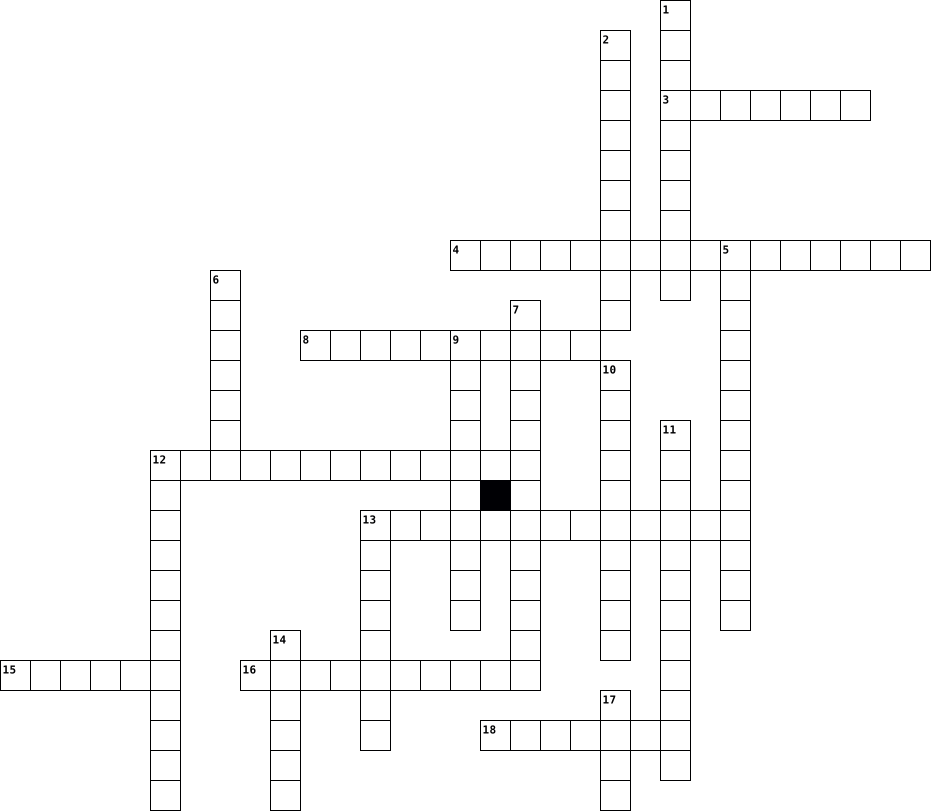
Across
- an opening in the Earth's crust through which lava, ash, and gases erupt.
- the gradual movement of the continents across the earth's surface through geological time.
- process in plate tectonics of the edge of one crustal plate descending below the edge of another.
- the layer of the Earth that lies below the lithosphere.
- The Earth's surface is cracked into large pieces called
- a supercontinent that incorporated almost all the landmasses on Earth.
- the sudden movement of Earth's crust at a fault line.
- tell us when and where plants and animals once existed and can be evidence for plate tectonics
Down
- tending to move toward one point or to approach each other
- a line on a rock surface or the ground that traces a geological fault.
- the first person to formulate a complete statement of the continental drift hypothesis.
- a small area or region with a relatively hot temperature in comparison to its surroundings.
- occurs along divergent plate boundaries, where new ocean floor is created as the Earth's tectonic plates spread apart.
- a way for heat to move
- the solid, outer part of Earth.
- process that changes preexisting rocks into new forms because of increases in temperature, pressure, and chemically active fluids.
- commonly the sights of tectonic activity
- a feature of convergent plate boundaries, where two or more tectonic plates meet.
- a hard, black volcanic rock
- break apart or become separated through faulting caused by plate tectonics.
20 Clues: a way for heat to move • a hard, black volcanic rock • the solid, outer part of Earth. • commonly the sights of tectonic activity • the sudden movement of Earth's crust at a fault line. • the layer of the Earth that lies below the lithosphere. • The Earth's surface is cracked into large pieces called • tending to move toward one point or to approach each other • ...
LANDFORMS AND LANDSCAPES 2016-11-23

Across
- An area in the mantle where heat rises as a thermal plum. High heat and lower pressure at the base of the tectonic plate cause melting of the rock – into magma. This magma rises through cracks and erupts to form volcanoes.
- Hot molten rock (mixed with gases and mineral crystals)
- A natural feature of the Earth’s surface.
- The interior region of the Earth between the core and the crust.
- Plate A type of lithospheric plate that forms the continents. Is thick and made of less-dense granite.
- Boundary Where two tectonic plates move away from each other causing magma to rise and c
- Compass directions on a map (N E S W)
- The visible features of an area of land, made up of landforms.
- The study of the physical features of the Earth’s surface and what caused them.
- Boundary Where two tectonic plates move towards each other and collide.
- Plates Also called tectonic plates.
- Boundary When two tectonic plates slide horizontally past each other.
- Zone The location where the sinking of a convergent boundary takes place.
Down
- Hazard Naturally occurring phenomena like tsunami’s, volcanoes and earthquakes.
- Arc A chain of oceanic islands volcanoes occurring at the overriding tectonic plate of a subduction zone. Bounded by a deep oceanic trench and formed by magma that rises from the melting of the descending plate.
- Refers to when one lithospheric plate sinks under another.
- Crust The top layer of the oceanic portion of a tectonic plate.
- The solid, outer part of Earth made up of the crust and upper mantle.
- The study and drawing of maps.
- Part of the Earth’s mantle lying beneath the lithosphere and made of denser semi-solid rock. Extends from about 100 km to 700 km below the surface.
- Any of the world’s main continuous expanses of land.
- Convention The symbols used on maps.
- Plate A large, irregularly shaped slab of lithosphere that moves like a raft over the Asthenosphere.
- The branch of science dealing with Earthquakes and land movement.
- An unusually large ocean wave.
25 Clues: The study and drawing of maps. • An unusually large ocean wave. • Plates Also called tectonic plates. • Convention The symbols used on maps. • Compass directions on a map (N E S W) • A natural feature of the Earth’s surface. • Any of the world’s main continuous expanses of land. • Hot molten rock (mixed with gases and mineral crystals) • ...
Energy In Earths Systems 2023-05-17

Across
- process where sediments, soil, and rocks are added to a landform
- the central part of the earth made of iron and nickel
- land formation created when two continental plates converge
- layer of the earth made of melted rock, can flow and move like putty
- a break in a body of rock along which one block slides relative to another
- type of plate made from crust that is usually very thick and less dense
- created when subduction occurs
- plate boundary where two plates are moving apart
- zone where blocks of crust are torn apart at a transform plate boundary
- large pieces of lithosphere that move around due to heat generated by convection currents
- plate boundary where two plates are colliding
- layer of the earth that is thick and made mostly of solid rock
- the type of valley created at a divergent boundary between two continental plates
- land formation with steep sides and explosive eruptions created as a result of a subduction zone
Down
- process of breaking down rocks and turning them into sediments, caused by long exposure to the atmosphere
- the processes that result in the structure and properties of the Earth's crust and its evolution through time
- mechanisms that build up existing land forms or create a new one
- the type of current created when the heat from the core causes rock in the mantle to circulate
- outermost layer of the earth, consisting of the crust and solid part of the mantle
- land form created at a divergent boundary between two oceanic plates
- a form of weathering, occurs when the movement of a force wears the surface of rocks and carries the worn away parts to other areas
- plate boundary where two plates slide past one another
- thin, solid, outermost layer of the earth
- mechanisms that destroy or break down land forms
- the process by which one plate moves beneath another plate
- type of plate made from crust that is usually thinner and more dense
26 Clues: created when subduction occurs • thin, solid, outermost layer of the earth • plate boundary where two plates are colliding • plate boundary where two plates are moving apart • mechanisms that destroy or break down land forms • the central part of the earth made of iron and nickel • plate boundary where two plates slide past one another • ...
Tectonic plates 2022-03-10

Across
- when two plates slide past each other.
- when two plates move away from each other.
- North America's plate.
- Africa's plate.
- Australia's plate.
- Pacific's plate.
Down
- South America's plate.
- Europe's plate.
- Antarctica's plate.
- when two plates collide
10 Clues: Europe's plate. • Africa's plate. • Pacific's plate. • Australia's plate. • Antarctica's plate. • South America's plate. • North America's plate. • when two plates collide • when two plates slide past each other. • when two plates move away from each other.
Earth Science Crossword 2017-06-16

Across
- Devices used to detect earthquakes
- Forms over thin, weak points in the Earth's crust
- The part of the Earth that the plates move on
- The largest kind of volcanos, are flatter than your average volcano, and one is the Hawaiian islands
- Driving force behind plate movement
- The layer that makes up the tectonic plates
- The build-up of pressure
- The man who theorized the tectonic plate theory
- Are used to study the interior of the Earth
- Force of oceanic plate falling into the mantle is called _____
Down
- Force behind the growth of the Atlantic Ocean.
- The hottest part of the Earth
- The last super continent to exist in Earth's history
- Areas where one plate pushes under another
- The most liquid part of Earth's interior
- The scale used to measure earthquakes
- The point direct above the focus of an Earthquake
- Places where magma rises to the surface
- The part of Earth with the largest volume
- Young mountians created by continental-continental plate convergence
- The depth of the _______ is a factor in earthquake damage
- Varies from 10 km to 70 km in thickness
22 Clues: The build-up of pressure • The hottest part of the Earth • Devices used to detect earthquakes • Driving force behind plate movement • The scale used to measure earthquakes • Places where magma rises to the surface • Varies from 10 km to 70 km in thickness • The most liquid part of Earth's interior • The part of Earth with the largest volume • ...
Plate Tectonics 2024-10-21

Across
- The thick, middle layer of Earth made of hot but solid rock
- What the core is mostly made of
- How scientists study Earth's interior through rock samples
- Where two plates move apart, and new seafloor is created
- Earth's magnetic field is generated by the core's movement
- What happens to pressure as you go deeper into Earth's interior
- A region where one plate sinks beneath another plate
- A piece of Earth's lithosphere that moves and shapes the surface
Down
- When two continental plates collide and form mountains
- What happens to temperature as you go deeper into Earth's interior
- What are the compositional layers of the Earth
- When an oceanic plate subducts under a continental plate
- The theory that explains how and why continents move
- How scientists study Earth's interior through seismic waves
- Heat-driven currents in the mantle causing plate movement
- Where two plates slide past each other without creating or destroying lithosphere
- The rigid outer layer made up of the crust and uppermost mantle
- What drives the movement of tectonic plates in the mantle
- Where two plates move towards each other and collide
- The process of creating new oceanic crust at a divergent boundary
- The layer beneath the lithosphere where rocks are plastic and flow slowly
21 Clues: What the core is mostly made of • What are the compositional layers of the Earth • The theory that explains how and why continents move • Where two plates move towards each other and collide • A region where one plate sinks beneath another plate • When two continental plates collide and form mountains • When an oceanic plate subducts under a continental plate • ...
Crazy Productions - Hard 2026-03-13

Across
- The year Crazy Pro started!
- The year Arty G joined Crazy Pro.
- The CD that came out in 2019
- Cow and Lily's favorite food!
- The third CD we made in 2020 has a (B) in the title
- The city Cow dances in most
- The business adviser
- Cow's bestie and bestie's girl friend!
- Cow's car has a (O) In the number plate
- The year Lily joined
- The cafe that's all over the UK
- Our 2006 coach has an (X) in the number plate!
- The name of our hotel
Down
- What price does Lily always charge?
- Arty G's car has a (7) in the number plate
- The year Bobby joined Crazy Pro.
- We have had this guest on our show more than once!
- We use Fuli has a...
- The initials of all the members, put together!
- They sang "Act Natually" Together.
- The first cover CD we made
- Cow's favorite song, by Moo Moovers.
- Miss Fix's number plate has a (C) In it
- What shop do we go to most?
- Our odlest coach in Kendal had a (Q) in the number plate!
25 Clues: We use Fuli has a... • The business adviser • The year Lily joined • The name of our hotel • The first cover CD we made • The year Crazy Pro started! • The city Cow dances in most • What shop do we go to most? • The CD that came out in 2019 • Cow and Lily's favorite food! • The cafe that's all over the UK • The year Bobby joined Crazy Pro. • The year Arty G joined Crazy Pro. • ...
chapter 6 nail diseases and disorders 2025-12-02

Across
- Granuloma, A red, raised lesion of inflamed tissue around the nail caused by severe irritation or injury.
- Nail, Thin, white, flexible nails that are more delicate than normal and can bend or break easily.
- The nail fully detaches from the matrix, usually due to a severe illness or major interruption in nail growth.
- Pterygium, A condition where skin adheres to the nail plate and grows forward, either from the eponychium or hyponychium.
- Psoriasis, A nail condition related to psoriasis that may cause thickening, pitting, roughness, or discoloration of the nail plate.
- Disorder, Any nail condition caused by injury, disease, or imbalance that alters the nail’s appearance or growth.
- Nail, Nails with vertical lines or grooves that run from the cuticle to the free edge, often related to aging or minor injury.
- Finger, Red, swollen, painful tissue around the nail or finger caused by bacterial or fungal invasion.
- Dark pigment bands or streaks within the nail plate, caused by melanin production.
- A fungal infection of the natural nail, causing thickening, discoloration, and brittleness.
- (Ingrown Nail), A condition where the nail grows into the surrounding skin, causing pain and possible infection.
- White spots or streaks on the nail plate—usually caused by minor injury to the matrix.
Down
- (Bitten Nails), Chewed or bitten nails and surrounding skin, often resulting in deformed or damaged nail plates.
- Hemorrhage, Thin, dark lines under the nail plate caused by injury to the nail bed’s small blood vessels.
- Inflammation and swelling of the tissue around the nail, usually caused by bacterial or fungal infection.
- Lines, Visible indentations that run across the nail plate, caused by temporary interruption of nail growth.
- Nail (Folded Nail), A nail with a deep or exaggerated fold where the nail plate meets the nail sidewall.
- Nail Bed, Dark purplish areas under the nail plate resulting from injury that causes bleeding beneath the nail.
- Aeruginosa, A type of bacteria that can cause greenish nail discoloration when it grows between the nail plate and an artificial product.
- The separation of the nail plate from its bed, usually starting at the free edge.
- Melanoma, A serious form of skin cancer that appears as dark streaks or discoloration under or around the nail plate.
- A small piece of torn skin next to the nail plate, usually caused by dryness or improper trimming.
- Nail (Trumpet Nail), A nail with excessively curved sidewalls that may pinch into the nail bed or skin.
- Pedis (Athlete’s Foot), A fungal infection of the feet that causes peeling skin, itchiness, and sometimes blistering—often found between the toes.
- Nails with split or brittle edges, often due to excessive dryness, injury, or chemical exposure.
- Nail, A nail that has changed color—yellow, blue, green, or other shades—often due to staining, infection, poor circulation, or artificial product issues.
- A general term for any disease or disorder of the nails.
- Inflammation of the nail matrix leading to pus formation, shedding of the nail, or stop in nail growth.
28 Clues: A general term for any disease or disorder of the nails. • The separation of the nail plate from its bed, usually starting at the free edge. • Dark pigment bands or streaks within the nail plate, caused by melanin production. • White spots or streaks on the nail plate—usually caused by minor injury to the matrix. • ...
Hazardous Environments 2017-04-28

Across
- A natural event or hazard causing damage and destruction to property, as well as personal injuries and death
- Describing a storm or weather system of very low pressure formed over tropical seas and involving strong winds and heavy rainfall (also knowns as a cyclone, hurricane or typhoon).
- A flow of wet material down the side of a volcano's ash cone which can become a serious hazard
- A violent shaking of the Earth's crust
- Describing zones which form when two continental plates collide. Neither plate is forced under the other, and so both are forced up and form fold mountains
- A rapid rise in sea level in which water is piled up against the coastline to a level far exceeding the normal. It tends to happen when there is very low atmospheric pressure and where seawater is pushed into a narrow channel
- Desribing a "plate" ie a rigid segment of the Earth's crust which can 'float' across the heavier, semi-molten rock below. Continental plates are less dense, but thicker than oceanic plates. Movement occurs
- The transport networks and the water, sewage and communication systems that are vital to people and their settlements and businesses
- The type of plate boundary that occurs when oceanic and continental plates move together. The oceanic plate is forced under the lighter continental plate. Friction causes melting of the oceanic plate and may trigger earthquakes. Also called a convergent margin.
- Describing the activity such as the eruption of molten rock, ash or gases from a volcano
Down
- An event (for example earthquake, flood, landslide, volcanic eruption) which threatens the well-being of people and their property
- Changes designed to react to and cope with a situation, such as the threat posed by a hazard
- A tidal wave caused by the shock waves originating from a submarine earthquake or volcanic eruption
- Forecasting future events or changes
- The pushing down of one tectonic plate against another at a collision plate margin. Pressure and heat convert the plate into magma.
- Aid or help in the form of food, medical care and temporary housing provided immediately after a natural disaster
- The type of plate boundary that occurs when plates move apart. Volcanoes are formed as magma wells up to fill the gap, and eventually new crust is formed. Also called a divergent margin.
- Describing the flow caused by a devastating eruption of extremely hot gas, ash and rocks during a period of explosive volcanic activity; th downslope flow to this mixture is capable of reaching speeds up to 200kph
- The point on the Earth's surface that is directly above the focus of an earthquake
- An opening in the Earth's crust out of which lava, ash and gases erupt
20 Clues: Forecasting future events or changes • A violent shaking of the Earth's crust • An opening in the Earth's crust out of which lava, ash and gases erupt • The point on the Earth's surface that is directly above the focus of an earthquake • Describing the activity such as the eruption of molten rock, ash or gases from a volcano • ...
Hazardous Environments 2017-04-28

Across
- A natural event or hazard causing damage and destruction to property, as well as personal injuries and death
- A violent shaking of the Earth's crust
- Describing the flow caused by a devastating eruption of extremely hot gas, ash and rocks during a period of explosive volcanic activity; th downslope flow to this mixture is capable of reaching speeds up to 200kph
- A rapid rise in sea level in which water is piled up against the coastline to a level far exceeding the normal. It tends to happen when there is very low atmospheric pressure and where seawater is pushed into a narrow channel
- The point on the Earth's surface that is directly above the focus of an earthquake
- The type of plate boundary that occurs when plates move apart. Volcanoes are formed as magma wells up to fill the gap, and eventually new crust is formed. Also called a divergent margin.
- A tidal wave caused by the shock waves originating from a submarine earthquake or volcanic eruption
- The pushing down of one tectonic plate against another at a collision plate margin. Pressure and heat convert the plate into magma.
- Aid or help in the form of food, medical care and temporary housing provided immediately after a natural disaster
- Describing zones which form when two continental plates collide. Neither plate is forced under the other, and so both are forced up and form fold mountains
- An opening in the Earth's crust out of which lava, ash and gases erupt
Down
- An event (for example earthquake, flood, landslide, volcanic eruption) which threatens the well-being of people and their property
- Desribing a "plate" ie a rigid segment of the Earth's crust which can 'float' across the heavier, semi-molten rock below. Continental plates are less dense, but thicker than oceanic plates. Movement occurs
- The transport networks and the water, sewage and communication systems that are vital to people and their settlements and businesses
- A flow of wet material down the side of a volcano's ash cone which can become a serious hazard
- The type of plate boundary that occurs when oceanic and continental plates move together. The oceanic plate is forced under the lighter continental plate. Friction causes melting of the oceanic plate and may trigger earthquakes. Also called a convergent margin.
- Changes designed to react to and cope with a situation, such as the threat posed by a hazard
- Forecasting future events or changes
- Describing a storm or weather system of very low pressure formed over tropical seas and involving strong winds and heavy rainfall (also knowns as a cyclone, hurricane or typhoon).
- Describing the activity such as the eruption of molten rock, ash or gases from a volcano
20 Clues: Forecasting future events or changes • A violent shaking of the Earth's crust • An opening in the Earth's crust out of which lava, ash and gases erupt • The point on the Earth's surface that is directly above the focus of an earthquake • Describing the activity such as the eruption of molten rock, ash or gases from a volcano • ...
Plate Tectonics 2023-04-25

Across
- all the continents were once part of a supercontinent.
- is when the denser plate sinks below the more buoyant plate in a process.
- tectonics states that earths surface is made of rigid slabs of rock, or plates, that move with respect to each other.
- plate boundaries form where two plates collide.
- polarity is a state in which magnetized objects would reverse direction and orient themselves to point south.
- polarity is a state in which magnetized objects will orient themselves to point north.
Down
- is the cold and rigid outermost rock layer.
- plate boundary forms when two plates separate.
- drift when continents are in constant motion on the surface of earth.
- spreading the process by which new oceanic crust forms along a mid-ocean ridge and older oceanic crust moves away from the ridge.
- is the circulation of material caused by differences in temperature and destiny.
- reversal occurs and the magnetic field reverses direction.
- ridges the mountain ranges in the middle of the oceans.
- push is when rising mantle material at mid-ocean ridges creates the potential for plates to move away from the ridge with a force.
- plate boundary forms where two plates slide past each other.
- pull is when a slab sinks, it pulls on the rest of the plate with a force
16 Clues: is the cold and rigid outermost rock layer. • plate boundary forms when two plates separate. • plate boundaries form where two plates collide. • all the continents were once part of a supercontinent. • ridges the mountain ranges in the middle of the oceans. • reversal occurs and the magnetic field reverses direction. • ...
Plate Tectonics 2023-04-25

Across
- all the continents were once part of a supercontinent.
- is when the denser plate sinks below the more buoyant plate in a process.
- tectonics states that earths surface is made of rigid slabs of rock, or plates, that move with respect to each other.
- plate boundaries form where two plates collide.
- polarity is a state in which magnetized objects would reverse direction and orient themselves to point south.
- polarity is a state in which magnetized objects will orient themselves to point north.
Down
- is the cold and rigid outermost rock layer.
- plate boundary forms when two plates separate.
- drift when continents are in constant motion on the surface of earth.
- spreading the process by which new oceanic crust forms along a mid-ocean ridge and older oceanic crust moves away from the ridge.
- is the circulation of material caused by differences in temperature and destiny.
- reversal occurs and the magnetic field reverses direction.
- ridges the mountain ranges in the middle of the oceans.
- push is when rising mantle material at mid-ocean ridges creates the potential for plates to move away from the ridge with a force.
- plate boundary forms where two plates slide past each other.
- pull is when a slab sinks, it pulls on the rest of the plate with a force
16 Clues: is the cold and rigid outermost rock layer. • plate boundary forms when two plates separate. • plate boundaries form where two plates collide. • all the continents were once part of a supercontinent. • ridges the mountain ranges in the middle of the oceans. • reversal occurs and the magnetic field reverses direction. • ...
Plate Tectonics 2025-02-04

Across
- The process that forms new ocean floor and oceanic crust. Magma oozes up from the mantle through a crack in the ocean floor, filling in the space between the plates and spreading out from the plate boundary.
- movement is felt as an earthquake.
- The type of crust lying under the oceans of the world. It is only 4 to 6 miles (7 to 10 km) thick and usually younger than continental crust.
- (35 to 70 km) thick and very old.
- The border between two tectonic plates
- A deep valley that forms at the edge of a continent when an oceanic plate sinks underneath a continental plate.
- occurs where two plates
- occurs where one plate slides under another as the two are pushed together.
- The place where a collision between two continental plates crunches and folds the rocks at the boundary, lifting them up and leading to mountain formation
- grind past each other in a horizontal direction
Down
- A raised area or mountain range under the oceans formed when magma fills the space between two tectonic plates that are spreading apart.
- occurs where two plates slide against each other. But rather than sliding smoothly, the plates build up tension, then release the tension with a spurt of movement.
- there is land at the edge of one of these plates,the ocean plate will subduct, or slide under that plate.
- Zone, The place where one plate is getting bent and pulled under the edge of another plate.
- A crack or fracture in
- zone
- layer of the earth's crust that lies under the seven continents. It is about 20 to 40
- crust where two tectonic
- apart, allowing magma, or molten rock, to rise from the Earth' s interior to fill in the gap. The two plates move away from each other like two conveyor belts moving in opposite directions.
- two tectonic plates are pulling apart.
- A
- The name given to the supercontinent that existed more than 225 million years ago, in which the present-day continents were joined together in one large landmass.
22 Clues: A • zone • A crack or fracture in • occurs where two plates • crust where two tectonic • (35 to 70 km) thick and very old. • movement is felt as an earthquake. • The border between two tectonic plates • two tectonic plates are pulling apart. • grind past each other in a horizontal direction • occurs where one plate slides under another as the two are pushed together. • ...
Plate Tectonics 2025-02-04

Across
- A deep valley that forms at the edge of a continent when an oceanic plate sinks underneath a continental plate.
- The name given to the supercontinent that existed more than 225 million years ago, in which the present-day continents were joined together in one large landmass.
- The border between two tectonic plates
- A raised area or mountain range under the oceans formed when magma fills the space between two tectonic plates that are spreading apart.
- zone
- occurs where two plates move apart, allowing magma, or molten rock, to rise from the Earth' s interior to fill in the gap. The two plates move away from each other like two conveyor belts moving in opposite directions.
- Zone, The place where one plate is getting bent and pulled under the edge of another plate.
- The type of crust lying under the oceans of the world. It is only 4 to 6 miles (7 to 10 km) thick and usually younger than continental crust.
- A
- crust where two tectonic
- movement is felt as an earthquake.
- A crack or fracture in
- The place where a collision between two continental plates crunches and folds the rocks at the boundary, lifting them up and leading to mountain formation
- occurs where one plate slides under another as the two are pushed together.
Down
- The process that forms new ocean floor and oceanic crust. Magma oozes up from the mantle through a crack in the ocean floor, filling in the space between the plates and spreading out from the plate boundary.
- grind past each other in a horizontal direction
- (35 to 70 km) thick and very old.
- two tectonic plates are pulling apart.
- layer of the earth's crust that lies under the seven continents. It is about 20 to 40
- there is land at the edge of one of these plates,the ocean plate will subduct, or slide under that plate.
- occurs where two plates slide against each other. But rather than sliding smoothly, the plates build up tension, then release the tension with a spurt of movement.
21 Clues: A • zone • A crack or fracture in • crust where two tectonic • (35 to 70 km) thick and very old. • movement is felt as an earthquake. • The border between two tectonic plates • two tectonic plates are pulling apart. • grind past each other in a horizontal direction • occurs where one plate slides under another as the two are pushed together. • ...