
the plant Crossword Puzzles
Topic 9 Plants 2023-03-21

Across
- region of cells capable of division and growth in the root and shoot tips in plants
- a plant hormone that directs growth
- growing plantlets in tissue culture and then planting it
- a plant which needs very little water
- a pathway between cells that uses cell walls
- a pathway between cells that uses plasmodesmata
- growth by a plant in response to gravity pulling on it
- a plant hormone that regulates the cell cycle
- chromoproteins that are sensitive to red and far-red light
- the transfer of pollen from an anther of a plant to the stigma of a plant
- the process of moving material away from where its made
Down
- a structure that set up concentration gradients within tissues 3 words
- the interaction between two or more species where each species has a net benefit
- an unstable form of a chemical element that releases radiation
- plant hormones that are associated with germination
- the straw like mouth of some invertebrates
- the growth of an organism in response to a light stimulus
- a ring of hydrophobic cell
- a supporting cell in the phloem
19 Clues: a ring of hydrophobic cell • a supporting cell in the phloem • a plant hormone that directs growth • a plant which needs very little water • the straw like mouth of some invertebrates • a pathway between cells that uses cell walls • a plant hormone that regulates the cell cycle • a pathway between cells that uses plasmodesmata • ...
Plants 2012-01-29

Across
- the scientific study of plants
- the substance in the cell walls of plants
- the dry fruit of a conifer
- the process when plants use sunlight to turn carbon dioxide into food
- a small flowerless green plant with no true roots
- plants used for food, medicine, flavoring, or perfume
- a plant that grows in an unwanted place and takes nutrients from cultivated plants
- the latin word for the Plant Kingdom
- the part of a plant that makes pollen
- Tree resin that has been fossilized
Down
- these help bring food and water from the soil to plants
- plants that trap and consume insects for nutrients
- a green pigment in plants that absorbs sunlight
- plants grow from this
- a plant that grows in dry areas and has a thick stem with spines
- chemicals used to help plants grow
- a simple nonflowering plant that includes seaweed
- the part of a plant supports and holds it toward sunlight
18 Clues: plants grow from this • the dry fruit of a conifer • the scientific study of plants • chemicals used to help plants grow • Tree resin that has been fossilized • the latin word for the Plant Kingdom • the part of a plant that makes pollen • the substance in the cell walls of plants • a green pigment in plants that absorbs sunlight • ...
7th Grade- Chapter 9: Plant Functions 2024-01-17

Across
- growing toward the pull of gravity
- a plant that blooms whenever the conditions are right regardless of the length of night
- pollen-producing structure on top of filament
- the entire female part of the flower
- anything that causes a response from a plant
- growing toward light
- often colorful structure that helps attract insects and birds
- structure that contains 1 or more ovules at the base of style
- growing toward an object the plant touches
- the repeating cycle of gametophyte and sporophyte structures in plants
Down
- a small chemical made by some plant tissues that affects how other plant structures grow
- the leaflike structure around the petals that protects the developing flower
- a plant that does not bloom until the nights are longer than the critical night length
- a plant that does not bloom until the nights are shorter than the critical night length
- a plant’s growth toward or away from a stimulus
- the entire male part of the flower
- the sticky top father carpel that receives pollen
- structure that allows gametes to travel down through the style to the ovary
18 Clues: growing toward light • growing toward the pull of gravity • the entire male part of the flower • the entire female part of the flower • growing toward an object the plant touches • anything that causes a response from a plant • pollen-producing structure on top of filament • a plant’s growth toward or away from a stimulus • ...
Vine Structure Vocabulary 2017-01-18

Across
- trim (a tree, shrub, or bush) by cutting away dead or overgrown branches or stems, especially to increase fruitfulness and growth.
- one of many raised pores in the stem of a woody plant
- the sweet and fleshy product of a tree or other plant that contains seed and can be eaten as food.
- shoots that have reached about a year in age
- a plant onto which another variety is grafted.
- the upper section of a vine's trunk
- the male fertilizing organ of a flower, typically consisting of a pollen-containing anther and a filament.
- the stalk bearing a flower or fruit, or the main stalk of an inflorescence.
- a small stalk bearing an individual flower in an inflorescence.
- a young branch or sucker springing from the main stock of a plant
- short branches from which canes and/or stems originate
- a young shoot or twig of a plant, especially one cut for grafting or rooting.
- tough,protective outer sheath of a trunk, branch, and/or twigs
Down
- a framework of light wooden or metal bars, chiefly used as a support for fruit trees or climbing plants.
- a flattened structure of a higher plant
- a part of a plant stem between two of the nodes
- the part of a plant stem from which one or more leaves emerge, often forming a slight swelling or knob.
- a stem of a plant, especially a grass, bearing flower stalks at short intervals.
- a flower
- the basal region of the trunk
- the stalk that joins a leaf to a stem; leafstalk.
- a cap-shaped structure at the tip of roots
- a compact knoblike growth on a plant that develops into a leaf, flower, or shoot.
- alive but not actively growing
- semi-permanent branches of the trunk
- a slender tubular projection from the base of an organ of a flower
26 Clues: a flower • the basal region of the trunk • alive but not actively growing • the upper section of a vine's trunk • semi-permanent branches of the trunk • a flattened structure of a higher plant • a cap-shaped structure at the tip of roots • shoots that have reached about a year in age • a plant onto which another variety is grafted. • ...
What is Plant? 2024-03-18

Across
- The location of the green pigment in plants
- a nonflowering seed plant
- the living parts of the environment
- a plant that has specialized tissues that conduct materials from one part to another
- includes liverworts, hornworts, mosses.
- Almost all food is made from...
- the type of tissue in plants that conducts water
- Plant cells have a cell ___ that surrounds the cell membrane
- the nonliving parts of the environment
Down
- A waxy layer that coats most of the surfaces of plants to prevent drying out
- the structure of a plant that supplies a plant with water and dissolve minerals
- the type of tissue that conducts food in a vascular plant
- organisms can be impacted by environmental and ___ factors.
- a flower seed plant
- A green pigment in plants
- Plants need, sunlight, carbon dioxide, and ___ to make food during photosynthesis.
- The process plants use to make energy
17 Clues: a flower seed plant • a nonflowering seed plant • A green pigment in plants • Almost all food is made from... • the living parts of the environment • The process plants use to make energy • the nonliving parts of the environment • includes liverworts, hornworts, mosses. • The location of the green pigment in plants • the type of tissue in plants that conducts water • ...
Plant Structures and Taxonomy 2022-01-20

Across
- — a terminal bud on a plant that produces flowers.
- the outermost part of a root that protects the tender tip of a growing root as it enters the soil.
- — a plant whose stem does not turn woody; it is more or less soft and succulent, not winter hardy
- — short underground stems surrounded by many overlapping, fleshy leaves.
- — two or more leaves arising from a common point on the stem.
- — large main root of the system; usually has few or no branch roots.
- — a terminal plant bud that produces stem and leaf growth.
- — bud at the end of a twig or branch.
- — small microscopic roots that arise from the cells located on the surface of a plant root.
- — the slender leaf stock that supports the blade, attaching it to the stem of the plant
- — short, flattened underground stems surrounded by scaly leaves.
Down
- — a single leaf arising from a plant stem.
- — a process a plant leaf is capable of adjusting its angle of the sun
- — edges of the leaf.
- — area between two nodes.
- — one of the two major root systems, consisting of many fine hairlike
- — the wide portion of a leaf in which photosynthesis occurs.
- — root other than the primary root or a branch of a primary root.
- — specialized food-storage stem that grows underground.
- — the upper angle between the leaf or flower stem and the stalk of a plant.
- — vessels of the vascular bundle that carry the water and nutrients from roots to the leaves
21 Clues: — edges of the leaf. • — area between two nodes. • — bud at the end of a twig or branch. • — a single leaf arising from a plant stem. • — a terminal bud on a plant that produces flowers. • — specialized food-storage stem that grows underground. • — a terminal plant bud that produces stem and leaf growth. • — the wide portion of a leaf in which photosynthesis occurs. • ...
Plantae Crossword 2022-02-25

Across
- plant that produces flowers
- when hydrogen combines with CO2
- where photosynthesis occurs
- when seedless plants make sperm and egg
- plant growth with gravity as stimulus
- makes the most ATP
- when water is split into gasses
- breaking down glucose to pyruvate to make ATP
Down
- transport of male gametes in a seeded plant
- plant growth with light as stimulus
- plants that are able to transfer nutrients
- external changes in environment
- going from high concentration to low
- location of cellular respiration
- the part in respiration that requires oxygen
- do not absorb water and nutrients
- an adult seedless plant
- how CO2 enters the plant
18 Clues: makes the most ATP • an adult seedless plant • how CO2 enters the plant • plant that produces flowers • where photosynthesis occurs • when hydrogen combines with CO2 • external changes in environment • when water is split into gasses • location of cellular respiration • do not absorb water and nutrients • plant growth with light as stimulus • going from high concentration to low • ...
Unit 9 Plants Review Puzzle 2024-03-26

Across
- when plants "climb" up walls, buildings or other plants
- "food" produced by plants thru photosynthesis
- plant growth towards or away from stimulus
- reproduction where one parent plant generates new plants
- period of no growth
- type of plant like a carrot
- green structures in plant cells that capture light energy
- female plant parts
- byproduct of photosynthesis that humans get from plants
- plant that makes flowers and fruit
- type of plant that only lasts one season
- any change in an organism's environment
- plants grow towards/away from gravity
Down
- release of water vapor and oxygen thru stomata in leaves
- plants turn/grow towards the Sun
- plant that makes seeds that are not part of fruit
- type of stem that is green and flexible like dandelions
- where conifers keep their naked seeds
- plants that have special tissues to move water thru the plant
- plants that do not have special tissues to move water
- microscopic holes in leaves to let out oxygen and CO2 in
- plants that grow and develop for many growing seasons like trees
- male plant parts
- not roots but do help to anchor some plants to a surface
- process of moving pollen to female plant parts
25 Clues: male plant parts • female plant parts • period of no growth • type of plant like a carrot • plants turn/grow towards the Sun • plant that makes flowers and fruit • where conifers keep their naked seeds • plants grow towards/away from gravity • any change in an organism's environment • type of plant that only lasts one season • plant growth towards or away from stimulus • ...
NZ vocabulary 2025-02-28

Across
- A long, flowing body of water.
- A large body of water surrounded by land.
- A green plant with long, feathery leaves.
- A tree with red flowers that blooms at Christmas.
- The green part of a plant or tree.
- A plant with many small branches and leaves.
- Water that falls from a high place.
- A very high hill.
- A big hole or space inside a rock or mountain.
- A large area with many trees.
Down
- fern A plant with silver-colored leaves, an important symbol of New Zealand.
- A piece of land with water all around it.
- A place with sand and water, usually by the sea.
- A mountain that can erupt with lava.
- A strong plant used to make baskets and ropes.
- A low area between mountains or hills.
- A very large and old tree found in New Zealand. (Some kauri trees are over 1,000 years old.)
- A tall plant with a trunk, branches, and leaves.
- A plant that has petals and smells nice.
- A short green plant that covers the ground.
20 Clues: A very high hill. • A large area with many trees. • A long, flowing body of water. • The green part of a plant or tree. • Water that falls from a high place. • A mountain that can erupt with lava. • A low area between mountains or hills. • A plant that has petals and smells nice. • A piece of land with water all around it. • A large body of water surrounded by land. • ...
crossword 2024-01-05

Across
- green pigment found in certain plant cells that traps the sun's energy during the process of photosynthesis
- microscopic holes through which plants "breathe" or exchange gasses - mostly located on the underside of the leaf
- organ of the plant responsible for taking in water and nutrients from the soil
- by-product of photosynthesis
- dioxide gas that enters the stomata of the leaf
- ultimate source of energy for photosynthesis
- plant tissue that moves sugar down a plant from leaves to stem to root
- middle layer of the leaf where photosynthesis occurs - cells contain chloroplasts
- cell part, or organelle, responsible for the process of photosynthesis
- raw materials, or reactants, needed for photosynthesis
- organism that has to "consume" or eat other organisms for energy
Down
- photosynthetic organism that "produces" it's own food - means the same as autotroph
- plant tissue that moves water up a plant from roots to stems to leaves
- process by which plants and plantlike organism use the sun's energy to produce sugar
- areas of the plants where sugar is stored as simple sugars or starch
- C6H12O6
- products of photosynthesis
- photosyntheticphytoplankton photosynthetic organisms in aquatic environments
- main organ of photosynthesis in a plant
- gas that exits the stomata of the leaf
- pair of crescent shaped cells that open and close the stomata
21 Clues: C6H12O6 • products of photosynthesis • by-product of photosynthesis • gas that exits the stomata of the leaf • main organ of photosynthesis in a plant • ultimate source of energy for photosynthesis • dioxide gas that enters the stomata of the leaf • raw materials, or reactants, needed for photosynthesis • pair of crescent shaped cells that open and close the stomata • ...
The World of Plants Unit 2 Vocabulary Review 2021-01-30

Across
- organs that produce fruits and seeds for reproduction
- dead, hardened epidermis cells in wooden stems
- taller grass eaten by grazing animals
- plant that reproduces with seeds in cones
- grains such as wheat and oats
- organs that manufacture food for the plant
- trees that lose their leaves in winter
- very tall grass used for landscaping
- plant that reproduces with cones and seeds
- location on a seed where it was attached to the ovary of the plant
- 'baby' plant inside a seed
- protective covering on outside of seed
- additional nutrients absorbed by cotyledon during germination of monocots
Down
- short grass used for lawns
- seeds with two cotyledons
- plants with bendable stems
- part of the embryo which develops into the roods
- food stored in seed to supply nourishment to the plant
- plant that reproduces with flowers, fruit, and seeds
- a condition in which the seed is inactive or 'asleep'
- trees that do not lose their leaves in winter
- organs that hold up plants and provide their basic shape
- when seeds begin to grow
- plants with stiff woody stems
- part of embryo which develops into the stem and leaves
- movement of seed away from parent plant
- seed with one cotyledon
- organs that anchor the plants and absorb water and nutrients
28 Clues: seed with one cotyledon • when seeds begin to grow • seeds with two cotyledons • short grass used for lawns • plants with bendable stems • 'baby' plant inside a seed • grains such as wheat and oats • plants with stiff woody stems • very tall grass used for landscaping • taller grass eaten by grazing animals • trees that lose their leaves in winter • ...
Chapter 5: Exploring the Plant World 2022-11-23

Across
- structure that holds and protect seeds
- part of the plant that makes food
- food-making process of green plants
- what is the name for the tree branches and the leaves
- what do you called a pine tree leaves
- what is the act of moving pollen from flower to flower
- what is the energy that helps plant make food
- what is the lighter rings of wood that carry sap
- what types of trees that change color in autumn.
- protective "skin" of a tree trunk
Down
- green material in plants
- the part of the plant that makes the seeds is the
- All flowering plants have
- what are tiny insects and worms that help to break dead things down
- all living things depend on
- plant-like bacteria organisms which contain no chlorophyll are
- yellow powdery dust formed by flowers
- the part of a plant which carries water and minerals upward and food downward
- the circles in a tree trunk that show a year's growth of new wood
- a gas given off by people and animals that plant needs
- when a seed is resting we say it is
- ferns and mosses are green plants which begins as.
- What did God designed for plant life to make more of its kind.
23 Clues: green material in plants • All flowering plants have • all living things depend on • part of the plant that makes food • protective "skin" of a tree trunk • food-making process of green plants • when a seed is resting we say it is • yellow powdery dust formed by flowers • what do you called a pine tree leaves • structure that holds and protect seeds • ...
NZ vocabulary 2025-02-27

Across
- Water that falls from a high place.
- A large area with many trees.
- A mountain that can erupt with lava.
- A piece of land with water all around it.
- A green plant with long, feathery leaves.
- A plant with many small branches and leaves.
- A large body of water surrounded by land.
- A very large and old tree found in New Zealand. (Some kauri trees are over 1,000 years old.)
- A plant with silver-colored leaves, an important symbol of New Zealand.
Down
- A big hole or space inside a rock or mountain.
- A short green plant that covers the ground.
- A low area between mountains or hills.
- The green part of a plant or tree.
- A very high hill.
- A tree with red flowers that blooms at Christmas.
- A tall plant with a trunk, branches, and leaves.
- A place with sand and water, usually by the sea.
- A strong plant used to make baskets and ropes.
- A long, flowing body of water.
- A plant that has petals and smells nice.
20 Clues: A very high hill. • A large area with many trees. • A long, flowing body of water. • The green part of a plant or tree. • Water that falls from a high place. • A mountain that can erupt with lava. • A low area between mountains or hills. • A plant that has petals and smells nice. • A piece of land with water all around it. • A green plant with long, feathery leaves. • ...
Lifoam Trivia 2015-10-27

Across
- What was the name of the Wooden Blocks?
- Where was the “Fridge” originally manufactured?
- Name of company the purchased the toy division from Life-Like?
- What is the main component of Lifoam’s foam products?
- What was the name of our company prior to Lifoam?
- On what street was the original Lifoam operation located, in Maryland?
- Name a plant which had previously been Tech Pak?
- What company did Lifoam acquire in 2009?
- Where was the Life Like plant that closed in Illinois located?
- What city in Arkansas did Life-Like have an EPS plant?
- What was the name of the children’s books sold by Life-Like?
- What was the last name of the original founders of Life-Like?
- Which Lifoam plant was formally known as Mold Tech?
Down
- What was the name of the Easter Egg Kits Life-Like sold?
- What plant was purchased in 1989?
- What product was acquired by Life-Like in 2004?
- What product was acquired by Life-Like in 1997?
- Did Lifoam acquire or develop the ProPak line?
- PUR stands for?
- First EPS product manufactured by Life-Like?
- What is the name of the presses used to produce our EPS products?
- Where was the Life Like plant the closed in Florida located?
- The toy race car division was called?
- Noodles What Lifoam product started out as pipe insulation?
- What California city did Life-Like have a plant Prior to Vernon?
- In 2005, Lifoam sold what division of their operation?
- In what county is the Maryland plant located?
- What plant was bought in 1993?
28 Clues: PUR stands for? • What plant was bought in 1993? • What plant was purchased in 1989? • The toy race car division was called? • What was the name of the Wooden Blocks? • What company did Lifoam acquire in 2009? • First EPS product manufactured by Life-Like? • In what county is the Maryland plant located? • Did Lifoam acquire or develop the ProPak line? • ...
Horticulture Crossword 2022-07-08

Across
- a plant that has seeds unprotected by an ovary or fruit. Include the conifers, cycads, and ginkgo.
- the development of a plant from a seed or spore after a period of dormancy
- the embryonic leaf in seed-bearing plants, one or more of which are the first leaves to appear from a germinating seed
- plants that can live for two or more growing seasons
- a plant that has flowers and produces seeds enclosed within a carpel. Includes herbaceous plants, shrubs, grasses, and most trees.
- a group of flowering plants belonging to the angiosperms family, characterized by having two photosynthetic cotyledons in the seed that may emerge from the ground when the seed germinate
- the vascular tissue in plants that conducts water and dissolved nutrients upward from the root and also helps to form the woody element in the stem
- flattened structure of a higher plant, typically green and blade-like, that is attached to a stem directly or via a stalk. Are the main organs of photosynthesis and transpiration.
- plants that grow for one long season, often into the fall, then die with the onset of freezing weather
- the sweet and fleshy product of a tree or other plant that contains seed and can be eaten as food
- the part of a plant which attaches it to the ground or to a support, typically underground, conveying water and nourishment to the rest of the plant via numerous branches and fibers
Down
- the seed-bearing part of a plant, consisting of reproductive organs (stamens and carpels) that are typically surrounded by a brightly colored corolla (petals) and a green calyx (sepals)
- the exhalation of water vapor through the stomata
- An herbaceous plant having an embryo with a single cotyledon, usually parallel-veined leaves, and floral organs arranged in multiples of three
- when plants prepare their soft tissues for freezing temperatures, dry weather, or water and nutrient shortage.
- the vascular tissue in plants that conducts sugars and other metabolic products downward from the leaves.
- any of the minute pores in the epidermis of the leaf or stem of a plant, forming a slit of variable width which allows movement of gases in and out of the intercellular spaces.
- a process of sexual reproduction, which occurs after pollination and germination
- the transfer of pollen to a stigma, ovule, flower, or plant to allow fertilization
- the main body or stalk of a plant or shrub, typically rising above ground but occasionally subterranean.
20 Clues: the exhalation of water vapor through the stomata • plants that can live for two or more growing seasons • the development of a plant from a seed or spore after a period of dormancy • a process of sexual reproduction, which occurs after pollination and germination • the transfer of pollen to a stigma, ovule, flower, or plant to allow fertilization • ...
Plant Life 2023-08-27

Across
- How plants photosynthesize
- Transports water to the rest of the plant
- Structures that are inside of the plant
- tiny openings on the leaves that breathe in carbon dioxide
- Protect plant seeds
- Hard outer covering that protects the woody stem of a plant
- moves food from the leaves to other parts of the plant
- tiny internal structures in the leaves where photosynthesis happens
Down
- Structures that are outside of the plant
- Attract insects to pollinate
- Thin stem that only lives for one season
- moves water and nutrients from the roots to the leaves
- Thin branching roots that grow from the stem
- Things in nature that help plants and animals grow
- A long thick root that grows straight down
- Absorbs nutrients and helps anchor the plant in the soil
16 Clues: Protect plant seeds • How plants photosynthesize • Attract insects to pollinate • Structures that are inside of the plant • Structures that are outside of the plant • Thin stem that only lives for one season • Transports water to the rest of the plant • A long thick root that grows straight down • Thin branching roots that grow from the stem • ...
Chapter 1.1-1.4 Science Review 2014-11-17

Across
- plant that attracts insects with its bright colors and honey-like nectar
- the most important family in food producing plants
- the parts of a seed are the cotyledon, seed coat and ?
- enables the delicate root tip to push its way through hard ground
- one main root sent particularly deep
- a chemical process that produces food for the plant
- the pigment or coloring that makes a plant green
- insects are attracted to this plant by glistening bait
- petals grow in multiples of three in this family
Down
- after pollination this occurs to produce fruit
- many layers of leaves that remain below ground surrounding the stem
- anything that forms from the ovary of a flower
- unusual plants that never touch the ground
- members of this family include blackberries, raspberries and strawberries
- rose, lily, pea, grass and ? are flowering plant families
- the two plant systems are the shoot system and ??
- colorful leaves that look like petals
- a plant's response to gravity
- an undeveloped seed
- a plant's response to water
- protective stems much like leaf spikes
- two parts of the grass plant are the blade and ?
- encloses and protects a developing flower
- water air and ? are needed for photosynthesis
- a sweet liquid stored in the bottom of a flower
25 Clues: an undeveloped seed • a plant's response to water • a plant's response to gravity • one main root sent particularly deep • colorful leaves that look like petals • protective stems much like leaf spikes • encloses and protects a developing flower • unusual plants that never touch the ground • water air and ? are needed for photosynthesis • ...
Biology Science Crossword Puzzle 2024-01-02

Across
- photosynthetic organism that "produces" it's own food - means the same as autotroph
- organism that has to "consume" or eat other organisms for energy
- C6H12O6
- ultimate source of energy for photosynthesis
- process by which plants and plantlike organisms use the sun's energy to produce sugar
- plant tissue that moves water up a plant from roots to stems to leaves
- gas that enters the stomata of the leaf
- main organ of photosynthesis in a plant
- cell part, or organelle, responsible for the process of photosynthesis
- middle layer of the leaf where photosynthesis occurs - cells contain chloroplasts
Down
- raw materials, or reactants, needed for photosynthesis
- photosynthetic organisms in aquatic environments
- pair of crescent shaped cells that open and close the stomata
- areas of the plants where sugar is stored as simple sugars or starch
- by-product of photosynthesis
- products of photosynthesis
- microscopic holes through which plants "breathe" or exchange gasses - mostly located on the underside of the leaf
- plant tissue that moves sugar down a plant from leaves to stem to root
- green pigment found in certain plant cells that traps the sun's energy during the process of photosynthesis
- gas that exits the stomata of the leaf
- organ of the plant responsible for taking in water and nutrients from the soil
21 Clues: C6H12O6 • products of photosynthesis • by-product of photosynthesis • gas that exits the stomata of the leaf • gas that enters the stomata of the leaf • main organ of photosynthesis in a plant • ultimate source of energy for photosynthesis • photosynthetic organisms in aquatic environments • raw materials, or reactants, needed for photosynthesis • ...
I lime the songing monstre 2022-12-19

Across
- Plant-Water-Earth
- Plant-Air
- Earth
- Plant-Air-Water
- Plant-Cold-Water-Earth
- Cold-Air
- Plant-Air-Water-Earth
- Cold
- Cold-Air-Water-Earth
- Water
- Cold-Earth
- Air-Water-Earth
- Cold-Water
- Air-Water
Down
- Plant-Air-Earth
- Plant-Cold-Air-Water
- Air-Earth
- Cold-Air-Water
- Water-Earth
- Plant-Cold-Air-Earth
- Plant-Earth
- Air
- Cold-Air-Earth
- Plant-Water
- Plant
- Plant-Cold-Water
- Cold-Water-Earth
- Plant-Cold-Air-Water-Earth
- Plant-Cold-Air
- Plant-Cold
- Plant-Cold-Earth
31 Clues: Air • Cold • Earth • Plant • Water • Cold-Air • Plant-Air • Air-Earth • Air-Water • Plant-Cold • Cold-Earth • Cold-Water • Water-Earth • Plant-Earth • Plant-Water • Cold-Air-Water • Cold-Air-Earth • Plant-Cold-Air • Plant-Air-Earth • Plant-Air-Water • Air-Water-Earth • Plant-Cold-Water • Cold-Water-Earth • Plant-Cold-Earth • Plant-Water-Earth • Plant-Cold-Air-Water • Plant-Cold-Air-Earth • Cold-Air-Water-Earth • ...
plant propogation 2025-10-29

Across
- – The lower part of a grafted plant that provides the root system.
- – The process of creating new plants from existing ones.
- – The upper part of a grafted plant that grows into the shoot or top of the new plant.
- – Joining parts from two plants so they grow as one.
- – A method where a branch is bent to the ground and covered with soil to form roots while still attached to the parent plant.
- – Splitting a mature plant into smaller parts, each with roots, to grow new plants.
- – The point on a stem where leaves, branches, or buds grow.
- – A piece of a plant (stem, leaf, or root) used to grow a new plant.
- Propagation – Growing new plants from seeds produced by fertilization.
Down
- – The process by which a seed begins to grow and develop into a new plant.
- – The transfer of pollen from the male part of a flower to the female part, leading to seed production.
- – A type of grafting where a bud from one plant is inserted into another plant.
- Propagation – Growing new plants from parts of existing plants without using seeds.
- Culture – Growing new plants in a laboratory from tiny pieces of plant tissue under sterile conditions.
- – A plant structure that contains the embryo and can grow into a new plant.
15 Clues: – Joining parts from two plants so they grow as one. • – The process of creating new plants from existing ones. • – The point on a stem where leaves, branches, or buds grow. • – The lower part of a grafted plant that provides the root system. • – A piece of a plant (stem, leaf, or root) used to grow a new plant. • ...
Botanical Vocabulary 2026-03-19

Across
- sticky part of a flower that catches pollen.
- green pigment in leaves.
- An undeveloped or embryonic shoot or flower.
- a flower cluster with blooms attached directly to a central stem.
- a supporting stem of a leaf or flower.
- plant that grows in the desert.
- a plant valued for flavor, fragrance, or medicinal use.
- movement of water through a plant.
- the plant embryo that can grow into a new plant.
- the flat, green part where photosynthesis happens.
Down
- a cup‑shaped spring flower that grows from a bulb.
- part of a flower that makes pollen.
- underground plant part.
- flower part that becomes the seed.
- a water flower that floats on ponds; symbol of purity.
- The process by which plants use sunlight to make food from carbon dioxide and water.
- fruit that grows on a tree of the latin name Prunus Serotina.
- a sweet thing that plants and trees produce.(GENERAL)
- female reproductive organs of flowers, placed in their center.
- the fine powder that fertilizes flowers.
20 Clues: underground plant part. • green pigment in leaves. • plant that grows in the desert. • flower part that becomes the seed. • movement of water through a plant. • part of a flower that makes pollen. • a supporting stem of a leaf or flower. • the fine powder that fertilizes flowers. • sticky part of a flower that catches pollen. • An undeveloped or embryonic shoot or flower. • ...
In the Garden 2026-05-01

Across
- Nip, Mint & Tails
- When roots are squeezed in a pot that’s too small
- Narcissus Flowers
- Thriller, Filler and ...
- Soil by another name
- Most of photosynthesis occurs in this part of the plant
- Plant lice
- A watering tool
- Agent used to dissolve rusty residue on tools
- What our mission is built on!
- The part of a plant that absorbs water
- Prune
- A tool used to cut branches up to ¼ of an inch thick
Down
- A plant that stores water in its leaves
- Gives plants their green color
- The part of a plant pot that helps to avoid root rot
- Used to get rid of rusty spots on tools
- The cold period some seed/bulbs need to germinate
- The scientific study of plants
- Considered a common weed but, edible and highly nutritious
- An attachment for a water hose
- Sweet liquid used to attract pollinators
- A piece of protection equipment
- Plant them in the Fall to see flowers in the Spring
24 Clues: Prune • Plant lice • A watering tool • Nip, Mint & Tails • Narcissus Flowers • Soil by another name • Thriller, Filler and ... • What our mission is built on! • Gives plants their green color • The scientific study of plants • An attachment for a water hose • A piece of protection equipment • The part of a plant that absorbs water • A plant that stores water in its leaves • ...
20 Plant Classifications 2024-11-22

Across
- Any of a group of vascular plants that have roots, stems, and leaves, reproduce by spores instead of by flowers and seeds
- adult Plant/ A plant that has reached full growth and maturity
- Plants that produce flowers and bear their seeds in fruits.
- / Any non-vascular plant in the Bryophyta group in the kingdom Plantae
- Short for dicotyledon.
- Seed/ A flowering plant's unit of reproduction and has all the materials needed to develop into another plant.
- Any plant that persists for several years, usually with new herbaceous growth from a part that survives from growing season to growing season.
- Short for monocotyledon.
Down
- A small flowerless green plant of the division Bryophyta, which comprises the mosses and liverworts.
- Plants/ Plants that bear flowers and fruits
- seedling/ A young plant grown from seed.
- A plant that has seeds unprotected by an ovary or fruit. Gymnosperms include the conifers, cycads, and ginkgo.
- Any of a group of plants or plantlike organisms (such as algae and fungi) that lack differentiated stems, leaves, and roots
- A plant that produces wood as its structural tissue and thus has a hard stem
- Plants/ A plant that is characterized by the presence of conducting tissue.
- of seed/ The process by which a plant grows from a seed into a seedling.
- The act of transferring pollen grains from the male anther of a flower to the female stigma
- Any herbaceous flowering plant that completes its life cycle in two growing seasons
- / Plants that do not have flowers.
- Any plant that completes its life cycle in a single growing season.
20 Clues: Short for dicotyledon. • Short for monocotyledon. • / Plants that do not have flowers. • Plants/ Plants that bear flowers and fruits • seedling/ A young plant grown from seed. • Plants that produce flowers and bear their seeds in fruits. • Any plant that completes its life cycle in a single growing season. • ...
Super Five 2025-07-09

Across
- – The part of a plant that grows underground
- – It shines in the sky and gives us light
- – A round object we can throw or bounce
- – We plant this to grow a new plant
- – A big plant with a trunk
- – A tiny insect that lives in the soil
- – The opposite of hot
- – Water that falls from the clouds
- – A green part of the plant
- – When something is split into two equal parts
Down
- – One more than nine
- – A figure like a circle or square
- – The opposite of cold
- – A number that means nothing
- – A shiny object in the night sky
- – To join two numbers
- – The opposite of small
- – A straight mark that goes on and on
- – An animal that lives in water
- – A white liquid we drink, comes from cows
20 Clues: – One more than nine • – To join two numbers • – The opposite of hot • – The opposite of cold • – The opposite of small • – A big plant with a trunk • – A green part of the plant • – A number that means nothing • – An animal that lives in water • – A shiny object in the night sky • – A figure like a circle or square • – Water that falls from the clouds • ...
Plant Review 2016-02-04

Across
- organism organisms that are made of one single cell
- bees ________________ flowers by spreading the pollen to the pistil
- system organs working together to carry out life process
- length of time it takes for an organism to complete its life cycle
- found in plant cells and photosynthesis happens here
- this small unit of an animal does not include chloroplasts
- when a new plant starts growing from a seed it is called ____________
- tiny openings in leaves that allow for carbon dioxide or gas to pass thru
Down
- pollen collects on the top of a _____________ from insects and birds
- stages in a plant or animal's life
- develop more living things
- this is the smallest part of plant
- part of plant that produces pollen
- ______ needs carbon dioxide, water, light
- ____________ is a green material that can trap energy from sunlight
- plant or animal in earliest stage of development
- organism in ________ there are many different kinds of cells
- a ___________ is a group of similar cells that work together
18 Clues: develop more living things • stages in a plant or animal's life • this is the smallest part of plant • part of plant that produces pollen • ______ needs carbon dioxide, water, light • plant or animal in earliest stage of development • organism organisms that are made of one single cell • found in plant cells and photosynthesis happens here • ...
Plant Basics 2016-11-18

Across
- Green pigment in chloroplasts.
- The reactants for photosynthesis
- The products for photosynthesis
- How plants get water up.
- It takes this many water molecules to make one molecule of glucose.
- Protective layer around plant cells.
- Fertilized female cells from plants.
- Plant cell walls are made of this.
Down
- The control center of the cell.
- The process using light to make sugar.
- The majority of the mass of a tree comes originally from this substance.
- Large area holding water or sugar.
- Plants are differentiated so they are this.
- These structures help plants get water and hold them in place.
- Organelle that does photosynthesis.
- It takes this many carbon dioxide molecules to make one molecule of glucose.
- These substances are found in the vacuole.
- The products for photosynthesis
- The products for photosynthesis
- Male cells from plants.
20 Clues: Male cells from plants. • How plants get water up. • Green pigment in chloroplasts. • The control center of the cell. • The products for photosynthesis • The products for photosynthesis • The products for photosynthesis • The reactants for photosynthesis • Large area holding water or sugar. • Plant cell walls are made of this. • Organelle that does photosynthesis. • ...
Plant Repoduction 2015-04-28

Across
- The pollen grows down towards the ovary
- Attracts insects with its colour
- The female reproductive parts
- Where the pollen has grown to the ovary
- Where the
- The seed coating
- The embryo
- Ways that a plant can send off seeds
- When a seed begins to grow
Down
- What is produced after fertilisation
- Where fertilisation occurs
- Protects the flower when its growing as a bud
- Holds up the anther
- The seed leaf
- Can give energy for a seed to grow
- The Male reproductive parts
- Where the pollen reaches the stigmas
- Where pollen is stored
18 Clues: Where the • The embryo • The seed leaf • The seed coating • Holds up the anther • Where pollen is stored • Where fertilisation occurs • When a seed begins to grow • The Male reproductive parts • The female reproductive parts • Attracts insects with its colour • Can give energy for a seed to grow • What is produced after fertilisation • Where the pollen reaches the stigmas • ...
plant issue 2022-07-24

Across
- k
- a
- เนื้อเยื่อเจริญ
- d
- พาเรงคิมา
- atp
- เอพิ้เอร์มิส
- j
- d
Down
- s
- เนื้อเยื่อพืช
- c3
- f
- na
- แคมเบียม
- palisade
- ;
- เซลล์
- f
- ลำต้น
20 Clues: k • s • a • d • f • ; • f • j • d • c3 • na • atp • เซลล์ • ลำต้น • แคมเบียม • palisade • พาเรงคิมา • เอพิ้เอร์มิส • เนื้อเยื่อพืช • เนื้อเยื่อเจริญ
water plant 2023-12-08

Across
- liquid
- cloudiness in water
- most fresh water
- cant be traced
- LESS DENSE THAN WATER
- gas to liquid
- can be traced
- from plants
Down
- come to one another not alike
- water freeze CELSIUS
- DISK
- sencitive
- water above and below
- water movement
- opposites attract
- evaporation
- liquid to gas
- 3 water states
- water to gas
19 Clues: DISK • liquid • sencitive • evaporation • from plants • water to gas • gas to liquid • liquid to gas • can be traced • water movement • cant be traced • 3 water states • most fresh water • opposites attract • cloudiness in water • water freeze CELSIUS • water above and below • LESS DENSE THAN WATER • come to one another not alike
plant classification 2020-03-18

Across
- example of seedless vascular plant
- flowers in multiples of 4 an 5, netted veins, and vascular tissue is in rings
- thick crust on soil/rocks
- example of monocot
- carries water and nutrients upward from roots
- carries sugars from the leaves to where they will be used or stored
- doesn't have a vascular system and they require a moist environment
- absorb nutrients
- has xylem and phloem and sap
- multicellular, autotrophic, eukaryotic
Down
- produces naked seeds and cones
- flowering plant
- contains vascular tissue and produces spores instead of seeds
- thin root like structure
- flowers in multiples of 3, parallel veins, and vascular tissue is scattered
- mixed in with green grass plants
- example of non-vascular system
- trees example of dicot
18 Clues: flowering plant • absorb nutrients • example of monocot • trees example of dicot • thin root like structure • thick crust on soil/rocks • has xylem and phloem and sap • produces naked seeds and cones • example of non-vascular system • mixed in with green grass plants • example of seedless vascular plant • multicellular, autotrophic, eukaryotic • ...
Plant classification 2020-02-11

Across
- produce naked seeds and cones
- parallel veins and leaves, flower parts in multiples of 3
- plant produces spores that grow into new organisms
- have a two year life cycle
- seed leaves where food may be stored
- also called bryophytes
- female reproductive part of a plant
- include monocots and dicots
- sticky fluid that can be found in the xylem and phloem
- plants with internal transport systems
Down
- fertilized egg/zygote
- absorb nutrients
- early growth of a plant embryo
- have netted veins in leaves,flower parts in multiples of5or4
- the plant produces sperm and egg cells
- plants without internal transport systems
- organisms that produce their own food
- live one growing season
- male reproductive part of a plant
19 Clues: absorb nutrients • fertilized egg/zygote • also called bryophytes • live one growing season • have a two year life cycle • include monocots and dicots • produce naked seeds and cones • early growth of a plant embryo • male reproductive part of a plant • female reproductive part of a plant • seed leaves where food may be stored • organisms that produce their own food • ...
Plant reproduction 2026-02-25

Across
- Something sweet flowers give to insects
- New plants made from one or more parent plant
- Begin to grow
- ... are enclosed inside the fruit
- Pollen transferred form anther to stigma of same flower
- Best pollinator
- Energy from the sun gets taken in through ...
- Pollen transferred from anther of one flower to stigma of another
- ... plants are adapted to extreme cold
- This characteristic of pollen lets it sit on insects
Down
- Cross pollination makes ... plants
- Animals don't ... seeds
- Pollen is usually this colour
- A special underground stem
- An organism that can take seeds to another location
- Produces pollen
- Plant need it to continue to grow
- Part of a flower that produces pollen
- ... plant live only in water
19 Clues: Begin to grow • Produces pollen • Best pollinator • Animals don't ... seeds • A special underground stem • ... plant live only in water • Pollen is usually this colour • ... are enclosed inside the fruit • Plant need it to continue to grow • Cross pollination makes ... plants • Part of a flower that produces pollen • ... plants are adapted to extreme cold • ...
Plant Agriculture 2025-09-15

Across
- Has the largest particle size of soil
- This event happened due to stock markets crashed
- An ecosystem covered with big bluestem, switchgrass, and Indian grass, which could grow up to eight feet tall.
- Plants gather energy through this
- Humus layer with non decomposed plant matter
- profile Shows layers of soil
- Physical breakdown of rock by wind
Down
- Parent material with rock that undergoes little weathering
- Molecular nature of rock changing due to reactions with water and oxygen
- Bedrock layer
- Topsoil with organic matter mixed with rock
- Has the smallest particle size of soil
- This event was caused by a drought
- medium size particles
- How water moves through the soil
- Subsoil with tiny rock
- triangle This classifies soil based on relative amounts of each particle
- Loosens and mixes soil when then increases water percolation
- A mixture of Humas,rock particles,minerals,water,and air
- How carbon dioxide is obtained for matter
20 Clues: Bedrock layer • medium size particles • Subsoil with tiny rock • profile Shows layers of soil • How water moves through the soil • Plants gather energy through this • This event was caused by a drought • Physical breakdown of rock by wind • Has the largest particle size of soil • Has the smallest particle size of soil • How carbon dioxide is obtained for matter • ...
Plants Vs Zombies 2 - ALL PLANTS 2023-10-03

Across
- A plant similar to thyme warp.
- Eats zombies and gives sun.
- Produces 50 sun.
- Kind of a cherry-bomb shadow plant.
- Produces 75 sun.
- Produces 100 sun.
- Shoots bee-like projectiles.
- Levitates zombies.
- A sun-producing shadow plant.
- Can create zomboids.
- A mint for sun plants.
- Can turn into any plant that you wish.
- Stuns zombies and gives sun.
- Produces 375 in one go then disappears.
- Spawns in a plant food.
- A vine that is a shadow plant.
- Cherry bomb but its a sun version.
- A shadow Wall-nut.
- Deals damage to zombies which the zombies produce sun.
- A shadow plant that smacks zombies with leaves.
Down
- A shadow plant that poisons zombies.
- Uses mental powers to hypnotise zombies.
- Produces power tiles.
- A shadow plant that drags zombies into the ground.
- A shadow peashooter.
- When a zombie eats this, it produces sun by taking damage.
- A mint for shadow plants.
- A shadow plant that lobs.
- Turns zombies into puff-shrooms.
- A sun plant which gets bigger over time.
- Hypnotises zombies when eaten.
- Brings plants back to life.
- Spawns a gold-tile.
- Shrinks zombies.
- 'Enlightens' zombies.
- A mint for magic plants
36 Clues: Produces 50 sun. • Produces 75 sun. • Shrinks zombies. • Produces 100 sun. • Levitates zombies. • A shadow Wall-nut. • Spawns a gold-tile. • A shadow peashooter. • Can create zomboids. • Produces power tiles. • 'Enlightens' zombies. • A mint for sun plants. • Spawns in a plant food. • A mint for magic plants • A mint for shadow plants. • A shadow plant that lobs. • Eats zombies and gives sun. • ...
Plants 2023-06-26

Across
- The mature ovary of a flowering plant that contains seeds and is typically sweet or savory.
- The main structural part of a plant that supports leaves, flowers, and fruits.
- The protective outer covering of the trunk, branches, and roots of a woody plant.
- The flat, usually green part of a plant that grows from the stem and performs photosynthesis.
- The fine, powdery substance produced by the male part of a flower that fertilizes the female part for reproduction.
- The reproductive unit of a plant that contains an embryo, capable of growing into a new plant.
- The process by which green plants and some other organisms convert sunlight into chemical energy to fuel growth and development.
- The green pigment found in the chloroplasts of plant cells that is responsible for absorbing light during photosynthesis.
- Colorful and fragrant part of a plant that is responsible for reproduction.
Down
- The process by which green plants and some other organisms convert sunlight into chemical energy to fuel growth and development.
- The part of a plant that typically lies below the surface of the soil and absorbs water and nutrients from the ground.
- A plant that sheds its leaves annually and goes through a dormant period during certain seasons.
- The process by which a seed develops into a new plant.
- A division or secondary stem arising from the main stem of a plant.
- A plant that retains its leaves throughout the year and remains green.
- One of the colorful, modified leaves of a flower that attracts pollinators.
16 Clues: The process by which a seed develops into a new plant. • A division or secondary stem arising from the main stem of a plant. • A plant that retains its leaves throughout the year and remains green. • One of the colorful, modified leaves of a flower that attracts pollinators. • Colorful and fragrant part of a plant that is responsible for reproduction. • ...
PLANTS 2015-03-06

Across
- A plant that smells especially good.
- Plant that lasts for more than two growing seasons.
- Plant that produces a lot of natural oil.
- The process by which plants turn water and carbon dioxid into oxygen and nutrients.
- White flower that only lasts one day.
- Growing or living in or near water.
- Put a young plant that has been grown in a pot.
- Aladin's girlfriend.
- To start existing or being seen.
- Reproductive part of a flower.
- Japanese tree whith fan-shaped leaves.
Down
- Become extinct or disappear.
- (Another Love - Tom Odell) "I brought you ......... in a pretty string
- When a plant starts to die.
- The female reproductive part of a flower
- When the flower open her petals.
- To develop from a seed and begin to grow into a plant.
- To grow plants or trees on an area of ground so that it is covered with them.
- Flower that loves the sun.
- they won't flower like they did last spring."
- The main trunk of a plant.
- Trees or plants that have a lot of leaves and branches growing close together.
- The fertilizing element of flowering plants.
- The tree's part that grown underneath the earth.
24 Clues: Aladin's girlfriend. • Flower that loves the sun. • The main trunk of a plant. • When a plant starts to die. • Become extinct or disappear. • Reproductive part of a flower. • When the flower open her petals. • To start existing or being seen. • Growing or living in or near water. • A plant that smells especially good. • White flower that only lasts one day. • ...
My singing monsters 2023-05-04

Across
- water,bone
- faerie,bone,light
- fire,light
- crystal,poison
- earth,fire,bone
- seasonal,earth day
- earth,cold,air
- earth,water,air
- cold,water,plant,air
- faerie
- celestial,air, December
- fire,faerie
- earth,air,fire
- water,air
- water
- seasonal, valentine's day
- cold,water,plant,fire
- plasma,mech
- cold,water
- cold,air
- shadow
- weirdo,cold,water
- cold,faerie
- celestial,crystal,may
- cold,water,fire
- earth,plant
- seasonal,Christmas
- water,plant,fire,psychic
- celestial,fire,feburary
- celestial,plant,april
- plant,fire,light
- fire
- celestial,shadow,September
- mech,crystal
- fire,psychic
- cold,lighty
- cold,plant
- earth,plant,air
- supernatural
- shadow,poison
- earth,fire
- earth,bone
- plasma
- celestial,water,January
- seasonal,new year
- crystal
- plant,air
- seasonal,day of the dead
- weirdo,plant,cold,earth
- cold,water,plant
- psychic,light
- cold,water,air,fire
- earth,cold,plant,air
- plant,air,fire
- cold,plant,air
- water,fire
- earth,water,fire,bone
- cold,fire,faerie
- earth,cold,water,plant,fire
- bone
- earth,cold,fire
- cold,air,fire
- water,plant,air fire
- celestial,earth,October
- psychic,bone
- plant,fire,psychic
- earth,water,plant,air
- cold,plant,light
- earth,water
- shadow,crystal
- earth,water,plant,fire
- earth,cold,air,fire
- water,plant
- cold,water,air
Down
- earth,water,plant
- earth,water,fire
- water,plant,air
- water,air,fire
- water,psychic
- earth,cold,water,air
- cold,fire,light
- plant
- earth,cold,plant,air fire
- light,psychic,bone
- seasonal,summer
- psychic,faerie,light
- cold
- psychic
- psychic,faerie,bone
- earth,water,air,fire
- plasma,shadow
- seasonal,perplexplore
- earth,plant,air,fire
- mech,poison
- seasonal,st Patrick's
- cold,plant,air,fire
- water,fire,psychic
- mech
- plant,light
- earth,cold water,air,fire
- weirdo,air,earth
- earth,cold,fire,faerie
- seasonal,easter
- seasonal,independence day
- earth air
- psychic,faerie
- earth,cold,plant,fire
- celestial,poison,August
- poison
- air,fire
- psychic,faerie,bone,light
- earth,cold,water
- seasonal,thanksgiving
- earth,cold,plant
- earth,cold,water,plant
- cold,plant,fire
- plasma,poison
- plant,fire
- celestial,plasma,November
- air
- earth,water,plant,air,fire
- plasma,crystal
- earth
- water,fire,bone
- faerie,light
- light
- seasonal,life formula
- earth,water,bone
- celestial,cold,march
- seasonal,aniversary
- light,bone
- earth,cold
- earth,fire,faerie
- seasonal,Halloween
- water,plant,fire
- faerie,bone
- water,plant psychic
- earth,cold,water,fire
- cold,fire
- earth,faerie
- weirdo,plant,air,water
- earth,cold,faerie
- celestial,mech,June
- cold,water,plant,air,fire
- shadow,mech
- seasonal,back to school
- earth,plant,fire
- fire,bone
- plant,psychic
- cold,plant,fire,light
150 Clues: air • cold • mech • fire • bone • plant • water • earth • light • faerie • shadow • poison • plasma • psychic • crystal • cold,air • air,fire • water,air • earth air • plant,air • cold,fire • fire,bone • water,bone • fire,light • cold,water • cold,plant • plant,fire • earth,fire • earth,bone • light,bone • earth,cold • water,fire • fire,faerie • mech,poison • plasma,mech • plant,light • cold,faerie • earth,plant • cold,lighty • faerie,bone • shadow,mech • earth,water • ...
Every MSM Monster 2024-04-05

Across
- Air/Cold/Earth/Water
- Cold/Fire/Plant/Water
- St. Patrick's Day Seasonal
- Bone/Fire
- Valentine's Day Seasonal
- Earth/Fire/Plant/Water
- Air/Water
- Faerie/Psychic
- Air/Cold/Earth/Fire/Water
- Earth/Faerie/Fire
- Air/Earth/Fire
- Legendary
- Bone/Psychic
- Cold/Fire/Light
- Cold/Faerie/Fire
- Earth Day Seasonal
- Cold/Faerie
- Cold/Earth/Fire/Water
- Faerie/Light
- Crystal/Mech/Shadow
- Cold/Fire/Plant
- Summer Seasonal
- Cold
- Air/Earth/Fire/Water
- Cold/Earth/Fire/Plant
- Air/Cold
- Shadow/Plasma
- Crystal/Shadow
- Fire/Psychic
- Easter Seasonal
- Air/Fire/Water
- Earth/Fire
- Plant/Psychic
- Fire/Psychic/Water
- Plant/Water
- Crystal/Mech
- Bone/Earth/Water
- New Year's Seasonal
- Cold/Fire/Water
- Air/Cold/Earth
- Poison
- Air/Earth/Water
- Cold/Plant
- Fire/Plant/Psychic/Water
- Earth/Fire/Water
- Werdo Plant/Cold/Earth
- Bone/Fire/Water
- Air/Cold/Earth/Plant
- Air/Earth/Fire/Plant
- Fire/Plant/Psychic
- Plant/Psychic/Water
- Crystal/Mech/Shadow/Poison
- Christmas Seasonal
- Air/Cold/Fire
- Crystal/Poison
- Huzzah!
- Fire/Light/Plant
- Air/Earth/Plant/Water
- Cold/Earth/Water
- Day of the Dead Seasonal
- Mech/Poison/Shadow
- Earth/Plant/Water
- Air/Fire
- Air/Cold/Earth/Fire
- Cold/Earth/Fire/Plant/Water
- Thanksgiving Seasonal
- Bone/Earth/Fire
- Shadow/Mech
- Bone/Faerie/Light
- Air/Fire/Plant
- Shadow/Poison
- Werdo Plant/Air/Water
- Back to School Seasonal
Down
- Bone/Light/Psychic
- Faerie/Fire
- Light/Psychic
- Faerie
- Air/Earth/Plant
- Crystal/Plasma/Poison
- Air/Cold/Plant/Water
- Air/Cold/Water
- Cold/Earth/Plant/Water
- Air/Cold/Fire/Plant/Water
- Plasma/Poison
- Plant
- Air/Plant
- Air/Cold/Fire/Water
- Bone/Faerie/Light/Psychic
- Air
- Cold/Earth
- Fire
- Bone/Water
- Mech/Poison
- Plasma
- Faerie/Light/Psychic
- Air/Cold/Earth/Fire/Plant
- Cold/Water
- Fire/Water
- Werdo Cold/Water
- Air/Cold/Plant
- Earth/Fire/Plant
- Earth/Water
- Air/Fire/Plant/Water
- Light
- Cold/Plant/Water
- Air/Earth/Fire/Plant/Water
- Pride Month Seasonal
- Crystal
- Shadow/Mech/Plasma/Poison
- Mech
- Cold/Fire
- Cold/Light/Plant
- Light/Plant
- Earth
- Fire/Plant/Water
- Cold/Earth/Faerie/Fire
- Fire/Light
- Air/Cold/Earth/Plant/Water
- Fire/Plant
- Bone
- Shadow
- Water
- Crystal/Plasma
- Psychic/Water
- Air/Plant/Water
- Halloween Seasonal
- Plasma/Poison/Shadow
- Life-Formula Seasonal
- Bone/Light
- Psychic
- Supernatural
- Crystal/Mech/Plasma/Shadow
- Cold/Fire/Light/Plant
- Mech/Plasma
- Werdo Air/Earth
- Air/Earth
- Air/Cold/Fire/Plant
- Crysyal/Poison/Shadow
- Bone/Faerie/Psychic
- Bone/Faerie
- Earth/Plant
- Crystal/Mech/Plasma
- Earth/Faerie
- Cold/Earth/Plant
- Cold/Earth/Faerie
- Bone/Earth
- Bone/Earth/Fire/Water
- Cold/Earth/Fire
- Crystal/Shadow/Plasma
- Anniversary Seasonal
- Mech/Plasma/Poison
- Cold/Light
- Shadow/Mech/Plasma
153 Clues: Air • Fire • Cold • Mech • Bone • Plant • Light • Earth • Water • Faerie • Plasma • Shadow • Poison • Crystal • Psychic • Huzzah! • Air/Cold • Air/Fire • Bone/Fire • Air/Water • Air/Plant • Legendary • Cold/Fire • Air/Earth • Cold/Earth • Bone/Water • Cold/Water • Fire/Water • Earth/Fire • Fire/Light • Fire/Plant • Cold/Plant • Bone/Light • Bone/Earth • Cold/Light • Faerie/Fire • Cold/Faerie • Mech/Poison • Earth/Water • Light/Plant • Plant/Water • Mech/Plasma • ...
SCIENCE CROSSWORD 2023-09-04

Across
- - _______________ help the leaf to make food for plants
- - Plants need _______________ to keep them alive
- - This apparatus is used to measure weight
- - Place where the plant's root stay
- - This apparatus is used to hold the liquid
- - Stem _____________ water and minerals from root to other part of plant
- - The root will ________________ plant firmly on the ground
- - Part of the plant that help plant to stand up
Down
- - Part of the plant that has nectar
- - Apparatus that used to stir things
- CYLINDER - Apparatus that used to measure the volume of liquid
- - Part of the plant that makes food
- - Part of plant that transport water and minerals from soil
- - The seeds will grow become this part of the plant
- - Apparatus that used to measure length
15 Clues: - Part of the plant that has nectar • - Place where the plant's root stay • - Part of the plant that makes food • - Apparatus that used to stir things • - Apparatus that used to measure length • - This apparatus is used to measure weight • - This apparatus is used to hold the liquid • - Part of the plant that help plant to stand up • ...
Food Web Vocabulary Review 2025-04-07

Across
- the type of feet of an organism that lives in prairie
- plant and meat eater
- go down in number
- the type of energy the sun provides
- the part of the plant that soaks in sunlight
- The cocoon stage of metamorphosis (another name for pupa)
- a bird that use pointy beak to get to pollen
- when you have too many of one population
- the part of the plant that transports nutrients
- animals that eat low growing grass
- the process plants go through to grow
- the type of feet of an organism that lives near ponds
- meat eater
- nonliving
- The cocoon stage (another name for chrysalis)
- When seeds start to sprout (first step in tomato plant)
- The wormlike stage of metamorphosis
- types of behaviors you are taught
Down
- all the living and nonliving things in an environment
- breaks down dead organism
- the part of the plant that soaks up the water
- plant eater
- When pollen is moved from one plant to another
- living
- the physical change that includes larva stage
- what the arrows in a food web represent
- an ecosystem that is mostly land
- The first stage of metamorphosis
- a bird that has a hook on its beak to eat meat
- how many organisms found in an ecosystem
- traits that are passed down
- Organism that makes its own food
- go up in number
- the part of the plant that produces seeds
- an ecosystem that is mostly water
- what is produced by plants during photosynthesis
36 Clues: living • nonliving • meat eater • plant eater • go up in number • go down in number • plant and meat eater • breaks down dead organism • traits that are passed down • an ecosystem that is mostly land • The first stage of metamorphosis • Organism that makes its own food • an ecosystem that is mostly water • types of behaviors you are taught • animals that eat low growing grass • ...
PLANT KINGDOM 2017-02-04

Across
- water moving across the cell membrane
- the process of a plant using sugar for energy
- plants with xylem and phloem tubes
- the place in the leaf where the plant's food is made
- tubes that transport water from roots to leaves
- an organism that cannot generate its own food
- the process of a plant making its own food
- water molecules sticking to one another
- tubes that transport food from leaves throughout plant
Down
- the food made during photosynthesis (another name for sugar)
- water molecules sticking to other materials
- the opening under the leaf that allows materials to enter
- the process of a plant getting rid of its waste
- the name of the cell that controls the stomata
- the gas made during photosynthesis
- this fills the plant with its green pigment
- an organism that can generate its own food
- an example of a nonvascular plant, grows on rocks
18 Clues: plants with xylem and phloem tubes • the gas made during photosynthesis • water moving across the cell membrane • water molecules sticking to one another • an organism that can generate its own food • the process of a plant making its own food • water molecules sticking to other materials • this fills the plant with its green pigment • ...
Science G3 Ch2 Review 2019-05-26

Across
- an underground stem
- break down
- how an organism grows and reproduces
- a small plant
- the young plant inside a seed
- a characteristic that is passed from parents to offspring
- an organism's young
- skills an organism learns from their parents
- when pollen moves from the male part of a plant to an egg, after which a seed can form
- plants that reproduce using structures called cones
- an animal structure that protects and some very young animals such as birds
Down
- plants that use flowers to make seeds
- what a fern makes instead of seeds
- a structure that can grow into a new plant
- a powder made in the male part of the plant
- a sweet liquid in a flower
- when a plant begins to grow
- a plant structure that makes seeds
- a series of changes through which an organism's body changes form
- a structure that holds seeds
- the life cycle stage after the larva
- the passing on of traits from parents to young
- breaks out of an egg
- the stage when an insect breaks out of an egg
24 Clues: break down • a small plant • an underground stem • an organism's young • breaks out of an egg • a sweet liquid in a flower • when a plant begins to grow • a structure that holds seeds • the young plant inside a seed • what a fern makes instead of seeds • a plant structure that makes seeds • how an organism grows and reproduces • the life cycle stage after the larva • ...
Genetics Crossword 2020-02-17

Across
- Stalk that holds up the Stigma
- How many of one to how many of another
- The joining of the egg and sperm cells to create new life
- Represents the Dominant Allele
- The chance something will occur
- Holds up the Anther
- Only one plant needed because the plant pollinates itself
- A tool used to predict the possible combinations of Alleles of the offspring
- The male reproductive system of a plant
- The transfer of Pollen from the Anther to the Stigma by wind or animals
- The passing of traits from parents to offspring
- Stronger than a Recessive trait
- Having two of the same Alleles
- Holds Pollen
- Represents the Recessive Allele
Down
- The transfer of pollen from the Anther of the plant to the Stigma of another plant
- The chance of an event occuring out of 100
- The type of plants that Mendel experimented with
- Female reproductive system of a plant
- The study of Heredity
- Bred from parents of the same breed or variety
- Sticky to catch Pollen
- Various forms of 1 gene
- A trait not as strong as a Dominant trait
- Egg cells of the plant
- The Father of Genetics
- A physical trait resulting from a Genotype
- Having 2 different Alleles
- Inherited Alleles that are you genetic make-up
- The offspring of two parents of different species or varieties
30 Clues: Holds Pollen • Holds up the Anther • The study of Heredity • Sticky to catch Pollen • Egg cells of the plant • The Father of Genetics • Various forms of 1 gene • Having 2 different Alleles • Stalk that holds up the Stigma • Represents the Dominant Allele • Having two of the same Alleles • The chance something will occur • Stronger than a Recessive trait • Represents the Recessive Allele • ...
Plants 2025-04-23

Across
- fern leaves
- some spores develop into these small structures
- where spores are produced
- form on the outside of the flower bud
- heart shaped gametophyte plant
- where the egg is produced
- underground stem
- male reproductive organ
- a series of events that results in the growth of a plant from a seed
- sticky part where pollen grains land
Down
- the transfer of pollen grains of a species to the female part of the plant of the same species
- when a sperm and egg combine to produce the first cell of the new organism
- base of the pistil where ovules are found
- growth of a new plant directly from an existing plant
- the colorful part of the flower
- pollen grains form here
- supports or holds up the stigma
- holds up the anther
- where pollen is located in a gymnosperm
- female reproductive organ
20 Clues: fern leaves • underground stem • holds up the anther • pollen grains form here • male reproductive organ • where spores are produced • where the egg is produced • female reproductive organ • heart shaped gametophyte plant • the colorful part of the flower • supports or holds up the stigma • sticky part where pollen grains land • form on the outside of the flower bud • ...
Sexual Propagation Vocabulary Review 2025-09-22

Across
- develops into the leaves
- intake of water by the seed
- immature plant in arrested state
- grows into the root
- when pollen reaches the ovary
- Starches to sugars
- Seed growing in bad conditions
- mark where the seed attached to ovary
- seed going through cold period
- protective outer layer of seed
Down
- seed growing in good conditions
- develops into the stem
- Stored energy for seed
- grows into the new plant
- Seed Coat breaking down
- when pollen reaches the pistol
- beginning of plant growth in the seed
- Proteins to amino acids
- small opening in seed coat
- reproductive plant body
20 Clues: Starches to sugars • grows into the root • develops into the stem • Stored energy for seed • Seed Coat breaking down • Proteins to amino acids • reproductive plant body • develops into the leaves • grows into the new plant • small opening in seed coat • intake of water by the seed • when pollen reaches the ovary • when pollen reaches the pistol • Seed growing in bad conditions • ...
Ecology Part II 2023-03-08

Across
- a relationship in which both organisms benefit
- the process which passes water through the xylem
- something trees release
- plants make this and use it for energy
- an animal or plant that supports a parasite
- roots that are intertwined with fungi
- when nitrogen is altered for organisms to use
- the process of using CO2 and releasing O2
- the tube that water passes through in a plant
- things enter into a plant through this
- porous and allows nutirents to pass through to the plant
Down
- a relationship where one organism is hurt and one benefits
- when trees get energy and provide things for other organisms
- any relationship between species
- something trees take in
- helps provide surface area for water to pass through
- green disc like cells of a plant
- getting water throughout the whole plant
- the number of individuals an ecosystem can support at once
- large geographic areas with similar climates
20 Clues: something trees take in • something trees release • any relationship between species • green disc like cells of a plant • roots that are intertwined with fungi • plants make this and use it for energy • things enter into a plant through this • getting water throughout the whole plant • the process of using CO2 and releasing O2 • an animal or plant that supports a parasite • ...
Animal and Plant Cell Differences 2019-09-15

Across
- Used as storage and transportation vesicles to move materials in and out of the cell. Found in animal cells.
- Plant and Animal cells are different sizes. Plant cells are more_.
- Structure found in animal cells that aid in cell division.
- The process where plant cells use sunlight, carbon dioxide, and water to make sugar and sunlight.
- Responsible for cleaning up the cell. Found in animal cells only.
- Large storage compartment used for storing water. When filled with water it supports the cell. Found in plant cells.
- The site of photosynthesis. Found in plant cells.
Down
- Rigid outer layer. Provides support and protection for the cell. Found in plant cells.
- A type of plastid that, makes and store pigments that give petals and fruit their color. Found in plant cells.
- Plant and Animal cells have different shapes. Plant cells are_.
- Pores between cell walls that allow molecules and communication signals to pass between plant cells. Found in plant cells.
- Animal and Plant cells have different shapes. Animal cells are shaped more_.
- Plant and Animal cells have different sizes. Animal cells are_.
- A type of plastid that makes molecules such as fatty acids and amino acids. Found in plant cells.
- Help degrade lipids for the production of sugar. Found in plant cells.
15 Clues: The site of photosynthesis. Found in plant cells. • Structure found in animal cells that aid in cell division. • Plant and Animal cells have different shapes. Plant cells are_. • Plant and Animal cells have different sizes. Animal cells are_. • Responsible for cleaning up the cell. Found in animal cells only. • ...
Animal and Plant Cell Differences 2019-09-15

Across
- Used as storage and transportation vesicles to move materials in and out of the cell. Found in animal cells.
- A plastid that makes molecules such as fatty acids and amino acids. Found in plant cells.
- Plant cell shapes are_.
- Cleans up the cell. Found in animal cells.
- Animal cells are shaped_.
- The process where plant cells use sunlight,CO2,and H2O to make sugar and sunlight.
- Rigid outer layer. Provides support and protection for the plant cell.
- A plastid that, makes and store pigments that give petals and fruit their color. Found in plant cells.
Down
- Plant and Animal cells have different sizes. Animal cells are_.
- Help degrade lipids for the production of sugar. Found in plant cells.
- Large compartment used for storing water. When filled with water it supports the cell. Found in plant cells.
- Site of photosynthesis. Found in plant cells.
- Pores between cell walls that allow molecules and communication signals to pass between plant cells. Found in plant cells.
- Plant and Animal cells are different sizes. Plant cells are more_.
- Structure found in animal cells that aid in cell division.
15 Clues: Plant cell shapes are_. • Animal cells are shaped_. • Cleans up the cell. Found in animal cells. • Site of photosynthesis. Found in plant cells. • Structure found in animal cells that aid in cell division. • Plant and Animal cells have different sizes. Animal cells are_. • Plant and Animal cells are different sizes. Plant cells are more_. • ...
My Singing Monsters 2020-12-04

Across
- Werdo of Cold and Water Island
- Mech + Crystal
- Light + Fire
- Plant + Cold + Earth
- Shadow + Poison
- Fire + Cold
- Celestial of Mech
- Wublin that creates a digitized flute sound.
- Fire + Air + Water
- Light + Plant + Cold
- Earth + Plant
- Faerie + Earth + Fire + Cold
- Wublin that sings it's name in a warbly voice.
- Fire + Earth
- Wublin that sings "Wake Up The Wublins".
- Faerie + Fire
- Mech + Poison
- Light + Plant + Fire
- Air + Water + Earth
- Earth
- Werdo of Plant, Cold, and Earth Island
- Celestial of Plant
- Fire + Water + Cold
- Bone + Earth + Fire
- Celestial of Air
- Faerie
- Fire + Plant + Cold
- Plasma + Shadow
- Plant + Cold + Water
- Bone + Earth + Water
- Fire + Air + Plant + Earth
- Wublin that creates a cymbal-crash sound.
- Light + Plant + Fire + Cold
- Wublin that sings "Get Down and Funky" in a rough, scratchy voice.
- Air + Earth + Cold + Water
- Celestial of Water
- Psychic + Fire
- Shadow + Crystal
- Werdo of Air and Earth Island
- Water + Earth + Plant + Air
- Kayna + Glowl
- Plasma + Crystal
- Plasma
- Water
- Air + Cold + Earth
- Cold + Plant
- Earth + Cold
- Plant
- T-Rox + Bowgart
- Slug-like Wublin that creates a synth sound.
- Air + Cold + Plant
- Wublin that sings in a rough, scratchy voice.
- Bone + Water
- Faerie + Earth + Cold
- Fire + Air + Earth
- Fire + Air + Water + Cold
- Wublin that creates an organ sound.
- Bug-like Wublin that creates a synth sound.
- Wublin that creates several simultaneous percussion sounds.
- Psychic + Water
- Fire
- Fire + Plant + Water
- Plant + Water + Earth
- Plant + Air
- Mech
- Bone + Earth
- Psychic
- Water + Air
- Light + Plant
- Wublin that creates a chiptune sound.
Down
- Fire + Air + Cold
- Celestial of Electricity
- Light + Cold
- Fire + Air
- Thumpies + Congle
- Air + Cold + Water
- Faerie + Earth
- Fire + Plant
- Fire + Water
- Earth + Water
- Electricity
- Bone + Water + Fire
- Werdo of Plant, Air, and Water Island
- Air Island Mythical
- Earth + Cold + Plant + Air
- Crystal + Poison
- The first Legendary Monster
- Plant Island Mythical
- Plant + Earth + Cold + Water
- Wublin that creates a bass sound.
- Shadow
- Cold
- Earth + Air
- Faerie + Cold
- Bone
- Cold + Water
- + Fire + Earth + Cold
- Bone + Earth + Fire + Water
- Water + Plant
- Wublin that creates a saxophone sound.
- Fire + Earth + Water
- Shadow + Mech
- Psychic + Plant + Fire + Water
- Light
- Celestial of Poison
- Fire + Air + Plant
- Light + Cold + Fire
- Pango + PomPom
- Faerie + Earth + Fire
- Poison
- Celestial of Cold
- Wublin that sings in a high-pitched, wavery voice.
- Psychic + Plant + Fire
- Tweedle + Riff
- Wublin that creates a kazoo sound.
- Cold + Water + Plant + Air
- Earth + Cold + Water
- Air + Earth + Plant
- Psychic + Plant + Water
- Celestial of Earth
- Crystal
- Wublin that sings body parts in a robotic voice.
- Cold + Air
- Celestial of Fire
- Bone + Fire
- Wublin that creates a drumkit sound.
- Spunge + Scups
- Psychic + Water + Fire
- Wublin that creates several individual percussion sounds.
- Air
- Plasma + Poison
- Fire + Plant + Earth
- Celestial of Crystal
- Celestial of Plasma
- Faerie + Cold + Fire
- Plasma + Mech
- Wublin that creates a kick-drum sound.
- Psychic + Plant
- Celestial of Shadow
- Air + Water + Plant
140 Clues: Air • Cold • Bone • Fire • Mech • Earth • Light • Water • Plant • Shadow • Faerie • Poison • Plasma • Crystal • Psychic • Fire + Air • Cold + Air • Fire + Cold • Electricity • Earth + Air • Bone + Fire • Plant + Air • Water + Air • Light + Cold • Light + Fire • Fire + Plant • Fire + Water • Fire + Earth • Cold + Water • Cold + Plant • Earth + Cold • Bone + Water • Bone + Earth • Earth + Water • Earth + Plant • Faerie + Fire • Mech + Poison • Faerie + Cold • ...
Ecology II 2022-03-18

Across
- Clusters of sporangia form this.
- A plant structure that contains an embryo,contains nutrients for the embryo, and is covered with a protective coat.
- Plants that lack specialized transport tissues.
- A structure that contains the male or female reproductive structures of cycads and other gymnosperm plants.
- A food-storage organ.
- A plant that lives anchored to an object or another plant.
- Specialized transport tissue.
- Plants with vascular tissue.
- Regions of rapidly dividing cells.
Down
- Plant cells that lack cytoplasm and other living components when they mature, but their thick rigid cell walls remain.
- A compact cluster of spore-bearing structures.
- Produces cells that develop tough cell walls.
- The structure fern spores form in.
- When the plant has a life span of two years.
- Are plant cells that often are elongated and occur in long strands or cylinders that provide support for the surrounding cells.
- Most flexible, thin-walled cells found throughout a plant.
- Openings in the outer call layer of leaves and some stems.
- A plant that can live for several years.
- sprouts from a seed,grows,produces new seeds, dies.
- Structures that either store food or help absorb food for the tiny sporophyte.
- A thin cylinder of meristematic tissue that can run the entire length of roots and stems
21 Clues: A food-storage organ. • Plants with vascular tissue. • Specialized transport tissue. • Clusters of sporangia form this. • The structure fern spores form in. • Regions of rapidly dividing cells. • A plant that can live for several years. • When the plant has a life span of two years. • Produces cells that develop tough cell walls. • ...
plants 2024-03-01
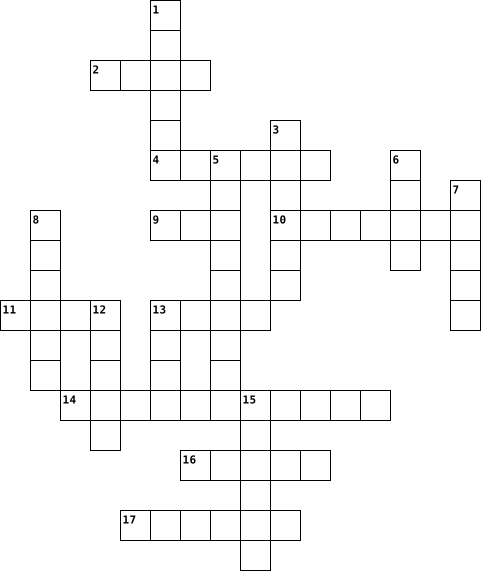
Across
- the green structure of a plant that produces food by photosynthesis
- the sweet substance in a flower that bees love
- what do we call the appearance of veins on a dicotyledonous leaf?
- the shoot develops from this structure in a seed
- what does the radicle develop into?
- dispersal wind is an example of...
- the growth of a seed into a new plant
- what does xylem transport around the plant?
- a condition needed for germination
Down
- male part of the flower
- female part of flower
- the first leaf in a seed
- true or false, a dicotyledonous plant has its vascular bundles arranged in a ring
- a protective coat of the seed
- the vascular tissue that carries food around the plant
- a monocotyledonous flower has petals in multiples of what
- the structure of a plant that holds the leaves and flowers
- the part of 1 down that produces pollen
18 Clues: female part of flower • male part of the flower • the first leaf in a seed • a protective coat of the seed • dispersal wind is an example of... • a condition needed for germination • what does the radicle develop into? • the growth of a seed into a new plant • the part of 1 down that produces pollen • what does xylem transport around the plant? • ...
LIFOAM TRIVIA - Happy Puzzle Day! 2015-10-27

Across
- What was the last name of the original founders of Life-Like?
- What was the name of the children’s books sold by Life-Like?
- Where was the “Fridge” originally manufactured?
- Where was the Life Like plant that closed in Illinois located?
- PUR stands for?
- What California city did Life-Like have a plant Prior to Vernon?
- The toy race car division was called?
- Name of company the purchased the toy division from Life-Like?
- What was the name of our company prior to Lifoam?
- In 2005, Lifoam sold what division of their operation?
- What product was acquired by Life-Like in 2004?
- What was the name of the Wooden Blocks?
- Which Lifoam plant was formally known as Mold Tech?
Down
- What product was acquired by Life-Like in 1997?
- In what county is the Maryland plant located?
- What was the name of the Easter Egg Kits Life-Like sold?
- What company did Lifoam acquire in 2009?
- What plant was purchased in 1989?
- First EPS product manufactured by Life-Like?
- On what street was the original Lifoam operation located, in Maryland?
- Name a plant which had previously been Tech Pak?
- Did Lifoam acquire or develop the ProPak line?
- Noodles What Lifoam product started out as pipe insulation?
- What is the name of the presses used to produce our EPS products?
- Where was the Life Like plant the closed in Florida located?
- What city in Arkansas did Life-Like have an EPS plant?
- What is the main component of Lifoam’s foam products?
27 Clues: PUR stands for? • What plant was purchased in 1989? • The toy race car division was called? • What was the name of the Wooden Blocks? • What company did Lifoam acquire in 2009? • First EPS product manufactured by Life-Like? • In what county is the Maryland plant located? • Did Lifoam acquire or develop the ProPak line? • What product was acquired by Life-Like in 1997? • ...
Nature 2025-05-03

Across
- A small stream of water.
- A piece of land with its own unique features.
- The outer layer of a tree's trunk.
- A layer of ice that forms on surfaces.
- Small particles of rock or mineral.
- A small plant that grows into a new plant.
- Animals that live in the wild.
- desert plant
- A small rock or stone.
- A small, non-vascular plant.
- A small type of bird.
- A part of a plant that grows above ground.
- The rise and fall of the sea level.
- A type of evergreen tree.
- A part of a flower.
Down
- A part of a plant that grows from the stem.
- A channel for water to flow.
- Waves that break on the shore.
- A steep rock face.
- Flower of love
- The top layer of the Earth's surface.
- The time of day when the sun rises.
- body of fresh water
- A community of living things and their environment.
- A movement of water in the ocean.
- A type of atmospheric moisture.
- A flower that grows on a tree or bush.
- A part of a plant that grows underground.
- The time of day when the sun sets.
- biggest animal on land.
- Top of mountain
31 Clues: desert plant • Flower of love • Top of mountain • A steep rock face. • body of fresh water • A part of a flower. • A small type of bird. • A small rock or stone. • biggest animal on land. • A small stream of water. • A type of evergreen tree. • A channel for water to flow. • A small, non-vascular plant. • Waves that break on the shore. • Animals that live in the wild. • ...
Reproduction in Flowering Plants 2021-02-22

Across
- sticky
- need to be right so seed can germinate
- colorful usually to attract insects
- type of seed dispersal which the seed have parachute
- base of plumule
- male reproductive organ in a plant
- base of radicle
- 1 parent
- process of growth from seed to a plant
Down
- for stored food to be soluble
- occurs inside the ovule
- female reproductive organ in a plant
- type of dispersal example coconut
- develop into seed
- type of pollination by bees
- transfer of pollen from part of a plant to another part of a plant
- store food like starch for seed
- 2 parents
- so plant can do respiration
- develop into a fruit
20 Clues: sticky • 1 parent • 2 parents • base of plumule • base of radicle • develop into seed • develop into a fruit • occurs inside the ovule • type of pollination by bees • so plant can do respiration • for stored food to be soluble • store food like starch for seed • type of dispersal example coconut • male reproductive organ in a plant • colorful usually to attract insects • ...
Agronomic Crossword #001 2022-08-17

Across
- plant growth dominance from the main stem
- first step in weed control
- nutrient important for root growth
- personal protective equipment
- plant nutrient with the chemical symbol B
- equipment adjustments prior to use
- black spots!
- type of chlorosis where leaf veins stay green
- yellowing due to lack of chlorophyll
Down
- whether a nutrient can move from one part of a plant to another
- most common part of the body for pesticide exposure
- plant nutrient that can be deficient in high pH soils
- number one limiting plant nutrient
- the law in herbicide use
- fertilizer with amounts of N, P, and K
- tool to test soil compaction
- the K on fertilizer labels
- plant adaptations to avoid inhospitable growing conditions
18 Clues: black spots! • the law in herbicide use • first step in weed control • the K on fertilizer labels • tool to test soil compaction • personal protective equipment • number one limiting plant nutrient • nutrient important for root growth • equipment adjustments prior to use • yellowing due to lack of chlorophyll • fertilizer with amounts of N, P, and K • ...
Ecology II 2022-03-18

Across
- A thin cylinder of meristematic tissue that can run the entire length of roots and stems
- Are plant cells that often are elongated and occur in long strands or cylinders that provide support for the surrounding cells.
- When the plant has a life span of two years.
- A plant that lives anchored to an object or another plant.
- A structure that contains the male or female reproductive structures of cycads and other gymnosperm plants.
- Plant cells that lack cytoplasm and other living components when they mature, but their thick rigid cell walls remain.
- Regions of rapidly dividing cells.
- Structures that either store food or help absorb food for the tiny sporophyte.
- sprouts from a seed,grows,produces new seeds, dies.
- The structure fern spores form in.
Down
- Plants that lack specialized transport tissues.
- Most flexible, thin-walled cells found throughout a plant.
- A food-storage organ.
- Specialized transport tissue.
- A compact cluster of spore-bearing structures.
- A plant that can live for several years.
- Plants with vascular tissue.
- Clusters of sporangia form this.
- A plant structure that contains an embryo,contains nutrients for the embryo, and is covered with a protective coat.
- Produces cells that develop tough cell walls.
- Openings in the outer call layer of leaves and some stems.
21 Clues: A food-storage organ. • Plants with vascular tissue. • Specialized transport tissue. • Clusters of sporangia form this. • Regions of rapidly dividing cells. • The structure fern spores form in. • A plant that can live for several years. • When the plant has a life span of two years. • Produces cells that develop tough cell walls. • ...
MSM Naturals 2026-02-26

Across
- Cold
- Air Water Cold
- Air Water Earth Cold
- Earth
- Plant Water Cold
- Air Plant Earth Cold
- Air
- Air Water Earth
- Plant Earth Cold
- Water
- Water Cold
- Air Water
- Plant Water
- Air Plant Water
Down
- Air Cold
- Air Plant
- Water Earth Cold
- Air Plant Water Cold
- Water Earth
- Plant Water Earth Cold
- Air Plant Water Earth
- Air Plant Cold
- Earth Cold
- Air Plant Water Earth Cold
- Air Plant Earth
- Plant Water Earth
- Plant Earth
- Air Earth Cold
- Air Earth
- Plant Cold
- Plant
31 Clues: Air • Cold • Earth • Water • Plant • Air Cold • Air Plant • Air Earth • Air Water • Earth Cold • Plant Cold • Water Cold • Water Earth • Plant Earth • Plant Water • Air Water Cold • Air Plant Cold • Air Earth Cold • Air Plant Earth • Air Water Earth • Air Plant Water • Water Earth Cold • Plant Water Cold • Plant Earth Cold • Plant Water Earth • Air Plant Water Cold • Air Water Earth Cold • Air Plant Earth Cold • ...
msm 2022-01-21

Across
- cold, water, air
- water, earth, air
- water
- cold, water
- earth, air
- water,earth, plant
- water, plant
- cold, air
- air
- cold, plant, air
- water, air
- earth, plant, air
- cold, water, earth, air
- cold, water, plant
- cold, plant
- cold, earth, plant, air
Down
- water, earth, plant, air
- earth
- cold, water, plant, air
- Cold
- cold, earth, plant
- earth, plant
- plant
- cold, earth, air
- cold, earth
- water, plant, air
- cold, earth, water, plant
- water, earth
- cold, water, earth
29 Clues: air • Cold • earth • water • plant • cold, air • earth, air • water, air • cold, water • cold, earth • cold, plant • earth, plant • water, plant • water, earth • cold, water, air • cold, earth, air • cold, plant, air • water, earth, air • water, plant, air • earth, plant, air • cold, earth, plant • water,earth, plant • cold, water, plant • cold, water, earth • cold, water, plant, air • cold, water, earth, air • ...
Animal and Plant Cells 2017-10-17

Across
- the brain of the cell; found only in plant and animal cells
- the nucleus also contains the __________ a structure where ribosomes are made.
- the organel of each cell is based off of the _____________.
- jelly like fluid mostly made of water that the organelles float in; found in all three types of cells
- the tiny structures inside the cell; like the cell wall, cell membrane, and nucleus
- powerhouse of the cell; used to create food for energy; found in plant and animal cells
- they have nine groups of three arrangement of the protein fibers
- in plant cells they are large; found in plant and animal cells
- wall, provides extra support for plants; found only in plant and bacterial cells
- captures sunlight; found only in plant cells
- chloroplasts contain a green substance called ______________.
- used to make protein; can be found floating in the endoplasmic reticulum and the cytoplasm
Down
- there are tiny openings, or ________, in the cell membrane through which material can enter or leave the cell.
- they help protect you by destroying bacteria that your white blood cells engulf
- body, package material to be transported to the endoplasmic reticulum; found in both plant and animal cells
- chromosomes are made of this
- the process that plants use the chloroplasts to make their own food
- reticulum, internal delivery system within the cell; found only in plant and animal cells
- most cells are too small to be seen without a _____________.
- all plants and animals are made up of these
20 Clues: chromosomes are made of this • all plants and animals are made up of these • captures sunlight; found only in plant cells • the brain of the cell; found only in plant and animal cells • the organel of each cell is based off of the _____________. • most cells are too small to be seen without a _____________. • ...
Living Organisms - Plants and Animals 2021-02-19

Across
- the female reproductive structure of a plant
- a seed-like structure that produces a new plant (ferns or mosses)
- a cold-blooded animal with dry, scaly skin that lays eggs
- the part of a plant that absorbs water and keeps the plant in the ground
- a warm-blooded animal that is covered in hair/fur that give live birth
- a warm- blooded animal with feathers, wings, and a beak
- a cold-blooded animal with gills and fins that live in water
- the male reproductive structure of a plant
Down
- the organ fish use to breathe
- the part of the plant which holds seeds
- a flowering plant's unit of reproduction
- the seed-bearing part of the plant (where reproduction occurs)
- the part of the plant that transports water throughout and helps the part stand upright
- a hard outer-covering in some invertebrate animals (arthropods)
- the part of the plant in which food is made through photosynthesis
- a cold-blooded animal that begins life in water, but lives on land as adults
16 Clues: the organ fish use to breathe • the part of the plant which holds seeds • a flowering plant's unit of reproduction • the male reproductive structure of a plant • the female reproductive structure of a plant • a warm- blooded animal with feathers, wings, and a beak • a cold-blooded animal with dry, scaly skin that lays eggs • ...
BP M1 Final 1 Review 2026-09-04

Across
- Plant tissue that transports sugar.
- A carbohydrate that makes up plant cell walls.
- A plant that does not have vascular tissue.
- A macromolecule that performs many jobs in cells.
- an element that has physical and chemical properties of both metals and nonmetals
- Macromolecules that provide energy.
- A long time with little or no rain.
- Vascular tissue that helps stems grow wider, and makes more vascular tissue..
- a column on the periodic table
- have no metallic properties. Most are gases at room temperature.
- A plant that produces cones, but not flowers or fruits.
- A small opening in a plant leaf for gases to enter and exit.
- a row on the periodic table
- Movement of water across a cell membrane.
- the smallest unit of elemental matter
- Plant tissue that transports water.
- What cells use for energy.
- A plant that reproduces without seeds.
Down
- Having cells with a nucleus.
- Jelly-like liquid inside a cell.
- Made of many cells.
- An organism that makes its own food.
- Movement from high concentration to low concentration. Doesn't use cell energy.
- Organelles that produce ATP for cells.
- Having slightly positive and negative ends.
- are ductile, they conduct heat and electricity, they have luster, and they are malleable
- A macromolecule that includes fats and oils. Doesn't dissolve in water.
- When a cell takes materials in.
- When a cell moves materials out.
- The process plants use to make sugar from light energy.
- A state where concentrations are balanced.
- How ferns reproduce.
- A plant that produces flowers and fruits.
- Plant structures that absorb water and anchor the plant.
- The organelle where photosynthesis happens.
- Structures inside cells that perform specific jobs.
- The smallest unit of life.
37 Clues: Made of many cells. • How ferns reproduce. • The smallest unit of life. • What cells use for energy. • a row on the periodic table • Having cells with a nucleus. • a column on the periodic table • When a cell takes materials in. • Jelly-like liquid inside a cell. • When a cell moves materials out. • Plant tissue that transports sugar. • Macromolecules that provide energy. • ...
Propagation Unit 2024-05-03

Across
- Propagation by means of allowing the plants stolons or runners to root themselves and grow into their own plants.
- Propagation by seed or spores
- A plant graft made by interlocking a small tongue and notch in the obliquely cut base of the scion with corresponding cuts in the stock.
- Propagation is where seed is not needed, but instead a portion of the vegetation is used for new growth.
- The process by which green plants and some other organisms use sunlight to synthesize foods from carbon dioxide and water.
- A type of propagation is separating a plant through the roots, then replanting the newly separated plants.
- The propagation of plants by bending a stem to the ground and covering the tip with soil so that roots and new shoots may develop.
- A plant graft made by cutting the stock squarely across, splitting the cut end, and inserting one or two scions in the split so that the cambiums of stock and scion are in contact.
- The process by which a plant grows from a seed into a seedling
Down
- A portion of a leaf, stem, or root off the parent plant then replanting and therefore the plant begins to grow.
- A plant that stores its complete life cycle in an underground storage structure.
- A single layer of cells between the wood and bark of a tree or shrub that produces new cells.
- The act of joining two plants together
- A graft used to join a scion onto the stem of a rootstock or onto an intact rootpiece
- A piece of detached twig or shoot
- The part of the graft that produces the root system of the grafted plant.
- the breeding of specimens of a plant or animal by natural processes from the parent stock
- A piece of plant (usually to form trunk or a portion of it) grafted between the scion and understock.
- A term now used in place of variety.
- A mutation from a shoot developing from the graft union
20 Clues: Propagation by seed or spores • A piece of detached twig or shoot • A term now used in place of variety. • The act of joining two plants together • A mutation from a shoot developing from the graft union • The process by which a plant grows from a seed into a seedling • The part of the graft that produces the root system of the grafted plant. • ...
B.12(A) 2025-04-07

Across
- cell layer at the inner boundary of the cortex; regulates the material that enters the plant’s vascular tissues.
- nonnucleated, cytoplasmic cell of the phloem.
- plant tissue consisting of parenchyma, collenchyma, and sclerenchyma.
- plant tissue that produces lateral roots
- gaseous plant hormone that affects the ripening of fruits.
- elongated, tubular plant cell that forms xylem strands (vessels) and conducts water and dissolved substances.
- dermal tissue that makes up a plant’s outer covering. In humans and some other animals, the outer superficial layer of skin made up of epithelial cells.
- layer of parenchyma cells that covers the root tip and helps protect root tissues during growth.
- long, cylindrical plant cell in which water passes from cell to cell through pitted ends
- layer composed of ground tissues between the epidermis and vascular tissue of a root
- stalk that connects a plant’s blade to the stem.
- nucleated cell that helps the mature sieve tube member function in transporting dissolved substances in the phloem of vascular plants.
- leaf-tissue layer that contains many chloroplasts and is the site where most photosynthesis takes place.
Down
- group of plant hormones that are transported in vascular tissue and that can affect seed growth, stimulate cell division, and cause cell elongation.
- response to an external stimulus in a specific direction.
- one of a pair of cells that function in the opening and closing of a plant’s stomata by changes in their shape.
- vascular plant tissue that transports water and dissolved minerals away from the roots throughout the plant and is composed of vessel elements and tracheids.
- hairlike projections produced by some epidermal cells on leaves and stems.
- loosely packed, irregularly shaped cells with spaces around them located below the palisade mesophyll.
- process in which water evaporates from the inside of leaves to the outside through stomata.
- plant hormone that moves in only one direction away from the site where it was produced and can stimulate the elongation of cells.
- vascular plant tissue composed of sieve tube members and companion cells that conducts dissolved sugars and other organic compounds from the leaves and stems to the roots and from the roots to the leaves and stems.
- reversible, responsive movement of a plant that occurs independent of the direction of the stimulus.
23 Clues: plant tissue that produces lateral roots • nonnucleated, cytoplasmic cell of the phloem. • stalk that connects a plant’s blade to the stem. • response to an external stimulus in a specific direction. • gaseous plant hormone that affects the ripening of fruits. • plant tissue consisting of parenchyma, collenchyma, and sclerenchyma. • ...
7th Period Landscape Terms 2023-03-21

Across
- process of removing or thinning the dead or lower level of a mature lawn
- loses leaves goes dormant and returns to growing
- low growing woody plants
- decomposed garden or food material
- calcium material used to raise soil pH
- plant that stays green year round
- plant that completes life cycle in one year
- plant native to an area
- most prominent portion of a landscape
- unwanted plant
Down
- pattern of leaves that contain either white or yellow marking
- sprouting seeds
- strips of grass that have been cut out of field and rolled up
- slow feeding irrigation system
- plants with non-woody stems
- moving a plant from one location to another
- watering plants and lawns, usually with some sort of sprinkler system
- plant that comes back year after year for more than 3 years
- layer of compost or bark dust applied at the base of a plant
- machine that pulls cores of soil from the ground
- chemical used to control weeds or insects
- thicker cool season grass that spread via rhizomes
- woody perennial plant growing taller than a shrub
23 Clues: unwanted plant • sprouting seeds • plant native to an area • low growing woody plants • plants with non-woody stems • slow feeding irrigation system • plant that stays green year round • decomposed garden or food material • most prominent portion of a landscape • calcium material used to raise soil pH • chemical used to control weeds or insects • ...
bio 2023-05-10

Across
- the top of the stamen
- covid,HIV,and the flu
- the male reproductive organ of the flower
- any vascular plant that reproduces by means of an exposed seed, or ovule
- the bottom of the stamen
- a cell that certain fungi, plants (moss, ferns), and bacteria produce.
- the one unicellular fungi
- makes up mushrooms
- Any of a group of eukaryotic organisms belonging to the Kingdom Protista
- a fungi used for medicinal purposes
Down
- a plant that produces flowers
- fungi uses this instead of cellulose
- the reproductive organ of a plant
- the repetition of the parts in an animal or plant in an orderly fashion
- mushrooms are one major example
- organisms that are microscopic, unicellular, independently reproducing, and mostly free-living
- bees are known for this tiny plant related object
- the uniting of egg and sperm
- female reproductive organ of the flower
- largest protist
20 Clues: largest protist • makes up mushrooms • the top of the stamen • covid,HIV,and the flu • the bottom of the stamen • the one unicellular fungi • the uniting of egg and sperm • a plant that produces flowers • mushrooms are one major example • the reproductive organ of a plant • a fungi used for medicinal purposes • fungi uses this instead of cellulose • ...
Landscape vocab 2021-08-31

Across
- or provide cut flowers
- Function the specific use of a plant in the landscape, such as ground cover,
- plant- A row of taller plants, shrubs or even trees (depending on the scale of the garden) that stops the eye and helps define a garden space.
- Hedge- pruned into a precise shape, usually by shearing
- or shade tree
- habit
- outdoors throughout all seasons of the year a hedge-a row of like plants, usually shrubs that grow upright, with a dense
- Garden a specialized planting created for a particular purpose, such as to attract
- Tree has an interesting form when seen from a distance
- Tree planted to beautify roadways or streets
- Tree has dense foliage providing shade during warm weather
Down
- Tree planted in a lawn and tolerant of frequent watering
- Cover- stays fairly low and spreads horizontally as it grows
- a relatively small area within a landscape that has special environmental
- Plant-retains its leaves year-round
- usually refers to a plant's ability to withstand cold temperatures and to
- Plant- softens the transition between a building and the growing areas of a
- affecting plant growth
- Plant Selection- the use of software programs designed to select plants for given criteria; specifications may include factors such as landscape function, plant
- or theme garden
- Landscape Area or Location a special site within a landscape that affects plant selection, such as an
- plant- sheds its leaves once a year, usually in cold winter months
- Hedge-slightly pruned, allowing its natural shape to develop
- form color, and environmental needs/tolerances
24 Clues: habit • or shade tree • or theme garden • or provide cut flowers • affecting plant growth • Plant-retains its leaves year-round • Tree planted to beautify roadways or streets • form color, and environmental needs/tolerances • Tree has an interesting form when seen from a distance • Hedge- pruned into a precise shape, usually by shearing • ...
All About Plants 2021-03-10

Across
- plants drink this through their roots
- provides support for the plant
- the part of the plant that produces seeds
- grass has these fine feather like roots
- an edible tap root
- a new plant when it first starts to grow
- plant needs this to grow in, it provides nutrients
- a flower that is not fully opened
Down
- large plant with many branches, very tall
- large tapered root that grows straight down
- collect energy from the sun
- plant with a large edible root
- anchors the plant to the ground
- Plants collect its energy with their leaves
- this sprouts and grows a new plant
15 Clues: an edible tap root • collect energy from the sun • provides support for the plant • plant with a large edible root • anchors the plant to the ground • a flower that is not fully opened • this sprouts and grows a new plant • plants drink this through their roots • grass has these fine feather like roots • a new plant when it first starts to grow • ...
Topic 9.3 Growth in Plants 2022-03-01

Across
- Second stage in primary growth where cells lengthen under influence of auxin (10)
- Third stage of primary growth where cells become specialised in structure and function (15)
- Undifferentiated plant tissue from which new cells are formed, allowing for growth (8)
- Any of a class of related plant hormones act in concert with auxin to stimulate cell division and influence the pathway of differentiation (9)
- The part of a stem where one or more leaves or flowers are attached (4)
- ________________ growth A type of growth characteristic of plants, in which the organism continues to grow as long as it lives (13)
- ____________ variation When somatic embryos derived from single cells are grown into mature plants, the plant's characteristics exhibit variability. Used to select desired traits (10)
- Growing large numbers of new plants from meristem tissue taken from a sample plant using tissue culture (16)
- specialised membrane proteins that use ATP to move auxins out of cells located closer to the light (5, 6, 5)
- Mass of undifferentiated cells which forms in tissue culture when auxin and cytokinin proportions are equal (6)
- Above ground parts of a plant consisting of stems, leaves and reproductive structures (5)
Down
- _____________ meristem Embryonic plant tissue in the tips of roots and in the buds of shoots that supplies cells for the plant to grow in length (6)
- A piece of tissue taken from a particular plant (which includes meristematic tissue) then sterilised in order to grow a callus in tissue culture micropropagation (7)
- A growth response of a plant toward or away from a stimulus (7)
- Indoleacetic acid (IAA), a natural plant hormone that has a variety of effects, including cell elongation, root formation, secondary growth, and fruit growth (5)
- Growth of a plant shoot toward light (positive) or of the root away from light (negative) (12)
- A segment of a plant stem between the points where leaves are attached (9)
- A soluble gelatinous polysaccharide that is present in plant cell walls and aids in binding the cellulose microfibrils together (6)
- A finger-like projection along the flank of a shoot apical meristem, from which a leaf arises (4, 10)
- _________ growth Growth produced by apical meristems, which lengthen stems and roots. (7)
- First stage in primary growth where new cells are generated in the apical meristems (4 8)
- An insoluble polysaccharide that is present in plant cell walls and aids in binding the cellulose microfibrils together (13)
- Plant proteins that break the cross-links (hydrogen bonds) between cellulose microfibrils and other cell wall constituents, loosening the walls fabric (9)
23 Clues: A growth response of a plant toward or away from a stimulus (7) • The part of a stem where one or more leaves or flowers are attached (4) • A segment of a plant stem between the points where leaves are attached (9) • Second stage in primary growth where cells lengthen under influence of auxin (10) • ...
Grade 5 Vocabulary Review 2020-11-29

Across
- Term meat eater
- Anchor plants and collect water and nutrients from the soil.
- Another name for plants that make their own food.
- Plants are most important for providing food and _________ to animals.
- Attract insects that carry pollen from other plants.
- Top predator in a swamp ecosystem?
- Used by plants to carry pollen from one plant flower to another plant flower.
- The structure that makes seeds in a plant.
- The first leaves on a Wisconsin fast growth plant.
- The flow of energy in an ecosystem.
- Producer in a tundra ecosystem?
- Life Process where food is changed into energy to move and grow.
Down
- Plant structure that makes flowers?
- Herbivore in a desert ecosystem?
- Life Process where sunlight is changed into food.
- The start of all energy in a food chain begins with the?
- Another name for animals that need to find food since they cannot make it.
- Plant producer in the ecosphere aquarium.
- Carries water and nutrients out of the soil.
- Living or once living parts in an ecosystem.
- Term last carnivore on a food chain.
- The start of a plant life cycle.
- The regular leaves on a Wisconsin fast growth plant.
- Carry out the process of photosynthesis to change sunlight into food.
- Word part that means “light”.
- Term means waste eater?
- Produces carbon dioxide in the ecosphere aquarium?
- Term plant eater.
- crossword puzzle Grade 5
- Found in the ecosphere aquarium that eats wastes and produces nutrients.
- Non living parts (never alive) in an ecosystem.
- Word part that means “ball”.
32 Clues: Term meat eater • Term plant eater. • Term means waste eater? • crossword puzzle Grade 5 • Word part that means “ball”. • Word part that means “light”. • Producer in a tundra ecosystem? • Herbivore in a desert ecosystem? • The start of a plant life cycle. • Top predator in a swamp ecosystem? • Plant structure that makes flowers? • The flow of energy in an ecosystem. • ...
plants 2013-11-17

Across
- The outer covering of a tree
- The seeds of a fern
- A piece of land that a human owns and grows plants in it
- Bell shaped flowers
- The part that grows upright
- The process in which a plant makes food
- The beginning of a stem
- dioxide The air that helps a plant make food
- Anchors the plant into the ground
- Leafy all year round
- Collects water and sunlight
- A short piece of tree trunk
- The name of a plant growing up from a seed
- This holds up the stigma
- Holds up the anther
- Grows plants but it is not a seed
Down
- Bees and butterflies help the flower with this
- Carry the leaves of a tree
- A lot of trees in one place
- This helps them get minerals and make food
- The seed coating
- The chemical that makes the plant green
- A seed is made in this if the tree has no flowers
- This helps them to make food and keep warm
- These set off a lovely scent are colourful and attract insects
- Sweet sticky liquid that bees love
- This protects the bud
- The most beautiful part of a plant
- The food inside the seed
- A plant that looses it's leaves in winter
- The seeds grow inside it
- Will develop into a flower or a shoot
32 Clues: The seed coating • The seeds of a fern • Bell shaped flowers • Holds up the anther • Leafy all year round • This protects the bud • The beginning of a stem • The food inside the seed • This holds up the stigma • The seeds grow inside it • Carry the leaves of a tree • A lot of trees in one place • The part that grows upright • Collects water and sunlight • A short piece of tree trunk • ...
The Plant Guru 2012-10-21

Across
- vascular tissue that carries food inside plants
- a method that helps seed get to other plants
- fertilized egg
- vascular tissue that carries water inside plants
- when the embryo begins to grow again and pushes out of the seed
- structure that contains young plant
Down
- one or more leaves of a seed
- structures that containt the cells that will later become the sperm cells
- also known as the endosperm, this stores the food in the seed for later use
- a layer of the seed that protects it
10 Clues: fertilized egg • one or more leaves of a seed • structure that contains young plant • a layer of the seed that protects it • a method that helps seed get to other plants • vascular tissue that carries food inside plants • vascular tissue that carries water inside plants • when the embryo begins to grow again and pushes out of the seed • ...
The Plant Cell 2014-10-06

Across
- produces energy
- Storage sac (larger in plant cells)
- Has Nucleus and organelles. Has most cells other than bacteria
- Captures energy from the sun and makes food, known as photosynthesis (only in plant cells)
- Contains enzymes that break down food and old cells (more common in animal cells)
Down
- A type of bacteria that is primitive and is missing a nucleus and half of the organelles
- Protection; allows some substances to move in & out of the cell
- Control center - directs all cell activities
- Produces protein
- Receives materials from the Endoplasmic Reticulum and sends the materials to other parts of the cell
10 Clues: produces energy • Produces protein • Storage sac (larger in plant cells) • Control center - directs all cell activities • Has Nucleus and organelles. Has most cells other than bacteria • Protection; allows some substances to move in & out of the cell • Contains enzymes that break down food and old cells (more common in animal cells) • ...
The Office Plant 2025-08-01

Across
- – an informal or friendly name
- – to increase or improve something
- – the area near the entrance where visitors are greeted
- – to clean something, especially air or water
- – to put a plan or idea into action
Down
- – to talk or have a conversation
- – attractive and welcoming
- – small or not very important
- – to reduce or make something less severe
- – to improve or increase the quality of something
10 Clues: – attractive and welcoming • – small or not very important • – an informal or friendly name • – to talk or have a conversation • – to increase or improve something • – to put a plan or idea into action • – to reduce or make something less severe • – to clean something, especially air or water • – to improve or increase the quality of something • ...
My singin monsta 2025-03-21

Across
- earth,cold,plant,air
- earth,water,plant
- Cold,water,plant,fire
- earth,cold,water,air
- water,plant,air,fire
- earth,cold,plant,air,fire
- earth,water,plant,air
- Cold,water,plant,air,fire
- earth,water,plant,air,fire
- air
- Earth,air,fire
- Cold,water,fire
- Earth,cold,water,fire
- Earth,cold,air,fire
- Earth,cold,water,air,fire
- Plant,air,fire
- cold,fire
- earth,cold,plant
- water,plant,air
- Cold,plant,air,fire
- Earth,water,air,fire
- earth,fire
- cold,water,plant
- Earth,cold,plant,fire
- cold,plant
- Earth,water,fire
- fire
- earth,cold,water
- cold,water,air
- Cold,water,air,fire
- cold,air
- earth
- Cold,air,fire
Down
- water
- earth,plant
- Earth,cold,fire
- plant,fire
- earth,cold,air
- earth,plant,air
- earth,cold,water,plant,air
- cold,water
- plant,air
- cold,water,plant,air
- cold
- Earth,water,plant,fire
- earth,water
- cold,plant,air
- water,air
- Water,air,fire
- plant
- earth,air
- earth,cold
- water,plant
- Cold,plant,fire
- Earth,cold,water,plant,fire
- water,plant,fire
- earth,cold,water,plant
- water,fire
- earth,plant,fire
- Earth,plant,air,fire
- earth,water,air
- air,fire
62 Clues: air • cold • fire • water • plant • earth • cold,air • air,fire • plant,air • water,air • earth,air • cold,fire • plant,fire • cold,water • earth,cold • earth,fire • water,fire • cold,plant • earth,plant • earth,water • water,plant • Cold,air,fire • earth,cold,air • cold,plant,air • Earth,air,fire • Water,air,fire • Plant,air,fire • cold,water,air • Earth,cold,fire • earth,plant,air • Cold,water,fire • water,plant,air • Cold,plant,fire • ...
Plant Requirements 2022-11-29

Across
- chemical element with the symbol Mo
- has 4 different types
- is a chemical element with the symbol B
- can be found naturally in the bodys blood flow
- a chemical element with the symbol Zn
- There are 7 types of these.
- type of chemical found in pools
- can be found in a banana
Down
- There are 7 types including copper.
- nonmetallic chemical element belonging to the oxygen group
- is a chemical element with the symbol Mn
- It is obtained by the distillation of liquid air
- mineral in many foods and can also be taken as a supplement
- is another word for water
- a mineral most often associated with healthy bones and teeth
- a chemical element with the symbol Cu
- has an atomic number 12
- another word for air
18 Clues: another word for air • has 4 different types • has an atomic number 12 • can be found in a banana • is another word for water • There are 7 types of these. • type of chemical found in pools • There are 7 types including copper. • chemical element with the symbol Mo • a chemical element with the symbol Zn • a chemical element with the symbol Cu • ...
Plant Reproduction 2019-04-01

Across
- The stalk that supports the anther
- Female organ that houses the ovules
- This grows to meet the ovary and transfer the pollen
- A flower with all four organ structures (stamen, pistil, petals, and sepals)
- When sperm meets egg within the plant
- This becomes the seed
- Yellow dust that contains the male gamete
- Atop the stamen and produces pollen
- Sepals come together to form this and protect the bulb
Down
- Female reproductive structure
- A flower lacking one or more of the four main organs
- When pollen is transferred from one plant to another via a pollinator
- The pretty part of the plant that attracts pollinators
- Liquid food made up of sugars and proteins
- Leaf-like structures that protects the bulb when they come together to make the calyx
- Male reproductive structure formed by the anther and filament
- An arrangement of petals on a flower
- Sticky structure that pollen sticks to
18 Clues: This becomes the seed • Female reproductive structure • The stalk that supports the anther • Female organ that houses the ovules • Atop the stamen and produces pollen • An arrangement of petals on a flower • When sperm meets egg within the plant • Sticky structure that pollen sticks to • Yellow dust that contains the male gamete • Liquid food made up of sugars and proteins • ...
Plant Classification 2020-02-19

Across
- angiosperm whose seeds have one cotyledon, petals in
- organism that can produce its own food
- produced by most vascular plants for reproduction
- angiosperm with two cotyledons inside its seed, flower parts
- plants that have tissues that deliver needed materials throughout a plantGymnosperm: Cone bearing, vascular plants that produce "naked
- Flowering, vascular plants that produce seeds in
- tubes that transport sugar molecules throughout the plant
- tap roots, and netted leaf veins
- dicot's leaf veins
Down
- tubes that transfer water and minerals throughout a plant
- or fruit.
- Plants that do not have xylem and phloem
- produced by non-vascular plants for reproduction
- of 3, scattered vascular bundles within the stem, fibrous
- cone bearing tree
- parallel veins in the leaves
- multiples of four or five, and vascular bundles in rings within
- monocot's leaf veins
18 Clues: or fruit. • cone bearing tree • dicot's leaf veins • monocot's leaf veins • parallel veins in the leaves • tap roots, and netted leaf veins • organism that can produce its own food • Plants that do not have xylem and phloem • produced by non-vascular plants for reproduction • Flowering, vascular plants that produce seeds in • produced by most vascular plants for reproduction • ...
Plant Classification 2020-02-10

Across
- diffusion and osmosis to get water and nutrients vascular plants: plants that have tissues that deliver needed
- tubes that transport sugar molecules throughout the plant
- throughout a plant
- organism that can produce its own food
- Cone bearing, vascular plants that produce "naked
- produced by most vascular plants for reproduction
- monocot's leaf veins
- dicot's leaf veins
- angiosperm with two cotyledons inside its seed, flower parts
Down
- tap roots, and netted leaf veins
- plants: plants that do not have xylem and phloem;
- cone bearing tree
- of 3, scattered vascular bundles within the stem, fibrous
- Flowering, vascular plants that produce seeds in
- parallel veins in the leaves
- multiples of four or five, and vascular bundles in rings within
- produced by non-vascular plants for reproduction 10. Monocot: angiosperm whose seeds have one cotyledon, petals in
- or fruit. Xylem: tubes that transfer water and minerals throughout a plant
18 Clues: cone bearing tree • throughout a plant • dicot's leaf veins • monocot's leaf veins • parallel veins in the leaves • tap roots, and netted leaf veins • organism that can produce its own food • Flowering, vascular plants that produce seeds in • plants: plants that do not have xylem and phloem; • Cone bearing, vascular plants that produce "naked • ...
Plant Reproduction 2021-04-05

Across
- Embryo shoot
- Embryo root
- First growth of the seed
- Produce a sugary solution in flowers
- Describes the stigma of an insect pollinated plant
- Reproduces using runners
- Contains the ovules
Down
- Cover the developing flower
- Develops from the ovary
- Not needed for germination
- Often describes the pollen from insect pollinated flowers
- Needed for germination
- Plant that has wind pollinated seeds
- Produces the pollen
- Needed for germination
- Attract insects
- Needed for germination
- Food store in dicots
- Seed coat
- Method of pollination used by grasses
20 Clues: Seed coat • Embryo root • Embryo shoot • Attract insects • Produces the pollen • Contains the ovules • Food store in dicots • Needed for germination • Needed for germination • Needed for germination • Develops from the ovary • First growth of the seed • Reproduces using runners • Not needed for germination • Cover the developing flower • Plant that has wind pollinated seeds • ...
Plant Reproduction 2023-04-13

Across
- The part of a flower that holds up the stigma.
- The male gamete of a plant.
- Reproductive cells
- The female reproductive part of the flower.
- The male reproductive part of the flower.
- The part of a flower that is sticky to catch grains of pollen.
- The female gamete of a plant.
- The period of time when a seed starts to grow.
- The transfer of pollen from the anther to the stigma.
Down
- The movement of seeds away from the parent plant.
- The brightly coloured part of a flower that attracts insects.
- The structure that develops into a new plant.
- The special leaves found under the flower, which protect unopened buds.
- The process where the nucleus of a pollen joins with the nucleus of an ovule.
- The part of a plant that contains seeds.
- The part of a flower that holds up the anther.
- The part of a flower that produces pollen.
- The part of a flower that contains ovules.
18 Clues: Reproductive cells • The male gamete of a plant. • The female gamete of a plant. • The part of a plant that contains seeds. • The male reproductive part of the flower. • The part of a flower that produces pollen. • The part of a flower that contains ovules. • The female reproductive part of the flower. • The structure that develops into a new plant. • ...
Plant Anatomy 2023-05-03

Across
- An example of a fruit that comes in many varieties, such as Granny Smith or Red Delicious.
- A word that means to smell good. Used to describe flowers.
- An orange example of an edible root.
- An example of edible leaves. Is usually the base for a salad.
- A channel for transporting water from the roots to the leaves.
- Colorful and fragrant to attract pollinators.
- A yellow example of a fruit that tastes best as a summer drink mixed with sugar and water.
- An example of a leaf that comes from the tree that makes maple syrup.
- An example of an edible stem. It is best with peanut butter.
Down
- Bees or anything that is responsible for moving pollen.
- An example of an edible seed. People usually eat them with the shell on, then spit out the shell.
- A yellow example of a fruit that grows on trees and turns brown when it is too ripe.
- Covers and protects the seed.
- Absorbs water from the soil.
- A berry that is blue.
- Contains the embryo that will become a new plant.
- Where photosynthesis occurs.
- An example of a flower that is most commonly seen on valentines day.
18 Clues: A berry that is blue. • Absorbs water from the soil. • Where photosynthesis occurs. • Covers and protects the seed. • An orange example of an edible root. • Colorful and fragrant to attract pollinators. • Contains the embryo that will become a new plant. • Bees or anything that is responsible for moving pollen. • A word that means to smell good. Used to describe flowers. • ...
Plant Systems 2022-05-03

Across
- Transports sugar throughout the plant
- the action of water being attracted to itself in a cell
- the action of water being attracted to other surfaces in a cell
- set of interconnected organs working together
- tissue outer layer of cells on herbaceous
- waxy substance the cells of leaves and stems secrete
- system everything that is above ground
- tissue movement of materials
- tissue makes up most of the plant is found as a layer beneath the epidermis
Down
- Tissue that contribute to the same function
- how many types of plant tissues are there
- Transports water throughout the plant
- type of mesophyll tissue; tightly packed
- Groups of cells performing the same function together
- water vapour leaves the cell through the stomata through a process
- system everything that is below ground
- tiny pores in the leaf cell
- type of mesophyll tissue; loosely packed
18 Clues: tiny pores in the leaf cell • tissue movement of materials • Transports sugar throughout the plant • Transports water throughout the plant • system everything that is above ground • system everything that is below ground • type of mesophyll tissue; tightly packed • type of mesophyll tissue; loosely packed • how many types of plant tissues are there • ...
Plant Nutrients 2024-04-18

Across
- During photosynthesis, plants absorb this nutrient
- activator of several plant enzymes, and a deficiency impacts
- A macronutrient used to make DNA and RNA
- A macronutrient that is the building block of plant protein
- Component of chlorophyll, so extremely important for
- A secondary nutrient that must be present to make new cells
- One of the nutrients plants get from the air
- essential to help plants USE nitrogen
- Involved in the production of chlorophyll and protein
- synthesis
Down
- A macronutrient that is used for starch formation
- required for photosynthesis reactions
- One of the nutrients plants put into the air
- required for the formation of chlorophyll in the cells of the
- An activator for plant enzymes in the growth process
- An important nutrient for protein synthesis
- regulates the metabolism of carbohydrates
- component of urease, which prevents toxic amounts of urea
18 Clues: synthesis • required for photosynthesis reactions • essential to help plants USE nitrogen • A macronutrient used to make DNA and RNA • regulates the metabolism of carbohydrates • An important nutrient for protein synthesis • One of the nutrients plants put into the air • One of the nutrients plants get from the air • A macronutrient that is used for starch formation • ...
Plant Protection 2024-12-13

Across
- Toxic substances produced by fungi that can contaminate crops and pose health risks.
- Referring to the movement of substances through the spaces between cells in plant tissues, excluding the cytoplasm.
- A nematode which transmits Corynebacterium insidiosum to lucerne plants.
- A type of spore produced by rust fungi as part of their complex life cycle.
- A nematode genus that transmits Corynebacterium insidiosum to lucerne plants.
- An enzyme produced by plants to degrade chitin, a component of fungal cell walls, as a defense mechanism.
- The biological mechanism that leads to disease development in plants.
- The time between two molts
- The pupa stage of a butterfly.
Down
- A type of parasite that lives inside its host, often feeding on plant tissues.
- A genus of aphids, important agricultural pests.
- Sterol-like molecules found in bacterial cell membranes.
- The vegetative part of a fungus, consisting of a network of fine threads.
- Referring to substances or processes that affect the entire plant, such as systemic pesticides.
- The thread-like structures that make up fungal mycelium.
- A temporary commensalistic relationship when an organism attaches itself to a host organism solely for travel.
- The protective waxy layer covering the surface of leaves and stems.
- A symbiotic relationship where an animal infects a host and waits inside its body until its death.
- A virus that infects and kills bacteria, potentially useful in plant pathogen control.
19 Clues: The time between two molts • The pupa stage of a butterfly. • A genus of aphids, important agricultural pests. • Sterol-like molecules found in bacterial cell membranes. • The thread-like structures that make up fungal mycelium. • The protective waxy layer covering the surface of leaves and stems. • ...
Plant Characteristics 2024-09-04

Across
- Plants live for only two years; basal cluster of leaves the first year and seed stalk the second year
- Plants have nodes, hollow stems, and leaves with parallel veins
- Plants are nutritious, but lacks grazing appeal or quantity
- Plants live for a single growing season
- Plants have spines that branch out from the areoles
- Plants can from within North America
- Plants provides little to no nutrients to the animal
- Plants grow as individuals or in a distinct group
- Plants have net-like veins on the leaves, wildflowers and weeds are examples
- Plants live year after year
- Plants spread below ground to create a new plant
Down
- Seeds develop in late summer and early fall
- Plants have parallel veins on the leaves, solid stems, and no nodes
- Plants have a woody stem and grow year after year
- Plants came from outside of North America
- Plants spread through above ground stems
- Flowers appear in late spring or early summer
- Plants are nutritious, palatable, and plentiful
18 Clues: Plants live year after year • Plants can from within North America • Plants live for a single growing season • Plants spread through above ground stems • Plants came from outside of North America • Seeds develop in late summer and early fall • Flowers appear in late spring or early summer • Plants are nutritious, palatable, and plentiful • ...
Science Review 2021-05-13

Across
- a scientist who studies plants
- the largest type of algae
- part of a plant that turns into fruit
- one of the biggest type of tree in the world.
- a family of plants that include the day lily, Easter lily and tulip
- a plant that comes back every year
- a flower that must be re-planted every two years
- a family of plants that include wheat, barley and rice
Down
- food that grows from a plant ovary
- a pigment that makes a leaf green
- a plant that must be re-planted every year.
- green petals
- the most common tree in Washington
- what holds plants to the ocean floor
- a plant that attracts bees with dew drops.
- a part of a flower that attracts bees with its bright colors.
- a plant that opens and closes waiting for its next meal. (consists of two words but only includes the first word)
- the food of a plant
18 Clues: green petals • the food of a plant • the largest type of algae • a scientist who studies plants • a pigment that makes a leaf green • food that grows from a plant ovary • the most common tree in Washington • a plant that comes back every year • what holds plants to the ocean floor • part of a plant that turns into fruit • a plant that attracts bees with dew drops. • ...
Grade 4 Science Review 2024-07-24

Across
- a part of the plant that absorbs sunlight
- a part of a plant that can grow into a new plant
- are substances found in the soil that help a plant stay healthy
- a part of a dandelion that causes the seed to float in the air
- a part of a seed that grows into a new plant
- a giant seed that can be distributed by water
- the plant part in the soil that absorbs water from the ground
- the part of the plant that has long tubes inside
Down
- to bring pollen from one flower to another
- the part of a flowering plant that includes seeds
- a plant part that can be eaten and has no seeds
- are tiny holes in leaves that can open and close
- is long and it can extend deep into the ground
- the outer part of a seed that is hard and protects the seed
- means to scatter
15 Clues: means to scatter • a part of the plant that absorbs sunlight • to bring pollen from one flower to another • a part of a seed that grows into a new plant • a giant seed that can be distributed by water • is long and it can extend deep into the ground • a plant part that can be eaten and has no seeds • a part of a plant that can grow into a new plant • ...
Grade 4 Science Review 2024-07-24

Across
- a part of the plant that absorbs sunlight
- a part of a plant that can grow into a new plant
- are substances found in the soil that help a plant stay healthy
- a part of a dandelion that causes the seed to float in the air
- a part of a seed that grows into a new plant
- a giant seed that can be distributed by water
- the plant part in the soil that absorbs water from the ground
- the part of the plant that has long tubes inside
Down
- to bring pollen from one flower to another
- the part of a flowering plant that includes seeds
- a plant part that can be eaten and has no seeds
- are tiny holes in leaves that can open and close
- is long and it can extend deep into the ground
- the outer part of a seed that is hard and protects the seed
- means to scatter
15 Clues: means to scatter • a part of the plant that absorbs sunlight • to bring pollen from one flower to another • a part of a seed that grows into a new plant • a giant seed that can be distributed by water • is long and it can extend deep into the ground • a plant part that can be eaten and has no seeds • a part of a plant that can grow into a new plant • ...
Life Science Unit 2 Review 2024-02-22

Across
- Root system that has many branching roots that go wide
- Process plants use to convert sunlight into energy
- Plant organ system that consists of stems, leaves, and flowers
- Plant vascular tissue that moves sugar through plant
- A living thing that can carry out life processes independently
- Plant Organ system in plants that take up water and nutrients
- Vascular tissue that moves water through plants
- Sexual reproductive organs in plants
- Body system that delivers nutrients and oxygen to all cells
- Large main root that goes down
- Underground organ of vascular plants that hold plants in place and stores water
- Body system that moves bones
- Plant organ system that is used for support and storage
Down
- Group of similar cells that perform a common function
- Plant tissue that is used to transport water and nutrients
- Breaks down food into essential nutrients and expels solid waste
- Body System that takes in oxygen and releases carbon dioxide
- Plant tissue that protects the plant
- Plant organ that is the main site of photosynthesis
- Group of organs that work together to perform body functions
- Body system that removes liquid waste from the body
- Body system that supports the body and protects organs
- Plant structure that provides support
- Body system that controls movement and communication with brain and environment
- Collection of tissues that carry out a specialised function
25 Clues: Body system that moves bones • Large main root that goes down • Plant tissue that protects the plant • Sexual reproductive organs in plants • Plant structure that provides support • Vascular tissue that moves water through plants • Process plants use to convert sunlight into energy • Plant organ that is the main site of photosynthesis • ...
Grade 4 Science Review 2024-07-24

Across
- a part of the plant that absorbs sunlight
- a part of a plant that can grow into a new plant
- are substances found in the soil that help a plant stay healthy
- a part of a dandelion that causes the seed to float in the air
- a part of a seed that grows into a new plant
- a giant seed that can be distributed by water
- the plant part in the soil that absorbs water from the ground
- the part of the plant that has long tubes inside
Down
- to bring pollen from one flower to another
- the part of a flowering plant that includes seeds
- a plant part that can be eaten and has no seeds
- are tiny holes in leaves that can open and close
- is long and it can extend deep into the ground
- the outer part of a seed that is hard and protects the seed
- means to scatter
15 Clues: means to scatter • a part of the plant that absorbs sunlight • to bring pollen from one flower to another • a part of a seed that grows into a new plant • a giant seed that can be distributed by water • is long and it can extend deep into the ground • a plant part that can be eaten and has no seeds • a part of a plant that can grow into a new plant • ...
Grade 4 Science Review 2024-07-24

Across
- a part of the plant that absorbs sunlight
- a part of a plant that can grow into a new plant
- are substances found in the soil that help a plant stay healthy
- a part of a dandelion that causes the seed to float in the air
- a part of a seed that grows into a new plant
- a giant seed that can be distributed by water
- the plant part in the soil that absorbs water from the ground
- the part of the plant that has long tubes inside
Down
- to bring pollen from one flower to another
- the part of a flowering plant that includes seeds
- a plant part that can be eaten and has no seeds
- are tiny holes in leaves that can open and close
- is long and it can extend deep into the ground
- the outer part of a seed that is hard and protects the seed
- means to scatter
15 Clues: means to scatter • a part of the plant that absorbs sunlight • to bring pollen from one flower to another • a part of a seed that grows into a new plant • a giant seed that can be distributed by water • is long and it can extend deep into the ground • a plant part that can be eaten and has no seeds • a part of a plant that can grow into a new plant • ...
Grade 4 Science Review 2024-07-24

Across
- a part of the plant that absorbs sunlight
- a part of a plant that can grow into a new plant
- are substances found in the soil that help a plant stay healthy
- a part of a dandelion that causes the seed to float in the air
- a part of a seed that grows into a new plant
- a giant seed that can be distributed by water
- the plant part in the soil that absorbs water from the ground
- the part of the plant that has long tubes inside
Down
- to bring pollen from one flower to another
- the part of a flowering plant that includes seeds
- a plant part that can be eaten and has no seeds
- are tiny holes in leaves that can open and close
- is long and it can extend deep into the ground
- the outer part of a seed that is hard and protects the seed
- means to scatter
15 Clues: means to scatter • a part of the plant that absorbs sunlight • to bring pollen from one flower to another • a part of a seed that grows into a new plant • a giant seed that can be distributed by water • is long and it can extend deep into the ground • a plant part that can be eaten and has no seeds • a part of a plant that can grow into a new plant • ...
Types Of Food Plants 2021-04-28

Across
- are edible seeds derived from tamilia grasses.
- and pods are vegetable-producing plants in the form of green seeds.
- are classified as an example of food plants.
- is a plant that includes types of vegetables.
- cabbage plant is often called a two-year green plant.
- plants are rich in carbohydrates
- is the main source of carbohydrates.
- and tubers of this plant can be in the form of stem tubers, root tubers, taro, carrots and potatoes.
- is one of the main food ingredients besides rice.
- oilseed of this plant is a plant that is important as a food crop.
- contain lots of good vitamin C and carotene.
Down
- are plants that produce seeds which are the main source of energy for humans.
- of this plant are rich in carotene and good vitamin C and contain a good amount of calcium, iron and minerals.
- can be used as animal feed and the nuts can be eaten.
- are a type of legume plant.
- plants of the Brassia clan which are used as food.
- plants that contain a number of vitamins from A, B-complex, to C, folic acid, minerals and protein.
- is a plant that belongs to the family.
- a type of plant that tends to be high in fat, still contains vitamins, minerals, and protein.
- potato plants that contain carbohydrates, vitamins, minerals, phytochemicals and fiber.
20 Clues: are a type of legume plant. • plants are rich in carbohydrates • is the main source of carbohydrates. • is a plant that belongs to the family. • are classified as an example of food plants. • contain lots of good vitamin C and carotene. • is a plant that includes types of vegetables. • are edible seeds derived from tamilia grasses. • ...
The Plant Cell 2022-10-17

Across
- powerhouse of the cell
- stores food
- a cell structure that has a specific function
- carries proteins and other materials from one part to the other.
Down
- captures sunlight and uses it to produce food
- gel-like fluid that contains organelles
- threadlike structure that contains the cell's DNA
- breaks down food and recycles it
- produces proteins
- control center of the cell
10 Clues: stores food • produces proteins • powerhouse of the cell • control center of the cell • breaks down food and recycles it • gel-like fluid that contains organelles • captures sunlight and uses it to produce food • a cell structure that has a specific function • threadlike structure that contains the cell's DNA • carries proteins and other materials from one part to the other.
Bio 14 Week 8 Lecture 2020-12-03

Across
- Contains water and dissolved substances. Its primary role is to maintain pressure against the inside of the cell wall, giving the cell shape and helping to support the plant.
- Contain the green pigment chlorophyll and carry out photosynthesis
- The ground tissue towards the interior of the vascular tissue in a stem or root
- Type of plant tissue that covers and protects the plant.
- The layer of tissue between the vascular tissue and the epidermis
- Part of phloem tissue that are arranged end to end to make up a long sieve tube which transports organic substances such as sugars and amino acids and lacks some organelles.
- - directional bending of a plant toward a light source
- Rigid structure located outside the cell membrane. It consists mainly of cellulose and may also contain lignin.
- Are points of attachment for leaves, aerial roots, and flowers.
- Are specialized plastids that contain starch granules and settle downward in response to gravity found in shoots and in specialized cells of the root cap.
- Type of plant tissue that transports water, minerals, and sugars to different parts of the plant.
- Mostly made up of parenchyma cells, but may also contain collenchyma and sclerenchyma cells that help support the stem.
- Serves as a site for photosynthesis, provides a supporting matrix for the vascular tissue, and helps to store water and sugars.
Down
- Are elongated cells with unevenly thickened walls which provide structural support, mainly to the stem and leaves.
- Contain more ribosomes and mitochondria which are found alongside the sieve-tube cells
- Plant growth responses known to delay senescence in leaf tissues, promote mitosis, and stimulate differentiation of the meristem in shoots and roots.
- Are xylem cells with thick secondary cell walls that are lignified.
- Occur only at the bases of leaf blades and at nodes of monocots
- The arrangement of leaves on a stem.
- Are plant regions of continuous cell division and growth
- Are xylem cells with thinner walls; they are shorter than tracheids.
- Are extensions of root epidermal cells which increase the surface area of the root thus greatly contributing to the absorption of water and minerals.
- Physiological process that leads to the fall of a plant organ (such as leaf or petal drop)
- Main plant hormone responsible for cell elongation in phototropism and gravitropism
- Volatile plant hormone that is associated with fruit ripening, flower wilting, and leaf fall
25 Clues: The arrangement of leaves on a stem. • - directional bending of a plant toward a light source • Type of plant tissue that covers and protects the plant. • Are plant regions of continuous cell division and growth • Occur only at the bases of leaf blades and at nodes of monocots • Are points of attachment for leaves, aerial roots, and flowers. • ...
Gardening 2 2025-02-18

Across
- – A fragrant herb often used in cooking and grown in gardens.
- – To gather mature crops or produce from the garden.
- – A place where young plants are grown for sale or transplanting.
- – A small swelling on a plant that will develop into a flower or leaf.
- – Tiny water droplets that form on plants in the morning.
- – Essential natural water for plant growth.
- – A person who tends to plants and flowers.
- – A plant used for cooking, such as basil or mint.
- – To plant seeds in soil.
- – A fuzzy insect that helps pollinate flowers.
- – A plant with long stems that climb or spread along the ground.
Down
- – Protection from direct sunlight, often needed by some plants.
- – The process of new growth appearing on plants.
- – A small group of trees growing together.
- – A woody plant smaller than a tree, often grown in gardens.
- – A common yellow-flowered weed that turns into white puffs.
- – Creatures that help aerate and fertilize the soil.
- – A tool used to break up soil and remove weeds.
- – The part of a plant that absorbs water and nutrients from the soil.
- – A substance used to protect plants from harmful insects.
20 Clues: – To plant seeds in soil. • – A small group of trees growing together. • – Essential natural water for plant growth. • – A person who tends to plants and flowers. • – A fuzzy insect that helps pollinate flowers. • – The process of new growth appearing on plants. • – A tool used to break up soil and remove weeds. • – A plant used for cooking, such as basil or mint. • ...
Botany- Parts of a Plant 2021-05-10

Across
- Seeds are carried away parent plant;Avoid ___ of resources
- Plant type that does not have stems or roots
- Large central dominant root from which other roots sprout
- Plants with this stem type live for several years
- *Part of seed that plant uses for energy
- Tissue that moves water up from the roots
- Sticky part of a flower where the pollen germinates
- Pollen producing part of the flower
- Occurs when plants release water vapor through stomata
- Leaf type has a blade that is undivided
- Single lateral cells;grow to increase root's surface area
- Plant that has two cotyledon
- A simple sugar created during photosynthesis for energy
- Process by which plants create food energy
- The first leaves that a seed sprouts
- Organisms responsible for dispersing pollen
- Energy molecule that plants store food in roots
- Flat part of a leaf attaches to petiole
- Long tubelike structure that supports sticky stigma
- Waxy covering on plant to prevent water loss
Down
- Tissue that moves sugars downward from leaves
- *Protective outer cover on a seed
- Plant that has one cotyledon
- *This gas taken in through stomata
- The system that moves nutrients/water in the plant
- Thin moderately branching roots growing from stem
- Modified leaves; colorful; purpose to attract pollinators
- The stalk that joins the blade to the stem
- Slender stalk of stamen; supports the anther
- Part seed that contains earliest form of developing plant
- Gas released after from photosynthesis
- Leaf type divided into leaflets #fern
- Plant that lives two or more years
- Green leaf-like structure that covers a flower bud
- The plant structure that opens/closes for gas exchange
- Plants with non-woody stems
- Part of flower that contains female dna
- Part of the stamen that contains the pollen
38 Clues: Plants with non-woody stems • Plant that has one cotyledon • Plant that has two cotyledon • *Protective outer cover on a seed • *This gas taken in through stomata • Plant that lives two or more years • Pollen producing part of the flower • The first leaves that a seed sprouts • Leaf type divided into leaflets #fern • Gas released after from photosynthesis • ...
Plant Crossword Puzzle 2023-05-04

Across
- a green structure of a plant that is attached to the stem and main organs of photosynthesis and cellular respiration
- process of converting light energy to chemical energy
- the process by which an organism grows from a seed or spore
- growth in response to light
- succession, the regrowth of a biological community after it was impacted by a disturbance
- pores of the leaf, regulate and maintain homeostasis
- promotes cell division and lateral growth in plants
- transports food down
- contains a seed and can be eaten
- green pigment found in plants
- vascular, plants that do not have a system for transporting minerals and nutrients
- growth response to the
- part of the plant that blossoms
- seed producing plants
- plants that can conduct minerals and nutrients to all parts
- leaves are intact on the tree for the entire year
- a underdeveloped plant embryo in a protective outer layer
- promotes growth on shaded side
- sweet and fleshy product of a plant
- the part of the plant which attaches it underground it receives water for plant
Down
- that directs shoots upwards and roots downward
- the part of the plant that is present above the ground and transports minerals and nutrients
- succession, when a biological community develops when no life existed previously
- the part of the pistil where the pollen germinates
- a tree shedding its leaves annually
- a stiff sharp pointed projection on a plant for protection
- a reproductive cell capable of developing into a new individual without fusion
- non vascular plant that grows in dense green clumps in damp and shady locations
- brightly colored structures around a flower to attract pollinators
- flowering plants
- seed, plants that don’t make seeds
- the thin stalk that supports the anther in the male portion of the flower
- the collective term for female reproductive organs of a flower
- waxy covering of a plant
- turning or bending of a plant in response to a touch stimulus
- the tube structure that connects the stigma and ovary in a female flower
- transports water up
- part of the stamen that collects the pollen
- collective male term for reproductive organs of a flower
- substance produced by flowers to reproduce and is transported by animals or wind
- respiration, chemical reactions that break down glucose to make ATP
- evergreen trees that bear cones
42 Clues: flowering plants • transports water up • transports food down • seed producing plants • growth response to the • waxy covering of a plant • growth in response to light • green pigment found in plants • promotes growth on shaded side • part of the plant that blossoms • evergreen trees that bear cones • contains a seed and can be eaten • seed, plants that don’t make seeds • ...
Weeks 4 and 5 Science and Social Vocabulary 1st Grade KnK 2024-04-04

Across
- the highest kind of land, with sides that slope toward the top
- the parts of a plant that take in light and air to make food
- the part of a plant that holds the seeds
- a symbol that is a place people can visit
- a covering that protects a seed
- a large area of land lake (noun) a body of water with land all around it
- the parts of a plant that hold it in the soil and take in water and nutrients
- safe to eat
- the low land between mountains or hills
Down
- the part of a plant that makes fruits
- land that is mostly flat
- the light that comes from the sun
- a piece of cloth with colors and shapes that stand for things
- a natural shape on the surface (top) of Earth
- the parts of a plant that new plants grow from
- minerals in the soil that plants need to grow and stay healthy
- not safe to eat
- the part of a plant that holds it up and lets food and water move through the plant
18 Clues: safe to eat • not safe to eat • land that is mostly flat • a covering that protects a seed • the light that comes from the sun • the part of a plant that makes fruits • the low land between mountains or hills • the part of a plant that holds the seeds • a symbol that is a place people can visit • a natural shape on the surface (top) of Earth • ...
Ch 7 Words 2021-02-26

Across
- Plants with true vascular tissue
- Plants that lack vascular tissue to move materials
- Flowering plants
- Angiosperms that have only one seed leaf
- Vascular tissue through which food moves
- The structures in which food are made
- A green pigment found in chloroplasts
- A large storage sac that can expand and shrink
- Organized plant cells
Down
- A seed plant that produces naked seeds
- A system of tubelike structures inside a plant that move materials
- Tiny structures that contain the cells that will later become sperm cells
- Rootlike structures that anchor moss and absorb water and nutrients
- Fern's leaves
- A waxy, waterproof layer of a plant
- A seed leaf that provides food for the embryo
- Sunlight providing energy for the plant food making process
- Vascular tissue through which water and minerals move
- Produces seeds with two seed leaves
- A structure that contains a young plant inside a protective covering
20 Clues: Fern's leaves • Flowering plants • Organized plant cells • Plants with true vascular tissue • A waxy, waterproof layer of a plant • Produces seeds with two seed leaves • The structures in which food are made • A green pigment found in chloroplasts • A seed plant that produces naked seeds • Angiosperms that have only one seed leaf • Vascular tissue through which food moves • ...