
verbs Crossword Puzzles
carlos Rodriguez 2018-09-02

Across
- teacher
- examples
- Perform
Down
- Conjugate
- group
- grammar
- Evaluation
- Answers
8 Clues: group • teacher • grammar • Answers • Perform • examples • Conjugate • Evaluation
Word Classes 2025-07-11

Across
- describe actions, or states of being (doing words)
- people, places, things, or ideas
- provide more detail on nouns (describing words)
- replace nouns
Down
- show the relation between nouns and pronouns
- connect words, phrases and clauses
- provide more detail on verbs, often manner, time or place
7 Clues: replace nouns • people, places, things, or ideas • connect words, phrases and clauses • show the relation between nouns and pronouns • provide more detail on nouns (describing words) • describe actions, or states of being (doing words) • provide more detail on verbs, often manner, time or place
Let’s solve it 2021-12-23

Across
- catches attention
- different opinions
- place
- numbers
- more about verbs
Down
- takes the temperature
- they live on meat
- to check
- looks very obvious
- to dominate
10 Clues: place • numbers • to check • to dominate • more about verbs • they live on meat • catches attention • looks very obvious • different opinions • takes the temperature
Grammatik-Rätsel 2021-02-07

Across
- Gegenteil von Aktiv
- grammatische Zeit
- höchste Steigerungsform
- Verbindungswort
- steigerbare Wortart
Down
- der dritte Fall
- das grammatische Geschlecht
- Wortart: der, die , das
- Wortart: in, aus, über
- Mehrzahl
- Wirklichkeitsform des Verbs
11 Clues: Mehrzahl • der dritte Fall • Verbindungswort • grammatische Zeit • Gegenteil von Aktiv • steigerbare Wortart • Wortart: in, aus, über • Wortart: der, die , das • höchste Steigerungsform • das grammatische Geschlecht • Wirklichkeitsform des Verbs
English language words 2022-10-09

Across
- often
- work-works/live-lives
- chairs/window/morning/music/food
- information/advice
- I/She/He/They/It
- brown/leather
- the/a
Down
- sit/listen/have
- by/to
- books/apples/chairs
- go-went/take-took
- and
12 Clues: and • often • by/to • the/a • brown/leather • sit/listen/have • I/She/He/They/It • go-went/take-took • information/advice • books/apples/chairs • work-works/live-lives • chairs/window/morning/music/food
REGULAR VERBS 2023-05-05

Across
- to listen
- to open
- verbs with the -ARE, -ERE ,-IRE ending are called
- to watch
- to sleep
- to sell
- to finish
- to play a sport or game
- to write
- to clean
- to live in
- to play an instrument
Down
- to read
- to leave
- to buy
- to close
- to prefer
- to take, get
- to eat
- to study
- to see
- to speak
- to love
23 Clues: to buy • to eat • to see • to read • to open • to sell • to love • to leave • to close • to watch • to sleep • to study • to write • to clean • to speak • to listen • to prefer • to finish • to live in • to take, get • to play an instrument • to play a sport or game • verbs with the -ARE, -ERE ,-IRE ending are called
Grammar Puzzle 2023-05-26

Across
- the study of meanings.
- is one word in a sentence is changed or moved, it is possible that the meaning of a sentence is altered.
- is a system of rules that defines the grammatical structure of a language.
- is a verb tense that has not yet passed.
- traditional approach of grammar.
- the study of the form of words and phrases.
- is a verb tense that is happening at the moment.
Down
- the person or thing (a noun or pronoun) that does the action.
- is a word that is used to indicate that a noun is a noun without describing it.
- language in context.
- verbs/ in English have five different forms.
- refers to an action, event or state.
- lay out the grammatical elements and rules of a language as it is actually used.
- the study of patterns of sound in a language and across languages.
14 Clues: language in context. • the study of meanings. • traditional approach of grammar. • refers to an action, event or state. • is a verb tense that has not yet passed. • the study of the form of words and phrases. • verbs/ in English have five different forms. • is a verb tense that is happening at the moment. • the person or thing (a noun or pronoun) that does the action. • ...
Vandertramps + Etre 2025-06-02

Across
- To become
- What mnemonic is used to remember the verbs using etre?
- To pass(by)
- To return(usually home)
- To come back
- To climb/go up
- To return
- To come
Down
- When using etre, past participles need to ______ with the subject.
- To go down
- To arrive
- To leave
- To go
- To fall
- To die
- To be born
- To stay
- To go out
- To enter
19 Clues: To go • To die • To fall • To stay • To come • To leave • To enter • To become • To arrive • To go out • To return • To go down • To be born • To pass(by) • To come back • To climb/go up • To return(usually home) • What mnemonic is used to remember the verbs using etre? • When using etre, past participles need to ______ with the subject.
Junia's spelling crossword May 17 2023-05-15

Across
- continent south of Europe
- ceremony at which people celebrate completion
- an argument
- self control
- person who represents others
- subjects and verbs
- A country in South America
- same as everyone else
- freedom
Down
- the thing you prefer over others
- explanation of how to do something
- where colonizers live
- persons
- makes holy
- authorization
- when two things are equal
16 Clues: persons • freedom • makes holy • an argument • self control • authorization • subjects and verbs • where colonizers live • same as everyone else • continent south of Europe • when two things are equal • A country in South America • person who represents others • the thing you prefer over others • explanation of how to do something • ceremony at which people celebrate completion
Crossword 2021-06-23

Across
- jumped playing
- in out before
- for and but
- words
Down
- hello wow
- sweetly, warmly
- beautiful quiet
- he she it
- school Rahul
- a an the
10 Clues: words • a an the • hello wow • he she it • for and but • school Rahul • in out before • jumped playing • sweetly, warmly • beautiful quiet
Review and Consolidation 5 2020-07-04

Across
- We use the past _____ to talk about a completed action in the past.
- The _____ conditional expresses something that is extremely unlikely, e.g. a dream.
- a modal of obligation
- Can, might, may etc. are examples of modal _____.
Down
- The _____ conditional expresses regret for a situation in the past that can’t be changed.
- The _____ conditional expresses something that is quite likely to happen.
- We can use this auxiliary verb to form closed questions.
- a modal of possibility
- There are _____ true auxiliary verbs.
9 Clues: a modal of obligation • a modal of possibility • There are _____ true auxiliary verbs. • Can, might, may etc. are examples of modal _____. • We can use this auxiliary verb to form closed questions. • We use the past _____ to talk about a completed action in the past. • The _____ conditional expresses something that is quite likely to happen. • ...
Week 7 2019-02-18

Across
- high frequency greetings or comments such as "bye-bye" or "here, there"
- commenting on the semantics of children
- When people respond to the commands and suggestions made by others.
- questions made out by who/what/when/where/why
- refers to the placement of objects, persons, and/or events in space or time.
- verbs or nouns where a child expresses their intentions
Down
- verbs derived from nouns
- the ability to function according to cultural models for communicative behavior.
- each word expresses broad semantic and contextual meaning
9 Clues: verbs derived from nouns • commenting on the semantics of children • questions made out by who/what/when/where/why • verbs or nouns where a child expresses their intentions • each word expresses broad semantic and contextual meaning • When people respond to the commands and suggestions made by others. • ...
German Willkommen 1 Lektion 2 2020-01-01

Across
- Verbs
- Information, directory enquiries (die)
- little
- partner (der)
- receptionist(die)
- to work
- retired
- hotel (das)
- no
- single
- yes
- not
- widowed
- bad
- fairly
- Nouns
Down
- Questions
- to understand
- married
- to be able, can
- excellent
- divorced
- Brilliant, great
- unemployed
- to speak
- perhaps
- of course, naturally
- Adjectives
- partner (die)
- really
- still
- good, fine
- beautiful
- national lottery (das)
34 Clues: no • yes • not • bad • Verbs • still • Nouns • little • single • really • fairly • married • perhaps • to work • retired • widowed • divorced • to speak • Questions • excellent • beautiful • unemployed • Adjectives • good, fine • hotel (das) • to understand • partner (der) • partner (die) • to be able, can • Brilliant, great • receptionist(die) • of course, naturally • national lottery (das) • Information, directory enquiries (die)
REGULAR VERBS 2023-05-05

Across
- to listen
- to open
- verbs with the -ARE, -ERE ,-IRE ending are called
- to watch
- to sleep
- to sell
- to finish
- to play a sport or game
- to write
- to clean
- to live in
- to play an instrument
Down
- to read
- to leave
- to buy
- to close
- to prefer
- to take, get
- to eat
- to study
- to see
- to speak
- to love
23 Clues: to buy • to eat • to see • to read • to open • to sell • to love • to leave • to close • to watch • to sleep • to study • to write • to clean • to speak • to listen • to prefer • to finish • to live in • to take, get • to play an instrument • to play a sport or game • verbs with the -ARE, -ERE ,-IRE ending are called
assignment #3 2021-09-13

Across
- Hardcore
- game verbs
- what anonymous mang0e breaks
- mushrooms
Down
- da food smp
- a sprite
- wasd
- Score!!!
- accessible
9 Clues: wasd • Hardcore • a sprite • Score!!! • mushrooms • game verbs • accessible • da food smp • what anonymous mang0e breaks
Grammar Puzzle 2023-05-26

Across
- the study of patterns of sound in a language and across languages.
- traditional approach of grammar.
- is a system of rules that defines the grammatical structure of a language.
- refers to an action, event or state.
- verbs in English have five different forms.
- lay out the grammatical elements and rules of a language as it is actually used.
- is a verb tense that has not yet passed.
- is a word that is used to indicate that a noun is a noun without describing it.
- the study of meanings.
Down
- the study of the form of words and phrases.
- is one word in a sentence is changed or moved, it is possible that the meaning of a sentence is altered.
- is a verb tense that is happening at the moment.
- language in context.
- the person or thing (a noun or pronoun) that does the action.
14 Clues: language in context. • the study of meanings. • traditional approach of grammar. • refers to an action, event or state. • is a verb tense that has not yet passed. • the study of the form of words and phrases. • verbs in English have five different forms. • is a verb tense that is happening at the moment. • the person or thing (a noun or pronoun) that does the action. • ...
Most Common Suffixes 2016-11-29

Across
- state of
- comparative
- can be done
- more than one
- full of
- act, process
- action or process
- superlative
Down
- characteristic of
- adjective form of a noun
- characterized by
- possessing the qualities of
- having personal characteristics of
- without
- made of
- having characteristics of
- state of, condition of
- verb form/ present participle
- one who
- past-tense verbs
20 Clues: without • full of • made of • one who • state of • comparative • can be done • superlative • act, process • more than one • characterized by • past-tense verbs • characteristic of • action or process • state of, condition of • adjective form of a noun • having characteristics of • possessing the qualities of • verb form/ present participle • having personal characteristics of
Parts of speech 2023-04-18

Across
- verbs that describe the subject rather than the action like other verbs. With linking verbs like be
- adjectives that modify or describe the subject of a sentence or clause and are linked to the subject by a linking verb
- a noun connected to the subject of the sentence by a linking verb
- the noun or pronoun governed by a preposition.
Down
- a verb that requires an object to receive the action
- the word or phrase that receives the direct object
- a word or phrase that receives the action of the verb
7 Clues: the noun or pronoun governed by a preposition. • the word or phrase that receives the direct object • a verb that requires an object to receive the action • a word or phrase that receives the action of the verb • a noun connected to the subject of the sentence by a linking verb • ...
Crossword Puzzle 2024-05-06

Across
- characters
- one after the other
- type of verbs
- place
- first part
- type of text that retells an event
Down
- what happened
- time
- in order
- tense
- used to keep the reader engaged
11 Clues: time • tense • place • in order • characters • first part • what happened • type of verbs • one after the other • used to keep the reader engaged • type of text that retells an event
PL 23 and 24 2018-04-09

Across
- Excellent
- a group of nouns
- One out of many
- a group of verbs
- three
Down
- two
- Very bad
- means more than one
- goes at the end of question sentences
- means one
- I love you
- one
12 Clues: two • one • three • Very bad • Excellent • means one • I love you • One out of many • a group of nouns • a group of verbs • means more than one • goes at the end of question sentences
Subject Verb Agreement 2014-02-04

Across
- You need to ______ an S to make verbs plural
- "The Tower" is a(n) _______ subject
- "Everybody" is an example of a(n) ________ pronoun
- You add an "S" to make _____ plural
Down
- _________ phrases don't use an "S" at the end of the verb
- Plural nouns are either titles or ___________ and require singular verbs
- The noun is the ______ in the sentence
- Indefinite ______ will usually have a singular verb
8 Clues: "The Tower" is a(n) _______ subject • You add an "S" to make _____ plural • The noun is the ______ in the sentence • You need to ______ an S to make verbs plural • "Everybody" is an example of a(n) ________ pronoun • Indefinite ______ will usually have a singular verb • _________ phrases don't use an "S" at the end of the verb • ...
Advisory Language Features 2025-11-25

Across
- Types of verbs that give an order.
- The tone you should use in advisory writing.
- Words that show the order of events or instructions.
Down
- Speaking directly to the reader - 'you'.
- A word type that explains how something should be done (often end in 'ly').
- A series of connected words written consecutively.
- Verbs that tell you: likelihood, possibility or necessity.
- Your vocabulary should be clear and ______.
8 Clues: Types of verbs that give an order. • Speaking directly to the reader - 'you'. • Your vocabulary should be clear and ______. • The tone you should use in advisory writing. • A series of connected words written consecutively. • Words that show the order of events or instructions. • Verbs that tell you: likelihood, possibility or necessity. • ...
Year 10 2022-02-03

Across
- A verb which indicates likelihood/possibility
- F/th/v sounds, creating by restricting airflow
- Adjectives/adverbs/verbs used to create intense feeling for the reader
- p/b/t/k/d sounds, created by stopping and then releasing airflow
- Adjectives or adverbs ending in -er, used to compare two things
Down
- When particular aspects of a subject are exaggerated for effect
- The highest degree of an adjective/adverb, ends in -est
- An authoritative, commanding tone
- s/sh/z sounds, created by pushing the airflow through closed teeth
- Specifically choosing verbs to create a strong, emotional response in the reader
10 Clues: An authoritative, commanding tone • A verb which indicates likelihood/possibility • F/th/v sounds, creating by restricting airflow • The highest degree of an adjective/adverb, ends in -est • When particular aspects of a subject are exaggerated for effect • Adjectives or adverbs ending in -er, used to compare two things • ...
English class 2025-01-07

Across
- an action word that describes someone or something
- give extra information about who someone is or what something is by putting the information at the beginning, middle, or end of the sentence
- words that replace nouns
- combine two sentences together using only “and”
- connects words that tell us how, when, or where verbs happen
- shows the relationship between a noun and other words in a sentence
Down
- join two complete thoughts into one sentence, but making it one dependent clause
- describe nouns
- tell us how, when, or where verbs happen
- join two complete thoughts into one sentence
10 Clues: describe nouns • words that replace nouns • tell us how, when, or where verbs happen • join two complete thoughts into one sentence • combine two sentences together using only “and” • an action word that describes someone or something • connects words that tell us how, when, or where verbs happen • shows the relationship between a noun and other words in a sentence • ...
Module 2 & 3 - Parts of Speech 2021-11-05
Across
- The relative pronoun is the subject/object of the relative clause, so we do not repeat the subject/object
- It modifies or qualifies adjecgives, verbs and other adverbs.
- a pronoun used to point something out.
- nouns that aren't capitalized, they describe anything that isn't a name.
- It's a word that modifies the noun.
- A concrete noun is a person, place, or thing that has a physical presence that a person can experience with their five senses.
- Words that show action, occurence or state of being.
Down
- A noun denoting an idea, quality, or state rather than a concrete object.
- Also known as an auxiliary verb.
- These are followed by adjectives.
- they are capitalized since they are names. Example: John.
- an adjective derived from a proper noun.
- It refers to name a person, place, thing or animal
- Pronouns are words that take the place of nouns.
14 Clues: Also known as an auxiliary verb. • These are followed by adjectives. • It's a word that modifies the noun. • a pronoun used to point something out. • an adjective derived from a proper noun. • Pronouns are words that take the place of nouns. • It refers to name a person, place, thing or animal • Words that show action, occurence or state of being. • ...
Assign #3 2021-09-13

Across
- easy or hard
- verbs
- what you can do
- items
Down
- environment
- a sprite
- keyboard and mouse
- achievement
- simplicity
9 Clues: verbs • items • a sprite • simplicity • environment • achievement • easy or hard • what you can do • keyboard and mouse
Communication 2025-04-22

Across
- ABC
- ""
- , . ? ! ""
- Action words
- Person, location, things
- abc
Down
- ,
- Names of a person, location, and objects
- The action of finding errors in a passage
- Descripting words
- .
11 Clues: , • . • "" • ABC • abc • , . ? ! "" • Action words • Descripting words • Person, location, things • Names of a person, location, and objects • The action of finding errors in a passage
thanksgiving 2022-11-11

Across
- sickness
- vegetables such as courgettes
- strict, pious
- plants that can be eaten
- from the verbs to fail
Down
- speech
- from that time onwards
- fight
- picking of fruit
- something done regularly
- abundant
11 Clues: fight • speech • sickness • abundant • strict, pious • picking of fruit • from that time onwards • from the verbs to fail • something done regularly • plants that can be eaten • vegetables such as courgettes
parts of speech 2023-04-18

Across
- words that modify verbs, adjectives or other adverbs
- words used to communicate strong emotion or suprise
- words that take the place of nouns
Down
- words that describe or modify nouns or pronouns
- words that connect words or a group of words
- verbs to show action
- a person place, thing, or idea
- words that show a relationship between its object and another word in a sentence
8 Clues: verbs to show action • a person place, thing, or idea • words that take the place of nouns • words that connect words or a group of words • words that describe or modify nouns or pronouns • words used to communicate strong emotion or suprise • words that modify verbs, adjectives or other adverbs • ...
Parts of speech 2023-04-18

Across
- words that modify verbs, adjectives or other adverbs
- words that connect words or a group of words
- a person place, thing, or idea
- verbs to show action
- words that show a relationship between its object and another word in a sentence
Down
- words that describe or modify nouns or pronouns
- words that take the place of nouns
- words used to communicate strong emotion or suprise
8 Clues: verbs to show action • a person place, thing, or idea • words that take the place of nouns • words that connect words or a group of words • words that describe or modify nouns or pronouns • words used to communicate strong emotion or suprise • words that modify verbs, adjectives or other adverbs • ...
English class 2025-01-07

Across
- connects words that tell us how, when, or where verbs happen
- tell us how, when, or where verbs happen
- shows the relationship between a noun and other words in a sentence
- an action word that describes someone or something
- give extra information about who someone is or what something is by putting the information at the beginning, middle, or end of the sentence
Down
- join two complete thoughts into one sentence, but making it one dependent clause
- join two complete thoughts into one sentence
- describe nouns
- combine two sentences together using only “and”
- words that replace nouns
10 Clues: describe nouns • words that replace nouns • tell us how, when, or where verbs happen • join two complete thoughts into one sentence • combine two sentences together using only “and” • an action word that describes someone or something • connects words that tell us how, when, or where verbs happen • shows the relationship between a noun and other words in a sentence • ...
Grammar Crossword 2013-01-10

Across
- Incomplete
- Running
- 51 boxes
- He ran very speedy
- With
- A person
- Didn't make it
- It's fun to run. Jacob loves running
Down
- Complete
- I love to run and I like dogs
- It's fun to run
- Wow! I like this game
- Ours
- Or
- Manny loves to run, he likes cows
- 2 main ideas with out puchition
16 Clues: Or • With • Ours • Running • Complete • 51 boxes • A person • Incomplete • Didn't make it • It's fun to run • He ran very speedy • Wow! I like this game • I love to run and I like dogs • 2 main ideas with out puchition • Manny loves to run, he likes cows • It's fun to run. Jacob loves running
Devon's Crossword 2013-01-14

Across
- i like eggs scrambled because they taste better
- Detailed
- Wow i love hockey!
- by
- The BIG dog
- Me
- Running
Down
- i like eggs, eggs are really good
- but
- incomplete
- person
- dont like soccer
- i like to play hockey, video games are fun
- complete
- thats fun. We should play monopoly again
- i like eggs
16 Clues: by • Me • but • person • Running • Detailed • complete • incomplete • The BIG dog • i like eggs • dont like soccer • Wow i love hockey! • i like eggs, eggs are really good • thats fun. We should play monopoly again • i like to play hockey, video games are fun • i like eggs scrambled because they taste better
Word Class Galore! 2016-11-29

Across
- Used to substitute a noun
- Used to express manner, place, time, or degree e.g. gently, here, now, very
- Used to describe a noun e.g. beautiful, black, five.
- There are ___________ types of verbs.
Down
- Can, could, shall, should, will, would, may, might, must are all ___________ verbs.
- A ____________ noun is a given NAME e.g. Australia, Nora, Mother. It is the opposite of a common noun.
- Infinitives are the ________ form of a word. (no -s, no -ed, no -ing)
- A verb is special because it is the only type of words with _____________ .
- An action , modal, HDB!
- How many words is "A lot" made up of?
10 Clues: An action , modal, HDB! • Used to substitute a noun • There are ___________ types of verbs. • How many words is "A lot" made up of? • Used to describe a noun e.g. beautiful, black, five. • Infinitives are the ________ form of a word. (no -s, no -ed, no -ing) • Used to express manner, place, time, or degree e.g. gently, here, now, very • ...
Grammar rules 2023-05-08

Across
- of a basic positive sentence is Subject-Verb-Object.
- tense - something that happens in the future
- sentence must have a subject and a verb
- in Complete Sentences
- your simple sentences with coordinating conjunctions (for, and, nor, but, or, yet, so) to make compound sentences.
- agreement, match singular subjects to singular verbs and plural subjects to plural verbs.
Down
- starts with a capital letter and ends with a period/full stop, a question mark or an exclamation mark
- usually come before a noun
- tense - something that happens all the time, or is happening right now
- Ideas With a Conjunction or Semicolon
10 Clues: in Complete Sentences • usually come before a noun • Ideas With a Conjunction or Semicolon • sentence must have a subject and a verb • tense - something that happens in the future • of a basic positive sentence is Subject-Verb-Object. • tense - something that happens all the time, or is happening right now • ...
Nouns, Pronouns, Adjectives, and Verbs 2023-08-22

Across
- Jump, yell, sleep, and sing are all examples of an ______ verb.
- A verb that does not show action but describes the subject instead.
- His, her, they, it, this, and them are all ________.
- ___________ nouns can be detected by the five senses.
Down
- Adjectives describe _____ ______, how much, or which one. (Answer is two words, no space)
- What do you always do to proper nouns? You _________ them.
- A word that takes the place of a noun.
- ________ verbs always have two verbs.
- An __________ noun is one that you can't touch or prove is there.
- Adjectives use the 5 _________ to describe nouns
10 Clues: ________ verbs always have two verbs. • A word that takes the place of a noun. • Adjectives use the 5 _________ to describe nouns • His, her, they, it, this, and them are all ________. • ___________ nouns can be detected by the five senses. • What do you always do to proper nouns? You _________ them. • Jump, yell, sleep, and sing are all examples of an ______ verb. • ...
Subjects 2023-09-14

Across
- - Animals, plants
- - numbers, problems
- - verbs, adjectives
- - paintings
Down
- - teacher Camilo
- - soccer, basketball
- - city, country
- - facts, dates
- - notes, instruments
9 Clues: - paintings • - facts, dates • - city, country • - teacher Camilo • - Animals, plants • - numbers, problems • - verbs, adjectives • - soccer, basketball • - notes, instruments
Langauge Arts November Review 2024-11-04

Across
- _______ nouns name a specific noun that and are always capitalized
- _______ take the place of a noun
- _______ are words that are an action or state of being
- _______ marks surround spoken words
- _________ evidence is information directly from the text that supports your answer.
- ________ modify verbs, adjectives, or other adverbs
Down
- _________ of a sentence is who is doing the action in the sentence
- ________ the reader is a writing strategy to start a narrative or story and engage the reader so they want to keep reading
- ________ words and phrases help move the story along
- _________ details give information about senses felt in the story and help make the story come alive for the reader
- _________ are words that describe a noun
- ________ of a sentence is the action that the subject is doing in the sentence
- ________ is the central idea or underlying message of the story
13 Clues: _______ take the place of a noun • _______ marks surround spoken words • _________ are words that describe a noun • ________ modify verbs, adjectives, or other adverbs • ________ words and phrases help move the story along • _______ are words that are an action or state of being • ________ is the central idea or underlying message of the story • ...
Caird Study Guide 2024-10-07

Across
- An _____ answers "to whom?" or "for whom?" the action of the verb is performed, like "He gave her the book." (Transitive/Intransitive verbs notes)
- An _____ is a summary without any personal opinions or feelings, focusing only on facts from the text. (Objective summary notes)
- A transitive verb needs a _____ to complete its meaning, such as "She kicked the ball." (Transitive/Intransitive verbs notes)
- _____ means based on personal opinions, feelings, or interpretations. (Objective summary notes)
- An _____ verb does not need a direct object; the action stands alone, like "He slept." (Transitive/Intransitive verbs notes)
- Shackleton’s goal was to reach _____ Island, where a whaling station was located. (Anchor Text)
- Shackleton’s ship, the _____, sank after being trapped in the Antarctic ice. (Anchor Text)
Down
- A _____ is a brief restatement of the main ideas of a text, including only the most important points. (Objective summary notes)
- _____ means based on facts and evidence, without personal opinions or interpretations. (Objective summary notes)
- The crew’s staple diet was a thick stew called _____, made from beef protein, lard, oatmeal, sugar, and salt. (Anchor Text)
- The boat became covered in a thick layer of _____, making the James Caird dangerously heavy. (Anchor Text)
- A summary should include the _____ or main point and key supporting details from the text. (Objective summary notes)
- Shackleton and his crew used the _____ to sail 800 miles to Georgia Island in search of rescue. (Anchor Text)
13 Clues: Shackleton’s ship, the _____, sank after being trapped in the Antarctic ice. (Anchor Text) • _____ means based on personal opinions, feelings, or interpretations. (Objective summary notes) • Shackleton’s goal was to reach _____ Island, where a whaling station was located. (Anchor Text) • ...
Language Arts- Revision 2021-11-30

Across
- nouns add es to words ending with s, ch,sh,x or o.
- means one person, place , animal or thing.
- of Speech nouns, verbs, pronouns
- are naming words
- of pronoun I, it, she, he ,we
Down
- a word that takes the place of a noun.
- are action words.
- means more than one person, place animal or thing.
8 Clues: are naming words • are action words. • of pronoun I, it, she, he ,we • of Speech nouns, verbs, pronouns • a word that takes the place of a noun. • means one person, place , animal or thing. • nouns add es to words ending with s, ch,sh,x or o. • means more than one person, place animal or thing.
Spanish Crossword 2022-12-09

Across
- to eat
- carrots in Spanish
- maintain one's health
- to drink
- rice in Spanish
- beverages in Spanish
Down
- chicken in Spanish
- adding things to the end of -ar, -ir, or -er verbs
- potatoes in Spanish
- to walk
- beefsteak
- used to tell inherent qualities
- lettuce in Spanish
- grapes in Spanish
- fish in Spanish
15 Clues: to eat • to walk • to drink • beefsteak • fish in Spanish • rice in Spanish • grapes in Spanish • chicken in Spanish • carrots in Spanish • lettuce in Spanish • potatoes in Spanish • beverages in Spanish • maintain one's health • used to tell inherent qualities • adding things to the end of -ar, -ir, or -er verbs
gerund 2024-02-14

Across
- a type of gerund that are also derived but they function as adverbs.
- a type of gerund that are derived from verbs and functions as adjectives
- gerunds look like verbs but function as what?
- you can gerunds after what?
- The infinitive +ing.
Down
- What is the gerund in the sentence "sleeping is my favorite activity"?
- when speaking of an activity gerunds can be used after what?
- what does gerunds specifically follow?
- "New skiers are often afraid of falling" what is the object of the preposition of?
- what is the gerund in the sentence "my dog likes napping"?
10 Clues: The infinitive +ing. • you can gerunds after what? • what does gerunds specifically follow? • gerunds look like verbs but function as what? • what is the gerund in the sentence "my dog likes napping"? • when speaking of an activity gerunds can be used after what? • a type of gerund that are also derived but they function as adverbs. • ...
Parts of Speech and Grammar Structure 2025-01-07

Across
- Describes verbs, tells us how, when, or where they happen
- KEVIN went to eat a burger that Mr. Morales prepares of HIM.
- When verbs follow the same ending, tense, active or passive voice, etc.
- describe nouns (a person, place, thing, or idea)
- join two complete thoughts into one sentence (FANBOYS)
- describes what someone is or does
- Explains more about a noun
Down
- join two complete thoughts into one sentence, but making it one a dependent clause (SWABIS)
- a phrase that begins with a preposition and ends with a noun
- shows the relationship between two complete thoughts
10 Clues: Explains more about a noun • describes what someone is or does • describe nouns (a person, place, thing, or idea) • shows the relationship between two complete thoughts • join two complete thoughts into one sentence (FANBOYS) • Describes verbs, tells us how, when, or where they happen • a phrase that begins with a preposition and ends with a noun • ...
Verb review - 2nds 2025-05-28

Across
- verb that has a spelling change in the present tense in all forms except 'nosotros'
- form of the verb that agrees with the subject
- who/what is doing the action
- verb where the doer of the action is doing it to him/herself
- verb which follows the regular rules of conjugation
Down
- used to replace a noun (e.g. subject/object)
- verb that do NOT follow the regular rules of conjugation (e.g. ir - to go)
- types of verbs (-ar, -er, -ir)
- tells when the action occurs (e.g. present/past)
- to change verbs into the form that agrees with the subject
10 Clues: who/what is doing the action • types of verbs (-ar, -er, -ir) • used to replace a noun (e.g. subject/object) • form of the verb that agrees with the subject • tells when the action occurs (e.g. present/past) • verb which follows the regular rules of conjugation • to change verbs into the form that agrees with the subject • ...
Vocab lesson 6 2021-11-12

Across
- command or order
- natural talent
- form of verbs
- constricted;tight
Down
- not essential
- state of affairs
- to conquer
- harsh
- without skill
- narrow passage of water
10 Clues: harsh • to conquer • not essential • without skill • form of verbs • natural talent • state of affairs • command or order • constricted;tight • narrow passage of water
Royal's Cross Puzzle 12/13/22 2022-12-13

Across
- dominate
- command
- verbs in fixed order
- Narrow passage of water
- natural talent, quick in learning
- constricted
- without skill
Down
- serious
- added part, not needed
- harsh
10 Clues: harsh • serious • command • dominate • constricted • without skill • verbs in fixed order • added part, not needed • Narrow passage of water • natural talent, quick in learning
Parts of Speech 2025-01-07

Across
- Extra Information
- Describes noun
- THAMOS
- tense and ending of all verbs the same
- Describing Verb
- SWABI
Down
- Position of the noun
- Replacing noun
- FANBOYS
- Action
10 Clues: SWABI • THAMOS • Action • FANBOYS • Describes noun • Replacing noun • Describing Verb • Extra Information • Position of the noun • tense and ending of all verbs the same
Assignment #4 2026-04-21

Across
- how hard should the game be
- verbs
- allowed and not allowed
- items
Down
- setting
- sprite
- motion sensors
- achieve
- playable
9 Clues: verbs • items • sprite • setting • achieve • playable • motion sensors • allowed and not allowed • how hard should the game be
parts of speech 2023-04-18

Across
- a verb that is used with another verb (or two other verbs) in a verb phrase
- a noun phrase referring to someone or something that is affected by the action of a transitive verb
- a noun phrase denoting a person or thing that is the recipient of the action of a transitive verb
- a verb that requires an object to receive the action
Down
- noun (or word/phrase acting as a noun) that works with a preposition to form a prepositional phrase
- pronouns that follow a linking verb in a sentence and rename the subject of the sentence
- are verbs that describe the subject rather than the action like other verbs
- a noun connected to the subject of the sentence by a linking verb
8 Clues: a verb that requires an object to receive the action • a noun connected to the subject of the sentence by a linking verb • a verb that is used with another verb (or two other verbs) in a verb phrase • are verbs that describe the subject rather than the action like other verbs • ...
zoe croswordf 2023-03-15

Across
- "conjugate the verbs"
- went up in flames
- what is art?
- next to u
- u
Down
- tropical state
- walking man
- new york times
- abba
- rohoman's mask
10 Clues: u • abba • next to u • walking man • what is art? • tropical state • new york times • rohoman's mask • went up in flames • "conjugate the verbs"
ENGLISH 4 UNIT 8 SUBJECTS 2021-09-18

Across
- numbers, calculator
- paint, colour
- light, energy
- computer, mouse
- animals, plants
Down
- write dictation, read stories
- song, the guitar
- old events
- words, phrases, verbs, chant
- globe, map
10 Clues: old events • globe, map • paint, colour • light, energy • computer, mouse • animals, plants • song, the guitar • numbers, calculator • words, phrases, verbs, chant • write dictation, read stories
Grammar Crossword 2021-11-05

Across
- Los Angeles, Boston Red Sox.
- they introduce a subordinate clause.
- is a word that expresses an action or a state of being.
- is a specific name for a particular person, place, thing or idea.
- love, hope, honesty, justice.
- I, me, myself, you, she, he, her, him.
- it names a person, place, or thing that can be perceived by one or more of the senses.
- they point out a person, place or thing.
- it tells where, when, how or what extent.
Down
- they link or connect the subject with a noun, a pronoun, or an adjective in the predicate.
- they are also called "auxiliary verbs".
- is a word used in a place of one noun or more than one noun.
- they are formed form a proper noun and begin with a capital letter.
- lighthouse, computer, statue.
- scientist, magazine, holiday.
- a word used to name a person, place, thing or an idea.
- they name an idea, a feeling, a quality or a characteristic.
- it names any one of a group of persons, places, things or ideas.
- is a word used to modify a noun or a pronoun.
- action verb, intransitive verb, transitive verb.
20 Clues: Los Angeles, Boston Red Sox. • lighthouse, computer, statue. • scientist, magazine, holiday. • love, hope, honesty, justice. • they introduce a subordinate clause. • I, me, myself, you, she, he, her, him. • they are also called "auxiliary verbs". • they point out a person, place or thing. • it tells where, when, how or what extent. • ...
SCREADY Vocab Review 2026-04-24

Across
- Describes verbs, adjectives, and other adverbs
- Modifier A modifier that does not clearly relate to a specific element in a sentence (something is missing)
- Noun A specific name for a person, place, thing, or idea
- Shows an action or connection
- Starts with "To" and is followed by a base (tense-less) verb and acts as a subject/noun or adjective
- Verb Helps show time and meaning
- A word that looks like a verb, but is not because a helping verb is missing
- Replaces a proper noun in a sentence
- Who/what the pronoun is replacing
- Modifier A modifier that is toooooo far from the word it is modifying
Down
- Describes a noun
- A word, phrase, or clause that acts as a adjective or adverb to modify and element of a sentence
- Verb Shows a physical/mental action
- A person, place, thing, or idea
- Ends with -ing and acts as the subject/noun of a sentence
- Phrase A helping and action verb pair
- Verb Links adjectives and adverbs to nouns and verbs
- It ends with -ed, -en, or -ing and acts like an adjective or noun
18 Clues: Describes a noun • Shows an action or connection • A person, place, thing, or idea • Verb Helps show time and meaning • Who/what the pronoun is replacing • Replaces a proper noun in a sentence • Verb Shows a physical/mental action • Phrase A helping and action verb pair • Describes verbs, adjectives, and other adverbs • ...
Stress 2023-03-28

Across
- a group of people about the same age
- Lara expects to ________ long hours at her new job
- to make an unpleasant feeling, such as pain or worry, less strong
- the verbs enjoy, avoid and consider are followed by a verb in ________
- the verbs decide, intend and plan are followed by a verb in ___________
- to deal with
Down
- a period when economic activity is not strong
- to be overwhelmed to the point of feeling attacked
- a feeling of worry or nervousness
- the group of people together in one place to watch or listen to a play, film, someone speaking, etc.
- great worry caused by a difficult situation, or something that causes this condition
11 Clues: to deal with • a feeling of worry or nervousness • a group of people about the same age • a period when economic activity is not strong • to be overwhelmed to the point of feeling attacked • Lara expects to ________ long hours at her new job • to make an unpleasant feeling, such as pain or worry, less strong • ...
8B Writing--September 2022 Review 2022-09-28

Across
- This part of the writing process comes before drafting. Writing down descriptive words can be part of this step.
- Nouns, verbs, adjectives, adverbs, and more are all parts of ______.
- the art of changing someone's mind or feeling to produce a desired effect
- the short form of the word "advertisments"
- the picture or photo in an advertisement
- This is a way to produce new ideas. While doing this, we don't judge if an idea is bad or good.
Down
- a word which describes a noun
- The ________ idea guides the main topic of a paragraph
- using logic and/or reason in an attempt to persuade
- a type of persuasion which uses credibility, authority, or celebrity to make an argument
- a persuasive technique aiming at playing on emotions
- these kinds of word describe adjectives or verbs
- the writing in an advertisement
13 Clues: a word which describes a noun • the writing in an advertisement • the picture or photo in an advertisement • the short form of the word "advertisments" • these kinds of word describe adjectives or verbs • using logic and/or reason in an attempt to persuade • a persuasive technique aiming at playing on emotions • The ________ idea guides the main topic of a paragraph • ...
Clause, Phrase, THP Review 2024-12-01

Across
- what takes place at the Beje in Chapter 9
- How many scriptures does the nurse get for Corrie?
- special forms of verbs that function as other parts of speech in a sentence
- a type of pronoun that relates an adjective clause to the noun or pronoun that the clause modifies
- phrase that modifies nouns
- phrase that modifies verbs
Down
- noun or pronoun that renames another noun or pronoun
- clause that can stand alone.
- phrase consists of a preposition, its object, and any modifiers.
- a group of related words that does not contain both the subject and predicate.
- Corrie has a dream the night Holland was invaded and it was just like the raid. What kind of figurative language is this?
- clause that cannot stand on its own.
- a verbal that functions as an adjective
13 Clues: phrase that modifies nouns • phrase that modifies verbs • clause that can stand alone. • clause that cannot stand on its own. • a verbal that functions as an adjective • what takes place at the Beje in Chapter 9 • How many scriptures does the nurse get for Corrie? • noun or pronoun that renames another noun or pronoun • ...
Word classes 2024-09-03

Across
- describes nouns
- shows relation
- replaces names
- connects sentences
Down
- describes verbs
- shows the type
- action words
- exclamation word
- naming words
9 Clues: action words • naming words • shows the type • shows relation • replaces names • describes verbs • describes nouns • exclamation word • connects sentences
Language Terminology 2025-10-22

Across
- Words whose meaning changes depending on the context in which they are used.
- Old-fashioned words.
- A rhetorical question followed by an answer.
- The reference to another text within a text.
- A reference to a part of something to represent the whole entity.
- The repetition of a word used at the end of one clause at the start of the following clause.
- A sequence of words with similar roots.
- The comparison of two ideas relating to one as the other.
Down
- The repetition of a word or phrase at the end of a series of sentences.
- Known as helping verbs and work in conjunction with main verbs.
- A repetition of a phrase but with the word order reversed.
- The use of nicknames or epiphets to refer to people and things.
- The deliberate inversion of the normal or expected order of words.
- The reference to an object through a related concept.
- Comparing something using like or as
15 Clues: Old-fashioned words. • Comparing something using like or as • A sequence of words with similar roots. • A rhetorical question followed by an answer. • The reference to another text within a text. • The reference to an object through a related concept. • The comparison of two ideas relating to one as the other. • ...
Verbs Italian 2025-10-01

Across
- They have
- We used to have
- They used to have
- You have (singular)
- We have
- You used to have (plural)
- Expresses ongoing/repeated past actions
- To have
- He/She has
- participle Literary/participial clause
- Had
- Having
Down
- Dictionary form, used after modal verbs
- Expresses ongoing action
- participle Used in compound tenses
- I have
- I used to have
- He/She used to have
- Expresses possession/state now
- You have (plural)
- Having (rare, literary)
- You used to have (singular)
22 Clues: Had • I have • Having • We have • To have • They have • He/She has • I used to have • We used to have • They used to have • You have (plural) • He/She used to have • You have (singular) • Having (rare, literary) • Expresses ongoing action • You used to have (plural) • You used to have (singular) • Expresses possession/state now • participle Used in compound tenses • ...
Language Terminology 2025-10-22

Across
- Words whose meaning changes depending on the context in which they are used.
- Old-fashioned words.
- A rhetorical question followed by an answer.
- The reference to another text within a text.
- A reference to a part of something to represent the whole entity.
- The repetition of a word used at the end of one clause at the start of the following clause.
- A sequence of words with similar roots.
- The comparison of two ideas relating to one as the other.
Down
- The repetition of a word or phrase at the end of a series of sentences.
- Known as helping verbs and work in conjunction with main verbs.
- A repetition of a phrase but with the word order reversed.
- The use of nicknames or epiphets to refer to people and things.
- The deliberate inversion of the normal or expected order of words.
- The reference to an object through a related concept.
- Comparing something using like or as
15 Clues: Old-fashioned words. • Comparing something using like or as • A sequence of words with similar roots. • A rhetorical question followed by an answer. • The reference to another text within a text. • The reference to an object through a related concept. • The comparison of two ideas relating to one as the other. • ...
History of Spanish 2023-10-22

Across
- type of morpheme that can stand alone as a word; is able to appear as a word all by itself.
- a bound or free morpheme that performs a grammatical job. Free function morphemes are article, conjunctions, prepositions, auxiliary verbs, pronouns. Bound function morphemes only perform a grammatical task
- the history of individual words (i.e. from what language(s) does it derive/come)
- type of bound morpheme that are always suffixes in English and assign a particular grammatical property to that word such as: tense, number, possession, or comparison. They do not change the part of speech. (e.g. -s, -est, -ing, -ed)
- a bound _____ cannot stand alone as a word and must be connected to another morpheme in order to appear in a word.
- type of morpheme that cannot stand alone as a word and must be connected to another morpheme in order to appear in a word.
Down
- a type of bound morpheme (only a prefix or suffix) that can be either a prefix or suffix and create a new word from and existing word by either changing the meaning or grammatical category (the part pf speech) (e.g. -ful, -ly, un-, dis-)
- words or phrases/expressions (usually adverbial) that strengthen another word
- a bound or free morpheme that carries real world meaning. Free content morphemes are nouns, verbs, adjectives, and adverbs. Bound content morphemes significantly change meaning or a word’s part of speech.
- __________ Class Categories parts of speech that do not readily take on new words or morphemes and include these are articles, auxiliary verbs, prepositions, conjunctions, pronouns
- ___________ Class Categories - parts of speech that readily take on new words and morphemes , these are nouns, verbs, adjectives and adverbs
11 Clues: words or phrases/expressions (usually adverbial) that strengthen another word • the history of individual words (i.e. from what language(s) does it derive/come) • type of morpheme that can stand alone as a word; is able to appear as a word all by itself. • ...
Vocab for Spanish (greetings) 2025-10-20

Across
- you are
- my name is
- hi/hello
- Its is written
- I am
- verbs
Down
- your name is
- i am (age)
- nice to meet you
- you are(age)
10 Clues: I am • verbs • you are • hi/hello • i am (age) • my name is • your name is • you are(age) • Its is written • nice to meet you
Parts of speech 2025-07-07

Across
- Words that show the relationship between a noun or pronoun and other words in the sentence.
- Words that modify verbs, adjectives, or other adverbs.
- Words that connect words, phrases, or clauses.
- Words that name people, places, things, or ideas.
Down
- Words that express action or a state of being.
- Words that express strong emotion or sudden feelings
- Words that modify or describe nouns or pronouns.
- Words that replace nouns to avoid repetition.
8 Clues: Words that replace nouns to avoid repetition. • Words that express action or a state of being. • Words that connect words, phrases, or clauses. • Words that modify or describe nouns or pronouns. • Words that name people, places, things, or ideas. • Words that express strong emotion or sudden feelings • Words that modify verbs, adjectives, or other adverbs. • ...
Tricky Prepositions 2023-03-15

Across
- things
- disagree
- two things
- phrase without verbs
- next to
- thing
- more than two things
Down
- differences between people and things
- person
- within
- movement from outside to inside
- in addition to
- beginning of a clause that has a verb
13 Clues: thing • person • things • within • next to • disagree • two things • in addition to • phrase without verbs • more than two things • movement from outside to inside • differences between people and things • beginning of a clause that has a verb
Margaret Atwood's The Moment 2025-03-11

Across
- The meaning of words
- Strofe in English?
- Climate Fiction?
- Verselinje in English?
- Time and place?
- Lyrisk jeg in English?
- Billedsprog in English?
- You, they, us, I, your?
- Margaret?
- Birds, trees, cliffs, air, wave?
Down
- Opbygning in English?
- Stand, knowing, was, whisper, found, belonged?
- Sammenligning in English?
- You own _______
- Nature vs.
- Metafor in English?
- You were a _______
- A person who writes poems?
- Room, moment, mile, island, country, flag?
19 Clues: Margaret? • Nature vs. • You own _______ • Time and place? • Climate Fiction? • Strofe in English? • You were a _______ • Metafor in English? • The meaning of words • Opbygning in English? • Verselinje in English? • Lyrisk jeg in English? • Billedsprog in English? • You, they, us, I, your? • Sammenligning in English? • A person who writes poems? • Birds, trees, cliffs, air, wave? • ...
The Miracle Worker 2014-10-09

Across
- servant of Kellers
- Helens dad
- author of the book
- Helens Mom
- where Helen lives
- where Helen lived with Annie
- Helens favorite toy
- where Helen learned 1st word
- the black slave of Kellers
Down
- the blind and deaf main character
- Helens teacher
- institute for deaf and blind
- where Kellers were about to send Helen
- Annie's brother
- Annies old mentor
- language of Helen
- number of verbs tought to Helen
- Helens aunt
- Helens first word
- Helens step-brother
20 Clues: Helens dad • Helens Mom • Helens aunt • Helens teacher • Annie's brother • Annies old mentor • language of Helen • Helens first word • where Helen lives • servant of Kellers • author of the book • Helens step-brother • Helens favorite toy • the black slave of Kellers • institute for deaf and blind • where Helen lived with Annie • where Helen learned 1st word • number of verbs tought to Helen • ...
Latin Adverbs 2022-05-12

Across
- constantly
- English translation of "clarē"
- harshly
- English translation of "aequē"
Down
- comfortably
- truly
- Adverbs modify what parts of speech?
- publicly
- gratefully
- English translation of "firmē" (English derivative)
10 Clues: truly • harshly • publicly • constantly • gratefully • comfortably • English translation of "clarē" • English translation of "aequē" • Adverbs modify what parts of speech? • English translation of "firmē" (English derivative)
assign #3 2021-09-13

Across
- hard
- game verbs
- follow them
- stars
Down
- save it
- a sprite
- wasd or arrow keys
- try to beat game
- accessible
9 Clues: hard • stars • save it • a sprite • game verbs • accessible • follow them • try to beat game • wasd or arrow keys
Weekly Review 2023-05-04

Across
- Verbs we learned
- comes to an end
- The art/act of travel
- stranger things
- to make a difference/pow!
- favoritism/to be swayed
- + a preposition
Down
- keep it(when traveling)
- similar to generation(time)
- needing to leave
- not enough nature
- very serious
- correlated/related to
- Country of 4day workweek
- How should you pack
- spend more time here
- Not a super dangerous country
17 Clues: very serious • comes to an end • stranger things • + a preposition • needing to leave • Verbs we learned • not enough nature • How should you pack • spend more time here • correlated/related to • The art/act of travel • keep it(when traveling) • favoritism/to be swayed • Country of 4day workweek • to make a difference/pow! • similar to generation(time) • Not a super dangerous country
Past Tense- 2022-05-24

Across
- past participle of voir/saw
- the 1st verb in past is called the
- I won
- ate
- met
- forgot
- 80% of the time the first verb is a form of
- missed (bus)
- I talked (uses two verbs)
- finally
- You (informal) worked (2verbs)
Down
- found
- It was great
- the 2nd verb in the past is called the
- he dined (2verbs)
- past participle of faire/did
- first
- sold
- took
19 Clues: ate • met • sold • took • found • I won • first • forgot • finally • It was great • missed (bus) • he dined (2verbs) • I talked (uses two verbs) • past participle of voir/saw • past participle of faire/did • You (informal) worked (2verbs) • the 1st verb in past is called the • the 2nd verb in the past is called the • 80% of the time the first verb is a form of
Vocabulario 2 2017-07-20

Across
- tomorrow (days)
- pen (S. supplies)
- Waitress (coffee shop)
- 14 (numbers)
- history (classes)
- throat (health)
- tall (descriptions)
- under/below zero (winter)
- team (soccer)
- Wednesday (days)
- bathing suit (summer)
- good morning (greetings)
- pool (summer)
- notebook (S. supplies)
Down
- T-shirt (clothes)
- to leave (verbs)
- mountain (winter)
- sore eyes (health)
- kitchen (house)
- hand (soccer)
- blonde (girl) (descriptions)
- american (boys)(descriptions)
- fish market (places in town)
- Iced-tea (coffee shop)
- winter (seasons)
25 Clues: 14 (numbers) • hand (soccer) • team (soccer) • pool (summer) • tomorrow (days) • kitchen (house) • throat (health) • to leave (verbs) • winter (seasons) • Wednesday (days) • T-shirt (clothes) • pen (S. supplies) • mountain (winter) • history (classes) • sore eyes (health) • tall (descriptions) • bathing suit (summer) • Waitress (coffee shop) • Iced-tea (coffee shop) • notebook (S. supplies) • ...
-ar Verbs in the Imperfecto 2024-01-24

Across
- often
- They used to enjoy themselves. (p. 146)
- you (informal)
- he
- to play
- bone
- frequently
- she used to watch
- verbs
- straw (grass)
- sometimes
- is celebrated
- Christmas Eve
- to study
- perfect
- to watch
- imperfect
Down
- cemetery
- I
- you (formal)
- you (informal) used to study
- we used to dance
- I used to study
- you guys
- to speak
- she
- once in a while
- always
28 Clues: I • he • she • bone • often • verbs • always • to play • perfect • cemetery • you guys • to speak • to study • to watch • sometimes • imperfect • frequently • you (formal) • straw (grass) • is celebrated • Christmas Eve • you (informal) • I used to study • once in a while • we used to dance • she used to watch • you (informal) used to study • They used to enjoy themselves. (p. 146)
Stephanie crossword 2021-06-22
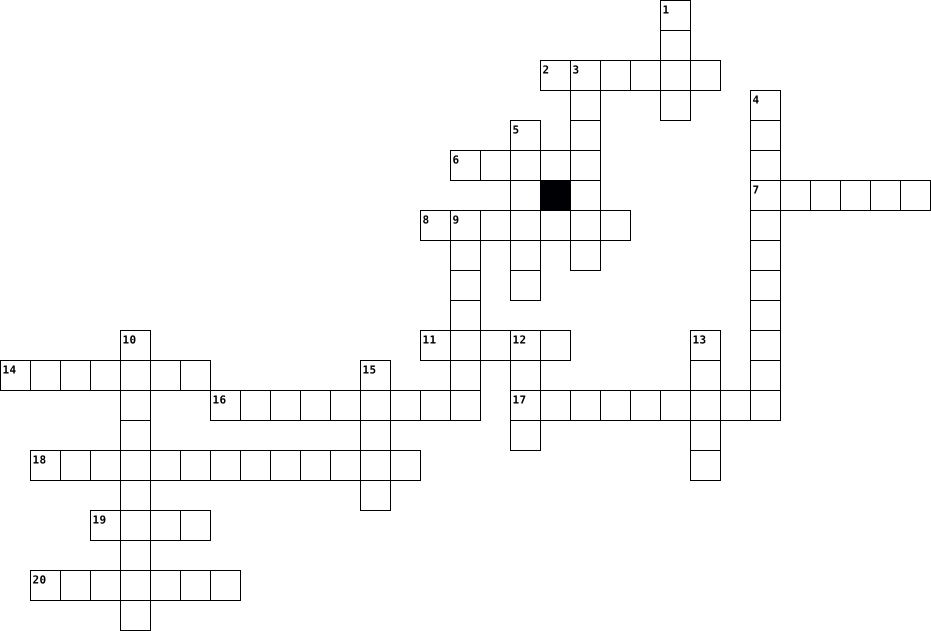
Across
- P _ _ _ e _ (Natural Sciences)
- _ _ u _ _ (math)
- C _ _ o _ _ (art)
- _ u _ _ _ r _ (math)
- V _ _ _ s (language)
- p _ _ _ r _ _ (Natural Sciences)
- F _ _ _ t _ _ _ s (math)
- D _ _ _ s _ _ _ s (math)
- _ _ r _ _ e _ _ _ m _ _ s (Natural Sciences)
- _ _ l _ (language)
- c _ _ _ u _ _ (social studies)
Down
- P _ _ m (Language)
- l _ _ _ e _ _ (Language)
- P _ _ _ e _ _ _ _ e _ (math)
- _ _ m _ e _ (math)
- U _ _ _ e _ _ (natural Sciences)
- _ _ e _ _ d _ _ _ s (social studies)
- _ _ b _ (Natural Sciences)
- s _ _ r _ (social studies)
- b _ _ _ e (Religion)
20 Clues: _ _ u _ _ (math) • C _ _ o _ _ (art) • P _ _ m (Language) • _ _ m _ e _ (math) • _ _ l _ (language) • _ u _ _ _ r _ (math) • V _ _ _ s (language) • b _ _ _ e (Religion) • l _ _ _ e _ _ (Language) • F _ _ _ t _ _ _ s (math) • D _ _ _ s _ _ _ s (math) • _ _ b _ (Natural Sciences) • s _ _ r _ (social studies) • P _ _ _ e _ _ _ _ e _ (math) • P _ _ _ e _ (Natural Sciences) • ...
Latein 8cd (Bn): Grammatikwiederholung I 2024-11-13

Across
- dass-Satz
- Verben beugen
- qui, quae, quod
- schnell in: Peter ist schnell.
- persönliches Fürwort
- petiv von petere
- Bestandteil eines AcI
- z.B. das Hilfsverb esse
- Übereinstimmung von Formen (KNG)
- Frage des Instrumentalis
- Imperativ
- hinweisendes Fürwort
- Bestandteil eines AcI
Down
- Grundform eines Verbs
- Substantive auf as,atis sind ___
- unübersetzer Teil bei Satzfragen
- Ablativ der Zeit
- Perfektbildung
- den AcI nennt man auch eine satzwertige ____
- Perfektbildung
- Bestandteil eines AcI
- Ablativ der Trennung
- unterordnendes Bindewort
- Der Instrumentalis ist eine ___ des Ablativ.
- Tempusmorphem des Imperfekt
- Vorvergangenheit
26 Clues: dass-Satz • Imperativ • Verben beugen • Perfektbildung • Perfektbildung • qui, quae, quod • Ablativ der Zeit • petiv von petere • Vorvergangenheit • Ablativ der Trennung • persönliches Fürwort • hinweisendes Fürwort • Grundform eines Verbs • Bestandteil eines AcI • Bestandteil eines AcI • Bestandteil eines AcI • z.B. das Hilfsverb esse • unterordnendes Bindewort • Frage des Instrumentalis • ...
Roots and Affixes 2025-02-11

Across
- People
- Down, from
- Forms nouns from verbs
- Outside of
- Through, between, across
Down
- Not, negative
- Capable or Worthy of
- Former, completely
- equal
- To say
10 Clues: equal • People • To say • Down, from • Outside of • Not, negative • Former, completely • Capable or Worthy of • Forms nouns from verbs • Through, between, across
Narrative Crossword Puzzle 2022-07-11

Across
- What happens in the story
- The thoughts of the reader
- Those involved in the story
- Not real
- Like terms
Down
- How the problem is solved
- Information that surrounds
- A person, place, or thing
- Real
- Words used to describe
- Action words
- Words that show action
- The writer
- A story
- The problem of the story
- Words used instead of a noun
- Dislike terms
17 Clues: Real • A story • Not real • The writer • Like terms • Action words • Dislike terms • Words used to describe • Words that show action • The problem of the story • How the problem is solved • What happens in the story • A person, place, or thing • Information that surrounds • The thoughts of the reader • Those involved in the story • Words used instead of a noun
Chapter 16 2012-11-05

Across
- Compares two unlike objects by using like or as.
- Using appropriate language to you, audience, speech, and topic.
- The technical vocabulary of a specialized field.
- Enables you to direct the audience attention, thoughts, and feelings.
- The presentation of contrary ideas in parallel form.
- A speech that involves preparation, but no commitment to the exact wording.
- Compares two unlike things by stating that one thing "is" the other.
- The use of word or sentence whose literal meaning is the opposite of the given message.
Down
- The repetition of the same initial sound in two or more words.
- A term or phrase that combines two normally opposite qualities.
- The use of extreme imagination.
- The attribution if human characteristics to inanimate objects.
- Use personal pronouns, asking questions, and creating immediacy to achieve this.
- These are questions used to make a statement rather than be answered.
- Delete these from your speech.
- The use of a part of an object to stand for the whole object.
- Use active verbs, strong verbs, figures of speech, and imagery.
- The substitution of the name for a title with which it's closely associated.
- This should be your primary goal in speaking style.
- A speech you write out word for word and memorize it.
20 Clues: Delete these from your speech. • The use of extreme imagination. • Compares two unlike objects by using like or as. • The technical vocabulary of a specialized field. • This should be your primary goal in speaking style. • The presentation of contrary ideas in parallel form. • A speech you write out word for word and memorize it. • ...
Term 3 so far... 2013-08-04

Across
- The structure we use when writing paragraphs.
- The nominalised version of create.
- A general connective that can be used to start your first evidence sentence.
- The second part of a paragraph.
- Numbers, fractions and percentages are examples of ________.
- Information taken directly from a text, used to support a statement.
- The nominalised version of install.
- Used to make a story more newsworthy.
- Provides more information about an image.
- In ___________, is one way to start your link sentence.
- The main title of a text
- Used to describe nouns.
- The introductory sentence of a paragraph.
- A picture included with an article is known as....
- The News- Mail is our local _____________.
- Shows who wrote the article
- Naming words
Down
- Author's use reader _____________ techniques to influence the reader.
- Loaded words fit into the _________ section of our 8 strategies table.
- Words such as "marauding mob" and "selfish" used to describe teens and elicit negative ____________.
- I skipped up the stairs English because it is my favourite class. What part of speech is "skipped"?
- Authors make _____________ choices about the information they include and leave out of articles.
- The process of turning verbs into nouns to enhance our writing.
- Provide more information about verbs
24 Clues: Naming words • Used to describe nouns. • The main title of a text • Shows who wrote the article • The second part of a paragraph. • The nominalised version of create. • The nominalised version of install. • Provide more information about verbs • Used to make a story more newsworthy. • Provides more information about an image. • The introductory sentence of a paragraph. • ...
ENGLISHHHH BY JOHNY SINS 2025-09-26

Across
- Contain one independent clause and one or more dependent clause (WHAT SENTENCE)
- a type of sentence To give a command, instruction, or make a request.
- Contain two or more independent clauses. (WHAT SENTENCE)
- a type of sentence that asks a question and must end with a question mark.
- MODIFY VERBS, ADJECTIVES.
- WORDS REPLACE THE NOUNS TO AVOID REPETITION.
- The person, place, or thing the sentence is about (PART OF A SENTENCE)
- DESCRIBE OR MODIFY NOUNS, PROVIDING MORE DETAIL.
- a type of sentence To express strong emotion or excitement.
- EXPRESS STRONG EMOTION OR SUDDEN EXLAMATIONS.
- WORDS THAT NAME PEOPLE, PLACE, THINGS, OR IDEAS.
Down
- Contain one independent clause. (WHAT SENTENCE
- a type of sentence that make a statement, express a fact, an opinion, or an explanation.
- RELATIONSHIP OF NOUNS OR PRONOUNS AND OTHER WORDS IN A SENTENCE
- CONNECT CLAUSES, SENTENCES, OR WORDS.
- A single person, place, thing, or idea
- a category to which a word is assigned in accordance with its syntactic functions.
- adjectives show ownership and come directly before a noun, modifying it to indicate belonging.
- the part of the sentence that contains the verb and provides information about the subject. (PART OF A SENTENCE)
- DESCIRBE WHAT THE SUBJECT DOING OR THE STATE OF BEING
20 Clues: MODIFY VERBS, ADJECTIVES. • CONNECT CLAUSES, SENTENCES, OR WORDS. • A single person, place, thing, or idea • WORDS REPLACE THE NOUNS TO AVOID REPETITION. • EXPRESS STRONG EMOTION OR SUDDEN EXLAMATIONS. • Contain one independent clause. (WHAT SENTENCE • DESCRIBE OR MODIFY NOUNS, PROVIDING MORE DETAIL. • WORDS THAT NAME PEOPLE, PLACE, THINGS, OR IDEAS. • ...
Tier 2023-02-28

Across
- -en parrot
- to look/watch
- not (to negate verbs and adjectives)
- to paint
- only
- named
Down
- series
- -e pig
- on
- any/no (to negate nouns)
10 Clues: on • only • named • series • -e pig • to paint • -en parrot • to look/watch • any/no (to negate nouns) • not (to negate verbs and adjectives)
Grammar crossword: MODULE 1 & 2 2021-11-04

Across
- Is a word that expresses an action or a state of being.
- verb It is also known as an auxiliary verb.
- Is a word used to name a person, place, thing or idea
- Complete the sentence. Most linking verbs, except the forms of … and seem, may also be used as action verbs.
- adjectives It´s formed from a proper noun and begins with a capital letter.
- It modifies a word by telling what kind, which one, how much or how many.
- She, him, myself, and both are__
- Are nouns that can be identified through one or more of the five senses.
- It tells where, when how, or to what extent.
- Is a verb that can be used to express physical or mental actions.
- Is a verb that links the subject to information about that subject.
- Is a pronoun that introduces a subordinate clause.
Down
- Is a verb that expresses an action towards a person, place or thing.
- He tried to work alone. The adverb in the sentence is…
- phrase Consists of a main verb preceded by at least one helping verb.
- Is a verb that expresses an action.
- The specific name of a place, person, thing or idea is known as a__noun.
- Love, hope, and honesty are__nouns
- People, holiday, cheese, team are__nouns.
- Is a pronoun used to point something out.
20 Clues: She, him, myself, and both are__ • Love, hope, and honesty are__nouns • Is a verb that expresses an action. • People, holiday, cheese, team are__nouns. • Is a pronoun used to point something out. • verb It is also known as an auxiliary verb. • It tells where, when how, or to what extent. • Is a pronoun that introduces a subordinate clause. • ...
spelling week 6 2015-03-03

Across
- a number
- you stand on it
- a planet
- i am very...
- i was sick but now I'm
- i have a handle
- i can fly
Down
- a very common word
- you are very...
- animals have it
- the earth has one
- people us me to fight
- i mix together
- i am a doing word
- its your...
15 Clues: a number • a planet • i can fly • its your... • i am very... • i mix together • you are very... • you stand on it • animals have it • i have a handle • the earth has one • i am a doing word • a very common word • people us me to fight • i was sick but now I'm
Sam Bloomberg Vocab 6 2013-11-21

Across
- he gave a __________
- the ______ of two opposite rays with a common endpoint is a line
- talented
- tight
- un essential
Down
- hard
- you_______ verbs
- skill less
- the bearing _______
- conquer
10 Clues: hard • tight • conquer • talented • skill less • un essential • you_______ verbs • the bearing _______ • he gave a __________ • the ______ of two opposite rays with a common endpoint is a line
game design elements 2021-10-01

Across
- is it 3d or not
- too easy? too hard?
- verbs
- coins
- allowed or not?
- points
Down
- joysticks
- sprites
- is it simple?
9 Clues: verbs • coins • points • sprites • joysticks • is it simple? • is it 3d or not • allowed or not? • too easy? too hard?
Science Vocabulary 2023-04-19

Across
- spinning
- eats both
- dissolves in water
- the energy of actions (verbs)
- When rocks stop moving and fall
- eats consumers/meat
Down
- eats producers/plants
- heat energy
- makes U-shaped valleys
- the breaking of rock
- the movement of rock
- body parts
- the sources of all energy on Earth
- solid to liquid
- what those body parts do
- going around something
16 Clues: spinning • eats both • body parts • heat energy • solid to liquid • dissolves in water • eats consumers/meat • the breaking of rock • the movement of rock • eats producers/plants • makes U-shaped valleys • going around something • what those body parts do • the energy of actions (verbs) • When rocks stop moving and fall • the sources of all energy on Earth
Las Palabritas 2025-11-05

Across
- goes
- my (singular)
- he/she wants
- Which?
- Who?
- yes
- the (feminine/singular)
- I talk/speak
- a verb in its original form
- never
- what is left of the verb when you remove the ending
- I
- to be (description)
- to the
- Why?
- I am (location/feeling)
- for/to/by
- we (masculine/mixed group)
- I want
- you all
- you (formal)
- the (feminine/plural)
- she
- the (masculine/singular)
- I am (description)
- you (informal)
- of/from
- most verbs in Spanish are this type of verb
Down
- he/she talks or speaks
- his/her/their (plural)
- sees
- I like
- his/her/their (singular)
- with
- When?
- he
- Where?
- always
- without
- the (masculine/plural)
- my (plural)
- if
- because
- there is/there are
- we (feminine)
- they (masculine/mixed group)
- I go
- I have
- by/for
- when you change the verb by adding the correct ending which tells us who is doing the action
- your (plural)
- they (feminine)
- but
- your (singular)
- to be (location/emotion)
- the definitions of all verbs in the infinitive form start with this
- of the/from the
- also
58 Clues: I • he • if • yes • but • she • goes • sees • with • Who? • I go • Why? • also • When? • never • I like • Which? • Where? • always • to the • I have • by/for • I want • without • because • you all • of/from • for/to/by • my (plural) • he/she wants • I talk/speak • you (formal) • my (singular) • we (feminine) • your (plural) • you (informal) • they (feminine) • your (singular) • of the/from the • there is/there are • I am (description) • to be (description) • ...
crossword 2020-02-21

Across
- One of the two finite forms of a verb (4).
- This determines the three categories of
- The word used to modify verbs (6).
- This word indicates the form of a noun,
- The word used to qualify nouns (9).
- This word often denotes the time of an activity (5).
- or adjective, and is used in a court of
- The name by which a word that assumes two forms or characters is called (4).
Down
- The word is also used to call the basic or infinitive form of a verb (4).
- The grammatical word modal is derived from this word (4).
- These are a special set of auxiliary verbs usually eight in number (6).
- This tense construction will contain have or has or had as an auxiliary verb (7).
- like we, you, they etc (6).
- A word that indicates an activity, state or possession
- This aspect of the verb determines whether the subject or the object is active
- This word is also known as verbal noun (6).
- Any grammatically acceptable sentence must have this clause (4).
- What we add to the end of a statement as a short question
18 Clues: like we, you, they etc (6). • The word used to modify verbs (6). • The word used to qualify nouns (9). • This determines the three categories of • This word indicates the form of a noun, • or adjective, and is used in a court of • One of the two finite forms of a verb (4). • This word is also known as verbal noun (6). • This word often denotes the time of an activity (5). • ...
Prepositions 2012-09-28

Across
- opposed to
- against
- alongside
- A vowel expressing pain
- no matter what
- free from
- below
Down
- the opposite of add
- Used as a modifer;used before nouns,verbs,pronouns, etc.
- free from hurt
- ______ from harm
11 Clues: below • against • alongside • free from • opposed to • free from hurt • no matter what • ______ from harm • the opposite of add • A vowel expressing pain • Used as a modifer;used before nouns,verbs,pronouns, etc.
Parts of Speech 2024-08-16

Across
- Words that name people, places, things, or ideas.
- Words that replace nouns in a sentence.
- Words that describe or modify nouns or pronouns.
- Words used to modify nouns and indicate whether they refer to something specific or general (a, an, the).
- Words that show the relationship between a noun or pronoun and other words in a sentence.
Down
- Words that connect words, phrases, or clauses.
- Words used to express strong emotion or sudden feeling.
- Words that modify verbs, adjectives, or other adverbs.
- Words that express actions or states of being.
9 Clues: Words that replace nouns in a sentence. • Words that connect words, phrases, or clauses. • Words that express actions or states of being. • Words that describe or modify nouns or pronouns. • Words that name people, places, things, or ideas. • Words that modify verbs, adjectives, or other adverbs. • Words used to express strong emotion or sudden feeling. • ...
PUZZLE 2021-01-11

Across
- a list of references found at the latter part of a book or an article
- Africa third country announced that has new covid-19 strain variants
- clue is an information that appears near a word or phrase and offers direct or indirect suggestions about its meaning
- Kingdom first country announced that has new covid-19 strain variants
- used to make conclusions based on previously stated information or ideas
- used to provide examples to make ideas clearer
- second country announced that has new covid-19 strain variants
- CO stands for corona VI for virus D for disease and this disease was referred to as 2019 Novel coronavirus
- first city had covid-19 cases
- most common symptoms
- third most common symptoms
Down
- used to compare or contrast two different ideas
- cough second most common symptoms
- used to show cause and effect relationships
- verbs auxiliary verbs that express the: possibility,probability,instructions and request,suggestions,offers,necessity etc
- is an infectious disease caused by a newly discovered virus and will experience mild to moderate symptoms
- vaccines from British-Swedish pharmaceutical firm
- vaccines from Serum Institute of India
- qualify or modify an adjective,verb or another adverb.
- is a word that means the same or nearly the same as another word in the same language
20 Clues: most common symptoms • third most common symptoms • first city had covid-19 cases • cough second most common symptoms • vaccines from Serum Institute of India • used to show cause and effect relationships • used to provide examples to make ideas clearer • used to compare or contrast two different ideas • vaccines from British-Swedish pharmaceutical firm • ...
Solve the crossword! 2023-08-28

Across
- har
- fortid
- engelsk
Down
- var
- ...verbs
- my name...
- roten til "være"
- ...you like it?
8 Clues: var • har • fortid • engelsk • ...verbs • my name... • ...you like it? • roten til "være"
Grammar Tip Sheet 2013-02-06

Across
- Find the Verb in this sentence: Jack ran to the bus stop.
- Nouns that refer to specific things
- A, AN, and THE are _____
- Words that connect word or groups of words in a sentence.
- Names a person, plce, thing, or idea.
Down
- These type of nouns name a particular person, place, thing, or idea.
- Word thaat modify verbs, adjectives or other verbs.
- A word that relates a noun or pronoun to another word in a sentence.
- A word or group of words that expresses feeling or emotion. Interjections have no grammatical relationship to any other word in a sentence.
- Student, day, night, kitten, are what types of nouns?
10 Clues: A, AN, and THE are _____ • Nouns that refer to specific things • Names a person, plce, thing, or idea. • Word thaat modify verbs, adjectives or other verbs. • Student, day, night, kitten, are what types of nouns? • Find the Verb in this sentence: Jack ran to the bus stop. • Words that connect word or groups of words in a sentence. • ...
3. Vokabeltest 9e - 05.07.17 2017-07-04

Across
- somebody who pays somebody else for services or advice
- Verbs like ‘see’, ‘watch’, ‘hear’, ‘feel’ are verbs of ...
- A job for which no training or education is needed is called an … work. Examples of such tasks: picking fruit, working at a fast food retaurant, cleaning etc.
- (to) become more, (to) go up = (to) …
- (to) guess or calculate the cost, size, age of something
Down
- a drawing that shows information in a simple way, often using lines etc. to show amounts
- (to) make something dirty/unclean = (to) ...
- (to) keep attacking and annoying somebody = (to) …
- (to) make something part of something else = (to) …
- the opposite of ‘to construct’, ‘to build up’ = (to) ...
10 Clues: (to) become more, (to) go up = (to) … • (to) make something dirty/unclean = (to) ... • (to) keep attacking and annoying somebody = (to) … • (to) make something part of something else = (to) … • somebody who pays somebody else for services or advice • the opposite of ‘to construct’, ‘to build up’ = (to) ... • (to) guess or calculate the cost, size, age of something • ...
Level 5 Matrix Skills 2019-01-04

Across
- the mixed third and second conditional is also called "the _____ conditional"
- preposition used after the adjectives "confident", "optimistic", "doubtful", etc.
- the verbs "fail", "strive", "learn", etc. are followed by this verbal
- verb tense that relates two past actions (4,7)
- verbal phrase commonly used after "before", "while", "after", etc.
Down
- the most common examples of this verb are "make", "get", "let" and "have"
- vocabulary related to food, diet, religion, etc. can be useful for this function (talking about _____)
- grammar topic used for reporting what was said (8,6)
- vocabulary topic that can be useful for talking about personal characteristics
- the verbs "appreciate", "suggest", "mention", etc. are followed by this verbal
10 Clues: verb tense that relates two past actions (4,7) • grammar topic used for reporting what was said (8,6) • verbal phrase commonly used after "before", "while", "after", etc. • the verbs "fail", "strive", "learn", etc. are followed by this verbal • the most common examples of this verb are "make", "get", "let" and "have" • ...
SEA ENGLISH 2026-08-19

Across
- Who marched up to Garha to invade?
- _________ verb comes before the main verb to complete the sentence.
- _________ are the verbs that need an object to complete its meaning.
- What do we call the words which are required to complete the thought of a verb.
Down
- Who was the emperor who ordered to invade Rani’s Garha?
- Who was the queen ascended the throne of Gondwana?
- rider Who offered Rani to take her to a safer place to protect her?
- A verb that has an object to complete its meaning is called ______.
- __________ are the verbs that change as per person and tense.
- What is meant by ‘safe place’?
10 Clues: What is meant by ‘safe place’? • Who marched up to Garha to invade? • Who was the queen ascended the throne of Gondwana? • Who was the emperor who ordered to invade Rani’s Garha? • __________ are the verbs that change as per person and tense. • _________ verb comes before the main verb to complete the sentence. • ...
english - topic 1 types of words keywords 2022-02-04

Across
- types of words used to describe verbs or how something is done
- words that come before a noun to introduce it
- words that names a person, place, thing or idea
- types of words that tells you where or when something is
Down
- words that describe the nouns
- types of words used instead of nouns
- ‘doing’ words
7 Clues: ‘doing’ words • words that describe the nouns • types of words used instead of nouns • words that come before a noun to introduce it • words that names a person, place, thing or idea • types of words that tells you where or when something is • types of words used to describe verbs or how something is done
Chapter 16 2017-03-29

Across
- Compares two unlike tings using words like or as
- Make the negative and unpleasant appear positive and appealing
- Attribution of human characteristics to inanimate objects
- Words whose meanings are slippery and difficult to pin down
- Degree to which a communication style resembles that of information conversation as opposed to more formal style of writing
- Overly complex language that overwhelms the listener instead of communicating meaning
- Use of extreme exaggeration
- Use of a word sentence whose literal meaning is the opposite of the message actually conveyed
- Compares two unlike things by stating that one thing "is" the other
- Speaking style should be your primary goal
Down
- Active verbs, strong verbs, figures of speech, and imagery
- Phrases that have lost their novelty and part of their meaning through overuse
- Language used to confuse rather than inform
- Presentation of contrary ideas in parallel form
- A term or phrase that combines two normally opposite qualities
- Language enables you to direct the audience's attention, thoughts, and feelings
- Stylistic devices that have been a part of rhetoric since ancient times
- Specialized language of a professional class
- Repetition of the same initial sound in two or more words
- The substitution of a name for a title with which it's closely associated
20 Clues: Use of extreme exaggeration • Speaking style should be your primary goal • Language used to confuse rather than inform • Specialized language of a professional class • Presentation of contrary ideas in parallel form • Compares two unlike tings using words like or as • Attribution of human characteristics to inanimate objects • ...
Parts of speech 2025-09-23

Across
- approach combining semantic, formal and functional criteria.
- denoting things, notions, qualities (have real-world reference).
- 1 in Fries’s system substitutes for "concert, clerk, team".
- word that shows an action, process, or state.
- who created substitution frames A, B, C for classification (1956).
- of words that admits new words such as nouns, verbs, adjectives, adverbs.
- role and combinability of a word in a phrase refers to this criterion.
- who divided words into declinables and particles in 1892.
- 4 in Fries’s system substitutes for "there".
- based on Latin grammar and declinable/indeclinable words.
- used as grammatical means with no real-world reference.
Down
- features like inflections and derivation are this criterion.
- of words with limited membership such as pronouns, prepositions, etc.
- 3 in Fries’s system substitutes for "good".
- using distributional analysis and substitution frames.
- word that names a person, place, thing, or idea.
- 2 in Fries’s system substitutes for "was, went, remembered".
- Lexico-grammatical class of words possessing common categorical meaning.
- of words which have similar functions (Cambridge Grammar, 2007).
- who said classification should consider form, function and meaning (1935).
20 Clues: 3 in Fries’s system substitutes for "good". • 4 in Fries’s system substitutes for "there". • word that shows an action, process, or state. • word that names a person, place, thing, or idea. • using distributional analysis and substitution frames. • used as grammatical means with no real-world reference. • who divided words into declinables and particles in 1892. • ...
Grammar crossword: MODULE 1 & 2 2021-11-04

Across
- Is a word that expresses an action or a state of being.
- verb It is also known as an auxiliary verb.
- Is a word used to name a person, place, thing or idea
- Complete the sentence. Most linking verbs, except the forms of … and seem, may also be used as action verbs.
- adjectives It´s formed from a proper noun and begins with a capital letter.
- It modifies a word by telling what kind, which one, how much or how many.
- She, him, myself, and both are__
- Are nouns that can be identified through one or more of the five senses.
- It tells where, when how, or to what extent.
- Is a verb that can be used to express physical or mental actions.
- Is a verb that links the subject to information about that subject.
- Is a pronoun that introduces a subordinate clause.
Down
- Is a verb that expresses an action towards a person, place or thing.
- He tried to work alone. The adverb in the sentence is…
- phrase Consists of a main verb preceded by at least one helping verb.
- Is a verb that expresses an action.
- The specific name of a place, person, thing or idea is known as a__noun.
- Love, hope, and honesty are__nouns
- People, holiday, cheese, team are__nouns.
- Is a pronoun used to point something out.
20 Clues: She, him, myself, and both are__ • Love, hope, and honesty are__nouns • Is a verb that expresses an action. • People, holiday, cheese, team are__nouns. • Is a pronoun used to point something out. • verb It is also known as an auxiliary verb. • It tells where, when how, or to what extent. • Is a pronoun that introduces a subordinate clause. • ...
Reflexive Verbs S1 U5 2019-02-13

Across
- I wash my face.
- I take a shower.
- I go to bed. (stem-changing)
- the comb
- Reflexive verbs are used to describe someone's _____ _____.
- the towel
- I shave my legs.
Down
- the shampoo
- toothpaste
- I dry off with a towel.
- Action doer= __________ ___________
- I put on clothes. (use notes)
- I brush my hair.
- I get up.
- the deodorant
15 Clues: the comb • I get up. • the towel • toothpaste • the shampoo • the deodorant • I wash my face. • I brush my hair. • I take a shower. • I shave my legs. • I dry off with a towel. • I go to bed. (stem-changing) • I put on clothes. (use notes) • Action doer= __________ ___________ • Reflexive verbs are used to describe someone's _____ _____.