
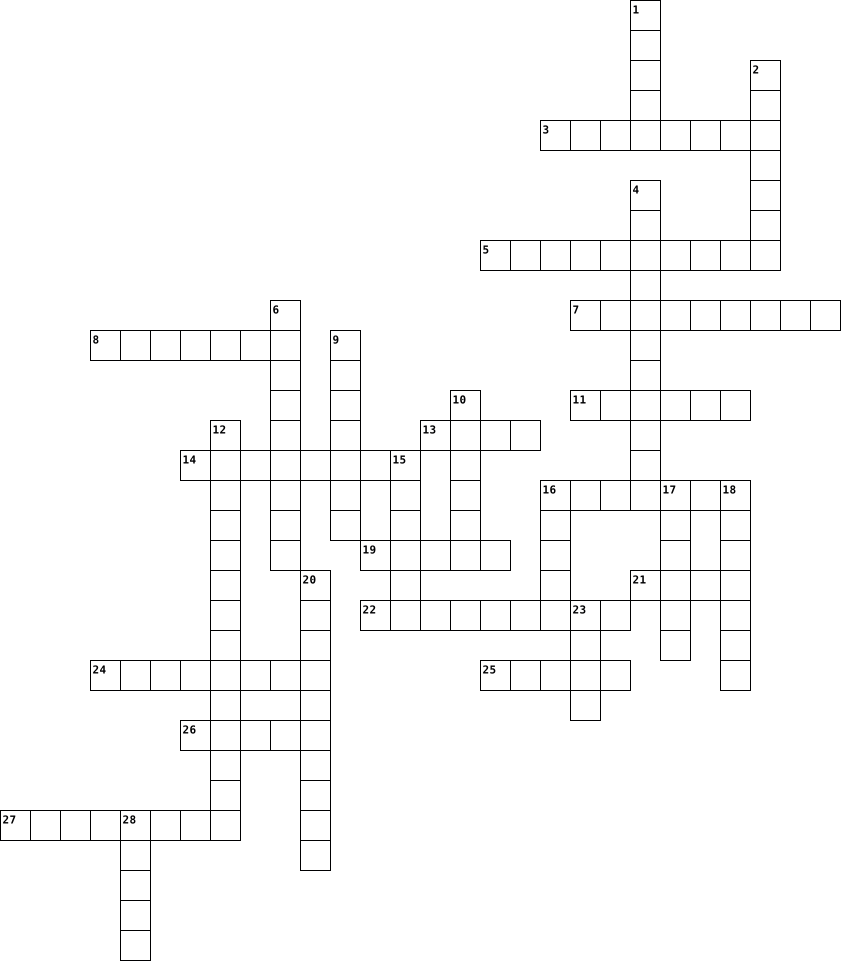
cells Crossword Puzzles
cells 2019-12-11

Across
- describing a material or tissue
- are enzyme that made up of four identical protein subunits
- are chemical substances that may or may not present
- are a phase of matter and include liquids,gases and plasmas
- process of introducing a phosphate group into an organic molecule
- diffusion of water through a selectively permeable membrane
- are the membrane protein that attached permanently to the cell membrane
- include actin and myosin
- is a waxy,fat-like substance that is found in all cell in your body
- is a complex of DNA and protein found in eukaryotic cells
- also called spheroproteins
- the spiral arrangement of the two complementary strands of DNA
- is the ingestion of liquid into a cell budding of small vesicles from the small membrane
- cells that have more than one nucleus per cells
- is a transports substances throughout the cell
- is a contractile protein in muscle,found in thin filaments
Down
- are the main constituent of the thick filaments
- is the process of removing toxic substances
- cells fitting closely together in the lenticel
- also called water channels
- are proteins which contain oligosaccharide chain
- defined as chemical messenger
- also known as intracellular fluids or cytoplasm matrix
- having a lower osmotic pressure than a particular fluid
- cells are cells that contain two nuclei
- is a contractile protein that forms microtubules
- substances that can enter a cell by dissolving in the lipid portion of the membrane
- also known as fluid static
- is an enzyme that catalyzes the linking together of two molecules
- are fold in the inner membrane of mitochondrion
30 Clues: include actin and myosin • also called water channels • also called spheroproteins • also known as fluid static • defined as chemical messenger • describing a material or tissue • cells are cells that contain two nuclei • is the process of removing toxic substances • cells fitting closely together in the lenticel • is a transports substances throughout the cell • ...
Cells 2017-04-04

Across
- virus that infects bacteria
- one of two identical "sister" parts of a duplicated chromosone
- a change or alteration, as in form or nature.
- monomer of nucleic acids made up of a 5-carbon sugar, a phosphate group, and a nitrogenous base
- a segment of DNA to which a transcription factor binds to regulate gene expression by repressing i
- a small RNA molecule, consisting of a strand of nucleotides folded into a clover-leaf shape, that picks up an unattached amino acid within the cell cytoplasm and conveys it to the ribosome for protein synthesis.
- the process by which cells or tissues change from relatively generalized to specialized kinds, during development.
- having a chromosome number that is more than double the basic or haploid number.
- the act or process of transcribing.
- any portion of an interrupted gene that is represented in the RNA product and is translated into protein.
- a change in a single base in a nucleotide sequence.
- a noncoding segment in a length of DNA that interrupts a gene-coding sequence or nontranslated sequence, the corresponding segment being removed from the RNA copy before transcription.
- an enzyme that synthesizes the formation of RNA from a DNA template during transcription.
- RNA molecule that carries copies of instructions for the assembly of amino acids into proteins from DNA to the rest of the cell
- principle that bonds in DNA can form only between adenine and thymine and between guanine and cytosine
Down
- copying process by which a cell duplicates its DNA
- a set of two or more adjacent cistrons whose transcription is under the coordinated control of a promoter, an operator, and a regulator gene.
- a mutation caused by frameshift.
- process in which one strain of bacteria is changed by a gene or genes from another strain of bacteria
- a triplet of adjacent nucleotides in the messenger RNA chain that codes for a specific amino acid in the synthesis of a protein molecule.
- protein molecule around which DNA is tightly coiled in chromatin
- change or conversion to another form, appearance, etc. transformation:
- a site on a DNA molecule at which RNA polymerase binds and initiates transcription.
- a sequence of three nucleotides in a region of transfer RNA that recognizes a complementary coding triplet of nucleotides in messenger RNA during translation by the ribosomes in protein biosynthesis.
- enzyme involved in DNA replication that joins individual nucleotides to produce a DNA molecule
- sequence of DNA that codes for a protein and thus determines a trait
- type of RNA that makes up the major part of ribosomes
- any of a class of genes that determines the basic structure and orientation of an organism.
28 Clues: virus that infects bacteria • a mutation caused by frameshift. • the act or process of transcribing. • a change or alteration, as in form or nature. • copying process by which a cell duplicates its DNA • a change in a single base in a nucleotide sequence. • type of RNA that makes up the major part of ribosomes • ...
Cells 2016-11-30
Across
- boundary outside the cell, found in both plant and animal cells
- folded membrane that moves materials around the cell
- Packaging and secreting of proteins out of the cell parts
- outside the cell membrane, plant calls only
- created the idea that all cells arise from pre-existing cells
- allows certain materials to pass thru it
- diffusion of water
- saw single cell organisms under scope
- site of protein synthesis
- movement of materials across the membrane which requires the expenditure of energy
- has enzymes that digest waste and worn out cell parts
- discovered the nucleus
Down
- have organelles and a nucleus
- surrounds the nucleus and is selectively permeable
- storage area for water, food, or waste
- movement of molecules from high concentration to low concentration
- lack organelles and no nucleus
- watery material inside the cell
- doesn't require any use of energy by the cell
- site of cellular respiration
- light energy is changed to chemical energy, plant cells only
- cell division, animal cells only
- control center of a cell
- all animals are made of cells
- made up the word "Cell"
25 Clues: diffusion of water • discovered the nucleus • made up the word "Cell" • control center of a cell • site of protein synthesis • site of cellular respiration • have organelles and a nucleus • all animals are made of cells • lack organelles and no nucleus • watery material inside the cell • cell division, animal cells only • saw single cell organisms under scope • ...
CELLS 2019-07-10
Across
- is the first phase of mitosis, the process that separates the duplicated genetic material carried in the nucleus of a parent cell into two identical daughter cells.
- is the specialized DNA sequence of a chromosome that links a pair of sister chromatids.
- are a type of leucoplast that is specialized for the storage of lipids in plants.
- are tiny, numerous organelles that are bounded by 2 membrane
- is the physical process of cell division, which divides the cytoplasm of a parental cell into two daughter cells.
- any of a class of substances which occur as constituents of the cell walls of plants
- are the food producers of the cell.
- invloved in the architecture of cells and internal movement.
- found in zones of the plant where growth can take place.
- Within the __________, proteins are stored, modified, sorted, and packed into vesicles (which are then closed off as Golgi vesicles) for further transport.
- a narrow thread of cytoplasm that passes through the cell walls of adjacent plant cells and allows communication between them.
- is the phase of the cell cycle in which a typical cell spends most of its life.
- contended that every cell comes from a preexisting cell
Down
- discovered in 1955 by George E. Palade nd described them as small particles in the cytoplasm.
- organisms whose cells have a nucleus enclosed within membranes
- the material or protoplasm within a living cell, excluding the nucleus.
- one cell divides once to form two identical cells.
- a substance formed in or necessary for metabolism.
- is a naturally occurring substance (a polysaccharide) found in berries, apples and other fruit.
- component of the cytoplasm of a cell, within which various organelles and particles are suspended.
- a carbohydrate whose molecules consist of a number of sugar molecules bonded together.
- dense region composed of protein complex, located in the outer region face of each centromere
- a colorless organelle found in plant cells, used for the storage of starch or oil.
- a narrow thread of cytoplasm that passes through the cell walls of adjacent plant cells and allows communication between them.
- are specialized peroxisomes found in plants and also in filamentous fungi
- are the pigments that give red, purple, and blue plants their rich coloring.
- any of a number of organized or specialized structures within a living cell.
- tiny, keg-shaped structures
- concluded that all living tissue is composed of cells
29 Clues: tiny, keg-shaped structures • are the food producers of the cell. • one cell divides once to form two identical cells. • a substance formed in or necessary for metabolism. • concluded that all living tissue is composed of cells • contended that every cell comes from a preexisting cell • found in zones of the plant where growth can take place. • ...
Cells 2017-10-02

Across
- the organelle that controls all cell activities; contains DNA
- when water is diffused to equalize an area
- bread and pasta are examples of this
- an er with ribosomes in it
- an organelle that disposes of unnecessary waste
- a group of organs that work together to perform the same task
- permeable lets certain things through and some things not
- turns food into energy the cell can use to live
- an organism that is made up of only one cell
Down
- an organelle and that stores food and water
- a type of tr a sport that does not require o ton of energy
- when molecules move from an area of low concentration to an area of high concentration
- a scientific tool used to help magnify and study an object
- an organelle that converts sunlight into food and energy; found only in a plant cell
- parts that make up a cell
- an organelle that controls what enters and leaves a cell
- speeds up a reaction in the body
- the region of a jelly-like substance between the different organelles of a cell
- an organelle that receives, packages, and distributes
- stores energy, examples are butter and oils
20 Clues: parts that make up a cell • an er with ribosomes in it • speeds up a reaction in the body • bread and pasta are examples of this • when water is diffused to equalize an area • an organelle and that stores food and water • stores energy, examples are butter and oils • an organism that is made up of only one cell • an organelle that disposes of unnecessary waste • ...
Cells 2017-01-30

Across
- the smallest structural and functional unit of an organism
- total of all chemical reactions that take place in our cells
- energy producers in the cell that carry our cellular respiration to produce energy for the cell
- tough, rigid structure that surrounds the cell membrane and ives the cell a rectangular, box-like shape
- the substance in a nucleus that carries the heredity materials that is passed on from generation to generation
- a network of membrane-covered channels that transport materials
- cell parts that assemble proteins
- a cell structure containing digestive chemicals that function to break down food particles, cell wastes and worn-out cell parts
- movement of particles from an area of higher concentration to that of a lower concentration
- a process in which the chemical energy taken in through food is changed into energy that cells use to carry out activities
- a cell structure in which functions are carried for its survival
- a structure in cells that sorts proteins and pack them into vesicles
- chemical reaction that takes place
- jelly-like substance within a cell, containing organelles, water and other life-supporting materials
- tiny non-living particles capable of reproducing only when they are inside a host cell; they ahem no nucleus or organelles and are usually disease causing
- a thin protective covering that separates the interior of a cell from its surroundings; also controls the movement of particles into and out of the cell
- organelle that controls all the activities within a cell
Down
- an individual animal, plant, or single-celled life form.
- refers to the amount of substance in a given space
- a membrane that allows some materials to pass through it but keeps other materials out
- any of single celled micro-organisms; some cause diseases
- parts of plants that trap energy from the sun and change it into chemical energy
- membrane-wrapped structures that carry proteins, nutrients, and water into, out of, and around the inside of a cell
- temporary storage compartments that sometimes store waste
- diffusion of water particles through a selectively permeable membrane
- a state in which there are same number of particles on both sides of the cell membrane
- type of cell whose organelles are surrounded by membranes
- type of cell whose organelles are not surrounded by membranes
- essential nutrients used to build muscles, skin, and hair
29 Clues: cell parts that assemble proteins • chemical reaction that takes place • refers to the amount of substance in a given space • an individual animal, plant, or single-celled life form. • organelle that controls all the activities within a cell • any of single celled micro-organisms; some cause diseases • temporary storage compartments that sometimes store waste • ...
Cells 2017-01-30

Across
- cell parts that assemble proteins
- an individual animal, plant, or single-celled life form.
- jelly-like substance within a cell, containing organelles, water and other life-supporting materials
- a thin protective covering that separates the interior of a cell from its surroundings; also controls the movement of particles into and out of the cell
- a structure in cells that sorts proteins and pack them into vesicles
- energy producers in the cell that carry our cellular respiration to produce energy for the cell
- chemical reaction that takes place
- tough, rigid structure that surrounds the cell membrane and ives the cell a rectangular, box-like shape
- the substance in a nucleus that carries the heredity materials that is passed on from generation to generation
- a process in which the chemical energy taken in through food is changed into energy that cells use to carry out activities
- the smallest structural and functional unit of an organism
- organelle that controls all the activities within a cell
- a cell structure in which functions are carried for its survival
- a state in which there are same number of particles on both sides of the cell membrane
- movement of particles from an area of higher concentration to that of a lower concentration
- type of cell whose organelles are surrounded by membranes
- membrane-wrapped structures that carry proteins, nutrients, and water into, out of, and around the inside of a cell
Down
- temporary storage compartments that sometimes store waste
- essential nutrients used to build muscles, skin, and hair
- total of all chemical reactions that take place in our cells
- a cell structure containing digestive chemicals that function to break down food particles, cell wastes and worn-out cell parts
- any of single celled micro-organisms; some cause diseases
- a network of membrane-covered channels that transport materials
- diffusion of water particles through a selectively permeable membrane
- parts of plants that trap energy from the sun and change it into chemical energy
- refers to the amount of substance in a given space
- type of cell whose organelles are not surrounded by membranes
- tiny non-living particles capable of reproducing only when they are inside a host cell; they ahem no nucleus or organelles and are usually disease causing
28 Clues: cell parts that assemble proteins • chemical reaction that takes place • refers to the amount of substance in a given space • an individual animal, plant, or single-celled life form. • organelle that controls all the activities within a cell • temporary storage compartments that sometimes store waste • essential nutrients used to build muscles, skin, and hair • ...
Cells 2017-11-18

Across
- within nucleus,where ribosomes are made
- movement of molecules from high concentration to low concentration
- storage area in cell for water,food,or waste and larger in plants
- the movement of materials out of the cell at the cell membrane
- paging and secreting of proteins out of the cell parts
- the conc. of the substances in solution<conc. inside the cell,water moves into the cell
- surrounds nucleus it is selectively permeable
- it allows certain materials to pass thru it
- the shrinking of the cell membrane
- watery material inside cell, holds organelles
- taking in of a liquid molecule
- control center for the cell processes contains DNA and RNA (genes)
Down
- basic building blocks of life
- the cell engulfs a substance outside the cell and surrounds it with the cell membrane
- conc. of dissolved substances inside=outside of cell
- light energy is changed into chemical energy in the form of sugar
- has enzymes which digests waste and worn out cell parts
- site of protein synthesis they are free or attached to the ER
- power house of the cell
- the conc. of substances in solution>conc. inside the cell,water moves out of the cell
- movement materials across the membrane which requires the expenditure of energy
- outer cell boundary allows certain materials to move into and out of the cell
- taking in of a solid particle
- rigid structure outside cell membrane supports and protects the plant
- for cell division
- the diffusion of water
26 Clues: for cell division • the diffusion of water • power house of the cell • basic building blocks of life • taking in of a solid particle • taking in of a liquid molecule • the shrinking of the cell membrane • within nucleus,where ribosomes are made • it allows certain materials to pass thru it • surrounds nucleus it is selectively permeable • ...
Cells 2020-10-01

Across
- area of conscious thought
- cells that are left after mitosis
- can turn in to any type of tissue
- controls balance and muscular co-ordination
- what is made in animal fermentation
- transport that requires energy
- movement of molecules
- when an animal cell is placed in a hypo tonic solution
- controls breathing and heartbeat
- when plant cell is placed in a hypo tonic solution
Down
- where protein synthesis takes place
- what binds to the enzyme
- speed up reactions
- stem cells are used for growth and this
- what the cut out insulin gene is put into
- where aerobic respiration starts
- made of sugar and phosphate
- the process when cells divide
- movement of water
- this and CO2 are waste substance in aerobic respiration
20 Clues: movement of water • speed up reactions • movement of molecules • what binds to the enzyme • area of conscious thought • made of sugar and phosphate • the process when cells divide • transport that requires energy • where aerobic respiration starts • controls breathing and heartbeat • cells that are left after mitosis • can turn in to any type of tissue • ...
cells 2020-11-02

Across
- keeps the shape of the cell
- protists,fungi, plant+animal cells
- functions in light reception
- cells move in response light
- more advanced/bigger type of cell
- short,hairlike,move like a rowboat
- making an object look bigger
- bacteria and archaea cells
- make protein for use by organism
- cells move in response to chemicals
- genetic material
Down
- developed in direction of movement
- move cell (move in whip like mode)
- internal framework of cell
- simplest/oldest type of cell
- fluid material within cell
- to distinguish between 2 objects
- where photosynthesis takes place
- cellular respiration (powerhouse)
- outer boundary
- single celled/only seen w microscope
- water filled sac in cytoplasm
22 Clues: outer boundary • genetic material • internal framework of cell • fluid material within cell • bacteria and archaea cells • keeps the shape of the cell • simplest/oldest type of cell • functions in light reception • cells move in response light • making an object look bigger • water filled sac in cytoplasm • to distinguish between 2 objects • where photosynthesis takes place • ...
CELLS 2020-11-04

Across
- The control center of a cell
- everything is made up of...
- the unified and widely accepted theory of how organelles arose in organisms, differing prokaryotic organisms from eukaryotic organisms. This ancestor probably resembled a bacteria, or prokaryote with a single strand of DNA surrounded by a plasma membrane.
- This is also known as the plasma membrane
- a single-celled organism of the kingdom Protista
- organism that possesses a clearly defined nucleus. The eukaryotic cell has a nuclear membrane that surrounds the nucleus
- single-celled organism that has neither a distinct nucleus with a membrane nor other specialized organelles.
- hairlike organelles
- jelly-like fluid that fills a cell
- This is known as storage for the cell
- This is also known as the cell membrane
- Powerhouse of the cell
- structures inside the cell
- lipids whose molecule has a hydrophilic "head" containing a phosphate group, and two hydrophobic "tails" derived from fatty acids, joined by an alcohol residue.
Down
- only lets certain materials in and out of the cell.
- self-regulating process by which biological systems tend to maintain stability
- Where photosynthesis takes place, Light energy is converted into chemical energy
- Site of protein synthesis
- Keeps the shape of the cell and protects against foreign substances entering into the cell
- Genetic material
20 Clues: Genetic material • hairlike organelles • Powerhouse of the cell • Site of protein synthesis • structures inside the cell • everything is made up of... • The control center of a cell • jelly-like fluid that fills a cell • This is known as storage for the cell • This is also known as the cell membrane • This is also known as the plasma membrane • ...
Cells 2018-12-10

Across
- cell membrane swells
- watery material inside cell
- saw boxlike structure
- storage are in cell
- diffusion of water
- sugar is converted into ATP
- unicellular autotroph
- control center
- shrinking of the cell membrane
- DNA bound with proteins
- digest waste and worn out cell parts
- movement from high concentration to low
Down
- cells arise from preexisting cells
- taking in solid particles
- a group of tissues
- taking in liquid molecules
- saw single cell organisms
- light energy is changed into chemical energy
- site of protein synthesis
- all animals are made of cells
- building blocks of life
- movement of materials out of the cell at the cell membrane
- for cell division
- all plants are made of cells
- cells that perform the same function
25 Clues: control center • for cell division • a group of tissues • diffusion of water • storage are in cell • cell membrane swells • saw boxlike structure • unicellular autotroph • building blocks of life • DNA bound with proteins • taking in solid particles • saw single cell organisms • site of protein synthesis • taking in liquid molecules • watery material inside cell • sugar is converted into ATP • ...
Cells 2021-07-07

Across
- Gas used by plants in photosynthesis
- The process by which plants and some bacteria use the energy from sunlight to produce sugar
- Organelle that gives shape to plant cells
- Where photosynthesys happens
- Cells with no nucleus
- Process in which the cytoplasm pinches in the middle and 2 daughter cells are formed
Down
- Phase in cell respiration that involves oxygen
- A plant pigment that absorbs sunlight
- Type of reproduction in which bacteria share genetic material
- Phase in cell respiration that does not involve oxygen
- Where in the cell are proteins made
- The plant can use _____ energy
- The food product of photosynthesis
- Where organelles are found in cells
- Where cell respiration happens
- Where in the cell is DNA found
- Liquid involved in cell respiration
- Research: eukaryotes can reproduce asexually through ______
- Research: The first step in cell division
- A by-product of photosynthesis we need
- Name of energy molecule of cells
- Research: eukaryotes can reproduce sexually through ______
22 Clues: Cells with no nucleus • Where photosynthesys happens • The plant can use _____ energy • Where cell respiration happens • Where in the cell is DNA found • Name of energy molecule of cells • The food product of photosynthesis • Where in the cell are proteins made • Where organelles are found in cells • Liquid involved in cell respiration • Gas used by plants in photosynthesis • ...
Cells 2023-11-27

Across
- an organic compound made up of a phosphorous atom surrounded by three oxygen atoms
- a jellylike material in most cells that surrounds the nucleus
- able to allow some fluids and particles to pass through, but not others
- The Basic units of all living things
- round or rod-shaped structures in a cell in which food molecules are broken down to produce energy
- the movement of molecules across a cell membrane without the use of energy by the cell
- organelles within the nucleus where ribosomal RNA is produced
- a series of flattened sacs within a cell where materials are modified and distributed to other parts of the cell
- movement of water across a semipermeable membrane from a high concentration to a low concentration
- second phase of photosynthesis, during which light is not needed
- movement of materials through a cell membrane using energy
- unable to be penetrated
- the process of taking in oxygen and releasing carbon dioxide
- the part of the cell that controls many of the functions of the cell and contains the organism's DNA
- carbohydrates woven together to make up the cell wall in plants, algae, and fungi
Down
- the movement of molecules from an area of higher concentration to an area of lower concentration
- small structures inside the cell that have specialized functions
- the membrane that surrounds the nucleus
- a process in which plants and some other organisms use energy from the sun to convert water and carbon dioxide to food
- a thin, flexible sheet or layer
- Storage chambers in cells that are used to hold nutrients and wastes
- the part of the plant where photosynthesis is carried out
- the stage of photosynthesis that is driven by energy from the sun
- a network of folded membranes within the cell that manufactures and stores many chemicals
- the movement of fluids and nutrients around an organism's body
- a compound found in living cells, that can store and release energy
- tiny structures that make proteins for the cells
- a plant substance, usually green, that absorbs light energy for use in photosynthesis
- able to allow fluids and particles to pass through
- enzyme-containing cell parts that help digest food and break down old cell parts
- a rigid barrier that surrounds the cells of organisms such as plants, algae, and fungi
31 Clues: unable to be penetrated • a thin, flexible sheet or layer • The Basic units of all living things • the membrane that surrounds the nucleus • tiny structures that make proteins for the cells • able to allow fluids and particles to pass through • the part of the plant where photosynthesis is carried out • movement of materials through a cell membrane using energy • ...
Cells 2024-02-22

Across
- Does not have a nucleus or membrane bound organelles.
- What tool is used to see cells?
- what makes a plant cell green?
- What is a single celled organism called?
- All ________ are made up of one or more cells.
- What substance surrounds a cells organelles?
- Ribosomes make _______.
- Deoxyribonucleic acid
- Only plant cells contain a cell ____, providing structure for the cell.
- The cell membrane is ______ Permeable, meaning it only lets certain things through.
- Chloroplasts aid in this process.
Down
- Has more than one cell.
- What is the cell membrane made up of?
- Ribonucleic acid
- What organelle makes ATP energy?
- Mitochondria makes cellular ___________ happen.
- Perfect balance maintained by the cell membrane.
- What organelle provides the cell storage?
- What organelle contains genetic material?
- What is a cell wall made of?
20 Clues: Ribonucleic acid • Deoxyribonucleic acid • Has more than one cell. • Ribosomes make _______. • What is a cell wall made of? • what makes a plant cell green? • What tool is used to see cells? • What organelle makes ATP energy? • Chloroplasts aid in this process. • What is the cell membrane made up of? • What is a single celled organism called? • ...
Cells 2024-08-31

Across
- FUNCTIONS IN cellular protein synthesis and carries genetic codes in some viruses
- Jelly-like substance that fills the interior space of cells
- Responsible for the absorption of light to provide energy for photosynthesis
- Plant cells have this, animal cells don't
- The splitting of cells in cells that produce gametes
- Doesn't have a nuclear membrane
- Transports new materials
- Basic unit of life
- Collective name for the different parts of a cell
- The splitting of cells in almost all body cells
- The "brain" of the cell
Down
- Conducts cellular respiration
- Storage organelle found in plant and fungal cells
- Contains the cell's genetic information
- CONDUCTS biological protein synthesis
- Distributes substances to the outer cell membrane
- Responsible for photosynthesis
- Encases and protects the cell
- Has a nuclear membrane
- Break down and recycle unwanted material for the cell
20 Clues: Basic unit of life • Has a nuclear membrane • The "brain" of the cell • Transports new materials • Conducts cellular respiration • Encases and protects the cell • Responsible for photosynthesis • Doesn't have a nuclear membrane • CONDUCTS biological protein synthesis • Contains the cell's genetic information • Plant cells have this, animal cells don't • ...
cells 2023-02-13

Across
- Protects bacteria and keeps cell from drying out
- Center of cell and contains DNA
- Found only in plant cells and provides support and protection for the cell
- Helps the cell maintain and change it's shape
- aids in cell division
- The movement of particles from a lower to higher concentration by using energy from respiration
- On prokariotic cells and helps the cell move. acts as a tail
- Contains enzymes like highway with no ribosomes attacthed
- The highway of the cell with ribosomes on it
- controls what goes in and out of the cell
Down
- Responsible for making proteins and sometimes attached to the ER or free floating
- Used for storage and a vesicle for transportation of materials needed around the cell
- The movement of particles from a higher to lower conentration as a result of random movement
- The site of photosynthesis and only found in plant cells
- Cleans up the cell and gets rid of waste particles. Garbage truck of the cell
- Power house of the cell
- Responsible for inspecting and packaging proteins before they are shipped out
- The movement of water from a higher to lower concentration from partially permeable membrane
- Large storage compartment for water and other materials
- A tiny structure inside a cell that is surrounded by the cell membrane
20 Clues: aids in cell division • Power house of the cell • Center of cell and contains DNA • controls what goes in and out of the cell • The highway of the cell with ribosomes on it • Helps the cell maintain and change it's shape • Protects bacteria and keeps cell from drying out • Large storage compartment for water and other materials • ...
Cells 2023-02-13
Across
- does not require energy to work
- power houses of the cell
- the movement of molecules through a membrane
- -all living things are made of cells-all cells come from pre-existing cells-cells preform the function of living things.
- network of tubes that help produce and transport proteins and other molecules throughout the cell
- theory all living things consist of cells each of which has come from a previously existing cell.
- group of cells that work together
- the garbage trucks of the cell
- DNA is organized into this
Down
- requires energy to work
- groups of tissues
- tail- like thing that helps prokariotic cells move
- manages the cell
- A small structure in a cell that is surrounded by a membrane and has a specific function.
- provides information for the cell
- the movement of water across a semi-permiable membrane
- modifies and packages proteins
- small structures that assemble proteins
- protects the cell
- cells can divide to make new ones
20 Clues: manages the cell • groups of tissues • protects the cell • requires energy to work • power houses of the cell • DNA is organized into this • modifies and packages proteins • the garbage trucks of the cell • does not require energy to work • provides information for the cell • group of cells that work together • cells can divide to make new ones • ...
Cells 2023-02-21

Across
- The material of which the chromosomes of organisms other than bacteria are composed.
- A biological membrane that separates and protects the interior of all cells from the outside environment.
- A process by which an ion or molecule passes through a cell wall via a concentration gradient.
- Any cell or organism that possesses a clearly defined nucleus.
- He was an English physicist.
- The synthesis of substances by living organisms.
- An organelle found in large numbers in most cells, in which the biochemical processes of respiration and energy production.
- A part of the endomembrane system of the cell.
- He was an Italian biologist.
- A small dense spherical structure in the nucleus of a cell during interphase.
- This person was an Italian physician, naturalist biologist, and poet.
- A process used by plants and other organisms to convert light energy into chemical energy.
- He was a German physician, anthropologist, pathologist, prehistorian, biologist, writer, editor, and politician.
- He was a French chemist and microbiologist.
Down
- A double membrane layer that separates the contents of the nucleus from the rest of the cell.
- One that produces one that grows agricultural products or manufactures crude materials into articles of use.
- Any of a number of organized or specialized structures within a living cell.
- The material or protoplasm within a living cell, excluding the nucleus.
- An organelle in cells which functions to hold various solutions or materials.
- A plastid that contains chlorophyll and in which photosynthesis takes place.
- A type of cell that does not have a true nucleus or membrane-bound organelles.
- A membranous organelle found in most eukaryotic cells.
- He was a German physician and physiologist.
- A minute particle consisting of RNA and associated proteins found in large numbers in the cytoplasm of living cells.
- The movement of ions or molecules across a cell membrane into a region of higher concentration.
- A membrane-bound cell organelle that contains digestive enzymes.
- bodies Cell organelles that act like post offices, sorting and sending proteins and lipids to different destinations.
- A person who buys goods or services for their own use.
- The central and most important part of an object, movement, or group, forming the basis for its activity and growth.
- A state in which opposing forces or influences are balanced.
30 Clues: He was an English physicist. • He was an Italian biologist. • He was a German physician and physiologist. • He was a French chemist and microbiologist. • A part of the endomembrane system of the cell. • The synthesis of substances by living organisms. • A membranous organelle found in most eukaryotic cells. • A person who buys goods or services for their own use. • ...
Cells 2023-02-21

Across
- moves out waste products
- respiration occurs when oxygen is present
- gives the cell energy and food molecules
- provide the cell with protein
- Beginning
- directs all the activities that happens in the cell
- producers make their own food
- gel like substancs that moves things through the cell
- supplies the cell with alot of water
- diffusion of water through cell membrane
- when producers or consumers break down food in their cells to release usable energy
- when a particle is to large to enter through active or passive transport
- membrane lets things in and out of the nucleus
- transport need energy to help them move through a cell membrane
- Biogenesis
Down
- Life
- chemical actives of an organism that enable it to stay alive, grow, and reproduce, is called
- contains chlorophyll which helps the plants make its own food
- move from high to low concentration
- organs that CANNOT make their own food, like humans, are called
- all are made of cells
- when the nucleus divides to form 2 new cells
- holds the DNA tells the cell information
- organs that make their own food, like plants, are called
- bodies pack up used proteins and move them out of the cell
- when a particle is to large to exist the cell so the material fuses with the cell membrane
- transport no need to move particles in and out of the cell
- respiration occurs when oxygen are low
- groups of similar cells thats do the same sort of work
- many systems working together
30 Clues: Life • Beginning • Biogenesis • all are made of cells • moves out waste products • provide the cell with protein • producers make their own food • many systems working together • move from high to low concentration • supplies the cell with alot of water • respiration occurs when oxygen are low • holds the DNA tells the cell information • gives the cell energy and food molecules • ...
Cells 2023-04-25

Across
- The inside of a cell
- The brain of a cell
- Helps package proteins and molecules
- the synthesis of lipids, steroids, and carbohydrates, as well as the metabolism of exogenous substances, such as drugs or toxins.
- Animals
- The command center of our body
- Removes waste from our body
- Pumps blood into the body
- Responsible for cell division
Down
- The part of a cell that holds water
- The outer layer of an animal cell
- The outer layer of a plant cell
- Help break down nutrients
- Absorbs light and produces an image in our brain
- Holds urine
- The powerhouse of a cell
- Something that makes up cells
- Pumps oxygen into the body
- Cleans blood
- A cell with a nucleus
- A cell without a nucleus
21 Clues: Animals • Holds urine • Cleans blood • The brain of a cell • The inside of a cell • A cell with a nucleus • The powerhouse of a cell • A cell without a nucleus • Help break down nutrients • Pumps blood into the body • Pumps oxygen into the body • Removes waste from our body • Something that makes up cells • Responsible for cell division • The command center of our body • ...
Cells 2023-04-25

Across
- contains the DNA
- plant cells have a large central __ for storage
- many cells
- make proteins
- where cell respiration takes place
- bacteria are ___than plant/animal cells
- common bacteria
- cell with no nucleus
- where photosynthesis takes place
- packages proteins
- circular strand of DNA in bacteria
Down
- inside of the cell
- the cell ___ helps maintain homeostasis
- cells that are eukaryotic with no chloroplasts
- __ is a prokaryotic cell
- cell with a nucleus
- cells that have chloroplasts
- goes on top of specimen and slide
- used to view objects too small to see with eye
- put on a slide to see specimen better
- live in extreme environments
- one cell
- the E.R. ___ proteins
- the cell ___ is found in plant cells and bacteria
24 Clues: one cell • many cells • make proteins • common bacteria • contains the DNA • packages proteins • inside of the cell • cell with a nucleus • cell with no nucleus • the E.R. ___ proteins • __ is a prokaryotic cell • cells that have chloroplasts • live in extreme environments • where photosynthesis takes place • goes on top of specimen and slide • where cell respiration takes place • ...
cells 2023-08-23

Across
- microscopic hair-like structures involved in the locomotion of a cell
- membrane-bound cell organelles (mitochondrion, singular) that generate most of the chemical energy needed to power the cell's biochemical reactions.
- a spherical structure found in the cell's nucleus whose primary function is to produce and assemble the cell's ribosomes
- a membrane-bound cell organelle
- a cellular organelle composed of many folds of tissues and channels
- small, slender, hair-like structures
- has no nucleus
- the gelatinous liquid that fills the inside of a cell
- a temporary arm-like projection of a eukaryotic cell membrane that is emerged in the direction of movement.
- paired barrel-shaped organelles located in the cytoplasm of animal cells near the nuclear envelope.
- series of connected flattened sacs, part of a continuous membrane organelle within the cytoplasm of eukaryotic cells, that plays a central role in the synthesis of proteins.
- eukaryotic organisms that include microorganisms such as yeasts, moulds and mushrooms
Down
- a membrane-bound cell organelle that contains digestive enzymes.
- a network of different protein fibers that provides many functions
- a basic unit and form of life
- a type of plastid (a saclike organelle with a double membrane) that serves as the site of photosynthesis,
- animals,plants,fungi,protists
- multicellular, eukaryotic organisms of the kingdom Animalia
- a cell organelle that helps process and package proteins and lipid molecules, especially proteins destined to be exported from the cell.
- multicellular organisms in the kingdom Plantae that use photosynthesis to make their own food.
- the membrane-enclosed organelle within a cell that contains the chromosomes
- organisms that are microscopic, unicellular, independently reproducing, and mostly free-living.
22 Clues: has no nucleus • a basic unit and form of life • animals,plants,fungi,protists • a membrane-bound cell organelle • small, slender, hair-like structures • the gelatinous liquid that fills the inside of a cell • multicellular, eukaryotic organisms of the kingdom Animalia • a membrane-bound cell organelle that contains digestive enzymes. • ...
Cells 2021-09-27

Across
- Organelles that help separate chromosomes
- Responsible for increasing surface area
- Nuclear division
- Moves material out of the cell
- Bulk transport moving things into the cell
- Water hating
- Building blocks of all living things
- Site of ribosome production
- Takes energy to move material
- Most common passive transport
- Phase where chromosomes are lined up in the middle of the cell
Down
- Membrane method of construction
- Normal cell phase
- Studded with ribosomes, makes membrane materials
- Where energy is created in the cell
- Modifies and packages proteins for shipping out of the cell
- Sites of protein synthesis in the cell
- Water loving
- The ability to pick and choose what goes in and out of the cell
- Composed of DNA and protein
- Organelles that destroy or digest things
- Material outside the nucleus and inside the cell
- Where the chromatin lives
23 Clues: Water loving • Water hating • Nuclear division • Normal cell phase • Where the chromatin lives • Composed of DNA and protein • Site of ribosome production • Most common passive transport • Moves material out of the cell • Takes energy to move material • Membrane method of construction • Where energy is created in the cell • Building blocks of all living things • ...
Cells 2021-09-10

Across
- system group of organs that work together to perform a major function
- single-celled organism
- condition of things appearing larger than they are
- produce ribosomes
- made of many cells
- organelle with a network of membranes that produces many substances
- focuses light through lenses to produce a magnified image
- fills the region between the cell membrane and the nucleus
- genetic material
- formed when two or more elements combine chemically
- group of similar cells that work together to perform a specific function
- large organic molecules made of carbon, hydrogen, nitrogen, and sulfur
- membrane controls which substances pass into and out of a cell
- tine cell structures that carry out specific functions
- break down large food particles into smaller ones; breakdown old cell parts
- acid contains instructions that cells need to carry all the functions of life
- the degree to which two separate structures that are close together can be distinguished
- theory widely accepted explanation of the relationship between cells and living things
- wall a rigid layer that surrounds the cells of plants and some other organisms
- coverts energy stored in food to energy the cell can use to live and function
- cell membrane changes shape and engulfs the particle
Down
- stores water, food, or other materials needed by the cell
- allows large particles to leave a cell
- produce protein
- receives proteins, packages them, and distributes them to other parts of the cell
- any substance that cannot not be broken down into simpler substance
- transport movement of materials across a cell membrane using cellular energy
- substances can cross the membrane while others cannot
- thin strands of material that fills the nucleus
- cell's control center, directing all of the cell's activities
- cells perform specific functions that benefit the entire organism
- made of different kinds of tissues that function together ex brain
- transport movement of dissolved materials across a cell membrane without using the cell's energy
- captures energy from the sun and changes it to a form of energy cells can use in making food
- diffusion of water molecules across a semipermeable membrane
- basic units of structure and function in living things.
- compounds that are made mostly of carbon and hydrogen and some oxygen
- energy-rich organic compounds made of the elements carbon, hydrogen, and oxygen
- shape of DNA molecule
- process by which molecules move from an area of higher concentration to an area of lower concentration
- speed up chemical reactions in living things
41 Clues: produce protein • genetic material • produce ribosomes • made of many cells • shape of DNA molecule • single-celled organism • allows large particles to leave a cell • speed up chemical reactions in living things • thin strands of material that fills the nucleus • condition of things appearing larger than they are • formed when two or more elements combine chemically • ...
Cells 2021-12-06
Across
- makes proteins
- unicellular organism with no nucleus
- Mitochondria makes energy from oxygen
- without oxygen
- supports the cell and its structure
- small parts of the cell that do various jobs
- Adenosine Triphosphate
- jelly like substance the organelles are held in
- H2O
- semipermiable membrane that surrounds the cell
- has the formula C6H12O6
Down
- packs, modifies, sends proteins
- CO2, released in respiration, used in photosynthesis
- plant cell structure that holds shape
- Powerhouse of the Cell
- makes green pigment in plant cells
- internal membrane that surrounds nucleus
- plant/animal cells that have nucleus'
- anaerobic process that breaks down glucose
- with oxygen
- contains DNA and RNA
21 Clues: H2O • with oxygen • makes proteins • without oxygen • contains DNA and RNA • Powerhouse of the Cell • Adenosine Triphosphate • has the formula C6H12O6 • packs, modifies, sends proteins • makes green pigment in plant cells • supports the cell and its structure • unicellular organism with no nucleus • plant cell structure that holds shape • Mitochondria makes energy from oxygen • ...
cells 2021-05-13
Across
- the simplest and smallest forms of life.
- to put pollen into a plant so that seed develops; to join sperm with an egg so that a baby or young animal develops
- when the seed of a plant germinates or is germinated, it starts to grow
- pistil's plural
- fine powder, usually yellow, that is formed in flowers
- a long, hollow cylinder of metal, plastic, glass, etc. for holding or transporting something, chiefly liquids or gases.
- They bind messenger RNA and transfer RNA to synthesize polypeptides and proteins
- if sth contains sth else, it has that thing inside it or as part of it
- the tough outer part of a loaf of bread.
- The smallest structural and functional unit of an organism
- the material or protoplasm within a living cell, excluding the nucleus.
- a slender threadlike structure, especially a microscopic appendage that enables many protozoa, bacteria, spermatozoa
- the material in plants that carries water and minerals upwards from the root
- a simple, nonflowering, and typically aquatic plant of a large group that includes the seaweeds and many single-celled forms.
- an organelle in the cytoplasm of eukaryotic cells containing degradative enzymes enclosed in a membrane.
Down
- a fungus used in making beer and wine, or to make bread rise
- stamen’s plural
- (in green plant cells) a plastid that contains chlorophyll and in which photosynthesis takes place.
- another term for pseudopodium.
- a space or vesicle within the cytoplasm of a cell, enclosed by a membrane and typically containing fluid.
- any of a group of spore-producing organisms feeding on organic matter, including molds, yeast, mushrooms, and toadstools.
- a single-celled organism with two flagella, occurring in large numbers in marine plankton and also found in fresh water
- the ability to put effort and enthusiasm into an activity, work
- an eyelash
- a single-celled animal that catches food and moves about by extending fingerlike projections of protoplasm.
- a dense organelle present in most eukaryotic cells, typically a single rounded structure bounded by a double membrane, containing the genetic material.
- a single-celled freshwater animal that has a characteristic slipper-like shape and is covered with cilia.
- the main long thin part of a plant above the ground from which the leaves or flowers grow;
- a minute, typically one-celled, reproductive unit capable of giving rise to a new individual without sexual fusion, characteristic of lower plants, fungi, and protozoans.
29 Clues: an eyelash • stamen’s plural • pistil's plural • another term for pseudopodium. • the simplest and smallest forms of life. • the tough outer part of a loaf of bread. • fine powder, usually yellow, that is formed in flowers • The smallest structural and functional unit of an organism • a fungus used in making beer and wine, or to make bread rise • ...
Cells 2025-02-04

Across
- half of DNA
- humans have 46
- germ
- protection
- energy $
- body cell
- it's not living?
- water movement
- largest cell
- sperm or egg
- packages
- skin protein
- type of cell that doesn't come back
- anticodon
- control center
- made of water
- cell cycle part 1
- bacteria tail
Down
- makes plant food
- bonds the base pair
- fed ex for protein
- contains DNA
- bonds with cytosine
- low to high or high to low
- mostly this
- division
- cell custodian
- requires energy
- storage
- leucine is one
- energy producer
- blueprint
- cell product
- protein maker
- codon
- with the flow
36 Clues: germ • codon • storage • division • energy $ • packages • body cell • blueprint • anticodon • protection • half of DNA • mostly this • contains DNA • largest cell • cell product • sperm or egg • skin protein • protein maker • with the flow • made of water • bacteria tail • humans have 46 • cell custodian • leucine is one • water movement • control center • requires energy • energy producer • makes plant food • it's not living? • ...
Cells 2024-09-30

Across
- a homogenous mixture of two or more components.
- difference in hydrostatic (fluid) pressure that drives filtration.
- the substance present in the largest amount in a solution.
- the division of the cell nucleus; often followed by division of the cytoplasm of a cell.
- a small fluid-filled sac formed by membrane.
- tiny, hairlike projections on cell surfaces that move in a wavelike manner.
- the diffusion of water (a solvent) through a membrane from a dilute solution into a more concentrated one.
- the scientific theory stating that a cell is the structural and functional unit of life, the activity of an organism depends on the activities of its cells, a cell's structure determines its functions, and cells are the basis for reproduction.
- the ingestion of solid particles by cells.
- refers to molecules, or portions of molecules, that interact only with nonpolar molecules.
- area where plasma membranes of neighboring cells are tightly bound together, forming an impermeable barrier.
- the passive process by which molecules and ions move from areas of high concentration to areas of low concentration.
- below normal tone or tension.
- passive transport process driven by a concentration gradient and requiring a membrane protein to act as a carrier or channel.
- method for the movement of substances from the cell interior to the extracellular space as a secretory vesicle fuses with the plasma membrane.
- having a uniform tension; of the same tone.
- the passive process of forcing water and solutes through a membrane using a fluid pressure gradient.
Down
- the nucleic acid that contains ribose; acts in protein synthesis.
- a barrier, such as a membrane, allows some substances through and excludes others.
- excessive, above normal, tone or tension.
- a difference in amount of a substance between two areas.
- means by which fairly large extracellular molecules or particle enter cells.
- the engulfing of extracellular fluid by cells.
- long, whiplike extensions of the cell membrane of some bacteria and sperm; serve to propel the cell.
- the process of making a second copy of cellular DNA before the cell divides.
- refers to molecules, or portions of molecules, that interact with water and charged particles.
- net movement of a substance across a membrane against a concentration or electrical gradient; requires release and use of cellular energy.
- the dissolved substance in a solution.
- the spreading of particles in a gas or solution with a movement toward uniform distribution of particles; also called simple diffusion.
- the phase of a cell's life cycle when it reproduces itself.
30 Clues: below normal tone or tension. • the dissolved substance in a solution. • excessive, above normal, tone or tension. • the ingestion of solid particles by cells. • having a uniform tension; of the same tone. • a small fluid-filled sac formed by membrane. • the engulfing of extracellular fluid by cells. • a homogenous mixture of two or more components. • ...
Cells 2024-09-23

Across
- The cell membrane is made out of what.
- Ribosomes are attached to what type of ER.
- Provides structure in plant cells.
- Your cells are always working to maintain ________.
- The organelle structure determines its ________.
- The cell membrane is also known as.
- Found in organisms that do Photosynthesis.
- Maintains the shape and internal structure of the cell.
- Assembled items are sent here from the ER.
- Plant cells have one large one and animal cells have multiple smaller ones. Stores things.
- The cell wall is made out of cellulose.
- Cells that have a Nucleus and Membrane-bound organelles.
- Controls what goes in and out of the cell.
Down
- Organisms with only one cell.
- This type of ER does not have ribosomes.
- Cells without a nucleus or membrane-bound organelles.
- How the organelle looks.
- Both prokaryotes and eukaryotes have these.
- Small hair-like projections that move the cell.
- Used to see cells.
- The smallest and functional unit of an organism.
- Waste disposal.
- Organisms with more than one cell.
- Stores genetic material in eukaryotic cells.
24 Clues: Waste disposal. • Used to see cells. • How the organelle looks. • Organisms with only one cell. • Provides structure in plant cells. • Organisms with more than one cell. • The cell membrane is also known as. • The cell membrane is made out of what. • The cell wall is made out of cellulose. • This type of ER does not have ribosomes. • Ribosomes are attached to what type of ER. • ...
Cells 2025-02-14

Across
- the structure in a cell that contains the chromosomes. The nucleus has a membrane around it, and is where RNA is made from the DNA in the chromosomes
- an organelle that helps cells divide, or make copies of themselves
- an organelle within the cells of plants and certain algae that is the site of photosynthesis
- membrane a thin layer of tissue that covers, lines, or separates parts of the body
- it helps keep the shape
- storage compartments for small amounts of water, food, and waste products
- Their main job is to control the movement of things into and out of the cell,
- best known for their role as powerhouses
Down
- a membrane-bound sac inside a cell that stores various substances like water, food, or waste
- a small organelle inside a cell that acts as the main hub for organizing microtubules
- double-membrane organelles which are found in the cells of plants and algae
- A stack of small flat sacs formed by membranes inside the cell's cytoplasm (gel-like fluid)
- Vesicles are small cellular containers.
- small vesicles, single membrane-bound organelles found in the eukaryotic cells.
- a small, membrane-bound space inside a cell that stores water, food, or waste products,
- the jelly-like fluid inside a cell that contains the cell's organelles
- the structure in a cell that contains the chromosomes.
- a collection of tubes that make, package, and transport proteins and fats.
- the cellular machinery responsible for making proteins.
- membrane-bound vesicles, formed via a complex family of processes collectively known as endocytosis, and found in the cytoplasm of virtually every animal cell.
20 Clues: it helps keep the shape • Vesicles are small cellular containers. • best known for their role as powerhouses • the structure in a cell that contains the chromosomes. • the cellular machinery responsible for making proteins. • an organelle that helps cells divide, or make copies of themselves • the jelly-like fluid inside a cell that contains the cell's organelles • ...
cells 2023-12-18

Across
- help sequester waste products
- delivers oxygen and nutrients to cells and takes away wastes
- pumping blood or processing and utilizing nutrients
- provides protection for a cell.
- self-contained group of tissues that performs a specific function in the body
- produce energy through photosynthesis and oxygen-release processes, which sustain plant growth and crop yield
- responsible for movement
- the basic structural and functional units of animal tissues and organs
- the repository of genetic information and as the cell's control center
- making proteins
- a group of cells that have similar structure and that function together as a unit
Down
- produce proteins for the rest of the cell to function
- holding the components of the cell and protects them from damage
- eukaryotic cells that vary in several fundamental factors from other eukaryotic organisms
- generate the energy necessary to power cells
- helps all the parts of the body to communicate with each other
- converts the foods we eat into their simplest forms
- move fresh air into your body while removing waste gases
- a subcellular structure that has one or more specific jobs to perform in the cell
- separates the interior contents of the cell from the exterior environment
20 Clues: making proteins • responsible for movement • help sequester waste products • provides protection for a cell. • generate the energy necessary to power cells • pumping blood or processing and utilizing nutrients • converts the foods we eat into their simplest forms • produce proteins for the rest of the cell to function • ...
cells 2023-12-18

Across
- help sequester waste products
- delivers oxygen and nutrients to cells and takes away wastes
- pumping blood or processing and utilizing nutrients
- provides protection for a cell.
- self-contained group of tissues that performs a specific function in the body
- produce energy through photosynthesis and oxygen-release processes, which sustain plant growth and crop yield
- responsible for movement
- the basic structural and functional units of animal tissues and organs
- the repository of genetic information and as the cell's control center
- making proteins
- a group of cells that have similar structure and that function together as a unit
Down
- produce proteins for the rest of the cell to function
- holding the components of the cell and protects them from damage
- eukaryotic cells that vary in several fundamental factors from other eukaryotic organisms
- generate the energy necessary to power cells
- helps all the parts of the body to communicate with each other
- converts the foods we eat into their simplest forms
- move fresh air into your body while removing waste gases
- a subcellular structure that has one or more specific jobs to perform in the cell
- separates the interior contents of the cell from the exterior environment
20 Clues: making proteins • responsible for movement • help sequester waste products • provides protection for a cell. • generate the energy necessary to power cells • pumping blood or processing and utilizing nutrients • converts the foods we eat into their simplest forms • produce proteins for the rest of the cell to function • ...
Cells 2023-11-02

Across
- stores water and nutrients; much larger in plant cells
- bacterial DNA found in a loop
- this scientist is responsible for discovering that plants are made up of plant cells
- site of photosynthesis in plant cells
- the 'vehicle' of the cell
- makes energy in the form of ATP
- this structure on a bacteria cell allows the cell to move through its environment
- proteins are made here
- packages and modifies proteins before they leave the cell
- provides structure and support in plant cells
- cells that do not contain a nucleus; bacteria is an example
Down
- control center of the cell; where DNA is stores
- contains digestive enzymes that help clean the cell
- cells that contain a nucleus; animal, plant, fungi, and protists are examples
- the 'highway' of the cell
- allows certain things to enter and exit the cell
- genetic information found in all cells
- the smallest unit of life
- this scientist is responsible for discovering animal cells
- small hair-like structures on a bacteria cell that allow bacteria to 'talk' to one another
- jelly-like substance inside of the cell that holds everything in place
21 Clues: proteins are made here • the 'highway' of the cell • the 'vehicle' of the cell • the smallest unit of life • bacterial DNA found in a loop • makes energy in the form of ATP • site of photosynthesis in plant cells • genetic information found in all cells • provides structure and support in plant cells • control center of the cell; where DNA is stores • ...
Cells 2023-10-09

Across
- Outermost layer of the cell that provides protection.
- Microtubules and microfilaments that give the cell its shape (provide structure & support), moves cell parts, & helps movement.
- Mainly stores water in plant cells to help regulate water levels & maintain cell shape; largest structure in plant cells
- Synthesises proteins, either floats freely or is attached to RER
- Contains chlorophyll which traps light energy and converts Carbon Dioxide into oxygen and water through photosynthesis
- Coverts nutrients into energy, the powerhouse of the cell
- Tail-like structure that the cell uses for movement
- Contains DNA and regulates genes; the "brain" of the cell
- Passageways where proteins & lipids are made & transported. Breaks down drugs in the cell. Has ribosomes attached.
- Structure that produces spindle fibers & organises motion of chromosomes during mitosis
- Circular, separate piece of genetic material (DNA) that can replicate by transferring themselves to other host cells. Play a role in developing antibiotic resistance to drugs
- Sacs filled with digestive chemicals (enzymes). Digests unwanted cell parts "pac-man"
- "Bubbles" that transport sorted and packaged materials from the Golgi Apparatus ("UPS" drivers)
Down
- Passageways where proteins & lipids are made & transported. Breaks down drugs in the cell. No ribosomes attached.
- Outermost layer that helps support the cell and maintain the rigid shape.
- Breaks down fatty acids & proteins; detox by oxidizing toxins and producing hydrogen peroxide
- Packages chemicals, the "UPS" department, ships synthesised cell products
- Everything between the nuclear membrane and cell membrane - jelly-like substance that houses organelles
- Reigion inside the cell that contains genetic material (DNA/RNA) but is not surrounded by a nuclear membrane.
- Sac that stores water, nutrients, or waste products. "Storage bins" (Small in animal cells)
- Structure that manufactures RNA & ribosomes
- Lipid bilayer membrane that surrounds and protects the cell. Selectively permeable, "selects" what goes in and out of the cell.
- Hair-like structures that attach cells to surfaces and can transfer genetic material from one cell to another
23 Clues: Structure that manufactures RNA & ribosomes • Tail-like structure that the cell uses for movement • Outermost layer of the cell that provides protection. • Coverts nutrients into energy, the powerhouse of the cell • Contains DNA and regulates genes; the "brain" of the cell • Synthesises proteins, either floats freely or is attached to RER • ...
Cells 2023-12-08

Across
- This organelle packages and sorts proteins.
- Groups of what make up an organ system.
- what make up tissues.
- What requires energy form the cell.
- What breaks down and clean up materials.
- What type of diffusion does not require protiens.
- What does oxygen move acrose the cell membrane.
- Groups of what make up organs.
- What scientist discovered the cell.
Down
- What can vacuoles provide for the plant.
- What type of microscope makes 3d images.
- This organelle creates proteins for the cell.
- what might require extra lysosomes.
- which type of diffusion requires the use of protiens.
- What does not require the energy of the cell.
- This type of cell has a nucleus.
- This type of cell does not have a nucleus.
- Plants and animals both have this.
- What cells did Robert hooke study under a microscope.
- What cell may require excessive moitochodria in their cells in order to function.
20 Clues: what make up tissues. • Groups of what make up organs. • This type of cell has a nucleus. • Plants and animals both have this. • what might require extra lysosomes. • What requires energy form the cell. • What scientist discovered the cell. • Groups of what make up an organ system. • What can vacuoles provide for the plant. • What type of microscope makes 3d images. • ...
Cells 2024-10-23

Across
- , protein coat surrounding a virus
- , A jellylike fluid inside the cell in which the organelles are suspended
- , small membrane sacs that specialize in moving products into, out of, and within a cell
- , Cells that do not have nuclei or complex structure; ex: bacteria
- , An organelle containing digestive enzymes
- , An organelle found in plant and algae cells where photosynthesis occurs
- , Cell organelle that aids in cell division in animal cells only
- , small,circular piece of DNA located in the cytoplasm of many bacteria
- , Cell organelle that stores materials such as water, salts, proteins, and carbohydrates
- , A cell structure that controls which substances can enter or leave the cell.
- , A complex molecule containing the genetic information that makes up the chromosomes.
- , A dense region of DNA in a prokaryotic cell.
- , network of protein filaments within some cells that helps the cell maintain its shape and is involved in many forms of cell movement
- , A long, whip-like filament that helps in cell motility.
- , A system of membranes that is found in a cell's cytoplasm and that assists in the production, processing, and transport of proteins.
Down
- ,A system of membranes that is found in a cell's cytoplasm and that assists in the production, processing, and transport of lipids.
- , Makes proteins
- , organisms made up of one or more cells that have a nucleus and membrane-bound organelles
- , Coversthe cell wall in prokaryotes.
- , Powerhouse of the cell
- , The basic unit of life
- , A rigid layer of nonliving material that surrounds the cells of plants and some other organisms.
- , Found inside the nucleus and produces ribosomes
- , single celled organisms
- , channels through cell walls that connect the cytoplasm's of adjacent cells for communication
- , made of many cells
- , an organelle in a cell that holds the cells DNA
- Vacuole , Stores water, food, waste and more for a plant cell.
- body , helps process and package proteins and lipid molecules, especially proteins destined to be exported from the cell
29 Clues: , Makes proteins • , made of many cells • , Powerhouse of the cell • , single celled organisms • , The basic unit of life • , protein coat surrounding a virus • , Coversthe cell wall in prokaryotes. • , An organelle containing digestive enzymes • , A dense region of DNA in a prokaryotic cell. • ...
Cells 2024-11-04

Across
- ___ microscope is a powerful microscope that uses electrons to see ultra-small structures
- The green pigment in chloroplasts that absorbs sunlight
- A type of cell division that produces reproductive cells
- The molecule carrying genetic instructions that controls the cells
- The green structure in plant cells where photosynthesis happens.
- The process by which plants make food using sunlight
- What Antonie van Leeuwenhoek called the first living cells that he saw
- ____ cells are the new cells that result from cell division
- The organelle that holds DNA
- The ___ cell is the original cell before it divides
- ____ cell is a complex cell with a nucleus and organelles
- Common table sugar, made up of glucose and fructose
- A gas used by cells in respiration; released by plants in photosynthesis
- ___ eyepiece is part of a microscope that further magnifies the image
- The "powerhouses" of the cell where energy is produced
- What cells need to perform activities, produced in mitochondria
- A simple sugar and major energy source for cells
Down
- Carbon ___ is a gas absorbed by plants for photosynthesis; released during respiration
- ____ cell is a simple cell without a nucleus, like bacteria
- The basic unit of life, found in all living things
- The process of cell division that creates two identical cells
- The cell ___ is a rigid layer surrounding some cells, providing shape and support
- Small structures within a cell, each with a unique function and wrapped in a membrane
- Cell ___ is the process by which a cell splits into two new cells
- A storage sac within cells that holds waste and water, often large in plant cells
- The cell ___ is a flexible outer layer that controls what enters and exits a cell
- – Cellular ___ is the process cells use to release energy from food
- A sweet sugar found in fruits
- Binary ___ is the imple cell division found in prokaryotes, like bacteria.
- Robert ____ saw the first cells and coined the name “cell”
- A tough carbohydrate that makes up the cell wall in plants
- Controls the amount of light passing through a microscope slide
- Light ___ microscope is a tool that uses light and two sets of lenses to magnify tiny objects
33 Clues: The organelle that holds DNA • A sweet sugar found in fruits • A simple sugar and major energy source for cells • The basic unit of life, found in all living things • The ___ cell is the original cell before it divides • Common table sugar, made up of glucose and fructose • The process by which plants make food using sunlight • ...
Cells 2025-05-02

Across
- a virus that attacks the immune system, specifically the white blood cells
- flexible selectively permeable boundary that helps control what enters and exits the cell
- an oraganism that is infected with or fed up on by a parasite or pathogenic organism
- body system that consist of of organs and substances that includes the skin, mucas and white blood cells
- unicellular organism with membrane-bound nucleus and organelles.
- the semipermeable membrane that surrounds the cytoplast.
- an organism that causes disease in a host
- A highly contagious upper respiratory disease caused by the SARS-COU-2 virus.
- A highly contagious disease caused by the varicella-zoster virus
- regulation of an organisms internal environment to maintain conditions needed to live
Down
- a preparation that is used to stimulate the body's immune response against a specific disease
- plasma membrane layers copsed of phospholipid molecules arranged with polar heads facing the outside and non-polar tails facing the inside
- microscopic unicellular organisms without a nucleus or another membrane-bound organelle
- specialized structure that carries out a specific cell function in different parts of the cell at the same time
- a cell that is part of the immune system and helps the body fight infections
- Susbstance that is able to kill or inhibit the growth of bacteria.
- a contagious respiratory illness caused influenza viruses that=at the nose, throat and sometime lungs
- A virus that infects a bacteria and reproduces inside it.
- RNA virus, such as HIV, with reverse transcriptase in its core
- the central membrane bound organelles
20 Clues: the central membrane bound organelles • an organism that causes disease in a host • A virus that infects a bacteria and reproduces inside it. • the semipermeable membrane that surrounds the cytoplast. • RNA virus, such as HIV, with reverse transcriptase in its core • unicellular organism with membrane-bound nucleus and organelles. • ...
Cells 2025-05-07

Across
- cell outside of nucleus
- network protein filaments
- store material
- small organelles filled with enzymes
- diffusion of water through membrane
- Not enclosed DNA
- strong barrier
- Enclosed DNA
- powerhouse of cell
- drving force of substance movement
Down
- below strength
- contains genetic material
- gain energy from sun and convert it to food
- basic unit of life
- wall strong support layer
- specialized organs
- above strength
- same strength
- allow water to pass through them
- small particles of RNA
20 Clues: Enclosed DNA • same strength • below strength • above strength • store material • strong barrier • Not enclosed DNA • basic unit of life • specialized organs • powerhouse of cell • small particles of RNA • cell outside of nucleus • contains genetic material • wall strong support layer • network protein filaments • allow water to pass through them • drving force of substance movement • ...
Cells? 2025-04-21

Across
- Pairs with Adenine during Transcription
- Movement of water over a membrane
- Monomer of Proteins
- Where DNA resides in Eukaryotic Cells
- Where DNA resides in Prokaryotic Cells
- Protein that speeds up chemical reactions
- Asexual Eukaryotic Reproduction
- Type of Fermantation humans use
- Full name of DNA
- Produces four haploid daughter cells
Down
- The Covering of genetic material in Viruses
- Next level of organization after Cell
- Mutation that occurs with ATT->ATTC
- Protein Factory
- Part of Meiosis cycle where Crossing Over occurs
- Cycle of Viruses where they stay hidden till conditions are right
- Sugar Reactant of Cellular Respiration
- Preferred concentration of water and substrate for Animal Cells
- brings amino acids in Translation
- How Plant Cells get their energy
- Where most of Cellular Respiration takes place
- Occurs because of disrupted Cell Cycle
22 Clues: Protein Factory • Full name of DNA • Monomer of Proteins • Asexual Eukaryotic Reproduction • Type of Fermantation humans use • How Plant Cells get their energy • Movement of water over a membrane • brings amino acids in Translation • Mutation that occurs with ATT->ATTC • Produces four haploid daughter cells • Next level of organization after Cell • ...
Cells 2024-04-14

Across
- Bauchseitig, bezogen auf den Bauch.
- Bereich im Zellkern, verantwortlich für die Produktion von Ribosomen.
- Prozess, bei dem Moleküle von einem Bereich höherer Konzentration zu einem niedrigeren wandern.
- Rückenseitig, bezogen auf den Rücken.
- Der Zellkörper eines Neurons, enthält den Kern und andere wichtige Organellen.
- Langer Fortsatz des Neurons, der Signale an andere Zellen überträgt.
- Wasseranziehend, in Wasser löslich.
- Membran Membran, die einige Moleküle durchlässt, andere jedoch nicht.
- Anatomische Richtung, bedeutet rechts.
- Der Zellkern, enthält das genetische Material der Zelle.
- Ausstülpungen der Zellmembran, dienen der Oberflächenvergrößerung.
- Vorne, auf der Vorderseite befindlich.
- In Bezug auf die Stirn oder den Vorderbereich.
- Organellen, die als Kraftwerke der Zelle dienen, indem sie Energie in Form von ATP produzieren.
- Diffusion von Wasser durch eine semipermeable Membran.
- Richtung zum Kopf oder Schädel hin.
Down
- Weiter entfernt vom Rumpf oder Ursprung.
- Seitlich, bezogen auf die Seite des Körpers oder Organs.
- Netzwerk von Membranen im Zellinneren, beteiligt an Protein- und Lipidsynthese.
- Nervenzellen, die Informationen im Körper übertragen.
- Richtung zum Schwanz hin, in der Anatomie oft nach unten gerichtet.
- Wasserabweisend, nicht in Wasser löslich.
- Unten oder unterhalb gelegen.
- Kleine Organellen, die Proteine synthetisieren.
- Struktur im Zellkern, die genetisches Material trägt und in der Zellteilung eine Rolle spielt.
- Hinten, auf der Rückseite befindlich.
- Oben oder oberhalb gelegen.
- Haarähnliche Strukturen an Zellen, beteiligt an Bewegung oder Flüssigkeitstransport.
- Verzweigte Fortsätze eines Neurons, die Signale empfangen.
- Anatomische Richtung, bedeutet links.
- Näher am Rumpf oder Ursprung gelegen.
- (Adenosintriphosphat) Molekül, das Energie für viele Zellprozesse speichert und überträgt.
32 Clues: Oben oder oberhalb gelegen. • Unten oder unterhalb gelegen. • Bauchseitig, bezogen auf den Bauch. • Wasseranziehend, in Wasser löslich. • Richtung zum Kopf oder Schädel hin. • Rückenseitig, bezogen auf den Rücken. • Hinten, auf der Rückseite befindlich. • Anatomische Richtung, bedeutet links. • Näher am Rumpf oder Ursprung gelegen. • Anatomische Richtung, bedeutet rechts. • ...
Cells 2022-10-05

Across
- Has a cell wall and chloroplast
- The blood of the cell made of salt water
- The POWERHOUSE of the cell
- border control
- Packages particals
- create protein
- Helps in mitosis, the process of making cells
- Processes protein for use
Down
- The process of making glucose through sunlight
- The smallest unit of life
- provides structure to the cell
- Stores water and chemicals
- Regulates the growth of the cell
- The brain of the cell
- Creates glucose
- Involves detoxifying oxygen
- The digestive system of cell
- Round and doesn't have a cell wall
- Breaks down protein produced
- Holds genetic material
20 Clues: border control • create protein • Creates glucose • Packages particals • The brain of the cell • Holds genetic material • The smallest unit of life • Processes protein for use • Stores water and chemicals • The POWERHOUSE of the cell • Involves detoxifying oxygen • The digestive system of cell • Breaks down protein produced • provides structure to the cell • Has a cell wall and chloroplast • ...
cells 2022-11-04

Across
- is the process of eliminating or expelling waste matter.
- having or consisting of many cells.
- is the first stage of cell division, before metaphase, during which the chromosomes become visible as paired chromatids and the nuclear envelope disappears. The first prophase of meiosis includes the reduction division.
- group of organs that work together to perform a certain function in an organism
- is the process of taking food, drink, or another substance into the body by swallowing or absorbing it.
- an individual animal, plant, or single-celled life form.
- is the final phase of cell division, between anaphase and interphase, in which the chromatids or chromosomes move to opposite ends of the cell, and two nuclei are formed.
- a part of an organism that is typically self-contained and has a specific vital function, such as the heart or liver in humans.
- consists of a single cell.
- is a type of cell division that results in four daughter cells each with half the number of chromosomes of the parent cell, as in the production of gametes and plant spores.
- a substance that is formed as the result of a chemical reaction.
- is a process by which molecules of a solvent tend to pass through a semipermeable membrane from a less concentrated solution into a more concentrated one, thus equalizing the concentrations on each side of the membrane.
- is the second stage of cell division, between prophase and anaphase, during which the chromosomes become attached to the spindle fibers.
- is a type of cell division that results in two daughter cells each having the same number and kind of chromosomes as the parent nucleus, typical of ordinary tissue growth.
- is the resting phase between successive mitotic divisions of a cell, or between the first and second divisions of meiosis.
Down
- the action of breathing.
- a substance that takes part in and undergoes change during a reaction.
- is the process by which green plants and some other organisms use sunlight to synthesize foods from carbon dioxide and water. Photosynthesis in plants generally involves the green pigment chlorophyll and generates oxygen as a byproduct.
- the spreading of something more widely.
- is the process of breaking down food by mechanical and enzymatic action in the alimentary canal into substances that can be used by the body.
- is the cytoplasmic division of a cell at the end of mitosis or meiosis, bringing about the separation into two daughter cells.
- the tendency toward a relatively stable equilibrium between interdependent elements, especially as maintained by physiological processes.
- are any of the distinct types of material from which animals or plants are made, consisting of specialized cells and their products.
- is the stage of meiotic or mitotic cell division in which the chromosomes move away from one another to opposite poles of the spindle.
- the smallest structural and functional unit of an organism, typically microscopic and consisting of cytoplasm and a nucleus enclosed in a membrane. Microscopic organisms typically consist of a single cell, which is either eukaryotic or prokaryotic.
25 Clues: the action of breathing. • consists of a single cell. • having or consisting of many cells. • the spreading of something more widely. • is the process of eliminating or expelling waste matter. • an individual animal, plant, or single-celled life form. • a substance that is formed as the result of a chemical reaction. • ...
cells 2022-11-04

Across
- is the process of eliminating or expelling waste matter.
- having or consisting of many cells.
- is the first stage of cell division, before metaphase, during which the chromosomes become visible as paired chromatids and the nuclear envelope disappears. The first prophase of meiosis includes the reduction division.
- group of organs that work together to perform a certain function in an organism
- is the process of taking food, drink, or another substance into the body by swallowing or absorbing it.
- an individual animal, plant, or single-celled life form.
- is the final phase of cell division, between anaphase and interphase, in which the chromatids or chromosomes move to opposite ends of the cell, and two nuclei are formed.
- a part of an organism that is typically self-contained and has a specific vital function, such as the heart or liver in humans.
- consists of a single cell.
- is a type of cell division that results in four daughter cells each with half the number of chromosomes of the parent cell, as in the production of gametes and plant spores.
- a substance that is formed as the result of a chemical reaction.
- is a process by which molecules of a solvent tend to pass through a semipermeable membrane from a less concentrated solution into a more concentrated one, thus equalizing the concentrations on each side of the membrane.
- is the second stage of cell division, between prophase and anaphase, during which the chromosomes become attached to the spindle fibers.
- is a type of cell division that results in two daughter cells each having the same number and kind of chromosomes as the parent nucleus, typical of ordinary tissue growth.
- is the resting phase between successive mitotic divisions of a cell, or between the first and second divisions of meiosis.
Down
- the action of breathing.
- a substance that takes part in and undergoes change during a reaction.
- is the process by which green plants and some other organisms use sunlight to synthesize foods from carbon dioxide and water. Photosynthesis in plants generally involves the green pigment chlorophyll and generates oxygen as a byproduct.
- the spreading of something more widely.
- is the process of breaking down food by mechanical and enzymatic action in the alimentary canal into substances that can be used by the body.
- is the cytoplasmic division of a cell at the end of mitosis or meiosis, bringing about the separation into two daughter cells.
- the tendency toward a relatively stable equilibrium between interdependent elements, especially as maintained by physiological processes.
- are any of the distinct types of material from which animals or plants are made, consisting of specialized cells and their products.
- is the stage of meiotic or mitotic cell division in which the chromosomes move away from one another to opposite poles of the spindle.
- the smallest structural and functional unit of an organism, typically microscopic and consisting of cytoplasm and a nucleus enclosed in a membrane. Microscopic organisms typically consist of a single cell, which is either eukaryotic or prokaryotic.
25 Clues: the action of breathing. • consists of a single cell. • having or consisting of many cells. • the spreading of something more widely. • is the process of eliminating or expelling waste matter. • an individual animal, plant, or single-celled life form. • a substance that is formed as the result of a chemical reaction. • ...
Cells 2022-10-27

Across
- I have 6 protons
- particle with no charge
- Your body breaks this down into sugar
- smallest unit of one in chemistry
- When warm things go up and cool things go down in a cycle
- more than one piece of matter connected
- Prayut Chan-o-cha
- negatively charged particle
- Something that is produced when your cell eat sugar
- what your body need to burn sugar
- state of matter that can be compressed
Down
- I only have a single proton
- Substance that brings 02 and sugar to the cells
- get smaller
- A popular carbohydrate eaten in Thailand
- What your cells use as fuel
- positively charge particle
- _________boys (BTS)
- old name for Thailand
- Basic unit of life
- Organ in body that moves blood
- Byproduct of cellular respiration
- get bigger
23 Clues: get bigger • get smaller • I have 6 protons • Prayut Chan-o-cha • Basic unit of life • _________boys (BTS) • old name for Thailand • particle with no charge • positively charge particle • I only have a single proton • What your cells use as fuel • negatively charged particle • Organ in body that moves blood • smallest unit of one in chemistry • Byproduct of cellular respiration • ...
Cells 2022-02-10
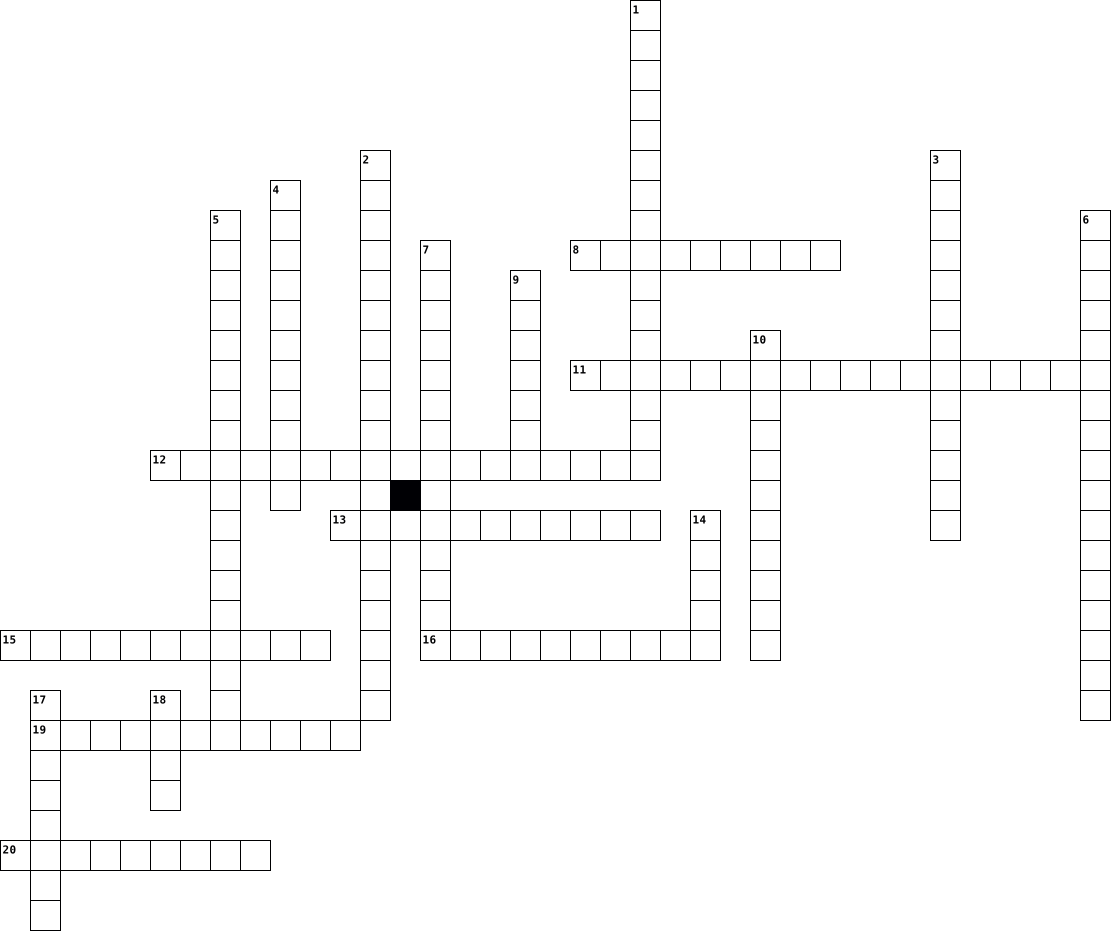
Across
- arrangement of parts in an organism or an object
- Contains less solute and more water (Moves into cell) (Swell)
- transport that does not require energy to move materials across membrane
- Internal environment of cell balanced (home stays the same)
- water fearing
- movement of solid materials out of the cell using energy
- composed of one cell
- movement of particles from high to low concentration
Down
- Transport that requires energy to move molecules from low to high concentration
- solution with more solute and less water (moves out of the cell)(shrink)
- composed of many cells
- water loving
- Model used to describe the cell membrane
- solution of equal water and solute concentration
- refers to the cell membrane what gets in and out of the cell
- movement of water from high to low concentration
- movement of solid materials into the cell using energy
- to burst
- work or operate in a proper or particular way
- basic unit of structure and function in living thing
20 Clues: to burst • water loving • water fearing • composed of one cell • composed of many cells • Model used to describe the cell membrane • work or operate in a proper or particular way • solution of equal water and solute concentration • arrangement of parts in an organism or an object • movement of water from high to low concentration • ...
Cells 2022-11-29

Across
- Scientist who prposed that cells come from other cells
- A unicelluar organisim
- What cell are Lysome unique to?
- Most are multicelluar but some are unicelluar
- All living things are made of cells, cells are the basic sructure and function in life, all cells are produced from already existing cells.
- "Recycling center"
- Stores energy
- Comtain DNA and considered the brain
Down
- Attached to the ER
- A maze
- Transports protiens
- gel-like fluid
- A thin layer around a cell
- Obtaining energy, getting rid of wast
- What cell are cells walls and Chloroplast unique to?
- Scientest who named the cells
- Outer protection in a plant
- The smallest unit of life
- A tiny cell structure
- Storage
20 Clues: A maze • Storage • Stores energy • gel-like fluid • Attached to the ER • "Recycling center" • Transports protiens • A tiny cell structure • A unicelluar organisim • The smallest unit of life • A thin layer around a cell • Outer protection in a plant • Scientest who named the cells • What cell are Lysome unique to? • Comtain DNA and considered the brain • Obtaining energy, getting rid of wast • ...
Cells 2022-12-12

Across
- A group of different tissues that work together to perform a specific function.
- The process of making something look bigger than it is, often using lenses.
- Liquid, mainly water, making up most of the cell, in which chemical reactions happen.
- Structures found inside cells that have specific functions. "little organs"
- Infectious particles that are the cause of many diseases - including COVID-19! They are not alive!
- A tough outer layer of plant cells, which contains cellulose to provide strength and support to the plant (4,4).
- The smallest unit of life. They are often specialised to perform a specific function.
- The movement of particles from an area of high concentration to an area of low concentration.
- A group of different organs that work together to perform a specific function (5,6).
- Flexible outer layer surrounding the cell, which controls which substances can enter and leave the cell (4,8).
- A tail-like structure that allows cells to move. They can be found in sperm cells and bacteria.
Down
- A piece of scientific equipment used to view very small objects (5,10).
- Organelles found in cells of green parts of plants (leaves and stems). They contain a green pigment called chlorophyll, where photosynthesis occurs.
- The scientific word for a living thing.
- The object being viewed under a microscope.
- Contains the genetic material (DNA) of the organism and controls the cell’s activities.
- Organisms made up of only one cell.
- Organelles in the cytoplasm where energy is released from glucose from food by a process called respiration.
- A type of unicellular organism that has plant and animal-like features.
- A type of unicellular organism. Many can be found in the human gut.
- The piece of glass used to view objects under a microscope.
- A type of blood cells that protects the body from infections.
- A group of similar cells that work together to perform a specific function.
- Sac in the cytoplasm of plant cells containing a watery liquid that keeps the cell firm.
- A blood cell that carries oxygen around the body.
25 Clues: Organisms made up of only one cell. • The scientific word for a living thing. • The object being viewed under a microscope. • A blood cell that carries oxygen around the body. • The piece of glass used to view objects under a microscope. • A type of blood cells that protects the body from infections. • ...
Cells 2022-09-19

Across
- Parts of a cell
- This type of cell has a complete set of DNA
- Takes place between interphase and prophase
- Holds the cell together, protects from the outside
- Cell division
- Phase where chromosomes line up at the equator
- Control center of the cell
- This type of cell does not have a nucleus
- Creates ribosomes
- Phase where chromosomes pair up
- Phase where cell begins to pinch down the middle
- This type of cell has half of the amount of DNA of a normal cell
- Jelly-like substance that holds and protects organelles
Down
- Creates proteins
- Receives and packages proteins
- Transports proteins, reactions take place here
- Responsible for cleaning up the cell by disposing of old cell parts
- This type of cell has lysosomes
- Phase where chromosomes are pulled apart
- This type of cell has a nucleus
- Phase where the cell prepares to replicate
- Stores water and nutrients
- The end of cell division, resulting in 2 new cells
- This type of cell has a cell wall and chloroplasts
24 Clues: Cell division • Parts of a cell • Creates proteins • Creates ribosomes • Control center of the cell • Stores water and nutrients • Receives and packages proteins • This type of cell has lysosomes • This type of cell has a nucleus • Phase where chromosomes pair up • Phase where chromosomes are pulled apart • This type of cell does not have a nucleus • ...
Cells 2022-09-29

Across
- any cell or organism that possesses a clearly defined nucleus.
- the movement of water molecules from a solution with a high concentration of water molecules to a solution with a lower concentration of water molecules, through a cell's partially permeable membrane.
- the membrane-enclosed organelle within a cell that contains the chromosomes
- visicles move substances in cell.
- a large, dynamic structure that serves many roles in the cell including calcium storage, protein synthesis and lipid metabolism.
- a thin polar membrane made of two layers of lipid molecules.
- A substance that is dissolved in a solution.
- is a kind of cellular transport where substances move against a concentration gradient.This means that the direction is from an area of lower concentration to an area of higher concentration.
- an optical instrument used for viewing very small objects, such as mineral samples or animal or plant cells, typically magnified several hundred times.
- visicles move substances out.
- a type of cell that does not have a true nucleus or membrane-bound organelles.
- its ability to differentiate between different types of molecules, only allowing some molecules through while blocking others.
- an organelle within the cells of plants and certain algae that is the site of photosynthesis.
- water in/out
- the source of energy for use and storage at the cellular level.
Down
- :the membrane found in all cells that separates the interior of the cell from the outside environment.
- the passive movement of molecules along the concentration gradient.
- membrane-bound cell organelles that produce energy (ATP)
- paired barrel-shaped organelles located in the cytoplasm of animal cells near the nuclear envelope.
- the normal process by which a less specialized cell undergoes maturation to become more distinct in form and function.
- the net passive movement of molecules or particles from regions of higher to regions of lower concentration.
- water in cell swells
- separates the interior of the cell from the outside environment.
- the smallest unit that can live on its own and that makes up all living organisms and the tissues of the body.
- is responsible for transporting, modifying, and packaging proteins and lipids into vesicles for delivery to targeted destinations.
- surrounds the plasma membrane of plant cells and provides tensile strength and protection against mechanical and osmotic stress.
- a substance that dissolves a solute, resulting in a solution.
- an undifferentiated cell of a multicellular organism which is capable of giving rise to indefinitely more cells of the same type, and from which certain other kinds of cell arise by differentiation.
- a membrane-bound cell organelle that is small in animal cell but is big in plant cell
- water out cell shrinks
- an intercellular structure made of both RNA and protein, and it is the site of protein synthesis in the cell.
- specialized structures that perform various jobs inside cells.
- membrane-bound cell organelle that contains digestive enzymes .They may be used to destroy invading viruses and bacteria.
- the gelatinous liquid that fills the inside of a cell.
34 Clues: water in/out • water in cell swells • water out cell shrinks • visicles move substances out. • visicles move substances in cell. • A substance that is dissolved in a solution. • the gelatinous liquid that fills the inside of a cell. • membrane-bound cell organelles that produce energy (ATP) • a thin polar membrane made of two layers of lipid molecules. • ...
Cells 2022-10-04

Across
- small membrane-enclosed transport units that can transfer molecules between different compartments.
- membrane the nucleolous is surrounded by a...
- a small body located near the nucleus.
- when the energy from the sun is converted into chemical energy, this process takes place in the chloroplasts.
- consists of semi-fluid that fills the cell and suspends organelles.
- fiberous proteins in cytoplasm that maintain the shape of the cell.
- only found in animal cells, are involved in cell divison and are composed of microtubles.
- synthesis the process of making proteins is called...
- chloroplasts contain...
- ER do not have ribosomes.
- catalyze reactions that produce hydrogen peroxide.
- store materials, usually water. plant cells have a central one of these.
- wall the additional layer that is found around the outside of plant cells and bacteria.
- produce glucose from carbon dioxide & water, have a green pigment.
- attracted to rough er and are free floating, all cells have these and manufacture proteins.
Down
- the centrosome makes...
- cells type of cells that contain a nucleus.
- membrane thin layer that surrounds the cell that is made of phospholipids and proteins.
- control center in the cell and contains DNA.
- large vesicles formed by the Golgi that are found only in animal cells.
- ribosomes are made in the...
- apparatus flattened stacks of membrane that function as a packaging plant for modifying proteins and lipids.
- cells cells that lack a nucleus
- sites of energy and ATP formation and are the powerhouse of the cell.
- reticulum a mesh of interconnected membranes that serve a function involving protein synthesis and transport.
25 Clues: the centrosome makes... • chloroplasts contain... • ribosomes are made in the... • ER do not have ribosomes. • cells cells that lack a nucleus • a small body located near the nucleus. • control center in the cell and contains DNA. • cells type of cells that contain a nucleus. • membrane the nucleolous is surrounded by a... • ...
cells 2022-09-14

Across
- the cytoplasmic network of protein filaments that plays an essential role in cell movement,shape and division
- a collection of tissues that Carry out a specialized function of the body
- a long, hairlike structure that grows out of a cell and enables the cell to move
- a cell organelle that contains digestive enzymes
- smallest unit of life
- a singled celled organism that does not have a nucleus or membrane-bound organelle
- a group of similar cells that perform a common function
- an organelle that is active during mitosis
- three essential parts
- a double layer of phospholipids that makes up plasma and organelle membranes
- region of cell within the membrane
- the part of the eukaryotic nucleus where ribosomal RNA is synthesized
- a fiber found inside eukaryotic cells that is composed mainly of the protein actin and that has a role in cell structure and movement
- a large cavity or sac that is found in plant cells or protozoans and that contains air or partially digested food
- a system of membranes that is found in a cell's cytoplasm and that assists in the production, processing,and transport of proteins and in the production of lipids
- an organelle found in plant and algae cells where photosynthesis occurs
- one of the small, tubular fibers composed of the proteins tubulin that are founding the cytoplasm of eukaryotic cells, that compose the cytoskeleton, and that play a role in cell structure and movement
Down
- an organism made up of cells that have a nucleus enclosed by a membrane
- a cell organelle that helps make and package materials to be transported out of the cell
- the double membrane that surrounds the nucleus of a eukaryotic cell
- cells outer boundary
- an organelle of plant cells that contains specific substances and performs specific functions for the cell
- a membrane system found within chloroplasts that contains the components for photosynthesis
- an atom's central region
- a rigid structure that surrounds the cell membrane and provides support to the cell
- the cell organelle that is surrounded by two membranes and that is the cite of cellular respiration
- a cell organelle composed of RNA and protein
- one of the structures in the nucleus that are made up of DNA and protein
- the soluble portion of cytoplasm
- one of the small bodies that are found in the cytoplasm of a cell
- a green pigment that is present in most plants and algae cells, that gives plants their characteristic green color
- a hairlike structure arranged in tightly packed rows that projects from the surface of some cells
- A group of organs that accomplish related tasks
33 Clues: cells outer boundary • smallest unit of life • three essential parts • an atom's central region • the soluble portion of cytoplasm • region of cell within the membrane • an organelle that is active during mitosis • a cell organelle composed of RNA and protein • A group of organs that accomplish related tasks • a cell organelle that contains digestive enzymes • ...
cells 2025-11-06

Across
- makes up all living things
- meaning very very tiny
- the powerhouse of the cell
- used to see very small things
- movement of cells that involves only water
- movment of particals from one place to another
- stores DNA and controls the cell
- protects the cell(only found in plant cells)
- gases and liquids easily pass through this
- protects the cell(found in both)
Down
- stores substances
- fills up the cell
- makes proteins
- found in plants
- plants uses this to make energy
- help make proteins
- specific things can pass through it
- found in animals
- substances have a hard time passing through
- apparatus stores protein
20 Clues: makes proteins • found in plants • found in animals • stores substances • fills up the cell • help make proteins • meaning very very tiny • makes up all living things • the powerhouse of the cell • apparatus stores protein • used to see very small things • plants uses this to make energy • stores DNA and controls the cell • protects the cell(found in both) • ...
cells 2025-11-13

Across
- Tiny Organelle that help make protein (there are many Organelle in the cytoplasm
- Stores food and water(its a sac like organelle)
- (N)in*MRGREEN*
- gets its food from the sun (photosynthesis)
- (M)in*MRGREEN*
- Magnifies the specimen usually by 10x
- it has 3 lenses that magnifies the specimen (4x,10x and 40x)
- holds the slide in place so it doesn't fall
- powerhouse of the cell
- is the thin covering of the cell(controls
Down
- Separates the ocular from the objectives at a distance for proper magnification
- provides light for the specimen on the stage
- Folded organelle that creates protein
- (G)in*MRGREEN*
- Rotates the objectives
- where you place the slide (has to be dry)
- Controls cell activities
- 3 things that sum up the ____,_____
- Holds the plant cell together
- breaks down waste and old Cell parts
20 Clues: (G)in*MRGREEN* • (N)in*MRGREEN* • (M)in*MRGREEN* • Rotates the objectives • powerhouse of the cell • Controls cell activities • Holds the plant cell together • 3 things that sum up the ____,_____ • breaks down waste and old Cell parts • Folded organelle that creates protein • Magnifies the specimen usually by 10x • where you place the slide (has to be dry) • ...
cells 2025-11-12

Across
- Breaks down waste inside cells
- The molecule that carries genetic information
- Packages and ships proteins
- Transports materials in the cell
- Rigid outer layer found in plant cells
- The light source that shines through or onto the specimen
- The bottom, weighted part of the microscope that provides stability
- Composed of group of similar cells
- Makes proteins for the cell
- The flat plate where the slide is placed for observation
- Control center of the cell containing DNA
- The basic unit of life
- The part that connects the body tube to the base
Down
- Organelle where photosynthesis occurs
- Structures within a cell that perform functions
- A device that controls the amount of light passing through the specimen
- (Ocular Lens): The lens the user looks through to see the magnified image
- Thin glass placed over specimens on a slide
- The powerhouse of the cell
- Controls what enters and leaves the cell
- Stores water and nutrients in cells helps make proteins in cells
- Lens closest to the specimen on a microscope
- Composed of group of tissues
- The object being viewed under the microscope
- Jelly-like the material fills the cell
- Lens: The lens closest to the specimen, which provides the initial magnification
26 Clues: The basic unit of life • The powerhouse of the cell • Packages and ships proteins • Makes proteins for the cell • Composed of group of tissues • Breaks down waste inside cells • Transports materials in the cell • Composed of group of similar cells • Organelle where photosynthesis occurs • Rigid outer layer found in plant cells • Jelly-like the material fills the cell • ...
Cells 2025-09-05

Across
- Green organelles in plant cells where photosynthesis occurs
- The scientific principle that explains the fundamental nature of cells
- A complete living thing made of one or more cells
- The genetic material that contains instructions for building and maintaining cells
- The energy currency that cells use to power their activities
- The process by which cells divide to create new cells
- Specialized structures within cells that perform specific functions
- Describes organisms made of only one cell
- The process that releases energy from food in cells
- Everything inside the cell except the nucleus
- The sugar produced during photosynthesis that stores energy
Down
- The powerhouse organelles that produce energy for the cell
- The mixture of water and sugars found in plant cell vacuoles
- A structure made of different tissues working together
- The outer boundary of a cell that controls what enters and exits
- The process by which plants capture sunlight and make glucose
- Describes organisms made of many cells working together
- Large fluid-filled organelle in plant cells that helps maintain shape
- The control center of the cell that contains DNA
- The scientist who first observed and named cells in 1665
- The instrument used to observe tiny structures like cells
- A group of similar cells working together to perform a function
- The basic units of life that all living things are made from
- The jelly-like fluid that fills the cell and gives it shape
- The plant material that Robert Hooke first observed under his microscope
25 Clues: Describes organisms made of only one cell • Everything inside the cell except the nucleus • The control center of the cell that contains DNA • A complete living thing made of one or more cells • The process that releases energy from food in cells • The process by which cells divide to create new cells • A structure made of different tissues working together • ...
Cells 2025-09-09

Across
- A cell with a nucleus and other membrane-bound organelles.
- The “powerhouse” of the cell that makes energy.
- Scientist who named “cells” after looking at cork under a microscope.
- Organelle that breaks down waste and old cell parts.
- Type of eukaryotic cell that does not have a cell wall or chloroplasts.
- Thin layer that controls what enters and leaves the cell.
- Scientist who said all plants are made of cells.
- Rigid outer layer in plant cells that gives support and protection.
Down
- A cell without a nucleus, like bacteria.
- Organelle that sorts and packages proteins for the cell.
- Process where plants use sunlight, carbon dioxide, and water to make food.
- The “control center” of the cell that holds DNA.
- Process where a cell divides to make two identical cells.
- Tiny organelles that build proteins for the cell.
- Jelly-like material inside the cell where organelles float.
- Framework that helps the cell keep its shape and move.
- Type of eukaryotic cell that has a cell wall and chloroplasts.
- Molecule that carries genetic information and instructions for life.
- Storage sacs in cells for water, food, or waste.
- Green organelle in plant cells where photosynthesis happens.
20 Clues: A cell without a nucleus, like bacteria. • The “powerhouse” of the cell that makes energy. • The “control center” of the cell that holds DNA. • Storage sacs in cells for water, food, or waste. • Scientist who said all plants are made of cells. • Tiny organelles that build proteins for the cell. • Organelle that breaks down waste and old cell parts. • ...
CELLS 2025-12-26

Across
- Controls cell activities and contains DNA
- Type of cell division for growth and repair
- Organism made of many cells
- Jelly-like substance where reactions occur
- Contains enzymes for digestion
- Cell without a nucleus
- Stores water, nutrients, and waste in plant cells
- Group of tissues working together
- All living things are made of cells
- Cell adapted for a specific function
- Network for transport within the cell
- Site of protein synthesis
- Process of forming new cells
- Structure carrying genetic information
- Site of aerobic respiration and energy production
Down
- Organism made of one cell
- Movement of water across a semi-permeable membrane
- Specialized structure within a cell
- Group of similar cells performing a function
- Organelle where photosynthesis occurs
- Group of organs working together
- Packages and transports proteins
- Cell with a nucleus
- Movement of substances using energy
- Genetic material found in the nucleus
- Controls what enters and leaves the cell
- Tool used to observe cells
- Provides structure and support in plant cells
- Helps with cell division in animal cells
- Movement of particles from high to low concentration
30 Clues: Cell with a nucleus • Cell without a nucleus • Organism made of one cell • Site of protein synthesis • Tool used to observe cells • Organism made of many cells • Process of forming new cells • Contains enzymes for digestion • Group of organs working together • Packages and transports proteins • Group of tissues working together • Specialized structure within a cell • ...
Cells 2025-09-17

Across
- ATP making organelles in eukaryotes where cellular respiration occurs
- a tiny cell with no nucleus nor membraned organelles
- protein packager
- a larger cell with a nucleus and other complex membraned organelles
- the genetic information in ALL cells
- food digestion organelle in eukaryotes
- a whip tail in prokaryotes
- domain of all organisms with cells that have a nucleus
- kingsom of heterotrophic eukaryotic organisms with a cell wall
- its huge in plant cells to hold water; storage organelle
- basic functioning unit of all life
- kingdom of eukaryotic organisms that don't fit into the other three kingdoms
- green organelles in plant cells where photosynthesis occurs
Down
- there are four of these in domain Eukarya
- a rigid outer covering on prokaryotic cells, plant cells, and fungi cells
- domain of ancient prokaryotes that lived in extreme environments
- the outer gate of all cells, letting things in and out
- nonliving infectious bioparticle that requires host cells to reproduce
- domain of prokaryotes like strep throat pathogen
- protein highway
- the tiny protein factories in ALL cells
- tiny hair like projections in prokaryotes
- the internal cell gel in ALL cells
23 Clues: protein highway • protein packager • a whip tail in prokaryotes • basic functioning unit of all life • the internal cell gel in ALL cells • the genetic information in ALL cells • food digestion organelle in eukaryotes • the tiny protein factories in ALL cells • there are four of these in domain Eukarya • tiny hair like projections in prokaryotes • ...
Cells 2025-09-17

Across
- controls most functions of the cell
- invented the first compound light microscope
- membranes that move proteins through the cell (2 words)
- means two
- make ATP, high energy cells have lots of these
- cell's digestive enzyme
- determined cells come from other cells
- where proteins are made (plural)
- claimed all animals are made of cells
- filaments used for movement, support, and division
- double layer arrangement of phospholipids in a cell membrane (2 words, no dash)
Down
- known as the "ribosome factory"
- lipid made of a phosphate group and two fatty acids
- interior contents of the cell excluding the nucleus
- how the head of the lipid is labeled
- serve as the USPS of the cell, also known as the golgi apparatus
- basic unit of structure and function in organisms (plural)
- concluded all plants are made up of cells
- hair like structures found on the surface of the cell
- closes the cell and separates from surroundings (2 words)
- structure that carries out specific function for the cell (small organ)
- how the tail of the lipid is labeled
- sac that transports substances in cells
- viewed slices of cork and called the boxes he saw "cells"
- long, thread like projections used for movement
25 Clues: means two • cell's digestive enzyme • known as the "ribosome factory" • where proteins are made (plural) • controls most functions of the cell • how the head of the lipid is labeled • how the tail of the lipid is labeled • claimed all animals are made of cells • determined cells come from other cells • sac that transports substances in cells • ...
Cells 2025-09-24

Across
- structured in the cytoplasm, where proteins are made
- Microscopes that can s pieces pieces of matter
- All organisms are made of one or more cells
- Molecules are too large to go through the membrane and end up making sacs and vesicles to move
- Confocal microscopes allow for 3D pictures of cells
- the Movement of molecules without using energy, from high to low concentration
- All the cellular material inside the plasma membrane
- Material coming into the cell
- have a nucleus
- are viruses eukaryotes or prokaryotes
- Movement of larger moleclues
- the volume ratio affects the size
Down
- A protein that uses ATP to move sodium ions out and potassium ions in
- Energy is needed to bring substances across the membrane
- equal amount of concentration on both sides of the membrane
- a thin coat of lipids that surrounds the cell
- Movement of water across a membrane
- No nucleus
- Material leaving the cell
- Genetic material
- Movement of molecules through the cell membrane with no outside energy
21 Clues: No nucleus • have a nucleus • Genetic material • Material leaving the cell • Movement of larger moleclues • Material coming into the cell • the volume ratio affects the size • Movement of water across a membrane • are viruses eukaryotes or prokaryotes • All organisms are made of one or more cells • a thin coat of lipids that surrounds the cell • ...
Cells 2025-09-24

Across
- Organelles found in plant cells and algae that perform photosynthesis, converting sunlight into energy.
- (ER) A network of membranes that transports materials throughout the cell. It comes in two types
- Small, specialized structures within a cell that perform specific functions.
- A dense structure within the nucleus that produces ribosomes.
- Often called the "powerhouse" of the cell, these organelles generate energy (ATP) through cellular respiration.
- A thin, semipermeable layer that encloses the cytoplasm of a cell, controlling the passage of substances in and out.
- A membrane-bound sac used for temporary storage of water, food, or waste. Plant cells have a large central vacuole.
- A small, membrane-bound sac that transports materials within a cell.
- Hair-like projections that extend from the cell surface and are used for movement or moving fluids over the cell.
- cell A simple cell that lacks a nucleus and other membrane-bound organelles.
Down
- A network of protein filaments that gives the cell its shape and aids in movement.
- Vesicles contain enzymes that break down waste materials, cellular debris, and foreign particles.
- A rigid outer layer found in plant cells, fungi, and some bacteria that provides structural support and protection.
- Tiny structures responsible for protein synthesis.
- The jelly-like substance that fills the cell, containing all the organelles.
- Long, whip-like appendages used for cell locomotion.
- Structures found in animal cells that help organize cell division.
- The control center of the cell, containing the cell's genetic material (DNA).
- A stack of flattened sacs that modifies, sorts, and packages proteins and lipids for transport.
- cell A cell that contains a nucleus and other membrane-bound organelles.
20 Clues: Tiny structures responsible for protein synthesis. • Long, whip-like appendages used for cell locomotion. • A dense structure within the nucleus that produces ribosomes. • Structures found in animal cells that help organize cell division. • A small, membrane-bound sac that transports materials within a cell. • ...
Cells 2025-10-05

Across
- Uses chemicals to break down food
- Tiny strands inside the nucleus that have instructions for the cell's functions
- Makes protein
- A single living thing consisting of cells, tissues, organs and organ system
- Where there is more particles of a substance in one are than in another
- Gives extra protection to plant cells
- what cell had chloroplasts in it.
- What is a place that stores water, waste and etc.
- A group of tissues for a specific function
- The outside lines of a Prokaryotic cell
- What is a type of prokaryotes
- Controls what comes in and out of the cell
- The diffusion of water molecules
- What is a jelly like substance in some cells
- Diffusion of water
- Where the particles are equal on both sides
- Name a group of cells working together for a specific function
- All have a special function
- What do all characteristics need to survive
- Which can reproduce with two cells
- What is the name of the "power house" of the cell
Down
- Gets energy from sunlight and makes food with it
- Prokaryotes are considered
- Found in the nucleus
- What term is when something reacts to their environment
- The flow molecules from an area of high concentration to a area of low concentration
- Easy to pass through membrane
- Genetic material
- Golden packer
- Get energy from the sun
- Means two layers
- Prokaryotes are
- Looks like the tail of a Prokaryotic cell
- What do all living things have
- Eukaryotes are considered
- What cell is unicellular
- Eukaryotes are
- Transporter of protein
- What organelle contains DNA and controls what goes into the cell
- A group of organs and tissues working together for a specific function
40 Clues: Makes protein • Golden packer • Eukaryotes are • Prokaryotes are • Genetic material • Means two layers • Diffusion of water • Found in the nucleus • Transporter of protein • Get energy from the sun • What cell is unicellular • Eukaryotes are considered • Prokaryotes are considered • All have a special function • Easy to pass through membrane • What is a type of prokaryotes • ...
Cells! 2026-05-05

Across
- Organelle that packages and distributes materials from the ER
- Organelles that break down food particles and worn-out cell parts in animal cells
- Organelle that directs cell activities
- structure in the cell that carries out specific functions
- Cell type that has no membrane bound organelles
- Organelle where photosynthesis takes place
- maze of passageways that produce many substances
- group of similar cells working together to perform the same function
- Organelle that stores water, food, and waste products
- Organisms made of one cell
Down
- Organisms made of multiple cells
- Rigid supporting layer that surrounds plant cells
- Cell type that tends to be more complex and has membrane bound organelles
- Organelles that produce proteins needed by the cell
- Controls what enters and leaves the cell
- Type of cell that contains lysosomes
- Gel-like fluid that carries nutrients, proteins, and organelles around the cell
- Type of cell that contains chloroplasts and a cell wall
- Structure that creates ribosomes
- Organelles that convert food into energy for the cell
20 Clues: Organisms made of one cell • Organisms made of multiple cells • Structure that creates ribosomes • Type of cell that contains lysosomes • Organelle that directs cell activities • Controls what enters and leaves the cell • Organelle where photosynthesis takes place • Cell type that has no membrane bound organelles • maze of passageways that produce many substances • ...
Cells 2026-06-01

Across
- Loss of water from plant leaves, helping pull water upward.
- A small structure inside a cell that has a specific function.
- Organelles where energy (respiration) is produced.
- A simple cell with no nucleus or membrane-bound organelles (e.g. bacteria).
- Movement of sugars through the phloem.
- A storage organelle (large in plants) that holds water and dissolved substances.
- How much detail can be seen in an image.
- A cell with a nucleus and membrane-bound organelles (e.g. plant and animal cells).
- The basic unit of life that makes up all living organisms.
- Tiny pores in leaves for gas exchange.
- Wall, A rigid outer layer in plant cells that provides support and shape.
- An organism made of one cell only (e.g. bacteria).
- Small structure where proteins are made.
- The liquid part of the cytoplasm.
Down
- Plant cell organelle where photosynthesis occurs.
- How many times larger an image appears.
- Cells, Cells that control opening and closing of stomata.
- Membrane, A thin layer that controls what enters and leaves the cell.
- A tool used to magnify small objects so they can be seen clearly.
- The control centre of the cell that contains DNA.
- A green pigment in chloroplasts that absorbs light energy.
- An organism made of many specialised cells (e.g. humans, plants).
- The jelly-like substance where chemical reactions occur.
- Tissue that transports water and minerals upward in plants.
- Tissue that transports sugars (food) around the plant.
- Hair Cells, Specialised cells that absorb water and minerals from soil.
26 Clues: The liquid part of the cytoplasm. • Movement of sugars through the phloem. • Tiny pores in leaves for gas exchange. • How many times larger an image appears. • How much detail can be seen in an image. • Small structure where proteins are made. • Plant cell organelle where photosynthesis occurs. • The control centre of the cell that contains DNA. • ...
cells cells cells! 2016-02-18

Across
- this is inside the centrosome and is connected to spindle fibers
- when each chromosome splits into 2 chromatids that seperate
- cell split into two new daughter cells
- individual strands of DNA
- when chromatin condenses and the nuclear envelope breaks up
- spindle fibers attach to this so that DNA can break apart
- most of a cells lifetime,DNA exists as...
- the replication process that allows the cell to split into 2 identical daughter cells
Down
- where most of a cells life cycle is spent
- pull apart chromosomes drawing them to opposite ends of the cell
- long continuous strand of tightly coild DNA
- when chromatids begin to uncoil into chromatin
- when spindle fibers line up chromosomes along the cell equator
13 Clues: individual strands of DNA • cell split into two new daughter cells • where most of a cells life cycle is spent • most of a cells lifetime,DNA exists as... • long continuous strand of tightly coild DNA • when chromatids begin to uncoil into chromatin • spindle fibers attach to this so that DNA can break apart • when each chromosome splits into 2 chromatids that seperate • ...
Cells 2022-09-17

Across
- keeps the shape and protects the cell
- contains the DNA and tells the cell what to do
- the powerhouse of the cell
- a living thing made up of one or more cells
- the storage center of the cell
- orginism that produces it's own food
- parts of a cell
- allows stuff in and out of the cell
- jelly like, fills in th empty areas of the cell
Down
- makes photosynthesising possible
- contains genetic material
- consumes orginism for energy
- sends protein to differnt organelles
- transportation part of the cell
- reproduction cell division during mitosis to produce two or more genetically identical offspring
- the digestive system of the cell
- makes up every living thing, smallest unit of life
- an instrument used to observe small objects such as cells
- creates proteins
19 Clues: parts of a cell • creates proteins • contains genetic material • the powerhouse of the cell • consumes orginism for energy • the storage center of the cell • transportation part of the cell • makes photosynthesising possible • the digestive system of the cell • allows stuff in and out of the cell • sends protein to differnt organelles • orginism that produces it's own food • ...
Cells 2022-12-05

Across
- stores energy
- green pigment
- web of proteins that provide support
- digests food, takes out waste, fights invaders
- outer layer of an animal cell
- a cell with a nucleus
- gel-like substance
- a cell without a nucleus
- the outer layer of a plant cell
Down
- an organism made of one cell
- small bubble taking things in and out of cell
- small organelles that make proteins
- an organism made of several cells
- the scientist who discovered the cell
- stores chlorophyll and takes in sunlight
- the brain of the cell
- large water storage compartment
- internal passageways
- packages and distributes proteins
19 Clues: stores energy • green pigment • gel-like substance • internal passageways • the brain of the cell • a cell with a nucleus • a cell without a nucleus • an organism made of one cell • outer layer of an animal cell • large water storage compartment • the outer layer of a plant cell • an organism made of several cells • packages and distributes proteins • small organelles that make proteins • ...
Cells 2019-09-04

Across
- explanation of the relationship between cells and living things
- diffusion of water
- process in which cell membrane engulfs a large particle
- controls what substances pass into and out of a cell
- cell's control center
- fills region between the nucleus and cell membrane
- powerhouse of cell
- packages proteins and other materials
- substance that cannot be broken down into simpler substance
Down
- cell's recycling center
- rigid layer that surrounds the cells of plants and some other organisms
- fats
- instrument that makes small objects larger
- produce proteins
- process that allows large particles to leave cell
- protein that speeds up chemical reactions
- sugars and starches
- green organelle in plants
- stores water,food, and other materials
19 Clues: fats • produce proteins • diffusion of water • powerhouse of cell • sugars and starches • cell's control center • cell's recycling center • green organelle in plants • packages proteins and other materials • stores water,food, and other materials • protein that speeds up chemical reactions • instrument that makes small objects larger • ...
Cells 2020-10-01

Across
- ATP is needed for ...processes
- the site of chemical reactions
- the spindle fibres pull apart... in motosis
- in mitosis the nucleur membrane always...around the chromotids
- gives cells shape and structure
- an animal cell in pure water
- glucose is made into ... during the first step of respiration
- where are cromosomes located in a cell
- there are ... types of bases in DNA
- the cell membrane is made up from phospholipids and...
Down
- a plant cell in 20% sugar solution
- is required for active transport
- substrates break into ... during degradation
- the movement of water
- where protein synthesis takes place
- site of photosynthesis
- .....cells lack a nucleus
- active sites can be found on...
- stores water and nutrients
19 Clues: the movement of water • site of photosynthesis • .....cells lack a nucleus • stores water and nutrients • an animal cell in pure water • ATP is needed for ...processes • the site of chemical reactions • active sites can be found on... • gives cells shape and structure • is required for active transport • a plant cell in 20% sugar solution • where protein synthesis takes place • ...
Cells 2021-08-03

Across
- organism with >1 cell
- genetic information crucial to the cells functions
- category of cell commonly associated with multicellular organisms
- only found in plants
- only found in eukaryotic cells, it contains the genetic material
- uses RNA to make Amino Acids
- source of bacteria movement
- power and respiration of the cell
- holds everything together and protects the cell
- head and tail structure that makes up the cell wall
Down
- parts of a cell
- creates ribosomes
- microtubules that serve as the skeletal system
- primary example of a prokaryotic cell
- smallest form of life
- 7 life processes
- determines what comes in and out of the cell
- packages proteins and lipids to export from the cell
- creates digestive enzymes
19 Clues: parts of a cell • 7 life processes • creates ribosomes • only found in plants • organism with >1 cell • smallest form of life • creates digestive enzymes • source of bacteria movement • uses RNA to make Amino Acids • power and respiration of the cell • primary example of a prokaryotic cell • determines what comes in and out of the cell • microtubules that serve as the skeletal system • ...
Cells 2012-10-16

Across
- The green color on plants
- What makes a leaf appear green
- An example of carbon dioxide
- The energy releasing process that does not require oxygen
- An organism that cannot make it's own food
- The organelle in which photosynthesis occurs
- Pairs with adenine during DNA replication
- The process by which cells obtain energy from glucose
- What is the second stage of the cell cycle
- A place where fermentation occur
Down
- The process by which a cell captures energy in sunlight
- An organism that makes its own food
- Form the parts of an organism and carry out all of the organisms processes or functions
- An example of oxygen and nitrogen
- The final stage of the cell cycle
- The diffusion of water molecules through a selectively permeable membrane
- The process by which molecules move from higher to lower concentration
- What is the first stage of the cell cycle
- Small opening on the undersides of the leaves where carbon dioxide enters
19 Clues: The green color on plants • An example of carbon dioxide • What makes a leaf appear green • A place where fermentation occur • An example of oxygen and nitrogen • The final stage of the cell cycle • An organism that makes its own food • What is the first stage of the cell cycle • Pairs with adenine during DNA replication • An organism that cannot make it's own food • ...
Cells 2012-11-19

Across
- A cell is the _____ unit of life.
- All _______ things are made of cells.
- _____are located in the nucleus and contains genetic information.
- is the process by which organisms maintain a stable internal environment.
- Power house for the cell because they produce energy.
- Organisms _______ to change in their environment.
- is composed of three main points.
- An organelle that controls or directs the cells activities is called _______ .
Down
- Clear jelly-like material which contains nutrients for the cell and supports the organelles.
- All organism share______ characteristics.
- Surround the nucleus and separates it from the rest of the cell .
- All organisms _____ and develop.
- Cells without a nucleus is called _______ .
- All cells come from __________ cells.
- Captures solar energy from the sun and makes food for plant through photosynthesis.
- Reproductions produces _______ similar to parents.
- Cells are the ____ blocks of structure and function in an organism.
- _______ is a round sac that holds water, nutrients and waste, “store house” for the cell, Plant cells have 1 large.
- All living things are made of _______ .
19 Clues: All organisms _____ and develop. • A cell is the _____ unit of life. • is composed of three main points. • All _______ things are made of cells. • All cells come from __________ cells. • All living things are made of _______ . • All organism share______ characteristics. • Cells without a nucleus is called _______ . • Organisms _______ to change in their environment. • ...
cells 2012-11-26

Across
- the control center of a cell
- site of energy metabolism
- responsible for the secretion from the cell
- transport system for liquids and nutrients in the cell
- a cell that has no nucleus
- assist in adhesion
- boundary for entry and exit of nutrients and waste
- stores water food and enzymes
- a cell found in animals
- may play a role in DNA replication
- Breaks down waste, fats, and proteins
Down
- surface on which ribosomes bind for protein synthesis
- a cell found in animals
- converts light energy into chemical energy
- provides shape to the cell
- helps prokaryotic cell move
- selectively permeable boundary for entry and exit of nutrients and waste
- smallest unit of all living things
- contains all of the DNA in a cell
- assembles the proteins of the cell
20 Clues: assist in adhesion • a cell found in animals • a cell found in animals • site of energy metabolism • provides shape to the cell • a cell that has no nucleus • helps prokaryotic cell move • the control center of a cell • stores water food and enzymes • contains all of the DNA in a cell • smallest unit of all living things • assembles the proteins of the cell • ...
Cells 2014-10-06

Across
- a homogenous mixture of two or more pure substances
- allowing materials to pass through
- the movement of particles from an area of high to low concentration
- allowing only certain materials to pass through
- the smallest unit that can perform the fuctions of life
- the diffusion of water through a seletively permeable membrane
- having many cells
- a substance that dissolves a solute
- an organelle that goes through the process of photosynthesis
- having only one cell
Down
- a rigid structure that surrounds a plant cell
- a protein that controls the passage of substances into or out of a cell
- in cells, the process that releases food energy
- allowing no materials to pass through
- an instrument that makes objects appear larger
- when a protein attaches to a substance and moves through a cell membrane
- an organelle that is the "brain" of the cell
- a substance that dissolves in a solvent
- a jelly like substance that supports the structures of the cell
- membrane the selectively permeable structure that surrounds a cell
20 Clues: having many cells • having only one cell • allowing materials to pass through • a substance that dissolves a solute • allowing no materials to pass through • a substance that dissolves in a solvent • an organelle that is the "brain" of the cell • a rigid structure that surrounds a plant cell • an instrument that makes objects appear larger • ...
CELLS 2016-11-09

Across
- A cell that has a nucleus; a plant or animal cell
- A storage sac for energy in a cell
- Breaks down an organism
- Make protein for the cell; sprinkled throughout the cell
- A cell splitting and becoming two cells
- Controls what comes into and goes out of a cell
- Does not have a cell wall; changes shape
- The most common bacteria cells
- A cell that has no nucleus; a bacteria cell
- Has a cell wall to help the cell keep its shape
- The part of the cell that is filled with green pigment
Down
- The "brain" of the animal and plant cell
- Parts of the cell that have a specific job in the cell
- Allows something to pass through it
- Live where no other bacteria cells can live
- A type bacteria that causes food poisoning
- The "tail" of a bacteria cell
- The part of the cell where organelles "hang out"
- Deoxyribonucleic acid which determines a cell's characteristics
19 Clues: Breaks down an organism • The "tail" of a bacteria cell • The most common bacteria cells • A storage sac for energy in a cell • Allows something to pass through it • A cell splitting and becoming two cells • The "brain" of the animal and plant cell • Does not have a cell wall; changes shape • A type bacteria that causes food poisoning • ...
cells 2022-03-09

Across
- down substances
- jelly like fluid between cell membrane
- and cant pass through into the cell
- produces energy for cell to use by
- a green pigment found in chloroplast
- most basic unit of the universe
- gets rid of waste in the cell
- double layer wall, control what materials
Down
- makes proteins for the cell
- nucleus
- carries out photosynthesis for plant
- cleverly coded information that passes on
- packages proteins and waste for the cell
- characteristics
- provides support and structure to plants
- cells control center (brain)
- most basic unit of life
- storage for fat and other substances
- 90% of cells weight
19 Clues: nucleus • down substances • characteristics • 90% of cells weight • most basic unit of life • makes proteins for the cell • cells control center (brain) • gets rid of waste in the cell • most basic unit of the universe • produces energy for cell to use by • and cant pass through into the cell • carries out photosynthesis for plant • a green pigment found in chloroplast • ...
cells 2025-09-25

Across
- The cell's "garbage disposal," breaking down waste and foreign particles.
- Reticulum (ER): A network of membranes that helps transport materials and construct cell components.
- A type of cell that contains a membrane-bound nucleus and other membrane-bound organelles.
- A network of protein filaments that maintains the cell's shape and provides structural support.
- Apparatus (or Body): Sorts, packages, and distributes proteins and other molecules to their destinations.
- Structures responsible for making proteins.
- A small structure within the nucleus that makes ribosomes.
- Found in plant cells, these organelles are responsible for photosynthesis, converting sunlight into energy.
- Wall: A rigid outer layer, primarily in plant cells, that provides structural support and protection.
- A type of cell that lacks a membrane-bound nucleus and other membrane-bound organelles.
- (Deoxyribonucleic Acid): The genetic code that carries instructions for all living things.
Down
- Small sacs that transport materials within the cell.
- Long, whip-like structures that enable a cell to move.
- An organelle involved in cell division, particularly in animal cells.
- Membrane-bound sacs that store water, nutrients, and waste.
- The jelly-like substance filling the cell, where organelles are suspended.
- The "control center" of the cell, containing genetic material (DNA).
- The "powerhouses" of the cell, converting nutrients into energy.
- Membrane: The outer boundary of the cell, controlling the passage of materials in and out.
- Short, hair-like structures that help with movement or to move substances across the cell surface.
20 Clues: Structures responsible for making proteins. • Small sacs that transport materials within the cell. • Long, whip-like structures that enable a cell to move. • A small structure within the nucleus that makes ribosomes. • Membrane-bound sacs that store water, nutrients, and waste. • The "powerhouses" of the cell, converting nutrients into energy. • ...
Cells 2020-06-16

Across
- Controls what goes in and out the cell
- The break down of food
- Gel inside the cell
- Male reproductive cell
- When something is covered in microscopic projections
- Adapt to perform a special function
- A type of cell shaped like a rectangle
- Used for viewing very small objects
Down
- A single-celled life form
- Controls the functions of a cell
- Part of an animal that coordinates its actions
- Large unit of tissue
- Small objects seem larger
- A type of cell that carries oxygen round the body
- Type of cell that is circular
- Made from cellucose and strengthens the structure
- A store of liquid in a cell
- A group of tissues in an organism adapted to perform a function
- Conducts photosynthesis
19 Clues: Gel inside the cell • Large unit of tissue • The break down of food • Male reproductive cell • Conducts photosynthesis • A single-celled life form • Small objects seem larger • A store of liquid in a cell • Type of cell that is circular • Controls the functions of a cell • Adapt to perform a special function • Used for viewing very small objects • ...
cells 2022-12-09

Across
- A structure having an uneven distribution of electron density
- an article or substance that is manufactured or refined for sale.
- a compound consisting of a nucleoside linked to a phosphate group
- a substance that increases the rate of a chemical reaction
- the diffusion of water
- a substance produced by a living organism
- any of a large group of organic compounds that includes sugars, starch, and cellulose,
- facts and statistics collected together for reference or analysis.
- a molecule containing a very large number of atoms
Down
- a molecule that can be bonded to other identical molecules to form a polymer.
- a group of living organisms consisting of similar individuals capable of exchanging genes or interbreeding
- that contain equal numbers of protons but different numbers of neutrons in their nuclei
- a substance that takes part in and undergoes change during a reaction.
- any of a class of nitrogenous organic compounds
- any of a class of organic compounds that are fatty acids
- having assets in excess of liabilities; able to pay one's debts.
- a substance that has a molecular structure consisting chiefly
- an underlying substance or layer.
- a means of solving a problem or dealing with a difficult situation.
19 Clues: the diffusion of water • an underlying substance or layer. • a substance produced by a living organism • any of a class of nitrogenous organic compounds • a molecule containing a very large number of atoms • any of a class of organic compounds that are fatty acids • a substance that increases the rate of a chemical reaction • ...
Cells 2020-04-06

Across
- A small structure held within the cell’s cytoplasm that perform all of the different functions
- The movement of materials into or out of a cell
- To store materials for the cell such as water and waste
- A similar group of cells that work together
- These manufacture/make proteins
- To digest and remove waste from the cell
- An living thing that is made of one cell
- Controls the movement of substance into and out of the cell
- The movement of water into and out of the cell
- Absorb sunlight through photosynthesis and produce food only found in plant cells
- The provide energy for the cell by breaking down all the nutrients
Down
- ER Transports proteins and other materials for the cell
- An living that is made of more than one or many types of cells.
- A jelly-like substance that takes up most of the cell’s space
- The basic unit of structure in all living things
- The process of moving materials in and out of the cell without using energy
- To modify/sort and package proteins for the cell
- to control and organize all of the cell’s activities
- genetic material that determines what traits a living thing will have
19 Clues: These manufacture/make proteins • To digest and remove waste from the cell • An living thing that is made of one cell • A similar group of cells that work together • The movement of water into and out of the cell • The movement of materials into or out of a cell • The basic unit of structure in all living things • To modify/sort and package proteins for the cell • ...
cells 2021-02-08

Across
- chemical reaction using energy from the sun to convert carbon dioxide & water into glucose & oxygen
- green pigment found in plants
- folding of the inner membrane into the matrix of the mitochondria. Increases the total surface area of the inner membrane
- a site for assembling protein & RNA that later forms ribosomes
- 'power house'
- endoplasmic reticulum no ribosomes attached
- endoplasmic reticulum ribosomes attached
- functions to coordinate cellular activity- contains DNA
- genetical material; contains instructions written in a chemical code for production of proteins
Down
- small structure (in cells) that builds amino acid into complex proteins- not bound by a membrane
- bacteria & archaea
- containing highly organised fluid material with dissolved substances; excluding the organelles
- cytosolic fluid dissolved throughout the materials & organelles between the plasma & nuclear membrane
- structure made of a DNA molecule
- acids nitrogen containing compound that is the building block of proteins
- membrane boundary of all living things & regulates movements in and out of the cell
- apparatus package and store substances into vesicles in preparation for their release
- animal, fungi, protists & plant cells
- microtubules & microfilaments within a cell that supports & gives shape
19 Clues: 'power house' • bacteria & archaea • green pigment found in plants • structure made of a DNA molecule • animal, fungi, protists & plant cells • endoplasmic reticulum ribosomes attached • endoplasmic reticulum no ribosomes attached • functions to coordinate cellular activity- contains DNA • a site for assembling protein & RNA that later forms ribosomes • ...
Cells 2021-09-23

Across
- the process by which cells take in substances from outside of the cell.
- the process by which organisms use oxygen to break down food molecules to get chemical energy for cell functions.
- the basic units of structure and function in living things.
- the stage of the cell cycle during which the cell’s nucleus divides into two new nuclei and one copy of the DNA is distributed into each daughter cell.
- the form of energy found in all cells.
- a theory that explains the relationship between cells and living things.
- a process by which a cell transports secretory products through the cytoplasm to the plasma membrane.
- a rigid layer of nonliving material that surrounds the cells of plants and some other organism.
- the movement of materials through a cell membrane without using the cell’s energy.
- rod-shaped cell structures that convert energy in food molecules to energy the cell can use to carry out its functions.
Down
- the process in which some organisms use water along with sunlight and carbon dioxide to make their own food.
- the process by which molecules move from an area of higher concentration to an area of lower concentration.
- the movement of materials through a cell membrane using energy.
- the outside cell boundary that controls which substance can enter or leave the cell.
- a small, round cell structure containing chemicals that break down large food particles into smaller ones.
- the control center of an animal cell that directs the cell’s activities and contains information that determines the cell’s form and function.
- a structure in plant cells and some organisms that capture energy from sunlight and uses it to produce food.
- the jelly-like substance outside of the nucleus that fills each cell.
- the diffusion of water molecules through a selectively permeable membrane.
19 Clues: the form of energy found in all cells. • the basic units of structure and function in living things. • the movement of materials through a cell membrane using energy. • the jelly-like substance outside of the nucleus that fills each cell. • the process by which cells take in substances from outside of the cell. • ...
cells 2022-04-29

Across
- the clear jelly that holds all the organelles in place
- organs working together
- made of one cell
- made of many cells
- the color of cells with chloroplasts present
- a living thing
- he discovered cells
- the chemical in chloroplasts
- the organelle that is only found in plant cells
Down
- the shape of a plant cell
- the armor on the outside of a plant cell
- a group of cells working together
- the powerhouse or digestive system
- the skin of the cell
- a group of tissues working together
- the brain or control center
- the little tiny structures that are found in a cell that help it function
- the smallest unit of living things
- storage
19 Clues: storage • a living thing • made of one cell • made of many cells • he discovered cells • the skin of the cell • organs working together • the shape of a plant cell • the brain or control center • the chemical in chloroplasts • a group of cells working together • the powerhouse or digestive system • the smallest unit of living things • a group of tissues working together • ...
Cells 2019-03-26

Across
- What name is given to the process where particles in a gas or liquid spread from an area of higher concentration to an area of lower concentration?
- Which part of a cell is where most of the chemical reactions happen?
- ______ dioxide diffuses out of cells into the blood plasma.
- A small section of a chromosome that codes for a protein is known as what?
- Which cells are specialised for contraction and contain lots of mitochondria to transfer the energy needed for contraction?
- Where do most of the chemical reactions for aerobic respiration happen within cells?
- Which cells (animal or plant) lose the ability to differentiate (become specialised) early on?
- Which part of a cell controls what goes in and out of the cell?
- What structures increase the surface area of the small intestine in order to maximise the absorption of nutrients?
Down
- Where are chromosomes found in human cells?
- Where are proteins made in cells?
- The larger the surface area the _____________ the diffusion rate is, because more particles can pass through at once.
- Plant and animal cells are examples of which type of cell?
- Which specialised animal cell has a tail which enables it to swim?
- What term is used to describe a cell that has features which enable it to carry out a specific function?
- What are there millions of in the lungs which increase surface area and maximise the diffusion of oxygen into the blood?
- These cells that are undifferentiated and can produce specialised cells.
- Which specialised animal cells carry electrical signals from one part of the body to another?
- There are fourty .... sets of chromosomes in body cells.
19 Clues: Where are proteins made in cells? • Where are chromosomes found in human cells? • There are fourty .... sets of chromosomes in body cells. • Plant and animal cells are examples of which type of cell? • ______ dioxide diffuses out of cells into the blood plasma. • Which part of a cell controls what goes in and out of the cell? • ...
Cells 2019-03-26

Across
- These cells that are undifferentiated and can produce specialised cells.
- What structures increase the surface area of the small intestine in order to maximise the absorption of nutrients?
- What are there millions of in the lungs which increase surface area and maximise the diffusion of oxygen into the blood?
- Where are proteins made in cells?
- ______ dioxide diffuses out of cells into the blood plasma.
- Which part of a cell is where most of the chemical reactions happen?
- Which specialised animal cell has a tail which enables it to swim?
- Where do most of the chemical reactions for aerobic respiration happen within cells?
- A small section of a chromosome that codes for a protein is known as what?
Down
- Which part of a cell controls what goes in and out of the cell?
- There are fourty .... sets of chromosomes in body cells.
- What name is given to the process where particles in a gas or liquid spread from an area of higher concentration to an area of lower concentration?
- Which specialised animal cells carry electrical signals from one part of the body to another?
- Plant and animal cells are examples of which type of cell?
- What term is used to describe a cell that has features which enable it to carry out a specific function?
- The larger the surface area the _____________ the diffusion rate is, because more particles can pass through at once.
- Where are chromosomes found in human cells?
- Which cells are specialised for contraction and contain lots of mitochondria to transfer the energy needed for contraction?
- Which cells (animal or plant) lose the ability to differentiate (become specialised) early on?
19 Clues: Where are proteins made in cells? • Where are chromosomes found in human cells? • There are fourty .... sets of chromosomes in body cells. • Plant and animal cells are examples of which type of cell? • ______ dioxide diffuses out of cells into the blood plasma. • Which part of a cell controls what goes in and out of the cell? • ...
Cells 2023-09-09

Across
- organelles which are the site of protein synthesis
- used for movement to make in bacteria
- the chemical code inside the nucleus
- a very large group of bacteria
- the uncontrolled growth of cells
- an organism made of many cells
- supports the structure of the plant cell
- organelles which are the site of aerobic respiration
- found outside and inside cells and controlling the transport of substances
- the site of photosynthesis
Down
- a large membrane of sap or fluid inside plant cells
- types of cells which lack a nucleus
- types of cell which have a nucleus
- an organism made of a single cell
- make a cell appear larger suing a microscope
- a ring of DNA found inside bacterial cells
- made of slime and surrounds the outside of the bacterial cells
- controls the cells activities
- a slice through a cells
19 Clues: a slice through a cells • the site of photosynthesis • controls the cells activities • a very large group of bacteria • an organism made of many cells • the uncontrolled growth of cells • an organism made of a single cell • types of cell which have a nucleus • types of cells which lack a nucleus • the chemical code inside the nucleus • used for movement to make in bacteria • ...
Cells 2024-02-15

Across
- Site of photosynthesis in plant cells.
- Sites for protein synthesis.
- Made of one cell.
- Powerhouse of the cell, producing energy.
- Contains a cell's genetic material.
- Modifies, sorts, and packages proteins and lipids.
- Process plants use to make food from sunlight.
- Network involved in protein and lipid synthesis; specify "Rough" or "Smooth."
- Storage organelle in cells, larger in plants.
- Structures within a cell performing specific functions.
Down
- Provides structure and protection in plant cells.
- Jelly-like substance inside a cell, excluding the nucleus.
- Basic unit of life.
- Breaking down food for energy.
- Regulates entry and exit of substances in a cell.
- Made of many cells.
- Supports and shapes a cell.
- Cell division process.
- Carries genetic instructions.
19 Clues: Made of one cell. • Basic unit of life. • Made of many cells. • Cell division process. • Supports and shapes a cell. • Sites for protein synthesis. • Carries genetic instructions. • Breaking down food for energy. • Contains a cell's genetic material. • Site of photosynthesis in plant cells. • Powerhouse of the cell, producing energy. • Storage organelle in cells, larger in plants. • ...
CELLS 2024-12-10

Across
- the control center for a cell
- the cell membrane is like a ________ screen
- the Golgi Apparatus is like a __________ because it packages and distributes protein to other parts of the cell
- the nucleus is similar to a _________ because it directs all of the activities
- clear, gel like fluid that fills the cell
- The basic unit and structure for all living organisms
- store food and water for the cell
- the cell _______ allows which substances can pass in and out of a cell
- powerhouse of the cell
- make protein
Down
- tiny strands of material that fill the nucleus
- located inside the nucleus and makes ribosomes
- another name for organelle
- the cell ______ is found in ONLY plant cells and is a rigid outer layer for extra support
- are tiny green structures that capture sunlight and change it into energy
- a group of cells that work together
- break down large food particles and recycles old cell parts
- also known as the endoplasmic reticulum is a maze of passageways where ribosomes make protein
- a group of tissues that work together
19 Clues: make protein • powerhouse of the cell • another name for organelle • the control center for a cell • store food and water for the cell • a group of cells that work together • a group of tissues that work together • clear, gel like fluid that fills the cell • the cell membrane is like a ________ screen • tiny strands of material that fill the nucleus • ...
Cells! 2025-05-30

Across
- Membrane, membrane that protects the genetic material of the cell (DNA and RNA)
- organelle that holds the genetic material of the cell (DNA and RNA)
- organelle that is the site of protein synthesis
- organelle that contains digestive enzymes
- organelle that processes, packages and secretes proteins
- chemical reaction that uses carbohydrates(sugar) to produce energy(ATP)
- refers to organisms that are only made of one cell
- found mostly in plant cells, this organelle stores water
- regulates which substances enter and exit the cell
Down
- organelle that is site of photosynthesis
- organelle that contains many membranes that mostly functions in detoxification
- composed of cellulose and found in plant cells to provide structure
- organelle that is the sit of cellular respiration
- - refers to organisms that are made of multiple cells
- organelle that contains many membranes and has ribosomes attached.
- chemical reaction that uses light and carbon dioxide gas to produce food (sugar)
- smallest unit of life
- type of cell that does not contain a nucleus and membrane bound organelles
- type of cell that contains a nucleus and membrane bound organelles
19 Clues: smallest unit of life • organelle that is site of photosynthesis • organelle that contains digestive enzymes • organelle that is the site of protein synthesis • organelle that is the sit of cellular respiration • refers to organisms that are only made of one cell • regulates which substances enter and exit the cell • ...
Cells 2015-12-04

Across
- build protein
- powerhouse of cell
- processes lipids, proteins, and carbohydrates
- E.R. with ribosomes
- stores substances
- lacking nucleus
- basic unit of organisms
- breaks down dead organelles, large particles, and derbris
- wall helps plant cells maintain their shape
- contains chlorophyll in plant cells
- nucleus
- plays a role in division of cell
- directs organelles
- contains everything but the nucleus
Down
- self replicating; breaks down substances
- E.R. lacking ribosomes
- apparatus packages, modifies, and transports new substances
- tiny structures within a cell
- membrane allows certain substances to enter and leave the cell
- transport substances made by the Golgi apparatus
20 Clues: nucleus • build protein • lacking nucleus • stores substances • powerhouse of cell • directs organelles • E.R. with ribosomes • E.R. lacking ribosomes • basic unit of organisms • tiny structures within a cell • plays a role in division of cell • contains chlorophyll in plant cells • contains everything but the nucleus • self replicating; breaks down substances • ...
Cells 2013-01-10

Across
- membrane double-layered membrane enclosing the nucleus of a cell
- only in plant cells, this organelle converts sunlight into energy for the cell
- the process by which green plants and some other organisms use sunlight to synthesize foods from carbon dioxide and water
- this surrounds the cell and contains proteins that allow nutrients in and out of the cell
- fluid found in the nucleus of eukaryotic cells
- these small organelles make proteins
- membrane protects the cell from its surroundings
- lash-like appendage that protrudes from the cell body of certain prokaryotic and eukaryotic cells
Down
- a component of the cytoskeleton
- breaks down waste materials
- large vessicle that stores food or water for the cell
- powerhouse of the cell
- apparatus the shipping/receiving and packaging center for the cell
- endoplasmic reticulum a membrane network within the cytoplasm of cells involved in the synthesis, modification, and transport of cellular materials
- non-membrane bound structure composed of proteins and nucleic acids found within the nucleus of eukaryotic cells
- single-celled or multicellular organism whose cells contain a distinct membrane-bound nucleus
- endoplasmic reticulum apart of endoplasmic reticulum that is tubular in form (rather than sheet-like) and lacks ribosomes
- a specialized part of a cell that performs a special function / a small organ in a cell
- the material or protoplasm within a living cell, excluding the nucleus
19 Clues: powerhouse of the cell • breaks down waste materials • a component of the cytoskeleton • these small organelles make proteins • fluid found in the nucleus of eukaryotic cells • membrane protects the cell from its surroundings • large vessicle that stores food or water for the cell • membrane double-layered membrane enclosing the nucleus of a cell • ...
CELLS 2012-10-13

Across
- CONTAINS DNA
- ROUGH AND SMOOTH
- TO CARRY
- CONNECT EYE PIECE TO OBJECTIVE LENS
- CONTROLS THE AMOUNT OF LIGHT
- POWERHOUSE
- FINE TUNE THE FOCUS
- CONTROLS ENTRY
- PROTEINS
- PLACE SLIDES
- AT TOP
Down
- JELLY LIKE LIQUID
- OFTEN FOUND IN THE MIDDLE
- FOCUSING
- HOLD NUCLEUS TOGETHER
- HOLDS THE OBJECTIVE LENS
- DIFFERENT POWERS
- CONTAINS WATER
- LIGHT
19 Clues: LIGHT • AT TOP • FOCUSING • TO CARRY • PROTEINS • POWERHOUSE • CONTAINS DNA • PLACE SLIDES • CONTAINS WATER • CONTROLS ENTRY • ROUGH AND SMOOTH • DIFFERENT POWERS • JELLY LIKE LIQUID • FINE TUNE THE FOCUS • HOLD NUCLEUS TOGETHER • HOLDS THE OBJECTIVE LENS • OFTEN FOUND IN THE MIDDLE • CONTROLS THE AMOUNT OF LIGHT • CONNECT EYE PIECE TO OBJECTIVE LENS
Cells 2012-11-27

Across
- It protects the plant cell and maintains its shape.
- They are cellular organelles where cellular respiration occurs.
- It helps to maintain chemical environments inside the organelles that are different from the environment of the rest of the cell.
- A organelle found in some plant cells and certain unicellular organisms where photosynthesis takes place.
- A ball-like mass of fibers and granules in a cell nucleus.
- It is a cellular organelle that modifies, stores, and routes cell products.
- It is a cell that lacks a nucleus and most other organelles.
- It is a system of membranous tubes and sacs containing ribosomes which function in the manufacture of membrane-bound proteins.
- It is a cell that has a nucleus surrounded by its own membrane, and has other internal organelles bounded by membranes.
- A microscopic network of protein filaments and tubules in the cytoplasm of many living cells, giving them shape and coherence.
- A membrane-bound sac containing digestive enzymes that can break down proteins, nucleic acids, and polysaccharides.
Down
- Each of the two threadlike strands into which a chromosome divides longitudinally during cell division. Each contains a double helix of DNA.
- It is a system of membranous tubes and sacs that functions in lipid synthesis.
- It surrounds the nucleus.
- A threadlike structure of nucleic acids and protein found in the nucleus of most living cells, carrying genetic information in the form of genes.
- It houses the cell's genetic material in the form of DNA.
- A membrane-bound sac that buds from the endoplasmic reticulum or the Golgi apparatus.
- A cluster of proteins and nucleic acids that constructs proteins in a cell.
- A thin membrane (a double layer of lipids) enclosing the cytoplasm of a cell; proteins in the membrane control passage of ions (like sodium or potassium or calcium) in and out of the cell.
19 Clues: It surrounds the nucleus. • It protects the plant cell and maintains its shape. • It houses the cell's genetic material in the form of DNA. • A ball-like mass of fibers and granules in a cell nucleus. • It is a cell that lacks a nucleus and most other organelles. • They are cellular organelles where cellular respiration occurs. • ...
Cells 2014-01-19

Across
- Cells do this so that organisms can grow.
- The lens you find directly above the stage.
- Red blood cells carry this molecule. around the body.
- Plant cells have one, animal cells don't.
- Part of the cells where photosynthesis occurs.
- The cell that forms when a sperm meets an egg.
- Magnifies the object viewed under a microscope.
- The part of the microscope that you look through.
- Rectangular piece of glass on which you place your sample for viewing under the microscope.
- Where you place a microscope slide.
Down
- A group of similar cells in an organism.
- Part of the cell that controls what gets in and out of the cell.
- Plants need this pigment to make their own food.
- You usually need lots of this passing through your sample if you want to see it clearly.
- A group of organs working together.
- This is where you would find the DNA.
- Turn the knob to bring the object into sharp view under the microscope.
- You might use a solution of this to stain plant cells for viewing under the microscope.
- The part of a human you might use when studying animal cells.
19 Clues: A group of organs working together. • Where you place a microscope slide. • This is where you would find the DNA. • A group of similar cells in an organism. • Cells do this so that organisms can grow. • Plant cells have one, animal cells don't. • The lens you find directly above the stage. • Part of the cells where photosynthesis occurs. • ...
Cells 2021-10-27

Across
- surrounds and protects the cell and controls what comes in and out
- type of organism composed of a single cell
- an example of a prokaryotic cell
- the objective power on a microscope that is 40x
- has no nucleus or membrane bound organelles
- a cell that contains a nucleus and membrane bound organelle
- composed of more than one cell
- "control center" of the cell
- converts food into usable energy the "powerhouse" of the cell
- produces proteins
- small, enclosed structure that transport materials around the cell
Down
- absorbs sunlight so that it can be converted to food
- large, sac-like structures that store materials like water, proteins, salts
- has ribosomes on its surface and makes/processes proteins
- the focus knob that you should use when using the high power objective lens
- gel-like substance that contains a large amount of water
- filled with enzymes that break down waste products act as "garbage disposals"
- type of eukaryotic cell that has a cell wall
- the objective power on a microscope that is 4x
19 Clues: produces proteins • "control center" of the cell • composed of more than one cell • an example of a prokaryotic cell • type of organism composed of a single cell • has no nucleus or membrane bound organelles • type of eukaryotic cell that has a cell wall • the objective power on a microscope that is 4x • the objective power on a microscope that is 40x • ...
Cells 2022-12-01

Across
- stores substances
- passageways used for transportation
- breaks down food and converts to ATP
- packages cell products
- where ribosomes are assembled
- is only in plant cells
- site of protein synthesis
- breaks down and recycles old cell parts
- brain of the cell
- manufactures and transports protein
- plant cell
Down
- contains the DNA
- a structure has one or more specific jobs
- needs a host to survive
- provides a stable place for chem. reactions
- animal cell
- manufactures and transports lipids
- selectively permeable
- contains genetic information
19 Clues: plant cell • animal cell • contains the DNA • stores substances • brain of the cell • selectively permeable • packages cell products • is only in plant cells • needs a host to survive • site of protein synthesis • contains genetic information • where ribosomes are assembled • manufactures and transports lipids • passageways used for transportation • manufactures and transports protein • ...
cells 2022-12-01

Across
- adds structure to plans
- the fluid inside cell but outside the nucleus
- plays important role in metabolism
- the powerhouse of the cell
- production, folding, quality control of proteins
- get rid of waste product in cell
- only has one life process, reproduction
- move water relative to the cell
- a difference in concentration
Down
- a minute particle consisting of RNA
- regulates transportation of martials
- is like the packing plant of cell
- regulates cell growth and movement
- synthesize lipids
- stores salts, minerals, and proteins
- makes plants green
- the brain of the cell
- the flow from an area with H concentration to L
- the movement of water molecules from H to L
19 Clues: synthesize lipids • makes plants green • the brain of the cell • adds structure to plans • the powerhouse of the cell • a difference in concentration • move water relative to the cell • get rid of waste product in cell • is like the packing plant of cell • regulates cell growth and movement • plays important role in metabolism • a minute particle consisting of RNA • ...
Cells 2021-08-04

Across
- Organisms whose cells have a nucleus enclosed within a nuclear envelope
- The process by which cells move to a specific place in the body
- Thick solution that fills each cell
- A cell in your body that gets rid of bacteria and other harmful cells by taking them into itself
- Controls and regulates the activities of the cell
- A cell in a prison
- Any of a number of organized or specialized structures within a living cell
Down
- A long thin part of a nerve cell that conducts impulses to and from the cell body
- Powerhouse of the cell
- The smallest part of a living structure that can operate as an independent unit
- A part of the cell cycle in which replicated chromosomes are separated into two new nuclei.
- Barrel-shaped organelle
- Performs biological protein synthesis
- Relating to or being a eukaryote, an organism containing one or more cells in which the genetic material is DNA contained within a distinct nucleus
- A part of a plant cell that contains chlorophyll and where photosynthesis takes place
- The study of living organisms
- A microscopic organism, especially a bacterium, virus, or fungus
- Brain of the nucleus
- Membrane-bound organelle used to destroy viruses and bacteria
19 Clues: A cell in a prison • Brain of the nucleus • Powerhouse of the cell • Barrel-shaped organelle • The study of living organisms • Thick solution that fills each cell • Performs biological protein synthesis • Controls and regulates the activities of the cell • Membrane-bound organelle used to destroy viruses and bacteria • ...