
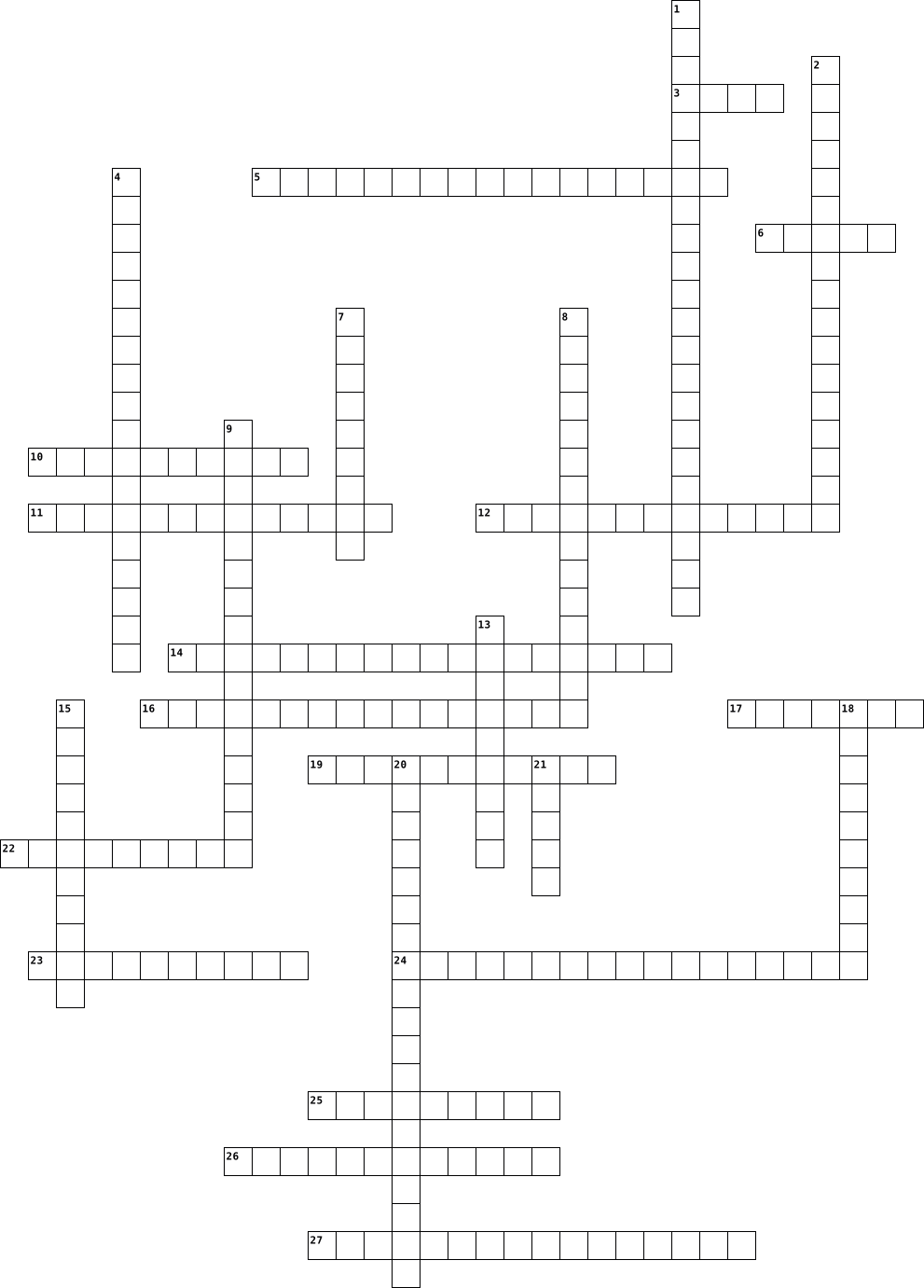
environmental economics Crossword Puzzles
Economics 2023-03-02
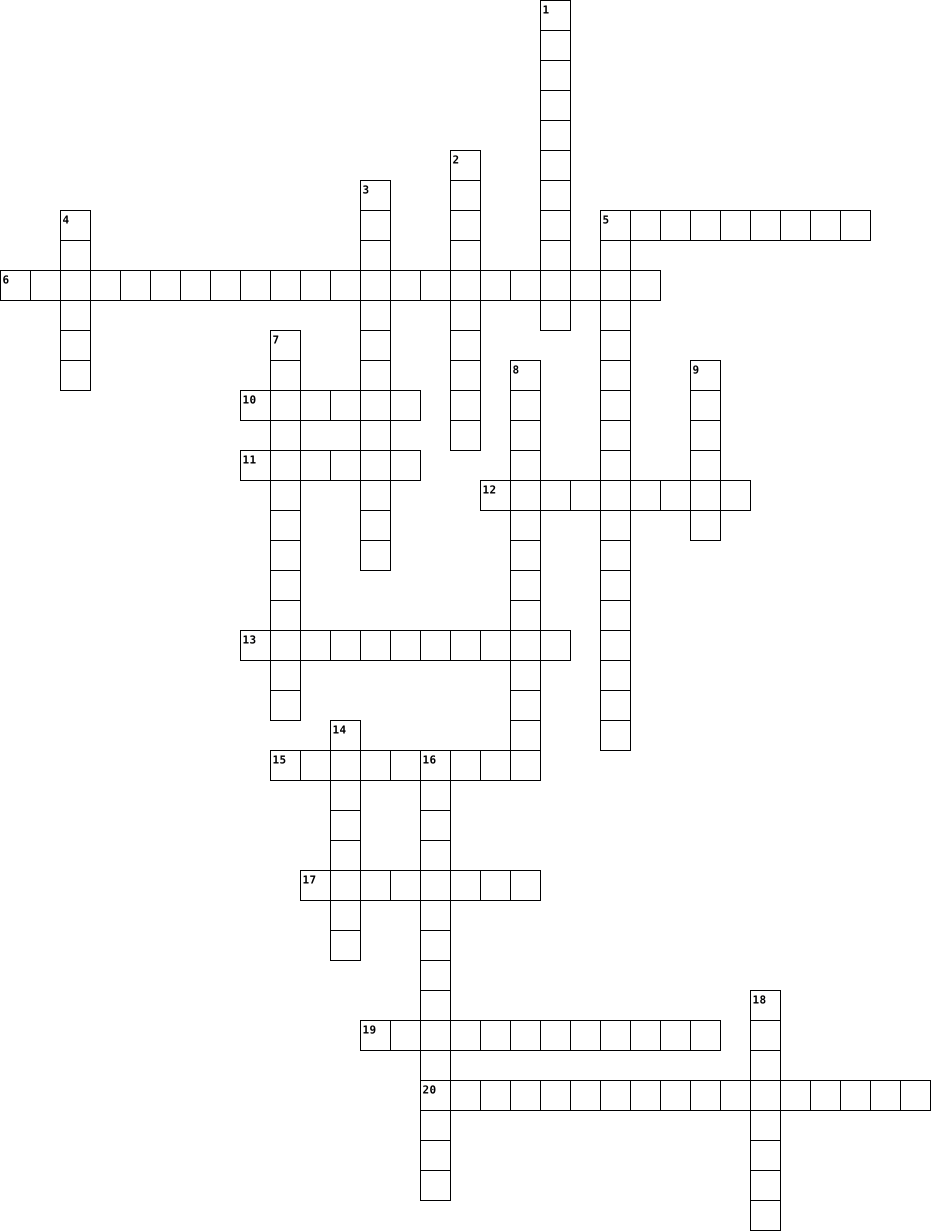
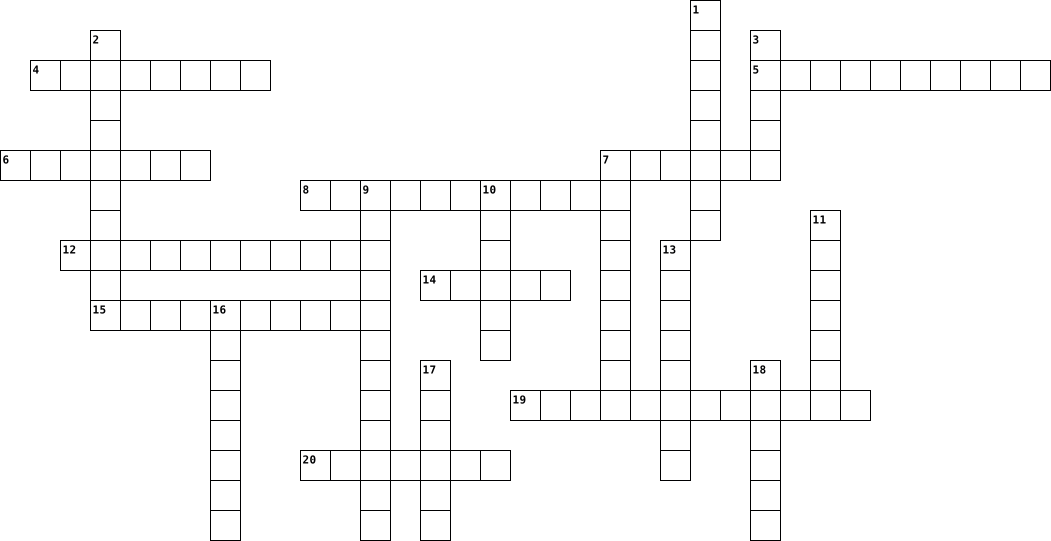
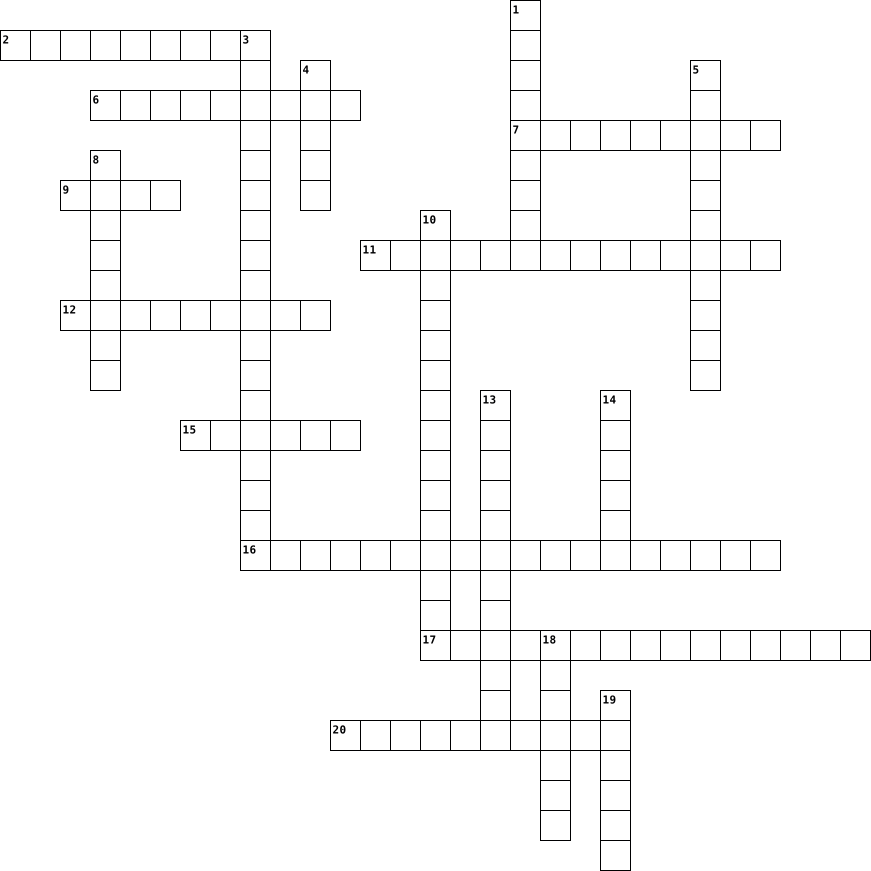
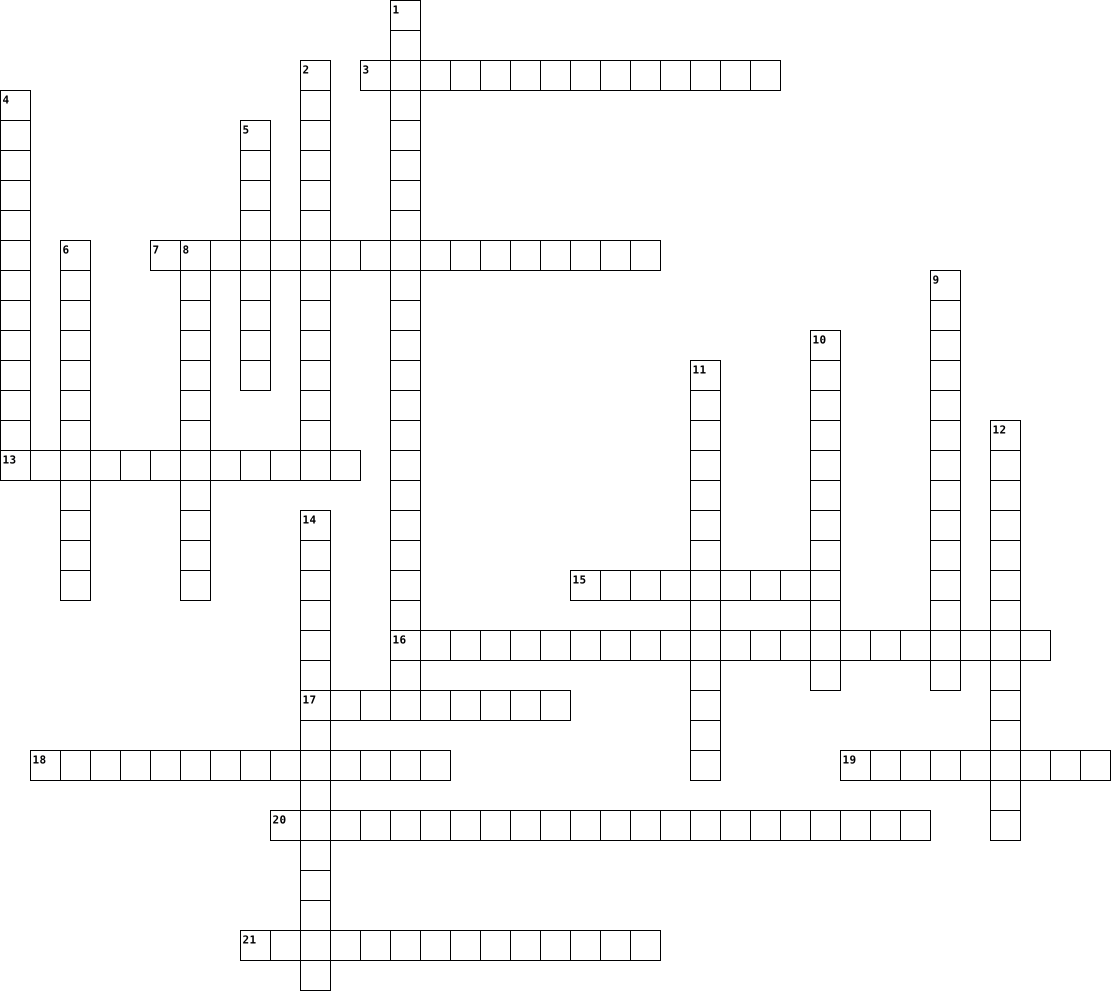
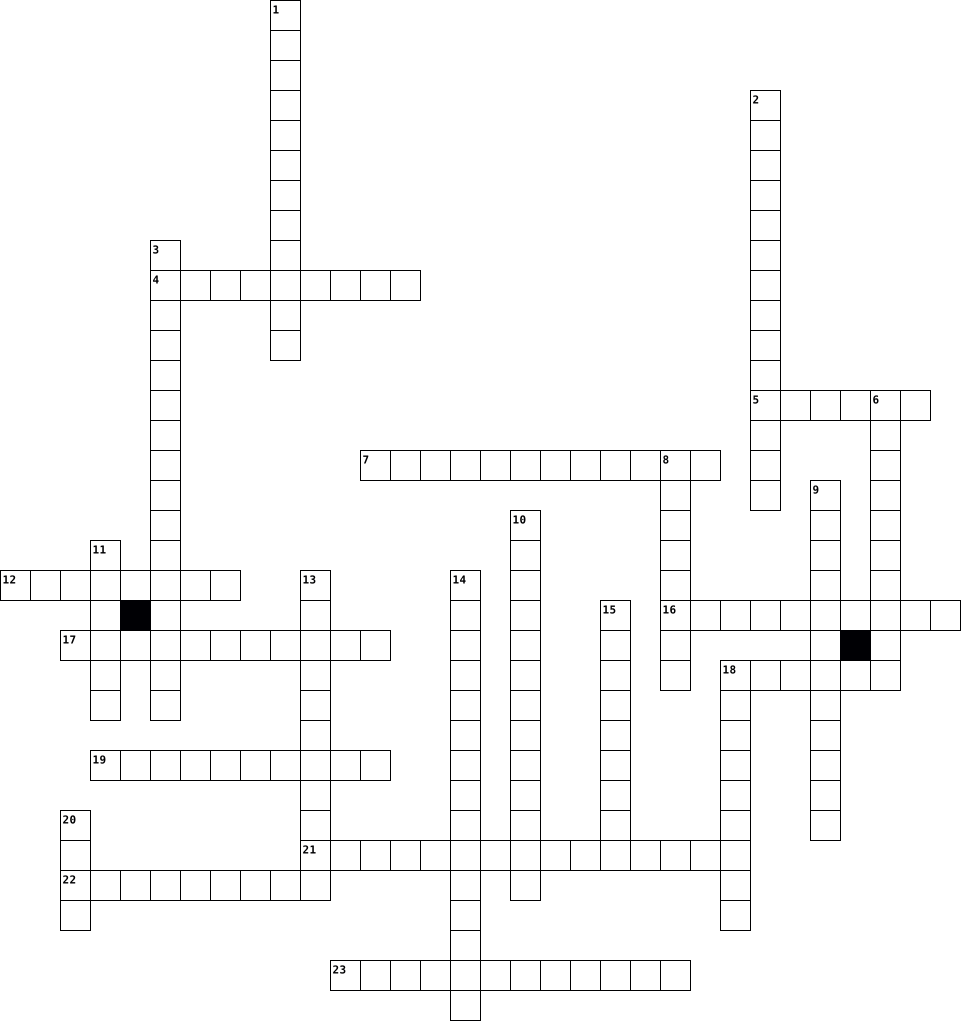
Across
- increase in prices over a given period of time
- change in cost and change in tech
- a financial gain
- number of consumers
- basic material or product which can be purchased in large quantities for the product
- involving two or more firm
- alternative choice to make decision
- no money
- the proportion of a loan that is charged as interest
- goods you can use with other goods
Down
- is a global credit union
- no government control
- the theory or practice of shielding a country's domestic industries from foreign competition
- available to someone
- economic transactions that are made between countries
- supply and demand are equal
- the financial decision-making process of individuals,
- the quality of being fair and impartial
- interest rate a nation's central bank charges
- the cost next best alternate
- not having enough resourse to produce a product
21 Clues: no money • a financial gain • number of consumers • available to someone • no government control • is a global credit union • involving two or more firm • supply and demand are equal • the cost next best alternate • change in cost and change in tech • goods you can use with other goods • alternative choice to make decision • the quality of being fair and impartial • ...
Economics 2022-10-04
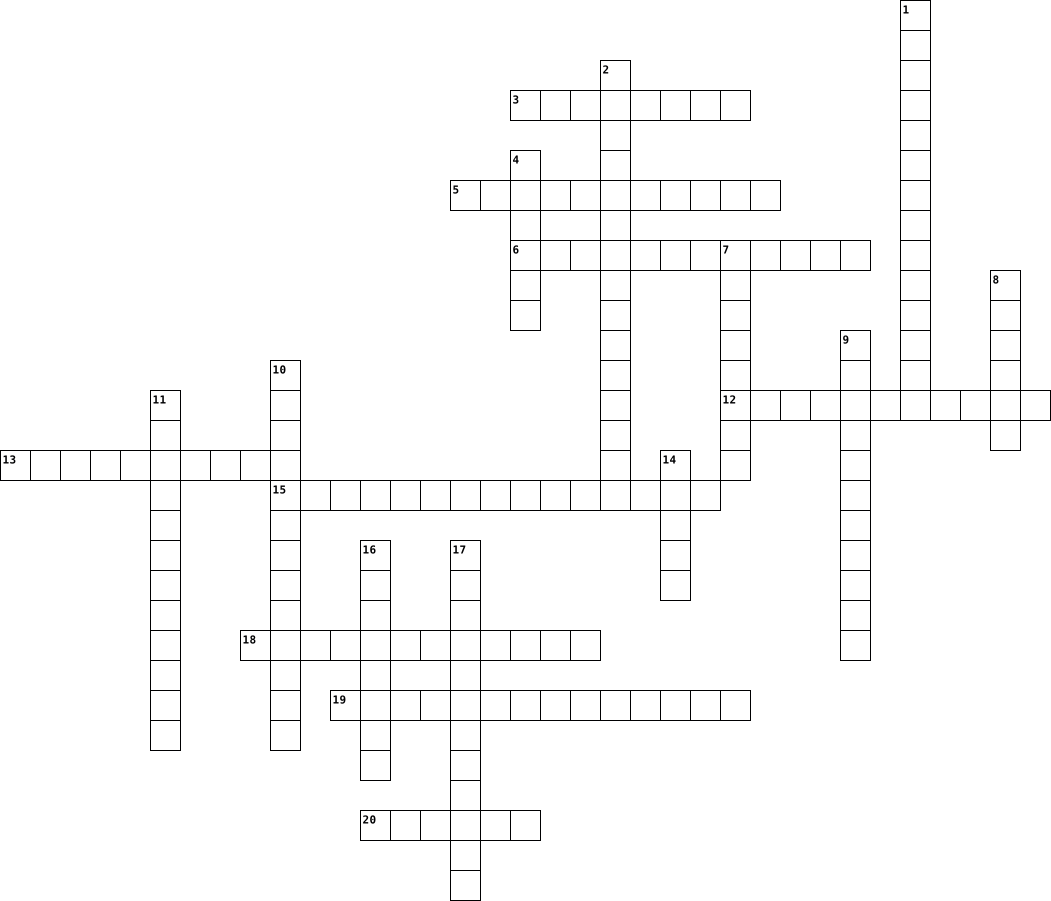
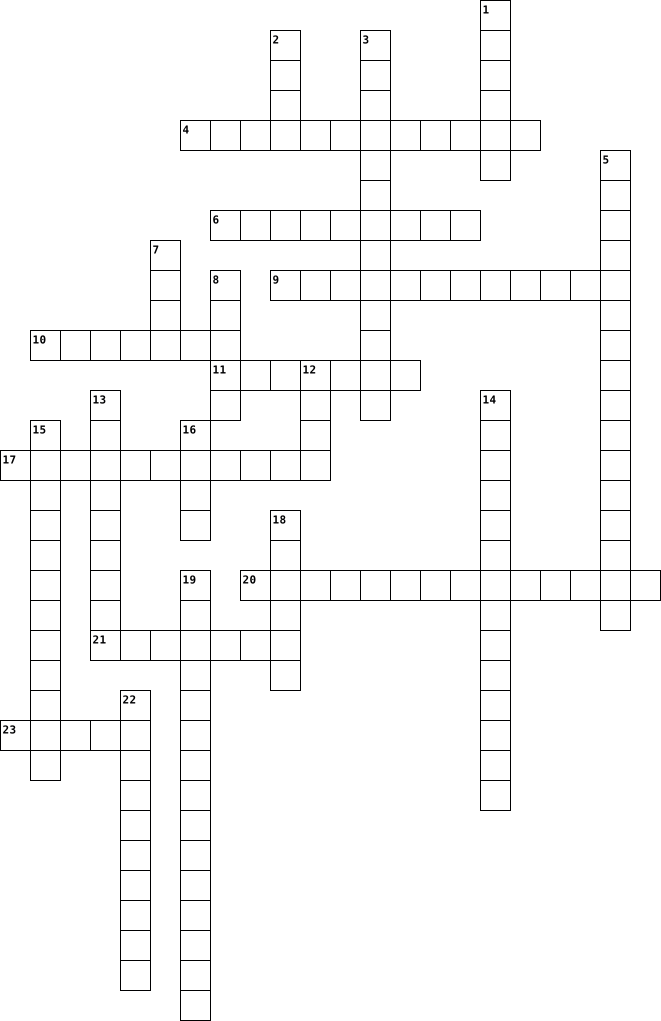
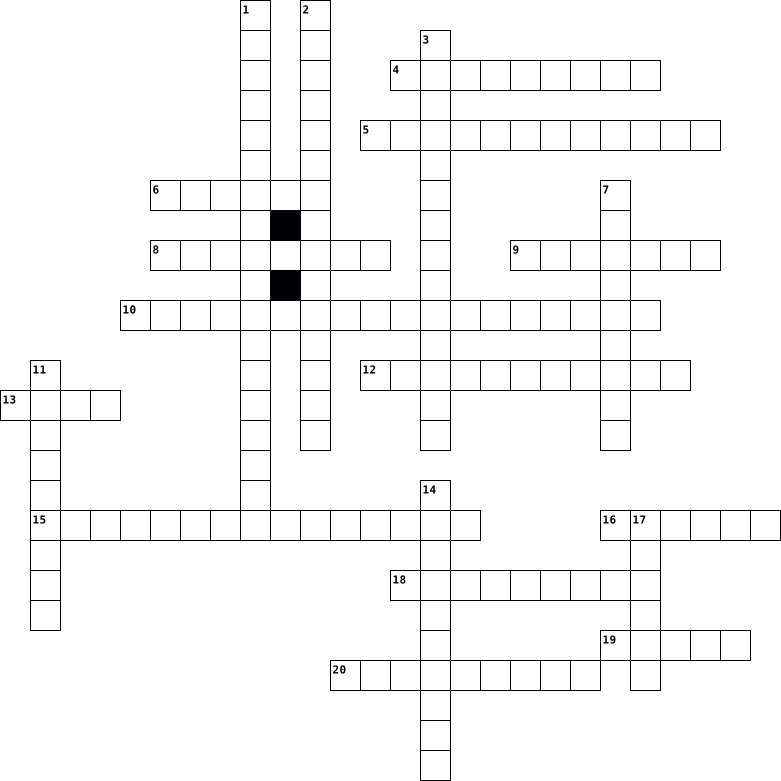
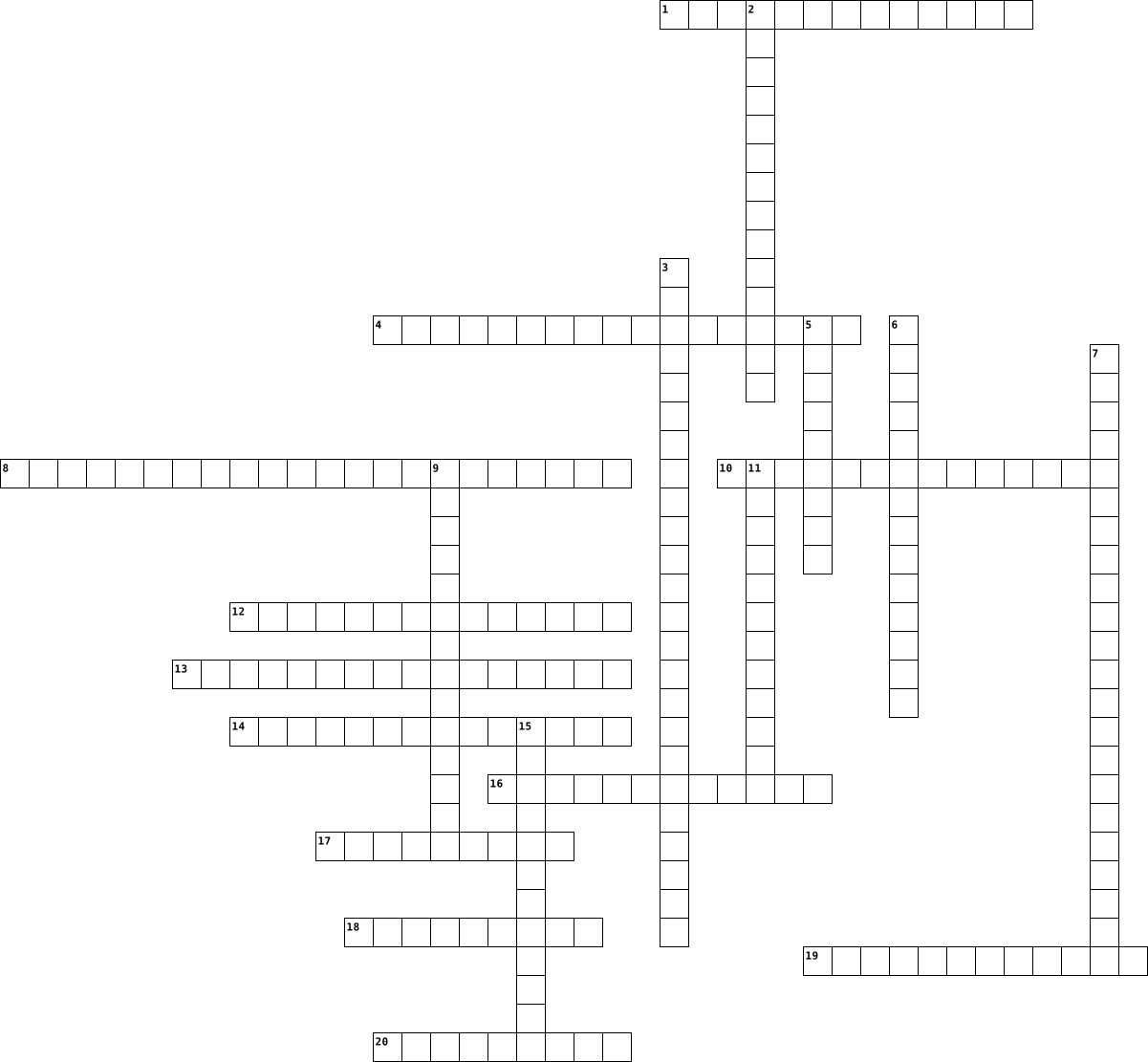
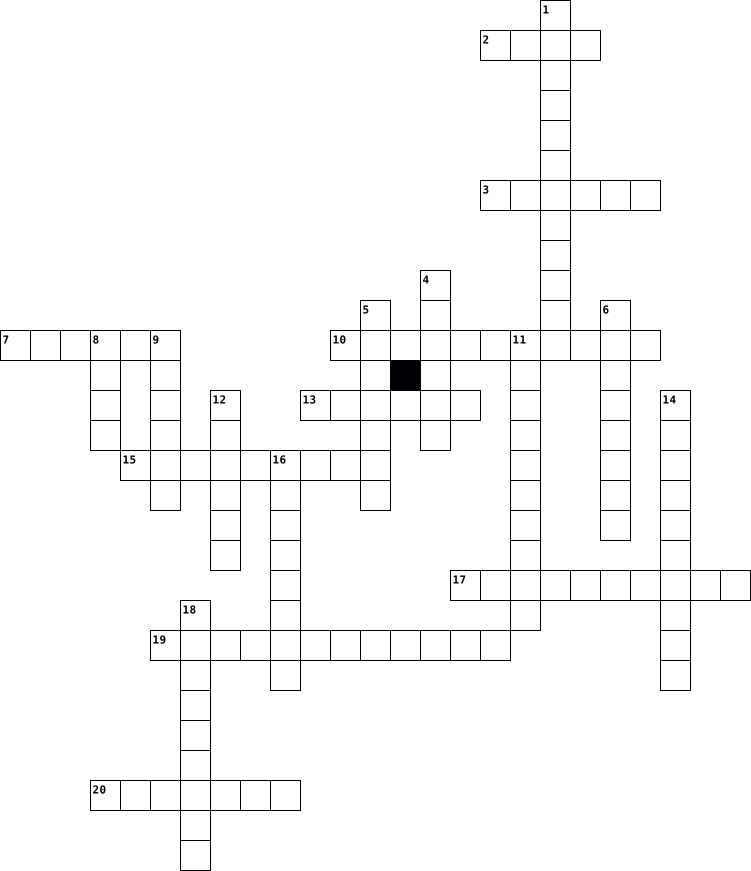
Across
- a tax on sales or on the receipts from sales.
- an investment program funded by shareholders that trades in diversified holdings and is professionally managed.
- tax-is the tax on profits realized on the sale of a non-inventory asset.
- tax on the value of a property
- employees are paid at a set hourly rate which is multiplied by the hours worked during a pay period.
- the process of allocating capital in a way that reduces the exposure to any one particular asset or risk
- is a record of a borrower's responsible repayment of debts.
- a record of your payment behavior on all credit accounts, such as credit cards and loans
- a fixed regular payment
Down
- a bank account that earns interest.
- is a type of credit that does not have a fixed number of payments, in contrast to installment credit
- a share which entitles the holder to a fixed dividend, whose payment takes priority over that of common-stock dividends.
- an individual's total earnings throughout a given period before any deductions are made
- an employee's earnings after all deductions are taken out.
- not-for-profit organizations that exist to serve their members.
- an unchanging rate charged on a liability, such as a loan or mortgage
- a company that lends customers small amounts of money at high interest rates, on the agreement that the loan will be repaid when the borrower receives their next paycheck.
- security under which the issuer owes the holder a debt, and is obliged – depending on the terms
- federal health insurance for people 65 or older,
- the proportion of a loan that is charged as interest to the borrower, typically expressed as an annual percentage of the loan outstanding.
20 Clues: a fixed regular payment • tax on the value of a property • a bank account that earns interest. • a tax on sales or on the receipts from sales. • federal health insurance for people 65 or older, • an employee's earnings after all deductions are taken out. • is a record of a borrower's responsible repayment of debts. • ...
economics 2022-12-16
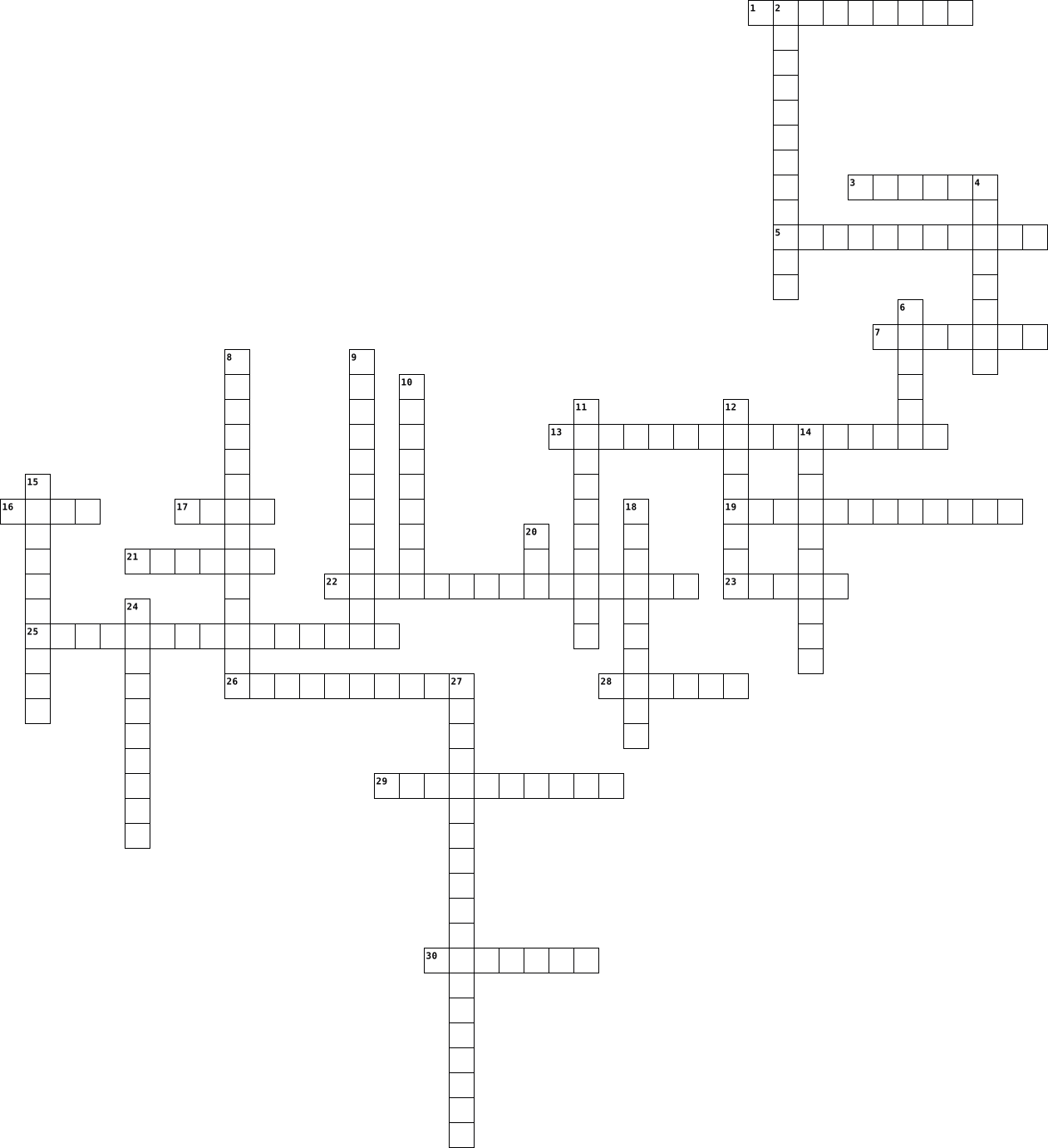
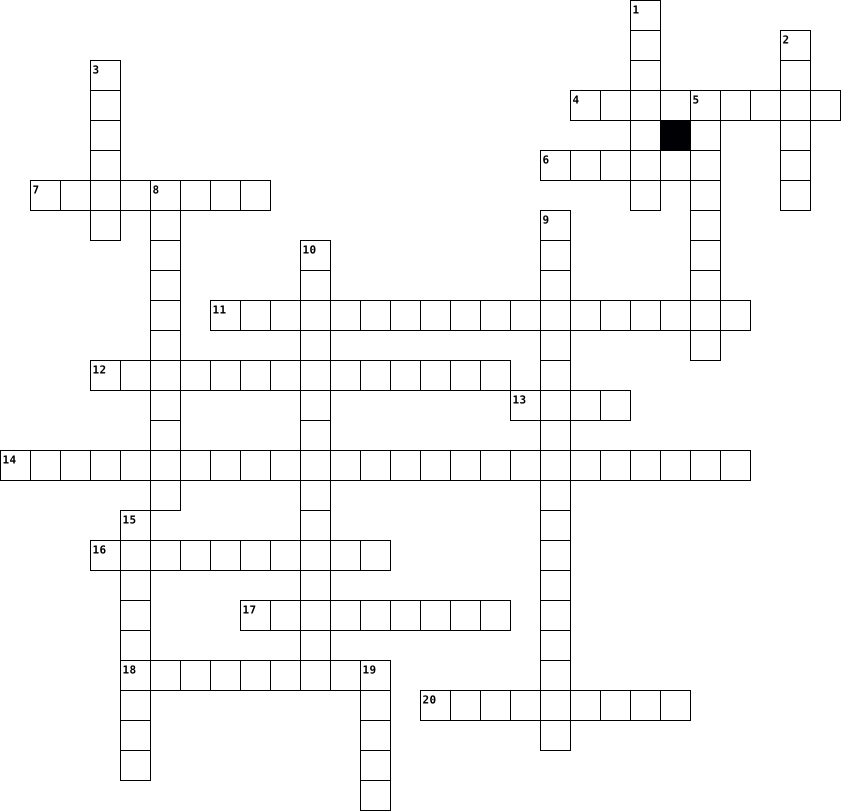
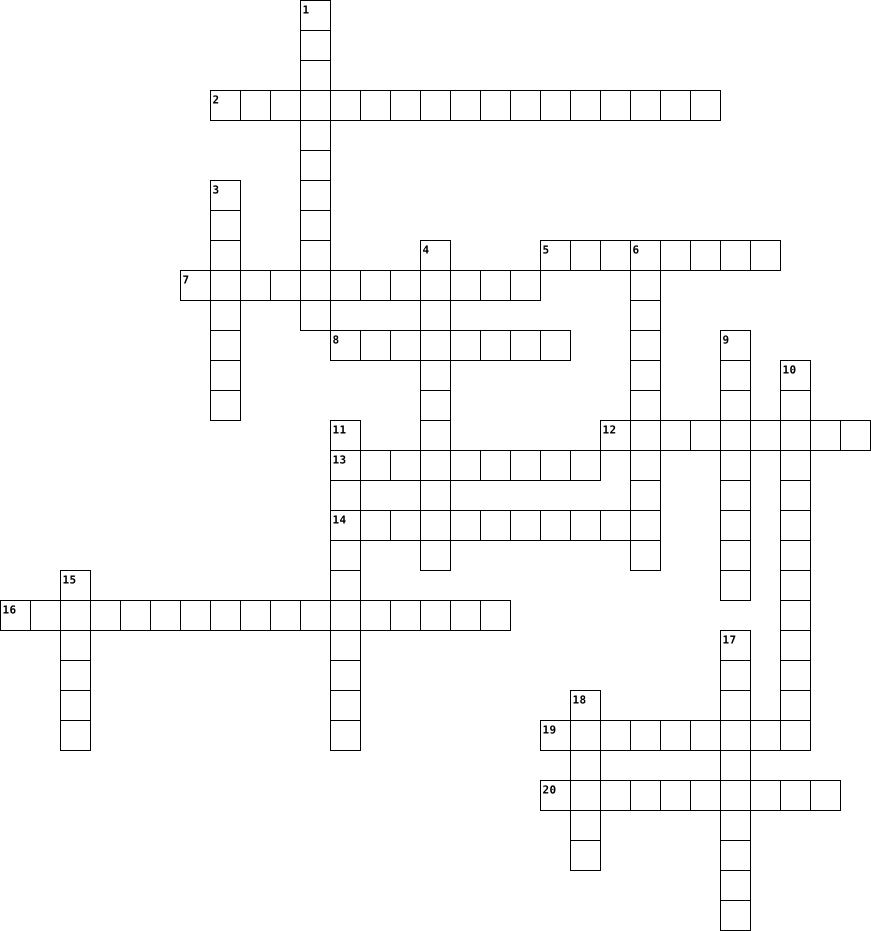
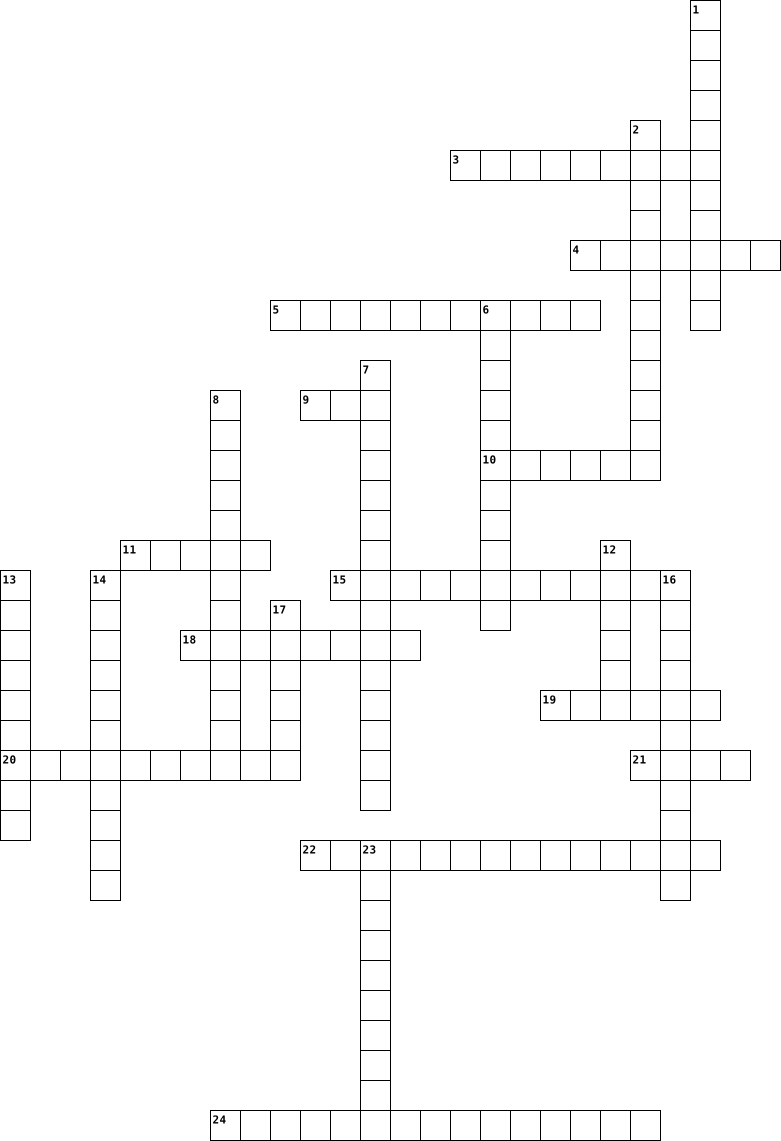
Across
- the topic of this course
- the currency used in Mr. Wilcox's class
- as price goes up, the quantity demanded goes down
- previously made goods used to help produce another good
- percentage of the labor force that is unemployed
- natural resources
- this desk payment is $375 each month
- goods used for the production of a final good
- the desire and ability to produce a good
- money given by the government to a citizen
- human effort to produce a good or service
- giving up the next best thing
- gross domestic product using current prices
- the willingness and ability to purchase a good
- type of unemployment due to lack of skills
- gross domestic product adjusted for inflation
Down
- a diagram that shows the exchange of goods and services for money
- limited resources for unlimited wants
- occurs when buyers and sellers come together
- Germany experienced this between the two world wars
- an equation used to add up the spending on domestically made goods
- general rise in prices
- a person who doesn't have a job but is actively looking
- type of unemployment caused by a recession
- exports - imports
- employed and the unemployed together
- spending by firms on factories and machines
- Gross Domestic Product
- type of unemployment caused by the worker transitioning between jobs.
- also known as factors of production
30 Clues: exports - imports • natural resources • general rise in prices • Gross Domestic Product • the topic of this course • giving up the next best thing • also known as factors of production • employed and the unemployed together • this desk payment is $375 each month • limited resources for unlimited wants • the currency used in Mr. Wilcox's class • ...
Economics 2022-12-13
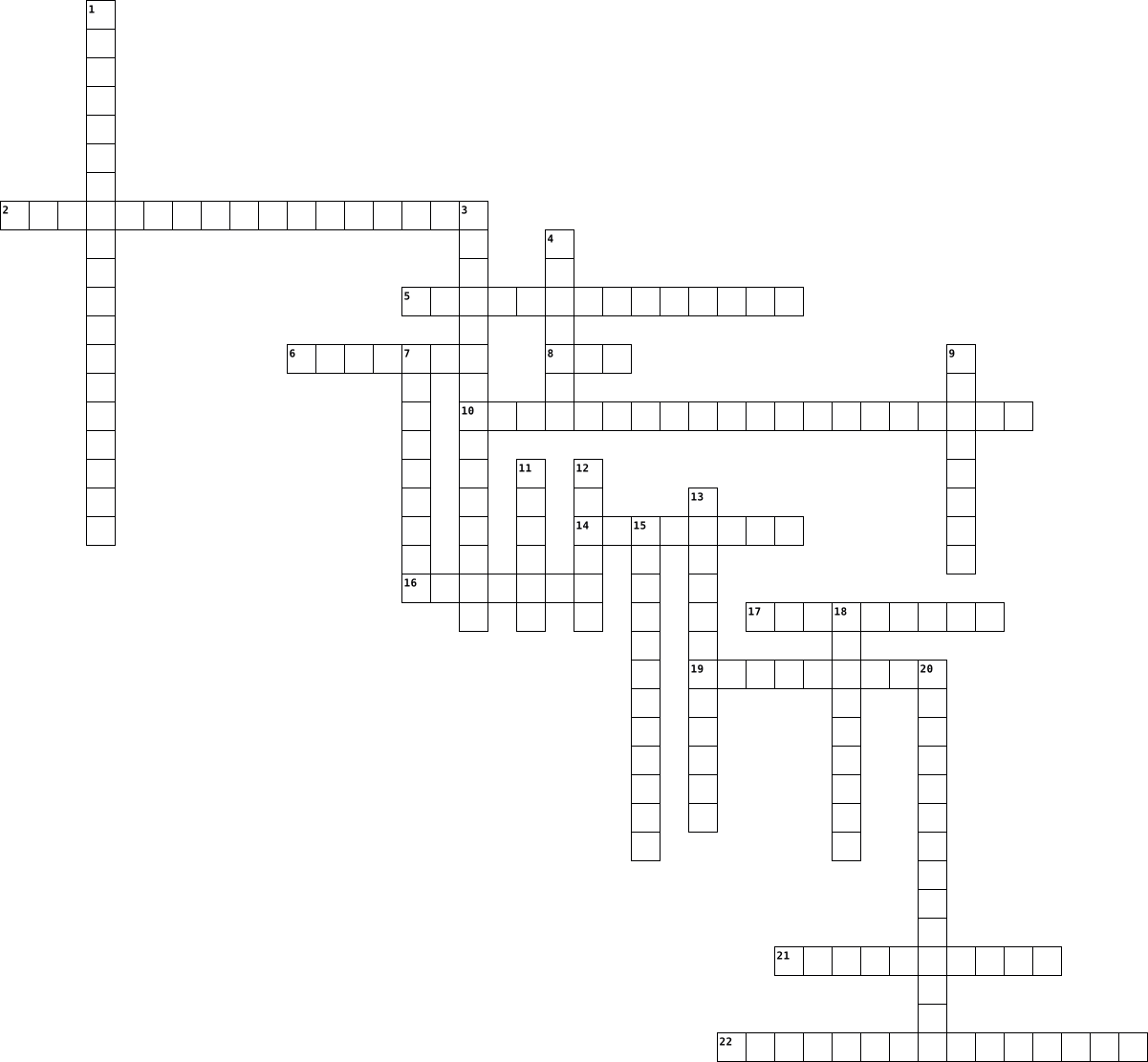
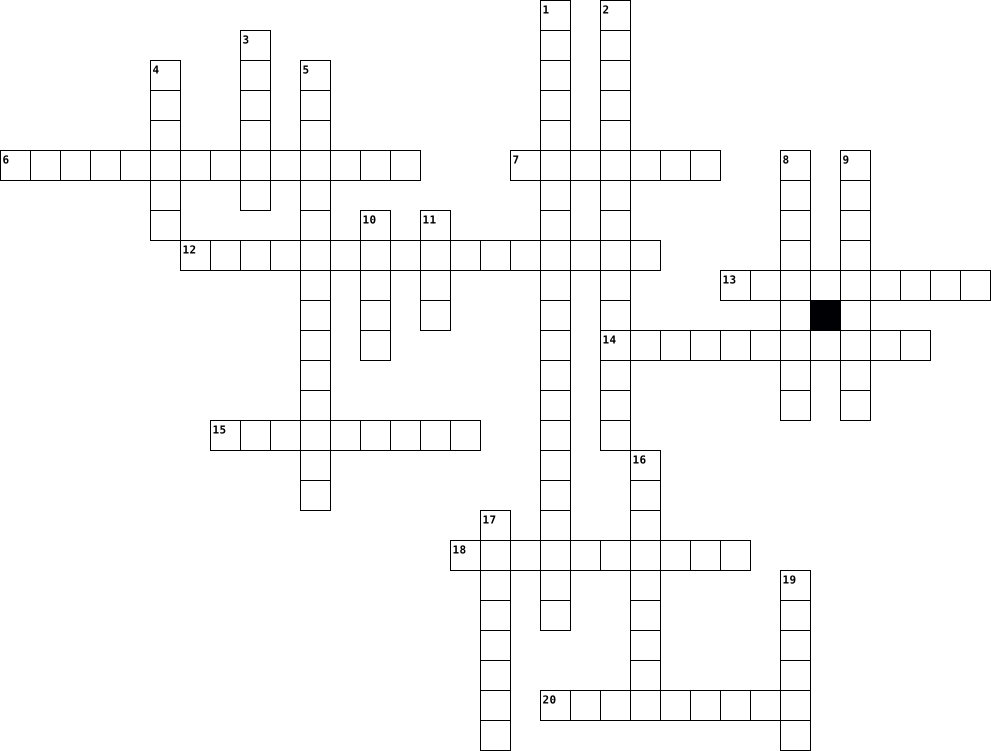
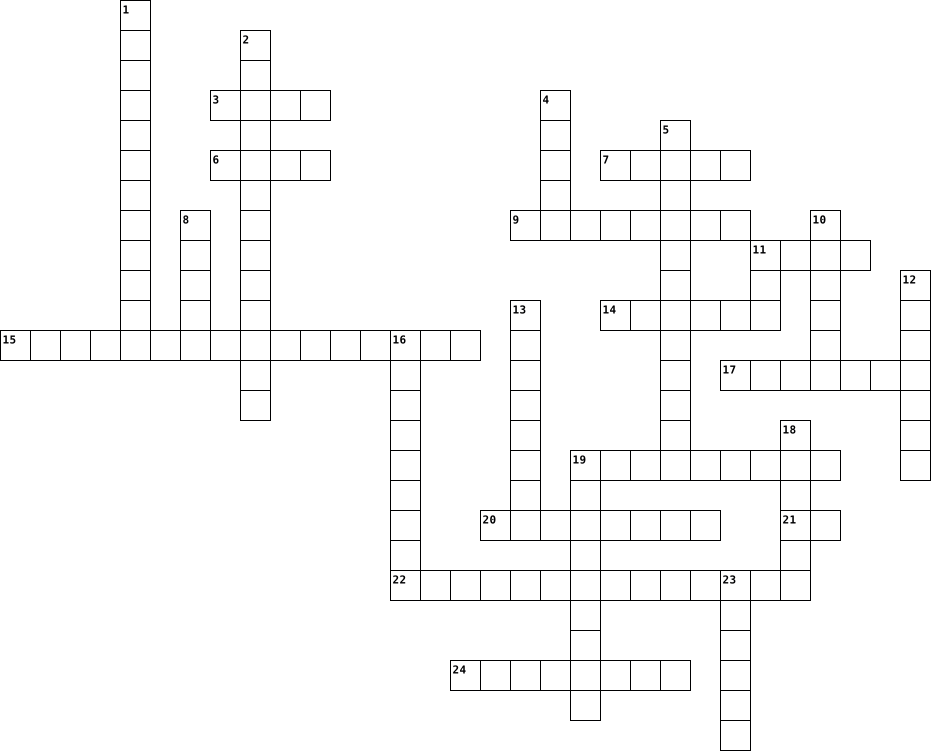
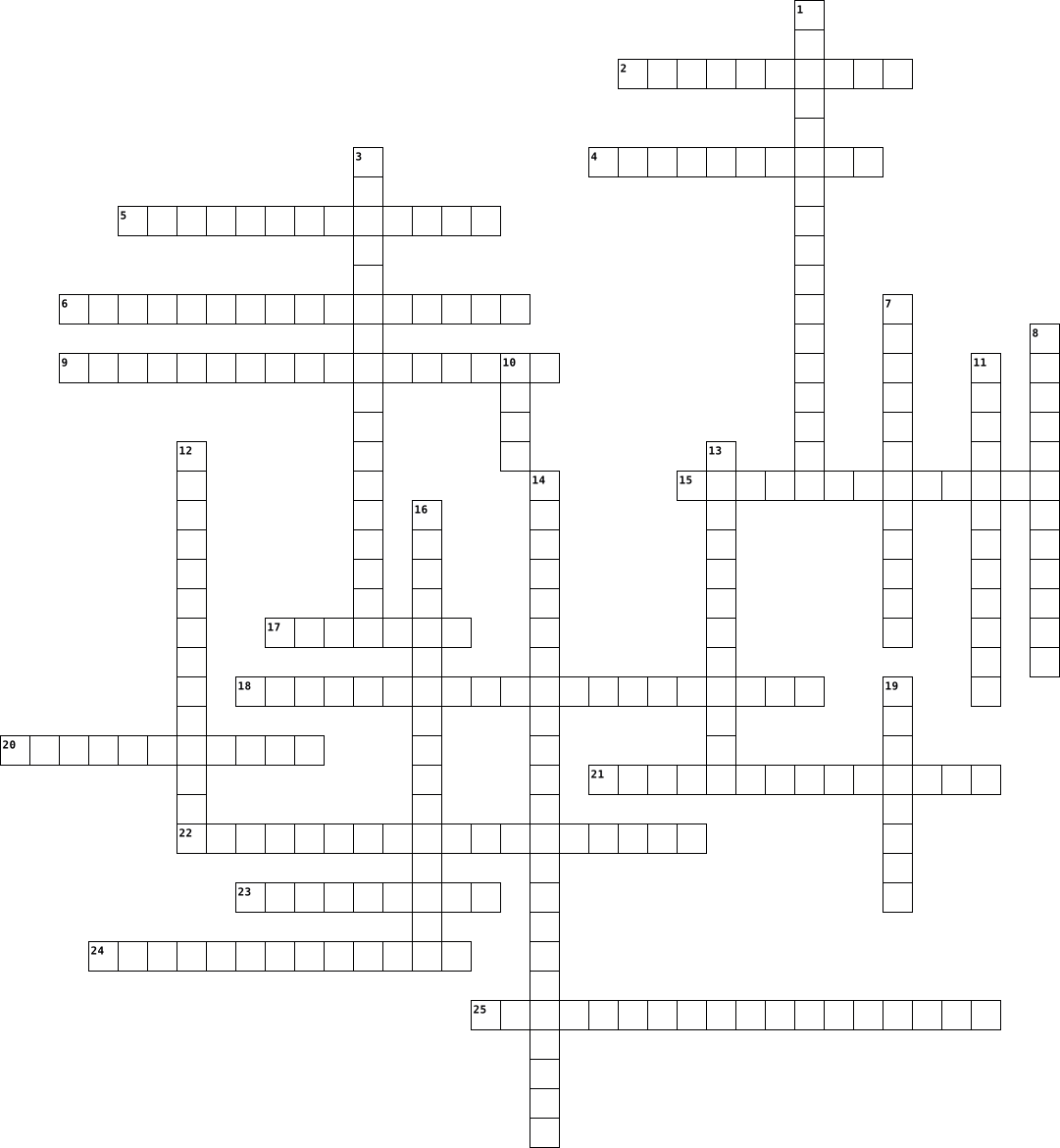
Across
- the ability to produce a good using fewer inputs than another producer
- the setting of the money supply by policymakers in the central bank
- Amount you pay monthly, quarterly, semiannually or annually to purchase different types of insurance
- Dollar amount if all final goods and services produced in a country in a year
- The ability of a country to produce a good at a lower cost than another country can
- in order to have more of one thing you have to have less of another
- GDP measured in current prices
- period of reduced economic activity
- the act of giving up one benefit in order to gain another, greater benefit
- Amount you must pay before you begin receiving any benefits from your insurance company
- whatever must be given up to obtain some item
Down
- capital goods, entrepreneurship, land, and labor
- Traditional, market, and command
- GDP from base year changes in price
- A continuous rise in the price of goods and services
- A situation in which unlimited wants exceed the limited resources available to fulfill those want
- Consumer willingness and ability to buy products
- The amount of goods available
- the quantity of goods and services produced from each unit of labor input
- House holds and businesses flow. House holds sell resources to businesses for money. Business sell their goods to the house holds.
- The study of how people seek to satisfy their needs and wants by making choices
- Countries specialize in producing a good which they have comparative advantage
22 Clues: The amount of goods available • GDP measured in current prices • Traditional, market, and command • GDP from base year changes in price • period of reduced economic activity • whatever must be given up to obtain some item • capital goods, entrepreneurship, land, and labor • Consumer willingness and ability to buy products • ...
Economics 2022-12-07
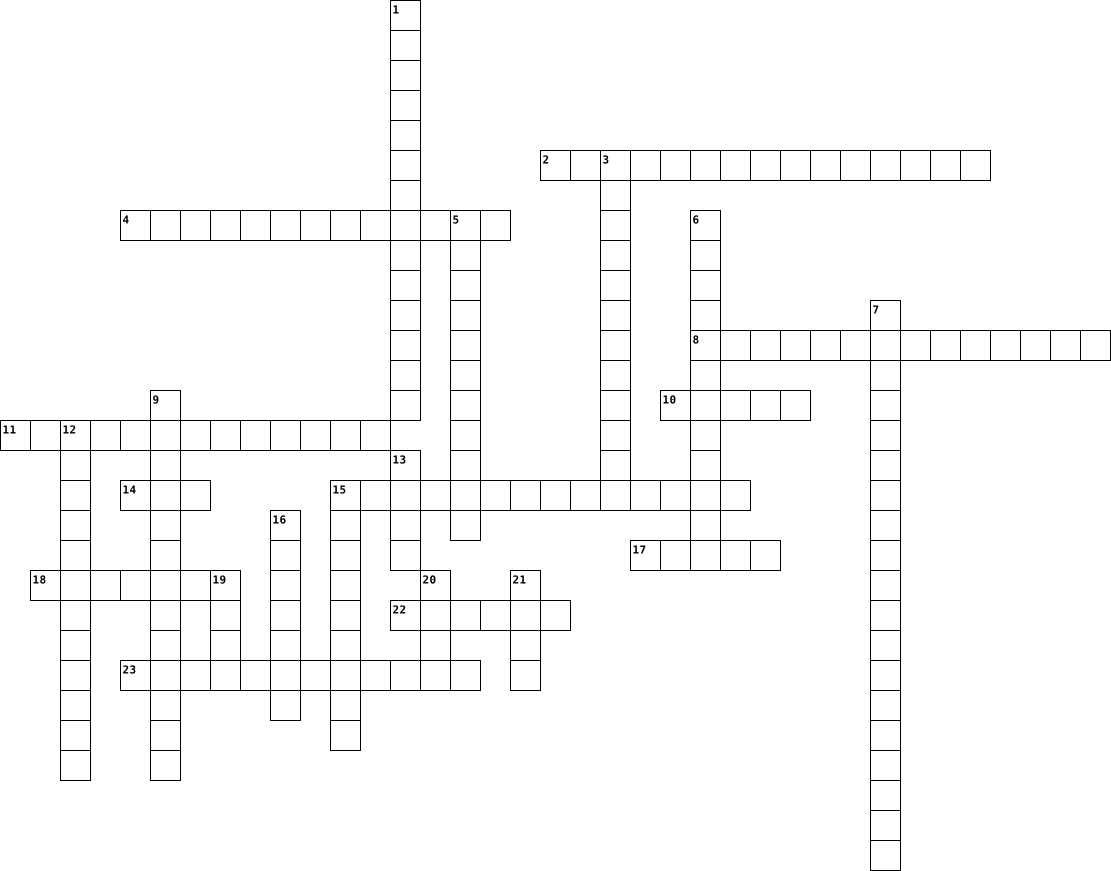
Across
- costs that change month to month
- you did plan to get it but it was near the cash register and you got it last minute
- the account people have for emergencies and hope to rarely use
- how much people want the product
- this determines if you get a high or low interest rate
- what banks charge you in exchange for loaning you money
- for a doctor's office, the portion you pay before insurance kicks in
- portion you pay before insurance kicks in (non-medical)
- what banks give you as a thank you for keeping your money in their bank
- the amount you pay your insurance company so you can have insurance
Down
- when you run out of a product
- when a company buys stuff for you and you pay them back later
- costs that stay the same month to month
- when you buy something with it, the money comes out of your bank account right then
- someone who starts or invests in a business
- amount of a product you have to sell
- when you have too much of a product
- when your purchase is covered in the future if it breaks
- the account people use to buy everyday items
- this details what is covered in your insurance
- money left over after paying all expenses
21 Clues: when you run out of a product • costs that change month to month • how much people want the product • when you have too much of a product • amount of a product you have to sell • costs that stay the same month to month • money left over after paying all expenses • someone who starts or invests in a business • the account people use to buy everyday items • ...
Economics 2023-02-03
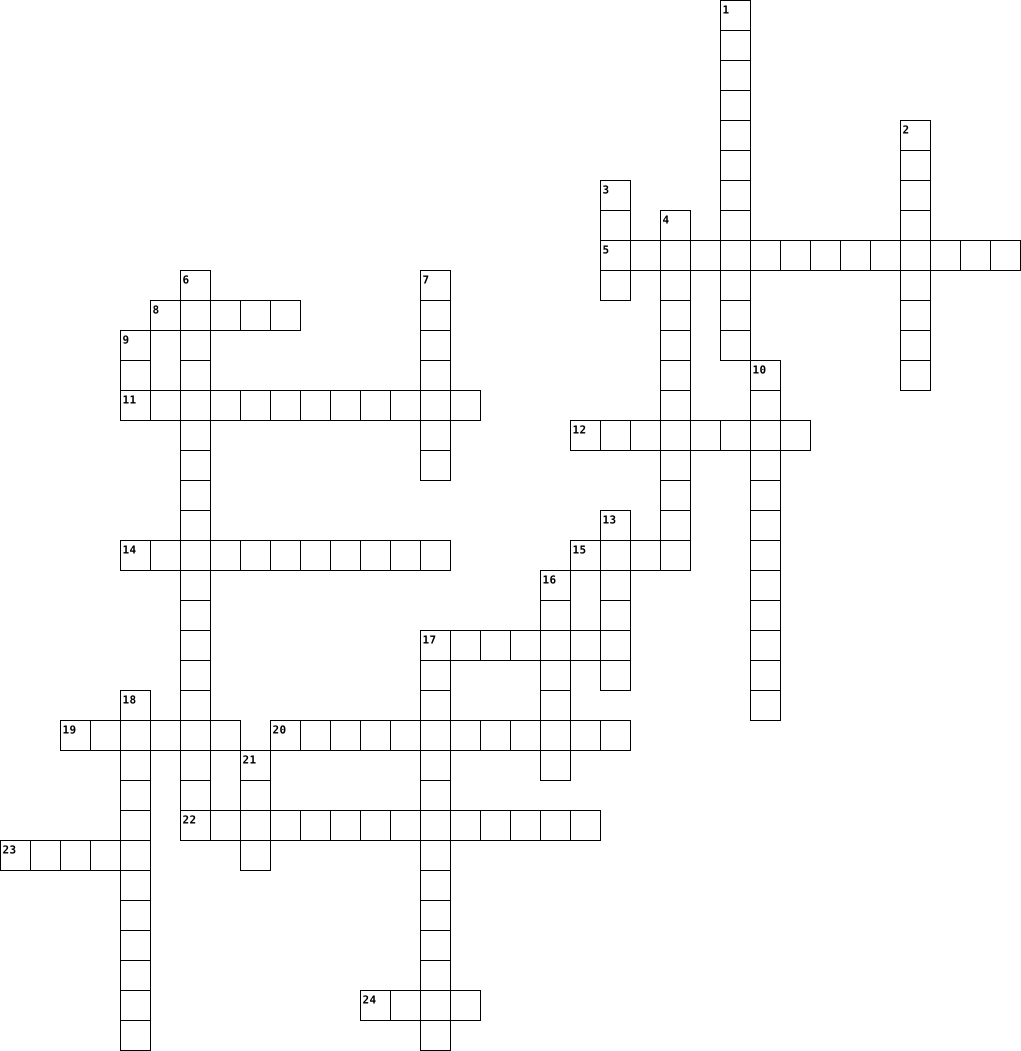
Across
- measure of goods and services produced
- study of decisions
- risk taker in search of profits
- equipment and factories used to make goods
- capacity to be useful
- lasts three years or more
- producers sell goods and services
- the work done to produce a good
- work, efforts, abilities and skills
Down
- accumulation of tangible items
- useful tangible item
- factors of production are bought and sold
- next best alternative
- not necessary for survival
- what something is worth
- gifts of nature
- alternative choices
- lasts less than three years
- sum of skills, abilities,health and knowledge
- necessary for survival
- location where buyers and sellers can exchange
- delegated tasks
- factors of _____?
23 Clues: gifts of nature • delegated tasks • factors of _____? • study of decisions • alternative choices • useful tangible item • next best alternative • capacity to be useful • necessary for survival • what something is worth • lasts three years or more • not necessary for survival • lasts less than three years • accumulation of tangible items • risk taker in search of profits • ...
economics 2023-02-03
Across
- performing tasks they can do better
- for final use by individuals
- lasts for less than 3 years
- people working to make stuff
- factors of production bought and sold
- dollar value of final goods
- output of goods increases
- worth in dollars and cents
- factories
- buyers and sellers exchange products
- measure of amount of stuff produced
Down
- high and low value
- risktaker in search of profits
- goods that last 3 or more years
- sum of peoples skills
- resources required to produce things
- producers sell goods and services
- tools from factories
- useful tangible item
- the study of how people satisfy wants
- work performed by someone
- natural resources
- something we would like to have
- basic requirement for survival
24 Clues: factories • natural resources • high and low value • tools from factories • useful tangible item • sum of peoples skills • output of goods increases • work performed by someone • worth in dollars and cents • lasts for less than 3 years • dollar value of final goods • for final use by individuals • people working to make stuff • risktaker in search of profits • ...
economics 2023-02-03
Across
- output of goods and services increases
- worth in dollars
- measure of amount of goods and services
- basic problem in economics
- tools, equipment, and machinery required for making goods
- natural resources
- work done for someone
- amount of money someone has
- sum of people skills
- item that lasts for fewer than 3 years
- work people do
- useful item
Down
- goods that last for more than 3 years
- study of satisfying wants and needs
- requirement to survive
- goods intended for final use
- resources required to produce the things we want
- factor of production
- dollar value of final goods
- risk-taker in search of projects
- a place to buy products
- capacity to be useful
- perform only tasks they can do good
- where factors of production are bought and sold
- something that would be nice to have
25 Clues: useful item • work people do • worth in dollars • natural resources • factor of production • sum of people skills • capacity to be useful • work done for someone • requirement to survive • a place to buy products • basic problem in economics • dollar value of final goods • amount of money someone has • goods intended for final use • risk-taker in search of projects • ...
Economics 2017-03-21
Across
- a sum of money paid regularly (typically quarterly) by a company to its shareholders out of its profits (or reserves).
- the state of being responsible for something, especially by law.
- secret or illegal cooperation or conspiracy, especially in order to cheat or deceive others.
- a thing used to tie something or to fasten things together.
- an extra benefit supplementing an employee's salary, for example, a company car, subsidized meals, health insurance, etc.
- a raw material or primary agricultural product that can be bought and sold, such as copper or coffee.
- an association of manufacturers or suppliers with the purpose of maintaining prices at a high level and restricting competition.
- the situation prevailing in a market in which buyers and sellers are so numerous and well informed that all elements of monopoly are absent and the market price of a commodity is beyond the control of individual buyers and sellers.
- is a type of monopoly that exists as a result of the high fixed costs or startup costs of operating a business in a specific industry.
- The basic purpose and function of zoning is to divide a municipality into residential, commercial, and industrial districts (or zones), that are for the most part separate from one another, with the use of property within each district being reasonably uniform.
Down
- an authorization granted by a government or company to an individual or group enabling them to carry out specified commercial activities, e.g., providing a broadcasting service or acting as an agent for a company's products.
- is the simplest and most common structure chosen to start a business.
- the goods or merchandise kept on the premises of a business or warehouse and available for sale or distribution.
- the maintaining of prices at a certain level by agreement between competing sellers.
- the exclusive possession or control of the supply or trade in a commodity or service.
- the action or process of differentiating.
- is an organization whose purpose is something other than making a profit.
- A patent is an exclusive right granted for an invention, which is a product or a process that provides, in general, a new way of doing something, or offers a new technical solution to a problem.
- people of royal blood or status.
- a useful or valuable thing, person, or quality.
20 Clues: people of royal blood or status. • the action or process of differentiating. • a useful or valuable thing, person, or quality. • a thing used to tie something or to fasten things together. • the state of being responsible for something, especially by law. • is the simplest and most common structure chosen to start a business. • ...
Economics 2017-03-21
Across
- an authorization granted by a government or company to an individual or group enabling them to carry out specified commercial activities, e.g., providing a broadcasting service or acting as an agent for a company's products.
- is an organization whose purpose is something other than making a profit.
- an association of manufacturers or suppliers with the purpose of maintaining prices at a high level and restricting competition.
- the exclusive possession or control of the supply or trade in a commodity or service.
- Share of earnings given to a franchise as payment.
- is the simplest and most common structure chosen to start a business.
- the maintaining of prices at a certain level by agreement between competing sellers.
- a thing used to tie something or to fasten things together.
- the action or process of differentiating.
- A patent is an exclusive right granted for an invention, which is a product or a process that provides, in general, a new way of doing something, or offers a new technical solution to a problem.
- a sum of money paid regularly (typically quarterly) by a company to its shareholders out of its profits (or reserves).
- the goods or merchandise kept on the premises of a business or warehouse and available for sale or distribution.
- secret or illegal cooperation or conspiracy, especially in order to cheat or deceive others.
Down
- the situation prevailing in a market in which buyers and sellers are so numerous and well informed that all elements of monopoly are absent and the market price of a commodity is beyond the control of individual buyers and sellers.
- is a type of monopoly that exists as a result of the high fixed costs or startup costs of operating a business in a specific industry.
- an extra benefit supplementing an employee's salary, for example, a company car, subsidized meals, health insurance, etc.
- the state of being responsible for something, especially by law.
- a raw material or primary agricultural product that can be bought and sold, such as copper or coffee.
- is to divide a municipality into residential, commercial, and industrial districts (or zones), that are for the most part separate from one another, with the use of property within each district being reasonably uniform.
- a useful or valuable thing, person, or quality.
20 Clues: the action or process of differentiating. • a useful or valuable thing, person, or quality. • Share of earnings given to a franchise as payment. • a thing used to tie something or to fasten things together. • the state of being responsible for something, especially by law. • is the simplest and most common structure chosen to start a business. • ...
Economics 2017-03-21
Across
- an authorization granted by a government or company to an individual or group enabling them to carry out specified commercial activities, e.g., providing a broadcasting service or acting as an agent for a company's products.
- an association of manufacturers or suppliers with the purpose of maintaining prices at a high level and restricting competition.
- the exclusive possession or control of the supply or trade in a commodity or service.
- the situation prevailing in a market in which buyers and sellers are so numerous and well informed that all elements of monopoly are absent and the market price of a commodity is beyond the control of individual buyers and sellers.
- an extra benefit supplementing an employee's salary, for example, a company car, subsidized meals, health insurance, etc.
- a thing used to tie something or to fasten things together
- Such companies have offices and/or factories in different countries and usually have a centralized head office where they coordinate global management.
- limit commercial use of land in order to prevent oil, manufacturing or other types of businesses from building in residential neighborhoods.
- a state of limited competition, in which a market is shared by a small number of producers or sellers
- a sum of money paid regularly (typically quarterly) by a company to its shareholders out of its profits (or reserves).
- the state of being responsible for something, especially by law.
Down
- a sum of money paid to a patentee for the use of a patent or to an author or composer for each copy of a book sold or for each public performance of a work.
- Something you own
- a government authority or license conferring a right or title for a set period, especially the sole right to exclude others from making, using, or selling an invention.
- secret or illegal cooperation or conspiracy, especially in order to cheat or deceive others
- the maintaining of prices at a certain level by agreement between competing sellers
- the simplest business form under which one can operate a business.
- the action or process of differentiating.
- a raw material or primary agricultural product that can be bought and sold, such as copper or coffee.
- the goods or merchandise kept on the premises of a business or warehouse and available for sale or distribution
20 Clues: Something you own • the action or process of differentiating. • a thing used to tie something or to fasten things together • the state of being responsible for something, especially by law. • the simplest business form under which one can operate a business. • the maintaining of prices at a certain level by agreement between competing sellers • ...
Economics 2017-03-21
Across
- An extra benefit supplementing an employee's salary
- A sum of money paid to a patentee for the use of a patent
- the situation prevailing in a market in which buyers and sellers are so numerous and well informed that all elements of monopoly are absent
- A state of limited competition, in which a market is shared by a small number of producers or sellers.
- The maintaining of prices at a certain level by agreement between competing sellers.
- A sum of money paid regularly by a company to its shareholders out of its profits
- Limit commercial use of land in order to prevent oil
- An authorization granted by a government or company to an individual or group enabling them to carry out specified commercial activities
Down
- An organization whose purpose is something other than making a profit.
- A type of monopoly that exists as a result of the high fixed costs or startup costs of operating a business
- A government authority or license conferring a right or title for a set period
- Something you own
- The action or process of differentiating.
- The state of being responsible for something, especially by law.
- A raw material or primary agricultural product that can be bought and sold, such as copper or coffee.
- The goods or merchandise kept on the premises of a business or warehouse and available for sale or distribution.
- An agreement with legal force, in particular.
- Secret or illegal cooperation or conspiracy, especially in order to cheat or deceive others.
- The exclusive possession or control of the supply or trade in a commodity or service.
- An association of manufacturers or suppliers with the purpose of maintaining prices at a high level
20 Clues: Something you own • The action or process of differentiating. • An agreement with legal force, in particular. • An extra benefit supplementing an employee's salary • Limit commercial use of land in order to prevent oil • A sum of money paid to a patentee for the use of a patent • The state of being responsible for something, especially by law. • ...
Economics 2020-02-28
Across
- obstacles that might discourage a from from entering a market
- where a dominant business is able to set the price charged in the whole market
- informal agreements between firms to restrict competition
- since most monopolists are large, they are able to exploit ???
- attempt by a firm to distinguish its product from that of rival
- commercial exploitation of a new invention
- company that starts to sell goods or services in a market where they have not sold them before
- where the actions of one large firm will have a direct effect on those
- rivalry that exists between firms when trying to sell goods to the same group of consumers
- the products sold by each competitive market are close ??? for each other
Down
- where one firm in the industry reduces price causing others to do the same
- A disadvantages to consumers because unprofitable firms eventually leave the market.
- market dominated by a few firms
- to remove or reduce the number of government controls on a particular business activity
- situation that occurs when one firm in an industry can serve the entire market at a lower cost than would be possible if the industry were composed of many smaller firms
- groups of customers that share similar characteristics
- licence that grants permission to operate as a solo producer of a newly designed product
- a word means when trading conditions become challenging, small firms may find it more difficult to survive than their larger rivals
- where a group of firms or countries join together and agree on pricing or output levels in the market
- situation where there is one dominant seller in a market
20 Clues: market dominated by a few firms • commercial exploitation of a new invention • groups of customers that share similar characteristics • situation where there is one dominant seller in a market • informal agreements between firms to restrict competition • obstacles that might discourage a from from entering a market • ...
Economics 2020-03-24
Across
- a commercial business
- social science, which studies how society uses limited resources to meet its desires
- the amount of money you expect to pay forsomethong
- a record or statement of financial expenditure and receipts relating to a particular period
- a regular gathering of people for the purchase and sale of provisions, livestock, and other commodities.
- making or manufacturing from components or raw materials
- an insistent and peremptory request, made as of right
- things to be transported, as distinct from passengers travellers who are not the ones driving the car
- borrowing money
- a sum of money saved or made available for a particular purpose
- paying someone or something or of being paid
- a fixed regular payment
- a large company or group of companies authorized to act as a single entity and recognized as such in law
- the state of being bankrupt
Down
- delivering letters, parcels, or goods
- a compulsory contribution to state revenue, levied by the government on workers' income and business profits, or added to the cost of some goods, services, and transactions.
- a small plastic card issued by a bank
- coins and banknotes collectively
- a financial gain, especially the difference between the amount earned and the amount spent in buying, operating, or producing something
- require the payment of before it can be acquired or done
- the cost of something
- the activity or condition of striving to gain or win something by defeating or establishing superiority over others
- take or carry from one place to another by means of a vehicle, aircraft, or ship.
- money received for work or through investments
- a person without a paid job
- a person using services of other people or organizations an organized group of people with a particular purpose, such as a business or government department
- money that has been saved
- a system of rules
28 Clues: borrowing money • a system of rules • a commercial business • the cost of something • a fixed regular payment • money that has been saved • a person without a paid job • the state of being bankrupt • coins and banknotes collectively • delivering letters, parcels, or goods • a small plastic card issued by a bank • paying someone or something or of being paid • ...
Economics 2020-04-29
Across
- Raw materials used to make goods and services (land, labour, capital & enterprise)
- All human effort, both physical and intellectual
- Ability to combine all resources to make something (plan, recipe, system etc)
- An organization that sells goods
- A company which operates in several countries with its headquarters in the parent country. (Apple)
- Income flows which are added to the Circular Flow of Income model (investment, govt. spending, exports)
- where goods and services are bought and sold.
- Payment for use of land
- Basic units used to make goods and services
- The study of how people use scarce resources to satisfy needs and wants
- That part of earnings not spent
- Complex group of firms in many countries each producing a component of a final product.
- Income flows that are removed from the Circular Flow model. (savings, tax, imports)
- Goods and services bought from overseas
- A system where factors of production are owned by the government
- for the use of resources
- Money paid at a particular rate for the money lent
- Situation where demand is greater than supply
- Purchase of new capital
Down
- The cost of the next-best alternative opportunity
- An economy where people produce only enough goods and services for their own family
- Equipment used to make goods and services
- Payment per year for labour
- Organisations that make goods and services
- Compulsory government levy
- A company that operates in many countries with independent headquarters in each.(McDonalds)
- Organization with authority to make decisions for the population
- Goods and services sold overseas
- Payment per hour for labour
- Actions done for consumers by producers
- A system where all factors of production, distribution and consumption of goods and services are controlled by the government
- Goods and services which we desire but don’t need
- Physical items used by consumer and services for a profit
- A system which allows private ownership of the factors of production
- Where actions by one party have impacts on another, particularly economically.
- Institution which handles money for households and firms
- Financial assistance given to people by the Government
- Action of only doing one part of the process
- All resources provided by nature
- Payment earned by entrepreneurs
- Place where factors of production are bought and sold
- Place where goods and services are bought and sold (Coles, Seek.com, Fremantle markets) Same as Market
- Basic necessities for life
- Used to pay for goods and services
- Final users of goods and services to satisfy their needs and wants
45 Clues: Payment for use of land • Purchase of new capital • for the use of resources • Compulsory government levy • Basic necessities for life • Payment per year for labour • Payment per hour for labour • That part of earnings not spent • Payment earned by entrepreneurs • An organization that sells goods • Goods and services sold overseas • All resources provided by nature • ...
Economics 2021-02-04
Across
- amount of physical, mental, and social effort used to produce goods and services in an economy
- industry that handles cash, credit, and other financial transactions
- imports exceed exports
- Social science that analyzes and describes the consequences of choices made concerning scarce productive resources
- accounting of a country's international transactions for a particular time period
- exports of a nation outweigh its imports
- economic growth and economic freedom, advocating laissez-faire ideas and belief in free competition
- study of decisions made by people and businesses regarding the allocation of resources, and prices at which they trade goods and services.
- strategic behavior of firms, regulatory policy, antitrust policy and market competition
- items that satisfy human wants and provide utility
Down
- decline of purchasing power of a given currency
- increase in the production of economic goods and services
- policy of protecting domestic industries against foreign competition
- nontangible things provided to customers
- exchange of goods and services between countries
- study of the role of the government in the economy
- unemployed and looking for a job
- total amount of money in circulation
- how an economy functions on a large scale
- governments used their economies to augment state power at the expense of other countries
- study of how the allocation of resources and goods affects social welfare
21 Clues: imports exceed exports • unemployed and looking for a job • total amount of money in circulation • nontangible things provided to customers • exports of a nation outweigh its imports • how an economy functions on a large scale • decline of purchasing power of a given currency • exchange of goods and services between countries • ...
Economics 2021-02-04
Across
- people who are looking for work but cannot find work
- economics concerned with single factors
- practice of shielding a country's domestic industries from foreign competition.
- economic activity where there is an exchange of values
- an industry that handles cash, credit and other financial transactions.
- increase of production of goods and services
- of economics dealing w/ strategic behavior of firms, regulatory policy, antitrust policy and market competition.
- economic idea that focused on economic growth, freedom and laissez-faire ideas and belief in free competition.
- deals w/ taxation and expenditure of civic organizations
- difference between a value of a country's exports and value of imports.
- field of economics concerned w/ application of economic theory in optimizing production and distribution of food.
- report of all transactions made between entities
Down
- items that satisfy human wants and provide utility.
- total amount of money
- economics concerned w/ large-scale or general factors
- an economic measure of a positive balance of trade, where a country's exports exceed its imports.
- economic field that seeks to understand the dynamics of the markets for wage laborers.
- economic study of urban areas (includes crime, education, housing, etc...)
- general increase in prices and fall of value of money
- exchange of goods and services between countries.
- academic study of economic or economic events of the past.
21 Clues: total amount of money • economics concerned with single factors • increase of production of goods and services • report of all transactions made between entities • exchange of goods and services between countries. • items that satisfy human wants and provide utility. • people who are looking for work but cannot find work • ...
Economics 2020-10-28
Across
- are goods that are used together, so a rise demand for one increase the demand for the other.
- is the extra cost of producing one more unit.
- is a set of rules or laws designed to control bussines behavior.
- is the money made from the sale of each additional unit of output.
- is a change in the amount that consumer will buy because they buy substitute goods instead.
- are goods that consumer demand more of when their incomes rise.
- when a change in price, either up or down leads toa relatively large change in the quantity demanded.
- is the level of production at which they realized.
- is the desire to have some goog or service and the ability to pay for it.
- states that producers are willing to sell more of a good or services at a higher price than they are at a lower price.
- are expense that the owners of a business must incuir whether they produce nothings, a little or a lot.
- is the desire and ability to produce and sell a product.
- graphically shows the data from demand schelude.
Down
- state that the marginalbenefit of using each additional unit of a product during a given period will decline.
- is the change in the amount that consumer will buy because the purchasing power of their income changes.
- states that when the price of a good or services falls, consumers buy more for it.
- is the sum of fixed and variable cost.
- shows the data from a market supply schedule in graph form.
- is the price of the resources used to make products.
- when a changes in price leads to a relatively smaller change in the quantity demanded.
- graphically shoes the data from a market demand schedule.
- are businnes cost that vary as the level of production output changes.
- are goods that consumer demand less of when their incomes rise.
- are goods and services that can be used in place of each other.
- is a tax on the making or selling of certain good or services.
- shows the date from supply schedule in graph form.
26 Clues: is the sum of fixed and variable cost. • is the extra cost of producing one more unit. • graphically shows the data from demand schelude. • is the level of production at which they realized. • shows the date from supply schedule in graph form. • is the price of the resources used to make products. • is the desire and ability to produce and sell a product. • ...
Economics 2020-12-22
Across
- an economic system in which both the private and public sectors play an important role
- an economic system where the government makes the crucial decisions, land and capital are state-owned and resources are allocated by directives
- the total supply of a product
- the willingness and ability to buy a product
- the study of the behaviour and decisions of households and firms, the performance of individual markets
- products whose demand decreases when income increases and increases when income falls
- the additional of individual components to arrive at a total amount
- the way households and firms interact to decide the allocation of resources
- the institutions, organizations and mechanisms that influence economic behavior and determine how resources are allocated
- the willingness and ability to sell a product
Down
- an economic system where consumers determine what is produced, resources are allocated by the price mechanism and land and capital are privately owned
- a product that is used together with another product
- firms owned by shareholders and individuals
- a product that can be used in place of another
- the total demand for a product
- the study of the whole economy
- those who undertake economic activities and make economic decisions
- an arrangement which brings buyers into contact with sellers
- products whose demand increases when income increases and decreases when income falls
- a situation where demand and supply are not equal at the current price
- a situation where demand and supply are equal at the current price
21 Clues: the total supply of a product • the total demand for a product • the study of the whole economy • firms owned by shareholders and individuals • the willingness and ability to buy a product • the willingness and ability to sell a product • a product that can be used in place of another • a product that is used together with another product • ...
Economics 2020-12-23
Across
- an economic system in which both the private and public sectors play an important role
- an economic system where the government makes the crucial decisions, land and capital are state-owned and resources are allocated by directives
- the total supply of a product
- the willingness and ability to buy a product
- the study of the behaviour and decisions of households and firms, the performance of individual markets
- products whose demand decreases when income increases and increases when income falls
- the additional of individual components to arrive at a total amount
- the way households and firms interact to decide the allocation of resources
- the institutions, organizations and mechanisms that influence economic behavior and determine how resources are allocated
- the willingness and ability to sell a product
Down
- an economic system where consumers determine what is produced, resources are allocated by the price mechanism and land and capital are privately owned
- a product that is used together with another product
- firms owned by shareholders and individuals
- a product that can be used in place of another
- the total demand for a product
- the study of the whole economy
- those who undertake economic activities and make economic decisions
- an arrangement which brings buyers into contact with sellers
- products whose demand increases when income increases and decreases when income falls
- a situation where demand and supply are not equal at the current price
- a situation where demand and supply are equal at the current price
21 Clues: the total supply of a product • the total demand for a product • the study of the whole economy • firms owned by shareholders and individuals • the willingness and ability to buy a product • the willingness and ability to sell a product • a product that can be used in place of another • a product that is used together with another product • ...
Economics 2021-02-08
Across
- smaller economic unit
- a larger economic unit
- an economic practice by which governments used their economies to augment state power at the expense of other countries
- the unlawful use or threat of violence particularly against the state or the public as a politically motivated means of attack or coercion
- field of economics dealing with the strategic behavior of firms, regulatory policy, antitrust policy and market competition
- a social science that analyzes and describes the consequences of choices
- a nation's imports exceed its exports
- where a nation utilizes its economic resources fully instead of building a trade surplus
- the study of politics, economics and law on a global level
- the study of what is likely to happen when individuals make choices due to other factors
Down
- a chemical, biological or radioactive weapon capable of causing widespread death and destruction
- to understand the functioning and dynamics of the markets for wage labor
- government policies that restrict international trade to help domestic industries
- the decline of purchasing power of a given currency over time
- a nation's exports exceed its imports
- an applied field of economics concerned with the application of economic theory in optimizing the production and distribution of food and fiber
- an organization not connected to national government; independent and 'stateless'
- when a person who is actively searching for employment is unable to find work
- a branch of economics dealing with the performance, structure, behavior, and decision-making of an economy as a whole
- broadly the economic study of urban areas
- the allocation of goods and resources for promoting social welfare
21 Clues: smaller economic unit • a larger economic unit • a nation's exports exceed its imports • a nation's imports exceed its exports • broadly the economic study of urban areas • the study of politics, economics and law on a global level • the decline of purchasing power of a given currency over time • the allocation of goods and resources for promoting social welfare • ...
Economics 2021-02-08
Across
- government policies that restrict international trade to help domestic industries
- a larger economic unit
- the study of politics, economics and law on a global level
- a branch of economics dealing with the performance, structure, behavior, and decision-making of an economy as a whole
- an organization not connected to national government; independent and 'stateless'
- the allocation of goods and resources for promoting social welfare
- the study of what is likely to happen when individuals make choices due to other factors
- a nation's exports exceed its imports
- where a nation utilizes its economic resources fully instead of building a trade surplus
- the decline of purchasing power of a given currency over time
- when a person who is actively searching for employment is unable to find work
- a social science that analyzes and describes the consequences of choices
Down
- a nation's imports exceed its exports
- a chemical, biological or radioactive weapon capable of causing widespread death and destruction
- the unlawful use or threat of violence particularly against the state or the public as a politically motivated means of attack or coercion
- smaller economic unit
- field of economics dealing with the strategic behavior of firms, regulatory policy, antitrust policy and market competition
- to understand the functioning and dynamics of the markets for wage labor
- an applied field of economics concerned with the application of economic theory in optimizing the production and distribution of food and fiber
- an economic practice by which governments used their economies to augment state power at the expense of other countries
20 Clues: smaller economic unit • a larger economic unit • a nation's imports exceed its exports • a nation's exports exceed its imports • the study of politics, economics and law on a global level • the decline of purchasing power of a given currency over time • the allocation of goods and resources for promoting social welfare • ...
Economics 2021-02-27
Across
- Cost is $ and outcome is natural units = _____ analysis
- Medical events that occur as a result of a disease or treatment are _____ outcomes
- Choice between how much time to trade to remain in perfect health
- Measures what it is supposed to measure
- State used with events that have short-term effects
- Done to bring the value of past costs and consequences to present-day value
- Cost is $ and outcome is $ = _____ analysis
- The description and analysis of the costs and consequences of pharmaceuticals and pharmaceutical services, and their impact on individuals, health care systems, and society
- Measurable effects of treatment that are thought to be indicative of a specific long-term, final health outcome are known as _____ endpoints
- Represent nonfinancial outcomes of disease and medical care
Down
- Cost is $ and outcome is QALYs = _____ analysis
- Costs valued as real money but are not directly paid for the treatment of a disease
- Measures the true variation in scores while minimizing variation due to random error
- Equal to the sum of benefits minus the sum of costs
- Health state that patients cannot leave
- A multidimensional concept referring to a person's total well-being including their psychological, social, and physical state
- Done to determine the present value of all future costs and to incorporate society's time preference for money
- Mutually exclusive health state that delineates different scenarios a patient might reasonably experience
- Patient satisfaction, preferences, and quality of life are _____ outcomes
- special arrangement of temporary states arranged so that each has a transition only to the next
20 Clues: Measures what it is supposed to measure • Health state that patients cannot leave • Cost is $ and outcome is $ = _____ analysis • Cost is $ and outcome is QALYs = _____ analysis • Equal to the sum of benefits minus the sum of costs • State used with events that have short-term effects • Cost is $ and outcome is natural units = _____ analysis • ...
economics 2021-04-06
Across
- for sale at high prices
- demanded varies by its price
- various supply sold
- and decision making
- in place of other products
- in price effects family income
- change in price/demand
- offered for sale
- demanded
- by everyone intrested in buying
- various prices sold at firms
- shifts its self
- offered
Down
- from buying 1 or more units
- change in demand
- shows change in demand
- we get diminishes
- causes large change in demand
- desire to buy goods and services
- increases other products
- of quantities sold at various prices
- of in/dependent variable
- causes small change in demand
- change cuz of price
- demanded at every price
- brought to market
26 Clues: offered • demanded • shifts its self • change in demand • offered for sale • we get diminishes • brought to market • various supply sold • and decision making • change cuz of price • shows change in demand • change in price/demand • for sale at high prices • demanded at every price • increases other products • of in/dependent variable • in place of other products • from buying 1 or more units • ...
economics 2021-04-06
Across
- a rise in the prices charged for goods and services
- any means that buyers and sellers use to exchange money for goods or services
- refers to a government’s spending and how it affects the economy
- the extent to which an investment is funded with borrowed money the investor is relying on earning a return in order to pay off the debt and still make a profit
- is a school of thought that centres on the idea that the volume of money
- examines how customers’ buying habits change when prices increase
- how much is available of a particular good or service
- a measure of growth and how it increases over a period of time
- is the cost of missing an opportunity
- opposite of inflation
- items a business uses to produce goods or services to sell to consumers
Down
- calculated by applying a percentage to the amount of the principal being borrowed
- studies how the economy behaves in the aggregate
- describes the process of breaking down tasks so that separate groups or individuals can carry out each task.
- how much economic variable changes in response to another
- anyone that uses goods or services
- refers to a government’s spending and how it affects the economy, particularly if spending levels change.
- when the demand for a product or service goes up or down due to factors other than a change in price
- when a lot of people want to buy something,
- describes an economy that is experiencing slow economic growth
- refers to the amount of satisfaction a consumer has by consuming a good or service
- the extent to which assets could quickly be converted to cash
- short supply
- barriers relate to a government policy or regulation that limits or controls
24 Clues: short supply • opposite of inflation • anyone that uses goods or services • is the cost of missing an opportunity • when a lot of people want to buy something, • studies how the economy behaves in the aggregate • a rise in the prices charged for goods and services • how much is available of a particular good or service • ...
Economics 2021-05-16
Across
- : A financial institution that collects deposits from the public and extends credit to businesses and households.
- : Means the positive change in the production of goods and services in an economy over a given period.
- : A sharp downturn in general economic activity.
- : In economics, this refers to rivalry between several agents for the same market.
- : Selling part of the production of goods or services in the other country
- : Decrease in the general price level
- : Situation of a business owner who cannot pay his debts, keep his commitments.
- : A person who starts a business
- : Excess of expenditure over earnings.
Down
- : The situation of a person who wants to work and has the capacity to do so, but finds himself or herself jobless in spite of searching.
- : Entry into a country of goods or services from another country
- : Also called a firm, it is an organisation whose purpose is to produce and supply goods or services to a set of customers.
- : A situation in which one supplier has an exclusive position on a product or service offered to a multitude of buyers.
- : To be prudent in spending, to set aside money for a particular purpose.
- : It is a fraction of the capital of a listed company
- : An immediate expenditure intended to increase the wealth of the person incurring it in the long term
- : Periodic payment, paid by an employer to a salaried employee
- : It is a practice to record all the flows, expenses and revenues of the company.
- : The sum of a company's sales of goods or services over an accounting period.
- : Rising prices of goods and services.
20 Clues: : A person who starts a business • : Decrease in the general price level • : Rising prices of goods and services. • : Excess of expenditure over earnings. • : A sharp downturn in general economic activity. • : It is a fraction of the capital of a listed company • : Periodic payment, paid by an employer to a salaried employee • ...
Economics 2021-06-09
Across
- What is the study of how people satisfy their wants and needs by making choices?
- the change in quantity demanded due to a change in price is called?
- What states the quantity purchased varies inversely with price?
- What is the broadest measure of economic growth?
- What is it called to make something needed or wanted available to someone?
- The amount of money that you have to pay to the government so it can pay for public services is called?
- ____ occurs when a person is actively searching for a job but can't find one.
- What is the basic problem in economics?
- What is an estimation of revenue and expenses over a specified future period of time ?
- What can refer to any mechanism used for generating future income.
- When money is given to another party in exchange for repayment is called
- The change in interest rates and money supply is called?
- What is it called when the quantity does not change when the price does?
Down
- Which type of economic system is the most common in the world?
- Government spending and taxation to influence the economy is called?
- The total amount of money, cash, coins and balances in the bank accounts called?
- The loss of a potential gain from other alternatives is called?
- The cycle of ups and downs in the economy is called ?
- An insistent and peremptory request made by its rights?
- What is the measure of the rate of rising prices of goods and services?
- What is the name for the protection of rights and interests of the general pool of buyers,or an obsession with buying material goods.
- Regulations and agreements that control imports, exports to foreign countries called?
- What is a contract agreement to borrow a sum of money and repay the lender at a later date?
- The area of the economy frequently subtracted from the GDP is called?
24 Clues: What is the basic problem in economics? • What is the broadest measure of economic growth? • The cycle of ups and downs in the economy is called ? • An insistent and peremptory request made by its rights? • The change in interest rates and money supply is called? • Which type of economic system is the most common in the world? • ...
Economics 2021-06-09
Across
- (Two words) - A utopian socialist. During the depression, he did not lay off any of his workers and he showed that there is no excuse for bad working conditions and low wages. He believed that the main way to improve society was to improve their environment. This could happen by providing more opportunities for schooling, housing, hospitals, as well as child-care.
- (Two words) - Canada has this service universal and publicly funded, making it free, or almost free to all. In other places such as the states, this service is private, and therefore very expensive, resulting in a decline in people's health and willingness to seek medical help when needed.
- (Two words) - This problem arose in 2008. Banks had been lending money to encourage investing and spending on houses, this was because of the vast amount of jobs that would result from building more houses. The banks were failing to look into employment status, credit history and income levels before offering these huge loans which resulted in rising interest rates and eventually falling housing prices. All together this led to a large increase in mortgage foreclosures.
- (Two words) - When a government begins to pay out more money than they are getting back. This is typically only used as a means of getting an economy out of a recession. It tends to involve things such as a general increase in government spending to allow for higher job creation, but it also can occur in the form of handouts and benefits such as the CERB fund for the current pandemic. If the government were to continue giving out this fund to the point where they are not collecting an overage in tax revenue, the government is forced to take out loans. This increases the country's overall debt amount.
- (Three words) - An economic system revolving around supply and demand in which there is very little to no government control. Often, this goes hand in hand with capitalism, although they are not exactly the same.
- (Two words) - This motivating factor of capitalism was first developed by Adam Smith. This selfish motivation will promote a better society as others will work harder. For example, when the common person notices that the Rich spend money on luxurious yachts, cars, and homes it motivates the common person to work harder to achieve a better lifestyle.
- (Two words) - A deal that was introduced after the 1932 election by the new president. It was made up of a series of programs and policies made to try and get the country out of it’s depression. It involved providing the American people with a regained trust and confidence in both their economic and political systems. The three main measures introduced with this act to help deal with the depression were; relief, recovery & reform.
- (Three words) - An idea brought about by Milton Friedman. It involved the theory that having the wealthy keep their wealth by having lower taxes, would cause a domino effect throughout the economy and overall help everyone. This was championed by Ronald Reagan and Margeret Thatcher in the 80s. It fell under the idea of Supply-Side Economics.
- - Typically, inflation occurs when an economy is booming. However, sometimes it may happen when the economy is in a bust, or just at a standstill. This term is used to describe when the inflation is going up, but the economy is not going up with it, it's stagnated. This occurrence can lead to large economic issues that are hard to come back from as people are buying even less than usual to begin with, and yet inflation is still increasing.
- (Two words) - Falls under Supply-Side Economics, and supported by politicians such as Milton Friedman. It involved the lowering of interest rates so that citizens would continue to borrow more from banks, and therefore spending more.
- (Two words) - a statement that states all problems are in some way connected to the supply of money. This states that the ways to fix problems within inflation and deflation are opposites; Raise interest rates vs. Lower interest rates, Decrease government spending vs. increase government spending.
- - Occurs when the business cycle begins to retract. Often this is caused when consumer spending begins to decrease. It has the potential to lead to or result in a depression.
- - An increased role of government with the end goal of making life generally better for the common person. These people came mostly from the educated and middle class, they wanted to ‘fix’ politics. To increase people's general everyday life, they wanted to increase democracy, and therefore involve citizens more directly within the government decision making.
- (Three words) - This was a time that came right after a large boom in the 19th century. The biggest problem that led to this time was the Wall Street Crash of 1929, when wall street ‘overheated’ while also dealing with accusations of corruption and insider-trading. This time was also a result of very high wealth inequalities where 40% of the population was living below the poverty line, and the top 5% were earning 33% of the country's overall income. Millions of Canadians and Americans were left with no options of work, and businesses began to struggle to stay afloat.
Down
- (Two words) - These people believed in an unrealistic perfect economy and world. Included were; Robert Owen, Charles Fourier.
- (Three words) - A fund created by Premier Peter Lougheed in 1976. The three main goals were to save for the future, strengthen & diversify the economy, and improve the Albertan quality of life. In 2006, each Albertain received a cheque of $400 as a result of this fund.
- - The reduction or complete removal of government power, within a specific industry. This is used to help improve competition, but it can also help create higher efficiency and lower costs.
- (Two words) - This man believed in supply side economics - his own form being known as “Reaganomics”. He advocated for tax reductions, and decreases in government spending.
- - The last name of the man who wrote The Communist Manifesto, he believed in everybody being equal. To do this required the government to provide everyone with their basic needs such as food, shelter, and help for their physical and mental needs. It was also a goal to abolish all private property, profit motive as well as crime. He wanted to create a society in which everyone was equal no matter where they came from.
- (Two words) - This policy was in effect as a means of helping an economy get out of a depression. It involved lower taxation so that people have more spending money available to them, as well as an increase in government spending. Government spending was beneficial in this case as they would start large-scale projects or build infrastructure, which would provide more people with jobs and therefore more people with spending money.
- (Two words) - This man was a counter to Keynes, as he supported supply side economics. His basic principles involved taxing and subsidizing. His theory was in classical liberalism and trusted in the invisible hand to prevent and solve economic cycles.
- - This term refers to something we have been experiencing recently with the Covid-19 pandemic. It often results in a bust in the economy as citizens are without money to spend, and are therefore saving as much as they can and only buying the absolute essentials. As a means to temporarily protect the economy while these rates are increasing, government’s will often put out some type of relief fund (such as CERB) or stimulus cheques.
- (Three words) - The creator of Alphabet Agencies and the New Deal. He believed that people needed confidence in both their economic and political systems and therefore he added in a series of measures to try and keep people on his side. These included; abolishing Prohibition, Bank Holidays, Removing America from the Gold Standard, etc. He also did not believe in handouts form the government, he wanted people to earn their sense of worth. He served as the president of the United States up until his death in 1945.
- (Two words) - Set up by FDR, these things were named as a group based on their shortened acronyms. Included are things such as the Agricultural Adjustment Act, Federal Emergency Relief Administration, and the Civilian Conservation Corps.
- - Used specifically in 2008 in terms of the Subprime Crisis. The Big Three; Ford, Chrysler and GM requested these from the government in order to keep their companies afloat and up to par with competition.
25 Clues: (Two words) - These people believed in an unrealistic perfect economy and world. Included were; Robert Owen, Charles Fourier. • (Two words) - This man believed in supply side economics - his own form being known as “Reaganomics”. He advocated for tax reductions, and decreases in government spending. • ...
Economics 2021-06-09
Across
- What is the study of how people satisfy their wants and needs by making choices?
- the change in quantity demanded due to a change in price is called?
- What states the quantity purchased varies inversely with price?
- What is the broadest measure of economic growth?
- What is it called to make something needed or wanted available to someone?
- The amount of money that you have to pay to the government so it can pay for public services is called?
- ____ occurs when a person is actively searching for a job but can't find one.
- What is the basic problem in economics?
- What is an estimation of revenue and expenses over a specified future period of time ?
- What can refer to any mechanism used for generating future income.
- When money is given to another party in exchange for repayment is called
- The change in interest rates and money supply is called?
- What is it called when the quantity does not change when the price does?
Down
- Which type of economic system is the most common in the world?
- Government spending and taxation to influence the economy is called?
- The total amount of money, cash, coins and balances in the bank accounts called?
- The loss of a potential gain from other alternatives is called?
- The cycle of ups and downs in the economy is called ?
- An insistent and peremptory request made by its rights?
- What is the measure of the rate of rising prices of goods and services?
- What is the name for the protection of rights and interests of the general pool of buyers,or an obsession with buying material goods.
- Regulations and agreements that control imports, exports to foreign countries called?
- What is a contract agreement to borrow a sum of money and repay the lender at a later date?
- The area of the economy frequently subtracted from the GDP is called?
24 Clues: What is the basic problem in economics? • What is the broadest measure of economic growth? • The cycle of ups and downs in the economy is called ? • An insistent and peremptory request made by its rights? • The change in interest rates and money supply is called? • Which type of economic system is the most common in the world? • ...
Economics 2022-05-08
Across
- toimitusjohtaja
- arvo
- taloudellinen
- tarjonta
- säästöt
- velka
- lainta
- kauppasiirto
- lama
- sijoitus
Down
- luotto
- kirjanpitäjä
- ylijäämä
- markinnat
- kysyntä
- budjetti
- tulos
- tappio
- kuluttaja
- taloustiede
20 Clues: arvo • lama • velka • tulos • luotto • lainta • tappio • säästöt • kysyntä • tarjonta • ylijäämä • budjetti • sijoitus • markinnat • kuluttaja • taloustiede • kirjanpitäjä • kauppasiirto • taloudellinen • toimitusjohtaja
Economics 2022-11-13
Across
- an example would be Pepsi and Coca Cola
- occurs when there are not enough resources to satisfy human wants
- consists of all goods and services in order for society to function
- desire and ability to produce& sell a product
- a system in which society usually in form of the government owns and controls production
- two good that are bought and used together
- a side effect of a product that affects someone other then the seller or buyer
- goods provided by public governments
- is the study of how societies satisfy wants with limited resources
- any arrangement that allows buyers and sellers to exchange things
- describes that is not sensitive to change
Down
- government in which one leader or group holds absolute power
- money left over after all overhead costs
- theory or system in which where all property is ascribed to the community
- are desires that can be satisfied by consuming a good or service
- are things necessary for survival
- ideal model of a market economy
- a group that acts together to set prices
- occurs when there is only 1 seller in. a market
- government programs that protect people
- desire to own something and the ability to pay
- describes demand that is sensitive to change
22 Clues: ideal model of a market economy • are things necessary for survival • goods provided by public governments • an example would be Pepsi and Coca Cola • government programs that protect people • money left over after all overhead costs • a group that acts together to set prices • describes that is not sensitive to change • two good that are bought and used together • ...
ECONOMICS 2022-10-20
Across
- is the medium of exchange in most modern economies
- the collection of firms involved in making a similar range of items that usually compete with each other such as the financial services industry or the car industry
- The quantity of a particular good or service that consumers are willing and able to purchase at various price levels
- remove money from the circular flow of income
- the integration between different countries and economies and the increased impact of international influences on all aspects of life and economic activity
- are good or services that are produced domestically and purchased overseas
- The natural resource used to produce goods and services
- The return factor of production enterprise for its role in the production of goods and services
- money spent to help increase the economy
- when supply and demand are equal
- occurs when an organisation pays another business to perform a function that it does not regard as a core part of its business focus
Down
- a market structure consisting of a few large firms producing slightly different products
- is the case with each financial asset can be transformed into cash so it can be used as a medium of exchange
- the amount of money or other benefits measured in money terms that flows to individuals or households usually for their contribution to the production process or as a direct payment from the government over a period of time
- a single business dominating the industry
- are the profit returns received by the share holders of a business
- a human effort both physical and mental used to produce goods and services
- are costs and benefits that private agents in a market do not consider in their decision-making process
- the process whereby unemployment in the current period results in the persistence of unemployment in future periods as unemployed people can lose their skills job contracts and motivation to work
- the sustained increase in the general level of prices over a period of time usually one year
- occurs when the government sells public trading enterprises to the private sector
21 Clues: when supply and demand are equal • money spent to help increase the economy • a single business dominating the industry • remove money from the circular flow of income • is the medium of exchange in most modern economies • The natural resource used to produce goods and services • are the profit returns received by the share holders of a business • ...
Economics 2022-09-09
Across
- makes up 75% of exports
- the AD formula
- occurs when there is high GDP and unemployment decreases
- occurs when there is 2 years of consecutive negative GDP & low inflation
- global agreement
- supply factor where amount of output is produced with any given number of input
- tax on individuals income and the bulk of government revenue
- something being forgone in order to get something else
- unemployment cause by discouragement of job prospects and not counted in statistics
- unemployment when an individual is in between jobs
- living standards measured by goods and services
- a type of market structure with little competition but not much effect
- limited resources not being able to meet unlimited needs and wants
- geographically located agreement
- living standards of an individual's quality of life with no monetary factors
- part time/ casual workers that work similar hours as full time
Down
- part of AD formula and is affected by population growth
- income after tax
- part of AD formula and is affected by business confidence
- unemployment caused due to lack of aggregate demand
- test done to check individual’s income and ownership
- what is interest rate
- a type of market structure with no competition
- unemployment due to automation
- taxes on specific goods and services like tobacco
- consumers being optimistic about their future
- leading forum to facilitate trade/ investment and economic growth consisting of 21 countries
27 Clues: the AD formula • income after tax • global agreement • what is interest rate • makes up 75% of exports • unemployment due to automation • geographically located agreement • consumers being optimistic about their future • a type of market structure with no competition • living standards measured by goods and services • taxes on specific goods and services like tobacco • ...
Economics 2022-11-28
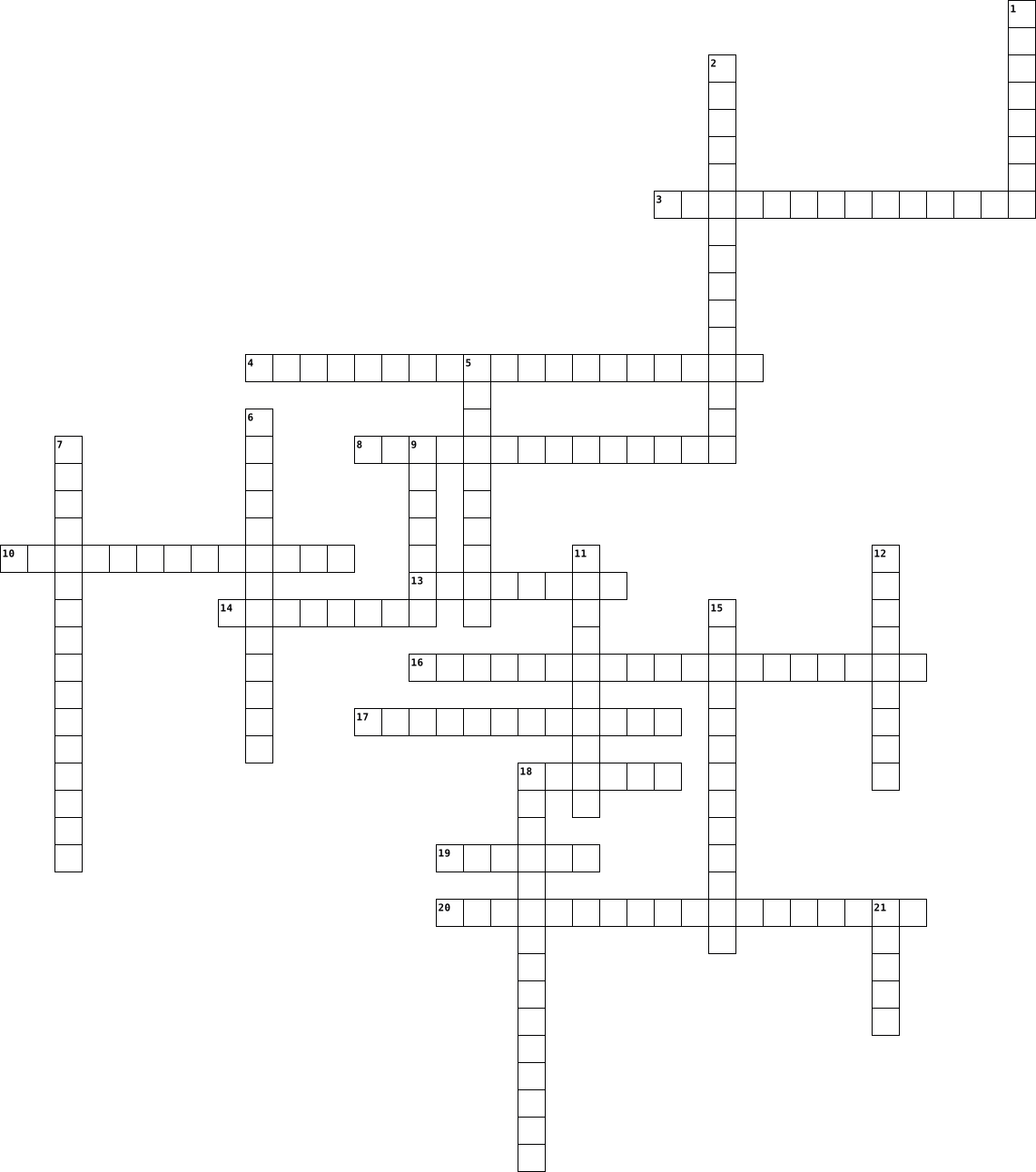
Across
- the process by which individuals, firms and economies concentrate on producing those goods and services where they have an advantage over others
- a statement that is based on the economist's opinion or value judgement and which cannot be proven
- an economic system where most decisions are taken through the market mechanism
- time period when all key inputs into production are variable
- inputs available for the production of goods and services
- a situation in which wants and needs are greater than the resources available
- the maximum output that can be produced when all resources are used fully
- a good that is thought to be undesirable for consumers and is overprovided by the market because of information failure
- resources are scarce so individuals, firms and governments have to consider alternatives
- a simplified view of reality used to explain economic problems and issues
- a statement that is based on facts or actual evidence
Down
- time period when all factors of production are variable but with a constant, such as the state of technology
- an economic system where resources are state owned and allocated by a central body
- as a factor of production, enterprise involves organising production and taking risks
- an economic system where both market forces and government are involved in resource allocation decisions
- the cost expressed in terms of the next best alternative that is foregone when a choice is made
- where consumption by one person of a good or service reduces the availability of the good or service for others
- a good that is thought to be desirable for consumers but which is underprovided by the market because of information failure
- time period when a firm can change at least one but not all factor inputs
- where it is possible to stop someone from consuming a good or service
- a Latin phrase meaning 'other things equal' or 'other things are unchanged'; used by economists to model the effects of one change at a time
- things that are necessary for survival, such as food
22 Clues: things that are necessary for survival, such as food • a statement that is based on facts or actual evidence • inputs available for the production of goods and services • time period when all key inputs into production are variable • where it is possible to stop someone from consuming a good or service • ...
Economics 2022-11-28
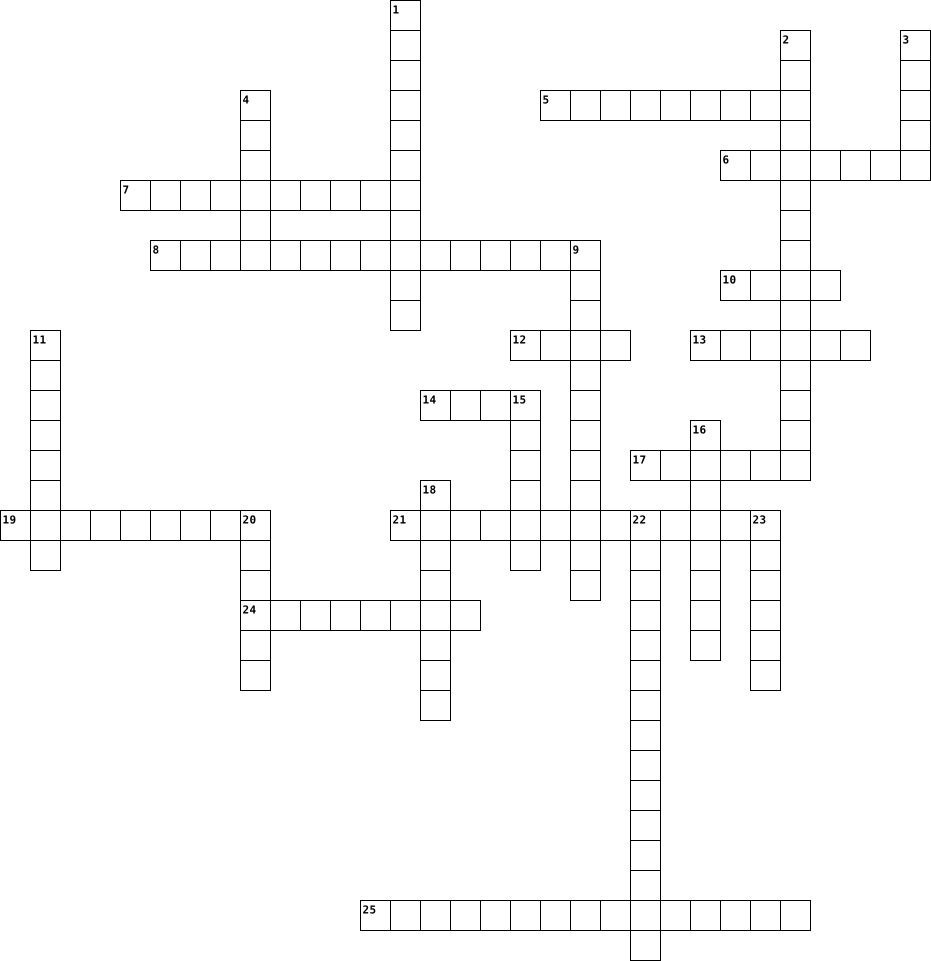
Across
- rely on someone else for a thing you need
- something people do for money
- do a certain job or one kind of job
- people depend on each other
- something we have to have to survive
- something you would like to have but don't need
- bring goods in from other places
- anything that you buy that you can hold or touch
- money that you earn
- things we use to satisfy our wants and needs
- resources found in people
- a person who makes a good or provides a service
- goods that are used to make other goods
Down
- money you pay the bank to use their money
- things provided by nature that we use
- exchange one good or service for another
- pick something
- the bank pays you to keep your money there
- a person who buys a good or service
- how much of something people want
- when there is not enough of something
- money
- how much of something is available
- whatever you give up to get something
- send goods out to another place
25 Clues: money • pick something • money that you earn • resources found in people • people depend on each other • something people do for money • send goods out to another place • bring goods in from other places • how much of something people want • how much of something is available • do a certain job or one kind of job • a person who buys a good or service • ...
Economics 2018-02-25
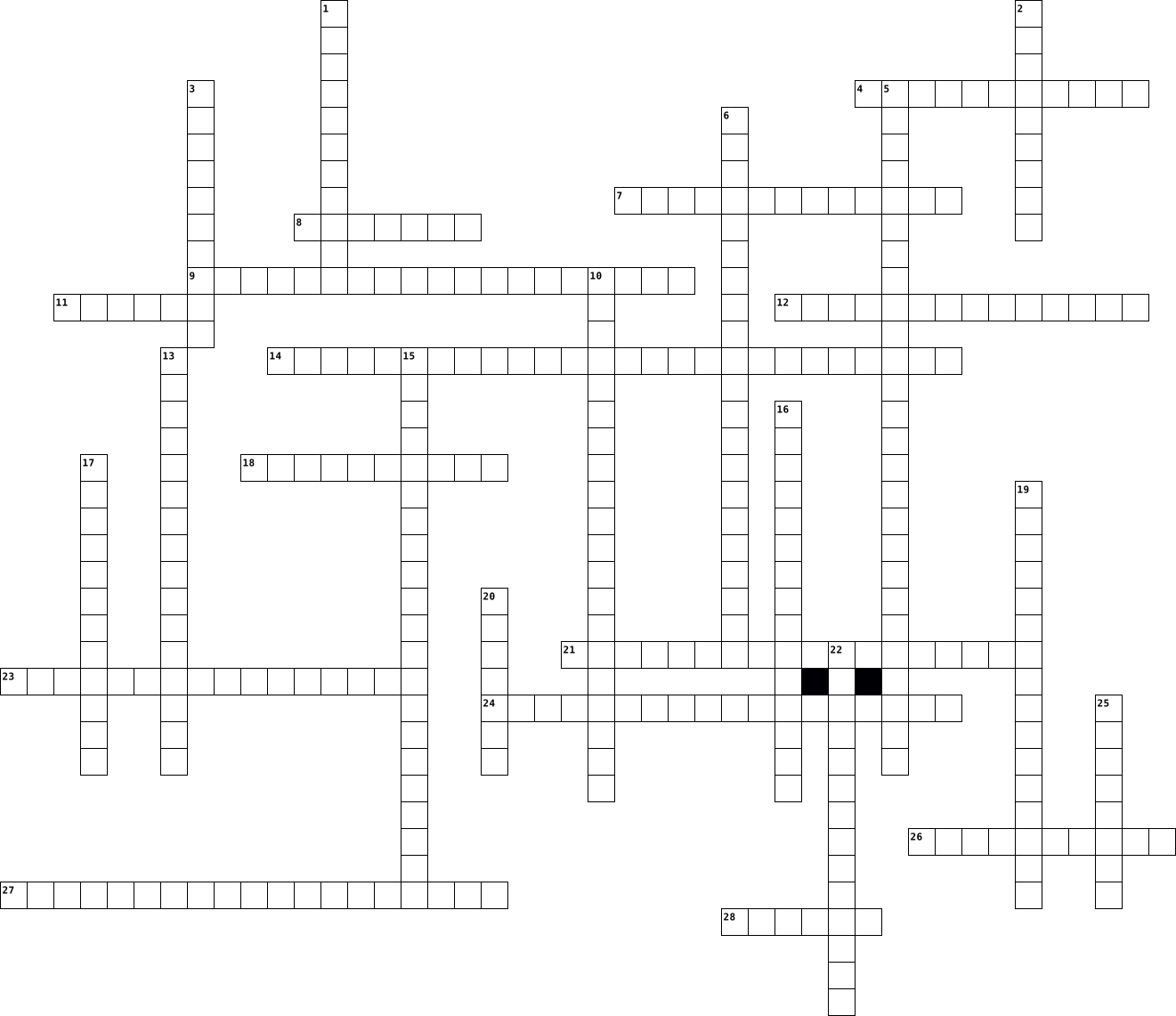
Across
- Country's monetary authority that manages the nation's money supply.
- Company operating in several countries.
- Non-price related determinant of supply
- Taxation system that deducts a lower proportion of income as the income levels rise
- The purchasing of goods and services by a country resulting in outflow of money
- Economic system that relies on the market forces of demand and supply to allocate resources, with minimal government intervention
- Curve on a diagram that shows opportunity cost
- Advantage of a market economy
- Characteristic of a perfectly competitive market in terms of product quality
- Labour unions that recruit professional, administrative and clerical staff and other non-manual workers.
- Disadvantage of a sole trader
- Payment to an employee in the form of a percentage of the value of products/services sold
- Inflation caused by a shift of aggregate demand to the right
- The ability and willingness of firms to provide goods and services at given price levels
Down
- Characteristic of a monopoly in terms what it's market share/power allows it to become
- The external cost of consumption of cars
- The name we give to the [X-M] section of aggregate demand
- Policy used to improve aggregate demand thus boost GDP in terms of lowering interest rates and increasing monetary supply
- The merging of two firms from the same sector of production
- Unemployment caused by regular periodical changes in the demand for certain goods or services
- Consequence of Inflation regarding fluctuations in price levels and customers spending time to find the best deals
- What occurs when import value exeeds export value
- Employment scheme regarding firms employing elder people with more experience due to longer life expectancy
- Fall in the rate of inflation
- Policy used to boost the productivity of the factors of production
- Expansionary fiscal policy and supply-side policy
- Macroeconomic objective of governments in regard to inflation
- Characteristic of Money
28 Clues: Characteristic of Money • Fall in the rate of inflation • Advantage of a market economy • Disadvantage of a sole trader • Company operating in several countries. • Non-price related determinant of supply • The external cost of consumption of cars • Curve on a diagram that shows opportunity cost • What occurs when import value exeeds export value • ...
Economics 2018-08-30

Across
- / What Australia sends to overseas countries in exchange for their contribution to aggregate demand.
- tax / The more you earn the more tax you pay.
- / unemployment resulting from industrial reorganisation, typically due to technological advancement.
- / The government’s budget if their outlays are greater than their receipts.
- / Businesses spending on materials, plant and capital affecting aggregate demand.
- / tax system that collects tax proportionally more for lower income earners when compared to lower income earners.
- / Those with the skills and business 'know how'.
- / income after one has paid back any loan/mortgage, also affected by interest rates.
- / lowest point of the economic business cycle (includes no inflation, low GDP and business bankruptcy.
- / Disposable income plus indirect government benefits in the form of goods and services.
- / highest point of the economic business cycle (includes inflation, high GDP and many businesses opening)
- / Demand factor that is determined by the RBA that controls how much householder with a loan have to pay back.
- / the largest proportion of income the government receives on the revenue pie.
- / the labour force will have no cyclical unemployment and some (minimal) natural employment.
- / Government spending on goods and services used to help satisfy consumers needs and wants. (teachers, defense workers, etc)
- / Government implemented policy controlling the tax rates.
- / Supply factor that generally is labelled as favourable or unfavourable (having to do with the weather).
- / The government’s budget if their outlays and receipts match up.
- / those considered as employed however, are not working as many hours as they would like.
- / Consumers being optimistic or pessimistic about the future of their business.
- / unemployed for longer than one year.
- / The factor affected by consumer's spending on goods and services contributing to the aggregate demand.
- / unemployed due to a lack of aggregate demand.
- / 2-4 (few) businesses dominating the market.
- / Generally those unemployed will be receiving benefits under here.
- / Part of the circular flow model that ‘leakes’ money out of the economy.
- / The RBA controlling interest rates as a means to expand or contract the economy.
- / Where not all of the resources are not being 'utilised' efficiently.
- / Australia purchasing overseas goods to create an even further advanced good to sell as an export.
Down
- / After the occurrence of unfavorable climatic conditions, the ___ curve will shift to the left.
- / the largest proportion of spending on the government's expenditure pie.
- / the unemployment due to people being in the process of moving from one job to another.
- / the next best thing foregone.
- / Business owners and entrepreneurs being optimistic or pessimistic about the future profitability of their business.
- employed / working in paid employment for a minimum of 12 hours per week.
- / unemployment due jobs highly demanded in a certain season to a certain time of the year and industry they work in.
- / private or market income plus direct cash benefits received from the government.
- / income after tax.
- income / income collected from the government (Pension).
- / what Australia buys from overseas countries.
- / a highly competitive market structure with many similarities to a perfect competition.
- / Part of the circular flow model that injects’ money out of the economy.
- / those unemployed for an extended period of time, can be due to those with a criminal record or a disability.
- / has and index of between 0 and 1.
- / a situation where resources are limited in terms of meeting consumers demands (needs and wants).
- / naturally occurring resources used in the production of goods and services.
- / products in the marketplace are exactly the same, generally found in a perfect competitive market.
- / unemployed however can be working for the black economy, cash in hand. (Removed themselves from any data.
- / Calculates the total assets a household has, and determines whether they need further assistance from the government.
- / Where both the supply and demand curve meet.
- / machinery used in the production process to produce a further advanced good.
- / After an increase in population, the ____ curve will shift to the right.
- / The government’s budget if its receipts is greater than their expenses.
- / a diagram that demonstrates the choice or option available when deciding how to allocate scarce resources.
- / the physical and mental effort put in by human beings.
- income / income collected for the the contribution in the production process.
- / One business dominating the market.
- employed / working more than 32 hours a week.
58 Clues: / income after tax. • / the next best thing foregone. • / has and index of between 0 and 1. • / unemployed for longer than one year. • / One business dominating the market. • / Where both the supply and demand curve meet. • / what Australia buys from overseas countries. • / 2-4 (few) businesses dominating the market. • ...
economics 2019-03-27
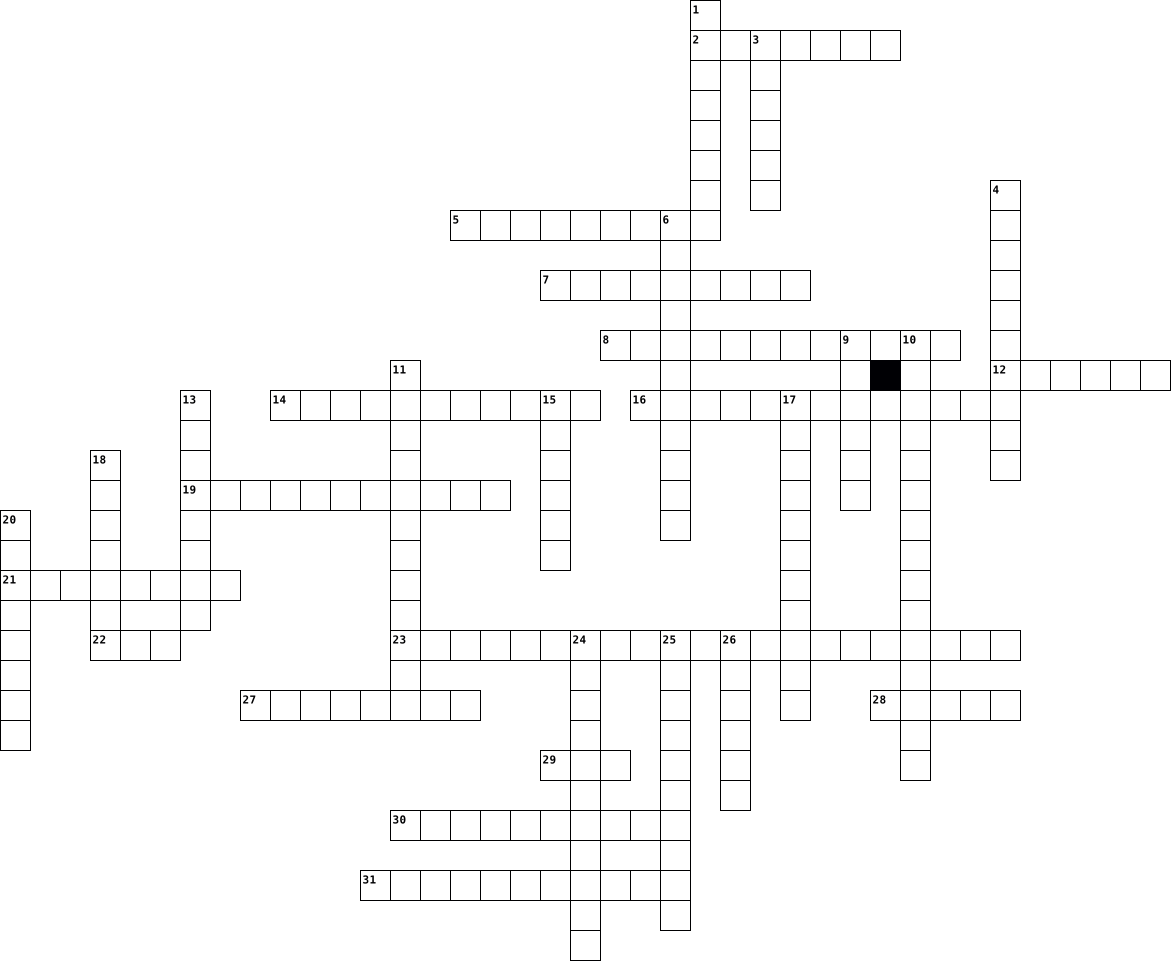
Across
- expenses such as wages, taxes and interest that have not yet been paid at the date of the balance sheet
- This market is where investors buy and sell securities they already own
- bondholders get this back on a fixed maturity date
- according to this principle, when preparing accounts, one must assume that the enterprise will still be viable in the years to come
- the money that is calculated by taking revenue minus the money spent during a certain period
- someone who owns parts of a company
- a person specializing in a company's tax affairs
- according to this principle, accounts should be produced using the same principles from one year to the next
- payments by companies to their shareholders
- income represents the amount of money remaining after all expenses have been deducted from a company's total revenue.
- issue share to the market for the first time
- according to this principle, it is normal to act pessimistically so that profits and assets are not overstated, and expenses and liabilities realistically valued
- how much income bond gives
- buying price of a security
- an asset which does not have physical nature
- this kind of bond allows investor to change it into share in the future
Down
- the length of time for bond/stock is issued until it is repaid
- an entry in an account recording a payment received
- a legal status of a person or other entity who cannot repay debts to creditors.
- amounts that will be collected in the normal course of business within one year
- interest payment of bond
- profits that have not been distributed to shareholders
- loss of tangible asset value over time
- this principle is concerned with the timing of recognition of transactions in the accounts
- all the money belonging to the company's owners
- the other name of "ordinary share"
- fund that invest money that will be paid to people after they retire from work
- inspecting and reporting on accounts and financial records
- legal obligations of a company to pay other parties
- administrative staff responsible for processing the records of a business's financial activities
- this statement show the difference between the revenues and expenses of a period
31 Clues: interest payment of bond • how much income bond gives • buying price of a security • the other name of "ordinary share" • someone who owns parts of a company • loss of tangible asset value over time • payments by companies to their shareholders • issue share to the market for the first time • an asset which does not have physical nature • ...
Economics 2019-03-29
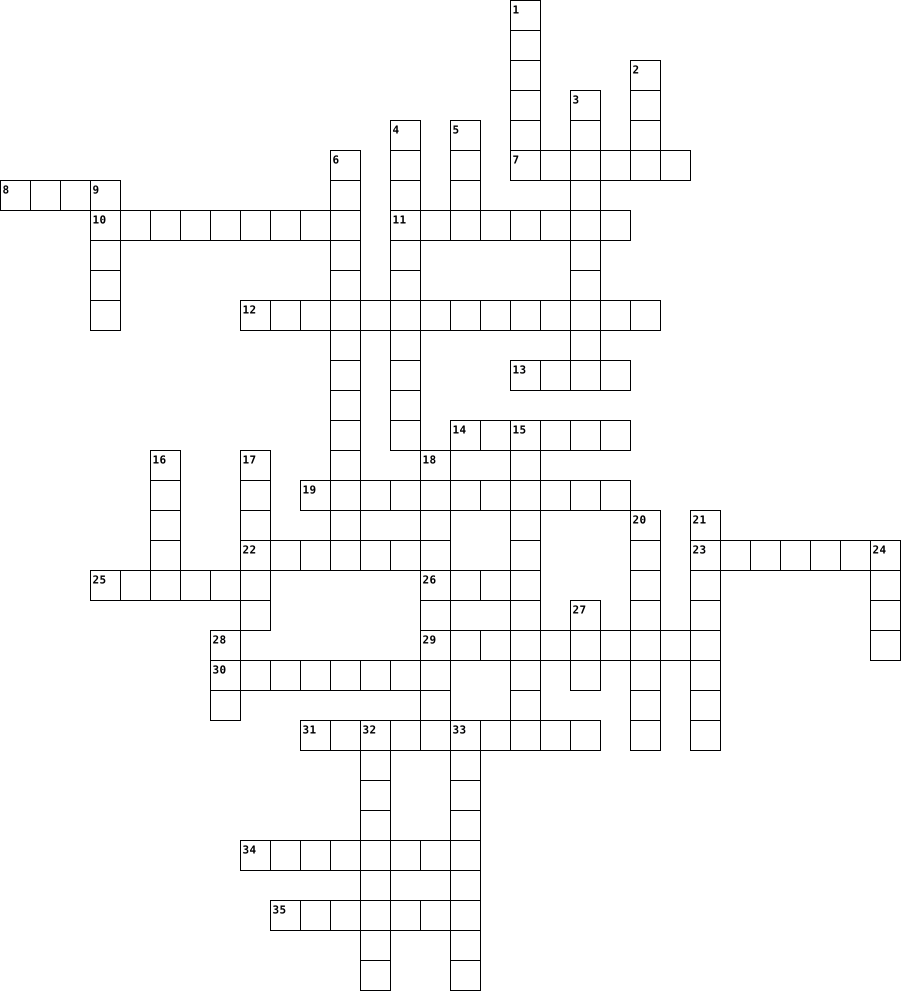
Across
- Increase
- money
- stabalisers
- QNHS
- extra
- worst
- Convert
- workers
- Quality
- Long
- quantity
- Superior
- deposits
- money
- short
- downward
- leakage
Down
- Long-run.
- everyone
- recession
- Income
- Used
- Study
- tools
- high
- shift
- Store
- Injection
- fluctuates
- refinancing
- shift
- Cost
- Domestic
- CPI.
- Liquidity
35 Clues: Used • QNHS • high • Long • Cost • CPI. • Study • money • tools • extra • worst • shift • Store • shift • money • short • Income • Convert • workers • Quality • leakage • everyone • Increase • quantity • Superior • Domestic • deposits • downward • Long-run. • recession • Injection • Liquidity • fluctuates • stabalisers • refinancing
Economics 2019-05-27
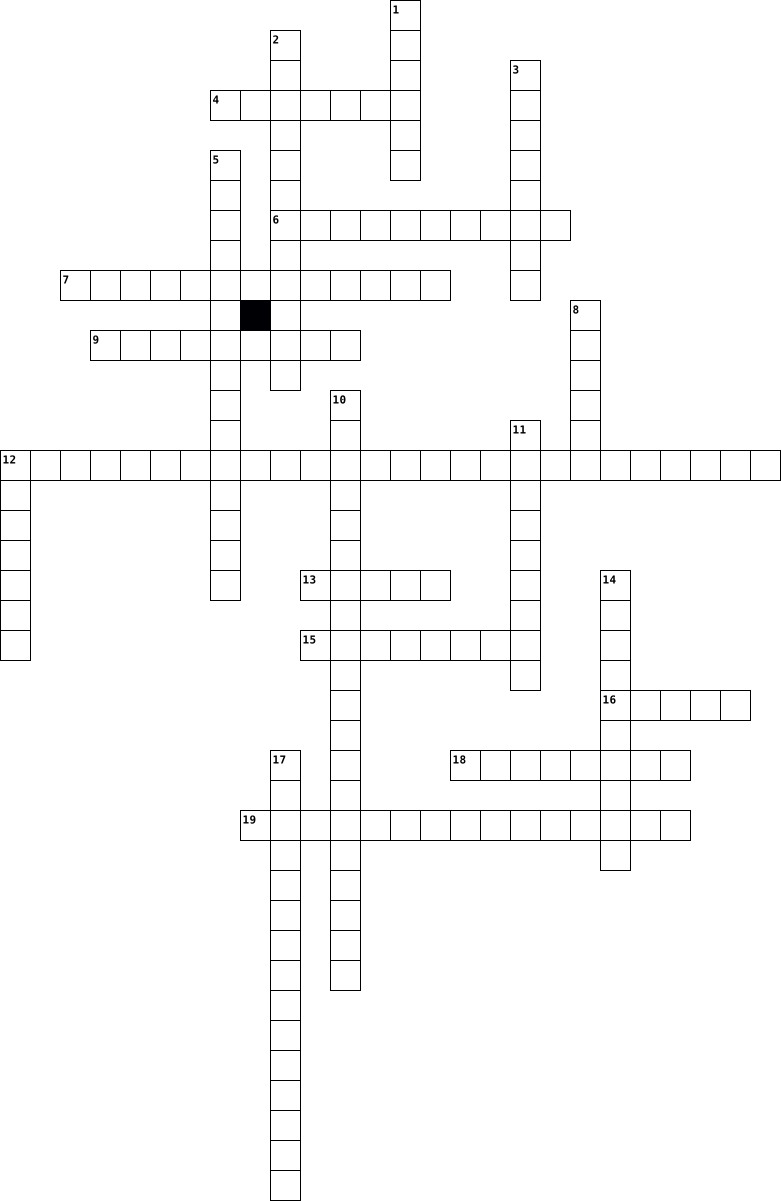
Across
- fixed costs can be changed
- the amount of people who are willing and able to work
- shows relationship between unemployment and inflation
- the increase in the price level
- the maximum amount of goods a country can produce
- market for different currencies
- type of unemployment that relates to jobs that only exist for part of the year
- an exchange of goods that if done correctly allows a country to consume outside its PPC
- Only one firm in a market
- Moved by changing the money supply or by lowering taxes
Down
- an economist that advocated fro government intervention in the market
- many firms with differentiated products
- type of unemployment that relates to the changes in the business cycle
- The amount of happiness derived from one more unit of a good
- revenue minus costs
- value of all economic activity in a year
- few firms with barrier to entry
- many firms with identical products
- type of unemployment that relates to unemployment between jobs or between education and job
- moved by changes in resource number or chnage in technology
20 Clues: revenue minus costs • Only one firm in a market • fixed costs can be changed • the increase in the price level • few firms with barrier to entry • market for different currencies • many firms with identical products • many firms with differentiated products • value of all economic activity in a year • the maximum amount of goods a country can produce • ...
ECONOMICS 2018-11-11
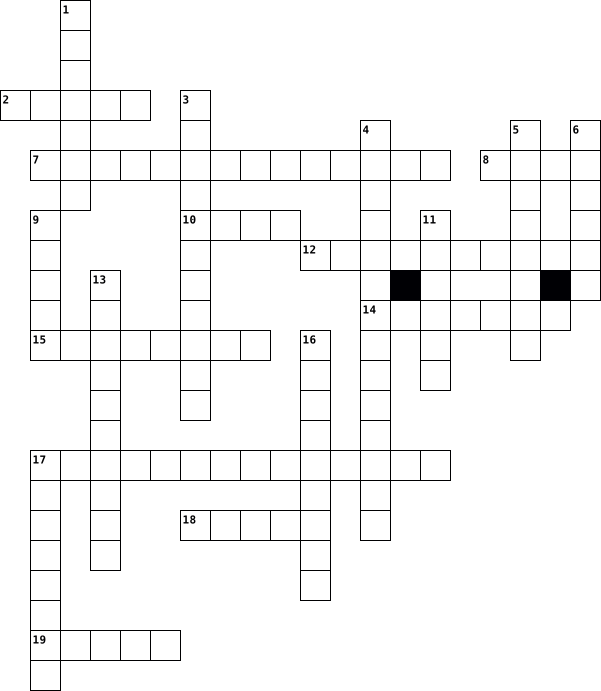
Across
- necessities
- opposite of equilibrium
- income of employees
- properties
- process of combining various materials
- investment
- lack of resources
- second branch of economics
- greek prefix word “mikro”
- employees
Down
- paribus latin phrase meaning “other things equal”
- state where supply and demand are balanced
- first branch of economics
- utility consumer gains from consuming one good
- consumers willingness to pay a price for a good
- desires
- goods that producers are willing to provide
- measure of a variable’s sensitivity to a change in another variable
- market that is dominated by only a few large firms
- market structure characterized by single seller
20 Clues: desires • employees • properties • investment • necessities • lack of resources • income of employees • opposite of equilibrium • first branch of economics • greek prefix word “mikro” • second branch of economics • process of combining various materials • state where supply and demand are balanced • goods that producers are willing to provide • ...
Economics 2018-11-23
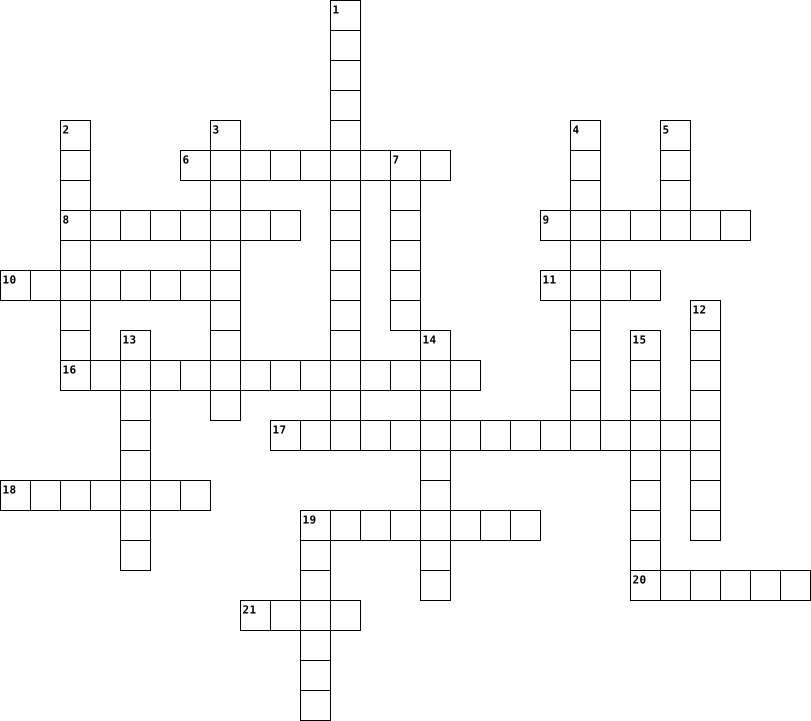
Across
- Something that encourages a person to take action.
- In economics this means additional.
- Produced goods that can be used as resources for further production.
- Able to be felt by touch.
- Smith Scottish economist, philosopher and author as well as a moral philosopher, a pioneer of political economy and a key figure during the Scottish Enlightenment.
- The branch of economics that deals with human behavior and choices as they relate to the entire economy.
- A means for deciding who gets what portion of the available resources and goods.
- The quality of bringing satisfaction or happiness.
- Tasks that people pay others to perform for them.
- Any place where people go to buy and sell goods or services.
- The amount of money by which total cost exceeds total revenue.
Down
- The loss of potential gain from other alternatives when one alternative is chosen.
- A political theory derived from Karl Marx, advocating class war and leading to a society in which all property is publicly owned and each person works and is paid according to their abilities and needs.
- Consequences Actions of people or government have unanticipated effects.
- The graphical representation of the law of demand.
- A thing we desire to have
- A sense of how the world works.
- A situation in which more of one thing necessarily means less of something else.
- The condition in which our wants are greater than the resources available.
- The science that studies the choices of people trying to satisfy their wants in a world of scarcity.
- An economics system in which government controls and may own many of the resources.
- A financial payment made by government for certain actions.
22 Clues: A thing we desire to have • Able to be felt by touch. • A sense of how the world works. • In economics this means additional. • Tasks that people pay others to perform for them. • The graphical representation of the law of demand. • Something that encourages a person to take action. • The quality of bringing satisfaction or happiness. • ...
Economics 2023-05-25
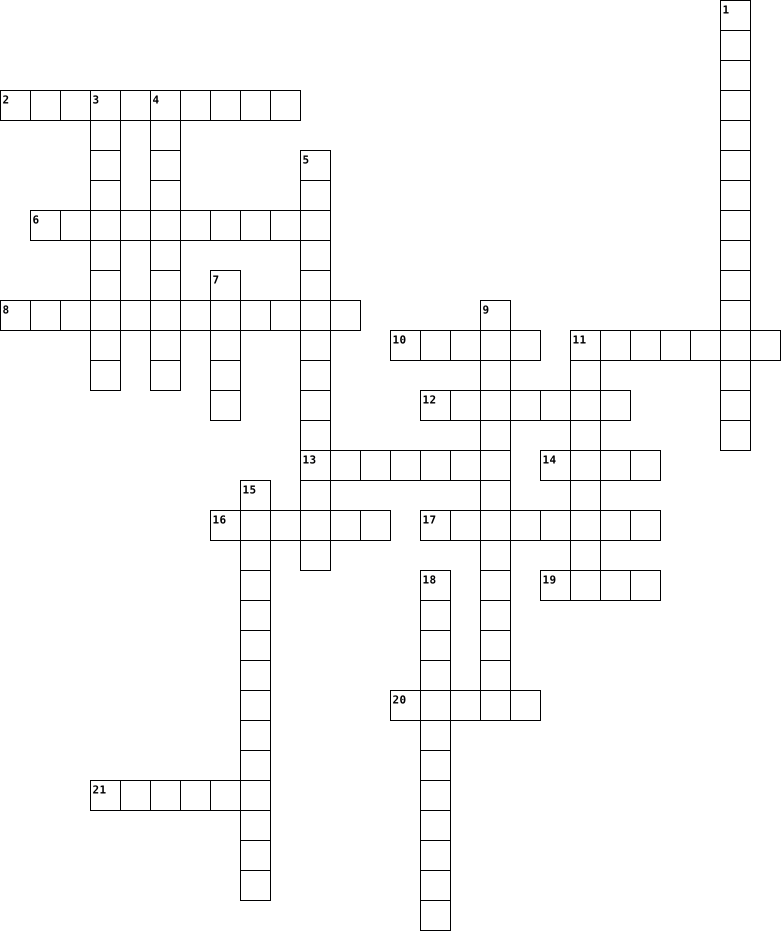
Across
- distributed ledger used to make a digital record of the ownership of assets, in particular cryptocurrencies.
- measure of the responsiveness of one variable to changes in another.
- gradual reduction in the value of an asset (or a debt) over time
- a balance between the supply of and demand for a good at a market-clearing price
- Goods and services acquired from outside the country
- communism
- Goods and services sent to outside the country.
- Trade The cause that led to the founding of The Economist in 1843
- policy Decisions relating to the amount a government raises in taxes and spends on public services
- cost cost of producing an extra unit of something.
- money amount one is due to pay back to another
- can be used to create economic value
- result of economic activity
Down
- takeover by the state of private businesses
- item pledged as security against a loan
- coined to describe the use of private capital to finance economic activity
- Tokens created digitally and at the moment privately, although some central banks have created their own (see this article)
- Institutions at the heart of the financial system
- plumbing of the economy
- act of protecting yourself against the financial impact of risk
- usually refers to reducing the role of the government
- financial markets take a trend too far
22 Clues: communism • plumbing of the economy • result of economic activity • financial markets take a trend too far • item pledged as security against a loan • takeover by the state of private businesses • can be used to create economic value • Goods and services sent to outside the country. • Institutions at the heart of the financial system • ...
economics 2023-05-23
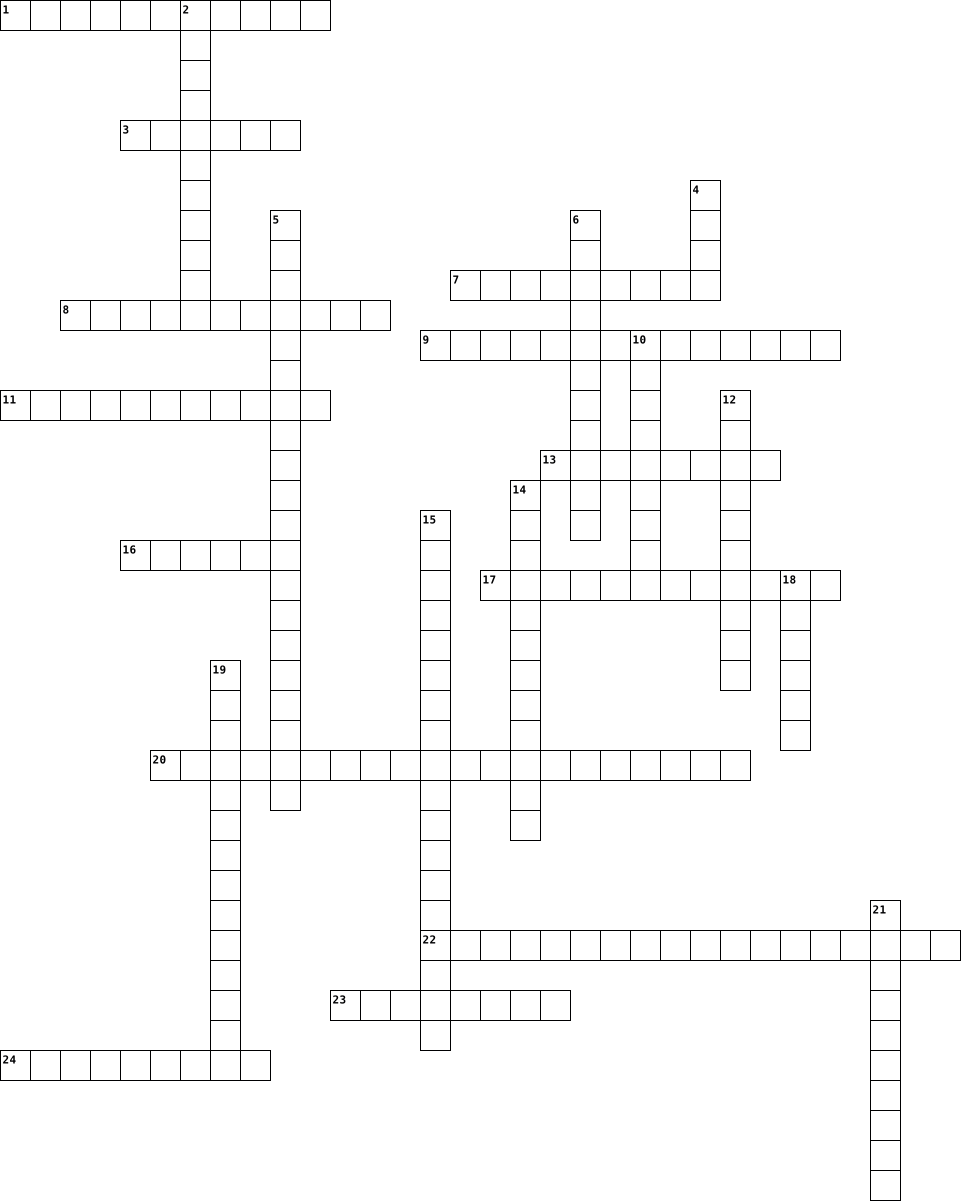
Across
- a graph of the relationship between the price of a good and the quantity supplied
- total revenue minus total cost
- A bank card that automatically deducts the amount of a purchase from the checking account of the cardholder
- A business in which two or more persons combine their assets and skills
- A focus on a particular activity or area of study
- has some form of checking, savings or money market account
- people who don't have bank accounts
- moneyreceived, especially on a regular basis, for work or through investments.
- the cost of producing one more unit of a good
- an establishment formed to carry on commercial enterprise
- when consumers react to an increase in a good's price by consuming less of that good and more of other goods
- The portion of corporate profits paid out to stockholders
- fixed costs plus variable costs
Down
- A business owned by stockholders who share in its profits but are not personally responsible for its debts
- A financial security that represents a promise to repay a fixed amount of funds
- What you expect prices to do in the future can influence your buying habits today.
- A pool of money used by a company to purchase a variety of stocks, bonds or money market instruments. Provides diversification and professional management for investors.
- A general and progressive increase in prices
- A plastic card used to make purchases now and pay for them later.
- Price x Quantity
- A business owned by one person
- shares of ownership in a company
- Trends and fashions that are highly desirable to the consumer
- The application of scientific knowledge for practical purposes
24 Clues: Price x Quantity • total revenue minus total cost • A business owned by one person • fixed costs plus variable costs • shares of ownership in a company • people who don't have bank accounts • A general and progressive increase in prices • the cost of producing one more unit of a good • A focus on a particular activity or area of study • ...
economics 2023-11-14
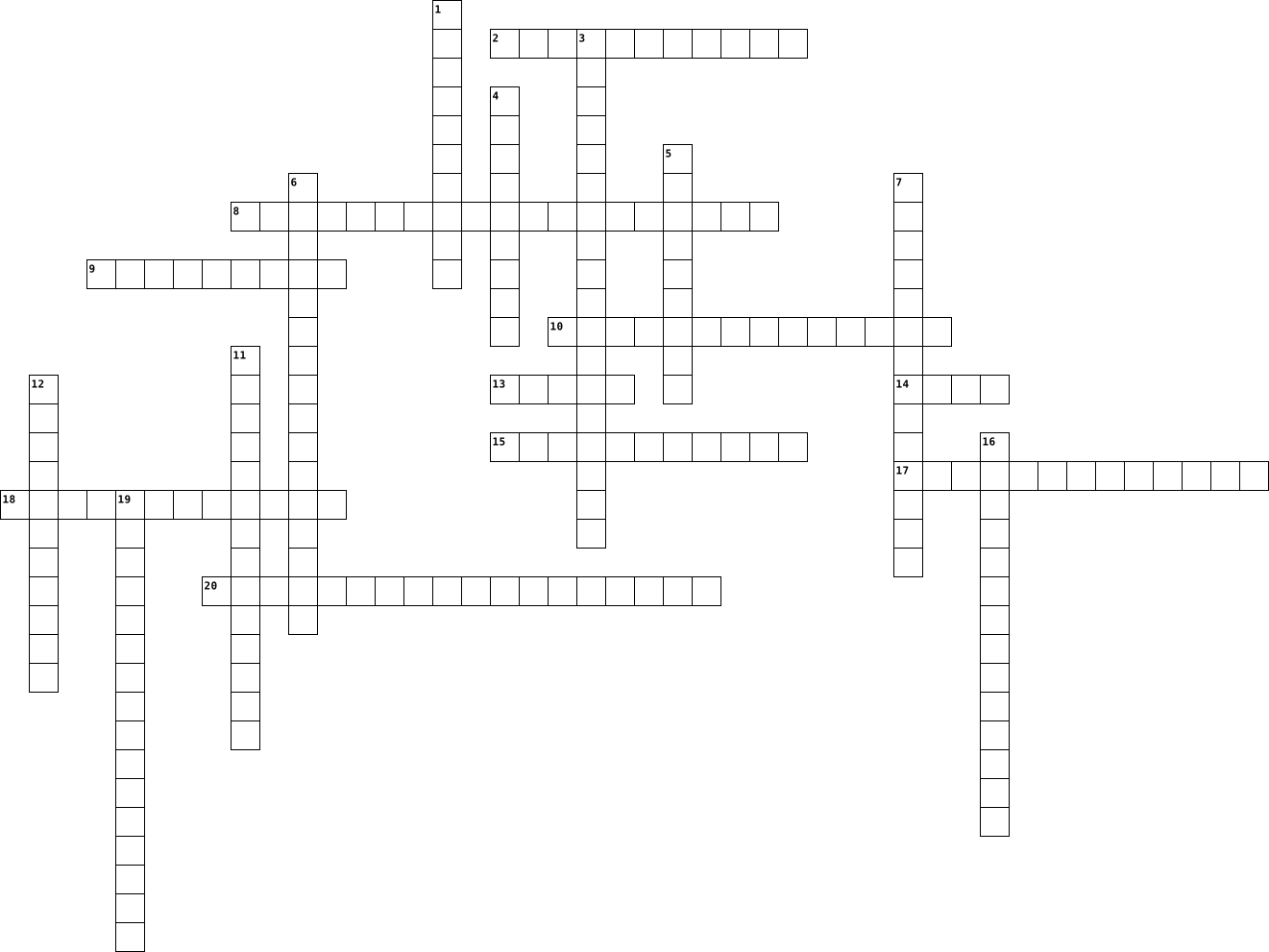
Across
- a person with temporary permission to work in another country
- output per worker or per hour worked
- a type of business often run by a board to provide a benefit to the public
- a merger between two firms involved in different stages of production join together
- a group of people whose job is to fight for an increase of wages and safer work conditions for its members
- a relationship between people or groups based on shared feelings, interest, or experience
- to obtain goods from a foreign supplier
- a demand for a commodity or service which is a consequence of the demand for something else
- business owned and operated by individuals for their shared benefit
- a business agreement by two or more individuals to share responsibilities
Down
- the practice of basing some of a company's process overseas to take advantage of lower costs
- a business owned by one person
- the state of being responsible of something
- pays a fee to the parent company for the exclusive right to sell something
- a merger between two competing companies in the same industry
- to provide someone with advantageous economic or working conditions
- the process by which education increases productivity and results in higher wages
- most complex form of business owned by individual stockholders
- gives workers the right to decide whether to join a union or not in the workplace
- wages fluctuate with respect to the demand and supply of labor
20 Clues: a business owned by one person • output per worker or per hour worked • to obtain goods from a foreign supplier • the state of being responsible of something • a person with temporary permission to work in another country • a merger between two competing companies in the same industry • most complex form of business owned by individual stockholders • ...
Economics 2023-11-14
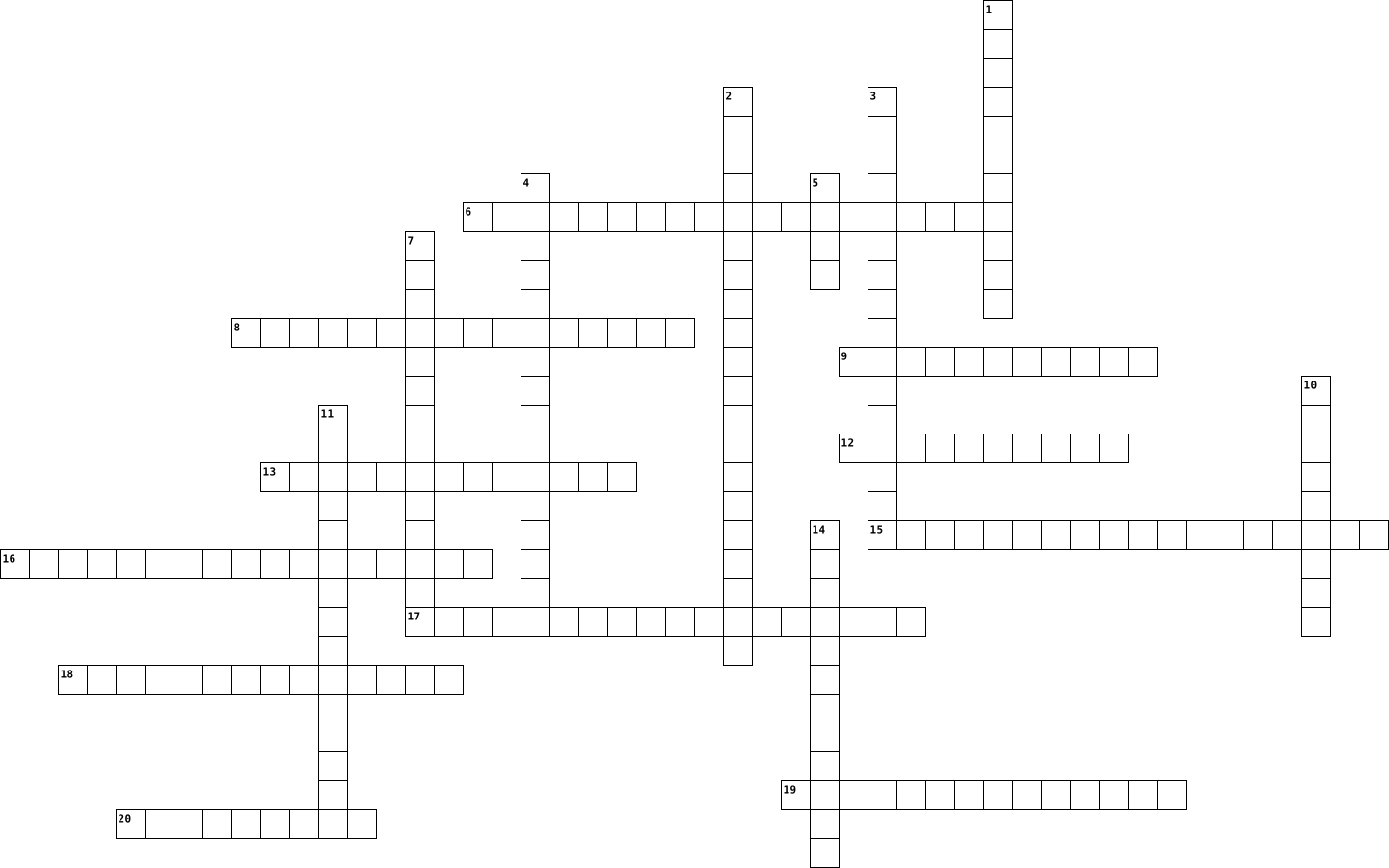
Across
- output per worker or per hour worked.
- the exclusive authority to determine how a resource is used, whether that resource is owned by government or by individuals.
- business practice of hiring a party outside a company to perform services or create goods that were traditionally performed in-house by the company's own employees and staff.
- sum of the employed plus the unemployment
- the demand for a good or service that results from the demand for a different, or related, good or service.
- Business owned by on person
- owner licenses its operation along with products,branding,and knowledge.
- two or more individuals share responsibility,assets,profit,and financial/legal liabilities.
- merger of two or more companies that provide different supply chain functions.
- the process by which education increases productivity and results in higher wages.
- being responsible for something,especially by law
Down
- the transferring activities or ownership of a complete business process to a different country from the country (or countries) where the company receiving the services is located.
- a worker who is hired on a temporary or fixed-term contract basis to provide specific services for a specific project or period of time.
- condition or state in which economic forces are balanced.
- merger occurring between companies in the same industry.
- investor lends money to company for period of time in exchange for regular price interest.
- an unfair labor practice that occurs when a union requires an employer to pay for services they did not perform.
- semi independent business that pays fees
- the theory that the completion of college indicates to employers that a job applicant is intelligent and hard-working.
- foreign national who is permitted to live and work temporarily in a host country.
20 Clues: Business owned by on person • output per worker or per hour worked. • semi independent business that pays fees • sum of the employed plus the unemployment • being responsible for something,especially by law • merger occurring between companies in the same industry. • condition or state in which economic forces are balanced. • ...
Economics 2023-11-08
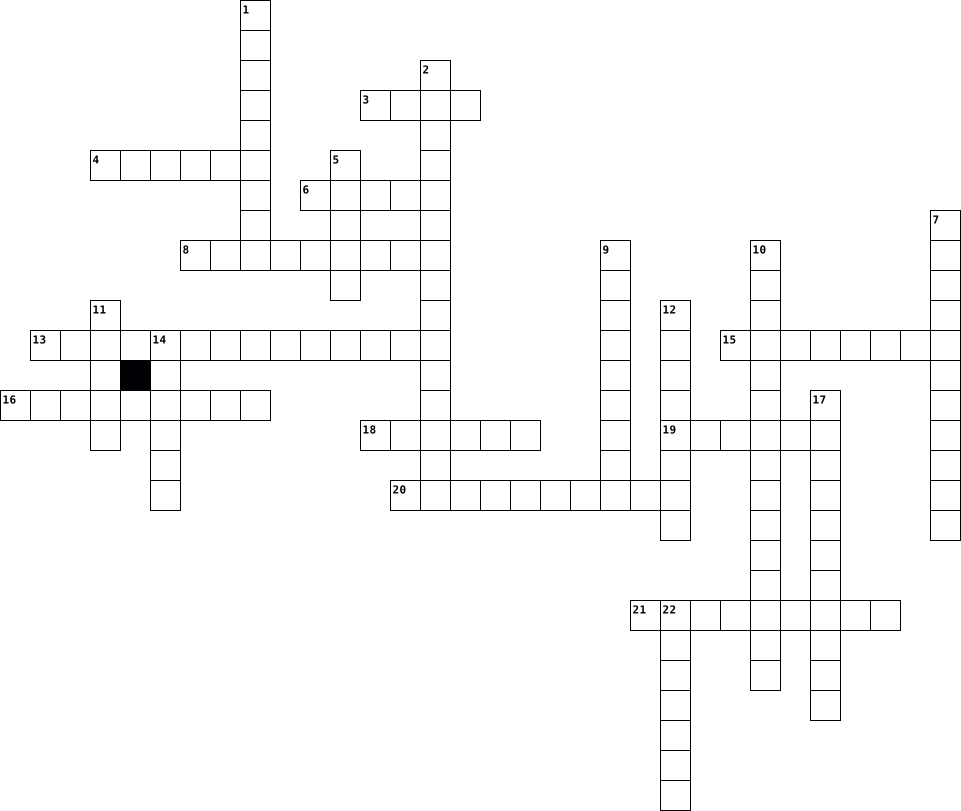
Across
- one of four factors of production soil
- The exchange of goods and services amongst buyers and sellers
- factor of production representing workers effort
- a job type that is ongoing but less that 35 hours per week
- A focus on the production of a particular good or service
- The person who buys goods and services
- The people or organisations that supply goods and services
- you can only use it once it will not last forever
- work type that is often irregular hours
- when someone leaves the work force usually at the age of 67 of 67
- the study of how society uses resources for needs and wants
Down
- time and labour given without payment in return
- the way participants in an economy rely on each other for goods and services they cannot produce
- something you would like to have
- combines all factors of production together
- type of work that is ongoing and more than 35 hours per week
- the value of the best alternative given up when making a choice for something else
- something you need to survive
- having limited resources to meet all the needs and wants
- money earnt from working in the form of a wage
- The way we distribute the scarce resources
- machinery, tools and building used to produce goods and services
22 Clues: something you need to survive • something you would like to have • one of four factors of production soil • The person who buys goods and services • work type that is often irregular hours • The way we distribute the scarce resources • combines all factors of production together • money earnt from working in the form of a wage • ...
Economics 2023-11-15
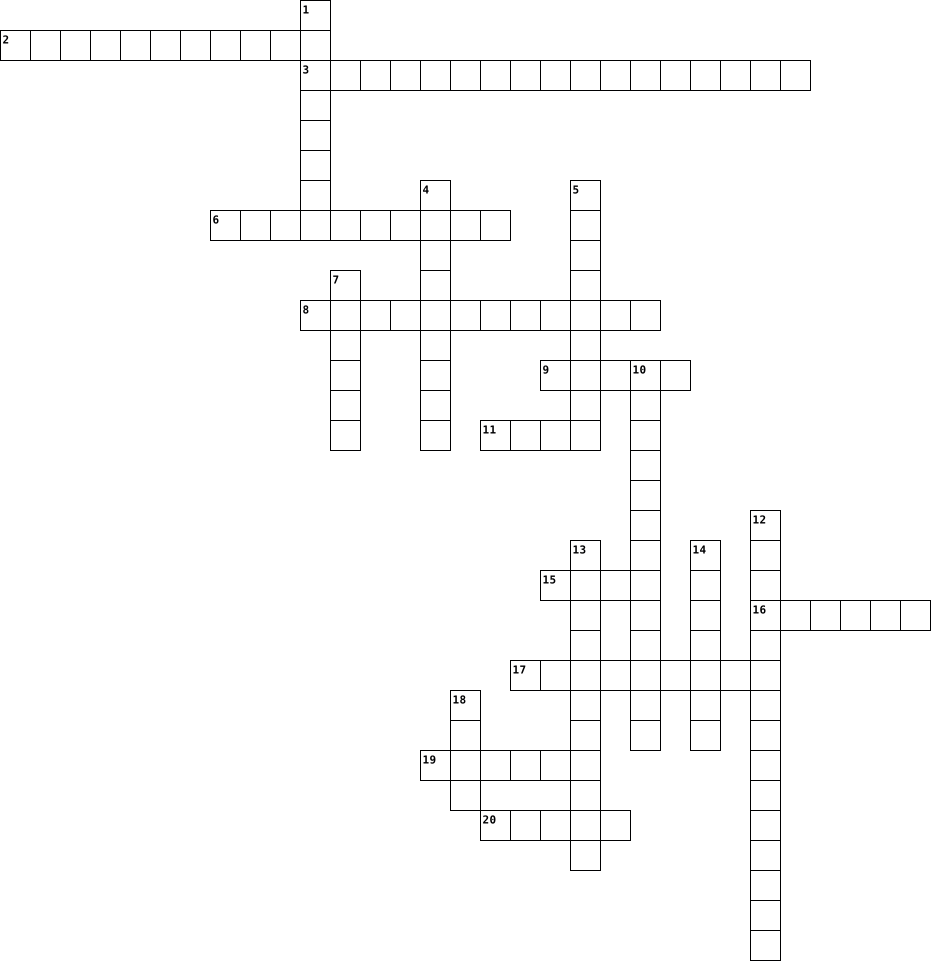
Across
- A graphic representation of a ______ schedule
- A measure that ___ mandatory union membership
- Movement of a company’s resources of production to another ____
- An individuals own personal ____
- Objects that are ____
- Something _________ for survival
- A contract that includes a promise to repay ______ money
- The amount of a good or service that is available.
- Demand that is not as sensitive to price ______
- The money a business gets back from its _______
- Effort that is ___ for
Down
- Actions someone performs for _______
- the ____ obligation to pay debts
- A ______ or group of people living in a single _________.
- The desire to ___ something and the ability to ___ for it
- A demand set by the ____ for another good or service
- Human made _______ used to create other goods and services
- The struggle among producers for the _____ of consumers.
- Demand that is very sensitive to change in _____
- Organization that uses ______ to produce a product or service
20 Clues: Objects that are ____ • Effort that is ___ for • the ____ obligation to pay debts • An individuals own personal ____ • Something _________ for survival • Actions someone performs for _______ • A graphic representation of a ______ schedule • A measure that ___ mandatory union membership • Demand that is not as sensitive to price ______ • ...
Economics 2023-11-15
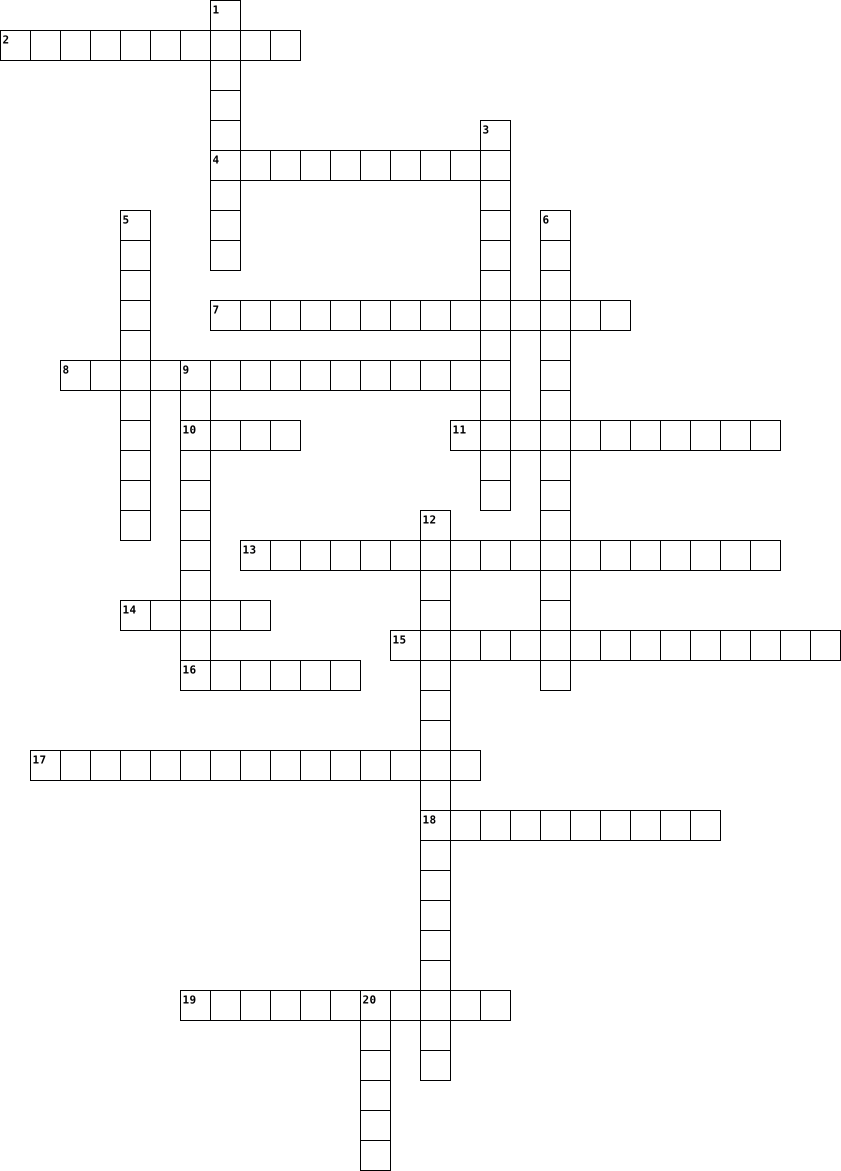
Across
- business organization owned by a group of people
- all non military people who are employed or unemployed
- negotiating labor contracts that keeps unnecessary workers on the company payroll
- wage rate or price of labor services that is set when demand for workers is met
- formal contract issued by a corporation
- business organization owned by 2 or more people
- business owned and managed by a single individual
- a certificate of ownership in a corporation
- authorization from local government to run a business
- an organized work stoppage intended to force an employer to address union demands
- theory about the relationship between education and wages
- movement of company operations to a different country
- legal entity owned by individual stock holders
Down
- debts
- demand for labor
- companies reach out to other companies to do a specific job
- 2 or more firms competing in the same market with the same good
- organization of workers that tries to improve working conditions and wages
- sells
- money and other valuables
20 Clues: debts • sells • demand for labor • money and other valuables • formal contract issued by a corporation • a certificate of ownership in a corporation • legal entity owned by individual stock holders • business organization owned by 2 or more people • business organization owned by a group of people • business owned and managed by a single individual • ...
Economics 2023-11-15
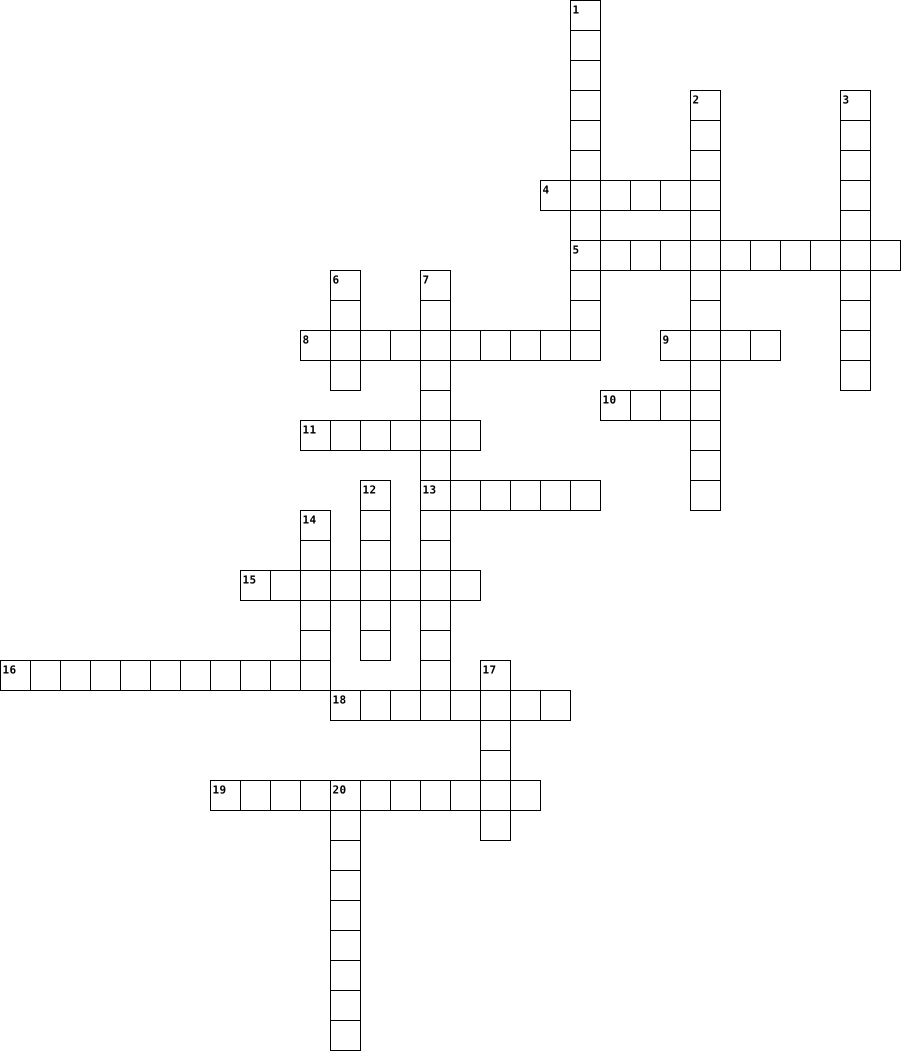
Across
- gives a company exclusive rights to sell a new good or service for a specific period of time
- the struggle among producers for the dollars of consumers
- the act of redirecting resources from being consumed so benefits can be created in the future
- something essential for survival
- a formal contract issued by a corporation other entity
- the portion of stock is issued in
- the amount of good or service that is available
- the coins and bills used as money
- a business organization owned and operated by a group of individuals for their shared benefits
- the price paid for using borrowed money
- companies contract with other companies to do a specific job
Down
- the extra cost of adding one unit
- negotiating labor contracts that keep unnecessary workers on the company payroll
- love of ones country
- something we desire but is not necessary for survival
- an authorization from the local government to operate a business
- money or other values that one person contributes in a partnership
- an organized work stoppage intended to force an employer to adress union demands
- desire to own something and the ability to pay for it
- a market dominated by a few large profitable firms
20 Clues: love of ones country • something essential for survival • the extra cost of adding one unit • the portion of stock is issued in • the coins and bills used as money • the price paid for using borrowed money • the amount of good or service that is available • a market dominated by a few large profitable firms • something we desire but is not necessary for survival • ...
Economics 2023-11-12
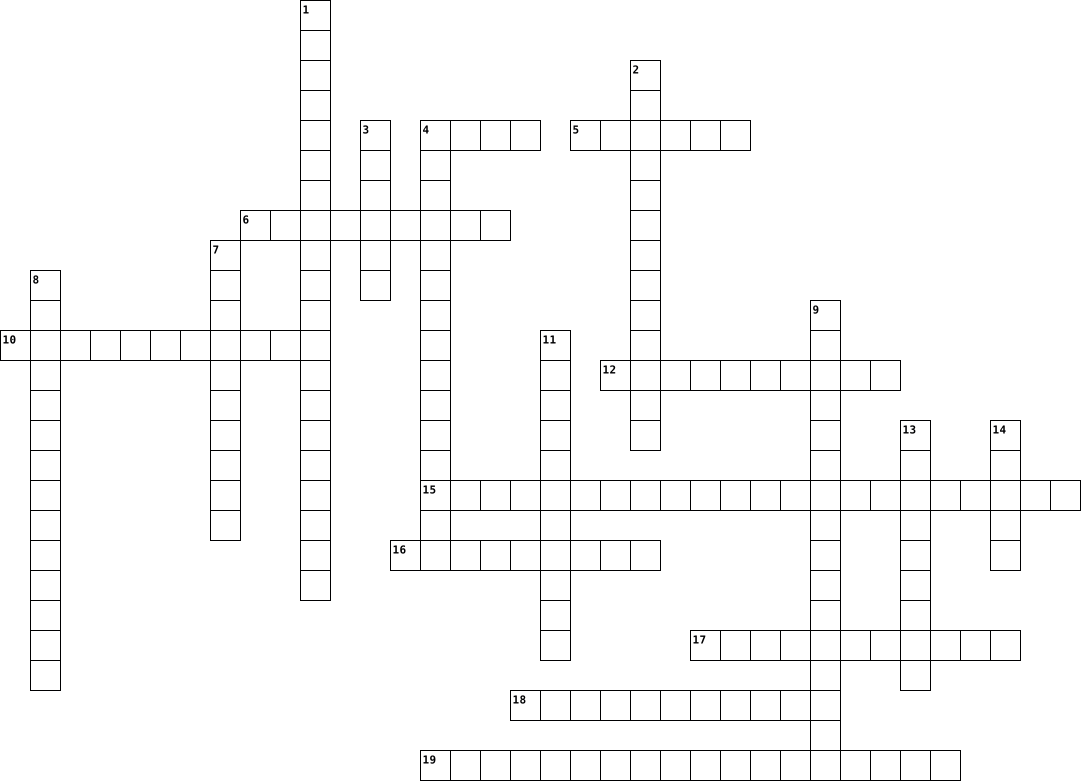
Across
- formal contract issued by a corporation
- an organized work stoppage
- effect theory about the relationship of education to wages
- business owned by two or more people
- all nonmilitary people who are unemployed or employed
- no owner ran by board of directors provides benefit to the public
- a neutral person who works on both sides to solve a problem
- business owned/operated by a group of people for shared benefit
- companies contract with another company to do specific jobs
- one partner is general partner
Down
- selling merchandise to their members for a reduced price
- demand for labor
- money or valuables
- authorization to local government to operate a business
- company moving their operations or resources to another country
- negotiating labor contracts keeping unnecessary workers on payroll
- two or more firms competing in the same market with same good/service
- a third person to listen to both sides and makes a decision
- unpaid debts
- certificate of ownership in a corporation
20 Clues: unpaid debts • demand for labor • money or valuables • an organized work stoppage • one partner is general partner • business owned by two or more people • formal contract issued by a corporation • certificate of ownership in a corporation • all nonmilitary people who are unemployed or employed • authorization to local government to operate a business • ...
Economics 2023-09-19
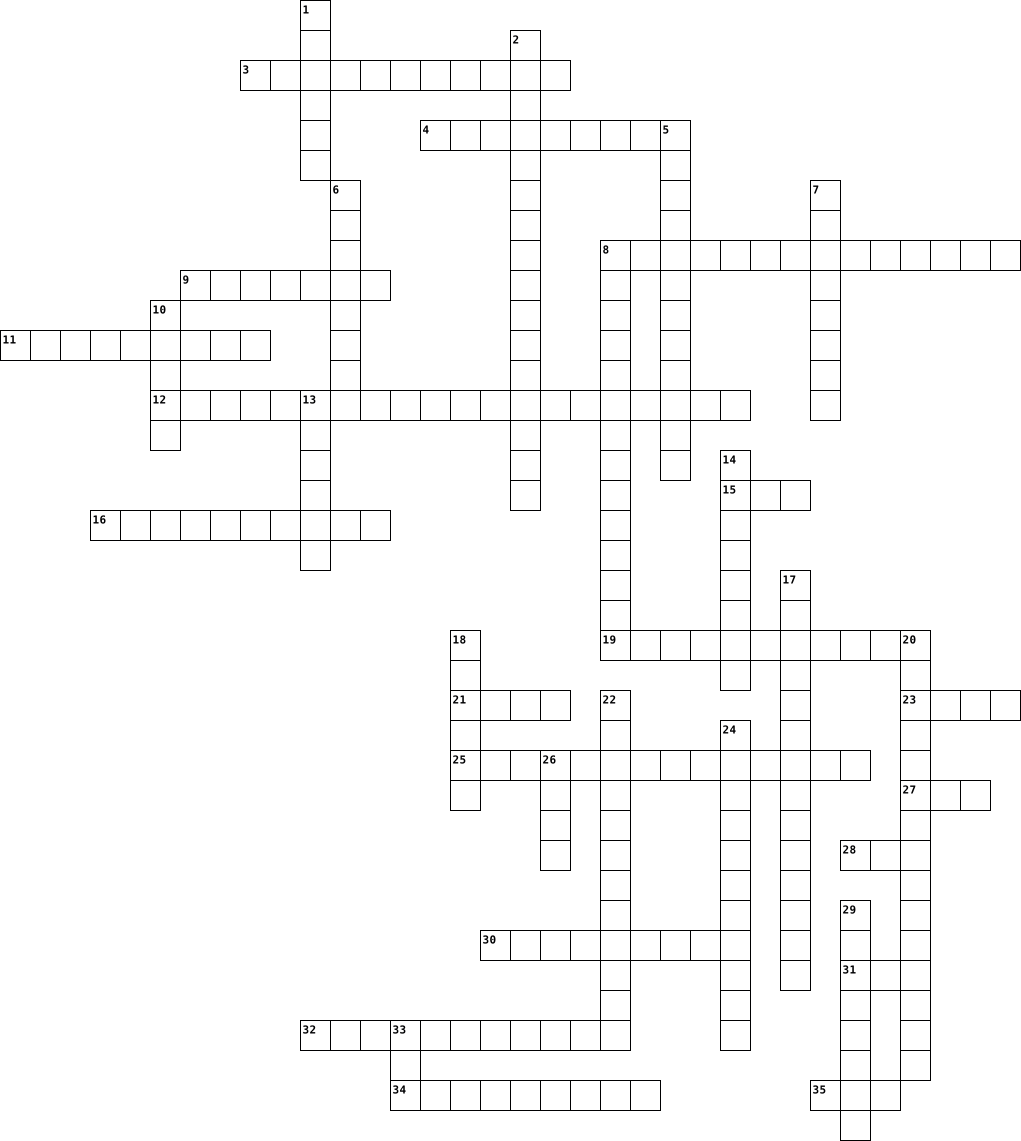
Across
- a business organization recognized by law as a separate legal entity (you'll hear some people say "evil -----------"
- the type of liability where the owner is responsible for all losses and debts(and they could go on forever)
- represents non-voting ownership shares (people like this more because it pays out first))
- a government document that gives permission to create a corporation
- a stock of finished goods and parts in reserve
- when a union negotiates with management over issues such as pay, hours, health care, etc
- wooly mammoths are buried in this
- an organization of workers formed to represent its members' interests (it has nothing to do with a woman giving birth)
- a business that is jointly owned by two or more people (like a doubles' tennis relationship)
- ____(flow) total amount of new funds a business generates from operation
- a written promise to repay the amount borrowed (007)
- corporations producing and selling without regard to nation boundaries (I made the word plural by accident)
- Likes to chase mice
- Flying mammal
- organization like a business but not for financial gain
- income common measure of business profits found by subtracting all expenses from revenues
- a voluntary association formed to carry on an economic activity that benefits its members (people shorten the word and it looks like their talking about a chicken house)
- the amount borrowed
- Man's best friend
Down
- combination of two or more businesses to form a single business
- merger combination of two or more firms producing the same kind of product
- gradual wear on capital goods
- the price paid for the use of another's money
- Has a trunk
- a business owned by a single individual
- ownership certificate
- union a financial organization that accepts deposits from, makes loans to, employees of a particular company or govt agency
- a check that transfers a portion of the corporate earnings (the name is comes from the idea of splitting up the profits evenly)
- merger combination of firms involved in different stages of manufacturing or marketing
- ____ (statement) a report showing a firm's sales, expenses, net income, and cash flows for a certain period
- examples are water, sewerage, electric services
- firm with four or more businesses making unrelated product, with no single business responsible for a majority of its sales
- represents basic ownership of a corporation (it's not unusual)
- a blood sucking insect blamed for Lyme disease
- Large marsupial
- a young dog or seal
36 Clues: Has a trunk • Flying mammal • Large marsupial • Man's best friend • Likes to chase mice • a young dog or seal • the amount borrowed • ownership certificate • gradual wear on capital goods • wooly mammoths are buried in this • a business owned by a single individual • the price paid for the use of another's money • a stock of finished goods and parts in reserve • ...
Economics 2024-05-08

Across
- the consumer makes market decisions
- general increase in prices and fall in the value of money
- when the market is growing and doing well
- property consisting of lang of buildings
- 20-30 years, much cheaper
- stock dividing and then paying out to you
- tax on privately owned property
- giving up the best thing for and alternative
- business run individually and for people who pay money
- business run and paid for by the government
- when the stocks go down and economy is struggling
Down
- when economy suffers government should influx money
- performance how well a stock is doing based on how others are doing
- have disadvantages because they pay higher taxes
- the more you make the more luxury you can buy
- have advantages because they don't get taxed as much
- anything you gave up to make a finacial decision
- automatically pays out, more expensive,
- a share in the ownership of a company
- hands-off economy will self regulate
- father of modern economics, wealth of nations, capitalism
21 Clues: 20-30 years, much cheaper • tax on privately owned property • the consumer makes market decisions • hands-off economy will self regulate • a share in the ownership of a company • automatically pays out, more expensive, • property consisting of lang of buildings • when the market is growing and doing well • stock dividing and then paying out to you • ...
ECONOMICS 2024-04-22
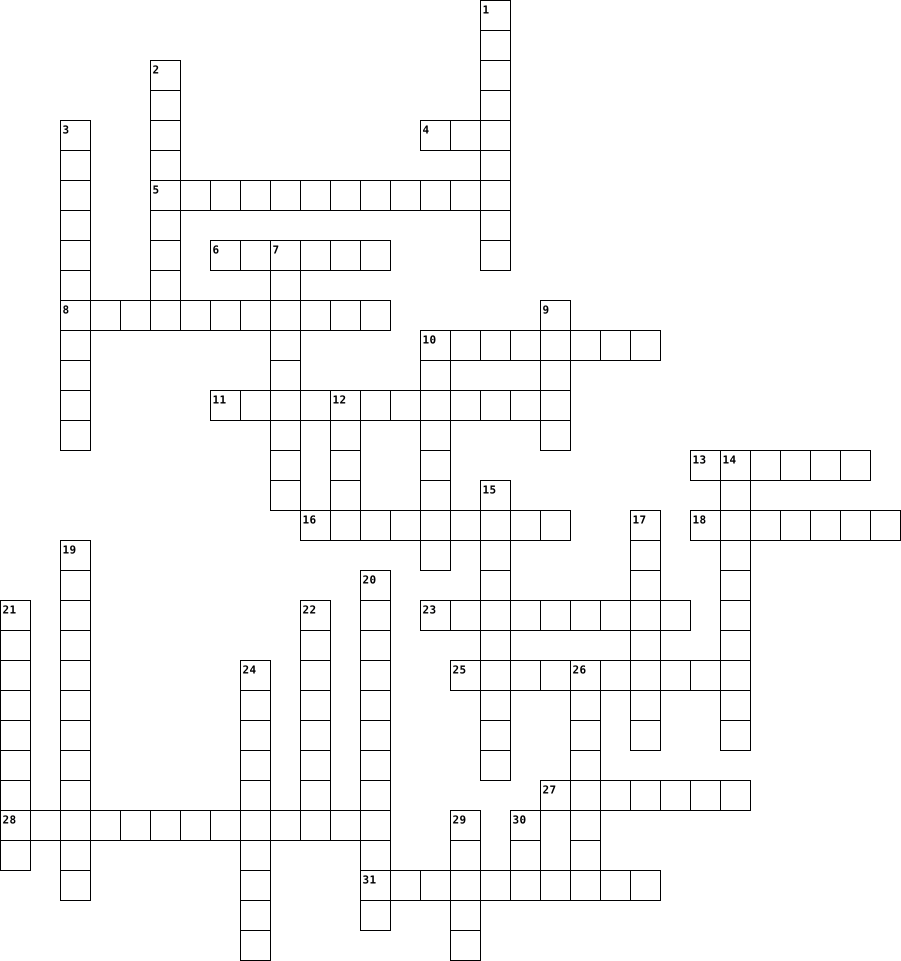
Across
- diem a daily allowance paid to an employee
- the principle holding that two
- a legal contract between the insurance company
- where the insured pays a share of the payment
- Risk risks directly affecting an individual or fam
- the person who owns the insurance policy.
- savings a type of personal savings
- any medical service that requires
- healthcare provider provide comprehensive primary.
- people who do not have insurance
- an amount the insured pays before insurance claim
- what you pay monthly
- a type of insurance policy in which
- you don't have to be hospitalized for
Down
- company provides compensation for specific loss
- The amount you pay for covered health care
- the person or entity that will receive
- Risk when a party can be responsible for losses.
- gives workers and their families benefits
- risk damage due to uncontrollable forces like fire
- a formal request by a policyholder
- The process through which an approved
- reckless or unreasonable actions that
- A general term referring to any service
- medicine thats paid for though company
- what you're reimbursed with
- there is a contractual agreement with that health plan regarding the rates for services.
- spending through employer lets you pay
- the use of electronic information
- the amount of risk or liability that is
- a payment made by a beneficiary in addition to insurer
- of network when a contact has no been established
32 Clues: what you pay monthly • what you're reimbursed with • the principle holding that two • people who do not have insurance • any medical service that requires • the use of electronic information • a formal request by a policyholder • savings a type of personal savings • a type of insurance policy in which • The process through which an approved • ...
Economics 2024-03-21
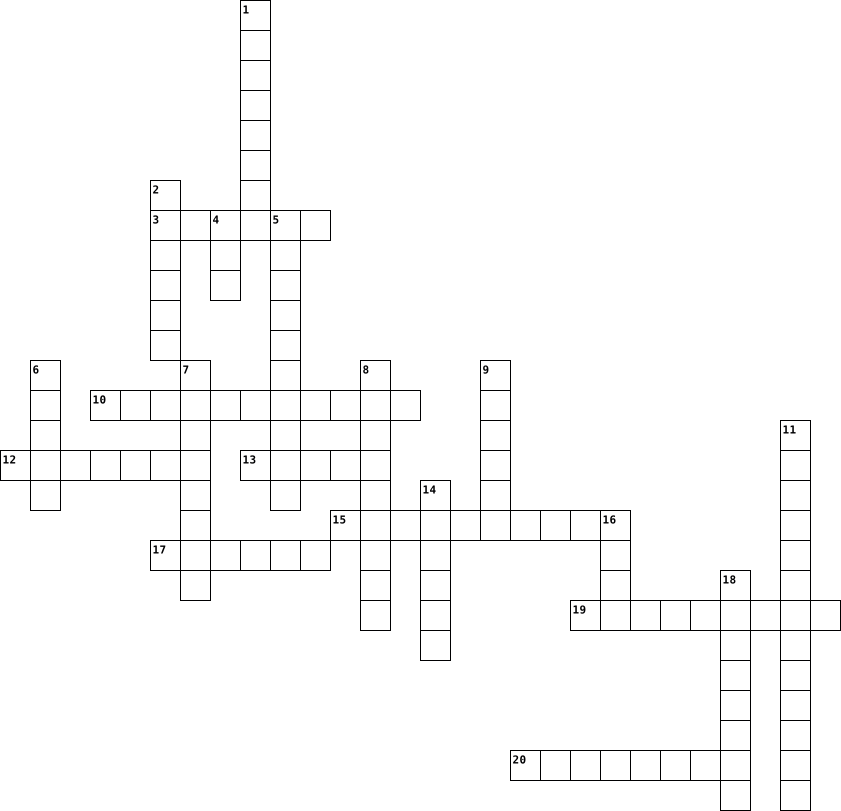
Across
- - to begin an activity to introduce something (e.g. a new product onto the market)
- - the use of media which normally communicate information both visually and using sound; also adj.
- - the underlying subject, idea or theme used to advertise something
- - means of mass communication that may or may not carry advertising e.g. TV, radio, newspapers, magazines, the internet; also used as an abstract noun to denote the media as an industry or sector
- - an advertisement on TV or radio
- - an abstract group of potential or existing customers for a given product or service
- - a physical or abstract collection of work or clients, both past and present; a physical portfolio may be contained in a large document and show artwork and printed advertising in order to attract new clients
- - a physical or electronic document, normally containing promotional material or advertising
Down
- - a planned set of related activities to achieve a goal
- - a phrase used to advertise a product or service which can become a way of identifying the product (e.g. Just do it - Nike)
- - Unique Selling Proposition; a statement of what makes a product different from its competitors
- - a person whose work involves writing copy, often to be used in advertising material
- - a sheet of paper with printed advertising
- - something given for free, often as part of an advertising campaign or to tempt somebody to buy a product or service
- - a document containing a list of products and services, often with more detailed information than the marketing materials
- - something, normally written text in printed materials or on an internet page, which spans the entire page, normally placed at the top
- - publicity designed to promote services or products in media such as newspapers, TV, internet, magazines etc.
- - the effect of something e.g. the degree to which an advertising campaign has reached its target audience
- - a symbol used by organisations to identify themselves and normally to promote their services or products
- - a private individual who purchases goods and services; the target of B2C advertising
20 Clues: - an advertisement on TV or radio • - a sheet of paper with printed advertising • - a planned set of related activities to achieve a goal • - the underlying subject, idea or theme used to advertise something • - to begin an activity to introduce something (e.g. a new product onto the market) • ...
economics 2024-02-16
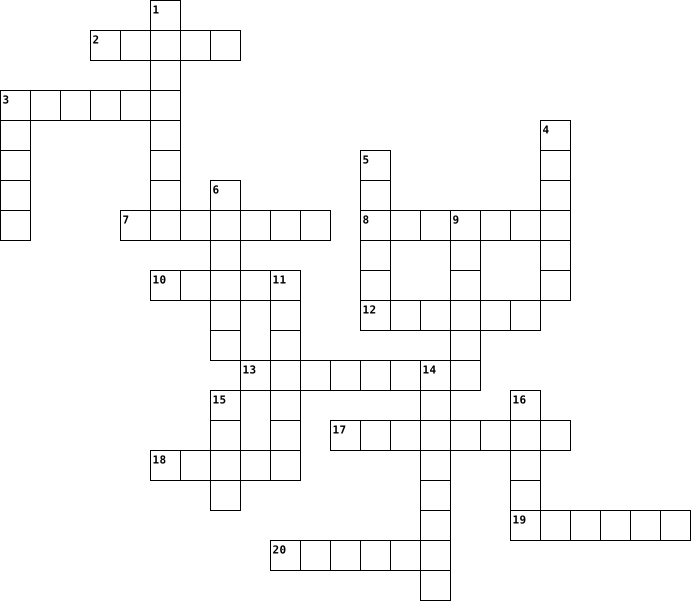
Across
- a compulsory contribution to state revenue, levied by the government on workers' income and business profits, or added to the cost of some goods
- something that has grown or is growing
- something that produces good or helpful results
- the money used to build, run, or grow a business
- a action of began or selling goods services
- send goods or sureness to another country for sale
- rate the proportion of a loan that is charged as interest to the borrower
- money to a worthy cause or volunteering time
- a current medium of exchange in the from coins and dollars
- to move something available to someone or possible to someone
- a plan for saving and spending
Down
- a marketplace where securities, commodities, derivatives and other financial instruments are traded.
- items that satisfy human wants, provide utility or usefulness, and are
- an abundance of valuable possessions for money
- money receded on a regular basis
- an economic concept that relates to a consumer's desire to purchase goods and services
- a good or service bought in one country that was produced in another.
- system of inter-related production and consumption
- the state of being or in short supply of
- a place where you can make saving deposite
- the value you give up when you pay for something
21 Clues: a plan for saving and spending • money receded on a regular basis • something that has grown or is growing • the state of being or in short supply of • a place where you can make saving deposite • a action of began or selling goods services • money to a worthy cause or volunteering time • an abundance of valuable possessions for money • ...
economics 2024-02-19
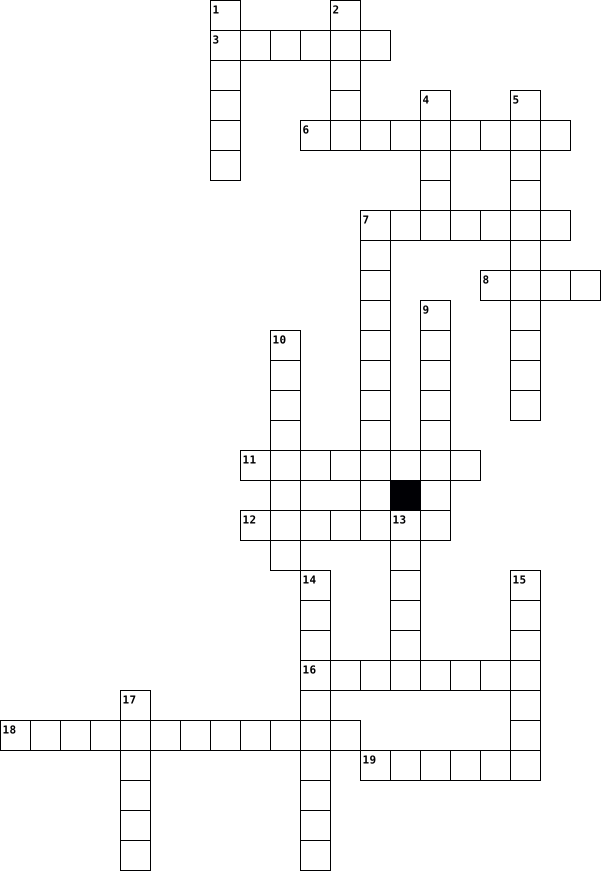
Across
- something that is sent out
- ll the materials available in our environment which are technologically accessible
- money or goods given to the less fortunate
- is a financial institution that accepts deposits from the public
- something provided for money
- any income not used for immediate consumption
- a trade
- how fast something is done
- regular gathering of people for the purchase and sale of provisions,
Down
- quantity of a good that consumers are willing and able to purchase at various prices during a given time.
- he quantity of payment or compensation expected, required, or given by one party to another in return for goods or services.
- a certain number of sales to reach
- discussion aimed at reaching an agreement.
- two contedors or rivals for the same thing
- services provided for a price
- estimate of income and expenditure for a set period of time.
- the process of increasing physical size
- commitment of resources to achieve later benefits
- an advantage or profit gained from something.
- amount of a resource that firms, producers, labourers, providers of financial assets, or other economic agents are willing and able to provide to the marketplace
20 Clues: a trade • something that is sent out • how fast something is done • something provided for money • services provided for a price • a certain number of sales to reach • the process of increasing physical size • discussion aimed at reaching an agreement. • money or goods given to the less fortunate • two contedors or rivals for the same thing • ...
Economics 2024-02-14
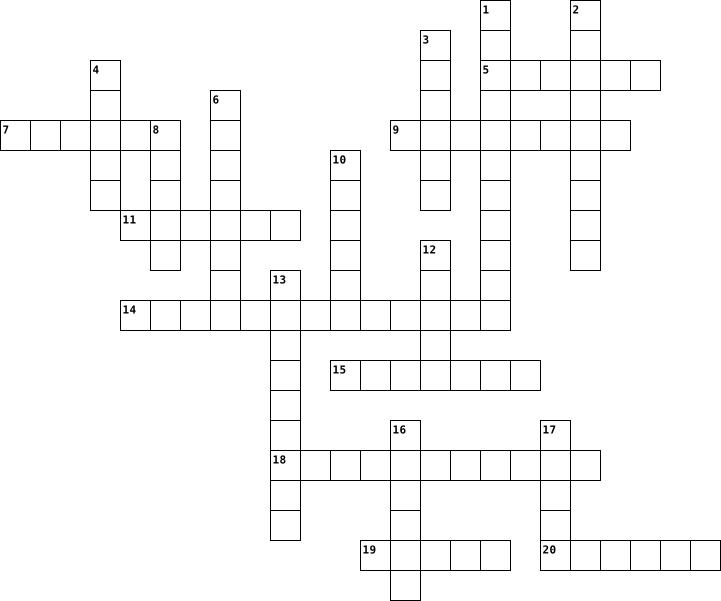
Across
- A financial plan that outlines the amount of money a corporation can spend in a certain amount of time.
- A good or service bought in one country that was produced in another.
- The demand for a good or service is greater than the availability of the good or service.
- Quantity of a good that consumers are willing and able to purchase at various prices during a given time.
- The cost of debt for the borrower and the rate of return for the lander.
- The income that a firm receives from the sale of a good or service to it's customers.
- A scenario where different economic firms are in contention to obtain limited goods by varying the marketing mix elements: price, product, promotion, and place.
- A show in the ownership of a company, including a claim on the companies earning and assests.
- The total amount of a specific good provided to the market for consumption.
Down
- The sum of the employment plus the un-employed.
- A strategic discussion between two parties to resolve an issue in a way that both find acceptable.
- The price at which the amount of good or service supplied by all sellers in a market is equal to the amount demanded by all buyers.
- A government imposed trade restriction that limits the number of goods that a country can import or export during a particular period.
- Goods or services on the form of a gift given to a person or group by another person or group.
- A mandatory payment or charge collected by local, state, and national government services, goods and activities.
- A composition of systems, industries, producers, social relations pr infrastructures where by parties engage in exchange.
- The sale and purchase of assests and securities between two consensual sides.
- Components used to produce goods for consumers.
- When someone has finanicial freedom during all economic resources that can be measured in terms of either real goods or money values.
- The value you give up when you choose one economic activity over the next best economic activity.
20 Clues: The sum of the employment plus the un-employed. • Components used to produce goods for consumers. • A good or service bought in one country that was produced in another. • The cost of debt for the borrower and the rate of return for the lander. • The total amount of a specific good provided to the market for consumption. • ...
Economics 2024-02-14
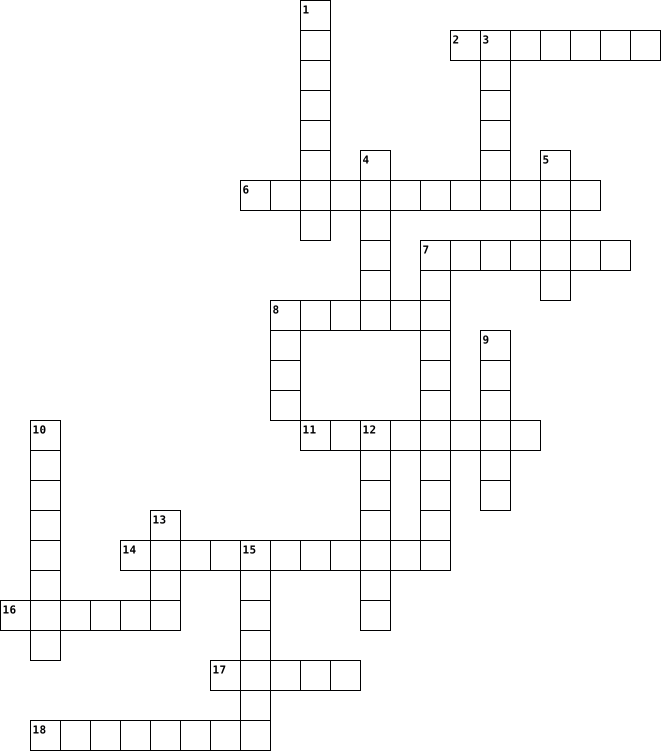
Across
- An advantage or profit gained from something
- the way total output, income, or wealth is distributed among individuals
- anything that confers value or benefit to its owner such as a factory and its machinery
- Exchange for other goods and services without using money
- a market place where securities, commodities, derivatives, and others are traded
- an activity involving two or more firms in which each firm tries to get people to buy their goods
- Economic concept that relates to a consumers desire to purchase goods
- Items that satisfy human wants, provide utility, or usefulness and are scarse
- medium of exchange for goods and services
Down
- A persons regular occupation, profession, or trade
- A product or service produced in one country but sold to a buyer abroad
- transaction between two parties in which one supplies money, goods, services, or securities in return for a promised future payment
- the monetary value of goods and services purchased by producers and consumers
- public availability or knowledge of something
- A financial institution licensed to receive and make loans
- an estimate of income and expenditure for a set period of time
- people who buy or use goods and services to satisfy their wants
- an organization set up to provide help and raise money for those in need
- a fixed income instrument that represents a loan made by an investor to a borrower
- The large set of inter-related production, consumption, and exchange activities
20 Clues: medium of exchange for goods and services • An advantage or profit gained from something • public availability or knowledge of something • A persons regular occupation, profession, or trade • Exchange for other goods and services without using money • A financial institution licensed to receive and make loans • ...
Economics 2024-05-23

Across
- Ownership in a company.
- A good who demand decreases when income increases.
- When buyers and sellers hold different information.
- The overconsumption of common resources. It is called the Tragedy of the...
- Tendency to take fewer precautions b/c of insurance.
- Rise of overall prices in an economy.
- When the supplier can prevent people from consuming.
- Type of advantage where you have the lowest opportunity cost.
- Measure of economic growth.
- A loan issued by a borrower.
- When spending exceeds tax revenue.
Down
- What you give up to get something.
- Responsible for monetary policy.
- Responsible for fiscal policy.
- When more than one person can consume a good.
- Side effect of someone else's behavior.
- Benefit from something without contributing.
- Type of advantage where you can make more in a given amount of time.
- Money backed by gold.
- Concerned with individual decisions.
- Unemployment caused by a careful job search.
- Core element of economic growth.
22 Clues: Money backed by gold. • Ownership in a company. • Measure of economic growth. • A loan issued by a borrower. • Responsible for fiscal policy. • Responsible for monetary policy. • Core element of economic growth. • What you give up to get something. • When spending exceeds tax revenue. • Concerned with individual decisions. • Rise of overall prices in an economy. • ...
Economics 2024-07-14

Across
- To put money in a bank account.
- The money paid by a borrower for the use of borrowed money.
- The amount of a good or service that consumers are willing and able to buy at a certain price.
- The money that a country uses; a specific kind of money.
- Money, property, etc., that is used to start or operate a business.
- A share of the value of a company which can be bought, sold, or traded as an investment.
- A period of time in which there is a decrease in economic activity.
- The loss of potential gain from other alternatives when one alternative is chosen.
- To use money to earn more money; to use your money to purchase stock in a company, to buy property, etc., in order to make future profit.
- An amount of money that a government requires people to pay according to their income, the value of their property, etc., and that is used to pay for the things done by the government.
- Money that is made in a business, through investing, etc., after all the costs and expenses are paid; a financial gain.
Down
- An amount of money available for spending that is based on a plan for how it will be spent.
- A person who buys goods and services.
- Money that a bank or business will allow a person to use and then pay back in the future.
- An amount of money that is used for a special purpose.
- An amount of money that you owe to a person, bank, company, etc.
- To increase in value.
- An amount that is less than the amount that is needed.
- The inability to satisfy all wants at the same time; all resources and goods are limited.
- The amount of a good or service that producers are willing and able to sell at a certain price.
- The process or system by which goods and services are produced, sold, and bought.
- The activity or process of buying, selling, or exchanging goods or services.
- A continual increase in the price of goods and services.
23 Clues: To increase in value. • To put money in a bank account. • A person who buys goods and services. • An amount of money that is used for a special purpose. • An amount that is less than the amount that is needed. • The money that a country uses; a specific kind of money. • A continual increase in the price of goods and services. • ...
Economics 2024-09-12

Across
- when something has a great amount of people wanting it
- What is often reduced in command economies?
- an economic system that combines the elements of a market economy and the elements of a planned economy
- the process of identifying all your available resources
- What is the primary characteristic of a command economy?
- What ideally promotes competition in a market economy
- the amount of products stored for future sales
- an economic system where two forces, known as supply and demand, direct the production of goods and services
- What motivates innovation in a market economy?
- When we have a source that could give us everything with no limits
Down
- the physical or financial resources used to produce goods and services
- What encourages growth in a market economy
- a group of people organizing the economic system
- What is the common ownership form in a command economy?
- What motivates consumers in a market economy?
- when we have a source that has a limit to its use
- when believing other things remain constant
- a factor of production where environment comes to place
- a business organization, such as a corporation, limited liability company, or partnership
- Essentials for survival
20 Clues: Essentials for survival • What encourages growth in a market economy • What is often reduced in command economies? • when believing other things remain constant • What motivates consumers in a market economy? • the amount of products stored for future sales • What motivates innovation in a market economy? • a group of people organizing the economic system • ...
Economics 2024-09-12

Across
- the government has little or no direct involvement in the process of resource allocation
- things that are needed for survival
- it refers to the ability and inventiveness of the entrepreneurs who are prepared to take risks
- a product or services that can be easily replaced with another by consumers
- physical resources that are made by human to aid production
- this factor of production includes a wide range of things such as mineral deposits like oil and coal
- when the wants are unlimited but the resources are limited
- a statement based on facts and is objective
- goods or services that are beneficial to individuals and society but oftenunder-consumed in a free market economy
- considered a human resource as it's the capacity of individuals to perform tasks and contribute to economic activity
Down
- something that is available to everyone in a society and benefits that given society
- a type of good which experiences an increase in demand due to an increase in income
- inputs used to produce goods and services
- when everything else is unchanged apart from a single change of circumstances
- cost of the choice in terms of the next best alternative
- concentrating on producing certain goods or services than others
- Central government and its organisations are responsible for the allocation of resources.
- describes a good whose demand drops when people's incomes rises
- a graphical representation that shows all the possible combinations of two goods or services that an economy can produce with its given resources and technology
- and economic system where both the private sector and public sector have a part to play in the allocation of resources
20 Clues: things that are needed for survival • inputs used to produce goods and services • a statement based on facts and is objective • cost of the choice in terms of the next best alternative • when the wants are unlimited but the resources are limited • physical resources that are made by human to aid production • ...
Economics 2024-09-16

Across
- needs; need to give confidence and a sense of security
- The price that supply is equal to demand
- Initialism; monetary value of goods and services and total economic activity in a specific area, over a specific time period
- System in which customs are passed through time
- An assembly line; where each party works exclusively on the component assigned to them; what they are good at
- Steady increase in employment, demand, income and investments; improving economic situation
- economic system in which businesses respond to consumer desires; private ownership may exist
- User; person who utilises a good or service
- A web; the reliance between various organizations and businesses
- Additional percentage rate at which it costs to borrow money
- Economic system in which government controls nearly every aspect of the economy
Down
- Something of value; often in the form of equipment to produce goods efficiently
- needs; must haves for survival
- Increase in prices, decrease in purchasing power of money
- Time with increase in standard of living, investments, and optimal general state of economy
- Goods that can replace one another
- Goods used together; Goods often purchased by consumers at the same time
- needs; need to make one feel included; part of a community
- Whom something originates from; goods made or grown; services provided
- Amount of goods and/or services in a market available to consumers
- An asset acquired in order to gain value over time
- needs; needs that make one feel better about oneself
- Desire to purchase goods and services at a certain price
- Goods used less as income increases
- Decrease in demand, income and investments; increase in unemployment
- Severe reduction in demand, income and investments; overwhelming levels of unemployment
26 Clues: needs; must haves for survival • Goods that can replace one another • Goods used less as income increases • The price that supply is equal to demand • User; person who utilises a good or service • System in which customs are passed through time • An asset acquired in order to gain value over time • needs; needs that make one feel better about oneself • ...
Economics 2024-04-29

Across
- ALL PEOPLE WHO WORK
- ORGANIZED WAY A NATION PROVIDES FOR THEIR PEOPLE
- EXCLUSIVE CONTROL OVER A PRODUCT OR PRODUCTION
- MONEY AND ASSETS NEEDED TO START A BUSINESS
- ECONOMIC SLOWDOWN THAT LASTS AT LEAST 6 MONTHS
- PEOPLE WHO ARE WILLING TO INVEST THEIR TIME AND MONEY TO RUN A BUSINESS
- A PERIOD OF RENEWED ECONOMIC GROWT FOLLOWING A RECESSION
- HOW MUCH CONSUMERS ARE WILLING AND ABLE TO BUY
- HOW MUCH PRODUCERS ARE WILLING TO MAKE AND SELL
- A TIME WHEN THE ECONOMY IS FLOURISHING
- GOVERNMENT ORGANIZATION AND AGENCIES
- GOVERNMENT CONTROLS FACTORS OF PRODUCTION
- BUSINESSES THAT ARE OWNED BY INDIVIDUALS
Down
- TOTAL VALUE OF GOODS PRODUCED AND SERVICES PROVIDED DURING A YEAR
- ALL THINGS USED IN PRODUCING GOODS AND SERVICES
- RECURRING CHANGES IN ECONOMIC ACTIVITY
- WHEN PRICES RISE
- EVERYTHING CONTAINED IN THE EARTH OR FOUND IN THE SEAS
- ECONOMIC AND POLITICAL SYSTEM WHERE TRADE IS CONTROLLED BY PRIVATE OWNERS FOR PROFIT
- FREE OF GOVERNMENT REGULATION, ALLOWS PRIVATE PRODUCERS AND CONSUMERS TO REGULATE THEMSELVES
- PROLONGED RECESSION
21 Clues: WHEN PRICES RISE • ALL PEOPLE WHO WORK • PROLONGED RECESSION • GOVERNMENT ORGANIZATION AND AGENCIES • RECURRING CHANGES IN ECONOMIC ACTIVITY • A TIME WHEN THE ECONOMY IS FLOURISHING • BUSINESSES THAT ARE OWNED BY INDIVIDUALS • GOVERNMENT CONTROLS FACTORS OF PRODUCTION • MONEY AND ASSETS NEEDED TO START A BUSINESS • EXCLUSIVE CONTROL OVER A PRODUCT OR PRODUCTION • ...
Economics 2026-03-03

Across
- Economist known for free-market advocacy, Milton Friedman
- When government removes regulations
- The responsiveness of demand or supply to price changes
- A good that is bought and sold
- An increase in the value of an asset
- The extra benefit given to encourage behavior
- Ownership shares in a company
- Government spending and taxation policies
- A limit on imports
- The total value of goods and services produced in a country
- A legal minimum hourly wage
- The cost of the next best alternative given up
- A person who acts on behalf of another
- The place where stocks are bought and sold
- A person who invests in a company
- A tax placed on imported goods
- The amount of money earned from work or investments
- When general prices rise over time
- Total amount of goods and services consumers want
- The original sum of money borrowed
- The value of assets minus liabilities
Down
- When supply is greater than demand
- When general prices fall over time
- Economic system based on private ownership and markets
- A market structure dominated by a few firms
- Market structure with only one seller
- Money borrowed that must be repaid
- The amount charged for borrowing money
- Total amount of goods available for sale
- The father of modern economics who wrote The Wealth of Nations
- The study of individual consumers and firms
- The study of the economy as a whole
- When economic growth slows or stalls
- A period of economic decline
- Economic theory associated with Karl Marx
- The ability to produce goods and services
- When a country buys and sells without restrictions
- Economic system where government owns resources
- A payment made to shareholders from company profits
- The difference between revenue and cost
- A tax on income or goods
41 Clues: A limit on imports • A tax on income or goods • A legal minimum hourly wage • A period of economic decline • Ownership shares in a company • A good that is bought and sold • A tax placed on imported goods • A person who invests in a company • When supply is greater than demand • When general prices fall over time • Money borrowed that must be repaid • ...
Economics 2026-02-16

Across
- Used to score development in a country, ranges from zero to one
- assembling an iPhone happens in this economic sector
- supranational organization that created the H.D.I.
- another name for a command economy
- another name for a free enterprise economy
- the force determining production and distribution in a command economy
- stocking shelves is a job in this economic sector
- economic system involving central planning
- type of industry relying on manual labor
- economic sector that includes Elon Musk, Jeff Bezos, and Mark Zuckerberg
- percentage of people in the country who can read and write
- happens to birth rates and infant mortality rates as a country develops
Down
- development indicator measuring the economic output per person in a country
- type of ownership seen in free enterprise economies
- another name for a mixed economy
- type of agriculture where a person grows enough food to feed themselves and their family
- the force determining production and distribution in a free enterprise economy (2 words)
- what business owners are trying to maximize in a free enterprise economy
- specific type of trade seen in traditional economies
- economic sector prominent in less developed countries
- type of industry and agriculture in which machines replace human labor
21 Clues: another name for a mixed economy • another name for a command economy • type of industry relying on manual labor • another name for a free enterprise economy • economic system involving central planning • stocking shelves is a job in this economic sector • supranational organization that created the H.D.I. • type of ownership seen in free enterprise economies • ...
Economics 2026-03-06

Across
- Has an eigenvalue equal to 1.
- When the error term depends on x.
- Partial derivative of the utility function with respect to one good (short).
- A production function in which the exponents on capital and labor equal one when summed.
- Buying bonds is an example of this (short).
- The IS-LM model features an equilibrium point at this many degrees.
- Mathematical poker player.
- Opposite of a fix in FX markets.
- Standard regression model.
- The body that officially declares a recession in the U.S.
Down
- Inflationary __________.
- Econometrician’s playground.
- A major opponent of Keynes.
- (0,0) in the Solow model.
- Basic macro model.
- Major threat to causality (short).
- The reduction in the amount of capital per worker due to population growth, for instance.
- My country is the best!
- Economic growth model.
- Describes a utility function with one essential and one nonessential good.
20 Clues: Basic macro model. • Economic growth model. • My country is the best! • Inflationary __________. • (0,0) in the Solow model. • Mathematical poker player. • Standard regression model. • A major opponent of Keynes. • Econometrician’s playground. • Has an eigenvalue equal to 1. • Opposite of a fix in FX markets. • When the error term depends on x. • Major threat to causality (short). • ...
Economics 2026-01-08

Across
- the type of unemployment in which people lose their jobs during poor economic periods
- the money one receives as incentive to work a job
- acronym for the dollar value of all final goods and services produced within a country's borders during a period
- when a person is working a job they are overqualified for
- a type of good that is rival and excludable
- a limited number of resources for an unlimited number of consumers
- sensitivity of consumer when it comes to quantity demanded when the price increases or decreases
- a few sellers with near complete control over a particular market
Down
- the catalyst exchanged for all things, economically speaking
- a type of good that is non-rival and non-excludable
- a type of good that is non-rival and excludable
- the buyer
- a single seller with complete control over a particular market
- the amount of benefit one gets from something
- the policy which allows the government to slow or increase economic growth
- the available amount of a good or service
- the money collected by the government to fund both discretionary and mandatory spending
- a cost or benefit to someone uninvolved
- willingness to consume a good or service at various prices
- rewards or penalties to encourage or discourage consumers from on thing or another
- a type of resource that is rival and non-excludable
21 Clues: the buyer • a cost or benefit to someone uninvolved • the available amount of a good or service • a type of good that is rival and excludable • the amount of benefit one gets from something • a type of good that is non-rival and excludable • the money one receives as incentive to work a job • a type of good that is non-rival and non-excludable • ...
economics 2026-01-21

Across
- — Activities that allow money to be saved, borrowed, and transferred safely.
- — Groups that decide how income is spent while also supplying labour to firms.
- — A situation where labour is actively used in production.
- — People whose earnings are most directly affected when employment falls.
- — The cost of borrowing money and the reward for saving it.
- — Allows trade with many sellers without needing goods or labour in exchange.
- — A decision that must be made because resources and income are limited.
- — An institution that accepts savings and provides loans to households and firms.
- — Choosing to reduce present consumption to protect future spending ability.
Down
- — Desires that increase with income but are not essential for survival.
- — Physical products that can be stored and sold later, unlike services.
- — Buyers whose choices determine which goods continue to be produced.
- — A factor of production that cannot be stored for future use.
- — The final use of goods and services to satisfy human wants.
- — A system where prices change due to buyers’ and sellers’ decisions.
- — Income that increases when labour becomes scarce relative to demand.
- — Economic agents that adjust output based on consumer demand.
- — The main limit on how much a household can spend.
- — A choice that reduces savings but increases current consumption.
- — Wants that must be satisfied before non-essential desires.
20 Clues: — The main limit on how much a household can spend. • — A situation where labour is actively used in production. • — The cost of borrowing money and the reward for saving it. • — Wants that must be satisfied before non-essential desires. • — The final use of goods and services to satisfy human wants. • ...
Economics 2025-10-31

Across
- Subject Adam Smith studied
- Continent John M. Keynes was born in
- Year he was a representative
- Conference where he was a representative
- What John negotiated with the U.S. to Britain
- Year John M. Keynes died
- Why Adam Smith is still important today
- Should factories use automated production or more workers
- Father of economics
- Year Adam Smith wrote his book
- Who John M. Keynes was
- Year Adam Smith died
- Book John M. Keynes wrote
- Year of John’s final work
Down
- Year Adam Smith was born
- What John was considered in the 1930s
- What Adam Smith lectured on
- Type of loan John negotiated
- University Adam Smith taught at
- Century Adam Smith lived in
- What people used during World War II from John’s ideas
- Problem John M. Keynes faced during the Great Depression
- Year he wrote The General Theory of Employment
- University Adam Smith attended
- Famous book Adam Smith wrote
- Why Smith had a negative view of monopolies
- University John M. Keynes attended
- Does current economic policy follow Keynes’s theories
- Should society direct most resources to military, clothing, or housing
- What Adam Smith is often called
30 Clues: Father of economics • Year Adam Smith died • Who John M. Keynes was • Year Adam Smith was born • Year John M. Keynes died • Book John M. Keynes wrote • Year of John’s final work • Subject Adam Smith studied • What Adam Smith lectured on • Century Adam Smith lived in • Type of loan John negotiated • Year he was a representative • Famous book Adam Smith wrote • ...
Economics 2026-03-31

Across
- A market structure with only one seller
- The desire and ability of consumers to buy a good or service
- A reward or penalty that influences behavior
- Goods brought into a country
- A plan for spending and saving money
- ECONOMY An economy that combines elements of market and command systems
- ECONOMY An economy where the government makes most decisions
- The total value of goods and services produced in a country
- The condition of limited resources and unlimited wants
- A person who buys and uses goods or services
- OFF Giving up one thing to gain another
- A general increase in prices over time
- Goods sold to another country
- A person or business that makes goods or provides services
- WAGE The lowest legal pay for workers
- The cost of borrowing money or the return on savings
Down
- Rivalry among businesses to sell products
- Money paid to the government to fund services
- The study of how people make choices with limited resources
- COST The value of the next best alternative given up
- A tax on imported goods
- The condition of not having a job but seeking work
- The amount of money needed to buy something
- The expense of producing a good or service
- ECONOMY An economy where decisions are made by individuals and businesses
- The amount of a good or service producers are willing to sell
- The money left after all costs are paid
- The institution that makes and enforces laws
- Income received from selling goods or services
- Government payment to support a business or industry
30 Clues: A tax on imported goods • Goods brought into a country • Goods sold to another country • A plan for spending and saving money • WAGE The lowest legal pay for workers • A general increase in prices over time • A market structure with only one seller • The money left after all costs are paid • OFF Giving up one thing to gain another • Rivalry among businesses to sell products • ...
economics 2026-03-09

Across
- : Risk increase due to dishonesty or reckless behavior
- : Process of evaluating risk and deciding coverage
- : Principle of restoring insured to financial position before loss
- : Damage injury or financial harm covered by insurance
- : Written insurance contract
- : Legal responsibility for injury or damage to others
- : Specific loss or condition a policy does not cover
- : Person who investigates claims and determines payment amounts
- : Insurer right to recover from third party
- : Another term for an insurance company that underwrites coverage
- : Person or entity designated to receive policy proceeds
- : Legally binding agreement an insurance policy is one
- : Optional add on that modifies coverage
- : An unexpected event that results in injury or damage
- : Temporary proof of coverage before the policy is issued
- : Amount paid to keep insurance coverage active
- : Eligible for coverage because risk can be accepted
- : Protection provided by the policy for specified losses
- : Extra time after due date to pay without losing coverage
- : Failure to use reasonable care leading to harm
- : Condition that increases chance or severity of a loss
- : Company that provides coverage and pays losses
- : Policy provisions that describe duties and rules for coverage
- : Maximum amount insurer will pay for a loss
- : Person or entity covered by the policy
- : Fixed amount paid for a covered health service
Down
- : Auto coverage that pays for damage from hitting another object
- : Professional who uses statistics to price risk and set premiums
- : Request for payment under the terms of an insurance policy
- : Insurance purchased by an insurer to spread risk
- : Submission of required information or documents
- : Auto coverage for non collision losses like theft or hail
- : Cost sharing percentage the insured pays after the deductible
- : Premium method based on prior loss history
- : Coverage for movable items often scheduled
- : Agent who represents only one insurance company
- : Costs insured pays not reimbursed by insurance
- : Event that triggers coverage under occurrence policy
- : Amendment that changes a policy terms or coverage
- : Termination of coverage due to nonpayment
- : Decrease in value over time affecting claims
- : Cause of loss insured against
- : Party to whom a policy owner transfers certain policy rights
- : Licensed representative who sells insurance for a company
- : Amount the insured pays before the insurer begins to pay
- : Form used to request insurance and provide underwriting information
- : Contract that provides a stream of payments often for retirement
- : Compensation paid to an agent or broker for selling a policy
- : Intermediary who shops coverage from multiple insurers for a client
- : Intentional deception to obtain insurance benefits
50 Clues: : Written insurance contract • : Cause of loss insured against • : Optional add on that modifies coverage • : Person or entity covered by the policy • : Insurer right to recover from third party • : Termination of coverage due to nonpayment • : Premium method based on prior loss history • : Coverage for movable items often scheduled • ...
Economics 2024-10-30

Across
- an insistent and peremptory request, made as of right.
- Identification Number (PIN):A numeric secret that a cardholder memorizes and uses as part of authenticating their identity
- an act of taking money out of an account.
- Resources: the set of people who make up the workforce of an organization, business sector, industry, or economy
- Affairs Victoria (CAV): the Victorian Government's leading consumer protection agency,
- the action of making or manufacturing from components or raw materials, or the process of being so manufactured.
- exchange (goods or services) for other goods or services without using money.
- the money you receive in exchange for your labor or goods
- mark (a bill) as paid.
- they look like the real thing and catch you off guard when you're not expecting it.
- Cards: a small plastic card issued by a bank, building society, etc., allowing the holder to purchase goods or services on credit.
- merchandise or possessions.
- a financial plan that lists expected expenses and income during a particular period:
- the state of being scarce or in short supply; shortage.
Down
- a sum of money paid into a bank or building society account.
- a stock or amount of something supplied or available for us
- Work: a person who does work without getting paid to do it
- send (goods or services) to another country for sale.
- for the use of money over time
- a person who purchases goods and services for personal use.
- bring (goods or services) into a country from abroad for sale.
- consumption: the use of products and services in ways that minimizes impacts on the environment.
- have a desire to possess or do (something); wish for.
- Electronic Funds Transfer at Point of Sale.
- the action of helping or doing work for someone.
- the action of spending fund
- legal tender—currency or coins—that can be used to exchange goods, debt, or services.
- an official inspection of an organization's accounts, typically by an independent body.
- Resource: something that is found in nature and can be used by people
29 Clues: mark (a bill) as paid. • the action of spending fund • merchandise or possessions. • for the use of money over time • an act of taking money out of an account. • Electronic Funds Transfer at Point of Sale. • the action of helping or doing work for someone. • send (goods or services) to another country for sale. • have a desire to possess or do (something); wish for. • ...
Economics 2024-10-10

Across
- - The system of production, consumption, and distribution of goods and services in a society.
- - A period of economic decline, typically characterized by a decrease in GDP.
- - The act of putting money into assets or projects with the expectation of earning a profit.
- - The total amount of a product or service available to consumers.
- - The ease with which an asset can be converted into cash.
- - The desire of consumers to purchase goods and services.
- - A fundamental economic problem of having limited resources to meet unlimited wants.
- - The financial gain made after subtracting costs from revenue.
- - The additional benefit or cost associated with one more unit of a good or service.
- - A debt security in which the issuer owes the holder a debt and is obliged to pay interest.
- - The act of trading goods, services, or currencies between parties.
- - A place where buyers and sellers come together to trade goods and services.
- - The cost of borrowing money, usually expressed as a percentage.
- - The amount by which expenses exceed income or revenue.
Down
- - Money that is borrowed with the expectation of being paid back with interest.
- - The cost of forgoing the next best alternative when making a decision.
- - The value of ownership in a business or property.
- - The rate at which the general level of prices for goods and services rises.
- - Gross Domestic Product, the total value of all goods and services produced in a country.
- - A portion of a company's earnings distributed to its shareholders.
- - A market structure in which a single company dominates the market.
- - A share of ownership in a company that represents a claim on part of its assets and earnings.
- - The system of money in general use in a particular country.
- - A financial plan that outlines expected income and expenditures.
- - The total income generated from the sale of goods and services.
- - A measure of satisfaction or value that a consumer receives from a good or service.
- - Financial assistance provided by the government to support businesses or individuals.
- - The exchange of goods and services between people or entities.
- - A tax imposed on imported goods and services.
- - Financial assets or resources that businesses use to produce goods and services.
30 Clues: - A tax imposed on imported goods and services. • - The value of ownership in a business or property. • - The amount by which expenses exceed income or revenue. • - The desire of consumers to purchase goods and services. • - The ease with which an asset can be converted into cash. • - The system of money in general use in a particular country. • ...
Economics 2024-11-15

Across
- When a union and company management meet to negotiate a new labor contract
- Payments to employees other than wages or salaries
- A business that has stocks or shares that are traded on the open market and owned by the public
- A certificate of ownership in a corporation
- nonmilitary people who are employed or unemployed but looking for work
- Two or more firms competing in the same market wuth the same good or service join together
- A business owned and managed by a single individual
- A legal entity that is owned by one or more people each with limited liability
- The legal obligation to pay debts
- An authorization from the local government to operate a business
- Fees charged to a franchisee given to the franchises owner
Down
- A business that is usually completely owned by a family and is not traded on the open market
- certain areas designated for various specific uses
- A business with headquarters in one country and branches in other countries
- A business owned and manages by two or more people who agree on a specific division of responsibilities and profits
- A formal contract issued by a corporation or other entity that includes a promise to repay borrowed money with intrest
- Two or mmore firms involved in different stages of producing the same good or service join together
- businesses with no owner that provide some sort of benefit to the public without any profit
- doesn't allow companies to force you to join a union
- All things of value owned by a business or person
- Payment given out to shareholders
21 Clues: The legal obligation to pay debts • Payment given out to shareholders • A certificate of ownership in a corporation • All things of value owned by a business or person • certain areas designated for various specific uses • Payments to employees other than wages or salaries • A business owned and managed by a single individual • ...
Economics 2024-11-13

Across
- the company that enforces work regulations
- result of physical work
- No owner, often run by a board Usually provide a benefit to the public
- Most complex form of business
- Business owned by a group of individuals for shared benifits
- under 16 or not in search of a job
- cease of work due to unhappiness
- unfairness due to race/gender
- Business owned by two or more people
- stocks bought and sold in financial markets
Down
- Two companies join together in the same market
- all nonmilitary people who are employed or unemployed.
- merger of three or more unrelated companies
- perks given to workers
- Business owned by one person
- money paid to workers
- semi independent business with fees
- the amount wanted by consumers
- responsibility of all debts
- Group of workers by occupation seeking better pay
20 Clues: money paid to workers • perks given to workers • result of physical work • responsibility of all debts • Business owned by one person • Most complex form of business • unfairness due to race/gender • the amount wanted by consumers • cease of work due to unhappiness • under 16 or not in search of a job • semi independent business with fees • Business owned by two or more people • ...
economics 2024-11-11

Across
- when things cost more over time
- an amount of money spent
- gross domestic product
- putting a tax on imports
- the thing you are selling
- when people want stuff
- putting money into something that will either pay you back or take all your money
- a supply that comes from nature
- relating to everyone else's money
- selling something to another country
- large scale
Down
- buying something from another country
- the thing that takes your paycheck
- why people do stuff
- total
- a stock or a resource
- relating to the governments money
- when you don't have a job
- wealth in assets or money
- the person who buys stuff
- a time of economic decline where things cost more
21 Clues: total • large scale • why people do stuff • a stock or a resource • gross domestic product • when people want stuff • an amount of money spent • putting a tax on imports • when you don't have a job • wealth in assets or money • the person who buys stuff • the thing you are selling • when things cost more over time • a supply that comes from nature • relating to the governments money • ...
Economics 2024-11-04

Across
- A table that shows a range of prices for a certain good or service and the quantity demanded at each price
- The total number of units of a good or service producers are willing to sell at a given price
- The extra benefit producers receive from selling a good or service, measured by the price the producer actually received minus the price the producer would have been willing to accept
- The relationship between price and the quantity demanded of a certain good or service
- See Social Surplus [1]
- Goods that are often used together so that consumption of one good tends to enhance consumption of the other
- The resources such as labor, materials, and machinery that are used to produce goods and services; also called inputs
- A good that can replace another to some extent, so that greater consumption of one good can mean less of the other
- The price where quantity demanded is equal to quantity supplied
- Government laws to regulate prices instead of letting market forces determine prices
- The common relationship that a higher price leads to a greater quantity supplied and a lower price leads to a lower quantity supplied, while all other variables are held constant
- At the existing price, quantity supplied exceeds the quantity demanded; also called a surplus
- The situation where quantity demanded is equal to the quantity supplied; the combination of price and quantity where there is no economic pressure from surpluses or shortages that would cause price or quantity to change
- See Social Surplus [2]
- A table that shows a range of prices for a good or service and the quantity supplied at each price
Down
- The loss in social surplus that occurs when a market produces an inefficient quantity
- What a buyer pays for a unit of the specific good or service
- Other things being equal
- A good in which the quantity demanded falls as income rises, and in which quantity demanded rises and income falls
- At the existing price, the quantity demanded exceeds the quantity supplied; also called a shortage
- The sum of consumer surplus and producer surplus
- A graphic representation of the relationship between price and quantity demanded of a certain good or service, with quantity on the horizontal axis and the price on the vertical axis
- The relationship between price and the quantity supplied of a certain good or service
- A legal maximum price
- The extra benefit consumers receive from buying a good or service, measured by what the individuals would have been willing to pay minus the amount that they actually paid
- A line that shows the relationship between price and quantity supplied on a graph, with quantity supplied on the horizontal axis and price on the vertical axis
- At the existing price, the quantity demanded exceeds the quantity supplied; also called excess demand
- A legal minimum price
- The quantity at which quantity demanded and quantity supplied are equal for a certain price level
- The total number of units of a good or service consumers are willing to purchase at a given price
- When a change in some economic factor (other than price) causes a different quantity to be supplied at every price
- The common relationship that a higher price leads to a lower quantity demanded of a certain good or service and a lower price leads to a higher quantity demanded, while all other variables are held constant
- At the existing price, quantity supplied exceeds the quantity demanded; also called excess supply
- When a change in some economic factor (other than price) causes a different quantity to be demanded at every price
- The resources such as labor, materials, and machinery that are used to produce goods and services; also called factors of production
- A good in which the quantity demanded rises as income rises, and in which quantity demanded falls as income falls
36 Clues: A legal maximum price • A legal minimum price • See Social Surplus [1] • See Social Surplus [2] • Other things being equal • The sum of consumer surplus and producer surplus • What a buyer pays for a unit of the specific good or service • The price where quantity demanded is equal to quantity supplied • ...
Economics 2025-01-07

Across
- the ordinal utility approach is also known as ____ analysis
- when the firms cooperate with each other in determining price or output or both it is known as __________ oligopoly
- the estimated value ofthe inputs suppliedby the owners is known as ____ cost
- excess of receipt from the sale of goods over the expenditure incurred on producing them
- amount received by a firm from the sale of a given commodity in the market
- ______ cost is the cost of next best alternative foregone
- _______ cost is cost which does not vary directly with the level of output
- all supply curves which pass through the origin are ____ elastic
- the AFC curre is a rectangular _______
- PPF is _____ to the origin
- the production function is _____ in nature
- transformation of inputs into output
- Marshall's Utility Analysis is also known as ____ utility approach
- in the point of ______ MP is maximum
- imaginary and psychological units which are used to measure satisfaction obtained from consumption
- demand is a _____ variable
Down
- quantity of a commodity that a firm is willing and able to offer for sale at a given price during a given period of time
- Physical books and ebooks are ______ goods
- Car and petrol are _______ goods
- limitation of supply in relation to demand for a commodity
- policy of price discrimination is followed
- when I or more goods are demanded simultaneously to satisfy a particular want
- Demand for a commodity which depends on demand for other goods
- minimum price fixed by government which the producers must be paid for their produce is known as price ____
- rise in quantity Demanded due to a fall in the price of commodity, ceteris paribus
- goods whose demand decreases with increase in demand are known as ______ goods
- The law of DMU is also known as ______'s first law of consumption
- total expenditure incurred in producing a commodity
- the short run production function is also known as _________ proportion type
- goods that display wealth and status are known as goods of ______
- exactly two sellers are there
- in ______ competition any quantity of a commodity can be sold at that particular price
- in perfect competition, the industry is a price ______
33 Clues: PPF is _____ to the origin • demand is a _____ variable • exactly two sellers are there • Car and petrol are _______ goods • transformation of inputs into output • in the point of ______ MP is maximum • the AFC curre is a rectangular _______ • Physical books and ebooks are ______ goods • policy of price discrimination is followed • the production function is _____ in nature • ...
Economics 2025-02-25

Across
- basic requirements for survival
- organizations that produces goods or provides services to make profit
- when the supply of a good or service matches the demand for it
- quantity of a product or service that customers are willing and able to purchase at a certain price
- management structure where decisions are to be made by top level management
- activities or tasks provided to customers by businesses
- management structure where its a blend of market driven and government controlled decision making
- products that can be used in place of another product
- the increase in the price of goods and services over a period of time
- physical products that you can see and touch
- desire for relationships, belonging and teamwork
- when a company or worker focuses on a specific task/skill to become an expert in that particular area
- goods and services that people wish or desire but aren’t essential for survival
- total value of all good and services produced in a country over a period of time, measures the size and overall health of the a country’s economy
- when the price of a good or service increases, whiles the quantity demanded by customers decreases
- people or organizations that buy and use good or services
- basic necessities that people need to survive
Down
- the measurement used to measure the changes in the market princes in a good and/or service
- materials or substances that are found in nature that are used to make goods and services
- the maslow’s theory idea that this person has that a person does not feel this higher need until the current level is fulfilled
- group of people or individuals who create/manufacture goods and services
- the people who work to help the business operate and produce goods and services
- desire for respect, recognition, self confidence, and sense of accomplishment
- when the price of good or service increases, and the quantity supplied also increases by producers, and the same when it decreases
- creation of new products, ideas, or ways of doing things that improve or change the way a business operates
- the amount of a good or service that consumers are willing and able to buy at a certain price for that time period
- the amount of a good or service that producers are able to sell at a certain price
- creation of completely new product or process that has never existed before
- products that are often used together
- the lowest point in a business cycle, where the economic activity is the lowest and weakest
- when businesses rely on each other to succeed
- the amount of a good or service that period producers are willing and able to sell at a certain price for that time period
32 Clues: basic requirements for survival • products that are often used together • physical products that you can see and touch • when businesses rely on each other to succeed • basic necessities that people need to survive • desire for relationships, belonging and teamwork • products that can be used in place of another product • ...
Economics 2025-05-06

Across
- To decrease in value relative to another currency.
- Relating to the flow of goods, services, income, and transfers.
- Goods/services sold to foreign buyers.
- An outflow of funds (negative entry).
- Quantity of currency buyers wish to hold at each exchange rate.
- Relating to purchases of assets (stocks, bonds, currency).
- Arrival of financial capital into an economy.
- A one‑way payment (e.g. remittances, aid).
- When credits exceed debits in an account.
Down
- When debits exceed credits in an account.
- To increase in value relative to another currency.
- Total of all credits minus debits in a payments account.
- Items of value (financial or physical) purchased across borders.
- An inflow of funds (positive entry).
- The act of trading one currency for another.
- Departure of financial capital from an economy.
- The rate where supply equals demand.
- Goods/services bought from foreign sellers.
- A nation’s medium of exchange (e.g. USD, MXN, EUR).
- Quantity of currency sellers wish to sell at each exchange rate.
20 Clues: An inflow of funds (positive entry). • The rate where supply equals demand. • An outflow of funds (negative entry). • Goods/services sold to foreign buyers. • When debits exceed credits in an account. • When credits exceed debits in an account. • A one‑way payment (e.g. remittances, aid). • Goods/services bought from foreign sellers. • ...
Economics 2025-10-08

Across
- workers who produce the goods
- an economic system in which buyers and sellers make free choices in the marketplace
- an economic system in which the central government directs all major economic decisions
- a socialist who is committed to democracy but wants government involvement in the distribution of wealth
- the study of how people and nations use their limited resources to attempt to satisfy wants and needs
- people who make goods and services to sell
- decisions made by the market
- risk-taking individuals who use or combine other factors of production in search of profit
- the opportunity to control one's own economic decisions
Down
- decisions according to customs
- French term describing the philosophy that government should keep its hands off the economy
- capitalists who own means of production
- an economic system in which the government owns the basic means of production, distributes the products and wages, and provides social services such as health care and welfare
- a system in which the government regulates private enterprise ; often combines elements of Capitalism and Socialism
- decisions made by government
- people who purchase and use goods and services
- the work people do/the workers themselves
- an economic system that emphasizes freedom of choice and individual incentive
- the money or resources necessary to purchase/invest in production
- natural materials (land/water), human resources (knowledge/labor needed)
- people who get products to buyers
21 Clues: decisions made by government • decisions made by the market • workers who produce the goods • decisions according to customs • people who get products to buyers • capitalists who own means of production • the work people do/the workers themselves • people who make goods and services to sell • people who purchase and use goods and services • ...
Economics 2025-10-09

Across
- A market in which goods and services are bought and sold illegally
- When the quantity of a good demanded exceeds the quantity supplied
- Illustrates the relationship between quantity demanded and price for an individual consumer
- Is the maximum price sellers are allowed to charge for a good or service
- The minimum price buyers are required to pay for a good or service
- Two that if the price decreases of one good the other good goes down in demand
- A market in which there are many buyers and sellers of the same good or service, none of whom can influence the price at whcih the goord or service is sold
- Legal restrictions on how high or low a market price may go
- Says that other things being equal, the price and quantity supplied of a good are positively related
- When the quantity of a good supplied exceeds the quantity demanded
Down
- Shows how much of a good or service consumers will be willing and able to buy at different prices
- A graphical representation of demand schedule
- when no individual in an economic situation would be better off doing something different
- Two goods that if the price of one good increases it leads to an increase of demand for the other good
- The actual amount of a good or service that consumers are willing and able to buy at some specific price
- Illustrates the relationship between quantity supplied and price for an individual producer
- The actual amount of a good or service people are ewilling to sell at some specific price
- A higher price for a good or service that leads people to demand a smaller quantity of that good or service
- Shift of the supply curve, which changes the quantity supplied at any price
- Shows how much of a good or service producers would supply at different prices
20 Clues: A graphical representation of demand schedule • Legal restrictions on how high or low a market price may go • A market in which goods and services are bought and sold illegally • When the quantity of a good demanded exceeds the quantity supplied • The minimum price buyers are required to pay for a good or service • ...
Economics 2025-10-08

Across
- Based on verifiable variable
- Satisfaction a person gets from using a good or service
- Made up word to represent anything produced
- anything that can be used to produce something else
- The voluntary exchange of goods or services
- Person authorized by state to certify signatures and administer oaths
- Reward that motivates particular choices
- A physical bank location
- social system where people produce, consume, and exchange goods and services
- adding money to an account with the addition of money to your account
- A factor of production consisting of goods used to make other goods
Down
- Based on an opinion or feeling
- How much
- The study of how individuals make decisions
- A place where people get together to
- take money out of an account
- taking money from a account with no negative sign
- A factor of production that refers to any work used to make goods
- The study of choices
- The amount of money expected of required in payment for something
20 Clues: How much • The study of choices • A physical bank location • Based on verifiable variable • take money out of an account • Based on an opinion or feeling • A place where people get together to • Reward that motivates particular choices • The study of how individuals make decisions • Made up word to represent anything produced • The voluntary exchange of goods or services • ...
ECONOMICS 2026-04-16

Across
- The company that calculates your credit score
- method of allocation based on chance
- Starts a business and hires workers
- the next best alternative
- The major problem of economics
- to distribute
- The management of the income, assets, and liabilities of an individual or family.
- The finished product
- This pays for Social Security and medicare,
Down
- method of allocation based on who is first to get there
- Capital such as ovens and cooking sheets
- market with only a few firms selling an item
- Skills. knowledge, talents
- The resources that go into making a product
- market with only one firm selling an item
- The more you make, the more taxes you will pay on your income.
- method of allocation based on qualities like physical appearance
- government controls factors of production
- The work performed by workers
- choices
- resources that come from nature
21 Clues: choices • to distribute • The finished product • the next best alternative • Skills. knowledge, talents • The work performed by workers • The major problem of economics • resources that come from nature • Starts a business and hires workers • method of allocation based on chance • Capital such as ovens and cooking sheets • market with only one firm selling an item • ...
Economics 2026-05-04

Across
- Earnings from selling goods or services
- things you can buy
- Financial plan for spending and saving
- Rivalry between individuals or companies
- Business owned by the government
- shortage or lack of something
- Framework for producing and distributing
- Economic system based on private ownership
- Beliefs that guide decisions
Down
- Things that influence an outcome
- those who purchase and use products
- Getting more done with less
- Market desire for a product
- Organizes and runs a nation
- Market with a single seller
- Protecting workers’ rights and benefits
- Work stoppage by employees
- market providers
- Consumers way of influencing the market
- Work performed by employees
20 Clues: market providers • things you can buy • Work stoppage by employees • Getting more done with less • Market desire for a product • Organizes and runs a nation • Market with a single seller • Work performed by employees • Beliefs that guide decisions • shortage or lack of something • Things that influence an outcome • Business owned by the government • ...
Economics 2026-05-15

Across
- What is a basic requirement for survival, including food, clothing, and shelter called?
- What is a condition that results from society not having enough resources to produce all the things people would like to have called?
- What is the competing products that can be used in place of one another called?
- What is the difference between the revenue from sales and the cost of resources involved in producing the sales called?
- What is illegal combinations of or companies organized to suppress competition called?
- What is a risk-taking individual in search of profits called?
- What is the process in which a lender reclaims a property called?
- What is the rise in the general level of prices called?
- What the study of how people try to satisfy needs and wants through the use of scarce resources called?
- What is the term for the highest legal price that can be charged for a product?
- What is the practice of charging different customers different prices for the same product called?
Down
- What is products that increase the use of other products called?
- What is quantity of output in which quantity supplied is equal to the quantity demanded called?
- What is a term for work or labor?
- What is a legal document that shows ownership of a home called?
- What is the amount of a product that would be produced called?
- What is a situation in which the quantity supplied is greater than quantity demanded at a given price called?
- What is a situation in which quantity demanded is greater than the quantity supplied called?
- What is a tangible product called?
- What is the term for a monetary value of a product?
- What is something we would like to have but is not necessary for survival called?
- What is the desire to own something and the ability to pay for it called?
- If elasticity of demand for a good at a certain price is greater than one, it is described as?
- What is the requirement forcing a business to revel information about its services or products called?
- What is the lowest legal price someone can charge called?
25 Clues: What is a term for work or labor? • What is a tangible product called? • What is the term for a monetary value of a product? • What is the rise in the general level of prices called? • What is the lowest legal price someone can charge called? • What is a risk-taking individual in search of profits called? • ...
Environmental Legislation Crossword 2025-04-29

Across
- Pollutants released into the air.
- Monetary punishment for violating environmental rules.
- Formal change to a law or policy.
- 2015 international treaty on climate change.
- A course of action adopted by a government or organization.
- A rule made by authority to control behavior.
- U.S. agency that enforces environmental laws.
- Ensuring people and businesses follow environmental laws
- Following environmental rules and standards.
- A resource that can be naturally replaced.
Down
- Animals or plants at risk of extinction.
- Program to clean up hazardous waste sites.
- Using resources without depleting them for the future.
- Official authorization to carry out regulated activities.
- Law requiring environmental impact assessments.
- U.S. law designed to control air pollution.
- Laws made by a governing body.
- The variety of life in a particular habitat or ecosystem.
- Protection of natural resources from damage or destruction.
- Person who tries to influence lawmakers.
20 Clues: Laws made by a governing body. • Pollutants released into the air. • Formal change to a law or policy. • Animals or plants at risk of extinction. • Person who tries to influence lawmakers. • Program to clean up hazardous waste sites. • A resource that can be naturally replaced. • U.S. law designed to control air pollution. • 2015 international treaty on climate change. • ...
BM4708 TUT15 2025-01-18

Across
- Reducing waste by reusing materials.
- _________ that minimizes environmental impact.
- Remote ____________ in an event
- Sustainable ______________options for attendees.
- Creating a positive social ________ through the event.
- _____________ of local communities in the event.
- Environmental impact of an event, often measured in carbon emissions.
- ____________carbon emissions through environmental projects.
- __________held remotely, often via video conferencing.
- Local ________ of food and beverages.
Down
- Social and environmental ______________ of an organization.
- _________ Minimizing energy consumption at the event venue.
- ______________ for attendees with disabilities.
- Ethical ________ of food and beverages.
- ______________ the environmental impact of an event.
- __________ of attendees through interactive activities.
- ___________ used for live streaming and recording.
- __________ enabling real-time interaction between virtual and in-person attendees.
- Reducing paper usage through digital alternatives
- Digital _____used for virtual event participation.
20 Clues: Remote ____________ in an event • Reducing waste by reusing materials. • Local ________ of food and beverages. • Ethical ________ of food and beverages. • _________ that minimizes environmental impact. • ______________ for attendees with disabilities. • Sustainable ______________options for attendees. • _____________ of local communities in the event. • ...
economics 2021-02-11
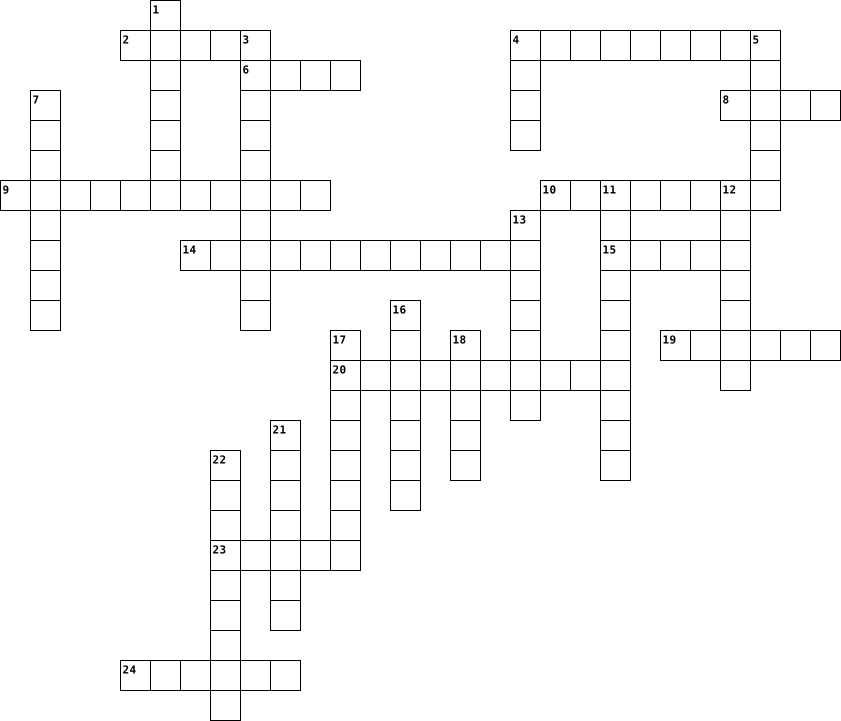
Across
- A producer who has enough market power to influence prices
- a person or thing that eats or uses something.
- a for-profit business
- a country or state
- the activity or condition of striving to gain or win something
- an organisation or a person's regular occupation, profession, or trade.
- - comp. imperfect competition
- a person who makes a purchase.
- money received
- the state of having paid work.
- merchandise or possessions.
- a person who sells something.
Down
- substance that is manufactured or refined for sale.
- ability to avoid wasting materials, energy, efforts, money, and time
- the payment of a specified sum before it can be acquired or done.
- a part or portion of a larger amount which is divided among a number of people, or to which a number of people contribute.
- an exclusive possession or control of a supply/trade
- replacement of a use or product
- a system supplying a public need
- the state of a country or region in terms of the production and consumption of goods and services and the supply of money
- he city or town that functions as the seat of government and administrative centre of a country or region
- an advantage or profit gained from
- a current medium of exchange in the form of coins and banknotes; coins and banknotes collectively.
- a situation in which two suppliers dominate the market for a commodity or service.
- a market is shared by a small number of producers or sellers.
25 Clues: money received • a country or state • a for-profit business • merchandise or possessions. • a person who sells something. • - comp. imperfect competition • a person who makes a purchase. • the state of having paid work. • replacement of a use or product • a system supplying a public need • an advantage or profit gained from • a person or thing that eats or uses something. • ...
economics 2021-02-11
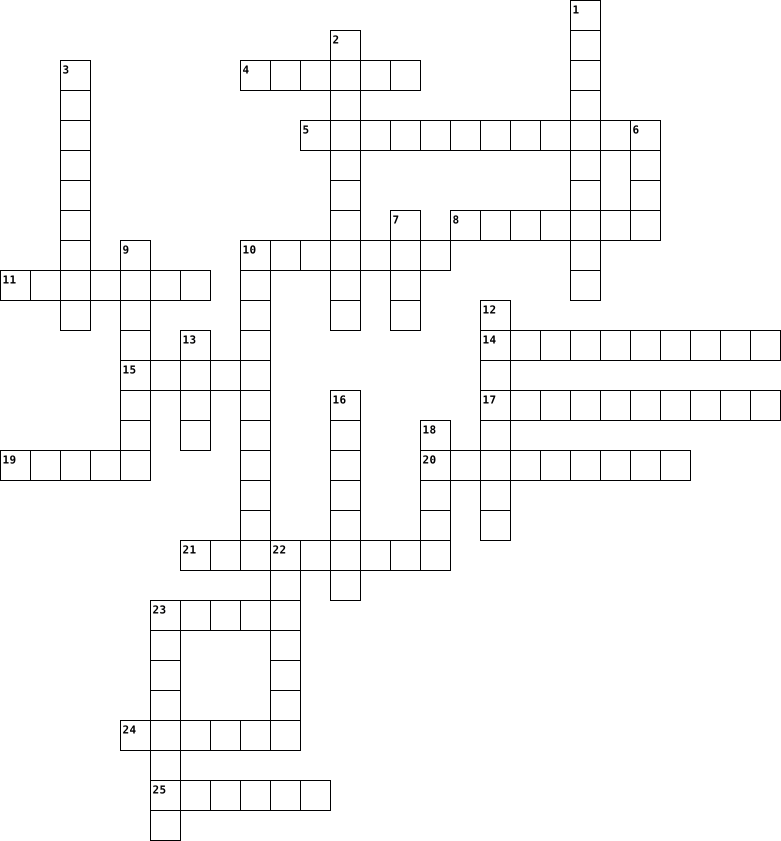
Across
- a person who sells something.
- - comp. imperfect competition
- substance that is manufactured or refined for sale.
- he city or town that functions as the seat of government and administrative centre of a country or region
- a situation in which two suppliers dominate the market for a commodity or service.
- the state of having paid work.
- A producer who has enough market power to influence prices
- ability to avoid wasting materials, energy, efforts, money, and time
- a current medium of exchange in the form of coins and banknotes; coins and banknotes collectively.
- a market is shared by a small number of producers or sellers.
- a person or thing that eats or uses something.
- a person who makes a purchase.
- money received
- a part or portion of a larger amount which is divided among a number of people, or to which a number of people contribute.
Down
- replacement of a use or product
- relating to the allocating of resources or funds to a particular area or for a particular purpose.
- the process of receiving or giving systematic instruction, especially at a school or university.
- the payment of a specified sum before it can be acquired or done.
- a country or state
- an exclusive possession or control of a supply/trade
- the activity or condition of striving to gain or win something
- an advantage or profit gained from
- a for-profit business
- the state of a country or region in terms of the production and consumption of goods and services and the supply of money
- merchandise or possessions.
- a system supplying a public need
- an organisation or a person's regular occupation, profession, or trade.
27 Clues: money received • a country or state • a for-profit business • merchandise or possessions. • a person who sells something. • - comp. imperfect competition • the state of having paid work. • a person who makes a purchase. • replacement of a use or product • a system supplying a public need • an advantage or profit gained from • a person or thing that eats or uses something. • ...
Economics 2021-02-03
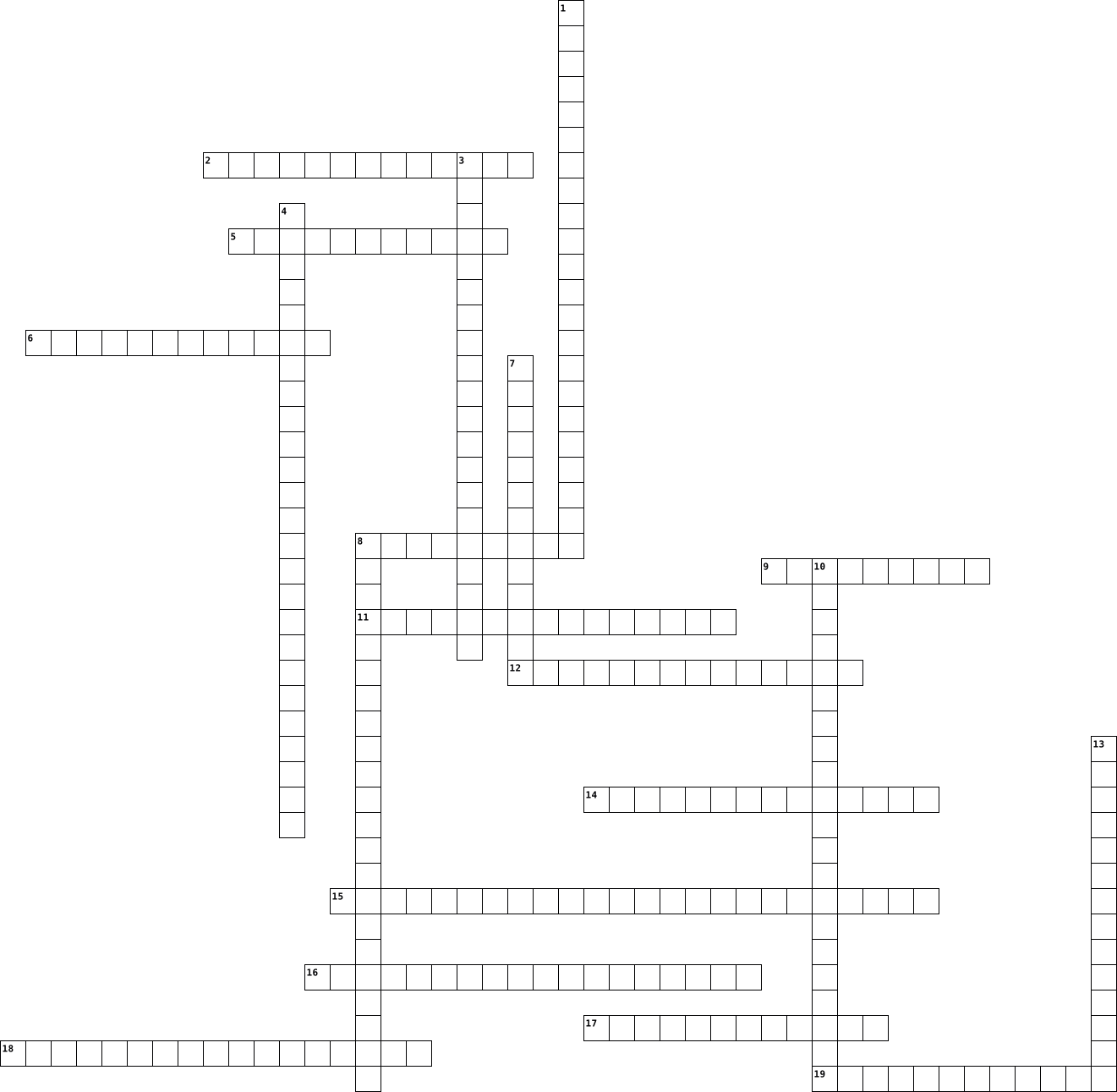
Across
- study of government activities
- value of money available in the economy
- not engaged in gainful occupation
- increase in prices and fall in the value of money
- violence against civilians due to political aims
- academic study of economy
- study of decision making of individuals and firms
- production increase of goods/services overtime
- device intended to harm citizens
- international exchange of capital, goods, services
- using economy to augment state power
- accounting of international transactions
- exports exceeding cost of imports
Down
- behavior of firms, policies, and competition
- spread of nuclear weapons to counties w/o
- formal international organizations
- protection of industries from foreign competition
- studies interaction of nation/nonnation states
- measures to reduce risk of violence
- concerned with largescale economic factors
20 Clues: academic study of economy • study of government activities • device intended to harm citizens • not engaged in gainful occupation • exports exceeding cost of imports • formal international organizations • measures to reduce risk of violence • using economy to augment state power • value of money available in the economy • accounting of international transactions • ...
Economics 2021-03-17
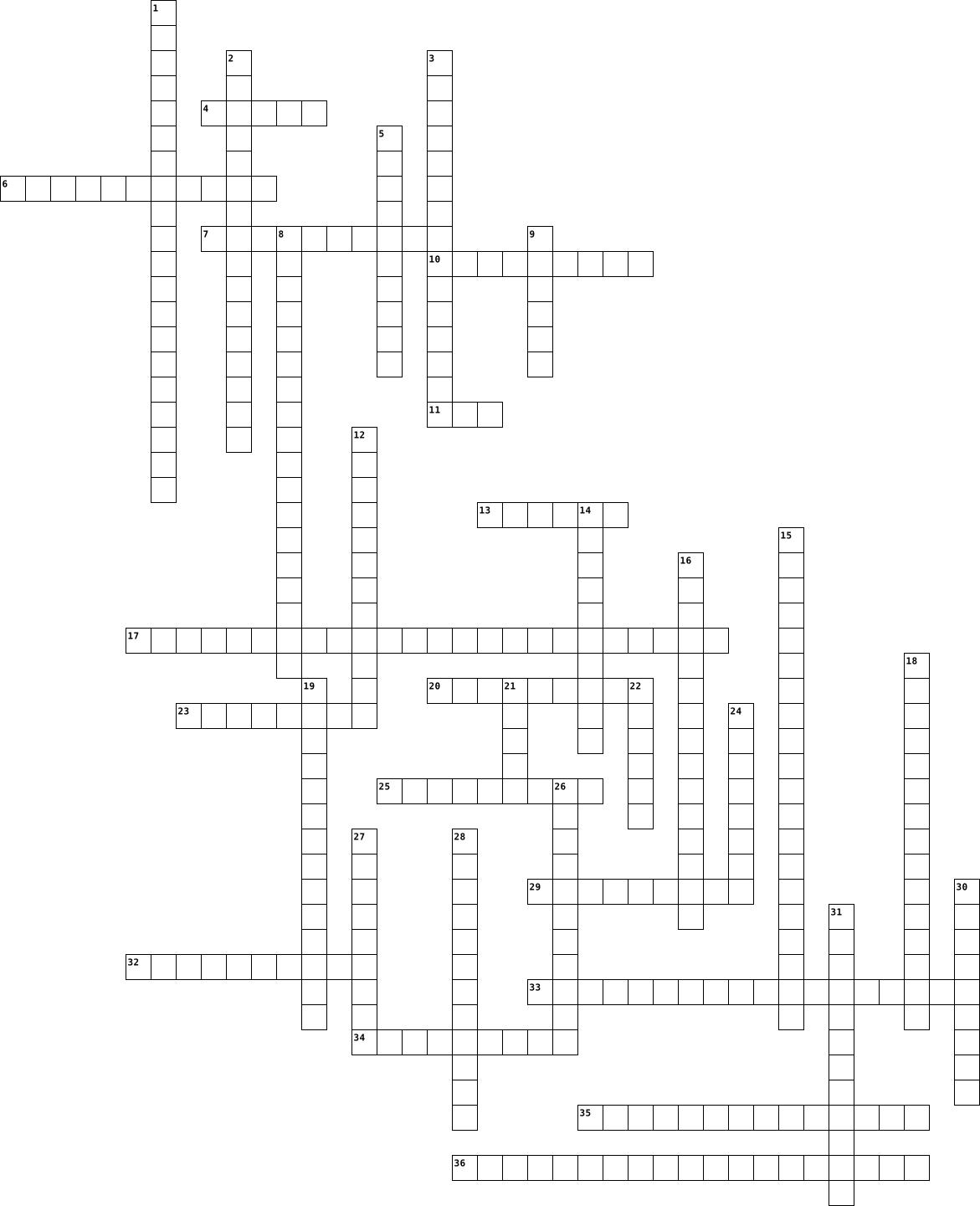
Across
- A bond represents a loan made by an investor to a borrower.
- A fallacy of subjective interpretation and perception of a situation. A mistaken mentality that one person's gain must be another's loss (three words).
- A more severe economic decline that lasts for several years.
- A sustained increase in the general price level in an economy. Inflation means an increase in the cost of living as the price of goods and services rise. It also means that the monetary value of currency decreases.
- The money that people and businesses pay to support the activities of the government.
- Paying or trading for goods or services with other goods or services, instead of using money.
- the process of a company increasing production of goods or services through acquisition of business (two words)
- An economic system in which the central government directs all major economic decisions.
- A business that controls so much of an industry that little or no competition exists
- A sum of money granted by the government, using public money to assist in payment of an industry or business.
- When a few businesses dominate a particular industry, eliminating other competition.
- An economic system providing free choice and individual incentive for workers, investors, consumers, and business enterprises.
- used to refer to a point at which the level of profits or benefits gained is less than the amount of money or energy invested. Also called law of diminishing returns or principle of diminishing marginal productivity (two words).
- An economic system in which the government owns the means of production, distributes the products and wages, and provides social services.
- The opposite of market equilibrium, a lack of equilibrium or stability, especially in relation to supply, demand, and prices.
- A strategy whereby a company owns or controls its suppliers, distributors and retail locations of the supply chain. The process of a company operating the stages of production that is normally operated by separate businesses (two words).
Down
- A measure of a country’s economic performance, it is the sum of all goods and services produced in a nation in a year (three words).
- A proportionate saving in costs gained by an increased level of production (three words).
- A benefit, profit, or value of something that must be given up to acquire or achieve something else (two words).
- A commodity or service that is provided without profit to all members of a society, either by the government or a private individual or organization (two words).
- The percentage of money member banks must keep in Federal Reserve Banks as a reserve against their deposits (two words).
- A tax placed a particular class of imports or exports to protect domestic markets.
- A government’s use of spending and taxation to influence the economy (two words).
- Is a measure of a variable's sensitivity to a change in another variable, most commonly this sensitivity is the change in price relative to changes in other factors.
- An economic principle that each country should produce those goods it can make more efficiently and trade for other goods (two words).
- The process by which a government takes control of industry
- Anything that prevents an entrepreneur from instantaneously creating a new firm or business in a market (three words).
- A government’s control of the supply of money and credit to influence the economy (two words).
- An economy in which the government both supports and regulates private enterprise.
- An economic system which allows buyers and sellers to act on their individual interests to determine economic activities
- A condition that exists because society does not have all the resources to produce all the goods and services that everyone wants
- the combination of economic variables that are in balance. Example: When supply and demand are in balance, at the equilibrium price, the quantity that buyers are willing to buy exactly matches the quantity that sellers are willing to sell. So everybody is satisfied.
- The study of human efforts to satisfy seemingly unlimited wants through the use of limited resources.
- The policy, or belief that an economy functions best when there is little to no interference by government, and to let markets take their own course. The principle that the less government is involved in the economy, business will be better off, and by extension, society as a whole without government bureaucracy regulations (two words).
- Widespread economic decline that lasts for at least six months.
- The rate charged by a lender of money or credit to a borrower (two words).
36 Clues: A bond represents a loan made by an investor to a borrower. • The process by which a government takes control of industry • A more severe economic decline that lasts for several years. • Widespread economic decline that lasts for at least six months. • The rate charged by a lender of money or credit to a borrower (two words). • ...
economics 2020-04-30
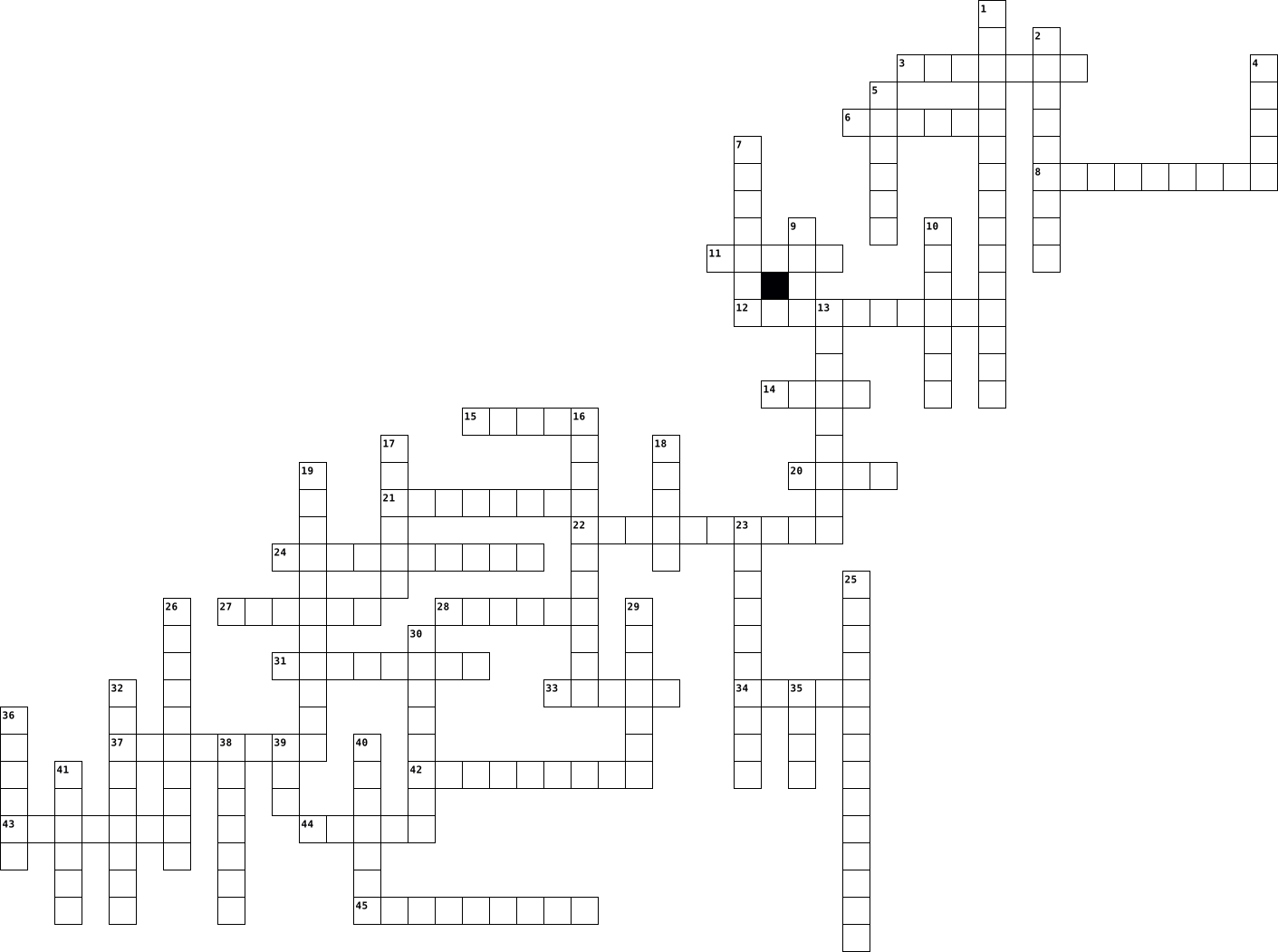
Across
- of production Raw materials used to make goods and services (land, labour, capital & enterprise)
- All human effort, both physical and intellectual
- Final users of goods and services to satisfy their needs and wants
- Payment per hour for labour
- Ability to combine all resources to make something (plan, recipe, system etc)
- Institution which handles money for households and firms
- National Company A company which operates in several countries with its headquarters in the parent country. (Apple)
- An organization that sells goods
- Income flows that are removed from the Circular Flow model. (savings, tax, imports)
- Income flows which are added to the Circular Flow of Income model (investment, govt. spending, exports)
- Organization with authority to make decisions for the population
- market Place where factors of production are bought and sold.
- Reward for the use of resources
- Money paid at a particular rate for the money lent
- Basic necessities for life
- National Company A company that operates in many countries with independent headquarters in each.(McDonalds)
- Situation where demand is greater than supply
- A system where all factors of production, distribution and consumption of goods and services are controlled by the government
- Goods and services bought from overseas
- Physical items used by consumer and services for a profit
- A system where factors of production are owned by the government
Down
- Where actions by one party have impacts on another, particularly economically.
- Organisations that make goods and services
- Goods and services which we desire but don’t need
- Place where goods and services are bought and sold.
- Financial assistance given to people by the Government
- Payment for use of land
- That part of earnings not spent
- The study of how people use scarce resources to satisfy needs and wants
- An economy where people produce only enough goods and services for their own family
- Payment per year for labour
- Used to pay for goods and services
- Cost The cost of the next-best alternative opportunity
- Purchase of new capital
- Action of only doing one part of the process
- A system which allows private ownership of the factors of production
- market Place where goods and services are bought and sold (Coles, Seek.com, Fremantle markets) Same as Market
- Actions done for consumers by producers
- Basic units used to make goods and services
- All resources provided by nature
- Payment earned by entrepreneurs
- Equipment used to make goods and services
- Compulsory government levy
- Goods and services sold overseas
- chain Complex group of firms in many countries each producing a component of a final product.
45 Clues: Payment for use of land • Purchase of new capital • Basic necessities for life • Compulsory government levy • Payment per hour for labour • Payment per year for labour • That part of earnings not spent • Reward for the use of resources • Payment earned by entrepreneurs • An organization that sells goods • All resources provided by nature • Goods and services sold overseas • ...
economics 2020-04-29
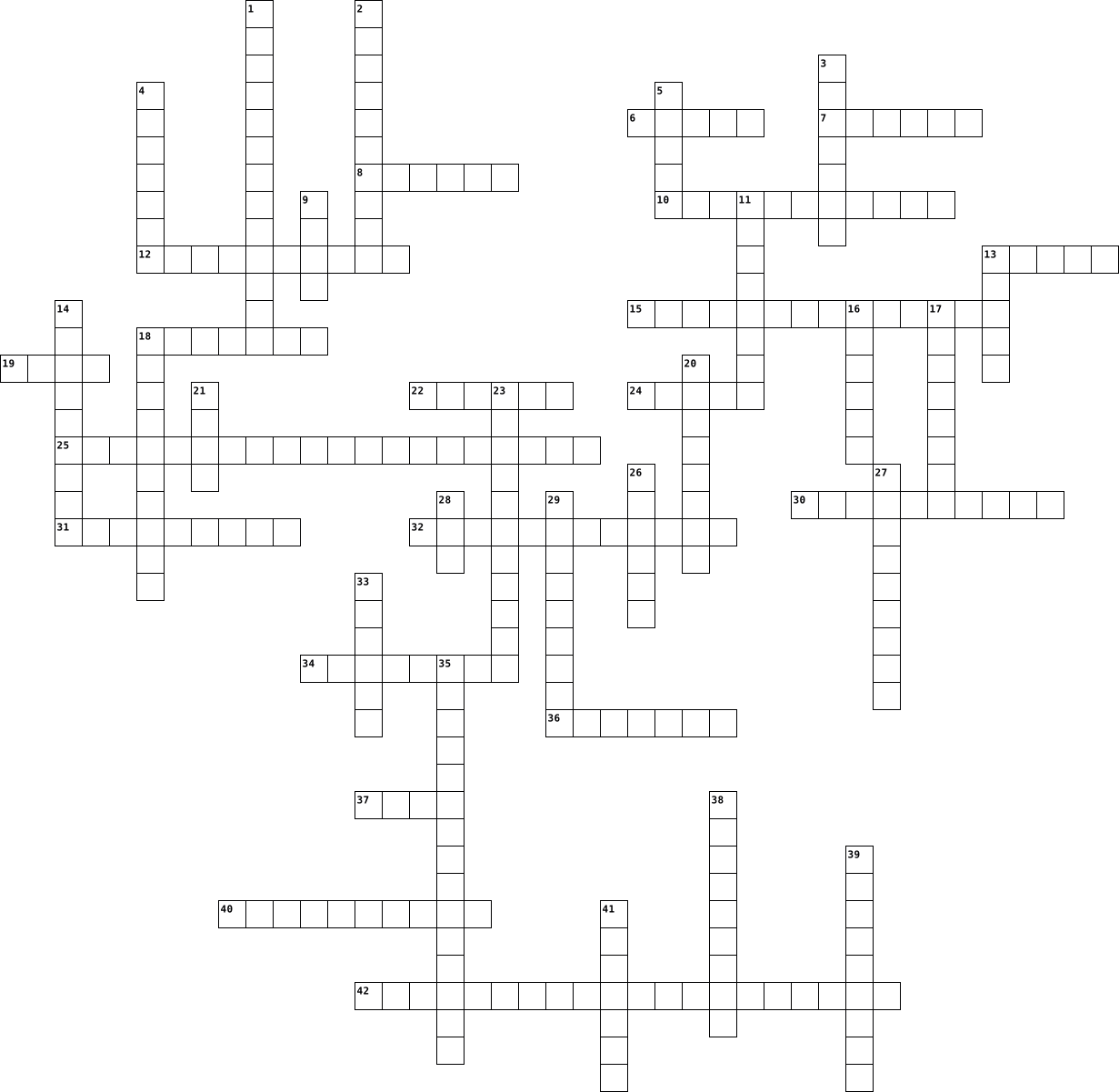
Across
- Used to pay for goods and services
- Payment earned by entrepreneurs
- Reward for the use of resources
- An economy where people produce only enough goods and services for their own family
- Ability to combine all resources to make something (plan, recipe, system etc)
- Payment per hour for labour
- Action of only doing one part of the process
- Equipment used to make goods and services
- Institution which handles money for households and firms
- All human effort, both physical and intellectual
- Basic necessities for life
- A company that operates in many countries with independent headquarters in each.(McDonalds)
- Purchase of new capital
- A system where factors of production are owned by the government
- Place where factors of production are bought and sold
- Situation where demand is greater than supply
- That part of earnings not spent
- All resources provided by nature
- Organization with authority to make decisions for the population
- A company which operates in several countries with its headquarters in the parent country. (Apple)
Down
- Place where goods and services are bought and sold (Coles, Seek.com, Fremantle markets) Same as Market
- Income flows which are added to the Circular Flow of Income model (investment, govt. spending, exports)
- Goods and services bought from overseas
- Financial assistance given to people by the Government
- Physical items used by consumer and services for a profit
- An organization that sells goods
- Actions done for consumers by producers
- Goods and services which we desire but don’t need
- Final users of goods and services to satisfy their needs and wants
- chain Complex group of firms in many countries each producing a component of a final product.
- Money paid at a particular rate for the money lent
- A system which allows private ownership of the factors of production
- Income flows that are removed from the Circular Flow model. (savings, tax, imports)
- Payment for use of land
- Cost The cost of the next-best alternative opportunity
- Place where goods and services are bought and sold.
- Basic units used to make goods and services
- Compulsory government levy
- Organisations that make goods and services
- Payment per year for labour
- Where actions by one party have impacts on another, particularly economically.
- The study of how people use scarce resources to satisfy needs and wants
- A system where all factors of production, distribution and consumption of goods and services are controlled by the government
- goods and services sold overseas
44 Clues: Payment for use of land • Purchase of new capital • Basic necessities for life • Compulsory government levy • Payment per hour for labour • Payment per year for labour • Payment earned by entrepreneurs • Reward for the use of resources • That part of earnings not spent • An organization that sells goods • All resources provided by nature • goods and services sold overseas • ...
Economics 2020-05-16
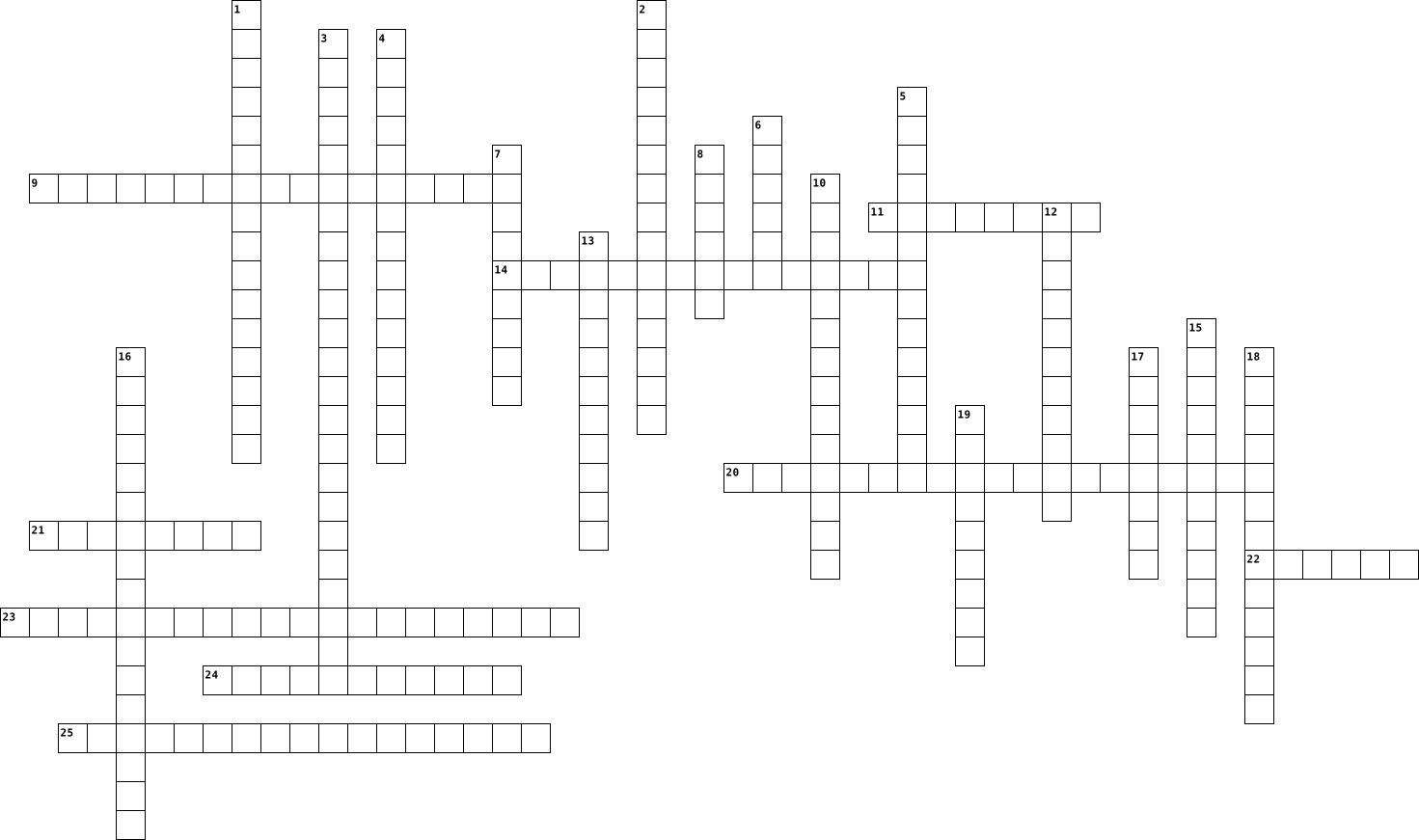
Across
- A Circular flow model of the economy is a graphical representation of the movement of money between three sectors.
- a stock or supply of money, materials, staff, and other assets that can be drawn on by a person or organization in order to function effectively.
- the loss of potential gain from other alternatives when one alternative is chosen.
- Factors of production is an economic term that describes the inputs used in the production of goods or services in order to make an economic profit.
- the exclusive possession or control of the supply of or trade in a commodity or service.
- a stock of a resource from which a person or place can be provided with the necessary amount of that resource.
- free enterprise is a type of economy where products, prices, and services are determined by the market, not the government.
- the state of being a partner or partners.
- Absolute advantage is the ability of an individual, company, region, or country to produce a greater quantity of ...
Down
- the activity of setting up a business or businesses, taking on financial risks in the hope of profit.
- Pure competition is a term that describes a market that has a broad range of competitors who are selling the ...
- Monopolistic competition characterizes an industry in which many firms offer products or services that are ...
- An economic system, or economic order, is a system of production, resource allocation and ... There is no precise definition of a "mixed economy".
- Property rights define the theoretical and legal ownership of resources and how they can be used.
- a regular gathering of people for the purchase and sale of provisions, livestock, and other commodities.
- a state of limited competition, in which a market is shared by a small number of producers or sellers.
- the desire of purchasers, consumers, clients, employers, etc., for a particular commodity, service, or other item.
- the process of concentrating on and becoming expert in a particular subject or skill.
- a company or group of people authorized to act as a single entity (legally a person) and recognized as such in law.
- the ability of an individual or group to carry out a particular economic activity (such as making a specific product) more efficiently than another activity.
- a state in which opposing forces or influences are balanced.
- A sole proprietorship, also known as the sole trader, individual entrepreneurship or proprietorship, is a type of enterprise that is owned and run by one person and in which there is no legal distinction between the owner and the business entity.
- the state of being scarce or in short supply; shortage.
- a cycle or series of cycles of economic expansion and contraction.
- a general increase in prices and fall in the purchasing value of money.
25 Clues: the state of being a partner or partners. • the state of being scarce or in short supply; shortage. • a state in which opposing forces or influences are balanced. • a cycle or series of cycles of economic expansion and contraction. • a general increase in prices and fall in the purchasing value of money. • ...
Economics 2021-05-14
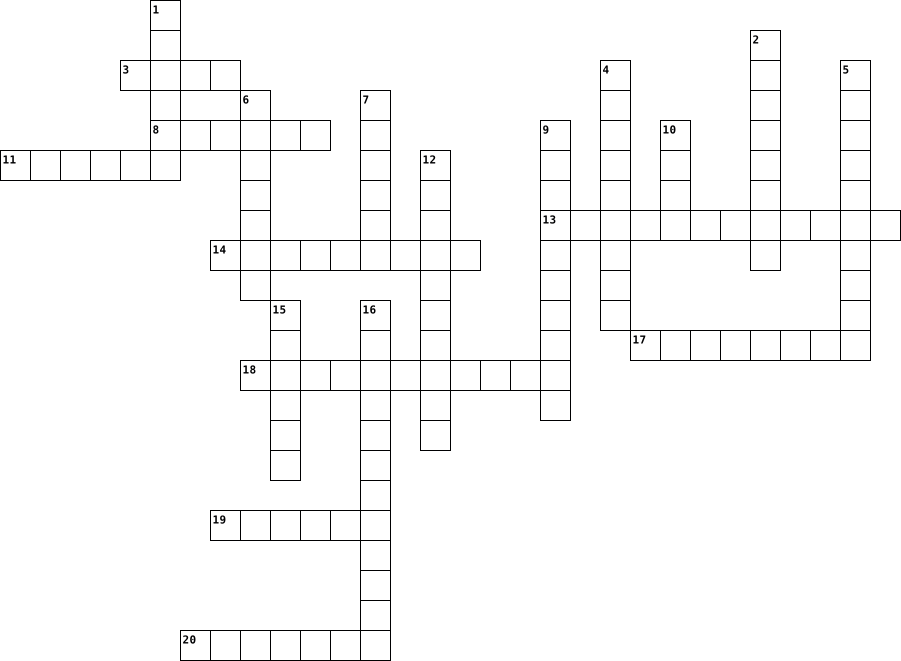
Across
- : A financial institution that collects deposits from the public and extends credit to businesses and households.
- : selling part of the production of goods or services in the other country
- : A sharp downturn in general economic activity.
- : a person who starts a business
- : Rising prices of goods and services.
- : a situation in which one supplier has an exclusive position on a product or service offered to a multitude of buyers.
- : In economics, this refers to rivalry between several agents for the same market.
- : periodic payment, paid by an employer to a salaried employee
- : Excess of expenditure over earnings.
Down
- : It is a fraction of the capital of a listed company
- : the sum of a company's sales of goods or services over an accounting period.
- : decrease in the general price level
- : Situation of a business owner who cannot pay his debts, keep his commitments.
- : Also called a firm, it is an organisation whose purpose is to produce and supply goods or services to a set of customers.
- : entry into a country of goods or services from another country
- : an immediate expenditure intended to increase the wealth of the person incurring it in the long term
- : to be prudent in spending, to set aside money for a particular purpose.
- : It is a practice to record all the flows, expenses and revenues of the company.
- : means the positive change in the production of goods and services in an economy over a given period.
- : the situation of a person who wants to work and has the capacity to do so, but finds himself or herself jobless in spite of searching.
20 Clues: : a person who starts a business • : decrease in the general price level • : Rising prices of goods and services. • : Excess of expenditure over earnings. • : A sharp downturn in general economic activity. • : It is a fraction of the capital of a listed company • : periodic payment, paid by an employer to a salaried employee • ...
Economics 2021-03-24
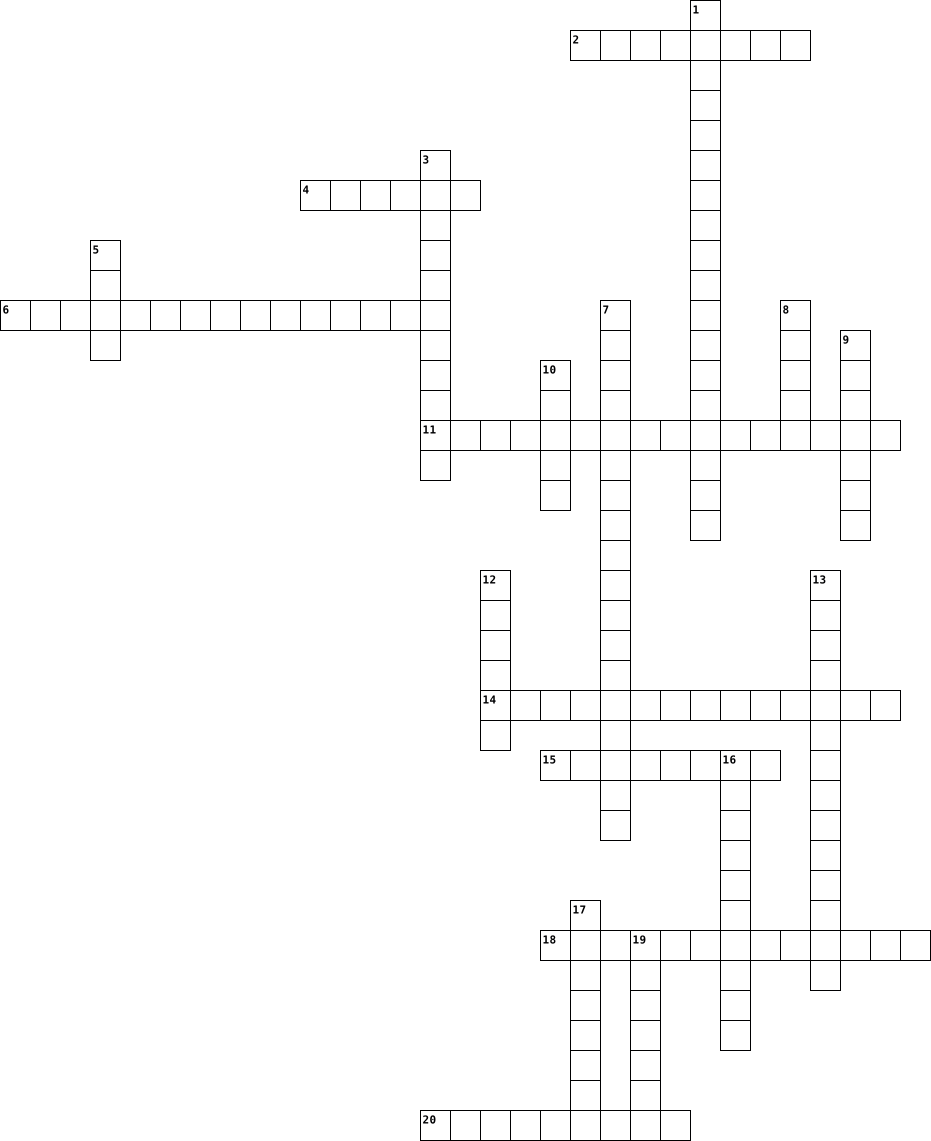
Across
- a short supply of stuff
- having a lot of supplies and certain type
- The choice of where people work and live
- keeping people safe like the cops
- the thing of treating people fairly
- a person who sells goods and services
- goods bought and used by consumers rather then manufactured
- a stock or supply of money and materials
Down
- a community using more scarce things
- a stock exchange
- part of the earth with no water covering it
- hunting fishing farming and gathering
- physical work
- of production the building blocks of the economy The wealth and resources in a country
- something that is made / grown
- a stock market
- An expert at something
- It minimizes the waste of resources such as physical materials, energy
- a person who purchases goods
- a public need like transport water electricity
20 Clues: physical work • a stock market • a stock exchange • An expert at something • a short supply of stuff • a person who purchases goods • something that is made / grown • keeping people safe like the cops • the thing of treating people fairly • a community using more scarce things • hunting fishing farming and gathering • a person who sells goods and services • ...
economics 2021-05-29
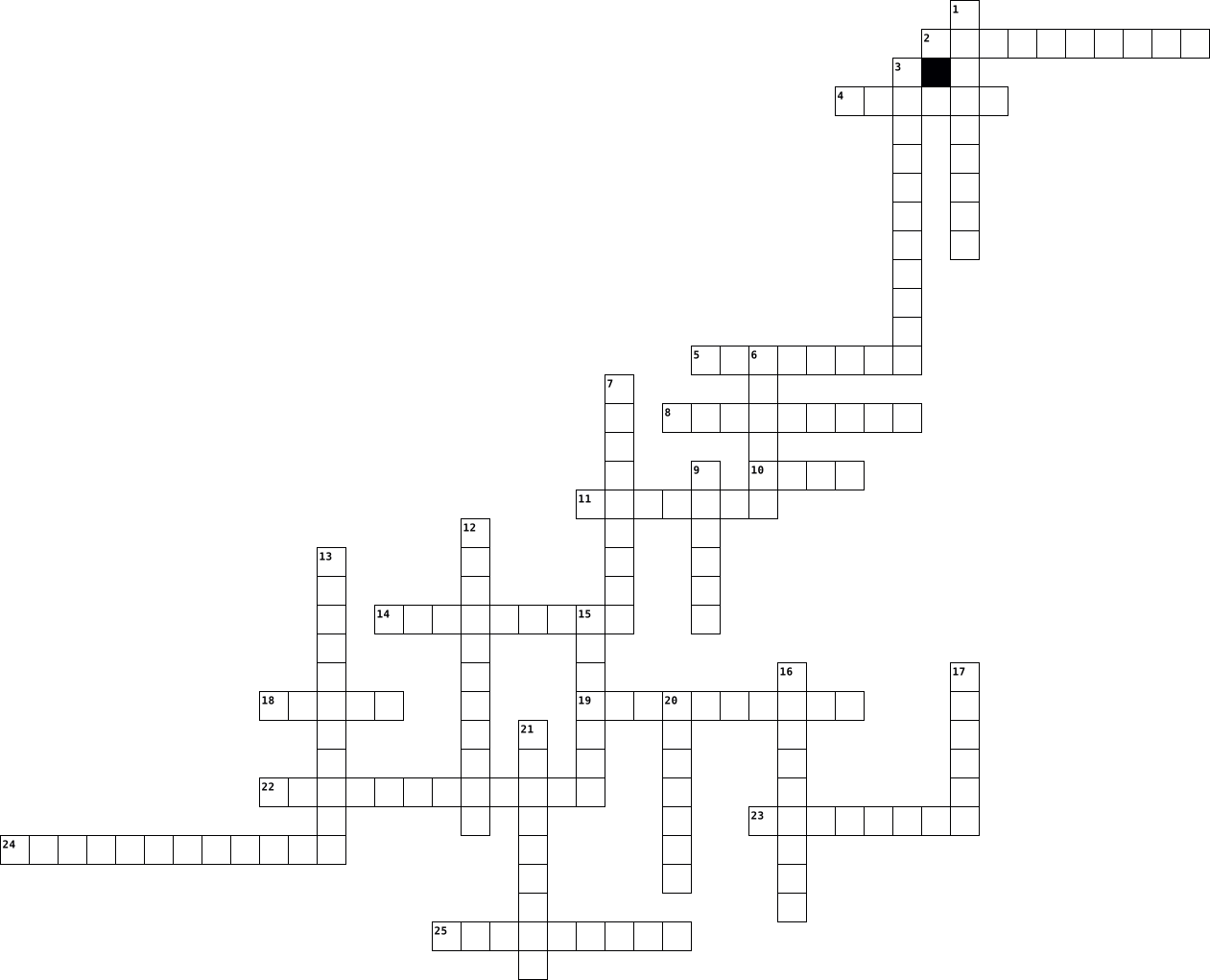
Across
- go into debt
- a safe place to keep your money
- a company or financial institution to borrow money from
- the money you are charged when you borrow money
- ensures that companies treat investors fairly
- the ability of a customer to obtain goods or services before payment
- always keep these when buying a service or good
- insures all accounts below $250, 000
- your standard of living when you use credit
- the action of buying or selling something, a business deal
- year mortgage will reduce the amount of interest you pay
- the protection or promotion of the interest of consumers
- buying or paying for a good or service
Down
- a person who buys a good or service
- a home will increase in value over time
- spend your disposable income on first
- are not part of your disposable income
- to have a safe product
- makes sure that consumer rights are protected
- stocks that have the highest risk, but the best potential for rewards
- account that offers no/low minimum deposits, low interest
- a conclusion or resolution reached after consideration
- are less risky than stocks
- consumers should always be aware before any large purchase
- considered in relation to trade
25 Clues: go into debt • to have a safe product • are less risky than stocks • a safe place to keep your money • considered in relation to trade • a person who buys a good or service • insures all accounts below $250, 000 • spend your disposable income on first • are not part of your disposable income • buying or paying for a good or service • a home will increase in value over time • ...