
forms of energy Crossword Puzzles
energy crossword 2025-10-27

Across
- energy which travels through waves such as a xray
- energy which you can hear
- visible energy
- the movement of energy to another thing
- a unit of energy
- the process of producing energy
- Energy stored in bonds between atoms
- stored energy due to position or condition
- energy which is from moving electrons
- energy from the sun
Down
- energy released from atomic nuclei.
- energy from a position of objects
- the energy of motion, movement
- holds energy for later use
- energy which is released from atomic nuclei
- energy which is stored when materials are stretched
- The rate at which energy is used or transferred
- energy which is related to heat
- A unit measuring power
- The capacity to do work or cause change
20 Clues: visible energy • a unit of energy • energy from the sun • A unit measuring power • energy which you can hear • holds energy for later use • the energy of motion, movement • the process of producing energy • energy which is related to heat • energy from a position of objects • energy released from atomic nuclei. • Energy stored in bonds between atoms • ...
Air Masses and Fronts 2020-10-13

Across
- when warm air replaces cold air?
- what front has purple triangles and semicircles?
- what front has alternating red semicircles and blue triangles?
- What symbol does the warm front have?
- the name of when an air mass forms in the north (cold)?
- when cold air replaces warm air?
- when an air mass forms over the ocean in the south?
Down
- the name of when an air mass forms over the land (dry)?
- when the warm front gets between the cold air and the cool air and lifts over both?
- What symbol does the cold front have?
- the name of when an air mass forms over the ocean (wet)?
- the name of when an air mass forms in the south (warm)?
- when an air mass forms over the land in the north?
- when the cold air mass meets the warm air mass but the cold air mass cant move it?
- a boundary where 2 air masses meet?
- a body of air?
16 Clues: a body of air? • when warm air replaces cold air? • when cold air replaces warm air? • a boundary where 2 air masses meet? • What symbol does the cold front have? • What symbol does the warm front have? • what front has purple triangles and semicircles? • when an air mass forms over the land in the north? • when an air mass forms over the ocean in the south? • ...
Branches of science 2021-09-07

Across
- Natural phenomenon.
- Study of the atmosphere that focuses on weather processes and forecasting
- The study of the structure and organization of living things
- The branch of medicine dealing with the nervous system and its disorders
- The scientific study of plant life
- The Study of science of the earth, its structure, and history
- Study of flower.
- The science of matter and its interactions with energy and itself
- The study of human cultures both past and present.
- Concerning the sounds of a language.
- The study of how organisms interact with each other and their environment
- The study of the organic chemistry of compounds and processes occurring in organisms
- Study of disease causing organisms. Genetics The science of genes, heredity, and the variation of organisms
- Study of kidneys.
- The study of the behavior and properties of matter
- Microbiology The study of microorganisms, including viruses, prokaryotes and simple eukaryotes Mineralogy The study of the chemistry, crystal structure, and physical (including optical) properties of minerals Mycology Study of fungi.
- The study of life-forms existing in former geological time periods
Down
- Deals with the study of blood vascular system.
- The study of celestial objects in the universe. Study of heavenly bodies. Biology The science that studies living organisms
- The branch of medicine dealing with the applications of radiant energy, including x-rays and radioisotopes Toxicology The study of poisons and the effects of posisoning
- A science dealing with the logic of quantity and shape and arrangement
- Study of disease causing organisms. Psychology Study of the mind and behaviour
- The science that studies living Climatology The study of climates and investigations of its phenomena and causes organisms
- Study of algae.
- Study of languages.
- The Study of science of the earth, its structure, and history Myology Study of muscles.
- Study of virus.
- The science of genes, heredity, and the variation of organisms
- The study of the mechanical, physical, and biochemical functions of living organisms Genetics The science of genes, heredity, and the variation of organisms
- The study of animals Paleontology The study of life-forms existing in former geological time periods
- Science dealing with crop plant.
31 Clues: Study of algae. • Study of virus. • Study of flower. • Study of kidneys. • Natural phenomenon. • Study of languages. • Science dealing with crop plant. • The scientific study of plant life • Concerning the sounds of a language. • Deals with the study of blood vascular system. • The study of human cultures both past and present. • The study of the behavior and properties of matter • ...
Amelie 8/20 2018-08-20

Across
- the amount of force that presses on an area
- the region between the Tigris and Euphrates rivers is is located is southwest asia
- vibrations that carry energy that is released in an earthquake as they travel through earth
- I place with very little rainfall and warm temperatures
- fertile soil that is a result of flooding in which is great for growing crops
Down
- a softer layer of earth's interior that forms further below the crust
- having more than what you need
- a rigid layer that forms near the crust in earth's interior
- a layer of hot, solid material that is between earth's crust and core
- with little to no rain with not enough water to grow crops
10 Clues: having more than what you need • the amount of force that presses on an area • I place with very little rainfall and warm temperatures • with little to no rain with not enough water to grow crops • a rigid layer that forms near the crust in earth's interior • a softer layer of earth's interior that forms further below the crust • ...
The Cell System 2024-10-08

Across
- a job or task
- the basic unit of structure and function in living things
- how something is made up
- sequence of events in which the cell grows, prepares for division and forms two new daughter cells
- a widely accepted explanation of the relationship between cells and living things
- a tiny cell structure that carries out a specific function within the cell
- keep something in an existing state
- fills the region between the cell membrane and the nucleus, made mostly of water and some salt
- process by which molecules move from an area of higher concentration to an area of lower concentration
- making an image larger
- allowing large particles to leave a cell
- means some substances can cross the membrane, while others cannot
Down
- cell making a copy of its DNA
- a sac-like storage organelle
- large oval organelle that contains the cell's genetic material
- an organelle in the cell of plants that captures energy from the sun
- making an image clearer
- a thin, flexible barrier that surrounds a cell and controls which substances pass into and out of a cell
- an instrument that makes small objects look larger
- rigid supporting layer that surrounds the cells of plants and some other organisms
- to point out the difference
- when something is taken in the cell membrane by changing shape and engulfing the large particle
- diffusion of water molecules across a selectively permeable membrane
- converts energy stored in food to energy the cell can use
24 Clues: a job or task • making an image larger • making an image clearer • how something is made up • to point out the difference • a sac-like storage organelle • cell making a copy of its DNA • keep something in an existing state • allowing large particles to leave a cell • an instrument that makes small objects look larger • the basic unit of structure and function in living things • ...
Space Crossword: Pg 440-445 2022-03-28

Across
- Unmanned satellites or remote-controlled “landers”
- Forms of radiated energy that travel at the speed of light
- The angle between the most northerly point of the horizon and the point directly below a celestial body; also the horizontal angle or direction of a compass bearing
- A big change in the frequency of sound, light, and other waves
- The entire range of wavelengths for electromagnetic energy
- The gasses and dust that exist in the space between the stars
- The force of attraction between masses
Down
- The distance that light travels in 1 year (approximately 9.5 trillion km); used to measure distance between stars and galaxies.
- A telescope system that collects and analyzes radiation in the radio frequency
- The condition in which the gravitational forces that act on a mass are greatly reduced
- Using 2 or more telescopes to take a combined picture with a higher resolution than a singular telescope
11 Clues: The force of attraction between masses • Unmanned satellites or remote-controlled “landers” • Forms of radiated energy that travel at the speed of light • The entire range of wavelengths for electromagnetic energy • The gasses and dust that exist in the space between the stars • A big change in the frequency of sound, light, and other waves • ...
CROSS WORD PUZZLE 2015-04-11

Across
- protects against excessive current
- coaxial cable, acts as a medium between cro and function generator
- to generate waveforms
- units for resistor
- to turn on and off current in circuit
- current controlled device, used as a switch
Down
- passive component, temporaryly stores magnetic energy
- used for temporary storage of electric charge
- unit for conductance
- through which we can vary resistance
- units for capacitance
- tempurature sensitive device
- to display and analyze the wave forms
- measures electrical resistance
- makes the current to flow in one direction
15 Clues: units for resistor • unit for conductance • to generate waveforms • units for capacitance • tempurature sensitive device • measures electrical resistance • protects against excessive current • through which we can vary resistance • to display and analyze the wave forms • to turn on and off current in circuit • makes the current to flow in one direction • ...
8.1 How Organisms Obtain Energy 2025-12-16

Across
- power derived from the utilization of physical or chemical resources, especially to provide light and heat or to work machines:
- the chemical processes that occur within a living organism in order to maintain life:
- the branch of physical science that deals with the relations between heat and other forms of energy (such as mechanical, electrical, or chemical energy), and, by extension, of the relationships between all forms of energy.
- the process by which green plants and some other organisms use sunlight to synthesize nutrients from carbon dioxide and water.
- a compound consisting of an adenosine molecule bonded to three phosphate groups, present in all living tissue.
Down
- the metabolic process in living organisms by which oxygen is combined with carbon in a cell to form carbon dioxide and generate energy.
6 Clues: the chemical processes that occur within a living organism in order to maintain life: • a compound consisting of an adenosine molecule bonded to three phosphate groups, present in all living tissue. • the process by which green plants and some other organisms use sunlight to synthesize nutrients from carbon dioxide and water. • ...
Year 9 Chemistry Key Words Revision 2022-05-08

Across
- A nuclear reaction that converts one type of atom into a different type of atom
- A small, negatively charged particle
- The breakdown of metals due to their reaction with other chemicals
- Different forms of an atom that have the same number of protons, but a different number of neutrons
- A way of writing down the reactants being used and the products being made in a chemical reaction
- A particle with no electric charge found in the nucleus of an atom
- A positively charged particle found in the nucleus of an atom
- An atom that has gained electrons to become negatively charged
- A chemical reaction that absorbs energy
- An atom that has lost electrons to become positively charged
- A particle made up of 2 protons and 2 neutrons that can be released during nuclear decay
- OH-, released by bases
- A base that dissolves in water
- A small, negatively particle that can be released during nuclear decay
- Something that emits radiation
- When a nucleus undergoes a reaction and emits radiation
Down
- H+, released by acids
- A substance that releases hydrogen ions into an aqueous solution
- The arrangement of electrons in shells around the nucleus
- The particles that atoms are made of
- The green chemical found in plants that traps sunlight for photosynthesis
- A chemical reaction that releases energy
- A cluster of protons and neutrons found in the centre of an atom
- A nuclear reaction in which a large nucleus is split into smaller nuclei
- A substance that releases hydroxide ions
- Endothermic reaction which occurs in plants using energy from the sun to produce glucose
- A nuclear reaction in which small nuclei come together to form a large nucleus
- A process that causes a nucleus to change
- The reaction of an acid with a base, forming salt and water
- A very high-energy electromagnetic wave produced when protons and neutrons rearrange
30 Clues: H+, released by acids • OH-, released by bases • A base that dissolves in water • Something that emits radiation • The particles that atoms are made of • A small, negatively charged particle • A chemical reaction that absorbs energy • A chemical reaction that releases energy • A substance that releases hydroxide ions • A process that causes a nucleus to change • ...
Heat transfer and energy 2013-10-23

Across
- Food or fossil fuels
- The total random kinetic energy of an object
- The ability to cause change or do work
- Energy of motion and movement
- Energy can neither be created nor destroyed, it can only be transferred or changed
- Materials that transfer energy easily
- - The amount of energy required to raise one gram of a substance by one degree Celsius
- The average kinetic energy of an object
Down
- Light Energy
- Heat transfer by direct contact(touching)
- Has mass and takes up space
- Energy changing from one form to another
- The expansion of all substances when their temperature increases
- Measurement of usable energy after an energy conversion
- Poor Conductors (does not transfer energy easily)
- Heat transfer by up and down movement of particles in fluid (liquids/gases)
- Stored energy or energy of position
- Energy of motion
- Heat transfer by electromagnetic waves
- Flow of energy caused by temperature differences
20 Clues: Light Energy • Energy of motion • Food or fossil fuels • Has mass and takes up space • Energy of motion and movement • Stored energy or energy of position • Materials that transfer energy easily • The ability to cause change or do work • Heat transfer by electromagnetic waves • The average kinetic energy of an object • Energy changing from one form to another • ...
Dance Forms of India 2021-01-05

Across
- Dance of Northern India performed by both men and women
- Dance of Tamil Nadu
- Dance of Manipur
- Dance of Odisha
- Dance of Assam
- Dance of Gujarat
Down
- Dance of Kerala
- Dance of Maharashtra
- Dance of Andhra Pradesh
- Dance of Kashmir
- Dance of Rajasthan
- Dance of Punjab
12 Clues: Dance of Assam • Dance of Kerala • Dance of Odisha • Dance of Punjab • Dance of Manipur • Dance of Kashmir • Dance of Gujarat • Dance of Rajasthan • Dance of Tamil Nadu • Dance of Maharashtra • Dance of Andhra Pradesh • Dance of Northern India performed by both men and women
Forms of business organisations 2020-07-20

Across
- Minimum 90% subscription of shares
- Business started for welfare of members
- Document issued to raise money from public
- Doctrine of indoor management
Down
- Founders who start the business.
- Second stage in formation of companies
- Securities Exchange Board of India
- Eldest member of HUF
- A unique feature of companies
- Type of company that cannot issue share to public
- Investors who own a share in ownership
- Business started by partners
12 Clues: Eldest member of HUF • Business started by partners • A unique feature of companies • Doctrine of indoor management • Founders who start the business. • Securities Exchange Board of India • Minimum 90% subscription of shares • Second stage in formation of companies • Investors who own a share in ownership • Business started for welfare of members • ...
Knowledge Explorer Crossword Challenge 2023-06-28

Across
- The study of different art forms, artistic techniques, and creative expression.
- The study of the English language, literature, and writing.
- The study of the Earth's physical structure, substances, and natural phenomena.
- The study of the physical and chemical properties of matter and energy.
- The study of the human body, its structure, and functions.
- The study of how living organisms interact with each other and their environment.
- The study of different languages, their structure, and communication.
- A subject that involves numbers, calculations, and problem-solving.
- The study of past events, people, and civilizations.
Down
- The study of living organisms, their structure, and function.
- The study of different religions, beliefs, and spiritual practices.
- The study of different cultures, their traditions, and languages.
- The study of shapes, patterns, and properties of objects and space.
- The study of how things work, including machines, energy, and forces.The study of celestial objects, space exploration, and the universe.
- The study of how societies, governments, and economies function.
- The study of the Earth's features, landscapes, and natural resources.
16 Clues: The study of past events, people, and civilizations. • The study of the human body, its structure, and functions. • The study of the English language, literature, and writing. • The study of living organisms, their structure, and function. • The study of how societies, governments, and economies function. • ...
102.5 The Skeletal System 2023-08-14

Across
- The study of bones
- Flat plate; forms the center of the front
- Forms back of skull - indent above the nape area
- Collarbone; forms area from throat to shoulder
- Found in the arms and legs (2 words)
- Shinbone, inner and larger of the two lower leg bones
- 7 bones that make up the mid-foot and rear foot
- 5 long thin bones - form the palm of hand
- Anklebone; sits above the heel bone and forms the lower part of the ankle
- 8 small bones held together by ligaments to form the wrist (carpus)
- 2 bones - sides of head above ears, below parietal
- Largest bone of upper arm - elbow to shoulder
- Extends from the knee to the ankle
- Small bone on thumb side of lower arm or forearm
- 5 bones that connect phalanges to the tarsals
- - 14 bones that form digits or fingers; fingers have 3, thumbs 2
Down
- Point at which 2 or more bones are joined together
- 12 vertabrae in the chest region that form the central region of the spine (2 words)
- Kneecap; sits over the front of the knee joint
- Found in the skull, scapula, and sternum (2 words)
- Flatbone- extends from middle of back to where it attaches to clavicle; shoulder blade
- Thigh bone, or longest bone in the body
- Bone located on little finger side of lower arm
- 2 bones - forms crown and upper sides of head
- 12 pairs of curved bones which form the rib cage of the upper body
- Forms the forehead
- Found in the wrist, ankle, and spinal column(2 words)
27 Clues: The study of bones • Forms the forehead • Extends from the knee to the ankle • Found in the arms and legs (2 words) • Thigh bone, or longest bone in the body • Flat plate; forms the center of the front • 5 long thin bones - form the palm of hand • 2 bones - forms crown and upper sides of head • Largest bone of upper arm - elbow to shoulder • ...
Voc crossword 2021-03-01

Across
- able to be maintained at a certain rate or level.
- Give a synonym for 'ambition'
- the number or amount of one thing when compared to another.
- a strong desire or impulse
- symbolization of strength, enlightenment, intelligence, and intuition.
- current account at a bank.
- a large amount of money that one country or organization owes to another and which they find very difficult to repay.
- an agreement that allows you to borrow money from a bank, especially in order to buy a house.
- Also, it will be necessary to encourage interested people to continue … these rare animals.
- a temporary show of dissatisfaction by employees to protest against bad working conditions
- Give a synonym of 'collect'
- the distance above the sea level.
Down
- to give advance thought, discussion, or treatment to …
- the dying out of a species
- this machine makes it easier … the bomb.
- The deforestation of the Amazon forest … to the extinction of many species.
- an economic measure for the balance of payments
- designed to make economical use of electricity, gas, or other forms of energy.
- the act of taking money out of an account.
- If you belong to the same family, you are …
20 Clues: the dying out of a species • a strong desire or impulse • current account at a bank. • Give a synonym of 'collect' • Give a synonym for 'ambition' • the distance above the sea level. • this machine makes it easier … the bomb. • the act of taking money out of an account. • If you belong to the same family, you are … • an economic measure for the balance of payments • ...
Cell Membrane 2023-10-23

Across
- fluid on the inside of a cell
- means that electrons are not shared equally in a bond
- embedded protein that used energy to move substances
- embedded protein that forms a tube in the membrane
- fluid on the outside of a cell
- hydrophobic part of a pidhospholipid
- means water loving
Down
- embedded protein that transmits information
- means that electrons are shared equally in a bond
- hydrophilic part of a phospholipid
- sphere formed when phospholipids are placed in water
- embedded protein that is used for identification
- lipid with a phosphate group attached
- means water fearing
14 Clues: means water loving • means water fearing • fluid on the inside of a cell • fluid on the outside of a cell • hydrophilic part of a phospholipid • hydrophobic part of a pidhospholipid • lipid with a phosphate group attached • embedded protein that transmits information • embedded protein that is used for identification • means that electrons are shared equally in a bond • ...
Branches of science 2021-09-07

Across
- The study of life-forms existing in former geological time periods
- The Study of science of the earth, its structure, and history
- Study of disease causing organisms. Genetics The science of genes, heredity, and the variation of organisms
- The study of celestial objects in the universe. Study of heavenly bodies. Biology The science that studies living organisms
- Study of flower.
- Microbiology The study of microorganisms, including viruses, prokaryotes and simple eukaryotes Mineralogy The study of the chemistry, crystal structure, and physical (including optical) properties of minerals Mycology Study of fungi.
- Study of languages.
- The study of the mechanical, physical, and biochemical functions of living organisms Genetics The science of genes, heredity, and the variation of organisms
- Study of disease causing organisms. Psychology Study of the mind and behaviour
- The study of the organic chemistry of compounds and processes occurring in organisms
- The study of how organisms interact with each other and their environment
- The branch of medicine dealing with the nervous system and its disorders
- The study of the structure and organization of living things
- Concerning the sounds of a language.
- The study of the behavior and properties of matter
Down
- Study of the atmosphere that focuses on weather processes and forecasting
- Study of kidneys.
- Study of algae.
- The study of human cultures both past and present.
- The science of matter and its interactions with energy and itself
- The scientific study of plant life
- The study of animals Paleontology The study of life-forms existing in former geological time periods
- The branch of medicine dealing with the applications of radiant energy, including x-rays and radioisotopes Toxicology The study of poisons and the effects of posisoning
- Study of virus.
- The science that studies living Climatology The study of climates and investigations of its phenomena and causes organisms
- The Study of science of the earth, its structure, and history Myology Study of muscles.
- Natural phenomenon.
- A science dealing with the logic of quantity and shape and arrangement
- Deals with the study of blood vascular system.
- The science of genes, heredity, and the variation of organisms
30 Clues: Study of algae. • Study of virus. • Study of flower. • Study of kidneys. • Study of languages. • Natural phenomenon. • The scientific study of plant life • Concerning the sounds of a language. • Deals with the study of blood vascular system. • The study of human cultures both past and present. • The study of the behavior and properties of matter • ...
Energy Review 2016-09-05

Across
- / The sub-field of physics that involves the study of mechanical energy and the motion of objects is called __________ mechanics.
- / This item tells you how much energy an appliance uses in kilowatt hours.
- / Gasoline has this type of energy.
- / The law of conservation of energy states that energy cannot be ___________ or destroyed but it can change from one form to another.
- / Power is measured in this unit.
- / Objects that are moving ____________ have more kinetic energy.
- / This type of energy is stored energy.
- / The conversion of energy from one form to another is called energy _________.
- / The movement of the same form of energy is called energy ___________.
- / The _______________ the moving object, the more kinetic energy it has.
- / Which has more kinetic energy a baseball weighing 100 kg and traveling at 30 m/s or a softball weighing 150 kg and traveling at 30 m/s?
- / Surprisingly, a lamp produces predominately this type of energy.
- / The rate at which one form of energy is transformed into another is called _______.
- / This type of energy is created when an object vibrates.
- / This is the source of all energy on Earth.
- / The ability to do work.
- / This type of electromagnetic radiation produces white light that we can see.
Down
- / This type of potential energy is stored in an object as a result of its height.
- / The loss of energy by an object is called energy ____________.
- / Wind has this type of energy.
- / This type of energy is stored within the nucleus of an atom.
- / This type of energy is carried by charged particles.
- / This type of electromagnetic radiation is invisible and causes sunburns.
- / All objects in motion have this type of energy.
- / This type of electromagnetic radiation warms the Earth.
- / Energy stored in food is measured in this unit.
- / This type of energy creates weather, wind, clouds and precipitation.
- / This type of potential energy is stored in materials that can be compressed or stretched.
- / Work is measured in this unit.
- / An object that has energy can perform ________.
- / This includes the objects and things around the objects that you are studying.
31 Clues: / The ability to do work. • / Wind has this type of energy. • / Work is measured in this unit. • / Power is measured in this unit. • / Gasoline has this type of energy. • / This type of energy is stored energy. • / This is the source of all energy on Earth. • / All objects in motion have this type of energy. • / Energy stored in food is measured in this unit. • ...
Chapter 8 Vocab Words 2022-12-01

Across
- the chemical process by which the body breaks down food to release energy.
- a serious reduction in the body's water content.
- a food that contains lots of vitamins and minerals relative to the number of calories, but is low in saturated fat, trans fat, added sugar, and salt.
- the process of maintaining a steady state inside the body.
- a nutrient that occurs naturally in rocks or soil; needed by the body in small amounts.
- the type of fat produced when manufacturers add hydrogen to the fat molecules in vegetable oils.
- a nutrient made of carbon, hydrogen, and oxygen; supplies energy, forms cells, maintains body temperature, and protects nerves.
- a nutrient that contains nitrogen as well as carbon, hydrogen, and oxygen; needed for the growth and repair of body tissues.
- unit for the amount of energy released when nutrients are broken down.
- a plan that groups foods according to types and indicates how much of each type should be eaten daily for a healthy diet.
Down
- a fat that has all the hydrogen the carbon atoms can hold.
- a dissolved substance that regulates many processes in cells.
- small units that are bound together chemically to form proteins.
- a waxy, fatlike substance, that is found only in animal products.
- a nutrient made of carbon, hydrogen, and oxygen and that supplies energy.
- a vitamin that helps protect healthy cells from the damage caused by the normal aging process as well as from certain types of cancer.
- a substance in foods that the body needs to regulate bodily functions, promote growth, repair body, tissues, and obtain energy.
- a fat with al least one unsaturated bond in a place where hydrogen can be added to the molecule.
- a nutrient that is made by living things, is required in small amounts, and assists in chemical reactions in the body.
- a condition in which the red blood cells do not contain enough hemoglobin.
- a type of complex carbohydrate that is found in plants and is necessary for the proper functioning of the digestive system.
21 Clues: a serious reduction in the body's water content. • a fat that has all the hydrogen the carbon atoms can hold. • the process of maintaining a steady state inside the body. • a dissolved substance that regulates many processes in cells. • small units that are bound together chemically to form proteins. • ...
Roots Project #2 2022-12-16

Across
- a unit of heat
- animals that live in very hot temperatures
- an instrument used to control the temperature
- heat changed into different forms of energy
- heat coming from the inside of your body
Down
- heat brought from the outside of the body
- something that is used to keep stuff warm
- a tool that measures temperature
- a device that writes down the changes in temperature
- temperature
10 Clues: temperature • a unit of heat • a tool that measures temperature • heat coming from the inside of your body • heat brought from the outside of the body • something that is used to keep stuff warm • animals that live in very hot temperatures • heat changed into different forms of energy • an instrument used to control the temperature • ...
Roots Project #2 2022-12-16

Across
- a unit of heat
- animals that live in very hot temperatures
- an instrument used to control the temperature
- heat changed into different forms of energy
- heat coming from the inside of your body
Down
- heat brought from the outside of the body
- something that is used to keep stuff warm
- a tool that measures temperature
- a device that writes down the changes in temperature
- temperature
10 Clues: temperature • a unit of heat • a tool that measures temperature • heat coming from the inside of your body • heat brought from the outside of the body • something that is used to keep stuff warm • animals that live in very hot temperatures • heat changed into different forms of energy • an instrument used to control the temperature • ...
The Carbon Cycle 2021-04-27

Across
- having to do with the ocean
- breathing
- large body of salt water that covers the Earth
- living or once-living thing.
- plant process that uses light energy
- processes in which carbon (C) atoms circulate
Down
- remnant impression or trace of an ancient organism
- large, concentrated supply or reserve
- forms the basis of all known life (symbol C)
- layers of gases surrounding a planet
10 Clues: breathing • having to do with the ocean • living or once-living thing. • layers of gases surrounding a planet • plant process that uses light energy • large, concentrated supply or reserve • forms the basis of all known life (symbol C) • processes in which carbon (C) atoms circulate • large body of salt water that covers the Earth • ...
The Big Bang Theory 2021-12-07

Across
- or evidence that galaxys are moving farther apart
- or any substance that has mass
- particles or forms of all matter
- or all of space
- or used to measure temperature in space
Down
- or transmission of energy
- or Big bang theory
- Radiation or cosmic microwave background radiation
- or mass per unit volume
- Spectrum or the study of em radiation according to frequency or wavelengths
10 Clues: or all of space • or Big bang theory • or mass per unit volume • or transmission of energy • or any substance that has mass • particles or forms of all matter • or used to measure temperature in space • or evidence that galaxys are moving farther apart • Radiation or cosmic microwave background radiation • ...
Giant Squid 2025-10-14

Across
- State of being caught
- looked carefully
- Large sea monster once believed to live off coasts Scandinavia
- Very strange or unusual
- Extremely large
Down
- A long thin part of a squid used for feeling, holding, getting food and moving
- without energy
- range of life forms in a location
- a specific environment and the things in the environment
- the natural home of an animal, plant or other organism
10 Clues: without energy • Extremely large • looked carefully • State of being caught • Very strange or unusual • range of life forms in a location • the natural home of an animal, plant or other organism • a specific environment and the things in the environment • Large sea monster once believed to live off coasts Scandinavia • ...
Atomic Composition Pages 4-11 Review 2022-09-09

Across
- 3.00 x 10^8 m/s
- A measure of how positive or negative an atom is
- Atoms are made up of
- Abbreviations used to represent an element
- Unit of measurement for frequency
- Sub-atomic particles with a negative charge
- “Atoms are mostly _____ _____”
- Atoms with a positive charge
- When an atom absorbs energy, the electrons move to an _______ state
- A type of charge indicated by a minus sign
- If a measure value is 10 inches and the accepted value is 14 inches, what is the error percentage? Answer: __%
- Type of positive particle that was shot at goil foil
- 10^-9 m
- # of protons + # of neutrons
- Unit of measreument for energy
- Calculate the energy of photon light whose wavelength is 623 nm. Answer: 4.0_ x 10^-19 J
- Atoms with an unequal number of electrons and protons
- Subatomic particles with a zero charge
- Thin sheet of material used for an experiment to calculate the diameter of the nucleus of an atom
- Atoms with a different amount of protons are separate _______
- A type of isotope, for example, Hydrogen with one neutron and one electron
- A higher _________ results in a shorter wavelength
- Subatomic particles with a positive charge
- Calculate the energy of photon light whose wavelength is 623 nm. Answer: 3.__x 10^-19 J
- The minimum amount of energy that can be gained or lost by an atom
Down
- The range of frequencies of electromagnetic radiation and their respective wavelengths and photon energies
- Number of protons in the nucleus of an atom
- A way of writing numbers that are too large or too small to be conveniently written in standard decimal form
- Electrons located in the outermost shell of an atom
- Data that is numbers-based and measurable
- When an atom emits energy, the electrons move to an _______ state
- Set of the electromagnetic waves emitted by atoms of the element
- A particle of light emitted when an electron transitions to a lower energy level
- Forms of the same element but different mass number
- Last name of person who shot particles in an experiment to calculate the diameter of the nucleus of an atom
- Number of protons in Neon
- Atoms with a negative charge
- Calculated by multiplying Planck’s constant by the frequency of the photon
- A type of isotope, for example, Boron with four neutrons and five electrons
- Data that is interpretation-based and descriptive
- Protons and neutrons are located here
- acronym that increases in frequency and shortens in wavelength as you move from left to right
- Contains an amplitude, crest, and trough
- A type of charge indicated by a plus sign
- A type of charge given off by neutrons
45 Clues: 10^-9 m • 3.00 x 10^8 m/s • Atoms are made up of • Number of protons in Neon • Atoms with a positive charge • # of protons + # of neutrons • Atoms with a negative charge • “Atoms are mostly _____ _____” • Unit of measreument for energy • Unit of measurement for frequency • Protons and neutrons are located here • Subatomic particles with a zero charge • ...
hjhjhjhjkk 2022-09-09

Across
- The minimum amount of energy that can be gained or lost by an atom
- Number of protons in Neon
- Contains an amplitude, crest, and trough
- If a measure value is 10 inches and the accepted value is 14 inches, what is the error percentage? Answer: __%
- Atoms with a different amount of protons are separate _______
- A type of charge given off by neutrons
- 3.00 x 10^8 m/s
- Set of the electromagnetic waves emitted by atoms of the element
- Subatomic particles with a zero charge
- Type of positive particle that was shot at goil foil
- Atoms with a negative charge
- Forms of the same element but different mass number
- Sub-atomic particles with a negative charge
- Atoms with an unequal number of electrons and protons
- When an atom absorbs energy, the electrons move to an _______ state
- Unit of measurement for frequency
- acronym that increases in frequency and shortens in wavelength as you move from left to right
- A higher _________ results in a shorter wavelength
Down
- A measure of how positive or negative an atom is
- Data that is interpretation-based and descriptive
- Atoms with a positive charge
- Number of protons in the nucleus of an atom
- 10^-9 m
- Data that is numbers-based and measurable
- When an atom emits energy, the electrons move to an _______ state
- The range of frequencies of electromagnetic radiation and their respective wavelengths and photon energies
- Thin sheet of material used for an experiment to calculate the diameter of the nucleus of an atom
- Abbreviations used to represent an element
- Protons and neutrons are located here
- A type of isotope, for example, Hydrogen with one neutron and one electron
- Electrons located in the outermost shell of an atom
- A type of isotope, for example, Boron with four neutrons and five electrons
- Unit of measreument for energy
- Subatomic particles with a positive charge
- # of protons + # of neutrons
- A particle of light emitted when an electron transitions to a lower energy level
- A type of charge indicated by a minus sign
- Atoms are made up of
- A way of writing numbers that are too large or too small to be conveniently written in standard decimal form
- Calculated by multiplying Planck’s constant by the frequency of the photon
- Last name of person who shot particles in an experiment to calculate the diameter of the nucleus of an atom
- Calculate the energy of photon light whose wavelength is 623 nm. Answer: 4.0_ x 10^-19 J
- Calculate the energy of photon light whose wavelength is 623 nm. Answer: 3.__x 10^-19 J
- “Atoms are mostly _____ _____”
- A type of charge indicated by a plus sign
45 Clues: 10^-9 m • 3.00 x 10^8 m/s • Atoms are made up of • Number of protons in Neon • Atoms with a positive charge • # of protons + # of neutrons • Atoms with a negative charge • Unit of measreument for energy • “Atoms are mostly _____ _____” • Unit of measurement for frequency • Protons and neutrons are located here • A type of charge given off by neutrons • ...
Vocab crossword 2022-01-24

Across
- The substance produced as a result of a chemical reaction.
- The altering of an object's chemical composition by rearranging the atoms.
- A chemical reaction that produces more reactant molecules than it started with.
- A symbolic representation of a chemical reaction.
- A chemical reaction that exchanges two or more atoms between molecules.
Down
- A reaction that releases energy; it becomes warm or hot.
- A solid that forms during a chemical reaction.
- A reaction that takes in energy; it becomes cold
- A chemical reaction that makes one molecule from two or more.
- A substance that undergoes a chemical change in a chemical reaction
10 Clues: A solid that forms during a chemical reaction. • A reaction that takes in energy; it becomes cold • A symbolic representation of a chemical reaction. • A reaction that releases energy; it becomes warm or hot. • The substance produced as a result of a chemical reaction. • A chemical reaction that makes one molecule from two or more. • ...
P1 Energy Transfers 2025-06-04

Across
- : Energy of a moving object
- : Useful energy output of a lamp
- : Energy stored in stretched or compressed objects
- : Kinetic energy depends on this squared
- : Energy stored in raised objects
- : Type of energy stored in food or fuel
- : Measure of how hot something is
- : What is transferred when work is done?
- : Energy transferred when a force moves something
- : What happens to energy when it moves from one store to another
Down
- : Force that opposes motion and causes heating
- : Another word for heat energy
- : Term for energy that spreads out and is less useful
- : Measure of how much input energy is useful
- : Type of energy transfer we want from a device
- : What move faster when an object is heated
- : GPE increases when this increases
- : A group of objects where energy can be transferred
- : Often wasted energy from machines
- : What is the unit of energy?
- : Type of energy that is not helpful in a system
- : Rate of energy transfer
- : Unit of power
- : One of the factors that affects gravitational potential energy
24 Clues: : Unit of power • : Rate of energy transfer • : Energy of a moving object • : What is the unit of energy? • : Another word for heat energy • : Useful energy output of a lamp • : Energy stored in raised objects • : Measure of how hot something is • : GPE increases when this increases • : Often wasted energy from machines • : Type of energy stored in food or fuel • ...
Chapter 15 vocabulary 2022-05-12

Across
- sunlight that is diverted to into usable energy
- energy the energy associated with the motion and position of everyday objects
- the ability to do work
- the energy an object has due to its motion
- the process of changing energy from one form to another
- a source of energy that exists in limited quantities and, once used, cannot be replaced except for over the course of millions of years
- energy obtained from flowing water
- the energy stored in chemical bonds
- the energy associated with electric charges
- the energy stored in atomic nuclei
- the chemical energy stored in living things
Down
- thermal energy beneath earths surface
- the potential energy of an object that is stretched or compressed
- potential energy that depends upon an objects height above a reference point
- a source of energy that can be replaced in a relatively short period of time
- rich deposits of hydrocarbon mixtures that formed from remains of organisms
- energy that is stored as a result of position or shape
- the practice of finding ways to use less energy or to use energy efficiently
- the total potential and kinetic energy related to the motion of all the particles in an object
- a form of energy consisting of changing electric and magnetic fields
20 Clues: the ability to do work • energy obtained from flowing water • the energy stored in atomic nuclei • the energy stored in chemical bonds • thermal energy beneath earths surface • the energy an object has due to its motion • the energy associated with electric charges • the chemical energy stored in living things • sunlight that is diverted to into usable energy • ...
Energy and Matter 2016-05-26

Across
- energy/Energy from the motion.
- energy resources/Energy resources that can not make it again.
- resists the sliding of two surfaces that are touching.
- transmission of thermal energy from one material to another electromagnetic waves.
- energy resource/Energy resource can not be used up.
- engine/A machine that converts thermal energy into mechanical energy.
- machine that uses electric energy to transfer thermal energy from cooler to warmer.
- energy/Energy from the motion of particles make up an object.
- device regulates the temperature of a system.
- fuels/Remains of the ancient time that can use to be as a energy source.
Down
- energy/Stored energy to the interactions between objects and particles
- energy resource/An energy resources that can use it again.
- transmission of thermal energy by the movement of particles from one part of a material to another.
- transfer of thermal energy between materials by the impact of particles.
- ability to cause change.
- the average kinetic of particle make up a merial.
- movement of thermal energy a warmer energy to a cooler energy.
- energy/Energy stored the nucleus of an atom.
- energy/Total energy of an object due to large-scale motions and interactions.
19 Clues: ability to cause change. • energy/Energy from the motion. • energy/Energy stored the nucleus of an atom. • device regulates the temperature of a system. • the average kinetic of particle make up a merial. • energy resource/Energy resource can not be used up. • resists the sliding of two surfaces that are touching. • ...
Types of Energy 2017-05-01

Across
- comes from light sources
- energy caused by fires
- energy stored in objects that can stretch
- The sum of the potential energy and kinetic energy of a body or system
- created by chemical reations
- the energy released during nuclear fission or fusion
- form of energy we hear
Down
- the strength and vitality required for sustained physical and mental activity
- energy of movement
- when and object has the potential to use a energy
- energy that can be renewed
- type of electrical energy moving through a wire
- this is solar energy
13 Clues: energy of movement • this is solar energy • energy caused by fires • form of energy we hear • comes from light sources • energy that can be renewed • created by chemical reations • energy stored in objects that can stretch • type of electrical energy moving through a wire • when and object has the potential to use a energy • the energy released during nuclear fission or fusion • ...
Types Of Energy 2012-09-18

Across
- A form of energy found in most foods.
- The three things to work out gravitational energy.(Write them together with no spaces)
- The two things to work out kinetic energy.(Write them together with no spaces)
- The form of energy which everything has. P........
- The ability to do work.
- A form of energy created by an object that is luminous.
Down
- These two things are used in an equation to work out energy. (Write them together with no spaces)
- The shortened word for kinetic energy.
- This form of energy keeps everything on the ground.
- A from of energy which is created by objects.
- If I stretch a rubber band, this type of energy is created.
- An energy created by a moving object.
- the shortened word for gravitational energy.
13 Clues: The ability to do work. • A form of energy found in most foods. • An energy created by a moving object. • The shortened word for kinetic energy. • the shortened word for gravitational energy. • A from of energy which is created by objects. • The form of energy which everything has. P........ • This form of energy keeps everything on the ground. • ...
Types of energy 2022-12-13

Across
- Energy has electromagnetic waves
- What helps us remember the 7 types of energy
- energy in movement
- Waves in the air that we can hear
- Helps us see things
- Total amount of energy never changes
Down
- Kinetic+Potential=_____
- Energy transforming one to another
- Stored energy
- Movement of energy from place to place
- Energy that plants use
- Energy that uses heat
- The movements of the Nucleus
13 Clues: Stored energy • energy in movement • Helps us see things • Energy that uses heat • Energy that plants use • Kinetic+Potential=_____ • The movements of the Nucleus • Energy has electromagnetic waves • Waves in the air that we can hear • Energy transforming one to another • Total amount of energy never changes • Movement of energy from place to place • ...
types of energy 2022-11-29

Across
- the energy that moving things have
- it is found in a hot objects
- what holds the atoms in a molecule together
- the energy of either an object in motion or the energy that is stored in objects by their position
- the energy stored in moving objects
- the flow of tiny electrons and protons
Down
- when air is disturbed
- the stored energy an object has because of its position or state
- energy stored inside an atom by the forces that hold together the nucleus of the atom
- a form of electromagnetic radiation
- power that is generated from moving water such as rivers
- the energy stored in an object due to its height above the Earth
- energy that is stored in the bonds between the atoms in an object or substance
13 Clues: when air is disturbed • it is found in a hot objects • the energy that moving things have • a form of electromagnetic radiation • the energy stored in moving objects • the flow of tiny electrons and protons • what holds the atoms in a molecule together • power that is generated from moving water such as rivers • ...
Sources Of Energy 2023-08-27

Across
- It's meaning in Latin is oil
- It is a hard coal and contains over 90% carbon
- The power that comes from coal, electricity, gas, etc. that is used for producing heat, driving machines, etc.
- The substances which produce heat on burning in air.
- It is the process of conversion of dead plant material into coal
- The sources of energy which are inexhaustible
Down
- It is a hard and porous substance, It is made through the process of destructive distillation
- It is a example of chemical energy, which is used in calculators, watches, clocks, etc.
- It is a black and sticky solid, which is used in making roads
- It is used as a fuel in smaller vehicles
- It is made up of 30% carbon, and is the earlier stage in coal formation
- It is used to run generators
- It is a better alternative to other fuels which produce a lot of harmful gases
13 Clues: It's meaning in Latin is oil • It is used to run generators • It is used as a fuel in smaller vehicles • The sources of energy which are inexhaustible • It is a hard coal and contains over 90% carbon • The substances which produce heat on burning in air. • It is a black and sticky solid, which is used in making roads • ...
Types of Energy 2025-10-29

Across
- Energy in currents
- Kinetic energy relies on mass and _______.
- Energy in vibrations
- Energy that is stored due to height and mass
- Gravitational Potential Energy relies on mass and _________.
- Energy in motion
- Energy from heat
Down
- Energy stored in bonds
- Stored energy
- Ability to cause change
- Energy through Electromagnetic waves
- Energy from the Sun
- Waves carry energy, but not _________.
13 Clues: Stored energy • Energy in motion • Energy from heat • Energy in currents • Energy from the Sun • Energy in vibrations • Energy stored in bonds • Ability to cause change • Energy through Electromagnetic waves • Waves carry energy, but not _________. • Kinetic energy relies on mass and _______. • Energy that is stored due to height and mass • ...
Physics Energy 2025-10-14

Across
- type of energy due to motion
- principle that energy cannot be created or destroyed
- potential energy stored in stretched or compressed objects
- a push or pull on an object
- the ability to do work
- a type of energy resource that is naturally replenished
- the process of changing energy from one form to another
- energy related to heat and temperature
- SI unit of power
Down
- a type of energy resource that cannot be replaced quickly
- the rate at which work is done
- energy due to motion or position
- the ratio of useful energy output to total energy input
- a group of interacting parts considered together in physics
- SI unit of work or energy
- stored energy due to position
- energy stored in bonds of molecules
- energy stored in the nucleus of atoms
- force applied over a distance
- energy transferred due to temperature difference
20 Clues: SI unit of power • the ability to do work • SI unit of work or energy • a push or pull on an object • type of energy due to motion • stored energy due to position • force applied over a distance • the rate at which work is done • energy due to motion or position • energy stored in bonds of molecules • energy stored in the nucleus of atoms • energy related to heat and temperature • ...
Renewable/Alternative Energy 2026-02-10

Across
- DIOXIDE, A major greenhouse gas released from burning coal, oil, and natural gas
- FUEL, A natural fuel formed from ancient plants and animals over millions of years
- ENERGY, Electricity produced using heat from inside the Earth
- ENERGY, Energy produced by the motion of air due to pressure differences in the atmosphere
- ENERGY, Energy that is successfully transferred to perform a desired task
- A machine that converts mechanical energy into electrical energy
- FLOW, The movement of water that can be used to drive turbines in power stations
- A rotating machine that converts the kinetic energy of moving fluid into mechanical energy
- Fuel produced from plant or animal materials that can be used as an alternative to fossil fuels
- A device that stores chemical energy and releases it as electrical energy
- POTENTIAL ENERGY, Energy stored by an object because of its position in a gravitational field
Down
- CELL, The basic unit that makes up a solar panel and generates electricity
- HEAT, Heat energy that originates from beneath the Earth’s surface
- ENERGY, Energy production that causes little or no pollution
- PANEL, A device that converts light energy into electrical energy using the photovoltaic effect
- ENERGY, A type of energy source that can be naturally replaced in a short period of time
- The SI unit used to measure energy
- CONVERSION, The process of changing energy from one form to another
- A measure of how effectively a machine converts input energy into useful output energy
- ENERGY, Energy source that will eventually run out and cannot be replaced quickly
- ENERGY, Energy that is not usefully transferred and usually becomes heat or sound
- ENERGY, Energy related to the temperature of an object
- ENERGY, Renewable energy generated from the movement of rivers, dams, or waterfalls
- ENERGY, Energy possessed by a body because it is moving
- ENERGY, Energy obtained directly from radiation emitted by the Sun
25 Clues: The SI unit used to measure energy • ENERGY, Energy related to the temperature of an object • ENERGY, Energy possessed by a body because it is moving • ENERGY, Energy production that causes little or no pollution • ENERGY, Electricity produced using heat from inside the Earth • A machine that converts mechanical energy into electrical energy • ...
Shoot for the STAAR!! 2026-04-03

Across
- When an object speeds up, it has __________
- Energy transferred through vibrations is called a __________
- The organelle where genetic material is stored
- Graphs that show motion over time are called __________ graphs
- Variety of life in an ecosystem is called __________
- The Milky ways shape is a __________ galaxy
- The tilt of Earth causes __________
- A push or pull on an object
- If 10% energy transfers, from 1000 → ___ remains
- If net force ≠ 0, forces are __________
- The organelle that releases energy from food
- A small, dense star left after a star dies
- A change that forms a new substance
- Net force when 5 N left and 5 N right = ___
- Elements that are shiny and conduct electricity well are __________
- Movement of Earth’s plates is called __________ tectonics
- Speed equals distance divided by __________
- If distance = 100 m and time = 20 s, speed = ___ (m/s)
Down
- A star in the longest stage of its life cycle, where most stars fall on the HR Diagram
- Energy pyramid level decrease factor (typical rule) = ___ (percent transferred)
- Ocean water rising and falling due to gravity are __________
- Matter cannot be created or destroyed; it follows the law of __________
- The galaxy that contains our solar system
- When forces are equal and cancel each other out, they are __________
- If mass = 5 kg and acceleration = 2 m/s², force = ___ N
- A change in size or shape without forming a new substance
- Passing traits from parents to offspring is __________
- Energy stored due to position is __________ energy
- A huge, bright star like Betelgeuse is a __________
- When organisms inherit traits for survival
- WALL Provides rigid structure to plant cells
- The formula used to calculate force (F = m × a) is called Newton’s __________ Law
- The stage of ecological succession that begins with bare rock is called __________ succession
- Nonliving parts of an ecosystem are __________ factors
- A storm formed over warm ocean water is a __________
- Total atoms in H₂O = ___
- Newton’s First Law is also known as the law of __________
- Organisms that make their own food are called __________
- A substance on the Periodic Table with one capital letter
- Substances made of only one type of atom
- If a force of 10 N acts on a 2 kg object, acceleration = ___ (m/s²)
- Number of atoms in CO₂ = ___
42 Clues: Total atoms in H₂O = ___ • A push or pull on an object • Number of atoms in CO₂ = ___ • The tilt of Earth causes __________ • A change that forms a new substance • If net force ≠ 0, forces are __________ • Substances made of only one type of atom • The galaxy that contains our solar system • When organisms inherit traits for survival • ...
What are the different forms of energy? 2021-01-10

Across
- A form of potential energy stored in food, fuels and batteries.
- Energy that makes us feel warm or hot.
- Energy that enables electrical devices to work.
- A form of potential energy stored in an object that is placed above the ground.
Down
- Energy that is stored in objects.
- Energy in things that are moving.
- Energy that enables us to see.
- Energy that we can hear.
- A form of potential energy stored in a stretched rubber band, wind up toy or compressed spring.
9 Clues: Energy that we can hear. • Energy that enables us to see. • Energy that is stored in objects. • Energy in things that are moving. • Energy that makes us feel warm or hot. • Energy that enables electrical devices to work. • A form of potential energy stored in food, fuels and batteries. • A form of potential energy stored in an object that is placed above the ground. • ...
Biology class 2017-09-20

Across
- reproduction Involves two parents
- Involves all the chemical reactions carried on in an organism
- Combining simple substances to make more complex substances
- condition of maintaining a constant internal environment
- Reproduction Involves one parent
- The breakdown of food materials into simpler forms
- How an organism takes materials from the environment and converts them to something it can use
- Removal of an organisms Metabolic wastes
- Materials enter and leave cells
Down
- something capable of living on its own
- Producing new offspring
- Releasing chemical energy from complex reactions
- Control and coordinate an organism
- Involves getting rid of undigested food from the body
- The study of Life
- Chemical substances in food that an organism needs
- The taking in of food
- Increase in size of an organism
18 Clues: The study of Life • The taking in of food • Producing new offspring • Increase in size of an organism • Materials enter and leave cells • Reproduction Involves one parent • reproduction Involves two parents • Control and coordinate an organism • something capable of living on its own • Removal of an organisms Metabolic wastes • Releasing chemical energy from complex reactions • ...
Ch 14 and 15 2023-01-10

Across
- energy - the chemical energy stored in living things
- - the ability to do work
- plane - a slanted surface along which a force moves an object to a different elevation
- - an inclined plane wrapped around a cylinder
- energy resource - a source of energy that can be replaced in a relatively short period of time
- fuels - rich deposits of hydrocarbon mixtures that formed from the remains of organisms
- conversion - the process of changing energy from one form to another
- - a rigid bar that is free to move around a fixed point
- and axle - a simple machine that consists of two rigidly attached disks or cylinders, each one with a different radius
- energy - energy that travels in waves
- conservation - the practice of finding ways to use less energy or to use energy more efficiently
- energy - thermal energy beneath Earth’s surface
- potential energy - potential energy that depends upon an object’s height above a reference point
- energy - the energy stored in chemical bonds
- energy - the energy an object has due to its motion
Down
- energy - the energy stored in atomic nuclei
- - a device that changes a force & helps you do work
- energy resource - a source of energy that exists in limited quantities and, once used, cannot be replaced except over the course of millions of years
- - a V-shaped object whose sides are two inclined planes sloped toward each other
- energy - the energy associated with the motion and position of everyday objects
- potential energy - the potential energy of an object that is stretched or compressed
- energy - energy that is stored as a result of position or shape
- energy - sunlight that is converted into usable energy
- energy - the energy associated with electric charges
- energy - energy obtained from flowing water
- - a simple machine that consists of a rope that fits into a groove in a wheel
- energy - energy dealing with temperature
- - the product of distance and the force in the direction an object moves
- - the rate of doing work
29 Clues: - the ability to do work • - the rate of doing work • energy - energy that travels in waves • energy - energy dealing with temperature • energy - the energy stored in atomic nuclei • energy - energy obtained from flowing water • energy - the energy stored in chemical bonds • - an inclined plane wrapped around a cylinder • energy - thermal energy beneath Earth’s surface • ...
Ch 14 and 15 2023-01-09

Across
- energy - the chemical energy stored in living things
- - the ability to do work
- plane - a slanted surface along which a force moves an object to a different elevation
- - an inclined plane wrapped around a cylinder
- energy resource - a source of energy that can be replaced in a relatively short period of time
- fuels - rich deposits of hydrocarbon mixtures that formed from the remains of organisms
- conversion - the process of changing energy from one form to another
- - a rigid bar that is free to move around a fixed point
- and axle - a simple machine that consists of two rigidly attached disks or cylinders, each one with a different radius
- energy - energy that travels in waves
- conservation - the practice of finding ways to use less energy or to use energy more efficiently
- energy - thermal energy beneath Earth’s surface
- potential energy - potential energy that depends upon an object’s height above a reference point
- energy - the energy stored in chemical bonds
- energy - the energy an object has due to its motion
Down
- energy - the energy stored in atomic nuclei
- - a device that changes a force & helps you do work
- energy resource - a source of energy that exists in limited quantities and, once used, cannot be replaced except over the course of millions of years
- - a V-shaped object whose sides are two inclined planes sloped toward each other
- energy - the energy associated with the motion and position of everyday objects
- potential energy - the potential energy of an object that is stretched or compressed
- energy - energy that is stored as a result of position or shape
- energy - sunlight that is converted into usable energy
- energy - the energy associated with electric charges
- energy - energy obtained from flowing water
- - a simple machine that consists of a rope that fits into a groove in a wheel
- energy - energy dealing with temperature
- - the product of distance and the force in the direction an object moves
- - the rate of doing work
29 Clues: - the ability to do work • - the rate of doing work • energy - energy that travels in waves • energy - energy dealing with temperature • energy - the energy stored in atomic nuclei • energy - energy obtained from flowing water • energy - the energy stored in chemical bonds • - an inclined plane wrapped around a cylinder • energy - thermal energy beneath Earth’s surface • ...
Chap 14+15 2024-01-03

Across
- energy the chemical energy stored in living things
- the ability to do work
- plane a slanted surface along which a force moves an object to a different elevation
- an inclined plane wrapped around a cylinder
- energy resource a source of energy that can be replaced in a relatively short period of time
- fuels rich deposits of hydrocarbon mixtures that formed from the remains of organisms
- conversion the process of changing energy from one form to another
- a rigid bar that is free to move around a fixed point
- and axle a simple machine that consists of two rigidly attached disks or cylinders, each one with a different radius
- energy energy that travels in waves
- conservation the practice of finding ways to use less energy or to use energy more efficiently
- energy thermal energy beneath Earth’s surface
- potential energy potential energy that depends upon an object’s height above a reference point
- energy the energy stored in chemical bonds
- energy the energy an object has due to its motion
Down
- energy the energy stored in atomic nuclei
- a device that changes a force & helps you do work
- energy resource a source of energy that exists in limited quantities and, once used, cannot be replaced except over the course of millions of years
- a V-shaped object whose sides are two inclined planes sloped toward each other
- energy the energy associated with the motion and position of everyday objects
- potential energy the potential energy of an object that is stretched or compressed
- energy energy that is stored as a result of position or shape
- energy sunlight that is converted into usable energy
- energy the energy associated with electric charges
- energy energy obtained from flowing water
- a simple machine that consists of a rope that fits into a groove in a wheel
- energy energy dealing with temperature
- the product of distance and the force in the direction an object moves
- the rate of doing work
29 Clues: the ability to do work • the rate of doing work • energy energy that travels in waves • energy energy dealing with temperature • energy the energy stored in atomic nuclei • energy energy obtained from flowing water • energy the energy stored in chemical bonds • an inclined plane wrapped around a cylinder • energy thermal energy beneath Earth’s surface • ...
Vocab 14/15 2024-05-15

Across
- energy the chemical energy stored in living things
- the ability to do work
- plane a slanted surface along which a force moves an object to a different elevation
- an inclined plane wrapped around a cylinder
- energy resource a source of energy that can be replaced in a relatively short period of time
- fuels rich deposits of hydrocarbon mixtures that formed from the remains of organisms
- conversion the process of changing energy from one form to another
- a rigid bar that is free to move around a fixed point
- and axle a simple machine that consists of two rigidly attached disks or cylinders, each one with a different radius
- energy energy that travels in waves
- conservation the practice of finding ways to use less energy or to use energy more efficiently
- energy thermal energy beneath Earth’s surface
- potential energy potential energy that depends upon an object’s height above a reference point
- energy the energy stored in chemical bonds
- energy the energy an object has due to its motion
Down
- energy the energy stored in atomic nuclei
- a device that changes a force & helps you do work
- energy resource a source of energy that exists in limited quantities and, once used, cannot be replaced except over the course of millions of years
- a V-shaped object whose sides are two inclined planes sloped toward each other
- energy the energy associated with the motion and position of everyday objects
- potential energy the potential energy of an object that is stretched or compressed
- energy energy that is stored as a result of position or shape
- energy sunlight that is converted into usable energy
- energy the energy associated with electric charges
- energy energy obtained from flowing water
- a simple machine that consists of a rope that fits into a groove in a wheel
- energy energy dealing with temperature
- the product of distance and the force in the direction an object moves
- the rate of doing work
29 Clues: the ability to do work • the rate of doing work • an inclined plane wrapped around a cylinder • energy energy that travels in waves • a device that changes a force & helps you do work • energy energy obtained from flowing water • energy the energy stored in atomic nuclei • energy energy dealing with temperature • ...
Niko Energy 3rd hour 2024-05-06

Across
- power of charged particles
- energy from waves in the atmosphere that vibrate your eardrums
- heat energy
- the ability to do work
- energy from the heat of the Earth
- energy of motion
- energy produced from the sun or light bulbs
- energy of a moving object
- cannot be used once run out of
- energy made from organic material
- power from the sun
Down
- can be continuously used without end
- energy stored in the bonds of chemical compounds
- energy from the air moving
- stored energy
- energy made from the potential for objects to be affected by gravity
- energy from flowing water
- energy from gasses found in the earth
- energy from radiation
- energy from fission
20 Clues: heat energy • stored energy • energy of motion • power from the sun • energy from fission • energy from radiation • the ability to do work • energy from flowing water • energy of a moving object • power of charged particles • energy from the air moving • cannot be used once run out of • energy from the heat of the Earth • energy made from organic material • ...
AS level Newton's laws cross word 2024-05-22

Across
- Newtons _________ law- Objects either remain at rest or move at constant velocity unless acted upon by a resultant force.
- Newtons _____________ law- The net (resultant) force acting on an object is directly proportional to the rate of change of its momentum, and is in the same direction.
- In an __________ collision momentum and energy conserved but total kinetic energy is not conserved. Kinetic energy is transformed into other forms.
- The area under a force-time graph gives _______________.
- Newton’s third law stipulates that forces are equal and ______________ in magnitude.
- When two objects collide the total momentum before is equal to the total momentum afterwards. Momentum is ___________.
Down
- Newton’s third law stimulates that forces must be acting on ___________ bodies.
- Impulse is also referred to as the change in ______________.
- ____________ of a force is defined as the product of the force and the time for which the force acts on an object.
- Newton’s third law stipulates that forces must be the same ________ e.g. gravitational, magnetic.
- In a perfectly _________ collision momentum and energy conserved. Total kinetic energy conserved.
- Newtons _________ law- When two objects interact they, they exert equal and opposite forces on each other.
12 Clues: The area under a force-time graph gives _______________. • Impulse is also referred to as the change in ______________. • Newton’s third law stimulates that forces must be acting on ___________ bodies. • Newton’s third law stipulates that forces are equal and ______________ in magnitude. • ...
Minerals and Rocks 2022-11-03

Across
- when a mineral breaks leaving a flat surface
- rock. rock that forms when magma cools slowly
- the way a mineral's surface reflects light
- rock. rock that forms when heat and pressure
- of rocks
- a scientist who studies fossils to see
- a substance that has a definite shape and
- bond to form natural glue
- a pattern that repeats to form a three
- push up
- a solid, natural object made from one or more
- rock. rocks that forms when sediment compacts
Down
- a scientist who studies the earth's history
- rock. rock that forms when magma reaches the
- a solid that has flat sides and edges arranged
- a mineral's ability to resist being scratched
- volume
- shape
- life on earth was like millions of
- the structure, texture, and
- the earth's surface
- cements in layers without heat or
- ago
- surface, becomes lava and cools
- rock. rock that forms when magma cools and
- above and below the earth's surface
26 Clues: ago • shape • volume • push up • of rocks • the earth's surface • bond to form natural glue • the structure, texture, and • surface, becomes lava and cools • cements in layers without heat or • life on earth was like millions of • above and below the earth's surface • a scientist who studies fossils to see • a pattern that repeats to form a three • a substance that has a definite shape and • ...
energy crossword 2013-09-19

Across
- wind is a example of what energy
- fission and fusion are examples of ....... energy
- x rays are an example of these energy
- a type of energy that is stored
- fahrenheight and Celsius are the two ......... of temperature
- thermal energy transferred through the movement of molecules of a gas or liquid
- a large falling rock has ....... kinetic then a small falling rock
- heat .... the same as thermal energy
- solar energy is from the .....
- more ........ = more thermal energy
Down
- Bell inventor of the telephone
- the movement of energy through substance in longitude waves is ...... energy
- heat is the same as what energy
- thermal energy transferred by direct contact
- a rock on a hill is ......... energy
- Samuel morse invented ......
- the amount of useful energy you can get from a system is it's energy.........
- what type of energy is used to power things that have a plug
- energy of motion
- chemicals can be found in anything that can
20 Clues: energy of motion • Samuel morse invented ...... • Bell inventor of the telephone • solar energy is from the ..... • heat is the same as what energy • a type of energy that is stored • wind is a example of what energy • more ........ = more thermal energy • a rock on a hill is ......... energy • heat .... the same as thermal energy • x rays are an example of these energy • ...
Periodic Table 2013-05-28

Across
- ELECTRONS-LOCATED IN THE OUTERMOST ENERGY LEVEL
- BE BROKEN INTO SIMPLER SUBUSTANCES
- THAT FORMS BONDS WITH OTHER ELEMENTS
- TO REACT CHEMICALLY
- VERTICAL COLUMN
- NOT CONDUCT HEAT AND ELECTRICITY
- HEAT AND ELECTRICITY
- CLOUD-REGION SURROUNDING THE NUCLUES
- SMALLEST UNIT OF AN ELEMENT
Down
- BOND-FORMED WHEN TWO ATOMS SHARE VALENCE ELECTRONS
- TABLE-A CHART THAT ORGANIZES INFORMATION
- HORIZONTAL ROW
- MASS AND VOLUME
- SYMBOL-CPITAL LETTER FOLLOWED BY LOWER CASE LETTER
- OF METAL AND NONMETAL
- BOND-FORMED BY THE TRANSFERNOF ELECTRONS
- GAINED OR LOST ONE OR MORE ELECTRONS
- NUMBER-THE NUMBER OF PROTONS CONTAINED IN EACH NUCLEUS
- SMALLEST UNIT OF AN COMPOUND
- ELEMENT-ATOMIC NUMBER 93 AND UP
- LAW OF CONSERVATION OF MATTER-SCIENTIFIC LAW
21 Clues: HORIZONTAL ROW • MASS AND VOLUME • VERTICAL COLUMN • TO REACT CHEMICALLY • HEAT AND ELECTRICITY • OF METAL AND NONMETAL • SMALLEST UNIT OF AN ELEMENT • SMALLEST UNIT OF AN COMPOUND • ELEMENT-ATOMIC NUMBER 93 AND UP • NOT CONDUCT HEAT AND ELECTRICITY • BE BROKEN INTO SIMPLER SUBUSTANCES • THAT FORMS BONDS WITH OTHER ELEMENTS • GAINED OR LOST ONE OR MORE ELECTRONS • ...
BACTERIOLOGY 2024-09-12

Across
- Granulated in appearance hard to emulsify in NSS
- Group at both on one end or both ends
- Place in enrichment broth or transport medium
- Similar species
- Smallest pathogenic bacillus
- Exhibited by certain Streptococcus spp. when growing in thioglycollate
- Introduced first aseptic technique to surgery
- Maintains appropriate colony count for 24 hours
- Send clippings of affected area
Down
- Keratin like coat
- Discovered the theory of spontaneous generation
- Purification process of penicillin
- Adhere the organism on the slide and apply the stain
- Use the energy produced by oxidation of organic and inorganic compounds
- Fusobacterium
- Appears as capsule or a slime layer
- Similar genera
- Can also be used in classifying bacteria
- It cannot be refrigerated before inoculation of media
- Non-poisonous forms of toxins which can be used for vaccination
20 Clues: Fusobacterium • Similar genera • Similar species • Keratin like coat • Smallest pathogenic bacillus • Send clippings of affected area • Purification process of penicillin • Appears as capsule or a slime layer • Group at both on one end or both ends • Can also be used in classifying bacteria • Place in enrichment broth or transport medium • ...
A&P Chapter 4 2021-09-24

Across
- study of tissues
- cartilage cell
- single layer that looks like more
- between vertebrae
- protects and supports organs, stores energy as fat provides immunity
- blood clotting
- detects changes and sends nerve impulse
- covers body surfaces, lines body cavities, organs, ducts, and forms glands
- spaces that contain osteocytes
- tall and thin
- change from cuboidal to flat
Down
- flat
- support nerve cells
- receive input
- two or more layers
- studies cells and tissue to diagnose disease
- a group of similar cells that work together
- cube-shaped
- rings of minerals and collagen
- pale yellow fluid with mostly water and dissolved substances
- conduct impulses
- single layer
- canals that carry nutrients and wastes
- generates force for movement
- space between cells
25 Clues: flat • cube-shaped • single layer • receive input • tall and thin • cartilage cell • blood clotting • study of tissues • conduct impulses • between vertebrae • two or more layers • support nerve cells • space between cells • generates force for movement • change from cuboidal to flat • rings of minerals and collagen • spaces that contain osteocytes • single layer that looks like more • ...
8th Grade Science 2024-04-18

Across
- Relationship where electric current produces a magnetic field
- Can be turned on/off, change direction, and strength by altering current or coil configuration
- Forms branches with separate paths, total current equals sum of currents
- Simple pathway where current is the same, voltage is shared
- Material with low resistance allowing easy current flow
- Device used to increase or decrease voltage by inducing a changing magnetic field
- Device where rotating wire in a magnetic field produces current
Down
- Resistor Opposition to the flow of charges in a material
- Generating electric current by moving a conductor through a magnetic field
- Looped or coiled wire carrying a current
- Created by placing a ferromagnet in the middle of a coil
- Material with high resistance inhibiting current flow
- Material with strong magnetic properties
- Device where electric current in a magnetic field turns an axle
- Complete path for electric current flow with a source of energy
- Related to charge's position and potential energy in an electrical field
16 Clues: Looped or coiled wire carrying a current • Material with strong magnetic properties • Material with high resistance inhibiting current flow • Material with low resistance allowing easy current flow • Resistor Opposition to the flow of charges in a material • Created by placing a ferromagnet in the middle of a coil • ...
Chapter 25 Light Crossword 2026-03-18

Across
- the process of light rays bouncing off a surface
- a form of electromagnetic energy that makes things visible
- the smallest part of the EM spectrum
- “dull” surface reflection, where each incident ray produces many scattered rays
- EM waves with more energy than visible light and can cause sunburns
- a process that makes light directly from electricity
- allows light rays to pass through without scattering
- allows light rays through but scatters them in all directions
- a color made from blue and red
- light rays spread apart
- “shiny” surface reflection, where each incident ray produces only one reflected ray
- the color process using cyan, magenta, yellow, & black to create colors in reflected light
Down
- the sensation created by the different energies of light falling on your eye
- light rays come together
- the smallest possible amount of light, in the form of a wave-bundle
- a single dot that forms part of an image made of many dots
- a process that makes light directly from electricity
- the process of bending while crossing a surface
- Wave a traveling oscillation in the electric and magnetic field
- a unit of length equal to one billionth of a meter
- a surface that reflects light rays
- light containing an equal mix of all color
- the most powerful and dangerous form of radiation
23 Clues: light rays spread apart • light rays come together • a color made from blue and red • a surface that reflects light rays • the smallest part of the EM spectrum • light containing an equal mix of all color • the process of bending while crossing a surface • the process of light rays bouncing off a surface • the most powerful and dangerous form of radiation • ...
aubrey escobedo 8/23/18 crossward 2018-08-23

Across
- the region between the Tigris and Euphrates river.
- a period with not enough rain or snow to help grow crops.
- the amount of force that presses on an area.
- a layer of hot, solid maternal that is between earths crust and core.
Down
- a softer layer of earth's interior that forms further below the crust.
- a climate with very little rainfall and warm temperature's.
- a rigid layer that forms near the crust in earths interior.
- fertile soil that is the result of flooding water and is great for growing crops.
- when you have more than you need, especially in relation to food.
- waves: vibrations that carry energy that is released in an earthquake as they travel through earth.
10 Clues: the amount of force that presses on an area. • the region between the Tigris and Euphrates river. • a period with not enough rain or snow to help grow crops. • a climate with very little rainfall and warm temperature's. • a rigid layer that forms near the crust in earths interior. • when you have more than you need, especially in relation to food. • ...
Science 2022-11-04

Across
- is the physical energy resulting from electromagnetic radiation, usually observed as it radiates from a source into the surrounding environment.
- a green pigment, present in all green plants and in cyanobacteria, responsible for the absorption of light to provide energy for photosynthesis.
- a colorless, odorless gas produced by burning carbon and organic compounds and by respiration.
- an organism that is able to form nutritional organic substances from simple inorganic substances such as carbon dioxide.
- where photosynthesis takes place.
- each surrounded by a pair of guard cells, are microscopic pores in the shoot epidermis of plants.
Down
- the process by which green plants and some other organisms use sunlight to synthesize foods from carbon dioxide and water.
- is a series of chemical reactions that break down glucose to produce ATP, which may be used as energy to power many reactions throughout the body.
- is a chemical element with an atomic number of 8 (it has eight protons in its nucleus). Oxygen forms a chemical compound (O2) of two atoms which is a colorless gas at normal temperatures and pressures
- Blood sugar is the main sugar found in your blood
- an organelle found in large numbers in most cells, in which the biochemical processes of respiration and energy production occur. It has a double membrane, the inner layer being folded inward to form layers (cristae).
- an organism that eats other plants or animals for energy and nutrients
- is a substance that is present at the end of a chemical reaction.
- A substance present in all living cells that provides energy for many metabolic processes and is involved in making RNA.
- a substance that takes part in and undergoes change during a reaction.
- process that involves rearrangement of the molecular or ionic structure of a substance, as opposed to a change in physical form or a nuclear reaction.
16 Clues: where photosynthesis takes place. • Blood sugar is the main sugar found in your blood • is a substance that is present at the end of a chemical reaction. • an organism that eats other plants or animals for energy and nutrients • a substance that takes part in and undergoes change during a reaction. • ...
Biofuel 2015-06-15

Across
- a microorganism especially a pathogenic bacterium that causes disease.
- a colorless, odorless unreactive gas that forms about 78 percent of the earth's atmosphere.
- a chemical or natural substance added to soil to increase its purity.
- the process by which plants absorb sunlight and turn that energy into food.
- organic matter used as a fuel, in a power station for the generation of electricity.
- a living mammal other than a human being.
- the matter from which a thing is or can be made.
Down
- artificial application of water to the land or soil.
- the variety of life in the world or in a particular habitat.
- material structure of any living thing.
- a colorless alcohol made from grain and sugar and is volatile and burns easily.
- the main substance that makes up the cell walls and fibers in plants.
- the chemical processes that occur within a living organism in order to maintain life.
- it comes from a seed and typically has stem, leaves, roots and sometimes flower.
- a simple nonflowering plant of a large group that includes seaweed and many single celled forms.
15 Clues: material structure of any living thing. • a living mammal other than a human being. • the matter from which a thing is or can be made. • artificial application of water to the land or soil. • the variety of life in the world or in a particular habitat. • the main substance that makes up the cell walls and fibers in plants. • ...
School subjects 2023-06-28

Across
- The study of language, including reading, writing, grammar, and communication skills.
- Science The study of non-living matter and energy, including topics like matter, forces, and energy transformations.
- The study of substances, their properties, and how they interact and change. It involves experiments and chemical reactions.
- The study of numbers, shapes, and patterns. It involves solving problems using addition, subtraction, multiplication, and division.
- The study of living organisms, including plants, animals, and humans. It explores topics like cells, ecosystems, and genetics.
- The study of matter, energy, and forces. It explores topics like motion, light, sound, and electricity.
- The study and appreciation of written works, including novels, poems, plays, and stories.
- The study of a foreign language or additional languages, including vocabulary, grammar, and conversational skills.
Down
- The study of past events, people, and civilizations to understand how things have changed over time.
- The study and appreciation of sounds, melodies, and rhythms. It involves listening, singing, or playing musical instruments.
- The study of the Earth's landscapes, climates, countries, and cultures. It explores maps, continents, and natural features.
- The study of the natural world, including topics like plants, animals, energy, and the environment.
- Studies The integrated study of various social sciences, such as history, geography, culture, economics, and government.
- Education The class that focuses on physical fitness, sports, and activities to promote a healthy and active lifestyle.
- Science The study of computers and computer programming. It involves learning about coding, algorithms, and technology.
- The creative expression through drawing, painting, sculpting, and other forms of visual arts.
16 Clues: The study of language, including reading, writing, grammar, and communication skills. • The study and appreciation of written works, including novels, poems, plays, and stories. • The creative expression through drawing, painting, sculpting, and other forms of visual arts. • ...
Cell Organelles 2022-10-12

Across
- Supports and gives shape to the cell
- A fact that describes a pattern
- Makes energy by respiration
- Controls all of cell activities
- Recieves proteins and materials from the ER, packages and transports them
- Captures light to make food by photosynthesis
- Controls what can enter and exit the cell
- Stores water, food, and waste
- Makes protein
Down
- Transports materials within the cell
- Digests old cell parts
- Much larger and complex than Prokaryotes
- Provides the code for all things
- Most abundant life forms
- Moves and cushions organelles
15 Clues: Makes protein • Digests old cell parts • Most abundant life forms • Makes energy by respiration • Moves and cushions organelles • Stores water, food, and waste • A fact that describes a pattern • Controls all of cell activities • Provides the code for all things • Transports materials within the cell • Supports and gives shape to the cell • Much larger and complex than Prokaryotes • ...
Science Review 2022-05-20

Across
- Milky Way
- Last step in Engineering process
- Where the sun rises
- There are many forms of this, some you can see and some you can feel
Down
- Not super close but not super far either
- Why do we have currents on Earth?
- +10 year average
- North pole facing North pole
- We are here currently
- The end of a scientist's writing piece
- Where your dependent variable goes
11 Clues: Milky Way • +10 year average • Where the sun rises • We are here currently • North pole facing North pole • Last step in Engineering process • Why do we have currents on Earth? • Where your dependent variable goes • The end of a scientist's writing piece • Not super close but not super far either • There are many forms of this, some you can see and some you can feel
Rocks by Erin 2015-09-17

Across
- molten rock that floats out and onto the Earths surface
- all sedimentary particles larger than two millimetres is called grave. Gravel is subdivided in to pebbles,cobbles, and boulders
- a body of a rock with special that allow geologist to map,describe and name it
- a scientist who studies geology
- molten rock that is located beneath the earths surface.
- igneous rock that forms magma cools below the Earths surface
- sudden release of energy built up in an area of on a crust or upper
- loose particles of rock or mineral that are the size of gravel
Down
- substances which cannot be broken down into other substances
- igneous rock that forms when magma cools on the earths surface
- layers, or bands, in rocks
- sedimentary rock made of rounded pebbles held in together with matrix
- a scale used to measure the hardness of minerals
- loose particles of rock or minerals that range in size from0.0625-2.0 millimetres in diameter
- the solid outermost part of the Earth. The crust is all the land you see and the land on the ocean bottom
- a layer of sediment or sedimentary rocks
16 Clues: layers, or bands, in rocks • a scientist who studies geology • a layer of sediment or sedimentary rocks • a scale used to measure the hardness of minerals • molten rock that floats out and onto the Earths surface • molten rock that is located beneath the earths surface. • substances which cannot be broken down into other substances • ...
Roots Project #2 2022-12-16

Across
- a unit of heat
- animals that live in very hot temperatures
- an instrument used to control the temperature
- heat changed into different forms of energy
- heat coming from the inside of your body
Down
- heat brought from the outside of the body
- something that is used to keep stuff warm
- a tool that measures temperature
- a device that writes down the changes in temperature
- temperature
10 Clues: temperature • a unit of heat • a tool that measures temperature • heat coming from the inside of your body • heat brought from the outside of the body • something that is used to keep stuff warm • animals that live in very hot temperatures • heat changed into different forms of energy • an instrument used to control the temperature • ...
Major bones of the skeletal system 2021-02-15

Across
- set of 12 paired bones which forms the protective cage of the thorax
- bony structure that supports the face and forms a protective cavity for the brain
- bones that makes up the fingers of the hands and toes of the feet
- runs from shoulder to elbow
- also known as the collarbone
- Eight small bones that makes up the wrists
- located between the phalanges of the fingers and carpal bones of wrist
- also known as shinbone
- forms the spinal column
Down
- set of seven irregular shaped bones located in the ankle
- runs parallel to the ulna
- also known as pectoral girdle
- only bone located in the human thigh
- ring-like bony structure
- also known as kneecap
- also known as shoulder blade
- a shield shape bony structure that forms the posterior pelvic wall
- also known as breastbone located in the central part of the chest
- sometimes called calf bone
- five long bones in the foot
20 Clues: also known as kneecap • also known as shinbone • forms the spinal column • ring-like bony structure • runs parallel to the ulna • sometimes called calf bone • runs from shoulder to elbow • five long bones in the foot • also known as the collarbone • also known as shoulder blade • also known as pectoral girdle • only bone located in the human thigh • ...
Student Choice Activity 2025-03-11

Across
- the process by which plants change the energy in sunlight to kinds of energy that can be stored for later use
- a diagram that shows how organisms in a community are connected by feeding relationships
- a person or group that buys or uses products or services for personal use.
- a process that breaks down food to produce energy for cells.
- an organism that eats plants or algae, and is also known as a herbivore
- the process of reusing nutrients from waste materials back into the environment
- the biogeochemical cycle by which nitrogen is converted into multiple chemical forms as it circulates among atmospheric, terrestrial, and marine ecosystems.
Down
- an animal that eats secondary consumers, which are the animals that eat primary consumers.
- ranges from a value of 1 for primary producers to 5 for marine mammals and humans.
- organisms that break down dead organisms and release the nutrients from the dead matter into the environment around them.
- the process by which carbon moves between the atmosphere, plants, animals, and the Earth
- An energy pyramid is a diagram that shows how energy moves through an ecosystem. It's also known as a trophic pyramid or ecological pyramid.
- an organism that eats primary consumers, which are herbivores that eat plants.
- In science, a "producer" refers to an organism that can create its own food, typically through photosynthesis using sunlight
- organic matter used as a fuel, especially in a power station for the generation of electricity.
15 Clues: a process that breaks down food to produce energy for cells. • an organism that eats plants or algae, and is also known as a herbivore • a person or group that buys or uses products or services for personal use. • an organism that eats primary consumers, which are herbivores that eat plants. • ...
Endocrine System 2022-03-17

Across
- an impairment in the way the body regulates and uses sugar
- when the thyroid gland does not produce enough thyroid hormones to meet the needs of the body
- occurs when 1 or more of your parathyroid glands are underactive
- a disorder in which the adrenal glands which sit on top of the kidneys
- a condition that occurs when the thyroid gland makes more thyroid hormones than the body needs
- any condition affecting the cardiovascular system
- cancer that forms in the thyroid gland
- a disorder caused by excessive production of growth hormone by the pituitary gland
- the irregular growth of the thyroid gland
Down
- a chronic condition in which the pancreas produces little or no insulin
- reduction of the concentration of glucose in the blood below normal levels
- occurs when the pituitary gland makes too much or too little of a particular hormone
- inflammation of the thyroid gland can lead to over- and under-production of thyroid hormones that control metabolism
- a disease that thins and weakens the bones
- a condition in which an excessive amount of glucose circulates in the blood plasma
- the time of life when a woman's ovaries stop producing hormones and menstrual periods stop
- health condition that affects how your body turns food into energy
- tumors that forms in the center of the adrenal gland
- an abnormal growth in the pituitary gland
19 Clues: cancer that forms in the thyroid gland • an abnormal growth in the pituitary gland • the irregular growth of the thyroid gland • a disease that thins and weakens the bones • any condition affecting the cardiovascular system • tumors that forms in the center of the adrenal gland • an impairment in the way the body regulates and uses sugar • ...
Myler's science crossword 2025-09-25

Across
- The part of the earth that contains all lakes,oceans and water
- The heat in your beach umbrella rod travels by conduction
- The energy from the sun reaches you by electromagnetic
- The part of the earth that has increasing hot temperatures
- forms when a cold, dense air mass pushes under a warm, lighter air mass, forcing the warm air to rise
- The variable that is kept constant
- The thing that changes
- a large process involving bulk movement of a fluid that usually leads to a net transfer of heat through advection
- The heat in your beach umbrella rod travels
- The part of the earth that has all the clouds that make rain and thunder
- The part of the earth that contains all living beings
- The part of the earth that the air pressure is something that pushes down on molecules
- The part of the earth that contains the ozone layer and increases temperatures the higher you go
Down
- The part of the earth that is the outermost layer of the earth
- forms when a relatively moist, warm air mass slides up and over a cold air mass
- The envelope of gasses that surround the earth
- The thing that changes as a result of the independent
- Rain,snow,sleet, or hail that falls to the ground.
- Layers of the earth that contains rocks and dirt
19 Clues: The thing that changes • The variable that is kept constant • The heat in your beach umbrella rod travels • The envelope of gasses that surround the earth • Layers of the earth that contains rocks and dirt • Rain,snow,sleet, or hail that falls to the ground. • The thing that changes as a result of the independent • The part of the earth that contains all living beings • ...
Myler's science crossword 2025-09-25

Across
- The part of the earth that contains all lakes,oceans and water
- The heat in your beach umbrella rod travels by conduction
- The energy from the sun reaches you by electromagnetic
- The part of the earth that has increasing hot temperatures
- forms when a cold, dense air mass pushes under a warm, lighter air mass, forcing the warm air to rise
- The variable that is kept constant
- The thing that changes
- a large process involving bulk movement of a fluid that usually leads to a net transfer of heat through advection
- The heat in your beach umbrella rod travels
- The part of the earth that has all the clouds that make rain and thunder
- The part of the earth that contains all living beings
- The part of the earth that the air pressure is something that pushes down on molecules
- The part of the earth that contains the ozone layer and increases temperatures the higher you go
Down
- The part of the earth that is the outermost layer of the earth
- forms when a relatively moist, warm air mass slides up and over a cold air mass
- The envelope of gasses that surround the earth
- The thing that changes as a result of the independent
- Rain,snow,sleet, or hail that falls to the ground.
- Layers of the earth that contains rocks and dirt
19 Clues: The thing that changes • The variable that is kept constant • The heat in your beach umbrella rod travels • The envelope of gasses that surround the earth • Layers of the earth that contains rocks and dirt • Rain,snow,sleet, or hail that falls to the ground. • The thing that changes as a result of the independent • The part of the earth that contains all living beings • ...
Science 2020-04-17

Across
- process of a unstable atomic nucleus losing energy by radiation
- layer of rock or soil
- principal of geology that crosses
Down
- process of determining age
- related to the current geological age
- A fossil thats useful for dating
- a system of dating that relates to geology of time
- relative order of past events
- The principal of inclusions
- axiom that forms one of the bases of science and geology
10 Clues: layer of rock or soil • process of determining age • The principal of inclusions • relative order of past events • A fossil thats useful for dating • principal of geology that crosses • related to the current geological age • a system of dating that relates to geology of time • axiom that forms one of the bases of science and geology • ...
science oraganelles ryland 2013-09-17

Across
- function to combine proteins to make ribosomes
- a gel like substance containing 70 to 90% water
- found in all eukaryotic cells.
- uses chemical energy to make their cells supply
- found in plant cell and does photosynthesis
- helps cell whn its time to divide
- sac that transport cellular product around.
Down
- controls activity of the cell
- to protect from its surroundings
- large proteins
- acts as a storage organelle
- made up of rRNA and make proteins.
- contains acids that breaks down waste material
- helps the cell mantain its shape
- found outside a cell membrane and provides support and protection
- forms a network of membrane vesicles
- filled with water
17 Clues: large proteins • filled with water • acts as a storage organelle • controls activity of the cell • found in all eukaryotic cells. • to protect from its surroundings • helps the cell mantain its shape • helps cell whn its time to divide • made up of rRNA and make proteins. • forms a network of membrane vesicles • found in plant cell and does photosynthesis • ...
Cell parts-Ishmit Malhi 2022-12-02

Across
- energey for the cell in the forms of Apt
- of the cell
- wall- Allows for oxgey and water to pass
- with many cells
- bodies-packages materials
- exeption from cell theory
- gel-like fulid that holds the organelle
- systhesize proteins
- controls everything brain of cell
- stores food and water for the cell
Down
- the enzyne
- reticlur- Carries proteins and other materails to one cell to the other
- help with cell division
- membrane-Controls what comes in and out
- envelope-Allows materials to move in and out the nucles
- Uses chemicals to break down food particles
- energy from sunlight used to produce food
- apparatus-Packages materails
- Genrtic info
19 Clues: the enzyne • of the cell • Genrtic info • with many cells • systhesize proteins • help with cell division • bodies-packages materials • exeption from cell theory • apparatus-Packages materails • controls everything brain of cell • stores food and water for the cell • membrane-Controls what comes in and out • gel-like fulid that holds the organelle • ...
Energy/energy transfer puzzle 2023-12-11

Across
- Energy that isn't wanted.
- Conversion of chemical energy into electrical energy.
- The energy that is transfered to a different energy type.
- Energy comes from the sun.
- Energy is stored in objects when they are under temporary strain.
- It is an energy associated with gravity.
- The sum of potential energy and kinetic energy.
- Also known as light energy or electromagnetic energy, a type of kinetic energy that travels in waves.
- Energy source that comes from natural things like the sun.
- the energy of chemical substances that is released when the substances undergo a chemical reaction and transform into other substances.
Down
- The process of heat transfer.
- Energy that uses wind to create electricity
- Potential energy is energy that is present even when an object or substance is at rest.
- is energy stored in the nucleus of an atom—the energy that holds the nucleus together.
- Is a form of energy that can be heard by living things.
- Energy is stored in the motion of objects.
- movement energy. The faster you move, the more energy you get from it.
- Electrical energy is energy related to forces on electrically charged particles and the movement of those particles.
- Term is used to describe the various energies that travel to one another.
- Thermal energy is the energy a substance or system has related to its temperature.
20 Clues: Energy that isn't wanted. • Energy comes from the sun. • The process of heat transfer. • It is an energy associated with gravity. • Energy is stored in the motion of objects. • Energy that uses wind to create electricity • The sum of potential energy and kinetic energy. • Conversion of chemical energy into electrical energy. • ...
Energy/energy transfer puzzle 2023-12-11

Across
- Energy that isn't wanted.
- Conversion of chemical energy into electrical energy.
- The energy that is transfered to a different energy type.
- Energy comes from the sun.
- Energy is stored in objects when they are under temporary strain.
- It is an energy associated with gravity.
- The sum of potential energy and kinetic energy.
- Also known as light energy or electromagnetic energy, a type of kinetic energy that travels in waves.
- Energy source that comes from natural things like the sun.
- the energy of chemical substances that is released when the substances undergo a chemical reaction and transform into other substances.
Down
- The process of heat transfer.
- Energy that uses wind to create electricity
- Potential energy is energy that is present even when an object or substance is at rest.
- is energy stored in the nucleus of an atom—the energy that holds the nucleus together.
- Is a form of energy that can be heard by living things.
- Energy is stored in the motion of objects.
- movement energy. The faster you move, the more energy you get from it.
- Electrical energy is energy related to forces on electrically charged particles and the movement of those particles.
- Term is used to describe the various energies that travel to one another.
- Thermal energy is the energy a substance or system has related to its temperature.
20 Clues: Energy that isn't wanted. • Energy comes from the sun. • The process of heat transfer. • It is an energy associated with gravity. • Energy is stored in the motion of objects. • Energy that uses wind to create electricity • The sum of potential energy and kinetic energy. • Conversion of chemical energy into electrical energy. • ...
Energy Puzzle Activity 2015-02-26

Across
- Energy- Total energy; Of the particles that make up a material
- Potential Energy- Energy stored by things that stretch or twist
- Thermal energy that flows form a warmer material to a cooler material
- Transfer of energy by the motion of heated particles in a fluid
- Heat- Amount of energy needed to raise the temperature
- Potential Energy- Energy stored by things attracted to each other by the force of gravity
- Potential Energy- Energy stored in chemical bonds
- Collector- Solar heating system device that absorbs radiant energy from the sun
- Material that doesn't allow electrons to move through it easily
- SI unit of energy
Down
- Engine- Device that converts thermal energy produced by combustion into mechanical energy
- Energy- Sum of potential and kinetic energy in a system
- Energy- Stored energy due to position
- Transfer of energy through matter by colliding particles
- Of Conservation of Energy- States that energy can never be created or destroyed
- Transfer to energy in the form of electromagnetic waves
- A measure of the average kinetic energy of all the particles in an object
- Energy- Energy from the sun that is free, renewable, and can be used to heat homes and buildings
- Mover- Device that removes thermal energy from one place and transfer it to another place at a different temperature
- Combustion Engine- A type of heat engine that burns fuel inside the engine
- Energy- Energy in the form of motion
21 Clues: SI unit of energy • Energy- Energy in the form of motion • Energy- Stored energy due to position • Potential Energy- Energy stored in chemical bonds • Heat- Amount of energy needed to raise the temperature • Energy- Sum of potential and kinetic energy in a system • Transfer to energy in the form of electromagnetic waves • ...
FA 3 Activity VII STD NOV 2015 2015-10-24

Across
- Fermentation takes place with the help of
- Respiration that takes place in absence of oxygen
- The colour of lungs
- Process of taking in oxygen
- The tiny openings on leaves of plants for the exchange of gases
- Large muscular sheet forms the floor of chest cavity
Down
- The network of air tubes in insects-
- Process of releasing energy in body
- During exhalation, the diaphragm moves
- The organ through which earthworm breathes
10 Clues: The colour of lungs • Process of taking in oxygen • Process of releasing energy in body • The network of air tubes in insects- • During exhalation, the diaphragm moves • Fermentation takes place with the help of • The organ through which earthworm breathes • Respiration that takes place in absence of oxygen • Large muscular sheet forms the floor of chest cavity • ...
biology 2021-03-03
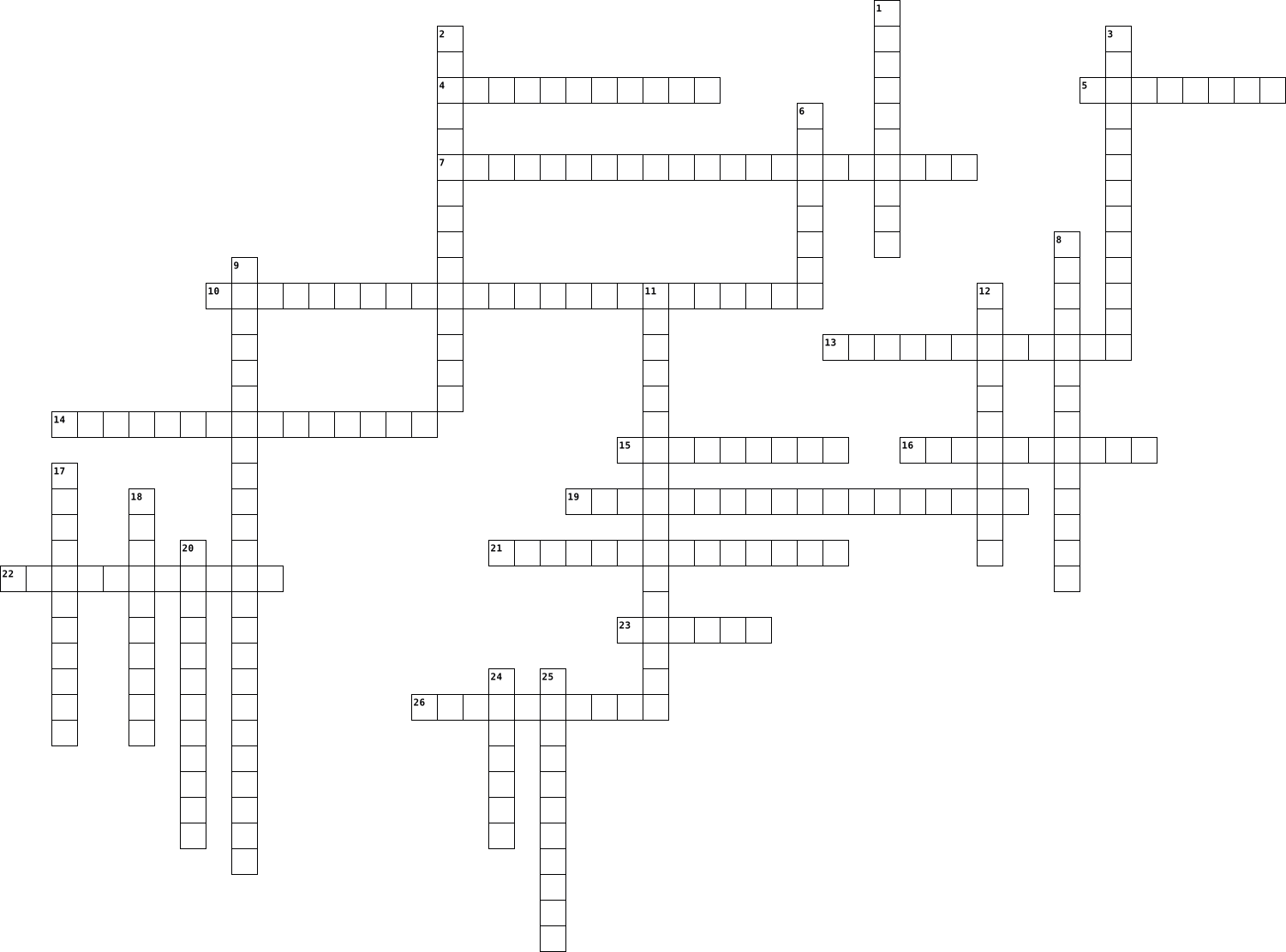
Across
- kills microorganisms
- contains spores
- can live with or without oxygen
- stained reddish-pink
- obtains organic food molecules
- grows in grape like structure
- a rod-shaped bacterium
- produces its own nutrients
- needs absence of organism
- forms the cell walls of bacteria
- organism without a nucleous
- thick hair-like protein
- grows in or can tolerate saline conditions
Down
- thick-walled protective spore
- transfer of genetic material
- transfer of a bacterial gene
- a circular DNA molecule
- coccus that grows with others in chains
- stained purple
- organism that grows well in a warm area
- a methane-producing bacterium
- made of a fuzzy coat sugars
- a spiral-shaped bacterium
- exchange of genetic material
- a sphere-shaped bacterium
- gets energy from enviroment
26 Clues: stained purple • contains spores • kills microorganisms • stained reddish-pink • a rod-shaped bacterium • a circular DNA molecule • thick hair-like protein • a spiral-shaped bacterium • needs absence of organism • a sphere-shaped bacterium • produces its own nutrients • made of a fuzzy coat sugars • organism without a nucleous • gets energy from enviroment • transfer of genetic material • ...
Worldy Wise Unit 18 2021-05-06

Across
- As matters stand, I must either conquer or _____ in a little.
- This song forms a ______ to the chapters that follow.
- _________ the skeleton of a mysterious prehistoric animal and then assemble the skeleton to form a dinosaur model.
- A ______ of dread slid through her.
- He was a man of __________ stamina and energy.
- The earth has an enormous _____ core that contains vast amounts of energy.
- The air of the chamber stilled and grew heavy, as if it meant to ________ him.
- Princess Mary well knew this ________ expression of her father's.
- Much ____ is thus produced.
Down
- The ________ of the nearest big city was growing.
- He looked ______ in a light gray suit that accentuated his dark tan.
- These can _____ sheets of flood basalt lava at the Earth's surface.
- She lifted the wooden cover before dropping her hand as if the book were hot enough to ________ her.
- They are cut to the last ______ bud in winter.
- She forced her lips to _____ it.
15 Clues: Much ____ is thus produced. • She forced her lips to _____ it. • A ______ of dread slid through her. • They are cut to the last ______ bud in winter. • He was a man of __________ stamina and energy. • The ________ of the nearest big city was growing. • This song forms a ______ to the chapters that follow. • As matters stand, I must either conquer or _____ in a little. • ...
Types of scientists 2021-04-30

Across
- who study's about the animals and the zoos
- I study about plant life and how their photosynthesis work
- who study's about the motion,forces and energy to explain the way things work
- Who study's about the ocean
Down
- Who study's about the remains of the ancient people and the bones
- who study's about the atmosphere and the weather
- who study,s about rocks,minerals and earths land forms
- who study's about matter,atoms,elements,molecules and their changes
- Who study's about the universe in the space by books
- Who study's about all forms of life that includes human,animals,plants and bacteria and how their body works
10 Clues: Who study's about the ocean • who study's about the animals and the zoos • who study's about the atmosphere and the weather • Who study's about the universe in the space by books • who study,s about rocks,minerals and earths land forms • I study about plant life and how their photosynthesis work • Who study's about the remains of the ancient people and the bones • ...
Unit 4 "Energy" Test Practice 2025-06-02

Across
- The transfer of energy from one place to another
- The type of energy released as the result of the fusion or fission of an atom's nucleus
- An object with a greater _______ will always carry more thermal energy
- Energy released as a result of a chemical reaction
- The transfer of heat energy through contact
- The transfer of heat energy through infra red waves
- The energy an object has or could have based on its movement
- The temperature at which particles are theorized to cease movement
- The type of energy an object could have based on its condition, position, or chemical composition
Down
- An object that slows down the transfer of energy
- Also called "heat energy"
- The transfer of heat energy through a fluid
- A type of potential energy stored in something stretchy or springy
- Also called "light energy"
- Energy associated with an object's motion
- The name given to the type of energy that results from the vibration of particles
- The ability to do work
- An object that transfers energy efficiently
- The type of energy associated with the movement of electrons through a medium
- A type of potential energy an object can possess based on its location
20 Clues: The ability to do work • Also called "heat energy" • Also called "light energy" • Energy associated with an object's motion • The transfer of heat energy through a fluid • An object that transfers energy efficiently • The transfer of heat energy through contact • An object that slows down the transfer of energy • The transfer of energy from one place to another • ...
Chemistry Terms 2025-05-07

Across
- The smallest unit of an element that retains the properties of that element.
- A change that affects the form of a substance, but not its chemical composition.
- A solid that forms and settles out of a liquid mixture during a chemical reaction.
- A substance that is formed as the result of a chemical reaction.
- A visible change in color that can indicate a chemical reaction has taken place.
- The act of maintaining or preserving something; in science, it often refers to the conservation of mass or energy.
- A state of matter where particles move freely and fill any container they're in; often produced in chemical reactions.
- A material that is chemically different from the substances from which it was formed.
- A change that cannot be undone, such as most chemical changes.
- The formation of gas bubbles, which can indicate a chemical change is occurring.
- The amount of matter in an object, usually measured in grams or kilograms.
Down
- An increase or decrease in heat energy, often observed during a chemical reaction.
- The process of a liquid turning into a gas; a physical change.
- Initials of the principle stating that mass is neither created nor destroyed in a chemical reaction.
- A chemical reaction in which a substance reacts with oxygen and releases energy in the form of heat and light.
- The capacity to do work or cause physical change; can be released or absorbed during chemical reactions.
- A change that results in the formation of one or more new substances with new chemical properties.
- The process of a solid turning into a liquid; a physical change.
- A process in which substances interact to form new substances.
- A substance that takes part in and undergoes change during a chemical reaction.
- A change that can be undone or returned to the original state.
21 Clues: The process of a liquid turning into a gas; a physical change. • A process in which substances interact to form new substances. • A change that can be undone or returned to the original state. • A change that cannot be undone, such as most chemical changes. • A substance that is formed as the result of a chemical reaction. • ...
Chapter 14-15 vocab 2024-05-13

Across
- energy the chemical energy stored in living things
- the ability to do work
- plane a slanted surface along which a force moves an object to a different elevation
- an inclined plane wrapped around a cylinder
- energy resource a source of energy that can be replaced in a relatively short period of time
- fuels rich deposits of hydrocarbon mixtures that formed from the remains of organisms
- conversion the process of changing energy from one form to another
- a rigid bar that is free to move around a fixed point
- and axle a simple machine that consists of two rigidly attached disks or cylinders, each one with a different radius
- energy energy that travels in waves
- conservation the practice of finding ways to use less energy or to use energy more efficiently
- energy thermal energy beneath Earth’s surface
- potential energy potential energy that depends upon an object’s height above a reference point
- energy the energy stored in chemical bonds
- energy the energy an object has due to its motion
Down
- energy the energy stored in atomic nuclei
- a device that changes a force & helps you do work
- energy resource a source of energy that exists in limited quantities and, once used, cannot be replaced except over the course of millions of years
- a V-shaped object whose sides are two inclined planes sloped toward each other
- energy the energy associated with the motion and position of everyday objects
- potential energy the potential energy of an object that is stretched or compressed
- energy energy that is stored as a result of position or shape
- energy sunlight that is converted into usable energy
- energy the energy associated with electric charges
- energy energy obtained from flowing water
- a simple machine that consists of a rope that fits into a groove in a wheel
- energy energy dealing with temperature
- the product of distance and the force in the direction an object moves
- the rate of doing work
29 Clues: the ability to do work • the rate of doing work • energy energy that travels in waves • energy energy dealing with temperature • energy the energy stored in atomic nuclei • energy energy obtained from flowing water • an inclined plane wrapped around a cylinder • energy the energy stored in chemical bonds • energy thermal energy beneath Earth’s surface • ...
Rocks and Minerals 2021-10-19

Across
- and cementation the process of sediments being packed down and sticking together
- Rock forms from melting and cooling of molten rock
- not made of living matter
- a solid inorganic substance of natural occurrence
- what a substance is made of
- characteristics used to describe an object Including color, luster, hardness and texture
- chemical and physical processes that break down rocks at earth’s surface
- loose materials such as rock fragments, mineral grains and bits of shell that have been moved by wind, water, ice or gravity
Down
- forms when magma rises up and cools inside the earth
- Rock forms from heat and pressure
- process in which sediment is laid down in new locations
- a mineral's resistance to being scratched
- made of living matter
- forms when lava cools on the earth’s surface
- a person who studies rocks and minerals
- Cycle series of processes that changes rock from one type into another
- process by which rock are broken down and carried away
- rock forms when particles from other rocks or plant/ animal remains that are pressed and cemented together
18 Clues: made of living matter • not made of living matter • what a substance is made of • Rock forms from heat and pressure • a person who studies rocks and minerals • a mineral's resistance to being scratched • forms when lava cools on the earth’s surface • a solid inorganic substance of natural occurrence • Rock forms from melting and cooling of molten rock • ...
Cell Unit 2013-04-15

Across
- the outer structure of certain cells
- Any of a large group of long-chain monobasic organic acids hydrolytically derived from fats
- a part of the cell containing DNA and RNA and responsible for growth and reproduction
- The arrangement or formation of the tissues, organs, or other parts of an organism.
- process of burning
- a number of actions of which each has a certain energy type
- contains enzymes responsible for energy production
- The shortening and thickening of a muscle for the purpose of exerting force on or causing movement of a body part
- a form of life
- the movement of ions or molecules across a cellular membrane from a lower to a higher concentration
- Any of numerous proteins produced in living cells that accelerate or catalyze the metabolic processes of an organism
- measure the ability
- oxidation of organic compounds that occurs within cells, producing energy for cellular processes.
- the cell substance between the cell membrane and the nucleus
- one microoganism made up a single cell
- a very small particle
- a structure composed of two molecular layers, especially of phospholipids in cellular membranes.
- an organelle in the cytoplasm of cells that functions in energy production
- a plastid containing chlorophyll
- The capacity of a physical system to do work
- The taking in or incorporation of something, such as a gas, a liquid, light, or heat.
- adenosine triphosphate
- A quantity whose value depends on the value given to one or more related quantities
- a very small particle of matter
- a process that involves changes in the structure and energy content of atoms, molecules, or ions but not their nuclei
- sugar/ starch syrup
- functioning as the site of protein manufacture
Down
- a state of rest or balance due to the equal action of opposing forces
- A small cavity in the cytoplasm of a cell bound by a single membrane and containing water/food
- The movement of atoms or molecules from an area of higher concentration to an area of lower concentration
- To pass or cause to pass into solution
- to control
- usually with twice as many hydrogen atoms as carbon or oxygen atoms
- transport of a substance across a cell membrane by diffusion
- converts light energy into ATP and other forms of energy needed for biochemical processes
- luminous energy is the perceived energy of light
- any organism too small to be viewed by the human eye
- to produce carbohydrates by photosynthesize
- An autotrophic organism that serves as a source of food for other organisms in a food chain
- the basic structure of a cell membrane consisting of a double layer of phospholipid molecules
- reproduced singley
- using energy from the sun and chlorophyll to make carbohydrates
- the act or process of putting in
- consists of one carbon and two oxygen atoms
- An increase in the strength of a fluid or gas in a mixture by purification, evaporation, or diffusion
- Energy liberated by a chemical reaction or absorbed in the formation of a chemical compound
- the semipermeable membrane enclosing the cytoplasm of a cell.
- a specialized part of a cell having some specific function; a cell organ.
- formed as a sphere
- The movement of a solvent through a membrane separating two solutions of different concentrations.
- Microorganisms made up of a single cell that has no distinct nucleus
- indicating limits
- composed of two or more parts
53 Clues: to control • a form of life • indicating limits • process of burning • reproduced singley • formed as a sphere • measure the ability • sugar/ starch syrup • a very small particle • adenosine triphosphate • composed of two or more parts • a very small particle of matter • the act or process of putting in • a plastid containing chlorophyll • the outer structure of certain cells • ...
Energy Crossword 2013-01-18

Across
- Energy from movement
- __________System
- Work
- Change of energy
- Stored energy
- Continuous movement
- Moving something
- ________ Potential energy
- Fossil fuel
- Radioactive waste
Down
- Energy from plants
- Energy from food
- Ground heat energy
- Measurement of energy
- Conserving energy
- Energy from outlet
- Heat energy
- Energy from sun
- Light energy
- Moving energy from one place to another
20 Clues: Work • Heat energy • Fossil fuel • Light energy • Stored energy • Energy from sun • Energy from food • __________System • Change of energy • Moving something • Conserving energy • Radioactive waste • Energy from plants • Ground heat energy • Energy from outlet • Continuous movement • Energy from movement • Measurement of energy • ________ Potential energy • Moving energy from one place to another
energy crossword 2013-09-19

Across
- heat is the same as what energy
- fahrenheight and Celsius are the two ......... of temperature
- what type of energy is used to power things that have a plug
- wind is a example of what energy
- thermal energy transferred by direct contact
- a rock on a hill is ......... energy
- the amount of useful energy you can get from a system is it's energy.........
- Samuel morse invented ......
- energy of motion
- more ........ = more thermal energy
Down
- chemicals can be found in anything that can
- fission and fusion are examples of ....... energy
- a large falling rock has ....... kinetic then a small falling rock
- inventor of the telephone
- the movement of energy through substance in longitude waves is ...... energy
- a type of energy that is stored
- solar energy is from the .....
- thermal energy transferred through the movement of molecules of a gas or liquid
- heat .... the same as thermal energy
- x rays are an example of these energy
20 Clues: energy of motion • inventor of the telephone • Samuel morse invented ...... • solar energy is from the ..... • heat is the same as what energy • a type of energy that is stored • wind is a example of what energy • more ........ = more thermal energy • a rock on a hill is ......... energy • heat .... the same as thermal energy • x rays are an example of these energy • ...
Unit 8 list 2 2018-04-16

Across
- of or connected with the heat inside the earth.
- the process of making or growing goods to be sold.
- Renewable forms of energy can be produced as quickly as they are used.
- the amount used or eaten.
- An alternative plan or method is one that you can use if you do not want to use another.
- the power and ability to be physically and mentally active.
Down
- farming.
- willing to help or do what people ask.
- a situation person or thing that needs attention and needs to be dealt with or solved.
- neutral If a person organization event etc is carbon-neutral.
- being or using the power produced when the nucleus of an atom is divided.
- of a colour between blue and yellow of the colour of grass.
12 Clues: farming. • the amount used or eaten. • willing to help or do what people ask. • of or connected with the heat inside the earth. • the process of making or growing goods to be sold. • the power and ability to be physically and mentally active. • of a colour between blue and yellow of the colour of grass. • neutral If a person organization event etc is carbon-neutral. • ...
Atomic Composition Pages 4-11 Review 2022-09-09

Across
- The minimum amount of energy that can be gained or lost by an atom
- Number of protons in Neon
- Contains an amplitude, crest, and trough
- If a measure value is 10 inches and the accepted value is 14 inches, what is the error percentage? Answer: __%
- Atoms with a different amount of protons are separate _______
- A type of charge given off by neutrons
- 3.00 x 10^8 m/s
- Set of the electromagnetic waves emitted by atoms of the element
- Subatomic particles with a zero charge
- Type of positive particle that was shot at goil foil
- Atoms with a negative charge
- Forms of the same element but different mass number
- Sub-atomic particles with a negative charge
- Atoms with an unequal number of electrons and protons
- When an atom absorbs energy, the electrons move to an _______ state
- Unit of measurement for frequency
- acronym that increases in frequency and shortens in wavelength as you move from left to right
- A higher _________ results in a shorter wavelength
Down
- A measure of how positive or negative an atom is
- Data that is interpretation-based and descriptive
- Atoms with a positive charge
- Number of protons in the nucleus of an atom
- 10^-9 m
- Data that is numbers-based and measurable
- When an atom emits energy, the electrons move to an _______ state
- The range of frequencies of electromagnetic radiation and their respective wavelengths and photon energies
- Thin sheet of material used for an experiment to calculate the diameter of the nucleus of an atom
- Abbreviations used to represent an element
- Protons and neutrons are located here
- A type of isotope, for example, Hydrogen with one neutron and one electron
- Electrons located in the outermost shell of an atom
- A type of isotope, for example, Boron with four neutrons and five electrons
- Unit of measreument for energy
- Subatomic particles with a positive charge
- # of protons + # of neutrons
- A particle of light emitted when an electron transitions to a lower energy level
- A type of charge indicated by a minus sign
- Atoms are made up of
- A way of writing numbers that are too large or too small to be conveniently written in standard decimal form
- Calculated by multiplying Planck’s constant by the frequency of the photon
- Last name of person who shot particles in an experiment to calculate the diameter of the nucleus of an atom
- Calculate the energy of photon light whose wavelength is 623 nm. Answer: 4.0_ x 10^-19 J
- Calculate the energy of photon light whose wavelength is 623 nm. Answer: 3.__x 10^-19 J
- “Atoms are mostly _____ _____”
- A type of charge indicated by a plus sign
45 Clues: 10^-9 m • 3.00 x 10^8 m/s • Atoms are made up of • Number of protons in Neon • Atoms with a positive charge • # of protons + # of neutrons • Atoms with a negative charge • Unit of measreument for energy • “Atoms are mostly _____ _____” • Unit of measurement for frequency • Protons and neutrons are located here • A type of charge given off by neutrons • ...
hjhjhjhjkk 2022-09-09

Across
- The minimum amount of energy that can be gained or lost by an atom
- Number of protons in Neon
- Contains an amplitude, crest, and trough
- If a measure value is 10 inches and the accepted value is 14 inches, what is the error percentage? Answer: __%
- Atoms with a different amount of protons are separate _______
- A type of charge given off by neutrons
- 3.00 x 10^8 m/s
- Set of the electromagnetic waves emitted by atoms of the element
- Subatomic particles with a zero charge
- Type of positive particle that was shot at goil foil
- Atoms with a negative charge
- Forms of the same element but different mass number
- Sub-atomic particles with a negative charge
- Atoms with an unequal number of electrons and protons
- When an atom absorbs energy, the electrons move to an _______ state
- Unit of measurement for frequency
- acronym that increases in frequency and shortens in wavelength as you move from left to right
- A higher _________ results in a shorter wavelength
Down
- A measure of how positive or negative an atom is
- Data that is interpretation-based and descriptive
- Atoms with a positive charge
- Number of protons in the nucleus of an atom
- 10^-9 m
- Data that is numbers-based and measurable
- When an atom emits energy, the electrons move to an _______ state
- The range of frequencies of electromagnetic radiation and their respective wavelengths and photon energies
- Thin sheet of material used for an experiment to calculate the diameter of the nucleus of an atom
- Abbreviations used to represent an element
- Protons and neutrons are located here
- A type of isotope, for example, Hydrogen with one neutron and one electron
- Electrons located in the outermost shell of an atom
- A type of isotope, for example, Boron with four neutrons and five electrons
- Unit of measreument for energy
- Subatomic particles with a positive charge
- # of protons + # of neutrons
- A particle of light emitted when an electron transitions to a lower energy level
- A type of charge indicated by a minus sign
- Atoms are made up of
- A way of writing numbers that are too large or too small to be conveniently written in standard decimal form
- Calculated by multiplying Planck’s constant by the frequency of the photon
- Last name of person who shot particles in an experiment to calculate the diameter of the nucleus of an atom
- Calculate the energy of photon light whose wavelength is 623 nm. Answer: 4.0_ x 10^-19 J
- Calculate the energy of photon light whose wavelength is 623 nm. Answer: 3.__x 10^-19 J
- “Atoms are mostly _____ _____”
- A type of charge indicated by a plus sign
45 Clues: 10^-9 m • 3.00 x 10^8 m/s • Atoms are made up of • Number of protons in Neon • Atoms with a positive charge • # of protons + # of neutrons • Atoms with a negative charge • Unit of measreument for energy • “Atoms are mostly _____ _____” • Unit of measurement for frequency • Protons and neutrons are located here • A type of charge given off by neutrons • ...
Energy and its forms: Part 2 2022-02-02

Across
- Mechanical Energy/ energy stored in objects by the application of a force. Compressed springs and stretched rubber bands are examples of this type of energy.
- Energy/ the type of energy produced when a force causes an object or substance to vibrate. The energy is transferred through the substance in a longitudinal wave.
- a device that transforms kinetic energy (mechanical energy) into electrical energy.
- Resources/ can’t be used up by humans. The sun is an example.
- cell/ a device that transforms radiant energy directly into electrical energy. (Also known as a solar cell.)
- the average kinetic energy of the individual particles of a substance.
- Energy/ the energy of position or place. The higher up something is, the more of this type of energy there is.
- of Conservation of Energy/ states that energy is never created or destroyed. Energy changes form, but the total amount of energy in the universe stays the same.
Down
- Resources/ resources that are renewable and cause less harm to the environment. Examples of these resources are solar energy, wind energy, and geothermal energy.
- Plants convert radiant energy from the sun into chemical energy in the form of glucose (sugar).
- a device with blades, which is turned by a force like wind, water, or steam. The mechanical energy of the spinning turbine is converted into electricity by a generator.
- resources/ are used up much faster than they can be replaced. Fossil fuels and uranium are nonrenewable resources.
- resources/ are energy sources that are replaced continually. These include hydropower, solar, wind, geothermal, and biomass.
13 Clues: Resources/ can’t be used up by humans. The sun is an example. • the average kinetic energy of the individual particles of a substance. • a device that transforms kinetic energy (mechanical energy) into electrical energy. • Plants convert radiant energy from the sun into chemical energy in the form of glucose (sugar). • ...
Energy Is Everywhere - Forms and Examples 2020-09-22

Across
- Our LJMS mascot
- In PHET lab: light bulbs emit radiant + t___ E
- Energy of object in motion (m)
- Objects lifted up have potential E due to g___
- Energy from atom's nucleus splitting or fusing(n)
- Electromagnetic energy; travels as a wave (r)
- Energy of all atoms in a substance moving (t)
- In PHET lab: the girl's food supplies c__ E
Down
- Energy from the movement of electrons (e)
- Energy can t___ from one form to another
- All types of stored energy (p)
- Energy from the Sun's radiation and light (s)
- All types of energy of motion (k)
- In PHET lab: girl's b___ wheel was mechanical E
- Energy stored in bonds of molecule (c)
15 Clues: Our LJMS mascot • Energy of object in motion (m) • All types of stored energy (p) • All types of energy of motion (k) • Energy stored in bonds of molecule (c) • Energy can t___ from one form to another • Energy from the movement of electrons (e) • In PHET lab: the girl's food supplies c__ E • Energy from the Sun's radiation and light (s) • ...
Matter and Energy in Ecosystems 2024-04-11

Across
- when a plant begins to sprout
- when two or more things depend or rely on each other
- an animal that eats meat of other animals
- woodlands, deserts, oceans, tundras, and plains are examples of ____________.
- the process that plants use to make their own food
- the source of energy that plants use for photosynthesis
- a word that scientists use for rain
- when a plant spreads its seeds, it's called seed ___________.
Down
- Something that can change in an experiment or math problem is called a _________.
- a detailed diagram that shows the flow of energy between producers and consumers
- when two or more organisms interact to try to get the same thing, like food or space
- an organism such as a worm or slugs, that decomposes dead plants and animals
- when water vapor gets colder and forms a liquid
- anything that occupies space and has mass
- An animal that only eats plants is an ________________.
- Because a plant makes its own food, it is a __________ in a food web.
16 Clues: when a plant begins to sprout • a word that scientists use for rain • an animal that eats meat of other animals • anything that occupies space and has mass • when water vapor gets colder and forms a liquid • the process that plants use to make their own food • when two or more things depend or rely on each other • An animal that only eats plants is an ________________. • ...
Chapter 1 2021-05-14

Across
- physician who specializes in the use of x-rays and other forms of both ionizing and nonionizing radiation in the diagnosis and treatment of disease
- radiography of the breast
- capacity to operate or work
- general term applied to an individual who performs radiography, radiation therapy, or nuclear medicine technology
- energy transmitted by waves through space or through a medium
- any process by which a neutral atom gains or loses an electron, thus acquiring a net charge
- making of records of internal structures of the body by passing x-rays or gamma rays through the body to act on specially sensitized film or an imaging plate or system
- recording of a predetermined plane in the body using an x-ray beam that is measured, recorded, and then processed by a computer for display on a monitor
Down
- radiologic procedures for the diagnosis and treatment of diseases of the cardiovascular system
- visualization of deep structures of the body by recording the reflections of pulses of ultrasonic waves directed into the tissue
- measurement of bone density using duel-energy x-ray absorptiometry to detect osteoporosis
- branch of radiology that involves the introduction of radioactive substances into the body for both diagnostic and therapeutic purposes
- branch of the health sciences dealing with radioactive substances and radiant energy and with the diagnosis and treatment of disease by means of both ionizing and nonionizing radiation
- process of using a magnetic field and radiofrequencies to create sectional images of the body
- the creation of sectional images of the body that demonstrate the physiologic function of various organs and systems
- an advanced-level radiographer who extends the capacity of the radiologist in the diagnostic imaging environment, thereby enhancing patient care
- branch of radiology involved in the treatment of disease by means of x-rays or radioactive substances
- synonym for x-ray
- electromagnetic radiation of short wavelength that is produced when electrons moving at high velocity are suddenly stopped
19 Clues: synonym for x-ray • radiography of the breast • capacity to operate or work • energy transmitted by waves through space or through a medium • measurement of bone density using duel-energy x-ray absorptiometry to detect osteoporosis • any process by which a neutral atom gains or loses an electron, thus acquiring a net charge • ...
cells assignment 2019-11-13

Across
- animal cells contain many small vacuoles
- breaks down food particales to release their chemical energy for the cell's energy.
- folded membrane that forms a system of canals within the cytoplansm.
Down
- for example gatekeeper/body guard.
- provide support for the cell.
- the liquid in which other cell parts float in.
- contain the green pigment chlorophyll.
- controls the cell's activities and contains chromosomes.
8 Clues: provide support for the cell. • for example gatekeeper/body guard. • contain the green pigment chlorophyll. • animal cells contain many small vacuoles • the liquid in which other cell parts float in. • controls the cell's activities and contains chromosomes. • folded membrane that forms a system of canals within the cytoplansm. • ...
Investigating Waves unit 4 2024-11-19

Across
- there a how many types of frequencies and amplitudes
- the lowest point of the wave
- the range of all types of electromagnetic radiation, including the wavelengths or frequencies of visible and invisible forms of energy, including radio, microwaves, infrared, visible, ultraviolet, X-rays, and gamma
- lower amplitude has a _______ light
- a movement of energy through a medium or space from one place to another
- high frequency has ___________ wavelengths
Down
- the linear distance between identical points on successive waves
- the number of times a wave passes a certain point in a given amount of time.
- measure of the size of the disturbance of a wave; height on the y-axis
- the highest point of a wave
- high frequency has more wave lengths and high
11 Clues: the highest point of a wave • the lowest point of the wave • lower amplitude has a _______ light • high frequency has ___________ wavelengths • high frequency has more wave lengths and high • there a how many types of frequencies and amplitudes • the linear distance between identical points on successive waves • ...
Lesson 9 2021-10-26
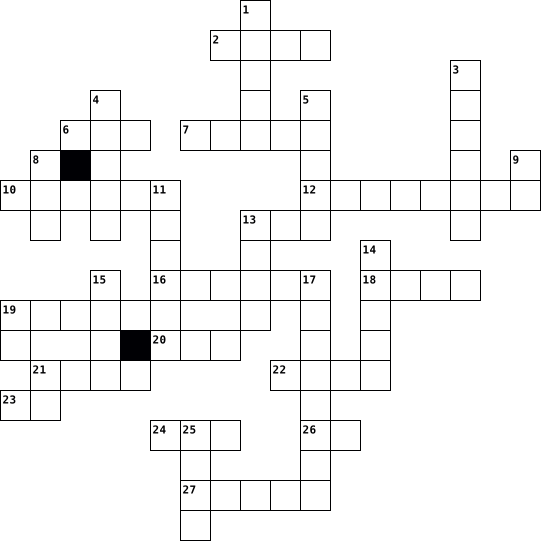
Across
- The combining form from the Latin word gestus
- Take
- Front, in front
- Face, appearance, surface
- Above
- The combining form from the Latin word dūcere
- (Upper) arm
- Slide, slip
- safe, protected
- The combining form from the Latin word lābī
- (Begin to) grow
- Cut
- The combining form meaning ‘make’ that is found in many English verbs
- Make
- The genitive case ending dropped from Latin present participles to find the combining form
- Side
Down
- Bring forth, give birth
- Fever
- Finger, toe
- The combining form from the Latin word crescere
- Carry, bear
- Suffix that forms nouns meaning agent or instrument
- Stable, fixed
- Lead, bring, conduct
- Bend
- Be swollen
- Below
- Suffix forms adjectives meaning in a state or condition of
- Suffix that forms nouns meaning the act of (being), the state of (being)
- Suffix that forms adjectives meaning capable of (being)
30 Clues: Cut • Take • Bend • Make • Side • Fever • Above • Below • Be swollen • Finger, toe • Carry, bear • (Upper) arm • Slide, slip • Stable, fixed • Front, in front • safe, protected • (Begin to) grow • Lead, bring, conduct • Bring forth, give birth • Face, appearance, surface • The combining form from the Latin word lābī • The combining form from the Latin word gestus • The combining form from the Latin word dūcere • ...
energy revision 2019-03-15

Across
- ? heat capacity amount of energy needed to raise the temp of 1kg by 1C
- force x distance
- energy transfer to the environment
- useful energy output/total energy input
- type of potential energy when objects are moved upwards
- trapped air stops this type of heat transfer
- mass x gravitational field strength
- type of insulation surrounding a hot engine
- a poor conductor of heat
Down
- another word for movement energy
- unit of energy
- rate at which work is done or transferring energy
- another word for stored energy
- type of stored energy in springs
- unit of power
- ? of energy, energy cannot be created or destroyed
- reduces friction in moving parts of a machine
- energy that will not run out
- type of wall insulation
- renewable energy from hot rocks
- unit of force
- renewable resource from the sun
- energy produced by the moon
23 Clues: unit of power • unit of force • unit of energy • force x distance • type of wall insulation • a poor conductor of heat • energy produced by the moon • energy that will not run out • another word for stored energy • renewable energy from hot rocks • renewable resource from the sun • another word for movement energy • type of stored energy in springs • energy transfer to the environment • ...
Olivia Meyer Unit 2 2025-03-24

Across
- Hydrophobicat forms basis of cell membrane (Hydropholic+Hydrophobic)
- tails of phospholipid (water fearing)
- made up of molecules
- head of phospholipid (water loving)
- if the enzyme has changed, and cannot bind to substrate
- type of movement that requires ATP
- where the substrate should fit right into
- the basic unit of matter
- enzymes bind to these
- made up of tissue
- chooses what enters+ leaves cell membrane
- made up of organs
Down
- is the natural movement of molecules(highly concentrated, to lowly concentrated)
- Transport method moving molecules without using ATP
- built up energy that is needed to activate the reaction
- made up of atoms
- the result of the chemical reaction
- made up of organelles
- type of diffusion that involves water
- made up of cells
- made up of organ system
- a molecule that speeds up reactions
22 Clues: made up of atoms • made up of cells • made up of tissue • made up of organs • made up of molecules • made up of organelles • enzymes bind to these • made up of organ system • the basic unit of matter • type of movement that requires ATP • the result of the chemical reaction • head of phospholipid (water loving) • a molecule that speeds up reactions • ...
Biology Crossword 2016-11-03

Across
- getting rid of undigested food in an organism
- combining simple substances to from complex substances
- all the chemical reactions
- something capable of living on its own
- two parents
- activities that help control homeostasis
- producing new offspring
- condition of maintaining a constant internal environment
- process by with materials enter or leave cells or get moved around in the organism
Down
- removal of wastes
- increasing in size of an organism
- one parent
- the taking in of food
- the process or releasing chemical energy from complex reactions
- chemical substances in food that an organism needs
- the study of life
- how an organism takes materials from the environment and con them into something it can use
- the breakdown of foods into similar forms
18 Clues: one parent • two parents • removal of wastes • the study of life • the taking in of food • producing new offspring • all the chemical reactions • increasing in size of an organism • something capable of living on its own • activities that help control homeostasis • the breakdown of foods into similar forms • getting rid of undigested food in an organism • ...
energy types/transformations vocab 2023-12-23

Across
- energy is a type of kinetic energy that travels in waves.
- sideways and downward movement of the edge of a plate
- burning feul to convert to energy
- involves the direct contact of object.
- a cyclical process that only occurs in fluids.
- energy is the movement of electrons
- energy that comes from vibrations moving through something.
- when switched it goes from electrical energy to heat then to light energy
- a working force is applied to move an object through a distance.
- energy is a form of potential energy. It is an energy associated with gravity
Down
- the use of sunlight to generate energy
- energy is the mechanical potential energy stored in the configuration of a material
- a primary water source is converted to electricity
- energy is the energy associated with the object's motion.
- energy stored in moving objects.
- by heating, mechanically,and by radiation.
- energy is energy stored in the nucleus of an atom
- energy is the sum of potential energy and kinetic energy.energy are either kinetic or potential.
- energy is energy stored in the bonds of atoms
- energy or electromagnetic energy
20 Clues: energy stored in moving objects. • burning feul to convert to energy • energy or electromagnetic energy • energy is the movement of electrons • the use of sunlight to generate energy • involves the direct contact of object. • by heating, mechanically,and by radiation. • a cyclical process that only occurs in fluids. • energy is energy stored in the bonds of atoms • ...
SDG CROSSWORD 2026-03-22

Across
- Basic physical systems like transport and power
- Meeting needs without harming future generations
- Unequal distribution of wealth or opportunities
Down
- Systems ensuring hygiene and clean water access
- Variety of life forms on Earth
- Global cooperation to achieve common goals
- Growth of cities and population concentration
- Long term shift in global temperatures
- Community of living organisms interacting with environment
- Energy source that is naturally replenished
10 Clues: Variety of life forms on Earth • Long term shift in global temperatures • Global cooperation to achieve common goals • Energy source that is naturally replenished • Growth of cities and population concentration • Systems ensuring hygiene and clean water access • Basic physical systems like transport and power • Unequal distribution of wealth or opportunities • ...
Chapters 14 & 15 2023-05-10

Across
- energy - the chemical energy stored in living things
- - the ability to do work
- plane - a slanted surface along which a force moves an object to a different elevation
- - an inclined plane wrapped around a cylinder
- energy resource - a source of energy that can be replaced in a relatively short period of time
- fuels - rich deposits of hydrocarbon mixtures that formed from the remains of organisms
- conversion - the process of changing energy from one form to another
- - a rigid bar that is free to move around a fixed point
- and axle - a simple machine that consists of two rigidly attached disks or cylinders, each one with a different radius
- energy - energy that travels in waves
- conservation - the practice of finding ways to use less energy or to use energy more efficiently
- energy - thermal energy beneath Earth’s surface
- potential energy - potential energy that depends upon an object’s height above a reference point
- energy - the energy stored in chemical bonds
- energy - the energy an object has due to its motion
Down
- energy - the energy stored in atomic nuclei
- - a device that changes a force & helps you do work
- energy resource - a source of energy that exists in limited quantities and, once used, cannot be replaced except over the course of millions of years
- - a V-shaped object whose sides are two inclined planes sloped toward each other
- energy - the energy associated with the motion and position of everyday objects
- potential energy - the potential energy of an object that is stretched or compressed
- energy - energy that is stored as a result of position or shape
- energy - sunlight that is converted into usable energy
- energy - the energy associated with electric charges
- energy - energy obtained from flowing water
- - a simple machine that consists of a rope that fits into a groove in a wheel
- energy - energy dealing with temperature
- - the product of distance and the force in the direction an object moves
- - the rate of doing work
29 Clues: - the ability to do work • - the rate of doing work • energy - energy that travels in waves • energy - energy dealing with temperature • energy - the energy stored in atomic nuclei • energy - energy obtained from flowing water • energy - the energy stored in chemical bonds • - an inclined plane wrapped around a cylinder • energy - thermal energy beneath Earth’s surface • ...