
greys anatomy Crossword Puzzles
Anatomy Crossword 2022-03-28
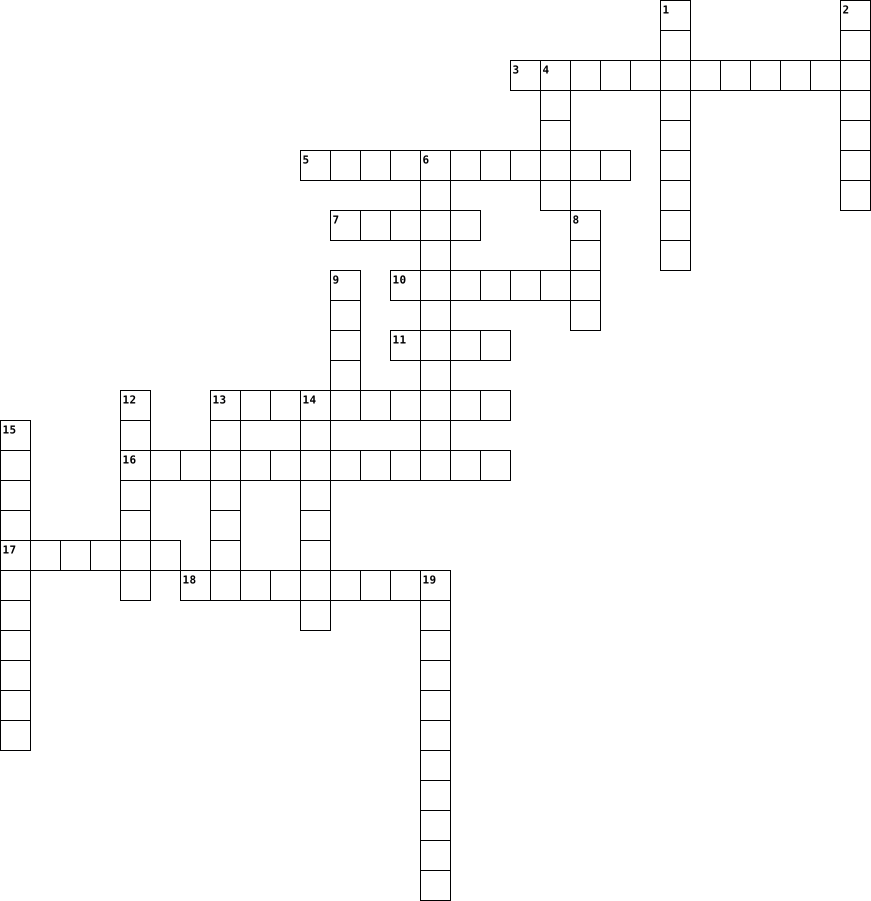
Across
- pressure changes in the heart
- protection for the heart and big vessels
- Controls the rhythm of heart rate
- receiving rooms for the blood
- rests on the diaphragm.
- keeps the heart pumping blood
- collects cardiac venous blood
- receives blood returning to the heart
- pumps blood out of the heart
Down
- primary muscle used in respiration
- protect the organs of your torso
- Upper part of the heart
- Movement of blood
- entry sight into the left ventricle
- carries blood away from your heart
- controls sympathetic nerve activity
- Supports the peripheral circulation
- Supplies blood to the heart muscle
- The division of the thoracic cavity
- Lines the valves
20 Clues: Lines the valves • Movement of blood • Upper part of the heart • rests on the diaphragm. • pumps blood out of the heart • pressure changes in the heart • receiving rooms for the blood • keeps the heart pumping blood • collects cardiac venous blood • protect the organs of your torso • Controls the rhythm of heart rate • primary muscle used in respiration • ...
ANATOMY CROSSWORD 2022-04-06

Across
- Third type of plasma protein and functions in blood clotting.
- How blood cells are formed. Starts with hemocytoblasts (stem cells) that become RBC's and many other blood types.
- People who specialize in blood.
- The protein that stimulates the production of blood and maintain the correct amount of blood in the body.
- Chemically neutral white blood cells. First to arrive at site of injury.
- Orange yellow pigment that is released into the bloodstream. Becomes pigment molecules that give feces and urine its color.
- Reduced amount of white blood cells.
- Makes up the majority of plasma proteins. Important in maintaining the osmotic pressure of plasma.
- White blood cells that attack objects that are coated with antibodies. Usually attack through the exocytosis of toxic compounds
- White blood cells
Down
- Increased amount of white blood cells.
- A plasma transport protein. Used in synthesization of blood and is transferred to liver & spleen and stored in iron complexes
- Red blood cell formation only occurs in red bone marrow.
- Protect the body from foreign cells by detecting, producing antibodies, and killing them.
- Free macrophages engulf compounds bigger than them.
- Immature red blood cells that are actively synthesizing hemoglobin.
- Second most abundant proteins in plasma. Include antibodies and transport proteins.
- Process of transferring blood from one person to another.
- Protein that is quaternary is needed by RBC's to transport oxygen.
- Red blood cells are responsible for transporting oxygen within the body.
20 Clues: White blood cells • People who specialize in blood. • Reduced amount of white blood cells. • Increased amount of white blood cells. • Free macrophages engulf compounds bigger than them. • Red blood cell formation only occurs in red bone marrow. • Process of transferring blood from one person to another. • Third type of plasma protein and functions in blood clotting. • ...
ANATOMY CROSSWORD 2014-03-27

Across
- The central compartment of the thoracic cavity.
- A sword shaped bone.
- Membrane that covers the outer surface of all bones, except at the joints of long bones.
- It is not polite to put them on the table.
- The cavity of the skull in which the eye is situated.
- Two large chambers that collect and expel blood received from an atrium towards the peripheral beds within the body and lungs.
- You put a bracelet on it.
- The body excluding the head and neck, and limbs.
- They help you move.
- A watery substance located in the mouths of organisms.
- The fold or depression marking the juncture of the lower abdomen and the inner part of the thigh.
Down
- The only long bone in the body that lies horizontally and makes up part of the shoulder.
- The vertebrate cerebrum (brain) is formed by two cerebral ___
- The main difference between exocrine and endocrine glands.
- The bone of the lower jaw.
- The act or process of separating or dividing.
- The part of the arm between the wrist and the elbow.
- The flat, movable bone at the front of the knee.
- The middle section of the human foot, forming the arch between the ankle and toes.
- The deeper layer of the dermis, containing mostly fat and connective tissue.
- The second most ulnar finger is the ____ finger.
- The inner and longer of the two bones of the human forearm.
- Vascular tissue in the interior cavities of bones that is a major site of blood cell production.
- The color of the ____ is often referred to as "eye color".
24 Clues: They help you move. • A sword shaped bone. • You put a bracelet on it. • The bone of the lower jaw. • It is not polite to put them on the table. • The act or process of separating or dividing. • The central compartment of the thoracic cavity. • The flat, movable bone at the front of the knee. • The second most ulnar finger is the ____ finger. • ...
8O Anatomy 2015-03-04

Across
- Shine bone
- Thumb to Elbow
- Cube-shaped
- 5cm up from coccyx
- Thigh muscles
- Bottom Muscle
- Broad surface
- front of upper arm
Down
- Bones in ankle
- joints movement in 1 direction
- Chest "pecks"
- example cranium
- Ball and Socket
- Bone in knee
- forearm
- Protective tissue
- Finger bones
- muscle to bone
- Shoulder muscles
- limited rotational movement
20 Clues: forearm • Shine bone • Cube-shaped • Bone in knee • Finger bones • Chest "pecks" • Thigh muscles • Bottom Muscle • Broad surface • Bones in ankle • Thumb to Elbow • muscle to bone • example cranium • Ball and Socket • Shoulder muscles • Protective tissue • 5cm up from coccyx • front of upper arm • limited rotational movement • joints movement in 1 direction
Anatomy Prefixes 2014-09-03

Across
- body
- milk
- muscle
- under (quantity)
- finger
- brain
- liver
- condition
- heart
- form
- skull
- blood
Down
- fat
- sodium
- colon (large intestine)
- above (quantity)
- pain
- sugar
- head
- windpipe
- eye
- bone
- skin
- middle
- corpse/dead
25 Clues: fat • eye • body • milk • pain • head • bone • skin • form • sugar • brain • liver • heart • skull • blood • sodium • muscle • finger • middle • windpipe • condition • corpse/dead • under (quantity) • above (quantity) • colon (large intestine)
Functional Anatomy 2016-08-21

Across
- Which tissue functions to connect a muscle to a bone?
- Which of the following connective tissues is responsible for providing stability within a joint by connecting bone to bone?
- Plantar flexion of the ankle during running is caused by a concentric contraction of which muscle?
- What is the correct movement of the glenohumeral joint during a triceps extension exercise?
- During the descent phase of the standing barbell curl, the biceps are contracting _________.
- Having your client rehearse the forward lunge repeatedly without weights will improve their movement performance due to neuromuscular familiarity, referred to as __________.
- During performance of the side lateral raise, the prime mover is the __________.
- During the performance of a single-leg squat (Bulgarian squat), what muscles are considered the prime movers?
- What muscle is responsible for shoulder flexion?
- Which muscle is responsible for stabilizing the pelvis and spine in the frontal plane, and functions as a mover during lateral trunk flexion?
- What is the term used to describe the natural curvature of the cervical spine?
- A majority of back injuries from incorrect lifting and movement mechanics occur between which segments of the spine?
- The performance of side lateral raises occurs in what movement plane?
- The concept that energy is transferred across joints to support voluntary movement is termed __________.
- The deltoid becomes the primary abductor of the humerus beginning at what joint angle; reducing involvement of the rotator cuff?
- The reverse lunge is performed in which movement plane?
- Which muscles dominate the upward movement when a full, anchored sit-up is performed?
- What muscle is commonly found to lack proper flexibility; promoting a posterior pelvic tilt?
Down
- The performance of a lunge with forward press on a cable machine occurs in which movement plane?
- What muscle acts as the agonist during performance of the Romanian deadlift?
- What is the natural curvature of the thoracic spine?
- What muscle can contribute to an anterior pelvic tilt when it becomes inflexible?
- Which muscle acts as a spinal stabilizer during the performance of a push-up?
- What type of contraction occurs in the quadriceps during the descent phase of a leg press?
- To minimize the risk for injury, hamstring strength should be _____% of quadriceps strength?
- What acronym represents the four muscles of the rotator cuff?
- Which muscle is responsible for the first 30 degrees of trunk flexion and is targeted during the crunch movement?
- During the performance of the back squat, what is the prime mover responsible for hip extension?
28 Clues: What muscle is responsible for shoulder flexion? • What is the natural curvature of the thoracic spine? • Which tissue functions to connect a muscle to a bone? • The reverse lunge is performed in which movement plane? • What acronym represents the four muscles of the rotator cuff? • The performance of side lateral raises occurs in what movement plane? • ...
Crab Anatomy 2016-08-23

Across
- Organ that pumps in the circulatory system
- Posterior-most division of body.
- The shell covering the body that provides rigidity and protection. Part of the exoskeleton.
- Shorter segmented appendages located between and below the eyestalks, act as sensory organs.
- Thin dark membrane which lies beneath carapace.
- Paired appendages used by crab for swimming.
- Tough external covering of whole crab.
- Female structure which hold egg mass.
- Claw of cheliped.
Down
- Abdomen of crab, which is folded under the body.
- The first pair of legs that carry a large claw.
- Female opening of oviduct.
- Paired points on the widest outside edges of the carapace.
- Long segmented appendages located behind eyestalks; allow crab to interact with environment by tough and chemoreception.
- Female gonads.
- Male gonads.
- Appendages used by crab for walking movement.
- Internal organ that carry out gas exchange.
- Organ of digestive system that breaks down ingested food.
- Male appendage for transferring sperm.
20 Clues: Male gonads. • Female gonads. • Claw of cheliped. • Female opening of oviduct. • Posterior-most division of body. • Female structure which hold egg mass. • Male appendage for transferring sperm. • Tough external covering of whole crab. • Organ that pumps in the circulatory system • Internal organ that carry out gas exchange. • Paired appendages used by crab for swimming. • ...
Animal Anatomy 2017-01-24

Across
- Des oreilles
- Les mâchoires
- La queue
- Des branchies
- Le corps
- Des pattes
- Des plumes
- Des nageoires
- Le pouce
- Le museau
- Les doigts
- Opposable
- La trompe
- Des cornes
- Des bandes
- Des bois
Down
- Les doigts de pied
- La peau
- Le dard
- Des griffes / serres / Pinces
- Un sabot
- La crinière
- Les moustaches
- Des tâches
- Les nageoires / palmes
- Les pattes arrières
- Le pelage / La fourrure
- Des ailes
- Des antennes
- Des ongles / griffes
- Des défenses
31 Clues: La peau • Le dard • La queue • Un sabot • Le corps • Le pouce • Des bois • Le museau • Des ailes • Opposable • La trompe • Des pattes • Des tâches • Des plumes • Les doigts • Des cornes • Des bandes • La crinière • Des oreilles • Des antennes • Des défenses • Les mâchoires • Des branchies • Des nageoires • Les moustaches • Les doigts de pied • Les pattes arrières • Des ongles / griffes • Les nageoires / palmes • ...
grey's anatomy 2023-03-02

Across
- jo’s real name
- best character ever except a ginger yikes
- something found in a patient’s chest; almost killed meredith
- bailey’s next nickname
- only transfer from mercy west that stayed long-term
- dating kai
- meredith and christina’s nickname
- completely different person after plane crash
- izzie cut his LVAD wire
- had a photographic memory
- who had the first surgery in meredith’s intern group
- lost her shoe
- original name of the hospital
Down
- what organ did meredith give her father
- worst character ever
- derek’s bestie and traitor
- had an affair with ellis
- meredith’s nickname from the interns
- was married to george O’Malley
- named her child after george
- henry’s wife before he died
- bailey’s original nickname
- funded the free clinic
- peds with occasional anger issues
- heart surgeon
25 Clues: dating kai • heart surgeon • lost her shoe • jo’s real name • worst character ever • bailey’s next nickname • funded the free clinic • izzie cut his LVAD wire • had an affair with ellis • had a photographic memory • derek’s bestie and traitor • bailey’s original nickname • henry’s wife before he died • named her child after george • original name of the hospital • ...
Anatomy Terminology 2023-02-07

Across
- the chest
- the kneecap
- the bony structures around the eyes; the eye sockets
- the thirty-three bones of the spinal column
- the two fused bones forming the upper jaw
- the breastbone
- the superior and widest portion of the pelvis
- the bony structure of the head
- the medial and larger bone of the lower leg
- the superior portion of the sternum
Down
- the nose bones
- the inferior portion of the sternum
- bones that form the structure of the cheeks
- the large bone of the thigh
- the medial anterior portion of the pelvis
- the top, back, and sides of the skull
- the pelvic socket into which the ball at the proximal end of the femur fits to form the hip joint
- the basin shaped bony structure that supports the spine and attatched the lower extremities
- the lower jaw-bone
- the lower, posterior portions of the pelvis
20 Clues: the chest • the kneecap • the nose bones • the breastbone • the lower jaw-bone • the large bone of the thigh • the bony structure of the head • the inferior portion of the sternum • the superior portion of the sternum • the top, back, and sides of the skull • the medial anterior portion of the pelvis • the two fused bones forming the upper jaw • ...
Computer Anatomy 2023-02-10

Across
- A type of primary storage
- A type of secondary storage
- How is data stored in ROM
- How is data stored in RAM
- What is a CPU
- USB stands for
- The dot on the score board
- What does ROM stand for
- Switches in a microprocessor
- What does PCI stand for
Down
- What does RAM stand for
- Passes instructions
- Basic hardware of a computer
- A type of output device
- One of the major CPU manufacturers
- The results of the calculation
- Uses calculators to do math
- A type of input device
- Retrieves program instructions
- One of the main factors that determines the speed of CPU
20 Clues: What is a CPU • USB stands for • Passes instructions • A type of input device • What does RAM stand for • A type of output device • What does ROM stand for • What does PCI stand for • A type of primary storage • How is data stored in ROM • How is data stored in RAM • The dot on the score board • A type of secondary storage • Uses calculators to do math • Basic hardware of a computer • ...
Computer Anatomy 2023-02-10

Across
- basic hardware of a computer
- pass instructions
- what is a CPU
- uses calculators to do math
- A type of output device
- volatile how data is stored in ROM
- Parts of your computer to receive power and communicate with one another
- a type of input device
- retireves program instructions
Down
- one of the main factors of the CPU
- A type of secondary storage
- a output device
- switches in a microphone
- what does ROM stand for
- the dot on the score board
- how data is stored in RAM
- what you receive out of a system
- what you put into a system to function
- one of the major CPU manufactures
- to display to your monitor
- a type of primary storage
21 Clues: what is a CPU • a output device • pass instructions • a type of input device • what does ROM stand for • A type of output device • switches in a microphone • how data is stored in RAM • a type of primary storage • the dot on the score board • to display to your monitor • A type of secondary storage • uses calculators to do math • basic hardware of a computer • ...
Chest Anatomy 2023-02-16

Across
- Most inferior structures of the lung hilum(9,5)
- Pseudostratified ciliated ____ epithelium with goblet cells, respiratory epithelium(8)
- Junction between subclavian and internal jugular veins(6,5)
- Type of pleura in contact with the body wall(8)
- Right posterior intercostal veins drain into this vessel(7)
- Nerve supply to diaphragm(7)
- Usually largest branch of left coronary artery, abbrev.(3)
- Deep crevice that separates lung lobes(7)
- Drains deoxygenated blood from cardiac veins into right atrium(8,5)
Down
- Unilateral drainage occurs from lateral quadrants of the breast into these nodes(8)
- Outward pouch of muscle lying over each atrium(7)
- First branch of the aorta, artery(8)
- Valve auscultated over the 5th left intercostal space in midclavicular line(6)
- Posterior border of the 'safe triangle', pectoralis ____(5)
- Narrowest part of the larynx(4,9)
- Bifurcation of the trachea(6)
- Space between lungs containing organs and vessels(11)
- Layer of heart wall that secretes pericardial fluid lubricant(10)
- Type of intercostal muscle used in passive breathing(8)
- Vessel lateral to the ascending aorta, abbrev.(3)
20 Clues: Nerve supply to diaphragm(7) • Bifurcation of the trachea(6) • Narrowest part of the larynx(4,9) • First branch of the aorta, artery(8) • Deep crevice that separates lung lobes(7) • Most inferior structures of the lung hilum(9,5) • Type of pleura in contact with the body wall(8) • Outward pouch of muscle lying over each atrium(7) • ...
Ocular Anatomy 2023-03-25

Across
- The main structure of the globe that protects the internal structures
- Eyeball
- The tissues and structures surrounding the eye
- Transparent layer of tissue that forms the inner most lining of the globe
- How many extraocular muscles control the movement of the eye
- The inner-most layer of the eyelid
- This is responsible for finely detailed central vision
- The center of the macula
- This is responsible for 1/3 of the focusing power
- This acts as a shock absorber and maintains the shape of the eye
Down
- The meibomian glands secret this which becomes part of the tear film
- Junction of the eyelids
- The layer that provides nourishing blood to the retina
- This gland produces the middle aqueous layer of the tear film
- The junction of the cornea and the sclera
- The bony cavity in the skull that houses the globe
- A small, pink, globular spot at the medial canthus
- Excess tears pass through tiny openings
- The outermost front part of the globe
- The colored part of the eye
- The iris, ciliary body, and choroid are the three components of this
- Help to control light exposure, help protect the eye, and lubricate the eye
22 Clues: Eyeball • Junction of the eyelids • The center of the macula • The colored part of the eye • The inner-most layer of the eyelid • The outermost front part of the globe • Excess tears pass through tiny openings • The junction of the cornea and the sclera • The tissues and structures surrounding the eye • This is responsible for 1/3 of the focusing power • ...
Flower Anatomy 2022-12-14

Across
- this part of the flower makes pollen
- modified leaves
- holds the reproductive parts
- produces ovules
- A spike that is composed of unisexual flowers without petals
- sepals formed together create this
- the male part of the flower
- produces nectar
- carrots, parsley and dill are examples that have this
Down
- A yellow powder (some people have allergies to this)
- flower clusters that are the stem's branching system
- part of the stamen that supports the anther
- the stalk of the pistil
- these suck up nectar
- these are brightly colored, making it the most noticable part of the flower
- protects the bud
- petals that are fused together
- these contain ovules
- main stem of an inflorescence
- catches pollen from bees
20 Clues: modified leaves • produces ovules • produces nectar • protects the bud • these suck up nectar • these contain ovules • the stalk of the pistil • catches pollen from bees • the male part of the flower • holds the reproductive parts • main stem of an inflorescence • petals that are fused together • sepals formed together create this • this part of the flower makes pollen • ...
Flower anatomy 2022-12-14

Across
- a loose branching cluster of flowers
- the female organs of a flower
- a tight cluster of small flowers without stems
- a slender threadlike object or fiber
- he hollow base of the carpel of a flower
- the female reproductive organ of a flower
- an enlarged area at the apex of a stem
- segment of the outer whorl in a flower
- the petals of a flower, typically forming a whorl
- the male fertilizing organ of a flower
- the part of a stamen that contains the pollen.
Down
- a flower cluster in which stalks of nearly equal length spring from a common center
- The outer parts of the flower
- a flowering spike of trees such as willow and hazel.
- the stalk bearing a flower or fruit
- a flower cluster whose lower stalks are proportionally longer
- a yellow powdery substance bees collect
- having pistils but no stamens.
- a flower cluster with the separate flowers attached by short equal stalks
- the outer part of a flower, consisting of the calyx
20 Clues: The outer parts of the flower • the female organs of a flower • having pistils but no stamens. • the stalk bearing a flower or fruit • a loose branching cluster of flowers • a slender threadlike object or fiber • an enlarged area at the apex of a stem • segment of the outer whorl in a flower • the male fertilizing organ of a flower • a yellow powdery substance bees collect • ...
Human anatomy 2022-12-29

Across
- Frontal part of the head
- excretory organ that filters blood
- Fingers plus wrist
- Composed of all vertebrates
- Connecting upper arm with forearm
- the biggest of immune system
- Many of them consists in the chest
- sense organ used for sound detection
- stores and digests food
- has four chambers and pumps blood throughout the body
- attached to the muscle, aids in movement and protections
- Biggest finger
- freely movable bone of skull
- Connecting head with trunk
- Soft part of mouth cavity
- End of upper extremity
Down
- belongs under chest
- They provide living organisms with vision
- fingers of lower extremity
- used for urine storage
- Controls thought, memory, feelings and activity
- Consist of 8 little bones
- Pair of them create mouth
- five-inch long tube that starts near our nose and ends at our windpipe
- composed of 12 thoracic vertebrae, the breastbone and 12 pairs of ribs
- Upper extremity
- Upper part of the face
- It joins the arm to the rest of the body
- aids in movement, 206 bones
- The body is covered with it
30 Clues: Biggest finger • Upper extremity • Fingers plus wrist • belongs under chest • used for urine storage • Upper part of the face • End of upper extremity • stores and digests food • Frontal part of the head • Consist of 8 little bones • Pair of them create mouth • Soft part of mouth cavity • fingers of lower extremity • Connecting head with trunk • Composed of all vertebrates • ...
Thorax Anatomy 2023-01-29

Across
- Pectoralis minor and serratus anterior muscles stabalize the ________.
- The _______ line is at the level of T4.
- Tail of the sternum
- Which clinical symptom can occur from an irritated/damaged bronchial artery?
- _____ intercostal muscles elevate the ribs.
- The action of the serratus anterior muscle is to medially rotate the arm and arm __________.
- When performing a thoracostomy do you place the needle above or below the rib bone?
- what color is the pulmonary artery on the alveoli model?
- Which surface of the lung has the worst perfusion while standing up?
- What do the bronchi have but the bronchioles don't?
- the lingula is apart of the _____ lobe of the left lung.
- __________ ligament is the connective tissue of the breast.
- Chest pain from excessive coughing
Down
- head of the sternum
- _______ intercostal muscles also elevate the ribs.
- origin of pectoralis minor muscle
- The joint between the sternum and the clavicle.
- What type of movement of the diaphragm is caused by unilateral damage of the phrenic nerve?
- Pectus ________ is a skeletal abnormality characterized by an inverted sternum.
- Pectus ________ is a skeletal abnormality characterized by a protruding sternum.
- Clinical symptom of sharp chest pain caused by irritation of the connective tissue surrounding the lungs
- Nerve C3-C4-C5
- The __________ is at the level of T10.
- Procedure to remove fluid from the thorax.
24 Clues: Nerve C3-C4-C5 • head of the sternum • Tail of the sternum • origin of pectoralis minor muscle • Chest pain from excessive coughing • The __________ is at the level of T10. • The _______ line is at the level of T4. • Procedure to remove fluid from the thorax. • _____ intercostal muscles elevate the ribs. • The joint between the sternum and the clavicle. • ...
volcano anatomy 2023-04-20

Across
- A spray of molten lava propelled a few tens to hundreds of feet (meters) into the air by rapid expansion of gas bubbles. They may erupt from vents or form in an active lava lake. Fire fountains most commonly occur in basaltic lavas erupted in Effusive (Hawaiian) eruptions. Also called a lava fountain.
- An accumulation of highly molten bombs that landed while still molten and welded together to form solid rock, spatter cones, or sometimes feed lava flows. Spatter is formed from fire fountains. Spatter deposits are typically only formed near a vent.
- The opening or place at Earth's surface through which magma, rock fragments, and/or volcanic gases are emitted.
- A steep-sided mass of viscous, commonly blocky, lava extruded from a vent; typically has a rounded top and covers a roughly circular area; may be isolated or associated with lobes or flows of lava from the same vent; typically silicic (rhyolite or dacite) in composition.
- A collective term used for all pyroclastic material, regardless of size, shape, or origin, ejected into the air during a volcanic eruption.
- A colloquial term for a small nut-size to fist-size, or larger, piece of red or black highly vesicular lava that cooled in air during flight after eruption from a vent. The term is roughly synonymous with scoria.
- An outpouring of molten rock from a vent onto Earth's surface during an effusive volcanic eruption; also the resulting solidified body of rock.
- A collective term covering a wide variety of slope-movement landforms and processes that involve the downslope transport of soil and rock material en masse under the influence of gravity. On volcanoes, landslides may occur during or soon after volcanic eruptions or at other times.
- A body of lava, consisting of one or more lava flows, that is the product of a single eruption.
- The channel way or passage, which may be pipe-shaped, that brings magma from a reservoir or chamber to the vent at the surface where it is erupted.
- A hazy mixture of sulfur dioxide (SO2) gas and aerosols of sulfuric acid and other sulfates created when volcanic gases interact with oxygen and moisture in the atmosphere and sunlight. Short for "volcanic smog."
- A new area or region of a lava flow formed where lava from the molten interior of a previously-formed lobe breaks out through its sides or upper margin to create a distinct lava flow advance.
- A white cloud of a mixture of condensed seawater steam, hydrochloric acid gas, and shards of volcanic glass produced when lava boils seawater to dryness. Short for "lava haze."
- A vent or opening at the surface where volcanic gases and vapors are emitted.
Down
- Molten rock beneath Earth's surface capable of intrusion and extrusion.
- A hill made up of cinders that is a fragment of a cinder cone that was carried away by a lava flow erupted from a side vent near the base of the cone.
- Pyroclastic flows are hot density currents of pumice, ash, blocks, and volcanic gas that rapidly move down the slopes of a volcano. They may be initiated by collapse of eruptive columns, by explosive eruptions that boil over, and by the collapse of lava domes.
- A cloud of volcanic ash, tephra, and gases that forms downwind of an erupting volcano.
- flow An outpouring of molten rock from a vent onto Earth's surface during an effusive volcanic eruption; also the resulting solidified body of rock.
- Fine fragments (less than 2-4 mm in diameter) of volcanic rock formed by a volcanic explosion or ejected from a volcanic vent.
- A pyroclast with a diameter greater than 64 mm (2.5 inches) with a rounded or ellipsoidal shape that indicates that it was wholly or partially molten during eruption and flight.
- Conduit through which lava travels beneath the surface of a lava flow; also, a cavernous segment of the conduit that remains after the flow of lava ceases.
- A vertical pillar of superheated volcanic ash, tephra, and gases ejected from a volcanic vent during an explosive eruption. Eruption columns usually spread laterally into eruption clouds higher in the atmosphere.
- Molten rock beneath Earth's surface capable of intrusion and extrusion.
24 Clues: Molten rock beneath Earth's surface capable of intrusion and extrusion. • Molten rock beneath Earth's surface capable of intrusion and extrusion. • A vent or opening at the surface where volcanic gases and vapors are emitted. • A cloud of volcanic ash, tephra, and gases that forms downwind of an erupting volcano. • ...
Anatomy Rules 2023-03-01

Across
- Crosses over during pronation.
- 5 fused bones
- Subject of an ESL class.
- Where glasses rest.
- Skeletal meeting place.
- Stretchy protein
- They have a lunula.
- Jaw joint
- No weight? No lie!
- A thrombus
- Wifi irritant
- Carriers to the "pump"
- Target of cephalgia.
- The olecranon makes it.
- Where the alveoli can be found.
- Goes with "growth" to describe where things lengthen.
- Describing a bulging disc.
- What scoliosis deforms
- Back?
- "Current" creators.
- Properly "swelling"
- Rule of 9's is used on this injury.
- Big vessel
- Type of dense regular CT
Down
- Above
- The "body" of a neurocyte.
- Prefix with "polar" to describe chemical that don't easily dissolve in water.
- Can cause baldness.
- Disorder of lacking pigmentation in patches.
- One of the two types of bone.
- It has an olecranon
- 34-38 created in respiration.
- What happens when you stop working out
- Under
- Layers
- P? or PP?
- Distal femur has two of these.
- OMG! I can see the bone sticking out!!
- What Mr Sewell needs to stay away from if he ever plans on losing weight.
- Amount for your thoughts.
- It describes the smaller sticky-outy-thingy.
- Embedded bone (ex: patella)
- Hypersensitive reaction
- Wing (bone)
44 Clues: Above • Under • Back? • Layers • Jaw joint • P? or PP? • A thrombus • Big vessel • Wing (bone) • 5 fused bones • Wifi irritant • Stretchy protein • Where glasses rest. • Can cause baldness. • It has an olecranon • They have a lunula. • No weight? No lie! • "Current" creators. • Properly "swelling" • Target of cephalgia. • Carriers to the "pump" • What scoliosis deforms • Skeletal meeting place. • ...
COMPARATIVE ANATOMY 2020-04-29

Across
- modern snakes, lizards and ancestors constitute of lepidosaur
- bone and fish
- spiny forms
- fishes with jaws
- solid cylindrical body encloses the notochord
- shell and skin
- reptiles with two temporal fenestrae
- early shark
- round and mouth
- mostly fossil lobe-finned fish
- birds with talons
- pointed noselike extension of the braincase
- encases the embryo in a protective water compartment
- fishes without jaws
- one of the largest ray
- previous called holosteans
- plates and skin
- scales covered with cosmine
- vertebrates with amnion
- vertebrates without amnion
Down
- group of salamander
- spiny root
- cartilage and fish
- fleshy finned-fish
- tooth like microfossils
- four-fouted vertebrates
- external nostril opening
- no feet
- large group embracing the group of bony fishes
- no tail
- anterior clustering of specialized sensory organ
- group of tetrapods
- snakes and lizards
- sharks and rays
- ray finned-fish
- rat fishes
- usually covered with scales and bony plates
- major innovation that evolved in vertebrates
- openings on the surface of some animals
- extended flap of skin
40 Clues: no feet • no tail • spiny root • rat fishes • spiny forms • early shark • bone and fish • shell and skin • sharks and rays • ray finned-fish • round and mouth • plates and skin • fishes with jaws • birds with talons • cartilage and fish • fleshy finned-fish • group of tetrapods • snakes and lizards • group of salamander • fishes without jaws • extended flap of skin • one of the largest ray • ...
Anatomy I 2020-05-05

Across
- Warns off insects on skin and guard against heat
- Gland that secretes sebum and softens the hair and skin
- Tissue regulates and controls body functions
- Binds to troponin and blocks sodium channels
- Generate and conduct nerve impulses
- Support, insulate, and protect neurons
- Instruction sheet for protein synthesis
- Epithelia that absorbs, secretes, and filtrates
- Prevents continued muscle fiber contraction
- Glands that secrete hormones into lymph or blood
- Absorbs shock, insulates, and anchors skin to underlying structures
- Digest worn-out or nonfunctional organelles or molecules
- Supports and protects the body structures
- Anchors cells together at plaques and reduce tearing
- Blood brain barriers and support neurons
- Tissue that stores fat and nutrients
Down
- Powerhouse that produces ATP
- Holds DNA and protein molecules inside
- Transmits impulses along the axolemma
- Transports respiratory gases, nutrients, wastes, etc
- Mediates information transfer from one neuron to another
- Act as messengers and transfer agents for amino acids
- Maintains posture and generates heat
- Envelopes that act as storage sites
- Produces multiple copies of the same protein
- Cartilage supports, reinforces, and resists compressive stress
- Conveys incoming messages toward the cell body
- Form the insulating myelin sheaths
- Generates the microtubules and organize the mitotic spindle
- Epithelium that changes shape with stretching
30 Clues: Powerhouse that produces ATP • Form the insulating myelin sheaths • Generate and conduct nerve impulses • Envelopes that act as storage sites • Maintains posture and generates heat • Tissue that stores fat and nutrients • Transmits impulses along the axolemma • Holds DNA and protein molecules inside • Support, insulate, and protect neurons • ...
Brain Anatomy 2020-12-08

Across
- The movements of the body without the muscles contracting
- powerful light beams are focused on the key muscle to help treat them.
- Jump excersizes that use boxes and typically work lower body.
- is the range of motion and test that the activity of the brain.
- allows muscles to gain strength while moving and typically stays in motion
- this is the technique used to increase ROM.
- adds stimulation to the muscle and helps to relax the key parts of that muscle.
- a test or stimulation used to stimulate the brain and test the function
- is testing used to see the range of motion and strength of a body part
- Freezing temperatues to contract a muscle and to relax it.
Down
- is a deep massage that people use to stretch into the deeper muscle and tissues.
- is the way you are able to move the muscles and stretch
- Heat to help treat symptoms or get muscles back aligned
- The excersizes that typically use resistance bands or a little weight to help strengthen smaller muscles.
- goals or accomplishments that we use to get the brain healthy
- used for seeing in the body as a camera and heat sensing technique.
- helps to treat scar tissue and to relax surrounding tissue.
- goals set farther out to achive such as a full return to play recovery.
- They use electrical impulses to stimulate a muscle and to help treat
- A movement with a contraction
20 Clues: A movement with a contraction • this is the technique used to increase ROM. • is the way you are able to move the muscles and stretch • Heat to help treat symptoms or get muscles back aligned • The movements of the body without the muscles contracting • Freezing temperatues to contract a muscle and to relax it. • ...
Grey’s Anatomy 2021-01-15

Across
- Mark is head of
- Miranda
- The country Owen visits Teddy in
- The exam George fails
- Jackson’s grandpa
- Alex’s nickname
- Arizona has a prosthetic
- type of crash Lexie dies in
- Izzie cuts an
- Richard struggles with being an
- Cristina moves to
- Jo lived in her
- Callie’s wife
Down
- Richard marries
- Meredith’s first child
- Meredith is dark and
- April
- Mark
- Derek’s sister
- Derek has a thing for
- Intern that died from being electrocuted
- Izzie is treated for
- Owen’s sister
- Cristina’s surgery preference
- Meredith’s other sister
- Won 2 Harper Avery Awards
- Derek is head of
- Owen is head of
- O’Malley joins the
29 Clues: Mark • April • Miranda • Owen’s sister • Izzie cuts an • Callie’s wife • Derek’s sister • Richard marries • Mark is head of • Alex’s nickname • Owen is head of • Jo lived in her • Derek is head of • Jackson’s grandpa • Cristina moves to • O’Malley joins the • Meredith is dark and • Izzie is treated for • Derek has a thing for • The exam George fails • Meredith’s first child • Meredith’s other sister • ...
Shoulder Anatomy 2021-02-02

Across
- articulates the lateral end of the clavicle with the acromion as it projects anteriorly off the scapula.
- made up of the trapezoid and conoid. Its function is to allow complex shoulder movements without the separation of the scapular and clavicle
- bone also known as the shoulder blade, wing bone or blade bone.
- is a strong triangular band, extending between the coracoid process and the acromion
- a prominent plate of bone, which crosses obliquely the medial four-fifths of the dorsal surface of the scapula.
- the longest and largest bone of the upper limb.
- is a broad band which strengthens the upper part of the capsule. It arises from the lateral border of the coracoid process, and passes obliquely downward and lateralward to the front of the greater tubercle of the humerus
- a bone that extended between the sternum and the acromion of the scapula.
- is a bony prominence on the inferior surface of the lateral third of the clavicle
Down
- serves to reinforce the joint capsule and serves as the primary restraint to posterior translation and posterior axial rotation at the AC joint.
- is a ball and socket joint between the scapula and the humerus
- located on the scapulars anterior surface and is the attachment site for the subscapularis
- is the prominent area of bone at the top of the humerus and is the attachment for the two large, powerful rotator cuff muscles
- articulates with the glenoid to form the glenohumeral joint
- a synovial saddle joint that is the only true joint which connects the appendicular skeleton of the upper limb with the axial skeleton of the trunk
- the point at which the medial and lateral borders of the scapular meet.
- made up of 3 ligaments which are important passive stabilisers of the shoulder joint
- cavity a shallow, pyriform articular surface, which is located on the lateral angle of the scapula.
- is a small projection of the scapula that extends anteriorly from the spine of the scapula
- the coracoid process is a hook-shaped bone structure that projects anterolaterally from the superior aspect of the scapular neck
20 Clues: the longest and largest bone of the upper limb. • articulates with the glenoid to form the glenohumeral joint • is a ball and socket joint between the scapula and the humerus • bone also known as the shoulder blade, wing bone or blade bone. • the point at which the medial and lateral borders of the scapular meet. • ...
Shoulder Anatomy 2021-02-02

Across
- articulates the lateral end of the clavicle with the acromion as it projects anteriorly off the scapula.
- a bone that extended between the sternum and the acromion of the scapula.
- located on the scapulars anterior surface and is the attachment site for the subscapularis
- the point at which the medial and lateral borders of the scapular meet.
- the longest and largest bone of the upper limb.
- is a broad band which strengthens the upper part of the capsule. It arises from the lateral border of the coracoid process, and passes obliquely downward and lateralward to the front of the greater tubercle of the humerus
- bone also known as the shoulder blade, wing bone or blade bone.
- is a small projection of the scapula that extends anteriorly from the spine of the scapula
- a shallow, pyriform articular surface, which is located on the lateral angle of the scapula.
- made up of the trapezoid and conoid. Its function is to allow complex shoulder movements without the separation of the scapular and clavicle
- is a ball and socket joint between the scapula and the humerus
- made up of 3 ligaments which are important passive stabilisers of the shoulder joint
Down
- the coracoid process is a hook-shaped bone structure that projects anterolaterally from the superior aspect of the scapular neck
- is the prominent area of bone at the top of the humerus and is the attachment for the two large, powerful rotator cuff muscles
- a prominent plate of bone, which crosses obliquely the medial four-fifths of the dorsal surface of the scapula.
- serves to reinforce the joint capsule and serves as the primary restraint to posterior translation and posterior axial rotation at the AC joint.
- a synovial saddle joint that is the only true joint which connects the appendicular skeleton of the upper limb with the axial skeleton of the trunk
- is a strong triangular band, extending between the coracoid process and the acromion
- articulates with the glenoid to form the glenohumeral joint
- is a bony prominence on the inferior surface of the lateral third of the clavicle
20 Clues: the longest and largest bone of the upper limb. • articulates with the glenoid to form the glenohumeral joint • is a ball and socket joint between the scapula and the humerus • bone also known as the shoulder blade, wing bone or blade bone. • the point at which the medial and lateral borders of the scapular meet. • ...
Shoulder Anatomy 2021-02-02

Across
- a bone that extended between the sternum and the acromion of the scapula.
- located on the scapulars anterior surface and is the attachment site for the subscapularis
- a synovial saddle joint that is the only true joint which connects the appendicular skeleton of the upper limb with the axial skeleton of the trunk
- articulates the lateral end of the clavicle with the acromion as it projects anteriorly off the scapula.
- is the prominent area of bone at the top of the humerus and is the attachment for the two large, powerful rotator cuff muscles
- is a strong triangular band, extending between the coracoid process and the acromion
- the point at which the medial and lateral borders of the scapular meet.
- serves to reinforce the joint capsule and serves as the primary restraint to posterior translation and posterior axial rotation at the AC joint.
Down
- a prominent plate of bone, which crosses obliquely the medial four-fifths of the dorsal surface of the scapula.
- is a bony prominence on the inferior surface of the lateral third of the clavicle
- made up of the trapezoid and conoid. Its function is to allow complex shoulder movements without the separation of the scapular and clavicle
- bone also known as the shoulder blade, wing bone or blade bone.
- is a ball and socket joint between the scapula and the humerus
- is a broad band which strengthens the upper part of the capsule. It arises from the lateral border of the coracoid process, and passes obliquely downward and lateralward to the front of the greater tubercle of the humerus
- is a small projection of the scapula that extends anteriorly from the spine of the scapula
- the longest and largest bone of the upper limb.
- made up of 3 ligaments which are important passive stabilisers of the shoulder joint
- a hook-shaped bone structure that projects anterolaterally from the superior aspect of the scapular neck
- articulates with the glenoid to form the glenohumeral joint
- a shallow, pyriform articular surface, which is located on the lateral angle of the scapula.
20 Clues: the longest and largest bone of the upper limb. • articulates with the glenoid to form the glenohumeral joint • is a ball and socket joint between the scapula and the humerus • bone also known as the shoulder blade, wing bone or blade bone. • the point at which the medial and lateral borders of the scapular meet. • ...
Anatomy Crossword 2020-10-05

Across
- fracture in which skin remains intact
- connective tissue covering
- process of bone development
- several breaks results in many small pieces between 2 larger segments
- straight across the long axis of the bone
- thin membrane lining the medullary cavity
- main portion of the bone shaft
- where 2 bone segments come together
- bone segments are pulled apart
- partial fracture where only 1 side is fractured
Down
- a thin and curved bone
- area of the bone that projects above the surface of the bone
- the proximal and distal ends of the bone
- a bone with a cube like shape
- 1 fragment is driven into the other, usually as a result of compression
- a small and round bone embedded in tendons
- fracture where at least 1 end of broken bone tears through the skin
- openings or grooves that allow blood vessels or nerves to enter the bone
- al bone with a complex shape
- a bone that is longer than it is wide
- between the diaphysis and epiphysis
21 Clues: a thin and curved bone • connective tissue covering • process of bone development • al bone with a complex shape • a bone with a cube like shape • main portion of the bone shaft • bone segments are pulled apart • between the diaphysis and epiphysis • where 2 bone segments come together • fracture in which skin remains intact • a bone that is longer than it is wide • ...
Muscle Anatomy 2021-02-08

Across
- minimal level of stimulus to cause contraction
- this superhero has huge muscles when angry
- membrane channels that surround myofibrils
- space between a neuron and the muscle synaptic _
- overlapping patterns of actin and myosin
- thick filaments of a muscle fiber
- helps generate ATP _phosphate
- thin filaments of a muscle fiber
- connects bone to bone
- describes muscles that are striped
- organelle that provides energy
- section of myofibril from Z disc to Z disc
Down
- type of muscle found in the digestive tract
- when muscles become tired
- neurotransmitter used to cause contraction
- stores neurotransmitters
- connects muscle to bone
- individual muscle fiber
- muscle fiber membrane
- bundle of muscle fibers
- surrounds fascicles
- type of muscle that makes u the heart
- type of muscle that connects to bone, voluntary
- outermost layer, surrounds muscle
- theory of muscle contraction
25 Clues: surrounds fascicles • muscle fiber membrane • connects bone to bone • connects muscle to bone • individual muscle fiber • bundle of muscle fibers • stores neurotransmitters • when muscles become tired • theory of muscle contraction • helps generate ATP _phosphate • organelle that provides energy • thin filaments of a muscle fiber • thick filaments of a muscle fiber • ...
Anatomy: Epithelium 2021-04-13

Across
- What is the layer of contiguous cells that lines the internal and external body surface
- Name of a process of being turning inside out to form cavity or pouch
- Which stratum in keratinized stratified squamous epithelium has lattice arrangement of cells to sustain tension
- What is the name of a stratum that has detached
- Zonula occludens are tight junctions that can prevent _____ of transported solutes
- Name of the granules that are filled with histidine and cysteine that will bind the keratin filaments together
- How does cuboidal epithelium appear in glands? (extra clue : shape)
- What type of epithelium that do secretion
- What types of cells are in parenchyma
- In stratum basale of non keratinized squamous epithelium, there are cuboidal epithelium that is actively ______
- Different names for epithelial tissue (2 words no space)
- What is the name of the process where detachment occur
- Types of squamous epithelium tissue that lines inside the blood vessels
- Where does the nucleus of columnar epithelium located at?
- What is the name of the layer that is present in the lining of the reproductive organs?
Down
- Even though, pseudostratified only has a layer, but it is called stratified because it has ____ nucleus
- Epithelial is a type of ______ which has no specific blood vessels supplying to the tissues
- What type of epithelium tissue that can be seen to have layers but actually do not?
- An organelle which are similar to cilia but have longer projections
- Which stratified squamous epithelium have five different strata/layers
- state of a cell that is coloured bluish-purplish
- What layer in transitional epithelium that is rounded and apposed by zonulae occludens
- Types of squamous epithelium tissue that lines the GI tract
- What stratum in K.S.S.Epithelium that has no nucleus and are fully keratinized
- Stratum granulosum and lucidum can only be found in ____ skin
- Name of epithelium tissue that is flat in shape
- What tissue supports epithelial tissues?
- What is secretory units called?
- Name of germ layers that are present in the lining of the nostrils, skin and etc
- What is the name of the germ layers that lines the intestine and respiratory tract
30 Clues: What is secretory units called? • What types of cells are in parenchyma • What tissue supports epithelial tissues? • What type of epithelium that do secretion • What is the name of a stratum that has detached • Name of epithelium tissue that is flat in shape • state of a cell that is coloured bluish-purplish • What is the name of the process where detachment occur • ...
Anatomy final 2021-06-09

Across
- The muscle that relaxes or lengthens
- Muscle that flexes and adducts the arm (Chris Evans has huge ones)
- Flexes and supinates forearm
- Color of the I-Band is...
- ____ decreases the joint angle and brings two bones closer together
- Adducts, flexes, and rotates the thigh laterally
- Made of the proteins actin and myosin
- Flexes and abducts thigh
- Rotates arm laterally
- Overstretching a muscle near a joint causes a ____.
- Raises eyebrows, wrinkles forehead
- The muscle used for chewing.
- Extends and flexes the foot (the calf)
- Flexes, abducts, and laterally rotates the thigh at the hip
- Muscle that abducts the arm
- The "laughing muscles," pulls mouth up to smile
- Location where the muscle attaches
- The muscle used to pucker for a smooch.
- attaches muscles to bone
- The proteins actin and myosin cause muscle...
- Thick filaments
- Allows head to rotate side to side
Down
- Muscle used to flex the neck and turn the head laterally
- The muscle that contracts
- medial rotator and adductor of the humerus
- This muscle extends the wrist and fingers
- Flexes and rotates the leg laterally and extends the thigh
- abducts and medially rotates thigh
- Bundle of muscle fibers
- Adducts thigh, flexes and medially rotates leg
- Moving toward the midline
- Extends thigh, provides a nice cushion when you sit
- Color of the A-Band is...
- Extends leg at the knee
- Thin filaments
- The best anatomy teacher ever
- Flexes vertebral column
- Location where the muscle begins
- Bundles of myofilaments
- How much ATP does one glucose molecule create?
- ____ increases the joint angle and pulls two bones farther apart
- Moving away from the midline
- brachii Extends forearm
- Flexes leg at the knee and extends thigh at the hip
- Closes, squints, blinks the eye.
- This muscle flexes the wrist and hands
46 Clues: Thin filaments • Thick filaments • Rotates arm laterally • Bundle of muscle fibers • Extends leg at the knee • Flexes vertebral column • Bundles of myofilaments • brachii Extends forearm • Flexes and abducts thigh • attaches muscles to bone • The muscle that contracts • Color of the I-Band is... • Moving toward the midline • Color of the A-Band is... • Muscle that abducts the arm • ...
Anatomy final 2021-06-09

Across
- Flexes and abducts thigh
- attaches muscles to bone
- The muscle that contracts
- Color of the I-Band is...
- ____ increases the joint angle and pulls two bones farther apart
- Allows head to rotate side to side
- How much ATP does one glucose molecule create?
- The best anatomy teacher ever
- Moving toward the midline
- Thin filaments
- Closes, squints, blinks the eye.
- Muscle that flexes and adducts the arm (Chris Evans has huge ones)
- Moving away from the midline
- The proteins actin and myosin cause muscle...
- Flattens the cheek, facilitating whistling, sucking, or blowing out.
- Located on the upper arm, flexes the arm at the elbow joint
- Extends and flexes the foot (the calf)
- Muscle used to flex the neck and turn the head laterally
- Bundle of muscle fibers
- Located on the forearm, flexes the forearm at the elbow joint.
- Extends leg at the knee
- Thick filaments
- abducts and medially rotates thigh
- Location where the muscle attaches
- medial rotator and adductor of the humerus
- Adducts, flexes, and rotates the thigh laterally
Down
- The muscle used for chewing.
- ____ decreases the joint angle and brings two bones closer together
- Adducts thigh, flexes and medially rotates leg
- Flexes leg at the knee and extends thigh at the hip
- Extends thigh, provides a nice cushion when you sit
- Extends and adducts the hand at the wrist
- This muscle extends the wrist and fingers
- Flexes, abducts, and laterally rotates the thigh at the hip
- Flexes and rotates the leg laterally and extends the thigh
- Location where the muscle begins
- This muscle flexes the wrist and hands
- Flexes and supinates forearm
- Muscle that abducts the arm
- The muscle used to pucker for a smooch.
- The "laughing muscles," pulls mouth up to smile
- Raises eyebrows, wrinkles forehead
- Overstretching a muscle near a joint causes a ____.
- Flexes vertebral column
- Color of the A-Band is...
- The muscle that relaxes or lengthens
- brachii Extends forearm
- Bundles of myofilaments
- Made of the proteins actin and myosin
- Rotates arm laterally
50 Clues: Thin filaments • Thick filaments • Rotates arm laterally • Flexes vertebral column • Bundle of muscle fibers • Extends leg at the knee • brachii Extends forearm • Bundles of myofilaments • Flexes and abducts thigh • attaches muscles to bone • The muscle that contracts • Color of the I-Band is... • Moving toward the midline • Color of the A-Band is... • Muscle that abducts the arm • ...
Frog Anatomy 2021-06-03

Across
- uses them to swim and walk
- It pumps out blood from the heart
- Sharp teeth
- Things used to fill up caveties in the frogs body
- something that holds the brain
- uses it to see
- Seperates bile and digested food
- uses it to smell
- it extends to catch insects
- Takes in oxegyn for the body
Down
- It stores undigested food
- Mixes food with enezymes to begin digestion
- It pumps blood through the body
- Something that stores bile
- An organ that absorbs food
- It recieves blood from the lungs
- a tube that connects the mouth and stomach
- the openings of the nostrils in the mouth
- It recieves blood from the sinus venosus
- used to hold and capture prey
20 Clues: Sharp teeth • uses it to see • uses it to smell • It stores undigested food • uses them to swim and walk • Something that stores bile • An organ that absorbs food • it extends to catch insects • Takes in oxegyn for the body • used to hold and capture prey • something that holds the brain • It pumps blood through the body • It recieves blood from the lungs • ...
Anatomy Puzzle 2021-08-23

Across
- membranous sacs that resemble lysosmomes in size and shape.
- is not covered in ribosomes so it looks smooth.
- Lipid Bi-layer made of phospholipids, gives the cell shape and protects it.
- the cellular contents between the cell membrane
- Stored in the nucleus of the cell
- intracellular fluid, surrounds the organelles.
- cells with specialized characteristics
- solutions that have higher osmotic pressure than body fluids.
- consists of loosely coiled fibers in the nuclear fluid.
- very small structures in the cytoplasm are assembled from protein and rRNA.
- intracellular structures having a characteristic shapes.
- movement of material through a membrane.
- membranes bounded packages pinched off from the golgi complex.
- protein lined channel in the nuclear envelope.
- the cell membrane is either permeable or impermeable to certain substances
- Series of biochemical reactions that allows cells to receive and respond to messages coming through the cell membrane.
Down
- the movement of water across a selectively permeable membrane in to a compartment containing solute that cannot cross the same membrane.
- The powerhouses of the cell. Generates ATP via aerobic respiration.
- any solution that has the same osmotic pressure as body fluids.
- short hairlke projections from the cell membrane
- also consists of flattened, membranous sacs, sorts package proteins.
- proteins that guide movements of cells.
- oval shaped structure stores DNA.
- the movement of particles into and out of cells through the cell membrane is essential.
- Membranous sacs that vary in size and content
- Membrane that allows some types of molecules through but not others.
- a network of membranes in the shape of flattened sacs or tubules
- loger cilia, move the cell.
- connected to the nuclear envelope surface is covered with ribosomes making the ER look rough.
- fingerlike projections in the cell membrane which increase surface area of the cell.
- a structure located in the cytoplasm near the nucleus.
- Cells take in tiny droplets of liquid from their surroundings.
- protein rods and tubules that form a supportive framework.
- organic molecules that stores and releases energy.
34 Clues: loger cilia, move the cell. • oval shaped structure stores DNA. • Stored in the nucleus of the cell • cells with specialized characteristics • proteins that guide movements of cells. • movement of material through a membrane. • Membranous sacs that vary in size and content • intracellular fluid, surrounds the organelles. • protein lined channel in the nuclear envelope. • ...
Anatomy Puzzle 2021-08-23

Across
- connected to the nuclear envelope surface is covered with ribosomes making the ER look rough.
- is not covered in ribosomes so it looks smooth.
- Cells take in tiny droplets of liquid from their surroundings.
- the cell membrane is either permeable or impermeable to certain substances
- also consists of flattened, membranous sacs, sorts package proteins.
- solutions that have higher osmotic pressure than body fluids.
- the movement of water across a selectively permeable membrane in to a compartment containing solute that cannot cross the same membrane.
- short hairlke projections from the cell membrane
- the cellular contents between the cell membrane
- fingerlike projections in the cell membrane which increase surface area of the cell.
- membranous sacs that resemble lysosmomes in size and shape.
- protein rods and tubules that form a supportive framework.
- intracellular fluid, surrounds the organelles.
- cells with specialized characteristics
- any solution that has the same osmotic pressure as body fluids.
- a structure located in the cytoplasm near the nucleus.
- membranes bounded packages pinched off from the golgi complex.
- consists of loosely coiled fibers in the nuclear fluid.
- proteins that guide movements of cells.
Down
- Lipid Bi-layer made of phospholipids, gives the cell shape and protects it.
- Series of biochemical reactions that allows cells to receive and respond to messages coming through the cell membrane.
- intracellular structures having a characteristic shapes.
- very small structures in the cytoplasm are assembled from protein and rRNA.
- the movement of particles into and out of cells through the cell membrane is essential.
- Stored in the nucleus of the cell
- a network of membranes in the shape of flattened sacs or tubules
- protein lined channel in the nuclear envelope.
- Membranous sacs that vary in size and content
- organic molecules that stores and releases energy.
- The powerhouses of the cell. Generates ATP via aerobic respiration.
- movement of material through a membrane.
- Membrane that allows some types of molecules through but not others.
- similar to pinocytosis but the cell takes in solids rather than liquid.
- loger cilia, move the cell.
- oval shaped structure stores DNA.
35 Clues: loger cilia, move the cell. • Stored in the nucleus of the cell • oval shaped structure stores DNA. • cells with specialized characteristics • proteins that guide movements of cells. • movement of material through a membrane. • Membranous sacs that vary in size and content • protein lined channel in the nuclear envelope. • intracellular fluid, surrounds the organelles. • ...
anatomy terms 2021-08-19

Across
- close to the origin of the body
- section logitudinal cut along the body
- armpit
- heal of foot
- point of shoulder
- area of back between ribs, hips, and loin
- outside body covering; skin
- leg
- thigh
- midline of the body
Down
- buttock
- posterior surface of leg; calf
- lateral pan of leg
- navel
- anterior knee
- picks up leaked fluid inn blood and disposes of debris
- the framework of the body
- the fast-acting control system
- control system of bodily activities
- ankle
20 Clues: leg • navel • ankle • thigh • armpit • buttock • heal of foot • anterior knee • point of shoulder • lateral pan of leg • midline of the body • the framework of the body • outside body covering; skin • posterior surface of leg; calf • the fast-acting control system • close to the origin of the body • control system of bodily activities • section logitudinal cut along the body • ...
Anatomy: Tissues 2021-10-12

Across
- important extracellular matrix protein
- study of tissues
- eyelashlike filament
- acting on one's will
- cells that function as a unit
- allows the exchange of ions
- made of big droplets of lipids
- attaches muscle to bone
- occurs naturally in the connective tissues
- germ layer that rises during gastrulation
Down
- most common cell type in connective tissue
- holds together a joint
- against one's will
- body fat that is activated when cold
- makes sweat, tears, and saliva
- examines bodies and body tissues
- outer layer of cells during early embryo development
- gland found in skin, breast,eyelid, and
- substance between cells
- innermost of the three germ layers
20 Clues: study of tissues • against one's will • eyelashlike filament • acting on one's will • holds together a joint • substance between cells • attaches muscle to bone • allows the exchange of ions • cells that function as a unit • makes sweat, tears, and saliva • made of big droplets of lipids • examines bodies and body tissues • innermost of the three germ layers • ...
Human Anatomy 2022-05-11

Across
- on the back side
- outer ear canal
- type of process
- type of nerve instructing a muscle
- superior vertebra
- anvil
- true, false, or floating?
- auditory part of the inner ear
- inferior limb
- you chew with it
- bone called half of a diameter
- blindness to blue
- anterior to the fibula
Down
- muscle in the lower extremity
- bone opening
- insects and clams are not included
- they shrink during the day
- nociception allows us to feel this
- olfaction and thermoception are 2 of them
- sesamoid bone in inferior limb
- humans have 12 of these bones
- its muscle reflex is stimulated by photoreceptors
- not the posterior or anterior semicircular canal
- muscle doing the opposite of the work
- connects bone to bone
- sense of touch
- superior vertebral region
- bone that looks like it has wings
- longest bone
- spot your eye doesn't see
- contains the ossicles
- stirrup
32 Clues: anvil • stirrup • bone opening • longest bone • inferior limb • sense of touch • outer ear canal • type of process • on the back side • you chew with it • superior vertebra • blindness to blue • connects bone to bone • contains the ossicles • anterior to the fibula • superior vertebral region • true, false, or floating? • spot your eye doesn't see • they shrink during the day • ...
DPT Anatomy 2022-07-07

Across
- The head of the radius is located_________
- L2 myotome
- Only muscle in anterior thigh with only L2,L3 innervation
- Bony prominence on back of skull
- Actions are knee flexion, hip extension, hip and knee internal rotation
- PA distal 2/3 posterior surafce of fibula
- Space in foot which the tibial nerve passes through and splits
- Actions are knee flexion and internal rotation
- One of the distal continuations of popliteal artery
Down
- C1 myotome
- This nerve pierces the supinator
- Space in the wrist which the ulnar nerve passes through
- Space where the brachial artery travels through
- Muscles located in deep hand
- DA is the pisiform, hook of hamate, and 5th MC
- PA is between the anterior and inferior gluteal lines
- The radial tuberosity is located _______
- Superior portion of talus
- Nerve branch off of C5 brachial plexus
- Muscle in hand that has no bony attachments
20 Clues: C1 myotome • L2 myotome • Superior portion of talus • Muscles located in deep hand • This nerve pierces the supinator • Bony prominence on back of skull • Nerve branch off of C5 brachial plexus • The radial tuberosity is located _______ • PA distal 2/3 posterior surafce of fibula • The head of the radius is located_________ • Muscle in hand that has no bony attachments • ...
Pathological anatomy 2022-10-10

Across
- ffects the cells that produce mucus, sweat and digestive juices. It causes these fluids to become thick and sticky. They then plug up tubes, ducts and passageways.
- absence of enough oxygen in the tissues to sustain bodily functions.
- condition in which the lungs' airways become damaged, making it hard to clear mucus.
- Pulmonary ____ is a surface-active complex of phospholipids and proteins formed by type II alveolar cells.
- is highly contagious respiratory tract infection that is easily preventable by vaccine.
- condition in which a person's airways become inflamed, narrow and swell and produce extra mucus, which makes it difficult to breathe.
- defined as a deviation of the normal curvature of the spine in the sagittal and coronal planes and can include a rotation of the spinal axis
- abnormal protein that is usually produced in the bone marrow and can be deposited in any tissue or organ
- . Tiny air sacs at the end of the bronchioles (tiny branches of air tubes in the lungs).
- Inflammation of the lining of bronchial tubes, which carry air to and from the lungs.
- is characterized by rugged deformed peribronchial, perivascular fibrous cords, bronchial deformation and local bronchitis
Down
- occur as a result of small airways suddenly snapping open
- large airway sounds,” are continuous gurgling or bubbling sounds typically heard during both inhalation and exhalation
- (comparative more dyspneic, superlative most dyspneic) Afflicted with dyspnea; possessing unhealthy breathing
- condition occurs when air leaks into the space between the lungs and chest wall.
- _Relating to, affected by, or having the character of a spasm; convulsive.
- disorders resulting from build-up of certain chemicals related to red blood cell proteins.
- is a blocked artery caused by a foreign body, such as a blood clot or an air bubble. Spasmodic
- is a lung condition that causes shortness of breath
- The most common causes of recurrent ______________ are asthma and chronic obstructive pulmonary disease (COPD), which both cause narrowing and spasms (bronchospasms) in the small airways of your lungs.
20 Clues: is a lung condition that causes shortness of breath • occur as a result of small airways suddenly snapping open • absence of enough oxygen in the tissues to sustain bodily functions. • _Relating to, affected by, or having the character of a spasm; convulsive. • condition occurs when air leaks into the space between the lungs and chest wall. • ...
Pathological anatomy 2022-10-10

Across
- absence of enough oxygen in the tissues to sustain bodily functions.
- defined as a deviation of the normal curvature of the spine in the sagittal and coronal planes and can include a rotation of the spinal axis
- Pulmonary ____ is a surface-active complex of phospholipids and proteins formed by type II alveolar cells.
- is characterized by rugged deformed peribronchial, perivascular fibrous cords, bronchial deformation and local bronchitis
- condition occurs when air leaks into the space between the lungs and chest wall.
- . Tiny air sacs at the end of the bronchioles (tiny branches of air tubes in the lungs).
- occur as a result of small airways suddenly snapping open
- disorders resulting from build-up of certain chemicals related to red blood cell proteins.
- abnormal protein that is usually produced in the bone marrow and can be deposited in any tissue or organ
- ffects the cells that produce mucus, sweat and digestive juices. It causes these fluids to become thick and sticky. They then plug up tubes, ducts and passageways.
- is a lung condition that causes shortness of breath
- is a blocked artery caused by a foreign body, such as a blood clot or an air bubble. Spasmodic
Down
- Inflammation of the lining of bronchial tubes, which carry air to and from the lungs.
- is highly contagious respiratory tract infection that is easily preventable by vaccine.
- large airway sounds,” are continuous gurgling or bubbling sounds typically heard during both inhalation and exhalation
- _Relating to, affected by, or having the character of a spasm; convulsive.
- condition in which the lungs' airways become damaged, making it hard to clear mucus.
- The most common causes of recurrent ______________ are asthma and chronic obstructive pulmonary disease (COPD), which both cause narrowing and spasms (bronchospasms) in the small airways of your lungs.
- (comparative more dyspneic, superlative most dyspneic) Afflicted with dyspnea; possessing unhealthy breathing
- condition in which a person's airways become inflamed, narrow and swell and produce extra mucus, which makes it difficult to breathe.
20 Clues: is a lung condition that causes shortness of breath • occur as a result of small airways suddenly snapping open • absence of enough oxygen in the tissues to sustain bodily functions. • _Relating to, affected by, or having the character of a spasm; convulsive. • condition occurs when air leaks into the space between the lungs and chest wall. • ...
Cosmetology Anatomy 2022-10-17

Across
- Bones small,thin bones located at the front inner wall of the orbits
- dense,active protoplasm found in center of cell
- Tissue fibrous tissue that binds together, protects, and supports various parts of the body
- the watery fluid that surrounds the nucleus of cell
- Bone light spongy bone between the eye sockers
- Bone hindmost bone of the skull
- Bone bone that joins all of the bones of the cranium together
- study of the human body structures that can be seen with the naked eye
- Tissue protective covering on body surfaces
- System forms the physical foundation of the body and is composed of 206 bones
Down
- provides protective covering covering and regulates body temperature
- Bone bones that form the sides of the head in the ear region
- study of the functions & activities performed by the body's structures.
- colorless jelly-like substance found inside cells
- Eliminates waste from the body reducing build up of all toxins
- collection of similar cells that perform a particular function
- Bone bone that forms the forehead
- Tissue contracts and moves various parts of the body
- Bones bones that form the bridge of the nose
- bones that form the sides and top of the cranium
- Membrane cell part that encloses the protoplasm
- Tissue carries messages to and from the brain and controls and coordinates all bodily functions
22 Clues: Bone hindmost bone of the skull • Bone bone that forms the forehead • Tissue protective covering on body surfaces • Bones bones that form the bridge of the nose • Bone light spongy bone between the eye sockers • dense,active protoplasm found in center of cell • Membrane cell part that encloses the protoplasm • bones that form the sides and top of the cranium • ...
Anatomy & Physiology 2017-01-20

Across
- I am the bridge of the nose
- I’m known as the lower jaw
- I am superior to the mandible. I comprise the anterior roof of the mouth.
- bone I am located on the sides of the face. I am also known as the cheekbones.
- Most superior part of the body. Also known as the skull
- suture A line on the superior part of the skull that joins two parietal bones
- condyle Located on the inferior end of the humerus on either side
- Longest bone in the body, directly inferior to the pelvis
- Inferior part of the pelvis.
- One of the two bones in the lower arm. Along the side of the thumb
- Proximal to the elbow. Also known as the upper arm.
Down
- One of the bones in the bottom half of the leg. Also known as the shin.
- Thinnest bone in the leg
- foramen The anterior opening of the mandible
- I am the lowest part of the vertebral column. I am composed of four fused vertebrae.
- bone I am located on the sides and base of the cranium. Directly above the ears
- neck The superior part of the fibula under the head.
- bone I am located on each side of the skull. I am posterior of the frontal bone.
- vertebra I have seven vertebrae to me. I’m also known as the spinal column
- Triangular bones located on either side of the upper back
- Superior to the scapula. Also known as the collar bone.
- vertebra Contains five vertebrae.
- Comprised of an odontoid process. Second vertebra.
- One of the bones in the lower arm. Along the side of the pinky.
- bones Also known as the pelvis.
25 Clues: Thinnest bone in the leg • I’m known as the lower jaw • I am the bridge of the nose • Inferior part of the pelvis. • bones Also known as the pelvis. • vertebra Contains five vertebrae. • foramen The anterior opening of the mandible • Comprised of an odontoid process. Second vertebra. • Proximal to the elbow. Also known as the upper arm. • ...
Equine Anatomy 2018-02-22

Across
- number of fuzed vertebrae of the sacrum
- long bone in the forearm
- knee cap
- bone of the pelvis
- knee joint
- jaw bone
- long bone of the gaskin
- bone that comprises the point of shoulder
- hock joint
Down
- bone of the hoof
- number of cervical vertebrae
- bone of the shoulder
- short pastern bone
- number of ribs
- bone that makes up the elbow
- fuzed bone of the tibia
- second cervical vertebrae
- long pastern bone
- breast bone
- bone that acts as the fulcrum of flexion of the foot
20 Clues: knee cap • jaw bone • knee joint • hock joint • breast bone • number of ribs • bone of the hoof • long pastern bone • short pastern bone • bone of the pelvis • bone of the shoulder • fuzed bone of the tibia • long bone of the gaskin • long bone in the forearm • second cervical vertebrae • number of cervical vertebrae • bone that makes up the elbow • number of fuzed vertebrae of the sacrum • ...
Reprod - anatomy 2018-10-26

Across
- directional flow of blood in liver lobule
- small liver lobe towards the back of the liver
- capillaries found in the liver
- organ that produces large amounts of enzymes
- layer that contains Peyer's patches
- move of molecules and ions into the body fluids
- extrinsic tongue muscle
- structure containing an artery, vein and bile duct in the liver
- part of colon that comes after the ascending colon
- liver ligament that attaches to the anterior wall
- material just beneath the tooth's enamel
Down
- type of cell that secretes mucus
- folds in stomach
- upper region of stomach
- first region of small intestine
- largest salivary gland
- chemical breakdown of large molecules
- inner layer of digestive containing the lamina propria
- wave-like contractions
- tube organ with stratified squamous epithelium
- type of numerous lingual papillae with taste buds
- movement of food through digestive tract
- organ that produces bile
23 Clues: folds in stomach • largest salivary gland • wave-like contractions • upper region of stomach • extrinsic tongue muscle • organ that produces bile • capillaries found in the liver • first region of small intestine • type of cell that secretes mucus • layer that contains Peyer's patches • chemical breakdown of large molecules • movement of food through digestive tract • ...
Anatomy Crossword 2019-09-22

Across
- What cells in the spiral ligament move K+ to the stria vascularis?
- _____is determined by stapes speed.
- This cochlear fluid has a charge of 0mv.
- What is the opposite of impedance?
- What makes perilymph?
- What makes endolymph?
- Connect the top of shorter stereocilia to the taller neighbor.
- The Cochlear microphonic is primarily driven by?
- This is when the tip links deflect toward the kinocilia. There is an influx of ions.
- _____ is determined by how much the stapes is moving.
Down
- The stapes movement is ___ for intensity.
- This cochlear fluid has a charge of 80mv.
- What is process is when the anion moves toward the outside of the cell?
- What is the process when the anion moves toward the outside of the cell?
- What is another term for contraction?
- The summating potential follows the ____ of a stimulus.
- This is dictated by mass and stiffness.
- This is when the tip links deflect away from kinocilia. This causes the tip links to lose tension and the channels close.
- _____ is the interaction of TW intertial forces and BM mass and stiffness.
- What kind of cells moves the potassium to the cortilymph?
- What is the motor protein in outer hair cells?
- The summating potential is driven by?
22 Clues: What makes perilymph? • What makes endolymph? • What is the opposite of impedance? • _____is determined by stapes speed. • What is another term for contraction? • The summating potential is driven by? • This is dictated by mass and stiffness. • This cochlear fluid has a charge of 0mv. • The stapes movement is ___ for intensity. • This cochlear fluid has a charge of 80mv. • ...
Vocal Anatomy 2019-12-17

Across
- lowest female* singing voice type
- organ of the respiratory tract located in the throat and neck above the trachea/windpipe that houses the vocal folds. Also known as the Voice Box
- Vocal Register with thick vocal folds and high larynx. Resembles calling or yelling (but not screaming)
- middle-range voice type for females*
- engagement of the abdominal muscles (including the sides and lower back) while exhaling
- highest female voice type
- range of notes a voice can sing. Classifies voice types.
- only bone in the skeleton that does not connect to another bone
- regular, pulsating change of pitch
- up series of exercises meat to prepare the voice for singing.
- vibrations that create tone through mouth, throat, and nasal passages. (“basic product of phonation is enhanced in timbre and/or intensity by the air-filled cavaties through which it passes on its way to the outside air”)
- adult male singing voice type between tenor and bass
- attached to the vocal folds and are vital to vocal fold position
- very high male vocal register that can reach into soprano range
- color or timbre of singing voice
- bone on the roof of the mouth that helps form certain consonants (t,j,d,n)
- transition between different vocal registers (Italian: passaggio).
- elastic organ in the rib cage that fills with air
Down
- membranes in the larynx that vibrate against each other to make sound.
- the strength of speaking or singing where the voice is used loudly and clearly
- Cartilage largest cartilage in the laryngeal skeleton that forms the laryngeal prominence aka Adam’s Apple
- focus your sound on a part of the body to achieve different registers. (ex: singing in the mask, place the tone forward, singing from the throat, place the sound in your throat.)
- highest* male voice type
- singing in a combination of head voice and chest voice. Full, bright sound that is similar to belting but less likely to cause injury
- changing the resonant cavities to sing more than one note at a time.
- range of tones in the human voice produced by vocal folds
- the vibration of the vocal folds to produce sound
- clarity of pronunciation
- Do to Do. A scale.
- flap that keeps food and other matter from entering lungs. (helps consonant formation in some languages)
- character or color of a musical sound
- nasal area (upper resonators) where all elements of voice come together. Where you sing the strongest without putting too much strain on vocal folds
- the position in which someone holds their body when standing or sitting
- the lowest register of the voice in singing or speaking
- strongest cartilage in the larynx (serves as a base)
- high vocal register above chest voice
- lowest male singing voice type
- Windpipe
- located behind hard palate. The raising and lowering dramatically impact resonance and articulation
- muscular partition between the chest and abdomen. Raises and Lowers to control air flow.
40 Clues: Windpipe • Do to Do. A scale. • highest* male voice type • clarity of pronunciation • highest female voice type • lowest male singing voice type • color or timbre of singing voice • lowest female* singing voice type • regular, pulsating change of pitch • middle-range voice type for females* • character or color of a musical sound • high vocal register above chest voice • ...
Plant Anatomy 2019-11-08

Across
- 24
- 27
- 1
- 3
- 35
- 5
- 22
- 28
- 32
- 11
- 4
- 29
- 20
- 34
- 33
- 17
- 23
- 37
- 36
- 39
Down
- 2
- 10
- 8
- 12
- 18
- 15
- 6
- 9
- 19
- 14
- 7
- 30
- 38
- 21
- 13
- 31
- 40
- 16
- 25
- 26
40 Clues: 2 • 8 • 1 • 3 • 6 • 9 • 7 • 5 • 4 • 24 • 27 • 10 • 12 • 18 • 15 • 19 • 35 • 14 • 30 • 22 • 38 • 28 • 32 • 21 • 11 • 13 • 29 • 31 • 20 • 40 • 34 • 33 • 16 • 25 • 17 • 23 • 26 • 37 • 36 • 39
Pig Anatomy 2023-05-11

Across
- holds food
- air to lungs
- fleshy flap covers glottis
- use it to breathe
- connects bloodstream to fetus
- produces sperm
- Voice box
- Carries blood rich in food
- opening between vocal cords
- use it to taste food
Down
- collects blood from the left atrium
- White blood cells go here to mature
- Food tube
- blue blood vessel
- Buttocks hole
- you have two of them
- stores blood cells
- helps air into and out the lungs
- collects blood from the lungs
- eggs in female
20 Clues: Food tube • Voice box • holds food • air to lungs • Buttocks hole • produces sperm • eggs in female • blue blood vessel • use it to breathe • stores blood cells • you have two of them • use it to taste food • fleshy flap covers glottis • Carries blood rich in food • opening between vocal cords • connects bloodstream to fetus • collects blood from the lungs • helps air into and out the lungs • ...
Skeletal Anatomy 2023-06-12

Across
- Section of Vertebrae located just inferior to the Lumbar Spine
- Cranial bone located on the posterior inferior aspect of the Skull
- Classification of Ribs 1-7
- The facial bone that makes up the cheek
- Number of Vertebrae located in the Cervical Spine
- Structure that connects the Ribs to the Sternum
- Section of Vertebrae just superior to the Sacrum
- Bone marking located just posterior to the ear
- Classification of Ribs 11&12
- Superior part of the Sternum
- Bone marking characterized by an opening and is found on the inferior aspect of the skull
Down
- Most Inferior part of Vertebral Column
- Joint located just anterior to the ear
- The most superior section of the Vertebral Column
- Classification of Ribs 8-10
- Cranial bone located most anterior and is superior to the nasal bone
- Section of Vertebrae located just inferior to the Cervical Vertebrae
- The inferior part of the Sternum
- Number of Vertebrae located in the Thoracic Spine
- The part of the skeleton made up of the Skull, Thorax, and Vertebral Column
- Sternum, Ribs, and Thoracic Vertebrae
- Facial Bone that makes up the chin
- Number of Vertebrae located in the Lumbar Spine
23 Clues: Classification of Ribs 1-7 • Classification of Ribs 8-10 • Classification of Ribs 11&12 • Superior part of the Sternum • The inferior part of the Sternum • Facial Bone that makes up the chin • Sternum, Ribs, and Thoracic Vertebrae • Most Inferior part of Vertebral Column • Joint located just anterior to the ear • The facial bone that makes up the cheek • ...
Grey’s Anatomy 2023-06-27

Across
- Karev’s love interest after Izzie
- What season was the plane crash
- Adopted Zola with Meredith
- Arizona’s specialty
- Starred in a lingerie magazine
- Military cardio surgeon
- OG chief of surgery
- Izzie’s forbidden love
- What season did Denny die
- OG plastics head surgeon
- OG Ortho surgeon
- Everyone’s favorite pretty boy
- What season was the shooting
- Derek’s first wife
- An award is named after her father
- What season did the big storm hit the hospital
- Justin’s fave surgeon
- Name of hospital after the doctors buy it
- Mer’s best friend
- Needs a stepstool to operate
- Everyone’s favorite surgical nurse
- Miranda’s second husband
Down
- Mer’s mother
- City the show takes place in
- Died alongside Mark in the plane crash
- Mark’s nickname
- Main character
- Derek’s nickname
- Military trauma surgeon
- Marries Jackson
- Creator of the show
- Bailey’s nickname from season one
- Webber suffers from this disease
- Original name of the hospital
- Loses part of leg in the plane crash
- Yang was stabbed by a falling _____
- 007
37 Clues: 007 • Mer’s mother • Main character • Mark’s nickname • Marries Jackson • Derek’s nickname • OG Ortho surgeon • Mer’s best friend • Derek’s first wife • Arizona’s specialty • Creator of the show • OG chief of surgery • Justin’s fave surgeon • Izzie’s forbidden love • Military cardio surgeon • Military trauma surgeon • OG plastics head surgeon • Miranda’s second husband • What season did Denny die • ...
Muscle Anatomy 2023-06-09

Across
- The proper name for the cell membrane of a muscle cell.
- The portion of the sarcolemma that is directly across from the neuron (three words, no space).
- Muscle cells are also known as muscle __________(plural).
- This is released into the synaptic cleft by the terminal knobs of a neuron.
- In the sarcomere, he ___________ contains only thin filaments and appears lighter (two terms, no space).
- This molecule covers the active sites on actin.
- The tissue surrounding each muscle cell is called what?
- This molecule has heads that attach to the other molecule and rotate, providing movement.
- The space between the terminal knob of the neuron and the sarcolemma of the muscle cell (two words, no space).
- This is the center of the sarcomere (two terms, no space).
- __________ muscle cells contain one or two nuclei, appear branched, and are striped.
- __________ muscle cells contains multiple nuclei, are long and straight, and appear striped.
- This is released by the sarcoplasmic reticulum, into the sarcoplasm.
Down
- Fascicles are surrounded by what layer?
- Breaking apart this molecule provides energy for the cell.
- This is the most superficial layer of a muscle.
- Thick and thin filaments are both what (plural)?
- Myosin is the ___________ filament.
- In the sarcomere, the ___________ contains both thick and thin filaments and appears darker (two terms, no space).
- The basic unit of a muscle cell is a what?
- The place where there is interaction between the neuron and the muscle cell is called the what? (two words, no space).
- This molecule binds calcium and changes shape, helping to reveal active sites.
- Actin is the __________ filament.
- This is an invagination of the sarcolemma (two terms, no space or punctuation).
- This forms the boundary between two sarcomeres (two terms, no space).
25 Clues: Actin is the __________ filament. • Myosin is the ___________ filament. • Fascicles are surrounded by what layer? • The basic unit of a muscle cell is a what? • This is the most superficial layer of a muscle. • This molecule covers the active sites on actin. • Thick and thin filaments are both what (plural)? • The proper name for the cell membrane of a muscle cell. • ...
Terminology & Anatomy 2023-07-26

Across
- Pertaining to the sole of the foot
- Situated above
- Pertaining to the back of the body
- Movement of a body part forward (mandible, scapula)
- Pertaining to the front of the body
- Lying face down
- An erect stance, arms at the side, palms facing forward
- Divides the body into equal left and right parts
- Movement in a circular pattern that outlines a cone
- Raising a body part
- To the side
- To straighten, increase the angle parts of a joint (restore to anatomical position)
- Movement of a body part backwards
- Located farthest away from the median plane or point of attachment
- To bend, decrease the angle of a joint
- Situated below
- Divides the body into top and bottom parts
- Located closest to the median plane or point of attachment
- Divides the body into left and right parts
Down
- Pertaining to the palm of the hand
- Downward movement of a body part
- Lying face up
- Divides the body into front and back parts
- Pulling of the toes up at the ankle
- Sole of the foot turned inward
- Point the toes at the ankle
- To move towards the midline
- Sole of the foot turned outward
- Rotation of the forearm so that the palm is turned posteriorly or inferiorly
- To move away from the midline
- Away from the surface
- Movement around a central axis
- On or close to the surface
- Rotation of the forearm so that the palm is turned superiorly or anteriorly
- To the middle
35 Clues: To the side • Lying face up • To the middle • Situated above • Situated below • Lying face down • Raising a body part • Away from the surface • On or close to the surface • Point the toes at the ankle • To move towards the midline • To move away from the midline • Sole of the foot turned inward • Movement around a central axis • Sole of the foot turned outward • ...
Anatomy Crossword 2023-09-27

Across
- More internal, away from the surface
- Upper half of the body
- Heart, brain, kidney, liver, lungs
- Living things
- Closer to the origin of the body part
- Towards the tail/feet
- Also known as Cross, the transverse plane that divides the body or it's parts into upper and lower parts
- The smallest level in the organization of living organisms
- Front of the body
- Pertaining to the animal's front
- Tiny organisms, perform specific functions inside the cell
Down
- The specific sagittal plane that lies exactly on the midline
- On the surface
- The vertical plane that divides the body into left and right parts
- Consists of two or more atoms
- Lower half of the body
- Towards the brain/head
- Away from the midline of the body
- Also known as Coronal, the vertical plane that divides the body into equal or unequal front and back portions
- Back of the body
- Epithelial, muscle, connective, nervous
- Farther from the origin of the body part
- Most common of this in living organisms is CHNOPS
- 4 different types (nucleic acids, lipids, carbohydrates, proteins)
- The number of organ systems in the body
- Towards the midline of the body
- The smallest biological unit capable of performing all the characteristic of life
27 Clues: Living things • On the surface • Back of the body • Front of the body • Towards the tail/feet • Upper half of the body • Lower half of the body • Towards the brain/head • Consists of two or more atoms • Towards the midline of the body • Pertaining to the animal's front • Away from the midline of the body • Heart, brain, kidney, liver, lungs • More internal, away from the surface • ...
Goat Anatomy 2023-11-30

Across
- #10
- #14
- #27
- #11
- #4
- #23
- #31
- #29
- #26
- #5
- #13
- #16
- #15
- #6
- #9
- #25
- #2
Down
- #17
- #12
- #28
- #18
- #21
- #20
- #30
- #32
- #8
- #3
- #33
- #24
- #7
- #1
- #22
- #19
- #34
34 Clues: #4 • #8 • #3 • #5 • #7 • #1 • #6 • #9 • #2 • #17 • #12 • #10 • #28 • #18 • #14 • #21 • #27 • #11 • #20 • #30 • #32 • #23 • #31 • #29 • #26 • #33 • #24 • #13 • #16 • #15 • #22 • #19 • #34 • #25
Plant Anatomy 2023-12-07

Across
- The receptive part of the pistil that captures pollen.
- The swollen base of the pistil containing ovules.
- hairs Slender outgrowths of the epidermis that increase the surface area for absorption.
- The stalk that connects the leaf blade to the stem.
- The colored, often showy part of a flower, attracting pollinators.
- The point on a stem where leaves, buds, or branches arise.
- The stalk of the stamen that supports the anther.
- The outermost layer of cells covering the plant body, providing protection.
- The outermost floral whorl, often green and protective of the flower bud.
- The transfer of pollen from the male to the female reproductive organs.
- The organelle in plant cells where photosynthesis takes place.
- An underground stem that grows horizontally and produces shoots and roots at nodes.
Down
- roots A network of thin, adventitious roots that arise from the base of the stem.
- The tube-like structure connecting the stigma to the ovary.
- The microscopic, powdery grains containing the male gametes.
- The part of the stamen that produces and releases pollen.
- The female reproductive organ of a flower, consisting of stigma, style, and ovary.
- The union of male and female gametes, resulting in the formation of a zygote.
- The male reproductive organ of a flower, consisting of anther and filament.
- The main, central root that develops from the radicle of a plant embryo.
- An underground storage organ consisting of a short, vertical stem with fleshy leaves.
- The process by which a seed develops into a new plant.
- A horizontal stem that runs along the surface of the ground and produces new plants.
- The flat, expanded part of a leaf.
- The structure in the ovary that develops into a seed after fertilization.
25 Clues: The flat, expanded part of a leaf. • The swollen base of the pistil containing ovules. • The stalk of the stamen that supports the anther. • The stalk that connects the leaf blade to the stem. • The receptive part of the pistil that captures pollen. • The process by which a seed develops into a new plant. • The part of the stamen that produces and releases pollen. • ...
Knee Anatomy 2023-12-11

Across
- What does the P in ¨Soap¨ mean?
- This is caused by a direct blow to the end; signs is pain and brusing.
- What does the Patella apprehension test, test for?
- What side is the LCL located on?
- What does the Apley's Compression test, the McMurray's test, and the Theseley ´ s Test test on?
- What does the posterior drawer test, test for?
- This is also known as the thigh bone.
- What does the O in ¨Soap¨ mean?
- What does the patella grind test, test for?
- A chronic injury caused by repetitive jumping and running; pain in the inferior patella.
- What does the S in ¨Soap¨ mean?
- This test is used for the PCL what is it? (also known as the sag test)
Down
- This is also known as the Kneecap.
- What is the bone also known as the shin bone?
- which test is used to check for a lcl tear?
- what is the bone next to the tibia?
- This test is used for the ACL, what is it?
- This is an overuse injury; pain over the lateral femoral condyle and lateral thigh; common in runners.
- which test is used to check for a mcl tear?
- What does the A in ¨Soap¨ mean?
- What side is the ACL located on?
- What type of structure is the MCL,PCL,ACL,and LCL?
- What side is the MCL located on?
- What does the anterior drawer test, test for?
- What side is the PCL located on?
25 Clues: What does the P in ¨Soap¨ mean? • What does the A in ¨Soap¨ mean? • What does the O in ¨Soap¨ mean? • What does the S in ¨Soap¨ mean? • What side is the LCL located on? • What side is the ACL located on? • What side is the MCL located on? • What side is the PCL located on? • This is also known as the Kneecap. • what is the bone next to the tibia? • ...
Human Anatomy 2023-09-12

Across
- - Absorbs nutrients
- - Backbone
- - Skeletal framework
- - Body's control center
- - Tissue for movement
- - Food pipe
- - Breathing organs
- - Holds urine
- - Insulin producer
- - Filtration organ
- - Pumping organ
- - Detoxifying organ
- - Stores bile
Down
- - Blood filter
- - Body's largest organ
- - Absorbs water
- - Stores bile
- - Digestive organ
- - Voice box
- - Regulates metabolism
- - Cranial bones
21 Clues: - Backbone • - Food pipe • - Voice box • - Stores bile • - Holds urine • - Stores bile • - Blood filter • - Absorbs water • - Cranial bones • - Pumping organ • - Digestive organ • - Breathing organs • - Insulin producer • - Filtration organ • - Absorbs nutrients • - Detoxifying organ • - Skeletal framework • - Tissue for movement • - Body's largest organ • - Regulates metabolism • - Body's control center
Plant Anatomy 2023-09-15

Across
- Male part of the flower
- stalk of the stamen
- Thin slender roots that look like little fibers
- Part of the flower stalk bearing floral organs
- Powerhouse of the cell, converts energy stored as glucose to ATP for the cell
- Packages proteins and carbohydrates for export from the cell
- bears pollen
- Elongated organelle containing chlorophyll
- Known as the cell trash can, waste storage inside cell
- Female part of the flower
- Base of the Pistil, Houses the ovule, matures to become fruit
Down
- Leaf structures at flower base, protects young buds
- Roots fromed from shoot tissues
- Sticky top of pistil, receptive surface for pollen grains
- located in and above the sepals, Attracts pollinators
- Provides structural support and protection, Only found in Plants
- Allows some substances to pass into the cell while blocking others
- Small organelles that create proteins from amino acids
- Extend Horizontally from the taproot
- Support the leaves, flowers, and fruits of the plant
- Controls functions of the cell
- Organs for sexual reproduction
- Gel-like material outside the nucleus, but inside the cell membrane
- Single, Dominant Root (Carrots)
- Stalk of the pistil, where the pollen tube grows
25 Clues: bears pollen • stalk of the stamen • Male part of the flower • Female part of the flower • Controls functions of the cell • Organs for sexual reproduction • Roots fromed from shoot tissues • Single, Dominant Root (Carrots) • Extend Horizontally from the taproot • Elongated organelle containing chlorophyll • Part of the flower stalk bearing floral organs • ...
Anatomy Vocab 2023-09-13

Across
- damage to surface skin and tissue
- towards the head
- middle or center
- movement of soles from mid-line
- close to the center
- surface layer of skin is broken
- motion of limb, towards the center
- rotation of forearm, downwards or backwards
- movement of soles facing inwards
- movement shorting the angle between body parts
- tearing of soft body tissue
Down
- movement increasing the angle between body parts
- divides upper from lower
- to the side of the middle
- rear or hind end
- sever or sudden
- far away
- motion of limb,away from the mid-line
- rotation of forearm upwards or forward
- noise of flexing a joint
- divides body front to back, perpendicular
- long time
- front to back, divides body left to right
- lower in position
24 Clues: far away • long time • sever or sudden • towards the head • rear or hind end • middle or center • lower in position • close to the center • divides upper from lower • noise of flexing a joint • to the side of the middle • tearing of soft body tissue • movement of soles from mid-line • surface layer of skin is broken • movement of soles facing inwards • damage to surface skin and tissue • ...
Anatomy Crossword 2023-09-21

Across
- Closer to the surface.
- System: Groups of organs collaborating to perform vital functions.
- Plane: Divides the body into left and right halves.
- (Coronal) Plane: Divides the body into front (anterior) and back (posterior) portions.
- Specialized structures within cells performing specific functions.
- Toward the midline of the body.
- (Ventral): Toward the front of the body.
- Large, complex molecules made of smaller building blocks.
- Farther from the surface.
- Basic units of matter with a nucleus and orbiting electrons.
- Closer to the point of attachment or origin.
- (Median) Plane: A specific sagittal plane that divides the body into equal left and right halves.
Down
- Combinations of atoms bonded together.
- Farther from the point of attachment or origin.
- Groups of similar cells working together for a specific purpose.
- Toward the upper part of the body.
- (Dorsal): Toward the back of the body.
- Toward the lower part of the body.
- Structures made of different tissues working together.
- Smallest units of life, capable of various life processes.
- Particle: Tiny particles like protons, neutrons, and electrons found within atoms.
- Away from the midline of the body.
- Complete, living entities capable of all life processes.
- (Horizontal) Plane: Divides the body into upper (superior) and lower (inferior) portions.
24 Clues: Closer to the surface. • Farther from the surface. • Toward the midline of the body. • Toward the upper part of the body. • Toward the lower part of the body. • Away from the midline of the body. • Combinations of atoms bonded together. • (Dorsal): Toward the back of the body. • (Ventral): Toward the front of the body. • Closer to the point of attachment or origin. • ...
Horse Anatomy 2024-01-31

Across
- Part that has the horses mouth,chin,lips,nose
- large, muscular area of the legs
- Extremely flexible joint, mostly used during racing or jumping
- Weakest point of back, right behind saddle
- Large oval shaped bones
- point at which the windpipe meets the head at the underside of the jaw
- Joints on hind legs above cannons
- Area of front leg between knee and elbow
- Upper surface of neck where mane starts
- part of the spinal column that projects upwards between the shoulder blades of a horse
Down
- Helps measure body weight
- Center section of the horse
- The spine of the horse
- Area where tibia meets femur
- Joint on front leg where belly meets the leg
- Cuticle of hoof where the wall is made
- Joint in leg that bends
- helps transfer energy for thrust and power from the hindquarters.
- Muscle between stifle and hock
- From bottom of neck to top of front legs
20 Clues: The spine of the horse • Large oval shaped bones • Joint in leg that bends • Helps measure body weight • Center section of the horse • Area where tibia meets femur • Muscle between stifle and hock • large, muscular area of the legs • Joints on hind legs above cannons • Cuticle of hoof where the wall is made • Upper surface of neck where mane starts • ...
frog anatomy 2024-06-06

Across
- the first part of the small intestine immediately beyond the stomach, leading to the jejunum; part of the digestive system
- lower chamber of the heart;part of the circulatory system
- Stores bile; part of the digestive system
- moves digested food out of the body; part of the digestive system
- Stores urine; part of the excretory system
- is the First site of chemical digestion; part of the digestive system
- Digestion, uptake of sugar; part of the digestive system
- Blood vessels that carry blood back to the heart; part of the circulatory system
Down
- Masses of fat in the body cavities of frogs needed for hibernating and matching; considered part of the reproductive system in the frog
- largest digestive gland or organ in the body of the frog: part of the digestive system
- All waste is collected; part of the digestive system
- deliver oxygen to the body; part of the respiratory system
- the two upper chambers of the heart; part of the circulatory system
- Stores solid waste, eggs, sperm; part of the excretory system, reproductive system, and the digestive system
- Filters blood, and make urine; part of the excretory system
- air opening to exchange gases
- Carries eggs in female frogs; part of the reproductive
- thin membrane that holds the coils of the small intestine
- Organ near the stomach that produces, stores, and eliminates blood cells
- Blood vessels that carry blood away from the heart; part of the circulatory system
20 Clues: air opening to exchange gases • Stores bile; part of the digestive system • Stores urine; part of the excretory system • All waste is collected; part of the digestive system • Carries eggs in female frogs; part of the reproductive • Digestion, uptake of sugar; part of the digestive system • lower chamber of the heart;part of the circulatory system • ...
Human Anatomy 2024-07-30

Across
- The primary structure of the central nervous system, enclosed within the vertebral column.
- The outermost layer of the skin.
- The portion of the brain responsible for coordination and balance.
- The body's major blood-pumping organ, divided into four chambers.
- The joint where the femur meets the pelvis.
- The first segment of the small intestine.
- The cells responsible for carrying oxygen in the blood.
- The smallest bone in the human body, located in the ear.
- The cavity that contains the heart and lungs.
- The large, flat muscle responsible for breathing.
Down
- The dense connective tissue that connects muscles to bones.
- The part of the brain responsible for vision.
- The hormone-producing glands located on top of the kidneys.
- The paired organs responsible for filtering blood and producing urine.
- The small, bean-shaped organs that filter lymph fluid.
- The main structural component of the body's circulatory system, responsible for transporting oxygenated blood.
- The tube that connects the kidneys to the bladder.
- The gland located in the neck that regulates metabolism.
- The structure that allows passage of food from the mouth to the esophagus.
- The longest bone in the human body.
20 Clues: The outermost layer of the skin. • The longest bone in the human body. • The first segment of the small intestine. • The joint where the femur meets the pelvis. • The part of the brain responsible for vision. • The cavity that contains the heart and lungs. • The large, flat muscle responsible for breathing. • The tube that connects the kidneys to the bladder. • ...
frog anatomy 2024-06-04

Across
- near stomach and stores blood cells
- stores bile
- large masses of fat
- eye cover
- uptake sugar
- carry eggs
- air opening
- two upper chambers of the heart
- filter blood, make urine
- last part of digestion
- lower chamber of heart
- Catches prey
Down
- all waste is collected
- deliver oxygen
- stores urine
- thin membrane
- hearing
- carry blood away from the heart
- carry blood to the heart
- first part of digestion
- largest organ in the body
21 Clues: hearing • eye cover • carry eggs • stores bile • air opening • stores urine • uptake sugar • Catches prey • thin membrane • deliver oxygen • large masses of fat • all waste is collected • last part of digestion • lower chamber of heart • first part of digestion • carry blood to the heart • filter blood, make urine • largest organ in the body • carry blood away from the heart • ...
Human Anatomy 2024-07-30

Across
- The cavity that contains the heart and lungs.
- cells responsible for carrying oxygen in the blood.
- The first segment of the small intestine.
- The main structural component of the body's circulatory system, responsible for transporting oxygenated blood.
- The large, flat muscle responsible for breathing.
- The hormone-producing glands located on top of the kidneys.
- The structure that allows passage of food from the mouth to the esophagus.
- The small, bean-shaped organs that filter lymph fluid.
- The part of the brain responsible for vision.
- The longest bone in the human body.
- The paired organs responsible for filtering blood and producing urine.
Down
- The gland located in the neck that regulates metabolism.
- The tube that connects the kidneys to the bladder.
- The body's major blood-pumping organ, divided into four chambers.
- The portion of the brain responsible for coordination and balance.
- The smallest bone in the human body, located in the ear.
- The primary structure of the central nervous system, enclosed within the vertebral column.
- The outermost layer of the skin.
- The joint where the femur meets the pelvis.
- The dense connective tissue that connects muscles to bones.
20 Clues: The outermost layer of the skin. • The longest bone in the human body. • The first segment of the small intestine. • The joint where the femur meets the pelvis. • The cavity that contains the heart and lungs. • The part of the brain responsible for vision. • The large, flat muscle responsible for breathing. • The tube that connects the kidneys to the bladder. • ...
Grey's Anatomy 2024-03-11

Across
- What to do when soot is found in the throat
- pain reliever
- Who came when the bomb was found in the patient?
- Meredith's mom
- What part of the brain controls the left hemisphere?
- McDummy
- Underestimated and Underpaid
- put you under
- who failed their intern exam
- Put you under
- pick me
- We need viable organs, are you a _____?
Down
- What killed the patient with blood clots?
- One of the two 'best' surgeons at Seattle grace
- McDumbass
- Arrested but not by the cops
- no brain activity
- Something you don't get as a surgeon
- number of brothers George O'Malley has
- if your spine is injured it could cause ____
- the O'Malley tragedy
21 Clues: McDummy • pick me • McDumbass • pain reliever • put you under • Put you under • Meredith's mom • no brain activity • the O'Malley tragedy • Arrested but not by the cops • Underestimated and Underpaid • who failed their intern exam • Something you don't get as a surgeon • number of brothers George O'Malley has • We need viable organs, are you a _____? • ...
Anatomy Review 2024-03-14

Across
- Skeletal muscle
- away from midline
- Skeleton for movement
- Most medial in the anatomical position
- bone to bone
- long thigh bone
- Skeleton for Protection
- Turn foot in
- near the front
- Bend arm
- Three muscle bundles
- shoulders move down
- shoulder muscle
- Dorsi lower back muscle
- Returns to original length
Down
- moving shoulders up
- upper arm bone
- Shortening of muscles length
- Four
- Four muscle bundles
- finger bones
- Shake head
- away from midline
- upper back muscle
- lengths up to 150
- Lateral in anatomical position
- near the limb attachment
- Straight
- function of the femur
- muscle to bone
30 Clues: Four • Bend arm • Straight • Shake head • finger bones • bone to bone • Turn foot in • upper arm bone • near the front • muscle to bone • Skeletal muscle • long thigh bone • shoulder muscle • away from midline • away from midline • upper back muscle • lengths up to 150 • Four muscle bundles • shoulders move down • moving shoulders up • Three muscle bundles • Skeleton for movement • function of the femur • ...
Body anatomy 2024-02-16

Across
- rib
- hair
- arm
- shin
- sinus
- tongue
- knee
- stomach
- jaw
- my heart
- finger
- neck
- head
- elbow
- arota
- leg
Down
- blood
- calf
- skull
- forehead
- back
- Ankle
- nose
- heel
- foot
- ear
- eye
- chin
- chest
- brain
30 Clues: rib • arm • jaw • ear • eye • leg • calf • back • hair • shin • nose • knee • heel • foot • neck • head • chin • blood • skull • Ankle • sinus • chest • elbow • brain • arota • tongue • finger • stomach • forehead • my heart
Anatomy Term 2023-10-19

Across
- Inside
- Above
- Ends at the coccyx
- Closer to the core
- Backside
- Opposite side
- Split left and right equally
- Same Side
- Split left and right unevenly
- Away from middle
Down
- Split superior and inferior
- Near or at surface
- Toward the middle
- Backside of animal
- Away from the body
- Split diagonally
- Front in animal
- Front
- Outside
- Divide anterior and posterior
- Toward the head
- Closer to the body
- Below
23 Clues: Above • Front • Below • Inside • Outside • Backside • Same Side • Opposite side • Front in animal • Toward the head • Split diagonally • Away from middle • Toward the middle • Near or at surface • Ends at the coccyx • Backside of animal • Away from the body • Closer to the core • Closer to the body • Split superior and inferior • Split left and right equally • Divide anterior and posterior • ...
Grey's anatomy 2024-08-25

Across
- Chi è la persona di Meredith?
- Come viene chiamata la coppia Jackson-April?
- Quanti figli ha Mark?
- Dove si trasferisce Burke alla fine della decima stagione?
- Dove si trasferiscono Nathan e Megan?
- Chi era 007?
- Quale ruolo ha Ben in ospedale quando conosce Miranda?
- Di quale paziente si innamora Izzie?
- Come viene soprannominato Levi dopo "l'incidente"?
- Dove si è laureata Lexie?
- Di quale reparto di chirurgia diventerà primario Alex?
- Dove si sposano Callie e George?
Down
- Chi è il cardiochirurgo che diventerà marito di Maggie?
- Come si chiama il secondo figlio di Meredith?
- Come si chiama la madre di Lexie?
- Dove si sono conosciuti Jo e Link?
- Quale neurochirurgo opera sia Amelia che Catherine con successo?
- Chi è la più piccola delle sorelle Shepherd?
- Per ottenere cosa viene hackerato il sistema informatico dell'ospedale?
- Chi è l'infermiera innamorata di George, con cui ha una relazione?
- Chi diventa coinquilino di Callie nella dodicesima stagione?
- Chi sta operando Link quando Amelia partorisce Scout?
- Dove erano in missione insieme Owen e Teddy?
23 Clues: Chi era 007? • Quanti figli ha Mark? • Dove si è laureata Lexie? • Chi è la persona di Meredith? • Dove si sposano Callie e George? • Come si chiama la madre di Lexie? • Dove si sono conosciuti Jo e Link? • Di quale paziente si innamora Izzie? • Dove si trasferiscono Nathan e Megan? • Come viene chiamata la coppia Jackson-April? • Chi è la più piccola delle sorelle Shepherd? • ...
Anatomy Review 2024-09-05

Across
- system contains the brain
- is green and stores bile
- a gland and digestive organ
- system contains the lungs
- survival need we eat
- urine storage tank
- a group of multiple tissue types
- system initiates movement
- multiple atoms bonded together
- connect bone to bone
- the study of body function
- system contains heart and blood vessels
- a softer, more flexible tissue than bone
- system contains vessels and nodes
- system for producing offspring
- these organs filter our blood
- system contains kidneys
- system contains the stomach
- survival need for breathing and gas exchange
Down
- "____ dictates function"
- the organs for gas exchange
- the study of body structure
- system contains bones
- survival need we breath in
- the largest organ in the body
- your windpipe
- the body's "weigh stations" for checking for bacteria
- the nervous system's "highway"
- a group of organs working together
- system contains glands
- survival need we drink
- a group of similar/identical cells
- system contains the skin
- connect muscle to bone
- we have both small and large
35 Clues: your windpipe • urine storage tank • survival need we eat • connect bone to bone • system contains bones • system contains glands • survival need we drink • connect muscle to bone • system contains kidneys • "____ dictates function" • is green and stores bile • system contains the skin • system contains the brain • system contains the lungs • system initiates movement • ...
Anatomy Crossword 2024-09-06

Across
- Pertaining to mouth
- Area where trunk meets thigh
- Belly button area
- Armpit region
- Area superior to pelvis
- Neck region
- Pertaining to calve muscle
- Pertaining to forearm
- Back area from ribs to hips
- Point of the shoulder
- Pertaining to the wrist
- Pertaining to chin
- Pertaining to fingers or toes
- Pertaining to spine
- Buttock area
- Thigh region
- Pertaining to knee
- Pertaining to the nose
Down
- Back side of the knee
- Pertaining to eyes
- Posterior aspect of head
- Pertaining to hip
- Pertaining to the cheek
- Genital area
- Peripheral from vertebral
- Pertaining to ankle
- Inferior to Lumbar
- Pertaining to foot
- Inferior to Vertebral
- Inferior to Sacral
- Pertaining to elbow
- Superior to orbital
- Anterior to sternum
- Anterior aspect of elbow
- Between ribs and the hip
35 Clues: Neck region • Genital area • Buttock area • Thigh region • Armpit region • Pertaining to hip • Belly button area • Pertaining to eyes • Inferior to Lumbar • Pertaining to foot • Inferior to Sacral • Pertaining to chin • Pertaining to knee • Pertaining to mouth • Pertaining to ankle • Pertaining to elbow • Superior to orbital • Anterior to sternum • Pertaining to spine • Back side of the knee • ...
Anatomy "Test" 2024-09-25

Across
- Number one injury in yoga
- Strength & Flexibility
- "Pose" in Sanskrit
- Characterized by work, effort, more "masculine" energy
- Kinetic chain of back part of the body
- Strength applied in Hatha practice
- This type of fluid lubricates joints
- Rotation outward, away from the rest of the body
- Part of spine with the most mobility
- "Be Here ___"
Down
- Triangle-shaped bone at base of spine
- Cow pose is an example of this
- Bending forward at the hips
- Characterized by rest, quiet, more "feminine" energy
- Squeezing INTO the midline
- Same position as Tadasana
- Definition
- Cat pose is an example of this
- Rotation inward, toward the rest of the body
- Part of spine, also known as the neck
- Pressing AWAY from the midline
21 Clues: Definition • "Be Here ___" • "Pose" in Sanskrit • Strength & Flexibility • Number one injury in yoga • Same position as Tadasana • Squeezing INTO the midline • Bending forward at the hips • Cow pose is an example of this • Cat pose is an example of this • Pressing AWAY from the midline • Strength applied in Hatha practice • This type of fluid lubricates joints • ...
Grey’s Anatomy 2024-09-28

Across
- this nerve gives us our sense of smell
- this nerve gives us our sense of sight
- otherwise known as the collar bone
- the big thigh bone
- the c-shaped area of the small intestine
- this bone is the roof of the cranium
- this posterior leg muscle flexes the foot
- this sac is where our tears come from
- this prefrontal part of the brain is said to develop until age 25
- this capsule is part of the shoulder. It also has a question mark next to it in your book
- among many other functions, this muscle rotates the scapula
- this neck muscle depresses angle of the mouth and opens the jaw
- This muscle flexes and rotates thigh laterally and medially
- better work on this back muscle if you want to climb
- the colloquial name for the tympanic membrane
Down
- this structure of the inner ear is shaped like a snail
- this nerve is the talk of the psychological town, with it’s poly_____ theory
- injury to this area of the spine can cause paraplegia
- this bone is crushed in strangulation
- what section of the spine contains seven vertebrae
- these eight bones reside in the wrist
- this nerve resides in the glute
- the little thigh bone
- This muscle extends the leg and is inserted at the medial patella
- this lobe is in charge of our senses
- this muscle acts on the glute around the hip joint
- the outer membrane of an eyeball
- this abdomen is at the crest of the pubis compresses the abdomen and flexes the spine
- this part of the brain sends messages about pain
- this area is crucial for speech production
30 Clues: the big thigh bone • the little thigh bone • this nerve resides in the glute • the outer membrane of an eyeball • otherwise known as the collar bone • this bone is the roof of the cranium • this lobe is in charge of our senses • this bone is crushed in strangulation • these eight bones reside in the wrist • this sac is where our tears come from • ...
Brain Anatomy 2024-09-27

Across
- Controls Hormones and the endocrine system
- Cortex.
- Area. Responsible for producing language
- Lobe. Contains the Motor Cortex, Prefrontal Cortex, and Broca's Area
- Involved in our experience of emotion and ties emotional meaning to our memories, Part of the Limbic System
- The line that separates/divides both sides of your brain
- Receives messages from the muscles, tendons, joints, and structures withing the ear which are responsible for the, control balance, coordination, movement, and motor skills. Important for processing some types of memories, and is responsible for "Muscle Memory" (e.g. Riding a bike)
- Left side of your brain
- Cortex. Responsible for higher level cognitive function and critical thinking, Doesn't stop growing till we're 30
- Part of the Reptilian Brain, Immensely more impactful than the logic part of your brain, Inovlved in both memory and emotion, made of the Hippocampus, Amygdala, Hypothalamus
Down
- Lobe. Processing Auditory Information, hearing, memory, emotion, Some aspects of language
- Essential for learning and memory, Back of the Thalamus, Involved in emotion. E.g. How the filing cabinet gets made and organized and stored
- Lobe. Located in the very back of the brain, Primary Visual Cortex, Retinotopically (Spatial Awareness)
- Cortex. Processes Auditory Information
- Bundle of Nerves that connects the two hemispheres of the brain, "White matter" what gives your brain its colour due to the Mylein of the neurons and is found in the deeper tissue of the brain, also contain nerve fibers called "Axons" and are extensions of nerve cells
- Right side of your brain
- Responsible for the release of Hormones, Connected to the thing that controls hormones and is connected to the Limbic System.
- Control Center, Information immediately goes to the Thalamus, all senses (Touch, sound, sense, Taste) EXCEPT smell which goes straight to memory
- Cortex. Processes Visual Information
- Lobe. Control Center, Located behind the frontal lobe, Somatosensory Cortex
- The bridge that connects the hind brain to everything else in the brain, Responsible for Swallowing, Bladder Control, Breathing, and more
- Uneven surface of the brain, Responsible for higher levels of function, Bumps known as "Gyri" and Grooves known as "Sulci"
- Controls automatic processes of the autonomic nervous system (E.g. Breathing)
- Area. Speech and Language comprehension
- Reptilian Brain, Responsible for Fight-Or-Flight response, Warning system, Women's are more aware
25 Clues: Cortex. • Left side of your brain • Right side of your brain • Cortex. Processes Visual Information • Cortex. Processes Auditory Information • Area. Speech and Language comprehension • Area. Responsible for producing language • Controls Hormones and the endocrine system • The line that separates/divides both sides of your brain • ...
Skeleton Anatomy 2026-02-18

Across
- What is the weight-bearing region of a vertebra?
- A bone that is anchored by ligaments and is not a bone of the skull
- On which bone will you find the jugular notch?
- Where the head of the femur fits in to create the hip joint
- Unossified remnants of fibrous membranes between fetal skull bones
- How many bones make up one half of the pelvis?
- What is a cavity/space within a bone called?
- Round bone that floats within a tendon
- What bone makes up your forehead?
- What is another name for digit 1 of the foot?
- Which vertebrae have long spinous processes?
- Which fossa on the scapula is most anterior?
- Which bone articulates with the tibia to form the ankle joint?
- What is the carpal that is directly proximal to the second metacarpal?
- Kneecap bone
- What nerve goes through the optic canal?
- Most thin part of the skull
- Which skeleton is composed of the girdles and appendages?
Down
- Shin bone
- Lateral forearm bone
- Which part of the scapula articulates with the clavicle?
- What do you call a narrow slit-like opening in bone?
- How many carpals are there?
- Which tarsal bone is the most posterior?
- Arm bone
- Suture between left and right parietal bones
- Lateral leg bone
- Which process is not fully ossified until 40 years of age?
- Which bone cradles the skull?
- Another name for elbow
- What bone houses your upper row of teeth?
- How many thoracic vertebrae are there?
- Which type of bones are cuboidal and meant for shock absorption?
- Smallest bone in the human body
- Which bone has the odontoid process?
- Bone that forms the posterior hard palate
- In which bone would you find the foramen magnum?
- What is the name of the fossa the head of the humerus sits in?
- Ribs 1-7 are classified as
- What is another name for digit 1 of the hand?
40 Clues: Arm bone • Shin bone • Kneecap bone • Lateral leg bone • Lateral forearm bone • Another name for elbow • Ribs 1-7 are classified as • How many carpals are there? • Most thin part of the skull • Which bone cradles the skull? • Smallest bone in the human body • What bone makes up your forehead? • Which bone has the odontoid process? • How many thoracic vertebrae are there? • ...
Anatomy & Physiology 2026-02-26

Across
- Produce and release substances that perform a specific function in the body
- The study of bones
- Chemical substances such as insulin, adrenaline, and estrogen that stimulate activities in the body
- Type of Striated muscle only found in the heart
- System that carries oxygen-poor blood to the lungs for oxygenation and waste removal then turns that blood to the heart (left atrium) so that oxygen-rich blood can be delivered to the body
- Chemical process by which cells convert nutrients to energy
- Clear or pale yellow fluid that contains white blood cells and travels through lymph vessels
- Body System that covers and holds the skeletal system in place and moves various body parts
- Study of the structure, functions, and diseases of the muscular system
- (nonstriated) Controlled by the autonomic nervous system and control body functions such as breathing and digestion
- The study of human body structures, how the body parts are organized, and the science of the interconnected structures of organisms, or of their parts
- One of the body's most complex organs that controls all the body's functions
- Groups of specialized tissues designed to perform specific functions
- Automatic reaction that involves sending an impulse from a sensory receptor along the sensory nerve to the spinal cord
- Thin layer of tissue that surrounds the cell; it protects the interior of the cell from its surroundings and is semipermeable, meaning it allows certain substances to enter the cell
- Group of similar cells that perform a specific function
- Fluid that travels through the circulatory system to supply oxygen and nutrients to cells and tissues and to remove carbon dioxide and waste from them
- System that carries oxygen-rich blood from the heart throughout the body and returns oxygen-poor blood back to the heart; also known as general circulation
- Whitish bundles of nerve fibers that transmit impulses
- Middle part of the muscle
- Watery fluid that surrounds the nucleus; provides structure for the cell membrane
- Glandlike structures that filter bacteria, viruses, and cancer cells and are connected by lymph vessels
- Skeleton of the head; divided into two parts called the cranium and facial skeleton
- (striated) Muscles that we control at will
- Process of breaking complex molecules down into simple molecules; releases energy
- System of nerves connecting the peripheral (outer) parts of the body and motor nerves; carries impulses to and from the CNS
Down
- The study of the functions or activities performed by the body's structures
- Process of cell reproduction that occurs when the cell divides into two identical daughter cells
- Part of the nervous system that controls involuntary muscle action and regulates the action of the smooth muscles, glands, blood vessels, heart and breathing
- Also known as efferent nerves; carry impulses from the brain to the muscles or glands; these transmitted impulses produce movement
- Well organized body system composed of the brain, spinal cord, and nerves; controls and coordinates all other body systems
- Body System that helps defend against infection and includes lymph, lymph nodes, thymus gland, spleen, and lymph vessels
- Controls voluntary muscle actions and consists of the brain, spinal cord, spinal nerves, and cranial nerves; it allows you to taste, smell, see, hear, think, breathe, move, run, sleep, remember, sing, laugh, and write
- Makes up a cell; contains nutrients, mineral salts, and water
- Study of the structure, function, and pathology of the nervous system
- Body system consisting of a group of specialized glands that control the growth, development, reproduction, and health of the entire body
- Also known as the cardiovascular system or vascular system, controls the body's steady circulation through the heart and blood vessels
- Part of the muscle that does not move and is anchored to the bone; attached closest to the skeleton
- Also known as ductless glands; include the pituitary, thyroid, and adrenal glands, as well as other glands that release hormones directly into the bloodstream
- Forms the physical foundation of the body and is composed of 206 bones that vary in size and shape; connected by movable and immovable joints
- Framework of the face; composed of 14 bones
- Specialized structure at the center of the cell; controls growth and reproduction of the cell and contains the cell's genetic material
- Medical term for chewing
- Body system consisting of skin and its accessory organs, such as the oil and sweat glands, sensory receptors, hair, and nails, it serves as a protective covering and helps regulate the body's temperature
- Muscular, cone-shaped organ that keeps the blood moving within the circulatory system
- Oval, bony case consisting of eight bones that protect the brain
- The basic units of all living things
- Movable part of the muscle anchored to the bone; attached farthest from the skeleton
- Also known as duct glands; include the sebaceous and sudoriferous glands, as well as others, and produce a substance that travels through small tubelike ducts
- Tubelike structures that circulate blood throughout the body including the arteries, arterioles, capillaries, venules, and veins
- The portion of the central nervous system that originates in the brain and extends down to the bottom of the spine
- Also known as systems; groups of body organs acting together to perform one or more functions
- Also known as afferent nerves, they carry messages from the sense organs (heat, cold, sight, sound, smell, taste) to the brain and spinal cord
- Connection between two or more bones
54 Clues: The study of bones • Medical term for chewing • Middle part of the muscle • The basic units of all living things • Connection between two or more bones • (striated) Muscles that we control at will • Framework of the face; composed of 14 bones • Type of Striated muscle only found in the heart • Whitish bundles of nerve fibers that transmit impulses • ...
Coronary Anatomy 2026-01-18

Across
- Lays in the left AV groove
- path from artery to vein
- Let's split
- We share an origin with the septal
- I dump into the RA (2 words - no space)
- Lesion of the main stem of the LCA (2 words - no space)
- Some call me lateral or extension
- Lays in the posterior IV groove
- Both systems have us
- Fed by the left
- Location and real estate determine MI
- LAD feeds this wall
- Origin on the artery with a main stem
- I'm probably the first to come off the right
- Supplies the right atrium and right ventricle
- Wall associated with the Cx
- Barely fits through the caps
- Son of a Cx (2 words - no space)
Down
- Allows evaluation of heart valves and wall motion in real time
- Supplies the left atrium and ventricle
- Muscular ring around a capillary (2 words - no space)
- Technique used to intentionally stop the heart
- Fed by the right
- Coronary gold
- Initial portion of the LCA (2 words - no space)
- PDA and PL origin determinant
- Small, numerous, and vital to cellular life
- Between arteries and capillaries
- Supples the right ventricle and apex (2 words - no space)
- Great, small, middle
- Responsible for oxygen, nutrients, and metabolic waste
- LAD, RCA, Cx
- We do not discriminate, we come from both
- Possible partial artery blockage result
- Lays in the anterior IV groove
35 Clues: Let's split • LAD, RCA, Cx • Coronary gold • Fed by the left • Fed by the right • LAD feeds this wall • Both systems have us • Great, small, middle • path from artery to vein • Lays in the left AV groove • Wall associated with the Cx • Barely fits through the caps • PDA and PL origin determinant • Lays in the anterior IV groove • Lays in the posterior IV groove • ...
Stem Anatomy 2025-11-18

Across
- Function as companion cells
- Consists of the Xylem and Phloem
- First formed primary phloem that consists of narrow sieve tube
- Forms major component in a young plant
- Transports food materials from leaves to other parts of the plant
- These are dead without protoplasm
- A group of cells having a common origin and functions
- Lacks sieve tubes and companion cells. Instead, they have albuminous cells and sieve cells
- Made of only one type of cells
- Single layered, made of elongated, compactly arranged parenchymatous cells
- Absent in roots and prevents the loss of water
- Present in fibres and sclereids
- Also known as bast fibres
- Conducting tissue for water and minerals from roots to stem and leaves
Down
- elongated and pointed cells grouped together to form strands
- Provides mechanical support that allows easy bending in various parts of plants without breaking
- Small and rounded areas where no secondary wall material has been deposited
- Constitute permanent tissues
- Following cell division, newly formed cells become structurally and functionally specialized and lose their ability to divide
- Helps in maintaining pressure gradient in the sieve tubes
- Causes the gritty texture in pears
- Growth in plants that is restricted to specialized regions of active cell division
- Later formed phloem that has bigger sieve tubes
23 Clues: Also known as bast fibres • Function as companion cells • Constitute permanent tissues • Made of only one type of cells • Present in fibres and sclereids • Consists of the Xylem and Phloem • These are dead without protoplasm • Causes the gritty texture in pears • Forms major component in a young plant • Absent in roots and prevents the loss of water • ...
Anatomy Madness 2026-03-30

Across
- Crucial anion acting as the body's primary metabolic buffer
- Rapid breathing that causes an excessive drop in blood carbon dioxide levels
- Also known as the voice box
- Uppermost lobe of the lung
- Muscles a part of the ribcage, linking each rib to its neighbor
- Anatomical process of gas exchange, involving the intake of oxygen and the removal of carbon dioxide
- An increase in breathing depth
- Shallow breathing that causes oxygen levels to fall
- Normal, good, unlabored breathing
- Breathing type characterized by soft, low-pitched sounds continuously heard on inspiration
Down
- Large, dome-shaped muscle separating the thoracic cavity
- Gas essential for human life
- Located between the horizontal fissure and oblique fissure on the right lung
- Lowermost lobe of the lung that rests on the diaphragm
- Balloon-like air sacs located at the end of the bronchioles in the lungs
- Physiological process of moving air out of the lungs to the external environment
- Passage for both air in the respiratory system and food in the digestive system
- Breathing type characterized by loud, high-pitched sounds heard upon expiration
- Active anatomical process of taking air into the lungs, driven by muscle contraction
- Muscular tube, located between the trachea and spine, that transports food from the pharynx to the stomach
20 Clues: Uppermost lobe of the lung • Also known as the voice box • Gas essential for human life • An increase in breathing depth • Normal, good, unlabored breathing • Shallow breathing that causes oxygen levels to fall • Lowermost lobe of the lung that rests on the diaphragm • Large, dome-shaped muscle separating the thoracic cavity • ...
Elbow Anatomy 2026-02-17

Across
- The nerve that runs behind the elbow causes "funny bone" sensation
- Fluid filled sac that reduces friction at the elbow
- Ligament on the outside of the elbow
- The forearm bone on the pinky side that forms the hinge of the elbow
- The bony tip of the elbow
- The upper arm bone that forms the top part of the elbow joint
- Muscle that flexes the elbow
- Nerve responsible for extending the wrist and fingers
- The top of the radius that rotates during forearm movement
- Turning the forearm so the palm faces up
Down
- Muscle that assists with elbow flexion in a neutral position
- Straightening the elbow
- Turning the forearm so the palm faces down
- Muscle that extends the elbow
- The specific movement type of the elbow joint
- Ligament that holds the radial head in place
- Nerve that passes through the arm and controls hand movements
- Ligament on the inside of the elbow that provides stability
- Bending the elbow
- The forearm bone on the thumb side that helps with rotation
20 Clues: Bending the elbow • Straightening the elbow • The bony tip of the elbow • Muscle that flexes the elbow • Muscle that extends the elbow • Ligament on the outside of the elbow • Turning the forearm so the palm faces up • Turning the forearm so the palm faces down • Ligament that holds the radial head in place • The specific movement type of the elbow joint • ...
External Anatomy 2024-10-03

Across
- Refers to the middle layer of the skin
- The innermost region of the skin
- The soft outer covering of an animal and the largest organ on the body
- The openings which lead to the mammary glands
- Refers to the external portion of the ear
- Refers to the two external openings of the nose which lead to the nasal cavity
- The tips or the toes of a mammal
- A flexible appendage attached to the trunk which contains the coccygeal vertebrae
- Long or stiff hairs or nostrils of an animal
- Permanent projections that grow on the head of various hoofed animals
Down
- Refers to the region of the body towards the head
- Refers to the region of the body towards the tail
- Refers to a region farthest from a point of reference
- Refers to the back of the body
- The thin, outer layer of the skin
- Refers to the belly, or underside, of the animal
- Keratinous structures found on avian species
- Threadlike pigmented structures that grow from follicles within the dermis
- A protein formed within the epidermis, such as hair and wool
- Refers to a region nearest a major point of reference
20 Clues: Refers to the back of the body • The innermost region of the skin • The tips or the toes of a mammal • The thin, outer layer of the skin • Refers to the middle layer of the skin • Refers to the external portion of the ear • Keratinous structures found on avian species • Long or stiff hairs or nostrils of an animal • The openings which lead to the mammary glands • ...
Heart Anatomy 2025-02-16

Across
- fibers that open and close the AV valves
- inner surface of the heart
- blood vessels that return blood to the heart from the lungs
- part of the cardiac cycle when the chambers relax
- outer surface of the heart
- part of the cardiac cycle when the chambers contract
- muscles that control the AV valves
- number of heart beats per minute
- volume of blood in mL/min that exits the heart
- atrioventricular valve on the left side of the heart
- volume of blood in mL per heart beat
- semilunar valve between the left ventricle and aorta
- chamber to which deoxygentated blood returns heart
- circulation between heart and lungs
- returns venous blood to heart from the trunk, abdomen, and extremities
- cavity within the thorax where the heart is located
Down
- double layer sac that covers the heart
- chamber that pumps blood to the lungs
- device that detects the heart's electrical signals
- pacemaker cells of the heart
- blood vessels that feed the heart's muscular walls
- muscular layer of the heart
- heart attack
- returns venous blood to heart from the head and neck
- connections between heart cells that create a syncytium
- atrioventricular valve on right side of heart
- normal heart rhythm
- pumps blood into the aorta
- chamber to which oxygenated blood returns to heart
- semilunar valve between the right ventricle and pulmonary trunk
- circulation between heart and whole body
- abnormal heart rhythm
- major coronary vein
- major blood vessel that leaves the right ventricle
34 Clues: heart attack • normal heart rhythm • major coronary vein • abnormal heart rhythm • inner surface of the heart • pumps blood into the aorta • outer surface of the heart • muscular layer of the heart • pacemaker cells of the heart • number of heart beats per minute • muscles that control the AV valves • circulation between heart and lungs • volume of blood in mL per heart beat • ...
HUMAN ANATOMY 2024-12-01

Across
- Longest bone in the human body
- Where digestion of food begins
- Carry blood back to the heart
- Filter waste from the blood
- Bones that protect the heart and lungs
- Largest artery in the human body
- Largest internal organ; helps detoxify chemicals
- Connect muscles to bones
- Cells that transmit signals in the nervous system
- Tissues responsible for movement
Down
- Pumps blood throughout the body
- Bones in fingers and toes
- Shinbone, larger bone of the lower leg
- Connect bones to each other
- Protects the brain and forms the head's structure
- Column of bones protecting the spinal cord
- Controls thoughts, memory and emotions
- Light-sensitive layer at the back of the eye
- Organs that enable you to breathe
- Colored part of the eye controlling light intake
20 Clues: Connect muscles to bones • Bones in fingers and toes • Connect bones to each other • Filter waste from the blood • Carry blood back to the heart • Longest bone in the human body • Where digestion of food begins • Pumps blood throughout the body • Largest artery in the human body • Tissues responsible for movement • Organs that enable you to breathe • ...
Botanical Anatomy 2024-11-20

Across
- Aquatic to very wet
- The embryo has only one cotyledon
- Very dry
- cells, Each of the two “bean-shaped” cells surrounding the stoma that control its opening and closing
- Irregular in shape & arrangement. Air spaces between these aid in the circulation of gases.
- Outermost layer of cells that covers a plant and protects it
- the central cylinder of tissues within stems and roots; mostly responsible for conducting water/materials
- sheath, A layer of sclerenchyma cells that surrounds vascular bundles in monocots leaves and stems
- Waxy/protective layer formed on the outer epidermal cells
Down
- Serves as the site of photosynthesis
- Elongate “tall” cells packed closely together forming 1 to many layers
- Intermediate with moderate amounts of moisture
- Responsible for mass transport of water & products of photosynthesis
- The embryo has two cotyledons
- The opening for gas exchange the abundance of this and location can be indicative of the plant’s environment.
- The stalk that's bearing a flower or fruit
- A living tissue in vascular plants that transports organic compounds (sugars, amino acids)
- Modified leaf that forms the outer whorl of a flower
- cells, responsible for photosynthesis, are found between the two epidermal cell layers of the leaf
- Conducts water and minerals
20 Clues: Very dry • Aquatic to very wet • Conducts water and minerals • The embryo has two cotyledons • The embryo has only one cotyledon • Serves as the site of photosynthesis • The stalk that's bearing a flower or fruit • Intermediate with moderate amounts of moisture • Modified leaf that forms the outer whorl of a flower • Waxy/protective layer formed on the outer epidermal cells • ...
Anatomy & Physiology 2025-01-13

Across
- Smaller roads off of the spinal cord
- lobe Process auditory and memory information
- Shinbone is also know as what
- lobe Process Visual information
- Cord Major Highway for messages
- Jawbone is also known as what
- Palm is also known as what
- Command center of the body
- Wrist is also known what
- Lobe Executing functions like decision making,problem solving, and planning
- Biggest bone in the body
- Hip bone is also known as what
Down
- Collar bone is also known as what
- Arch of foot is also known as what
- Backbone is also known as what
- Breastplate is also known as what
- Ankle is also known as what
- Skull also known as what
- lobe Process information such as touch and spacial orientation
- Shoulder blade is also known as what
- Kneecap is also known as what
21 Clues: Skull also known as what • Wrist is also known what • Biggest bone in the body • Palm is also known as what • Command center of the body • Ankle is also known as what • Shinbone is also know as what • Jawbone is also known as what • Kneecap is also known as what • Backbone is also known as what • Hip bone is also known as what • lobe Process Visual information • ...
Functional Anatomy 2025-03-12

Across
- This is a function of the skeletal system starting with "S"
- I am the main function of the muscular system
- I am the “thicker” bone in the lower leg (Hint: I also start with "T")
- This movement is when you move a limb away from the body
- I am a ball and socket joint found in the upper body
- I am also known as the knee cap bone
- What bone is more commonly known as your shoulder blade?
- I am more commonly known as the chest muscle
- I am the largest muscle in the body
- A wall sit is what type of contraction
- What bones are found at the end of your fingers and toes?
- I am more commonly known as the calf muscle
Down
- I am one of the three functions of the skeletal system
- I am the smaller bone in the forearm (Hint: I start with "U")
- I am a type of bone joint
- The bicep is what type of muscle
- I am the muscle most closely associated with the femur bone
- I am an irregular type of bone
- There are three different types of muscle: Voluntary, Involuntary, and ______
- This bone is more commonly known as the collarbone
- What type of bone are your carpals?
- I connect bone to bone
- I connect muscle to bone
- Bending the knee is what type of movement
- I am also known as the skull
25 Clues: I connect bone to bone • I connect muscle to bone • I am a type of bone joint • I am also known as the skull • I am an irregular type of bone • The bicep is what type of muscle • What type of bone are your carpals? • I am the largest muscle in the body • I am also known as the knee cap bone • A wall sit is what type of contraction • Bending the knee is what type of movement • ...
HUMAN ANATOMY 2025-03-29

Across
- Windpipe for breathing
- Hip bones
- Flexible connective tissue
- Forearm bone on thumb side
- Tissue connecting muscle to bone
- Kneecap bone
- Shinbone in lower leg
- Lower jawbone
- Largest part of brain
- Outer bone of lower leg
- Breastbone in center of chest
Down
- Finger and toe bones
- Skull bone protecting brain
- Bones of spine
- Collarbone connecting shoulder
- Muscle for breathing
- Tissue connecting bone to bone
- Food passage to stomach
- Longest human bone
- Forearm bone on pinky side
20 Clues: Hip bones • Kneecap bone • Lower jawbone • Bones of spine • Longest human bone • Finger and toe bones • Muscle for breathing • Shinbone in lower leg • Largest part of brain • Windpipe for breathing • Food passage to stomach • Outer bone of lower leg • Flexible connective tissue • Forearm bone on thumb side • Forearm bone on pinky side • Skull bone protecting brain • Breastbone in center of chest • ...
Anatomy Terms 2025-08-25

Across
- system that breaks food down into absorbable units that enter the blood for distribution to body cells
- dome-shaped muscle that separates the thoracic cavity from the abdominal cavity
- neck region
- chin
- cheek area
- eye area
- close to the origin of the body part or point of attachment of a limb to the body trunk
- leg
- the body's fact-acting control system that consists of the brain, spinal cord, nerves, and sensory receptors
- farther from the origin of a body part or the point of attachment of a limb to the body trunk
- away from the midline of the body; on the outer side of
- hip
Down
- the posterior surface of the leg, the calf
- forearm
- shoulder blade region
- posterior knee area
- anterior knee
- cavity that contains stomach, liver, intestines, and other organs
- point of shoulder
- forehead
20 Clues: leg • hip • chin • forearm • eye area • forehead • cheek area • neck region • anterior knee • point of shoulder • posterior knee area • shoulder blade region • the posterior surface of the leg, the calf • away from the midline of the body; on the outer side of • cavity that contains stomach, liver, intestines, and other organs • ...
Anatomy Crossword 2025-05-21

Across
- the system involved in producing offspring
- the body system consisting of the skin, hair, and nails that protects the body
- the body system that coordinates and controls body activities using electrical signals
- the system that helps defend the body against infection and maintains fluid balance
- the body system made up of bones and joints that supports and protects the body
- the body system responsible for movement through muscle contraction
- a structure composed of different types of tissues working together to perform a specific function
- the system that breaks down food into nutrients the body can absorb and use
- a group of similar cells that perform a specific function
- a disruption in homeostasis that can lead to disease or dysfunction
Down
- the body system involved in gas exchange, taking in oxygen and expelling carbon dioxide
- a group of organs that work together to perform major functions
- the body system that regulates bodily functions through hormones
- the system that circulates blood throughout the body, consisting of the heart and blood vessels
- the system that removes waste products from the blood and maintains water balance
- the study of the structure of body parts and their relationships to one another
- state of balance among all the body systems needed for the body to survive and function correctly
- the set of life-sustaining chemical reactions in organisms
- the muscle surrounding the heart
- the basic structural and functional unit of all living organisms
20 Clues: the muscle surrounding the heart • the system involved in producing offspring • a group of similar cells that perform a specific function • the set of life-sustaining chemical reactions in organisms • a group of organs that work together to perform major functions • the body system that regulates bodily functions through hormones • ...
Laryngeal Anatomy 2025-10-01

Across
- the tube-shaped cavity that connects the nasal cavity and mouth to the espophagus
- the method & practice of teaching
- space between vocal folds
- cartilage turning into bone
- complete signet ring of cartilage
- muscle that elongates the vocal folds
- Who is the OCU Director of Vocal Pedagogy? (guest class lecturer)
- the windpipe
- muscle that contracts to rotate the arytenoid cartilages inward during adduction
- Who made this crossword puzzle?
- muscle that contracts to shorten and thicken vocal folds
- vocal folds coming together
- the voice box
- pyramid-shaped cartilage, found in a pair in the larynx
- leaf-shaped cartilage flap that covers the larynx during swallowing
- x-shaped muscle that moves the epiglottis to fold over the larynx during swallowing
Down
- muscle that contracts to rotate the arytenoid cartilages outward during abduction
- muscle that contracts to pull the arytenoid cartilages together during adduction
- membraneous tissues that rapidly vibrate against each other to produce sound
- process of the vocal folds’ production of sound
- vocal folds moving apart
- muscle that brings the arytenoid cartilages together
- Who teaches this course?
- tube connecting the throat to the stomach
- shield-shaped cartilage that form’s the Adam’s apple and has two horns that attach to the cricoid cartilage
- floating bone that supports the larynx and connects to tongue
26 Clues: the windpipe • the voice box • vocal folds moving apart • Who teaches this course? • space between vocal folds • cartilage turning into bone • vocal folds coming together • Who made this crossword puzzle? • the method & practice of teaching • complete signet ring of cartilage • muscle that elongates the vocal folds • tube connecting the throat to the stomach • ...
Speech Anatomy 2025-07-22

Across
- happens when sound bounces around and is modified in the spaces inside our head and neck
- holds the tongue and lower lip
- palate, part of the roof of the mouth underlain by bone
- area which is concerned with the possible sequences of sounds in language
- a term to refer to a part of the vocal tract that gives power and richness to the voice
- tubes that connect to the trachea
- a gap between the vocal folds
- A visual graph showing pitch over time
- when there are vibrations in the vocal cords as air passes through them, these sounds are created
- Latin for "little grape"
- a flap behind the tongue root
- tract, refers to all anatomical structures in the human body that facilitate airflow during speech production
- Movements of this part of the tongue radically change the shape of the vocal tract, a fact that is crucial in the production of distinct vowel sounds
Down
- root, rear surface of the tongue body
- other term for trachea
- its function is to push air upward as we speak
- the stage where the sound made by your vocal cords gets amplified and shaped by the spaces in your throat, mouth, and nose
- the three viewpoints form which sounds are studied include transmission, perception and?
- it is during this stage where specific sounds are produced
- in acoustic phonetics, it has to do with how high or low a sound is
- they store the air we breathe in
- abstract or mental aspect of the sounds in language
- the most flexible speech organ
- the tip of the tongue
- is the phase where raw sound is created that has yet to be shaped and modified
- phonetics, this field is concerned with how sounds are perceived via the ear
- for nasal sounds to be produced, this speech organ must be lowered
- colloquially known as the voice box
28 Clues: the tip of the tongue • other term for trachea • Latin for "little grape" • a gap between the vocal folds • a flap behind the tongue root • holds the tongue and lower lip • the most flexible speech organ • they store the air we breathe in • tubes that connect to the trachea • colloquially known as the voice box • root, rear surface of the tongue body • ...
Anatomy Crossword 2025-08-27

Across
- System that returns fluid to blood
- Chin
- Heel
- Fingers/toes
- Chest cavity
- Shoulder tip
- Part of women's reproductive system
- System including skin, hair, and nails
- Line dividing left and right sides of body
- Study of body function
- Kneecap area
Down
- Muscle dividing chest and abdominal cavities
- System that regulates hormones
- Basic unit of life
- Cross section
- Sural
- Back of the head
- Study of body structure
- Mouth
- Eye socket
20 Clues: Chin • Heel • Sural • Mouth • Eye socket • Fingers/toes • Chest cavity • Shoulder tip • Kneecap area • Cross section • Back of the head • Basic unit of life • Study of body function • Study of body structure • System that regulates hormones • System that returns fluid to blood • Part of women's reproductive system • System including skin, hair, and nails • Line dividing left and right sides of body • ...
Anatomy crossword 2025-09-23

Across
- Another name for the kneecap is
- The release of energy within a cell necessary for the performance of specific body functions is called
- The fluid part of the blood is called
- The 8 carpals held together with ligaments make up the
- The muscles that cause the thumb to move toward the fingers, giving the ability to grasp or make a fist are called
- The portion of the muscle that is joined to the movable attachments: bones, movable muscle or skin, is known as the
- Which of the following arteries supplies blood to the little finger side of the forearm?
- The system that breaks food down to be easily absorbed by cells or to become waste products is the:
- Which blood vessels carry impure blood?
- The occipitalis muscle is located at the nape of the neck and draws the scalp
- What converts and neutralizes ammonia from the circulatory system to urea?
- Which nerve extends to the lower eyelid, side of the nose, upper lip and mouth?
- Myology is the study of the structure, function and diseases of the
- What is the muscular organ that separates the chest cavity from the abdomen when breathing?
- The salon professional is primarily concerned with which type of muscles are found in the head, face, neck, hands and arms?
- The muscle of the heart itself and the only muscle of its type in the human body is the
Down
- The triangle-shaped muscle that lifts the arm or turns it is the:
- The bone located on the little-finger side of the lower arm is the
- Which two bones join to form the bridge of the nose?
- The chemical process in which cells receive nutrients for cell growth and reproduction is known as
- The process of building up larger molecules from small ones is
- The risorius is located at the corner of the mouth and draws the mouth up and out, as in the expression of:
- The bone that makes up the lower jaw and is the largest bone of the facial skeleton is the:
- The heart muscle is entirely encased in a membrane called the
- Hair growth, skin conditions and energy levels are all controlled by the
- The spongy bone found between the eyes that forms part of the nasal cavity is called the
- The smallest two bones of the facial skeleton that form the front part of the inner, bottom wall of the eye socket are called the
- The stomach and which other organs are responsible for digesting food?
- Groups of cells of the same kind make up
29 Clues: Another name for the kneecap is • The fluid part of the blood is called • Which blood vessels carry impure blood? • Groups of cells of the same kind make up • Which two bones join to form the bridge of the nose? • The 8 carpals held together with ligaments make up the • The heart muscle is entirely encased in a membrane called the • ...
Plant Anatomy 2026-02-10

Across
- have branches from a central root
- Give the plant structure and shape and support the leaves
- holds the anther
- Primary purpose is to collect sunlight
- points where leaves and buds emerge
- layer has loosely arranged cells that allow gases to pass through for use in photosynthesis
- Makes up the largest part of most plants
- Absorb water and nutrients and anchor the plant
- found in a tube-like shape along the stem, growth in diameter.
- the process of converting light energy to chemical energy and storing it in the form of sugar
Down
- undifferentiated plant cells capable of dividing indefinitely
- waxy covering that seals the leaf and prevents the leaf from losing water through evaporation
- comprised of the male reproductive structures
- Growth from this meristem is called primary growth
- Transports materials throughout the plant
- produces pollen
- Leafstalk
- spaces between nodes
- have many branching roots
- Underground stems commonly used as a food source
20 Clues: Leafstalk • produces pollen • holds the anther • spaces between nodes • have many branching roots • have branches from a central root • points where leaves and buds emerge • Primary purpose is to collect sunlight • Makes up the largest part of most plants • Transports materials throughout the plant • comprised of the male reproductive structures • ...
Anatomy Crossword 2026-09-04

Across
- Location of a sightly organ or the path of a satellite.
- Band from Manchester or where you might find the trochlear notch.
- Manubrial origin.
- Secreted by the lacrimal glands.
- In Greek myth, was said to hold up the sky and heavens for eternity.
- Largest organ.
- VII (6,5).
- A Madagascan mammal or an anatomical depression.
- SLT_TTCH
- Tease.
- Large indoor space, often with a glass roof.
- Funny.
- Found in hands and feet.
- Pyloric, ileocecal or urethral.
- On your nerves (6,6).
Down
- Typically the largest muscle in the body (7,7)
- Half tendon.
- Goose’s foot (3,9).
- Beats.
- Goo Goo Dolls hit
- Like Ceberus, or for the Harry Potter fan, Fluffy (7,6).
- Spider, scorpion or ticks plus an “O”.
- C7, C8, T1 (5,5).
- Made up of loops, whorls and arches.
- Vulnerability (8,4).
- Posterior or dorsal, anterior or…
- Nephron, alveoli, neuron or hepatocype, as examples.
27 Clues: Beats. • Tease. • Funny. • SLT_TTCH • VII (6,5). • Half tendon. • Largest organ. • Manubrial origin. • Goo Goo Dolls hit • C7, C8, T1 (5,5). • Goose’s foot (3,9). • Vulnerability (8,4). • On your nerves (6,6). • Found in hands and feet. • Pyloric, ileocecal or urethral. • Secreted by the lacrimal glands. • Posterior or dorsal, anterior or… • Made up of loops, whorls and arches. • ...
Plant Anatomy 2026-04-23

Across
- Embryonic shoot
- Horizontal stem for asexual reproduction
- Connects stigma to ovary
- Underground stem
- Embryonic root
- Seed leaf storing nutrients
- Rigid outer layer for support seeds
- Reproduction without gametes; produces clones
- Reproductive cell (sperm or egg)
- Produces pollen
- Plant with two cotyledons
- Site of photosynthesis
- Period of inactivity in
- Plant with one cotyledon
- Beginning of seed growth
- Supports anther
- Reproduction involving fusion of gametes
Down
- Food supply tissue
- Contains male gametes
- Young plant inside seed
- Female reproductive organ
- Asexual reproduction using plant parts
- Fusion of sperm and egg
- Structure containing the egg cell
- Storage stem
- Protective outer layer, protecting seed
- Transfer of pollen to stigma
- Contains ovules
- Receives pollen
- Underground storage structure
- Male reproductive organ
31 Clues: Storage stem • Embryonic root • Embryonic shoot • Contains ovules • Receives pollen • Produces pollen • Supports anther • Underground stem • Food supply tissue • Contains male gametes • Site of photosynthesis • Young plant inside seed • Fusion of sperm and egg • Male reproductive organ • Period of inactivity in • Connects stigma to ovary • Plant with one cotyledon • Beginning of seed growth • ...
EKG Anatomy 2026-04-28

Across
- This is true of most arteries
- this is a heart rate under 60
- this is the outer sac of the heart
- prevent backflow of blood
- something someone might need after surgery
- this is a heart rate over 100
- always returns to the heart
- this refers to an irregular heart rhythm
- most veins in the body return this type of blood
- this divides the heart and right and left sides
Down
- this type of technician can do electrocardiograms
- this can help you stay healthy
- this is the inside layer of the heart and the valves are made from this
- always goes away from the heart, usually oxygenated
- This ventricle does the most work
- this atria collects blood from the body
- largest artery in the body
- this is the muscular layer of the heart
- holiday to celebrate love
- this is the outer layer of the heart
20 Clues: prevent backflow of blood • holiday to celebrate love • largest artery in the body • always returns to the heart • This is true of most arteries • this is a heart rate under 60 • this is a heart rate over 100 • this can help you stay healthy • This ventricle does the most work • this is the outer sac of the heart • this is the outer layer of the heart • ...
EKG Anatomy 2026-04-28

Across
- This is true of most arteries
- this is a heart rate under 60
- this is the outer sac of the heart
- prevent backflow of blood
- something someone might need after surgery
- this is a heart rate over 100
- always returns to the heart
- this refers to an irregular heart rhythm
- most veins in the body return this type of blood
- this divides the heart and right and left sides
Down
- this type of technician can do electrocardiograms
- this can help you stay healthy
- this is the inside layer of the heart and the valves are made from this
- always goes away from the heart, usually oxygenated
- This ventricle does the most work
- this atria collects blood from the body
- largest artery in the body
- this is the muscular layer of the heart
- holiday to celebrate love
- this is the outer layer of the heart
20 Clues: prevent backflow of blood • holiday to celebrate love • largest artery in the body • always returns to the heart • This is true of most arteries • this is a heart rate under 60 • this is a heart rate over 100 • this can help you stay healthy • This ventricle does the most work • this is the outer sac of the heart • this is the outer layer of the heart • ...