
heart Crossword Puzzles
Cardiology Crossword 2022-11-14

Across
- The smallest type of blood vessel in the body.
- Another name for a heart beat.
- Between the left atrium and the left ventricle.
- Passes the electrical impulses from the SA node to the bundle of His.
- Blood vessels that bring deoxygenated blood toward the heart.
- Between the left ventricle and the aorta.
- One of the two upper chambers of the heart.
- Between the right ventricle and the pulmonary artery.
- Drains blood from the upper portion of the body.
Down
- Located between the right atrium and right ventricle.
- The largest type of blood vessel in the body.
- The pacemaker of the heart.
- carries blood from the lower part of the body.
- The largest artery in the body.
- One of the two lower chambers of the heart.
15 Clues: The pacemaker of the heart. • Another name for a heart beat. • The largest artery in the body. • Between the left ventricle and the aorta. • One of the two lower chambers of the heart. • One of the two upper chambers of the heart. • The largest type of blood vessel in the body. • The smallest type of blood vessel in the body. • ...
TOPIC NUMBER ONE: CIRCULATORY SYSTEM 2015-02-27

Across
- / The main organ of the system.
- / Arteries lead to __.
- / Chamber of the heart.
- / Main artery to the body.
- / Veins bring blood into an upper __.
- / Travel in the blood bringing things to and from the body cells.
- / The heart constantly __ blood throughout the body.
- / From an atrium blood flows through a valve called __.
Down
- / Circulatory and __ system work together.
- / Responsible for circulatory.
- / Carry blood away from the heart.
- / Blood vessel that carries blood back to the heart.
- / Is pumped out of the ventricle through an artery.
13 Clues: / Arteries lead to __. • / Chamber of the heart. • / Main artery to the body. • / Responsible for circulatory. • / The main organ of the system. • / Carry blood away from the heart. • / Veins bring blood into an upper __. • / Circulatory and __ system work together. • / Is pumped out of the ventricle through an artery. • / Blood vessel that carries blood back to the heart. • ...
Our Babies 2025-08-15

Across
- Bedtime
- Cheecks, Sweet Message
- Grumpy
- Big Funshine
- Best Friend
- Cheer
- Champ
- Oopsy
- Smart Heart
Down
- Love a Lot
- True Heart
- Strawberry Sunrise
- I Care
- Day Dream
- Carl, Birthday
- Surprise
- Funshine
17 Clues: Cheer • Champ • Oopsy • Grumpy • I Care • Bedtime • Surprise • Funshine • Day Dream • Love a Lot • True Heart • Best Friend • Smart Heart • Big Funshine • Carl, Birthday • Strawberry Sunrise • Cheecks, Sweet Message
System Review: Cardiac System 2023-09-05

Across
- tip of the heart helps pump blood from the ventricles to the rest of the body
- regulates blood flow from the upper left chamber into the lower left chamber
- provides oxygen to the heart
- carries deoxygenated blood to the lungs and picks up oxygen
- returns blood to the heart from the lower part of the body
- receives the oxygenated blood from the longs,covered by the aureole
- helps keep oxygen-rich blood from the lungs from mixing with oxygen-poor blood from the body
Down
- allows blood to be pumped into the arteries but prevents backflow of blood into the ventricles
- receives deoxygenated blood from the right atrium
- gets the oxygenated blood from the left atrium
- pumps, lower chambers
- visceral pericardium, outermost tissue layer
- returns blood from the upper body to the heart
- receives deoxygenated blood back from the body
- takes the oxygenated blood to the body tissue
- controls the flow of blood from your heart's right atrium to the right ventricle
- recieves, ventriclesmbers
- muscular tissue of the heart
18 Clues: pumps, lower chambers • recieves, ventriclesmbers • provides oxygen to the heart • muscular tissue of the heart • visceral pericardium, outermost tissue layer • takes the oxygenated blood to the body tissue • gets the oxygenated blood from the left atrium • returns blood from the upper body to the heart • receives deoxygenated blood back from the body • ...
Pharmacology 21 2013-05-28

Across
- pulmonary circulation, blood picks up oxygen and liberates the waste produce, known as
- addition to IV, the first line of treatment for AMI is
- most common cause of death in the US
- device that records the heart's electrical activity
- circulatory system includes the blood vessels and
- most important structure of the heart is its middle layer or
Down
- two small receiving chambers in the upper portion of the heart
- chambers that pump blood out of the heart
- artery disease is also referred to as
- part of the heart is deprived of its blood supply, resulting in a heart attack
- oldest and most frequently prescribed drugs for angina
- pressure that is elevated beyond normal limits is referred to as
- thin membrane lining the inside of the cardiac muscle is known as the
- abnormally fast heartbeat
- thin membrane lining the inside of the myocardium is known as the
15 Clues: abnormally fast heartbeat • most common cause of death in the US • artery disease is also referred to as • chambers that pump blood out of the heart • circulatory system includes the blood vessels and • device that records the heart's electrical activity • addition to IV, the first line of treatment for AMI is • oldest and most frequently prescribed drugs for angina • ...
Cardiac Terms 2013-03-28

Across
- a small tube used to help drain the bladder during and after a surgical procedure
- A procedure that evaluates the structure and function of the heart by using sound waves
- An abnormal sensation in the chest caused by an irregular heartbeat
- A fast, slow, or irregular heartbeat
- a procedure that eliminates extra electrical pathways within the heart that cause fast or irregular heart rhythms
- A thin, weakened area in a blood vessel or area of the heart
- A device implanted in a vessel used to help keep it open
Down
- Shortness of breath
- Rapid heartbeat
- Fainting caused by insufficient blood supply to the brain
- A non-surgical procedure for treating narrowed arteries
- A disease of the heart muscle that causes it to lose its pumping strength
- Abnormally slow heartbeat
- Collection of extra fluid in tissues that can lead to swelling; seen in congestive heart failure
- A connection to allow blood flow between two locations
15 Clues: Rapid heartbeat • Shortness of breath • Abnormally slow heartbeat • A fast, slow, or irregular heartbeat • A connection to allow blood flow between two locations • A non-surgical procedure for treating narrowed arteries • A device implanted in a vessel used to help keep it open • Fainting caused by insufficient blood supply to the brain • ...
Circulatory Body Systems 2023-11-29

Across
- breaks down food into a usable form
- large blood vessel that takes blood away from the heart
- takes blood from the right ventricle to the lungs
- small blood vessels one cell thick where nutrients and gases pass from the blood into the cells
- Large blood vessels that take blood to the heart
- Protects the body from infection
- separate various parts of the heart and open and close to prevent backflow of blood
Down
- group of organs with a similar function
- Large Vein that takes oxygen poor blood from the lower part of the body and dumps it into the right Atrium
- large organ that pumps blood throughout the body
- Where oxygen and carbon dioxide are transferred from the blood to the lungs
- two lower chambers that pump blood out of the heart
- made up of bones and cartilage; provided support and protection
- two upper chambers of the heart that receive blood
- Large vein that takes oxygen poor blood from the upper body and dumps it into the right Atrium
15 Clues: Protects the body from infection • breaks down food into a usable form • group of organs with a similar function • large organ that pumps blood throughout the body • Large blood vessels that take blood to the heart • takes blood from the right ventricle to the lungs • two upper chambers of the heart that receive blood • ...
Cardiovascular System 2023-01-13

Across
- carries oxygen to your cells
- not enough oxygen to the heart
- the chambers on top of the heart
- fluid that carries oxygen and nutrients
- high blood pressure
- carries blood away from the heart
- the chambers on the bottom of the heart
Down
- helps fight infections
- a strong muscle that pumps blood through your body
- helps you to stop bleeding
- carries blood back to the heart
11 Clues: high blood pressure • helps fight infections • helps you to stop bleeding • carries oxygen to your cells • not enough oxygen to the heart • carries blood back to the heart • the chambers on top of the heart • carries blood away from the heart • fluid that carries oxygen and nutrients • the chambers on the bottom of the heart • a strong muscle that pumps blood through your body
Cardiovascular System 2021-02-02

Across
- Plasma, Red Blood Cells, White Blood Cells, Platelets
- The lower chambers of the heart
- tiny blood vessels that connects arteries and veins
- The doorway from the right atrium to the right ventricle
- Oxygenated blood away
- valves keep blood moving in this direction
- First step in blood flow
- The doorway from the left atrium to the left ventricle
- Number of Valves
- Where unoxygenated blood changes to oxygenated
- blood reenters the heart through this
Down
- Pumps blood to the rest of the body
- Your heart is about this size
- Another name for Cardiovascular
- Carries blood and nutrients to the body and waste away from the body
- Unoxygenated blood towards
- The upper chambers of the heart
- Number of Chambers
18 Clues: Number of Valves • Number of Chambers • Oxygenated blood away • First step in blood flow • Unoxygenated blood towards • Your heart is about this size • The lower chambers of the heart • Another name for Cardiovascular • The upper chambers of the heart • Pumps blood to the rest of the body • blood reenters the heart through this • valves keep blood moving in this direction • ...
The Cardiac Cycle 2014-01-12

Across
- The node which provides the initial stimulus to generate a heartbeat.
- The nerve which transports impulses from the autonomic nervous system to the heart.
- Fibres found in the intraventricular septum which conduct the impulse to the tip of the ventricle.
- The branch of the nervous system which causes the heart rate to slow.
- The phase of the cardiac in which the heart is filling.
- The location of the both cardiac nodes.
- During exercise the diastole period is ____________.
Down
- The node which conducts the impulse from the atria to the ventricles.
- The branch of the nervous system which acts to speed up heart rate.
- The volume of blood forced out of the heart during ventricular contraction.
- Impulses generated without nervous stimulation.
- The hormone released in times of stress which acts on the SAN resulting in an increased heart rate.
- Stroke volume x heart rate.
13 Clues: Stroke volume x heart rate. • The location of the both cardiac nodes. • Impulses generated without nervous stimulation. • During exercise the diastole period is ____________. • The phase of the cardiac in which the heart is filling. • The branch of the nervous system which acts to speed up heart rate. • ...
Human Body Introductory Crossword 2021-09-09

Across
- A gas vital for life which we breathe in
- When blood arrives at the lungs it picks up this gas
- The 'n' in Mrs Gren
- This is when your capillaries burst and leak into your body. We would see it as a _______
- These carry blood to the heart
- Found in a cell. It controls the activities of the cell.
- We are many of many cells so we are described as __________
- The nucleus of a cell contains _____
- Where respiration takes place in the cell
- The chambers of the heart found at the bottom
- A specialised cell that carries oxygen
- This organ pumps blood around the body
- Found in plant cells. They are green and absorb sunlight
- This side of the heart is more muscular
- Controls what goes in and out of the cell
Down
- The 'e' in Mrs Gren
- When many different organs work together they make an _____ ______ (do not put spaces in your answer)
- Found in a plant cell. It stores cell sap.
- The blood comes into the heart from the body. Next it will go to the _______
- A waste gas that the body gets rid of
- A cell found in the lining of the lungs which wafts bacteria away
- When many cells work together they make a _____
- A specialised cell that fights bacteria and viruses
- An organ system responsible for extracting nutrients from food
- A chamber of the heart found at the top
- Something that is made of one cell is described as being __________
- Tiny blood vessels
- These carry blood away from the heart
- These are found in your blood and form scabs
- The name of the chemical found in red blood cells that carry oxygen.
- When many different tissues work together they make an ______
- A jelly-like substance where chemical reactions take place
- Found in a plant cell. It is strong and provides support
- A specialised cell that swims
34 Clues: Tiny blood vessels • The 'e' in Mrs Gren • The 'n' in Mrs Gren • A specialised cell that swims • These carry blood to the heart • The nucleus of a cell contains _____ • A waste gas that the body gets rid of • These carry blood away from the heart • A specialised cell that carries oxygen • This organ pumps blood around the body • A chamber of the heart found at the top • ...
SYSTEMS 2023-10-06

Across
- also called the windpipe, widest passageway in the respiratory tract
- liquid portion of the blood
- tiny air sacs in the lungs where the exchange of oxygen and carbon dioxide takes place
- pumps blood throughout the circulatory system
- a nerve that makes you able to smell
- carry oxygen to other cells of the body
- a large, air-filled space in the skull above and behind the nose in the middle of the face
- inflammation in the airways that can make breathing difficult
- blood vessel that carries blood back to the heart
- complex protein on red blood cells
- largest organs of the respiratory tract
- the life-sustaining process in which gases are exchanged between the body and the outside atmosphere
- blood cell that carries oxygen and carbon dioxide.
- tissue that flows through the circulatory system
Down
- the narrowest airways of the bronchial tree
- largest artery in the body
- blood vessel that connects arterioles with venules
- the airway in the respiratory tract that conducts air into the lungs
- bones that surround and protect your lungs and heart
- also known as thrombocytes
- help your body fight infection
- also called the voice box
- muscular wall that separates the heart into a right and left side
- lower chamber of the heart
- tiny hairs that move in a wave-like motion to filter dust and other irritants out of your airways
- blood vessel that carries blood away from the heart
- tissue flap at the entrance to the trachea that closes when you swallow to keep food and liquids out of your airway
- a tube-like structure that connects the nasal cavity and the back of the mouth to other structures lower in the throat
- upper chamber of the heart
- muscle that helps your lungs pull in air and push it out
30 Clues: also called the voice box • largest artery in the body • also known as thrombocytes • lower chamber of the heart • upper chamber of the heart • liquid portion of the blood • help your body fight infection • complex protein on red blood cells • a nerve that makes you able to smell • carry oxygen to other cells of the body • largest organs of the respiratory tract • ...
The Heart of Africa 2024-11-20

Across
- last name of the dude that explored the congo river in 1874-77
- a race of sorts that european leaders participated as a part of in relation to Africa
- a country that eventually split apart under the belgian govt.
- the abbreviated form of a country that currently exists in the center of Africa
- the number of men in the private army of the king of belgium
- the first name of the wife of the greedy king of belgium
- the name of the country that at one point ruled the heart of Africa
- the name of a vine that exists in the heart of Africa and is a source of rubber
- the proof of evidence of the private army of the heart of africa, so they can show their superiors that they are working effectively
Down
- the region in which the heart of Africa is located
- the name of the system in the heart of Africa before 1908
- What the king referred to himself being in relation to his private colony
- the abbreviated form of the organization that ensured that the truth of the happenings in the heart of Africa were spread out and received by most of europe, and the reason why it's proprietor had to give his colony to be controlled by his govt.
- When someone drives fast, they are burning _______?
- a country that existed under a belgian king from 1884-1908
- A book written by Joseph Conrad about a country in Africa
- Name of the private army of a certain Belgian king
- the word that the answers to 6-across, 8-down, and 15-down have in common
- Name of the person that said this quote: "There is really nothing left for us kings except money!"
- what people living in the heart of Africa are called,(like how people living in japan are called japanese.)
20 Clues: the region in which the heart of Africa is located • Name of the private army of a certain Belgian king • When someone drives fast, they are burning _______? • the first name of the wife of the greedy king of belgium • the name of the system in the heart of Africa before 1908 • A book written by Joseph Conrad about a country in Africa • ...
B4 Organising plants and animals 2026-05-06

Across
- the waste product formed by the breakdown of excess amino acids in the liver
- a metal mesh placed in a blocked or partially blocked artery.
- the name given to cells that make up the outer layer of an organism.
- the lower layer of mesophyll tissue in plant leaves that contains many large air spaces to give a big surface area for the exchange of gases.
- the cells that surround the stomata in the leaves of plants.
- chambers of the heart that contract to force blood out of the heart.
- the smallest blood vessels.
- blood vessels that carry blood away from the heart.
- the artery that leaves the heart from the left ventricle
- the blood vessels that supply oxygenated blood to the heart muscle.
- the red pigment that carries oxygen around the body in the red blood cells
Down
- drugs used to lower blood cholesterol levels and improve the balance of high- to low-density lipoproteins in the blood
- the living transport tissue in plants that carries dissolved food (sugars) around the plant.
- the movement of sugars from the leaves to the rest of the plant through the phloem
- the non-living transport tissue in plants that transports water from the roots to the leaves and shoots.
- fragments of cells in the blood that play a vital role in the clotting mechanism of the blood.
- the upper layer of the mesophyll tissue in plant leaves.
- They usually carry deoxygenated blood and have valves to prevent the backflow of blood.
- the loss of water vapour from the leaves of plants through the stomata.
- the upper chambers of the heart
- the large artery that takes deoxygenated blood from the right ventricle of the heart to the lungs.
- the clear yellow-liquid part of the blood that carries dissolved substances and blood cells around the body.
22 Clues: the smallest blood vessels. • the upper chambers of the heart • blood vessels that carry blood away from the heart. • the upper layer of the mesophyll tissue in plant leaves. • the artery that leaves the heart from the left ventricle • the cells that surround the stomata in the leaves of plants. • a metal mesh placed in a blocked or partially blocked artery. • ...
Cardiovascular System 2012-10-12

Across
- one of the combining forms for vein
- medical term for abnormal heartbeat
- oxygen rich blood runs from arteries and arterioles into these
- tinyblood vessels surrounding lung tissue through which gases pass into and out of the blood
- artery that pumps oxygen-poor blood away from the heart toward the lungs
- disease of heart muscle
- combining form for small arteries
- oxygen-poor blood enters this chamber after passing the tricuspid valve
- pertaining to within a vein
Down
- myocardial infarction is commonly known as this
- hollow muscular organ that pumps blood all over the body
- high blood pressure condition
- small veins
- hardening of the arteries
- valve separating left atrium from left ventricle
- repairing a blood vessel surgically
- veins and venules run to superior and inferior vena cava and enter this chamber
- pertaining to the heart
- largest artery of the body
19 Clues: small veins • disease of heart muscle • pertaining to the heart • hardening of the arteries • largest artery of the body • pertaining to within a vein • high blood pressure condition • combining form for small arteries • one of the combining forms for vein • medical term for abnormal heartbeat • repairing a blood vessel surgically • myocardial infarction is commonly known as this • ...
Final Exam Review 2023-12-07

Across
- CPR is a combination of mouth-to-mouth and what else
- heart attack; clot in artery of heart
- term is used to describe the relatively stable set of conditions needed for an organism to survive
- nerve cell
- where food goes after it passes through esophagus
- term for low blood pressure
- virus that causes cold sores
- number of chambers in heart
- where food goes after it passes through stomach
- liquid stool created when intestinal contents move too quickly and water is not absorbed into body
- pink eye
Down
- medical term for a stroke
- colored part of the eye
- eardrum;part of ear that may be punctured if cotton swab goes too far into ear
- doctor that specializes in the heart
- white of the eye
- lobe of brain responsible for processing vision
- term for high blood pressure
- structure of brain responsible for balance, coordination, and posture
19 Clues: pink eye • nerve cell • white of the eye • colored part of the eye • medical term for a stroke • term for low blood pressure • number of chambers in heart • term for high blood pressure • virus that causes cold sores • doctor that specializes in the heart • heart attack; clot in artery of heart • lobe of brain responsible for processing vision • ...
Body Systems 2020-10-26

Across
- This is also known as your voice box
- This muscle is found in the heart
- The smallest bone in the body
- The type of muscle found in the digestive system
- This is also known as your windpipe
- The brain weighs this many pounds
- The nervous system depends on tiny cells called ____ to work
- The heart has this many chambers
- These carry blood back to the heart
- Bones meet at the ___
Down
- The muscles found on the front of your thighs
- Muscles pull on the __ allowing us to move
- The brain has three sections; forebrain, midbrain and ___
- The brain and spinal cord are the _ nervous system
- These carry blood away from the heart
- Bones give our bodies ____
- The circulatory system is made up of blood __
- The exchange of carbon dioxide and oxygen is called ___
- Bones protect the ___ in our bodies
- The lungs and respiratory system allow us to _
20 Clues: Bones meet at the ___ • Bones give our bodies ____ • The smallest bone in the body • The heart has this many chambers • This muscle is found in the heart • The brain weighs this many pounds • This is also known as your windpipe • Bones protect the ___ in our bodies • These carry blood back to the heart • This is also known as your voice box • ...
Hamilton, Ch 8 Cardiac MT 2026-01-22

Across
- abbreviation for heart failure
- small brown macules,brought on by sun exposure, usually in a middle-aged or older person
- An inflammation of the inner lining of the heart and its vavles
- major type of vessel
- medical word for slow
- the word for the abbreviation of CV
- What the word for the abbreviation HTN
- A ___ medical specialty concerned with disorders of the cardiovascular system
- chest pain caused by obstructions or spasms of the coronary arteries that decrease blood flow to the myocardium
Down
- excessive amounts of lipids in the blood
- medical word for pulse
- unnatural paleness or absence of color in the skin
- abbreviation for sinoatrial
- Narrowing of a vessel, especially the aorta
- Abbreviation for automated external defibrillator
- force exerted by blood against the arterial walls during two phases of a heartbeat
- what's the abbreviation for right atrium
- returns blood to the heart
- heart condition
19 Clues: heart condition • major type of vessel • medical word for slow • medical word for pulse • returns blood to the heart • abbreviation for sinoatrial • abbreviation for heart failure • the word for the abbreviation of CV • What the word for the abbreviation HTN • excessive amounts of lipids in the blood • what's the abbreviation for right atrium • ...
Bio20 Circulatory System 2015-12-09

Across
- portion of the blood cell that gets involved in the clotting process
- constant study state
- the act of expanding an aperture
- disease in which clotting proteins are missing
- blood pressure of blood vessels under stress
- the hollow muscular organ located behind the sternum
- vessels constricts to restrict flow
- blood cell a mature blood cell that contains hemoglobin to carry oxygen to the bodily tissues; a biconcave disc that has no nucleus
- the molecule that allows the attachment of the O2 molecule to the red blood cells
- blood pressure at rest
- fluid of the lymphatic system
- localized necrosis resulting from obstruction of the blood supply
- a minute blood vessel connecting arterioles with venules
- circulation circulation that supplies blood to all the body except to the lungs
- a blood vessel that carries blood toward the heart
- an interval during which a recurring sequence occurs
Down
- rate the rate at which the heart beats
- a chamber of the heart that receives blood from an atrium
- the rhythmic contraction and expansion of arteries
- pressure the pressure of the circulating blood against the walls of the blood vessels
- kills off bacteria by enveloping the bacteria and dissolving it
- part of the immune response system
- vessels expand to allow more blood flow
- the large artery carrying blood from the heart to the body
- a narrowing that reduces the flow through a channel
- tank used for collecting and storing a liquid
- affecting an entire system
- an enclosed volume in the body
- movement through a circuit
- fluid between cells
- another component of the immune response system
- a structure in a hollow organ (like the heart) with a flap to insure one-way flow of fluid through it
- bed a layer of tissue densely packed with capillaries
- type of leukemia that is cancer of lymphocytes
- the business end of a blood clot that holds back the blood
- a chamber connected to other chambers or passageways
- a blood vessel that carries blood from the heart to the body
37 Clues: fluid between cells • constant study state • blood pressure at rest • affecting an entire system • movement through a circuit • fluid of the lymphatic system • an enclosed volume in the body • the act of expanding an aperture • part of the immune response system • vessels constricts to restrict flow • rate the rate at which the heart beats • ...
Bio20 Circulatory System 2015-12-09

Across
- blood pressure of blood vessels under stress
- the act of expanding an aperture
- blood pressure at rest
- a chamber connected to other chambers or passageways
- type of leukemia that is cancer of lymphocytes
- movement through a circuit
- a structure in a hollow organ (like the heart) with a flap to insure one-way flow of fluid through it
- vessels constricts to restrict flow
- a minute blood vessel connecting arterioles with venules
- fluid of the lymphatic system
- localized necrosis resulting from obstruction of the blood supply
- rate the rate at which the heart beats
- another component of the immune response system
- tank used for collecting and storing a liquid
- disease in which clotting proteins are missing
- a blood vessel that carries blood from the heart to the body
- bed a layer of tissue densely packed with capillaries
- the business end of a blood clot that holds back the blood
Down
- the large artery carrying blood from the heart to the body
- vessels expand to allow more blood flow
- a chamber of the heart that receives blood from an atrium
- fluid between cells
- kills off bacteria by enveloping the bacteria and dissolving it
- the hollow muscular organ located behind the sternum
- a narrowing that reduces the flow through a channel
- constant study state
- circulation circulation that supplies blood to all the body except to the lungs
- blood cell a mature blood cell that contains hemoglobin to carry oxygen to the bodily tissues; a biconcave disc that has no nucleus
- portion of the blood cell that gets involved in the clotting process
- part of the immune response system
- pressure the pressure of the circulating blood against the walls of the blood vessels
- an enclosed volume in the body
- the fluid that is pumped through the body by the heart
- an interval during which a recurring sequence occurs
- the molecule that allows the attachment of the O2 molecule to the red blood cells
- a blood vessel that carries blood toward the heart
36 Clues: fluid between cells • constant study state • blood pressure at rest • movement through a circuit • fluid of the lymphatic system • an enclosed volume in the body • the act of expanding an aperture • part of the immune response system • vessels constricts to restrict flow • vessels expand to allow more blood flow • rate the rate at which the heart beats • ...
The Heart Part 1 2023-01-15

Across
- valve separating left atrium and ventricle
- made of cardiac muscle fibers, this is the contractile layer of the heart
- valve separating chambers on the right side of the heart
- the circuit that brings and removes blood from peripheral or body tissues
- inferior, distributing chambers
- part of cardiac conduction system in superior interventricular septum
- cation responsible for the plateau
- combination of desmosomes and gap junctions that bind together adjacent cardiac muscle fibers
- simple squamous inner lining of heart-chambers
- valves separating ventricles from arteries
- valve separating the right ventricle from the pulmonary artery
- connection between aorta and pulmonary trunk in fetuses
- remnant of the ductus arteriosum
- cells that spontaneously depolarize
- flap-like extensions of the atria that are used to accommodate overflow
- connective tissue connecting valve flaps to papillary muscles
Down
- most superficial layer of the heart wall
- muscles that secure AV valve flaps to the ventricular walls by connecting to chordae tendinae
- also known as the SA node, this node is the pacemaker of the heart
- valves separating atria and ventricles
- skeleton connective tissue "skeleton" of the heart
- part of cardiac conduction system in inferior inerventricular septum
- the circuit that brings and removes blood from the lungs
- also known as the AV node, this node relays the action potential between the atria and ventricles
- blood vessels draining blood from the cells of the myocardium
- double-layered membrane that surrounds the heart
- remnant of the foramen ovale
- tight intercellular junctions in intercalated discs
- extensions of the fibrous skeleton that prevent backflow of blood
- small nervous tissue fibers that innervate the myocardium of the ventricles
- special action potential feature that shows the entended refractory period of cardiac muscle fibers
- superior distributing chambers
- blood vessels bringing blood to the cells of the myocardium
- muscles in the wall of the atria
- structures in intercalated discs that allow adjacent myocardial cells to share cytoplasm
- hole between atria in fetuses
- valve separating the left ventricle from the aorta
37 Clues: remnant of the foramen ovale • hole between atria in fetuses • superior distributing chambers • inferior, distributing chambers • remnant of the ductus arteriosum • muscles in the wall of the atria • cation responsible for the plateau • cells that spontaneously depolarize • valves separating atria and ventricles • most superficial layer of the heart wall • ...
Acute Responses to Exercise - Cardiovascular & Respiratory 2023-04-02

Across
- microscopic blood vessels where gas exchange occurs at the alveoli and body cells (including muscle fibres)
- exercise intensity that can be maintained up to but not exceeding 85 percent of your maximum heart rate
- the circuit of flow that goes to the body and back to the heart
- the force of your blood on your artery walls in between beats, during heart relaxation
- the body system made up of the heart, blood and blood vessels with the primary function of transporting oxygen and nutrients
- Tiny air sacs at the end of the bronchioles(tiny branches of air tubes in the lungs)where the lungs and the blood exchange oxygen and carbon dioxide
- the narrowing of blood vessels supplying the other organs resulting in reduced blood flow where oxygen demand is lower
- the force of your blood on your artery walls during heart contraction
- the volume of blood ejected from the left ventricle each beat measured in ml/beat
- the total volume of air breathed in and out of the lungs in one minute (L/min)
- the number of time the heart contracts in one minute measured in bpm
- blood vessels carrying deoxygenated blood back to the heart from the body
- the maximum number of beats your heart can make per minute normally achieved during incremental exercise such as a VO2Max test
- the total number of breaths taken in one minute (breaths/min)
- the body's immediate, short term changes that occur in response to exercise. usually to increase oxygen uptake
- blood vessels carrying oxygenated blood away from the heart to the working muscles
Down
- the maximum volume of oxygen that the body is using for aerobic ATP (energy) production achieved during incremental exercise to exhaustion
- where more blood flow is redirected to the working muscles and less of it goes to other body organs such as the digestive system
- term used to describe a straight-line relationship between two variables such as heart rate and exercise intensity
- the difference in oxygen content between the arteries and veins
- the widening of blood vessels supplying the other organs resulting in increased blood flow where oxygen demand is higher
- the force of your blood on your artery walls
- the movement of gases (including oxygen and carbon dioxide) between the alveoli (lungs) and the capillaries (blood)
- the number of time the heart contracts in one minute while at rest
- the increase in HR in the minutes before exercise commences, usually due to anxiety and adrenalin
- the total volume of air breathed in and out of the lungs in one breath(L/breath)
- the total volume of oxygen that the body is using for aerobic ATP (energy) production
- the volume of blood ejected from the left ventricle per minute measured in L/min
- o reach a state or level of little or no increase or decrease; to remain at a stable level or to level off
29 Clues: the force of your blood on your artery walls • the total number of breaths taken in one minute (breaths/min) • the circuit of flow that goes to the body and back to the heart • the difference in oxygen content between the arteries and veins • the number of time the heart contracts in one minute while at rest • ...
The Circulatory System 2016-05-25

Across
- cells that fight disease
- High blood pressure
- Blood vessels that carry blood from various parts of the body to the heart
- Picks up the oxygen and delivers it to cells in the body
- The alternating expansion and relaxation of the artery walls
- The two upper chambers of the heart
- The two lower chambers of the heart
Down
- Cell fragments that help form blood clots
- A vessel that carries oxygen-rich blood to the body
- The largest artery in the body
- Pressure of the blood in the arteries
- Exchange materials between the blood and body cells
- Liquid part of the blood
- Damage to part of the heart muscle due to a lack of oxygen-rich blood supply
- Main organ of the circulatory system
15 Clues: High blood pressure • cells that fight disease • Liquid part of the blood • The largest artery in the body • The two upper chambers of the heart • The two lower chambers of the heart • Main organ of the circulatory system • Pressure of the blood in the arteries • Cell fragments that help form blood clots • A vessel that carries oxygen-rich blood to the body • ...
The Circulatory System 2016-05-25

Across
- Liquid part of the blood
- Exchange materials between the blood and body cells
- Damage to part of the heart muscle due to a lack of oxygen-rich blood supply
- Picks up the oxygen and delivers it to cells in the body
- Main organ of the circulatory system
- Pressure of the blood in the arteries
- High blood pressure
Down
- The alternating expansion and relaxation of the artery walls
- The two lower chambers of the heart
- The two upper chambers of the heart
- cells that fight disease
- A vessel that carries oxygen-rich blood to the body
- The largest artery in the body
- Cell fragments that help form blood clots
- Blood vessels that carry blood from various parts of the body to the heart
15 Clues: High blood pressure • Liquid part of the blood • cells that fight disease • The largest artery in the body • The two lower chambers of the heart • The two upper chambers of the heart • Main organ of the circulatory system • Pressure of the blood in the arteries • Cell fragments that help form blood clots • Exchange materials between the blood and body cells • ...
Hannahs puzzle 2020-10-30

Across
- what extends from your brain down your spine
- what’s the spongey part of the bone called
- Where are your vocal folds
- what connect the bones together
- What moves up and down when your breathe
- What part of the nervous systems is for sudden stress
- What is the process of moving alveoli to the blood through the capillaries called
- what coordinates muscle movements
- what side of your brain is creative
Down
- what valve carries blood to the lungs
- What is responsible for coordinating balance
- what are bones made out of
- what protects the brain
- what carries blood towards the heart
- what type of muscle can we not control
- what are skeletal muscles called
- What filters out the air your breath through your nose
- what carries blood away from the heart
- What major blood vessel carries blood away from the heart
- what muscle forces blood out of the heart
20 Clues: what protects the brain • what are bones made out of • Where are your vocal folds • what connect the bones together • what are skeletal muscles called • what coordinates muscle movements • what side of your brain is creative • what carries blood towards the heart • what valve carries blood to the lungs • what type of muscle can we not control • ...
Circulatory System 2020-10-27

Across
- regulates heart rate, sleeping, and body temp.
- allows you to smell and breath without your mouth
- largest and strongest bone
- located on the stomach, used to move core and torso
- receive blood after blood loss to stay alive
- allows you to speak via vibrations
- Muscle responsible for pumping blood
- carries deoxygenated blood back to the heart
- hold air and provide oxygen for heart to distribute
- used for walking, jumping and squatting.
Down
- located in the jaw, used to elevate mandible
- a collection of bones useful for grabbing things
- cord collection of nerves to relay things to brain
- located on head below the brain, used for chewing
- keeps back upright and protects spinal cord
- main airway from mouth to lungs
- carries oxygenated blood and nutrients to cells
- allows us to see
- lifts the arm and moves shoulder
19 Clues: allows us to see • largest and strongest bone • main airway from mouth to lungs • lifts the arm and moves shoulder • allows you to speak via vibrations • Muscle responsible for pumping blood • used for walking, jumping and squatting. • keeps back upright and protects spinal cord • located in the jaw, used to elevate mandible • receive blood after blood loss to stay alive • ...
Unit 2: Transport Systems 2023-01-12

Across
- may be "spongy" or "palisade"
- scientific name for air sacs in lungs
- the shape of red blood cells
- the smallest type of blood vessel
- white blood cell which engulfs then digests pathogens
- thick blood vessel which does not contain valves
- pores on the underside of leaves through which water exits plants
- the site of absorption in the small intestine
- live cells in plants which carry sugar
Down
- instrument used to measure the rate of transpiration
- deoxygenated blood leaves the heart via this blood vessel
- the thickest heart chamber
- artery which provides the heart itself with oxygen
- dead cells in plants which carry water
- pigment which oxygen attaches to in red blood cells
- type of cell which controls the opening and closing of stomata
- oxygenated blood leaves the heart via this blood vessel
- produced by lymphocytes to inactivate pathogens
- prevent blood from flowing backwards
19 Clues: the thickest heart chamber • the shape of red blood cells • may be "spongy" or "palisade" • the smallest type of blood vessel • prevent blood from flowing backwards • scientific name for air sacs in lungs • dead cells in plants which carry water • live cells in plants which carry sugar • the site of absorption in the small intestine • ...
emt 2025-10-31

Across
- Collapse of the circulatory system resulting in inadequate tissue perfusion
- Heart stops beating effectively; requires CPR and defibrillation
- A buildup of fatty deposits in arteries
- High blood pressure
- Inflammation of the appendix causing lower right abdominal pain
- Temporary cessation of breathing
- Infection causing inflammation of the lungs with fluid or pus
- Seizure disorder characterized by recurrent episodes
- Chronic disease where the airways become inflamed and narrowed
- Injury caused by excessive stretching or tearing of a muscle
- Condition where the heart can’t pump blood effectively
Down
- Sudden narrowing of the bronchi, common in asthma attacks
- Inadequate insulin or inability to use glucose effectively
- Sudden interruption of blood flow to the brain
- Widespread allergic reaction that can cause airway compromise
- Low blood sugar
- Overstretching or tearing of ligaments
- Fluid accumulation in the lungs often caused by heart failure
- Severe chest pain caused by reduced blood flow to the heart muscle
19 Clues: Low blood sugar • High blood pressure • Temporary cessation of breathing • Overstretching or tearing of ligaments • A buildup of fatty deposits in arteries • Sudden interruption of blood flow to the brain • Seizure disorder characterized by recurrent episodes • Condition where the heart can’t pump blood effectively • ...
Medical Terminology 2025-12-05

Across
- A medication that reduces or prevents muscle spasm
- Protein substance found in skin and connective tissue
- Most common form of arteriosclerosis, lipid plaques form in arterial wall
- Inflammation of vein resulting in blood clots within a vein
- Friction scraping away skin surface
- Fluid-filled sac under skin
- anemia insufficient absorption of vitamin B12
Down
- Inflammation of lining membranes of heart
- Inflammation of heart muscle layer
- Inflammation of pericardial sac
- Arrhythmia in which atria beat too rapidly, but in a regular pattern (fast regular pulse)
- A recording of the electrical activity of the heart
- Block sensation of pain
- Inflammation of the heart
- Tissue necrosis due to loss of blood flow
- Hardening and loss of elasticity of arterial walls, often due to atherosclerosis
- Weakness and ballooning of arterial wall, commonly seen in abdominal and cerebral arteries
- Excision of a vessel
- Partial or complete loss hair
19 Clues: Excision of a vessel • Block sensation of pain • Inflammation of the heart • Fluid-filled sac under skin • Partial or complete loss hair • Inflammation of pericardial sac • Inflammation of heart muscle layer • Friction scraping away skin surface • Inflammation of lining membranes of heart • Tissue necrosis due to loss of blood flow • ...
Cardiac activity (Petteri) 2021-12-02

Across
- passage or airway in the lower respiratory tract that conducts air into the lungs
- egment of the heart that receives deoxygenated blood.
- the main artery carrying oxygenated blood to all parts of the body.
- the bone cage in front of your lungs, heart, etc.
- receives oxygenated blood from the lungs.
- carries deoxygenated blood from the body to the heart.
- Flaps that prevent backflow of the blood.
- Allow your ribcage to expand and contact so you can breat.
- vessels that return deoxygenated blood from your organs to your heart.
- Where the oxygen/food you consume enter your body from
Down
- any of the minute branches into which a bronchus divides.
- carries oxygenated blood from the lungs,
- carries deoxygenated blood to the lungs.
- region of the heart that pumps deoxygenated blood to the body.
- The biggest blood vessels that deliver oxygen-rich blood.
- the smallest and the most numerous of blood vessels.
- region of the heart that pumps deoxygenated blood to the body.
- a dome-shaped muscular partition separating the thorax from the abdomen
- where the lungs and the blood exchange CO2 and oxygen.
- vessels that return deoxygenated blood from your organs to your heart.
20 Clues: carries oxygenated blood from the lungs, • carries deoxygenated blood to the lungs. • receives oxygenated blood from the lungs. • Flaps that prevent backflow of the blood. • the bone cage in front of your lungs, heart, etc. • the smallest and the most numerous of blood vessels. • egment of the heart that receives deoxygenated blood. • ...
Anna Heart Choice Board Crossword 2022-04-01

Across
- Stops blood from flowing backwards in the heart.
- A type of blood vessel that carries blood away from the heart.
- Supplies oxygenated blood to the circulatory system, the main artery.
- Connection between arteries and veins.
- Upper chamber in which blood enters ventricles in heart.
- Expels blood toward body, bottom chambers of the heart.
Down
- Large vein carries blood to the heart from other parts of the body.
- A type of blood vessel that carries blood towards the heart.
- muscle A type of muscle only found in the heart.
- Nickname for sinus node, sets pace of heartbeat.
- Divides left and right side of heart.
11 Clues: Divides left and right side of heart. • Connection between arteries and veins. • Stops blood from flowing backwards in the heart. • muscle A type of muscle only found in the heart. • Nickname for sinus node, sets pace of heartbeat. • Expels blood toward body, bottom chambers of the heart. • Upper chamber in which blood enters ventricles in heart. • ...
Circulatory System 2023-03-01

Across
- The top chambers of your heart.
- Blood vessel that carries blood away from the heart.
- blood that has little or no oxygen left in it.
- The bottom chambers of your heart.
- Tiny blood vessels that exchange oxygen into the blood.
Down
- Large artery that carries oxygen rich blood out of the heart.
- Tiny flaps that keep blood flowing in the correct direction.
- This muscle pumps blood to all parts of your body.
- This artery carries blood from the heart to the lungs.
- Blood vessel that carries blood back to the heart.
- Your heart pumps blood to the lungs to fill up with ________.
11 Clues: The top chambers of your heart. • The bottom chambers of your heart. • blood that has little or no oxygen left in it. • This muscle pumps blood to all parts of your body. • Blood vessel that carries blood back to the heart. • Blood vessel that carries blood away from the heart. • This artery carries blood from the heart to the lungs. • ...
Heart Puzzle 🫀 2023-03-14

Across
- the valve that opens to the left ventricle
- the muscles layer that separates the lower chambers of the heart
- vessels that carry oxygen rich blood to circulate around the body
- condition of absence of oxygen
- blood that is poor in oxygen
- heart beats more than 100 beats per minute
- the valve that is positioned between the two right chambers of the heart
- where blood circulates to the other parts of the body
- vessels that carry blood poor in oxygen to the heart
- pertaining to veins
Down
- artery that carries oxygen poor blood to the lungs for oxygenation
- process of listening to sounds coming from within the human body
- blood that is rich in oxygen
- procedure of removing fluid from the pericardial space
- the artery that supplies oxygen rich blood to heart muscles
15 Clues: pertaining to veins • blood that is rich in oxygen • blood that is poor in oxygen • condition of absence of oxygen • the valve that opens to the left ventricle • heart beats more than 100 beats per minute • vessels that carry blood poor in oxygen to the heart • where blood circulates to the other parts of the body • procedure of removing fluid from the pericardial space • ...
Heart Week Wednesday 2023-01-29

Across
- Altoprev
- Lofibra
- Pravachol
- Repatha
- Lopid
- Crestor
- Zocor
- Leqvio
Down
- Lipitor
- Zetia
- Praluent
- Livalo
- Lescol
- Vascepa
- Niaspan
15 Clues: Zetia • Lopid • Zocor • Livalo • Lescol • Leqvio • Lipitor • Lofibra • Repatha • Crestor • Vascepa • Niaspan • Altoprev • Praluent • Pravachol
Heart Healthy Nutrition 2021-01-27

Across
- Look for products that say 100% ____
- Opt for low-fat or ___ dairy products
- When it comes to your heart, what you eat ___
- Fruit protective against heart disease
- Get more ___ by eating vegetables, fruits, beans and whole grains
- Healthy fatty acids found in fish such as salmon, trout and herring
- Healthy fats; High in foods like seafood, nuts, seeds, avocados and oils
- Cut down on
- ___ foods have minerals, protein, whole grains and other nutrients but are lower in calories
Down
- Are protective against heart disease because they're high in nitrates, antioxidants, fiber and potassium
- #1 killer in the United States
- Cut back on beverages and foods with ___
- Choose a variety of foods with:___ (i.e. seafood, lean beef or poultry, eggs, legumes)
- Choose ___ cooking and baking techniques to prepare meals
- Unhealthy fats
15 Clues: Cut down on • Unhealthy fats • #1 killer in the United States • Look for products that say 100% ____ • Opt for low-fat or ___ dairy products • Fruit protective against heart disease • Cut back on beverages and foods with ___ • When it comes to your heart, what you eat ___ • Choose ___ cooking and baking techniques to prepare meals • ...
Tell Tale Heart 2022-10-27

Across
- Behaving someway you look down upon.
- When no sound can be heard.
- The act of noticing a movement or sound.
- A body after it has died.
- To have or show perceptive insight.
- The organ that pumps blood throughout your body.
- A pulsation or throbbing.
- Passionetly, or in a forceful manner.
Down
- The narrator claimed he was not one of these.
- Ugly and unpleasent to look at.
- To restrain onself from doing something.
- The ability to predict what will be needed in the future
- To be extremely sad about something.
- The organ that allows us to see.
- To be annoyed or irritated.
15 Clues: A body after it has died. • A pulsation or throbbing. • When no sound can be heard. • To be annoyed or irritated. • Ugly and unpleasent to look at. • The organ that allows us to see. • To have or show perceptive insight. • Behaving someway you look down upon. • To be extremely sad about something. • Passionetly, or in a forceful manner. • ...
Young at Heart 2018-09-13

Across
- Final Battle of Revolutionary War
- state where we are headed
- writer of Dec. of Independence
- Virginia's nickname
- Jefferson's Home
- Washington's home
- Destination of this trip
- our church
Down
- Our new pastor
- number of original colonies
- US ship sunk in battle of Midway
- the best tour guide ever
- Famous college in Williamsburg
- huge helper to #3
- mode of transportation for Y@H
15 Clues: our church • Our new pastor • Jefferson's Home • huge helper to #3 • Washington's home • Virginia's nickname • the best tour guide ever • Destination of this trip • state where we are headed • number of original colonies • writer of Dec. of Independence • Famous college in Williamsburg • mode of transportation for Y@H • US ship sunk in battle of Midway • Final Battle of Revolutionary War
Achy Breaky Heart 2023-06-21

Across
- The removal of blood from veins.
- There are two of these chambers at the top of the heart.
- A scan that is performed when you want to see blood flow through arteries or veins.
- I open and close all the time on the left side of the heart.
- Getting pocked in the vein as part of a medical procedure.
- I'm used to listen to the heart.
- A procedure to remove fluid from the pericardial sac.
Down
- I'm very small and carry blood.
- I'm one of two chambers on the bottom of the heart.
- Lack of oxygen in the blood. I can cause tachycardia.
- I occur due to poor circulation or inadequate oxygenation of the blood.
- I'm between the aorta and capillaries.
- I'm a massive tube coming out of the heart.
- I'm normally between to 60 to 100 beats per minute.
- I'm between the capillaries and the vena cava.
15 Clues: I'm very small and carry blood. • The removal of blood from veins. • I'm used to listen to the heart. • I'm between the aorta and capillaries. • I'm a massive tube coming out of the heart. • I'm between the capillaries and the vena cava. • I'm one of two chambers on the bottom of the heart. • I'm normally between to 60 to 100 beats per minute. • ...
Find My Heart! 2023-11-16

Across
- partition or wall
- dioxide gas(waste)
- inner lining
- lower tip
- oxygen-poor
- cava largest vein
- largest artery
- smallest type of blood vessel
Down
- swishing sound
- contraction phase
- smallest artery
- sinoatrial node
- small vein
- relaxation phase
- heart
15 Clues: heart • lower tip • small vein • oxygen-poor • inner lining • swishing sound • largest artery • smallest artery • sinoatrial node • relaxation phase • contraction phase • partition or wall • dioxide gas(waste) • cava largest vein • smallest type of blood vessel
tell-tale heart 2023-10-05

Across
- frightening; causing fear.
- a person who commits murder; a killer.
- arousing excited expectation or uncertainty about what may happen.
- the fact of having committed a specified or implied offense or crime.
- causing or characterized by extreme distress or sorrow.
- causing an unpleasant feeling of fear or unease.
- not satisfied or pleased with (a situation).
- (of a person) old or aging.
Down
- behaving or prone to behave in an untrustworthy or fraudulent way.
- prone to psychiatric problems or sudden changes of mood.
- (of an action or thing) done or operating in an impressively smooth, efficient, and apparently effortless way.
- the unlawful premeditated killing of one human being by another.
- mentally deranged, especially as manifested in a wild or aggressive way
- a police officer.
- making little or no noise
15 Clues: a police officer. • making little or no noise • frightening; causing fear. • (of a person) old or aging. • a person who commits murder; a killer. • not satisfied or pleased with (a situation). • causing an unpleasant feeling of fear or unease. • causing or characterized by extreme distress or sorrow. • prone to psychiatric problems or sudden changes of mood. • ...
Tell-Tale heart 2023-12-06

Across
- resist doing something
- have an idea for
- having the attention diverted especially because of anxiety
- seeing ahead
- an impression that something might be the case
- a successful ending of a struggle or contest
- a large diurnal bird of prey feeding chiefly on carrion
Down
- the act of deceiving
- a long narrow opening
- in a manner marked by quiet and caution and secrecy
- ending in a sharp point
- inborn pattern of behavior often responsive to stimuli
- an utterance expressing pain or disapproval
- cause to act in a specified manner
- grossly offensive to decency or morality; causing horror
15 Clues: seeing ahead • have an idea for • the act of deceiving • a long narrow opening • resist doing something • ending in a sharp point • cause to act in a specified manner • an utterance expressing pain or disapproval • a successful ending of a struggle or contest • an impression that something might be the case • in a manner marked by quiet and caution and secrecy • ...
Tell-Tale Heart 2024-02-05

Across
- feeling of responsibility for wrongdoing
- pumping organ
- intense fixation
- scavenging bird
- permanent cessation
- conceal or cover
- anxious feeling
- nearby resident
Down
- unlawful killing
- wooden flooring
- emotion that makes you scared
- portable light
- mental illness
- law enforcement
- Vision organ
15 Clues: Vision organ • pumping organ • portable light • mental illness • wooden flooring • scavenging bird • law enforcement • anxious feeling • nearby resident • unlawful killing • intense fixation • conceal or cover • permanent cessation • emotion that makes you scared • feeling of responsibility for wrongdoing
Tell Tale Heart 2024-03-07

Across
- To act or speak falsely
- Slow, Deliberate, Quiet
- Very Ugly/Frightening Appearance
- To Irritate
- Boldness
- Tar/blackness
- A very Expressive Gesture
Down
- Small Pieces of Timber
- Pleasantness
- To Listen
- To Move Forcefully With Strong Emotion
- A person who pretends to have beliefs that they do not really believe in
- Delegated
- Shrewdness/Cleverness
- To Ridicule/Make fun of
15 Clues: Boldness • To Listen • Delegated • To Irritate • Pleasantness • Tar/blackness • Shrewdness/Cleverness • Small Pieces of Timber • To act or speak falsely • Slow, Deliberate, Quiet • To Ridicule/Make fun of • A very Expressive Gesture • Very Ugly/Frightening Appearance • To Move Forcefully With Strong Emotion • A person who pretends to have beliefs that they do not really believe in
Tell tale heart 2023-10-12

Across
- around what time was everything taking place
- what did he hear in the wall
- what was the eye compared too
- what body part scared the narrator
- what title did the narrator give himself instead of insane
- who showed up after the narrator killed the old man
- mocking or ridicule or a scam
- who was the protagonist of the story
Down
- mislead or pretend
- what is it called to agitate others
- what was the sound that made the narrator tell
- the narrator said when the fell upon him his blood ran
- what did the narrator watch the old man do every night
- a rhythmic tapping or drumming
- where did the narrator watch the old man sleep
15 Clues: mislead or pretend • what did he hear in the wall • what was the eye compared too • mocking or ridicule or a scam • a rhythmic tapping or drumming • what body part scared the narrator • what is it called to agitate others • who was the protagonist of the story • around what time was everything taking place • what was the sound that made the narrator tell • ...
Tell Tale Heart 2023-10-12

Across
- Courage daring
- Completely enfolded
- Mockery Ridicule
- Curious to dissolve new things
- Struggling with negative emotions
- Small crosspieces of wood
- Small insects whose heads make a tapping sound
Down
- Gestures movements of the hands and arms
- Listen Pay attention
- Hiding one's true feelings and plans
- Concealment deception
- To disturb one's peace of mind
- Expressing sadness
- Belief assumptions
- Intelligence, good judgement
15 Clues: Courage daring • Mockery Ridicule • Expressing sadness • Belief assumptions • Completely enfolded • Listen Pay attention • Concealment deception • Small crosspieces of wood • Intelligence, good judgement • To disturb one's peace of mind • Curious to dissolve new things • Struggling with negative emotions • Hiding one's true feelings and plans • Gestures movements of the hands and arms • ...
tell tail heart 2023-10-19

Across
- the eye is referred to as ..
- to no longer live
- the neighbor called the ... because they heard a scream
- he is the protagonist
- he dies at the end of the story he dies
- they heard a cry from the house
- he uses this to see the old man at night
Down
- the eye is referred to as the eye of a ...
- the crazy man check on the old man ___________
- the crazy man wants to get rid of the old mans...
- he hid the body under this
- the neighbor heard a ......
- he uses this to kill the old man
- to listen
- doese man doce not think he is ....
15 Clues: to listen • to no longer live • he is the protagonist • he hid the body under this • the neighbor heard a ...... • the eye is referred to as .. • they heard a cry from the house • he uses this to kill the old man • doese man doce not think he is .... • he dies at the end of the story he dies • he uses this to see the old man at night • the eye is referred to as the eye of a ... • ...
Tell-Tale Heart 2025-10-30

Across
- What the man was
- Who came
- How long he stood
- The eye
- The amount of days
- Who called the police
- What the man did to police
- The suffocated
Down
- The crime he committed
- What the man used to make more noise
- Where the body is
- What the man did to the limbs
- What didn't stop beating
- What the old man felt
- What the man felt
15 Clues: The eye • Who came • The suffocated • What the man was • Where the body is • How long he stood • What the man felt • The amount of days • What the old man felt • Who called the police • The crime he committed • What didn't stop beating • What the man did to police • What the man did to the limbs • What the man used to make more noise
Heart of TX 2026-01-09

Across
- Capital of Texas and live music hub
- San Antonio NBA team
- Texas state flower
- Home of the River Walk
- Space agency with a major Texas presence
- Texas state bird
Down
- Texas state nickname
- Official abbreviation for Texas
- Famous downtown attraction in San Antonio
- Tejano music icon from Texas
- Iconic Texas cattle
- Largest city in Texas by population
- Major Austin music and tech festival
- The Lone Star State
- Historic mission in San Antonio
15 Clues: Texas state bird • Texas state flower • Iconic Texas cattle • The Lone Star State • Texas state nickname • San Antonio NBA team • Home of the River Walk • Tejano music icon from Texas • Official abbreviation for Texas • Historic mission in San Antonio • Capital of Texas and live music hub • Largest city in Texas by population • Major Austin music and tech festival • ...
Puzzled at Heart 2024-12-19

Across
- I ____ you
- Oi Oi Oi
- "I am a sea monster"
- The first movie we ever saw together :)
- A classic default Nic phrase (one of my personal favorites)
- I have a raw feel for you
- Not a dime, not a quarter, it's _____!
Down
- It really does take ___
- The man, the myth, the legend
- Knighted with a heart, the toughest in the brute of battle
- An unexpected night of dreamy jazz and romantic snazz
- Hear the buzz? It's the new sound!
- "____ for a miserable woman!"
- My middle name
- NOT your last name
15 Clues: Oi Oi Oi • I ____ you • My middle name • NOT your last name • "I am a sea monster" • It really does take ___ • I have a raw feel for you • The man, the myth, the legend • "____ for a miserable woman!" • Hear the buzz? It's the new sound! • Not a dime, not a quarter, it's _____! • The first movie we ever saw together :) • An unexpected night of dreamy jazz and romantic snazz • ...
Cross My Heart 2025-10-06

Across
- blood clot
- high blood pressure
- inflammation of the membrane that surrounds and protects the heart
- a weakness in the wall of a blood vessel
- chaotic, quivering heartbeat
- systemic vasculitis primarily affecting children
- abnormal concentrations of serum lipoproteins
Down
- inflammatory disease of the blood vessels; strongly associated with smoking
- plaque buildup inside arteries
- the orifice of the cardiac valves narrows
- syndrome that causes the left ventricle to weaken
- phenomenon that causes vasospasms in the arterioles of the fingers
- a severe narrowing of the aorta
- chest pain
- a disease of the heart muscle
15 Clues: blood clot • chest pain • high blood pressure • chaotic, quivering heartbeat • a disease of the heart muscle • plaque buildup inside arteries • a severe narrowing of the aorta • a weakness in the wall of a blood vessel • the orifice of the cardiac valves narrows • abnormal concentrations of serum lipoproteins • systemic vasculitis primarily affecting children • ...
Across my heart 2025-07-25

Across
- The month we officially got together
- The color of your eyes
- You call me this when you’re being extra sweet
- Where we had our first date
- Where we first met
- Our first movie together
- Your smile gives me
- Our favorite pizza place
Down
- You always call me
- You’re not just my love, you’re my
- The Disney couple we once named eachother in a certain game
- I always ask for just one more
- Our dream vacation
- Where we flirted in uniform
- Where we held hands and saw animals together
15 Clues: You always call me • Where we first met • Our dream vacation • Your smile gives me • The color of your eyes • Our first movie together • Our favorite pizza place • Where we had our first date • Where we flirted in uniform • I always ask for just one more • You’re not just my love, you’re my • The month we officially got together • Where we held hands and saw animals together • ...
Transport in Animals 2022-09-21

Across
- largest artery in the body
- form blood clots
- keep blood moving around heart
- transport oxygen around the body
- non-self structure that are bonded to pathogens and alert lymphocytes
- produce antibodies that bond to antigens
- vein that carries blood from the body to the heart
Down
- smallest type of blood vessel where substance exchange occurs
- fight pathogens
- prevents and fights pathogens
- contain digestive enzymes that digest pathogens within phagocytes
- protective protein that recognises and attacks antigens
- liquid that carries all cells
- heart to lungs
- lungs to heart
- type of white blood cell that engulf pathogen and digest it
- cells lymphocytes that remain in immune system after destroying pathogens, remembers pathogens if reinfection occurs
17 Clues: heart to lungs • lungs to heart • fight pathogens • form blood clots • largest artery in the body • prevents and fights pathogens • liquid that carries all cells • keep blood moving around heart • transport oxygen around the body • produce antibodies that bond to antigens • vein that carries blood from the body to the heart • protective protein that recognises and attacks antigens • ...
Cardiovascular System 2021-02-01

Across
- Pumps blood to the rest of the body
- Where unoxygenated blood changes to oxygenated
- Another name for Cardiovascular
- The lower chambers of the heart
- blood reenters the heart through this
- tiny blood vessels that connects arteries and veins
- Unoxygenated blood towards
- Number of Chambers
- Carries blood and nutrients to the body and waste away from the body
Down
- The doorway from the right atrium to the right ventricle
- Your heart is about this size
- Oxygenated blood away
- The doorway from the left atrium to the left ventricle
- Number of Valves
- Plasma, Red Blood Cells, White Blood Cells, Platelets
- The upper chambers of the heart
- First step in blood flow
- valves keep blood moving in this direction
18 Clues: Number of Valves • Number of Chambers • Oxygenated blood away • First step in blood flow • Unoxygenated blood towards • Your heart is about this size • Another name for Cardiovascular • The lower chambers of the heart • The upper chambers of the heart • Pumps blood to the rest of the body • blood reenters the heart through this • valves keep blood moving in this direction • ...
Chapter 11 Imbalances 2021-02-11

Across
- purplish blotches on the skin
- bone marrow becomes cancerous
- rapid uncoordinated shuddering of heart muscle
- inflammation of the pericardium
- crescent-shaped RBCs
- abnormal or unusual heart sounds
Down
- insufficient number of circulating platelets
- lack of adequate blood supply to heart muscle
- myocardium is deprived of oxygen
- a clot in an unbroken blood vessel
- lack of factors needed for clotting
- repealed bacterial infection of the endocardium
- carrying the gene to offspring but do not show symptoms
- abnormal increase in the number of erythrocytes
- progressive condition that reflects weakening of the heart
- a decrease in the oxygen-carrying ability of the blood
- clot breaks away from the vessel wall and floats freely in the bloodstream
17 Clues: crescent-shaped RBCs • purplish blotches on the skin • bone marrow becomes cancerous • inflammation of the pericardium • myocardium is deprived of oxygen • abnormal or unusual heart sounds • a clot in an unbroken blood vessel • lack of factors needed for clotting • insufficient number of circulating platelets • lack of adequate blood supply to heart muscle • ...
CIRCULATORY SYSTEM 2021-12-21

Across
- SPECIFIC PROTEINS FOUND ON THE SURFACE OF THE RBC THAT IDENTIFIES THE DIFFERENT BLOOD GROUPS
- LOWER CHAMBERS
- UNIVERSAL RECEPIENT
- REGULATE THE FLOW OF BLOOD IN ONE DIRECTION
- TYPE OF BLOOD CARRIED BY PULMONARY VEIN
- NODES THAT LOCALIZE THE INFECTION AND PREVENT THE SPREADING THE BODY
- VALVE INBETWEEN THE RIGHT AURICLE & VENTRICLE
- MEMBRANE COVERING THE HEART
- UPPER CHAMBERS
Down
- PRINCIPAL SITE OF GASEOUS& NUTRIENT EXCHANGE
- CELLULAR PART OF LYMPH
- LARGEST ARTERY
- ARTERY THAT SUPPLIES OXYGENATED BLOOD AND NUTRIENTS TO THE MUSCLES OF THE HEART
- cava BLOOD VESSEL THAT CARRIES THE DEOXYGENATED BLOOD FROM BODY TO THE RIGHT AURICLE OF THE HEART
- FLUID THAT PROTECTS THE HEART FROM JERKS
- PERSON WHO IDENTIFIED THE BLOOD GROUP
- NODE THAT INITIATES HEARTBEAT
17 Clues: LOWER CHAMBERS • LARGEST ARTERY • UPPER CHAMBERS • UNIVERSAL RECEPIENT • CELLULAR PART OF LYMPH • MEMBRANE COVERING THE HEART • NODE THAT INITIATES HEARTBEAT • PERSON WHO IDENTIFIED THE BLOOD GROUP • TYPE OF BLOOD CARRIED BY PULMONARY VEIN • FLUID THAT PROTECTS THE HEART FROM JERKS • REGULATE THE FLOW OF BLOOD IN ONE DIRECTION • PRINCIPAL SITE OF GASEOUS& NUTRIENT EXCHANGE • ...
The Cardiovascular System. 2013-03-24

Across
- Tube like structure that carries blood throughout the body. Includes veins and arteries,
- The smallest blood vessels in the body.
- Carry blood to the heart.
- A machine that monitors blood oxygen levels.
- A waxy substance that can become deadly if it builds up in the arteries.
- One of the two main chambers of the heart.
- Main artery of the body.
Down
- Thin membrane that lines the inside of the chambers of the heart and the surface of the valves.
- When cardiac muscle is destroyed. This is caused by obstruction of blood to the cardiac tissue.
- Carry oxygenated blood away from the heart.
- Thick wall of the muscle that separates the left and right sides of the heart.
- Also known as white blood cells.
- Blood proteins that target and eliminate foreign antigens and viruses.
- One of several veins that carries blood from the face and neck to the heart.
- Blood is composed of blood vessels and _____.
15 Clues: Main artery of the body. • Carry blood to the heart. • Also known as white blood cells. • The smallest blood vessels in the body. • One of the two main chambers of the heart. • Carry oxygenated blood away from the heart. • A machine that monitors blood oxygen levels. • Blood is composed of blood vessels and _____. • ...
Heart disease chron/temp 2025-10-20

Across
- usually when people have heart disease the _____ of their heart slows down or stops.
- People's heart disease can be like a _______ in people's heart. Like violent weather.
- Hospitals usually have ____________ heart disease patients. They have the same illness at the same time
- Most people's heart disease isn't _________ It happens for a long time.
- Doctors usually keep a _________ of patients heart disease test results
- The symptoms of heart disease are in _____________ order.
Down
- Heart disease is a _______ illness. It doesn't go away easily.
- A lot of people's hospital visits are ______________ if they have heart disease. It isn't planned.
- To some people heart disease sound like an ___________ because they think there is a cure
- Some patients heart disease ___________. They happen at the same rate/time
10 Clues: The symptoms of heart disease are in _____________ order. • Heart disease is a _______ illness. It doesn't go away easily. • Most people's heart disease isn't _________ It happens for a long time. • Doctors usually keep a _________ of patients heart disease test results • Some patients heart disease ___________. They happen at the same rate/time • ...
Cardiovascular System 2023-10-24

Across
- Lower heart chamber
- Reddish fluid of our body
- Heart stops beating(2 words)
- An Organ pumping Blood
Down
- Lack of proper nutrition
- Blood vessels going back to the heart
- The smallest blood vessels
- Illness
- Vital Gas
- Blood vessels reaching out in the tissue
- Heart Chamber
11 Clues: Illness • Vital Gas • Heart Chamber • Lower heart chamber • An Organ pumping Blood • Lack of proper nutrition • Reddish fluid of our body • The smallest blood vessels • Heart stops beating(2 words) • Blood vessels going back to the heart • Blood vessels reaching out in the tissue
Circulatory Story 2025-09-16

Across
- liquid part of the blood
- carries blood away from the heart
- separates the left and right side of the heart
- protein the carries oxygen
- chemical that fights disease
- a one-way door for blood
- cell that carries blood
Down
- top heart chamber
- the largest artery
- red blood cell
- bottom chamber of the heart
- white blood cell
- fatty substance that builds up
13 Clues: red blood cell • white blood cell • top heart chamber • the largest artery • cell that carries blood • liquid part of the blood • a one-way door for blood • protein the carries oxygen • bottom chamber of the heart • chemical that fights disease • fatty substance that builds up • carries blood away from the heart • separates the left and right side of the heart
2 Structures and Functions in Living Organisms (Single Award) (Part 3) 2022-03-07

Across
- Thin, narrow blood vessels that are the site of exchange of substances between the blood and the tissues.
- Cells of the immune system that protect the body from invading pathogens via the production of antibodies and antitoxins.
- The small airways branching from the bronchi in each lung.
- An organ that pumps blood around the body in a double circulatory system.
- A tissue containing red blood cells, white blood cells, platelets and plasma.
- The airtight membranes covering the lungs and the chest wall.
- Tiny fragments of cells found in the blood that are involved in clotting.
- The straw-coloured liquid in blood that transports carbon dioxide, urea, digested food, hormones and heat energy.
- The two lower chambers of the heart that receive blood from the atria and expel blood into the arteries.
- A transport tissue found in plants which is specialised to transport sugars from sources to sinks.
- A type of blood vessel that carries blood at high pressure away from the heart to the tissues.
- The two airways branching from the trachea that lead into the lungs.
- The main artery that takes oxygenated blood away from the heart to the body.
- The main vein that carries oxygenated blood back to the heart from the lungs.
- Tiny air sacs in the lungs that serve as the gaseous exchange surface.
Down
- The windpipe connecting the lungs to the mouth and nose.
- Groups of muscles situated between the ribs. They are responsible for the movement of the ribs during breathing.
- Cells in the blood that transport oxygen. They have a biconcave shape, no nucleus, and contain haemoglobin.
- The muscle separating the thorax and the abdomen.
- A type of white blood cell that ingests pathogens.
- A type of white blood cell that produces specific antibodies against a pathogen.
- A blood vessel that carries blood at low pressure back to the heart.
- The main artery that takes deoxygenated blood away from the heart to the lungs.
- The two upper chambers of the heart that receive blood from the veins and pump blood into the ventricles
- The red protein found in red blood cells that transports oxygen in the blood.
- An immune cell that can recognise a pathogen previously encountered (either from infection or vaccination) and produce specific antibodies against the pathogen quickly.
- The main vein that takes deoxygenated blood back to the heart from the body.
27 Clues: The muscle separating the thorax and the abdomen. • A type of white blood cell that ingests pathogens. • The windpipe connecting the lungs to the mouth and nose. • The small airways branching from the bronchi in each lung. • The airtight membranes covering the lungs and the chest wall. • A blood vessel that carries blood at low pressure back to the heart. • ...
Biology crossword 2022-05-26

Across
- A protein made by plasma cells (a type of white blood cell) in response to an antigen
- the fundamental and distinctive characteristics or qualities of someone or something, especially when regarded as unchangeable.
- a type of cell within the body capable of engulfing and absorbing bacteria and other small cells and particles.
- the colorless fluid part of blood, lymph, or milk, in which corpuscles or fat globules are suspended
- provides the functional blood supply to all body tissue
- a small colorless disk-shaped cell fragment without a nucleus, found in large numbers in blood and involved in clotting
- blood that is rich in oxygen
- heart chamber that receives blood into the heart and drives it into a ventricle, or chamber, for pumping blood away from the heart
- is the thickest of the heart's chambers and is responsible for pumping oxygenated blood to tissues all over the body
- a hollow muscular organ of the body that expands and contracts to move blood through the arteries and veins
- the cavity of a tubular organ
Down
- is the movement of molecules from a region of high concentration to one of lower concentration
- A thin tube that carries lymph ( and white blood cells through the lymphatic system
- The main blood vessel that supplies blood to a kidney and its nearby adrenal gland and ureter
- A blood vessel that carries blood to the heart from tissues and organs in the body
- a circulatory system in which the blood makes two distinct circuits
- carry blood from the right side of the heart to the lungs
- any of the fine branching blood vessels that form a network between the arterioles and venules
- any of various membranous structures, especially in the heart, veins, and lymph ducts, that function to close temporarily a passage or orifice
- the main artery of the body, supplying oxygenated blood to the circulatory system. In humans it passes over the heart from the left ventricle and runs down in front of the backbone.
- Any substance that causes the body to make an immune response against that substance
- a partition separating two chambers, such as that between the nostrils or the chambers of the heart
- a form of small leukocyte (white blood cell) with a single round nucleus, occurring especially in the lymphatic system.
- he soft, spongy tissue that has many blood vessels and is found in the center of most bones
24 Clues: blood that is rich in oxygen • the cavity of a tubular organ • provides the functional blood supply to all body tissue • carry blood from the right side of the heart to the lungs • a circulatory system in which the blood makes two distinct circuits • A blood vessel that carries blood to the heart from tissues and organs in the body • ...
Human Body Systems 2025-10-20

Across
- immune
- brain
- skin
- temperature
- sweat
- muscular
- heart
- excretory
Down
- digestive
- circulatory
- lungs
- integumentary
- nervous
- white (blood cells)
- respiratory
15 Clues: skin • lungs • brain • sweat • heart • immune • nervous • muscular • digestive • excretory • circulatory • respiratory • temperature • integumentary • white (blood cells)
Broken Heart Syndrome 2025-02-25

Across
- Complication of syndrome
- Another complication of syndrome related to blood pressure
- Ventricular side of the heart that is affected
- Activity method to better or prevent condition
- Another cause of Broken Heart Syndrome
- Most common gender found
Down
- Cause of Broken Heart Syndrome
- Physical method to better or prevent condition
- Another name for this syndrome: _____ cardiomyopathy
- Age primarily found
- Symptom of this condition: ____ of breath
- Area of primary pain
- Temporary or Permanent Effects?
- Strong or Weak heart muscle?
14 Clues: Age primarily found • Area of primary pain • Complication of syndrome • Most common gender found • Strong or Weak heart muscle? • Cause of Broken Heart Syndrome • Temporary or Permanent Effects? • Another cause of Broken Heart Syndrome • Symptom of this condition: ____ of breath • Physical method to better or prevent condition • Ventricular side of the heart that is affected • ...
2nd 10 terms 2022-01-28

Across
- high blood pressure
- abnormal yellowish discoloration of the skin
- prefix meaning surrounding
- suffix for pressure
- surgical repair of the heart
- abnormal bluish discoloration of the skin
- root meaning straight
- prefix for increased/excessive
- without a fever
- with a fever
- suffix for breathing
- heart
- root meaning yellow
Down
- difficulty breathing while lying flat/straight
- suffix meaning surgical repair
- inflammation surrounding the heart
- excessive bleeding
- root for blood
- root for blue
- inflammation
- prefix for diminished/decreased
- suffix meaning excessive flow
- low blood pressure
- root for fever
- suffix meaning abnormal condition
25 Clues: heart • inflammation • with a fever • root for blue • root for blood • root for fever • without a fever • excessive bleeding • low blood pressure • high blood pressure • suffix for pressure • root meaning yellow • suffix for breathing • root meaning straight • prefix meaning surrounding • surgical repair of the heart • suffix meaning excessive flow • suffix meaning surgical repair • ...
puzzle 2022-05-06

Across
- gaurds of tricuspid and bicuspid opening
- Electrical device that converts one form of energy into another
- act of flowing or pouring back by the orifice of entrance
- catching, spotting,detectingsleuthing
- Help in air exchange
- Not every person have these
- Ear,Sound
- moderate
- motion
- It can be heard
- instant
Down
- At the end of year students gives
- old-fashioned, out of date
- No of heart beats per second
- Heart
- Relating to the stomach and intestines
- Heart sound
- Austrian physicist famous for his discovery of the effect (1803-1853)
- Where doctor sits
- instrument for auscultation
20 Clues: Heart • motion • instant • moderate • Ear,Sound • Heart sound • It can be heard • Where doctor sits • Help in air exchange • old-fashioned, out of date • Not every person have these • instrument for auscultation • No of heart beats per second • At the end of year students gives • catching, spotting,detectingsleuthing • Relating to the stomach and intestines • ...
Cardiovascular Crossword 2024-01-15

Across
- Rapid heart rate
- peak of ventricular contraction
- contraction of ventricles
- thrombus breaks away from vessel wall Antibodies freely
- System Blood circulates inside closed transport systems
- transportation
- Outer layer
- Abnormally shaped hemoglobin
- Externa Fibrous connective outside tissue on outside supports and protects vessels
- expansion & recoil of an artery
- Y-shaped proteins ssecreted by WBC that attach to antigens
- cardiac muscle
Down
- Graphic record of heart activity
- nerves that carry the electrical impulses to the ventricles
- receives blood
- Blood cell formation
- ventricles relax
- high blood pressure
- Pacemaker
- Lack of adequate blood supply to the heart
- Smooth muscles & elastic tissue
21 Clues: Pacemaker • Outer layer • receives blood • transportation • cardiac muscle • Rapid heart rate • ventricles relax • high blood pressure • Blood cell formation • contraction of ventricles • Abnormally shaped hemoglobin • peak of ventricular contraction • Smooth muscles & elastic tissue • expansion & recoil of an artery • Graphic record of heart activity • ...
frog 2024-06-03

Across
- first site of chemical digestion
- up take of sugar
- two upper chambers of the heart
- stores bile
- first part of the small intestine
- filter blood
- deliver oxgeyn to the body
- lower chamber of the heart
- stores urine
- blood vessels that carry blood away from the heart.
Down
- brings food from mouth to stomach
- stores solid waste
- air opening to exchange gas
- protects the eye
- produces stores and eliminates blood cells.
- masses of fat in the body
- blood vessels that carry blood in
- thin membrane that surrounds the small intestine.
- carries eggs
- largest digestive gland
20 Clues: stores bile • carries eggs • filter blood • stores urine • protects the eye • up take of sugar • stores solid waste • largest digestive gland • masses of fat in the body • deliver oxgeyn to the body • lower chamber of the heart • air opening to exchange gas • two upper chambers of the heart • first site of chemical digestion • brings food from mouth to stomach • ...
Frogs! 2024-06-03

Across
- stores urine
- stores bile
- hearing
- the two upper chambers of the heart.
- stores waste sperm eggs
- clear cover that portects the eye.
- all waste is collected.
- Filters blood
- moves digestive food out of body
- deliver oxygen to body
Down
- catches prey
- holds coils of small intestine.
- carries eggs in female
- organ near the stomcah that produces stores blood cells
- Where food goes
- The first part of the small intestene
- Blood vessels that carry blood away from the heart
- air opening to exchange gasses
- Digestion,uptake of sugar
- Blood vessels that carry blood back to the heart
20 Clues: hearing • stores bile • catches prey • stores urine • Filters blood • Where food goes • carries eggs in female • deliver oxygen to body • stores waste sperm eggs • all waste is collected. • Digestion,uptake of sugar • air opening to exchange gasses • holds coils of small intestine. • moves digestive food out of body • clear cover that portects the eye. • the two upper chambers of the heart. • ...
Blood 2024-03-08

Across
- windpipe
- a deficiency caused by lack of iron
- binds to oxygen
- smallest vessel
- site of gas exchange
- where blood is made (4,6)
- cells that defend against disease
- transported in lymph from the intestines
- produced by white blood cells
- expands the lungs
- vital for clotting
- branch off the windpipe
Down
- shape of a red blood cell
- contracts and expands to alter lung volume
- chamber of the heart
- stops the back-flow of blood
- carbon ___________ respiration waste
- high pressure tube
- bleeding
- inside the vessels
- blood pump
- carry blood to the heart
- colour of erythrocytes
- result of clotting
- windpipe
- 55% of the blood
26 Clues: windpipe • bleeding • windpipe • blood pump • binds to oxygen • smallest vessel • 55% of the blood • expands the lungs • high pressure tube • inside the vessels • result of clotting • vital for clotting • chamber of the heart • site of gas exchange • colour of erythrocytes • branch off the windpipe • carry blood to the heart • shape of a red blood cell • where blood is made (4,6) • ...
set 9 2025-01-23

Across
- - ventricle one of the two bottom chambers of the heart
- - to turn or roll
- - fatal
- - contraction
- - vessels
- - to expand
- - any therapy that decreases or stimulates the antigen/antibody response
- - heart
- - vessels
- - growth / development
- -infection that usually doesn't affect you unless you are already sick
- - 2 tubes that go from the trachea to each lung
- - record
Down
- -drug that decreases the antigen/antibody response
- - the heart between beats at rest
- - lung
- - wall
- - the process of clotting
- - involuntary contraction
- - a tube you put down
- - arteries
- - to get smaller
- - picture or printout of a test result
- - lung
- - plaque buildup
25 Clues: - lung • - wall • - lung • - fatal • - heart • - record • - vessels • - vessels • - arteries • - to expand • - contraction • - to get smaller • - plaque buildup • - to turn or roll • - a tube you put down • - growth / development • - the process of clotting • - involuntary contraction • - the heart between beats at rest • - picture or printout of a test result • ...
Medical Terms set 9 2025-01-10

Across
- involuntary contraction
- to expand
- vessels
- drug that decreases the antigen/antibody response
- lung
- plaque buildup
- ventricle (one of the two bottom chambers of the heart)
- 2 tubes that go from trachea (windpipe) to each lung
- the process of clotting
- record/recording
- infection that usually doesn't affect you unless already sick
- heart
Down
- contraction
- vessels
- to get smaller in diameter
- wall
- fatal (deadly)
- lung
- arteries
- to turn or roll
- a tub you put down
- picture or printout of a test result
- the heart between beats, at rest
- growth; development
24 Clues: wall • lung • lung • heart • vessels • vessels • arteries • to expand • contraction • fatal (deadly) • plaque buildup • to turn or roll • record/recording • a tub you put down • growth; development • involuntary contraction • the process of clotting • to get smaller in diameter • the heart between beats, at rest • picture or printout of a test result • drug that decreases the antigen/antibody response • ...
Vital Signs 101 2022-10-02

Across
- the normal respiration rate is 16-20 breaths per____.
- Commonly performed screening test that determine the # of red blood cells, white blood cells, and platelets per unit of blood.
- liquid portion of blood that contains organic and inorganic elements
- ____ blood cells: most abundant cell in body
- Makes up 92% of blood
- Slow heart rate, less than 60 bpm
- The maximum pressure against the walls in the artery during the beating of the heart
- Mitral ______ prolapse: cardiac complication related to anorexia.
- device that measures blood pressure.
Down
- Red blood cells have a 120 day ____ cycle
- Common symptom of iron deficiency anemia
- Fast heart rate, greater than 100 bpm
- the lowest pressure in the artery when the heart is at rest between beats
- contracts and relaxes during respiration
- Makes up 8% of blood
- Indicates electrical events during one heart beat.
16 Clues: Makes up 8% of blood • Makes up 92% of blood • Slow heart rate, less than 60 bpm • device that measures blood pressure. • Fast heart rate, greater than 100 bpm • Common symptom of iron deficiency anemia • contracts and relaxes during respiration • Red blood cells have a 120 day ____ cycle • ____ blood cells: most abundant cell in body • ...
Its Blood Time! 2021-02-16

Across
- Which area of the heart sends blood to the aorta?
- An increase in blood vessel size
- What are the smallest arteries?
- How many parts of the aorta are there?
- Which area of the heart (ventricle) carries deoxygenated blood?
- Which word is associated with ‘cranial’?
- Which valve is between the right atrium and right ventricle?
- Which valve is between the left atrium and left ventricle?
Down
- Which word is associated with ‘caudal’?
- What is formed at the junction of several capillaries?
- When smooth muscle contracts
- Which area of the heart receives blood from the venae cavae?
- What is formed at the junction of several venules?
- What is the main artery that carries blood from the heart and into the circulatory system?
- large amounts of capillaries, divided by arterioles and drained by venules
- Which area of the heart receives blood from the pulmonary veins?
16 Clues: When smooth muscle contracts • What are the smallest arteries? • An increase in blood vessel size • How many parts of the aorta are there? • Which word is associated with ‘caudal’? • Which word is associated with ‘cranial’? • Which area of the heart sends blood to the aorta? • What is formed at the junction of several venules? • ...
Circulatory System 2021-10-14

Across
- doors in the circulatory system that keep blood moving in one direction
- all cells in the body need this to survive
- carry blood from the heart to the rest of the body
- the cells responsible for carrying oxygen
- pumps deoxygenated blood to the lungs
- the straw colored liquid that carries blood cells
- this condition occurs when a blood clot blocks blood from entering the heart
Down
- pumps oxygenated blood to the body
- the cells responsible for fighting infections and bacteria
- the cells responsible for clotting blood
- receives deoxygenated blood from the body
- receives oxygenated blood from the lungs
- carry blood from the body to the heart
- the main artery of the heart that sends blood to the rest of the body
- this condition occurs when a blood clot blocks blood from entering the brain
- the organ that is responsible for pumping blood to the body
16 Clues: pumps oxygenated blood to the body • pumps deoxygenated blood to the lungs • carry blood from the body to the heart • the cells responsible for clotting blood • receives oxygenated blood from the lungs • the cells responsible for carrying oxygen • receives deoxygenated blood from the body • all cells in the body need this to survive • ...
Circulatory System 2022-10-09

Across
- the muscle your heart is made up of
- Blood cells that contain haemoglobin and carry oxygen around your body
- Blood vessels that carry blood away from your heart
- Blood with low oxygen
- A waxy, fat-like substance
- A chemical found in red blood cells
Down
- Blood with high oxygen
- Chest pain caused by reduced blood flow to heart muscles
- Network of thin-walled vessels that join the arteries to the veins
- The system that carries blood to and from your heart to the rest of your body
- Blood cells that help to fight pathogens (disease)
- A clear yellowish liquid found in blood
- Blood vessels that carry blood back to your heart
- Broken up bits of cells that help our blood to clot
- A small abnormal build-up of cholosterol, calcium and fibrin =leading to the narrowing of arteries
- A blood clot
16 Clues: A blood clot • Blood with low oxygen • Blood with high oxygen • A waxy, fat-like substance • the muscle your heart is made up of • A chemical found in red blood cells • A clear yellowish liquid found in blood • Blood vessels that carry blood back to your heart • Blood cells that help to fight pathogens (disease) • Blood vessels that carry blood away from your heart • ...
Cardiology review 2025-12-12

Across
- stretching of cardiac muscle fibers before contraction
- opposition to blood flow in the systemic circulation
- the second heart sound caused by the closure of these valves
- the muscle layer of the heart responsible for contraction
- the sum of forces opposing ventricular emptying
- resistance to blood flow caused mainly by arterioles
- the heart chamber that pumps blood into the aorta
- the pressure exerted on arterial walls during ventricular contraction
- the functional unit where gas and nutrient exchange occurs
- the wave of pressure felt when the left ventricle ejects blood
Down
- the quantity of blood pumped by the left ventricle per minute
- blood vessels that acts as resistance vessels
- the outermost layer of the heart
- the volume of blood ejected with each ventricular contraction
- the lowest arterial pressure during ventricular relaxation
- valve that closes to produce the first heart sound
16 Clues: the outermost layer of the heart • blood vessels that acts as resistance vessels • the sum of forces opposing ventricular emptying • the heart chamber that pumps blood into the aorta • valve that closes to produce the first heart sound • opposition to blood flow in the systemic circulation • resistance to blood flow caused mainly by arterioles • ...
Signs and Symptoms Cardiology Crossword 2 2025-08-03

Across
- Difficult or labored breathing; shortness of breath.
- Shortness of breath that occurs when lying flat, relieved by sitting or standing.
- Pain in the heart or chest area.
- A slower than normal heart rate.
- A faster than normal heart rate.
- A temporary loss of consciousness usually related to insufficient blood flow to the brain.
- An abnormal sound heard with a stethoscope over the heart or major arteries, usually indicating turbulent blood flow.
Down
- An abnormal sound heard during the heartbeat.
- A bluish discoloration of the skin and mucous membranes resulting from inadequate oxygenation of the blood.
- Swelling caused by excess fluid trapped in your body's tissues.
- A sensation that the heart is racing, pounding, fluttering, or skipping beats.
- A sensation of unease and discomfort in the stomach.
- The accumulation of excessive fluid in the lungs
- An unhealthy pale appearance of the skin.
- The act of vomiting.
- Profuse sweating.
16 Clues: Profuse sweating. • The act of vomiting. • Pain in the heart or chest area. • A slower than normal heart rate. • A faster than normal heart rate. • An unhealthy pale appearance of the skin. • An abnormal sound heard during the heartbeat. • The accumulation of excessive fluid in the lungs • Difficult or labored breathing; shortness of breath. • ...
Signs and Symptoms Cardiology Crossword 2 2025-08-03

Across
- A sensation that the heart is racing, pounding, fluttering, or skipping beats.
- A faster than normal heart rate.
- A bluish discoloration of the skin and mucous membranes resulting from inadequate oxygenation of the blood.
- Shortness of breath that occurs when lying flat, relieved by sitting or standing.
- The act of vomiting.
- A sensation of unease and discomfort in the stomach.
- A temporary loss of consciousness usually related to insufficient blood flow to the brain.
- A slower than normal heart rate.
Down
- Pain in the heart or chest area.
- The accumulation of excessive fluid in the lungs
- An abnormal sound heard with a stethoscope over the heart or major arteries, usually indicating turbulent blood flow.
- An unhealthy pale appearance of the skin.
- An abnormal sound heard during the heartbeat.
- Profuse sweating.
- Difficult or labored breathing; shortness of breath.
- Swelling caused by excess fluid trapped in your body's tissues.
16 Clues: Profuse sweating. • The act of vomiting. • Pain in the heart or chest area. • A faster than normal heart rate. • A slower than normal heart rate. • An unhealthy pale appearance of the skin. • An abnormal sound heard during the heartbeat. • The accumulation of excessive fluid in the lungs • Difficult or labored breathing; shortness of breath. • ...
Be Heart Healthy Review 2023-10-10

Across
- to move by force
- essential for growth
- pump-like organ
- body system with heart
- fluid in circulatory system
Down
- saves your life
- body system with lungs
- bottom chambers of heart
- number of heart chambers
- foods you need
- eliminated
- colorless odorless gas
12 Clues: eliminated • foods you need • saves your life • pump-like organ • to move by force • essential for growth • body system with lungs • body system with heart • colorless odorless gas • bottom chambers of heart • number of heart chambers • fluid in circulatory system
Circulatory System Crossword 2015-02-08

Across
- Cells in the blood containing hemoglobin.
- Located on both sides of the heart, holds blood about to enter the ventricle.
- A blood vessel that carries newly oxygenated blood to other parts of the body.
- The organs that remove waste from the blood.
- The liquid pumped throughout the body, carrying oxygen and nutrients with it.
- The largest vein in the body/heart. Carries deoxygenated blood to the heart.
- Tiny parts of the blood, important in blood clotting.
- The largest artery in the body/heart. Sends freshly oxygenated blood from the heart to other parts of the body.
Down
- Located on both sides of the heart, holds blood before it is pumped out the heart.
- Another name for the circulatory system. Starts with a "c".
- A blood vessel that takes blood towards the heart and lungs to be oxygenated. Usually depicted as "blue".
- The hollow muscular organ located in the chest and between the lungs, used for pumping blood to other parts of the body.
12 Clues: Cells in the blood containing hemoglobin. • The organs that remove waste from the blood. • Tiny parts of the blood, important in blood clotting. • Another name for the circulatory system. Starts with a "c". • Located on both sides of the heart, holds blood about to enter the ventricle. • ...
Transport in mammals 2021-11-12

Across
- they have thick, muscular walls which pump blood through the arteries
- white blood cells which attack pathogens by producing antibodies
- the substance that bathes the cells in the body
- ventricles contract from the bottom of the heart
- blood vessel with valves that transports blood to the heart
- changes in the oxygen dissociation curve as a result of carbon dioxide levels
- the process of recognising and engulfing a pathogen
- tiny blood vessels with walls one-cell thick where exchange of materials occurs
Down
- atria and ventricles contract and relax in an irregular manner
- blood passes through the heart twice
- conducts the excitation down the septum of the heart
- carbon dioxide + haemoglobin
- contracts and relaxes without receiving signals from the nervous system
- often leave the blood by squeezing through capillary walls
- a protein found in the red blood cells
- blood vessels that carry blood away from the heart
- transports carbon dioxide, digested food, urea, hormones and heat
17 Clues: carbon dioxide + haemoglobin • blood passes through the heart twice • a protein found in the red blood cells • the substance that bathes the cells in the body • ventricles contract from the bottom of the heart • blood vessels that carry blood away from the heart • the process of recognising and engulfing a pathogen • conducts the excitation down the septum of the heart • ...
cardio 2025-08-24

Across
- takes the oxygenated blood to the body tissue.
- pumps, lower chambers
- receives deoxygenated blood from the right atrium.
- visceral pericardium, outermost tissue layer.
- regulates blood flow from the upper left chamber into the lower left chamber
- carries deoxygenated blood to the lungs and picks up oxygen.
- returns blood from the upper body to the heart.
- receives the oxygenated blood from the longs,covered by the aureole.
- gets the oxygenated blood from the left atrium.
Down
- returns blood to the heart from the lower part of the body.
- muscular tissue of the heart.
- allows blood to be pumped into the arteries but prevents backflow of blood into the ventricles.
- helps keep oxygen-rich blood from the lungs from mixing with oxygen-poor blood from the body.
- receives deoxygenated blood back from the body.
- provides oxygen to the heart.
- tip of the heart helps pump blood from the ventricles to the rest of the body.
- controls the flow of blood from your heart's right atrium to the right ventricle.
17 Clues: pumps, lower chambers • muscular tissue of the heart. • provides oxygen to the heart. • visceral pericardium, outermost tissue layer. • takes the oxygenated blood to the body tissue. • receives deoxygenated blood back from the body. • returns blood from the upper body to the heart. • gets the oxygenated blood from the left atrium. • ...
cardio 2025-08-24

Across
- carries deoxygenated blood to the lungs and picks up oxygen.
- regulates blood flow from the upper left chamber into the lower left chamber
- receives the oxygenated blood from the longs,covered by the aureole.
- returns blood from the upper body to the heart.
- receives deoxygenated blood back from the body.
- helps keep oxygen-rich blood from the lungs from mixing with oxygen-poor blood from the body.
- provides oxygen to the heart.
- visceral pericardium, outermost tissue layer.
- receives deoxygenated blood from the right atrium.
- gets the oxygenated blood from the left atrium.
Down
- takes the oxygenated blood to the body tissue.
- returns blood to the heart from the lower part of the body.
- allows blood to be pumped into the arteries but prevents backflow of blood into the ventricles.
- controls the flow of blood from your heart's right atrium to the right ventricle.
- muscular tissue of the heart.
- pumps, lower chambers
- tip of the heart helps pump blood from the ventricles to the rest of the body.
17 Clues: pumps, lower chambers • muscular tissue of the heart. • provides oxygen to the heart. • visceral pericardium, outermost tissue layer. • takes the oxygenated blood to the body tissue. • returns blood from the upper body to the heart. • receives deoxygenated blood back from the body. • gets the oxygenated blood from the left atrium. • ...
Fitness 2021-10-22
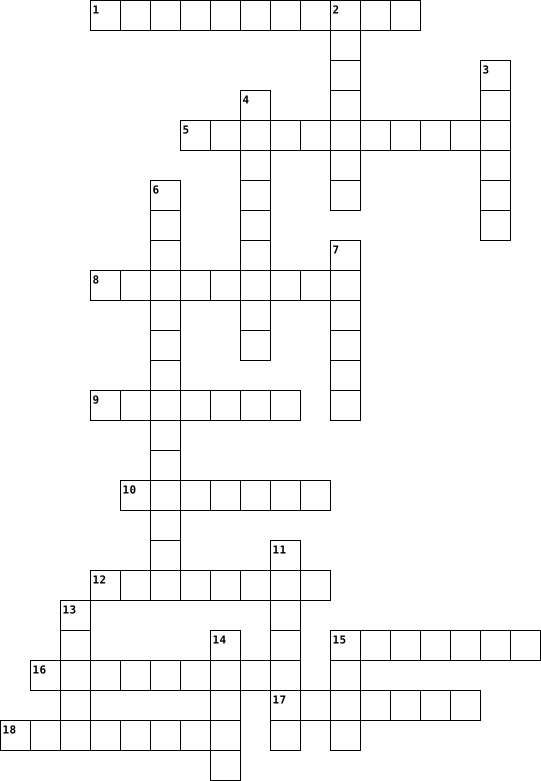
Across
- Testing your flexibility
- Bend easily
- Being able to do something for a long period of time
- Promoting good health
- Exercise requiring upper body strength
- State of being physically strong
- Being physically fit and healthy
- Testing Cardiovascular endurance
- Testing your abdominal strength
- Having well-developed muscles
Down
- Needing lots of oxygen
- We breath it in
- The speed your heart is beating
- Relating to the circulatory system, which comprises the heart and blood vessels
- Your overall well being
- Extend one's body or a part
- Idea of the future or desired result
- Pumps Blood
- Correct posture
19 Clues: Bend easily • Pumps Blood • We breath it in • Correct posture • Promoting good health • Needing lots of oxygen • Your overall well being • Testing your flexibility • Extend one's body or a part • Having well-developed muscles • The speed your heart is beating • Testing your abdominal strength • State of being physically strong • Being physically fit and healthy • ...
Human Circulatory System 2021-08-17

Across
- Open and close as blood pass
- The bridge between the two blood vessels
- Mostly liquid
- A protein that bind oxygen
- Receive blood
- Kill microorganisms
- Present abundantly in blood
- Carry blood to the heart
Down
- Prevent prolong bleeding
- Pump blood
- Movement of cardiac muscle to pump
- Activity that increase heart rate significantly
- Largest artery
- Related to carrying blood to and from lungs
- The way oxygen enters cell
- Molecules released by WBC to kill bacteria
- You can feel this when you touch your wrist
- Center of the pulmonary system
- Carry blood to the body
19 Clues: Pump blood • Mostly liquid • Receive blood • Largest artery • Kill microorganisms • Carry blood to the body • Prevent prolong bleeding • Carry blood to the heart • The way oxygen enters cell • A protein that bind oxygen • Present abundantly in blood • Open and close as blood pass • Center of the pulmonary system • Movement of cardiac muscle to pump • ...
CRT150 Heart Failure Progression 2018-10-08

Across
- a reduced blood __________ of the kidneys causes a release of renin
- over time, the increase in preload and afterload caused by vasocontriction leads to an increased workload for the heart, and diminished __________ ___________
- vasoconstriction of the arteries increases ___________
- converts angiotensin I to angiotensin II
- the types of compensatory response to HF progression are cardiovascular, ventricular remodelling and ___________
- angiotensin II, as well as causing vasocontriction, also stimulates the ___________ pathway
- __________ of the heart causes eccentric hypertrophy
- the SNS is activated in a person with impending HF by - drop in cardiac output, drop in blood _______, arterial underfilling
- converts angiotensinogen to angiotensin I
- neurohormonal compensation in the form of sympathetic nervous stimulation (vasoconstriction and contractility) and RAAS (retention of fluid) are only effective in the ____ term
- due to high heart rate, there is reduced ________ time during diastole, and therefore less oxygen makes it to the heart muscle (despite there being an increased demand) > further ischemia, arrythmias, congestion
Down
- dilation of the LV due to increased preload and afterload (eccentric hypertrophy) > decreased ___________ > decreased ejection fraction (systolic dysfunction)
- decompensation is a vicious _________ as impaired ventricular performance leads to reduced CO and BP > neurohormonal response > increase in afterload and preload > ventricular remodelling > impaired performace
- with concentric hypertrophy, the heart wall thickens. therefore it cannot _____ and fill during diastole
- _____________ __ increases afterload by stimulating the contriction of blood vessels. it occurs when angiotensin I is converted via ACE
- thickening of the heart causes _________ hypertrophy
- after cardiac injury, a compensatory mechanism is to deliver more blood _________ and pressure to LV -> increased stretch -> frank starling law -> increased contractility and CO -> no symptoms of HF yet
- aldosterone increases preload by increasing the retention of water and _______
- due to prolonged stimulation of the SNS (increased HR and contractility) the heart has increased ____________ demands.
- vasocontriction of the veins increases ________
20 Clues: converts angiotensin I to angiotensin II • converts angiotensinogen to angiotensin I • vasocontriction of the veins increases ________ • thickening of the heart causes _________ hypertrophy • __________ of the heart causes eccentric hypertrophy • vasoconstriction of the arteries increases ___________ • ...
Circulatory System 2024-04-30

Across
- part of the body's immune system, they help the body fight infection and other diseases.
- the buildup of fats, cholesterol and other substances in and on the artery walls
- straw-colored liquid where the other components float in
- a protein in red blood cells that carries oxygen.
- the smallest blood vessels in your vascular system
- small, colorless cell fragments in our blood that form clots and stop or prevent bleeding
- occurs to increase the change or output: the result of a reaction is amplified to make it occur more quickly.
- any of the blood vessels that carry oxygenated blood away from the heart to the body's cells, tissues, and organs.
- measures the pressure in your arteries when your heart beats
- weak spots in the walls of your arteries that expand.
- universal blood type.
- blood vessels located throughout your body that collect oxygen-poor blood and return it to your heart
- a fluid tissue found in organisms with open circulatory systems
Down
- a spongy substance found in the center of the bones.
- a small mass of specialized tissue located in the right upper chamber (atria) of the heart
- measures the pressure in your arteries when your heart rests between beats.
- contain the pigment hemoglobin, which imparts the red color to blood, and transport oxygen and carbon dioxide
- atrial and ventricular chambers of the heart, or the connection or coordination between them.
- (cardiovascular system) delivers nutrients and oxygen to all cells in the body.
- a type of blood cell that is made in the bone marrow and found in the blood.
- the effects of a reaction slow or stop that reaction.
- connectors between your arteries and capillaries, they control your blood pressure and blood flow throughout your body.
- is irregular or abnormal heartbeat
- one of the two upper chambers in the heart that receives blood from the circulatory system
- a very small vein, especially one collecting blood from the capillaries.
25 Clues: universal blood type. • is irregular or abnormal heartbeat • a protein in red blood cells that carries oxygen. • the smallest blood vessels in your vascular system • a spongy substance found in the center of the bones. • the effects of a reaction slow or stop that reaction. • weak spots in the walls of your arteries that expand. • ...
Cardiac Conditions 2023-10-07

Across
- protein indicating cardiac cell death
- systemic vascular resistance
- stroke volume X heart rate
- this type of angina is similar to previous chest pains
- during this phase cardiac cell hypoxia can be reversed
- this lethal rhythm will present as a squiggly line
- this medication prevents platelet aggregation
- necessary for cardiac reperfusion
Down
- this medication is used to reduce myocardial oxygen demand by decreasing heart rate
- fluid status
- strength of each heartbeat
- mechanism utilizing the stretch of the myocardium
- irreversible cardiac cell death
- EKG changes possible to see with demand ischemia
- this medicaiton is crucial to preventing cardiac remodeling
- this lethal rhythm presents with a wide QRS complex
- EKG changes seen in total occlusion
- a patient with this type of heart failure will present with edema
- a patient with this type of heart failure will present with shortness of breath
19 Clues: fluid status • strength of each heartbeat • stroke volume X heart rate • systemic vascular resistance • irreversible cardiac cell death • necessary for cardiac reperfusion • EKG changes seen in total occlusion • protein indicating cardiac cell death • this medication prevents platelet aggregation • EKG changes possible to see with demand ischemia • ...
cardiovascular system 2024-11-15

Across
- Sound.
- Defibrillation threshold.
- distribute oxygen-rich blood to your body.
- , nutrients and oxygen to cells
- Valve Complications
- Heart.
Down
- or myocardial infarction
- - vessels that return blood to the heart.
- Ejection fraction
- Atrium
- Length of stay
- Long Q-T syndrome.
- pumps blood
- Vessel
- Hypertrophic cardiomyopathy
15 Clues: Sound. • Atrium • Vessel • Heart. • pumps blood • Length of stay • Ejection fraction • Long Q-T syndrome. • Valve Complications • or myocardial infarction • Defibrillation threshold. • Hypertrophic cardiomyopathy • , nutrients and oxygen to cells • - vessels that return blood to the heart. • distribute oxygen-rich blood to your body.
Cadence's Med. Terms Crossword Puzzle 2025-02-18

Across
- a test to record the electrical signals in the heart
- the main organ in the cardiovascular system
- tests healthcare providers use to monitor your overall health or help diagnose medical conditions
- largest organ in the body
- suffix
- prefix
- Damage or disease in the heart's major blood vessels.
- root word
- suffix
- occurs when the heart muscle doesn't pump blood as well as it should
Down
- can limit blood flow, increasing risk of heart attack or stroke. It's detected by a blood test.
- occurs when a blood vessel carries oxygen and nutrients to the brain is blocked by a clot, bursts, or ruptures
- is a projection radiograph of the chest used to diagnose conditions affecting the chest, its contents, and nearby structures.
- a bodily fluid
- blood vessels located throughout the body
- root word
- when the pressure in your blood vessels is too high (140/90 mmHg or higher)
- tube like structures responsible for fluid
- uses high frequency sound waves (ultrasound) to make pictures of your heart.
- cardiological examination that evaluates the cardiovascular system's response to external stress within a controlled clinical setting
- usual cause is the buildup of plaque.
21 Clues: suffix • prefix • suffix • root word • root word • a bodily fluid • largest organ in the body • usual cause is the buildup of plaque. • blood vessels located throughout the body • tube like structures responsible for fluid • the main organ in the cardiovascular system • a test to record the electrical signals in the heart • Damage or disease in the heart's major blood vessels. • ...
Gums & Hearts: Everyday Habits 2026-03-25

Across
- Habit that is hard on both your gums and your heart
- Tiny living things in the mouth that can cause infection
- Something in your life that makes disease more likely
- Condition that makes gum problems and heart problems more likely
- Regular visit to the dentist to check gums and teeth
- Infection of the gums that can make them red, sore, and puffy
- Tiny vessels in your gums carry this through your body
- Best everyday drink for your teeth and your heart
- Simple exercise that helps keep your heart healthier
- How your gums may feel when they are irritated or infected
- Sticky film on teeth that can irritate gums if not brushed away
- What you should do gently twice a day with fluoride toothpaste
- Things you do now to stop disease before it starts
Down
- String used to clean between teeth where the brush can’t reach
- Emergency when blood can’t reach part of the heart
- Emergency when blood can’t reach part of the brain
- Highway that carries blood, germs, and inflammation around the body
- Pink or red in the sink after brushing or flossing
- Artery that is narrowed so blood has trouble getting through
19 Clues: Best everyday drink for your teeth and your heart • Emergency when blood can’t reach part of the heart • Emergency when blood can’t reach part of the brain • Pink or red in the sink after brushing or flossing • Things you do now to stop disease before it starts • Habit that is hard on both your gums and your heart • ...
Olivia Travierso- Unit 4 2018-04-11

Across
- Valve that prevents the oxygenated blood in the left ventricle from returning to the left atrium
- Valve that prevents deoxygenated blood in the right ventricle from returning to the right atrium
- The space within blood vessels in which the blood flows
- Relaxation of the tunica media and the expansion of the lumen
- Narrows the lumen of blood vessels
- Small blood vessels that connect capillaries and veins
- Heart rate that is higher than normal
- The node that signals the contraction of the atria (AKA SA)
- The plane that divides the body or organ into inferior and superior halves
- The muscular wall of the heart
- Constant high blood pressure
- The plane that divides the body or organ into anterior and posterior halves
Down
- Thin-walled blood vessels where gas, nutrients and wastes are exchanged
- Instrument used to take a blood pressure
- The node that is located in the wall between the right atrium and right ventricle (AKA AV)
- Lower, larger chambers that send blood out from the heart
- System made up of the organs of the heart and blood vessels
- Valve that allows blood to flow out of the right ventricle to the lungs
- The plane that divide the body or organ into left and right halves
- Upper, smaller chambers that receive blood into the heart
- Smaller branches of arteries
- The phase when blood is sent out of the heart
- The longest phase; blood fills the atria
- Valve that separates the aorta from the left ventricle
24 Clues: Smaller branches of arteries • Constant high blood pressure • The muscular wall of the heart • Narrows the lumen of blood vessels • Heart rate that is higher than normal • Instrument used to take a blood pressure • The longest phase; blood fills the atria • The phase when blood is sent out of the heart • Small blood vessels that connect capillaries and veins • ...
Unit 1 Vocab Review 2018-10-23

Across
- the gas animal cells need for survival
- the movement of molecules from high to low concentration until equilibrium
- controls the cell
- this means a description of the organ or organelle
- small and round in animal cells
- green organelle in plant cells
- the gas animal cells need to get rid of
- all living things are made of cells, cells are the basic unit of life, all cells come from cells
- carries blood away from the heart, thick muscular walls
- many in a cell, bean shaped, two membranes
- provides shape and support in plant cells
- chemical that enables photosynthesis to occur
- the system that enables us to breathe
- keeps blood flowing in one direction in the heart
- the system that enables breaking down food into nutrients
Down
- the system that controls everything in our body
- the only prokaryotic cell
- lower heart chamber
- the system that enables movement
- this means the job of the organ or organelle
- controls what enters and exits the cell
- the system that transports materials to cells
- simple cell, free floating DNA, few organelles, single celled
- made up of groups of similar tissues
- watery gel that surrounds and hold organelles
- one-cell thick, diffusion occurs here
- carries blood to the heart, has valves
- the sugar/nutrient cells need
- top heart chamber
- complex cell, many internal organelles, has nucleus
- the smallest level of organization
- the largest level of organization
- has four chambers and pumps blood
- the system that fights infections
34 Clues: controls the cell • top heart chamber • lower heart chamber • the only prokaryotic cell • the sugar/nutrient cells need • green organelle in plant cells • small and round in animal cells • the system that enables movement • the largest level of organization • has four chambers and pumps blood • the system that fights infections • the smallest level of organization • ...
Cardiomyophathy 2014-12-09

Across
- The condition may also be called takotsubo cardiomyopathy, apical ballooning syndrome or _____ cardiomyopathy by doctors.
- This type of cardiomyopathy has an unexplained cause and can happen in the last month of pregnancy
- This type of defibrillator is occasionally implanted
- One of the main causes of heart failure
- Heart muscle becomes less rigid and elastic
- Feet and ankle symptom
- a group of heart and muscle diseases that affect structural or functional ability of the myocardium
- These type of treatments can put people at risk
- This type of disease is not associated with cardiomyopathy
- EKG, chest radiograph, ECG, CT Scan, cardiac catherization, endomyocardial biopsy all help in this
- Makes the heart work harder and could be a risk
- A viral, fungal, bacterial or protozoal myocarditis secondary type of cardiomyopathy
- Family history of cardiomyophathy
- A lot of trips to the bathroom due to taking this as part of the wellness plan
Down
- Using these can cause cardiomyopathy
- Shortness of breath
- Focusing on relieving symptoms, observing, preventing complications, providing emotional and psychological support
- Increased size and mass of the heart due to increased muscle thickness
- Type of exercise to avoid
- Cardiomyopathies are classified as primary and this
- Inflammation of the heart walls is also called this
- Too many years of using this can lead to dilated cardiomyopathy
- Most common type of Cardiomyopathy
- Can block the blood flow to other organs
- Hypertrophic cardiomyopathy is considered genetic and is the major cause of death in young ones
- Diabetes may cause this secondary type
- Just can't seem to stay focused
27 Clues: Shortness of breath • Feet and ankle symptom • Type of exercise to avoid • Just can't seem to stay focused • Family history of cardiomyophathy • Most common type of Cardiomyopathy • Using these can cause cardiomyopathy • Diabetes may cause this secondary type • One of the main causes of heart failure • Can block the blood flow to other organs • ...
Circulatory and Respiratory Terms Crossword 2025-06-28

Across
- - Measurement of breaths
- - Decreased respirations
- - Above normal blood pressure
- - Within the trachea
- - Without oxygen
- - Straight breathing
- - Surgical removal of a lobe
Down
- - Incision into the chest wall
- - Fast heart rate
- - Around the heart
- - Within the heart
- - A record of the electrical impulses of the heart
12 Clues: - Without oxygen • - Fast heart rate • - Around the heart • - Within the heart • - Within the trachea • - Straight breathing • - Measurement of breaths • - Decreased respirations • - Surgical removal of a lobe • - Above normal blood pressure • - Incision into the chest wall • - A record of the electrical impulses of the heart
Christmas Crossword 9x1 2021-12-16

Across
- cell that does most of the photosynthesis in a leaf
- an organelle only found in plant cells that stores cell sap
- cell that destroys pathogens in the body
- the organ that produces bile
- the test for protein
- the organ that contains hydrochloric acid
- the test for sugars
- unit of energy
- the movement of water through a partially permeable membrane
- gaps at the bottom of the leaf where gases can move it and out
- the plant vessel that transports sugars
- cell in the roots which absorbs water and minerals
- a quantity with a magnitude but no direction
- small sacks in the lungs where gas exchange takes place
- specific vessel that sends blood from the heart to rest of the body
- specific blood vessel that receives blood from the lungs into the heart
- a word to describe a plant or animal cell
- a result in a set of data that doesn't look right
- the organ that produces all 3 enzymes
- the arteries which provide oxygen to the heart itself
- the plant vessel that transports water and minerals
- atoms that are the same element but have different number of neutrons
- specific vessel that receives blood from the rest of the body back to the heart
- one layer of graphite
- the first fullerene to be discovered
Down
- starch is digested into...
- an electron that is free is...
- a mixture of metals
- movement of particles from low to high concentration
- particle with relative mass of very small
- the test for starch
- particle with a +1 charge
- protein is digested into...
- the organ that absorbs digested nutrients
- unit of resistance
- unit of potential difference
- general blood vessel that takes blood away from the heart
- the organ that absorbs water
- particle with no charge
- a quantity with both magnitude and direction
- rings of DNA found in prokaryotic cells
- second chamber of the heart
- movement of particles from high to low concentration
- first chamber of the heart
- the forces between simple covalent molecules
- specific vessel that sends blood from the heart to the lungs
- blood vessel where oxygen is delivered to tissues
- unit of current
- unit of force
- where most chemical reactions occur in a cell
- general blood vessel that takes blood to the heart
51 Clues: unit of force • unit of energy • unit of current • unit of resistance • a mixture of metals • the test for starch • the test for sugars • the test for protein • one layer of graphite • particle with no charge • particle with a +1 charge • starch is digested into... • first chamber of the heart • protein is digested into... • second chamber of the heart • the organ that produces bile • ...
The Cardiovascular System 2021-04-25

Across
- atrium receives blood from the body
- artery carries oxygen poor blood
- atrium receives blood from the lungs
- separates the right heart from the left heart
- continuous movement of blood through the body
- node secondary pacemaker of the heart
- carry blood to the heart
- ventricle pumps blood to the lungs
- node primary pacemaker of the heart
Down
- valve separates left atrium from ventricle
- vein carries oxygen rich blood
- ventricle pumps blood to the body
- valve separates right atrium from ventricle
- carry blood away from the heart
14 Clues: carry blood to the heart • vein carries oxygen rich blood • carry blood away from the heart • artery carries oxygen poor blood • ventricle pumps blood to the body • ventricle pumps blood to the lungs • atrium receives blood from the body • node primary pacemaker of the heart • atrium receives blood from the lungs • node secondary pacemaker of the heart • ...
HEART ANATOMY & CARDIOVASCULAR DISEASES 2023-09-26

Across
- transport oxygenated blood from lungs to heart
- ensure that oxygenated and deoxygenated blood does not mix
- transport deoxygenated blood from heart
- calcium deposited on the plaque
- insufficient oxygen supply to the heart muscle cause severe chest pain
- main blood artery that transport oxygenated blood to the whole body
- ensure that blood which flow into right ventricle does not flow back into right atrium
Down
- artery that supply blood to the heart
- caused by the restricted blood flow
- ensure that blood flow out of the heart does not flow back
- formation and deposition of plaque on artery wall
- main vein that transport deoxygenated blood back to heart
- ensure that blood which flow into left ventricle does not flow back into left atrium
13 Clues: calcium deposited on the plaque • caused by the restricted blood flow • artery that supply blood to the heart • transport deoxygenated blood from heart • transport oxygenated blood from lungs to heart • formation and deposition of plaque on artery wall • main vein that transport deoxygenated blood back to heart • ...
Vet Terms 2023-03-14

Across
- A chemical that prohibits clotting
- Nearest Midline (mostly used with legs)
- A lack or loss of appetite
- Higher/More than Normal
- Refers to Belly or Underside
- Loss of hair on an animal
- Inflammation of
- Baby teeth
Down
- High heart rate
- Double-layered membrane surrounding the heart
- Slow heart rate
- "Party hat" for a pet
- Lower/Less than Normal
- Medication for VF
- process of complete knowledge
- Infection in the uterus
- Anti-nausea injection
17 Clues: Baby teeth • High heart rate • Slow heart rate • Inflammation of • Medication for VF • "Party hat" for a pet • Anti-nausea injection • Lower/Less than Normal • Infection in the uterus • Higher/More than Normal • Loss of hair on an animal • A lack or loss of appetite • Refers to Belly or Underside • process of complete knowledge • A chemical that prohibits clotting • ...
El Día de San Valentín 2015-02-10

Across
- to flirt
- to get married (to someone)
- chocolates
- boyfriend
- a broken heart
- hugs
- pink
- angel
- white
- Cupid
- a card
- arrows
- kisses
Down
- Valentine's Day
- bow
- girlfriend
- pasion passion
- flowers
- love
- a heart
- to get engaged
- red
- roses
- candy
- a wedding
25 Clues: bow • red • love • hugs • pink • roses • angel • white • Cupid • candy • a card • arrows • kisses • flowers • a heart • to flirt • boyfriend • a wedding • girlfriend • chocolates • pasion passion • a broken heart • to get engaged • Valentine's Day • to get married (to someone)