
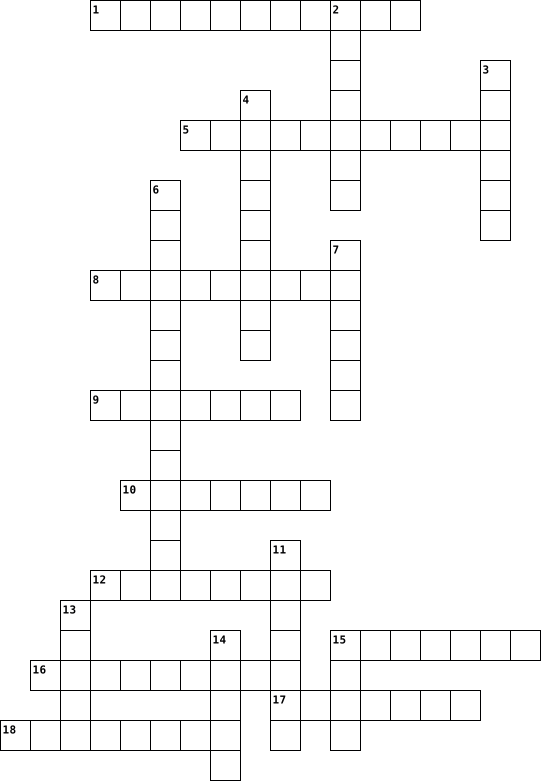
heart Crossword Puzzles
crossword review, 1st 50 terms (#1) 2021-10-20

Across
- abnormal enlargement
- inflammation surrounding the heart
- lack of blood flow
- nose bleed
- bad, painful, or difficult
- inside
- spleen
- heart
- surgical removal
- muscle
- abnormal condition
- chest pain
- kidney
Down
- slow
- visual examination of the abdomen
- inflammation
- vomit
- fast
- nerve
- artificial opening
- harmful
- dizziness
- surrounding
- liver
24 Clues: slow • fast • vomit • nerve • heart • liver • inside • spleen • muscle • kidney • harmful • dizziness • nose bleed • chest pain • surrounding • inflammation • surgical removal • lack of blood flow • artificial opening • abnormal condition • abnormal enlargement • bad, painful, or difficult • visual examination of the abdomen • inflammation surrounding the heart
Enfermedades, Síntomas, Tratamiento 2024-05-17

Across
- virus
- deep pain
- heart disease
- ice
- high blood pressure
- hunger
- dizziness
- fatigue
- allergic reaction
- asthma
- flu
- arthritis
- sharp pain
- swelling
Down
- cold
- surgery
- injection
- migrain
- pneumonia
- heartburn
- diseases/illnesses
- anxiety
- vomiting
- heart attack
- stress
- painkiller
- prescription
- stroke
28 Clues: ice • flu • cold • virus • stress • hunger • stroke • asthma • surgery • migrain • anxiety • fatigue • vomiting • swelling • deep pain • injection • pneumonia • heartburn • dizziness • arthritis • painkiller • sharp pain • heart attack • prescription • heart disease • allergic reaction • diseases/illnesses • high blood pressure
IHC MT 1 2025-11-06

Across
- bad
- blue
- nerve
- neph
- inflammation
- angio
- disease of the heart muscle
- phlebo
- surgical opening into the colon
- cardio
Down
- inflammation of the skin
- muscle
- inflammation of the stomach
- pathy
- white
- surgical removal of a kidney
- nose
- pertaining to across the esophagus
- skin
- red
- bone
- eardrum
22 Clues: bad • red • blue • nose • neph • skin • bone • pathy • white • nerve • angio • muscle • phlebo • cardio • eardrum • inflammation • inflammation of the skin • inflammation of the stomach • disease of the heart muscle • surgical removal of a kidney • surgical opening into the colon • pertaining to across the esophagus
Cardiac 2018-06-03

Across
- arteriosus vessel connecting the pulmonary artery to the aorta in the fetus
- 1 of the 3 cardinal signs of heart disease
- no direct connection between the pulmonary vein and the left ventricle
- __________septal defect: most common heart defect in children with trisomy 21
- underdeveloped left ventricle (abbr)
- atresia absent or malformed valve between the right atrium and right ventricle
- __________murmur is never normal
Down
- enlarged heart
- single common blood vessel coming out of the heart
- cardiac diagnostic tool
- 2 characteristics are VSD and overriding aorta
- narrowing of the aorta
- cardiac concern with long term corticosteroid therapy (abbr.)
- S2 heart sound is associated with the closure of the aortic and __________ valves
14 Clues: enlarged heart • narrowing of the aorta • cardiac diagnostic tool • __________murmur is never normal • underdeveloped left ventricle (abbr) • 1 of the 3 cardinal signs of heart disease • 2 characteristics are VSD and overriding aorta • single common blood vessel coming out of the heart • cardiac concern with long term corticosteroid therapy (abbr.) • ...
Cardiovascular System 2022-06-09

Across
- single cell blood vessel
- Blood vessel that has valves
- Upper chamber of the heart
- The circulatory system that goes from the heart to the muscles and back
- Blood vessel that doesn't contain valves
- The volume of blood ejected from the ;eft ventricle per beat is
Down
- The Oxygen carrying part of a Red Blood Cell
- The only one of these blood vessels to carry deoxygenated blood
- Stroke Volume x Heart Rate
- The number of Heart contractions per minute
- The main vein
- The only one of these blood vessels to carry oxygenated blood
- The main artery
- The circulatory system that goes from the heart to the lungs and back
14 Clues: The main vein • The main artery • single cell blood vessel • Stroke Volume x Heart Rate • Upper chamber of the heart • Blood vessel that has valves • Blood vessel that doesn't contain valves • The number of Heart contractions per minute • The Oxygen carrying part of a Red Blood Cell • The only one of these blood vessels to carry oxygenated blood • ...
Circulatory System 2024-11-26

Across
- Is where gas exchange happens
- Is responsible for fighting foreign infections in the body
- A valve in the heart with two flaps
- Is the largest blood vessel in the body
- A valve in the heart with three flaps
- Transports blood away from the heart
- Is responsible for stopping bleeding when a blood vessel is damaged
Down
- Pumps blood throughout the body
- Acts as a highway for blood throughout the body
- A body system responsible for the transport of blood throughout the body
- Refers to the amount of pressure in the circulatory system
- Returns blood to the heart
- A very small artery leading up to a capillary
- Carries nutrients and oxygen throughout the body
14 Clues: Returns blood to the heart • Is where gas exchange happens • Pumps blood throughout the body • A valve in the heart with two flaps • Transports blood away from the heart • A valve in the heart with three flaps • Is the largest blood vessel in the body • A very small artery leading up to a capillary • Acts as a highway for blood throughout the body • ...
Medical Terms Set #9 2024-04-23

Across
- the heart between beats, at rest
- ventricle (one of the two bottom chambers of the heart)
- record/recording
- 2 tubes that go from trachea to each lung
- growth; development
- contraction
- fatal(deadly)
- lung
- the process of clotting
- vessels
- wall
- arteries
- involuntary contraction
- heart
- a tube you PUT DOWN
Down
- infection that usually doesn't affect you unless already sick
- lung
- vessels
- plaque buildup
- to expand
- any therapy that decreases or stimulates the antigen/antibody response
- to get smaller in diameter
- drug that decreases the antigen/antibody response
- picture or printout of a test result
- to turn or roll
25 Clues: lung • lung • wall • heart • vessels • vessels • arteries • to expand • contraction • fatal(deadly) • plaque buildup • to turn or roll • record/recording • growth; development • a tube you PUT DOWN • the process of clotting • involuntary contraction • to get smaller in diameter • the heart between beats, at rest • picture or printout of a test result • 2 tubes that go from trachea to each lung • ...
chapter 23 2022-06-01

Across
- heart valves let blood flow in one____
- the Ross procedure uses this type of graft
- thickened ventricular walls
- therapy for mechanical valves
- repair of valve flaps
- enlarged heart chambers
- venous stasis/wall injury, hypercoagulable
- removal of the pericardium
- narrowed
- what replacement tissue valves are called
- muscles of heart are stiff
- balloon dilates stenosed valve
Down
- flat red or purple skin spots
- two types of valvular dysfunction
- tissue from porcine or bovine
- each has chordae tendineae and papillary
- tissue from living human or cadaver
- repairs a stenosed valve
- excess fluid in pericardial sac
- leaves defective valve in place
20 Clues: narrowed • repair of valve flaps • enlarged heart chambers • repairs a stenosed valve • removal of the pericardium • muscles of heart are stiff • thickened ventricular walls • flat red or purple skin spots • tissue from porcine or bovine • therapy for mechanical valves • balloon dilates stenosed valve • excess fluid in pericardial sac • leaves defective valve in place • ...
set 9 2025-01-15

Across
- lung
- growth;development
- fatal(deadly)
- to turn or roll
- involuntary contraction
- drug that decreases the antigen/antibody resoponse
- the process of clotting
- to expand
- ventricle one of the two bottom chambers of the heart
- vessels
- arteries
- contraction
Down
- picture or printout of a test result
- heart
- infection that usually doesn't affect you unless already sick
- recording
- plaque buildup
- lung
- to get smaller in diameter
- any therapy that decreases or stimulates the antigen/antibody response
- vessels
- 2 tubes that go from trachea to each lung
- a tube you put down
- wall
- the heart between beats, at rest
25 Clues: lung • lung • wall • heart • vessels • vessels • arteries • recording • to expand • contraction • fatal(deadly) • plaque buildup • to turn or roll • growth;development • a tube you put down • involuntary contraction • the process of clotting • to get smaller in diameter • the heart between beats, at rest • picture or printout of a test result • 2 tubes that go from trachea to each lung • ...
A Year in the Life of a Junior Health Tech Student 2021-05-17

Across
- slow heart beat
- N/G
- heart attack
- difficult to swallow
- long lasting disease
- vomiting
- top layer of skin
- wasting of muscle
- without fever
- study of the aged
- towards the side
- positioning pt before standing
- toxins/pathogens in blood
- listening to body sounds
- lower end of the heart
- microscopic air sacs
- spread of disease
- on back with head elevated
- unable to control urination
- identifying another’s feelings
- towards the middle
- slow respiratory rate
- lasting a short period of time
- nerve enables brain to smell
- further away from trunk
- care encompassing the whole person
- advocate pt & family
- low blood sugar
Down
- watery stool
- 4-year degree
- metal device aids ambulation
- secretes insulin
- nerve enables brain to see
- inhaling food or fluid
- mitral
- small rubber tube into body
- procedures legally performed
- flexion pointing toes
- largest vein
- excessive urine
- cells that form peripheral myelin
- throat
- high B/P
- close to trunk
- building blocks of protein
- lymphatic system circulates
- free from all pathogens
- on back
- large heart
- fast heart beat
- blood pressure on heart contraction
- bluish color of skin & lips
- back
- front
- dyspnea and apnea resps.
- diet with only water-based liquids
- swelling
- largest artery
- armpit assessment of temp
- for pt confidentiality
- false written statement
- cheek region
- to empty bladder
- activities of daily living
64 Clues: N/G • back • front • mitral • throat • on back • vomiting • high B/P • swelling • large heart • watery stool • heart attack • largest vein • cheek region • 4-year degree • without fever • close to trunk • largest artery • slow heart beat • excessive urine • fast heart beat • low blood sugar • secretes insulin • towards the side • to empty bladder • top layer of skin • wasting of muscle • study of the aged • spread of disease • ...
Phlebotomy Vocabulary Homework 2021-08-17

Across
- used to restrict blood flow, therefore pushing the vein into a more prominent position; used in blood draw to make the vein easier to find
- the process of drawing blood via a shallow puncture into the capillaries, usually in the fingertips
- the process of drawing blood via a puncture in a vein, usually in the arm
- two chambers, left and right; the right receives the blood and drives it into a ventricle to be pumped away from the heart
- two chambers of the heart, left and right
- thin smooth membrane that makes the lining inside the heart and the surface of the valves
- stands for personal protective equipment
- small tubes that are the site of gas exchange at the cellular level
- forms the innermost layer of the pericardium and on the outer layer of the heart
- the skill to be professional
- provides the blood supply to all body tissue
Down
- a chemical liquid that kills bacteria
- the universal process of
- the gauge determines the diameter, given that higher the gauge the thinner the diameter of the needle is
- the process of puncturing the vein under medical conditions, usually to draw blood or for intravenous injections
- contact with patients' bodily fluid, via PPE and certain processes
- bring blood away from the heart to the rest of the body
- used a vacuum to take in the blood drawn
- the muscular tissue of the hear
- brings deoxygenated blood back to the heart
- chemicals that reduce the number of microorganisms in the area applied
- supply the heart's muscle with blood
22 Clues: the universal process of • the skill to be professional • the muscular tissue of the hear • supply the heart's muscle with blood • a chemical liquid that kills bacteria • used a vacuum to take in the blood drawn • stands for personal protective equipment • two chambers of the heart, left and right • brings deoxygenated blood back to the heart • ...
COR, REG, Number Roots Vocabulary 2014-11-05

Across
- with heart-felt warmth
- a series of three books or plays
- a three-pronged spear
- to dishearten
- to put in writing the feelings of one's heart
- a four-footed creature
- having two centers of vision
- a guide to the ideas of a book, gets to the heart of the topic
- to inspire, to hearten
- a religious house where one goes to be alone
- agreement, reaching one heart
- control of sales of a product or service by one company
- double-dealing, trickery, not being honest, acting 2 different ways to different people or groups, two-faced
- sung with "one voice," in music, two or more sounds or tones at the same pitch or in octaves,
- A right-angled parallelogram
- quality of having a brave heart
- one of a kind, radically distinctive and without equal
- a conversation between two or more people.
Down
- a period of 100 years
- The fancy clothing of a king
- portable wind instrument producing notes of one heart
- the Ten Commandments
- an insect with many legs
- lack of agreement or harmony
- A law made by a ruler
- The manner of a ruler's government
- Like a king
- music for two performers
- speaking two languages
- happening once every 200 years, celebrating 200 years
- having only one spouse
- The ruler of a church
- having one sound or tone, a single tone repeated with different words or different rhythms
- a polygon (shape) having five sides
- Moral rightness
- combat between two people or armies
36 Clues: Like a king • to dishearten • Moral rightness • the Ten Commandments • a period of 100 years • A law made by a ruler • a three-pronged spear • The ruler of a church • with heart-felt warmth • a four-footed creature • speaking two languages • having only one spouse • to inspire, to hearten • an insect with many legs • music for two performers • The fancy clothing of a king • ...
Semester 2 Med Terms 2023-05-02

Across
- destruction of a clot
- production of sperm
- growth of uterine tissue outside of the uterus
- process of pouring across
- white blood cell condition
- pertaining to holding back
- incision of the chest
- surgical removal of the prostate
- end stage renal disease
- enlarged heart
- abnormal condition of excessive sensation
- uncontrolled urine release
- condition of painful urine
- without breathing
- incision of a vein
- process of releasing an egg
- pertaining to cervix
- high blood pressure
- red blood cell
- lack of oxygen
- study of immune system
- visual examination of the bladder
- low blood sugar
- weakness on one side of body
- foreign or naturally occurring protein substance
- specialist of the female reproductive system
- fights against foreign or naturally occurring protein substance
- absense of menstruation
- pain in head
Down
- state of low/deficient thyroid
- inflammation of the pancreas
- behind the peritoneum
- surgical incision in the skull
- secreting within
- slow movement
- blood protein
- record of electrical activity of the heart
- creation of disease
- slow heart rate
- swelling of lymph tissue
- pertaining to hormones
- pertaining to heart and lungs
- difficulty breathing
- surgical removal of an ovary
- inflammation of the bladder
- pertaining to urethra
- record of electrical activity in brain
- inflammation of heart muscle
- to stop/control a bleed
- rapid flow of blood
- breakdown of blood
- self immune
- suturing of a nerve
- fast heart rate
- pertaining to chest
- inflammation of the throat
56 Clues: self immune • pain in head • slow movement • blood protein • enlarged heart • red blood cell • lack of oxygen • slow heart rate • fast heart rate • low blood sugar • secreting within • without breathing • incision of a vein • breakdown of blood • production of sperm • creation of disease • rapid flow of blood • high blood pressure • suturing of a nerve • pertaining to chest • difficulty breathing • ...
words related to the heart 2021-04-25

Across
- originating in the heart
- inflammation of the heart muscles
- Pertaining to the heart and blood vessel (circulatory)
- A disease of the heart muscle that causes it to lose its pumping strength
- enlargement of the heart
Down
- The procedure of applying an electrical shock to the chest to change an abnormal heartbeat into a normal one
- The muscular layer of the heart
- study of the heart
- a record of muscle activity within the heart
- toxic to the heart
10 Clues: study of the heart • toxic to the heart • originating in the heart • enlargement of the heart • The muscular layer of the heart • inflammation of the heart muscles • a record of muscle activity within the heart • Pertaining to the heart and blood vessel (circulatory) • A disease of the heart muscle that causes it to lose its pumping strength • ...
CROSSWORD 2021-10-20

Across
- regulates impulses between atria and ventricles.
- an abnormal heart rhythm.
- middle muscle layer of the heart
- insufficient oxygenation of tissue
- a slow heart rate.
Down
- fast heart rate
- outermost layer of the heart.
- a sac that encases the heart
- a device that produces stimulation to heart.
- largest artery in the human body.
10 Clues: fast heart rate • a slow heart rate. • an abnormal heart rhythm. • a sac that encases the heart • outermost layer of the heart. • middle muscle layer of the heart • largest artery in the human body. • insufficient oxygenation of tissue • a device that produces stimulation to heart. • regulates impulses between atria and ventricles.
Cardiovascular System 2022-05-11

Across
- smaller branches of arteries
- carries blood away from the heart
- when the heart relaxes
- smaller branches of veins
- closer to aortic and pulmonary valves when the heart relaxes
Down
- smallest vessels of blood
- muscular pump
- carry blood toward the heart
- when the heart contracts
- closer to tricuspid and mitral valves when the heart contracts
10 Clues: muscular pump • when the heart relaxes • when the heart contracts • smallest vessels of blood • smaller branches of veins • smaller branches of arteries • carry blood toward the heart • carries blood away from the heart • closer to aortic and pulmonary valves when the heart relaxes • closer to tricuspid and mitral valves when the heart contracts
The Transport System in Human 2021-02-08

Across
- The two lower chambers of the heart
- The heart is divided into a left and right side by this structure
- Substances are transported in and out of this organism by diffusion
- Large blood vessels with very thick walls
- Blood that is rich in oxygen
- The _________ system is responsible for transporting substances around the body
Down
- Process by which particles spread from a region where there are many, to a region where there are few particles
- Hole or passage way through which blood flows
- Blood vessels that are only one-cell thick
- Prevent the back flow of blood in the veins
- One of the upper chambers of the heart is called the __________
- Organ which pumps blood around the body
- Carries blood back to the heart
- Largest artery in the body
- Blood that has given up its oxygen is said to be ________
- One of the substances transported to the body cells
16 Clues: Largest artery in the body • Blood that is rich in oxygen • Carries blood back to the heart • The two lower chambers of the heart • Organ which pumps blood around the body • Large blood vessels with very thick walls • Blood vessels that are only one-cell thick • Prevent the back flow of blood in the veins • Hole or passage way through which blood flows • ...
Circulatory System 2022-10-09

Across
- the muscle your heart is made up of
- Blood cells that contain haemoglobin and carry oxygen around your body
- Blood vessels that carry blood away from your heart
- Blood with low oxygen
- A waxy, fat-like substance
- A chemical found in red blood cells
Down
- Blood with high oxygen
- Chest pain caused by reduced blood flow to heart muscles
- Network of thin-walled vessels that join the arteries to the veins
- The system that carries blood to and from your heart to the rest of your body
- Blood cells that help to fight pathogens (disease)
- A clear yellowish liquid found in blood
- Blood vessels that carry blood back to your heart
- Broken up bits of cells that help our blood to clot
- A small abnormal build-up of cholesterol, calcium and fibrin leading to the narrowing of arteries
- A blood clot
16 Clues: A blood clot • Blood with low oxygen • Blood with high oxygen • A waxy, fat-like substance • the muscle your heart is made up of • A chemical found in red blood cells • A clear yellowish liquid found in blood • Blood vessels that carry blood back to your heart • Blood cells that help to fight pathogens (disease) • Blood vessels that carry blood away from your heart • ...
exchange of substances 2021-09-27

Across
- A class of enzymes that hydrolyze peptide bonds at the end of proteins (e.g. between the penultimate and last amino acid in the polypeptide).
- The two airways branching out from the trachea and lead to the smaller bronchioles.
- Tubes leading from the spiracles to the tracheoles that are part of the gaseous exchange system.
- A class of enzymes that hydrolyze lipids.
- Molecules found in the small intestine that assist in the coagulation of lipids, increasing the lipid surface area for breakdown.
- A type of chamber in the heart which receives blood from the atrium above it and pumps it out of the heart.
- A type of membrane transport mechanism involving two different molecules moving across a cell membrane.
- Small airways which branch out from the bronchi and end at the alveoli.
- The main airway that acts as a passage for air to pass to and from the bronchi.
- The tissue that transports water in the stem and leaves of plants.
- A decrease in the affinity of haemoglobin for oxygen in areas with a high carbon dioxide concentration.
- The chamber in the heart that receives deoxygenated blood directly from the vena cava and passes it on to the right ventricle.
- a type of blood vessel that carries blood into the heart from other parts of the body.
- A type of plant that is adapted to survive in places with very little water.
- A smaller type of blood vessel that connects arteries with capillaries.
- The main artery that carries oxygenated blood to the kidneys from the heart.
- The main vein that carries oxygenated blood away from the lungs and back to the heart.
- A protein found in red blood cells that has a quaternary structure and is specialised to carry oxygen to the tissues.
- A network of many different capillaries that supply the tissues with blood.
- Small openings on the surface of insects that allow for the exchange of gases with their environment.
- Small divisions of the gills in fish that extend off the gill arch.
- Fluid filtered out from the blood that bathes tissues and provides the cells with substances like food and dissolved gases for exchange.
- The main artery that supplies the heart tissue with blood
- Small protrusions on the gill filaments designed to increase the surface area available for gas exchange.
- A type of chamber in the heart which receives blood directly from a vein and passes it on to a ventricle.
- A membrane protein involved in the cotransport of molecules in opposite directions.
- A type of loosely packed mesophyll tissue with air pockets found in plant leaves which is specialised for gas exchange.
Down
- A set of muscles found between the ribs on the outside that are involved in forced and quiet inhalation.
- Conformational changes caused by the binding of oxygen to haemoglobin that increase the ability of haemoglobin to bind more oxygen.
- A membrane protein involved in the cotransport of molecules in the same direction.
- The main artery that carries oxygenated blood away from the heart at high pressure.
- A class of enzymes that hydrolyze polysaccharides.
- A very small blood vessel with thin walls and a small diameter used for substance exchange in tissues.
- A set of muscles found between the ribs on the inside that are involved in forced exhalation
- The main artery that carries deoxygenated blood from the heart to the lungs for reoxygenation.
- The chamber in the heart that receives deoxygenated blood from the right atrium and pumps it out of the heart to the lungs for reoxygenation.
- The chamber in the heart that receives oxygenated blood from the pulmonary vein and passes it on to the left ventricle.
- A class of enzymes found within membranes that hydrolyze disaccharides into monosaccharides.
- A class of enzymes found within membranes that hydrolyze dipeptides into singular amino acids.
- A type of blood vessel that carries blood away from the heart.
- An organised group of lipid molecules that aggregate together to provide a hydrophobic capsule for the uptake of lipids.
- The main vein that carries deoxygenated blood away from the kidneys back to the heart.
- The main vein that carries deoxygenated blood into the right atrium of the heart.
- A class of enzymes that hydrolyze peptide bonds within polypeptides.
- The chamber in the heart that receives oxygenated blood from the left atrium and pumps it out of the heart to the rest of the body.
- A smaller type of blood vessel that connects capillaries with veins.
- Small air sacs found in the lungs at the end of bronchioles which provide a large surface area for gas exchange.
- A tube reinforced with cartilage that allows for the movement of air between the larynx and bronchi.
- Very small tubes that make up the respiratory system of insects and carry gases from the tracheae to the cells.
- A large sheet of muscle below the lungs used to reduce and increase the lung capacity to create pressure changes necessary for ventilation.
- Small holes found on leaves that can be opened or closed by guard cells to control the amount of water loss and gas exchange.
- A type of tissue found in plants used to transport organic substances from where they are made to where they are needed.
52 Clues: A class of enzymes that hydrolyze lipids. • A class of enzymes that hydrolyze polysaccharides. • The main artery that supplies the heart tissue with blood • A type of blood vessel that carries blood away from the heart. • The tissue that transports water in the stem and leaves of plants. • Small divisions of the gills in fish that extend off the gill arch. • ...
Circulatory System Mini Test 2017-04-07

Across
- Clear fluid that fills space around body cells
- Cells that cause blood to clot
- Muscular chamber that pumps the blood out of the heart
- Full of hemoglobin and carry oxygen
- Oxygen carrying protein in blood
- Fluid where other parts of the blood are suspended
- Blood vessels that carry blood away from the heart
Down
- Protect the body from disease
- Specialized white blood cells that provide the body with immunity
- Blood vessels that return blood to the heart
- A tissue made up of cells, fluid, and other substances
- Small vessels that carry blood between arterioles and vessels
- Chamber in the heart that receives blood from the body
- Organ that pumps blood though the body
14 Clues: Protect the body from disease • Cells that cause blood to clot • Oxygen carrying protein in blood • Full of hemoglobin and carry oxygen • Organ that pumps blood though the body • Blood vessels that return blood to the heart • Clear fluid that fills space around body cells • Fluid where other parts of the blood are suspended • ...
Cardiac 2018-06-03

Across
- Vessel connecting the pulmonary artery to the aorta in the fetus
- 1 of the 3 cardinal signs of heart disease
- Two characteristics of this CHD are VSD and overriding aorta
- No direct connection between the pulmonary vein and the left ventricle
- Atrioventricular __________defect: most common heart defect in children with trisomy 21
- Cardiac concern with long term corticosteroid therapy (abbr.)
Down
- Cardiac diagnostic tool
- Absent or malformed valve between the right atrium and right ventricle
- Enlarged heart
- Narrowing of the aorta
- single common blood vessel coming out of the heart
- __________murmur is never normal
- S2 heart sound is associated with the closure of the aortic and __________ valves
- Underdeveloped left ventricle (abbr)
14 Clues: Enlarged heart • Narrowing of the aorta • Cardiac diagnostic tool • __________murmur is never normal • Underdeveloped left ventricle (abbr) • 1 of the 3 cardinal signs of heart disease • single common blood vessel coming out of the heart • Two characteristics of this CHD are VSD and overriding aorta • Cardiac concern with long term corticosteroid therapy (abbr.) • ...
Atrial Fibrillation 2019-04-22

Across
- Abuse / Contributing factor that is a metabolic stressor when used moderately
- Sleep Apnea / Periods of absent breathing when sleeping which increases risk of AFib
- / Chronic lung disease
- Heart Surgery / Invasive cardiac procedure
- / Results in an increased in metabolism
- / Born with structural abnormalities
- Embolism / Clot in the lungs
- / Substances that increase metabolism
- / A lack of insulin which can result in inflammation in the heart
Down
- / High blood pressure that causes pressure and remodeling of heart muscle
- Artery Disease / Narrowing of cardiac vessels resulting in decreased oxygenation of tissues
- / Inflammation in the cardiac sac
- Heart Disease / Valvular damage as a result of untreated strep throat
- / Condition where fatty deposits are deposited around the heart tissue
14 Clues: / Chronic lung disease • Embolism / Clot in the lungs • / Inflammation in the cardiac sac • / Born with structural abnormalities • / Substances that increase metabolism • / Results in an increased in metabolism • Heart Surgery / Invasive cardiac procedure • / A lack of insulin which can result in inflammation in the heart • ...
Atrial Fibrillation 2019-04-22

Across
- Heart Surgery / Invasive cardiac procedure
- / Chronic lung disease
- / A lack of insulin which can result in inflammation in the heart
- / Results in an increased in metabolism
- / Substances that increase metabolism
- Artery Disease / Narrowing of cardiac vessels resulting in decreased oxygenation of tissues
- / Born with structural abnormalities
Down
- Embolism / Clot in the lungs
- / Inflammation in the cardiac sac
- / Condition where fatty deposits are deposited around the heart tissue
- / High blood pressure that causes pressure and remodeling of heart muscle
- Sleep Apnea / Periods of absent breathing when sleeping which increases risk of AFib
- Heart Disease / Valvular damage as a result of untreated strep throat
- Abuse / Contributing factor that is a metabolic stressor when used moderately
14 Clues: / Chronic lung disease • Embolism / Clot in the lungs • / Inflammation in the cardiac sac • / Born with structural abnormalities • / Substances that increase metabolism • / Results in an increased in metabolism • Heart Surgery / Invasive cardiac procedure • / A lack of insulin which can result in inflammation in the heart • ...
Medical Terminology 2025-10-02

Across
- inflammation of the appendix
- Kidney
- Disease of the heart muscle
- Inflammation
- Skin
- edema: Fluid accumulation in the lung
- Heart
- Condition
- Nerve pain
Down
- Specialist
- removal of the appendix
- Disease
- Removal
- Inflammation of the skin
- Inflammation of the liver
- Inflammation of the kidney
- Lung
- Nerve
- Study of
- Liver
20 Clues: Lung • Skin • Nerve • Heart • Liver • Kidney • Disease • Removal • Study of • Condition • Specialist • Nerve pain • Inflammation • removal of the appendix • Inflammation of the skin • Inflammation of the liver • Inflammation of the kidney • Disease of the heart muscle • inflammation of the appendix • edema: Fluid accumulation in the lung
frog anatomy 2024-06-03

Across
- vessels that bring blood back into the hear
- lower chamber of the heart
- collets waste
- first site of chemical digesten
- Three lobes
- moves digestive food out
- stores urine
- the thing that being food into the stomach
- pumps blood
- stores, produces, and eliminates blood cells
- air opening to exchange gases
Down
- give the oxygen
- lower chamber of the heart
- stores fat for the winter
- transparent cover that protects the eye
- carries eggs in the female body
- filters blood
- vessels that carrier blood away from the heart
- stores bile
- the first part on the small intestine
20 Clues: stores bile • Three lobes • pumps blood • stores urine • filters blood • collets waste • give the oxygen • moves digestive food out • stores fat for the winter • lower chamber of the heart • lower chamber of the heart • air opening to exchange gases • carries eggs in the female body • first site of chemical digesten • the first part on the small intestine • ...
EKG Vocabulary 2023-03-02

Across
- An electrical shift that takes place within muscle cells
- Dynamic between atrium and ventricle
- High Body Temperature
- pupillary constriction
- Low Body Temperature
- Feverish
- An interference from movement
- A state of balance among the body system
- drooping of the eye lid
- eye appears to sink into the orbit
Down
- Inner Layer of the heart
- Muscular Middle Layer of the heart
- Over Fire
- lack of sweating
- protective outer layer of the heart
- Not Feverish
- Act that maintains privacy founded in 1996
- Over Grass
- Splits ventricles from mixing de+oxygenated blood
19 Clues: Feverish • Over Fire • Over Grass • Not Feverish • lack of sweating • Low Body Temperature • High Body Temperature • pupillary constriction • drooping of the eye lid • Inner Layer of the heart • An interference from movement • Muscular Middle Layer of the heart • eye appears to sink into the orbit • protective outer layer of the heart • Dynamic between atrium and ventricle • ...
Fitness 2021-10-22
Across
- Testing your flexibility
- Bend easily
- Being able to do something for a long period of time
- Promoting good health
- Exercise requiring upper body strength
- State of being physically strong
- being physically fit and healthy
- Testing Cardiovascular endurance
- Testing your abdominal strength
- having well-developed muscles
Down
- Needing lots of oxygen
- We breath it in
- The speed your heart is beating
- Relating to the circulatory system, which comprises the heart and blood vessels
- Your overall well being
- extend one's body or a part
- Idea of the future or desired result
- Pumps Blood
- Correct posture
19 Clues: Bend easily • Pumps Blood • We breath it in • Correct posture • Promoting good health • Needing lots of oxygen • Your overall well being • Testing your flexibility • extend one's body or a part • having well-developed muscles • The speed your heart is beating • Testing your abdominal strength • State of being physically strong • being physically fit and healthy • ...
LRT200S_CVS_Crossword puzzle 2024-02-07

Across
- The smallest blood vessels in the body.
- A condition characterized by irregular heartbeats.
- A condition characterized by high blood pressure.
- A condition characterized by a narrowing of the arteries.
- A medical device used to measure blood oxygen level
- A device used to listen to the sounds of the heart and lungs.
- The lower chambers of the heart.
Down
- The upper chambers of the heart.
- The main artery that carries deoxygenated blood to the lungs.
- A condition characterized by low blood pressure.
- The body's largest artery.
- The phase of the cardiac cycle when the heart muscle relaxes.
- The medical term for a rapid heartbeat.
- The artery commonly used to measure pulse rate on the wrist.
- The phase of the cardiac cycle when the heart muscle contracts.
15 Clues: The body's largest artery. • The upper chambers of the heart. • The lower chambers of the heart. • The smallest blood vessels in the body. • The medical term for a rapid heartbeat. • A condition characterized by low blood pressure. • A condition characterized by high blood pressure. • A condition characterized by irregular heartbeats. • ...
Medical Terminology 1 2026-05-04

Across
- Study of blood
- Fast heart rate
- Slow heart rate
- Inflammation of the kidney
- Low blood pressure
- Muscle pain
- Inflammation of the stomach
Down
- Study of the nervous system
- Joint pain
- Inflammation of the skin
- Study of the heart
- High blood pressure
- Surgical removal of the stomach
- Surgical removal of a kidney
- Inflammation of the liver
15 Clues: Joint pain • Muscle pain • Study of blood • Fast heart rate • Slow heart rate • Study of the heart • Low blood pressure • High blood pressure • Inflammation of the skin • Inflammation of the liver • Inflammation of the kidney • Study of the nervous system • Inflammation of the stomach • Surgical removal of a kidney • Surgical removal of the stomach
Cardiac System 2023-09-05

Across
- visceral pericardium, outermost tissue layer
- receives deoxygenated blood from the right atrium
- returns blood from the upper body to the heart
- receives the oxygenated blood from the longs,covered by the aureole
- muscular tissue of the heart
- regulates blood flow from the upper left chamber into the lower left chamber
- carries deoxygenated blood to the lungs and picks up oxygen
- tip of the heart helps pump blood from the ventricles to the rest of the body
- helps keep oxygen-rich blood from the lungs from mixing with oxygen-poor blood from the body
- takes the oxygenated blood to the body tissue
Down
- allows blood to be pumped into the arteries but prevents backflow of blood into the ventricles
- provides oxygen to the heart
- controls the flow of blood from your heart's right atrium to the right ventricle
- gets the oxygenated blood from the left atrium
- pumps, lower chambers
- receives deoxygenated blood back from the body
- returns blood to the heart from the lower part of the body
- recieves, ventriclesmbers
18 Clues: pumps, lower chambers • recieves, ventriclesmbers • provides oxygen to the heart • muscular tissue of the heart • visceral pericardium, outermost tissue layer • takes the oxygenated blood to the body tissue • gets the oxygenated blood from the left atrium • returns blood from the upper body to the heart • receives deoxygenated blood back from the body • ...
Biology 2024-05-19

Across
- Platelets stimulate the conversion of soluble fibrinogen to insoluble __ threads to form a mesh for blood clotting
- __ respiration is the release of energy by the breakdown of glucose in the absence of oxygen
- Influenza is an example of __ disease
- Coronary heart disease is the occlusion of the __ arteries
- Vaccines stimulate white blood cells to produce __ when the pathogen invades
- __ blood vessels carry blood between the heart and lungs
- Antibiotics is used to treat patients infected with __
- The site of protein synthesis
Down
- Wind movement, temperature __ and light intensity can affect rate of transpiration
- Carbon dioxide enters the leaves through the stomata via __
- Which enzyme digests maltose into glucose?
- __ carries blood from the heart to other parts of the body
- Which solution is used to test for reducing sugar?
- Where else can you find protease other than the small intestines?
- The heart and veins have __
- The site of cellular respiration
- __ blood vessels carry blood between the heart and liver except for __ portal vein
- Which enzyme digests fats into glycerol and fatty acids?
18 Clues: The heart and veins have __ • The site of protein synthesis • The site of cellular respiration • Influenza is an example of __ disease • Which enzyme digests maltose into glucose? • Which solution is used to test for reducing sugar? • Antibiotics is used to treat patients infected with __ • __ blood vessels carry blood between the heart and lungs • ...
Cardiology anatomy 2024-08-28

Across
- which structure gives rise to the coronary arteries
- Leads V5, V6, aVL and leads 1 outline which artery of the heart
- what vessel (in abbreviated form) supplies the sinoatrial node
- Which muscle is part of the mitral valve
- what main vessel (in abbreviated from) does the blood from the upper limbs and head drain into
- Which valve is heard best in the left sternal end 2nd intercostal space
- which artery (in abbreviated form) supplies the interventricular septum
- which nerve fibres come after the bundle of His in the heart
- which nerve provides the parasympathetic drive for the heart
Down
- A murmur found in the fifth intercostal space is a problem with which valve
- What embryological structure connects the right and left atrium
- Which structure depolarises the atria
- The final branch of the aortic arch
- what structure crosses the diaphragm at T8
- where does the myocardium drain blood into
- what structure is found in the middle mediastinum
- the inner most layer of the heart
- What type of valves are aortic and pulmonary valves
18 Clues: the inner most layer of the heart • The final branch of the aortic arch • Which structure depolarises the atria • Which muscle is part of the mitral valve • what structure crosses the diaphragm at T8 • where does the myocardium drain blood into • what structure is found in the middle mediastinum • which structure gives rise to the coronary arteries • ...
Senses and cardio vascular 2025-05-20

Across
- a heart attack occurs when blood flow to part of the heart is _______
- carry oxygenated blood
- the inner part of what structure help with balance and spatial awareness
- focuses light in the retina
- the nerve that transmits visual information from the retina to the brain.
- photoreceptors that are highly sensitive to light
- the blood flow that refers to when deoxygenated blood goes from the heart to the lungs
- photoreceptors that function in bright light
- Carry deoxygenated blood
Down
- refers to a condition in which blood pressure is always low
- what part of the ear is the eardrum located in
- refers to a condition in which blood pressure is always high
- controls the size of the retina and the amount of light getting into the eye
- the chamber on the right side of the heart that deoxygenated blood flows into
- the bottom chamber on both side of the heart
- carbon dioxide is dropped off and ______ is picked up in the lungs
- the ear is split into 3 parts, outer, middle, and _____ ear
- what system in the brain are smells closely linked to
18 Clues: carry oxygenated blood • Carry deoxygenated blood • focuses light in the retina • the bottom chamber on both side of the heart • photoreceptors that function in bright light • what part of the ear is the eardrum located in • photoreceptors that are highly sensitive to light • what system in the brain are smells closely linked to • ...
Cardiovascular Crossword Puzzle 2014-11-18

Across
- diastole is the ____ period of the heart
- blood type O is the universal____
- what is the role of blood in the immune system
- blood clotting requires which mineral
- a bruise is caused by ____ blood cells
- blood pressure is measured with what
- the heart beat starts in the _______ node
- which is thicker, artery or vein
- name the valve between right atrium and right ventricle
- antibodies are produced in response to ____
- deoxygenated blood returns to the ____ side of the heart
Down
- which vessels use valves to move blood
- red blood cells are known as ____
- pulmonary arteries carry ____ blood
- name the outer layer of the heart
- cells that clot the blood are known as ____
- lumen are ____ in veins than arteries
17 Clues: which is thicker, artery or vein • red blood cells are known as ____ • blood type O is the universal____ • name the outer layer of the heart • pulmonary arteries carry ____ blood • blood pressure is measured with what • blood clotting requires which mineral • lumen are ____ in veins than arteries • which vessels use valves to move blood • ...
Cardiovascular System 2021-02-02

Across
- Plasma, Red Blood Cells, White Blood Cells, Platelets
- The lower chambers of the heart
- tiny blood vessels that connects arteries and veins
- The doorway from the right atrium to the right ventricle
- Oxygenated blood away
- valves keep blood moving in this direction
- First step in blood flow
- The doorway from the left atrium to the left ventricle
- Number of Valves
- Where unoxygenated blood changes to oxygenated
- blood reenters the heart through this
Down
- Pumps blood to the rest of the body
- Your heart is about this size
- Another name for Cardiovascular
- Carries blood and nutrients to the body and waste away from the body
- Unoxygenated blood towards
- The upper chambers of the heart
- Number of Chambers
18 Clues: Number of Valves • Number of Chambers • Oxygenated blood away • First step in blood flow • Unoxygenated blood towards • Your heart is about this size • The lower chambers of the heart • Another name for Cardiovascular • The upper chambers of the heart • Pumps blood to the rest of the body • blood reenters the heart through this • valves keep blood moving in this direction • ...
Crossword 2025-03-07

Across
- - The breastbone, behind which the heart is located.
- - The outermost layer of the heart, containing fat tissue.
- - The upper chamber of the heart that receives blood.
- - The tendinous strings that connect heart valves to muscles.
- - The muscle that pulls on the heartstrings.
Down
- - The protective sac surrounding the heart.
- - The "little beams of meat" inside the heart.
- - Relating to the lungs and associated heart valve.
- - The lower chamber of the heart that pumps blood.
- - A heart valve with three cusps.
10 Clues: - A heart valve with three cusps. • - The protective sac surrounding the heart. • - The muscle that pulls on the heartstrings. • - The "little beams of meat" inside the heart. • - The lower chamber of the heart that pumps blood. • - Relating to the lungs and associated heart valve. • - The breastbone, behind which the heart is located. • ...
ANIL-3&4 2020-05-03

Across
- Fist Kidney Transplantation
- A device to know Heart beat
- Meaning of Capillaries in Latin
- Most poisonous waste
Down
- Swelling of feet and hands
- …………….. Fluid protects the heart
- Heart beat is Equal to
- ………….. Vessels Supply blood to heart
- Heart size
- Anticoagulant (which prevents Blood Clot)
- inner side of Kidney shape
11 Clues: Heart size • Most poisonous waste • Heart beat is Equal to • inner side of Kidney shape • Swelling of feet and hands • Fist Kidney Transplantation • A device to know Heart beat • Meaning of Capillaries in Latin • …………….. Fluid protects the heart • ………….. Vessels Supply blood to heart • Anticoagulant (which prevents Blood Clot)
Mid Science 2024-10-25

Across
- (red)carries blood away from heart
- protect the lungs and heart
- bones that create framework for body
- backbone
- protects the brain
- control center of body
- pumps blood throughout the body
Down
- (blue) carries blood to heart
- upper leg, thigh muscle
- muscles of upper arm
- helps the body move
- strengthens your muscles and keeps body healthy
- fill with air when you breathe in deeply
13 Clues: backbone • protects the brain • helps the body move • muscles of upper arm • control center of body • upper leg, thigh muscle • protect the lungs and heart • (blue) carries blood to heart • pumps blood throughout the body • (red)carries blood away from heart • bones that create framework for body • fill with air when you breathe in deeply • ...
Cardiac Arrhythmia 2022-03-28

Across
- A condition in which the heart's upper chambers (atria) beat too quickly.
- atrial fibrillation
- rapid heartbeat that develops when the normal electrical impulses of the heart are disrupted.
- extra heartbeats that begin in one of the heart's two lower pumping chambers (ventricles).
- ventricular fibrillation
- The sinus node, which is responsible for setting the pace of the heart , works improperly causing the heart to alternate between bradycardia and tachycardia. This is caused by scarring near the node that disrupts the pathway of the electrical impulses. It is most common among older adults.
- Blocking of the heart’s electrical paths may cause signals that trigger heartbeats to slow down or stop. This may cause skipped beats and bradycardia.
- fast heartbeat
- a minimally invasive technique that shrinks the size of tumors, nodules or other growths in the body.
- electrodes can detect and measure the electrical activity in the heart, as well as time the duration of each electrical pulse, therefore measuring the rate and rhythm of atrial and ventricular contractions.
Down
- a noticeably rapid, strong, or irregular heartbeat due to agitation, exertion, or illness.
- used to manage abnormal heart rhythms
- slow heartbeat
- extra heartbeats that begin in one of your heart's two upper chambers (atria)
- two chambers that pump blood from the heart to the body
- The upper two heart chambers
16 Clues: slow heartbeat • fast heartbeat • atrial fibrillation • ventricular fibrillation • The upper two heart chambers • used to manage abnormal heart rhythms • two chambers that pump blood from the heart to the body • A condition in which the heart's upper chambers (atria) beat too quickly. • extra heartbeats that begin in one of your heart's two upper chambers (atria) • ...
Heart Crossword Puzzle 2023-03-07

Across
- - carries blood from the head, neck, arms, and chest.
- - makes up the thick middle layer of the heart.
- -stimulate the heart with electrical impulses to maintain or restore a normal heartbeat.
- - heart chamber that receives blood into the heart and drives it into a ventricle, or chamber, for pumping blood away from the heart.
Down
- - prevent the backward flow of blood.
- - any of the tubes forming part of the blood circulation system of the body, carrying in most cases oxygen-depleted blood toward the heart.
- - each of the two main chambers of the heart, left and right.
- -They transport blood, nutrients and oxygen to cells in your organs and body systems
- - the main artery that carries blood away from your heart to the rest of your body.
- - separates the ventricles and allows for proper blood flow through the heart
- - the blood vessels that bring oxygen-rich blood from your heart to all of your body's cells.
11 Clues: - prevent the backward flow of blood. • - makes up the thick middle layer of the heart. • - carries blood from the head, neck, arms, and chest. • - each of the two main chambers of the heart, left and right. • - separates the ventricles and allows for proper blood flow through the heart • ...
Story of Saint Margaret Mary Alacoque & Sacred Heart 2022-03-11

Across
- Margaret died receiving this sacrament: ____ of the sick
- The modern form of the devotion to the Sacred heart comes from a French nun named _____ _____
- At age 22 Margaret entered the ________.
- Margaret made her 1st Communion at age ______
- Margaret was accused of having ______ by others
- Margaret had a series of _____ over 18 months
- What happened to Margaret's father?
Down
- The name of the Roman Emperor who was converted by seeing a cross in the heavens before a battle
- The first hymn to the Sacred Heart had these words: "I hail Thee ______ Heart most High"
- One of the 3 main parts of the devotion to the Sacred Heart is Eucharistic _______ on Thursdays.
- Jesus promised Margaret Mary _____ promises for those devoted to the Sacred Heart.
- One of the 3 main parts of the devotion to the Sacred Heart is First Fridays ______________
- Margaret's mother wanted her to find a _______.
- Margaret had a _______ that lasted for 4 years.
14 Clues: What happened to Margaret's father? • At age 22 Margaret entered the ________. • Margaret made her 1st Communion at age ______ • Margaret had a series of _____ over 18 months • Margaret's mother wanted her to find a _______. • Margaret had a _______ that lasted for 4 years. • Margaret was accused of having ______ by others • ...
Ch 19 The Circulatory or Cardiovascular System vocabulary 2025-07-08

Across
- An irregular heartbeat.
- Phase when the heart muscles relax.
- A weakening of the heart muscles due to enlargement or thickening, which reduces the heart’s ability to pump blood effectively.
- Shortness of breath when lying down and is relieved by sitting up.
- Inflammation of the veins, usually in the lower extremities.
- A condition in which the amount of red blood cells or hemoglobin in the body is less than normal.
Down
- A condition in which the body tissues do not receive enough oxygen.
- The lower two chambers of the heart.
- Phase where the heart is at work, contracting and pushing blood out of the left ventricle.
- The upper two chambers of the heart.
- A blood clot in a blood vessel.
- A lack of blood supply to an area.
- The blockage of a blood vessel by a blood clot or foreign substance.
- Vessels that carry blood away from the heart.
14 Clues: An irregular heartbeat. • A blood clot in a blood vessel. • A lack of blood supply to an area. • Phase when the heart muscles relax. • The lower two chambers of the heart. • The upper two chambers of the heart. • Vessels that carry blood away from the heart. • Inflammation of the veins, usually in the lower extremities. • ...
Starter crossword burning food 2025-03-04

Across
- The process of releasing energy from glucose in cells. (11)
- The sugar broken down in respiration to release energy. (7)
- The muscle that helps with breathing by contracting and relaxing. (9)
- A structure in the heart that prevents backflow of blood. (5)
- Tiny air sacs in the lungs where gas exchange occurs. (7)
- A blood vessel that carries blood away from the heart. (6)
- The lower chamber of the heart. (9)
- The process of burning something to release energy. (10)
Down
- Gas required for both burning food and respiration. (6)
- a unit used to measure energy in food. (7)
- The rhythmic throbbing of arteries caused by the beating of the heart. (5)
- The element found in all food that is released as dioxide during respiration. (6)
- The upper chamber of the heart. (6)
- A blood vessel that carries blood toward the heart. (4)
14 Clues: The upper chamber of the heart. (6) • The lower chamber of the heart. (9) • a unit used to measure energy in food. (7) • Gas required for both burning food and respiration. (6) • A blood vessel that carries blood toward the heart. (4) • The process of burning something to release energy. (10) • Tiny air sacs in the lungs where gas exchange occurs. (7) • ...
Astma 2013-02-05

Across
- A way to reduce chance of a heart attack (10)
- A microscopic bug that can cause a heart attack (8)
- to much of it will increase chances of a heart attack (4)
- Can cause a heart attack (6)
- comes off animals and can trigger asthmatic attacks (6)
Down
- can fill up your lungs with tar (10)
- found on heart muscels (12)
- what type of disease asthma is (8)
- A person with asthma (10)
- a leading cause in heart attacks (7)
- clogs up the airways (5)
- where air comes from during and swells up during a asthma attack(7)
12 Clues: clogs up the airways (5) • A person with asthma (10) • found on heart muscels (12) • Can cause a heart attack (6) • what type of disease asthma is (8) • can fill up your lungs with tar (10) • a leading cause in heart attacks (7) • A way to reduce chance of a heart attack (10) • A microscopic bug that can cause a heart attack (8) • ...
Cardiovascular System 2024-05-01

Across
- where blood from the body enters the heart
- where blood passes through on the way to the Aorta
- Sends Electracl messages to the brain
- Where blood from the lungs enters the heart
- where blood passes thorugh on its way to the pumenary artery
Down
- where blood from the body exits the heart
- The part of the body that protects major organs
- Carries blood away from the heart.
- This part of your body connects your brain to the body.
- Carries blood to the heart
- changes the size of the pupil
- where blood from the lungs exits the heart
12 Clues: Carries blood to the heart • changes the size of the pupil • Carries blood away from the heart. • Sends Electracl messages to the brain • where blood from the body exits the heart • where blood from the body enters the heart • where blood from the lungs exits the heart • Where blood from the lungs enters the heart • The part of the body that protects major organs • ...
Blood 2021-03-22

Across
- this is a reduction in the plasma clotting factor (factor VIII). The result is that the patient bleeds for a longer period of time
- (attraction to neutral)
- stain blue
- anemia, Lack of mature erythrocytes
- responsible for pumping the blood through and out of the heart
- inherited abnormal hemoglobin production leading to hypochromia
- cell anemia, hereditary abnormal hemoglobin producing sickle-shaped erythrocytes and hemolysis
- white cells
- large elastic vessels (largest being the aorta) which lead directly from the heart carrying oxygen rich blood
- white blood count
- anemia, failure of blood cell production in the bone marrow
- thrombocytes (clotting cells)
- Blood pressure
- “kissing disease” This is an increase in the number of lymphocytes caused by the Epstein Barr virus
Down
- vera, this is the opposite of anemia.
- red cells
- stain red
- fluid filled bag around the heart which acts as a shock absorber and makes sure that the heart can move unobstructed
- Hemoglobin
- smooth inside lining that keeps blood flow unobstructed.
- abnormal heart rhythms
- time, Time taken for blood to stop flowing from puncture wound (normal is 8 minutes or less)
- deep vein thrombosis
- Hematocrit
- myeloma, this is a malignant tumor of the bone marrow. This is another one we will be looking at more closely in disease process and pharmacology.
- anemia, reduction in red cells due to excessive destruction
- (cells with no granules)
- this is a reduction in erythrocytes or hemoglobin in the blood
- complete blood count
- contractions of the heart up to 300 beats per minute
- red blood count
31 Clues: red cells • stain red • Hemoglobin • stain blue • Hematocrit • white cells • Blood pressure • red blood count • white blood count • deep vein thrombosis • complete blood count • abnormal heart rhythms • (attraction to neutral) • (cells with no granules) • thrombocytes (clotting cells) • anemia, Lack of mature erythrocytes • vera, this is the opposite of anemia. • ...
Mouth Parts and Circulatory System 2023-05-11

Across
- collects blood low in oxygen and filled with food and pumps it to the right ventricle
- collects blood from the right atrium and pumps it to the lungs
- Food tube is located dorsal to the trachea
- red blood vessels located on the front of the heart
- Fleshy flap that covers the glottis
- carries blood rich in oxygen and food from placenta to the mother
- continuation of the aorta along the dorsal body wall
- a vein that carries oxygenated blood from the lungs back to the heart
- A bony structure that makes up the roof of the mouth
- a blue blood vessel located on the front of the heart
- collects blood low in oxygen and filled with food and pumps it to the left ventricle
- brings blood low in oxygen and rich in carbon dioxide from upper body to the heart
- a membrane surrounding the heart
Down
- the small bumps on the tongue that allow the pig to distinguish different tastes
- takes blood from the right ventricle to the lungs
- A part of the hard palate that is in the back
- brings blood through the umbilical cord low in oxygen and rich in carbon dioxide from the lower body to the right atrium
- carries blood through the umbilical cord low in oxygen from the fetus to the placenta
- an artery that carries low oxygen blood from the right ventricle of the heart to the lungs
- behind the pulmonary trunk and forming an arch
- collects blood from the left atrium and pumps it throughout the body
21 Clues: a membrane surrounding the heart • Fleshy flap that covers the glottis • Food tube is located dorsal to the trachea • A part of the hard palate that is in the back • behind the pulmonary trunk and forming an arch • takes blood from the right ventricle to the lungs • red blood vessels located on the front of the heart • ...
Heart and Neck Vessels 2012-08-12

Across
- is located in the groove between the trachea and the sternocleidomastoid muscle, medial to and along-side that muscle
- pumping phase, AV valves close to prevent regurgitation of blood back up into the atria
- Occurs with myocardial infarction or low cardiac output states as a result of decreased perfusion
- muscular wall of the heart
- is a tough, fibrous, double walled sac that surrounds and protects the heart.
- calcification of tricuspid valve impedes forward flow into RV during diastole
- swelling, or accumulation of extra fluid, is dependent when caused by heart failure
- occurs when the hearts own blood supply cannot keep up with the metabolic demand.
- fluid in peritoneal cavity
- Turbulent blood flow and collision currents
- Occurs with closure of the AV valves and thus signals beginning of systole
- chambers of the heart
Down
- mitral valve leaflets not only cause with contraction but balloon back up into the left atrium
- is a systolic blood pressure of >140mmHg or diastolic >90mmHg
- rhythmic movement of blood through the heart
- Is the need to assume a more upright position to breathe.
- is the opposing pressure the ventricle must generate to open the aortic valve against the higher aortic pressure
- palpable vibration
- is the thin layer of endothelial tissue that lines the inner surface of the heart chambers and valves
- the venous return that build during systole
- empty oxygenated blood directly into superior vena cava
- Thick walled muscular pumping chamber
- shortness of breath
- is a thin walled reservoir for holding blood.
24 Clues: palpable vibration • shortness of breath • chambers of the heart • muscular wall of the heart • fluid in peritoneal cavity • Thick walled muscular pumping chamber • the venous return that build during systole • Turbulent blood flow and collision currents • rhythmic movement of blood through the heart • is a thin walled reservoir for holding blood. • ...
Year 10 respiratory system and circulatory system crossword 2025-01-31

Across
- A fluid that circulates throughout the body, carrying oxygen and nutrients
- The system responsible for transporting blood throughout the body
- One of the two lower chambers of the heart
- The throat
- Relating to the body as a whole
- The system responsible for gas exchange
- The primary organs of respiration
- Relating to the lungs
- The protein in red blood cells that carries oxygen
- The windpipe
- BLOOD CELL A type of blood cell that carries oxygen
- A flap of tissue that covers the trachea during swallowing
- The voice box
- BLOOD CELL A type of blood cell that fights infection
- The organ of smell and the entry point for air
- Blood vessels that carry blood away from the heart
Down
- Tiny air sacs in the lungs where oxygen and carbon dioxide are exchanged
- DIOXIDE A waste gas produced during cellular respiration
- A muscle that aids in breathing
- Smaller branches of the bronchi
- The largest artery in the body
- Tiny blood vessels 2 where gas exchange occurs
- CAVA A large vein that returns deoxygenated blood to the heart
- Small cell fragments that help in blood clotting
- A flap of tissue that prevents backflow of blood
- One of the two upper chambers of the heart
- The liquid component of blood
- A gas essential for cellular respiration
- The two main branches of the trachea
- Blood vessels that carry blood 1 back to the heart
- A muscular organ that pumps blood throughout the body
31 Clues: The throat • The windpipe • The voice box • Relating to the lungs • The liquid component of blood • The largest artery in the body • A muscle that aids in breathing • Smaller branches of the bronchi • Relating to the body as a whole • The primary organs of respiration • The two main branches of the trachea • The system responsible for gas exchange • ...
Cardiac 2024-06-26

Across
- An anticoagulant used to prevent blood clots.
- An antiarrhythmic used to treat and prevent a variety of heart rhythm disorders.
- A medication used to treat heart failure and atrial fibrillation.
- Common over-the-counter medication used to prevent blood clots.
- An antiplatelet medication used to prevent strokes and heart attacks.
- A calcium channel blocker used to treat high blood pressure and angina.
- A medication used to relieve chest pain (angina).
- A diuretic used to treat high blood pressure and fluid retention.
Down
- An ACE inhibitor used to treat high blood pressure and heart failure.
- A beta-blocker used to treat high blood pressure and heart failure.
- An angiotensin II receptor blocker (ARB) used to treat high blood pressure.
- A statin used to lower cholesterol.
- An ACE inhibitor used to treat high blood pressure and heart failure.
- A diuretic used to treat fluid retention and swelling caused by heart failure.
- A beta-blocker used to treat high blood pressure and angina.
15 Clues: A statin used to lower cholesterol. • An anticoagulant used to prevent blood clots. • A medication used to relieve chest pain (angina). • A beta-blocker used to treat high blood pressure and angina. • Common over-the-counter medication used to prevent blood clots. • A medication used to treat heart failure and atrial fibrillation. • ...
Anatomy of the heart 2025-05-14

Across
- The valve between the right atrium and right ventricle
- The wall that separates the right and left ventricles
- The pointed tip of the heart
- The blood vessels that supply the heart muscle with oxygen
- The sac that surrounds the heart
- The valve between the right ventricle and the pulmonary artery
- The upper left chamber of the heart that receives oxygenated blood from the lungs
- The valve between the left ventricle and the aorta
Down
- The valve between the left atrium and left ventricle
- The vein that carries oxygenated blood from the lungs to the atrium
- The lower right chamber of the heart that pumps oxygenated blood
- The main artery that carries blood from the left ventricle to the rest of the body
- The large veins that return deoxygenated blood to the right atrium
- The upper right chamber of the heart that receives deoxygenated blood from the body
14 Clues: The pointed tip of the heart • The sac that surrounds the heart • The valve between the left ventricle and the aorta • The valve between the left atrium and left ventricle • The wall that separates the right and left ventricles • The valve between the right atrium and right ventricle • The blood vessels that supply the heart muscle with oxygen • ...
mrs. gower med term 4 2022-02-02

Across
- inflammation of the sinuses
- procedure to treat cardiac tamponade by aspirating fluid from the pericardium
- inflammation of the nasal mucosa caused by allergies
- combining form for a vessel that carries blood away from the heart
- suffix means softening
- drop in blood pressure upon rising to a standing position
- combining form for carbon dioxide
- coughing up or blood stained sputum
- abnormal heartbeat
- inflammation of the throat
- enlargement of the heart
- medical term for windpipe
- inflammation of the sac surrounding the heart
- combining form for the space between the lungs
- combining form for a vessel that carries blood toward the heart
- abbreviation for heart attack
- combining form for a structure in the upper respiratory system called the voice box
- fainting
- rapid regular atrial rhythm
- condition of enlarged or swollen veins
- combining form for the windpipe
- medication suppresses cough reflex
- abnormally slow heartbeat
- chest pain
- nosebleed
Down
- below normal blood pressure
- inflammatory condition of a valve
- combining form means to breath
- another term for empyema which is pus in chest
- excessive carbon dioxide in the blood
- inflammation of the lining of the heart and its valves
- abbreviation for breathlessness or air hunger
- in the abbreviation ABG the A represents this
- in the abbreviation COPD this is the O
- combining form for sections of the lungs
- inflammation of the blood vessels
- difficult and or painful breathing
- excision of the hemorrhoids
- extremely shallow breathing
- medical term for throat
- blood in the pleural cavity
- abnormally slow breathing
- medical term for voicebox
- collapsed lung
- combining form for arteriole
- combining form for tube that connects ears and throat
- discharge from the nose
- inflammation of the bronchi
- inflammation in the lungs caused by variety of pathogens (many causes)
- term for nostrils
- rapid heart beat
- inability to produce sounds
52 Clues: fainting • nosebleed • chest pain • collapsed lung • rapid heart beat • term for nostrils • abnormal heartbeat • suffix means softening • medical term for throat • discharge from the nose • enlargement of the heart • abnormally slow breathing • medical term for voicebox • medical term for windpipe • abnormally slow heartbeat • inflammation of the throat • below normal blood pressure • ...
Year 6 Active Humans 2021-03-22

Across
- The blood is pumped from the heart to the ____ where it picks up oxygen and gets rid of carbon dioxide
- They have names like C, D and A. We need _______ to help our body work properly.
- We need this mineral for healthy teeth and bones
- This is the R in MRS GREN and it is how we get energy from the food we eat
- This is the M in MRS GREN
- This side of the heart is thicker
- These tubes carry blood away from the heart
- This is the S in MRS GREN
- This is needed in our diet to grow muscle and repair our body
- There are ____ chambers in the heart
- These are in your mouth and chew up the food we eat
- This is part of the digestive system and is full of acid
- This is a food group that is essential for us humans. It is where we get most of our energy from. You can find it in rice, pasta and potatoes
Down
- This is the colour iodine will go if there is starch in food
- This is part of the digestive system and is where the nutrients are taken out of the food and it goes into the blood
- This is the E in MRS GREN
- This is the name of the chemical that tests for starch in food
- The heart is made from ______ . It never gets tired.
- These tubes carry blood to the heart
- This is the R in MRS GREN and without it our species would go extinct!
- This is the N in MRS GREN
- We need this gas to live. It is in the air we breathe.
- This side of the heart is thinner
- In the _____ intestine water is removed from the food
24 Clues: This is the E in MRS GREN • This is the N in MRS GREN • This is the M in MRS GREN • This is the S in MRS GREN • This side of the heart is thicker • This side of the heart is thinner • These tubes carry blood to the heart • There are ____ chambers in the heart • These tubes carry blood away from the heart • We need this mineral for healthy teeth and bones • ...
Circulatory and Respiratory Systems 2021-05-03

Across
- Leads to the lungs and divides into tubes.
- a system used to type blood.
- Small tubes originating from the bronchi
- Carry blood back towards the heart.
- Chambers that receive blood returning to the heart.
- Carries oxygen
- Cells whose primary job is to defend the body.
- When an area of the brain dies.
- Blood vessels that carry blood away from the heart.
- Collect oxygen-poor blood from the body
- A muscular tube where air passes through from the nostrils. It serves as a passageway for air and food.
- A passageway for air. It is also called the voicebox.
- A condition in which the oxygen carrying capacity of the blood is reduced.
- Series of pressure waves within an artery caused by contractions of the left ventricle.
- A flap of tissue that ensures that the blood or fluid does not backflow.
Down
- A system that collects and recycles fluids leaked by the cardiovascular system. It is involved in fighting infections.
- A system that functions like a network of highways.
- one of the largest artery of the body
- Powerful muscle spanning the rib cage under the lungs.
- An antigen found in the surface of the blood.
- Also known as the windpipe. It is a long straight tube in the chest cavity.
- Carries freshly oxygenated blood to the heart muscle
- Force exerted by blood as it moves through blood vessels.
- Thick-walled chambers that pump blood away from the heart
- Small cluster of cardiac muscle that initiates contraction of the heart. It is embedded in the upper wall of the right atrium.
- Tiny blood vessels that allow gas exchange in the blood.
- Occurs when an area of the heart muscle stops and dies.
- Plays an important role in blood clotting.
- Liquid portion of the blood.
- Cluster of air sacs. It is where gas exchange happens.
30 Clues: Carries oxygen • a system used to type blood. • Liquid portion of the blood. • When an area of the brain dies. • Carry blood back towards the heart. • one of the largest artery of the body • Collect oxygen-poor blood from the body • Small tubes originating from the bronchi • Leads to the lungs and divides into tubes. • Plays an important role in blood clotting. • ...
MED TERM VOCAB #5 CROSSWORD GAME 2022-11-22

Across
- test that provides an image of specific viens
- term to describe all heart dieases of the heart muscle
- 2 largest veins in the body they return blood into the heart
- the sudden blockage of a blood vessel by an embolus
- surgical removal of plaque buildup from the interior lining of an artery
- inflammation of a vein
- a deposit of fatty plaque on or within the arterial wall
- inflammation of a blood vessel
- cancer characterized by a progressive increase in the number of abnormal leukocytes
- abnormal condition of having a thrombus
- physican who speicalies in diagnosing and treating of blood forming tissues
- surgeon physician who specialized in treatment of disorders of blood vessels
- a med administered to control irregularities of the heartbeat
- physican who treats, diagnosis, dieases, and disorders of the heart
- surgery to replace 1 of the 4 heart valves
- treatment of cardiac arrest is not provided within a few minutes
- the double-walled membranous sac that encloses the heart
- measurement of the amount of systolic and diastolic pressure exerted against the walls of the arteries
- the use of electrical shock to restore the heart's normal rhythm
- med that slows doqn coagulation and prevents new clots from forming
Down
- red blood cells
- a fattty subtance that travels through the blood and is found in all parts of the body
- oxygen is transported by carrying blood protein pigment of the erythrocytes
- heart stops beating prevents blood pumping effectively
- periphal arterial occlusive diease in which intermittent attacks are triggered by the cold or stress
- to stop or control bleeding
- a record of the electrical activity of the myocardium
- surgical removal of plaque buildup from interior of an artery
- caused by the presence of bacteria in the blood, symptoms include fever, tachypnea, and tachycardia rapid resting heartbeat usually at a rate of more than 100 beats per minute
- lower than normal number of erthrocytes causing fatigue and shortness of breath
30 Clues: red blood cells • inflammation of a vein • to stop or control bleeding • inflammation of a blood vessel • abnormal condition of having a thrombus • surgery to replace 1 of the 4 heart valves • test that provides an image of specific viens • the sudden blockage of a blood vessel by an embolus • a record of the electrical activity of the myocardium • ...
CPR And First Aid Crossword 2025-09-12

Across
- Phone number used to contact the emergency services
- When a person breathes into an unconscious patient's lungs through the mouth.
- Law that protects individuals from civil liability if they provide aid to someone in an emergency
- Abnormal heart rhythm
- Smaller,color coded electrodes designed for use on children and infants.
- A rescue breath,also known as ventilation or insufflation.
- If a victim is unresponsive you have to do this immediately before starting CPR.
- Organ that pumps blood throughout the body.
- The springing back of the chest to it's normal resting position.
- A life saving technique used in CPR,where you rhythmically press down on the center of the patients chest
- Depth you have to do for high quality chest compressions for a infant.
- If when receiving CPR you start doing this,you risk aspiration.
Down
- Rate you have to push at for high quality chest compressions.
- Technique used to open airway of an unresponsive person.
- When your heart stops beating.
- If the victim does not respond they are considered this.
- Heart beats irregularly
- Provides immediate medical care to individuals experiencing sudden and serious injuries/illness.
- Specialized adhesive electrode that attaches to a cardiac arrest victims chest.
- Gloves and Masks
- Cardiopulmonary Resuscitation.
- You have to position your hands on the lower half of this.
- When you turn on the AED you have to follow this
- Depth you have to do for high quality chest compressions for an adult.
- Amount of CPR time you have to provide to children and infants before getting help if alone.
- Help given to a sick or injured person until medical treatment available.
- Portable medical device that delivers an electric shock to the heart of a person.
27 Clues: Gloves and Masks • Abnormal heart rhythm • Heart beats irregularly • When your heart stops beating. • Cardiopulmonary Resuscitation. • Organ that pumps blood throughout the body. • When you turn on the AED you have to follow this • Phone number used to contact the emergency services • Technique used to open airway of an unresponsive person. • ...
EC 2025-10-02

Across
- Inflammation
- Inflammation of the skin
- Condition
- Inflammation of the kidney
- Heart
- Fluid accumulation in the lung
- Kidney
- of the appendix
- Disease
- Nerve
Down
- Skin
- inflammation of the appendix
- Nerve pain
- Specialist
- Disease of the heart muscle
- Study of
- Inflammation of the liver
- Removal
- Liver
- Lung
20 Clues: Skin • Lung • Heart • Liver • Nerve • Kidney • Removal • Disease • Study of • Condition • Nerve pain • Specialist • Inflammation • of the appendix • Inflammation of the skin • Inflammation of the liver • Inflammation of the kidney • Disease of the heart muscle • inflammation of the appendix • Fluid accumulation in the lung
Body parts 2025-05-07

Across
- organ hoder
- urinato
- defeot
- filterer
- kiyage
- cosinga
- her
- eater
- ovserbers
- attenttenios
- snotta
- face
- breto
- fûtbol
Down
- majune
- muca
- blood carior
- comprehendor-de-nowlege
- waker
- finge
- face-feature
- mucahoder
- finge-de-defeot
- finge-hoder
- fûthoder
- blood sender
- heart-de-pum
27 Clues: her • muca • face • waker • finge • eater • breto • majune • defeot • kiyage • snotta • fûtbol • urinato • cosinga • filterer • fûthoder • mucahoder • ovserbers • organ hoder • finge-hoder • blood carior • face-feature • attenttenios • blood sender • heart-de-pum • finge-de-defeot • comprehendor-de-nowlege
EHS Vocabulary Contract Crossword Puzzle 2017-09-29

Across
- classification of blood based on the presence or absence of certain antigens
- fights and absorbs bacteria
- a heart rate that is too fast
- unusual sound heard between heartbeats
- carries blood towards the heart
- the rhythmical throbbing of blood against arteries
- the smallest type of blood vessel
- a deficiency of red blood cells
- sudden loss of oxygen to the brain
Down
- high blood pressure
- the outermost layer of the heart
- an irregular heartbeat
- a lifesaving technique used when someone's heart and breathing have stopped
- holds all blood cell types as well as nutrients
- a genetic marker in blood
15 Clues: high blood pressure • an irregular heartbeat • a genetic marker in blood • fights and absorbs bacteria • a heart rate that is too fast • carries blood towards the heart • a deficiency of red blood cells • the outermost layer of the heart • the smallest type of blood vessel • sudden loss of oxygen to the brain • unusual sound heard between heartbeats • ...
10.7 cardiovascular terminology 2023-11-15

Across
- Largest artery in the body
- contraction phase of the heartbeat
- Relaxation phase of the heartbeat
- ECG
- one of two lower chambers of the heart
- dioxide waste released by body cells
- Muscular middle layer of the heart
- smal vein
Down
- Smallest type of blood vessels
- Bicuspid valve between the left atrium and left ventricle
- Largest type of blood vessel
- node Specialized nervous tissue in the right atrium that begins the heartbeat
- Gas that enters the blood through the lungs
- lower tip of the heart
- Abnormal swishing sound caused by improper closure of the heart valves
15 Clues: ECG • smal vein • lower tip of the heart • Largest artery in the body • Largest type of blood vessel • Smallest type of blood vessels • Relaxation phase of the heartbeat • contraction phase of the heartbeat • Muscular middle layer of the heart • dioxide waste released by body cells • one of two lower chambers of the heart • Gas that enters the blood through the lungs • ...
Human Body Review 2019-12-09

Across
- Alows air to pass to and from
- Airways that lead from bronchi to alveoli
- Upper chamber of the heart
- Lower chamber of the heart
- A cell fragment that forms scabs
- Blood vessel that carries blood to the heart.
Down
- Liquid part of blood
- Passages air takes in the lungs
- Smallest blood vessel
- Tiny sacs of lung tissue
- Where digestion begins
- A tube that connects the mouth to the stomach
- Blood vessel that carries blood away from the heart.
- Large muscular sac that plays a role in digestion
- Fingered shaped structures found on the small intestine
15 Clues: Liquid part of blood • Smallest blood vessel • Where digestion begins • Tiny sacs of lung tissue • Upper chamber of the heart • Lower chamber of the heart • Alows air to pass to and from • Passages air takes in the lungs • A cell fragment that forms scabs • Airways that lead from bronchi to alveoli • A tube that connects the mouth to the stomach • ...
First Aid Crossword #2 2020-03-31

Across
- carries blood away from the heart
- looks like "over breathing"
- surface head injury affecting skin and ____
- depth of breath
- head tilt/chin __
- a condition caused by poor blood circulation to the heart
Down
- when the heart stops beating
- carries blood to the heart
- quick visual check for 5 seconds
- must be equal and reactive to rule out a head injury
- type of injury that affects the backbone
- position recommended for chest pain/shortness of breath
- the C in ABC priorities
- someone between the ages of 1 and 8
- degree of burn with red, black and grey tissue
15 Clues: depth of breath • head tilt/chin __ • the C in ABC priorities • carries blood to the heart • looks like "over breathing" • when the heart stops beating • quick visual check for 5 seconds • carries blood away from the heart • someone between the ages of 1 and 8 • type of injury that affects the backbone • surface head injury affecting skin and ____ • ...
Brodies crossword 2025-05-20

Across
- The largest main artery
- returns deoxygenated blood from the body to the heart
- process of movement of molecules under a concentration gradient
- Delivers nutrients and oxygen to the cells
- Delivers oxygen
- Has no oxygen
- Vessel that goes away from the heart
- a dividing wall or partition that separates two cavities or spaces in the heart
- Recives low oxygenated blood and sends it to the right ventricle
Down
- Fights sicknesses
- Vessel that goes towards the heart
- Artery that carries low oxygenated blood
- Forms clots
- Carries blood through the body
- Carries platelets
15 Clues: Forms clots • Has no oxygen • Delivers oxygen • Fights sicknesses • Carries platelets • The largest main artery • Carries blood through the body • Vessel that goes towards the heart • Vessel that goes away from the heart • Artery that carries low oxygenated blood • Delivers nutrients and oxygen to the cells • returns deoxygenated blood from the body to the heart • ...
Circulatory System 2022-02-09

Across
- describes blood containing oxygen
- describes blood containing CO2
- the valve leading from the left atrium to the left ventricle
- a lower chamber of the heart
- an upper chamber of the heart
- largest artery in body, that sends blood out to whole body
Down
- the artery that leads to the lungs
- the vein that leads from the lungs to the heart
- the valve leading from the right atrium to the right ventricle
- blood vessel that leads away from the heart
- blood vessel that leads to the heart
- the body system concerning the heart, blood vessels, and blood
12 Clues: a lower chamber of the heart • an upper chamber of the heart • describes blood containing CO2 • describes blood containing oxygen • the artery that leads to the lungs • blood vessel that leads to the heart • blood vessel that leads away from the heart • the vein that leads from the lungs to the heart • largest artery in body, that sends blood out to whole body • ...
Cardiovascular System Crossword 2025-05-20

Across
- Abbreviation for the disease when plaque build up causes narrowing of the artery walls
- Condition where the valve of the heart becomes narrower
- Carries deoxygenated blood towards the heart
- Flow to heart is suddenly blocked
- Root word meaning blood clot
- Heart condition that effect the hearts muscles
Down
- Something that promots the dilation of the blood vessels
- Condition where the heart can not pump enough blood to the body
- Root word meaning blood vessel
- A fatty deposit build up in the inner lining of an artery
- Study of the heart
- Carries oxygenated blood to the body
12 Clues: Study of the heart • Root word meaning blood clot • Root word meaning blood vessel • Flow to heart is suddenly blocked • Carries oxygenated blood to the body • Carries deoxygenated blood towards the heart • Heart condition that effect the hearts muscles • Condition where the valve of the heart becomes narrower • Something that promots the dilation of the blood vessels • ...
Vital Signs 2023-02-07

Across
- Regular breathing pattern with a low rate
- Respiratory rate and depth increased, common during exercise
- Exchange of gases through inspiration ad expiration
- Blood pressure that is abnormally elevated
- Bottom # of blood pressure, shows relaxation of arteries
- Abnormally low body temperature
- Exchange of gases between alveoli and red blood cells
- A heart rate greater than the normal heart rate
Down
- Periods where there is no breathing
- regular breathing pattern with an elevated rate
- Shallow breathing pattern with a low rate
- A blood pressure below the expected range
- Abnormally elevated body temperature
- Top # of blood pressure reading, shows constriction of arteries
- An irregular heart rhythm
- Deep breathing pattern with increased rate
- Flow of red blood cells to and from pulmonary capillaries
- Abnormally low level of oxygen in the bloodstream
- A heart less than the expected rate
19 Clues: An irregular heart rhythm • Abnormally low body temperature • Periods where there is no breathing • A heart less than the expected rate • Abnormally elevated body temperature • Regular breathing pattern with a low rate • Shallow breathing pattern with a low rate • A blood pressure below the expected range • Blood pressure that is abnormally elevated • ...
Circulatory system, Cell, and Healthy Diet 2023-11-19

Across
- System that Carries around Oxygen, digested food and water and carrying away carbon dioxide
- Pump blood to all parts of body
- Blood receives ____ from the lungs.
- Vitamin C that prevents
- The name of cell gamete of cell that produces from ovary
- System moves blood throughout the body
- The smallest vessels
- Vitamin K helps the blood to
- Cell that control the size of openings that are largely underside of leaves
- Size of your heart
Down
- Cell that give our body shape and allow to move.
- Provide us with vital energy
- Blood vessels that carry blood back to your heart
- System gets nutrients into your blood.
- Cell need ____ to carry out their function.
- Example of a simple carbohydrate
- My heart is a __, that pumps blood through the body.
- Minerals that vital for bone and teeth health
- To help with growth and repair
- The blood releases ____ to the lungs
20 Clues: Size of your heart • The smallest vessels • Vitamin C that prevents • Provide us with vital energy • Vitamin K helps the blood to • To help with growth and repair • Pump blood to all parts of body • Example of a simple carbohydrate • Blood receives ____ from the lungs. • The blood releases ____ to the lungs • System gets nutrients into your blood. • ...
Heart Choice Board Crossword 2026-03-05

Across
- Prevents heart from beating to slowly.
- Two chambers responsable for collecting blood and pushing it to the next.
- Tubes that help with the process of blood circulation to the heart.
- Wall separating the left and right sides of the heart.
- Large vein carrying non-oxygenated blood into the heart.
- Main two lower chambers of the heart.
Down
- Any muscular wall tubes to help with blood flow from the heart to around the body.
- Responsible for the contraction (beating) motion in the heart.
- Any of the fine blood vessels forming a network structure.
- Blood passes through here before exiting the heart.
- Main artery, supplying oxygenated blood to the circulatory system.
11 Clues: Main two lower chambers of the heart. • Prevents heart from beating to slowly. • Blood passes through here before exiting the heart. • Wall separating the left and right sides of the heart. • Large vein carrying non-oxygenated blood into the heart. • Any of the fine blood vessels forming a network structure. • ...
In My Heart - A Feelings Crossword 2025-02-04

Across
- - when my heart feels gentle and quiet as snowfall
- - when my heart feels full of giggles and wiggles
- - when my heart feels shiny and bright and I smile
- - when my heart feels the sun and reaches toward the sky
- - when my heart feels strong. I can do it!
- - when my heart feels like a dark cloud with rain
Down
- - when my heart feels hot and loud
- - when my heart feels ready to hide and watch from afar
- - when my heart feels fast and ready to run away
- - when my heart feels fragile and needs healing
10 Clues: - when my heart feels hot and loud • - when my heart feels strong. I can do it! • - when my heart feels fragile and needs healing • - when my heart feels fast and ready to run away • - when my heart feels full of giggles and wiggles • - when my heart feels like a dark cloud with rain • - when my heart feels gentle and quiet as snowfall • ...
Respiration 2023-05-17

Across
- The smallest blood vessels.
- One pump of the heart.
- A disease in which the alveoli join together and cannot carry enough air.
- Organ system containing the heart and blood vessels.
- A product of respiration.
Down
- The feel of your blood being pumped.
- Moving muscles in order to make air flow into and out of the lungs.
- Means ‘requiring air’ – or, more properly, ‘requiring oxygen from the air’.
- Blood vessel that carries blood away from the heart.
- Small, round air sacs in the lungs.
- Blood vessel that carries blood to the heart.
- Part of the blood. A liquid that surrounds the blood cells.
- When waste materials are removed from the body they are excreted.
- Organ that pumps blood around the body.
- form of respiration that does not use oxygen.
15 Clues: One pump of the heart. • A product of respiration. • The smallest blood vessels. • Small, round air sacs in the lungs. • The feel of your blood being pumped. • Organ that pumps blood around the body. • Blood vessel that carries blood to the heart. • form of respiration that does not use oxygen. • Blood vessel that carries blood away from the heart. • ...
Wellness Review Assignment Crossword Puzzle 2022-02-08

Across
- top two entrance of the heart
- "reset button" for your body
- blood cells, transport oxygen to cells/tissue of the body
- bottom two muscular pushes blood out to the body from the heart
- carry blood away from the heart, make of thick muscle fibers, branch into arterioles
- small vessels that carry blood between arterioles and venules (artery and vein)
- improves strength of bones
Down
- your body has water
- bring blood back to the heart
- blood cells protect and fight off infection, produce in bone marrow
- improves coordination and balance of muscle groups
- cells that prevent the body's loss pf blood, create clots
- regular exercise can also lower your blood pressure
- increased rates of "gas waste"
- deliver oxygen, hormones and nutrients to cells and carry waste away
15 Clues: your body has water • improves strength of bones • "reset button" for your body • bring blood back to the heart • top two entrance of the heart • increased rates of "gas waste" • improves coordination and balance of muscle groups • regular exercise can also lower your blood pressure • cells that prevent the body's loss pf blood, create clots • ...
System Review: Cardiac System 2023-09-05

Across
- tip of the heart helps pump blood from the ventricles to the rest of the body
- regulates blood flow from the upper left chamber into the lower left chamber
- provides oxygen to the heart
- carries deoxygenated blood to the lungs and picks up oxygen
- returns blood to the heart from the lower part of the body
- receives the oxygenated blood from the longs,covered by the aureole
- helps keep oxygen-rich blood from the lungs from mixing with oxygen-poor blood from the body
Down
- allows blood to be pumped into the arteries but prevents backflow of blood into the ventricles
- receives deoxygenated blood from the right atrium
- gets the oxygenated blood from the left atrium
- pumps, lower chambers
- visceral pericardium, outermost tissue layer
- returns blood from the upper body to the heart
- receives deoxygenated blood back from the body
- takes the oxygenated blood to the body tissue
- controls the flow of blood from your heart's right atrium to the right ventricle
- recieves, ventriclesmbers
- muscular tissue of the heart
18 Clues: pumps, lower chambers • recieves, ventriclesmbers • provides oxygen to the heart • muscular tissue of the heart • visceral pericardium, outermost tissue layer • takes the oxygenated blood to the body tissue • gets the oxygenated blood from the left atrium • returns blood from the upper body to the heart • receives deoxygenated blood back from the body • ...
Q4 7th Revision Part 1 2023-05-19

Across
- Which part of the blood kills harmful organisms in our body?
- Where does the oxygen and carbon dioxide exchange take place in the respiratory system?
- Which part of the blood helps in clotting of blood?
- Which part of your body stops food from entering your windpipe?
- It is the job of the__________ to pump the blood throughout the body.
- What is the yellow liquid part of the blood called?
- Which blood vessel had the thickest walls?
- What are the two lower chambers of the heart called?
- __________ is also called voice box.
- What are air chambers inside the upper head connected to the main nasal cavity that help to warm up and moisten the air?
Down
- Our heart beats about _____ times every minute.
- Our _________is a measure of your heartbeat.
- the smallest blood vessels.
- What are the two upper chambers of the heart called?
- The muscle that helps in inhaling and exhaling and located just below the lungs ?
- How many chambers are there in heart?
- Which part of the blood carries oxygen and carbon dioxide throughout the body?
- Which blood vessel has valves?
18 Clues: the smallest blood vessels. • Which blood vessel has valves? • __________ is also called voice box. • How many chambers are there in heart? • Which blood vessel had the thickest walls? • Our _________is a measure of your heartbeat. • Our heart beats about _____ times every minute. • What is the yellow liquid part of the blood called? • ...
Set fire to the rain 2025-06-27

Across
- ___ you kissed my lips
- were far to ___
- until you kissed my ___
- but my ___
- I heard it ___ out your name
- my ___ they were strong
- and as it ___
- I let it fall my ___
Down
- ___ I set fire to the rain
- you would ___ win
- I let it ___ my heart
- you would always ___
- I heard it screamed out your ___
- but I set fire to the ___
- my hands they were ___
- until you ___ my lips
- I let it fall ___ heart
- but I set ___ to the rain
18 Clues: but my ___ • and as it ___ • were far to ___ • you would ___ win • you would always ___ • I let it fall my ___ • I let it ___ my heart • until you ___ my lips • ___ you kissed my lips • my hands they were ___ • until you kissed my ___ • I let it fall ___ heart • my ___ they were strong • but I set fire to the ___ • but I set ___ to the rain • ___ I set fire to the rain • ...
Cardio terminology 2023-06-26

Across
- innermost lining of blood vessels
- arteries two common carotid arteries located on each side of the neck branch
- node peacemaker
- small vein
- muscle middle layer of the heart
- relaxation phase of the heartbeat
Down
- record of the electricity of the heart
- double-layered membrane surrounding the heart
- contraction phase of the heartbeat
- valve located between the right atrium and the right ventricle
- valve bicuspid valve
- instrument to measure blood pressure
- visualizing the interior of blood vessels
- largest artery in the body
- beat of the heart as felt through the walls of the arteries
15 Clues: small vein • node peacemaker • valve bicuspid valve • largest artery in the body • muscle middle layer of the heart • innermost lining of blood vessels • relaxation phase of the heartbeat • contraction phase of the heartbeat • instrument to measure blood pressure • record of the electricity of the heart • visualizing the interior of blood vessels • ...
Human Body Crossword 2022-09-25

Across
- The blood enters the heart through this part.
- Carry blood into the heart
- It is the transparent front part of the eye.
- Carry blood away from the heart
- This blood vessel is where gas is exchanged.
- It is divided into 4 chambers
Down
- It is a group of tissues.
- The main artery of the body
- Control the body
- It is a group of cells of the same type.
- spiral-shaped organ in the inner ear
- Eliminate toxins
- Responsible for exchange of air.
- Stores and breaks down food
- Our body is made of this.
15 Clues: Control the body • Eliminate toxins • It is a group of tissues. • Our body is made of this. • Carry blood into the heart • The main artery of the body • Stores and breaks down food • It is divided into 4 chambers • Carry blood away from the heart • Responsible for exchange of air. • spiral-shaped organ in the inner ear • It is a group of cells of the same type. • ...
HTHS 1101 Unit 8 CV 2024-10-30

Across
- a heart muscle cell
- a white blood cell
- hardening of veins due to disease
- surgical removal of the adenoids
- breakdown of fibrin clots
Down
- condition of too much blood clotting
- a person who cuts into a vein (i.e. punctures veins to remove blood for analysis)
- inflammation of the heart and the large blood vessels
- outermost layer of the heart
- cutting into the aorta
- abnormally low levels of neutrophils
- disease characterized by an abnormal heart rhythm pattern
- inflammation of lymph nodes
- the study of blood and blood diseases
- receptor for detecting blood pressure
15 Clues: a white blood cell • a heart muscle cell • cutting into the aorta • breakdown of fibrin clots • inflammation of lymph nodes • outermost layer of the heart • surgical removal of the adenoids • hardening of veins due to disease • condition of too much blood clotting • abnormally low levels of neutrophils • the study of blood and blood diseases • receptor for detecting blood pressure • ...
Cardiovascular System 2021-02-01

Across
- Plasma, Red Blood Cells, White Blood Cells, Platelets
- The lower chambers of the heart
- tiny blood vessels that connects arteries and veins
- The doorway from the right atrium to the right ventricle
- Oxygenated blood away
- valves keep blood moving in this direction
- First step in blood flow
- The doorway from the left atrium to the left ventricle
- Number of Valves
- Where unoxygenated blood changes to oxygenated
- blood reenters the heart through this
Down
- Pumps blood to the rest of the body
- Your heart is about this size
- Another name for Cardiovascular
- Carries blood and nutrients to the body and waste away from the body
- Unoxygenated blood towards
- The upper chambers of the heart
- Number of Chambers
18 Clues: Number of Valves • Number of Chambers • Oxygenated blood away • First step in blood flow • Unoxygenated blood towards • Your heart is about this size • The lower chambers of the heart • Another name for Cardiovascular • The upper chambers of the heart • Pumps blood to the rest of the body • blood reenters the heart through this • valves keep blood moving in this direction • ...
Wellness “Create-a-Review” Assignment 2021-09-21

Across
- Connects arteries and veins.
- The throat.
- The bones that protect major organs.
- The 2 tubes that connect your trachea to your lungs.
- Fibrous connective tissue which attaches muscle to bone
- The network of tubes in your lungs.
- The secondary bones that limbs consist of.
- The top 2 chambers of the heart.
- Carries blood to heart.
Down
- The main tube that air goes through to get to your lungs.
- The bottom 2 chambers of the heart.
- The air sacs where the gas exchanges.
- The voice box.
- A band of fiber that connects bone to bone
- Carries blood away from heart.
- Flexible connective tissue
- The flap of cartilage that makes food and air go down seperate paths.
17 Clues: The throat. • The voice box. • Carries blood to heart. • Flexible connective tissue • Connects arteries and veins. • Carries blood away from heart. • The top 2 chambers of the heart. • The bottom 2 chambers of the heart. • The network of tubes in your lungs. • The bones that protect major organs. • The air sacs where the gas exchanges. • A band of fiber that connects bone to bone • ...
Circulatory System 2025-09-29

Across
- A blood vessel that carries blood back to the heart.
- The muscular organ that pumps blood throughout the body.
- Tiny blood vessels where oxygen and nutrients are exchanged with tissues.
- Cells in the blood that carry oxygen.
Down
- Gas carried by blood that is essential for cellular respiration.
- The rhythmic throbbing of the arteries caused by the heart beating.
- The liquid part of blood that carries cells and nutrients.
- One of the lower chambers of the heart that pumps blood out.
- A blood vessel that carries blood away from the heart.
- The fluid that carries cells and nutrients throughout the body.
- A structure in the heart that prevents blood from flowing backward.
- The movement of blood through the heart and blood vessels.
12 Clues: Cells in the blood that carry oxygen. • A blood vessel that carries blood back to the heart. • A blood vessel that carries blood away from the heart. • The muscular organ that pumps blood throughout the body. • The liquid part of blood that carries cells and nutrients. • The movement of blood through the heart and blood vessels. • ...
Anatomy of the Heart 2023-11-14

Across
- vas/o
- The largest artery in the body
- This artery brings de-oxygenated blood to the heart
- Smallest veins
- Coron/o
- The artery that supplies blood to the arm
Down
- The bottom chambers of the heart
- This is carried through the blood to the body cells
- phleb/o
- The valve between the right atrium and right ventricle
- Angi/o
- Arteri/o
- The upper chambers of the heart
- This is removed from the cells and carried to the lungs
- This separates the two chambers
15 Clues: vas/o • Angi/o • phleb/o • Coron/o • Arteri/o • Smallest veins • The largest artery in the body • The upper chambers of the heart • This separates the two chambers • The bottom chambers of the heart • The artery that supplies blood to the arm • This is carried through the blood to the body cells • This artery brings de-oxygenated blood to the heart • ...
Unit 3 Biology Crossword 2022-01-16

Across
- salts, and organic substances.
- contains hydrochloric acid and enzymes that go into the body from the air by the lungs.
- A muscular organ located in the rib cage, between the lungs.
- Movements of contraction made by the heart to push blood out.
- filter the lymph and produce white blood cells.
- breaks down fats into small drops to facilitate the action of the enzymes by emulsifying fats.
- carry the lymph from capillaries and empty them into the circulatory system.
- Movements of contraction made by the heart to push blood out.
- Also known as red blood cells, they are the most abundant cells in the blood and don't have a nucleus.
- contains enzymes that transform fats into fatty acids and other substances.
- Stretchy blood vessels with thick walls that
- Less-stretchy vessels with thin walls and valves that prevent the blood from flowing backwards. They transport blood from the organs to the heart.
Down
- tiny tubes that branch into the bodies’ tissues
- The upper chambers of the heart that receive the blood.
- also known as platelets, these blood cells help with the clotting process.
- blood from the heart to the organs.
- A sticky, red, slightly salty fluid made up of plasma and blood cells that consists of water, gas,
- The lower chambers of the heart, which push the blood out.
- These blood cells have a nucleus and defend the organism against infection and cancer cells.
19 Clues: salts, and organic substances. • blood from the heart to the organs. • Stretchy blood vessels with thick walls that • tiny tubes that branch into the bodies’ tissues • filter the lymph and produce white blood cells. • The upper chambers of the heart that receive the blood. • The lower chambers of the heart, which push the blood out. • ...
circulatory system vocab 2023-12-01

Across
- the output of blood going through the right lung which oxidizes
- carries oxygen rich blood away from the heart
- one pumps oxy. poor blood to lungs, one pumps oxygen rich blood to the entire body
- carries oxygen depleted blood to the lower part of your body which goes back to your heart
- carries oxygen poor blood to your head arms and anything above your diaphram which goes back to the heart
- one receives oxygen poor blood- pumps to r. ventricle, one receives oxygen rich blood, pumps to l. ventricle
- carries carbon dioxide rich blood to the heart
Down
- carries oxygen rich blood from the lungs to your heart
- opening flaps that keep blood from flowing in the wrong direction
- blood vessels that connect arteries to veins
- the input of blood going to the heart from the lungs which has not oxidized
- the main organ of the circ. system and pumps blood
- the main artery which carries oxygen rich blood throughout the body\
- organs that oxidize blood and is the main part of the respiratory system
14 Clues: blood vessels that connect arteries to veins • carries oxygen rich blood away from the heart • carries carbon dioxide rich blood to the heart • the main organ of the circ. system and pumps blood • carries oxygen rich blood from the lungs to your heart • the output of blood going through the right lung which oxidizes • ...
Left Heart Failure 2025-02-27

Across
- This type of heart failure has a reduced ejection fraction
- This is elevated in heart failure due to vasoconstriction.
- The value of multiplying a person's heart rate by stroke volume.
- The _____ nervous system is activated by baroreceptors and is responsible for vasoconstriction.
- A medication class that can improve contractility.
- Refers to a process where the cells of the ventricle change due to injury and is often managed with medication.
- The type of vascular congestion that occurs due to elevated pressures in left-sided heart failure.
- This type of care should be considered for those patients with advanced heart failure who are not eligible for a transplant, or need assistance with symptom management.
Down
- The renin-angiotensin-aldosterone system works to increase the reabsorption of water and this electrolyte to increase circulating plasma volume.
- Stroke volume is made up of three components: preload, afterload, and ______.
- This type of heart failure has a preserved ejection fraction.
- A medication class that can reduce preload.
- Refers to difficulty breathing while lying flat.
- The abbreviation for a biomarker that is often elevated in heart failure.
14 Clues: A medication class that can reduce preload. • Refers to difficulty breathing while lying flat. • A medication class that can improve contractility. • This type of heart failure has a reduced ejection fraction • This is elevated in heart failure due to vasoconstriction. • This type of heart failure has a preserved ejection fraction. • ...
Mechanisms and Regulation of Blood Pressure 2025-02-28

Across
- The ability of the heart muscle to contract, which influences cardiac output and, consequently, blood pressure.
- A hormone that promotes sodium and water retention by the kidneys, which increases blood volume and raises blood pressure.
- Blockers: Medications that block the effects of epinephrine on the heart, reducing heart rate and lowering blood pressure.
- A hormone that signals the kidneys to retain sodium and water, leading to increased blood volume and elevated blood pressure.
- A neurotransmitter released during stress, which increases heart rate and induces vasoconstriction, raising blood pressure.
- The thickening and hardening of arterial walls, often caused by long-term high blood pressure.
- The number representing the pressure in the arteries when the heart contracts (beats).
- The widening of blood vessels, which reduces vascular resistance and lowers blood pressure.
Down
- Medications that promote the excretion of sodium and water from the body, reducing blood volume and lowering blood pressure.
- The narrowing of blood vessels, which increases vascular resistance and raises blood pressure.
- The number representing the pressure in the arteries when the heart is at rest between beats.
- Stretch-sensitive receptors in blood vessels that help regulate blood pressure by detecting changes in vessel stretch.
- System: A hormone system that regulates blood pressure by promoting vasoconstriction and fluid retention.
- The volume of blood in the heart prior to contraction, influencing the stroke volume and blood pressure.
- The resistance the heart must overcome to eject blood during contraction.
15 Clues: The resistance the heart must overcome to eject blood during contraction. • The number representing the pressure in the arteries when the heart contracts (beats). • The widening of blood vessels, which reduces vascular resistance and lowers blood pressure. • The number representing the pressure in the arteries when the heart is at rest between beats. • ...
Circulatory System 2020-11-04

Across
- a hollow, muscular organ that pumps blood throughout the body
- small vessels where oxygen and nutrients leave the blood to go into the cells and carbon dioxide and other waste products enter the blood from the cells
- cells that carry oxygen throughout the body
- carry waste products from all the parts of the body back to the heart
- The lower chambers of the heart
- carry blood that has oxygen and nutrients from the heart to all parts of the body
- This separate the atria from the ventricles. They are flaps of tissue that prevent blood from flowing backwards.
- The water portion of the blood
Down
- cells that carry disease fighters
- These structures help blood to clot
- The upper chambers of the heart
- Oxygen from the respiratory system + Nutrients from the digestive system = _________
- tubes that carry blood throughout the entire body
- The structure that separates the heart into two pumps
14 Clues: The water portion of the blood • The upper chambers of the heart • The lower chambers of the heart • cells that carry disease fighters • These structures help blood to clot • cells that carry oxygen throughout the body • tubes that carry blood throughout the entire body • The structure that separates the heart into two pumps • ...
Happy Heart Go 365 Crossword Puzzle 2021-02-11

Across
- What the heart works like
- Eat lots of fruits & ____ to get many of the nutrients you need for good health
- Type of fat in fish considered healthy
- When you eat, choose foods that are full of nutrients, not ____ calories.
- The part of the body that takes in oxygen
- The tubes that carry blood
- The name for the system that includes our heart and blood vessels
Down
- What our heart is made of
- a gas that our bodies need
- Type of fat that is not good for your heart
- What the heart does to send blood rushing out
- Using these products damage organs
- When fat, cholesterol, and other things build up in your bloodstream, they can form ___ which sticks to your artery walls and makes it harder for blood to move around
- Liquid that carries oxygen throughout our bodies
- When in doubt choose ____ grains, which are great sources of heart-healthy fiber
15 Clues: What our heart is made of • What the heart works like • a gas that our bodies need • The tubes that carry blood • Using these products damage organs • Type of fat in fish considered healthy • The part of the body that takes in oxygen • Type of fat that is not good for your heart • What the heart does to send blood rushing out • ...
The Human Body 2013-05-10

Across
- vessel that takes blood away from the heart
- starts to break down proteins in the stomach
- process by which food is converted into energy
- main artery leaving the heart;pumps blood to the rest of the body
- also known as chemical city;is where a significant amount of digestive enzymes are added
- an environment in which the concentration of water is higher inside of the cell
- also known as throat
Down
- carries food from the pharynx to the stomach
- a muscle that brings air into the body
- vessels surrounding the heart; serves to give O2 and nutrients to the heart
- when cells need something to enter against the concentration gradient; opposite of diffusion
- this brings O2 poor blood from the heart to the lungs
- the lower chambers of the heart
- branches that bring air into the inner parts of the lung
14 Clues: also known as throat • the lower chambers of the heart • a muscle that brings air into the body • vessel that takes blood away from the heart • carries food from the pharynx to the stomach • starts to break down proteins in the stomach • process by which food is converted into energy • this brings O2 poor blood from the heart to the lungs • ...
foods for heart health 2024-02-08

Across
- When a cut of meat has more protein than fat, it is considered a blank protein. Someone with many muscles and a thin build may also be considered blank.
- I am a vegetable full of healthy fats, but wait until I turn brown to eat me, or I won’t be ripe!
- The opposite of natural sugar. Aim to eat less than 35 grams per day.
- Another name for a green soybean pod. I am heart healthy because I am a vegetable that has protein, but no cholesterol or sodium.
- I make food salty. In small amounts, I am needed to help muscles function correctly, but too much can cause high blood pressure, which affects how the heart pumps blood.
- When you have too much fat in the blood, this condition is called high blank. It happens when you eat too much white bread, white pasta, candy, pastries, fried foods, or red meats.
- Like trans fats, this type of fat is bad for your heart. Too much may cause plaque build-up, which blocks the flow of blood to the heart.
- The best fruits for your heart start with blue, black, straw, and rasp……
- This warm, semi-sweet spice pairs well with oats and peanut butter. It may also help reduce blood pressure, blood sugar, and triglycerides, which are fat in the blood. Hint: This is Ms. Stephanie’s favorite spice.
- This oval-shaped nut tastes great dipped in chocolate, but the healthiest versions are eaten whole, raw, and unsalted. This nut can also be ground up to make flour or turned into non-dairy milk. Nuts are one of the most heart-healthy foods we can eat.
Down
- This pink seafood is full of omega-3 fatty acids, which are good for your heart and brain.
- Healthy hearts need potassium. Peel and eat this fruit to get a tasty potassium boost.
- This type of tea has L-theanine, a compound that can help the heart by reducing blood pressure. Hint: it’s a color.
- This dark leafy green looks similar to Swiss chard. It is packed with nutrients, such as calcium and iron. You can eat it fresh or cooked, but my favorite way to eat it is dried. Once dehydrated and packaged in bags, they are called blank chips.
- The shape of this type of nut looks a little like the brain, which is funny because they are known for helping keep the mind sharp. However, like all nuts, this type of nut may help improve one’s HDL cholesterol, which is the good cholesterol.
- I am a flavorful food often cooked with onions in oil. Both me and onions are heart healthy foods because we reduce inflammation seen in heart disease.
- Types of me are pinto, lima, black, kidney, and navy. Eating me can help lower your cholesterol, which helps the heart.
- I am a spice known to reduce inflammation. Ground up and turned into a spice, I am yellow, but when I am whole, I look like a light brown root that was pulled out of the ground.
- I am a green leafy vegetable known for shrinking down when cooked. For a vegetable, I have a lot of iron. Iron is needed to have healthy blood pumping through the heart.
19 Clues: The opposite of natural sugar. Aim to eat less than 35 grams per day. • The best fruits for your heart start with blue, black, straw, and rasp…… • Healthy hearts need potassium. Peel and eat this fruit to get a tasty potassium boost. • This pink seafood is full of omega-3 fatty acids, which are good for your heart and brain. • ...
Cardiovascular 2019-11-01

Across
- Is the build-up of fats, cholesterol, and other substances in and on the artery walls
- A type of chest pain caused by reduced blood flow to the heart
- Fluid may back up into your abdomen, legs and feet, causing swelling
- A chronic condition in which the heart doesn't pump blood as well as it should
- One of two factors that determines blood pressure
Down
- Is a condition in which the force of the blood against the artery wall is too high
- Inadequate blood supply to an organ
- A blockage of blood flow to the heart muscle
- The left ventricle can't contract, indicating a pumping problem
- Fluid may back up in your lungs, causing shortness of breath
- Left ventricle can't relax or fill fully, indicating a filling problem
- A ballooning and weakened area in an artery
12 Clues: Inadequate blood supply to an organ • A ballooning and weakened area in an artery • A blockage of blood flow to the heart muscle • One of two factors that determines blood pressure • Fluid may back up in your lungs, causing shortness of breath • A type of chest pain caused by reduced blood flow to the heart • ...
Infective endocarditis 2025-10-11

Across
- congestive heart failure
- a microorganism
- drug that inhibit bacteria
- temp over 100.4
- tiny purplish-red spot
- cultures to identity causative microorganism
- lesions of endocarditis
Down
- coldness
- perspiring at night
- bacteria in bloodstream
- one way structure in heart
- invasion of the body by disease
- muscular organ pumps blood
- collection of pus
- risk factor of endocarditis
15 Clues: coldness • a microorganism • temp over 100.4 • collection of pus • perspiring at night • tiny purplish-red spot • bacteria in bloodstream • lesions of endocarditis • congestive heart failure • one way structure in heart • drug that inhibit bacteria • muscular organ pumps blood • risk factor of endocarditis • invasion of the body by disease • cultures to identity causative microorganism
Cardiac Vocab 2022-03-24

Across
- Arterial disease with chronic high blood pressure (S>140 and/or D>90)
- Period during normal beating of the heart in which ventricles contract (push blood out)
- Constricting chest pain due to insufficient blood supply to the heart
- An object (usually a blood clot) that moves
- Buildup of fatty deposits
- Volume of blood pumped with each systole
- Deposit of fatty material on/in arterial wall
- Normal rhythmically occuring relaxation and dilation of ventricles (fill with blood)
- Death of muscle tissue (a heart attack)
- Used with pressures that constantly border on hypertension (S=130-139 and/or D=85-89)
- Plaque that builds up within a wall of an artery
Down
- Abnormal or chronic low blood pressure (S<90 and/or D<50)
- Force/pressure exerted by blood on inner walls of the arteries (systole/diastole, normal and 120/80 mm of mercury)
- Plaque that has a fibrous cap, and is prone to rupture
- Blockage or obstruction
- An object (usually a blood clot) that doesn't move
- Constricting or narrowing of blood vessel
- Product of heart rate times stroke volume
- An exam of blood vessels using x-rays following injections of a radiopaque substance
- The abrupt cessation of normal circulation of blood due to failure of heart to contract during systole
20 Clues: Blockage or obstruction • Buildup of fatty deposits • Death of muscle tissue (a heart attack) • Volume of blood pumped with each systole • Constricting or narrowing of blood vessel • Product of heart rate times stroke volume • An object (usually a blood clot) that moves • Deposit of fatty material on/in arterial wall • Plaque that builds up within a wall of an artery • ...
Human Circulatory and Respiratory System 2023-08-18

Across
- Dioxide A gas we breathe out.
- The foods and drinks we consume regularly.
- One of the two top chambers in the heart.
- An activity that keeps our body fit and heart strong.
- Vessel Tiny tubes that transport blood throughout our body.
- The rhythmic thumping sound you can hear from your chest.
- The process of breathing in and out.
- Tiny building blocks that make up our bodies.
- A gas we breathe in that our cells need to live.
- One of the two lower chambers of the heart.
- The yellowish liquid part of our blood.
Down
- System The body's 'highway' for blood, delivering nutrients and oxygen to cells.
- Blood These cells carry oxygen all around our body and give our blood its color.
- System The group of organs that help us inhale and exhale air.
- The beat you can feel on your wrist or neck, showing how fast your heart is beating.
- What we do to get oxygen in and carbon dioxide out.
- The main and largest artery in the human body, originating from the left ventricle.
- The organ that pumps blood throughout our body.
- The red fluid that flows through our veins and arteries.
- Blood Cells Part of our blood that helps fight infections.
- The movement of blood through our body.
- How well your body is functioning and free from illness.
22 Clues: Dioxide A gas we breathe out. • The process of breathing in and out. • The movement of blood through our body. • The yellowish liquid part of our blood. • One of the two top chambers in the heart. • The foods and drinks we consume regularly. • One of the two lower chambers of the heart. • Tiny building blocks that make up our bodies. • ...
Anatomy and Physiology Review 2025-02-12

Across
- the best treatment for osteosarcomas
- function
- the bodies first line of defense
- spaying and neutering prevents diseases in this system
- why modified monogastric need a longer cecum
- moving the distal part of the limb towards the body
- a modified monogastric animal
- moving the limb away from the medial plane
- rolling, kicking at belly, frequently getting up and down
- first chamber of heart
- a fracture that breaks the bone into two pieces
- the body system that has involuntary ones and voluntary ones
- the kind of immunity you get from a vaccine
- brain and spinal cord system
- a hairline fracture
- mostly healthy animal but has lumps on its throat
- cause of hip dysplasia
- skin hair and nails system
Down
- third chamber of heart
- a monogastric animal
- an infected uterus
- structure
- the overproduction of T3 and T4 in thyroid
- a ruminant animal
- treatment is to cover their nose and rub their throat
- the system that removes waste
- last set of vertebrae
- last chamber of heart
- the organ that is overstimulated after eating chocolate for dogs
- the part of the skeleton that has the head, spinal column and ribs
- second chamber of heart
- system that kills bacteria
32 Clues: function • structure • a ruminant animal • an infected uterus • a hairline fracture • a monogastric animal • last set of vertebrae • last chamber of heart • third chamber of heart • first chamber of heart • cause of hip dysplasia • second chamber of heart • system that kills bacteria • skin hair and nails system • brain and spinal cord system • the system that removes waste • ...
Circulation, Blood and Gas Exchange 2020-03-17

Across
- small vessels that receive blood from the arteries
- two lower chambers of the heart
- soluble protein in plasma that produces fibrin
- rhythmic bulging of artery walls with each heartbeat
- large phagocytic WBC with a simple oval nucleus
- WBC stained by basic dyes
- carries oxygenated blood from the left ventricle to the rest of the body
- crossover of heat between two flowing bodies in opposite directions to each other
- blood vessels that carry blood away from the heart
- rhythmic contraction and relaxation of the heart muscles
- WBC that does not contain granules
- blood clot formed in situ
- two seperate circuits and blood passes through the heart twice
- blood vessels that carry blood back to the heart
- WBC stained by eosin
- contraction or pumping phase
- small vesselsthat gather blood from the capillaries into the veins
Down
- WBC that counteracts foreign substances and disease
- tube from larynx to the bronchial tubes conveying air to and from the lungs
- surface covered in moist epithelial cells that allow oxygen and carbon dioxide to exchange
- insolunle protein that impedes flow of blood to clot it
- pacemaker of heart in right atrium
- carries deoxygenated blood away from the right atrium and returns oxygenated blood to the left atrium
- small leukocyte with a single round nucleus
- respiratory organ of fishes and some amphibians where oxygen is extracted from water flowing over the walls of the pharynx
- WBC stained by neutral dyes
- RBC that contains hemoglobin
- two upper chambers of the heart
- tiny blood vessel where substances are exchanged between the blood and body cells
- fibers in the ventricles that transmit impulses to the right and left ventricles causing them to contract
- tiny airsacs of lungs that allow for rapid gas exchange
- controls passage of the hearts electrical signal from the atria to the ventricles
- relaxation or filling phase
33 Clues: WBC stained by eosin • WBC stained by basic dyes • blood clot formed in situ • WBC stained by neutral dyes • relaxation or filling phase • RBC that contains hemoglobin • contraction or pumping phase • two lower chambers of the heart • two upper chambers of the heart • pacemaker of heart in right atrium • WBC that does not contain granules • ...
Cardiovascular System Diseases 2020-11-25

Across
- Systemic inflammatory & autoimmune disease involving the joints & cardiac tissue.
- Inflammation of the sac that encloses & protects the heart.
- Right ventricular enlargement as a sequela to primary lung disease.
- One or more of the cusps of the mitral valve protrude back into the left atrium during ventricular contraction; Called mitral valve _________.
- Noninflammatory disease of cardiac muscle resulting in enlargement of myocardium & ventricular dysfunction.
- Therapeutic procedure for coronary arteriosclerosis in which a balloon catheter is passed into the coronary artery & inflated to attempt to dilate artery; stent may be inserted to keep vessel patent. (Abbrev.)
- A diagnostic test used to record the electrical activity of the heart.
- Death of myocardial tissue caused by ischemia.
- Mitral valve fails to close completely allowing blood from left ventricle to flow back into left atrium; Called mitral _____________.
- Inflammation of the muscular walls of the heart.
- Sudden, unexpected cessation of cardiac activity
- Diagnostic test used to record intracardiac pressures & perform coronary angiograms (to detect presence of arteriosclerosis) through fluoroscopic visualization.
Down
- Condition of abnormally high blood pressure (most common type).
- Inflammation of the lining & the valves of the heart. Characterized by growths on cardiac valves.
- Accumulation of fluid in the lungs.
- Collapse of cardiovascular system due to anaphylaxis, trauma, respiratory failure, etc. Life-threatening situation.
- Hardening of cusps of the mitral valve preventing complete opening for passage of blood from left atrium into left ventricle.
- Inability of heart to pump enough blood throughout the body.
- Chest pain after exertion resulting from reduced oxygen supply to the myocardium.
- Disease characterized by plaque in coronary arteries resulting in atherosclerosis & subsequent narrowing of arteries.
- Therapeutic procedure used to treat occluded coronary arteries in which new anastomoses are created to bypass circulation around the obstructed areas. (Abbrev.)
- Compression of heart muscle & restriction of heart movement caused by blood or fluid trapped in the pericardial sac; Called cardiac ____________.
22 Clues: Accumulation of fluid in the lungs. • Death of myocardial tissue caused by ischemia. • Inflammation of the muscular walls of the heart. • Sudden, unexpected cessation of cardiac activity • Inflammation of the sac that encloses & protects the heart. • Inability of heart to pump enough blood throughout the body. • ...
Circulatory and Respiratory Systems 2021-05-03

Across
- Carries oxygen
- Chambers that receive blood returning to the heart.
- Occurs when an area of the heart muscle stops and dies.
- Blood vessels that carry blood away from the heart.
- Powerful muscle spanning the rib cage under the lungs.
- Cluster of air sacs. It is where gas exchange happens.
- Leads to the lungs and divides into tubes.
- Plays an important role in blood clotting.
- Liquid portion of the blood.
- Small tubes originating from the bronchi
- Force exerted by blood as it moves through blood vessels.
- An antigen found in the surface of the blood.
- Small cluster of cardiac muscle that initiates contraction of the heart. It is embedded in the upper wall of the right atrium.
Down
- Cells whose primary job is to defend the body.
- Carries freshly oxygenated blood to the heart muscle
- A system that functions like a network of highways.
- When an area of the brain dies.
- Collect oxygen-poor blood from the body
- one of the largest artery of the body
- Carry blood back towards the heart.
- A flap of tissue that ensures that the blood or fluid does not backflow.
- Also known as the windpipe. It is a long straight tube in the chest cavity.
- a system used to type blood.
- A muscular tube where air passes through from the nostrils. It serves as a passageway for air and food.
- Tiny blood vessels that allow gas exchange in the blood.
- A passageway for air. It is also called the voicebox.
- Series of pressure waves within an artery caused by contractions of the left ventricle.
- A condition in which the oxygen carrying capacity of the blood is reduced.
- Thick-walled chambers that pump blood away from the heart
- A system that collects and recycles fluids leaked by the cardiovascular system. It is involved in fighting infections.
30 Clues: Carries oxygen • a system used to type blood. • Liquid portion of the blood. • When an area of the brain dies. • Carry blood back towards the heart. • one of the largest artery of the body • Collect oxygen-poor blood from the body • Small tubes originating from the bronchi • Leads to the lungs and divides into tubes. • Plays an important role in blood clotting. • ...
Circulatory and Respiratory Systems 2021-05-03

Across
- Force exerted by blood as it moves through blood vessels.
- Cells whose primary job is to defend the body.
- Chambers that receive blood returning to the heart.
- A muscular tube where air passes through from the nostrils. It serves as a passageway for air and food.
- Plays an important role in blood clotting.
- Tiny blood vessels that allow gas exchange in the blood.
- a system used to type blood.
- Blood vessels that carry blood away from the heart.
- A flap of tissue that ensures that the blood or fluid does not backflow.
- An antigen found in the surface of the blood.
- A system that functions like a network of highways.
- A passageway for air. It is also called the voicebox.
- Cluster of air sacs. It is where gas exchange happens.
- Carry blood back towards the heart.
- Carries oxygen
- Carries freshly oxygenated blood to the heart muscle
Down
- Also known as the windpipe. It is a long straight tube in the chest cavity.
- one of the largest artery of the body
- A system that collects and recycles fluids leaked by the cardiovascular system. It is involved in fighting infections.
- Series of pressure waves within an artery caused by contractions of the left ventricle.
- Leads to the lungs and divides into tubes.
- When an area of the brain dies.
- Liquid portion of the blood.
- Collect oxygen-poor blood from the body
- Small cluster of cardiac muscle that initiates contraction of the heart. It is embedded in the upper wall of the right atrium.
- Thick-walled chambers that pump blood away from the heart
- Occurs when an area of the heart muscle stops and dies.
- Powerful muscle spanning the rib cage under the lungs.
- A condition in which the oxygen carrying capacity of the blood is reduced.
- Small tubes originating from the bronchi
30 Clues: Carries oxygen • Liquid portion of the blood. • a system used to type blood. • When an area of the brain dies. • Carry blood back towards the heart. • one of the largest artery of the body • Collect oxygen-poor blood from the body • Small tubes originating from the bronchi • Leads to the lungs and divides into tubes. • Plays an important role in blood clotting. • ...
Complex Clients Exam 2 2023-07-12

Across
- CVP(normal 2-8 mmHg)
- Amount of blood ejected from ventricle with each cardiac cycle
- Decreases after load (Dobutamine, Nitroglycerin, nitroprussin)
- ventricular depolarization (<0.12)
- Increases contractility, regulates rhythm (a fib, a flutter)
- Normal pacemaker of the heart
- secondary pacemaker (20-40 bpm)
- depolarization from atria to ventricles (0.12-0.20)
- decreases afterload; aids in healing post cardiogenic shock, post MI, or post CABG
- MAP (normal: 70-105 mmHg; must be >60 to perfuse all organs)
- If CVP and PCWP (preload) are low:
- indicates the resistance encountered by the left side of the heart as it pumps blood outward toward the body (Includes SVR)
- SVR - as this increases, CO,CI,SV,and HTN decrease (normal: 900-1400 DYNES)
- fluid build up around heart causing the heart to work harder due to decreased contractility
- PCWP(normal 6-12 mmHg)
Down
- when SBP decreases by >/= 10 mmHg
- If CVP and PCWP (preload) are high:
- Disorder of impulse formation, conduction of impulses, or both
- increases contractility and after load (epinephrine, dopamine, and levo)
- Volume of blood pumped by the heart in one minute (SVxHR), normal: 4-8 L/min
- If SVR is high (afterload):
- secondary pacemaker (40-60 bpm)
- As preload increases, stroke volume increases, and cardiac output increases
- atrial depolarization
- Used to help ID CV problems; the pulmonary artery carries blood between the heart and lungs (normal: 20/10 mmHg)
- EJ - indicates how well your left ventricle pumps blood with each heart beat
- Gives a better idea than CO about the heart's ability to perfuse the tissues because it accounts for the body's surface area (Normal: 2.2-4 L/min)
- catheter inserted through right atrium to right ventricle to pulmonary artery
- volume status (includes CVP and PCWP)
29 Clues: CVP(normal 2-8 mmHg) • atrial depolarization • PCWP(normal 6-12 mmHg) • If SVR is high (afterload): • Normal pacemaker of the heart • secondary pacemaker (40-60 bpm) • secondary pacemaker (20-40 bpm) • when SBP decreases by >/= 10 mmHg • ventricular depolarization (<0.12) • If CVP and PCWP (preload) are low: • If CVP and PCWP (preload) are high: • ...
Cardiovascular Terms 2021-02-26

Across
- another name for end diastolic volume (EDV)
- volume of blood ejected by heart per beat
- volume of blood pumped out by the heart per minute
- measures general electrical activity of the heart
- ability of myocardia to generate high amount of force and high velocity
- cardiac muscle; generates force for all heart beats
Down
- opens due to pressure; prevents backflow
- reduces friction and provides lubrication in the heart
- state of increased pressure; when heart is contracting
- state of decreased pressure; when heart is relaxed and filling
- measured from R to R on EKG
11 Clues: measured from R to R on EKG • opens due to pressure; prevents backflow • volume of blood ejected by heart per beat • another name for end diastolic volume (EDV) • measures general electrical activity of the heart • volume of blood pumped out by the heart per minute • cardiac muscle; generates force for all heart beats • ...