
mental Crossword Puzzles
[1학년] Lesson 1 words (~p.19) 2025-08-12
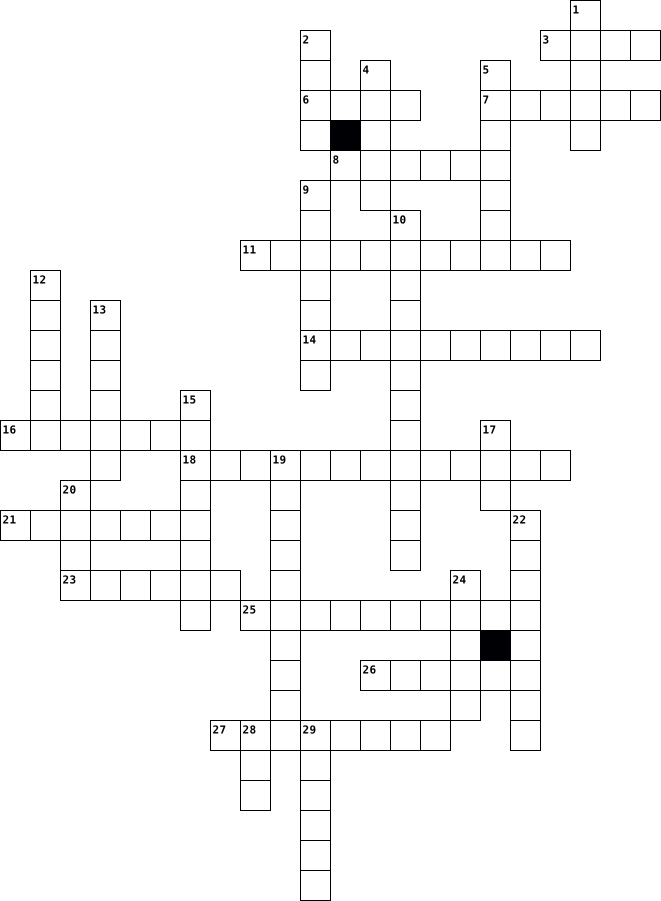
![[1학년] Lesson 1 words (~p.19) crossword puzzle](/image/17295250.svg?size=30&stroke_width=1)
Across
- 구조하다, 구출하다
- (~out)실행하다, 수행하다
- 회복시키다, 복원하다
- 보람 있는
- 본능
- 정신의
- 서식지
- ~이 부족하다
Down
- (동물의) 먹이통
- 자원봉사, 자원봉사하다
- 학대하다, 남용하다
- 사탕수수
- 풍부화, 풍부하게 함
- 자극
- 위험요소
15 Clues: 자극 • 본능 • 정신의 • 서식지 • 사탕수수 • 위험요소 • 보람 있는 • ~이 부족하다 • (동물의) 먹이통 • 학대하다, 남용하다 • 구조하다, 구출하다 • 풍부화, 풍부하게 함 • 회복시키다, 복원하다 • 자원봉사, 자원봉사하다 • (~out)실행하다, 수행하다
Psych 3360 vocabulary 1 2023-09-11

Across
- the experience, not arising from an external stimulus, that an amputated or missing limb is still present
- basic categories of mental abilities, e.g., memory, attention, language, imagination, emotion, will
- a linkage between two neurons in which increased activity in the first cell causes decreased activity in the second
- a linkage between two neurons in which increased activity in the first cell causes increased activity in the second
- the distinction between a program and the physical "machine" that carries it out; used as an argument that the mind may be studied without detailed knowledge of the brain
- the idea that the mind and body are separate and different in kind
Down
- the idea that thinking and other forms of mental activity can be understood as analogous to a kind of computer program
- a neurophysiological sensing technology that uses a rotating X-ray to create 2D images of the brain structure
- an internal data structure
- how can the mental and physical reals relate, e.g., how can mental causes have physical effects and vice-versa?
- a neurophysiological sensing technology that uses powerful magnets to create images of brain activity
- if the sum of incoming signals exceeds this criterion, a neuron will fire; if not, then it does nothing
- a neurophysiological sensing technology that uses powerful magnets to create images of brain structures
- a neurophysiological sensing technology that uses radioactive tracers in the blood to create images of brain activity
14 Clues: an internal data structure • the idea that the mind and body are separate and different in kind • basic categories of mental abilities, e.g., memory, attention, language, imagination, emotion, will • a neurophysiological sensing technology that uses powerful magnets to create images of brain activity • ...
PSYC341 Crossword 2017-12-04

Across
- Type of memory that focuses on specific events that have happened to you
- Condition that is associated with the inability to create mental images. People with this condition can describe what they can see, but they are not able to imagine it
- Mental strategies intended to improve recall. These could include things like the keyword method, method of loci, chunking, etc.
- Phenomenon where people take longer to identify a word when the ink color differs from the printed color. For example, seeing the word “Blue” but it is printed in a red ink
- A series of events or instructions that represent the layout of a familiar activity
- Monocular depth cue where close objects appear to move faster than objects that are far away
- Your knowledge about your cognition and cognitive processes
- This is an ideal or typical representation of a category. For example, a tabby would be a more typical representation of the category “cat” than a leopard would be
- a mental representation that is very similar to the actual object
- Principle which states that recall is best when in the same environment in which you first learned the material
- When taking memory tests, there is a better recall for information presented at the beginning of a list, possibly because there is more time to rehearse this material
- In language, the basic unit that conveys meaning
- Hypothesis that your ability to learn a new language is limited to certain times of your life. The evidence suggests an individual will have more success in learning another language if they do so before puberty
- Field of Psychology which says that a whole is better than its parts. This is the tendency of people to mentally organize what they see into its simplest form
- Term for a person who is fluent in two languages
- A problem solving strategy that is seen as a mental shortcut. These usually, but do not always, produce the correct answer
Down
- The most basic units of language. These are often sounds of syllables
- Our mental recreation of the environment that surrounds us
- The area of linguistics that focuses on the meaning of words
- This is the phenomenon where two or more senses are linked together. Examples may include seeing sounds or tasting colors
- Looking inward and objectively attempting to analyze one’s own sensations
- Problem-solving strategy in which you choose the path that seems to lead you most directly towards your goal
- You will remember more material if you spread your studying out over time
- Memory strategy where we break something large into smaller, more meaningful subgroups
- The rules of grammar that dictate how we structure our sentences
- Type of algorithm where you test out all possible solutions to the problem
- When taking memory tests, there is a better recall of information presented at the end of a list, possibly because it is most fresh in someone’s mind
- The gaining of knowledge and use of mental activities
- Type of stimulus which is known as the actual object in the environment
- A phenomenon where people claim to not be able to see an object, yet they can describe things about the objects location in space
30 Clues: In language, the basic unit that conveys meaning • Term for a person who is fluent in two languages • The gaining of knowledge and use of mental activities • Our mental recreation of the environment that surrounds us • Your knowledge about your cognition and cognitive processes • The area of linguistics that focuses on the meaning of words • ...
Cumulative Exam 2 Unit 5 2025-01-07

Across
- a language’s set of rules for deriving meaning from sounds
- language controls the way we think and interpret the world around us (2)
- passion and perseverance in the pursuit of long-term goals
- assessed by intelligence tests which present well-defined problems having a single right answer
- the ability to perceive understand manage and use emotions (2)
- a measure of memory that assesses the amount of time saved when learning material again
- processing many aspects of a problem simultaneously (2)
- a test designed to predict a person’s future performance or capacity to learn (2)
- a momentary sensory memory of auditory stimuli if attention is elsewhere lasting about 3 to 4 seconds
- set of rules for combining words into grammatically sensible sentences
- activated memory that holds a few items briefly (2)
- the process of getting information into the memory system
- the persistence of learning over time
- a system of rules that enables us to communicate with and understand others
- the immediate very brief recording of sensory information in the memory system (2)
- a methodical logical rule or procedure that guarantees solving a particular problem
- the smallest unit that carries meaning in a language
- a mental grouping of similar objects, events, ideas, or people
- the ability to learn from experience solve problems and use knowledge to adapt to new situations
- ability to adapt to new situations and generate novel ideas
- a statistical procedure that identifies clusters of related items on a test (2)
Down
- a tendency to search for information that supports our preconceptions and to ignore or distort contradictory evidence (2)
- encoding on a basic level (2)
- a method for assessing an individual’s mental aptitude and comparing them with those of others using a numerical score (2)
- all the mental activities associated with thinking, knowing, remembering, and communicating
- the process of getting information out of memory storage
- in cognition the inability to see a problem from a new perspective
- a tendency to approach a problem in one particular way that has often been successful in the past (2)
- a test designed to assess what a person has learned (2)
- a mental image or best example of a category
- idea that language affects thought (2)
- in a language the smallest distinctive sound unit
- underlies all mental abilities and is therefore measured by every task on an intelligence test (2)
- a measure of memory in which the person identifies items previously learned
- a momentary sensory memory of visual stimuli lasting no more than a few tenths of a second
- the relatively permanent and limitless storehouse of the memory system (2)
- a condition in which a person otherwise limited in mental ability has an exceptional specific skill (2)
- the process of retaining encoded information over time
- a simple thinking strategy that often allows us to make judgments and solve problems efficiently
- required for everyday tasks that may be poorly defined and may have multiple solutions
- encoding semantically based on the meaning of the words (2)
- a measure of memory in which the person must retrieve information learned earlier
42 Clues: encoding on a basic level (2) • the persistence of learning over time • idea that language affects thought (2) • a mental image or best example of a category • in a language the smallest distinctive sound unit • activated memory that holds a few items briefly (2) • the smallest unit that carries meaning in a language • ...
Prior What?!!? 2025-09-09

Across
- Services that help a person with a mental or physical disability maintain or improve skills needed for daily living. These may be subject to different prior authorization rules than other services.
- The presence of both a mental health disorder and a substance use disorder in the same person. This can complicate the prior authorization process.
- A utilization management protocol that requires a patient to first try a less expensive or preferred medication or treatment before the insurance plan will cover a more expensive or non-preferred alternative.
- A mental health condition where the person's use of a substance, like alcohol or drugs, leads to health problems or an inability to meet their work, school, or home responsibilities.
- A formal request to an insurance company to reconsider a denied prior authorization request or claim.
- A broad term that encompasses both mental health and substance use disorders.
- The refusal by an insurance company to cover a specific service.
- Standardized letter and number combinations used by healthcare providers to classify and document a patient's diagnosis.
- An authorization for a service that has already been provided. This is usually only granted in specific circumstances, such as an emergency.
- Mental health care that requires a patient to stay overnight at a hospital or residential facility.
- A review process conducted after a patient has been admitted to a higher level of care to determine if continued services are medically necessary.
- A group of healthcare providers, hospitals, and clinics that have a contract with an insurance plan to provide services at a discounted rate.
Down
- A specific service or condition that is not covered by an insurance plan.
- Standardized codes used to describe the medical, surgical, and diagnostic services provided by a healthcare professional.
- The standard used by an insurance company to determine if a service or treatment is reasonable, necessary, and appropriate for a patient's condition. This is often based on clinical guidelines and evidence-based practices.
- The process of getting pre-approval from a health insurance plan before a patient receives a specific medical service, treatment, or medication. It's also known as preauthorization, precertification, or prior approval.
- A set of techniques used by health insurance plans to manage healthcare costs by influencing patient care decisions. Prior authorization is a key component of this.
- A written order from a primary care physician to a patient to see a specialist, which is often required by HMO plans.
- The first step in the prior authorization process where the insurance company reviews the request to ensure all necessary information has been submitted.
- A collaborative process where a professional helps a patient navigate the healthcare system, including accessing services, resources, and coordinating care.
- A decision by an insurance company to deny or reduce a requested service or treatment.
- The specific, evidence-based guidelines and standards that an insurance company uses to evaluate the medical necessity of a treatment.
- Mental health care services that a patient receives without being admitted to a hospital or residential facility, such as individual therapy, group therapy, or medication management.
- A healthcare provider or facility that does not have a contract with a patient's insurance plan. Prior authorization for out-of-network services can be more complex and costly.
24 Clues: The refusal by an insurance company to cover a specific service. • A specific service or condition that is not covered by an insurance plan. • A broad term that encompasses both mental health and substance use disorders. • A decision by an insurance company to deny or reduce a requested service or treatment. • ...
Neurodegenerative Disease 2024-03-08

Across
- A service to gain relief, and improve the quality of life.(7 letters)
- These structures transmit electrical impulses away from the cell body of neurons. (5 letters)
- Mental processes such as thinking, reasoning, and remembering. (9 letters)
- Therapy to improve patient's immune system.(13 letters)
- Neurodegenerative disease characterized by memory loss and cognitive decline. (9 letters)
- Cognitive damage to cells and the nervous system.(17 letters)
- A medical problem the parents carry down to their offspring.(7 letters)
- act or practice of taking steps to avoid or stop something from happening, regarding disease. (12 letters)
Down
- Commonly provided to reduce the symptoms in a neurological disease, assist the immune system.(8 letters)
- Therapy to improve the mindset of the patient.(13 letters)
- A health condition that lasts for an extended period without significant improvement. (7 letters)
- assist the patient in regaining their ability for physical and mental awareness. (14 letters)
- Losing their ability to control all their muscles.(9 letters)
- Molecule containing genetic information passed from parents to offspring. (3 letters)
- Unit of the nervous system responsible for transmitting information. (7 letters)
- A decline in mental ability severe enough to interfere with daily life. (8 letters)
- Cell: Cell in the nervous system provide protection and support to neurons. (9 letters)
17 Clues: Therapy to improve patient's immune system.(13 letters) • Therapy to improve the mindset of the patient.(13 letters) • Losing their ability to control all their muscles.(9 letters) • Cognitive damage to cells and the nervous system.(17 letters) • A service to gain relief, and improve the quality of life.(7 letters) • ...
Fad Diets 2024-06-15

Across
- Causes bad breath,nausea, headaches,mental fatigue
- fibre rich food
- spiritual,mental, physical health
- Favourite food in moderation
Down
- celiac disease
- False diet
- 4 phases
- Ancestors diet
8 Clues: 4 phases • False diet • celiac disease • Ancestors diet • fibre rich food • Favourite food in moderation • spiritual,mental, physical health • Causes bad breath,nausea, headaches,mental fatigue
Cognitive Approach - Key Term Crossword 2021-10-03

Across
- A lie detector used in courts which use brain activity rather than heart rate
- A type of model which is a diagrammatic representation of human internal mental processes
- A mental framework of beliefs and expectation
Down
- A criticism of the cognitive approach suggesting that it reduces complex human processing to something too simplistic
- An assumption of internal mental processes based on observed behaviour
- Cognitive psychologists have used computer models to contribute towards the emergence of cognitive __________
- A type of model which which makes references to internal mental processes being compared to computers
- The type of experiments mostly used by cognitive psychologists
8 Clues: A mental framework of beliefs and expectation • The type of experiments mostly used by cognitive psychologists • An assumption of internal mental processes based on observed behaviour • A lie detector used in courts which use brain activity rather than heart rate • A type of model which is a diagrammatic representation of human internal mental processes • ...
craft 2018-12-31

Across
- Two people with different mental models can see the same situation and describe it ………
- The biggest challenge with mental model is that we often don’t realize that we …… in a certain way.
- The way to break mental models is to __ our beliefs
- entire organizations have ..... mental models which shape their strategies and internal ways of working.
- We take actions based on our ...
Down
- Author of book The Fifth Discipline
- Assuming and creating a picture of your understanding
- The models may once have been .... but have now been invalidated by changing environmental factors such as technology and new competition.
8 Clues: We take actions based on our ... • Author of book The Fifth Discipline • The way to break mental models is to __ our beliefs • Assuming and creating a picture of your understanding • Two people with different mental models can see the same situation and describe it ……… • ...
Unit 1 2020-12-07

Across
- The branch of psychology that studies how we think, influence, and relate to each other,
- The science of behavior & mental processes,
- Pure science that aims to increase the scientific knowledge base,
- pure science that aims to increase scientific knowledge,
- The branch of psychology that studies physical, cognitive, and social change,
- The type of psychology is a historically significant perspective that emphasized the growth potential of healthy people,
- The branch of psychology that studies how people interact with social environments,
- The psychological study of the evolution of behavior
- The branch of psychology that studies behavior and thinking using the experimental method,
- The view that psychology should be studied of the actions, not the mental processing,
Down
- The principle that traits contributing to reproduction and survival will most likely be passed on to future generations,
- The branch of psychology that studies/treats people with psychological disorders,
- The branch of psychology that studies someone's patterns of thinking, feeling, and acting,
- An approach that incorporates biological, psychological, and social-cultural levels of analysis,
- The branch of psychology that assists people with problems in living,
- Knowledge originates in experience & science relies on observation and experimentation,
- School of thought promoted by Wundt & Titchener which discovered structure of human mind,
- The scientific study of measurement of human abilities, attitudes, and traits,
- School of thought promoted by James & Darwin which explored mental/behavioral processes of organisms
- A branch of medicine dealing with psychological disorders,
20 Clues: The science of behavior & mental processes, • The psychological study of the evolution of behavior • pure science that aims to increase scientific knowledge, • A branch of medicine dealing with psychological disorders, • Pure science that aims to increase the scientific knowledge base, • The branch of psychology that assists people with problems in living, • ...
Psychology Thinking Crossword 2013-02-24

Across
- capacity to use information and abilities in new ways
- sodden realization of solution
- smallest meaningful unit of language such as prefix or suffix
- an abstract unit of thought that represents an object
- study of meaning in language
- the ways in which words and phrases are arranged into grammatical scentences
- systematic and logical thought process used to reach a specific goal
- free flow of thoughts with no particular plan
- overcome rigidity
- statement or assertion that serves as the basis for an arguement
Down
- type of mental set that prevents one from imagining new functions for familiar objects
- mentally rearranging elements
- the basic sound unit in a spoken language
- label for class of objects or events that share common attributes
- set habitual strategy or pattern
- step by step procedures to solve problems
- likeness that exists between two or more things that are in other ways unlike
- changing and reorganizing the information stored in memory to create new information
- tendency to look for information that confirms one's percieved notions
- process of making decisions based on certain ideas or standards held by the decision maker
- a representation of an example of a concept
- mental repression of an event or object
- rules of thumb that tend to simplify a problem to allow for faster and easier problem solving
- effect influence of wording
- most complex unit of thought that is a statement of relation between concepts
25 Clues: overcome rigidity • effect influence of wording • study of meaning in language • mentally rearranging elements • sodden realization of solution • set habitual strategy or pattern • mental repression of an event or object • the basic sound unit in a spoken language • step by step procedures to solve problems • a representation of an example of a concept • ...
Cognition (Remix) by R. Kelly 2017-05-09

Across
- Effect found with colorful words
- Reasoning in which general conclusions lead to specific hypotheses
- Effect that would make finding Waldo much easier if the rest of the picture was black and white
- Event memory
- Bottom-up processing is driven by this
- Transfer that refers to improvement in similar tasks
- Heuristic influenced by conjunction fallacy, sample size, and base-rate fallacy
- Grouping principles that help us perceive the world
- Explicit Memory
- Problems with similar answers
- Code in which mental images are language like descriptions
- Production task; Thinking of 30 uses for a brick, for example
- Motivation that comes from within the self
- Auditory sensory memory
- The "direct" route of reading
Down
- Inductive shortcut (e.x. availability, representativeness)
- The most basic, typical example of a category
- Effect that makes you think D.C. is closer to College Park than College Park is to D.C.
- Amnesia that prevents new memory formation
- Mental "___"; happens when imagining a rabbit next to an elephant and then counting the rabbits whiskers
- Effect that lets me hear my name in someone else's conversation
- Visual sensory memory
- Face Blindness
- Mental imaging code that deals with direct representation
- Effect in which logical fallacies occur because of unrelated prior knowledge
- Motivation that comes from outside the self
- The actual real life stimulus in the world
- Amnesia that "deletes" old memories
- Heuristic heavily influenced by recency and familiarity
- Reasoning in which specific facts lead to general conclusions
30 Clues: Event memory • Face Blindness • Explicit Memory • Visual sensory memory • Auditory sensory memory • Problems with similar answers • The "direct" route of reading • Effect found with colorful words • Amnesia that "deletes" old memories • Bottom-up processing is driven by this • Amnesia that prevents new memory formation • The actual real life stimulus in the world • ...
Health 2017-02-23
Across
- factors conditions that decrease the likelihood that people will deal with stress effectively
- setting, the process of working towards something you want to accomplish
- who is most likely to get a mental illness
- what is one mind stress management
- how you feel about yourself
- what is one way of communication
- faster what is a physical sign of stress
- the exchange of thoughts feeling or beliefs between two or more people
- who is one person that influences your self-esteem
- what is one teen stressor
- factors conditions that help people deal more effectively with stressful situation
- the body's response to physical mental of emotional tension
- what does S stand for in the smart goal model
Down
- decision easy, no major, impact, very little thought
- what is one body stress management
- decision harder, takes a long time, greater impact
- what is one of listening
- what is one of the roadblocks of communication
- the way you view yourself
- who can diagnose a mental illness
- what is one of the types of communication
- making process of making a choice
- messages, taking responsibility of your feeling
- what does the M stand for in the smart goal model
- what is one roadblock to communication
- anything that causes stress
- message, when your words say one thing but your body or tone says another
- attention, what is one way of being an effective communicator
- emotional sign of stress
29 Clues: what is one of listening • emotional sign of stress • the way you view yourself • what is one teen stressor • how you feel about yourself • anything that causes stress • what is one way of communication • who can diagnose a mental illness • making process of making a choice • what is one body stress management • what is one mind stress management • ...
The terrible thing that happened to Barnaby Brocket 2017-08-30

Across
- / angrily or bitterly
- / physical or mental effort
- / produce and discharge
- / buoyant or suspended in water or air
- /anxious or fearful that something bad or unpleasant will happen
- / bring (swallowed food) up again to the mouth
- / having lost the physical, mental, or moral qualities considered normal and desirable; showing evidence of decline.
- / take in and understand fully (information or ideas).
- /sail or travel all the way around (something, especially the world
- / a disagreement or argument
- member of the legal profession qualified to deal with conveyancing, the drawing up of wills, and other legal matters
- feeling resentment at having been unfairly treated
- /causing someone to lose their dignity and the respect of others
Down
- / lacking sophistication or good taste
- /generous or forgiving, especially towards a rival or less powerful person
- / (of part of the body) feel a sharp stinging pain
- / a state of being extremely dirty and unpleasant,
- / a difficult, unpleasant, or embarrassing situation
- /not exactly known, established, or defined
- / in a way that cannot be challenged or denied
- /desire to have a quality, possession, or other desirable thing belonging to (someone else).
- / pain or discomfort in the stomach associated with difficulty in digesting food
- a person considered to be important because of high rank or office
- /completely baffled; very puzzled
- / give out sweat through the pores of the skin as a result of heat, physical exertion, or stress
- /causing great physical or mental pain
26 Clues: / angrily or bitterly • / produce and discharge • / physical or mental effort • / a disagreement or argument • /completely baffled; very puzzled • / lacking sophistication or good taste • / buoyant or suspended in water or air • /causing great physical or mental pain • /not exactly known, established, or defined • / in a way that cannot be challenged or denied • ...
Anxiety 2021-12-15

Across
- health ability to interact and form meaningful relationships with others.
- the natural state of rest during which your eyes are closed and you become unconscious
- moisture exuded through the pores of the skin, typically in profuse quantities as a reaction to heat, physical exertion, fever, or fear.
- the treatment of mental disorder by psychological rather than medical means.
- a natural instinctive state of mind deriving from one's circumstances, mood, or relationships with others.
- having or involving a sensation of spinning around and losing one's balance.
- the surroundings or conditions in which a person, animal, or plant lives or operates.
- a feeling of worry, nervousness, or unease
- to disturb the regular or normal functions of
- anxiety feel very anxious or fearful when a person you’re close with leaves your sight
Down
- a state of mental or emotional strain or tension resulting from adverse or very demanding circumstances
- type of anxiety disorder in which you fear and often avoid places or situations that might cause you to panic and make you feel trapped, helpless or embarrassed.
- the passing on of physical or mental characteristics genetically from one generation to another.
- sudden uncontrollable fear or anxiety
- feeling sad or going through a rough patch.
- General anxiety disorder
- a substance used for medical treatment, especially a medicine or drug.
- anxiety following a traumatic event
- the pulsation of the heart
- an extreme or irrational fear of or aversion to something
20 Clues: General anxiety disorder • the pulsation of the heart • anxiety following a traumatic event • sudden uncontrollable fear or anxiety • a feeling of worry, nervousness, or unease • feeling sad or going through a rough patch. • to disturb the regular or normal functions of • an extreme or irrational fear of or aversion to something • ...
Final Exam Review #1 2021-12-01

Across
- A group of drugs used to reduce the severity of highs & lows that someone with bipolar may experience.
- __________ psychology involves the study of internal mental processes.
- Focuses on how reinforcement and punishment can be utilized to either increase or decrease the frequency of a behavior.
- In the Humanistic approach is being completely honest and open.
- 1st physician to remove chains from seriously mental ill patience in France.
- Has a master's or bachelor's in nursing & specialized training in dealing with psychological disorders.
- Has a master's degree & provides limited psychotherapy in an outpatient setting.
- A physician during the early 1000s who was a major figure in human treatment during this time.
- __________ Cognition is the study of how information about people is processed & stored.
- In the Humanistic approach is the emotional understanding of the client.
Down
- A group of drugs used to treat inattention & hyperactivity disorders.
- A group of medications that are used to treat depression.
- A group of drugs used to treat anxiety disorders.
- Involves forming associations between stimuli
- Is attributed to the creation of the Humanistic approach.
- A medical doctor that specializes in treating psychological disorders
- Helped establish state-funded mental hospitals during the 1800s.
- A __________ occurs when our expectations cause us unconsciously to act in a manner to bring behaviors that confirm our expectations.
- Has a PhD & is trained to diagnose & treat psychological illnesses.
- Used hypnosis to get his patients to talk about their problems.
20 Clues: Involves forming associations between stimuli • A group of drugs used to treat anxiety disorders. • A group of medications that are used to treat depression. • Is attributed to the creation of the Humanistic approach. • In the Humanistic approach is being completely honest and open. • Used hypnosis to get his patients to talk about their problems. • ...
PSYC 341 Review Crossword 2023-11-28

Across
- An idea that plays hide and seek in your mind
- The spice of ideas – where no two are exactly the same
- The unsung hero of language – how context shapes meaning
- Thinking in boxes – the brain's organizational ninja move
- A mental filing cabinet where things of a feather are filed together
- The ABCs of ideas – simplicity at its core
- who's watching?
- The boss of all ideas – the grand poobah!
- Thinking about thinking – a mental acrobatics exercise!
- The word's DNA – the smallest meaning-carrying unit
- When sounds hold hands in the linguistic dance
- The practicality meter – separating the wheat from the chaff of ideas
Down
- Like a social ladder, but for ideas and importance
- The smallest sound unit – the whisper in the symphony of language
- How new ideas are born – the idea's debutante ball
- The shining example, the MVP of the category
- Ideas raining from the brain's penthouse to the ground floor
- The mind's magical lens – where reality gets its makeover
- The gold standard for normality in the world of categories
- The mind's wake-up call – what gets the neurons firing
- When ideas clash – the jarring note in the symphony of thoughts
- The underling, the sidekick, the Robin to Batman's concept
- Slicing and dicing ideas for better mental digestion
- Grammar's rulebook – the conductor of the language orchestra
- The language DJ – spinning the sounds of speech
25 Clues: who's watching? • The boss of all ideas – the grand poobah! • The ABCs of ideas – simplicity at its core • The shining example, the MVP of the category • An idea that plays hide and seek in your mind • When sounds hold hands in the linguistic dance • The language DJ – spinning the sounds of speech • Like a social ladder, but for ideas and importance • ...
Crucigrama sobre Lenguaje, Pensamiento e Inteligencia 2023-10-27

Across
- Tipo de pensamiento que aplica la lógica y la razón para llegar a conclusiones y resolver problemas.
- Tipo de inteligencia que posee un escultor, Bailarín, Atleta
- Se multiplica la edad mental que obtiene la persona en el test por 100 y se divide por la edad cronológica.
- órgano esencial para la comunicación verbal.
- Tipo de inteligencia donde una persona aplica sus habilidades y conocimientos en problemas cotidianos.
- tipo de inteligencia con capacidad para controlar nuestras propias emociones.
- capacidad mental que permite a una persona razonar, comprender, aprender, resolver problemas.
- Tipo de inteligencia para componer o tocar instrumentos.
- Inteligencia que poseen los lideres religiosos, psicoterapeutas.
- Sistema verbal que estructura y comunica los pensamientos.
Down
- Teoría que se sostiene si una persona es inteligente en un área lo es en otras.
- Tipo de pensamiento que busca múltiples respuestas y soluciones a un problema
- Tipo de pensamiento que se relaciona con el lenguaje, cálculos matemáticos.
- Tipo de inteligencia donde las personas destacan en las matemáticas, la filosofía, la física.
- proceso mental que ayuda a Formar ideas, tomar decisiones y resolver problemas.
- El lenguaje se produce a través del refuerzo, la discriminación y la generalización.
- Área del cerebro involucrada en la producción del habla.
- Área de comprensión del lenguaje
- Fase de la memoria en el cual la información es codificada y consolidada en la memoria a largo plazo.
- Dice que es el lenguaje que determina el pensamiento.
20 Clues: Área de comprensión del lenguaje • órgano esencial para la comunicación verbal. • Dice que es el lenguaje que determina el pensamiento. • Área del cerebro involucrada en la producción del habla. • Tipo de inteligencia para componer o tocar instrumentos. • Sistema verbal que estructura y comunica los pensamientos. • ...
chapter 21-23 crossword 2025-09-18

Across
- The type of alcohol found in beverages; a powerful and addictive drug.
- The physical and mental impairment caused by alcohol or another substance.
- A chronic dependence—mental or physical—on a drug.
- A mental need for a drug to feel good or function.
- The use or sale of drugs that are illegal or not permitted.
- A dangerous or fatal reaction to taking too much of a drug.
- Smoke exhaled by a smoker, directly inhaled into the lungs.
- An irrational suspiciousness or distrust of others.
- The improper or nonmedical use of chemical substances.
- The body’s process of breaking down substances.
- Addictive chemical in tobacco that affects the brain and nervous system.
- Sticky, dark substance in tobacco smoke that damages the lungs.
- The chemical process where yeast converts sugars into alcohol.
- Excessive use of alcohol, often starting before age 18.
- The percentage of alcohol in a person’s bloodstream.
Down
- A physical chemical need for a drug in the body.
- A substance that temporarily increases alertness or energy.
- Any substance capable of causing cancer in living tissue.
- A type of drug that slows down the central nervous system.
- Tobacco product that is chewed, sniffed, or placed in the mouth, not burned.
- A gas exhaled by smokers and produced during combustion; colorless and odorless.
- r ugs Substances that cannot be lawfully manufactured, bought, or sold by anyone.
- A plant whose leaves, buds, and flowers are smoked for their effects.
23 Clues: The body’s process of breaking down substances. • A physical chemical need for a drug in the body. • A chronic dependence—mental or physical—on a drug. • A mental need for a drug to feel good or function. • An irrational suspiciousness or distrust of others. • The percentage of alcohol in a person’s bloodstream. • ...
im zach and im a boss 2012-11-26

Across
- thin porridge
- to say no
- isane person
- false name
- verified
- garbage
- tied up
- used up
- quick look
Down
- draw back
- working right
- to stay clear of
- a meeting
- struggles
- distance
- usualmanner
- mental suffering
- ask for
- small in size
19 Clues: ask for • garbage • tied up • used up • distance • verified • draw back • to say no • a meeting • struggles • false name • quick look • usualmanner • isane person • thin porridge • working right • small in size • to stay clear of • mental suffering
44444444 2024-01-08

Across
- back
- exccessive physical or mental tension
- pain mental suffering
- in
Down
- confine forcibly
- a limit on
- - separate from solids
- harsh biting quilty
8 Clues: in • back • a limit on • confine forcibly • harsh biting quilty • pain mental suffering • - separate from solids • exccessive physical or mental tension
Health Ch.1 2022-08-17

Across
- dimension of health that refers to how well a person gets along with others
- in-person and online communication channels, such as books, TV shows, movies, social media, and advertisements
- state of complete physical, mental and emotional, and social well-being
- extent to which a person experiences a healthy, happy, and fulfilling life
- length of time a person is expected to live
- actual number of years a person lives
- choices and behaviors that affect a person's chance of developing a disease, unhealthy condition, or injury
- chemical that carries genetic information; found in chromosomes
- state of excellent health and wellness, including physical, mental and emotional, and social health
- poor overall state of health in which a person cannot function normally; caused by factors such as disease, risky behaviors, hazardous substances, and concerns with mental or emotional health
- dimension of health that refers to how well the body functions
- land features and any bodies of water present in an area
- process of identifying one's state of health and taking steps to improve it
- circumstances, objects, or conditions that surround a person in everyday life
Down
- aspects of people's lives that reduce risk and increase the likelihood of optimal health
- person's ability to function positively and overall satisfaction that life's present conditions are good
- state of being without regular, consistent housing
- dimension of health that refers to the expression of thoughts and feelings, including emotions, moods, feelings about one's self, and views about the world
- beliefs, values, customs, and arts of a particular group or society
- health conditions that develop due to a person's genes; do not require the presence of other risk factors
- aspects of people's lives that increase the chances they will develop a disease or disorder or experience an injury or decline in health
- dimension of health that describes how a person observes and interprets information to make decisions, solve problems, and examine situations
- presence of waste in the environment
- DNA segments that contain the blueprint for the structure and function of a person's cells; affect development, personality, and health
24 Clues: presence of waste in the environment • actual number of years a person lives • length of time a person is expected to live • state of being without regular, consistent housing • land features and any bodies of water present in an area • dimension of health that refers to how well the body functions • chemical that carries genetic information; found in chromosomes • ...
Chapter 8 consciousness 2021-09-21

Across
- These typically involve measuring the number of correct and incorrect responses made.
- Drugs that decrease the activity of the central nervous system and the rest of the body.
- The awareness of objects and events in the external world and sensations, mental experiences and own existence.
- These are associated with drowsiness, creative activities, excitement and in a deep meditative state. Medium frequency and a mix of high and low amplitude brainwaves.
- This brainwave pattern is associated with deep, dreamless sleep. They have the lowest frequency and highest amplitude.
- This brainwave is present in a calm, internally focused, wakeful state (eyes can be closed)
- Being able to attend to and perform two or more tasks at the same time.
- The highest frequency and lowest amplitude brainwaves.
- Any state of consciousness that is distinctly different from normal waking consciousness in terms of level of awareness and experience.
- Involve conscious, alert awareness and mental effort where an individual actively focuses their attention to achieve a goal.
- These typically involve measuring the response or reaction time to a stimulus.
- A sleep diary is an example of this type of data collection method.
- Device that detects, amplifies and records the electrical activity of the muscles.
- States associated with being awake and aware of objects and events in the external world and one’s existence, mental experiences and own existence.
Down
- Drugs that increase the activity of the central nervous system and the rest of the body.
- Often used to represent the varying states of consciousness.
- A concept that is believed to exist but cannot be directly observed.
- Choosing and attending to a specific stimulus to the exclusion of other stimuli.
- processes, Require little conscious awareness and mental effort, minimal attention and does not interfere with the performance of other activities.
- Device that detects, amplifies and records general patterns of electrical activity of the brain.
- A common way to study sleep and sleep disturbances by recording observable responses.
- The EOG detects, amplifies and records the electrical activity of the muscles that control ____________ _____________ .
22 Clues: The highest frequency and lowest amplitude brainwaves. • Often used to represent the varying states of consciousness. • A sleep diary is an example of this type of data collection method. • A concept that is believed to exist but cannot be directly observed. • Being able to attend to and perform two or more tasks at the same time. • ...
Memory and Cogntion Crossword 2023-11-27

Across
- Used to describe categories that have unclear boundaries which can change over time
- brain The hypothesis that the human brain has evolved, so that humans can maintain larger ingroups.
- ground Information that is shared by people who engage in a conversation.
- perception Perception of acoustic characteristics that vary continuously as distinct phoneme categories
- The mental representation we form of categories
- mental shortcut that saves time when solving a problem
- An example in memory that is labeled as being in a paticular category
- The difference in “goodness” of category members, ranging from the most typical (the prototype) to borderline members.
- networks Networks of social relationships among individuals through which information can travel.
- an inability to comprehend or formulate language because of damage to specific brain regions.
- relativity The hypothesis that the language that people use influences the way they think.
- model A mental representation of an event, object, or situation constructed at the time of comprehending a linguistic description.
- device any learning technique that aids information retention or retrieval in the human memory
Down
- essentialism The belief that members of a category have an unseen property that causes them to be in the category and to have the properties associated with it.
- fixedness inability to see an object as useful for any other use other than the one for which it was intended
- The smallest units of meaning in a language
- effects How speech sounds are influenced by neighboring speech sounds
- The smallest unit of sound that makes a meaningful difference in a language
- problem How to dissect a continuous speech signal into linguistically relevant units
- set continually using an old solution to a problem without results
- design constructing utterances to suit the audience's knowledge
- problem-solving strategy characterized by a specific set of instructions
- A set of objects that can be treated as equal in someway
- A stimulus presented to a person reminds him or her about other ideas associated with the stimulus.
- perception The process by which the sounds of language are heard, interpreted, and understood.
25 Clues: The smallest units of meaning in a language • The mental representation we form of categories • mental shortcut that saves time when solving a problem • A set of objects that can be treated as equal in someway • design constructing utterances to suit the audience's knowledge • set continually using an old solution to a problem without results • ...
Hack Your Brain: Neuroscience Vocabulary 2024-04-16

Across
- A neurotransmitter in the brain associated with pleasure, reward, and motivation.
- The mental ability to focus attention on a specific task or stimulus for an extended period.
- The junction between two neurons where nerve impulses are transmitted from one neuron to another.
- The process of acquiring new knowledge, skills, behaviors, or attitudes through experience, study, or instruction, facilitated by changes in the brain's structure and function.
- The study of the nervous system, including the brain, spinal cord, and nerves, to understand how they control behavior and bodily functions.
- A part of the brain involved in forming and storing memories.
- A feeling of tension or pressure, often caused by demanding situations or challenges.
- The mental ability to store and recall information, experiences, and past events.
Down
- A brain structure involved in processing emotions, especially fear and aggression.
- Memory The part of memory responsible for storing information about one's environment and spatial orientation, like remembering the layout of a room or a city.
- The process of organizing and interpreting sensory information from the environment to understand and make sense of the world.
- The mental processes involved in acquiring knowledge and understanding through thought, experience, and the senses.
- A specialized cell in the nervous system that transmits information through electrical and chemical signals.
- The brain's ability to change and adapt throughout life, allowing for learning and recovery from injury.
- Chemical messengers that transmit signals across synapses between neurons, influencing various functions such as mood, cognition, and behavior.
- The mental process of focusing awareness on a particular stimulus or task, such as listening to a teacher or reading a book.
- Chemical substances produced by glands in the body that regulate various physiological functions, including growth, metabolism, and stress response.
- The act of paying close attention to something, concentrating on it while excluding distractions.
- A natural state of rest during which the body and brain relax and recover from daily activities.
- Memory The ability of muscles to remember and perform tasks they have done before, like riding a bike, without having to relearn them each time.
20 Clues: A part of the brain involved in forming and storing memories. • A neurotransmitter in the brain associated with pleasure, reward, and motivation. • The mental ability to store and recall information, experiences, and past events. • A brain structure involved in processing emotions, especially fear and aggression. • ...
TOPIC 1 (Unit 3) 2025-09-17

Across
- The efficiency of the production of goods and services.
- ___________ AND WELLBEING: The state of a person’s physical, social, emotional, mental and spiritual existence, characterized by a state of balance.
- A physical or mental disturbance involving symptoms, dysfunction or tissue damage.
- _____________ DISEASES: Infectious diseases transmitted from the environment or other organisms.
- A human need, feeling like a member or part of society.
- How a person feels about themselves and their life.
- The quality or state of being weak or ill, often associated with old age.
- SELF _________: How people feel about themselves.
- A subjective concept related to personal experience of a disease or injury.
- Mental tension experienced when resources are perceived as insufficient.
- What an individual feels is important in life, guiding behaviors.
- CONDITION A disease or condition that lasts a long time, usually over six months.
- The highest level of health and wellbeing an individual can realistically attain.
- The spread of infectious disease through human populations across a large region or worldwide.
Down
- ___________ HEALTH AND WELLBEING: Relates to the state and quality of interactions and relationships with others.
- Continually changing, a characteristic of health and wellbeing.
- ___________ HEALTH AND WELLBEING: The current state of wellbeing related to the mind or brain, including thought patterns and self-esteem.
- Believing in one’s own worth and ability to succeed.
- Influenced by or based on personal beliefs, feelings or opinions.
- ___________ HEALTH AND WELLBEING: The ability to express feelings in an appropriate way, including resilience.
- The ability to effectively deal with adverse or negative events.
- Intense worry or fear about future events.
- A state of balance, key to health and wellbeing.
- Global health body established in 1948, promoting health and wellbeing.
- ___________ HEALTH AND WELLBEING: Relates to the state and functioning of the body and its systems.
- ___________ HEALTH AND WELLBEING: Relates to ideas, beliefs, values, ethics, and a sense of meaning or purpose in life.
- What an individual feels to be true or right, even if unproven.
27 Clues: Intense worry or fear about future events. • A state of balance, key to health and wellbeing. • SELF _________: How people feel about themselves. • How a person feels about themselves and their life. • Believing in one’s own worth and ability to succeed. • The efficiency of the production of goods and services. • ...
Out of My Mind 2021-05-14

Across
- Sad
- Leak
- Surround
- Objection
- Done with hands
- Overcome
- Recover quickly
- Mental or Emotional strain
- Tremble
- Too much pride
Down
- Come into view
- Brief or Abrupt
- Very Fine
- Preparation
- Guide
- Swing
16 Clues: Sad • Leak • Guide • Swing • Tremble • Surround • Overcome • Very Fine • Objection • Preparation • Come into view • Too much pride • Brief or Abrupt • Done with hands • Recover quickly • Mental or Emotional strain
Body Rhythms and Mental States 2014-10-25

Across
- Biological Rhythms continue to occur from within although there might be an absence of external factors (cues).
- These are short bursts of rapid, high-peaking waves present in the 2nd stage of sleep.
- ___________Rhythms occurs about once a day.
- Obese individuals may suffer from a sudden gasp or choking sensation due to the temporary halt in breathing during their sleep.
- During this period, also known as ‘paradoxical sleep’, the pattern of electrical activity in the brain resembles that of alert wakefulness
- In the __________ approach, dreams emphasize the current concerns in one's life but no problem solving is manifested during sleep.
- Dejuan find its extremely hard to fall asleep or stay asleep each night. What is Dejaun suffering from?
- In the __________ approach, dreams are random mental images resulting from the spontaneous neural firing initiated in the pons.
- The hormone involved with the regulation of the circadian rhythms.
- ___________ Rhythms, periodic fluctuations in a biological system, are usually in tune with external cues like temperature and daylight.
- These are very slow waves with very high peaks present in the last 3rd and 4th stage of sleep.
Down
- Maria frequently falls into deep sleeping episodes several times for the day. Doctors say that she is suffering from __________________.
- Internal __________occurs when one’s circadian rhythms may be thrown out of phase when their normal routine changes.
- ________ Disorder occurs when a sleeper is able to act out their dreams without awareness because muscle paralysis during sleep did not occur.
- During _________ dreams, the person is aware that they are dreaming.
- Hypnosis and the use of recreational drugs are used to hinder mental and physical awareness of the environment and oneself.
- Longer periods of sleep deprivation may result in _______________.
- Our __________controls the body's activities through the release of hormones based on the time of day.
- These are regular, slow rhythmic waves with high amplitudes present during alert wakefulness.
- In this approach, the dreams represent ongoing conscious problems in which the symbols and metaphors reveal the true meaning rather than disguising it.
- In the _____________ approach, dreams express our unconscious wishes and desires, usually sexual or violent.
- Many scientists believe that _________ and the retention of memories are mental benefits of sleep.
- A nucleus in the brain that governs circadian rhythms.
- ____________ content are what we consciously experience during sleep and may remember after awakened.
- __________ content are the unconscious wishes and thoughts being expressed symbolically.
25 Clues: ___________Rhythms occurs about once a day. • A nucleus in the brain that governs circadian rhythms. • Longer periods of sleep deprivation may result in _______________. • The hormone involved with the regulation of the circadian rhythms. • During _________ dreams, the person is aware that they are dreaming. • ...
Mental and Emotional Health Terminology 2015-04-22

Across
- pain or suffering that effects the body and or the mind
- the ability to imagine and understand how someone else feels
- stress that is deemed healthful
- the ability to adapt effectively and recover from disappointment, difficulty, or crisis
- a feeling that a bad experience has gone away, and you can now move on with your life or a feeling that a problem has been solved
- when you care about someone else's misfortune, grief, or feeling of sadness
- a physical reaction that results from stress rather than injury or illness
- model someone whose success or behavior serves as an example for others
- Criticism non hostile comments that encourage improvement
- the act of showing sorrow or grief
- the intentional use of unfriendly or offensive behavior
- a mental or physical mark that is characteristic of a disease
Down
- the sorrow caused by the loss of a loved one
- a prolonged feeling of helplessness, hopelessness, and sadness
- those distinctive qualities that describe how a person thinks, feels, and behaves
- lack of interest, enthusiasm, or concern
- the striving to become the best you can be
- having a realistic respect and sense of self-worth for yourself
- feeling isolated or separated from everyone else
- the act of becoming aware through the senses
- when a person follows a lot of good moral values such as being honest and fair
- the condition of feeling uneasy or worried about what may happen
- the ability for your body to fight off viruses
- anything that causes stress
24 Clues: anything that causes stress • stress that is deemed healthful • the act of showing sorrow or grief • lack of interest, enthusiasm, or concern • the striving to become the best you can be • the sorrow caused by the loss of a loved one • the act of becoming aware through the senses • the ability for your body to fight off viruses • ...
Mental health issues in Adulthood 2023-03-10

Across
- is the act of giving, or putting something in the trust of another
- the lack of resources necessary for reasonable and comfortable living
- A wide range of conditions that affect mood, thinking, and behavior
- the state of having no home
- of young adults centers on learning to function within a stressful environment
- the process of raising children and providing them with protection and care in order to ensure their healthy development into adulthood
- the period in the human lifespan in which full physical and intellectual maturity have been attained
- the concept you develop about yourself that evolves over the course of your life
- the ability to accept responsibility for one's actions, delay gratifica-fon, and make priorities
- Develops and maintains effective relationships with others
Down
- freely share their attitudes, opinions, and emotions
- a lack of meaningful interactions with others
- focuses on the young adult's ability to solve intellectual and abstract problems
- the concept of eventually having to die
- for young adults focuses on interactions and relationships with others
- focus on defining one’s value system and belief system
- disease spread through sexual activities, the sharing of needles, or exposure to blood and body fluids
- a willingness to negotiate and enter into interactions in which neither person wins not loses
- is a legal state that bonds two people as a family unit
- an anxiety-related condition caused by a fear of AIDS
20 Clues: the state of having no home • the concept of eventually having to die • a lack of meaningful interactions with others • freely share their attitudes, opinions, and emotions • an anxiety-related condition caused by a fear of AIDS • focus on defining one’s value system and belief system • is a legal state that bonds two people as a family unit • ...
Ruthie Iyegha- Mental Health Crossword 2022-05-09

Across
- an eating disorder in which a large quantity of food is consumed in a short period of time, often followed by feelings of guilt or shame. often times purposely vomiting or purging.
- an acronym for a condition that's triggered by a terrifying event — either experiencing it or witnessing it.
- a disorder characterized by excessive or unrealistic anxiety about two or more aspects of life
- an acronym for a anxiety disorder characterized by unreasonable thoughts and fears that lead you to do repetitive behaviors
- an emotional disorder characterized by an obsessive desire to lose weight by refusing to eat.
- persistent mild depression.
- a condition where someone could get extremely nervous in social situations and worries about people judging them or watching them
- different from depression, but it is included in this list. Can include experiences of extremely low moods that meet the criteria for major depression but also experiences extreme high – euphoric or irritable – moods called “mania”
- a disorder in a child marked by defiant and disobedient behavior to authority figures.
- a sudden episode of intense fear that triggers severe physical reactions when there is no real danger or apparent cause
- disorder with a combination of symptoms of schizophrenia and mood disorder, such as depression or bipolar disorder.
Down
- a personality disorder characterized by an exaggerated sense of self importance, need for admiration, and lack of empathy for other people
- a personality disorder characterized by anxiety in social situations and personal relationships, with feelings of inadequacy and extreme sensitivity to rejection or criticism.
- a mood disorder that causes a feeling of sadness and lack of interest
- an addiction to the consumption of alcoholic liquor or the mental illness and compulsive behavior resulting from alcohol dependency.
- depression suffered by a mother following childbirth, typically arising from the combination of hormonal changes, psychological adjustment to motherhood, and fatigue.
- a mental health condition that affects the way a person thinks, perceives, and relates to others.
- an acronym for a chronic condition including attention difficulty, hyperactivity, and impulsiveness.
- a severe, life-threatening, and treatable eating disorder characterized by recurrent episodes of eating large quantities of food (often very quickly and to the point of discomfort
- a disorder that causes delusions, hallucinations & paranoia and it may produce multiple personalities
20 Clues: persistent mild depression. • a mood disorder that causes a feeling of sadness and lack of interest • a disorder in a child marked by defiant and disobedient behavior to authority figures. • an emotional disorder characterized by an obsessive desire to lose weight by refusing to eat. • ...
Adult Ally Mental Health Retreat 2022-08-12

Across
- I love to make people laugh
- I am an introvert but very transparent
- I've ran more marathons than I have children
- Im an Earthbender :)
- I just started painting this past winter and now I have my own Etsy shop
- I have six cats!
- I write poetry sorta well, foodie
- I have moved from another country and from two states within two years!
- I enjoy gardening
- I play the nose flute quite well!
- I quote a lot of Disney movies, at this point, references are accidental!
- Track & Field and Color Guard are two of my favorite hobbies
- i enjoy learning and applying the ideology of black liberation and dismantling oppressive systems
- Coaching Cheerleadig is my passion
- loves butterflies
- I love learning about different cultures and cook the different foods at home
- I studied Mayan for two years
Down
- I have time traveled
- I enjoy playing volleyball, kid inside adult on the out
- I have a small obsession with pickles, I use to have a yodeling pickle when I was younger
- I danced on stage with Janelle Monae in 2018
- I secretly want to be a movie star
- I got married in the Dominican Republic 25 years ago, and my daughter’s planning to do the same next February
- I am OBSESSED with all things peach and giraffe
- I was born with 12 fingers
- I am a self taught chef and pitmaster
- I love water
- I played Viola at Carnegie Hall with my high school orchestra
- I just came back from a three week road trip with my family
- I Speak Multiple Languages
- I like to sing Disney songs
- I lived on 3 continents and in 5 states by the age of 10
- I love road trips and I can drive for at least 12 hours at a time
33 Clues: I love water • I have six cats! • I enjoy gardening • loves butterflies • I have time traveled • Im an Earthbender :) • I was born with 12 fingers • I Speak Multiple Languages • I love to make people laugh • I like to sing Disney songs • I studied Mayan for two years • I write poetry sorta well, foodie • I play the nose flute quite well! • I secretly want to be a movie star • ...
Summer School Health (Mental disorders) 2023-06-02

Across
- A treatment for cognitive peeps.
- A treatment for bio chem peeps.
- Wishing for something to happen.
- A response of strong emotion.
- To help someone calm themselves.
- The process of sadness.
- A function in the brain meant to exclude psychiatric disorders.
- The state or feeling of being isolated from a group.
- A disturbance in someones health, behavior, emotions, ect.
- The release of emotions.
Down
- Someone who has frequent and random emotions.
- When someone can't stop eating.
- A group of behavioral and emotional problems.
- When a group of crazy people get together for help.
- Telling someone you didn't do nothing.
- A type of treatment for crazy people.
- Accepting your actions.
- Any group of mental conditions.
- A strong feeling of sadness.
- When someone kills themselves, like a little bit.
- Repeated feelings of sudden anxiety that randomly occur.
- When a group of peeps kills themselves, like a lil bit.
- A problem with how the brain sends and receives things.
- The feeling of nothing.
- A repeated state of panic.
- A treatment for someone with behavior problems.
- Big mad
27 Clues: Big mad • Accepting your actions. • The feeling of nothing. • The process of sadness. • The release of emotions. • A repeated state of panic. • A strong feeling of sadness. • A response of strong emotion. • When someone can't stop eating. • Any group of mental conditions. • A treatment for bio chem peeps. • A treatment for cognitive peeps. • Wishing for something to happen. • ...
Exercise, Smartphones and Mental Health 2023-12-06

Across
- refers to a person's emotional state or feelings at a specific time
- To hide or keep something secret
- To control or manage something to keep it in balance
- relates to mental processes such as thinking, learning, and memory
- are units of energy found in food and drinks
- is a medical condition where your body has trouble regulating blood sugar levels
- Words or phrases that are disrespectful, insulting, or belittling towards someone or a group
- is a chemical messenger that transmits signals between nerve cells in the brain
- Making someone feel really embarrassed or ashamed
- To continue or uphold something, especially a belief or a situation, even if it may not be accurate or helpful
- Something that is real, valid, or acceptable
- Feeling upset, worried, or in trouble
- To include or cover a wide range of things
- Fixed ideas or beliefs about a particular group of people that may not be true for everyone in that group
- Very clear and detailed, often in a way that might be considered inappropriate or graphic
- To exaggerate or make something seem more dramatic or exciting than it really is, especially in the media
- A range or variety that includes different types or levels of something
- To speak in favor of or support a cause, idea, or person
- Chemicals in the body that control growth, development, and other important functions
- means to make something less severe or more bearable
- Doing something unintentionally or accidentally without meaning to
Down
- To watch or check something regularly
- Hurting or being mean to someone using electronic devices like computers or phones
- Something that has many different sides, aspects, or features
- When something is misunderstood or interpreted incorrectly
- is a health condition characterized by excessive body weight due to an accumulation of fat
- is an intense feeling of happiness and excitement
- A conversation or discussion between people, especially to share ideas or solve problems
- To make something stronger or to support and make it more solid or powerful
- refers to exercises that get your heart pumping and increase your breathing
- are natural chemicals in your body that act like pain relievers and mood boosters
- To release or give off something, like light or sound
- Sending or receiving explicit messages, photos, or videos through electronic devices
- When a person or a group is treated unfairly or looked down upon by society due to certain characteristics, such as mental health issues
- Too much of something, more than what is considered normal or healthy
- Being alone or separated from others
- is a chemical messenger in your brain that helps regulate mood, sleep, and appetite
- Causing a lot of damage or destruction
- Involving a lot of sitting and not much physical activity
39 Clues: To hide or keep something secret • Being alone or separated from others • To watch or check something regularly • Feeling upset, worried, or in trouble • Causing a lot of damage or destruction • To include or cover a wide range of things • are units of energy found in food and drinks • Something that is real, valid, or acceptable • ...
Mental Illnesses and Prescribed Medications 2023-09-12

Across
- treats mild to moderate Alzheimer’s by preventing the breakdown of acetylcholine and stimulating nicotinic receptors to release more acetylcholine in the brain.
- sometimes in conjunction with psychotherapy, are frequently the first line of treatment for depression.
- a neurodevelopmental disorder characterized by limitations in intellectual functioning (IQ) and adaptive skills.
- used to treat depression, panic attacks, obsessive-compulsive disorder, post-traumatic stress disorder, social anxiety disorder, and a severe form of premenstrual syndrome.
- repeated actions
- characterized by fixed, false beliefs that are not based on reality, often involving paranoid or grandiose thoughts.
- it involves extreme mood swings, including periods of intense euphoria (mania) and depression.
- characterized by unstable emotions, self-image, and relationships. Individuals with BPD often experience intense fear of abandonment, emotional instability, impulsive behavior, and have difficulty regulating their emotions.
- generally affected children and adults have difficulty with social interactions and exhibit a restricted range of interests and repetitive behaviours.
- develops after experiencing a traumatic event and includes symptoms like flashbacks, nightmares, and severe anxiety related to the traumatic experience.
- prescribed to treat generalized anxiety disorder and panic disorder.
- obsession with the idea of having a serious but undiagnosed medical condition
- type of dementia that causes problems with memory, thinking and behaviour.
- the separation of some personality components or mental processes from conscious thought.
Down
- The most common form of mental illness.
- involves severe disturbances in eating behaviors, often driven by body image concerns and an obsession with weight and food.
- a mental condition in which a person consistently shows no regard for right and wrong and ignores the rights and feelings of others.
- This disorder experience sudden, intense panic attacks accompanied by physical sensations like a racing heart, sweating, and a feeling of impending doom.
- is a neurodevelopmental disorder characterized by persistent patterns of inattention, hyperactivity, and impulsivity.
- fear of places and situations that might cause panic, often found with panic disorder.
- characterized by intrusive, distressing thoughts (obsessions) and repetitive behaviors or mental rituals (compulsions) aimed at reducing anxiety.
- extreme irrational fear out of proportion to the actual danger
- a unique antidepressant that is thought to affect the brain chemicals norepinephrine and dopamine.
- a severe form of depression accompanied by psychosis, which includes hallucinations and delusions.
- a psychological disorder characterized by loss of contact with reality.
25 Clues: repeated actions • The most common form of mental illness. • extreme irrational fear out of proportion to the actual danger • prescribed to treat generalized anxiety disorder and panic disorder. • a psychological disorder characterized by loss of contact with reality. • type of dementia that causes problems with memory, thinking and behaviour. • ...
Mental Illnesses and Prescribed Medications 2023-09-12

Across
- It is prescribed to treat generalized anxiety disorder and panic disorder.
- It treats mild to moderate Alzheimer’s by preventing the breakdown of acetylcholine and stimulating nicotinic receptors to release more acetylcholine in the brain.
- A unique antidepressant that is thought to affect the brain chemicals norepinephrine and dopamine.
- It involves severe disturbances in eating behaviors, often driven by body image concerns and an obsession with weight and food.
- It is a neurodevelopmental disorder characterized by persistent patterns of inattention, hyperactivity, and impulsivity.
- extreme irrational fear out of proportion to the actual danger
- It is a mental condition in which a person consistently shows no regard for right and wrong and ignores the rights and feelings of others.
- This disorder experience sudden, intense panic attacks accompanied by physical sensations like a racing heart, sweating, and a feeling of impending doom.
- It is the type of dementia that causes problems with memory, thinking and behaviour.
- The most common form of mental illness.
- It generally affected children and adults have difficulty with social interactions and exhibit a restricted range of interests and repetitive behaviours.
Down
- A neurodevelopmental disorder characterized by limitations in intellectual functioning (IQ) and adaptive skills.
- A severe form of depression accompanied by psychosis, which includes hallucinations and delusions.
- It is a psychological disorder characterized by loss of contact with reality.
- It involves extreme mood swings, including periods of intense euphoria (mania) and depression.
- It is the separation of some personality components or mental processes from conscious thought.
- It is characterized by fixed, false beliefs that are not based on reality, often involving paranoid or grandiose thoughts.
- obsession with the idea of having a serious but undiagnosed medical condition
- This develops after experiencing a traumatic event and includes symptoms like flashbacks, nightmares, and severe anxiety related to the traumatic experience.
- repeated actions
- sometimes in conjunction with psychotherapy, are frequently the first line of treatment for depression.
- Fear of places and situations that might cause panic, often found with panic disorder.
- It is characterized by unstable emotions, self-image, and relationships. Individuals with BPD often experience intense fear of abandonment, emotional instability, impulsive behavior, and have difficulty regulating their emotions.
- It is used to treat depression, panic attacks, obsessive-compulsive disorder, post-traumatic stress disorder, social anxiety disorder, and a severe form of premenstrual syndrome.
- It is characterized by intrusive, distressing thoughts (obsessions) and repetitive behaviors or mental rituals (compulsions) aimed at reducing anxiety.
25 Clues: repeated actions • The most common form of mental illness. • extreme irrational fear out of proportion to the actual danger • It is prescribed to treat generalized anxiety disorder and panic disorder. • It is a psychological disorder characterized by loss of contact with reality. • obsession with the idea of having a serious but undiagnosed medical condition • ...
Mental Health and the Bible 2024-02-15

Across
- Reliance on the character, ability, or truth of someone; Proverbs 3:5-6 guides to trust in God
- Recovery process; referenced physically and spiritually, Jeremiah 17:14
- Deliverance from sin; linked to mental peace, Romans 10:9
- Relief in distress; God described as comforter, 2 Corinthians 1:3-4
- Expectation for the future; central in overcoming despair, Romans 15:13
- Capacity to accept delay; encouraged through trials, James 1:3-4
- Centre of thought; advised to renew, Romans 12:2
- Free and unmerited favour; essential for spiritual wellbeing, Ephesians 2:8-9
- Ceasing work to relax; encouraged to find in God, Matthew 11:28-29
- Feeling of pleasure; a fruit of the Spirit, Galatians 5:22
Down
- Compassion or forgiveness; God's mercy as a source of hope, Ephesians 2:4-5
- Ability to endure; God as the source, Philippians 4:13
- Act of pardoning an offender; key to emotional health, Matthew 6:14-15
- Complete trust; emphasised for wellbeing, Hebrews 11:1
- Ability to discern; a gift from God for decision-making, James 1:5
- Deep affection; greatest commandment and a healer, 1 Corinthians 13:4-7
- State of happiness and satisfaction; learning to be content in all situations, Philippians 4:11-12
- Emotional response to threats; "Do not fear" is a frequent biblical reassurance, Isaiah 41:10
- State of tranquillity; a gift from God, according to John 14:27
- Feeling of worry; Philippians 4:6-7 teaches not to be anxious
20 Clues: Centre of thought; advised to renew, Romans 12:2 • Ability to endure; God as the source, Philippians 4:13 • Complete trust; emphasised for wellbeing, Hebrews 11:1 • Deliverance from sin; linked to mental peace, Romans 10:9 • Feeling of pleasure; a fruit of the Spirit, Galatians 5:22 • Feeling of worry; Philippians 4:6-7 teaches not to be anxious • ...
Psychology and mental disorders 2 2025-12-26

Across
- she lacked _______ and didn't care about the suffering around her
- the refusal to admit an unpleasant truth
- I can feel this strange ________ of floating in the water
- he could feel the anxiety building up and was worried that a _____ attack was coming on
- the ability to share the feelings of others
- he was ________ with his appearance and constantly looked at himself in the mirror
- he was under the ________ that everyone would vote for him when in fact few people would
- she was ________ that her coworkers were talking about her behind her back when in fact they never talked about her at all
- her _______ was so bad she could not even remember her name
- mistreatment of someone
- unusual or not regular
- he had low self-_________ and was afraid to participate in the activities
Down
- a terrifying dream
- a deep irrational mistrust of other people
- an abnormal mental condition
- an irrational fear
- although the _________ seemed real, it was all in his head
- if you ________ how you feel, you may eventually respond with anger
- think pleasant thoughts that distract you
- _________ often lack remorse or shame for harm they have caused others
- of the mind
- nervousness or worry
- her husband mentally _____ her, ridiculing her constantly
23 Clues: of the mind • a terrifying dream • an irrational fear • nervousness or worry • unusual or not regular • mistreatment of someone • an abnormal mental condition • the refusal to admit an unpleasant truth • think pleasant thoughts that distract you • a deep irrational mistrust of other people • the ability to share the feelings of others • ...
English Vocabulary (Mental illness Vocabularies 2025-10-26

Across
- – Serious, formal, or showing deep sincerity.
- – An unfair preference or prejudice that affects fair judgment.
- – A strong dislike or unfair judgment of someone without truly knowing them.
- – The process of starting or making something active.
- – The loss of closeness or a friendly relationship, leading to separation or alienation.
- – A fixed, oversimplified, and often untrue belief about a group of people or things.
- – To control or manage something according to rules or laws.
- – Producing the opposite result of what was intended.
- – Twisted, changed, or misrepresented from its true or original form.
Down
- – Something that causes a response or reaction in the body, mind, or behavior.
- – A young person in the stage between childhood and adulthood (teenager).
- – to make up, form, or be considered as something.
- – To make something necessary or unavoidable.
- – Contradictions; things that do not match or agree with each other.
- – Unfair treatment of people based on personal traits like race, gender, age, or disability.
- – unwilling or hesitant to do something.
- – To escape or avoid something, often cleverly or skillfully.
- – Protection, safety, or shelter given to people escaping danger or
- – A break, crack, or chip in a bone.
- – A negative mark of shame or disapproval placed on someone because of a certain trait or condition.
20 Clues: – A break, crack, or chip in a bone. • – unwilling or hesitant to do something. • – To make something necessary or unavoidable. • – Serious, formal, or showing deep sincerity. • – to make up, form, or be considered as something. • – The process of starting or making something active. • – Producing the opposite result of what was intended. • ...
Unit 5: Mental & Physical Health 2026-03-20

Across
- involves the experience of panic attacks
- a sense of thankfulness for the past, present, and/or future
- Overwhelming stress that is helpful
- fear or anxiety about a specific object or situation
- seeing stress as a problem needing to get solved
- Perserving through challenges
- Finding a purpose bigger than yourself
- involves an inability to recall personal information beyond normal forgetting
- idenfies factors that lead to Well-being, Resilience, Positive emotions, and Psychological health
Down
- people reacting to stress by tending their own needs and connecting with others
- people grow after experiencing stress or trauma
- involves prolonged experiences of nonspecific anxiety or fear
- fear of specific social situations
- focusing on chcanging behaviors through the princuples of conditioning
- using more than one perspective when diagnosing and treating clients
- Self control and forgiveness
- Managing emotional reactions to stress
- Teamwork and fairness
- Compassion and connection
- the good kind of stress
- the process of appraising and responsing to a demand or threat
- Curiosity and Creativity
22 Clues: Teamwork and fairness • the good kind of stress • Curiosity and Creativity • Compassion and connection • Self control and forgiveness • Perserving through challenges • fear of specific social situations • Overwhelming stress that is helpful • Managing emotional reactions to stress • Finding a purpose bigger than yourself • involves the experience of panic attacks • ...
Puzzle 7: Emotions & Mental Health 2025-03-05

Across
- Questioning one’s abilities or decisions.
- The ability to recover from challenges.
- Difficulty falling or staying asleep.
- Feeling annoyed when things don’t go as planned.
- Lack of sufficient sleep.
- Expecting the best possible outcome.
- Persistent concern about the future.
- A deep feeling of unhappiness.
- Feeling powerless or lacking control.
- Being present and aware of the moment.
- Expressing emotions to release stress.
- A strong feeling of displeasure or rage.
- Writing down thoughts and feelings.
Down
- A stimulant that helps with alertness.
- Fear of social situations and interactions.
- Being separated from others.
- Striving for flawlessness and high standards.
- A belief that things will get better.
- Feeling burdened by too many responsibilities.
- Doubting oneself or feeling inadequate.
- Shedding tears due to emotions.
- Feeling alone even when surrounded by people.
- Expressing dissatisfaction or annoyance.
- Comfort and reassurance from others.
- Aspirations or thoughts while sleeping.
25 Clues: Lack of sufficient sleep. • Being separated from others. • A deep feeling of unhappiness. • Shedding tears due to emotions. • Writing down thoughts and feelings. • Expecting the best possible outcome. • Persistent concern about the future. • Comfort and reassurance from others. • Difficulty falling or staying asleep. • A belief that things will get better. • ...
PYSC 341 - Memory & Cognition 2017-05-09

Across
- Responding to visual stimuli without consciously seeing it
- The effect when the reaction time of a task is interfered with
- Thinking about one's own mental processes
- Type of visual memory that is linked to The Sperling Task
- This examines grammatical rules that govern how we organize words in our sentences
- These are active and constantly changing organized representations that your mind stores about the world
- This limits cognitive processes due to divided attention
- Second part end, this type of heuristic sees the subject envisioning the end to determine the best course of action
- Problem solving through a clearly defined set of instructions
- Type of Amnesia that involves preexisting memories being lost
- A condition where you able to describe things, but not create mental images in your mind
- Interrelated units of language that are bigger than just one sentence
- Focus of mental effort on sensory/mental events
- Chain of processes operating on internal representations
- Connecting one concept to another
- Initial reception of information from an environment
Down
- Knowledge of social rules that underline our language use
- The interpretation of a sensation
- Stimulus leads to a response
- Near surfaces overlapping far surfaces
- The closer an object gets the more inward our eyes turn to focus on it
- The basic unit of a spoken language, we can translate 10-30 a second
- Well-structured sequence of events that is categorized in a specific order and associated with a familiar activity
- Type of memory that organizes and stores knowledge of the world
- A tyoe of Aphasia where the patient cannot recall the names of everyday objects
- Two sensations are joined into one
- When an object is incomplete or not fully enclosed, people perceive the whole by filling in missing information
- When a stimulus is unclear because of the simultaneous presence of another stimulus
- Problem solving through learning and discovery
- Type of memory that has little depth and is mostly used for priming unconscious actions
- One of the Seven sins of Memory that is commonly known and considered prejudice toward one side over another
31 Clues: Stimulus leads to a response • The interpretation of a sensation • Connecting one concept to another • Two sensations are joined into one • Near surfaces overlapping far surfaces • Thinking about one's own mental processes • Problem solving through learning and discovery • Focus of mental effort on sensory/mental events • ...
Psychological Disorders Chapter 15 2023-08-05

Across
- experiences excessive, distressing, and persistent fear or anxiety about a specific object or situation
- cause a depressed mood mostly everyday
- a perceptual experience that occurs in the absence of external stimulation
- experiencing mood states that alternate from depression and mania
- identifying and labeling a set of defined symptoms
- The cause of a psychological disorder
- a group of disorders that mostly feature mania
- thoughts and urges that are intrusive and unwanted and/or the need to engage in repetitive behaviors or mental acts
- beliefs held in contrary to reality and proof otherwise
- Different than the norm
- The second mental health classification system
- characterized by excessive and persistent fear and anxiety, and by related disturbances in behavior
- a syndrome characterized by clinically significant disturbance in an individual’s cognition, emotion regulation, or behavior that reflects a dysfunction in the psychological, biological, or developmental process underlying mental function
- a mental health classification system most commonly used
- a psychological disorder that causes major disturbances in thought, perception, emotion, and behavior
Down
- bothered by a perceived flaw in physical appearance
- extreme fear of social situations where the person could be seen as a negative
- recurrent unexpected panic attacks, with worry over having an attack
- recurring episodes of depersonalization or derealization
- used to predict the likelihood of a disorders
- the study of psychological disorders and their symptoms, what causes them, and treatment
- extremely stressful or traumatic events that cause a psychological disorder
- a state of extreme elation and agitation
- attributed to a force beyond scientific understanding
- state of extreme uncontrollable worry
- a group of disorders that mostly feature depression
- to be unable to recall important personal information
- linking psychological disorders to biological phenomena
- the co-occurrence of two disorders
- someone who cannot bear to get rid of their possessions
- people with dissociative identity disorder exhibit two or more separate personalities or identities
- characterized by an individual becoming dissociated from their core sense of self
- thoughts of death and thinking about a suicide attempt
33 Clues: Different than the norm • the co-occurrence of two disorders • state of extreme uncontrollable worry • The cause of a psychological disorder • cause a depressed mood mostly everyday • a state of extreme elation and agitation • used to predict the likelihood of a disorders • a group of disorders that mostly feature mania • The second mental health classification system • ...
Ch 1 Choice Board 2022-09-26

Across
- - the scientific study of mind and behavior.
- - a medical doctor who uses medical treatments, including prescription drugs, to treat mental health disorders.
- - the intellectual discipline that makes explicit the implicit structure of the behavioral sciences.
- - a psychologist who analyzes how organisms learn or modify their behavior based on their response to events in the environment
- - a process that involves looking inward to examine one's own thoughts and emotions.
- - having to do with an organism's thinking and understanding
- - the doctrine that makes something a mental state of a particular type does not depend on its internal constitution, but rather on the way it functions, or the role it plays, in the system of which it is a part.
- - the study of the physiological bases of behavior
- - psychologists who attempt to understand the relationship between the brain and nervous system and their relationship to behavior.
- - a theory of consciousness that seeks to analyze the elements of mental experiences, such as sensations, mental images, and feelings, and how these elements combine to form more complex experiences.
- - any attempt to understand phenomena related to intelligent behavior.
Down
- - actions performed by an organism that can be seen and measured.
- - a scientist who studies the mind and behavior or humans and animals
- - an attempt to foretell what will happen in a particular case, generally on the basis of past instances or accepted principles.
- - an assumption or prediction about behavior or an educated guess about the relationship between two variables that is tested through scientific research
- - a psychologist who studies how we process, store, retrieve, and use information and how cognitive processes influence our behavior
- - a psychologist who believes that each person has freedom in directing his or her future and achieving personal growth
- - a psychologist who studies how unconscious motives and conflicts determine human behavior
- vs. Nurture - Nature is what we think of as pre-wiring and is influenced by genetic inheritance and other biological factors. Nurture is the product of exposure, life experiences and learning on an individual.
- - the process by which an individual's attitudes, beliefs or behavior are modified by the presence or action of others.
20 Clues: - the scientific study of mind and behavior. • - the study of the physiological bases of behavior • - having to do with an organism's thinking and understanding • - actions performed by an organism that can be seen and measured. • - a scientist who studies the mind and behavior or humans and animals • ...
10 CODES 2023-09-15

Across
- 10-39
- 10-22
- 10-18
- 10-50
- 10-23
- 10-10
- 10-41
- 10-9
- 10-17
Down
- 10-4
- 10-36
- 10-72
- 10-65
- 10-43
- 10-25
- 10-42
- PATIENT 10-73
- 10-46
- 10-80
19 Clues: 10-4 • 10-9 • 10-39 • 10-36 • 10-72 • 10-22 • 10-18 • 10-50 • 10-65 • 10-43 • 10-25 • 10-23 • 10-42 • 10-10 • 10-46 • 10-41 • 10-80 • 10-17 • PATIENT 10-73
Super Psych. Puzzle #1 2023-05-24

Across
- the characteristics of women, men, girls and boys that are socially constructed
- extreme or irrational fear of something
- serious eating disorder marked by binging, followed by methods to avoid weight gain
- serious mental disorder in which people interpret reality abnormally
- a state of worry or mental tension caused by a difficult situation
Down
- an organized whole that is perceived as more than the sum of its parts
- mental action or process of acquiring knowledge and understanding through thought, experience, and the senses
- Pavlov's study with dogs was an example of __________ conditioning
- short-term to ____-____ memory
- theory that psychology can be objectively studied through observable action
10 Clues: short-term to ____-____ memory • extreme or irrational fear of something • Pavlov's study with dogs was an example of __________ conditioning • a state of worry or mental tension caused by a difficult situation • serious mental disorder in which people interpret reality abnormally • an organized whole that is perceived as more than the sum of its parts • ...
Depression 2026-01-22

Across
- An approach to thinking processes.
- A person’s overall evaluation of their own worth or value.
- A basic emotional state characterised by unhappiness or low mood.
- A treatment method aimed at improving mental health and emotional wellbeing.
Down
- A mental health condition involving persistent low mood and reduced motivation.
- A disruption to normal physical or mental functioning that causes distress or impairment.
- A therapy that helps people change negative thought patterns to improve emotions and behaviour.
- Psychologist who developed the ABC model.
- A common symptom of depression involving low energy and fatigue.
- Psychologist who developed the cognitive theory of depression and cognitive behavioural therapy.
10 Clues: An approach to thinking processes. • Psychologist who developed the ABC model. • A person’s overall evaluation of their own worth or value. • A common symptom of depression involving low energy and fatigue. • A basic emotional state characterised by unhappiness or low mood. • A treatment method aimed at improving mental health and emotional wellbeing. • ...
health crossword 2023-04-14

Across
- Clear limits one places on relationships to protect their mental well-being
- The treatment of mental conditions, typically by verbal communication; types include talk, behavioral and cognitive
- Any activity requiring physical effort, carried out to sustain or improve health and fitness.
- Negative stereotypes surrounding a topic
- Exercising control over how much food you eat is referred to as enjoying things in __________.
Down
- The going through of a very frightening, distressing or particularly stressful event
- Condition categorized by persistent feelings of sadness
- Condition categorized by persistent worry and fear
- Condition categorized by persistent thoughts that result in uncontrollable, repeated behaviors
- The term that refers to one's overall mental or physical condition
10 Clues: Negative stereotypes surrounding a topic • Condition categorized by persistent worry and fear • Condition categorized by persistent feelings of sadness • The term that refers to one's overall mental or physical condition • Clear limits one places on relationships to protect their mental well-being • ...
Albert Fish “The Gray Man” 2020-12-14

Across
- Time Span
- Evidence
- Classification
- Motivation
- Place of Childhood
- Most famous victim
- Criminal Behavior
- Work History
- MO
- Social Life
- Most Victims
Down
- Work History
- Early Indicator
- Social Life
- Death Penalty
- Education Received
- Mental Condition
- Crime Contribution
- Signature
- Classification
- Children Killed
21 Clues: MO • Evidence • Time Span • Signature • Motivation • Social Life • Social Life • Work History • Work History • Most Victims • Death Penalty • Classification • Classification • Early Indicator • Children Killed • Mental Condition • Criminal Behavior • Education Received • Place of Childhood • Crime Contribution • Most famous victim
Introduction to Philosophy of the Human Person 2017-10-17

Across
- Philo means.
- Sophia means.
- A sentence of fact.
- A mental act by which the gives direct attention to essentials or the basic similarities of an idea.
- A mental act by which the mind notices the likeness and differences in the object having the same essence of belonging.
- A concept signifies the object as an accident.
- Wrote the Nicomachean Ethics about practical ethics.
- It is the sum-total or particular.
- It is a mental act which affirms or denies something.
- A term wherein one affirms what the other denies.
- Founder of the Eleatic school of philosophy.
- Is a sentence which affirms or denies of something.
- Is a proposition that unites the subject and the predicate by means of negative copula "is not".
- Something that came before something else and may have influenced or caused it.
- One of the founders of Western Philosophy.
- Terms tha have completely differences.
- The study of man values.
- Is a representation of an object by intellect through which man comprehends.
- It is speaks about the subject.
- A term that represents the two extremes among object of series belonging to the same class.
Down
- Is a sentence that asserts or denies something and could either be true of false.
- Father of Mohism
- The conclusion of a conditional sentence.
- Is a sentence expressing a strong feeling.
- Is a act by which the mind puts together two or more ideas to form a single idea.
- It is a concept signifies the object as an accident.
- A mental act which the mind studies the physical characteristics or the individualizing notes of particular object.
- The science that by natural light of reason studies the first causes ir highest principles of all things.
- Helped bring the works and ideas of Aristotle to Europe.
- Is a m sentence asking question.
- A term tha have partly the same.
- Is a proposition that unites the subject and the predicate by means of affirmative copula.
- It is being a spoken of a proposition and may also be classified.
- It is a open new ideas or limits the biases.
- Study of beauty and perfection.
- It alludes to relationship between the subject and the oredicate term by their agreement or disagreement as expressed.
- Is a external sign of concept and the ultimate structural element proposition.
- Is the arguments of reasoning which are valid but are actually invalid.
- A mental act by which the mind fixes is consideration upon one particular object after having sensed it.
- Argued for the existence of a Trinity in Christian Belief.
- Known for the Theory of Tripartite Soul.
41 Clues: Philo means. • Sophia means. • Father of Mohism • A sentence of fact. • The study of man values. • Study of beauty and perfection. • It is speaks about the subject. • Is a m sentence asking question. • A term tha have partly the same. • It is the sum-total or particular. • Terms tha have completely differences. • Known for the Theory of Tripartite Soul. • ...
Introduction to Philosophy of the Human Person 2017-10-16

Across
- A mental act by which the mind notices the likeness and differences in the object having the same essence of belonging.
- Is a m sentence asking question.
- Known for the Theory of Tripartite Soul.
- Is a sentence that asserts or denies something and could either be true of false.
- Is a proposition that unites the subject and the predicate by means of affirmative copula.
- A mental act which the mind studies the physical characteristics or the individualizing notes of particular object.
- Helped bring the works and ideas of Aristotle to Europe.
- Wrote the Nicomachean Ethics about practical ethics.
- Is a sentence which affirms or denies of something.
- It is a mental act which affirms or denies something.
- It is a concept signifies the object as an accident.
- A term that represents the two extremes among object of series belonging to the same class.
- Is a representation of an object by intellect through which man comprehends.
- The science that by natural light of reason studies the first causes ir highest principles of all things.
- A mental act by which the mind fixes is consideration upon one particular object after having sensed it.
- It alludes to relationship between the subject and the oredicate term by their agreement or disagreement as expressed.
- The conclusion of a conditional sentence.
- Terms tha have completely differences.
- One of the founders of Western Philosophy.
- The study of man values.
- Founder of Epicureanism school of philosophy.
Down
- A term wherein one affirms what the other denies.
- Is the arguments of reasoning which are valid but are actually invalid.
- A sentence of fact.
- Sophia means.
- It is a open new ideas or limits the biases.
- Is a sentence expressing a strong feeling.
- Study of beauty and perfection.
- Founder of the Eleatic school of philosophy.
- A mental act by which the gives direct attention to essentials or the basic similarities of an idea.
- Is a proposition that unites the subject and the predicate by means of negative copula "is not".
- Something that came before something else and may have influenced or caused it.
- A concept signifies the object as an accident.
- A term tha have partly the same.
- Philo means.
- It is being a spoken of a proposition and may also be classified.
- Is a act by which the mind puts together two or more ideas to form a single idea.
- It is speaks about the subject.
- It is the sum-total or particular.
- Argued for the existence of a Trinity in Christian Belief.
- Is a external sign of concept and the ultimate structural element proposition.
- Father of Mohism
42 Clues: Philo means. • Sophia means. • Father of Mohism • A sentence of fact. • The study of man values. • Study of beauty and perfection. • It is speaks about the subject. • Is a m sentence asking question. • A term tha have partly the same. • It is the sum-total or particular. • Terms tha have completely differences. • Known for the Theory of Tripartite Soul. • ...
Introduction to Philosophy of the Human Person 2017-10-16

Across
- Known for the Theory of Tripartite Soul.
- Philo means.
- It is a mental act which affirms or denies something.
- Is a proposition that unites the subject and the predicate by means of negative copula "is not".
- Something that came before something else and may have influenced or caused it.
- The science that by natural light of reason studies the first causes ir highest principles of all things.
- A mental act which the mind studies the physical characteristics or the individualizing notes of particular object.
- Is a proposition that unites the subject and the predicate by means of affirmative copula.
- Founder of the Eleatic school of philosophy.
- Terms tha have completely differences.
- Is a m sentence asking question.
- A concept signifies the object as an accident.
- It is a open new ideas or limits the biases.
- Father of Mohism
- Wrote the Nicomachean Ethics about practical ethics.
- A term that represents the two extremes among object of series belonging to the same class.
- It is a concept signifies the object as an accident.
- Is a representation of an object by intellect through which man comprehends.
Down
- The study of man values.
- Founder of Epicureanism school of philosophy.
- It is being a spoken of a proposition and may also be classified.
- One of the founders of Western Philosophy.
- A mental act by which the mind fixes is consideration upon one particular object after having sensed it.
- Is a act by which the mind puts together two or more ideas to form a single idea.
- Is a sentence that asserts or denies something and could either be true of false.
- Sophia means.
- Is a external sign of concept and the ultimate structural element proposition.
- A mental act by which the mind notices the likeness and differences in the object having the same essence of belonging.
- Argued for the existence of a Trinity in Christian Belief.
- It alludes to relationship between the subject and the oredicate term by their agreement or disagreement as expressed.
- A sentence of fact.
- Study of beauty and perfection.
- It is speaks about the subject.
- The conclusion of a conditional sentence.
- A mental act by which the gives direct attention to essentials or the basic similarities of an idea.
- Is a sentence expressing a strong feeling.
- A term wherein one affirms what the other denies.
- Is a sentence which affirms or denies of something.
- It is the sum-total or particular.
- A term tha have partly the same.
- Is the arguments of reasoning which are valid but are actually invalid.
- Helped bring the works and ideas of Aristotle to Europe.
42 Clues: Philo means. • Sophia means. • Father of Mohism • A sentence of fact. • The study of man values. • Study of beauty and perfection. • It is speaks about the subject. • Is a m sentence asking question. • A term tha have partly the same. • It is the sum-total or particular. • Terms tha have completely differences. • Known for the Theory of Tripartite Soul. • ...
Introduction to Philosophy of the Human Person 2017-10-17

Across
- Is a sentence which affirms or denies of something.
- Is a sentence expressing a strong feeling.
- It is a open new ideas or limits the biases.
- Is a proposition that unites the subject and the predicate by means of affirmative copula.
- Helped bring the works and ideas of Aristotle to Europe.
- It is a mental act which affirms or denies something.
- A mental act which the mind studies the physical characteristics or the individualizing notes of particular object.
- A sentence of fact.
- A concept signifies the object as an accident.
- A mental act by which the mind notices the likeness and differences in the object having the same essence of belonging.
- Is a external sign of concept and the ultimate structural element proposition.
- Founder of the Eleatic school of philosophy.
- Is a sentence that asserts or denies something and could either be true of false.
- Known for the Theory of Tripartite Soul.
- Study of beauty and perfection.
- It is a concept signifies the object as an accident.
- The conclusion of a conditional sentence.
- It is the sum-total or particular.
- Is the arguments of reasoning which are valid but are actually invalid.
- Father of Mohism
Down
- Is a proposition that unites the subject and the predicate by means of negative copula "is not".
- A term tha have partly the same.
- Sophia means.
- It is speaks about the subject.
- Is a m sentence asking question.
- One of the founders of Western Philosophy.
- Argued for the existence of a Trinity in Christian Belief.
- It is being a spoken of a proposition and may also be classified.
- A term that represents the two extremes among object of series belonging to the same class.
- It alludes to relationship between the subject and the oredicate term by their agreement or disagreement as expressed.
- Something that came before something else and may have influenced or caused it.
- Is a representation of an object by intellect through which man comprehends.
- The science that by natural light of reason studies the first causes ir highest principles of all things.
- A mental act by which the gives direct attention to essentials or the basic similarities of an idea.
- Is a act by which the mind puts together two or more ideas to form a single idea.
- Wrote the Nicomachean Ethics about practical ethics.
- Terms tha have completely differences.
- A mental act by which the mind fixes is consideration upon one particular object after having sensed it.
- Founder of Epicureanism school of philosophy.
- The study of man values.
- Philo means.
41 Clues: Philo means. • Sophia means. • Father of Mohism • A sentence of fact. • The study of man values. • It is speaks about the subject. • Study of beauty and perfection. • A term tha have partly the same. • Is a m sentence asking question. • It is the sum-total or particular. • Terms tha have completely differences. • Known for the Theory of Tripartite Soul. • ...
skr 2017-11-30

Across
- processing information and representing it in your mind; part of long-term memory
- _____ listening: when participants are instructed to listen to two different speakers at once.
- self-______: a memory technique in which the individual connects an idea or fact to some aspect of themselves, or some other thing they can personally relate to
- ______ ambiguity: a sentence that may be ambiguous because of its sentence structure
- the smallest unit of meaning in language
- ______ bias: people estimate difference between two points is larger if there is a border in between
- _____ effect: remembering items at the end of a list due to how recently you were exposed to them
- inability to recognize faces
- _____ state: the end result/position you would like to be in when the problem is solved
- _____ psychology: refers to the belief that humans have an innate tendency to organize the world around them
- ______ technique: acronyms and acrostics are examples of this mnemonic concept
- problem-solving strategy that is a mental shortcut
- _______ memory: remembering you need to do something in the future
- ____-task: when participants in a study are instructed to both drive and talk on the phone
- _____ aphasia: characterized by slow and effortful speech with good language comprehension
- Theory of _____: the ability to think from someone else’s perspective; bilingual children are theorized to have this ability earlier than monolingual
Down
- employ a solution to an earlier similar problem to the one you are dealing with now
- units of language larger than a sentence
- concentration of mental efforts on sensory or mental events
- ______ models: describe connections or relationships between items
- uses top-down knowledge and experience to interpret surrounding stimuli
- the school of thought that believes psychological study must focus on observable and objective behavior
- ______ cognition: using your own body and actions to express an idea or thought
- refers to the acquisition, storage, transformation, and use of knowledge
- a type a schema that features a prototypical sequence of events
- _____ method: create a mental image connecting a word you’re trying to learn with a word you think sounds similar
- _____ theory: the idea that when people are asked to imagine a member of a certain category, they most often think of the most typical member of the category
- ______ coding: your mental image is best described with a language-like description, not an analogous image
- 3-dimensional shape, used in the recognition-by-components theory
- _____ memory: a form of memory that includes the subsets of iconic and echoic memory
- _______ memory: the aspect of long term memory that contains memory about events that occurred in your life
31 Clues: inability to recognize faces • units of language larger than a sentence • the smallest unit of meaning in language • problem-solving strategy that is a mental shortcut • concentration of mental efforts on sensory or mental events • a type a schema that features a prototypical sequence of events • 3-dimensional shape, used in the recognition-by-components theory • ...
Health Review Chapters 1-4 2017-10-08

Across
- / Sense of self.
- / One of the common defense mechanisms which includes putting your own faults onto another person.
- / Not eating enough food to maintain a healthy body weight.
- / Refers to how much you respect yourself and like yourself.
- / A negative stress
- / Consists of the behaviors, attitudes, feelings and ways of thinking that make you an individual
- / One of the common defense mechanisms which includes refusing to recognize an emotion or a problem.
- / Refers to the overall well-being of your body, your mind, and your relationships with other people.
Down
- / One of the mental disorders that can be identified by severe disturbances in thinking, mood, awareness, and behavior.
- / One of the mental disorders where the person has uncontrolled eating binges followed by purging, or removing the food from their bodies.
- / One of the mental disorders in which a person feels extremely sad and hopeless.
- / An event that threatens lives and may destroy property.
- / All the traits passed biologically from parent to child.
- / The response of your body and mind to being challenged or threatened.
- / A positive stress
- / A reaction to a situation that involves your mind, body, and behavior.
- / This aspect of health includes a healthy diet, regular exercise, adequate sleep, and proper medical and dental care.
17 Clues: / Sense of self. • / A positive stress • / A negative stress • / An event that threatens lives and may destroy property. • / All the traits passed biologically from parent to child. • / Not eating enough food to maintain a healthy body weight. • / Refers to how much you respect yourself and like yourself. • ...
Unit 6 I 2022-12-02

Across
- picture vaimupilt
- juhtum
- tajuma, aistma
- eeldama, kaasa tooma, vihjama
- pakkuma, ettepanekut tegema
- hiljuti
- õhkama, detoneerima
- väitlus
Down
- halvasti kohtlema
- arithmetic peast arvutamine
- omaks võtma, adotpeerima
- intelligentsus, intellekt
- kunstlik
- eurooplane, euroopa
- instance näiteks
- kirurgia
- feeling kõhutunne
- areng, edenema
- pomm
19 Clues: pomm • juhtum • hiljuti • väitlus • kunstlik • kirurgia • tajuma, aistma • areng, edenema • instance näiteks • halvasti kohtlema • picture vaimupilt • feeling kõhutunne • eurooplane, euroopa • õhkama, detoneerima • omaks võtma, adotpeerima • intelligentsus, intellekt • arithmetic peast arvutamine • pakkuma, ettepanekut tegema • eeldama, kaasa tooma, vihjama
Breaks are important 2023-01-23

Across
- experiencing mental or emotional strain
- make someone unhappy
- the state of being happy
- delaying or postponing something
Down
- having had normal pattern disrupted
- a person’s condition with regard to their mental state
- a pause in work
7 Clues: a pause in work • make someone unhappy • the state of being happy • delaying or postponing something • having had normal pattern disrupted • experiencing mental or emotional strain • a person’s condition with regard to their mental state
Unit 2 Vocab 2021-10-13

Across
- n. The act of receiving; a social gathering where guests are formally welcomed.
- n. The curved path that an object makes in space, or that a thrown object follows as it rises and falls to earth
- adj. Caused by mental or emotional problems rather than by physical illness
- v. Drawn out, continued, or extended
- adj. Having rapid and unpredictable changes of mood.
- v. To stop, seize, or interrupt before arrival.
- from the Latin word for "end" or "boundary"
- n. soul, personality, mind
- in Latin means "madness"
- adj. Following in time, order, or place; later.
- n./v. To guess.
- adj. Extremely or immeasurably small
- adj. Open to some influence; responsive; able to be submitted to an action or process.
- v. Persuade, influence; bring about.
- n. A mental illness in which a person has a strong desire to steal things.
- n. The friction that allows a moving thing to move over a surface without slipping
- n. An estimate of what might happen in the future based on what is happening now.
- v. To interrupt a conversation with a comment or remark
- adj. Lofty, superior, and detached.
- adj. Delirious
- adj. Resulting; important.
- adj. Arranged in order or in a series.
- adj. Unclear, ambiguous, or confusing
- adj. Of or relating to a drug that produces abnormal and often extreme mental effects such as hallucinations
Down
- v. To keep within limits or location.
- adj. Noticeable or able to be felt by the senses.
- comes from the Greek word psyche, meaning "breath, life, soul"
- comes from Latin verb meaning "take, seize"
- comes from trahere, the Latin verb
- adj. Having to do with sexual intercourse or diseases transmitted by it.
- adj. Not easily handled, led, taught, or controlled.
- n. Someone who is extremely self-centered and ignores the problems of others.
- v. To pull back into something larger or take back something said or written
- n. A statement that does not follow logically from anything previously said
- adj. Frenzied, orgiastic
- n. A person with an extreme and uncontrollable desire for alcohol.
- n. One who treats mental or emotional disorders or related bodily ills by psychological means
- n. A mental disorder marked by feelings of great personal power and importance.
- adj. Tending to promote, encourage, or assist; helpful.
- n. Temptation to sin; attraction or charm.
- n. Subtraction; the reaching of a conclusion by reasoning.
- adj. Harmonious, ordered, rational, calm
- adj. Authoritative and final; specifying perfectly or precisely.
- adj. Having definite limits.
- adj. Jolly, good-natured.
- from the Latin verb ducere, meaning
- from the Latin verb sequi, meaning "to follow"
47 Clues: adj. Delirious • n./v. To guess. • adj. Frenzied, orgiastic • in Latin means "madness" • adj. Jolly, good-natured. • n. soul, personality, mind • adj. Resulting; important. • adj. Having definite limits. • comes from trahere, the Latin verb • adj. Lofty, superior, and detached. • from the Latin verb ducere, meaning • v. Drawn out, continued, or extended • ...
Clinical psychology 2022-03-26

Across
- an early Greek thinker, creator of the "concept of temperament",claimed there was a natural causation for mental diseases
- a psychological approach claiming that whilst some metal illnesses are universal, many of them genuinely differ between cultures
- the 5th "D" of the initial diagnostic criteria of abnormality (is claimed by some psychologists)
- a bias defined as the tendency to judge other ethnic groups, cultures, nations or societies by the standards and customs of one's own
- one of the negative symptoms of catatonic schizophrenia, which involves meanningless repetition of another person's spoken words
- a biological hypothesis proposing that depression results from low levels of serotonin and noradrenaline
- one of the two authors (together with Rosenhan) of the 7 characteristics of inability to function adequately
- the author of the "cognitive triad"
- a city in the Middle East where the first mental hospital was established in 792 A.D.
- dysfunctional thoughts and beliefs contributing to the symptoms of depression
- a disturbance provoked by social conditions, not internal biological ones, and which requires legal punishment (e.g.hikikomori)
- symptoms that result in the alternation of an individual's mood
- homeostatic mechanism where the brain produces less of a chemical in response to an increase (e.g.after taking a drug)
Down
- an issue of validity of the result that a clinician came up to when behaviors are judged as abnormal that are actually normal for a group
- one of the 4 criteria of abnormality, referring to the extent to which the behavior is rear in the general population
- the process of evaluating the patient's state by gaining important personal information regarding their physical and mental health, in either unstructured or semi-structured way
- a type of depression characterized by manic and depressive phases
- syndromes that are thought to be specific to certain cultural groups (e.g. koro, boufee deliriante)
- a type of depression provoked by some external stressors (e.g.traumatic events in childhood)
- an issue of the validity of the result that a clinician came up to when they don't realize that a patient is abnormal,because they have unusual complaints or they hide/minimize the symptoms
- physical symptoms of a mental disturbance (e.g.headache, back pain as symptoms of depression)
- a psychological approach claiming that the culture can affect the symptoms of a mental illness, but the underlying problem is ubiquitous and biological
- one of the biggest issues of validity of self-report data (e.g. studies, such as Ma et al)
- the extent to which different clinicians agree on the same diagnosis dor the same patient
- the habitual location of causes for events by an individual (i.e.either external or internal, related to the locus of control)
25 Clues: the author of the "cognitive triad" • symptoms that result in the alternation of an individual's mood • a type of depression characterized by manic and depressive phases • dysfunctional thoughts and beliefs contributing to the symptoms of depression • a city in the Middle East where the first mental hospital was established in 792 A.D. • ...
Exam 4 Crossword puzzle (Chapters 14 and 15) 2022-04-21

Across
- A type of anxiety disorder that does not have a specific object or situation that causes the worry is called ______________anxiety disorder.
- What % of men have Major Depressive Disorder?
- A study described in your textbook demonstrated that in comparison to antidepressants, _____________was actually just as effective as medication alone.
- a false beliefs that a person with Schizophrenia has, such as being spied on, are called what?
- Too much ____________is implicated in Schizophrenia
- The symptoms in schizophrenia that are absent in a person with schizophrenia but are present in people without schizophrenia are called ___________ symptoms.
- A common treatment for Autism Spectrum Disorder is called applied ______________ analysis.
- What is it called when two or more disorders occur in the same individual, such as anxiety and depression?
- what % of the world has Schizophrenia
- What is it called when we define variables in a very specific way that allows us to quantify the variable?
- The treatment for Borderline patients is a triage treatment where the most serious thoughts and behaviors are addressed first. The treatment is called _____________ Behavior Therapy.
- a medical treatment for depression includes ___________, leaving more serotonin in the synapse
- Which disorder is twice as common in women as it is in men? (abbreviation)
Down
- This type of therapy is used with depression, anxiety, and some other mental illnesses to change maladaptive cognitions and behaviors. (all one word, no space or hyphen).
- A person with _____________personality disorder has a lacking sense of self, emotional instability, and impulsive behavior (often sexual promiscuous).
- A disorder in which periods of mania may or may not be followed by periods of depression
- Which gender is more likely to be diagnosed with Borderline Personality Disorder?
- Deficits in social communication and interaction, and restrictive and repetitive behaviors (such as hand flapping or body rocking) are probably signs of which mental illness? (abbreviation)
- A disorder characterized by hallucinations, delusions, and sometimes catatonia with a 50% concordance rate.
- We have a genetic vulnerability for mental illness and this can interact with environmental stressors to create the onset of mental illness. This is called the ________ - stress model.
- In addition to treating Anxiety with anti-anxiety medications, sometimes _________ are also used as a medical treatment.
- the __________rate between identical twins tells you the genetic vulnerability of a mental illness.
- These disorders cannot be diagnosed in someone younger than 18.
- One of the physical symptoms of Major Depressive Disorder
- The main medical treatment for patients with Bipolar Disorder.
- A side effect of some anti-psychotic medications is ____________Dyskinesia, where a person has Parkinson’s-like symptoms
26 Clues: what % of the world has Schizophrenia • What % of men have Major Depressive Disorder? • Too much ____________is implicated in Schizophrenia • One of the physical symptoms of Major Depressive Disorder • The main medical treatment for patients with Bipolar Disorder. • These disorders cannot be diagnosed in someone younger than 18. • ...
Unit 3- Stress 2024-01-30

Across
- Defense mechanism where a person deals with stress by behaving in an immature or age-in appropriate way
- Ignoring the reality of a situation to avoid anxiety
- Chronic long-term condition that affects the airways in the lungs
- A feeling of fatigue caused by things such as lack of exercise, boredom, or mental stress that results in lack of energy and depression
- Strategy whereby one covers up, consciously or unconsciously, weakness, frustrations, desires or feelings of inadequacy
- Psychological defense mechanism in which a person redirects a negative emotion from its original source to a less threatening recipient
- The tendency to escape from the real world to the safety and comfort of a fantasy world
- Process of displacing one’s feelings onto a different person, animal, or object
- The exclusion of distressing memories, thoughts, or feelings from the conscious mind
- A state of tiredness and diminished functioning
- A defense mechanism in which people justify difficult or unacceptable feelings with seemingly logical reasons and explanations
- A broad range of mental experiences, mediated the faculty of imagination in the human brain
- Defense mechanism that involves channeling unwanted or unacceptable urges into an admissible or productive outlet
- A condition in which the blood vessels have persistently raised pressure
- Extreme anxiety, sorrow, or pain
- A general term for conditions affecting the heart or blood vessels
Down
- An unconscious psychological operation that functions to protect a person from anxiety-producing thoughts and feelings related to internal conflicts and outer stressors
- A state of mental or emotional strain or tension resulting from adverse or very demanding circumstances
- A small area in the center of the brain that helps produce hormones that regulate heart rate, body temperature, hunger, and the sleep-wake cycle
- A psychological condition involving the occurrence of physical symptoms, usually lacking a medical explanation
- A situation or event that causes one to feel stressed
- An open sore on an external or internal surface of the body, caused by a break in the skin or mucus membrane that fails to heal
- An ego defense or mental mechanism through which an individual, in varying degree, makes himself or herself like someone else
- Causes extreme fatigue that lasts for at least six months; symptoms worsen with physical or mental activity but don’t fully improve with rest
- A feeling of constant exhausting, burnout, or lack of energy
- A stress hormone known as epinephrine; part of the “fight or flight” response
- Positive form of stress having a beneficial effect on health, motivation, performance, and emotional well-being
27 Clues: Extreme anxiety, sorrow, or pain • A state of tiredness and diminished functioning • Ignoring the reality of a situation to avoid anxiety • A situation or event that causes one to feel stressed • A feeling of constant exhausting, burnout, or lack of energy • Chronic long-term condition that affects the airways in the lungs • ...
Psychology 2024-10-08

Across
- - A treatment aimed at alleviating psychological distress or improving mental health through various techniques and approaches.
- intelligence - The ability to recognize, understand, and manage our own emotions and the emotions of others.
- - The process of organizing and interpreting sensory information to make sense of the world around us.
- - A theoretical perspective that focuses on observable behaviors and the ways they are learned and reinforced.
- - A phenomenon where the desire for harmony or conformity in a group leads to irrational or dysfunctional decision-making.
- - A therapeutic approach developed by Sigmund Freud that emphasizes unconscious motives and conflicts in human behavior.
- - A state of mental or emotional strain resulting from adverse or demanding circumstances.
- - The study of psychological disorders and abnormal behaviors, including their symptoms, causes, and treatments.
- - The realization of one's potential, self-fulfillment, and seeking personal growth and peak experiences.
- - A consequence that strengthens a behavior, increasing the likelihood of its recurrence in the future.
- behavioral therapy (CBT) - A type of psychotherapy that focuses on changing unhelpful cognitive distortions and behaviors.
- dissonance - The mental discomfort experienced when holding two conflicting beliefs or when behavior conflicts with beliefs.
- - A false belief held despite evidence to the contrary, often associated with mental disorders.
- - Cognitive structures that help individuals organize and interpret information about the world.
Down
- - The emotional bond that forms between an individual and their primary caregiver, influencing social and emotional development.
- - The selfless concern for the well-being of others, often leading to acts of kindness and generosity.
- psychology - The study of how people grow and change throughout their lifespan, from infancy to old age.
- - The mental processes involved in gaining knowledge and comprehension, including thinking, memory, and perception.
- - A psychological conflict resulting from incongruous beliefs or attitudes, leading to discomfort.
- - A defense mechanism in which an individual reverts to behaviors characteristic of an earlier stage of development.
- - The processes that initiate, guide, and maintain goal-oriented behaviors and actions.
- - The study of the nervous system and its role in behavior, thoughts, and emotions.
- - Chemical messengers in the brain that transmit signals between neurons, influencing mood and behavior.
- - A mental practice focusing on being present in the moment and aware of one's thoughts and feelings without judgment.
- - A learning process in which behaviors are modified through reinforcement or punishment.
- - An excessive and irrational fear of a specific object, situation, or activity that leads to avoidance behavior.
- - The process by which sensory receptors receive and represent stimulus energies from the environment.
- - The capacity to recover quickly from difficulties or adapt well to adversity and stress.
- - The individual differences in characteristic patterns of thinking, feeling, and behaving.
- psychology - The branch of psychology that studies how individuals think, feel, and behave in social contexts.
30 Clues: - The study of the nervous system and its role in behavior, thoughts, and emotions. • - The processes that initiate, guide, and maintain goal-oriented behaviors and actions. • - A learning process in which behaviors are modified through reinforcement or punishment. • - A state of mental or emotional strain resulting from adverse or demanding circumstances. • ...
introduction to Philosophy of the Human Person 2017-10-15

Across
- A sentence of fact.
- Helped bring the works and ideas of Aristotle to Europe.
- Is a proposition that unites the subject and the predicate by means of negative copula "is not".
- Founder of the Eleatic school of philosophy.
- Is a sentence that asserts or denies something and could either be true of false.
- It is a concept signifies the object as an accident.
- Is a external sign of concept and the ultimate structural element proposition.
- The science that by natural light of reason studies the first causes ir highest principles of all things.
- The conclusion of a conditional sentence.
- A term wherein one affirms what the other denies.
- Philo means.
- A term tha have partly the same.
- Is a m sentence asking question.
- Father of Mohism
- Known for the Theory of Tripartite Soul.
- Is a sentence expressing a strong feeling.
- It is speaks about the subject.
- Wrote the Nicomachean Ethics about practical ethics.
Down
- A mental act which the mind studies the physical characteristics or the individualizing notes of particular object.
- Is a sentence which affirms or denies of something.
- It is a open new ideas or limits the biases.
- Something that came before something else and may have influenced or caused it.
- Is a act by which the mind puts together two or more ideas to form a single idea.
- The study of man values.
- Argued for the existence of a Trinity in Christian Belief.
- Study of beauty and perfection.
- Terms tha have completely differences.
- One of the founders of Western Philosophy.
- A mental act by which the mind notices the likeness and differences in the object having the same essence of belonging.
- It is a mental act which affirms or denies something.
- A concept signifies the object as an accident.
- It is being a spoken of a proposition and may also be classified.
- A mental act by which the mind fixes is consideration upon one particular object after having sensed it.
- Sophia means.
- Is the arguments of reasoning which are valid but are actually invalid.
- A mental act by which the gives direct attention to essentials or the basic similarities of an idea.
- A term that represents the two extremes among object of series belonging to the same class.
- Is a proposition that unites the subject and the predicate by means of affirmative copula.
- Is a representation of an object by intellect through which man comprehends.
- Founder of Epicureanism school of philosophy.
- It is the sum-total or particular.
- It alludes to relationship between the subject and the oredicate term by their agreement or disagreement as expressed.
42 Clues: Philo means. • Sophia means. • Father of Mohism • A sentence of fact. • The study of man values. • Study of beauty and perfection. • It is speaks about the subject. • A term tha have partly the same. • Is a m sentence asking question. • It is the sum-total or particular. • Terms tha have completely differences. • Known for the Theory of Tripartite Soul. • ...
chapter 5 Ethan Hall 2021-11-05

Across
- a change in one's normal mental state as a result of trauma or accident or induced through meditation, drugs, some foods
- the action or practice of meditating.
- the processes that allow an individual to select and focus on particular input
- an alternative medicine approach that teaches people to change the way their bodies function.
- (chiefly of a drug) reducing functional or nervous activity.
- all the processes people are not consciously aware of.
- the fact or condition of being addicted to a particular substance, thing, or activity.
- trance-like mental state
- an idiosyncratic belief or impression that is firmly maintained despite being contradicted by what is generally accepted as reality or rational argument, typically a symptom of mental disorder.
- a chronic sleep disorder characterized by overwhelming daytime drowsiness and sudden attacks of sleep.
- the state of being intoxicated, especially by alcohol.
- common sleep disorder that can make it hard to fall asleep
- a substance that raises levels of physiological or nervous activity in the body.
Down
- physical, mental, and behavioral changes that follow a 24-hour cycle.
- a suggestion made to a person during hypnosis that he or she acts out after the hypnotic trance.
- episodes of screaming, intense fear and flailing while still asleep.
- the process of letting the body remove the drugs in it
- of or associated with a part of the mind below the level of immediate conscious awareness, from which memories and emotions that have not been repressed can be recalled.
- A substance used to treat moderate to severe pain. Narcotics are like opiates such as morphine and codeine, but are not made from opium.
- an experience involving the apparent perception of something not present.
- Awareness
- a drug that causes hallucinations, such as LSD.
- the part of the mind which is inaccessible to the conscious mind but which affects behavior and emotions.
- occurs in cycles every 60-90 minutes throughout your sleep period.
- a potentially serious sleep disorder in which breathing repeatedly stops and starts.
25 Clues: Awareness • trance-like mental state • the action or practice of meditating. • a drug that causes hallucinations, such as LSD. • the process of letting the body remove the drugs in it • all the processes people are not consciously aware of. • the state of being intoxicated, especially by alcohol. • common sleep disorder that can make it hard to fall asleep • ...
HHD Holiday Homework 2023-02-05

Across
- The number of new cases of a disease
- Physical H&W relates to the functioning of the body and it's:
- Another term for a pattern in a graph is a:
- Having a sense of ___ means being able to be yourself and feel accepted and is an example of spiritual h&w
- This type of health and wellbeing is the best you can have.
- Social H&W includes being able to form meaningful:
- How you feel about yourself and your life.
- The influences that dimensions of h&w have on each other are known as:
- A term to describe how H&W is always changing
- Health is a resource nationally as if people are healthy they can work and pay:
- An example of optimal physical h&w is having a strong ___ system
- A measure of how long you are expected to live if death rates don't change
- A term to describe how optimal h&w can be viewed differently by different people
- The measurement for Burden of Disease
Down
- An example of mental health and wellbeing is to have a sense of ____ and positive thoughts.
- Health is seen as a ____ for us to function effectively
- A type of H&W that focuses on feelings, emotions and resilience.
- Health is a resource globally as it promotes ____ and stability.
- Maintaining a network of supportive ___ is an example of social h&w
- The personal experience of a disease
- Examples of things that our tax pays for are schools, hospitals and:
- The total number of people experiencing a condition at a given time
- An example of mental h&w is being able to think using:
- Another term for death
- Health is a resource for Year 12s as being healthy mans you can:
- A physical or mental disturbance involving symptoms or damage.
- A term given to being able to adapt to adversity
- Living according to ones ideas, beliefs and ____ is an example of spiritual h&w
- A type of H&W that focuses on the brain and thought processes
- The amount of years you are expected to live in full health.
30 Clues: Another term for death • The number of new cases of a disease • The personal experience of a disease • The measurement for Burden of Disease • How you feel about yourself and your life. • Another term for a pattern in a graph is a: • A term to describe how H&W is always changing • A term given to being able to adapt to adversity • ...
Emotional Disorders 2018-01-11

Across
- _______ disorders are any of a range of psychological disorders characterized by abnormal or disturbed eating habits
- increased feeling of sadness, disinterest in hobbies or regular activities and lack of self-worth
- _______ dependence is a previous psychiatric diagnosis in which an individual is physically or psychologically dependent upon alcohol
- _______ disorder is a disorder in which debilitating anxiety and fear arise frequently and without reasonable cause.
- compulsive _______ disorder is an anxiety disorder in which people have unwanted and repeated thoughts, feelings, images, and sensations (obsessions) and engage in behaviors or mental acts in response to these thoughts or obsessions
- _______ disorder is a long-term pattern of abnormal behavior characterized by unstable relationships with other people, unstable sense of self, and unstable emotions
- _______ disorder is chronic pain experienced by a patient in one or more areas, and is thought to be caused by psychological stress
- a chronic condition marked by persistent inattention, hyperactivity, and sometimes impulsivity
- _______ affect is a type of emotional disturbance characterized by uncontrollable episodes of crying and/or laughing, or other emotional displays
- the condition in which individuals have difficulty forming lasting relationships
- a feeling of worry, nervousness, or unease, typically about an imminent event or something with an uncertain outcome
Down
- a disorder that causes manic and depressive episodes
- a condition that's triggered by a terrifying event — either experiencing it or witnessing it
- inability to sleep
- _______ autism is an autism spectrum disorder that inhibits a person form communicating with others
- a long-term mental disorder of a type involving a breakdown in the relation between thought, emotion, and behavior, leading to faulty perception, inappropriate actions and feelings, withdrawal from reality and personal relationships into fantasy and delusion, and a sense of mental fragmentation.
- _______ disease is a progressive mental deterioration that can occur in middle or old age, due to generalized degeneration of the brain
- _______ depression is a type of depression women get after child birth making it hard to bond with her child
- _______ syndrome an autistic disorder most notable for the often great discrepancy between the intellectual and social abilities of those who have it
- extreme or irrational fear of or aversion to something.
20 Clues: inability to sleep • a disorder that causes manic and depressive episodes • extreme or irrational fear of or aversion to something. • the condition in which individuals have difficulty forming lasting relationships • a condition that's triggered by a terrifying event — either experiencing it or witnessing it • ...
Psicología 2024-12-01

Across
- Se define como el límite de la sensación.
- El mundo que captamos por nuestros sentidos es significativo gracias a la ______.
- Es cualquier cambio o forma de energía capaz de evitar a un receptor sensorial.
- Célula nerviosa especializada que se encarga de recepción ar una determinada clase de energía y transformarla en impulso nervioso.
- Es la alteración biológica que sufre el receptor debido a la acción del estímulo.
- Es la ausencia del recuerdo. Se entiende como _______ a la incapacidad para recuperar la información.
- Es la operación mental de disgregar o separar mentalmente un objeto o situación en sis diversas partes.
- Los psicológicos usan la palabra _______ para referirse al registro o representación interna de algun suceso o experiencia interior.
- Es la percepción equivocada que implica la alteración de la verdadera imagen de un objeto, confieriendole uno que no le corresponde.
Down
- Es la relación que existe entre la ______ principal y el fondo.
- Los objetos confluyen en un punto, así lo más confuso serán los que se alejan más del perceptor y los que se acercan más se presentan más claros.
- Se refiere a recobrar información del almacén de la memoria.
- Es aquella operación mental en la que establecemos semejanzas y diferencias entre objetos de la realidad.
- Es el proceso implicado directamente en los mecanismos de selección, distribución y mantenimiento de la actividad consciente del sujeto sobre una determinada actividad u objeto.
- Es un tipo de mecanismo de la atención.
- Se refiere a como se transforman los datos físicos de los sentidos en un código neural.
- Es el proceso por el cual se realiza la formación de razonamientos.
- Es el proceso psíquico cognitivo mediante el cual es sujeto capta cualidades aisladas de un estímulo a través de los receptores sensoriales.
- Es aquella operación mental antagónica al análisis, consiste en la reintegración o reconstrucción mental que realiza el sujeto en oasis diversas partes de un todo.
- Es la falsa percepción que consiste en captar algo donde en realidad no existe objeto alguno.
20 Clues: Es un tipo de mecanismo de la atención. • Se define como el límite de la sensación. • Se refiere a recobrar información del almacén de la memoria. • Es la relación que existe entre la ______ principal y el fondo. • Es el proceso por el cual se realiza la formación de razonamientos. • Es cualquier cambio o forma de energía capaz de evitar a un receptor sensorial. • ...
Health-Related Fitness 2025-05-24

Across
- Heart Rate
- Strength
- Motion
- Lifestyle
- Mental
- Output
- Heart Rate
Down
- Endurance
- Endurance
- Heart
- Pressure
- Volume
- Composition
- Training
- Rate
15 Clues: Rate • Heart • Volume • Motion • Mental • Output • Strength • Pressure • Training • Endurance • Endurance • Lifestyle • Heart Rate • Heart Rate • Composition
PTSD 2022-03-31

Across
- brain
- confusion
- sadness
- scary dreams
- frightened
- set off
Down
- school
- mind
- aggressive
- disturbing
- overwhelming
- hostile manner
- after
- happens to a lot of toxic relationships
- free from illness
15 Clues: mind • brain • after • school • sadness • set off • confusion • aggressive • disturbing • frightened • overwhelming • scary dreams • hostile manner • free from illness • happens to a lot of toxic relationships
PTSD 2022-03-31

Across
- brain
- confusion
- sadness
- scary dreams
- frightened
- set off
Down
- school
- mind
- aggressive
- disturbing
- overwhelming
- hostile manner
- after
- happens to a lot of toxic relationships
- free from illness
15 Clues: mind • brain • after • school • sadness • set off • confusion • aggressive • disturbing • frightened • overwhelming • scary dreams • hostile manner • free from illness • happens to a lot of toxic relationships
PTSD 2022-03-31

Across
- brain
- confusion
- sadness
- scary dreams
- frightened
- set off
Down
- school
- mind
- aggressive
- disturbing
- overwhelming
- hostile manner
- after
- happens to a lot of toxic relationships
- free from illness
15 Clues: mind • brain • after • school • sadness • set off • confusion • aggressive • disturbing • frightened • overwhelming • scary dreams • hostile manner • free from illness • happens to a lot of toxic relationships
Unit 2 2023-09-22

Across
- watch ~
- mental and physical
- ~ a week
- prep.
- a drink
- help with ~
- adv.
- as a ~
Down
- go ~
- be ~ of
- conj.
- =TV show
- no life
- number+~+of
- ~ a week
- ~ food
16 Clues: go ~ • adv. • conj. • prep. • ~ food • as a ~ • be ~ of • watch ~ • no life • a drink • ~ a week • =TV show • ~ a week • number+~+of • help with ~ • mental and physical
Bed Poverty II 2023-10-09

Across
- 부모
- 충분한
- 가족
- 건강한, 몸에 좋은
- 보여주다
- 정부
- 어려운
Down
- 돈
- 문제
- 잉글랜드, 웨일스, 스코틀랜드를 통틀어 이르는 말.
- 난방, 난방장치
- 사다
- 선택하다
- (상태를) 유지하다, 계속하다
- health 정신건강
- 고치다, 고정시키다
16 Clues: 돈 • 부모 • 문제 • 가족 • 사다 • 정부 • 충분한 • 어려운 • 선택하다 • 보여주다 • 난방, 난방장치 • 건강한, 몸에 좋은 • 고치다, 고정시키다 • health 정신건강 • (상태를) 유지하다, 계속하다 • 잉글랜드, 웨일스, 스코틀랜드를 통틀어 이르는 말.
Saúde Mental e Bem-Estar no Cotidiano 2025-03-17

Across
- pode gerar inquietação, insônia e dificuldade de concentração quando intensa
- é uma estratégia eficaz para lidar com momentos de tensão
- influencia diretamente na forma como lidamos com desafios cotidianos
- sobre saúde mental ajudam a diminuir preconceitos e criar ambientes acolhedores
- essencial para manter o equilíbrio entre corpo e mente
Down
- auxilia na construção de relações saudáveis e na autoestima
- fortalece vínculos e combate o isolamento social
- ajuda a reduzir os impactos da ansiedade e promover o bem-estar
- é necessário para conciliar as demandas de trabalho, estudo e lazer
- pode surgir da rotina e prejudicar a saúde física e mental se não controlado
10 Clues: fortalece vínculos e combate o isolamento social • essencial para manter o equilíbrio entre corpo e mente • é uma estratégia eficaz para lidar com momentos de tensão • auxilia na construção de relações saudáveis e na autoestima • ajuda a reduzir os impactos da ansiedade e promover o bem-estar • é necessário para conciliar as demandas de trabalho, estudo e lazer • ...
Mental Health: Social Media & Physical Activity 2021-09-22

Across
- A persons physical and mental wellbeing
- A feeling of reassurance and relaxation
- State of emotional and mental strain
- A state of the mind
- An evaluation of differences
- A feeling of worry and nervousness
Down
- To reset and rejuvenate
- The opposite of being happy
- Feelings of inadequacy and guilt
- To take a persons mind off something
10 Clues: A state of the mind • To reset and rejuvenate • The opposite of being happy • An evaluation of differences • Feelings of inadequacy and guilt • A feeling of worry and nervousness • To take a persons mind off something • State of emotional and mental strain • A persons physical and mental wellbeing • A feeling of reassurance and relaxation
functionalism 2023-09-09

Across
- self-reflective examination of one's conscious thoughts
- mental processes in adaptation
- central concept of functionalism
- focuses on the practical consequences and real-world applications of ideas and beliefs.
- career that uses functionalism
Down
- mental action of understanding
- prevailed functionalism
- first name of the founder of functionalism
- state of awareness
- first name of someone who studied animal behavior
10 Clues: state of awareness • prevailed functionalism • mental action of understanding • mental processes in adaptation • career that uses functionalism • central concept of functionalism • first name of the founder of functionalism • first name of someone who studied animal behavior • self-reflective examination of one's conscious thoughts • ...
Teen Self Esteem 2024-09-26

Across
- A person's mental or physical condition
- Having worth
- Having the desire to understand things
- Relating to the mind
- Synonym for feelings
- Persuade someone by giving help or advice
Down
- Before you're an adult your a ___
- Opposite of negative
- The feeling of being able to rely on someone/something
- To have a reason to do something
10 Clues: Having worth • Opposite of negative • Relating to the mind • Synonym for feelings • To have a reason to do something • Before you're an adult your a ___ • Having the desire to understand things • A person's mental or physical condition • Persuade someone by giving help or advice • The feeling of being able to rely on someone/something
Harrison Bergeron 2024-10-24

Across
- What were as big as bags worn by two-hundred pound men?
- Who was killed?
- What was hungover Harrison?
- Who had the mental handicap radio?
- George and Hazel were watching?
Down
- What was murder weapon?
- What was the mental handicap thing?
- Hazel things she'd make a good?
- Who was on the television?
- Who was perfectly average intelligent person?
10 Clues: Who was killed? • What was murder weapon? • Who was on the television? • What was hungover Harrison? • Hazel things she'd make a good? • George and Hazel were watching? • Who had the mental handicap radio? • What was the mental handicap thing? • Who was perfectly average intelligent person? • What were as big as bags worn by two-hundred pound men?
Health and care 2025-09-05

Across
- physical health can be fixed by....
- wellbeing of the body
- who is capable of having any form of bad health
- mental health can ------- you from others
Down
- wellbeing in emotions
- another word for feelings
- working on your health gives great....
- addressing health problems improve over all....
- poor mental health can influence...
- wellbeing in the mind
10 Clues: wellbeing in emotions • wellbeing of the body • wellbeing in the mind • another word for feelings • poor mental health can influence... • physical health can be fixed by.... • working on your health gives great.... • mental health can ------- you from others • addressing health problems improve over all.... • who is capable of having any form of bad health
El Rey Arthur Capítulos 3 y 4 2023-10-30

Across
- I am hungry
- I follow them
- sick
- mental health
- I feel happy
- street dog
- she exercises
Down
- fleas
- jungle
- pack
- man
- they treat me well
- dirty
- clean
- I get close
- I am afraid
- woman
- owner
18 Clues: man • pack • sick • fleas • dirty • clean • woman • owner • jungle • street dog • I am hungry • I get close • I am afraid • I feel happy • I follow them • mental health • she exercises • they treat me well
AP Psychology Unit 8 2023-01-08

Across
- a type of anxiety disorder characterized by fear of being in situations where escape might be difficult or embarrassing, or where help might not be available in the event of a panic attack.
- In psychoanalysis, the resistance refers to the unconscious defense mechanisms used by the client to avoid exploring certain thoughts or feelings
- a group of mental disorders characterized by feelings of anxiety and fear.
- An eating disorder characterized by extreme weight loss, fear of gaining weight, and a distorted body image.
- A form of treatment that involves talking with a trained therapist to help identify and work through psychological, emotional, and behavioral issues.
- a type of mood disorder characterized by extreme shifts in mood, energy, and behavior, including periods of elevated or irritable mood (mania) and periods of depression.
- an American psychiatrist and psychologist known for his work on cognitive therapy and the development of cognitive-behavioral therapy.
- a type of psychosurgery that involves cutting or damaging the connections between the frontal lobes of the brain and the rest of the brain.
- the Diagnostic and Statistical Manual of Mental Disorders, Fifth Edition, is a classification system used by mental health professionals to diagnose mental disorders.
Down
- An eating disorder characterized by binge eating followed by purging behaviors such as self-induced vomiting or use of laxatives.
- the study of how genes are turned on or off in an organism, often through environmental influences. This process can alter an individual's physical and behavioral traits without changing the underlying DNA sequence.
- A communication technique in which the listener actively engages with the speaker by paying attention, asking questions, and providing feedback.
- A form of treatment that involves exploring the unconscious mind through techniques such as free association and dream analysis in order to understand and resolve unconscious conflicts.
- a type of surgery that involves altering the structure of the brain in order to treat mental illness.
- In psychoanalysis, the interpretation refers to the therapist's attempt to help the client understand unconscious conflicts and patterns through the analysis of the client's thoughts, feelings, and behaviors.
- Attention-deficit/hyperactivity disorder is a neurological disorder characterized by difficulty paying attention, impulsivity, and/or hyperactivity.
- In psychoanalysis, the transference refers to the client's unconscious tendency to transfer feelings and attitudes from past relationships onto the therapist.
- a type of anxiety disorder characterized by intense, irrational fear of specific objects or situations.
- the ability to recover from or adjust to adversity, trauma, or stress.
- an American psychologist known for his work on cognitive-behavioral therapy and the development of rational emotive behavior therapy.
20 Clues: the ability to recover from or adjust to adversity, trauma, or stress. • a group of mental disorders characterized by feelings of anxiety and fear. • a type of surgery that involves altering the structure of the brain in order to treat mental illness. • a type of anxiety disorder characterized by intense, irrational fear of specific objects or situations. • ...
Written Assignment #3 2017-05-06

Across
- Physical object you see in your environment
- State you are in after you complete you goal
- Pleasant stimuli is remember more than unpleasant stimuli
- memory Phenomenon that people usually have a rich memory of very important world events (9/11, JFK assassination). These memories are usually not as accurate as people think they are
- A goal that does not have an exact steps to solving it
- Listening and trying to comprehend two messages at once. People can only efficiently listen to one message at a time
- homographs False friends- words in two different languages that sound similar but do not mean the same thing
- Mental shortcut
- Recognizing a word by sounding out all of it’s parts
- Recognizing a word by only using vision
- Whole > sum of its parts. Humans often organize what they see into one thing instead of separating all of it into parts.
- When something that was previously learned interferes with the learning of new material
- A mental representation of a physical environment and it’s surroundings
- Your mental representation of categories and the relationships between them
Down
- Learning something over a number of spaced increments of time. More effective way of remembering material than massed learning
- The most average, ideal representation of a item or category
- Using real life examples to learn something. Example: using baking to learn about fractions
- Doing the next immediate thing that will get you to your goal
- Theoretical perspective that says an individual’s response is a direct reaction to an environmental stimulus
- State you are in before you complete your goal
- Bilingual people are faster at naming cognates than non-cognates
- The tendency to extend the boundaries of our mental representative of a picture. Example: seeing trees behind a fence even though they were not in the picture you saw.
- It is easier to recall stimuli if you are in the same mood/environment in which you learned the stimuli in
- Trying to do two things at once. Results in ability to correctly and efficiently complete both tasks to decrease
- Your perception and past experiences can influence how you interpret your environment
- Only paying attention to information that agrees with your opinions
- A mental representation of an object that looks like the physical object
- Using our own body motions to represent abstract thoughts. Some problems are better solved when we can move our bodies to solve it.
- The ability to recall the first items of a list better than items in the middle of the list
- Repeating something you want to remember over and over again
30 Clues: Mental shortcut • Recognizing a word by only using vision • Physical object you see in your environment • State you are in after you complete you goal • State you are in before you complete your goal • Recognizing a word by sounding out all of it’s parts • A goal that does not have an exact steps to solving it • Pleasant stimuli is remember more than unpleasant stimuli • ...
Greek Root Words 2013-09-03

Across
- War
- Birth,race,kind
- Emotion,feeling
- Enough
- Primitive,ancient
- Mark/cut
- Swallow,cut
- Twist
- Both,around
- To please
- Straight
- Pay,give,assign
Down
- Alone
- Come
- Ask,seek
- Love,friend
- Mind,mental
- All,everyone
- Height,top
- Bad
- Fear
21 Clues: War • Bad • Come • Fear • Alone • Twist • Enough • Ask,seek • Mark/cut • Straight • To please • Height,top • Love,friend • Mind,mental • Swallow,cut • Both,around • All,everyone • Birth,race,kind • Emotion,feeling • Pay,give,assign • Primitive,ancient
William and the Temporary Headmaster 2014-09-11

Across
- teasing comments
- prey
- reliable
- refined; sophisticated
- overly-dramatic
- easy going
- eat
- generous
- completely lacking
- great mental suffering
- to show respect
Down
- humorous
- opposite of concisely
- dead body
- meal-time
- trusting
- punishment
- without being noticed
- angered by something that is wrong
- flatterer
20 Clues: eat • prey • humorous • trusting • reliable • generous • dead body • meal-time • flatterer • punishment • easy going • overly-dramatic • to show respect • teasing comments • completely lacking • opposite of concisely • without being noticed • refined; sophisticated • great mental suffering • angered by something that is wrong
Lesson 3 Crossword 2015-05-14

Across
- pain
- backwards
- falling
- extremities
- rub, friction
- tongue
- suture, suturing
- twist
- cancer
- water
- decrease
- madness, mental disturbance
- breast
Down
- teeth
- sac
- development,growth
- above, over
- rib
- original, production
- break, burst
- head
- record, write
- binding, fixation
- upon, in addition to
- self
25 Clues: sac • rib • pain • head • self • teeth • twist • water • tongue • cancer • breast • falling • decrease • backwards • above, over • extremities • break, burst • rub, friction • record, write • suture, suturing • binding, fixation • development,growth • original, production • upon, in addition to • madness, mental disturbance
Routt A&P 1 2021-09-02

Across
- groin
- mouth
- nose area
- hip
- point of shoulder
- thigh
- arm
- anterior surface of elbow
- fingers and toes
- leg
Down
- neck region
- forearm
- forehead
- armpit
- cheek area
- curve of shoulder
- eye area
- chin
- wrist
- anterior body trunk inferior to ribs
- lateral part of leg
21 Clues: hip • arm • leg • chin • groin • mouth • thigh • wrist • armpit • forearm • forehead • eye area • nose area • cheek area • neck region • fingers and toes • curve of shoulder • point of shoulder • lateral part of leg • anterior surface of elbow • anterior body trunk inferior to ribs
Vocabulary Test 1 2022-09-04

Across
- embarrass
- hard to understand
- subside
- total
- approach someone
- deviation
- comply
- wretched
- bitter; nasty; full of spite
- theoretical
- mental sharpness
- hopeless
Down
- forgive
- harsh;like acid
- renounce
- unsuccessful
- detest
- bitter; sour; severe
- award
- shorten
- voluntarily avoid
- step down from power or responsibility
22 Clues: total • award • detest • comply • forgive • subside • shorten • renounce • wretched • hopeless • embarrass • deviation • theoretical • unsuccessful • harsh;like acid • approach someone • mental sharpness • voluntarily avoid • hard to understand • bitter; sour; severe • bitter; nasty; full of spite • step down from power or responsibility
Dear Chris 2021-11-25

Across
- 沮喪
- 症狀
- 考試
- 可以
- 崩潰
- 自殺
- 擔心
- 弱
- 最近
- 衝突
Down
- 壓力
- 心理
- 支持
- 青少年
- 應該
- 失調
- 親愛的
- 朋友
- 問題
- 保持
20 Clues: 弱 • 壓力 • 心理 • 沮喪 • 支持 • 症狀 • 考試 • 應該 • 可以 • 失調 • 朋友 • 問題 • 崩潰 • 保持 • 自殺 • 擔心 • 最近 • 衝突 • 青少年 • 親愛的
Self Care 2022-01-22

Across
- favored
- reason
- connected
- poised
- touch bases
- love
- upkeep
- seeing
- surroundings
- fun
- sleep
- way of life
- deliberate
- present
Down
- nourishment
- community
- feel
- pause
- matter
- regimen
- thoughts
- self-empowerment
- communication
- mind
- release anxiety
- energy
- encouraging
27 Clues: fun • feel • love • mind • pause • sleep • reason • poised • matter • upkeep • energy • seeing • favored • regimen • present • thoughts • community • connected • deliberate • nourishment • touch bases • encouraging • way of life • surroundings • communication • release anxiety • self-empowerment
We are all that is left 2024-05-10

Across
- people buy stuff
- It hurts
- very caring
- it is horrible
- pictures
- long sleep
- recovering
- Arcos the writer
Down
- killing of people
- together
- thepast
- the daughter
- causes destruction
- big book
- understanding
- mental problem
- a place of love
- different origins
- learning
- the brother
20 Clues: thepast • together • It hurts • big book • pictures • learning • long sleep • recovering • very caring • the brother • the daughter • understanding • it is horrible • mental problem • a place of love • people buy stuff • Arcos the writer • killing of people • different origins • causes destruction
CA-CBT Group 3 Presentation 2023-02-22

Across
- Recognizing ___________ Thinking
- European-____________ Values
- Mental Health ____________
- ______ of the clients culture
- Identify CBT ______________
- Culturally ___________
- _________-Focused Emotional Regulation
- ______________ Adapted-CBT
- Lack of Cultural ___________
Down
- Asian-American Health _____________
- Assessment and _____________
- Rigorous ________________ Trials
- Intervention_________
- Major ____________
- ______________ Relationship
- Cognitive Behavioral _________
- Advanced Practice in Behavioral ________ ________
- Evidence-_______ Practice
- Myron "_______" Thompson
- Reducing _________
20 Clues: Major ____________ • Reducing _________ • Intervention_________ • Culturally ___________ • Myron "_______" Thompson • Evidence-_______ Practice • Mental Health ____________ • ______________ Adapted-CBT • ______________ Relationship • Identify CBT ______________ • Assessment and _____________ • European-____________ Values • Lack of Cultural ___________ • ______ of the clients culture • ...
OUTSIDERS VOCAB SECTION 3 BY MICHAEL STEELE 2025-05-14

Across
- MENTAL PAIN
- GREAT SIZE
- CHANGE DIERCTION
- SELF CONFENDENT
- TO WORSHIP
- SET FREE
- TO KILL
- GREAT LIKEING
- MSNTALIY DISTURB
- HIGHER UP
Down
- HELD TIGHT
- TIRESOOEM IT'S SO SIMPLE
- NOT CLEAR
- BOUND BY LAW
- ABLE TO DIE
- CLOTHED
- SHOCKED
- HURT
- A DULLED
- TO TAKE NOTICE
20 Clues: HURT • CLOTHED • SHOCKED • TO KILL • SET FREE • A DULLED • NOT CLEAR • HIGHER UP • HELD TIGHT • GREAT SIZE • TO WORSHIP • MENTAL PAIN • ABLE TO DIE • BOUND BY LAW • GREAT LIKEING • TO TAKE NOTICE • SELF CONFENDENT • CHANGE DIERCTION • MSNTALIY DISTURB • TIRESOOEM IT'S SO SIMPLE
단어 골든벨 2025-02-28

Across
- 확실한
- 빛나다
- 수도
- 방향
- 눈물
- 배경
- 사전
- 비싼
- 물건
- 행동
- 관광객
- 계곡
- 실망시키다
- 출생지의
- 커플
Down
- 편안한
- 남성의
- 어디나
- 존경
- 그러므로
- 증가하다
- 붓다
- 대문
- 구조
- 물다
- 막다
- 거리
- 정신의
- 허락하다
- 고치다
30 Clues: 존경 • 수도 • 방향 • 눈물 • 붓다 • 대문 • 구조 • 물다 • 막다 • 배경 • 거리 • 사전 • 비싼 • 물건 • 행동 • 계곡 • 커플 • 편안한 • 남성의 • 확실한 • 어디나 • 빛나다 • 정신의 • 관광객 • 고치다 • 그러므로 • 증가하다 • 허락하다 • 출생지의 • 실망시키다
Poetry terms 2025-05-01

Across
- identity
- comparison unrelated
- 14 line poem
- literal meaning
- human characteristics
- sustained comparison
- attitude
Down
- author's person
- evokes a mental
- evoke emotion
- central idea
- lengthy speech
- word choice
- feeling
- accented & unaccented syllables
- like or as
- the beat, pace
- 17 syllable poem
- perspective
19 Clues: feeling • identity • attitude • like or as • word choice • perspective • central idea • 14 line poem • evoke emotion • lengthy speech • the beat, pace • author's person • evokes a mental • literal meaning • 17 syllable poem • comparison unrelated • sustained comparison • human characteristics • accented & unaccented syllables
Crucigrama del Cannabis 2023-05-30

Across
- Sustancia que altera la percepción mental
- Trastorno mental con disfunción cognitiva
- Alteraciones en el ritmo cardiaco
- Es la forma mas común de decirle al Cannabis
Down
- Tristeza profunda y persistente
- Uno de los principales trastornos que causa
- Planta psicoactiva con propiedades medicinales
- Órgano principal del sistema nervioso
- Sustancia química del Cannabis
- Una de las principales área afectadas
10 Clues: Sustancia química del Cannabis • Tristeza profunda y persistente • Alteraciones en el ritmo cardiaco • Órgano principal del sistema nervioso • Una de las principales área afectadas • Sustancia que altera la percepción mental • Trastorno mental con disfunción cognitiva • Uno de los principales trastornos que causa • Es la forma mas común de decirle al Cannabis • ...
Same Salary 2021-02-02

Across
- under normal conditions; generally.
- believing in or based on the principle that all people are equal
- the action or fact of complaining in a bad-tempered way.
- word of the year 2020
- be too strong for; overpower.
- people who work for a company
- to employ new person
- to get mental or physical help
Down
- a person who treats mental disorders
- to add numbers
- a number of things in various areas
- to do what someone else wants you to do, usually unwillingly
12 Clues: to add numbers • to employ new person • word of the year 2020 • be too strong for; overpower. • people who work for a company • to get mental or physical help • under normal conditions; generally. • a number of things in various areas • a person who treats mental disorders • the action or fact of complaining in a bad-tempered way. • ...
Andrade Vocab 2024-10-07

Across
- the extent to which we are alert
- mental effort on being focused
- being “lost in your thoughts”
- the picking out of a particular input from a mass of information
- the group that does not receive the manipulation of the independent variable
- split mental effort
Down
- what your supposed to be concentrating on
- an additional activity performing at the same time
- decision making in the brain
- how we take information in
- how we send information out
- ways people vary
12 Clues: ways people vary • split mental effort • how we take information in • how we send information out • decision making in the brain • being “lost in your thoughts” • mental effort on being focused • the extent to which we are alert • what your supposed to be concentrating on • an additional activity performing at the same time • ...
Puzzle 6: Emotions & Mental Health 2025-03-05

Across
- A practice for relaxation and mindfulness.
- A lack of interest or engagement.
- A state of being calm and stress-free.
- Feeling anxious or uneasy about something.
- A sense of urgency or high expectations.
- Sudden intense fear or anxiety.
Down
- Professional support for mental and emotional health.
- A feeling of enthusiasm and eagerness.
- Emotional or mental collapse due to stress.
- Activities that promote personal well-being.
- Rapid changes in emotions or feelings.
- A mindset focused on optimism and hope.
12 Clues: Sudden intense fear or anxiety. • A lack of interest or engagement. • A feeling of enthusiasm and eagerness. • Rapid changes in emotions or feelings. • A state of being calm and stress-free. • A mindset focused on optimism and hope. • A sense of urgency or high expectations. • A practice for relaxation and mindfulness. • Feeling anxious or uneasy about something. • ...
Bahasa Indonesia 2023-12-10

Across
- k
- w
- f
- n
- g
- AA
- z
- j
- t
- p
- r
- d
- h
- AB
- y
- s
Down
- AD
- AC
- e
- m
- i
- u
- c
- l
- b
- v
- x
- o
- q
- a
30 Clues: k • e • m • i • w • f • u • n • g • c • l • b • v • z • x • o • j • t • p • r • d • h • q • a • y • s • AD • AC • AA • AB
dd 2024-04-10

Across
- - Luxury boat
- - Learning aid
- - Study of the kidneys
- - Summit
- - Park character
- - Cute aesthetic
- - Epic journey
- - Mental tension
- - Connecting walkway
- - Cephalopod mollusk
Down
- - Poetic unit
- - Small military unit
- - Flatbread
- - Fall harvest
- - Extremely small
- - Exotic plant
- - Royal attendant
- - Geological period
- - Sleeveless top
- - Beer festival
20 Clues: - Summit • - Flatbread • - Poetic unit • - Luxury boat • - Learning aid • - Fall harvest • - Exotic plant • - Epic journey • - Beer festival • - Sleeveless top • - Park character • - Cute aesthetic • - Mental tension • - Extremely small • - Royal attendant • - Geological period • - Connecting walkway • - Cephalopod mollusk • - Small military unit • - Study of the kidneys