
nutrition in plants Crossword Puzzles
SJCJC-U Student Council Health Fair Crossword 2026-02-16

Across
- Body’s defense system strengthened by proper diet and healthy lifestyle practices
- Mineral required for strong bones, teeth development, and proper muscle contraction
- Recommendations designed to meet nutritional requirements and promote long-term health
- Primary macronutrient required for immediate energy production and proper brain function
- Principle of consuming appropriate proportions of nutrients to maintain optimal health
- Nutrient essential for oxygen transport in the blood and prevention of anemia
- Medical condition resulting from excessive fat accumulation that increases disease risk
- Essential nutrient needed for tissue repair, enzyme production, and muscle maintenance
- Lipid substance necessary for hormone production but harmful in excess
- State of overall health achieved through proper nutrition, activity, and lifestyle choices
Down
- Compounds that protect cells from damage caused by free radicals
- Physical activity necessary for cardiovascular health, weight management, and disease prevention
- Organic compounds required in small amounts to support immune function and metabolic processes
- Inorganic nutrients necessary for bone strength, fluid balance, and nerve function
- Scientific study of food intake required for growth, health, and disease prevention
- Indigestible plant component necessary for healthy digestion and regulation of blood sugar levels
- Maintenance of adequate body water levels required for temperature regulation and cellular function
- Process by which the body converts food into energy necessary for survival
18 Clues: Compounds that protect cells from damage caused by free radicals • Lipid substance necessary for hormone production but harmful in excess • Process by which the body converts food into energy necessary for survival • Nutrient essential for oxygen transport in the blood and prevention of anemia • ...
How Nutrition Affects Health 2021-05-27

Across
- Periods of not breathing
- Poor nutrition
- Atherosclerosis is a major cause of strokes and _______ ___________.
- High blood pressure
- Prefix for over
- Stroke
Down
- Binge and purge
- Glyc(o) means ___________.
- Osteo means __________.
- Disease that results in high blood sugar
- Osteoporosis is a condition where the bones become weak and _________ easily.
- Word for condition of excessive body fat.
- Disorder in which a person starves themself and/or overexercises
- Prefix for under
- Hole in the tooth
15 Clues: Stroke • Poor nutrition • Binge and purge • Prefix for over • Prefix for under • Hole in the tooth • High blood pressure • Osteo means __________. • Periods of not breathing • Glyc(o) means ___________. • Disease that results in high blood sugar • Word for condition of excessive body fat. • Disorder in which a person starves themself and/or overexercises • ...
Farms 2020-06-10

Across
- I am green i am in the ground and people step on my everyday
- what I know what I want to know what I have learned
- I am what it means
- I am powered by electricity and I used to play games or work
- I am a bird that can float and swim
- I am how food goes down
- every one needs me I am not food
- I’m green and I come from a seed
- I am huge and not a blue water source
- I have 4 stomachs
- I make food
- I can fly
- i am a river forming a backwater or stagnant pool
- I am used for wool
Down
- I am the process of making things
- My species no longer exist
- I am where people live on
- I can be hot or cold or wet you can’t see me
- I am long and start with I
- I am how much people use me
- I am the female of a cow
- I am used to eat
- i am everywhere I start with a e
- I am where farmers work
- I am cow farts
- I am food with lots of nutrition
- I am diversity among living things
- it takes up to 103-540 litres to produce 1 kilogram of me
- I have four big wheels and I help farmers
- I am brown and in the ground I start with s
- I’m from a cow
31 Clues: I can fly • I make food • I am cow farts • I’m from a cow • I am used to eat • I have 4 stomachs • I am what it means • I am used for wool • I am how food goes down • I am where farmers work • I am the female of a cow • I am where people live on • My species no longer exist • I am long and start with I • I am how much people use me • every one needs me I am not food • ...
Science Chapter 5 2023-11-14

Across
- to rest
- is what a baby plant depends on till it breaks through the soil and can produce its own food
- needs water, the right temperature, and air to sprout
- the part of the plant that makes seeds
- are the root's mouth – they absorb the water and minerals from the soil and send them through the stem to all parts of the plant
- – to make more of the same kind
- As plants use carbon dioxide they give off
- the act of moving pollen from one part of the flower to another, or from one flower to another so that the flower can make seeds
- With the help of sunlight energy and chlorophyll the leaf will make ___ for food
- is like a shell that protects the plant from drying out or being crushed
- part of a flowering plant that holds and protects the seed
- – to refill
- can only come from life
Down
- – seed coat,stored food, Baby plant
- – the part of a plant that holds the plant in the ground and absorbs water and minerals from the soil
- – a gas given off by people and animals that plants need
- grow downward in search of water and minerals
- – the green material in plants
- All flowering plants have ____
- things depend on plants
- the yellow powdery dust formed by the flower
- seed is dormant or
- – the food making process in green plants
- – the part of the plant that makes food
- takes food down to its roots for storage
- the part of the plant that holds the plant up; carries water and minerals upward and food downward
- are able to reproduce because of God’s wise design
27 Clues: to rest • – to refill • seed is dormant or • things depend on plants • can only come from life • – the green material in plants • All flowering plants have ____ • – to make more of the same kind • – seed coat,stored food, Baby plant • the part of the plant that makes seeds • – the part of the plant that makes food • takes food down to its roots for storage • ...
ES Ecology Review 2023-11-27

Across
- One organism benefits, one is unaffected
- Where both organisms benefit
- An animal that eats other animals
- The plants in a ecosystem, at the bottom of the trophic pyramid
- The animals that eat other animals, the 3rd up on a trophic pyramid
- An animal that eats only plants
- The animals that are at the top of the trophic pyramid
- A place characterized by climate and precipitation
- A pyramid that shows the chain of animals in an ecosystem
Down
- The animals that eat the plants, above the plants on the trophic pyramid
- An animal that eats both plants and animals
- Plants that make their own food
- One organism benefits, one is harmed
- A extended food chain, more realistic
- An organism that obtains its energy by feeding on other organisms
- A chain of organisms in a habitat and how they interact
16 Clues: Where both organisms benefit • Plants that make their own food • An animal that eats only plants • An animal that eats other animals • One organism benefits, one is harmed • A extended food chain, more realistic • One organism benefits, one is unaffected • An animal that eats both plants and animals • A place characterized by climate and precipitation • ...
Ecosystems 2022-01-11

Across
- Eats dead plants and animals. (e.g bacteria)
- Living parts of an ecosystem.
- Natural home of an animal.
- Non living parts of an ecosystem.
- Eats plants and animals.
- Leaves fall in the winter.
- Large or global ecosystem.
Down
- living thing.
- Average weather over a period of time.
- Layer of earth in which plants grow.
- eats animals
- evergreen
- Related to farming.
- Makes sugars by photosythesis.
- eats plants
15 Clues: evergreen • eats plants • eats animals • living thing. • Related to farming. • Eats plants and animals. • Natural home of an animal. • Leaves fall in the winter. • Large or global ecosystem. • Living parts of an ecosystem. • Makes sugars by photosythesis. • Non living parts of an ecosystem. • Layer of earth in which plants grow. • Average weather over a period of time. • ...
Photosynthesis 2023-11-17

Across
- Most common pigment in a leaf
- Light that we can not see is _________.
- Process of converting light energy to food
- Plants absorb this energy for the process of photosynthesis
- Light that we can see is __________.
Down
- Plants take in this gas in photosynthesis
- Plants release this gas in photosynthesis
- This determines the color of light
- Site of photosynthesis in the cell
- Plants produce this as a form of chemical energy (sugar) in photosynthesis
- What goes into the start of a reaction
- What comes out at the end of the reaction
- Light absorbing molecules
- Plants take this material up through their roots
14 Clues: Light absorbing molecules • Most common pigment in a leaf • This determines the color of light • Site of photosynthesis in the cell • Light that we can see is __________. • What goes into the start of a reaction • Light that we can not see is _________. • Plants take in this gas in photosynthesis • Plants release this gas in photosynthesis • ...
Community Nutrition 2016-11-12

Across
- Nutrition services for a group of people
- Prevention at the individual level
- Changing policies and laws
- Treating persons with health conditions
- A group of people with a common bond
- A component of community nutrition
Down
- Campaigns aimed at prevention
- Treating persons with health conditions
- Prevention of the disease itself
- Assess needs and develop plans
10 Clues: Changing policies and laws • Campaigns aimed at prevention • Assess needs and develop plans • Prevention of the disease itself • Prevention at the individual level • A component of community nutrition • A group of people with a common bond • Treating persons with health conditions • Treating persons with health conditions • Nutrition services for a group of people
Community Nutrition 2016-11-12

Across
- Prevention at the individual level
- Nutrition services for a group of people
- Assess needs and develop plans
- A group of people with a common bond
Down
- Treating persons with health conditions
- A component of community nutrition
- Campaigns aimed at prevention
- Treating persons with health conditions
- Changing policies and laws
- Prevention of the disease itself
10 Clues: Changing policies and laws • Campaigns aimed at prevention • Assess needs and develop plans • Prevention of the disease itself • A component of community nutrition • Prevention at the individual level • A group of people with a common bond • Treating persons with health conditions • Treating persons with health conditions • Nutrition services for a group of people
Community Nutrition 2016-11-12

Across
- Changing policies and laws
- Treating persons with health conditions
- A component of community nutrition
- Prevention of the disease itself
- Treating persons with health conditions
- Campaigns aimed at prevention
Down
- A group of people with a common bond
- Prevention at the individual level
- Assess needs and develop plans
- Nutrition services for a group of people
10 Clues: Changing policies and laws • Campaigns aimed at prevention • Assess needs and develop plans • Prevention of the disease itself • Prevention at the individual level • A component of community nutrition • A group of people with a common bond • Treating persons with health conditions • Treating persons with health conditions • Nutrition services for a group of people
Growth and Changes in Plants 2021-05-21

Across
- A structure of a plant, typically green and blade-like, that is attached to a stem directly or via a stalk
- Material used in a container to grow a plant
- The main body or stalk of a plant or shrub
- The sweet and fleshy product of a tree or other plant that contains seed and can be eaten as food
- A fine powdery substance discharged from part of a flower
- A substance that provides nourishment essential for growth and the maintenance of life
Down
- The seed-bearing part of a plant
- The part of a plant which attaches it to the ground or to a support
- The organs of a flower that help produce the seed
- The series of changes in the life of an organism including reproduction
- A change by which an organism or species becomes better suited to its environment
- Power derived from the utilization of physical or chemical resources
- The part of a flowering plant that can develop into another such plant
13 Clues: The seed-bearing part of a plant • The main body or stalk of a plant or shrub • Material used in a container to grow a plant • The organs of a flower that help produce the seed • A fine powdery substance discharged from part of a flower • The part of a plant which attaches it to the ground or to a support • ...
Healthy Food Habits 2013-04-11

Across
- to have
- make smaller
- to make greater
- what you need to maintain
- suggested
- enhances something else when added to it
- the way we view ourselves
- to keep our body fluids up is to keep
- to take in
Down
- entering
- a dietary problem
- a unit of energy
- liquids used for energy
- the state, fact, or period of being mature
- have a equal diet
- to give support
- strength
17 Clues: to have • entering • strength • suggested • to take in • make smaller • to make greater • to give support • a unit of energy • a dietary problem • have a equal diet • liquids used for energy • what you need to maintain • the way we view ourselves • to keep our body fluids up is to keep • enhances something else when added to it • the state, fact, or period of being mature
EAP0400 Unit 1A Pathways Listening/Speaking 2023-01-18

Across
- give
- probably
- how you feel about something
- foods you eat, nutrition
- worry
Down
- contains, includes, in made up of
- stop, block
- serious illness
- make happen
- routine things you do, regular activities
10 Clues: give • worry • probably • stop, block • make happen • serious illness • foods you eat, nutrition • how you feel about something • contains, includes, in made up of • routine things you do, regular activities
Flower 2023-06-13

Across
- Leafy plants that thrive in shade
- Exotic blooms with intricate patterns
- Simple and cheerful flowers
- Fragrant climbing vines
- Graceful trees with long, drooping branches
- Delicate flowers with a sweet scent
- Water-storing plants in various shapes
- Graceful flowers with trumpet-shaped blooms
Down
- Tall and fast-growing grass
- Large and fragrant blossoms
- Succulent plants with sharp spines
- Trees with beautiful autumn foliage
- Tall plants with bright yellow petals
- Petite flowers with white petals and yellow centers
- Fragrant purple flowers used in aromatherapy
- Elegant and colorful petals
16 Clues: Fragrant climbing vines • Tall and fast-growing grass • Large and fragrant blossoms • Simple and cheerful flowers • Elegant and colorful petals • Leafy plants that thrive in shade • Succulent plants with sharp spines • Trees with beautiful autumn foliage • Delicate flowers with a sweet scent • Exotic blooms with intricate patterns • Tall plants with bright yellow petals • ...
Plants: Structures, Functions & Adaptations 2023-03-23

Across
- The hormone that regulates a plant's response to stress and helps it conserve water.
- A slender part of the stamen that supports the anther.
- The hormone that promotes cell elongation and growth in plants.
- The process by which plants convert nitrates from the soil into amino acids.
- The process by which plants convert light energy intochemical energy in the form of sugars.
- The colored part of a flower which attracts insects.
- The type of plant tissue that produces new cells and helps the plant grow.
- The type of plant tissue that provides structural support and protection.
- Female reproductive organ that holds the ovules.
- The outermost layer of cells in plant roots that absorbs water and minerals from the soil.
- The male reproductive part of a flower.
Down
- The process by which plants convert atmospheric carbon dioxide into organic compounds.
- The type of tissue that transports water and nutrients from the roots to the rest of the plant.
- The specialized cells in plant leaves that contain chlorophyll and carry out photosynthesis.
- The male gametes of a flower.
- The female reproductive part of a flower.
- The process by which plants respond to touch or physical contact.
- The process by which plants lose water vapor through small pores in their leaves.
- Young plant that develops from the zygote of a fertilized egg
- The specialized cells that regulate gas exchange in leaves.
- Protect the flower bud before it opens
21 Clues: The male gametes of a flower. • Protect the flower bud before it opens • The male reproductive part of a flower. • The female reproductive part of a flower. • Female reproductive organ that holds the ovules. • The colored part of a flower which attracts insects. • A slender part of the stamen that supports the anther. • ...
Mode of Reproduction in Plants 2023-01-31

Across
- are modified leaves which enclose and protect the other parts of a flower when it is still a bud.
- is a swollen structure at the end of the style
- is a stalk that connects the stigma to the ovary
- is the enlarged upper end of a flower stalk which bears the flowers or group of flowers.
- sacs have pollen grains that are released by the anther when they mature.
- holds the anther in a position tall enough to release the pollen
Down
- pollination transfer of pollen grains from the anther of a flower to the stigma of another flower that belongs to another plant but of the same kind
- is the female part of a flower
- pollination the transfer of pollen grains from the anther to the stigma of the same flower or of a different flower that belongs to the same plant.
- is the male part of a flower
- the transfer of pollen grains from the anther to the stigma
- consists of two lobes that contain pollen sacs
- form the obvious part of a flower.
13 Clues: is the male part of a flower • is the female part of a flower • form the obvious part of a flower. • is a swollen structure at the end of the style • consists of two lobes that contain pollen sacs • is a stalk that connects the stigma to the ovary • the transfer of pollen grains from the anther to the stigma • ...
Ecosystems and Food Web 2022-02-12

Across
- job or role
- gets energy from photosynthesis
- eats plants
- kills and eats other consumers
- animals and plants together with their abiotic environment
- transfers of matter and energy in the form of food from organism to organism
- living thing
- eats meat
- get energy from animals or plants
- predators kill for food
Down
- includes all living and nonliving things
- too many organisms in a given area
- breaks down dead organisms
- a group of organisms
- eats both meat and plants
- energy
16 Clues: energy • eats meat • job or role • eats plants • living thing • a group of organisms • predators kill for food • eats both meat and plants • breaks down dead organisms • kills and eats other consumers • gets energy from photosynthesis • get energy from animals or plants • too many organisms in a given area • includes all living and nonliving things • ...
Natural Resources 2021-12-05

Across
- Mass cutting of trees
- A symbiotic bacteria that lives in the root nodules of leguminous plants
- A blanket of air that surrounds the Earth
- Process by which nitrate turns into nitrogen in atmosphere
- The product of photosynthesis
- Water loss of plants in the form of water vapour
- Cooling down of water vapour to form water droplets
- Process by which non usable nitrogen is turned into usable nitrogen
- A natural process that heats the Earth's surface
Down
- Plants using CO2 to release glucose
- Fuel is heated and reacts with oxygen to release energy
- Formation of water vapour with the process of heating
- The trapping of the Sun's warmth in Earth's atmosphere
- Process by which nitrogen in atmosphere turns into nitrate
- Displacement of the upper layer of soil
- Degradation of animal or plant bodies
- Intaking oxygen and releasing CO2
- Process by which rain is formed
- Converting dead plants into ammonia
- A factor that contributes in pollution
20 Clues: Mass cutting of trees • The product of photosynthesis • Process by which rain is formed • Intaking oxygen and releasing CO2 • Plants using CO2 to release glucose • Converting dead plants into ammonia • Degradation of animal or plant bodies • A factor that contributes in pollution • Displacement of the upper layer of soil • A blanket of air that surrounds the Earth • ...
PLUS Program 2023-03-27

Across
- Students can earn money every ________ of each school day.
- ECV PLUS is committed to ________ students develop the interpersonal and academic skills needed to be successful in school, the community, and their future workplace.
- All new students start at level ____
- The PLUS store is open during nutrition break and ______ for students to purchase items.
- Our goal is to ________ students to become productive and happy members of society.
Down
- At teacher discretion students may be paid more per period for _______ good behavior.
- PLUS students earn money for displaying _________ behavior in and out of class.
- Levels 1 & 2 must stay in ____ at all times including Lunch and Nutrition
- ________ will be turned in at the beginning of every period.
- Levels 3 & 4 can go on ________ for break and lunch
10 Clues: All new students start at level ____ • Levels 3 & 4 can go on ________ for break and lunch • Students can earn money every ________ of each school day. • ________ will be turned in at the beginning of every period. • Levels 1 & 2 must stay in ____ at all times including Lunch and Nutrition • ...
Living World Vocabulary 2013-08-11

Across
- Organisms that trap energy from the Sun
- A pattern of eating or being eaten in a community
- Animals feeding on plant material
- An organism’s “job” in a natural community
- Places that animals and plants like to live
- Organisms feed on dead organic matter
- Special structures or behaviours that enable an organism to live in a habitat
- Features that distinguish Living from Non-living
Down
- Chemical process by which plants convert the Sun’s energy into chemical energy
- Process of breaking down food
- All the plants and animals living in a defined area
- Consumers that feed on plants and animals
- Tube through which food reaches the stomach from the mouth
- Required by animals to keep warm and move around
- A complex carbohydrate for storing energy
- Where animals and plants live in their surroundings
16 Clues: Process of breaking down food • Animals feeding on plant material • Organisms feed on dead organic matter • Organisms that trap energy from the Sun • Consumers that feed on plants and animals • A complex carbohydrate for storing energy • An organism’s “job” in a natural community • Places that animals and plants like to live • ...
PHOTOSYNTHESIS 2026-03-10

Across
- Process plants use to make their own food
- Tube-like tissues that transport water to leaves
- The kitchen of a plant
- Plants store extra glucose in the form of this substance
- Organelle where photosynthesis takes place
- Gas taken in by plants during photosynthesis
- The Calvin cycle is also called the light-_____ reactions.
- Tiny openings in leaves that allow gas exchange
Down
- Organisms that make their own food using photosynthesis are called _____.
- The green pigment that captures light energy
- Water is split during photosynthesis in a process called _____.
- Sugar produced by photosynthesis
- Gas released by plants as a product of photosynthesis
- The main energy source for photosynthesis
- Water enters plants mainly through the ____.
15 Clues: The kitchen of a plant • Sugar produced by photosynthesis • Process plants use to make their own food • The main energy source for photosynthesis • Organelle where photosynthesis takes place • The green pigment that captures light energy • Water enters plants mainly through the ____. • Gas taken in by plants during photosynthesis • ...
Fruits and Vegetable 2023-11-01

Across
- A storage area for foods kept at 3-41 degrees for food safety.
- Immediately. Without hesitation or time-lapse.
- The last date that a food product should be used it is considered spoiled or has lost quality and nutritional value, usually specified on the label or package.
Down
- The last date by which a food product should be sold before being removed from grocery shelves.
- The indigestible portion of food delivered from plants. Also called roughage.
- The date found on food packaging that indicate when food should be used by for the highest quality and nutrition. Food safety should be considered for highly perishable foods such as lunch meats and ground meats.
- Produce that has lost its crispness and its limp
- Foods that are purchased in the freezer section of the grocery store and are to be stored in the freezer after getting home.
- Food items stored in a cabinet and do not require refrigeration and freezing.
9 Clues: Immediately. Without hesitation or time-lapse. • Produce that has lost its crispness and its limp • A storage area for foods kept at 3-41 degrees for food safety. • The indigestible portion of food delivered from plants. Also called roughage. • Food items stored in a cabinet and do not require refrigeration and freezing. • ...
Fruits and Vegetable 2023-11-01

Across
- A storage area for foods kept at 3-41 degrees for food safety.
- Immediately. Without hesitation or time-lapse.
- The last date that a food product should be used it is considered spoiled or has lost quality and nutritional value, usually specified on the label or package.
Down
- The last date by which a food product should be sold before being removed from grocery shelves.
- The indigestible portion of food delivered from plants. Also called roughage.
- The date found on food packaging that indicate when food should be used by for the highest quality and nutrition. Food safety should be considered for highly perishable foods such as lunch meats and ground meats.
- Produce that has lost its crispness and its limp
- Foods that are purchased in the freezer section of the grocery store and are to be stored in the freezer after getting home.
- Food items stored in a cabinet and do not require refrigeration and freezing.
9 Clues: Immediately. Without hesitation or time-lapse. • Produce that has lost its crispness and its limp • A storage area for foods kept at 3-41 degrees for food safety. • The indigestible portion of food delivered from plants. Also called roughage. • Food items stored in a cabinet and do not require refrigeration and freezing. • ...
Fruits and Vegetable 2023-11-01

Across
- A storage area for foods kept at 3-41 degrees for food safety.
- Immediately. Without hesitation or time-lapse.
- The last date that a food product should be used it is considered spoiled or has lost quality and nutritional value, usually specified on the label or package.
Down
- The last date by which a food product should be sold before being removed from grocery shelves.
- The indigestible portion of food delivered from plants. Also called roughage.
- The date found on food packaging that indicate when food should be used by for the highest quality and nutrition. Food safety should be considered for highly perishable foods such as lunch meats and ground meats.
- Produce that has lost its crispness and its limp
- Foods that are purchased in the freezer section of the grocery store and are to be stored in the freezer after getting home.
- Food items stored in a cabinet and do not require refrigeration and freezing.
9 Clues: Immediately. Without hesitation or time-lapse. • Produce that has lost its crispness and its limp • A storage area for foods kept at 3-41 degrees for food safety. • The indigestible portion of food delivered from plants. Also called roughage. • Food items stored in a cabinet and do not require refrigeration and freezing. • ...
Fruits and Vegetable 2023-11-01

Across
- A storage area for foods kept at 3-41 degrees for food safety.
- Immediately. Without hesitation or time-lapse.
- The last date that a food product should be used it is considered spoiled or has lost quality and nutritional value, usually specified on the label or package.
Down
- The last date by which a food product should be sold before being removed from grocery shelves.
- The indigestible portion of food delivered from plants. Also called roughage.
- The date found on food packaging that indicate when food should be used by for the highest quality and nutrition. Food safety should be considered for highly perishable foods such as lunch meats and ground meats.
- Produce that has lost its crispness and its limp
- Foods that are purchased in the freezer section of the grocery store and are to be stored in the freezer after getting home.
- Food items stored in a cabinet and do not require refrigeration and freezing.
9 Clues: Immediately. Without hesitation or time-lapse. • Produce that has lost its crispness and its limp • A storage area for foods kept at 3-41 degrees for food safety. • The indigestible portion of food delivered from plants. Also called roughage. • Food items stored in a cabinet and do not require refrigeration and freezing. • ...
Fruits & Veggies 2024-04-09

Across
- the indigestible portion of food delivered from plants. Also called roughage.
- produce that has lost its crispness and is limp.
- foods that are purchased in the freezer section of the grocery store and are to be stored in the freezer after getting home.
- the last date by which a food product should be sold before removed from grocery shelves.
- the last date that a food product, should be used before it is considered spoiled or has lost quality and nutritional value, usually specified on the label or package.
Down
- a storage area for foods kept at 33-41 degrees for food safety.
- the date found on food packaging that indicates when a food should be used by for highest quality and nutrition. Food safety should be considered for highly perishable foods such as lunch meats and ground meats.
- food items stored in a cabinet and do not require refrigeration or freezing.
- Without hesitation or time lapse.
9 Clues: Without hesitation or time lapse. • produce that has lost its crispness and is limp. • a storage area for foods kept at 33-41 degrees for food safety. • food items stored in a cabinet and do not require refrigeration or freezing. • the indigestible portion of food delivered from plants. Also called roughage. • ...
Photosynthesis and Matter Cycling 2024-02-05

Across
- different elements found in soil needed for pant growth
- the natural motion of carbon through the 5 spheres
- the abbreviation for the carbon dioxide measurement parts-per-million
- all matter included or involved in living things
- life forms that extract energy from the dead remains of others
- the chemical reaction animals use to extract energy from molecules
- a sugar created during photosynthesis and used as blood sugar in animals
- the gas inhaled by plants and exhaled by animals
- the chemical reaction plants use to capture solar energy and turn it into chemical energy
- a fluid necessary for all life on Earth
Down
- all man-made or man-controlled matter
- life forms that need to eat other life in order to survive
- all gases held to the surface of the planet by gravity
- the organelle in plant life where respiration occurs
- all water on the planet, including fresh, salt, ice, and snow
- life forms that have the ability to create chemical energy
- the gas exhaled by plants and inhaled by animals
- a form of energy captured by plants
- the organelle in plant life where photosynthesis occurs
- all non-living matter on the planet, primarily rock
- the small openings in leaf surfaces that plants use to breathe
21 Clues: a form of energy captured by plants • all man-made or man-controlled matter • a fluid necessary for all life on Earth • all matter included or involved in living things • the gas exhaled by plants and inhaled by animals • the gas inhaled by plants and exhaled by animals • the natural motion of carbon through the 5 spheres • ...
-Plantae Kingdom- 2024-02-12

Across
- Curcuma longa is the scientific name of this plant
- This classified plant has an amount of only one cotyledons
- The amount of pollen grain openings in Dicot plants
- This is the genus name for plants such as onion and garlic
- What group contains Monocot and Eudicot plants?
- The Angiospermes group usually reproduces by ...
- In "Gymnospermae," "gymnos" means what?
- Plant "Oryza sativa" is classified in what family of Angiospermae?
- True or false: Cassava is classified as a Monocotyl plant
- The number of known phyla for Pteridophytes
- The scientific name of Aster plants
- This plant produces medicinal compounds, ephedrines, that is useful for cough, asthma, sinusitis, and common cold
- If a plant has eight floral organs, then it is classified as ...
Down
- Pteridophytes reproduce by these
- Leaves that have spores are called these
- In the plant name "Ginkgo biloba", which is the genus?
- True or false: Tobacco is classified as a Eudicotyl plant
- The scientific name for the phylum Liverworts
- The scientific name of Palms
- The vascular bundle for Monocot is usually ... in a ring
- Veins in the Dicot classification is usually ...
- The other name for Bryophyta
- Root systems in Monocot plants are usually ...
- Gymnospermes either have this or cones for reproduction
- The largest group of Bryophytes
25 Clues: The scientific name of Palms • The other name for Bryophyta • The largest group of Bryophytes • Pteridophytes reproduce by these • The scientific name of Aster plants • In "Gymnospermae," "gymnos" means what? • Leaves that have spores are called these • The number of known phyla for Pteridophytes • The scientific name for the phylum Liverworts • ...
Y9 Ecosystems Crossword 2024-11-20

Across
- Cycle ensuring oxygen availability in ecosystems
- Organism that feeds on decomposing organic matter
- Process plants use to convert sunlight into energy
- Total individuals of a species in an ecosystem
- Process releasing energy from glucose in cells
- Organism transferring pollen for plant reproduction
- Relationship where one benefits, other is harmed
- Tree with epicormic buds enabling regrowth after fire
- Position of an organism in a food chain
- Process recycling carbon through ecosystems
- Fires essential for germination in some Australian plants
- Animal that eats plants
- Prolonged water shortage affecting ecosystems
- Organism that eats other organisms for energy
- Second consumer level in a food chain
Down
- Process converting nitrogen for ecosystem use
- Living factors affecting an ecosystem
- Organism that makes energy through photosynthesis or chemosynthesis
- Network showing energy flow between species
- Organic matter from decomposed plants and animals
- Relationship where both species benefit
- Close relationship between two different species
- Animal that eats both plants and animals
- Organism that produces its own food
- Diagram showing energy distribution across trophic levels
- Relationship where one benefits, other is unaffected
- Non-living factors affecting an ecosystem
- Gradual changes in ecosystem composition over time
- Organism that relies on others for energy
- Animal that eats other animals
30 Clues: Animal that eats plants • Animal that eats other animals • Organism that produces its own food • Living factors affecting an ecosystem • Second consumer level in a food chain • Relationship where both species benefit • Position of an organism in a food chain • Animal that eats both plants and animals • Non-living factors affecting an ecosystem • ...
Plants b.r.m takaki 2016-11-23

Across
- from the air ,and energy from sunlight.
- it makes plants green.
- have two main jobs.they anchor plants and they take in water. And nutrrienties.
- plants take in carbondoxide from the air.
- plants make food in a process that uses water fron the soil ,carbon
- support a plant and enable its leaves to reach the sun light.
- plants are called producers because they produce or make their own food
- carries water and nutrients from the soil to the leaves.
Down
- to survive.
- The word conSume means to eat so we call animals that eat plats or
- animals consumers.
- .the loss of the water trhouht leaves is called transpiration.
- carries food from the leaves to other parts of the plants.
- after making food the leaves release oxygen throuhtht their stomata.
- enables a plant to absorb light energy so that it can produce food.
- have one job make food for the tree can give people
- they need energy from
17 Clues: to survive. • animals consumers. • they need energy from • it makes plants green. • from the air ,and energy from sunlight. • plants take in carbondoxide from the air. • have one job make food for the tree can give people • carries water and nutrients from the soil to the leaves. • carries food from the leaves to other parts of the plants. • ...
Annual Bedding Plants 2024-03-04

Across
- Refers to the time the plant maintains its health while on display for sale.
- Grown to a sell-worthy size.
- The difference between the day and night temperatures.
- Plastic containers divided into separate growing compartments.
- Soluble salts are washed from a growing medium as water flows through it.
- The development of lateral branches that create a bushy appearance.
- The percentage of seeds capable of germinating.
- A term used to describe procedures used to prepare plants for a post production environment.
Down
- The ability of seeds to germinate under optimum conditions.
- Hanging baskets that contain plants propagated by cuttings.
- Hanging baskets that contain plants that are propagated from seed.
- Fertilizing while irrigating.
- The process of moving plants from one container to another or from a container to the ground.
- Small plants grown in a small amount of media in divided trays.
- Plants that grow from seed to flower in one season.
- Planting of seeds.
- The term for soil or media.
17 Clues: Planting of seeds. • The term for soil or media. • Grown to a sell-worthy size. • Fertilizing while irrigating. • The percentage of seeds capable of germinating. • Plants that grow from seed to flower in one season. • The difference between the day and night temperatures. • The ability of seeds to germinate under optimum conditions. • ...
Overview of Plants Review 2017-11-27

Across
- A waxy protective layer on the surface of some land plants
- Process a plant uses to make food
- Water resistant seeds are found in these
- Part of a cell that plants only have
- A Chemical compound that plants make out of sugar
- These plants do not have tube like structures to transport water
Down
- What all plants need to survive
- Pigment that makes plants red, yellow, or orange
- Eliminates confusion of plants by their common name
- Plant structure where Chlorophyll is found
- Ancestor of most plants
- Vascular plants are divided into Seed and _________ plants
- These plants have tubelike structures
13 Clues: Ancestor of most plants • What all plants need to survive • Process a plant uses to make food • Part of a cell that plants only have • These plants have tubelike structures • Water resistant seeds are found in these • Plant structure where Chlorophyll is found • Pigment that makes plants red, yellow, or orange • A Chemical compound that plants make out of sugar • ...
STS Camden Issue #1 2024-02-07

Across
- what a ______
- main ______
- ______ homecare
- ______ ______ media
- ______ den
- ______ 2 deli
- ______ realty
Down
- attic ______
- vivians ______
- ______ realty
- 2 guys and a ______
- black ______
- rwdy ______
13 Clues: ______ den • main ______ • rwdy ______ • attic ______ • black ______ • what a ______ • ______ realty • ______ 2 deli • ______ realty • vivians ______ • ______ homecare • 2 guys and a ______ • ______ ______ media
Plant Terms 2024-03-04

Across
- planting of seeds
- fertilizing while irrigating
- ability of seeds to germinate under best conditions
- plastic containers divided into separate growing compartments for bedding plants
- moving plants container to container or ground
- difference in day and night temperatures
- hanging baskets with plants grown from cuttings
Down
- grown to saleable size
- prepares plant for post production life
- hanging baskets with plants from seeds
- time plant is healthy
- percentage of seeds capable of germination
- grown in little media in trays
- grow seed to flower one season before dying
- salts are washed from growing medium
- lateral branches contribute to bushy look
- soil or media
17 Clues: soil or media • planting of seeds • time plant is healthy • grown to saleable size • fertilizing while irrigating • grown in little media in trays • salts are washed from growing medium • hanging baskets with plants from seeds • prepares plant for post production life • difference in day and night temperatures • lateral branches contribute to bushy look • ...
Unit 2 Choice Board 2022-10-14

Across
- The baby in moms tummy
- Baby's first organs to form (NG)
- organ filled with blood vessels
- Top of baby's head in birth canal
- breathing patterns to use in labor
- food that turns into fuel for the body
- study of babies in medical field
- person trained to help mom and baby
- Baby and mom doctor
- always shown when inherited
- mom has no luck conceiving naturally
Down
- Worse than a period cramp
- not typically expressed traits
- pregnacy score given durring labor
- childrens doctor
- baby is shifting in mom
- Delivery of baby
- This can't go through the placenta
- numb waist down
19 Clues: numb waist down • childrens doctor • Delivery of baby • Baby and mom doctor • The baby in moms tummy • baby is shifting in mom • Worse than a period cramp • always shown when inherited • not typically expressed traits • organ filled with blood vessels • Baby's first organs to form (NG) • study of babies in medical field • Top of baby's head in birth canal • ...
Spring 2026-03-25

Across
- Green sprigs that cover the ground in yards
- Something you use to stay dry in the rain
- Summer, Winter, _________, Fall
- Colorful plants that bloom in spring
- What it is like outside (rainy, sunny, windy, etc.)
- Eating a meal outside, often on a blanket
- A place where people grow flowers or vegetables
- Water that falls from clouds
Down
- Color in the sky after rain
- Wet, soft dirt you might splash in after rain
- A holiday with eggs, baskets, and sometimes a bunny
- Animals with feathers that fly and sing in trees
- The color of grass, leaves, and many plants
- When pollen is moved from one flower to another to help plants grow
- Calm and quiet, without noise or trouble
- A toy that flies in the wind on a string
- Insects that make honey and live in hives
- To get bigger or taller, like plants do
18 Clues: Color in the sky after rain • Water that falls from clouds • Summer, Winter, _________, Fall • Colorful plants that bloom in spring • To get bigger or taller, like plants do • Calm and quiet, without noise or trouble • A toy that flies in the wind on a string • Something you use to stay dry in the rain • Eating a meal outside, often on a blanket • ...
Asexual Reproduction Plants 2026-05-04

Across
- Another name for asexual reproduction in plants
- The part of a plant that can produce new plants
- The part of the plant that can produce new plants
- The process of growing new plants
- Reproduction involving one parent that produces identical offspring
- A piece of a plant used to grow a new plant
- Another name for a runner
- A swollen underground stem that stores food and grows new plants
Down
- The original plant from which new plants grow
- A new plant produced from the parent
- A method where a branch touches the ground and grows roots to form a new plant
- Offspring that is genetically identical to the parent plant
- A horizontal stem that grows along the ground and forms new plants
- The underground part that can grow new plants
- Growth of many plants together from one parent
- An underground structure made of fleshy leaves that can grow into a new plant
16 Clues: Another name for a runner • The process of growing new plants • A new plant produced from the parent • A piece of a plant used to grow a new plant • The original plant from which new plants grow • The underground part that can grow new plants • Growth of many plants together from one parent • Another name for asexual reproduction in plants • ...
JC Ecology Crossword 2025-09-16

Across
- Key:
- A study that counts how many of a certain species is present
- A place where an organism lives
- Organisms that eat other organisms
- A group of organisms that interact with their environment together
- Living factors in the environment
- Organisms that only eat other animals
- The animals and plants that live in a particular area and share resources
- The wise management of our existing natural resources
Down
- Organisms that only eat plants
- The study of interactions between living things and their environment
- Non-living factors in the environment
- A study that asks if something is present (yes/no answer)
- used to identify plants and animals
- Plants or animals that produce their own food
- Organisms that eat plants and animals
16 Clues: Key: • Organisms that only eat plants • A place where an organism lives • Living factors in the environment • Organisms that eat other organisms • used to identify plants and animals • Non-living factors in the environment • Organisms that only eat other animals • Organisms that eat plants and animals • Plants or animals that produce their own food • ...
Fruits and Vegetable 2023-11-01

Across
- A storage area for foods kept at 3-41 degrees for food safety.
- Immediately. Without hesitation or time-lapse.
- The last date that a food product should be used it is considered spoiled or has lost quality and nutritional value, usually specified on the label or package.
Down
- The last date by which a food product should be sold before being removed from grocery shelves.
- The indigestible portion of food delivered from plants. Also called roughage.
- The date found on food packaging that indicate when food should be used by for the highest quality and nutrition. Food safety should be considered for highly perishable foods such as lunch meats and ground meats.
- Produce that has lost its crispness and its limp
- Foods that are purchased in the freezer section of the grocery store and are to be stored in the freezer after getting home.
- Food items stored in a cabinet and do not require refrigeration and freezing.
9 Clues: Immediately. Without hesitation or time-lapse. • Produce that has lost its crispness and its limp • A storage area for foods kept at 3-41 degrees for food safety. • The indigestible portion of food delivered from plants. Also called roughage. • Food items stored in a cabinet and do not require refrigeration and freezing. • ...
Fruits and Vegetable 2023-11-01

Across
- A storage area for foods kept at 3-41 degrees for food safety.
- Immediately. Without hesitation or time-lapse.
- The last date that a food product should be used it is considered spoiled or has lost quality and nutritional value, usually specified on the label or package.
Down
- The last date by which a food product should be sold before being removed from grocery shelves.
- The indigestible portion of food delivered from plants. Also called roughage.
- The date found on food packaging that indicate when food should be used by for the highest quality and nutrition. Food safety should be considered for highly perishable foods such as lunch meats and ground meats.
- Produce that has lost its crispness and its limp
- Foods that are purchased in the freezer section of the grocery store and are to be stored in the freezer after getting home.
- Food items stored in a cabinet and do not require refrigeration and freezing.
9 Clues: Immediately. Without hesitation or time-lapse. • Produce that has lost its crispness and its limp • A storage area for foods kept at 3-41 degrees for food safety. • The indigestible portion of food delivered from plants. Also called roughage. • Food items stored in a cabinet and do not require refrigeration and freezing. • ...
Photosynthesis 2026-07-09

Across
- Plant structures that absorb water and minerals from the soil.
- The gas released by plants as a product of photosynthesis.
- The tissue that transports food made by the leaves to other parts of the plant.
- The movement of water, minerals, and food throughout a plant.
- The molecule that stores and transfers energy in cells; commonly called ATP.
- The process by which water vapor is lost from the leaves.
- The sugar produced by plants as their food.
- The primary source of energy that drives photosynthesis.
- A gas from the air that plants take in to make food.
- Living organisms that can produce their own food through photosynthesis.
- The tissue that transports water and minerals from the roots to the leaves.
Down
- The organelle where photosynthesis takes place.
- Substances needed by plants for growth and development.
- The process of taking in water and minerals through the roots.
- A raw material absorbed by the roots and used during photosynthesis.
- The process by which plants make their own food using sunlight, water, and carbon dioxide.
- Tiny openings on leaves where gases enter and exit.
- The green pigment that absorbs light energy.
- The main plant organs where most photosynthesis occurs.
19 Clues: The sugar produced by plants as their food. • The green pigment that absorbs light energy. • The organelle where photosynthesis takes place. • Tiny openings on leaves where gases enter and exit. • A gas from the air that plants take in to make food. • Substances needed by plants for growth and development. • The main plant organs where most photosynthesis occurs. • ...
Pocco Breakfast Fun 2026-02-01

Across
- Popular breakfast food
- Healthy value in food
- Having a good flavour
- Main grain used to make cereal
- Fun-shaped cereal loved by kids
- Chocolate-flavoured cereal variety
- The cereal brand name
- Something we eat to stay alive
Down
- First meal of the day
- White drink often poured on cereal
- Food eaten at one time
- Power the body gets from food
- Very delicious
- Healthy benefits in food
- Time of day we eat breakfast
- Sound cereal makes when you bite it
- Ingredient that gives chocolate flavour
- Something enjoyable
18 Clues: Very delicious • Something enjoyable • First meal of the day • Healthy value in food • Having a good flavour • The cereal brand name • Food eaten at one time • Popular breakfast food • Healthy benefits in food • Time of day we eat breakfast • Power the body gets from food • Main grain used to make cereal • Something we eat to stay alive • Fun-shaped cereal loved by kids • ...
marketing 2025-11-12

Across
- blah blah
- comes in a box
- colourful sweet citrus
- names
- source of nutrition
Down
- naturally growing
- comes from there
- comes from animals
- hen lays it
9 Clues: names • blah blah • hen lays it • comes in a box • comes from there • naturally growing • comes from animals • source of nutrition • colourful sweet citrus
Photosynthesis 2025-01-10

Across
- The substances that start a chemical reaction, like water and carbon dioxide.
- The pigment in plants that captures light energy.
- What plants produce and store during photosynthesis.
- A community of living and nonliving things interacting in an environment.
- An essential molecule plants absorb through their roots for photosynthesis.
- The process plants use to convert sunlight into chemical energy.
- Something that cycles through living and nonliving parts of an ecosystem.
- The rigid layer that surrounds plant cells.
- A gas released by plants during photosynthesis.
- An element that cycles through living and nonliving parts of the ecosystem.
- Small openings on the underside of leaves that allow gases to enter and exit.
- An organism that produces its own food, like plants.
- An organism that makes its own food through photosynthesis.
Down
- A gas absorbed by plants during photosynthesis.
- The energy from the sun used in photosynthesis.
- The sugar molecule produced by photosynthesis.
- The part of the plant that absorbs water and nutrients from the soil.
- The part of a plant cell where photosynthesis happens.
- An organism that must consume other organisms for energy.
- The process of breaking down and rearranging molecules to form new ones.
- The powerhouse of the cell, where energy is released from glucose.
- The part of the plant that captures sunlight for photosynthesis.
- The organelle in plant cells where photosynthesis occurs.
- The substances formed at the end of a chemical reaction, like glucose and oxygen.
- The main source of energy for photosynthesis.
25 Clues: The rigid layer that surrounds plant cells. • The main source of energy for photosynthesis. • The sugar molecule produced by photosynthesis. • A gas absorbed by plants during photosynthesis. • The energy from the sun used in photosynthesis. • A gas released by plants during photosynthesis. • The pigment in plants that captures light energy. • ...
Flower 2023-06-13

Across
- Leafy plants that thrive in shade
- Exotic blooms with intricate patterns
- Simple and cheerful flowers
- Fragrant climbing vines
- Graceful trees with long, drooping branches
- Delicate flowers with a sweet scent
- Water-storing plants in various shapes
- Graceful flowers with trumpet-shaped blooms
Down
- Tall and fast-growing grass
- Large and fragrant blossoms
- Succulent plants with sharp spines
- Trees with beautiful autumn foliage
- Tall plants with bright yellow petals
- Petite flowers with white petals and yellow centers
- Fragrant purple flowers used in aromatherapy
- Elegant and colorful petals
16 Clues: Fragrant climbing vines • Tall and fast-growing grass • Large and fragrant blossoms • Simple and cheerful flowers • Elegant and colorful petals • Leafy plants that thrive in shade • Succulent plants with sharp spines • Trees with beautiful autumn foliage • Delicate flowers with a sweet scent • Exotic blooms with intricate patterns • Tall plants with bright yellow petals • ...
Characteristics of Plants 2022-06-01

Across
- when a plant grows toward the light
- above-ground stems that grow into new plants
- tiny plants on the edges of a plant's leaves
- when a plant grows in response to water
- when a plant grows in response to gravity
- rigid structure around the cell membrane in a plant
Down
- used for containing water in plants
- word for many cells (plants are this)
- how many life cycles do all plants have
- underground stems that grow into new plants
- what kind of cells do plants have
- when a plant grows in response to a stimulus
12 Clues: what kind of cells do plants have • used for containing water in plants • when a plant grows toward the light • word for many cells (plants are this) • how many life cycles do all plants have • when a plant grows in response to water • when a plant grows in response to gravity • underground stems that grow into new plants • above-ground stems that grow into new plants • ...
characteristics of living things 2023-08-19

Across
- a group of organisms that can reproduce and produce fertile offspring.
- removal from organisms of the waste products of metabolism (chemical reactions in cells including respiration), toxic materials and substances in excess of requirements
- the processes that make more of the same kind of organism
- a permanent increase in size and dry mass by an increase in cell number or cell size or both
Down
- the chemical reactions in cells that break down nutrient molecules and release energy for metabolism
- the ability to detect or sense stimuli in the internal or external environment and to make appropriate responses
- taking in of materials for energy, growth and development: plants require light, carbon dioxide, water and ions: animals need organic compounds and ions and usually need water.
7 Clues: the processes that make more of the same kind of organism • a group of organisms that can reproduce and produce fertile offspring. • a permanent increase in size and dry mass by an increase in cell number or cell size or both • the chemical reactions in cells that break down nutrient molecules and release energy for metabolism • ...
Unit 1 Bend 2 2023-03-06

Across
- energy used in atp
- the cycle of nitrogen between animals and plants
- how plants get food
- when a cell is at equilibrium
- energy is used in transporting cells
- when something moves from a high to low concentration
- the cycle of phosphorus between animals and plants
- the type of respiration through which cells can break down sugars to generate energy in the absence of oxygen
Down
- A chemical process in which oxygen is used to make energy from carbohydrates (sugars)
- no energy is used in transporting cells
- a series of chemical reactions that break down glucose to produce ATP
- a biological occurrence wherein the output of a system amplifies the system (positive feedback) or inhibits the system (negative feedback)
- CO2
- the cycle of rain
- the cycle of carbon in animals and plants
- when a cell gets too little water
- O2
- celluar energy
- when water moves from high to low concentrations
- when a cell gets too much water
20 Clues: O2 • CO2 • celluar energy • the cycle of rain • energy used in atp • how plants get food • when a cell is at equilibrium • when a cell gets too much water • when a cell gets too little water • energy is used in transporting cells • no energy is used in transporting cells • the cycle of carbon in animals and plants • the cycle of nitrogen between animals and plants • ...
Nam-Oy 2022-02-19

Across
- a young tree, especially one with a slender trunk.
- the hard upper shell of a tortoise, crustacean, or arachnid.
- a field of growing grass where animals can eat.
- a body of permeable rock which can contain or transmit groundwater.
- any various small plant-sucking insects.
- either of the two occasions in the year when the centre of the sun is directly above the Equator, and day and night are approximately equal in length.
- a signature, especially that of a celebrity written as a memento for an admirer.
- a thin material made from the prepared skin of an animal and used as a durable writing surface in ancient and medieval times.
- a person who is trained to travel in a spacecraft.
- a person who directs the performance of an orchestra or choir.
- the study of human history and prehistory through the excavation of sites and the analysis of artefacts and other physical remains.
Down
- monkeys, apes, and humans.
- any of the tubes forming part of the blood circulation system of the body, carrying in most cases oxygen-depleted blood towards the heart.
- lack of proper nutrition, caused by not having enough to eat, not eating enough of the right things.
- a room with a glass roof and walls, attached to a house at one side and used as a sun lounge or for growing delicate plants.
- a person who makes and repairs things in iron by hand.
- a long, steep slope, especially one at the edge of a plateau or separating areas of land at different heights.
- having a sharply strong taste or smell.
- a place where or receptacle in which things are or may be stored.
- a very strong wind.
20 Clues: a very strong wind. • monkeys, apes, and humans. • having a sharply strong taste or smell. • any various small plant-sucking insects. • a field of growing grass where animals can eat. • a young tree, especially one with a slender trunk. • a person who is trained to travel in a spacecraft. • a person who makes and repairs things in iron by hand. • ...
Ch. 6 The Energy Nutrients 2023-03-06

Across
- waves of contractions.
- also called lipids.
- a condition that occurs when the pancreas doesn’t make enough insulin.
- happens if the diet does not contain enough protein and calories.
- units used to measure the energy value of foods.
- are made up of small units called amino acids.
- building blocks of proteins.
- a mucus and enzyme-containing liquid secreted by the mouth.
- failure to get enough of the needed nutrients.
- a form of sugar carried in the bloodstream for energy use throughout the body.
Down
- is a fatlike substance found in every cell in the body.
- are a specific type of protein that helps fight infection.
- consist of sugars, starches, and fibers.
- is the bodily process of breaking food down into simpler compounds the body can use.
- chemicals that control certain body functions and processes.
- adds hydrogen atoms to unsaturated fatty acids in liquid oils.
- are products that sweeten foods with fewer calories and less carbohydrates than sugar.
- the chemical processes that take place in the cells after the body absorbs nutrients. nutrition is the study of home the body uses the nutrients in the foods that are eaten.
- are complex proteins produced by living cells that cause chemical reactions. dietaryfiber a form of complex carbohydrates from plants that humans cannot digest.
- also known as trans fats.
- is the process of taking in nutrients and making them part of the body.
- the lack of the right proportions of nutrients over an extended period.
- are chemical chains that contain carbon, hydrogen, and oxygen atoms.
- are chemical substances from food the body needs to live.
24 Clues: also called lipids. • waves of contractions. • also known as trans fats. • building blocks of proteins. • consist of sugars, starches, and fibers. • are made up of small units called amino acids. • failure to get enough of the needed nutrients. • units used to measure the energy value of foods. • is a fatlike substance found in every cell in the body. • ...
Photosynthesis 2025-09-01

Across
- A condition like light, CO₂, or temperature that controls the rate of photosynthesis.
- The form of energy stored in glucose.
- A sugar made by plants during photosynthesis.
- Leaf part packed with chloroplasts for photosynthesis.
- A gas released by plants during photosynthesis.
- The process that uses glucose to release energy.
- Type of energy from the sun used in photosynthesis.
Down
- The strength of light available for photosynthesis.
- The process plants use to make food using light energy.
- A gas taken in by plants from the air.
- The part of the cell where photosynthesis takes place.
- Green pigment in leaves that absorbs sunlight.
- A liquid taken in by roots and used in photosynthesis.
- Affects enzymes that control the rate of photosynthesis.
- A storage form of glucose in plants.
15 Clues: A storage form of glucose in plants. • The form of energy stored in glucose. • A gas taken in by plants from the air. • A sugar made by plants during photosynthesis. • Green pigment in leaves that absorbs sunlight. • A gas released by plants during photosynthesis. • The process that uses glucose to release energy. • The strength of light available for photosynthesis. • ...
Soil Types 2022-08-18

Across
- Different types
- Helps to keep the soil protected
- a chemical or natural substance added to soil or land to increase its fertility.
- In the ground with many different types
- Dark in colour
- Keeps the bugs away
- Comes from chalk
- Used to water crops from a distance
- Mixture of sand,silt and clay
Down
- An annoying animal that eats the plants
- Somewhere that crops grow
- A place where people grow plants indoors
- Sticky when wet
- Smooth and powdery when dry
- Can be inside and outside
- Used to dig wholes
- Largest particle of soil
- Heated place for plants to grow
18 Clues: Dark in colour • Different types • Sticky when wet • Comes from chalk • Used to dig wholes • Keeps the bugs away • Largest particle of soil • Somewhere that crops grow • Can be inside and outside • Smooth and powdery when dry • Mixture of sand,silt and clay • Heated place for plants to grow • Helps to keep the soil protected • Used to water crops from a distance • ...
Science unit B 2023-04-18

Across
- plants animals and microorganisms
- the amount of something larger then the amount of something else
- when something is spread out
- the process of water moving through plants
- when a plant stem continues to grow outward underground
- the variety of life in earth
- when something is sliced
- when a plant sends its seeds into the air
- The thing that makes plants green
Down
- when molecules or ions move up to a higher concentration.
- breading when two creatures with certain characteristics are breaded together for a desirable offspring
- A chemical that stops or kills bugs that might go on plants
- the different stages of an animal's life span
- the way that water is spread through crops
- earth where plants can take root
- the place in plants that holds the seeds
16 Clues: when something is sliced • when something is spread out • the variety of life in earth • earth where plants can take root • plants animals and microorganisms • The thing that makes plants green • the place in plants that holds the seeds • when a plant sends its seeds into the air • the process of water moving through plants • the way that water is spread through crops • ...
Plant-kingdom 2022-07-28

Across
- What do we call living things that can make their own food?
- Non-flowering plants like ferns
- Flowering plants with seeds in a cone and insignificant flowers
- A pore found in the epidermis of leaves and stems
- Plants that bear colourful flowers and fruit
- Bryophytes anchor the plant to the ground with these.
- All vascular plants are ...... Organisms
Down
- The process through which plants produce their food
- What are non-vascular plants called?
- Where the process of food production in plants take place
- The part of the plant that obtains water through small leaves above ground.
- The green pigment that plants contain in their leaves
12 Clues: Non-flowering plants like ferns • What are non-vascular plants called? • All vascular plants are ...... Organisms • Plants that bear colourful flowers and fruit • A pore found in the epidermis of leaves and stems • The process through which plants produce their food • The green pigment that plants contain in their leaves • ...
plant classification 2023-02-08

Across
- plants that complete their life cycle in 2 years/ growing seasons
- part of plant that supports the leaves, flower, and fruit
- means"naked seed" in greek
- the plant or plant products are used by humans
- the process of plants using stored energy
- plants that produce for more than 2 years
- the chemical process converting sunlight into food/energy
Down
- humans use the animal and animal products that feed on plants a plant products
- means "covered seed" in greek
- the movement and loss of water through evaporation
- part of plant that produces food for plant through photosynthesis
- one of the main uses for plants
- plants that complete their life cycle in one year/growing season
- type of root that has one thick main root
- part of plant that anchors the plant
15 Clues: means"naked seed" in greek • means "covered seed" in greek • one of the main uses for plants • part of plant that anchors the plant • type of root that has one thick main root • the process of plants using stored energy • plants that produce for more than 2 years • the plant or plant products are used by humans • the movement and loss of water through evaporation • ...
Science Review 2026-04-01

Across
- The part of a plant that supports the plant and carries water and food.
- The process of taking in water from the soil.
- hairs Tiny structures on roots that help absorb water.
- The part of a plant that absorbs water from the soil.
- The green substance in leaves that captures sunlight.
- Small openings on leaves that allow gas exchange.
- The part of a plant where food is made.
- The place where plants get water and nutrients.
- A gas plants release during photosynthesis.
Down
- The evaporation of water from plant leaves.
- When a plant becomes weak and droops from lack of water.
- The process plants use to make food using sunlight.
- dioxide A gas plants take in to make food.
- Energy from the sun that plants need to make food.
- Tissue that transports food (sugar) in plants.
15 Clues: The part of a plant where food is made. • dioxide A gas plants take in to make food. • The evaporation of water from plant leaves. • A gas plants release during photosynthesis. • The process of taking in water from the soil. • Tissue that transports food (sugar) in plants. • The place where plants get water and nutrients. • ...
Healthy Food Habits 2013-04-11

Across
- have a equal diet
- entering
- enhances something else when added to it
- suggested
- to keep our body fluids up is to keep
- a dietary problem
- to make greater
- strength
Down
- to take in
- make smaller
- liquids used for energy
- to give support
- the state, fact, or period of being mature
- what you need to maintain
- a unit of energy
- the way we view ourselves
- to have
17 Clues: to have • entering • strength • suggested • to take in • make smaller • to give support • to make greater • a unit of energy • have a equal diet • a dietary problem • liquids used for energy • what you need to maintain • the way we view ourselves • to keep our body fluids up is to keep • enhances something else when added to it • the state, fact, or period of being mature
Plants pp.510-525 2018-04-19

Across
- Green pigment found in the chloroplasts of plants, algae, and some bacteria
- Tiny structures that contain the cells that will later become sperm cells
- A seed plant that produces naked seeds
- How plants make food from the sun
- Flowering plants
- Waxy covering that prevents water loss
- Angiosperms that only have 1 seed leaf
- A fern's leaf
- The roots that absorb water and minerals in the soil
- Groups of similar cells that perform a specific function in an organism
Down
- Plants that have vascular tissue
- A system of tubelike structures inside a plant through which water, minerals, and food move
- Vascular tissue in which food move
- Structures in which food are made
- Seed leaf that provides food for embryo
- Part of the cell used for storage
- Produce seeds with 2 seed leaves
- A structure that contains a young plant
- Anchor the moss and absorb water and nutrients
19 Clues: A fern's leaf • Flowering plants • Plants that have vascular tissue • Produce seeds with 2 seed leaves • Structures in which food are made • How plants make food from the sun • Part of the cell used for storage • Vascular tissue in which food move • A seed plant that produces naked seeds • Waxy covering that prevents water loss • Angiosperms that only have 1 seed leaf • ...
Gardening 2023-05-08

Across
- A substance that provides plants with essential nutrients.
- A container used for watering plants.
- A small handheld gardening tool.
- The act of trimming or cutting back overgrown plants.
- Small objects from which plants grow.
- Insects or animals that damage or destroy plants.
- A layer of material placed over soil to retain moisture and regulate temperature.
- Protective gear worn while gardening to prevent injury and dirt.
Down
- A framework used to support climbing plants.
- The natural light and warmth from the sun that is essential for plant growth.
- A mixture of decomposed organic matter used to fertilize soil.
- Unwanted plants that compete with garden plants for nutrients.
- A tool used to gather leaves or loosen soil.
- The top layer of the earth in which plants grow.
- A long, flexible tube used for watering plants.
15 Clues: A small handheld gardening tool. • A container used for watering plants. • Small objects from which plants grow. • A framework used to support climbing plants. • A tool used to gather leaves or loosen soil. • A long, flexible tube used for watering plants. • The top layer of the earth in which plants grow. • Insects or animals that damage or destroy plants. • ...
Unit 2 2025-02-05

Across
- Overload Syndrome Rare complication of IV fat emulsion therapy characterized by sudden elevation of the serum triglyceride level, fever, clotting problems, and multisystem organ failure.
- Hepaticus Musty odor, garlic and rotten eggs detected on the patient’s breath.
- Encephalopathy A decline in brain function that is a result of severe liver disease.
- emulsions recommended within 7 days after starting parenteral nutrition to avoid deficiency of essential fatty acids.
- Patients with ascites should be restricted to 1-2g a day of this electrolyte
- Inflammation or infection of the diverticula.
- Varices Enlarged veins in the esophagus that can cause major bleeding.
- Nutrition Feeding intravenously.
Down
- Flapping tremors of hands.
- Irreversible scarring of the liver caused by hepatic inflammation and necrosis.
- Branch of medicine that manages patients with obesity and related diseases.
- transplantation A surgery to replace a diseased or failed liver with a healthy liver from another person.
- hypertension Results from increased pressure in portal vein.
- Syndrome Condition where food moves too quickly from the stomach to the small intestine, causing nausea, diarrhea, or low blood sugar.
- Abnormal fluid buildup in the abdominal cavity, specifically in the peritoneal space.
15 Clues: Flapping tremors of hands. • Nutrition Feeding intravenously. • Inflammation or infection of the diverticula. • hypertension Results from increased pressure in portal vein. • Varices Enlarged veins in the esophagus that can cause major bleeding. • Branch of medicine that manages patients with obesity and related diseases. • ...
Chapter 28 Vocabulary 2016-04-01

Across
- A specific type of vascular tissue responsible for carrying water/inorganic compounds from roots to leaves
- When the veins of a plant branch in a nonparallel form from one single point (2 wds)
- Plants that have two seed leaves
- The female portion of the flower that encloses the egg
- When the veins of a plant run parallel to one another (2 wds)
- Plants that only have one seed leaf
- Trees that tend to lose their leaves at the end of each growing season
- The sprouting of the seed from the ground
- Plants that do not have true vascular tissue, roots, stems, or leaves
- Seed plants that do not produce their seeds in fruits
- This form of the plant is responsible for producing gametes during the plant's life cycle
- Plants that do have true vascular tissue, roots, stems, and leaves
- Nicknamed for the hornlike sporophyte form that grows during reproduction
- The tightly newly formed leaves of the ferns
- Seed plants that produce seeds within a protective fruit
- The underground stem of the ferns
- The collective name for all the primitive nonvascular plants
- An embryo surrounded by protective coat
- A cone which is a collection of modified leaves for producing spores in the club mosses
Down
- A waxy protective covering on the surface of a leaf to prevent water loss
- Unusual looking plants that grow in moist areas and found in Phylum Hepatophyta
- A specialized type of tissue responsible for transporting water and nutrients from one part of a plant to another (2 wds)
- Seed leaves
- A reproductive structure comprised of hard scales
- The process by which the plant alternates between sporophyte and gametophyte life stages (3 wds)
- The young plant that grows from the ground
- A specific type of vascular tissue that carries sugars in any direction within the plant
- This form of the plant is responsible for producing spores in the plant's life cycle
- Mature leaves that develop from the fiddleheads
- Bundles of vascular tissue
- These type of plants utilize seeds for reproduction (2 wds)
- A haploid reproductive cell surrounded by a hard outer shell
32 Clues: Seed leaves • Bundles of vascular tissue • Plants that have two seed leaves • The underground stem of the ferns • Plants that only have one seed leaf • An embryo surrounded by protective coat • The sprouting of the seed from the ground • The young plant that grows from the ground • The tightly newly formed leaves of the ferns • Mature leaves that develop from the fiddleheads • ...
Horticulture Crossword 2025-09-14

Across
- Plant tissue that carries food
- Green pigment that absorbs sunlight.
- Gas taken in for photosynthesis.
- Early growth stage of a seed
- Pores on a leaf where gas exchange happens
- Gas plants release during photosynthesis.
- Breathing process in plants and animals
- Process where plants use sunlight to make food.
Down
- Process when pollen joins with egg.
- Water loss through leaves
- Movement of pollen to another flower
- Sugar made by plants
- Tube that carries water in plants
- Process when seeds spread away from parent plant
14 Clues: Sugar made by plants • Water loss through leaves • Early growth stage of a seed • Plant tissue that carries food • Gas taken in for photosynthesis. • Tube that carries water in plants • Process when pollen joins with egg. • Movement of pollen to another flower • Green pigment that absorbs sunlight. • Breathing process in plants and animals • ...
Ecosystem Year 8 2026-03-01

Across
- A special feature that helps an animal survive
- An animal that is hunted and eaten
- An animal that hunts other animals for food
- An animal that has to eat plants or other animals
- When there are just enough plants and animals to survive
- All the living and non-living things in one area
- Everything that surrounds a living thing
- The "good stuff" that plants get from the soil
- The specific place where an animal or plant lives
Down
- Chain A simple diagram showing what eats what
- Tiny bugs or fungi that break down dead things
- A plant that makes its own food using sunlight
- The total number of one type of animal in an area
- The gas that plants take in to grow
- The gas that plants give off and animals breathe
- When animals fight over food, water, or space
- An animal that eats leftovers or dead animals
- All the different groups of animals living together
- The main source of energy for almost all life
- Web A complex map of many overlapping food chains
20 Clues: An animal that is hunted and eaten • The gas that plants take in to grow • Everything that surrounds a living thing • An animal that hunts other animals for food • When animals fight over food, water, or space • An animal that eats leftovers or dead animals • The main source of energy for almost all life • Tiny bugs or fungi that break down dead things • ...
Nutrition/Nutrition Facts Label 2026-03-02

Across
- Essential for all life processes
- Assist with chemical reactions in the body
- Some, like calcium, we need to make sure we get enough of.
- The first area of the label you should read
- _______NUTRIRENTS-Do not provide energy
- The third section of the label you should read
- The second section of the label you should check
- energy we get from food
Down
- Can be classified as simple or complex
- The fourth section of the label you should read
- Also form cells, maintain body temperature, protect nerves, etc.
- Aids in the growth and repair of body tissue
- Substances the body needs to: regulate body functions, repair body tissues, promote growth, and obtain energy
- _______NUTRIRENTS-Provide energy
14 Clues: energy we get from food • Essential for all life processes • _______NUTRIRENTS-Provide energy • Can be classified as simple or complex • _______NUTRIRENTS-Do not provide energy • Assist with chemical reactions in the body • The first area of the label you should read • Aids in the growth and repair of body tissue • The third section of the label you should read • ...
Healthy Food Habits 2013-04-11

Across
- enhances something else when added to it
- the state, fact, or period of being mature
- suggested
- make smaller
- have a equal diet
- to make greater
- to keep our body fluids up is to keep
- strength
- entering
Down
- a unit of energy
- liquids used for energy
- what you need to maintain
- to have
- the way we view ourselves
- to give support
- to take in
- a dietary problem
17 Clues: to have • strength • entering • suggested • to take in • make smaller • to give support • to make greater • a unit of energy • have a equal diet • a dietary problem • liquids used for energy • what you need to maintain • the way we view ourselves • to keep our body fluids up is to keep • enhances something else when added to it • the state, fact, or period of being mature
Healthy Food Habits 2013-04-11

Across
- what you need to maintain
- to have
- liquids used for energy
- enhances something else when added to it
- the way we view ourselves
- the state, fact, or period of being mature
- to take in
- strength
- make smaller
Down
- to keep our body fluids up is to keep
- have a equal diet
- a unit of energy
- to give support
- suggested
- to make greater
- a dietary problem
- entering
17 Clues: to have • entering • strength • suggested • to take in • make smaller • to give support • to make greater • a unit of energy • have a equal diet • a dietary problem • liquids used for energy • what you need to maintain • the way we view ourselves • to keep our body fluids up is to keep • enhances something else when added to it • the state, fact, or period of being mature
Photosynthesis By Cole Bamford 2024-10-31

Across
- Three of these molecules in ATP and only two in ADP.
- The sugar molecule in ATP and ADP.
- Stage of photosynthesis that needs light for create energy.
- Energy source for the Light-dependent stage.
- Makes its own food, another name for autotroph.
- A color molecule that absorbs light in plants and animals cells.
- Product of Calvin cycle, other word for sugar.
- Another name for Calvin cycle and light independent stage.
- Also known as light independent stage and photosystem 1.
- An organism that eats other plants or animals for energy.
- Eats other organisms for food and energy, another name for heterotrophs.
- An organism that makes its own food using photosynthesis.
- Stack of flatLight-dependent stagees called thylakoids.
Down
- Reactant for the light-dependent stage.
- Plants use sunlight energy to convert CO2 and water into sugar/glucose.
- Membrane-bound sac inside of a chloroplast
- Organelle responsible for photosynthesis.
- First molecule in ATP and ADP, nitrogen-containing compound.
- Reactant forthe Calvin cycle, plants absorb it in the photosynthesis process.
- Electron carrier that Calivin cycle usesconvertnver CO2 into glucose/sugar.
- A molecule in the cell that stores and provides energy.
- Converts carbon dioxide and other compounds into glucose/sugar.
- Where the Calvin cycle takes place in the plants.
- Another name for the Light dependent stage.
- What humans breathe, product for light-dependent stage.
- One of the factors of photosynthesis, optimal range of this is 0-35 degrees celcius.
- Green pigment found in plants.
- A molecule that is involved in energy transfer in the cell also provides energy.
28 Clues: Green pigment found in plants. • The sugar molecule in ATP and ADP. • Reactant for the light-dependent stage. • Organelle responsible for photosynthesis. • Membrane-bound sac inside of a chloroplast • Another name for the Light dependent stage. • Energy source for the Light-dependent stage. • Product of Calvin cycle, other word for sugar. • ...
9 Ecology 2024-11-26

Across
- What organisms need to grow, move, and survive.
- The total weight of living things in an area.
- Protecting plants, animals, and habitats.
- A line of who eats whom in nature.
- The process of breathing or getting energy from food.
- The part of Earth where life exists.
- Plants that make their own food using sunlight.
- A close relationship between two different species.
- A special feature that helps an animal or plant survive.
- The place where an animal or plant lives.
- A species that spreads and harms ecosystems.
- Harmful things added to air, water, or land.
- Using resources in a way that doesn’t harm the future.
- When a species is gone forever.
- A community of living and non-living things working together.
- A network of connected food chains.
- Animals that eat plants or other animals.
Down
- A living thing like a plant, animal, or bacteria.
- Different groups of species living together.
- The number of different species in a habitat.
- Non-living things in an environment, like rocks or water.
- The role or job of an organism in its environment.
- A group of the same type of animals in an area.
- A relationship where one organism benefits and the other is harmed.
- When organisms fight for the same resources.
- Cutting down lots of trees in a forest.
- A relationship where both species benefit.
- The usual weather in an area over time.
- A species at risk of disappearing.
- Organisms that break down dead plants and animals.
- Living things in an environment, like plants and animals.
- The variety of plants and animals in an area.
32 Clues: When a species is gone forever. • A line of who eats whom in nature. • A species at risk of disappearing. • A network of connected food chains. • The part of Earth where life exists. • Cutting down lots of trees in a forest. • The usual weather in an area over time. • Protecting plants, animals, and habitats. • The place where an animal or plant lives. • ...
bio 2025-04-15

Across
- a simple sugar, also known as a monosaccharide
- the linking of two chemical reactions, where one reaction's energy output (an exergonic or spontaneous reaction) drives the second reaction's energy input (an endergonic or non-spontaneous reaction)
- a substance that participates in a chemical reaction and is transformed into one or more new substances called products
- an organism capable of synthesizing its own food from inorganic materials and an external energy source, typically sunlight or chemical energy
- the substance(s) formed as a result of a chemical reaction or biological process.
- the process by which plants and some microorganisms convert light energy into chemical energy in the form of food
- a specialized organelle found in plant cells and some algae
- small, membrane-bound organelles found in the cytoplasm of most eukaryotic cells
Down
- the process where cells convert the chemical energy stored in food molecules (like glucose) into a usable form of energy, ATP (adenosine triphosphate)
- an organism that obtains its nutrition and energy by consuming other organisms or organic matter, rather than producing its own food.
- any process or organism that occurs or lives in the absence of oxygen
- processes or organisms that require oxygen for survival and energy production
- the primary energy-carrying molecule in cells
13 Clues: the primary energy-carrying molecule in cells • a simple sugar, also known as a monosaccharide • a specialized organelle found in plant cells and some algae • any process or organism that occurs or lives in the absence of oxygen • processes or organisms that require oxygen for survival and energy production • ...
Crossword 2023-05-12

Across
- All the individuals of one type of organism
- archaebacteria
- has a nucleus
- A living thing/was a part of a living thing
- One living thing
- many cells
- Deos make their own food
- Plants, Fungi, Animals, Protists
- One cell
- Lives in extreme
Down
- does not have a nucleus
- Nonliving thing
- Biggest star in the solar system
- Eubracteria
- Has biotic and abiotic thing
- When a plant uses sun
- Decomposer on dead plants
- Autotroph
- most complex organism
- Pride science teacher
20 Clues: One cell • Autotroph • many cells • Eubracteria • has a nucleus • archaebacteria • Nonliving thing • One living thing • Lives in extreme • When a plant uses sun • most complex organism • Pride science teacher • does not have a nucleus • Deos make their own food • Decomposer on dead plants • Has biotic and abiotic thing • Biggest star in the solar system • Plants, Fungi, Animals, Protists • ...
Living World Vocabulary 2013-08-11

Across
- Where animals and plants live in their surroundings
- Consumers that feed on plants and animals
- Features that distinguish Living from Non-living
- Process of breaking down food
- Chemical process by which plants convert the Sun’s energy into chemical energy
- Organisms feed on dead organic matter
Down
- Animals feeding on plant material
- Required by animals to keep warm and move around
- Special structures or behaviours that enable an organism to live in a habitat
- A pattern of eating or being eaten in a community
- All the plants and animals living in a defined area
- Organisms that trap energy from the Sun
- An organism’s “job” in a natural community
- Places that animals and plants like to live
- A complex carbohydrate for storing energy
- Tube through which food reaches the stomach from the mouth
16 Clues: Process of breaking down food • Animals feeding on plant material • Organisms feed on dead organic matter • Organisms that trap energy from the Sun • Consumers that feed on plants and animals • A complex carbohydrate for storing energy • An organism’s “job” in a natural community • Places that animals and plants like to live • ...
Waylon's crossword Nutrueints 2021-10-21

Across
- -what is something that is an energy severe deficiency in caloric energy intake.
- what is a concerned with diet and nutrition.
- what is any nutritious substance that people or animals eat.
- what is a colorless, odorless reactive gas, the chemical element of atomic number 8.
- what is the biochemical and physiological process by which an organism uses food to support its life.
- what is the energy needed to raise the temperature of 1 gram of water through 1 °C.
- what is the food or other substances necessary for growth, health, and good condition.
- what is a compounds in foods essential to life and health
- what is a type substance present in cereal grains, especially wheat.
Down
- - what is something to help you lose weight.
- what is found in food and used as a dietary supplement.
- what helps provide with food or other stores.
- what is the process of providing or obtaining the food necessary for health and growth.
- what type is a thread or filament from which a vegetable tissue.
- what is a type of macronutrient found in certain foods and drinks.
- what is a natural oily or greasy substance occurring in animal bodies
- - what is the action or fact of maintaining or supporting oneself at a minimum level.
- what is a list of dishes available in a restaurant.
- what is a simple sugar which is an important energy source in living organisms.
- this is the chemical element of atomic number 6, a nonmetal which has two main forms.
20 Clues: what is a concerned with diet and nutrition. • - what is something to help you lose weight. • what helps provide with food or other stores. • what is a list of dishes available in a restaurant. • what is found in food and used as a dietary supplement. • what is a compounds in foods essential to life and health • ...
Plant Propigation 2024-12-10

Across
- Seeds in moist soil, 32F-50F
- Natural Structure Removed
- Seeds planted direct in soil
- An identical twin
- Rootstock
- Seedlings in cool temperature with less watering
- Pieces of plant grow new in tissue culture
- Reproduction spring/fall joining single scion
- Reproduction of new plants from seeds/vegetative parts
- Utilizes biotechnology by gene transfer
- two or more plants(plant ports) connecting
- An undifferentiated amount(mass) of cells
- Asexual Propagation using leaf blade or with petiole attached
- Reproduction of new plants, in stems/roots
- Plant grown from a seed
- Asexual Propagation method of leaf, petiole
- Growing plantlets in tissue culture, planting them out.
- Young plant grown by tissue culture
Down
- Sugar based gel
- Cutting a plant into sections
- Growing pieces of a plant under sterile conditions
- Breaking/Softening a seed coat
- Part of plant at soil surface
- Using root pieces of young plants
- Tissue forms over wounded/base of cuttings
- Asexual Propagation,roots forms on a stem
- Reproduction of plants with use of seeds
- Small piece of a stem with 2 or more buds
- Fungal disease cause stems to rot
- Percentage of seeds that sprout and grow
- Seeds planted in/outdoors with a germinating
- Portion of stem containing terminal or lateral buds
32 Clues: Rootstock • Sugar based gel • An identical twin • Plant grown from a seed • Natural Structure Removed • Seeds in moist soil, 32F-50F • Seeds planted direct in soil • Cutting a plant into sections • Part of plant at soil surface • Breaking/Softening a seed coat • Using root pieces of young plants • Fungal disease cause stems to rot • Young plant grown by tissue culture • ...
Zoe Zavala Crusigrama 2025-11-04

Across
- traer
- saludable
- pedir
- estudiant
- comprar
- no saludable
- comida
Down
- nutrición
- opción
- saludable
- almuerza
- escuela
12 Clues: traer • pedir • opción • comida • escuela • comprar • almuerza • nutrición • saludable • saludable • estudiant • no saludable
Reproduction in Animals and Plants 2026-02-26

Across
- Non-flowering plants reproduce by __________.
- Ovary develops into _________ after fertilisation.
- Living things reproduce to ensure ___________ of their kind.
- Another name for explosive action
- Male part of flower that produces pollen grains
- Transfer of pollen from anther to stigma
Down
- Part in flower that become seeds
- Fusion of male and female reproductive cells
- How seeds are spread to new places
- Seeds with wing-like structures are dispersed by
- ______ are the basic units of life.
- In humans, the fertilised egg develops in the ______.
- Germination of seeds occur when water, oxygen and ________ is present
13 Clues: Part in flower that become seeds • Another name for explosive action • How seeds are spread to new places • ______ are the basic units of life. • Transfer of pollen from anther to stigma • Fusion of male and female reproductive cells • Non-flowering plants reproduce by __________. • Male part of flower that produces pollen grains • ...
Nursing 2024-07-19

Across
- - The profession or practice of providing care for the sick and infirm
- The act of reviving someone from unconsciousness or apparent death, typically through CPR (cardiopulmonary resuscitation) or other emergency procedures.
- - The process of holding a joint or bone in place with a splint, cast, or brace.
- - The process of cleaning something to destroy bacteria.
- - The loss of blood from the circulatory system.
- - Personal protective equipment worn to protect hands from infection or chemicals.
- - An abnormally rapid heart rate.
- A citrus fruit high in vitamin C, often used in medical settings to provide a refreshing flavor or aroma.
- - The process of cleaning something to destroy bacteria.
- - A device for stopping the flow of blood through a vein or artery.
- - An elevated body temperature, often a sign of infection.
Down
- - The act of putting a liquid, especially a drug, into a person's body using a needle and syringe.
- - The introduction of a solution into the body through a vein.
- - The process of providing or obtaining the food necessary for health and growth.
- - The loss of blood from the circulatory system.
- - Organic compounds that are essential for normal growth and nutrition.
- - A condition in which things are happening or being done.
- The act of applying pressure to a part of the body, often to stop bleeding or to perform chest compressions during CPR.
- - Moral principles that govern a person's behavior in healthcare.
- - The rhythmic throbbing of the arteries as blood is propelled through them.
20 Clues: - An abnormally rapid heart rate. • - The loss of blood from the circulatory system. • - The loss of blood from the circulatory system. • - The process of cleaning something to destroy bacteria. • - The process of cleaning something to destroy bacteria. • - A condition in which things are happening or being done. • ...
Healthcare Crossword 2023-06-14

Across
- synonym of power
- opposite of stable
- drugs
- psyche
- ill
- rhymes with wealthy
- steady
- something that is consumed
Down
- medical care
- long existence
- nourishment
- good health
- absence of sadness
- sick
- being free from illness
- opposite of healthy
- physical activity
- unhappy
18 Clues: ill • sick • drugs • psyche • steady • unhappy • nourishment • good health • medical care • long existence • synonym of power • physical activity • absence of sadness • opposite of stable • opposite of healthy • rhymes with wealthy • being free from illness • something that is consumed
Science - Vocabulary 2025-05-27

Across
- The part of a cell that contains the instructions for protiens
- When an organsim works to regulate the balance of itself in regards to the enviroment
- The instructions given to organelles
- The letter "A" in DNA
- The part of a cell that holds the cell together.
- Argued whether or not it is considered alive
- Name for energy created by Mitochondria
- A type of organism who will have a cell wall and is an autotroph
- The scientific term used to identify living factors
- The part of the cell that contains DNA
- The smallest living thing
- The process of exchanging gases with the atmosphere
- A type of organism who will have a cell wall and is a heterotroph
- A group of tissues that work together to function
- A type of organism who does not have a cell wall is a heterotroph
- The name of the organelle that creates ATP through cellular respiration [Singular]
Down
- The chemical process that plants use to create food
- The scientific term used to identify non-living factors
- The seven characteristics of living things
- What living things consume to live
- A type of cell without a nucleus
- A group of specific cells working together
- The idea behind what makes cells, cells
- A term used to classify living things and how they act and function
- The parts of a cell
- A type of cell with a nucleus
26 Clues: The parts of a cell • The letter "A" in DNA • The smallest living thing • A type of cell with a nucleus • A type of cell without a nucleus • What living things consume to live • The instructions given to organelles • The part of the cell that contains DNA • Name for energy created by Mitochondria • The idea behind what makes cells, cells • ...
Life cycle of Moss and Ferns 2023-11-30

Across
- _____ are green leafy plants seen in forests.
- _____ is in the life cycle of a fern.
- The _____ produce eggs and sperm that unite and form diploid generations.
- A ____ is tiny and not easily seen.
Down
- These plants also grow by haploid seeds produced from the ____ generation.
- _____ results in a diploid zygote that goes through mitosis.
- Plants like Moss grow by
- These plants produce haploid spores.
- Female structures produce ____
- The male structures produce _____
- The ____ grow into tiny plants.
- These plants are haploid plants.
12 Clues: Plants like Moss grow by • Female structures produce ____ • The ____ grow into tiny plants. • These plants are haploid plants. • The male structures produce _____ • A ____ is tiny and not easily seen. • These plants produce haploid spores. • _____ is in the life cycle of a fern. • _____ are green leafy plants seen in forests. • ...
Plant Anatomy 2023-01-19

Across
- root the single main root
- the source that humans use the animal products
- plants that complete their life cycle in two growing seasons
- means two
- the chemical process of converting sunlight into energy and food for the plant
- plants that complete their life cycle in one year
- plants that have soft stems that are killed by frost
Down
- the movement and loss of water through evaporation
- the process of plants using stored energy
- means ¨naked seed¨ in Greek
- means ¨covered seed¨ in Greek
- means one
- the source of plants used by humans
- the process of land into a new design
- an embryonic leaf that becomes the seed leaf
15 Clues: means one • means two • root the single main root • means ¨naked seed¨ in Greek • means ¨covered seed¨ in Greek • the source of plants used by humans • the process of land into a new design • the process of plants using stored energy • an embryonic leaf that becomes the seed leaf • the source that humans use the animal products • ...
Taxonomy crossword 2024-03-05

Across
- Most are unicellular
- Spent part of life on land and part on water
- Vascular plants have ____ and phloem
- Animals are always ____
- Non-vascular plants absorb ___ directly from the ground
- Chondrichthyes with skeletons made of _____
- Use photosynthesis
- Have rhizoids
- Fungi have cell walls made from ____
- Amphibians have ____ larva stage
- I am a mold. What am I?
- Give birth to live young
- Algae are “_____ like protists”
- Vascular plants have ___ ___
- In angiosperm, seeds develop in _____
- Seedless plants reproduce using ____
- Reptilia use watertight ____
- Gymnosperms are also known as ____
- Bacteria are Unicellular_____
- Seeds are always ___
- Plants have cell walls made of ____
- I have no nucleus and like harsh conditions
- Eukaryote have DNA composed of ____
Down
- Type of protist that ingest food
- Have a nucleus
- Fish that have jaws
- Most protists require _____ to survive
- Jawless fish
- Aves have _____
- Type of protists that absorb nutrients like fungi
- Have scales
- I am a shark. What am I?
- Have wings
- Slime molds are “_____ like protists”
- Protozoa are “____ like protists”
- Type of protists that photosynthesize
- Archaea and bacteria are both what size?
- In gymnosperm, seeds develop on the ____ of reproductive structures
- Osteichthyes have ____ skeletons
- Angiosperms are also known as _____ plants
- What size is bacteria?
- I am a Pinetree. What am I?
- I am a fern. What am I?
- Motile at some life stage
- Mammals get heat through their ____
- Agnatha are ____
46 Clues: Have wings • Have scales • Jawless fish • Have rhizoids • Have a nucleus • Aves have _____ • Agnatha are ____ • Use photosynthesis • Fish that have jaws • Most are unicellular • Seeds are always ___ • What size is bacteria? • Animals are always ____ • I am a mold. What am I? • I am a fern. What am I? • I am a shark. What am I? • Give birth to live young • Motile at some life stage • ...
Taxonomy Crossword 2024-03-06

Across
- Have scales
- Type of protist that ingest food
- Osteichthyes have ____ skeletons
- Type of protists that absorb nutrients like fungi
- Jawless fish
- Most protists re quire _____ to survive
- Use photosynthesis
- I have no nucleus and like harsh conditions
- Have a nucleus
- In gymnosperm, seeds develop on the ____ of reproductive structures
- I am a shark. What am I?
- Algae are “_____ like protists”
- Angiosperms are also known as _____ plants
- Have wings
- use watertight ____
- Archaea and bacteria are both what size?
- Seeds are always ___
- Fungi have cell walls made from ____
- I am a fern. What am I?
- Eukaryote have DNA composed of ____
- Vascular plants have ___ ___
- Seedless plants reproduce using ____
- Fish that have jaws
Down
- What size is bacteria?
- Amphibians have ____ larva stage
- Most are unicellular
- Bacteria are Unicellular_____
- Chondrichthyes with skeletons made of _____
- Aves have _____
- Give birth to live young
- Gymnosperms are also known as ____
- In angiosperm, seeds develop in _____
- I am a Pinetree. What am I?
- Spend part of life on land and part on water
- Have rhizoids
- Vascular plants have ____ and phloem
- Motile at some life stage
- I am a mold. What am I?
- Type of protists that photosynthesize
- Mammals get heat through their ____
- Plants have cell walls made of ____
- Protozoa are “____ like protists”
- molds are “_____ like protists”
- Agnatha are ____
- Animals are always ____
- non-vascular plants absorb ___ directly from the ground
46 Clues: Jawless fish • use watertight ____ • Have wings • Have scales • Have rhizoids • Agnatha are ____ • Have a nucleus • Aves have _____ • Use photosynthesis • Seeds are always ___ • Fish that have jaws • Most are unicellular • Animals are always ____ • ...
Jazmin Flores 4.01 Crossword Creation 2023-04-17

Across
- The process in all green plants that combines carbon dioxide and water under light, to make sugar and oxygen.
- ____ carries the nutrients throughout the plant.
- Plants Are made 90% of plant tissue that consists of water.
- The process by food and nutrients that move within a plant from one plant part to the other.
- Is the plant process that increases the plant numbers most of the time from the seeds.
- Is the process by which plants lose their water from the leaves through the process of evaporation.
- If the plant temperature is too ___ or too low then it will affect the plants.
- Plants vary on there temperature depending what type of plant they are.
- Is when the plant requires the short nights to bloom.
- The process by which the minerals and water enter the plant through the cell walls of the plant.
Down
- Is when a plant starts growing from the seed.
- The two main methods of reproduction for plant are Sexual and _____.
- Is the tendency for a plant to grow the way the light source is coming from.
- Zones Plants are categorized by the zones they need with their average temperate need.
- Is the process by which the roots of the plants take in water and air.
- Is when a plant doesn't grow as much(very little)
- These are plants that require long lights directed to the flower.
- When the plant produces the flowers, seeds, and fruits.
- The response of plants to different amounts of light consumption
- The process where the leaves, stems and roots of the plant consumer oxygen and give off carbon dioxide.
20 Clues: Is when a plant starts growing from the seed. • ____ carries the nutrients throughout the plant. • Is when a plant doesn't grow as much(very little) • Is when the plant requires the short nights to bloom. • When the plant produces the flowers, seeds, and fruits. • Plants Are made 90% of plant tissue that consists of water. • ...
0622 2017-06-22

Across
- 도장, 봉인, 바다표범, 봉인하다
- 극복하다, 정복하다
- 비교하다
- 영양
- 가상의, 사실상의
- 탐욕
- 감독하다, 관리하다, 통제하다
- 지진, (사회, 정치적) 대변동
- 소매, 소매하다
- 확보하다, 분명히 하다
Down
- 버리다, 포기하다
- 이타주의
- 그럼에도 불구하고
- 반대의, 적합치 않은, 불리한, 정반대
- 편견, 선입관
- 토론, 토론하다
- 계약하다, 수축하다, 계약서
- 입학하다, 등록하다
- 살다, 거주하다
- 내부의
20 Clues: 영양 • 탐욕 • 내부의 • 이타주의 • 비교하다 • 편견, 선입관 • 토론, 토론하다 • 살다, 거주하다 • 소매, 소매하다 • 버리다, 포기하다 • 그럼에도 불구하고 • 가상의, 사실상의 • 극복하다, 정복하다 • 입학하다, 등록하다 • 확보하다, 분명히 하다 • 계약하다, 수축하다, 계약서 • 감독하다, 관리하다, 통제하다 • 지진, (사회, 정치적) 대변동 • 도장, 봉인, 바다표범, 봉인하다 • 반대의, 적합치 않은, 불리한, 정반대
Vocabulary Open World 2012-05-07

Across
- fence
- prove
- explain
- happen
- blizzard
- possible
- timetable
- replace
- freeze
- jug
- light
- trainers
- immediately
Down
- increase
- similar
- umbrella
- icy
- stormy
- few
- racket
- promise
- damage
- difference
- join
- bite
- pour
- nutrition
- frosty
- stage
- fog
- violent
- skin
- gently
33 Clues: icy • few • fog • jug • join • bite • pour • skin • fence • prove • stage • light • stormy • happen • racket • damage • frosty • freeze • gently • similar • explain • promise • replace • violent • increase • umbrella • blizzard • possible • trainers • nutrition • timetable • difference • immediately
Vocab Test 2023-07-09

Across
- 읽을 수 있는
- 장수
- 낙천적인, 긍정적인
- 빈정댐, 비꼼
- 의무적인
- 기댈 수 있는, 믿을 수 있는
- 장애물
- 영양분, 영양소
- 동시의
- 난민
- 설득하다
- 반란, 반항
Down
- 표절하다
- 무시하다
- 받다
- 치명적인
- 필요한
- 발생하다
- 가끔
- 안정적인
- 시골의, 지방의
- 회복력이 좋은
- 나아가다
- 집착하는
- 비스듬한
- 보살피다
26 Clues: 받다 • 장수 • 가끔 • 난민 • 필요한 • 장애물 • 동시의 • 표절하다 • 무시하다 • 치명적인 • 발생하다 • 안정적인 • 의무적인 • 나아가다 • 집착하는 • 비스듬한 • 보살피다 • 설득하다 • 반란, 반항 • 읽을 수 있는 • 빈정댐, 비꼼 • 회복력이 좋은 • 시골의, 지방의 • 영양분, 영양소 • 낙천적인, 긍정적인 • 기댈 수 있는, 믿을 수 있는
Capítulo 3A 2024-11-18

Across
- cough
- nutrition
- asprin
- flu
- to skip a meal
- cough syrup
- to avoid
- to develop
- to have a cold
- to demand
- to include
- muscle
- the fever
- to contain
Down
- antibiotic
- centigrade degree
- to advise
- allergy
- to sneeze
- chest
- to complain
- ear
- to take/drink
- heart
24 Clues: flu • ear • cough • chest • heart • asprin • muscle • allergy • to avoid • nutrition • to advise • to sneeze • to demand • the fever • antibiotic • to develop • to include • to contain • cough syrup • to complain • to take/drink • to skip a meal • to have a cold • centigrade degree
B1+: Unit 4 - Other words and phrases II. 2025-10-12

Across
- množství
- (celo)světově
- váha
- plýtvat
- (již) balený, předpřipravený
- geneticky upravený
- zpracovaný
- živina
- vitamín
- laboratoř
- složka, přísada
- jakost
- nealkoholický nápoj
Down
- směs
- hygiena
- připravit
- kluzký
- zachovat, zavařovat
- prášek, pudr
- nerost, minerál
- neviditelný
- výživa
- vynalézt, vymyslet
- globální oteplování
- bílkovina
25 Clues: směs • váha • kluzký • výživa • živina • jakost • hygiena • plýtvat • vitamín • množství • připravit • laboratoř • bílkovina • zpracovaný • neviditelný • prášek, pudr • (celo)světově • nerost, minerál • složka, přísada • geneticky upravený • vynalézt, vymyslet • zachovat, zavařovat • globální oteplování • nealkoholický nápoj • (již) balený, předpřipravený
Animal Science Vocabulary 2021-10-26

Across
- Relating to or affecting horses or other members of the horse family
- A figure expressing the acidity or alkalinity of a solution on a logarithmic scale on which 7 is neutral, lower values are more acid and higher values more alkaline
- Give birth to piglets
- Containing or made from milk
- The rearing of aquatic animals or the cultivation of aquatic plants for food
- Mate and then producing offspring
- An even-toed ungulate mammal that chews the cud regurgitated from its rumen
- The removal of the testicles of a male animal
- Tamed and kept as a pet or on a farm
- A pig
- Give birth to a calf
Down
- Having a stomach with only a single compartment
- Any of a group of organic compounds which are essential for normal growth and nutrition and are required in small quantities in the diet because they cannot be synthesized by the body.
- Proteins collectively, especially as a dietary component.
- Domestic fowl, such as chickens, turkeys, ducks, and geese
- A natural oily or greasy substance occurring in animal bodies, especially when deposited as a layer under the skin or around certain organs.
- Bred from parents of the same breed or variety
- A medicine that inhibits the growth of or destroys microorganisms.
- A regulatory substance produced in an organism and transported in tissue fluids such as blood or sap to stimulate specific cells or tissues into action.
- Fibrous indigestible material in vegetable foodstuffs which aids the passage of food and waste products through the gut.
- Relating to or affecting cattle
- A fixed amount of a commodity officially allowed to each person during a time of shortage, as in wartime.
22 Clues: A pig • Give birth to a calf • Give birth to piglets • Containing or made from milk • Relating to or affecting cattle • Mate and then producing offspring • Tamed and kept as a pet or on a farm • The removal of the testicles of a male animal • Bred from parents of the same breed or variety • Having a stomach with only a single compartment • ...
EOC REVIEW CROSSWORD 2 2015-04-27

Across
- Type of T-cell that HIV targets
- Type of ecological succession that occurs when there is NO soil present
- Process of keeping a stable internal environment
- Process where protein is made from mRNA
- Type of RNA that carries the message from DNA out into the cytoplasm
- Kingdom that does not have a nucleus and can be found everywhere
- When chromosomes fail to separate during meiosis
- Where ATP is made in eukaryotes
- Process where mRNA is made from a DNA template
- Nuclear division; process produces 2 genetically identical cells
- Type of dominance that results in a blending of phenotypes
- Type of ecological succession that occurs where there is soil present
- Female parts of a flower (including the stigma, style and ovary)
- A monosaccharide made by plants during photosynthesis
- Most specific of the taxonomic levels
Down
- Segment of DNA that codes for a protein
- Movement of particles from areas of high concentration to low concentration
- Containing half the number of cells (in humans, 23)
- Monomer of nucleic acids
- Response to a plant to the force of gravity
- Movement of water from areas of high concentration to low concentration
- System that acts as the transportation system in the body
- A change in a DNA sequence
- Organisms that rely on consuming other organisms for their nutrition
- Kingdom that has a nucleus and is mostly single-celled
- Type of RNA that transfers amino acids to the growing polypeptide
- An organisms physical or observable traits
- Variable in an experiment that you are measuring
- Vascular tissue in a plant that carries sugar from the leaf to the rest of the plant
29 Clues: Monomer of nucleic acids • A change in a DNA sequence • Type of T-cell that HIV targets • Where ATP is made in eukaryotes • Most specific of the taxonomic levels • Segment of DNA that codes for a protein • Process where protein is made from mRNA • An organisms physical or observable traits • Response to a plant to the force of gravity • ...
EOC REVIEW CROSSWORD 2 2015-04-27

Across
- Type of ecological succession that occurs when there is NO soil present
- Segment of DNA that codes for a protein
- Variable in an experiment that you are measuring
- Containing half the number of cells (in humans, 23)
- Type of RNA that carries the message from DNA out into the cytoplasm
- When chromosomes fail to separate during meiosis
- Movement of particles from areas of high concentration to low concentration
- Female parts of a flower (including the stigma, style and ovary)
- Type of dominance that results in a blending of phenotypes
- Process where mRNA is made from a DNA template
- System that acts as the transportation system in the body
- Process of keeping a stable internal environment
- Most specific of the taxonomic levels
- Movement of water from areas of high concentration to low concentration
Down
- Type of T-cell that HIV targets
- A change in a DNA sequence
- A monosaccharide made by plants during photosynthesis
- Organisms that rely on consuming other organisms for their nutrition
- Vascular tissue in a plant that carries sugar from the leaf to the rest of the plant
- An organisms physical or observable traits
- Where ATP is made in eukaryotes
- Response to a plant to the force of gravity
- Monomer of nucleic acids
- Process where protein is made from mRNA
- Type of ecological succession that occurs where there is soil present
- Kingdom that does not have a nucleus and can be found everywhere
- Kingdom that has a nucleus and is mostly single-celled
- Type of RNA that transfers amino acids to the growing polypeptide
- Nuclear division; process produces 2 genetically identical cells
29 Clues: Monomer of nucleic acids • A change in a DNA sequence • Type of T-cell that HIV targets • Where ATP is made in eukaryotes • Most specific of the taxonomic levels • Segment of DNA that codes for a protein • Process where protein is made from mRNA • An organisms physical or observable traits • Response to a plant to the force of gravity • ...
Annual Bedding Plants 2024-03-04

Across
- Refers to the time the plant maintains its health while on display for sale.
- Grown to a sell-worthy size.
- The difference between the day and night temperatures.
- Plastic containers divided into separate growing compartments.
- Soluble salts are washed from a growing medium as water flows through it.
- The development of lateral branches that create a bushy appearance.
- The percentage of seeds capable of germinating.
- A term used to describe procedures used to prepare plants for a post production environment.
Down
- The ability of seeds to germinate under optimum conditions.
- Hanging baskets that contain plants propagated by cuttings.
- Hanging baskets that contain plants that are propagated from seed.
- Fertilizing while irrigating.
- The process of moving plants from one container to another or from a container to the ground.
- Small plants grown in a small amount of media in divided trays.
- Plants that grow from seed to flower in one season.
- Planting of seeds.
- The term for soil or media.
17 Clues: Planting of seeds. • The term for soil or media. • Grown to a sell-worthy size. • Fertilizing while irrigating. • The percentage of seeds capable of germinating. • Plants that grow from seed to flower in one season. • The difference between the day and night temperatures. • The ability of seeds to germinate under optimum conditions. • ...
Word meanings 2025-05-13

Across
- something that can be eaten
- to put plants or sapling in the ground for growing plants
- to put seed in or on the ground for growing plants
- the feel of a surface as rough or smooth
- feature, quality of something or somebody
- small garden tool used for digging fields/earth
Down
- young plants
- soil is said to be fertile when plants grow well
- smell of someone or something
- removing wild and unwanted plants from the ground
- materials present in soil which are useful to plants
- mixture of decayed plants, vegetables peel etc. added to soil to help plants to grow well
12 Clues: young plants • something that can be eaten • smell of someone or something • the feel of a surface as rough or smooth • feature, quality of something or somebody • small garden tool used for digging fields/earth • soil is said to be fertile when plants grow well • removing wild and unwanted plants from the ground • to put seed in or on the ground for growing plants • ...
Photosynthesis 2023-04-29

Across
- Organism that makes its own food.
- Great for plants but bad for us!
- Small pores on the leaf of a plant that allows movement of gases in and out.
- The process mostly takes place in the ________ of plant leaf
- Only _________ plants can photosynthesize.
- Plants wouldn't have been green without this!
- Plants produce this while sugar is made of this.
Down
- Organism that use water and carbondioxide to make in the process known as photosynthesis.
- cells.
- Many plants stop photosynthesis during the ___________ and survive off food reserves produced during the spring and
- All living things depend on the organic molecules synthesised by plants as a result of ______.
- Plants use energy from this source
- The gases that plant release during photosynthesis.
13 Clues: cells. • Great for plants but bad for us! • Organism that makes its own food. • Plants use energy from this source • Only _________ plants can photosynthesize. • Plants wouldn't have been green without this! • Plants produce this while sugar is made of this. • The gases that plant release during photosynthesis. • ...
Flowers 2023-06-13

Across
- Leafy plants that thrive in shade
- Exotic blooms with intricate patterns
- Simple and cheerful flowers
- Fragrant climbing vines
- Graceful trees with long, drooping branches
- Delicate flowers with a sweet scent
- Water-storing plants in various shapes
- Graceful flowers with trumpet-shaped blooms
Down
- Tall and fast-growing grass
- Large and fragrant blossoms
- Succulent plants with sharp spines
- Trees with beautiful autumn foliage
- Tall plants with bright yellow petals
- Petite flowers with white petals and yellow centers
- Fragrant purple flowers used in aromatherapy
- Elegant and colorful petals
16 Clues: Fragrant climbing vines • Tall and fast-growing grass • Large and fragrant blossoms • Simple and cheerful flowers • Elegant and colorful petals • Leafy plants that thrive in shade • Succulent plants with sharp spines • Trees with beautiful autumn foliage • Delicate flowers with a sweet scent • Exotic blooms with intricate patterns • Tall plants with bright yellow petals • ...
Spark 2022-12-23

Across
- вкус, пробовать
- волшебник
- терпеливый
- радостный
- набирать вес
- в основном
Down
- регулярный
- питание
- квалификация
- бросать
- лёгкий (по весу)
- зубной врач
12 Clues: питание • бросать • волшебник • радостный • регулярный • терпеливый • в основном • зубной врач • квалификация • набирать вес • вкус, пробовать • лёгкий (по весу)
2A - Markis Bean 2021-04-19

Across
- a step in the water cycle in which water goes to a bigger bundle of water
- a process that plants use to turn carbon into carbohydrates
- creates oxygen
- the most important cycle for carbon
- A type of organism
- a step in the water cycle that rains
- a type of water way
- a type of small life form
- makes up majority of the earths surface
Down
- a element that is important for the growth of living things
- a step in the water cycle that creates clouds
- the most important cycle for the movement of water
- a type of substance to give nutrients to plants
- The process in which plants and animals incorporate nitrogen
- liquid water from plant leaves change to vapor
- the process in which water turns into vapor
- makes up majority of the fresh water found on earth
- this and bacteria break down nitrogen
- a type of micro organism
- the land as a whole
- the largest reservoir of nitrogen
21 Clues: creates oxygen • A type of organism • the land as a whole • a type of water way • a type of micro organism • a type of small life form • the largest reservoir of nitrogen • the most important cycle for carbon • a step in the water cycle that rains • this and bacteria break down nitrogen • makes up majority of the earths surface • the process in which water turns into vapor • ...
Ecosystems By joe and Austinnnnn 2014-10-16

Across
- A living thing that is hunted of its food
- The process in witch the plants use the suns energy to make food
- A climate that has animals plants and soil
- Runs throughout blood
- Needed to live
- a plain field with vast amounts of grass
- The role an organism has in the ecosystem
- All the organisms of one species that live in an area at the same time
- The path of energy in food from one organism to another
- A non living part of the ecosystem, including water soil and temperate
- A cold forest biome of coifers trees
- To brake down dead organisms to enrich the soil
Down
- A sandy rocky biome
- A hot humid biome near the equator
- The study of living things and their environment
- The area in witch an organisms lives
- A living part of the ecosystem including animals,plants and fungi
- Eaten by herbivore
- Need for plants to grow and make their own food
- Humans breath in
20 Clues: Needed to live • Humans breath in • Eaten by herbivore • A sandy rocky biome • Runs throughout blood • A hot humid biome near the equator • The area in witch an organisms lives • A cold forest biome of coifers trees • a plain field with vast amounts of grass • A living thing that is hunted of its food • The role an organism has in the ecosystem • ...
Physical Education 2023-05-25
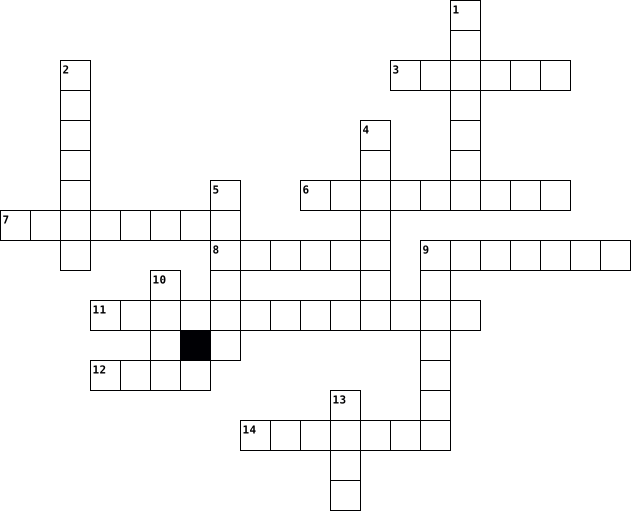
Across
- type of exercise involving your arms
- facts of what you eat
- what you do to stay fit
- constantly moving
- another word for exercise
- being a good partner/teammate
- what you live in
- decisions
Down
- being polite
- someone to work out with
- daily workouts
- wellness of your body
- what you can lift to exercise
- what you eat
- what you use to think
15 Clues: decisions • being polite • what you eat • daily workouts • what you live in • constantly moving • wellness of your body • facts of what you eat • what you use to think • what you do to stay fit • someone to work out with • another word for exercise • what you can lift to exercise • being a good partner/teammate • type of exercise involving your arms
unit5-3 2022-09-05

Across
- 영양
- 동인, 추진 요인
- 믿을 만한, 건전한
- 이익
- 요소
- 양, 복용량
Down
- dioxide 이산화탄소
- 걸러내다
- 줄이다
- 폭넓은, 광범위한
- 설치하다
- 주민, 거주자
- 수직의
13 Clues: 영양 • 이익 • 요소 • 줄이다 • 수직의 • 걸러내다 • 설치하다 • 양, 복용량 • 주민, 거주자 • 폭넓은, 광범위한 • 동인, 추진 요인 • 믿을 만한, 건전한 • dioxide 이산화탄소