
physical Crossword Puzzles
Environment Factors Physical and Natural Environment 2022-03-27

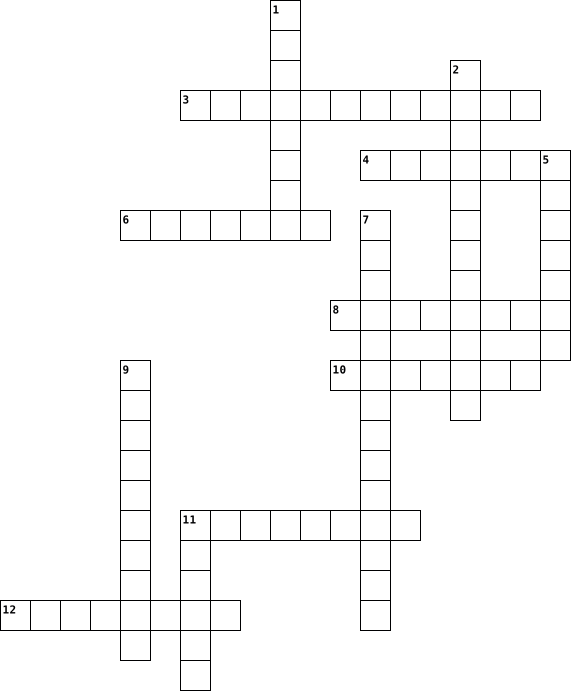
Across
- What determines whether funding of programs and/or services are availiable to benefit individuals with disabilities?
- A key component to effective home modification is the ___ between the home and environment
- Environments with poor accessibility can __ impact the participation of persons with disabilities
- The 1st step to home modification is
- The OT should select a __ __ that is customized to the treatment, setting, and health conditions of the client
- The 3 main categories of the physical environment include the built environment, products and technology, and the __ environment
- This model explores the capacities of the person
- __ __ may be required to understand an individual's abilities or limitations in community spaces
- technology Any product or system that is used to improve the functional capacity of persons who have disabilities is called __
- Culture can be relevant at the individual, organization, and community, and __ levels
Down
- Include people, their attitudes and cultural values, and social support offered by the people
- Create demands that require the user to manipulate the environment using fine motor control to twist, rotate, push, or pull an object
- __ is the result of complex interactions between intrinsic and extrinsic person factors of the environment and what people need/what to do
- The __ model suggested that the rehab process can include restoring or expanding the individual's function by removing barriers that hinder performance
- __ can assist in managing conditions, improve functioning, increase independence, ensure safety, and reduce cost of overall care
- The environment represents both __ space and __ structures
- Comprises an environment that has an impact on the developing individual, but does not contain him or her
- __ is the context that is external to the person in which activity occurs
- Interactions between a person and their child is an example of what system
- Which environmental element involves frequented slaves by the individuals and their daily occupations?
20 Clues: The 1st step to home modification is • This model explores the capacities of the person • The environment represents both __ space and __ structures • __ is the context that is external to the person in which activity occurs • Interactions between a person and their child is an example of what system • ...
Physical Science Ch6 elect 1/2 2022-02-24

Across
- states that charge can be transferred from object to object , but cannot be created or destroyed
- is a closed path that electric current follows
- is related to the force that causes electric charges to flow
- Material through which electrons move easily
- has three parts(two metallic plates and compound electrolyte solution)
- Negatively charged electric particle that usually is found in shells
- is high to low gradient
- Material in which electrons are not able to move easily
- measured in OHM’s is the tendency for a material to resist the flow of electrons and to convert electrical energy into other forms of energy
- this surrounds every electric charge that exert force that causes other electric charges to be attracted
- are the voltage difference
- Positively charged electric particles that are found usually in the nucleus
Down
- the accumulation of excess electric charge on an object
- is the process of transferring charge by touching or rubbing
- neutral electric particle usually found in the nucleus
- is the net movement of electric charges in a single direction
- have three parts (two electrode and electrolyte)
- is the rearrangement of electrons on a neutral object caused by a nearby charged object
- Commonly known as AMPS-one amp is equal to one coulomb of electric charge
- the current in a circuit equals the voltage difference divided by the resistance remember the triangle (VIR)
- is a device that can detect electric charge
- is low to high gradient
- International System of unit to be used across the Earth
23 Clues: is high to low gradient • is low to high gradient • are the voltage difference • is a device that can detect electric charge • Material through which electrons move easily • is a closed path that electric current follows • have three parts (two electrode and electrolyte) • neutral electric particle usually found in the nucleus • ...
8th Grade Physical Science Vocabulary Review 2022-03-06

Across
- resources that can be replenished in a short amount of time
- tiny, very dense, positively charged region in center of an atom; made up of protons & neutron
- found in group 13periodic table
- group 14 periodic table
- atomic mass unit; indicates mass on an atomic/molecular scale
- average mass of protons & neutrons in an element
- formulas and symbols written to represent a reaction
- specific area where electrons of same energy level are found
- most elements, typically solid, shiny malleable, & a good conductor of heat & electricity
- elements typically not shiny, usually a gas or brittle solid, not malleable, & a poor conductor of heat & electricity
- found in group 17 periodic table
- substance produced during a chemical reaction
- form as result of loss or gain of electrons; identified by overall net charge
- atoms of same element that have different numbers of neutrons
- particles smaller than an atom
- columns on periodic table that arranges the elements by the number of electrons that are in outside shell
- subatomic particle without charge; contributes to mass of an atom
- elements in Group 3 with atomic numbers 89 - 103
- rows in periodic table that classifies elements by number of atomic shells
- attempt to fill electron shells; ionic bonds, covalent bonds, metallic bonds
- number of protons in the nucleus of one atom
- elements/compounds that can only be separated/combined to make substances with new properties by means of chemical reaction
- found in group 16 periodic table
- combination of 2 or more substances that are not chemically combined
- form of charge, designated negative, positive, or neutral (without charge)
- substances that we obtain from land, water, & air around us, either renewable or nonrenewable
- anything that has mass & takes up space
- elements in Group 3 with atomic numbers 57 - 71
- one/two letter notation used to represent a particular element
- something that can produce heat, power life, move objects, or produce electricity
- process by which one or more substances change to produce one or more different substances
- found in Group 2 Periodic Table
- mass of all reactants must equal mass of all products, mass is neither created nor destroyed
Down
- electrons in the outermost energy level of an atom that influence how element will react with other substances
- table showing chemical elements arranged according to their atomic numbers
- cannot be remade or re-grown at a scale comparable to its consumption
- negatively charged subatomic particle; involved in formation of chemical bonds
- - can be observed without changing identity
- substances that change into new identity; difficult to put back into original matter
- number written below & to right of a chemical symbol, shows the number of a specific type of atom present
- pure substance that cannot be separated into simpler substances by physical or chemical means
- found in Group 1 Periodic Table
- found in groups 3 - 12 periodic table
- all of the area inside an atom surrounding nucleus where electrons are found
- found in group 18periodic table
- oil, coal, natural gas
- positively charged subatomic particle; contributes to the mass of the atom
- two elements react to form a compound
- found in group 15 Periodic Table
- substance that takes part in & undergoes change during a reaction
- number placed in front of a chemical symbol or formula during balancing of equation
- smallest unit that has all of the properties of that element containing a nucleus within an electron
- rate at which chemical substance tends to undergo chemical reaction & significantly influenced by valence electrons
- pure substance composed of two or elements chemically
- elements that have properties of both metals & nonmetals
55 Clues: oil, coal, natural gas • group 14 periodic table • particles smaller than an atom • found in group 13periodic table • found in Group 1 Periodic Table • found in group 18periodic table • found in Group 2 Periodic Table • found in group 17 periodic table • found in group 15 Periodic Table • found in group 16 periodic table • found in groups 3 - 12 periodic table • ...
The Physical World of a Machine 2023-11-28

Across
- What is present when work is done?
- Condition of various energies
- Energy has many of these
- Moving an object through a distance
- Can be energy or resistance
- Resistance ___ motion
- A force measure
- One type of energy transmission system
- Potential energy is ___ energy
- Force which causes movement
- Kinetic energy does work as it ___ an object's surface
- Energy cannot be created or destroyed, so says this law
Down
- Since the source of kinetic energy for a machine is not at the point of work, it must be ___
- A work measure
- Force Intensity
- The degree to which a system's working energy decreases is measure of a system's ___
- Kinetic energy accompanied by pressure is __ energy
- it influences motion
- A means of energy transmission
- Term indicating how long it takes to do work
- Friction is a ___
- A state of energy which can do work
- Kinetic energy changes to heat when this resistance is overcome
- An energy form
- A form of kinetic energy
25 Clues: A work measure • An energy form • Force Intensity • A force measure • Friction is a ___ • it influences motion • Resistance ___ motion • Energy has many of these • A form of kinetic energy • Can be energy or resistance • Force which causes movement • Condition of various energies • A means of energy transmission • Potential energy is ___ energy • What is present when work is done? • ...
Introduction to Physical Activity Chpt. 1 2023-09-18

Across
- Helps you to prevent injury
- After a workout, it's best to do slow jogging or fast walking
- Examples are push ups and curl ups
- After a workout, it's best not to stop ___
- Examples are watching TV, computer games, social media
- Intensity is not too easy and not too hard
- Experts recommend that adults to moderate activities for __ minutes
- "with oxygen"
- Examples are running, swimming, skating, dancing
Down
- Using more energy doing these activities, like aerobics and sports
- Occurs when your muscles contract to make your body move
- Heart, blood vessels, muscles ready so that you won't injure muscles
- (First level of the pyramid) walking to school or doing yard work
- ___ activities can be done when you're young as well as when you are old
- Teens need about __ hours of sleep each day
- Best activity to warm up the body includes fast walking or ___
- Level __ of the PAP help people reduce their risk of disease and help maintain body weight
- Vigorous activities should be done at least 3 days a week for __ min.
- Examples are tennis, basketball, soccer
- Physical activity done to build physical fitness
20 Clues: "with oxygen" • Helps you to prevent injury • Examples are push ups and curl ups • Examples are tennis, basketball, soccer • After a workout, it's best not to stop ___ • Intensity is not too easy and not too hard • Teens need about __ hours of sleep each day • Physical activity done to build physical fitness • Examples are running, swimming, skating, dancing • ...
Physical and Political Geography of Africa 2025-01-27

Across
- Largest country in Africa.
- Channel named after a country that separates Madagascar from mainland Africa.
- Number of countries in Africa.
- Desert in Southern Africa that borders Namibia, Botswana, and South Africa.
- Gulf near the centre of Africa, also named after a country.
- Ocean east of Africa.
- Most populated country in Africa, making up 15.4% of the population.
- Lake named after country that is shrinking due to climate change and population pressures.
- Longest river in the world.
- A region separating the dry Sahara and the humid Sudanian Savannas.
- The name of a lake and a waterfall in Africa.
- Major desert in Africa.
- Only country to have three capitals.
Down
- Smallest country connected to mainland Africa, this country is also surrounded by Senegal.
- This country is often called “The Cradle of Mankind”.
- Continent this entire crossword is about. If you don’t know this, you are COOKED.
- Canal similar to Panama that separates Africa from Asia.
- Also known as the Somali Peninsula, this area in Africa consists of Somalia, Eritrea, Djibouti, and Ethiopia.
- Island nation that is the smallest in Africa.
- Youngest Country in the world, created in July 9, 2011 by a treaty that ended a war in Africa. This country is also the most diverse.
- A series of valleys that splits the African Continent in two.
- Ocean south of Africa
- Mountain range bordering Morocco, Algeria, and Tunisia.
- Namibia exports about 46% of this resource out of all of Africa.
- One major resource from Africa that has a yellow shine.
- Ocean west of Africa.
26 Clues: Ocean east of Africa. • Ocean south of Africa • Ocean west of Africa. • Major desert in Africa. • Largest country in Africa. • Longest river in the world. • Number of countries in Africa. • Only country to have three capitals. • Island nation that is the smallest in Africa. • The name of a lake and a waterfall in Africa. • This country is often called “The Cradle of Mankind”. • ...
Physical and Chemical Changes - Discovery Science 2025-03-09

Across
- A reaction where a solid forms from two liquids
- A solid turning straight into a gas without becoming a liquid
- A solid turning into a liquid
- A type of change where no new substance is made
- A reaction where two or more substances combine to make something new
- A word to describe something that cannot dissolve in a liquid
- A change that can be undone and go back to how it was before
- A word to describe something that can dissolve in a liquid
- When heat causes a substance to break apart into new substances
- The liquid that dissolves a solute
- A change that cannot be undone because a new substance is made
- A liquid turning into a gas quickly when heated
- When an acid and a base react to make salt and water
- When a substance breaks up and mixes into a liquid to form a solution
Down
- When a substance reacts with oxygen like rust forming on iron
- A solution that cannot dissolve any more solute because it is full
- A liquid turning into a solid
- A liquid slowly turning into a gas from its surface
- The idea that the total mass stays the same in a reaction even if substances change form
- A reaction that produces bubbles or fizzing
- The substance that gets dissolved in a liquid
- The mixture made when a solute dissolves in a solvent
- A gas turning into a liquid when cooled
- A reaction where a substance burns usually with oxygen
- A type of change where a new substance is formed
25 Clues: A liquid turning into a solid • A solid turning into a liquid • The liquid that dissolves a solute • A gas turning into a liquid when cooled • A reaction that produces bubbles or fizzing • The substance that gets dissolved in a liquid • A reaction where a solid forms from two liquids • A type of change where no new substance is made • ...
Physical Science Ch4: Mixtures, Elements, & Compounds 2024-09-02

Across
- two or more elements chemically combined
- Large numbers written before a chemical formula in a chemical equation to indicate the number of molecules
- a mixture in which one substance is dissolved in another substance
- a mixture that appears to be the same throughout
- a substance made of only one kind of material and is the same throughout
- how much of a solute can dissolve in a solvent
- able to be dissolved
- the building blocks of matter
- not able to be dissolved
- Symbol
- a substance that cannot be broken down into simpler substances
Down
- small numbers written in the bottom right corner of a chemical symbol to indicate the number of atoms
- a combination of chemical symbols that represents a molecule of a compound
- an equation describing a chemical reaction
- the substance that does the dissolving in a solution
- the substance that is dissolved in a solution
- a mixture that does not appear to be the same throughout
- two or more substances mixed together but not chemically combined
- two or more atoms chemically bonded together
- a homogeneous mixture of different metal elements
20 Clues: Symbol • able to be dissolved • not able to be dissolved • the building blocks of matter • two or more elements chemically combined • an equation describing a chemical reaction • two or more atoms chemically bonded together • the substance that is dissolved in a solution • how much of a solute can dissolve in a solvent • a mixture that appears to be the same throughout • ...
Vital Signs and the Physical Exam 2025-05-20

Across
- this position places the patient on their left side
- this is the pulse in the neck that is used in CPR
- absence of breathing
- never place the patient in this position until the provider is in the room
- an instantaneous tympanic membrane thermometer is called
- the common place to take a patients pulse
- the bottom number in blood pressure
- the part of the brain that regulates temperature
- a blood pressure reading of 128/84 is considered
- an elevated body temperature higher than 99.5
Down
- the process of measuring
- slow breathing, less than 12 per minute
- the most accurate method of taking body temperature
- fast breathing is called
- a low oxygen level is referred to as
- a fast heartrate higher than 100 BPM
- this clips on the end of the finger and measures pulse and oxygen
- difficult or labored breathing
- the top number in blood pressure
- force and strength of the pulse is referred to as
20 Clues: absence of breathing • the process of measuring • fast breathing is called • difficult or labored breathing • the top number in blood pressure • the bottom number in blood pressure • a low oxygen level is referred to as • a fast heartrate higher than 100 BPM • slow breathing, less than 12 per minute • the common place to take a patients pulse • ...
2024 Africa Physical and History Review 2024-12-19

Across
- Artifact that helped historians translate early Egyptian writing
- Language created by the early Egyptians
- Another name for the Old Kingdom
- First of the Western African Kingdoms
- Type of economy using barter and trade
- The natural barrier for ancient Egypt to the north
- A technique where a dead body is wrapped in linens after taking out their organs
- A landform caused by the fault line running along the eastern side of Africa
- The capital city created by Mansa Musa
- The only climate Africa does NOT have
- Considered to be one of the most famous rulers of Egypt
Down
- Second of the Western African Kingdoms
- The two resources the Western African kingdoms had control over
- The natural barrier for ancient Egypt to the east and west
- Geography of the Western African Kingdoms
- Geography of the early Egyptian civilization
- Tallest mountain in Africa
- Recognized as what the Middle Kingdoms was known for
- Second longest river in Africa and deepest in the world
- Last of the Western African Kingdoms
- Oldest early civilization in Africa
- The religion Mansa Musa practiced
- The type of Government ancient Egypt had
23 Clues: Tallest mountain in Africa • Another name for the Old Kingdom • The religion Mansa Musa practiced • Oldest early civilization in Africa • Last of the Western African Kingdoms • First of the Western African Kingdoms • The only climate Africa does NOT have • Second of the Western African Kingdoms • Type of economy using barter and trade • The capital city created by Mansa Musa • ...
Africa Physical and Political Crossword Puzzle 2025-05-01

Across
- country that is completely surrounded by another country
- Man's best friend
- desert located in Botswana
- Likes to chase mice
- major river in East Africa
- country that contains the western most point of mainland Africa
- country with more than one capital city
- large lake shared by Tanzania, Kenya, and Uganda
- country that is considered the "horn of Africa"
- capital city where the White and Blue Nile meet
- longest lake in the world bordering the Dem. Rep of Congo and Tanzania
- Large marsupial
- desert located in Namibia
- river that forms the border between Congo and the Democratic Republic of Congo
Down
- narrow waterway separating Africa and Europe
- country that is a group of islands north of Madagascar
- body of water separating Africa and Europe
- ocean west of Africa
- Has a trunk
- river that flows through Mali, Niger, and Nigeria
- highest peak in Africa
- mountain range found in South Africa
- largest desert in Africa
- ocean east of Africa
- Flying mammal
25 Clues: Has a trunk • Flying mammal • Large marsupial • Man's best friend • Likes to chase mice • ocean west of Africa • ocean east of Africa • highest peak in Africa • largest desert in Africa • desert located in Namibia • desert located in Botswana • major river in East Africa • mountain range found in South Africa • country with more than one capital city • ...
Unit 5: Mental and Physical Health 2025-05-03

Across
- Persistent, excessive worry about various aspects of life.
- Formerly known as multiple personality disorder; characterized by the presence of two or more distinct personality states or identities.
- A state of motor immobility and behavioral abnormality seen in some mental disorders.
- Proposes some people, mostly women, react to stress by tending to their own and others' needs.
- Fear of social situations where one might be judged or scrutinized by others.
- Perspective that emphasizes the role of learning and environment in shaping behavior.
- False beliefs that may manifest as persecutory, believing others are our to harm you, or grandiose, believing you have special powers.
- Perspective that examines how social and cultural factors influence behavior.
- Perspective that focuses on unconscious processes and early life experiences.
- Focuses on factors that contribute to individual and societal thriving. It emphasizes positive emotions, resilience, and psychological health.
- Fear of being in situations where escape might be difficult or help unavailable. Could include public transportation, open spaces, and crowds.
- A type of exposure therapy where a person is gradually exposed to a feared stimulus while practicing relaxation techniques.
Down
- Involves recurrent, unexpected panic attacks with physical and cognitive symptoms of intense fear.
- Perspective that focuses on mental processes such as thinking, memory, and problem-solving.
- False sensory perceptions, such as hearing voices or seeing things that aren’t present.
- A disorder characterized by unwanted repetitive thoughts (obsessions) and actions (compulsions).
- Perspective that focuses on the physiological and genetic influences on behavior.
- A therapeutic approach that emphasizes empathy, active listening, and unconditional positive regard for the client.
- A controversial and rarely used procedure that severs connections in the prefrontal cortex. Was once widely performed to treat mental illnesses but has since been abandoned.
- A neurological disorder caused by long-term use of antipsychotic medications, characterized by involuntary movements.
- A medical treatment for severe depression involving electrical stimulation of the brain under anesthesia.
- Describes the process of experiencing stress in three stages: alarm reaction, resistance phase, and exhaustion phase.
- Perspective that emphasizes personal growth, free will, and self-actualization.
- A form of therapy that helps clients identify and change irrational beliefs contributing to emotional distress.
- A mental health disorder triggered by exposure to traumatic events, leading to flashbacks, anxiety, and avoidance.
25 Clues: Persistent, excessive worry about various aspects of life. • Fear of social situations where one might be judged or scrutinized by others. • Perspective that examines how social and cultural factors influence behavior. • Perspective that focuses on unconscious processes and early life experiences. • ...
unit 2 physical geography test review 2024-09-29

Across
- it takes the earth 24 hours for one ____.
- boundaries occur when two tectonic plates slide apart from one another.boundaries occur when two tectonic plates slide towards one another. When two plates slide past each other, that boundary is know as a
- atmosphere
- it takes the earth 365 days for one _____ around the sun
- type of biome that receives less than 10 inches of rain per year
- lithosphere
- planets in our solar system
- greatest influence on climate
- climate that has hot summers, mild to cold winters
- breaking down of rocks
- A type of graph that combines bar and line graphs showing monthly averages of precipitation and temperatures for an area is known as a -
- boundaries occur when two plates slide past each other
- movement of rocks by wind, water, or ice
- conditions over a short period of time
Down
- low latitude, usually found along the equator
- caused by plate tectonic movement
- boundaries occur when two tectonic plates slide towards one another
- conditions over a long period of time
- cycle that starts by the sun with evaporation, condensation, then precipitation
- hydrosphere
- continental (mid latitude) experiences a true 4 ____
- Earth's ____ is the reason for the seasons
- landforms like volcanoes are part of this sphere
- the earth is titled at 23 ____
- biosphere
- The planets in our solar system revolve around the Sun due to the ___________ pull of the Sun.The Earth tilts at
- climate that causes a place to be treeless and constantly frozen subsoil (permafrost)
- high latitude, has harsh winters and cool summers
28 Clues: biosphere • atmosphere • hydrosphere • lithosphere • breaking down of rocks • planets in our solar system • greatest influence on climate • the earth is titled at 23 ____ • caused by plate tectonic movement • conditions over a long period of time • conditions over a short period of time • movement of rocks by wind, water, or ice • it takes the earth 24 hours for one ____. • ...
Phases of Matter and Physical Properties 2025-10-10

Across
- Components evenly distributed
- Temperature at which liquid becomes gas
- Solid to liquid; energy added
- Separates solids from liquids using a filter
- Increase in size of substance when heated
- No definite shape but definite volume; particles slide past each other
- Temperature at which solid becomes liquid
- Separates liquids based on boiling points
- Combination of two or more substances
- Volume increases as temperature increases
- Energy to change solid to liquid
- Energy to change liquid to gas
- Liquid to solid; energy removed
- Average kinetic energy of particles
- Gas to liquid; energy removed
- Separates substances based on travel distance on paper
- Resistance of a fluid to flow
- Pressure increases as volume decreases
Down
- Upward force exerted by a fluid
- Components not evenly distributed
- Liquid to gas at the surface
- Characteristics observed without changing substance
- Superheated gas with charged particles; found in stars
- Energy to raise 1 g of substance 1°C
- Solid to gas; energy added
- Faster fluid flow means lower pressure
- Pressure transmitted equally through a fluid
- Mass divided by volume
- Explains how matter is made of moving particles
- Liquid to gas; energy added
- No definite shape or volume; particles move freely
- Gas to solid; energy removed
- Total kinetic energy of particles in a substance
- Definite shape and volume; particles vibrate in place
- Separates magnetic from non-magnetic materials
- Force divided by area
36 Clues: Force divided by area • Mass divided by volume • Solid to gas; energy added • Liquid to gas; energy added • Liquid to gas at the surface • Gas to solid; energy removed • Components evenly distributed • Solid to liquid; energy added • Gas to liquid; energy removed • Resistance of a fluid to flow • Energy to change liquid to gas • Upward force exerted by a fluid • ...
Topic 1: Physical Properties of Matter 2025-08-20

Across
- Groups of similar things based on characteristics or properties
- The amount of space something takes up
- Float or sink
- Cannot be dissolved
- Two or more substances that can be easily seperated
- One or more substances dissolves into another
- Use five senses to study examine, learn, and discover
- Does not allow thermal or electrical energy to pass easily
Down
- A substance breaks down and spreads evenly throughout a liquid
- Allows thermal or electrical energy to pass easily
- A force that causes magnetic matter to be attracted to a magnet
- Anything that has mass and takes up space
- A small part of a substance
- The amount of matter in an object
- Takes the shape of its container
- Has a set shape and size
- The flow of electrical power or charge
- A part of a mixture
- Takes both the shape and volume of its container
- The ability to dissolve in adissolvebstance
20 Clues: Float or sink • Cannot be dissolved • A part of a mixture • Has a set shape and size • A small part of a substance • Takes the shape of its container • The amount of matter in an object • The amount of space something takes up • The flow of electrical power or charge • Anything that has mass and takes up space • The ability to dissolve in adissolvebstance • ...
PHYSICAL APPEARANCE VOCABULARY WITH DR SEUSS 2026-05-27

Across
- MANE
- USÉ
- SILLY
- GRASSOUILLET
- RAYÉ
- JOUFFLU
- MISCHIEVOUS
- SAUVAGE
Down
- LUMPY
- UNI
- POINTU
- CROOKED
- FLUFFY
- TEENY-TINY
- BUSHY
- A POIS
- FURRY
- A CARREAUX
- TIE NOEUD PAPILLON
- CHEERFUL
20 Clues: UNI • USÉ • MANE • RAYÉ • LUMPY • SILLY • BUSHY • FURRY • POINTU • FLUFFY • A POIS • CROOKED • JOUFFLU • SAUVAGE • CHEERFUL • TEENY-TINY • A CARREAUX • MISCHIEVOUS • GRASSOUILLET • TIE NOEUD PAPILLON
properties of matter 2021-04-28

Across
- a substance’s ability to change into a new substance with diffrent properties
- states that an ordinary and physical and physical changes, mass is not created or destroyed but it is only transformed into different substances
- many metals often have A SHINE that makes them prized by decorators
- a characteristic of a substance that can be observed and measured without changing the identity of the substance
- the temperature at which it changes from a solid to a liquid
- is the ability of a substance to dissolve in another substance
Down
- occurs when one or more substances change into entirely new substances with different properties
- hangs is a change that affects one or more physical properties of a substance
- is a measure of how well an electric current can move through a substance
- is a measure of the amount of mass in a given amount of volume
- is the ability of a substance to interact with another substance and form one or more new substances
- is the ability of a substance to be rolled or pounded into various shapes
12 Clues: the temperature at which it changes from a solid to a liquid • is a measure of the amount of mass in a given amount of volume • is the ability of a substance to dissolve in another substance • many metals often have A SHINE that makes them prized by decorators • is a measure of how well an electric current can move through a substance • ...
Weathering Review 2020-03-03

Across
- The _____/thaw cycle happens a lot in cold climates
- the physical, chemical, or biological breakdown of rocks and minerals into smaller pieces
- Carrying away small pieces of land by wind, water, and ice
- rock made from sediments that have been pressed together
- weathering that happens when the minerals in rocks are chemically transformed into new materials
- weathering that happens when the action of living organisms contribute to the break down of rocks
- a combination of two or more minerals
Down
- rock that forms when igneous and sedimentary rocks are changed with heat and pressure
- These little plants cause biological weathering
- When rocks grind together and become rounded
- Another name for the mushroom family, these cause biological weather
- This cause of biological weathering is too small to see without a microscope
- rock made from magma that has cooled
- When oxygen reacts with iron and magnesium
- These can grow into a crack in the rock and cause it to split
- Weathering that happens when rock is broken down into smaller pieces by physical processes
16 Clues: rock made from magma that has cooled • a combination of two or more minerals • When oxygen reacts with iron and magnesium • When rocks grind together and become rounded • These little plants cause biological weathering • The _____/thaw cycle happens a lot in cold climates • rock made from sediments that have been pressed together • ...
FitBit Crossword 2018-08-14

Across
- Fitbit that has cardio fitness levels
- Fitbit made especially for kiddos
- Fitbit that is meant for all-day tracking
- activity requiring physical effort, carried out to sustain or improve health and fitness
- Fitbit that tracks swimming
- direction and intensity of one’s effort and determination to achieve a goal
- the ability to exercise continuously for extended periods without tiring
- The ___ Vivosport is the 'Best fitness tracker for most people'
Down
- the object of a person's ambition or effort; an aim or desired result
- Fitbit that has a multisport mode and is the #1 selling Fitbit
- The number of heartbeats per unit of time, usually beats per minute
- the process of providing or obtaining the food necessary for health and growth
- how strong a person is, and the ability he or she has to do an act
- the maximum force that can be developed in a muscle during a single maximal contraction
- tracker wearable device that tracks their daily physical activity
- the state of being free from illness or injury/a persons mental or physical condition
16 Clues: Fitbit that tracks swimming • Fitbit made especially for kiddos • Fitbit that has cardio fitness levels • Fitbit that is meant for all-day tracking • Fitbit that has a multisport mode and is the #1 selling Fitbit • The ___ Vivosport is the 'Best fitness tracker for most people' • tracker wearable device that tracks their daily physical activity • ...
Ecology Vocabulary Practice #3 2023-10-31

Across
- An organisms children/young
- When an organism is awake and alert at night
- An adaptation that is a structure or part of an organism
- Seed dispersal method where an animal helps move/carry seeds away from the parent plant
- A change in DNA that can lead to a variation
- The scientist who is credited with the discovery of natural selection
- The members of the same population that are different from one another
- An adaptation that an organism has which based on how it acts
- The change in the characteristics of a species over time through the process of natural selection
Down
- Physical structures that remain from ancestors but are no longer used
- The process by which organisms better adapted to their environment survive and produce offspring
- Traces of organisms that lived in the past
- A physical characteristic or behavior that allows an organism to live successfully in its environment
- An organism's ability to blend into its environment
- Seed dispersal method where seeds are blown/fly through the air from the parent plant to another location
- Allows plants to access water stored deep underground.
16 Clues: An organisms children/young • Traces of organisms that lived in the past • When an organism is awake and alert at night • A change in DNA that can lead to a variation • An organism's ability to blend into its environment • Allows plants to access water stored deep underground. • An adaptation that is a structure or part of an organism • ...
stre 2023-07-17

Across
- The process of planning and organizing one's time effectively.
- A mood disorder characterized by persistent feelings of sadness,
- Feeling overwhelmed or excessively burdened by tasks or responsibilities.
- Is the act of delaying or postponing tasks or actions.
- A practice of focusing attention and achieving a mentally clear and emotionally calm state
- Activities or techniques used to reduce stress and induce a state of calm.
- What is a typical psychological and physiological response to demanding or challenging situations that can negatively impact overall well-being?
Down
- Actions taken to promote one's physical, mental, and emotional well-being.
- The act of inhaling and exhaling air.
- Strategies or techniques used to deal with stress or difficult situations.
- The ability to bounce back and adapt in the face of adversity or stress.
- A state of chronic physical and emotional exhaustion often caused by prolonged stress.
- The amount of work or tasks assigned to someone.
- A feeling of unease, such as fear, apprehension, or worry.
- A state of being fully present and engaged in the present moment.
- Physical activity is performed to improve health, fitness, or well-being.
16 Clues: The act of inhaling and exhaling air. • The amount of work or tasks assigned to someone. • Is the act of delaying or postponing tasks or actions. • A feeling of unease, such as fear, apprehension, or worry. • The process of planning and organizing one's time effectively. • A mood disorder characterized by persistent feelings of sadness, • ...
Fusion 360 terms (Modify and Construct) 2023-01-20

Across
- Creates new bodies by selected profiles
- Modifies the selected geometry using offset, extrude or fillet commands. The operation depends on the geometry selected
- Creates a construction plane through an edge, axis, or line at a specified angle
- Divides faces using a selected profile as the cutting tool
- Scales objects
- bevels the edge of a solid shape
- Creates construction plane that Is offset from the selected face or plane
- Creates a construction plane that is tangent to a cylindrical or conical face
- Creates a construction plane passing through to linear edges or axes
Down
- Assign appearance to physical bodies without changing properties
- Creates a construction plane at the midpoint between two faces or work planes.
- Assign physical material to components and bodies to give them physical properties
- Join cuts intersections of 2 or more body into 1 body
- Remove material from part of the interior creating a hollow interior
- Applies a fixed line to planner faces
- the edges of a solid body by adding material to interior edges and removing exterior angles
16 Clues: Scales objects • bevels the edge of a solid shape • Applies a fixed line to planner faces • Creates new bodies by selected profiles • Join cuts intersections of 2 or more body into 1 body • Divides faces using a selected profile as the cutting tool • Assign appearance to physical bodies without changing properties • ...
Components of fitness 2025-06-03

Across
- The rate at which an individual can perform a movement or cover a distance.
- Your ability to exercise the whole body for long periods of time, sometimes called stamina.
- The ability to change position and control the body at speed.
- Your ability to use voluntary muscles repeatedly without getting tired.
- Lacking in physical activity.
- The ability to move two or more body parts together
Down
- The range of motion of your joints or the ability of your joints to move freely
- Physical activity that maintains or improves health and fitness.
- Your ability to exert a force, such as when you lift a weight.
- Ability to meet the demands of the environment.
- The time between a given stimulus and the onset of movement.
- A state of complete emotional, physical and social well-being and not just merely the absence of disease.
- The ability to keep the body stable while at rest, or on the move.
- The ability to undertake strength performances quickly.
- The percentage of body weight that is muscle, fat or bone.
- How well a task is completed.
16 Clues: How well a task is completed. • Lacking in physical activity. • Ability to meet the demands of the environment. • The ability to move two or more body parts together • The ability to undertake strength performances quickly. • The percentage of body weight that is muscle, fat or bone. • The time between a given stimulus and the onset of movement. • ...
Yellow Wallpaper Background 2025-01-14

Across
- A style of fiction featuring decaying settings and psychological horror.
- What the "woman behind the wallpaper" represents.
- One of the key themes, symbolized by the protagonist’s struggle for self-expression.
- The author of The Yellow Wallpaper.
- The movement advocating for women's right to vote.
- A critique of medical practices aimed at treating women’s mental health issues.
- Women were largely confined to this sphere, emphasizing roles and wives and mothers.
- Physical or emotional restriction, symbolized in the story by the wallpaper.
Down
- The social system where men hold primary power.
- A prominent theme in the story related to women’s limited societal roles.
- Term for the psychological diagnosis historically used to describe emotional or physical distress in women.
- The narrative style of the story that closely follows the protagonist's thoughts.
- What the wallpaper in the story symbolizes.
- The state often caused by physical and emotional isolation in the story.
- Rest cure was the treatment for hysteria that involved_____ and enforced idleness, which are both criticized in the story.
- The amendment granting women the right to vote.
16 Clues: The author of The Yellow Wallpaper. • What the wallpaper in the story symbolizes. • The social system where men hold primary power. • The amendment granting women the right to vote. • What the "woman behind the wallpaper" represents. • The movement advocating for women's right to vote. • A style of fiction featuring decaying settings and psychological horror. • ...
Heredity Crossword Puzzle 2026-01-19

Across
- genetic makeup of an organism (abbreviated notation for allele combination ex. Tt, TT, tt)
- trait always shows up when the allele is present (represented with a capital letter)
- how likely an event will occur
- The passing of physical characteristics from parents to offspring (one generation to another)
- the factors that control the trait/The place on the chromosome that has the genetic information for one trait
- a tool used to show the possible combinations of alleles that can result from a genetic cross
- different forms of the same gene (dominant or recessive)
- trait is hidden when the dominant allele is present (represented with a lower-case letter)
- organism with two alleles that are the same; also known as purebred
Down
- physical appearance resulting from the genotype
- inheritance pattern in which both alleles are displayed (e.g., FRFW = red and white chicken)
- threadlike structures in the nucleus that contain genetic information
- a physical characteristic such as height or seed color
- organism with two different alleles (e.g., Tt)
- scientist who studied genetics with pea plants - Father of Genetics
- a change in an organism's DNA sequence
16 Clues: how likely an event will occur • a change in an organism's DNA sequence • organism with two different alleles (e.g., Tt) • physical appearance resulting from the genotype • a physical characteristic such as height or seed color • different forms of the same gene (dominant or recessive) • scientist who studied genetics with pea plants - Father of Genetics • ...
Gender stereotypes 2015-04-30

Across
- The lack of kindness or understanding towards people who are different
- Something that you accept as true without question or proof
- Graceful, polite, and behaving in a way that is socially acceptable for a woman
- A saying that does not include details or important differences
- To cause something to continue
- A person or group who is given the blame for the mistakes or failures of others
Down
- Characteristic, feature
- Special treatment (good or bad) based on race, religion, physical appearance, age, social class
- Having the qualities that people think a man should have
- The period of physical and psychological development from the onset of puberty to complete growth and maturity
- Causing physical or emotional pain
- A feeling of not belonging
12 Clues: Characteristic, feature • A feeling of not belonging • To cause something to continue • Causing physical or emotional pain • Having the qualities that people think a man should have • Something that you accept as true without question or proof • A saying that does not include details or important differences • ...
Property of Matter 2021-12-13
Across
- law of ______ of mass says that mass before a reaction is equal to mass after
- two or more substances combine but each maintains its own properties, including heterogeneous and homogeneous
- ____effect which is the scattering of light
- another name for a homogeneous mixture
- type of mixture with particles that are large but not enough to settle out
- ____ property -characteristic of a substance in which a chemical change happens (flammable)
- single substance made of two or more atoms
Down
- ____property - characteristic of a material you can observe without changing identity of it
- process for separating a liquid mixture
- matter made up of one kind of atom
- separates substances based upon their densities is this type of physical change
- heterogeneous mixture in which visible particles separate
- physical _____ is one in size, shape or state of matter
13 Clues: matter made up of one kind of atom • another name for a homogeneous mixture • process for separating a liquid mixture • single substance made of two or more atoms • ____effect which is the scattering of light • physical _____ is one in size, shape or state of matter • heterogeneous mixture in which visible particles separate • ...
Matter Vocab - Michelle Martinez 2023-10-23

Across
- Property a characteristic of pure substance that can be observed without changing it into another substance
- the study of the properties of matter and how matter changes
- a well-mixed mixture containing a solvent and at least one solute that has the same properties throughout
- Property a characteristic of a pure substance that describes its ability to change into a different substance
- uniformed mixture, coffee with sugar, seawater
- the basic particle from which all elements are made
- gold, iron, hydrogen, oxygen
- a neautral particle made of two or more atoms joined by covalent bonds
Down
- water,carbon dioxide
- type of matter with a fixed compostion that cannot be separated by physical matter
- Formula a combination of symbols that represents the elements in a compound and their proportions
- pizza, fruit salad, granite
- materials made of two or more substances that can be separated by physical means
- anything that has mass and takes up space
14 Clues: water,carbon dioxide • pizza, fruit salad, granite • gold, iron, hydrogen, oxygen • anything that has mass and takes up space • uniformed mixture, coffee with sugar, seawater • the basic particle from which all elements are made • the study of the properties of matter and how matter changes • a neautral particle made of two or more atoms joined by covalent bonds • ...
Introduction to Kinesiology 2023-08-14

Across
- Refers to a broader, more established "parent" discipline.
- Activity requiring physical effort, carried out to sustain or improve health/fitness.
- ________ activity is body movement that works muscles and requires more energy than at rest.
Down
- ________ kinesiology refers to functional anatomy courses in medical and physical therapy programs.
- ________ kinesiology is taught and researched in colleges and universities and differentiated from applied kinesiology.
- Body of knowledge organized around a certain theme/focus that learned people consider worthy of study
- Considered in international voice for exercise science (abbreviation).
- Study of the mechanics of body movement and/or physical activity.
- Kinesiology has historical bonds in disciplines such as health ed, dance, and _________.
9 Clues: Refers to a broader, more established "parent" discipline. • Study of the mechanics of body movement and/or physical activity. • Considered in international voice for exercise science (abbreviation). • Activity requiring physical effort, carried out to sustain or improve health/fitness. • ...
States Of Matter Crossword 2023-02-02

Across
- change in physical properties
- two or more substances physically combined
- classification of elements or compounds
- change from gas to liquid
- change from liquid to gas
- change from gas to solid
- made of multiple different elements
Down
- change from solid to liquid
- change from solid to gas
- set of elemental symbols and subscripts
- change from one physical form to another
- change from liquid to solid
- smallest component in a substance; cannot be broken down further
13 Clues: change from solid to gas • change from gas to solid • change from gas to liquid • change from liquid to gas • change from solid to liquid • change from liquid to solid • change in physical properties • made of multiple different elements • classification of elements or compounds • set of elemental symbols and subscripts • change from one physical form to another • ...
Computer hardware vocab choice board 2025-09-17

Across
- physical parts in a computer
- Device that connects to a computer with a USB
- unique string of characters identifying you
- Manages access of lots of people
- External expansion memory card
- connecting external devices
Down
- Global computer network providing a large variety of information
- Stores lots of files for longterm use
- Network of physical objects embedded with sensors
- software that supports computers basic funcs
- part everything connects to
- "Brain" of the computer
- Short term memory cards
13 Clues: "Brain" of the computer • Short term memory cards • part everything connects to • connecting external devices • physical parts in a computer • External expansion memory card • Manages access of lots of people • Stores lots of files for longterm use • unique string of characters identifying you • software that supports computers basic funcs • ...
Chemistry Matter Vocab 2022-01-19

Across
- A pure substance that cannot be broken down into simpler substances by physical or chemical means.
- The amount of matter in an object.
- The ability or inability of a substance to combine with or change into one or more new substances.
- The majority of elements in the Periodic Table
- separation technique that produces pure solid particles of a substance from a solution that contains the dissolved substance.
- A process involving one or more substances changing into new substances; also called a
- of matter The physical forms in which a substance can exist
- substance matter that has the same composition and properties throughout
- A technique that uses a porous barrier to separate a solid from a liquid.
- States that, regardless of the amount, a compound is always composed of the same elements in the same proportion by mass.
- property A characteristic of matter that can be observed or measured without changing the sample's composition - for example, density, color, taste, hardness, and melting point.
- A form of matter that flows to conform to the shape of its container, fills the container's entire volume and is easily compressed.
- A physical blend of two or more pure substances in any proportion in which each substance retains its individual properties; can be separated by physical means.
- a chemical substance formed as a result of a chemical reaction
- A chemical combination of two or more different elements; can be broken down into simpler substances by chemical means and has properties different from those of its component elements.
- A physical property, such as mass, length, and volume,that is dependent upon the amount of substance present.
- A form of matter that flows, has constant volume and takes the shape of its container.
- the basic unit of an element.
- gases An extremely unreactive group 18 element.
- (At constant pressure) relates temperature and volume
- by mass A percentage determined by the ratio of the mass of each element to the total mass of the compound.
- PV=PV
- A form of matter that has its own definite shape and volume, is incompressible and expands only slightly when heated.
- A technique that is used to separate the components of a mixture based on the tendency of each component to travel or be drawn across the surface of another material.
- table A chart that organizes all known elements into a grid of horizontal rows (periods) and vertical columns (groups or families) arranged by increasing atomic number.
- One that does not have a uniform composition and in which the individual substances remain distinct.
- poor conductors of heat and electricity
Down
- proportions States that when different compounds are formed by the combination of the same elements, different masses of one element combine with the same mass of the other element in a ratio of small whole numbers.
- States that mass is neither created nor destroyed during a chemical reaction but is conserved.
- (chemistry) a change directly from the solid to the gaseous state without becoming liquid
- Anything that has mass and takes up space
- The horizontal rows on the Periodic Table
- A technique that can be used to physically separate most homogeneous mixtures based on the differences in the boiliing points of the substances involved.
- One that has a uniform composition throughout and always has a single phase; also called a solution.
- PV=nRT
- combined gas law relates temperature, pressure, and volume
- relates temperature and pressure
- change A type of change that alters the physical properties of a substance but does not change its composition.
- a change from one state (solid or liquid or gas) to another without a change in chemical composition
- relates volume and amount of substance
- vertical columns of elements
- Gaseous state of a substance that is a liquid or a solid at room temperature.
- A physical property that remains the same no matter how much of a substance is present.
- An element that has both metallic and nonmetallic properties; examples of metalloids include B, Ge, Si, and Te.
- of heat, ductile, malleable, lustrous
- exists at high temperatures, consists of charged particles
- a chemical substance that is present at the start of a chemical reaction
47 Clues: PV=PV • PV=nRT • vertical columns of elements • the basic unit of an element. • relates temperature and pressure • The amount of matter in an object. • of heat, ductile, malleable, lustrous • relates volume and amount of substance • poor conductors of heat and electricity • Anything that has mass and takes up space • The horizontal rows on the Periodic Table • ...
Training Session Components and Principles 2023-08-02

Across
- a post-activity phase that involves performing gentle exercises and stretching to gradually lower the heart rate, cool down the body, and help with recovery after intense physical activity. Cool down aids in reducing muscle soreness and preventing injuries.
- Also known as reversibility. The concept that fitness gains can be lost if training is stopped or reduced.
- The specific kind of exercise or activity you engage in.
- training data pertains to information gathered about an individual's mental and emotional responses during training or competition. It may include assessments of motivation, confidence, focus, and stress levels.
- is a subjective scale used to assess an individual's perception of their exercise intensity. It is usually rated on a scale from 1 to 10, with 1 being very light and 10 being maximum effort. RPE helps individuals and coaches monitor exercise intensity without relying solely on physiological data.
- Matching your training to your particular sport or fitness goals.
- electronic devices or software applications that monitor and record physical activities and fitness-related data. These tools often track steps, distance, heart rate, sleep patterns, and other metrics to help individuals monitor and improve their fitness levels and performance.
- refers to the accumulation of blood in the lower extremities, particularly the legs, after intense physical activity. It occurs when the muscles that assist in pumping blood back to the heart become fatigued. Venous pooling can lead to dizziness or fainting if not addressed through proper cool-down activities.
- Tailoring training programs to suit the unique needs and abilities of each person.
- involves holding a muscle or joint in a stretched position for a sustained period without movement. This type of stretching aims to improve flexibility and elongate muscles. It is typically performed during the cool-down phase.
- Engaging in excessive or intense training without sufficient rest and recovery, leading to decreased performance and potential health issues.
- The duration or length of each training session.
- training data refers to information collected during exercise or physical training that relates to the body's physiological responses. This data may include heart rate, oxygen consumption, blood pressure, and other relevant physiological measurements.
Down
- the main part of a training session or program where the individual performs specific exercises or activities to improve their physical fitness and skill levels. This phase is designed to target and develop the specific fitness components required for the chosen sport or activity.
- As training progresses, the rate of improvement slows down, and further gains become more challenging.
- Gradually increasing the difficulty or intensity of your workouts over time.
- The level of effort or difficulty in your workouts.
- refers to a preparatory phase before engaging in physical activity or exercise. It involves performing light to moderate-intensity activities that gradually raise the heart rate and body temperature, preparing the body for more intense exercise. The purpose of a warm-up is to enhance blood flow to the muscles, improve flexibility, and mentally prepare the individual for the upcoming activity.
- A fundamental guideline for the design and implementation of an effective training program to optimize an individual's performance in a specific sport. These help individuals achieve their training goals while minimizing the risk of injury and overtraining.
- training data involves gathering information about the social and cultural factors that may influence an individual's participation in sports or physical activities. This data may encompass social support, cultural norms, and the impact of the environment on training experiences.
- Incorporating different exercises and activities to prevent boredom and improve overall fitness.
- How often you train or exercise.
- involves controlled, repetitive movements that take muscles and joints through a full range of motion. It helps improve flexibility, increase blood flow, and enhance neuromuscular coordination. Dynamic stretching is often used during the warm-up phase.
- a written record kept by athletes or individuals engaged in regular physical training. It includes details of training sessions, activities performed, duration, intensity, and any relevant observations or reflections.
- Challenging your body beyond its normal capabilities to promote improvement.
- Sustaining achieved fitness levels through continued training and activity.
26 Clues: How often you train or exercise. • The duration or length of each training session. • The level of effort or difficulty in your workouts. • The specific kind of exercise or activity you engage in. • Matching your training to your particular sport or fitness goals. • Sustaining achieved fitness levels through continued training and activity. • ...
Stress 2013-11-13

Across
- You feel less stress when you are in ________ of your life.
- Positive Stress
- Understanding the cause of stress can help us ________.
- Hans Selye is from this Country.
- Stress is a physical and _______ response to circumstances in the environment that test our ability to cope.
- Selye's theory that explains the reactions to long-term stress.
- Mentally _________ people generally observe and understand what is going on around them.
- A hormone affecting circulation and muscular action, causing excitement and stimulation.
Down
- An individual's appraisal first of a threat that is present, and then of ways to deal with the threat.
- Lessen almost to the point of disappearing.
- A group of symptoms that consistently occur together.
- When people fail to deal with the problem it is ________ stress.
- Stress ________ are physical as well as mental and emotional.
- A physical and psychological response to the environment that test one's ability to cope.
- The capacity to use the abilities we have in ways that allow us to function in a state of mental and emotional well-being.
- A source of stress for some young people.
16 Clues: Positive Stress • Hans Selye is from this Country. • A source of stress for some young people. • Lessen almost to the point of disappearing. • A group of symptoms that consistently occur together. • Understanding the cause of stress can help us ________. • You feel less stress when you are in ________ of your life. • ...
Chapter 2A Crossword Pick 4 2023-01-11

Across
- calculator
- social sciences
- dictionary
- art
- spanish
- lunch
- class
- english
Down
- physical education
- math
- 3 ring binder
- hour
- science
- technology
- homework
- a schedule
16 Clues: art • math • hour • lunch • class • science • spanish • english • homework • calculator • dictionary • technology • a schedule • 3 ring binder • social sciences • physical education
Burrell-G1ab-PF/Countries 2020-11-27

Across
- in central Africa; tropical rain forest covers the entire country; the Congo River flows through it; smaller animals; where Tarzan would have lived if he were real
- Africa with the Atlantic Ocean on its southern border; physical features include the Niger River, Sahel, and some tropical rain forest
- eastern Africa; runs north from Tanzania all the way into southern and eastern Asia; known as the ‘cradle of humanity’; its volcanic and tectonic activity is making it a major source of energy
- located in southern Africa; is not a ‘true’ desert because it has some vegetation and wildlife; northern part of South Africa (the country)
- in eastern Africa; partially bordered by the Indian Ocean; physical features include the savannas and Lake Victoria; lots of large animals and cattle
- transition zone between the Sahara Desert and the savannas; its climate is semi-arid; it means ‘shore’, ‘border’, or ‘coast’; some vegetation and wildlife; parts of Niger, Chad, Sudan
- located in northeast Africa; physical features include the Sahara Desert and the Nile River; bordered by the Red Sea on its western side
- thick forests and high rainfall; located in central Africa; abundant vegetation and wildlife; Congo River flows through it to the Atlantic Ocean; Nigeria, Congo, Cameroon, Democratic Republic of Congo
- Lake Victoria is its headwaters; flows northward through Tanzania, Kenya, South Sudan, Sudan, and Egypt before entering the Mediterranean Sea; very important for trade and irrigation
- largest hot desert in the world; covers most of north Africa; Atlas Mountains border the northeastern part; includes Egypt, Sudan, Chad, Libya, Algiers, Niger, Mali, and Morocco; limited wildlife, mostly insects
- located south of Egypt in eastern Africa; the Nile River flows through; physical features include the Sahara Desert, Sahel, and some savannas
- located in central Africa; flows northward from Zambia; turns southwest in the Democratic Republic of Congo; enters the Atlantic Ocean
Down
- largest fresh water lake in the world; head waters of the Nile River; bordered by Tanzania, Kenya, and the Democratic Republic of Congo; eastern Africa
- located in extreme northwestern Africa; separates the Sahara Desert from the Atlantic Ocean
- all of Africa’s physical features and countries south of the Sahara Desert; Zimbabwe, Kenya, Tanzania, Democratic Republic of Congo
- located in western Africa; flows through Nigeria before entering the Atlantic Ocean; 3rd longest river in Africa; major source of water for western Africa
- highest mountain in Africa; located in Tanzania; volcano with three cones; part of the East Rift Mountains; near the southern end of the Great Rift Valley; shrinking glaciers and ice fields
- southern Africa; known for gold and diamonds; physical features include the Kalahari Desert in the north
- rolling grasslands; home to a variety of wildlife; located south of the Sahel, north of the tropical rain forest, and east of the tropical rainforest; Ghana, Nigeria, Sudan, South Sudan, Kenya, Tanzania, South Africa
19 Clues: located in extreme northwestern Africa; separates the Sahara Desert from the Atlantic Ocean • southern Africa; known for gold and diamonds; physical features include the Kalahari Desert in the north • all of Africa’s physical features and countries south of the Sahara Desert; Zimbabwe, Kenya, Tanzania, Democratic Republic of Congo • ...
Jesus Changes Us 2018-04-20

Across
- arrepentirse
- alma
- renovación
- oscuridad
- espiritual
- santificación
- voluntad
- fisico
- demonios
- elección
- cuerpo
- diablo
- muerte
Down
- poder
- cambio
- reglas
- pecado
- naturaleza
- arrepentimiento
- emociones
- bautismo
- ley
- oración
- mente
- ligero
- vida
26 Clues: ley • alma • vida • poder • mente • cambio • reglas • pecado • fisico • ligero • cuerpo • diablo • muerte • oración • bautismo • voluntad • demonios • elección • oscuridad • emociones • naturaleza • renovación • espiritual • arrepentirse • santificación • arrepentimiento
Spanish Crossword 2 2018-01-22

Across
- before/in the past
- computer sciences
- spanish
- it starts
- history
- science
- physical education
- english
- I arrive
- band
- lunch
- subjects
- art
Down
- subjects
- it starts
- breakfast
- social sciences
- social hour
- after
- school
- My schedule
- I leave
- finish
23 Clues: art • band • after • lunch • school • finish • spanish • history • science • I leave • english • subjects • I arrive • subjects • it starts • breakfast • it starts • social hour • My schedule • social sciences • computer sciences • before/in the past • physical education
Types of classes 2020-10-20

Across
- dance
- art
- meals and nutrition
- chemistry
- social studies
- biology
- technology
- theater
- music
- health
- mathematics
Down
- physical education
- construction
- French
- Spanish
- band
- car technology
- interior design
- military
- science
- algebra
- English
- history
23 Clues: art • band • dance • music • French • health • Spanish • science • algebra • English • history • biology • theater • military • chemistry • technology • mathematics • construction • car technology • social studies • interior design • physical education • meals and nutrition
classes and school supplies 2021-04-15
Across
- window
- schedule
- English
- desk
- test
- homework
- female teacher
- math
- computer science
- biology
Down
- library
- person
- history
- stadium
- art
- male teacher
- male or female student
- backpack
- physical
- Spanish
- test;quiz
- science
- music
- book
24 Clues: art • desk • test • math • book • music • person • window • library • history • stadium • English • Spanish • science • biology • schedule • backpack • physical • homework • test;quiz • male teacher • female teacher • computer science • male or female student
PVCC Materie Vocabolario 2024-06-26

Across
- English
- History
- Christian Education
- Health
- Physical Education
- Food Technology
- Geography
- Wood Tech
- Chemistry
- Technology
- Drama
- Art
- Philosophy
Down
- Science
- Biology
- Mathematics
- Psychology
- Humanities
- Physics
- Music
- Economics
- Religion
- Subjects
- IT
- Languages
25 Clues: IT • Art • Music • Drama • Health • English • Science • History • Biology • Physics • Religion • Subjects • Geography • Economics • Wood Tech • Chemistry • Languages • Psychology • Humanities • Technology • Philosophy • Mathematics • Food Technology • Physical Education • Christian Education
sraw U4L1 las materias MS 2023-03-17

Across
- English
- FCS
- chemistry
- band
- literature
- Spanish class
- technology
- history
- math
Down
- social studies
- art
- classroom
- German
- school
- computer science
- physical education
- subject
- schedule
- music
- geography
- science
- lunch
- health
- chorus
24 Clues: art • FCS • band • math • music • lunch • German • school • health • chorus • English • subject • science • history • schedule • classroom • chemistry • geography • literature • technology • Spanish class • social studies • computer science • physical education
Unit 6 2022-05-27

Across
- physique
- répéter
- le vainqueur
- pâle
- le scénariste
- le salaire
- le juge
- la cascade
- la carrière
Down
- la lèvre
- brillant
- l'intrigue
- historique
- l'accessoire
- la crainte
- concurrent
- cependant
- la récompense
- le messager
- sac à dos
20 Clues: pâle • répéter • le juge • la lèvre • brillant • physique • cependant • sac à dos • l'intrigue • historique • la crainte • concurrent • le salaire • la cascade • le messager • la carrière • l'accessoire • le vainqueur • la récompense • le scénariste
Spanish I Vocab 2022-11-10

Across
- Juice
- Student
- Computer
- Art
- Book
- Sheet of paper
- Math
- Professor
- Physical education
- Soda
Down
- Notebook
- Desk
- Cereal
- Partner
- English
- Pen
- Sandwich
- Spanish
- Chair
- Milk
- Backpack
- Pencil
- French
- Water
- Blackboard
25 Clues: Pen • Art • Desk • Book • Milk • Math • Soda • Juice • Chair • Water • Cereal • Pencil • French • Student • Partner • English • Spanish • Notebook • Computer • Sandwich • Backpack • Professor • Blackboard • Sheet of paper • Physical education
Golden State Killer 2026-05-03

Across
- Trophies
- Blinding
- and Rage
- Voice
- Tree Search
- DNA
- Fitness
- Police Officer
- Handle SwabIs
Down
- Instrument Attacks
- Pattern
- Technique
- Act
- Associations
- Ransacker Phase
- Ray There
- Genealogy
- Neighbor
- Light Method
- Evidence
- Tools
- Enforcement Knowledge
22 Clues: Act • DNA • Voice • Tools • Pattern • Fitness • Trophies • Blinding • and Rage • Neighbor • Evidence • Technique • Ray There • Genealogy • Tree Search • Associations • Light Method • Handle SwabIs • Police Officer • Ransacker Phase • Instrument Attacks • Enforcement Knowledge
Digital vs Analog Data 2023-09-19

Across
- Physical music in a rectangular shape
- Physical music on a small disk
- This form of data is not a continuous signal
- Data Storage DDS stands for…
Down
- This form of data is a continuous signal
- Physical movies in a rectangular shape
- Physical music on a large disk
- Code used by computing systems
8 Clues: Physical music on a large disk • Physical music on a small disk • Code used by computing systems • Data Storage DDS stands for… • Physical music in a rectangular shape • Physical movies in a rectangular shape • This form of data is a continuous signal • This form of data is not a continuous signal
5 and 6 spellings 2020-02-29

Across
- obvious
- embarrassing
- oddity
- congress
- cheeky
- injury
- music
Down
- sailing boat
- clerk
- contest
- tangible
- free time
- follow
- torment
- over seas
15 Clues: clerk • music • oddity • follow • cheeky • injury • obvious • contest • torment • congress • tangible • free time • over seas • sailing boat • embarrassing
spanish vocabulary 2022-11-16

Across
- seventh
- sixth
- physical education class
- third
- homework
- to talk
- spanish class
- ninth
- lunch
- they
Down
- practical
- to study
- tenth
- a lot
- to teach
- science class
- calculator
- I
- hour
- let´s see
20 Clues: I • hour • they • sixth • tenth • a lot • third • ninth • lunch • seventh • to talk • to study • to teach • homework • practical • let´s see • calculator • science class • spanish class • physical education class
List 5 Vocab #1 2020-05-30

Across
- To receive
- Physical
- Immunized
- When
- Flu
- To go
- Surgery
- Disease/condition
- To obtain
- Asthma
- Dose
- Mumps
- Chicken pox
- Rubella
Down
- Prescription
- Food
- Measles
- Medicine
- supplement
- Allergy
- Vaccine
- To control/manage
- Seasonal
23 Clues: Flu • Food • When • Dose • To go • Mumps • Asthma • Measles • Allergy • Vaccine • Surgery • Rubella • Physical • Medicine • Seasonal • Immunized • To obtain • To receive • supplement • Chicken pox • Prescription • To control/manage • Disease/condition
THE SNIPER 2023-05-25

Across
- Sibling
- death
- White Sky
- Run away
- Physical harm
- Drive
- Fireplace
- body part
- Part of Gun
- Building
- Smoking
- Fire
Down
- Battle
- shoot
- Hidden
- Stars
- Sad
- Bread
- Magnify
- Fall
- Weather
- Gun
- Rain
23 Clues: Sad • Gun • Fall • Rain • Fire • shoot • death • Stars • Bread • Drive • Battle • Hidden • Sibling • Magnify • Weather • Smoking • Run away • Building • White Sky • Fireplace • body part • Part of Gun • Physical harm
Embrosha Blevins Bellringer 2025-03-20

Across
- art
- music
- same
- rather
- boring
- easy
- very
- social studies
- secondary
- French
- Nice to meet you!
Down
- science
- but
- physical education
- interesting
- hard
- small
- history
- Listen
- also
- new
- Spanish
- mathematics
- English
24 Clues: art • but • new • same • hard • easy • very • also • music • small • rather • boring • Listen • French • science • history • Spanish • English • secondary • interesting • mathematics • social studies • Nice to meet you! • physical education
Clone of Las Materias 2025-11-10

Across
- buisness
- lunch
- Spanish
- math
- literature
- physics
- biology
- accounting
- humanities
- foreign languages
- archeology
- sociology
Down
- art
- computer science
- journalism
- physical education (P.E.)
- science
- English
- music
- economics
- geography
- history
- psychology
- chemistry
24 Clues: art • math • lunch • music • science • Spanish • English • physics • biology • history • buisness • economics • geography • chemistry • sociology • journalism • literature • psychology • accounting • humanities • archeology • computer science • foreign languages • physical education (P.E.)
Las Materias 2025-10-22

Across
- buisness
- lunch
- Spanish
- math
- literature
- physics
- biology
- accounting
- humanities
- foreign languages
- archeology
- sociology
Down
- art
- computer science
- journalism
- physical education (P.E.)
- science
- English
- music
- economics
- geography
- history
- psychology
- chemistry
24 Clues: art • math • lunch • music • science • Spanish • English • physics • biology • history • buisness • economics • geography • chemistry • sociology • journalism • literature • psychology • accounting • humanities • archeology • computer science • foreign languages • physical education (P.E.)
Brodie's Law Crossword 2016-10-31

Across
- brutal
- punishment
- mental
- severe
- confinement
- persecutor
Down
- job-related
- duty
- continuous
- merciless
- constitution
- belief
- unlawful
- fleshly
14 Clues: duty • brutal • mental • belief • severe • fleshly • unlawful • merciless • continuous • punishment • persecutor • job-related • confinement • constitution
Classes 2020-10-14

Across
- Health
- Physical education
- Social studies
- Military
- Automobile technology
- Mathematics
- Construction
- Natural science
- Theator
- Art
- Chemistry
Down
- Interior design
- Band
- Technology
- Music
- Algebra
- French
- Meals and nutrition
- Spanish
- History
- Biology
- English
- Dance
23 Clues: Art • Band • Music • Dance • Health • French • Algebra • Spanish • History • Biology • English • Theator • Military • Chemistry • Technology • Mathematics • Construction • Social studies • Interior design • Natural science • Physical education • Meals and nutrition • Automobile technology
Unit 1 The Amazing body 2021-10-07

Across
- stoornis
- duidelijk
- inname
- bereiken
- feit
- zin
- noemen
- huidige
- lichamelijk
- deelnemer
- weerstand
- geniepig
- geleidelijk
- piepen
Down
- ernstige
- aanpassen
- breken
- bedoelen
- omschrijven
- verminderen
- kwaal
- voorkeur
- gedrag
- omhoog
- precies
- verlagen
26 Clues: zin • feit • kwaal • breken • inname • gedrag • noemen • omhoog • piepen • huidige • precies • ernstige • stoornis • bedoelen • bereiken • voorkeur • verlagen • geniepig • aanpassen • duidelijk • deelnemer • weerstand • omschrijven • verminderen • lichamelijk • geleidelijk
spelling 2016-11-01

Across
- sharing thoughts
- appreciation
- degree of excellence
- solemn dignified
- careful
- rough
- wholeness
- cleanness
- forces of physics
- feelings
- meeting of a person
- representative, government
Down
- enough
- being clear
- duty
- characteristic
- mutual agreement
- personal
- talent
- plain
20 Clues: duty • plain • rough • enough • talent • careful • personal • feelings • wholeness • cleanness • being clear • appreciation • characteristic • sharing thoughts • solemn dignified • mutual agreement • forces of physics • meeting of a person • degree of excellence • representative, government
Coping with traumatic stress 2013-03-02

Across
- deal with
- surprise
- weak
- worrying
- get better
- evenness
- powerless
- disaster normal hostile processes of the Earth
Down
- of the body
- worried
- response
- terrible
- not sure
- rage
- distressing
- doubt
- result
- effected
- restore
- feelings
- afraid
21 Clues: weak • rage • doubt • result • afraid • worried • restore • surprise • response • terrible • not sure • worrying • effected • evenness • feelings • deal with • powerless • get better • of the body • distressing • disaster normal hostile processes of the Earth
Day 10-2 2013-12-19

Across
- 파편
- 후원하다
- (만장)일치
- 숙련된
- 미생물
- 슬퍼하다, 애도하다
- 긁어 모으다
- from ~에서 유래하다
- (정당성을) 증명하다
- 소략, 소수
Down
- 발전
- 동일한
- 특성
- 발생, 근원
- 물질의/육체의
- 각별히
- 예측하다
- 얻다/악보, 악곡
- 장애
- 정상, 절정
20 Clues: 발전 • 파편 • 특성 • 장애 • 동일한 • 각별히 • 숙련된 • 미생물 • 후원하다 • 예측하다 • 발생, 근원 • (만장)일치 • 긁어 모으다 • 소략, 소수 • 정상, 절정 • 물질의/육체의 • 얻다/악보, 악곡 • 슬퍼하다, 애도하다 • (정당성을) 증명하다 • from ~에서 유래하다
Vocabulario 2023-10-27

Across
- science
- to teach
- fifth
- third
- schedule
- physical education
- seventh
- to study
- fourth
- technology/computers
Down
- mathematics
- first
- to talk
- art
- lunch
- sixth
- tenth
- class
- ninth
- second
- eighth
- homework
- spanish
- english
24 Clues: art • first • lunch • sixth • fifth • third • tenth • class • ninth • second • eighth • fourth • to talk • science • spanish • seventh • english • to teach • schedule • homework • to study • mathematics • physical education • technology/computers
BHM 2024-02-29
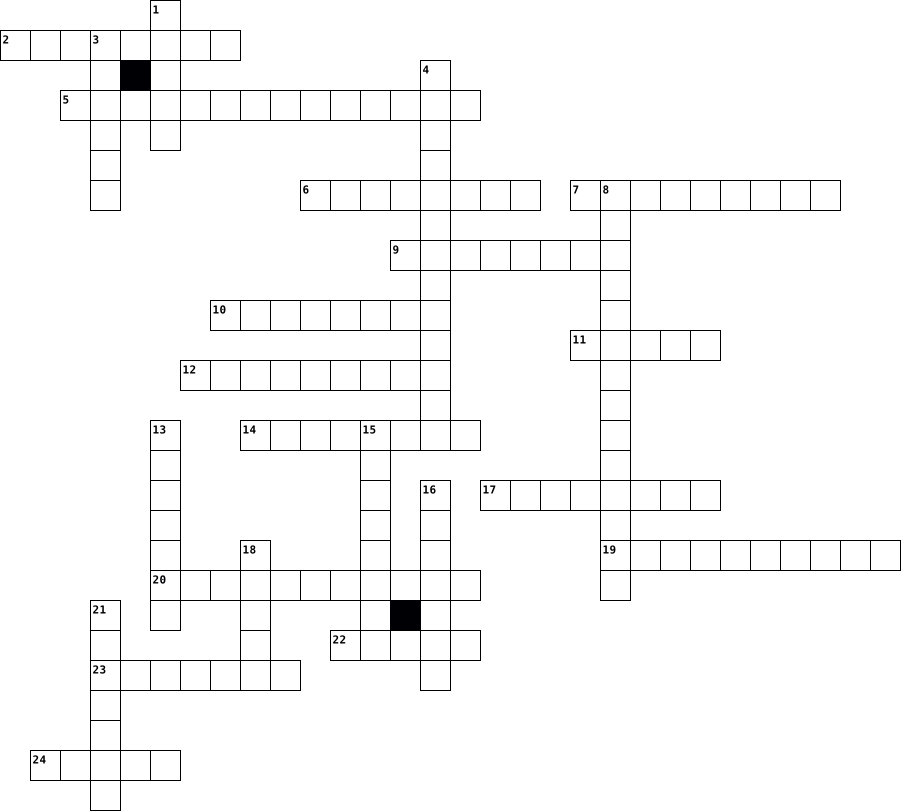
Across
- Triumph
- Triumph
- BHM
- education
- Niceness
- volunteer
- Rights
- Prejudice
- Activism
- Ethnicity
- Oppression
- Opportunity
- Non war
- Non freedom
- Walking
Down
- Pride
- Hatred of races
- Non exclusiveness
- racism
- Non slavery
- Physical hatred
- Non freedom
- Control
- Old events
24 Clues: BHM • Pride • racism • Rights • Triumph • Triumph • Control • Non war • Walking • Niceness • Activism • education • volunteer • Prejudice • Ethnicity • Oppression • Old events • Non slavery • Non freedom • Opportunity • Non freedom • Hatred of races • Physical hatred • Non exclusiveness
In Someone Else's Shoes(46p~47p) 2024-08-16

Across
- 가발
- 집요하게
- 열정적인
- 견디다, 참다
- 아파트식 주거지
- (외양·모습을) 변하게 하다
- 은퇴
- 신체의
- 주름이 있는
- ~을 완전하게 만들다
Down
- 강사
- 변장
- 재정의
- 가짜의
- 유지하다
- 저해[방해]하다
- 무관한
- 고독
- (건물) 단지
- 한숨을 쉬다
- 서서히
21 Clues: 강사 • 변장 • 가발 • 고독 • 은퇴 • 재정의 • 가짜의 • 무관한 • 신체의 • 서서히 • 유지하다 • 집요하게 • 열정적인 • 한숨을 쉬다 • 주름이 있는 • 견디다, 참다 • (건물) 단지 • 저해[방해]하다 • 아파트식 주거지 • ~을 완전하게 만들다 • (외양·모습을) 변하게 하다
Sport 2024-09-22

Across
- A form of physical activity completed for fun or enjoyment, usually at a low-intensity.
- This is completed to develop young people physical abilities and knowledge
- A form of physical activity which aims to development a component of fitness.
Down
- A form of physical activity which is completed within different environments in nature.
- This can define the category of a person, based on their physical impairment
- A physical activity which involves a level of skill and competition, this is completed individually or as a team.
- This can define a persons category, based on their date of birth
7 Clues: This can define a persons category, based on their date of birth • This is completed to develop young people physical abilities and knowledge • This can define the category of a person, based on their physical impairment • A form of physical activity which aims to development a component of fitness. • ...
Matter Crossword 2022-09-08

Across
- a substance with 2 or more elements in a fixed ratio
- physical separation method based on boiling points
- a substance with only one type of atom
- two or more substances that don't undergo a chemical reaction
Down
- homogenous, Tyndall effect
- homogenous, no Tyndall effect
- heterogenous, Tyndall effect
- a physical property that does not depend on the amount of matter
- a physical property that does depend on the amount of matter
9 Clues: homogenous, Tyndall effect • heterogenous, Tyndall effect • homogenous, no Tyndall effect • a substance with only one type of atom • physical separation method based on boiling points • a substance with 2 or more elements in a fixed ratio • a physical property that does depend on the amount of matter • two or more substances that don't undergo a chemical reaction • ...
Physical and Personality Traits (en español) 2021-03-03

Across
- Kelvin and Alison are UGLY
- The rat is boring
- The bull is NICE
- Karen, Lisa and Sherrie are SMART
- The women are GOOD LOOKING
- I am STRONG
- You and I are INTERESTING
- Paul is TALL
- My aunts are SHORT
Down
- Tracey and Marcus are HARDWORKING
- Linda and her sister are FUN
- The zebra is FAT
- My mom isn't LAZY
- They are SERIOUS
- Lions are not WEAK
- You all are INTELLIGENT
- The cow is MEAN
- The student is HANDSOME
- All my friends are SKINNY
- The squirrel is FUNNY
- He is DUMB
21 Clues: He is DUMB • I am STRONG • Paul is TALL • The cow is MEAN • The zebra is FAT • They are SERIOUS • The bull is NICE • My mom isn't LAZY • The rat is boring • Lions are not WEAK • My aunts are SHORT • The squirrel is FUNNY • You all are INTELLIGENT • The student is HANDSOME • All my friends are SKINNY • You and I are INTERESTING • Kelvin and Alison are UGLY • The women are GOOD LOOKING • ...
Physical Science Ch. 10 Test Review 2020-03-27

Across
- condition of the air/environment when static cling occurs the easiest/most
- used to control the flow of electricity through a circuit; opens or closes gaps
- charge-storage device used before capacitors; glass jar lined and coated with lead
- type of electricity that requires a constant flow of electrons
- particles formed from induction that have opposite charges at each end
- When current bypasses a load a _?_ circuit can cause a fire.
- metal pole attached to the top of tall buildings with a wire that reaches the ground; used to divert electrical discharges
- what like charges do
- A test charge approaching an object with a _?_ charge would attract.
- can serve as conductors or insulators but not ideal as either
- type of current that flows in only one direction; used in batteries and many portable electronics
- process of temporarily charging part of an object without actually adding or removing electrons
- a complete path from an electron source, through a conductor, and back
Down
- type of circuit where if one bulb goes out, the others stay lit
- The ability of something to impede, or slow the flow of charges is electrical _?_.
- what opposite charges do
- have tightly held electrons that limit their flow; ex: plastic, rubber
- the very strong field force exerted by electrical charges
- instrument that detects charge by separating its metal leaves
- only atomic particles that affect electrical charge; these must be gained or lost
- name for the objects in a circuit being powered by electricity
- type of circuit where if one bulb goes out, the others go out too
- loss of static charge
- A test charge is always _?_ charged.
- type of electricity that uses stationary or short, quick discharges
- The electron _?_ theory states that charges flow from areas of high electron concentration to low.
26 Clues: what like charges do • loss of static charge • what opposite charges do • A test charge is always _?_ charged. • the very strong field force exerted by electrical charges • When current bypasses a load a _?_ circuit can cause a fire. • instrument that detects charge by separating its metal leaves • can serve as conductors or insulators but not ideal as either • ...
United States-Physical and Human Geography. 2020-05-08

Across
- Cardinal point
- Social community with a political organization
- It comes from an indigenous name
- Legal Text
- Second largest continent on the planet
- One of the most cold countries
- Where is the Mojave desert
- distance from a point on the earth to the parallel of the equator
- Capital of United states
- natural elevation of land
- Group of people from the same geographical origin
Down
- science that studies the surface of the earth
- set of traditions and customs
- It is transmitted from generation to generation
- set of inhabitants of a place
- Population where a group of people lives
- Specific cities of a country
- The seasons of the year begin and end
- Occupation, activity or work
- Science that studies how to manage resources of money
20 Clues: Legal Text • Cardinal point • Capital of United states • natural elevation of land • Where is the Mojave desert • Specific cities of a country • Occupation, activity or work • set of traditions and customs • set of inhabitants of a place • One of the most cold countries • It comes from an indigenous name • The seasons of the year begin and end • Second largest continent on the planet • ...
United States-Physical and Human Geography. 2020-05-08

Across
- Cardinal point
- Social community with a political organization
- It comes from an indigenous name
- Legal Text
- Second largest continent on the planet
- One of the most cold countries
- Where is the Mojave desert
- distance from a point on the earth to the parallel of the equator
- Capital of United states
- natural elevation of land
- Group of people from the same geographical origin
Down
- science that studies the surface of the earth
- set of traditions and customs
- It is transmitted from generation to generation
- set of inhabitants of a place
- Population where a group of people lives
- Specific cities of a country
- The seasons of the year begin and end
- Occupation, activity or work
- Science that studies how to manage resources of money
20 Clues: Legal Text • Cardinal point • Capital of United states • natural elevation of land • Where is the Mojave desert • Specific cities of a country • Occupation, activity or work • set of traditions and customs • set of inhabitants of a place • One of the most cold countries • It comes from an indigenous name • The seasons of the year begin and end • Second largest continent on the planet • ...
Physical and Personality Traits (en espanol) 2020-10-15

Across
- Diamond is not LAZY
- Tupac was GOOD LOOKING
- I am INTELLIGENT
- The men are HANDSOME
- Dannezia and Isis are SHORT
- You (formal) are UGLY
- Zah'cor and Chloe are FUNNY
- My students are FUN
- Gabe and Kendan are TALL
- Janiah is MEAN
- That girl is FAT
Down
- Khyia and Shaun are INTERESTING
- Jashon is not DUMB
- The dog is SKINNY
- Tay'von and Nyrail are SMART
- Raijon and Shamiah are STRONG
- He is BORING
- Jakari is not WEAK
- Denasia and Kerryann are HARD WORKING
- Destiny is NICE
20 Clues: He is BORING • Janiah is MEAN • Destiny is NICE • I am INTELLIGENT • That girl is FAT • The dog is SKINNY • Jashon is not DUMB • Jakari is not WEAK • Diamond is not LAZY • My students are FUN • The men are HANDSOME • You (formal) are UGLY • Tupac was GOOD LOOKING • Gabe and Kendan are TALL • Dannezia and Isis are SHORT • Zah'cor and Chloe are FUNNY • Tay'von and Nyrail are SMART • ...
Physical Science - Crossword Chemistry List 1 2021-04-09

Across
- Atoms of the same element, but have different masses.
- A unique number for each element that equals the number of protons in an atom of that element.
- An arrangement of elements in columns based on a set of properties that repeat from row to row.
- An ion with a positive charge.
- New substances formed as a result of a chemical reaction.
- A substance that undergoes change in a chemical reaction.
- The possible energies that electrons in an atom can have.
- The mass of one mole of a substance.
- A law stating mass is neither created nor destroyed during chemical or physical reactions.
- The smallest unit of an element that maintains the properties of that element.
- An electron that is in the highest occupied energy level of an atom.
Down
- The weighted average of the atomic masses of the naturally occurring isotopes of an element.
- An ion with a negative charge due to gaining electrons.
- A positively charge subatomic particle that is found in the nucleus of an atom.
- an atom or group of atoms that has a positive or negative charge due to gaining or losing electrons.
- A visual model of the most likely locations for the electrons in an atom.
- A neutral subatomic particle that is found in the nucleus of an atom.
- A negatively charged subatomic particle found in energy levels around the nucleus of an atom.
- 6.02 x 10^23 the number of particles in exactly one mole of a pure substance.
- The calculation of quantities of chemical elements or compounds involved in chemical reactions.
20 Clues: An ion with a positive charge. • The mass of one mole of a substance. • Atoms of the same element, but have different masses. • An ion with a negative charge due to gaining electrons. • New substances formed as a result of a chemical reaction. • A substance that undergoes change in a chemical reaction. • The possible energies that electrons in an atom can have. • ...
Density Data and Physical & Chemical Properties 2021-10-08

Across
- The most common state of matter
- Tool to find weight
- Always in motion
- The feeling of something by touch
- Anything that has mass and takes up space
- To find it, it's equation is Mass/Density
- To find it, it's equation is Density x Volume
- What plasma consists of
- To find it, it's equation is Mass/Volume
- Tool to determine how hot something is
- Atoms move slowly
Down
- Atoms are spread out and move a lot
- Something that is a solid
- Something that is a liquid
- Measuring tool
- Something that is a gas
- Study of Matter
- Changes with the amount of a substance
- The atoms are always stuck to each other and don't move.
- Does not matter the amount of a substance
20 Clues: Measuring tool • Study of Matter • Always in motion • Atoms move slowly • Tool to find weight • Something that is a gas • What plasma consists of • Something that is a solid • Something that is a liquid • The most common state of matter • The feeling of something by touch • Atoms are spread out and move a lot • Changes with the amount of a substance • ...
Yr 7 Physical Science Key Words 2021-11-05

Across
- A type of lever with an axle acting as it’s fulcrum.
- A force that can attract or repel magnetic material.
- The amount of matter in a substance.
- A device that is used to measure forces.
- A device used to make a task easier to do.
- The attraction between an object and the Earth.
- A decrease in speed.
- The point that a lever pivots around.
- An increase in speed.
- To design an object that flows through the air or water with less resistance.
Down
- Small regions inside a magnet that behave like mini-magnets.
- A force that acts between charged objects.
- An object that produces a magnetic field.
- A machine that requires a small movement of an effort to produce a large movement of a load.
- A force that acts on an object from a distance.
- A simple machine made of a rod which pivots around a point.
- The tendency of an object to resist change in its motion.
- A substance that lets charge flow through it easily.
- A substance that does not let charge flow through it.
- The force of gravity pulling an object towards the Earth.
- A double inclined plain that moves through an object.
- A wheel with teeth used to turn things.
- A simple machine with a spiral groove that can be used to attach objects together.
- The force applied to a lever to overcome the load.
- A push or pull that can change an object’s motion
- A simple machine made of a grooved wheel that can be used to change the direction of a force.
- The shaft that a wheel rotates on.
- The unit used to measure force.
- The path that an object takes around a planet or star.
- The force that acts against an object’s movement.
30 Clues: A decrease in speed. • An increase in speed. • The unit used to measure force. • The shaft that a wheel rotates on. • The amount of matter in a substance. • The point that a lever pivots around. • A wheel with teeth used to turn things. • A device that is used to measure forces. • An object that produces a magnetic field. • A force that acts between charged objects. • ...
Abeka Physical Science Ch. 7 & 8 2021-10-22

Across
- The phenomenon in which light above a certain frequency knocks electrons loose from atoms of certain metals.
- English physicist who proposed the particle theory of light.
- The phenomenon that occurs when light rays from a distant object are refracted by heated air so that the object appears to be nearby.
- Electromagnetic waves that our eyes can perceive.
- A system that emits sound waves underwater and analyzes the echoes reflected from submerged objects.
- The phenomenon in which the colors of light depend on the viewing angle.
- Bending of the path of a wave as a result of a change in wave speed.
- The change in a wave's frequency caused by an object's motion.
- The effect of frequency on the way the ear perceives sound.
- Maximum distance that particles are displaced by a wave.
- A spherical mirror that has the reflecting side on the outside of the spherical surface is a ________ mirror.
- The additive primary colors of light are red, _______, and blue.
- Reinforcement or cancellation that occurs when two or more waves meet.
- The unit usually used to measure sound intensity level.
- Spreading out of a wave after it passes through a narrow opening.
- German physicist who demonstrated the existence of radio waves.
- The bright fringes formed when light passes through a narrow slit.
- Low-frequency electromagnetic waves widely used for communications.
- Electromagnetic waves used for cooking
- The scientist who discovered the special theory of relativity.
- Because it has light of only a single frequency, a laser beam is said to be _______________.
- The SI unit of frequency.
Down
- Number of waves that pass a given point per unit of time.
- Dutch physicist who proposed the wave theory of light.
- Calculating distance from the time between the sending of a sound wave and the return of the echo.
- The phenomenon that occurs when light passes through a glass plate with parallel, microscopic grooves on it.
- The study of sound.
- Light is said to consist of tiny bundles or "packets" of energy called _________.
- The principle stating that the angle of incidence equals the angle of reflection.
- An image that appears to be behind a mirror.
- The apparent change in time for a rapidly moving object is called time ___________.
- Magenta, cyan, and yellow.
- The effect of intensity on the way the human ear perceives sound.
- The idea that gravity is caused by the geometry of space.
- Sound that has too low a frequency to be heard.
- The property that describes a beam of light whose waves are all aligned in the same direction.
- The main factor affecting the speed of sound in air is the air _____________.
- Electromagnetic waves sometimes called "heat rays".
- Scottish physicist who demonstrated that light consists of two transverse waves oscillating at right angles to each other.
- The substance through which a wave transfers its energy.
- A loud noise caused by a shock wave.
- The theory that light has a dual nature, with characteristics of both particles and waves, is the _________ theory of light.
- The most powerful and penetrating electromagnetic waves.
43 Clues: The study of sound. • The SI unit of frequency. • Magenta, cyan, and yellow. • A loud noise caused by a shock wave. • Electromagnetic waves used for cooking • An image that appears to be behind a mirror. • Sound that has too low a frequency to be heard. • Electromagnetic waves that our eyes can perceive. • Electromagnetic waves sometimes called "heat rays". • ...
Marines Science Honors Physical Oceanography Vocab 2022-01-12

Across
- -just below the Photic Zone and is known as the twilight layer.
- a physiological process for locating distant or invisible objects (such as prey) by means of sound waves reflected.
- vertical zone in the oceanic water column in which salinity changes rapidly with depth.
- states that the upward buoyant force that is exerted on a body immersed in a fluid, whether fully or partially, is equal to the weight of the fluid that the body displaces.
- is an upward force exerted by a fluid that opposes the weight and size of an immersed object.
- the amount of heat energy needed to change the temperature of 1 gram of a substance by 1c.
- force exerted by a fluid stream on any obstacle in its path or felt by an object moving through a fluid.
- is those that maintain a constant body temperature independent of the environment.
- the layer closer to the surface that receives enough light for photosynthesis to occur.
- the measure of how fast molecules/ atoms in a substance.
- animals that have a constant body temperature.
- ranges from about 1020 to 1029 kg/m3.
- is kinetic energy in the random movement< or vibration< of the individual atoms & molecules in a substance.
- fluid is composed of two parts.
- the 'property of a material that expresses the degree of slowness with which its temperature reaches that of the environment.
Down
- due to the weight of water pressing on submerged objects.
- boundary separating two liquid layers of different densities.
- The concentration of dissolved salt in a given volume of water.
- any animal whose regulation of body temperature depends on external sources, such as sunlight or a heated rock surface.
- is a method of camouflage in which an animal's coloration is darker on the upper side and lighter on the underside of the body.
- -is the transition layer between warmer mixed water at the ocean's surface and cooler deep water below.
- the amount of force exerted on an object
- -the flow of water induced by differences in temperature and salinity.
- all chemical reactions involved in maintaining the living state of the cells and the organism.
- -is the portion of a lake or ocean where there is little or no sunlight.
25 Clues: fluid is composed of two parts. • ranges from about 1020 to 1029 kg/m3. • the amount of force exerted on an object • animals that have a constant body temperature. • the measure of how fast molecules/ atoms in a substance. • due to the weight of water pressing on submerged objects. • boundary separating two liquid layers of different densities. • ...
Chapter 12 - Physical Properties of Solutions 2017-03-31

Across
- If the solute-solvent attraction is weaker than the solvent-solvent attraction and solute-solute attraction, the solution process is _____ ( ∆H_soln > 0 ).
- It is the process in which an ion or a molecule is surrounded by solvent molecules arranged in a specific manner.
- It is the number of moles of solute dissolved in 1 kg (1000 g) of solvent.
- It is the amount of solute present in a given amount of solution.
- It is the substance present in larger amount in a solution.
- Two liquids are said to be _____ if they are completely soluble in each other in all proportions.
- It states that the vapor pressure of a solvent over a solution, P1, is given by the vapor pressure of the pure solvent, P_1^o, times the mole fraction of the solvent in the solution X¬1. (_____’s law)
- It contains more solute than is present in a saturated solution.
- It is defined as the number of moles of solute in 1 L of solution.
- It is a homogeneous mixture of two or more substances.
- It is the process in which dissolved solute comes out of solution and forms crystals.
- It states that the solubility of a gas in a liquid is proportional to the pressure of the gas over the solution. ( _____’s law)
- It is the substance present in smaller amount in a solution.
Down
- It is the ratio of the number of moles of one component of a mixture to the total number of moles of all components in the mixture.
- It is a solute that does not have a measurable vapor pressure.
- It contains less solute than it has the capacity to dissolve.
- If the solute-solvent attraction is stronger than the solvent-solvent attraction and solute-solute attraction, the solution process is favorable, or _____ ( ∆H_soln < 0 ).
- It is a measure of how much solute will dissolve in a solvent at a specific temperature.
- It contains the maximum amount of a solute that will dissolve in a given solvent at a specific temperature.
- It is the ratio of the mass of a solute to the mass of the solution, multiplied by 100 percent. (also called percent by weight or weight percent)
20 Clues: It is a homogeneous mixture of two or more substances. • It is the substance present in larger amount in a solution. • It is the substance present in smaller amount in a solution. • It contains less solute than it has the capacity to dissolve. • It is a solute that does not have a measurable vapor pressure. • ...
Chapter 12 | Physical Properties of Solutions 2017-04-01

Across
- solution is any solution that obeys Raoult’s law.
- Equilibrium is the physical state in which the opposing processes of dissolution and crystallization of a solute occur at equal rates.
- is a solid solution made by dissolving metals in other metals.
- is the separation of a mixture of substances into pure components on the basis of their differing solubilities.
- is a solute or aqueous solution that conducts electricity.
- Solution is the net amount of energy absorbed as heat by the solution when a specific amount of solute dissolves in the solvent.
- is the maximum amount of solute that can be dissolved in a given quantity of solvent at a specific temperature.
- is light scattering by particles in a colloid or else particles in a very fine suspension.
- is the amount of solute present in a given quantity of solvent or solution.
- properties are properties that depend only on the number of solute particles in solution and not on the nature of the solute particles.
- which states that the vapor pressure of a solvent over a solution, is given by the vapor pressure of the pure solvent, times the mole fraction of the solvent in the solution.
- is the measure of the effect of a solute upon colligative properties such as osmotic pressure, relative lowering in vapor pressure, boiling-point elevation and freezing-point depression.
- liquids are completely soluble in each other in all proportions.
- is the substance that dissolves a solute, which makes a solution.
Down
- is the ration of the number of moles of one component to the total number of moles in a solution.
- is the heat generated or absorbed when a certain amount of solute dissolves in a certain amount of solvent.
- is the ratio of the mass of a solute to the mass of the solution, multiplied by 100 percent.
- is the diffusion of solvent particles across a semipermeable membrane from an area of higher solvent concentration to an area of lower solvent concentration.
- is the amount of additional pressure caused by the water molecules that moved into the solution.
- is a dispersion of particles of one substance throughout a dispersing medium made of another substance.
- solution contains more solute than is present in a saturated solution.
- is the process in which dissolved solute comes out of solution and forms crystals.
- is a procedure for separating liquid components of a solution based on their different boiling points.
- is the substance present in smaller amount in a solution that is dissolved in another substance.
- solution contains the maximum amount of a solute that will dissolve in a given solvent at a specific temperature.
- is the process in which an ion or a molecule is surrounded by solvent molecules arranged in a specific manner.
- colloids are usually solutions containing extremely large molecules such as proteins; water-loving.
- is the number of moles of solute in 1 liter of solution.
- states that the solubility of a gas in a liquid is proportional to the pressure of the gas over the solution.
- is the number of moles of solute dissolved in 1 kg (1000 g) of solvent.
- solution contains less solute than it has the capacity to dissolve.
- is the rapid escape of a gas from the liquid it's dissolved in.
- colloid normally would not be stable in water, and the particles would clump together, like droplets of oil in water merging to form a film of oil at water’s surface; water-fearing.
33 Clues: solution is any solution that obeys Raoult’s law. • is the number of moles of solute in 1 liter of solution. • is a solute or aqueous solution that conducts electricity. • is a solid solution made by dissolving metals in other metals. • is the rapid escape of a gas from the liquid it's dissolved in. • ...
Chapter 12: Physical Properties of Solution 2017-04-02

Across
- The pressure required to stop osmosis.
- It is the selective passage of solvent molecules through a porous membrane from a dilute solution to a more concentrated one.
- Two liquids are said to be miscible if they are completely soluble in each other in all proportions.
- It is usually solutions containing extremely large molecules such as proteins.
- States that the solubility of a gas in a liquid is proportional to the pressure of the gas over the solution.
- Water-fearing.
- Is the process in which an ion or a molecule is surrounded by solvent molecules arranged in a specific manner.
- It allows the passage of solvent molecules but blocks the passage of solute molecules.
- Is defined as the number of moles of solute in liter of solution.
- Is defined as the freezing point of the pure solvent minus the freezing point of the solution.
- Contains more solute than is present in a saturated solution.
- Water-loving.
- The fraction of a component of a solution.
- States that the vapor pressure of a solvent over a solution, is given by the vapor pressure of the pure solvent, times the mole fraction of the solvent in the solution.
Down
- Is the number of moles of solute dissolved in mass of solvent in kilograms.
- The process is called when the solvent is water.
- Is the separation of a mixture of substances into pure components on the basis of their differing solubility.
- Is defined as the boiling point of the solution minus the boiling point of the pure solvent.
- Contains the maximum amount of a solute that will dissolve in a given solvent at a specific temperature.
- It does not have a measurable vapor pressure.
- Is made up of one or more cations and one or more anions held together by electrostatic forces
- A procedure for separating liquid components of a solution based on their different boiling points.
- Contains less solute than it has the capacity to dissolve.
- Is the process in which dissolved solute comes out of solution and forms crystals.
- It does have a measurable vapor pressure.
25 Clues: Water-loving. • Water-fearing. • The pressure required to stop osmosis. • It does have a measurable vapor pressure. • The fraction of a component of a solution. • It does not have a measurable vapor pressure. • The process is called when the solvent is water. • Contains less solute than it has the capacity to dissolve. • ...
Physical and Emotional Conditions using Estar 2017-09-16

Across
- dry
- drunk
- unwell
- irritated
- awake
- worse
- anxious
- congested
- calm
- fun
- worried
- angry
- busy, occupied
- asleep
- better
- sick
- bored
- healthy
Down
- happy
- in pain, pained
- bothered
- excited
- well
- embarrassed
- pregnant
- wet
- content
- nervous
- tired
- pale
- funny
- depressed
- sad
- feeling lazy
34 Clues: dry • wet • fun • sad • well • calm • pale • sick • happy • drunk • awake • worse • tired • funny • angry • bored • unwell • asleep • better • excited • content • anxious • nervous • worried • healthy • bothered • pregnant • irritated • congested • depressed • embarrassed • feeling lazy • busy, occupied • in pain, pained
Physical and Cultural Geography of India 2017-06-09

Across
- Sri Lanka is an ________
- how many states does India have (including Kashmir)
- what country is located north west of India
- the name of the social division system
- about 30% of Indias population speak what language
- what sea is located to the west of Mumbai
- what ocean is located to the south of India
- what animal is sacred to Hinduism
- how many union territories does India have
- Himalayans separate India from the rest of what continent
Down
- higher castes cannot _______ or touch anyone of lower castes
- India is the _______ largest country in the world
- Bay of ________
- two beliefs of Hinduism are karma and ____________
- in Buddhism they believe they can escape from suffering also known as ______
- what is the name of the mountain range in northern India
- _______ is what determines what caste you are in
- India is the ______ most populous country in the world
- another name for the "untouchables" or lowest level of the caste system
- Countrt north of India
20 Clues: Bay of ________ • Countrt north of India • Sri Lanka is an ________ • what animal is sacred to Hinduism • the name of the social division system • what sea is located to the west of Mumbai • how many union territories does India have • what country is located north west of India • what ocean is located to the south of India • _______ is what determines what caste you are in • ...
Ch. 4 Physical Activity for Life 2013-11-10

Across
- an activity that prepares the muscles to return to a resting state.
- the process by which your body gets energy from food.
- intense short bursts of activity in which the muscles work so hard that they produce energy without using oxygen.
- the ability to carry out daily tasks easily and have enough reserve energy to respond to unexpected demands.
- the number of times your heart beats in one minute when you are not active.
- any form of movement that causes your body to use energy.
- syntheic substances that are similar to the male hormone testostorone.
- a condition characterized by a decrease in bone density, producing porous and fragile bones.
- the ratio of body fat to lean body tissue, including muscle bone, water, and connective tissue such as ligaments, cartilage, and tendons.
- a search or check for diseases or disorders that an individual would otherwise not have knowledge of or seek help for.
- the amount of force a muscle can exert.
- a condition in which the body loses the ability to rid itself of excessive heat through perspiration.
- a way of life that involves little physical activity.
- overworking the body.
- a condition that results when body tissues become frozen.
- a condition resulting from damaging a muscle or tendon.
- an activity that prepares the mucles for work.
Down
- a spasm or sudden tightenng of a muscle.
- the ability to move a body part through a full range of motion.
- the ability of the heart, lungs, and blood vessels to utilize and send fuel and oxygen to the body's tissues during long periods of moderate-to-vigorous activity.
- any activity that uses large muscle groups, is rhythmic in nature, and can be maintained continuously for at least 10 minutes three times a day or 20 to 30 minutes at one time.
- the ability of the muscles to perform physical tasks over a period of time without becoming fatigued.
- particular exercises and activities improve particular areas of health-related fitness.
- a condition in which body temperature becomes dangerously low.
- the part of an exercise program when the activity is performed at its higest peak.
- working the body harder than it is normally worked.
- the gradual increase in overload necessary to achieve higher levels of fitness.
- taking in fluids so that the body functions properly.
- an injury to the ligament surrounding a joint.
- purposeful physical activity that is planned,structured, and repetive and that improves or maintains personal fitness.
- a program of formalized physical preparation for nvolvement in a sport or another physical activity.
- muscle spasms that result from a loss of large amounts of salt and water through perspiration.
- frequency, intensity, time/duration, and type of activity.
33 Clues: overworking the body. • the amount of force a muscle can exert. • a spasm or sudden tightenng of a muscle. • an injury to the ligament surrounding a joint. • an activity that prepares the mucles for work. • working the body harder than it is normally worked. • the process by which your body gets energy from food. • taking in fluids so that the body functions properly. • ...
Physical Science top 50 vocabulary terms 2023-12-06

Across
- The transfer of heat by the movement within a liquid or gas
- the tendency of an object to resist a change in its motion
- A measure of the average energy of motion of the particles of a substance.
- A disturbance that transfers energy from place to place
- any compound that forms H+ ions in solution, tastes sour, and has a pH less than 7
- a compound that produces hydroxide ions in solution, tastes bitter and feels slippery
- a bond formed when atoms share one or more pairs of electrons
- The force of attraction or repulsion of magnetic materials
- The rate at which velocity changes
- A pure substance made of only one kind of atom
- the number of complete wavelengths that pass a point in a given time
- A material that does not allow heat or electrons to move through it easily.
- the amount of matter in an object
- stored energy
- A form of matter that has a definite shape and volume
- An apparent change in the frequency of a sound when the source or observer is moving
- A horizontal row of elements in the periodic table
- The direct transfer of heat from one substance to another by touching.
- A state of matter that has no definite shape but has a definite volume.
- A nuclear reaction in which a nucleus splits into smaller nuclei with the simultaneous release of energy
- a state of matter that consists of free-moving ions and electrons
- positively charged subatomic particles
- a device that changes electrical energy to mechanical energy
Down
- A measurement of how much solute exists within a certain volume of solvent
- Smallest particle of an element that has its properties
- energy of motion
- Electrons on the outermost energy level of an atom
- a path for an electrical current to flow around
- Material through which a wave travels
- A state of balance in which solute is dissolving into the solution and coming out of the solution
- the degree of compactness of a substance, mass divided by volume.
- A flow of electric charge that regularly reverses its direction.
- A measure of the force of gravity on an object
- Atoms of the same element that have different numbers of neutrons
- A machine that converts mechanical energy into electrical energy
- smallest unit of most compounds, two or more atoms held together by covalent bonds
- The process by which two or more small nuclei fuse to make a bigger nucleus and release energy
- A push or a pull
- Speed in a given direction
- A substance made up of atoms of two or more different elements joined by chemical bonds
- A force of attraction between objects that is due to their masses.
- an element that is shiny and that conducts heat and electricity well, locate on the left and middle of the periodic table
- The bouncing back of a wave when it hits a surface through which it cannot pass.
- A result of a force moving an object a certain distance.
- A form of energy caused by the movement of electrons.
- The attractive force that holds atoms together
- A chemical bond formed when one or more electrons are transferred from one atom to another
- Elements in group 8A of the periodic table. Have no charge and are gases
- A state of matter with no definite shape or volume
- A homogeneous mixture of two or more substances in which a solute is dissolved in a solvent
50 Clues: stored energy • energy of motion • A push or a pull • Speed in a given direction • the amount of matter in an object • The rate at which velocity changes • Material through which a wave travels • positively charged subatomic particles • A measure of the force of gravity on an object • A pure substance made of only one kind of atom • ...
SE Asia Physical Features and Countries 2024-02-07

Across
- This country also struggles with extreme air pollution. Located South of Mongolia and North of Vietnam.
- A body of water which is a crucial shipping area. Located South of China and North of Malaysia.
- Taking up a portion of SE Asia but the majority being Northern China. East of Mongolia and and North of China
- Known for having extreme air pollution. This country is located East of Pakistan and Southwest of China.
- An island with a warmer climate located East of North and South Korea.
- The longest river in China. Located in central China pouring into the East China Sea.
- Located West of the Gobi desert and North of the Himalayas.
- Located between Northeastern China and the Korean Peninsula. The water is turned yellow by sandstorms from the Gobi Desert.
- This country is heavily tied to Buddhism. Located East of Thailand and Northeast of Cambodia.
- This country is known for having the worst human rights in history. Located North of South Korea and South of China.
Down
- Home to Mt. Everest and other high altitude mountains. North of Bangladesh.
- A body of water which is bordered to the West by India and East of Myanmar.
- Serves as the border between Western Japan and the Korean Peninsula. Located West of Japan and East of the Korean Peninsula.
- Body of water located East of China and just South of the Yellow Sea
- One of the largest rivers in the world. Flows through Pakistan and pours into the Indian Ocean.
- Serves as part of the border of Laos and Myanmar. Flows through Thailand and Cambodia pouring into the South China Sea.
- Located in East China and North of the Yangtze River pouring into the Yellow Sea.
- Internationally one of the most polluted river systems, flows through North India and Bangladesh then pouring into the Bay of Bengal.
- This country and the country it borders have been having disputes for decades. Located South of North Korea and Southwest of Japan.
- This country has very diverse ethnic groups. Located North of Australia.
20 Clues: Located West of the Gobi desert and North of the Himalayas. • Body of water located East of China and just South of the Yellow Sea • An island with a warmer climate located East of North and South Korea. • This country has very diverse ethnic groups. Located North of Australia. • Home to Mt. Everest and other high altitude mountains. North of Bangladesh. • ...
Year 9 Physical Sciences Key Words 2022-07-29

Across
- An instrument that measures current.
- Number of waves produced each second
- An instrument used for measuring voltage
- A lens that curves inwards.
- A small generator that spins its magnet instead of its coils.
- A wire of high resistance, it will melt if too much current flows in the circuit.
- Transfer of heat in a liquid or gas.
- The bending of light as it passes from one substance to another.
- A wave in which the vibration is in the same direction as the wave is travelling
- A region of low pressure in which particles are far apart.
- The unit that frequency is measured in
- Electromagnetic radiation with a wavelength slightly longer than visible light, detected by our skin as heat.
- Electromagnetic radiation with a wavelength shorter than visible light, contained in sunlight.
- A measure of the amount of energy provided to charges, measured in Volts.
- A circuit with all its components arranged in a line, forming a single loop.
Down
- A wave in which the vibration is at right angles to the direction the wave is travelling.
- A circuit that has a number of branches, each with its own components.
- The entire range of frequencies of electromagnetic radiation, from radio waves to gamma rays.
- Distance between two successive waves, measured in metres.
- Movement of heat in the form of electromagnetic waves, which can travel through a vacuum.
- The flow of charge, measured in Amps.
- A method of heat transfer in which heat is passed by vibration of particles.
- A narrow tube of glass or plastic used to transmit pulses of light
- A region of high pressure in which particles are close together.
- The maximum distance a wave extends beyond its middle position
- The bouncing of light off something.
- The parts of an electrical circuit
- Unit used to measure loudness
- Uses electromagnetism to produce electricity, it needs a spinning coil and a magnet.
- A lens that curves outwards
30 Clues: A lens that curves inwards. • A lens that curves outwards • Unit used to measure loudness • The parts of an electrical circuit • An instrument that measures current. • Number of waves produced each second • Transfer of heat in a liquid or gas. • The bouncing of light off something. • The flow of charge, measured in Amps. • The unit that frequency is measured in • ...
Chapter 2 Vocabulary - Physical Geography (Rochelle) 2022-08-17

Across
- the layer of gases that surrounds Earth
- a shaking or trembling of Earth, caused by the collision of tectonic plates
- the average weather conditions in an area over a long period of time
- a complete trip of Earth around the sun
- a flat area that rises above the surrounding land
- the change of water vapor to a liquid or solid state
- the process by which weathered bits of rock are moved elsewhere by water, wind, or ice
- one of two days each year when the sun reaches its northernmost or southernmost point
- a giant ocean wave caused by volcanic eruptions or movement of the earth under the ocean floor
- a long, narrow band of volcanoes surrounding the Pacific Ocean
- an area that receives reduced rainfall because it is on the side of a mountain facing away from the ocean
- one of the 16 pieces of Earth’s crust
- one of two days each year when the sun is directly overhead at the Equator
- the change of liquid water to water vapor
- rain that contains harmful amounts of poisons due to pollution
- the part of a continent that extends into the ocean, then drops off sharply
Down
- a large body of ice that moves slowly across land
- the process by which Earth’s surface is worn away by natural forces
- the process in which water is used and reused on Earth
- a large, unbroken mass of land
- an imaginary line that runs through Earth’s center from the North Pole to the South Pole
- a process that makes salt water safe to drink
- to circle around something
- a large expanse of land that can be flat or have a gentle roll
- the water that falls on Earth as rain, snow, sleet, hail, or mist
- a place where two tectonic plates grind against each other
- an area where sand, silt, clay, or gravel is dropped at the mouth of a river
- a long, narrow, steep-sided cut on the ocean floor
- the water contained inside Earth’s crust
- a narrow strip of land that connects two larger land areas
30 Clues: to circle around something • a large, unbroken mass of land • one of the 16 pieces of Earth’s crust • the layer of gases that surrounds Earth • a complete trip of Earth around the sun • the water contained inside Earth’s crust • the change of liquid water to water vapor • a process that makes salt water safe to drink • a large body of ice that moves slowly across land • ...
Southern Asia Physical and Political Features 2023-03-23

Across
- Large body of water that lies south of India.
- Country formerly known as Burma
- Country between Thailand and Vietnam
- Earth's highest peak is Mount _________.
- Japan's northern Island
- Island nation located south of Taiwan
- The _____ Peninsula lies west of the Gulf of Thailand.
- Body of water between Japan and the Korean Peninsula.
- The countries of Indonesia and the Philippines are made of thousands of individual _______, some of which are very large.
- Large country south of Nepal
- Country located south of North Korea
- The largest country in Southern Asia
- The _________ __________ makes up most of the central area of India.
- The only country located enrirely north of 40 degrees north.
- Island nation east of the Korean Peninsula
- River flowing through northern India.
- Small country between India and China
- Country located between Thailand and Vietnam
- Most of the country of Mongolia is covered by the ___________.
Down
- Country that lies east of Cambodia and Laos
- Small country located south of India and Bhutan
- Mount Everest is located in the _________ Mountains.
- Island nation south of India
- Island north of the Philippines and east of China.
- Tiny country located at the tip of the Malay Peninsula.
- The Huang He River of China is also known as the _______ River.
- Mountain range north of the Taklamakan Desert.
- Large body of water that lies east of Asia.
- North of the Himalaya lies the _________ __ ________ - a high eleveation south of the Taklamakan Desert.
- The largest of the Greater Sunda Islands.
- Myanmar's eastern neighbor
- Island nation located along the equator
- Country between India and China
- Country located north of South Korea
- The __________ Desert os located north of the Plateau of Tibet in Western China.
- River flowing west of the Annam Cordillera.
36 Clues: Japan's northern Island • Myanmar's eastern neighbor • Island nation south of India • Large country south of Nepal • Country formerly known as Burma • Country between India and China • Country between Thailand and Vietnam • Country located south of North Korea • The largest country in Southern Asia • Country located north of South Korea • Island nation located south of Taiwan • ...
Monsoon Asia Physical and Political Features 2024-03-21

Across
- Islang group located just east of the South China Sea
- Body of water located just east of India
- Large, arid region located in Mongolia
- Island country east of Korea
- Country just west of Bangladesh
- Country between India and China
- Island in northern Japan located at 43 North
- Tiny country on the Malay Peninsula just south of Malaysia
- Mount Everest, the highest mountain in the world is located in the ___________.
- Desert located between the Tian Shan and Kunlun Shan at 40 North
- Small country located north of South Korea
- Mountain range along India's west coast
- Small country north of far-eastern India
- Mountain range along India's eastern coast
- Small country east of India
- Very large body of water located east of Monsoon Asia
Down
- Small country located on an island south of Indonesia
- Country north of China, mostly between 42 and 50 North
- Indonesian island just south of the Malay Peninsula
- Large island west of Celebes and north of the Java Sea
- Long, skinny country located east of Cambodia
- Island country east of Vietnam
- The highest mountain in the world, Mount _____ is located in the Himalayas.
- Small country located south of North Korea
- Island nation south of India
- Very large body of water located south of India
- Large island along the Tropic of Cancer at 122 East
- The traditional name for the Yangtze River of China
- The traditional name for the Yellow River of China
- large country that takes up most of Monsoon Asia
- Name of the peninsula that separates the Bay of Bengal from the Gulf of Thailand
- River that flows through Northern India and into the Bay of Bengal
- The Plateau of _______ is a high elevation area north of the Himalayas at 33 North
- Plateau of central India
34 Clues: Plateau of central India • Small country east of India • Island country east of Korea • Island nation south of India • Island country east of Vietnam • Country just west of Bangladesh • Country between India and China • Large, arid region located in Mongolia • Mountain range along India's west coast • Body of water located just east of India • ...
Middle School Physical Science Review 1 2023-01-06

Across
- Made the plum pudding model
- North and South are types of ____
- The current is the same in each part in a ___ circuit.
- This greek letter represents Ohms
- A coil of wire with an electric current in it
- Mass divided by volume produces ____.
- The tendency of an atom to attract electrons to fill its valence shell
- The amount of matter in a given volume
- The most electronegative element
Down
- One of the three materials that makes ferromagnets
- Current times voltage produces ____.
- Measure of how much matter is in an object
- A summary of many experimental results
- Meaning stationary, not moving, unchanging
- Atoms that have gained or lost electrons
- The type of reaction seen in freezing
- A material that allows energy to flow easily
- The amount of space that an object takes up
- Potential difference between two points
- Current is measured in what units?
- the outermost orbital in an atom called ____ shell
21 Clues: Made the plum pudding model • The most electronegative element • North and South are types of ____ • This greek letter represents Ohms • Current is measured in what units? • Current times voltage produces ____. • The type of reaction seen in freezing • Mass divided by volume produces ____. • A summary of many experimental results • The amount of matter in a given volume • ...
Physical Science Matter, Changes & Energy Crossword 2022-09-12

Across
- All material is made of atoms and molecules that act like tiny particles which are always in motion
- energy cannot be created or destroyed
- the change of state from a gas to a liquid
- changing the physical state is a ________________ change
- the energy of motion
- state of matter which has a definite shape and volume, and the particles are vibrating
- change of state from a liquid to a solid
- state of matter which has an indefinite shape and volume, and particles are moving rapidly
- a measure of average kinetic energy
- the process by which a gas is turned directly into a solid
- the conversion of a substance from one physical form to another
- solids which have an orderly arrangement
- the ability to change or move matter
- state of matter which has a definite shape, an indefinite volume, and free flowing particles
- particles are electrically charged
- change of state from a solid to a liquid
Down
- changes that release energy
- matter cannot be created or destroyed
- change of a substance from a liquid to a gas
- changes that require energy
- solids where the atoms or molecules are in no particular order
- the force acting on the particles at the surface
- the total kinetic energy of a substance’s atoms
- the process by which a solid is turned directly into a gas
24 Clues: the energy of motion • changes that release energy • changes that require energy • particles are electrically charged • a measure of average kinetic energy • the ability to change or move matter • matter cannot be created or destroyed • energy cannot be created or destroyed • change of state from a liquid to a solid • solids which have an orderly arrangement • ...
Physical Science 1- Chapters 1-4 2025-09-11

Across
- Opposes motion.
- Unit of force.
- Amount of space a object takes up.
- The unit of mass.
- Speed characterized by direction.
- A path a projectile follows under the influence of constant gravity.
- Machine consisting of a rigid rod pivoted at a fixed point.
- Mutual action between objects.
- The force an object exerts due to gravity.
- Distance traveled per unit time.
- A device that changes a force or applies changes.
- A smaller body that orbits a larger body.
- Work divided by time.
- The oval path followed by a satellite.
- Force Combination of all forces.
- Normal force.
- Any object that moves through the air or space.
- Represents magnitude and direction.
Down
- Ratio of input work to output work.
- Force multiplied by distance.
- Energy due to position.
- The rate t which velocity changes with time.
- Force multiplied by time.
- Inertia in motion.
- Amount of matter in an object.
- Energy of motion.
- The speed a object must reach to escape gravitational influence.
- Free fall.
- Objects resist changes in motion.
- Objects may stick together.
30 Clues: Free fall. • Normal force. • Unit of force. • Opposes motion. • The unit of mass. • Energy of motion. • Inertia in motion. • Work divided by time. • Energy due to position. • Force multiplied by time. • Objects may stick together. • Force multiplied by distance. • Amount of matter in an object. • Mutual action between objects. • Distance traveled per unit time. • ...
Family members,Physical Characteristics,Other Characteristics 2025-11-04

Across
- wife
- fat
- baby
- big
- sister
- daughter
- cousin
- honest
- impatient
- husband
- funny
- dog
- tall
- skinny
- great grandmother
- polite
- cousin
- young
- granddaughter
- grandpa
- younger
- son? How are they
- mom
- thin
- single
- first name
- talented
Down
- nephew
- nice
- Grandma
- tidy
- old
- kind
- parents
- son
- fun
- aunt
- pet
- uncle
- quiet
- serious
- last name
- grandson
- cat
- great grandfather
- father
- brother
- bald
- ugly
- older
- small
- niece
52 Clues: fat • old • big • son • fun • pet • dog • cat • mom • wife • nice • tidy • baby • kind • aunt • tall • bald • ugly • thin • uncle • funny • quiet • young • older • small • niece • nephew • sister • cousin • honest • skinny • polite • cousin • father • single • Grandma • parents • husband • serious • brother • grandpa • younger • daughter • grandson • talented • impatient • last name • first name • granddaughter • great grandmother • great grandfather • son? How are they
Irish Physical Science C. 15 Waves 2026-04-23

Across
- type of wave where the medium moves perpendicular to the direction of the wave energy
- amplitude of a sound waves determines how ______ it is
- type of wave where the medium moves parallel to the energy
- lower than the frequency we can hear
- higher than the frequency we can hear
- effect that shows how frequency can change due to motion of the transmitter or observer
- relationship between frequency and period
- where particles are far apart in a longitudinal wave
- determined by the frequency of a sound wave
- we see different wavelengths of light as _____
- occurs when waves interact
- type of waves that occur at a boundary between 2 different mediums
- type of reflection off of a rough surface that does not allow an image to form
- _______ of a wave equals frequency x wavelength
- low frequency light is ______
- how long it takes for 1 wave to pass
- unit of frequency
- disturbance that carries energy
- as a train approaches the pitch gets ______
- interference where the amplitude gets greater
- term that means speed of sound
- type of electromagnetic wave that our eyes can detect
- how large a wave is from crest to crest
- where particles are close together in a longitudinal wave
- how the angle of incidence compares to the angle of reflection
Down
- height, depth, or energy of a wave
- bouncing back of a wave
- matter that a wave travels through
- shape of the movement of particles in a surface wave
- speed of sound in a _____ is the greatest because particles are close together
- waves are caused by _________ particles
- Greek letter representing wavelength
- interference where the amplitude gets less
- waves that do not need a medium
- longest wavelength electromagnetic waves
- angle that a wave hits a barrier
- when a vibrating system is made less by passing on energy to the next system, we say it is ________
- speed of _____ is 775 mph
- highest part of a wave
- number of waves per second
- bending of waves around an edge or through an opening
- simple _______ motion means a system that keeps repeating the same motion
- the 5 second rule can be used to estimate how far away _______ is
- type of reflection that allows an image to form
- ability to do work
- electromagnetic radiation (heat) just outside of visible light on the red end
- bending of a light wave due to a change in medium
- lowest part of a wave
- type of wave that needs a medium to travel
- mechanical earthquake waves
- all of the waves that can travel without a medium are called the electromagnetic _____
- high frequency light is ______
- can result from interference in sound waves
- speed of sound in a ____ is the slowest because particles are far apart
- the bigger a wave is, the more _______ it can do
55 Clues: unit of frequency • ability to do work • lowest part of a wave • highest part of a wave • bouncing back of a wave • speed of _____ is 775 mph • number of waves per second • occurs when waves interact • mechanical earthquake waves • low frequency light is ______ • term that means speed of sound • high frequency light is ______ • waves that do not need a medium • ...
Physical Science Chapter 17/18 Crossword 2026-04-15

Across
- f • λ
- A wave is a disruption that carries _______ from one location to another
- A water wave is an example of a(n) _____ wave
- state of matter sound moves fastest in
- resting position of a medium's particles when they are not disturbed by wave energy
- Difference between the same note played on a clarinet and on a trumpet
- region of lower density and pressure in a longitudinal wave
- SI unit for wavelength
- The distance between two identical points on successive waves
- frequencies too low to hear
Down
- peak in a wavelength
- time and frequency are ___ of each other
- valley in a wavelength
- unit for frequency
- unit for loudness
- In a longitudinal wave, the disruption moves ______ to the direction of wave travel.
- How high or low an audible tone sounds to the human ear
- wave type requiring a physical medium
- maximum displacement of a spring from its equilibrium position
- SI unit for time
20 Clues: f • λ • SI unit for time • unit for loudness • unit for frequency • peak in a wavelength • valley in a wavelength • SI unit for wavelength • frequencies too low to hear • wave type requiring a physical medium • state of matter sound moves fastest in • time and frequency are ___ of each other • A water wave is an example of a(n) _____ wave • ...
School Subjects Communication Crossword 2021-12-09
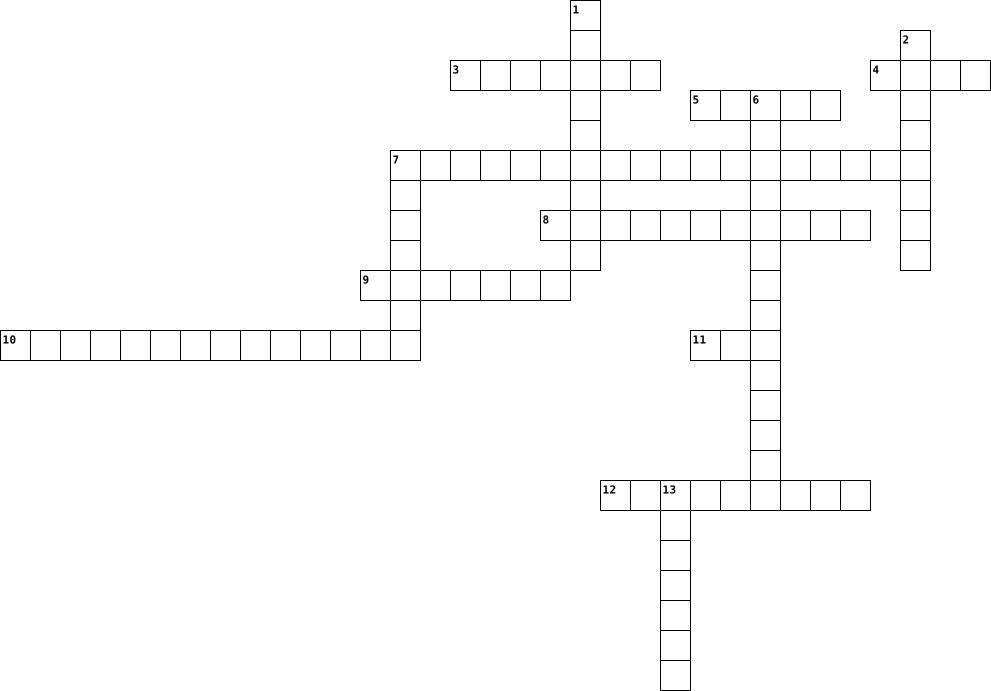
Across
- biology
- math
- music
- Physical Education
- photography
- history
- home_economics
- art
- chemistry
Down
- geography
- Japanese
- social_studies
- physics
- English
14 Clues: art • math • music • biology • physics • history • English • Japanese • geography • chemistry • photography • social_studies • home_economics • Physical Education
las asignaturas 2019-08-11

Across
- english
- maths
- science
- ICT
- dnt
- art
Down
- physical education
- geography
- theatre
- spanish
- music
- french
- history
- religion
14 Clues: ICT • dnt • art • music • maths • french • theatre • english • spanish • science • history • religion • geography • physical education
Odyssey part 1 crossword 2021-11-09

Across
- passing reference or indirect mention
- in an offensive and hateful manner
- provide physical relief, as from pain
- someone who offers opposition
- descriptive word or phrase
- intervening to bring about a settlement
Down
- the property of being extremely abundant
- use of physical or mental energy; hard work
- a long wandering and eventful journey
- struck with dread, shock, or dismay
- a feeling of evil to come
- troubled persistently
- feelings of great warmth and intensity
13 Clues: troubled persistently • a feeling of evil to come • descriptive word or phrase • someone who offers opposition • in an offensive and hateful manner • struck with dread, shock, or dismay • passing reference or indirect mention • a long wandering and eventful journey • provide physical relief, as from pain • feelings of great warmth and intensity • ...
Patient Chart Review Crossword 2022-01-30

Across
- Elevated white blood cell count
- Finding on physical exam indicating fluid in the alveoli and small airways
- Fluid accumulation in extremeties
- Hepatic parameter used to calculate corrected calcium
- Elevated potassium
- Used to estimate renal function
- Common side effect from ACE inhibitors
Down
- Measurement of heart rate
- Drug-induced allergic reaction
- Normal range 135-145 mEq/mL
- Used to diagnose anemia
- Physical exam finding noting fluid accumulation leading to abdominal distension
- BMI < 18.5
13 Clues: BMI < 18.5 • Elevated potassium • Used to diagnose anemia • Measurement of heart rate • Normal range 135-145 mEq/mL • Drug-induced allergic reaction • Elevated white blood cell count • Used to estimate renal function • Fluid accumulation in extremeties • Common side effect from ACE inhibitors • Hepatic parameter used to calculate corrected calcium • ...
Katelyn Holmes #13 Health 2016-04-09

Across
- energy, insulin, protection
- sum of the physical and chemical process by which the material substance is produced
- fat is a type of ______
- 55% energy, simple, complex
- type of fat that is solid
- the capacity for activity
- vital to overall mental & physical well being
Down
- meats and vegetables are ______
- no calorie value
- type of fat that is a liquid
- system for food and how it affects your health]
- helps remove waste from body
- absolutely necessary
13 Clues: no calorie value • absolutely necessary • fat is a type of ______ • type of fat that is solid • the capacity for activity • energy, insulin, protection • 55% energy, simple, complex • type of fat that is a liquid • helps remove waste from body • meats and vegetables are ______ • vital to overall mental & physical well being • system for food and how it affects your health] • ...
Crossword 2024-03-22

Across
- Burning
- color
- heats up or cools down
- Physical
- physical
- Disolve
Down
- Physical Properties definition
- How electricity travels
- Sticking
- physical
10 Clues: color • Burning • Disolve • Sticking • Physical • physical • physical • heats up or cools down • How electricity travels • Physical Properties definition
20HS051 2024-04-29

Across
- is the basic unit of any human society
- Human life is lived at four levels:individual family and society's
- one of the basic desires of every human being is to be alway
- Selfexploration demands examination and
- Beside physical facilities human being want
Down
- physical facilities human being want
- Program and desire are the contents of
- working wonly for physical facilities in living is called
- Care and Guidance are the two outcomes of
9 Clues: physical facilities human being want • Program and desire are the contents of • is the basic unit of any human society • Selfexploration demands examination and • Care and Guidance are the two outcomes of • Beside physical facilities human being want • working wonly for physical facilities in living is called • ...
tema 1 2021-09-09

Across
- raw material
- half
- malnutrition
- country
- physical needs
- poverty
- developing countries
- to improve
- level
- fight, struggle
- harmed
- majority
Down
- relative poverty
- psychological needs
- media
- absolute poverty
- job market
- damaging, harmful
- labor
- world
- north
21 Clues: half • media • level • labor • world • north • harmed • country • poverty • majority • job market • to improve • raw material • malnutrition • physical needs • fight, struggle • relative poverty • absolute poverty • damaging, harmful • psychological needs • developing countries