
plants Crossword Puzzles
Plants 2014-01-14

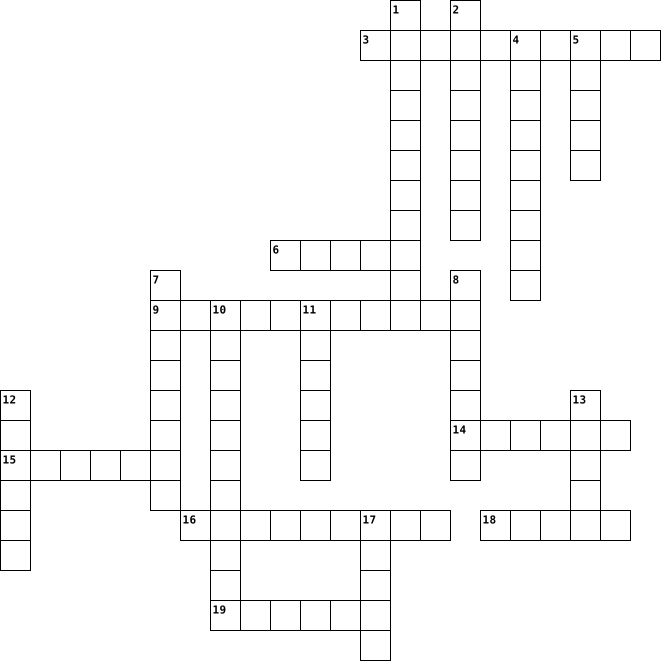
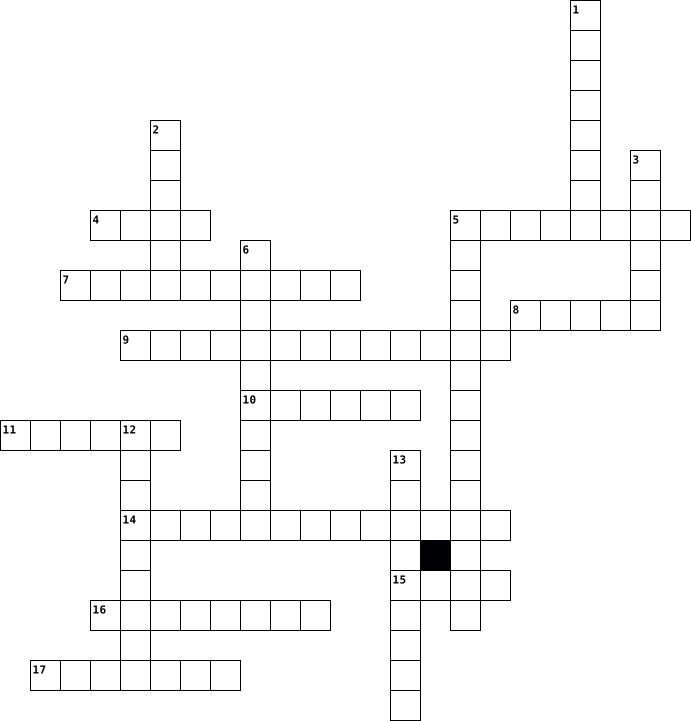
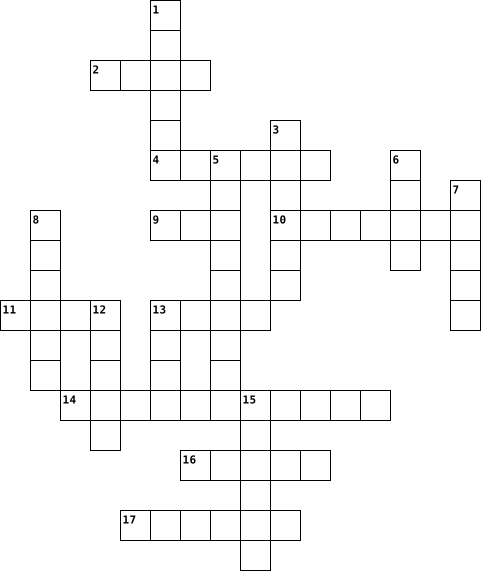
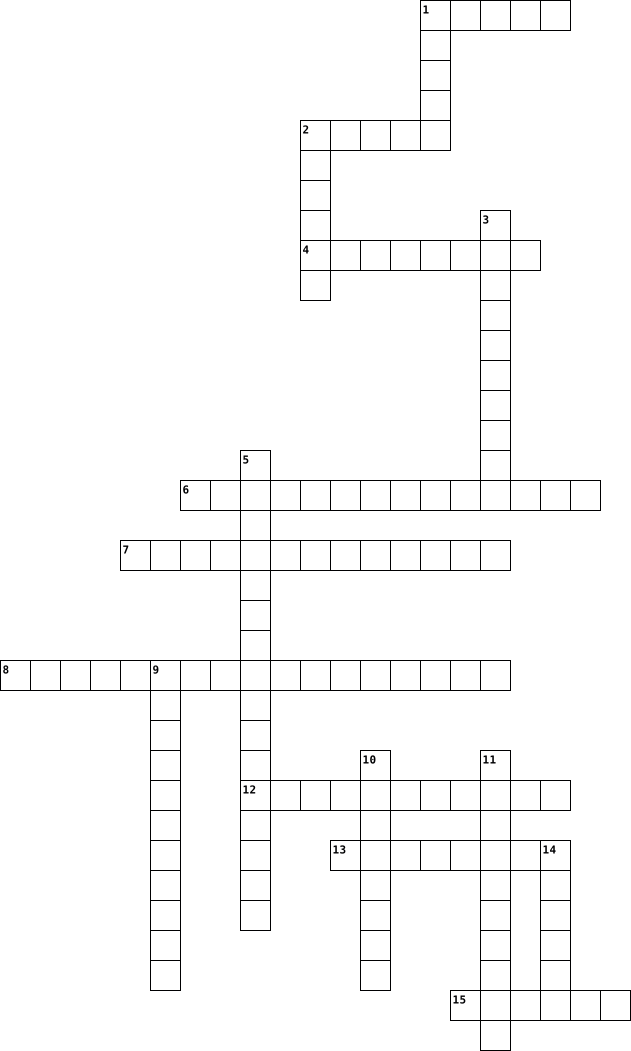
Across
- The female reproduction part of the flower
- Contains pollen sacs
- produces flowers that develop seeds inside the ovary
- Sticky substance that pollen will adhere too
- The male Reproduction part of the flower
- Trees that do not lose their leaves during winter
- Plants with veins or tubes that carry water and nutrients throughout the plants roots, stem, and leaves
- Reproduction that requires 1 parent
- Protects the flower during bud development
Down
- a plant that develop seeds on or in cones
- produces cones instead of lowers
- Trees that lose their leaves during winter
- The stalk of the anther
- lack veins or tubes that carry water and nutrients throughout the plants roots, stem, and leaves
- Protects the ovule
- Reproduction that requires 2 parents
- The egg of the flower
- Raises the stigma away from the ovary
- Used to attract insects to the flower
19 Clues: Protects the ovule • Contains pollen sacs • The egg of the flower • The stalk of the anther • produces cones instead of lowers • Reproduction that requires 1 parent • Reproduction that requires 2 parents • Raises the stigma away from the ovary • Used to attract insects to the flower • The male Reproduction part of the flower • a plant that develop seeds on or in cones • ...
Plants 2014-01-14
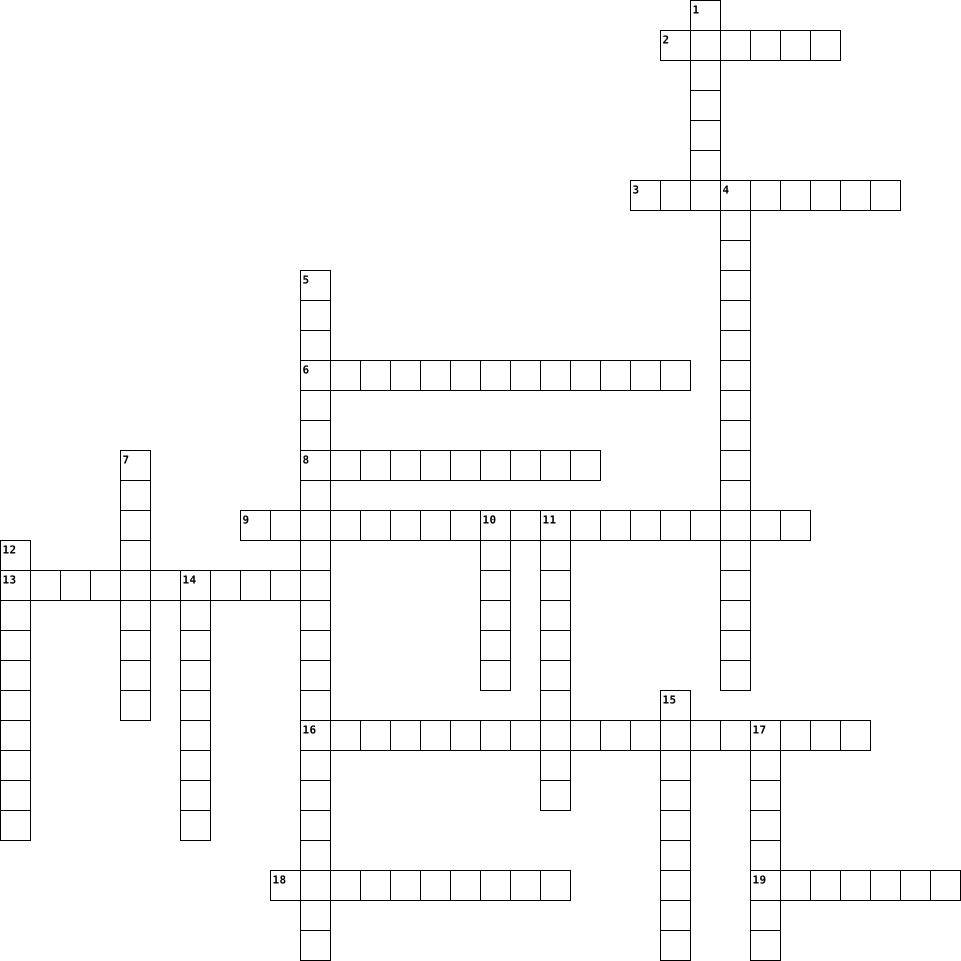
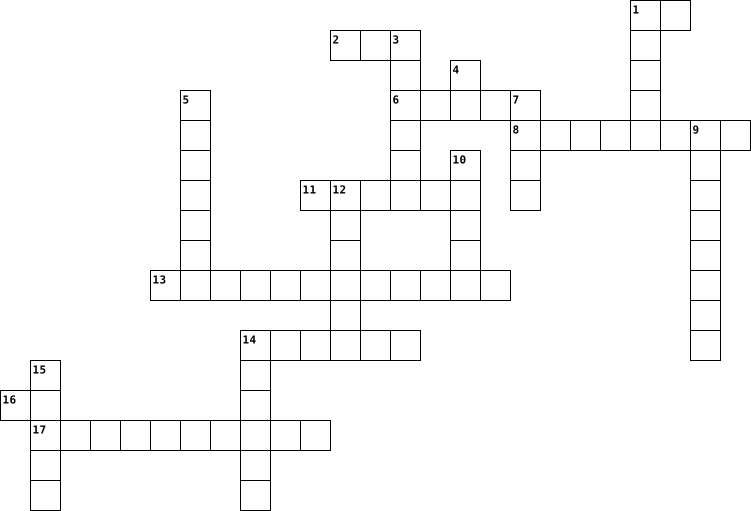
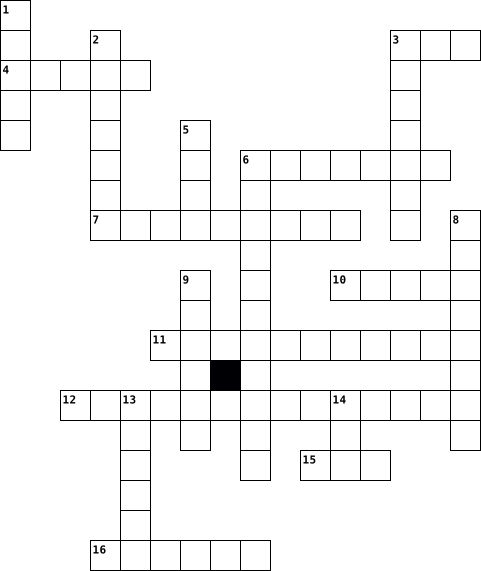
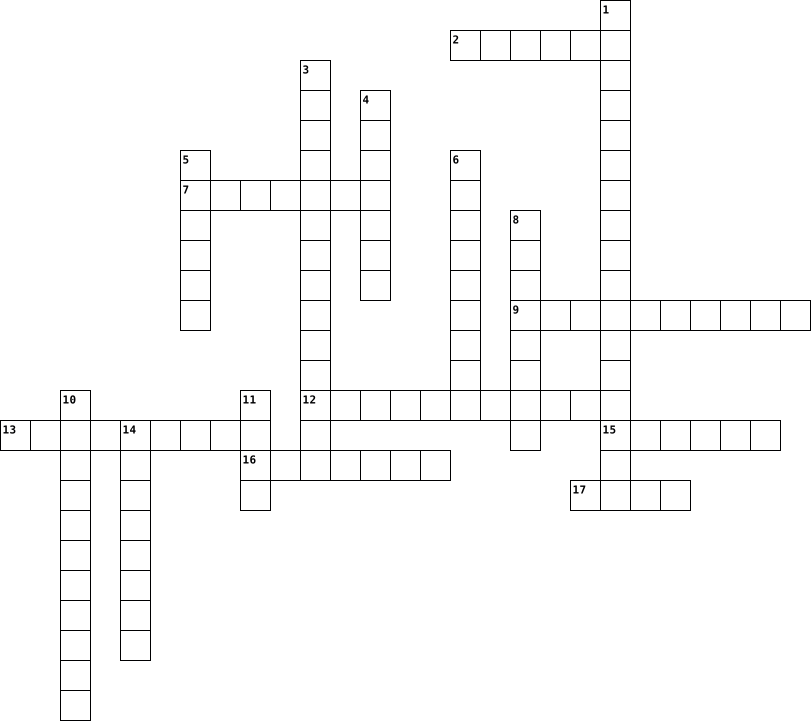
Across
- a plant that develop seeds on or in cones
- Used to attract insects to the flower
- produces flowers that develop seeds inside the ovary
- Contains pollen sacs
- Sticky substance that pollen will adhere too
- Trees that lose their leaves during winter
- Raises the stigma away from the ovary
- Reproduction that requires 2 parents
Down
- lack veins or tubes that carry water and nutrients throughout the plants roots, stem, and leaves
- The stalk of the anther
- Trees that do not lose their leaves during winter
- Protects the ovule
- Plants with veins or tubes that carry water and nutrients throughout the plants roots, stem, and leaves
- Reproduction that requires 1 parent
- produces cones instead of lowers
- The male Reproduction part of the flower
- The female reproduction part of the flower
- Protects the flower during bud development
- The egg of the flower
19 Clues: Protects the ovule • Contains pollen sacs • The egg of the flower • The stalk of the anther • produces cones instead of lowers • Reproduction that requires 1 parent • Reproduction that requires 2 parents • Used to attract insects to the flower • Raises the stigma away from the ovary • The male Reproduction part of the flower • a plant that develop seeds on or in cones • ...
Plants 2014-02-01
Across
- a vascular tissue that transports food molecules to all parts of a plant
- rounded base of a pistil that contains an egg
- plant that does not have specialized tissues to move water and nutrients through the plant
- tiny granules that contain the male gametophyte of seed plants
- plants forming branched masses in quiet water and having finely dissected, whorled leaves and minute unisexual flowers.
- flowering seed plants
- small, green, nonvascular plants growing in moist environments and consisting of either a leafy mosslike structure or a flat thallus that is often lobed.
- female reproductive structure of flowers
- Any of various green, usually small, nonvascular plants .
Down
- vascular tissue that transport water and minerals through the plants
- portion of a plant that draws minerals and water from the surrounding soil, and sometimes stores food.
- seed plants
- rootlike structure that holds nonvascular plants in place
- modified leaves that make up the outermost ring of flower parts and protects buds
- male reproductive structure of a flower that produces pollen and consists of an anther at the tip of a filament
- plant that has tissues to deliver water and nutrients from one part of the plant to another
- of the ring or rings of the usually brightly colored, leaf shaped parts of a flower
- waxy layer that coats most of the surfaces of plants that are exposed to air
- an underground stem from which new leaves and roots grow
19 Clues: seed plants • flowering seed plants • female reproductive structure of flowers • rounded base of a pistil that contains an egg • an underground stem from which new leaves and roots grow • rootlike structure that holds nonvascular plants in place • Any of various green, usually small, nonvascular plants . • tiny granules that contain the male gametophyte of seed plants • ...
Plants 2023-07-11
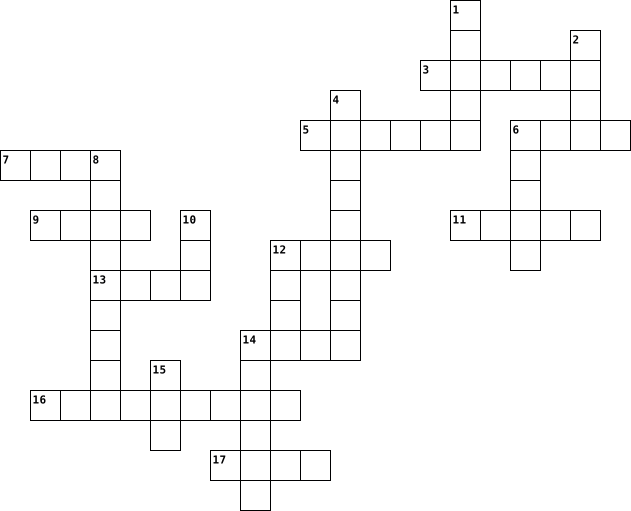
Across
- A tall plant with hollow stems that can be used for various purposes.
- A spiky plant that lives in dry areas and can store water.
- A tall plant with a strong trunk and branches that provide shade.
- A small, dense plant that grows in moist environments.
- A plant with long, twisting stems that climbs on other plants or structures.
- A small flower with white petals and a yellow center.
- A tree with a tall, slender trunk and large fan-shaped leaves.
- A fragrant flower with large petals that comes in different colors.
- A leafy plant that grows in shady places and has delicate fronds.
- A flower with ruffled petals that comes in various shades.
- A leafy plant that grows in shady places and has delicate fronds.
Down
- A green plant that covers the ground and feels soft underfoot.
- A beautiful flower with thorns and a lovely fragrance.
- A weed with yellow flowers that turn into fluffy white seeds.
- A flower with vibrant colors that bloom in spring.
- A tall plant with a large yellow flower that follows the sun.
- A climbing plant with dark green leaves that grows on walls and trees.
- A cone-bearing tree with needles instead of leaves.
- A colorful part of a plant that attracts bees and butterflies.
- A large tree with strong branches and acorns as its fruit.
20 Clues: A flower with vibrant colors that bloom in spring. • A cone-bearing tree with needles instead of leaves. • A small flower with white petals and a yellow center. • A beautiful flower with thorns and a lovely fragrance. • A small, dense plant that grows in moist environments. • A spiky plant that lives in dry areas and can store water. • ...
Plants! 2023-09-18

Across
- One of the three products of photosynthesis.
- Part of the flower that bears the pollen for the plant. One of the male parts of the flower.
- Name of all female parts of the flower.
- Part of plant that transports water and nutrients to all parts of the plant.
- Part of the flower that sits at the top and collects pollen. One of the female parts of the flower.
- Other product of photosynthesis (not glucose).
- Plants that bear "naked" seeds.
- Plants that bear flowers and fruit.
- Part of the flower that holds up the stigma and connects the stigma to the ovary.
Down
- Name of the food that plants create for themselves.
- Part of plant that absorbs water and nutrients from the ground.
- Part of the flower that holds up the anther. One of the male parts of the flower.
- Part of flower that protects flower buds.
- Part of the flower that protects and spreads the seeds of the plant.
- Part of flower that is bright and colorful to attract pollinators.
- Name of the process by which plants create food for themselves with sunlight.
- Name of all of the male parts of the flower.
- Part of the flower that contains the eggs (ovules) and develops them into seeds when pollinated. One of the female parts of the flower.
- Part of plant that converts sunlight into sugar for food.
19 Clues: Plants that bear "naked" seeds. • Plants that bear flowers and fruit. • Name of all female parts of the flower. • Part of flower that protects flower buds. • One of the three products of photosynthesis. • Name of all of the male parts of the flower. • Other product of photosynthesis (not glucose). • Name of the food that plants create for themselves. • ...
Plants 2025-04-21

Across
- Main above-ground structure of bryophytes
- Vascular tissue that transports water
- Name for the life cycle of plants
- Plant structure that produces 2n spores
- Cone-producing, evergreen plants
- Plant structure that produces n gametes
- Plants with vascular tissue that does not produce seeds
- Scientific term for plants
- Molecule that makes plant cell walls
Down
- Main below-ground structure of pteridophytes
- Vascular tissue that transports food
- Flower-producing, deciduous plants
- Plants that lack vascular tissue and does not produce seeds
- Main above-ground structure of pteridophytes
- Main below-ground structure of spermatophytes
- Plants with vascular tissue that produces seeds
- Main above-ground structure of spermatophytes
- Protist ancestor to all plants
- Main below-ground structure of bryophytes
19 Clues: Scientific term for plants • Protist ancestor to all plants • Cone-producing, evergreen plants • Name for the life cycle of plants • Flower-producing, deciduous plants • Vascular tissue that transports food • Molecule that makes plant cell walls • Vascular tissue that transports water • Plant structure that produces 2n spores • Plant structure that produces n gametes • ...
Plants! 2025-05-07

Across
- plant sweat
- plant that returns every year
- growing a plant from a cutting of a plant
- when earth is washed away by wind and water
- tree with leaves that fall in the fall
- one leaf on a stem
- male part of the plant
- act as an anchor
- help prevent erosion
Down
- protect the pistil and the stamen
- multiple leaves on a stem
- replant every year
- act as a pillar
- green pigment that traps energy from the sun
- contains chlorophyll
- through this process plants create oxygen, energy and sugars
- part of plant that produces seeds
- female part of the plant
- plant that eats insects for food and energy
- tree that is always green
20 Clues: plant sweat • act as a pillar • act as an anchor • replant every year • one leaf on a stem • contains chlorophyll • help prevent erosion • male part of the plant • female part of the plant • multiple leaves on a stem • tree that is always green • plant that returns every year • protect the pistil and the stamen • part of plant that produces seeds • tree with leaves that fall in the fall • ...
Plants 2024-06-17

Across
- Female part of a flower, accepts pollen
- Moves water and nutrients up and down a plants stem
- The best soil for all plants
- Water moving through a plants leaves through evaporation
- Sticky when wet, hard when dry, holds water and nutrients very well
- Floury, hold nutrients and water fairly well
- Lets water, oxygen, and carbon dioxide in and out of leaves
- Type of root that is deep and long
- Dry, does not hold nutrients well, lets water through easily
- Any liquid or gas besides water moving from high concentration to low concentration
- A form of asexual reproduction, stems on the surface of the soil
Down
- Moves water up a plants stem
- A toxin, like a pesticide, collecting in an organism over time
- Process by which plants make their own food
- Something that harms a plant or steals its resources
- A form of asexual reproduction, stems under the soil
- Type of root that is spread out and shallow
- Water moving from high concentration to low concentration
- Male part of a flower, contains pollen
19 Clues: Moves water up a plants stem • The best soil for all plants • Type of root that is deep and long • Male part of a flower, contains pollen • Female part of a flower, accepts pollen • Process by which plants make their own food • Type of root that is spread out and shallow • Floury, hold nutrients and water fairly well • Moves water and nutrients up and down a plants stem • ...
Plants 2013-11-15
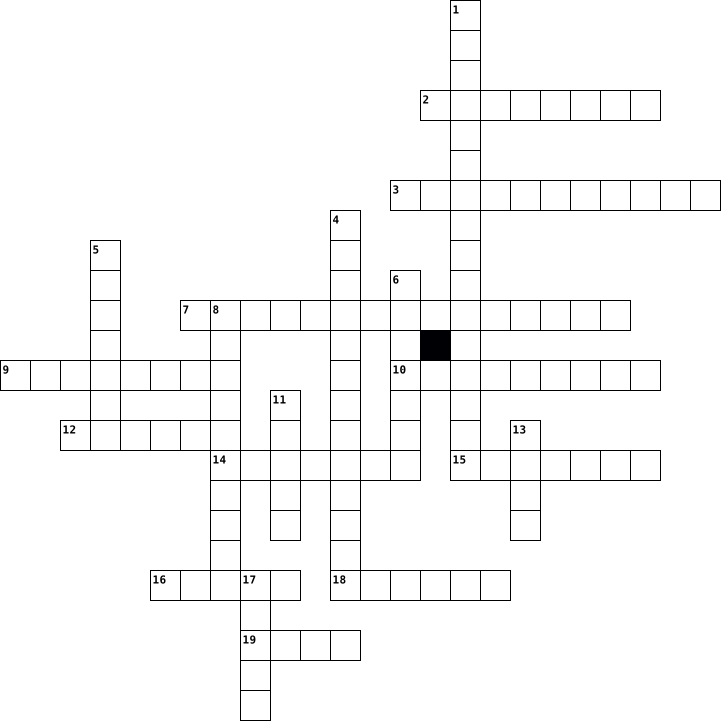
Across
- referring to the veins on the leaves
- Irregularly shaped
- Height
- Transports water
- the distance between the nodes
- the male reproductive part
- waxy layer
- The part of the plant that regulates gas and moisture
- Flat part of the leaf where photosynthesis occurs
- Attaches to the filament
- woody part of the leaf
Down
- Width
- Dead at maturity
- Non-seed leaves
- attaches to the leaf
- Loosely packed
- the petal
- where the leaf attaches to the stem
- seed leaves
19 Clues: Width • Height • the petal • waxy layer • seed leaves • Loosely packed • Non-seed leaves • Dead at maturity • Transports water • Irregularly shaped • attaches to the leaf • woody part of the leaf • Attaches to the filament • the male reproductive part • the distance between the nodes • where the leaf attaches to the stem • referring to the veins on the leaves • ...
Plants 2014-01-14

Across
- Raises the stigma away from the ovary
- The egg of the flower
- The female reproduction part of the flower
- The male Reproduction part of the flower
- Reproduction that requires 2 parents
- a plant that develop seeds on or in cones
- produces flowers that develop seeds inside the ovary
- Contains pollen sacs
- Reproduction that requires 1 parent
Down
- Protects the ovule
- Protects the flower during bud development
- Sticky substance that pollen will adhere too
- The stalk of the anther
- Used to attract insects to the flower
- lack veins or tubes that carry water and nutrients throughout the plants roots, stem, and leaves
- Plants with veins or tubes that carry water and nutrients throughout the plants roots, stem, and leaves
- produces cones instead of lowers
- Trees that do not lose their leaves during winter
- Trees that lose their leaves during winter
19 Clues: Protects the ovule • Contains pollen sacs • The egg of the flower • The stalk of the anther • produces cones instead of lowers • Reproduction that requires 1 parent • Reproduction that requires 2 parents • Raises the stigma away from the ovary • Used to attract insects to the flower • The male Reproduction part of the flower • a plant that develop seeds on or in cones • ...
Plants 2023-01-13

Across
- female reproductive structure of a seed plane where the haploid egg develops
- process during which a nucleus and its contents divide
- immature diploid plant that develops from the zygote
- occurs when the life cycle of an organism alternates between diploid and haploid cells
- any change in the environment that causes organisms to respond
- usable power
- forms from an ovary and sometimes other parts of the flower and contains one of more seeds
- series of chemical reactions that convert light energy, water, and carbon dioxide into glucose and give off oxygen
Down
- series of chemical reactions that convert the energy in food molecules into ATP
- haploid generation of a plant; a daughter cell produced from a haploid structure
- substance that acts as a chemical messenger within plants
- female reproductive organ of a flower
- structure made up of an embryo, its food supply, and a protective covering
- haploid and diploid stages in the life cycle of a plant
- structure found at the base of the style that contains one of more ovules
- plants response to the number of hours of darkness in its environment
- response that results in plant growth toward or away from a stimulus
- structure that forms from fissure in the male reproductive structure of a seed plant and produces sperm cells
- male reproductive organ of a flower
19 Clues: usable power • male reproductive organ of a flower • female reproductive organ of a flower • immature diploid plant that develops from the zygote • process during which a nucleus and its contents divide • haploid and diploid stages in the life cycle of a plant • substance that acts as a chemical messenger within plants • ...
Plants 2023-05-18

Across
- Are the green petal-like parts at the base of the flower.
- Is the transfer of pollen from the male anther to the female stigma.
- Holds a plant up right. It also carries water, minerals and nutrients between roots and leaves and flowers.
- Protects the seed and helps it disperse.
- The bottom portion of the pistil enlarges to form the ______.
- the part of the ovary of seed plants that contains the female germ cell and after fertilization becomes the seed.
- Powdery substance found in the middle of the flower.
- The stigma is the sticky part at the top of the pistil that “grabs” or traps the pollen.
Down
- Carry the pollen and are usually yellow in color.
- Root _______ absorb water and nutrients from the soil.
- Has two parts: the anther and the filament.
- The process by which plants turn water and carbon dioxide into oxygen and glucose (food for the plant), using light energy.
- The reproductive organs of a plant are in the ________. Seeds are made here.
- Is also known as sugar- gives plants energy.
- Where photosynthesis occurs. This produces food for the plant.
- Are leaf like and usually colorful.
- The tube-like structure that holds up the stigma.
- Anchors a plant in the ground.
- Is the female reproductive part of a flower where pollination takes place.
19 Clues: Anchors a plant in the ground. • Are leaf like and usually colorful. • Protects the seed and helps it disperse. • Has two parts: the anther and the filament. • Is also known as sugar- gives plants energy. • Carry the pollen and are usually yellow in color. • The tube-like structure that holds up the stigma. • Powdery substance found in the middle of the flower. • ...
plants 2025-11-11

Across
- male part of the flower used for reproduction
- part of a plant with a special job, like leaf or root
- part of the plant that takes water from the soil and anchors the plant
- waxy layer on leaves that keeps water inside
- cells that open and close the stomata
- tubes that move water from roots to leaves
- part of the cell where food is made
- tubes that move food from leaves to the rest of the plant
- leaf cells that perform photosynthesis
- place in the plant where new cells grow
Down
- process where plants make food using sunlight
- green part of the plant that makes food from sunlight
- strong layer around plant cells that gives shape
- leaf cells with air spaces for gases
- space in a cell that stores water and food
- part of the plant that holds up leaves and moves water and food
- plant part where reproduction happens
- colorful part of the flower that attracts insects
- tiny holes on leaves for air and water to go in and out
19 Clues: part of the cell where food is made • leaf cells with air spaces for gases • cells that open and close the stomata • plant part where reproduction happens • leaf cells that perform photosynthesis • place in the plant where new cells grow • space in a cell that stores water and food • tubes that move water from roots to leaves • waxy layer on leaves that keeps water inside • ...
plants 2016-11-03
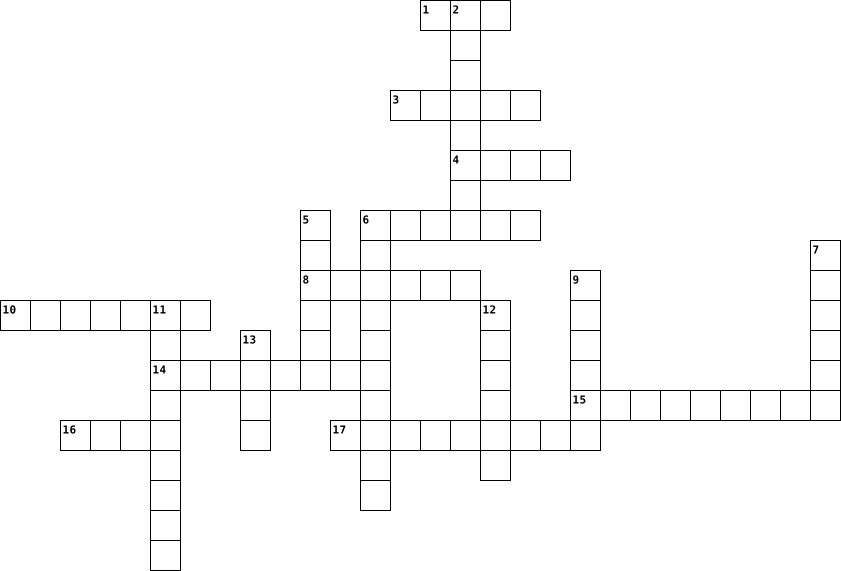
Across
- this part of the plant carries water and nutrients for the plant
- 3 or more years
- encourages plant cell division
- this part of the plant provides support by anchoring the plant and providing water
- pollen lands on stigma a tube grows down the style and enters the ovary
- a plant that completes its life cycle in one grown seed
- micro specks of living material
- made up of decaying plant and animal matter
- 45% rock particles 25% water 25% air 5% leaves
- 2 growing seasons to succeed life cycle
- inactive til' conditions are right for germination
Down
- helps above ground leafy growth and gives dark green color to the leaves
- underground parts that make plants
- this part of the plant makes food for the plant
- carbon dioxide,water and light energy are changed into glucose
- pollen moves from male parts to female parts
- formed at fertilization but is not a part of the emybro
- increases the plants ressistance to disease and encourages root growth
18 Clues: 3 or more years • encourages plant cell division • micro specks of living material • underground parts that make plants • 2 growing seasons to succeed life cycle • made up of decaying plant and animal matter • pollen moves from male parts to female parts • 45% rock particles 25% water 25% air 5% leaves • this part of the plant makes food for the plant • ...
Plants 2017-02-14

Across
- A type of xylem.
- Found on the underside of a leaf.
- A seed leaf.
- Used directly in respiration or stored as starch.
- Zone where cells develop into different tissue types.
- The sticking of similar molecules to each other.
- Control the stomata.
- Type of root.
Down
- Potential growth point.
- Controls the activities of sieve tube elements.
- The movement of water down a concentration gradient.
- The concentration of this controls opening and closing of stomata.
- Living tissue that transports food.
- The loss of water vapour through leaves.
- Openings in the stems of plants that allow gas exchange.
- Tissue in which photosynthesis occurs.
- Xylem has this.
- Their vascular bundles are scattered.
18 Clues: A seed leaf. • Type of root. • Xylem has this. • A type of xylem. • Control the stomata. • Potential growth point. • Found on the underside of a leaf. • Living tissue that transports food. • Their vascular bundles are scattered. • Tissue in which photosynthesis occurs. • The loss of water vapour through leaves. • Controls the activities of sieve tube elements. • ...
Plants 2012-01-29

Across
- this bird can flybackwards
- the largest bird in the world
- Birds are the only animals that have these
- this bird cannot fly but spends 75% of its time underwater
- a bird of preys sharp, hook-like toenails
- large eyes and sensitive ears allow this bird to hunt at night
- this is the state bird in seven US states
- Benjamin Franklin wanted this to be the National bird
Down
- the temperature classification of birds
- a group of geese on the ground
- birds evolved from these animals
- this birds mimics the sounds of other birds
- when birds move from one region to another according to seasons
- this bird eats with its head upside down to strain water out of its food
- this large, flightless bird is extinct
- this bird is a scavenger
- a bird of prey
- the largest songbird in North America
18 Clues: a bird of prey • this bird is a scavenger • this bird can flybackwards • the largest bird in the world • a group of geese on the ground • birds evolved from these animals • the largest songbird in North America • this large, flightless bird is extinct • the temperature classification of birds • a bird of preys sharp, hook-like toenails • ...
Plants 2013-05-04

Across
- bērzs
- kadiķis
- vītols
- bumbierene
- īve
- ginks
- priede
- mežs
- melnalksnis
Down
- krūms
- ciršana
- dedzināšana
- liepa
- malka
- mežābele
- ozols
- egle
- apse
18 Clues: īve • mežs • egle • apse • krūms • bērzs • liepa • malka • ozols • ginks • vītols • priede • ciršana • kadiķis • mežābele • bumbierene • dedzināšana • melnalksnis
PLANTS 2021-11-07
Across
- the earth
- a specific function
- the part of a plant that attaches it to the ground
- a collection of systems that work together
- not harsh
- the growth or turning of plant roots toward
- of organization the hierarchy of levels for
- away from moisture
- the growth of the parts of plants in response
Down
- a part of an organism that is self-contained and
- put forth shoots
- the force of gravity
- the force that attracts a body toward the center
- the medium plants grow in
- a young plant
- a flowering plant's mode of reproduction
- come into view
- things
- system a group of organs that work together
19 Clues: things • the earth • not harsh • a young plant • come into view • put forth shoots • away from moisture • a specific function • the force of gravity • the medium plants grow in • a flowering plant's mode of reproduction • a collection of systems that work together • the growth or turning of plant roots toward • of organization the hierarchy of levels for • ...
Plants 2021-05-02
Across
- lotus aquatic plant
- whose leaves can be used for seasoning foods and medicines
- plant that refracts with spores
- plant in the desert
- dwarf
- sewer plant
- parasitic plant
- the outer cell layer of animals or plants
- harvesting vegetation
- spice plant
Down
- plant that goes through its entire life cycle in water
- comes from growing plants
- coniferous plant
- plants
- plant whose stem fibers are spicy
- vegetable plants
- study of plants
- tropical plant
18 Clues: dwarf • plants • sewer plant • spice plant • tropical plant • study of plants • parasitic plant • coniferous plant • vegetable plants • lotus aquatic plant • plant in the desert • harvesting vegetation • comes from growing plants • plant that refracts with spores • plant whose stem fibers are spicy • the outer cell layer of animals or plants • ...
Plants 2025-07-29

Across
- gyökér
- rügy
- ág
- napfény
- levél
- mag
- fa
Down
- virág
- erdő
- fű
- növény
- virágpor
- tüske
- bokor
- levegő
- talaj
- víz
- szár
18 Clues: fű • ág • fa • víz • mag • erdő • rügy • szár • virág • tüske • bokor • talaj • levél • gyökér • növény • levegő • napfény • virágpor
Plants 2012-01-29

Across
- the scientific study of plants
- the substance in the cell walls of plants
- the dry fruit of a conifer
- the process when plants use sunlight to turn carbon dioxide into food
- a small flowerless green plant with no true roots
- plants used for food, medicine, flavoring, or perfume
- a plant that grows in an unwanted place and takes nutrients from cultivated plants
- the latin word for the Plant Kingdom
- the part of a plant that makes pollen
- Tree resin that has been fossilized
Down
- these help bring food and water from the soil to plants
- plants that trap and consume insects for nutrients
- a green pigment in plants that absorbs sunlight
- plants grow from this
- a plant that grows in dry areas and has a thick stem with spines
- chemicals used to help plants grow
- a simple nonflowering plant that includes seaweed
- the part of a plant supports and holds it toward sunlight
18 Clues: plants grow from this • the dry fruit of a conifer • the scientific study of plants • chemicals used to help plants grow • Tree resin that has been fossilized • the latin word for the Plant Kingdom • the part of a plant that makes pollen • the substance in the cell walls of plants • a green pigment in plants that absorbs sunlight • ...
Plants 2016-10-11

Across
- older xylem, cannot conduct fluids
- _________ or Ground tissue make up the bulk of the plant, provide support, storage of food and water
- needle trees, cones are reproductive structures
- process of water loss through evaporation in leaves
- Herbaceous _______: vascular bundles are scattered throughout stem
- ________ Strip prevents water from moving around in endoderm cells, allows water to get to cells
- Herbaceous _______: vascular bundles are arranged in a ring
- outer cell layer of the plant
Down
- plants that lack: roots, stems, leaves and vascular tissue
- alive cells that conduct carbohydrates made in leaves to other parts of the plants, cells do not have nucleus take orders from companion cell
- plants that have: roots, stems, leaves and vascular tissue; able to grow much taller
- dead hollow cells to conduct water and dissolved minerals from roots to the rest of plant
- ______ Tissue divide by mitosis to produce new cells, used for growth in both length and width of the plant
- flowering plant , flowers are reproductive structures
- ________ Tissue covers the surface of leaves, roots and stems, for protection and prevention of water loss
- Herbaceous ______: soft, green short lived stems
- newer layer of xylem, produced by vascular cambium, conduct water and minerals
- ______ Tissue transport materials
18 Clues: outer cell layer of the plant • ______ Tissue transport materials • older xylem, cannot conduct fluids • needle trees, cones are reproductive structures • Herbaceous ______: soft, green short lived stems • process of water loss through evaporation in leaves • flowering plant , flowers are reproductive structures • ...
Plants 2020-09-02

Across
- Seed bearing structure in flowering plants. Apples are examples
- Plant of the honeysuckle family with white fruit. New to scientific community at time of Lewis and Clark
- Tree used by the expedition to build Fort Mandan
- Crop grown by American Indians and used in ceremonies, particularly with the peace pipe
- Book used to preserve leaves, flowers, and grasses
- Major ecosystem of the Great Plains. Large open field of grassland
- Prunus virginiana. Lewis and Clark found these on the trail. Used to make jams today
- Chlorophyll makes plants this color
- Started North Dakota's first seed house and nursery. Preserved many of today's plants in use today
- Plants need light from this to survive
Down
- Group of crops grown in the same field by the Mandan and Hidatsa
- State flower of North Dakota. Lewis and Clark saw these. Smell as sweet by any other name
- State grass of North Dakota, South Dakota, and Wyoming. Nicknamed red-jointed
- Type of tree with needle leaves. Not deciduous
- The field of study of plants
- State tree of North Dakota. Ulmus americana
- Crop that grows and faces the sun. Used as a living fence by the Three Affiliated Tribes
- A plant that lasts more than two years. Regrows every spring
18 Clues: The field of study of plants • Chlorophyll makes plants this color • Plants need light from this to survive • State tree of North Dakota. Ulmus americana • Type of tree with needle leaves. Not deciduous • Tree used by the expedition to build Fort Mandan • Book used to preserve leaves, flowers, and grasses • A plant that lasts more than two years. Regrows every spring • ...
Plants 2017-02-14

Across
- Living tissue that transports food.
- Xylem has this.
- Tissue in which photosynthesis occurs.
- The loss of water vapour through leaves.
- A seed leaf.
- Used directly in respiration or stored as starch.
- Openings in the stems of plants that allow gas exchange.
- Controls the activities of sieve tube elements.
- Found on the underside of a leaf.
- The concentration of this controls opening and closing of stomata.
- The sticking of similar molecules to each other.
- Potential growth point.
Down
- Their vascular bundles are scattered.
- Type of root.
- Control the stomata.
- Zone where cells develop into different tissue types.
- A type of xylem.
- The movement of water down a concentration gradient.
18 Clues: A seed leaf. • Type of root. • Xylem has this. • A type of xylem. • Control the stomata. • Potential growth point. • Found on the underside of a leaf. • Living tissue that transports food. • Their vascular bundles are scattered. • Tissue in which photosynthesis occurs. • The loss of water vapour through leaves. • Controls the activities of sieve tube elements. • ...
Plants! 2022-05-19

Across
- structure at the base of the flower that protects developing seed
- thin stalk that connects leaf to stem
- broad part of leaf that captures sunlight
- Plant that produces flowers and protects seeds with fruit
- leaflike structure that surrounds developing flower while in the bud
- type of plant that produces seeds that are not enclosed in fruit
- portion of flower that produces pollen
- thin, rootlike structure that anchors moss
- reproductive structure of angiosperms
Down
- type of vascular tissue that transports water and minerals
- structure in leaves that contains xylem and phloem
- area with undifferentiated stem cells
- type of root system that has one large root and many small roots
- type of vascular tissue that transports food
- evaporation of water through leaves
- colorful leaflike structures that attract pollinators
- reproductive structure of gymnosperm
- type of root system that has many roots of equal size
18 Clues: evaporation of water through leaves • reproductive structure of gymnosperm • area with undifferentiated stem cells • thin stalk that connects leaf to stem • reproductive structure of angiosperms • portion of flower that produces pollen • broad part of leaf that captures sunlight • thin, rootlike structure that anchors moss • type of vascular tissue that transports food • ...
Plants 2024-03-19
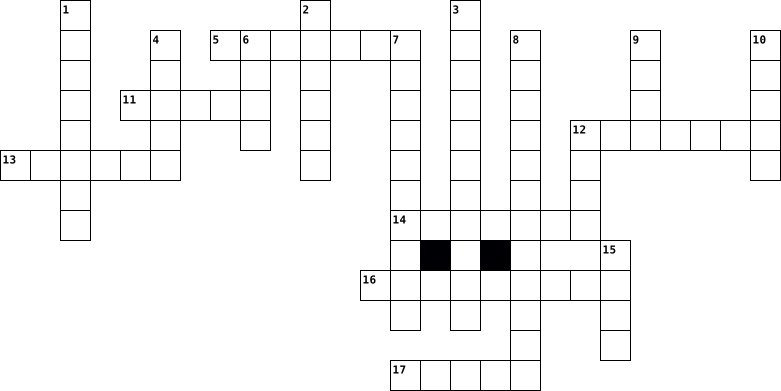
Across
- Small openings on the surface of plant leaves that allow for gas exchange.
- The flat, expanded part of a leaf.
- A type of gymnosperm plant that produces cones and needle-like leaves.
- Plant tissue responsible for transporting sugars and other organic compounds throughout the plant.
- The stalk that attaches a leaf to a stem.
- A group of non-vascular plants that includes mosses, liverworts, and hornworts.
- A reproductive cell produced by some plants that can develop into a new organism without fertilization.
Down
- tissue: Plant tissue that conducts water, minerals, and nutrients throughout the plant.
- The early stage of development of a plant contained within a seed.
- The transfer of pollen from the male reproductive organs to the female reproductive organs of a plant.
- Plant tissue responsible for transporting water and nutrients from the roots to the rest of the plant.
- A tree
- Flowering plants that produce seeds enclosed within a fruit.
- A plant that has vascular tissue, including ferns, gymnosperms, and angiosperms.
- The vascular tissue that provides support and transports nutrients in a leaf.
- cell Cells that surround and control the opening and closing of stomata.
- The reproductive structure of gymnosperms, such as pine trees, that contains seeds.
- A fertilized ovule containing the plant embryo and stored nutrients.
18 Clues: A tree • The flat, expanded part of a leaf. • The stalk that attaches a leaf to a stem. • Flowering plants that produce seeds enclosed within a fruit. • The early stage of development of a plant contained within a seed. • A fertilized ovule containing the plant embryo and stored nutrients. • A type of gymnosperm plant that produces cones and needle-like leaves. • ...
plants 2024-03-01
Across
- the green structure of a plant that produces food by photosynthesis
- the sweet substance in a flower that bees love
- what do we call the appearance of veins on a dicotyledonous leaf?
- the shoot develops from this structure in a seed
- what does the radicle develop into?
- dispersal wind is an example of...
- the growth of a seed into a new plant
- what does xylem transport around the plant?
- a condition needed for germination
Down
- male part of the flower
- female part of flower
- the first leaf in a seed
- true or false, a dicotyledonous plant has its vascular bundles arranged in a ring
- a protective coat of the seed
- the vascular tissue that carries food around the plant
- a monocotyledonous flower has petals in multiples of what
- the structure of a plant that holds the leaves and flowers
- the part of 1 down that produces pollen
18 Clues: female part of flower • male part of the flower • the first leaf in a seed • a protective coat of the seed • dispersal wind is an example of... • a condition needed for germination • what does the radicle develop into? • the growth of a seed into a new plant • the part of 1 down that produces pollen • what does xylem transport around the plant? • ...
Plants 2019-10-21
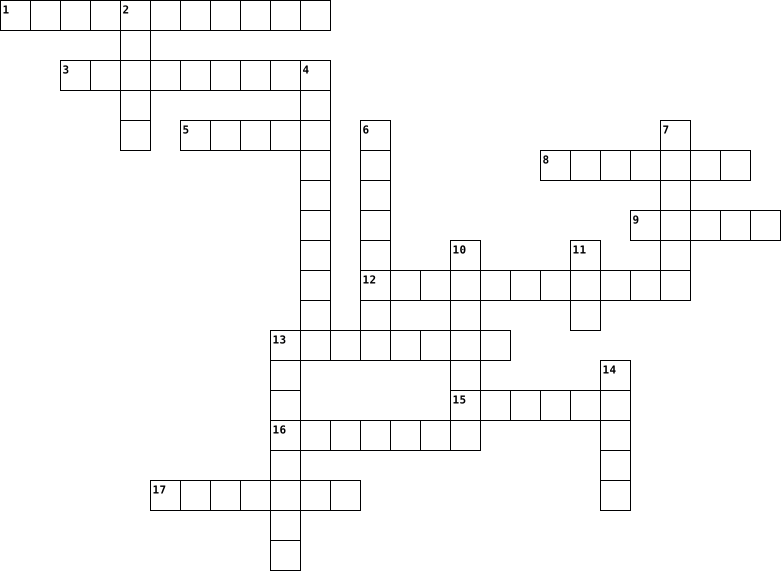
Across
- What is a color wavelengths do plants absorb?
- What color light isn’t absorbed by plants?
- What is the scientific formula for glucose?
- What are plant cell walls made of?
- What is a form of electromagnetic energy?
- What process releases the energy from photosynthesis?
- What is the process that allows plants to take energy from the Sun and create sugar molecules?
- What is the scientific formula for carbon dioxide?
- cells What requires oxygen to survive?
Down
- molecules What form is the energy stored in plants?
- What type of environment has oxygen?
- What kind of trees are hundreds of feet tall?
- walls What serve as support structures by protecting individual cells and creating a larger structure for the entire plant?
- What part of a plants’ cells captures light?
- What is a scientist that studies plants?
- Mendel Who used pea plants and their flowers to come up with some of the first ideas on how traits are passed from one generation to another?
- What do animal cells require?
- What is the scientific formula for water?
18 Clues: What do animal cells require? • What are plant cell walls made of? • What type of environment has oxygen? • cells What requires oxygen to survive? • What is a scientist that studies plants? • What is a form of electromagnetic energy? • What is the scientific formula for water? • What color light isn’t absorbed by plants? • What is the scientific formula for glucose? • ...
plants 2025-05-06

Across
- – First leaf or first pair of leaves in a seedling
- – Colorful part of a flower used to attract pollinators
- – Anchors the plant and absorbs water and nutrients
- – A plant with two seed leaves
- – Process plants use to convert sunlight into energy
- – Plant embryo with a food supply and protective coat
- – To begin to grow from a seed
Down
- – Male reproductive part of a flower Dioecious – Plant species with male and female flowers on separate individuals
- – Protects a flower bud before it opens
- – Part of a stamen that contains pollen Filament – Supports the anther in a flower
- – A plant with one seed leaf
- – Supports plant and transports nutrients Ovule – Structure that develops into a seed after fertilization
- – Study of plants
- – Tissue that transports water in plants Phloem – Tissue that transports food in plants
- – Powdery substance used for plant reproduction
- – Flower part that contains the ovules
- – Connects the stigma to the ovary
- – Part of the pistil that receives pollen
18 Clues: – Study of plants • – A plant with one seed leaf • – A plant with two seed leaves • – To begin to grow from a seed • – Connects the stigma to the ovary • – Flower part that contains the ovules • – Protects a flower bud before it opens • – Part of the pistil that receives pollen • – Powdery substance used for plant reproduction • ...
Plants 2025-09-16

Across
- process of joining light, water, and carbon dioxide
- Greek for "a turning"
- controls all cell activity
- a chain of sugar molecules
- jelly-like substance in a plant
- thin layer that surrounds all cells
- large storage area in a plant cell
- shows the relationships of energy transfers
- release of water withing the water cyle
Down
- the process of releasing energy from food
- eat producers or other consumers for food
- are able to produce their own food
- plant pores
- makes plant food
- nature's recyclers
- tough outer covering of a plant
- a series of steps showing the transfer of energy among living things
- a form of sugar
18 Clues: plant pores • a form of sugar • makes plant food • nature's recyclers • Greek for "a turning" • controls all cell activity • a chain of sugar molecules • jelly-like substance in a plant • tough outer covering of a plant • are able to produce their own food • large storage area in a plant cell • thin layer that surrounds all cells • release of water withing the water cyle • ...
Plants 2026-04-21

Across
- (Sieve Tubes & Companion Cells): Living cells conducting sugars.
- Anatomy: Including epidermis, cortex, vascular bundles, and pith.
- System: Anatomy including root cap, epidermis, cortex, and vascular cylinder.
- Tissue: Actively dividing cells (apical for height, lateral for girth).
- Tissue: Conducting tissue comprised of xylem (water) and phloem (food).
- & External Anatomy
- Anatomy: Comprising epidermis, stomata, mesophyll (palisade/spongy), and veins.
- Dead, rigid cells with thick lignin walls for structural support.
- Tissue: Internal filler tissue (parenchyma, collenchyma, sclerenchyma).
- Structure: The outer boundary specialized with guard cells and trichomes.
Down
- Living cells with thickened corners providing flexible structural support.
- Systems (3 Types)
- Tissue: The outer protective layer, including epidermis, cuticle, and stomata.
- & Growth Anatomy
- Structures: Parts of the flower (stamens, pistils, ovaries) or cones.
- & Tissue Types
- Bundles: The arrangement of vascular tissues, which differs between monocots (scattered) and dicots (ring).
- Living cells with thin walls involved in storage and photosynthesis.
- (Tracheids & Vessels): Dead, hollow cells specialized for water conduction.
19 Clues: & Tissue Types • & Growth Anatomy • Systems (3 Types) • & External Anatomy • (Sieve Tubes & Companion Cells): Living cells conducting sugars. • Anatomy: Including epidermis, cortex, vascular bundles, and pith. • Dead, rigid cells with thick lignin walls for structural support. • Living cells with thin walls involved in storage and photosynthesis. • ...
plants 2021-01-18

Across
- baby root in the seed is called ______________
- bees transfers _____________ flower to flower
- to do with pollen that the bees help with
- world ________________ of the oxygen is provided by amazon rain forest
- jack pine seed get dispersed through _____________
- needs water to turn into food
- root which system forms a dense network of roots that is closer to the soil surface
- I am the part of the plant that needs that
- the most beautiful part of the part
Down
- The green coloring in plants which is needed to make food
- outer covering of a seed is called ___________
- the process in which plant make food
- tiny substance found in the soil and water that plants need to grow
- the skin of the tree
- helps the plant make food and it also gives minerals
- corn, rice, wheat, barley, sorghum, millet, oats are_______________ roots
- tulsi is a ______________
- a dried seed which squirrels like
- climber have ______________ stem
- this holds up the plant to the soil
20 Clues: the skin of the tree • tulsi is a ______________ • needs water to turn into food • climber have ______________ stem • a dried seed which squirrels like • this holds up the plant to the soil • the most beautiful part of the part • the process in which plant make food • to do with pollen that the bees help with • I am the part of the plant that needs that • ...
plants 2021-03-29

Across
- The Latin name of a plant
- entire plant inside the seed
- different seed leaves
- growing fruits,nuts,or vegetables
- plant that lasts a year
- material used to start and grow seeds
- Local English name of a plant
- Pollination Fertilization of a plant
- An offspring of two different plants
Down
- growing of ornamental flowering plants
- The science of plants
- plant that has cones/needle like leaves
- The stored food supply for seedling
- The science of growing tree fruits
- loses leaves each autumn
- study of plant names
- grows back year after year
- Any material used to cover the soil
18 Clues: study of plant names • The science of plants • different seed leaves • plant that lasts a year • loses leaves each autumn • The Latin name of a plant • grows back year after year • entire plant inside the seed • Local English name of a plant • growing fruits,nuts,or vegetables • The science of growing tree fruits • The stored food supply for seedling • ...
Plants 2021-12-08

Across
- Double fertilization only occurs in __________.
- A ________ plant is either entirely female or male.
- ________plants only survive for two seasons.
- __________ is the male portion of a plant.
- while strawberries are classified as an _________ fruit.
- Lateral meristems are responsible for ________ growth.
- The zygote and _________ are the two products of double fertilization.
- Tomatoes are surprisingly apart of the true _____ flower classification,
- ______ conducts sucrose and hormones throughout plant.
Down
- ___________ plants produce their own food through photosynthesis.
- Bees, wind, birds and butterflies are examples of ___________.
- The female portion of a plant is called __________.
- Plant growth is sensitive to _______.
- ______ meristems cause primary growth.
- The hormone ________ is what causes bananas to brown.
- Plants have a symbiotic relationship with ___________ fungi to enhance water uptake.
- Photosynthesis occurs in the ______ of the chloroplasts.
- _____ conducts water and minerals upwards from roots.
18 Clues: Plant growth is sensitive to _______. • ______ meristems cause primary growth. • __________ is the male portion of a plant. • ________plants only survive for two seasons. • Double fertilization only occurs in __________. • A ________ plant is either entirely female or male. • The female portion of a plant is called __________. • ...
PLANTS 2022-08-04
Across
- aka wood wide web fungi
- family of the hooded flower and smelly tasty herbs
- flower structure found on ground and black elder
- heart shaped
- specific word describing the leaves found on ferns
- latin for plant with culinary/ medical origins
- habit of plants like bindweed and morning glory
- not at all able to handle the cold or frost
- part of a plant connecting the leaf to the stem of for example sage
- Latin name for fuzzy in a plant such as hairy bittercress
Down
- genus with a long taproot
- traditional most common leaf shape
- lesser celandine leaf shape
- nobilis aromatic leaf that goes nicely in stews and rice
- traditional most common leaf venation
- meal for aphids mealybugs etc
- a type of leaf made of lots of smaller leaflets to create the one whole leaf
- part of a plant that protects the flower
18 Clues: heart shaped • aka wood wide web fungi • genus with a long taproot • lesser celandine leaf shape • meal for aphids mealybugs etc • traditional most common leaf shape • traditional most common leaf venation • part of a plant that protects the flower • not at all able to handle the cold or frost • latin for plant with culinary/ medical origins • ...
Plants 2025-03-17

Across
- Where plants grow
- What plants and animals need to breathe
- The opposite of short
- Soft and slightly hairy
- Not smooth
- Hold the plant in the ground
- The colorful part of a flower
- Covered with sharp points
- Helps plants stay healthy and grow
- Wide from one side to the other
Down
- Not big
- To become bigger over time
- The opposite of small
- Grows from a flower and has seeds
- Covered with a lot of hair
- Grows from a bud and makes seeds
- Not tall or long
- The opposite of soft
18 Clues: Not big • Not smooth • Not tall or long • Where plants grow • The opposite of soft • The opposite of short • The opposite of small • Soft and slightly hairy • Covered with sharp points • To become bigger over time • Covered with a lot of hair • Hold the plant in the ground • The colorful part of a flower • Wide from one side to the other • Grows from a bud and makes seeds • ...
Plants 2025-09-11

Across
- I am the showy part of flower
- I am a sugar that plants make
- I am sticky
- I am an immature seed
- I am a tube that carries food
- I am needed for food making
- Pollen moving from stamen to pistal
- I am the sperm cell
- I carry water
Down
- When pollen and ovules join
- I have the pollen inside me
- I am the male part of the flower
- mature ovary with seeds
- I protect the developing flower
- I study plants
- I am female
- I am make for plants can reproduce
- I contain the immature seeds
18 Clues: I am sticky • I am female • I carry water • I study plants • I am the sperm cell • I am an immature seed • mature ovary with seeds • When pollen and ovules join • I have the pollen inside me • I am needed for food making • I contain the immature seeds • I am the showy part of flower • I am a sugar that plants make • I am a tube that carries food • I protect the developing flower • ...
Plants 2026-03-14

Across
- 二氧化碳
- 莖
- 陽光
- 澆水
- 吸收
- 氧氣
- 蔬菜
- 水果
- 種子
Down
- 光合作用
- 花蜜
- 綠色
- 花
- 泥土
- 葉
- 蜜蜂
- 葉(眾數)
- 根
18 Clues: 莖 • 花 • 葉 • 根 • 陽光 • 花蜜 • 綠色 • 澆水 • 泥土 • 吸收 • 蜜蜂 • 氧氣 • 蔬菜 • 水果 • 種子 • 光合作用 • 二氧化碳 • 葉(眾數)
Plants 2026-03-09

Across
- ziemia, teren, grunt
- pyłek
- światło
- bakteria
- przetrwanie
- uwięzić, pułapka
- korzeń
- śmierdzieć
- przyciągać
- trawić
- malutki
Down
- przystosować się
- zachowanie
- pachnieć
- nabrać/oszukać
- strategia
- powietrze
- gnijący
18 Clues: pyłek • korzeń • trawić • światło • gnijący • malutki • pachnieć • bakteria • strategia • powietrze • zachowanie • śmierdzieć • przyciągać • przetrwanie • nabrać/oszukać • przystosować się • uwięzić, pułapka • ziemia, teren, grunt
Plants 2026-04-13

Across
- plant response to water
- another way that organisms can get energy from abiotic sources
- plant response to gravity
- Male reproductive system in plants and has filament and anther
- flows sugar down
- female reproductive system in plants and has a stigma, style, and ovary
- The ovary produces ____
- product of photosynthesis that the plant uses for energy
- zips water up from the roots
Down
- plant response to light
- Carbon dioxide and water in photosynthesis are both ____
- powerhouse of the cell, has its own DNA
- plant response to touch
- process in which plants take in carbon dioxide, sunlight, and water to make glucose and oxygen
- plant response
- part of the Male reproductive system that makes pollen
- an organelle used in photosynthesis that gives a plant its green color
- part of the female reproductive system that pollen attaches to
18 Clues: plant response • flows sugar down • plant response to light • plant response to water • plant response to touch • The ovary produces ____ • plant response to gravity • zips water up from the roots • powerhouse of the cell, has its own DNA • part of the Male reproductive system that makes pollen • Carbon dioxide and water in photosynthesis are both ____ • ...
Plants 2025-05-16

Across
- dreamy scent
- weed that is on the clock
- weed with a sting
- spring's yellow trumpets
- colour changing flower, depending on pH
- famous Dutch flower
- Scotland's flower
- given to a loved one
- holly's winter partner
Down
- tree with 'helicopter' seeds
- summer's yellow field
- panda's breakfast, lunch and dinner
- poison, pepper and potato all belong to this family
- used to soothe sunburn
- common furniture material
- tree with syrupy sap
- can be made into a chain
- a frog's pad
18 Clues: dreamy scent • a frog's pad • weed with a sting • Scotland's flower • famous Dutch flower • tree with syrupy sap • given to a loved one • summer's yellow field • used to soothe sunburn • holly's winter partner • spring's yellow trumpets • can be made into a chain • weed that is on the clock • common furniture material • tree with 'helicopter' seeds • panda's breakfast, lunch and dinner • ...
Plants 2026-05-07

Across
- use energy from sun to make their own food
- process where seeds become plants
- gas given off by plants
- carries water up the plant from roots
- where all energy starts
- gas taken in by plants
- community of organisms and non-living things
- process by which plants make their own food
- pores on bottom of plant where gases enter/exit
- part of plant where food is made
Down
- holds seeds
- break down dead material
- plant bullies
- bees, birds, bats, butterflies,
- food made by plant
- hold leaves and give plant structure
- moves food up and down plant
- home to organisms with shelter, water, food,space
18 Clues: holds seeds • plant bullies • food made by plant • gas taken in by plants • gas given off by plants • where all energy starts • break down dead material • moves food up and down plant • bees, birds, bats, butterflies, • part of plant where food is made • process where seeds become plants • hold leaves and give plant structure • carries water up the plant from roots • ...
Plants, Plants, Plants! 2013-03-10
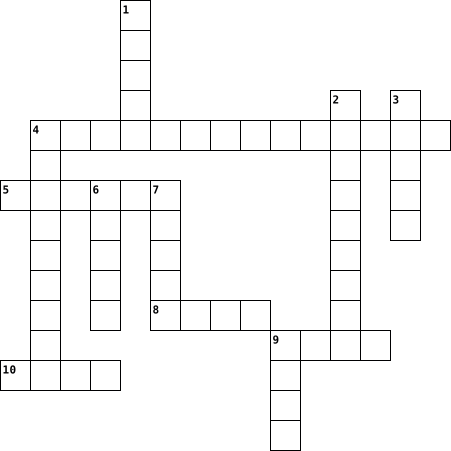
Across
- How plants make food.
- Pretty part of the plant that attracts insects and birds.
- Where plants grow roots.
- Holds up the plant.
- Catches sunlight and makes food for the plant.
Down
- The part of a plant we eat the most.
- Start to grow.
- Something plants need that comes from the sun.
- What birds, insects, wind and animals do for plants.
- Something all living things need.
- Holds the plant in the ground.
- The very beginning of a new plant.
12 Clues: Start to grow. • Holds up the plant. • How plants make food. • Where plants grow roots. • Holds the plant in the ground. • Something all living things need. • The very beginning of a new plant. • The part of a plant we eat the most. • Something plants need that comes from the sun. • Catches sunlight and makes food for the plant. • ...
PLANTS ,PLANTS, PLANTS 2022-05-24
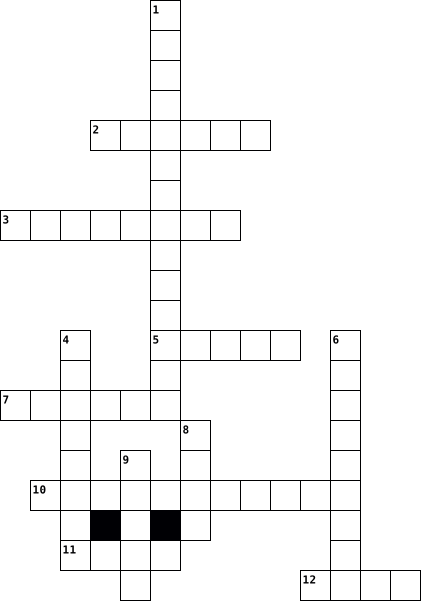
Across
- the pretty, colourful part of the plant
- the care taker of garden
- a tool for digging or turning over the soil
- these help to make food for the plant
- the green coloured pigment found in the leaf
- protected by the food
- carries water and food to the rest of the plant
Down
- the process by which green plant make food
- these grow off of the stem
- part which is inside the seed
- holds the plant in the ground
- a gardening tool for cutting grass in lawns
12 Clues: protected by the food • the care taker of garden • these grow off of the stem • part which is inside the seed • holds the plant in the ground • these help to make food for the plant • the pretty, colourful part of the plant • the process by which green plant make food • a tool for digging or turning over the soil • a gardening tool for cutting grass in lawns • ...
Plants 2016-04-11
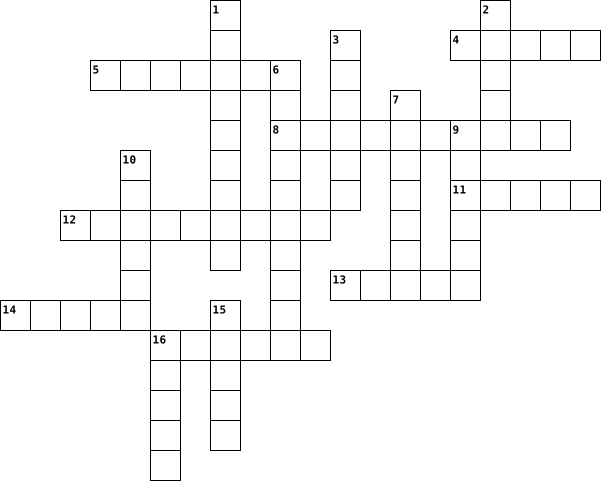
Across
- in flowering plants, the lower part of a pistil that produces eggs in ovules
- one of many openings in a leaf or a stem of a plant that enables gas exchange to occur
- a woody, vascular seed plant whose seeds are not enclosed by an ovary or fruit
- in a flower, one of the outermost rings of modified leaves that protect the flower bud
- carbohydrate that adds rigidity to the cell walls in plants and some fungi
- one of the usually brightly colored, leaf-shaped parts that make up one of the rings of a flower
- the type of tissue in vascular plants that provides support and conducts water and nutrients from the roots
- sticky surface at the tip of the style to receive pollen from wind or insects
Down
- one of a pair of specialized cells that border a stoma and regulate gas exchange
- a structure in the ovary of a seed plant that contains an embryo sac and that develops into a seed after fertilization
- the male reproductive structure of a flower that produces pollen and consists of an anther at the tip of a filament
- a flowering plant that produces seeds within a fruit
- a plant that produces seeds that have only one cotyledon
- the female reproductive part of a flower that produces seeds and consists of an ovary, style, and stigma
- the tissue that conducts food in vascular plants
- angiosperm that has two cotyledons, net venation, and flower parts in groups of four or five
- in plants, the slender, upper part of the pistil
17 Clues: the tissue that conducts food in vascular plants • in plants, the slender, upper part of the pistil • a flowering plant that produces seeds within a fruit • a plant that produces seeds that have only one cotyledon • carbohydrate that adds rigidity to the cell walls in plants and some fungi • ...
Plants 2024-03-21

Across
- Living parts of an ecosystem e.g. food, predators
- Non-living parts of an ecosystem e.g. water, oxygen availability
- The process of plants or animals "fighting" over resources.
- the layer of the leaf responsible for photosynthesis.
- Vessel that carries water through a plant.
- Form of reproduction not requiring gametes.
- The chemical reaction by which plants create glucose.
- The organelle in which photosynthesis happens.
Down
- the movement of water through a plant.
- Holes at the bottom of a leaf where gas exchange happens.
- The diffusion of water.
- The green pigment needed for photosynthesis.
- Layer of a leaf with air spaces so gases can freely diffuse.
- Cells that control the size of the stomata (2).
- Form of reproduction requiring the fusion of gametes.
- Metal frame used to measure population size.
- Vessel that carries glucose through a plant.
17 Clues: The diffusion of water. • the movement of water through a plant. • Vessel that carries water through a plant. • Form of reproduction not requiring gametes. • The green pigment needed for photosynthesis. • Metal frame used to measure population size. • Vessel that carries glucose through a plant. • The organelle in which photosynthesis happens. • ...
plants 2023-06-21
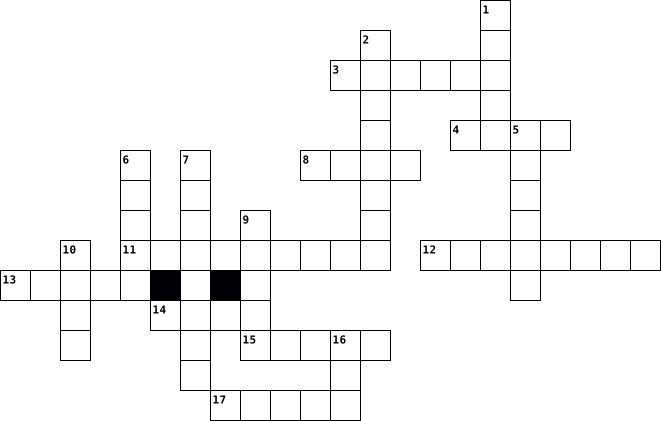
Across
- This plant has thick and spiky stems. It is adapted to dry conditions and can store water in its body. It thrives in deserts and requires minimal care.
- vera This plant has thick, succulent leaves filled with a gel-like substance. It is known for its healing properties and is often used in skincare products.
- This plant has small leaves that give off a refreshing scent when crushed. It is commonly used in cooking and makes a delicious addition to drinks.
- This plant has a tall stem and a big, round flower that looks like the sun. It loves sunlight and turns its face towards the sun as it moves across the sky.
- This plant has vibrant yellow or orange flowers. It is believed to bring good luck and is commonly planted in gardens or used as a decorative border.
- This plant has large, showy flowers with ruffled petals. It comes in different colors and is a favorite in gardens for its beauty and elegance.
- This plant has feathery and green leaves. It loves shade and moisture, and its presence adds a touch of freshness to gardens or indoor spaces.
- This plant has a long stem with a colorful flower at the top. It blooms in the spring and adds a splash of vibrant color to gardens and parks.
- This plant has small, white flowers with a yellow center. It is often seen in meadows and symbolizes innocence and purity.
Down
- This plant has bright green leaves and a strong aroma. It is popular in Mediterranean cuisine and adds flavor to pasta, pizza, and other dishes.
- This plant has fragrant purple flowers and narrow leaves. It is known for its calming scent and is often used in aromatherapy and beauty products.
- This plant has exotic and delicate flowers that come in various shapes and colors. It is often grown indoors and is admired for its elegance.
- This plant has small, colorful flowers with distinct markings on their petals. It blooms in cooler seasons and adds charm to flower beds or containers.
- dill This plant has delicate, feathery leaves that taste like dill. It is often used as a garnish or to flavor pickles and seafood dishes.
- Description
- This plant has beautiful flowers with soft petals. It comes in different colors like red, pink, and white, and is known for its sweet fragrance.
- This plant has trailing vines with heart-shaped leaves. It climbs walls and trellises, creating a lush and green decoration.
17 Clues: Description • This plant has small, white flowers with a yellow center. It is often seen in meadows and symbolizes innocence and purity. • This plant has trailing vines with heart-shaped leaves. It climbs walls and trellises, creating a lush and green decoration. • ...
Plants 2024-12-11

Across
- One of the most common root vegetables that we eat.
- Flowers are ____________ organs.
- Where the spores are formed on plants like ferns and mosses.
- The part of the planet that anchors it to the ground and absorbs water and mineral salts.
- ______ are one example of a kind of non-vascular plant (no conductive vessels and no roots, stems or leaves).
- Roots, Stems and Leaves are examples of __________ organs.
- Mosses and ferns are examples of which kind of plant?
Down
- What kind of nutrition do plants have?
- This kind of plant has got roots, stems and seeds as well as specialized tissues and conducting vessels.
- The functions of the leaves on a plant are photosynthesis, transpiration and ___________.
- The part of a fern or moss which produces gametes.
- Ferns have formed large deposits of ____ over time.
- The part of the plant that keeps it upright and supports the leaves.
- Angiosperms and gymnosperms are examples of which kind of plant?
- The underground horizontal stem of the fern is called the _______.
- The main photosynthetic organs which plants have.
- Plants contain which kind of cells?
17 Clues: Flowers are ____________ organs. • Plants contain which kind of cells? • What kind of nutrition do plants have? • The main photosynthetic organs which plants have. • The part of a fern or moss which produces gametes. • One of the most common root vegetables that we eat. • Ferns have formed large deposits of ____ over time. • ...
plants 2020-10-20

Across
- is a sugar
- is a structural layer that surrounds some types of cells, situated outside the cell membrane.
- is needed so that the plants can make proteins
- known as the plasma membrane, is a double layer of lipids and proteins that surrounds a cell.
- is needed for making chlorophyll
- is the way that plants make food
- contain embryo plants
Down
- includes all of the material inside the cell and outside of the nucleus.
- when male nucleus fuses with the female nucleus inside an ovule.
- space or vesicle within the cytoplasm of a cell, enclosed by a membrane and typically containing fluid.
- contain mineral salts
- inside the ovaries
- usually the most colorful part of the flowers
- come in all sorts of different shapes and size
- controls and regulates the activities of the cell (e.g., growth and metabolism) and carries the genes, structures that contain the hereditary information.
- is the movement of energy from one location to another.
- contains the male's gametes of the flower
17 Clues: is a sugar • inside the ovaries • contain mineral salts • contain embryo plants • is needed for making chlorophyll • is the way that plants make food • contains the male's gametes of the flower • usually the most colorful part of the flowers • is needed so that the plants can make proteins • come in all sorts of different shapes and size • ...
Plants 2021-09-23

Across
- its seed can float
- seeds grow some parts to become a new plant
- disperse seeds by hiding it
- happens in the ovary
- where pollination happens
- protects a seed
- will grow into fruit
- tiny leave inside a seed that will grow into a new plant
Down
- happens to a seed when germination is finished
- pollen can be found here
- seeds are dispersed in it after animals eat the fruit
- product of fertilisation
- helps sycamore seed dispersal and pollinating corn flower
- plants need it but seeds don't
- sugary liquid in flower
- useful feature for seed dispersal
- seeds in pod usually dispersed by this method
17 Clues: protects a seed • its seed can float • happens in the ovary • will grow into fruit • sugary liquid in flower • pollen can be found here • product of fertilisation • where pollination happens • disperse seeds by hiding it • plants need it but seeds don't • useful feature for seed dispersal • seeds grow some parts to become a new plant • seeds in pod usually dispersed by this method • ...
plants 2024-03-20

Across
- An early stage of the development of an organism, some parts develop into the stem, leaves, and roots of a new plant.
- Tubelike structures that transport water in the leaf
- Small openings in leaves that exchanges the carbon dioxide and oxygen between the plant and the air.
- The tissue in vascular plants that circulates fluid and nutrients.
- seed plant that produces seeds enclosed in fruit.
- The broad, flat part of the leaf that absorbs sunlight needed for photosynthesis.
- Non-vascular plants that lack specialized tissues for the transport of water.
- Vascular tissue which moves water and nutrients from the ground upward in the plant.
- A small waterproof reproductive cell that can grow into a new organism if it falls on the soil with the right conditions.
Down
- A reproductive structure that contains a plant embryo.
- The transfer of pollen from the stamen to a pistil.
- Structures that are adapted for sexual reproduction in conifers (male cones produce pollen and female cones produce eggs.)
- Tubelike structure that attaches a leaf to its stem.
- vascular plants (includes seedless and seed plants)
- cells Structures that control the size of the stomata (helps control the movement of materials into and out of the plant.)
- plants that form seeds in cones
- Vascular tissue which carries food made in a plant’s leaves down to other plant parts.
17 Clues: plants that form seeds in cones • seed plant that produces seeds enclosed in fruit. • The transfer of pollen from the stamen to a pistil. • vascular plants (includes seedless and seed plants) • Tubelike structure that attaches a leaf to its stem. • Tubelike structures that transport water in the leaf • A reproductive structure that contains a plant embryo. • ...
Plants 2022-05-04
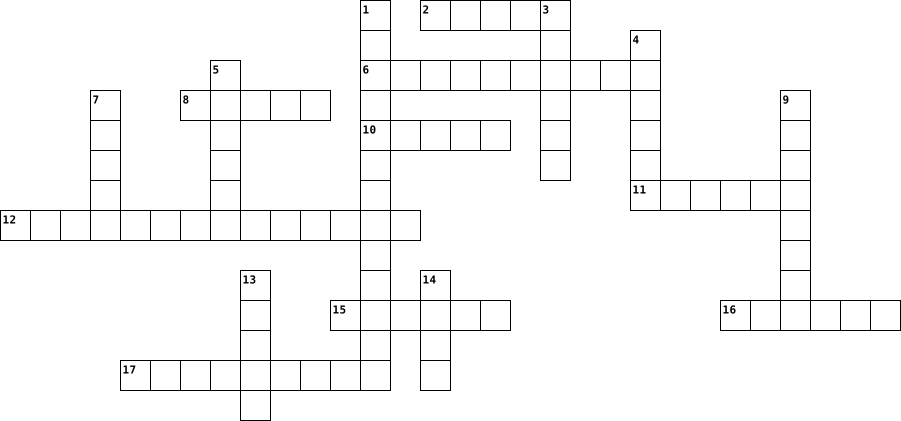
Across
- protects a developing bud and located near receptacle
- The part of a flower stalk where the parts of the flower are attached
- connects the stigma and ovary together
- below style and holds the ovule (seeds)
- top part of pistil and collects pollen
- a system that makes glucose(sugar) from sunlight,water and carbon dioxide
- female part of a flower that holds the stigma,style,and ovary
- on top of the filament and were pollen is made
- plant or part of a plant used as food (no seeds)
Down
- comes out from people and plants take it in
- makes the food for the plant (on the stem)
- colored part of the flower (attracts pollinators)
- male part of flower and holds the filament and anther
- a fruit is the fleshy or dry ripened ovary of a flowering plant, enclosing the seed or seeds
- holds up the anther
- located in the ground and absorbs water and nutrients
- supports the whole upper part of a plant
17 Clues: holds up the anther • connects the stigma and ovary together • top part of pistil and collects pollen • below style and holds the ovule (seeds) • supports the whole upper part of a plant • makes the food for the plant (on the stem) • comes out from people and plants take it in • on top of the filament and were pollen is made • ...
Plants 2026-04-13

Across
- The pigment that makes plants green
- The process of using sunlight and water to create energy
- The type of root system grass has
- The whole female reproductive system of a plant
- The male reproductive structures of a flower
- The plants response to touch
- The type of dispersion that is more accurate
Down
- The type of root system a dandelion has
- Cone bearing plants
- Later turn into seeds in fruits
- Where chlorophyll is found in the plant
- Flowering plants
- The transfer of pollen to female portions of a flower
- Enclose the bud before it opens
- The tissue covering the outside of a plant
- The seed is alive but not growing
- The part of the plant that turns into a fruit
17 Clues: Flowering plants • Cone bearing plants • The plants response to touch • Later turn into seeds in fruits • Enclose the bud before it opens • The seed is alive but not growing • The type of root system grass has • The pigment that makes plants green • The type of root system a dandelion has • Where chlorophyll is found in the plant • The tissue covering the outside of a plant • ...
Plants 2019-09-25
Across
- contains ovules.
- connects the stigma to the ovary.
- a type of fungi
- process where plants make food.
- reduces competition for resources
- transport water from the roots to the other parts of the plants.
- process where seeds will grown to become an adult plant.
- tiny microorganisms that cannot be seen by th enaked eye.
- is what fungi is reproduced from
Down
- contains egg cells.
- receives pollen grains.
- is produced to allow pollen grain to travel down to the ovary
- transport food from the leaves to the other parts of the plants.
- converts light energy to chemical energy for plants to make food.
- supports anther.
- is used to see microorganisms
- contains pollen sacs that will produce pollen grains.
17 Clues: a type of fungi • contains ovules. • supports anther. • contains egg cells. • receives pollen grains. • is used to see microorganisms • process where plants make food. • is what fungi is reproduced from • connects the stigma to the ovary. • reduces competition for resources • contains pollen sacs that will produce pollen grains. • ...
Plants!! 2021-11-11

Across
- the movement and loss of water through evaporation
- the process of plants using stored energy
- the source humans use of the animal and animal products that feed on plants and plant products
- plants that produce seeds not protected by fruit
- Supports the plant
- one of the basic needs humans
- plants that produce for more than two years or growing seasons
- seeds have two cotyledons therefore the seedlings have two seed leaves,the vascular bundles are arranged in a circle,the leaves have netted veins and flower parts are in multiples of four or five
- another of the basic need for humans
- the chemical process converting sunlight into energy and food for the plant
Down
- plants that flower and produce seeds protected by fruit or pods
- the final basic need for humans
- plants that complete their life cycle in two growing seasons
- seeds have one cotyledon therefore the seedlings have one seed leaf, the vascular bundles are scattered, the leaves have parallel veins and the flower parts are in multiples of three
- plants that complete their life cycle in one year (or one season)
- the source of the plant or plant products used by humans
- an embryonic leaf which become the seed leaf
17 Clues: Supports the plant • one of the basic needs humans • the final basic need for humans • another of the basic need for humans • the process of plants using stored energy • an embryonic leaf which become the seed leaf • plants that produce seeds not protected by fruit • the movement and loss of water through evaporation • ...
Plants 2018-08-15

Across
- the part of a plant that grows into a fruit
- when creatures such as bees take pollen from one flower to another
- the baby plant inside a seed
- the part of the flower that the pollen is attached to
- the part of a plant that sucks up water and nutrients
- a pollinator
- the second step of the scientific method
- the food source for a seed
- where we would find a plant's seeds
- what plants turn into food
Down
- when a seed first starts to grow
- the yellow dust carried between flowers
- the name of the process by which plant seeds are spread
- a seed needs this to germinate
- the part of a plant that carries nutrients from the soil to the leaves
- what we call a young plant
- the kind of plants we are growing from our seeds
17 Clues: a pollinator • what we call a young plant • the food source for a seed • what plants turn into food • the baby plant inside a seed • a seed needs this to germinate • when a seed first starts to grow • where we would find a plant's seeds • the yellow dust carried between flowers • the second step of the scientific method • the part of a plant that grows into a fruit • ...
Plants 2023-12-24

Across
- Signifies spring
- Orange flower
- wise, herb
- Hard wood, delicate bark
- Usually grows by pond
- Water loving tree, weeping
- Fragrant shrub used to flavour tea
Down
- Common weed like flower
- Usually given to a partner
- lucky plant
- NZ conifer
- NZ's Christmas tree
- Perennial plant
- Canadian tree
- Pizza sause herb
- Flower and part of the eye
- Fronded plant
17 Clues: NZ conifer • wise, herb • lucky plant • Orange flower • Canadian tree • Fronded plant • Perennial plant • Signifies spring • Pizza sause herb • NZ's Christmas tree • Usually grows by pond • Common weed like flower • Hard wood, delicate bark • Usually given to a partner • Flower and part of the eye • Water loving tree, weeping • Fragrant shrub used to flavour tea
Plants 2025-11-20

Across
- cone-producing plants
- non-vascular plant
- green leaf-like part of moss
- contains seeds inside
- flowering plants
- seed-less vascular plants
- produces seeds in gymnosperms
- leaf of fern
Down
- underground stem of fern
- reproductive structure of moss and fern
- cell wall of plant
- embryo with stored energy reserve
- veins of plants
- organelle for photosynthesis
- waxy covering of plant
- spore-producing part of moss
- fruit and seed producing structure of angiosperms
17 Clues: leaf of fern • veins of plants • flowering plants • cell wall of plant • non-vascular plant • cone-producing plants • contains seeds inside • waxy covering of plant • underground stem of fern • seed-less vascular plants • organelle for photosynthesis • green leaf-like part of moss • spore-producing part of moss • produces seeds in gymnosperms • embryo with stored energy reserve • ...
Plants 2020-09-01
Across
- the real counterpart of famous Harry Potter tree
- also the name protagonist of a famous kids movie
- a very posh ivy
- Assuming batman's plant is called bat plant how would the plant of spiderman would be called
- what spongebob's house is made of
- plant they are not made of the material they are named after
- an iconic condiment of hotdogs
- abundant in cloud forests
Down
- It has leaves like umbrella needles. It purifies the air of the compounds of formaldehyde, toluene and benzene.
- It looks like a white flag and can purify the air from formaldehyde, benzene, trichlorethylene, toluene and xylene
- so popular it has it's own festival in a certain country
- It is native to Asia, it can measure 3m, it can eliminate formaldehyde, xylene and ammonia
- favourite flower of Van Gogh
- Particularly suited for cleaning coasts contaminated by rivers, it is a fruit giving palm.
- theesssse are ssssuper curvy plantssss
- can be use to make clothing
- great for sunburns and for its anti-inflammatory effects.
17 Clues: a very posh ivy • abundant in cloud forests • can be use to make clothing • favourite flower of Van Gogh • an iconic condiment of hotdogs • what spongebob's house is made of • theesssse are ssssuper curvy plantssss • the real counterpart of famous Harry Potter tree • also the name protagonist of a famous kids movie • so popular it has it's own festival in a certain country • ...
plants 2018-04-26

Across
- makes the seed coat soft
- crops grown from june to October
- new plants can grow from the leaves of
- crops grown from november to april
- the development of a seed turning into a seedling
- plants supply us with life giving
- hibiscus grow
- is needed for the cells of the seeds to become active
- helps us to reduce soil erosion
Down
- right soil ,warmth ,enough air and water are necessary conditions
- the practice of growing plants on large scale
- the process by which the plant makes its own food
- to breathe
- seeds with two cotyledons in the embryo
- one cotyledon present in the embryo
- the transfer of seeds from the mother plant to faraway places
- insecticides and pesticides protect crops from being destroyed
17 Clues: to breathe • hibiscus grow • makes the seed coat soft • helps us to reduce soil erosion • crops grown from june to October • plants supply us with life giving • crops grown from november to april • one cotyledon present in the embryo • new plants can grow from the leaves of • seeds with two cotyledons in the embryo • the practice of growing plants on large scale • ...
Plants 2016-02-28
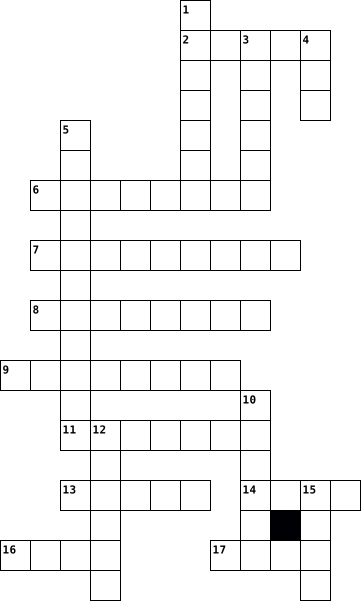
Across
- Prickly evergreen tree, popular at Christmas.
- Spring blue-coloured flower
- Newer name for monbretia
- Girl's name and scented shrubby herb.
- The 'first rose of spring'.
- Winter flowering, spiky shrub with yellow flowers
- Pretty white flowered lawn weed.
- Tulips grow from one of these.
- Herb used to make stuffing for chicken.
- National flower for England?
Down
- National plant for Scotland.
- Large-leaved, shiny green evergreen shrub used for hedging.
- Re-arrange EYW to make evergreen tree.
- The correct name for the tender geraniums.
- Tall, invasive, strap-leaved shrub
- Common name for rhododendron lutea
- National plant for Wales.
17 Clues: Newer name for monbretia • National plant for Wales. • Spring blue-coloured flower • The 'first rose of spring'. • National plant for Scotland. • National flower for England? • Tulips grow from one of these. • Pretty white flowered lawn weed. • Tall, invasive, strap-leaved shrub • Common name for rhododendron lutea • Girl's name and scented shrubby herb. • ...
Plants 2019-10-29
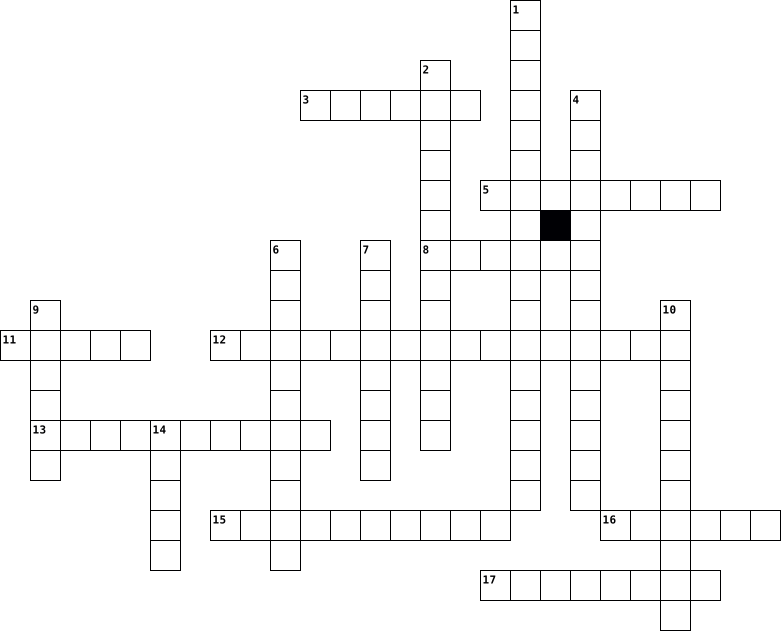
Across
- contains egg cells.
- tiny microorganisms that cannot be seen by the naked eye.
- __________ are where fungi are reproduced from.
- contains the stigma to the ovary
- transport food from the leaves to other parts of the plant.
- ____________ is used to see microorganisms.
- is produced to allow pollen grain to travel down to the ovary.
- contains pollen sacs that will produce pollen grains.
- a type of fungi.
Down
- transport water from the roots to the other parts of the plant.
- reduces competition for resources.
- process where plants make food.
- converts light energy to chemical energy for plants to make food.
- __________ supports the anther.
- receives pollen grains.
- process where seeds will grow to become an adult plant.
- contains ovules.
17 Clues: contains ovules. • a type of fungi. • contains egg cells. • receives pollen grains. • process where plants make food. • __________ supports the anther. • contains the stigma to the ovary • reduces competition for resources. • ____________ is used to see microorganisms. • __________ are where fungi are reproduced from. • contains pollen sacs that will produce pollen grains. • ...
plants 2024-02-28
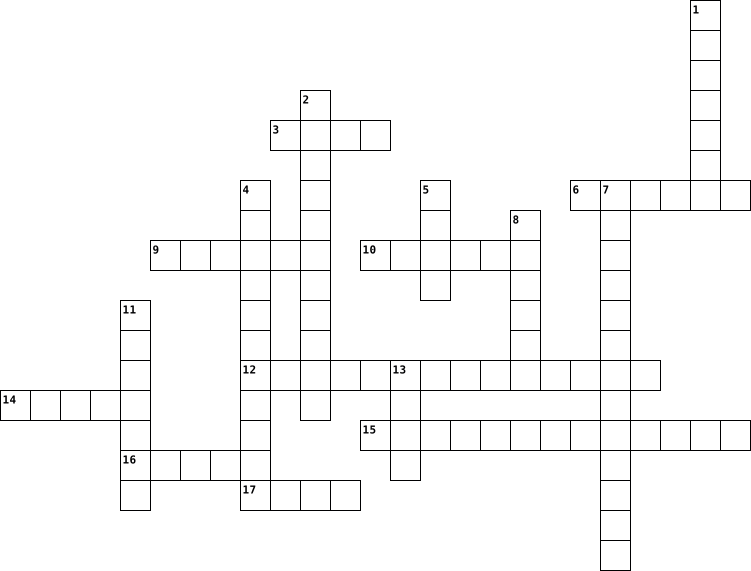
Across
- Small, often hard-covered object that can grow into a new plant.
- Male reproductive part of a flower, consisting of an anther and filament.
- Fine powder produced by flowers that is carried by wind or insects to fertilize other flowers.
- Beautiful, colorful part of a plant that attracts bees and butterflies.
- The process by which green plants and some other organisms use sunlight to synthesize foods.
- Delicious and nutritious part of some plants that contains seeds.
- The fusion of male and female gametes during sexual reproduction in plants.
- Colorful part of a flower that surrounds the reproductive parts.
- Green, flat part of a plant that helps it make food through photosynthesis.
Down
- ChatGPT…
- The process by which a seed begins to grow into a new plant.
- Green pigment in plants that absorbs light energy used to carry out photosynthesis.
- Underground part of a plant that absorbs water and nutrients from the soil.
- The process where plants absorb water through the roots and then give off water vapor through pores in their leaves.
- A part of a tree or shrub that grows out from the trunk or main stem.
- can make mistakes. Consider checking important information.
- The main support structure of a plant, holding up leaves, flowers, and fruits.
17 Clues: ChatGPT… • can make mistakes. Consider checking important information. • The process by which a seed begins to grow into a new plant. • Small, often hard-covered object that can grow into a new plant. • Colorful part of a flower that surrounds the reproductive parts. • Delicious and nutritious part of some plants that contains seeds. • ...
Plants 2024-03-19

Across
- A reproductive cell produced by some plants that can develop into a new organism without fertilization.
- tissue: Plant tissue that conducts water, minerals, and nutrients throughout the plant.
- A fertilized ovule containing the plant embryo and stored nutrients.
- A plant that has vascular tissue, including ferns, gymnosperms, and angiosperms.
- Plant tissue responsible for transporting sugars and other organic compounds throughout the plant.
- The flat, expanded part of a leaf.
- The reproductive structure of gymnosperms, such as pine trees, that contains seeds.
- The vascular tissue that provides support and transports nutrients in a leaf.
- Small openings on the surface of plant leaves that allow for gas exchange.
Down
- cell Cells that surround and control the opening and closing of stomata.
- The transfer of pollen from the male reproductive organs to the female reproductive organs of a plant.
- The stalk that attaches a leaf to a stem.
- A group of non-vascular plants that includes mosses, liverworts, and hornworts.
- A type of gymnosperm plant that produces cones and needle-like leaves.
- The early stage of development of a plant contained within a seed.
- Plant tissue responsible for transporting water and nutrients from the roots to the rest of the plant.
- Flowering plants that produce seeds enclosed within a fruit.
17 Clues: The flat, expanded part of a leaf. • The stalk that attaches a leaf to a stem. • Flowering plants that produce seeds enclosed within a fruit. • The early stage of development of a plant contained within a seed. • A fertilized ovule containing the plant embryo and stored nutrients. • A type of gymnosperm plant that produces cones and needle-like leaves. • ...
plants 2024-03-19
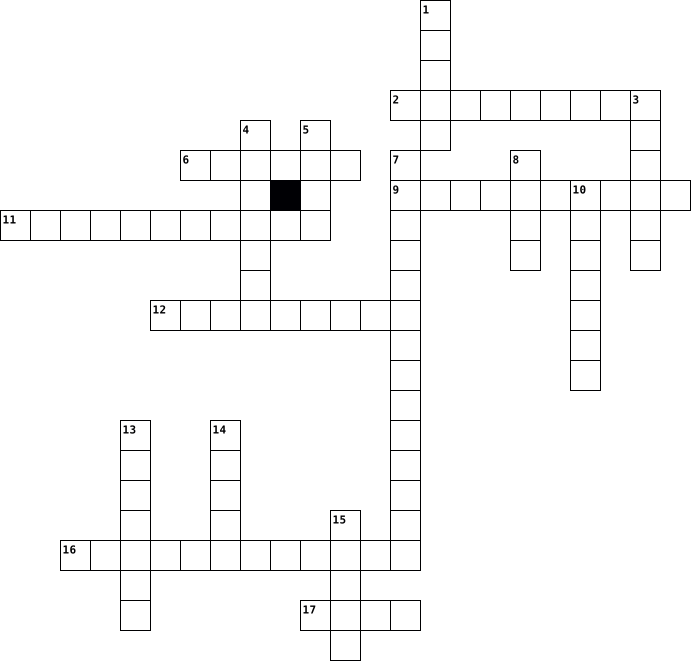
Across
- a group of land plants, sometimes treated as a taxonomic division, that contains three groups of non-vascular land plants: the liverworts, hornworts and mosses.
- the vascular tissue in charge of transport and distribution of the organic nutrients.
- a plant that has flowers and produces seeds enclosed within a carpel.
- the act of transferring pollen grains from the male anther of a flower to the female stigma.
- One of the paired cells in the epidermis of a plant that control the opening and closing of a stoma of a leaf.
- vascular plants that possess, lignified water-conducting tissues.
- a flowering plant's unit of reproduction and has all the materials needed to develop into another plant.
Down
- a cell that certain fungi, plants (moss, ferns), and bacteria produce.
- the part of a seed or bud that contains the earliest forms of a plant's roots, stem, and leaves.
- woody evergreens that have cones and needles rather than leaves.
- the vascular tissue of the leaf
- The tissue in vascular plants that circulates fluid and nutrients.
- mass of scales or bracts, usually ovate in shape, containing the reproductive organs of certain nonflowering plants.
- the stalk that attaches the leaf blade to the stem.
- the tiny openings present on the epidermis of leaves.
- the leaf of a plant, especially grass
- a vascular tissue that transports water throughout a plant's body.
17 Clues: the vascular tissue of the leaf • the leaf of a plant, especially grass • the stalk that attaches the leaf blade to the stem. • the tiny openings present on the epidermis of leaves. • woody evergreens that have cones and needles rather than leaves. • vascular plants that possess, lignified water-conducting tissues. • ...
Plants 2018-12-02

Across
- - a period of low activity
- - attracts animals
- - a group of cells that can grow into a plant
- - type of leaves that prevent water loss
- - to grow
- - stems grow up towards what
- - where photosynthesis occurs in the plant
- - what grows to protect the seeds
- - an example of a spore
Down
- - the process by which plants make their food
- - trees that use cones to make seeds
- - which season do tree leaves change color and start to fall off
- - what plants give off during photosynthesis
- - store extra food
- - a force that pulls things to the center of the Earth
- - transports water and nutrients
- - what forms after pollination
17 Clues: - to grow • - attracts animals • - store extra food • - an example of a spore • - a period of low activity • - stems grow up towards what • - what forms after pollination • - transports water and nutrients • - what grows to protect the seeds • - trees that use cones to make seeds • - type of leaves that prevent water loss • - where photosynthesis occurs in the plant • ...
Plants 2022-03-10

Across
- a group of seed plants that bear their seeds directly on the scales of cones
- tissue a specialized tissue in plants that carries water and nutrients
- grain in seed plants, the structure that contains the entire male gametophyte
- an angiosperm with one seed leaf in its ovary
- a structure that contains one or more matured ovaries
- a spore-producing plant the multicellular diploid phase of a plant life cycle
- a gamete producing plant the multicellular haploid phase of plant life cycle
Down
- a group of plants that have specialized reproductive organs but lack vascular tissue
- the first leaf or first pair of leaves produced by the embryo of seed plant
- vascular tissue that transports solutions of nutrient and carbohydrates produced by photosynthesis through the plant
- an angiosperm with two seed leaves in its ovary
- a group of seed plants that bear their seeds within a layer of tissue that protects the seed; also called flowering plants
- of generation life cycle that has 2 alternating phases, a haploid (N) phase and a diploid (2N) phase
- in seed plats, the structure in which the female gametophytes develop
- a structure in flowering plants that surrounds and protects seeds
- tube the structure in a seed plant that contains 2 haploid sperm nuclei
- vascular tissue that carries water upwards from the roots to every part of the plant
- a plant embryo and a food supply inside a protective covering
18 Clues: an angiosperm with one seed leaf in its ovary • an angiosperm with two seed leaves in its ovary • a structure that contains one or more matured ovaries • a plant embryo and a food supply inside a protective covering • a structure in flowering plants that surrounds and protects seeds • in seed plats, the structure in which the female gametophytes develop • ...
Plants 2015-03-05

Across
- the part of a plant that attaches it to the ground or to a support
- the part of a seed that acts as a food store for the developing plant embryo
- the part of a plant that attaches it to the ground or to a support
- a living organism of the kind exemplified by trees
- the sweet and fleshy product of a tree
- the part of a plant that attaches it to the ground or to a support
- a plant that has seeds unprotected by an ovary or fruit
- the part of a plant that attaches it to the ground or to a support
- a flowering plant with an embryo
- a flowerless plant
Down
- a plastid that contains chlorophyll
- a plant that has flowers and produces seeds enclosed within a carpel
- a straight tapering root
- the part of a seed that acts as a food store
- a green pigment
- the seed-bearing part of a plant
- the main body or stalk of a plant or shrub
- the process of increasing
- a small flowerless green plant that lacks true roots
- a flowering plant's unit of reproduction
20 Clues: a green pigment • a flowerless plant • a straight tapering root • the process of increasing • the seed-bearing part of a plant • a flowering plant with an embryo • a plastid that contains chlorophyll • the sweet and fleshy product of a tree • a flowering plant's unit of reproduction • the main body or stalk of a plant or shrub • the part of a seed that acts as a food store • ...
Plants 2016-03-07

Across
- Green part in a plant
- part of the mesophyll layer in a leaf cell with lots of air spaces
- Plural of stoma
- process which plants make food
- Inside the spongy layer of a leaf cell structure
- Present inside the mesophyll (in a leaf cell) below the upper epidermis
- Part of a plant which provides a large surface area for the absorption
Down
- gas needed for the photosynthesis reaction
- Where gases enter and leave the leaf
- this anchor the plants in the soil
- Transports water to leaves
- Energy that is given out by the sun
- Source of energy
- This is given off during respiration
- Type of vein in a leaf which carries food
- outer layer of a leaf which has a waxy surface
- plants can store _______ in the roots
17 Clues: Plural of stoma • Source of energy • Green part in a plant • Transports water to leaves • process which plants make food • this anchor the plants in the soil • Energy that is given out by the sun • Where gases enter and leave the leaf • This is given off during respiration • plants can store _______ in the roots • Type of vein in a leaf which carries food • ...
plants 2023-10-19

Across
- transports sugar and other nutrients
- transports water
- collection of tube-like tissues that flow through plants
- increase the efficiency of gas exchange
- spine of leaf
- facilitate the exchange of gases essential to the process of photosynthesis
- they expand when hydrated and close when dehydrated
- under the waxy cuticle that also prevents excess water and debris from getting into the leaf
- lines coming out of midrib and helps transport nutrients
- packed full of chloroplasts
Down
- stem of leaf
- has the same function of the upper epidermis
- area between the upper epidermis and lower epidermis
- prevents excess water and debris from getting into the leaf
- top of the leaf
- outer edge of leaf
- passageway for gas and water to get in to the plant
17 Clues: stem of leaf • spine of leaf • top of the leaf • transports water • outer edge of leaf • packed full of chloroplasts • transports sugar and other nutrients • increase the efficiency of gas exchange • has the same function of the upper epidermis • they expand when hydrated and close when dehydrated • passageway for gas and water to get in to the plant • ...
plants 2024-04-11

Across
- When guard cells swell up with water
- Movement of sugars upwards and downwards
- Leaf adaptation
- Function of vascular bundle
- Specialises to form new vascular bundles
- Water movement into roots
- Glucose converted to this before entering the phloem
- Transport of sugars
- When guard cells lose water
- How water can move upwards.
- Movement of water in xylem
- Vascular bundles have how many separate tissues
- Conversion of light to chemical energy
Down
- Thickens xylem walls
- Water lost from the stomata
- movement of sugars around the plant
- Occurs constantly throughout the day
17 Clues: Leaf adaptation • Transport of sugars • Thickens xylem walls • Water movement into roots • Movement of water in xylem • Water lost from the stomata • Function of vascular bundle • When guard cells lose water • How water can move upwards. • movement of sugars around the plant • When guard cells swell up with water • Occurs constantly throughout the day • ...
Plants 2024-04-09

Across
- The leaves of ferns are called________.
- Jagged
- Plant that has heart shaped leaves that can be used for tea.
- This plant has sweet orange berries in Autumn.
- Plants that are indigenous to a particular country.
- Plant that can be used to make dough boys.
- Plants that have come from other countries.
- Peppery tasking plant that can be used to flavour food.
- Berries from this tree are edible and can also be squashed to make an insect repellent.
- Kiekie fruit
- The colour of kowhai flowers.
Down
- Metrosideros excelsa
- Mature red beech trees are supported by massive _____ buttresses.
- Mountain flax with gum at the base of its leaves that can be chewed.
- Plants that are regularly found in a certain area.
- The main tree species in Fjordland
- This plant is commonly used for weaving.
17 Clues: Jagged • Kiekie fruit • Metrosideros excelsa • The colour of kowhai flowers. • The main tree species in Fjordland • The leaves of ferns are called________. • This plant is commonly used for weaving. • Plant that can be used to make dough boys. • Plants that have come from other countries. • This plant has sweet orange berries in Autumn. • ...
Plants! 2025-11-30

Across
- Main support of food webs
- Kind of vascular plants with seeds but no flowers or fruits
- Informal term for nonvascular that includes three phyla
- Plant tubes that act like arteries starting with x
- Found in leaves that controls what wavelengths of light the leaves can absorb
- Plants limited in size and lacking steams, roots, or leaves
- Control whether the stomata are open or closed
Down
- Site of photosynthesis
- How nonvascular plants get water
- Plant's anchor
- Plant structure found on the bottom of leaves that gas can travel through
- Plant tubes that transport sugar
- Produced in the leaves during photosynthesis
- Used by plants to build protein and obtained from bugs by some plants
- Plants with xylem and phloem
- Plants require water, carbon dioxide, and what?
- Largest and most diverse group of vascular plants
17 Clues: Plant's anchor • Site of photosynthesis • Main support of food webs • Plants with xylem and phloem • How nonvascular plants get water • Plant tubes that transport sugar • Produced in the leaves during photosynthesis • Control whether the stomata are open or closed • Plants require water, carbon dioxide, and what? • Largest and most diverse group of vascular plants • ...
Plants 2024-10-23

Across
- nutricion
- tierra
- hoja
- raiz
- semillas
- animales
- plantas
Down
- agua
- relacion
- arbol
- oxigeno
- sol
- reproduccion
- flor
- tallo
- hierba
- arbusto
17 Clues: sol • agua • hoja • flor • raiz • arbol • tallo • tierra • hierba • oxigeno • arbusto • plantas • relacion • semillas • animales • nutricion • reproduccion
plants 2017-10-26

Across
- slanting
- adaptation
- chlorophyll
- fibrous
- stomata
- evaporates
- ground
- environment
- gravel
- capacity
Down
- transpiration
- granules
- moderate
- prevent
- ability
- fertility
16 Clues: ground • gravel • prevent • fibrous • stomata • ability • slanting • granules • moderate • capacity • fertility • adaptation • evaporates • chlorophyll • environment • transpiration
Plants 2018-06-06

Across
- The start of a plants life
- The little cylinder light things
- when people … a gun
- A bright thing in the sky
- where the water goes
- Plant’s poopoo
- Things we drink
- The thing that connects the plant to the ground
Down
- an evil virus
- The colour of plants
- An invisible chemical in the air
- A healthy vegetable
- The green things with veins
- The second word of a vegetable
- a type of plant
- a type of dirt
16 Clues: an evil virus • Plant’s poopoo • a type of dirt • a type of plant • Things we drink • A healthy vegetable • when people … a gun • The colour of plants • where the water goes • A bright thing in the sky • The start of a plants life • The green things with veins • The second word of a vegetable • An invisible chemical in the air • The little cylinder light things • ...
Plants 2013-02-06

Across
- any of a group of plants that produce seeds that are not enclosed in a fruit or ovary
- any of a large group of plants that have flowers and produce seeds inclosed in an ovary or a fruit
- retating to the vessels of the body
- the process of giving off vapor containing water and waste products
- completing a life cycle in one growing season
- the reproductive structure of the seed bearing plants known as angiosperms
- completing a life cycle normally in two growing seasons
Down
- powdery grains that contain the male reproductive cells of most plants
- an animal in its earliest stages of development
- any of a wide variety of multicellular organisms
- the begginning of growth, as of a seed, spore, or bud
- any of numerous small, green plants that lack vascular tissue and do not bear seeds
- the ripened ovary of a flowering plant that contains the seeds
- any of numerous seedless plantsusually having feathery fronds didided into many leaflets
- living for three or more years
- as part of gymnosperm or flowering plant that contains an embryo and the food it will need to grow into a new plant
16 Clues: living for three or more years • retating to the vessels of the body • completing a life cycle in one growing season • an animal in its earliest stages of development • any of a wide variety of multicellular organisms • the begginning of growth, as of a seed, spore, or bud • completing a life cycle normally in two growing seasons • ...
Plants 2021-10-24

Across
- green plant that has thorns
- the person who studies the human body
- if you touch it ,you bleed
- Baby flower
- Something that gives protection
- make you sick
- can not be eaten
- plant that we use to make tea
Down
- plants that eat insects
- the person who studies plants
- It grows underground
- have a bad smell
- main stem
- palm tree of life
- Cab be eaten
- dead body
- have a bad smell
17 Clues: main stem • dead body • Baby flower • Cab be eaten • make you sick • have a bad smell • have a bad smell • can not be eaten • palm tree of life • It grows underground • plants that eat insects • if you touch it ,you bleed • green plant that has thorns • the person who studies plants • plant that we use to make tea • Something that gives protection • the person who studies the human body
Plants 2021-11-23

Across
- Plants with showy often yellow flowers with a trumpet-shaped central crown
- A Mexican herb having radiate heads of variously colored flowers
- Common houseplant with fronds
- Shrubs or small trees with large fragrant white or yellow flowers
- Used for corsages
- Pan-tropical climber having white fragrant nocturnal flowers
- Often used for medicinal and culinary purposes
- An evergreen tree of tropical and warm regions
Down
- Tropical American plant cultivated for their showy foliage and flowers
- From the daisy family which is cultivated for its showy yellow or orange flowers
- A dwarfed ornamental tree or shrub grown in a tray or shallow pot
- Woody tropical grass having hollow woody stems
- Alpine perennial plant native to Europe having leaves covered with whitish down and small flower heads held in stars of glistening whitish bracts
- Tropical flowering plant in the mallow family
- Succulent flowering plant used for skin creams
- Prickly desert plant
16 Clues: Used for corsages • Prickly desert plant • Common houseplant with fronds • Tropical flowering plant in the mallow family • Woody tropical grass having hollow woody stems • Succulent flowering plant used for skin creams • Often used for medicinal and culinary purposes • An evergreen tree of tropical and warm regions • ...
Plants 2021-07-20

Across
- The process in which plants make food
- Carries water and minerals from the soil to the plant
- The root system of a turnip is a _____________
- This helps to carry food across the plant and sends water and minerals from the root to the leaves
- The waste products of photosynthesis
- The process of growing plants from the parent plant's body parts
- In a leaf there are palisade cells. In a palisade cell there are _______________, and finally in a _______________ is chlorophyll
- The process of transferring pollen from the stamen to the pistil
- Thick stem found in trees
Down
- China rose
- Rapid cutting down of trees
- Pigment present in leaves which helps in photosynthesis
- ________ helps to test the presence of starch
- carnivorous plants are also known as________________________
- The main product of photosynthesis
- Helps in plant breathing and makes food for the whole plant
16 Clues: China rose • Thick stem found in trees • Rapid cutting down of trees • The main product of photosynthesis • The waste products of photosynthesis • The process in which plants make food • ________ helps to test the presence of starch • The root system of a turnip is a _____________ • Carries water and minerals from the soil to the plant • ...
Plants 2024-02-19

Across
- Most plants are green because of this
- These are plants that don't have flowers or seeds
- All of these types of plants produce seeds
- These have conducting vessels, which allow the plants to grow higher
- Plants have these to allow them to capture energy from sunlight
- These usually cover the ground and rocks of forests, and tree bark in wet zones
- These are living things that belong to the plant kingdom
- These are small plants with stems that are usually green and flexible
- These are plants with ligneous stems that are ramified from the base
Down
- These are small plants that don't have conducting seeds
- These are the organs where photosynthesis and has exchange take place
- These produce seeds inside a fruit that protects them
- This is the part of the plant that grows under the ground
- These usually have a tree structure, with root, stem ,and leaves
- These can be herbaceous (green, tender and short) or ligneous (which allows plants to grow more)
- These are bigger plants that are more than five metres high
16 Clues: Most plants are green because of this • All of these types of plants produce seeds • These are plants that don't have flowers or seeds • These produce seeds inside a fruit that protects them • These are small plants that don't have conducting seeds • These are living things that belong to the plant kingdom • This is the part of the plant that grows under the ground • ...
Plants 2024-02-28

Across
- is the Hawaiian name for raspberry
- is a shrub with yellow flowers and heart-shaped leaves
- is a type of Hawaiian tree fern
- is a citrus tree with orange fruits
- is a subspecies of ʻōhiʻa found on Kauaʻi
- is a climbing vine with reddish brown bracts
- is a coral tree with bright orange seeds
- is a fragrant vine used for lei
- is a plant with strong fibers for cordage
Down
- is a type of fern with red stems
- is a beach plant with half-flowers
- is a lace fern used in hula
- is a native tree with red flowers called lehua
- is a red hibiscus that is endemic to Hawaiʻi
- is a shrub with hop-like fruits
- is a legume tree that grows at high elevations
16 Clues: is a lace fern used in hula • is a type of Hawaiian tree fern • is a shrub with hop-like fruits • is a fragrant vine used for lei • is a type of fern with red stems • is a beach plant with half-flowers • is the Hawaiian name for raspberry • is a citrus tree with orange fruits • is a coral tree with bright orange seeds • is a subspecies of ʻōhiʻa found on Kauaʻi • ...
Plants 2020-06-29

Across
- The part of a pistil that receives the pollen during pollination.
- A tree that stays green all year round is known by this term.
- When the pollen from the male part of the plant goes into the ovary.
- Trees that lose their leaves in winter are known by this term.
- The part of the plant that gets nutrients from the soil.
- How plants make energy from the sun.
- The part of the plant that transports the nutrients and food.
Down
- When a seed produces a root and a shoot.
- The part that the pollen comes from.
- The part that surrounds the bud when it is young.
- The part of the plant that attracts pollinators.
- The part that holds the anther. It is small and wispy.
- The product of a plant that contains the seeds and can be eaten as food.
- The part that makes energy.
- The male part of the plant.
- The part of the plant that has an embryo and some endosperm in it.
16 Clues: The part that makes energy. • The male part of the plant. • The part that the pollen comes from. • How plants make energy from the sun. • When a seed produces a root and a shoot. • The part of the plant that attracts pollinators. • The part that surrounds the bud when it is young. • The part that holds the anther. It is small and wispy. • ...
Plants 2024-09-05

Across
- the culture of plants for food, comfort, and beautification purposes
- two copies of each chromosome
- a plant that completes life in two years
- plants that bear flowers for reproduction
- a plant that completes life in one year
- plants that bear cones for reproduction
- plant with 2 seed leaves, flower parts in 4’s or 5’s, netted leaf patterns
- plants that have soft stems
- plants that have rigid, lignifies stems
Down
- one copy of each chromosome
- a plant that lives for more than two years
- vascular plants that do not use a cone of flower for reproduction
- plant with 1 seed leaf, flower parts in 3’s, parallel leaf veins
- plant without stems, roots, or leaves
- study of plants and their processes
- production mass production of turf grass
16 Clues: one copy of each chromosome • plants that have soft stems • two copies of each chromosome • study of plants and their processes • plant without stems, roots, or leaves • a plant that completes life in one year • plants that bear cones for reproduction • plants that have rigid, lignifies stems • a plant that completes life in two years • ...
Plants 2024-03-19

Across
- tissue: Plant tissue that conducts water, minerals, and nutrients throughout the plant.
- The vascular tissue that provides support and transports nutrients in a leaf.
- The stalk that attaches a leaf to a stem.
- cell Cells that surround and control the opening and closing of stomata.
- The transfer of pollen from the male reproductive organs to the female reproductive organs of a plant.
- Plant tissue responsible for transporting sugars and other organic compounds throughout the plant.
- The early stage of development of a plant contained within a seed.
Down
- The flat, expanded part of a leaf.
- A type of gymnosperm plant that produces cones and needle-like leaves.
- Small openings on the surface of plant leaves that allow for gas exchange.
- A fertilized ovule containing the plant embryo and stored nutrients.
- A group of non-vascular plants that includes mosses, liverworts, and hornworts.
- Flowering plants that produce seeds enclosed within a fruit.
- A plant that has vascular tissue, including ferns, gymnosperms, and angiosperms.
- Plant tissue responsible for transporting water and nutrients from the roots to the rest of the plant.
- The reproductive structure of gymnosperms, such as pine trees, that contains seeds.
16 Clues: The flat, expanded part of a leaf. • The stalk that attaches a leaf to a stem. • Flowering plants that produce seeds enclosed within a fruit. • The early stage of development of a plant contained within a seed. • A fertilized ovule containing the plant embryo and stored nutrients. • A type of gymnosperm plant that produces cones and needle-like leaves. • ...
Plants 2024-03-20

Across
- - storage carbohydrate in plants
- Formula for glucose
- - gas produced by photosynthesis
- Name the main plant growth hormone
- - method of movement of gases
- - tissue transports water and mineral ions
- - tissue that transports sucrose
- - transported with sucrose in phloem
- - evaporation of water from a leaf
- - colour of hydrogen carbonate indicator when plant is photosynthesising
Down
- - pores that allow gas exchange
- Mineral ion need for chlorophyll
- What is a plant growth response called
- - organelle where photosynthesis happens
- - leaf layer with most photosynthesis
- - needed for plant protein production and growth
16 Clues: Formula for glucose • - method of movement of gases • - pores that allow gas exchange • Mineral ion need for chlorophyll • - storage carbohydrate in plants • - gas produced by photosynthesis • - tissue that transports sucrose • Name the main plant growth hormone • - evaporation of water from a leaf • - transported with sucrose in phloem • - leaf layer with most photosynthesis • ...
Plants 2024-09-22

Across
- birch (O)
- fireweed (I)
- northern yarrow
- Labrador Tea (I)
- seaweed (O)
- moss
- caribou lichen
- pineapple weed (O)
Down
- birch (I)
- fireweed (O)
- spruce (I)
- lupine (O)
- spruce (O)
- grass
- Labrador Tea (O)
- pineapple weed (I)
16 Clues: moss • grass • birch (I) • birch (O) • spruce (I) • lupine (O) • spruce (O) • seaweed (O) • fireweed (O) • fireweed (I) • caribou lichen • northern yarrow • Labrador Tea (I) • Labrador Tea (O) • pineapple weed (O) • pineapple weed (I)
Plants 2023-01-25

Across
- carries out photosynthesis; acts as a storage organ
- the chemical formula is O₂
- develop to give new plant. store food for developing plant
- protects the seeds; disperses the seeds
- thin, flat part of leaf
- the chemical formula is H₂O
- main vein of leaf
- contains the reproductive organs; ovary develops into fruit; ovule develops into seed
- transports food and water
Down
- the chemical formula is C₆H₁₂O₆
- the chemical formula is CO₂
- acts as a passageway between the roots and other plant parts; acts as a storage organ
- edge of leaf
- attaches leaf to stem
- anchors plant in soil; absorbs water & mineral ions; acts as a storage organ
- tip of leaf
16 Clues: tip of leaf • edge of leaf • main vein of leaf • attaches leaf to stem • thin, flat part of leaf • transports food and water • the chemical formula is O₂ • the chemical formula is CO₂ • the chemical formula is H₂O • the chemical formula is C₆H₁₂O₆ • protects the seeds; disperses the seeds • carries out photosynthesis; acts as a storage organ • ...
Plants 2023-06-11

Across
- A delicate and exotic flower that grows in many colors.
- A beautiful plant with colorful petals and a sweet scent.
- The small, hard part of a plant that can grow into a new plant.
- A fleshy plant that stores water in its leaves or stems.
- tree A tree with a tall, slender trunk and large fan-shaped leaves.
- A fragrant plant with purple flowers and narrow leaves.
- A fragrant flower with thorns on its stems.
- A green plant with feathery leaves and no flowers.
Down
- A tall plant with hollow stems that grows in clusters.
- A tall and woody plant with branches and leaves.
- A green plant with narrow leaves that covers the ground.
- A desert plant with thick, fleshy stems and spines.
- A bulbous plant with brightly colored cup-shaped flowers.
- A tall plant with a large, round flower that faces the sun.
- A small white flower with a yellow center.
- The flat, green part of a plant that grows on a stem.
16 Clues: A small white flower with a yellow center. • A fragrant flower with thorns on its stems. • A tall and woody plant with branches and leaves. • A green plant with feathery leaves and no flowers. • A desert plant with thick, fleshy stems and spines. • The flat, green part of a plant that grows on a stem. • A tall plant with hollow stems that grows in clusters. • ...
Plants 2023-06-18

Across
- A fast-growing plant with tall, hollow stems and lush leaves.
- A tall plant with a large, yellow flower that faces the sun.
- Tree A tall and tropical tree with large fan-shaped leaves.
- Tree A tree known for its vibrant leaves that change color in fall.
- Tree A strong and majestic tree with large branches and acorns.
- A fragrant plant with purple flowers and aromatic leaves.
- A climbing plant with clinging tendrils and dense foliage.
- Tree A coniferous tree with needle-like leaves and pinecones.
Down
- A desert plant with thick, spiky stems that store water.
- A beautiful flower with thorns and a sweet fragrance.
- A weed with yellow flowers that turn into fluffy white seeds.
- A colorful flower with a tall stem and distinct shape.
- A leafy plant with feathery fronds that thrives in damp areas.
- A graceful flower with large petals and a pleasant fragrance.
- A delicate flower with intricate patterns and vibrant colors.
- A small and simple flower with white petals and a yellow center.
16 Clues: A beautiful flower with thorns and a sweet fragrance. • A colorful flower with a tall stem and distinct shape. • A desert plant with thick, spiky stems that store water. • A fragrant plant with purple flowers and aromatic leaves. • A climbing plant with clinging tendrils and dense foliage. • Tree A tall and tropical tree with large fan-shaped leaves. • ...
Plants 2023-06-18

Across
- A fast-growing plant with tall, hollow stems and lush leaves.
- A tall plant with a large, yellow flower that faces the sun.
- Tree A tall and tropical tree with large fan-shaped leaves.
- Tree A tree known for its vibrant leaves that change color in fall.
- Tree A strong and majestic tree with large branches and acorns.
- A fragrant plant with purple flowers and aromatic leaves.
- A climbing plant with clinging tendrils and dense foliage.
- Tree A coniferous tree with needle-like leaves and pinecones.
Down
- A desert plant with thick, spiky stems that store water.
- A beautiful flower with thorns and a sweet fragrance.
- A weed with yellow flowers that turn into fluffy white seeds.
- A colorful flower with a tall stem and distinct shape.
- A leafy plant with feathery fronds that thrives in damp areas.
- A graceful flower with large petals and a pleasant fragrance.
- A delicate flower with intricate patterns and vibrant colors.
- A small and simple flower with white petals and a yellow center.
16 Clues: A beautiful flower with thorns and a sweet fragrance. • A colorful flower with a tall stem and distinct shape. • A desert plant with thick, spiky stems that store water. • A fragrant plant with purple flowers and aromatic leaves. • A climbing plant with clinging tendrils and dense foliage. • Tree A tall and tropical tree with large fan-shaped leaves. • ...
PLANTS 2023-06-26

Across
- Structures that contain seeds and develop from flowers.
- Small, dormant structures that can grow into new plants.
- Flat, thin parts of a plant that use sunlight to make food.
- Describing plants that shed their leaves annually.
- The process by which plants use sunlight to convert carbon dioxide and water into food.
- The process of water evaporating from the leaves of a plant.
- Referring to plants that have specialized tissues for water and nutrient transport.
- The process of a seed sprouting and developing into a new plant.
Down
- Structures that anchor plants in the ground and absorb water and nutrients.
- The green pigment in plants that helps them absorb sunlight for photosynthesis.
- The main support of a plant that transports water and nutrients.
- Colorful and fragrant structures of a plant that produce seeds.
- Special characteristics or behaviors that help plants survive in their environments.
- Describing plants that retain their leaves throughout the year.
- The transfer of pollen from the male part to the female part of a flower.
- Desert plants with thick stems and spines to conserve water.
16 Clues: Describing plants that shed their leaves annually. • Structures that contain seeds and develop from flowers. • Small, dormant structures that can grow into new plants. • Flat, thin parts of a plant that use sunlight to make food. • The process of water evaporating from the leaves of a plant. • Desert plants with thick stems and spines to conserve water. • ...
Plants 2023-06-26

Across
- Geraniums are flowering plants with round clusters of flowers. They can be pink, red, or white and are commonly grown in gardens.
- Orchids are exotic flowers with intricate designs and vibrant colors. They are often found in tropical regions and are prized for their beauty.
- Tulips have long, slender stems and large, colorful cup-shaped flowers. They come in many different colors.
- Daisies are small flowers with white petals and a yellow center. They are often found in meadows and have a simple, cheerful appearance.
- Roses are beautiful flowers with delicate petals. They can be red, pink, white, or yellow. They often have a pleasant fragrance.
- Daffodils are spring flowers with bright yellow petals and a trumpet-shaped center. They are a symbol of new beginnings.
- Sunflowers are tall plants with big, bright yellow flowers. They turn their heads to follow the sun.
- Pansies are small flowers with velvety petals that come in a variety of colors. They are often planted in gardens and flower beds.
- Carnations are flowers with ruffled petals and a sweet fragrance. They come in various colors and are often used in bouquets.
Down
- Marigolds are vibrant flowers with orange and yellow petals. They are often used to decorate gardens and repel pests.
- Cacti are desert plants with thick, fleshy stems and prickly spines. They can store water and survive in arid conditions.
- Lavender is a fragrant plant with purple flowers and narrow leaves. It is often used in perfumes and soaps.
- Lilies have long, graceful stems and large, trumpet-shaped flowers. They come in various colors, such as white, yellow, and pink.
- Ferns are leafy plants that thrive in shady areas. They have delicate, feathery fronds and add a touch of greenery to gardens.
- Glory Morning glories are vines that produce colorful trumpet-shaped flowers. They bloom in the morning and close in the afternoon.
- Ivy is a climbing plant with dark green leaves. It can grow on walls and trees, adding a decorative touch to outdoor spaces.
16 Clues: Sunflowers are tall plants with big, bright yellow flowers. They turn their heads to follow the sun. • Tulips have long, slender stems and large, colorful cup-shaped flowers. They come in many different colors. • Lavender is a fragrant plant with purple flowers and narrow leaves. It is often used in perfumes and soaps. • ...
Plants 2023-06-30

Across
- A tall plant with a trunk and branches that grow above the ground. It provides shade and produces oxygen.
- The part of a plant that grows underground. It absorbs water and nutrients from the soil and anchors the plant.
- A low-growing plant with long, narrow leaves. It often forms lawns and is commonly found in meadows.
- A plant or part of a plant that is used as food. It is usually savory and can be cooked in various ways.
- The fine powder produced by the male part of a flower. It is carried by insects, wind, or other means to fertilize plants.
- The part of a flowering plant that contains seeds. It is usually sweet and can be eaten.
- The colorful, leaf-like part of a flower. It is often soft and delicate and helps attract pollinators.
- A small, dormant object produced by a plant that can grow into a new plant when placed in the right conditions.
Down
- The colorful part of a plant that often has a pleasant smell. It attracts insects and is used to make beautiful bouquets.
- A type of plant that usually grows in dry areas and has thick, fleshy stems. It is adapted to conserve water.
- The process by which plants use sunlight, carbon dioxide, and water to produce food and oxygen.
- A small to medium-sized woody plant with several stems. It is shorter than a tree and is often used for landscaping.
- A plant with long, thin stems that climb or trail along surfaces. It often produces fruits, such as grapes or tomatoes.
- The main structural part of a plant that supports the leaves, flowers, and fruits. It transports water and nutrients.
- A type of plant that has feathery leaves and reproduces by spores. It is often found in shady, moist areas.
- The flat, green part of a plant that grows from the stem or branch. It helps the plant make food through photosynthesis.
16 Clues: The part of a flowering plant that contains seeds. It is usually sweet and can be eaten. • The process by which plants use sunlight, carbon dioxide, and water to produce food and oxygen. • A low-growing plant with long, narrow leaves. It often forms lawns and is commonly found in meadows. • ...
Plants Plants Plants 2024-04-04

Across
- A spiky plant that has evolved to live in the desert
- Flowering Plant
- The part of the plant that contains the genetic information to reproduce
- The part of the plant that absorbs water
- The part of the plant that holds it up
- Some plants have evolved to use this to fly away
Down
- Modification in response to the environment
- Non-flowering Plant
- The colorful part of the plant that attracts insects
- Tall Gymnosperms
- Some plants have evolved these types of roots to exchange gasses with the rest of the underwater plant
11 Clues: Flowering Plant • Tall Gymnosperms • Non-flowering Plant • The part of the plant that holds it up • The part of the plant that absorbs water • Modification in response to the environment • Some plants have evolved to use this to fly away • A spiky plant that has evolved to live in the desert • The colorful part of the plant that attracts insects • ...
Plants 2013-05-13

Across
- A flowering plant
- An opening in a plant leaf through which carbon dioxide enters and oxygen exits
- Have no seeds or fruit, but do have plant veins. For example, a fern.
- A group of living and non-living things
- A plant hormone that causes leaves to fall off (hint: look under "answers to thought questions" in the table at the end)
- The specific pigment that makes plants green (hint: look under "answers to thought questions" in the table at the end)
- Surrounds and protects seeds in angiosperms; examples include apples, cucumbers, and peppers
Down
- Have seeds but no fruit; might store seeds in a cone
- Sunlight + water + carbon dioxide --> sugar + oxygen
- The non-green pigments we see in the Fall when plants turn different colors (hint: look under "answers to thought questions" in the table at the end)
- A 6-carbon sugar produced by plants
- Examples include carrots, onions, lettuce, and potatoes
- Makes things colorful; for example, one of these makes plants green
- Have no seeds, fruit, or veins (which means they have to stay close to the ground). For example, moss.
- The cellular "organ" of photosynthesis (where photosynthesis happens)
- Needed for photosynthesis; eventually becomes oxygen, which is released from the plant
16 Clues: A flowering plant • A 6-carbon sugar produced by plants • A group of living and non-living things • Have seeds but no fruit; might store seeds in a cone • Sunlight + water + carbon dioxide --> sugar + oxygen • Examples include carrots, onions, lettuce, and potatoes • Makes things colorful; for example, one of these makes plants green • ...
Plants 2015-04-15

Across
- produce and shelter the female gametes and seeds
- loss of water out of leaves through evaporation
- opening that allows water to enter or leave the cell
- underground organs that absorb water and minerals
- mature ovary
- an embryo of a plant enclosed by a protective covering
- a flower that has all four specialized leaves (petals, sepals, stamens, carpels)
- supporting structures that connect roots and leaves; carriers water and nutrients between them
Down
- plants that contain specialized tissue that moves water and nutrients
- produce seed on the surface of cones
- sticky part that catches pollen
- carriers water up from the roots to the rest of the plant
- flowering plants
- transfer of pollen to the female portion of the plant
- a flower that has both male and female parts (stamen and carpel)
- transports food from the leaves to the rest of the plant
16 Clues: mature ovary • flowering plants • sticky part that catches pollen • produce seed on the surface of cones • loss of water out of leaves through evaporation • produce and shelter the female gametes and seeds • underground organs that absorb water and minerals • opening that allows water to enter or leave the cell • transfer of pollen to the female portion of the plant • ...
Plants 2019-06-27

Across
- The waste gas product of photosynthesis
- The green pigment inside plant cells which allow photosynthesis to occur
- Glucose is stored as s_______ in a plant (usually in its roots)
- The tiny structure inside plant cells where photosynthesis occurs
- The gas needed to carry out photosynthesis
- The name given to plants with white and green patches on their leaves
- Tiny tubes which carry water up from the roots
Down
- Tiny tubes which carry glucose away from the leaves
- The chemical reaction which produces food for the plant
- Apart from water, what else do plant roots absorb from the soil?
- A chemical reaction which releases energy from food
- What goes on the arrow in the equation Carbon dioxide + Water --> Oxygen + Glucose
- Complete the specialised plant cell name 'Root ____ cells'
- The sugar made during photosynthesis
- An essential mineral needed to make chlorophyll
- Tiny pores in the leaves which allow gasses to pass in and out of the leaves
16 Clues: The sugar made during photosynthesis • The waste gas product of photosynthesis • The gas needed to carry out photosynthesis • Tiny tubes which carry water up from the roots • An essential mineral needed to make chlorophyll • Tiny tubes which carry glucose away from the leaves • A chemical reaction which releases energy from food • ...
Plants 2017-09-20

Across
- Likes to chase mice
- Has a trunk
- the seed-bearing part of a plant, consisting of reproductive organs (stamens and carpels) that are typically surrounded by a brightly coloured corolla (petals) and a green calyx (sepals).
- Flying mammal
- the part of a plant which attaches it to the ground or to a support, typically underground, conveying water and nourishment to the rest of the plant via numerous branches and fibres.
- the upper layer of earth in which plants grow, a black or dark brown material typically consisting of a mixture of organic remains, clay, and rock particles.
- a green pigment in plants which allows them to convert sunlight into energy
- a flattened structure of a higher plant, typically green and blade-like, that is attached to a stem directly or via a stalk. Leaves are the main organs of photosynthesis and transpiration.
Down
- the sweet and fleshy product of a tree or other plant that contains seed and can be eaten as food.
- the unit of reproduction of a flowering plant, capable of developing into another such plant.
- plants that grow on land
- The process by which green plants make their own food
- plants that grow in water
- Large marsupial
- A chain that shows a series of organisms where each member depends on the lower member in the series for food
- Man's best friend
16 Clues: Has a trunk • Flying mammal • Large marsupial • Man's best friend • Likes to chase mice • plants that grow on land • plants that grow in water • The process by which green plants make their own food • a green pigment in plants which allows them to convert sunlight into energy • the unit of reproduction of a flowering plant, capable of developing into another such plant. • ...
plants 2017-10-18

Across
- protects the seed
- Pollen travels through this tube
- pigment that absorbs sunlight
- protects the flower
- when pollen is placed on the pistil
- naked seed nonflowering plant
- embryo surrounded by a protective coat
- when a seed sprouts
- female part that traps pollen and where the seed is made
Down
- another name for blossom
- stores the pollen
- name for flowering plant
- where photosynthesis takes place
- attract birds and bees
- gas given off from phoeosynthesis
- tree whose seeds not covered by by a protective coat
16 Clues: protects the seed • stores the pollen • protects the flower • when a seed sprouts • attract birds and bees • another name for blossom • name for flowering plant • pigment that absorbs sunlight • naked seed nonflowering plant • Pollen travels through this tube • where photosynthesis takes place • gas given off from phoeosynthesis • when pollen is placed on the pistil • ...