
plants Crossword Puzzles
Peacekeeping and Environmental Issues 2025-06-09

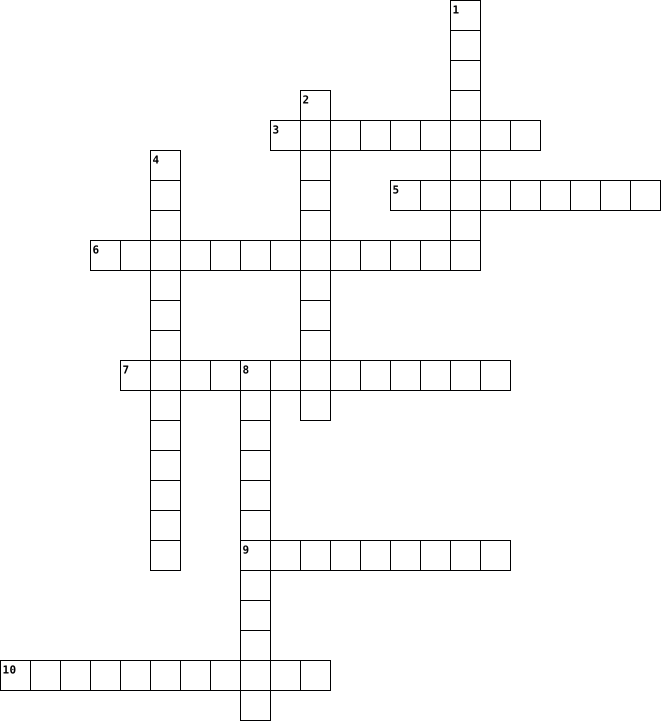
Across
- Catching too many fish from the ocean, so there are not enough left to grow or live.
- A gas from burning coal and oil that can cause acid rain.
- Water that has salt in it, like the ocean.
- People who are trained to protect their country and sometimes help keep peace.
- Big changes in the Earth’s weather patterns caused by things like pollution and global warming.
- Dirty or harmful gases and particles in the air that make it unhealthy to breathe.
- A gas made when we burn fuel or breathe out. Too much of it can warm the Earth.
- Old or broken electronic items like phones and computers that need to be thrown away carefully.
- Animals or plants brought to a new place that can harm the local plants, animals, or environment.
- People who are not soldiers or in the military, like regular citizens.
- Groups of plants, animals, and their environment all working together.
- People who have to leave their homes because of war, danger, or disasters.
- Long times without enough rain, causing water shortages for people, plants, and animals.
- Small flying machines that can be controlled remotely, sometimes used for spying or helping in disasters.
- Gases like carbon dioxide that trap heat in the air and make the Earth warmer.
- All the natural things around us like air, water, land, plants, and animals.
Down
- Energy sources like coal, oil, and gas made from plants and animals that lived a long time ago.
- When soldiers from different countries help keep peace and stop fights or wars.
- The natural homes where plants and animals live.
- Actions taken to help people and countries stay peaceful after a war or fight.
- Deals made between many countries to work together on big problems like pollution or peace.
- A time when there is not enough food for people to eat.
- Water without salt, like in lakes and rivers, that people and animals can drink.
- When many trees are cut down in a forest, often faster than new ones can grow.
- Large, uncontrolled fires that burn forests and grasslands.
- When all the animals or plants of a kind die out and no longer exist.
- The layer of air that surrounds the Earth.
- Rain that has harmful chemicals in it. It can hurt trees, lakes, and buildings.
28 Clues: Water that has salt in it, like the ocean. • The layer of air that surrounds the Earth. • The natural homes where plants and animals live. • A time when there is not enough food for people to eat. • A gas from burning coal and oil that can cause acid rain. • Large, uncontrolled fires that burn forests and grasslands. • ...
science crossword puzzle 2024-02-13

Across
- an organism that eats primary consumer
- living or once living factors
- they break down dead plants and animals
- nonliving factors
- plant eaters
- eat
Down
- eats both plants and animals
- meat eaters
- life
- an organism that eats secondary consumers
- different/variety
- an organism that eats producer/plants
- makes their own food
13 Clues: eat • life • meat eaters • plant eaters • different/variety • nonliving factors • makes their own food • eats both plants and animals • living or once living factors • an organism that eats producer/plants • an organism that eats primary consumer • they break down dead plants and animals • an organism that eats secondary consumers
Science Crrossword Puzzle 2024-02-12

Across
- nonling factors
- they break down dead plants and animals
- meat eaters
- living or once living factors
- plant eaters
- makes their own food
Down
- an organism that eats primary consumer
- eats both plants and animals
- an organism that eats secondary consumers
- an organism that eats producers/plants
- different/variety
- eat
- life
13 Clues: eat • life • meat eaters • plant eaters • nonling factors • different/variety • makes their own food • eats both plants and animals • living or once living factors • an organism that eats primary consumer • an organism that eats producers/plants • they break down dead plants and animals • an organism that eats secondary consumers
Science Crrossword Puzzle 2024-02-12

Across
- nonling factors
- they break down dead plants and animals
- meat eaters
- living or once living factors
- plant eaters
- makes their own food
Down
- an organism that eats primary consumer
- eats both plants and animals
- an organism that eats secondary consumers
- an organism that eats producers/plants
- different/variety
- eat
- life
13 Clues: eat • life • meat eaters • plant eaters • nonling factors • different/variety • makes their own food • eats both plants and animals • living or once living factors • an organism that eats primary consumer • an organism that eats producers/plants • they break down dead plants and animals • an organism that eats secondary consumers
Ecosystem quiz 2026-01-18

Across
- animals of an ecosystem
- consumers
- One animal is harmed while the other benefits
- Organisms, Plants, Animals
- Green Plants,
- a transfer of energy in a single direction
- habitat
Down
- greek word for ecosystem
- Temperature, Water, Sunlight, Soil,
- Fungi, Bacteria,
- Both animals benefit
- Plants of a ecosystem
- Herbivores, Carnivores, Omnivores,
13 Clues: habitat • consumers • Green Plants, • Fungi, Bacteria, • Both animals benefit • Plants of a ecosystem • animals of an ecosystem • greek word for ecosystem • Organisms, Plants, Animals • Herbivores, Carnivores, Omnivores, • Temperature, Water, Sunlight, Soil, • a transfer of energy in a single direction • One animal is harmed while the other benefits
Tpes of plants 2025-05-19

Across
- – Plants that need support to grow upward.
- – Plants that grow along the ground.
- – Tall, woody plants that live for many years.
- – Tiny green plants that grow in damp places.
Down
- – Simple plants found mostly in water.
- – Small plants with soft stems, often used in cooking or medicine.
- – Short, bushy plants with many stems.
- – Green, short plants that grow in fields and lawns.
- – Non-flowering plants with feather-like leaves.
9 Clues: – Plants that grow along the ground. • – Simple plants found mostly in water. • – Short, bushy plants with many stems. • – Plants that need support to grow upward. • – Tiny green plants that grow in damp places. • – Tall, woody plants that live for many years. • – Non-flowering plants with feather-like leaves. • – Green, short plants that grow in fields and lawns. • ...
Tpes of plants 2025-05-19

Across
- – Plants that need support to grow upward.
- – Plants that grow along the ground.
- – Tall, woody plants that live for many years.
- – Tiny green plants that grow in damp places.
Down
- – Simple plants found mostly in water.
- – Small plants with soft stems, often used in cooking or medicine.
- – Short, bushy plants with many stems.
- – Green, short plants that grow in fields and lawns.
- – Non-flowering plants with feather-like leaves.
9 Clues: – Plants that grow along the ground. • – Simple plants found mostly in water. • – Short, bushy plants with many stems. • – Plants that need support to grow upward. • – Tiny green plants that grow in damp places. • – Tall, woody plants that live for many years. • – Non-flowering plants with feather-like leaves. • – Green, short plants that grow in fields and lawns. • ...
Discovering Fossils Day 5 2021-10-26

Across
- to locate
- a location or spot
- living plants or animals
- second person singular present and first, second, third person plural present of be.
- areas of trees, plants, and animals
- at times
- animals with six legs
Down
- living things that can move around
- a great duration in time
- living things that cannot move around
- part of organisms from the past
- first and third person singular past of be
- toward a higher place or position
- had life
- perceive with the eyes, discern visually
- second person singular past of be
- additional or different
- expressing a state or condition
18 Clues: had life • at times • to locate • a location or spot • animals with six legs • additional or different • a great duration in time • living plants or animals • part of organisms from the past • expressing a state or condition • toward a higher place or position • second person singular past of be • living things that can move around • areas of trees, plants, and animals • ...
Science Camp 2014-05-02

Across
- An animal hunted by another animal
- a long/tall plant
- a Living thing, such as plants and more
- an organism which eats animals
- an animal which eats plants
- A symbiotic relationship Between fungus and green alge
- a place where biotic and abiotic interact
- a dry ecosystem
- Non-living, such as rock or water
- a living thing
Down
- any green colored plant
- a place to sleep at a camp
- When two ecosystems overlap
- a water bug that walks on water
- a thing that comes out of people
- a water ecosystem
- organism which eats plants and animals
- A place to stay for a bit
18 Clues: a living thing • a dry ecosystem • a long/tall plant • a water ecosystem • any green colored plant • A place to stay for a bit • a place to sleep at a camp • When two ecosystems overlap • an animal which eats plants • an organism which eats animals • a water bug that walks on water • a thing that comes out of people • Non-living, such as rock or water • ...
My Light 2023-05-16

Across
- Having no sound
- They form when warm water rises.
- The color of plants that can use the sun's energy.
- The ability to do work
- Runs like water
- Big machines that can make electricity.
- Dead plants underground form ____ over years.
- The kind of wires that carry electricity.
- Energy that can do work
- This happens when clouds cool down.
Down
- Power _____ burn coal to make electricity.
- To shine or reflect light.
- These spin inside of dams.
- My Light is a/an ______________ story.
- Beneath the earth's surface
- A form of energy
- To carry something heavy
- Having to do with the sun
18 Clues: Having no sound • Runs like water • A form of energy • The ability to do work • Energy that can do work • To carry something heavy • Having to do with the sun • To shine or reflect light. • These spin inside of dams. • Beneath the earth's surface • They form when warm water rises. • This happens when clouds cool down. • My Light is a/an ______________ story. • ...
{Environments} 2025-01-15

Across
- shows flow of energy in organisms
- all the biomes on Earth
- living
- all the members of a species
- an interaction between two organisms
- eats dead organisms
- one species benefits and the other gets no benefits or gets harmed
- the community of plants and animals that occur naturally in an area
- a group of populations that live together
- only eats meat
- can't make their own food
Down
- where an organism lives
- only eats plants
- eats both meat and plants
- one species benefits and the other is harmed
- nonliving
- both species involved benefit
- makes their own food
18 Clues: living • nonliving • only eats meat • only eats plants • eats dead organisms • makes their own food • where an organism lives • all the biomes on Earth • eats both meat and plants • can't make their own food • all the members of a species • both species involved benefit • shows flow of energy in organisms • an interaction between two organisms • a group of populations that live together • ...
nutrition in plants 2016-04-21
Across
- the mode of taking food by an organism and its utilization in the body .
- the components of food like carbohydrates , fats,proteins,vitamins and minerals .
- nutrition the nutrition in which organisms get their food directly or indirectly from plants .
- plants they are usually green and can make their own food . to obtain nutrients like nitrogen they depend on insects .
- plants plants that are unable to perform photosynthesis and are completely depended on the host .
- plants plants that obtained their nutrition from dead and decaying organic matter .
Down
- plants plants that are the association of two organisms that mutually benefit each other .
- nutrition the nutrition in which organisms can prepare their own food .
- the process by which plants prepare their own food .
- the cells of green leaves and young stems of plants contain numerous green structures.
10 Clues: the process by which plants prepare their own food . • nutrition the nutrition in which organisms can prepare their own food . • the mode of taking food by an organism and its utilization in the body . • the components of food like carbohydrates , fats,proteins,vitamins and minerals . • ...
Uses of Plants 2026-07-01

Across
- We collect _ to use for fire.
- Beans, maize and cassava are examples of plants used for _.
- Plants can be used for _ medicine.
- We plant useful plants for food in the _.
- Wood from trees is a _ used for building.
- Plants can be _ as food.
Down
- _ help protect houses from strong winds.
- Plants can provide _ from the sun.
- Flowers are often used for _.
- People and _ eat plants.
10 Clues: People and _ eat plants. • Plants can be _ as food. • We collect _ to use for fire. • Flowers are often used for _. • Plants can provide _ from the sun. • Plants can be used for _ medicine. • _ help protect houses from strong winds. • We plant useful plants for food in the _. • Wood from trees is a _ used for building. • ...
HETROTROPHIC NUTRITION 2016-04-19

Across
- H₂O REPRESENTS
- METHOD OF REPLENISHING SOIL
- PLANTS STORE FOOD IN THE FORM OF
- ESSENTIAL GAS USED FOR PHOTOSYNTHESIS
- INTERDEPENDENT PLANTS ARE CALLED
Down
- GREEN PLANTS
- DODDER IS AN EXAMPLE OF
- INSECTIVORES PLANTS GROW IN ______DEFICIENT SOIL
- CARNIVORES PLANTS ARE CALLED
- SUNLIGHT IS ABSORBED BY
10 Clues: GREEN PLANTS • H₂O REPRESENTS • DODDER IS AN EXAMPLE OF • SUNLIGHT IS ABSORBED BY • METHOD OF REPLENISHING SOIL • CARNIVORES PLANTS ARE CALLED • PLANTS STORE FOOD IN THE FORM OF • INTERDEPENDENT PLANTS ARE CALLED • ESSENTIAL GAS USED FOR PHOTOSYNTHESIS • INSECTIVORES PLANTS GROW IN ______DEFICIENT SOIL
Nature's Recyclers Review 2021-11-09

Across
- part of a mushroom that looks like a stem
- animal manure or feces
- living thing that doesn't make its own food
- an animal lacking a backbone
- any living thing
- to rid the body of waste
- consumer that eats meat
- part of a fungus that gathers nutrients
Down
- smooth band around the body of a worm
- animals who eat animals they didn't kill
- to rot
- a type of fungus
- organism that makes its own food
- digested food left by earthworms
- the fruiting body of a fungus
- living things but not plants and animals
- consumer that eats meat and plants
- consumer that eats plants
- the most numerous organism on Earth
19 Clues: to rot • a type of fungus • any living thing • animal manure or feces • consumer that eats meat • to rid the body of waste • consumer that eats plants • an animal lacking a backbone • the fruiting body of a fungus • organism that makes its own food • digested food left by earthworms • consumer that eats meat and plants • the most numerous organism on Earth • ...
Environmental Science puzzle by Jerry 2021-11-03

Across
- one option when animals occupy the same niche
- plants and animals
- where an organism live
- study of environment
- Everything that surrounds us
- all organism of a certain species
- the term for lots of different organisms
- producers
Down
- factors seen as non living things
- substance that are created by producersby using energy from the sun
- organisms that breakdown dead organic materials
- eat plants
- food chain is what of energy from one organism to another
- producers undergo
- food what has more biodiversity than food chain
- factors seen as living things
- consume organism to survive
- all plants and animals in a given area
- eat animals
19 Clues: producers • eat plants • eat animals • producers undergo • plants and animals • study of environment • where an organism live • consume organism to survive • Everything that surrounds us • factors seen as living things • factors seen as non living things • all organism of a certain species • all plants and animals in a given area • the term for lots of different organisms • ...
Biology Project 2025-04-18

Across
- The study of birds
- The study of viruses
- science of growing ornamental plants
- The study of origin
- The study of bacteria
- the study of animals
- The study of metabolism
- The study of diseases of plants and animals
- The study of Biological distribution of animals and plants
Down
- technique of producing silk by raising silk worms
- The study of parasites
- The science dealing with immunity
- The study of structures and functions of cells
- The study of minute structures
- The study of chemical reactions inside a body
- The science of transmission of body characteristics
- The study of gross structure
- The study of insects
- The study of plant
19 Clues: The study of birds • The study of plant • The study of origin • The study of viruses • The study of insects • the study of animals • The study of bacteria • The study of parasites • The study of metabolism • The study of gross structure • The study of minute structures • The science dealing with immunity • science of growing ornamental plants • ...
Cellular respiration 2022-11-15

Across
- uses oxygen in cellular respiration
- used for making energy(ATP)
- gains energy through cellular respiration
- holds the cells that do photosynthesis
- organelle that surrounds a cell
- a process all plants go through
- is used in cellular respiration when oxygen is not present
- the cell that does photosynthesis
- something that animals inhale
- another word for energy
- proccess like burning fossil fuels that contribute to the ___________
Down
- something animals exhale
- the kind of energy food gets turned into
- this is used as energy
- where the oxygen molecules go when entering the body
- abzorbed through a plants roots
- gains energy through cellular respiration
- anaerobic cellular resparation does this
- known as the powerhouse
- needed to move matter
20 Clues: needed to move matter • this is used as energy • known as the powerhouse • another word for energy • something animals exhale • used for making energy(ATP) • something that animals inhale • abzorbed through a plants roots • organelle that surrounds a cell • a process all plants go through • the cell that does photosynthesis • uses oxygen in cellular respiration • ...
Renewable and Non-renewable 2026-02-02

Across
- Electricity generated from flowing water
- Cleanest fossil fuel used as CNG
- Organic fuel made from waste and dung
- Fuel formed from dead plants and animals over millions of years
- Clean fuel that produces only water vapour
- Black fossil fuel used in power plants
- Wall built across rivers for hydropower
- Cutting down of forests
- Energy obtained from the Sun
- Pollution-free practices
Down
- Radioactive fuel used in nuclear plants
- Petrol mixed with ethanol
- Splitting of atoms to release energy
- Oldest fuel obtained from trees
- Topmost layer of the Earth
- Alcohol used to make gasohol
- – Moving air used to generate electricity
- Using resources carefully
- Continuous movement of water on Earth
19 Clues: Cutting down of forests • Pollution-free practices • Petrol mixed with ethanol • Using resources carefully • Topmost layer of the Earth • Alcohol used to make gasohol • Energy obtained from the Sun • Oldest fuel obtained from trees • Cleanest fossil fuel used as CNG • Splitting of atoms to release energy • Organic fuel made from waste and dung • ...
Climate change 2025-09-25

Across
- → When snow falls from the sky
- → Organ used to breathe
- → To change from ice to water
- → Not cold
- → To stop something from happening
- → A disease that makes breathing difficult
- → Too many people living in one area
- → A problem in the body that makes you ill
- → Long time with no rain
Down
- → Dirty air made of smoke and fog
- → Things kept for future use
- → To make plants bigger
- → A glass building for growing plants
- → Energy that can be replaced naturally
- → Having the power or skill to do something
- → Too much water covering the land
- → Plants grown for food
- → To go up
- → Very bad weather with wind and rain
19 Clues: → Not cold • → To go up • → Organ used to breathe • → To make plants bigger • → Plants grown for food • → Long time with no rain • → Things kept for future use • → To change from ice to water • → When snow falls from the sky • → Dirty air made of smoke and fog • → To stop something from happening • → Too much water covering the land • → Too many people living in one area • ...
Ecosystems Vocabulary 2026-06-21

Across
- – energy for living things
- – a land ecosystem with many trees
- - a place where living things and non-living things work together
- – a living thing that makes its own food
- – gives heat and energy
- – eats plants or animals
- – a living thing that moves and eats
- – what living things breathe
- – a saltwater ecosystem
- – helps living things live and grow
Down
- – makes its own food (plants)
- – breaks down dead things
- – needed for life
- – dirt where plants grow
- chain – shows who eats who
- – something that grows and needs food and water
- – something that does not grow or eat
- – the place around us
- – a place where a plant or animal lives
- – a safe place to live
20 Clues: – needed for life • – the place around us • – a safe place to live • – gives heat and energy • – a saltwater ecosystem • – dirt where plants grow • – eats plants or animals • – breaks down dead things • – energy for living things • chain – shows who eats who • – what living things breathe • – makes its own food (plants) • – a land ecosystem with many trees • ...
Photosynthesis key words..... 2013-10-10

Across
- A gas needed in the process of photosynthesis
- Storage compound
- What provides the energy for the plant to grow
- What helps things grow?
- What do plants grow in?
- Green pigment in plants
Down
- Carbon dioxide and water join together to form oxygen and ________________
- What is the process called that plants use to make food?
- Chlorophyll is found in the____________of the plant cell
- What are plants called in food chains
- What do plants produce?
11 Clues: Storage compound • What helps things grow? • What do plants grow in? • What do plants produce? • Green pigment in plants • What are plants called in food chains • A gas needed in the process of photosynthesis • What provides the energy for the plant to grow • What is the process called that plants use to make food? • Chlorophyll is found in the____________of the plant cell • ...
Matter Cycling 2022-02-02

Across
- What the plant makes
- Where does photosynthesis take place?
- most important thing made through cellular respiration
- What structure absorbs light?
- sugar made by plants
- reaction that uses sugar to make energy
- gas given off during cellular respiration
Down
- reaction that makes sugar to be used as fuel
- molecule that builds cell walls
- liquid needed for photosynthesis
- What structure absorbs gases?
- gas made by plants
- all living things are made of
- what the plant needs
- energy source for photosynthesis
- Where does cellular respiration take place?
- what plants store extra sugar as
17 Clues: gas made by plants • What the plant makes • what the plant needs • sugar made by plants • What structure absorbs gases? • all living things are made of • What structure absorbs light? • molecule that builds cell walls • liquid needed for photosynthesis • energy source for photosynthesis • what plants store extra sugar as • Where does photosynthesis take place? • ...
Structure of cultivated plants 2022-01-20

Across
- Female part of flower
- venation like your hand
- venation like a feather
- stems paralleling the grown
- collar like extension near the sheath
- how veins are arranged
- base of leaf surrounding stem
- main part of root also called a tap root
- contains the eggs
- point where leaf is attached
- contain water and food distribution system
- stalk part of flower
- makes food
Down
- surrounds stem on some grasses
- receives pollen
- veins of grasses
- connects the ovary to stigma
- one seed leaf
- tiny specks
- baglike
- also the fibrous roots
- stems underground
- anchor the plant
- two seed leaves
- male part of flower
25 Clues: baglike • makes food • tiny specks • one seed leaf • receives pollen • two seed leaves • veins of grasses • anchor the plant • stems underground • contains the eggs • male part of flower • stalk part of flower • Female part of flower • also the fibrous roots • how veins are arranged • venation like your hand • venation like a feather • stems paralleling the grown • connects the ovary to stigma • ...
Plants in our environment 2020-09-21

Across
- important for moving water and all of the things that are dissolved in it around through narrow tubes
- the production of plant food by access to sunlight and water
- seeds create a ring like shape
- the underground part of the plant that anchors the plant
- lose their leaves or needles in winter
- one leaf at a node
- the female reproductive organ of a flower
- support the leaf’s reproductive structure
- Leaf found where the petiole contacts the stem
- a group of similar cells that perform a particular function
- a plant that has flowers and produces seeds enclosed within a carpel.
- are small, non-vascular plants, such as mosses, liverworts and hornworts.
Down
- seeds are scattered in no particular order
- leaf stem
- pores, mostly on the underside of the leaf
- conducts sugars manufactured in the leaves by photosynthesis
- a simple, nonflowering, and typically aquatic plant
- have branching side roots and a main root to access waters
- have no main stem but many branches
- two leaves per node
- conducts water and minerals
21 Clues: leaf stem • one leaf at a node • two leaves per node • conducts water and minerals • seeds create a ring like shape • have no main stem but many branches • lose their leaves or needles in winter • the female reproductive organ of a flower • support the leaf’s reproductive structure • seeds are scattered in no particular order • pores, mostly on the underside of the leaf • ...
Plants In Action! Nick 2013-04-14

Across
- i am a star shape
- i have lots of trees in me
- plants give this to humans so we can breathe
- i only live for a year and i am an annual
- i am on the Canadian flag
- peas in .....
- people make wishes on me and blow me away
- i collect rainwater in my petals and make swimming pools for water animals
- i am used to invade host
- trees are home to lots of ......
Down
- i am a plant that traps flies
- you can stop me by planting trees
- i am a low growing plant that grows on damp places such as rocks
- i am a pesky little unwanted plant
- it is the first stage in the processof seed production
- i am the most beutiful but most rare flower
- i am a rope like plant that you find in the jungle and you can swing on
- i like to hang around damp and wet plants
- I am grow in the desert and dont need water to grow
- i grow underwater
20 Clues: peas in ..... • i am a star shape • i grow underwater • i am used to invade host • i am on the Canadian flag • i have lots of trees in me • i am a plant that traps flies • trees are home to lots of ...... • you can stop me by planting trees • i am a pesky little unwanted plant • i only live for a year and i am an annual • i like to hang around damp and wet plants • ...
Animals & Plants Review Crossword 2016-03-22

Across
- The goose used to bite.
- The wasp stung me.
- The owl flies.
- Duck
- The spider ate the fly.
- The fly used to fly.
- The cat bites.
- The deer jumped over the bush.
- I cut the grass.
- Butterfly
- The shark swam.
- The horse ran.
- We smelled the rose.
Down
- I used to be afraid of monkeys.
- The frog jumped toward the fly.
- Tree
- The goat used to jump.
- You smell the flower.
- We fly like birds.
- We bite.
- The dog barked.
- The bear climbs.
- The tiger attacked the zebra.
- I fly
- I bite
25 Clues: Tree • Duck • I fly • I bite • We bite. • Butterfly • The owl flies. • The cat bites. • The horse ran. • The dog barked. • The shark swam. • The bear climbs. • I cut the grass. • The wasp stung me. • We fly like birds. • The fly used to fly. • We smelled the rose. • You smell the flower. • The goat used to jump. • The goose used to bite. • The spider ate the fly. • The tiger attacked the zebra. • ...
Transport in Plants Crossword 2023-01-31

Across
- The living system of interconnected protoplasts extending through a plant, used as a transport pathway for the movement of water and solutes
- A plant adapted to survive in conditions where water is in short supply
- A pore in the epidermis of a leaf, bounded by two guard cells and needed for efficient gas exchange
- A dead, empty tube with lignified walls, through which water is transported in plants, formed by xylem vessel elements lined up end to end
- A strand of vascular tissue running longitudinally in a plant
- A later covering, and secreted by, the epidermis, in plants, it's made of a fatty substance called cutin
- The region of a leaf between the upper and lower epidermis
- plants which seeds contain an embryo with two cotyledons in their seeds
- A basic plant tissue typically used as packing tissue between more specialized structures, it's metabolically active and may have a variety of functions such as food storage and support
- A tissue in plants consisting mainly of xylem and phloem but also containing sclerenchyma and parenchyma cells
- A cell with unthickened cellulose walls and dense cytoplasm that in found in close association with a phloem sieve tube element to which it is directly linked via many plasmodesmata
- A plant tissue consisting of thick-walled cells with a purely mechanical function, many of these cells take the form of fibers
- The layer of cells surrounding the vascular tissue of plants
- The outer layer of cells covering the body of a plant or animal, in plants usually one cell thick and may be covered with a cuticle
- Very small, accurately drawn scale of known dimensions, engraved on a microscope slide
Down
- A cell found in phloem tissue, with non-thickened cellulose walls, very little cytoplasm, no nucleus, and end walls perforated to form sieve plates
- A site in a plant which provides food for another part of the plant, the sink
- A site in a plant which receives food from another part of the plant, the source
- The loss of water vapor from a plant to its environment, mostly taking place through the stomata in the leaves
- A dead, lignified cell found in xylem specialized for transporting water and for support
- A term referring to tubes or vessels
- The non-living system of interconnected cell walls extending throughout a plant, used as a transport pathway for the movement of water and mineral ions
- A modified form of parenchyma in which the corners of the cells have extra cellulose thickening, providing extra support
- A tissue containing tubes called sieve tubes and other types of cell, responsible for the transport through the plant of organic solutes
- A system of fluid-filled tubes, vessels or spaces, most commonly used for long-distance transport in living organisms
- Small scale that is placed in a microscope eyepiece
- A tissue containing tubes called vessels and other types of cell, responsible for the transport of water and mineral salts through a plant and for support
- Tube formed from sieve tube elements lined up end to end
- A hard material made by plants and used to strengthen the cells walls of certain types of cell
29 Clues: A term referring to tubes or vessels • Small scale that is placed in a microscope eyepiece • Tube formed from sieve tube elements lined up end to end • The region of a leaf between the upper and lower epidermis • The layer of cells surrounding the vascular tissue of plants • A strand of vascular tissue running longitudinally in a plant • ...
BI110 - Evolution, Microbes, & Plants 2017-04-12

Across
- Plant with no vascular tissue
- Leads to balance between contrasting phenotypes
- Difference in appearance between males & females
- Interweaving network of hyphae
- First plant to evolve seeds and lignin
- Pores in leaves for gas exchange
- Uses light, but can't make own food
- Change in allele frequencies over time
- _____ Structures Similar structures due to common ancestry
Down
- Transports sugar from leaves to rest of plant
- On cell surface, make you feel sick
- Plant embryo with food supply & protective covering
- Change in gene pool due to chance
- process in which organisms with certain inherited traits have increased chance of survival and reproduction
- Method of prokaryotic reproduction (cell division)
- Movement of alleles from one population to another
- What is missing? Domain, Kingdom, ___, Class, Order, Family, Genus, Species
- Male reproductive structure of a flower
- Sphere-shaped prokaryote
- True or False: individuals evolve
20 Clues: Sphere-shaped prokaryote • Plant with no vascular tissue • Interweaving network of hyphae • Pores in leaves for gas exchange • Change in gene pool due to chance • True or False: individuals evolve • On cell surface, make you feel sick • Uses light, but can't make own food • First plant to evolve seeds and lignin • Change in allele frequencies over time • ...
Crops and Plants- Ashley 2017-04-12

Across
- Usually under ground.
- Red and a type of Berry.
- Long and Orange
- Long,green and people can use them for making pickles.
- Returns year after year.
- Orange and Round.
- A cultivated plant that is grown as food.
- Very small and green.
- Yellow.
- Red and Round.
Down
- Red and grow in a field.
- Little,Blue and Round.
- Has two main functions.
- Long and yellow
- Orange,People carve at Halloween.
- Underground part of a stem or rhizome.
- Round, yellow and Orange/Red.
- Makes your eyes tear up when you cut them.
- Green, People usually use it for salad.
- The food factory of the plant.
20 Clues: Yellow. • Red and Round. • Long and yellow • Long and Orange • Orange and Round. • Usually under ground. • Very small and green. • Little,Blue and Round. • Has two main functions. • Red and grow in a field. • Red and a type of Berry. • Returns year after year. • Round, yellow and Orange/Red. • The food factory of the plant. • Orange,People carve at Halloween. • ...
Structural Organization of Plants 2020-11-04

Across
- the hormones that facilitate for cell elongation in phototropism and gravitropism
- serves as a storage and also transports nutrients throughout the plant lies between the vascular tissue and the center of the root
- plastids that produce and store starch
- leaves that do not have a petiole or stalk and are directly attached to the plant stem or peduncle.
- plant hormones that are responsible in regulating different processes necessary for plant development such as stem elongation, germination, fruit and flower maturation.
- are a class of photoreceptor used to detect red light and far red light that function in regulating seed germination, chlorophyll synthesis and other aspects of plant development.
- organelles that conduct photosynthesis - allow plants to capture energy from the sun.
- plant proteins that are designed to perceive light and signal different biological reactions in plants.
- water vapor movement from the plant to the atmosphere through the stomata
- potential that is a measure of the potential energy in water as well as the difference between the potential in a given water sample and pure water.
Down
- type of roots that enable a plant to grow on another plant; derives its moisture and nutrients from the air, rain, water, or from debris accumulating around it.
- inner layer of cells in the leaf that provide large spaces for carbon dioxide to move freely; where photosynthesis occurs.
- type of tissue found in plants that consists of undifferentiated cells capable of cell division.
- a plant's response to blue wavelengths of light that causes a plant to either grow toward or away from a light source.
- hairlike structures on the epidermal surface that help to reduce transpiration and defend the leaves against herbivore predators.
- strong and thick cells that provides support to the plant and eventually dies at maturity.
- vascular tissue in charge of transport and distribution of the soluble organic nutrients such as sugars
- arrangement of leaves around the stem
- specialized tissue of vascular plants that is responsible for transporting water and dissolved nutrients from the roots to the rest of the plant as well as provide mechanical support and storage.
- a tissue found in many vascular plants that lies between the epidermis and phloem, responsible for secondary growth and replaces the epidermis in roots and stems.
20 Clues: arrangement of leaves around the stem • plastids that produce and store starch • water vapor movement from the plant to the atmosphere through the stomata • the hormones that facilitate for cell elongation in phototropism and gravitropism • organelles that conduct photosynthesis - allow plants to capture energy from the sun. • ...
Reproduction in flowering plants 2021-02-23

Across
- Epigeal and ________ are 2 types of germination.
- It is the joining of male and female cells to produce a zygote.
- How many types of seed dispersal are there?
- Which structure in flowering plants help to disperse seeds?
- A suitable temperature, oxygen, and _____ are conditions required for seed germination.
- What contains female gametes – eggs?
- What can attract insects on flowers?
- a thick seed coat which protects the seed from drying up and from being attacked by microbes.
- How can pollen be transported?
- Pollen grains are heavy and large with sticky/_____ walls
- What else can attract insects in flowers?
Down
- Can a cattail be dispersed by animals?
- What is the transfer of pollen from an anther to a stigma called?
- Is a sunflower an epigeal type of germination?
- What are inside anthers?
- What is a female reproductive part called in plants?
- A characteristic on a stigma to give a large surface area to trap pollen.
- What contains ovules?
- What collects pollen grains?
- How many parents does it need for asexual reproduction?
20 Clues: What contains ovules? • What are inside anthers? • What collects pollen grains? • How can pollen be transported? • What contains female gametes – eggs? • What can attract insects on flowers? • Can a cattail be dispersed by animals? • What else can attract insects in flowers? • How many types of seed dispersal are there? • Is a sunflower an epigeal type of germination? • ...
Reproduction in flowering plants 2021-02-23

Across
- Male reproductive organ
- Type of reproduction that needs two parents
- Base of plumule
- The process where male and female gametes fuse together to become a zygote
- Protects the female reproductive system before developed
- Pathway between stigma and ovary in female plant's reproductive system
- Outer part of seed
- Part of plant that turns into seed
- The process where the seed begins to grow
- Female reproductive organ
- Without this, it would be impossible for a seed to germinate
Down
- When seeds are scattered away from original plant
- The process of pollen grains landing on stigma
- Asexual reproduction in which the parent cell divides into two
- Base of radicle
- Needed for respiration
- Part of flowering plant that attracts insects
- Part of seed that stores food
- Part of plant that turns into fruit
- Part of the male reproductive system that produces gametes
20 Clues: Base of radicle • Base of plumule • Outer part of seed • Needed for respiration • Male reproductive organ • Female reproductive organ • Part of seed that stores food • Part of plant that turns into seed • Part of plant that turns into fruit • The process where the seed begins to grow • Type of reproduction that needs two parents • Part of flowering plant that attracts insects • ...
Reproduction In Flowering Plants 2021-02-24

Across
- The small bags in the anther
- The transfer of pollen grains from anther to stigma
- The seeds of a fruit
- The liquid that seeds need to germinate
- The part that holds the stigma
- The part that attracts insects
- Visible growth to make clones of a plant
- The part that holds the anther
- How bacteria create daughter cells?
- The part of seed that will develop into a shoot or leaves
- Dispersal through wind
- The food storage of a seed
- An outgrowth that occurs at one side of the parent cell
Down
- The transfer of pollen through insects
- The part that will develop into a fruit
- Consist of all female plant reproductive organ
- The accidental breaking of filament
- The part that binds the flower to the stalk of a plant
- Consist of all male plant reproductive system
- The part that protects the seed from microbes and from drying up
- The transfer of pollen through wind
- The part that protects the flower when it is still a bud
22 Clues: The seeds of a fruit • Dispersal through wind • The food storage of a seed • The small bags in the anther • The part that holds the stigma • The part that attracts insects • The part that holds the anther • The accidental breaking of filament • The transfer of pollen through wind • How bacteria create daughter cells? • The transfer of pollen through insects • ...
Reproduction In Flowering Plants 2021-02-25

Across
- Connects stigma to the ovary.
- Type of germination where the cotyledon remains under the ground.
- Example of flower that does epigeal germination.
- Fertilisation of the egg nucleus.
- This is the transfer of pollen grains from the anther to the stigma.
- This part of the flower will turn into a fruit.
- To hold anther.
- Male part of the flower.
- This is the base of the radicle.
- Example of plant that does hypogeal germination.
- There are ___ conditions required for germination.
- There are ___ types of germination.
Down
- This part of the flower attracts insects.
- This process occurs in the ovule.
- The transfer of pollen grains from the anther to the stigma of the same flower.
- Example of water dispersal.
- Pollen grains land here.
- Female reproductive organ.
- This part of the flower will turn into a seed.
- This is needed for the embryo to respire.
- There are ___ types of seed dispersal.
21 Clues: To hold anther. • Pollen grains land here. • Male part of the flower. • Female reproductive organ. • Example of water dispersal. • Connects stigma to the ovary. • This is the base of the radicle. • This process occurs in the ovule. • Fertilisation of the egg nucleus. • There are ___ types of germination. • There are ___ types of seed dispersal. • ...
Part of my plants 2021-05-01

Across
- of the stem is to Harden and strengthen on the outer parts of the stem.
- of is a water vessels and nutrients from the root .
- of is located on the stem and root.
- of are the planting material in cultivation.
- of is containing the seed s of a palnts.
- of is the green leaves in plants.
- of is a wrapper and protects seeds and provides food for seeds in the germination.
- of is a small beach.
- of is a organic matter vessel used in photosynthesis.
- is a stem growing around the trunk of a tree.
- of is a procces that makes food for plants.
Down
- of is a organ vegetation that changes in size and shape.
- to serve as energy catchers from sunligh for photosynthesis.
- of a tree Made of solid,dead Wood, it gives the tree power.
- to absorb water and nutrients in the soil.
- of is a generic breeding tool.
- of are branches in plants.
- of is the condensed fluid from the body of the chewing plant.
- of are the Sharp and though parts of plants.
- of are plant that come from sprouts.
- of is both a path to water transportation and a food substance produced by photosynthesis.
21 Clues: of is a small beach. • of are branches in plants. • of is a generic breeding tool. • of is the green leaves in plants. • of is located on the stem and root. • of are plant that come from sprouts. • of is containing the seed s of a palnts. • to absorb water and nutrients in the soil. • of is a procces that makes food for plants. • of are the planting material in cultivation. • ...
Latvian Animals & Plants & Fruits 2021-04-21

Across
- Most Active In Wet Weather!
- Bees love this tree.
- American White House Emblem.
- Forest Floor
- Easter Emblem.
- Can survive any heat.
- Has a white dress.
- Red and sweet.
- Cave Is Their Bed.
- Round and grows on trees.
- One the strongest tree's in the world.
- Hates The Color Red.
- Can Be Trained Like Dogs.
Down
- Mostly found at the beach forests.
- Has Long Antlers.
- Find it in the Fall season.
- Grandma always has this red berry.
- Beach Thief.
- Home Animal.
- Loves To Chew Wooden Things.
- Animal that can become a police officer.
- Stole Magpie's Cheese.
22 Clues: Forest Floor • Beach Thief. • Home Animal. • Easter Emblem. • Red and sweet. • Has Long Antlers. • Has a white dress. • Cave Is Their Bed. • Bees love this tree. • Hates The Color Red. • Can survive any heat. • Stole Magpie's Cheese. • Round and grows on trees. • Can Be Trained Like Dogs. • Most Active In Wet Weather! • Find it in the Fall season. • American White House Emblem. • ...
Our Planet and Plants 2021-09-24

Across
- collecting plants from their native habitat
- essential oils
- Marsupial introduced to start fur trade
- Another name for indigenous
- Locked in icecaps/glaciers
- Tectonic plate runs along the east coast of NZ
- An average tree hosts how many pairs of birds
- Maori name for NZ flax
- James Cook's botanist's first name
Down
- Cycles relate to Earth's movement
- Maori traditional knowledge
- Reflects sunlight
- Manaaki Whenua
- not vascular
- care and protection
- Home of plant
- Variety of species
- Southern Supercontinent
- 84.4% of NZ's plants
- swamps, bogs, and marshes
20 Clues: not vascular • Home of plant • Manaaki Whenua • essential oils • Reflects sunlight • Variety of species • care and protection • 84.4% of NZ's plants • Maori name for NZ flax • Southern Supercontinent • swamps, bogs, and marshes • Locked in icecaps/glaciers • Maori traditional knowledge • Another name for indigenous • Cycles relate to Earth's movement • James Cook's botanist's first name • ...
Getting to know plants 2023-08-15

Across
- the swollen part of the pistil
- part of a leaf responsible for giving it shape
- stem modification to support climbers
- modified stem in onion
- leaf modification in cactus to prevent loss of water
- type of root found above the ground which provides support
- female reproductive unit of a flower
- the part of the plant embryo providing anchorage
- upward movement of water in a stem
- transfer of pollen grains from anther to stigma
Down
- small green leaves at the base of a flower
- this transforms into seeds after fertilization
- part of the stem from where the leaves arise
- exhalation of water vapour through stomata
- modified stem in potato
- the part of leaf attached to the stem
- unopened young flower
- part of a flower which attracts agents of pollination
- the arrangement of veins in a leaf
- structure attached to the tip of the filament
20 Clues: unopened young flower • modified stem in onion • modified stem in potato • the swollen part of the pistil • the arrangement of veins in a leaf • upward movement of water in a stem • female reproductive unit of a flower • stem modification to support climbers • the part of leaf attached to the stem • small green leaves at the base of a flower • ...
Getting to know Plants 2023-08-30

Across
- Parallel venation have roots
- Net like pattern of veins
- Swollen basal part of flower
- Attracts pollen grains
- Plant having a main root along with lateral roots
- Male reproductive part
- Small green colored structure in flower
- Branches at the base
- Green pigment in leaves
- Young unopened flower
Down
- Loss of water through leaves
- Small bead like structures in ovary
- Example of parallel venation
- Leaves make their own food
- Part of stamen
- Turnip, tapioca are
- Part of flower
- Short,tender stems
- Leaves turn blue black on putting iodine solution
- Grapevine is a
20 Clues: Part of stamen • Part of flower • Grapevine is a • Short,tender stems • Turnip, tapioca are • Branches at the base • Young unopened flower • Attracts pollen grains • Male reproductive part • Green pigment in leaves • Net like pattern of veins • Leaves make their own food • Loss of water through leaves • Parallel venation have roots • Example of parallel venation • Swollen basal part of flower • ...
3S1 FAMILY AND PLANTS 2024-07-29

Across
- to pick up someone's characteristics
- external layer of a tree
- a sharp tip on a plant
- to die
- a leaf of a flower
- to annoy you a lot
- to get used to
- Tell them hi from me
- to completely soak
- to have the same opinion
- start from the beginning
- to stay in contact
Down
- help someone
- to do the same thing as someone else in the family
- to look exactly like someone else
- resemble a family member
- have a good relationship
- have the same quality as other family members
- s structure that connects roots and leaves
- the main stem of a tree
20 Clues: to die • help someone • to get used to • a leaf of a flower • to annoy you a lot • to completely soak • to stay in contact • Tell them hi from me • a sharp tip on a plant • the main stem of a tree • resemble a family member • have a good relationship • external layer of a tree • to have the same opinion • start from the beginning • to look exactly like someone else • ...
Plants Responses Crossword Puzzle 2024-04-16

Across
- - The process of receiving or giving systematic instruction, especially at a school or university.
- - Specific light spectrum that induces phototropism.
- - Protein-based receptors mediating phototropic response.
- - The process by which plants maximize their use of light, as mentioned in the context of photomorphogenesis.
- - Growth of a plant towards a light source.
- - Specialized plastids that contain starch granules.
- - Hormones responsible for cell elongation in phototropism and gravitropism.
- - Type of movement in response to touch that is independent of the direction of stimulus.
- - Molecules that work together with phototropins to mediate the phototropic response.
- - Slow developmental change in the shape of a plant due to continuous mechanical stress.
- - Greek word meaning "to grow," from which "auxin" is derived.
- - Growth and development of plants in response to light.
- - Directional growth of a plant in response to light.
Down
- - Movement of a plant in response to touch.
- - Growth of a plant away from light.
- - Another term for geotropism, the growth response to gravity.
- - Growth of a plant in response to gravity.
- - Threadlike leafless organ of climbing plants.
- - A hormone thought to be involved in thigmomorphogenesis.
- - Another name for amyloplasts, indicating their role in sensing gravity.
20 Clues: - Growth of a plant away from light. • - Movement of a plant in response to touch. • - Growth of a plant in response to gravity. • - Growth of a plant towards a light source. • - Threadlike leafless organ of climbing plants. • - Specific light spectrum that induces phototropism. • - Specialized plastids that contain starch granules. • ...
Animals and plants cells 2024-09-01

Across
- - it's a part of the nervous tissue that are shaped like stars and its function is to act as a support and control the chemical environment around the neurons
- meristem - its the primary cause of plant growth
- - it helps on exhanging gases between plants and its environment
- - its function is to transport substance, immune response and blood clotting.
- - its responsible for transporting sugar to the plants
- - what is the other term for Osseous tissue
- tissue - it's the only complex permanent tissue in plants
- - its function is to store and synthesize plant food
- - it includes all kinds of different ecosystem
Down
- tissue - it's a type of animal cells that forms the inner and outer lining of the organ
- cells - its responsible for regulating the entrance and exit of stomata
- -its a group of cells that work together in order to perform a specific function.
- permanent tissue - its composed of one kind of cell
- permanent tissue - its composed of two or more kind of cell
- - it's the one who produces myelin sheaths
- - its the most basic, functional and simple unit of life.
- muscle - it can be found in the heart and has one nucleus and striations. It's muscle control is involuntary.
- - it prevents the loss of water and invasion of disease causing microorganisms
- - its covered by a waxy cuticle and it covers the whole body of woody and non woody plants
- cells - they surround the nerve fibers and also produces myelin sheaths
20 Clues: - it's the one who produces myelin sheaths • - what is the other term for Osseous tissue • - it includes all kinds of different ecosystem • meristem - its the primary cause of plant growth • permanent tissue - its composed of one kind of cell • - its function is to store and synthesize plant food • - its responsible for transporting sugar to the plants • ...
Week 3 Landscape Plants 2024-09-18

Across
- Feature that can be created to naturally block out a view
- True versions of this tree genus have cones that grow upward and needles grow in tufts
- Needles grow horizontally outward on the branch
- Needles form a "rib cage" on the branch
- A plant is ________ __________ if it can withstand long periods without water
- Genus of the Fir tree
- Genus of the tree whose cones hang down and needles are spiky
- Some evergreens can be ____________ when crushed, appealing to your senses
- Has tufts of short stiff needles.
- Most visible ID characteristic is the Whale Tail Shape its leaves make
- Planted for pretty color, usually blue but can turn green
Down
- Specimen Tree, grows very slow and has rounded leaf ends
- Needles are shaped like hockey sticks
- The feature a plant may have during the coldest months
- The methods needed to turn individual plants into a hedge
- Has tufts of needles, branches weep towards ground
- Great windbreak. Cones are 6 - 8 inches long and hang down
- Has an X shape on its leaves
- This determines how cold hardy a plant might be
- Feature that can be created to minimize winter winds
20 Clues: Genus of the Fir tree • Has an X shape on its leaves • Has tufts of short stiff needles. • Needles are shaped like hockey sticks • Needles form a "rib cage" on the branch • Needles grow horizontally outward on the branch • This determines how cold hardy a plant might be • Has tufts of needles, branches weep towards ground • ...
Plants Respiration Photosynthesis Puzzle 2024-11-18

Across
- Water, Carbon Dioxide, Energy in cell respiration
- Process of changing ATP to ADP
- Partially charged battery
- Where cell respiration occurs
- Female parts of a flower
- Occurs in the chloroplast
- Involved in water and mineral transport
- Enzymes function to lower ________ energy
- This cycle makes 2 net ATP
- Water and Carbon Dioxide in photosynthesis
- Stomata are usually _______ at night
Down
- Process of changing ADP to ATP
- Energy for photosynthesis comes from the _____
- Must be present in aerobic respiration
- Male parts of a flower
- The part of a plant that is MOST dependent on its surface area to carry out its function
- Involved with growth and maintenance of new parts of a plant
- Glucose to Pyruvic Acid - makes 2 ATP
- Fully charged battery
- Transport of nutrients and other compounds
- By eating a plant, we obtain this type of molecule used in cell respiration
- Transport chain that makes 32 ATP
22 Clues: Fully charged battery • Male parts of a flower • Female parts of a flower • Partially charged battery • Occurs in the chloroplast • This cycle makes 2 net ATP • Where cell respiration occurs • Process of changing ADP to ATP • Process of changing ATP to ADP • Transport chain that makes 32 ATP • Stomata are usually _______ at night • Glucose to Pyruvic Acid - makes 2 ATP • ...
Structural Organization of Plants. 2024-11-19

Across
- A protective layer that covers the surface of the plant's epidermis.
- A microscopic openings responsible for gas and water exchange in plants.
- Forms every organ.
- Maintain a relatively constant body temperature, even as the external temperature varies.
- Often consist of a petiole and a blade.
- The layer below the epidermis.
- Anchor the plant, transport water, minerals, and sugars, and store excess nutrients.
- Plant defenses that are always “on” are called ______ defenses.
- A plant tissue that transports water and nutrients all throughout the plant's body.
- Can switch between homoeothermic and poikilothermic strategies.
Down
- A portion of the shoot system consists of flowers and fruits.
- An organ of the shoot system that function as support, conduction, storage, and necessary for photosynthesis.
- Smallest unit of a living thing.
- A part of the shoot system that is not reproductive.
- Allows the body temperature to fluctuate with the environment.
- Obtain heat from metabolic activity within their own cells.
- Obtain heat from external sources.
- The plants’ resources until they are critically needed.
- A plant tissue that transports organic materials to all parts of the plant.
- Small hairs on the leaf surface that are present in some plants.
20 Clues: Forms every organ. • The layer below the epidermis. • Smallest unit of a living thing. • Obtain heat from external sources. • Often consist of a petiole and a blade. • A part of the shoot system that is not reproductive. • The plants’ resources until they are critically needed. • Obtain heat from metabolic activity within their own cells. • ...
Water transport in plants 2025-04-27

Across
- - The property that describes the tendency for water to stick to other things
- - What type of bonds do water molecules make with each other?
- - Responsible for opening and closing the pores on the lower epidermis of the leaf
- - The negative pressure/pull caused by the water potential gradient in the mesophyll
- - The movement of water from an area of high water potential to an area of low water potential, across a partially-permeable membrane
- - A complex carbohydrate that provides structural support and strength
- - The loss of water vapour from a plant's leaves
- - Contains both Xylem and Phloem
- - The pathway by which water passes from cytoplasm to cytoplasm through the plasmodesmata
- - The property that describes the tendency for water molecules to stick together
Down
- - A lignin band in the root endodermis that is impermeable to water; capable of preventing the apoplastic and symplastic pathways
- - The inner layer in the roots of vascular plants
- - A measure of the pressure exerted by water molecules
- - Membrane-bound organelle found in the cytoplasm that stores cell sap
- - The pathway by which water crosses plasma membranes, entering and exiting individual cells
- - Membrane that surrounds the part of the plant cell that stores cell sap
- Reinforced hollow tube, responsible for transporting water and mineral ions
- - The outer layer of the roots, containing root hair cells
- - The pathway by which water moves through the spaces between cells and cell walls
- - Where do plants predominantly take in water?
- - an outer layer of tissue immediately below the epidermis of a stem or root.
- - Pores on the lower epidermis of the leaf
22 Clues: - Contains both Xylem and Phloem • - Pores on the lower epidermis of the leaf • - Where do plants predominantly take in water? • - The loss of water vapour from a plant's leaves • - The inner layer in the roots of vascular plants • - A measure of the pressure exerted by water molecules • - The outer layer of the roots, containing root hair cells • ...
Farm Plants and Animals 2025-09-17

Across
- fruit milk
- looks like small trees
- on the cob
- purple vegetable
- Kentucky Fried
- Chips
- not the color
- it's a bean
- makes me cry
- Peking
Down
- green on the outside red on the inside
- long and short
- keeps the doctor away
- yellow monkey food
- not a plant, not an animal
- sushi
- chicken baby
- rabbit food
- Ketchup
- cow
- pig
21 Clues: cow • pig • sushi • Chips • Peking • Ketchup • fruit milk • on the cob • rabbit food • it's a bean • chicken baby • makes me cry • not the color • long and short • Kentucky Fried • purple vegetable • yellow monkey food • keeps the doctor away • looks like small trees • not a plant, not an animal • green on the outside red on the inside
The world of plants 2025-05-15

Across
- Sharp point on a stem or branch:
- Unopened flower:
- The colorful part that makes seeds:
- Small plant, usually with many branches:
- Supports the plant and carries water:
- Plant that stores water, grows in deserts:
- Short green plant covering the ground:
- Part of a flower, often colorful:
- Large plant with a trunk:
- Plant with feathery leaves, no flowers:
- Needed for photosynthesis:
Down
- Plants grow in this:
- Outer layer of a tree trunk:
- Grows from flowers, holds seeds:
- Soft, green plant without flowers:
- Green parts of plants that make food:
- Grows underground and absorbs water:
- From this a new plant grows:
- Type of tree with needles and cones:
- A plant with a long stem that climbs:
20 Clues: Unopened flower: • Plants grow in this: • Large plant with a trunk: • Needed for photosynthesis: • Outer layer of a tree trunk: • From this a new plant grows: • Sharp point on a stem or branch: • Grows from flowers, holds seeds: • Part of a flower, often colorful: • Soft, green plant without flowers: • The colorful part that makes seeds: • Grows underground and absorbs water: • ...
Plants Verse Crosswords#1 2025-10-13

Across
- F3X abuser
- Anthro Dragomn West
- judgement's brother, name as a font
- the judgement of underground
- A hunter that Retreat as evil to kind
- royal scientis
- CKR priest
- Rip_Indra's Peashooter
- Last Moonarches
Down
- his soul belongs to red king
- Saver
- Vessel of venonism
- FireWing
- one of Wildthron
- Anthro Dragomn East
- Stormclaw
- Venom Hydra pet
- Hates Noise
- Venom Fruit religion OoO
- plant chosen by god
- "Rahh fresh meat"
- World Eraser
- Anthro-fy Chemical
- French Magaician
24 Clues: Saver • FireWing • Stormclaw • F3X abuser • CKR priest • Hates Noise • World Eraser • royal scientis • Venom Hydra pet • Last Moonarches • one of Wildthron • French Magaician • "Rahh fresh meat" • Vessel of venonism • Anthro-fy Chemical • Anthro Dragomn West • Anthro Dragomn East • plant chosen by god • Rip_Indra's Peashooter • Venom Fruit religion OoO • his soul belongs to red king • ...
The Life About Plants 2025-10-06

Across
- – Underground part that absorbs water
- – Supports leaves and transports nutrients
- – Edible green pod, often in stir-fry
- – Plant that climbs using tendrils
- – Exotic flower known for its symmetry and beauty
- – Shade-loving plant with feathery fronds
- – Elegant flower often seen in ponds or bouquets
- – Tiny grains that help plants reproduce
- – Tree known for acorns
- – Spicy root used in sushi
- – What a plant begins as
- – Herb commonly used in pesto
Down
- – Green pigment in leaves
- – Tree known for its syrup
- – Process by which plants make food
- – Fast-growing grass often used in construction and decor
- – Process of transferring pollen
- – Flower often associated with love
- – Succulent with healing gel
- – Spiky desert plant
- – Tiny plant that grows in damp places
- – Part of the plant that attracts pollinators
- – Climbing plant often found on old buildings
23 Clues: – Spiky desert plant • – Tree known for acorns • – What a plant begins as • – Green pigment in leaves • – Tree known for its syrup • – Spicy root used in sushi • – Succulent with healing gel • – Herb commonly used in pesto • – Process of transferring pollen • – Plant that climbs using tendrils • – Process by which plants make food • – Flower often associated with love • ...
2507 plants and fairies 2025-07-11

Across
- A body part that helps some animals or fairies to fly.
- A long part that grows out from a tree trunk.
- The reason for doing something.
- Long plants that climb by wrapping around things.
- Thin, sharp leaves like on a pine tree.
- Water drops that form on plants in the morning.
- The thin part that holds up leaves or flowers.
- To grow well and be healthy.
- The flat, green parts on a plant that collect sunlight.
- To feel good about what might happen.
- To say what will happen in the future.
- The soft, colorful parts of a flower.
- A short plant with many branches and leaves.
- To become bigger or older.
- A story or world that is not real.
- Shiny and bright because of reflected light.
- A group of connected things or people.
Down
- To hope for something that you want.
- Rough, twisted, or bumpy in shape.
- Parts under the ground that take in water and food.
- Branched horns that grow on some animals.
- The thick, main part of a tree.
- To think something is true.
- Sharp points that can hurt if you touch them.
- Hard points on an animal's head.
- To make something new.
- To share ideas or feelings with someone.
- When people or things talk or work together.
- Feeling smooth and shiny, like a leaf that repels water.
- A small magical being with wings.
30 Clues: To make something new. • To become bigger or older. • To think something is true. • To grow well and be healthy. • The thick, main part of a tree. • The reason for doing something. • Hard points on an animal's head. • A small magical being with wings. • Rough, twisted, or bumpy in shape. • A story or world that is not real. • To hope for something that you want. • ...
Inquiry Crossword 2022-06-27

Across
- Name of the places where the water is stored
- Plants produce this gas
- Humans produce this gas
- When people place trash at incorrect places
- What gives humans and plants energy.
- When all the water gets together
- What gives the plant its color and captures the suns energy
- When the water gets very hot and goes up
- When the clouds explote and rain appears
- When there is no water
Down
- What happens when plants and the sun work together
- The principal water contaminant, we use it to drink water almost everyday.
- It is something that happens with the water, never ends an continues and continues
- Something we use to clean the water
- When the clouds get full of water
- Where the plants absorb proteins and water
16 Clues: When there is no water • Plants produce this gas • Humans produce this gas • When all the water gets together • When the clouds get full of water • Something we use to clean the water • What gives humans and plants energy. • When the water gets very hot and goes up • When the clouds explote and rain appears • Where the plants absorb proteins and water • ...
Plant adaptations 2023-10-16

Across
- Traits that enable plants to survive in dry environments
- Protective Structures
- A tactic where plants imitate other organisms
- A strategy where plants blend into their surroundings
- A mutually beneficial relationship
- Leaves that rest on the water
- The ability for plants to store water
Down
- Changes in plants that help them survive
- Mechanisms that help plants spread seeds
- Roots that grow above ground to extract moisture
10 Clues: Protective Structures • Leaves that rest on the water • A mutually beneficial relationship • The ability for plants to store water • Changes in plants that help them survive • Mechanisms that help plants spread seeds • A tactic where plants imitate other organisms • Roots that grow above ground to extract moisture • A strategy where plants blend into their surroundings • ...
SCIENCE 2014-11-14

Across
- - any living thing that makes its own food
- an animals that eats plants and animals to get energy
- - consumer that eats only plants
- – consumer that eats both plants and animals
- – is a group made up of the same type of individuals in the same ecosystem
- – animals that hunted
- – are made up of both living and non-living parts that impact one another
Down
- – eats dead animals and plants
- – shows that relationship among all the food chains in a ecosystem
- CHAIN – the transfer of energy from one living thing to another
- – consumer that breaks down the remains of plants and animals
- – consist of all the living and non-living thing in an area
- – is the physical part of the ecosystem that meets the needs and were an organism finds food and shelter.
- adaptation – is an adaptation to body part
14 Clues: – animals that hunted • – eats dead animals and plants • - consumer that eats only plants • - any living thing that makes its own food • adaptation – is an adaptation to body part • – consumer that eats both plants and animals • an animals that eats plants and animals to get energy • – consist of all the living and non-living thing in an area • ...
Ecosystems 2024-03-15

Across
- living thing that eats plants and animals
- these collect sunlight help make food for plants
- another name for dirt
- living thing that only eats plants
- examples of this would be bacteria, fungi, and worms
- a group of living things that are connected
- this keeps the a plant upright and allows water and minerals to travel through it
- this is made up of all living and nonliving things in a certain area
Down
- the process by which plants create their own food
- living thing that only eats meat
- mini openings found in a plants leaves that take in carbon dioxide and let out oxygen
- living things that make their own food
- these soak up water and minerals in the soil and keep a plant secure in the ground
- living things that do not make their own food
14 Clues: another name for dirt • living thing that only eats meat • living thing that only eats plants • living things that make their own food • living thing that eats plants and animals • a group of living things that are connected • living things that do not make their own food • these collect sunlight help make food for plants • ...
Photosynthesis 2021-03-16

Across
- / Apart from plants, photosynthesis occurs only in single-celled _______ and protists
- / Only _________ plants can photosynthesize
- /The vascular tissue in plants that conducts water and dissolved nutrients upward from the root and also helps to form the woody element in the stem
- / The process mostly takes place in the ________ of plant leaf mesophyll cells.
- /Plants produce this while sugar is made of this.
Down
- / Many plants stop photosynthesis during the ___________ and survive on food reserves produced during the spring and summer
- dioxide/ great for plants bu bad for us
- / All living things depend on the organic molecules synthesised by plants as a result of
- / Plants wouldn't have been green without this!
- / If plants didn't produce this, we would have been dead by now
10 Clues: dioxide/ great for plants bu bad for us • / Plants wouldn't have been green without this! • /Plants produce this while sugar is made of this. • / Only _________ plants can photosynthesize • / If plants didn't produce this, we would have been dead by now • / The process mostly takes place in the ________ of plant leaf mesophyll cells. • ...
Science Crrossword Puzzle 2024-02-12

Across
- nonling factors
- they break down dead plants and animals
- meat eaters
- living or once living factors
- plant eaters
- makes their own food
Down
- an organism that eats primary consumer
- eats both plants and animals
- an organism that eats secondary consumers
- an organism that eats producers/plants
- different/variety
- eat
- life
13 Clues: eat • life • meat eaters • plant eaters • nonling factors • different/variety • makes their own food • eats both plants and animals • living or once living factors • an organism that eats primary consumer • an organism that eats producers/plants • they break down dead plants and animals • an organism that eats secondary consumers
Science Crrossword Puzzle 2024-02-12

Across
- nonling factors
- they break down dead plants and animals
- meat eaters
- living or once living factors
- plant eaters
- makes their own food
Down
- an organism that eats primary consumer
- eats both plants and animals
- an organism that eats secondary consumers
- an organism that eats producers/plants
- different/variety
- eat
- life
13 Clues: eat • life • meat eaters • plant eaters • nonling factors • different/variety • makes their own food • eats both plants and animals • living or once living factors • an organism that eats primary consumer • an organism that eats producers/plants • they break down dead plants and animals • an organism that eats secondary consumers
science crossword puzzle 2024-02-13

Across
- an organism that eats primary consumer
- living or once living factors
- they break down dead plants and animals
- nonliving factors
- plant eaters
- eat
Down
- eats both plants and animals
- meat eaters
- life
- an organism that eats secondary consumers
- different/variety
- an organism that eats producer/plants
- makes their own food
13 Clues: eat • life • meat eaters • plant eaters • different/variety • nonliving factors • makes their own food • eats both plants and animals • living or once living factors • an organism that eats producer/plants • an organism that eats primary consumer • they break down dead plants and animals • an organism that eats secondary consumers
science crossword puzzle 2024-02-13

Across
- an organism that eats primary consumer
- living or once living factors
- they break down dead plants and animals
- nonliving factors
- plant eaters
- eat
Down
- eats both plants and animals
- meat eaters
- life
- an organism that eats secondary consumers
- different/variety
- an organism that eats producer/plants
- makes their own food
13 Clues: eat • life • meat eaters • plant eaters • different/variety • nonliving factors • makes their own food • eats both plants and animals • living or once living factors • an organism that eats producer/plants • an organism that eats primary consumer • they break down dead plants and animals • an organism that eats secondary consumers
Ecology Crossword Assignment 2025-05-15

Across
- Levels Energy levels in ecosystem
- Makes food from sunlight,
- Eats meat for energy,
- Interacting organisms and environment
- Eats secondary level consumers,
- Eats plants and animals,
Down
- Top of food chain,
- Organism that eats others
- Breaks down dead matter,
- Plants making food using sunlight
- Eats producers like plants,
- Eats only plant matter,
- Eats primary consumer organisms,
- Web Connected overlapping food chains
- Chain Energy flow through organisms
15 Clues: Top of food chain, • Eats meat for energy, • Eats only plant matter, • Breaks down dead matter, • Eats plants and animals, • Organism that eats others • Makes food from sunlight, • Eats producers like plants, • Eats secondary level consumers, • Eats primary consumer organisms, • Plants making food using sunlight • Levels Energy levels in ecosystem • ...
Nutrition in plants 2017-05-14
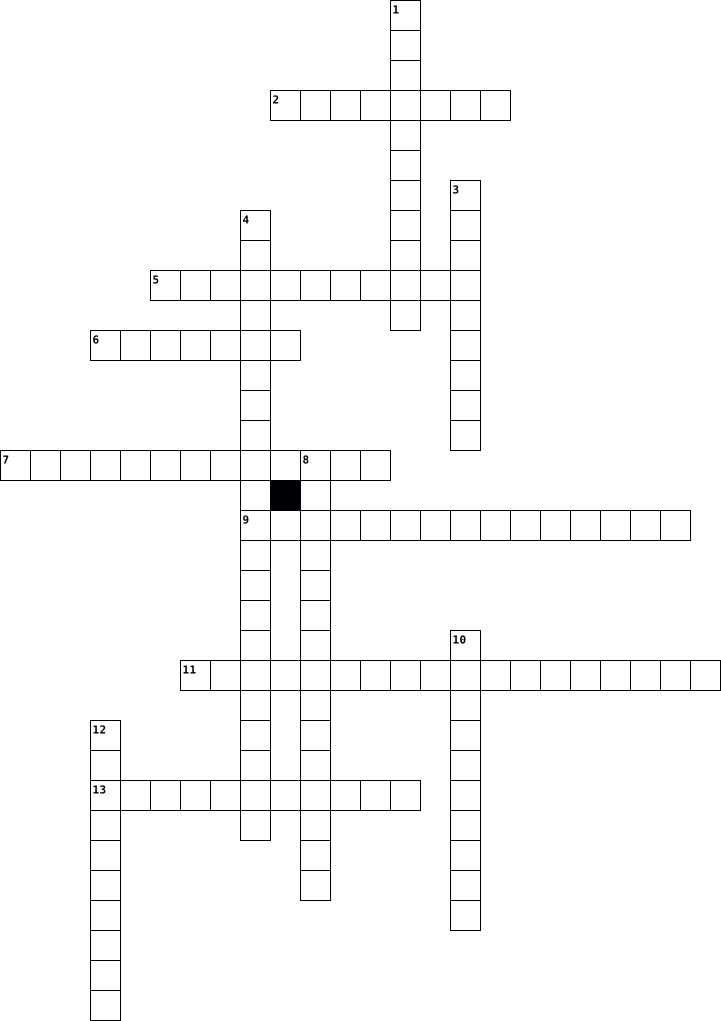
Across
- Plants can be destarched in how much time
- A swelling in the roots of leguminous plants
- Tiny pores present on leaves
- Guard cells of stomata are in which shape
- Gas obtained from atmosphere during the process of photosynthesis
- Plants that feed on insects
- The part of a plant that contains chlorophyll and makes the food
Down
- Green pigments found in the chloroplasts of algae and plants
- Organisms that depend on other organisms for food
- The mode of nutrition in which organisms make food themselves from simple substances
- Amarbel is an example of which type of plant
- Organisms that can make food independently
- An organism that obtains energy from dead or waste organic matter
13 Clues: Plants that feed on insects • Tiny pores present on leaves • Plants can be destarched in how much time • Guard cells of stomata are in which shape • Organisms that can make food independently • A swelling in the roots of leguminous plants • Amarbel is an example of which type of plant • Organisms that depend on other organisms for food • ...
Plants Additional Vocabulary 2015-03-22

Across
- change in response to something
- all living things
- to live, to continue to exist
- to get smaller, less, to go down
- fighting for, struggle
- react, take an action
Down
- reason, function, role, job
- purpose, role, job
- spread out
- to get larger, more, to go up, to rise
- to count on
- procedure
- job function, purpose
13 Clues: procedure • spread out • to count on • all living things • purpose, role, job • job function, purpose • react, take an action • fighting for, struggle • reason, function, role, job • to live, to continue to exist • change in response to something • to get smaller, less, to go down • to get larger, more, to go up, to rise
transport in plants 2021-01-27

Across
- this instrument can be used to measure the rate of transpiration
- water loss from the lower epidermis/ stomata of a leaf
- type of transport that requires energy to move substances against the concentration gradient
- movement of food in plants from the stems to growing tissues and storage tissues.
- this plant vessel is used to transport nutrients and glucose
Down
- the organelle in plant cells where photosynthesis takes place
- the movement of water through a semi permeable membrane
- this part of the epidermis secretes a waxy substance
- substances move from a high concentration to where there is a low concentration
- this is where photosynthesis happens in the leaf
- this is where gases diffuse into the plant and gas exchange happens
- this part of the epidermis contains guard cells and stomata
- this plant vessel is used to transport water
13 Clues: this plant vessel is used to transport water • this is where photosynthesis happens in the leaf • this part of the epidermis secretes a waxy substance • the movement of water through a semi permeable membrane • water loss from the lower epidermis/ stomata of a leaf • this part of the epidermis contains guard cells and stomata • ...
Crossword on Plants 2022-01-05

Across
- of sources eg- cutting
- it is the purposeful clearing of forested land.
- it is a layer of material applied to the surface of
- is a piece of ground in which grass, flowers, and
- may be grown.
- is the prevention of wasteful use of a resource.
Down
- is the synonym of surrounding
- it is used for fertilizing the land
- it is a device used for irrigation
- soil
- refers to the ability of soil to sustain a plant
- it is the process by which new plants grow from a
- is a substance used for killing insects.
13 Clues: soil • may be grown. • of sources eg- cutting • is the synonym of surrounding • it is a device used for irrigation • it is used for fertilizing the land • is a substance used for killing insects. • it is the purposeful clearing of forested land. • refers to the ability of soil to sustain a plant • is the prevention of wasteful use of a resource. • ...
Herbs and Plants 2024-02-21

Across
- herb 3
- herb 6
- herb 12
- herb 10
- herb 7
Down
- herb 11
- herb 1
- herb 2
- herb 13
- herb 4
- herb 9
- herb 5
- herb 8
13 Clues: herb 1 • herb 3 • herb 2 • herb 4 • herb 6 • herb 9 • herb 5 • herb 8 • herb 7 • herb 11 • herb 13 • herb 12 • herb 10
nutrition in plants 2016-05-13

Across
- photosynthesis.
- soil contains certain bacteria that coverts
- indirectly on plants.
- nutrition in which the organism are depended directly
- and alga symbiosis which forms lichens.
- cells surrounds stoma.
- nitrogen into water-soluble compounds.
- plant some parasitic plants like.
Down
- contains chlorophyll.
- organisms that can prepare their own food by a process
- the green pigment in the leaves.
- that plants synthesize during photosynthesis.
- the utilization of food in the body by an organism.
13 Clues: photosynthesis. • contains chlorophyll. • indirectly on plants. • cells surrounds stoma. • the green pigment in the leaves. • plant some parasitic plants like. • nitrogen into water-soluble compounds. • and alga symbiosis which forms lichens. • soil contains certain bacteria that coverts • that plants synthesize during photosynthesis. • ...
Vocabulary for plants 2024-09-06

Across
- plants that don’t use a cone
- Two year cycle
- two seed leaves
- no leaves
- preforms photosynthesis
- bears cones
- One year cycle
- a tree would a example
Down
- protects the seed
- bears flowers
- soft stems
- lives longer then both annual and biennial
- one seed leaf
13 Clues: no leaves • soft stems • bears cones • bears flowers • one seed leaf • Two year cycle • One year cycle • two seed leaves • protects the seed • a tree would a example • preforms photosynthesis • plants that don’t use a cone • lives longer then both annual and biennial
Reproduction in Plants 2024-06-25

Across
- Non-flowering plants reproduce by s____
- Insects such as bees are important for p_____
- Germination requires air, water and w_____
- Dispersal method for sweet, meaty fruits
- During fertilsation, a pollen t___ grows downwards
Down
- Dispersal method for seed pods like Saga or cotton
- The r_____ grows out first during germination
- The male reproductive parts are the a___ and filament
- This part of the flower becomes the seed
- This part of the flower becomes the fruit
- Dispersal method for coconut fruit and Pong pong
- Dispersal method for Angsana and Shorea seeds
- The ____ receives the pollen grains
13 Clues: The ____ receives the pollen grains • Non-flowering plants reproduce by s____ • This part of the flower becomes the seed • Dispersal method for sweet, meaty fruits • This part of the flower becomes the fruit • Germination requires air, water and w_____ • The r_____ grows out first during germination • Insects such as bees are important for p_____ • ...
All About Plants 2023-05-01

Across
- The bloom of the plant that will produce the fruit.
- These are also known as seed leaves and they protect the baby plant.
- The part of the plant that contains the seed.
- The process by which plants make their own food.
- Plants produce their food in them.
- Another name for a young plant that has grown from a seed.
- Absorbed water and nutrients travel along it to get to the leaves.
Down
- When seeds begin to grow.
- These are absorbed from the soil to help plants grow and reproduce.
- These help to keep the plant upright in the soil.
- The substance that gives plants their green colour.
- The transfer of pollen from an anther of a plant to the stigma of a plant.
- The part of a plant which can grow into another plant.
13 Clues: When seeds begin to grow. • Plants produce their food in them. • The part of the plant that contains the seed. • The process by which plants make their own food. • These help to keep the plant upright in the soil. • The bloom of the plant that will produce the fruit. • The substance that gives plants their green colour. • ...
Plants and ecology 2025-06-24

Across
- An animal hunted and eaten by another. (4)
- A living thing that makes its own food at the start of a food chain. (8)
- A relationship where living things rely on each other. (15)
- A community of organisms and their environment. (9)
- The ability to stay alive in a given environment. (8)
- An animal that eats other animals. (9)
- The process by which plants make their own food using sunlight. (14)
Down
- An organism that eats only plants. (9)
- An organism that eats meat. (9)
- The place where an organism lives. (6)
- A carnivore that hunts and eats other animals. (8)
- A source of power that flows through food chains. (6)
- The third consumer, usually at the top of the food chain. (8)
- Features that help an organism survive in its environment. (11)
14 Clues: An organism that eats meat. (9) • An organism that eats only plants. (9) • The place where an organism lives. (6) • An animal that eats other animals. (9) • An animal hunted and eaten by another. (4) • A carnivore that hunts and eats other animals. (8) • A community of organisms and their environment. (9) • A source of power that flows through food chains. (6) • ...
All about Plants 2025-10-24

Across
- food for the plant
- an ingredient from the air
- holes in the leaves
- where seeds get made
- takes in water for the plant
- where pollen is made
- this energy makes photosynthesis happen
Down
- where photosynthesis takes place in the plant
- sticky part of the flower
- the green chemical that absorbs sunlight
- an ingredient from photosynthesis that comes up from the roots
- plants release this after photosynthesis
- colorful part of the flower that attracts pollinators
13 Clues: food for the plant • holes in the leaves • where seeds get made • where pollen is made • sticky part of the flower • an ingredient from the air • takes in water for the plant • this energy makes photosynthesis happen • the green chemical that absorbs sunlight • plants release this after photosynthesis • where photosynthesis takes place in the plant • ...
cells and plants 2025-11-07

Across
- Single-celled microbes that can be helpful (like in digestion) or harmful (cause disease).
- Powdery grains from a flower that contain the male cells needed for plant reproduction.
- A substance that living things need for energy, growth, and repair.
- A microscopic particle that can reproduce only inside the cells of living things.
- The process by which a seed begins to grow into a new plant.
- The control center inside a cell that contains genetic material (DNA).
Down
- The basic unit of all living things.
- acids The building blocks of proteins; they help the body grow and repair tissues.
- A sweet liquid made by flowers to attract pollinating animals like bees.
- A poisonous substance made by living organisms, like bacteria or plants.
- Unable to reproduce or produce offspring/seeds.
- A tiny living thing, such as bacteria, fungi, or protozoa, that can only be seen under a microscope.
- (plural: fungi) A living thing such as a mold, yeast, or mushroom that gets nutrients from decaying matter.
13 Clues: The basic unit of all living things. • Unable to reproduce or produce offspring/seeds. • The process by which a seed begins to grow into a new plant. • A substance that living things need for energy, growth, and repair. • The control center inside a cell that contains genetic material (DNA). • ...
Reproduction in Plants 2026-07-06

Across
- A reproduction structure that grows from the parent plant to form a clone (e.g., strawberry plant).
- The sticky, top part of the carpel that catches pollen grains.
- The developed, ripened ovary that contains seeds and attracts animals.
- The yellow powder produced by a flower that contains the male gametes.
- The process of transferring pollen from the anther to a stigma.
- A type of pollination where pollen is transferred to a stigma on a different plant of the same species.
- The structure inside the ovary that contains the female gamete and becomes a seed.
Down
- A method of spreading seeds using the air, often seen in dandelions or sycamores.
- The structure formed after fertilisation that contains an embryo and a food store.
- A type of pollination where pollen is transferred to a stigma on the same plant.
- The collective name for the entire male reproductive organ of a flower.
- A type of reproduction that requires only one parent and produces identical clones.
- The specific part of the stamen that produces and stores pollen grains
13 Clues: The sticky, top part of the carpel that catches pollen grains. • The process of transferring pollen from the anther to a stigma. • The developed, ripened ovary that contains seeds and attracts animals. • The yellow powder produced by a flower that contains the male gametes. • The specific part of the stamen that produces and stores pollen grains • ...
crops vocab - Justin 2016-11-21

Across
- edible part of herbaceous plant
- plants grown from the mature seed they produce
- grown for animal fodder (food)
- the sweet, fleshy part of a plant that has the seeds in it
- grown for their oil-bearing seeds
- grow below the ground, are usually long or round and form the root system of the plant; ie: potato, carrot
- the edible leaves of plants ie: lettuce, spinach
Down
- grow just below the surface and produce a leafy shoot above ground; ie: onion, garlic
- herbaceous plants of which all or a part is eaten either raw or cooked
- edible fruits or nuts
- the edible blooms or flower buds of vegetables; ie: broccoli, cauliflower
- small, fleshy fruits grown on a vine or small shrub
- plants that grow and die in a single season
- the edible stems of plants; ie: celery, rhubarb
14 Clues: edible fruits or nuts • grown for animal fodder (food) • edible part of herbaceous plant • grown for their oil-bearing seeds • plants that grow and die in a single season • plants grown from the mature seed they produce • the edible stems of plants; ie: celery, rhubarb • the edible leaves of plants ie: lettuce, spinach • small, fleshy fruits grown on a vine or small shrub • ...
Plant Crossword Puzzle 2023-05-04

Across
- process of converting light energy to chemical energy
- chemical reactions that break down glucose to make ATP
- a green structure of a plant that is attached to the stem and main organs of photosynthesis and cellular respiration
- plants that do not have a system for transporting minerals and nutrients
- plants that do not make seeds
- the thin stalk that supports the anther in the male portion of the flower
- leaves are intact on the tree for the entire year
- growth in response to light
- waxy covering of a plant
- part of the plant that blossoms
- promotes cell division and lateral growth in plants
- flowering plants
- turning or bending of a plant in response to a touch stimulus
- substance produced by flowers to reproduce and is transported by animals or wind
- the collective term for female reproductive organs of a flower
- upper layer of earth in which plants grow
- transports water up
Down
- part of the stamen that collects the pollen
- the part of the plant that is present above the ground and transports minerals and nutrients
- when a biological community develops when no life existed previously
- the tube structure that connects the stigma and ovary in a female flower
- evergreen trees that bear cones
- a reproductive cell capable of developing into a new individual without fusion
- sweet and fleshy product of a plant that contains a seed and can be eaten
- non vascular plant that grows in dense green clumps in damp and shady locations
- promotes growth on shaded side
- a tree shedding its leaves annually
- collective male term for reproductive organs of a flower
- growth response to the environment that directs shoots upwards and roots downward
- a underdeveloped plant embryo in a protective outer layer
- the regrowth of a biological community after it was impacted by a disturbance
- the process by which an organism grows from a seed or spore
- seed producing plants
- the part of the plant which attaches it underground it receives water for plant
- plants that can conduct minerals and nutrients to all parts
- green pigment found in plants
- the part of the pistil where the pollen germinates
- a stiff sharp pointed projection on a plant for protection
- pores of the leaf regulate and maintains homeostasis
- brightly colored structures around a flower to attract pollinators
- transports food down
41 Clues: flowering plants • transports water up • transports food down • seed producing plants • waxy covering of a plant • growth in response to light • plants that do not make seeds • green pigment found in plants • promotes growth on shaded side • evergreen trees that bear cones • part of the plant that blossoms • a tree shedding its leaves annually • ...
Biological Molecules 2024-04-09

Across
- functions as storage of carbohydrates in mammals; found in liver and muscles of mammals
- smallest unit of carbohydrate with formula C6H12O6; e.g. glucose (found in both plants and animal), fructose (found in plants), galactose (milk sugar)
- used to make cell wall in plant cells to protect them from bursting or damage
- water is required for chemical reactions such as _________ of food molecules [role of water in animals]
- water allows for _________ of substances (e.g. in blood, in xylem, in phloem) [role of water in animals & plants]
- organic molecules made up of the elements carbon, hydrogen and oxygen with formula CnH2nOn
- fat is a _______ for fat-soluble vitamins
- proteins are made of one or more polypeptide chains twisted, folded and coiled into a unique 3-__________ structure, held together by hydrogen bonds, ionic interactions and van der Waals interactions
- water is a reactant for photosynthesis in plants [role of water in plants]
- water provides physical support to the plant in the form of ______ ________ [role of water in plants]
- fats stored as adipose tissue are also used as __________ material to prevent the loss of body heat
- organic molecules made up of carbon, hydrogen, oxygen and nitrogen and sometimes sulfur
Down
- two monosaccharides undergo ____________ reaction to form a disaccharides, with removal of a water molecule
- water allows for __________ of body temperature through sweat [role of water in animals]
- test for fats
- fats are storage molecules that can store a large amount of energy (each gram of fat supplies the body with about 9 calories)
- smallest unit of proteins
- test for starch
- disaccharides can be broken down to component monosaccharides by __________ reaction in which a water molecule is added
- amino acids join together to form a polypeptide through condensation reaction with the removal of water molecules, forming _______ bond in between each amino acids
- functions as storage of carbohydrates in plants; found in storage organs of plants, e.g. potato tubers
- test for proteins
- proteins are used as _______ (biological catalyst) to speed up chemical reactions
- polymers formed when thousands of glucose molecules linked together in condensation reactions; e.g. glycogen, starch and cellulose
- proteins are used in the _________ of new cells, for growth and repair of worn-up cells
- made up of carbon, hydrogen and oxygen with no fixed formula (the ratio of hydrogen to oxygen is much higher than in carbohydrates)
- test for reducing sugars (all monosaccharides and disaccharides except for sucrose)
27 Clues: test for fats • test for starch • test for proteins • smallest unit of proteins • fat is a _______ for fat-soluble vitamins • water is a reactant for photosynthesis in plants [role of water in plants] • used to make cell wall in plant cells to protect them from bursting or damage • proteins are used as _______ (biological catalyst) to speed up chemical reactions • ...
science crossword puzzle 2024-02-13

Across
- an organism that eats primary consumer
- living or once living factors
- they break down dead plants and animals
- nonliving factors
- plant eaters
- eat
Down
- eats both plants and animals
- meat eaters
- life
- an organism that eats secondary consumers
- different/variety
- an organism that eats producer/plants
- makes their own food
13 Clues: eat • life • meat eaters • plant eaters • different/variety • nonliving factors • makes their own food • eats both plants and animals • living or once living factors • an organism that eats producer/plants • an organism that eats primary consumer • they break down dead plants and animals • an organism that eats secondary consumers
science crossword puzzle 2024-02-13

Across
- an organism that eats primary consumer
- living or once living factors
- they break down dead plants and animals
- nonliving factors
- plant eaters
- eat
Down
- eats both plants and animals
- meat eaters
- life
- an organism that eats secondary consumers
- different/variety
- an organism that eats producer/plants
- makes their own food
13 Clues: eat • life • meat eaters • plant eaters • different/variety • nonliving factors • makes their own food • eats both plants and animals • living or once living factors • an organism that eats producer/plants • an organism that eats primary consumer • they break down dead plants and animals • an organism that eats secondary consumers
Science Crrossword Puzzle 2024-02-12

Across
- nonling factors
- they break down dead plants and animals
- meat eaters
- living or once living factors
- plant eaters
- makes their own food
Down
- an organism that eats primary consumer
- eats both plants and animals
- an organism that eats secondary consumers
- an organism that eats producers/plants
- different/variety
- eat
- life
13 Clues: eat • life • meat eaters • plant eaters • nonling factors • different/variety • makes their own food • eats both plants and animals • living or once living factors • an organism that eats primary consumer • an organism that eats producers/plants • they break down dead plants and animals • an organism that eats secondary consumers
Plant Science 2015-01-29

Across
- The part of the flower that collects the pollen.
- A plant that reproduces more that once during their life cycle.
- Carries food produced in the leaves to the roots.
- A type of plant that has two cotyledons.
- These are found scattered throughout monocots and in rings in dicots.
- The small sacs that contain pollen.
- The parts of the plants that include the roots, stems, and leaves.
- Where the ovum are located.
- A type of plant that has one cotyledon.
- The type of root system found in monocots.
- The male parts of the flower.
Down
- Carries water and nutrients from the roots up.
- The female parts of the flower.
- the process by which water is carried throughout the plant.
- The reproductive part of the plant.
- A group of plants that bare cones.
- A plant that has a period of dormancy during its life cycle.
- The group of plants that includes flowering plants.
- The type of root system found in dicots.
- A plant the completes its life cycle in one year or growing season.
- Also known as the ovule.
21 Clues: Also known as the ovule. • Where the ovum are located. • The male parts of the flower. • The female parts of the flower. • A group of plants that bare cones. • The reproductive part of the plant. • The small sacs that contain pollen. • A type of plant that has one cotyledon. • A type of plant that has two cotyledons. • The type of root system found in dicots. • ...
Biosphere Crossword 2017-12-06

Across
- Eats both plants and Animals.
- Turning co2 to energy
- Abiotic and biotic factors working together
- can't make their own food
- Plant and animal _________ help them survive in new surroundings.
- Goes into to change something
- animals at a constant number
- A group of animals having similar traits
- A limiting factor in an ecosystem that benefits by eating its prey.
- Turning oxygen to food
- Two or more species taking up the same area
- Organisms that make their own food.
- One benefits other is affected
Down
- Feeds on already dead organisms that they find
- interaction with two different organisms
- An organism that only eats animals.
- An animal that only eats plants.
- The number of organisms in a population that it can maintain.
- All members of a species in one area.
- Organelles turning stuff green in plants
- Change in structure
- Species that are the first to a new location
- Organelles in plants
- Large community working together
- One benefits other is non-effected
- Moving someplace else for
- Both benefit
- Come out from reactants
- Moving permanently
29 Clues: Both benefit • Moving permanently • Change in structure • Organelles in plants • Turning co2 to energy • Turning oxygen to food • Come out from reactants • can't make their own food • Moving someplace else for • animals at a constant number • Eats both plants and Animals. • Goes into to change something • One benefits other is affected • An animal that only eats plants. • ...
Biosphere Crossword 2017-12-05

Across
- Organisms that make their own food.
- Both benefit
- Abiotic and biotic factors working together
- can't make their own food
- Moving permanently
- Turning co2 to energy
- animals at a constant number
- Turning oxygen to food
- interaction with two different organisms
- Come out from reactants
- A limiting factor in an ecosystem that benefits by eating its prey.
- Organelles in plants
- Change in structure
- An animal that only eats plants.
- Eats both plants and Animals.
Down
- Two or more species taking up the same area
- An organism that only eats animals.
- Feeds on already dead organisms that they find
- All members of a species in one area.
- Plant and animal _________ help them survive in new surroundings.
- A group of animals having similar traits
- Organelles turning stuff green in plants
- Moving someplace else for
- Species that are the first to a new location
- The number of organisms in a population that it can maintain.
- One benefits other is affected
- One benefits other is non-effected
- Large community working together
- Goes into to change something
29 Clues: Both benefit • Moving permanently • Change in structure • Organelles in plants • Turning co2 to energy • Turning oxygen to food • Come out from reactants • Moving someplace else for • can't make their own food • animals at a constant number • Goes into to change something • Eats both plants and Animals. • One benefits other is affected • Large community working together • ...
Earth Day 2024-04-30

Across
- A large area of land covered with trees and other plants
- Trash on the ground
- Flying insects that help pollinate plants
- Something in the air that plants produce and people need to breathe
- At risk of extinction
- Collecting things that would be thrown away and turning them into new products
- The air surrounding the Earth
- Earth Day is celebrated every year on ______ 22nd.
- Use something again instead of throwing it away
Down
- Harmful material that hurts the environment
- Sun energy
- Man-made material used to make bottles and other item that can be recycled
- Protecting our environment and the wildlife that lives in it
- The layer of the atmosphere that protects Earth from ultraviolet radiation
- Science that studies living things and their surroundings
- The color of grass and many other plants
- Trash and food waste that is thrown away
- Air in motion
- Decaying plant and food waste used as fertilizer
- the place where a plant or animal lives
- A metal often used to make cans and other items
21 Clues: Sun energy • Air in motion • Trash on the ground • At risk of extinction • The air surrounding the Earth • the place where a plant or animal lives • The color of grass and many other plants • Trash and food waste that is thrown away • Flying insects that help pollinate plants • Harmful material that hurts the environment • A metal often used to make cans and other items • ...
Ecosystems Vocab Challenge 2023-02-10

Across
- Small plants and animals that float along with the water's current.
- Plants that makes its own food through photosynthesis.
- When organisms fight over resources.
- A model that shows how energy flows in an ecosystem.
- The living parts of an ecosystem
- An organism that eats other animals.
- Animal hunted or caught for food
- An organism that eats food.
- A living thing (plant, animal, fungi, etc.)
- Non-living things in an ecosystem
- A species that is brought to a place it doesn't belong.
Down
- An organism that eats both plants and animals.
- An organism that eats plants.
- The stuff (atoms) that make up everything around us.
- An animal that hunts other animals for food
- An organism that eats dead things
- When something is changing or moving a lot.
- A group of individuals of the same species that live in the same area
- An organism that harms or kills its host.
- To save something or not lose any of it.
- When an ecosystem doesn't change much, it is ___.
21 Clues: An organism that eats food. • An organism that eats plants. • The living parts of an ecosystem • Animal hunted or caught for food • An organism that eats dead things • Non-living things in an ecosystem • When organisms fight over resources. • An organism that eats other animals. • To save something or not lose any of it. • An organism that harms or kills its host. • ...
Horticulture review 2023-04-19

Across
- holds up the anther
- supports leaves, moves water/nutrients and stores water
- type of root system of grass
- segment of horticulture that includes cut flowers
- segment of horticulture that includes vegetables
- outer layer of root tissue
- the culture of plants and lawn/turf
- material C horizon
- flows up through the stem carrying water
- holds the pollen tube
- E horizon
- plant with one seed leaf
- the culture of plants for food, comfort and beautification
- O horizon
Down
- plant with two seed leafs
- example of a taproot
- Also known as the stem, holds up the plant
- has all reproduction parts
- where pollen is held
- R horizon
- the culture of cut flowers, potted plants or bedding plants
- holds embryo
- flows down through the stem carrying nutrients
- needs a male and female partner
- holds all of the flower parts together
- leaves that protect the early flower
- sticky part where pollen lands on the flower
- where pollination takes place
- segment of horticulture that includes fruit
- anchor the plant in the ground
- A horizon
31 Clues: R horizon • E horizon • A horizon • O horizon • holds embryo • material C horizon • holds up the anther • example of a taproot • where pollen is held • holds the pollen tube • plant with one seed leaf • plant with two seed leafs • has all reproduction parts • outer layer of root tissue • type of root system of grass • where pollination takes place • anchor the plant in the ground • ...
Sustainable Ecosystems 2023-05-24

Across
- Area in a cell where sugar gets burned
- Process that allows plants to create sugar
- Name for all the rock on Earth
- Factor in an ecosystem that is living
- Sugar that all cells need for energy
- Form of Nitrogen that plants can use
- Place where photosynthesis occurs
- Important in cycling Nitrogen through an ecosystem
- Location where Carbon gets trapped for long periods of time
- When two things need each other to survive
- Helps root growth
Down
- When water goes from a liquid to a solid
- Greenhouse gas that is breathed out by all animals
- Type of living thing that makes it own food
- Factor in an ecosystem that is non-living
- Decompose many types of dead material
- What plants need to have good leaves and stay green
- Number of different living things in an ecosystem
- Living thing that needs to eat other things for energy
- All the gases on Earth
- How excess fertilizer enters the water
- Part of earth containing living things
- Helps plants withstand winter
- What cells use for energy
24 Clues: Helps root growth • All the gases on Earth • What cells use for energy • Helps plants withstand winter • Name for all the rock on Earth • Place where photosynthesis occurs • Sugar that all cells need for energy • Form of Nitrogen that plants can use • Decompose many types of dead material • Factor in an ecosystem that is living • Area in a cell where sugar gets burned • ...
Ecosystems and Interactions 2021-11-12

Across
- an animal that is hunted and eaten for food
- all nonliving factors in an ecosystem
- organisms that break down dead plants/animals
- sugar produced from photosynthesis
- the percentage of energy lost in an energy pyramid
- waste produced from photosynthesis
- all living factors in an ecosystem
- relationship where both organisms benefit
- an animal that hunts other animals for food
- waste produced from humans
- organisms that eat plants and animals
- number of substances needed for photosynthesis
- what parasites need to attach to in order to survive
Down
- first consumer to eat the producer
- number of substances produced from photosynthesis
- food webs show the flow of _______in ecosystems
- consists of biotic and abiotic factors
- all the same organisms living in same place
- process that plants go through
- relationship.. one benefits and one unharmed
- one direct pathway showing energy flow
- all populations in a given place
- organisms that eat meat only
- organisms that eat plants only
- where photosynthesis takes place in a cell
- relationship..one benefits and one harmed
- means light
- relationships in ecosystems
28 Clues: means light • waste produced from humans • relationships in ecosystems • organisms that eat meat only • process that plants go through • organisms that eat plants only • all populations in a given place • first consumer to eat the producer • sugar produced from photosynthesis • waste produced from photosynthesis • all living factors in an ecosystem • ...
Hortuculture 2021-12-05

Across
- cultivation of trees
- All the plants can be referred to as the plant 0000000
- production of vegetable
- process of naming and classifying plants
- Each Order is divided into them
- a variety of a plant
- 00000000
- the part of the plant name that is most familiar
- slightly different from the species plant
- cultivation of flowers
- study and cultivation of fruit
Down
- producing plans for the outdoor areas around structures is: landscape 000000000000
- science that studies the causes of plant diseases is called plant 000000000
- a particular field
- the level that defines an individual plant
- process by which new plants grow from a variety of sources is plant 00000000000
- adding streams or ponds and planting trees: landscape 000000
- the formal, scientific naming of plants is: 000000000 nomenclature
- a major taxonomic division that contain one or more classes
- the second element in the Latin binomial name of a species: specific 0000000
- study of insects
- care and management of trees in urban:
- Angiosperms/Gymnosperms
- The names of it end in -ales
24 Clues: 00000000 • study of insects • a particular field • cultivation of trees • a variety of a plant • cultivation of flowers • production of vegetable • Angiosperms/Gymnosperms • The names of it end in -ales • study and cultivation of fruit • Each Order is divided into them • care and management of trees in urban: • process of naming and classifying plants • ...
Ishah Barry 2021-04-19

Across
- When a plant uses water to make energy, but they lose surrounding water
- it is used by plants
- the process in which dissolved nitrate are returned back to the atmosphere
- All water on earth
- Air that surrounds the earth
- Everything that is non-living
- The process in which carbon is constantly recycled
- When water falls back into the atmosphere
- forms such as ammonium salts
Down
- The process in which water vapor becomes liquid
- The gas that is released from plants
- The process in which dead plants and animals decompose, nitrogen is converted into
- All living organisms
- The process in which water moves above and below earth surface
- three percent of earths water
- Water that is stored under earths surface
- the gas that is released from animals while they're decomposing
- can be converted into forms usable by plants and animals, either by lightning or bacteria
- The process in which water is converted into water vapor
- when rain flows along a surface into lake rivers and streams
20 Clues: All water on earth • All living organisms • it is used by plants • Air that surrounds the earth • forms such as ammonium salts • three percent of earths water • Everything that is non-living • The gas that is released from plants • Water that is stored under earths surface • When water falls back into the atmosphere • The process in which water vapor becomes liquid • ...
Ecology pt 2 2022-03-29

Across
- a plant that is anchored to an object or another plant
- liverworts
- nutrients for the embryo
- inherited characteristic that results from response to an environmental factor
- fern spores structure
- any aibiotic or biotic factor that restricts the existence, numbers, reproduction, or distribution of organisms
- a structure that rains the make or female reproductive structures of cycade and gymnosprem plants
- clusters of spornagia
- the lack of specialized transport tissues
- food storage organ
Down
- a compact cluster of spore-beating structures
- structures that either store food or help absorb food for the tiny sporophyte
- specialized transport tissue
- substances that slowly move from cell to cell by osmosis and diffusion
- are openings in the outer cell layer of leaves and some stems
- a relationship in which two organisms live together in a close environment
- a reproductive haploid cell with a hard outer coat that can develop into a new organism without the fusion of gametes
- plants life span two years
- plants an live for several years
- plants completes its life span
20 Clues: liverworts • food storage organ • fern spores structure • clusters of spornagia • nutrients for the embryo • plants life span two years • specialized transport tissue • plants completes its life span • plants an live for several years • the lack of specialized transport tissues • a compact cluster of spore-beating structures • a plant that is anchored to an object or another plant • ...
3.00 horticulture 2025-02-26

Across
- Refers to plants that lose their leaves during the dormant season
- Male organs of the flower
- The plant process in which plants take in water
- The transfer of the pollen onto the stigma
- Palmatelygans of the flower
- An immature plant
- The food manufacturing process in plants that combine carbon dioxide and water in the presence of light to make sugar and oxOsmosismosis
- The process through which plants lose water from their leaves through evaporation out of the stomata
- The process by which plant leaves, stems, and roots consume oxygen and give off carbon dioxide
- The stalk of the leaf
Down
- The plant process that increases plant numbers usually from seeds
- The flattened portion of the leaf
- Flower that contains all four floral parts
- Food reserves for the seed
- The process by which food moves within a plant from one plant part to another
- The process by which minerals enter through cell walls
- Matures into the fruit after fertilization
- Where the leaves develop
- ____Compound-Leafets originate from one point
- A shoot or stem that ororiginatesrom the roots
20 Clues: An immature plant • The stalk of the leaf • Where the leaves develop • Male organs of the flower • Food reserves for the seed • Palmatelygans of the flower • The flattened portion of the leaf • Flower that contains all four floral parts • The transfer of the pollen onto the stigma • Matures into the fruit after fertilization • ____Compound-Leafets originate from one point • ...
Gardening 8 2025-02-18

Across
- Mold – Decomposed leaves used to improve soil texture.
- Emulsion – A fertilizer made from fish byproducts.
- – Transferring a plant to a larger container.
- – Removing the growing tips of a plant to promote bushiness.
- Tea – A liquid fertilizer made from steeped compost.
- Salt – A magnesium-rich amendment that helps plant growth.
- – A propagation method where a stem is bent and buried to grow roots.
- – Splitting a plant into multiple parts for propagation.
- Phosphate – A slow-release phosphorus source for plants.
- Off – Gradually exposing plants to outdoor conditions before transplanting.
Down
- – Training climbing plants to grow on a structure.
- – Removing faded flowers to encourage new blooms.
- – A protective layer applied to the soil to retain moisture.
- – Removing excess seedlings to prevent overcrowding.
- – A soil conditioner used to break up heavy clay.
- – Adding a thin layer of compost or soil to the surface.
- Meal – A high-nitrogen organic fertilizer.
- – Using supports to help plants stand upright.
- Manure – Cover crops grown to improve soil quality.
- – The three key nutrients in fertilizers: nitrogen, phosphorus, and potassium.
20 Clues: Meal – A high-nitrogen organic fertilizer. • – Transferring a plant to a larger container. • – Using supports to help plants stand upright. • – Removing faded flowers to encourage new blooms. • – A soil conditioner used to break up heavy clay. • – Training climbing plants to grow on a structure. • Emulsion – A fertilizer made from fish byproducts. • ...
January/February 2025-02-19

Across
- Plants can't get these from soil if pH is wrong
- Leaves turn this color if soil is low in phosphorus
- Power of hydrogen
- Name of first plant we planted in greenhouse
- Sow this if nitrogen is low
- Used for pruning large branches
- Add to soil to increase potassium
- For cushion when weeding or planting
- Type of soil; poor drainage; rich in nutrients; heavy
- Type of soil; sinks fastest,individual grains
- Plant that uses a lot of nitrogen
Down
- Garden culture
- The end of this month is the last frost date
- Add to soil to increase all nutrients
- Type of soil; "soapy" feeling
- Nutrient that helps plants grow down & flowers bloom
- Removes roots, leaves, moss from lawn
- Nutrient that helps plants grow up
- Used to dig/remove small amounts of soil
- The first frost date typically happens this month
- 8a
- Type of soil; mix of sand, silt and clay
- If plants don't get enough they are weak.
- Use this to empty a wheel barrow
24 Clues: 8a • Garden culture • Power of hydrogen • Sow this if nitrogen is low • Type of soil; "soapy" feeling • Used for pruning large branches • Use this to empty a wheel barrow • Add to soil to increase potassium • Plant that uses a lot of nitrogen • Nutrient that helps plants grow up • For cushion when weeding or planting • Add to soil to increase all nutrients • ...
Biology Crossword Puzzle 2025-02-25

Across
- The mass of living biological organisms in a given area or ecosystem at a given time.
- An organism that mostly feeds on plants.
- Organisms that receive their energy from primary consumers.
- A community of living organisms.
- An organism that eats both plants and animals.
- An organism that must eat other organisms to gain energy.
- An organism that can produce its own food.
- The position it occupies in a food web.
- An organism that eats plants (producers).
- The rate at which energy is added to the bodies of organisms in the form of biomass.
Down
- Any organism that breaks down or eats decaying material.
- An organism that mostly eats meat/flesh.
- Animals that consume other animals to obtain energy from them.
- Living components of an ecosystem.
- The ability of a living organism to perform work or cause change.
- Organisms that can create their own food.
- An organism that eats dead animals/plants.
- A model that shows the flow of energy from one trophic level to another.
- Organisms that consume other organisms for energy.
- Non-living components of an ecosystem.
20 Clues: A community of living organisms. • Living components of an ecosystem. • Non-living components of an ecosystem. • The position it occupies in a food web. • An organism that mostly eats meat/flesh. • An organism that mostly feeds on plants. • Organisms that can create their own food. • An organism that eats plants (producers). • An organism that eats dead animals/plants. • ...
Gardening 4 2025-02-18

Across
- – A plant that keeps its leaves year-round.
- – The process of transferring pollen for plant reproduction.
- – A dense soil type that retains water but drains poorly.
- Level – A measure of soil acidity or alkalinity.
- – Organic material in soil that helps retain nutrients.
- Matter – Decomposed plant and animal material that enriches soil.
- Moss – A soil amendment that helps retain moisture.
- – Animal waste used to fertilize gardens.
- – A plant that takes two years to complete its life cycle.
- – A loose soil type that drains quickly but doesn’t hold nutrients well.
Down
- – A plant that lives for multiple years.
- – The resting phase of a plant, typically in winter.
- – A plant that sheds its leaves annually.
- – A mineral fertilizer that provides potassium to plants.
- Planting – Growing plants together to benefit each other.
- – The process of a seed beginning to grow.
- – The method of growing new plants from cuttings or seeds.
- – The ideal soil mix for plants, made of sand, silt, and clay.
- – A plant that completes its life cycle in one growing season.
- Meal – A fertilizer made from crushed animal bones.
20 Clues: – A plant that lives for multiple years. • – A plant that sheds its leaves annually. • – Animal waste used to fertilize gardens. • – The process of a seed beginning to grow. • – A plant that keeps its leaves year-round. • Level – A measure of soil acidity or alkalinity. • Meal – A fertilizer made from crushed animal bones. • ...
The Big Review 2023-12-13

Across
- Flying mammal
- ALL PLANTS ARE CALLED THIS. STARTS WITH A P.
- THESE PEOPLE LET WOMEN BECOME WARRIORS
- Man's best friend
- EATS MEAT AND PLANTS
- Likes to chase mice
- NORWAY FINLAND AND ___________-
- WHAT ANIMAL IS ON GALAPAGOS ISLAND
- VIKING GOD WITH A GIAN HAMMER
- THE PROCESS THAT ALLOWS GREEN PLANTS TO MAKE SUGAR. P.8
- Has a trunk
- THINGS THAT EAT DEAD ANIMALS ON THE SIDE OF THE ROAD
- PRECIPITATION THAT FLOWS OVER THE SURFACE. P. 6 SCIENCE BOOK
- ALL RIVERS GO TO WHERE?
- BACTERIA HAS A NUCLEUS...TRUE OR FALSE
- ITS IN THE MIDDLE OF A CELL
- MIDDLE PART OF SWORD THAT PROTECTED HAND
Down
- WHAT IS H20
- MEAT EATER ONLY
- NAME OF VIKINGS BOAT
- A FUNGUS YOU CAN EAT.
- FASTEST LAND ANIMAL
- POPULAR COUNTRY IN THE U.K.
- GENETIC CODE WITH 3 LETTERS. INSIDE A CELL
- HEAD OF THE CATHOLIC CHURCH
- SHAPE OF VIKING SHIELDS
- WHAT GAS PLANTS GIVE OFF.
- NAME OF PEOPLE FROM IRELAND/FOUGHT NAKED
- PLANT EATER ONLY
- WHERE THE VIKING WERE FROM.
- THESE PEOPLE PAINTED FACE BLUE WHEN FIGHTING
31 Clues: WHAT IS H20 • Has a trunk • Flying mammal • MEAT EATER ONLY • PLANT EATER ONLY • Man's best friend • Likes to chase mice • FASTEST LAND ANIMAL • NAME OF VIKINGS BOAT • EATS MEAT AND PLANTS • A FUNGUS YOU CAN EAT. • SHAPE OF VIKING SHIELDS • ALL RIVERS GO TO WHERE? • WHAT GAS PLANTS GIVE OFF. • POPULAR COUNTRY IN THE U.K. • HEAD OF THE CATHOLIC CHURCH • WHERE THE VIKING WERE FROM. • ...
Leaves of three let it be 2024-09-15

Across
- - A condition where the skin becomes red, swollen, or sore.
- - A naturally occurring compound containing nitrogen.
- - Trees or plants that shed their leaves annually.
- - The process by which green plants use sunlight to synthesize foods.
- - The scientific study of plants.
- - Interaction between two different organisms living in close physical association.
- - The arrangement of veins in a leaf.
- - Sensitivity of an organism to light.
- - The stalk that joins a leaf to a stem.
- Ivy - A plant known for its trifoliate leaves and irritant oil.
- Leaf - A type of leaf divided into several leaflets.
- - The leaves of a plant.
Down
- - The process of change by which an organism becomes better suited to its environment.
- - The layer of vegetation beneath the forest canopy.
- - A reproductive cell that can develop into a new individual.
- - The green pigment in plants that helps in photosynthesis.
- - Having three leaves or leaflets.
- - The natural home or environment of an organism.
- - The genus that includes poison ivy, oak, and sumac.
- - The study of interactions between organisms and their environment.
20 Clues: - The leaves of a plant. • - The scientific study of plants. • - Having three leaves or leaflets. • - The arrangement of veins in a leaf. • - Sensitivity of an organism to light. • - The stalk that joins a leaf to a stem. • - The natural home or environment of an organism. • - Trees or plants that shed their leaves annually. • ...
Unit 2 Vocabulary 2024-11-26

Across
- the range of many kinds of plants and animals in a habitat
- health and comfort
- brought an animal or plant back to an area
- animals and plants depend on one another for survival
- the natural home of a plant or animal
- not affected by something, such as illness
- single or alone
- ready to use
- removed
- a group of living things that are the same in most ways
- safety
- animals that live by eating other animals
Down
- comes out of a hidden place
- the number of animals or people living in a place
- the order of something
- changes in plants or animals that help them survive in their habitat
- a disguise that hides something from view
- increased greatly in number
- to say or do something the same way again
- the appearance of something that is the same on both sides
- counted or relied on
- enough different plants and animals to keep a habitat healthy
- parts of the world that are not made by people
- sets of things that repeat in order
24 Clues: safety • removed • ready to use • single or alone • health and comfort • counted or relied on • the order of something • comes out of a hidden place • increased greatly in number • sets of things that repeat in order • the natural home of a plant or animal • a disguise that hides something from view • to say or do something the same way again • animals that live by eating other animals • ...