
plate Crossword Puzzles
Plate Motion 2022-10-24

Across
- the sideways and downward movement of the edge of a plate of the earth's crust into the mantle beneath another plate
- hot liquid rock on the surface of earth
- earth's interior between the crust and the core innermost portion of the Earth
- the rigid outer part of the earth one of the 4 rocky planets that has biosphere
- rigid pieces of the earth's lithosphere which together make up the earth's surface
- the outside or top layer of something
- any of Earth’s main continuous areas of land
- a feature that forms on the surface of a planet
- a diagram that shows what the inside of something looks like
- the sudden pushing out of something
Down
- evidence of life from the past
- tectonic boundary where two plates are moving toward each other
- a scientific theory that explains how major landforms are created as a result of Earth's movements
- Earth’s outermost layer of hard, solid rock that is underneath soil and water
- a sudden shaking of Earth’s surface
- occurs when two tectonic plates move away from each other
- the upper layer of the earth's mantle, below the lithosphere
- any of the many processes in which gas, lava, and ash are pushed out onto the surface of the Earth
- the movement of continents resulting from the motion of tectonic plates
- hot liquid rock below the surface of Earth
- very large expanse of sea
21 Clues: very large expanse of sea • evidence of life from the past • a sudden shaking of Earth’s surface • the sudden pushing out of something • the outside or top layer of something • hot liquid rock on the surface of earth • hot liquid rock below the surface of Earth • any of Earth’s main continuous areas of land • a feature that forms on the surface of a planet • ...
Plate Motion 2022-10-25

Across
- A feature that forms on the surface of a planet
- Where two plates meet
- Underwater mountain range formed at a divergent plate boundary
- A natural spring sending hot water and steam suddenly into the air
- The hottest layer of Earth
- Slow pulling apart of land caused by plate activity
- Hot Liquid rock below Earth's surface
- The landform formed at an underwater Convergent plate boundary
- To examine in detail for a purpose
- When Earth’s surface shakes
Down
- When two plates are moving towards each other
- The top layer of something
- When two plates are moving away from each other
- A diagram of the inside of something
- How fast something happens
- A set of interacting part forming a complex whole
- The sudden pushing of something
- The pieces making up Earth's outer layer
- Hot liquid rock on Earth's surface
- Earth’s main continuous areas of land
- The soft, solid layer of rock below Earth's plates
21 Clues: Where two plates meet • The top layer of something • How fast something happens • The hottest layer of Earth • When Earth’s surface shakes • The sudden pushing of something • Hot liquid rock on Earth's surface • To examine in detail for a purpose • A diagram of the inside of something • Hot Liquid rock below Earth's surface • Earth’s main continuous areas of land • ...
Plate Tectonics 2022-11-14

Across
- heated lower rock that rises toward the top because it is less dense than the surrounding mantle rock.
- Greek for "All Land"
- cause the plates to move from the heat going up and cooling down
- lava flows underwater
- two plates slide past one another
- valley on the ocean floor
- - plates come together
- rock moving against rock along a fault causing the rock surface to become polished
- Idea that continents move around on Earth's Surface
Down
- theory explaining how the pieces of Earth's Surface move
- striped patterns that are formed in patterns as magnetic materials in the new rocks cool
- long chain of undersea mountains
- large pieces of Earth's lithosphere that move other the asthenosphere
- plates move apart
- thin lithospheric plates that dense
- thick lithospheric plates that are less dense
- German Scientist and Arctic Explorer who suggested the concept of continental drift
- geophysicist and naval officer mapped the ocean floor
- hypothesis that new floor is created and continents are pushed apart from each other
- process that involves plates sinking into the mantle
20 Clues: plates move apart • Greek for "All Land" • lava flows underwater • - plates come together • valley on the ocean floor • long chain of undersea mountains • two plates slide past one another • thin lithospheric plates that dense • thick lithospheric plates that are less dense • Idea that continents move around on Earth's Surface • ...
plate motion 2022-11-17

Across
- view or drawing that shows what the inside of something looks like after a cut has been made across it.
- tectonic boundary where two plates are moving toward each other.
- plate:massive slab of solid Plate:geology the study of the structure of the earth's crust and mantle with reference to the theory that the earth's lithosphere is divided into large rigid blocks.
- an oceanic plate runs into a continental plate and slides beneath itrock made up of Earth's lithosphere (crust and upper mantle)
- all the Earth.
- used to record the motion of the ground during an earthquake.
- measure of the size of an earthquake based on observation of the effects of the shock at the earth's surface.
- mostly-solid bulk of Earth's interior.
- where two plates move away from each other
- the place inside Earth's crust where an earthquake originates.
- on the surface of the Earth that is directly above the underground point (called the focus) where fault rupture commences, producing an earthquake.
Down
- super massive wave
- or zone of fractures between two blocks of rock.
- boundary: A tectonic boundary where two plates are moving toward each other.
- a measurement of earthquakes.
- wave:shock waves in solid rock generated by earthquakes or underground explosions.
- drift:the movement of continents resulting from the motion of tectonic plates
- large continuous mass of land conventionally regarded as a collective region.
- type of fault in which two tectonic plates slide past one another.
- extremely hot center of Earth, another planet, or a star
- outermost shell of a terrestrial planet.
- release of energy through the earth's crust in the form of seismic waves.
22 Clues: all the Earth. • super massive wave • a measurement of earthquakes. • mostly-solid bulk of Earth's interior. • outermost shell of a terrestrial planet. • where two plates move away from each other • or zone of fractures between two blocks of rock. • extremely hot center of Earth, another planet, or a star • used to record the motion of the ground during an earthquake. • ...
Plate Motion 2022-11-19

Across
- a point at which rays of light or heat meet after being refracted or reflected.
- A sudden motion or trembling in the earth caused by the abrupt release of slowly accumulated energy.
- Two plates sliding past each other
- line graphs that show a sideways view of a landscape.
- Any of the world's main continuous expanses of land (Africa, Antarctica, Asia, Australia, Europe, North America, South America).
- plate gigantic pieces of the Earth's crust and uppermost mantle.
- a long high sea wave caused by an earthquake, submarine landslide, or other disturbance.
- the imprint left by the shell on the rock that surrounded it.
- an instrument that measures and records details of earthquakes
- a layer inside a planetary body bounded below by a core and above by a crust.
- the quality of being intense
Down
- occurs when two tectonic plates move away from each other.
- drift. the gradual movement of the continents across the earth's surface through geological time.
- a fracture or zone of fractures between two blocks of rock.
- an external coating or covering.
- the maximum extent of size and the direction of an object.
- (of organic matter) changed into a stony substance.
- waves caused by the sudden movement of materials within the Earth, such as slip along a fault during an earthquake.
- The point where two or more plates meet
- an object made by shaping molten metal or similar material in a mold.
- A supercontinent that incorporated almost all the landmasses on Earth.
- the remains or impression of a prehistoric organism preserved in petrified form or as a mold or cast in rock.
- the point on the earth's surface vertically above the focus of an earthquake
- the sideways and downward movement of the edge of a plate of the earth's crust into the mantle beneath another plate.
24 Clues: the quality of being intense • an external coating or covering. • Two plates sliding past each other • The point where two or more plates meet • (of organic matter) changed into a stony substance. • line graphs that show a sideways view of a landscape. • occurs when two tectonic plates move away from each other. • ...
Plate Tectonics 2017-02-13

Across
- 1st landmasses
- Convergent boundaries cause
- Divergent boundaries cause
- When the plate splits
- Most Dense Layer of Earth
- Age of Continental
- Less dense layer
- Transform boundaries cause
- More dense layer
Down
- What is within the mantle?
- When the plates rub together
- Age of Oceanic
- causes collisions, to pull apart and/or scrape against
- Number of Layers of the earth
- When Plates Come together
- Refers to deformation of crust
- Events caused by plates
- Least Dense Layer of Earth
- Types of plates
- where we live
20 Clues: where we live • 1st landmasses • Age of Oceanic • Types of plates • Less dense layer • More dense layer • Age of Continental • When the plate splits • Events caused by plates • When Plates Come together • Most Dense Layer of Earth • What is within the mantle? • Divergent boundaries cause • Least Dense Layer of Earth • Transform boundaries cause • Convergent boundaries cause • ...
Plate Tectonics 2017-01-31

Across
- This is the most inner layer, it is made out of solid metal, and is surrounded by the Outer Core.
- The biggest layer of the Earth.
- This layer is molten metal surrounding the Inner Core.
- This theory explains the formation, movement, and subduction of The Earth's plates.
- The theory that stated that the current continents were once one whole super-continent.
- Convergent boundaries ______ crust.
- Transform boundaries ______ destroys or create crust.
- The person that made the Continental Drift Theory.
- Divergent boundaries ______ crust.
- The outer layer of the Earth.
Down
- The boundary that can make the plates collide or subsidize.
- The boundary that can make plates glide against each other.
- A landform made from the divergent boundary.
- The landform that is created from convergent boundaries.
- The process that occurs at the mid-ocean ridges (where new oceanic crust is formed by volcanoes)
- The thing that is created by the transform boundaries.
- When two plates collide and one plate goes under the other.
- These are in the mantle and they move the lithosphere in a constant slow motion.
- The name of the super-continent that was stated in the Continental Drift Theory.
- The boundary that can make the plates divide.
20 Clues: The outer layer of the Earth. • The biggest layer of the Earth. • Divergent boundaries ______ crust. • Convergent boundaries ______ crust. • A landform made from the divergent boundary. • The boundary that can make the plates divide. • The person that made the Continental Drift Theory. • This layer is molten metal surrounding the Inner Core. • ...
Plate Techtonicss 2017-01-31

Across
- Surface in which rocks break and move.
- powerful sea wave that can travel thousands of kilometers.
- Theory that continents drifted apart.
- A pulling force.
- Largest layer of the earth.
- Different sections that were broken off from the lithosphere.
- Rigid, outer most layer of the earth.
- Pulling apart.
- Original continent that later split into 7
- Remains or traces of a once living organism reserved by rock.
Down
- Grinding of plates.
- Area when the two plates collide and one goes on top of the other.
- Theory that magma from below the earths crust is forced upward towards the surface at
- Earths outer most layer
- Layer below the lithosphere
- Colliding of plates.
- Very dense, solid center of the
- Surface along which rocks break and move.
- Vibrations caused by breaking rocks along faults.
- Liquid that surrounds the inner core.
20 Clues: Pulling apart. • A pulling force. • Grinding of plates. • Colliding of plates. • Earths outer most layer • Layer below the lithosphere • Largest layer of the earth. • Very dense, solid center of the • Theory that continents drifted apart. • Liquid that surrounds the inner core. • Rigid, outer most layer of the earth. • Surface in which rocks break and move. • ...
Plate tectonics 2017-10-18

Across
- a rock or animal that was preserved in rock
- one of the types of evidence that Wegener used to prove the continents were together
- breaks in Earth's crust
- a boundary when two plates ram into each other
- a boundary where two plates separate
- the layer of mantle that the plates sit on
- Wegener's idea that the continents have moved
- the scientist who founded the idea of continental drift
Down
- a boundary when two plates run along each other
- the ocean continuously add new material to its floor
- rocks farther from the mid ocean ridge are denser/ less dense
- all of Earth's plate motion put into one theory
- when ocean floor is pushed below continental crust
- rocks fall into the mantle and are then heated and part of the mantle
- an tool that uses sound waves and time to map the ocean floor
- movement in this cause earths magnetic current
- a "mountain range" that rock comes out of from the mantle
- what is used to prove something
- where Earth’s crust diverges on land
- a supercontinent from around 300 million years ago
- rocks closer to the mid ocean ridge are warmer/ cooler
21 Clues: breaks in Earth's crust • what is used to prove something • a boundary where two plates separate • where Earth’s crust diverges on land • the layer of mantle that the plates sit on • a rock or animal that was preserved in rock • Wegener's idea that the continents have moved • a boundary when two plates ram into each other • movement in this cause earths magnetic current • ...
Plate Tectonics 2017-10-18

Across
- At a _______ boundary, plates come together or converge.
- Earth’s plates are in slow constant motion
- Boundary where earthquakes happen
- The theory that the continents have moved
- Supercontinent
- Sea-floor ______
- Earth’s plates meet at ______.
- San Andreas is an example of a _____.
- Molten material that forms the ocean floor
- Magma close to the mid-ocean ridge is hotter and ________.
Down
- Deep valley formed from divergent plates
- The layers of magnetic fields that differ with each stripe
- This is created when an oceanic plate goes underneath a continental plate
- Boundary where plates move away from each other
- Cooled lava in pillow like shapes
- Magma on the ocean floor farther away from the mid-ocean ridge is _____ and denser.
- Underwater mountain ranges are also known as ________.
- When one plate goes under the other
- Drilling _____ Scientists collected from the ocean floor.
- Tool that helped scientists see map the ocean floor
20 Clues: Supercontinent • Sea-floor ______ • Earth’s plates meet at ______. • Cooled lava in pillow like shapes • Boundary where earthquakes happen • When one plate goes under the other • San Andreas is an example of a _____. • Deep valley formed from divergent plates • The theory that the continents have moved • Earth’s plates are in slow constant motion • ...
Plate Tectonics 2017-10-17

Across
- The remains of a prehistoric organism
- When plates come together
- When plates move away from each other
- Valley along the ocean floor where oceanic crust sinks into the mantle
- When pieces of Earth’s crust diverges on land
- When molten material is added to make new oceanic crust
- The theory that Earth’s plates are in a slow, constant motion
- How scientists study the inside of Earth since we can’t drill down that far
Down
- Produced when 2 continental plates collide
- Scientist that came up with the theory of continental drift
- When oceanic crust sinks beneath a deep-ocean trench and back into the mantle
- Causes the plates to move
- Theory of how the continents spread away from each other
- When plates slip past each other
- 3rd layer of Earth that is very hot, yet solid where convection currents are
- Where seafloor spreading begins
- Measure of how much mass there is in an object
- A break in Earth’s crust where rocks slipped past each other
- Supercontinent that existed around 300 million years ago
- What scientists use to explore the ocean floor
20 Clues: Causes the plates to move • When plates come together • Where seafloor spreading begins • When plates slip past each other • The remains of a prehistoric organism • When plates move away from each other • Produced when 2 continental plates collide • When pieces of Earth’s crust diverges on land • Measure of how much mass there is in an object • ...
plate crossword 2017-10-17

Across
- the biggest layer of the earth
- when one plate goes back to the earth crust.
- pieces of earth crust diverge
- seams that ran along a mountain
- when sea floor is moving apart
- supercontinent
- the thinnest part of the earth
- the upper layer of the oceanic portion
- a mountain with lava
Down
- a pieces that are broken by cracks
- breaks into earth's crust when rock slip past each other
- boundary when two plates collide
- when plates slide past each other
- when the ocean floor plunges into deep underwater canyons
- when plates move away
- a bone that got turned to rock
- drew map showing features of the ocean floor
- a scientist
- a theory why plate move
- device using sound wave
20 Clues: a scientist • supercontinent • a mountain with lava • when plates move away • a theory why plate move • device using sound wave • pieces of earth crust diverge • the biggest layer of the earth • a bone that got turned to rock • when sea floor is moving apart • the thinnest part of the earth • seams that ran along a mountain • boundary when two plates collide • ...
plate tectonics 2017-10-17

Across
- when one plate goes under the other, sinking into the mantle
- the outermost layer of the earths layers
- where magma comes out to form rocks
- the supercontinent formed 300 billion years ago
- used to reserch what you cant see in the depths of the ocean
- the scientist who discovered continental drift
- famous mountain ranges formed by convergent boundaries
- core the layer above the inner core
- when two plates collide
- a fault line in California
- when pieces of earth diverge on land
- a representation of an object or process
Down
- breaks in earths crust where rocks have slipped past each other
- the amount of space a object takes up
- earthquakes, erosion, and tornadoes are examples of these
- when two plates come apart
- the innermost part of earth
- when two plates slip past each other
- a ridged layer made up of the uppermost part of the mantle and crust
- the largest part of the earths layers
- very old rock
21 Clues: very old rock • when two plates collide • when two plates come apart • a fault line in California • the innermost part of earth • where magma comes out to form rocks • core the layer above the inner core • when two plates slip past each other • when pieces of earth diverge on land • the amount of space a object takes up • the largest part of the earths layers • ...
Plate Tectonics 2017-10-17

Across
- Idea that continents moved across the surface of Earth.
- The addition of new oceanic crust from mid-ocean ridges.
- A trace of an organism that has been preserved.
- A German scientist that had the idea of continental drift.
- These form when two plates collide and neither are dense enough to sink.
- The process oceanic crust sinks back into the mantle.
- Where pieces of Earth's crust move away from each other on land.
- Where plates move apart from each other.
- Where part of the oceanic crust sinks back into the mantle.
- A break in Earth’s crust where rocks slid past each other.
Down
- Forms only when molten hardens quickly under water.
- Forms chains of mountains that rise upwards from the ocean floor.
- A natural disaster that occurs when plates suddenly slip on their boundary.
- The last supercontinent.
- Where plates move towards each other.
- Combined knowledge of sea-floor spreading, Earth’s plates, and plate motions.
- Where plates slip past each other.
- Where Earth's plates meet, there are three different types.
- Pieces of Earth's lithosphere separated by cracks.
- A device that uses sound to measure the distance to an object.
20 Clues: The last supercontinent. • Where plates slip past each other. • Where plates move towards each other. • Where plates move apart from each other. • A trace of an organism that has been preserved. • Pieces of Earth's lithosphere separated by cracks. • Forms only when molten hardens quickly under water. • The process oceanic crust sinks back into the mantle. • ...
plate tectonicts 2017-10-17

Across
- bends downwards
- boundary plates slide past each other
- a super continent
- helped scientist explore the ocean floor
- boundary plates collide
- boundary plates divide
- pieces of earth diverge on land
- the crust is broken into pieces
- tectonics states that earth's plates are in slow constant motion
- ocean floor sinks beneath a deep ocean trench
Down
- current the flow that transfers heat within a fluid
- drift the continents are in slow constant motion
- German scientist
- where seafloor spreading begins
- adds new material to the ocean floor
- a region with particular prevailing weather conditions
- part if the earth between the earth and crust
- is the measure of how much mass is in a given volume
- fetchers a convergent boundary continental,continental
- a break in earths crust
20 Clues: bends downwards • German scientist • a super continent • boundary plates divide • boundary plates collide • a break in earths crust • where seafloor spreading begins • pieces of earth diverge on land • the crust is broken into pieces • adds new material to the ocean floor • boundary plates slide past each other • helped scientist explore the ocean floor • ...
plate tectonics 2017-10-23

Across
- how much mass there is in a given amount of volume
- a mountain that erupts
- underwater ocean ranges
- pieces of earth separated by cracks
- german scientist who discovered that the continents were together at one point
- the uppermost part of the mantle
- plates collide
- plates slip past eachother
- a large body of water
- forms when pieces of earth's crust diverge on land
- a process where the ocean floor sinks in the mantle
Down
- a supercontinent that existed 2 million years ago
- any trace of an ancient organism preserved in rock
- - an idea that continents slowly move
- earth's plates that are in slow constant motion
- plates come together
- a process that adds new material to the ocean floor
- a layer of hot rock
- deep underwater canyons
- heat transfer from air currents
- breaks in the earth's crust
21 Clues: plates collide • a layer of hot rock • plates come together • a large body of water • a mountain that erupts • underwater ocean ranges • deep underwater canyons • plates slip past eachother • breaks in the earth's crust • heat transfer from air currents • the uppermost part of the mantle • pieces of earth separated by cracks • - an idea that continents slowly move • ...
plate tectonics 2017-10-23

Across
- a mountain that erupts
- earth's plates that are in slow constant motion
- a process that adds new material to the ocean floor
- german scientist who discovered that the continents were together at one point
- a supercontinent that existed 2 million years ago
- heat transfer from air currents
- plates come together
- plates slip past eachother
- deep underwater canyons
- pieces of earth separated by cracks
Down
- a process where the ocean floor sinks in the mantle
- forms when pieces of earth's crust diverge on land
- a layer of hot rock
- underwater ocean ranges
- any trace of an ancient organism preserved in rock
- the uppermost part of the mantle
- plates collide
- breaks in the earth's crust
- a large body of water
- - an idea that continents slowly move
- how much mass there is in a given amount of volume
21 Clues: plates collide • a layer of hot rock • plates come together • a large body of water • a mountain that erupts • underwater ocean ranges • deep underwater canyons • plates slip past eachother • breaks in the earth's crust • heat transfer from air currents • the uppermost part of the mantle • pieces of earth separated by cracks • - an idea that continents slowly move • ...
Plate Tectonics 2018-03-02

Across
- A chain of volcanic islands formed at an ocean-ocean convergent boundary.
- A chain of volcanic mountains formed at an ocean-continental convergent boundary.
- Large supercontinent that existed 250 million years ago.
- The zone below the lithosphere.
- Places where new seafloor is being created.
- What pushes the rest of a plate away from the mid-ocean ridge?
- Two or more tectonic plates or fragments are near the end of their life cycle.
- A theory explaining the structure of the earth's crust.
Down
- The sideways and downward movement of the edge of a plate of the earth's crust into the mantle beneath another plate.
- The outer part of the Earth's crust.
- Credited with the theory of Plate Tectonics.
- Large pieces of earths crust that move due to convection currents.
- The process by which new organic lithosphere (sea floor) forms as magma rises to Earths surface and solidifies.
- Plates slide sideways past each other.
- The hypothesis that the continents slowly move across Earth's surface.
- Area where magma from the mantle continually breaks through the crust.
- Credited with the theory of Continental Drift
- The process by which earths crust breaks apart.
- Depression formed at a subduction zone.
- Huge trenches on Earth's seafloor.
20 Clues: The zone below the lithosphere. • Huge trenches on Earth's seafloor. • The outer part of the Earth's crust. • Plates slide sideways past each other. • Depression formed at a subduction zone. • Places where new seafloor is being created. • Credited with the theory of Plate Tectonics. • Credited with the theory of Continental Drift • ...
Plate Tectonics 2018-03-28

Across
- Molten rock, gases, and solid crystals and minerals
- Two plates sliding past each other
- Two plates pushing toward each other
- Two plates moving apart from each other
- Crust that underlies oceans
- A vent in the Earth' surface through which magma and gases erupt
- The innermost part of the Earth
- A sudden jerk of land of the release of tension
- The last supercontinent
- A dropped zone where plates are pulling apart
Down
- Two tectonic plates _____ past each other in a horizontal direction
- The collision between two continental plates form _________
- Located directly below the crust
- Directly underneath the Lithosphere
- Made up of crust and a tiny bit of the upper mantle
- Crust that underlies continents
- The border between two tectonic plates
- Deep ocean ______, or valley
- The topmost layer of the Earth
- A crack or fracture in the Earth's crust
20 Clues: The last supercontinent • Crust that underlies oceans • Deep ocean ______, or valley • The topmost layer of the Earth • Crust that underlies continents • The innermost part of the Earth • Located directly below the crust • Two plates sliding past each other • Directly underneath the Lithosphere • Two plates pushing toward each other • The border between two tectonic plates • ...
Plate Motion 2023-06-14

Across
- a natural spring that sends hot water and steam suddenly into the air from a hole in the ground
- how often or fast something happens
- the place where two plates meet
- the layer of soft, solid rock underneath Earth's plates
- a sudden shaking of Earth's surface
- an extinct reptile that lived about 300 million years ago
- hot liquid rock on the surface of Earth
- hot liquid rock below the surface of Earth
- moving apart in different directions
- a diagram that shows what the inside of something looks like
- an object, diagram, or computer program that helps us understand something by making it simpler or easier to see
Down
- Earth’s outermost layer of hard, solid rock that is underneath the soil, vegetation, and water
- a set of interacting parts forming a complex whole
- a long, deep indentation in the ocean floor formed when two plates move together
- something we observe to be similar over and over again
- one of the very large sections of hard, solid rock that make up Earth’s outer layer
- the sudden pushing out of something, such as lava from a volcano
- the outside or top layer of something
- to examine in detail for a purpose
- a feature that forms on the surface of a planet, such as a mountain, channel, or sand dune
- any of the many processes (such as eruptions and lava flows) in which gas, lava, and ash are pushed out on the surface of Earth
- the slow pulling apart of land that is caused by plate movement
- any of Earth's main continuous areas of land, such as Africa, Asia, and North America
- moving toward the same place
- evidence of life from the past, such as fossilized bones, footprints, or leaf prints
- an underwater mountain range formed when two plates move apart
26 Clues: moving toward the same place • the place where two plates meet • to examine in detail for a purpose • how often or fast something happens • a sudden shaking of Earth's surface • moving apart in different directions • the outside or top layer of something • hot liquid rock on the surface of Earth • hot liquid rock below the surface of Earth • ...
PLATE TECTONICS 2023-06-22

Across
- A ground-shaking release of energy caused by a break in the crust.
- The process by which magma rises to the surface at mid-ocean ridges and forms new ocean crust.
- Is the point at which two tectonic plates collide.
- Mountain ridges run along the seafloor.
- The belief that the Earth's continents have been in the same place since the Earth's formation.
- The process of denser crust of a tectonic plate sliding beneath less dense crust of another plate; occurs at convergent plate boundaries and produces deep sea trenches.
- The lithosphere is divided into large plates that interact with one another and cause geological activity.
- is the gravitational and subduction-induced pulling of a tectonic plate.
Down
- Is the separation of two tectonic plates.
- When new material at mid-ocean ridges pushes older material aside, tectonic plates shift.
- Is a current in the mantle that occurs when cooler, denser material sinks and warmer, less dense material rises.
- A layer of earth between the crust and outer core, which is divided into upper and lower sections.
- WAVES, The vibration caused by the release of energy during an earthquake.
- A devastating catastrophe caused by geological processes
- Occurs when two rocks are pressed together and one block rides up to overlay the other.
- For earthquakes, a number that represents strength.
- An instrument that measures and records ground vibration.
- In earth science, the location within earth where an earthquake starts.
- Two tectonic plates slide horizontally past each other.
- A large break in a rock.
- In mid ocean ridges a valley that runs along the centre of the ridge.
- The point on earths surfaces above where an earthquake starts.
- An opening in earths surface where magma and other materials are released.
23 Clues: A large break in a rock. • Mountain ridges run along the seafloor. • Is the separation of two tectonic plates. • Is the point at which two tectonic plates collide. • For earthquakes, a number that represents strength. • Two tectonic plates slide horizontally past each other. • A devastating catastrophe caused by geological processes • ...
Plate Motion 2024-01-18

Across
- the layer of soft solid rock underneath Earth's plates
- the second super continent that was made up of India, A
- an extinct reptile whose fossils were found on two different continents
- Earth's outermost layer of hard, solid rock that is underneath the soil, vegetation, and water.
- the German scientist who gave us the idea that the continents were one super continent
- an underwater microphone that records plate motion
- an underwater mountain range formed when two plates move apart
- the curator at the museum we've been assisting
- the location of the museum
- how often or fast something happens
- the number of signals it takes to calculate GPS positioning
- to move together
- scientist who works for the National Oceanic Atmospheric Administration
- a natural spring that sends hot water and steam suddenly into the air from a hole in the ground
Down
- something we observe to repeat over and over again
- to examine in detail for a purpose
- a diagram that shows what the inside of something looks like
- a sudden shaking of Earth's surface
- a long, deep indentation in the ocean floor formed when two plates move together
- the place where two plates meet
- to move apart
- this Mexican state sits on multiple plate boundaries (including: Cocos, North American, Pacific, and Rivera)
- one of the few places to have an on land mid ocean ridge
- another word for earthquake
- the slow pulling apart of land that is caused by plate movement
25 Clues: to move apart • to move together • the location of the museum • another word for earthquake • the place where two plates meet • to examine in detail for a purpose • a sudden shaking of Earth's surface • how often or fast something happens • the curator at the museum we've been assisting • something we observe to repeat over and over again • ...
Plate tectonic 2023-09-27

Across
- The area where two tectonic plates meet
- the process by which Earth's crust breaks apart
- occurs at the mid ocean ridges
- the physical layer of Earth made of solid rock and soil
- this in the mantle causes plates to move
- The most outer solid portion of the planet Earth
- type of plate boundary where two plates separate or move apart
- When Two Continental plates collide and create
- The boundary where two plates collide
- crack or when the surface along rocks break
Down
- credited with the theory of Continental Drift
- Type of crust that is thinner and contains basalt.
- The layer just below the lithosphere
- Supercontinent that existed 250 million years ago
- The deepest parts of the oceans.
- these are associated with transform boundaries
- layer of the Earth that is liquid
- Earths thickest layer
- When one tectonic plate moves underneath another one
- The boundary where two plates slide past one another
20 Clues: Earths thickest layer • occurs at the mid ocean ridges • The deepest parts of the oceans. • layer of the Earth that is liquid • The layer just below the lithosphere • The boundary where two plates collide • The area where two tectonic plates meet • this in the mantle causes plates to move • crack or when the surface along rocks break • ...
Plate Tectonics 2023-11-02

Across
- an earthquake that measures 300 km or more.
- a wave that travels through the earth
- earthquake closest to the surface
- produces a print out
- also known as Secondary wave
- the strength of an earthquake
- a plate that moves side to side, up and down, underneath each other
- spot on surface abouve the focus
- a scale that measures more accurately
- the secondary wave travels through ___ only.
- a wave travels through liquids
Down
- location of the 1st motion in Earth
- also known as primary wave
- when the earth moves
- ____ zones-areaws where no body waves are detected.
- a wave that travels below ground
- rebound though to cause rocks to move
- 70-300 km
- amount of damage
- record vibrations in the ground
- a wave travels up and down, side to side
- oldest measurement scale
22 Clues: 70-300 km • amount of damage • produces a print out • when the earth moves • oldest measurement scale • also known as primary wave • also known as Secondary wave • the strength of an earthquake • a wave travels through liquids • record vibrations in the ground • a wave that travels below ground • spot on surface abouve the focus • earthquake closest to the surface • ...
Plate motion 2023-11-01

Across
- an extinct reptile
- a feature that forms on the surface of a planet
- boundary the place where two plates meet
- something we observe to be similar
- moving toward each other
- layer Earths layer of hard solid rock
- the layer of soft solid rock
- the outside layer of something
- the sudden pushing of something
- natural spring
Down
- inside of an object
- an object, diagram, or computer program that helps us understand something
- evidence from the past
- any of earth’s continuous areas of land
- Hot liquid rock
- underwater mountain range
- moving away from each other
- shaking of earths surface
- large section of hard solid rock
- how often or fast something happens
- the slow pulling apart of land
21 Clues: natural spring • Hot liquid rock • an extinct reptile • inside of an object • evidence from the past • moving toward each other • underwater mountain range • shaking of earths surface • moving away from each other • the layer of soft solid rock • the outside layer of something • the slow pulling apart of land • the sudden pushing of something • large section of hard solid rock • ...
Plate Tectonics 2023-11-15

Across
- A break in Earth's crust along which rocks move
- A plate boundary where two plates move past each other in oppsite directions
- The transfer of thermal energy by the movement fluid
- The theory that pieces of Earth's lithosphere are in constant motion, driven by convection currents in the mantle.
- A string of volcanoes that form as the result of subduction of one oceaic plate benath a second oceanic plate
- The process by which oceanic crust sinks beneath a deep ocean treach and back into athe mantle at a convergent plate boundary
- The transfer of energy by electromagnetic waves
- The name of th esingle landmass that began to break apart 200 million years ago and gave rise to today's continenets
- The preserved remains or traces of an organism that lived in the past
- A plate boundary where two platemove away from each other
- The molten mixture of rock forming substances, gasses, and water from the mantle
- A plate boundary where two plates move toward each other
- The transfer of thermal energy from one particleof matter to another
- A section of the lithospher that slowly moves over the asthenosphere, carrying pieces of continental and oceanic crust
Down
- The process by which molten material adds nre oceanic crust to the ocean floor
- An area where magma from deep within the manlts through the crust above it
- The hypothesis that the continents slowly move across Earth's surface
- The movement of a fluid, caused by differences in temperature, that transfers heat from one part of the fluid to another
- Liquid magma that reaches the surface
- The measurement of how much mass of a substance is contained in a given volume
- An undersea mountain chain where new ocean floor is produced; a divergent plate boundary under the ocean
- A deep valley that forms where two plates move apart
- A deep valley along the ocean floor beneath which oceanic crust slowly sinks toward the mantle
- A weak spot in the crust where magma has come to the surface
- A major belt of volcanes that rims the Pacific Ocean
25 Clues: Liquid magma that reaches the surface • A break in Earth's crust along which rocks move • The transfer of energy by electromagnetic waves • The transfer of thermal energy by the movement fluid • A deep valley that forms where two plates move apart • A major belt of volcanes that rims the Pacific Ocean • A plate boundary where two plates move toward each other • ...
plate tectonies 2023-11-21

Across
- a downward steep wall formed displacement
- a sudden and violent shaking of the ground
- a seismic body wave that shakes the ground back and forth
- an opening in the earth's crust through which lava, volcanic ash, and gases escape.
- a string of volcanoes and sites of seismic activity
- the remains or traces of plants and animals that lived long ago
- the center of interest or activity.
- is a hot molten rock
- the great size or extent of something
- the force transmitted through a rope, string or wire when pulled
- the movement caused within a fluid by the tendency of hotter
- the action of compressing or being compressed.
- heat waves that are coming from the sun
Down
- molten rock that is underground
- two plates sliding down from each other
- is a hanging wall and a foot wall
- the outside part or uppermost layer
- it is a transverse waves
- mass of a unit volume of a material substance.
- the process by which heat or electricity is directly transmitted through a substance
- pressure or tension exerted on a material object.
21 Clues: is a hot molten rock • it is a transverse waves • molten rock that is underground • is a hanging wall and a foot wall • the outside part or uppermost layer • the center of interest or activity. • the great size or extent of something • two plates sliding down from each other • heat waves that are coming from the sun • a downward steep wall formed displacement • ...
Plate Tectonics 2023-12-15

Across
- consists of the upper mantle and lower crust
- supercontinent
- Earths longest mountain range
- measures earthquakes
- Results of a transform boundary
- Slides past each other
- Moves together
- Moves apart
- Where two plates move away from eachother
- Causes seafloor spreading
Down
- A person that studies plate tectonics
- The # of the major plates
- Comes from the mantle
- Came up with the Contintntal drift theory
- Where divergent boundries divide in the ocean
- Future Supercontinent
- Mountain that has magma in it
- A result of convergent boundaries
- the area below the lithosphere
- When one plate slides under another
20 Clues: Moves apart • supercontinent • Moves together • measures earthquakes • Comes from the mantle • Future Supercontinent • Slides past each other • The # of the major plates • Causes seafloor spreading • Mountain that has magma in it • Earths longest mountain range • the area below the lithosphere • Results of a transform boundary • A result of convergent boundaries • ...
Plate Tectonics 2024-04-23

Across
- layer of Earth below the lithosphere that flows like a liquid
- pieces of rock that have been weathered
- the reason something has occurred or is occurring
- primary layer where plants and organisms live
- occur along plate boundaries
- the oceanic crust and the upper mantle
- type of crust that is made up mostly of granite and is less dense
- rock that requires heat and pressure
- rock that is formed when lava cools and hardens
- the only liquid layer of Earth
- Father of Continental Drift
- two events happening at the same time, but not causing one
Down
- largest layer of Earth
- large pieces of crust that are constantly moving
- natural process that breaks down rock
- Earth's supercontinent
- top layer of soil made up of living and decomposed materials
- the theory that the continents were once a giant landmass and have slowly drifted apart
- type of crust that is made up mostly of basalt and is more dense
- solid layer of rock
- can be found in sedimentary rock
- thinnest layer of Earth
- the center of the Earth
- process in which oceanic crust sinks below the less dense continental crust
- hot molten rock
- occurs along mid-ocean ridges
- cycle that occurs in the mantle, where heated material rises then cools and sinks
- tallest mountain in the Himalayas
- rock with many layers
- natural forces that move rocks
30 Clues: hot molten rock • solid layer of rock • rock with many layers • largest layer of Earth • Earth's supercontinent • thinnest layer of Earth • the center of the Earth • Father of Continental Drift • occur along plate boundaries • occurs along mid-ocean ridges • the only liquid layer of Earth • natural forces that move rocks • can be found in sedimentary rock • ...
Plate Tectonics 2024-03-14

Across
- atlantic ocean hot spot
- plate boundary that results in shallow earthquakes and no volcanoes
- pacific ocean hot spot
- scientific theory that explains how major landforms are created as a result of Earth's subterranean movements
- plate boundary found at midocean ridges
- rock that makes up oceanic plates
- the study of prehistoric Earth's magnetic fields recorded in rocks, sediment, or archeological materials.
- the rigid, outermost rocky shell of a terrestrial planet or natural satellite. On Earth, it is composed of the crust and the lithospheric mantle, the topmost portion of the upper mantle that behaves elastically on time scales of up to thousands of years or more.
- plate boundary that results in subduction
- movement caused within a fluid by the tendency of hotter and therefore less dense material to rise, and colder, denser material to sink under the influence of gravity, which consequently results in transfer of heat.
Down
- process that occurs at mid-ocean ridges, where new oceanic crust is formed through volcanic activity and then gradually moves away from the ridge.
- ocean with a midocean ridge going down the center, broke up Pangaea, expanding over time.
- rock that makes up continental plates
- long chains of active volcanoes with intense seismic activity found along ocean-oceanic convergent tectonic plate boundaries.
- Earth's largest ocean, surrounded by convegergent boundaries, getting smaller over time
- a buoyant mass of material in the mantle, which rises because of its buoyancy
- a seafloor mountain system formed by plate tectonics. This feature is where seafloor spreading takes place along a divergent plate boundary.
- geological process in which the oceanic lithosphere and some continental lithosphere is recycled into the Earth's mantle at convergent boundaries
- a layer inside a planetary body bounded below by a core and above by a crust.
- long, narrow depressions on the seafloor that form at the boundary of tectonic plates where one plate is pushed, or subducts, beneath another.
- layer of earth that generates earth's magnetic field
- volcanic locales thought to be fed by underlying mantle that is anomalously high temperature compared with the surrounding mantle.
- the outermost solid shell of a rocky planet, dwarf planet, or natural satellite. It is usually distinguished from the underlying mantle by its chemical makeup
23 Clues: pacific ocean hot spot • atlantic ocean hot spot • rock that makes up oceanic plates • rock that makes up continental plates • plate boundary found at midocean ridges • plate boundary that results in subduction • layer of earth that generates earth's magnetic field • plate boundary that results in shallow earthquakes and no volcanoes • ...
Plate Tectonics 2024-02-29

Across
- a continuous elevated zone on the floor of all the major ocean basins.
- hypothesis that said all present continents nice existed as a single supercontinent
- Process that deforms Earth’s Crust for structural features.
- Primary driving force for movement of tectonic plates
- German Meteorologist and geophysicist
- trench a narrow and elongated depression of the seafloor
- when igneous rocks melt over a temp range.
- The name of the supercontinent including all of the existing continents
- Where two plates move apart.
- a boundary in which two plates more together.
- a hypothesis that said new ocean crust is produced at the crests of mid-ocean ridges.
Down
- a chain of volcanic islands
- Two ocean slabs converge.
- a boundary when two plates slide past one another.
- when two continental plates collide
- Largest plate
- elevated areas of the seafloor characterized by high heat flow and volcanism.
- as tectonic forces continue to pull apart the crust, the fragments sink which causes this.
- linear zones of irregular topography on the deep-ocean floor.
- Theory that says Earths outer shell consists of individual plates.
20 Clues: Largest plate • Two ocean slabs converge. • a chain of volcanic islands • Where two plates move apart. • when two continental plates collide • German Meteorologist and geophysicist • when igneous rocks melt over a temp range. • a boundary in which two plates more together. • a boundary when two plates slide past one another. • ...
Plate Tectonics 2024-02-08

Across
- theory that explains how large pieces of the earht crust move and change shape
- Harry Hess came up with this idea
- The center of the earth , like a ball of hot metal. is mostly iron and nickel
- The hypothesis that states the continents once formed a single landmass, broke up, and drifted to their present location
- the nature of somethings ingredients or constitutions
- soft plastic like layer of the mantle on which the tectonic plates move
- New seafloor, rift-valleys, Mid-Atlantic ridge
- Stress that occurs when the forces act to squeeze and object
Down
- A block of lithosphere that consists of the crust and the rigid, outermost part of the mantle
- is solid but moving (magma, honey) Makes up 66% of the earth
- strong , lower part of the mantle between the asthenosphere and the outer core
- Properties that involve a reaction to an applied load strength, ductility, hardness, impact resistance, and toughness
- Mountains, Trenches, volcanoes, earthquakes, subduction zone
- The thin, solid, rigid outermost layer of the earth
- the only liquid layer of the planet. it is iron and nickel
- The sinking of regions of the earths crust to lower elevations
- Tectonic plates slide past each other resulting in earthquakes
- A break in a body of rock along which one block slides relative to another
- inner most layer of the earth. It is solid iron and nickel
- Solid outer layer that consists of the crust and the rigid upper part of mantle
20 Clues: Harry Hess came up with this idea • New seafloor, rift-valleys, Mid-Atlantic ridge • The thin, solid, rigid outermost layer of the earth • the nature of somethings ingredients or constitutions • the only liquid layer of the planet. it is iron and nickel • inner most layer of the earth. It is solid iron and nickel • ...
Plate Tectonics 2024-02-08

Across
- a form of volcano's shaped like a boot
- the thinnest layer
- the outer layer of Earth (Mantle,Crust)
- a piece of earth that sepereates
- part of earth
- 2 plates move away
- the inner part of the core
- the theory of a famous scientist
- a plate that has to do with land
- plates move together
- crack in earth
Down
- the sea floor moves
- discovered sea floor spreading
- a force that pushes together
- discovered continental drift
- plates move side by side
- hard
- layer of the atmosphere of the earth
- the hottest layer
- to plates collide to cause a shake
- shifting that moves Earth 2 cm a year
- the thickest layer
- a plate that has to do with water
- liquid, iron-nickel layer of the Earth between the solid inner core and lower mantle
24 Clues: hard • part of earth • crack in earth • the hottest layer • the thinnest layer • 2 plates move away • the thickest layer • the sea floor moves • plates move together • plates move side by side • the inner part of the core • a force that pushes together • discovered continental drift • discovered sea floor spreading • a piece of earth that sepereates • the theory of a famous scientist • ...
Plate Tectonics 2024-02-08

Across
- a break in a body of rock along which one block slides relative to another
- properties that involve a reaction to an applied load strength, ductility, hardness, impact resistance, and toughness
- tectonic plates collide and form mountains.
- the center of the earth
- tectonic plates slide past each other creating earthquakes
- the hypothesis that states the continents once formed a single landmass, broke up, and drifted to their present location
- stress that occurs when the forces act to squeeze an object
- the only liquid layer of the planet
- the middle layer of the earth which is also the largest
- the soft plastic-like layer of the mantle
Down
- the sinking of regions of the earth's crust to lower elevations
- solid outer layer that consists of the crust and the rigid upper part of the mantl
- the nature of something's ingredients or constituents
- tectonic plates move apart
- a block of lithosphere
- the thin, solid, rigid outermost layer of the earth
- the theory that explains how large pieces of the earth's crust move and change shape
- the inner most layer of the earth which is solid and made out of solid iron and nickel
- the strong, lower parts of the mantle
- the process by which new oceanic lithosphere forms and magma rises toward the surface and solidifies
20 Clues: a block of lithosphere • the center of the earth • tectonic plates move apart • the only liquid layer of the planet • the strong, lower parts of the mantle • the soft plastic-like layer of the mantle • tectonic plates collide and form mountains. • the thin, solid, rigid outermost layer of the earth • the nature of something's ingredients or constituents • ...
Plate Tectonics 2024-02-08

Across
- a break in a body of rock along which one block slides relative to another
- properties that involve a reaction to an applied load strength, ductility, hardness, impact resistance, and toughness
- tectonic plates collide and form mountains.
- the center of the earth
- tectonic plates slide past each other creating earthquakes
- the hypothesis that states the continents once formed a single landmass, broke up, and drifted to their present location
- stress that occurs when the forces act to squeeze an object
- the only liquid layer of the planet
- the middle layer of the earth which is also the largest
- the soft plastic-like layer of the mantle
Down
- the sinking of regions of the earth's crust to lower elevations
- solid outer layer that consists of the crust and the rigid upper part of the mantl
- the nature of something's ingredients or constituents
- tectonic plates move apart
- a block of lithosphere
- the thin, solid, rigid outermost layer of the earth
- the theory that explains how large pieces of the earth's crust move and change shape
- the inner most layer of the earth which is solid and made out of solid iron and nickel
- the strong, lower parts of the mantle
- the process by which new oceanic lithosphere forms and magma rises toward the surface and solidifies
20 Clues: a block of lithosphere • the center of the earth • tectonic plates move apart • the only liquid layer of the planet • the strong, lower parts of the mantle • the soft plastic-like layer of the mantle • tectonic plates collide and form mountains. • the thin, solid, rigid outermost layer of the earth • the nature of something's ingredients or constituents • ...
Plate Tectonics 2024-02-08

Across
- the middle layer of the earth.
- The mechanical model; lithosphere, asthenosphere, mesosphere, outer core, inner core. (look at me on ice)
- a boundary where the plates move away from eachother
- the outer layer of the core.
- a divergent boundary where new crust is formed in the ocean
- the theory that the continents are always moving.
- the cracked-up parts of earths crust.
- when something is pressed together.
- the center of the earth.
- the 3rd mechanical layer
- the 1st mechanical layer
Down
- the theory of plates moving on the asthenosphere
- when the plates slide past eachother
- what something is composed of.
- when the plates come together.
- when one plate (usually the denser, oceanic plate) go under another.
- A long rigid crack in the earths surface.
- the inner layer of earths center
- the very outer layer of the earth.
- the 2nd mechanical layer
20 Clues: the 2nd mechanical layer • the center of the earth. • the 3rd mechanical layer • the 1st mechanical layer • the outer layer of the core. • the middle layer of the earth. • what something is composed of. • when the plates come together. • the inner layer of earths center • the very outer layer of the earth. • when something is pressed together. • ...
Plate Tectonics 2024-02-09

Across
- colliding
- makes up 66% of the Earth
- Alfred Wegener discovered what?
- soft plastic-like layer
- strong,lower part of the mantle
- made of iron and nickel
- hottest layer on Earth
- makes up 1% of the Earth
- a fracture or zone between 2 blocks
- Harry Hess discovered what?
- only layer which is liquid
- slide past each other
- explains how large pieces of the crust move
Down
- move away from each other
- rigd upper part of the mantle
- large pieces of Earth's crust
- the sinking regions of the Earths crust
- properties involve reaction to applied force
- act to squeeze an object
- nature of something's ingredients
20 Clues: colliding • slide past each other • hottest layer on Earth • soft plastic-like layer • made of iron and nickel • makes up 1% of the Earth • act to squeeze an object • move away from each other • makes up 66% of the Earth • only layer which is liquid • Harry Hess discovered what? • rigd upper part of the mantle • large pieces of Earth's crust • Alfred Wegener discovered what? • ...
Plate Tectonics 2024-02-08

Across
- Solid outer layer that consists of the crust.
- The center of the Earth and is mostly made up of iron and nickel.
- zone The sinking of regions.
- core The inner most layer of our planet
- Plate A block of lithosphere that consists of the crust.
- The soft plastic layer.
- The thinnest layer on Earth.
- Spreading The process by which thee new oceanic lithosphere forms.
- A break in the Earth's crust.
- Stress that occurs when the forces act to squeeze.
- Drift The thinking that states that the continents moved once.
Down
- The nature of something's ingredient or constituents.
- Properties Properties that involve a reaction.
- Boundary Where Tectonic Plates slide past each other.
- core The only liquid layer of the planet.
- Boundary Where Tectonic Plates drift apart.
- The strong lower part of the mantle.
- Tectonic Theory The theory that explains how large pieces of the Earth's crust move.
- Boundary Where Tectonic Plates collide.
- The biggest layer and the middle layer of the Earth.
20 Clues: The soft plastic layer. • The thinnest layer on Earth. • A break in the Earth's crust. • zone The sinking of regions. • The strong lower part of the mantle. • core The inner most layer of our planet • Boundary Where Tectonic Plates collide. • core The only liquid layer of the planet. • Solid outer layer that consists of the crust. • ...
Plate Tectonics 2024-02-22

Across
- The longest mountain chain in the world
- This type of plate boundary forms folded mountains
- This type of boundary forms trenches and volcanoes
- This type of boundary contains both collision and subduction boundaries
- Mount Saint Helens, part of this mountain range, erupted in 1980
- This boundary forms fault lines
- This boundary type forms when plates move apart
- Harry Hess's theory
- This hot spot lies in the Pacific Ocean
- The tallest folded mountains in the world
- These occur at ALL plate boundaries
- The deepest feature in the world
- Iceland is a hot spot that lies along this feature
Down
- The Nazca and S. American plates form this feature
- A theory that precedes plate tectonics
- Wegener's evidence for continental drift
- This plate subducts under North America in the Pacific Northwest
- These are present at ALL divergent boundaries and subduction boundaries
- This feature formed by a continental-continental divergent boundary
- These form when two continental plates converge
- This feature causes severe earthquakes in California
- This technology was used to map the seafloor
22 Clues: Harry Hess's theory • This boundary forms fault lines • The deepest feature in the world • These occur at ALL plate boundaries • A theory that precedes plate tectonics • The longest mountain chain in the world • This hot spot lies in the Pacific Ocean • Wegener's evidence for continental drift • The tallest folded mountains in the world • ...
Plate Motion 2023-10-11

Across
- An extinct reptile that lived about 300 million years ago
- The sudden pushing out of something
- Something we observe to be similar over and over again
- The outside or top layer of something
- To examine in detail for a purpose
- Any of the many processes such as eruptions and lava flows in which gas, lava, and ash are pushed out on the surface of Earth
- Hot liquid rock on the surface of Earth
- An underwater mountain range formed when two plates moves apart
- An object, diagram, or computer program that helps us understand something by making it simpler or easier to see
- Moving apart in different directions
- A natural spring that sends hot water and steam suddenly into the air from a hole in the ground
- how often or fast something happens
- A diagram that shows what the inside of something looks like
Down
- The place where two plates meet
- Earth's outermost layer of hard, solid rock that is underneath the soil, vegetation, and water
- The layer of soft, solid rock underneath Earths plates
- evidence of life from the past. such as fossilized bones, footprints, or leaf prints
- Any of Earth's main continuous area of land
- A feature that forms on the surface of a planet
- one of the very large section of hard, solid rock that make up Earth's outer layer
- Moving toward the same place
- A long, deep indentation in the ocean floor formed when two plates move together
- Hot liquid rock below the surface of Earth
- A sudden shaking of Earth's surface
- The slow pulling apart of land that is caused by plate movement
- A set of interacting parts forming a complex whole
26 Clues: Moving toward the same place • The place where two plates meet • To examine in detail for a purpose • The sudden pushing out of something • A sudden shaking of Earth's surface • how often or fast something happens • Moving apart in different directions • The outside or top layer of something • Hot liquid rock on the surface of Earth • ...
Plate Tectonics 2024-04-05

Across
- - scrapes across rocks where a glacier once was
- - type of boundary between two colliding plates
- -currents are found in the mantle and cause the tectonic plates to move
- - when two plates move away from each other
- - South America matches up with this continent.
- - the other result of plate tectonics
- - the scientist who is most known for the continental drift theory
- - the outer most layer of earth
- - the lithosphere is divided into...
- - what element makes up most of the Earth's core
Down
- - the Earth is made up of these and they are constantly moving along above the mantle.
- - what is the liquid layer of Earth's core.
- - evidence of dead plants and animals
- - this idea developed in the 20th century
- - result of plate tectonics
- - the Earth's crust is divided into plates that shift over time.
- - this piece of evidence explains why palm tree fossils have been found in very cold regions
- - continents fit together like_______ pieces
- - the super continent was called
- - the layer of Earth which is believed to be responsible for plate movement
20 Clues: - result of plate tectonics • - the outer most layer of earth • - the super continent was called • - the lithosphere is divided into... • - evidence of dead plants and animals • - the other result of plate tectonics • - this idea developed in the 20th century • - what is the liquid layer of Earth's core. • - when two plates move away from each other • ...
Plate Motion 2024-09-06

Across
- a bunch of pieces that fit together or mystery
- a statement or answer to a scientific question that is based on data or observations
- an extinct reptile that lived about 300 million years ago
- how often or fast something happens
- any of Earth's main continuous area of land, such as Africa, Asia, and North America
- moving toward the same place
- an object, diagram, or computer program that helps us understand something by making it simpler or easier to see
- a sudden shaking of Earth’s surface
- a diagram that shows what the inside of something looks like
- to examine in detail for a purpose
- a feature that forms on the surface of a planet
Down
- an underwater mountain range formed when two plates move apart
- something observe to be similar over and over again
- the place where two plates meet
- the layer of soft solid rock underneath Earth’s plates
- the outside or top layer of something
- a long, deep indentation in the ocean floor formed when two plates move together
- any of the many processes (such as earthquakes and lava flows) in which gas, lava, and ash pushed out the surface of Earth
- Earth’s outermost layer of hard, solid rock that is underneath the soil, vegetation, and water (crust)
- moving apart in different directions
- one large supercontinent
- hot liquid rock below the surface of Earth
- one of the very large sections of hard solid rock that make up Earth’s outer layer
23 Clues: one large supercontinent • moving toward the same place • the place where two plates meet • to examine in detail for a purpose • how often or fast something happens • a sudden shaking of Earth’s surface • moving apart in different directions • the outside or top layer of something • hot liquid rock below the surface of Earth • a bunch of pieces that fit together or mystery • ...
Plate Motion 2025-11-06

Across
- The top part of the Earth that is thin and solid.
- The place where two plates meet.
- A long, deep indentation.
- What is created by divergent plates moving apart.
- Moving toward the same place.
- The semi-fluid part of Earth’s layers, located right underneath the lithosphere.
- One of the very large sections of hard, solid rock that make up Earth’s outer layer.
- How often or fast something happens.
- One of the continents that the Mesosaurus fossils were found on.
Down
- The force that moves Earth’s plates.
- What Earth’s outer layer is made out of under the ocean and land.
- The layer of soft, solid rock underneath Earth’s plates.
- To examine in detail for a purpose.
- Something we observe to be similar over and over again.
- The sudden shaking of Earth’s surface.
- The very center of the Earth, made of iron
- Moving apart in different directions
- The very outer layer of the Earth.
- What scientist Alfred Wegener named the supercontinent that was here long ago.
- The dinosaur fossil that was found on both South America and Africa because of plate tectonics.
20 Clues: A long, deep indentation. • Moving toward the same place. • The place where two plates meet. • The very outer layer of the Earth. • To examine in detail for a purpose. • The force that moves Earth’s plates. • Moving apart in different directions • How often or fast something happens. • The sudden shaking of Earth’s surface. • The very center of the Earth, made of iron • ...
Plate Motion 2025-11-06

Across
- The top part of the Earth that is thin and solid.
- The force that moves Earth’s plates.
- A long, deep indentation.
- What Earth’s outer layer is made out of under the ocean and land.
- What scientist Alfred Wegener named the supercontinent that was here long ago.
- What is created by divergent plates moving apart.
- The sudden shaking of Earth’s surface.
- The layer of soft, solid rock underneath Earth’s plates.
- How often or fast something happens.
- The very center of the Earth, made of iron
- The very outer layer of the Earth.
Down
- The semi-fluid part of Earth’s layers, located right underneath the lithosphere.
- The place where two plates meet.
- Something we observe to be similar over and over again.
- To examine in detail for a purpose.
- One of the very large sections of hard, solid rock that make up Earth’s outer layer.
- Moving toward the same place.
- Moving apart in different directions
- The dinosaur fossil that was found on both South America and Africa because of plate tectonics.
- One of the continents that the Mesosaurus fossils were found on.
20 Clues: A long, deep indentation. • Moving toward the same place. • The place where two plates meet. • The very outer layer of the Earth. • To examine in detail for a purpose. • The force that moves Earth’s plates. • Moving apart in different directions • How often or fast something happens. • The sudden shaking of Earth’s surface. • The very center of the Earth, made of iron • ...
Plate Tectonics 2025-11-06

Across
- Type of boundary where two plates collide
- Type of boundary where new crust is generated as plates move apart
- Molten rock found beneath the Earth's surface
- boundaries
- Deepest parts of the ocean, often found at
- Type of crust that is thinner and denser, found under oceans
- The layer of Earth between the crust and the outer core
- Vibration of the Earth due to the release of energy
- Scientist who proposed the theory of continental drift
- Piece of evidence for divergent plates (2words)
Down
- Lower part of the mantle
- The process where oceanic crust plunges beneath another plate
- A vent or mountain from which lava, ash, and cinders are expelled
- Less dense plate
- The age of the rock furthest from a ridge
- Type of boundary where two plates slide past each other horizontally
- Rigid, outermost layer of the Earth, composed of the crust and upper mantle
- The theory that the lithosphere is divided into plates that move
- Plates moving apart
- Movement of matter due to differences in density, believed to drive plate motion
- Break in a rock along which movement occurs
- Scientist who proposed tectonic theory
- Supercontinent that existed 245 million years ago
23 Clues: boundaries • Less dense plate • Plates moving apart • Lower part of the mantle • Scientist who proposed tectonic theory • The age of the rock furthest from a ridge • Type of boundary where two plates collide • Deepest parts of the ocean, often found at • Break in a rock along which movement occurs • Molten rock found beneath the Earth's surface • ...
Plate Tectonics 2026-04-07

Across
- Cracks in Earth’s crust where movement happens.
- The breaking down of rocks into smaller pieces.
- The dropping off of sediments in a new location.
- Boundary A place where two tectonic plates move away from each other.
- Molten rock beneath Earth’s surface.
- The surface location directly above the focus of an earthquake.
- Boundary A place where two tectonic plates collide.
- Core The liquid layer of Earth’s core.
- The movement of one tectonic plate under another.
Down
- The underground origin point of an earthquake.
- Boundary A place where plates slide past each other horizontally.
- A thick layer of hot, semi-solid rock beneath the crust that slowly flows.
- Molten rock that flows on Earth’s surface.
- A sudden release of energy in Earth’s crust.
- Tectonics The theory that Earth’s surface is divided into moving plates.
- An opening in Earth’s crust where magma, gas, and ash escape.
- The central part of Earth, made mostly of iron and nickel.
- Plates Massive sections of Earth’s crust that move slowly over time.
- Core The solid, extremely hot center of Earth.
- The movement of rock and soil from one place to another.
- The thin, solid outer layer of Earth.
21 Clues: Molten rock beneath Earth’s surface. • The thin, solid outer layer of Earth. • Core The liquid layer of Earth’s core. • Molten rock that flows on Earth’s surface. • A sudden release of energy in Earth’s crust. • The underground origin point of an earthquake. • Core The solid, extremely hot center of Earth. • Cracks in Earth’s crust where movement happens. • ...
Plate motion 2024-10-27

Across
- A long narrow ditch
- When two plates move together
- Above the asthenosphere
- This is when two plates are moving
- Above the mantle
- this happens when two plates move
- An underwater mountain range
- the movement of liquids or gasses
- When two plates move apart
Down
- Below the lithosphere
- The lower part of the mantle
- The core on the outside
- The core on the inside
- The upper part of the mantle
- The crust underneath the ocean
- What the earths layers are called
- There are seven of these
- Home to magma
- The moving of plates
- Under the crust
20 Clues: Home to magma • Under the crust • Above the mantle • A long narrow ditch • The moving of plates • Below the lithosphere • The core on the inside • The core on the outside • Above the asthenosphere • There are seven of these • When two plates move apart • The lower part of the mantle • The upper part of the mantle • An underwater mountain range • When two plates move together • ...
Plate Crossword 2024-10-28

Across
- earths continuous areas of land, such as Africa, Asia, and North America
- An underwater range formed from divergent plates
- hot liquid rock below the surface of the earth
- layer of soft rock underneath earths crust
- a piece of hard solid material that varies in size shape, and color
- the place where to plates meet
- plates moving toward each other
- a continent right above North America
- to pick plates sliding past each other horizontally
Down
- along and then in the ocean floor formed from convergent plates
- a region of the USA that has 12 states
- the innermost part of the earth
- a very large section of hard rock that makes up earths outer layer
- hot magma that comes out of volcano
- a shaking of earths surface
- pushing something like lava from a volcano
- an opening in earths surface, where lava rocks and natural gas comes out.
- one of the 50 states in the USA that’s capital is st Paul
- plates moving apart in opposite directions
- Earths Outermost layer that is made of solid rock
20 Clues: a shaking of earths surface • the place where to plates meet • the innermost part of the earth • plates moving toward each other • hot magma that comes out of volcano • a continent right above North America • a region of the USA that has 12 states • layer of soft rock underneath earths crust • pushing something like lava from a volcano • ...
Plate Tectonics 2024-10-15

Across
- The country that fits with Europe during Pangaea.
- The country that fits with South America during Pangaea.
- One of the minor tectonic plates.
- A supercontinent that existed during the late Paleozoic and early Mesozoic eras.
- Where two or more lithospheric plates collide with each other.
- inches How often the plates move per year.
- Came up with the theory of Continental Drift.
- A theory explaining the structure of the earth's crust.
- Places where three plates meet.
- When two tectonic plates move away from each other.
- Places where plates slide sideways past each other.
Down
- The Ring where 90% of the world's earthquakes occur with over 450 volcanoes.
- At one time all of the continents formed one super-continent.
- The theory became solidified.
- Caused by the moving of transform plates.
- The largest major tectonic plate.
- One of the seven major tectonic plates.
- The cause of the movement of convergent plates.
- The molten layer of rock the plates lay on.
- Evidence of the Continental Drift Theory.
20 Clues: The theory became solidified. • Places where three plates meet. • One of the minor tectonic plates. • The largest major tectonic plate. • One of the seven major tectonic plates. • Caused by the moving of transform plates. • Evidence of the Continental Drift Theory. • inches How often the plates move per year. • The molten layer of rock the plates lay on. • ...
Plate tiontic 2024-10-24

Across
- The movement is in the ——————————
- The girl who helped the plate tectonic theory
- The plates move a couple ——————— per year
- the layer of soft solid rock underneath the plates
- The boy who helped the plate tectonic theory
- moves together
- who came up with the continental drift theory
- made out of hard solid rock made up of earths outer layer
- Are the plates still moving today
- the outer layer of earth
- a long indentation in the ocean floor formed when two plates moved
Down
- When to plates move against each other
- a sudden shaking observe to be similar surface
- the body of water that surrounded super continent
- earth outermost layer of hard solid rock that is underneath the soil
- the original name of the super continent
- to examine in for detail for a purpose
- a diagram that is showing what is inside of something look like
- moves apart
- something we observe to be similar over and over again
20 Clues: moves apart • moves together • the outer layer of earth • The movement is in the —————————— • Are the plates still moving today • When to plates move against each other • to examine in for detail for a purpose • the original name of the super continent • The plates move a couple ——————— per year • The boy who helped the plate tectonic theory • ...
Plate motion 2024-10-22

Across
- a natural spring that sends hot water and steam suddenly into the air from a hole in the ground
- the slow pulling apart of land that is caused by plate movement
- to examine in detail for a purpose
- A large section of hard solid rock that make up earths outer layer
- hot liquid rock below the surface of Earth
- any of the many processes in which lava gas and ash are pushed out on the surface of earth
- a feature that forms on the surface of a planet, such as a mountain, channel, or sand dune
- when do water mountain range formed when two plates move apart
- moving toward the same plate
- observed to be over and over again
Down
- The layer of soft, solid rock underneath earths plates
- the outside or top layer of something
- moving apart in different directions
- a shaking of earths surface
- made of hard solid rock
- the sudden pushing out of something, such as lava from a volcano
- evidence of life from the past, such as fossilized bones, footprints, or leaf prints
- The place where two plates meet
- a diagram that shows what inside of something looks like
- A long deep indentation in the ocean floor
20 Clues: made of hard solid rock • a shaking of earths surface • moving toward the same plate • The place where two plates meet • to examine in detail for a purpose • observed to be over and over again • moving apart in different directions • the outside or top layer of something • hot liquid rock below the surface of Earth • A long deep indentation in the ocean floor • ...
Plate motion 2024-10-22

Across
- The place where two plates meet
- a diagram that shows what inside of something looks like
- the sudden pushing out of something, such as lava from a volcano
- a shaking of earths surface
- to examine in detail for a purpose
- A long deep indentation in the ocean floor
- made of hard solid rock
- hot liquid rock below the surface of Earth
- moving toward the same plate
- evidence of life from the past, such as fossilized bones, footprints, or leaf prints
- the outside or top layer of something
- moving apart in different directions
- a natural spring that sends hot water and steam suddenly into the air from a hole in the ground
Down
- a feature that forms on the surface of a planet, such as a mountain, channel, or sand dune
- when do water mountain range formed when two plates move apart
- observed to be over and over again
- the slow pulling apart of land that is caused by plate movement
- A large section of hard solid rock that make up earths outer layer
- The layer of soft, solid rock underneath earths plates
- any of the many processes in which lava gas and ash are pushed out on the surface of earth
20 Clues: made of hard solid rock • a shaking of earths surface • moving toward the same plate • The place where two plates meet • observed to be over and over again • to examine in detail for a purpose • moving apart in different directions • the outside or top layer of something • A long deep indentation in the ocean floor • hot liquid rock below the surface of Earth • ...
Plate motion 2024-10-25

Across
- evidence of life from the past, such as fossilized bones, footprints, or leaf prints.
- the sudden pushing out of something, such as lava from a volcano.
- how often or fast something happens.
- an underwater mountain range formed when two plates move apart.
- the layer of soft, solid rock underneath earths plates.
- something we observe to be similar over and over again.
- moving apart in different directions.
- hot liquid rock below the surface of earth.
- earths outermost layer of hard, solid rock that is underneath the soil, vegetation, and water.
- one of the very large sections of hard, solid rock that make up earths outer layer.
- the outside or top layer of something.
- a diagram that shows what the inside of something looks like.
Down
- any of the many processes in which has, lava, and ash are pushed out on the surface of earth.
- a hole in the earth that shoots hot water and steam into the air.
- a word for the USA and Asia and Africa and more.
- the place where two plates meet.
- moving toward the same place.
- to examine in detail for a purpose.
- an object, diagram, or computer program that helps us understand something by making it simpler or easier to see.
- a sudden shaking of earths surface.
- hot liquid rock on the surface of earth.
- a long, deep indentation in the ocean floor formed when two plates move together.
- a feature that forms on the surface of a planet, such as a mountain, channel, or sand dune.
23 Clues: moving toward the same place. • the place where two plates meet. • to examine in detail for a purpose. • a sudden shaking of earths surface. • how often or fast something happens. • moving apart in different directions. • the outside or top layer of something. • hot liquid rock on the surface of earth. • hot liquid rock below the surface of earth. • ...
Plate tectonics 2024-10-25

Across
- There are 12 on earth
- the outside or top layer of something
- Underwater mountain range formed when two plates move apart
- The person who invented the theory of plate tectonics
- Earth’s outermost layer of hard, solid rock that is underneath the soil, vegetation, and water
- when two plates slide next to each other
- a feature that forms on the surface of a planet, such as a mountain, channel, or sand
- The name of the puzzle
- hot liquid rock on the surface of Earth
- these often happen at convergent boundaries when two plates colide
Down
- something we observe to be similar over and over again
- When two plates move together and one goes under the other
- when two plates are moving apart from each other
- an object, diagram, or computer program that helps us understand something by making it simpler or easier to see
- these happen often at a divergent boundary when the mantle is coming up between two plates
- our teacher
- the layer under the land and ocean
- The planet we live on
- the layer of soft, solid rock underneath Earth's plates
- any of the many processes (such as eruptions and lava flows) in which gas, lava, and ash are pushed out on the surface of Earth
- a set of interacting parts forming a complex whole
21 Clues: our teacher • There are 12 on earth • The planet we live on • The name of the puzzle • the layer under the land and ocean • the outside or top layer of something • hot liquid rock on the surface of Earth • when two plates slide next to each other • when two plates are moving apart from each other • a set of interacting parts forming a complex whole • ...
Plate tectonics 2024-10-25

Across
- these often happen at convergent boundaries when two plates colide
- The name of the puzzle
- an object, diagram, or computer program that helps us understand something by making it simpler or easier to see
- our teacher
- when two plates slide next to each other
- Underwater mountain range formed when two plates move apart
- when two plates are moving apart from each other
- the outside or top layer of something
- Earth’s outermost layer of hard, solid rock that is underneath the soil, vegetation, and water
Down
- The person who invented the theory of plate tectonics
- any of the many processes (such as eruptions and lava flows) in which gas, lava, and ash are pushed out on the surface of Earth
- When two plates move together and one goes under the other
- a feature that forms on the surface of a planet, such as a mountain, channel, or sand
- these happen often at a divergent boundary when the mantle is coming up between two plates
- something we observe to be similar over and over again
- There are 12 on earth
- the layer of soft, solid rock underneath Earth's plates
- The planet we live on
- a set of interacting parts forming a complex whole
- the layer under the land and ocean
20 Clues: our teacher • There are 12 on earth • The planet we live on • The name of the puzzle • the layer under the land and ocean • the outside or top layer of something • when two plates slide next to each other • when two plates are moving apart from each other • a set of interacting parts forming a complex whole • The person who invented the theory of plate tectonics • ...
Plate Tectonics 2025-02-11

Across
- plates come together
- huge wave from earthquake
- adds more crust to ocean floor
- layer of hot rock
- valley deep valley from 2 plates moving apart
- vibrations from an earthquake
- deep valley along ocean floor
- undersea mountain chain
- breaks in earths crust
- hypothesis on slow moving continents
- heat transfer by movement of fluid
Down
- shaking and trembling
- molten mixture
- tectonics slow constant moving
- earths lithosphere pieces
- earths outer surface
- mountain that forms in earths crust
- plates move apart
- ocean floor sinks
- slip past each other
20 Clues: molten mixture • layer of hot rock • plates move apart • ocean floor sinks • plates come together • earths outer surface • slip past each other • shaking and trembling • breaks in earths crust • undersea mountain chain • huge wave from earthquake • earths lithosphere pieces • vibrations from an earthquake • deep valley along ocean floor • tectonics slow constant moving • ...
Plate Tectonics 2024-09-26

Across
- When two plates come together
- Smooth and ropey lava
- A solid material that is ejected from a volcano
- A mudflow caused by a volcanic eruption
- "All lands"
- When magma reaches the surface
- A long narrow split where basaltic magma flows out
- ThSouthern-day continents of SOuth America, Africa, Antarctica, and the subcontinent of India
- Found at the edge of a continent
- Magma that is thick and traps gas bubbles
- The crust is made up of plates that float on the asthemosphere
- The theory that all landmasses on earth were once together
Down
- When two plates move away from each other
- Larger rocks that are blown from the crater of a volcano
- The seafloor is spreading along theMid-Ocean Ridge
- Pebble-sized material that is thrown from a volcano
- The modern-day continents of North America, Europe, Asia, and Greenland
- When two plates slide against each other
- The Earth's crust is broken up into plates made up of continental and oceanic rock
- Molten rock beneath the surface
- Magma that is thin and flows easily
- Sharp and blocky lava
22 Clues: "All lands" • Smooth and ropey lava • Sharp and blocky lava • When two plates come together • When magma reaches the surface • Molten rock beneath the surface • Found at the edge of a continent • Magma that is thin and flows easily • A mudflow caused by a volcanic eruption • When two plates slide against each other • When two plates move away from each other • ...
Plate Tectonics 2024-11-21

Across
- The top or outer layer of the Earth
- When one plate is pushed beneath another
- Plate boundary that forms a ridge
- The dividing line where two plates meet
- A large mountain with explosive capabilities formed at a convergent boundary
- The point on the Earth's surface directly above an earthquake
- A natural disaster common near transform boundaries and caused by quick motions of tectonic plates.
- A deep canyon-like ocean feature that is caused when one plate subducts under another
- The "layer" of the Earth that includes the crust and a tiny portion of the upper mantle
- Boundary where two plates collide with one another
Down
- Driving force behind plate tectonics as it moves heat from the interior of the Earth to the exterior
- This type of valley forms at divergent boundaries
- Boundary that forms a fault
- Term used to refer to the liquid part of the upper mantle
- Formed at a convergent boundary where two continental plates meet
- Formed at a divergent boundary where two oceanic plates pull apart
- This crust is typically thicker but less dense
- A scientist who studies earthquakes
- This crust is typically thinner but more dense
- A break in the Earth's crust that happens at transform boundaries
20 Clues: Boundary that forms a fault • Plate boundary that forms a ridge • The top or outer layer of the Earth • A scientist who studies earthquakes • The dividing line where two plates meet • When one plate is pushed beneath another • This crust is typically thicker but less dense • This crust is typically thinner but more dense • This type of valley forms at divergent boundaries • ...
Plate Tectonics 2024-12-16

Across
- traces of animals or plants
- plates slip past each other
- when plates move
- a structure that forms when molten material reaches the surface
- large, explosive volcano
- shearing occurs at transform boundaries
- a break in the rock of Earth's crust or mantle
- plates move away from each other
- an area of the mantle where hot rock rises upward
- a sudden and violent shaking of the ground
Down
- two plates move together
- continents slowly moving over time
- a force that acts on a rock to change its shape or volume
- vibrations that travel through Earth carrying energy
- one plate subducts under the other
- oldest layer on bottom, youngest on top
- compression occurs at convergent boundaries
- tension occurs at divergent boundaries
- what magma is called when it reaches Earth's surface
- Earths crust is broken into these
20 Clues: when plates move • two plates move together • large, explosive volcano • traces of animals or plants • plates slip past each other • plates move away from each other • Earths crust is broken into these • continents slowly moving over time • one plate subducts under the other • tension occurs at divergent boundaries • oldest layer on bottom, youngest on top • ...
Plate Tectonics 2025-03-18

Across
- the hypothesis of continental ________ states that the continents were once connected, but drifted apart over time
- a mountain-like structure which erupts lava periodically
- the enormous tidal wave
- the type of boundary where two plates are moving apart
- when two p[lates collide and one goes underneath the other
- a rapid shaking of the ground due to a transform boundary
- the meteorologist who proposed the theory of tectonic plates
- the middle layer of the earth
- a type of valley where there is a depression feature in the crust due to a divergent boundary
- the material which new crust is formed from
- the seafloor area where old crust is subducted
Down
- masses which continentals sit on top of
- the outer layer of the earth
- the type of boundary where two plates slide past each other horizontally
- the force that causes the movement of tectonic plates
- the number of major tectonic plates
- the name of supercontinent which is proposed in continental drift theory
- the seafloor area where new crust is formed
- the innermost layer of the earth
- the area where two plates meet
- the type of boundary where two plates are moving toward each other
21 Clues: the enormous tidal wave • the outer layer of the earth • the middle layer of the earth • the area where two plates meet • the innermost layer of the earth • the number of major tectonic plates • masses which continentals sit on top of • the seafloor area where new crust is formed • the material which new crust is formed from • the seafloor area where old crust is subducted • ...
Plate Boundaries 2025-03-13

Across
- mountains formed by oceanic-continental
- continental crust collides with oceanic crust
- a boundary in which two plates move apart
- supercontinent containing all existing continents
- a narrow, elongated depression of the seafloor
- divergent boundaries that may cause landmass to split into two or more segments
- occurs when igneous rocks melt over a temp range
- linear zones of irregular topography on deep-ocean floor
- elevated areas of sea floor characterized by high heat
- a boundary in which two plates move together
Down
- chain of volcanic islands generally located by oceanic-oceanic
- largest tectonic plate
- two oceanic slabs converge
- proposing Earth’s outer shell consists of individual plates that interact in various ways
- hypothesis proposed by Harry Hess
- processes that deform Earth’s crust to create structural features
- Primary driving force for movement of tectonic plates
- continuous elevated zone on the floor of all major ocean basins
- hypothesis suggested all present continents once existed as one supercontinent
- a boundary in which two plates slide past one another
20 Clues: largest tectonic plate • two oceanic slabs converge • hypothesis proposed by Harry Hess • mountains formed by oceanic-continental • a boundary in which two plates move apart • a boundary in which two plates move together • continental crust collides with oceanic crust • a narrow, elongated depression of the seafloor • occurs when igneous rocks melt over a temp range • ...
Plate Tectonics 2025-10-13

Across
- The process where new oceanic crust forms at mid-ocean ridges and moves outward.
- A boundary where two continental plates push together to form mountains.
- Magnetic patterns in rocks that show evidence of plate movement over time.
- An island nation on a constructive plate boundary, formed by volcanic activity.
- The liquid metal layer surrounding the Earth’s solid centre.
- The scale used to measure the magnitude or energy released by an earthquake.
- Boundaries within the Earth where the composition or density of materials changes.
- The scale that measures the effects and damage caused by an earthquake.
- The thick layer of hot, semi-molten rock beneath the crust.
- A type of plate boundary where plates slide past each other.
Down
- Efforts made months or years after a disaster to aid recovery and rebuild communities.
- Effects of a hazard on people’s lives, health, and wellbeing.
- The effects of an event on ecosystems, habitats, and natural resources.
- The line where two tectonic plates meet.
- The Earth’s thin, solid outer shell where we live.
- A type of boundary where one plate is forced under another.
- The financial costs or benefits resulting from a natural disaster or event.
- Actions taken right after a disaster to save lives and reduce damage.
- A type of boundary where plates move apart and new crust is created.
- The hottest layer at the very centre of the Earth, made mostly of iron and nickel.
20 Clues: The line where two tectonic plates meet. • The Earth’s thin, solid outer shell where we live. • A type of boundary where one plate is forced under another. • The thick layer of hot, semi-molten rock beneath the crust. • The liquid metal layer surrounding the Earth’s solid centre. • A type of plate boundary where plates slide past each other. • ...
Tectonic Plate 2025-09-02

Across
- A broad, gently sloping volcano built up by many layers of runny lava, common in places like Hawaii.
- The force that squeezes or presses rocks together, often leading to folding and faulting.
- A repeated sequence of events, like the rock or water cycle, that returns to the starting point.
- The soft, semi-molten layer of the upper mantle beneath tectonic plates where convection currents help move the plates.
- The thin, outermost layer of the Earth that forms the continents and ocean floors.
- A giant sea wave caused by earthquakes, underwater volcanic eruptions, or landslides.
- A type of plate boundary where two tectonic plates slide past each other horizontally.
- The solid, dense, iron-rich center of Earth, surrounded by the liquid outer core.
- Vibrations that travel through the Earth after a sudden release of energy, such as from an earthquake.
Down
- The rigid, outermost layer of the Earth, composed of the crust and the uppermost mantle, which is broken into tectonic plates.
- Molten rock found beneath the Earth's surface that can erupt through volcanoes.
- A large landform that rises prominently above its surroundings, usually formed by tectonic forces or volcanism.
- The process where two tectonic plates move toward and smash into each other, causing mountains to form.
- A scientist who studies rocks, minerals, and the processes that shape the Earth.
- Type of plate boundary where plates move towards each other, often causing subduction and volcanic activity.
- An area of flat, elevated land that stands above the surrounding terrain.
- The wearing away of rocks and soil by wind, water, or ice.
- The third planet from the Sun and the only known planet to support life.
- A common, coarse-grained igneous rock found in continental crust.
- The preserved remains or traces of ancient plants or animals, typically found in sedimentary rock.
20 Clues: The wearing away of rocks and soil by wind, water, or ice. • A common, coarse-grained igneous rock found in continental crust. • The third planet from the Sun and the only known planet to support life. • An area of flat, elevated land that stands above the surrounding terrain. • Molten rock found beneath the Earth's surface that can erupt through volcanoes. • ...
Plate motion 2025-10-16

Across
- – Crack where movement occurs
- – Ancient supercontinent
- – Semi-fluid layer below lithosphere
- – Earth’s innermost layer
- – Earth's outer shell
- – One plate sinks below another
- – Mid-ocean mountain chain
- – Plates sliding past
- – Plates moving together
Down
- – Molten rock below surface
- – Moving slab of lithosphere
- – Layer beneath the crust
- – Rigid outer part of Earth
- – Erupting mountain
- – Heat-driven mantle motion
- – Plates moving apart
- – Deep ocean valley
- – Oceanic crust surface
- – Edge between two plates
- – Ground shaking from movement
20 Clues: – Erupting mountain • – Deep ocean valley • – Earth's outer shell • – Plates moving apart • – Plates sliding past • – Oceanic crust surface • – Ancient supercontinent • – Plates moving together • – Layer beneath the crust • – Earth’s innermost layer • – Edge between two plates • – Mid-ocean mountain chain • – Molten rock below surface • – Rigid outer part of Earth • ...
Plate tectonic 2025-10-26

Across
- The man who came up with the continental drift theory.
- The crust that the continents are on.
- Vibrations that travel through earth.
- Crack in Earths crust where plates move.
- Gigantic ocean
- Areas covered by ocean water.
- Where convection currents are.
- A super continent.
- where two plates are moving in opposite directions as in a mid ocean ridge.
- The rigid rocky outer layer of earth.
Down
- Molten rock deep inside the earth.
- Solid and really heated metal.
- The point where the boundaries of three tectonic plates meet.
- When one plate moves under another.
- How seafloor is made and destroyed.
- A deep gash in the seafloor.
- Hot molten.
- The movement of material due to differences in temperature.
- Large sheets of slow moving ice.
- The shaking of earths ground.
20 Clues: Hot molten. • Gigantic ocean • A super continent. • A deep gash in the seafloor. • Areas covered by ocean water. • The shaking of earths ground. • Solid and really heated metal. • Where convection currents are. • Large sheets of slow moving ice. • Molten rock deep inside the earth. • When one plate moves under another. • How seafloor is made and destroyed. • ...
Plate Tectonics 2026-04-15

Across
- the name given to the area of the Pacific Ocean that is prone to earthquakes and volcanic activity is the Ring of _____
- The crust is thinner under ____________.
- undersea valleys formed through subduction
- occur when molten material, or magma, reaches Earth's surface
- plate boundary where plates move towards each other
- the last name of the scientist who developed the theory of continental drift
- __________ spreading--the process that caused South America and Africa to drift apart
- The ___________ of an earthquake measures the energy released by the earthquake.
- occur when the Earth's crust moves during an earthquake creating a wave or series of waves
Down
- mid-ocean _________ are zipper-like chains of undersea mountains
- the hypothesis that all the continents were once fused together and over time they drifted apart is called continental _____
- The ________________ crust is less dense than oceanic crust.
- the name of the large landmass that scientists believed was a supercontinent
- plate boundary where plates move past each other in opposite directions
- plate boundary where plates move away from each other
- occur when stress builds up causing the plates to lurch into motion releasing great amounts of energy
- The tool scientists use to predict volcanic eruptions.
- The tectonic plates are moved by _________ currents.
- There is strong evidence that suggest ______ and South America were once connected to each other.
- ocean trenches are where the oceanic crust sinks back into the mantle when it meets a continental crust
20 Clues: The crust is thinner under ____________. • undersea valleys formed through subduction • plate boundary where plates move towards each other • The tectonic plates are moved by _________ currents. • plate boundary where plates move away from each other • The tool scientists use to predict volcanic eruptions. • ...
Moving continants 2025-08-22

Across
- arc a curved line of volcanoes that forms parallel to a plate boundary.
- drifted slowly to their current positions.
- Has a trunk
- Likes to chase mice
- a crack or a fracture in Earth’s lithosphere along which movement
- 200 million years ago.
- the process that occurs when one tectonic plate moves under
- boundary the boundary between two plates that move away from each other.
- zone an area of many fractured pieces of crust along a large fault.
- a vent in Earth's crust through which molten rock flows.
- a break or a crack in Earth’s crust.
- ridge long, narrow mountain range on the ocean floor; formed by magma
- drift Wegener’s hypothesis that all continents were once connected in a
- vibrations caused by the rupture and sudden movement of rocks
- spreading the process by which new oceanic crust forms along a mid-ocean
- and older oceanic crust moves away from the ridge.
- trench a deep, underwater trough created by one plate subducting under
Down
- crater a round depression formed on the surface of a planet, moon, or
- Large marsupial
- magma that erupts onto Earth's surface.
- tectonics theory that Earth’s surface is broken into large, rigid pieces that
- boundary the boundary between two plates that slide past each other.
- rapid, downhill movement of soil, loose rocks, and boulders.
- plate at a convergent plate boundary.
- divergent plate boundaries.
- Flying mammal
- Man's best friend
- molten rock stored below Earth's surface.
- a wave that forms when an ocean disturbance suddenly moves a
- with respect to each other.
- given to a supercontinent that began to break apart
- large landmass that broke apart about 200 million years ago
- boundary the boundary between two plates that move toward each other.
- space object by the impact of a meteorite.
- volume of water.
- tectonic plate.
36 Clues: Has a trunk • Flying mammal • Large marsupial • tectonic plate. • volume of water. • Man's best friend • Likes to chase mice • 200 million years ago. • divergent plate boundaries. • with respect to each other. • a break or a crack in Earth’s crust. • plate at a convergent plate boundary. • drifted slowly to their current positions. • space object by the impact of a meteorite. • ...
Tectonic plates 2021-12-13

Across
- The name of the ancient supercontinent that Earth was 28 million years ago.
- The theory that Earth was a supercontinent that slowly drifted apart
- at ridges and spreads apart
- What kind of events happen at transform plate boundaries?
- A hotspring where boiling water is launced into the air
Down
- The theory that new
- Divergent oceanic plates can cause what?
- How can you tell the difference between intrusive and extrusive igneous rock?
- What causes Earth's plates to move?
- The process of older rock becoming newer rock
- What type of plate boundaries go towards each other?
- What type of plate boundaies move side by side?
- What area of the Earth has plates?
- What type of plate boundaries move away from each other?
- Convergent plate boundaries can create what?
15 Clues: The theory that new • at ridges and spreads apart • What area of the Earth has plates? • What causes Earth's plates to move? • Divergent oceanic plates can cause what? • Convergent plate boundaries can create what? • The process of older rock becoming newer rock • What type of plate boundaies move side by side? • What type of plate boundaries go towards each other? • ...
Baseball Terms HARD 2023-09-10

Across
- Makes sure the ball doesn’t go past the plate
- This “person” cheers for their team and high fives fans
- According to Nolan, a ball that is hit very hard
- If the ball is to one side of this, it’s a home run. the other side is a foul
- The current name of the first MLB team
- When the ball bounces over the fence
- Starts play by throwing a ball
- Yelich bats on this side of the plate
Down
- Home plate to pitchers plate is this far
- A home run goes where
- Player located in the sand part of the field
- A ball hit that doesn’t go in the air
- Farthest position from home plate
- Plates are made out of this
- Replaces the pitcher in lineup
15 Clues: A home run goes where • Plates are made out of this • Replaces the pitcher in lineup • Starts play by throwing a ball • Farthest position from home plate • When the ball bounces over the fence • A ball hit that doesn’t go in the air • Yelich bats on this side of the plate • The current name of the first MLB team • Home plate to pitchers plate is this far • ...
Nail Disorders and Diseases 2024-03-12

Across
- technical term for nail
- darkening of the fingernail or toenail
- technical term used for any deformity or disease of the nail
- inflammation of the nail matrix, followed by the shedding of the nail plate.
- often causes tiny pits or severe roughness on the surface of the nail plate.
- caused by injury or minor damage to the nail matrix
Down
- very thin, very flexible
- deep or sharp curvature at the free edge because of the matrix
- bitten nails
- loosening or lifting of the nail plate from the bed w/o shedding
- condition which living skin splits around the nail
- small mirrors into the general health of the entire body
- condition caused by an injury or disease to the nail unit
- forward growth of the eponychium (cuticle) sticking to nail plate
- bacterial inflammation of the tissues surrounding the nail
- run vertically down the length of the natural nail plate
16 Clues: bitten nails • technical term for nail • very thin, very flexible • darkening of the fingernail or toenail • condition which living skin splits around the nail • caused by injury or minor damage to the nail matrix • small mirrors into the general health of the entire body • run vertically down the length of the natural nail plate • ...
Olivers Geography review 2023-01-26

Across
- a plate boundary where two plates rub together
- fuels created by compressed dead organisms that we use as fuel
- created when an earthquake under water happens this is a huge wave
- a plate boundary where two plates move away from each other
- when a convergent plate boundary where one plate moves under another
- hot liquid from volcano
- the average weather of an area over a period of time
- a plate boundary where two plats move together
Down
- used for location and direction of area
- distribution the pattern of people living in an area
- hot dust particles from a volcano
- the moving tectonic plates
- energy when it can be used for ever without running out
- renewable energy when the energy source will run out faster than we can replenish
- describes the state of the temperature and atmosphere
- the study of human population
16 Clues: hot liquid from volcano • the moving tectonic plates • the study of human population • hot dust particles from a volcano • used for location and direction of area • a plate boundary where two plates rub together • a plate boundary where two plats move together • distribution the pattern of people living in an area • the average weather of an area over a period of time • ...
PLATE TECTONICS 2017-10-18

Across
- Wegener proposed the theory of continental …… to explain why the same fossils exist on separate continents.
- Magma that has flowed onto the Earth’s surface.
- Type of plate boundary where plates move away from each other.
- Lava from a volcano cools and solidifies into this.
- Occurs when one plate sinks below another plate.
- Type of plate boundary where plates move towards each other.
- These occur around the “Ring of Fire”.
- Layer of the Earth where convection currents occur.
- Much of New Zealand’s south island rests on this plate.
Down
- Huge wave caused by an undersea earthquake.
- Forms under the ocean at the site of a diverging boundary – a mid-ocean ……
- The crust and uppermost solid mantle.
- Thinnest type of crust.
- Type of current in the mantle that causes tectonic plates to move.
- Large, but separate pieces of lithosphere are called …. plates.
- This forms on the ocean floor above a subduction zone – an ocean …….
- Very hot molten rock that rises by convection within the mantle.
- Very fine, light rock particles that issue from a volcano & form a rapidly rising cloud - volcanic …
18 Clues: Thinnest type of crust. • The crust and uppermost solid mantle. • These occur around the “Ring of Fire”. • Huge wave caused by an undersea earthquake. • Magma that has flowed onto the Earth’s surface. • Occurs when one plate sinks below another plate. • Lava from a volcano cools and solidifies into this. • Layer of the Earth where convection currents occur. • ...
Hsyeye 2025-08-26

Across
- Pull – Force caused by a sinking plate pulling the rest of it down.
- Boundary – Plate boundary where plates slide past each other.
- – The vast ocean that surrounded Pangaea.
- Push – Force caused by rising magma at mid-ocean ridges pushing plates apart.
- – Rigid outer layer of Earth made of the crust and upper mantle.
- Core – The liquid layer of Earth’s core that causes the magnetic field.
- Waves – Seismic waves that travel through Earth’s interior.
- Force – General term for what causes plate motion.
- Waves (S-waves) – Slower seismic waves that only travel through solids.
- Boundary – Plate boundary where plates move apart.
- Boundary – Plate boundary where plates collide.
Down
- – The soft, plastic-like layer of the mantle beneath the lithosphere.
- – Ancient supercontinent that existed millions of years ago.
- – Thick layer of rock between the crust and the core.
- – The Earth's outermost solid layer.
- Waves (P-waves) – Fastest seismic waves that move through solids and liquids.
- (Moho) – Boundary between the crust and mantle.
- Suction – Force created as a subducting plate drags mantle material.
- Convection – Heat-driven circulation in the mantle that moves plates.
- Core – The solid innermost part of the Earth’s core.
20 Clues: – The Earth's outermost solid layer. • – The vast ocean that surrounded Pangaea. • (Moho) – Boundary between the crust and mantle. • Boundary – Plate boundary where plates collide. • Force – General term for what causes plate motion. • Boundary – Plate boundary where plates move apart. • Core – The solid innermost part of the Earth’s core. • ...
Disorders of the Nails 2024-03-18

Across
- Variety of colors
- Darkening of the nails; discoloration may be in a band or stripe
- Bitten nails
- Split cuticle around the nail
- A small, hard flesh-colored or red lump under or beside the nail
- Complete shedding of the nail plate, starting with a groove at the base of the nail
- Dark purplish discoloration under nail
Down
- Whitish discoloration of the nails
- Ingrown nail
- Nail will appear pitted and/or have roughness on the surface
- Nail slowly deteriorates, nail gets smaller and falls off
- Brown or black 'splinters' under the nail plate
- Abnormal brittleness of the nail plate
- Forward growth of living skin that adheres to the surface of the nail plate
- Nail plate develops an abnormal thickening in width, not length
15 Clues: Ingrown nail • Bitten nails • Variety of colors • Split cuticle around the nail • Whitish discoloration of the nails • Abnormal brittleness of the nail plate • Dark purplish discoloration under nail • Brown or black 'splinters' under the nail plate • Nail slowly deteriorates, nail gets smaller and falls off • Nail will appear pitted and/or have roughness on the surface • ...
Chapter 15 2026-04-13

Across
- analysis of microbe using antibodies or of patients’ antibodies
- what plate is enriched and differential
- what plate is only selective media
- analysis of microbe’s DNA or RNA
- what plate id differential
- what plate is selective and differential
- what gram organisms are the most common source of UTI
- urine collection method used on newborns and infants placed inside the diaper and adheres to the skin surrounding genitalia
- what plate are both selective and differential
Down
- observation of how the microbes look
- the leading cause of health acquired infection UTI
- a needle is used to directly extract urine from the bladder
- what site should we only sample to avoid contamination
- urine should be placed in the blank if not used right away
- direct ELISA detects
15 Clues: direct ELISA detects • what plate id differential • analysis of microbe’s DNA or RNA • what plate is only selective media • observation of how the microbes look • what plate is enriched and differential • what plate is selective and differential • what plate are both selective and differential • the leading cause of health acquired infection UTI • ...
Plate motion 2022-10-19

Across
- Slow pulling apart of land caused by plate activity
- The pieces making up Earth's outer layer
- Hot Liquid rock below Earth's surface
- When two plates are moving towards each other
- The sudden pushing of something
- Hot liquid rock on Earth's surface
- to examine in detail for a purpose
- Underwater mountain range formed at a divergent plate boundary
- Earth’s main continuous areas of land
Down
- the top layer of something
- How fast something happens
- The hottest layer of Earth
- When two plates are moving away from each other
- The landform formed at an underwater Convergent plate boundary
- the soft, solid layer of rock below Earth's plates
- Where two plates meet
- When Earth’s surface shakes
17 Clues: Where two plates meet • the top layer of something • How fast something happens • The hottest layer of Earth • When Earth’s surface shakes • The sudden pushing of something • Hot liquid rock on Earth's surface • to examine in detail for a purpose • Hot Liquid rock below Earth's surface • Earth’s main continuous areas of land • The pieces making up Earth's outer layer • ...
plate tectonics vocab 2022-10-04

Across
- a large continuous mass of land conventionally regarded as a collective region
- a large plume of hot mantle material rising from deep within the Earth
- the solid outer part of Earth
- to cut across or divide by cutting
- a fracture or zone of fractures between two blocks of rock
- a scientific theory that explains how major land forms are created as a result of earths subterranean movements
- a long cut in the ground
- caused by the sudden movement of materials within the Earth, such as slip along a fault during an earthquake
- the action or process in plate tectonics of the edge of one crustal plate descending below the edge of another
- when two plates come together
Down
- the outermost layer of Earth's lithosphere that is found under the oceans and formed at spreading centers on oceanic ridges which occur at divergent plate boundaries
- zone of Earth's mantle lying beneath the lithosphere and believed to be much hotter and more fluid than the lithosphere
- occurs when two tectonic plates move away from each other
- the layer of granitic sedimentary and metamorphic rocks which form the continents and the areas of shallow seabed close to their shores
- the part of the earth's surface directly above the focus of an earthquake
- a series of mountain ridges closely related in position and direction
- an opening in the earths crust through which lava volcanic ash and gases escape
- sudden slips on a fault and the resulting ground shaking and radiated seismic energy caused by the slip or by volcanic or magma activity or other sudden stress changes in the earth
- a three dimensional surface or zone across which there is a significant change in the speed or direction of motion of one lithosphere plate relevant to the adjacent lithosphere plate
- a super continent that incorporated almost all the landmasses on Earth
20 Clues: a long cut in the ground • the solid outer part of Earth • when two plates come together • to cut across or divide by cutting • occurs when two tectonic plates move away from each other • a fracture or zone of fractures between two blocks of rock • a series of mountain ridges closely related in position and direction • ...
APES Earth System and Resources Crossword 2023-05-09

Across
- solid crust, semi-solid mantle, liquid core, solid core
- percent of solar radiation reflected by a surface, dark surfaces have low
- a boundary where earth's tectonic plates move toward each other. This causes a collision or subduction. This will result in the formation of volcanoes and mountain ranges.
- the solid part of the earth consisting of the crust and outer mantle
- the weather in some location averaged over some long period of time
- the layer of the atmosphere that contains the ozone layer; temperature increases as you go up
- the outermost shell of the atmosphere, between the mesosphere and outer space, where temperatures increase steadily with altitude.
- plates move apart
Down
- boundaries the edges of tectonic plates.
- The water in the Eastern Pacific Ocean is cooler than usual-opposite from El Nino
- first layer of atmosphere. Contains weather, greenhouse gases (bad ozone).
- a weather pattern created by the warming of the waters off the west coast of South America, which pushes warm water and heavy rains toward the Americas and produces drought conditions in Australia and Asia.
- plate This is a tectonic plate that is a thinner, denser and heavier type
- This tectonic plate is thicker but lighter plate that makes up most continents
- a geological process in which one edge of a crustal plate is forced sideways and downward into the mantle below another plate
- the movement of a fluid, caused by differences in temperature, that transfers heat from one part of the fluid to another
- the layer of the atmosphere between the stratosphere and the thermosphere and in which temperature decreases as altitude increases
- convection current in the atmosphere that cycles between the equator and 30° N and 30° S.
- the meteorological conditions: temperature and wind and clouds and precipitation
- Plates slide past each other
20 Clues: plates move apart • Plates slide past each other • boundaries the edges of tectonic plates. • solid crust, semi-solid mantle, liquid core, solid core • the weather in some location averaged over some long period of time • the solid part of the earth consisting of the crust and outer mantle • plate This is a tectonic plate that is a thinner, denser and heavier type • ...
Processes that Shape the Earth 2024-01-15

Across
- boundary,A plate boundary where two plates move away from each other.
- map,A map that shows the surface features of an area.
- plate,a piece of the lithosphere that moves around on top of the asthenosphere
- by which rock, sand, and soil are broken down and carried away (i.e. weathering, glaciation)
- weathering,The process in which rock is broken down by changes in its chemical makeup
- interval,the difference in elevation from one contour line to the next
- drift,The hypothesis that states that the continents once formed a single landmass, broke up, and drifted to their present locations
- description of surface features of land.
- line,A line on a topographic map that connects points of equal elevation
- breaking down of rocks and other materials on the Earth's surface.
- soft layer of the mantle on which the lithosphere floats.
Down
- boundary,A plate boundary where two plates move toward each other.
- plate going under another plate
- difference in elevation between the highest and lowest parts of an area
- contour,on a map, a darker, heavier contour line that is usually every fifth line and that indicates a change in elevation
- weathering,Any process that breaks rock down into smaller pieces without changing the chemistry of the rock; typically wind and water.
- rigid layer made up of the uppermost part of the mantle and the crust.
- in which sediment is laid down in new locations.
- boundary,A plate boundary where two plates move past each other in opposite directions
- hypothesis that has been tested with a significant amount of data
- tectonics,The theory that pieces of Earth's lithosphere are in constant motion, driven by convection currents in the mantle.
- spreading,the formation of new areas of oceanic crust, which occurs through the upwelling of magma at midocean ridges and its subsequent outward movement on either side.
22 Clues: plate going under another plate • description of surface features of land. • in which sediment is laid down in new locations. • map,A map that shows the surface features of an area. • soft layer of the mantle on which the lithosphere floats. • hypothesis that has been tested with a significant amount of data • ...
Column 1 Homework 2014-01-13

Across
- Ring
- Boots
- Cooking Plate
- Belt
- Pitcher
- Silver
- Earrings
- Necklace
- Gold
Down
- Jewelry
- Handicraft
- Handbag or Purse
- Bracelet
- Wallet
- Plate
15 Clues: Ring • Belt • Gold • Boots • Plate • Wallet • Silver • Jewelry • Pitcher • Bracelet • Earrings • Necklace • Handicraft • Cooking Plate • Handbag or Purse
Tectonic Plates 2025-04-10

Across
- Solid, outer layer of the Earth
- Caused by a release of energy when plates grind across each other
- Place where two plates meet
- Produced by magma and gas rising from the mantle to the surface
- Plates moving towards each other
- More dense plate of crust
- Caused by continental plates colliding
- Deepest ocean trench in the world
Down
- One plate diving underneath another one
- Tallest mountain range in the world
- Caused by the low point above a subduction zone; ocean plate
- ________ of Continental Drift
- Plates sliding side-by-side
- One of the structures produced by sea floor spreading
- Plates moving away from each other
- Magma filled layer of the Earth under the crust
- Less dense plate of crust
17 Clues: Less dense plate of crust • More dense plate of crust • Plates sliding side-by-side • Place where two plates meet • ________ of Continental Drift • Solid, outer layer of the Earth • Plates moving towards each other • Deepest ocean trench in the world • Plates moving away from each other • Tallest mountain range in the world • Caused by continental plates colliding • ...
Plate Tectonics 2025-02-05

Across
- an area on Earth where two or more plates collide
- a strip of volcanoes mapped out on plate boundaries that looks like a circle
- Tectonics a scientific theory that explains how major landforms are created as a result of Earth's subterranean movements
- can be a bone/imprinting of an extinct being/ plant from possibly millions of years ago
- a mountain like land form, generally over a hotspot, that erupts molten rock
- occurs when two tectonic plates move away from each other
- heat traveling through an empty space
- molten rock that erupts through volcano
- a spot where sea-floor spreading occurs
- when the cooler, more dense plate ____, this happens
- the process of heat transferring from one object to another
- a chain or group of islands that forms from volcanic activity along a subduction zone
- the_____in the mantle is what causes plates to move
Down
- heat traveling through a liquid, naturally evaporating the less dense material, which causes condensation and humidity
- the process of a continent moving
- a supercontinent that existed millions of years ago
- places where plates slide sideways past each other
- the process of a ocean plate expanding, occurs at mid-ocean ridges
- a large chunk of rock that makes up our land
- Mass divided by Volume=?
- Molten rock that flows out of the volcano
- this forms when one ocean plate subducts under another
- an area where the earth's crust is splitting apart
- a area below a plate that generally a volcano is over, and is also pretty hot
- a spot where the rock breaks because of an earthquake
25 Clues: Mass divided by Volume=? • the process of a continent moving • heat traveling through an empty space • molten rock that erupts through volcano • a spot where sea-floor spreading occurs • Molten rock that flows out of the volcano • a large chunk of rock that makes up our land • an area on Earth where two or more plates collide • ...
Unit 4 Vocab 2025-12-17

Across
- Soil Particle that is smaller than sand but larger than clay, moderate porosity and permeability, ideal for farming
- Tectonic plates that lie beneath the ocean floor
- Diagram used to classify soil based on the relative percentage of sand, clay, and silt
- An opening in Earth's crust where lava comes out of, formed by convergent and divergent boundaries
- Process by which one plate goes underneath the other
- The soil particle that has small pores, low permeability, and high porosity
- Tectonic plate that forms the continent
- Type of soil made up of large particles, high permeability
- The proportion of a soil or rock that consists of pore spaces between particles
- The boundary of plate tectonics moving away from each other
- The boundary of plate tectonics sliding past each other
- A Large zone of frequent earthquakes and intense volcanic activity that surrounds the Pacific Ocean
- Process by which soil and rock are physically worn away and transported by wind, water, ice, or gravity
Down
- Pieces that make up the lithosphere
- An area of land in which all precipitation and surface runoff drain to the same body of water
- A curved chain of volcanic islands that form at a convergent plate boundary
- The boundary of plate tectonics coming together
- Distinct layers of soil that develop over time as a result of weathering
- The measure of how easily water or other fluids can move through spaces, or pores, between soil or rock particles
- location where plume of hot mantle rises toward the surface
20 Clues: Pieces that make up the lithosphere • Tectonic plate that forms the continent • The boundary of plate tectonics coming together • Tectonic plates that lie beneath the ocean floor • Process by which one plate goes underneath the other • The boundary of plate tectonics sliding past each other • Type of soil made up of large particles, high permeability • ...
3rd ch 2014-10-17

Across
- sick
- butter
- traffic lights
- octopus
- (n) the first Celts.
- (n) the capital of England
- castle
- sugar
- cheese
- dirty
- building
- flag
- guard
- knife
Down
- (n) the capital of Wales
- farm
- shark
- tomato
- countryside
- strawberry
- queen
- whale
- glass
- garden
- plate
- fork
26 Clues: sick • farm • flag • fork • shark • queen • whale • glass • sugar • dirty • plate • guard • knife • butter • tomato • castle • cheese • garden • octopus • building • strawberry • countryside • traffic lights • (n) the first Celts. • (n) the capital of Wales • (n) the capital of England
Disorders of the Nails 2024-03-18

Across
- Nail will appear pitted and/or have roughness on the surface
- Forward growth of living skin that adheres to the surface of the nail plate
- Nail plate develops an abnormal thickening in width, not length
- Variety of colors
- Whitish discoloration of the nails
- Abnormal brittleness of the nail plate
- Ingrown nail
- Nail slowly deteriorates, nail gets smaller and falls off
- A small, hard flesh-colored or red lump under or beside the nail
Down
- Complete shedding of the nail plate, starting with a groove at the base of the nail
- Split cuticle around the nail
- Brown or black 'splinters' under the nail plate
- Bitten nails
- Dark purplish discoloration under nail
14 Clues: Bitten nails • Ingrown nail • Variety of colors • Split cuticle around the nail • Whitish discoloration of the nails • Dark purplish discoloration under nail • Abnormal brittleness of the nail plate • Brown or black 'splinters' under the nail plate • Nail slowly deteriorates, nail gets smaller and falls off • Nail will appear pitted and/or have roughness on the surface • ...
Plate Tectonics 2023-09-18

Across
- where plates slide sideways past each other
- the mechanically weak and ductile region of the upper mantle of Earth.
- relating to earthquakes or other vibrations of the earth and its crust.
- the outermost shell of a terrestrial planet.
- formed from the cooling and solidification of molten (melted) rock.
- the rigid, outermost rocky shell of a terrestrial planet or natural satellite.
- study the materials, processes, and history of the Earth.
- a tectonic plate covering most of North America, Cuba, the Bahamas, extreme northeastern Asia,
- the molten or semi-molten natural material from which all igneous rocks are formed.
- the science that deals with the earth's physical structure and substance, its history, and the processes that act on it.
- an oceanic tectonic plate that lies beneath the Pacific Ocean.
Down
- The process in which one lithospheric plate collides with and is forced down under another plate
- an oceanic tectonic plate in the eastern Pacific Ocean basin off the west coast of South America.
- linear feature that exists between two tectonic plates that are moving away from each other.
- the floor of a sea or ocean
- hot molten or semifluid rock erupted from a volcano or fissure, or solid rock resulting from cooling of this.
- When two plates come together,
- a large plume of hot mantle material rising from deep within the Earth.
- a tectonic plate that includes most of the continent of Eurasia,
19 Clues: the floor of a sea or ocean • When two plates come together, • where plates slide sideways past each other • the outermost shell of a terrestrial planet. • study the materials, processes, and history of the Earth. • an oceanic tectonic plate that lies beneath the Pacific Ocean. • a tectonic plate that includes most of the continent of Eurasia, • ...
Crossword Puzzle for Plate Tectonics 2020-10-28
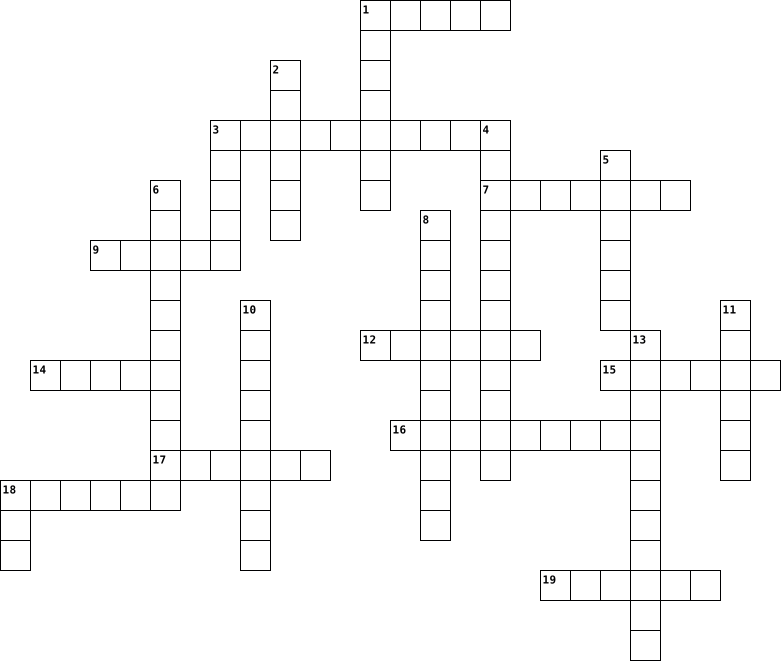
Across
- volcanoes erupt from this substance called "Lava'. Once the magma is ready to be set free it causes the volcano to erupt.
- Boundary, A convergent boundary is an area on Earth where two or more plates collide.
- The mantle lies between Earth's dense, super-heated core and its thin outer layer, the crust
- Subduction as the process by which tectonic plates sink into Earth's mantle.
- “Crust” describes the hard surface shell coving the mantle of our planet.
- Tectonics, a theory explaining the structure of the earth's crust.
- As the magma flows out, it cools, hardening to form new crust, This fills in the gap created by the Tectonic plates.
- Boundary, A divergent boundary occurs when two tectonic plates move away from each other
- The researchers believe this shift is the earliest proof that modern like plate motion happened between two to four billion years ago.
- inside the crust and core it is pitch solid.
- A tectonic plate can be a massive, irregularly shaped solid rock.
Down
- Earth has many different layers such as, the mantle, Core, and crust.
- When two plates come in contact with each other through plate tectonics, scientists can use the density of the plates to predict what will happen.
- Earth's core is the very hot and dense center of our planet.
- The lower boundary of a plate depends on the temperature of the mantle material.
- Once a tectonic plate Alters is shifts something in or out of the earth.
- The continents are made within the plates.
- a process that takes place at convergent boundaries of tectonic plates.
- Boundary, Transform boundaries are places where plates slide sideways past each other.
- in earth, Earth's shell cracked into these plates.
- Earthquakes occur along lines, cracks in Earth's crust where tectonic plates meet.
- floor, Bathymetry, the shape of the ocean floor, is largely a result of a process called plate tectonics.
22 Clues: The continents are made within the plates. • inside the crust and core it is pitch solid. • in earth, Earth's shell cracked into these plates. • Earth's core is the very hot and dense center of our planet. • A tectonic plate can be a massive, irregularly shaped solid rock. • Tectonics, a theory explaining the structure of the earth's crust. • ...
Crossword Puzzle for Plate Tectonics 2020-10-28

Across
- volcanoes erupt from this substance called "Lava'. Once the magma is ready to be set free it causes the volcano to erupt.
- Boundary, A convergent boundary is an area on Earth where two or more plates collide.
- The mantle lies between Earth's dense, super-heated core and its thin outer layer, the crust
- Subduction as the process by which tectonic plates sink into Earth's mantle.
- “Crust” describes the hard surface shell coving the mantle of our planet.
- Tectonics, a theory explaining the structure of the earth's crust.
- As the magma flows out, it cools, hardening to form new crust, This fills in the gap created by the Tectonic plates.
- Boundary, A divergent boundary occurs when two tectonic plates move away from each other
- The researchers believe this shift is the earliest proof that modern like plate motion happened between two to four billion years ago.
- inside the crust and core it is pitch solid.
- A tectonic plate can be a massive, irregularly shaped solid rock.
Down
- Earth has many different layers such as, the mantle, Core, and crust.
- When two plates come in contact with each other through plate tectonics, scientists can use the density of the plates to predict what will happen.
- Earth's core is the very hot and dense center of our planet.
- The lower boundary of a plate depends on the temperature of the mantle material.
- Once a tectonic plate Alters is shifts something in or out of the earth.
- The continents are made within the plates.
- a process that takes place at convergent boundaries of tectonic plates.
- Boundary, Transform boundaries are places where plates slide sideways past each other.
- in earth, Earth's shell cracked into these plates.
- Earthquakes occur along lines, cracks in Earth's crust where tectonic plates meet.
- floor, Bathymetry, the shape of the ocean floor, is largely a result of a process called plate tectonics.
22 Clues: The continents are made within the plates. • inside the crust and core it is pitch solid. • in earth, Earth's shell cracked into these plates. • Earth's core is the very hot and dense center of our planet. • A tectonic plate can be a massive, irregularly shaped solid rock. • Tectonics, a theory explaining the structure of the earth's crust. • ...
Volcanoes/Earthqaukes Crossword puzzle 2022-01-14

Across
- The process that creates new sea floor as plates move away from each other at the mid-ocean ridges
- A weak spot in the middle of a tectonic plate where magma surfaces; forms a volcano (ex: Hawaii & Yellowstone)
- A plate boundary where two plates move past each other in opposite directions
- the theory that the lithosphere is broken up into large plates that move and then rejoin; considered the unifying theory of geology
- a series of volcanoes formed at a subduction zone
- region where oceanic plates sink down into the asthenosphere
- A long trough bounded by two or more faults
- An earthquake that occurs after a larger earthquake in the same area
- a break in the earths crust
- A plate boundary where two plates move toward each other.
- rising of regions of the Earth's crust to higher elevations
Down
- A tectonic process thatresults when plates converge and one plate forces the other down into Earth's mantle. As a result, the subducted plate eventually undergoes partial melting
- a point on the Earth's surface directly above an earthquake
- a hole for the escape of gas, air, or liquid
- Sections of the Earth's crust that move due to convection currents.
- The idea is that continents have moved and are still moving slowly across the Earth's surface.
- the region where two tectonic plates are in contact
- The shaking that results from the movement of rock beneath Earth's surface
- A deep valley that forms where two plates move apart
- Large movable segments of the lithosphere
- A plate boundary where two plates move away from each other.
21 Clues: a break in the earths crust • Large movable segments of the lithosphere • A long trough bounded by two or more faults • a hole for the escape of gas, air, or liquid • a series of volcanoes formed at a subduction zone • the region where two tectonic plates are in contact • A deep valley that forms where two plates move apart • ...
Crossword 2021-03-11
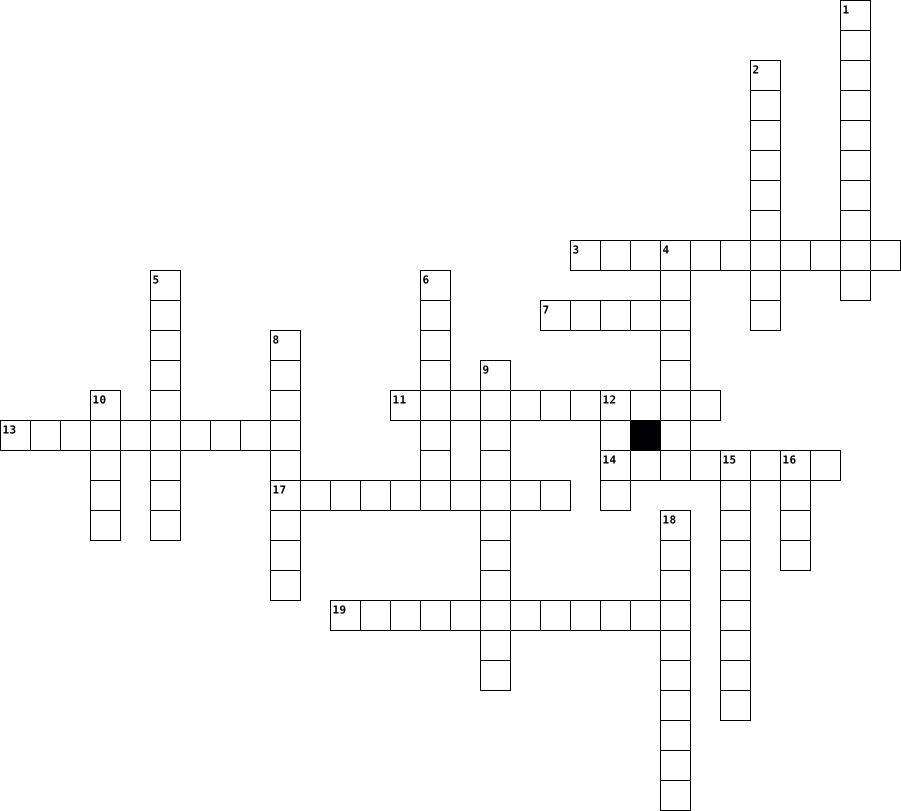
Across
- where one plate subduction under another
- tectonics, theory that describes the movement and interaction of these plates
- an extinct genus reptile
- processes, describes the natural forces
- zones, a consequence of plate tectonics
- boundary, when oceanic plate plunges under another
- vents, opening in the sea floor where heated water flows
Down
- boundary, a boundary between two plates that are converging
- property of being polar
- trench, long, deep trench which forms along the boundary
- boundary, between two lithospheric plates that are moving apart
- reversals, a change in a planets magnetic field
- boundary, formed when two plates collide
- drift, hypothesis formed by a German scientist
- layers, a thin layer of flowing gas or liquid
- valleys, very deep valleys at center of mid-ocean ridge
- boundary, boundary between two plates that are sliding past each other
- of fire, a region where volcanoes and earthquakes are active
- one who study earth
19 Clues: one who study earth • property of being polar • an extinct genus reptile • processes, describes the natural forces • zones, a consequence of plate tectonics • where one plate subduction under another • boundary, formed when two plates collide • layers, a thin layer of flowing gas or liquid • drift, hypothesis formed by a German scientist • ...
Earth Science Unit 1 2025-03-23

Across
- Outermost layer of Earth
- Tectonic plates collide
- Tectonic plates slide past eachother
- mass/volume
- Earthquakes and volcanoes occur most at tectonic plate _____
- supercontinent that existed around 300 million years ago
- the circular motion of magma in the mantle from varying temperatures and densities
- Earth layer made of solid metal
- Tectonic plates drift apart
- amount of space taken up
Down
- amount of particles
- Name for circular formation of earthquakes and volcanoes around the Pacific Plate
- the substance with the lower density will
- Type of tectonic plate/crust that is less dense and holds land
- protects the earth from solar radiation, and is formed from the outer core
- Type of tectonic plate/crust that is more dense and holds oceans
- the substance with the higher density will
- middle layer of earth made of magma
- Earth layer made of moving liquid metal
19 Clues: mass/volume • amount of particles • Tectonic plates collide • Outermost layer of Earth • amount of space taken up • Tectonic plates drift apart • Earth layer made of solid metal • middle layer of earth made of magma • Tectonic plates slide past eachother • Earth layer made of moving liquid metal • the substance with the lower density will • ...
Plate tectonics 2017-02-26

Across
- Types of waves produced by an earthquake
- Individual sections of the earths crust that fit together like a jigsaw puzzle
- Molten rock under the earths surface
- A plate boundary where two plates are moving towards each other
- A volcano not currently erupting and not likely to in the future
- The point at a converging boundary where one plate is pushed underneath the other
- The formation of mid-ocean ridges underwater
- The archeological find that showed the continents were once joined and lead scientists to the theory of continental drift
- Instrument used to measure the magnitude of earthquakes
Down
- A long and high sea wave caused by tectonic activity
- A plate boundary where two plates are moving away from each other
- The surface of the earth broken up into tectonic plates
- A volcano that is neither active or extinct
- The supercontinent Australia was once a part of
- A plate boundary where two plates are sliding past each other in opposite directions.
- The section of the Earth's mantle which tectonic plates float on top of
- Scale used to describe the magnitude of earthquakes
- Where a tectonic plate is shifted up
- Fine material thrown out of a volcano
19 Clues: Molten rock under the earths surface • Where a tectonic plate is shifted up • Fine material thrown out of a volcano • Types of waves produced by an earthquake • A volcano that is neither active or extinct • The formation of mid-ocean ridges underwater • The supercontinent Australia was once a part of • Scale used to describe the magnitude of earthquakes • ...
Volcano facts crossword puzzle 2025-02-14

Across
- a powdery residue left after the burning of a substance
- fire-born
- a long horseshoe-shaped seismically active belt of earthquake epicenters, volcanoes, and tectonic plate boundaries that fringes the Pacific basin
- a specific area where two tectonic plates meet
- a special class of mountains
- a large hole of hot magma rising from deep within the Earth
- Molten rock that is below the earth's surface
- a relatively thin part of the earth's crust which underlies the ocean basins
- a large volcano that erupted on the seafloor & emerged above sea level, occurring in ocean basins or ocean ridges
- a destructive mudflow on the slopes of a volcano
- the rigid outer part of the earth that is found in the crust & upper mantle of earth
- a vent in the earth's crust were lava, ash & gases escape
Down
- an oceanic tectonic plate that lies beneath the Pacific Ocean
- when an oceanic plate runs into a continental plate & slides beneath it
- the upper layer of the earth's mantle that is below the lithosphere
- a destructive dense mass of very hot ash, lava fragments & gases that are ejected explosively from a volcano & flow downslope of great speed
- a thick part of the earth's crust that forms large landmasses its way older & more complex than the oceanic crust
- when plates move towards each other & collide
- a sudden motion or trembling in the earth caused by the release of slowly accumulated energy
- a hot molten or semifluid rock erupted from a volcano
20 Clues: fire-born • a special class of mountains • Molten rock that is below the earth's surface • when plates move towards each other & collide • a specific area where two tectonic plates meet • a destructive mudflow on the slopes of a volcano • a hot molten or semifluid rock erupted from a volcano • a powdery residue left after the burning of a substance • ...
E&E Science - Plates and schist 2022-10-27

Across
- formed from ‘more liquid-y’ lava that flows further away from the eruption before it hardens; because of this, it has sides with a shallow, broad profile - you know, kinda like a shield
- -true or false- the sciences are by far the most interesting subjects you get to study in school
- process of one plate being smooshed up under another plate, and results in the oceanic crust of the bottom plate being recycled back down into the earth’s mantle
- theory explaining how lithospheric plates move around and smoosh into/under/away from each other and form the geologic features we see (such as mountains, sea trenches, volcanoes, continents and oceans)
- plate boundary where two plates are moving against each other
- this type of crust exists over the entire planet, including under continents, but we mainly think of it as the type of crust underneath oceans
- plate boundary where two plates are smooshing up against each other (i.e., the plates are converging)
- often formed at convergent boundaries where both plates have continental crust, and the two converging portions of continental crust push up against each other
Down
- a cone shaped volcano made up of layers of hardened lava, and the most common type of volcano
- plate boundary where two plates are moving away from each other (i.e., the plates are diverging)
- caused by the sudden release of energy in the earth’s crust, and occur most frequently at plate boundaries
- occurs at divergent plate boundaries; results in an oceanic ridge where new oceanic crust is formed
- kind of like the opposite of an oceanic ridge (or ‘mid-ocean ridge’), it forms at convergent plate boundaries where oceanic crust is subducted back down into the mantle
- formed at weak spots in the earth’s crust, where magma is pushed up and out onto the earth’s surface
- outermost layer of the earth’s crust, it forms the continents and continental shelves and is less dense than oceanic crust
- dome shaped structure that builds up because thick lava flows out slow and hardens relatively quickly after it emerges, they are particularly common at convergent plate boundaries
- -true or false- the earth’s crust has varying thickness, ranging from approximately 10 km thick on the ocean floor, up to 70 km thick at Mount Everest
- a break or crack in the earth’s crust, often formed due to two plates smooshing against each other
18 Clues: plate boundary where two plates are moving against each other • a cone shaped volcano made up of layers of hardened lava, and the most common type of volcano • plate boundary where two plates are moving away from each other (i.e., the plates are diverging) • -true or false- the sciences are by far the most interesting subjects you get to study in school • ...
plate tectonics 2021-12-09

Across
- *BLANK* plate material is denser and thinner
- *blank* boundaries move alongside each other
- *blank* material makes up earth's plates
- *blank* boundaries are when plates move away from each other
- The *blank* formed because the Pacific plate is made of oceanic rock, and
- each other, resulting in the formation of the
- when one plate moves under the other it *BLANKS*
- Two *BLANK* cells are moving upward and
Down
- *Blank* plate material is less dense and thicker
- *BLANK* and volcano patterns often line up with player boundaries
- *Blank*are formed by convergent boundaries with no subduction.
- *BLANK* rock shows where plates are moving away from each other
- boundaries with subduction make volcanoes
- the North American plate.
- and volcanoes.
15 Clues: and volcanoes. • the North American plate. • Two *BLANK* cells are moving upward and • *blank* material makes up earth's plates • boundaries with subduction make volcanoes • *BLANK* plate material is denser and thinner • *blank* boundaries move alongside each other • each other, resulting in the formation of the • *Blank* plate material is less dense and thicker • ...
Final Exam Revision Crossword 2022-05-31

Across
- la cereza
- cangrejo
- the plate ____ pie and chips
- freír
- hervir
- el pelador
- atún
- el rallador
- congelador
- fish and chips is ______ mushy peas
Down
- pollo
- horno
- hornear
- a la parilla
- cortar
- al vapor
- sartén
- la fresa
- the plate ____ of fish and chips
- bacalao
- lavabo
- anguila
22 Clues: atún • pollo • horno • freír • cortar • sartén • hervir • lavabo • hornear • bacalao • anguila • cangrejo • al vapor • la fresa • la cereza • el pelador • congelador • el rallador • a la parilla • the plate ____ pie and chips • the plate ____ of fish and chips • fish and chips is ______ mushy peas
Collagraph Printing: Useful Terms 2016-05-10

Across
- the actual picture made from the printmaking process
- the feel or appearance of a surface
- a device that applies pressure to a a sheet of paper and an inked printing plate
- ink is forced into lines on a plate and wiped from the flat surface. The lines are printed.
- a varnish used to seal a plate
- when lines are cut into a plate
- colouring material composed of a pigment, a binder and a vehicle
Down
- the process of designing and producing prints
- a printing plate built up by different materials and textures
- a raised design on a flat surface is printed onto paper
- the number of a print in an edition
- a flat material with a design on its surface, used to make prints
- making art by sticking materials to a surface
- a set of identical prints, numbered and signed
14 Clues: a varnish used to seal a plate • when lines are cut into a plate • the number of a print in an edition • the feel or appearance of a surface • the process of designing and producing prints • making art by sticking materials to a surface • a set of identical prints, numbered and signed • the actual picture made from the printmaking process • ...
End of Unit Test Review 2024-10-14

Across
- a body of water underground
- man made or produced by humans
- plate boundaries that move away from each other
- most essential characteristic for life to exist
- the concept that the oldest soil layers are at the bottom and the most recent are at the top
- when an oceanic plate subducts under a continental plate
Down
- the largest planet in our solar system
- a land area that drains water to a common body of water
- the object in our solar system with the most mass
- the force that governs the motion of our solar system
- result of 2 continental plate tectonics moving towards each other
- plate boundaries that slide past each other
- plate boundaries that move towards each other
13 Clues: a body of water underground • man made or produced by humans • the largest planet in our solar system • plate boundaries that slide past each other • plate boundaries that move towards each other • plate boundaries that move away from each other • most essential characteristic for life to exist • the object in our solar system with the most mass • ...
American English 2024-08-25

Across
- football
- lorry
- chips
- tin
- holiday
- wardrobe
- petrol
- motorway
- lift
- biscuit
- curtain
- pavement
- rubbish
Down
- film
- taxi
- toilet
- torch
- crisps
- cooker
- trousers
- post
- garden
- rubber
- sweet
- queue
- -floor = first floor
- jumper
- underground
- -plate = number plate
- autumn
30 Clues: tin • film • taxi • post • lift • torch • lorry • chips • sweet • queue • toilet • crisps • cooker • garden • rubber • petrol • jumper • autumn • holiday • biscuit • curtain • rubbish • football • trousers • wardrobe • motorway • pavement • underground • -floor = first floor • -plate = number plate
Chapter 7 Vocab 2021-10-21

Across
- Is the process by which new oceanic crust forms along a mid-ocean ridge and older oceanic crust moves away.
- Which suggested that continents are in constant motion on the surface of earth.
- A state in which magnetized objects would reverse direction and orient themselves to point south.
- A state in which magnetized objects, such as compass needles, will orient themselves to point north.
- Moutain ranges in the middle of the ocean.
- States that earths surface is made of rigid slabs of rock, or plates that move with respect to each other.
- Rising mantle material at mid ocean ridges creates the potential for plates to move away from the ridge with a force called.
- forms where two plates slide past each other.
Down
- Continents were once a part of a supercontinent called.
- form where two plates collide.
- Occurs and the magnetic field reverses direction.
- The denser plate sinks below the more buoyant plate in a process called.
- Forms where two plates separate when the seafloor spreads at a mid ocean ridge, lava erupts, cools, and forms new oceanic crust.
- As a slab sinks, it pulls on the rest of the plate with a force called.
- The circulation of material caused by differences in temperature and density.
- The cold and rigid outermost rock layer is called the.
16 Clues: form where two plates collide. • Moutain ranges in the middle of the ocean. • forms where two plates slide past each other. • Occurs and the magnetic field reverses direction. • The cold and rigid outermost rock layer is called the. • Continents were once a part of a supercontinent called. • As a slab sinks, it pulls on the rest of the plate with a force called. • ...