
plate Crossword Puzzles
Plate Tectonics 2024-01-24

Across
- The theory that pieces of Earth’s lithosphere are in constant motion, driven by convection currents in the mantle.
- A deep valley that forms where two plates move apart.
- A plate boundary where two plates move past each other in opposite directions.
Down
- A plate boundary where two plates move toward each other.
- A well- tested concept that explains a wide range of observations.
- A plate boundary where two plates move away from eachother.
- A section of the lithosphere that slowly moves over the asthenosphere, carrying pieces of continental and oceanic crust.
- A break in Earth’s crust where masses of rock slip past each other.
8 Clues: A deep valley that forms where two plates move apart. • A plate boundary where two plates move toward each other. • A plate boundary where two plates move away from eachother. • A well- tested concept that explains a wide range of observations. • A break in Earth’s crust where masses of rock slip past each other. • ...
In the kitchen 2017-12-17

Across
- we usually have hot drinks, like tea or coffee, in it
- we wash the dishes in it
- you eat with it, not a spoon
- a flat thing, you put your food on it
- you eat soup from it
- you sit on
Down
- we fry things in it
- you eat soup with it
- we boil water in it (to make tea or else)
- you cut things with it
- we sit at it when we eat
- a big plate, often oval
- you usually have juice in it (or water,or milk)
13 Clues: you sit on • we fry things in it • you eat soup with it • you eat soup from it • you cut things with it • a big plate, often oval • we wash the dishes in it • we sit at it when we eat • you eat with it, not a spoon • a flat thing, you put your food on it • we boil water in it (to make tea or else) • you usually have juice in it (or water,or milk) • ...
Pesach Crossword 2022-04-06

Across
- what korban does the Zroah represent?
- Were we were freed from
- Dessert/Zafon
- What do we eat less than a Kazis of?
- We can't eat this on Pesach
Down
- WHat does the Beitzah represent?
- How many cups of wine do we drink at the seder?
- On the 1st and 2nd night of pesach
- What on the seder plate represents the Mortar?
- round flat breads eaten on pesach
- What we use to conduct our seder
- The days in between the 1st and 2nd days
- Seder plate
13 Clues: Seder plate • Dessert/Zafon • Were we were freed from • We can't eat this on Pesach • WHat does the Beitzah represent? • What we use to conduct our seder • round flat breads eaten on pesach • On the 1st and 2nd night of pesach • What do we eat less than a Kazis of? • what korban does the Zroah represent? • The days in between the 1st and 2nd days • ...
la comida 2023-04-28

Across
- salad
- spoon
- they have
- butter
- dinner
- plate
Down
- onion
- she eats
- apple
- you serve
- salt
- we drink
- ham
13 Clues: ham • salt • onion • apple • salad • spoon • plate • butter • dinner • she eats • we drink • you serve • they have
Tsunami Warning System 2024-10-02

Across
- Plate motion that results in a very strong earthquake and causes _____ motion of the seafloor can cause tsunamis
- Modifications are made to a design based on evaluated results. Designs are modified in order to be tested again. This is called an
- boundaries, where one plate subducts under the other
- Tsunami warning systems rely on data from different types of ____ to generate accurate and timely warnings
- The primary cause of tsunamis is _____
- Engineers read with ____ to understand relevant background information that impacts their work
- define the engineering problem
- Earthquakes are due to movement along the three types of plate boundaries: convergent, divergent, and _____
Down
- earthquakes must be above ____ 7.0 to generate a tsunami.
- Engineers need to understand the problem they are trying to solve so they can design an ___ solution
- Tsunamis cause lots of damage to places on
- Tsunamis are usually caused by _____ under the water
- Scientific ____ is the process of sharing scientific arguments, explanations, ideas, or data with an audience.
- Engineers design physical objects and processes that try to solve ____ problems.
- engineers sometimes use models to ____ their designs.
- research is necessary when solving an engineering problem.
- A tsunami is a type of large, destructive ocean wave caused by a sudden shift in the __.
- every model has...
18 Clues: every model has... • define the engineering problem • The primary cause of tsunamis is _____ • Tsunamis cause lots of damage to places on • Tsunamis are usually caused by _____ under the water • boundaries, where one plate subducts under the other • engineers sometimes use models to ____ their designs. • earthquakes must be above ____ 7.0 to generate a tsunami. • ...
Earthquake and Volcano Study Aid 2019-02-27

Across
- small, steep-sided volcanoes that erupt gas-rich, basaltic lavas
- waves that cause particles in the ground to move in a push-pull motion similar to a coiled spring
- the vibrations in the ground that result from movement along breaks in Earth’s lithosphere
- Scientists that study earthquakes
- graphical illustration of seismic waves
- volcanoes that are not associated with plate boundaries
- common along divergent plate boundaries and oceanic hotspots. Shield volcanoes are large with gentle slopes of basaltic lavas
- - a liquid’s resistance to flow
- a break in Earth’s lithosphere where one block of rock moves toward, away from, or past another
- waves that cause particles in the ground to move up and down in a rolling motion
- molten rock below Earth’s surface
Down
- the location on Earth’s surface directly above the earthquake’s focus
- large, steep-sided volcanoes that result from explosive eruptions of andesitic and rhyolitic lava and ash along convergent plate boundaries
- measures and records ground motion and can be used to determine the distance seismic waves travel
- energy that travels as vibrations on and in Earth
- waves that are slower than primary waves and cause particles to move up and down at right angles relative to the direction the wave travels
- molten rock that erupts onto Earth’s surface
- tiny particles of pulverized volcanic rock and glass
- a location inside Earth where rocks first move along the fault, creating seismic waves
- a vent in Earth’s crust through which melted- or molten -rock flows
20 Clues: - a liquid’s resistance to flow • Scientists that study earthquakes • molten rock below Earth’s surface • graphical illustration of seismic waves • molten rock that erupts onto Earth’s surface • energy that travels as vibrations on and in Earth • tiny particles of pulverized volcanic rock and glass • volcanoes that are not associated with plate boundaries • ...
Larkin Schwartz (D1-3) 2023-02-08

Across
- a cup like hollow that forms at the top of a volcano around the vent
- idea that the earth's surface is broken into plates
- the boundary where plates are sliding past each other
- the boundary where plates are colliding
- the point on earth's surface directly above the focus
- hot, molten rock, below the earth's surface
- a vibration that spreads out away from a focus when an earthquake happens
- the idea that many kinds of rocks form flat, horizontal layers
Down
- heat from below the earth's surface
- the boundary where plates are moving apart from each other
- a very hot part of the earth's mantle, where magma can melt through a plate moving about it
- the name for the large super continent
- giant ocean waves formed when an earthquake occurs under the ocean
- magma that reaches the earths surface and flows out of a vent
- earth's solid, rocky surface containing the continents and ocean floor
- the amount of energy released by an earthquake
- a huge crack in the earth's crust
- the idea that a super continent split apart into pieces, the continents, which drifted in time to their present location
- the point in earth where an earthquake actually starts
- the sliding of a denser ocean plate under another plate when they collide
- a sensitive device that detects the shaking of earth's crust during an earthquake
- the central opening in a volcanic area through which magma may flow
22 Clues: a huge crack in the earth's crust • heat from below the earth's surface • the name for the large super continent • the boundary where plates are colliding • hot, molten rock, below the earth's surface • the amount of energy released by an earthquake • idea that the earth's surface is broken into plates • the boundary where plates are sliding past each other • ...
D1-3 crossword by Tony M. 2023-02-08

Across
- the idea that many kinds of rocks form flat, horizontal layers
- hot, molten rock below the Earth's surface
- the point on Earth's surface directly above the focus
- the idea that the Earth's surface is broken into plates
- a cup like hollow that forms at the top of a volcano around the vent
- a sensitive device that detects the shaking of Earth's crustduring an earthquake
- the idea that a super continent split apart into pieces, the continents, which drifted in time to there current location
- heat from below the Earth's surface
- the boundary where plates are coliding
- the boundary where plates are sliding past eachother
Down
- a very hot part of Earths mantle, where magma can melt through a plate moving above it
- a vibration that spreads out away from a focus when an earthquake happens
- Earth's solid, rocky surface containing the continents and ocean floor
- the boundary where plates are moving past each other
- giant ocean waves formed when an earthquake occurs under the ocean floor
- magma that reaches the Earth's surface and flows out of a vent
- the amount of energy released by an earthquake
- the point in earth where an earthquake actually starts
- the central opening in a volcanic area through which magma may flow
- the name for the large super continent
- the sliding of a denser ocean plate under another plate when they collide
- a huge crack in the Earth's crust
22 Clues: a huge crack in the Earth's crust • heat from below the Earth's surface • the name for the large super continent • the boundary where plates are coliding • hot, molten rock below the Earth's surface • the amount of energy released by an earthquake • the boundary where plates are moving past each other • the boundary where plates are sliding past eachother • ...
Plate Tectonics and the Rock Cycle 2021-06-03

Across
- boundary a place where two plates slip past each other, moving in opposite directions
- Rocks forming due to heat and pressure
- One plate going under another plate
- Rock Formed from compaction and cementation of sediments
- crust the relatively thick part of the earth's crust that forms the large landmasses.
- Rock Formed from the crystallization of magma
- The breaking down of rocks
- The layer of hot, solid material between Earth's crust and core.
- The process of moving broken rock (sediment) from one place to another
- Going in different directions
- The soft layer of the mantle on which the tectonic plates move
- an important part of something, a characteristic
- A naturally occurring solid mixture of one or more minerals or organic material
- Earth's outermost layer.
- crust thinner, more dense, younger crust making ocean floor
Down
- Valley A deep valley that forms where two plates move apart
- ridge The longest underwater mountain chain in the world.
- Includes sand, pebbles, bones, and shells
- A break in the earth's crust
- coming together
- drift The hypothesis that the continents slowly move across Earth's surface.
- tectonic A theory stating that the earth's surface is broken into plates that move.
- one thickness above or between other thicknesses
- Center of the earth
- proof
- Layers found in sedimentary rock
- A rigid layer made up of the uppermost part of the mantle and the crust.
- Being forced to the surface
- Cycle The process in which rocks undergo change
- Rock Formed from heat and pressure
- A deep, steep-sided canyon in the ocean floor.
31 Clues: proof • coming together • Center of the earth • Earth's outermost layer. • The breaking down of rocks • Being forced to the surface • A break in the earth's crust • Going in different directions • Layers found in sedimentary rock • Rock Formed from heat and pressure • One plate going under another plate • Rocks forming due to heat and pressure • ...
Rock Transformations Vocab 2023-12-04

Across
- anything that has mass and takes up space
- rock the rock type formed when magma cools and becomes solid
- the process by which all the rock formations of a region are pushed up due to plate motion
- a small part that is meant to show what the whole is like
- everything made of rock: magma, sediment, and all rock types
- the process of sediment being glued together
- a diagram that shows what the inside of something looks like
- the process of sediment being buried and pressed together
Down
- the place where two plates meet
- hot liquid rock below the surface of Earth
- the rock type formed when heat or pressure deep underground changes existing rock
- one of the many different types of matter that make up rocks
- the rock type formed when sediment is pressed and glued together
- the movement of sediment from one place to another, often caused by wind or flowing water
- small pieces of rock
- the process by which rock material moves under Earth's outer layer and into the mantle due to plate motion
- the process of rock breaking down into smaller pieces due to wind or moving water
- formation a region of rock that formed together as a single rock type
- the ability to make things move or change
- one of the very large sections of hard, solid rock that make up Earth’s outer layer
20 Clues: small pieces of rock • the place where two plates meet • anything that has mass and takes up space • the ability to make things move or change • hot liquid rock below the surface of Earth • the process of sediment being glued together • a small part that is meant to show what the whole is like • the process of sediment being buried and pressed together • ...
1st Semester Vocab 2023-12-20

Across
- this is happening at the mid ocean ridge
- this is where plates collide
- the red house
- the blue house
- the green house
- a change in speed or direction
- vertical columns on the periodic table
- area where electrons live
- unit used to measure force
- the purple house
- our mascot
- negatively charge particle
- neutral particle
- shows the elevations of an area
- matter cannot be ______ or destroyed
- this is where plates slide
- electron on the outer energy level
- center of an atom
- this will cause an object to accelerate
- connects all areas of equal elevation
- where two continental plates divide
Down
- where an oceanic plate sinks under a continental plate
- the scientist who proposed that the continents are moving
- the large number before a chemical forumula
- where two plates slide by each other
- positively charged particle
- caused by two continental plates converging
- this is where plates divide
- how long do you keep your warm up sheets?
- the smallest unit of an element
- a push or a pull
- horizontal rows on the periodic table
- bulldog build, bred for ______
- deep area where one plate subducts under another
- the small number in a chemical formula
- the theory that the continents are moving
- an objects speed and direction
- this will cause an object to continue moving the way it was
- the orange house
- the black house
40 Clues: our mascot • the red house • the blue house • the green house • the black house • a push or a pull • the purple house • neutral particle • the orange house • center of an atom • area where electrons live • unit used to measure force • negatively charge particle • this is where plates slide • positively charged particle • this is where plates divide • this is where plates collide • ...
Vocab 2024-04-15

Across
- New oceanic crust is formed as Tectonic plates pull apart and magma rises
- Large, Rigid pieces of Earth's lithosphere that move and interact with each other along plate boundaries
- Fractures or zones of weakness in the earth's crust
- A group of the same species living in the same area
- The semi-fluid layer of the mantle where convection currents happen
- Formed as a result of high temperature and pressure deep within earth changing a rock that already existed
- Sudden events that led to a mass Extinction
- An opening in the earth's crust through which molten rock is pushed out and creates new rock
- Located between the mantle and the outer core
- Forms after weathering and erosion when sediment compact and cement
- Tectonic plates move toward each other, usually form new mountains and volcanoes
- Hot material rises, cooler material sink, it drives plate tectonics plates
Down
- Rock formed when lava or magma cools and hardens
- Extinction events that occur over a longer time
- Name of the ancient supercontinent when it as all one landmass
- where Tectonic plates slide past each other, Causes earthquakes
- Instruments used to measure and record seismic waves
- Formed at plate boundaries usually when plates collide
- Tectonic plates move away from each other, usually Forms new crust and rift vallys
- Deep, elongated depressions in the ocean, often associated with subduction zones
- Includes the crust and upper part of the mantle where convection currents happen
21 Clues: Sudden events that led to a mass Extinction • Located between the mantle and the outer core • Extinction events that occur over a longer time • Rock formed when lava or magma cools and hardens • Fractures or zones of weakness in the earth's crust • A group of the same species living in the same area • Instruments used to measure and record seismic waves • ...
Landscapes and Landforms Terminology 2024-03-27

Across
- a series of waves in a water body caused by the displacement of a large volume of water, generally in an ocean or a large lake
- The plate boundary where two plates are moving away from
- The name of the giant supercontinent that used to exist
- other
- A large body of enclosed water
- The plate boundary where two plates are moving toward
- An area of land completely surrounded by water
- The process of plates moving under the Earth’s surface
- The plate boundary where two plates are moving past each
- a mixture of molten and semi-molten rock found beneath the surface of the Earth
- The process of sediment being added to a landform
- The low area of land between two hills or mountains
Down
- An area of high land of more than 600 metres in height
- A large natural stream of water flowing in a channel to the
- The process of wearing down land
- A natural physical feature found on the surface of the Earth
- a large hole in the side of a hill, cliff, or mountain, or underground:
- The place where two tectonic plates meet
- The landscape that occurs when the land meets the sea
- The breaking down of rocks and soil by the weather
- An area of land with many distinct features and landforms
- a geological landform consisting of a steep and often vertical column or columns of rock in the sea near a coast, formed by wave erosion
- other
23 Clues: other • other • A large body of enclosed water • The process of wearing down land • The place where two tectonic plates meet • An area of land completely surrounded by water • The process of sediment being added to a landform • The breaking down of rocks and soil by the weather • The low area of land between two hills or mountains • ...
Earth Systems 2024-04-12

Across
- where tectonic plates slide past each other, causing earthquakes
- Deep, elongated depressions in the ocean, often associated with subduction zones
- Large, rigid pieces of the earth's lithosphere that move and interact with each other along plate boundaries
- formed at plate boundaries when plates collide
- new oceanic crust is formed as when it was all one land mass plates pull apart and magma rises
- Hot material rises cool material falls It drives plate tectonics
- Extinction events that occur over a long period of time
- Includes the crust and the upper part of the mantle, and is divided into tectonic plates
- Formed after weathering and erosion when sediments compacts and cement
Down
- An opening to the Earth's crust which through molten rock is pushed out and creates new rock
- Tectonic plates move towards each other, usually forms mountains and volcanoes
- tectonic plates move away from each other, usually forms new crust and rift valleys
- Sudden events that lead to mass extinction
- Fractures or zones of weakness in the earths crust
- Instruments used to measure and record seismic waves
- A group of the same species living in the same place
- Name of the ancient supercontinent
- located between the mantle and the outer core
- The semi-fluid layer of the mantle where convection currents happen
- Formed as a result of high temperature and pressure deep within the earth changing a rock that already existed
- Rock form when lava or magma cools and hardens
21 Clues: Name of the ancient supercontinent • Sudden events that lead to mass extinction • located between the mantle and the outer core • formed at plate boundaries when plates collide • Rock form when lava or magma cools and hardens • Fractures or zones of weakness in the earths crust • Instruments used to measure and record seismic waves • ...
Restless Earth Vocab 2024-04-12

Across
- tectonic plates move away from each other, usually forms mountains and volcanoes.
- hot material rises, cooler material sinks. It drives plate tectonics.
- located between the mantle and the outer core.
- name of the ancient supercontinent when it was all one landmass.
- Extinction Events that occur over a longer period of time.
- deep, elongated depressions in the ocean, often associated with subduction zones.
- new oceanic crust is formed as tectonic plates pull apart and magma rises.
- includes the crust and upper part of the mantle, and is divided into tectonic plates.
Down
- large, rigid pieces of Earth's lithosphere that move and interact with each other along plate boundaries.
- rock formed when lava or magma cools and hardens.
- forms after weathering and erosion when sediments compact and cement.
- formed at plate boundaries usually when plates collide.
- sudden events that led to a mass extinction
- tectonic plates move toward each other, usually forms mountains and volcanoes
- where tectonic plates SLIDE past each other. Causes earthquakes.
- formed as a result of high temperature and pressure deep within Earth changing a rock that already existed
- the semi-fluid layer of the mantle and where convection currents happen.
- a groups of the same species living in the same area
- instruments used to measure and record seismic waves
- an opening in the Earth's crust through which molten rock is pushed out and creates new rock.
- fractures or zones of weakness in the Earth's crust
21 Clues: sudden events that led to a mass extinction • located between the mantle and the outer core. • rock formed when lava or magma cools and hardens. • fractures or zones of weakness in the Earth's crust • a groups of the same species living in the same area • instruments used to measure and record seismic waves • formed at plate boundaries usually when plates collide. • ...
Restless Earth 2024-04-12

Across
- Where tectonic plates slide past each other. Causes earthquackes
- Deep, elongated depression in the ocean, often associated with subduction zones
- Name of the ancient supercontinent when all one landmass
- an opening in the earth's crust through which molten rock is pushed out and creates new rock
- located between the mantle and the outer core
- formed at plate boundaries usually when plates collide
- New oceanic crust if formed as tectonic plates pull apart and magma rises
- Insturments used to measure and record seismic waves
- Formed as a result of high temperature and pressure deep within earth changing a rock that already existed
- Tectonic plates move away from each other, usually Forms new crust and rift valleys
- tectonic plates move toward each other, usually forms mountains and valcanoes
Down
- plates large rigid pieces of the earth lithosphere that move and interact with each other along plate boundaries
- hot material rises, cooler meterals sink. It drives plate tectonics
- that occur over a longer time period
- Includes the crust and upper part of the mantle, and is divided into tectonic
- A group of the same species living in the same area
- Sudden Events That led to a mass extinction
- fractures or zones of weakness in the Earth's crust
- Rock formed when lava or magma cools and hardens
- The semi-fluid layer of the mantle where convection currents happen
- Forms after weathering and erosion when sediments compact and cement
21 Clues: that occur over a longer time period • Sudden Events That led to a mass extinction • located between the mantle and the outer core • Rock formed when lava or magma cools and hardens • A group of the same species living in the same area • fractures or zones of weakness in the Earth's crust • Insturments used to measure and record seismic waves • ...
Restless Earth Vocab 2024-04-12

Across
- Extinction events that occur over a longer time period
- Large, rigid pieces of the Earth's lithosphere that move and interact with each other along plate boundaries
- Name of the ancient supercontinent when it was all one landmass
- A group of the same species living in the same area]
- Sudden Events That Led To Mass Extinction
- Formed as a result of high temperature and pressure deep within the earth changing a rock that already existed
- Includes the crust and upper part of the mantle, and is divided into tectonic plates
- Hot material rises, cooler materials sink. It drives plate tectonics
- Forms after weathering and erosion when sediments compact and cement
- An opening in the Earth's crust through which molten rock is pushed out and creates new rock
- Where tectonic plates slide past each other. Causes Earthquakes
- Fractures or zones of weakness in the Earth's crust
Down
- Tectonic plates move away from each other, usually forms new crust and rift valleys
- Instruments used to measure and record seismic waves
- The semi-liquid layer of the mantle where convection currents happen
- New oceaninc crust is formed as tectonic plates pull apart and magma rises
- Located between the mantle and the outer core
- Formed at plate boundaries usually when plates collide
- Deep, elongated depressions in the ocean, often associated with subduction zones
- Rock formed when lava or magma cools and hardens
- Tectonic plates move toward each other, usually forms mountains and volcanoes
21 Clues: Sudden Events That Led To Mass Extinction • Located between the mantle and the outer core • Rock formed when lava or magma cools and hardens • Fractures or zones of weakness in the Earth's crust • Instruments used to measure and record seismic waves • A group of the same species living in the same area] • Extinction events that occur over a longer time period • ...
8th grade TCAP Review: Earth's Systems 2024-04-12

Across
- An opening in the Earth's crust through which molten rock is pushed out and creates new rock
- The semi-fluid layer of the mantle where convection currents happen
- Formed as a result of high temperature and pressure deep within earth changing a rock that already existed
- New oceanic crust is formed as tectonic plates pull apart and magma rises
- Deep, elongated depressions in the ocean, often associated with subduction zones
- Name of the ancient supercontinent when it was all one landmass
- Instruments used to measure and record seismic waves
- Includes the crust and upper part of the mantle, and is divided into tectonic plates
- Located between the mantle and the outer core
- Extinction events that occur over a longer time period
- Where tectonic plates SLIDE past each other. Causes earthquakes
- Sudden events that led to a mass extinction
Down
- Large, rigid pieces of the Earth's lithosphere that move and interact with each other along plate boundaries
- A group of the same species living in the same area
- Tectonic plates move toward each other, usually Forms mountains and volcanoes
- Forms after weathering and erosion when sediments compact and cement
- Hot material rises, cooler materials sink. It drives plate tectonics
- Rock formed when lava or magma cools and hardens
- Tectonic plates move away from each other, usually Forms new crust and rift valleys
- Formed at plate boundaries usually when plates collide
- Fractures or zones of weakness in the Earth's crust
21 Clues: Sudden events that led to a mass extinction • Located between the mantle and the outer core • Rock formed when lava or magma cools and hardens • A group of the same species living in the same area • Fractures or zones of weakness in the Earth's crust • Instruments used to measure and record seismic waves • Formed at plate boundaries usually when plates collide • ...
8th grade TCAP Review: Earth's Systems 2024-04-12

Across
- An opening in the Earth's crust through which molten rock is pushed out and creates new rock
- The semi-fluid layer of the mantle where convection currents happen
- Formed as a result of high temperature and pressure deep within earth changing a rock that already existed
- New oceanic crust is formed as tectonic plates pull apart and magma rises
- Deep, elongated depressions in the ocean, often associated with subduction zones
- Name of the ancient supercontinent when it was all one landmass
- Instruments used to measure and record seismic waves
- Includes the crust and upper part of the mantle, and is divided into tectonic plates
- Located between the mantle and the outer core
- Extinction events that occur over a longer time period
- Where tectonic plates SLIDE past each other. Causes earthquakes
- Sudden events that led to a mass extinction
Down
- Large, rigid pieces of the Earth's lithosphere that move and interact with each other along plate boundaries
- A group of the same species living in the same area
- Tectonic plates move toward each other, usually Forms mountains and volcanoes
- Forms after weathering and erosion when sediments compact and cement
- Hot material rises, cooler materials sink. It drives plate tectonics
- Rock formed when lava or magma cools and hardens
- Tectonic plates move away from each other, usually Forms new crust and rift valleys
- Formed at plate boundaries usually when plates collide
- Fractures or zones of weakness in the Earth's crust
21 Clues: Sudden events that led to a mass extinction • Located between the mantle and the outer core • Rock formed when lava or magma cools and hardens • A group of the same species living in the same area • Fractures or zones of weakness in the Earth's crust • Instruments used to measure and record seismic waves • Formed at plate boundaries usually when plates collide • ...
Restless Earth Practice 2024-04-12

Across
- Instruments used to measure and record seismic waves
- formed at plate boundaries usually when plates collide
- Included the crust and the upper part of the mantel, and is divided into tectonic plates
- Located between the mantle and the outer core
- form after weathering and erosion when sediments compact and cement
- A group of the same species living in the same area
- events that lead to mass extinction
- cycles Hot material rises, cooler materials sink. IT drives plate tectonics
- The semi-fluid layer of the mantle where convection currents happen
- Tectonic plates move toward each other usually forms mountains and volcanoes
- Fracture zones of weakness in the Earths crust
Down
- Tectonic plates slide past each other. Causes earthquakes
- Tectonic plates move away from each other, usually forms new crust and rift valleys
- Rock formed when lava or magma cools and hardens; crystals
- new oceanic crust is formed as tectonic plates pull apart and magma rises
- Extinction events that occur over a longer time period
- Formed as a result of high temperature and pressure deep within earth changing a rock that already existed
- Plates Large,rigid pieces of the Earths lithosphere that move and interact with each other along plate boundaries
- Deep, elongated depressions in the ocean, often associated with subduction zones
- An opening in the Earths crust through which molten rock is pushed out and creates new rocks
- Name of the ancient super continent when it was all one landmass
21 Clues: events that lead to mass extinction • Located between the mantle and the outer core • Fracture zones of weakness in the Earths crust • A group of the same species living in the same area • Instruments used to measure and record seismic waves • formed at plate boundaries usually when plates collide • Extinction events that occur over a longer time period • ...
Geography Exam Review (Crossword 1.0) 2025-01-14

Across
- when magma reaches the surface...
- long-period waves that move through the ocean in response to the sun and moon
- movement of when a continental plate collides with an oceanic plate
- another name for cyclones or typhoons
- the last step of the geographic inquiry process
- economic sector that focuses on the extraction of raw materials
- the name of the Canadian wind belt
- the acronym to remember the 5 Great Lakes
- why do some mountains have snow on them in the summer?
- the largest layer of the earth
- type of rock formed when magma solidifies deep in the Earth
- the part of the earth that is made up of rocks and minerals
- last name of the scientist who first proposed continental drift
Down
- the opposite of northwest
- when the Appalachians first formed
- plate at the southern tip of Chile
- type of rock formed when other rocks are changed by heat, pressure, and chemicals
- the average course or condition of the weather at a place usually over a period of years
- any "half" of the globe
- why does Vancouver receive more rain than Regina?
- the layer of earth that we live on
- the distance north and south of the equator measured in degrees
- most northern mountain range
- an imaginary line which is equally distant from the North and South poles
- the shaking of the earth's surface
25 Clues: any "half" of the globe • the opposite of northwest • most northern mountain range • the largest layer of the earth • when magma reaches the surface... • when the Appalachians first formed • plate at the southern tip of Chile • the layer of earth that we live on • the name of the Canadian wind belt • the shaking of the earth's surface • another name for cyclones or typhoons • ...
Yogesh's Crossword Puzzle Part 1 2026-02-03

Across
- This layer makes up 84% of earth's mass
- this feature forms when an oceanic and continental plate colide
- the liquid layer of the earth
- theory that continents drift apart
- This is the hottest and densest layer
- Process in which new oceanic crust is created, and it is where tectonic plates pull apart
- Hot liquid present in volcanos ready to erupt in many
- What oceanic crust is made of
- This heat transfer drives plate motion due to density differences
- This crust is made out of granite rock
- Type of boundary that go one way or the other
- The earth's study in magnetic polarity, as recorded in rocks that are high in iron
Down
- this feature forms when 2 ocean plates seperate
- this theory stated that continents once existed as one big continent
- Type of boundary that pushes together
- layer of rock that forms the outer shell at the top of earth's interior
- this crust is made of basaltic rock
- The least dense layer of the earth
- Scientist that proposed the continental Drift theory
- when earth's magnetic field flips, we call that phenomenon magnetic ________
- Process in which causes oceanic crust to melt, and the materials make new continental crust
- materials of high liquid in liquid form
- Type of plate boundary that both plates push apart
- A natural rapid shaking of the lithosphere caused by the release of energy
- what happens when 2 divergant continental plates start pulling apart.
25 Clues: the liquid layer of the earth • What oceanic crust is made of • The least dense layer of the earth • theory that continents drift apart • this crust is made of basaltic rock • Type of boundary that pushes together • This is the hottest and densest layer • This crust is made out of granite rock • This layer makes up 84% of earth's mass • ...
Vocab crossword 2022-03-07

Across
- oink oink
- untoasted
- fork
- glass
- chair
- cup
- table
- spoon
Down
- knife
- plate
- messy
- leaf
12 Clues: cup • fork • leaf • knife • plate • messy • glass • chair • table • spoon • oink oink • untoasted
Spanish Restaurant 2017-03-13

Across
- knife
- lunch
- fork
- plate
- I'm hungry
- cup
Down
- napkin
- table
- spoon
- bottle
- breakfast
- glass
12 Clues: cup • fork • knife • table • lunch • spoon • plate • glass • napkin • bottle • breakfast • I'm hungry
In the house 2013-05-30

Across
- / тарелка
- / раковина
- / ванная
- / холодильник
- / спальня
Down
- / чашка
- / мусорный бак
- / чайник
- / кухня
- / шкаф
- / стул
- / башня
12 Clues: / шкаф • / стул • / чашка • / кухня • / башня • / чайник • / ванная • / тарелка • / спальня • / раковина • / холодильник • / мусорный бак
Pedir la comida en un restaurante 2023-03-06

Across
- wine glass
- knife
- fork
- vase
- teacup
- tablecloth
Down
- teaspoon
- spoon
- plate
- napkin
- glass
- jug
12 Clues: jug • fork • vase • spoon • plate • knife • glass • napkin • teacup • teaspoon • wine glass • tablecloth
Week 8 2023-02-19

Across
- water
- equal
- war
- measurement
- vegetable
- not clear
Down
- neck
- canine
- state
- government
- plate
- mouth
12 Clues: war • neck • water • state • equal • plate • mouth • canine • vegetable • not clear • government • measurement
Rolo's Tectonic plates 2019-11-06

Across
- The innermost layers of the earth.
- An area under the rocky outer layer of Earth.
- The type of crust that underlies the ocean basins.
- Plates that move towards each other and when then collide the form mountains.
- Is called lava after it comes out of it's chamber.
- Currents in the mantle that are driving force in the movement of the tectonic plates.
- Are the edges where two plates meet.
- Erupts lava,ash and gasses.
- When magma comes out of the volcano.
- Part of the earth’s mantle that lies below the lithosphere.
- Mountains formed at a destructive plate margin or collision zone.
- A rock that is a dark-colored and is a igneous rock.
- A fracture in the earth’s crust
Down
- A vibration causing cracks in the ground.
- Plates that move past each other.
- They float on the upper mantle near the earths crust.
- A solid rock that covers the planet including the crust and the uppermost layer of the mantle.
- Is also called a super continent that existed on earth millions of years ago.
- They show how continents shift position or moved on Earth's surface.
- Plates that move away from each other.
- Is between the crust and outer core.
- The region around a planet took over by the planet's magnetic field and protects the planet from radiation.
- A layer of rocks forming land and continents
23 Clues: Erupts lava,ash and gasses. • A fracture in the earth’s crust • Plates that move past each other. • The innermost layers of the earth. • Is between the crust and outer core. • Are the edges where two plates meet. • When magma comes out of the volcano. • Plates that move away from each other. • A vibration causing cracks in the ground. • ...
PSYC273 - Exam 2 2020-03-05

Across
- Sensation of movement during stillness
- Found on thin, myelinated C fibers
- Perfect pitch is more common among people speaking Vietnamese and
- The stapes is attached to the oval window of the
- Type of birth defects
- Transient receptor potential type M3
- Peripheral receptors on free nerve endings that respond to painful stimuli
- The ability to hear a note and identify it
- The three bones in the middle ear
- Bottom layer for the neural plate
- VNO
- This bone is attached to the tympanic membrane
- At 22 days the neural groove closes to form the
- Outer ear
- Ear stones
- Tone deafness
- Most fragile bone in the body is the
- CBD
- Middle layer of the neural plate
- The cochlea is shaped like a
Down
- Tympanic membrane is also called the
- Pattern that sends a direct line to the brain
- Neural tube defects can occur due to drinking
- Sonic Hedgehog signals
- Smallest bone in the human body is called the
- Absence of sense of smell
- THC
- Top layer for the neural plate
- Generation of new cells
- The anvil shaped small bone that is one of the ossicles in the middle ear is called the
- Promote growth and signals
- Neural tube defects can happen due to the lack of
- Front part of the cerebral cortex
- The scala vestibule is part of the
- Savory taste
35 Clues: THC • VNO • CBD • Outer ear • Ear stones • Savory taste • Tone deafness • Type of birth defects • Sonic Hedgehog signals • Generation of new cells • Absence of sense of smell • Promote growth and signals • The cochlea is shaped like a • Top layer for the neural plate • Middle layer of the neural plate • The three bones in the middle ear • Bottom layer for the neural plate • ...
Term One 2019-04-02
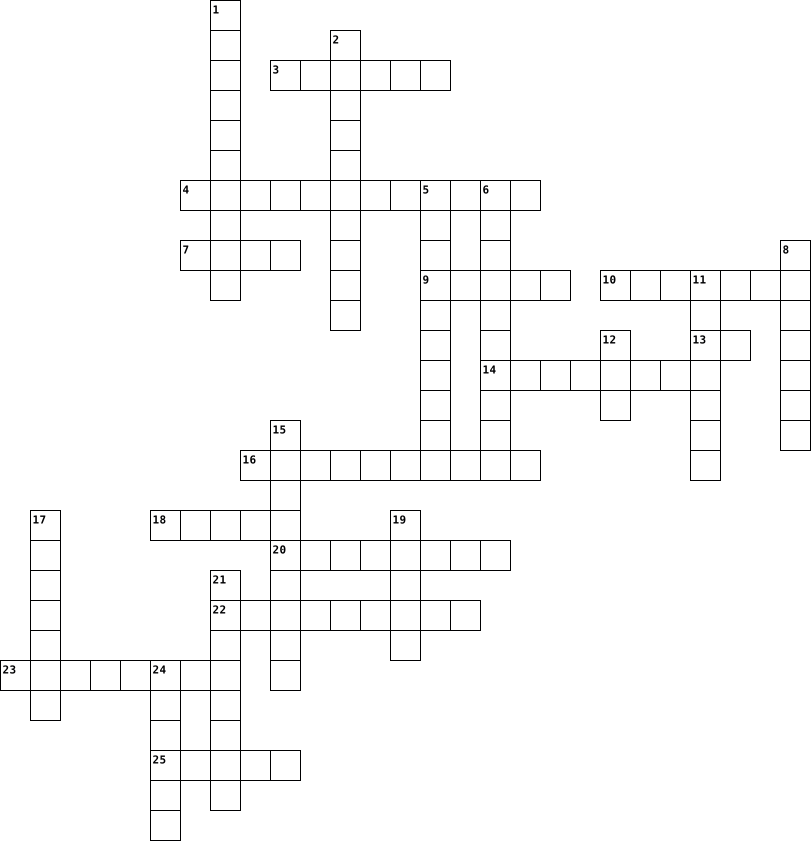
Across
- A positive subatomic particle found inside the nucleus of atoms
- The number of protons in an atom
- The center of the Earth
- One example of a state of matter
- A feature that might appear near plate boundaries
- The symbol for lithium
- The name given to the plates that make up the crust
- A process where rocks are broken down by physical or chemical means
- Colour of light given off when magnesium reacts with oxygen
- A neutral subatomic particle found inside the nucleus of atoms
- Negative subatomic particles that orbit the nucleus of atoms
- The type of table used to show all the elements that exist
- A type of compound that forms when a positive ion and a negative ion combine in a reaction
Down
- A type of plate interaction where one plate moves under another
- Types of circular currents that occur when hot molten rises, cools, falls causing the crust to move
- Protons and neutrons combined
- Part of an experiment where you analyse what worked and what could be improved on
- Evidence of plant and animal matter preserved in rocks
- A metal that bonds with carbon and oxygen. Also known as marble
- An atom that has lost or gained electrons
- The variable that is measured when carrying out an experiment
- Evidence of a gas produced during a chemical reaction
- Used when writing chemical equations
- Another word for a chemical that is added in a reaction
- Frozen carbon dioxide
25 Clues: Frozen carbon dioxide • The symbol for lithium • The center of the Earth • Protons and neutrons combined • The number of protons in an atom • One example of a state of matter • Used when writing chemical equations • An atom that has lost or gained electrons • A feature that might appear near plate boundaries • The name given to the plates that make up the crust • ...
Term One 2019-03-30
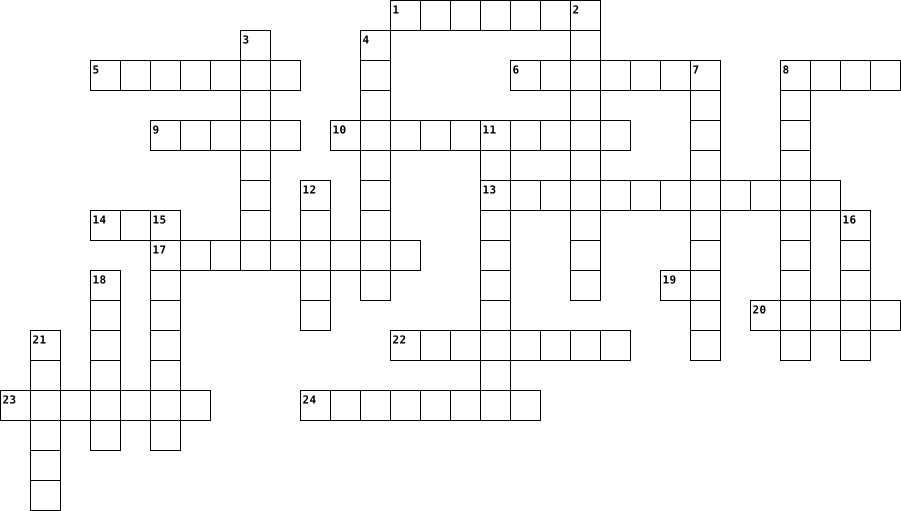
Across
- A metal that bonds with carbon and oxygen. Also known as marble
- Evidence of a gas produced during a chemical reaction
- Evidence of plant and animal matter preserved in rocks
- The center of the Earth
- Colour of light given off when magnesium reacts with oxygen
- A process where rocks are broken down by physical or chemical means
- The number of protons in an atom
- An atom that has lost or gained electrons
- Negative subatomic particles that orbit the nucleus of atoms
- The symbol for lithium
- One example of a state of matter
- The type of table used to show all the elements that exist
- A feature that might appear near plate boundaries
- Another word for a chemical that is added in a reaction
Down
- Protons and neutrons combined
- The name given to the plates that make up the crust
- The variable that is measured when carrying out an experiment
- A type of plate interaction where one plate moves under another
- Types of circular currents that occur when hot molten rises, cools, falls causing the crust to move
- Part of an experiment where you analyse what worked and what could be improved on
- Used when writing chemical equations
- A neutral subatomic particle found inside the nucleus of atoms
- A type of compound that forms when a positive ion and a negative ion combine in a reaction
- Frozen carbon dioxide
- A positive subatomic particle found inside the nucleus of atoms
25 Clues: Frozen carbon dioxide • The symbol for lithium • The center of the Earth • Protons and neutrons combined • The number of protons in an atom • One example of a state of matter • Used when writing chemical equations • An atom that has lost or gained electrons • A feature that might appear near plate boundaries • The name given to the plates that make up the crust • ...
Earth's dynamic system vocabulary 2019-02-11

Across
- vents in earth's crust through which molten rock flows
- The process that occurs when one tectonic plate moves under another tectonic plate
- The material formed from rocks broken down by weathering
- The mechanical and chemical process that changes earth's surface over time
- the partial melted portion of the mantle below the lithosphere
- The downhill movement of a large mass of rocks or soil due to gravity
- A boundary where two plates move away from each other
- The process of breaking down rocks without changing the composition of the rock
- Large masses of ice, formed by snow accumulation on land, that move slowly across Earth's surface
- Two plates that slide past each other
- tectonics Earth's surface is broken into large rigid pieces that move with respect to each other
Down
- The circulation of fluids caused by differences in density and thermal energy
- Long narrow mountains formed by magma
- A boundary where two plates move towards each other]
- The vibrations caused by the rupture and sudden movement of rocks along a break or crack in earth's crust
- The crust and uppermost part of the mantle
- The process that changes the composition of rocks
- The moving of weathered material or sediment
- A crack or a fracture in earth's crust along which movement occurs
- molten rock stored beneath earth's surface
- Magma that erupts onto Earth's surface
- the laying down or settling of eroded material
22 Clues: Long narrow mountains formed by magma • Two plates that slide past each other • Magma that erupts onto Earth's surface • The crust and uppermost part of the mantle • molten rock stored beneath earth's surface • The moving of weathered material or sediment • the laying down or settling of eroded material • The process that changes the composition of rocks • ...
Restless Earth vocab 2024-04-23

Across
- Tectonic plates move away from each other, usually forms new crust and rift valleys
- The semi-fluid layer of the mantle where convection currents happen
- Hot material rises, cooler material sink. It drives plate tectonics
- Rock formed when lava or magma cools and hardens
- Fracture or zones of weakness in the Earth's crust
- Large, rigid pieces of earth's lithosphere that move and interact with each other along plate boundaries
- A group of the same species living in the same area
- Tectonic plates move toward each other, usually forms mountains and volcanoes
- Includes the crust and upper part of the mantle, and is divided into tectonic plates
- formed as a result of high temperature and pressure deep within Earth changing a rock that already existed
Down
- Extinction events that occur over a longer time period
- sudden events that led to a mass extinction
- Where tectonic plates SLIDE past each other. Causes earthquakes
- Name of the ancient super continent when it was all one landmass
- Instruments used to measure and record seismic waves
- New oceanic crust is formed as tectonic plates pull apart and magma rises
- An opening in the Earth's crust through which molten rock is pushed out and creates new rock
- Deep, elongated depressions in the ocean, often associated with subduction zones.
- Formed at plate boundaries usually when plates collide
- Located between the mantle and the outer core
- Forms after weathering and erosion when sediments compact and cement
21 Clues: sudden events that led to a mass extinction • Located between the mantle and the outer core • Rock formed when lava or magma cools and hardens • Fracture or zones of weakness in the Earth's crust • A group of the same species living in the same area • Instruments used to measure and record seismic waves • Extinction events that occur over a longer time period • ...
Plate Tectonics Vocabulary Review 2024-09-05

Across
- This is the area where you will find most of the volcanoes in the world
- Type of boundary where two plates separate
- This mountain range that stretches along the Atlantic Ocean was created by a new crust from a divergent boundary
- This is where two tectonic plates meet
- This natural disaster, along with volcanoes, can cause a tsunami
- Large chunks of lithosphere that gradually move
- The 750-mile long fault in California that is created by a transform boundary
- The prehistoric conglomerate of the 7 continents all combined
- This is how scientists track movements of tectonic plates
- This process creates new crust in the ocean
- Process where one plate moves below another plate
- An area in the Earth’s mantle that is unusually hot
Down
- The theory that plates slowly move the continents over time
- Type of boundary where two plates collide
- Lava that is below the Earth’s surface
- Layer of the earth that represents the crust
- The largest tectonic plate
- The deepest part of the ocean floor
- The scientist credited for the Continental Drift theory
- Type of boundary where two plates slide past each other
- This is the type of rock that is created at a ridge
- This is created in the ocean when subduction occurs
- Layer of the earth that contains magma
- The mountain range in Colorado that is created by a convergent boundary
24 Clues: The largest tectonic plate • The deepest part of the ocean floor • Lava that is below the Earth’s surface • This is where two tectonic plates meet • Layer of the earth that contains magma • Type of boundary where two plates collide • Type of boundary where two plates separate • This process creates new crust in the ocean • Layer of the earth that represents the crust • ...
Crossword 2025-01-28

Across
- What is weathering
- What type of weathering involves plants breaking rocks
- What agent of erosion transports rocks downstream
- What activity involves catching fish and other sea life
- What is the fastest type of mass movement
- What is loose material on slopes called
- What activity extracts minerals and ores from the Earth
- What are the two main types of weathering
- What is the unsustainable practice of catching too many fish
- What type of plate boundary involves plates moving apart
- What is erosion
- What is the main agent of coastal erosion
Down
- What type of plate boundary involves plates moving towards each other
- What process occurs when one plate moves under anotherFarming, What is the most common primary economic activity
- What is the slowest type of mass movement
- What type of mass movement involves soil and water
- What causes freeze-thaw action
- What triggers landslides
- What reduces the risk of mass movement
- What type of mass movement occurs during volcanic eruptions
- What type of farming focuses on growing crops
- What type of farming focuses on raising animals
- What type of weathering occurs when rocks are dissolved by acidic rainwater
- What causes the movement of tectonic plates
- What primary activity involves managing and harvesting trees
- What type of mass movement creates terracettes
- What forms when limestone is weathered by acidic rain
- What type of slope is most prone to mass movement
28 Clues: What is erosion • What is weathering • What triggers landslides • What causes freeze-thaw action • What reduces the risk of mass movement • What is loose material on slopes called • What is the slowest type of mass movement • What is the fastest type of mass movement • What are the two main types of weathering • What is the main agent of coastal erosion • ...
Rock Transformations Vocab 2023-12-04

Across
- anything that has mass and takes up space
- rock the rock type formed when magma cools and becomes solid
- the process by which all the rock formations of a region are pushed up due to plate motion
- a small part that is meant to show what the whole is like
- everything made of rock: magma, sediment, and all rock types
- the process of sediment being glued together
- a diagram that shows what the inside of something looks like
- the process of sediment being buried and pressed together
Down
- the place where two plates meet
- hot liquid rock below the surface of Earth
- the rock type formed when heat or pressure deep underground changes existing rock
- one of the many different types of matter that make up rocks
- the rock type formed when sediment is pressed and glued together
- the movement of sediment from one place to another, often caused by wind or flowing water
- small pieces of rock
- the process by which rock material moves under Earth's outer layer and into the mantle due to plate motion
- the process of rock breaking down into smaller pieces due to wind or moving water
- formation a region of rock that formed together as a single rock type
- the ability to make things move or change
- one of the very large sections of hard, solid rock that make up Earth’s outer layer
20 Clues: small pieces of rock • the place where two plates meet • anything that has mass and takes up space • the ability to make things move or change • hot liquid rock below the surface of Earth • the process of sediment being glued together • a small part that is meant to show what the whole is like • the process of sediment being buried and pressed together • ...
Rock Transformations Vocab 2023-12-04

Across
- anything that has mass and takes up space
- rock the rock type formed when magma cools and becomes solid
- the process by which all the rock formations of a region are pushed up due to plate motion
- a small part that is meant to show what the whole is like
- everything made of rock: magma, sediment, and all rock types
- the process of sediment being glued together
- a diagram that shows what the inside of something looks like
- the process of sediment being buried and pressed together
Down
- the place where two plates meet
- hot liquid rock below the surface of Earth
- the rock type formed when heat or pressure deep underground changes existing rock
- one of the many different types of matter that make up rocks
- the rock type formed when sediment is pressed and glued together
- the movement of sediment from one place to another, often caused by wind or flowing water
- small pieces of rock
- the process by which rock material moves under Earth's outer layer and into the mantle due to plate motion
- the process of rock breaking down into smaller pieces due to wind or moving water
- formation a region of rock that formed together as a single rock type
- the ability to make things move or change
- one of the very large sections of hard, solid rock that make up Earth’s outer layer
20 Clues: small pieces of rock • the place where two plates meet • anything that has mass and takes up space • the ability to make things move or change • hot liquid rock below the surface of Earth • the process of sediment being glued together • a small part that is meant to show what the whole is like • the process of sediment being buried and pressed together • ...
Rock Transformations Vocab 2023-12-04

Across
- anything that has mass and takes up space
- rock the rock type formed when magma cools and becomes solid
- the process by which all the rock formations of a region are pushed up due to plate motion
- a small part that is meant to show what the whole is like
- everything made of rock: magma, sediment, and all rock types
- the process of sediment being glued together
- a diagram that shows what the inside of something looks like
- the process of sediment being buried and pressed together
Down
- the place where two plates meet
- hot liquid rock below the surface of Earth
- the rock type formed when heat or pressure deep underground changes existing rock
- one of the many different types of matter that make up rocks
- the rock type formed when sediment is pressed and glued together
- the movement of sediment from one place to another, often caused by wind or flowing water
- small pieces of rock
- the process by which rock material moves under Earth's outer layer and into the mantle due to plate motion
- the process of rock breaking down into smaller pieces due to wind or moving water
- formation a region of rock that formed together as a single rock type
- the ability to make things move or change
- one of the very large sections of hard, solid rock that make up Earth’s outer layer
20 Clues: small pieces of rock • the place where two plates meet • anything that has mass and takes up space • the ability to make things move or change • hot liquid rock below the surface of Earth • the process of sediment being glued together • a small part that is meant to show what the whole is like • the process of sediment being buried and pressed together • ...
Geography Chapter 2 2024-02-02

Across
- This US State was formed because of volcanic activity
- Land areas heat and cool _______ than bodies of water
- This type of tectonic plate boundary includes subduction zones
- An area with similar plants and animals that have adapted to that specific environment
- These energy resources take a very long time to be formed
- The main 3 sources of renewable energy are water, the sun, and ______
- The layer of Earth that contains tectonic plates; Earth's outer layer
- More people die each year from polluted ______ than are killed in all forms of violence
- Long-term, average weather conditions for an area
- The ______ Agreement is a contract between several nations to increase and monitor their response to climate change
Down
- This type of tectonic plate boundary has the plates moving away from each other
- This mining technique releases oil and natural gas out of shale rock
- This type of water is only 3% of the water on Earth
- Oil and ______ are our two current main sources of energy
- This type of energy depends on natural processes that are constantly renewed
- This effect uses gases to trap heat inside Earth's atmosphere
- This effect causes the windward side of mountains to get a lot of precipitation and the leeward side to be mostly dry
- A graph of monthly average temperatures and precipitation
- Water ______ occurs when an area needs more water than they have available
- Most ________ and earthquakes occur along tectonic plate boundaries
20 Clues: Long-term, average weather conditions for an area • This type of water is only 3% of the water on Earth • This US State was formed because of volcanic activity • Land areas heat and cool _______ than bodies of water • Oil and ______ are our two current main sources of energy • These energy resources take a very long time to be formed • ...
Extension Assignment 2024-02-05

Across
- a plant or animal that was crushed in a rock
- When there is a problem in a system
- A area were magma slips thought the crust and forms a volcano
- The force that pulls cool crust down into the mantle and push hot rock up to the crust
- A pyramid that shoots lava
- When 2 plates slide past each other
- A long chain of mountains underwater
- The idea that all Continents were once all connected
- When 2 plate pull apart and molten material rises up to fill the void
- When you stand next to a heater and get warmer
- A hot liquid that is under ground
- The thing you eat dinner off
- The theory that explains how major land forms were created
Down
- A deep depressions in the deepest parts of the ocean
- Where the plate slide back down into the mantle
- A area were volcanoes are VERY common
- When you touch a hot pad and your hand warms up
- A form of heating that uses the moment of liquid or gas
- When 2 plates collide and one goes above the other one
- A low land area that was formed by plates pulling apart from each other
- When 2 plates pull apart from each other
- A hot liquid that is above ground
- A single super continent
- A long chain of active volcanoes
- The a mount of mass dived by volume in an object
25 Clues: A single super continent • A pyramid that shoots lava • The thing you eat dinner off • A long chain of active volcanoes • A hot liquid that is above ground • A hot liquid that is under ground • When there is a problem in a system • When 2 plates slide past each other • A long chain of mountains underwater • A area were volcanoes are VERY common • ...
Total Ortho Spine CW2 2025-05-01

Across
- A Window/Waist on a plate may help with intra-operative ______ and post-operative graft/fusion visualization.
- This is the main blood supply to the head, and resides in the Transverse Foramen.
- Interbody devices are utilized to _______ disc height, and help the fusion environment.
- Drill Guide with a Drill Bit create a _______ hole for a Self Tapping Screw.
- This plane looks like a straight line, while the Sagittal plane looks like an "S".
- 16mm-19mm is the typical ______ range of cervical plates.
- This particular region degenerates quicker, therefor, a large % of cases are in this region of the spine.
- Visual, Tactile and _______ feedback for an ideal Locking Mechanism.
- Variable screws allow ________ motion/settling.
- The surgeon will use sequential _______ to determine cage size.
Down
- Adjacent ________ Disease is extremely common, and may require revision surgery.
- On a T-2 Weighted image, the color white is anything with high ______ content.
- This pathology will not be resolved with the typical PT, nerve blocks, medication. Patients should have surgery as early as possible.
- Osteophytes, herniated discs, and _______ ligaments
- Narrowing of a canal.
- A Rigid/Constrained plate may cause ______ ______.
- These types of pins hold open the disc space.
- This graft has viable stem cells to help with bone fusion.
- A Short Plate concept may reduce this post-op pathology.
- This is an indicator an implant may be loose on x-tay imaging.
- This allograft product is produced when a mineral bone layer is removed to expose growth factors.
21 Clues: Narrowing of a canal. • These types of pins hold open the disc space. • Variable screws allow ________ motion/settling. • A Rigid/Constrained plate may cause ______ ______. • Osteophytes, herniated discs, and _______ ligaments • A Short Plate concept may reduce this post-op pathology. • 16mm-19mm is the typical ______ range of cervical plates. • ...
restless earth vocabulary crossword 2024-04-12

Across
- large, rigid pieces of the Earth's lithosphere that move and interact with each other alone plate boundaries
- Where tectonic plates slide past each other. Causes earthquakes
- new oceanic crust is formed as tectonic plates pull apart and magma rises
- Includes the crust and upper part of the mantle, and is divided into tectonic plates
- an opening in the earth's crust through which molten rock is pushes out and creates rock
- sudden events led to amass extinction
- fractures or zones of weakness in earth;s crust
- formed at plate boundaries usually when plates collide
- formed when lava or magma cools and hardens
- The semi-fluid layer of the mantle where convection currents happen
- Forms after weathering and erosion when sediments compact and cement
- Hot material rises, cooler materials sink, it drives plate tectonics
- Deep, elongated depressions in the ocean, often associated with subduction zones
Down
- Formed as a result of high temperature and pressure deep within earth changing a rock that already existed
- Instruments used to measure and record seismic waves
- tectonic plates move away from each other, usually forms new crust and rift valleys
- Events: Extinction events that occur over a larger time period
- A group of the same species living in the same area
- tectonic plates move toward each other, usually forms mountains and volcanoes
- name of the ancient supercontinent when it was all one landmass
- Located between the mantle and outer core
21 Clues: sudden events led to amass extinction • Located between the mantle and outer core • formed when lava or magma cools and hardens • fractures or zones of weakness in earth;s crust • A group of the same species living in the same area • Instruments used to measure and record seismic waves • formed at plate boundaries usually when plates collide • ...
Science vocab. 2024-04-12

Across
- Large, rigid pieces of the Earth's lithosphere that move and interact with each other along the plate boundaries
- Formed at plate boundaries usually when plates collide
- Extinction events that occur over a longer period of time
- a group of same species living in the same area
- Located between the mantle and the outer core
- Instruments used to measure and record seismic waves
- New oceanic crust is formed as tectonic plates pull apart and magma rises
- Forms after weathering and erosion when sediments compact and cement
- Rock formed when lava or magma cools and hardens
- Tectonic plates move toward each other, usually forms mountains and volcanoes
- Name of the ancient supercontinent when it was all one landmass
- Sudden events that led to a mass extinction
Down
- Tectonic plates move away from each other, usually forms new crust and rift valleys
- Hot material rises, cooler materials sink. it drives plate tectonics
- Formed as a result of high temperature and pressure deep within earth changing a rock that already existed
- Where tectonic plates slide PAST each other. Causes earthquakes
- Includes the crust and upper part of the mantle, and is divided into tectonic plates
- Fractures or zones of weakness in the Earth's crust
- The semi-fluid layer of the mantle where convection currents happen
- Deep, elongated depressions in the ocean, often associated with subduction zones.
- An opening in the Earth's crust through which molten rock is pushed out and creates new rock
21 Clues: Sudden events that led to a mass extinction • Located between the mantle and the outer core • a group of same species living in the same area • Rock formed when lava or magma cools and hardens • Fractures or zones of weakness in the Earth's crust • Instruments used to measure and record seismic waves • Formed at plate boundaries usually when plates collide • ...
Restless Earth Vocab 2024-04-12

Across
- tectonic plates move away from each other, usually forms mountains and volcanoes.
- hot material rises, cooler material sinks. It drives plate tectonics.
- located between the mantle and the outer core.
- name of the ancient supercontinent when it was all one landmass.
- Extinction Events that occur over a longer period of time.
- deep, elongated depressions in the ocean, often associated with subduction zones.
- new oceanic crust is formed as tectonic plates pull apart and magma rises.
- includes the crust and upper part of the mantle, and is divided into tectonic plates.
Down
- large, rigid pieces of Earth's lithosphere that move and interact with each other along plate boundaries.
- rock formed when lava or magma cools and hardens.
- forms after weathering and erosion when sediments compact and cement.
- formed at plate boundaries usually when plates collide.
- sudden events that led to a mass extinction
- tectonic plates move toward each other, usually forms mountains and volcanoes
- where tectonic plates SLIDE past each other. Causes earthquakes.
- formed as a result of high temperature and pressure deep within Earth changing a rock that already existed
- the semi-fluid layer of the mantle and where convection currents happen.
- a groups of the same species living in the same area
- instruments used to measure and record seismic waves
- an opening in the Earth's crust through which molten rock is pushed out and creates new rock.
- fractures or zones of weakness in the Earth's crust
21 Clues: sudden events that led to a mass extinction • located between the mantle and the outer core. • rock formed when lava or magma cools and hardens. • fractures or zones of weakness in the Earth's crust • a groups of the same species living in the same area • instruments used to measure and record seismic waves • formed at plate boundaries usually when plates collide. • ...
Rest Earth Vocabulary list 2024-04-12

Across
- name of the ancient supercontinent when it was all one landmass
- large, rigid pieces of the earth's lithosphere that move and interact with each other along plate boundaries
- hot material rises, cooler materials sink(drives plate tectonics)
- sudden events that led to a mass extinction
- tectonic plates move away from each other(usually forms new crust and rift valleys)
- formed as a result of high temperature and pressure deep within the earth changing a rock that already existed
- located between the mantle and the outer core
- fractures or zones of weakness in the earth's crust
- formed at plate boundaries usually when plates collide
- an opening in the earth's crust through which molten rock is pushed out and creates new rock
Down
- extinction events that occur over a longer time period
- a group of the same species living in the same area
- forms after weathering and erosion when sediments compact and cement
- the semi-fluid layer of the mantle where convection currents happen
- new oceanic crust is formed as tectonic plates pull apart and magma rises
- tectonic plates move toward each other(usually forms mountains and volcanoes)
- includes the crust and upper part of the mantle and is divided into tectonic plates
- deep, elongated depressions in the ocean, often associated with subduction zones
- instruments used to measure and record seismic waves
- rock formed when lava or magma cools and hardens
- where tectonic plates slide past each other(causes earthquakes)
21 Clues: sudden events that led to a mass extinction • located between the mantle and the outer core • rock formed when lava or magma cools and hardens • a group of the same species living in the same area • fractures or zones of weakness in the earth's crust • instruments used to measure and record seismic waves • extinction events that occur over a longer time period • ...
Rest Earth Vocabulary list 2024-04-12

Across
- name of the ancient supercontinent when it was all one landmass
- large, rigid pieces of the earth's lithosphere that move and interact with each other along plate boundaries
- hot material rises, cooler materials sink(drives plate tectonics)
- sudden events that led to a mass extinction
- tectonic plates move away from each other(usually forms new crust and rift valleys)
- formed as a result of high temperature and pressure deep within the earth changing a rock that already existed
- located between the mantle and the outer core
- fractures or zones of weakness in the earth's crust
- formed at plate boundaries usually when plates collide
- an opening in the earth's crust through which molten rock is pushed out and creates new rock
Down
- extinction events that occur over a longer time period
- a group of the same species living in the same area
- forms after weathering and erosion when sediments compact and cement
- the semi-fluid layer of the mantle where convection currents happen
- new oceanic crust is formed as tectonic plates pull apart and magma rises
- tectonic plates move toward each other(usually forms mountains and volcanoes)
- includes the crust and upper part of the mantle and is divided into tectonic plates
- deep, elongated depressions in the ocean, often associated with subduction zones
- instruments used to measure and record seismic waves
- rock formed when lava or magma cools and hardens
- where tectonic plates slide past each other(causes earthquakes)
21 Clues: sudden events that led to a mass extinction • located between the mantle and the outer core • rock formed when lava or magma cools and hardens • a group of the same species living in the same area • fractures or zones of weakness in the earth's crust • instruments used to measure and record seismic waves • extinction events that occur over a longer time period • ...
Earth systems Tcap Vocab 2024-04-12

Across
- New oceanic crust is formed as tectonics plates pull apart from magma and rises
- The semi-fluid layer of the mantle where convection currents happen
- Formed at plate boundaries usually when plates collide
- Located between the mantle and the outer core
- Includes the crust and upper part of the mantle, and is divided into tectonic plates
- a group of the same speciesSeismograph instruments
- Formed as a result of high temperature and pressure deep within earth changing a rock that already existed
- Forms after weathering and erosion when sediments compact and cement
- Name of the ancient supercontinent when it was all one landmass
- Tectonic plates move toward each other, uBoundaryforms mountains and volcanoes
- Fractures or zones of weakness in the Earth's crust
Down
- Tectonic plates move away from each other, usually forms new crust and rift valleys
- An opening in the Earth's crust through which molten rock is pushed out and creates new rock
- Where tectonics plates slide past each other, Causes earthquakes
- Hot materials rises, cooler materials sink. It drives plate tectonics
- Deep,elongated depressions in the ocean, often associated with subduction zones
- Instruments used to measure and record seismic waves
- Rock formed when lava of magma cools and hardens
- Large, rigid pieces of the Earth's lithopshere that move and interact with each other along plate boundaries
- sudden events that led to a mass extinction
- Extinction Events Extinction events that occur over a longer time period
21 Clues: sudden events that led to a mass extinction • Located between the mantle and the outer core • Rock formed when lava of magma cools and hardens • a group of the same speciesSeismograph instruments • Fractures or zones of weakness in the Earth's crust • Instruments used to measure and record seismic waves • Formed at plate boundaries usually when plates collide • ...
Earth systems Tcap Vocab 2024-04-12

Across
- New oceanic crust is formed as tectonics plates pull apart from magma and rises
- The semi-fluid layer of the mantle where convection currents happen
- Formed at plate boundaries usually when plates collide
- Located between the mantle and the outer core
- Includes the crust and upper part of the mantle, and is divided into tectonic plates
- a group of the same speciesSeismograph instruments
- Formed as a result of high temperature and pressure deep within earth changing a rock that already existed
- Forms after weathering and erosion when sediments compact and cement
- Name of the ancient supercontinent when it was all one landmass
- Tectonic plates move toward each other, uBoundaryforms mountains and volcanoes
- Fractures or zones of weakness in the Earth's crust
Down
- Tectonic plates move away from each other, usually forms new crust and rift valleys
- An opening in the Earth's crust through which molten rock is pushed out and creates new rock
- Where tectonics plates slide past each other, Causes earthquakes
- Hot materials rises, cooler materials sink. It drives plate tectonics
- Deep,elongated depressions in the ocean, often associated with subduction zones
- Instruments used to measure and record seismic waves
- Rock formed when lava of magma cools and hardens
- Large, rigid pieces of the Earth's lithopshere that move and interact with each other along plate boundaries
- sudden events that led to a mass extinction
- Extinction Events Extinction events that occur over a longer time period
21 Clues: sudden events that led to a mass extinction • Located between the mantle and the outer core • Rock formed when lava of magma cools and hardens • a group of the same speciesSeismograph instruments • Fractures or zones of weakness in the Earth's crust • Instruments used to measure and record seismic waves • Formed at plate boundaries usually when plates collide • ...
Restless Earth Practice 2024-04-12

Across
- Instruments used to measure and record seismic waves
- formed at plate boundaries usually when plates collide
- Included the crust and the upper part of the mantel, and is divided into tectonic plates
- Located between the mantle and the outer core
- form after weathering and erosion when sediments compact and cement
- A group of the same species living in the same area
- events that lead to mass extinction
- cycles Hot material rises, cooler materials sink. IT drives plate tectonics
- The semi-fluid layer of the mantle where convection currents happen
- Tectonic plates move toward each other usually forms mountains and volcanoes
- Fracture zones of weakness in the Earths crust
Down
- Tectonic plates slide past each other. Causes earthquakes
- Tectonic plates move away from each other, usually forms new crust and rift valleys
- Rock formed when lava or magma cools and hardens; crystals
- new oceanic crust is formed as tectonic plates pull apart and magma rises
- Extinction events that occur over a longer time period
- Formed as a result of high temperature and pressure deep within earth changing a rock that already existed
- Plates Large,rigid pieces of the Earths lithosphere that move and interact with each other along plate boundaries
- Deep, elongated depressions in the ocean, often associated with subduction zones
- An opening in the Earths crust through which molten rock is pushed out and creates new rocks
- Name of the ancient super continent when it was all one landmass
21 Clues: events that lead to mass extinction • Located between the mantle and the outer core • Fracture zones of weakness in the Earths crust • A group of the same species living in the same area • Instruments used to measure and record seismic waves • formed at plate boundaries usually when plates collide • Extinction events that occur over a longer time period • ...
restless earth vocab 2024-04-12

Across
- extinction events that occur over a long time period
- hot material rises,cooler materials sink. it drives plate tectonics
- deep, elongated depressions in the ocean, often associated with subduction zones.
- name of the ancient supercontinent when it was all one land mass
- new ocean crust is formed as tectonic plates pull apart and magma rises
- fractures or zones of weakness in the earths crust
- includes the crust and upper part of the mantle, and is divided into tectonic plates
- formed at the plate boundaries usually when plates collide
- tectonic plates move away from each other, usually forms new crust and rift valleys
- a group of the same species living in the same area
- instruments used to measure and record seismic waves
- an opening in the earths crust through which molten rock is pushed out and creates new rock
Down
- sudden events that led to mass extinction
- tectonic plates move toward eachtoher, usually forms mountains and volcanoes
- located between the mantle and the outer core
- large,rigid pieces of the earths lithosphere that move and interact with each other along plate boundaries
- where tectonic plates slide past eachtoher. causes earthquakes
- the semi-fluid layer of the mantle where convection currents happen
- forms after weathering and erosion when sediments compact and cement
- rock formed when lava or magma cools and hardens
- formed as a result of high temperature and pressure deep within earth changing a rock that already existed
21 Clues: sudden events that led to mass extinction • located between the mantle and the outer core • rock formed when lava or magma cools and hardens • fractures or zones of weakness in the earths crust • a group of the same species living in the same area • extinction events that occur over a long time period • instruments used to measure and record seismic waves • ...
restless earth vocab 2024-04-12

Across
- extinction events that occur over a long time period
- hot material rises,cooler materials sink. it drives plate tectonics
- deep, elongated depressions in the ocean, often associated with subduction zones.
- name of the ancient supercontinent when it was all one land mass
- new ocean crust is formed as tectonic plates pull apart and magma rises
- fractures or zones of weakness in the earths crust
- includes the crust and upper part of the mantle, and is divided into tectonic plates
- formed at the plate boundaries usually when plates collide
- tectonic plates move away from each other, usually forms new crust and rift valleys
- a group of the same species living in the same area
- instruments used to measure and record seismic waves
- an opening in the earths crust through which molten rock is pushed out and creates new rock
Down
- sudden events that led to mass extinction
- tectonic plates move toward eachtoher, usually forms mountains and volcanoes
- located between the mantle and the outer core
- large,rigid pieces of the earths lithosphere that move and interact with each other along plate boundaries
- where tectonic plates slide past eachtoher. causes earthquakes
- the semi-fluid layer of the mantle where convection currents happen
- forms after weathering and erosion when sediments compact and cement
- rock formed when lava or magma cools and hardens
- formed as a result of high temperature and pressure deep within earth changing a rock that already existed
21 Clues: sudden events that led to mass extinction • located between the mantle and the outer core • rock formed when lava or magma cools and hardens • fractures or zones of weakness in the earths crust • a group of the same species living in the same area • extinction events that occur over a long time period • instruments used to measure and record seismic waves • ...
Earth's Systems 2024-04-12

Across
- Fractures or zones of weakness in the Earth's crust
- formed at plate boundaries usually when plates collide.
- Name of the ancient supercontinent when it was all one landmass.
- Formed as a result of high temperature and pressure deep within earth changing a rock that already existed.
- Deep, elongated depressions in the ocean, often associated with subduction zones.
- instruments used to measure and record seismic waves.
- Sudden events that led to a mass extinction.
- tectonic plates SLIDE past each other. Causes earthquakes.
- An opening in the Earth's crust though which molten rock is pushed out and creates new rock.
Down
- Includes the crust and upper part of the mantle, and is divided into tectonic plates.
- Hot materials rises, cooler materials sink. It drives plate tectonics.
- Extinction Events that occur over a longer time period.
- located between the mantle and the outer core.
- tectonic plates move toward each others, usually forms mountains and volcanoes.
- new oceanic crust is formed as tectonic plates pull apart and magma rises.
- Large, rigid pieces of the Earth's lithosphere that move and interact with each other along plate boundaries.
- The semi-fluid layer of the mantle where convection currents happen.
- A group of the same species living in the same area.
- tectonic plates move away from each other, usually forms new crust and rift valleys.
- Forms after weathering and erosion when sediments compact and cement.
- Rock formed when lave or magma cools and hardens.
21 Clues: Sudden events that led to a mass extinction. • located between the mantle and the outer core. • Rock formed when lave or magma cools and hardens. • Fractures or zones of weakness in the Earth's crust • A group of the same species living in the same area. • instruments used to measure and record seismic waves. • Extinction Events that occur over a longer time period. • ...
Restless Earth 2024-04-12

Across
- new oceanic crust is formed as tectonic plates pull apart and magma rises
- sudden events that lead to mass extinction
- name of ancient supercontinent when it was all one land mass
- located between the mantle and the outer core
- a group of the same species living in the same area
- formed as a result of high temperature and pressure deep within Earth changing a rock that already existed
- fractures or zones of weakness in the Earth's crust
- tectonic plates move toward each other usually forms mountains and volcanoes
- an opening at the Earth's crust through which molten rock is pushed out and creates new rock
- plates large rigid peices of thr earths lithosphere that move and interact with each other along plate boundaries
- where tectonic plates slide past each other causes eathquakes
- deep enlongated depressions in the ocean often associated with subduction zones
Down
- forms after weathering and erosion when sedimentscompact and cement
- extinction events that occur over a longer period of time
- tectonic plates move away from eachother usually forms new crust and rift valleys
- includes the crust and upper part of the mantle and is divided into tectonic plates
- rock formed when lava or magma cools and hardens
- the semi-fluid layer of the mantle where convection currents happen
- instruments used to measure and recors seismic waves
- formed at plate boundaries usually when plates collide
- hot material rises cooler materials sink it drives plate tectonics
21 Clues: sudden events that lead to mass extinction • located between the mantle and the outer core • rock formed when lava or magma cools and hardens • a group of the same species living in the same area • fractures or zones of weakness in the Earth's crust • instruments used to measure and recors seismic waves • formed at plate boundaries usually when plates collide • ...
Earth 2024-04-12

Across
- Exticnction events that occur over a longer time period
- Rock formed when lava or magma cools and hardens
- tectonic plates move away from each other, usually forms new crust and rift valleys
- formemnd at plate boundaries usually when plates colide
- Large rigid pieces of the earth's lithosphere that move and interact with each other along plate boundaries
- Instruments used to measure and record seismic waves
- Fractures or zones of weakness in the Earth's crust
- located between mantle and the outer core
- the semi fluid layer of the mantle where convection currents happen
- new oceanic crust is formed as tectonic plates pull apart and magma rises
- Formed as a result of high temperature and pressure deep within earth changing a rock that already existed
Down
- tectonic plates move toward each other usually forms mountains and volcanoes
- an opening in the earth crust trough which molten rock is pushed out and creates new rock
- Name of Acident supercontinent when it was all one landmass
- Sudden events that led to a mass extinction
- Hot material rises, cooler material sink. It drives plate tectonic
- tectonic plates slide past each other causes earthquakes
- Deep elongated depressions in the ocean often associated with subduction ones
- Includes the crust and upper part of mantle and is divided into tectonic plates
- Forms after weathering and erosion when sediments compact and cement
- A group of the same species living in the same area
21 Clues: located between mantle and the outer core • Sudden events that led to a mass extinction • Rock formed when lava or magma cools and hardens • Fractures or zones of weakness in the Earth's crust • A group of the same species living in the same area • Instruments used to measure and record seismic waves • Exticnction events that occur over a longer time period • ...
Will Helmstetter D1-3 review 2023-02-08

Across
- a huge crack in the Earth's crust
- the sliding of a denser ocean plate under another plate when they collide
- a cup like hallow that forms at the top of a volcano around the vent
- hot, molten rock. below the Earth's surface
- a sensitive device that detects the shaking of Earth's crust during an earthquake
- a very hot part of the Earth's mantle where magma can melt through a plate moving above it
- heat from below the Earth's surface
- a vibration that spreads out away from a focus when an earthquake happens
- the central opening in a volcanic area through which magma may flow
- Earth's solid, rocky surface containing the continents and ocean floor
- the point in the earth where an earthquake actually starts
- the boundary where plates are colliding
Down
- the idea that a super continent split apart into pieces, the continents, which drifted in time to their present location
- the idea that many kinds of rocks form flat, horizontal layers
- the boundary where plates are moving apart from each other
- magma that reaches the Earth's surface and flows out of a vent
- the amount of energy released by an earthquake
- the idea that the Earth's surface is broken into plates
- giant ocean waves formed when an earthquake occurs under the ocean floor
- the name for the large super continent
- the point on Earth's surface directly above the focus
- the boundary where plates are moving apart from each other
22 Clues: a huge crack in the Earth's crust • heat from below the Earth's surface • the name for the large super continent • the boundary where plates are colliding • hot, molten rock. below the Earth's surface • the amount of energy released by an earthquake • the point on Earth's surface directly above the focus • the idea that the Earth's surface is broken into plates • ...
Pikmin by Valeria Valencia 2026-03-04

Across
- The layer of hot, solid material between the crust and core.
- The rigid outer layer of the Earth, consisting of the crust and upper mantle.
- The vertical elevation of the Earth's surface
- Movement in the mantle caused by heat differences, driving plate movement
- The point on the surface directly above an earthquake's origin.
- Molten or semi-molten rock beneath the surface.
- A vent in the crust where magma and gases erupt.
- Massive, rigid, moving pieces of the Earth's lithosphere.
- zones cold oceanic lithosphere sinks back into the mantle and is recycled
- A volcanically active area far from a plate boundary.
- The process where one tectonic plate sinks beneath another.
- Where two plates move away from each other.
- Vibrations caused by sudden movement of rock along a fault.
Down
- Hypothesis that continents move slowly across the Earth's surface.
- Process forming new oceanic crust at mid-ocean ridges.
- Where two plates move toward each other.
- tectonics the understanding that the top layer or lithosphere of the Earth's crust is divided into many large rocky plates
- Boundary Where two plates slide past each other horizontally.
- The ancient supercontinent that included all of Earth's landmasses
- The outermost layer of the Earth.
- The soft, plastic layer in the upper mantle that the plates move on.
- Triggered by large, underwater earthquakes or volcanic eruptions.
- An underwater mountain chain formed by divergent plates.
- A deep valley formed where two plates move apart.
- A break in Earth's crust along which movement occurs.
25 Clues: The outermost layer of the Earth. • Where two plates move toward each other. • Where two plates move away from each other. • The vertical elevation of the Earth's surface • Molten or semi-molten rock beneath the surface. • A vent in the crust where magma and gases erupt. • A deep valley formed where two plates move apart. • ...
Tectonic plates 2026-03-06

Across
- The layer of hot, solid material between the crust and core.
- The rigid outer layer of the Earth, consisting of the crust and upper mantle.
- The vertical elevation of the Earth's surface
- Movement in the mantle caused by heat differences, driving plate movement
- The point on the surface directly above an earthquake's origin.
- Molten or semi-molten rock beneath the surface.
- A vent in the crust where magma and gases erupt.
- Massive, rigid, moving pieces of the Earth's lithosphere.
- zones cold oceanic lithosphere sinks back into the mantle and is recycled
- A volcanically active area far from a plate boundary.
- The process where one tectonic plate sinks beneath another.
- Where two plates move away from each other.
- Vibrations caused by sudden movement of rock along a fault.
Down
- Hypothesis that continents move slowly across the Earth's surface.
- Process forming new oceanic crust at mid-ocean ridges.
- Where two plates move toward each other.
- tectonics the understanding that the top layer or lithosphere of the Earth's crust is divided into many large rocky plates
- Boundary Where two plates slide past each other horizontally.
- The ancient supercontinent that included all of Earth's landmasses
- The outermost layer of the Earth.
- The soft, plastic layer in the upper mantle that the plates move on.
- Triggered by large, underwater earthquakes or volcanic eruptions.
- An underwater mountain chain formed by divergent plates.
- A deep valley formed where two plates move apart.
- A break in Earth's crust along which movement occurs.
25 Clues: The outermost layer of the Earth. • Where two plates move toward each other. • Where two plates move away from each other. • The vertical elevation of the Earth's surface • Molten or semi-molten rock beneath the surface. • A vent in the crust where magma and gases erupt. • A deep valley formed where two plates move apart. • ...
คำที่ 145-156 2020-05-04

Across
- ขั้วโลก
- กระเป๋าใส่เอกสาร
- จาน
- ร้านขายยา
- ยากจน
Down
- นักบิน
- ปลั๊กไฟ
- เป็นที่นิยม
- ป้าย, ป้ายประกาศ
- ไปเที่ยวและนำอาหารไปรับประทาน
- เท
- วางแผน
12 Clues: เท • จาน • ยากจน • นักบิน • วางแผน • ปลั๊กไฟ • ขั้วโลก • ร้านขายยา • เป็นที่นิยม • ป้าย, ป้ายประกาศ • กระเป๋าใส่เอกสาร • ไปเที่ยวและนำอาหารไปรับประทาน
konyha 2021-04-12

Across
- kanál
- evőpálcikák
- hámozó
- mosogatógép
- kés
Down
- tányér
- kenyérpirító
- fazék
- konyhai szekrény
- villa
- evőeszköz
- reszelő
12 Clues: kés • kanál • fazék • villa • tányér • hámozó • reszelő • evőeszköz • evőpálcikák • mosogatógép • kenyérpirító • konyhai szekrény
spanish kitchen 2023-01-26

Across
- plate
- knife
- table
- apple
- tea cup
Down
- fork
- milk
- spoon
- chair
- water
- bread
- orange
12 Clues: fork • milk • spoon • chair • plate • water • knife • bread • table • apple • orange • tea cup
UMU KUKA 2023-03-13

Across
- dining table
- glass
- fork
- serviette
- tablecloth
- spoon
Down
- handwashbasin
- towel
- breadplate
- teaspoon
- knife
- plate
12 Clues: fork • towel • glass • knife • plate • spoon • teaspoon • serviette • breadplate • tablecloth • dining table • handwashbasin
ALAT MASAK 2023-05-04

Across
- MANGKOK
- SENDOK
- CANGKIR
- TEKO
- PIRING KECIL
Down
- KOMPOR
- GELAS
- GARPU
- PISAU
- PIRING
- NAMPAN
- PANCI
12 Clues: TEKO • GELAS • GARPU • PISAU • PANCI • KOMPOR • SENDOK • PIRING • NAMPAN • MANGKOK • CANGKIR • PIRING KECIL
TEEN LİFE 2022-04-03

Across
- KAŞIK
- TABAK
- KIZARTMAK
- EKŞİ
- ERİTMEK
- RENDELEMEK
- KASE
Down
- TUZLU
- FIRIN
- FIRINDA KIZARTMAK
- SÜRMEK
- SOYMAK
12 Clues: EKŞİ • KASE • KAŞIK • TUZLU • FIRIN • TABAK • SÜRMEK • SOYMAK • ERİTMEK • KIZARTMAK • RENDELEMEK • FIRINDA KIZARTMAK
Mixed: Beginners/Intermediate_103 2023-12-21

Across
- Avenue
- Cup
- Short
- Scientist
- Resistant
- Dog
Down
- Plate
- Now
- Seafood
- To descend
- Paths
- Mole
12 Clues: Now • Cup • Dog • Mole • Plate • Paths • Short • Avenue • Seafood • Scientist • Resistant • To descend
new vocabulary 2025-10-29

Across
- caja
- estanteria
- recipiente
- cartera
- apretado
- chaqueta
Down
- flojo
- flor
- plato
- vaso
- saco
- roda pies
12 Clues: caja • flor • vaso • saco • flojo • plato • cartera • apretado • chaqueta • roda pies • estanteria • recipiente
spanish crossword 2023-02-27

Across
- the honey
- fresh
- the plate
- the almond
- to love
- the bowl
- chocolate
- the development
- sweet
Down
- spicy
- the starter
- the snack
- salty masc
- the peanut
- vanilla
- to be pleasing
16 Clues: spicy • fresh • sweet • vanilla • to love • the bowl • the honey • the plate • the snack • chocolate • salty masc • the peanut • the almond • the starter • to be pleasing • the development
KITCHEN WARES 2020-10-02

Across
- Mesin pembuat kopi
- Garpu
- kompor
- Pemanggang roti
- Penutup panci
- Sendok
- Mangkuk
- Cangkir, gelas besar bertangkai
- Kendi, Cerek
- Keran air
Down
- Piring
- Kulkas,Lemari es
- Parutan, kukuran
- Penggorengan
- Panci
- Pisau
16 Clues: Garpu • Panci • Pisau • Piring • kompor • Sendok • Mangkuk • Keran air • Penggorengan • Kendi, Cerek • Penutup panci • Pemanggang roti • Kulkas,Lemari es • Parutan, kukuran • Mesin pembuat kopi • Cangkir, gelas besar bertangkai
Unit 5 Vocab - Aiden Cheek 2023-10-12

Across
- The point beneath Earth's surface where rock breaks under stress and causes an earthquake.
- The uneven breakage of a mineral.
- Rock formed from the weathered products of preexisting rocks that have been transported, deposited, compacted and cemented.
- A naturally occurring, inorganic solid that has a crystal structure and a definite chemical composition.
- A rock formed by the crystallization of molten magma.
- A natural resource that can be replaced at the same or below rate at which the resource is consumed.
- The color of a mineral in powdered form.
- A concentration of heat in the mantle capable of producing magma, which rises to Earth's surface.
- The soft upper layer of the mantle just below the lithosphere. Lithospheric plates float on top of it.
- A fracture in Earth along which movement has occurred.
- The disintegration and decomposition of rock at or near Earth's surface.
- A naturally occurring solid mixture of one or more minerals or organic matter.
- A body of molten rock found at depth, including any dissolved gases and crystals.
- The rigid outer part of the earth, consisting of the crust and upper mantle.
- The way a mineral reflects light from its surface.
- A plate boundary where two plates move toward each other.
- Rock formed by alteration of preexisting, solid rock deep within the Earth by heat, pressure, and/or chemically active fluids.
Down
- Loose particles created by weathering and erosion of rock.
- A natural resource that is consumed faster or above the rate in which it is replaced.
- Magma that reaches Earth's surface.
- The process by which plate tectonics produces new oceanic lithosphere at ocean ridges.
- The point on the Earth's surface directly above the focus of an earthquake.
- A plate boundary where two plates move away from each other.
- The transportation of material by a mobile agent, such as wind, water, or ice.
- A liquid's resistance to flowing -or- the thickness of a liquid.
- A plate boundary where two plates move past each other in opposite directions.
26 Clues: The uneven breakage of a mineral. • Magma that reaches Earth's surface. • The color of a mineral in powdered form. • The way a mineral reflects light from its surface. • A rock formed by the crystallization of molten magma. • A fracture in Earth along which movement has occurred. • A plate boundary where two plates move toward each other. • ...
Unit 5 Vocab 2024-03-15

Across
- a concentration of heat in the mantle capable of producing magma, which rises to Earth's surface
- a fracture in Earth along which movement has occurred
- the point on the Earth's surface directly above the focus of an earthquake
- the process by which plate tectonics produces new oceanic lithosphere at ocean ridges
- A plate boundary where two plates move away from each other.
- the uneven breakage of a mineral
- A body of molten rock found at depth, including any dissolved gases and crystals.
- rock formed by the alteration of preexisting, solid rock deep within the Earth by heat, pressure, and/or chemically active fluids
- the disintegration and decomposition of rock at or near Earth's surface
- A plate boundary where two plates move toward each other.
- A naturally occurring solid mixture of one or more minerals or organic matter
- A plate boundary where two plates move past each other in opposite directions
- A liquid's resistance to flowing -or- the thickness of a liquid
- rock formed from the weathered products of preexisting rocks that have been transported, deposited, compacted and cemented.
Down
- the rigid outer part of the earth, consisting of the crust and upper mantle.
- The soft upper layer of the mantle just below the lithosphere. Lithospheric plates float on top of it.
- a naturally occurring, inorganic solid that has a crystal structure and a definite chemical composition
- The color of a mineral in powdered form
- The way a mineral reflects light from its surface
- magma that reaches Earth's surface
- A natural resource that can be replaced at the same or below rate at which the resource is consumed
- loose particles created by weathering and erosion of rock
- A natural resource that is consumed faster or above the rate in which it is replaced.
- a rock formed by the crystallization of molten magma
- the transportation of material by a mobile agent, such as wind, water, or ice
- The point beneath Earth's surface where rock breaks under stress and causes an earthquake
26 Clues: the uneven breakage of a mineral • magma that reaches Earth's surface • The color of a mineral in powdered form • The way a mineral reflects light from its surface • a rock formed by the crystallization of molten magma • a fracture in Earth along which movement has occurred • loose particles created by weathering and erosion of rock • ...
Unit 5 vocab 2024-03-18

Across
- a concentration of heat in the mantle capable of producing magma, which rises to Earth's surface
- a fracture in Earth along which movement has occurred
- the point on the Earth's surface directly above the focus of an earthquake
- the process by which plate tectonics produces new oceanic lithosphere at ocean ridges
- A plate boundary where two plates move away from each other.
- the uneven breakage of a mineral
- A body of molten rock found at depth, including any dissolved gases and crystals.
- rock formed by the alteration of preexisting, solid rock deep within the Earth by heat, pressure, and/or chemically active fluids
- the disintegration and decomposition of rock at or near Earth's surface
- A plate boundary where two plates move toward each other.
- A naturally occurring solid mixture of one or more minerals or organic matter
- A plate boundary where two plates move past each other in opposite directions
- A liquid's resistance to flowing -or- the thickness of a liquid
- rock formed from the weathered products of preexisting rocks that have been transported, deposited, compacted and cemented.
Down
- the rigid outer part of the earth, consisting of the crust and upper mantle.
- The soft upper layer of the mantle just below the lithosphere. Lithospheric plates float on top of it.
- a naturally occurring, inorganic solid that has a crystal structure and a definite chemical composition
- The color of a mineral in powdered form
- The way a mineral reflects light from its surface
- magma that reaches Earth's surface
- A natural resource that can be replaced at the same or below rate at which the resource is consumed
- loose particles created by weathering and erosion of rock
- A natural resource that is consumed faster or above the rate in which it is replaced.
- a rock formed by the crystallization of molten magma
- the transportation of material by a mobile agent, such as wind, water, or ice
- The point beneath Earth's surface where rock breaks under stress and causes an earthquake
26 Clues: the uneven breakage of a mineral • magma that reaches Earth's surface • The color of a mineral in powdered form • The way a mineral reflects light from its surface • a rock formed by the crystallization of molten magma • a fracture in Earth along which movement has occurred • loose particles created by weathering and erosion of rock • ...
Unit 5 Vocab - Kannon Tucker 2024-03-25

Across
- a concentration of heat in the mantle capable of producing magma, which rises to Earth's surface
- a fracture in Earth along which movement has occurred
- the point on the Earth's surface directly above the focus of an earthquake
- the process by which plate tectonics produces new oceanic lithosphere at ocean ridges
- A plate boundary where two plates move away from each other.
- the uneven breakage of a mineral
- A body of molten rock found at depth, including any dissolved gases and crystals.
- rock formed by the alteration of preexisting, solid rock deep within the Earth by heat, pressure, and/or chemically active fluids
- the disintegration and decomposition of rock at or near Earth's surface
- A plate boundary where two plates move toward each other.
- A naturally occurring solid mixture of one or more minerals or organic matter
- A plate boundary where two plates move past each other in opposite directions
- A liquid's resistance to flowing -or- the thickness of a liquid
- rock formed from the weathered products of preexisting rocks that have been transported, deposited, compacted and cemented.
Down
- the rigid outer part of the earth, consisting of the crust and upper mantle.
- The soft upper layer of the mantle just below the lithosphere. Lithospheric plates float on top of it.
- a naturally occurring, inorganic solid that has a crystal structure and a definite chemical composition
- The color of a mineral in powdered form
- The way a mineral reflects light from its surface
- magma that reaches Earth's surface
- A natural resource that can be replaced at the same or below rate at which the resource is consumed
- loose particles created by weathering and erosion of rock
- A natural resource that is consumed faster or above the rate in which it is replaced.
- a rock formed by the crystallization of molten magma
- the transportation of material by a mobile agent, such as wind, water, or ice
- The point beneath Earth's surface where rock breaks under stress and causes an earthquake
26 Clues: the uneven breakage of a mineral • magma that reaches Earth's surface • The color of a mineral in powdered form • The way a mineral reflects light from its surface • a rock formed by the crystallization of molten magma • a fracture in Earth along which movement has occurred • loose particles created by weathering and erosion of rock • ...
Unit 5 vocab-Gavin Potts 2024-10-22

Across
- A body of molten rock found at depth
- The point on the earth's surface directly above the focus of an earthquake
- is a naturally occurring mixture of one or more minerals
- A plate boundary where two plates move toward each other.
- a concentration of heat in the mantle capable of producing magma, which rises to Earth's surface
- Loose particles created by the weathering and erosion of rocks
- Magma that reaches the earth's surface
- The process by which plate tectonics produces new oceanic lithosphere at the ocean ridges
- Rock formed by the alteration of preexisting solid rock deep within the earth
- A plate boundary where two plates move away from each other.
- A natural resource that can be replaced at the same or below the rate at which the resource is consumed
Down
- A liquids resistance to flowing or the thickness of a liquid
- A natural source that is consumed faster or above the rate at which it is replaced
- The outer part of the earth, consisting of the crust and upper mantle
- the A fracture in the earth along which movement has occurred
- An inorganic solid that has a crystal structure and chemical composition
- The process in which rock is physically broken into smaller pieces; no change in rock composition.
- The process in which rock is broken down by chemical reactions; changes the rock's molecular composition
- The soft upper part layer of the mantle just below the lithosphere
- A plate boundary where two plates move past each other in opposite directions
- A device that records underground movements
- Vibrations that travel through the earth carrying the energy it has released
- the transportation of a material by a mobile agent, such as wind, water, or ice
- Rock formed from weather products of rocks that have been transported and decomposed
- A rock formed by the crystallization of magma
- The point beneath the earth's surface where rock breaks under stress and causes earthquakes
26 Clues: A body of molten rock found at depth • Magma that reaches the earth's surface • A device that records underground movements • A rock formed by the crystallization of magma • is a naturally occurring mixture of one or more minerals • A plate boundary where two plates move toward each other. • A liquids resistance to flowing or the thickness of a liquid • ...
Eruption Crunch Crossword 2025-02-13

Across
- a dense, destructive mass of very hot ash, lava fragments, and gases ejected explosively from a volcano and typically flowing downslope at great speed.
- a path along the Pacific Ocean characterized by active volcanoes and frequent earthquakes
- an oceanic tectonic plate that lies beneath the Pacific Ocean.
- The location where two plates meet.
- a large volcano that has erupted on the seafloor and has emerged above sea level, occurring in ocean basins or on ocean ridges
- formed when hot, molten rock crystallizes and solidifies
- a sudden and violent shaking of the ground, sometimes causing great destruction, as a result of movements within the earth's crust or volcanic action.
- the rigid outer part of the earth, consisting of the crust and upper mantle.
- a tectonic plate boundary where two tectonic plates are moving towards each other
- hot molten or semifluid rock erupted from a volcano or fissure, or solid rock resulting from cooling of this.
- the powdery residue left after the burning of a substance
Down
- the thin, dense layer of the Earth's crust that forms the seafloor, primarily composed of basaltic rocks.
- the layer of granite which form the continents and the areas of shallow seabed close to their shores.
- a mountain formed by the accumulation of lava, ash, and other volcanic materials erupted from a vent in the Earth's crust
- the sideways and downward movement of the edge of a plate of the earth's crust into the mantle beneath another plate.
- a mountain or hill, typically conical, having a crater or vent through which lava, rock fragments, hot vapor, and gas are being or have been erupted from the earth's crust.
- the upper layer of the earth's mantle, below the lithosphere, in which there is relatively low resistance to plastic flow and convection is thought to occur.
- a small area or region with a relatively hot temperature in comparison to its surroundings.
- hot fluid or semifluid material below or within the earth's crust from which lava and other igneous rock is formed on cooling.
- a destructive mudflow on the slopes of a volcano.
20 Clues: The location where two plates meet. • a destructive mudflow on the slopes of a volcano. • formed when hot, molten rock crystallizes and solidifies • the powdery residue left after the burning of a substance • an oceanic tectonic plate that lies beneath the Pacific Ocean. • the rigid outer part of the earth, consisting of the crust and upper mantle. • ...
Makayla's VOCAB puzzle 2025-10-16

Across
- magma that reaches Earth's surface
- A liquid's resistance to flowing -or- the thickness of a liquid
- the process by which plate tectonics produces new oceanic lithosphere at ocean ridges
- the rigid outer part of the earth, consisting of the crust and upper mantle.
- loose particles created by weathering and erosion of rock
- rock formed from the weathered products of preexisting rocks that have been transported, deposited, compacted and cemented.
- A plate boundary where two plates move toward each other.
- a concentration of heat in the mantle capable of producing magma, which rises to Earth's surface
- the point on the Earth's surface directly above the focus of an earthquake
- the point beneath Earth's surface where rock breaks under stress and causes an earthquake
- A natural resource that can be replaced at the same or below rate at which the resource is consumed
- A plate boundary where two plates move past each other in opposite directions
- A natural resource that is consumed faster or above the rate in which it is replaced.
Down
- the point on the Earth's surface directly above the focus of an earthquake
- A body of molten rock found at depth, including any dissolved gases and crystals.
- A device that records ground movements caused by seismic waves as they move through Earth
- The soft upper layer of the mantle just below the lithosphere. Lithospheric plates float on top of it.
- vibrations that travel through Earth carrying the energy released during an earthquake
- A plate boundary where two plates move away from each other.
- the transportation of material by a mobile agent, such as wind, water, or ice
- a naturally occurring, inorganic solid that has a crystal structure and a definite chemical composition
- a rock formed by the crystallization of molten magma
- A naturally occurring solid mixture of one or more minerals or organic matter
- The process in which rock is broken down by chemical reactions; changes the rock's molecular composition
- rock formed by the alteration of preexisting, solid rock deep within the Earth by heat, pressure, and/or chemically active fluids
- The process in which rock is physically broken into smaller pieces; no change in rock composition.
26 Clues: magma that reaches Earth's surface • a rock formed by the crystallization of molten magma • loose particles created by weathering and erosion of rock • A plate boundary where two plates move toward each other. • A plate boundary where two plates move away from each other. • A liquid's resistance to flowing -or- the thickness of a liquid • ...
Kitchen Things 2026-01-13

Across
- A flat container used for frying
- A small plate that goes under a cup
- A cloth used for drying dishes
- Sharp tools used for cutting food
- You drink tea or coffee from this
- A board used to cut food on
- A tool used to shred cheese or vegetables
- Thick paper used for cleaning spills
- A large cup, often used for hot drinks
- A round container for food like salad or cereal
- A container used to boil water
- A tool used to flatten dough
- A device used to weigh food
- A small mat for putting a glass on
- Plastic film used to cover food
- A machine used to toast bread
- A deep container used for cooking
- A tool used to beat eggs or cream
- A pair of tools used to serve salad
- A machine used to mix ingredients
- You use this to pick up food
Down
- A machine that mixes food into a liquid
- A tool used to separate fine and coarse food
- Two thin sticks used for eating Asian food
- A flat metal tray used in the oven
- A cloth or paper you use to wipe your mouth
- Paper used to stop food sticking in the oven
- A spoon made of wood for cooking
- A deep plate used especially for soup
- A large spoon used for serving soup or sauce
- You cook food on this
- Thin metal paper used for wrapping food
- A large spoon used for serving or measuring
- A small holder for a boiled egg
- A round spoon used for eating soup
- You put this under your plate on the table
- You bake or roast food in this
- A small spoon for stirring or measuring
- A machine that keeps food cold
- You eat your main meal from this
- A small bowl used for cereal in the morning
- A machine that cleans dishes
- A tool used to drain liquid from food
- A container used to measure liquids
- You wash dishes here
45 Clues: You wash dishes here • You cook food on this • A board used to cut food on • A device used to weigh food • A tool used to flatten dough • A machine that cleans dishes • You use this to pick up food • A machine used to toast bread • A cloth used for drying dishes • You bake or roast food in this • A container used to boil water • A machine that keeps food cold • ...
Earth System's Vocabulary 2023-04-05

Across
- A tool that measures/ records details of earthquakes.
- The study of earthquakes and related phenomena.
- Below the lithosphere. Hotter and more fluid part of mantle.
- Petroleum, natural gas, coal. Made from remains of plants & animals.
- Boundary where tectonic plates divide.
- Group of animals that occupy a certain area.
- Water held underground in the soil in deep reservoirs.
- When magma flows through a crack in the middle of a tectonic plate, & not at a plate boundary. Hawaiian islands were formed this way.
- Move side to side through ONLY solids. Travel slower than P waves.
- Compress or squeeze through solids & liquids. Travels faster than S waves.
- The movement caused within a fluid when the hotter, less dense material rises, and colder, denser material sinks
- When heat, pressure, cooling, melting, and weathering cause rocks to change from one type to another over time.
- The outer part of the earth. Includes the crust & upper mantle.
- Forms at a convergent boundaries where one plate subducts under another, and magma underground is pushed upward.
- The supercontinent that existed before continents separated.
- When a sudden release of energy in the lithosphere creates seismic waves.
- No longer in existence.
- Forms from pre-existing rock and fossils. Appears layerd.
Down
- The lower part of Earth's mantle, below the asthenosphere.
- Occurs when divergent plate boundaries separate. Convection currents cause less dense material to rise. Creates new ocean floor.
- Still in existence, surviving species.
- Forms when molten rock crystallizes and solidifies. Appears glassy.
- The solid, outermost layer of Earth, lying above the mantle.
- Boundary where tectonic plates slide past each other.
- Large pieces of lithosphere that the ocean & the continents rest on.
- The layer that lies between Earth's crust and core. The majority of Earth's mass is in this layer.
- The innermost layer of Earth. Divided into 2 parts, liquid outer and solid inner. Made of iron and nickel.
- The study of Earth.
- Boundary where tectonic plates collide.
- Forms under extreme heat and pressure. Appears twisted.
- A solid inorganic material found in nature.
31 Clues: The study of Earth. • No longer in existence. • Still in existence, surviving species. • Boundary where tectonic plates divide. • Boundary where tectonic plates collide. • A solid inorganic material found in nature. • Group of animals that occupy a certain area. • The study of earthquakes and related phenomena. • A tool that measures/ records details of earthquakes. • ...
Unit 5 vocab Hayden[jamal] 2023-10-12
![Unit 5 vocab Hayden[jamal] crossword puzzle](/image/11608382.svg?size=30&stroke_width=1)
Across
- A body of molten rock found at depth, including any dissolved gases and crystals.
- a fracture in Earth along which movement has occurred
- A naturally occurring solid mixture of one or more minerals or organic matter
- resource A natural resource that is consumed faster or above the rate in which it is replaced.
- rock formed from the weathered products of preexisting rocks that have been transported, deposited, compacted and cemented.
- A plate boundary where two plates move toward each other.
- a concentration of heat in the mantle capable of producing magma, which rises to Earth's surface
- A plate boundary where two plates move away from each other.
- the rigid outer part of the earth, consisting of the crust and upper mantle.
- A liquid's resistance to flowing -or- the thickness of a liquid
- rock formed by the alteration of preexisting, solid rock deep within the Earth by heat, pressure, and/or chemically active fluids
- the uneven breakage of a mineral
- the disintegration and decomposition of rock at or near Earth's surface
Down
- a rock formed by the crystallization of molten magma
- The point beneath Earth's surface where rock breaks under stress and causes an earthquake
- a naturally occurring, inorganic solid that has a crystal structure and a definite chemical composition
- A plate boundary where two plates move past each other in opposite directions
- The color of a mineral in powdered form
- The way a mineral reflects light from its surface
- magma that reaches Earth's surface
- the process by which plate tectonics produces new oceanic lithosphere at ocean ridges
- loose particles created by weathering and erosion of rock
- the point on the Earth's surface directly above the focus of an earthquake
- resource A natural resource that can be replaced at the same or below rate at which the resource is consumed
- The soft upper layer of the mantle just below the lithosphere. Lithospheric plates float on top of it.
- the transportation of material by a mobile agent, such as wind, water, or ice
26 Clues: the uneven breakage of a mineral • magma that reaches Earth's surface • The color of a mineral in powdered form • The way a mineral reflects light from its surface • a rock formed by the crystallization of molten magma • a fracture in Earth along which movement has occurred • A plate boundary where two plates move toward each other. • ...
Unit 5 Vocab - Brison Brosseau 2024-03-15

Across
- The color of a mineral in powdered form
- The way a mineral reflects light from its surface
- A plate boundary where two plates move away from each other.
- A natural resource that can be replaced at the same or below rate at which the resource is consumed
- the disintegration and decomposition of rock at or near Earth's surface
- the process by which plate tectonics produces new oceanic lithosphere at ocean ridges
- A natural resource that is consumed faster or above the rate in which it is replaced.
- loose particles created by weathering and erosion of rock
- a fracture in Earth along which movement has occurred
- the rigid outer part of the earth, consisting of the crust and upper mantle.
- A body of molten rock found at depth, including any dissolved gases and crystals.
- A liquid's resistance to flowing -or- the thickness of a liquid
- the uneven breakage of a mineral
- the transportation of material by a mobile agent, such as wind, water, or ice
Down
- A plate boundary where two plates move past each other in opposite directions
- The soft upper layer of the mantle just below the lithosphere. Lithospheric plates float on top of it.
- the point on the Earth's surface directly above the focus of an earthquake
- a naturally occurring, inorganic solid that has a crystal structure and a definite chemical composition
- A plate boundary where two plates move toward each other.
- a rock formed by the crystallization of molten magma
- rock formed from the weathered products of preexisting rocks that have been transported, deposited, compacted and cemented.
- rock formed by the alteration of preexisting, solid rock deep within the Earth by heat, pressure, and/or chemically active fluids
- The point beneath Earth's surface where rock breaks under stress and causes an earthquake
- magma that reaches Earth's surface
- a concentration of heat in the mantle capable of producing magma, which rises to Earth's surface
- A naturally occurring solid mixture of one or more minerals or organic matter
26 Clues: the uneven breakage of a mineral • magma that reaches Earth's surface • The color of a mineral in powdered form • The way a mineral reflects light from its surface • a rock formed by the crystallization of molten magma • a fracture in Earth along which movement has occurred • A plate boundary where two plates move toward each other. • ...
Unit 5 2025-03-18

Across
- A body of molten rock found at depth, including any dissolved gases and crystals.
- The process in which rock is physically broken into smaller pieces; no change in rock composition.
- A natural resource that is consumed faster or above the rate in which it is replaced.
- the rigid outer part of the earth, consisting of the crust and upper mantle.
- A plate boundary where two plates move past each other in opposite directions
- rock formed from the weathered products of preexisting rocks that have been transported, deposited, compacted and cemented.
- loose particles created by weathering and erosion of rock
- A plate boundary where two plates move toward each other.
- A liquid's resistance to flowing -or- the thickness of a liquid
- A natural resource that can be replaced at the same or below rate at which the resource is consumed
- the point on the Earth's surface directly above the focus of an earthquake
Down
- magma that reaches Earth's surface
- the transportation of material by a mobile agent, such as wind, water, or ice
- rock formed by the alteration of preexisting, solid rock deep within the Earth by heat, pressure, and/or chemically active fluids
- A plate boundary where two plates move away from each other.
- a fracture in Earth along which movement has occurred
- vibrations that travel through Earth carrying the energy released during an earthquake
- the process by which plate tectonics produces new oceanic lithosphere at ocean ridges
- The process in which rock is broken down by chemical reactions; changes the rock's molecular composition
- a concentration of heat in the mantle capable of producing magma, which rises to Earth's surface
- The soft upper layer of the mantle just below the lithosphere. Lithospheric plates float on top of it.
- A device that records ground movements caused by seismic waves as they move through Earth
- The point beneath Earth's surface where rock breaks under stress and causes an earthquake
- a rock formed by the crystallization of molten magma
- A naturally occurring solid mixture of one or more minerals or organic matter
25 Clues: magma that reaches Earth's surface • a rock formed by the crystallization of molten magma • a fracture in Earth along which movement has occurred • loose particles created by weathering and erosion of rock • A plate boundary where two plates move toward each other. • A plate boundary where two plates move away from each other. • ...
Max's dynamic earth vocab crossword puzzle 2026-02-03

Across
- A super continent that was a thing millions of years ago and was all of the continents we have today combined
- A type of boundary where both tectonic plates pull away from each other
- The Earth's primary divisions, consisting of the outermost crust, the middle mantle, and the central core
- A hot, semi-fluid layer of the upper mantle, directly beneath the Earth's lithosphere
- Volcanic rock formed when molten, typically basaltic lava erupts underwater or flows into the ocean
- A rock formed by the slow cooling of magma deep beneath the Earth's surfac
- underwater system of volcanic mountains and valleys that snakes around the globe
- The theory that the continents used to be one continent called Pangea
- A field around our earth
- The scientist who mad the theory of continental drift
- a curved chain of volcanic islands formed at a convergent tectonic plate boundary where one oceanic plate subducts beneath another
Down
- When one tectonic plate buckles underneath the other
- A type of boundary where one tectonic plate subducts underneath the other
- The study of Earth's magnetic field
- A natural disaster that happens when two tectonic plates run against each other and create a massive outburst of energy
- A scientist that is a women and found that the bottom of the ocean is different then it used to be
- a system for the detection of objects under water and for measuring the water's depth by putting out sound pulses
- A rock or item turned to liquid form by heating
- A dark volcanic rock that tectonic plates are mostly made of
- The outermost and thinnest layer of the Earth
- A incredibly hot place under the mantle that makes tectonic plates move
- A type of boundary where the tectonic plates slide right past each other
- A geological process occurring at mid-ocean ridges, where tectonic plates pull apart and magma rises from the mantle to create new oceanic crust
- Soundwaves that scientists use to determine how deep a certain part of the ocean is
- A crack in the Earth's surface that was made by tectonic plates pulling apart
25 Clues: A field around our earth • The study of Earth's magnetic field • The outermost and thinnest layer of the Earth • A rock or item turned to liquid form by heating • When one tectonic plate buckles underneath the other • The scientist who mad the theory of continental drift • A dark volcanic rock that tectonic plates are mostly made of • ...
Tectonic Plates By: Jessica Dao 2013-04-06

Across
- occur when a dense plate subducts below a less dense plate as they converge
- most of landmasses of Europe and Asia
- occurs when continental plates of equal density converge
- including the continental crust of India and Australia and the surrounding oceanic crust
- a frequent occurrence at transform boundaries
Down
- the continental crust of Africa and surrounding oceanic crust
- including the continental crust of Greenland, North America, Siberia, and the surrounding oceanic crust
- including the continental crust of South America and oceanic crust
- lies beneath the Pacific Ocean
- Occurs when one plate is denser than another and is forced below as the two plates converge at their boundary
10 Clues: lies beneath the Pacific Ocean • most of landmasses of Europe and Asia • a frequent occurrence at transform boundaries • occurs when continental plates of equal density converge • the continental crust of Africa and surrounding oceanic crust • including the continental crust of South America and oceanic crust • ...
Vocab Investigation 5 2023-10-26

Across
- the outer layer of earth made of crust and hard upper mantle
- a theory that says earths outer layers are made of moving plates
- the fluid portion of the mantle
- the molten layer at the center of the earth responcible for metal shield
- molten rock under the surface of earth
- the solid layer at the center of earth
Down
- sections of lithosphere that move on the athenosphere
- a type of heat energy transfer. It moves techtonic plates.
- rigid outer layer of the earth
- the edge of a techtonic plate where earthquakes, volcanos, and other activity happens with the motions of the plates
10 Clues: rigid outer layer of the earth • the fluid portion of the mantle • molten rock under the surface of earth • the solid layer at the center of earth • sections of lithosphere that move on the athenosphere • a type of heat energy transfer. It moves techtonic plates. • the outer layer of earth made of crust and hard upper mantle • ...
MedEx Crossword 2024-11-28

Across
- This simple activity adds steps to your day—no gym needed!
- Tiny nutrients, big impact—color your plate with them!
- Skip this at parties for a healthy mind and top-tier self-care win.
- Quick energy but crashes later—skip this in your drinks!
- The body-builder on your plate, but less than a quarter.
Down
- Strengthens your body and bones—aim for it three times a week!
- Ideally, ------- of my plate should consist of fruits and vegetables.
- This healthy fat is found in nuts and avocado.
- You should limit your screen time to a maximum of ------ hours per day.
- A calming practice to relieve stress and improve well-being.
10 Clues: This healthy fat is found in nuts and avocado. • Tiny nutrients, big impact—color your plate with them! • Quick energy but crashes later—skip this in your drinks! • The body-builder on your plate, but less than a quarter. • This simple activity adds steps to your day—no gym needed! • A calming practice to relieve stress and improve well-being. • ...
Science P.T. 2020-11-15

Across
- What is the type of plate boundary wherein two plates collide?
- What is the type of plates that are made up of basalts?
- What is the outermost layer of the Earth?
- What is the type of plate boundary wherein two plates grind each other?
- What is the type of plate boundary wherein two plates move away from each other?
Down
- What is the type of plates that are made up of granite?
- What is the hottest layer of the Earth?
- What is the highest mountain range on earth?
- What is the liquid layer of the Earth?
- What is the thickest layer of the Earth?
10 Clues: What is the liquid layer of the Earth? • What is the hottest layer of the Earth? • What is the thickest layer of the Earth? • What is the outermost layer of the Earth? • What is the highest mountain range on earth? • What is the type of plates that are made up of granite? • What is the type of plates that are made up of basalts? • ...
Tectonic Plates By: Jessica Dao 2013-04-06

Across
- the continental crust of Africa and surrounding oceanic crust
- including the continental crust of India and Australia and the surrounding oceanic crust
- Occurs when one plate is denser than another and is forced below as the two plates converge at their boundary
- occur when a dense plate subducts below a less dense plate as they converge
- a frequent occurrence at transform boundaries
Down
- including the continental crust of Greenland, North America, Siberia, and the surrounding oceanic crust
- most of landmasses of Europe and Asia
- occurs when continental plates of equal density converge
- including the continental crust of South America and oceanic crust
- lies beneath the Pacific Ocean
10 Clues: lies beneath the Pacific Ocean • most of landmasses of Europe and Asia • a frequent occurrence at transform boundaries • occurs when continental plates of equal density converge • the continental crust of Africa and surrounding oceanic crust • including the continental crust of South America and oceanic crust • ...
Plate Tectonics 2018-12-02

Across
- / The process of a less dense plate sinking below a more dense plate.
- / the layer that is semi-solid and immediately below the lithosphere.
- tectonics / The lithosphere is divided into large moving pieces
- boundary / when tectonic plates move toward each other and collide.
- / a system of ideas that explains many related observations about the natural world.
Down
- boundary / When 2 tectonic plates move away from one another
- / the outermost physical layer of the earth
- drift / the hypothesis that today's continents were once apart of a single land mass.
- spreading / process of new seafloor forming.
- boundary / When 2 tectonic plates moving past one another in opposite direction.
10 Clues: / the outermost physical layer of the earth • spreading / process of new seafloor forming. • boundary / When 2 tectonic plates move away from one another • tectonics / The lithosphere is divided into large moving pieces • boundary / when tectonic plates move toward each other and collide. • ...
MedEx 2024-11-28

Across
- Quick energy but crashes later—skip this in your drinks!
- A type of carbohydrate that keeps you full and aids digestion.
- This healthy fat is found in nuts and avocado.
- Tiny nutrients, big impact—color your plate with them!
- The body-builder on your plate, but less than a quarter.
- The golden sleep number for teens—aim for this many hours nightly.
Down
- Energy fuel—half your plate, think grains and fiber!
- Builds muscles, boosts bones—do it thrice a week!
- These rays from devices can trick your brain into staying awake.
- This simple activity adds steps to your day—no gym needed!
10 Clues: This healthy fat is found in nuts and avocado. • Builds muscles, boosts bones—do it thrice a week! • Energy fuel—half your plate, think grains and fiber! • Tiny nutrients, big impact—color your plate with them! • Quick energy but crashes later—skip this in your drinks! • The body-builder on your plate, but less than a quarter. • ...
plate tectonics 2022-03-21

Across
- boundary
- plate form
- spreading
- zone
- boundary
Down
- valley
- currents
- plate
- ridge
- boundary
10 Clues: zone • plate • ridge • valley • boundary • currents • boundary • boundary • spreading • plate form
Earthquake Crossword Puzzle 2021-11-08

Across
- A crack in the earth crust.
- Pieces of the crust.
- A tremor that occurs after a earthquake.
- An instrument used to record seismic waves.
- Type of plate movement were plates move away.
- Plates move under each other.
- The scale used to measure earthquakes.
Down
- Part of earth in between outer core and crust.
- Plate movement where plates move past each other.
- State where earthquakes are native.
- The center of the earth.
- The crust of the earth.
- The kind of current found in the earth's Mantle.
13 Clues: Pieces of the crust. • The crust of the earth. • The center of the earth. • A crack in the earth crust. • Plates move under each other. • State where earthquakes are native. • The scale used to measure earthquakes. • A tremor that occurs after a earthquake. • An instrument used to record seismic waves. • Type of plate movement were plates move away. • ...
Emily santillan 2022-04-29

Across
- Denoting or relating to rock that has
- small and large land forms
- the sideways and downward movement of the edge of a plate of the earths crust into the mantle beneath another plate
- tending too be different or develop
- different directions
- matter that
- transformation by heat, pressure,
- to the bottom of a liquid
Down
- Make a thorough or dramatic change in the form, appearance, Or character of.
- the gradual movement of the continents
- Relating to or involving volcanic processe
- when plates move towards eachother and collide
- other natural agencies
13 Clues: matter that • different directions • other natural agencies • to the bottom of a liquid • small and large land forms • transformation by heat, pressure, • tending too be different or develop • Denoting or relating to rock that has • the gradual movement of the continents • Relating to or involving volcanic processe • when plates move towards eachother and collide • ...
Volcano Article Crossword 2024-05-16

Across
- volcanoes are usually found along the edges of these
- bedrock usually found under the ocean
- mountain that is a constructive volcano
- more dense plate
- we found out this mountain is an active volcano
- heat from this causes bedrock to melt
- less dense plate
- bedrock usually found on continents
Down
- to build up
- to break down
- an opening in Earth's crust where melted rock can escape from
- mountain that is a destructive volcano
- the Lesson 7 Exit Ticket asked "what happens to oceanic plates when they move _____?"
13 Clues: to build up • to break down • more dense plate • less dense plate • bedrock usually found on continents • bedrock usually found under the ocean • heat from this causes bedrock to melt • mountain that is a destructive volcano • mountain that is a constructive volcano • we found out this mountain is an active volcano • volcanoes are usually found along the edges of these • ...
Chromatography 2025-09-16

Across
- Data produced by GC or HPLC
- Surface interaction
- Type of GC injection for less concentrated samples
- How fast the mobile phase moves
- A commonly used GC carrier gas
- An equation used to calculate theoretical plate height
Down
- HPLC run that varies the mobile phase composition over the run
- A measure of how well two peaks are separated
- The ______ phase carries the sample through the instrument.
- _____ column used to protect the analytical column in HPLC
- GC run where the temperature remains constant
- HPLC uses a _____ mobile phase
- Theoretical ________
13 Clues: Surface interaction • Theoretical ________ • Data produced by GC or HPLC • HPLC uses a _____ mobile phase • A commonly used GC carrier gas • How fast the mobile phase moves • A measure of how well two peaks are separated • GC run where the temperature remains constant • Type of GC injection for less concentrated samples • ...
Plate Tectonics Crossword 2021-12-09

Across
- what was the mountain range formed when the Indian plate ran into the Eurasian plate?
- what is it called when an area beneath the surface moves melted rock is moving upwards?
- what happens when rock gets broken by weathering/erosion
- what was the super continent formed 280 millions years ago
- where do two plates pull away from each other?
- what is the largest mid-ocean ridge?
- what type of rock forms from cooled lava/magma?
- what land structure is formed from a rupture in the earth's crust?
- what type of rock forms from sediment that's cemented?
Down
- what is the theory that Henry Hess created that helped prove continental drift?
- where do two plates collide?
- what's the natural disaster that results in lots of shaking on the earth?
- what type of rock forms from rock that undergoes lots of heat and pressure?
- what is formed when volcanoes erupt underwater, and they tend to have more of a smooth shape?
- who was the scientist that is most famous for his theory on Pangea?
- where does more dense plates go under less dense plates?
16 Clues: where do two plates collide? • what is the largest mid-ocean ridge? • where do two plates pull away from each other? • what type of rock forms from cooled lava/magma? • what type of rock forms from sediment that's cemented? • what happens when rock gets broken by weathering/erosion • where does more dense plates go under less dense plates? • ...
Plate Tectonics Crossword 2021-12-09

Across
- what is the theory that Henry Hess created that helped prove continental drift?
- what was the mountain range formed when the Indian plate ran into the Eurasian plate?
- what is the largest mid-ocean ridge?
- who was the scientist that is most famous for his theory on Pangea?
- what type of rock forms from rock that undergoes lots of heat and pressure?
- what land structure is formed from a rupture in the earth's crust?
- what's the natural disaster that results in lots of shaking on the earth?
Down
- where do two plates collide?
- what type of rock forms from sediment that's cemented?
- what happens when rock gets broken by weathering/erosion
- where does more dense plates go under less dense plates?
- what was the super continent formed 280 millions years ago
- what type of rock forms from cooled lava/magma?
- where do two plates pull away from each other?
- what is formed when volcanoes erupt underwater, and they tend to have more of a smooth shape?
- what is it called when an area beneath the surface moves melted rock is moving upwards?
16 Clues: where do two plates collide? • what is the largest mid-ocean ridge? • where do two plates pull away from each other? • what type of rock forms from cooled lava/magma? • what type of rock forms from sediment that's cemented? • what happens when rock gets broken by weathering/erosion • where does more dense plates go under less dense plates? • ...
Plate Motion Review 2024-01-02

Across
- evidence of life from the past, such as fossilized bones, footprints, or leaf prints
- the place where two plates meet
- plates that move toward each other
- a feature that forms on the surface of a planet, such as a mountain, channel, or sand dune
- an extinct reptile that lived about 300 million years ago
- a sudden shaking of the Earth's surface
- hot liquid rock on the surface of Earth
- any of Earth's main continuous areas of land, such as Africa, Asia, and North America
Down
- one of the very large sections of hard, solid rock that make up Earth’s outer layer
- an underwater mountain range formed when two plates move apart
- a long, deep indentation in the ocean floor formed when two plates move together
- Earth’s outermost layer of hard, solid rock that is underneath the soil, vegetation, and water
- the layer of soft, solid rock underneath Earth's plates
- plates that move away from each other
- a diagram that shows the inside of something
- hot liquid rock below the surface of Earth
16 Clues: the place where two plates meet • plates that move toward each other • plates that move away from each other • a sudden shaking of the Earth's surface • hot liquid rock on the surface of Earth • hot liquid rock below the surface of Earth • a diagram that shows the inside of something • the layer of soft, solid rock underneath Earth's plates • ...
Plate Tectonics Vocabulary 2024-02-20

Across
- A collision between two of Earth's tectonic plates, where one plate sinks into the mantle underneath the other plate.
- _______ Crust: The outermost layer of Earth’s lithosphere that is found under the oceans and formed at spreading centers on oceanic ridges, which occur at divergent plate boundaries
- The theory that explains how large pieces of the lithosphere, called plates, move and change shape
- The boundary between tectonic plates that are colliding
- A block of lithosphere that consists of the crust and the rigid, outermost part of the mantle
- A movement or trembling of the ground that is caused by a sudden release of energy when rocks along a fault move
- A break in a body of rock along which one block moves relative to another
- The boundary between tectonic plates that are sliding past each other horizontally
Down
- A vent or fissure in Earth’s surface through which magma and gases are expelled
- The boundary between two tectonic plates that are moving away from each other
- The theory that the continents once formed a single landmass, broke up, and drifted.
- _______ Crust: The layer of granitic, sedimentary, and metamorphic rocks, which form the continents and the areas of shallow seabed close to their shores
- A system for the detection of objects under water and for measuring the water's depth by emitting sound pulses and detecting or measuring their return after being reflected.
- _________ Current: Any movement of matter that results from differences in density; may be vertical, circular, or cyclical
- The supercontinent that formed 300 million years ago and that began to break up 200 million years ago
- An area of significantly increased elevation on Earth’s surface, usually rising to a summit
16 Clues: The boundary between tectonic plates that are colliding • A break in a body of rock along which one block moves relative to another • The boundary between two tectonic plates that are moving away from each other • A vent or fissure in Earth’s surface through which magma and gases are expelled • ...
Tectonic Plate Review 2024-03-21

Across
- (2 words) type of fault where plates move past each other horizontally
- a vent or fissure in Earth’s surface through which magma and gases are expelled
- a movement or trembling of the ground that is caused by a sudden release of energy when rocks along a fault move
- the boundary between two tectonic plates that are sliding past each other horizontally
- the boundary between tectonic plates that are colliding
- type of fault where hanging wall moves down relative to the footwall
- the point Earth’s surface directly above an earthquake’s starting point or focus
- a long high sea wave caused by an earthquake, submarine landslide, or other disturbance
- (2 words) a sudden return of elastically deformed rock to its undeformed shape
Down
- the supercontinent that formed 300 million years ago and that began to break up 200 million years ago
- (2 words)a block of lithosphere that consists of the crust and the rigid, uppermost part of the mantle
- the boundary between two tectonic plates that are moving away from each other
- (2 words) materials or substances such as minerals, forests, water, and fertile land that occur in nature and can be used for economic gain
- the bending, tilting, and breaking of Earth’s crust, the change in the shape of a rock in response to stress
- (2 words) a wave of energy that travels through Earth and away from an earthquake in all directions
- type of fault where hanging wall moves up relative to footwall
16 Clues: the boundary between tectonic plates that are colliding • type of fault where hanging wall moves up relative to footwall • type of fault where hanging wall moves down relative to the footwall • (2 words) type of fault where plates move past each other horizontally • the boundary between two tectonic plates that are moving away from each other • ...
Plate Motion Vocab 2024-09-16

Across
- Earth’s outermost layer of hard, solid rock
- a sudden shaking of Earth’s surface
- the outside or top layer of something
- to examine in detail for a purpose
- any of the many processes (such as eruptions and lava flows) in which gas, lava, and ash are pushed out on the surface of Earth
- moving apart in different directions
- something we observe to be similar over and over again
- moving toward the same place
Down
- an underwater mountain range formed when two plates move apart
- a diagram that shows what the inside of something looks like
- the layer of soft, solid rock underneath Earth’s plates
- how often or fast something happens
- the place where two plates meet
- one of the very large sections of hard, solid rock that make up Earth’s outer layer
- the slow pulling apart of land that is caused by plate movement
- a long, deep indentation in the ocean floor formed when two plates move together
16 Clues: moving toward the same place • the place where two plates meet • to examine in detail for a purpose • how often or fast something happens • a sudden shaking of Earth’s surface • moving apart in different directions • the outside or top layer of something • Earth’s outermost layer of hard, solid rock • something we observe to be similar over and over again • ...
Plate Motion Crossword 2026-03-17

Across
- Miss Riley if you can finish this crossword
- Hot liquid rock on the surface of the Earth
- A feature that forms on the surface of a planet, such as a mountain, channel, or sand dune.
- An extinct reptile that lived about 300 million years ago
- The date of the Spring Equinox
- Any of Earth's main continuous areas of land, such as Africa, Asia, and South America.
- An underwater mountain range formed when two plates move apart
- The new decorations on the backboard
Down
- Where 2 plates meet
- What's a good time for a 12 or 13 year old to start winding down for bed?
- Hot liquid rock below the surface of Earth
- How often or fast something happens
- Plate boundary where 2 plates move apart
- Plateboundary where 2 plates come together
- The layer of soft, solid rock underneath Earth's plates
- Evidence of life from the path, such as fossilized bones, footprints, or leaf prints
16 Clues: Where 2 plates meet • The date of the Spring Equinox • How often or fast something happens • The new decorations on the backboard • Plate boundary where 2 plates move apart • Hot liquid rock below the surface of Earth • Plateboundary where 2 plates come together • Miss Riley if you can finish this crossword • Hot liquid rock on the surface of the Earth • ...
Genearl Paleo Hebrew Words: Lesson 1 2015-11-27

Across
- fly
- A woman
- To walk
- To eat
- A bird
- A flower
- To sit
- A fish
- A helicopter
Down
- A tree
- A girl
- A plate
- A man
- To run
- A giraffe
- swim
- A monkey
- To stand
18 Clues: fly • swim • A man • A tree • A girl • To run • To eat • A bird • To sit • A fish • A plate • A woman • To walk • A flower • A monkey • To stand • A giraffe • A helicopter