
solar system Crossword Puzzles
Solar System Colby 2025-05-09

Across
- A _______ is at the center of every Solar System
- largest planet and known for the red spot
- Takes up 99.8% of the Solar System
- These are the inner planets
- Jupiter's largest moon and the largest moon in the solar system
- known as the red planet
Down
- Lies behind Neptune
- The hottest in our Solar System
- The galaxy we live in is called the ______
- Jupiter's magnetic field is _ times stronger than earth magnetic field
- We live in the _____ galaxy
- Scientist believe mars use to have _ on it
12 Clues: Lies behind Neptune • known as the red planet • We live in the _____ galaxy • These are the inner planets • The hottest in our Solar System • Takes up 99.8% of the Solar System • largest planet and known for the red spot • The galaxy we live in is called the ______ • Scientist believe mars use to have _ on it • A _______ is at the center of every Solar System • ...
Exploring our planets 2013-08-11

Across
- the red planet
- they fly rockets
- jupiter's gases are......?
- what's in jupiter's eye?
- the second largest planet in our solar system
Down
- mars has a very tall one of these
- the largest planet in our solar system
- they orbit planets
- saturn is surrounded by......?
- they explore the solar system
- the centre of a planet
- a force that keeps us on our toes
- our sun is a .......?
13 Clues: the red planet • they fly rockets • they orbit planets • our sun is a .......? • the centre of a planet • what's in jupiter's eye? • jupiter's gases are......? • they explore the solar system • saturn is surrounded by......? • mars has a very tall one of these • a force that keeps us on our toes • the largest planet in our solar system • the second largest planet in our solar system
Astronomy Crossword Puzzle 2021-12-12

Across
- Day and night on Earth are caused by the Earth's ___
- If the Earth's tilt were increases, these would be more extreme
- The layer of the Sun where the UV light is produced
- This part of the Earth receives direct rays from the Sun year-round
- The distance between the Sun and the Earth
- The largest object in our solar system
- Changes depending on the gravitational pull of the planet
- The amount of the Earth that receives sunlight each day
- An eclipses that occurs when the Moon is between the Earth and the Sun
- As two objects move toward each other, the gravitational force between them ___
- One of the things that causes our seasons
Down
- The planets in our solar system that are really far apart
- This moon phase occurs when the Moon is between the Earth and the Sun
- The length of a planet's year is based on its ___ around the Sun
- A collection of rocks located between the terrestrial planets and the gas giants
- A lunar cycle lasts approximately one ___
- Solar systems from from this
- The force responsible for the formation of the solar system
- If an object has a lower mass, its gravitational pull does this.
- Occurs when the Northern Hemisphere is pointed away from the Sun
20 Clues: Solar systems from from this • The largest object in our solar system • A lunar cycle lasts approximately one ___ • One of the things that causes our seasons • The distance between the Sun and the Earth • The layer of the Sun where the UV light is produced • Day and night on Earth are caused by the Earth's ___ • The amount of the Earth that receives sunlight each day • ...
The Solar System 2023-05-17

Across
- a rocky object orbiting a planet
- the fourth planet in our solar system
- what occurs when the sun, moon and earth are all aligned
- the biggest planet in our solar system
- when an object is circling around another object (e.g. the sun)
Down
- the planet with 13 rings
- the force keeping us on earth
- the name of our galaxy
- the third planet in our solar system
- the sun is a _____
- a dwarf planet; used to be the ninth planet
- the centre of our solar system
12 Clues: the sun is a _____ • the name of our galaxy • the planet with 13 rings • the force keeping us on earth • the centre of our solar system • a rocky object orbiting a planet • the third planet in our solar system • the fourth planet in our solar system • the biggest planet in our solar system • a dwarf planet; used to be the ninth planet • ...
The solar system 2024-10-07

Across
- Fifth planet of the solar system
- The Earth's only natural satellite
- Group of stars, planets, gas, and dust
- Celestial body that orbits around a planet
- The coldest planet in the solar system
- Path of a celestial body around the Sun
Down
- Name of the galaxy that our solar system is part of
- The most distant planet from the Sun
- Movement of a planet rotating on its own axis
- Also called the red planet
- The planets that are not rocky are...
- Most important star in the solar system
12 Clues: Also called the red planet • Fifth planet of the solar system • The Earth's only natural satellite • The most distant planet from the Sun • The planets that are not rocky are... • Group of stars, planets, gas, and dust • The coldest planet in the solar system • Most important star in the solar system • Path of a celestial body around the Sun • ...
Space words 2021-10-06

Across
- something artificially put into Earth's atmosphere by humans
- the largest planet in our solar system
- a small body floating around in space
- The empty void that holds everything
- the universal force of attraction acting between all matter
- spheroid of Plasma that is held together by it's own gravity
- Pluto is a ______
- a gravitational bound system between our planets and the sun
- a person whose job is to go into space
- a small body in Earth's atmosphere
- the galaxy that includes our solar system
- the distance light travels in one year
- the study of everything outside of Earth's atmosphere
- the international space station
Down
- a region of space between the orbits of Mars and Jupiter
- a gravitational bound system between solar systems
- an icy body in Earth's atmosphere
- an optical instrument designed to make distant objects appear nearer
- this planet is considered a dwarf planet
- the planet that we live on
- last name of the first man on the moon
- a large body in Earth's atmosphere
- the fourth planet from the sun
- Earth is a _____
- the closest star to Earth
- the first spacecraft to carry humans to the moon successfully
- the planet in our solar system with what looks like a ring around it
- a solid piece of debris from an object, such as a comet, asteroid, or a meteor
28 Clues: Earth is a _____ • Pluto is a ______ • the closest star to Earth • the planet that we live on • the fourth planet from the sun • the international space station • an icy body in Earth's atmosphere • a large body in Earth's atmosphere • a small body in Earth's atmosphere • The empty void that holds everything • a small body floating around in space • ...
Astronomy Crossword Puzzle 2021-12-12

Across
- Occurs when the Northern Hemisphere is pointed away from the Sun
- The layer of the Sun where the UV light is produced
- The distance between the Sun and the Earth
- The length of a planet's year is based on its ___ around the Sun
- This moon phase occurs when the Moon is between the Earth and the Sun
- An eclipses that occurs when the Moon is between the Earth and the Sun
- If the Earth's tilt were increases, these would be more extreme
- A collection of rocks located between the terrestrial planets and the gas giants
- Solar systems from from this
- The largest object in our solar system
Down
- Day and night on Earth are caused by the Earth's ___
- A lunar cycle lasts approximately one ___
- If an object has a lower mass, its gravitational pull does this.
- The force responsible for the formation of the solar system
- This part of the Earth receives direct rays from the Sun year-round
- One of the things that causes our seasons
- The planets in our solar system that are really far apart
- Changes depending on the gravitational pull of the planet
- As two objects move toward each other, the gravitational force between them ___
- The amount of the Earth that receives sunlight each day
20 Clues: Solar systems from from this • The largest object in our solar system • A lunar cycle lasts approximately one ___ • One of the things that causes our seasons • The distance between the Sun and the Earth • The layer of the Sun where the UV light is produced • Day and night on Earth are caused by the Earth's ___ • The amount of the Earth that receives sunlight each day • ...
The Solar System 2021-10-24

Across
- The second planet from the Sun and Earth's closest planetary neighbor.
- The fifth planet from our Sun, the largest planet in the solar system.
- The smallest planet in our solar system.
- Cosmic snowballs of frozen gases, rock, and dust that orbit the Sun.
- The sixth planet from the Sun and the second and the largest planet in our solar system.
- The seventh planet from the Sun and the third-largest diameter in our solar system.
Down
- A hot ball of glowing gases at the heart of our solar system.
- Any celestial body in space that orbits around a larger body.
- The planet we inhabit.
- The eighth planet from the Sun at a distance of about 2.8 billion miles.
- Small, rocky objects that orbit the Sun.
- The fourth planet from the Sun – a dusty, cold, desert world with a very thin atmosphere.
- A dwarf planet in the Kuiper Belt.
13 Clues: The planet we inhabit. • A dwarf planet in the Kuiper Belt. • The smallest planet in our solar system. • Small, rocky objects that orbit the Sun. • A hot ball of glowing gases at the heart of our solar system. • Any celestial body in space that orbits around a larger body. • Cosmic snowballs of frozen gases, rock, and dust that orbit the Sun. • ...
Space Adventure 2024-08-22

Across
- The spacecraft that took humans to the moon in 1969.
- A bright object in space that is made up of gas and dust, often with a glowing tail.
- A large, spinning space station where astronauts live and work.
- This spacecraft successfully landed on Mars in 2012 to explore the planet's surface.
- The galaxy that contains our solar system.
- The closest planet to the Sun.
- The spacecraft that took the first close-up photos of Pluto.
- The hottest planet in our solar system, named after the Roman goddess of love.
- The largest planet in our solar system.
Down
- The dwarf planet located in the Kuiper Belt.
- The second-largest planet in our solar system, known for its icy rings.
- The ringed planet, known for its beautiful rings.
- This planet is famous for its extreme winds and blue color.
- The first man to walk on the moon.
- The only planet known to support life.
- The name of the first American woman to go to space.
- The force that keeps planets in orbit around the Sun.
- A large rock that orbits the Earth and affects the tides.
- The red planet named after the Roman god of war.
- This celestial body is the closest star to Earth.
20 Clues: The closest planet to the Sun. • The first man to walk on the moon. • The only planet known to support life. • The largest planet in our solar system. • The galaxy that contains our solar system. • The dwarf planet located in the Kuiper Belt. • The red planet named after the Roman god of war. • The ringed planet, known for its beautiful rings. • ...
The Solar System 2015-07-08

Across
- and Neptune / Ice giants
- / eighth planet from the sun
- / Earth has how many moons
- / Largest planet in our solar system
Down
- / Large natural satellite that orbits the sun
- / Planet closest to the sun
- / Planets of the solar system revolve around this
- and Jovian / Two types of planets found in our solar system
- / The hottest planet in our solar system
- / now that Pluto is not included how many planets make up our solar system
10 Clues: and Neptune / Ice giants • / Earth has how many moons • / Planet closest to the sun • / eighth planet from the sun • / Largest planet in our solar system • / The hottest planet in our solar system • / Large natural satellite that orbits the sun • / Planets of the solar system revolve around this • and Jovian / Two types of planets found in our solar system • ...
The Solar System 2015-07-08

Across
- Earth has many moons
- Large natural satellite that orbits a planet
- Largest planet in our solar system
- and Jovian Two types of planets found in our solar system
- The hottest planet in our solar system
Down
- Now that Pluto is not included how many planets are in our solar system
- Eighth planet from the sun
- Planet closest to the sun
- and Neptune Ice giants
- Planets of the solar system revolve around this
10 Clues: Earth has many moons • and Neptune Ice giants • Planet closest to the sun • Eighth planet from the sun • Largest planet in our solar system • The hottest planet in our solar system • Large natural satellite that orbits a planet • Planets of the solar system revolve around this • and Jovian Two types of planets found in our solar system • ...
Space Adventure! 2014-10-29

Across
- The first planet discovered by a telescope.
- When Neil Armstrong landed upon it's surface he said, "One small step for man, one giant leap for mankind."
- Has 67 moons.
- Closest planet to the sun.
- A person trained by a spaceflight program to lead, pilot or be a crew member of an expedition to space on a spacecraft.
- Has five rings.
- The brightest planet in the solar system.
- the attractive force that all objects exert on one another.
- A massive, bright, sphere of very hot gas called plasma which is held together by its own gravity.
Down
- A green creature, with two antennas and five eyes which live on Mars.
- No longer considered a planet.
- An enormous gravitationally bound assemblage of millions or billions of stars.
- The second largest planet in the solar system.
- The third planet from the sun.
- A theoretical passage through space-time that could create shortcuts for long journeys across the universe.
- Without these, travelling into space would be impossible
- Are small Solar System bodies that orbit the Sun and are often called minor planets.
- The star at the centre of our solar system.
- Named after the roman God of war.
19 Clues: Has 67 moons. • Has five rings. • Closest planet to the sun. • No longer considered a planet. • The third planet from the sun. • Named after the roman God of war. • The brightest planet in the solar system. • The first planet discovered by a telescope. • The star at the centre of our solar system. • The second largest planet in the solar system. • ...
SPINNING IN LE SPACE 2015-11-05

Across
- perceptible by touch
- when something constantly circles another
- when the moon lines up with sun as seen from Earth
- sun as the center of the solar system
- when the moon lines up with the shadow of the earth and turns red
- the brightning of earth with man-made sources
- a man made or nataural object the orbits around something
- an object propelled by the combustion of its contents
Down
- an opinion contary to the orthadox religion
- unable to be touched
- the 12 creatures in the sky that are made up of stars
- the name for summer, winter, spring and autumn
- the eight ______ of the moon
- eight planets and their moons orbiting around the sun
- the branch of science that involves its self in space
- represents the earth as the center of the solar system
- the propulsive force of a rocket or jet engine
17 Clues: perceptible by touch • unable to be touched • the eight ______ of the moon • sun as the center of the solar system • when something constantly circles another • an opinion contary to the orthadox religion • the brightning of earth with man-made sources • the name for summer, winter, spring and autumn • the propulsive force of a rocket or jet engine • ...
The Solar System 2021-08-08

Across
- second planet in the solar system
- The Biggest Star
- what Are Nine Number
- the planet which you live
- ninth planet in the solar system
Down
- Smaller than the Astoriods or comet
- Fifth Planet In The Solar System
- An object that orbits a larger object
- 8th planet in the solar system
- first planet in the soar system
10 Clues: The Biggest Star • what Are Nine Number • the planet which you live • 8th planet in the solar system • first planet in the soar system • Fifth Planet In The Solar System • ninth planet in the solar system • second planet in the solar system • Smaller than the Astoriods or comet • An object that orbits a larger object
Solar System Test Vocab 2023-01-21

Across
- Sun's energy comes from this process
- The red planet
- Layer of the sun that is the most dense, takes 100,00 years for the energy to move through this layer.
- First manmade satellite launched into space
- A natural satellite that indirectly revolves around the sun.
- The force that holds planets orbiting around the sun.
- Largest planet, has a giant storm that is larger than Earth
- Known as the ringed planet, 2nd largest planet in the solar system
- Formed if loops in sunspot region connect.
- Part of the sun that is seen in a total solar eclipse.
- Small object made of ice, dust and rock that revolves around the sun, heats up as it goes near the sun and has 2 tails.
Down
- Reddish loops of gas that shoot out from the sun
- The largest object in our solar system. Makes up 99.8% of the mass of all objects in solar system.
- Area of gas on the sun's surface that is cooler than the gases around it.
- The only planet with known life and liquid water.
- Closest planet to the sun
- Layer of the sun that produces visible light
- The most internal layer of the sun that produces the sun's energy.
- Planet with a similar size as Earth, covered with thick clouds and hottest planet.
- First manned mission that landed on the moon.
- Area in the solar system that is found between Mars and Jupiter.
21 Clues: The red planet • Closest planet to the sun • Sun's energy comes from this process • Formed if loops in sunspot region connect. • First manmade satellite launched into space • Layer of the sun that produces visible light • First manned mission that landed on the moon. • Reddish loops of gas that shoot out from the sun • The only planet with known life and liquid water. • ...
Y8 Autumn Term 2025-12-09

Across
- What property means metals can be hammered into shape without breaking?
- years What unit is used to measure large distances in space?
- energy Which renewable energy source uses moving air to generate electricity?
- Which metal is commonly used in electrical wiring?
- What type of fuel can be replaced naturally, such as wind or solar?
- What are metals called when they allow electricity to pass through them easily?
- Sun What is the name of the star at the centre of our solar system?
- Which planet is often called the “Red Planet”?
- energy Which renewable energy source uses sunlight to generate electricity?
- What force keeps planets in orbit around the Sun?
- What type of plate boundary involves plates sliding past each other?
- At which type of plate boundary do plates move towards each other?
- Way What is the name of the galaxy that contains our solar system?
Down
- Which planet is the largest in the solar system?
- fuels What are coal, oil, and natural gas collectively called?
- What is the explosion called when a massive star dies?
- What layer of the Earth lies directly beneath the crust?
- What natural hazard often occurs at plate boundaries?
- At which type of plate boundary do plates move apart?
- What type of fuel will eventually run out, such as coal or oil?
- What layer of the Earth do tectonic plates make up?
- How many continents are there on Earth?
- Which planet is famous for its rings?
- Which planet is closest to the Sun?
- What continent is south of Europe and east of South America?
- How many planets are in our solar system?
26 Clues: Which planet is closest to the Sun? • Which planet is famous for its rings? • How many continents are there on Earth? • How many planets are in our solar system? • Which planet is often called the “Red Planet”? • Which planet is the largest in the solar system? • What force keeps planets in orbit around the Sun? • Which metal is commonly used in electrical wiring? • ...
Space Crossword Puzzle 2015-05-01

Across
- I am the hottest planet in our solar system
- Planets ____ the sun
- I am the closest planet to the sun
- Our solar system is part of which galaxy
- I am the coldest planet in our solar system
- I am a dwarf planet
Down
- I have rings around me
- The planets orbit in an ____ shape
- I am the largest planet in our solar system
- How many planets are there in our solar system
10 Clues: I am a dwarf planet • Planets ____ the sun • I have rings around me • The planets orbit in an ____ shape • I am the closest planet to the sun • Our solar system is part of which galaxy • I am the hottest planet in our solar system • I am the largest planet in our solar system • I am the coldest planet in our solar system • How many planets are there in our solar system
Cosmic Crossword 2024-11-24

Across
- The red planet
- The planet tilted on its side
- Frozen bodies near the sun that develop tails
- Earth's only natural satellite
- The star at the centre of our solar system
- The hottest planet in the solar system
- The unit for measuring distances in space
- The only planet known to support life
- The Sun's outermost layer
- The force keeping planets in orbit
Down
- The planet known for its prominent rings
- The planet furthest from the Sun
- The largest planet in the solar system
- The galaxy we live in
- The closest planet to the sun
- A planet's path around the sun
16 Clues: The red planet • The galaxy we live in • The Sun's outermost layer • The planet tilted on its side • The closest planet to the sun • Earth's only natural satellite • A planet's path around the sun • The planet furthest from the Sun • The force keeping planets in orbit • The only planet known to support life • The largest planet in the solar system • ...
Galaxy 2020-10-14

Across
- our solar system is part of this galaxy
- the planet we live in
- nicknamed the red planet
- closest star to earth
- earth's natural satellite
- planet with rings around it
- largest planet in our solar system
- planet named after the goddess of love and beauty
- planet closest to the sun
Down
- force that keeps a planet moving in orbit
- now called a dwarf planet
- layer of gas that surrounds a planet
- third largest planet in our solar system
- planet furthest from the sun
- a star and the planets orbiting around it
- covers 70 percent of the earth's surface
16 Clues: the planet we live in • closest star to earth • nicknamed the red planet • now called a dwarf planet • earth's natural satellite • planet closest to the sun • planet with rings around it • planet furthest from the sun • largest planet in our solar system • layer of gas that surrounds a planet • our solar system is part of this galaxy • third largest planet in our solar system • ...
The Planets Crossword 2015-05-24

Across
- The planet we live on.
- The coldest planet in the solar system.
- The last planet in the solar system.
- The largest planet in the solar system.
Down
- This planet has many large rings.
- Classed as a Dwarf Planet.
- Sometimes called "The Red Planet".
- The hottest planet in the solar system.
- The closest planet to the Sun.
- A hot, yellow ball that is the largest in our solar system. Provides light and heat.
10 Clues: The planet we live on. • Classed as a Dwarf Planet. • The closest planet to the Sun. • This planet has many large rings. • Sometimes called "The Red Planet". • The last planet in the solar system. • The hottest planet in the solar system. • The coldest planet in the solar system. • The largest planet in the solar system. • ...
Space Adventure 2024-08-23

Across
- The second-largest planet in our solar system, known for its icy rings.
- The first man to walk on the moon.
- The name of the first American woman to go to space.
- The galaxy that contains our solar system.
- The largest planet in our solar system.
- The hottest planet in our solar system, named after the Roman goddess of love.
- A bright object in space that is made up of gas and dust, often with a glowing tail.
- This spacecraft successfully landed on Mars in 2012 to explore the planet's surface.
- The red planet named after the Roman god of war.
- The ringed planet, known for its beautiful rings.
- The dwarf planet located in the Kuiper Belt.
Down
- A large, spinning space station where astronauts live and work.
- A large rock that orbits the Earth and affects the tides.
- This planet is famous for its extreme winds and blue color.
- The force that keeps planets in orbit around the Sun.
- The closest planet to the Sun.
- The spacecraft that took humans to the moon in 1969.
- The spacecraft that took the first close-up photos of Pluto.
- This celestial body is the closest star to Earth.
- The only planet known to support life.
20 Clues: The closest planet to the Sun. • The first man to walk on the moon. • The only planet known to support life. • The largest planet in our solar system. • The galaxy that contains our solar system. • The dwarf planet located in the Kuiper Belt. • The red planet named after the Roman god of war. • This celestial body is the closest star to Earth. • ...
The Solar System 2022-06-20

Across
- Used to be a planet but is now a dwarf planet
- Found in the centre of the solar system
- The 4th Terrestrial planet
- The only planet that has life
- The planet that rotates on its side
- The Planet with the most obvious rings
- The hottest planet
- The name of our galaxy
- The coldest planet in the solar system
- The planet closest to the Sun
Down
- the name for the rocky planets
- The largest planet in the solar system
- found at the centre of the galaxy
- the name for the large gas planets
- Found between the terrestrial and gas planets
- Orbits around the Earth
16 Clues: The hottest planet • The name of our galaxy • Orbits around the Earth • The 4th Terrestrial planet • The only planet that has life • The planet closest to the Sun • the name for the rocky planets • found at the centre of the galaxy • the name for the large gas planets • The planet that rotates on its side • The largest planet in the solar system • ...
Solar System 2021-10-29

Across
- Third planet from the Sun
- Hottest planet in the solar system
- Name of our galaxy
- A large star that is in the center of our solar system
- Path a planet follows to move around the Sun
- Satellite of Earth
Down
- The force that attracts a body towards the centre of the earth
- Largest planet in our solar system
- Red planet in the solar system
- The seventh planet in our solar system
10 Clues: Name of our galaxy • Satellite of Earth • Third planet from the Sun • Red planet in the solar system • Largest planet in our solar system • Hottest planet in the solar system • The seventh planet in our solar system • Path a planet follows to move around the Sun • A large star that is in the center of our solar system • ...
Epic Earth Science Crossword Puzzle 2022-05-12

Across
- The largest planet in our solar system
- How elements are formed
- Formed millions of year after the Big Bang, made the elements
- Why we can't land on Jupiter
- A way to generate power and kickstart fusion on Earth
- The smallest planet in our solar system
- Matter coalesces into a star and a cloud surrounding it, forming a solar...
- Small bodies formed by solar nebulas
- What was there before the Big Bang
- The first element
- When a solar nebula spins, it flattens into a...
Down
- Earth's closest counterpart 1 billion years ago
- Contains stars and planets
- He predicted how matter was formed
- A body orbiting a star in a regular fashion
- During the Big Bang, energy travelled at the speed of...
- An extremely average star with life on one of its planets
17 Clues: The first element • How elements are formed • Contains stars and planets • Why we can't land on Jupiter • He predicted how matter was formed • What was there before the Big Bang • Small bodies formed by solar nebulas • The largest planet in our solar system • The smallest planet in our solar system • A body orbiting a star in a regular fashion • ...
JC science Dylan 2024-05-16

Across
- enters plants through the root
- the process by which plants make their own food using light
- Earths natural satellite
- Found in meats
- All the elements displayed on a table
- our star in the solar system
- Is the process where new individuals are made from their parents.
Down
- the release of energy from food
- used to look at things really close
- largest planet in our solar system
- located in DNA code for different characteristics
- system Collection of planets that orbit a star
- animals release this gas
- Humans need this to breathe
- When the sun or moon covers one another
- everything is made of this
16 Clues: Found in meats • Earths natural satellite • animals release this gas • everything is made of this • Humans need this to breathe • our star in the solar system • enters plants through the root • the release of energy from food • largest planet in our solar system • used to look at things really close • All the elements displayed on a table • When the sun or moon covers one another • ...
Space Weather 2014-05-27

Across
- area beyond Earth's atmosphere
- what happens to Earth's climate when no sunspots happen
- envelope of gases surrounding Earth
- a temporary disturbance of the Earth's magnetic field
- a problem with electronics caused by solar flares
- changes outside the Earth's atmosphere influenced by the Sun
- impedes the direct entry of solar wind plasma on Earth
- what the Sun is
- third planet from the Sun
- gives life to our planet
- period of greatest solar activity
- a system by which electrical power comes to your home
Down
- the study of the Sun-Earth connection
- visual phenomena associated with the Sun
- flows from the Sun to the edge of the solar system
- explosion in the Sun;s atmosphere
- the magnetic field in and around Earth
- gaseous envelope of the Sun
- travels at 300,000 kilometres per second
- cool dark area on the surface of the Sun
20 Clues: what the Sun is • gives life to our planet • third planet from the Sun • gaseous envelope of the Sun • area beyond Earth's atmosphere • explosion in the Sun;s atmosphere • period of greatest solar activity • envelope of gases surrounding Earth • the study of the Sun-Earth connection • the magnetic field in and around Earth • visual phenomena associated with the Sun • ...
Space Crossword 2025-08-27

Across
- Which planet in our solar system looks like a big tomato?
- What is the only planet with known life in our solar system?
- Which planet is nicknamed the ringed-jewel?
- Which planet has the strongest winds?
- What is the coldest planet in our solar system?
Down
- Which planet in our solar system has a huge, red spot?
- What is smallest planet in our solar system?
- What is the largest star in our solar system?
- What is the hottest planet in our solar system?
9 Clues: Which planet has the strongest winds? • Which planet is nicknamed the ringed-jewel? • What is smallest planet in our solar system? • What is the largest star in our solar system? • What is the hottest planet in our solar system? • What is the coldest planet in our solar system? • Which planet in our solar system has a huge, red spot? • ...
Intro to Space 2022-01-10

Across
- a celestial object that orbits a planet.
- the hottest planet in our solar system covered in active volcanos.
- a system of stars usually surrounding a black hole.
- the biggest star in our solar system.
- the celestial object found in a belt between mars and jupiter.
- a sytem of planets usually orbiting a star.
Down
- a colorful cloud of dust and gas in space.
- small dense plant with huge temperature fluctuation.
- the remains of a star that is so dense light can not escape it's gravity.
- the planet that has the largest volcano in our solar system.
- the planet whose largest moon is called Triton.
- the largest planet in our solar system with a million year storm.
- the galaxy we live in.
13 Clues: the galaxy we live in. • the biggest star in our solar system. • a celestial object that orbits a planet. • a colorful cloud of dust and gas in space. • a sytem of planets usually orbiting a star. • the planet whose largest moon is called Triton. • a system of stars usually surrounding a black hole. • small dense plant with huge temperature fluctuation. • ...
Solar System Quiz 2022-03-03

Across
- In art it appears as the Greek Poseidon.
- Force that pulls objects together.
- a Russian artificial satellite.
- It is the coldest planet in the Solar System.
- A craft capable of traveling in outer space.
- One of its moons is Ganymede.
Down
- Sometimes it is referred to as “dirty snowballs”
- There are 8 of them in the Solar system.
- Aphrodite is the Greek name of it.
- The largest dwarf planet.
- It is the first planet in our Solar System.
- It was observed in the first time by Galileo Galilei.
- The rocky objects revolving around the sun that are too small to be called planets.
- Almost of this planet is a Sphere.
- It generates solar winds.
15 Clues: The largest dwarf planet. • It generates solar winds. • One of its moons is Ganymede. • a Russian artificial satellite. • Force that pulls objects together. • Aphrodite is the Greek name of it. • Almost of this planet is a Sphere. • In art it appears as the Greek Poseidon. • There are 8 of them in the Solar system. • It is the first planet in our Solar System. • ...
Earth and Space Science 2024-08-08

Across
- Largest planet in the solar system.
- blue planet eighth from the sun.
- big star at the center of the solar system.
- System containing Sun and Planets
- cosmic snowballs of frozen gas and dust
- The Galaxy our solar system is in.
Down
- large planet surrounded by rings.
- also known as a dwarf planet.
- second planet from the sun.
- Third Planet from the Sun.
- circle of flying rocks revolving between mars and jupiter
- used to get humans into space.
- Closest Planet to Earth and Fourth from the Sun.
- closest planet to the sun.
14 Clues: Third Planet from the Sun. • closest planet to the sun. • second planet from the sun. • also known as a dwarf planet. • used to get humans into space. • blue planet eighth from the sun. • large planet surrounded by rings. • System containing Sun and Planets • The Galaxy our solar system is in. • Largest planet in the solar system. • cosmic snowballs of frozen gas and dust • ...
Earth, Space, and Biology 2025-08-06

Across
- Solar or Lunar
- Centre of solar system
- Around the Sun
- Where organisms live
- Multiplying
- Objects on an angle
- Spin
- Community of organisms
Down
- Organism's Name and Information
- Living Thing
- When organisms change
- Type of organism
- Can be high or low
- Pull gorce
- Another word for sun
- Planet with largest mass
- 8 main ones
- Appears clearly in the night
- Cold Season
19 Clues: Spin • Pull gorce • Multiplying • 8 main ones • Cold Season • Living Thing • Solar or Lunar • Around the Sun • Type of organism • Can be high or low • Objects on an angle • Where organisms live • Another word for sun • When organisms change • Centre of solar system • Community of organisms • Planet with largest mass • Appears clearly in the night • Organism's Name and Information
Crossword science 2021-04-23

Across
- A huge mixture of gases, dust, stars, planets and other objects that are held together by their own gravity
- A huge ball of gas that is so heavy that it causes nuclear reactions within itself. This produces heat and light
- An object in a stable orbit around a much larger object
- The farthest artificial satellite from the earth
- Dwarf planet of the Solar System
- Second closest planet to the Sun
- planet more closest to the sun
- Seventh planet from the Sun and is the third largest planet in our Solar System
- Closest star to Earth
- Was the first asteroid to be orbited and landed on by a spacecraft
- Eighth planet in the Solar System closest to the Sun
- Is a large comet about 37 miles (60 kilometers) in diameter
- Provided the first-ever simultaneous 3D observations of the Sun
- America's first asteroid sample return mission.rst asteroid sample return missionAmerica's first asteroid sample return mission
- Is a fresh periodic comet. It has made only a few close passes by the Sun, which is why it was selected for the first comet sample return mission Stardust
Down
- Is the most famous of comets, featured in the Bayeux tapestry, which chronicles the Battle of Hastings in 1066
- Travel through the Sun’s atmosphere
- People who travel beyond the Earth's atmosphere
- It rotates so fast that the spin deforms it shape
- Planet we live on
- The second brightest object in the kuiper belt
- Is the second most massive body in the main asteroid belt, accounting for almost nine percent-vesta mass of all asteroids
- Makes up almost a third of the asteroid belt's total mass, but it is still far smaller than Earth's Moon
- Sixth planet of the Solar System
- It is the only celestial body in which the human being has made a manned descent
- Fourth planet in the Solar System closest to the Sun
- a large rocky object that orbits a star but is too small to be a planet
- Is a giant metal asteroid composed mostly of metallic iron and nickel similar to Earth’s core
- The biggest planet on the solar system
- Was first to explore Pluto up close
30 Clues: Planet we live on • Closest star to Earth • planet more closest to the sun • Dwarf planet of the Solar System • Second closest planet to the Sun • Sixth planet of the Solar System • Travel through the Sun’s atmosphere • Was first to explore Pluto up close • The biggest planet on the solar system • The second brightest object in the kuiper belt • ...
Astronomy :] 2025-05-07
![Astronomy :] crossword puzzle](/image/16719686.svg?size=30&stroke_width=1)
Across
- Prototype of a star that’s almost a star
- Large planets very close to the sun (Jupiter sized)
- Pass through other materials without interacting with them & have no electrical charge
- Debris from planets glancing collisions
- Gravity balances the outward force from star's explosions
- Jupiter’s zones and belts spin around the planet in [________] directions
- The phase of a star’s life cycle where it spends most of its life
- Supernovas with hydrogen
- Planets outside our solar system
- When an exoplanet orbits in front of its star and blocks a little bit of the light from it
- Jupiter’s darker stripes are called [_____]
- motion Planet’s orbit pulls on star & makes it move in an opposite way
- Clouds made 90% of Hydrogen, first step in star life cycle
- Solar system formation model that says the planets were formed where we find them now
- Jupiter is [____] times Earth’s volume
- A star can go through its entire supply of silicon in a [___]
- In a star’s core, hydrogen fuses into
- What makes a supernova so bright? (1/2)
- Like a supernova, but it comes from a smaller star
- Chondrule from planetary head on collision
Down
- Jupiter’s lighter areas are called [_____]
- The first exoplanets were found using the [_____________]
- Black holes have an escape velocity faster than [________________], so nothing can escape them
- Molten spheres of material blown out after planets collided
- Solar system formation model that starts with 6 super Earths that collide to form the smaller inner planets
- Objective brightness from 32.6 lightyears away
- The largest planet in our solar system
- Element that, once a star begins fusing, will slowly end the star’s life, making it solid
- The word “solar” came from the word “Sol” for [___]
- The planets in a solar system lie on a [____]
- What makes a supernova so bright? (2/2)
- Planets more massive than Earth but smaller than the gas giants
- Jupiter is [______] times wider than Earth
- Hypothetical planet inside Mercury’s orbit
- Production of new elements via nuclear reactions
- Stars are plotted on this diagram according to their mass and brightness
- Supernovas without hydrogen
- Jupiter’s red spot seems to be [_________]
- Model of the solar system that says saturn pulled Jupiter’s orbit away from the sun
39 Clues: Supernovas with hydrogen • Supernovas without hydrogen • Planets outside our solar system • In a star’s core, hydrogen fuses into • The largest planet in our solar system • Jupiter is [____] times Earth’s volume • Debris from planets glancing collisions • Prototype of a star that’s almost a star • What makes a supernova so bright? (2/2) • ...
The Solar System 2021-05-05

Across
- a huge burning ball of superheated gas
- a large object that orbits a star
- the star at the center of our solar system
- the closest planet to the sun
- a small planet-like body that orbits Earth
- a large system of stars, gas, and dust
- everything that exists in space
- the way the moon appears to change shape
Down
- the largest planet in the solar system
- the only planet to orbit on its side
- the planet with the most visible rings
- the hottest planet in the solar system
- an imaginary line that goes through both poles of a planet
- the only planet that can support life as we know it
- the furthest planet from the sun
- Earth's path as it moves around the sun
- the "Red Planet"
- (2 words) the length of time it takes for Earth to rotate once around its axis
18 Clues: the "Red Planet" • the closest planet to the sun • everything that exists in space • the furthest planet from the sun • a large object that orbits a star • the only planet to orbit on its side • the largest planet in the solar system • the planet with the most visible rings • a huge burning ball of superheated gas • the hottest planet in the solar system • ...
The Planets of the Solar System 2023-11-18

Across
- Most famous dwarf planet in the Kuiper Belt.
- The coldest planet in the solar system.
- The biggest and most massive planet in the solar system.
- A hot planet without an atmosphere.
Down
- The ring planet in the solar system.
- The hottest planet in the solar system.
- The farthest planet from the Sun.
- The only habitable planet in the solar system.
- The red planet in the solar system.
9 Clues: The farthest planet from the Sun. • A hot planet without an atmosphere. • The red planet in the solar system. • The ring planet in the solar system. • The hottest planet in the solar system. • The coldest planet in the solar system. • Most famous dwarf planet in the Kuiper Belt. • The only habitable planet in the solar system. • ...
Astro Crosswords - Solar System and Space Exploration 2021-04-08

Across
- Roman Goddess of love, she gave name to a planet close to Earth in size, but hellish at its surface.
- Private American Firm, founded in 2012 by Elon Musk, which became the first private enterprise to manage to put objects on a Solar orbit.
- Largest planet in the Solar System and king of gods for romans.
- The largest of Saturn's natural satellites, and the second largest of the whole Solar System. Known for being the one with the densest own atmosphere.
- ESA mission to the comet 67P/Churyumov–Gerasimenko in 2004, it was the first probe to land on a comet. Its name represents a stone that allowed for the deciphering of hieroglyphs.
- Dwarf planet in the asteroid belt, it was actually considered to be a planet between 1801 and 1850.
- Russian Cosmonaut, he was the first man to travel to space, orbiting the Earth for 108 minutes in 1961.
- This dwarf planet, named after the Greek goddess of strife and discord, caused controversy after its discovery in 2005, eventually resulting in the demotion of Pluto as a planet.
- It was at this lunar sea, covered in basaltic rock, that landed the first manned mission to our natural satellite in 1969.
- Russian spaceship, it was, between the retirement of the Space Shuttle, in 2011, and until 2020, the only method of transportation for astronauts journeying to the International Space Station.
- NASA program that sent two space probes in 1977 that passed through multiple planets of the Solar System, taking groundbreaking pictures of them.
Down
- Goddess of house and home, she gave the name to one of the largest asteroids in the main asteroid belt of our Solar System.
- Name given to the 6-wheeled NASA rover sent to the Martian surface in 2012, sending us some of the highest resolution images of that planet we have ever seen.
- Roman god of Sea and Water, he gives name to one of the gaseous giants of our Solar System.
- Smallest planet of the Solar System, it is also the one orbiting closest to our Sun.
- Russian space dog, it was, in 1957, the first animal to enter Earth orbit.
- The ferryman of the dead and one of Hades' friends in Roman mythology, it forms, together with Pluto, the only Double-planet in our Solar System.
- Acronym for the International Space Station. With the first modules launched in 1998, its existence represents a collaboration between all of mankind to keep a permanent presence in space.
- American Astronaut, this man became famous for being the first human to step on the Moon.
- One of the four largest Jupiter moons, it was discovered by Galileu in 1610.
20 Clues: Largest planet in the Solar System and king of gods for romans. • Russian space dog, it was, in 1957, the first animal to enter Earth orbit. • One of the four largest Jupiter moons, it was discovered by Galileu in 1610. • Smallest planet of the Solar System, it is also the one orbiting closest to our Sun. • ...
Unit 2 Idenpendent 2022-03-16

Across
- where we live
- The coldest planet in the solar system
- the seventh planet from the Sun
- I'ts the red planet
- I'ts what orbits earth
- The biggest planet in the solar system
Down
- has a ring around it
- Hottest planet in the solar system
- A bright yellow star
- The smallest planet in the solar system
- bright yellow things in the sky you only see at night and there is trillions of it
11 Clues: where we live • I'ts the red planet • has a ring around it • A bright yellow star • I'ts what orbits earth • the seventh planet from the Sun • Hottest planet in the solar system • The coldest planet in the solar system • The biggest planet in the solar system • The smallest planet in the solar system • ...
Science 2023-11-07

Across
- The planet that we live on
- Particles are close together and they vibrate.
- Has rings
- The second farthest planet from the sun.
- Shiny and it conducts heat and electricity
- EarthHeterogeneouseeps it in orbit around Earth.
- The biggest planet in our solar system
- Free moving particles that aren't too far away from each other.
- Different things in a solution.
- 7th farthest from the sun
Down
- 4th farthest planet from the sun
- Earth does this to have seasons
- Has characteristics of a metal and non-metal.
- How much matter is in an object
- Used to be a planet
- Doesn't conduct electricity and is dull, luster.
- The middle of our solar system.
- Farthest planet in our solar system from the sun
- The planet closest to the sun.
- The particles are far away from each other.
20 Clues: Has rings • Used to be a planet • 7th farthest from the sun • The planet that we live on • The planet closest to the sun. • Earth does this to have seasons • How much matter is in an object • The middle of our solar system. • Different things in a solution. • 4th farthest planet from the sun • The biggest planet in our solar system • The second farthest planet from the sun. • ...
Planets/Animals 2022-12-29

Across
- The blue Whale is __________ than the elephant. It is also the largest animal in the world.
- ________ is the 2nd closest planet to the sun
- The River Nile is the _______ river on Earth.
- Mount Everest in the _______ mountain on Earth
- Jupiter is the _____ planet in the solar system
- ______ is bigger than Earth
- Pluto is the _____ planet in the solar system.
- _______ is the closest planet to the sun
- The ________ is the fastest animal in the world.
- Mercury is the ______ planet to the sun.
Down
- Saturn is the 2nd largest _____ in the solar system
- ________ is the biggest country.
- The planet we live on is _______-
- Saturns has hundreds of ___________ around it.
- Mars is the ______ red planet
- ________ is also called the blue planet.
- Venus is the ________ closest planet to the sun
- The ______ is the biggest bird in the world
- The African Elephant is the _____ land animal
- Pluto is the ______ planet from the sun
20 Clues: ______ is bigger than Earth • Mars is the ______ red planet • ________ is the biggest country. • The planet we live on is _______- • Pluto is the ______ planet from the sun • ________ is also called the blue planet. • _______ is the closest planet to the sun • Mercury is the ______ planet to the sun. • The ______ is the biggest bird in the world • ...
SCIENTIFIC ROBUST VOCAB!! 2018-05-14

Across
- The most famous dwarf planet in our solar system.
- Our closest natural satellite
- This keeps us "down to earth"
- Meteors that hit the earths surface
- The other force that help keep things in orbit.
- Where we get energy
- One of the main ways black holes are formed.
- The part of space we can see.
- The fastest thing ever
- The largest planet in our solar system.
- Moons gravitational pull cause these.
Down
- What is the hottest planet in our solar system
- These thing leave something behind made of dust and ice
- These rocky objects orbit the sun in 2 sections
- The closest cluster of asteroids
- A cloud of dust and gas in space.
- The reason we see the same side of the moon
- These are caused by meteors
- Its what rotating planets spin on
- Cause moons crater
20 Clues: Cause moons crater • Where we get energy • The fastest thing ever • These are caused by meteors • Our closest natural satellite • This keeps us "down to earth" • The part of space we can see. • The closest cluster of asteroids • A cloud of dust and gas in space. • Its what rotating planets spin on • Meteors that hit the earths surface • Moons gravitational pull cause these. • ...
SPACE 2023-05-31

Across
- A piece of space rock that burns up in Earth's atmosphere
- A huge grouping of stars
- A vehicle designed for travel in space
- Has rings made of ice and dust
- The largest planet in our solar system
- The path an object takes around another
- The seventh planet from the sun
- An instrument used to observe distant objects in space
- A person who travels in space
Down
- A celestial object with a tail
- The Red Planet
- A group of stars that form a pattern
- An object that orbits a planet
- The center of our solar system
- Earth's natural satellite
- A cloud of gas and dust in space
- An explosion that occurs when a star runs out of fuel
- hole An object with such strong gravity that nothing can escape it
- A space telescope named after astronomer Edwin Hubble
- The hottest planet in our solar system
20 Clues: The Red Planet • A huge grouping of stars • Earth's natural satellite • A person who travels in space • A celestial object with a tail • An object that orbits a planet • The center of our solar system • Has rings made of ice and dust • The seventh planet from the sun • A cloud of gas and dust in space • A group of stars that form a pattern • A vehicle designed for travel in space • ...
Solar System and Space 2022-05-12

Across
- A huge group of stars
- The number of planets our solar system
- Shooting Stars
- Absorb and give off infrared radiation
- Irregular shaped huge space rocks
- Frozen carbon dioxide
- Name of the last Unit from the book
- The process of going from solid to gas
- The planet that contains oxygen
- The first planet from the sun
- Evidence of an ancient organism
- A cloud made of dirt, gas, and ice.
Down
- A oval orbit
- Made of thousands of galaxies
- Planet that has most potential life
- Young stars surrounded by gas and dust
- We have 8 of these in our solar system
- A push or pull in a certain direction
- One of the two defining points
- A circular motion around a mass
- The center of our solar system
- Light and streams of charged particles
- Natural attraction physical bodies
- Our Galaxy
24 Clues: Our Galaxy • A oval orbit • Shooting Stars • A huge group of stars • Frozen carbon dioxide • Made of thousands of galaxies • The first planet from the sun • One of the two defining points • The center of our solar system • A circular motion around a mass • The planet that contains oxygen • Evidence of an ancient organism • Irregular shaped huge space rocks • ...
astronomy puzzle 2025-03-13

Across
- the sister planet of earth
- the angle of which planets rotate
- A sandy red planet
- what gives Earth its ability to have breathable air
- the exact opposite of a black hole
- the galaxy we live in
- was a planet and now is reclassified as a dwarf planet
- dwarf planet in our solar system
- the most well known space telescope launched in 1990
- measurement of distance in space
Down
- when the moon covers the sun during the day
- the largest planet in our solar system
- A hole in the fabric of space that sucks everything in
- the smallest planet in our solar system
- a series of rocks floating in space
- the Hubbles predecessor
- full of craters and doesn't rotate
- what the planets revolve around
- what pulls objects to the ground
- the only planet with known life
20 Clues: A sandy red planet • the galaxy we live in • the Hubbles predecessor • the sister planet of earth • what the planets revolve around • the only planet with known life • what pulls objects to the ground • dwarf planet in our solar system • measurement of distance in space • the angle of which planets rotate • full of craters and doesn't rotate • the exact opposite of a black hole • ...
astronomy 2025-05-06

Across
- – Ancient Greek who first suggested Earth is round
- – Galaxy we live in
- – Earth-centered model of the universe
- – The study of stars, planets, and the universe
- – Scientist who proposed the heliocentric model
- – Distance light travels in a year
- – Star at the center of our solar system
- – Path followed by a planet around a star
- – Star pattern that forms a shape in the sky
Down
- – Region beyond Neptune filled with icy objects
- – First person on the Moon
- – Swirling group of stars, gas, and dust
- – Sun-centered model of the solar system
- – First scientist to use a telescope for astronomy
- – Red planet in our solar system
- – Natural satellite of Earth
- – Small icy body with a tail when near the sun
- – Bright streak in the sky from a space rock burning
- – Bright object that orbits a star and reflects its light
- – Telescope launched in 1990, still in use today
20 Clues: – Galaxy we live in • – First person on the Moon • – Natural satellite of Earth • – Red planet in our solar system • – Distance light travels in a year • – Earth-centered model of the universe • – Swirling group of stars, gas, and dust • – Sun-centered model of the solar system • – Star at the center of our solar system • – Path followed by a planet around a star • ...
The vocabulary challenge 2025-11-14

Across
- A large vehicle that can take you to space
- A large vehicle that moves on rails and goes underground
- A large vehicle that can move many people
- A cold blue planet
- A small vehicle that has two wheels
- The last planet in our solar system
- A large vehicle that can fly
- An outdoor activity done with a horse
Down
- The first planet in our solar system
- The largest planet in our solar system
- An outdoor activity done in the forest
- An outdoor activity done in the ocean
- Known as the red planet
- Our star
- An unknown vehicle that flies
- A planet with rings of ice and rock
- An outdoor activity done in the mountains
- A small vehicle that has four wheels
- The only planet with life
- A large vehicle that moves on rails
20 Clues: Our star • A cold blue planet • Known as the red planet • The only planet with life • A large vehicle that can fly • An unknown vehicle that flies • A planet with rings of ice and rock • A small vehicle that has two wheels • The last planet in our solar system • A large vehicle that moves on rails • The first planet in our solar system • A small vehicle that has four wheels • ...
Planets and the Solar System 2015-05-26

Across
- Is in our solar system and only comes out at night
- The second biggest but lightest planet in our solar system
- Dwarf planet
- The smallest planet
- People live on this planet
Down
- The brightest planet in our sky
- The seventh planet away from the sun
- The furthest planet away from the sun
- The hottest thing in our solar system
- The largest planet in our solar system
- The fourth closest planet to the sun
11 Clues: Dwarf planet • The smallest planet • People live on this planet • The brightest planet in our sky • The seventh planet away from the sun • The fourth closest planet to the sun • The furthest planet away from the sun • The hottest thing in our solar system • The largest planet in our solar system • Is in our solar system and only comes out at night • ...
The Planets 2015-05-20

Across
- Planet beginning with M.
- the eighth planet from the sun.
- Which planet is know as a dwarf planet?
- The largest planet of the Solar System.
- What galaxy is our Solar System in?
- Which planet begins with S?
- How many planets are in the Solar System?
Down
- Planet beginning with U.
- The planet closest to the sun is
- Takes approximately 356 to rotate around the sun.
- What planet is closest to the sun?
- Venus is the ... planet in the Solar System?
12 Clues: Planet beginning with U. • Planet beginning with M. • Which planet begins with S? • the eighth planet from the sun. • The planet closest to the sun is • What planet is closest to the sun? • What galaxy is our Solar System in? • Which planet is know as a dwarf planet? • The largest planet of the Solar System. • How many planets are in the Solar System? • ...
space 2013-10-30

Across
- is a dwarf planet that lies at the outer reaches of our
- the people who gose to space
- Ship a vehicle that takes astronuat's to space
- the foruth largest planet
- famous for it's rings
- the red plant
- closest to the sun
- sun
- radiation
- hole the collapsed core of a massive star
- Moon is the fifth largest moon in our solar system
Down
- chunck of frozen gasses,ice, and rocky debris that orbits
- system
- the largest plant
- the study of the nuiverse
- very hot,fluid rock
- it is named after a roman goddess of love and beauty
- the little blue plant
- we live on
- the star at the center of our solar system
- we live in a galaxy called
- got 8 moons and it's the seventh planet from the sun
- a giant ball of hot gas that creates and emits its
23 Clues: sun • system • radiation • we live on • the red plant • the largest plant • closest to the sun • very hot,fluid rock • the little blue plant • famous for it's rings • the study of the nuiverse • the foruth largest planet • we live in a galaxy called • the people who gose to space • hole the collapsed core of a massive star • the star at the center of our solar system • ...
Vocab 2026-01-12

Across
- a disc of small countless particles orbiting a planet
- a massive impact crater on Mercury
- the largest moon of Saturn
- the largest volcano in the entire solar system
- a system of canyons on Mars
- one of Mars moons that refers to the Greek God of fear/panic
- Jupiter's four largest moons
- a system that uses radio waves to find objects.
- the four large outer planets of the solar system
Down
- a molecule breaking apart into smaller pieces
- the largest and most unusual moon of Neptune
- a large continent-sized highland region on Venus
- a narrow fast-flowing "river" of air in a planet's atmosphere
- a steep slope or cliff
- the smaller of Mars moons, named after the Greek God of dread/terror
- small rocky planets that are too small to have a large thick atmosphere
- the largest moon in the solar system and satellite of Jupiter
- the distance from a planet where a smaller orbiting object gets super close the that planet's gravity over comes it
18 Clues: a steep slope or cliff • the largest moon of Saturn • a system of canyons on Mars • Jupiter's four largest moons • a massive impact crater on Mercury • the largest and most unusual moon of Neptune • a molecule breaking apart into smaller pieces • the largest volcano in the entire solar system • a system that uses radio waves to find objects. • ...
The Universe 2015-10-21

Across
- Unit of measurement equivalent to 3.26 light years.
- The scientist who suggested the Earth was the centre of the solar system.
- Large rocks that orbit between Mars and Jupiter.
- The main determining factor for the ending of a star.
- Fuel source for stars.
- Dwarf planet.
- Earth’s natural satellite.
- The largest planet in our solar system.
- Made up of a number of galaxies and other celestial objects.
- state Theory heavily supported by Albert Einstein.
- The galaxy closest to ours.
Down
- The planet famous for large rings.
- Theory that suggests constant movement in more than one direction.
- Most accepted theory.
- The star in our solar system.
- The first part of the star life cycle.
- The only planet able to support life.
- One of these may have killed the dinosaurs
- The ending of a medium sized star.
- Our galaxy.
- The universe is predicted to be 13.7 _______ years old.
21 Clues: Our galaxy. • Dwarf planet. • Most accepted theory. • Fuel source for stars. • Earth’s natural satellite. • The galaxy closest to ours. • The star in our solar system. • The planet famous for large rings. • The ending of a medium sized star. • The only planet able to support life. • The first part of the star life cycle. • The largest planet in our solar system. • ...
Astronomy 2020-10-01

Across
- Spinning on an axis
- Where we live
- Has different phases depending on where it is around the Earth.
- What revolves around the sun
- The idea the earth is the center of everything
- The inner planets
- Too many and too small to be a planet
- Has different phases depending on where it is in space
- The ball of rock and ice flying though the solar system
- The outer planets
Down
- The idea the sun is the center of the solar system
- The force that pulls objects to the ground
- What everything is in
- Where the sun, planets, and smaller rocks are.
- When one object blocks out another.
- A group of stars
- When one object moves around another.
- An idea to explain the universe's creation
- What the sun is
- The center of the solar system
20 Clues: Where we live • What the sun is • A group of stars • The inner planets • The outer planets • Spinning on an axis • What everything is in • What revolves around the sun • The center of the solar system • When one object blocks out another. • When one object moves around another. • Too many and too small to be a planet • The force that pulls objects to the ground • ...
AoPS Times Crossword #5 2024-05-11

Across
- Named after an Oceanian god
- Has methane lakes
- May have a sea under the ice
- An object orbiting a planet
- Largest moon of pluto
- Tidally Locked Planet
- Largest rings in the Solar System
- Most distant dwarf planet
- Named after a shakespeare character
- No longer a planet
- Surface area smaller than Manhattan
- Largest planet
Down
- Only PLANET with lakes
- God of the Sea
- Hottest Planet
- Planet The classification pluto belongs to
- Largest moon of the farthest planet
- One of Artemis’s hunters
- Third Dwarf Planet from the sun
- There are 8 of them
- Largest moon
- Where Curiosity is
- Gas giant with less gravity than Earth
- Hottest place in the solar system
- Largest thing in the asteroid belt
- Fancy name for earth’s moon
- God of Fear
- Most volcanically active object in the Solar System
28 Clues: God of Fear • Largest moon • God of the Sea • Hottest Planet • Largest planet • Has methane lakes • Where Curiosity is • No longer a planet • There are 8 of them • Largest moon of pluto • Tidally Locked Planet • Only PLANET with lakes • One of Artemis’s hunters • Most distant dwarf planet • Named after an Oceanian god • An object orbiting a planet • Fancy name for earth’s moon • ...
The sky and the planets 2024-12-30

Across
- A visible mass of condensed water vapor floating in the atmosphere
- Frozen water falling from the sky
- The space above the Earth
- Water falling from the sky
- The hottest planet
- The sound produced by lightning
- A piece of rock or metal that enters the Earth's atmosphere
- A planet that rotates on its side
- A flash of light produced by an electrical discharge
- A celestial object consisting of ice and dust
Down
- A celestial body that orbits a star
- The smallest planet in our solar system
- The farthest planet from the Sun
- The star at the center of our solar system
- The planet we live on
- A celestial body that emits light
- The planet with rings
- The Earth's natural satellite
- The Red Planet
- The largest planet in our solar system
- The movement of air
21 Clues: The Red Planet • The hottest planet • The movement of air • The planet we live on • The planet with rings • The space above the Earth • Water falling from the sky • The Earth's natural satellite • The sound produced by lightning • The farthest planet from the Sun • Frozen water falling from the sky • A celestial body that emits light • A planet that rotates on its side • ...
Space 2025-12-10

Across
- Powerful burst of energy from the sun's surface
- A Black hole in the center of the milkyway
- Previous planet that was demoted to dwarf planet
- An object orbiting a celestial body
- Planets made up of mostly hydrogen and helium
- Thing believed to have killed the dinosaurs
- The planet within the solar system containing life
- Giant cloud of interstellar dust and gas
- Phase of the moon when it is completely dark
- First country to send anything to space
- Number of dwarf planets in the solar system
Down
- Fifth planet from the sun
- The study of celestial objects
- Planet in the solar system orbiting on its side
- Measurement of distance in space
- A song named after a celestial body that doesn't emit light
- One of Saturn's moons containing water
- Death of a star
- Spaceflight that landed on the moon
- continuous stream of charged particles from the sun's superheated outer atmosphere
20 Clues: Death of a star • Fifth planet from the sun • The study of celestial objects • Measurement of distance in space • An object orbiting a celestial body • Spaceflight that landed on the moon • One of Saturn's moons containing water • First country to send anything to space • Giant cloud of interstellar dust and gas • A Black hole in the center of the milkyway • ...
Objects in Space by Kaiden Gibbs 2022-11-08

Across
- the center of our solar system
- a group of stars that make a picture
- we live in the Milky Way ______
- one year on this planet is 88 days
- rocky planet with very thick atmosphere
- a celestial body with an elliptical orbit
- a flying rock mass in space
- the only planet where life is possible
- the largest planet in the solar system
Down
- a rock body that orbits a planet
- the planet recognizable by rings
- this is left behind after a supernova
- separates Mars and Jupiter
- this is the term for a star's explosion
- the farthest rocky planet from the sun
- this planet is no longer considered a planet
- this planet is tilted on its side
- a burning ball of gas in outer space
- the eighth planet in the solar system
19 Clues: separates Mars and Jupiter • a flying rock mass in space • the center of our solar system • we live in the Milky Way ______ • a rock body that orbits a planet • the planet recognizable by rings • this planet is tilted on its side • one year on this planet is 88 days • a group of stars that make a picture • a burning ball of gas in outer space • ...
Science Crossword 2022-11-09

Across
- recategorized as a dwarf planet in 2006
- planet most famous for its rings
- hottest planet in the solar system
- All energy in the food web comes from this.
- The process of turning from liquid into vapor.
- closest planet to the sun
- our home in the solar system
- An animal that only eats plants
- the satellite of earth
- Make their own food using energy from the sun.
Down
- Animal that gets energy from eating.
- first planet discovered with a telescope, ice giant
- the red planet
- At the top of the food chain / food web.
- largest planet in the solar system
- eighth planet from the sun, ice giant
- An animal that only eats meat
- The exhalation of water vapor through leaves.
- Water vapor turns to liquid, forms clouds.
19 Clues: the red planet • the satellite of earth • closest planet to the sun • our home in the solar system • An animal that only eats meat • An animal that only eats plants • planet most famous for its rings • largest planet in the solar system • hottest planet in the solar system • Animal that gets energy from eating. • eighth planet from the sun, ice giant • ...
pace terms 2024-11-27

Across
- the sun light reflecting in the night
- how many moons does Uranus have
- is earth a gas planet
- what is the third planet to the sun
- is earth the only planet that life is on
- examples,Titan,triton,Phobos,Europa,minus,lo
- closest planet to the sun
- is the hottest planet
- collection of the solar system, including billions of stars
Down
- examples-jupiter, mars saturn
- how much moons does earth have
- what is the farthest planet from the sun
- examples- milky way,Andromeda,cygnun A,virgo A
- celestrail bodies orbit planets
- system exampels-sirus,Polaris,rigal,vega,pleiades,antares
- how many moons does mercury have?
- exampels-hally,chronic,encke,arend,Roland,hale-bopp
- how much planets is there in the solar system
- is Saturn a gas planet
19 Clues: is earth a gas planet • is the hottest planet • is Saturn a gas planet • closest planet to the sun • examples-jupiter, mars saturn • how much moons does earth have • how many moons does Uranus have • celestrail bodies orbit planets • how many moons does mercury have? • what is the third planet to the sun • the sun light reflecting in the night • ...
Solar System 2025-06-01

Across
- Blue planet
- Seventh planet from the sun
- The red planet.
- The star at the center of the solar system.
- Smallest planet in the solar system.
Down
- Farthest planet in the solar system.
- Morning star.
- Earth's only natural satellite.
- Smallest bodies in orbit around the sun.
- Largest planet in the solar system.
10 Clues: Blue planet • Morning star. • The red planet. • Seventh planet from the sun • Earth's only natural satellite. • Largest planet in the solar system. • Farthest planet in the solar system. • Smallest planet in the solar system. • Smallest bodies in orbit around the sun. • The star at the center of the solar system.
Astronomy Review 2021-04-21

Across
- used to be planet nine but now is a dwarf planet
- smallest planet in the solar system
- season that occurs when the north pole tilts away from the sun
- the changing face of the moon each night
- theory that the universe began with a huge explosion over 13 billion years ago
- the only planet with life on it
- force of attraction between objects
- largest planet in the solar system
- when the face of the moon is completely lit up
- mainly found between Mars and Jupiter
- the movement of a planet around the sun
- when the face of the moon is completely dark
- hottest planet in the solar system
Down
- when the shadow of one object in space falls on another object
- Earth in the center of the universe
- the red planet
- the spinning of a planet on its axis
- planet with the most moons
- space rocks that burn up in Earth's atmosphere
- used a telescope to explore space
- season that occurs when the north pole tilts toward the sun
- planet with a storm known as the Great Dark Spot
- planet made of smelly gases like methane and ammonia
- sun in the center of the solar system
- the cause of seasons on Earth
25 Clues: the red planet • planet with the most moons • the cause of seasons on Earth • the only planet with life on it • used a telescope to explore space • largest planet in the solar system • hottest planet in the solar system • Earth in the center of the universe • smallest planet in the solar system • force of attraction between objects • the spinning of a planet on its axis • ...
Science 6 2026-03-02

Across
- A classification of planets that are made out of ice.
- Example is of it is Pluto.
- The Polish astronomer who proposed the model of solar system we use today.
- the smallest planet
- Red planet
- other name for inner plants
- pieces of rocks from the fragments of other planetesimals.
- Largest planet
- Shape of the moon of Mars
- The period of the year that characterized by changes in weather.
- An imaginary line that passes through the center of Earth.
- It has 16 moons including Triton
- The motion where the earth revolves around the sun
- Who propose the Geocentric Model
- Biggest planet in the inner planets
- Hottest planet
- It rotates on it's axis every 17 earth hours
- largest Object in the solar system
- The model we used for our solar system
Down
- Planets found beyond Mars.
- Keeps the planets and objects in orbit around it.
- Natural Satellite of Earth
- Cosmic snowballs of ice, rock, and gas.
- In Geocentric Model it is the Center of Solar system.
- Are inactive, rocky bodies or cratered irregular surfaces.
- The spinning of Earth on its axis
- the planets near the sun.
- Second largest planet
- A classification of planets that are made out of gas.
- a model proposed by Greek astronomer.
30 Clues: Red planet • Largest planet • Hottest planet • the smallest planet • Second largest planet • Shape of the moon of Mars • the planets near the sun. • Planets found beyond Mars. • Example is of it is Pluto. • Natural Satellite of Earth • other name for inner plants • It has 16 moons including Triton • Who propose the Geocentric Model • The spinning of Earth on its axis • ...
Astronomy 2025-04-23

Across
- Massive rock floating freely through space
- Rocky object orbiting the Sun, mostly between Mars and Jupiter
- A meteor that reaches Earth’s surface without burning up completely
- Result of a space object crashing into Earth
- Bright core of a comet
- A fun name for the icy nucleus of a comet, often only visible through telescopes
- A small planet-like body, like Ceres or Pluto
- Interstellar object that entered our solar system in 2017
- Smaller space rock that can become a meteor when entering Earth’s atmosphere
- The bubble-like region formed by the solar wind
- The time when Earth moves through a comet’s debris
- A streak of light caused by a space rock burning in Earth's atmosphere
- Solar system feature beyond Neptune containing dwarf planets
- The solar system’s boundary defined by solar particles
- NASA mission that returned samples from an asteroid
- Famous space telescope that has spotted many asteroids and comets
Down
- Large band of icy bodies beyond Neptune
- A well-known comet that appears every 76 years
- The leftover building blocks of planets
- The force that keeps objects in orbit
- Cloud of gas and dust pushed away from the Sun by solar wind
- Fast-moving object from space that enters Earth's atmosphere
- Icy space object with a glowing tail when near the Sun
- The point in a planet’s orbit farthest from the Sun
- The point in a planet’s orbit closest to the Sun
- Hypothetical distant cloud of icy objects surrounding the solar system
- A glowing meteor that is exceptionally bright
- Tiny dust grains in space that can cause meteors
- A space object that enters Earth’s atmosphere at high speed
- A group of asteroids that share Jupiter's orbit
- Meteor that explodes in the atmosphere with high brightness
- The path a space object follows around a star or planet
- Stream of charged particles released from the Sun
- Protective field created by the Sun, encompassing the solar system
- Trail of dust and debris left by a comet
35 Clues: Bright core of a comet • The force that keeps objects in orbit • Large band of icy bodies beyond Neptune • The leftover building blocks of planets • Trail of dust and debris left by a comet • Massive rock floating freely through space • Result of a space object crashing into Earth • A glowing meteor that is exceptionally bright • ...
Astronomy Crossword 2016-09-21

Across
- Dwarf planet in the Kuiper belt.
- Abbreviation for The National Aeronautics and Space Administration.
- DISCOVERIES What has allowed us to know as many things about the planets as we do.
- Farthest planet from the sun in our solar system.
- The name of the star that allows us to live on Earth.
- Planet that has 9 times the radius of the earth.
- Unit of length used informally to express astronomical distances.
- Luminous sphere of plasma held together by its own gravity.
Down
- Neil Armstrong's footsteps are still visible on this area from 1969.
- Seventh planet from the Sun.
- More of a theory than fact. Many people believe their is life on this planet.
- Study of space.
- First name on first man to walk on the moon.
- This planet has the longest rotation period in the entire solar system.
- The name of the program that played a large role in the race to space.
- Last name of first person to walk on the moon.
- Largest planet in our solar system.
- Planet where your weight would be 38% of your weight on Earth.
- Last name of Neil Armstrong's partner on the voyage to the moon.
- Where our solar system is located.
20 Clues: Study of space. • Seventh planet from the Sun. • Dwarf planet in the Kuiper belt. • Where our solar system is located. • Largest planet in our solar system. • First name on first man to walk on the moon. • Last name of first person to walk on the moon. • Planet that has 9 times the radius of the earth. • Farthest planet from the sun in our solar system. • ...
8th Grade Astronomical Science 2 (A Beka Book, Science: Earth and Space, pp. 310-329) 2017-04-28

Across
- the most volcanically active body in the solar system
- speediest planet
- two "new planets" that were later named dwarf planets
- the largest moon in the solar system
- the first new planet discovered
- Jupiter's four moons (Ganymede, Callisto, Io, & Europa)
- Mercury, Venus, Earth, & Mars
- Earth's only natural satellite
- Jupiter, Saturn, Uranus, & Neptune
- the second largest planet
- Mars's two moons
- the red planet
- the second largest moon and the only one that has a thick atmosphere
- the biggest storm seen on Jupiter
- what happens when a full moon passes through the earth's shadow
- has the fastest rotation of any planet
Down
- the largest known mountain in the solar system
- Neptune's largest moon; experiences the coldest known temperatures in the solar system
- planets that are made primarily of gas
- the "morning star" & "evening star"
- an object that revolves around another object
- the planet discovered mathematically before it was seen
- discovered Uranus
- moving backward, from east to west
- Latin for seas; the moon's dark patches
- what happens when a new moon gets between the earth and the sun, at least partially blocking the sun
- the lighter areas on the moon
- about 93,000,000 miles from the sun
28 Clues: the red planet • speediest planet • Mars's two moons • discovered Uranus • the second largest planet • Mercury, Venus, Earth, & Mars • the lighter areas on the moon • Earth's only natural satellite • the first new planet discovered • the biggest storm seen on Jupiter • moving backward, from east to west • Jupiter, Saturn, Uranus, & Neptune • the "morning star" & "evening star" • ...
Solar System Bodies - ADCM 2023-04-19

Across
- Force which pulls a planet or other body draws objects
- An area of space beyond the orbit of Neptune (50 AU)
- Objects that orbit the sun at a farther distance than Neptune
- Satellite body orbiting a planet
- Second smallest planet in our solar system
- Celestial body that lies mostly between Mars and Jupiter
- Ion tail made of gases that always points away from the sun
- Commonly referred as "dirty snowballs"
- Includes the Sun, planets, moons, and other objects
- Habitable planet in our solar system
- The planet with rings
- Nebula cloud flattened into a spinning disc shape and a ___ forms at the center
- Planet named after a goddess
Down
- As planetesimals form into ___, they develop their own gravitational fields.
- Closest planet to the sun
- Farthest planet from the sun
- Most visible part of a comet
- Center of a comet
- Largest planet in our solar system
- A cloud of dust and gas
- Grains of dust go through accretion and create small, irregularly-shaped objects known as ___
- Planet has visible rings
- Tail made of dust from the disintegrating nucleus
- Frozen water
- A small, rocky object that heats up when it enters Earth's atmosphere
- The star in the Milky Way solar system
- Appears to spin sideways
27 Clues: Frozen water • Center of a comet • The planet with rings • A cloud of dust and gas • Planet has visible rings • Appears to spin sideways • Closest planet to the sun • Farthest planet from the sun • Most visible part of a comet • Planet named after a goddess • Satellite body orbiting a planet • Largest planet in our solar system • Habitable planet in our solar system • ...
Exploring the Solar System 2021-11-20

Across
- icy rock that lets off dust and flies through space
- Station, manned artificial satellite able to support humans for an extended period of time
- a natural object that orbits around a larger object
- Cloud a shell around our solar system in the shape of a sphere
- small or large rocks that float in space
- Belt region between Mars and Jupiter
- Spectrum all the different lights and energies found in the universe
- a celestial body that orbits around a star
- Eclipse when Earth interrupts light shining on the moon
- Probe an object sent into space at far distances for long periods of time to gather information about space
- a person who is trained and equipped for space missions
- a word that describes something, not from Earth
Down
- name for a meteoroid that has landed on a planet's surface
- another name for a space explorer
- System set of space objects that include stars and everything that orbits around it
- an object placed in space intentionally to provide communication, information and navigation
- shining ball of gas that is held by its own gravity
- the star at the center of our solar system
- Planets the name used for planets located beyond the asteroid belt
- bright explosion of a star
- the largest planet in our solar system
- Planets the name used for the four planets closest to the Sun
- a planet that we inhabit
23 Clues: a planet that we inhabit • bright explosion of a star • another name for a space explorer • Belt region between Mars and Jupiter • the largest planet in our solar system • small or large rocks that float in space • the star at the center of our solar system • a celestial body that orbits around a star • a word that describes something, not from Earth • ...
SpacePuzzle2 2025-08-28

Across
- planet beleived to have crashed into Uranus during formation
- planet beleived to have been ejected around 4.3 billion years ago
- the third dwarf planet from the Sun, largest one
- one of the larger dwarf planets, along with Haumea
- Earth's "evil twin sister"
- the most eliptical-shaped body in the Solar System
- the area that goes between Mars and Jupiter's orbit
- the center of mass in our solar system
- the second dwarf planet from the Sun, smallest one
- the red planet, has two moons
- the Earth's moon
- hypothetical planet beleived to orbit closer than Mercury
- the first dwarf planet from the Sun
Down
- spherical version of the Kuiper Belt or Asteroid Belt, where comets come from
- Biggest planet in the Solar System, has faint rings
- the planet you and me live on, has one moon
- the seventh planet from the Sun, tilted 98 degrees on the Y axis
- the maximum limit the Sun's gravity goes
- Most beautiful planet in the Solar System, has bright and beautiful rings
- planet beleived to have collided with Earth during formation
- the bigger brother of the Asteroid Belt
- brown dwarf beleived to exist somewhere in the Oort Cloud
- the eighth planet from the Sun, beautiful Blue
- first planet from the Sun
24 Clues: the Earth's moon • first planet from the Sun • Earth's "evil twin sister" • the red planet, has two moons • the first dwarf planet from the Sun • the center of mass in our solar system • the bigger brother of the Asteroid Belt • the maximum limit the Sun's gravity goes • the planet you and me live on, has one moon • the eighth planet from the Sun, beautiful Blue • ...
SPACE CROSSWORD 2017-05-12

Across
- Known as the "Red Planet"
- Famous for it's rings
- Number of planets in solar system
- Another word for solar system
- Smallest planet
- Closest planet to the sun
- What takes approximately 365 days to rotate around the sun
Down
- The study of the solar system
- The largest planet
- Coldest planet in the solar system
10 Clues: Smallest planet • The largest planet • Famous for it's rings • Known as the "Red Planet" • Closest planet to the sun • The study of the solar system • Another word for solar system • Number of planets in solar system • Coldest planet in the solar system • What takes approximately 365 days to rotate around the sun
space 2021-03-29
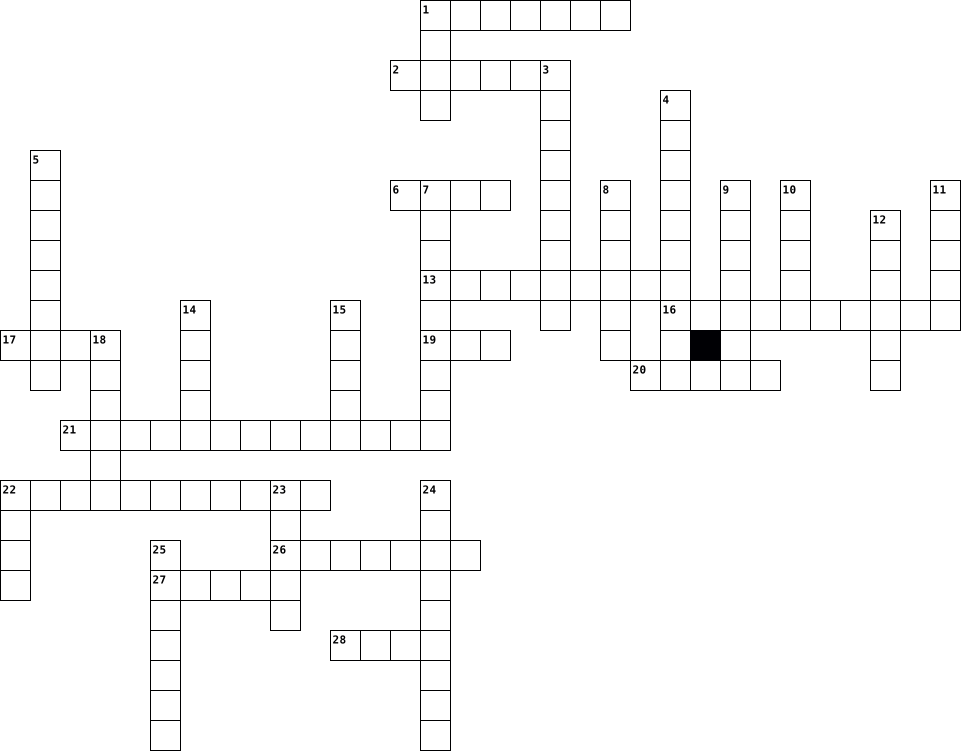
Across
- planet closest to the sun
- planet that is tilted on it's side
- one trip around the sun is called a ____
- used to measure distance in space
- humans that go into space
- government agency that studies space
- name of the star in our galaxy
- the "Great Red Spot" is a ____ on Jupiter
- a group of stars that create a shape
- a star with orbiting planets
- invisible force that keeps humans on earth
- humans live here
- ball of rock that orbits a planet
Down
- also called the "red planet"
- travel through space and send information back to Earth
- astronauts use these to go to space
- name of our galaxy
- a supernova is the ____ of a star
- life forms from other planets
- biggest planet in the solar system
- dwarf planet in our solar system
- hottest planet in the solar system
- has rings around it
- balls of frozen gas/rock that orbit the Sun
- planets ___ the sun
- light shows in the sky by south/north poles
- big balls of gas that create light and heat
- number of planets in our solar system
- study of the universe
- planet farthest from the sun
30 Clues: humans live here • name of our galaxy • has rings around it • planets ___ the sun • study of the universe • planet closest to the sun • humans that go into space • also called the "red planet" • a star with orbiting planets • planet farthest from the sun • life forms from other planets • name of the star in our galaxy • dwarf planet in our solar system • ...
Space 2013-06-08
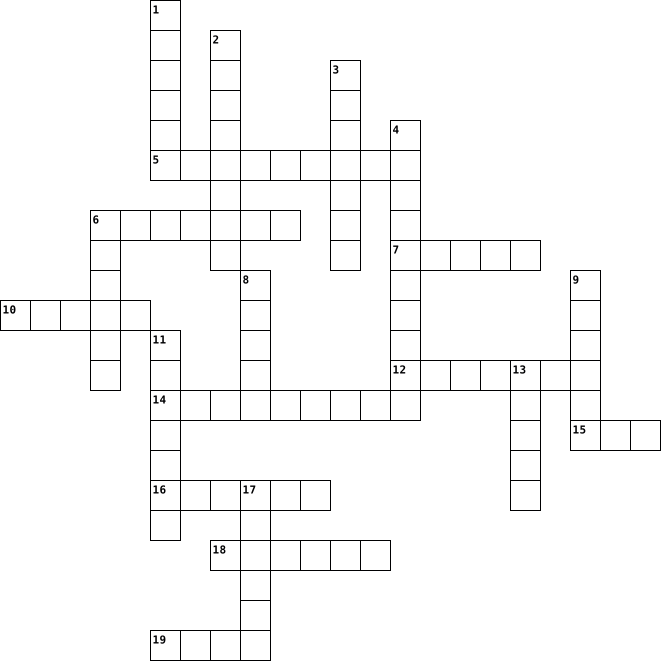
Across
- Minor Planets that are not comets
- A small particle from a comet or asteroid
- An area in the Earth's upper atmosphere which absorbs many of the lethal radiations coming from space
- Second planet closest to the sun
- When our view of one object in the sky is blocked by either another object or the Earth's shadow
- The distance which a ray of light would travel in one year. This is about 6,000,000,000,000 (6 trillion) miles.
- The star that it is in the centre of the solar system
- Second biggest planet, also a gas giant and is surrounded with icy rings
- A group of stars, gas and dust held together by gravity
- Described as the "Red Planet", named after the Roman God of war
Down
- A cloud of gas and dust
- Negative particle which orbits an atom
- Biggest planet and is a gas giant
- Scientists that study about space and astronomy
- Smallest and closest planet to the Sun
- The planet that can sustain living creatures
- Icy small Solar System Body
- A special kind of elongated circle. The orbits of the solar system planets form ellipses.
- A dwarf planet that used to be a part of the solar system
- Seventh planet from the sun
20 Clues: A cloud of gas and dust • Icy small Solar System Body • Seventh planet from the sun • Second planet closest to the sun • Biggest planet and is a gas giant • Minor Planets that are not comets • Negative particle which orbits an atom • Smallest and closest planet to the Sun • A small particle from a comet or asteroid • The planet that can sustain living creatures • ...
Planets 2021-11-02

Across
- our galaxy
- farthest planet from the sun
- the red planet
- largest planet in the solar system
- Titan is the largest moon of ______
- small rocks that orbit the sun
Down
- Earth's only satellite
- distance traveled by light in a vacuum in one tropical year
- Evening star
- the blue planet
- seventh planet from the sun
- smallest planet in the solar system
- the star at the center of the solar system
13 Clues: our galaxy • Evening star • the red planet • the blue planet • Earth's only satellite • seventh planet from the sun • farthest planet from the sun • small rocks that orbit the sun • largest planet in the solar system • smallest planet in the solar system • Titan is the largest moon of ______ • the star at the center of the solar system • ...
Planets 2021-11-02

Across
- our galaxy
- farthest planet from the sun
- the red planet
- largest planet in the solar system
- Titan is the largest moon of ______
- small rocks that orbit the sun
Down
- Earth's only satellite
- distance traveled by light in a vacuum in one tropical year
- Evening star
- the blue planet
- seventh planet from the sun
- smallest planet in the solar system
- the star at the center of the solar system
13 Clues: our galaxy • Evening star • the red planet • the blue planet • Earth's only satellite • seventh planet from the sun • farthest planet from the sun • small rocks that orbit the sun • largest planet in the solar system • smallest planet in the solar system • Titan is the largest moon of ______ • the star at the center of the solar system • ...
SHEILA KINANTI ADHANA 8C 2024-05-02

Across
- The red planet
- The 7th planet from the sun
- Earth's only natural satellite
- A pulling force between every object in the
- The largest planet
- Our solar system
- The planet we live on
- The study of stars, planets, and other objects in
Down
- The senter of our solar system
- The person who travels in outer space
- The 6th planet from the sun
- The blue planet
- Smallest planet in the solar system
13 Clues: The red planet • The blue planet • Our solar system • The largest planet • The planet we live on • The 7th planet from the sun • The 6th planet from the sun • The senter of our solar system • Earth's only natural satellite • Smallest planet in the solar system • The person who travels in outer space • A pulling force between every object in the • ...
Chapter 21 Lesson 1-2 Crossword Puzzle 2017-04-19

Across
- The largest object in the solar system
- Planets that involve earth
- Only planet with water
- Made of gas,dust, and ice
Down
- Hottest planet in solar system
- Objects that orbit the solar system
- Millions of small rocks
- The smallest planet
- Planets that not in the solar system
- A planet we can probably live on
10 Clues: The smallest planet • Only planet with water • Millions of small rocks • Made of gas,dust, and ice • Planets that involve earth • Hottest planet in solar system • A planet we can probably live on • Objects that orbit the solar system • Planets that not in the solar system • The largest object in the solar system
Solar System 2023-01-30

Across
- Natural Satellite of Earth
- Smallest planet in the solar system
- Biggest Planet in the solar system
- Planet with invisible Rings
Down
- Planet with large visible rings
- No. of planets in solar system
- The path in which the planets revolve around sun
- Farthest planet from the Sun
- Red Planet
- Brightest planet in the solar system
10 Clues: Red Planet • Natural Satellite of Earth • Planet with invisible Rings • Farthest planet from the Sun • No. of planets in solar system • Planet with large visible rings • Biggest Planet in the solar system • Smallest planet in the solar system • Brightest planet in the solar system • The path in which the planets revolve around sun
Space 2013-06-08

Across
- Second biggest planet, also a gas giant and is surrounded with icy rings
- The planet that can sustain living creatures
- Scientists that study about space and astronomy
- The distance which a ray of light would travel in one year. This is about 6,000,000,000,000 (6 trillion) miles.
- A special kind of elongated circle. The orbits of the solar system planets form ellipses.
- The star that it is in the centre of the solar system
- A small particle from a comet or asteroid
- Seventh planet from the sun
Down
- Icy small Solar System Body
- Biggest planet and is a gas giant
- Second planet closest to the sun
- A group of stars, gas and dust held together by gravity
- Minor Planets that are not comets
- Described as the "Red Planet", named after the Roman God of war
- When our view of one object in the sky is blocked by either another object or the Earth's shadow
- An area in the Earth's upper atmosphere which absorbs many of the lethal radiations coming from space
- Negative particle which orbits an atom
- A dwarf planet that used to be a part of the solar system
- Smallest and closest planet to the Sun
- A cloud of gas and dust
20 Clues: A cloud of gas and dust • Icy small Solar System Body • Seventh planet from the sun • Second planet closest to the sun • Biggest planet and is a gas giant • Minor Planets that are not comets • Negative particle which orbits an atom • Smallest and closest planet to the Sun • A small particle from a comet or asteroid • The planet that can sustain living creatures • ...
What do you know about Space? 2021-08-23

Across
- Earth has ___ moon.
- This is the largest planet in the solar system
- only one ____ of the earth can face the sun at any time
- The planet famous for having visible rings is called:
- An _____ is a path that one object in space takes around another one.
- The sun provides light, warmth and ____ to earth.
- It takes earth about 365 _____ to orbit the sun
- Everything that is bound to the sun by gravity is known as being in the _______ system
- The sun is roughly one _____ times the size of earth
- The second planet from the sun
- This planet is closest to the sun
Down
- It takes earth approximately 24 ____ to rotate around itself.
- This is the eighth planet from the sun
- Earth is the _____ planet from the sun.
- This is a huge ball of glowing, hot gas
- A scientist who studies space is called an:
- An object in orbit is called a _______.
- This is the hottest planet in the solar system
- The four closest planets to the sun are known as the _____ planets.
- The four furthest planets from the sun are known as ____ planets and you could fall right through them!
- Even though this is the seventh planet, it is the coldest
- This is the largest object in the solar system.
22 Clues: Earth has ___ moon. • The second planet from the sun • This planet is closest to the sun • This is the eighth planet from the sun • Earth is the _____ planet from the sun. • This is a huge ball of glowing, hot gas • An object in orbit is called a _______. • A scientist who studies space is called an: • This is the largest planet in the solar system • ...
Exploring the Solar System 2021-11-20

Across
- icy rock that lets off dust and flies through space
- Station, manned artificial satellite able to support humans for an extended period of time
- a natural object that orbits around a larger object
- Cloud a shell around our solar system in the shape of a sphere
- small or large rocks that float in space
- Belt region between Mars and Jupiter
- Spectrum all the different lights and energies found in the universe
- a celestial body that orbits around a star
- Eclipse when Earth interrupts light shining on the moon
- Probe an object sent into space at far distances for long periods of time to gather information about space
- a person who is trained and equipped for space missions
- a word that describes something, not from Earth
Down
- name for a meteoroid that has landed on a planet's surface
- another name for a space explorer
- System set of space objects that include stars and everything that orbits around it
- an object placed in space intentionally to provide communication, information and navigation
- shining ball of gas that is held by its own gravity
- the star at the center of our solar system
- Planets the name used for planets located beyond the asteroid belt
- bright explosion of a star
- the largest planet in our solar system
- Planets the name used for the four planets closest to the Sun
- a planet that we inhabit
23 Clues: a planet that we inhabit • bright explosion of a star • another name for a space explorer • Belt region between Mars and Jupiter • the largest planet in our solar system • small or large rocks that float in space • the star at the center of our solar system • a celestial body that orbits around a star • a word that describes something, not from Earth • ...
Lily's Crossword 10 Solar System 2020-04-20

Across
- the only star in our solar system
- the round object that moves around the earth
- that can be done or might happan
- a planet which is the farthest away from the sun
- that cannot exist or to be done ,not possible
- the smallest planet in the solar system and closest to the sun
- the area outside the earth's atmosphere where all the other planets and stars are
- any of the large systems of stars etc. in outer space
- the second biggest planet with rings
Down
- to be the first person to become aware that a place or thing exists,to find out sth. new
- the whole space and everything in it
- the planet between Earth and Jupiter
- the second planet in order of distance from the sun
- the biggest planet in the solar system, with a big red spot
- a large ball of burning gas in space that we see as a point of light in the sky at night
- of or connected with the sun
- a group of things that are connected or work together
- a large round object in space that moves around the sun
- the planet we live on
- a gas planet which rotates differently
20 Clues: the planet we live on • of or connected with the sun • that can be done or might happan • the only star in our solar system • the whole space and everything in it • the planet between Earth and Jupiter • the second biggest planet with rings • a gas planet which rotates differently • the round object that moves around the earth • that cannot exist or to be done ,not possible • ...
Solar System Crossword! 2015-04-15

Across
- Planet with the most iron in solar system.
- The smallest planet.
- The planet with rings.
- The center of out Solar System.
- The name of our galaxy.
- Some planets are called ___ Giants.
Down
- Planets with solid rocky surfaces.
- Planets do this around the sun.
- There is an inner and _____ Solar System.
- Planet that revolves in the opposite direction earth does.
- Orbits the Earth.
- The Planet we live on.
- The red Planet.
13 Clues: The red Planet. • Orbits the Earth. • The smallest planet. • The planet with rings. • The Planet we live on. • The name of our galaxy. • Planets do this around the sun. • The center of out Solar System. • Planets with solid rocky surfaces. • Some planets are called ___ Giants. • There is an inner and _____ Solar System. • Planet with the most iron in solar system. • ...
Space and machines 2020-06-05

Across
- one of the strangest thing we know in the universe
- planet with most moons in the solar system
- largest planet in the solar system
- the machine that was lounch to spacein 1977
- the first car brand in space
- first hungarian in space
- our sun is a ...
- short name of international space staion
Down
- closest solar system
- the oprogram that first to send humans to the moon
- first satellite in space
- first counrty that send people to space
- first name of the first man in space
- short name of single stage to orbit
- our home planet
15 Clues: our home planet • our sun is a ... • closest solar system • first satellite in space • first hungarian in space • the first car brand in space • largest planet in the solar system • short name of single stage to orbit • first name of the first man in space • first counrty that send people to space • short name of international space staion • ...
Unit 11 Vocab - Solar System 2025-04-19

Across
- - Kepler's 1st Law says planets orbit the sun in this shape.
- - a type of planet with a rocky surface and thin atmosphere
- - a spherical body which orbits the sun and has cleared its neighborhood.
- - a region past Neptune where four dwarf planets live.
- - an icy and rocky body which orbits the sun and has a distinct "tail."
- - a piece of space debris on the surface of a planet.
- - the "father" of heliocentrism
- - This force, along with inertia, keeps planets in orbit around the sun.
- - A model of the universe with Earth at the center.
- - discoverer of Venus' phases and four moons of Jupiter.
- - The four largest moons of Jupiter are called this
- - A model of the solar system with the sun at the center.
- - When planets appear to move backward in their orbit
- - a piece of space debris approaching a planet
- - Uranus and Neptune are this type of planet
- - the largest volcano in the solar system on Mars
Down
- - Aristotle's model of the solar system with rotating concentric spheres around Earth
- - a region found between Jupiter and Mars
- - A moon
- - The publisher of the theory of universal gravitation
- - the largest storm in the solar system
- - a spherical body which orbits the sun but has not cleared its neighborhood.
- - The simplest explanation is often the best.
- - a piece of space debris in the atmosphere of a planet
- - a rocky body which orbits the sun in a belt but is not spherical
- - a type of planet with a small core and giant atmosphere
- - the outermost region of the solar system
- - Kepler's 2nd law says planets move _______ when closer to the sun.
- - Jupiter and Saturn are this type of planet
29 Clues: - A moon • - the "father" of heliocentrism • - the largest storm in the solar system • - a region found between Jupiter and Mars • - the outermost region of the solar system • - Jupiter and Saturn are this type of planet • - Uranus and Neptune are this type of planet • - The simplest explanation is often the best. • - a piece of space debris approaching a planet • ...
Planets Crossword 2014-10-26

Across
- The only planet in the Solar System that has life
- Everything that exists including planets, stars, galaxies and all forms of matter and energy
- The smallest planet in the Solar System, which has now become a dwarf planet
- The galaxy of where our Solar System belongs
- A planet that is surrounded by rings and is the second biggest planet
- A planet that is too small to be considered a regular planet
- A huge bright ball of burning gas held together by gravity. The sun is one
- The biggest planet,300 times the mass of Earth
- A small object that is part of the solar system, it orbits the sun and is made up of ice, dust and small rocky particles
- The number of planets in our Solar System
- One of the four gas only planets, it is the second last planet away from the Sun and appears blue in colour
- Known as the red planet and sits next to Earth and also has similar time to Earth
Down
- The planet that is closest to the Sun
- The first person to step foot on the Moon in 1969
- The seventh planet from the Sun and cannot be seen from Earth without a telescope
- The study of objects and matter outside the Earth's surface
- A person trained to be a member of a spacecraft, a space travel professional
- The star that gives life to Earth and which all planets orbit around
- The planet that is second closest to the Sun and sits in between Mercury and Earth
- Orbits the Earth and is made up of craters. Can be seen from the Earth during the day and night
20 Clues: The planet that is closest to the Sun • The number of planets in our Solar System • The galaxy of where our Solar System belongs • The biggest planet,300 times the mass of Earth • The only planet in the Solar System that has life • The first person to step foot on the Moon in 1969 • The study of objects and matter outside the Earth's surface • ...
Celestial Objects Crossword 2026-02-25

Across
- a rock traveling through space, outside of the atmosphere
- Asteroid _______; This region contains millions of these space rocks, ranging in size from tiny pebbles to dwarf planet-sized bodies
- this planet is 1.5 AU from the sun
- a rock from space that made it to a planet's surface
- the 3rd planet from the sun; our home
- this planets is best known for its rings
- the true center of the solar system; creates the most gravity out of all other celestial bodies in the solar system
- refers to the orbital movement of a celestial body around the Sun
- celestial objects made up of mixtures of rock, ice, and dust, loosely held together by the gravitational attraction between their particles
- a natural satellite that orbits a planet
- refers to a celestial body spinning on its own axis
Down
- the 1st planet from the sun
- this planet is 30AU from the sun - the furthest
- the theory that Earth is the center of the solar system
- ________ planet; orbit the sun and are round in shape like regular planets, but lack enough mass to clear their orbital paths of other debris
- the streak of light produced when a small space rock or particle enters a planet’s atmosphere and burns up due to friction with the air
- this planet is 19.2 AU from the sun
- the theory that the Sun is the center of the solar system
- the 2nd planet from the sun
- this planet is the largest in the solar system
- pieces of rock and ice that never clumped together into a planet
- the result of the bending of space-time caused by mass
- a large celestial body that orbits a star, such as the sun
23 Clues: the 1st planet from the sun • the 2nd planet from the sun • this planet is 1.5 AU from the sun • this planet is 19.2 AU from the sun • the 3rd planet from the sun; our home • this planets is best known for its rings • a natural satellite that orbits a planet • this planet is the largest in the solar system • this planet is 30AU from the sun - the furthest • ...
Planets 2021-11-02

Across
- our galaxy
- farthest planet from the sun
- the red planet
- largest planet in the solar system
- Titan is the largest moon of ______
- small rocks that orbit the sun
Down
- Earth's only satellite
- distance traveled by light in a vacuum in one tropical year
- Evening star
- the blue planet
- seventh planet from the sun
- smallest planet in the solar system
- the star at the center of the solar system
13 Clues: our galaxy • Evening star • the red planet • the blue planet • Earth's only satellite • seventh planet from the sun • farthest planet from the sun • small rocks that orbit the sun • largest planet in the solar system • smallest planet in the solar system • Titan is the largest moon of ______ • the star at the center of the solar system • ...
Space 2020-12-02

Across
- named after the Roman god of war
- the planet farthest away from the sun
- the center of attention
- small glowing balls of gas
- people who experience the flight through the atmosphere
- earth’s closest neighbour in the solar system
- the only planet with visible rings
- a gas giant
Down
- dusty snowballs which orbit the sun
- the coldest planet in the solar system
- the only planet with water and land
- a revolutionary machine which can send people into space
- it lights up the night sky
- small rocky objects which orbit the sun
- the smallest planet in the solar system
15 Clues: a gas giant • the center of attention • it lights up the night sky • small glowing balls of gas • named after the Roman god of war • the only planet with visible rings • dusty snowballs which orbit the sun • the only planet with water and land • the planet farthest away from the sun • the coldest planet in the solar system • small rocky objects which orbit the sun • ...
Space 2023-04-25

Across
- number of planets in our solar system
- biggest star in solar system
- speed in km/h to brak through gravity
- first dog in space
- year of the first succesfull rocket in space
- thing we call "Sternschnuppe"
- the thing that's not in space
Down
- how many rockets have been in space
- first man on the moon
- thing that keeps us on earth
- the thing rockets do before they fly into space
- dollars a rocket costs
- first man in space
- biggest planet in solar system
- which animal has not been in space yet: dogs,rabbits, cats
15 Clues: first dog in space • first man in space • first man on the moon • dollars a rocket costs • biggest star in solar system • thing that keeps us on earth • thing we call "Sternschnuppe" • the thing that's not in space • biggest planet in solar system • how many rockets have been in space • number of planets in our solar system • speed in km/h to brak through gravity • ...
CROSSWORD 2025-07-18

Across
- The star at the center of our solar system
- Earth's natural satellite
- Has beautiful rings around it
- The planet we live on
- Known as the red planet
- The hottest planet in our solar system
- Icy body with a glowing tail
- A huge group of stars and planets
Down
- The largest planet in our solar system
- Rotates on its side
- Burns brightly when it enters Earth’s sky
- Farthest planet from the Sun
- A small rocky body orbiting the Sun
- The closest planet to the Sun
- Hole A space object with gravity so strong, nothing escapes
15 Clues: Rotates on its side • The planet we live on • Known as the red planet • Earth's natural satellite • Farthest planet from the Sun • Icy body with a glowing tail • Has beautiful rings around it • The closest planet to the Sun • A huge group of stars and planets • A small rocky body orbiting the Sun • The largest planet in our solar system • The hottest planet in our solar system • ...
Planetary Moons 2024-12-10

Across
- moon of Saturn with erupting geysers
- heavily cratered moon of Jupiter
- has the most active volcanoes in the solar system
- larger of Mars' 2 moons
- moon of Saturn with an atmosphere
- spacecraft that discovered Jupiter's rings
- moon of Uranus with interesting geologic activity
- common balance point
Down
- discovered the 4 main moons of Jupiter
- ice-covered moon with possible water underneath
- smaller of Mars' 2 moons
- only moon in the solar system with retrograde motion
- Pluto's largest moon
- spacecraft that studied Saturn and its moons
- the largest moon in the solar system
15 Clues: Pluto's largest moon • common balance point • larger of Mars' 2 moons • smaller of Mars' 2 moons • heavily cratered moon of Jupiter • moon of Saturn with an atmosphere • moon of Saturn with erupting geysers • the largest moon in the solar system • discovered the 4 main moons of Jupiter • spacecraft that discovered Jupiter's rings • spacecraft that studied Saturn and its moons • ...
Unidentified Flying Planet Crossword Puzzle 2025-12-03

Across
- The border between the Terrestrials and the Jovians
- Earth only has one, yet Venus has none.
- Tool that Galileo used to discover the four largest moons of Jupiter
- A diagram of this is on the front of your bifold.
- First name of a very annoying Pluto hater
- The gases that surround a planet
- A bus-sized probe that visited Saturn
- Planet named for the Roman god of the sea.
- The largest single body in our solar system.
- The part of a terrestrial planet that we see from the outside
- The planet that revolves around the Sun faster than any other.
- One complete spin, a.k.a. a day
- Number of planets in the solar system (just don't ask Stink!)
- Important matter found at the poles of Mars
- The Planet Comparison is this kind of diagram
Down
- The command on top of your Planet Composition
- Favorite meal for a Fat Man from Space
- The identity of Pluto, Ceres, Eris, etc.
- Where people can quickly see the most important information about your planet
- The hottest planet in the solar system.
- This layer of terrestrial players has magma on Earth
- The center of a planet
- A red planet named for the Roman god of war.
- The coldest planet in the solar system
- Part of the body that helped William hear the Fat Men from Space
- The planet that is the "mostest closest" to the Earth at any given time
- A sudden change, or one trip around the sun.
- The surfaces of Mercury and the Moon are covered in these large holes
- What something is made out of, like your planet.
- Pieces of jewelry, or things found on every Jovian planet in our solar system.
30 Clues: The center of a planet • One complete spin, a.k.a. a day • The gases that surround a planet • A bus-sized probe that visited Saturn • Favorite meal for a Fat Man from Space • The coldest planet in the solar system • Earth only has one, yet Venus has none. • The hottest planet in the solar system. • The identity of Pluto, Ceres, Eris, etc. • ...
Planets - Stage 1 2014-10-07

Across
- A planet starting with the letter M----.
- What gives us light during the day?
- A planet starting with the letter S-----.
- The Solar System also contains many D----- planets including Pluto.
- This is made from the sun and used to power things.
- A night the sky is filled with these.
- A planet starting with the letter M------.
- The planets go around or orbit what?
- A planet starting with the letter V----.
- How many planets are there in the Solar System.
Down
- The Solar System began as s huge cloud of ---- and gas.
- What gives us light at night time.
- The planets belong to the S----System.
- A planet starting with the letter U-----.
- The biggest planet of them all.
- A planet starting with the letter J------.
- The sun is also a s---.
- Where we live.
18 Clues: Where we live. • The sun is also a s---. • The biggest planet of them all. • What gives us light at night time. • What gives us light during the day? • The planets go around or orbit what? • A night the sky is filled with these. • The planets belong to the S----System. • A planet starting with the letter M----. • A planet starting with the letter V----. • ...
space - crossword 2025-03-24

Across
- the planet also named "the dust planet"
- the dominant spices on earth
- big chunk of rock but aint a planet
- bit is a cluster of planes,stars and solar systems
- what are other living creatures in space called
- the smallest ice giant in the sollar system ice giant
- the planet that is no longer part of the solar system
Down
- can suck everything inside itself
- the planet with the most moon's
- biggest planet in the sollar system
- closest star t earth
- the tallest mountain in the solar system
- are used to cary people or satilites or other things into space
- humans that are specialy trained to go to space
- are big and bright
- the only planet where you can gamble and drink beer over the age of 16 in Denmark
- discoverd by Galileo
17 Clues: are big and bright • closest star t earth • discoverd by Galileo • the dominant spices on earth • the planet with the most moon's • can suck everything inside itself • biggest planet in the sollar system • big chunk of rock but aint a planet • the planet also named "the dust planet" • the tallest mountain in the solar system • humans that are specialy trained to go to space • ...
Space & Astronomy 2025-03-08

Across
- A rapidly spinning neutron star
- A bright energetic galaxy core
- A Russian space traveler
- A device to observe distant objects
- Related to the Sun
- A person trained for space travel
- The galaxy that contains our solar system
- A distant cloud of icy objects
- A space rock burning in Earth's atmosphere
- The dense remnant of a collapsed star
- A region where gravity is too strong for light to escape
- The largest planet in the solar system
- Part of the name of the space station
- A famous space telescope
- A neutron star with an extremely strong magnetic field
- A force that pulls objects together
- A dwarf planet in the Kuiper Belt
- The path of a celestial body
- A massive star's explosive death
- Relating to Earth's moon
- Existing between the stars
- The hottest planet in the solar system
- An icy body with a glowing tail
- A private space company founded by Elon Musk
- The nearest major galaxy to the Milky Way
- A ripple in spacetime caused by massive objects
Down
- U S space agency
- A planet that rotates on its side
- A planet outside our solar system
- A massive system of stars and planets
- A celestial body orbiting a star
- A region beyond Neptune with icy bodies
- A planet famous for its rings
- Earth’s only natural satellite
- A mysterious substance that makes up most of the universe’s mass
- The farthest planet from the Sun
- A luminous sphere of gas held by gravity
- Known as the Red Planet
- A cloud of gas and dust in space
- The distance light travels in a year
- When one celestial body blocks another
- A small rocky body in space
- The event that started the universe
- A body that orbits a planet
- The four dimensional continuum of space and time
- A vehicle designed for space travel
- A vehicle that propels itself into space
- The center of our solar system
- The universe as a whole
- The point of no return around a black hole
50 Clues: U S space agency • Related to the Sun • Known as the Red Planet • The universe as a whole • A Russian space traveler • A famous space telescope • Relating to Earth's moon • Existing between the stars • A small rocky body in space • A body that orbits a planet • The path of a celestial body • A planet famous for its rings • A bright energetic galaxy core • Earth’s only natural satellite • ...
Space & Astronomy 2025-03-08

Across
- The point of no return around a black hole
- The nearest major galaxy to the Milky Way
- A region where gravity is too strong for light to escape
- A massive system of stars and planets
- A bright energetic galaxy core
- When one celestial body blocks another
- The distance light travels in a year
- The center of our solar system
- A Russian space traveler
- A neutron star with an extremely strong magnetic field
- A space rock burning in Earth's atmosphere
- A planet famous for its rings
- The universe as a whole
- Related to the Sun
- A vehicle that propels itself into space
- A person trained for space travel
- A vehicle designed for space travel
- Known as the Red Planet
- A rapidly spinning neutron star
- Part of the name of the space station
- A famous space telescope
- The farthest planet from the Sun
- A body that orbits a planet
Down
- A region beyond Neptune with icy bodies
- A device to observe distant objects
- A small rocky body in space
- A planet that rotates on its side
- U S space agency
- The path of a celestial body
- The galaxy that contains our solar system
- A ripple in spacetime caused by massive objects
- A celestial body orbiting a star
- A cloud of gas and dust in space
- A force that pulls objects together
- Existing between the stars
- A massive star's explosive death
- The hottest planet in the solar system
- Earth’s only natural satellite
- An icy body with a glowing tail
- A mysterious substance that makes up most of the universe’s mass
- The largest planet in the solar system
- A private space company founded by Elon Musk
- A distant cloud of icy objects
- A planet outside our solar system
- A luminous sphere of gas held by gravity
- The event that started the universe
- A dwarf planet in the Kuiper Belt
- The dense remnant of a collapsed star
- Relating to Earth's moon
- The four dimensional continuum of space and time
50 Clues: U S space agency • Related to the Sun • The universe as a whole • Known as the Red Planet • A Russian space traveler • Relating to Earth's moon • A famous space telescope • Existing between the stars • A small rocky body in space • A body that orbits a planet • The path of a celestial body • A planet famous for its rings • A bright energetic galaxy core • The center of our solar system • ...
Space history and Solar bodies 2022-05-12

Across
- What the universe started with
- electrons attached to this
- this type of planet is giant and has no solid surface
- One of the biggest planets in our solar system with a ring
- One of the smallest planets in our solar system and the closest to the sun
- what end up turning into planets after gaining mass
- This forms from dust gas and ice because of gravity
Down
- creates a large amount of energy and makes new elements
- the catalyst for nearly everything in space
- the debris that doesnt turn into a planet
- has the longest orbit in our solar system
- these form after gas clouds condense and gravitate too each other
- electrons attached to this
- Has the shortest day in earth hours in the solar system
- E = ?c^2
15 Clues: E = ?c^2 • electrons attached to this • electrons attached to this • What the universe started with • the debris that doesnt turn into a planet • has the longest orbit in our solar system • the catalyst for nearly everything in space • what end up turning into planets after gaining mass • This forms from dust gas and ice because of gravity • ...
Daiji's Crossword Puzzle 2024-01-30

Across
- a cloud of interstellar gas and dust to form a solar system.
- occurs when a rocky body that had been orbiting the Sun passes through the atmosphere to hit the Earth's surface.
- a swarm of trillions of icy bodies that lie far beyond the orbit of Neptune.
- the biggest planet in the solar system.
- a streak of light in the sky caused by a meteoroid crashing through Earth's atmosphere.
- a huge spot on jupiter's surface.
- planet that is made up of water, ammonia, and hydrogen.
- numerous small bodies that when accreted together form planets.
- a habitable planet
- planet that is named after a roman god of the sea.
- created by the outward expansion of plasma (a collection of charged particles) from the Sun's corona (outermost atmosphere).
- a massive amount of asteroids/meteors orbiting around a planet.
- an exo planet that was once a planet in our solar system.
Down
- when tiny particles are condensed from the nebula and stick together.
- the component of its motion in the direction toward or away from us which is detected as a Doppler shift in the star's spectrum.
- planet that is named after a roman goddess of beauty and love.
- clouds of gas between stars
- frozen leftovers from the formation of the solar system composed of dust, rock, and ices.
- planets that supports life.
- gas planets.
- planets that have a similar structure to earth.
- smallest planet in the solar system.
- a small body that orbits around planets.
- planet that is named after a roman god of war.
- a planet that is mainly known for its rings.
25 Clues: gas planets. • a habitable planet • clouds of gas between stars • planets that supports life. • a huge spot on jupiter's surface. • smallest planet in the solar system. • the biggest planet in the solar system. • a small body that orbits around planets. • a planet that is mainly known for its rings. • planet that is named after a roman god of war. • ...
Our Place in Space 2023-04-03

Across
- The name given to the first four planets in the Solar System is the ____ planets.
- The closest planet to the Sun.
- Giants The nickname given to the planets Jupiter, Saturn, Uranus and Neptune.
- The only planet known to have life.
- The largest planet in the Solar System.
- The name of the American agency that explores and researches outer space.
Down
- A solid piece of debris flying through space known as a shooting star.
- The dwarf planet that is no longer a part of the Solar System.
- The planet known as ‘The Red Planet’ that is close to Earth.
- It takes the Earth a full ____ to rotate around the Sun.
- A planet in our Solar System with rings.
- The source of Earth’s light that all planets in the Solar System orbit.
12 Clues: The closest planet to the Sun. • The only planet known to have life. • The largest planet in the Solar System. • A planet in our Solar System with rings. • It takes the Earth a full ____ to rotate around the Sun. • The planet known as ‘The Red Planet’ that is close to Earth. • The dwarf planet that is no longer a part of the Solar System. • ...
Earth, Moon, Sun crossword puzzle 2025-03-11

Across
- a moon outside solar system
- the fire ball in the sky
- the size of things
- to shine light on an object
- eclipse when the moon is completely dark
- moon moon phase in which is not visible
- a planet outside our solar system
- border between light and dark
- moon the phase of half of a moon
Down
- moon less then half of a moon
- rocky sphere in the sky
- moon a moon phase that looks like a full
- an object or diagram
- system the sun and planets in the sky
- moon a moon phase less than half
- something that happens over and over again
- phase the shape of the illuminated part of of the moon
- nearly circular path that goes around a smaller object
- the amount of time it takes for a full cycle to happen
19 Clues: the size of things • an object or diagram • rocky sphere in the sky • the fire ball in the sky • a moon outside solar system • to shine light on an object • border between light and dark • moon less then half of a moon • moon the phase of half of a moon • moon a moon phase less than half • a planet outside our solar system • system the sun and planets in the sky • ...
Space & Planets 🚀 2025-02-20

Across
- A rocky body orbiting the Sun. 🪨
- A person who travels to space. 👨🚀
- A device used to see space objects. 🔭
- The red planet. 🔴
- Once a planet, now a dwarf planet. ❄️
- The coldest and farthest planet. 🔵
Down
- A space rock with a glowing tail. ☄️
- The closest planet to the Sun. ☀️
- The largest planet in our solar system. 🪐
- A large system of stars, planets, and dust. 🌌
- The hottest planet in the solar system. 🔥
- The planet with the biggest rings. 💍
- Earth's natural satellite. 🌙
- The planet we live on. 🌍
- The star at the center of our solar system. ☀️
15 Clues: The red planet. 🔴 • The planet we live on. 🌍 • Earth's natural satellite. 🌙 • A rocky body orbiting the Sun. 🪨 • The closest planet to the Sun. ☀️ • A person who travels to space. 👨🚀 • The coldest and farthest planet. 🔵 • A space rock with a glowing tail. ☄️ • The planet with the biggest rings. 💍 • A device used to see space objects. 🔭 • Once a planet, now a dwarf planet. ❄️ • ...
Space history and Solar bodies 2022-05-12

Across
- What the universe started with
- electrons attached to this
- this type of planet is giant and has no solid surface
- One of the biggest planets in our solar system with a ring
- One of the smallest planets in our solar system and the closest to the sun
- what end up turning into planets after gaining mass
- This forms from dust gas and ice because of gravity
Down
- creates a large amount of energy and makes new elements
- the catalyst for nearly everything in space
- the debris that doesnt turn into a planet
- has the longest orbit in our solar system
- these form after gas clouds condense and gravitate too each other
- electrons attached to this
- Has the shortest day in earth hours in the solar system
- E = ?c^2
15 Clues: E = ?c^2 • electrons attached to this • electrons attached to this • What the universe started with • the debris that doesnt turn into a planet • has the longest orbit in our solar system • the catalyst for nearly everything in space • what end up turning into planets after gaining mass • This forms from dust gas and ice because of gravity • ...
Space history and Solar bodies 2022-05-12

Across
- What the universe started with
- electrons attached to this
- this type of planet is giant and has no solid surface
- One of the biggest planets in our solar system with a ring
- One of the smallest planets in our solar system and the closest to the sun
- what end up turning into planets after gaining mass
- This forms from dust gas and ice because of gravity
Down
- creates a large amount of energy and makes new elements
- the catalyst for nearly everything in space
- the debris that doesnt turn into a planet
- has the longest orbit in our solar system
- these form after gas clouds condense and gravitate too each other
- electrons attached to this
- Has the shortest day in earth hours in the solar system
- E = ?c^2
15 Clues: E = ?c^2 • electrons attached to this • electrons attached to this • What the universe started with • the debris that doesnt turn into a planet • has the longest orbit in our solar system • the catalyst for nearly everything in space • what end up turning into planets after gaining mass • This forms from dust gas and ice because of gravity • ...