
states Crossword Puzzles
Cold War Unit Study Guide 2025-04-10

Across
- A period of intense fear of communism in the United States, leading to widespread accusations and investigations
- a conflict where the United States fought to stop communism from spreading into Southeast Asia
- policy made by the United States to stop the spread of communism
- The practice of making unproven accusations of communism, especially in the United States government
- A United States spy plane shot down over the USSR, worsening the Cold War tensions
- United States promise to help countries resist communism, starting with Greece and Turkey
- divide between communists east europe and democratic western europe
- United States and USSR competition for dominance in space exploration
- United States program giving economic aid to rebuild Western Europe after WWII
- A failed United States backed invasion of Cuba by exiles trying to overthrow Castro
Down
- A military alliance of the USSR and its Eastern European Allies
- The peoples Republic of China, established in 1949 under Mao Zedong after a communist revolution
- A 13 day standoff over Soviet missiles in Cuba that nearly led to nuclear war
- A military alliance of the United States, Canada, and Western Europe to defend against the USSR
- The belief that if one country fell to communism, its neighbors would too
- political rivalry between the United States and Soviet Union after WWII
- A war between communist North Korea and democratic South Korea, involving United States and Chinese forces
- A wall built in 1961 by East Germany to stop East Berliners from fleeing to democratic West Berlin
18 Clues: A military alliance of the USSR and its Eastern European Allies • policy made by the United States to stop the spread of communism • divide between communists east europe and democratic western europe • United States and USSR competition for dominance in space exploration • political rivalry between the United States and Soviet Union after WWII • ...
POLS Crossword Puzzle 2019-08-30

Across
- Amount of House reps. is chosen by population or in other words it is ______ to population
- What type of power gives federal government power and weakens states?
- Which amendment prohibits states from denying the right to vote by race.
- Continual debate regarding gov. authority
- More representation to big states
- System where power is shared between federal and state government
- Slave owners have right to recover slaves/escaped slaves to be returned to slave owners
- Sedition Act, Advocated for nullification
- How they resolved counting slaves into voting representation for states
- Established National Bank
- Modern day Federalist party
- Equal Representation of all states
- The real power in who gets elected president
- What type of power gives States power over Federal?
- Regulation of commerce
Down
- System in which State and local government hold the most power
- Which amendment provides all people equal protection of laws
- Legal decisions from one state are to be honored in other states
- Takess best parts of the New Jersey Plan and Virginia Plan
- System where there is one main power
- Which amendment prohibits slavery
- Power to the elected
- Trading obedience for unalienable rights
- July 4th 1776
- Number of senators per state
- Modern day Anti-Federalist party
- “The powers not delegated to the United States by the Constitution, nor prohibited by it to the States, are reserved to the States respectively, or to the people.”
- Federal laws are supreme to or trump state laws
- First 10 amendments of the Constitution
- Sharing of power between federal and state power.
30 Clues: July 4th 1776 • Power to the elected • Regulation of commerce • Established National Bank • Modern day Federalist party • Number of senators per state • Modern day Anti-Federalist party • Which amendment prohibits slavery • More representation to big states • Equal Representation of all states • System where there is one main power • First 10 amendments of the Constitution • ...
gov 2022-11-18

Across
- stops public officials from holding closed
- the Court often supported states’
- may exercise because it is a government
- Article VI, Section 2
- favors national action
- a federal order requiring states
- national and state powers
- powers directly expressed by founders
- states can prepare constitution
Down
- expressed explixlety
- laws relating to disputes between individual.
- certain powers strictly to the states
- a requirement set by Congress
- favors state and local action
- necessary and proper clause
- organization of government administrators,
- the Supreme Court ruled
- A nationalist Chief Justice
- return to a state
- thegovernment provides money to the states preemption the power to assume responsibility
- require periodic checks of government agenenc
- powers the constitution to national
- agreements between two more states.
- levied on individual earnings has .
24 Clues: return to a state • expressed explixlety • Article VI, Section 2 • favors national action • the Supreme Court ruled • national and state powers • necessary and proper clause • A nationalist Chief Justice • a requirement set by Congress • favors state and local action • states can prepare constitution • a federal order requiring states • the Court often supported states’ • ...
Unit #5- Manifest Destiny, pre-causes of the Civil War 2020-02-26

Across
- was a pivotal event in the Texas Revolution. Following a 13-day siege.
- The 1845 annexation of the Republic of Texas into the United States of America.
- officially titled the Treaty of Peace, Friendship, Limits and Settlement between the United States of America and the Mexican Republic.
- was an 1859 effort by abolitionist John Brown to initiate an armed slave revolt in Southern states.
- This agreement set the boundary between the United States and Canada at the 49th parallel west of the Rocky Mountains.
- Is the principle that the authority of a state and its government are created and sustained by the consent of its people.
- Was the popular slogan that led Polk to victory against all odds.
- ran for president as part of the Southern faction of the Democratic Party.
- Operate under a senior pastor-led system of church government, sometimes referred to as the.
- Was a series of violent civil confrontations in the United States between 1854 and 1861 which emerged from a political and ideological conflict over the legality of slavery.
- Was a legislation that provided for the admission of Maine to the United States as a free state.
- U.S. state in which the practice of slavery was legal at a particular point in time.
- 1850 Was a package otreatf five separate bills passed by the United States Congress in September 1850 that defused a political confrontation between slave and free states
Down
- a year later with the Treaty of Guadalupe Hidalgo, signed on February 2nd, 1848.
- Was a widely held belief in the 19th-century United States that its settlers were destined to expand across North America.
- was an organized incorporated territory of the United States that existed from July 4, 1805.
- was an American attorney and statesman who represented Kentucky in both the United States Senate and United States House of Representatives.
- one of the principal rivers in the southwest United States and northern Mexico.
- Was an armed conflict between the United States and Mexico from 1846 to 1848.
- was a landmark decision of the U.S. Supreme Court in which the Court held that the Constitution of the United States.
- Act Was passed by the U.S. Congress on May 30, 1854.
- Was the 12th president of the United States, serving from March 1849 until his death in July 1850.
- An organized incorporated territory of the United States that existed from August 14, 1848.
- was an unsuccessful 1846 proposal in the United States Congress to ban slavery in territory acquired from Mexico.
- As Missouri prepared to enter the______as a Slave State.
- Was the 11th president of the United States, serving from 1845 to 1849.
- Was the 19th quadrennial presidential election which was held on Tuesday, November 6, 1860.
- was a U.S. state in which the practice of slavery was legal at a particular point in time.
- Is loyalty to one's own region or section of the country, rather than to the country as a whole.
- Is the administrative action and concept in international law relating to the forcible acquisition of one state's territory by another state.
- a state of the US in which slavery was illegal.
31 Clues: a state of the US in which slavery was illegal. • Act Was passed by the U.S. Congress on May 30, 1854. • As Missouri prepared to enter the______as a Slave State. • Was the popular slogan that led Polk to victory against all odds. • was a pivotal event in the Texas Revolution. Following a 13-day siege. • ...
Civil War Crossword 2022-05-27

Across
- Proclamation - An executive order from President Abraham Lincoln stating that slaves in the Confederate states were to be set free.
- theater - The part of the war fought in the Eastern United States including Virginia, West Virginia, Maryland, and Pennsylvania.
- - When the southern states chose to leave the United States and to no longer be a part of the country.
- - A nickname for the South.
- - A long gun with a smooth bore that soldiers shot from the shoulder.
- - A commutation was when a person could pay a fee rather than be drafted into the army. This angered poorer people who could not pay the fee and had no choice but to fight.
- states - These states were slave states that did not leave the Union, but largely supported the cause of the Confederates. They included Missouri, Kentucky, Maryland, and Delaware.
- - A nickname for United States paper money that was first used in 1862. It got its name from the green ink used in printing.
- - Another name for the Confederate States of America or the South. The Confederacy was a group of states that left the United States to form their own country.
- - The name given to the states that stayed loyal to the United States government. Also called the North.
- - A northerner who moved to the South during the reconstruction in order to become rich.
- theater - The fighting during the Civil War that took place west of the Appalachian Mountains. It eventually included the fighting in Georgia and the Carolinas as well.
- - An army of citizens used during emergencies.
- - A long blade or knife attached to the end of a musket. Soldiers would use it like a spear in close combat.
- Scott decision - A decision made by the Supreme Court that said Congress could not outlaw slavery and that people of African descent were not necessarily U.S. citizens.
- A term used for “living off the land,” as well as plundering committed by soldiers.
- - A nickname for people from the North as well as Union soldiers.
- - A canvas bag that many Civil War soldiers used to carry their food.
- - A nickname given to people in the South supporting the Confederate States.
- - A nickname for the Confederate States of America or the Confederacy.
- - A person who wanted to eliminate or "abolish" slavery.
- Line - A boundary or border that split the free states from the slave states. It went between Pennsylvania to the north and Virginia, Maryland, and Delaware to the south.
- - A large farm in the southern United States. Before the Civil War many of the workers on plantations were slaves.
- - The side of an army or military unit.
Down
- - A term used to describe people who supported the Union.
- - When a person is murdered for political reasons.
- - A nickname for northerners who were against the Civil War.
- - A soldier that is wounded or killed during battle.
- - The rebuilding of war torn southern states so they could be readmitted into the Union after the Civil War.
- - An ankle high shoe worn by soldiers during the Civil War.
- - Soldiers that fight and travel by foot.
- - Putting the local interests and customs ahead of the entire country.
- Slave Law - A law passed by Congress in 1850 that said escaped slaves in free states had to be returned to their owners.
- - A term meaning "before war". It was often used to describe the United States before the Civil War.
- - A warship that is fully covered and protected by iron cladding.
- - The northern states of the United States, also called the Union.
- - A cap worn by Civil War soldiers.
- - Crackers eaten by Civil War soldiers made from flour, water, and salt.
- - Large caliber firearms like cannons and mortars.
- - A nickname for southern whites who supported the Republican Party.
- - An attempt to stop people and supplies from going in or out of a port.
41 Clues: - A nickname for the South. • - A cap worn by Civil War soldiers. • - The side of an army or military unit. • - Soldiers that fight and travel by foot. • - An army of citizens used during emergencies. • - When a person is murdered for political reasons. • - Large caliber firearms like cannons and mortars. • - A soldier that is wounded or killed during battle. • ...
Civil War 2021-04-02

Across
- American Confederate General
- confederate states
- the war between the states
- union states
- secretary of war and president of the Confederate States of America for the duration of the American Civil War
- one of the original thirteen states of the United States
- Us Capital
- a political union
- a name applied to a strategy outlined by the Union Army for suppressing the Confederacy at the beginning of the American Civil War.
Down
- commanded the victorious Union army during the American Civil War
- an island fortification located in Charleston Harbor
- Founder of the American Red Cross 1881
- a ship that manages to enter or leave a blockaded port.
- any of the slave states that bordered the northern free states during the US Civil War.
- 16th president of the U.S
- a club, society, or association formed by people with a common interest or purpose.
- general and a major architect of modern warfare
- the capital of Virginia
18 Clues: Us Capital • union states • a political union • confederate states • the capital of Virginia • 16th president of the U.S • the war between the states • American Confederate General • Founder of the American Red Cross 1881 • general and a major architect of modern warfare • an island fortification located in Charleston Harbor • ...
Charlie Gill Articles X-Word 2024-02-12

Across
- Farmers from this state caused a rebellion
- The Articles stated that these people could not tax the states
- Lots of new amendments ______, since not all states agreed on them
- The government could not _______ laws; biggest obstacle facing Congress
- The Constitution says that only Congress can declare this
- States had the power to elect _______________ to Congress, not Congress itself
- The Constitutional __________ met to replace the Articles with a new set of laws
- The Articles of Confederation are ______, according to Alexander Hamilton
- States could have different representatives, but had an _____ amount of votes
- _____ Rebellion was caused because of a debt crisis; Namesake was not very wealthy
- ____ out of 13 states needed to agree on a law for it to be passed
- Alexander ________ thought the Articles were flawed and hated everyone
- States minted this themselves; one factor that caused changes in Articles
Down
- States could still have wars with these groups; Congress could not stop it
- City where the Articles were adopted; same place as Dec. of Ind. and Constitution
- The Articles of _____________ were the first laws made after we declared independence
- The laws made to replace the Articles of Confederation
- The Articles of Confederation were adopted during the _____________ War
- Only states could collect these from citizens, not Congress
- Since Congress couldn't tax the states, they couldn't get funds for the ____
20 Clues: Farmers from this state caused a rebellion • The laws made to replace the Articles of Confederation • The Constitution says that only Congress can declare this • Only states could collect these from citizens, not Congress • The Articles stated that these people could not tax the states • Lots of new amendments ______, since not all states agreed on them • ...
Civil War 2026-05-01

Across
- The effort by the North to keep ships from entering or leaving Southern ports
- Withdrawal from the Federal government of the United States
- To formally approve or sanction
- A Northerner; someone loyal to the Federal government of the United States
- Escaped slaves who fled to the Union lines for protection
- the states that seceded from the United States of America to form their own nation
- Sovereignty This doctrine was stuck out during the debate over slavery in the territories
- Manufacturing goods from raw materials
- line a symbolic division between free states and slave states
Down
- Troops, like the National Guard, who are only called out to defend the land in an emergency
- Someone who wishes to abolish or get rid of slavery
- Party A political party created in the 1850s to prevent the spread of slavery to the territories
- States The states of Maryland, Delaware, Kentucky, and Missouri
- Crop A crop such as tobacco or cotton which was grown to be sold for cash
- Party The major political party in America willing to let slavery spread
- Freedom from slavery
- A branch of the military using ships to conduct warfare
- Loyal to the government of the United States
- To lie in wait for an unexpected attack
- Party A political party generally against slavery and its expansion into the territories
20 Clues: Freedom from slavery • To formally approve or sanction • Manufacturing goods from raw materials • To lie in wait for an unexpected attack • Loyal to the government of the United States • Someone who wishes to abolish or get rid of slavery • A branch of the military using ships to conduct warfare • Escaped slaves who fled to the Union lines for protection • ...
Civil War 2021-04-02

Across
- American Confederate General
- confederate states
- the war between the states
- union states
- secretary of war and president of the Confederate States of America for the duration of the American Civil War
- one of the original thirteen states of the United States
- Us Capital
- a political union
- a name applied to a strategy outlined by the Union Army for suppressing the Confederacy at the beginning of the American Civil War.
Down
- commanded the victorious Union army during the American Civil War
- an island fortification located in Charleston Harbor
- Founder of the American Red Cross 1881
- a ship that manages to enter or leave a blockaded port.
- any of the slave states that bordered the northern free states during the US Civil War.
- 16th president of the U.S
- a club, society, or association formed by people with a common interest or purpose.
- general and a major architect of modern warfare
- the capital of Virginia
18 Clues: Us Capital • union states • a political union • confederate states • the capital of Virginia • 16th president of the U.S • the war between the states • American Confederate General • Founder of the American Red Cross 1881 • general and a major architect of modern warfare • an island fortification located in Charleston Harbor • ...
Civil War Crossword 2022-05-24

Across
- Line - A boundary or border that split the free states from the slave states. It went between Pennsylvania to the north and Virginia, Maryland, and Delaware to the south.
- - A commutation was when a person could pay a fee rather than be drafted into the army. This angered poorer people who could not pay the fee and had no choice but to fight.
- - A nickname for United States paper money that was first used in 1862. It got its name from the green ink used in printing.
- - An attempt to stop people and supplies from going in or out of a port.
- - A nickname for the Confederate States of America or the Confederacy.
- - A soldier that is wounded or killed during battle.
- - A nickname given to people in the South supporting the Confederate States.
- - Soldiers that fight and travel by foot.
- Scott decision - A decision made by the Supreme Court that said Congress could not outlaw slavery and that people of African descent were not necessarily U.S. citizens.
- - When a person is murdered for political reasons.
- - A nickname for people from the North as well as Union soldiers.
- theater - The fighting during the Civil War that took place west of the Appalachian Mountains. It eventually included the fighting in Georgia and the Carolinas as well.
- A term used for “living off the land,” as well as plundering committed by soldiers.
- - A nickname for southern whites who supported the Republican Party.
- - A nickname for northerners who were against the Civil War.
- - A long gun with a smooth bore that soldiers shot from the shoulder.
- - A term meaning "before war". It was often used to describe the United States before the Civil War.
- - An ankle high shoe worn by soldiers during the Civil War.
- Proclamation - An executive order from President Abraham Lincoln stating that slaves in the Confederate states were to be set free.
- - Putting the local interests and customs ahead of the entire country.
Down
- Slave Law - A law passed by Congress in 1850 that said escaped slaves in free states had to be returned to their owners.
- - The name given to the states that stayed loyal to the United States government. Also called the North.
- - A long blade or knife attached to the end of a musket. Soldiers would use it like a spear in close combat.
- - A warship that is fully covered and protected by iron cladding.
- - A large farm in the southern United States. Before the Civil War many of the workers on plantations were slaves.
- states - These states were slave states that did not leave the Union, but largely supported the cause of the Confederates. They included Missouri, Kentucky, Maryland, and Delaware.
- - A northerner who moved to the South during the reconstruction in order to become rich.
- - When the southern states chose to leave the United States and to no longer be a part of the country.
- - A person who wanted to eliminate or "abolish" slavery.
- - Another name for the Confederate States of America or the South. The Confederacy was a group of states that left the United States to form their own country.
- - Crackers eaten by Civil War soldiers made from flour, water, and salt.
- theater - The part of the war fought in the Eastern United States including Virginia, West Virginia, Maryland, and Pennsylvania.
- - The northern states of the United States, also called the Union.
- - A cap worn by Civil War soldiers.
- - A nickname for the South.
- - An army of citizens used during emergencies.
- - The rebuilding of war torn southern states so they could be readmitted into the Union after the Civil War.
- - A term used to describe people who supported the Union.
- - A canvas bag that many Civil War soldiers used to carry their food.
- - Large caliber firearms like cannons and mortars.
- - The side of an army or military unit.
41 Clues: - A nickname for the South. • - A cap worn by Civil War soldiers. • - The side of an army or military unit. • - Soldiers that fight and travel by foot. • - An army of citizens used during emergencies. • - When a person is murdered for political reasons. • - Large caliber firearms like cannons and mortars. • - A soldier that is wounded or killed during battle. • ...
Civil War 2022-05-31

Across
- A long gun with a smooth bore that soldiers shot from the shoulder.
- Line A boundary or border that split the free states from the slave states. It went between Pennsylvania to the north and Virginia, Maryland, and Delaware to the south.
- A nickname for southern whites who supported the Republican Party.
- Soldiers that fight and travel by foot.
- A nickname for northerners who were against the Civil War.
- A nickname given to people in the South supporting the Confederate States.
- The northern states of the United States, also called the Union.
- large weapons like cannons
- a side that supported slavery
- Another name for the Confederate States of America or the South. The Confederacy was a group of states that left the United States to form their own country.
Down
- When the southern states chose to leave the United States and to no longer be a part of the country.
- a person who wanted to get rid of slavery
- When a person is murdered for political
- An army of citizens used during emergencies.
- A canvas bag that many Civil War soldiers used to carry their food.
- An attempt to stop people and supplies from going in or out of a port
- a side that didn’t support slavery
- Crackers eaten by Civil War soldiers made from flour, water, and salt.
- A long blade or knife attached to the end of
- A large farm in the southern United States. Before the Civil War many of the workers on plantations were enslaved.
- The rebuilding of war torn southern states so they could be readmitted into the Union after the Civil War.
21 Clues: large weapons like cannons • a side that supported slavery • a side that didn’t support slavery • When a person is murdered for political • Soldiers that fight and travel by foot. • a person who wanted to get rid of slavery • An army of citizens used during emergencies. • A long blade or knife attached to the end of • ...
Federalism I government 2021-12-03

Across
- allows congress to "strech" laws
- states have to respect other states
- powers that government naturally has
- the way that states come to an agreement
- power that are defined in the constitution
- allows the checking of goverment agencies
- money made from peoples income
- powers that both government and stats have
- constitutional law
Down
- powers for the states
- favors states in problems
- a cheif justice during a era of federalism
- favors National government
- powers that are given
- if you are guilty in one state you are guilty in another
- powers that are not listed but there
- doesnt allow public officials to have closed meetings
- states cant discriminate against others citizens
- the first step into becoming a state
- a large group if public officials
- to take away powers
21 Clues: constitutional law • to take away powers • powers for the states • powers that are given • favors states in problems • favors National government • money made from peoples income • allows congress to "strech" laws • a large group if public officials • states have to respect other states • powers that government naturally has • powers that are not listed but there • ...
Western Hemisphere Crossword Puzzle 2021-09-23

Across
- the most western state of the United States
- the capital of Texas
- northern most country in North America
- in terms of land area this is the largest state in the U.S.
- this is the smallest state in the USA
- the number of states that border Nevada
- the state that borders Mexico the most
- number of Canadian Provinces/territories
- the capital of Saskatchewan
- the number of U.S. states/commonwealth's that are islands
Down
- the largest country in North America
- the capital of Florida
- the capital of Ohio
- the northern most state in the USA
- the number of countries in South America
- states on the east coast of the United States are much (blank) in size
- the number of states on the USA mainland
- this state borders Ohio to the west
- the number of continents completely in the western hemisphere
- country that is directly south of the United States
- the number of states that border Mexico
21 Clues: the capital of Ohio • the capital of Texas • the capital of Florida • the capital of Saskatchewan • the northern most state in the USA • this state borders Ohio to the west • the largest country in North America • this is the smallest state in the USA • northern most country in North America • the state that borders Mexico the most • the number of states that border Nevada • ...
States 2024-09-25

Across
- State home to Mumbai, India's financial capital.
- India's smallest state by area, famous for its beaches.
- Known for backwaters and the city of Kochi.
- Famous for the Jagannath Temple and the Sun Temple at Konark.
Down
- State whose capital is Bengaluru, the tech hub of India.
- Known for the Pink City, Jaipur, and grand forts.
- Famous for tea gardens and Kaziranga National Park.
- State where the ancient Nalanda University is located.
8 Clues: Known for backwaters and the city of Kochi. • State home to Mumbai, India's financial capital. • Known for the Pink City, Jaipur, and grand forts. • Famous for tea gardens and Kaziranga National Park. • State where the ancient Nalanda University is located. • India's smallest state by area, famous for its beaches. • ...
chapter 2 vocab State Sovereignty Regime Government Country Legitimacy Traditional legitimacy Charismatic legitimacy Rational-Legal Legitimacy Federalism Unitary States Devolution Strong States Weak States Failed State Capacity Autonomy 2022-09-02

Across
- States, Fragile states
- legitimacy, a monarchy
- legitimacy, authority figures
- States, a powerful government
- unionism, Unitarianism
- administration
- aptitude
Down
- State, failed State
- self-reliance,
- decentralization
- nation
- States, contrast to a federal state
- province
- Legitimacy, bureaucratic authority
- credibility and authenticity
- independent
- political-system
17 Clues: nation • province • aptitude • independent • self-reliance, • administration • decentralization • political-system • State, failed State • States, Fragile states • legitimacy, a monarchy • unionism, Unitarianism • credibility and authenticity • legitimacy, authority figures • States, a powerful government • Legitimacy, bureaucratic authority • States, contrast to a federal state
Civil War 2024-06-04

Across
- To break away from, withdraw
- Banning of slavery
- Uncle _____'s Cabin
- __________ Compromise
- John _______ led raid at Harper's Ferry
- "Bleeding ___________"
- _____________ Douglass
- Merrimack and Monitor were the 1st ________
- __________ address
- The states that remained in the United States
Down
- To free enslaved people
- ____________ Slave Acts
- Bloodiest battle in the Civil War
- Party of Lincoln
- Ran against Lincoln for Senate and President
- Fort _____________, 1st battle
- The country formed by the southern states
- _______ states in the Union with slavery
- "Dred ____________"
- Sojourner ________________
20 Clues: Party of Lincoln • Banning of slavery • __________ address • Uncle _____'s Cabin • "Dred ____________" • __________ Compromise • "Bleeding ___________" • _____________ Douglass • To free enslaved people • ____________ Slave Acts • Sojourner ________________ • To break away from, withdraw • Fort _____________, 1st battle • Bloodiest battle in the Civil War • ...
Articles of Confederation to Constitution 2023-08-23

Across
- The Articles of Confederation was the first plan for a U.S. _____.
- These were the "individuals" in the "confederation" created by the Articles
- The chamber of Congress where each state gets two votes
- The Articles of Confederation created a government that had only one of these
- The branch that makes laws
- The branch that carries out laws
- must treat their own citizens and other states' citizens this way
- The Constitution says laws passed by Congress are _____ to state laws.
- The branch that interprets laws
- One of two things people were afraid states might lose
- States send these to Congress to work on laws
Down
- Under the New Jersey plan, these states would have more power
- Under the Articles of Confederation, congress could not do this to its laws, so states could just ignore laws
- Fraction of states that must agree to change the Constitution
- In the House of Representatives, the number of votes a state gets depends on its
- Under the Articles, the U.S. did not have one of these
- The document that replaced the Articles of Confederation
- One of two things people were afraid states might lose
- Under the Virginia Plan, these states would have more power
- One problem was that states charged these on goods from other states
20 Clues: The branch that makes laws • The branch that interprets laws • The branch that carries out laws • States send these to Congress to work on laws • Under the Articles, the U.S. did not have one of these • One of two things people were afraid states might lose • One of two things people were afraid states might lose • ...
states 2023-12-18

Across
- where the ball drob from
- the newer mexico
- the big snowy one
- first in flight
Down
- peach state
- where kfc from
- the one with disney
- potato state
8 Clues: peach state • potato state • where kfc from • first in flight • the newer mexico • the big snowy one • the one with disney • where the ball drob from
Civil War 2023-05-12

Across
- first major battle
- founder of the American Red Cross
- Union general
- North of the United States
- South of the United States
- troops,like the national guard
- Union victory
- president of the confederate states
- formally withdraw from the Union
- freed slaves in confederate states
- politically motivated murder
Down
- Union general who led the March to Sea
- Robert E. Lee surrenders
- general who led the Confederate army to Bull Run
- first shots of the civil war
- freeing of the slaves
- slaves states that did not secede/join the
- a ship protected by iron armor
- the Union control of the mississippi
- Battle that split the confederacy in half and
20 Clues: Union general • Union victory • first major battle • freeing of the slaves • Robert E. Lee surrenders • North of the United States • South of the United States • first shots of the civil war • politically motivated murder • troops,like the national guard • a ship protected by iron armor • formally withdraw from the Union • founder of the American Red Cross • ...
Civil War Project 2024-04-08

Across
- The party opposed to letting slavery spread into the new states
- It let California join as a free state, but caused the fugitive slave act
- Someone against slavery
- The idea that states are more powerful than the country
- The a mouth of states that seceded
- The color the Confederate troops wore
- The South did this in response of Lincoln being elected president
- We fought the civil war over this
- This party emerged during this time period
- A state can deem a law unconstitutional
Down
- An agreement that says anything over Missouri is free
- The ____ court case decided that black people were slaves no matter where they went
- It let the people vote on whether or not they wanted the state free
- The South seceded and became this
- Capital of the Confederate
- Lincoln is elected president of the United States
- The color the Union troops wore
- Capital of the United States
- First states to leave the United States
- President of the Confederate
- President of the USA
21 Clues: President of the USA • Someone against slavery • Capital of the Confederate • Capital of the United States • President of the Confederate • The color the Union troops wore • The South seceded and became this • We fought the civil war over this • The a mouth of states that seceded • The color the Confederate troops wore • First states to leave the United States • ...
Death penalty 2026-01-21

Across
- – The act of killing someone as a legal punishment
- PUNISHMENT – Another name for the death penalty
- THOUSAND SIX HUNDRED FIFTY EXECUTIONS – Approximate number of executions since 1976
- CRIMES – Crimes punished by the death penalty
- PER YEAR – Approximate number of executions in Texas today
- STATES – Number of states that still use the death penalty
- PEOPLE – People who can be executed by mistake
- INJECTION – The most used execution method today
- CHAIR – An old execution method using electricity
- – An old execution method using a rope
- PENALTY – A legal punishment where the state kills a person
Down
- – The state where the death penalty started in sixteen thirty
- – The US state with the most executions
- SEVENTY-SIX – Year executions restarted in the USA
- AND INHUMAN – How many people describe the death penalty
- TOPIC – A subject with many different opinions
- – A temporary stop of executions
- STATES – Number of US states that abolished the death penalty
- STATES – Number of states with a moratorium
- STATES – A country where the death penalty still exists
20 Clues: – A temporary stop of executions • – An old execution method using a rope • – The US state with the most executions • STATES – Number of states with a moratorium • CRIMES – Crimes punished by the death penalty • TOPIC – A subject with many different opinions • PEOPLE – People who can be executed by mistake • PUNISHMENT – Another name for the death penalty • ...
Civil War 2023-04-06

Across
- The president
- Union's plan to defeat the Confederacy
- Where Lincoln gave a speech
- Southern states that seceded from the USA in 1861
- First State to secede from the Union
- States associated with the Confederacy
- The victors
- Food given to soldiers during the war
- Leader of the Confederates
- How many years the war took
- A confederate leader
Down
- A symbolic division between free states and slave states. Located between Pennsylvania, Maryland and Deleware
- Freedom from slavery
- Someone who wishes to end slavery
- Person Loyal to the Confederate States
- Gun A rapid firing, multiple barrel firearm, usually mounted on wheels like a cannonn
- States associated with the Union
- This was abolished
- Irish Platoon of Union Soldiers that held off the South at Gettysburg, and were later honored as the University of Notre Dame's mascott.
- Someone loyal to the Union in the North
- The Month of the war
21 Clues: The victors • The president • This was abolished • Freedom from slavery • The Month of the war • A confederate leader • Leader of the Confederates • Where Lincoln gave a speech • How many years the war took • States associated with the Union • Someone who wishes to end slavery • First State to secede from the Union • Food given to soldiers during the war • ...
Test n°1 2023-07-28

Across
- The capital of the United States.
- The number of countries in the Birtish isles.
- The current American president.
- The first African-American president of the United States.
- The country north of England.
- A state in the south east of the United States.
- An American state at the border with Mexico.
- The American president before Joe Biden.
- What do the letters GB stand for?
Down
- The capital of Scotland.
- An American state on the western coast.
- The English word for 'Pays de Galles'.
- An English-speaking country in the South Pacific.
- The country where you can see kangaroos in the wild.
- The number of countries in the United Kingdom.
- The capital of Northern Ireland.
- The capital of England.
- The number of states in the United States.
- The country whose capital is Dublin.
- The country north of the United States.
20 Clues: The capital of England. • The capital of Scotland. • The country north of England. • The current American president. • The capital of Northern Ireland. • The capital of the United States. • What do the letters GB stand for? • The country whose capital is Dublin. • The English word for 'Pays de Galles'. • An American state on the western coast. • ...
top states 2024-02-19

Across
- Spectacular scenery, outstanding fishing for trout, steelhead, and salmon on rivers like Deschutes and Rogue.
- Remote rivers like Henry's Fork, South Fork of Snake, and Clearwater, a haven for solitude and trophy trout.
- Legendary trout fishing state, home to Yellowstone, Madison, and Missouri rivers.
- Diverse fishing opportunities from San Juan River to Gila Wilderness for trout, bass, and carp.
- Stunning landscapes, abundant trout streams, including South Platte, Gunnison, and Arkansas rivers.
- Diverse and untouched fly fishing opportunities, from salmon runs to wild trout and steelhead.
- Diverse fisheries from high mountain streams to coastal surf, offering a wide variety of fishing opportunities.
- Pristine wilderness, iconic rivers like Snake, Green, and North Platte, offering outstanding trout fishing.
- High mountain lakes, world-famous rivers like Provo, Green, and Logan, exceptional fly fishing opportunities.
Down
- Limestone spring creeks like Letort, Spring Creek, and Penns Creek, challenging fishing for wild trout.
- Pristine wilderness, iconic rivers like Snake, Green, and North Platte, offering outstanding trout fishing.
- Legendary trout fishing state, home to Yellowstone, Madison, and Missouri rivers.
- Classic trout streams in Catskills and Adirondacks, including Beaverkill, Delaware, and Ausable rivers.
- Diverse fishing opportunities from Smoky Mountains to Outer Banks, including tailwaters like Davidson River.
- Great Lakes coastline, inland lakes, and rivers, offering world-class fishing for trout, steelhead, salmon, and smallmouth bass.
15 Clues: Legendary trout fishing state, home to Yellowstone, Madison, and Missouri rivers. • Legendary trout fishing state, home to Yellowstone, Madison, and Missouri rivers. • Diverse and untouched fly fishing opportunities, from salmon runs to wild trout and steelhead. • ...
Midwest States 2025-04-16

Across
- This river runs along the eastern edge of Iowa
- This state is just south of Iowa and touches eight other states
- This state is split into two parts.
- This lake touches Illinois, Indiana, Wisconsin, and Michigan.
- This state is just below North Dakota.
- This state is at the top of the Midwest and borders Canada.
- Minnesota and North Dakota both border this country.
Down
- This state is west of Ohio and east of Illinois.
- This state is north of South Dakota and touches Canada.
- This state is north of Illinois and touches two Great Lakes.
- The name of the group of states in the middle of the country.
- This state is east of Indiana.
- This state is south of South Dakota and north of Kansas.
13 Clues: This state is east of Indiana. • This state is split into two parts. • This state is just below North Dakota. • This river runs along the eastern edge of Iowa • This state is west of Ohio and east of Illinois. • Minnesota and North Dakota both border this country. • This state is north of South Dakota and touches Canada. • ...
History Test 2 2023-11-06

Across
- - second capital of the United States
- - Second president of the United States
- of Rights- added to the Constitution to protect freedoms
- first president of the United States
- - Plan of government that America still follows
- Enforces the Laws, Consists of the President
- Amendment - guarantees American's freedom of religion, speech, the press
- of Confederation - America's first plan of government
- Republic- government run by representatives of the people
- York City - first capital of the United States
Down
- Day - Day the president takes the oath of office
- Dc - permanent capital of the United States
- "Father of the Constitution
- 2 people per state
- of Representatives- based on population
- nature- why man needs government
- Convention - meeting to discuss the Constitution
- Makes the Laws, Consists of Congress
- - Third president of the United States
- - president of the Constitutional Convention
- consists of the House of Representatives and Senate
- - Interprets the laws, Consists of the Supreme Court
22 Clues: 2 people per state • "Father of the Constitution • nature- why man needs government • first president of the United States • Makes the Laws, Consists of Congress • - second capital of the United States • - Third president of the United States • - Second president of the United States • of Representatives- based on population • Dc - permanent capital of the United States • ...
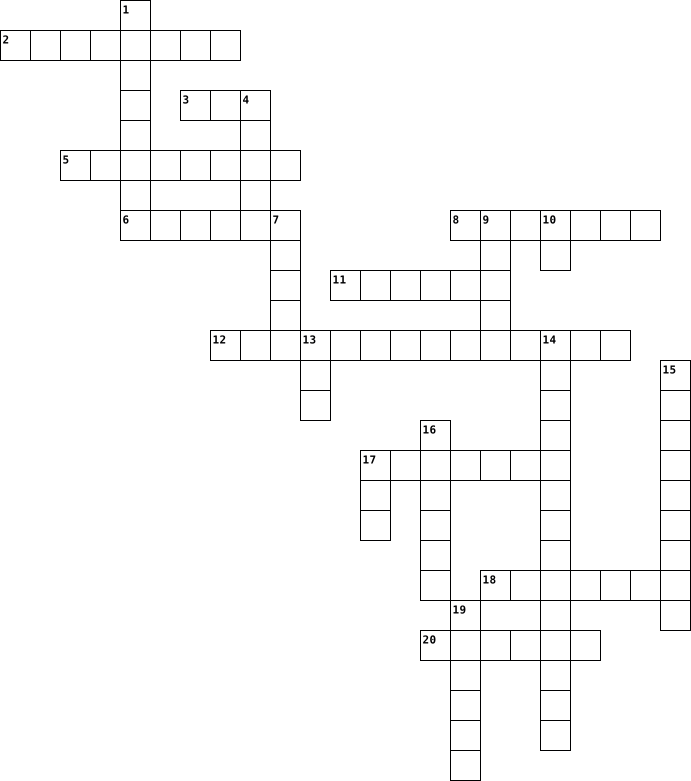
Ancient Chinese Warfare Crossword: By Matthew 2020-05-27
Across
- What was their long range melee weapon with a hook at the end
- Is the art of war used today
- What did they create back then
- What was the general weapon they used
- Who was the best soldier
- Who's independence created the warring states
- First ancient Chinese war
- What year was the first ancient Chinese war
- Who was the best army general
- Nature of the warring states
Down
- What were the soldiers called in ancient Chinese warfare
- Most used ancient Chinese weapon
- How many states were in the beginning of the Warring states
- Who still uses the art of war
- Was Kung Fu used in the warring states
- Who won the warring states
- bloodiest Chinese war
- Qin soliders nature
- When was cavalry introduced
- How many years did the Warring states last
- Nature of Ancient Chinese warfare
21 Clues: Qin soliders nature • bloodiest Chinese war • Who was the best soldier • First ancient Chinese war • Who won the warring states • When was cavalry introduced • Is the art of war used today • Nature of the warring states • Who still uses the art of war • Who was the best army general • What did they create back then • Most used ancient Chinese weapon • ...
Causes of the Civil War 2021-03-16

Across
- The ____ states had an economy based on slavery
- major cash crop of the Southern economy
- an agreement reached when both sides make concessions
- Uncle Tom's ______ was an anti-slavery novel
- rights States have the power to nullify or cancel federal law (nullification crisis is an example)
- To cancel or refuse to follow a federal law
- Made it a crime to help runaway slaves
- inventor of the cotton gin
- Northern states
- First state to secede from the Union
- ____ Kansas due to the violence over slavery
- President James ___ failed to deal with secession
- Period of time prior to the Civil War
- To pass a law
Down
- A person who fought to end slavery
- Southern states' name after seceding
- He wrote the Kansas-Nebraska Act
- The Kansas-Nebraska Act nullified the ___ Compromise
- Last name of the author of Uncle Tom's Cabin
- First shots fired of the Civil War
- Political party united against the spread of slavery
- To withdraw from the United States
- The ____ states had an economy based on industry
- He won the election of 1860
- Known as the "Great Compromiser"
- Political party of Southern states during antebellum
- The main cause of the civil war
- Popular Sovereignty
28 Clues: To pass a law • Northern states • Popular Sovereignty • inventor of the cotton gin • He won the election of 1860 • The main cause of the civil war • He wrote the Kansas-Nebraska Act • Known as the "Great Compromiser" • A person who fought to end slavery • First shots fired of the Civil War • To withdraw from the United States • Southern states' name after seceding • ...
Civil War 2018-04-19

Across
- troops trained to fight on horseback
- very hard unsalted biscuit or bread; a former ship's staple
- Southern states seceded from the Union in 1860 which precipitated the Civil War.
- Condition of being owned by, and forced to work for someone else.
- President of the United States of America during the Civil War.
- A ship made of iron usually used in the navy.
- states that bordered between the slave states and the free states
- army unit smaller than a division
- a cap with a flat circular top and a visor
- an outsider who seeks power or success presumptuously
- a reformer who favors putting an end to slavery
Down
- a knife fixed to the end of a rifle and used as a weapon
- To leave or withdraw
- a muzzle-loading shoulder gun with a long barrel
- United States slave who sued for liberty after living in a non-slave state; caused the Supreme Court to declare the Missouri Compromise unconstitutional (1795?-1858)
- a statement that is added to a proposal or document
- president of the Confederacy
- The northern states who wanted the south to stay.
- The southern states who seceded due to wanting more control.
- plan used by the north
- leave in order to join an opposing cause, country, or army
21 Clues: To leave or withdraw • plan used by the north • president of the Confederacy • army unit smaller than a division • troops trained to fight on horseback • a cap with a flat circular top and a visor • A ship made of iron usually used in the navy. • a reformer who favors putting an end to slavery • a muzzle-loading shoulder gun with a long barrel • ...
Civil War and Reconstruction 2018-05-21

Across
- Southern whites who supported republican policy throught reconstruction
- Took over the presidency from Abraham Lincoln after he was assassinated.
- General of the Confederacy
- Slave states that remained in the Union
- A social system that provides separate facilities for minority groups
- Laws written to separate blacks and whites in public areas
- Document freeing slaves in Union-controlled Confederate states
- President of the Confederacy
- The southern states that seceded from the United States in 1861.
- The bloodiest day of the Civil War.
- Amendment that Abolished Slavery
- A secret society of white Southerners in the United States that terrorized black people.
- Helped Union send battle information.
- Northern whites who moved to the south and served as republican leaders during reconstruction
- War between the North and South.
- the northern states during the American Civil War
Down
- Southern laws designed to restrict the rights of the newly freed black slaves
- He was the leading Union general and the 18th President of the United States
- A system in which landowners leased a few acres of land to farmworkers in return for a portion of their crops
- A school to educate black students on learning how to support themselves and prosper
- Harriet Beecher Stowe’s book that showed the horrors of slavery to Northerners.
- 19th president of the united states
- President of the United States of America during the Civil War
- Ships made of iron
- To leave or withdraw
25 Clues: Ships made of iron • To leave or withdraw • General of the Confederacy • President of the Confederacy • Amendment that Abolished Slavery • War between the North and South. • 19th president of the united states • The bloodiest day of the Civil War. • Helped Union send battle information. • Slave states that remained in the Union • ...
US History Final Project 2022-05-18

Across
- A scandal involving Richard Nixon
- Formally abolished slavery in the United States
- population of slaves would be counted as three-fifths in total when apportioning Representatives
- Prohibited the manufacture, sale, and distribution of alcoholic beverages
- Journalism that is based upon sensationalism and crude exaggeration
- A diplomatic crisis between Iran and the United States
- A civil rights organization founded in 1909 to fight prejudice, lynching, and Jim Crow segregation
- A 13-day confrontation between the United States and the Soviet Union concerning Soviet ballistic missile deployment in Cuba
- He served as the 28th President of the United States
Down
- a document signed on July 4, 1776
- Gave women the right to vote
- written document that established the functions of the national government of the United States after it declared independence from Great Britain
- Colonies' fight for independence from Britain
- The promotion of fear of a potential rise of communism or radical leftism
- This war began as an intervention by the United States on behalf of Cuba
- laws passed by Southern states in 1865 and 1866 that affected the freedom of African Americans
- An act imposing a tax on documents and printed items such as wills, newspapers, and playing cards
- State and local laws enforcing racial segregation in the Southern United States
- The 1st president of the United States
- Laws passed in 1935, 1936, 1937, and 1939 to limit U.S. involvement in future wars
20 Clues: Gave women the right to vote • a document signed on July 4, 1776 • A scandal involving Richard Nixon • The 1st president of the United States • Colonies' fight for independence from Britain • Formally abolished slavery in the United States • He served as the 28th President of the United States • A diplomatic crisis between Iran and the United States • ...
States 2021-02-15

Across
- Name of a fried chicken restaurant
- lots of alligators there and beaches
- place where the New Years countdown is held
- What happens there stays there
Down
- related to rangers and spurs
- Known for the ducks
- place that is super hot
- known for their potatoes
8 Clues: Known for the ducks • place that is super hot • known for their potatoes • related to rangers and spurs • What happens there stays there • Name of a fried chicken restaurant • lots of alligators there and beaches • place where the New Years countdown is held
States 2014-03-08

Across
- State with a lot of beaches
- Alligators live here
- This place gets lots and lots of snow
- This place has lots of tornadoes
Down
- people usually spell the 11 letter word
- The state that has the city of love
- D.C. The president of the United States lives here
- This place is also know as Oceania
8 Clues: Alligators live here • State with a lot of beaches • This place has lots of tornadoes • This place is also know as Oceania • The state that has the city of love • This place gets lots and lots of snow • people usually spell the 11 letter word • D.C. The president of the United States lives here
States 2024-11-15

Across
- In this school subject we use numbers
- the pizza house
- used to make notes
- take a pictures
Down
- they are called Chinese
- you call us mexicans
- serves to read
- serves to Open doors
8 Clues: serves to read • the pizza house • take a pictures • used to make notes • you call us mexicans • serves to Open doors • they are called Chinese • In this school subject we use numbers
POA Theories C1 2024-10-28

Across
- __________ theory states that the life of a business is divided into regular intervals for the purpose of preparing financial statements.
- __________ theory states that the owner and business are separate entities. All transactions are recorded from the point of view of the business.
- __________ theory states that only business transactions that can be measured in monetary terms are recorded.
- __________ business buys and sells goods to customers
- __________ theory states that business accounting method must be the same from year to year to ensure meaningful comparison.
- Accountants can exercise integrity by being __________ & honest in all professional relationships
- __________ theory states that income/expense is only recognized and recorded when it is earned/incurred regardless of whether cash is received/paid.
- Accountants are stewards of the businesses who set up the __________ to provide relevant timely information to stakeholders for decision-making.
- Accountants adapt, solve problems, think critically and provide accounting and non-accounting information to __________.
Down
- Accounting is an information system that __________ for stakeholders to make informed decisions
- __________ business provides services to its customers
- __________ theory states that a transaction is considered material if it makes a difference to the decision-making process.
- __________ theory states that revenue is earned when goods have been delivered or services have been provided.
- __________ theory states that business is assumed to operate forever unless there is credible evidence that it may close down.
- Accountants are objective when he will not let bias and conflict of interest override his __________
- __________ theory states that transactions should be recorded at their original cost.
- __________ theory states that expenses incurred must be matched against income earned in the same period to determine the profit for that period.
- __________ theory states that all business transactions must be supported by verifiable evidence so that financial statements will be free from biases.
- __________ theory states that accounting treatment chosen should be the one that least overstates assets and profits and least understates liabilities and losses.
19 Clues: __________ business buys and sells goods to customers • __________ business provides services to its customers • __________ theory states that transactions should be recorded at their original cost. • Accounting is an information system that __________ for stakeholders to make informed decisions • ...
Pre-Civil War Crossword Puzzle 2021-10-22

Across
- Union fort; location of a battle of the Civil War
- author of "Uncle Tom's Cabin"
- planned attack led by John Brown to steal weapons from an arsenal in Virginia
- state in which slavery is legal
- southern portion from the Kansas-Nebraska Act
- laws to control the behavior of slaves and to complicate life
- a loyalty to a section or part of the country
- proposed the Kansas-Nebraska Act
Down
- secret system organized to help slaves escape to the North
- president of the Confederacy
- declared California a free state; Fugitive Slave Law was passed
- the states located in between the Union and the Confederacy
- forcing people to do labor (typically a group in minority)
- the states that remained loyal to the United States
- the states that seceded from the United States
- northern portion from the Kansas-Nebraska Act
- idea that states have the right to make decisions about issues that concern them
- state in which slavery is illegal
- most famous "conductor" of the Underground Railroad
- the war fought between the Union and Confederacy
- to break away from the United States
21 Clues: president of the Confederacy • author of "Uncle Tom's Cabin" • state in which slavery is legal • proposed the Kansas-Nebraska Act • state in which slavery is illegal • to break away from the United States • northern portion from the Kansas-Nebraska Act • southern portion from the Kansas-Nebraska Act • a loyalty to a section or part of the country • ...
Functions of Government (State vs. Federal) 2024-04-02

Across
- type of government where each _____ makes it own rules
- highest level of the judicial branch
- federal and state agencies work together to fight crime
- one responsibility for states, deals with colleges and universities
- state and federal governments work together to give money for healthcare, education, etc.
- function of the federal government to work with other countries
- responsibility of states to look after roads and highways
- health system where the state helps people get care they need
- the Constitution is the ________ law of the land
- system where states can challenge federal actions
- responsibility of states to handle crime in their state
- during natural disasters, states and federal government have a ________________.
Down
- issues where states and federal government work together to help animals/plants
- responsibility where states manage heath programs
- this document creates the three branches of government
- responsibility of the federal government to defend its people
- another word for federal
- type of government that is at the top level, known as national
- function of the federal government that deals with borders and citizenship
- the head of the executive branch
20 Clues: another word for federal • the head of the executive branch • highest level of the judicial branch • the Constitution is the ________ law of the land • responsibility where states manage heath programs • system where states can challenge federal actions • type of government where each _____ makes it own rules • this document creates the three branches of government • ...
States 2020-05-06

Across
- Where is locares Times Square
- Only state to grow coffee commercially
- Where is located the White House
- State where people usually go to spend money
Down
- Where is Universal Studios located
- State with less population
- State where is located Harvard University
- State with most population.
8 Clues: State with less population • State with most population. • Where is locares Times Square • Where is located the White House • Where is Universal Studios located • Only state to grow coffee commercially • State where is located Harvard University • State where people usually go to spend money
states 2021-03-13

Across
- celebrities live here
- virginia meth
- mitt romney
Down
- HOCKEY
- potatoes
- JONES BBQ & FOOT MASSAGE
- dating your cousin
- i wanna be a cowboy baby
8 Clues: HOCKEY • potatoes • mitt romney • virginia meth • dating your cousin • celebrities live here • JONES BBQ & FOOT MASSAGE • i wanna be a cowboy baby
States 2024-05-15

Across
- /what is the southwest known for
- /what desert has the most rainfall each year.
- / this natural wonder was made by the Colorado river.
Down
- / how many states are in the south west
- /Half the size of Alaska
- /Known as the Sooner State
- / has cool name
- / Capitol - Santa Fe
8 Clues: / has cool name • / Capitol - Santa Fe • /Known as the Sooner State • /Half the size of Alaska • /what is the southwest known for • / how many states are in the south west • /what desert has the most rainfall each year. • / this natural wonder was made by the Colorado river.
States 2024-04-18

Across
- Napoleon
- smallest state
- Biggest state
- heart of the industry
Down
- Churchill
- started WW1, WW2
- most powerful state
- Ceaser
8 Clues: Ceaser • Napoleon • Churchill • Biggest state • smallest state • started WW1, WW2 • most powerful state • heart of the industry
States 2025-08-21

Across
- Denver
- Sacramento
- Columbia
Down
- Annapolis
- Raleigh
- Jackson
- Montgomery
- Dover
8 Clues: Dover • Denver • Raleigh • Jackson • Columbia • Annapolis • Montgomery • Sacramento
Addelyn H. = 3rd hour 2023-03-06

Across
- this compromise admitted California as a free state
- first state governor of Kansas
- states the southern states were
- a person who dies for a cause
- made all americans recover runaway slaves
- going against a constitution
- a person who wants a states to be free states
- the right to have people vote
- against slavery
- principles concerning something is right or wrong
Down
- a very well-known abolitionist
- a person who worked to end slavery
- this compromise drew a line between slave states and free states
- to repeal
- a crop grown for profit
- a barrier on a city or town to protect and keep things from coming in
- a person who has escaped a place or is in hiding
- the support of slavery
- first territorial governor of Kansas
- was the first territory in the Louisiana Territory to apply for statehood
20 Clues: to repeal • against slavery • the support of slavery • a crop grown for profit • going against a constitution • a person who dies for a cause • the right to have people vote • a very well-known abolitionist • first state governor of Kansas • states the southern states were • a person who worked to end slavery • first territorial governor of Kansas • ...
Chapter 1 Social Studies 2024-01-04

Across
- largest and longest mountain range
- large lake as salty as any ocean
- mountains that lie just inside California
- about half the land in the United States is used for this
- takes place in mountain regions
- country north of the United States
- causes changes in seasons
- defines the shape of the United States
Down
- this and rivers make up river systems
- climate of a place depends on distance from this
- plain stretching along Atlantic Ocean from Massachusetts to Florida
- climate, water, and landforms are what kind of features
- varies in the United States according to temperature and precipitation
- oldest mountains in the United States
- using less energy to do the same tasks
- next to each other
- 50 states are grouped into 5
- largest lakes in North America
- regions are based on their relative
- this and water affect climate
20 Clues: next to each other • causes changes in seasons • 50 states are grouped into 5 • this and water affect climate • largest lakes in North America • takes place in mountain regions • large lake as salty as any ocean • largest and longest mountain range • country north of the United States • regions are based on their relative • this and rivers make up river systems • ...
The Articles of Confederation 2024-05-10

Across
- Process for changing the Articles (required unanimity)
- Paper money issued by both Congress and the states
- Financial burden left over from the Revolutionary War
- Last state to ratify the Articles in 1781
- Prominent American who helped draft the Articles
- Proposed tax on imports that was blocked by New York
- Maryland city that hosted a key convention
- Sole governing body under the Articles
- Process by which the Articles were approved
- Single-chambered legislature under the Articles
- Power retained by individual states
Down
- Union of states created by the Articles
- Field in which Congress had sole authority
- Requests for funds made by Congress to the states
- Number of states in the Confederation
- Defensive pact among the states under the Articles
- Rebellion that exposed the Articles' weaknesses
- Territory governed by the Articles' Land Ordinance
- Branch of state governments that appointed Congress delegates
- Power held by Congress under the Articles
20 Clues: Power retained by individual states • Number of states in the Confederation • Sole governing body under the Articles • Union of states created by the Articles • Last state to ratify the Articles in 1781 • Power held by Congress under the Articles • Field in which Congress had sole authority • Maryland city that hosted a key convention • ...
Historical American People and Events 2023-05-17

Across
- Winning this war gave America its Independence 1775-1782
- 342 chest of tea dropped into Boston Harbor
- 13 Original States in the US
- Boston soldiers shot into crowd killing 3 injuring 9
- A human owned by another human/forced to work without pay
- Supported the Constitution and a stronger national republic
- 4th President of the United States
- Northern side of the civil war/fought to end slavery
- Withdraw from commercial or social relations with (a country, organization, or person) as a punishment or protest.
- Southern side of the civil war/fought for slavery
- A person that wanted to end slavery
- 5th President of the United States
Down
- 3rd President of the United States
- On the $100 bill/One of the founding fathers/Made the lightning rod
- 2nd President of the United States
- Crops Crops made to sell
- 1st President of the United States
- 16th President of the United States/Freed Slaves/Emancipation Proclamation
- Opposed the ratification of the Constitution in favor of small localized government.
- War started over slaves 1861-1865
20 Clues: 13 Original States in the US • Crops Crops made to sell • War started over slaves 1861-1865 • 3rd President of the United States • 2nd President of the United States • 1st President of the United States • 4th President of the United States • 5th President of the United States • A person that wanted to end slavery • 342 chest of tea dropped into Boston Harbor • ...
4th of July 2026-06-29

Across
- How many stars are on the American flag?
- What do the stars on the United States flag represent?
- Who was the first president to live in the White House?
- In what year did the Revolutionary War end?
- Which U.S. president was born on the Fourth of July?
- What is America's national anthem?
- Who was the King of England when the United States declared independence?
- Who wrote the Pledge of Allegiance?
- What document was adopted on July 4, 1776?
Down
- Who sewed the first American flag?
- How many people signed the Declaration of Independence?
- Who wrote the words to "The Star-Spangled Banner"?
- What country gave the United States the Statue of Liberty?
- Where was the Declaration of Independence signed?
- Where were fireworks first invented?
- GLORY Nickname for the American flag.
- In what year was Independence Day declared a federal holiday?
- What do the stripes on the United States flag represent?
- How many original colonies made up the United States?
- What is the national bird of the United States?
20 Clues: Who sewed the first American flag? • What is America's national anthem? • Who wrote the Pledge of Allegiance? • Where were fireworks first invented? • GLORY Nickname for the American flag. • How many stars are on the American flag? • What document was adopted on July 4, 1776? • In what year did the Revolutionary War end? • What is the national bird of the United States? • ...
Civil War and Reconstruction 2018-05-21

Across
- Amendment that Abolished Slavery
- Took over the presidency from Abraham Lincoln after he was assassinated.
- Northern whites who moved to the south and served as republican leaders during reconstruction
- General of the Confederacy
- Document freeing slaves in Union-controlled Confederate states
- Southern laws designed to restrict the rights of the newly freed black slaves
- President of the United States of America during the Civil War
- Slave states that remained in the Union
- President of the Confederacy
Down
- War between the North and South.
- Laws written to separate blacks and whites in public areas
- A school to educate black students on learning how to support themselves and prosper
- 19th president of the united states
- The southern states that seceded from the United States in 1861.
- A secret society of white Southerners in the United States that terrorized black people.
- The bloodiest day of the Civil War.
- A social system that provides separate facilities for minority groups
- He was the leading Union general and the 18th President of the United States
- Harriet Beecher Stowe’s book that showed the horrors of slavery to Northerners.
- A system in which landowners leased a few acres of land to farmworkers in return for a portion of their crops
- Ships made of iron
- To leave or withdraw
- Southern whites who supported republican policy throught reconstruction
- the northern states during the American Civil War
- Helped Union send battle information.
25 Clues: Ships made of iron • To leave or withdraw • General of the Confederacy • President of the Confederacy • War between the North and South. • Amendment that Abolished Slavery • 19th president of the united states • The bloodiest day of the Civil War. • Helped Union send battle information. • Slave states that remained in the Union • ...
Amrit Saini Articles Crossword 2024-02-09

Across
- You needed 9 out of 13 ___ to be able to pass an bills, but with all the cultures of the states being so different that was nearly impossible.
- Problems they needed to revise about the articles (D____)
- Articles were flawed because Congress couldn't ___
- When the Articles were being used all the power was handed to the ____
- The representatives sent out by the states to revise the government in 1787 in Philadelphia.
- The states acted in their own _____(Two Words)
- The Articles of ____ were the first government the United States had but failed because it was so weak
- The articles were created during the ______(Two words)
- The states wanted a weak central government to have as much ___ as possible (Hint: A____)
Down
- After the Articles was a bust the Constitutional Convention met in 1787 and revised the Articles and implemented the ____ in 1789
- The articles were purposely made ___ so states had power and were able to be independent.
- Alexander____ hated Congress because they didn't share his vision
- The 1787 convention was remembered as the ____ Convention because they made a new plan for the government called the *constitution*
- You needed ____ votes to pass amendments which was nearly impossible. (Hint: 13/13 votes is called U___)
- The ____ of the Congress was very limited which made the articles so flawed.
- States could pass ___ that could hurt merchants from the other colonies.
- An underlying issue in America that overshadowed everything else (They were broke)
- The states were able to print their own money causing ____ to happen.
- ____ merchants benefited from the articles because they were able to sell their goods in American ports for cheaper making American consumers buy it more than locally produced goods.
- The governments weren't able to pay the ___ because they couldn't tax the states.
20 Clues: The states acted in their own _____(Two Words) • Articles were flawed because Congress couldn't ___ • The articles were created during the ______(Two words) • Problems they needed to revise about the articles (D____) • Alexander____ hated Congress because they didn't share his vision • The states were able to print their own money causing ____ to happen. • ...
Civil War 2018-04-19

Across
- a muzzle-loading shoulder gun with a long barrel
- army unit smaller than a division
- Condition of being owned by, and forced to work for someone else.
- The southern states who seceded due to wanting more control.
- The northern states who wanted the south to stay.
- a cap with a flat circular top and a visor
- United States slave who sued for liberty after living in a non-slave state; caused the Supreme Court to declare the Missouri Compromise unconstitutional (1795?-1858)
- A ship made of iron usually used in the navy.
- Southern states seceded from the Union in 1860 which precipitated the Civil War.
- a reformer who favors putting an end to slavery
- an outsider who seeks power or success presumptuously
- leave in order to join an opposing cause, country, or army
Down
- To leave or withdraw
- president of the Confederacy
- a knife fixed to the end of a rifle and used as a weapon
- plan used by the north
- a statement that is added to a proposal or document
- states that bordered between the slave states and the free states
- President of the United States of America during the Civil War.
- very hard unsalted biscuit or bread; a former ship's staple
- troops trained to fight on horseback
21 Clues: To leave or withdraw • plan used by the north • president of the Confederacy • army unit smaller than a division • troops trained to fight on horseback • a cap with a flat circular top and a visor • A ship made of iron usually used in the navy. • a reformer who favors putting an end to slavery • a muzzle-loading shoulder gun with a long barrel • ...
Executive Branch Crossword 2021-01-28

Across
- Runs meetings of the Senate when there is an impeachment trial of the President
- This secretary in the President's Cabinet manages the foreign relations of the United States (Secretary of…?)
- The branch that enforces the laws
- The term of the President of the United States
- The minimum age for being President of the United States
- Current Secretary of State (Last name)
- The maximum number of years a person is allowed to be President of the United States
- Third in line in presidential succession
- The only situation in which the Vice President can vote in the Senate
- Must approve appointments made by the President
- Current President of the US (Last name)
- Citizen qualification for becoming President of the United States
- The Congress turns a bill into a law even though the President has refused to sign it
Down
- The part of the U.S. Government that can impeach the President
- Who has the right to run meetings of the United States Senate
- The Senate can remove a President from office in an impeachment trial if a minimum of this fraction of the senators votes for this
- Second in line in presidential succession
- This secretary in the President's Cabinet manages the nation's armed forces (Secretary of..?)
- The number of years a person must live in the United States before he/she can become President
- Head of State of the United States
- Current Vice President of the United States (Last name)
- Term limit of the President of the United States
- This member of the President's Cabinet manages the nation's legal business
- This officially elects the President of the United States
- This secretary in the President's Cabinet manages the nation's finances (Secretary of the..?)
- When the President says no to a bill passed by Congress
26 Clues: The branch that enforces the laws • Head of State of the United States • Current Secretary of State (Last name) • Current President of the US (Last name) • Third in line in presidential succession • Second in line in presidential succession • The term of the President of the United States • Must approve appointments made by the President • ...
civil war 2019-10-09

Across
- Compromise/A series of agreements passed by Congress in 1820-1821 to maintain the balance of power between slave states and free states. Missouri was admitted as a slave state and Maine was admitted as a free state to keep the balance of power.
- three minute speech inspired the North to keep fighting for a united country and the end of slavery.
- Tom's Cabin/Novel written by Harriet Beecher Stowe that showed the horrors of slavery to Northerners.
- of Gettysburg/Turning point of the Civil War that made it clear the North would win.
- Act/A law that allowed voters in Kansas and Nebraska to choose whether to allow slavery or not.
- states/Slave states that remained in the Union (Missouri, Kentucky, Maryland, and Delaware).
- Scott Decision/U.S. Supreme Court decision which determined that slaves (Dred Scott) could not sue in federal court because they did not have the rights of citizenship.
- Davis/President of the Confederacy; born in Kentucky; for slavery; believed states had the right to leave the Union
- Proclamation/
- for the South; got his nickname because he refused to retreat during battle - he held his position like a stone wall.
- freeing slaves in Union-controlled Confederate states
- Address/Speech given by Abraham Lincoln at the dedication of the Gettysburg National Cemetery
- United States (especially the northern states during the American Civil War)
Down
- Ferry/Place in Virginia where John Brown led a raid on a federal arsenal.
- southern states that seceded from the United States in 1861.
- of being owned by, and forced to work for someone else.
- stopped the South's advance in the North
- Southern states seceded from the Union in 1860 which precipitated the Civil War.
- leave or withdraw
- Sumter/Union military post in South Carolina which was taken over by the Confederacy in 1861.
- erupted when people from Missouri crossed into Kansas to vote for slavery then went back to Missouri
- clad/ship made of iron
- Lincoln/President of the United States of America during the Civil War; born in Kentucky; helped preserve the United States by leading the country in the defeat of the Confederacy; against slavery; freed slaves; assassinated by John Wilkes Booth
- did not call for abolition (free all slaves) at the beginning of the war because these states had slaves and would fight for the Union.
24 Clues: Proclamation/ • leave or withdraw • clad/ship made of iron • stopped the South's advance in the North • freeing slaves in Union-controlled Confederate states • of being owned by, and forced to work for someone else. • southern states that seceded from the United States in 1861. • Ferry/Place in Virginia where John Brown led a raid on a federal arsenal. • ...
Civil War crossword 2023-02-22

Across
- A law passed by Congress in 1850 that said escaped enslaved people in free states had to be returned to their owners.
- A large farm in the southern United States. Before the Civil War many of the workers on plantations were enslaved.
- A nickname for the South.
- An army of citizens used during emergencies.
- The name given to the states that stayed loyal to the United States government. Also called the North.
- these states were slave states that did not leave the Union, but largely supported the cause of the Confederates.
- confederate victory first shots
- Putting the local interests and customs ahead of the entire country.
- A nickname for people from the North as well as Union soldiers.
- A soldier that is wounded or killed during battle.
- A term used to describe people who supported the Union.
- A decision made by the Supreme Court that said Congress could not outlaw slavery and that people of African descent were not necessarily U.S. citizens
Down
- Crackers eaten by Civil War soldiers made from flour, water, and salt.
- A person who wanted to eliminate or "abolish" slavery.
- When a person is murdered for political reasons.Blockade An attempt to stop people and supplies from going in or out of a port.
- An executive order from President Abraham Lincoln stating that the enslaved in the Confederate states were to be set free.
- A term meaning "before war". It was often used to describe the United States before the Civil War.
- another name for the Confederate States of America or the South.
- A nickname for northerners who were against the Civil War.
- A nickname for the Confederate States of America or the Confederacy.
20 Clues: A nickname for the South. • confederate victory first shots • An army of citizens used during emergencies. • A soldier that is wounded or killed during battle. • A person who wanted to eliminate or "abolish" slavery. • A term used to describe people who supported the Union. • A nickname for northerners who were against the Civil War. • ...
K: Civil War Crossword 2026-04-28

Across
- Setting someone free from slavery.
- Rights The belief that states could overrule federal laws.
- The formal giving up of forces, notably at Appomattox
- The 11 Southern states that seceded, officially the Confederate States of America.
- Placing regional interests above national interests.
- Address Lincoln’s speech dedicated to a battlefield and the cause of liberty.
- Formal withdrawal of states from the Union.
- Someone who wanted to end slavery.
- War War strategy destroying civilian and economic resources.
Down
- A seal-off of ports to prevent supplies from entering the South.
- The era of rebuilding the South after the war.
- States Slave states that did not secede (Delaware, Maryland, Kentucky, Missouri).
- The period before the Civil War.
- A soldier fighting for the Union.
- A soldier fighting for the Confederacy.
- (Draft) Mandatory enlistment for military service.
- The Northern states that remained loyal to the federal government.
- Proclamation Lincoln's 1863 order freeing slaves in Confederate-held territory.
- A 19th-century warship protected by iron armor.
- A soldier killed, wounded, or missing in action.
20 Clues: The period before the Civil War. • A soldier fighting for the Union. • Setting someone free from slavery. • Someone who wanted to end slavery. • A soldier fighting for the Confederacy. • Formal withdrawal of states from the Union. • The era of rebuilding the South after the war. • A 19th-century warship protected by iron armor. • ...
History Chapter 9 Quiz 9 2024-01-23

Across
- president of the United States
- – 1889 Pennsylvania flood that took the lives of over 2,000 people
- – leader of the U.S. Navy fleet that destroyed Spanish Pacific naval fleet of Ships during the Spanish American War
- – U.S, Navy ship that sank in Cuba and sparked the beginning of the Spanish American War
- – group of Pacific Islands that the United States helped free from Spain in the Spanish American War
- manmade waterway the United States built across the Isthmus of Panama
- – largest passenger liner in the world at the time it sailed sank on its first voyage after hitting an iceberg
- – amusement park in Brooklyn, New York that has operated since the late 1800’s
- –meeting that established time zones around the world
- – group of American soldiers led by Theodore Roosevelt during the Spanish American war
- – helped save the lives of the Panama Canal workers by controlling disease carrying mosquitos
- – American evangelist who started a Sunday School movement in Chicago and founded the Moody Bible Institute
- – war fought between Spain and the United States to set Cuba free from Spain
- – U.S. East Coast entry port for immigrants from 1892 – 1954
- – location of a hurricane in the year 1900 deadliest natural disaster in the United States
Down
- – law passed to keep Chinese laborers out of the United States
- – 22nd president and 24th President of the United States only president to be elected again after another president has served
- – island possessed by Spain until the end of the Spanish American War
- – 25th president of the United States declared war against Spain to help free the nation of Cuba
- organization that Clara Barton founded that helps in times of war and natural disaster
- California- location of the 1906 earthquake that destroyed most of the city
- – 20th president of the United States
- – 23rd President of the United States; Expanded the U.S. Navy
- – famous battle won by the rough riders
- sent by the United States to set up a government for the Philippines 27th President of the United States
- – leader of the Rough Riders 26th President of the United States
- – U.S. West Coast entry port for immigrants from 1910 – 1940
- – narrow strip of land that connects North America and South America
- – evangelist who had once been a famous baseball player
- – 28th President of the United States president when the Panama Canal opened
- a person who leaves his own country to make his home in another country
31 Clues: president of the United States • – 20th president of the United States • – famous battle won by the rough riders • –meeting that established time zones around the world • – evangelist who had once been a famous baseball player • – U.S. West Coast entry port for immigrants from 1910 – 1940 • – U.S. East Coast entry port for immigrants from 1892 – 1954 • ...
American Civil War Terms 2025-04-15

Across
- - An attempt to stop people and supplies from going in or out of a port.
- - A nickname for United States paper money that was first used in 1862. It got its name from the green ink used in printing.
- - A nickname given to people in the South supporting the Confederate States.
- - An army of citizens used during emergencies.
- - When a person is murdered for political reasons.
- - A warship that is fully covered and protected by iron cladding.
- - A nickname for the South.
- - The name given to the states that stayed loyal to the United States government. Also called the North.
- - A large farm in the southern United States. Before the Civil War many of the workers on plantations were enslaved.
- - Large caliber firearms like cannons and mortars.
- - Another name for the Confederate States of America or the South. The Confederacy was a group of states that left the United States to form their own country.
- - The rebuilding of war torn southern states so they could be readmitted into the Union after the Civil War.
- Proclamation - An executive order from President Abraham Lincoln stating that the enslaved in the Confederate states were to be set free.
- - A long gun with a smooth bore that soldiers shot from the shoulder.
- - A nickname for people from the North as well as Union soldiers.
Down
- - The side of an army or military unit.
- - A term used to describe people who supported the Union.
- - A nickname for northerners who were against the Civil War.
- - Putting the local interests and customs ahead of the entire country.
- - A soldier that is wounded or killed during battle.
- - An ankle high shoe worn by soldiers during the Civil War.
- - A long blade or knife attached to the end of a musket. Soldiers would use it like a spear in close combat.
- - A nickname for the Confederate States of America or the Confederacy.
- - Soldiers that fight and travel by foot.
- - A person who wanted to eliminate or "abolish" slavery.
- theater - The fighting during the Civil War that took place west of the Appalachian Mountains. It eventually included the fighting in Georgia and the Carolinas as well.
- - When the southern states chose to leave the United States and to no longer be a part of the country.
- - A commutation was when a person could pay a fee rather than be drafted into the army.
- - Crackers eaten by Civil War soldiers made from flour, water, and salt.
- - The northern states of the United States, also called the Union.
- - A canvas bag that many Civil War soldiers used to carry their food.
31 Clues: - A nickname for the South. • - The side of an army or military unit. • - Soldiers that fight and travel by foot. • - An army of citizens used during emergencies. • - When a person is murdered for political reasons. • - Large caliber firearms like cannons and mortars. • - A soldier that is wounded or killed during battle. • ...
AOC Crossword 2026-04-08

Across
- Land north of the Ohio River and east of the Mississippi River organized by Congress
- Trade between states or with other countries
- A law passed by a governing authority such as Congress
- A law that set up a system for surveying and selling western lands
- The amount of times the Capital city of the United States has changed since 1775.
- First plan of government for the United States that created a weak central government and left most power with the states
- A government in which citizens rule through elected representatives
- Lands west of the Appalachian Mountains that the United States organized for settlement and future states
- American diplomat sent to Britain to address trade problems after the Treaty of Paris
- Money used by a country or group of states for trade
- To formally apply for something such as statehood
- A section or part of a legal document such as a law or constitution
- A written plan of government adopted by the states after independence
Down
- Important river closed to American shipping by Spain in 1784
- To fall in value such as paper money after the Revolutionary War
- The elected leader of a state government
- A law passed in 1787 that created a process for territories to become states and banned slavery there
- The lawmaking body of a government such as state assemblies
- The branch of government responsible for carrying out laws which the Articles government lacked
- Country that controlled land west of the Mississippi River and limited American trade access
- A change made to a law or plan of government that required approval from all states under the Articles
- Colonists who remained loyal to Britain during the Revolutionary War and lost property afterward
- Country that kept forts in the Great Lakes region after the Revolutionary War
- The 1783 agreement that ended the Revolutionary War between Britain and the United States
24 Clues: The elected leader of a state government • Trade between states or with other countries • To formally apply for something such as statehood • Money used by a country or group of states for trade • A law passed by a governing authority such as Congress • The lawmaking body of a government such as state assemblies • ...
American States 2023-01-04

Across
- the internet says this state doesn't exist
- home of the Big Apple
- known for their peaches
- shares a name with an iced tea brand
- home of Hollywood
- a famous band from the 70s
- home to the Ravens and Old Bay seasoning
Down
- popular internet memes make fun of this state
- home to BENSALEM HIGH SCHOOL!
- "Everything's bigger in _____"
- popular retirement destination
- known for their obsession with cheese
- "Sweet Home _______"
13 Clues: home of Hollywood • "Sweet Home _______" • home of the Big Apple • known for their peaches • a famous band from the 70s • home to BENSALEM HIGH SCHOOL! • "Everything's bigger in _____" • popular retirement destination • shares a name with an iced tea brand • known for their obsession with cheese • home to the Ravens and Old Bay seasoning • ...
Bill of Rights 2015-01-22

Across
- this amendment states civil trial rights
- this amendment states quartering troops in homes
- a formal listing of the basic rights or citizens
- this amendment states rights retained by the people
- people who are required to defend themselves in a legal action
- this amendment states powers reserved to the states
Down
- the act of giving testimony that can be used against oneself
- this amendment states bail and punishment
- this amendment states the right to bear arms
- this amendment states legal rights
- this amendment states criminal trial rights
- this amendment states the right to worship freely
- an order from a judge that authorizes police or other officials to take a certain action
- this amendment states searches and seizures
14 Clues: this amendment states legal rights • this amendment states civil trial rights • this amendment states bail and punishment • this amendment states criminal trial rights • this amendment states searches and seizures • this amendment states the right to bear arms • this amendment states quartering troops in homes • a formal listing of the basic rights or citizens • ...
Italian States 2021-12-06

Across
- to influence or contol
- A language of everyday speech in particular region
- having a distinctive quality
- to gain or achieve
- Basic or essential
- A member of the middle class who lived in a city or town
- a determining condition
Down
- A change to a lower state or level
- a soldier who fought primarily for money
- painting done on fresh, wet plaster with water-based paints
- A key intellectual movement of the renaissance
- Artistic techniques use to give the effect of three- dimensional dept to two dimensional surfaces
- A form of government in which the leader is not a king and certain citizens have the right to vote
13 Clues: to gain or achieve • Basic or essential • to influence or contol • a determining condition • having a distinctive quality • A change to a lower state or level • a soldier who fought primarily for money • A key intellectual movement of the renaissance • A language of everyday speech in particular region • A member of the middle class who lived in a city or town • ...
United States 2018-08-10

Across
- The “Register of the Desert”
- Samuel Clemens and some of his book characters live here
- has the largest natural stone bridge in the world
- where the living symbol for “Smokey Bear” was found
- NASA headquarters are located here
- Liberty Bell
- Has a 6,640 mile long coastline
Down
- where Paul Revere rode his horse
- Nick Adams goes fishing here
- book and movie: A River Runs Through It, set in this state
- Here is where the first presidential inauguration took place
- gravesite of Elvis Presley
- produces the most maple syrup
13 Clues: Liberty Bell • gravesite of Elvis Presley • The “Register of the Desert” • Nick Adams goes fishing here • produces the most maple syrup • Has a 6,640 mile long coastline • where Paul Revere rode his horse • NASA headquarters are located here • has the largest natural stone bridge in the world • where the living symbol for “Smokey Bear” was found • ...
Killer States 2023-03-20

Across
- The volunteer state
- The Bayou state
- The golden state
- The Buckeye state
- The natural state
Down
- The peach state
- The hospitality state
- The Battle Born state
- The sunshine state
- The lone star state
- The Old line state
- The copper state
- The bluegrass state
13 Clues: The peach state • The Bayou state • The copper state • The golden state • The Buckeye state • The natural state • The sunshine state • The Old line state • The volunteer state • The lone star state • The bluegrass state • The hospitality state • The Battle Born state
U.S. States 2023-04-16

Across
- The Sooner State
- The Peach State
- The Sunshine State
- Big Sky Country
- The Aloha State
- The Garden State
Down
- The Golden State
- The Last Frontier
- Land of 10,000 Lakes
- Land of Lincoln
- Lone Star State
- America's Dairyland
- The Buckeye State
13 Clues: Land of Lincoln • Lone Star State • The Peach State • Big Sky Country • The Aloha State • The Golden State • The Sooner State • The Garden State • The Last Frontier • The Buckeye State • The Sunshine State • America's Dairyland • Land of 10,000 Lakes
western states 2023-04-11

Across
- great salt lake?
- no, not dc
- where aliens land
- grand canyon?
- the state of sacramento
- __ trail
Down
- hanna ____
- pearl harbor?
- the potato land
- denali?
- has a flag that looks like pac-man
- yellow stone park?
- Sierra ___ Mountains
13 Clues: denali? • __ trail • hanna ____ • no, not dc • pearl harbor? • grand canyon? • the potato land • great salt lake? • where aliens land • yellow stone park? • Sierra ___ Mountains • the state of sacramento • has a flag that looks like pac-man
SE States 2023-01-05

Across
- COLUMBIA
- RAEIGH
- RICHMOND
- LITTLEROCK
Down
- CHARLESTON
- JACKSON
- ATLANTA
- NASHVILLE
- ANNAPOLIS
- BATONROUGE
- TALLAHASSEE
- FRANKFORT
- MONTGOMERY
13 Clues: RAEIGH • JACKSON • ATLANTA • COLUMBIA • RICHMOND • NASHVILLE • ANNAPOLIS • FRANKFORT • CHARLESTON • BATONROUGE • MONTGOMERY • LITTLEROCK • TALLAHASSEE
United States 2022-10-18

Across
- the city that has the Golden Gate Bridge
- number of states in USA
- the coast that has good public transportation
- person who stays in the classroom in the US
- city that never sleeps
- when school has strict guidelines on clothing
- capital of Florida
Down
- the president's home
- worst car traffic
- in the US, Americanxs eat dinner at this time
- place Jennifer is from
- students in US eat lunch in this place
- capital of Texas
13 Clues: capital of Texas • worst car traffic • capital of Florida • the president's home • place Jennifer is from • city that never sleeps • number of states in USA • students in US eat lunch in this place • the city that has the Golden Gate Bridge • person who stays in the classroom in the US • in the US, Americanxs eat dinner at this time • the coast that has good public transportation • ...
Southwest States 2022-01-24

Across
- A root that taste like a pear and potatoe
- Tree Nut
- Gobble Gobble
- BBQ
- Stalk Vegetable
- Main staple for foods
- Lone Star State
Down
- Added spice to food
- Not Mexico
- Cactus state
- combination of texas and mexican food
- Clay ovens
- Deep fried dough (circular shape)
13 Clues: BBQ • Tree Nut • Not Mexico • Clay ovens • Cactus state • Gobble Gobble • Stalk Vegetable • Lone Star State • Added spice to food • Main staple for foods • Deep fried dough (circular shape) • combination of texas and mexican food • A root that taste like a pear and potatoe
Death penalty 2026-01-21

Across
- INJECTION – The most used execution method today
- CHAIR – An old execution method using electricity
- STATES – Number of US states that abolished the death penalty
- PEOPLE – People who can be executed by mistake
- AND INHUMAN – How many people describe the death penalty
- THOUSAND SIX HUNDRED FIFTY EXECUTIONS – Approximate number of executions since 1976
- STATES – Number of states that still use the death penalty
- PER YEAR – Approximate number of executions in Texas today
- – The US state with the most executions
- PENALTY – A legal punishment where the state kills a person
Down
- – The state where the death penalty started in sixteen thirty
- – The act of killing someone as a legal punishment
- PUNISHMENT – Another name for the death penalty
- TOPIC – A subject with many different opinions
- STATES – Number of states with a moratorium
- – A temporary stop of executions
- STATES – A country where the death penalty still exists
- SEVENTY-SIX – Year executions restarted in the USA
- CRIMES – Crimes punished by the death penalty
- – An old execution method using a rope
20 Clues: – A temporary stop of executions • – An old execution method using a rope • – The US state with the most executions • STATES – Number of states with a moratorium • CRIMES – Crimes punished by the death penalty • TOPIC – A subject with many different opinions • PEOPLE – People who can be executed by mistake • PUNISHMENT – Another name for the death penalty • ...
First 5 Presidents 2026-03-05

Across
- The BLANK BLANK system emerged during the presidency of John Adams
- What doctrine (government plan of action) was issued by our 5th President? It was a warning to European nations NOT to interfere with the United States.
- Branch The President is the head of what branch of government?
- Branch The Supreme Court & judges are part of what branch of government?
- What was added to the Constitution of the United States during the presidency of George Washington
- This War caused European nations to gain respect for the United States during the presidency of James Madison
- The Federal BLANK BLANK was established during the presidency of George Washington
- Four of the first 5 Presidents were all from what state?
- Second President of the United States - from Massachusetts
- Who did Thomas Jefferson hire to explore the Louisiana Territory? Use LAST NAMES only.
- Plans were developed for THIS national capital during the presidency of George Washington
Down
- President Thomas Jefferson doubled the size of the United States with the BLANK Purchase?
- First President of the United States - from Virginia
- Who was the African American astronomer and surveyor, who helped complete the design for Washington DC?
- Third President of the United States - from Virginia
- Where was John Adams from?
- The Louisiana Territory was purchased from what country?
- Fourth President of the United States - from Virginia
- Fifth President of the United States - from Virginia
19 Clues: Where was John Adams from? • First President of the United States - from Virginia • Third President of the United States - from Virginia • Fifth President of the United States - from Virginia • Fourth President of the United States - from Virginia • The Louisiana Territory was purchased from what country? • Four of the first 5 Presidents were all from what state? • ...
Civil War 2026-05-07

Across
- River the US targeted to take control of during the Civil War
- Famous battle in Pennsylvania considered a turning point in the war.
- Political party of Abraham Lincoln
- Number of Confederate states
- Name of a border state that stayed part of the United States during the Civil War
- First state to secede from United States
- The Union states made 32 x more of this product than the Confederate states
- The act of a state leaving the United States
- Name for the document that freed enslaved people in the Confederate states
- Location of first attack by the Confederate states on the US
Down
- Name of the woman who ran away from enslavement and then served in the Union Army in the Civil War
- Name of the man who escaped from enslavement on a ship called the planter and later went on to serve in the US Congress as a representative for the state of South Carolina
- Another name for the states that seceded during the Civil War
- Amendment that ended slavery in the US
- Name of Confederate President
- City that served as the capital of the Confederacy
- Name of the first Major Battle of the Civil War
- First word in the secret network that helped enslaved people escape from enslavement
- Name of the battle that the USA won just prior to Lincoln issuing the Emancipation Proclamation
19 Clues: Number of Confederate states • Name of Confederate President • Political party of Abraham Lincoln • Amendment that ended slavery in the US • First state to secede from United States • The act of a state leaving the United States • Name of the first Major Battle of the Civil War • City that served as the capital of the Confederacy • ...
Delaney Reed, 4th hour 2023-01-09

Across
- Head of the Department of Justice.
- confirm, approve, pass
- Influenced, prejudiced, swayed
- In the House of ____, states get members based on their population size.
- Commander-in-Chief of the military, aka the
- The vote to determine the president of the United States is called the ___ vote.
- The first ten amendments added to the Constitution.
- The President’s Cabinet is made up of people called…
- Opposite of Majority rights.
- Described in the third article of the Constitution.
- Power is divided between national and state governments in the United States. This is called…
- The president of the Senate.
Down
- Left, blue, Liberal
- President, Departments, enforces laws
- Political party represented by an elephant
- “Life, liberty, and the pursuit of happiness”
- The United States has ____ because it has absolute authority within its territory.
- “We the people of the United States, in order to form…”
- The United States’ national debt exists due to the opposite of surplus.
- The highest court in the United States.
- The document outlining the entire United States government.
- The Tuesday after the first Monday in November marks…
- Assign, pass on, transfer
- Has the power to declare war.
- Amendments 15, 19, and 26 all give people the right to ___.
25 Clues: Left, blue, Liberal • confirm, approve, pass • Assign, pass on, transfer • Opposite of Majority rights. • The president of the Senate. • Has the power to declare war. • Influenced, prejudiced, swayed • Head of the Department of Justice. • President, Departments, enforces laws • The highest court in the United States. • Political party represented by an elephant • ...
Civil War and Reconstruction 2018-05-18

Across
- General of the Confederacy
- the northern states during the American Civil War
- To leave or withdraw
- A social system that provides separate facilities for minority groups
- Laws written to separate blacks and whites in public areas
- Harriet Beecher Stowe’s book that showed the horrors of slavery to Northerners.
- President of the Confederacy
- Took over the presidency from Abraham Lincoln after he was assassinated.
- A school to educate black students on learning how to support themselves and prosper
- Northern whites who moved to the south and served as republican leaders during reconstruction
- Slave states that remained in the Union
Down
- Ships made of iron
- Southern laws designed to restrict the rights of the newly freed black slaves
- The southern states that seceded from the United States in 1861.
- He was the leading Union general and the 18th President of the United States
- A system in which landowners leased a few acres of land to farmworkers in return for a portion of their crops
- War between the North and South.
- President of the United States of America during the Civil War
- Document freeing slaves in Union-controlled Confederate states
- Southern whites who supported republican policy throught reconstruction
- The bloodiest day of the Civil War.
- Helped Union send battle information.
- Amendment that Abolished Slavery
- A secret society of white Southerners in the United States that terrorized black people.
- 19th president of the united states
25 Clues: Ships made of iron • To leave or withdraw • General of the Confederacy • President of the Confederacy • War between the North and South. • Amendment that Abolished Slavery • The bloodiest day of the Civil War. • 19th president of the united states • Helped Union send battle information. • Slave states that remained in the Union • ...
Constitution 2021-12-06

Across
- Delegates of the Constitutional Convention who shaped the Constitution
- Power of the court to judge whether or not actions of other branches are unconstitutional
- Final and Supreme authority of the US, SUPREME LAW OF THE LAND
- Amendment that states the right to bear arms
- Executes or carries out the law
- Includes the courts that settle disputes and questions of the law
- Legislative, Executive, Judicial
- Amendment that states the right to a fair trial and no double jeopardy
- Based on John Locke, basic rights and freedoms to which all humans are entitled
Down
- system in which each branch of government checks or limits other branches so no one branch gets too much power
- Amendment that states that we do not have to quarter soldiers
- England's lawmaking body
- Amendment that states the right to free speech, religion, press, assemble, and petition
- Amendment that states that searches and seizures cannot be conducted without a warrant
- The sharing of power between the national and state government
- Amendment that states that we have rights not listed in the Constitution
- Amendment that states that someone can only be taken to court over a value that exceeds twenty dollars
- Amendment that disallows cruel and unusual punishments
- Lawmaking branch of government
- Amendment that states that any power not stated in the Constitution is a reserved power
- Amendment that states the right to a speedy and public trial
- Movement that promoted the idea that knowledge, reason, and science would improve society
22 Clues: England's lawmaking body • Lawmaking branch of government • Executes or carries out the law • Legislative, Executive, Judicial • Amendment that states the right to bear arms • Amendment that disallows cruel and unusual punishments • Amendment that states the right to a speedy and public trial • Amendment that states that we do not have to quarter soldiers • ...
Grade 5 Quarter 4 2025-04-28

Across
- deadliest, bloodiest battle of the civil war
- German immigrant who came to America and invented blue jeans
- number of states that joined the confederacy
- the most important form of transportation in the north and eastern United States in the 1800's
- means to leave. refers to when the southern states broke away from the United States to make a new country
- another name for the united stated army
- the process of moving from one country to another to live
- form of river transportation during the civil war
- capital of the confederacy
- a tax on imported goods
- last name of slave who claimed he should be free after living in free states for four years
- number of people who died during the first battle of the civil war
- winner of 1860 presidential election
Down
- what the 11 states who left the united states called themselves
- war between citizens of the same country
- name for the fort where the civil war began
- celebration in america that marks the end of slavery in america
- to kill a leader or an important person
- a person who is not in the military or police
- In the 1800's this crop replaced tobacco as the number one crop grown in the southern United States
- the freeing of slaves
- place where people started working during the Industrial Revolution
- general who led the united states to victory over the south
23 Clues: the freeing of slaves • a tax on imported goods • capital of the confederacy • winner of 1860 presidential election • to kill a leader or an important person • another name for the united stated army • war between citizens of the same country • name for the fort where the civil war began • deadliest, bloodiest battle of the civil war • ...
A STATE OF USA 2023-06-22

Across
- A state in the Midwestern region of the United States known for its vibrant city of Chicago and its agricultural heritage.
- A state in the southwestern region of the United States known for its desert landscapes and the Grand Canyon.
- York A state in the northeastern United States known for its bustling city of New York, iconic landmarks, and diverse population.
- A state in the western United States known for its famous city of Las Vegas, entertainment, and desert landscapes.
- The largest state in the United States known for its vast wilderness and stunning natural beauty.
- A state in the western United States known for its majestic mountains and outdoor recreational activities.
- A state in the Pacific Northwest region of the United States known for its lush forests, mountains, and the city of Seattle.
- A state in the southern United States known for its large size, cowboy culture, and barbecue cuisine.
Down
- A state on the East Coast of the United States known for its historical significance, colonial architecture, and natural beauty.
- A state in the southeastern United States known for its warm climate, sandy beaches, and theme parks.
- A state on the West Coast of the United States known for its sunny beaches, entertainment industry, and diverse culture.
- A state in the southern United States known for its unique Creole and Cajun culture, jazz music, and delicious cuisine.
- A group of islands in the Pacific Ocean that is a state of the United States, known for its tropical beauty and aloha spirit.
- A state in the northeastern United States known for its rich history, prestigious universities, and picturesque landscapes.
- A state in the Pacific Northwest region of the United States known for its scenic beauty, outdoor activities, and eco-friendly culture.
- A state located in the southeastern region of the United States known for its southern hospitality.
16 Clues: The largest state in the United States known for its vast wilderness and stunning natural beauty. • A state located in the southeastern region of the United States known for its southern hospitality. • A state in the southeastern United States known for its warm climate, sandy beaches, and theme parks. • ...
Events Leading to the Civil War 2014-04-18

Across
- northern states were primarily
- northern economies were dependent on these
- Chief Justice that made the Dred Scott decision
- two states voted to be free or slave
- southern states were primarily
- nickname of Kansas
- first southern state to secede
- was told as a slave he was not a U.S. citizen
Down
- new government formed by southern states
- plantations made money by growing these
- law passed in the Compromise of 1850
- President of the Confederate States
- first Republican President in the north
- four states that tried to remain neutral
- wanted to end, or abolish, slavery
- southern economies were dependent on these
- period of time before the Civil War
- free state in the Compromise of 1850
18 Clues: nickname of Kansas • northern states were primarily • southern states were primarily • first southern state to secede • wanted to end, or abolish, slavery • President of the Confederate States • period of time before the Civil War • law passed in the Compromise of 1850 • two states voted to be free or slave • free state in the Compromise of 1850 • ...
Unit Three: Vocab 2024-10-25

Across
- The idea that the United States had been destined by God to expand and take over North America
- The route settlers took from the East coast to settle in the West Coast.
- Leader of inter-tribal army that fought against the United States.
- a dispute over the border between Mexico and the United States.
- Federal court case that ruled only the Federal government could deal with Native Americans.
- Seventh president, signed the Indian Removal Act
- Treaty of Paris Violations, Impressment and British support of Native American resistance against the United States expansion.
- The route Native Americans were forced to take during the Indian Removal Act.
- The country the borders the United State's southern border.
- the balance of power between the states and federal government.
- farmers from Western Pennsylvania rose up in protest of what they saw as unfair taxation
- A group of people who were native to North America.
- A federal government act that forced Native Americans to relocate from their lands to new areas.
- Third president of the United States, author of the Declaration of Independence, and buyer of the Louisiana Purchase.
Down
- Thomas Jefferson purchased a large amount of land in the North from France in order to expand the United States
- The first president of the United States, who set precedents for American presidency.
- The treaty that ended the War of 1812, granted the United States lots of land.
- The president has no term limits and can serve for a lifetime
- nation>person
- Treaty that ended the Mexican-American War, granted the United States a lot of land.
- Made cotton manufacturing much easier by quickly removing seeds and sticks from raw cotton.
- The country that borders the United State's northern border
- Manifest Destiny led settlers and the United States to move towards the West.
- Two individual's who led an expedition to map out new land.
- creator of the cotton gin
- True or False: Manifest Destiny would cause conflicts due the United States expansion onto new disputed lands.
26 Clues: nation>person • creator of the cotton gin • Seventh president, signed the Indian Removal Act • A group of people who were native to North America. • The country that borders the United State's northern border • The country the borders the United State's southern border. • Two individual's who led an expedition to map out new land. • ...
Civics Final Exam Review 2024-03-28

Across
- One of the native american tribes in Louisiana
- number of years a president serves
- Amendment that made it to where male citizen of any race (can vote).
- a change to the Constitution
- branch of government that review laws
- number of years a senator is elected
- income taxes?
- Who makes federal laws?
- Gulf war fought by the United States in the 1990s
- war fought by the United States in the 1960s
- first Postmaster General of the United States
- Who was the first president?
- What do we call the first ten amendments to the Constitution? bill of __?
- During WWII, the US fought Germany, Italy and what other country?
- During the Cold War, what was the main concern of the United States?
- Who lived in America before the Europeans arrived?
- attacked the US on September 11, 2001
- Who was President during the Great Depression and World War II?
- What group of people was taken to America and sold as slaves?
- In what month do we vote for President?*
Down
- Why do some states have more Representatives than other states?
- Who wrote the Declaration of Independence?
- How many U.S. Senators are there?
- Who led the United States during the Civil War?
- What ocean is on the East Coast of the United States?
- person in charge of the executive branch
- amendment that allowed women's suffrage
- Who was President during World War I?
- What ocean is on the West Coast of the United States?
- what is the supreme law of the land?
- age required to be able to vote
- number of years a representative is elected
- What territory did the United States buy from France in 1803?
- What is the economic system in the United States?*
- highest court in the United States
- right of citizens
- How many justices are on the Supreme Court?
- Name the U.S. war between the North and the South.
- the 15th of what month is the last day to file
39 Clues: income taxes? • right of citizens • Who makes federal laws? • a change to the Constitution • Who was the first president? • age required to be able to vote • How many U.S. Senators are there? • number of years a president serves • highest court in the United States • number of years a senator is elected • what is the supreme law of the land? • branch of government that review laws • ...
States 2023-12-19

Across
- A pooled investment fund that employs various strategies to earn returns for its investors.
- Stocks of large, well-established, and financially stable companies with a history of strong performance.
- Short-term government debt securities with maturities typically ranging from a few days to one year.
Down
- A type of investment fund and exchange-traded product, with shares that are tradeable on a stock exchange.
- An investor's willingness and ability to withstand fluctuations in the value of their investments.
- The use of borrowed money to increase the potential return on an investment.
- The ease with which an asset can be converted into cash without affecting its market price.
- The total value of a publicly traded company's outstanding shares of stock, calculated by multiplying the stock's current market price by the total number of outstanding shares.
8 Clues: The use of borrowed money to increase the potential return on an investment. • The ease with which an asset can be converted into cash without affecting its market price. • A pooled investment fund that employs various strategies to earn returns for its investors. • ...
States 2024-06-04

Across
- Kansas's state flower
- Massachusetts's state flower
- Missouri's state insect
- New Hampshire's state insect
Down
- Indiana's state flower
- Arkansas's state tree
- Indiana's state tree
- The biggest state
8 Clues: The biggest state • Indiana's state tree • Kansas's state flower • Arkansas's state tree • Indiana's state flower • Missouri's state insect • Massachusetts's state flower • New Hampshire's state insect
states 2025-03-27

Across
- governmental monumints
- coronado beach
- on the ocean
Down
- sunshine state
- hola & beachy
- peach state
- gulf shores
- ocean city
8 Clues: ocean city • peach state • gulf shores • on the ocean • hola & beachy • sunshine state • coronado beach • governmental monumints
Civics 2023-12-18

Across
- rights not listed in BoR
- rights related to trials
- religion, speech, press, assembly, and petition.
- Cabinet ___ the president
- not specifically listed in constitution
- shared by state and government
- written
- house soldiers
- responsibility
Down
- plan that favored large states
- favor small states
- powers for individual states
- best compromise
- civil case
- No searches without reason
- states can make laws too
- Has to do
- bear arms
- no unreasonable fines/punishment
- rights if charged with a crime
20 Clues: written • Has to do • bear arms • civil case • house soldiers • responsibility • best compromise • favor small states • rights not listed in BoR • rights related to trials • states can make laws too • Cabinet ___ the president • No searches without reason • powers for individual states • plan that favored large states • shared by state and government • rights if charged with a crime • ...
Constitutional Convention 2023-11-09

Across
- number of states needed to pass a law in AOC
- rebellion that led to a change in the Articles of Confederation
- created The Great Compromise
- two houses
- house of government that has equal representation
- branch that makes the laws
- one house
- what representation in the Virginia Plan was based on
- number of slaves that would counted towards a states' population
- branch that includes the president
Down
- house of government with proportional representation
- making sure no branch has power over the other
- plan favored by small states
- added new states with a population of over 60,000
- created the Virginia plan
- first government of the United States
- plan favorted by large states
- branch that interprets the laws
18 Clues: one house • two houses • created the Virginia plan • branch that makes the laws • plan favored by small states • created The Great Compromise • plan favorted by large states • branch that interprets the laws • branch that includes the president • first government of the United States • number of states needed to pass a law in AOC • making sure no branch has power over the other • ...
Alan 2023-05-11

Across
- scott devision, the United States Supreme Court upheld slavery in United States territories
- having or relating to a system of government in which several states form a unity
- lincoln, president during civil war
- an exaggerated devotion to the interests of a region over those of a country as a whole.
- a person who favors the institution
- a person from the northern states who went to the South after the Civil War to profit
- run,
- davis, the captain of the confederate
Down
- the battle that took control of the mississippi river
- the union
- states withdraw
- proclamation, freed the slaves
- a knife or dagger
- person who escaped
- led by jefferson davis
- states, the country that battled
- north
- confederacy
18 Clues: run, • north • the union • confederacy • states withdraw • a knife or dagger • person who escaped • led by jefferson davis • proclamation, freed the slaves • states, the country that battled • lincoln, president during civil war • a person who favors the institution • davis, the captain of the confederate • the battle that took control of the mississippi river • ...
Realism and Liberalism Review 2022-01-11

Across
- the main objective of states in a realist system
- _________ Peace Theory- theory born out of liberalism
- the main actors in the theory of realism
- ____-____ actors have a role in liberalism
- the main actors in the theory of liberalism
- states exist in a system of ________
- theorist who wrote Two Treatises of Government 1689
- signifies existence of independent community
- theorist who wrote The Leviathan
- concern for power is overridden by a concern for _______ and political considerations
Down
- states compete for ________
- states compete for _________
- state________ is one instrument realists utilize
- theorist who wrote Perpetual Peace 1795
- international ________ are of great importance
- one of the key aspects to the liberalist theory
- idea that states are connected
- idea that no other state can be relied upon
- spread of _______ organizations is a key belief of liberalism
- the world is a _______ community
20 Clues: states compete for ________ • states compete for _________ • idea that states are connected • the world is a _______ community • theorist who wrote The Leviathan • states exist in a system of ________ • theorist who wrote Perpetual Peace 1795 • the main actors in the theory of realism • ____-____ actors have a role in liberalism • the main actors in the theory of liberalism • ...
Causes of the civil war 2023-01-05

Across
- _________ states felt that the federal government was taking away their rights and power
- Many Southern states felt Lincoln was ____ the south because he was against slavery.
- people in the ____ wanted slavery to remain legal.
- Abraham Lincoln was part of the anti-slavery ____ Party.
- The South ______ heavily on slaves.
- By the mid-1800's the economies of many northern states relied on _______ instead of farming.
- How much power individual states have
- people in the ____ wanted slavery to be outlawed
Down
- Many southern plantations grew _______ in fields.
- The southern states wanted to form a new country called the _____ States of America.
- When Lincoln was elected many southern states decided they wanted to _____ the United States.
- As the states expanded west, each new state became a _______.
- Southern states wanted the right to keep ______.
- The south relied on slavery for _____ to work in their fields.
- Many people in the north thought slavery was _____.
15 Clues: The South ______ heavily on slaves. • How much power individual states have • Southern states wanted the right to keep ______. • people in the ____ wanted slavery to be outlawed • Many southern plantations grew _______ in fields. • people in the ____ wanted slavery to remain legal. • Many people in the north thought slavery was _____. • ...
Government Review 2025-04-19

Across
- Document that governed the newly independent country
- The older and more liberal party of the United States
- Article I outlines this branch of government
- Elected leader of the House Majority is known as the:
- The first president of the United States
- The governing document of the United States
- The traditionally conservative party of the United States
Down
- Elected leader of the House Minority is known as the:
- Article II outlines this branch of government
- The author of the Constitution
- The first woman to be Vice President of the United States
- There are ________ branches of government
- The first three words in the preamble
- The first woman to win the nomination for a major political party
- Acronym for Vice President of the United States
- The number of amendments in the US Constitution
- Article III outlines this branch of government
- Acronym for President of the United States
18 Clues: The author of the Constitution • The first three words in the preamble • The first president of the United States • There are ________ branches of government • Acronym for President of the United States • The governing document of the United States • Article I outlines this branch of government • Article II outlines this branch of government • ...
ARTICLES OF CONFEDERATION 2026-05-05

Across
- Uprising of farmers in Massachusetts
- what the government lacked
- A loose alliance of states
- 1787 law that created a plan for western lands
- A rule created by government
- The only branch of government under the Articles
- what was difficult to achieve
- To formally approve a document
- Law-making body
- Group of states joined together
- something you didn’t have
- Money owed by the government
- Type of money used in an economy
Down
- The first constitution of the United States
- How the national government was described
- Resistance against authority
- what government couldn’t collect
- Exchange of goods between states
- Required agreement from all states
- Individual political unit in the U.S.
- Money collected by the government
21 Clues: Law-making body • something you didn’t have • what the government lacked • A loose alliance of states • Resistance against authority • A rule created by government • Money owed by the government • what was difficult to achieve • To formally approve a document • Group of states joined together • what government couldn’t collect • Exchange of goods between states • ...
Civil War 2022-02-25

Across
- An attempt to stop people and supplies from going in or out of a port.
- An army of citizens used during emergencies.
- A term used to describe people who supported the Union.
- passed by the United States Congress on September 18, 1850, as part of the Compromise of 1850 between Southern interests in slavery and Northern Free-Soilers.
- A person who wanted to eliminate or "abolish" slavery.
- states These states were slave states that did not leave the Union, but largely supported the cause of the Confederates
- Soldiers that fight and travel by foot.
- When the southern states chose to leave the United States and to no longer be a part of the country.
- The name given to the states that stayed loyal to the United States government.
- Another name for the Confederate States of America or the South.
- A large farm in the southern United States.
- Putting the local interests and customs ahead of the entire country.
Down
- an enslaved African-American man who, along with his wife, Harriet, unsuccessfully sued for freedom for themselves and their two daughters
- an American lawyer and statesman who served as the 16th president of the United States from 1861 until his assassination in 1865.
- The rebuilding of war torn southern states so they could be readmitted into the Union after the Civil War.
- Large caliber firearms like cannons and mortars.
16 Clues: Soldiers that fight and travel by foot. • A large farm in the southern United States. • An army of citizens used during emergencies. • Large caliber firearms like cannons and mortars. • A person who wanted to eliminate or "abolish" slavery. • A term used to describe people who supported the Union. • Another name for the Confederate States of America or the South. • ...
Southeast States 2019-01-08

Across
- SouthCarolina
- WestVirginia
- Louisiana
- Tennessee
- Kentucky
- Mississippi
- NorthCarolina
Down
- Virginia
- Arkansas
- Florida
- Alabama
- Maryland
- Georgia
13 Clues: Florida • Alabama • Georgia • Virginia • Arkansas • Maryland • Kentucky • Louisiana • Tennessee • Mississippi • WestVirginia • SouthCarolina • NorthCarolina
The States 2022-05-09

Across
- this state is cold and has polar bears
- Estes Park and the mountains are here
- Little Rock is located in this state
- Go to the Lake of the Ozarks in this state
- The Flint Hills are located in this midwest state
- The Phoenix Suns play in this state
Down
- fried chicken and horse racing are popular here
- Napa Valley is located in this state
- the second largest state in the country
- Go Cornhuskers! This state likes corn
- known for growing oranges and nice beaches
- the city of Atlanta is located here
- this state is a group of islands
13 Clues: this state is a group of islands • the city of Atlanta is located here • The Phoenix Suns play in this state • Napa Valley is located in this state • Little Rock is located in this state • Go Cornhuskers! This state likes corn • Estes Park and the mountains are here • this state is cold and has polar bears • the second largest state in the country • ...
United States 2023-05-24

Across
- Red wine grape variety associated with California
- Red wine grape variety associated with California
- Valley wine region known for its Cabernet Sauvignon in California
- Famous valley wine region in California
- Subregion of Napa Valley known for its Cabernet Sauvignon
- Red wine grape variety widely grown in the United States
- Red wine grape variety known for its rich flavors in the United States
Down
- Major wine-producing state in the United States
- Red wine grape variety associated with California
- Wine region known for its diverse wines in California
- Valley wine region known for its Pinot Noir in Oregon
- Valley wine region known for its Mediterranean climate and wines in California
- Widely planted white wine grape variety in the United States
- Valley wine region spanning Washington and Oregon
- State known for its Pinot Noir and other cool-climate wines
15 Clues: Famous valley wine region in California • Major wine-producing state in the United States • Red wine grape variety associated with California • Red wine grape variety associated with California • Red wine grape variety associated with California • Valley wine region spanning Washington and Oregon • Wine region known for its diverse wines in California • ...
Descriptions & States 2025-12-02

Across
- - Causing great and sudden change; very noticeable.
- - A promise to do or not to do something.
- - Having the skill and experience in the ways of the world.
- - To make known something secret or hidden.
- - Fair and not influenced by personal feelings.
- - To send (goods) to a customer.
Down
- - Lasting a very long time; very old.
- - Existing in fact; not imagined.
- - The chance that something might happen or be true.
- - To put someone or something in the place of another.
- - To make something work again after it is broken.
- - Very large in size or amount.
- - To come into being or to be noticed.
13 Clues: - Very large in size or amount. • - To send (goods) to a customer. • - Existing in fact; not imagined. • - Lasting a very long time; very old. • - To come into being or to be noticed. • - A promise to do or not to do something. • - To make known something secret or hidden. • - Fair and not influenced by personal feelings. • ...
US States 2026-08-20

Across
- Mall of America
- Chicago
- Harvard and MIT
- very hot
- corn
- the Grand Canyon
- peaches
Down
- of Columbia white house (not a state)
- name of 1st president
- lobster roles
- big U shaped statue
- Naval Academy
- you can spell it
13 Clues: corn • Chicago • peaches • very hot • lobster roles • Naval Academy • Mall of America • Harvard and MIT • you can spell it • the Grand Canyon • big U shaped statue • name of 1st president • of Columbia white house (not a state)
U.S. Presidents 2023-02-02

Across
- the 20th president of the United States
- a general in World War II before he became president
- the last name of a father and son president
- the 5th president of the United States
- the 31st president of the United States
- president during the Cold War
- wrote the Declaration of Independence
- created the Emancipation Proclamation
Down
- the 33rd president of the United States
- loved the outdoors so he worked on forming national parks
- a general in Civil War
- the first president of the United States
- the governor of Georgia from 1971 to 1975
- the host of the business show "The Apprentice" before becoming president
- the 30th president of the United States
- killed by an assassin and Teddy Roosevelt replaced him
- the 35th president of the United States
17 Clues: a general in Civil War • president during the Cold War • wrote the Declaration of Independence • created the Emancipation Proclamation • the 5th president of the United States • the 33rd president of the United States • the 20th president of the United States • the 30th president of the United States • the 31st president of the United States • ...
Federalism Crossword 2021-12-09

Across
- Clause Clause that allows Congress to regulate and promote interstate and international commerce
- Amendment Powers not delegated to the United States are reserved for the states and then the people
- and Proper Clause Section of the constitution allowing Congress to pass all laws "necessary and proper" to its duties, and which has permitted Congress to exercise powers not specifically given to it (enumerated) by the Constitution.
- Terms set by the national government that states must meet whether or not they accept federal grants
- devolution the flow of power and money from the states to local govts
- devolution the increased role of nonprofit and private groups in policy implementation.
- Procedure enabling voters to reject a measure passed by the legislature
- of aid Terms set by the national government that states must meet if they are to receive certain federal funds
- Powers Powers of congress not specifically spelled out in the Constitution, but seem to be implied by powers expressly stated
- federalism Doctrine holding that the national government is supreme in its sphere, the states are supreme in theirs, and the two spheres should be kept separate.
- A type of government that spreads the power among many sub-units (such as states), and has a weak central government (U.S. Government under the articles of confederation)
- The invalidation of a US state law when it conflicts with Federal law
- power State power to enact laws promoting health, safety, and morals
- Procedure whereby voters can remove an elected official from office
- Powers Powers given to the state government alone
- grants Grants that consolidate several categorical grants into a single "block" for prescribed broad activities, such as social services, health services, or public education
- federalism Form of federalism during the Johnson administration where the federal government determined the needs of the states. State and federal governments worked together to create social services.
- system A government system that concentrates all policymaking powers in one central geographic place (China, Britain, France)
- Court The arbiter of what the Constitution means
- Government authority shared by national and local governments
- grants Federal grants for specific purposes, such as building an airport
- Powers Powers that are specifically granted to the federal government by the Constitution (also called expressed or enumerated powers)
Down
- a decision by an administrative agency granting some other part permission to violate a law or rule that would otherwise apply to it
- and Immunities Clause Clause that states that citizens of each state will be entitled to all privileges and immunities of citizens in other states
- The constitutional requirement that states return a person charged with a crime in another state to that state for trial or imprisonment
- Money given by the national government to states
- Power Powers shared by the national and state governments
- grants Funding given to states when the federal government selects specific projects based on merit. (Competition between states.)
- preemption federal law or regulation that contains language conflicting with state or local laws, that cannot be implemented due to such laws, or that consents matters in Washington possesses exclusive constitutional powers or "occupies the field"
- A movement that has begun in recent years to devolve more responsibilities back to the states and aimed to pass on to the states many federal functions
- preemption federal law or regulation that contains language explicitly displacing or superseding any contrary state or local laws
- mandates A regulation required by the Federal government that requires a state or local government to perform certain actions, with no money provided for fulfilling the requirements
- Process that permits voters to put legislative measures directly on the ballot
- Powers Powers given to the national government alone
- federalism Joint action between the national government and the state that was introduced during the Great Depression
- Powers Powers not expressly stated in the constitution, but are inherent to the very idea of national government
- Faith and Credit Clause Clause that says states within the United States have to respect the "public acts, records, and judicial proceedings of every other state."
- Doctrine that a state can declare null and void a federal law that, in the state's opinion, violates the Constitution
- federalism The states and government compete for leadership of the country's domestic policy
- sharing (discontinued in 1986) Congress gave an annual amount of federal tax revenue to the states and their cities, counties and townships./ Federal sharing of a fixed percentage of its revenue with the states (Replaced with Block grants)
- IV Article that discusses the responsibilities and duties of the states as well as what responsibilities the federal government has to the States
- VI Establishes the supremacy of federal laws and treaties. The constitution is the law of the land.
42 Clues: Money given by the national government to states • Court The arbiter of what the Constitution means • Powers Powers given to the state government alone • Powers Powers given to the national government alone • Power Powers shared by the national and state governments • Government authority shared by national and local governments • ...
Federalism Crossword 2021-12-09

Across
- IV Article that discusses the responsibilities and duties of the states as well as what responsibilities the federal government has to the States
- and Proper Clause Section of the constitution allowing Congress to pass all laws "necessary and proper" to its duties, and which has permitted Congress to exercise powers not specifically given to it (enumerated) by the Constitution.
- sharing (discontinued in 1986) Congress gave an annual amount of federal tax revenue to the states and their cities, counties and townships./ Federal sharing of a fixed percentage of its revenue with the states (Replaced with Block grants)
- system A government system that concentrates all policy-making powers in one central geographic place (China, Britain, France)
- grants Funding given to states when the federal government selects specific projects based on merit. (Competition between states.)
- grants Grants that consolidate several categorical grants into a single "block" for prescribed broad activities, such as social services, health services, or public education
- Clause Clause that allows Congress to regulate and promote interstate and international commerce
- Process that permits voters to put legislative measures directly on the ballot
- The constitutional requirement that states return a person charged with a crime in another state to that state for trial or imprisonment
- A movement that has begun in recent years to devolve more responsibilities back to the states and aimed to pass on to the states many federal functions
- federalism Joint action between the national government and the state that was introduced during the Great Depression
- devolution the increased role of nonprofit and private groups in policy implementation.
- federalism The states and government compete for leadership of the country's domestic policy
- Powers Powers that are specifically granted to the federal government by the Constitution (also called expressed or enumerated powers)
- Terms set by the national government that states must meet whether or not they accept federal grants
- devolution the flow of power and money from the states to local govts
- Power Powers shared by the national and state governments
- Powers Powers of congress not specifically spelled out in the Constitution, but seem to be implied by powers expressly stated
- Amendment Powers not delegated to the United States are reserved for the states and then the people
- power State power to enact laws promoting health, safety, and morals
- of aid Terms set by the national government that states must meet if they are to receive certain federal funds
- Procedure enabling voters to reject a measure passed by the legislature
Down
- federalism Doctrine holding that the national government is supreme in its sphere, the states are supreme in theirs, and the two spheres should be kept separate.
- and Immunities Clause Clause that states that citizens of each state will be entitled to all privileges and immunities of citizens in other states
- Powers Powers given to the state government alone
- preemption federal law or regulation that contains language conflicting with state or local laws, that cannot be implemented due to such laws, or that consents matters in Washington possesses exclusive constitutional powers or "occupies the field"
- Doctrine that a state can declare null and void a federal law that, in the state's opinion, violates the Constitution
- Money given by the national government to states
- federalism Form of federalism during the Johnson administration where the federal government determined the needs of the states. State and federal governments worked together to create social services.
- a decision by an administrative agency granting some other part permission to violate a law or rule that would otherwise apply to it
- Faith and Credit Clause Clause that says states within the United States have to respect the "public acts, records, and judicial proceedings of every other state."
- mandates A regulation required by the Federal government that requires a state or local government to perform certain actions, with no money provided for fulfilling the requirements
- Powers Powers given to the national government alone
- Powers Powers not expressly stated in the constitution, but are inherent to the very idea of national government
- A type of government that spreads the power among many sub-units (such as states), and has a weak central government (U.S. Government under the articles of confederation)
- grants Federal grants for specific purposes, such as building an airport
- preemption federal law or regulation that contains language explicitly displacing or superseding any contrary state or local laws
- VI Establishes the supremacy of federal laws and treaties. The constitution is the law of the land.
- The invalidation of a US state law when it conflicts with Federal law
- Procedure whereby voters can remove an elected official from office
- Court The arbiter of what the Constitution means
- Government authority shared by national and local governments
42 Clues: Money given by the national government to states • Court The arbiter of what the Constitution means • Powers Powers given to the state government alone • Powers Powers given to the national government alone • Power Powers shared by the national and state governments • Government authority shared by national and local governments • ...
Federalism Crossword 2021-12-09

Across
- Clause Clause that allows Congress to regulate and promote interstate and international commerce
- Amendment Powers not delegated to the United States are reserved for the states and then the people
- and Proper Clause Section of the constitution allowing Congress to pass all laws "necessary and proper" to its duties, and which has permitted Congress to exercise powers not specifically given to it (enumerated) by the Constitution.
- Terms set by the national government that states must meet whether or not they accept federal grants
- devolution the flow of power and money from the states to local govts
- devolution the increased role of nonprofit and private groups in policy implementation.
- Procedure enabling voters to reject a measure passed by the legislature
- of aid Terms set by the national government that states must meet if they are to receive certain federal funds
- Powers Powers of congress not specifically spelled out in the Constitution, but seem to be implied by powers expressly stated
- federalism Doctrine holding that the national government is supreme in its sphere, the states are supreme in theirs, and the two spheres should be kept separate.
- A type of government that spreads the power among many sub-units (such as states), and has a weak central government (U.S. Government under the articles of confederation)
- The invalidation of a US state law when it conflicts with Federal law
- power State power to enact laws promoting health, safety, and morals
- Procedure whereby voters can remove an elected official from office
- Powers Powers given to the state government alone
- grants Grants that consolidate several categorical grants into a single "block" for prescribed broad activities, such as social services, health services, or public education
- federalism Form of federalism during the Johnson administration where the federal government determined the needs of the states. State and federal governments worked together to create social services.
- system A government system that concentrates all policy making powers in one central geographic place (China, Britain, France)
- Court The arbiter of what the Constitution means
- Government authority shared by national and local governments
- grants Federal grants for specific purposes, such as building an airport
- Powers Powers that are specifically granted to the federal government by the Constitution (also called expressed or enumerated powers)
Down
- a decision by an administrative agency granting some other part permission to violate a law or rule that would otherwise apply to it
- and Immunities Clause Clause that states that citizens of each state will be entitled to all privileges and immunities of citizens in other states
- The constitutional requirement that states return a person charged with a crime in another state to that state for trial or imprisonment
- Money given by the national government to states
- Power Powers shared by the national and state governments
- grants Funding given to states when the federal government selects specific projects based on merit. (Competition between states.)
- preemption federal law or regulation that contains language conflicting with state or local laws, that cannot be implemented due to such laws, or that consents matters in Washington possesses exclusive constitutional powers or "occupies the field"
- A movement that has begun in recent years to devolve more responsibilities back to the states and aimed to pass on to the states many federal functions
- preemption federal law or regulation that contains language explicitly displacing or superseding any contrary state or local laws
- mandates A regulation required by the Federal government that requires a state or local government to perform certain actions, with no money provided for fulfilling the requirements
- Process that permits voters to put legislative measures directly on the ballot
- Powers Powers given to the national government alone
- federalism Joint action between the national government and the state that was introduced during the Great Depression
- Powers Powers not expressly stated in the constitution, but are inherent to the very idea of national government
- Faith and Credit Clause Clause that says states within the United States have to respect the "public acts, records, and judicial proceedings of every other state."
- Doctrine that a state can declare null and void a federal law that, in the state's opinion, violates the Constitution
- federalism The states and government compete for leadership of the country's domestic policy
- sharing (discontinued in 1986) Congress gave an annual amount of federal tax revenue to the states and their cities, counties and townships./ Federal sharing of a fixed percentage of its revenue with the states (Replaced with Block grants)
- IV Article that discusses the responsibilities and duties of the states as well as what responsibilities the federal government has to the States
- VI Establishes the supremacy of federal laws and treaties. The constitution is the law of the land.
42 Clues: Money given by the national government to states • Court The arbiter of what the Constitution means • Powers Powers given to the state government alone • Powers Powers given to the national government alone • Power Powers shared by the national and state governments • Government authority shared by national and local governments • ...
Federalism Crossword 2021-12-09

Across
- Clause Clause that allows Congress to regulate and promote interstate and international commerce
- Amendment Powers not delegated to the United States are reserved for the states and then the people
- and Proper Clause Section of the constitution allowing Congress to pass all laws "necessary and proper" to its duties, and which has permitted Congress to exercise powers not specifically given to it (enumerated) by the Constitution.
- Terms set by the national government that states must meet whether or not they accept federal grants
- devolution the flow of power and money from the states to local govts
- devolution the increased role of nonprofit and private groups in policy implementation.
- Procedure enabling voters to reject a measure passed by the legislature
- of aid Terms set by the national government that states must meet if they are to receive certain federal funds
- Powers Powers of congress not specifically spelled out in the Constitution, but seem to be implied by powers expressly stated
- federalism Doctrine holding that the national government is supreme in its sphere, the states are supreme in theirs, and the two spheres should be kept separate.
- A type of government that spreads the power among many sub-units (such as states), and has a weak central government (U.S. Government under the articles of confederation)
- The invalidation of a US state law when it conflicts with Federal law
- power State power to enact laws promoting health, safety, and morals
- Procedure whereby voters can remove an elected official from office
- Powers Powers given to the state government alone
- grants Grants that consolidate several categorical grants into a single "block" for prescribed broad activities, such as social services, health services, or public education
- federalism Form of federalism during the Johnson administration where the federal government determined the needs of the states. State and federal governments worked together to create social services.
- system A government system that concentrates all policy making powers in one central geographic place (China, Britain, France)
- Court The arbiter of what the Constitution means
- Government authority shared by national and local governments
- grants Federal grants for specific purposes, such as building an airport
- Powers Powers that are specifically granted to the federal government by the Constitution (also called expressed or enumerated powers)
Down
- a decision by an administrative agency granting some other part permission to violate a law or rule that would otherwise apply to it
- and Immunities Clause Clause that states that citizens of each state will be entitled to all privileges and immunities of citizens in other states
- The constitutional requirement that states return a person charged with a crime in another state to that state for trial or imprisonment
- Money given by the national government to states
- Power Powers shared by the national and state governments
- grants Funding given to states when the federal government selects specific projects based on merit. (Competition between states.)
- preemption federal law or regulation that contains language conflicting with state or local laws, that cannot be implemented due to such laws, or that consents matters in Washington possesses exclusive constitutional powers or "occupies the field"
- A movement that has begun in recent years to devolve more responsibilities back to the states and aimed to pass on to the states many federal functions
- preemption federal law or regulation that contains language explicitly displacing or superseding any contrary state or local laws
- mandates A regulation required by the Federal government that requires a state or local government to perform certain actions, with no money provided for fulfilling the requirements
- Process that permits voters to put legislative measures directly on the ballot
- Powers Powers given to the national government alone
- federalism Joint action between the national government and the state that was introduced during the Great Depression
- Powers Powers not expressly stated in the constitution, but are inherent to the very idea of national government
- Faith and Credit Clause Clause that says states within the United States have to respect the "public acts, records, and judicial proceedings of every other state."
- Doctrine that a state can declare null and void a federal law that, in the state's opinion, violates the Constitution
- federalism The states and government compete for leadership of the country's domestic policy
- sharing (discontinued in 1986) Congress gave an annual amount of federal tax revenue to the states and their cities, counties and townships./ Federal sharing of a fixed percentage of its revenue with the states (Replaced with Block grants)
- IV Article that discusses the responsibilities and duties of the states as well as what responsibilities the federal government has to the States
- VI Establishes the supremacy of federal laws and treaties. The constitution is the law of the land.
42 Clues: Money given by the national government to states • Court The arbiter of what the Constitution means • Powers Powers given to the state government alone • Powers Powers given to the national government alone • Power Powers shared by the national and state governments • Government authority shared by national and local governments • ...
Cody's puzzle 2021-12-09

Across
- Clause Clause that allows Congress to regulate and promote interstate and international commerce
- Amendment Powers not delegated to the United States are reserved for the states and then the people
- and Proper Clause Section of the constitution allowing Congress to pass all laws "necessary and proper" to its duties, and which has permitted Congress to exercise powers not specifically given to it (enumerated) by the Constitution.
- Terms set by the national government that states must meet whether or not they accept federal grants
- devolution the flow of power and money from the states to local govts
- devolution the increased role of nonprofit and private groups in policy implementation.
- Procedure enabling voters to reject a measure passed by the legislature
- of aid Terms set by the national government that states must meet if they are to receive certain federal funds
- Powers Powers of congress not specifically spelled out in the Constitution, but seem to be implied by powers expressly stated
- federalism Doctrine holding that the national government is supreme in its sphere, the states are supreme in theirs, and the two spheres should be kept separate.
- A type of government that spreads the power among many sub-units (such as states), and has a weak central government (U.S. Government under the articles of confederation)
- The invalidation of a US state law when it conflicts with Federal law
- power State power to enact laws promoting health, safety, and morals
- Procedure whereby voters can remove an elected official from office
- Powers Powers given to the state government alone
- grants Grants that consolidate several categorical grants into a single "block" for prescribed broad activities, such as social services, health services, or public education
- federalism Form of federalism during the Johnson administration where the federal government determined the needs of the states. State and federal governments worked together to create social services.
- system A government system that concentrates all policymaking powers in one central geographic place (China, Britain, France)
- Court The arbiter of what the Constitution means
- Government authority shared by national and local governments
- grants Federal grants for specific purposes, such as building an airport
- Powers Powers that are specifically granted to the federal government by the Constitution (also called expressed or enumerated powers)
Down
- a decision by an administrative agency granting some other part permission to violate a law or rule that would otherwise apply to it
- and Immunities Clause Clause that states that citizens of each state will be entitled to all privileges and immunities of citizens in other states
- The constitutional requirement that states return a person charged with a crime in another state to that state for trial or imprisonment
- Money given by the national government to states
- Power Powers shared by the national and state governments
- grants Funding given to states when the federal government selects specific projects based on merit. (Competition between states.)
- preemption federal law or regulation that containts language conflicting with state or local laws, that cannot be implemented due to such laws, or that concents matters in Washingoton possesses exclusive constitutional powers or "occupies the field"
- A movement that has begun in recent years to devolve more responsibilities back to the states and aimed to pass on to the states many federal functions
- preemption federal law or regulation that contains language explicitly displacing or superseding any contrary state or local laws
- mandates A regulation required by the Federal government that requires a state or local government to perform certain actions, with no money provided for fulfilling the requirements
- Process that permits voters to put legislative measures directly on the ballot
- Powers Powers given to the national government alone
- federalism Joint action between the national government and the state that was introduced during the Great Depression
- Powers Powers not expressly stated in the constitution, but are inherent to the very idea of national government
- Faith and Credit Clause Clause that says states within the United States have to respect the "public acts, records, and judicial proceedings of every other state."
- Doctrine that a state can declare null and void a federal law that, in the state's opinion, violates the Constitution
- federalism The states and government compete for leadership of the country's domestic policy
- sharing (discontinued in 1986) Congress gave an annual amount of federal tax revenue to the states and their cities, counties and townships./ Federal sharing of a fixed percentage of its revenue with the states (Replaced with Block grants)
- IV Article that discusses the responsibilities and duties of the states as well as what responsibilities the federal government has to the States
- VI Establishes the supremacy of federal laws and treaties. The constitution is the law of the land.
42 Clues: Money given by the national government to states • Court The arbiter of what the Constitution means • Powers Powers given to the state government alone • Powers Powers given to the national government alone • Power Powers shared by the national and state governments • Government authority shared by national and local governments • ...