
the plant Crossword Puzzles
PLANT CLASSES 2022-11-08

Across
- the plant or plant products used by humans.
- Anchors the plant,absorbs water and minerals, stores manufactured food.
- the process of plants using stored energy.
- plants that produce seeds not protected by fruit.
- transports water and minerals from the root.
- one of the three basic needs plants provide.
Down
- root system with one thick main root.
- Reproduce through the production of seeds.
- plants that flower and produce seeds protected by fruit or pods.
- humans use the animals and the animal products that feed of plants and plant products.
- Produces food for the plant during photosynthesis.
- A matured ovaru containing the seed/s and may be fleshy or dried.
- an embryonic leaf which become the seed leaf.
- Supports the leaves, flower, and fruit, conduct water, minerals and food, stored food and water, and produces new stem tissue.
- transports food from the leaves.
15 Clues: transports food from the leaves. • root system with one thick main root. • Reproduce through the production of seeds. • the process of plants using stored energy. • the plant or plant products used by humans. • transports water and minerals from the root. • one of the three basic needs plants provide. • an embryonic leaf which become the seed leaf. • ...
Plant Cell 2022-10-14

Across
- A cell structure that forms a maze of passageways in which proteins and other materials are carried from one part of the cell to another.
- Contains digestive enzymes that break down food and waste
- Layer that allows materials to pass through the cell
- Cell of an animal
- Organelle that stores materials such as food, water, and waste
Down
- strands in the nucleus that
- Where proteins are made
- Control center of the Cell
- A structure found in plant cells that contains chlorophyll and in which photosynthesis takes place. Captures sunlight and uses it to make food for the plant cell
- Cell of a plant
- Rigid outer layer that gives the cell its shape
- Packages Proteins and sends them around the cell
- Fluid layer that contains most of the space in the cell
- the genes
- A provider of energy for a cell. It breaks down glucose for energy. The powerhouse of the cell
15 Clues: the genes • Cell of a plant • Cell of an animal • Where proteins are made • Control center of the Cell • strands in the nucleus that • Rigid outer layer that gives the cell its shape • Packages Proteins and sends them around the cell • Layer that allows materials to pass through the cell • Fluid layer that contains most of the space in the cell • ...
Plant Growth 2022-08-26

Across
- a single cell
- as the single cell divides and develops
- "flowering plants"
- each grain of pollen contain two
- "earth"
- reproductive structure of the gymnosperm
- "to turn or change"
Down
- cone-bearing plants
- each scale contains two female parts called
- responsible for growth of roots and stems
- when a plant reacts to its environment
- plant cells make chemicals called
- greek for naked
- male cones produce
- "light"
15 Clues: "light" • "earth" • a single cell • greek for naked • male cones produce • "flowering plants" • cone-bearing plants • "to turn or change" • each grain of pollen contain two • plant cells make chemicals called • when a plant reacts to its environment • as the single cell divides and develops • reproductive structure of the gymnosperm • responsible for growth of roots and stems • ...
plant growth 2022-08-25

Across
- tiny grain of pollen contains two ___ cells
- inside ovules are
- a single cell
- reproductive structure of gymnosperm
- single cell that's divided and developed
- plants reaction to its environment
- than female male cones are ______
- hormone responsible for the growth of roots and stems
- two female parts on each scale
Down
- cones can be _______
- male cones are ___
- cone-bearing plants and mainly conifer trees
- male cones produce
- chemical made by plants controlling ripening of fruits
- of scale where the pollen grains get trapped at on female cones
15 Clues: a single cell • inside ovules are • male cones are ___ • male cones produce • cones can be _______ • two female parts on each scale • than female male cones are ______ • plants reaction to its environment • reproductive structure of gymnosperm • single cell that's divided and developed • tiny grain of pollen contains two ___ cells • cone-bearing plants and mainly conifer trees • ...
Plant ID 2018-11-27

Across
- Solidage species
- Amarylliclaceae species
- Schlumbergera species
- Chamelucium unicinatum
- Leu cospermum cordifolinm
- Helianthus species
- Achillea filipendulina
Down
- Eucalyptus cinerea
- Hyacinthus orientalis
- Dianthus caryophyllus
- Rumohra adiantifirmis
- Sanserieria trifasciata
- Anthurium scherzerianum
- Alstroemeria species
- Anemone coronaria
15 Clues: Solidage species • Anemone coronaria • Eucalyptus cinerea • Helianthus species • Alstroemeria species • Hyacinthus orientalis • Dianthus caryophyllus • Rumohra adiantifirmis • Schlumbergera species • Chamelucium unicinatum • Achillea filipendulina • Amarylliclaceae species • Sanserieria trifasciata • Anthurium scherzerianum • Leu cospermum cordifolinm
plant puzzle 2018-10-23

Across
- are a large group of gymnosperms
- the female part of a flower
- pollen is carried from the male cones to the female cones by the wind
- young leaves inside the seed
- grow above the sepals and protect the stamen and pistil
- sticky fluid produce by pine trees
- the growth of young plant from a seed
- the spore producing stage
- seedless plants that produce spored to reproduce
Down
- when some fruits and vegetables are cut and exposed to air that contain oxygen
- underground stems of ferns
- flowers that have missing parts
- grow from the base of the flower and enclose the flower before it opens
- type of plant hormone which affects plant growth
- the stage that produces sperm cells and egg cells
15 Clues: the spore producing stage • underground stems of ferns • the female part of a flower • young leaves inside the seed • flowers that have missing parts • are a large group of gymnosperms • sticky fluid produce by pine trees • the growth of young plant from a seed • type of plant hormone which affects plant growth • seedless plants that produce spored to reproduce • ...
Plant Parts 2019-08-03

Across
- roots that grow above the ground
- outer covering of tree trunk
- Roots that are directly attached to stem
- Plants are _________ things
- transports nutrients from roots
- Roots hold plants in the _________.
- carried by stem to all parts of the plant
Down
- Roots take these from the soil
- Type of root that penetrates deep into the soil
- The __________ of a plant take in water and minerals from the soil
- kitchen of the plant
- attracts insects
- Protects the Seed
- This is captured by the leaves
- Seed provides _________ for the new plant
15 Clues: attracts insects • Protects the Seed • kitchen of the plant • Plants are _________ things • outer covering of tree trunk • Roots take these from the soil • This is captured by the leaves • roots that grow above the ground • transports nutrients from roots • Roots hold plants in the _________. • Roots that are directly attached to stem • Seed provides _________ for the new plant • ...
Plant Anatomy 2024-02-13

Across
- The large center vein of the leaf.
- A plant that completes its life cycle in two years. It usually grows in the first year and flowers in the second year.
- Plants that retain their leaves and remain green year-round.
- A plant that is swollen or filled with moisture.
- A plant that lives more than two years. Sometimes, it will grow and bloom in the first year.
- The structural framework of the leaf
- A plant that completes its life cycle in one year
Down
- A plant that is limp because it does not have enough moisture.
- A stage when a plant rests or grows very little; usually in response to adverse conditions such as extreme heat or cold.
- The large, flat part of the leaf.
- The leaf tip
- Leaf stalk or part that connects the leaf to the stem.
- The part of biology that deals with plants.
- The edge of the leaf
- Plants that lose their leaves during the dormant season
15 Clues: The leaf tip • The edge of the leaf • The large, flat part of the leaf. • The large center vein of the leaf. • The structural framework of the leaf • The part of biology that deals with plants. • A plant that is swollen or filled with moisture. • A plant that completes its life cycle in one year • Leaf stalk or part that connects the leaf to the stem. • ...
Plant Crossword 2025-11-26

Across
- Openings on the bottom of leaves
- Plants that eat insects to get nitrogen
- Type of vascular plant that means "naked seed"
- Vessel that carries water
- Make up about ninety percent of all plants
- Pigment in chloroplast for photosynthesis
Down
- Type of plant without true leaves, stems, or roots
- Vessel that carries glucose
- The process plants use to make their own food
- Includes liverworts, hornworts, and mosses
- Organelle in plant cells that captures light for photosynthesis
- A nutrient in soil plants need
- Type of vascular plants without seeds
- Type of plant with true leaves, stems, and roots
- How nonvascular plants obtain water
15 Clues: Vessel that carries water • Vessel that carries glucose • A nutrient in soil plants need • Openings on the bottom of leaves • How nonvascular plants obtain water • Type of vascular plants without seeds • Plants that eat insects to get nitrogen • Pigment in chloroplast for photosynthesis • Includes liverworts, hornworts, and mosses • Make up about ninety percent of all plants • ...
Plant Stuctures 2025-11-23

Across
- provides support to leaves
- absorbs red and blue light
- have taproots
- have flowers and fruit
- makes sugar from sunlight
- found on the bottom of leaves
- means naked seed
Down
- has xylem and phloem
- have fibrous roots
- carries sugar throughout plant
- where glucose is made
- site of photosynthesis
- help anchor plants and absorb water
- don't have true stems, leaves, or roots
- carries water
15 Clues: have taproots • carries water • means naked seed • have fibrous roots • has xylem and phloem • where glucose is made • site of photosynthesis • have flowers and fruit • makes sugar from sunlight • provides support to leaves • absorbs red and blue light • found on the bottom of leaves • carries sugar throughout plant • help anchor plants and absorb water • ...
Plant crossword 2026-01-15

Across
- Grows from a tuber, Plants grow in clumps 1-2.5' tall,One leaf per stem,Calla-type flowers, if present, are usually hidden
- Bedding plant, 4” to 18” tall, Leaves typically rounded, cordate-at-the-base, hairy, slightly quilted, soft green
- Dense foliage forms arching mound that matures 1-3’ tall and spreads 3-4’ wide, Leaflets create bushy tail,Plant has small thorns,
- Leaves are ovate to elliptic in shape, Dark green leaves with zebra-like white veins, Spikes of yellow-bracted flowers are long-lasting
- Upright form, flower well from spring to fall, Flowers come in both pastel and bright colors such as shades of white, yellow, red, pink, orange, peach and purple (some bicolors)
- plant About 16” tall, Drooping, heart-shaped, dark green leaves arise on long stems from plant crown, Long-lasting, waxy, palette-shaped, bright-red spathes (flowers) with a yellow spadix
- Stemless plant, Plant 1-2’ tall, White scales on leaves can be rubbed off
- Top slender, upright stems in bushy clumps 2-3' tall, Flowers yellow or orange often with spotting and streaking in terminal clusters of small, lily-like flowers
Down
- Flowers look like small petunias, Compact, mounded plants grow 3-9” tall on mostly trailing stems,Prolific bloomers produce hundreds of 1” wide flowers from spring to frost
- Has needles on stems as well as branches, Needles are modified leaves, tree form, Can get very tall (50-70 feet)
- 12-18" tall, Brightly colored waxy-petaled flowers,Colors ranging from white to yellow to apricot to pink to rose to red.
- 12-18” tall, Two-lipped flowers similar to snapdragon, Cultivars available in white, blue, light pink and bicolor
- Waxy leaves gives glossy look, Leaf margins look like torn paper, rough, ragged edges, Leaves can be green or bronze
- Leaves medium green with basal leaves biternate and involucral leaves deeply divided, Solitary, showy, poppy-like flowers (2.5” in diameter) with 6-8 sepals, Bloom in spring on stems 10-12” tall
- 3-5' tall on stiff hollow stems, Taller plants may flop and need protection from strong winds, Flowers followed by aromatic seed
15 Clues: Stemless plant, Plant 1-2’ tall, White scales on leaves can be rubbed off • 12-18” tall, Two-lipped flowers similar to snapdragon, Cultivars available in white, blue, light pink and bicolor • Bedding plant, 4” to 18” tall, Leaves typically rounded, cordate-at-the-base, hairy, slightly quilted, soft green • ...
plant process 2024-10-24

Across
- The movement of nutrients and water within a plant.
- The movement of water across a semipermeable membrane.
- Trees that retain their leaves throughout the year. (5)
- The process of breathing in and out, involving gas exchange.
- A season characterized by cooler temperatures.
- The process of taking in nutrients and water.
- Occurring every two years. (2)
Down
- A state of inactivity
- The process by which green plants
- The process of water vapor loss from plants
- Trees that lose their leaves seasonally. (4)
- The biological process of producing offspring.
- Plants that live for more than two years. (3)
- A season characterized by warmer temperatures.
- Occurring once a year. (1)
15 Clues: A state of inactivity • Occurring once a year. (1) • Occurring every two years. (2) • The process by which green plants • The process of water vapor loss from plants • Trees that lose their leaves seasonally. (4) • Plants that live for more than two years. (3) • The process of taking in nutrients and water. • The biological process of producing offspring. • ...
Plant Science 2024-10-08

Across
- The science of soil management and crop production.
- The sprouting of the seed
- A material added to soil to improve its physical or chemical properties to support plant growth
- This part is the primary location of food production in the plant
- The living and naturally occurring top layer of the earth's surface that provides food, water, air, and support for plant life
- The release of water vapor from the leaves of a plant much like sweating
- The female structure of a flower
- The term used for Reproduction in plant science
- The male structure of a flower
- The part of a plant which anchors it and absorbs nutrients
Down
- The scientific study of plants, including their physiology, structure, genetics, ecology, and classification
- The transfer of pollen from the male structure of the flower to the female structure
- The growing of plants in water or nutrient solution
- A gray-white volcanic soil amendment used to improve aeration
- A brownish moisture holding soil amendment that comes from a heat treated rock called mica
15 Clues: The sprouting of the seed • The male structure of a flower • The female structure of a flower • The term used for Reproduction in plant science • The growing of plants in water or nutrient solution • The science of soil management and crop production. • The part of a plant which anchors it and absorbs nutrients • ...
Plant parts 2025-10-13

Across
- Male reproductive organ in a flower
- The process where plants use water, sunlight, and carbon dioxide to create their own sugars, and release oxygen as a byproduct
- Hard, rigid stems found mainly in trees and grow in rings
- Serves as a growth point for new shoots
- Contain and Embryo for a new plant in an closed, protective layer
- Female reproductive organ in a flower
- A sugary liquid made to attract pollinators
- Pollen lands on the _______ to begin the fertilization process
Down
- Plants use ______ to protect their seeds and help them be dispersed
- Colorful leaves found in flowering plants that attract pollinators like birds and insects.
- Anchor the plant in the ground and absorb nutrients and water from the ground
- Most important nutrient to a plant
- Plants use ________ to carry out the function of Photosynthesis
- Provides structural support to the plant and carries water throughout the plant
- Most common pollinator
15 Clues: Most common pollinator • Most important nutrient to a plant • Male reproductive organ in a flower • Female reproductive organ in a flower • Serves as a growth point for new shoots • A sugary liquid made to attract pollinators • Hard, rigid stems found mainly in trees and grow in rings • Pollen lands on the _______ to begin the fertilization process • ...
Plant crossword 2026-02-04

Across
- The male reproductive part of the flower, consisting of the anther and filament.
- The female reproductive part of the flower, often shaped like a vase in the center.
- Bud A bud located in the angle between the leaf and the stem that can develop into a branch or flower.
- The colorful, fragrant part designed to attract pollinators for reproduction.
- Vascular tissue that acts as a plumbing system, transporting water up from the roots.
- Hairs Microscopic hair-like extensions on roots that maximize water absorption.
- The main structural support that carries water and food between roots and leaves.
Down
- Tiny, microscopic pores on the surface of a leaf used for gas exchange.
- Small, green, leaf-like structures that protect the flower bud before it opens.
- Tissue that moves food (sugars) made in the leaves to the rest of the plant.
- The solar-powered "food factory" that produces food through photosynthesis.
- Brightly colored leaf-like parts that attract bees, butterflies, and birds.
- Underground anchor that absorbs water and nutrients from the soil.
- The ripened ovary that protects, nourishes, and helps disperse seeds.
- The dormant, baby plant containing DNA, designed to sprout into a new plant.
15 Clues: Underground anchor that absorbs water and nutrients from the soil. • The ripened ovary that protects, nourishes, and helps disperse seeds. • Tiny, microscopic pores on the surface of a leaf used for gas exchange. • The solar-powered "food factory" that produces food through photosynthesis. • ...
Plant Classifications 2026-05-04

Across
- Becomes the seed of plant
- Supports the anther
- Complete their life cycle in one season
- Male part of flower
- Female part of flower
- Seeds have two cotyledon
- Produces food during photosynthesis
- Anchor the plants
- Means "naked seed" in Greek
Down
- Complete their life cycle in two seasons
- Scientific names are printed in __
- Produce for more than two years
- Means "covered seed" in Greek
- Seeds have one cotyledon
- Plants with hardy stems that can survive a winter frost
15 Clues: Anchor the plants • Supports the anther • Male part of flower • Female part of flower • Seeds have one cotyledon • Seeds have two cotyledon • Becomes the seed of plant • Means "naked seed" in Greek • Means "covered seed" in Greek • Produce for more than two years • Scientific names are printed in __ • Produces food during photosynthesis • Complete their life cycle in one season • ...
Plant reproduction 2026-06-15

Across
- Young organisms produced by reproduction.
- Powder containing the male gamete in flowering plants.
- Male reproductive organ of a flower.
- Fertilised egg cell.
- Female reproductive organ of a flower.
- The reproductive structure of many plants.
- The part of the flower that produces pollen grains.
- When a seed begins to grow.
Down
- Structure inside the ovary that contains an egg cell.
- Plants use this process to make their own food using light energy.
- Joining of male and female gametes.
- Substance that makes up plant cell walls.
- The range of different species living in an area.
- Transfer of pollen from an anther to a stigma.
- Develops from part of the flower and helps disperse seeds.
15 Clues: Fertilised egg cell. • When a seed begins to grow. • Joining of male and female gametes. • Male reproductive organ of a flower. • Female reproductive organ of a flower. • Young organisms produced by reproduction. • Substance that makes up plant cell walls. • The reproductive structure of many plants. • Transfer of pollen from an anther to a stigma. • ...
PLANT TRANSPORT SYSTEM 2026-07-01

Across
- The tissue in vascular plants that conducts sugars and other metabolic products downward from the leaves.
- One of two specialized cells that border a stoma and regulate gas exchange and water loss.
- The reproductive part of the plant; attracts pollinators.
- A series of elongated cells in phloem, through which food materials are transported in vascular plants.
- A strand of conducting vessels in the stem or leaves of a plant, typically with phloem on the outside and xylem on the inside.
- Anchor the plant in the soil and absorb water and minerals.
- Tiny openings or pores in plant tissue that allow for gas exchange.
- The upward push of sap in the xylem of vascular plants, resulting from osmotic pressure in the roots.
Down
- The ability of a liquid to flow in narrow spaces without the assistance of, or even in opposition to, external forces like gravity.
- The transport of soluble food material from one part of a plant to another.
- Carry out photosynthesis to produce food for the plant.
- The tissue in vascular plants that conducts water and dissolved nutrients upward from the root and also helps to form the woody element in the stem.
- Protect and help disperse seeds.
- Contain the embryo of a new plant.
- Supports the plant and transports water, nutrients, and food.
- The process where plants absorb water through the roots and then give off water vapor through pores in their leaves.
16 Clues: Protect and help disperse seeds. • Contain the embryo of a new plant. • Carry out photosynthesis to produce food for the plant. • The reproductive part of the plant; attracts pollinators. • Anchor the plant in the soil and absorb water and minerals. • Supports the plant and transports water, nutrients, and food. • ...
Week 1 Landscape Plants 2024-09-03

Across
- Has a compound leaf
- One of the oldest species of tree on earth
- The use of trees/plants to minimize damage due to wildfire
- Genus of the Maple tree
- Has a predominantly three lobed leaf
- The art of keeping a plant small
- Fall color of Ginkgo tree
- Can be identified by lopsided samara
- Genus of the Ash tree
- Has a fruit that looks like a COVID virus
- Grows under the canopy of other trees, leaf has 7 to 9 lobes
Down
- Samaras have large fat seeds
- Fall color of the Sugar Maple
- Has colorful bracts that do not come to a point
- Only plant this week with thorns
- The primary reason someone would plant a red maple
- Maple tree identifier
- Has large leaves and straight across samaras
- A tree that provides a cool space to relax
- Genus of the dogwood plant
20 Clues: Has a compound leaf • Maple tree identifier • Genus of the Ash tree • Genus of the Maple tree • Fall color of Ginkgo tree • Genus of the dogwood plant • Samaras have large fat seeds • Fall color of the Sugar Maple • Only plant this week with thorns • The art of keeping a plant small • Has a predominantly three lobed leaf • Can be identified by lopsided samara • ...
Important 2023-05-22

Across
- built a huge railroad
- In 1875 Tuttle__saw southern Flrorida
- Flagler built palatial
- Plant formed the___company
- became a deckhand on a steamboat
- Plant built__and hotels
- in 1898 Tuttle
- invested in over $40 Million in the
Down
- Plant purchased numbers of southern
- Plant didn't attend
- Tuttle bought many acers of land on the
- Miami was founded by
- Flagler was born in
- In 1883 Flagler visited
- Tuttle was born in
15 Clues: in 1898 Tuttle • Tuttle was born in • Plant didn't attend • Flagler was born in • Miami was founded by • built a huge railroad • Flagler built palatial • In 1883 Flagler visited • Plant built__and hotels • Plant formed the___company • became a deckhand on a steamboat • Plant purchased numbers of southern • invested in over $40 Million in the • In 1875 Tuttle__saw southern Flrorida • ...
Important 2023-05-22

Across
- built a huge railroad
- In 1875 Tuttle__saw southern Flrorida
- Flagler built palatial
- Plant formed the___company
- became a deckhand on a steamboat
- Plant built__and hotels
- in 1898 Tuttle
- invested in over $40 Million in the
Down
- Plant purchased numbers of southern
- Plant didn't attend
- Tuttle bought many acers of land on the
- Miami was founded by
- Flagler was born in
- In 1883 Flagler visited
- Tuttle was born in
15 Clues: in 1898 Tuttle • Tuttle was born in • Plant didn't attend • Flagler was born in • Miami was founded by • built a huge railroad • Flagler built palatial • In 1883 Flagler visited • Plant built__and hotels • Plant formed the___company • became a deckhand on a steamboat • Plant purchased numbers of southern • invested in over $40 Million in the • In 1875 Tuttle__saw southern Flrorida • ...
Animal and Plant Behaviors Crossword 2020-05-24

Across
- Type of tropism in which the plant moves against or away from the stimuli.
- Learning at a particular time that becomes permanent.
- Learning by association.
- Learning to ignore stimulus if not rewarded or punished.
- creates a response.
- Substance produced in one part of an organism that controls other parts.
- Structural adaptation that enables species to resemble another (usually harmful) species.
- Behavior organisms are born knowing how to do.
- Behavior carried out prior to mating.
- Behavior that is threatening.
- An area which organisms occupy and defend.
- The most complicated type of behavior that uses prior knowledge.
- Man's best friend.
Down
- Plant response to gravity.
- The response of a plant to external stimuli.
- Plant response to touch.
- Dominance _____ is a form of social ranking within a group.
- Plant response to light.
- chemicals released for communication.
- Structural adaptation allows it to blend in with surroundings.
- Periodic movement from one place to another and back.
21 Clues: Man's best friend. • creates a response. • Learning by association. • Plant response to touch. • Plant response to light. • Plant response to gravity. • Behavior that is threatening. • chemicals released for communication. • Behavior carried out prior to mating. • An area which organisms occupy and defend. • The response of a plant to external stimuli. • ...
Cells 2014-10-12
Across
- Which cell (plant or animal) does not have a cell wall?
- What is the plant cell wall made up of?
- What do organs join together to form?
- What do organ systems join together to form?
- What do you need to look through to see a cell?
- What colour does Chloroplast make living things turn?
- What shape is a plant cell?
- How many nuclei (nucleus) does each cell have?
- What does DNA carry?
- What does every living thing have?
Down
- What is inside a nucleus?
- Which cell (plant or animal)has chloroplast?
- What is the "brain" of a cell?
- What are there 46 of inside the nucleus of a human cell?
- How many main types of cells are there?
- What is on the outside of an animal cell?
- What do many cells combine to form?
- What do cells do to create more of themselves?
- What shape is a animal cell?
- What do tissues join together to form?
- Are cells living or non-living?
21 Clues: What does DNA carry? • What is inside a nucleus? • What shape is a plant cell? • What shape is a animal cell? • What is the "brain" of a cell? • Are cells living or non-living? • What does every living thing have? • What do many cells combine to form? • What do organs join together to form? • What do tissues join together to form? • What is the plant cell wall made up of? • ...
cells crossword puzzle, 2022-09-09

Across
- use to make protein can be found floating in the indoplasmic riticulam
- it is in both animal and plant cell and its like a water bottle
- and keeps out the bad substances out
- contains dna/info in the cell
- transports stuff in the cell
- the reason why plants are green
- in both animal and plant cell the manager/boss of the cell
- produces protein to all the parts of a cell
Down
- turns food into energy for the cell
- the empty space in the cell
- both animal and plant cell surrounds the
- only in plant cells energy from the sun
- serves and kills bacteria
- only in plant cells plant cells protects the cell and gives the cell its shape
14 Clues: serves and kills bacteria • the empty space in the cell • transports stuff in the cell • contains dna/info in the cell • the reason why plants are green • turns food into energy for the cell • and keeps out the bad substances out • only in plant cells energy from the sun • both animal and plant cell surrounds the • produces protein to all the parts of a cell • ...
b1 2025-12-30

Across
- Increase in size
- Photosynthetic organism
- Plant embryo
- Essential substance for life
- Tissue for movement
- State of living organisms
- Body structure with function
- Rigid body support
- Multicellular consumer
Down
- Outer body covering
- Energy source for organisms
- Supports plant growth
- Reproductive plant structure
- Typical plant color
- Primary energy source
- Anchors plant in soil
- Plant growth medium
- Smallest unit of life
- Main photosynthesis organ
- Gas mixture for respiration
20 Clues: Plant embryo • Increase in size • Rigid body support • Outer body covering • Typical plant color • Plant growth medium • Tissue for movement • Supports plant growth • Primary energy source • Anchors plant in soil • Smallest unit of life • Multicellular consumer • Photosynthetic organism • State of living organisms • Main photosynthesis organ • Energy source for organisms • ...
Garden Pests Alberta Crossword from Presentation 2025-05-28

Across
- path created by insect larvae inside plant tissues
- natural pest control method without synthetic chemicals
- tiny insects that suck plant sap and cause leaf deformation
- black and yellow striped pest that destroys potato plant leaves
- strong water method to remove small garden pests
- larvae that tunnels into plant roots causing damage
- beneficial insect that helps control aphid populations
- pest white butterfly larvae that create holes in cruciferous vegetables
- sticky substance produced by some plant-sucking insects
- plant liquid that insects feed upon
- insect larvae that tunnel into plant stalks and ears
Down
- immature stage of insect development
- nighttime pest that chews through plant stems near the soil
- potential problem spread by some garden insects
- small reproductive units of garden pests
- microscopic pests that create row cover protective fabric that prevents insects from reaching plants
- unwanted plant that can harbor garden pests
17 Clues: plant liquid that insects feed upon • immature stage of insect development • small reproductive units of garden pests • unwanted plant that can harbor garden pests • potential problem spread by some garden insects • strong water method to remove small garden pests • path created by insect larvae inside plant tissues • larvae that tunnels into plant roots causing damage • ...
Module 5 Vocab Quiz 2023-11-13

Across
- passing of traits from parents to offspring
- the study of how traits are passed from parents to offspring
- reproduction where the genetic info from 2 different cells combine to produce offspring
- type of reproduction where only 1 parent is needed to produce offspring
- alleles of all the genes that determine the phenotype
- genotype where both alleles are the same
- type of asexual reproduction where offspring grow from a part of the parent plant
Down
- response of a plant to gravity
- genotype where both alleles are different
- a different form of a gene
- growth of a plant toward or away from the light
- pollen landing on female parts of a plant to produce offspring
- genetic factor that is blocked by the presence of a dominant trait
- response of a plant to touch
- how a trait appears physically
- genetic factor that overrides another
- the way an organisms reacts to other organisms or its environment
- type of asexual reproduction when offspring grows from a piece of its parent
- section of DNA on a chromosome
- form of asexual reproduction where offspring forms on the body of the parent
- shows how genetic traits were inherited in a family
21 Clues: a different form of a gene • response of a plant to touch • response of a plant to gravity • how a trait appears physically • section of DNA on a chromosome • genetic factor that overrides another • genotype where both alleles are the same • genotype where both alleles are different • passing of traits from parents to offspring • ...
Science Crossword III 2024-12-21

Across
- the process of shedding the old skin.
- mammal that lays egg.
- a complete change from a young form to an adult.
- plants that grow in water.
- example of an underwater plant.
- plants that grow on lands.
- the food factory of a plant.
- mangroves with breathing roots grow in these areas.
- plants that absorb nutrients from dead plants and animals.
- duckweed and water hyacinth are examples of these plants.
- plants that are carnivorous in nature.
Down
- plants that grow in desert.
- animals reproduce by giving birth.
- the process by which green plants make their own food.
- cycle various stages of development from an embryo to a mature adult.
- tiny openings in the leaf that help a plant to let air in and out.
- white jelly like substance within the egg shell.
- leaves appear green due the presence of __.
- example of fixed plant that grows in water.
- green plants prepare their own food with the help of sunlight, water and __.
- these absorb water and minerals for the plant.
- the food prepared by the process of photosynthesis.
- large cluster of eggs frog lays in water.
- these trees grow in coastal areas.
24 Clues: mammal that lays egg. • plants that grow in water. • plants that grow on lands. • plants that grow in desert. • the food factory of a plant. • example of an underwater plant. • animals reproduce by giving birth. • these trees grow in coastal areas. • the process of shedding the old skin. • plants that are carnivorous in nature. • large cluster of eggs frog lays in water. • ...
Crossword Puzzle 2022-12-28

Across
- process by which green plants and some other organisms use sunlight to synthesize foods from carbon dioxide and water. Photosynthesis in plants generally involves the green pigment chlorophyll and generates oxygen as a byproduct.
- tissue:Dermal tissue is the outermost layer of plants, analogous to the skin of animals. This layer is more commonly known as the epidermis, the same as our outer layer. They are one of the three types of plant tissues, along with vascular and ground tissue.
- spreading of something more widely
- sharp explosive cry of certain animals, especially a dog, fox, or seal.
- of a plant normally below the ground
- sweet crystalline substance obtained from various plants, especially sugar cane and sugar beet, consisting essentially of sucrose, and used as a sweetener in food and drink:
- :a flowering plant's unit of reproduction, capable of developing into another such plant
- upper layer of earth that may be dug or plowed and in which plants grow
- hard fibrous material that forms the main substance of the trunk or branches of a tree or shrub, used for fuel or timber:
- tissue:tissues have undifferentiated cells, which form the building blocks of the specialized plant structures.
- to or denoting an organism that contains genetic material into which DNA from an unrelated organism has been artificially introduced
- cells:each of a pair of curved cells that surround a stoma, becoming larger or smaller according to the pressure within the cells.
- vascular tissue in plants that conducts sugars and other metabolic products downward from the leaves.
- :the main woody stem of a tree as distinct from its branches and roots.
- space or vesicle within the cytoplasm of a cell, enclosed by a membrane and typically containing fluid.
- meristem:Apical Meristem Definition The apical meristem is the growth region in plants found within the root tips and the tips of the new shoots and leaves. Apical meristem is one of three types of meristem, or tissue which can differentiate into different cell types. Meristem is the tissue in which growth occurs in plants.
- main body or stalk of a plant or shrub, typically rising above ground but occasionally subterranean.
- green plant cells) a plastid that contains chlorophyll and in which photosynthesis takes place.
Down
- the color between blue and yellow in the spectrum; colored like grass or emeralds
- tissue :The upper or outer layer of the two main layers of cells that make up the skin
- or wound (a person or animal) with a bullet or arrow:
- of the minute pores in the epidermis of the leaf or stem of a plant, forming a slit of variable width which allows movement of gases in and out of the intercellular spaces. Also called stomate.
- chemical or natural substance added to soil or land to increase its fertility
- :the vascular tissue in plants that conducts water and dissolved nutrients upward from the root and also helps to form the woody element in the stem. Compare with phloem.
- reproduction :vegetative reproduction, any form of asexual reproduction occurring in plants in which a new plant grows from a fragment of the parent plant or grows from a specialized reproductive structure (such as a stolon, rhizome, tuber, corm, or bulb)
- living organism of the kind exemplified by trees, shrubs, herbs, grasses, ferns, and mosses, typically growing in a permanent site, absorbing water and inorganic substances through its roots, and synthesizing nutrients in its leaves by photosynthesis using the green pigment chlorophyll.
- sweet and fleshy product of a tree or other plant that contains seed and can be eaten as food:
- exchange:Gas exchange is the process by which oxygen and carbon dioxide (the respiratory gases) move in opposite directions across an organism's respiratory membranes, between the air or water of the external environment and the body fluids of the internal environment.
- woody perennial plant, typically having a single stem or trunk growing to a considerable height and bearing lateral branches at some distance from the ground.
- :a green pigment, present in all green plants and in cyanobacteria, responsible for the absorption of light to provide energy for photosynthesis. Its molecule contains a magnesium atom held in a porphyrin ring.
- seed-bearing part of a plant, consisting of reproductive organs (stamens and carpels) that are typically surrounded by a brightly colored corolla (petals) and a green calyx (sepals).
- fence of wooden stakes or iron railings fixed in the ground, forming an enclosure or defense.
- tissue:The outer layers of tissue of woody roots and stems, consisting of the cork cambium and the tissues produced by it, such as cork.
- protective and waxy or hard layer covering the epidermis of a plant, invertebrate, or shell.
- mesophyll:The spongy mesophyll is a type of photosynthetic tissue found in the leaves of most plants.
- culture propagation : It makes use of parts of a plant to generate multiple copies of the plant in a very short duration. The technique exploits the property of totipotency of plant cell which means that any cell from any part of the plant can be used to generate a whole new plant.
- tissue:A ground tissue is a plant tissue other than those of the dermal tissues and the vascular tissues. It arises from the ground meristem. It fills in the soft parts of the plants, such as cortex, pith, pericycle, etc.
- meristem:Secondary, or lateral, meristems, which are found in all woody plants and in some herbaceous ones, consist of the vascular cambium and the cork cambium. They produce secondary tissues from a ring of vascular cambium in stems and roots.
- tissue: the tissue in higher plants that constitutes the vascular system, consisting of phloem and xylem, by which water and nutrients are conducted throughout the plant.
- flattened structure of a higher plant, typically green and blade-like, that is attached to a stem directly or via a stalk. Leaves are the main organs of photosynthesis and transpiration
40 Clues: spreading of something more widely • of a plant normally below the ground • or wound (a person or animal) with a bullet or arrow: • sharp explosive cry of certain animals, especially a dog, fox, or seal. • upper layer of earth that may be dug or plowed and in which plants grow • :the main woody stem of a tree as distinct from its branches and roots. • ...
plantss 2026-04-13

Across
- ATP factory of the cell
- transportation of water in a plant
- plant response to water
- contains pollen/sperm
- pollen sticks to
- plant response to light
- transportation of sugar in a plant
- where a seed is made once fertilized
Down
- plant response to touch
- holds up anther
- plant response to gravity
- uses sunlight to make glucose
- male flower reproductive parts
- female flower reproductive parts
- attracts pollenators
15 Clues: holds up anther • pollen sticks to • attracts pollenators • contains pollen/sperm • plant response to touch • ATP factory of the cell • plant response to water • plant response to light • plant response to gravity • uses sunlight to make glucose • male flower reproductive parts • female flower reproductive parts • transportation of water in a plant • transportation of sugar in a plant • ...
Plant 2020-04-15

Across
- Leaves have ___________ pigments that trap sunlight to make food.
- The young plant will grow into an _________ plant
- ___________ are the tiny openings that take in and remove air.
- The roots absorb ___________ for the plant.
Down
- The stem contains tubes that help to __________ food and water to all parts of the plant
- The _________ germinates and grow to a young plant.
- The part of a plant that absorbs minerals.
- The part of a plant that make food.
- The part of a plant that support the plant to get maximum sunlight
9 Clues: The part of a plant that make food. • The part of a plant that absorbs minerals. • The roots absorb ___________ for the plant. • The young plant will grow into an _________ plant • The _________ germinates and grow to a young plant. • ___________ are the tiny openings that take in and remove air. • Leaves have ___________ pigments that trap sunlight to make food. • ...
Plant 2023-07-21

Across
- the process by which plants make their own food
- is a carbohydrate produced through the process of photosynthesis
- chloroplasts that occur in plants in the leaves occur in plants in the leaves
- is a gas needed by all living things to breathe
Down
- are the means of reproduction in plants
- are a place for making food because they contain chlorophyll
- are the result of growth from ovule
- content that makes leaves green
- root is the part of the plant that is above the ground
- fruit after experiencing pollination will develop into
- part of a plant that grows above the ground
11 Clues: content that makes leaves green • are the result of growth from ovule • are the means of reproduction in plants • part of a plant that grows above the ground • the process by which plants make their own food • is a gas needed by all living things to breathe • root is the part of the plant that is above the ground • fruit after experiencing pollination will develop into • ...
Plants -cb takaki 2016-11-23

Across
- of water
- from the sun.
- that obsorbs light in a plant
- to the soil and takes in water
- that makes it's own food
- carries food from the leaves to other parts of the plant
- dioxide-the stuff that we breathe out
Down
- supports a plant and carries water and nutrients
- makes food for the plant
- that uses water from soil carbon dioxide from the air and
- oxygen is made by a plant
- that eats plants or other animals
- small hole that opens and closes to breath in air for the plant
- tube that carries water and nutrients from the soil
14 Clues: of water • from the sun. • makes food for the plant • that makes it's own food • oxygen is made by a plant • that obsorbs light in a plant • to the soil and takes in water • that eats plants or other animals • dioxide-the stuff that we breathe out • supports a plant and carries water and nutrients • tube that carries water and nutrients from the soil • ...
Photosynthesis Crossword 2020-12-14

Across
- the process by which plants convert carbon dioxide and water into sugar and oxygen
- a living organism that uses photosynthesis to make energy
- is in the air and needed for plants.
- roots have them which collect water and nutrients
- the most abundant gas in air, essential in fertiliser
- a sugar made by photosynthesis
- an element which is essential to photosynthesis
- small organelles in the cell of plants containing chlorophyll
- the tube in a plant which carries water and minerals
Down
- a mixture that is added to soil to help growth of plants
- the organ of a plant specialising in photosynthesis
- the tube in plant which carries sugar and nutrients
- the gas essential to animal life and produced by plants in photosynthesis
- food for plants
- the green pigment in plants responsible for absorbing sunlight
- a metal element which is essential in fertilisers
- the organ of a plant that takes in water and nutrients, from soil or air
- large cells found in leaves containing chloroplast
18 Clues: food for plants • a sugar made by photosynthesis • is in the air and needed for plants. • an element which is essential to photosynthesis • roots have them which collect water and nutrients • a metal element which is essential in fertilisers • large cells found in leaves containing chloroplast • the organ of a plant specialising in photosynthesis • ...
Plant EOC Review Crossword 2023-04-19

Across
- wall a rigid layer on the outside of a plant cell that gives it shape
- any of green pigments found in photosynthetic organisms
- transfer of the fine spores that contain male gametes
- small, hard part of a plant from which a new plant can grow
- plant tissue that conducts water and dissolved nutrients
- the emission of water vapor from the leaves of plants through the stomata
- plants responding to the environment
Down
- an organism's orienting response to light
- organelle in which photosynthesis takes place
- plant tissue that conducts synthesized food substances
- female part of a flower
- fine spores produced by flowers to fertilize other flowers
- male part of a flower
- the ripened reproductive body of a seed plant
- when a chloroplast uses light energy to make chemical energy (glucose)
15 Clues: male part of a flower • female part of a flower • plants responding to the environment • an organism's orienting response to light • organelle in which photosynthesis takes place • the ripened reproductive body of a seed plant • transfer of the fine spores that contain male gametes • plant tissue that conducts synthesized food substances • ...
L1 Bio - Plants Life Processes 2022-07-31

Across
- The part of a plant where photosynthesis takes place
- The opposite reaction to photosynthesis
- Absorbs water and minerals from the ground. Anchors plant in ground.
- Found in cells of plants and some other organisms that captures the energy from sunlight and converts it into food
- Energy that comes from the sun
- Factors such as sunlight availability, CO2 availability, and water availability that speed up or slow down the rate at which photosynthesis can occur
- A simple sugar that is an important source of energy.
- The leaf converts glucose into this type of sugar that is easily stored
- supporting structure that connects roots and leaves and carries water and nutrients between them
- The vascular tissue through which food moves in some plants
Down
- An organism that makes its own food, also known as a primary producer
- The reproductive structure of a plant
- A gas that is a requirement for photosynthesis and a waste product of respiration
- The liquid used up in photosynthesis
- A gas produced by plants during photosynthesis that animals use for respiration
- Main source of energy for life on earth
- Small openings on the underside of a leaf through which oxygen and carbon dioxide can be exchanged
- A green pigment found in the chloroplasts of plants and algae
- vascular tissue that carries water upward from the roots to every part of a plant
- The plant structure that contains a young plant inside a protective covering
20 Clues: Energy that comes from the sun • The liquid used up in photosynthesis • The reproductive structure of a plant • The opposite reaction to photosynthesis • Main source of energy for life on earth • The part of a plant where photosynthesis takes place • A simple sugar that is an important source of energy. • The vascular tissue through which food moves in some plants • ...
Seedless Plants Crossword Puzzle 2023-02-02
Across
- When wind or animals deliver pollen to female plant parts
- The reproductive structures that make pollen and egg cells
- A process in which 02 is released into the atmosphere
- Seedless plants that lack vascular tissue, but dont come from a clade
- control the opening and closing of the stomata
- Seed-containing structure made from flower of angiosperm
- Spore producing stage of the life cycle
- Cell made by mitosis
- Haploid generation, gamete producing stage
- Vascular plant that produces from an exposed seed
- Collection of tubes that transport sugar, water, and minerals throughout the plant
Down
- Type of green algae thought to be most closely related to plants
- life cycle of a plant in which a multicellular diploid stage alternates with a multicellular haploid stage
- Grains that consist of male gametophytes of seed plants and produce sperm
- Pores in the epidermis of the stems and leaves through which gases and water pass
- Tissue that conducts water and dissolved minerals from the roots to the leaves and is rich in lignin
- Cell that divides via mitosis to form a gametophyte
- Tissue that transports sugars made from photosynthesis to the roots and other non green parts of the plant
- cell division that results in haploid cells
- Plants that produce flowers and have their seeds enclosed fruits
- type of cell division that results in diploid cells
- A waxy coating that minimizes water loss from the aerial parts of the plant
22 Clues: Cell made by mitosis • Spore producing stage of the life cycle • Haploid generation, gamete producing stage • cell division that results in haploid cells • control the opening and closing of the stomata • Vascular plant that produces from an exposed seed • Cell that divides via mitosis to form a gametophyte • type of cell division that results in diploid cells • ...
Plant Biology 2026-09-18

Across
- — Process in which cells break down glucose to release usable energy.
- — Plant tissue responsible for transporting materials throughout the plant.
- — Attraction between molecules of the same substance, such as water molecules attracting one another.
- — Small openings in leaves through which gases and water vapour can move.
- — Attraction between molecules of different substances, such as water and the walls of xylem
- — Vascular tissue that transports water and dissolved minerals through a plant.
- — Leaf tissue containing air spaces that facilitate gas movement within the leaf.
Down
- — Process in which plants use light energy to produce glucose from carbon dioxide and water.
- — Specialized cell that controls the opening and closing of a stoma.
- — Loss of water vapour from a plant, mainly through its stomata.
- — Plant tissue involved in functions such as photosynthesis, storage, and support.
- — Leaf tissue containing many chloroplasts where much of a leaf’s photosynthesis occurs.
- — Plant tissue that forms the protective outer covering of the plant.
- — Vascular tissue that transports sugars and other organic nutrients through a plant.
- — Waxy protective layer that helps reduce water loss from a plant’s surface.
15 Clues: — Loss of water vapour from a plant, mainly through its stomata. • — Specialized cell that controls the opening and closing of a stoma. • — Process in which cells break down glucose to release usable energy. • — Plant tissue that forms the protective outer covering of the plant. • — Small openings in leaves through which gases and water vapour can move. • ...
photosynthesis 2020-10-20

Across
- helps the roots grow
- what gives us light during the day
- what do we need to breath
- to keep a plant alive
- reflects off plants
- we need to drink
- variable that you changed
Down
- used to see invisible ink
- what do we breath out
- travels sugars through the plant
- gives us oxygen
- how hot/cold is it
- variable that you investigate
- travels water through the plant
- the plants openings
15 Clues: gives us oxygen • we need to drink • how hot/cold is it • reflects off plants • the plants openings • helps the roots grow • what do we breath out • to keep a plant alive • used to see invisible ink • what do we need to breath • variable that you changed • variable that you investigate • travels water through the plant • travels sugars through the plant • what gives us light during the day
Important 2023-05-22

Across
- built a huge railroad
- In 1875 Tuttle__saw southern Flrorida
- Flagler built palatial
- Plant formed the___company
- became a deckhand on a steamboat
- Plant built__and hotels
- in 1898 Tuttle
- invested in over $40 Million in the
Down
- Plant purchased numbers of southern
- Plant didn't attend
- Tuttle bought many acers of land on the
- Miami was founded by
- Flagler was born in
- In 1883 Flagler visited
- Tuttle was born in
15 Clues: in 1898 Tuttle • Tuttle was born in • Plant didn't attend • Flagler was born in • Miami was founded by • built a huge railroad • Flagler built palatial • In 1883 Flagler visited • Plant built__and hotels • Plant formed the___company • became a deckhand on a steamboat • Plant purchased numbers of southern • invested in over $40 Million in the • In 1875 Tuttle__saw southern Flrorida • ...
science crossword 2018-02-26

Across
- sounds made by a donkey
- this supplies water to different parts of the plant
- tiny insect
- some seeds are dispersed by this
- it has a shell and it crawls
- this animal carries load
- plants require this light for growth
- these absorb water from the soil
- slippery snake like animal that lives in water
- young one of a goat
- king of the jungle
- when this bursts the seeds are dispersed around
Down
- female horse
- looks similar to a frog
- largest mammal
- root gives this to the plant
- part of an egg
- leaves make this of the plant
- source of water in a village
- 12 o'clock sharp at day
- this is used to catch fish
- plant develops from this
- bird that hunts at night
23 Clues: tiny insect • female horse • largest mammal • part of an egg • king of the jungle • young one of a goat • sounds made by a donkey • looks similar to a frog • 12 o'clock sharp at day • this animal carries load • plant develops from this • bird that hunts at night • this is used to catch fish • it has a shell and it crawls • root gives this to the plant • source of water in a village • ...
Horticulture 2022-05-12

Across
- Main section of the female parts
- Asexual Reproduction only requires a ______ plant.
- Tissue Method of Asexual Reproduction.
- Where the seeds are pollinated.
- Splitting the plant Asexual Reproduction.
- Cutting off the leaf from the plant method.
- Female Parts of the flower
- supports the Anther.
- Yellowing of the leafs.
- Rotting and purpling of the Leaf.
- soil on a leaf method of Asexual Reproduction.
Down
- Protects the Bud.
- Yellowing of the leaf veins.
- Supports the Stigma
- Pollinators like this.
- Too much of a nutrient.
- Lack of a Nutrient.
- Male Parts of the flower
- Produces Pollen
19 Clues: Produces Pollen • Protects the Bud. • Supports the Stigma • Lack of a Nutrient. • supports the Anther. • Pollinators like this. • Too much of a nutrient. • Yellowing of the leafs. • Male Parts of the flower • Female Parts of the flower • Yellowing of the leaf veins. • Where the seeds are pollinated. • Main section of the female parts • Rotting and purpling of the Leaf. • ...
Ecology II 2022-03-18

Across
- A structure that contains the male or female reproductive structures of cycads and other gymnosperm plants.
- A plant that lives anchored to an object or another plant.
- Plants that lack specialized transport tissues.
- A food-storage organ.
- A plant structure that contains an embryo,contains nutrients for the embryo, and is covered with a protective coat.
- A compact cluster of spore-bearing structures.
- Most flexible, thin-walled cells found throughout a plant.
- Openings in the outer call layer of leaves and some stems.
Down
- Specialized transport tissue.
- A plant that can live for several years.
- Structures that either store food or help absorb food for the tiny sporophyte.
- When the plant has a life span of two years.
- Plants with vascular tissue.
- The structure fern spores form in.
- sprouts from a seed,grows,produces new seeds, dies.
- Clusters of sporangia form this.
16 Clues: A food-storage organ. • Plants with vascular tissue. • Specialized transport tissue. • Clusters of sporangia form this. • The structure fern spores form in. • A plant that can live for several years. • When the plant has a life span of two years. • A compact cluster of spore-bearing structures. • Plants that lack specialized transport tissues. • ...
Life Cycles 2023-05-09

Across
- The __________ plant stage comes after the young plant stage of a flowering plant.
- The young of a grasshopper is also known as ____________.
- The young of a grasshopper and the larva of a mosquito feed a lot and __________ multiple times.
- The __________ part of a plant will grow first after germination has started.
- Many _____________ will appear after the the young plant grows into the next stage.
- The _________ stage comes after the egg stage of a butterfly.
- A flowering plant will bear _________ to indicate that its is ready to reproduce.
- The egg and young of the mosquito live in ___________.
Down
- The young of a butterfly and mosquito look _____________ from their adults.
- The young of a cockroach looks _________ to its adult.
- Chicken, frog, cockroach and grasshopper have _________ stages of life cycle.
- Beetle at its __________ stage stops feeding.
- Butterfly, beetle and mosquito have __________ stages of life cycle.
- A flowering plant reproduce by _____________.
14 Clues: Beetle at its __________ stage stops feeding. • A flowering plant reproduce by _____________. • The young of a cockroach looks _________ to its adult. • The egg and young of the mosquito live in ___________. • The young of a grasshopper is also known as ____________. • The _________ stage comes after the egg stage of a butterfly. • ...
Plant Tissues 2025-07-21

Across
- Epidermal cells exposed to the air and covered with waxes.
- Less specialized plant cells that are the most abundant in plants
- Mature cells reach their mature form and function.
- Plant cells with thick primary cell wall.
- Forms the outer protective covering of the plant.
- tissue that transports water and minerals from the roots to the leaves.
- tissue that transports nutrients from the leaves to the roots.
- Fills the interior of the plant.
Down
- Transports water and nutrients within the plant and provides support.
- Plant cells with a very thick secondary cell wall.
- Branch of biology that studies the composition and structure of plant and animal tissues and their specialized functions
- microscopic pores in the epidermis of plants.
- Undifferentiated cells that can divide indefinitely and give rise to many types of differentiated cells.
- Group of specialized cells of the same or similar type that perform a common function in the body.
14 Clues: Fills the interior of the plant. • Plant cells with thick primary cell wall. • microscopic pores in the epidermis of plants. • Forms the outer protective covering of the plant. • Plant cells with a very thick secondary cell wall. • Mature cells reach their mature form and function. • Epidermal cells exposed to the air and covered with waxes. • ...
unit 3.01 2023-03-02

Across
- the branch of science that deals with both plant and animal organisms and life processes
- A plant rest or grows very little
- a plant that completes its life cycle in one year
- retains (keeps) leaves and remains green year-round
- the part of biology that deals with plants
- a plant that completes its life cyclein two years
- plant is limp because it does not have enough moisture
Down
- loses leaves during the dormant season
- horticulture forestry ect.
- zinnia grow best in this season
- Pansies grow best this season
- a plant that lives more than two years
- the part of biology that deals with animals
- plant is swollen or filled with moisture
14 Clues: horticulture forestry ect. • Pansies grow best this season • zinnia grow best in this season • A plant rest or grows very little • loses leaves during the dormant season • a plant that lives more than two years • plant is swollen or filled with moisture • the part of biology that deals with plants • the part of biology that deals with animals • ...
Forestry Terms to Know 2023-11-15

Across
- the action of breathing.
- a concentric layer of wood, shell, or bone developed during an annual or other regular period of growth.
- a compact growth on a plant that develops into a leaf, flower, or shoot.
- the process by which green plants and some other organisms use sunlight to synthesize foods from carbon dioxide and water
- the part of a plant which attaches it to the ground or to a support, typically underground, conveying water and nourishment to the rest of the plant via numerous branches and fibers.
- the main woody stem of a tree as distinct from its branches and roots.
- tree or shrub that does not shed its leaves anually
- cellular plant tissue from which phloem, xylem, or cork grows by division, resulting (in woody plants) in secondary thickening.
- (in green plant cells) a plastid that contains chlorophyll and in which photosynthesis takes place.
- the vascular tissue in plants that conducts water and dissolved nutrients upward from the root and also helps to form the woody element in the stem.
- the soft outer layers of recently formed wood between the heartwood and the bark
- the vascular tissue in plants that conducts sugars and other metabolic products downward from the leaves.
- Orange pigment that colors pumpkins and leaves in fall
Down
- the exhalation of water vapor through the stomata
- the dense inner part of a tree trunk, yielding the hardest timber.
- a region of plant tissue, found chiefly at the growing tips of roots and shoots and in the cambium, consisting of actively dividing cells forming new tissue.
- uppermost part of any tree
- (of a tree or shrub) shedding its leaves annually.
- sugar that plants use as food
- comprising organisms that share the same function in the food chain and the same nutritional relationship to the primary sources of energy.
- any of the minute pores in the epidermis of the leaf or stem of a plant, forming a slit of variable width which allows movement of gases in and out of the intercellular spaces.
- a green pigment, present in all green plants and in cyanobacteria, responsible for the absorption of light to provide energy for photosynthesis.
- a layer of parenchyma cells that is formed at the bases of fruits, flowers, and leaves before abscission
- highest part of any plant or tree
- a flattened structure of a higher plant, typically green and blade-like, that is attached to a stem directly or via a stalk. Leaves are the main organs of photosynthesis and transpiration.
25 Clues: the action of breathing. • uppermost part of any tree • sugar that plants use as food • highest part of any plant or tree • the exhalation of water vapor through the stomata • (of a tree or shrub) shedding its leaves annually. • tree or shrub that does not shed its leaves anually • Orange pigment that colors pumpkins and leaves in fall • ...
PLANT GROWTH AND DEVELOPMENT 2026-08-17

Across
- The process by which cells derived from the same meristem become structurally and functionally specialised.
- A plant growth regulator generally associated with growth inhibition, dormancy and responses to environmental stress.
- The initial phase of the growth curve during which growth is slow.
- The phase of a growth curve in which growth slows down and eventually becomes nearly constant.
- The phase of rapid growth in a sigmoid growth curve.
- The process by which living differentiated cells regain the capacity to divide under certain conditions.
- A type of growth in which both daughter cells produced by division retain the ability to divide, resulting initially in exponential growth.
- The rapid elongation of the internodes of certain plants before flowering.
- An irreversible permanent increase in the size of an organ or its parts, or in the size of an individual cell.
- A group of actively dividing cells that contributes to the growth of a plant.
- A type of growth in which one daughter cell continues to divide while the other differentiates, resulting in a linear increase.
- Growth resulting from the activity of apical meristems that increases the length of roots and shoots.
- A meristem located along the sides of stems and roots that contributes to an increase in girth.
Down
- The phase of growth in which cells increase substantially in length.
- Growth resulting from the activity of lateral meristems that increases the girth of plant organs.
- A temporary state in which growth and development are suspended or greatly reduced.
- The sum of growth and differentiation that occurs during the life cycle of a plant.
- A meristem located between mature tissues, commonly at the bases of internodes or leaves in grasses.
- A plant growth regulator that promotes cell division and can delay leaf senescence.
- The type of cell division that increases the number of cells during plant growth.
- The phase in which cells attain their final form and become specialised.
- A gaseous plant growth regulator that promotes fruit ripening and is also involved in senescence and abscission.
- The ageing process in plants that ultimately leads to the death of cells, tissues or organs.
- The total growth of a plant organ or organism measured over a given period.
- The process by which dedifferentiated cells become specialised again to perform specific functions.
- A plant growth regulator that promotes cell growth, particularly cell elongation, and has many other effects on plant development.
- A type of meristem located at the tips of roots and shoots and responsible for primary growth.
- A type of growth measurement based on changes in size, mass, volume or cell number.
- Growth expressed in relation to the initial size of the growing organ or organism.
- A plant hormone that promotes growth in the stem, induces bolting in rosette plants and can promote seed germination.
- The characteristic S-shaped curve obtained when growth is plotted against time.
- The phenomenon in which the apical bud suppresses the growth of lateral buds.
32 Clues: The phase of rapid growth in a sigmoid growth curve. • The initial phase of the growth curve during which growth is slow. • The phase of growth in which cells increase substantially in length. • The phase in which cells attain their final form and become specialised. • The rapid elongation of the internodes of certain plants before flowering. • ...
Biomes Crossword 2021-01-06

Across
- A type of tree or bush that makes cones and evergreen leaves or needles
- A type of tree that loses its broad leaves every autumn
- The largest and northernmost biome that has low temperatures and low precipitation
- Water that falls down from the atmosphere in the form of rail, hail, sleet, or snow
- The weather patterns in a region over long periods of time
- An interaction between ecosystems, including the climate and environmental conditions
- A plant that maintains leaves throughout the year
- The variety of plants, animals, and all other life in an environment
- The act of sleeping through the cold winter months
- A living organism that consists of fungus and algae that work together in a mutualistic relationship
- Tropical or subtropical grasslands with scattered trees and shrubs
- A type of plant that has thick fleshy leaves or stems adapted to store water
- A type of plant that grows for many years
- A permanently frozen layer of soil underneath the surface
- A community dominated by shrubs
- A forested biome dominated by conifers
Down
- Active only at night
- An area with spongy, wet ground that holds a lot of dead plant matter
- An animal that eats only plants
- The top layer of a habitat formed by the tops of trees or plants
- Plant life, usually in a certain area
- An animal that eats other animals to survive
- The ability to survive when conditions are not optimal
- when dead plants, animals, or other living matter rots and breaks down into nutrients that can be used by other organisms
- This adaptation helps prevent water loss through the stomata in trees
- A characteristic that increases an organism's ability to survive and reproduce
- An animal that is hunted and killed by another for food
- A plant that is smaller than a tree and grows close to the ground
- A plant that grows on another plant but is not parasitic
- The movement of an animal or group of animals from one place to another
- A measure of the amount of water vapor in the air
31 Clues: Active only at night • An animal that eats only plants • A community dominated by shrubs • Plant life, usually in a certain area • A forested biome dominated by conifers • A type of plant that grows for many years • An animal that eats other animals to survive • A plant that maintains leaves throughout the year • A measure of the amount of water vapor in the air • ...
Plants In Action 2013-11-27

Across
- Female reproductive organs
- Receives the pollen during fertilization
- This part below the flower was there to protect the flower
- The plant needs me to survive
- The skin on the seed
- I am very colourful
- I smell strong, pretty, or smelly
- This carries nutrients to the plant
Down
- Something in your eye
- I pull water for the plant
- They become seeds after they are fertilized
- It has minerals and vitamins
- Male reproductive organs
- Makes and contains pollen
- Food for the plant when its a seed
- The first thing you put in the ground
16 Clues: I am very colourful • The skin on the seed • Something in your eye • Male reproductive organs • Makes and contains pollen • Female reproductive organs • I pull water for the plant • It has minerals and vitamins • The plant needs me to survive • I smell strong, pretty, or smelly • Food for the plant when its a seed • This carries nutrients to the plant • ...
Plant life cycle 2023-05-19

Across
- the shorter plant we planted
- phosphorus, potassium, and nitrogen- plants need this to grow
- what we planted our seeds in
- an unlimited supply of this makes plants grow better
- The first stage of plant growth
Down
- the part of the cabbage plant we can eat
- the part of the plant that absorbs water
- the energy source plants need
- the taller plant we planted
- what the seeds develop inside
- when plants fight for a limited resource
- The material the bee moves from plant to plant
12 Clues: the taller plant we planted • the shorter plant we planted • what we planted our seeds in • the energy source plants need • what the seeds develop inside • The first stage of plant growth • the part of the cabbage plant we can eat • the part of the plant that absorbs water • when plants fight for a limited resource • The material the bee moves from plant to plant • ...
unit 3.01 2023-03-02

Across
- the branch of science that deals with both plant and animal organisms and life processes
- A plant rest or grows very little
- a plant that completes its life cycle in one year
- retains (keeps) leaves and remains green year-round
- the part of biology that deals with plants
- a plant that completes its life cyclein two years
- plant is limp because it does not have enough moisture
Down
- loses leaves during the dormant season
- horticulture forestry ect.
- zinnia grow best in this season
- Pansies grow best this season
- a plant that lives more than two years
- the part of biology that deals with animals
- plant is swollen or filled with moisture
14 Clues: horticulture forestry ect. • Pansies grow best this season • zinnia grow best in this season • A plant rest or grows very little • loses leaves during the dormant season • a plant that lives more than two years • plant is swollen or filled with moisture • the part of biology that deals with plants • the part of biology that deals with animals • ...
Mont: Y8 Hort and Aquaponics 2023-05-24

Across
- A method of growing plants without soil, using mineral nutrient solutions in a water solvent.
- A scale used to specify the acidity or basicity of an aqueous solution.
- The process by which air is circulated through, mixed with or dissolved in a liquid or substance.
- The act of cutting or trimming parts of a plant to improve its shape, growth, or yield.
- A hydroponic technique where a very shallow stream of water containing all the dissolved nutrients required for plant growth is re-circulated past the bare roots of plants in a watertight gully.
- A device that provides a place for the nitrification bacteria to grow and convert ammonia into nitrates.
- - The process by which nitrogen is converted into various chemical forms as it circulates among the atmosphere, terrestrial, and marine ecosystems.
- A plant that completes its lifecycle in two years or growing seasons.
- - The biological oxidation of ammonia to nitrite followed by the oxidation of nitrite to nitrate.
Down
- - The number of fish housed in a given volume of water.
- The artificial application of water to soil for assisting in the growth of crops.
- The cultivation of aquatic organisms, such as fish or shellfish, often for food.
- Organic matter that has been decomposed and recycled as a soil amendment and fertilizer.
- The process by which a plant grows from a seed.
- A plant that completes its entire lifecycle in one year or growing season.
- A plant that can live for more than two years, producing flowers and seeds over a long time.
- The process by which plants convert light energy, usually from the sun, into chemical energy.
- The scientific study of plants.
- A substance added to soil to increase its fertility and support plant growth.
19 Clues: The scientific study of plants. • The process by which a plant grows from a seed. • - The number of fish housed in a given volume of water. • A plant that completes its lifecycle in two years or growing seasons. • A scale used to specify the acidity or basicity of an aqueous solution. • A plant that completes its entire lifecycle in one year or growing season. • ...
Landscape Crossword Puzzle 2017-05-01

Across
- put hay here to get it across town
- a straight sided shovel
- the shape of the leaf in the bud
- smooth or hairless
- the leaf of a grass
- yellow-flowered weeds
- can be membranous or hairy
- making sugar with sunshine
- finds water and nutrients for a plant to grow
- a "class 2" garden hauler
- dried blades and stems of grass
- baby plants growing from the parent stem
- an essential plant nutrient
- hairy
- a grass-like plant with triangular stem
- a hand shovel
Down
- creeping horizontal stem or runner
- ears on the plant color
- grows in clumps
- beefier than a pitchfork
- not, for example, a grass or sedge
- a plant-to-be
- a flower
- best for moving hay, not carrots
- narrow-leafed plants
- best for moving loose light materials
- a weeding tool
- dried stems of grains like wheat or oats
- a good way to move water
- a tine-y tool
- grass, soil and roots together
- a family of grasses with boat-like tips
32 Clues: hairy • a flower • a plant-to-be • a tine-y tool • a hand shovel • a weeding tool • grows in clumps • smooth or hairless • the leaf of a grass • narrow-leafed plants • yellow-flowered weeds • ears on the plant color • a straight sided shovel • beefier than a pitchfork • a good way to move water • a "class 2" garden hauler • can be membranous or hairy • making sugar with sunshine • ...
Animals and Plants Cells - Trinity Sinson 2022-09-19

Across
- Folded membrane.
- PLANT CELLS ONLY protect and maintain the shape.
- Where cellular respiration happens.
- ANIMAL CELLS ONLY contain enzymes.
- ANIMAL CELLS ONLY Threadlike fibers.
- ANIMAL CELLS ONLY made of microtubules.
- PLANT CELLS ONLY storage center.
- Jelly-like structure mainly made up of water.
- Made of proteins and rRNA.
- Structures within the cell. that work together to help the cell function.
Down
- ANIMAL & BACTERIA ONLY longer, fewer (1-3)
- PLANT CELLS ONLY where photosynthesis happens.
- No ribosomes on the surface and attached to rough ER.
- the outside of ALL CELLS!
- Has ribosomes on the surface and hugs the nucleus.
- Contains material DNA.
- small and numerous in animal cells, one large central one in plant cells.
- Inside of the nucleus.
18 Clues: Folded membrane. • Contains material DNA. • Inside of the nucleus. • the outside of ALL CELLS! • Made of proteins and rRNA. • PLANT CELLS ONLY storage center. • ANIMAL CELLS ONLY contain enzymes. • Where cellular respiration happens. • ANIMAL CELLS ONLY Threadlike fibers. • ANIMAL CELLS ONLY made of microtubules. • ANIMAL & BACTERIA ONLY longer, fewer (1-3) • ...
L1 Bio - Plants Life Processes 2022-07-31

Across
- The part of a plant where photosynthesis takes place
- The opposite reaction to photosynthesis
- Absorbs water and minerals from the ground. Anchors plant in ground.
- Found in cells of plants and some other organisms that captures the energy from sunlight and converts it into food
- Energy that comes from the sun
- Factors such as sunlight availability, CO2 availability, and water availability that speed up or slow down the rate at which photosynthesis can occur
- A simple sugar that is an important source of energy.
- The leaf converts glucose into this type of sugar that is easily stored
- supporting structure that connects roots and leaves and carries water and nutrients between them
- The vascular tissue through which food moves in some plants
Down
- An organism that makes its own food, also known as a primary producer
- The reproductive structure of a plant
- A gas that is a requirement for photosynthesis and a waste product of respiration
- The liquid used up in photosynthesis
- A gas produced by plants during photosynthesis that animals use for respiration
- Main source of energy for life on earth
- Small openings on the underside of a leaf through which oxygen and carbon dioxide can be exchanged
- A green pigment found in the chloroplasts of plants and algae
- vascular tissue that carries water upward from the roots to every part of a plant
- The plant structure that contains a young plant inside a protective covering
20 Clues: Energy that comes from the sun • The liquid used up in photosynthesis • The reproductive structure of a plant • The opposite reaction to photosynthesis • Main source of energy for life on earth • The part of a plant where photosynthesis takes place • A simple sugar that is an important source of energy. • The vascular tissue through which food moves in some plants • ...
L1 Bio - Plants Life Processes 2022-07-31

Across
- The plant structure that contains a young plant inside a protective covering
- Found in cells of plants and some other organisms that captures the energy from sunlight and converts it into food
- Energy that comes from the sun
- The reproductive structure of a plant
- The part of a plant where photosynthesis takes place
- The liquid used up in photosynthesis
- Factors such as sunlight availability, CO2 availability, and water availability that speed up or slow down the rate at which photosynthesis can occur
- An organism that makes its own food, also known as a primary producer
- Main source of energy for life on earth
Down
- The leaf converts glucose into this type of sugar that is easily stored
- A gas that is a requirement for photosynthesis and a waste product of respiration
- The vascular tissue through which food moves in some plants
- supporting structure that connects roots and leaves and carries water and nutrients between them
- vascular tissue that carries water upward from the roots to every part of a plant
- Small openings on the underside of a leaf through which oxygen and carbon dioxide can be exchanged
- A gas produced by plants during photosynthesis that animals use for respiration
- The opposite reaction to photosynthesis
- A simple sugar that is an important source of energy.
- Absorbs water and minerals from the ground. Anchors plant in ground.
- A green pigment found in the chloroplasts of plants and algae
20 Clues: Energy that comes from the sun • The liquid used up in photosynthesis • The reproductive structure of a plant • The opposite reaction to photosynthesis • Main source of energy for life on earth • The part of a plant where photosynthesis takes place • A simple sugar that is an important source of energy. • The vascular tissue through which food moves in some plants • ...
Chapter 7 Science crossword. 2021-02-26

Across
- Flowering plants.
- Produce seeds with 2 seed leafs.
- Angiosperms with only 1 seed leaf.
- A green pigment found in the chloroplast of some plants, algae, and bacteria
- The stage in which the plant produces spores
- Plants that have real vascular tissue.
- A layer of cells that divide to create new phloem and xylem.
- When the embryo begins to grow again and push out the seed.
- The vascular tissue in which water and minerals travel.
- a structure that contains a young plant inside a protective covering.
- The transfer of pollen from male to female reproductive structures.
- The process by which water evaporates from the plants leaves.
- When a plant uses water carbon dioxide and gas to create food and oxygen.
- An adaption of a waxy waterproof layer that helps plants reduce water loss.
- Tiny structures that contain the cells that will later become sperm cells.
- A system of tube like structures inside a plant through which water, minerals , and food move.
- The leaf like structure that encloses a flower bud.
Down
- The young plant that develops from the fertilized egg.
- When the sepals fold back they reveal the flowers colorful leaf like.
- A large storage sac that can expand or shrink.
- The structures in which food are made.
- A flowers male reproductive parts.
- A seed leaf that provides food for the embryo.
- The vascular tissue in which food moves.
- A seed plant that produces naked seeds.
- A hollow structure that protects the seeds as they develop.
- Surface layers of the leaf that have small openings or pores.
- The reproductive structure of an agngiosperm.
- Plants the lack vascular tissue for transporting materials.
- Thin root like structures that absorb water and nutrients.
- The stage in which the plant produces sperm and egg cells.
- A ferns leaves.
- cap Protects the root from injury while spreading through the soil.
- A flowers female reproductive parts.
34 Clues: A ferns leaves. • Flowering plants. • Produce seeds with 2 seed leafs. • Angiosperms with only 1 seed leaf. • A flowers male reproductive parts. • A flowers female reproductive parts. • The structures in which food are made. • Plants that have real vascular tissue. • A seed plant that produces naked seeds. • The vascular tissue in which food moves. • ...
cells crossword puzzle, 2022-09-09

Across
- the empty space in the cell
- only in plant cells energy from the sun
- the reason why plants are green
- both animal and plant cell surrounds the
- and keeps out the bad substances out
- serves and kills bacteria
Down
- contains dna/info in the cell
- turns food into energy for the cell
- in both animal and plant cell the manager/boss of the cell
- transports stuff in the cell
- use to make protein can be found floating in the indoplasmic riticulam
- it is in both animal and plant cell and its like a water bottle
- only in plant cells plant cells protects the cell and gives the cell its shape
- produces protein to all the parts of a cell
14 Clues: serves and kills bacteria • the empty space in the cell • transports stuff in the cell • contains dna/info in the cell • the reason why plants are green • turns food into energy for the cell • and keeps out the bad substances out • only in plant cells energy from the sun • both animal and plant cell surrounds the • produces protein to all the parts of a cell • ...
december 25 semester exam 2025-12-16

Across
- tree – A diagram that shows evolutionary relationships among organisms.
- – Vascular tissue that transports water and minerals from the roots to the rest of the plant.
- species – A species likely to become endangered in the near future.
- – Another name for a phylogenetic tree.
- – The sticky, pollen‑receiving top of the style.
- – The stalk that connects the stigma to the ovary.
- – A reproductive cell that can grow into a new organism without fertilization.
- sugar – A sugar that cannot be broken down into smaller carbohydrate units.
- – The theory that life came from nonliving things.
- – A root‑like structure of nonvascular plants used for anchoring and absorbing water.
- cambium – A meristem located outside the phloem that produces cork tissue and is responsible for secondary growth in stems.
- – The stage of a plant that develops from a spore and produces gametes (egg and sperm).
- – Plants that have male and female flowers on separate plants.
- – The modern classification system used to organize organisms.
- soup – A mixture of gases and water thought to have existed in Earth’s early oceans.
- species – A non‑native species introduced naturally or by human activity.
- reclamation – The process of restoring mined land to a natural or usable state.
- – The female part of a flower that includes the stigma, style, and ovary.
- – The leaf of a fern.
- – A plant’s movement or growth in response to a stimulus.
- – A male (sperm) or female (egg) reproductive cell.
- of design – The idea that an intelligent creator designed a flexible general plan that could be adapted for different animals.
- logging – Using forests for wood while protecting the ecosystem.
- tissue – Plant tissue made of xylem and phloem that transports water, minerals, and food.
- – A plant that has both male and female flowers on the same plant.
- plowing – An agricultural practice of plowing along the natural contours of the land to reduce soil erosion.
- pollution – Pollution that comes from a single identifiable source.
- structures – Structures that are similar in construction but have different functions, such as a human hand, whale flipper, and bat wing.
- structures – Structures with little or no apparent function that are considered remnants from the past.
- – When all members of a species have died out.
- – A cone‑bearing plant with needle‑like or scale‑like leaves.
- of generations – A two‑phased reproductive process in plants in which the plant alternates between a spore‑producing plant (sporophyte) and a gamete‑producing plant (gametophyte).
- farm – A farm that uses only natural substances for fertilizing crops and controlling pests.
- – A plant that has both perfect and imperfect flowers.
- – Small changes in a species over time.
- (CFC) – A chemical once used in aerosol sprays, packing materials, and refrigerants that contributes to the destruction of the ozone layer.
- – The loss of water from plant leaves through stomata.
- – A vascular plant that produces seeds in the ovaries of flowers.
- selection – The process of selecting plants or animals with desirable characteristics to become parents of the next generation so the traits continue in offspring.
- pollution – Pollution that is difficult to trace to a single source.
- interventionism – The concept that acknowledges God’s intervention at certain times in history.
Down
- – An underground horizontal stem that contains vascular tissue.
- of species – The idea that plants and animals never change.
- analysis – The process of grouping organisms based on shared characteristics.
- – A plant’s growth response to gravity.
- resource – A natural resource used to make other products.
- – The theory that life began somewhere else in the universe.
- selection – The process in which organisms better adapted to their environment survive and produce more offspring.
- – A cell formed when an egg and sperm unite.
- – The movement of a plant as it follows the sun throughout the day; also called solar tracking.
- system – The plant system that transports water and nutrients throughout the plant.
- – Tiny openings in leaves that allow gases to enter and exit.
- – Vascular tissue that transports food made by the plant to all its cells.
- species – An exotic species that harms the environment.
- farming – An agricultural practice of planting alternating rows of crops to reduce soil erosion.
- – A plant’s growth response to light.
- – A large food‑storage area in a seed that functions as the first “seed leaf” of a plant embryo.
- – A vascular plant that produces seeds not enclosed in fruit.
- – The expansion of urban areas into rural areas.
- – The theory that God created the universe and all life.
- – Structures that produce spores.
- – A plant that drops its leaves in the fall.
- – A sudden change that occurs when a gene is altered, damaged, or lost.
- sprawl – The spread of cities into surrounding rural areas.
- design – The theory that certain features of the universe and living things are best explained by an intelligent cause.
- resource – A source of energy that is used to produce other types of energy.
- rotation – The practice of planting different crops in the same field over time to improve soil quality.
- – A plant that keeps its leaves year‑round.
- – Beginnings.
- – A yellow‑brown haze formed when sunlight reacts with pollutants from burning fossil fuels.
- – Reproductive structures found on the underside of fern fronds.
- species – Species that naturally live in an environment.
- – The theory that all present life forms descended from a simple one‑celled organism; macroevolution has not been shown to take place.
- – Another name for the process of phylogenetic analysis.
- farming – A farming technique in which crops are grown without plowing the soil.
- plant – A plant that lacks vascular tissue and absorbs water and nutrients directly through its cells.
- generation – The disproven theory that life can arise from nonliving material.
- cambium – A stem layer that produces new xylem and phloem cells.
- – The idea that life is widespread throughout the universe.
- – The spore‑producing stage of a plant’s life cycle.
- – A plant’s growth response to touch.
- – The selection of the cladogram that requires the fewest evolutionary changes.
- – The male part of a flower.
- – A growth region of a plant.
- – The structure at the end of the stamen that produces spores that develop into pollen.
- – One of the three female flower structures; the place where eggs form.
86 Clues: – Beginnings. • – The leaf of a fern. • – The male part of a flower. • – A growth region of a plant. • – Structures that produce spores. • – A plant’s growth response to light. • – A plant’s growth response to touch. • – A plant’s growth response to gravity. • – Another name for a phylogenetic tree. • – Small changes in a species over time. • ...
Spring 2024-02-27
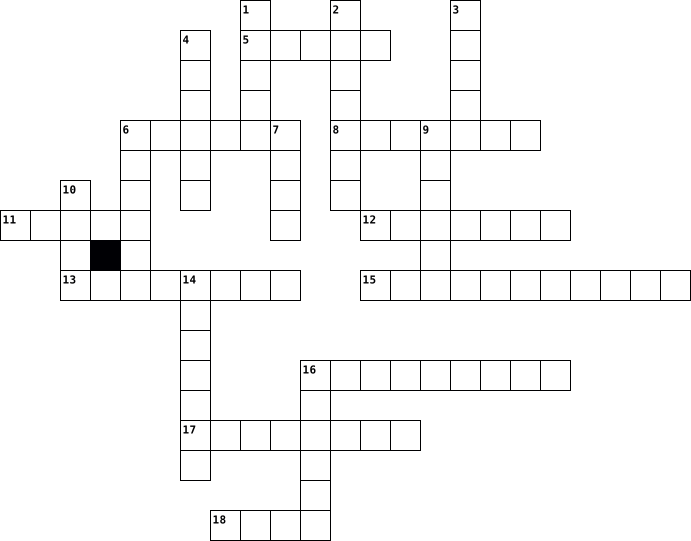
Across
- The colorful, often delicate part of a flower.
- A small pool of water, especially on the ground after rain.
- The flower of a plant.
- The leaves on trees turn this color in spring.
- Another word for rain in spring.
- A baby duck.
- A worm-like insect that becomes a butterfly.
- An insect with colorful wings that flies.
- An object used to protect from rain.
- A tall plant with a trunk and branches.
Down
- The fourth month of the year.
- Colors seen in the sky after rain.
- You can fly these in the spring breeze.
- A piece of land used for growing plants.
- An outdoor meal.
- Baby birds hatch from these.
- A new growth on a plant
- A small object from which a plant grows.
- A small, red and black beetle.
- A gentle wind.
20 Clues: A baby duck. • A gentle wind. • An outdoor meal. • The flower of a plant. • A new growth on a plant • Baby birds hatch from these. • The fourth month of the year. • A small, red and black beetle. • Another word for rain in spring. • Colors seen in the sky after rain. • An object used to protect from rain. • You can fly these in the spring breeze. • ...
Chapter 23 Vocab 2023-02-13

Across
- part of a root system in which roots branch to such an extent that no single root grows larger than the rest
- loss of water from a plant through its leaves
- plant response to the relative lengths of light and darkness
- specialized ground tissue found in leaves; performs most of a plant's photosynthesis
- response of a plant to the force of gravity
- tendency of a plant to grow toward a light source
- fluid portion of the chloroplast, outside of the thylakoids
- part on a growing stem where a leaf is attached
- movement of a plant toward or away from stimuli
Down
- cluster of xylem and phloem tissue in stems
- on or in a cell, a specific protein to whose shape fits a specific molecular messenger
- response of a plant to touch
- regulatory substance produced in the tip of a growing plant that stimulates cell elongation and the growth of new roots
- single layer of cells that make up dermal tissues
- chemical produced in one part of an organism that affects another part of the same organism
- region of specialized cells responsible for continuing growth throughout a plant's lifetime
- the primary root found in some plants that grow longer and thicker than the other roots
17 Clues: response of a plant to touch • cluster of xylem and phloem tissue in stems • response of a plant to the force of gravity • loss of water from a plant through its leaves • part on a growing stem where a leaf is attached • movement of a plant toward or away from stimuli • single layer of cells that make up dermal tissues • ...
Plant oils 2013-03-03

Across
- What state is margarine at room temperature
- Another name for hydrogenation
- The name of the process used to make margarine
- When cooking with oil, it can change the flavour and ______ of the food
- When bromine water is added to an unsaturated oil, it changes from orange to ______
- Method used to extract olive oil
- This is used to test for unsaturation
- Vegetable oils which contain double bonds are ______
- The boiling point of oils is ______ than water
- We eat vegetable oils to provide us with nutrients and _____
Down
- Method used to extract limonene from oranges
- What happens to the energy content of food when it is cooked in oil?
- The name of the catalyst used when making margarine
- What is added to the vegetable oil when making margarine?
- The temperature used when making margarine (in degrees)
15 Clues: Another name for hydrogenation • Method used to extract olive oil • This is used to test for unsaturation • What state is margarine at room temperature • Method used to extract limonene from oranges • The name of the process used to make margarine • The boiling point of oils is ______ than water • The name of the catalyst used when making margarine • ...
Plant Crossword 2013-12-09

Across
- These are a habitat for small microorganisms.
- This vegetable is used to make animal feeds, bird feed, starch, and bags.
- Plants breath this in, which humans breath out?
- Plants breath out this, which humans breath in?
- This Fruit is used to make ketchup, pasta sauce, and barbecue sauce.
- This type of food was a very blue color.
- This vegetable is used in making crayons and alternative fuels.
- Good soil is full of what that is food for plants.
Down
- Bees are very important to the flower because of this.
- Roots are used to bring ______ and nutrients to the stem.
- This tool is used to dig small holes.
- Plants need enough of what so the roots don't get bundled.
- This is the process that plants make their own energy.
- Leaves help absorb this?
- This is used as structural support for the plant.
15 Clues: Leaves help absorb this? • This tool is used to dig small holes. • This type of food was a very blue color. • These are a habitat for small microorganisms. • Plants breath this in, which humans breath out? • Plants breath out this, which humans breath in? • This is used as structural support for the plant. • Good soil is full of what that is food for plants. • ...
PLANT TISSUES 2021-10-01

Across
- aids in eassy bending of plant parts
- thickening matrial in cork cells
- rich in chlorophyll
- helps in exchange of gases
- found in nuts and husk of coconut
- outer covering of old plant parts
- actively dividing cells
- thickening material in collenchyma
- conducting tissue with more of living cells
Down
- lateal meristem
- thickening material in sclerenchyma
- conducting tissue with more of non living cells
- provides buoyancy to aquatic plant parts
- outer covering of young plant parts
- loss of water from plant parts
15 Clues: lateal meristem • rich in chlorophyll • actively dividing cells • helps in exchange of gases • loss of water from plant parts • thickening matrial in cork cells • found in nuts and husk of coconut • outer covering of old plant parts • thickening material in collenchyma • thickening material in sclerenchyma • outer covering of young plant parts • ...
plant cells 2021-02-09

Across
- stores the molecules required for cellular processes and is also responsible for giving the cell its shape.
- transport, package, and modify cells
- provides protection for the cell
- holds DNA
- makes chemical energy
- They break down excess or worn-out cell parts. They may be used to destroy invading viruses and bacteria.
- structure that helps cells maintain their shape and internal organization, and it also provides mechanical support that enables cells to carry out essential functions like division and movement.
Down
- creates proteins
- move water relative to the cell in a regular movement of the cilia.
- carry out photosynthesis
- involved with the production, folding, quality control and despatch of some proteins
- aid in cell division
- moves the cell
- helps maintain water balance
- largely associated with lipid (fat) manufacture and metabolism and steroid production hormone production.
15 Clues: holds DNA • moves the cell • creates proteins • aid in cell division • makes chemical energy • carry out photosynthesis • helps maintain water balance • provides protection for the cell • transport, package, and modify cells • move water relative to the cell in a regular movement of the cilia. • ...
Plant Classification 2022-03-18

Across
- Circular arranged vascular bundles, netted, leaf veins, and flower multiples of 4 or 5.
- A basic human need commonly made with cotton, linen, wool, and/or leather.
- Plant and/or plant products that are used by humans.
- Flower multiples of 3, scattered vasuclar bundles, and parallel veins.
- Part of flower that attracts birds and insects for pollunation.
- Plants that flowers and produces seeds protected by fruit or pods. (ex. apples, peaches, pecans)
- The chemical process of converting sunlight into food energy.
- Outermost part that protects and supports a flower when it blooms.
Down
- A process with a 2 name system, genus and species.
- A basic human need that is often consumed. (ex. fruit, veggies, grains)
- Humans use the animals and animal products that feed on plants and plant products.
- Part of a flower that includes the anther and filament.
- A basic human need commonly made with lumber and wood products.
- Part of a flower that includes the stigma, style, and ovary.
- Plant produces seeds not protected by fruit. (ex. pines, spruces, redwoods)
15 Clues: A process with a 2 name system, genus and species. • Plant and/or plant products that are used by humans. • Part of a flower that includes the anther and filament. • Part of a flower that includes the stigma, style, and ovary. • The chemical process of converting sunlight into food energy. • Part of flower that attracts birds and insects for pollunation. • ...
Plant Growth 2022-08-25

Across
- A zygote that has divided and started developing
- reproductive structure of a gymnosperm
- Protect the flower while it is developing
- cone-bearing plants that are mainly conifer trees
- Flowering Plants
- Traps pollen grains in a sticky substance
- Male cones produce this to flourish other plants
Down
- A single cell formed when an egg and sperm join
- When the plant reacts to its environment
- Chemicals that control the ripening of fruit
- male part of the flower
- Brightly colored in order to attract insects
- Two of these in every grain of pollen
- A female part that contains eggs
- Hormone responsible for the growth of roots and stems
15 Clues: Flowering Plants • male part of the flower • A female part that contains eggs • Two of these in every grain of pollen • reproductive structure of a gymnosperm • When the plant reacts to its environment • Protect the flower while it is developing • Traps pollen grains in a sticky substance • Chemicals that control the ripening of fruit • ...
Plant reproduction 2022-02-03

Across
- powdery substance that fertilizes plants
- the part of the pistil where pollen is placed
- reproducing on on your own
- where pollen is placed
- reproducing with a mate
- where ovules are produced
- the organism that transfers pollen
Down
- the female organ of the plant
- part of the stamen where pollen is produced
- develops into seeds when fertilized
- supports the anther
- the reproductive part of the plant
- transferring of pollen for fertilization
- connects the stigma and the ovary
- the pollen producing part of a flower
15 Clues: supports the anther • where pollen is placed • reproducing with a mate • where ovules are produced • reproducing on on your own • the female organ of the plant • connects the stigma and the ovary • the reproductive part of the plant • the organism that transfers pollen • develops into seeds when fertilized • the pollen producing part of a flower • ...
Plant Vocabulary 2022-02-01

Across
- the vascular tissue in plants that conducts water and dissolved nutrients upwards from the root
- the part of a plant which attaches it to the ground or to a support, carrying water and nutrients to the rest of the plant
- begin to grow and put out shoots after a period of dormancy
- vascular tissue that conducts sugar and other metabolic products downward from the leaves
- living for a year or less
- small pores in the leaf/stem, allowing gasses to move between the cells
- a compact growth on a plant that develops into a leaf, flower, or shoot
- living for several years
- living for two years
- the main body or stalk of a plant or shrub
Down
- a flattened structure of a higher plant that is attached to a stem; main organs of photosynthesis
- the art of garden cultivation and management
- a flowering plant's unit of reproduction
- the process in which plants use lights to synthesis food
- the part of a plant stem from which leaves emerge
15 Clues: living for two years • living for several years • living for a year or less • a flowering plant's unit of reproduction • the main body or stalk of a plant or shrub • the art of garden cultivation and management • the part of a plant stem from which leaves emerge • the process in which plants use lights to synthesis food • ...
plant classification 2021-12-08

Across
- a plant that does have seeds protected by an ovary or fruit
- an embryonic leaf in seed-bearing plants, one or more of which are the first leaves to appear from a germinating seed
- a group of closely related families
- are grass and grass-like flowering plants, the seeds of which typically contain only one embryonic leaf, or cotyledon
- a group of closely related organisms that can breed and produce offspring
- a plant that completes its life cycle in one year
Down
- a plant that completes its life cycle in more that two growing seasons
- a plant that completes its life cycle in two years
- a plant that has seeds unprotected by an ovary or fruit
- a group of closely related genera
- the first and largest category used to classify organisms
- refers to one of the typical characteristics of the group, namely that the seed has two embryonic leaves or cotyledons
- a group of closely related species
- a group of closely related orders
- group of closely related classes
15 Clues: group of closely related classes • a group of closely related genera • a group of closely related orders • a group of closely related species • a group of closely related families • a plant that completes its life cycle in one year • a plant that completes its life cycle in two years • a plant that has seeds unprotected by an ovary or fruit • ...
Plant Parts 2022-11-08

Across
- Just above ground or below, closely grouped plantlets or stems
- Short stems found on woody plant limbs adapted for increased production of fruits
- Many finely branched secondary roots
- Develop in places other than nodes
- Waxy substance cover the leaves and stems
- Transports water
Down
- Clinging air roots
- Continuation of the primary root
- Layers of fleshy scales that overlap each other
- Absorb water and minerals from soil
- Stem that grows horizontally above the soil surface
- Sold, fleshy, scale covered roots
- Food storage
- Underground stems that produce roots on the lower surface
- Primary site of Photosynthesis
15 Clues: Food storage • Transports water • Clinging air roots • Primary site of Photosynthesis • Continuation of the primary root • Sold, fleshy, scale covered roots • Develop in places other than nodes • Absorb water and minerals from soil • Many finely branched secondary roots • Waxy substance cover the leaves and stems • Layers of fleshy scales that overlap each other • ...
Plant Revision 2021-04-12

Across
- a non-living part of a habitat
- the movement of pollen to the stigma
- moving and spreading seeds around through animals or wind
- male part of the plant that produces pollen
- product of photosynthesis that humans need
- a product of photosynthesis, giving plants energy
- an unopened lead of flower
Down
- a seed growing after some time under the earth
- plants absorb this gas during photosynthesis
- an animal that moves pollen from the male part to the female part.
- protective cover on a trunk
- many body of the plant that supports leaves and flowers
- where photosynthesis happens
- female cell (‘egg’) inside the ovary of the plant
- the woody stem of a tree
15 Clues: the woody stem of a tree • an unopened lead of flower • protective cover on a trunk • where photosynthesis happens • a non-living part of a habitat • the movement of pollen to the stigma • product of photosynthesis that humans need • male part of the plant that produces pollen • plants absorb this gas during photosynthesis • a seed growing after some time under the earth • ...
Plant names 2021-02-11

Across
- this flower grows on a tree and is white
- this flower is edible and we have all eaten one before
- this flower is big yellow and you can find it in a field
- another name for this is mother-in-law
- don't touch this flower or you will be itching for days
- another name for this plant is Christmas cactus
- another name for this plant is Pathos
Down
- the leaf's on this flower look like little hearts
- this flower looks like the flower off the movie Shrek
- colorful flower with a "face"
- scientific name is devils ivy
- this flower is popular around valentines day
- white flower that grows on vine
- this flower has white pedals and a yellow center
- this flower looks like bulb but is a flower
15 Clues: colorful flower with a "face" • scientific name is devils ivy • white flower that grows on vine • another name for this plant is Pathos • another name for this is mother-in-law • this flower grows on a tree and is white • this flower is popular around valentines day • this flower looks like bulb but is a flower • another name for this plant is Christmas cactus • ...
1.Plant 2023-09-09

Across
- A tall plant with large, yellow blossoms that face the sun.
- A large, showy flower in various colors.
- A colorful flower with cup-shaped blooms.
- A yellow wildflower with fluffy seeds that blow away.
- A graceful flower known for its elegant and exotic beauty.
- Delicate pink or white flowers that bloom in spring.
- A graceful flower with trumpet-shaped petals.
Down
- A fragrant herb with purple spikes of flowers.
- A fragrant flower often used in perfumes and teas.
- A fragrant flower with delicate petals and thorns.
- A coniferous tree with needle-like leaves and pinecones.
- A simple, white flower with a yellow center.
- A sturdy tree with broad leaves and acorns.
- A spiky, succulent plant that thrives in arid regions.
- A tree with distinctive palmate leaves and vibrant foliage.
15 Clues: A large, showy flower in various colors. • A colorful flower with cup-shaped blooms. • A sturdy tree with broad leaves and acorns. • A simple, white flower with a yellow center. • A graceful flower with trumpet-shaped petals. • A fragrant herb with purple spikes of flowers. • A fragrant flower often used in perfumes and teas. • ...
Plant Anatomy 2024-02-12

Across
- Leaf stalk or part that connects the leaf to the steam
- A plant that is swollen or filled with moisture
- A stage when a plant rests or grows very little, usually in response to adverse conditions such as extreme heat or cold
- Plants that lose their leaves during the dormant season
- The leaf tip
- The structural framework of the leaf
- A plant that completes its life cycle in one year
- the large, flat part of the leaf
- The edge of the leaf
Down
- A plant that lives more than two years. Some perennials will grow and bloom the first year.
- A plant that is limp because it does not have enough moisture
- A plant that completes its life cycle in two years. It usually grows the first year and flowers the second year.
- The part of biology that deals with plants
- Plants that retain their leaves and remain green year round
- The large center vein of the leaf
15 Clues: The leaf tip • The edge of the leaf • the large, flat part of the leaf • The large center vein of the leaf • The structural framework of the leaf • The part of biology that deals with plants • A plant that is swollen or filled with moisture • A plant that completes its life cycle in one year • Leaf stalk or part that connects the leaf to the steam • ...
Plant Processes 2020-12-03

Across
- the vascular tissue in plants that conducts sugars
- oxygen to produce energy for plant growth
- an outer layer of tissue immediately below the epidermis of a stem or root
- the vascular tissue in plants that conducts water and dissolved nutrients
- how plants are able to absorb water from soil.
- water movement through a plant
- use sunlight to synthesize foods
- a pore that controls the rate of gas exchange.
Down
- absorption of water by roots
- permits passage of water
- tubular outgrowth of a trichoblast
- related green pigments found
- plastid that contains chlorophyll and photosynthesis takes place.
- the inner tissue of a leaf
- the outer layer of tissue in a plant
15 Clues: permits passage of water • the inner tissue of a leaf • absorption of water by roots • related green pigments found • water movement through a plant • use sunlight to synthesize foods • tubular outgrowth of a trichoblast • the outer layer of tissue in a plant • oxygen to produce energy for plant growth • how plants are able to absorb water from soil. • ...
plant process 2020-12-04

Across
- the process by which green plants and some other organisms use sunlight to synthesize foods from carbon dioxide and water
- called bast, tissues in plants that conduct made in the leaves to all other parts of the plant
- cell structures in the epidermis of tree leaves and needles that are involved in the exchange of carbon dioxide and water between plants and the atmosphere
- cells are a type of ground tissue found in the plant's leaves
- involves using the sugars produced during photosynthesis plus oxygen to produce energy for plant growth
- are cylindrical extensions of root epidermal cells that are important for acquisition of nutrients, microbe interactions, and plant anchorage
- They are fully permeable to water, molecules, and proteins
- process by which plants take-up substances from the soil is known as absorption
Down
- process of water movement through a plant and its evaporation from aerial parts, such as leaves, stems and flowers
- plant vascular tissue that conveys water and dissolved minerals from the roots to the rest of the plant and also provides physical support
- how plants are able to absorb water from soil
- a pigment, or molecule that reflects some wavelengths of light, while absorbing others
- in botany, outermost, protoderm-derived layer of cells covering the stem, root, leaf, flower, fruit, and seed parts of a plant
- A plastid in the cells of green plants and green algae that contains chlorophylls and carotenoid pigments and creates glucose through photosynthesis
- in plants, tissue of unspecialized cells lying between the epidermis (surface cells) and the vascular, or conducting, tissues of stems and roots
15 Clues: how plants are able to absorb water from soil • They are fully permeable to water, molecules, and proteins • cells are a type of ground tissue found in the plant's leaves • process by which plants take-up substances from the soil is known as absorption • a pigment, or molecule that reflects some wavelengths of light, while absorbing others • ...
Plant Reproduction 2024-04-08

Across
- a type of asexual reproduction in plants that involves seed formation without fertilization
- union of gametes of opposite sexes
- a technique for rapidly multiplying plants asexually under controlled laboratory conditions
- female reproductive part of a flower
- its main function is to produce and house spores
- contains the ovules
Down
- male reproductive part of a flower
- a type of reproduction that involves the combining of genetic material from two different parents
- makes tiny grains
- a type pf reproduction where a single organism can create genetically identical copies of itself
- a fine powder produced by plants for sexual reproduction
- self-pollination
- top part of the carpel
- a type of asexual reproduction where a new organism develops from an outgrowth
- cross-pollination
15 Clues: self-pollination • makes tiny grains • cross-pollination • contains the ovules • top part of the carpel • male reproductive part of a flower • union of gametes of opposite sexes • female reproductive part of a flower • its main function is to produce and house spores • a fine powder produced by plants for sexual reproduction • ...
Plant Classification 2024-04-12

Across
- movement and loss of water through evaporation
- transports water and minerals to roots
- anchor plant, absorbs water and materials, and stores manufactured food
- chemical process converting sunlight into energy and food for the plant
- provides a sticky surface to catch pollen
- supports the stigma
- female part of a flower
- becomes the growth rings
Down
- naked seed
- male part of a flower
- covered or enclosed seed
- process of plants using stored energy
- transports food from the leaves
- outermost part of a flower that protects the unopened flower
- attract insects and birds for pollination
15 Clues: naked seed • supports the stigma • male part of a flower • female part of a flower • covered or enclosed seed • becomes the growth rings • transports food from the leaves • process of plants using stored energy • transports water and minerals to roots • provides a sticky surface to catch pollen • attract insects and birds for pollination • ...
Plant Reproduction 2023-01-24

Across
- The female part of a flower made of the stigma, the style and the ovary
- tube What is formed to carry the male gamete to the ovary
- The fusion of pollen nucleus with ovule nucleus
- Flowers that are pollinated by ____ tend to have dull colours and no fragrance
- A thin stalk that supports the anther
- Part of a plant that protects the seed
- Connects the stigma to the ovary
Down
- Transfer of pollen from anther to stigma
- What is formed when the pollen nucleus fuses with the ovule nucleus
- Male part of the flower that produces pollen
- Sweet liquid that insects like to drink
- Mammal that pollinates flowers at night
- Coloured, flag-like structures which attract insects
- Reproductive cell
- After fertilisation, the petals of a flower ___ off as they are no longer needed
15 Clues: Reproductive cell • Connects the stigma to the ovary • A thin stalk that supports the anther • Part of a plant that protects the seed • Sweet liquid that insects like to drink • Mammal that pollinates flowers at night • Transfer of pollen from anther to stigma • Male part of the flower that produces pollen • The fusion of pollen nucleus with ovule nucleus • ...
Plant crossword 2023-05-23

Across
- provide anchorage for plant, takes in water and nutrients
- green pigment in plants
- where photosynthesis takes place
- organ that contains the plants seed
- Tissue provides structural support for stem, stores water and sugars
- supports leaves, flowers and fruits, transports water
- Tissue transports waters, minerals, and sugars, made of xylem and phloem
Down
- tiny holes in leaves for gas exchange
- using sunlight to create food
- contains roots, gives structure, underground (add hyphen)
- contains stems, leaves, flowers, fruit, appears above ground (add hyphen)
- plants reproductive organ, contains pollen and petals, male and female parts
- Tissue covers and protects plant, controls gas exchange and water absorption, contains root hairs
- in plant cells, provide storage and structure
- usually flattened outgrowth from stem that specializes in photosynthesis
15 Clues: green pigment in plants • using sunlight to create food • where photosynthesis takes place • organ that contains the plants seed • tiny holes in leaves for gas exchange • in plant cells, provide storage and structure • supports leaves, flowers and fruits, transports water • provide anchorage for plant, takes in water and nutrients • ...
plant crossword 2023-05-25

Across
- where photosynthesis takes place
- green pigment in plants
- plants reproductive organ, male and female parts, includes petals and pollen
- organ that contains seed
- tiny holes in leaves for gas exchange
- contains roots, gives structure, appears underground (add hyphen)
- using sunlight to create food
- covers/protects plant, controls gas exchange and water absorption, contains root hairs (add hyphen)
Down
- transports water, minerals, and sugars, made of xylem and phloem (add hyphen)
- provides structural support for stem, stores water and sugars (add hyphen)
- contains stems, leaves, flowers, fruit, appears above ground (add hyphen)
- usually flattened outgrowth from stem that specializes in photosynthesis
- supports leaves, flowers, and fruits, transports water
- in plant cells, provides storage and structure
- provide anchorage for plant, take in water and nutrients
15 Clues: green pigment in plants • organ that contains seed • using sunlight to create food • where photosynthesis takes place • tiny holes in leaves for gas exchange • in plant cells, provides storage and structure • supports leaves, flowers, and fruits, transports water • provide anchorage for plant, take in water and nutrients • ...
Plant Protectors 2023-06-19

Across
- wild animals collectively; the native fauna (and sometimes flora) of a region
- keep or accumulate (something) for future use.
- protect from harm or damage with an appropriate measure.
- able to be maintained at a certain rate or level.
- restore (an area of land) to its natural uncultivated state (used especially with reference to the reintroduction of species of wild animal that have been driven out or exterminated).
- a person, group, or nation that is associated with another or others for some common cause or purpose
- keep safe from harm or injury
Down
- change change in the weather because of humans
- make one's living by growing crops or keeping livestock.
- the variety of plant and animal life in the world or in a particular habitat
- the chemical element of atomic number 6, a non-metal which has two main forms (diamond and graphite) and which also occurs in impure form in charcoal, soot, and coal.
- take in or soak up (energy or a liquid or other substance) by chemical or physical action.
- an area or ridge of land that separates waters flowing to different rivers, basins, or seas.
- return (someone or something) to a former condition, place, or position.
- a region of the earth's surface and the particular combination of climate (= general type of weather), plants, and animals that are found in it:
15 Clues: keep safe from harm or injury • change change in the weather because of humans • keep or accumulate (something) for future use. • able to be maintained at a certain rate or level. • make one's living by growing crops or keeping livestock. • protect from harm or damage with an appropriate measure. • ...
Plant Science 2024-12-18

Across
- Water + Fish
- Standard way of growing
- Gardening up top
- Money that is left
- Up and down growing
- Growing plants in water
Down
- Photosynthesis occurs here
- WA #1 producer of this oil
- Making of something
- This occurs before fruit is produced
- WA most lucrative crop
- Plant
- Uptake of water
- Transports all nutrients and water
- Bush berry
15 Clues: Plant • Bush berry • Water + Fish • Uptake of water • Gardening up top • Money that is left • Making of something • Up and down growing • WA most lucrative crop • Standard way of growing • Growing plants in water • Photosynthesis occurs here • WA #1 producer of this oil • Transports all nutrients and water • This occurs before fruit is produced
plant classification 2025-04-22

Across
- – Male reproductive organ of a flower.
- – Waxy layer covering leaves to prevent water loss.
- – Type of plant with two seed leaves or cotyledons.
- – Swollen base of pistil that contains ovules.
- – Brightly colored part of a flower that attracts pollinators.
- – Main site of photosynthesis in most plants.
- – Vascular tissue that conducts water and minerals from roots upward.
- – Point on a stem where leaves or branches are attached.
- – Reproductive structure containing embryo and stored food.
Down
- – A plant with one cotyledon in the seed.
- – Female part of the flower composed of stigma, style, and ovary.
- – Small pore on leaves that allows gas exchange.
- – Organelle where photosynthesis occurs.
- – Plant organ that anchors and absorbs water/minerals from soil.
- – Vascular tissue that transports sugars from leaves to the rest of the plant.
15 Clues: – Male reproductive organ of a flower. • – Organelle where photosynthesis occurs. • – A plant with one cotyledon in the seed. • – Main site of photosynthesis in most plants. • – Swollen base of pistil that contains ovules. • – Small pore on leaves that allows gas exchange. • – Waxy layer covering leaves to prevent water loss. • ...
Plant Agriculture 2025-05-12

Across
- Crops that supply the majority of human calories.
- Chemicals used to kill or control crop-damaging organisms.
- Adding water to crops using external sources.
- Partially decomposed plant and animal matter found in soil.
- Ideal soil type for farming with moderate water retention and drainage.
- Physical breakdown of rock by wind, water, cold, or heat.
- Layers of soil beneath the surface, each with different composition
Down
- Nutrients needed in large amounts like carbs, proteins, and fats.
- The process by which fertile land becomes desert.
- A condition where basic caloric needs are not met.
- The loosening and mixing of soil to prepare for farming.
- When raindrops hit bare soil, causing loose particles to be dislodged.
- Ecological disaster caused by drought and poor farming in the 1930s.
- Farming method that follows natural land elevation to reduce water runoff.
- Rows of trees/shrubs planted to reduce wind erosion.
15 Clues: Adding water to crops using external sources. • The process by which fertile land becomes desert. • Crops that supply the majority of human calories. • A condition where basic caloric needs are not met. • Rows of trees/shrubs planted to reduce wind erosion. • The loosening and mixing of soil to prepare for farming. • ...
Plant systems 2026-04-13

Across
- what the stomata is in charge of
- product of photosynthesis and reactant of cell respiration
- Plants response to light
- plants response to water
- process where plants take in carbon dioxide and water to produce oxygen and glucose
- plants response to touch
Down
- how organisms deep in the ocean get energy
- uses sunlight to make glucose
- zips water up
- Inside the ovary
- contains the anther and filament
- ATP factory of the cell
- flows sugar down
- plants response to gravity
- contains the stigma style and ovary
15 Clues: zips water up • Inside the ovary • flows sugar down • ATP factory of the cell • Plants response to light • plants response to water • plants response to touch • plants response to gravity • uses sunlight to make glucose • what the stomata is in charge of • contains the anther and filament • contains the stigma style and ovary • how organisms deep in the ocean get energy • ...
Plant crossword 2025-11-24

Across
- Straw like tubes found in Vascular plants that carry food such as sugars and glucose down to the roots
- Flowering fruiting vascular plants
- Ferns
- The sugars that plants make for food is called
- Plants that gain water through osmosis because they lack Xylem and phloem
- Little air vents on the underside of leaves that can be open or closed to allow gases into the leaves.
- Other name for nonvascular plants
Down
- Straw like tubes found in Vascular plants that carry water from the roots to the leaves of the plant.
- Plant adaptations such as potatoes and carrots
- Plants adaptations such as cactus stems or Poinsettia flowers
- Nonflowering non fruiting vascular plants
- Plants that have Xylem and Phloem and true roots
- How plants make food
- Photosynthesis takes place because of
- What carniverous plants eat bugs for
15 Clues: Ferns • How plants make food • Other name for nonvascular plants • Flowering fruiting vascular plants • What carniverous plants eat bugs for • Photosynthesis takes place because of • Nonflowering non fruiting vascular plants • Plant adaptations such as potatoes and carrots • The sugars that plants make for food is called • Plants that have Xylem and Phloem and true roots • ...
Plant Puzzle 2025-11-29

Across
- One of two major types of vessels in vascular plants
- Diffusion of water through a permeable membrane
- Produced in leaves during photosynthesis
- The xylem carries _____ through a plant
- Over 90% of plants fall into this category
- Organelle where photosynthesis occurs
- Typically found on the underside of the leaf, gases can flow in
Down
- Famous carnivorous plant
- Opens and closes stomata
- Anchor plants and help absorb water
- Phloem carries ____ throughout the plant
- Time of day when many plants close their stomata
- Informal name of nonvascular plants
- One of two major types of vessels in vascular plants
- Plants are classified as vascular or ____-vascular
- Nonvascular plants are typically limited in _____
16 Clues: Famous carnivorous plant • Opens and closes stomata • Anchor plants and help absorb water • Informal name of nonvascular plants • Organelle where photosynthesis occurs • The xylem carries _____ through a plant • Phloem carries ____ throughout the plant • Produced in leaves during photosynthesis • Over 90% of plants fall into this category • ...
Plant anatomy 2026-03-27

Across
- Matured ovary that protects developing seeds PMF IAS.
- Tiny pores in leaves that allow for gas exchange (CO in,oxygen out).
- Green, leaf-like structures that protect the flower bud BYJU'S.
- Vascular tissue that transports sugars throughout the plant.
- Colorful leaf-like structure that attracts pollinators.
- Part of the stamen that produces pollen.
- Supports leaves and flowers, transporting water and sugars throughout the plant Dummies.com.
- Cells Surround stomata and control their opening and closing to manage water loss.
Down
- Vascular tissue that transports water upward from roots.
- The stalk that joins a leaf to the stem Georgia 4-H.
- Reproductive part that produces seeds BYJU'S.
- Carpel: Female reproductive part, including the stigma, style, and ovary.
- Primary site of photosynthesis, capturing sunlight to make food The Huntington.
- Anchor the plant and absorb water/nutrients from the soil Science Facts - Learn it All.
- Contains the embryo for a new plant Pinterest.
15 Clues: Part of the stamen that produces pollen. • Reproductive part that produces seeds BYJU'S. • Contains the embryo for a new plant Pinterest. • The stalk that joins a leaf to the stem Georgia 4-H. • Matured ovary that protects developing seeds PMF IAS. • Colorful leaf-like structure that attracts pollinators. • Vascular tissue that transports water upward from roots. • ...
Plant anatomy 2026-03-27

Across
- The structure inside the ovary that becomes a seed after fertilization.
- A waxy, water-impermeable layer coating the epidermis of leaves and stems.
- Specialized tissue where active cell division and growth occur.
- Soft, spongy parenchyma tissue in the center of a stem.
- Ground tissue located just inside the epidermis, storing food and providing support.
- The male reproductive part of a flower, consisting of anther and filament.
- A lateral meristem responsible for secondary growth (widening) in woody plants.
Down
- The outermost, protective layer of cells on leaves, stems, and roots.
- Specialized tissue that transports water and dissolved nutrients up from the roots.
- A tubular extension of an epidermal cell in the root, maximizing water absorption
- The specific point on a stem where leaves and buds are attached.
- The segment of a stem between two consecutive nodes.
- Vascular tissue that transports sugars and metabolic products downwards from the leaves.
- Small pores on the leaf surface that facilitate gas exchange (
- The female reproductive part, comprising the ovary, style, and stigma.
15 Clues: The segment of a stem between two consecutive nodes. • Soft, spongy parenchyma tissue in the center of a stem. • Small pores on the leaf surface that facilitate gas exchange ( • Specialized tissue where active cell division and growth occur. • The specific point on a stem where leaves and buds are attached. • ...
Plant Nutrition 2026-03-29

Across
- The top transparent layer of the leaf that lets light through
- A mineral needed to make chlorophyll
- A layer of cells with air spaces that allow gases to move through the leaf.
- A mineral needed for plant growth
- Cells that open and close the stomata
- Small holes in leaves that allow gases to move in and out
Down
- A waterproof layer on the leaf that reduces water loss
- A layer of cells packed with chloroplasts where most photosynthesis happens
- The bottom layer of the leaf where most stomata are found
- A green pigment that absorbs light energy
- A substance added to soil to replace missing minerals
- A type of sugar made during photosynthesis that plants use for energy
- The process by which plants use light to make food (glucose) from carbon dioxide and water
- A part of the cell where photosynthesis takes place
- A mineral that helps plants stay healthy
15 Clues: A mineral needed for plant growth • A mineral needed to make chlorophyll • Cells that open and close the stomata • A mineral that helps plants stay healthy • A green pigment that absorbs light energy • A part of the cell where photosynthesis takes place • A substance added to soil to replace missing minerals • A waterproof layer on the leaf that reduces water loss • ...
Plant Structure 2026-09-01

Across
- Undeveloped shoot that gives rise to new leaves, Stems, or flowers
- A young stem with leaves
- Transports water and minerals
- Form multiple smaller roots that radiate out
- A woody stem in the current or previous years growth
- Transports food(plant sugars)
- The main stem of a woody plant
- A flattened, green surface that provides a large area for efficient absorbstion
Down
- Attaches to the petiole and runs the length of the blade
- Stems that are more than a year old
- One central root that elongates downward
- The edge of the leaf
- A single layer of living cells
- Stalk that holds the leaf away from the stem
- When the petiole base is attached to the stem
15 Clues: The edge of the leaf • A young stem with leaves • Transports water and minerals • Transports food(plant sugars) • A single layer of living cells • The main stem of a woody plant • Stems that are more than a year old • One central root that elongates downward • Form multiple smaller roots that radiate out • Stalk that holds the leaf away from the stem • ...
Plant Cell 2026-09-08

Across
- lets things in and out
- makes ribosomes
- stores pigments
- crystal that regulates calcium
- colorless organelles that make and store starch
- green pigment that makes plant green
- powerhouse
- packages and ships proteins
Down
- turns light and CO2 into 02 and glucose
- stores genetic info
- produces lipids, and proteins, and also moves materials around the cell
- gives plant cell shape
- membrane of the vacuole (very hard to guess)
- turns RNA into proteins
- stores waste, water, and nutrients
15 Clues: powerhouse • makes ribosomes • stores pigments • stores genetic info • lets things in and out • gives plant cell shape • turns RNA into proteins • packages and ships proteins • crystal that regulates calcium • stores waste, water, and nutrients • green pigment that makes plant green • turns light and CO2 into 02 and glucose • membrane of the vacuole (very hard to guess) • ...
Plant Structures 2022-04-26

Across
- a type of vascular tissue which carries food from its manufacture to the remainder of the plant
- process where plants become autotrophs
- plant tissue capable of transporting water and other materials
- the short stalk connecting the blade to the stem
- a type of vascular tissue which carries water from the roots to the remainder of the plant
- plant which may produce seeds and flowers and fruits
- tissue used to regenerate damage in the plant
- openings in the leaf protected by guard cells which control the flow of gases into and out of the leaf
Down
- plant which may produce seeds but no fruits or flowers
- outer waxy surface of a plant leaf
- compound in the cell wall of plants
- spongy ground tissue in the center of herbaceous stems
- the outer layer of dermal tissue
- one of two types of roots in plants consisting of one major root
14 Clues: the outer layer of dermal tissue • outer waxy surface of a plant leaf • compound in the cell wall of plants • process where plants become autotrophs • tissue used to regenerate damage in the plant • the short stalk connecting the blade to the stem • plant which may produce seeds and flowers and fruits • plant which may produce seeds but no fruits or flowers • ...
Ornamental Plant Cultivation 2026-05-29

Across
- A trumpet-shaped flowering plant often used in gardens.
- The art of growing miniature ornamental trees.
- Transferring a plant into a container with soil.
- A young plant grown from a seed.
- A fragrant flowering vine or shrub.
- A place where ornamental plants are grown and sold.
- A row of shrubs planted as a boundary or fence.
- A substance added to soil to help plants grow.
- An exotic ornamental flower with many varieties.
- A small woody ornamental plant shorter than a tree.
Down
- Decayed organic matter used to enrich soil.
- Material spread over soil to conserve moisture and reduce weeds.
- A popular ornamental flower known for its fragrance and thorns.
- Designing and arranging outdoor ornamental spaces.
- A colorful spring-blooming flower grown from bulbs.
- A glass or plastic structure used to grow plants.
- An area covered with maintained grass.
- Cutting plant parts to improve growth and shape.
- Joining plant parts so they grow as one plant.
- Artificial watering of plants and gardens.
20 Clues: A young plant grown from a seed. • A fragrant flowering vine or shrub. • An area covered with maintained grass. • Artificial watering of plants and gardens. • Decayed organic matter used to enrich soil. • The art of growing miniature ornamental trees. • Joining plant parts so they grow as one plant. • A substance added to soil to help plants grow. • ...
Cellular Respiration and Photosynthesis Crossword Puzzle 2021-12-18

Across
- A metabolic process by which glucose is converted into cellular energy and metabolite lactate.
- An organism that sustains itself without eating anything derived from other living beings.
- An organism that is unable to make their own food; they live on compounds produced by other organisms.
- The partial degradation of sugars or other organic material that occurs without the use of oxygen.
- the tissue brings sugar and other compounds throughout the plant.
- The part of the plant that anchors it, absorbs water and minerals, and stores sugars and starches.
- The colorless fluid surrounding the grana where the Calvin Cycle takes place.
- The movement of ions accross a semipermeable membrane bound structure.
- The membrane-bound compartments inside the chloroplast where light-dependent reactions take place.
Down
- A biological process that converts glucose, fructose and sucrose into cellular energy. It is also the most effective way of doing so.
- A compound present in green plants that helps them absorb light.
- A metabolic process by which cells metabolize sugars in the presence of oxygen.
- The loss of electrons from a substance in a redox reaction.
- The addition of electrons to a substance in a redox reaction.
- The tissue that brings water and minerals throughout the plant.
- The part of the plant that displays leaves and contains the terminal and axillary buds.
- the folds in the inner membrane of the mitochondria.
- A distinct quantity of light energy.
- The main photosynthetic organ of a plant.
- the structure that regulates gas exchange in a plant.
20 Clues: A distinct quantity of light energy. • The main photosynthetic organ of a plant. • the folds in the inner membrane of the mitochondria. • the structure that regulates gas exchange in a plant. • The loss of electrons from a substance in a redox reaction. • The addition of electrons to a substance in a redox reaction. • ...
5 - Chapter 4 Review 2021-11-11

Across
- root type with one large root.
- flower parts that attract pollinators.
- leaf-like structures that protect the flower.
- tube that transports sugar in plants.
- the process where plants turn water and carbon dioxide into sugar and oxygen.
- tube that transports water in plants.
- an animal that moves pollen from one plant to another.
- root type with many root branches.
- the growth of a plant based on its environment.
Down
- flower part that produces pollen.
- cell part that contains chlorophyll.
- chemical that speeds up the growth of an organism.
- flower part that contains the egg cells.
- green pigment that absorbs sunlight.
- plant parts that catch sunlight.
- plant part that anchors the plant into the ground.
16 Clues: root type with one large root. • plant parts that catch sunlight. • flower part that produces pollen. • root type with many root branches. • cell part that contains chlorophyll. • green pigment that absorbs sunlight. • tube that transports sugar in plants. • tube that transports water in plants. • flower parts that attract pollinators. • ...
Science Crossword 2026-08-25

Across
- — An animal that hunts other animals for food.
- — The process plants use to make food using sunlight.
- — A substance that all living things need to survive.
- — Shows how energy passes from one living thing to another.
- — The part of a plant where photosynthesis mainly takes place.
- — A gas that humans and animals need to breathe.
- — A living thing that can make its own food using sunlight.
- — The part of a plant that supports the leaves and carries water.
- — The place where a plant or animal naturally lives.
Down
- — The ability to make things happen or change.
- — The force that pulls objects towards Earth.
- — A push or pull that can change the movement of an object.
- — Something relating to the Sun.
- — A state of matter that takes the shape of its container.
- — Anything that has mass and takes up space.
- — An object that attracts certain metals.
- — The part of a plant that usually grows underground and absorbs water.
- — A large object that orbits a star.
- — A state of matter that has a fixed shape.
- — A state of matter that spreads out to fill its container.
20 Clues: — Something relating to the Sun. • — A large object that orbits a star. • — An object that attracts certain metals. • — A state of matter that has a fixed shape. • — Anything that has mass and takes up space. • — The force that pulls objects towards Earth. • — The ability to make things happen or change. • — An animal that hunts other animals for food. • ...