
the plant Crossword Puzzles
Project crossword Puzzle 2021-09-07

Across
- cells with a nucleus, such as plant cell and animal cell
- simplify as ER,Processes and transports proteins and makes lipids,find in both cell
- where genetic material is stored and controls the cell's growth and reproduction,find in both cell
- rigid structure that surrounds the cell membrane,provide structure and support, only found in plant cell
- make proteins, control most chemical reactions of cells and provide structural support for cells and tissues.find in both cell
Down
- deoxyribonucleic acid,a molecules that is present in all living cells and that contains information that determines traits
- a fluid-filled vesicle that contains food, water and waste,plant cell have a big large central vacuole.
- one of the structures in the nucleus that are made up of DNA and protein,found in both animal and plant cell
- gel-like liquid inside a cell;helps cell maintain shape and is about 80% water, found in both cell
- protective flexible barrier that controls what goes in and out of the cell,found in both animal and plant cell
- the site of cellular respiration, which releases energy for use by the cell,found in both animal and plant cell
- Produces enzymes that digest wastes, cell parts, and foreign invaders, ONLY find in animal cell
- an organelle found in plant and algae cells where photosynthesis occurs
- the membrane-bound organelle that packages and distributes materials, such as proteins.find in both cell
- the smallest functional and structural unit of living things
15 Clues: cells with a nucleus, such as plant cell and animal cell • the smallest functional and structural unit of living things • an organelle found in plant and algae cells where photosynthesis occurs • simplify as ER,Processes and transports proteins and makes lipids,find in both cell • ...
Puzzle 26: Plants and Photosynthesis 2025-09-09

Across
- – Essential minerals.
- – Pores for gas exchange.
- – Energy molecule.
- – Energy source for photosynthesis.
- – Provides support.
- – Reproductive part of plant.
- – Non-vascular plants.
- – Released during photosynthesis.
- – Controls stomata opening.
- – Main site of photosynthesis.
- – Protects seeds.
- – Sugar produced.
- – Light-capturing complex.
- – Absorbed from soil.
- – Stores water in plant cells.
- – Transports sugars.
- & Photosynthesis
- – Light particle used in photosynthesis.
- – Group of similar cells.
Down
- – Green pigment capturing light energy.
- – Fusion of gametes.
- – Cone-bearing plant.
- – Seedless vascular plants.
- – Supports plant structure.
- – Transfer of pollen.
- – Flowering plant.
- – Transports water.
- – Absorbs water and nutrients.
- – Taken from CO₂.
- – Embryo of a new plant.
- – Process plants use sunlight to make food.
31 Clues: & Photosynthesis • – Protects seeds. • – Sugar produced. • – Taken from CO₂. • – Energy molecule. • – Flowering plant. • – Provides support. • – Transports water. • – Fusion of gametes. • – Transports sugars. • – Essential minerals. • – Cone-bearing plant. • – Transfer of pollen. • – Absorbed from soil. • – Non-vascular plants. • – Embryo of a new plant. • – Pores for gas exchange. • ...
The McKenzie Crossword #1: Gardening 2022-03-30

Across
- Any part of a plant that grows another plant.
- A food that is made by a process of similar item.
- The _____ does not fall far from the tree.
- An area dedicated to growing plants.
- A vessel that is used to water plants.
- A brown substance that plants grow in.
- A tool used for digging in a garden.
- Any member of the kingdom Plantae, which produce their own food.
- A green, sour fruit.
Down
- An ingredient in wine; the fruit.
- Rainy, sunny, and snowy are all adjectives that describe ________.
- A building where tools are kept for gardening.
- The act of supplying land with water by artificial means is to ________.
- A yellow fruit that is used to make a summertime drink.
- A flower that resembles an over-sized marigold.
- A combination of nutrients that helps plants grow in a garden.
- This is mostly found in deserts and beaches.
- A round, hard ball that grows a plant every year.
18 Clues: A green, sour fruit. • An ingredient in wine; the fruit. • An area dedicated to growing plants. • A tool used for digging in a garden. • A vessel that is used to water plants. • A brown substance that plants grow in. • The _____ does not fall far from the tree. • This is mostly found in deserts and beaches. • Any part of a plant that grows another plant. • ...
The McKenzie Crossword #1: Gardening 2022-03-30

Across
- Any part of a plant that grows another plant.
- A food that is made by a process of similar item.
- The _____ does not fall far from the tree.
- An area dedicated to growing plants.
- A vessel that is used to water plants.
- A brown substance that plants grow in.
- A tool used for digging in a garden.
- Any member of the kingdom Plantae, which produce their own food.
- A green, sour fruit.
Down
- An ingredient in wine; the fruit.
- Rainy, sunny, and snowy are all adjectives that describe ________.
- A building where tools are kept for gardening.
- The act of supplying land with water by artificial means is to ________.
- A yellow fruit that is used to make a summertime drink.
- A flower that resembles an over-sized marigold.
- A combination of nutrients that helps plants grow in a garden.
- This is mostly found in deserts and beaches.
- A round, hard ball that grows a plant every year.
18 Clues: A green, sour fruit. • An ingredient in wine; the fruit. • An area dedicated to growing plants. • A tool used for digging in a garden. • A vessel that is used to water plants. • A brown substance that plants grow in. • The _____ does not fall far from the tree. • This is mostly found in deserts and beaches. • Any part of a plant that grows another plant. • ...
Luis and Evelyn genetics 2026-04-17

Across
- bred like structures in the cell that carry info
- carries genetic info (in side nucleus)
- genetic factor which block as another one
- bred an organisms that always passes down traits it different generations
- inherited units of in formation composed of DNA
- the young born of living organism
- pollination when pollen from one plant goes to the pistil of another plant
- the offspring resulting from combining qualities or different breeds
- to receive something from someone who came before you
Down
- a group of genes
- the passing of traits from parents to offspring
- a distinguishing quality trait it feature to a individual
- pollination when pollen from one plant lands on the pistil of the same plant
- branch in biology that deals with characteristics
- a genetic factor that’s blocked by the presence of a dominating factor
- a distinguishing quality or characteristic
16 Clues: a group of genes • the young born of living organism • carries genetic info (in side nucleus) • genetic factor which block as another one • a distinguishing quality or characteristic • the passing of traits from parents to offspring • inherited units of in formation composed of DNA • bred like structures in the cell that carry info • ...
C-9 Classes of Plants Page 110 --Name: _________________ 2025-11-05

Across
- a seed contains a plant ___ and food supply
- a seed is covered by a ___ coat.
- seed plants do not use water for ___
- ___ simple vascular plants
- mosses and --- are simple nonvascular plants
- seed plants are able to live in harsher __ than nonvascular plants.
- Nonvascular plants cannot move water and food between __.
Down
- one of the seed plant groups: ___ plants
- seed plants are more ___ complex than mosses, liverworts, and ferns
- spores like ___ shady places
- seed plants send ___ down to water
- "Vascular plants have special cell tissue for ___ food and water.
- ferns reproduce by _____
- ___ and liverworts like wet, usually shady, places
- seed plants have well developed vascular ______
- The plant kingdom is divided into two big groups: vascular plants and _________plants
- one of the seed plant groups: ____-bearing plants
- a ___ can live a long time before either dying or growing
18 Clues: ferns reproduce by _____ • ___ simple vascular plants • spores like ___ shady places • a seed is covered by a ___ coat. • seed plants send ___ down to water • seed plants do not use water for ___ • one of the seed plant groups: ___ plants • a seed contains a plant ___ and food supply • mosses and --- are simple nonvascular plants • ...
BCHM Gardener Puzzle 2016-11-15

Across
- common garden tool
- needed for plants to grow
- crunchy veggies favored by rabbits
- white veggie found in salad; related to broccoli
- insect that is needed for plant pollination
- used for cleaning and pest management
- favorite veggie for Thanksgiving
- plant not wanted in garden
- sweet fall fruit
- used for plant growth
Down
- basil is an example
- popular veggie/fruit for the garden
- building that allows plants to grow year-round
- hand protection for the garden
- cabbage family veggie high in vitamin C
- sweet spring fruit for the garden
- organic matter that enriches soil
- type of garden arrangement used at BCMS
- type of irrigation system
- A ___ ___ is used to determine what to add to garden soil
20 Clues: sweet fall fruit • common garden tool • basil is an example • used for plant growth • needed for plants to grow • type of irrigation system • plant not wanted in garden • hand protection for the garden • favorite veggie for Thanksgiving • sweet spring fruit for the garden • organic matter that enriches soil • crunchy veggies favored by rabbits • popular veggie/fruit for the garden • ...
BCHM Gardener Puzzle 2016-11-15

Across
- common garden tool
- needed for plants to grow
- crunchy veggies favored by rabbits
- white veggie found in salad; related to broccoli
- insect that is needed for plant pollination
- used for cleaning and pest management
- favorite veggie for Thanksgiving
- plant not wanted in garden
- sweet fall fruit
- used for plant growth
Down
- basil is an example
- popular veggie/fruit for the garden
- building that allows plants to grow year-round
- hand protection for the garden
- cabbage family veggie high in vitamin C
- sweet spring fruit for the garden
- organic matter that enriches soil
- type of garden arrangement used at BCMS
- type of irrigation system
- A ___ ___ is used to determine what to add to garden soil
20 Clues: sweet fall fruit • common garden tool • basil is an example • used for plant growth • needed for plants to grow • type of irrigation system • plant not wanted in garden • hand protection for the garden • favorite veggie for Thanksgiving • sweet spring fruit for the garden • organic matter that enriches soil • crunchy veggies favored by rabbits • popular veggie/fruit for the garden • ...
SCIENCE CELL ORGANELLES 2020-05-20

Across
- allow the movement in the cell
- Transport molecules to the golgi apparatus
- produce proteins
- They repair the damages of the cell
- produce energy by photosyntesis (plant cell)
- another kind of ER
- store water and some nutrient (plant cell)
- Protect the cell (plant cell)
Down
- recieve, modify and clasify the proteins
- protect the inside of the cell
- Produce the energy of the cell
- a kind of ER
- incharge of the digestion of the cell
- store cell DNA
14 Clues: a kind of ER • store cell DNA • produce proteins • another kind of ER • Protect the cell (plant cell) • allow the movement in the cell • protect the inside of the cell • Produce the energy of the cell • They repair the damages of the cell • incharge of the digestion of the cell • recieve, modify and clasify the proteins • Transport molecules to the golgi apparatus • ...
Lock 6 Plants!!! 2022-05-16

Across
- vascular plant tissue that transports water and dissolved minerals away from the roots throughout the plant
- first part of the embryo to emerge from the seed and begin to absorb water and nutrients from the environment
- structure of vascular plants that contains an embryo, nutrients, and is covered by a protective coat
- openings in the outer cell layer of leaf surfaces that allow the exchange of water, carbon dioxide, oxygen, and other gases
- stalk that connects a plant's blade to the stem
- dermal tissue that makes up a plant's outer covering
- female reproductive organ of most flowers consisting of a stigma, style, and ovary
- process in which water evaporates from the inside of leaves to the outside through stomata
- vascular plant tissue that conducts dissolved sugars and other organic compounds from the leaves and stems to the roots and from the roots to the leaves and stems
Down
- plant tissue that produces lateral roots
- male reproductive organ of most flowers consisting of an anther and filament
- compact cluster of spore-bearing structures in some seedless vascular plant sporophytes
- flower organ that protects the bud
- process in which a seed's embryo begins to grow
- region of the stem nearest the seed
- an adaptation that increases the survival of seeds in harsh environments
- response to an external stimulus in a specific direction
17 Clues: flower organ that protects the bud • region of the stem nearest the seed • plant tissue that produces lateral roots • process in which a seed's embryo begins to grow • stalk that connects a plant's blade to the stem • dermal tissue that makes up a plant's outer covering • response to an external stimulus in a specific direction • ...
Vocabulary 2a 2026-04-13

Across
- the parts on the side of a fish which allow it to breathe
- the place where the river joins the sea
- to produce young
- to put arms, legs etc around something
- to develop over the period of time
- to continue to exist
- to cause a baby to start forming
- a small thin fish
Down
- to preserve; to protect
- the long thin part of the plant that supports other plant parts
- a plant that grows in the sea
- connected
- a pocket of skin
- thousand of years
- the way something works
- to be or look similar to smth else
16 Clues: connected • to produce young • a pocket of skin • thousand of years • a small thin fish • to continue to exist • to preserve; to protect • the way something works • a plant that grows in the sea • to cause a baby to start forming • to develop over the period of time • to be or look similar to smth else • to put arms, legs etc around something • the place where the river joins the sea • ...
Animals and insects 2023-11-22

Across
- An edible part of a plant that does not contain seeds. Common examples include carrots and peas
- The part of a flowering plant that contains the seeds. Common examples include apples and oranges
- Describes the process by which a plant spreads its seeds as far as possible from the original plant
- Part of a plant that reaches underground to take food and water from the soil
- Broad, flat part of a plant that produces food through photosynthesis
Down
- The process by which seeds begin to grow into plants
- A part of a plant that can be dispersed and grow into new plants.
- Adjective word that refers to something suitable and safe to eat
- The bloom or blossom of a plant
- The main part of a plant that grows up from the ground and supports the rest of the plant
10 Clues: The bloom or blossom of a plant • The process by which seeds begin to grow into plants • Adjective word that refers to something suitable and safe to eat • A part of a plant that can be dispersed and grow into new plants. • Broad, flat part of a plant that produces food through photosynthesis • ...
Botany Boggle 2013-10-30

Across
- A layer of the root that stores nutrients.
- A type of root that is sturdy, and suports the plant.
- The outer layer of a root.
- A plant that does produce a flower.
- The plant's process of making food.
- The top of a root, that protects it.
Down
- Tubes that move minerals and water to the top of a stem.
- Something that moves sugar from the plant's leaves, to other parts of a plant.
- The loss of water in a plant's leaves.
- A structure that turns sunlight into food for a plant.
- A type of root that has one long root, that goes deep into the ground.
- A type of root that is thin, and does not go deep into the ground.
- A plant that does not produce a flower.
13 Clues: The outer layer of a root. • A plant that does produce a flower. • The plant's process of making food. • The top of a root, that protects it. • The loss of water in a plant's leaves. • A plant that does not produce a flower. • A layer of the root that stores nutrients. • A type of root that is sturdy, and suports the plant. • ...
Plants 2018-02-05

Across
- Leads to the ovary that contains the female egg cells called ovules.
- A fine to coarse powdery substance comprising pollen grains which are male microgametophytes of seed plants, which produce male gametes.
- The receptive tip of a carpel, or of several fused carpels, in the gynoecium of a flower.
- Group of seed-producing plants that includes conifers, cycads, Ginkgo, and gnetophytes.
- Tissue that contains chloroplasts and is photosynthetic.
- An embryonic leaf in seed-bearing plants.
- A single layer of cells that covers the leaves, flowers, roots and stems of plants.
- Is any plant with a growth habit of trailing or scandent (that is, climbing) stems, lianas or runners.
- A protecting film covering the epidermis of leaves, young shoots and other aerial plant organs without periderm.
- A tiny opening or pore that is used for gas exchange.
Down
- A flowering plant with an embryo that bears two cotyledons (seed leaves).
- Plants with savory or aromatic properties that are used for flavoring food, in medicine, or as fragrances.
- One of the two types of transport tissue in vascular plants, phloem being the other.
- The inner tissue of a leaf, containing many chloroplasts.
- A flowering plant whose seeds contain only one embryonic leaf, or cotyledon.
- A plant that has flowers and produces seeds enclosed within a carpel.
- The living tissue that transports the soluble organic compounds made during photosynthesis and known as photosynthates.
- Specialized cells in the epidermis of leaves, stems and other organs that are used to control gas exchange.
- A part of the female reproductive organ of the flower or gynoecium.
- The part of a stamen that contains the pollen.
20 Clues: An embryonic leaf in seed-bearing plants. • The part of a stamen that contains the pollen. • A tiny opening or pore that is used for gas exchange. • Tissue that contains chloroplasts and is photosynthetic. • The inner tissue of a leaf, containing many chloroplasts. • A part of the female reproductive organ of the flower or gynoecium. • ...
CELLS-PASSIVE 4 2026-08-04

Across
- Proteins are ________ (write) about extensively in plant biology textbooks.
- Important plant cell structures are ________ (show) in scientific diagrams.
- The cytoplasm is ________ (separate) from the environment by the plasma membrane.
- Cell organelles are ________ (arrange) according to their functions.
- Starch is ________ (grow) inside amyloplasts under suitable conditions.
- Glucose is ________ (build) during photosynthesis.
- Chloroplast structure is ________ (examine) in laboratory activities.
- Cellulose fibers are ________ (produce) by the cell.
- Food reserves are ________ (store) in plastids.
- Plant tissues are ________ (classify) into different types.
- Genetic information is ________ (keep) inside the nucleus.
- The large central vacuole is ________ (fill) with cell sap.
- Cell communication is ________ (support) by plasmodesmata.
- Chlorophyll is ________ (know) as the main photosynthetic pigment.
- Oxygen is ________ (give) off as a product of photosynthesis.
- Plant cells are ________ (compare) with animal cells in biology lessons.
- Water is ________ (bring) into root cells by osmosis.
- ATP is ________ (generate) in mitochondria.
Down
- Sunlight is ________ (take) in by chlorophyll during photosynthesis.
- The plasma membrane is ________ (surround) by the cell wall.
- Nutrients are ________ (draw) into the cell through transport processes.
- Chloroplasts are ________ (locate) in the cytoplasm of leaf cells.
- Pigments are ________ (collect) from leaves for laboratory analysis.
- Carbon dioxide is ________ (hold) inside leaf tissues before diffusion.
- Vacuoles are ________ (describe) as storage organelles.
- The cell wall is ________ (make) mainly of cellulose.
- The nucleolus is ________ (observe) under a microscope.
- Cell respiration is ________ (teach) together with photosynthesis.
- Plant cells are ________ (identify) by their rigid cell walls.
- The nucleus is ________ (protect) by a double membrane.
- Minerals are ________ (find) in the soil before absorption.
- Cell division is ________ (begin) with chromosome replication.
- New proteins are ________ (send) to the Golgi apparatus.
33 Clues: ATP is ________ (generate) in mitochondria. • Food reserves are ________ (store) in plastids. • Glucose is ________ (build) during photosynthesis. • Cellulose fibers are ________ (produce) by the cell. • The cell wall is ________ (make) mainly of cellulose. • Water is ________ (bring) into root cells by osmosis. • ...
Cell organelles and their functions 2024-09-03

Across
- ..........membrane is also called cell surface membrane.
- Photosynthesis takes place in this organelle.
- These are openings through which plant cells are connected to each other.
- Plant cells store salt, sugars and waste products here.
- 1/1000 micrometer is equal to one .......meter.
- Ribosomes are manufactured/produced here.
- Cell surface membrane is ........nm thick.
Down
- This is the watery fluid inside a cell, and organelles are found here.
- This is a membrane that surrounds plant vacuoles.
- cytoplasm + nucleus = ..........
- ATP is synthesized here.
- This organelle contains the genetic information (DNA)
- What is the plural form of word 'grannum'?
- This is found outside the cell membrane of plant cells.
- Chromosomes are made up of this.
- Cell sap is found here.
16 Clues: Cell sap is found here. • ATP is synthesized here. • cytoplasm + nucleus = .......... • Chromosomes are made up of this. • Ribosomes are manufactured/produced here. • What is the plural form of word 'grannum'? • Cell surface membrane is ........nm thick. • Photosynthesis takes place in this organelle. • 1/1000 micrometer is equal to one .......meter. • ...
Parts Of A Plant Cell 2023-03-02

Across
- Packages and distributes the proteins to where it needs to go in the plant cell.
- Provides energy for the plant cell from the food it gets.
- Clean unwanted materials so they could be reused in the plant cell.
- Makes food for the plant cells by using energy from sunlight.
- Stores DNA and it also directs the cell’s activities and this is in the plant cell.
Down
- Helps make proteins and other substances. There are two kinds and there is rough ER and smooth ER in the plant cell.
- Make protein for the plant cell like a factory. The rough ER is what has the ribosomes.
- Are some kind of storage area for things like food, waste, and water. This is part of the plant cell.
- A stiff supporting layer of the plant cell. The cell wall is also the outer layer
- Is what gives the plant cell its structure and shape.
10 Clues: Is what gives the plant cell its structure and shape. • Provides energy for the plant cell from the food it gets. • Makes food for the plant cells by using energy from sunlight. • Clean unwanted materials so they could be reused in the plant cell. • Packages and distributes the proteins to where it needs to go in the plant cell. • ...
plant families and terms 2016-09-14

Across
- often mistaken for a grass
- a plant which completes its lifecycle in a single year
- plants used to cover bare earth
- a plant that never loses all its leaves at once
- to make several plants from one
- a plant found only in a certain area
- name for the grass family
Down
- palms belong to this family
- plants that grow naturally in an area
- a plant that grows over several years
- one of the largest plant families
- green pigment in leaves
- loose material used to cover ground for weed control
13 Clues: green pigment in leaves • name for the grass family • often mistaken for a grass • palms belong to this family • plants used to cover bare earth • to make several plants from one • one of the largest plant families • a plant found only in a certain area • plants that grow naturally in an area • a plant that grows over several years • ...
cells crossword 2013-03-25

Across
- the control centre of the cell
- opposite of the rough er
- this is in both plant and animal cels starts wit a'g'
- this is where microtubule is produced
- a substances that a plant uses to make food
- animal cells have more ___________ than plant cells
- both in plant and animal cells starts with 'r'
Down
- an animal cell has two of it
- which is bigger a plant cell or a animal cell
- this is where photosynthesis takes place
- part of the nucleus
- animal cells don't have a c____w____l
12 Clues: part of the nucleus • opposite of the rough er • an animal cell has two of it • the control centre of the cell • this is where microtubule is produced • animal cells don't have a c____w____l • this is where photosynthesis takes place • a substances that a plant uses to make food • which is bigger a plant cell or a animal cell • both in plant and animal cells starts with 'r' • ...
Plant Science Terminology 2022-08-22

Across
- A plant that takes two years to live out its life cycle.
- A plant that is mainly vascular and flexible.
- A plant whose foliage is shed at the end of the growing season.
- A plant with a single cotyledon.
- A destructive critter that causes harm to plants.
Down
- Typically non-woody plants that live for more than two years.
- A plant that lives its entire lifecycle in one year.
- A plant with foliage that survives for more than one growing season
- The first leaf to emerge from a seed
- A plant with two cotyledons
- A plant with wood as its primary support system
11 Clues: A plant with two cotyledons • A plant with a single cotyledon. • The first leaf to emerge from a seed • A plant that is mainly vascular and flexible. • A plant with wood as its primary support system • A destructive critter that causes harm to plants. • A plant that lives its entire lifecycle in one year. • A plant that takes two years to live out its life cycle. • ...
photosynthesis 2024-09-19

Across
- absorbs energy from the sun
- roots buried in it
- one of the elements in water
- proteins that are vital to all living organisms
- tiny pores or openings on the surface of the leaves
- responsible for carrying out the photosynthesis
- bottom part of a plant
Down
- comes from the sun
- everyone needs it to live
- stacks of disc-shaped structures
- everyone drinks it
- part of a plant
- pigments that absorb light energy to power photosynthesis
- everyone breathes it out
- the food the plant makes after photosynthesis
15 Clues: part of a plant • comes from the sun • roots buried in it • everyone drinks it • bottom part of a plant • everyone breathes it out • everyone needs it to live • absorbs energy from the sun • one of the elements in water • stacks of disc-shaped structures • the food the plant makes after photosynthesis • proteins that are vital to all living organisms • ...
Parts of a Plant 2024-09-15

Across
- Part of the plant that makes seeds.
- What a flower needs to make seeds.
- Part of the plant that acts like a straw.
- What are the first leaves that come out of a seed called?
- What a plant starts off as.
Down
- Bees, birds, and butterflies are __________ because they bring pollen to the plant!
- What is it called when a seed starts to grow?
- What a plant drinks.
- Part of the plant that catches the light.
- Part of the plant that keeps it in soil.
10 Clues: What a plant drinks. • What a plant starts off as. • What a flower needs to make seeds. • Part of the plant that makes seeds. • Part of the plant that keeps it in soil. • Part of the plant that acts like a straw. • Part of the plant that catches the light. • What is it called when a seed starts to grow? • What are the first leaves that come out of a seed called? • ...
Plants 2023-12-19

Across
- job of determining which trees to cut
- pores on the bottom of leaves
- complex sugar
- the final step where cells physically split
- how to tell the conditions a tree was growing in
- education required to apply at the paper mill
- the advantage of growing pine
- slow growing trees like oak
- mineral helps plant with photosynthesis, helps blood in humans
- slow growing rot resistant tree
- an organism from a different ecosystem
- mineral found in pumpkins, good for immune system
- instructions in the cell, chromosomes are made of this
- mineral needed to build proteins
- unit of energy from food
- type of insect destroying forests
- mineral to help muscle function, in banana
- step of cell division where DNA lines up in the middle
Down
- veins to transport water
- why some trees loose leaves in winter
- the process of plants making food
- turning forest into city space and homes
- type of board made from pulp wood
- part of plant making food
- the gas trees need to take in
- part of plant that absorbs minerals
- veins to transport food
- the type of food being made
- the most common tree grown for forestry
- fats and oils
- the number one cause of deforestation
- type of plant disease
32 Clues: complex sugar • fats and oils • type of plant disease • veins to transport food • veins to transport water • unit of energy from food • part of plant making food • the type of food being made • slow growing trees like oak • pores on the bottom of leaves • the gas trees need to take in • the advantage of growing pine • slow growing rot resistant tree • mineral needed to build proteins • ...
cool space facts!! 2024-03-21

Across
- this is a ice giant has super sonic
- the bigist rocky plant in the solar system
- true or false a cat has gone to space
- what plant is after earth
- the 1st animal in space
- the first Succesful Apollo mission
Down
- the bigist plant in the solar sytem
- what plant has the most carbon dioxide
- the 1st Apollo mission to land on the moon
- one of the funniest name of a nebula
- the real name for the sun
- how many moons dose Jupiter have
12 Clues: the 1st animal in space • what plant is after earth • the real name for the sun • how many moons dose Jupiter have • the first Succesful Apollo mission • the bigist plant in the solar sytem • this is a ice giant has super sonic • one of the funniest name of a nebula • true or false a cat has gone to space • what plant has the most carbon dioxide • ...
Plants 2015-05-06

Across
- to start or cause to start growth; sprout
- a scientist who studies plants
- the part of the plant that carries water to all parts of the plant
- the part of the plant that takes in water and minerals from the soil
- the part of the plant that makes food for the plant
Down
- the part of the plant that makes seeds
- when two creatures depend upon each other
- the process by which a green plant uses sunlight to make food
- meat eating
- coat the outer coating of a seed that protects it
10 Clues: meat eating • a scientist who studies plants • the part of the plant that makes seeds • when two creatures depend upon each other • to start or cause to start growth; sprout • coat the outer coating of a seed that protects it • the part of the plant that makes food for the plant • the process by which a green plant uses sunlight to make food • ...
Animals and insects 2023-11-22

Across
- An edible part of a plant that does not contain seeds. Common examples include carrots and peas
- The part of a flowering plant that contains the seeds. Common examples include apples and oranges
- Describes the process by which a plant spreads its seeds as far as possible from the original plant
- Part of a plant that reaches underground to take food and water from the soil
- Broad, flat part of a plant that produces food through photosynthesis
Down
- The process by which seeds begin to grow into plants
- A part of a plant that can be dispersed and grow into new plants.
- Adjective word that refers to something suitable and safe to eat
- The bloom or blossom of a plant
- The main part of a plant that grows up from the ground and supports the rest of the plant
10 Clues: The bloom or blossom of a plant • The process by which seeds begin to grow into plants • Adjective word that refers to something suitable and safe to eat • A part of a plant that can be dispersed and grow into new plants. • Broad, flat part of a plant that produces food through photosynthesis • ...
Staple Foods 2013-02-09

Across
- Name of the part of the plant that we eat as a 'potato'
- The most popular grain in Asia and the West Indies
- The more widely used term for 'corn'
- Country of origin of the rice plant
- Urban centes that largely became possible because of the cultivation of wheat
- Staple that originated in the Andes Mountains
- These features of the taro plant are very large and, like its corm, must be cooked before eating
- The nutrient that wheat provides to humans in larger volume than any other vegetable
Down
- A root vegetable that likes a hot climate and can grow in swampy conditions
- The grain of this plant is called a kernel
- Originating in the region of Syria and also Ethiopia, this is the main staple of Australia
- Manioc and tapioca are alternative names for this root vegetable
- The colour of the corms of taro that are cooked liked potato
- A feature of the maize plant, and also of humans
14 Clues: Country of origin of the rice plant • The more widely used term for 'corn' • The grain of this plant is called a kernel • Staple that originated in the Andes Mountains • A feature of the maize plant, and also of humans • The most popular grain in Asia and the West Indies • Name of the part of the plant that we eat as a 'potato' • ...
Key Words 5 2020-11-30

Across
- How much bigger something gets.
- The part of a plant that grows under the soil.
- the way things are at a certain time or in a certain place
- A new plant or the new growth of a plant.
- A set of events that happen over and over again in a pattern.
Down
- How something looks or what something does.
- The flower of a seed plant.
- The small part of a plant from which a new plant can grow.
- To make something.
- The dirt in which plants grow.
- To need something or someone for support.
11 Clues: To make something. • The flower of a seed plant. • The dirt in which plants grow. • How much bigger something gets. • A new plant or the new growth of a plant. • To need something or someone for support. • How something looks or what something does. • The part of a plant that grows under the soil. • The small part of a plant from which a new plant can grow. • ...
Cells & Organelles 2022-09-27

Across
- Eukaryotic cell that has chloroplasts, a wall, and large vacuoles.
- Part of the cell that regulates what enters and leaves.
- Extra Organelle in PLANT cells that uses sunlight to perform photosynthesis.
- Extra layer in PLANT cells for support
- Part of the cell that controls all other organelles in Eukaryotic Cells.
- Cells that contain a Nucleus for the DNA.
- Smallest unit of life that makes up living things.
- Part of the cell that Makes Proteins
- Part of the cell that Packages & Transports
Down
- Part of the cell that contains Digestive enzymes to break down both food & waste.
- All cells contain a membrane, organelles, and this.
- Cells that do NOT contain a Nucleus for the DNA.
- Eukaryotic cell that only has a membrane, mitochondria and small vacuoles.
- Part of the cell that acts as a Powerhouse for making Energy.
- Part of a cell that performs a specific function.
- Extra large containers in PLANT cells for storage of water, nutrients, etc.
- Part of the cell that Fixes Proteins to Maintain
17 Clues: Part of the cell that Makes Proteins • Extra layer in PLANT cells for support • Cells that contain a Nucleus for the DNA. • Part of the cell that Packages & Transports • Cells that do NOT contain a Nucleus for the DNA. • Part of the cell that Fixes Proteins to Maintain • Part of a cell that performs a specific function. • ...
B324 L7 Vocab 2024-03-30

Across
- a small cellular body or bud that can separate to form a new organism.
- meiosis, alternation of generations; common in most land plant; the zygote divides mitotically to produce a multicellular diploid sporophyte; the sporophyte creates spores via meiosis which aslo then divide mitotically producing haploid individuals called gametophytes.
- spore-bearing plant.
- the asexual and usually diploid phase that produces spores from which the gametophyte arises; is the dominant form in vascular plants.
- the fusion of two gametes to form a zygote.
- a specialized organ or cell in which gametes are formed in algae, ferns, and some other plants.
- the sperm producing organ of algae, mosses, ferns, fungi, and other nonflowering plants.
- meiosis, where the dominant part of the life cycle is haploid (1n) and makes a diploid (2n) gamete; the haploid spore undergoes meiosis to create gametes; Charophyceae life cycle.
- a class of green algae that is theorized to be most likely the ancestor of lant plants.
- club mosses.
- the egg producing organ of algae, mosses, ferns, fungi, and other nonflowering plants.
- a haploid reproductive cell which gives rise to a gametophyte.
- woody vines in tropical forests.
- mosses.
- the stalk of bryophytes.
- when the female gamete is larger and remain immotile where the male gamete is small and motile.
Down
- all of the organisms from a common ancestor.
- sperm producing gametangia.
- a plant that has flowers and produces seeds enclosed within a carpel.
- simple nonvascular seedless plants; consist of three phyla Marchantiophyta, Bryophyta, and Anthocerotophyta.
- liverworts.
- evolution, unrelated organisms but share similar characteristics.
- egg producing gametangia.
- ferns and other related plants.
- organisms descended from a common ancestor, but not including all the descendant groups.
- a plant that has seeds unprotected by an ovary or fruit; cone-bearing plant.
- where meiosis occurs to produce haploid spores; also called the capsule.
- ginkgo.
- do not share a common ancestor.
- conifers.
- a thread-like chain of cells that forms the earliest stage of development of the gametophyte.
- hornwort.
- cycads.
- gamete-bearing plant.
- period, 505-440 MY BP; the first plants; cyanobacteria and algal mats.
35 Clues: ginkgo. • cycads. • mosses. • conifers. • hornwort. • liverworts. • club mosses. • spore-bearing plant. • gamete-bearing plant. • the stalk of bryophytes. • egg producing gametangia. • sperm producing gametangia. • ferns and other related plants. • do not share a common ancestor. • woody vines in tropical forests. • the fusion of two gametes to form a zygote. • ...
Plant Anatomy 2021-11-19

Across
- where the leaf emerges from the stem
- main body or stalk of a plant
- colored leaves or segments of flower
- flattened structure of plant, usually green
- ovary of plant that holds seeds
- part of plant that attaches to the ground
Down
- compact growth on plant that turns into leaf or flower
- flowering plant's unit of reproduction
- part of pistil that receives pollen
- female reproductive part of flower
- seed bearing and reproductive organs of plant
11 Clues: main body or stalk of a plant • ovary of plant that holds seeds • female reproductive part of flower • part of pistil that receives pollen • where the leaf emerges from the stem • colored leaves or segments of flower • flowering plant's unit of reproduction • part of plant that attaches to the ground • flattened structure of plant, usually green • ...
Type of plan 2021-03-04

Across
- the outer skin of the tree..?
- a plant that need support to stand..?.
- product of a plant that can be eaten..?
- blossom into a flower?..
- i am a tall tree my twigs are used for bursting teeth..?
Down
- a plant which ives for many years
- fixes plant to the soil...?
- that we can eat and I am very juicy...?
- iam very small and soft plants..?
- during photosynthesis a plant used oxygen for making.?
- lotus is a plant..?
11 Clues: lotus is a plant..? • blossom into a flower?.. • fixes plant to the soil...? • the outer skin of the tree..? • iam very small and soft plants..? • that we can eat and I am very juicy...? • product of a plant that can be eaten..? • a plant which ives for many years • a plant that need support to stand..?. • ...
Horticulture Terms 2020-09-24

Across
- produced.
- Lose their leaves during the dormant season.
- transpiration.
- Stage were a plant rests or grows very little.
- Large center vein.
- Small openings under leaves for breathing
- Located at tip of root, where new cells
- Keep leaves and stay green all year.
Down
- Movement of water and minerals through the plant.
- Inner layer that carries nutrients up to stem
- Outer layer of root that carries food down
- Structural framework of leaf.
- Absorb moisture and nutrients.
- Plant that is swollen or filled with moisture.
- Show were leaves were attached.
- Old inactive phloem.
- Leaf stalk that connects the leaf to stem.
- root.
18 Clues: root. • produced. • transpiration. • Large center vein. • Old inactive phloem. • Structural framework of leaf. • Absorb moisture and nutrients. • Show were leaves were attached. • Keep leaves and stay green all year. • Located at tip of root, where new cells • Small openings under leaves for breathing • Outer layer of root that carries food down • ...
August Crossword 2012-09-05

Across
- where you plant,plants in and can be portable
- the pets that live in your garden
- to seperate your yard from your neighbours
- the new material you can create a veggiegarden in
- the pest of the garden world
- holds water so you can water your plants
- a flower that you can eat the seeds and produce oil from
- is a small tree
Down
- where you store your garden tools
- that cuts the lawn
- where you plant your vegetables
- another name for your lawn
- keeps your plants healthly and gives nutrients
- keeps your plants hydrated
- is the most commonly know flower
- the biggest type of plant
- another name for dirt
17 Clues: is a small tree • that cuts the lawn • another name for dirt • the biggest type of plant • another name for your lawn • keeps your plants hydrated • the pest of the garden world • where you plant your vegetables • is the most commonly know flower • where you store your garden tools • the pets that live in your garden • holds water so you can water your plants • ...
Fonética Unit 1 2026-09-11

Across
- B1 relating to the past
- B1 to make; to create
- B1 how something tastes
- down B2 to reduce
- B1 to put forward an idea
- B1 a fight
- B1 a piece of land consisting of countries
- B1 to suggest
Down
- A2 a range of different types
- places or buildings used for particular activities
- B1 easy to see or understand
- B2 to keep something
- B2 a chemical substance that affects the body
- B1 a plant grown in large amounts
- B1 not wasting time or energy
- B2 a strong desire to have something regularly
- B1 to persuade someone to buy something
- B1 a feature or characteristic of something
- B2 the part of a plant from which a new plant grows
- B2 the size or extent of something
20 Clues: B1 a fight • down B2 to reduce • B2 to keep something • B1 to make; to create • B1 to suggest • B1 relating to the past • B1 how something tastes • B1 to put forward an idea • B1 easy to see or understand • A2 a range of different types • B1 not wasting time or energy • B2 the size or extent of something • B1 to persuade someone to buy something • ...
Forces in Plants Crossword Puzzle 2013-09-19

Across
- pressure Causes a plant to be rigid and stand up
- What the vacuole stores
- Growth response of a plant to water
- Tropisms are a type of what in plants
- When growth is towards a stimulus
- Growth response of a plant to gravity
- Structure on plants that have negative geotropism
- When growth is away from a stimulus
- Structure on plants that have positive geotropism
Down
- A growth of an organism in response to an environmental stimulus
- Force that attracts a body to the center of the Earth
- Cell structure that stores water
- Growth response of a plant to light
- How an organism reacts to a stimulus
- Vacuoles create pressure on this cell structure
- A change in an organism's environment
16 Clues: What the vacuole stores • Cell structure that stores water • When growth is towards a stimulus • Growth response of a plant to water • Growth response of a plant to light • When growth is away from a stimulus • How an organism reacts to a stimulus • Tropisms are a type of what in plants • Growth response of a plant to gravity • A change in an organism's environment • ...
Chapter 9 crossword 2014-06-02

Across
- gives plants nutrients through its roots
- plants use these as food
- is the main pigment for photosynthesis
- is a product of photosynthesis
- dioxide plants use energy to covert ( )to oxygen
- captures plant cells
- a consumer is a
- energy can come from eating plants
- an organism that can't make it's own food
- we breathe in
Down
- a producer is a
- gives off energy
- all plants use to get energy.
- are inside plant cells
- energy comes from the sun directly
- makes its own food
- energy chlorophyll captures this and converts it to a form that is used in photosynthesis.
- pyramid shows the amount of energy that moves from one feeding level to the next.
- cells produce energy
19 Clues: we breathe in • a producer is a • a consumer is a • gives off energy • makes its own food • captures plant cells • cells produce energy • are inside plant cells • plants use these as food • is a product of photosynthesis • all plants use to get energy. • energy comes from the sun directly • energy can come from eating plants • is the main pigment for photosynthesis • ...
revision 2019-06-12

Across
- cell organelles that carry out respiration
- process by which substances move into cells
- surrounds a plant cell
- controls substances that move in and out of the cell
- plants do this when they lack water
- cell that carries oxygen around the body
- smallest unit of life
- part of cell where chemical reactions take place
- cell that carries electrical impulses
- green pigment in chloroplasts
- controls the activity of the cell
Down
- cell that absorbs water for plants
- removes water from an amoeba
- organ isms that are one cell big
- tough substance that makes cell walls
- contains cell sap in plant cells
- where photosynthesis takes place in a plant cell
- used to move a euglena
- used to observe cells
19 Clues: smallest unit of life • used to observe cells • surrounds a plant cell • used to move a euglena • removes water from an amoeba • green pigment in chloroplasts • organ isms that are one cell big • contains cell sap in plant cells • controls the activity of the cell • cell that absorbs water for plants • plants do this when they lack water • tough substance that makes cell walls • ...
Classification 2021-05-14

Across
- the Swedish botanist who developed the Binomial Nomenclature method of classifying and naming organisms based on physical characteristics
- a phylum of amniote that has soft, leathery shells; there are 4 groups within this phylum - turtles, sphenodonts, snakes & lizards, and crocodilians
- a non-flowering plant who reproduces with cones
- the largest level of classification; there are currently three - Archaea, Bacteria, and Eukarya
- a series of structures in many land plants that allow for water and nutrients to be transported throughout the plant and that allows the plant to grow tall rather than close to the ground
- a vascular structure that carries water from the roots throughout the plant
- a type of mammal whose young are born immature and further develop in the mother’s pouch
Down
- a level of classification whose number keeps changing; there are currently six - archaea, bacteria, protista, fungi, plantae, and animalia
- the smallest and most specific level of classification
- a group of animal that develops inside a protective sac that can be contained inside the mother’s abdomen or inside a hard, outer shell
- the branch of science devoted to classifying organisms
- a flowering plant whose ovaries grow into fruit
- a vascular structure that carries food throughout the plant
- a type of mammal who share characteristics with both mammals and reptiles; only 5 species exist today
- a phylum of amniote that has hair, mammary glands, three inner ear bones, and a chewing jaw
- a phylum of amniote that evolved from theropod dinosaurs
16 Clues: a flowering plant whose ovaries grow into fruit • a non-flowering plant who reproduces with cones • the smallest and most specific level of classification • the branch of science devoted to classifying organisms • a phylum of amniote that evolved from theropod dinosaurs • a vascular structure that carries food throughout the plant • ...
5th 6 weeks vocabulary 2024-03-26

Across
- made up of two or more element
- plant growth in response to gravity
- plant growth in response to touch
- smallest unit of an element
Down
- can be found on the periodic table
- plant growth in response to light
- the process of an organisms internal environment being kept stable in spite of external changes
- small number on the right side of an element
- plant growth in response to water
- plant growth in response to a stimulus
- any change in an organisms environment that causes the organism to react
- the big number on the left side of a compound
12 Clues: smallest unit of an element • made up of two or more element • plant growth in response to light • plant growth in response to water • plant growth in response to touch • can be found on the periodic table • plant growth in response to gravity • plant growth in response to a stimulus • small number on the right side of an element • ...
Plant Biology Puzzle 2023-01-30

Across
- Absorbs water and nutrients from the soil
- The transfer of pollen to a stigma, ovule, flower, or plant to allow fertilization
- The pretty colourful part of the plant
- The process of making food for plants
- It carries water and food to the rest of the plant
- They grow off the stem
Down
- These help make food for the plant
- Plants need sunlight, air and ______ to grow
- Facilitates dispersion
- The powdery substance found in the flowers of plants
- undeveloped plant embryo
11 Clues: Facilitates dispersion • They grow off the stem • undeveloped plant embryo • These help make food for the plant • The process of making food for plants • The pretty colourful part of the plant • Absorbs water and nutrients from the soil • Plants need sunlight, air and ______ to grow • It carries water and food to the rest of the plant • ...
Plants 2024-03-20

Across
- - storage carbohydrate in plants
- Formula for glucose
- - gas produced by photosynthesis
- Name the main plant growth hormone
- - method of movement of gases
- - tissue transports water and mineral ions
- - tissue that transports sucrose
- - transported with sucrose in phloem
- - evaporation of water from a leaf
- - colour of hydrogen carbonate indicator when plant is photosynthesising
Down
- - pores that allow gas exchange
- Mineral ion need for chlorophyll
- What is a plant growth response called
- - organelle where photosynthesis happens
- - leaf layer with most photosynthesis
- - needed for plant protein production and growth
16 Clues: Formula for glucose • - method of movement of gases • - pores that allow gas exchange • Mineral ion need for chlorophyll • - storage carbohydrate in plants • - gas produced by photosynthesis • - tissue that transports sucrose • Name the main plant growth hormone • - evaporation of water from a leaf • - transported with sucrose in phloem • - leaf layer with most photosynthesis • ...
Chapter 11: Terrestial Flora and Fauna 2024-12-17

Across
- Gymnosperms carry seeds in cones
- Gather nutrients, moisture, and anchor the plant
- Animal life in a biome
- Flowering plants with seeds encased in protective bodies like fruits, nuts, or pods
- Gathered by roots
- Type of gymnosperm
- Support and nutrient transport
- Survive yearly seasonal fluctuations
- Absorb and convert solar energy for sustenance and transpiration
- Dominant plant life
Down
- For regeneration
- Large assemblage of flora and fauna
- Provided by stems
- Bulk of plant life
- Energy Absorbed by leaves
- Plant life in a biome
16 Clues: For regeneration • Gathered by roots • Provided by stems • Bulk of plant life • Type of gymnosperm • Dominant plant life • Plant life in a biome • Animal life in a biome • Energy Absorbed by leaves • Support and nutrient transport • Gymnosperms carry seeds in cones • Large assemblage of flora and fauna • Survive yearly seasonal fluctuations • ...
Words 'what is biology?' S1-3 2019-09-16

Across
- give out, let free
- to react
- making it bigger
- uitscheiding
- kenmerken
- the two halves of a seed
- everything around you
- zaden
- making babies
Down
- the baby plant inside the seed
- stoffen
- little hole to take up water
- to take place
- children, young animals
- the embryo plant coming out of the seed
- where the seed was attached to the pod (vrucht)
- wegdoen
- see, feel, hear, smell, taste
- the skin of the bean
19 Clues: zaden • stoffen • wegdoen • to react • kenmerken • uitscheiding • to take place • making babies • making it bigger • give out, let free • the skin of the bean • everything around you • children, young animals • the two halves of a seed • little hole to take up water • see, feel, hear, smell, taste • the baby plant inside the seed • the embryo plant coming out of the seed • ...
• berry • branch • cave • crop • dawn • dig • get away from it all • head for • nut • pick • root • seed • soil • sunrise • sunset • tide • trunk • wave • woods 2026-01-28

Across
- An area full of trees; a forest
- A part of a tree that grows out from the trunk
- To go in the direction of a place
- The moment the sun disappears in the evening
- A moving wall of water in the sea
- The rise and fall of the sea
- To move earth using your hands or a tool
- To go somewhere to relax and escape daily life
- To collect flowers, fruit, or vegetables
Down
- Earth where plants grow
- The moment the sun appears in the morning
- A hard fruit like an almond
- The part of a plant that grows underground
- A large hole in the side of a mountain or underground
- The part of a plant from which a new plant grows
- The time of day when the sun begins to rise
- A small, soft fruit
- The main thick part of a tree
- Plants grown by farmers for food
19 Clues: A small, soft fruit • Earth where plants grow • A hard fruit like an almond • The rise and fall of the sea • The main thick part of a tree • An area full of trees; a forest • Plants grown by farmers for food • To go in the direction of a place • A moving wall of water in the sea • To move earth using your hands or a tool • To collect flowers, fruit, or vegetables • ...
• berry • branch • cave • crop • dawn • dig • get away from it all • head for • nut • pick • root • seed • soil • sunrise • sunset • tide • trunk • wave • woods 2026-01-28

Across
- To collect flowers, fruit, or vegetables
- The part of a plant that grows underground
- To go somewhere to relax and escape daily life
- A hard fruit like an almond
- To go in the direction of a place
- The moment the sun disappears in the evening
- The rise and fall of the sea
- The moment the sun appears in the morning
Down
- Earth where plants grow
- Plants grown by farmers for food
- The main thick part of a tree
- An area full of trees; a forest
- The time of day when the sun begins to rise
- A large hole in the side of a mountain or underground
- A moving wall of water in the sea
- A small, soft fruit
- A part of a tree that grows out from the trunk
- The part of a plant from which a new plant grows
- To move earth using your hands or a tool
19 Clues: A small, soft fruit • Earth where plants grow • A hard fruit like an almond • The rise and fall of the sea • The main thick part of a tree • An area full of trees; a forest • Plants grown by farmers for food • A moving wall of water in the sea • To go in the direction of a place • To collect flowers, fruit, or vegetables • To move earth using your hands or a tool • ...
4eso Vocab: 2026-01-28

Across
- An area full of trees; a forest
- A part of a tree that grows out from the trunk
- To go in the direction of a place
- The moment the sun disappears in the evening
- A moving wall of water in the sea
- The rise and fall of the sea
- To move earth using your hands or a tool
- To go somewhere to relax and escape daily life
- To collect flowers, fruit, or vegetables
Down
- Earth where plants grow
- The moment the sun appears in the morning
- A hard fruit like an almond
- The part of a plant that grows underground
- A large hole in the side of a mountain or underground
- The part of a plant from which a new plant grows
- The time of day when the sun begins to rise
- A small, soft fruit
- The main thick part of a tree
- Plants grown by farmers for food
19 Clues: A small, soft fruit • Earth where plants grow • A hard fruit like an almond • The rise and fall of the sea • The main thick part of a tree • An area full of trees; a forest • Plants grown by farmers for food • To go in the direction of a place • A moving wall of water in the sea • To move earth using your hands or a tool • To collect flowers, fruit, or vegetables • ...
Eesa Lenzo's crossword puzzle 2020-05-05

Across
- helps plants stay in ground and absorb water
- flat part of a plant that collects energy from the sun
- when a seed swells up, begins to sprout, and grows a stem and roots
- a gas we breathe out
- male part of a flower
- female part of a flower
- things plants require such as air, water,sunlight and nutrients
- stages of living things
Down
- a gas created by plants
- round and under ground part of some plants
- object needed for a new plant to grow
- contains seeds in it
- using sunlight to make food from carbon dioxide and water
- unique feature of a plant
- brightly coloured part of a plant
- grown without chemicals
- supports plants above the ground
17 Clues: contains seeds in it • a gas we breathe out • male part of a flower • a gas created by plants • grown without chemicals • female part of a flower • stages of living things • unique feature of a plant • supports plants above the ground • brightly coloured part of a plant • object needed for a new plant to grow • round and under ground part of some plants • ...
7th Chapter 5 Review (A) 2024-11-05

Across
- the structure that contains the reproductive cells in a flower and helps in fertilization
- part of the flower that attracts pollinators with its color and scent
- the type of plant that has seeds enclosed in a fruit
- term for a plant's response to light
- this is the part of the plant that transports water and minerals from roots to leaves
- hormone responsible for plants growth toward light
- the type of plant that grows from seed to seed in two years
Down
- the part of the seed that provides the nutrients for a developing plant during germination
- the process by which pollen is transferred from one flower to another
- the term for the transfer of water from the roots through the plant and into the air
- the small opening of a leaf surface that allows gases to enter and exit
- protective tip that helps it push through soil
- initial growth stage of a seed when it begins to sprout
- structure where reproductive cells (eggs) are stored in plants
14 Clues: term for a plant's response to light • protective tip that helps it push through soil • hormone responsible for plants growth toward light • the type of plant that has seeds enclosed in a fruit • initial growth stage of a seed when it begins to sprout • the type of plant that grows from seed to seed in two years • ...
Biology 2025-06-13

Across
- Tiny structures inside cells.
- Storage area in plant cells.
- Gel-like fluid inside cells.
- Rigid layer providing support in plant cells.
- Controls the cell’s activities.
- Cells becoming specialized.
- The molecule an enzyme acts on.
- Group of similar cells working together.
Down
- Proteins that speed up chemical reactions.
- Part of enzyme where reactions happen.
- Cell division that creates identical cells.
- Part of the body made of tissues.
- Basic unit of life.
- Powerhouse of the cell, produces energy.
- Site of photosynthesis in plant cells.
- Group of organs working together (e.g., digestive system).
- Barrier controlling what enters and exits the cell.
17 Clues: Basic unit of life. • Cells becoming specialized. • Storage area in plant cells. • Gel-like fluid inside cells. • Tiny structures inside cells. • Controls the cell’s activities. • The molecule an enzyme acts on. • Part of the body made of tissues. • Part of enzyme where reactions happen. • Site of photosynthesis in plant cells. • Powerhouse of the cell, produces energy. • ...
plant parts 2022-10-25

Across
- lateral extensions of the fruit that help take in nutrients
- part of a plant in between two nodes
- helps in the reproduction of a plant
- protects the seeds
- layer of cells covering the stem
Down
- bud embryonic shoot located at the axil of a leaf
- contains plant materials that develops into another plant
- supports the plant
- containstheroots
- holds water and nutrients for the plant
10 Clues: containstheroots • supports the plant • protects the seeds • layer of cells covering the stem • helps in the reproduction of a plant • part of a plant in between two nodes • holds water and nutrients for the plant • bud embryonic shoot located at the axil of a leaf • contains plant materials that develops into another plant • ...
4.01 growth process 2023-04-17

Across
- day plants require long nights
- is how plants make food
- How many methods of reproduction are there?
- consumes oxygen and gives off carbon dioxide
- how a plant's roots take in air and water
- plants rest or grow very little
- plants produce flowers, seeds, and fruit
- plants lose water from their leaves
Down
- increases plant numbers
- what is the main product of photosynthesis?
- how plants react to the amount of light
- what is zone seven
- plants grow toward the light
- what is the by-product of photosynthesis?
- plants are categorized by what?
- starts to grow from a seed
- how minerals enter a plant
- what carries nutrients?
- how food moves from one plant to another
- day plants require short nights
20 Clues: what is zone seven • increases plant numbers • is how plants make food • what carries nutrients? • starts to grow from a seed • how minerals enter a plant • plants grow toward the light • day plants require long nights • plants rest or grow very little • plants are categorized by what? • day plants require short nights • plants lose water from their leaves • ...
Unit 5 comparitive reproduction 2022-03-09

Across
- fertilization done outside of the organism
- a ripened plant ovary
- structure that allows diffusion of oxygen, nutrients and waste between mother and fetus
- gametes have 23 but body cells have 46
- a trait that provides an advantage in a particular environment
- carries plant sperm cells
- fertilization done inside the oviduct
- the genetic chemical that codes for life
- where the embryo develops in a mammal
- process that makes gametes from ovaries and testes
- a hormone secreted by the ovary
Down
- sperm and egg combine genetic material
- the guy who is famous for the theory of evolution by natural selection
- cell division that makes identical copies
- where fertilization takes place in mammals and birds
- chemical released by glands that send messages to different tissues
- testicular gamete
- the reproductive organ of a plant
- segments of DNA that code for proteins and traits
- ovarian gamete
20 Clues: ovarian gamete • testicular gamete • a ripened plant ovary • carries plant sperm cells • a hormone secreted by the ovary • the reproductive organ of a plant • fertilization done inside the oviduct • where the embryo develops in a mammal • sperm and egg combine genetic material • gametes have 23 but body cells have 46 • the genetic chemical that codes for life • ...
Organisation Key Words 2024-01-25

Across
- Many organ systems working together to carry out a function.
- The enzyme that digests proteins.
- The enzyme that digests lipids (fats).
- The purpose of respiration is to release ...
- the movement of sugars through a plant.
- Site of aerobic respiration.
- A biological catalyst.
- If an enzyme's active site has been changed, it has been ...
- Respiration using oxygen.
- Organ where water is absorbed from food. (2)
- Chambers at the bottom of the heart.
- Organ where digested nutrients are absorbed into blood (2)
Down
- Tube in a plant that carries dissolved sugars.
- Vessel with thin walls so oxygen can easily diffuse out.
- Many different tissues working together to carry out a function.
- Chambers at the top of the heart.
- Respiration without oxygen.
- Diseases that cannot be passed on.
- Tube in a plant that carries water.
- The enzyme that digests starch.
- The movement of water through a plant.
- Diseases that are easily passed on.
- Organ where acid and protease is added to food.
- Many different organs working together to carry out a function.(2)
- Vessel that carries blood away from the heart.
- Basic building block of life.
- Vessel that returns blood to the heart.
- Many cells working together to carry out a function.
28 Clues: A biological catalyst. • Respiration using oxygen. • Respiration without oxygen. • Site of aerobic respiration. • Basic building block of life. • The enzyme that digests starch. • Chambers at the top of the heart. • The enzyme that digests proteins. • Diseases that cannot be passed on. • Tube in a plant that carries water. • Diseases that are easily passed on. • ...
Corn 2026-08-27

Across
- The edible seed of the corn plant
- Corn was cultivated this many years ago
- corn is used to fuel these
- Corn spread across this continent
- An individual seed or grain of corn
- When the kernel is heated up, it makes this
Down
- The outer leafy covering of an ear of corn
- another word that means to grow
- The soft, thread-like strands on top of an ear of corn that release pollen
- The central woody part where the kernels grow. Corn on the ____.
- Another name for corn in Mexico
- A breakfast food like Frosted Flakes
- The main vertical stem of the corn plant
- The part of the plant that holds the kernels and husks
- supports the plant and absorbs water in the soil
15 Clues: corn is used to fuel these • another word that means to grow • Another name for corn in Mexico • The edible seed of the corn plant • Corn spread across this continent • An individual seed or grain of corn • A breakfast food like Frosted Flakes • Corn was cultivated this many years ago • The main vertical stem of the corn plant • The outer leafy covering of an ear of corn • ...
Plants 2022-03-23

Across
- Something that falls from trees in Autumn.
- to draw interest.
- Plants usually get food and water through these
- Most plants roots grow here.
- Animals and plants get their food from ________
- Plants need this from the sun to grow
- Bees carry this from plant to plant.
Down
- We are learning to ______ to climate change.
- People say this is the most beautiful part of a plant.
- To move from one place to another
- to continue to live, especially in difficult times
- You can grow plants from these.
- Some plants have evolved to _______ insects.
- The part of the plant that holds the flower up
14 Clues: to draw interest. • Most plants roots grow here. • You can grow plants from these. • To move from one place to another • Bees carry this from plant to plant. • Plants need this from the sun to grow • Something that falls from trees in Autumn. • We are learning to ______ to climate change. • Some plants have evolved to _______ insects. • ...
Plants 2022-03-23

Across
- Something that falls from trees in Autumn.
- Plants need this from the sun to grow
- People say this is the most beautiful part of a plant.
- We are learning to ______ to climate change.
- to continue to live, especially in difficult times
- You can grow plants from this.
- Bees carry this from plant to plant.
- The part of the plant that holds the flower up
Down
- to draw interest.
- Animals and plants get their food from ________
- Most plants roots grow here.
- Plants usually get food and water through these
- To move from one place to another
- Some plants have evolved to _______ insects.
14 Clues: to draw interest. • Most plants roots grow here. • You can grow plants from this. • To move from one place to another • Bees carry this from plant to plant. • Plants need this from the sun to grow • Something that falls from trees in Autumn. • We are learning to ______ to climate change. • Some plants have evolved to _______ insects. • ...
Plants 2026-08-15

Across
- To make something come closer
- A climbing plant that holds onto things as it grows
- To catch something so it cannot escape
- The part that supports a plant and holds its leaves
- Substances that help plants grow
Down
- A small animal with six legs
- To break down food inside the body
- Outer part of a flower
- A sharp part on the stem of some plants
- A flower with white petals and a yellow center
- A flower that is often red and has thorns
- A green part of a plant that helps make food
- The part of a plant that grows underground
- The ground where plants grow
14 Clues: Outer part of a flower • A small animal with six legs • The ground where plants grow • To make something come closer • Substances that help plants grow • To break down food inside the body • To catch something so it cannot escape • A sharp part on the stem of some plants • A flower that is often red and has thorns • The part of a plant that grows underground • ...
Photosynthesis 2026-07-09

Across
- The main plant organs where most photosynthesis occurs.
- The process by which water vapor is lost from the leaves.
- Living organisms that can produce their own food through photosynthesis.
- DIOXIDE A gas from the air that plants take in to make food.
- A raw material absorbed by the roots and used during photosynthesis.
- CELL A specialized cell that controls the opening and closing of the stomata.
- The organelle where photosynthesis takes place.
- Tiny openings on leaves where gases enter and exit.
- The process by which plants make their own food using sunlight, water, and carbon dioxide.
- The sugar produced by plants as their food.
Down
- The tissue that transports water and minerals from the roots to the leaves.
- The process of taking in water and minerals through the roots.
- TRIPHOSPHATE The molecule that stores and transfers energy in cells; commonly called ATP.
- The primary source of energy that drives photosynthesis.
- The green pigment that absorbs light energy.
- The movement of water, minerals, and food throughout a plant.
- The tissue that transports food made by the leaves to other parts of the plant.
- Plant structures that absorb water and minerals from the soil.
- The gas released by plants as a product of photosynthesis.
19 Clues: The sugar produced by plants as their food. • The green pigment that absorbs light energy. • The organelle where photosynthesis takes place. • Tiny openings on leaves where gases enter and exit. • The main plant organs where most photosynthesis occurs. • The primary source of energy that drives photosynthesis. • ...
planten en dieren 2015-03-13

Across
- plant die gebruikt word als haag
- prikkende plant
- pooldier met uitsterven bedreigd
- grappig dier dat op ijs leeft
- Elias zijn lievelingsdier
- gevaarlijke plant
- dier dat geroosterd gegeten word in Thailand
- dier dat op water loopt
- plant uit prehistorie
- Bens lievelingsdier
- plant waar je je aan verbrand
- het grootste landdier
- andere naam voor alleseter
- kleinste dier ter wereld
Down
- welke kleur hebben de meeste planten
- luikt op muis met lange poten
- wat was er eerst het kip of het ei
- plant die op een beker lijkt en insecten eet
- hoe omschrijf je de kracht van een auto
- zwarte vogel die krassend geluid maakt
- vliegend bosdier
- heilig dier in India
- dier waar onderzoekers eerst dachten dat het een grap was
- plant uit de woestijn
- boom die heel het jaar groen blijft
- dier met ogen zo groot als watermeloenen
- het sterrenbeeld in februari
- dier dat gewoon uit zijn oude huid kruipt
- plant waar meestal ice-tea van word gemaakt
- vrucht waar chocolade van gemaakt word
30 Clues: prikkende plant • vliegend bosdier • gevaarlijke plant • Bens lievelingsdier • heilig dier in India • plant uit de woestijn • plant uit prehistorie • het grootste landdier • dier dat op water loopt • kleinste dier ter wereld • Elias zijn lievelingsdier • andere naam voor alleseter • het sterrenbeeld in februari • luikt op muis met lange poten • grappig dier dat op ijs leeft • ...
Plant ID 2022-10-10

Across
- Plant rests or grows very little due to extreme heat or cold.
- Plant swollen with moisture.
- Plant that grows best during spring or fall.
- Plant that's gone limp due to not enough moisture.
- Plant that completes its life cycle in 1 year.
Down
- Plant that grows best during summer/ early fall.
- Plant that loses leaves during its dormant season.
- Plant that completes its life cycle in 2 years.
- The biology dealing with plants
- Plant that retains leaves year round
- Plant that completes its life cycle in more than 2 years.
11 Clues: Plant swollen with moisture. • The biology dealing with plants • Plant that retains leaves year round • Plant that grows best during spring or fall. • Plant that completes its life cycle in 1 year. • Plant that completes its life cycle in 2 years. • Plant that grows best during summer/ early fall. • Plant that loses leaves during its dormant season. • ...
Horticulture II 2023-11-29

Across
- This is the tallest point of the plant that is actively dividing and growing.
- this type of flower is typically the center point of flower arrangements.
- These types of goods do go bad quickly and get marked up at 3%.
- This is a type of business who sells directly to the consumer.
- Where the stem, bud, and leaf all meet.
- This type of flower is used to bulk up the arrangement.
- This is the type of calculation we've practiced with benches in greenhouses.
- ______ Dominance is when the plant prioritizes growing upwards.
- is when you put a plant's branch under soil and after it sprouts roots you detach it to create a new plant.
- These types of goods don't go bad quickly and can be stored long term.
- This type of propagation is when you combine the root system from one plant with the scion from another.
Down
- The art of communicating through flowers.
- This is a type of heating that koreans used in older greenhouse designs.
- This bud is at the apex of the stem.
- this type of business that sells in bulk to other businesses.
- This type of cut is used to make space for new growth on a plant.
- this country uses a floriculture technique called Ikebana.
- this is the color that represents rebirth, renewal, and luck
- This is a type of business that provides a specific service or product.
- This is a type of bench that can move side to side to increase space usage.
- This is the type of table used in greenhouses to put your plants onto.
- These are types of greens to add interest and bulk to arrangements.
22 Clues: This bud is at the apex of the stem. • Where the stem, bud, and leaf all meet. • The art of communicating through flowers. • This type of flower is used to bulk up the arrangement. • this country uses a floriculture technique called Ikebana. • this is the color that represents rebirth, renewal, and luck • this type of business that sells in bulk to other businesses. • ...
Advanced Gardening Crossword Puzzle 2022-09-25

Across
- Reproduction of plants from a single parent plant
- A plant that flowers every year
- The above-ground axis of a plant that provides support for the leaves, flowers, and fruit
- A plant's ability to survive adverse conditions
Down
- The amount of crop grown in a certain area of land
- Animal that moves pollen from one plant to another, which is essential for plant reproduction
- A storage stem of certain plants which grows under the soil and can independently grow into a new
- The parts of a plant that are under the soil and help anchor the plant as well as uptake nutrients and water
- A small object containing the plant embryo which will become a future plant in ideal conditions
- A plant that is not wanted in a certain area
10 Clues: A plant that flowers every year • A plant that is not wanted in a certain area • A plant's ability to survive adverse conditions • Reproduction of plants from a single parent plant • The amount of crop grown in a certain area of land • The above-ground axis of a plant that provides support for the leaves, flowers, and fruit • ...
plants and animals 2023-08-14

Across
- Flightless bird, excellent swimmer, lives in cold regions
- Large feline, known as king of the jungle, golden fur
- Long-lived marine reptile, graceful swimmer, endangered species
- Large bird, impressive and colorful tail feathers
- Giant plant, tallest trees in the world, found in USA
- Large, powerful primate, mainly herbivore, intelligent
- Striped African mammal, closely related to horses
Down
- Non-flowering green plant, ancient, reproduces with spores
- Tropical flower, often red, used as an ornamental plant
- Purple flowering plant, relaxing scent, used in perfumes
- Bright yellow flower, trumpet-shaped, sign of spring
- Cup-shaped flower, comes in many colors, symbolizes love
- Massive plant, among the oldest living trees on Earth
- Small, colorful fish, lives in sea anemones, inspiration for Nemo
- Mammal with a duck-like bill, webbed feet, and a paddle-shaped tail
15 Clues: Large bird, impressive and colorful tail feathers • Striped African mammal, closely related to horses • Bright yellow flower, trumpet-shaped, sign of spring • Large feline, known as king of the jungle, golden fur • Massive plant, among the oldest living trees on Earth • Giant plant, tallest trees in the world, found in USA • ...
nutrients 2024-01-17

Across
- Not enough of this could stunt the plant growth
- Essential for production of protein
- Essential for photosynthesis
- Helps plant metabolism
- Helps build protein fruit
- Essential for seed development
- Enables rapid growth in plants
Down
- Is toxic in high quantities
- Provides strength to plant
- Encourages blooming and root growth
- Regulates plant growth and consumption
- Works with enzyme systems to breakdown
- Used in the formation of chlorophyll
13 Clues: Helps plant metabolism • Helps build protein fruit • Provides strength to plant • Is toxic in high quantities • Essential for photosynthesis • Essential for seed development • Enables rapid growth in plants • Essential for production of protein • Encourages blooming and root growth • Used in the formation of chlorophyll • Regulates plant growth and consumption • ...
easy 2021-12-12
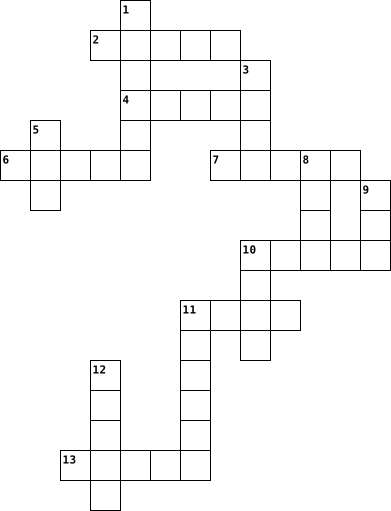
Across
- A Hard, Brittle Substance
- A Colourless, Transparent, Odourless Liquid
- Material Manufactured In Thin Sheets From The Pulp Of Wood
- The Action Of Using Something Again
- Not Dirty
- Squeeze Or Form Into A Rounded Shape
- A Living Organism Of The Kind Exemplified By Trees
Down
- The Seed-bearing Part Of A Plant
- A Woody Perennial Plant
- A Period Of 24 Hours
- Keep Safe Or Rescue
- The Star Round Which The Earth Orbits
- Low Temperature
- A Container Used To Hold Or Carry Things
- The Planet On Which We Live
15 Clues: Not Dirty • Low Temperature • Keep Safe Or Rescue • A Period Of 24 Hours • A Woody Perennial Plant • A Hard, Brittle Substance • The Planet On Which We Live • The Seed-bearing Part Of A Plant • The Action Of Using Something Again • Squeeze Or Form Into A Rounded Shape • The Star Round Which The Earth Orbits • A Container Used To Hold Or Carry Things • ...
R Words 2026-03-13

Across
- Not close.
- A vehicle people drive on the road.
- Water that flows across land.
- A long thick string you can pull with.
- The color of a fire truck.
- A colorful part of a plant.
- An animal with wings that can fly.
- Water that falls from clouds.
- A bright light in the night sky.
- A glass container with a lid.
Down
- You sit on this.
- Yellow food that grows on a tall plant.
- A big striped jungle cat.
- A tall plant with a trunk and leaves.
- You open this to go into a room.
- How it looks when the lights are off.
- The number after three.
- To move fast with your legs.
- A big furry animal that lives in the woods.
- A shiny point of light in the sky at night.
20 Clues: Not close. • You sit on this. • The number after three. • A big striped jungle cat. • The color of a fire truck. • A colorful part of a plant. • To move fast with your legs. • Water that flows across land. • Water that falls from clouds. • A glass container with a lid. • You open this to go into a room. • A bright light in the night sky. • An animal with wings that can fly. • ...
Cells 2016-08-08

Across
- things which make up matter
- Storage in cells.
- A neutron
- Genetically controlled process that leads to death of cells.
- A cell that comes from the male sexual organ.
- Describes that something has existed before.
- Small things making up a plant.
- Cell that helps digest.
- Unit of spatial measurement that is 10-6 meter.
- Cells the move through veins.
- Instrument that is used to magnify small objects.
- Unit of spatial measurement that is 10-9 meter.
- Process that a plant makes its food.
- Organelle found in a plant that makes light into sugar.
- Inventor of the microscope.
- Point, period, or step in a process.
Down
- First layer of a plant cell.
- The central of the cell
- Process of a living cell takes up molecules bound to its surface.
- Hooke: Discovered cells
- Describes the properties of cells.
- The simplest optical microscope is the magnifying glass
- Most simple microscope
- Thin flexible layer around the cell.
- Makes up much of a cell inside the cell membrane. (Jellylike material)
- Instrument that uses visible light and magnifying lenses to look at very small objects.
- Division process cell.
- A transparent material.
- The main muscle of breathing.
29 Clues: A neutron • Storage in cells. • Most simple microscope • Division process cell. • The central of the cell • Hooke: Discovered cells • Cell that helps digest. • A transparent material. • Inventor of the microscope. • First layer of a plant cell. • things which make up matter • Cells the move through veins. • The main muscle of breathing. • Small things making up a plant. • ...
cells 2018-08-14

Across
- when one parent cell divides into two daughter cells
- defined as a cell which has a nucleus and organelles bounded by a very flexible membrane
- tiny molecules in cells that help the cell make proteins
- the powerhouse of the cell
- cell organelle that is similar to the mitochondria, however, only has a single-wall membrane
- act like bridges helping plant cells communicate and share with one another (only found in plant cells)
- jelly-like liquid that fills the inside of a cell
- cells without membrane-bound organelles or a nucleus
- the organelle that stores DNA
Down
- organelle in plant cells used to store food and water
- bubble-like organelles that are made of membrane and are full of fluid
- small group of microtubules which lie close to the nucleus of a cells
- hollow tubes that provide shape, rigidity and organisation in a cell
- the main food producer for plant cells
- organelle’s main function is to transport chemical compounds to and from the nucleus.
- cells with membrane-bound organelles and a nucleus
- the cell's digestive system
- tiny hair- like strands attached to the cell membrane
- internal organs of a cell responsible for carrying out specific jobs
- defined as a cell which has a nucleus and organelles bounded by a thick, rigid cell wall
20 Clues: the powerhouse of the cell • the cell's digestive system • the organelle that stores DNA • the main food producer for plant cells • jelly-like liquid that fills the inside of a cell • cells with membrane-bound organelles and a nucleus • when one parent cell divides into two daughter cells • cells without membrane-bound organelles or a nucleus • ...
Photosynthesis Exploration 2022-03-17

Across
- a food molecule
- A smalling opening in the bottom of leaf
- the process where a plant makes own food
- most common plant pigment
- one of two for plant to make glucose
Down
- contains plant pigments
- organelle where photosynthesis occurs
- a gas that a plant breathes in
- the surface of the skin
- a gas that a plant breathes out
10 Clues: a food molecule • contains plant pigments • the surface of the skin • most common plant pigment • a gas that a plant breathes in • a gas that a plant breathes out • one of two for plant to make glucose • organelle where photosynthesis occurs • A smalling opening in the bottom of leaf • the process where a plant makes own food
Functions of a Flower 2023-08-27

Across
- Supports the anther
- Colorful Leaf
- Contain the egg cells for making a seed
- Help hold the plant in the ground.
- the green leafs surrounding a bud (seed)
- Male part of the flower
Down
- connects the stigma to the ovary
- Make food for the plants
- Consists of the reproductive organs of a flower.
- Female part of the flower
- Where plant ovules live
- Carries water to other parts of the plant.
- Center of flower where pollen lands
- where pollen is made
14 Clues: Colorful Leaf • Supports the anther • where pollen is made • Where plant ovules live • Male part of the flower • Make food for the plants • Female part of the flower • connects the stigma to the ovary • Help hold the plant in the ground. • Center of flower where pollen lands • Contain the egg cells for making a seed • the green leafs surrounding a bud (seed) • ...
Plant ID 2022-10-10

Across
- Plant rests or grows very little due to extreme heat or cold.
- Plant swollen with moisture.
- Plant that grows best during spring or fall.
- Plant that's gone limp due to not enough moisture.
- Plant that completes its life cycle in 1 year.
Down
- Plant that grows best during summer/ early fall.
- Plant that loses leaves during its dormant season.
- Plant that completes its life cycle in 2 years.
- The biology dealing with plants
- Plant that retains leaves year round
- Plant that completes its life cycle in more than 2 years.
11 Clues: Plant swollen with moisture. • The biology dealing with plants • Plant that retains leaves year round • Plant that grows best during spring or fall. • Plant that completes its life cycle in 1 year. • Plant that completes its life cycle in 2 years. • Plant that grows best during summer/ early fall. • Plant that loses leaves during its dormant season. • ...
patty&pichy 2022-11-17

Across
- the material or protoplasm within a living cell
- a fuel we use to fry our food
- liquid to gas
- "C"
- 1++
- "H"
- very sweet
- air we breath in
- plant movement
- move along a smooth surface while maintaining continuous contact with it.
- a solution of iodine in alcohol, used as a mild antiseptic.
- get bigger
Down
- membrane-bound cell organelles
- when it got no pressure
- pressure in a plant cell
- a smallest unit
- inside the plant cell
- the process by which green plants
- become limp through heat
- movement by heat
- the chemical processes that occur within a living organism in order to maintain life.
- air we breath out
- 1
- being hot
- h20
- get smaller
26 Clues: 1 • "C" • 1++ • "H" • h20 • being hot • very sweet • get bigger • get smaller • liquid to gas • plant movement • a smallest unit • movement by heat • air we breath in • air we breath out • inside the plant cell • when it got no pressure • pressure in a plant cell • become limp through heat • a fuel we use to fry our food • membrane-bound cell organelles • the process by which green plants • ...
Science- Parts of Plants/ Different Plants 2022-09-27

Across
- this is the seed of a plant.
- these use sunlight and air to make food.
- this is a plant part you eat.
- this plant spreads out along the ground.
- when you eat this you eat part of a tree trunk.
Down
- when you eat this you eat the leaves of a plant.
- these keep the plant in the ground.
- when you eat this you eat root of a plant.
- this is the thick stem of a tree.
- this part holds up the plant.
10 Clues: this is the seed of a plant. • this part holds up the plant. • this is a plant part you eat. • this is the thick stem of a tree. • these keep the plant in the ground. • these use sunlight and air to make food. • this plant spreads out along the ground. • when you eat this you eat root of a plant. • when you eat this you eat part of a tree trunk. • ...
Plants #2 2025-02-05

Across
- can not hurt or kill you
- to stop something from being hurt
- the part of a plant that holds and protects the seeds
- the thick, hard, stem of a tree
- the opposite of thick
- something with many colors
Down
- the part of a plant that grows into a new plant
- the part of the Earth where animals walk and plants grow
- the part of a plant that makes fruit or seeds
- very small
- a living thing that can swim, walk, fly, jump, or run
- the opposite of thin
- a little bit hot, but not too hot
13 Clues: very small • the opposite of thin • the opposite of thick • can not hurt or kill you • something with many colors • the thick, hard, stem of a tree • to stop something from being hurt • a little bit hot, but not too hot • the part of a plant that makes fruit or seeds • the part of a plant that grows into a new plant • the part of a plant that holds and protects the seeds • ...
The McKenzie Crossword #1: Gardening 2022-03-30

Across
- A yellow fruit that is used to make a summertime drink.
- This is mostly found in deserts and beaches.
- The _____ does not fall far from the tree.
- A vessel that is used to water plants.
- A tool used for digging in a garden.
- A green, sour fruit.
- Rainy, sunny, and snowy are all adjectives that describe ________.
- A round, hard ball that grows a plant every year.
- An ingredient in wine; the fruit.
Down
- Any part of a plant that grows another plant.
- A flower that resembles an over-sized marigold.
- Any member of the kingdom Plantae, which produce their own food.
- A building where tools are kept for gardening.
- A food that is made by a process of similar item.
- An area dedicated to growing plants.
- A brown substance that plants grow in.
- A combination of nutrients that helps plants grow in a garden.
- The act of supplying land with water by artificial means is to ________.
18 Clues: A green, sour fruit. • An ingredient in wine; the fruit. • An area dedicated to growing plants. • A tool used for digging in a garden. • A vessel that is used to water plants. • A brown substance that plants grow in. • The _____ does not fall far from the tree. • This is mostly found in deserts and beaches. • Any part of a plant that grows another plant. • ...
Cells 2016-08-08

Across
- Cell that helps digest.
- Cells the move through veins.
- Describes that something has existed before.
- Describes the properties of cells.
- Inventor of the microscope.
- Unit of spatial measurement that is 10-9 meter.
- Most simple microscope
- Instrument that uses visible light and magnifying lenses to look at very small objects.
- A cell that comes from the male sexual organ.
- Storage in cells.
- First layer of a plant cell.
- The main muscle of breathing.
Down
- Process of a living cell takes up molecules bound to its surface.
- Unit of spatial measurement that is 10-6 meter.
- Small things making up a plant.
- Instrument that is used to magnify small objects.
- Genetically controlled process that leads to death of cells.
- Hooke: Discovered cells
- Process that a plant makes its food.
- The simplest optical microscope is the magnifying glass
- A transparent material.
- Organelle found in a plant that makes light into sugar.
- Thin flexible layer around the cell.
- The central of the cell
- A neutron
- Division process cell.
- Point, period, or step in a process.
- Makes up much of a cell inside the cell membrane. (Jellylike material)
- things which make up matter
29 Clues: A neutron • Storage in cells. • Division process cell. • Most simple microscope • Cell that helps digest. • Hooke: Discovered cells • A transparent material. • The central of the cell • Inventor of the microscope. • First layer of a plant cell. • things which make up matter • Cells the move through veins. • The main muscle of breathing. • Small things making up a plant. • ...
GRADE 3 TERM 1 PORTION REVISION 2025-05-26

Across
- IT IS USED FOR MAKING POTS AND ALSO IN CONSTRUCTION
- THE LARGEST ANIMAL ON LAND
- ONE OF THE STAGES IN LIFE CYCLE OF BUTTERFLY
- IT IS AN OMNIVORE
- TALL BIG PLANTS ARE CALLED __________
- IT CAUSES PLAGUE
- AN INORGANIC WASTE , WHICH CANNOT BE DECOMPOSED.
- THE TERM USED FOR ELECTRONIC WASTE, BULBS AND EXPIRED MEDICINES
- A SOURCE OF WATER
- IT IS A DISEASE CAUSED BY MOSQUITOES
- A FLOWER
- BIG GREEN FRUIT AND A CREEPER
- PART OF THE PLANT WHICH GROWS BELOW THE SOIL
- IT IS USED FOR FILTRATION OF WATER
- A DOMESTIC ANIMAL WHICH GIVES US WOOL
- THE TERM USED FOR FOOD, PLANT AND ANIMAL WASTE.
- ORGANIC WASTE DUMPED IN A PIT AND COVERED WITH SOIL IS CALLED _______
Down
- A WATER PLANT
- A HERB AND GREEN LEAFY VEGETABLE
- EXAMPLE OF A SHRUB
- THE MOVEMENT OF SNAKE IS CALLED ________
- AN INSTRUMENT USED TO MEASURE RAIN
- THE KING OF THE FOREST AND A CARNIVORE
- A SEA ANIMAL WITH 8 ARMS
- IT LIVES IN THE SOIL AND IS KNOWN AS FARMER'S FRIEND
- IT IS A HERBIVORE
- IT PREPARES FOOD FOR THE PLANT
- IT LIVESS BOTH ON LAND AND IN WATER
- A WATER BORN DISEASE
- EXAMPLE OF A TREE
30 Clues: A FLOWER • A WATER PLANT • IT CAUSES PLAGUE • IT IS AN OMNIVORE • A SOURCE OF WATER • IT IS A HERBIVORE • EXAMPLE OF A TREE • EXAMPLE OF A SHRUB • A WATER BORN DISEASE • A SEA ANIMAL WITH 8 ARMS • THE LARGEST ANIMAL ON LAND • BIG GREEN FRUIT AND A CREEPER • IT PREPARES FOOD FOR THE PLANT • A HERB AND GREEN LEAFY VEGETABLE • AN INSTRUMENT USED TO MEASURE RAIN • ...
Vocabulary Review 2026-03-11

Across
- plant parts attached to the stem; makes food for plant
- a part of the plant that grows into the ground and absorbs water
- what a living thing must have to stay alive
- to increase in size
- to stay alive
- stuff that everything is made of
- something used to make things
Down
- shake quickly
- energy that travels through the air and can be heard
- a thing made by many plants to produce seeds
- information that supports on idea
- a part of a plant that connects the roots and leaves and holds the plant up
12 Clues: shake quickly • to stay alive • to increase in size • something used to make things • stuff that everything is made of • information that supports on idea • what a living thing must have to stay alive • a thing made by many plants to produce seeds • energy that travels through the air and can be heard • plant parts attached to the stem; makes food for plant • ...
Seed and Seed Cleaning 2023-03-07

Across
- a state in which viable seeds are prevented from germinating by physiological or physical properties
- a measure of the number of seeds that are alive and have potential to germinate
- process to weaken or open the seed coat to encourage germination
- inert plant material to be separated during seed cleaning
- a machine consisting of many different wooden-framed screens to clean various shapes and sizes of seed
- a tool with wire or plastic mesh in a frame to separate plant materials based on size
- the young plant within a seed
- to blow air through to separate inert plant material from seed
- the protective outer covering of the seed (2 words)
- abbr. a calculation of the amount of viable seed within a lot based on purity and germination rates
- nutritive tissue surrounding the embryo of the seed
Down
- to remove hairy parts of seed
- process to simulate winter conditions (i.e. cold and wet) to encourage germination
- to develop from a seed into a seedling; a singular verb for a sum of events that typically culminate in the emergence of the radicle from the seed coat
- the first part of a seedling to emerge during germination
- a measure of the percentage by weight of seed versus inert matter, other species, and weed seeds within a sample
- embryonic leaf/leaves
- to separate seed or grain from a plant, mechanically or manually
- a machine with spinning metal components that to break up and liberate seeds from shells or pods and allow material to drop through screens of various sizes
- a one-seeded fruit found in the grass family; grain
20 Clues: embryonic leaf/leaves • to remove hairy parts of seed • the young plant within a seed • a one-seeded fruit found in the grass family; grain • the protective outer covering of the seed (2 words) • nutritive tissue surrounding the embryo of the seed • the first part of a seedling to emerge during germination • inert plant material to be separated during seed cleaning • ...
Ur Momtosis 2025-04-25

Across
- The growth movement of a plant in response to light.
- A molecule that can be bonded to another identical molecule.
- A lack of evolutionary change over a long period during the history of a species. The species stays the same for hundreds of thousands or even millions of years.
- Passing of traits from parents to child. Genes on chromosomes control the traits that show up in an organism.
- Organ of a plant that anchors it into the ground and takes in water and nutrients.
- Organism that receives different genetic information from each parent
- A tumor or growth that is not cancerous.
- A cell that has only one set of chromosomes. These are gametes, egg or sperm cells.
- Plant structure that develops into a seed when fertilized
- A taxonomic group that includes multiple species that are closely related and share common characteristics.
Down
- Cell that has two complete sets of chromosomes, one set from each parent. These are somatic cells or body cells.
- Organisms reaction to a stimulus or a change in an organisms environment.
- Vascular plant tissue that transports water and dissolved minerals away from the roots through the plant.
- Regulation of an organism's internal environment to maintain conditions needed for life.
- The end result of a biological or chemical process, what was made or created.
- A virus that infects a bacteria and reproduces the inside of it
- The slow, gradual genetic change in an entire population of organisms over time.
- Makes a reaction start faster.
- The process by which organisms produce gametes.
- A contagious respiratory illness caused by influenza viruses that infect the nose, throat, and sometimes the lungs.
20 Clues: Makes a reaction start faster. • A tumor or growth that is not cancerous. • The process by which organisms produce gametes. • The growth movement of a plant in response to light. • Plant structure that develops into a seed when fertilized • A molecule that can be bonded to another identical molecule. • A virus that infects a bacteria and reproduces the inside of it • ...
test 2025-05-29

Across
- Aromatic herb often used in teas and gum.
- Exotic flowering plant often seen in tropical climates.
- Purple flowering herb known for its calming scent.
- Tree famous for its syrup and star-shaped leaves.
- Tall plant that follows the sun and produces edible seeds.
- Climbing plant often seen on brick walls.
- Colorful spring flower popular in Dutch gardens.
Down
- Shade-loving plant with feathery fronds.
- Fast-growing plant often used in panda diets and eco-friendly products.
- Sweet herb essential to pesto.
- Classic romantic flower with thorns.
- Succulent with soothing gel used for burns.
- Simple white flower with a yellow center.
- Thorny desert plant that stores water.
- Elegant flower often associated with purity and funerals.
15 Clues: Sweet herb essential to pesto. • Classic romantic flower with thorns. • Thorny desert plant that stores water. • Shade-loving plant with feathery fronds. • Aromatic herb often used in teas and gum. • Simple white flower with a yellow center. • Climbing plant often seen on brick walls. • Succulent with soothing gel used for burns. • ...
Baffling Botany 2013-10-28

Across
- small string like stuff that absorbs water like a sponge
- a part of a plant that stores food, nutrients, and absorbes water
- a seed plant that doesn't produce flowers
- when the plant is low on water
- a layer located just under the epidermis and is used to store food and nutrients
- has root hairs to absorbe water
- A layer between the xylem and the phloem
Down
- roots that stick out of the ground to hold the tree up
- roots that never touch ground and cling onto things like rocks and trees
- the process of making food for the plant
- moves sugars that are made in the plants leaves to other parts of the plant
- protects the edge of the root when it plunges into the ground
- a series of tubes that moves water and minerals up the stem
13 Clues: when the plant is low on water • has root hairs to absorbe water • the process of making food for the plant • A layer between the xylem and the phloem • a seed plant that doesn't produce flowers • roots that stick out of the ground to hold the tree up • small string like stuff that absorbs water like a sponge • ...
cells crossword 2013-03-25

Across
- the control centre of the cell
- part of the nucleus
- a substances that a plant uses to make food
- animal cells don't have a c____w____l
- an animal cell has two of it
- both in plant and animal cells starts with 'r'
- which is bigger a plant cell or a animal cell
- opposite of the rough er
- animal cells have more ___________ than plant cells
Down
- this is where microtubule is produced
- this is in both plant and animal cels starts wit a'g'
- this is where photosynthesis takes place
12 Clues: part of the nucleus • opposite of the rough er • an animal cell has two of it • the control centre of the cell • this is where microtubule is produced • animal cells don't have a c____w____l • this is where photosynthesis takes place • a substances that a plant uses to make food • which is bigger a plant cell or a animal cell • both in plant and animal cells starts with 'r' • ...
medicinal plant family 2021-05-02

Across
- ACTS as a cure for asthma
- bali is a cure for malaria
- whiskers act as cures for rheumatic acid urine
- berreies serve as bleeding gums
- serves as amedicine for diarrhea
- vere serves as a cure for flatulence
- serves as a digestive madicine
- serves as a medicine for kidney stones
- shot serves to heal the wind
- serve as a deep hot medicine
- serve as medicines for lowering cholesterlo
Down
- food serves as an odor remedy
- leaves serve as an eyesore madicine
- boyfriend's lefa serves as a mediciend for flatulence
- seed serves as a cure for rheumatism
- serves as a cure for kidney disease
- pag serves asa stress reducing drug
- glass serves as madiciten for kidney stones
- warkes as a heat reduction drug
- seves as medicine to relieve boby odor
20 Clues: ACTS as a cure for asthma • bali is a cure for malaria • shot serves to heal the wind • serve as a deep hot medicine • food serves as an odor remedy • serves as a digestive madicine • berreies serve as bleeding gums • warkes as a heat reduction drug • serves as amedicine for diarrhea • leaves serve as an eyesore madicine • serves as a cure for kidney disease • ...
Fungi and plant 2021-04-08

Across
- meristematic tissue that produces the outer covering of stems
- specialized hypha that produces asexual spores in ascomycetes
- reprodcutive structure in angiosprem
- tiny sac in which fungal spores develop for sexual reproduction
- male reproductive structure in some plants, including mosses and liverworts
- cell in xylem tissue that conducts water and gives strength to the plant
- structure that attaches the leaf blade to the stem
- tissue composed of thin-walled cells found in roots,stems, and leaves.
- type of cambium that enables roots to grow thicker and branch
Down
- structure in ferns some protists and some fungi that contain spores
- modified underground stem swollen with stored food
- specialized tissue that transports waster and the products of photosynthesis throughout a plant; xylem and phloem tissue
- special type of pholem cell that is found near a sieve tube
- flowering plant whose seeds develop in ovaries
- organism that breaks down and obtains energy from dead organic material
- thin heart-shaped structure formed from the gametophyte of a fern
- structure that contains the male gametophyte in seed plants
- tangled mass of green filament in moss that forms during germination
- process of distributing seeds away from parent plant
- male cone in gymnosperms that produces male gametophyte in the form of pollen
- branching filament that makes up a fungus
21 Clues: reprodcutive structure in angiosprem • branching filament that makes up a fungus • flowering plant whose seeds develop in ovaries • modified underground stem swollen with stored food • structure that attaches the leaf blade to the stem • process of distributing seeds away from parent plant • special type of pholem cell that is found near a sieve tube • ...
Plant Cell Puzzle 2021-09-06

Across
- Non-living rigid structure
- consists of fatty acids a d alcohol
- can occupy up to 90% of the volume of the cell
- contains membrane-bound organelles
- Allow eukaryotes to carry out functions
- stores oils and fats
- found in all parts of plant that are easily observed
- it is where the vacuole is bound by a single membrane
- double membrane-bound structure
- contains a combination of vessel
Down
- flatted membranous sacs
- most abundant type of plant cell
- stores proteins
- longest and easily seen eukaryotes
- Basic structural of all living things
- have a living protoplasts
- Formed by the process of packaging in golgi apparatus
- Simplest form of life
- contains enzymes required for the synthesis of carbohydrates and proteins
- located towards the upper parts of roots and stems
20 Clues: stores proteins • stores oils and fats • Simplest form of life • flatted membranous sacs • have a living protoplasts • Non-living rigid structure • double membrane-bound structure • most abundant type of plant cell • contains a combination of vessel • longest and easily seen eukaryotes • contains membrane-bound organelles • consists of fatty acids a d alcohol • ...
Plant/Animal Cell 2021-09-09

Across
- deoxyribonucleic acid, a molecules that is present in all living cells and that contains info that determines traits
- the arrangement of parts in an organism
- describes the basic characteristics of all cells and organs
- gel-like fluid inside a cell; helps the cell maintain shape and is about 80% water
- makes protein
- one of the structures in the nucleus that are made up of dna and protein
- the smallest functional and structual unit of living things
- cells with no nucleus
- structures within a cell that have special functions to keep working
- packages and distributes materials within or out of the cell
- the special, normal, or proper activity of an organ or part
- cells with a nucleus
Down
- where genetic material is stored and controls the cells growth and reproduction
- a fluid-filled vesicle that contains food, water, and waste. Plant ells have a large central vacuole that stores water
- a system of ideas that explains many related observations and is supported by a body of evidence acquired by scientific investigation
- produces enzymes that digest wastes, cell parts, and foreign invaders
- protective, flexible barrier that controls what goes in and out of the cell
- processes and transports proteins and makes lipids
- an organelle dound in plant and algae cells where photosynthesis occurs
- rigid structure that surrounds the cell membrane in plant cells; provides structure and support
- the site of a cellular respiration, which releases energy for use by the cell
21 Clues: makes protein • cells with a nucleus • cells with no nucleus • the arrangement of parts in an organism • processes and transports proteins and makes lipids • describes the basic characteristics of all cells and organs • the smallest functional and structual unit of living things • the special, normal, or proper activity of an organ or part • ...
Plant Physiology Crossword 2021-06-04

Across
- the plant process that increases plant numbers
- is the chief component of the cell wall
- fluid-filled organelles bound by a single membrane called the tonoplast
- the process through which plant leaves, stems and roots consume oxygen and give off carbon dioxide
- small particles suspended in water with sometimes glue-like consistency
- process of qualitative change in plants over time
- the food and manufacturing process in green plants that combines carbon dioxide and water in the presence of light to make sugar and oxygen
- the process by which plant roots take in water and air
- is derived from the Latin word ‘cella’, meaning storeroom or chamber
Down
- controls the activities of the cell
- the site of respiration
- is a protein composite that appears in food processed from wheat and related species
- defined as a community of plants dominated by trees
- a process of irreversible increase by cell division and enlargement, including synthesis of new cellular material and organization of subcellular organelles
- phenol derivatives (deter herbivory, deter infection)
- the site of protein synthesis
- a plastid containing the green pigment called the chlorophyll
- Plants mostly deposit such material in their tissues. Such mineral matter is mostly salts of calcium (e.g., raphides, druses) and anhydrides of silica
- the living part of the cell where organelles are embedded
- occurs as a reserve material in the protoplasm
20 Clues: the site of respiration • the site of protein synthesis • controls the activities of the cell • is the chief component of the cell wall • the plant process that increases plant numbers • occurs as a reserve material in the protoplasm • process of qualitative change in plants over time • defined as a community of plants dominated by trees • ...
Plant Vocabulary Crossword 2018-03-29

Across
- Veins that branch repeatedly off of other veins (28)
- Angiosperms that have two seed leaves (28)
- Grains fermented into alcohol and mixed with gasoline; an alternative fuel for automobiles. (27)
- Acetylsalicylic acid; the world's most widely used medicine. (27)
- Flowering plants, seed plants that produce seeds within a protective fruit. (28)
- Vascular tissue responsible for the transport of nutrients and the carbohydrates produced by photosynthesis (28)
- Foods derived from the leaves, stems, seeds, and roots of nonwoody plants. (27)
- Unusual looking plants that grow in moist, shady areas (28)
- Supply plants with essential mineral nutrients like nitrogen and phosphorus. (27)
- Angiosperms that have only one seed leaf (28)
- Allergic reaction that results in sneezing, a runny nose, and watering eyes. (27)
- Members of the pea family and bear seeds in pods. (27)
Down
- Undesireable plants that often crowd out crop plants or native plant species. (27)
- Include pine trees, seed plants that produce seeds that are not enclosed in fruits (28)
- Roots or underground stems that are rich in carbohydrates. (27)
- Nonliving vascular tissue that carries water and dissolved minerals from the roots of a plant to its leaves (28)
- Growing plants and Raising animals for human use. (27)
- Venation that runs parallel (28)
- The part of a flowering plant that usually contains seeds. (27)
- The tightly coiled new rings of a fern (28)
- A dry, hard fruit that does not split open to release its seed. (27)
- Waxy, protective layer that covers the stems, leaves, and flowers of many plants. Helps prevent water loss. (28)
- Chemicals that kill undesireable organisms that harm crops, such as some insects. (27)
- Trees that loose their leaves at the end of the growing season (28)
- The three phyla of nonvascular plants (28)
- An underground stem system for ferns (28)
- Grasses that contain grains. (27)
27 Clues: Venation that runs parallel (28) • Grasses that contain grains. (27) • An underground stem system for ferns (28) • Angiosperms that have two seed leaves (28) • The three phyla of nonvascular plants (28) • The tightly coiled new rings of a fern (28) • Angiosperms that have only one seed leaf (28) • Veins that branch repeatedly off of other veins (28) • ...
Plant Physiology Crossword 2023-10-15

Across
- A condition required for aquaporins to be expressed.
- Helps with the movement of molecules between cells in plants.
- The membrane in which light dependent reaction occurs.
- Movement of two molecules in the opposite direction through a protein channel.
- A tissue that forms the outer protective layer in plants.
- Where the carbon fixation occurs
- A type of photosynthesis that separates carbon fixation and carbon assimilation in different cells.
- A transport protein that open and close in response to signal.
- A cell transport system that requires ATP.
- When lacking this macronutrient, plants experience leaf chlorosis in young and mature leaves.
- Most abundant macronutrient needed in plants.
- An active transport that involves the coupling of a cotransporter.
- The first step of the Calvin-Benson cycle.
- Molecule required to fix carbon dioxide, besides ATP
- Pressure potential of water is generated by this characteristic of cell wall.
- An common example of the CAM plant.
- Vascular tissue in plants that conducts water and nutrients from the root.
- Mutual attraction between molecules
- An system in which plants get their nutrient assimilation.
Down
- Root hairs increase their surface area as a means of...
- A mechanism by which chlorophyll absorbs light for photosynthesis.
- A primary pigment in photosynthesis.
- A major constituent of the middle lamella of cell walls.
- The state in which absorption of light affects the electrons.
- This protein facilitates the movement of water across plasma membrane.
- This organelle occupies 95% of the total volume of mature plant cell.
- technique used to join parts from two or more plants to grow into a single plant.
- A reaction that increases in hot condition when stomata closes, which increases levels of O2
- Extracellular space outside of plant cell membranes.
- A transport protein that when binded with, causes a conformation change.
- An enzyme that catalyzes both carboxylation and oxygenation reactions.
31 Clues: Where the carbon fixation occurs • An common example of the CAM plant. • Mutual attraction between molecules • A primary pigment in photosynthesis. • A cell transport system that requires ATP. • The first step of the Calvin-Benson cycle. • Most abundant macronutrient needed in plants. • A condition required for aquaporins to be expressed. • ...
Plant Physiology Crossword 2023-10-15

Across
- A transport protein that when binded with, causes a conformation change.
- Mutual attraction between molecules
- The first step of the Calvin-Benson cycle.
- Extracellular space outside of plant cell membranes.
- A condition required for aquaporins to be expressed.
- The state in which absorption of light affects the electrons.
- Pressure potential of water is generated by this characteristic of cell wall.
- Helps with the movement of molecules between cells in plants.
- Vascular tissue in plants that conducts water and nutrients from the root.
- A transport protein that open and close in response to signal.
- This organelle occupies 95% of the total volume of mature plant cell.
- When lacking this macronutrient, plants experience leaf chlorosis in young and mature leaves.
- Root hairs increase their surface area as a means of...
- Where the carbon fixation occurs
- An common example of the CAM plant.
- An active transport that involves the coupling of a cotransporter.
Down
- A tissue that forms the outer protective layer in plants.
- technique used to join parts from two or more plants to grow into a single plant.
- Most abundant macronutrient needed in plants.
- A major constituent of the middle lamella of cell walls.
- A primary pigment in photosynthesis.
- An system in which plants get their nutrient assimilation.
- Molecule required to fix carbon dioxide, besides ATP
- A cell transport system that requires ATP.
- An enzyme that catalyzes both carboxylation and oxygenation reactions.
- Movement of two molecules in the opposite direction through a protein channel.
- This protein facilitates the movement of water across plasma membrane.
- A reaction that increases in hot condition when stomata closes, which increases levels of O2
- The membrane in which light dependent reaction occurs.
- A mechanism by which chlorophyll absorbs light for photosynthesis.
- A type of photosynthesis that separates carbon fixation and carbon assimilation in different cells.
31 Clues: Where the carbon fixation occurs • Mutual attraction between molecules • An common example of the CAM plant. • A primary pigment in photosynthesis. • The first step of the Calvin-Benson cycle. • A cell transport system that requires ATP. • Most abundant macronutrient needed in plants. • Molecule required to fix carbon dioxide, besides ATP • ...
Plant Physiology Crossword 2023-10-15

Across
- A transport protein that when binded with, causes a conformation change.
- Mutual attraction between molecules
- The first step of the Calvin-Benson cycle.
- Extracellular space outside of plant cell membranes.
- A condition required for aquaporins to be expressed.
- The state in which absorption of light affects the electrons.
- Pressure potential of water is generated by this characteristic of cell wall.
- Helps with the movement of molecules between cells in plants.
- Vascular tissue in plants that conducts water and nutrients from the root.
- A transport protein that open and close in response to signal.
- This organelle occupies 95% of the total volume of mature plant cell.
- When lacking this macronutrient, plants experience leaf chlorosis in young and mature leaves.
- Root hairs increase their surface area as a means of...
- Where the carbon fixation occurs
- An common example of the CAM plant.
- An active transport that involves the coupling of a cotransporter.
Down
- A tissue that forms the outer protective layer in plants.
- technique used to join parts from two or more plants to grow into a single plant.
- Most abundant macronutrient needed in plants.
- A major constituent of the middle lamella of cell walls.
- A primary pigment in photosynthesis.
- An system in which plants get their nutrient assimilation.
- Molecule required to fix carbon dioxide, besides ATP
- A cell transport system that requires ATP.
- An enzyme that catalyzes both carboxylation and oxygenation reactions.
- Movement of two molecules in the opposite direction through a protein channel.
- This protein facilitates the movement of water across plasma membrane.
- A reaction that increases in hot condition when stomata closes, which increases levels of O2
- The membrane in which light dependent reaction occurs.
- A mechanism by which chlorophyll absorbs light for photosynthesis.
- A type of photosynthesis that separates carbon fixation and carbon assimilation in different cells.
31 Clues: Where the carbon fixation occurs • Mutual attraction between molecules • An common example of the CAM plant. • A primary pigment in photosynthesis. • The first step of the Calvin-Benson cycle. • A cell transport system that requires ATP. • Most abundant macronutrient needed in plants. • Molecule required to fix carbon dioxide, besides ATP • ...
Plant Physiology Crossword 2023-10-15

Across
- A transport protein that when binded with, causes a conformation change.
- Mutual attraction between molecules
- The first step of the Calvin-Benson cycle.
- Extracellular space outside of plant cell membranes.
- A condition required for aquaporins to be expressed.
- The state in which absorption of light affects the electrons.
- Pressure potential of water is generated by this characteristic of cell wall.
- Helps with the movement of molecules between cells in plants.
- Vascular tissue in plants that conducts water and nutrients from the root.
- A transport protein that open and close in response to signal.
- This organelle occupies 95% of the total volume of mature plant cell.
- When lacking this macronutrient, plants experience leaf chlorosis in young and mature leaves.
- Root hairs increase their surface area as a means of...
- Where the carbon fixation occurs
- An common example of the CAM plant.
- An active transport that involves the coupling of a cotransporter.
Down
- A tissue that forms the outer protective layer in plants.
- technique used to join parts from two or more plants to grow into a single plant.
- Most abundant macronutrient needed in plants.
- A major constituent of the middle lamella of cell walls.
- A primary pigment in photosynthesis.
- An system in which plants get their nutrient assimilation.
- Molecule required to fix carbon dioxide, besides ATP
- A cell transport system that requires ATP.
- An enzyme that catalyzes both carboxylation and oxygenation reactions.
- Movement of two molecules in the opposite direction through a protein channel.
- This protein facilitates the movement of water across plasma membrane.
- A reaction that increases in hot condition when stomata closes, which increases levels of O2
- The membrane in which light dependent reaction occurs.
- A mechanism by which chlorophyll absorbs light for photosynthesis.
- A type of photosynthesis that separates carbon fixation and carbon assimilation in different cells.
31 Clues: Where the carbon fixation occurs • Mutual attraction between molecules • An common example of the CAM plant. • A primary pigment in photosynthesis. • The first step of the Calvin-Benson cycle. • A cell transport system that requires ATP. • Most abundant macronutrient needed in plants. • Molecule required to fix carbon dioxide, besides ATP • ...
Plant Physiology Crossword 2023-10-15

Across
- The membrane in which light dependent reaction occurs.
- The state in which absorption of light affects the electrons.
- Helps with the movement of molecules between cells in plants.
- An system in which plants get their nutrient assimilation.
- A major constituent of the middle lamella of cell walls.
- An common example of the CAM plant.
- Extracellular space outside of plant cell membranes.
- A transport protein that when binded with, causes a conformation change.
- This protein facilitates the movement of water across plasma membrane.
- An enzyme that catalyzes both carboxylation and oxygenation reactions.
- Most abundant macronutrient needed in plants.
- Pressure potential of water is generated by this characteristic of cell wall.
- A transport protein that open and close in response to signal.
- Where the carbon fixation occurs
- The first step of the Calvin-Benson cycle.
Down
- A mechanism by which chlorophyll absorbs light for photosynthesis.
- Movement of two molecules in the opposite direction through a protein channel.
- This organelle occupies 95% of the total volume of mature plant cell.
- A reaction that increases in hot condition when stomata closes, which increases levels of O2
- Vascular tissue in plants that conducts water and nutrients from the root.
- When lacking this macronutrient, plants experience leaf chlorosis in young and mature leaves.
- A type of photosynthesis that separates carbon fixation and carbon assimilation in different cells.
- A cell transport system that requires ATP.
- A condition required for aquaporins to be expressed.
- Root hairs increase their surface area as a means of...
- An active transport that involves the coupling of a cotransporter.
- technique used to join parts from two or more plants to grow into a single plant.
- A primary pigment in photosynthesis.
- A tissue that forms the outer protective layer in plants.
- Mutual attraction between molecules
30 Clues: Where the carbon fixation occurs • An common example of the CAM plant. • Mutual attraction between molecules • A primary pigment in photosynthesis. • A cell transport system that requires ATP. • The first step of the Calvin-Benson cycle. • Most abundant macronutrient needed in plants. • Extracellular space outside of plant cell membranes. • ...
Plant ID Shrub 2023-11-19

Across
- Leaves are small,narrower and closer together
- Resembles Weeping Willow
- Found around hills and alongside mountain paths
- Sori and indusium round
- Leaves are opposite or alternate
- Indoor Shrub with compound leaves
- Weedy species
- Large woody broadleaf evergreen
- Male yellowish-brown round cones
- Bright Red berry
- Plant is a fire hazard
- Multiple bloom colors
Down
- Leaves are glossy and leathery
- Honeysuckle Family
- Leaves are lanceolate and toothed
- A group of toxic cyanogenic glycosides
- Low growing and slow growing
- Stems are square and winged
- Evergreen Shrub
- Have over 200 species
- 4-5 pairs of lateral veins under leaves
- Pruning can be accomplished in late winter
22 Clues: Weedy species • Evergreen Shrub • Bright Red berry • Honeysuckle Family • Have over 200 species • Multiple bloom colors • Plant is a fire hazard • Sori and indusium round • Resembles Weeping Willow • Stems are square and winged • Low growing and slow growing • Leaves are glossy and leathery • Large woody broadleaf evergreen • Leaves are opposite or alternate • ...
Fungi and Plant 2023-04-06

Across
- Which root emerges first from the seed?
- Which is the Primary Organ of Photosynthesis in Plants
- Which root emerges from the primary root?
- and…?
- Small reproductive cells that are dispersed by air currents
- It’s reproductive Structures is the visible part of the….?
- Gymnosperms and angiosperms are the two categories for which plant?
- An example for Tab-roots?
- An example of Nonvascular tissue
- Living cells that distribute sugars throughout the plant
- An example for a fibrous root?
Down
- Which has unprotected seeds in cone like structure?
- The second main group of land plants
- Which has the seeds enclosed inside the fruit?
- The two main functions of Fungal Diversity: absorption of nutrients and?
- The second component of the Vascular system
- Kingdom Plantae are able to Synthesize carbohydrates by…?
- The broad groups of Kingdom Plantae are: aquatic-, nonvascular-, and … Plants
- What is an example for gymnosperms?
- What is the zygote called with Respekt to gymnosperms: Conifer …?
- How do you call the plant part which is above the ground?
21 Clues: and…? • An example for Tab-roots? • An example for a fibrous root? • An example of Nonvascular tissue • What is an example for gymnosperms? • The second main group of land plants • Which root emerges first from the seed? • Which root emerges from the primary root? • The second component of the Vascular system • Which has the seeds enclosed inside the fruit? • ...
Chemical Plant Operator 2023-01-12

Across
- removes condensate from steam lines
- disk that forms the centrifugal force
- couples the motor to the pump
- air pockets
- controls the flow of a product or a gas
- seat
- condenser
- transfer liquid from one point to another
- controlled reaction takes place in the presence of catalyst
- non return
- device for collecting solids in the supply line to the pump
- Provides the heat necessary for distillation separation of the components of a liquid mixture
- seal between the valve body and the equipment it is fixed to
Down
- check casing for excessive heat
- driving rotating equipment
- indicates flow rate
- tool that assists with the turning of a hand wheel
- protects equipment from overpressure
- backward and forward motion
- controlled burning of waste gasses
- device for sealing the shaft from the pump casing
- SPC
- instrument to measure temperature
- indicator
- same as venting
25 Clues: SPC • seat • condenser • indicator • non return • air pockets • same as venting • indicates flow rate • driving rotating equipment • backward and forward motion • couples the motor to the pump • check casing for excessive heat • instrument to measure temperature • controlled burning of waste gasses • removes condensate from steam lines • protects equipment from overpressure • ...
Plant Anatomy Review 2023-01-18

Across
- hold up the stigma
- transports food from leaves to roots
- portion of the embryo that will become the roots
- portion of the embryo that will become the stem
- the hole into a bean/seed that allowed carbon dioxide to get to the embryo
- center portion of a tree; usually darker in color
- top portion of the pistil; accepts pollen
- small leaves that protect the flower before it blooms
- path for the pollen to get down to the ovary
- part of a flower that attracts pollinators
- protective layer around a tree
Down
- transports water from roots to leaves
- the top portion of a stamen; produces pollen
- portion of the embryo that will become the leaves
- food for the embryo until it sprouts above the surface
- female reproductive part of a flower
- stem cells within a tree
- male reproductive part of a flower
- protective membrane around a bean/seed
- portion of the stigma that will eventually become a fruit
20 Clues: hold up the stigma • stem cells within a tree • protective layer around a tree • male reproductive part of a flower • transports food from leaves to roots • female reproductive part of a flower • transports water from roots to leaves • protective membrane around a bean/seed • top portion of the pistil; accepts pollen • part of a flower that attracts pollinators • ...
Plant Organs & Tissues 2023-05-25

Across
- layer of polysaccharides lying outside the plasma membrane of the cells of only plants, fungi, and bacteria
- the semipermeable membrane surrounding the cytoplasm of a cell.
- process where certain organisms transform light energy into chemical energy
- plastid where photosynthesis takes place, contains chlorophyll
- cells designed to carry out a particular role in the body
- tissue that transports water and nutrients from the soil to the stems and leaves
- gelatinous liquid that fills the inside of a cell
- organelle where respiration takes place, makes ATP
- network of protein filaments, microtubules,& interconnecting filamentous bridges that give structure to a cell
- relating to or denoting a region of plant tissue consisting of actively dividing cells forming new tissue
Down
- vascular tissue in plants that conducts sugars & metabolic products downward from the leaves
- DNA's full name
- organelle containing genetic material, nuclear botties and nucleoplasm
- specialized cell division to produce haploid cells in plants
- tissue strengthened by the thickening of cell walls, as in young shoots
- in the cytoplasm of a cell, enclosed by a membrane containing fluid
- tiny holes on a leaf that allow for gas exchange
- the cellular tissue, typically soft and succulent
- strengthening tissue in a plant, formed from cells with thick walls
- Cells undergo this to form new cells
- plant epidermis, the outer layer of tissue that surrounds the primary body of vascular plants
21 Clues: DNA's full name • Cells undergo this to form new cells • tiny holes on a leaf that allow for gas exchange • the cellular tissue, typically soft and succulent • gelatinous liquid that fills the inside of a cell • organelle where respiration takes place, makes ATP • cells designed to carry out a particular role in the body • ...