
body Crossword Puzzles
TTS PART OF BODY 2025-01-10

Across
- dada
- dagu
- gigi
- mata
- lidah
- leher
- bahu
- dahi
- perut
- lengan
- mulut
Down
- kaki
- pipi
- tangan
- telinga
- lutut
- tubuh
- tangan kiri
- alis
- paha
20 Clues: kaki • dada • pipi • dagu • gigi • mata • bahu • dahi • alis • paha • lidah • lutut • leher • tubuh • perut • mulut • tangan • lengan • telinga • tangan kiri
Bones of the Body 2025-04-30

Across
- Kneecap
- Wrist bone that articulates with the thumb
- Most commonly fractured carpal bone
- Lateral bone of the lower leg
- Long bones of the foot
- Collarbone
- Pubic bone
- Bone dividing the nasal cavity vertically
- Bone of the upper arm
- Houses the inner ear structures
- Lateral bone of the forearm
- Large opening at skull base for spinal cord
- Uppermost section of the vertebral column
- Large upper part of the pelvis
- Bone that forms the back and base of the skull
- Bones that form the toes
- Breastbone
- Hip bone
- Wrist bone closest to the ulna
- Tailbone
- 5 bones forming lower back
- Cheekbone
- Medial bone of the lower leg
- Medial ankle bone projection (part of tibia)
- Middle portion of sternum
Down
- Bones of the fingers
- Cartilage connecting ribs to sternum
- Bone forming roof of nasal cavity (ethmoid component)
- Largest and strongest bone in the body
- Bone that supports the arch of the foot
- Most superior ribs that connect directly to sternum
- S-shaped bone between shoulder and sternum
- Long bones of the palm
- Lower tip of the sternum
- Lower jaw bone
- Bone at the base of the thumb
- Lateral ankle bone projection (part of fibula)
- Small bone inside the nasal cavity
- 12 bones connecting to ribs
- Smallest facial bone, forms part of tear duct
- Upper jaw bone
- Heel bone
- Lower part of hip, what you sit on
- Ribs that don’t connect to sternum
- Shoulder blade
- Ankle bone that bears body weight
- Forms the forehead and roof of the orbits
- Forms the roof of the mouth
- Bone forming part of the eye socket and lateral side of skull
- Medial bone of the forearm
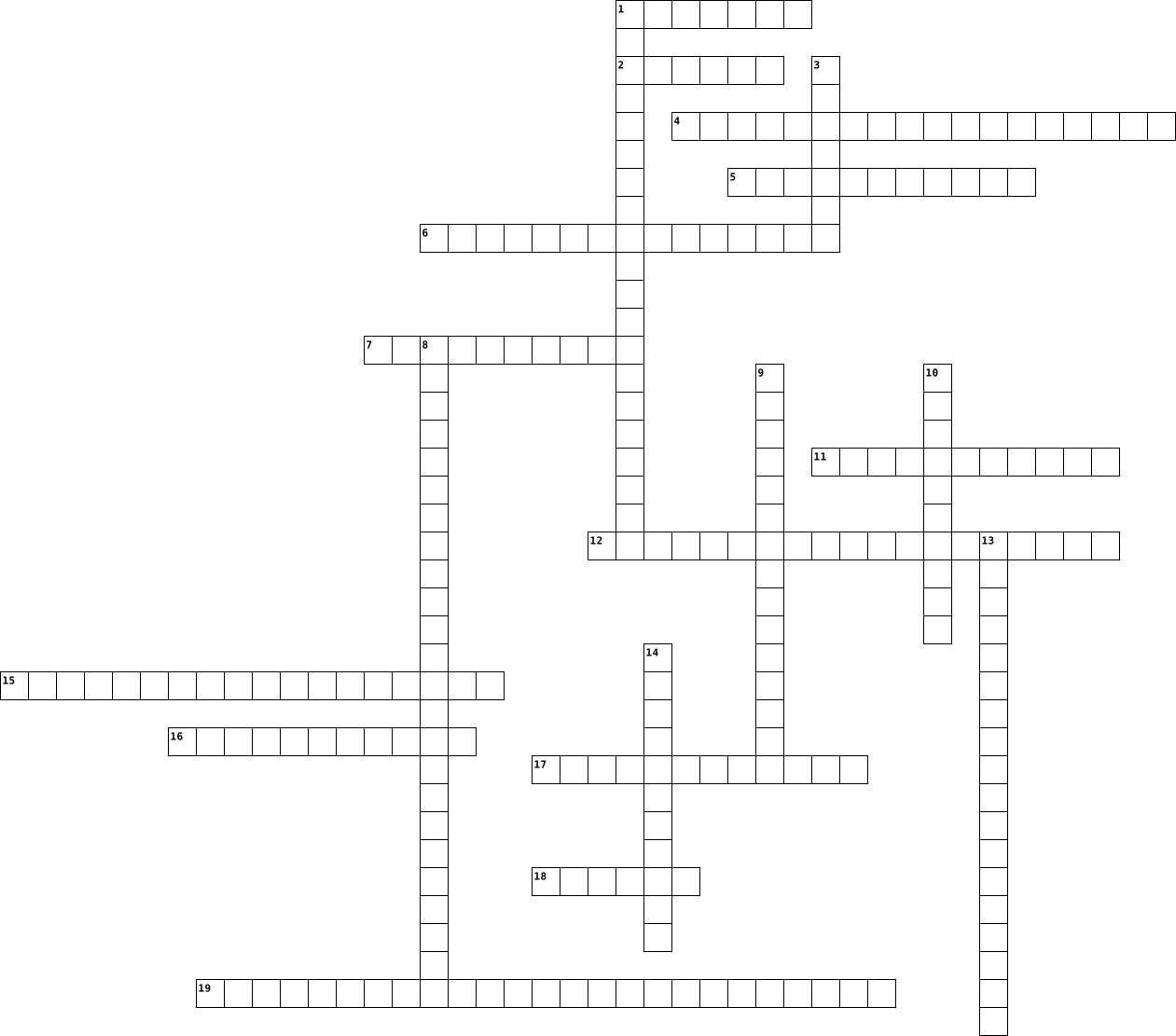
50 Clues: Kneecap • Hip bone • Tailbone • Heel bone • Cheekbone • Collarbone • Pubic bone • Breastbone • Lower jaw bone • Upper jaw bone • Shoulder blade • Bones of the fingers • Bone of the upper arm • Long bones of the foot • Long bones of the palm • Lower tip of the sternum • Bones that form the toes • Middle portion of sternum • 5 bones forming lower back • Medial bone of the forearm • Lateral bone of the forearm • ...
Muscles of the body 2025-04-02

Across
- closes abdomen below
- between ribs
- back of the leg, bailarina muscle
- dorsi located in the middle of the back
- extends the leg, kick
- front of neck
- shoulder muscle
- rotates hand down
- flex the thigh
Down
- rotates the head
- flex the forearm
- makes you smile
- closes abdomen above
- extends the forearm
- rotates hand up
- abdominis six pack abdomen
- mastication, chew muscle
- in front of chest
- sides of thorax
- anterior leg, elevates foot
- elevates shoulders, located in upper back
21 Clues: between ribs • front of neck • flex the thigh • makes you smile • rotates hand up • sides of thorax • shoulder muscle • rotates the head • flex the forearm • in front of chest • rotates hand down • extends the forearm • closes abdomen below • closes abdomen above • extends the leg, kick • mastication, chew muscle • abdominis six pack abdomen • anterior leg, elevates foot • ...
Parts of the body 2025-03-23

Across
- - Tongue
- - Forehead
- - Hand
- - Arm
- - Eye
- head
- - Waist
- - Knee
- - Chin
- - Elbow
- - Back
- - Leg
Down
- - Tooth
- - Wrist
- - Finger
- - Shoulder
- - Nose
- - Mouth
- - Stomach
- - Cheek
- - Neck
- - Face
- - Hip
- - Stomach
24 Clues: head • - Arm • - Eye • - Hip • - Leg • - Hand • - Nose • - Neck • - Face • - Knee • - Chin • - Back • - Tooth • - Wrist • - Mouth • - Cheek • - Waist • - Elbow • - Tongue • - Finger • - Stomach • - Stomach • - Shoulder • - Forehead
BODY PARTS AND ORGANS 2025-08-12

Across
- pie
- lengua
- corazón
- riñón
- boca
- cabello
- cerebro
- pierna
- piel
- oreja
Down
- ojo
- estómago
- mano
- pulmones
- hueso
- diente
- hígado
- brazo
- cabeza
- nariz
20 Clues: ojo • pie • mano • boca • piel • hueso • brazo • riñón • nariz • oreja • lengua • diente • hígado • cabeza • pierna • corazón • cabello • cerebro • estómago • pulmones
Systems of the Body 2025-05-05

Across
- System that includes the heart and blood vessels
- Connects bone to bone
- System responsible for hormone production
- The system that processes sensory information
- Muscle type found only in the heart
- Body’s largest organ; outer protective layer
- Organ in females where a fetus develops
- Muscle that helps with breathing by expanding the lungs
- System that provides support and structure
- Inflammation of the bronchial tubes, often with coughing and mucus
- Bone disease that causes bones to become weak and brittle
- System that helps in the exchange of gases
Down
- System that helps fight infections
- Absorbs nutrients from digested food
- Attack Also called myocardial infarction; occurs when blood flow to the heart is blocked
- System that allows movement and stability
- Common skin condition involving clogged pores
- Tube that carries food from mouth to stomach
- Autoimmune reaction to gluten
- Longest bone in the human body
- System related to waste elimination
- Lou Gehrig’s disease; affects nerve cells and weakens muscles
- Disease where the body can’t properly regulate blood sugar
- System that protects the body from external damage
- Controls thoughts, emotions, and body functions
25 Clues: Connects bone to bone • Autoimmune reaction to gluten • Longest bone in the human body • System that helps fight infections • Muscle type found only in the heart • System related to waste elimination • Absorbs nutrients from digested food • Organ in females where a fetus develops • System that allows movement and stability • System responsible for hormone production • ...
Movements of the Body 2025-05-05

Across
- moves medially to the midline of the body
- rotation a rotation that turns away from the midline
- horizontal movement in an anterior direction
- a bone wondering from it’s usually course
- moves a bone inferiorly
- horizontal movement in a posterior direction
- moves a bone superiorly
Down
- when the scapula rotates away from the ear
- straightens a joint
- moves laterally from the midline of the body
- moves a bone posteriorly
- spilling a bowl of soup
- carrying a bowl of soup
- rotation a rotation that turns towards the midline
- bends a joint
- bends laterally to the side
- combination of flexion, extension, addiction & abduction
- rotation of the head and vertebral column
- when the scapula rotates towards from the ear
- moves a bone anteriorly
20 Clues: bends a joint • straightens a joint • spilling a bowl of soup • carrying a bowl of soup • moves a bone anteriorly • moves a bone inferiorly • moves a bone superiorly • moves a bone posteriorly • bends laterally to the side • moves medially to the midline of the body • rotation of the head and vertebral column • a bone wondering from it’s usually course • ...
Stephen King's "The Body" 2025-05-08

Across
- Chris is accused of stealing this at school
- Teddy likes to dodge these on the highway
- Teddy's dad stormed these beaches during World War Two
- Town bully and leader of the older gang
- Dead boy in the woods
- The brand of radio the boys listen to
- Where the boys hang out
- Vern buries a jar of these under his house
- Vocab word used to describe ugly girls
Down
- The state where King sets his story
- Author that wrote the story
- Gordie and Vern are almost hit by this
- Dangerous item Chris brings
- Nickname of the pie eating boy
- Dog that lives at the town dump
- Name of the movie made from this novella
- Teddy's brother Dennis was killed during basic training for the
- The boys find these in the pond
- Teddy's dad held his head on the stove and melted Teddy's
- Nickname of the narrator
20 Clues: Dead boy in the woods • Where the boys hang out • Nickname of the narrator • Author that wrote the story • Dangerous item Chris brings • Nickname of the pie eating boy • Dog that lives at the town dump • The boys find these in the pond • The state where King sets his story • The brand of radio the boys listen to • Gordie and Vern are almost hit by this • ...
Body Systems - Term 3 2025-08-26

Across
- Treatment for kidney failure
- Transports urine out of the body
- Removes waste substances from the blood
- Drug that causes memory loss
- Main filtration organs in the body
- Deficiency of calcium and vitamin D
- Attach muscle to bone
- Deficiency of vitamin B
- Changes in the environment that stimulate the nervous system
- Type of digestion caused by saliva and stomach acid
- Nutrient found in meat
- Nutrient found in bread, porridge, and rice
- Deficiency of proteins
Down
- Takes useful substances into the blood
- Worn cartilage in the joints
- Removes waste substances from the body
- Attach bone to bone
- Drugs that increase heart rate and raise blood pressure
- Type of digestion caused by the teeth
- Where decisions about reactions in the body are made
- Carry impulses through the nervous system
- Drug that releases dopamine
- Transports urine from the kidneys to the bladder
23 Clues: Attach bone to bone • Attach muscle to bone • Nutrient found in meat • Deficiency of proteins • Deficiency of vitamin B • Drug that releases dopamine • Worn cartilage in the joints • Treatment for kidney failure • Drug that causes memory loss • Transports urine out of the body • Main filtration organs in the body • Deficiency of calcium and vitamin D • ...
Body Systems Crossword Puzzle 2025-10-03

Across
- Type of digestion where enzymes do chemistry magic on your food.
- The nervous system that handles everything outside the brain and spinal cord.
- Nose feature that acts like bouncers at a club, keeping dust and dirt out.
- Flap in your throat that’s basically yelling “Food goes down THIS way!”
- When your body plays thermostat and says, “Not too hot, not too cold!”
- Blood vessels that are like Uber drivers taking blood away from the heart.
- After nutrients are broken down, this is how they sneak into your bloodstream.
- The process your body uses to turn pizza into nutrients (and regret later).
- Main communication highway between your brain and body—no Wi-Fi needed.
- The heart’s version of “One Way” street signs.
- Type of digestion that’s basically food demolition by chewing.
Down
- The feedback type that says, “Chill bro, let’s stop this from going too far”
- Muscle type that works 24/7 in your heart, even when you’re binge-watching Netflix.
- These bean-shaped organs are the ultimate blood filters.
- The feedback type that’s like, “Party’s lit, let’s go even harder!”
- Blood vessels that bring blood back home to the heart—return trip, please.
- Largest part of the brain, where the big thinking happens.
- The body’s trash removal system for pee, sweat, CO₂, and… 💩.
- Muscle type you flex at the gym for Instagram selfies.
- Muscle type that runs your organs without asking your permission.
- Brain lobe that lets you see TikToks, literally.
- You’ve got 206 of these; break one and suddenly everyone signs your cast.
- The minerals that make your bones tougher than your math homework.
- Brain lobe that lets you smell pizza and hear your mom calling your name.
- Small-but-mighty part of brain that helps you not trip over nothing in the hallway.
25 Clues: The heart’s version of “One Way” street signs. • Brain lobe that lets you see TikToks, literally. • Muscle type you flex at the gym for Instagram selfies. • These bean-shaped organs are the ultimate blood filters. • Largest part of the brain, where the big thinking happens. • The body’s trash removal system for pee, sweat, CO₂, and… 💩. • ...
Parts of the body 2025-11-16

Across
- This is the part of your body where food goes after you swallow
- This connects your head to your body
- You use this part of your body to taste food and speak
- This is the part of your body between your chest and your legs
- This connects your foot to your leg
- You have five on each hand
- This is the short, thick finger on the side of your hand
- This is the body part above your neck. Your face is part of it
- You use this to hold things and write
- This is the part of your body you use to see, hear, and smile
- You have one on each side of your head to hear with
- This is the joint between your hand and your arm
- This is the joint in the middle of your arm
Down
- This is the part of your body that is opposite to your chest
- You have five on each foot
- This is the part of your face below your mouth
- This is the part of your body you use to smell
- You have two of these; they are at the top of your arms
- This is the joint that connects your leg to your hip
- This is the part of your arm between your elbow and your shoulder
- You have two of these; they help you walk and run
- This is the part of your body between your neck and your stomach
- This is the front part of your head, above your eyes
- You put a shoe on this body part
24 Clues: You have five on each foot • You have five on each hand • You put a shoe on this body part • This connects your foot to your leg • This connects your head to your body • You use this to hold things and write • This is the joint in the middle of your arm • This is the part of your face below your mouth • This is the part of your body you use to smell • ...
Body Parts & Reflexive Verbs 2026-02-04

Across
- los dientes
- la rodilla
- body
- la boca
- Ellos(sentirse)
- la cadera
- Yo(vestirme)
- ankle
- el brazo
- ears
- He goes to bed
- el cuello
- Nosotros(acostarse)
- la lengua
- hand
Down
- Tú(despertarse)
- la espalda
- Ella(cepillarse)
- la nariz
- el pie
- leg
- el hombro
- stomach
- throat
- los ojos
- I shower
- We feel
- head
- skin
29 Clues: leg • body • ears • head • skin • hand • ankle • el pie • throat • la boca • stomach • We feel • la nariz • el brazo • los ojos • I shower • el hombro • la cadera • el cuello • la lengua • la espalda • la rodilla • los dientes • Yo(vestirme) • He goes to bed • Tú(despertarse) • Ellos(sentirse) • Ella(cepillarse) • Nosotros(acostarse)
Body parts and health 2025-12-10

Across
- skin
- ankle
- heart
- hand
- eye
- nose
- strong
- arm
- healthy
- mouth
Down
- stomach
- head
- foot
- hurt
- leg
- body
- health
- ear
- knee
- pesas lift weights
- sick
21 Clues: leg • ear • eye • arm • head • skin • foot • hurt • body • hand • knee • nose • sick • ankle • heart • mouth • health • strong • stomach • healthy • pesas lift weights
14. health, body, disease 2026-01-23

Across
- country that recognize benefit of using combination of biomedicine and natural remedies.
- encompasses certain behavioural, affective, and cognitive manifestations seen in specific cultures.
- definition of health by WHO includes the absence of infirmity, complete physical & mental health, and?
- energy found in very living being that can cause illness if out of balance with the rest of the universe.
- author of Other-Wordly: Making Chinese Medicine Through Transnational Frames.
- territory where the introduction of birth control clinics created a backlash in the 50's.
- reveal psychological, social, and cultural aspects that gives illness its contexts and meaning, using a medical pluralism approach.
- region where Amchi medicine is practiced.
- energy found in every living beings and that create illness if out of balance with the rest of the universe.
- if a person suffers from persistent back pain, but imaging tests show no structural injury. What would it be called?
- approach used in ethnomedicine.
Down
- field that would document the type of herbs and teas used in Chinese medicine.
- considered by some as a new epidemic in the US.
- historical process that spurred development of medical anthropology
- considered father of medical Anthropology.
- factor often overlooked when defining factors that contributes to health, but studied by critical medical anthropology.
- condition among the Inuit characterized by disturbed behavior (screaming, crying, running naked) and that occurs chiefly during Artic winter.
- Taijin kyofusho, amok, pibloktoq, ataque de nervios and...?
- NGO created to coordinate system for growing medicinal plants aand distributing them among fear flung villages in northern India.
- Amchi medicine is a variation of which medicine?
- healthcare practice rooted in European Enlightenment values.
- expressions of ailment shaped by social expectations.
- Covid 19, AIDS, chickenpox, Alzheimer's are examples of ...?
23 Clues: approach used in ethnomedicine. • region where Amchi medicine is practiced. • considered father of medical Anthropology. • considered by some as a new epidemic in the US. • Amchi medicine is a variation of which medicine? • expressions of ailment shaped by social expectations. • Taijin kyofusho, amok, pibloktoq, ataque de nervios and...? • ...
Skeletal Muscle: Body Movement 2026-03-04

Across
- flexes the elbow and supinates the forearm
- the deltoid and latissimus dorsi is a muscle pair that controls which joint
- assists in scapular movement
- the muscle that contracts, shortens, and is the primary mover
- move closer to the body's midline
- extends at the elbow, opposes the biceps
- bringing toes up towards the shin
- the gastrocnemius and tibialis anterior is a muscle pair that controls which joint
- biceps and triceps are muscle pairs that controls which joint
- protects organs, trunk mobility, and spine stability
- adducts the arm, provides trunk stability, depresses the scapula
Down
- flexes the hip and extends the knee
- move away from the body's midline
- plantarflexes the foot, provides ankle stability
- extends and adducts/abducts the hip
- flexes the shoulder, abducts the arm
- the muscle that relaxes, lengthens, and opposes the primary mover
- plantarflexes the foot, attaches to the achilles
- flexes the knee, extends the hip
- major/minor, horizontal adduction and internal rotation
- muscle that dorsiflexes the foot
- pointing toes down
- the quad and hamstring is a muscle pair that controls which joint
23 Clues: pointing toes down • assists in scapular movement • flexes the knee, extends the hip • muscle that dorsiflexes the foot • move away from the body's midline • move closer to the body's midline • bringing toes up towards the shin • flexes the hip and extends the knee • extends and adducts/abducts the hip • flexes the shoulder, abducts the arm • ...
Coordinated Body Systems Review 2026-02-23

Across
- chemical messengers
- made up of a bundle of neurons
- neuron type that connects other neurons to each other
- quick, automatic actions that protect the body from danger
- part of the brain responsible for coordination and balance
- space between two neurons
- reaction type that breaks down complex molecules into smaller ones
Down
- neuron type that sends signals to muscles
- a nerve fiber that sends signals away from the neuron
- a nerve cell
- neuron type that receives signals from sense organs
- part of the brain that controls conscious thought
- process of maintaining a constant internal environment
- all of the chemical reactions occurring in cells
- branches of the neuron that recieve signals
- part of the brain that control breathing, blood pressure, heart rate
- organs of the endocrine system
- proteins that speed up chemical reactions
- the brain and the spinal cord
- reaction type that makes complex molecules from smaller ones
20 Clues: a nerve cell • chemical messengers • space between two neurons • the brain and the spinal cord • made up of a bundle of neurons • organs of the endocrine system • neuron type that sends signals to muscles • proteins that speed up chemical reactions • branches of the neuron that recieve signals • all of the chemical reactions occurring in cells • ...
Parts Of The Body 2026-02-12

Across
- bekas luka
- pipi
- jantung
- lidah
- tangan
- pelipis
- lesung pipit
- kumis
- kaki
- jari kaki
- telapak kaki
- ginjal
- bola mata
- hati
- otak
Down
- kening
- paru-paru
- mulut
- tumit
- usus
- jerawat
- jari tangan
- rambut
- bahu
- kelopak mata
- otot
- tahi lalat
- lutut
- bibir
- telinga
30 Clues: pipi • usus • bahu • otot • kaki • hati • otak • mulut • tumit • lidah • kumis • lutut • bibir • kening • tangan • rambut • ginjal • jantung • pelipis • jerawat • telinga • paru-paru • jari kaki • bola mata • bekas luka • tahi lalat • jari tangan • lesung pipit • kelopak mata • telapak kaki
Human Body Test Review 2026-02-13

Across
- this system provides pathways to move oxygen through the body while also getting ride of waste
- we release this gas back into the environment
- type of muscle that allows us to move our bodies
- the part of the skeletal system that protects our organs
- lower chambers of the heart
- blood vessels that connects the arteries and veins
- type of movement that we cannot control
- largest level of organization within the human body
- this system is a connection site for the muscular system and provides our bodies support
- flexible connective tissue between joints
Down
- smallest level of organization within the human body
- type of muscle that makes up our heart
- this type of blood cell works to fight infections within our bodies
- this system contacts and relaxes to help our bodies move
- we breathe in this gas from the environment
- this blood vessel carries oxygen-rich blood
- type of muscle that can be found working without being told to in our digestive system
- a place where two or more bones meet
- upper chambers of the heart
- this system removes carbon dioxide from our bodies and allows oxygen from the environment in
- this blood vessel carries oxygen-poor blood
- type of movement that we can control
- this part of the respiratory system is where oxygen and carbon dioxide are exchanged within the blood cells
- carry oxygen and waste through our body
24 Clues: upper chambers of the heart • lower chambers of the heart • a place where two or more bones meet • type of movement that we can control • type of muscle that makes up our heart • type of movement that we cannot control • carry oxygen and waste through our body • flexible connective tissue between joints • we breathe in this gas from the environment • ...
The human body Crosswords 2026-02-17

Across
- ombros
- dedo
- pulso
- perna
- pescoço
- mão
- nariz
- olho
- tornozelo
- cabelo
- pé
- boca
Down
- bochecha
- testa
- polegar
- joelho
- cabeça
- orelha
- cotovelo
- braço
- língua
21 Clues: pé • mão • dedo • olho • boca • testa • pulso • perna • nariz • braço • ombros • joelho • cabeça • orelha • cabelo • língua • polegar • pescoço • bochecha • cotovelo • tornozelo
body system and hemostasis 2026-03-10

Across
- Blood vessels that carry blood away from the heart.
- Body system that supports and protects the body with bones.
- Chemical messengers released by glands.
- System that moves blood through the body.
- Organ that produces and releases substances like hormones.
- Maintaining a stable internal environment.
- System that removes wastes from the body.
- System responsible for breathing and gas exchange.
- Tissue that contracts to create movement.
- Tiny vessels where oxygen and nutrients are exchanged.
- Blood vessels that carry blood back to the heart.
- System that releases hormones into the blood.
- Enzymes breaking food down into nutrients.
Down
- responsible for producing offspring.
- System that allows movement using muscles.
- Breaking food into smaller pieces without chemicals.
- The body controlling and balancing its functions.
- System that sends signals through nerves and the brain.
- System that breaks down food for nutrients.
- Long cells that make up muscles.
20 Clues: Long cells that make up muscles. • responsible for producing offspring. • Chemical messengers released by glands. • System that moves blood through the body. • System that removes wastes from the body. • Tissue that contracts to create movement. • System that allows movement using muscles. • Maintaining a stable internal environment. • ...
Homeostasis 2024-05-24

Across
- regarded as control center in the process of glucose regulation
- body system that senses low blood pressure
- is a place where all of the parts of the body work together to maintain a homeostatic condition
- a type of control system that are outside the tissue and organ
- a type of chemical messenger that is in the nervous system which can be maintained for homeostasis
- refers to the abnormal of bodily systems that are not in homeostasis
- a type of control system that are inside a an effector organ
- a type of signal that is sent to the organs of the body
- a range of value that the body senses its functions diverging from its normal
- the body's way to keep its internal environment near normal range
- a type of cell that secretes insulin in response to high glucose in the body
- an aspect of the blood in the body that needs to be maintained
- an example of negative feedback to maintain homeostasis in the body
Down
- a type of signal that is sent towards the control center
- a place where insulin will function to decrease glucose concentration in the blood
- a type of response mechanism that is induced when the body's need are anticipated
- is considered an effector in the body
- body system that sense high blood glucose
- body's initial inducer for the physiological reaction
- a type of cell that secretes glucagon in response to low glucose in the body
- a type of chemical messenger that is in the endocrine system which can be regulated for homeostatis
- an internal pathway that the body uses to maintain homeostasis
- another name for the control center
- a type of homeostasis that change the set points throughout the day in the body
- causes a change of response in opposition to the body's initial direction of response
- one of the three fluids where exchange of materials take place in the body
- causes a change of response the body's physiological need
27 Clues: another name for the control center • is considered an effector in the body • body system that sense high blood glucose • body system that senses low blood pressure • body's initial inducer for the physiological reaction • a type of signal that is sent to the organs of the body • a type of signal that is sent towards the control center • ...
7 HPE Semester 1 Cross Word 2025-06-25

Across
- The amount of force your muscles can produce
- The ability to change direction quickly
- The ability to use body parts together smoothly
- A workout where you do as many rounds as possible
- Any, substance that changes how the body or mind works
- A fitness component involving body control and stability
- The range of motion in your joints
- Time needed between workouts to allow the body to repair
- A stimulant found in coffee, energy drinks, and tea
- An addictive chemical found in cigarettes and vapes
- A core strength exercise held in a straight position
- Drinking enough water to keep your body functioning
- How fast you can move
- Training principle that involves increasing difficulty
- Physical activity to improve health and fitness
- Gentle movements after exercise to aid recovery
- test, A fitness test involving progressive running stages
- A condition where the body or mind depends on a substance
- A repeated behavior that can be hard to stop
- An upper body strength exercise using body weight
- Test that checks how bendy or mobile your body is
- Body tissues that contract to produce movement
Down
- A movement that lengthens your muscles
- The act of working to improve fitness
- When more of a substance is needed to feel the same effect
- A legal drug that slows down the brain and body
- A short distance speed test
- The food and drink we consume for health and energy
- The act of inhaling vapor from an e-cigarette or device
- The condition of being physically healthy and strong
- The way you hold your body when sitting or standing
- Substances that are banned by law
- The ability to sustain activity over time
- Exercise that strengthens your heart and lungs
- Strength combined with speed
- Symptoms when someone stops using an addictive drug
- A core endurance test involving abdominal contractions
- Light activity to prepare the body for exercise
- A type of training involving multiple stations
- A key rule or idea in exercise science
40 Clues: How fast you can move • A short distance speed test • Strength combined with speed • Substances that are banned by law • The range of motion in your joints • The act of working to improve fitness • A movement that lengthens your muscles • A key rule or idea in exercise science • The ability to change direction quickly • The ability to sustain activity over time • ...
Chapter 2 Body Organization 2020-08-26

Across
- term for chest body region
- term for anterior body region containing the abdomen
- term for body region containing the leg
- term for neck body region
- another name for the thoracic region
- term for posterior body region containing the buttocks
- term for body region containing the genitals
Down
- term for body region containing the arm
- referring to internal organs
- term for posterior body region containing the back
- direction term referring to the belly side of the body
- body cavity containing the brain
- term for body region containing the head
- the neck connects the head to the _____
14 Clues: term for neck body region • term for chest body region • referring to internal organs • body cavity containing the brain • another name for the thoracic region • term for body region containing the arm • term for body region containing the leg • the neck connects the head to the _____ • term for body region containing the head • term for body region containing the genitals • ...
Nervous system_7A_roll 12 2021-01-27

Across
- is a single long fibre that extends from the other side of the cyton
- nerves perform functions of both sensory nerves and motor nerves
- nerves carry impulses from the brain and spinal cord to the muscles and glands
- of the body are controlled with the help of the nervous system
- is a specialised cell for receiving messages from one part of the body and conducting them to the other parts
- is the continuation of the medulla oblongata of the brain
- is a junction where communication between two neurons occurs
- controls body balance
- is the reaction of an organism to a stimulus
- is a sheath that covers the neuron
Down
- is the lesson we revised in this crossword
- controls internal body functions
- is the message that travels along the nerve
- is the main control center of the nervous system
- controls the vision of our body
- nerves carry impulses from the sense organs to either spinal cord or the brain
- is a cell body which contains the nucleus
- are short fibres extending from the cell body of a nerve cell
- is a sudden change in the environment of an organism
- parts of brain are present in our body
20 Clues: controls body balance • controls the vision of our body • controls internal body functions • is a sheath that covers the neuron • parts of brain are present in our body • is a cell body which contains the nucleus • is the lesson we revised in this crossword • is the message that travels along the nerve • is the reaction of an organism to a stimulus • ...
Vocabulary Review 2022-01-05

Across
- a disagreement.
- needed for growth and repair of body cells.
- a strong and lasting affection and support.
- discuss a conflict to reach an agreement.
- the body's main source of energy.
- panels of nutritional information that appear on food packages.
- a movement of the body that communicates what a person is thinking.
- nutrients that provide energy and help the body store vitamins.
- to feel and show sympathy toward your friends.
- a unit of energy available from food for energy.
- the failure to provide proper care and guidance.
Down
- the use of force to harm someone or destroy property.
- in food that the body needs for growth and repair of cells, for body processes, and for energy.
- the harmful treatment of another person.
- condition in which the blood does not have enough red blood cells.
- nutrients that help the body use carbohydrates.
- nutrients that are involved in many body processes.
- the price of the food by weight, serving, or some other unit.
- a person you can trust and depend on.
- a nutrient that makes up blood and other body fluids.
20 Clues: a disagreement. • the body's main source of energy. • a person you can trust and depend on. • the harmful treatment of another person. • discuss a conflict to reach an agreement. • needed for growth and repair of body cells. • a strong and lasting affection and support. • to feel and show sympathy toward your friends. • nutrients that help the body use carbohydrates. • ...
Immune system 2023-03-17

Across
- another word for immune system, groups of specific things working together
- drug used to treat bacterial infections
- occurs when white blood cells surround bacteria in order to destroy it.
- produces lymphocytes to attack the bacteria
- anitbodies are given to a person instead of making their own
- a type of white blood cell that helps make antibodies
- bacteria, viruses, chemicals; infectious to the body
- bacteria evolve to become stronger and less likely to be killed
- barriers that fight off infection and germs like skin and mucus
- smallest unit that can live on its own
- develop from the bone marrow and protect the body
- body creates the antibodies before being exposed to them
Down
- body produces antibodies to fight off a bacteria
- introducing small samples of a disease to build protection
- viral reproduction of inserting bacteria into the cells own DNA
- organs, cells, and proteins that protect the body
- destroys cancer cells and parasites in your body
- body is slightly exposed to a disease in order to gain resistance
- virus hijacks its host cell to replicate itself
- a protector of the body to stop infections
20 Clues: smallest unit that can live on its own • drug used to treat bacterial infections • a protector of the body to stop infections • produces lymphocytes to attack the bacteria • virus hijacks its host cell to replicate itself • body produces antibodies to fight off a bacteria • destroys cancer cells and parasites in your body • ...
Unit 2 Vocabulary 2022-09-13

Across
- system – breaks down food to provide nutrients and energy
- system – produces offspring
- – a change in the position of an object
- – balanced; unchanging
- system – removes waste from the body
- – interacting, interrelated, or interdependent elements forming a more complex whole
- – a thing or event that causes a response or reaction
- system – provides movement of the body
- system – regulates the body with hormones
- change – change which alters matter without changing its chemical composition or the identity of the substance
- stimulus – a change within the organism
- system – provides structure and protection for the body
Down
- system – controls and coordinates the body
- system – transports nutrients and oxygen to the body
- stimulus – a change in the environment outside of the organism
- mechanism – a response within a system that influences the activity of that system
- – the body’s ability to keep the internal balance of the body stable
- system – exchanges oxygen and carbon dioxide
- – a push or pull that can change the position or motion of an object / material
- change – the formation of a new substance with different properties; cannot be undone by physical means
- system – provides protection of the body
21 Clues: – balanced; unchanging • system – produces offspring • system – removes waste from the body • system – provides movement of the body • – a change in the position of an object • stimulus – a change within the organism • system – provides protection of the body • system – regulates the body with hormones • system – controls and coordinates the body • ...
Ch. 1: Pharmacokinetics 2025-12-05

Across
- A reason not to take the medicine.
- Works only in one area.
- How your body changes the medicine so it can be used or removed.
- Why the medicine is taken.
- A very dangerous allergic reaction.
- A reason not to take the medicine.
- When someone can’t stop using a drug even if it harms them.
- How well a drug targets one spot.
- How the body keeps things balanced.
- Something that causes an allergy.
- How the medicine spreads around your body
- When the body reacts to the drug like it’s harmful.
- An unexpected reaction.
- How tightly a drug sticks to its target.
- An unexpected reaction.
- When the body feels bad without the drug.
Down
- A drug that blocks a receptor.
- How the medicine gets into your blood.
- Why the medicine is taken.
- How your body gets rid of the medicine.
- What the medicine is meant to do.
- The specific amount of a medicine taken at one time.
- The “just right” level where the medicine works without being harmful.
- A drug that turns a receptor on.
- What the body does to the medicine.
- A bigger first dose used to get the medicine working faster.
- effect/ Works throughout the whole body.
27 Clues: Works only in one area. • An unexpected reaction. • An unexpected reaction. • Why the medicine is taken. • Why the medicine is taken. • A drug that blocks a receptor. • A drug that turns a receptor on. • What the medicine is meant to do. • How well a drug targets one spot. • Something that causes an allergy. • A reason not to take the medicine. • A reason not to take the medicine. • ...
Muscle Intro 2021-03-12

Across
- increasing the angle between two bones or straightening a body part
- Found in the internal organs of the body
- tough, sheetlike membrane that covers and protects tissue
- moving a body part toward the midline
- individual has control over their action/movement
- when muscle fibers are stimulated by nerves, they contract or become shorter and thick
- bending backward or bending the foot toward the knee
- bending forward or bending the foot away from the knee
- moving in a circle at a joint; moving one end of a body part in a circle while the other stays stationary; swinging the arm in a circle
- decreasing the angle between two bones or bending a body part
- allows the muscle to return to its original shape after it has contracted or stretched
- end that moves when the muscle contracts
Down
- turning a body part downward
- Attached to bones
- turning a body part around its own axis; turning the head from side to side
- strong, tough, fibrous, connective tissue cord
- end that does not move
- function without conscious thought or control
- moving a body part away from the midline
- the ability to respond to a stimulus such as a nerve impulse
- turning a body part upward
- Form the walls of the heart
- the ability to be stretched
23 Clues: Attached to bones • end that does not move • turning a body part upward • Form the walls of the heart • the ability to be stretched • turning a body part downward • moving a body part toward the midline • Found in the internal organs of the body • moving a body part away from the midline • end that moves when the muscle contracts • function without conscious thought or control • ...
Nutrition and Dietary Disorders 2017-10-27

Across
- Many amino acids connected together in different arrangements
- Overweight
- False promises of a fast way to lose weight
- Indicator if someone is over or underweight
- Many sugar molecules
- essential substances that your body needs in order to grow and stay healthy
- Nutritional diagram in pyramid shape
- Energy needed to raise temp. of one gram of H2O to one degree celsius
- Group of complex compounds that help your body maintain nutrients
- Sugars and starches that the body uses for energy
- Anything that increases urination
- Polysaccharide made of chains of glucose monomers
- Chemical process that produces energy
- Polysaccharide carbohydrate
Down
- Underweight
- Energy source for the body(more that carbs and proteins)
- Contain fatty acts with maximum amount of hydrogen atoms
- Simple sugars
- Contain fatty acids that are missing hydrogen atoms
- Nutrients that are needed in the body in small amounts
- Body can't produce insulin correctly
- Hormone that regulates amount of glucose in the blood
- Made from three fatty acid groups and glycerol
- Waxy fat like substance that can block arteries
- A category of nutrient that are needed in order for your body to grow properly
- Acids Simple organic compound containing a carboxyl and amino group
- Dietary disorder that causes person to think their body is distorted and they then throw up binged food to lose weight
27 Clues: Overweight • Underweight • Simple sugars • Many sugar molecules • Polysaccharide carbohydrate • Anything that increases urination • Nutritional diagram in pyramid shape • Body can't produce insulin correctly • Chemical process that produces energy • False promises of a fast way to lose weight • Indicator if someone is over or underweight • ...
Caurie Beck- Body Systems 2020-11-10

Across
- This organ filters blood and helps the body pass waste as urine.
- These bones are longer than other bones.
- This system rids the body of toxins and waste.
- This organ controls our whole body.
- This organ holds urine until time to release it.
- This skin is the outer layer.
- 90% of nutrients are absorbed in this organ.
- This system gives the body structure.
- These are antibody producing cells.
- This system reproduces and creates children.
- The soft jelly like center of the bone.
- This system protects the bodies organs from disease.
- This system carries oxygenated blood throughout the body.
- This system skin and hair.
- These muscles move bones and are tired easily.
Down
- This system gives energy to the body by breaking down food.
- Assists in the immune system as well.
- This system rids the body of waste.
- These muscles are involuntary and help the heart beat.
- This organ creates eggs in women.
- This is a bundle of nerve fibers.
- These vessels are the smallest vessels.
- This organ pumps blood to the body.
- These tissues protect the soft tissues of fingers and toes.
- This system informs our brain of the outside environment.
- This organ moves food to stomach.
- This system allows the body to move.
- This organ holds the baby while it is developing.
28 Clues: This system skin and hair. • This skin is the outer layer. • This organ creates eggs in women. • This is a bundle of nerve fibers. • This organ moves food to stomach. • This system rids the body of waste. • This organ pumps blood to the body. • This organ controls our whole body. • These are antibody producing cells. • This system allows the body to move. • ...
Nutrition Quiz Review 2020-10-20

Across
- elements need in small quantitates for forming healthy bones and teeth.
- the body's physical need for food
- vitamins that are stored in the body's fat until you need them A,D,E,and K
- substance that help your body fight infections and use other nutrients
- substances in food that your body needs
- the sugars and the starches that occur naturally in foods (mainly plants)
- helps digest food, regulate body temperature, removes toxins, waste and cushions joints.
- nutrient that promotes healthy skin, keeps your body warm and makes up 60% of your brain.
- vitamins that dissolve in water, your body cannot store them B&C
- nutrients your body uses to build, repair, and maintain cells and tissues.
- the parts of fruits, vegetables, grains and beans that your body cannot digest.
Down
- the study of nutrients and how the body uses them
- a unit of heat that measures the energy available in food.
- a fatlike substance in food and a fatty substance in blood.
- fats that are solid at room temperature
- a stimulant found in coffee, tea, colas, and chocolate.
- a liquid fat turned into a solid fat by adding hydrogen
- fats that remain liquid at room temperature.
- a nutrient that helps control the amount of fluid in your body.
- the psychological desire for food
20 Clues: the body's physical need for food • the psychological desire for food • fats that are solid at room temperature • substances in food that your body needs • fats that remain liquid at room temperature. • the study of nutrients and how the body uses them • a stimulant found in coffee, tea, colas, and chocolate. • a liquid fat turned into a solid fat by adding hydrogen • ...
Anatomy Basics Vocab 2023-11-13

Across
- Opposite sides
- The study of the function of the human body or its parts or systems
- Toward the back
- Toward the front
- Spaces in which organs can be found
- Paired structure on both sides. Example: kidneys
- More internal, deeper from the body surface
- The body position with feet parallel, arms hanging down to the side and palms forward
- Reduce or stop an original stimulus to maintain internal balance
- Close to body surface
- A sensor that monitors and responds to changes in the environment
- Receives and analyzes information and determines an appropriate response
Down
- Body landmarks directing attention to specific areas of the external anatomy
- The study of the structure of the human body
- Increases an original stimulus to maintain internal balance
- Above
- Close to point of attachment to trunk
- Toward the midline
- The study of larger sections of the body such as the heart, lungs, abdomen etc.
- Away from the midline
- Receives information from the control center and acts to respond. Example: a muscle or a gland
- Farther from point of attachment to trunk
- Toward the back
- Descriptions that explain the relationship of one body part to another
- The maintenance of constant internal balance in spite of a changing environment
- The different ‘halves’ the body can be split into
- Below
- Toward the front
- Same side
29 Clues: Above • Below • Same side • Opposite sides • Toward the back • Toward the back • Toward the front • Toward the front • Toward the midline • Away from the midline • Close to body surface • Spaces in which organs can be found • Close to point of attachment to trunk • Farther from point of attachment to trunk • More internal, deeper from the body surface • ...
INVERTEBRATES (I) 2023-03-13

Across
- Body plan in which only a single, imaginary line can divide the body into two equal parts
- Marine annelids move with the help of these
- Class that includes squid, octopuses and nautiluses
- Organ of terrestrial annelids that helps in reproduction
- A group of invertebrates including earthworms and leeches
- Invertebrates don't have this system, but we do!
- Most invertebrates undergo this process to convert into adults
- Body plan in which body parts repeat around the center of the body
- Not the biggest but the most intelligent of all invertebrates
- Phylum in which sponges belong to
- Skeleton of a sponge is made of these
- A group pf invertebrates including 80% of animal species
Down
- Molluscs with divided shell and no head
- Phylum which coral, jellyfish and sea anemone belong
- Annelids have long tube-like body with many...
- Free swimming cnidarian that is an umbrella like shape with hanging tentacles
- A large opening on a sponge through which filtered water is expelled
- One of two body of a Cnidarian
- Most simple of all animals
- Hole through which water enters and leaves a sponge
- Bivalves lack this
- Soft body invertebrates with an external shell
- Nematodes have round body, simple systems and many are...
- Class that includes sea snails and sea slugs
- Long, soft and skinny animal with no legs (in general)
25 Clues: Bivalves lack this • Most simple of all animals • One of two body of a Cnidarian • Phylum in which sponges belong to • Skeleton of a sponge is made of these • Molluscs with divided shell and no head • Marine annelids move with the help of these • Class that includes sea snails and sea slugs • Annelids have long tube-like body with many... • ...
Immune System Jacory P. 2023-03-16

Across
- When the body is intentionally exposed to small quantities of an disease
- A type of cell that knocks out infected cells
- Putting vaccine into the body to protect it from an disease
- Cells that help fight off diseases and other infections
- The system that helps the body fight infections
- When a cell starts to disintagrate
- A type of white blood cell that kills microorganisms, removes dead cells, and stimulates the actions of other cells
- Medicine that fights off diseases in the body
- A type of white blood cell that makes antibodies
- When exposure to an disease causes the immune system to send out antibodies
Down
- A substance that makes your immune system fight against that virus or disease
- The first threat bacteria go against when entering the body
- The second threat bacteria go against when entering the body
- Things that your body develops after you are sick with something to stop you from getting sick with that again for a period of time
- An Infectious disease
- The third threat bacteria go against when entering the body
- A common origin between groups of organisms
- When the body becomes immune from an disease unintentionally with the actual disease disease
- Viruses that are not affected by antibiotics
- A type of immune cell that can surround and kill microorganisms,remove dead cells, and ingest foreign material
20 Clues: An Infectious disease • When a cell starts to disintagrate • A common origin between groups of organisms • Viruses that are not affected by antibiotics • A type of cell that knocks out infected cells • Medicine that fights off diseases in the body • The system that helps the body fight infections • A type of white blood cell that makes antibodies • ...
Immune System 2022-03-21
Across
- Used to prevent the allegery response in the body
- These cells are immunity cells found in bone marrow
- Immune cells that target certain antigens
- Usually found at the sight of the infection, first responders
- Once being infected once body creates antibodies that are immune to said infection/disease
- Engulfs and absorbs bacteria and small cells
- Usually a shot that helps to promote immunity
- The second step in attempting to defend you from outside threats phagocyte cells
- body is given immunity based on body being exposed to threat in small amounts
- Helps produce antibodies, another version of white blood cell
- Protects body from outside threats
- Help in the aid of adaptability of the immune system
- When immunity is given through antibodies that are supplied, not created.
Down
- When bacteria through natural selection become less affected by antibiotics
- When someones immune response goes overdrive to protect the body from threat
- When being exposed to an outside threat such as disease prompts immunity to said disease
- Part of the immune response help fight against infection and disease
- Proteins in the blood that act at countering diseases in the blood
- These are the first systems of your body that protect you from outside threats such as skin
- These cells help to protect your body against different foreign threats to the body
20 Clues: Protects body from outside threats • Immune cells that target certain antigens • Engulfs and absorbs bacteria and small cells • Usually a shot that helps to promote immunity • Used to prevent the allegery response in the body • These cells are immunity cells found in bone marrow • Help in the aid of adaptability of the immune system • ...
Circulatory-Digestive Crossword Puzzle 2026-02-18

Across
- are two glands that produce saliva.
- this liquid part of your blood
- a tiny blood vessel that connects arteries and veins.
- a tube through which food passes into the stomach
- tiny hairs that line the air passages
- an organ that stores bile.
- a gland that secretes insulin and juices that break down some foods.
- the organ in which most digestion takes place.
- two short tubes through which air enters the lungs
- a blood vessel that returns blood to the heart.
- the body system that helps the body use air that is inhaled
- the windpipe through which air travels to the lungs.
Down
- blood cells that help your blood clot
- a liquid that softens food.
- re small air sacs through which oxygen enters the capillaries
- the organ in which undigested food is stored until it leaves the body.
- the body system that transports oxygen, food and waste through the body.
- muscular organ that pumps blood to the body
- the body system that breaks down food so that it can be used by the body
- the type of blood cells that fight germs
- the type of blood cell that carries oxygen to your body cells
- a blood vessel that carries blood away from the heart
- the organ that releases digestive juices to break down foo
23 Clues: an organ that stores bile. • a liquid that softens food. • this liquid part of your blood • are two glands that produce saliva. • blood cells that help your blood clot • tiny hairs that line the air passages • the type of blood cells that fight germs • muscular organ that pumps blood to the body • the organ in which most digestion takes place. • ...
terms 2021-08-26

Across
- pool of clotted or partially clotted blood in an organ, tissue, or body space, usually caused by a broken blood vessel.
- a grating or crackling sound or sensation
- nearer to the center
- Movement of a limb toward the midline of the body
- toward the middle or center.
- movement that increases the angle between two body parts
- your weight tends to be more on the inside of your foot.
- forward bending
- sites located away from a specific area
- divides the body into right and left parts.
- back
- divides the body into ventral and dorsal sections
Down
- medical term for a bruise
- rotation of the forearm and hand so that the palm faces forward or upward also
- toward the head end of the body
- is the movement of a limb away from the midline of the body
- lasting a long time
- a wound that is produced by the tearing of soft body tissue
- the act of turning inside out
- to the side of, or away from, the middle of the body
- involves the movement of the sole towards the median plane
- is a wearing away of the upper layer of skin as a result of applied friction force.
- or caudal - away from the head
- Of abrupt onset, in reference to a disease
24 Clues: back • forward bending • lasting a long time • nearer to the center • medical term for a bruise • toward the middle or center. • the act of turning inside out • or caudal - away from the head • toward the head end of the body • sites located away from a specific area • a grating or crackling sound or sensation • Of abrupt onset, in reference to a disease • ...
The Human Body: An Overview 2021-08-01

Across
- posterior part of head
- towards the front
- shoulder blade
- spine area
- lower spine region
- the organ system that involves the production of hormones
- buttock
- curve of shoulder
- anterior region of the knee
- the organ system that involves the brain, spinal cord, and nerves
- far from
- approximately 20% of the air is consist of this gas
- below
- mouth
- arm
- chest
- towards the sides; away from the midline
- ankle
- toward the surface
- navel
- between two anatomical parts
Down
- thigh
- fingers and toes
- A cut made dividing the body into anterior and posterior parts
- the organ system that provides framework for the body
- the study of how the body and its parts function
- towards the midline
- nose
- away from the surface
- above
- towards the back
- combination of abdominal and pelvic cavities
- removing waste from the body
- A cut made dividing the body into left and right equal parts
- breastbone
- this compound makes up 60% to 80% of body weight
- eye area
- stomach
- wrist
- close to
- the organ system that involves movement
- A cut made dividing the body into superior and inferior parts
- the study of the structure and shape of the body and body parts and their relationship with one another
- the smallest unit of matter
44 Clues: arm • nose • thigh • above • below • mouth • wrist • chest • ankle • navel • buttock • stomach • far from • eye area • close to • spine area • breastbone • shoulder blade • fingers and toes • towards the back • towards the front • curve of shoulder • lower spine region • toward the surface • towards the midline • away from the surface • posterior part of head • anterior region of the knee • the smallest unit of matter • ...
Nutrient Review 2022-10-24

Across
- The body depends on this for practically every process necessary for life.
- What is fat that is created through a process called hydrogenation?
- This helps make Vitamin D.
- Adding nutrients to foods that might not have had them in the first place.
- WHat is a guide developed by the USDA for healthful eating?
- What is the chemical process by which the body breaks down substances and gets energy?
- This helps maintain the right balance of fluids in the body.
- What are substances in food that help the body function?
- What helps regulate many of the chemical processes in the body?
- What are excellent sources of fuel for the body called?
- What are sugars that are absorbed quickly?
- What are Candy and Soda examples of?
- What cannot be digested but helps clean the intestines?
- What regulates body temperature and dissolves Vitamins, Minerals, Amino Acids, and other nutrients?
- What provides energy as well as helps build, maintain, and repair body tissues?
Down
- What is fat that is liquid at room temperature called?
- What do we measure energy in food through?
- There are five of these.
- What are sugars that are added during the processing of foods?
- What is substance that must be obtained from the diet because the body doesn't sufficiently make it?
- What is a food that has nutrients added back that were lost during processing?
21 Clues: There are five of these. • This helps make Vitamin D. • What are Candy and Soda examples of? • What do we measure energy in food through? • What are sugars that are absorbed quickly? • What is fat that is liquid at room temperature called? • What are excellent sources of fuel for the body called? • What cannot be digested but helps clean the intestines? • ...
SPORTS MED TERMS 2025-08-28

Across
- Injury with a long onset and long duration
- Increasing the angle of the joint
- Amount of movement allowed at the joint
- Divides the bodyinton front and back halves
- Farthest away from the skin
- Swelling in the tissue
- Closest to the skin
- Laying face down
- Decreasing the angle formed by the bones of the joint
- Pain felt somewhere other than its origin
- BP
- Swelling in the joint
- Looseness in the joint
- Movement away from the midline of the body in the transverse plane
- Movement away from the midline of the body
- Movement toward the midline of the body in the transverse plane
Down
- Bringing the toes toward the body
- Divides the body into superior and inferior parts
- Divides the body into equal left and right halves
- CPR
- Turning the forearm toward the body
- ADL
- Situated away from a center
- Turning the forearm away from the body (holding a cup of soup)
- Pain produced when structure is palpated
- Movement toward the midline of the body
- Situated or pertaining to a center
- Extreme or excessive straightening of a part
- Complete separation of two ends of a joint
- Recent or new injury, sudden onset
- Partial or incomplete separation of a joint
- DOB
- bid
- Lying face up
- Top side of a structure (think dorsal fin)
35 Clues: BP • CPR • ADL • DOB • bid • Lying face up • Laying face down • Closest to the skin • Swelling in the joint • Swelling in the tissue • Looseness in the joint • Situated away from a center • Farthest away from the skin • Bringing the toes toward the body • Increasing the angle of the joint • Situated or pertaining to a center • Recent or new injury, sudden onset • Turning the forearm toward the body • ...
anatomical terms 2022-11-02

Across
- increases joint angle
- further up
- further down
- laying on the side
- toward the side
- decreases joint angle
- further from the center
- divides the body into front and back halves
Down
- further back
- laying face down
- divides the body into left and right halves
- divides the body into upper and lower halves
- near the midline
- nearer to the center
- nearer the front
- laying face up
- moves towards the body
- moves away from body
18 Clues: further up • further back • further down • laying face up • toward the side • laying face down • near the midline • nearer the front • laying on the side • nearer to the center • moves away from body • increases joint angle • decreases joint angle • moves towards the body • further from the center • divides the body into left and right halves • divides the body into front and back halves • ...
The Excretory system 2023-05-01

Across
- A part of the body that has a role to do.
- regulates blood and excretes toxins from the body.
- Liquid waste is removed from body through this tube.
- Helps to breakdown protein in the liver.
- Breaks down food,and repairs tissue in the body
- Acts like a filter in the kidney.
- Not required for the body and is removed daily by the bowel and bladder
- There are nine of these,main function is to grow body tissue.
- Organ that regulates blood pressure and reproduces blood cells.
Down
- The process of removing waste from the body
- Part of the urinary system that stores liquid waste
- These large blood vessels help to carry blood from the heart to the kidneys.
- This system consists of kidneys,ureters,bladder and urethra.
- This word is used to describe when the body changes food and drink into fuel and energy.
- Helps to produce urine and can be toxic to the brain.
- When a part of your body is removed then replaced with a healthy part.
- Largest organ covering the body providing protection.
17 Clues: Acts like a filter in the kidney. • Helps to breakdown protein in the liver. • A part of the body that has a role to do. • The process of removing waste from the body • Breaks down food,and repairs tissue in the body • regulates blood and excretes toxins from the body. • Part of the urinary system that stores liquid waste • ...
Chapter 19 - Advanced Topics 2022-01-06

Across
- Japanese technique for stress reduction
- AHA derived from sugarcane
- body ___, uses friction to exfoliate the body
- deep peel used for sun damage and wrinkles
- Indian philosophy of balancing through doshas
- treatment using therapuetic water baths
- medical device for hair removal
- body ___, remineralizes and detoxifies the body
- uses a brush to remove skin to the dermis
- caused by female hormones
Down
- mechanical exfoliation
- wrinkle treatment that bypasses epidermis
- Cell ____ Factor, rate of cell mitosis
- used for product penetration and cellulite
- peel containing lactic, salicylic, & resorcinol
- lowlevel electricity mimics brain waves
- body ___, applying a product to body & wrapping it
- strongest peel available
18 Clues: mechanical exfoliation • strongest peel available • caused by female hormones • AHA derived from sugarcane • medical device for hair removal • Cell ____ Factor, rate of cell mitosis • Japanese technique for stress reduction • treatment using therapuetic water baths • lowlevel electricity mimics brain waves • wrinkle treatment that bypasses epidermis • ...
Sports Med 2022-11-22

Across
- Rotation away from the center of the body
- movement toward the midline
- away from the point of attachment
- Higher on the body, nearer to the head
- Lower on the body, father from the head
- Front of the body
- Rotation toward center of body
Down
- to stand erect with arms and palms of the hand turned forward
- Back of the body
- Towards the midline of the body
- increases the angle of a joint
- Closer to the point of attachement
- Decreases the angle of a joint
- away from the midline of the body
- movement away from the midline of the body
15 Clues: Back of the body • Front of the body • movement toward the midline • increases the angle of a joint • Decreases the angle of a joint • Rotation toward center of body • Towards the midline of the body • away from the point of attachment • away from the midline of the body • Closer to the point of attachement • Higher on the body, nearer to the head • ...
Principles of Exercise & Wellness Vocab Unit 1: Building a Foundation 2021-08-26

Across
- parts of fitness that help a person perform well in sports and activities requiring certain skills; the parts include agility, balance, coordination, reaction time, and speed
- ability to use use your senses together with your body parts or to use two or more body parts together
- ability to use your muscles many times without tiring
- positive component of health that involves having a good quality of life and a good sense of well-being
- the part of the physical activity program during which a person does activities to improve fitness
- performing the skills to be used in an activity to prepare the body for the activity
- way of preparing for physical activity using flexibility exercises performed after several minutes of general exercise
- amount of time it takes to move once you recognize the need to act
- dynamic movement exercises that increase body temperature and get muscles ready for more vigorous exercise; can serve as or part of the general warm up
- maximal amount of force your muscles can produce
- health problem caused partly by lack of physical activity
- capacity of your body systems to work together efficiently to allow you to be healthy and effectively perform activities of daily living
- percentage of body weight that is made up of fat
- proportion of body tissues, including muscle, bone, body fat, and other tissues that make up your body
- freedom from disease and a state of optimal physical, emotional-mental, social, intellectual, and spiritual well-being (wellness)
- overall condition of a person
Down
- parts of physical fitness that help a person stay healthy; includes cardiorespiratory endurance, flexibility, muscular endurance, strength, power, and body composition
- 5-10 minutes of light to moderate intensity physical activity that prepares your body for more intense exercise
- series of activities that prepares the body for more vigorous exercise
- capacity to function effectively when performing normal daily tasks
- ability to use your joints fully through a wide range of motion without injury
- ability to control your body’s movements and change body position quickly
- ability to exercise your entire body for a long time without stopping
- exercises done using all or part of the body weight as resistance
- ability to maintain an upright posture while standing still or moving
- ability to perform a movement or cover a distance in a short time
- activity performed after a workout to help you recover
- satisfaction with your current life status
- capacity to use strength quickly; involves both strength and speed
29 Clues: overall condition of a person • satisfaction with your current life status • maximal amount of force your muscles can produce • percentage of body weight that is made up of fat • ability to use your muscles many times without tiring • activity performed after a workout to help you recover • health problem caused partly by lack of physical activity • ...
Sports Medicine Review 2024-05-15

Across
- upper leg bone
- heel bone
- connects bone to bone
- closer to the center of the body
- ligament medial ankle
- finger bones
- collar bone
- shock absorber of knee
- connect bone to muscle
- top of foot
- towards the head
- part of hip you sit on
- move towards the body
- rotator cuff muscle
- far away from center of body
- away from the mid line of the body
Down
- knee cap
- hand bone
- towards the midline of the body
- upper arm bone
- muscles posterior thigh
- bottom of foot
- muscle anterior thigh
- forearm bone
- forearm bone
25 Clues: knee cap • hand bone • heel bone • collar bone • top of foot • finger bones • forearm bone • forearm bone • upper leg bone • upper arm bone • bottom of foot • towards the head • rotator cuff muscle • connects bone to bone • ligament medial ankle • muscle anterior thigh • move towards the body • shock absorber of knee • connect bone to muscle • part of hip you sit on • muscles posterior thigh • ...
Astronomy 2023-08-15

Across
- Point directly overhead.
- Gas and dust cloud.
- Variable star used for distance measurement.
- Orbital body around a star.
- Distance measurement method.
- Celestial body obscuration.
- Distant object viewer.
- Space traveler.
- Celestial path.
- Luminous celestial body.
Down
- Star pattern.
- One body blocking another.Umbra - Total shadow during an eclipse.
- Shooting star.
- Moon-related.
- Vast system of stars.
- Closest point to Earth.
- Relating to the sky or space.
- Farthest point from the Sun.
- Icy body with a tail.
- Rotating neutron star.
- Equal day and night.
- Belt of constellations.
- Exploding star.
- Doppler effect in space.
- Extremely bright, distant object.
25 Clues: Star pattern. • Moon-related. • Shooting star. • Exploding star. • Space traveler. • Celestial path. • Gas and dust cloud. • Equal day and night. • Vast system of stars. • Icy body with a tail. • Rotating neutron star. • Distant object viewer. • Closest point to Earth. • Belt of constellations. • Point directly overhead. • Doppler effect in space. • Luminous celestial body. • ...
Suffix/Supplemental Crossword angelica cardoza 2023-08-07

Across
- lying face up
- paralysis
- urine
- state of heat
- inflammation of
- swelling
- discharge
- to record
- condition
- laying face down
- specialist
- back
- study of
- chest cavity
- surgical repair
Down
- away from the head
- toward the head
- part of the body that's farther to the center of the body than another part
- pain
- toward the front of the body
- breathing
- bleeding out
- fainting or passing out
- state of
- surgical remove
- sudden
- process of visually examining
- part of the body that's closer to the center of the body than another part
- cutting into
29 Clues: pain • back • urine • sudden • swelling • state of • study of • paralysis • breathing • discharge • to record • condition • specialist • bleeding out • cutting into • chest cavity • lying face up • state of heat • toward the head • inflammation of • surgical remove • surgical repair • laying face down • away from the head • fainting or passing out • toward the front of the body • process of visually examining • ...
Perla Solis CrossWord 2022-12-06

Across
- fainting
- surgical removal
- breathing
- record
- inflammation
- upper
- swelling
- pain
- sudden
- specialist
Down
- back
- laying face down
- a part of the body that is closer to the center of the body than another part.
- paralysis
- process of visually examining
- lying face up
- loss of blood from damaged blood vessels. A hemorrhage may be internal or external
- discharge
- toward the front of the body.
- chest cavity
- lower
- urine
- surgical repair
- state
- condition
- a part of the body that is farther away from the center of the body than another part.
- study
27 Clues: back • pain • lower • urine • upper • state • study • record • sudden • fainting • swelling • paralysis • discharge • breathing • condition • specialist • chest cavity • inflammation • surgical repair • lying face up • surgical removal • laying face down • process of visually examining • toward the front of the body. • a part of the body that is closer to the center of the body than another part. • ...
Unit 16 Planes and DIrectional Terms 2025-06-22

Across
- also known as the frontal plane
- to push a body part forward
- divide the body into unequal halves
- turn the palms down
- roll the foot out
- cuts the body into two equal halves
- roll the foot in
- trun the palm downward
- move toward the midline
- to turn inward
Down
- to rotate outward
- movement past normal extension
- point the toes up
- cuts the body into top and bottom
- point the toes down
- decrease the angle between two bones
- to turn on an axis
- pull a body part back
- move in a whole circle
- increase the angle between two bones
- move away from the midline of the body
21 Clues: to turn inward • roll the foot in • to rotate outward • point the toes up • roll the foot out • to turn on an axis • point the toes down • turn the palms down • pull a body part back • move in a whole circle • trun the palm downward • move toward the midline • to push a body part forward • movement past normal extension • also known as the frontal plane • cuts the body into top and bottom • ...
Unity Health Education Molly Baxley 2022-05-11

Across
- help given to sick/injured person until professional help arrives
- substance that causes heart disease
- what type of blood oozes dark red blood
- building block of life
- health condition of the heart + blood vessels including clots + disease
- organ system consisting of skeletal, smooth, cardiac muscle. It permits movement of the body, maintains posture, and circulates blood throughout the body
- pumps blood throughout your body
- a stretching or tearing of a muscle or a tissue connecting muscle to bone
- dangerous, toxic, addictive chemical in vapes
- slow down the central nervous system
- main source of calories for the body
- acronym for ways to notice early signs of cancer
- support structure for the body
- Recommended Daily Allowance
- builds muscle, bones, and organs
- complex network of cells, tissues, organs, and the substances that helps the body fight diseases
- what type of blood is dark red, slow and flowing
- injury to the body tissues caused by extreme cold
- most important mineral for teens
- 60-65% of your body is made up of ________
- The combination of mental, physical, and social
- a complex network of glands and organs that uses horomones to control the body's metabolism, energy level, reproduction, growth and development, and response to injury, stress, and mood
- network of nerve cells and fibers which transmits between parts of the body
Down
- a person that is looked at to be imitated
- the sensory system for the sense of hearing
- substance that severely damages your liver
- causes one to see visions and illusions
- alters the activity of the brain cells
- the sensory system for the sense of sight
- occurs when the body can't control its temperature
- moves fresh oxygen into your body while removing waste gases
- most concentrated energy source
- the fact of being affected or contaminated with poison
- trying to make your community a better place
- group of tissues that preform a certain body task
- group of cells that function together as a unit
- process when the body takes in and uses food
- delivers oxygen, nutrients, hormones and other important substances to cells and organs in the body.
- purposely taking substance for not intended use
- when a user's body becomes adjusted to a drug
- disease causing agents (bad germs)
- events causing blood pressure to plummet
- what type of blood is bright red, shooting out
- cracking/breaking of a bone
- group of organs and tissues that work together to create the human body
- wrench or twist the ligaments violently so as to cause pain
- there are how many levels of the immune system?
- speeds up the central nervous system
- mixture of dried shredded leaves of camibis
- acronym for setting good goals
- your white blood cells protect your body against what?
51 Clues: building block of life • cracking/breaking of a bone • Recommended Daily Allowance • support structure for the body • acronym for setting good goals • most concentrated energy source • pumps blood throughout your body • builds muscle, bones, and organs • most important mineral for teens • disease causing agents (bad germs) • substance that causes heart disease • ...
landforms 2024-09-24

Across
- vast salt water 70% earth covered
- land area surrounded by water smaller than continent
- narrow body of water connects 2 larger bodies water
- area of low land between hills or mountains
- large body of salt water smaller than ocean
- broad flat topped landform w/steep sides smaller than p
- point where river empties into bigger body of water
- mountain created as liquid rock & ash erupt
- large inland bodies of water
- a sheltered place along a shoreline ships anchor
- wide strait or water way between 2 land massees
- flat low lying land built up from soil carried
- point of a large body of water that extends into a
- body of land jutting into water 3 sides water
- smaller body of water connected to an ocean
Down
- area of level land low elevation grassy
- a series of small islands
- narrow stretch of land connecting 2 larger land
- area of flat rolling land at high elevation
- large thick body of slow moving ice
- land w/steep sides rise sharply more rugged
- elevated land w/slopping sides & round summit smaller
- fresh water flow into larger body of water
- point of land that extends into a river, ocean, or
- deep narrow valley with steep walls
- area of land drained by a given river
- part of a large body of water that extends to shore
27 Clues: a series of small islands • large inland bodies of water • vast salt water 70% earth covered • large thick body of slow moving ice • deep narrow valley with steep walls • area of land drained by a given river • area of level land low elevation grassy • fresh water flow into larger body of water • area of flat rolling land at high elevation • ...
Nutrition 2024-11-06

Across
- a carbohydrate found in plants that the human body cannot digest
- waxy substance that your body needs to function.
- compounds found in food that help regulate many body processes
- the chemical reactions in the body's cells that change food into energy
- a nutrient that is needed in small amounts to keep the body healthy
- the nutrients we need in larger quantities that provide us with energy
- a hormone that helps the body use glucose (sugar) for energy
- minerals in your blood and other body fluids that carry an electric charge
- chemical compounds (ex. proteins, fats, carbohydrates, vitamins, and minerals)
Down
- the process of breaking down food by mechanical and enzymatic action in the alimentary canal into substances be used by the body
- the absence of enough water in your body
- the chemical element of atomic number 19, a soft silvery-white reactive metal of the alkali metal group
- sugar molecules
- another name for fats
- a unit of energy
- the combination of foods typically eaten by a specific group of people or other organisms
- a macronutrient that's made up of amino acids
- the chemical element of atomic number 20, a soft gray metal.
- mineral that the body needs for growth and development
- proteins that help speed up metabolism, or the chemical reactions in our bodies
20 Clues: sugar molecules • a unit of energy • another name for fats • the absence of enough water in your body • a macronutrient that's made up of amino acids • waxy substance that your body needs to function. • mineral that the body needs for growth and development • the chemical element of atomic number 20, a soft gray metal. • ...
CROSSWORD 2025-05-29

Across
- Sweet treat, often enjoyed during Halloween
- A common type of headache caused by tension
- The upper surface inside a room
- A type of fast food
- A mineral used in cooking
- A part of the body that connects the neck to the arm
- The physical structure of a person or animal
- Illness or a physical condition
- A common joint injury
- The rear side of your torso
- The outer covering of the body
- A sweet, edible product, often from trees
- A popular beverage, often containing caffeine
- A fitness instructor or leader
- Injury to a part of the body, often requiring medical attention
- Facial hair
- A place for physical exercise
Down
- A measurement of points in a game
- A sandwich option, typically made with cold cuts
- A limb, attached to the upper body
- Body covering made of strands
- A vital organ responsible for pumping blood
- A fun or competitive activity
- A painful condition that involves heat
- The uppermost part of the body
- The part of the body used for holding things
- The organ responsible for thinking
- Feeling unwell or not at full health
- The rigid parts of the body
- A healthy, vegetable-based dish
- A scheduled event or task
- Energy unit, often in food
- A dessert, often frosted
- A sport with a ball and physical contact
34 Clues: Facial hair • A type of fast food • A common joint injury • A dessert, often frosted • A mineral used in cooking • A scheduled event or task • Energy unit, often in food • The rigid parts of the body • The rear side of your torso • Body covering made of strands • A fun or competitive activity • A place for physical exercise • The uppermost part of the body • ...
Jom 2016-02-18

Across
- Carries across and around the body by the cardiovascular system
- The organ that connects the fetus to the wall of uterus
- When the sperm cell enter the egg cell
- Pump blood out of the body
- Rich of oxygen
- System process of removing waste from our body
- Low carbon dioxide
- Remove waste
- Allow water and slat to move out of the body
Down
- Longest artery in our body
- Removing carbon dioxide
- bag Extensive network of capillaries
- Convert excess protein into urea
- One of seven life process
- Keep every thing in our body balance
- A change from child to teenager
- The main waste product in our body
17 Clues: Remove waste • Rich of oxygen • Low carbon dioxide • Removing carbon dioxide • One of seven life process • Longest artery in our body • Pump blood out of the body • A change from child to teenager • Convert excess protein into urea • The main waste product in our body • bag Extensive network of capillaries • Keep every thing in our body balance • ...
Jom 2016-02-18

Across
- Pump blood out of the body
- The main waste product in our body
- The organ that connects the fetus to the wall of uterus
- Keep every thing in our body balance
- When the sperm cell enter the egg cell
- Longest artery in our body
- Allow water and slat to move out of the body
- A change from child to teenager
- System process of removing waste from our body
Down
- Remove waste
- One of seven life process
- Convert excess protein into urea
- Removing carbon dioxide
- Rich of oxygen
- Low carbon dioxide
- bag Extensive network of capillaries
- Carries across and around the body by the cardiovascular system
17 Clues: Remove waste • Rich of oxygen • Low carbon dioxide • Removing carbon dioxide • One of seven life process • Pump blood out of the body • Longest artery in our body • A change from child to teenager • Convert excess protein into urea • The main waste product in our body • Keep every thing in our body balance • bag Extensive network of capillaries • ...
Organ Systems 2024-03-04

Across
- All of the organ systems combined into one
- Messenging system of the body
- Allows the body to move
- Gets rid of liquid waste/u__ne
- Produces sperm that can impregnate
- Provides structural support to the body
Down
- Allows you to breathe
- Powerhouse of the body
- Controls all other body systems
- Breeds and births offspring
- Number of Body systems
- Allows you to consume food and liquid for energy
- Protects the insides of the body
- Traps pathogens before they can get into the body
- Gets rid of waste
15 Clues: Gets rid of waste • Allows you to breathe • Powerhouse of the body • Number of Body systems • Allows the body to move • Breeds and births offspring • Messenging system of the body • Gets rid of liquid waste/u__ne • Controls all other body systems • Protects the insides of the body • Produces sperm that can impregnate • Provides structural support to the body • ...
Unit 4 2022-11-28

Across
- toward the bottom of the body
- closest to the point of reference
- away from the midline of the body
- moving away from the midline
- rotating toward the body
- to bend the joint or shorten the muscle, decrease the angle
- front of the body
- straigtening a joint or muscle
Down
- back of the body
- farthest from the point of reference
- rotating away from the body
- neutral stance, standing facing forward, palms facing forward
- moving toward the midline
- toward the top of the body
- toward the midline of the body
15 Clues: back of the body • front of the body • rotating toward the body • moving toward the midline • toward the top of the body • rotating away from the body • moving away from the midline • toward the bottom of the body • toward the midline of the body • straigtening a joint or muscle • closest to the point of reference • away from the midline of the body • ...
Nutrition Crossword Puzzle 2022-01-21

Across
- Condition caused by lack of calcium
- A fat that is liquid at room temperature
- A unit of measurement for energy provided by food
- Type of fat made by the body that is also present in some foods
- Chemical substance that gives your body what it needs to grow
- Condition that causes weakness, fatigue, and headaches
- A fat that is created by hydrogenation
- Nutrient the body uses to build and maintain all types of cells
- A fat that is solid at room temperature
- Condition in which the body's tissues lose too much water
Down
- Small chemical unit that makes up proteins
- Inorganic elements found in soil and water
- _______nutrition is when the body takes in too many calories
- A nutrient and major source of energy for the body
- Complex carbohydrate that the body is unable to digest
- Type of nutrient composed of fatty acids
- Rate at which the body uses energy
- ______nutrition is when the body takes in too few calories
- Organic substances derived from plants or animals
19 Clues: Rate at which the body uses energy • Condition caused by lack of calcium • A fat that is created by hydrogenation • A fat that is solid at room temperature • A fat that is liquid at room temperature • Type of nutrient composed of fatty acids • Small chemical unit that makes up proteins • Inorganic elements found in soil and water • ...
English File Pre-Intermediate Unit 5 Vocabulary 2025-05-27

Across
- When something or a place is very dirty because of pollution.
- A place where you can see art or historic items.
- 3/4
- The liquid in your body that delivers oxygen throughout your body.
- A large, old building, previously as a fort or nobles (people who were rich and were close to royalty).
- Something you use to cross above water.
- It's like a mountain, but much smaller and smoother.
Down
- A part of the body that mashes food to be swallowed.
- A body of water surrounded by land.
- The part of the body that moves you makes you move.
- The part of your body that filters or cleans your blood.
- Something that makes a lot of sound.
- A religious place, where christians go to worship.
- A place where you go to buy things.
- A place that has too many people.
- On a map, it points up.
- A place where boats and ships are parked.
- The part of your body that moves the blood around.
- The part of your body that gives it structure.
19 Clues: 3/4 • On a map, it points up. • A place that has too many people. • A body of water surrounded by land. • A place where you go to buy things. • Something that makes a lot of sound. • Something you use to cross above water. • A place where boats and ships are parked. • The part of your body that gives it structure. • A place where you can see art or historic items. • ...
Medical Terminology 2024-03-21

Across
- farther from the surface of the body
- toward the feet end of the body
- symptoms that continue over an extended amount of time
- farther away from the center of the body
- symptoms or signs that begin and worsen quickly
- the front side of the body
- swelling caused by too much fluid trapped in the body's tissues
- closer to the surface of the body
Down
- toward the head end of the body
- two lower chambers of the heart
- laying face down
- closer toward the center of the body
- the back side of the body
- laying face up
- tiny air sacks where O2 and CO2 are exchanged
- two upper chambers of the heart
16 Clues: laying face up • laying face down • the back side of the body • the front side of the body • toward the head end of the body • two lower chambers of the heart • toward the feet end of the body • two upper chambers of the heart • closer to the surface of the body • farther from the surface of the body • closer toward the center of the body • farther away from the center of the body • ...
El cuerpo the body 2012-04-19

Across
- wrist
- nose
- throat
- forhead
- back
- shoulder
- mouth
- elbow
Down
- feet
- face
- cheeks
- arm
- stomach
- lips
- body
- neck
- fingers
- hair
- hand
- eyes
20 Clues: arm • feet • face • lips • body • nose • neck • hair • back • hand • eyes • wrist • mouth • elbow • cheeks • throat • stomach • fingers • forhead • shoulder
Unit 2 Body Talk 2012-11-13

Across
- underneath
- between
- lift
- offer
- operation
- content
- gym
- brush
- prove
- eyebrow
- injured
Down
- ground
- exercise
- forget
- kick
- pencil
- carry
- terrible
- fight
- step
- blanket
21 Clues: gym • kick • lift • step • carry • offer • fight • brush • prove • ground • forget • pencil • between • content • eyebrow • injured • blanket • exercise • terrible • operation • underneath
Parts of the Body 2012-12-09

Across
- you use this to see
- you have two of these, it is connected to your shoulder
- thing you use to hear
- where your two big leg bones join together
- all body parts combined
- you have five of this for each arm
- the bottom of your leg
- you have two of these and it is used to walk with
- the place where your food enters into your body
- capital is Buenos Aires
- you have five of there for each foot
- capital is Mexico City
- helps rotate the whole hand
Down
- the part you hold things with
- thing you use to smell
- place where your ears, nose, eyes, and mouth are located
- the side you can't see without turning your head
- place where food digests
- place where brain is located
- 1 argentinian peso is 20 cents
- you chew food using these
- 1 Euro is 1 dollar and 30 cents
- the bottom of your leg that rotates
23 Clues: you use this to see • thing you use to hear • thing you use to smell • the bottom of your leg • capital is Mexico City • all body parts combined • capital is Buenos Aires • place where food digests • you chew food using these • helps rotate the whole hand • place where brain is located • the part you hold things with • 1 argentinian peso is 20 cents • 1 Euro is 1 dollar and 30 cents • ...
Parts of the Body 2012-12-09

Across
- where your two big leg bones join together
- the side you can't see without turning your head
- capital is Mexico City
- the bottom of your leg that rotates
- place where food digests
- all body parts combined
- you have five of this for each arm
- helps rotate the whole hand
- you have two of these and it is used to walk with
- you have two of these, it is connected to your shoulder
Down
- 1 Euro is 1 dollar and 30 cents
- you have five of there for each foot
- place where brain is located
- you use this to see
- you chew food using these
- the part you hold things with
- 1 argentinian peso is 20 cents
- thing you use to smell
- place where your ears, nose, eyes, and mouth are located
- thing you use to hear
- the place where your food enters into your body
- the bottom of your leg
22 Clues: you use this to see • thing you use to hear • capital is Mexico City • thing you use to smell • the bottom of your leg • all body parts combined • place where food digests • you chew food using these • helps rotate the whole hand • place where brain is located • the part you hold things with • 1 argentinian peso is 20 cents • 1 Euro is 1 dollar and 30 cents • ...
Parts of the body 2013-03-25

Across
- The part of the body in the middle of the face that we use to smell things
- The part of the body between the neck and the arm
- The thing in the middle of our tummy. Some people have piercings in there
- The two parts outside the mouth, in front of our teeth. They can be thin or thick.
- The part of the arm that bends
- The part of our torso we can't see
- The part of the body that we use to eat and speak
- The line of hair above our eyes: it can be thick or thin, dark or light
- The part of the face between the mouth and the ear
- The part of the leg that bends when we sit
Down
- We have ten of them in our feet
- We use them to move around
- The part of the body we use to touch and manipulate things
- The part of the body from which the sound enters from
- The part of the fingers where people put coloured polish on
- The holes in the nose we use to breath air
- We pull them down our eyes when we sleep
- The hair that lines the edge of the eyelids
- We have two of them and they have hands attached
- The part of the body at the end of the leg, used in many sports where you have to kick a ball
- Adults have 32 of them in their mouth
- The part of the body between our shoulders and head
- The lowest part of our face, just below the lips
- The part of the body we use to see things
24 Clues: We use them to move around • The part of the arm that bends • We have ten of them in our feet • The part of our torso we can't see • Adults have 32 of them in their mouth • We pull them down our eyes when we sleep • The part of the body we use to see things • The holes in the nose we use to breath air • The part of the leg that bends when we sit • ...
Homeostasis and Body Systems 2013-12-23

Across
- receives chemical signals from outside the cell
- a large protein which speeds up chemical reactions
- the process of taking in substances
- the structural and functional unit of the kidney
- the ability of an organism or cell to maintain internal equilibrium
- carries a signal from one nerve cell to another
- a sac in the lungs where the exchange of oxygen and carbon dioxide takes place
- the process of breaking down food
- a nerve cell
- a detectable change in the internal or external environment.
- absorbs nutrients in the food
Down
- is made up cells that work together to perform a specific function
- a natural substance that is produced in the body and that influences the way the body grows or develops
- a loop system in which the system responds to positive feedback or negative feedback
- is a molecule that is acted upon by an enzyme
- the narrow, winding, upper part of the intestine where digestion is completed and nutrients are absorbed by the blood
- is made up of tissues to perform a specific function
- a reaction to stimulus
- a hormone produced in the pancreas that regulates the amount of glucose in the blood
- organs whose function is to remove carbon dioxide from the blood and provide it with oxygen
20 Clues: a nerve cell • a reaction to stimulus • absorbs nutrients in the food • the process of breaking down food • the process of taking in substances • is a molecule that is acted upon by an enzyme • receives chemical signals from outside the cell • carries a signal from one nerve cell to another • the structural and functional unit of the kidney • ...
Homeostasis and Body Systems 2013-12-23

Across
- a detectable change in the internal or external environment.
- the structural and functional unit of the kidney
- is a molecule that is acted upon by an enzyme
- absorbs nutrients in the food
- receives chemical signals from outside the cell
- the process of taking in substances
- carries a signal from one nerve cell to another
- the ability of an organism or cell to maintain internal equilibrium
- the process of breaking down food
- a natural substance that is produced in the body and that influences the way the body grows or develops
Down
- the narrow, winding, upper part of the intestine where digestion is completed and nutrients are absorbed by the blood
- a loop system in which the system responds to positive feedback or negative feedback
- organs whose function is to remove carbon dioxide from the blood and provide it with oxygen
- a hormone produced in the pancreas that regulates the amount of glucose in the blood
- a reaction to stimulus
- is made up cells that work together to perform a specific function
- a sac in the lungs where the exchange of oxygen and carbon dioxide takes place
- a large protein which speeds up chemical reactions
- a nerve cell
- is made up of tissues to perform a specific function
20 Clues: a nerve cell • a reaction to stimulus • absorbs nutrients in the food • the process of breaking down food • the process of taking in substances • is a molecule that is acted upon by an enzyme • receives chemical signals from outside the cell • carries a signal from one nerve cell to another • the structural and functional unit of the kidney • ...
Body by Giada Paquinelli 2014-04-29

Across
- naso
- schiena
- dito del piede
- orecchio
- testa
- rene
- unghia
- spalla
- sedere
- lsbbro
- polso
- cuore
- ginocchio
- petto
- occhio
- polmone
Down
- piede
- mano
- collo
- braccio
- sopracciglio
- dito della mano
- capelli
- stomaco
- bocca
- fegato
- costola
- caviglia
- faccia
- gamba
30 Clues: mano • naso • rene • piede • collo • testa • bocca • polso • cuore • gamba • petto • unghia • spalla • sedere • fegato • lsbbro • faccia • occhio • braccio • schiena • capelli • stomaco • costola • polmone • orecchio • caviglia • ginocchio • sopracciglio • dito del piede • dito della mano
Muscles of the Body 2013-12-03

Across
- Forming the rounded contour of the shoulder.
- Lies in the groove to the side of the vertebral column.
- A very powerful superficial muscle that is in the back part of the lower leg.
- A group of tendons contracted by three posterior thigh muscles.
- One of the largest and most superficial cervical muscles.
- Each arises from the ridge on the inner surface of a rib.
- Responsible for extension of the elbow joint.
- It is the extensor muscle of the knee.
- Situated on the lateral and anterior parts of the abdomen.
- Involved in standing and walking.
Down
- It makes up a large portion of the shape and appearance of the buttocks.
- A two-headed muscle that lies on the upper arm between the shoulder and the elbow.
- Thick, fan-shaped muscle, situated at the chest.
- They extend from the tubercles of the ribs behind, to the cartilages of the ribs in front.
- A muscle layer of the anterior and lateral (front and side) abdominal wall.
- Are responsible for the retraction of the scapula.
- Originates in the upper two-thirds of the lateral surface of the tibia.
- Broadest muscle of the back.
- A paired muscle running vertically on each side of the anterior wall of the abdomen.
- Its fibers run perpendicular to the external oblique muscle.
- Extends longitudinally from the occipital bone to the lower thoracic vertebrae.
21 Clues: Broadest muscle of the back. • Involved in standing and walking. • It is the extensor muscle of the knee. • Forming the rounded contour of the shoulder. • Responsible for extension of the elbow joint. • Thick, fan-shaped muscle, situated at the chest. • Are responsible for the retraction of the scapula. • Lies in the groove to the side of the vertebral column. • ...
Systems of the Body 2014-03-30

Across
- The environment in your stomach is highly __________
- The skeleton system that includes upper and lower limbs
- What from your salivary glands helps to break down food
- The skeleton system that includes the skull and ribs
- Pipe that the larynx is at the top of
- There are 26 in the body
- Muscles can only contract and ___________
- Your body may treat processed food as a foreign ________
- The bone of the upper arm
Down
- The names of the tiny hairs in the nasal passage
- The name of the strings in a muscles
- The number of times you should chew before swallowing
- Covers the air passage when we swallow
- Heartburn is caused by a ________ of stomach acid
- Another name for the voice-box
- You have 640 of these types of muscle
- The name of the heart muscle
- Name of the tiny air sacs at the end of the bronchioles
- The part of the skull which protects the brain from damage
- Is at the end of each muscle
20 Clues: There are 26 in the body • The bone of the upper arm • The name of the heart muscle • Is at the end of each muscle • Another name for the voice-box • The name of the strings in a muscles • You have 640 of these types of muscle • Pipe that the larynx is at the top of • Covers the air passage when we swallow • Muscles can only contract and ___________ • ...
lesson 6 My body 2014-08-28

Across
- กิน
- คอ
- ศีรษะ
- กว้าง
- กลม
- เหล่านี้
- แตะ สัมผัส
- หลัง
- ด้วยกัน
- แขน
- ข้อศอก
- นิ้วมือ
- นิ้วเท้า
- เท้า (หลายเท้า)
- ผม
- ซ้าย
Down
- ตา
- มือ
- เข่า
- ได้ยิน
- ปาก
- เดิน
- ร่างกาย
- นิ้วหัวแม่มือ
- บ่า ไหล่
- สีน้ำตาล
- ปรบมือ
- ด้วย กับ
- ใบหน้า
- จมูก
- เท้า
- นี้
- ขา
33 Clues: ตา • คอ • ผม • ขา • กิน • มือ • ปาก • กลม • แขน • นี้ • เข่า • เดิน • หลัง • จมูก • เท้า • ซ้าย • ศีรษะ • กว้าง • ได้ยิน • ปรบมือ • ข้อศอก • ใบหน้า • ร่างกาย • ด้วยกัน • นิ้วมือ • เหล่านี้ • บ่า ไหล่ • สีน้ำตาล • ด้วย กับ • นิ้วเท้า • แตะ สัมผัส • นิ้วหัวแม่มือ • เท้า (หลายเท้า)
"Body" by Claudia Fattori 2014-11-25

Across
- / polpaccio
- / pollice
- / gomito
- / tallone
- / ciglia
- / polso
- / caviglia
- / narici
- / cervello
- / coscia
- / fianchi
Down
- / braccia
- / guance
- / sopracciglia
- / lobo
- / capelli
- / unghie
- / gambe
- / cuore
- / mento
20 Clues: / lobo • / polso • / gambe • / cuore • / mento • / guance • / gomito • / ciglia • / narici • / unghie • / coscia • / braccia • / pollice • / tallone • / capelli • / fianchi • / caviglia • / cervello • / polpaccio • / sopracciglia
"Body" by Claudia Fattori 2014-11-25

Across
- cervello
- dita
- lobo
- mento
- polso
- braccia
- fianchi
- polpaccio
- tallone
- coscia
- sopracciglia
- caviglia
Down
- pollice
- unghie
- gomito
- narice
- ciglia
- gambe
- cuore
- guance
20 Clues: dita • lobo • gambe • mento • cuore • polso • unghie • gomito • narice • ciglia • guance • coscia • pollice • braccia • fianchi • tallone • cervello • caviglia • polpaccio • sopracciglia
parts of the body 2014-06-08

Across
- szyja
- nos
- zęby
- oko
- stopa
- włosy
- dłoń
- broda
- ochrona
- usta
- ramię
Down
- kolano
- stopy
- noga
- ucho
- palec u nogi
- palec u ręki
- głowa
- podbródek
- tyłek
- brzuch
- kciuk
22 Clues: nos • oko • noga • zęby • ucho • dłoń • usta • szyja • stopy • stopa • włosy • głowa • broda • tyłek • kciuk • ramię • kolano • brzuch • ochrona • podbródek • palec u nogi • palec u ręki
Body Systems---Ethan Reiss 2014-05-28

Across
- Vessel that brings deoxygenated blood back to the heart
- Heart chamber that pumps blood
- Air sacs inside lungs
- Circuit that carries blood between heart and lungs
- Getting rid of so much CO2 from the body that the brain stops sending messages to the diaphragm
- Heart chamber that receives blood
- Leads to each lung
- Side of the heart that receives oxygenated blood from the lungs
- Lobe of the cerebral cortex that controls sight
- Side of the heart that receives deoxygenated blood from the body
- Sheet of muscle that contracts to "pull" air into lungs
- Iron deficiency
- Vessel that pumps oxygenated blood to the body
Down
- Where the digestive and respiratory systems meet
- Vessel that brings blood to the heart
- Lobe of the cerebral cortex that controls taste and speech
- Coordination of movement and balance
- Part of spinal chord that mostly contains nerve cell bodies and dendrites
- Circuit that carries blood between the heart and the rest of the body
- Voice box
- Part of spinal chord that contains mostly axons
- Bad habit that causes lung cancer
- In red blood cells and carries O2
- Anything that causes a nerve signal to start
- Windpipe
- Vessel that brings blood away from the heart
26 Clues: Windpipe • Voice box • Iron deficiency • Leads to each lung • Air sacs inside lungs • Heart chamber that pumps blood • Bad habit that causes lung cancer • In red blood cells and carries O2 • Heart chamber that receives blood • Coordination of movement and balance • Vessel that brings blood to the heart • Anything that causes a nerve signal to start • ...
Body Parts and Others 2013-10-03

Across
- legs
- hair
- mouth
- waist
- arm
- eyes
- the color of oranges
- feet
- the color of the sky
- the color of NYU
- ears
- square
- fat
- brown
Down
- shoulder
- small
- nose
- round
- big
- head
- the color of tomatoes
- the color of the cloud
- long
- body
- the color of the night
- the color of grass
- skinny
- face
- short
- short
- tall
31 Clues: big • arm • fat • nose • legs • hair • head • eyes • long • body • feet • face • ears • tall • small • round • mouth • waist • short • short • brown • skinny • square • shoulder • the color of NYU • the color of grass • the color of oranges • the color of the sky • the color of tomatoes • the color of the cloud • the color of the night
Healthcare and Body Sturcture 2013-10-04

Across
- pretaining to after brith.
- contains the bladder and reproductive organs.
- pertaining to the armpit.
- effects changes through chemicsl messengers.
- five cavities in the back of the bod.
- adjictive word for wall.
- toward the right.
- can mean "below" or "deficient".
- on the surface of the body.
- stomach.
- away from the surface of the body.
- the pointed extremity of a conical structure.
- system moveement is a function of the.
- toward the left.
- abbreviation for "intramuscular".
- small space or cavity at the beginning of a canal.lumen the space within an artery, vein, intestine, or tube.
- contains the heart, lungs, esophagus, and trachea.
- holds and supports the cavitys organs.
- the base or deepest part of a hollow organ that is the furthest form thr mouth or the organ.
- lying on his/her belly.
Down
- used to further define the absene, locstion, number, quantity, or state of the term.
- greek term meaning "waterfall".
- largest or most important part or an organ.
- cover and protaction.
- internal or external covering for organs.
- greek meaning "paning".
- dynamic process of balance needed to maintain a healthy body.
- smallest unit of the human body.
- suffixes usally mean "pertaining to".
- planes that are vertical and seperate the sides.
- pertaining to the eyes.
- stromal nerve cells, enhance and support the functions of the nervous system.
- pertaining to the breast.
- pertainig to the head.
- lying on his/her back.
- organs are also referred as what.
- appears at the end of a term.
- liver.
- contaons the brain and is surrounded and protected by the cranium.
39 Clues: liver. • stomach. • toward the left. • toward the right. • cover and protaction. • pertainig to the head. • lying on his/her back. • greek meaning "paning". • pertaining to the eyes. • lying on his/her belly. • adjictive word for wall. • pertaining to the armpit. • pertaining to the breast. • pretaining to after brith. • on the surface of the body. • appears at the end of a term. • ...
Spanish Vocab Body Parts 2015-01-29

Across
- bone
- head
- arm
- elbow
- cheek
- knee
- lips
- chest
- mouth
- stomach
- back
- nails
- wrist
- skin
- hand
Down
- finger
- foot
- leg
- nose
- shoulders
- heart
- throat
- face
- teeth
- tongue
- ears
- neck
27 Clues: leg • arm • foot • nose • bone • head • knee • face • lips • back • ears • neck • skin • hand • heart • elbow • cheek • teeth • chest • mouth • nails • wrist • finger • throat • tongue • stomach • shoulders
cells and body system 2015-01-13

Across
- basic unit of life
- large artery carrying blood from the left ventrical to the body
- breakdown of large food particles into smaller enzymes
- specialized cells of the nervous system that recive and transmit information
- living things
- purpose or task
- growth of tumors which take up space in the lungs making breathing difficult
- organisms recation to a stimulus
- moves bones
- outer covering of a cell that provides strength and support
- group of tissues that work together to perform specific functions
- physical breakdown of food into small particles
- large muscle below the lungs that helps move air in and out of the lungs
- disease that causes damge to lung tissue causing shortness of breath
Down
- thick-walled blood vessles that take blood away from the heart to the rest of the body
- filtering units in the kidneys that remove waste from the blood and create urine
- compound that has two or more lenses and a light source
- part of an organisms that performs specific tasks
- tissue of the brain spinal cord and nerves
- disease in which mucus builds up in the bronchi and cause them to become narrower
- any change in a organisms enviroment
- type of connective tissue found in the bones that produces red blood cells
- removal of waste product from the blood that acts as a kidney
- group of organs that work together to perform a certin task
- waste removal
25 Clues: moves bones • living things • waste removal • purpose or task • basic unit of life • organisms recation to a stimulus • any change in a organisms enviroment • tissue of the brain spinal cord and nerves • physical breakdown of food into small particles • part of an organisms that performs specific tasks • breakdown of large food particles into smaller enzymes • ...
Body Parts and Animals 2015-11-12

Across
- An animal that loves to play fetch.
- When you blink or go to sleep, you close your _____.
- You wear a scarf around your _____.
- A _____ is known for laying eggs.
- If you eat something bad or old, your _____ begins to ache.
- It´s got long, floppy ears... and a cute, fluffy tail!
- Runners have very strong _____.
- An animal with a hard shell. Some of them can live longer than 150 years!
- A _____ goes "meow."
- _____ grows on your head.
- An animal with gills and scales
Down
- This body part is used for smelling and breathing.
- An animal that doesn´t have feet.
- An animal that likes to swim and fly
- A small animal that lives in a cage and eats grains
- A water animal with eight legs.
- When you want to listen to music, you use these.
- You have five toes on this body part.
- When you eat food, you chew with your _____.
- An animal used for milk and cheese.
- You use these when you need to carry something.
21 Clues: A _____ goes "meow." • _____ grows on your head. • A water animal with eight legs. • Runners have very strong _____. • An animal with gills and scales • An animal that doesn´t have feet. • A _____ is known for laying eggs. • An animal that loves to play fetch. • You wear a scarf around your _____. • An animal used for milk and cheese. • An animal that likes to swim and fly • ...
Human body and health 2015-10-15

Across
- of a degree in medicine, the physician establishes the diagnosis and prescribes treatment and medication
- made of compressed powder that contains a dose of medication
- used to clean and disinfect wounds
- part of the lower limb enabling upright stance and walking
- terminal part of the nail
- strips used to immobilize a limb that is fractured, sprained or dislocated
- bed on casters which used to transport the sick and the injured
- used to remove fragments of a foreign body
- that kills pathogenic microorganisms on living tissue
- glass tube it contains a specific dose of medication
Down
- used to extract a liquid or a gas from one of the patient’s orifices
- of the hairs prevent dust and other particles from entering the eye
- extension of the lower section of the pinna
- that measure body temperature
- portion of the face that varies in shape( the lower jawbone)
- muscular structure of the oral cavity
- who undergoes treatment
- orifice on face that filters inhaled air
- opening out through which tears prodesed by
- used to clean and disinfect skin or wounds after scarring
20 Clues: who undergoes treatment • terminal part of the nail • that measure body temperature • used to clean and disinfect wounds • muscular structure of the oral cavity • orifice on face that filters inhaled air • used to remove fragments of a foreign body • extension of the lower section of the pinna • opening out through which tears prodesed by • ...
All about the body 2016-09-19

Across
- Breastbone
- Parallel with the fibula
- Disease due to vitamin D deficiency
- Collarbone
- Disease of cartilage
- Shoulder blade
- Excision of part of the wrist
- Parallel with the tibia
Down
- Extending from elbow to the wrist
- Fused together to form the hip bone
- Excision of a vertebra
- X-ray
- Hip bone
- Resembling cartilage
- Inflammation of a bursa
- girdle Shoulder girdle
- Phalanx
- bone of the tarsus
- Chest
- Kneecap
20 Clues: X-ray • Chest • Phalanx • Kneecap • Hip bone • Breastbone • Collarbone • Shoulder blade • bone of the tarsus • Resembling cartilage • Disease of cartilage • Excision of a vertebra • girdle Shoulder girdle • Inflammation of a bursa • Parallel with the tibia • Parallel with the fibula • Excision of part of the wrist • Extending from elbow to the wrist • Fused together to form the hip bone • ...
Skin and Body Membranes 2016-10-10

Across
- Cells A cell that occurs in the basal part of the epidermis
- Head The primary sign of acne; camedo
- Spinosum The fourth layer of the epidermis found between the stratum granulosum and stratum basale
- Granulosum The third layer being a thin layer of cells in the epidermis
- Stratum corneum covering the upper surface of the tip of the finger and toe
- A highly contagious skin infection that causes red sores on the face
- Membrane (Skin) The skin; composed of epidermal and dermal layers
- A cell that produces melanin
- Membrane Membrane that lines the fibrous capsule of a synovial joint
- Any of the fine threadlike strands growing from the skin of humans, mammals, and some other animals
- Corpuscle They are nerve endings in the skin responsible for sensitivity to vibration and pressure
- Moisture exuded through the pores of the skin, typically in profuse quantities as a reaction to heat, physical exertion
- Membrane One of the primary tissues; covers the surface of the body and lines the body cavities, ducts, and vessels
- Gland The less numerous type of sweat gland, its secretions contain water, salts, fatty acids, and proteins
- Gland The glands that produce a saline solution called sweat; also called sudoriferous glands
- Superficial reddening of the skin, usually in patches, as a result of injury or irritation causing dilatation of the blood capillaries
- (Hair) The outermost part of the hair shaft, formed from dead cells, overlapping in layers, which form scales that gives the hair shaft strength and provide protection for it
- Sores Infection with the herpes simplex virus around the border of the lips
- An accumulation of bile pigments in the blood producing a yellow color of the skin
- Papillae At the surface of the skin in hands and feet, blood vessels nourish hair follicles and bring nutrients and oxygen to the lower layers of epidermal cells
- Corpuscle They are a type of nerve ending in the skin that is responsible for sensitivity to light touch
- Inflammatory disease of the skin; infection of the sebaceous glands
- Follicle A small secretory cavity, sac, or gland
- The membranous sac enveloping the heart
- The deep layer of the skin; composed of dense, irregular connective tissue
- The oily secretion of sebaceous glands
- Layer The lower layer of the dermis, found under the papillary dermis, composed of dense irregular connective tissue featuring densely packed collagen fibers and the primary location of dermal elastic fibers
- Gland Glands that empty their sebum secretion into hair follicles
Down
- of Nines Method used in calculating body surface area involved in burns
- The serous membrane covering the lungs and lining the thoracic cavity
- Membrane (Mucosa) Membrane that forms the linings of body cavities open to the exterior (digestive, respiratory, urinary, and reproductive tracts)
- Appendage The more common skin appendages are hairs, arrector pilli, sebaceous glands, and sweat glands
- A solid swelling of clotted blood within the tissues
- Cell Carcinoma Cancer caused by an uncontrolled growth of abnormal squamous cells
- The dark pigment synthesized by melanocytes; responsible for skin color
- System The skin and its accessory organs
- Burn Affect both the outer and underlying layer of skin
- Dendritic Cells Cells of the skin and mucosa, and contain large organelles, they are present in all layers of the epidermis except the stratum corneum, which protects against infections, and are most prominent in the stratum spinosum.
- Pus-filled bumps that form under your skin when bacteria infect and inflame one or more of your hair follicles
- Layer the uppermost layer of the dermis, composed of fine and loosely arranged collagen fibers and loose areolar connective tissue
- A skin condition that causes scaly patches and red skin, mainly on the scalp
- Cell Carcinoma A type of skin cancer that begins in the basal cells
- Epidermal cell that produces keratin; a tough, insoluble protein found in tissues such as hair, nails, and epidermis of the skin
- Melanoma The most serious type of skin cancer
- (Hair) Produces the actual hair shaft as well as the inner and outer root sheaths of hair
- Burn Affect only the outer layer of the skin
- The serous membrane lining the interior of the abdominal cavity and covering the surfaces of the abdominal organs
- tissue/hypodermis Beneath the skin
- Ulcers Injury to skin and underlying tissue resulting from prolonged pressure on the skinCyanosis A bluish coloration of the mucous membranes and skin caused by deficient oxygenation of the blood
- Gland Glands that have ducts through which their secretions are carried to a body surface (skin or mucosa)
- Foot A fungal infection affecting the skin between the toes, form of ringworm
- Dermatitis A skin rash caused by contact with a certain substance
- Pili Muscle The circular, pigmented area surrounding the nipple
- Burn A severe burn characterized by destruction of the skin through the depth of the dermis and possibly into underlying tissues
- (Hair) Located between the hair cuticle and medulla and is the thickest hair layer, contains most of the hair's pigment, giving the hair its color, and the pigment in the cortex is melanin, which is also found in skin
- A tough, insoluble protein found in tissues such as hair, nails, and epidermis of the skin
- A condition in which skin cells build up and form scales and itchy, dry patches
- Fluid Clear, watery fluid secreted by the cells of a serous membrane
- The outer layers of the skin; an epithelium
- Gland Regulates body temperature
- Simplex A virus causing contagious sores, most often around the mouth or on the genitals
- Rule Asymmetry (one half of the mole doesn't match the other), Border (irregularity), Color(that has changed), Diameter (about the size of a pencil eraser), and Evolving (size, shape or color)
- Head An open camedo
63 Clues: Head An open camedo • A cell that produces melanin • Gland Regulates body temperature • tissue/hypodermis Beneath the skin • Head The primary sign of acne; camedo • The oily secretion of sebaceous glands • The membranous sac enveloping the heart • System The skin and its accessory organs • The outer layers of the skin; an epithelium • ...
Skin and Body Membranes 2016-10-10

Across
- The dark pigment synthesized by melanocytes; responsible for skin color
- Gland The less numerous type of sweat gland, its secretions contain water, salts, fatty acids, and proteins
- Gland Glands that empty their sebum secretion into hair follicles
- Simplex A virus causing contagious sores, most often around the mouth or on the genitals
- Layer The lower layer of the dermis, found under the papillary dermis, composed of dense irregular connective tissue featuring densely packed collagen fibers and the primary location of dermal elastic fibers
- (Hair) Located between the hair cuticle and medulla and is the thickest hair layer, contains most of the hair's pigment, giving the hair its color, and the pigment in the cortex is melanin, which is also found in skin
- Dendritic Cells Cells of the skin and mucosa, and contain large organelles, they are present in all layers of the epidermis except the stratum corneum, which protects against infections, and are most prominent in the stratum spinosum.
- Stratum corneum covering the upper surface of the tip of the finger and toe
- Melanoma The most serious type of skin cancer
- Corpuscle They are nerve endings in the skin responsible for sensitivity to vibration and pressure
- Dermatitis A skin rash caused by contact with a certain substance
- Spinosum The fourth layer of the epidermis found between the stratum granulosum and stratum basale
- A tough, insoluble protein found in tissues such as hair, nails, and epidermis of the skin
- Gland The glands that produce a saline solution called sweat; also called sudoriferous glands
- A solid swelling of clotted blood within the tissues
- A condition in which skin cells build up and form scales and itchy, dry patches
- Cell Carcinoma Cancer caused by an uncontrolled growth of abnormal squamous cells
- System The skin and its accessory organs
- Cells A cell that occurs in the basal part of the epidermis
- Gland Glands that have ducts through which their secretions are carried to a body surface (skin or mucosa)
- Epidermal cell that produces keratin; a tough, insoluble protein found in tissues such as hair, nails, and epidermis of the skin
- A skin condition that causes scaly patches and red skin, mainly on the scalp
- Corpuscle They are a type of nerve ending in the skin that is responsible for sensitivity to light touch
- (Hair) Produces the actual hair shaft as well as the inner and outer root sheaths of hair
- Membrane (Skin) The skin; composed of epidermal and dermal layers
- An accumulation of bile pigments in the blood producing a yellow color of the skin
- Membrane One of the primary tissues; covers the surface of the body and lines the body cavities, ducts, and vessels
- The deep layer of the skin; composed of dense, irregular connective tissue
- Ulcers Injury to skin and underlying tissue resulting from prolonged pressure on the skinCyanosis A bluish coloration of the mucous membranes and skin caused by deficient oxygenation of the blood
- Burn A severe burn characterized by destruction of the skin through the depth of the dermis and possibly into underlying tissues
- Sores Infection with the herpes simplex virus around the border of the lips
- of Nines Method used in calculating body surface area involved in burns
Down
- Any of the fine threadlike strands growing from the skin of humans, mammals, and some other animals
- Superficial reddening of the skin, usually in patches, as a result of injury or irritation causing dilatation of the blood capillaries
- (Hair) The outermost part of the hair shaft, formed from dead cells, overlapping in layers, which form scales that gives the hair shaft strength and provide protection for it
- Pus-filled bumps that form under your skin when bacteria infect and inflame one or more of your hair follicles
- Fluid Clear, watery fluid secreted by the cells of a serous membrane
- Cell Carcinoma A type of skin cancer that begins in the basal cells
- Membrane Membrane that lines the fibrous capsule of a synovial joint
- tissue/hypodermis Beneath the skin
- Gland Regulates body temperature
- The membranous sac enveloping the heart
- The oily secretion of sebaceous glands
- The serous membrane lining the interior of the abdominal cavity and covering the surfaces of the abdominal organs
- Layer the uppermost layer of the dermis, composed of fine and loosely arranged collagen fibers and loose areolar connective tissue
- Appendage The more common skin appendages are hairs, arrector pilli, sebaceous glands, and sweat glands
- Pili Muscle The circular, pigmented area surrounding the nipple
- Membrane (Mucosa) Membrane that forms the linings of body cavities open to the exterior (digestive, respiratory, urinary, and reproductive tracts)
- Burn Affect both the outer and underlying layer of skin
- Papillae At the surface of the skin in hands and feet, blood vessels nourish hair follicles and bring nutrients and oxygen to the lower layers of epidermal cells
- Membrane (Serosa) Membrane that lines a cavity without an opening to the outside body (except for joint cavities, which have a synovial membrane); serosa
- A cell that produces melanin
- Head An open camedo
- Inflammatory disease of the skin; infection of the sebaceous glands
- Rule Asymmetry (one half of the mole doesn't match the other), Border (irregularity), Color(that has changed), Diameter (about the size of a pencil eraser), and Evolving (size, shape or color)
- Moisture exuded through the pores of the skin, typically in profuse quantities as a reaction to heat, physical exertion
- The serous membrane covering the lungs and lining the thoracic cavity
- Follicle A small secretory cavity, sac, or gland
- Foot A fungal infection affecting the skin between the toes, form of ringworm
- Burn Affect only the outer layer of the skin
- The outer layers of the skin; an epithelium
- A highly contagious skin infection that causes red sores on the face
- Head The primary sign of acne; camedo
63 Clues: Head An open camedo • A cell that produces melanin • Gland Regulates body temperature • tissue/hypodermis Beneath the skin • The oily secretion of sebaceous glands • Head The primary sign of acne; camedo • The membranous sac enveloping the heart • System The skin and its accessory organs • The outer layers of the skin; an epithelium • ...
Skin and Body Membranes 2016-10-10

Across
- An accumulation of bile pigments in the blood producing a yellow color of the skin
- Layer the uppermost layer of the dermis, composed of fine and loosely arranged collagen fibers and loose areolar connective tissue
- Head An open camedo
- Cells A cell that occurs in the basal part of the epidermis
- Gland Glands that have ducts through which their secretions are carried to a body surface (skin or mucosa)
- Membrane (Skin) The skin; composed of epidermal and dermal layers
- Corpuscle They are nerve endings in the skin responsible for sensitivity to vibration and pressure
- Ulcers Injury to skin and underlying tissue resulting from prolonged pressure on the skinCyanosis A bluish coloration of the mucous membranes and skin caused by deficient oxygenation of the blood
- Cell Carcinoma A type of skin cancer that begins in the basal cells
- A condition in which skin cells build up and form scales and itchy, dry patches
- A skin condition that causes scaly patches and red skin, mainly on the scalp
- System The skin and its accessory organs
- The deep layer of the skin; composed of dense, irregular connective tissue
- A solid swelling of clotted blood within the tissues
- Dendritic Cells Cells of the skin and mucosa, and contain large organelles, they are present in all layers of the epidermis except the stratum corneum, which protects against infections, and are most prominent in the stratum spinosum.
- Gland The glands that produce a saline solution called sweat; also called sudoriferous glands
- Appendage The more common skin appendages are hairs, arrector pilli, sebaceous glands, and sweat glands
- Gland The less numerous type of sweat gland, its secretions contain water, salts, fatty acids, and proteins
- Head The primary sign of acne; camedo
- Inflammatory disease of the skin; infection of the sebaceous glands
- Gland Regulates body temperature
- tissue/hypodermis Beneath the skin
- Superficial reddening of the skin, usually in patches, as a result of injury or irritation causing dilatation of the blood capillaries
- The dark pigment synthesized by melanocytes; responsible for skin color
- Fluid Clear, watery fluid secreted by the cells of a serous membrane
- The serous membrane lining the interior of the abdominal cavity and covering the surfaces of the abdominal organs
- Burn A severe burn characterized by destruction of the skin through the depth of the dermis and possibly into underlying tissues
- Membrane One of the primary tissues; covers the surface of the body and lines the body cavities, ducts, and vessels
- Simplex A virus causing contagious sores, most often around the mouth or on the genitals
- Sores Infection with the herpes simplex virus around the border of the lips
- Gland Glands that empty their sebum secretion into hair follicles
Down
- The oily secretion of sebaceous glands
- The outer layers of the skin; an epithelium
- Follicle A small secretory cavity, sac, or gland
- Rule Asymmetry (one half of the mole doesn't match the other), Border (irregularity), Color(that has changed), Diameter (about the size of a pencil eraser), and Evolving (size, shape or color)
- The serous membrane covering the lungs and lining the thoracic cavity
- Papillae At the surface of the skin in hands and feet, blood vessels nourish hair follicles and bring nutrients and oxygen to the lower layers of epidermal cells
- Layer The lower layer of the dermis, found under the papillary dermis, composed of dense irregular connective tissue featuring densely packed collagen fibers and the primary location of dermal elastic fibers
- A tough, insoluble protein found in tissues such as hair, nails, and epidermis of the skin
- (Hair) Located between the hair cuticle and medulla and is the thickest hair layer, contains most of the hair's pigment, giving the hair its color, and the pigment in the cortex is melanin, which is also found in skin
- Stratum corneum covering the upper surface of the tip of the finger and toe
- Pus-filled bumps that form under your skin when bacteria infect and inflame one or more of your hair follicles
- Melanoma The most serious type of skin cancer
- A cell that produces melanin
- Cell Carcinoma Cancer caused by an uncontrolled growth of abnormal squamous cells
- Pili Muscle The circular, pigmented area surrounding the nipple
- Any of the fine threadlike strands growing from the skin of humans, mammals, and some other animals
- Burn Affect both the outer and underlying layer of skin
- The membranous sac enveloping the heart
- Membrane Membrane that lines the fibrous capsule of a synovial joint
- (Hair) The outermost part of the hair shaft, formed from dead cells, overlapping in layers, which form scales that gives the hair shaft strength and provide protection for it
- Spinosum The fourth layer of the epidermis found between the stratum granulosum and stratum basale
- Epidermal cell that produces keratin; a tough, insoluble protein found in tissues such as hair, nails, and epidermis of the skin
- Burn Affect only the outer layer of the skin
- (Hair) Produces the actual hair shaft as well as the inner and outer root sheaths of hair
- Dermatitis A skin rash caused by contact with a certain substance
- A highly contagious skin infection that causes red sores on the face
- Corpuscle They are a type of nerve ending in the skin that is responsible for sensitivity to light touch
- of Nines Method used in calculating body surface area involved in burns
- Moisture exuded through the pores of the skin, typically in profuse quantities as a reaction to heat, physical exertion
- Foot A fungal infection affecting the skin between the toes, form of ringworm
- Membrane (Mucosa) Membrane that forms the linings of body cavities open to the exterior (digestive, respiratory, urinary, and reproductive tracts)
62 Clues: Head An open camedo • A cell that produces melanin • Gland Regulates body temperature • tissue/hypodermis Beneath the skin • The oily secretion of sebaceous glands • Head The primary sign of acne; camedo • The membranous sac enveloping the heart • System The skin and its accessory organs • The outer layers of the skin; an epithelium • ...
parts of the body 2016-05-22

Across
- 脚
- 手臂
- 脚趾
- 脖子
- 手
- 鼻子
- 肩膀
- 胸口
- 腿
- 腰
- 拇指
Down
- 头
- 脚腕
- 手指
- 手腕
- 眼睛
- 膝盖
- 胳膊
- 嘴
- 头发
20 Clues: 头 • 脚 • 手 • 嘴 • 腿 • 腰 • 脚腕 • 手指 • 手臂 • 手腕 • 脚趾 • 眼睛 • 脖子 • 膝盖 • 胳膊 • 鼻子 • 肩膀 • 胸口 • 头发 • 拇指
Body Cavities & Regional Terms 2016-08-31

Across
- cavity surrounds a lung
- brachium or arm
- cavity is the portion of the ventral body cavity inferior to the abdominal cavity
- cheek
- the pericardium lies within this
- groin
- sole of foot
- cavity the heart projects into this space
- axilla or armpit
- carpus or wrist
Down
- gluteus or buttocks
- cavity contains 3 internal chambers
- pertaining to the surface of the arm in front of the elbow
- thumb
- cavity enclosed by the abdominal wall and by the bones and muscles of the pelvis
- oris or mouth
- digits or fingers
- cavity extends from the diaphragm to the pelvis
- a flat muscular sheet
- great toe
- mamma or breast
21 Clues: thumb • cheek • groin • great toe • sole of foot • oris or mouth • brachium or arm • mamma or breast • carpus or wrist • axilla or armpit • digits or fingers • gluteus or buttocks • a flat muscular sheet • cavity surrounds a lung • the pericardium lies within this • cavity contains 3 internal chambers • cavity the heart projects into this space • cavity extends from the diaphragm to the pelvis • ...
Human Body System Crossword 2018-02-03

Across
- Hormone produced by the pancreas.
- Connects the throat to the stomach.
- A band or bundle of tissue that has the ability to contract to produce movement.
- Secretes digestive enzymes.
- Allows you to take in oxygen and get rid of carbon dioxide.
- Delivers nutrients like oxygen to your cells.
- The largest organ.
- Tiny air sacs in the lungs.
- They react to light and pressure.
- The center of the nervous system.
Down
- They absorb nutrients from what we eat and drink.
- Filters the blood coming from the digestive tract.
- An important energy source in living organisms.
- They filter the blood.
- it creates gastric acid to break down materials.
- Connected together with cushions of cartilage.
- The beginning of the digestive system.
- Protects organs in the chest.
- Pumps blood to your body.
- Involved in the production and removal of blood cells
20 Clues: The largest organ. • They filter the blood. • Pumps blood to your body. • Secretes digestive enzymes. • Tiny air sacs in the lungs. • Protects organs in the chest. • Hormone produced by the pancreas. • They react to light and pressure. • The center of the nervous system. • Connects the throat to the stomach. • The beginning of the digestive system. • ...
Parts of the Body 2018-03-09

Across
- These are the bones that protect the organs in your chest.
- The hollow area on a person's body beneath the place where the arm and the shoulder meet.
- One of the hard white objects inside the mouth that are used for biting and chewing.
- The line of hair that grows over your eye.
- The small, black, round area at the center of the eye.
- The joint between your leg and your foot.
- This is your 'thinking machine' inside your head.
- It covers almost the entire body and helps keep all the organs and muscles in place.
- Either one of the two soft parts that surround the mouth.
- Your food goes here when you swallow it.
- The muscular back part of the leg below the knee.
- Your _____ pumps your blood around your body.
- All of the bones in your body.
- The organs that process all your body waste.
- The front part of the body between the neck and the stomach.
- The part of the face above the eyes.
- The front part of the head that has the eyes, nose, and mouth on it.
- When you breathe, the air goes into your _____.
- The back part of your foot that is below the ankle.
- The soft part of the ear that hangs down from the bottom.
- Either one of the two long body parts that join the top of your body at the shoulder and that end at the hand or wrist.
- You use your _____ to talk, to eat and to breathe.
- The part of the body between the head and the shoulders.
Down
- The organ that cleans your blood.
- The part of your body where your hand joins your arm.
- One of the five long parts of the hand that are used for holding things.
- The tube inside the neck that leads to the stomach and lungs.
- Your skeleton consists of many _____. There are about 206 in your body.
- These transport blood through your body. They are like little tubes.
- The joint where your arm bends.
- The hair that grows on a man's cheeks and chin.
- The lines in your skin caused by age. Old people have a lot of _____.
- The inside part of the hand between the wrist and the fingers.
- These are the two holes in your nose.
- Hair growing on a man's upper lip.
- The part of the face below the mouth and above the neck.
- The part of the face that is below the eye and to the side of the nose and mouth.
- The soft, movable part in the mouth that is used for tasting and eating food and in human beings for speaking.
- The part of your body where your arm is connected.
- The part of your leg that is above the knee.
- The hard covering at the end of a finger or toe.
- The joint that bends at the middle of your leg.
- Either one of the two soft parts on a woman's chest that produce milk when she has a baby.
- You can smell things with your _____. You can also breathe through your _____.
44 Clues: All of the bones in your body. • The joint where your arm bends. • The organ that cleans your blood. • Hair growing on a man's upper lip. • The part of the face above the eyes. • These are the two holes in your nose. • Your food goes here when you swallow it. • The joint between your leg and your foot. • The line of hair that grows over your eye. • ...
The Human Body System 2020-02-02

Across
- have stripes across the fiber
- Strong but flexible material found in some parts of the body
- The network of tissue and organs
- it helps to filter blood sending it back to the heart
- ability of muscle to recoil to original resting length after stretened
- small glands embedded in the surface of the thyroid gland
- Pear-shaped
- carry and process sensory information
- walls contains connection tissue and smooth muscle
- break down foods into nutrients
- it holds bones together or keeps on organ in place
- remove any leftover wastes
- pulmonary circuit provides blood flow between the heart and lungs
- the flexible connection between the skin and the underlying muscles and bones as well as fat storage area
- layer of the skin that covers almost the entire body surface
- found in the head and torso
Down
- Small sensory organ
- hormone that tells the body to make breast milk when a person is pregnant.
- store bile from the liver
- source of female hormones
- Found mainly in the auxiliary and public regions of the body
- outmost layer that forms the external skin of the uterus
- made up of the medula oblongata pons and midbrain
- tells your pituitary gland to start or stop making hormones.
- external skin of the uterus
- tube that carries urine
- also called a malpighian body
- cortex outer part of kidney
- the main processing center of the cell
- produce and store cells that fight infection and disease
- A large cluster of lymphatic cells found in the pharynx
- large vessels
- attachment of the muscle to the bone that moves
33 Clues: Pear-shaped • large vessels • Small sensory organ • tube that carries urine • store bile from the liver • source of female hormones • remove any leftover wastes • external skin of the uterus • cortex outer part of kidney • found in the head and torso • have stripes across the fiber • also called a malpighian body • break down foods into nutrients • The network of tissue and organs • ...
THE HUMAN BODY SYSTEM 2020-02-02

Across
- the largest component in extensive sensory organ
- voice box is the top part of the air only pipe
- large vessels
- is either the lower part of the trunk on the skeleton embedded in it
- is the forms of removimg waste and excess water from the body
- an organ that makes and puts out hormones
- a accessory organ of the skin
- cells that conduct impulses
- the lower, narrow part of the uterus
- allows blood to flow smoothly and freely in one direction
- endocrine systems master gland
- the most superficial layer of the skin
- this organ is where T-cells mature
- smallest blood vessels
- a point where two bones meet in the body
- is the hormone that tells the body to make breast milk
Down
- is a hollow, pear shaped organ
- a single branch which conducts impulses away from the cell body
- functioned unit of the kidney
- removing any leftover waste
- breakes down excess amino acids
- capacity of muscle to respond to a stimulus
- commonly known as the throat
- ability of a muscle to shorten and generate pulling force
- called windpipe the continuation of the airway below the larynx
- a strong but flexible material
- fibers are thin and spindle shaped
- grinds your food
- tube that carries urine
- thin branching extension of the cell body
- large cluster of lymphatic organ in the body
- also called oral cavity or buccal cavity
32 Clues: large vessels • grinds your food • smallest blood vessels • tube that carries urine • removing any leftover waste • cells that conduct impulses • commonly known as the throat • functioned unit of the kidney • a accessory organ of the skin • is a hollow, pear shaped organ • a strong but flexible material • endocrine systems master gland • breakes down excess amino acids • ...
THE HUMAN BODY SYSTEM 2020-02-02

Across
- this organ is where T-cells mature
- is a hollow, pear shaped organ
- large vessels
- largets lymphatic organ in the body
- called windpipe the continuation of the airway below the larynx
- smallest blood vessels
- is the hormone that tells the body to make breast milk
- is either the lower part of the trunk on the skeleton embedded in it
- ability of a muscle to shorten and generate pulling force
- allows blood to flow smoothly and freely in one direction
- a point where two bones meet in the body
- the most superficial layer of the skin
- an organ that makes and puts out hormones
- functioned unit of the kidney
- fibers are thin and spindle shaped
- voice box is the top part of the air only pipe
- removing any leftover waste
- is the center oxygen of the circulatory system
- thin branching extension of the cell body
- a accessory organ of the skin
Down
- tube that carries urine
- a strong but flexible material
- large cluster of lymphatic organ in the body
- commonly known as the throat
- capacity of muscle to respond to a stimulus
- is the forms of removimg waste and excess water from the body
- endocrine systems master gland
- breakes down excess amino acids
- grinds your food
- cells that conduct impulses
- also called oral cavity or buccal cavity
- the largest component in extensive sensory organ
- the lower, narrow part of the uterus
- a single branch which conducts impulses away from the cell body
34 Clues: large vessels • grinds your food • smallest blood vessels • tube that carries urine • cells that conduct impulses • removing any leftover waste • commonly known as the throat • functioned unit of the kidney • a accessory organ of the skin • is a hollow, pear shaped organ • a strong but flexible material • endocrine systems master gland • breakes down excess amino acids • ...
THE HUMAN BODY SYSTEM 2020-02-02

Across
- this organ is where T-cells mature
- is a hollow, pear shaped organ
- large vessels
- largets lymphatic organ in the body
- called windpipe the continuation of the airway below the larynx
- smallest blood vessels
- is the hormone that tells the body to make breast milk
- is either the lower part of the trunk on the skeleton embedded in it
- ability of a muscle to shorten and generate pulling force
- allows blood to flow smoothly and freely in one direction
- a point where two bones meet in the body
- the most superficial layer of the skin
- an organ that makes and puts out hormones
- functioned unit of the kidney
- fibers are thin and spindle shaped
- voice box is the top part of the air only pipe
- removing any leftover waste
- is the center oxygen of the circulatory system
- thin branching extension of the cell body
- a accessory organ of the skin
Down
- tube that carries urine
- a strong but flexible material
- large cluster of lymphatic organ in the body
- commonly known as the throat
- capacity of muscle to respond to a stimulus
- is the forms of removimg waste and excess water from the body
- endocrine systems master gland
- breakes down excess amino acids
- grinds your food
- cells that conduct impulses
- also called oral cavity or buccal cavity
- the largest component in extensive sensory organ
- the lower, narrow part of the uterus
- a single branch which conducts impulses away from the cell body
34 Clues: large vessels • grinds your food • smallest blood vessels • tube that carries urine • cells that conduct impulses • removing any leftover waste • commonly known as the throat • functioned unit of the kidney • a accessory organ of the skin • is a hollow, pear shaped organ • a strong but flexible material • endocrine systems master gland • breakes down excess amino acids • ...
BODY SYSTEMS CROSSWORD PUZZLE 2020-01-15

Across
- for every thousand red blood cells you have _____ white blood cells
- another name for the large intestine
- used to cool our skin
- this lung is bigger
- lining in the stomach to protect it from acid
- valve in our body that opens to let food enter our intestines
- chemical your body makes from the food you eat
- approximately how many muscles in yoru body
- tiny passages in our lungs
- moves bones
- take blood away from your heart
- number of chambers in your hear
- largest organ in the nervous system
- anchor bones to muscles
- number of bones in your spine
- largest organ in the human body
- heart is a muscle and a _____
- nerve that makes your heart pump
- spinal cord and brain are protected by this
Down
- where blood cells are produced
- first thing to break down food
- tube in your respiratory system
- walking is this type of brain process
- stuff we make in our stomachs that our body digests
- _____ have the largest brain of all animals
- tube in your respiratory system
- the muscle that bends a joint
- food plus _____ makes energy
- balance is this type of brain process
- pumps your blood
- pigment in our skin
- brain sends messages through the ____ nervous system
- central nervous system consists of brand and __
- branch on a neuron
- approximately how many bones in your body
- tube in the digestive system
36 Clues: moves bones • pumps your blood • branch on a neuron • this lung is bigger • pigment in our skin • used to cool our skin • anchor bones to muscles • tiny passages in our lungs • food plus _____ makes energy • tube in the digestive system • the muscle that bends a joint • number of bones in your spine • heart is a muscle and a _____ • where blood cells are produced • ...
Body Appearance and Build 2019-11-12

Across
- the mark from an injury
- a little overweight
- not a child anymore
- decoration for the ears
- a father is one
- no hair on the head
- what Freddy Mercury had on his face
- how tall something is
- two on your face, very expressive
- the nose of a bulldog is the same shape
- the opposite of short
- colour of eyes
Down
- when two eyes look at each other
- 13 to 19 years old
- we drink beer from them
- the end part of a pony
- growing down past the ears
- how heavy is it
- not very long
- very far from fat
- used to move your body from A to B
21 Clues: not very long • colour of eyes • a father is one • how heavy is it • very far from fat • 13 to 19 years old • a little overweight • not a child anymore • no hair on the head • how tall something is • the opposite of short • the end part of a pony • the mark from an injury • decoration for the ears • we drink beer from them • growing down past the ears • when two eyes look at each other • ...
My body and face 2019-12-05

Across
- ciało
- broda
- długie
- ona
- krótkie
- stopy
- ogon
- szyja
- silny
- oko
- ramię
Down
- skrzydła
- duże
- ty
- włosy
- palec u stopy
- stopa
- ma
- on
- małe
- zęby
- palec u ręki
- ucho
23 Clues: ty • ma • on • ona • oko • duże • małe • zęby • ogon • ucho • ciało • broda • włosy • stopa • stopy • szyja • silny • ramię • długie • krótkie • skrzydła • palec u ręki • palec u stopy
ANIMALS and BODY PARTS 2019-11-19

Across
- šape
- volk
- smrček
- žaba
- žirafa
- kremplji
- kuščar
- osel
- krava
- oklep
- koza
- metulj
- podgana
Down
- pujs
- krila
- kopito
- konj
- kožuh
- rep
- lisica
- plavut
- slon
- petelin
- brki
- kljun
25 Clues: rep • šape • pujs • konj • volk • žaba • slon • brki • osel • koza • krila • kožuh • krava • oklep • kljun • kopito • smrček • lisica • žirafa • plavut • kuščar • metulj • petelin • podgana • kremplji
Module 2: Body Structure 2021-02-11

Across
- Study of medicine
- Study of tissue
- Provides defense against infection and fluid drainage.
- Resembling fat
- Pertaining to the internal organs
- Tumor composed of glandular tissue
- Study of causes of diseases
- Cell with a nucleus
- Abnormal development
- Large internal organs contained in the body cavities.
Down
- Producing disease
- Having a fever
- Space inside the skull holding the brain.
- Causing tumors
- Increase in the number of red blood cells
- Disease of the body
- Tumor of connective tissue (highly malignant)
- Basic unit of all living things.
- Tumor composed of fiber
- Producing cells
20 Clues: Having a fever • Causing tumors • Resembling fat • Study of tissue • Producing cells • Producing disease • Study of medicine • Disease of the body • Cell with a nucleus • Abnormal development • Tumor composed of fiber • Study of causes of diseases • Basic unit of all living things. • Pertaining to the internal organs • Tumor composed of glandular tissue • ...