
color theory Crossword Puzzles
Color 2023-06-24

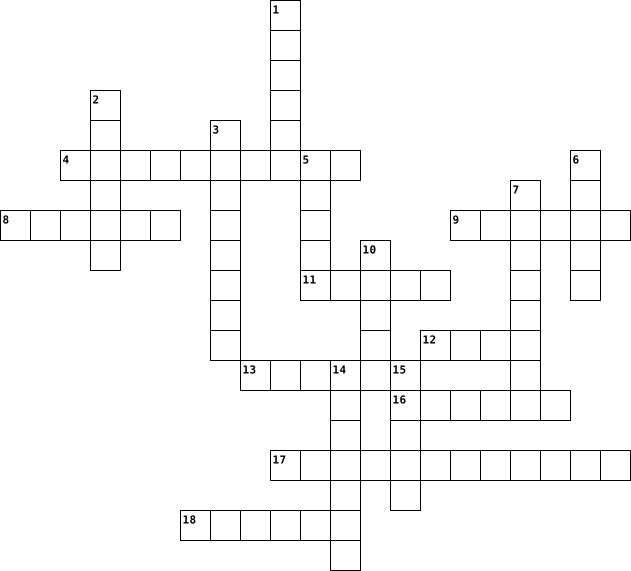
Across
- A metallic color resembling the shiny appearance of silver. It represents modernity, sleekness, and a sense of luxury.
- A vibrant blue-green color reminiscent of tropical waters. It represents serenity, freshness, and a sense of escape to exotic destinations.
- A color representing darkness, mystery, and elegance. It is often worn during formal occasions and represents a sense of sophistication.
- A warm and earthy color resembling the color of tree bark, chocolate, and soil. It is often associated with stability and reliability.
- A color associated with nature, growth, and freshness. It represents plants, trees, and the feeling of being outdoors in a meadow.
- A bright and cheerful color symbolizing happiness, sunshine, and warmth. It is the color of ripe lemons and blooming sunflowers.
- A vibrant color often associated with energy, love, and excitement. It is the color of ripe strawberries and the stop sign on the road.
Down
- A bold and intense purplish-red color often associated with creativity and self-expression. It can be found in vibrant flowers like roses.
- A pure and clean color symbolizing innocence, peace, and simplicity. It is often associated with snow, doves, and wedding dresses.
- A warm and energetic color that combines the vibrancy of red and the cheerfulness of yellow. It is often seen in juicy oranges and sunsets.
- A rich and royal color often associated with luxury, creativity, and imagination. It can be found in beautiful flowers like lavender.
- A soft and delicate color often associated with sweetness, love, and compassion. It is the color of cotton candy and blooming cherry blossoms.
- A calming color that represents tranquility, peace, and the vastness of the sky and ocean. It is often seen in clear summer skies.
- A neutral color that falls between black and white. It represents balance, stability, and practicality. It is often seen in city buildings.
- A precious metal color symbolizing wealth, success, and prosperity. It is often associated with celebrations and achievements.
15 Clues: A metallic color resembling the shiny appearance of silver. It represents modernity, sleekness, and a sense of luxury. • A precious metal color symbolizing wealth, success, and prosperity. It is often associated with celebrations and achievements. • ...
Color 2023-07-03

Across
- Neutral and subtle, like a cloudy day.
- Royal and majestic, like a velvet curtain.
- Earthy and warm, like tree bark or chocolate.
- Metallic and sleek, like polished silverware.
- Cheerful and sunny, like a daffodil.
- Bright and vibrant, like a ripe apple.
- Bright and refreshing, like tropical waters.
Down
- Shiny and precious, like a golden treasure.
- Warm and energetic, like a sunset.
- Soft and delicate, like a flower petal.
- Fresh and natural, like grass or leaves.
- Rich and deep, like a blooming lavender.
- Dark and mysterious, like the night sky.
- Pure and clean, like freshly fallen snow.
- Calm and peaceful, like the ocean.
15 Clues: Warm and energetic, like a sunset. • Calm and peaceful, like the ocean. • Cheerful and sunny, like a daffodil. • Neutral and subtle, like a cloudy day. • Bright and vibrant, like a ripe apple. • Soft and delicate, like a flower petal. • Fresh and natural, like grass or leaves. • Rich and deep, like a blooming lavender. • Dark and mysterious, like the night sky. • ...
color 2023-07-03

Across
- A shiny and elegant color that reminds us of polished metal. It's a color that represents grace and sophistication. Silver can make us feel glamorous and refined.
- A powerful and timeless color that reminds us of the night. It's a color that represents strength and authority. Black can make us feel confident and sophisticated.
- A bright and cheerful color that reminds us of the sun. It's a color that symbolizes happiness and positivity. Yellow can make us feel joyful and optimistic.
- A warm and energetic color that reminds us of a sunset. It's a color that symbolizes enthusiasm and creativity. Orange can make us feel inspired and adventurous.
- A bold and vibrant color that combines the energy of red and the calmness of blue. It's a color that represents creativity and individuality. Magenta can make us feel expressive and unique.
- A calming color that reminds us of the sky and the ocean. It's a color that brings a sense of peace and tranquility. Blue can make us feel relaxed and serene.
- A vibrant color that reminds us of fire and passion. It's a color that catches attention and symbolizes energy and excitement. Red can make us feel bold and courageous.
- A pure and clean color that reminds us of snow. It's a color that symbolizes innocence and simplicity. White can make us feel peaceful and hopeful.
Down
- A royal and mysterious color that reminds us of the night sky. It's a color that represents elegance and sophistication. Purple can make us feel imaginative and dreamy.
- A delicate and gentle color that reminds us of flowers. It's a color that symbolizes sweetness and tenderness. Pink can make us feel affectionate and caring.
- A luxurious and radiant color that reminds us of precious metals. It's a color that represents wealth and abundance. Gold can make us feel prosperous and special.
- A warm and earthy color that reminds us of trees and soil. It's a color that represents reliability and comfort. Brown can make us feel grounded and secure.
- A neutral and balanced color that reminds us of the clouds. It's a color that represents practicality and stability. Gray can make us feel calm and composed.
- A refreshing color that reminds us of nature and plants. It's a color that represents growth and vitality. Green can make us feel calm and connected to the environment.
- A refreshing and vibrant color that reminds us of tropical waters. It's a color that represents tranquility and healing. Turquoise can make us feel calm and rejuvenated.
15 Clues: A pure and clean color that reminds us of snow. It's a color that symbolizes innocence and simplicity. White can make us feel peaceful and hopeful. • A warm and earthy color that reminds us of trees and soil. It's a color that represents reliability and comfort. Brown can make us feel grounded and secure. • ...
color 2023-07-20

Across
- A neutral color like the clouds on a rainy day.
- A fresh color like the leaves on a tree.
- A cheerful color like the sun on a sunny day.
- A bright and warm color like an apple.
- A shiny and metallic color like a silver coin.
- A vibrant color like a ripe orange fruit.
- A gentle and sweet color like cotton candy.
Down
- A calming color like the sky on a clear day.
- A cool and refreshing color like tropical waters.
- A pure and clean color like fresh snow.
- A rich and luxurious color like a golden crown.
- A royal color like a majestic velvet curtain.
- A vibrant and bold color like a bright flower petal.
- A dark and mysterious color like the night sky.
- A earthy color like the bark of a tree.
15 Clues: A bright and warm color like an apple. • A pure and clean color like fresh snow. • A earthy color like the bark of a tree. • A fresh color like the leaves on a tree. • A vibrant color like a ripe orange fruit. • A gentle and sweet color like cotton candy. • A calming color like the sky on a clear day. • A royal color like a majestic velvet curtain. • ...
color 2025-12-17

Across
- the color of the sky or sea
- the color of grass or leaves
- a blue green color
- a mix of red and blue
- the color of snow or milk
- the color of the night
- a shiny gray color
Down
- a shiny yellow color
- a light brown color
- the color of an apple or fire
- the color of clouds
- the color of an orange fruit
- a light red color
- the color of the sun or banana
- the color of chocolate or wood
15 Clues: a light red color • a blue green color • a shiny gray color • a light brown color • the color of clouds • a shiny yellow color • a mix of red and blue • the color of the night • the color of snow or milk • the color of the sky or sea • the color of grass or leaves • the color of an orange fruit • the color of an apple or fire • the color of the sun or banana • ...
Egyptian pyramids 2025-01-09

Across
- they are one of the blank structures ever created
- Xavier Landraus theory
- the pyramids are this color
- the pyramids house the tombs of these
- Megan Whalen theory
Down
- located in
- the top blank wonders of the world
- this pyramid is 220 feet tall
- this decreased the height of the pyramids
- house the blank of pharaohs
- crane Angela Villabas theory
- these were not invented until Roman times
12 Clues: located in • Megan Whalen theory • Xavier Landraus theory • house the blank of pharaohs • the pyramids are this color • crane Angela Villabas theory • this pyramid is 220 feet tall • the top blank wonders of the world • the pyramids house the tombs of these • this decreased the height of the pyramids • these were not invented until Roman times • ...
Module 7 - Sensation 2020-11-24

Across
- The light-sensitive surface at the back of the eyeball.
- ____ sense The system for sensing the position and movement of individual body parts.
- A sound’s highness or lowness, which depends on the frequency of the sound wave.
- ____ spot The point at which the optic nerve travels through the retina to exit the eye; the lack of rods and cones at this point creates a small blind spot.
- _____ attention Focusing conscious awareness on a particular stimulus to the exclusion of others.
- Visual receptor cells located in the retina that can detect sharp details and color.
- Visual receptor cells located in the retina that can detect only black, white, and gray.
- ____ down processing: Information processing that draws on expectations and experiences to interpret incoming sensory information.
- ____ nerve The nerve that carries sound information from the ears to the temporal lobes of the brain.
- ____ threshold: (just noticeable difference) The minimum amount of difference needed to detect that two stimuli are not the same.
- A transparent structure behind the pupil in the eye that changes shape to focus images on the retina.
- ____ nerve The nerve that carries visual information from the eye to the occipital lobes of the brain.
- sensory _____ Diminished sensitivity to constant and unchanging stimulation.
- ______ threshold: The minimum amount of stimulation needed to detect a particular stimulus.
- ______ cells Specialized cells in every sensory system of the body that can turn other kinds of energy into action potentials (neural impulses) that the brain can process.
Down
- ______ detection theory: A theory that predicts how and when we detect the presence of a faint stimulus (signal) amid background stimulation (noise).
- _____ sense The system for sensing body orientation and balance, which is located in the semicircular canals of the inner ear.
- _____ theory A theory of color vision that says cones are sensitive to red, green, or blue light—the three colors that combine to create millions of color combinations.
- The major organ of hearing; a snail-shaped, bony, fluid-filled structure in the inner ear where sound waves are changed to neural impulses.
- ___ cells The receptor cells for hearing; these are located in the cochlea and are responsible for changing sound vibrations into neural impulses.
- The process by which sensory systems (eyes, ears, and other sensory organs) and the nervous system receive stimuli from our environment.
- The adjustable opening in the center of the iris, which controls the amount of light entering the eye.
- A ring of muscle tissue that forms the colored portion of the eye and regulates the size of the pupil.
- The process of organizing and interpreting incoming sensory information.
- _______ process theory A theory of color vision that says color is processed by cones organized in opponent pairs (red–green, yellow–blue, and black–white); light that stimulates one half of the pair inhibits the other half.
- The clear, curved bulge on the front of the eye that bends light rays to begin focusing them.
- _____ up processing: Information processing that analyzes the raw stimuli entering through the many sensory systems.
27 Clues: The light-sensitive surface at the back of the eyeball. • The process of organizing and interpreting incoming sensory information. • sensory _____ Diminished sensitivity to constant and unchanging stimulation. • A sound’s highness or lowness, which depends on the frequency of the sound wave. • ...
All About Colors - Color Theory Crossword 2023-03-07

Across
- un tipo de armonía de colores que se refiere a los colores que están directamente uno frente al otro en la rueda de colores
- un tipo de armonía de color que se compone de variaciones de un color
- combinaciones de colores que se ven estéticamente agradables a la vista
- tipo de colores que nos recuerdan a pimientos picantes, picantes y picantes; incluye los colores - rojos, naranjas y amarillos
- se refiere a los componentes básicos necesarios para crear Arte; incluye 7
- tercer juego de colores; creado a partir de la mezcla de un color primario y un color secundario; incluye los colores: rojo-naranja, amarillo-naranja, amarillo-verde, azul-verde, azul-violeta, rojo-violeta
- segundo conjunto de colores; creado a partir de la mezcla de dos colores primarios; incluye los colores - naranja, verde, violeta
Down
- un elemento de arte que se compone de tres propiedades
- primer juego de colores; crea todos los demás colores; incluye los colores - rojo, amarillo, azul
- una representación visual que muestra el orden correcto de los colores primarios, secundarios y terciarios, y su relación entre sí
- se refiere a la claridad u oscuridad de un color; una de las propiedades del color
- se refiere al brillo o la falta de brillo de un color; también conocido como Saturación; una de las propiedades del color
- el nombre le damos a un color; una de las propiedades del color
- tipo de colores que nos recuerdan al frío, al mar y al cielo nocturno; incluye los colores - verdes, azules y violetas
- una variación de un color añadiendo negro
- un tipo de armonía de colores que se refiere a tres colores que están uno al lado del otro en la rueda de colores
- una variación de un color mediante la adición de gris
- una variación de un color mediante la adición de blanco
18 Clues: una variación de un color añadiendo negro • una variación de un color mediante la adición de gris • un elemento de arte que se compone de tres propiedades • una variación de un color mediante la adición de blanco • el nombre le damos a un color; una de las propiedades del color • un tipo de armonía de color que se compone de variaciones de un color • ...
Elements of Art and Color Theory 2025-02-06

Across
- Shapes with curved lines
- The path made by a point moving through space
- things far away in an image
- Color Scheme where colors are evenly spaced
- Shapes with straight lines and corners
- Color scheme where colors are across from each other
- An enclosed 2d area
- A property of light
- things in the middle plane of an image
- Lightness or darkness of a color
- Type of drawing that is timed where the point is capturing as much detail as you can in the time limit
Down
- things in the front of an image
- Type of drawing where you draw things from your mind
- Type of drawing where you draw something by looking at it
- The area in and around parts of a composition
- Color scheme where colors are next to each other
- The way something feels when you touch it
- An enclosed 3d area
18 Clues: An enclosed 2d area • A property of light • An enclosed 3d area • Shapes with curved lines • things far away in an image • things in the front of an image • Lightness or darkness of a color • Shapes with straight lines and corners • things in the middle plane of an image • The way something feels when you touch it • Color Scheme where colors are evenly spaced • ...
Color 2023-12-04

Across
- Regal and mysterious, a blend of red and blue hues.
- Energetic and warm, like the glow of a setting sun.
- Calm and refreshing, resembling the color of tropical waters.
- Luxurious and warm, associated with wealth and prosperity.
- Cheerful and sunny, reminiscent of a bright sunflower.
- Soft and soothing, a blend of purple and white tones.
- Soft and delicate, often associated with flowers.
Down
- Cool and calming, resembling the sky on a clear day.
- Pure and clean, like freshly fallen snow.
- Bright and warm, like the color of ripe strawberries.
- Neutral and balanced, a mix of black and white.
- Shiny and metallic, like the surface of a mirror.
- Fresh and vibrant, like the leaves on a healthy plant.
- Bold and strong, absorbs light and lacks color.
- Earthy and warm, like the color of tree bark.
15 Clues: Pure and clean, like freshly fallen snow. • Earthy and warm, like the color of tree bark. • Neutral and balanced, a mix of black and white. • Bold and strong, absorbs light and lacks color. • Shiny and metallic, like the surface of a mirror. • Soft and delicate, often associated with flowers. • Regal and mysterious, a blend of red and blue hues. • ...
Color 2023-11-17

Across
- Pink Sweet and playful, like a sugary treat that brings joy and delight.
- Glow Luxurious and radiant, exuding the warmth of golden sunlight.
- White Crisp and clean, like freshly fallen snow on a winter day.
- Purple Regal and majestic, representing the richness and depth of royal purple.
- Yellow Radiant and cheerful, like a burst of sunshine on a bright day.
- Black Mysterious and elegant, capturing the essence of a starry night.
- Blue Calm and serene, reminiscent of the tranquil waters of the ocean.
- Red Energetic and bold, resembling the intensity of a bursting firecracker.
Down
- Blossom Pink Delicate and gentle, like the soft petals of cherry blossoms in spring.
- Crush Warm and inviting, reminiscent of the vibrant hues found in coral reefs.
- Delight Cool and refreshing, like the calm waters of a tropical paradise.
- Bliss Soft and soothing, creating a sense of calm and relaxation.
- Lining Elegant and sophisticated, reflecting the silvery glow of moonlight.
- Blue Light and airy, mirroring the clear blue skies on a sunny day.
- Green Fresh and vibrant, evoking the lush greenery of a flourishing forest.
15 Clues: White Crisp and clean, like freshly fallen snow on a winter day. • Bliss Soft and soothing, creating a sense of calm and relaxation. • Glow Luxurious and radiant, exuding the warmth of golden sunlight. • Blue Light and airy, mirroring the clear blue skies on a sunny day. • Yellow Radiant and cheerful, like a burst of sunshine on a bright day. • ...
Color 2023-12-02

Across
- A neutral color between black and white, often symbolizing balance.
- A calming color reminiscent of the sky or deep ocean waters.
- A shiny, metallic color resembling the hue of the metal silver.
- A greenish-blue color inspired by the hues of the gemstone turquoise.
- A warm color resembling the shade of a sunset or ripe oranges.
- A dark color associated with the absence of light, like the night sky.
- A soft, delicate color resembling the petals of flowers like roses.
- A vibrant color resembling the hue of ripe tomatoes or roses.
Down
- A shade of purple, reflecting elegance and creativity.
- A bright and cheerful color resembling the sun or ripe lemons.
- A color associated with nature, like grass or tree leaves.
- A pure and bright color often associated with cleanliness or snow.
- A regal color blending the richness of blue and the warmth of red.
- A earthy color reminiscent of soil or the bark of trees.
- A precious, metallic color often symbolizing wealth and luxury.
15 Clues: A shade of purple, reflecting elegance and creativity. • A earthy color reminiscent of soil or the bark of trees. • A color associated with nature, like grass or tree leaves. • A calming color reminiscent of the sky or deep ocean waters. • A vibrant color resembling the hue of ripe tomatoes or roses. • ...
COlor 2023-09-26

Across
- A rich and royal color, often associated with luxury and creativity.
- A warm and energetic color often associated with enthusiasm.
- A vibrant blue-green color often associated with tranquility and the ocean.
- A precious and valuable color often linked to wealth and success.
- A cheerful and vibrant color that resembles the sun.
- A soft, pale purple color often linked to relaxation and calmness.
- A soft and delicate color often associated with sweetness and love.
Down
- A calming color often linked to the sky and the sea.
- A pure and clean color, often associated with innocence and simplicity.
- A bright and bold color often associated with love and passion.
- A neutral and balanced color, often representing stability and wisdom.
- A shiny and metallic color often associated with modernity and technology.
- A color of nature, representing growth and freshness.
- A dark and mysterious color often symbolizing elegance and formality.
- A earthy and natural color, resembling wood or soil.
15 Clues: A calming color often linked to the sky and the sea. • A earthy and natural color, resembling wood or soil. • A cheerful and vibrant color that resembles the sun. • A color of nature, representing growth and freshness. • A warm and energetic color often associated with enthusiasm. • A bright and bold color often associated with love and passion. • ...
Color 2024-01-25

Across
- Imagine the vast sky on a sunny day or the calm waters of a peaceful lake—blue is serene and soothing.
- A magical combination of all the colors, like a colorful arc after the rain, a rainbow is vibrant and full of joy
- Bright like the sun or a field of sunflowers, yellow brings warmth and happiness.
- Similar to the color of a juicy orange or a beautiful sunset, orange is energetic and vibrant.
- Like the color of a rainy sky or a smooth stone, gray is neutral and calming.
- Soft like cotton candy or the petals of a cherry blossom, pink is sweet and delicate.
Down
- Dark like the night sky or the color of a deep cave, black is mysterious and strong.
- Shiny like a treasure or the rays of the sun, gold is luxurious and dazzling.
- Like the petals of a royal flower or the twilight sky at dusk, purple is mysterious and regal.
- Pure like freshly fallen snow or a fluffy cloud in the sky, white is clean and serene.
- Think of rich, earthy soil or the trunk of a sturdy tree—brown is warm and grounding.
- Imagine the color of a clear tropical ocean or a sparkling gemstone, turquoise is bright and refreshing.
- Think of lush grass, tall trees in a forest, or the leaves on a plant—green is refreshing and vibrant.
- Sparkling like moonlight on water or the color of a shiny metal, silver is elegant and cool.
- Like the color of ripe strawberries or a blazing fire in the fireplace, red is bold and warm.
15 Clues: Shiny like a treasure or the rays of the sun, gold is luxurious and dazzling. • Like the color of a rainy sky or a smooth stone, gray is neutral and calming. • Bright like the sun or a field of sunflowers, yellow brings warmth and happiness. • Dark like the night sky or the color of a deep cave, black is mysterious and strong. • ...
Color 2024-01-24

Across
- Refreshing and vibrant color, reminiscent of the sea. It can symbolize tranquility and a connection to nature.
- Elegant and sophisticated color, often associated with formality and mystery. It can represent strength and authority.
- Regal and mysterious color, often associated with luxury and creativity. It can symbolize royalty and elegance.
- Fresh and natural color, often associated with trees and grass. Represents growth, harmony, and balance.
- Bright and bold color, often associated with warmth and energy. It can symbolize love and passion.
- Earthy and warm color, resembling the tones of soil and wood. It can evoke a sense of stability and reliability.
- Cheerful and vibrant color, reminiscent of sunshine and happiness. It can symbolize energy and optimism.
Down
- Warm and energetic color, combining the brightness of yellow with the warmth of red. It can evoke enthusiasm and creativity.
- Pure and clean color, often associated with innocence and simplicity. It can represent clarity and new beginnings.
- Shiny and metallic color, resembling the appearance of the precious metal. It can represent modernity and sophistication.
- Calm and soothing color, reminiscent of the sky and ocean. Often associated with tranquility and stability.
- Deep and rich reddish-brown color, often associated with elegance and warmth. It can evoke a sense of luxury.
- Soft and delicate color, often associated with femininity and sweetness. It can represent love and compassion.
- Neutral and versatile color, ranging from light to dark shades. It can represent balance, calmness, and practicality.
- Luxurious and radiant color, often associated with wealth and success. It can symbolize prosperity and achievement.
15 Clues: Bright and bold color, often associated with warmth and energy. It can symbolize love and passion. • Fresh and natural color, often associated with trees and grass. Represents growth, harmony, and balance. • Cheerful and vibrant color, reminiscent of sunshine and happiness. It can symbolize energy and optimism. • ...
Color 2024-01-24

Across
- A calming color resembling the sky and ocean, evoking a sense of peace and tranquility.
- A soft and gentle color often linked to sweetness, love, and a sense of playful innocence.
- A lively and energetic color combining the warmth of red with the brightness of yellow.
- A metallic hue associated with modernity, technology, and a touch of futuristic allure.
- A soothing shade of purple conveying calmness, relaxation, and a touch of gentle romance.
- A bright and warm hue often linked to strong feelings like passion, love, and excitement.
- A pure and clean color symbolizing innocence, simplicity, and a fresh start or new beginnings.
Down
- A powerful and sophisticated color linked to elegance, formality, and an air of mystery.
- A rich and regal hue representing creativity, luxury, and a touch of magical inspiration.
- An earthy color symbolizing stability, reliability, and the warm tones of natural materials.
- A vibrant and refreshing color resembling the hue of tropical waters, evoking a sense of tropical bliss.
- The color of nature, representing growth, freshness, and the beauty of trees and plants.
- A cheerful and sunny shade associated with happiness, positivity, and a sunny disposition.
- A luxurious and precious color representing wealth, success, and a sense of opulence.
- A neutral shade associated with practicality, balance, and a calm and composed demeanor.
15 Clues: A luxurious and precious color representing wealth, success, and a sense of opulence. • A calming color resembling the sky and ocean, evoking a sense of peace and tranquility. • A lively and energetic color combining the warmth of red with the brightness of yellow. • A metallic hue associated with modernity, technology, and a touch of futuristic allure. • ...
color 2020-06-22

Across
- it has a special smell but many people like it.
- something a day keeps doctor away.
- there is a beauty legend about it.
- it also can be thought a kind of vegetable.
- top something means boss.
- it is a fruit of summer.
- its color is purple.
- it can be a beautiful English name.
Down
- its shape is like some houses.
- this kind of fruit can be a kind of color.
- its pronunciation is like man go.
- this kind of fruit can describe something is cheap.
- there are many seeds on its appearance.
- something is monkeys' favorite.
- as an old saying goes, it can't be divided to eat.
15 Clues: its color is purple. • it is a fruit of summer. • top something means boss. • its shape is like some houses. • something is monkeys' favorite. • its pronunciation is like man go. • something a day keeps doctor away. • there is a beauty legend about it. • it can be a beautiful English name. • there are many seeds on its appearance. • this kind of fruit can be a kind of color. • ...
color 2024-05-19

Across
- The color of the sky on a clear day.
- The shiny color of some jewelry and coins.
- A mix of blue and green, like the ocean in some places.
- The color of pumpkins and carrots.
- The color of flamingos and many flowers.
- The color of bananas and the sun.
- The color of apples and strawberries.
- The shiny color of treasure and some coins.
Down
- The color of grass and leaves.
- The color of snow and clouds.
- The color of tree bark and chocolate.
- The color of elephants and rainy clouds.
- The color of grapes and some flowers.
- The color of the night sky without stars.
- The color of sand on the beach and some walls.
15 Clues: The color of snow and clouds. • The color of grass and leaves. • The color of bananas and the sun. • The color of pumpkins and carrots. • The color of the sky on a clear day. • The color of tree bark and chocolate. • The color of grapes and some flowers. • The color of apples and strawberries. • The color of elephants and rainy clouds. • ...
Color 2024-09-24

Across
- (4) – Blue-green color often used in design
- (4) – Color of the sky on a clear day
- (5) – Pinkish-orange color often seen in nature
- (4) – Light shade of red, often seen in flowers
- (6) – Color of a pumpkin or an orange fruit
- (5) – Color of snow and clouds
- (4) – Dark blue color often associated with uniforms
- (3) – Color of an apple or a stop sign
Down
- (5) – Darkest color, absorbs all light
- (6) – Color associated with royalty
- (6) – Color of the sun and ripe bananas
- (5) – Color of chocolate and tree bark
- (5) – Color of grass and leaves
- (4) – Intermediate color between black and white
- (4) – Metallic yellow color, like a gold ring
15 Clues: (5) – Color of snow and clouds • (5) – Color of grass and leaves • (6) – Color associated with royalty • (4) – Color of the sky on a clear day • (5) – Darkest color, absorbs all light • (5) – Color of chocolate and tree bark • (3) – Color of an apple or a stop sign • (6) – Color of the sun and ripe bananas • (4) – Blue-green color often used in design • ...
COLOR 2023-03-01

Across
- Colors: red, yellow, blue
- Darker because you added black to the color
- Colors: Red, Yellow, Orange
- One color
- Name of color
- Colors: Red-Violet, Red-Orange, Blue-Violet, Blue-Green, Yellow-Green, Yellow-Orange
- Most important factor in seeing color
- Grouping colors together for effect.
- Brightness or dullness of a color
Down
- Colors: green, violet, orange
- Colors opposite on the color wheel
- 3-4 Neighbors on the color wheel
- 3 Colors evenly spaced out on the color wheel (skip 3)
- Colors: Blue, Green Violet
- Lighter because you added white to the color
15 Clues: One color • Name of color • Colors: red, yellow, blue • Colors: Blue, Green Violet • Colors: Red, Yellow, Orange • Colors: green, violet, orange • 3-4 Neighbors on the color wheel • Brightness or dullness of a color • Colors opposite on the color wheel • Grouping colors together for effect. • Most important factor in seeing color • Darker because you added black to the color • ...
color 2023-06-12

Across
- A shiny and metallic color often associated with elegance and luxury.
- A vibrant and tropical color often associated with calmness and tranquility.
- A color often associated with power, mystery, and elegance.
- A earthy color often associated with stability and the natural world.
- A color often associated with nature, growth, and environmental awareness.
- A cheerful and sunny color often associated with happiness and warmth.
- A bright and vibrant color often associated with passion and energy.
Down
- A bold and vibrant color often associated with creativity and individuality.
- A color often associated with purity, innocence, and cleanliness.
- A warm and vibrant color often associated with energy and enthusiasm.
- A rich and regal color often associated with royalty and creativity.
- A soft and delicate color often associated with sweetness and femininity.
- A cool and calming color often associated with the sky and water.
- A neutral color often associated with practicality and sophistication.
- A precious and shiny color often associated with wealth and success.
15 Clues: A color often associated with power, mystery, and elegance. • A color often associated with purity, innocence, and cleanliness. • A cool and calming color often associated with the sky and water. • A rich and regal color often associated with royalty and creativity. • A precious and shiny color often associated with wealth and success. • ...
Color 2023-06-14

Across
- A greenish-blue color, like a tropical ocean or gemstone.
- The color of sunshine and bananas.
- The color of fire trucks and strawberries.
- A shiny and valuable color, like a treasure or the sun.
- The color of chocolate and tree trunks.
- A bright purplish-red color, like a pink flower or a sunset sky.
- A light and pretty color often associated with flowers.
Down
- The color of snow and clouds.
- A color that combines blue and red, like grapes or lavender.
- A shiny metallic color, like a shiny coin or a robot.
- The color of grass and leaves.
- The color of the sky and ocean.
- A color between black and white, like rainy days or silver.
- The darkest color, like the night sky.
- The color of oranges and pumpkins.
15 Clues: The color of snow and clouds. • The color of grass and leaves. • The color of the sky and ocean. • The color of sunshine and bananas. • The color of oranges and pumpkins. • The darkest color, like the night sky. • The color of chocolate and tree trunks. • The color of fire trucks and strawberries. • A shiny metallic color, like a shiny coin or a robot. • ...
Color 2023-06-22

Across
- A shimmering and precious color symbolizing wealth and luxury.
- A metallic color often associated with modernity and sophistication.
- A refreshing and vibrant color that is a mix of blue and green.
- A royal and mysterious color that represents creativity and spirituality.
- A natural and earthy color that represents stability and reliability.
- A vibrant and intense color that is a mix of red and purple.
- A delicate and feminine color often associated with sweetness and romance.
Down
- A bright and bold color often associated with passion and energy.
- A cheerful and vibrant color that represents happiness and sunshine.
- A color symbolizing purity, innocence, and cleanliness.
- A color commonly found in nature, symbolizing growth and freshness.
- A neutral color that represents balance and practicality.
- A warm and energetic color often associated with enthusiasm and creativity.
- A calming color that is often associated with the sky and water.
- A color often associated with power, elegance, and mystery.
15 Clues: A color symbolizing purity, innocence, and cleanliness. • A neutral color that represents balance and practicality. • A color often associated with power, elegance, and mystery. • A vibrant and intense color that is a mix of red and purple. • A shimmering and precious color symbolizing wealth and luxury. • ...
Color 2023-07-01

Across
- A small creature with wings that can sting.
- A large aquatic mammal known for its intelligence.
- A small marine creature with colorful scales.
- A large mammal with thick skin and a trunk.
- A majestic and powerful bird known for its long neck and large wingspan.
- A small creature with a long tail that likes to dig burrows.
- A small bird with a melodious song.
- A small insect that can fly and pollinate flowers.
- A small marine animal with a hard outer shell and soft body.
Down
- A sleek predator with sharp claws and a keen sense of sight.
- A slimy and slow-moving creature found in gardens and ponds.
- A medium-sized mammal known for its agility and climbing abilities.
- A small animal with long ears and a fluffy tail.
- A graceful creature with colorful feathers and a long neck.
- A furry animal with a bushy tail that climbs trees.
15 Clues: A small bird with a melodious song. • A small creature with wings that can sting. • A large mammal with thick skin and a trunk. • A small marine creature with colorful scales. • A small animal with long ears and a fluffy tail. • A large aquatic mammal known for its intelligence. • A small insect that can fly and pollinate flowers. • ...
Color 2023-08-07

Across
- A vibrant color like that of a ripe apple or a fire truck.
- A pure color like that of snow or a fluffy cloud.
- A rich color like that of a red wine or autumn leaves.
- A dark color like that of night or a raven's feathers.
- A neutral color like that of a rainy sky or a stone.
- A calming color like that of the sky or the ocean.
- A precious color like that of a treasure or a golden sun.
- A shiny color like that of a mirror or a shiny coin.
- A delicate color like that of cherry blossoms or cotton candy.
Down
- A natural color like that of tree bark or chocolate.
- A bright color like that of the sun or a lemon.
- A warm color like that of coral reefs or a vibrant sunset.
- A rich color like that of grapes or lavender flowers.
- A cool color like that of a teal duck or a serene lake.
- A fresh color like that of grass or leaves on a tree.
15 Clues: A bright color like that of the sun or a lemon. • A pure color like that of snow or a fluffy cloud. • A calming color like that of the sky or the ocean. • A natural color like that of tree bark or chocolate. • A neutral color like that of a rainy sky or a stone. • A shiny color like that of a mirror or a shiny coin. • ...
color 2025-08-09

Across
- — A blue-green color, like tropical sea water.
- — The lightest color, like snow or clouds.
- — A color between red and yellow, like a citrus fruit.
- — A color made by mixing red and blue.
- — The darkest color, like the night sky without stars.
Down
- — The color of the sun and bananas.
- — The color of chocolate and tree bark.
- — A shiny yellow color like the precious metal.
- — The color of a ripe apple or a stop sign.
- — A shiny gray color, like a coin or a trophy.
- — The color of grass and leaves.
- — A color between black and white, like a cloudy sky.
- — A light red color, often associated with flowers.
- — A dark red color, deeper than red.
- — The color of the clear daytime sky.
15 Clues: — The color of grass and leaves. • — The color of the sun and bananas. • — A dark red color, deeper than red. • — The color of the clear daytime sky. • — A color made by mixing red and blue. • — The color of chocolate and tree bark. • — The lightest color, like snow or clouds. • — The color of a ripe apple or a stop sign. • — A shiny gray color, like a coin or a trophy. • ...
Hair & Color Theory Crossword Puzzle 2024-01-30

Across
- The middle layer of the hair strand that contains natural melanin
- A visual representation of colors and how they relate and react to each other
- The inner most layer of the hair strand that play no part in hair coloration
- The type of natural melanin that determines the hairs natural level
- This is how we classify colors that neutralize each other
- How we describe hair that contains no natural melanin
- This type of artificial pigment does not need to be mixed with an oxidizing agent
Down
- The outer most layer of the hair strand
- Red, yellow, and blue fall into this category of colors
- The type of natural melanin that is 100 times smaller than eumelanin
- What needs to be mixed with artificial color that contains oxidative agents
- Orange, green, and violet fall into this category
- This type of artificial pigment will develop to be darker, deeper, and/or more vibrant over time
13 Clues: The outer most layer of the hair strand • Orange, green, and violet fall into this category • How we describe hair that contains no natural melanin • Red, yellow, and blue fall into this category of colors • This is how we classify colors that neutralize each other • The middle layer of the hair strand that contains natural melanin • ...
Morphemes 2025-04-05

Across
- alone
- build, construct
- show
- color, pigment
- both, on both sides
- harm
- study, science, theory
- drag, pull
Down
- live
- build, construct
- sound
- turn
- show
- many
- grow, care
- care for
16 Clues: live • turn • show • show • many • harm • alone • sound • care for • grow, care • drag, pull • color, pigment • build, construct • build, construct • both, on both sides • study, science, theory
Global Influence 2025-06-24

Across
- Islamic intricate pattern style
- Russian peasant style
- African stool symbol
- Global minimalism source
- Chinese symmetrical planning
- Native American wall texture
- Balinese carved panel
Down
- Moroccan tilework
- Egyptian color theory source
- Persian carpet feature
- Mexican bold color interior style
- Spanish interior arches
- Indian courtyard-based layout
- Japanese wood-and-paper design
- Scandinavian clean-line tradition
15 Clues: Moroccan tilework • African stool symbol • Russian peasant style • Balinese carved panel • Persian carpet feature • Spanish interior arches • Global minimalism source • Egyptian color theory source • Chinese symmetrical planning • Native American wall texture • Indian courtyard-based layout • Japanese wood-and-paper design • Islamic intricate pattern style • ...
Colorful Sneakers Crossword 2024-02-02

Across
- Theory The body for practical guidance or color missing
- A three-dimensional solid with parallelogram sides
- A person who plans the looks of something before it is made
- Lighter and darker shades of the same color
- Fashionable
- Groups of related colors are found next to each other
- Describes how long the wave is
- Raise levels of physiological or nervous activity
- Specialist A person who helps you pick the best colors for your house
- Color The colors yellow, red, and blue can be mixed to create another color on the wheel
Down
- a greater liking for one alternate climate than another or others
- An element that contributes to a result
- A color or shade
- Spectrum The section of the electromagnetic radiation spectrum that is visible to the human eye
- A variety of different people or things
- Change direction when it enters at an angle
- Colors Color pairs found on opposing sides of the color wheel
- The temperature in an area
- Color The colors orange, violet, and green are colors created by primary colors
- The techniques people use in public to bring attention to viewers, so they can buy their products
20 Clues: Fashionable • A color or shade • The temperature in an area • Describes how long the wave is • An element that contributes to a result • A variety of different people or things • Change direction when it enters at an angle • Lighter and darker shades of the same color • Raise levels of physiological or nervous activity • A three-dimensional solid with parallelogram sides • ...
Theory 2026-03-16

Across
- language that assigns numeric value to english letters
- convincing one to fall into malware trap
- simple digital circuit that converts one or more binary inputs into one output
- standard for encoding all letters, digits and symbols
- part of motherboard's chipset that manages slower i/o functions
- requires user to provide two types of identity verification
- part of the motherboard's chipset that manages communication between cpu and ram
- a semi-conductor that controls flow of electrical signals
- temporary storage that provides faster access to frequently used data
Down
- directs the execution of instructions in the CPU
- software that manages the computer's hardware and software
- time between users input and computer's response
- smallest unit that represents two possible values
- responsible for rendering images on computer
- communication Highway for the CPU
- preinstalled firmware on computer's motherboard
- computer component that uses laser to read discs
- component of CPU that preforms basic arithmetic on binary values
- holds data while being processed by the CPU
- malicious software
- unit that consists of 8 bits
21 Clues: malicious software • unit that consists of 8 bits • communication Highway for the CPU • convincing one to fall into malware trap • holds data while being processed by the CPU • responsible for rendering images on computer • preinstalled firmware on computer's motherboard • directs the execution of instructions in the CPU • time between users input and computer's response • ...
crucigrana arte de espanol 2025-02-25

Across
- a connected group of dots
- building art
- edm
- a connected group of lines
- to print in 3d
Down
- a combining substance
- chiseled rock
- color spectrum
- the theory of color
- a woven picture
- snip snip
- using thread to combine materials
- a style of art using cubes
13 Clues: edm • snip snip • building art • chiseled rock • color spectrum • to print in 3d • a woven picture • the theory of color • a combining substance • a connected group of dots • a connected group of lines • a style of art using cubes • using thread to combine materials
Creator: Jaelyn Moore 2019-10-17

Across
- gather's vibrations into your ear channel
- a theory that we can see a color and its opposite color
- a hallow tube with a little bit of fluid in it
- process color
- failing to see visible objects when your attention is elsewhere
- the process of changing the light waves into an image
- the process of organizing and interpreting sensory information allowing us to recognize objects and events
- a hole in your eye that lets in light into your eye
- if something changes around you, you wont notice
Down
- a theory that we can only see three colors that makes up the rest
- how we measure sound
- the process of our sensory receptors and nervous system receiving stimulus
- bends the light and bends the picture
- focusing conscious awareness on a particular stimuli
- protects your entire eye and the first thing light hits
15 Clues: process color • how we measure sound • bends the light and bends the picture • gather's vibrations into your ear channel • a hallow tube with a little bit of fluid in it • if something changes around you, you wont notice • a hole in your eye that lets in light into your eye • focusing conscious awareness on a particular stimuli • ...
Rside-Space-Shewchuk 2015-02-25

Across
- As the ______ expanding the galaxies grew further a part
- Is an energy that is carried, or radiated, in the form of waves.
- Spherical shape and core like a furnace
- Enormous collection of gases, dust, and billion stars.
- someone who studies celestial bodies
- what expansion happened 13.7biilion years ago
- Major star in our solar system that's in the milky way.
- An instrument that changes basic light into component color.
Down
- Holds a lot of information that it gathers from space and was planned to stay up in space for 20 years.
- if a star is traveling away the wavelengths will be.....
- The man who discovered that the galaxies were traveling away from each other and us
- if a star is going towards you the wavelengths will be....
- The theory of the universe expanding
- A scale of color
- Examples of ____: sun, moon, and stars
- When on the spectrum its going towards the right end away from the violate color.
- man who came up with the big bang theory
- What was Arno and Robert monitoring in space along with microwaves
- Wilkinson Microwave Anistropy Probe
- National Aeronautics Space Administration
- Cosmic Background Explorer
21 Clues: A scale of color • Cosmic Background Explorer • Wilkinson Microwave Anistropy Probe • The theory of the universe expanding • someone who studies celestial bodies • Examples of ____: sun, moon, and stars • Spherical shape and core like a furnace • man who came up with the big bang theory • National Aeronautics Space Administration • ...
Theory 2025-12-05

Across
- Defender of the causal theory of knowledge
- The reasons or evidence supporting a belief
- Condition requiring that S’s belief wouldn’t easily have been false in nearby worlds.
- A fruit that you may find mixed in with a bunch of fakes
- Scenarios showing that JTB might still not be knowledge
- Theory that knowledge is grounded primarily in sense experience
- Teaches the Phil 130 Class at UCR Fall 2025
- Being misled into a false belief.
- A man going for an interview who has 10 coins in his pocket
Down
- A scenario meant to test or disprove a philosophical belief
- I think, therefor I am
- Justified true belief
- A thing that is known or proved to be true
- First of her name, died in 1603
- Knowledge indepenent of experience
- Philosopher who gave counterexamples to JTB
- What Gettier show can make a true belief still not be knowledge.
- An acceptance that a statement is true or that something exists
- In Dretske’s example, Fred mistakes another’s identical object for his own.
- She thinks a volcano erupted
- Philosopher associated with the “No False Grounds” theory
21 Clues: Justified true belief • I think, therefor I am • She thinks a volcano erupted • First of her name, died in 1603 • Being misled into a false belief. • Knowledge indepenent of experience • Defender of the causal theory of knowledge • A thing that is known or proved to be true • The reasons or evidence supporting a belief • Philosopher who gave counterexamples to JTB • ...
THEORY 2025-09-23

Across
- Roy's model focuses on patient ___
- developed the theory of Transpersonal Caring
- Watson emphasized the ten ___ factors in caring
- Formulated Caritative Caring Theory
- Nightingale's theory
- 14 components of basic nursing care
- Theorist of Unitary Human Being
- Developed the self-care/ self-care deficit theory
- Developed the Composure model
- King emphasized Goal ___ Theory
- Co-developer of Humanistic Nursing Theory
- Benner Identified five levels from novice to ___
- The term that Paterson and Zderad uses to express nurse-patient relationship
- From novice to expert excellence and power in clinical nursing practice
Down
- Developed Deliberative Nursing Process Theory
- Care, Core, Cure theory in nursing
- refers to a person who has no background experience of the situation in which he/she involved
- Paterson and Zderads theory is called
- Developed PREPARE ME Holistic Nursing Interventions
- Theorist of Moral Development
- Nightingale is known as "The Lady with the _____"
- Known for the Humanistic Nursing Theory
- During the ____ war, Nightingale provided care to wounded and ill soldiers
- Nightingale emphasized pure air, water, light, _____ and cleanliness
- Eriksson's central concept of love in caring is ___
- Developed the Goal Attainment Theory
- Developed the Retirement and Role Discontinuity Model
- The first nursing theorist
- Developed Humanistic Theory
29 Clues: Nightingale's theory • The first nursing theorist • Developed Humanistic Theory • Theorist of Moral Development • Developed the Composure model • Theorist of Unitary Human Being • King emphasized Goal ___ Theory • Care, Core, Cure theory in nursing • Roy's model focuses on patient ___ • Formulated Caritative Caring Theory • 14 components of basic nursing care • ...
Monarch Comics Crossed Words 2024-03-22
Across
- _____ Theory
- Taldar's Identity
- _____-Chee-O!
- Not black-and-white
- Dr. Menke _____
- Fenris _____
- Evil _____ Man
- Spooky Topic
- Short Sword?
Down
- Yellow Superhero Food
- Chocolate Chip Treat
- Created Norse Heroes
- _____ Book
- _____ Hunter
- Created Magic Superhero
- Created Simian Superhero
- Bloodsucker
- Kind of Smile
18 Clues: _____ Book • Bloodsucker • _____ Theory • _____ Hunter • Fenris _____ • Spooky Topic • Short Sword? • _____-Chee-O! • Kind of Smile • Evil _____ Man • Dr. Menke _____ • Taldar's Identity • Not black-and-white • Chocolate Chip Treat • Created Norse Heroes • Yellow Superhero Food • Created Magic Superhero • Created Simian Superhero
Theory 2023-01-24

Across
- sweetly
- faster, quick
- two half steps
- a musical sign that is at the beginning of a piece and tells you what lines and spaces you have
- Sad
- broadly, slow
- the acronym for the bass clef spaces
- Happy
- very very fast
- emphasized or stressed
- very soft
- short and detached
- A signature that tells you what notes to play
- examines the fundamentals of music
- lean into the note
- walking pace
- slow and leisurely
- a gradual increase in volume
- medium loud
- more
Down
- lively
- smooth or connected
- loud
- very slow
- a gradual decrease in tempo
- little
- natural minor scale
- a gradual decrease in volume
- a sudden forceful emphasis
- a curved line connecting two or more notes
- the acronym for the treble clef spaces
- Traditional major scale
- very loud
- moderate speed
- very fast
- a gradual increase in tempo
- A signature that tells you how many beats are in one measure and what type of note gets the beat
- soft/quiet
- the distance between two adjacent keys
- medium soft
40 Clues: Sad • loud • more • Happy • lively • little • sweetly • very slow • very loud • very fast • very soft • soft/quiet • medium soft • medium loud • walking pace • faster, quick • broadly, slow • two half steps • moderate speed • very very fast • short and detached • lean into the note • slow and leisurely • smooth or connected • natural minor scale • emphasized or stressed • Traditional major scale • a sudden forceful emphasis • ...
Unit 3 Sensation and Perception 3 2021-06-11

Across
- type of processing taking in many aspects at the same time
- conversion of one form of energy to another
- device for testing depth perception with babies
- theory that the rate of nerve impulse going to ear determines tone
- theory says opposing retinal processes enable color
Down
- receptors that detect black, white, and gray
- analysis begins with sensory receptor and works up to brain
- type of processing guided by higher level mental processes
- theory that links pitch to place cochlear membrane is stimulated
- dimension of color determined by wavelength
10 Clues: conversion of one form of energy to another • dimension of color determined by wavelength • receptors that detect black, white, and gray • device for testing depth perception with babies • theory says opposing retinal processes enable color • type of processing taking in many aspects at the same time • type of processing guided by higher level mental processes • ...
Color 2023-06-22

Across
- A light, delicate color, often thought of as a more gentle version of red. It can represent love, friendship, or compassion.
- A neutral, balanced color that can be found between black and white. It can represent sophistication, simplicity, or stability.
- A cool, calming color like the sky or the ocean. It can represent trust, loyalty, or tranquility.
- A bright, refreshing color that is a blend of blue and green. It can represent energy, relaxation, or the tropical ocean.
- A deep, rich color that is a combination of blue and purple. It is often associated with wisdom and intuition, and it can also be found in the night sky.
- A warm, energetic color that reminds us of the fruit with the same name. It is a mix of red and yellow, and it is often associated with happiness and creativity.
- A pure, clean color that represents light or freshness. It is often associated with innocence, purity, or simplicity.
Down
- A vibrant, regal color that is a blend of blue and red. It is often associated with royalty, creativity, or mystery.
- A cheerful, sunny color like sunflowers or lemons. It can represent joy, positivity, and energy.
- A strong, powerful color that can represent mystery, elegance, or strength. It is often associated with sophistication or formality.
- A soothing color found in nature, like the color of grass, leaves, or cucumbers. It can represent growth, freshness, or the environment.
- A warm, earthy color like the color of tree bark or chocolate. It can represent stability, reliability, or the natural world.
- A cool, metallic color that is associated with sleek, modern design, technology, and elegance. It can also represent clarity or purity.
- A bright, warm color like the color of a fire truck or a ripe apple. It can represent love, excitement, or danger.
14 Clues: A cheerful, sunny color like sunflowers or lemons. It can represent joy, positivity, and energy. • A cool, calming color like the sky or the ocean. It can represent trust, loyalty, or tranquility. • A bright, warm color like the color of a fire truck or a ripe apple. It can represent love, excitement, or danger. • ...
Color 2023-06-24

Across
- A color representing darkness, mystery, and elegance. It is often worn during formal occasions and represents a sense of sophistication.
- A soft and delicate color often associated with sweetness, love, and compassion. It is the color of cotton candy and blooming cherry blossoms.
- A neutral color that falls between black and white. It represents balance, stability, and practicality. It is often seen in city buildings.
- A metallic color resembling the shiny appearance of silver. It represents modernity, sleekness, and a sense of luxury.
- A calming color that represents tranquility, peace, and the vastness of the sky and ocean. It is often seen in clear summer skies.
- A vibrant color often associated with energy, love, and excitement. It is the color of ripe strawberries and the stop sign on the road.
- A warm and energetic color that combines the vibrancy of red and the cheerfulness of yellow. It is often seen in juicy oranges and sunsets.
- A bright and cheerful color symbolizing happiness, sunshine, and warmth. It is the color of ripe lemons and blooming sunflowers.
Down
- A bold and intense purplish-red color often associated with creativity and self-expression. It can be found in vibrant flowers like roses.
- A pure and clean color symbolizing innocence, peace, and simplicity. It is often associated with snow, doves, and wedding dresses.
- A rich and royal color often associated with luxury, creativity, and imagination. It can be found in beautiful flowers like lavender.
- A color associated with nature, growth, and freshness. It represents plants, trees, and the feeling of being outdoors in a meadow.
- A warm and earthy color resembling the color of tree bark, chocolate, and soil. It is often associated with stability and reliability.
- A precious metal color symbolizing wealth, success, and prosperity. It is often associated with celebrations and achievements.
14 Clues: A metallic color resembling the shiny appearance of silver. It represents modernity, sleekness, and a sense of luxury. • A precious metal color symbolizing wealth, success, and prosperity. It is often associated with celebrations and achievements. • ...
Theory 2023-12-01

Across
- Fifteenth
- Health
- About
- sixteenth
- lang
- Insurance
- seven
- You
- Nine
- Is
- Twelve
- Of
- Seventern
- eighties
- Han
Down
- Kasi
- six
- four
- Jay
- Ten
- three
- fourteenth
- eleven
- Nineties
- two
- You
- Thirteen
- Nine
- five
- eight
30 Clues: Is • Of • six • Jay • Ten • two • You • You • Han • Kasi • four • lang • Nine • Nine • five • About • three • seven • eight • Health • eleven • Twelve • Nineties • Thirteen • eighties • Fifteenth • sixteenth • Insurance • Seventern • fourteenth
Theory 2025-09-01

Across
- Owner's equity or investment in the business.
- Book of original entry where transactions are recorded chronologically.
- The process of recording and reporting of transactions when they occur.
- State Goods and Services Tax - tax to the state government on intra-state sales.
- Decreases assets or expenses; increases liabilities, capital, or income.
- Increases assets or expenses; decreases liabilities, capital, or income.
- Difference between debit and credit sides of an account.
- Accounting information must be supported by evidence and free from bias.
- Resources owned by the business.
- Significance of information affecting decision-making; immaterial facts need not be disclosed.
- Book of final entry containing accounts where transactions are posted.
- Use of same accounting methods and policies over time.
- Document supporting a transaction used for recording in books of accounts.
- The Concept of recording expenses in the same period as revenues they help to generate.
- Economic event involving exchange affecting accounts.
- Integrated Goods and Services Tax - tax on inter-state sales and imports.
Down
- Goods and Services Tax - a destination-based consumption tax in India.
- Increases in economic benefits during accounting period.
- Assets recorded at historical cost paid at acquisition, not changed later.
- Accounting principle to anticipate no profit and provide for possible losses.
- Central Goods and Services Tax - tax to the central government on intra-state sales.
- Aspect: Every transaction has two effects: debit (receiving) and credit (giving) aspects.
- Decreases in economic benefits during accounting period.
- Obligations or debts owed by the business.
- Reduction allowed on selling price (trade discount) or payment amount (cash discount).
- Document issued for sale or purchase indicating goods, quantity and prices.
- Systematic recording, reporting, and analysis of financial transactions.
- Physical money or its equivalent used in transactions.
- Income earned from sale of goods or services recognized at point of sale.
29 Clues: Resources owned by the business. • Obligations or debts owed by the business. • Owner's equity or investment in the business. • Economic event involving exchange affecting accounts. • Use of same accounting methods and policies over time. • Physical money or its equivalent used in transactions. • Increases in economic benefits during accounting period. • ...
Hearing Seeiology! 2015-11-17

Across
- TO SEE DIM LIGHT
- theory, cortex compares responses to determine brightness
- vitamin A that activates messengers within the cell
- PROCESS perceive colors in opposites, fatigue the color
- LIGHT ENTERS, OPENING IN THE EYE
- REFINES LIGHT BUT IT DOESN'T ADJUST IT
- IS IN THE OBJECT, NO
- Intensity of a sound wave
- can't recall, can't identiy the person.
- inner ear contains it, vibration of the oval window, varies
- THEORY THREE TYPES OF CONES, CERTAIN WAVELENGTHS
- LIGHT ADJUSTMENT AT VARIOUS DISTANCE
- ear sound waves strike the timpanic membrane; sound vibrates
- ability to respond to visual info after damage to area
Down
- REAR SURFACE OF THE EYE LINED WITH VISUAL RECEPTORS
- laxzy eye. eyes do not point in the same direction.
- neurons have larger receptors needvisual agnosit inability to despite trf mark\
- SPOT OPTIC NERVE LEAVES THE EYE
- perception of the intensity of a sound wave
- perception of the frequency of a sound wave. sounds like
- the quality of complexity of a tone.
- ARE FOR COLOR
- number of compressions per second of a sound.
- blurring lines in goes in one nation,
- EAR; ear the flesh and cartilage attached,
- NERVE MADE UP OF GANGLION CELLS
- DETAILED VISION, RECEPTORS ARE PACKED TIGHTLY HERE
- GIVES EYES THEIR COLOR, CONTROLS THE OPENING OF THE PUPIL
28 Clues: ARE FOR COLOR • TO SEE DIM LIGHT • IS IN THE OBJECT, NO • Intensity of a sound wave • SPOT OPTIC NERVE LEAVES THE EYE • NERVE MADE UP OF GANGLION CELLS • LIGHT ENTERS, OPENING IN THE EYE • the quality of complexity of a tone. • LIGHT ADJUSTMENT AT VARIOUS DISTANCE • blurring lines in goes in one nation, • REFINES LIGHT BUT IT DOESN'T ADJUST IT • ...
The Triple Cs 2024-10-25

Across
- the fact that the left and right fields of vision provide sightly different visual images when focusing on a single object
- a small depression within the neurosensory retina where visual acuity ( allows you to read)
- It relates to the idea that the intensity of the stimuli and psychological and physical state of the person contribute to whether or not the person is able to detect the stimuli
- within your eye are tiny cells that can receive waves of light and translate them into one of the three colors: blue, green,and red.
- Gestalt principles of visual perception that describe how people perceive objects:
- smallest level of energy required by an external stimulus to be detectable by the human senses, including vision, hearing, taste, smell, and touch.
- proposes that one member of the color pair suppresses the other color
Down
- describes how non-painful sensations can override and reduce painful sensations
- provides the sense of balance and the information about the body positions
- to convert
- the unbroken and consistent existence or operation of something over a period of time.
- perceiving things based on your prior experiences and knowledge
- a set of principles that describe how the human mind perceives visual elements
- Their job is to detect a scene's features-edges,line,angles,and movement
- when the brain process sensory information and uses clues to understand stimuli
- Similarity and Common Fate are both Gestalt principles that help people perceive objects as groups
16 Clues: to convert • perceiving things based on your prior experiences and knowledge • proposes that one member of the color pair suppresses the other color • Their job is to detect a scene's features-edges,line,angles,and movement • provides the sense of balance and the information about the body positions • ...
Random Psych Terms and people 2021-11-23

Across
- memory loss
- misinformation effect
- balance and coordination
- a smaller representation of the whole group
- forgetting curve
- forgetting
- taste
- fraternal twins
- brain xray
- relationship
- taste aversions
- the whole group
- smell
- activation synthesis theory
- opponent process theory
- color vision
- shock experiment
Down
- autonomic functions
- gestalt
- 7 plus or minus 2
- intense memory
- fight or flight
- average
- your daddy
- contingency theories
- bobo the clown experiment
- split brain studies
- baby albert experiment
- mental representation
- can't stay awake
- ___content-the dream's contents
- sensory process
- ___ content-the dream's meaning
- your american daddy
34 Clues: taste • smell • gestalt • average • your daddy • forgetting • brain xray • memory loss • relationship • color vision • intense memory • fight or flight • fraternal twins • sensory process • taste aversions • the whole group • forgetting curve • can't stay awake • shock experiment • 7 plus or minus 2 • autonomic functions • split brain studies • your american daddy • contingency theories • misinformation effect • ...
Color 2020-01-07

Across
- dust in indonesian is?
- hijau in inggris is?
- blue in indonesian is?
- yellow in indonesian is?
- kuning in inggris is?
- abu in inggris is?
- red in indonesian is?
Down
- violet in indonesian is?
- green in indonesian is?
- ungu in inggris is?
- biru in inggris is?
- putih in inggris is?
- whita in indonesian is?
- merah in inggris is?
14 Clues: abu in inggris is? • ungu in inggris is? • biru in inggris is? • hijau in inggris is? • putih in inggris is? • merah in inggris is? • kuning in inggris is? • red in indonesian is? • dust in indonesian is? • blue in indonesian is? • green in indonesian is? • whita in indonesian is? • violet in indonesian is? • yellow in indonesian is?
Color 2023-07-03
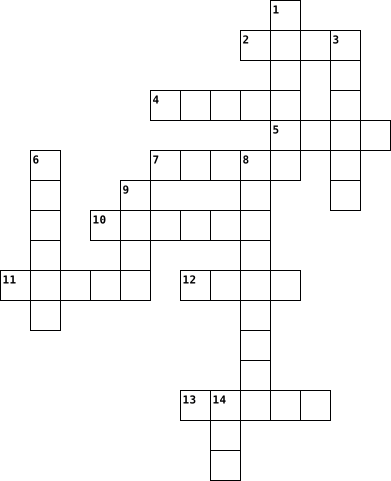
Across
- A color that is a mixture of black and white.
- A color that is often associated with earth and wood.
- A shiny yellow color often associated with wealth and luxury.
- The color of snow, milk, and most clouds.
- A shiny gray color often associated with metal.
- The absence of color or a very dark shade.
- A color that is often associated with the sky and ocean.
- A color that is often associated with grass and leaves.
Down
- A color that is a mixture of red and yellow.
- A bright color that is often associated with the sun.
- A color that is a mixture of blue and red.
- A greenish-blue color often associated with gemstones.
- A light shade of red that is often associated with girls.
- A color that is often associated with fire and love.
14 Clues: The color of snow, milk, and most clouds. • A color that is a mixture of blue and red. • The absence of color or a very dark shade. • A color that is a mixture of red and yellow. • A color that is a mixture of black and white. • A shiny gray color often associated with metal. • A color that is often associated with fire and love. • ...
Color 2021-11-14

Across
- Light that is reflected off a surface and seen by the human eye.
- Combinations of primary and secondary colors.
- The purity of a hue
- A name for a color.
- A light value of a color.
Down
- Red and yellow make this color.
- A group of colors that cannot be made by other colors.
- A dark value of a color.
- A path made by a moving point.
- Blue and yellow make.
- The darkness or lightness of a color
- Shapes, lines or colors repeated in a planned way.
- Blue and red make.
- A group of colors made by mixing primary colors.
14 Clues: Blue and red make. • The purity of a hue • A name for a color. • Blue and yellow make. • A dark value of a color. • A light value of a color. • A path made by a moving point. • Red and yellow make this color. • The darkness or lightness of a color • Combinations of primary and secondary colors. • A group of colors made by mixing primary colors. • ...
Solutions and Acids/Bases 2024-06-04

Across
- amount of solute
- is the dissolved
- does the dissolving
- point in a titration when two solutions have chemically equivalent amounts
- solution that has the maximum amount of solute
- the number of moles per liter in a solution
- capable of being dissolved
- when water is the solvent
- a substance that can act as either an acid or a base
- when liquids are not soluble with each other
Down
- separation of ions when an ionic compound dissolves
- theory in which an acid produces H+ or H3O+ and the base produces OH-
- when large solvent particles settle unless constantly stirred
- theory in which an acid is a proton (H+) donor and the base accepts proton
- a homogeneous mixture in which substances are in the same phase
- hydronium and hydroxide ions react to form water
- to determine if a mixture is a solution of colloid by dispersing light
- insoluble solid formed from a liquid solution
- represented by the formula M1V1 = M2V2
- a substance that accepted a proton and can now be a donor in the reverse reaction
- point in a titration when the solution changes color (and stays that color)
- theory in which the acid is an electron pair acceptor and the base is a donor
22 Clues: amount of solute • is the dissolved • does the dissolving • when water is the solvent • capable of being dissolved • represented by the formula M1V1 = M2V2 • the number of moles per liter in a solution • when liquids are not soluble with each other • insoluble solid formed from a liquid solution • solution that has the maximum amount of solute • ...
Elements of Art and Color Theory 2021-11-04

Across
- adding black to a color
- Tints and Shades using a single Hue.
- feeling of depth
- 3dimensional Sculpture
- Zigzag, straight, and wavy
- lightness or darkness of a color
- brightness or dullness of a color
- adding white to a color
- oranges, reds, yellows
- blues, greens, violets
- the illusion of creating a feeling in a drawing
Down
- green, blue-green, blue
- yellow and violet
- Square, circle, and rectangle
- red, blue, yellow
- blue-green
- green, violet, orange
17 Clues: blue-green • feeling of depth • yellow and violet • red, blue, yellow • green, violet, orange • 3dimensional Sculpture • oranges, reds, yellows • blues, greens, violets • adding black to a color • green, blue-green, blue • adding white to a color • Zigzag, straight, and wavy • Square, circle, and rectangle • lightness or darkness of a color • brightness or dullness of a color • ...
Knowledge-Crossword 2017-10-26

Across
- / the central focal point in the retina, around which the eye's cones cluster
- Perception / the ability to see objects in three dimensions although the images that strike the retina are two dimensional; allows us to judge distance
- / an organized whole. Gestalt psychologists emphasized our tendency to integrate pieces of information into meaningful wholes
- / the transparent structure behind the pupil that changes shape to help focus images on the retina
- Perception (ESP) / the controversial claim that perception can occur apart from sensory input; includes telepathy, clairvoyance, and precognition
- (three-color) Theory / the theory that the retina contains three different color receptors - one most sensitive to red, one to green, and one to blue- which, when stimulated in combination, can produce the perception of any color
- / the sense or act of hearing
- Spot / the point at which the optic nerve leaves the eye, creating a "blind" spot because no receptor cells are located there
- Detection Theory / a theory predicting how and when we detect the presence of a faint stimulus (signal) amin background stimulation (noise). Assumes there is no single absolute threshold and that detection depends partly on a person's experience, expectations, motivation, and level of fatigue
- Phenomenon / an illusion of movement created when two or more adjacent lights blink on and off in quick succession
- Constancy / perceiving familiar objects as having consistent color, even if changing illumination alters the wavelengths reflected by the object
Down
- Sense / the sense of body movement and position, including the sense of balance
- / the study of paranormal phenomena, including ESP and psychokinesis.
- / the system for sensing the position and movement of individual body parts
- / the light-sensitive inner surface of the eye, containing the receptor rods and cones plus layers of neurons that begin the processing of visual information
- Law / the principle that, to be perceived as different, two stimuli must differ by a constant minimum percentage (rather than a constant amount)
- Cues / depth cues, such as interposition and linear perspective, available to either eye alone
- Factors Psychology / a branch of psychology that explores how people and machines interact and how machines and physical environments can be made safe and easy to use
- / a ring of muscle tissue that forms the colored portion of the eye around the pupil and controls the size of the pupil opening.
- Nerve / the nerve that carries neural impulses from the eye to the brain
20 Clues: / the sense or act of hearing • / the study of paranormal phenomena, including ESP and psychokinesis. • Nerve / the nerve that carries neural impulses from the eye to the brain • / the system for sensing the position and movement of individual body parts • / the central focal point in the retina, around which the eye's cones cluster • ...
Knowledge-Crossword 2017-10-26

Across
- / the system for sensing the position and movement of individual body parts
- Constancy / perceiving familiar objects as having consistent color, even if changing illumination alters the wavelengths reflected by the object
- Perception / the ability to see objects in three dimensions although the images that strike the retina are two dimensional; allows us to judge distance
- Detection Theory / a theory predicting how and when we detect the presence of a faint stimulus (signal) amin background stimulation (noise). Assumes there is no single absolute threshold and that detection depends partly on a person's experience, expectations, motivation, and level of fatigue
- Cues / depth cues, such as interposition and linear perspective, available to either eye alone
- / the study of paranormal phenomena, including ESP and psychokinesis.
- Sense / the sense of body movement and position, including the sense of balance
- / the light-sensitive inner surface of the eye, containing the receptor rods and cones plus layers of neurons that begin the processing of visual information
Down
- Factors Psychology / a branch of psychology that explores how people and machines interact and how machines and physical environments can be made safe and easy to use
- / the transparent structure behind the pupil that changes shape to help focus images on the retina
- / a ring of muscle tissue that forms the colored portion of the eye around the pupil and controls the size of the pupil opening.
- Perception (ESP) / the controversial claim that perception can occur apart from sensory input; includes telepathy, clairvoyance, and precognition
- Nerve / the nerve that carries neural impulses from the eye to the brain
- Spot / the point at which the optic nerve leaves the eye, creating a "blind" spot because no receptor cells are located there
- / the central focal point in the retina, around which the eye's cones cluster
- (three-color) Theory / the theory that the retina contains three different color receptors - one most sensitive to red, one to green, and one to blue- which, when stimulated in combination, can produce the perception of any color
- Phenomenon / an illusion of movement created when two or more adjacent lights blink on and off in quick succession
- / the sense or act of hearing
- Law / the principle that, to be perceived as different, two stimuli must differ by a constant minimum percentage (rather than a constant amount)
- / an organized whole. Gestalt psychologists emphasized our tendency to integrate pieces of information into meaningful wholes
20 Clues: / the sense or act of hearing • / the study of paranormal phenomena, including ESP and psychokinesis. • Nerve / the nerve that carries neural impulses from the eye to the brain • / the system for sensing the position and movement of individual body parts • / the central focal point in the retina, around which the eye's cones cluster • ...
Knowledge-Crossword 2017-10-26

Across
- Sense / the sense of body movement and position, including the sense of balance
- / the transparent structure behind the pupil that changes shape to help focus images on the retina
- Perception (ESP) / the controversial claim that perception can occur apart from sensory input; includes telepathy, clairvoyance, and precognition
- (three-color) Theory / the theory that the retina contains three different color receptors - one most sensitive to red, one to green, and one to blue- which, when stimulated in combination, can produce the perception of any color
- Perception / the ability to see objects in three dimensions although the images that strike the retina are two dimensional; allows us to judge distance
- / an organized whole. Gestalt psychologists emphasized our tendency to integrate pieces of information into meaningful wholes
- / the sense or act of hearing
- Constancy / perceiving familiar objects as having consistent color, even if changing illumination alters the wavelengths reflected by the object
- Cues / depth cues, such as interposition and linear perspective, available to either eye alone
- Detection Theory / a theory predicting how and when we detect the presence of a faint stimulus (signal) amin background stimulation (noise). Assumes there is no single absolute threshold and that detection depends partly on a person's experience, expectations, motivation, and level of fatigue
- / a ring of muscle tissue that forms the colored portion of the eye around the pupil and controls the size of the pupil opening.
Down
- / the system for sensing the position and movement of individual body parts
- / the study of paranormal phenomena, including ESP and psychokinesis.
- / the light-sensitive inner surface of the eye, containing the receptor rods and cones plus layers of neurons that begin the processing of visual information
- / the central focal point in the retina, around which the eye's cones cluster
- Factors Psychology / a branch of psychology that explores how people and machines interact and how machines and physical environments can be made safe and easy to use
- Nerve / the nerve that carries neural impulses from the eye to the brain
- Law / the principle that, to be perceived as different, two stimuli must differ by a constant minimum percentage (rather than a constant amount)
- Spot / the point at which the optic nerve leaves the eye, creating a "blind" spot because no receptor cells are located there
- Phenomenon / an illusion of movement created when two or more adjacent lights blink on and off in quick succession
20 Clues: / the sense or act of hearing • / the study of paranormal phenomena, including ESP and psychokinesis. • Nerve / the nerve that carries neural impulses from the eye to the brain • / the system for sensing the position and movement of individual body parts • / the central focal point in the retina, around which the eye's cones cluster • ...
Cumulative Exam 2 Units 3 and 4 2025-01-07

Across
- perceiving objects as unchanging even as illumination and retinal images change (2)
- process of organizing and interpreting sensory information
- the perception that we control our own fate (2)
- learning that certain events occur together (2)
- the distance from the peak of one light or sound wave to the peak of the next
- any event or situation that evokes a response
- decreasing responsiveness with repeated exposure to a stimulus
- processing guided by perception and then interpreting sensation (2)
- the influence of bodily sensations on cognitive preferences and judgements (2)
- chamber between the eardrum and cochlea containing the ossicles where vibrations transfer (2)
- the dimension of color that is determined by the wavelength of light
- the amount of energy in a light wave or sound wave which influences what we perceive as brightness or loudness determined by amplitude
- behavior that operates on the environment producing consequences (2)
- a mental representation of the layout of one’s environment (2)
- a device for converting sounds into electrical signals and stimulating the auditory nerve through electrodes threaded into the cochlea (2)
- the theory that the retina contains three different types of color receptors which when stimulated in combination can produce the perception of color
- principle that one sense may influence another (2)
- innermost part of the ear containing the cochlea (2)
- view that psychology should be an objective science of observable behavior
Down
- the process of receiving and representing stimulus energies from our environment
- learning that occurs but is not apparent until there is an incentive to demonstrate it (2)
- the theory that opposing retinal processes enable color vision (2)
- perceiving objects as having consistent color even if light changes
- the diminishing of a conditioned response
- behavior that occurs as an automatic response to some stimulus (2)
- processing beginning with the sensory receptors and works up to the perception (2)
- theory that says the rate of nerve impulses traveling up the auditory nerve tell the tone (2)
- the perception that chance or outside forces beyond our personal control determine our fate (2)
- the reappearance after a pause of an extinguished conditioned response (2)
- the process of acquiring through experience new and relatively enduring information or behaviors
- theory that links the pitch we hear with the place in the cochlea that it stimulates (2)
- bony fluid filled tube in the inner ear that transduces sound waves to neural impulses
- a sudden realization of a problem’s solution
- the acquisition of mental information (2)
34 Clues: the diminishing of a conditioned response • the acquisition of mental information (2) • a sudden realization of a problem’s solution • any event or situation that evokes a response • the perception that we control our own fate (2) • learning that certain events occur together (2) • principle that one sense may influence another (2) • ...
Test #3 Review 2017-01-26
Across
- When you mix black into a base color.
- How long was the Fauvist movement popular for?
- A color scheme that uses only one base color with tints and shades of the base color.
- A natural blended fade from hue to hue.
- When a picture shows depth by overlapping layers, changing the size, and changing the color of objects.
- Green, Blue, and Violet are examples of _______.
- Color is light that is seen through different ________.
- Colors that are side by side on the color wheel are ____ colors.
- The study of mixing and pairing colors on the color wheel is known as color _________.
- Yellow-orange is an example of a _______ color.
- is the artist who started the Fauvist movement.
Down
- A type of balance where the picture is even on both sides.
- Red, Orange and Yellow are examples of ______ colors.
- When you mix white into a base color.
- Colors that are across the color wheel are ______ color pairs.
- Fauvists painted their pictures using ________ colors.
- Green-Blue+Red=
- A type of balance where the image is even all the way around.
- These colors cannot be mixed from other colors, but can be used to make other colors.
- what does Fauves translate to in French?
- art that does not look a familiar object.
- the Fauvist movement took place in the _____ century.
- Orange, Violet and Green are examples of _______ colors.
- A complementary color scheme is used to show _______.
- Specific color combinations are called Color _____.
25 Clues: Green-Blue+Red= • When you mix black into a base color. • When you mix white into a base color. • A natural blended fade from hue to hue. • what does Fauves translate to in French? • art that does not look a familiar object. • How long was the Fauvist movement popular for? • Yellow-orange is an example of a _______ color. • is the artist who started the Fauvist movement. • ...
Chapter 5 - Sensation 2013-02-24

Across
- coiled, cony, fluid-filled tube
- theory that the rate of nerve impulses traveling up the auditory nerve matches the frequency of the tone
- theory that opposing retinal processes enable color vision
- ring of muscle tissue that forms the colored portion of the eye around the pupil
- theory predicting how and when we detect the presence of a faint stimulus amid background stimulation
- study of relationships between the physical characteristics of stimuli
- sense of hearing
- theory that the retina contains 3 different color receptors
- system for sensing the position and movement of individual body parts
- adjustable opening in the center of the eye
- / processing of several aspects of a problem simultaneously
- chamber between the eardrum and the cochlea
- hearing loss caused by damage to the mechanical system
- condition in which nearby objects are seen more clearly than distant objects
- receptor cells that are concentrated near the center of the retina and function in daylight
- conversion of one form of energy into another
- process by which the eye's lens changes shape to focus near or far objects on the retina
- hearing loss caused by damage to the cochlea's receptor cells
- condition in which faraway objects are seen more clearly than near objects
- transparent structure behind the pupil
- nerve that carries neural impulses form the eye to the brain
- a tone's highness or lowness
Down
- theory that the spinal cord contains a neurological "gate"
- the point at which the optic nerve leaves the eye
- below one's absolute threshold for conscious awareness
- amount of energy in a light or sound wave
- minimum difference between two stimuli required for detection 50 percent of the time
- nerve cells in the brain that respond to specific features of the stimulus
- principle that one sense may influence another
- analysis that begins with the sense receptors
- light-sensitive inner surface of the eye
- central focal point in the retina
- analysis that is guided by higher-level mental processes
- perceiving familiar objects as having consistent color, even if changing illumination alters the wavelengths
- retinal receptors that detect black, white and gray
- process of organizing and interpreting sensory information
- the principle that, to be perceived as different, two stimuli must differ by a constant minimum percentage
- minimum stimulation needed to detect a particular stimulus 50 percent of the time
- theory that links the pitch we hear with the place where the cochlea's membrane is stimulated
- distance of one light or sound wave to the peak of the next
- sense of body movement and position
- process by which our sensory receptors and nervous system receive and represent stimulus energies from our environment
- dimension of color that is determined by the wavelength of light
- sharpness of vision
- innermost part of the ear
45 Clues: sense of hearing • sharpness of vision • innermost part of the ear • a tone's highness or lowness • coiled, cony, fluid-filled tube • central focal point in the retina • sense of body movement and position • transparent structure behind the pupil • light-sensitive inner surface of the eye • amount of energy in a light or sound wave • adjustable opening in the center of the eye • ...
painting crossword puzzle 2022-03-29
Across
- prepare or prime canvas surface
- opposite from each other on the color wheel
- quick drying paint
- large belly that tapers to a fine point
- liquid mixed with paint to make it easier to spread
- gently intermingling 2 or more colors
- designers use to communicate with users through appealing color scheme in visual interfaces
- creates a textured effect as a faux finish
- split equal distance between each color
- where white is added to make it lighter
Down
- paint that uses liquid water
- able to dissolve in water
- flat brush with a round top
- colors next to each other on the color wheel
- color combinations created by the equal mixture of two primary colors
- where black is added to make it darker
- painting surface
- colors that cannot be created by mixing other colors
- made by combining equal parts of primary and secondary colors
- type of constant glue like fluid component in paints
- a paste like paint
21 Clues: painting surface • quick drying paint • a paste like paint • able to dissolve in water • flat brush with a round top • paint that uses liquid water • prepare or prime canvas surface • gently intermingling 2 or more colors • where black is added to make it darker • large belly that tapers to a fine point • split equal distance between each color • ...
My Sensations and Perceptions 2019-10-17

Across
- Peripheral and Grey Scale
- The change of your selective inattention without you noticing
- Process of turning light into images
- Part of the eye that protects it
- Theory that states we only see in three colors
- A literal hole in the eye that lets light in
- Part of the eye that bends to allow light in
- Failure to see visible objects when our attention is elsewhere
- consciously focusing your awareness on a certain stimuli
Down
- Theory that states while we're processing color, we are unconsciously processing its complimentary color
- Opposite of Rods
- Not ignoring outside factors but purposely focusing on something
- Sits in the back of your eye
- This process analyzes the sense
- What occurs when our sensory and nervous system receive stimulus
- The muscle surrounding the pupil
16 Clues: Opposite of Rods • Peripheral and Grey Scale • Sits in the back of your eye • This process analyzes the sense • Part of the eye that protects it • The muscle surrounding the pupil • Process of turning light into images • A literal hole in the eye that lets light in • Part of the eye that bends to allow light in • Theory that states we only see in three colors • ...
Black Codes 2025-03-27

Across
- What type of services were enslaved people often forbidden from holding without supervision?
- What document did free people of color need to carry in some states?
- Who wrote the first defense of African enslavement based on skin color?
- What economic activity were enslaved people generally prohibited from engaging in?
- What term describes informal, everyday customs in society?
- What theory linked skin color to climate?
- What legal status did children of enslaved mothers inherit?
- How could an enslaved person be emancipated?
Down
- What term describes laws that restricted the rights of free African Americans?
- What religious-based theory was used to justify slavery?
- Who proposed the "family order" concept to justify slavery?
- What specific laws were used to control enslaved people?
- What was illegal for enslaved people to learn?
- What was the name for former enslaved people who escaped to free states?
- What punishment did enslaved people often face for learning to read?
- What term describes the process of freeing an enslaved person?
16 Clues: What theory linked skin color to climate? • How could an enslaved person be emancipated? • What was illegal for enslaved people to learn? • What religious-based theory was used to justify slavery? • What specific laws were used to control enslaved people? • What term describes informal, everyday customs in society? • ...
My Sensations and Perceptions 2019-10-17

Across
- Part of the eye that protects it
- What occurs when our sensory and nervous system receive stimulus
- This process analyzes the sense
- Failure to see visible objects when our attention is elsewhere
- Part of the eye that bends to allow light in
- Process of turning light into images
- The muscle surrounding the pupil
- consciously focusing your awareness on a certain stimuli
- Peripheral and Grey Scale
Down
- Not ignoring outside factors but purposely focusing on something
- The change of your selective inattention without you noticing
- Theory that states while we're processing color, we are unconsciously processing its complimentary color
- Sits in the back of your eye
- Opposite of Rods
- A literal hole in the eye that lets light in
- Theory that states we only see in three colors
16 Clues: Opposite of Rods • Peripheral and Grey Scale • Sits in the back of your eye • This process analyzes the sense • Part of the eye that protects it • The muscle surrounding the pupil • Process of turning light into images • Part of the eye that bends to allow light in • A literal hole in the eye that lets light in • Theory that states we only see in three colors • ...
Color 2021-11-14

Across
- A dark value of a color.
- A path made by a moving point.
- Light that is reflected off a surface and seen by the human eye.
- Combinations of primary and secondary colors.
- Shapes, lines or colors repeated in a planned way.
- A name for a color.
- The purity of a hue
Down
- Blue and yellow make.
- A group of colors that cannot be made by other colors.
- A group of colors made by mixing primary colors.
- The darkness or lightness of a color
- Red and yellow make this color.
- Blue and red make.
- A light value of a color.
14 Clues: Blue and red make. • A name for a color. • The purity of a hue • Blue and yellow make. • A dark value of a color. • A light value of a color. • A path made by a moving point. • Red and yellow make this color. • The darkness or lightness of a color • Combinations of primary and secondary colors. • A group of colors made by mixing primary colors. • ...
Color 2018-05-06

Across
- / สีดำ
- / สีส้ม
- / สีทอง
- / สีฟ้าเข้ม
- / สีเขียวอ่อน
- / สีฟ้าอ่อน
- / สีชมพู
Down
- / สีเทา
- / สีน้ำตาล
- / สีม่วง
- / สีแดง
- / สีเขียวเข้ม
- / สีเงิน
- / สีขาว
14 Clues: / สีดำ • / สีเทา • / สีแดง • / สีส้ม • / สีทอง • / สีขาว • / สีม่วง • / สีเงิน • / สีชมพู • / สีน้ำตาล • / สีฟ้าเข้ม • / สีฟ้าอ่อน • / สีเขียวเข้ม • / สีเขียวอ่อน
Color 2023-10-12

Across
- The color of the sky on a clear day.
- Shiny and precious, like a treasure.
- A soft, light purple color, like some flowers.
- A mix of blue and green, like tropical waters.
- A light and pretty shade of red.
- The color of a bright, shining sun.
Down
- A mix of blue and red, like grapes.
- The color of fresh snow and clouds.
- The darkest color, like the night sky.
- The color of ripe strawberries or fire trucks.
- The color of leaves on trees and grass.
- A mix of black and white, like a rainy day.
- A shiny, metallic color, like a coin.
- The color of tree trunks and chocolate.
14 Clues: A light and pretty shade of red. • A mix of blue and red, like grapes. • The color of fresh snow and clouds. • The color of a bright, shining sun. • The color of the sky on a clear day. • Shiny and precious, like a treasure. • A shiny, metallic color, like a coin. • The darkest color, like the night sky. • The color of leaves on trees and grass. • ...
COLOR 2023-10-28

Across
- A mix of red and yellow.
- A bright color like the sun.
- The darkest color, like the night.
- A shiny and metallic color.
- A combination of red and blue.
- The color of grass and leaves.
- A deep blue color.
Down
- A neutral color, not too dark or too light.
- The color of the sky on a clear day.
- The absence of color, like snow.
- The color of tree bark.
- A soft and sweet color.
- A bright color like an apple.
- A precious and
14 Clues: A precious and • A deep blue color. • The color of tree bark. • A soft and sweet color. • A mix of red and yellow. • A shiny and metallic color. • A bright color like the sun. • A bright color like an apple. • A combination of red and blue. • The color of grass and leaves. • The absence of color, like snow. • The darkest color, like the night. • The color of the sky on a clear day. • ...
Color 2023-06-22

Across
- A light, delicate color, often thought of as a more gentle version of red. It can represent love, friendship, or compassion.
- A vibrant, regal color that is a blend of blue and red. It is often associated with royalty, creativity, or mystery.
- A warm, earthy color like the color of tree bark or chocolate. It can represent stability, reliability, or the natural world.
- A soothing color found in nature, like the color of grass, leaves, or cucumbers. It can represent growth, freshness, or the environment.
- A shiny, luxurious color that is often associated with wealth, success, or achievement. It can also represent warmth and optimism.
- A pure, clean color that represents light or freshness. It is often associated with innocence, purity, or simplicity.
- A neutral, balanced color that can be found between black and white. It can represent sophistication, simplicity, or stability.
Down
- A strong, powerful color that can represent mystery, elegance, or strength. It is often associated with sophistication or formality.
- A cool, metallic color that is associated with sleek, modern design, technology, and elegance. It can also represent clarity or purity.
- A bright, warm color like the color of a fire truck or a ripe apple. It can represent love, excitement, or danger.
- A cool, calming color like the sky or the ocean. It can represent trust, loyalty, or tranquility.
- A warm, energetic color that reminds us of the fruit with the same name. It is a mix of red and yellow, and it is often associated with happiness and creativity.
- A cheerful, sunny color like sunflowers or lemons. It can represent joy, positivity, and energy.
- A deep, rich color that is a combination of blue and purple. It is often associated with wisdom and intuition, and it can also be found in the night sky.
14 Clues: A cheerful, sunny color like sunflowers or lemons. It can represent joy, positivity, and energy. • A cool, calming color like the sky or the ocean. It can represent trust, loyalty, or tranquility. • A bright, warm color like the color of a fire truck or a ripe apple. It can represent love, excitement, or danger. • ...
Psychology CrossWord Puzzle 2024-02-09

Across
- Conversion of one form of energy into another?
- The vision, the ability to adjust to an artificially displaced or even inverted visual field?
- is the sensory analysis that begins at the entry level, with information flowing from the sensory receptors to the brain?
- The theory that the spinal cord contains a neurological gate that blocks pain signal or allows them to pass on to the brain?
- The minimum stimulation needed to detect a particular stimulus 50 percent of the time?
- very limited aspect of incoming information, blocking out most, often shifting the spotlight of our attention from one thing to another is called what?
- Failing to notice changes in the environment?
- Hearing loss caused by the damage to the mechanical system that conduct sound waves to the cochlea is what?
- What is depth cues, such as interposition and linear perspective, available to either eye alone?Phi Phenomenon: The illusion of acmovement created when two or more adjacent lights blink on and off in quick succession?
- Theory that links the pitch we hear with the place where the cochlea's membrane is stimulated?
- Depth cues, such as retinal disparity, that depend on the use of two eyes?
- A binocular cue for perceiving depth: by comparing images from the retinas in the two eyes, the brain computes distance - the greater the difference between the two images, the closer the object?
- Doing many things at once is called a what?
Down
- There is Barley anything noticeable difference we discern between two stimuli 50% of the time?
- The organization of visual fields into objects (the figures) that stand out from their surroundings (the ground) is what?
- Hearing loss caused by damage to cochlea's hair cells or their associated nerves is called a what?
- What is the analysis that beings with the brain and flows down, filtering information through our experience and expectation?
- failing to see visible object when our attention is direct elsewhere?
- Theory The theory that the retina contains three different color receptors. (red, green and blue) is what?Opponent Process Theory: Theory that opposing retinal process (red-green, yellow-blue, white-black) enable color vision?
- The illusion of a movement created when two or more adjacent lights blink on and off in quick succession?
- Theory that opposing retinal process(red-green,yellow-blue,white-black) enable color vision?
- The Theory that demonstrates that individual absolute threshold vary, depending on the strength of the signal and also on our experience, expectation, motivation, and alertness?
- The theory that rate of nerve impulses traveling up the auditory nerve matches the frequency of a tone, thus enabling us to sense its pitch is called what?
- A mental predisposition to perceive one thing and not another?
- Brain cells that respond to specific features of the stimulus, such as shape, angle, or movement?
- What is below one's absolute threshold for conscious awareness?
- The sense of body movement and position, including the sense of balance is called what?
- Laboratory device for testing depth perception in infants and young animals?
- What is the system for sensing the position and movement of individual body parts?
- States that two stimuli must differ by a constant proportion to be perceived as different?
30 Clues: Doing many things at once is called a what? • Failing to notice changes in the environment? • Conversion of one form of energy into another? • A mental predisposition to perceive one thing and not another? • What is below one's absolute threshold for conscious awareness? • failing to see visible object when our attention is direct elsewhere? • ...
Unit 4 - Sensation and Perception 2023-11-17

Across
- rule of perception in which we view changes in shape as movement, rather than independent objects
- idea that we only process what is absolutely necessary to deal with our environment
- measure of pitch
- this inner ear system contributes to balance, can cause vertigo
- this theory states we have three types of cones sensitive to red, green, and blue
- also known as the tympanic membrane
- opponent process theory of color used these to identify opposing color pairs
- rule of perception in which we fill missing data
- opening in eye for light to enter
- receptors for audition
- receptors for smell
- messages that are communicated below absolute threshold
- muscle that controls the pupil
- most common type of perceptual processing in which we used context
- this theory argues that we sometime get our sensations wrong because we are influenced by outside factors
- predisposition to perceive data in one way based on experience
- train track illusion
- procedure used to test for telepathy
- minimum stimuli need to meet this threshold
- rule of perception in which we group items that are alike
- different light wavelengths allow for this aspect of vision
- this sensory process allows us to become less sensitive to intense stimuli over time
- minimum variation needed to meet this threshold
- visual illusion that messes with your view of a room
Down
- receptors for taste
- type of hearing loss due to something stuck in your ear
- theory that states that the number of neural impulses triggered in the auditory nerve creates our perception of different tones
- location of rods/cones
- location of hair cells in the ear
- process of converting stimuli into neural impulses
- rule of perception in which we place certain items in the front, and others in the back
- school of psychology that focused heavily on perception
- measure of loudness
- selective attention issue as seen in the gorilla example
- type of hearing loss due to genes
- bends light onto retina
- this states that our ability to meet difference threshold is dependent on the intensity of the original stimulus
- mental process of interpreting environmental stimuli
- biological process of detecting environmental stimuli
- location in eye with no rods/cones
- color receptors for sight
41 Clues: measure of pitch • receptors for taste • receptors for smell • measure of loudness • train track illusion • location of rods/cones • receptors for audition • bends light onto retina • color receptors for sight • muscle that controls the pupil • location of hair cells in the ear • opening in eye for light to enter • type of hearing loss due to genes • location in eye with no rods/cones • ...
Sensations and Perceptions Vocabulary Crossword 2017-11-13

Across
- chamber in ear that contains hammer, anvil and stirrup that concetrate vibrations of the eardrum
- study of paranormal things like esp and psychokenisis
- the minimum stimulation needed to detect a particular stimulus 50 percent of the time
- when paying attention to certain part of visual scene, most fail to see major changes in other parts
- ability to see things in three dimensions when images are two dimensionalallowing distance to be judged
- receptors that detect black and white, AND PERIPHERARL AND TWILIGHT VISION
- pitch we hear linked with the place where the cochlea's membrane is stimulated.
- a theory predicting how and when we detect the presence of a faint stimuli, no single absolut threshold, just stored informations for short time
- nerve cells that respond to certain features
- hearing loss caused by damage to cochleas receptor cells or audtiory nerves, also called nerve deafness
- property of sound waves dependent of frequency
- focal point of eye, where there are most cones
- organization of the visual field into objects that stand out from their surroundings
- tube in ear that contains flueid that moves from vibrations
- depth cues that use both eyes
- tendency when percieving to organize stimuli into similiar groups
- opposite color receptors allow color vision, show cause of afterimages
- information processing lefd by higher level mental processes and constructing perceptions
- amount of energy in a wave, or amplitude
- sense of body movement and position, including the sense of balance
- system for sensing the position and movement of individual body parts
- carries neural impulses from eye to brain
- innermost part of eear with cochlea, and vestibular sacks
- device for cochlea to convert sound into electrical input and simulate auditory senses
- depth cues that only require one eye
- activation of associations
- diminished sensitivity as a consequence of constant stimulation
- detection of stimuli below absolute threshold
Down
- place on eye with no receptors
- property of color determined by wavelength , color names
- something percieved as a whole and not parts
- only being able to attend to a selective amount of sensory information at a time
- sense of hearing
- inner surface of eye that has photoreceptors and neurons
- percieving familiar objects as having same color even if they dont
- percieving ojects as not having changed even if light or image changed
- conversion from one form of energy to another such A FROM STIMULUS ENERGIES TO NEURAL IMPULSES
- transparent layer behind pupil that helps focus images on retina
- mental predisposition to percieve certain things and not other things
- rate of nerve impulses traveling up the auditory nerve matches the frequency of a tone, enabling us to sense its pitch.
- retina contain three receptors each receptive to red, green, and blue that commined make any color
- the minimum difference between two stimuli required for detection 50% of the tim
- receptors for daylight with color and details
- lack of attention that causes sensory information is recieved but not percieved
- the influence of bodily sensations, gestures, and other states on cognitive preferences and judgments
- hearing loss cause by mechanical syste failing to send sound waves to cochlea
- rate at which wave travels in cycles
- some senses influence other senses like smell and taste
- tests depth perception
- analysis that goes from sense receptors to brain integrating sensory information
- claims of sensing non sensory input like telepathy and precognition
- binocular cue to find depth by comparing images from each eye
- processing multipple stimuli at once
- spinal cord has gats that can block pain signals or allow them to pass
- study of relationship between intensity of stimuli and our psychological experiences with those changes
- illusion of movement caused by two or more adjacent lights blinking on and off in rapid succession
- ability to adjust to altered percieved reality
- to be percieved as different, stimuli must differ by constant minimum percentage
- distance between peaks of waves
- eyes lens changing shape to focus images
- opening in center of eye where light enters
- process where brain sorts, identifies and arranges raw data it recieves from the senses
- process where brain takes in information from senses
- colored part of eye that controls pupil
64 Clues: sense of hearing • tests depth perception • activation of associations • depth cues that use both eyes • place on eye with no receptors • distance between peaks of waves • rate at which wave travels in cycles • processing multipple stimuli at once • depth cues that only require one eye • colored part of eye that controls pupil • eyes lens changing shape to focus images • ...
Color 2020-01-07
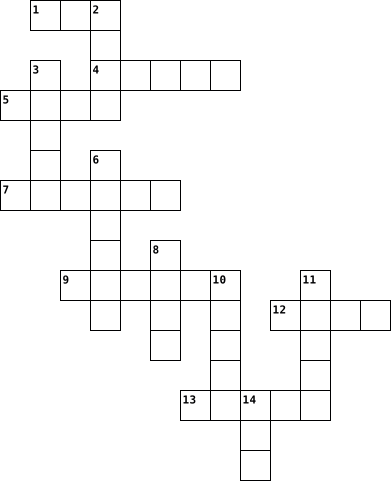
Across
- dust in indonesian is?
- hijau in inggris is?
- blue in indonesian is?
- yellow in indonesian is?
- kuning in inggris is?
- abu in inggris is?
- red in indonesian is?
Down
- violet in indonesian is?
- green in indonesian is?
- ungu in inggris is?
- biru in inggris is?
- putih in inggris is?
- whita in indonesian is?
- merah in inggris is?
14 Clues: abu in inggris is? • ungu in inggris is? • biru in inggris is? • hijau in inggris is? • putih in inggris is? • merah in inggris is? • kuning in inggris is? • red in indonesian is? • dust in indonesian is? • blue in indonesian is? • green in indonesian is? • whita in indonesian is? • violet in indonesian is? • yellow in indonesian is?
color 2023-07-14
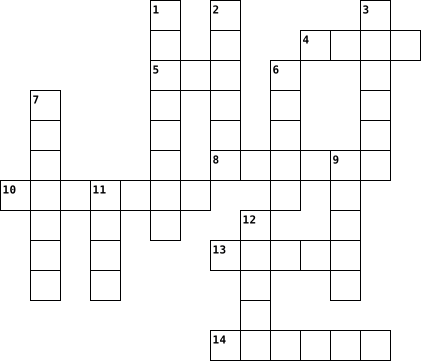
Across
- - The color of the sky on a clear day.
- - The color of ripe strawberries.
- - The color of a juicy citrus fruit.
- - A bright green color resembling a precious gem.
- - A dark gray color resembling a flat rock.
- - The color of a ripe banana.
Down
- - A vibrant shade of yellow-orange.
- - A dark, purplish-blue color.
- - A color often associated with royalty.
- - A vibrant pink-orange color often found in marine life.
- - A deep, rich shade of red.
- - The color of grass and leaves.
- - A bright red color associated with the gemstone.
- - A yellow-green color resembling the fruit.
14 Clues: - A deep, rich shade of red. • - The color of a ripe banana. • - A dark, purplish-blue color. • - The color of grass and leaves. • - The color of ripe strawberries. • - A vibrant shade of yellow-orange. • - The color of a juicy citrus fruit. • - The color of the sky on a clear day. • - A color often associated with royalty. • - A dark gray color resembling a flat rock. • ...
Color 2023-07-10
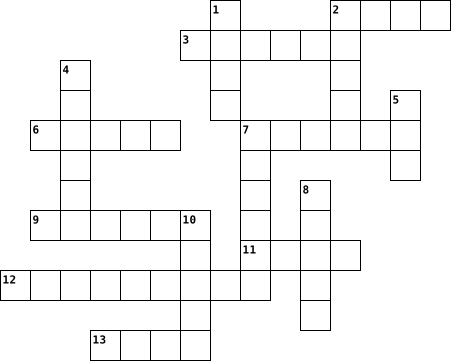
Across
- Shiny, like the color of gold.
- Shiny, like the color of silver.
- The color of soil or chocolate.
- Shining orange color, like the sunset.
- Bright and sunny, like sunlight.
- Cloudy or a similar dull color.
- Bright color with a mix of blue and green.
- The color of the sky.
Down
- Sweet and candy-like color.
- The color of grass or trees.
- The color of flowers or beautiful decorations.
- The color of an apple.
- The color of an orange fruit.
- Dark, like the night sky.
- The color of an elephant's skin or a snowman.
15 Clues: The color of the sky. • The color of an apple. • Dark, like the night sky. • Sweet and candy-like color. • The color of grass or trees. • The color of an orange fruit. • Shiny, like the color of gold. • The color of soil or chocolate. • Cloudy or a similar dull color. • Shiny, like the color of silver. • Bright and sunny, like sunlight. • Shining orange color, like the sunset. • ...
Color 2023-07-13
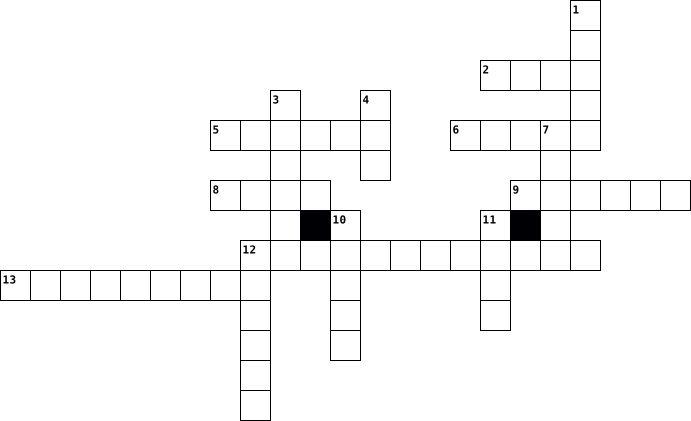
Across
- A calm and soothing color often associated with the sky and the ocean. It can evoke feelings of serenity and tranquility.
- A color often associated with royalty, luxury, and creativity. It can evoke feelings of elegance and mystery.
- A warm and earthy color often associated with stability and reliability. It can bring a sense of comfort and security.
- A soft and delicate color often associated with femininity and sweetness. It can create a sense of tenderness and affection.
- A metallic color often associated with sleekness and modernity. It can symbolize sophistication and elegance.
- A color that combines the brightness of yellow and the freshness of green. It can represent energy and vitality.
- A vibrant blue-green color often associated with the ocean. It can evoke a sense of calmness and relaxation.
Down
- A color commonly associated with nature, plants, and growth. It can symbolize freshness and harmony.
- A warm and energetic color that combines the vibrancy of red and the cheerfulness of yellow. It can create a sense of enthusiasm and excitement.
- A vibrant color that is often associated with energy, passion, and excitement. It can be seen in objects like roses and fire trucks.
- A color often associated with purity, innocence, and cleanliness. It can create a sense of simplicity and peace.
- A color that represents darkness and mystery. It can also symbolize strength and formality.
- A neutral color that is neither black nor white. It can symbolize balance, maturity, and practicality.
- A bright and cheerful color often associated with sunshine and happiness. It can bring a sense of warmth and positivity to the surroundings.
14 Clues: A color that represents darkness and mystery. It can also symbolize strength and formality. • A color commonly associated with nature, plants, and growth. It can symbolize freshness and harmony. • A neutral color that is neither black nor white. It can symbolize balance, maturity, and practicality. • ...
Final Exam Review - Color Theory 2022-11-17

Across
- _________________ color scheme painting is created using oranges, yellows, and reds.
- _________________ is adding white to a color.
- _________________ include red-orange and yellow-orange.
- _________________ in art is the range of lightness or darkness of a value scale.
- _________________ painting is created using one hue.
Down
- _________________ include orange, green, and violet.
- _________________ is opposite on the color wheel creating contrast.
- _________________ is adding black to a color.
- _________________ is another word for pure color.
- red, red-orange, and orange which create a group of colors next to each other on the color wheel is _________________.
- _________________ include red, yellow, and blue.
- _________________ color scheme painting is created using blues, greens, and violets.
12 Clues: _________________ is adding black to a color. • _________________ is adding white to a color. • _________________ include red, yellow, and blue. • _________________ is another word for pure color. • _________________ include orange, green, and violet. • _________________ painting is created using one hue. • _________________ include red-orange and yellow-orange. • ...
Doctors and Medicine – Crossword 2025-05-08

Across
- – Disease spread by fleas
- – Haircutter who did surgery
- – Stars used to diagnose illness
- – Used to suck blood
- – Used to check urine color
- – Burned for sweet smell in rooms
- – Theory of four body fluids
- – Used to mask bad smells
- – Sick were cared for here
Down
- – Common practice to release blood
- - Greek doctor with an oath
- – Method to remove bad blood
- – Deadly medieval disease
- – Medieval pharmacist
- – Religious healing practice
- – Saint items used for healing
- – Influential Roman doctor
- – Skin spots from disease
- – Feared skin disease
- – Plague doctor’s robe color
- – Bad air thought to cause illness
21 Clues: – Used to suck blood • – Medieval pharmacist • – Feared skin disease • – Disease spread by fleas • – Deadly medieval disease • – Skin spots from disease • – Used to mask bad smells • – Influential Roman doctor • – Sick were cared for here • - Greek doctor with an oath • – Used to check urine color • – Haircutter who did surgery • – Method to remove bad blood • ...
Carissa's PsychoBio 2 Exam Puzzle 2015-04-12

Across
- Important for complex processing and refining information that is sent to ganglion cells
- A condition that may result from damage to the inferior temporal cortex; the inability to recognize objects
- ____ is perceived because objects emit or reflect light AND that light stimulates neurons in the eyes and brain
- The hormone release by the cochlea which binds to a receptor and causes a reduction in hearing sensitivity
- These animals have more visual receptors on the top half of their retinas
- At the base of the cochlea each "stiff" hair cell acts as a fine tuned receptor that only responds to a certain frequency in this theory
- Auditory receptor cells
- The result of fatigues bipolar cells
- Area of eye where light enters
- A band of tissue that gives the eyes their color
- There is a high density of rods in the ______ allowing for better sensitivity to dim light
- These neurons have small receptive fields, respond best to detail and color, and are located in or near the fovea
- The "what" pathway of vision
- Color is perceived due to the ratio of activity across the three types of cones according the this theory
- The area of the retina with no receptor cells
- The intensity of a sound wave
- On the most surface layer of the retina; Bipolar cells send their messages to the ______ ______
- These cells are very small and respond to only one cone
- of specific nerve energies Impulses in one neuron indicate light, whereas impulses in another neuron indicates sound
- The system responsible for the sensations of the body and its movements
- # of compressions per second of sound
- A compression of air, water, or another medium
- Response to stimuli without sight is
- Frequent or constant ringing in the ear
- Adjustable portion of the eye which helps focus on objects at a distance
- The perception of the intensity of sound waves
- Tone deafness; the inability to recognize frequency change
- Auditory information is ultimately processed in the primary ____ cortex (A1)
Down
- Flesh and cartilage attached to the side of the head; the outer ear
- Structure within the cochlea in which hair cells are rooted
- The "where" pathway of vision
- Located close to the center of the eye; messages travel from receptors located on the retina here first
- Color is perceived in terms of paired opposites in this theory
- The smallest bone in the human body
- Involved in adjustment of light through the pupil; non-adjustable
- Each area along basilar membrane can only respond to a specific frequency
- Respond best to moving stimuli
- A process that sharpens contrast to emphasize borders of an object
- In the ____ theory, the cortex compares information from various parts of the retina determining brightness and color
- The Eardrum
- Perception of the frequency of a sound wave
- The inability to identify a person's face
- Area in the retina in which each receptor cell connects to a single bipolar cell
- A snail-shaped structure containing 3 fluid-filled tunnels
- Rear surface of the eye; lined with visual receptors
- The inability to perceive color differences
- The hammer,anvil, and stirrup vibrate the ____ in the middle ear
- Area where the optic nerve sends information from the right eye to the left hemisphere and the left eye to the right hemisphere
- Axons of ganglion cells join together to form the
- The basilar membrane vibrates in synchrony with a sound in this theory
- Receptor cells involved in visual acuity and color vision
- Drugs that block dull prolonged pain by blocking the release of Substance P
- Receptor cells involved in peripheral and night vision
53 Clues: The Eardrum • Auditory receptor cells • The "what" pathway of vision • The "where" pathway of vision • The intensity of a sound wave • Respond best to moving stimuli • Area of eye where light enters • The smallest bone in the human body • The result of fatigues bipolar cells • Response to stimuli without sight is • # of compressions per second of sound • ...
8th Grade Studio Art 2025-12-18

Across
- pastel Soft, creamy art medium that allows blending and layering
- The difference between light and dark or strong color differences
- The lightness or darkness of a color
- art Art using flowing lines and organic shapes
- A base layer of color applied before adding details
- The arrangement of elements in an artwork
Down
- Scratching through layers to reveal color underneath
- colors Colors opposite each other on the color wheel
- theory The study of how colors interact and work together
- colors A color scheme using three evenly spaced colors
- A smooth transition from one color or value to another
- An art movement focused on light, color, and visible marks
12 Clues: The lightness or darkness of a color • The arrangement of elements in an artwork • art Art using flowing lines and organic shapes • A base layer of color applied before adding details • Scratching through layers to reveal color underneath • colors Colors opposite each other on the color wheel • A smooth transition from one color or value to another • ...
Sensory Systems 2025-12-08

Across
- The most focused spot in the eye
- The tone determined by frequency
- A type of hearing loss characterized by damage to neurons in the inner ear
- section of ear where the malleus, incus, and stapes are located
- controls the size of the pupil
- the feature of the wave that determines hue
- another term for color
- photo receptor that detects color
- composed of the axons of the ganglion cells
- The theory that explains how we hear low pitches
- hole in center of eye that light passes through
- determined by amplitude
- photo receptor that detects things in peripheral vision
- spiral shaped structure filled with fluid that is vibrated when sound comes
Down
- A type of hearing loss that characterized by soundwaves not being able to get to cochlea
- process of the lens changing shape to focus image on retina
- ___theory that says we have 3 specific types of cones, each type sensitive to a different color
- specialized nerves that respond to specific simple visual stimuli
- a theory that explains how we hear high pitches
- Short wavelengths have a shorter __ long wavelengths have a longer__
- spot in eye with no photoreceptors, where the optic nerve connects to the retina
- pair that studied feature detectors
- largest section of eye, contains the cones and rods
- behind the iris helps to focus near vs. far
- A device that helps restore hearing, attaches to the cochlea
- theory that explains afterimages
- outermost structure of eye, focuses light
- The sensory process of hearing
- The system that lets bottom-up and top-down processing occur simultaneously
- section of ear containing the cochlea
30 Clues: another term for color • determined by amplitude • controls the size of the pupil • The sensory process of hearing • The most focused spot in the eye • The tone determined by frequency • theory that explains afterimages • photo receptor that detects color • pair that studied feature detectors • section of ear containing the cochlea • outermost structure of eye, focuses light • ...
Color Wheel/Color Schemes 2023-12-05
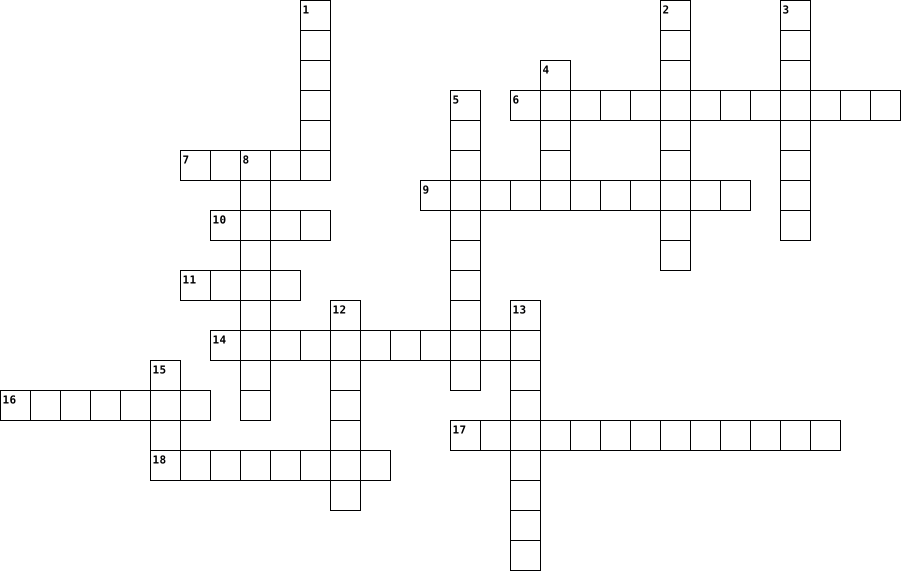
Across
- orange and blue are an example of this color scheme
- add black to the color to get this
- different in lightness and darkness
- yellow, red, orange
- blue, green, violet
- plan for selecting colors for a project/design
- red, blue, and yellow are an example of this color scheme
- one hue with a variety of tints/shades
- yellow-orange is an example of this
Down
- the number of colors on the color wheel
- another word for brightness of a color
- colors that go with all color plans: white, black, brown
- the most important element of design
- circular chart to show color relationships
- these colors are neighbors on the wheel
- secondary colors are obtained by mixing two of these colors
- blue, purple, orange
- add white to the color to get this
18 Clues: yellow, red, orange • blue, green, violet • blue, purple, orange • add black to the color to get this • add white to the color to get this • different in lightness and darkness • yellow-orange is an example of this • the most important element of design • another word for brightness of a color • one hue with a variety of tints/shades • the number of colors on the color wheel • ...
Unit 4 - Sensation and Perception 2023-11-14

Across
- messages that are communicated below absolute threshold
- receptors for audition
- measure of pitch
- minimum stimuli need to meet this threshold
- opponent process theory of color used these to identify opposing color pairs
- this inner ear system contributes to balance
- school of psychology that focused heavily on perception
- color receptors for sight
- receptors for taste
- train track illusion
- condition resulting from problems with the vestibular system leading to dizzy spells
- process of converting stimuli into neural impulses
- location in eye with no rods/cones
- “5th taste - savory”
- theory that states that the number of neural impulses triggered in the auditory nerve creates our perception of different tones
- theory of pain that focuses on competing stimuli
- most common type of perceptual processing in which we used context
- minimum variation needed to meet this threshold
- location of rods/cones
- depth cue in which overlapping items create depth
- rule of perception in which we group items that are alike
- muscle that controls the pupil
Down
- predisposition to perceive data in one way based on experience
- this theory states we have three types of cones sensitive to red, green, and blue
- opening in eye for light to enter
- location of hair cells in the ear
- biological process of detecting environmental stimuli
- mental process of interpreting environmental stimuli
- rule of perception in which we fill missing data
- idea that we only process what is absolutely necessary to deal with our environment
- rule of perception in which we view changes in size as depth rather than size
- visual illusion that messes with your view of a room
- selective attention issue as seen in the gorilla example
- also known as the tympanic membrane
- procedure used to test for telepathy
- rule of perception in which we view changes in shape as movement, rather than independent objects
- type of hearing loss due to something stuck in your ear
- hammer, stirrup, anvil
- this theory argues that we sometime get our sensations wrong because we are influenced by outside factors
- this sensory process allows us to become less sensitive to intense stimuli over time
- rule of perception in which we place certain items in the front, and others in the back
- different light wavelengths allow for this aspect of vision
- measure of loudness
- this states that our ability to meet difference threshold is dependent on the intensity of the original stimulus
- depth cue that relies on tension in your eyes, more tension = closer object
- receptors for smell
- type of hearing loss due to genes
- bends light onto retina
48 Clues: measure of pitch • receptors for taste • measure of loudness • receptors for smell • train track illusion • “5th taste - savory” • receptors for audition • hammer, stirrup, anvil • location of rods/cones • bends light onto retina • color receptors for sight • muscle that controls the pupil • opening in eye for light to enter • location of hair cells in the ear • ...
SIGHT VOCAB 2025-10-17

Across
- Detector Cells Specialized neurons in the brain’s visual cortex that respond to specific visual features, such as edges, angles, shapes, or movement.
- Sharpness or clarity of vision; how clear your eyesight is.
- The process by which the eye’s lens changes shape to focus near or far objects on the retina.
- A condition where distant objects are seen clearly but close objects appear blurry because the image focuses behind the retina.
- Trichromatic Theory The theory that the retina has three types of color receptors (red, green, and blue) that combine to produce all the colors we see.
Down
- Theory The idea that color vision is controlled by three opposing color pairs: red–green, blue–yellow, and black–white. When one color in a pair is activated, the other is suppressed.
- The actual color we see (like red, blue, or green), determined by the wavelength of light.
- Photoreceptor cells in the retina that detect color and detail; they work best in bright light.
- A condition where close objects are seen clearly but distant objects appear blurry because the image focuses in front of the retina.
- Photoreceptor cells in the retina that detect black, white, and gray; they work best in dim light and help with night vision.
- Constancy The ability to see consistent colors even under different lighting conditions (a red apple looks red in sunlight and shade).
11 Clues: Sharpness or clarity of vision; how clear your eyesight is. • The actual color we see (like red, blue, or green), determined by the wavelength of light. • The process by which the eye’s lens changes shape to focus near or far objects on the retina. • Photoreceptor cells in the retina that detect color and detail; they work best in bright light. • ...
OBJECTIVE: 2.01 Understand color basics and color theory KEY TERMS 2023-09-26

Across
- A choice of colors to be used in combination.
- Describes the lightness or darkness of a color.
- Colors with no hue; such as black, white, gray, brown, tan, ivory, beige.
- A diagram of the spectrum of hues in a continuous circle representing their relationship to each other.
- Hues created by mixing two primary hues. They are: orange, violet (purple), green.
- Refers to only one color including its variations in value and intensity.
- Describes the brightness or dullness of a color. Hues are at full intensity.
- The duller or desaturated version of a hue created by adding gray.
- Hues created by mixing a primary hue and a secondary hue. The tertiary colors are red-orange, yellow-orange, yellow-green, blue-green, blue-violet, and red-violet.
Down
- Darker value of a hue created by adding black.
- Hues located opposite each other on the color wheel.
- three hues red, yellow, and blue which form the foundation of the color wheel and from which all other hues are made.
- Hues located next to each other on the color wheel.
- The colors from yellow through orange to red on the color wheel. These colors remind us of sun and fire. They seem to advance and are energizing.
- Color combinations based on color wheel relationships which are widely considered to create pleasing and balanced color schemes.
- The colors from green through blue to violet on the color wheel. These colors remind us of water and sky. They seem to recede and are calming and soothing.
- The pure color at the base of all variations of a color. For example, the hue blue is at the base of navy, while the hue orange is the base of peach. Hues are shown on the color wheel.
- Occurs when a color appears different under one light source than it does under another.
- Lighter value of a hue created by adding white.
19 Clues: A choice of colors to be used in combination. • Darker value of a hue created by adding black. • Describes the lightness or darkness of a color. • Lighter value of a hue created by adding white. • Hues located next to each other on the color wheel. • Hues located opposite each other on the color wheel. • ...
COLOR 2012-11-29
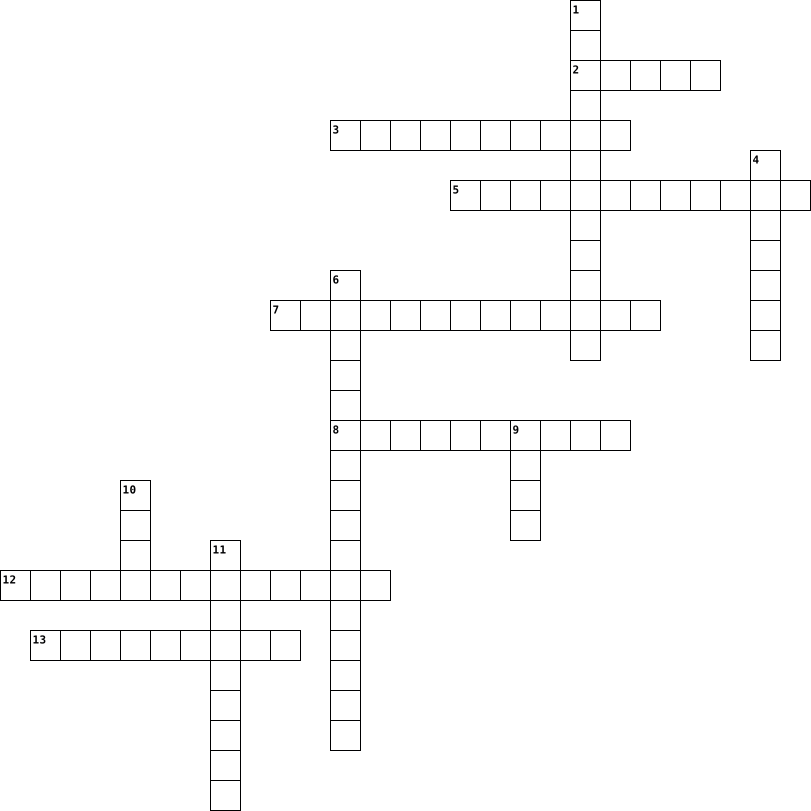
Across
- when you add white to a color to make a lighter value
- to the name of a color
- to a lightness or darkness of a color or hue
- colors/ using different values of a single hue
- you add black to a color ot make a darker value
- colors/two color that are directly opposite each other on the color wheel
- colors/two colors that are next to each other on the color wheel
Down
- colors/ made by mixing unequal amounts of two primarys
- colors/ these colors make all other colors and no two color can make them
- to the brightness or dullness of a color
- colors/hues that remind you of the sun,fire, & warmth
- colors/hues that remind you of ocean, sky, cool green grass
- colors/ made by mixing equal amounts of two primarys
13 Clues: to the name of a color • to the brightness or dullness of a color • to a lightness or darkness of a color or hue • colors/ using different values of a single hue • you add black to a color ot make a darker value • colors/ made by mixing equal amounts of two primarys • when you add white to a color to make a lighter value • ...
Color 2024-07-29

Across
- top truck at show
- not paint
- not adjustable
- ____ link
- traditional
- how bags lift
- remove handles
Down
- not full size
- wheels
- mini truckin_________
- Sevierville show
- not static
- to throw sparks
13 Clues: wheels • not paint • ____ link • not static • traditional • not full size • how bags lift • not adjustable • remove handles • to throw sparks • Sevierville show • top truck at show • mini truckin_________
Late Adulthood Crossword 2023-06-19

Across
- Aging theory related to a biological clock
- As the amount of saliva decreases the risk of this increases (the medical term for dry mouth)
- Aging theory related to gradual deterioration due to use
- Usually the only symptom for several days of illness
- Menopausal women have a higher risk for this
- Age-related hearing loss
- Decrease of elasticity in the esophagus due to old age
- Stage 4 of grief
- Type of care provided with weeks to months left to live
- A sudden change in Mental Status usually marked with Confusion
- Having sustained a loss
- Stage 2 of grief
- 53% of people 65+ have this
Down
- Blood pressure condition caused by loss of elasticity
- 46.2 Million elderly in America are victims of
- Hair commonly becomes this color
- Aging theory related to damage done to DNA
- Stage 5 of grief
- These become brittle and dull in old age
- Most common type of Dementia
- Number of active days per week to strengthen muscles
- Aging theory related to the body destroying itself
- Psychosocial theory that it is natural to withdraw from society with age
- Irregular pigmentation of the skin due to aging
- The study of old age
- Vaccine recommended to prevent this painful rash
- Psychosocial theory that the elderly stay happy with social interactions
- Postural change due to an exaggerated curvature of the spine
- Type of care provided to maximize the quality of life
- Aging theory related to response to foreign invaders
- Seasonal vaccine usually given in October
- Age when Late Adulthood begins
- Stage 1 of grief
- Stage 3 of grief
- A general term for the decline in mental ability
35 Clues: Stage 5 of grief • Stage 4 of grief • Stage 1 of grief • Stage 2 of grief • Stage 3 of grief • The study of old age • Having sustained a loss • Age-related hearing loss • 53% of people 65+ have this • Most common type of Dementia • Age when Late Adulthood begins • Hair commonly becomes this color • These become brittle and dull in old age • Seasonal vaccine usually given in October • ...
Color 2022-10-24
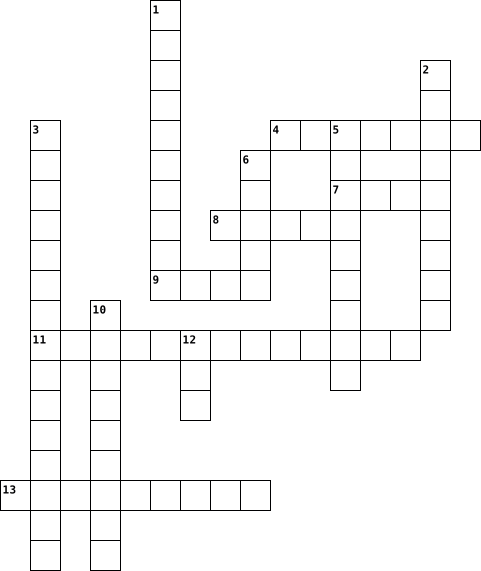
Across
- The colors red blue and yellow
- A hue mixed with white
- A range of light to dark of a color
- A hue mixed with grey
- a range of value of one color including tints shades and tones
- The colors orange violet and green
Down
- A set of 2 colors that sit opposite each other on the color wheel
- A group of colors made by mixing a primary color with an analogous secondary color
- a set of 3 colors that include a color and the 2 colors analogous to it's complement
- The purity of a hue
- A hue mixed with black
- A set of 3 colors that sit next to each other and share a common hue
- another name for color
13 Clues: The purity of a hue • A hue mixed with grey • A hue mixed with black • A hue mixed with white • another name for color • The colors red blue and yellow • The colors orange violet and green • A range of light to dark of a color • a range of value of one color including tints shades and tones • A set of 2 colors that sit opposite each other on the color wheel • ...
Color 2023-06-12
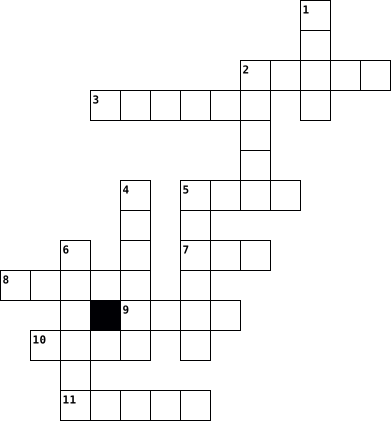
Across
- A powerful and mysterious color that represents strength and elegance. It can make you feel sophisticated and empowered.
- A shiny and elegant color that resembles the moon and stars. It can make you feel graceful and sophisticated.
- A soft and delicate color that represents sweetness and femininity. It can make you feel gentle and caring.
- A vibrant color that can make things appear bold and energetic. It is often associated with strong emotions like love and excitement.
- A refreshing color that represents nature and growth. It can make you feel calm and connected to the environment.
- A luxurious and radiant color that symbolizes wealth and success. It can make you feel special and prosperous.
- A calming color that reminds you of the sky and the ocean. It can make you feel peaceful and relaxed.
- A pure and clean color that resembles snow and clouds. It can make you feel calm and peaceful.
Down
- A neutral color that represents balance and neutrality. It can make you feel calm and composed.
- A warm and earthy color that reminds you of trees and soil. It can make you feel grounded and stable.
- A warm and energetic color that resembles a beautiful sunset. It can make you feel enthusiastic and adventurous.
- A mysterious and regal color that combines the calmness of blue and the energy of red. It can make you feel imaginative and inspired.
- A bright and cheerful color that resembles the sun. It can make you feel happy and optimistic.
13 Clues: A bright and cheerful color that resembles the sun. It can make you feel happy and optimistic. • A pure and clean color that resembles snow and clouds. It can make you feel calm and peaceful. • A neutral color that represents balance and neutrality. It can make you feel calm and composed. • ...
Color 2023-06-22
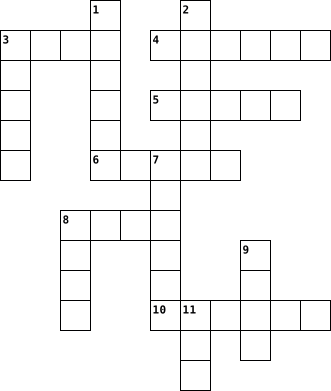
Across
- A cool, calming color like the sky or the ocean. It can represent trust, loyalty, or tranquility.
- A cool, metallic color that is associated with sleek, modern design, technology, and elegance. It can also represent clarity or purity.
- A strong, powerful color that can represent mystery, elegance, or strength. It is often associated with sophistication or formality.
- A pure, clean color that represents light or freshness. It is often associated with innocence, purity, or simplicity.
- A shiny, luxurious color that is often associated with wealth, success, or achievement. It can also represent warmth and optimism.
- A warm, energetic color that reminds us of the fruit with the same name. It is a mix of red and yellow, and it is often associated with happiness and creativity.
Down
- A cheerful, sunny color like sunflowers or lemons. It can represent joy, positivity, and energy.
- A vibrant, regal color that is a blend of blue and red. It is often associated with royalty, creativity, or mystery.
- A warm, earthy color like the color of tree bark or chocolate. It can represent stability, reliability, or the natural world.
- A deep, rich color that is a combination of blue and purple. It is often associated with wisdom and intuition, and it can also be found in the night sky.
- A neutral, balanced color that can be found between black and white. It can represent sophistication, simplicity, or stability.
- A light, delicate color, often thought of as a more gentle version of red. It can represent love, friendship, or compassion.
- A bright, warm color like the color of a fire truck or a ripe apple. It can represent love, excitement, or danger.
13 Clues: A cheerful, sunny color like sunflowers or lemons. It can represent joy, positivity, and energy. • A cool, calming color like the sky or the ocean. It can represent trust, loyalty, or tranquility. • A bright, warm color like the color of a fire truck or a ripe apple. It can represent love, excitement, or danger. • ...
light by alina feb 21, 2019 2019-02-21

Across
- what is the transparent outer surface from eye
- what color did red light and blue light produced?
- what color did green light and red light produced?
- what is the form of light?
- form of energy that released from a luminous object
- what is the light-sensitive layer of eye?
- smaller lines of lights
- the last name of french physicist who made instrument to measure the speed of light for the first time
- a region without light that formed behind an opaque object
Down
- range of colors
- the primary color is red, blue, and...
- a classification of non luminous object
- the last name of the dutch physicist that put forward wave theory
- the appearance of an object in a smooth shiny surface
- what's the name of the white part of the eye
- objects that emit lights are said to be?...
- what color did red light, blue light, and green light produced?
- what color did yellow light and magenta light produced?
- what color did blue light and green light produced?
- non luminous body in the sky that reflects sunray on the night
20 Clues: range of colors • smaller lines of lights • what is the form of light? • the primary color is red, blue, and... • a classification of non luminous object • what is the light-sensitive layer of eye? • objects that emit lights are said to be?... • what's the name of the white part of the eye • what is the transparent outer surface from eye • ...
Art Vocab Hunt 2026-02-03

Across
- THEORY how colors work together
- a flat area with an outline
- colors that feel cold, like blue and green
- the main object in an artwork
- a mark that goes in one direction
- colors across from each other on the color wheel
- colors next to each other on the color wheel
- PERSPECTIVE when far things look lighter and blurry
- colors made by mixing two primary colors
- where the sky meets the land
- colors made by mixing a primary and a secondary
Down
- an object that looks 3D
- the name of a color
- shapes found in nature
- the area around or between objects
- using one color with light and dark
- the space around an object
- OF ART the basic parts used to make art
- shapes made with straight lines
- colors that feel hot, like red and orange
- POINT the place where lines meet far away
- SCHEME a plan for using colors
- how light or dark a color is
- lines that point to the vanishing point
- red, yellow, and blue
- how something feels or looks like it feels
26 Clues: the name of a color • red, yellow, and blue • shapes found in nature • an object that looks 3D • the space around an object • a flat area with an outline • how light or dark a color is • where the sky meets the land • the main object in an artwork • SCHEME a plan for using colors • THEORY how colors work together • shapes made with straight lines • a mark that goes in one direction • ...
light by alina feb 21, 2019 2019-02-21

Across
- what color did green light and red light produced?
- smaller lines of lights
- what is the form of light?
- form of energy that released from a luminous object
- what color did red light and blue light produced?
- the last name of the dutch physicist that put forward wave theory
- what is the transparent outer surface from eye
- a classification of non luminous object
- what color did yellow light and magenta light produced?
Down
- what is the light-sensitive layer of eye?
- the appearance of an object in a smooth shiny surface
- objects that emit lights are said to be?...
- what color did red light, blue light, and green light produced?
- range of colors
- non luminous body in the sky that reflects sunray on the night
- what's the name of the white part of the eye
- the last name of french physicist who made instrument to measure the speed of light for the first time
- a region without light that formed behind an opaque object
- the primary color is red, blue, and...
- what color did blue light and green light produced?
20 Clues: range of colors • smaller lines of lights • what is the form of light? • the primary color is red, blue, and... • a classification of non luminous object • what is the light-sensitive layer of eye? • objects that emit lights are said to be?... • what's the name of the white part of the eye • what is the transparent outer surface from eye • ...
AP PSYCH FINAL PROJECT 2024-05-13

Across
- looking within oneself
- slowing reinforcing a subject as they acquire and preform a desired behavior
- a type of experiment in which neither the subject or the experimenter know if the subject is receiving the independent variable
- a theory that the spinal cord can either block pain signals or allow them to pass on to the brain
- the value that appears the most
- therapy designed to uncover repressed feelings and bring them into consciousness for adressment
- the taking in of various stimuli via your 5 senses
- smallest units of sound that carry meaning
- the lobe of the brain involved with vision
- how we see color. Located in the retina
- who created the hierarchy of needs
Down
- how we see black and white. Located in the retina
- a group from where you get a sample for an experiment
- a prediction of results from an experiment
- who created the Stanford Prison Experiment
- universal roles that commonly appear in dreams. Idea put forward by Jung
- who founded the psychoanalytic perspective
- a theory in which opposing retinal process can enable color vision. One color can inhibit another. This allows for afterimages
- a step by step process or way of approaching something
- the mediator between the id and the superego
20 Clues: looking within oneself • the value that appears the most • who created the hierarchy of needs • how we see color. Located in the retina • a prediction of results from an experiment • who created the Stanford Prison Experiment • who founded the psychoanalytic perspective • smallest units of sound that carry meaning • the lobe of the brain involved with vision • ...
Color 2023-06-28
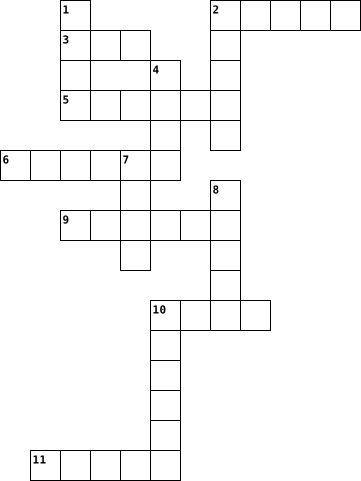
Across
- A color that represents darkness and mystery. It is the absence of light.
- A bright and vibrant color. It is the color of fire trucks and stop signs.
- A cheerful and sunny color. It is the color of ripe lemons and sunflowers.
- A warm and energetic color. It is the color of oranges and pumpkins.
- A metallic color that is shiny and reflective. It is often associated with prestige.
- A soft and delicate color often associated with femininity.
- A color that represents purity and innocence. It is the color of snow and clouds.
Down
- A neutral color often associated with simplicity. It is a mixture of black and white.
- A natural color often seen in wood and soil. It is the color of chocolate and coffee.
- A calming color often associated with the sky and the ocean.
- A precious metal color often associated with wealth and luxury.
- A color that represents nature and freshness. It is the color of grass and leaves.
- A rich and royal color. It is a combination of red and blue.
13 Clues: A soft and delicate color often associated with femininity. • A calming color often associated with the sky and the ocean. • A rich and royal color. It is a combination of red and blue. • A precious metal color often associated with wealth and luxury. • A warm and energetic color. It is the color of oranges and pumpkins. • ...
Color 2023-10-13
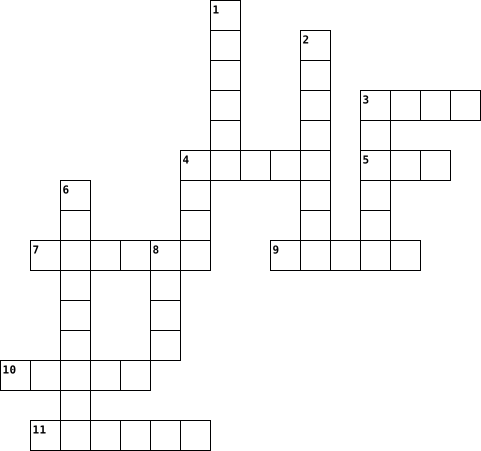
Across
- A color often associated with sweetness, love, and innocence, commonly used in flowers and fashion.
- The color of earth, stability, and reliability, often seen in soil, wood, and certain animals.
- The color often associated with passion, energy, and love.
- A vibrant color representing enthusiasm, excitement, and warmth, often associated with sunsets.
- A color representing nature, growth, and freshness, often seen in leaves and grass.
- The color of purity, innocence, and cleanliness, often used in weddings and religious ceremonies.
- The color of sunshine, happiness, and energy, associated with positivity and joy.
Down
- A metallic color representing modernity, grace, and sleekness, often used in technology and fashion.
- A pale purple color often associated with calmness, elegance, and grace, commonly used in flowers and scents.
- A color symbolizing luxury, creativity, and mystery, often seen in royalty and artistic expressions.
- A color often linked with calmness, serenity, and the vastness of the sky and ocean.
- A color between blue and green, representing calmness, balance, and creativity, often seen in gemstones and jewelry.
- A color associated with wealth, luxury, and success, often used in jewelry and high-end products.
13 Clues: The color often associated with passion, energy, and love. • The color of sunshine, happiness, and energy, associated with positivity and joy. • A color representing nature, growth, and freshness, often seen in leaves and grass. • A color often linked with calmness, serenity, and the vastness of the sky and ocean. • ...
Light Crossword 2021-08-08

Across
- Ms. A's favorite animal :)
- Allows some light to be passed through
- Number of colors in the Rainbow
- Light travels in this way
- Fourth Color in the Rainbow
Down
- Isaac Newton birth place
- Not able to be seen through; not transparent
- Angle between Ray of Incidence and the Normal line
- Color with the shortest wavelength
- Solid shape whose 2 ends are the same size and shape
- Newton Created the Theory of Color
- Color with the longest wavelength
12 Clues: Isaac Newton birth place • Light travels in this way • Ms. A's favorite animal :) • Fourth Color in the Rainbow • Number of colors in the Rainbow • Color with the longest wavelength • Color with the shortest wavelength • Newton Created the Theory of Color • Allows some light to be passed through • Not able to be seen through; not transparent • ...
Race and Health 2026-03-05

Across
- Degree of local interpersonal cohesion
- Construct used to categorize people by skin color
- Theory linking wealth, occupation, and health
- Resources derived from strong family/friend ties
- Individual granted protection after crossing borders
- Ideology that assigns superiority/inferiority by skin color
- Uniform distribution of resources
- Situation where meals are uncertain
- Institutional practices that discriminate racially
- Model emphasizing inherited racial differences
- Personal assets that improve healthcare interactions
- Framework that sees health shaped by both systems and perception
- Effort to protect vulnerable populations from climate change
- Collective way of life passed across generations
- Psychological effects that persist through multiple generations
Down
- Theory describing how race fuels capitalist accumulation
- Theory that social disadvantage leads to premature physiological decline
- Goal of eliminating health gaps caused by injustice
- Conditions like income, education, and housing that shape health
- Shared heritage, language, or traditions
- Fight against discriminatory housing practices
- Psychological wounds resulting from systemic oppression
- Movement seeking equitable access to healthy food
- Explanation focusing on mental strain from discrimination
- Pursuit of what is deserved
- Adaptation to host society norms and values
- Phenomenon where recent immigrants show lower disease rates
- Hidden preferences that influence decisions
- Gaps in disease rates, mortality, or access
- Attitude of openness and learning from patients
- Neighborhoods with concentrated cultural communities
31 Clues: Pursuit of what is deserved • Uniform distribution of resources • Situation where meals are uncertain • Degree of local interpersonal cohesion • Shared heritage, language, or traditions • Adaptation to host society norms and values • Hidden preferences that influence decisions • Gaps in disease rates, mortality, or access • Theory linking wealth, occupation, and health • ...
crossword 3 2024-04-17

Across
- the improved performance of tasks in the presence of others
- social influence technique that suggests people who agree to a small request are more likely to agree to a larger one
- is the finding that repeated observation of a stimulus leads to greater liking of the stimulus
- theory that states that the human eye holds specialized receptors for absorbing three wavelengths of light
- occurs when members of a cohesive group emphasize concurrence at the expense of critical thinking in arriving at a decision
- the theory that the spinal cord blocks or allows
- effect created when a rapid series of slightly varying images is perceived as moving
- theory of hearing that states perception of pitch is determined by the location of vibrations on the basilar membrane
- when people persist in strategies that have worked in the past
- when subjects feel change despite receiving empty, fake, or ineffectual treatment
- the tendency for distributedstudy/practice to yield better long-term retntion
- the tendency to forget information because of a competition from other material
- signals to pass to the brain
- theory stating that people are motivated to approach a desired level of arousal
- theory that neurons either send signals or they don't; there's no in-between.
- explains why IQ tests must be periodically re-normed so the mean score remains 100
- the sudden realization of a solution to a problem
Down
- the theory of emotion that states conscious experience of emotion results from one perception of autonomic arousal without cognitive assessment
- overestimating others tendency to notice and evaluate our appearance, performance, and blunders
- theory that proposes that forgetting occurs because memory traces fade over time
- people are less likely to provide help when they are in groups than when they are alone
- theory that states that color perception depends on receptors that make opposite responses to three pairs of colors
- the rule that we should pay back in kind what we from others
- theory that claims that prejudice offers an outlet for anger by providing someone to blame.
- illusion created when two or more lights next to each other blink on and off
- the theory of emotion that states that physical and psychological states happen simultaneously
- Festinger's theory stating that internal conflict propels people to change their beliefs.
- theory of hearing that states that the frequency of hair cell vibrations determines the pitch one perceives
- the theory that claims dreams are side effects of neural activation.
- theory of motivation that stems from a need to maintain homeostasis
30 Clues: signals to pass to the brain • the theory that the spinal cord blocks or allows • the sudden realization of a solution to a problem • the improved performance of tasks in the presence of others • the rule that we should pay back in kind what we from others • when people persist in strategies that have worked in the past • ...
Elements of Art and Color Theory 2023-09-26

Across
- colors across from each other on the wheel
- one color + black & white
- the way something feels or looks like it feels
- lightness or darkness of a color
- blue, green, purple
- red, blue, yellow
Down
- the area between objects
- green, orange, purple
- 3D shape
- red, yellow, orange
- a wheel that shows relationships between colors
- a path created by a moving point
- an enclosed 2D space
- colors beside each other on the wheel
- created when light is reflected
- colors such as red-violet or yellow-green
16 Clues: 3D shape • red, blue, yellow • red, yellow, orange • blue, green, purple • an enclosed 2D space • green, orange, purple • the area between objects • one color + black & white • created when light is reflected • a path created by a moving point • lightness or darkness of a color • colors beside each other on the wheel • colors such as red-violet or yellow-green • ...
sensation and perception 2013-02-14

Across
- Constancy perception of the size of object remains the same regardless of changes in visual field
- receptor cells detect brightness, located in the outer edge of the retina
- height and amplitude of sound waves
- opening in the iris, changes due to light and emotional state
- complexity and shape of sound waves
- brain fills in missing pieces of a visual image
- Parallax Near objects seem to move more rapidly than far away objects
- organized whole, shape, or form
- irregular sound waves; affects psychological and physical well being
- adaptation change in receptor activity due to prolonged exposure to unchanging stimuli
- Perspective parallel lines appear to converge at a distance
- arousal of a sense organ
- intensity of lightwaves
- difference in wavelengths;"color"
- Theory theory which concerns hearing low pitch sounds
- how you interpret information
- buds/pupelae located on tongue and roof of mouth; decode molecules of food or drink to identify them
- threshold minimum stimulus you can detect 50% of the time
- and Brightness Constancy perception of color or brightness of object stays constant despite a change in visual field
- colorblindness Diffuculty seeing shades of blue and yellow
- outer, fleshy ear, gathers sound and directs it into the ear
- Theory theory for hearing high pitch sound waves which stimulate different places of the basilar membrane
- of Pragnanz tendency to see things in their simplest form
- purity of wavelength
- colored part of the eye, muscle that contracts the pupil
- a perceptual cue in which we group together things that are near one another
- beneath cornea, clear tissue, bends light rays so the retina can focus
- Gradient the closer something is, the more detail one can perceive
- receptor cells, detect color, located in the center of the retina
- sense sense of equilibrium; located in inner ear; deals with motion sickness
- Ground Perception minds have tendencies to organize pictures as separate enitities from the background
- Analysis A step-by-step approach, break down objects by parts and match with templates in the brain to figure them out
- clear, outer covering, protects the interior
- Membrane Piece of skin streched over the entrance of the ear; vibrates to sound; separates the middle from the outer ear, eardrum
- Processing sensory information is sent to the brain via sensory neurons to analyze
- Binocular cues,retina bulges when things get closer
- tiny hairs that receive odor molecules; act as receptors in nose and as filters
- nerve endings sense light pressure
- spectrum wavelengths of light which can be seen by the human eye
- theory/trichromatic theory malfunction of cones which causes colorblindness
- light Comes directly from the source, it has not been broken down into frequencies
- skin sensation warmth, coldness, pain, pressure
- snail shaped part of the ear filled with fluid and small hairs that vibrate to incoming sound
Down
- olfaction; receptors located in mucous membrane
- Constancy perception of the shape of object remains constant despite changes in the visual field
- contains receptor cells, image forms here and attaches to the optic nerve
- Frequency or rate of sound waves
- spot area in each eye where you cannot see because this is where the optic nerve connects to the retina
- Matching Theory look at the whole and match with template in the brain to figure it out
- Processing templates in the brain give meaning to what one is seeing, then the information is sent
- white part of the eye, provides protection and structure
- perception controversial idea that messages below absolute threshold can influence behavior
- detection theory no abolute threshold because thresholds change with a variety of factors like fatigue, attention, etc
- A measure of how loud a sound is
- sense joints, ligaments, muscles; allows bodies to move in space
- colorblindness Difficulty seeing shades of red and green
- deafness deafness due to damage to the bones of the middle ear ; is correctable
- Vision eyes combine to create one visual image
- colorblindness Complete color blindness
- change in curvature of lens to focus eye sight
- nerve smells transfer to this then sent to temporal lobe
- Feature Detector theory Theory that says you need to practice seeing things during a critical period of development (before 2 years of age)
- chasm junction where the two optic nerves cross
- Perspective The farther away something is, the more blurry it looks. The closer it is, the clearer it looks
- Knowing what is close to you and what is farther away based on one object blocking the other
- acuity how accurate is perception
- corpuscle detect deep pressure
- consciously focusing on a limited stimuli
- Membrane part of the cochlea which connects to the auditory nerves and takes information to the temporal lobe
- threshold amount of change necessary for you to detect a change in the stimulus 50% of the time
- a perceptual cue in which we group like things together
- Noticeable Difference amount it took for one to notice a change
- deafness not treatable; damage to auditory nerve system; problems with high pitch
- Process Theory Something is wrong with the retina and the thalamus, colors don't block
- Theory part of the occipital lobe malfunctions which causes color blindness
- law the greater the original stimulus, the greater the change needed to detect a difference
- Cliff Walk and Gibson's apparatus used to show depth perception in children
- After-Image The firing of the cones not used after viewing something steadily in order to bring the visual system back into balance
- center of the retina, all cones are located here
79 Clues: purity of wavelength • intensity of lightwaves • arousal of a sense organ • how you interpret information • corpuscle detect deep pressure • organized whole, shape, or form • Frequency or rate of sound waves • A measure of how loud a sound is • difference in wavelengths;"color" • acuity how accurate is perception • nerve endings sense light pressure • ...
International Relations vocabulary 2024-03-18

Across
- The neighboring country to America’s north that is generally considered to be a Core country
- The world systems theory borrows critical ideas about Capitalism from this German economist
- If an area has territory, sovereignty, a government, and a population, then it is considered a __________
- We haven't studied ______ Theory yet, but it argues states 'do what they do' because they want to "win"
- Examples of this include the strength of a state's army, the stability of its currency, and/or its ability to feed its citizens
- The action a state takes under Constructivism, such as landing people on the Moon or invading another country
- The literal translation of "Cosmopolitan" is ___________ of the World
- This is a key element of states: they are able to govern themselves
- a theory that argues states 'do what they do' because they are exercising their power
- These states under World Systems Theory are the least developed, poorest countries
Down
- These states under World Systems Theory are the most developed, richest countries
- Constructivism uses this term to describe all of the types of communication
- These types of decisions under Liberalism are considered "the right thing to do"
- This critical theory argues that states typically act to enforce historical patriarchy
- This neighboring state of the U.S. is a semi-peripheral country according to World Systems Theory
- Liberalism is a theory that argues states 'do what they do' because they are trying to create __________ for their people
- A social ________ is an idea that a society has come to believe is real, such as paper money, pink is a color for baby girls, or beauty
- Constructivism highlights ____________, which is a feeling of belonging that citizens have for their countries
- Intersubjectivity is any mass, _________ experience among people (such as watching or attending the Super Bowl)
- These types of decisions under Liberalism are considered logical and smart
20 Clues: This is a key element of states: they are able to govern themselves • The literal translation of "Cosmopolitan" is ___________ of the World • These types of decisions under Liberalism are considered logical and smart • Constructivism uses this term to describe all of the types of communication • ...