
enlightenment Crossword Puzzles
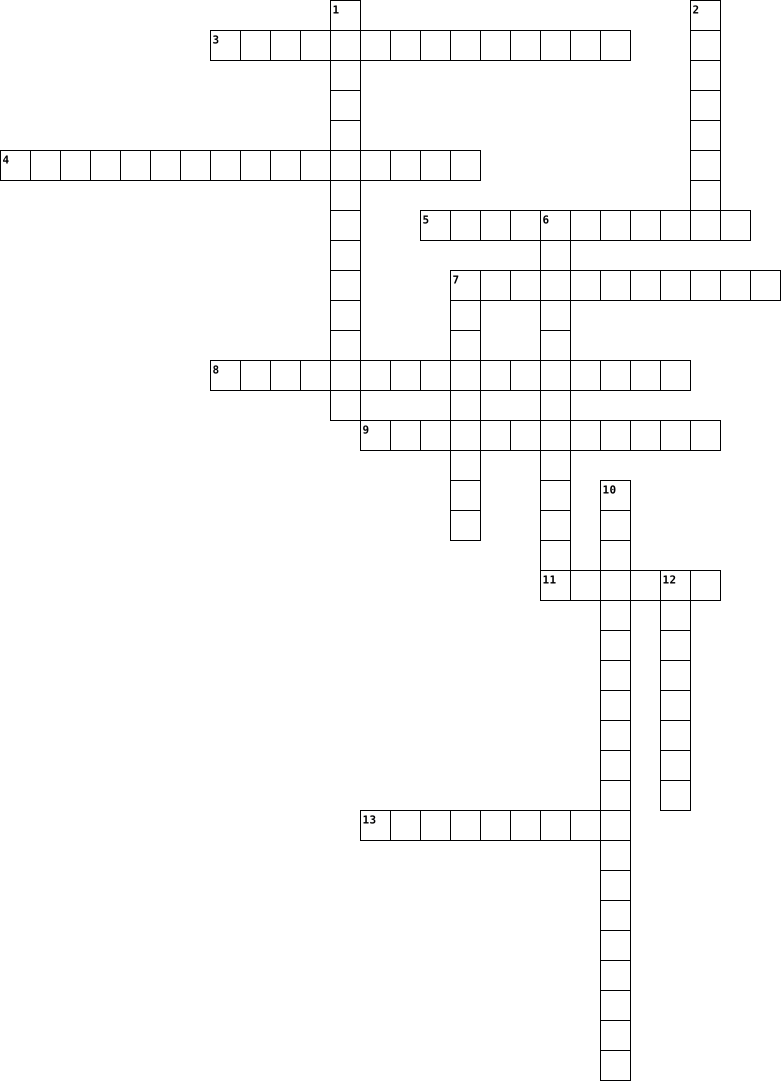
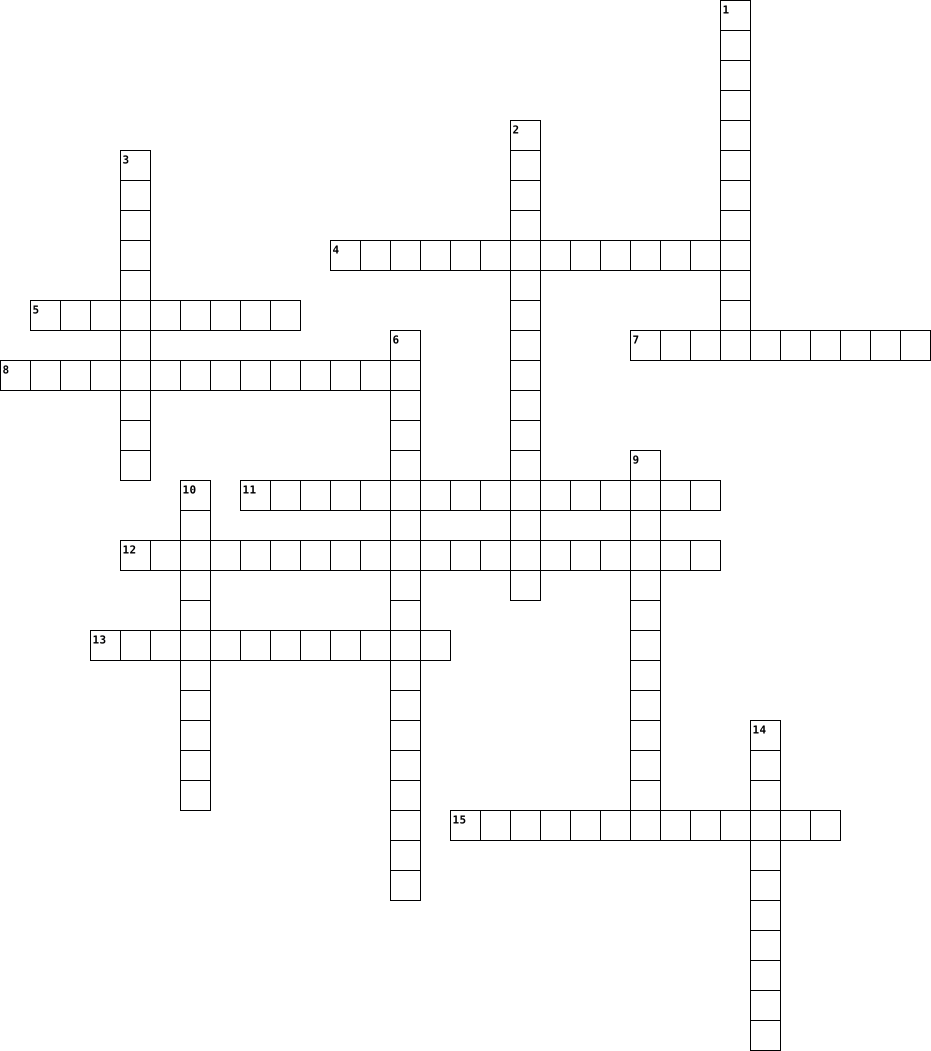
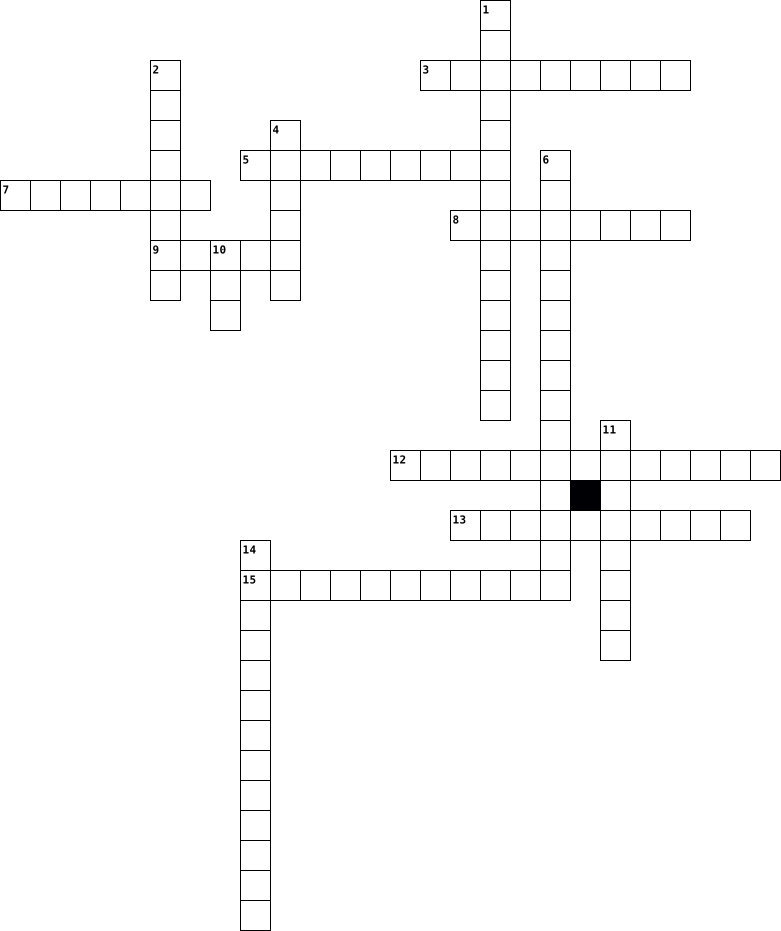
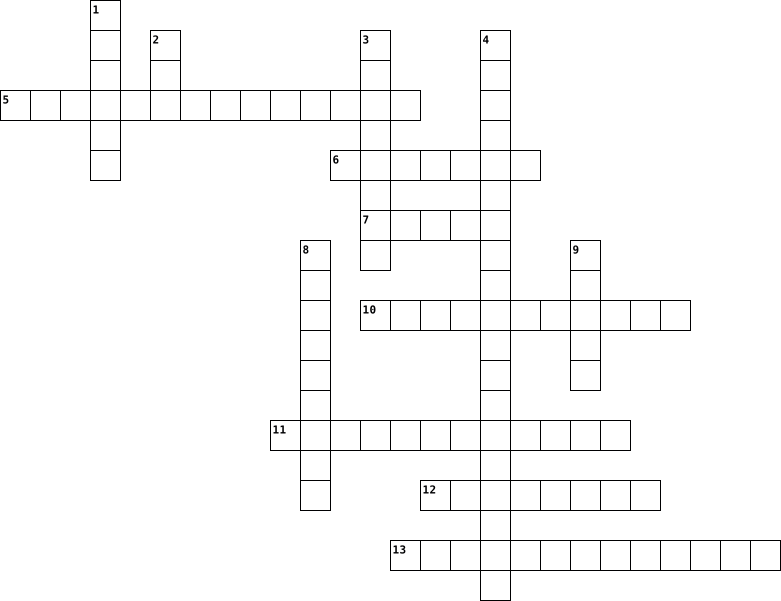
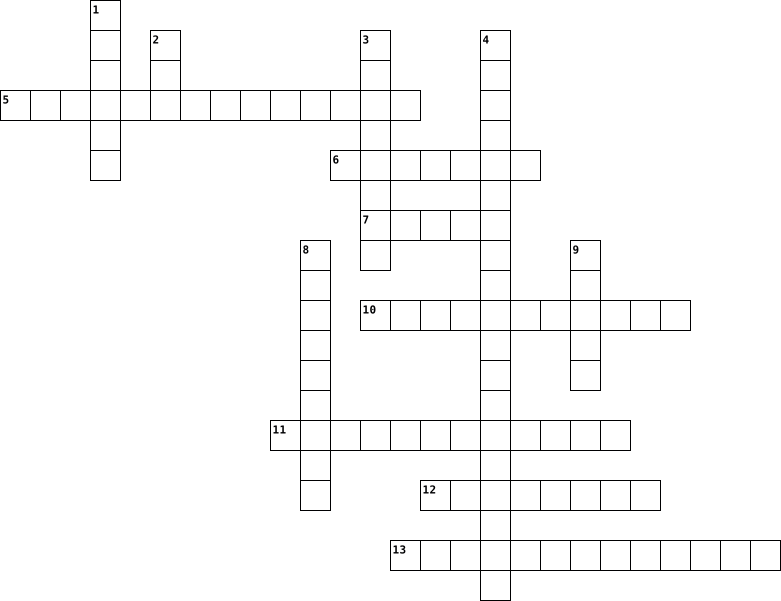
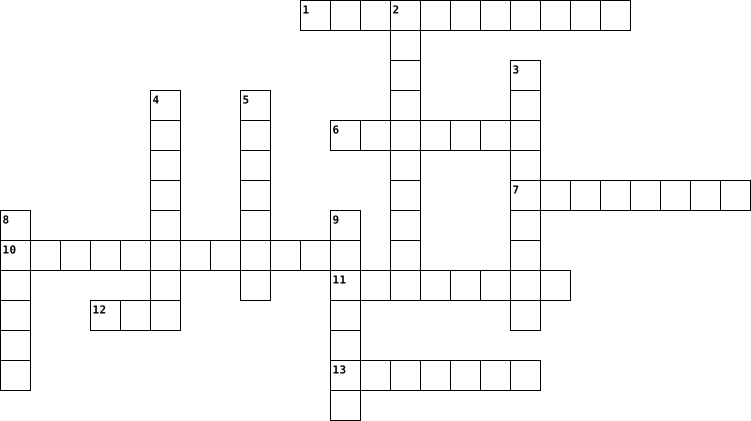
Enlightenment Crossword Puzzle 2024-04-15
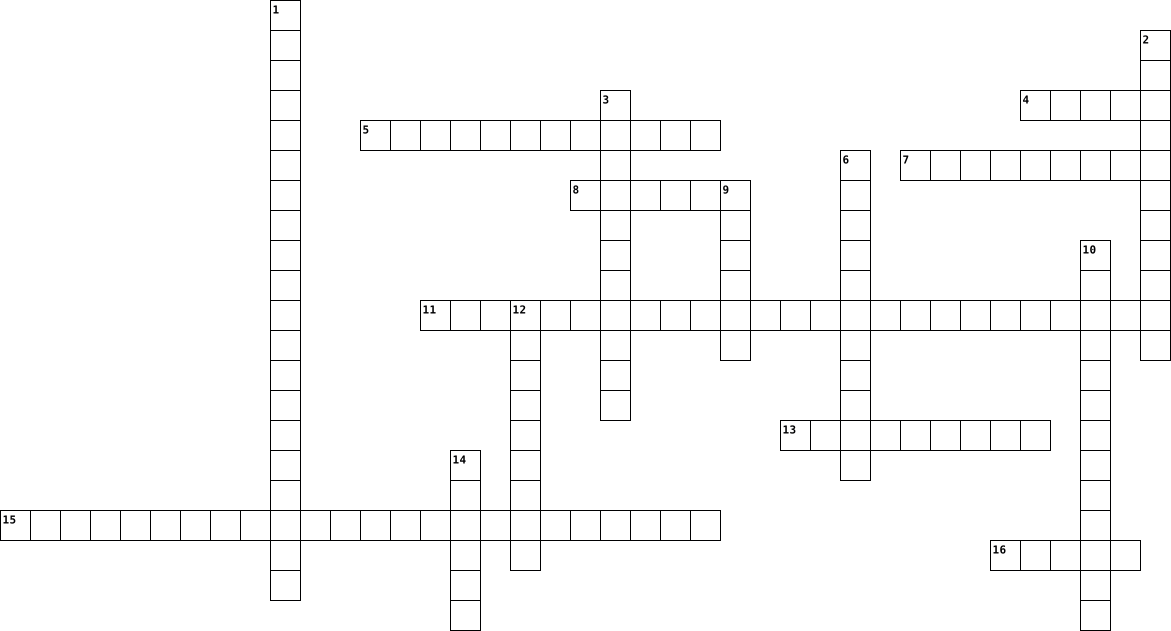
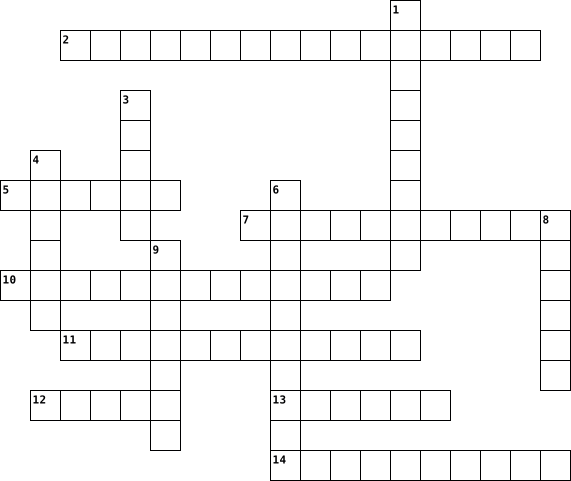
Across
- Most salons were organized by ___.
- In 1689, the English set down a new set of rules called the English ___.
- He wrote Two Treatises of Government in 1690.
- believed people are naturally selfish, cruel, and greedy.
- This founding document of the US was influenced by the Englightenment
- Enlightenment thinkers rejected this
- Locke was in favor of ____.
- Enlightenment thinkers believed humans were capable of discovering ___ for themselves.
Down
- The Enlightenment grew out of the Renaissance, Reformation, and the ____.
- Wrote the Spirit of the Law
- Another name for the Enlightenment (slide 1)
- were created to protect people from their own selfishness.
- Philosophers often gathered in informal meetings, called ____.
- “I think, therefore I am.”
- Book written by Hobbes
- Enlightenment thinkers also felt that ____ should have a say in their government.
16 Clues: Book written by Hobbes • “I think, therefore I am.” • Wrote the Spirit of the Law • Locke was in favor of ____. • Most salons were organized by ___. • Enlightenment thinkers rejected this • Another name for the Enlightenment (slide 1) • He wrote Two Treatises of Government in 1690. • believed people are naturally selfish, cruel, and greedy. • ...
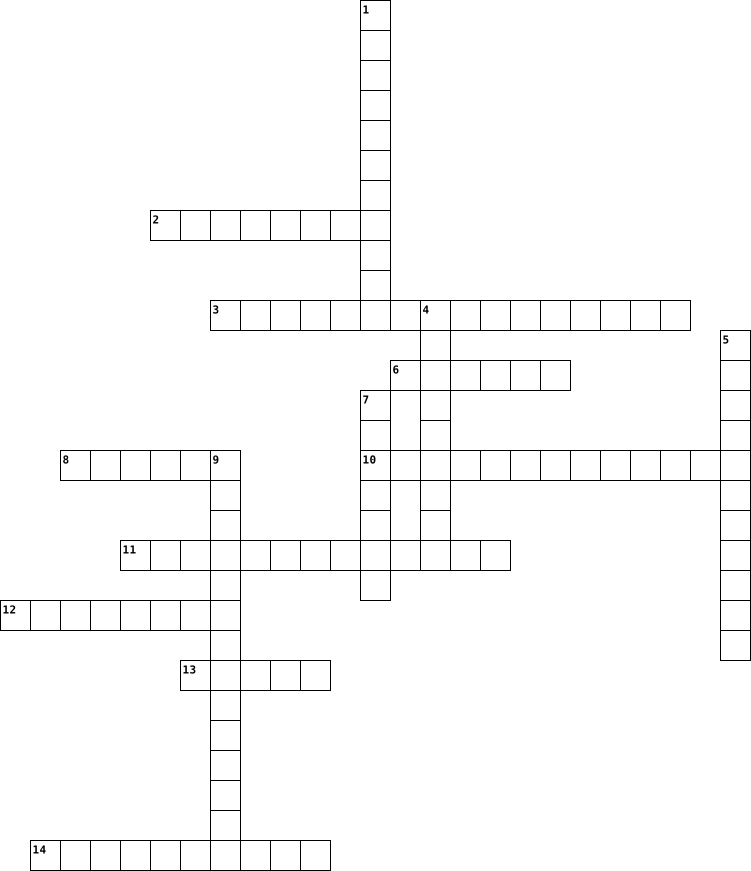
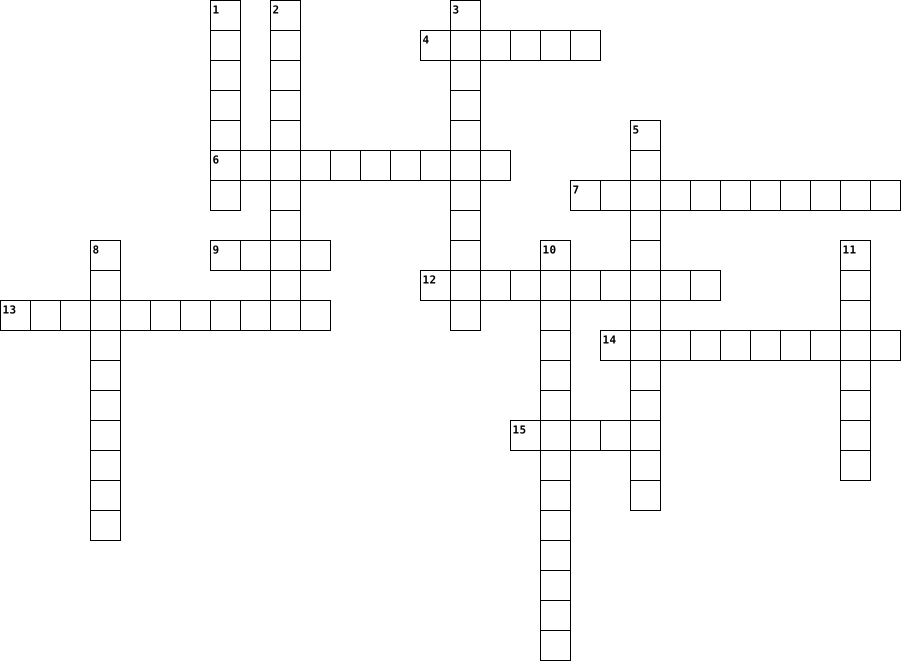
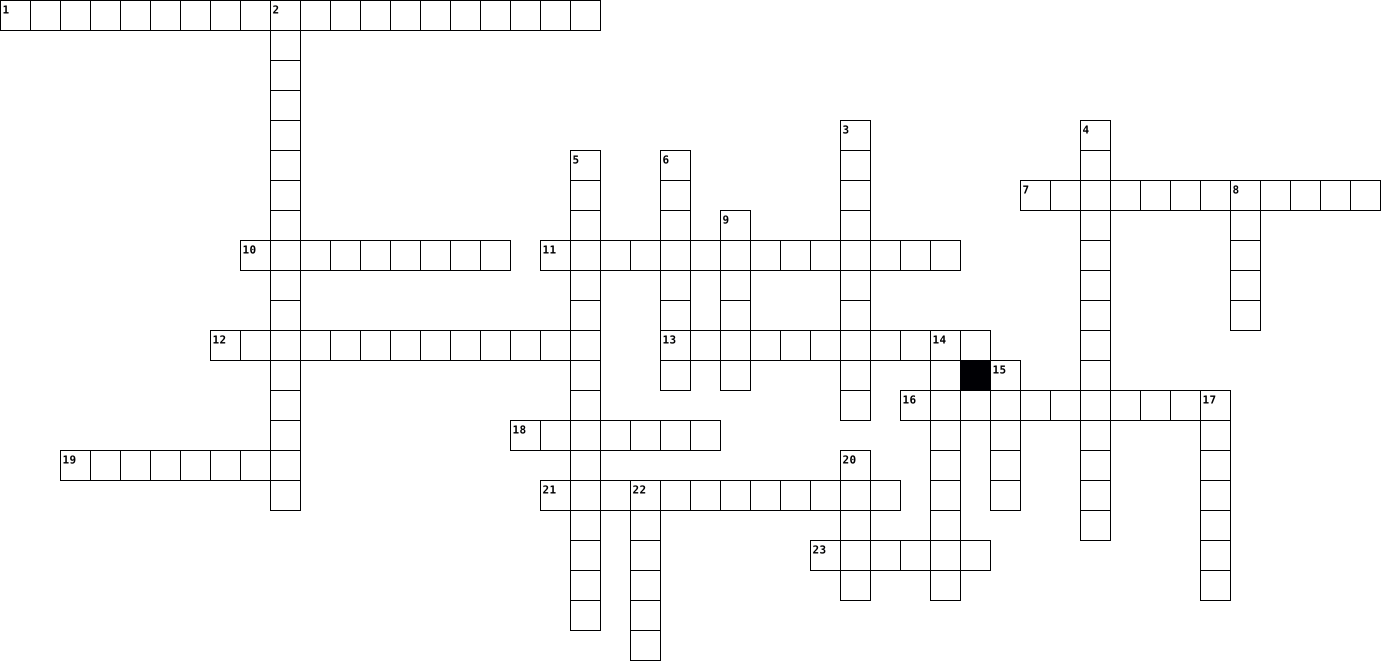
The Enlightenment 2024-06-03

Across
- An English deist author.
- Expanded Enlightenment ideas to include women and wrote A Vindication of the Rights of Woman.
- Said that human's SON was naturally a state of war: selfish, violent, cruel.
- An Enlightenment thinker that believed women and men should have equal rights. They wrote the famous Declaration of the Rights of Woman.
- Though not actually a part of the Enlightenment, this philosopher established the foundations of the period with his ideas regarding science and scientific processes.
- German philosopher known for his work The Critique of Pure Reason.
Down
- Though not actually a part of the Enlightenment, this philosopher established the foundations of it with his belief that people could reason out truths and experience was not essential.
- This person believed in what they called "a general point of view", concerning morals.
- Gave birth to the Romantic movement by questioning the Enlightenment and wrote A Discourse on the Sciences and Arts.
- Was a central thinker of the Scottish Enlightenment and founded the Scottish School of Common Sense.
- From who the principles of life, liberty, and propertystemmedfrom.
- An Irish Enlightenment thinker that fought for freedom of religion for everyone and opposed the Catholic Church.
- A philosopher that fought for freedom of religion and opposed the Catholic Church.
- Wrote Common Sense and The American Crisis, serving as inspiration for the American Revolution and reflecting Enlightenment ideals.
- Inspired by Enlightenment ideals, this person used similar concepts in the document establishing independence from an in-just government.
15 Clues: An English deist author. • From who the principles of life, liberty, and propertystemmedfrom. • German philosopher known for his work The Critique of Pure Reason. • Said that human's SON was naturally a state of war: selfish, violent, cruel. • A philosopher that fought for freedom of religion and opposed the Catholic Church. • ...
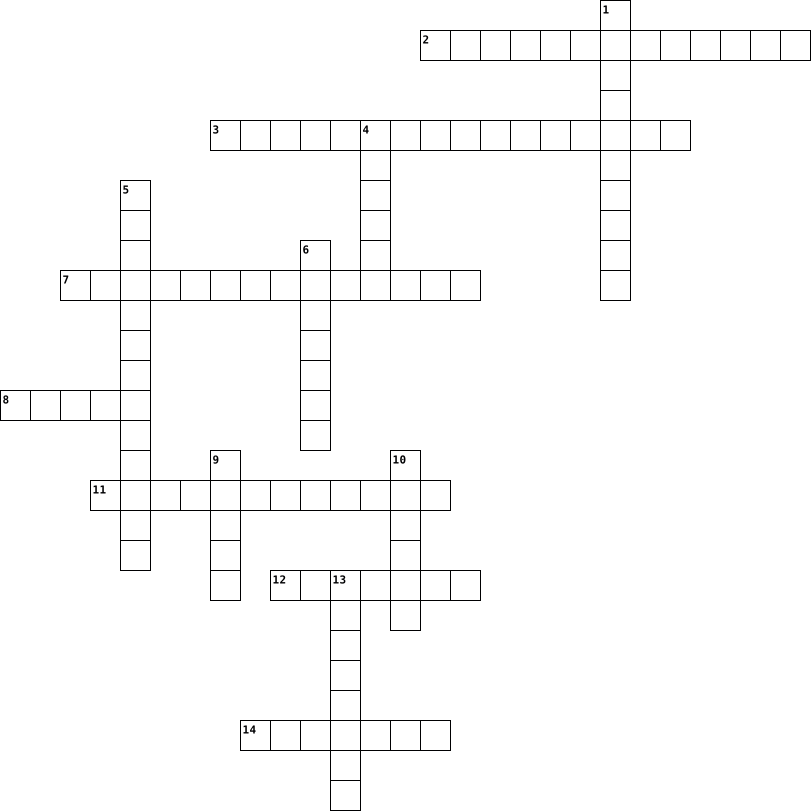
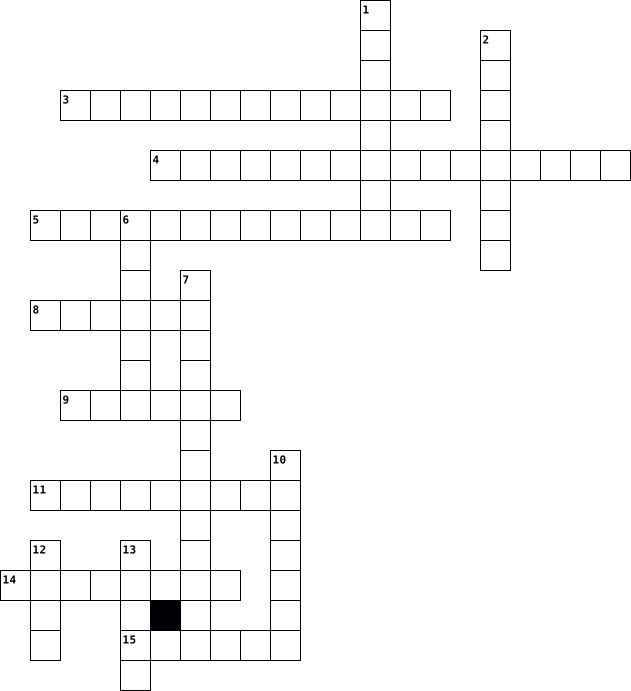
Buddhism 2025-12-01

Across
- A monk or priest in the Lamaism sect
- The texts that reference the Three Baskets
- Where did Buddhism originate?
- Where was Siddhartha Gautama born?
- What part of Buddhism is known as "The Great Vehicle?"
- Middle Path Practices that lead to liberation and are a middle way to enlightenment
- Which part of Buddhism is also called "The doctrine of the elders?"
- Any sermons or teachings of the BUddha
Down
- Someone who has reached Enlightenment but has decided to stay to show compassion to others.
- A group of Buddhist monks
- What kind of tree did the Buddha sit under?
- The symbol that reminds Buddhists of the Buddhas awakening and that enlightenment can be attained by anyone
- What have you reached when you have attained full enlightenment?
- A form of art made of geometric shapes.
- The school in Buddhism that focuses on mediation
- Someone who has reached the state of Enlightenment
- Noble Truths The teachings of the Buddha that say all life is suffering, etc.
- Siddhartha Gautama the _____
18 Clues: A group of Buddhist monks • Siddhartha Gautama the _____ • Where did Buddhism originate? • Where was Siddhartha Gautama born? • A monk or priest in the Lamaism sect • Any sermons or teachings of the BUddha • A form of art made of geometric shapes. • The texts that reference the Three Baskets • What kind of tree did the Buddha sit under? • ...
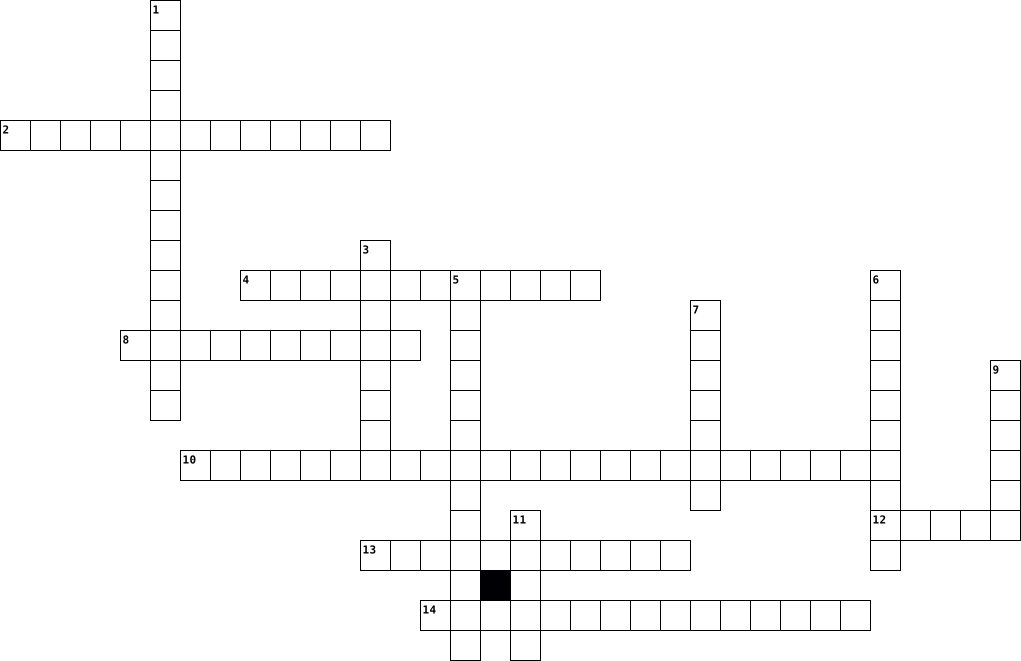
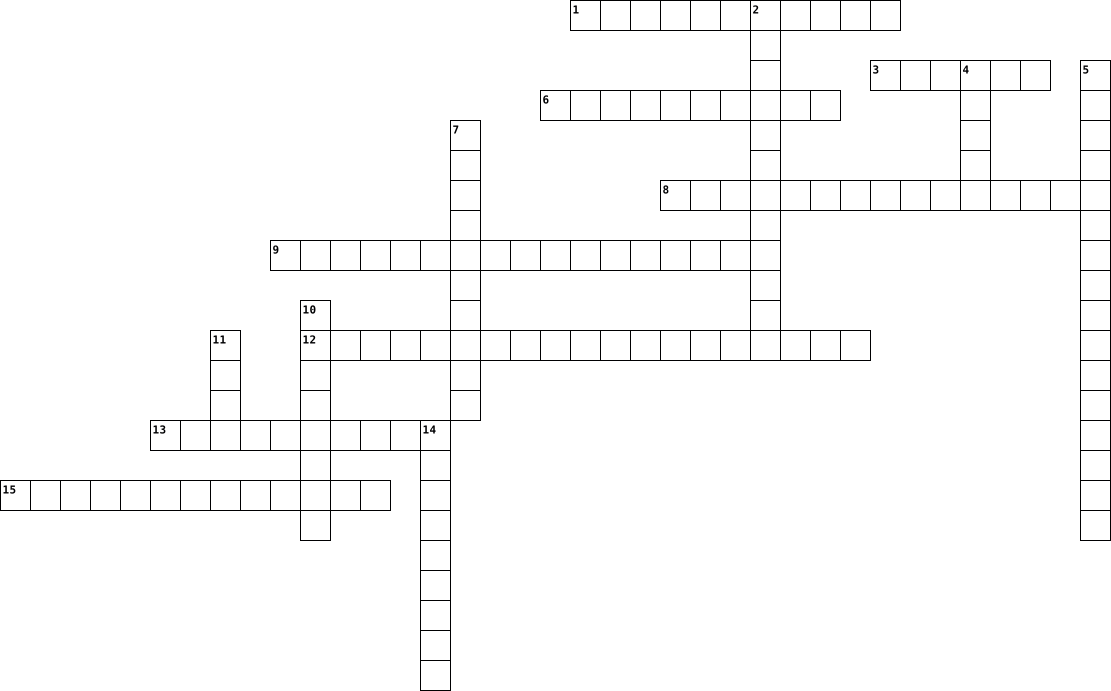
Buddhism 2018-06-27
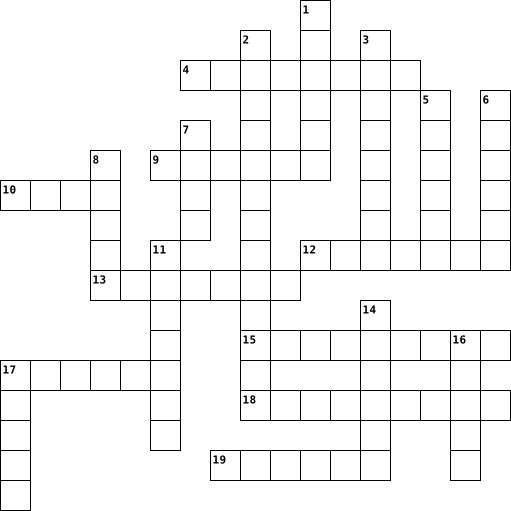
Across
- The classical language in India
- Name for the collection of monks and nuns living in a given geographical location
- Rituals to honour a god or goddess
- The opposite of nirvana
- Enlightenment
- A view that everything is interdependent
- A title meaning awakened
- A term used when an individual who has brought an end to suffering and has reached nirvana
- Impermanence
Down
- Suffering
- The state in which the true nature of existence is known both intuitively and intellectually
- The origin of Buddhism
- The insubstantiality of all things
- The complete body of the teachings of the Buddha
- The language if Theravada Buddhist texts
- The collection of texts recognised as having authority
- A monk who seeks to attain enlightenment only for himself
- The name given to the collections of books detailing the conduct of monks
- A Buddhist scripture known to be Buddha’s words
- Enlightenment knowledge attained when a person achieves Buddhahood
20 Clues: Suffering • Impermanence • Enlightenment • The origin of Buddhism • The opposite of nirvana • A title meaning awakened • The classical language in India • The insubstantiality of all things • Rituals to honour a god or goddess • The language if Theravada Buddhist texts • A view that everything is interdependent • A Buddhist scripture known to be Buddha’s words • ...
enlightenment 2021-09-23
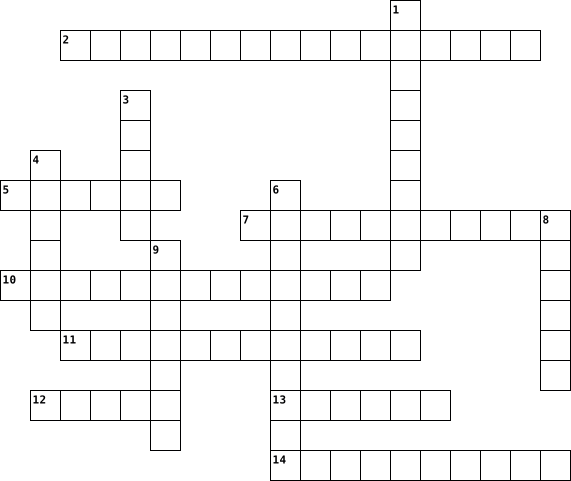
Across
- bacon
- gravity and motion
- bacteria in tooth scrapings
- dull colors harsh lines
- sun-centered
- founder of modern chemistry
- soft colors wealthy people painting
- heliocentric theory
Down
- analytical geometry
- scientific method
- vaccine for smallpox
- earth-centered
- proved stuff with math
- perfected the telescope
14 Clues: bacon • sun-centered • earth-centered • scientific method • gravity and motion • analytical geometry • heliocentric theory • vaccine for smallpox • proved stuff with math • perfected the telescope • dull colors harsh lines • bacteria in tooth scrapings • founder of modern chemistry • soft colors wealthy people painting
Enlightenment 2021-12-08
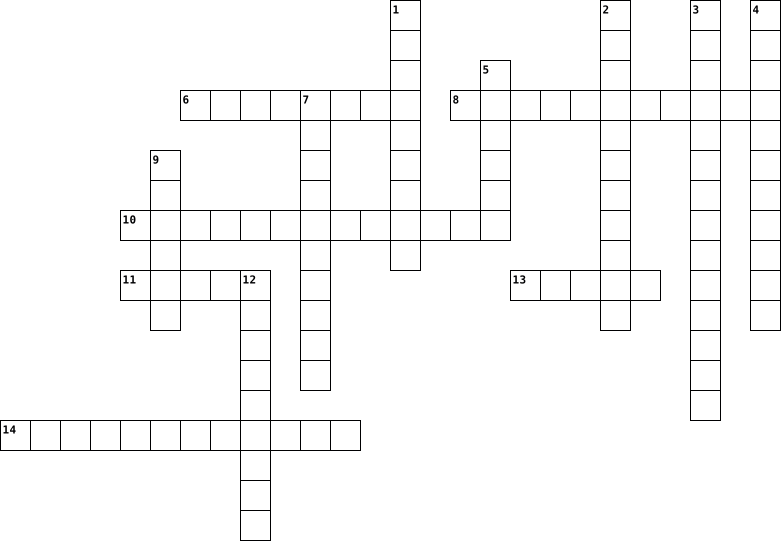
Across
- Separate Church & State, free speech
- 3 Branches of Government
- Freedoms belonging to all humans from birth
- Natural rights- life, liberty, property
- Physiocrat, Enlightened thinker who worried about the economy
- Lovers of wisdom
Down
- People have ultimate power
- Focused on economic reforms
- An agreement made by people in which they give up something for an organized Society.
- These govern Human Character
- Thought people were cruel, greedy, selfish.
- Complete power
- Ability to think logically
- Knowledge
14 Clues: Knowledge • Complete power • Lovers of wisdom • 3 Branches of Government • People have ultimate power • Ability to think logically • Focused on economic reforms • These govern Human Character • Separate Church & State, free speech • Natural rights- life, liberty, property • Thought people were cruel, greedy, selfish. • Freedoms belonging to all humans from birth • ...
enlightenment 2020-12-07
Across
- agreement by which people created a government
- a logical procedure for gathering and testing ideas.
- influential French writer, the Baron de
- people who wanted to discuss politics and ideas.
- idea came from Aristotle
- sun-centered
- way to explain scientific laws
- held a different, more positive, view of human nature.
Down
- An Italian scientist
- pen that wrote 70 essays and papers
- a new intellectual movement
- liberty.
- a new way of thinking about the natural world.
- devoted himself to the study of
14 Clues: liberty. • sun-centered • An Italian scientist • idea came from Aristotle • a new intellectual movement • way to explain scientific laws • devoted himself to the study of • pen that wrote 70 essays and papers • influential French writer, the Baron de • agreement by which people created a government • a new way of thinking about the natural world. • ...
Enlightenment 2023-02-08
Across
- thinker who created the social contract
- style of government where a ruler that had complete control of the population
- humans use this to make sense of the world
- believed that people needed a harsh government to control them
- life, liberty, and property
- Era when philosophers questioned the authority of kings and religion
- branch that studies the law
- last name of the inventor of natural rights
- ideas from the enlightenment often led to these conflicts
Down
- came up with the separation of powers in government
- branch that carries out the law
- branch that makes the laws
- according to some Enlightenment thinkers, people must give their _____ to be governed
- agreement between people to create a government
14 Clues: branch that makes the laws • life, liberty, and property • branch that studies the law • branch that carries out the law • thinker who created the social contract • humans use this to make sense of the world • last name of the inventor of natural rights • agreement between people to create a government • came up with the separation of powers in government • ...
Enlightenment 2022-12-07
Across
- czar of Russia
- started after tax increase
- years war about religion
- believed humans were born good
- mother country controls its colonies
- discovered the planetary system
- commissioned to write encylopedia
Down
- enlightened thinker
- believed humans were born selfish
- the 1600s-1800s
- published by Voltaire
- meeting places for philosophers
- woman who believed in education
- presented the three classifications of nature
14 Clues: czar of Russia • the 1600s-1800s • enlightened thinker • published by Voltaire • years war about religion • started after tax increase • believed humans were born good • meeting places for philosophers • woman who believed in education • discovered the planetary system • believed humans were born selfish • commissioned to write encylopedia • mother country controls its colonies • ...
enlightenment 2022-12-21
Across
- freedoms belonging to all humans from birth
- lovers of wisdom
- these govern human character
- government whose power is defined and limited by law
- information social gathers in which writers, artists, and others exchanged ideas
- focused on economic reforms
- power divided between federal government and the states
Down
- an agreement made by people in which they give up something for an organized society
- people who supports Britain
- the head of the majority party in Parliament and chief of British government
- complete power
- group of advisors to the executive to help govern
- ability to think logically
- form of literature developed during the Enlightenment
14 Clues: complete power • lovers of wisdom • ability to think logically • people who supports Britain • focused on economic reforms • these govern human character • freedoms belonging to all humans from birth • group of advisors to the executive to help govern • government whose power is defined and limited by law • form of literature developed during the Enlightenment • ...
Enlightenment 2024-11-21

Across
- Philosopher King should govern
- Education is important
- Absolute Monarchy
- People should be allowed to choose leader
- God chose him “Divine Right”
- supports tolerance, Freedom of speech
Down
- supports women’s right to education
- God positions everything and everyone
- people have ability to reason
- Government should share equal power
- All people are equal
- supporter of John Locke
- Direct Democracy
- Men are so cruel against us
14 Clues: Direct Democracy • Absolute Monarchy • All people are equal • Education is important • supporter of John Locke • Men are so cruel against us • God chose him “Divine Right” • people have ability to reason • Philosopher King should govern • supports women’s right to education • Government should share equal power • God positions everything and everyone • ...
Religion 2026-02-25

Across
- where religions are practiced
- cycle of life and suffering
- daily worship in buddhism
- the release of a soul
- The calming of the mind
- another word for enlightenment
- the soul according to hinduism
- the belief in one god
- the creator of buddhism
Down
- the first major religion
- the sacred text of hinduism
- the end of suffering
- cause and effect
- the belief in many gods
- the right way of living
- the guide for Buddhist life
- a Muslim temple
- The priests in caste society
- the path to enlightenment
- the supreme god of buddhism
20 Clues: a Muslim temple • cause and effect • the end of suffering • the release of a soul • the belief in one god • the belief in many gods • the right way of living • The calming of the mind • the creator of buddhism • the first major religion • daily worship in buddhism • the path to enlightenment • the sacred text of hinduism • cycle of life and suffering • the guide for Buddhist life • ...
Enlightenment and revolution- William Nicely 2025-01-13

Across
- Bankers
- A scientist from the enlightenment
- A meeting for the nerds!
- Discovered the laws of gravity
- Freedom
- Used clever ways that got him in trouble
- Divine right
- Logical thinking
- The creation of art and music
- Discovered that Jupider has many moons
- Wrote the declaration of independence
- Simple but elegant
Down
- Equal rights for women
- Says to abolish monarchy
- The separation of power
- A contract that allows the king to share power
- Created the first Encyclopedia
- Combining all math to make calculus
- Ruled Prussia during the enlightenment
- The theory that the earth is in the center
- The time when a monarchy ruled during the Enlightenment
- A fair system for crime
- Rasional thinking
- A fair system for tax
- The theory that the sun is in the center
- Says about the freedom of rights
26 Clues: Bankers • Freedom • Divine right • Logical thinking • Rasional thinking • Simple but elegant • A fair system for tax • Equal rights for women • The separation of power • A fair system for crime • Says to abolish monarchy • A meeting for the nerds! • The creation of art and music • Created the first Encyclopedia • Discovered the laws of gravity • Says about the freedom of rights • ...
Enlightenment & Revolutions 2025-10-28

Across
- Agreement between rulers and citizens
- Colonists’ war for independence from Britain
- Belief that government gets power from the people
- Spanish and Portuguese colonies that gained independence
- French colony that became the first free Black republic
- Philosopher who wrote *The Social Contract*
- 1789 French document declaring liberty and equality
- Concept that each branch of government limits the others
- Overthrow or replacement of a government
- French thinker who promoted separation of powers
Down
- Document stating "life, liberty, and the pursuit of happiness"
- French writer who defended freedom of speech
- Revolution that began in 1789 and challenged absolute monarchy
- Leader of the Haitian Revolution
- Enlightenment thinker who inspired the Declaration of Independence
- Movement that emphasized reason and science over tradition
- Enlightenment idea promoting freedom and equality for all
- Rights people are born with
- South American leader inspired by Enlightenment ideas
- Author of *Common Sense* who encouraged American independence
20 Clues: Rights people are born with • Leader of the Haitian Revolution • Agreement between rulers and citizens • Overthrow or replacement of a government • Philosopher who wrote *The Social Contract* • French writer who defended freedom of speech • Colonists’ war for independence from Britain • French thinker who promoted separation of powers • ...
Buddha 2025-08-18

Across
- The teachings of the Buddha
- The Buddhist festival commemorating the birth, enlightenment, and death of the Buddha
- The continuous cycle of being born again
- The desire to alleviate the suffering of others
- The state of awakening or enlightenment
- An enlightened being
- The state of perfect wisdom and compassion
- Flower symbolizing purity and enlightenment
- Liberation from the cycle of rebirth
- Law of cause and effect
- Multi-tiered tower with multiple eaves, often found in Buddhist temples
- A form of Buddhism in Southeast Asia
- Spiritual leader of Tibetan Buddhism
- The monastic community of Buddhism
- Being fully present and aware of the moment
- Collection of Buddhist scriptures
- The family name of Siddhartha
Down
- One of the three poisons in Buddhism, along with hatred and ignorance
- Doctrine of non-self
- The birthplace of Siddhartha Gautama
- A school of Buddhism emphasizing meditation and intuition
- The place where Siddhartha attained enlightenment
- Focusing the mind to achieve a state of inner peace
- A school of Buddhism that uses rituals and esoteric practices
- Dome-shaped structure used as a place of meditation or a shrine
- Idea of impermanence
- Teaching of the Buddha
- Demon who tempted Gautama before his enlightenment
- The ancient language in which many Buddhist texts are written
- The practice of generosity and giving
- Principle of non-violence
- Endless cycle of birth, death, and rebirth
- Concept of suffering
33 Clues: Doctrine of non-self • An enlightened being • Idea of impermanence • Concept of suffering • Teaching of the Buddha • Law of cause and effect • Principle of non-violence • The teachings of the Buddha • The family name of Siddhartha • Collection of Buddhist scriptures • The monastic community of Buddhism • The birthplace of Siddhartha Gautama • Liberation from the cycle of rebirth • ...
Enlightenment 2017-03-06
Across
- A composer during the late 1700s
- A philosopher mainly known for his famous rights of man
- Having the earth as the center of the universe
- A mathematician/engineer who made the telescope and discovered things we dint know.
- a European intellectual movement of the late 17th and 18th centuries emphasizing reason and individualism
- A philosopher of the 1800s
- A philosopher of the 15-1600s
- A mathematician who was an important role in the scientific revolution
Down
- Having the sun as the center of the universe
- the procedure we have used since the 17th century
- a belief or theory that opinions and actions should be based on reason and knowledge rather than on religious belief or emotional response.
- One of the first people to propose that the sun was at the center instead of the earth
- Known as the father of Modern western philosophy/ideas
- The person who proposed the theory of gravity
- Someone who studies wisdom, love to study
15 Clues: A philosopher of the 1800s • A philosopher of the 15-1600s • A composer during the late 1700s • Someone who studies wisdom, love to study • Having the sun as the center of the universe • The person who proposed the theory of gravity • Having the earth as the center of the universe • the procedure we have used since the 17th century • ...
Enlightenment 2023-10-02

Across
- when a government has seperate branches to keep each other in check
- the concept of an market uncontrolled by the government
- a pessimist in terms of human nature
- carries out laws
- a optimist in terms of human nature
- what the age was
- interprets laws
Down
- thinkers who believed that the use of reason could lead to reforms of government, law, and society.
- Advanced the Idea of Separation of Powers
- defended freedom of thought
- passes laws
- the concept of people being able to freely have different thoughts from their government or people
- a combined view of locke and hobbs in terms of human nature
- an idea for a government and citizen agreement made by rousseau
- a large book of articles on many things
15 Clues: passes laws • interprets laws • carries out laws • what the age was • defended freedom of thought • a optimist in terms of human nature • a pessimist in terms of human nature • a large book of articles on many things • Advanced the Idea of Separation of Powers • the concept of an market uncontrolled by the government • a combined view of locke and hobbs in terms of human nature • ...
Enlightenment 2023-09-28
Across
- Contract An implicit agreement among the citizens to give up power to the government for protection.
- A political system in which a ruler holds total power.
- Despot A form of government in the 18th century in which absolute monarchs pursued legal, social, and educational reforms inspired by the Enlightenment.
- Locke An English philosopher and physician, widely regarded as one of the most influential Enlightenment thinkers and contributors to liberal theory.
- The suppression or prohibition of any parts of books, films, news, etc. that are considered obscene, politically unacceptable, or a threat to security.
- A belief in reason and logic as the primary source of knowledge.
- The principle of separation of the state from religious institutions.
- of Nature According to Hobbes and Locke this is the state humans would live in without government. There would be constant conflict.
Down
- Rights Rights that people supposedly have under natural law, including the rights to life, liberty, and property.
- French thinkers who desired reform in society during the Enlightenment.
- A French political analyst who is best known for his thoughts on the separation of powers.
- A European intellectual movement of the late 17th and 18th centuries emphasizing reason and individualism rather than tradition.
- Revolution A period of great advances in the sciences, roughly 1500-1700, preceding the Enlightenment.
- Monarchy A form of government in which a monarch acts as head of state within the parameters of a written constitution.
- A Genevan philosopher, writer, and composer whose political philosophy influenced the progress of the Enlightenment.
15 Clues: A political system in which a ruler holds total power. • A belief in reason and logic as the primary source of knowledge. • The principle of separation of the state from religious institutions. • French thinkers who desired reform in society during the Enlightenment. • A French political analyst who is best known for his thoughts on the separation of powers. • ...
ENLIGHTENMENT 2023-10-05
Across
- WHO WAS EDUCATED AT ETON COLLEGE AND THE UNIVERSITY OF LEYDEN?
- WHO WROTE HIS FIRST NOVEL AT THE AGE OF 51?
- THE NAME OF DEFO'S BOOK WHICH HIS FAME MAINLY RESTS TO THE PRESENT DAY
- WHERE DID SWIFT DIE?
- ONE OF THE CITY IN LAPUTA WITH AN ABSURD ACADEMY
- THE NAME OF SHERIDAN'S COMIC OPERA
- A GENEROUS, OPAN, MANLY YOUNG FELLOW WHO GETS INTO ALL SORTS OF SCRAPES
- THE GENRE OF "TALE OF A TUB" AND "BATTLE OF BOOKS"
Down
- ONE REASON WHY DANIEL DEFO FAILED IN EVERY PROFESSION.
- THE PROFESSION OF SWIFT'S FATHER
- THE PLACE IN WHICH sWIFT WAS GIVEN AN INTIMATE KNOWLEDGE OF THE MISERABLE CONDITION OF THE PEOPLE
- AN EXPRESSION OF SRUGGLE OF PROGRESSIVE CLASS OF BOURGEOISIE AGAINST FEUDALISM
- WHO WAS VICTIMIZED BY FIELDING'S SARP CRITICAL SATIRE?
- "GULLIVERS TRAVELS" IS DIVIDED INTO ... PARTS.
- WHAT ARE THE INTELLIGENT CREATURES IN HONYHNHUMS?
15 Clues: WHERE DID SWIFT DIE? • THE PROFESSION OF SWIFT'S FATHER • THE NAME OF SHERIDAN'S COMIC OPERA • WHO WROTE HIS FIRST NOVEL AT THE AGE OF 51? • "GULLIVERS TRAVELS" IS DIVIDED INTO ... PARTS. • ONE OF THE CITY IN LAPUTA WITH AN ABSURD ACADEMY • WHAT ARE THE INTELLIGENT CREATURES IN HONYHNHUMS? • THE GENRE OF "TALE OF A TUB" AND "BATTLE OF BOOKS" • ...
Enlightenment 2021-10-04
Across
- - king of the united kingdom
- - right of kings - kings and queens got their right to rule because they were chosen by the god
- - national razar
- - happened in boston
- - 1789 in europe
- - 1775 of america
- - king of france
- - lead, paper, glass, paint, tea
Down
- - age of reason
- - of the enlightenment -helped start the american and french revolutions
- - queen of france
- - the natural rights philosophy
- - dictator
- - jacque rausseau -believed people shoud have a social contract
- - tax of sugar
15 Clues: - dictator • - tax of sugar • - age of reason • - national razar • - 1789 in europe • - king of france • - queen of france • - 1775 of america • - happened in boston • - king of the united kingdom • - the natural rights philosophy • - lead, paper, glass, paint, tea • - jacque rausseau -believed people shoud have a social contract • ...
Enlightenment 2021-09-09
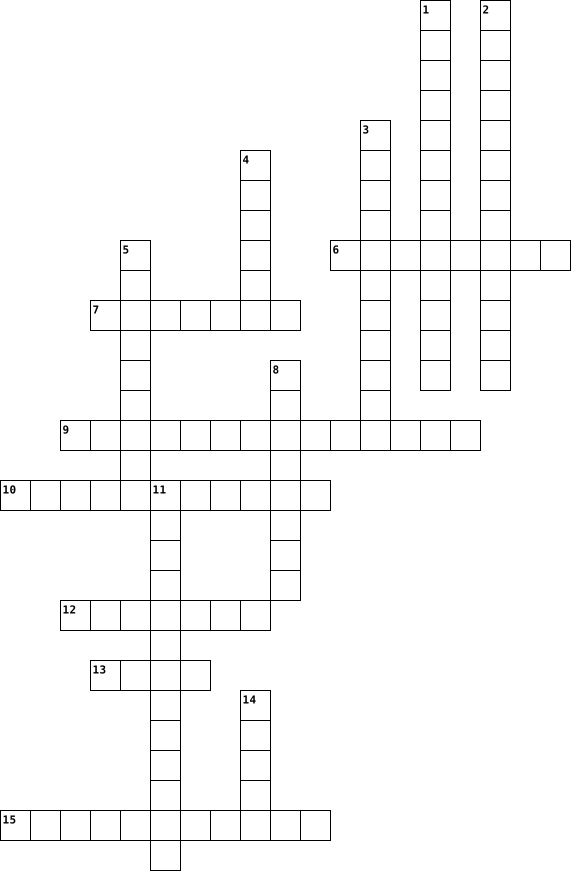
Across
- Fathers The men who used the ideas of the Enlightenment Philosophers to create our form of government.
- Philosopher
- citizens give up some freedom they would have in a state of nature, and in exchange the government protects citizens’ right to life, liberty, and property.
- A philosopher
- a basic right to be free.
- A basic natural right.
- The name of the period of time called the Enlightenment.
Down
- A period of time where thinkers questioned what they had always been told to believe.
- Life, Liberty, Property
- A thinker who tries to analyze or understand something deeply.
- The country where the Enlightenment began.
- A natural rights philosopher
- a basic right to own things.
- No rules and complete freedom
- The period of time Enlightenment thought was popular.
15 Clues: Philosopher • A philosopher • A basic natural right. • Life, Liberty, Property • a basic right to be free. • A natural rights philosopher • a basic right to own things. • No rules and complete freedom • The country where the Enlightenment began. • The period of time Enlightenment thought was popular. • The name of the period of time called the Enlightenment. • ...
Age of Enlightenment Review 2021-09-28
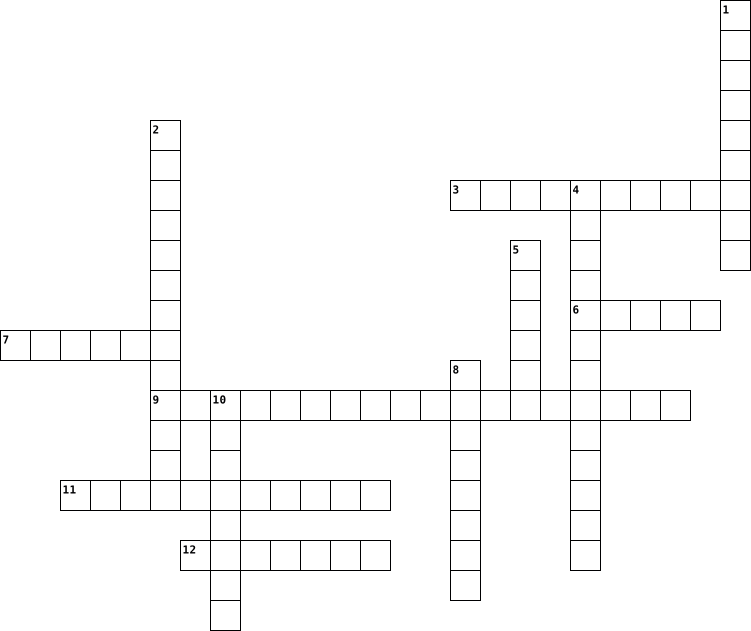
Across
- this revolution helped to inspire the Enlightenment
- if the government does not protect people's natural rights John Locke believed that people had a right to do this
- the continent where the Enlightenment began specifically in France and England
- an Enlightenment thinker who wrote that women could gain equality through education
- an Enlightenment philosopher who believed in three separate branches of government (last name only)
- these leaders held absolute power but brought some Enlightenment reforms to the countries they ruled
Down
- this Enlightenment thinker believed that all people were born free and equal with natural rights.
- a time period in the 1700s where people began to apply reason to social issues and challenge old ideas
- life, liberty and property
- the Enlightenment inspired a revolution in this country
- this Enlightenment philosopher believed in freedom of expression
- author of the Social Contract (last name only)
12 Clues: life, liberty and property • author of the Social Contract (last name only) • this revolution helped to inspire the Enlightenment • the Enlightenment inspired a revolution in this country • this Enlightenment philosopher believed in freedom of expression • the continent where the Enlightenment began specifically in France and England • ...
Us History Unit 1 Keywords 2017-11-07

Across
- The first successful English colony in America, founded in Virginia in 1607
- War fought between the French and native Americans and the British and won by the British
- Treaty signed at the end of the French and Indian War that made France give up most of its American colonies
- Enlightenment thinker who wanted the church and the state to be separate
- Enlightenment thinker who wrote about and enabled many people to read about enlightenment ideas
- The writing of history
- An account of an event created after it happened by someone who did not witness it
- A period during which religion became more important as a reaction to the enlightenment
- Prejudice in information caused by personal opinions
- Period when people began to doubt religious and governmental authority and develop new ideas about morals and rights
- Enlightenment thinker who said that the people should control their government
Down
- A first-hand account of an event told by a witness
- Newspaper publisher who printed anonymous articles criticizing the government
- Contract signed on the Mayflower by 41 people agreeing to follow certain laws
- Enlightenment thinker who said that no one person should have too much power and proposed three branches of government
- Writer who defined natural rights as life, liberty and property and stated that people could overthrow a government that did not respect these rights
- Rebellion in Virginia protesting against a lack of protection by the governor
- First elected legislature in the colonies, established in Virginia in 1619
- System in which the wealth of a country is increased controlling colonies economies and importing less than it exports
19 Clues: The writing of history • A first-hand account of an event told by a witness • Prejudice in information caused by personal opinions • Enlightenment thinker who wanted the church and the state to be separate • First elected legislature in the colonies, established in Virginia in 1619 • The first successful English colony in America, founded in Virginia in 1607 • ...
Enlightenment Crossword Puzzle 2023-03-27
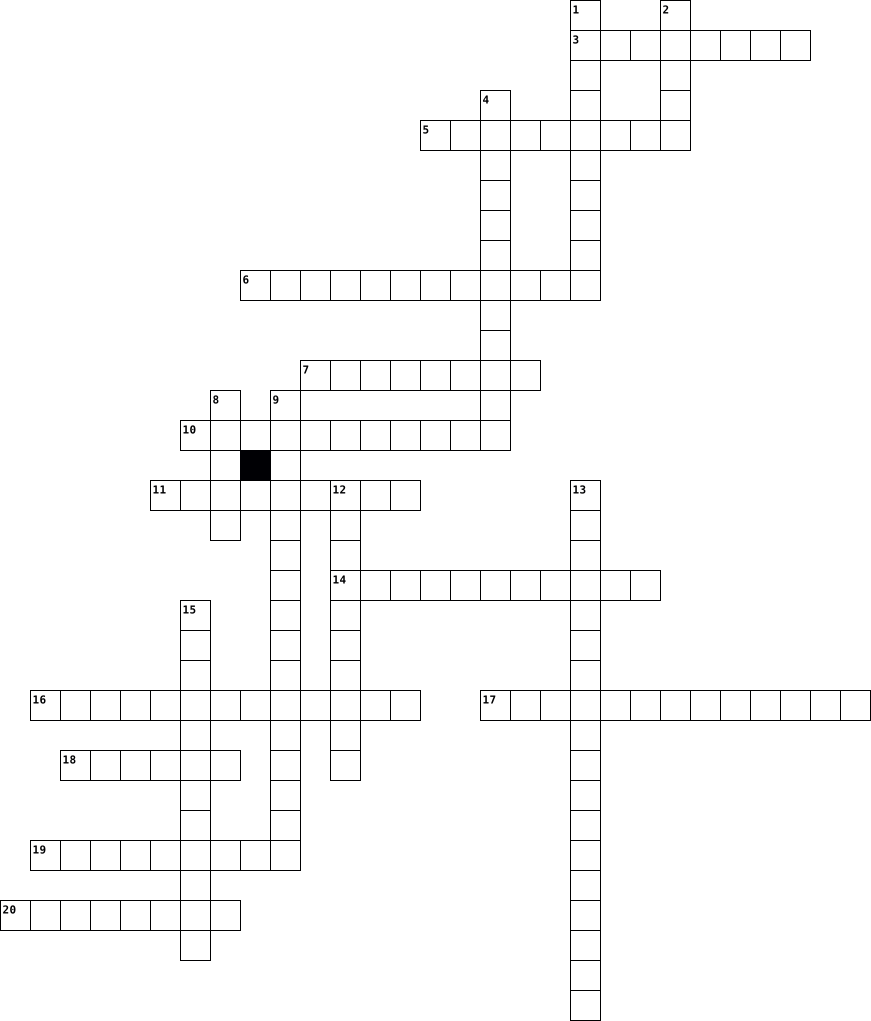
Across
- promoted equal education for women and men so both could contribute _________
- some did not agree with the Enlightenment because they believed there needed to be more _____ in the world
- wrote the Spirit of Laws discussing the branches of government and separation of powers
- the name for the leaders who encouraged the Enlightenment
- monarchs wanted to put an end to the Enlightenment because people began to think for themselves and this would lead to a ________
- wrote poetry and plays, discussed religious freedom and freedom of the press
- this group enjoyed the Enlightenment ideas because it gave them their basic rights and freedoms
- written by Dennis Diderot and caused him to be imprisoned for heresy
- Maria Theresa of Austria was known for her ________________ efforts
- most active city during the Enlightenment
- Maria Theresa's son, ended serfdom and made taxes equal for all
- Frederick II of Prussia abolished torture and established ____________
Down
- established by John Wesley which focused on the personal religious experience
- Catherine II of Russia was known for reforming _________
- celebrated the emotion and the individual
- Hasidism promoted religious excitement or _____
- established by Count von Zinzendorf and was a mystical and emotional form of Christianity
- during the Enlightenment, people began to the world in this way instead using magic to explain things
- written by Hobbes and Locke and explained the right to rule belongs in the people through voting
- spread the ideas of scientific ideas and believed in freedom of speech and the right to liberty
20 Clues: celebrated the emotion and the individual • most active city during the Enlightenment • Hasidism promoted religious excitement or _____ • Catherine II of Russia was known for reforming _________ • the name for the leaders who encouraged the Enlightenment • Maria Theresa's son, ended serfdom and made taxes equal for all • ...
Buddha 2025-08-18

Across
- The practice of generosity and giving
- Flower symbolizing purity and enlightenment
- The ancient language in which many Buddhist texts are written
- One of the three poisons in Buddhism, along with hatred and ignorance
- A school of Buddhism that uses rituals and esoteric practices
- The state of awakening or enlightenment
- A school of Buddhism emphasizing meditation and intuition
- Collection of Buddhist scriptures
- Being fully present and aware of the moment
- The teachings of the Buddha
- The birthplace of Siddhartha Gautama
- A form of Buddhism in Southeast Asia
- The monastic community of Buddhism
- The family name of Siddhartha
- The Buddhist festival commemorating the birth, enlightenment, and death of the Buddha
- Principle of non-violence
- Spiritual leader of Tibetan Buddhism
Down
- An enlightened being
- The state of perfect wisdom and compassion
- Dome-shaped structure used as a place of meditation or a shrine
- Endless cycle of birth, death, and rebirth
- The desire to alleviate the suffering of others
- Multi-tiered tower with multiple eaves, often found in Buddhist temples
- Focusing the mind to achieve a state of inner peace
- The continuous cycle of being born again
- Idea of impermanence
- Liberation from the cycle of rebirth
- Demon who tempted Gautama before his enlightenment
- Concept of suffering
- Doctrine of non-self
- The place where Siddhartha attained enlightenment
- Law of cause and effect
- Teaching of the Buddha
33 Clues: An enlightened being • Idea of impermanence • Concept of suffering • Doctrine of non-self • Teaching of the Buddha • Law of cause and effect • Principle of non-violence • The teachings of the Buddha • The family name of Siddhartha • Collection of Buddhist scriptures • The monastic community of Buddhism • Liberation from the cycle of rebirth • The birthplace of Siddhartha Gautama • ...
Enlightenment and Revolution ella conrad 2024-12-18

Across
- theory that sun revolves around the earth
- made the telescope, scientific method and more
- a system to allow people to veto laws
- fancy thinker parties
- simple, classy design
- agreement between the ruled and the ruler
- ruler who embraced the enlightenment
- opinions should be based on reason
- government
- theory that earth revolves around the sun
- big thinker for the time
- the theory of separation of powers
Down
- European movement in 17-18th which focused on individualism
- enlightened Russian ruler
- advancements in science history
- the $2 bill
- belief in God based on reason
- grand, over the top design
- woRked on the social contract
- had the most famous salons
- declaration to the United States
- discovered gravity
- the scientific process of making a solution
- french enlightenment thinkerv
- the first 10 amendments
- first enlightenment thinker
26 Clues: government • the $2 bill • discovered gravity • fancy thinker parties • simple, classy design • the first 10 amendments • big thinker for the time • enlightened Russian ruler • grand, over the top design • had the most famous salons • first enlightenment thinker • belief in God based on reason • woRked on the social contract • french enlightenment thinkerv • advancements in science history • ...
Enlightenment 2024-05-12

Across
- Kant understands Enlightenment as a ______
- he who described Enlightenment as "man's release from his self-incurred immaturity"
- Voltaire's central aim (in English)
- the twentieth-century philosopher who understands the Enlightenment as a new regime of social discipline over 'the public' and the actual people who were not imagined as part of 'the public'
- e.g. Catherine the Great
- he who wrote that "man was born free, and he is everywhere in chains" but believed that women were biologically and socially suitable for reproduction only
- a popular genre in Enlightenment literature
Down
- Diderot and d'Alembert's project (in English)
- Daniel Defoe's fictional traveller's tale, wherein the main character is shipwrecked and documents his encounter with an 'exotic' and 'other' world
- the German branch of Enlightenment
- dare to know!
- the twentieth-century philosopher who understands the Enlightenment as breaking the rule of medieval court culture and introducing rational thought
- a newly imagined group; a sort of 'tribunal' of human opinion and rationality
- a physical site for Enlightenment conversation and debate
14 Clues: dare to know! • e.g. Catherine the Great • the German branch of Enlightenment • Voltaire's central aim (in English) • Kant understands Enlightenment as a ______ • a popular genre in Enlightenment literature • Diderot and d'Alembert's project (in English) • a physical site for Enlightenment conversation and debate • ...
Enlightenment 2023-03-06
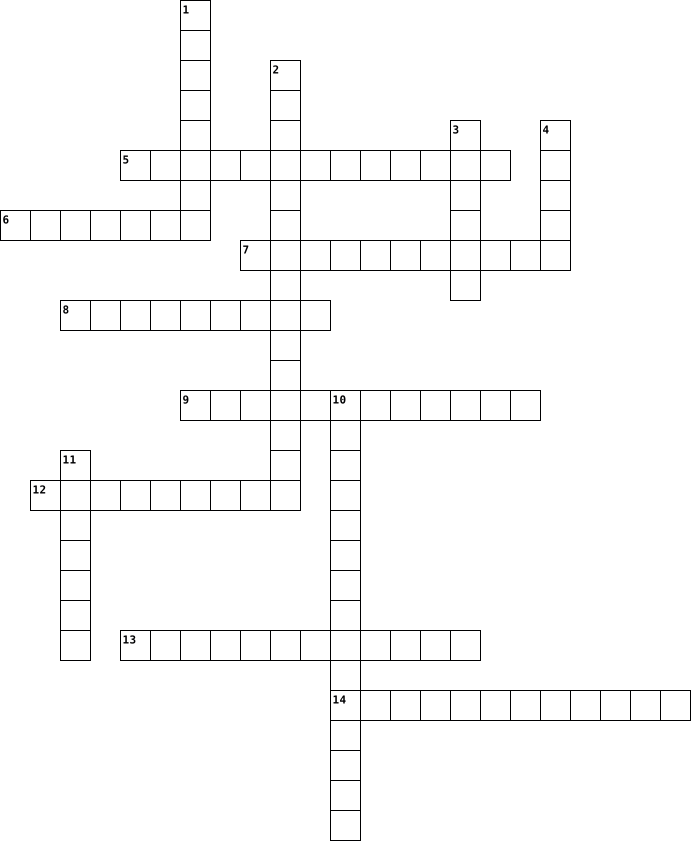
Across
- Who painted the Sistine Chapel, and sculpted David?
- The German monk who started the Reformation
- Writers of the Enlightenment were interested in?
- What was the center of the Renaissance?
- The rebirth in classical cultures of Greece & Rome were called
- This person argued for freedom of speech and religion
- A pardon for sins by paying the Church.
- The movement that split the Catholic Church.
Down
- What Renaissance man painted Mona Lisa & the Last Supper?
- "The first job of women is to raise their children"?
- "I believed that people should rebel if the government is too harsh..."
- The Age Enlightenment took place during what centuries?
- Hobbes idea for a society in which people enter into an agreement
- This person believed that humans are basically cruel, greedy & selfish
14 Clues: What was the center of the Renaissance? • A pardon for sins by paying the Church. • The German monk who started the Reformation • The movement that split the Catholic Church. • Writers of the Enlightenment were interested in? • Who painted the Sistine Chapel, and sculpted David? • "The first job of women is to raise their children"? • ...
enlightenment 2021-09-23
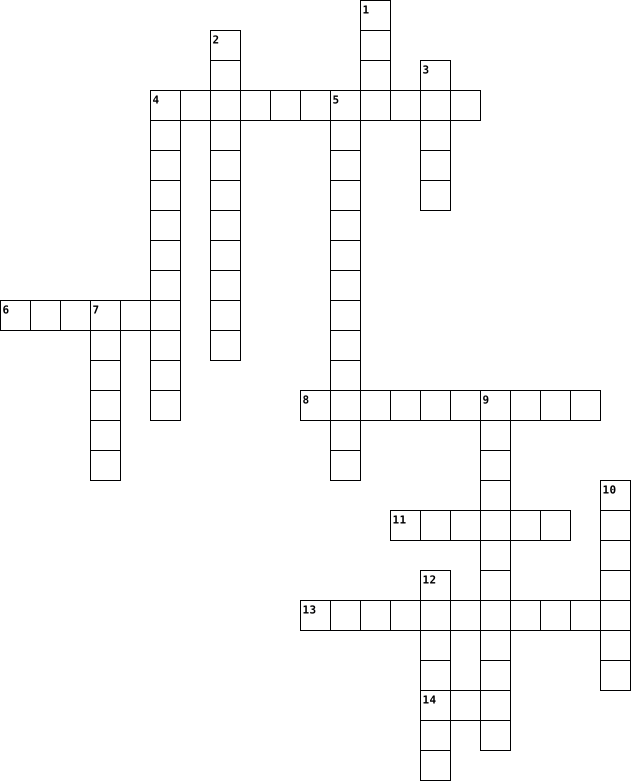
Across
- bacon
- gravity and motion
- bacteria in tooth scrapings
- dull colors harsh lines
- sun-centered
- founder of modern chemistry
- soft colors wealthy people painting
- heliocentric theory
Down
- analytical geometry
- scientific method
- vaccine for smallpox
- earth-centered
- proved stuff with math
- perfected the telescope
14 Clues: bacon • sun-centered • earth-centered • scientific method • gravity and motion • analytical geometry • heliocentric theory • vaccine for smallpox • proved stuff with math • perfected the telescope • dull colors harsh lines • bacteria in tooth scrapings • founder of modern chemistry • soft colors wealthy people painting
enlightenment 2023-09-25
Across
- army - who sought to maintain control over the america colonies
- - logical motive for a belief
- - a radical change in the established order
- beccaria - Italian criminologist, jurist, philosopher, economist and politician
- - thinker
- of reason -a period in Europe in the 18th century when many writers and thinkers began to question established beliefs
Down
- jacqus -An 18-century French philosopher
- - French political philosopher who advocated the separation of executive and legislative and judicial powers
- - discuss ideas
- congress -the governing body
- - the state of having knowledge or understanding
- contract - between the ruled and their rulers
- -English materialist and political philosopher who advocated absolute sovereignty
- right - laws and govt.
- - pseudonym of François Marie Arouet
15 Clues: - thinker • - discuss ideas • right - laws and govt. • congress -the governing body • - logical motive for a belief • - pseudonym of François Marie Arouet • jacqus -An 18-century French philosopher • - a radical change in the established order • contract - between the ruled and their rulers • - the state of having knowledge or understanding • ...
Enlightenment 2024-12-02

Across
- good According to the Enlightenment thinkers, what is man’s nature before being corrupted by society?
- In which country did Jonathan Swift spend much of his life and develop a strong connection to its people?
- Swift Who was the satirist that depicted human society’s vices in works like “Gulliver’s Travels”?
- What term describes the intellectual movement that advocated for reason and progress during the 18th century?
- Letters Under what pseudonym did Swift write his series of letters criticizing Irish financial exploitation?
- What is the name of the fictional land of tiny people in Swift’s “Gulliver’s Travels”?
- Crusoe Which Defoe novel, about a shipwrecked Englishman, was his first major literary success?
- critique What key topic does Swift’s “Tale of a Tub” primarily criticize?
Down
- Travels Which is considered Jonathan Swift’s greatest work, a satirical critique of contemporary life?
- Jack In which novel does Defoe depict the life of a boy who turns to theft due to poverty?
- of a Tub Which of Jonathan Swift’s satirical works critiques different forms of religion?
- Englishman Which pamphlet by Defoe critiques the aristocracy and church, supporting the common people?
- Crusoe What is the title of Daniel Defoe’s famous novel about a mariner stranded on an island?
- Defoe What is the name of the English writer and political pamphleteer who authored “Robinson Crusoe”?
- Allies In which pamphlet did Swift criticize England’s involvement in continental wars?
15 Clues: critique What key topic does Swift’s “Tale of a Tub” primarily criticize? • What is the name of the fictional land of tiny people in Swift’s “Gulliver’s Travels”? • Allies In which pamphlet did Swift criticize England’s involvement in continental wars? • of a Tub Which of Jonathan Swift’s satirical works critiques different forms of religion? • ...
Enlightenment 2025-01-07

Across
- continent where the Enlightenment began
- believed all people are born free and equal with natural rightsc
- fought for freedom of speech and freedom of religion
- an activist for women's rights
- division of power among different branches
- thought titles of nobility should be abolished
- the kind of power a king had over citizens
- Hobbes was convinced all humans were naturally this
Down
- Rousseau believed good government was freely formed and guided by this
- all people are born free and equal with these
- an agreement where citizens give up some rights in exchange they gain law and order
- a period when people developed new ideas about human rights
- where legitimate government comes from
- if a government fails to protect rights, people have the right to do this
14 Clues: an activist for women's rights • where legitimate government comes from • continent where the Enlightenment began • division of power among different branches • the kind of power a king had over citizens • all people are born free and equal with these • thought titles of nobility should be abolished • Hobbes was convinced all humans were naturally this • ...
Enlightenment Crossword 2023-03-03
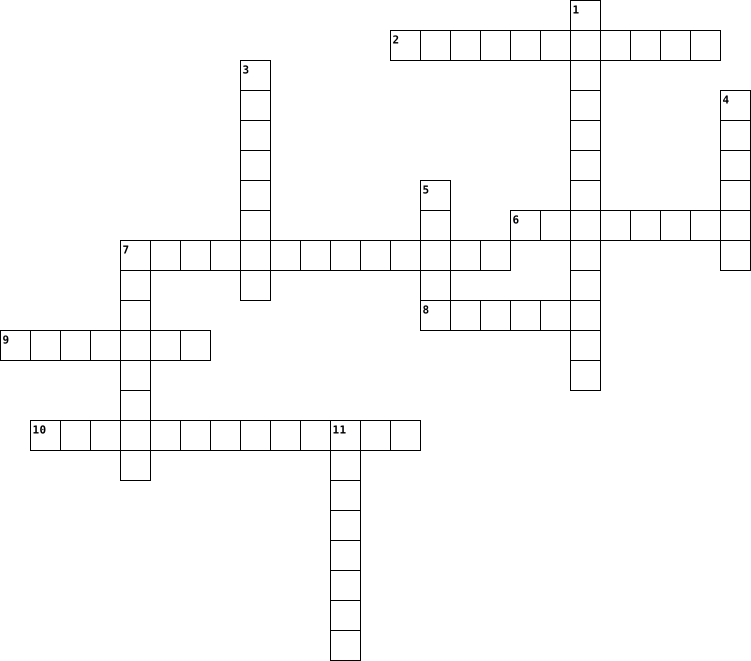
Across
- This influential author and political figure first published poor Richards Almanac in 1732
- The main purpose of enlightenment literature was to persuade or support a/an ______
- Ben Franklins writing spread this ideology
- The American enlightenment period followed the enlightenment on which continent?
- Many enlightenment works were criticized for their lack of ______
- This era of writing was brought about by enlightenment literature, based on the ideas of freedom and independence
Down
- Era in American literature spanning from early 1700s to early 1800s
- Poor Richards Almanac included these sayings that introduced humor in new ways
- The most common forms of writing in this era were political documents, books, speeches, and ______
- Author of common sense, Thomas _______
- The enlightenment era was characterized by focus on government, liberty, and freedom of ______
- Enlightenment Literature help spark the _____ Revolution
12 Clues: Author of common sense, Thomas _______ • Ben Franklins writing spread this ideology • Enlightenment Literature help spark the _____ Revolution • Many enlightenment works were criticized for their lack of ______ • Era in American literature spanning from early 1700s to early 1800s • Poor Richards Almanac included these sayings that introduced humor in new ways • ...
French Rev Crossword 2025-09-14

Across
- Pledge by the National Assembly to create a new constitution after being locked out of the Estates General.
- Enlightenment thinker who believed in separation of powers in government.
- Economist who supported free markets and natural laws of economics.
- Assembly of representatives from all three estates; called to address taxes but was unfair to the Third Estate.
- Period of new ideas in the 1600s-1700s that stressed reason, equality, and questioning authority.
Down
- Rights Enlightenment belief that all people are born with rights such as life, liberty, and property.
- First form of representative government formed by the Third Estate to make laws for the French people.
- Enlightenment writer who defended freedom of speech and religion.
- Nobility; wealthy landowners with privileges; paid no taxes.
- Revolutionary document influenced by Enlightenment ideas; declared equality and protected rights.
- Everyone else (peasants, workers, middle class); 97% of population; paid nearly all the taxes.
- Contract Rousseau's idea that governments should be based on an agreement between rulers and the people.
- Clergy in France; less than 1% of the population; paid no taxes.
- Enlightenment thinker who promoted natural rights and government by consent of the governed.
- Enlightenment thinker who argued government must follow the general will of the people.
15 Clues: Nobility; wealthy landowners with privileges; paid no taxes. • Clergy in France; less than 1% of the population; paid no taxes. • Enlightenment writer who defended freedom of speech and religion. • Economist who supported free markets and natural laws of economics. • Enlightenment thinker who believed in separation of powers in government. • ...
EOC Review Crossword 1 2022-03-01
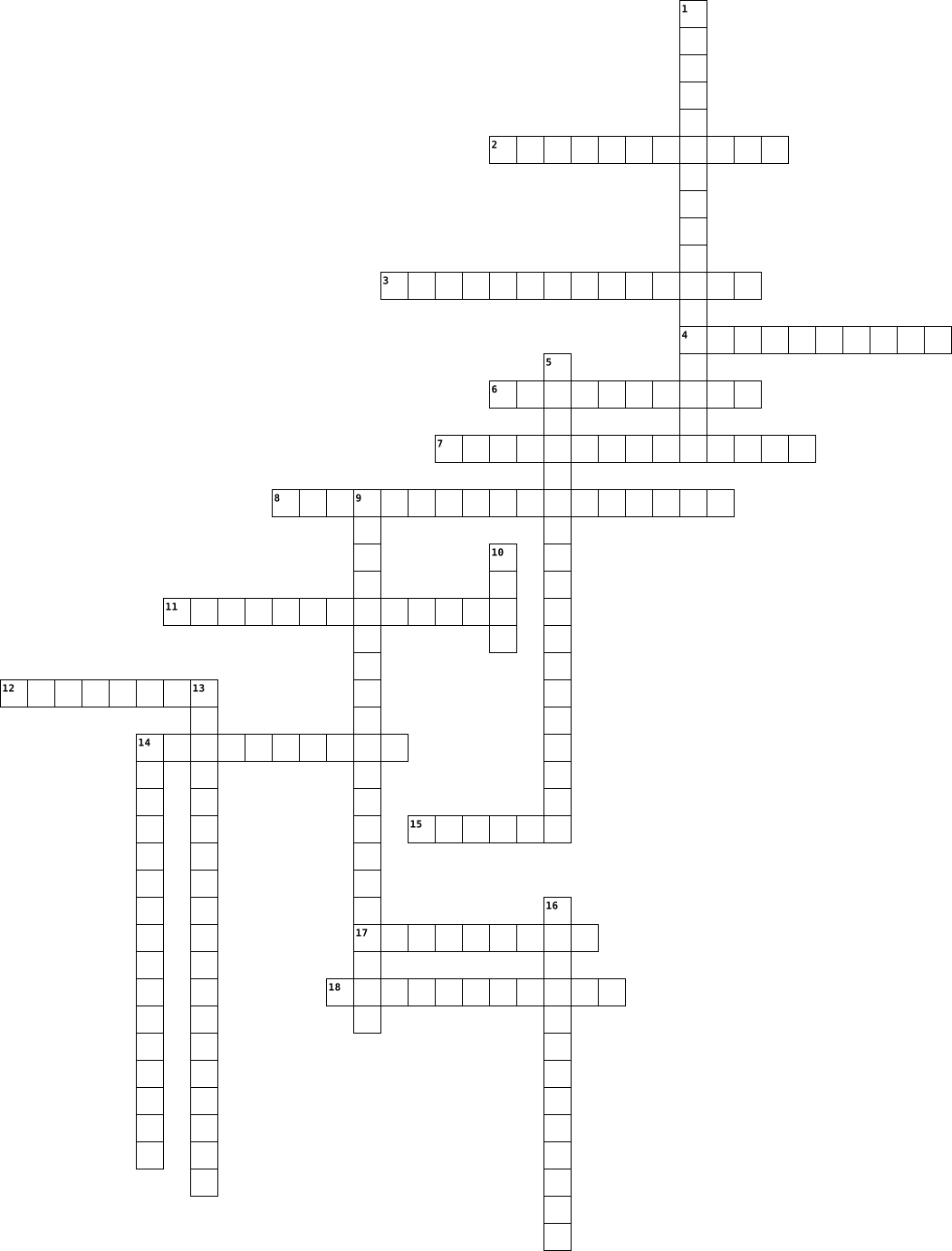
Across
- common sense
- Self Government
- natural law
- Due Process
- Social Contract
- checks and balances
- Enlightenment
- preamble
- magna carta
- rights
- rule of law
- legislature
Down
- limited government
- Separation of Powers
- Consent of the Governed
- duty
- English bill of rights
- Mayflower compact
- natural rights
19 Clues: duty • rights • preamble • natural law • Due Process • magna carta • rule of law • legislature • common sense • Enlightenment • natural rights • Self Government • Social Contract • Mayflower compact • limited government • checks and balances • Separation of Powers • English bill of rights • Consent of the Governed
Enlightenment 2020-08-20

Across
- a time where reason and thought are used to solve problems
- did not believe in divine right
- man's natural innocence was ruined by society
- belief that the Earth travels around the sun
- suggested that there be three branches of government
- the study of knowledge and existence
- people agree to follow a set of rules
- economy controlled by business owners
Down
- rules of nature that apply to all humans
- belief that the sun travels around the Earth
- astronomer that said the earth travels around the sun
- freedom of religion
- believed that people were selfish and should be ruled by a king
- fought for women's equality
14 Clues: freedom of religion • fought for women's equality • did not believe in divine right • the study of knowledge and existence • people agree to follow a set of rules • economy controlled by business owners • rules of nature that apply to all humans • belief that the sun travels around the Earth • belief that the Earth travels around the sun • ...
enlightenment 2021-09-23
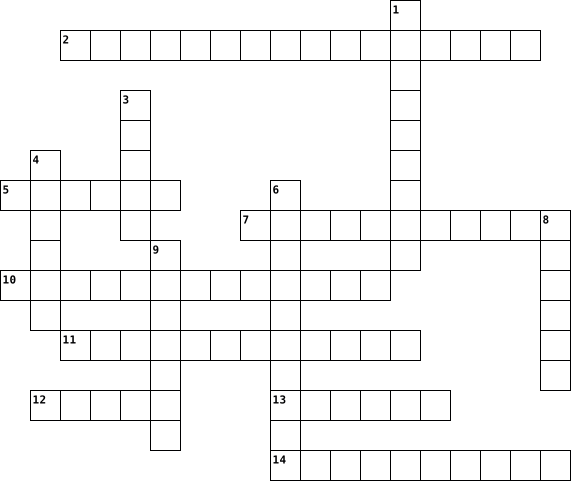
Across
- bacon
- gravity and motion
- bacteria in tooth scrapings
- dull colors harsh lines
- sun-centered
- founder of modern chemistry
- soft colors wealthy people painting
- heliocentric theory
Down
- analytical geometry
- scientific method
- vaccine for smallpox
- earth-centered
- proved stuff with math
- perfected the telescope
14 Clues: bacon • sun-centered • earth-centered • scientific method • gravity and motion • analytical geometry • heliocentric theory • vaccine for smallpox • proved stuff with math • perfected the telescope • dull colors harsh lines • bacteria in tooth scrapings • founder of modern chemistry • soft colors wealthy people painting
enlightenment 2021-09-23
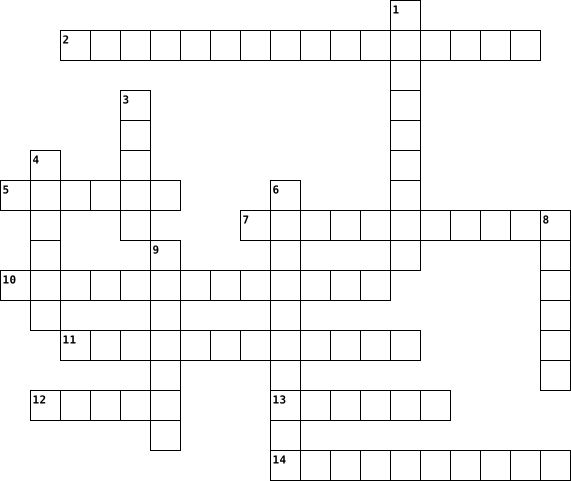
Across
- bacon
- gravity and motion
- bacteria in tooth scrapings
- dull colors harsh lines
- sun-centered
- founder of modern chemistry
- soft colors wealthy people painting
- heliocentric theory
Down
- analytical geometry
- scientific method
- vaccine for smallpox
- earth-centered
- proved stuff with math
- perfected the telescope
14 Clues: bacon • sun-centered • earth-centered • scientific method • gravity and motion • analytical geometry • heliocentric theory • vaccine for smallpox • proved stuff with math • perfected the telescope • dull colors harsh lines • bacteria in tooth scrapings • founder of modern chemistry • soft colors wealthy people painting
enlightenment 2021-09-23
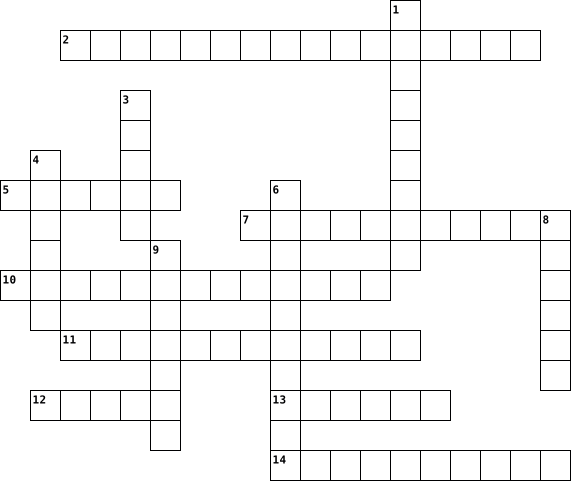
Across
- bacon
- gravity and motion
- bacteria in tooth scrapings
- dull colors harsh lines
- sun-centered
- founder of modern chemistry
- soft colors wealthy people painting
- heliocentric theory
Down
- analytical geometry
- scientific method
- vaccine for smallpox
- earth-centered
- proved stuff with math
- perfected the telescope
14 Clues: bacon • sun-centered • earth-centered • scientific method • gravity and motion • analytical geometry • heliocentric theory • vaccine for smallpox • proved stuff with math • perfected the telescope • dull colors harsh lines • bacteria in tooth scrapings • founder of modern chemistry • soft colors wealthy people painting
Enlightenment 2021-03-08
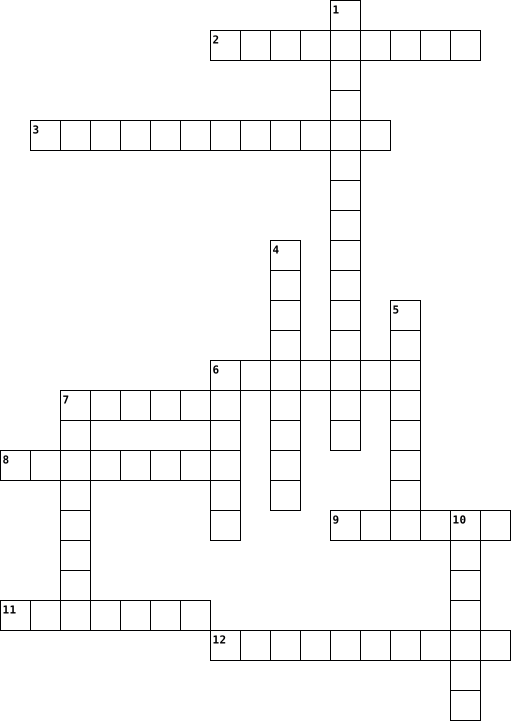
Across
- to start something new
- The first 10 amendments to the constitution
- a large amount of changes
- to collect something
- advanced math to study changes
- priests who carry out religious duties
- disrespect my help an enemy country
- taking away art or films
Down
- a very powerful person getting a lot of there power taken away from the government
- a fake name
- to accept
- clearly understanding
- someone who represents someone in the government industry
- a force that keeps everyone on the ground
14 Clues: to accept • a fake name • to collect something • clearly understanding • to start something new • taking away art or films • a large amount of changes • advanced math to study changes • disrespect my help an enemy country • priests who carry out religious duties • a force that keeps everyone on the ground • The first 10 amendments to the constitution • ...
Enlightenment 2021-10-04
Across
- Prision radided in 1789
- location for the battle
- location for the battle
- Dictator
- stressed in the enlightenment
- wealthy woman
- where King Louis lived
- the enlightenment
Down
- lots of people died
- and idea people were thinking of besides a monarchy
- taxation without representation
- made declaration of independence
- Chose kings and queens
- looked down upon the Enlightenment
- Guillotine
15 Clues: Dictator • Guillotine • wealthy woman • the enlightenment • lots of people died • Chose kings and queens • where King Louis lived • Prision radided in 1789 • location for the battle • location for the battle • stressed in the enlightenment • taxation without representation • made declaration of independence • looked down upon the Enlightenment • ...
enlightenment 2026-04-07

Across
- → Philosophe who created the Encyclopedia
- despots → Rulers who supported Enlightenment reforms
- → Non-religious outlook that grew during the Enlightenment
- → Artistic style known for grand decoration before neoclassical
- → Social gatherings where Enlightenment ideas were discussed
- → System forcing peasants to work for landowners
- → Belief that human reason could solve social problems
Down
- → Enlightenment focus on personal freedom
- → Composer who bridged classical and romantic music
- → Acceptance of different religions encouraged by philosophes
- → Book project banned by church and government
- → French city that became the cultural capital of Europe
- → Artistic style inspired by ancient Greece and Rome
- wars → Conflicts that helped Russia gain Black Sea access
14 Clues: → Enlightenment focus on personal freedom • → Philosophe who created the Encyclopedia • → Book project banned by church and government • → System forcing peasants to work for landowners • → Composer who bridged classical and romantic music • despots → Rulers who supported Enlightenment reforms • → Artistic style inspired by ancient Greece and Rome • ...
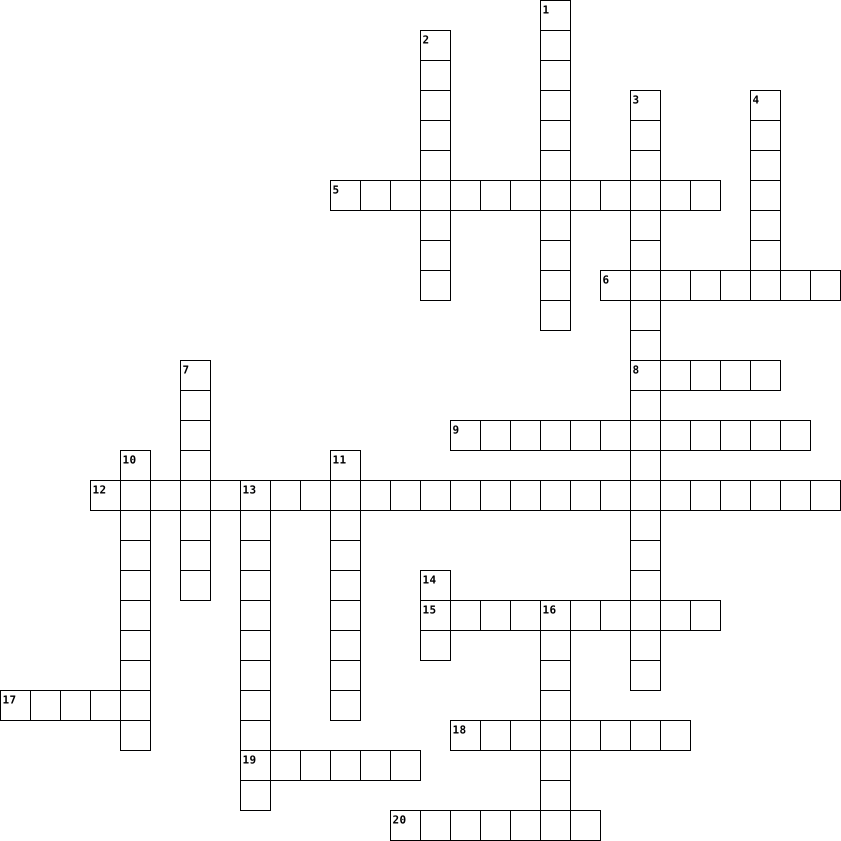
Enlightenment Review - A 2021-04-30
Across
- this event helped spur on the Enlightenment
- Diderot compiled human knowledge into this work
- analyzed economic systems and believed in laissez-faire economics
- demanded equal rights for women, especially in education
- exciting time of optimism and possibility from the late 1600s to the late 1700s when reason was thought to solve problems of the human condition
- the Enlightenment was also called this
- Enlightenment ideas spread and caused reforms and also __
- Locke thought the purpose of government was to ___ people's natural rights
- attacked injustice wherever he saw it
- "leave alone" in French
- During the Enlightenment, European thinkers began looking for ways to apply __ in order to improve the human condition
Down
- separation of powers helped develop the system of ___ __ ___
- laissez-faire system is an economic system that works without ____ regulation
- the idea that people in a society should agree to give up some freedoms to a strong leader in exchange for the peace, safety, and order that government could provide
- the type of government Hobbes thought best
- believed government should work for the benefit of the common good, not for the wealthy few
- center of Enlightenment activity
- thought people were selfish and greedy
- Locke believed that if a government failed to protect its citizens, they had the right to ___ it
- believed people were naturally happy, tolerant, and reasonable
- Rousseau believed people were born good but were corrupted by ___
- Hobbes believed people needed governments to impose __
- gatherings where people came together to discuss their ideas
23 Clues: "leave alone" in French • center of Enlightenment activity • attacked injustice wherever he saw it • thought people were selfish and greedy • the Enlightenment was also called this • the type of government Hobbes thought best • this event helped spur on the Enlightenment • Diderot compiled human knowledge into this work • ...
Buddhist Crossword Puzzle 2026-01-13

Across
- The historical teacher who achieved enlightenment
- Symbolic geometric designs used in meditation to represent the universe and focus the mind
- The teachings of the Buddha that explain reality, suffering, and the path to enlightenment.
- The earliest written collection of Buddhist texts
- The three-part collection of Buddhist scriptures that includes teachings, rules, and philosophical analysis.
- The four experiences that revealed suffering to Siddhartha Gautama
- The Buddhist teaching that there is no permanent, unchanging self or soul
- A person who has achieved enlightenment and broken free from the cycle of rebirth
- The balanced path taught by the Buddha that avoids both luxury and extreme self-denial.
- Basic ethical guidelines for Buddhists that focus on avoiding harm through actions like violence, stealing, and dishonesty.
- Physical remains or sacred objects connected to the Buddha or other enlightened beings
Down
- Spiritual teachers in Tibetan Buddhism who guide followers through instruction and ritual practices
- Enlightened beings who delay their final liberation in order to help others reach enlightenment
- The sacred tree under which Siddhartha Gautama reached enlightenment after deep meditation.
- The ultimate goal in Buddhism
- A form of Buddhist practice that uses rituals, symbols, and meditation techniques to achieve enlightenment more rapidly
- A tall, tiered religious structure often used to house sacred objects and honor important Buddhist figures.
- The community of monks, nuns, and sometimes followers who practice Buddhist teachings.
- Recorded sermons and teachings attributed to the Buddha and his close disciples
- A lifestyle of extreme self-discipline and denial of pleasure
20 Clues: The ultimate goal in Buddhism • The historical teacher who achieved enlightenment • The earliest written collection of Buddhist texts • A lifestyle of extreme self-discipline and denial of pleasure • The four experiences that revealed suffering to Siddhartha Gautama • The Buddhist teaching that there is no permanent, unchanging self or soul • ...
THE ENLIGHTENMENT 2025-10-10

Across
- The Enlightenment thinker who believed in the idea of natural rights.
- The Enlightenment thinker who believed in the idea of a social contract between ruler and subject.
- The idea that power is passed down by will of god.
- Lawyer and leader of the French Revolution, sent thousands of people to the guillotine.
- The Enlightenment thinker who believed in the theory of separation of power.
- The of the late king and queen that was commissioned by the late king.
- The Enlightenment thinker who believed in the freedom of thought, religion, and speech.
- Where the Enlightenment period took place.
Down
- The last queen of France.
- The wealthy population of France.
- The Enlightenment thinker who believed citizens must sacrifice some personal freedoms in order for society to cooperate.
- The poor, working class of France.
- The last king of France.
- A prison fortress in France, a symbol of royal authority.
14 Clues: The last king of France. • The last queen of France. • The wealthy population of France. • The poor, working class of France. • Where the Enlightenment period took place. • The idea that power is passed down by will of god. • A prison fortress in France, a symbol of royal authority. • The Enlightenment thinker who believed in the idea of natural rights. • ...
Buddhism Chapter Project 2026-01-16

Across
- fundamental ethical guidelines that serve as the foundation for moral conduct and spiritual development
- a release from the effects of karma and the cycle of death and rebirth
- spiritual guides and master teachers who orally pass on complex rituals and meditation techniques to disciples
- a wandering ascetic and religious teacher who achieved enlightenment through meditation
- a complex representation of the universe with different parts of the universe representing different aspects of the Buddha teachings
- a religious teaching, often presented in the form of aphorisms or short statements
- a collection of Buddhist teachings that are the foundation of the Theravada Buddhist philosophy
- sacred objects that can assist believers in Buddhism in their path to enlightenment
- the Buddha's teaching and the universal truth that explains the nature of reality
Down
- pivotal encounters in the life of Siddhartha Gautama that led him to renounce his princely life and seek enlightenment
- one who has gained insight into the nature of existence and has achieved nirvana
- a person who has attained, or is striving towards, bodhi (enlightenment)
- a Hindu or Buddhist temple, typically a many-tiered tower
- the community of ordained monks and nuns and is one of the Three Jewels of Buddhism
- a person who practices self-discipline voluntarily to achieve a higher state of being
- a symbol of enlightenment and spiritual awakening in Buddhism
- a unique and powerful form of Buddhist practice that emphasizes ritual, symbolism, and meditation techniques to achieve enlightenment
- a fundamental concept in Buddhism that refers to a balanced approach to life and emphasizes a spiritual practice that leads to enlightenment and happiness
- the standard collection of scriptures in the Theravada Buddhist tradition
- also known as "non-self", is a fundamental concept in Buddhism that asserts there is no permanent, unchanging self or soul within an individual
20 Clues: a Hindu or Buddhist temple, typically a many-tiered tower • a symbol of enlightenment and spiritual awakening in Buddhism • a release from the effects of karma and the cycle of death and rebirth • a person who has attained, or is striving towards, bodhi (enlightenment) • the standard collection of scriptures in the Theravada Buddhist tradition • ...
Unit 6 Crossword 2013-04-10
Across
- Main Result of Latin American Revolts
- Enlightenment Thinker that thought, "Freedom of Religion and Speech."
- "The Most Autocratic Leader"
- Major Result of English Revolution
- A very important document that reflects many Enlightenment Ideas
- The Act of A Ruler Leading without any Checks and Balances.
- Enlightenment Thinker that thought, "If the Government no longer protects natural rights, the people have the right to revolt."
- Enlightenment Thinker that said, "Nobility should be abolished."
- The Act of Overthrowing a Government
- Claimed to be, "Guardian of the Church"
Down
- The Claim that God gave them the right to rule.
- Where a countries money doesn't have as much value as before.
- Major Cause for English Revolution
- A Cause of the glorious revolution.
- First Absolute Ruler after French Revolution
- Palace of The King and Queen of France
- A Cause of All the Revolutions, (Economic)
- Spearhead of French Revolutionaries, (Got Killed Himself)
- Major Bankrupting Problem During 1600's-1800's.
- King that was Executed During French Revolution.
20 Clues: "The Most Autocratic Leader" • Major Cause for English Revolution • Major Result of English Revolution • A Cause of the glorious revolution. • The Act of Overthrowing a Government • Main Result of Latin American Revolts • Palace of The King and Queen of France • Claimed to be, "Guardian of the Church" • A Cause of All the Revolutions, (Economic) • ...
enlightenment and revolutions 2025-12-09

Across
- Newton
- AgeOfDiscovery
- Medici
- Sonnet
- Inquisition
- Shakespeare
- Feudalism
- HumanBody
- Locke French Revolution
- Chiaroscuro
- PrintingPress
- CouncilOfTrent
- FrenchWarsOfReligion
- Thomas hobbes
- Cervantes
- Copernicus
- Third estate
- Capitalism
Down
- ScientificMethod
- Elizabeth
- Reformation
- Enlightenment
- RenaissanceArchitecture
- Greek
- Salons
- Machiavelli
- Secularism
- ThirtyYearsWar
- OilPainting
- MartinLuther
30 Clues: Greek • Newton • Medici • Salons • Sonnet • Elizabeth • Feudalism • HumanBody • Cervantes • Secularism • Copernicus • Capitalism • Reformation • Machiavelli • Inquisition • Shakespeare • Chiaroscuro • OilPainting • MartinLuther • Third estate • Enlightenment • PrintingPress • Thomas hobbes • AgeOfDiscovery • ThirtyYearsWar • CouncilOfTrent • ScientificMethod • FrenchWarsOfReligion • RenaissanceArchitecture • ...
enlightenment 2023-09-25
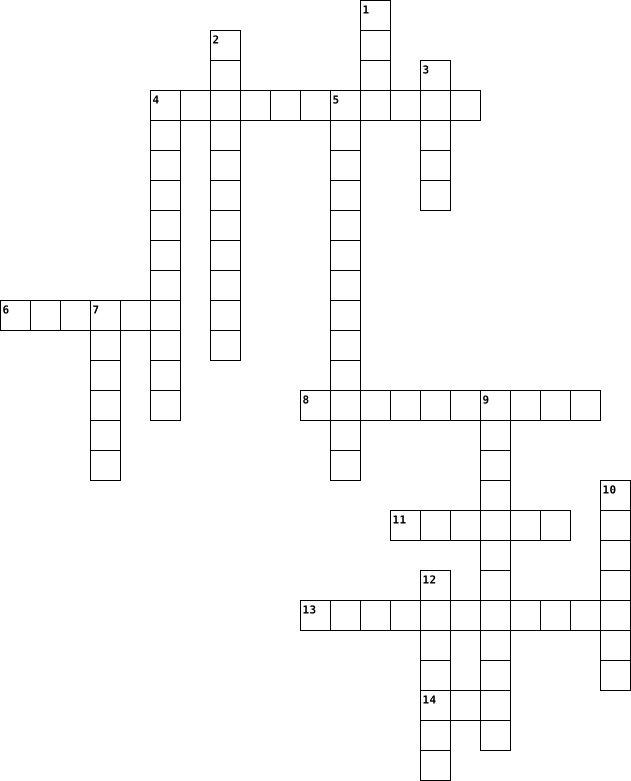
Across
- army - who sought to maintain control over the america colonies
- - logical motive for a belief
- - a radical change in the established order
- beccaria - Italian criminologist, jurist, philosopher, economist and politician
- - thinker
- of reason -a period in Europe in the 18th century when many writers and thinkers began to question established beliefs
Down
- jacqus -An 18-century French philosopher
- - French political philosopher who advocated the separation of executive and legislative and judicial powers
- - discuss ideas
- congress -the governing body
- - the state of having knowledge or understanding
- contract - between the ruled and their rulers
- -English materialist and political philosopher who advocated absolute sovereignty
- right - laws and govt.
- - pseudonym of François Marie Arouet
15 Clues: - thinker • - discuss ideas • right - laws and govt. • congress -the governing body • - logical motive for a belief • - pseudonym of François Marie Arouet • jacqus -An 18-century French philosopher • - a radical change in the established order • contract - between the ruled and their rulers • - the state of having knowledge or understanding • ...
enlightenment 2021-09-23
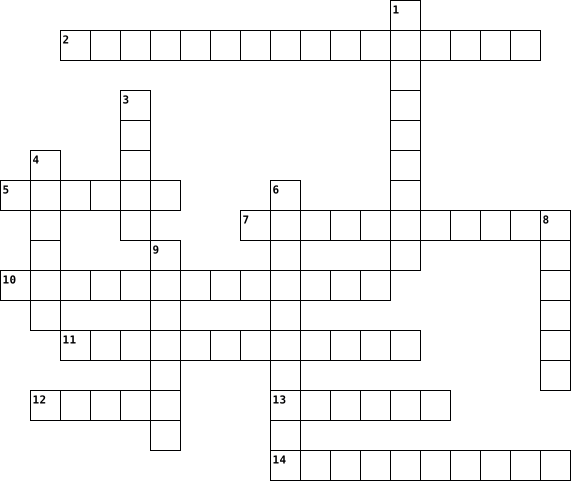
Across
- bacon
- gravity and motion
- bacteria in tooth scrapings
- dull colors harsh lines
- sun-centered
- founder of modern chemistry
- soft colors wealthy people painting
- heliocentric theory
Down
- analytical geometry
- scientific method
- vaccine for smallpox
- earth-centered
- proved stuff with math
- perfected the telescope
14 Clues: bacon • sun-centered • earth-centered • scientific method • gravity and motion • analytical geometry • heliocentric theory • vaccine for smallpox • proved stuff with math • perfected the telescope • dull colors harsh lines • bacteria in tooth scrapings • founder of modern chemistry • soft colors wealthy people painting
enlightenment 2021-09-23
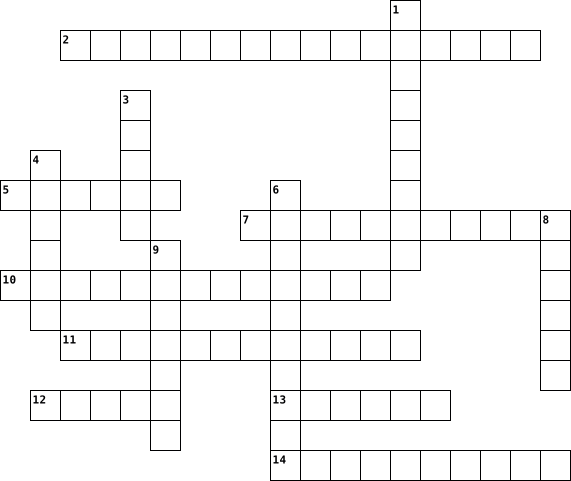
Across
- bacon
- gravity and motion
- bacteria in tooth scrapings
- dull colors harsh lines
- sun-centered
- founder of modern chemistry
- soft colors wealthy people painting
- heliocentric theory
Down
- analytical geometry
- scientific method
- vaccine for smallpox
- earth-centered
- proved stuff with math
- perfected the telescope
14 Clues: bacon • sun-centered • earth-centered • scientific method • gravity and motion • analytical geometry • heliocentric theory • vaccine for smallpox • proved stuff with math • perfected the telescope • dull colors harsh lines • bacteria in tooth scrapings • founder of modern chemistry • soft colors wealthy people painting
Enlightenment 2022-04-15
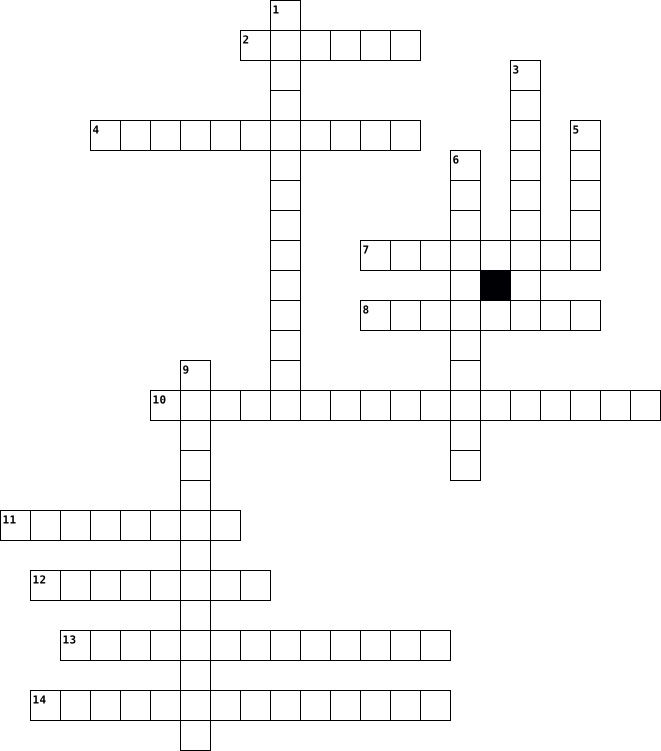
Across
- believed the best government was one that had absolute power
- the branch of government that makes laws
- believed in freedom of speech
- believed in a radical direct democracy
- another term for the death penalty
- the branch of government that interprets laws
- believed in rights for the accused
- a time of knowledge and thinking about rights and justice
- believed women needed to be educated and in important professions
Down
- the idea that people enter into an unwritten agreement for protection and safety
- the branch of government that carries out laws
- believed government need to protect ppls rights
- believed that power should be separated
- life liberty and property
14 Clues: life liberty and property • believed in freedom of speech • another term for the death penalty • believed in rights for the accused • believed in a radical direct democracy • believed that power should be separated • the branch of government that makes laws • the branch of government that interprets laws • the branch of government that carries out laws • ...
Enlightenment 2024-09-26

Across
- Discovered a law that made europeans begin to use scientific reasoning.
- believed that rulers should have absolute power
- Empress of Austria
- believed that people had the right to life liberty and property
- said all people were born good
- many enlightened thinkers thought that reason could solve the problems of
- spirit of a republic
Down
- Madame____held the most famous salon in paris
- believed in the separation of powers
- Hobbes thought that order was more important than _____
- Was a famous baroque composer
- published the first encyclopedia
- enlightened thinkers believed this could bring them to the truth
- criticized the french king and nobles
14 Clues: Empress of Austria • spirit of a republic • Was a famous baroque composer • said all people were born good • published the first encyclopedia • believed in the separation of powers • criticized the french king and nobles • Madame____held the most famous salon in paris • believed that rulers should have absolute power • Hobbes thought that order was more important than _____ • ...
Hunter and Micah's crossword 2024-05-29

Across
- a policy of minimum governmental interference in the economic affairs.
- authority to rule comes from god
- English thinker who became the key to enlightenment.
- He advocated after losing to Russia.
- Citizens were arrested, tried, and executed.
- working class men or women wanted government aurented wage
- informal social gatherings at which writers,artist,philosopher and other exchanged idea.
- Leader in France know for spearheading the Reign of Terror
- replaces the convention
- right to vote
Down
- spending more than you make.
- Medieval armoury, fortress and political prison
- A person that executes people by beheading them
- English thinker who became a key to enlightenment.
- the idea that all power comes from the people.
- Scottish economist.
- A french political philososper of the enlightenment period.
- King of France, 1754-1793
- The age of reason, philosophers emphasized the power human reason to uncover general laws of nature that shape all of human experience.
- the middle class typically with reference to its perceived materialistic values or conventional attitudes.
20 Clues: right to vote • Scottish economist. • replaces the convention • King of France, 1754-1793 • spending more than you make. • authority to rule comes from god • He advocated after losing to Russia. • Citizens were arrested, tried, and executed. • the idea that all power comes from the people. • Medieval armoury, fortress and political prison • ...
Enlightenment 2022-09-07
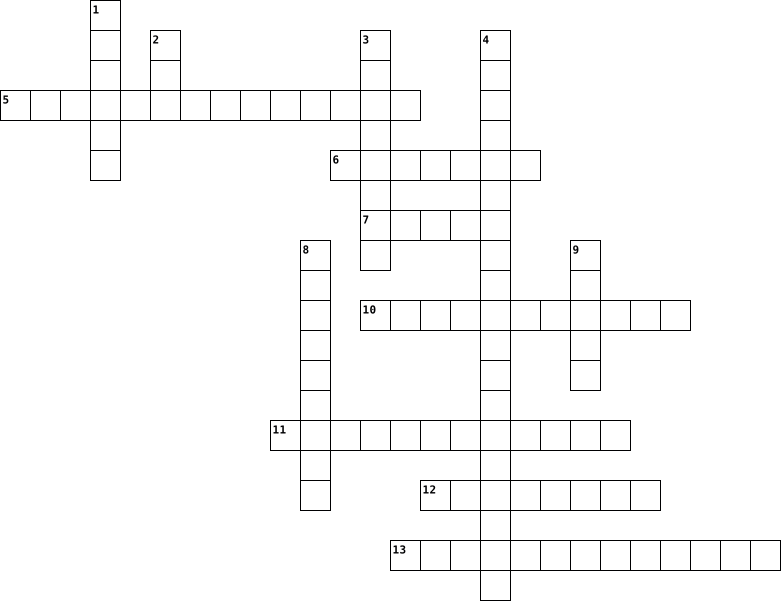
Across
- a title he was known for
- He played a huge part in the peace treaty
- what invention that helps us cook
- Someone ben franklin influenced
- what was his most popular invention
- 1/17/1706
- where he died
Down
- He made an alliance with them
- He signed the biggest document every
- cause of death
- a form of government he was apart of
- who did he get caught by
- 4/17/1790
13 Clues: 4/17/1790 • 1/17/1706 • where he died • cause of death • a title he was known for • who did he get caught by • He made an alliance with them • Someone ben franklin influenced • what invention that helps us cook • what was his most popular invention • He signed the biggest document every • a form of government he was apart of • He played a huge part in the peace treaty
Enlightenment 2022-09-07
Across
- a title he was known for
- He played a huge part in the peace treaty
- what invention that helps us cook
- Someone ben franklin influenced
- what was his most popular invention
- 1/17/1706
- where he died
Down
- He made an alliance with them
- He signed the biggest document every
- cause of death
- a form of government he was apart of
- who did he get caught by
- 4/17/1790
13 Clues: 4/17/1790 • 1/17/1706 • where he died • cause of death • a title he was known for • who did he get caught by • He made an alliance with them • Someone ben franklin influenced • what invention that helps us cook • what was his most popular invention • He signed the biggest document every • a form of government he was apart of • He played a huge part in the peace treaty
Enlightenment 2022-09-07
Across
- a title he was known for
- He played a huge part in the peace treaty
- what invention that helps us cook
- Someone ben franklin influenced
- what was his most popular invention
- 1/17/1706
- where he died
Down
- He made an alliance with them
- He signed the biggest document every
- cause of death
- a form of government he was apart of
- who did he get caught by
- 4/17/1790
13 Clues: 4/17/1790 • 1/17/1706 • where he died • cause of death • a title he was known for • who did he get caught by • He made an alliance with them • Someone ben franklin influenced • what invention that helps us cook • what was his most popular invention • He signed the biggest document every • a form of government he was apart of • He played a huge part in the peace treaty
Enlightenment 2024-04-05
Across
- The act of figuring out.
- A state of perfect happiness.
- That eureka moment.
- Lightbulb moment.
- Geniality or cheerfulness.
- Feeling of extreme happiness.
- A pleasing combination of sounds.
Down
- Taking of the shackles.
- Coming into awareness.
- A lack of agitation or disturbance.
- Seeing through the weeds.
- Knowledge based on experience.
- Deep understanding of a person or thing.
13 Clues: Lightbulb moment. • That eureka moment. • Coming into awareness. • Taking of the shackles. • The act of figuring out. • Seeing through the weeds. • Geniality or cheerfulness. • A state of perfect happiness. • Feeling of extreme happiness. • Knowledge based on experience. • A pleasing combination of sounds. • A lack of agitation or disturbance. • ...
julia stock enlightenment and revolution 2023-01-03

Across
- earth-centered solar system
- used telescope to study astronomy
- political system so that no part of government can become too powerful
- social gatherings to discuss ideas
- classical and analytical style of the Enlightenment
- agreement between the ruler and the people
- ruler with absolute power
- theory that the truth can be discovered through reason or logic
- legislative, executive,and judicial
- sun-centered solar system
- enlightenment thinkers
- separation of power
Down
- applied reason and logic to people and society
- czarina of Russia
- change in thinking about the natural world using observation
- author of the Declaration of Independence
- belief in the existence of a supreme being
- extravagant style of the Enlightenment
- ruler should be for the people
- women's education rights
- document declaring the colonies' separation from Britain
- universal laws of motion, gravity
- basic method for conducting scientific experiments
- tolerance of religion, freedom of speech
- ten amendments of the US constitution
- everyone has natural rights
26 Clues: czarina of Russia • separation of power • enlightenment thinkers • women's education rights • ruler with absolute power • sun-centered solar system • earth-centered solar system • everyone has natural rights • ruler should be for the people • used telescope to study astronomy • universal laws of motion, gravity • social gatherings to discuss ideas • ...
Enlightenment and the American Revolution 2025-11-05

Across
- Enlightenment idea that government exists only because the people consent to be governed; if the government fails, the people have the right to change or overthrow it.
- the Enlightenment largely brought about the end of this belief that said that monarchs received their power from God
- Britain sent its military to protect the American colonists during this war
- This 1773 British “Act” led to taxes on tea sales in the colonies, which led directly to protest.
- Enlightenment thinker who inspired the US, and most governments in the Americas, to have executive, legislative, and judicial branches
- gathering of angry colonists at a port where they threw all the tea into the harbor to protest its taxation
- A 1215 English document that established the principle that the king's power was not absolute and protected certain rights for English subjects.
Down
- This 1765 British “Act” demanded colonists feed and house the British soldiers sent to protect them
- influential English Enlightenment philosopher whose ideas on natural rights (life, liberty, and property) heavily influenced the Declaration of Independence
- country from which the American colonists wanted independence
- This 1765 British “Act” placed a tax on all printed materials (like newspapers and legal documents) in the colonies, leading to the rallying cry, "No taxation without representation."
- A 1689 document that guaranteed certain rights, such as trial by jury to English subjects and further limited the power of the monarchy.
- Enlightenment thinker whose ideas about freedom of speech inspired colonists to speak against the British government
- country that threatened the safety of American colonists as it completed for territory
- An 18th-century European intellectual movement that emphasized reason, individualism, and liberty.
- these were the things that caused the biggest problems between the colonists and the British, but that were levied by the British to pay off war debts
- Voltaire called for the separation of the state and this.
- “American” colonists were angry that they were not granted this type of a trial as was required by the English Bill of Rights
- the Enlightenment largely brought about an end to this type of monarch
- Enlightenment thinker who proposed the idea of a “Social Contract” inspiring colonists to expect that the government should serve their needs
- Massacre A 1770 confrontation where British soldiers fired into a crowd of colonists, killing five.
21 Clues: Voltaire called for the separation of the state and this. • country from which the American colonists wanted independence • the Enlightenment largely brought about an end to this type of monarch • Britain sent its military to protect the American colonists during this war • country that threatened the safety of American colonists as it completed for territory • ...
Hinduism/Buddhism Crossword Puzzle Made By Me. 2017-04-12
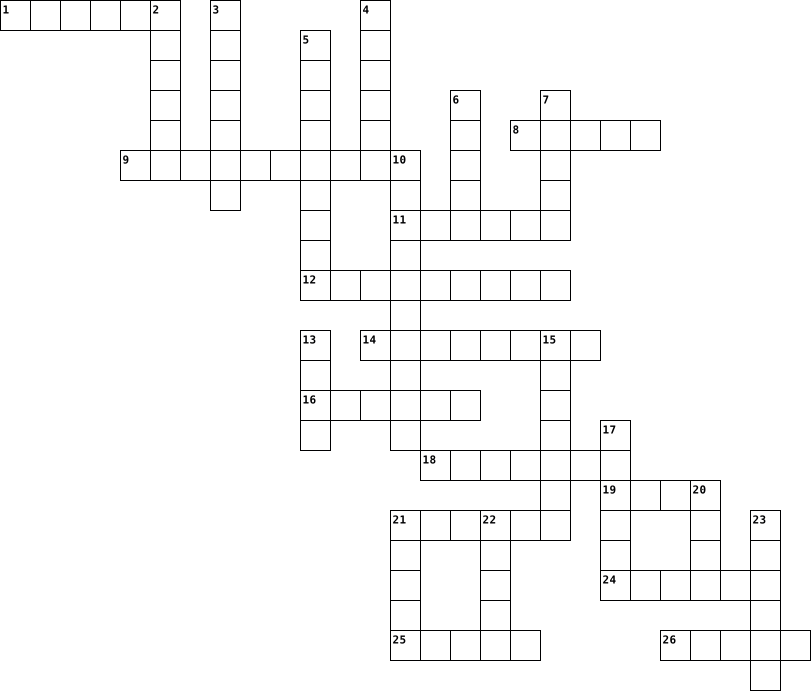
Across
- union with brahma
- forged a dynasty after himself
- warriors
- religious and moral duties of each person
- path leads to enlightenment
- priests
- the creator
- founder of buddhism
- enlightenment believing in ones self
- nonviolence
- workers low in society
- personal self reincarnation
- river river yellow because of yellow soil
Down
- polytheistic people
- herders and merchants
- Gautama enlightened
- pain and suffering
- dynasty that united india after marya
- our actions affect our fate
- guatama reformer of buddhism
- desert in china
- form of enlightenment (True happiness)
- maintain social order
- noble truths heart of buddhist belief
- marya grandson
- the destroyer
- the preserver
27 Clues: priests • warriors • the creator • nonviolence • the destroyer • the preserver • marya grandson • desert in china • union with brahma • pain and suffering • polytheistic people • Gautama enlightened • founder of buddhism • herders and merchants • maintain social order • workers low in society • our actions affect our fate • path leads to enlightenment • personal self reincarnation • ...
Buddhism Vocabulary 2024-02-12
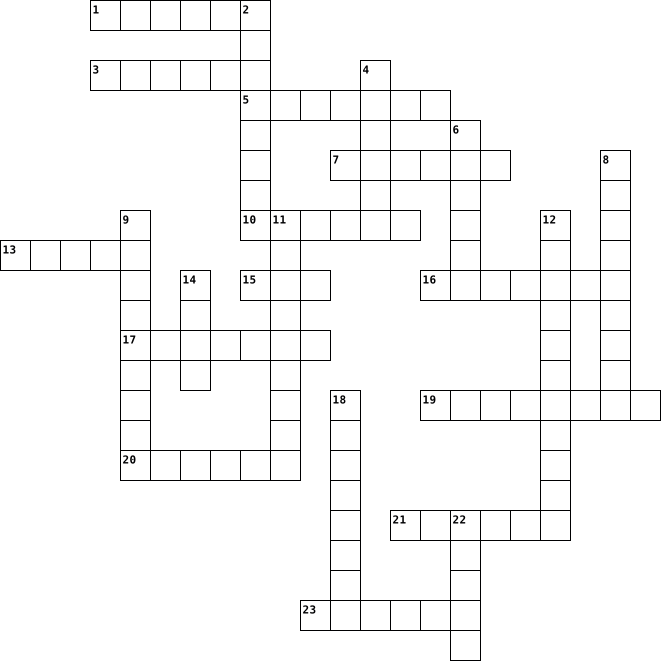
Across
- Hand gestures, often found on Buddha statues
- Suffering
- The state of enlightenment
- The Awakened or Enlightened One
- Memorial shrines
- Cause and effect of one's actions
- Japanese Buddhism
- Meditation
- No soul or self
- Ornate geometric designs made of colored sand
- Impermanence
- The Buddha's teachings
- The community of Buddhist monks
Down
- The essential elements that contribute to human desire and cravings
- Compassion
- Non-Violence
- The spiritual leader of Tibetan Buddhists
- Tibetan Buddhism
- The more Orthodox branch of Buddhism
- One who has achieved enlightenment but teaches others
- Riddles or puzzling stories
- The largest branch of Buddhism
- One who achieves enlightenment and journeys on to nirvana
23 Clues: Suffering • Compassion • Meditation • Non-Violence • Impermanence • No soul or self • Tibetan Buddhism • Memorial shrines • Japanese Buddhism • The Buddha's teachings • The state of enlightenment • Riddles or puzzling stories • The largest branch of Buddhism • The Awakened or Enlightened One • The community of Buddhist monks • Cause and effect of one's actions • ...
Buddhism Crossword! 2026-01-16

Across
- Enlightened beings who delay nirvana to help others
- One who has attained enlightenment
- The Enlightened One
- Tibetan Buddhist spiritual teachers
- Sacred physical remains or objects of the Buddha
- Symbolic circular designs used in meditation
- Discourses attributed to the Buddha
- Experiences that inspired Siddhartha to seek enlightenment
- Ultimate liberation from suffering
- The Buddha’s teachings
Down
- Basic moral rules for Buddhist laypeople
- Site of the Buddha’s enlightenment
- Buddhist monastic community
- Path avoiding extremes of pleasure and pain
- Doctrine of “no permanent self”
- Earliest collection of Buddhist texts
- Related to esoteric Buddhist practices
- One who practices extreme self-discipline
- Traditional Buddhist scriptures (“Three Baskets”)
- Tiered Buddhist temple structure
20 Clues: The Enlightened One • The Buddha’s teachings • Buddhist monastic community • Doctrine of “no permanent self” • Tiered Buddhist temple structure • Site of the Buddha’s enlightenment • One who has attained enlightenment • Ultimate liberation from suffering • Tibetan Buddhist spiritual teachers • Discourses attributed to the Buddha • Earliest collection of Buddhist texts • ...
Enlightenment Crossword Puzzle 2023-03-29
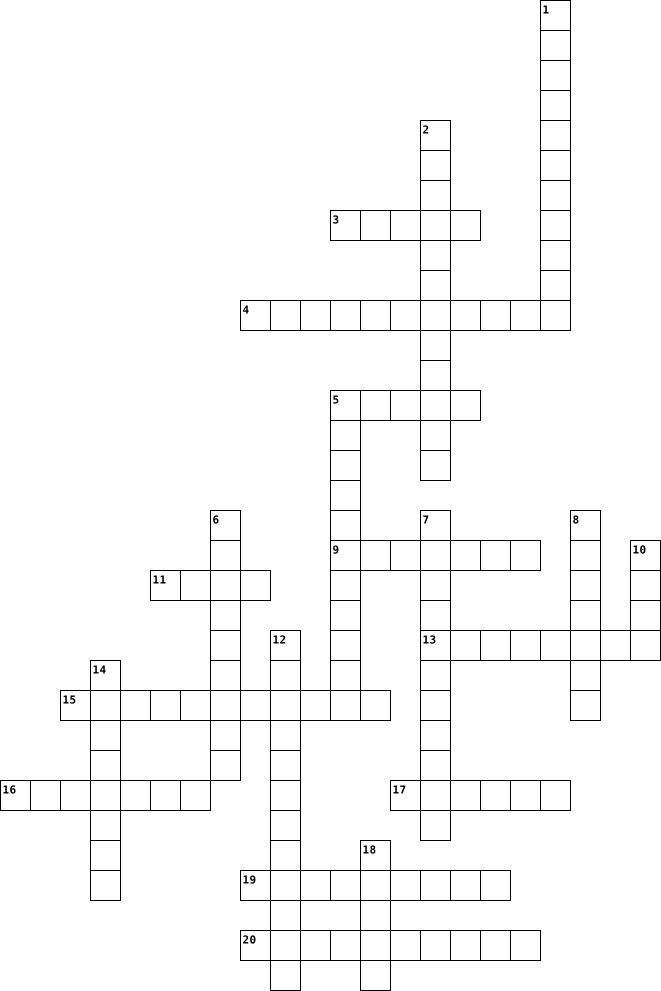
Across
- Joseph II, of Austria and Maria Theresa's, ended serfdom and made taxes ___ for nobles and peasants.
- The end of the Enlightenment led to _____ because the lower class demanded their basic rights.
- most active city during the Enlightenment
- Frederick II of Prussia abolished tortured, established ____ and was known as "The Great"
- Hasidism promoted religious ___ (excitement).
- Enlightenment opponents did not agree with the ideas of the Enlightenment because they felt it took away feelings and __ in the world.
- celebrated the emotion and the individual
- Mary Wollstonecraft believed that men and women should have the same educational rights because both need to contribute _____.
- Rousseau was a French man who believed people need to rely on instinct and emotion rather than ___.
- John Wesley established this religion in 1736.
- established the Moravian Brethren in 1720 which was a mystical and emotional form of Christianity
Down
- Imanual Kant of Germany thought of this concept that focused on spiritual issues such as God and wrote about spiritual and physical worlds intermixing
- Maria Theresa of Austria was known as a ____.
- spread the idea of scientific ideas and theories and also believed in freedom of speech and basic rights for all
- men and women began to see the world in this way instead of a world run by magic
- wrote the Spirit of Laws which discussed the branches of government and their powers
- monarchs who supported the Enlightenment were called Enlightened ____
- Catherine II of Russia reformed many ___.
- written by Dennis Diderot and he was imprisoned because it was believed to be heresy
- wrote poetry and plays; believed in religious liberty and freedom of the press
- Monarchs ended the Enlightenment because they were scared of losing their ___.
21 Clues: most active city during the Enlightenment • Catherine II of Russia reformed many ___. • celebrated the emotion and the individual • Maria Theresa of Austria was known as a ____. • Hasidism promoted religious ___ (excitement). • John Wesley established this religion in 1736. • monarchs who supported the Enlightenment were called Enlightened ____ • ...
the Age of Enlightenment 2022-09-07
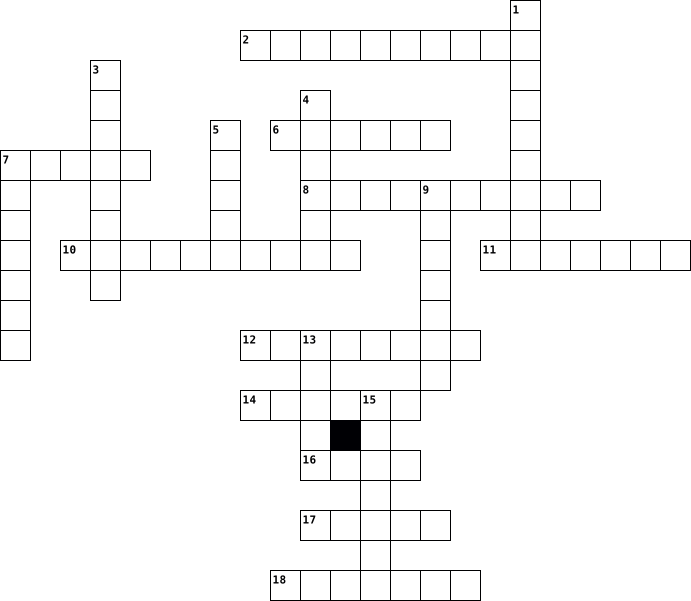
Across
- the treaty that ended the thirty years war
- writer of "Faust"
- writer of the "Common Sense"
- term for unrestrained monarchial power
- the century of the age of enlightenment
- creator of "Calculus"
- austrian family known for their jaw
- the capital of the age of enlightenment
- german philosopher and physicist
- the writer of "the wealth of Nations"
- writer of the Encyclopédie
Down
- empress of russia during the movement
- the first person to understand lightning
- german composer of this era
- father of liberalism
- galileo's discovery during this age
- french for "enlightenment"
- discoverer of Carbon Dioxide
- voltaire's famous work
19 Clues: writer of "Faust" • father of liberalism • creator of "Calculus" • voltaire's famous work • french for "enlightenment" • writer of the Encyclopédie • german composer of this era • writer of the "Common Sense" • discoverer of Carbon Dioxide • german philosopher and physicist • galileo's discovery during this age • austrian family known for their jaw • ...
Hindu,Buddhist,Islamic 2021-12-13
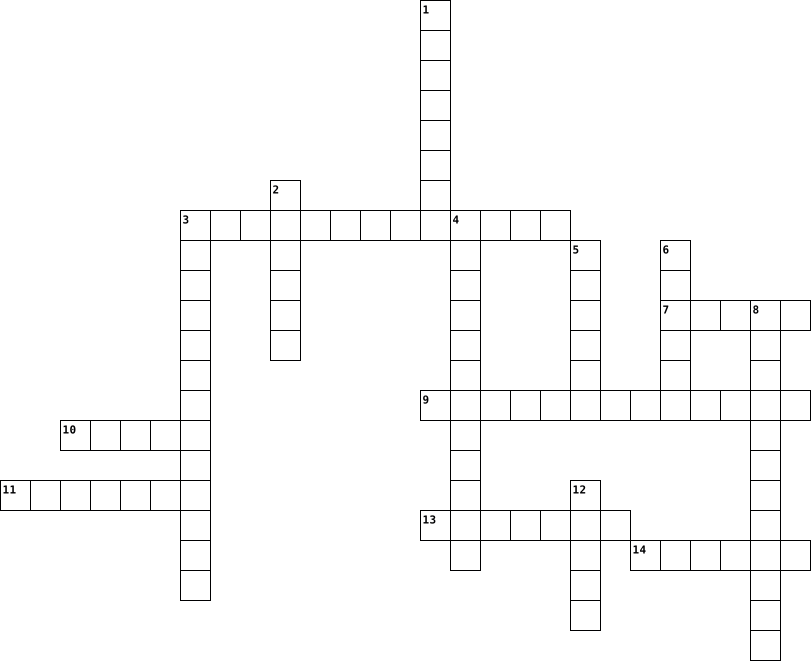
Across
- rules followed to reach enlightenment
- principle of cause and effect
- cycle of death and rebirth
- rankings based on religious status
- founder of three Abrahamic religions
- state of enlightenment
- a god of Hindu
Down
- founder of Islam
- sign of Buddhism
- to find happiness by dropping spiritual desire
- multiple gods
- enlightened one
- end of the cycle of reincarnation
- one god
- birthplace of Hindu and Buddhism
15 Clues: one god • multiple gods • a god of Hindu • enlightened one • founder of Islam • sign of Buddhism • state of enlightenment • cycle of death and rebirth • principle of cause and effect • birthplace of Hindu and Buddhism • end of the cycle of reincarnation • rankings based on religious status • founder of three Abrahamic religions • rules followed to reach enlightenment • ...
Age of Revolutions 2024-02-26
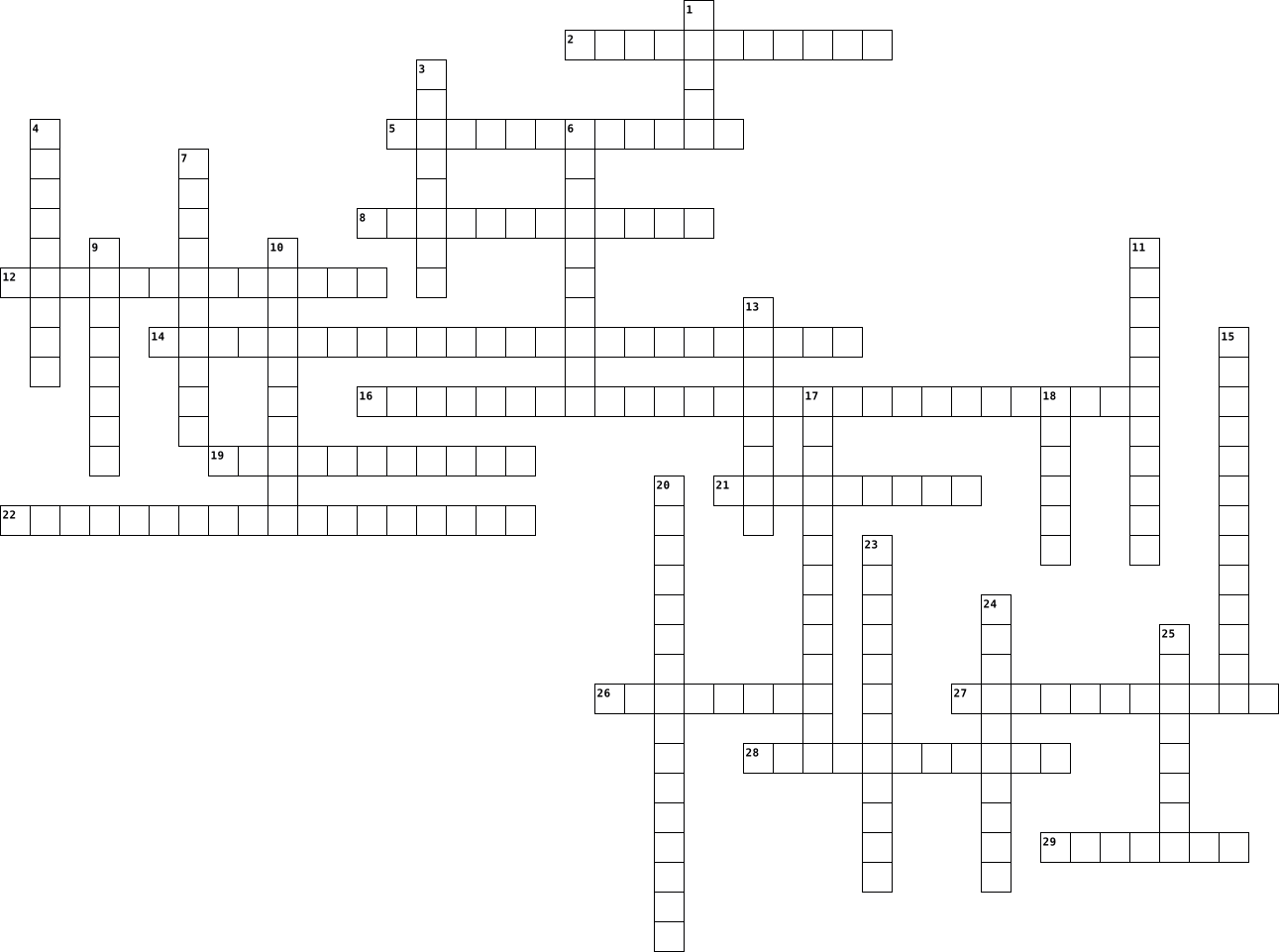
Across
- This Enlightenment philosopher influenced early leaders of the U.S. to create a government characterized this, which created checks and balances between different branches of government
- The political revolutions of this period were possible because of support from these people
- This Latin American Revolutionary was inspired by Enlightenment ideas and began revolting against Spanish authority
- The American Revolution's success in overthrowing this highly influenced the Latin Revolutions
- Enlightenment ideas and the success of the French and American Revolutions led to this
- This document, formed during the French Revolution, was highly inspired by America's Declaration of Independence
- Absolute Monarchs and the idea of the divine right to rule led to this, which saw widespread revolts and the creation of new types of governments and political ideas
- In both the French and American Revolutions, citizens gained more ___________ rights
- This Enlightenment philosophy created a balance between branches of government and were incorporated into new constitutions created during the revolutions
- Type of monarchical government where the monarch has all of the power
- The rise of this group in French society lacked political representation in the government and this directly contributed to the French Revolution
- Europeans response to the rise and fall of Napoleon's empire helped to spread the idea of this, which saw people devoting themselves to their nation in extreme loyalty
- Both the American & French revolutionaries issued documents of independence that suggested that it was the government's responsibility to ______________ citizens' rights
Down
- The defeat of Spain & Portugal during the Napoleonic Wars helped to bring about political changes in Latin America because it gave them the opportunity to do this.
- The French and American colonies differed at the onset of their revolutions because the French suffered more _____________ struggles than the Americans
- This Enlightenment philosopher was the MAIN influence on the Declaration of Independence
- One main reason for the start of the American Revolution was the colonists lack of representation in this branch of the English government
- This legal document from 1215 stated that no leader may be above the law of the land
- This Enlightenment philosopher believed that laws should be created by the general will of the people
- This Enlightenment thinker supported theocratic governments
- This was the ultimate goal of both the French and American Revolutions
- Napoleon was this type of government leader
- Enlightenment philosophers inspired later political revolutions because of their belief that all people have this
- This movement furthered the development of democratic-republican governments because it introduced ideas about individual rights
- Replacing the existing political and social order was more relevant to this nation's revolution.
- This meeting of European leaders was meant to restore a balance of power in Europe by redrawing boundaries and reinstating legitimate monarchs
- This Enlightenment philosopher believed that a social contract involved an exchange of rights for the protection of a strong central government
- Both the Magna Carta & the English Bill of Rights had an impact on American government because both contained ideas about protecting the rights of the _____________
- This political philosopher of the Age of Enlightenment used his writing to promote toleration and freedom of speech
29 Clues: Napoleon was this type of government leader • This Enlightenment thinker supported theocratic governments • Type of monarchical government where the monarch has all of the power • This was the ultimate goal of both the French and American Revolutions • This legal document from 1215 stated that no leader may be above the law of the land • ...
BUDDHISM 2013-11-03
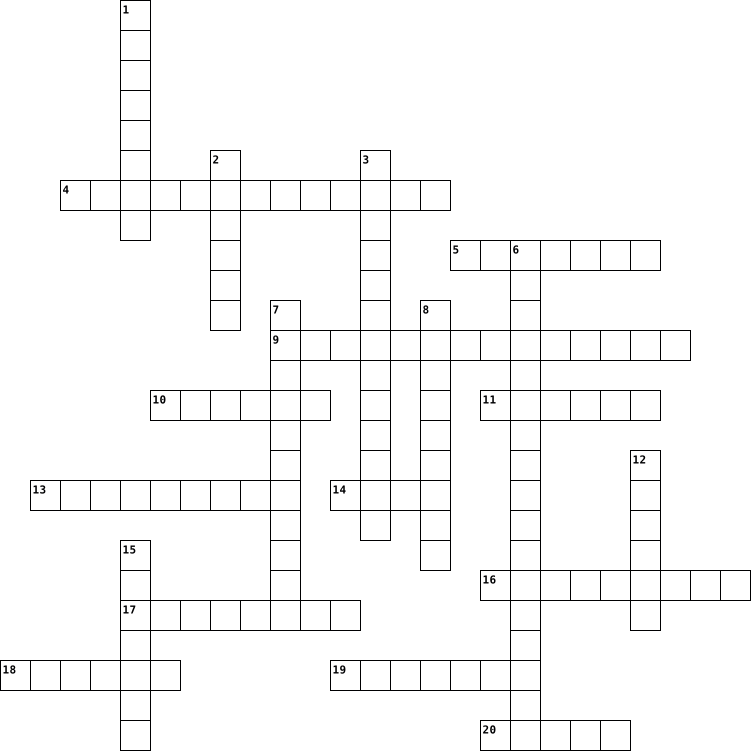
Across
- "awakening" the cessation of all suffering
- acronym for the eightfold path
- To end suffering you must do this (8,6)
- suffering
- community
- Buddhist sect meaning "Doctrine of the Elders" which emphasises the priestly class
- Noble truths
- all life is this
- Sect know for its "Middle Way' to Enlightenment
- The Buddha's nationality
- a state of bliss or peace free from the cycle of death and rebirth
- the law of moral causation
Down
- path
- the teachings
- rebirth
- The Buddha (10,6
- a Buddha-to-be who decide to help others to receive Enlightenment
- place where the Buddha became enlightened (5,3)
- This is the cause of suffering
- cycle of birth, death and rebirth
20 Clues: path • rebirth • suffering • community • Noble truths • the teachings • The Buddha (10,6 • all life is this • The Buddha's nationality • the law of moral causation • acronym for the eightfold path • This is the cause of suffering • cycle of birth, death and rebirth • To end suffering you must do this (8,6) • "awakening" the cessation of all suffering • ...
Enlightenment Thinkers 2025-12-05

Across
- The government branch with the president, where laws are enforced.
- The period of history win Europe from 1715 to 1789 when people questioned the government.
- (Two words) A contract human beings enter where they agree to give up certain rights for protection and order.
- The Enlightenment thinker who proposed we have "natural rights" of life, liberty, and property.
- (Three words) The concept where branches can stop the other branches from becoming too powerful.
- The king of England during the time of the American Revolution.
- The type of government where its citizens vote on all decisions that affect society.
- A type of monarchy where the king/queen has complete control over its people.
- (Three words) The type of society that people naturally live in, according to Thomas Hobbes.
Down
- The government branch with a group of people that makes laws.
- The Enlightenment thinker that wanted a separation of church and state (government).
- Rights that cannot be taken away.
- The government branch with courts that interpret the law.
- The Enlightenment thinker who believed that there needs to be three branches of government.
- A person who began to question traditional ideas of political power and government structure.
- The Enlightenment thinker who wrote a book for the Italian prince on how to govern.
- The Enlightenment thinker who believed all people are born evil, thus a strong leader was needed.
- (Three words) The government is bound to also follow the laws.
18 Clues: Rights that cannot be taken away. • The government branch with courts that interpret the law. • The government branch with a group of people that makes laws. • (Three words) The government is bound to also follow the laws. • The king of England during the time of the American Revolution. • The government branch with the president, where laws are enforced. • ...
buddisum and Hinduism vocab 2022-12-12
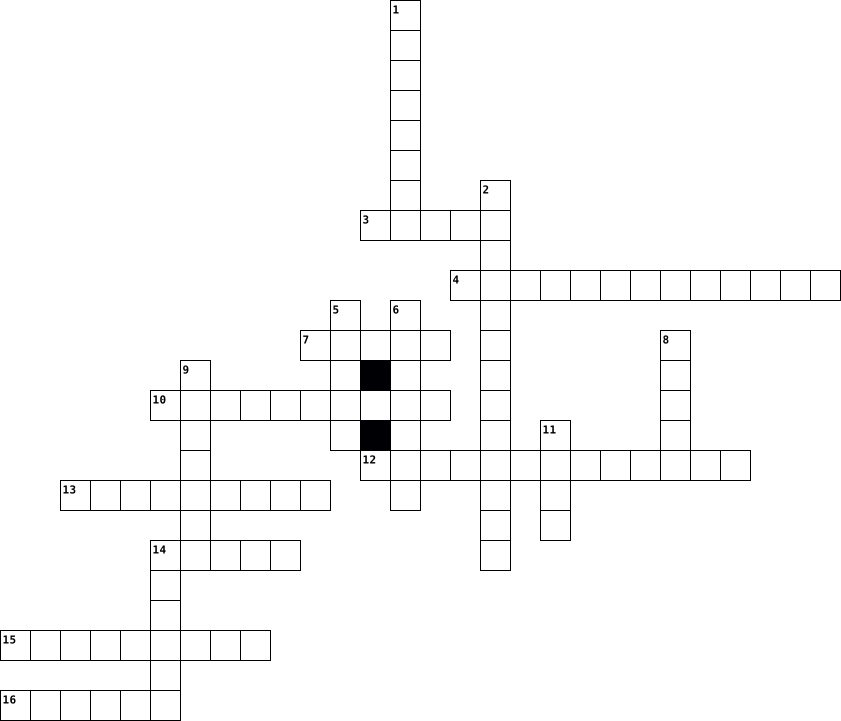
Across
- how india separates peoples
- a state after your final reincarnation that you know everything about the universe
- a worker for vaishyas
- Buddha before buddha.
- the path to nirvana
- a version of buddhism that is the more personal typ.
- an untouchable poor person
- a soldiers and warriors.
- enlightenment for hinduism
Down
- a kind of buddisum where people help each other to nirvada
- a life after a life after a life after a life after a life after a life after a life after a life.
- a worker for vaishyas
- someone who is Usually in the pals and is typically holy
- it's the consequences and rewards of your actions
- enlightenment for Buddhists
- Noble Truths: the 4 things Buda learned to reach enlightenment.
- karma for reincarnation.
17 Clues: the path to nirvana • a worker for vaishyas • a worker for vaishyas • Buddha before buddha. • karma for reincarnation. • a soldiers and warriors. • an untouchable poor person • enlightenment for hinduism • how india separates peoples • enlightenment for Buddhists • it's the consequences and rewards of your actions • a version of buddhism that is the more personal typ. • ...
Theology 2026-01-15

Across
- A person who has achieved enlightenment and escaped the cycle of rebirth, primarily in Theravada Buddhism.
- The “Awakened One.” Refers to Siddhartha Gautama, who attained enlightenment and taught the path to end suffering.
- tree The sacred fig tree under which Siddhartha Gautama attained enlightenment.
- The teachings of the Buddha; the universal truth and the path to enlightenment.
- Sacred texts containing the teachings of the Buddha.
- The doctrine of “no permanent self”; the belief that the self is an illusion and constantly changing.
- Physical remains or personal items of the Buddha or enlightened beings, preserved and venerated.
- Enlightened beings who delay full nirvana to help others reach enlightenment (especially important in Mahayana Buddhism).
- The Buddhist community, especially monks and nuns, but sometimes includes lay followers.
Down
- Geometric spiritual diagrams used in meditation and rituals, symbolizing the universe.
- sights an old man a dead body a holy ascetic
- Vanaya sutta Adhidhamma
- way The Buddhist path of moderation—avoiding both extreme luxury and extreme asceticism.
- A person who practices severe self-discipline and renunciation to achieve spiritual goals.
- A form of Buddhism (Vajrayana) that uses rituals, mantras, meditation, and visualization to achieve enlightenment more quickly.
- Spiritual teachers or leaders in Tibetan Buddhism.
- A tiered religious tower found mainly in East Asia, often used to house Buddhist relics and for worship.
- canon The oldest complete collection of Buddhist scriptures, written in the Pali language (central to Theravada Buddhism).
- precepts do not kill do not steal do not lie do not use intoxicants
- The ultimate goal of Buddhism: liberation from suffering and the cycle of rebirth (samsara); a state of complete peace and awakening.
20 Clues: Vanaya sutta Adhidhamma • sights an old man a dead body a holy ascetic • Spiritual teachers or leaders in Tibetan Buddhism. • Sacred texts containing the teachings of the Buddha. • precepts do not kill do not steal do not lie do not use intoxicants • tree The sacred fig tree under which Siddhartha Gautama attained enlightenment. • ...
French Revolution 2023-04-13
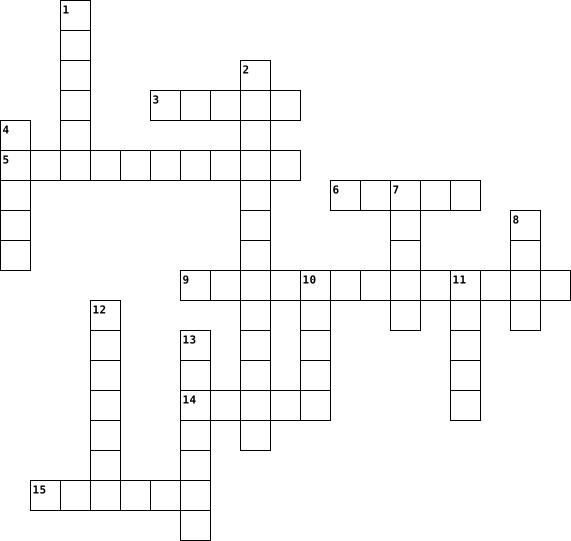
Across
- Fear Great Fear
- Absolutism
- Capet
- Enlightenment
- Bread
- Bonnet
Down
- Rights
- Sans-culottes
- Taxes
- Power
- Louis King Louis
- Guild
- Antoinette Marie Antoinette
- Jacobin
- Liberty
15 Clues: Taxes • Capet • Power • Guild • Bread • Rights • Bonnet • Jacobin • Liberty • Absolutism • Sans-culottes • Enlightenment • Fear Great Fear • Louis King Louis • Antoinette Marie Antoinette
Hindu,Buddhist,Islamic 2021-12-13
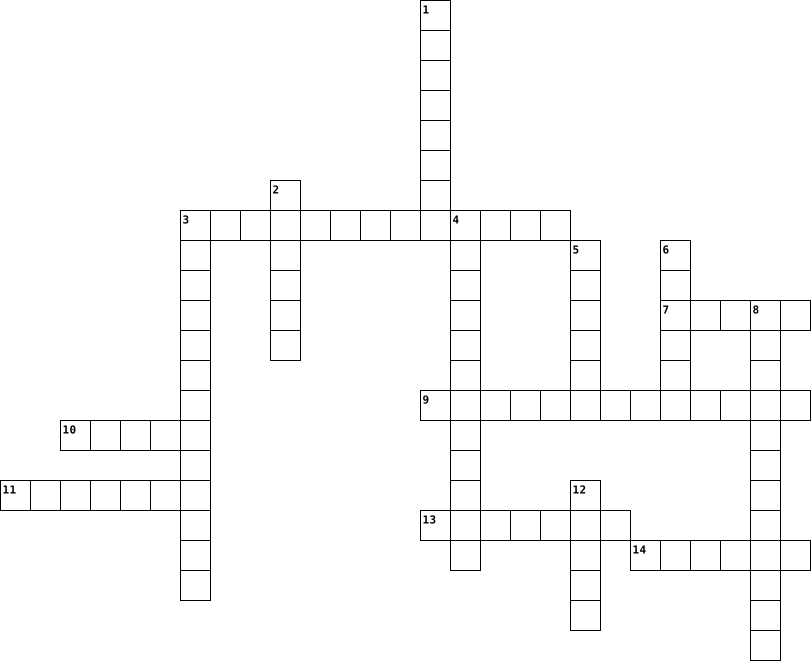
Across
- rules followed to reach enlightenment
- principle of cause and effect
- cycle of death and rebirth
- rankings based on religious status
- founder of three Abrahamic religions
- state of enlightenment
- a god of Hindu
Down
- founder of Islam
- sign of Buddhism
- to find happiness by dropping spiritual desire
- multiple gods
- enlightened one
- end of the cycle of reincarnation
- one god
- birthplace of Hindu and Buddhism
15 Clues: one god • multiple gods • a god of Hindu • enlightened one • founder of Islam • sign of Buddhism • state of enlightenment • cycle of death and rebirth • principle of cause and effect • birthplace of Hindu and Buddhism • end of the cycle of reincarnation • rankings based on religious status • founder of three Abrahamic religions • rules followed to reach enlightenment • ...
Enlightenment Review 2024-03-19
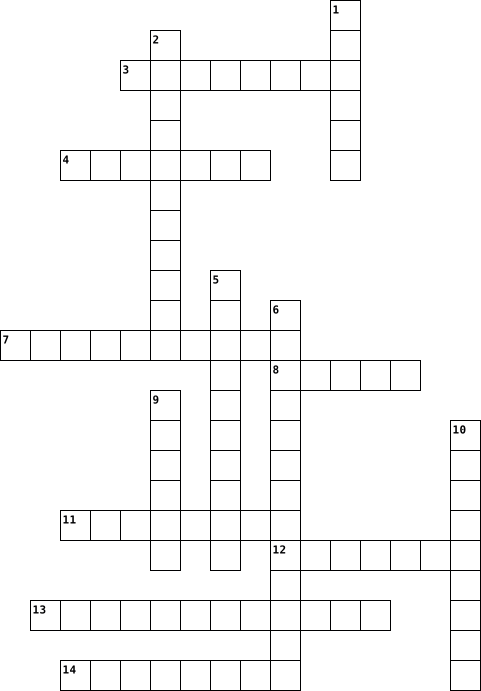
Across
- this philosopher was best known for his writings about the social contract
- this philosopher and writer published an encyclopedia which shared knowledge about the world
- enlightenment thinkers influenced the ideas of the American _________________
- John _________________ wrote about the natural rights of humans, including life, liberty, and property
- _________________ was a philosopher who wrote about history and freedom of speech and religion
- Locke's _________________ rights were life, liberty, and property
- Diderot is known for publishing a/an _________________
- the idea of the social _________________ is the agreement between society and government to follow rules in exchange for protection
Down
- Enlightenment thinkers shifted authority away from the _________________ and monarchies
- in "the spirit of law" _________________ wrote about the importance of the separation of powers
- the enlightenment was an extension of ideas begun during the _________________ revolution
- the _________________ was a philosophical movement of the modern period
- many revolutionaries and enlightenment thinkers were _________________, who believed God didn't interfere in the world
- Enlightenment thinkers believed that _________________ should be recorded and shared
14 Clues: Diderot is known for publishing a/an _________________ • Locke's _________________ rights were life, liberty, and property • the _________________ was a philosophical movement of the modern period • this philosopher was best known for his writings about the social contract • enlightenment thinkers influenced the ideas of the American _________________ • ...
Hindu,Buddhist,Islamic 2021-12-13
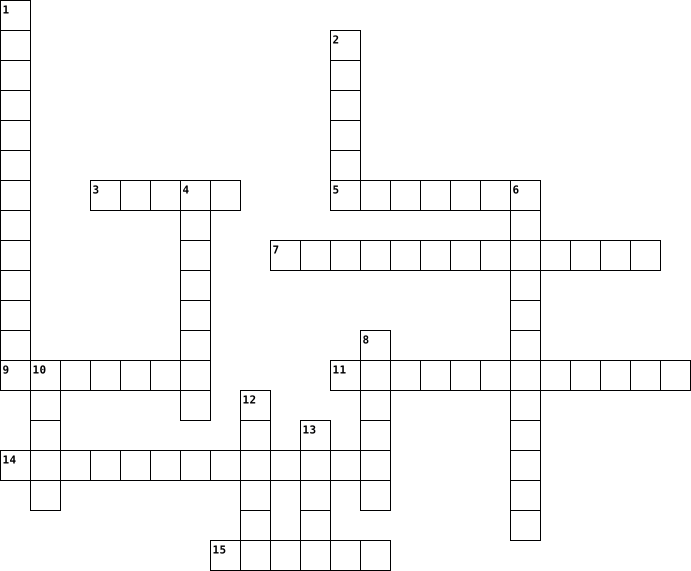
Across
- principle of cause and effect
- founder of three Abrahamic religions
- to find happiness by dropping spiritual desire
- state of enlightenment
- multiple gods
- rules followed to reach enlightenment
- a god of Hindu
Down
- cycle of death and rebirth
- sign of Buddhism
- founder of Islam
- one god
- end of the cycle of reincarnation
- birthplace of Hindu and Buddhism
- enlightened one
- rankings based on religious status
15 Clues: one god • multiple gods • a god of Hindu • enlightened one • sign of Buddhism • founder of Islam • state of enlightenment • cycle of death and rebirth • principle of cause and effect • birthplace of Hindu and Buddhism • end of the cycle of reincarnation • rankings based on religious status • founder of three Abrahamic religions • rules followed to reach enlightenment • ...
Topic 1: Enlightenment 2022-04-04

Across
- French philosopher and author, and a supporter of deism, and a tolerant approach to religion
- One of the freedoms of expression influenced by the Enlightenment
- an English philosopher and scientist, who introduced a social contract theory based on the relation between the absolute sovereign and the civil society.
- in political theory, a collectively held will that aims at the common good or common interest.
- one of the 18th century European monarchs who was inspired by Enlightenment ideas to rule justly and respect the rights of subjects
- the right of a sovereign that holds that a monarch receives the right to rule directly from God and not from the people.
- Swiss-French philosopher; valued the social contract
- belief that truth could be discovered through reason or logical thinking
- new way of thinking about the natural world
- has absolute power
Down
- A political idea, developed by John Locke and the Baron de Montesquieu, that power in government should be divided into separate branches
- British writer who advocated for greater education opportunities for women and urged women to enter medicine and politics
- English philosopher known for his political theories during the Enlightenment
- a work by English and American political activist Thomas Paine, arguing for the philosophical position of deism
- an original “scientific theorist” of the Enlightenment, who connected the newest scientific trends to radical philosophical ideas such as materialism.
- He reformed the military and government, established religious tolerance and granted a basic form of freedom of the press
- social gathering of intellectuals and artists
- agreement where people define and limit individual rights, creating an organized society/government
- What did Enlightenment thinkers call life, liberty, and property?
- one of a group of social thinkers in France during the Enlightenment
20 Clues: has absolute power • new way of thinking about the natural world • social gathering of intellectuals and artists • Swiss-French philosopher; valued the social contract • One of the freedoms of expression influenced by the Enlightenment • What did Enlightenment thinkers call life, liberty, and property? • ...
Enlightenment 2017-03-06
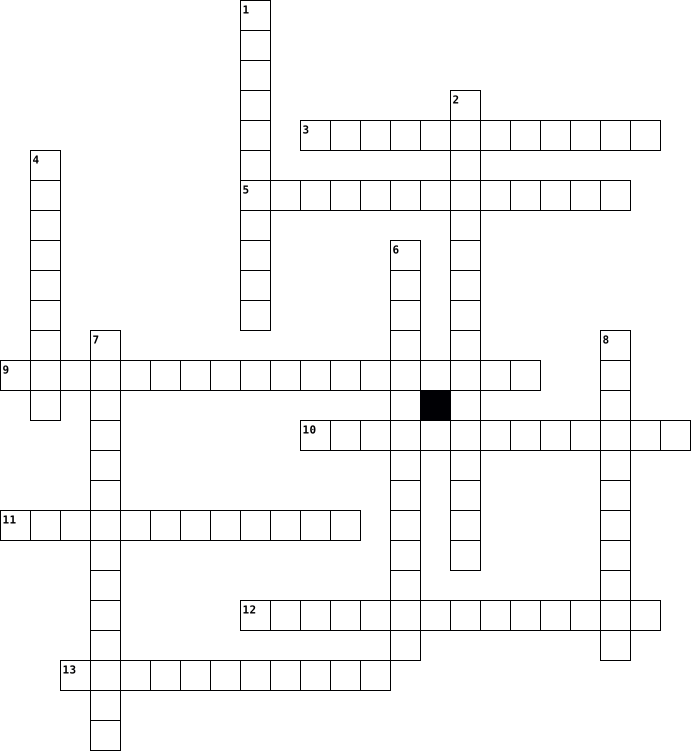
Across
- sun-centered, conception of the universe offered a a more accurate explanation
- a period when philosophers believed that they could apply the scientific method and use reason to explain human nature logically
- native of Poland,a mathematician,published a book On the Revolutions of the Heavenly Spheres
- began by thinking and writing about the doubt and uncertainty
- English philosopher with few scientific credentials
- first European to make regular observations
- based on the belief that reason is the chief source of knowledge
Down
- showed a few signs of brilliance until he attended Cambridge University
- a systematic procedure for collecting ans analyzing evidence
- Earth is at the center of the universe
- took a next step in destroying the Ptolemaic system
- was a prolific and influential composer of the Classical era
- someone who studies wisdom
13 Clues: someone who studies wisdom • Earth is at the center of the universe • first European to make regular observations • took a next step in destroying the Ptolemaic system • English philosopher with few scientific credentials • a systematic procedure for collecting ans analyzing evidence • was a prolific and influential composer of the Classical era • ...
Enlightenment 2017-03-06
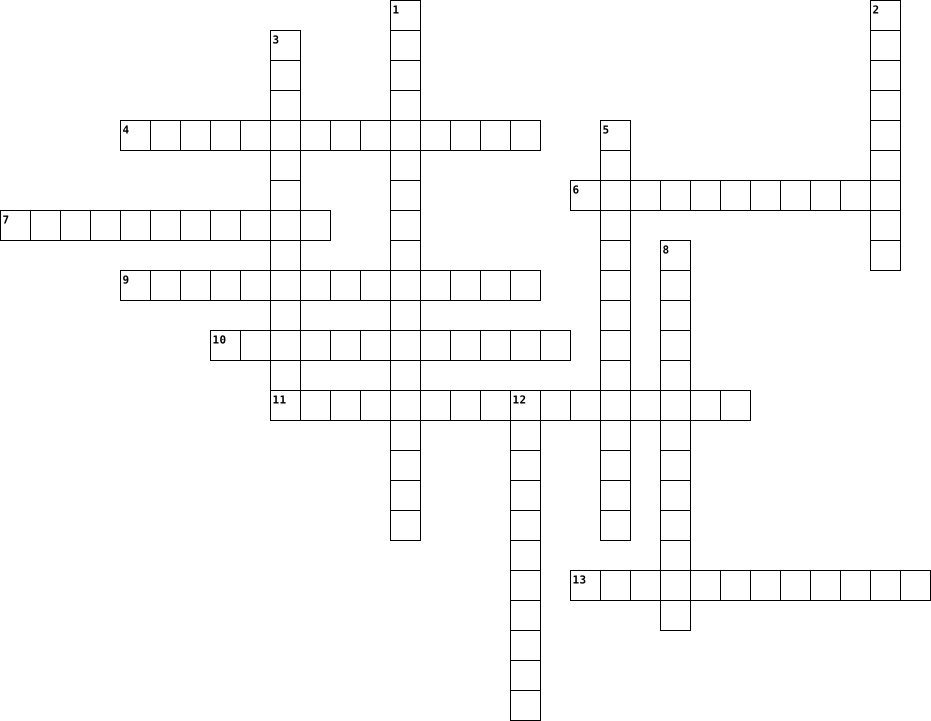
Across
- first European to make regular observations
- someone who studies wisdom
- based on the belief that reason is the chief source of knowledge
- was a prolific and influential composer of the Classical era
- sun-centered, conception of the universe offered a a more accurate explanation
- a systematic procedure for collecting ans analyzing evidence
- English philosopher with few scientific credentials
Down
- native of Poland,a mathematician,published a book On the Revolutions of the Heavenly Spheres
- Earth is at the center of the universe
- began by thinking and writing about the doubt and uncertainty
- took a next step in destroying the Ptolemaic system
- a period when philosophers believed that they could apply the scientific method and use reason to explain human nature logically
- showed a few signs of brilliance until he attended Cambridge University
13 Clues: someone who studies wisdom • Earth is at the center of the universe • first European to make regular observations • took a next step in destroying the Ptolemaic system • English philosopher with few scientific credentials • was a prolific and influential composer of the Classical era • a systematic procedure for collecting ans analyzing evidence • ...
ENLIGHTENMENT 2022-06-15
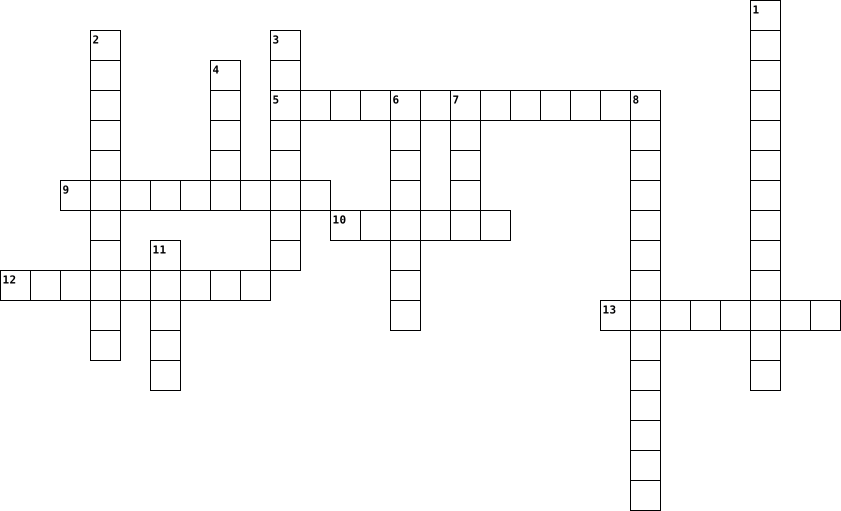
Across
- LIFE LIBERTY AND THE PURSUIT OF HAPPINESS
- GOVERNMENT RAN BY THE WILL OF THE PEOPLE
- ENLIGHTENMENT THINKER WHO CAME UP WITH THE IDEA OF A SOCIAL CONTRACT
- A GOVERNMENT CONTROLLED BY A FEW POWERFUL PEOPLE
- CONSIDERED THE MOST FREETHINKING OF THE ENLIGHTENMENT PHILOSOPHERS
Down
- 18TH CENTURY MOVEMENT THAT ENCOURAGED THOUGHT BASED ON LOGIC AND REASONING, ENCOURAGED NATURAL RIGHTS
- THE IDEA THAT KINGS/QUEENS ARE GIVEN POWER BY GOD
- A GOVERNMENT RAN BY A SINGLE PERSON CALLED A KING/QUEEN
- THE SEPARATION OF ______, IS THE ONLY WAY TO ENSURE NO CORRUPTION IN GOVERNMENT
- ROMAN STYLE OF GOVERNMENT THAT ENCOURAGED REPRESENTATIVE GOVERNMENT
- AN ENLIGHTENMENT THINKER THAT SAID ALL PEOPLE ARE BORN WITH NATURAL RIGHTS, LIFE LIBERTY AND THE PURSUIT OF HAPPINESS
- AN AGREEMENT BETWEEN THE GOVERNMENT AND THE PEOPLE TO BE GOVERNED BY THE ELECTED
- ANCIENT CIVILIZATION THAT ARE CREDITED FOR CREATING THE FOUNDATIONS OF DEMOCRACY
13 Clues: GOVERNMENT RAN BY THE WILL OF THE PEOPLE • LIFE LIBERTY AND THE PURSUIT OF HAPPINESS • A GOVERNMENT CONTROLLED BY A FEW POWERFUL PEOPLE • THE IDEA THAT KINGS/QUEENS ARE GIVEN POWER BY GOD • A GOVERNMENT RAN BY A SINGLE PERSON CALLED A KING/QUEEN • CONSIDERED THE MOST FREETHINKING OF THE ENLIGHTENMENT PHILOSOPHERS • ...
Enlightenment 2022-09-07
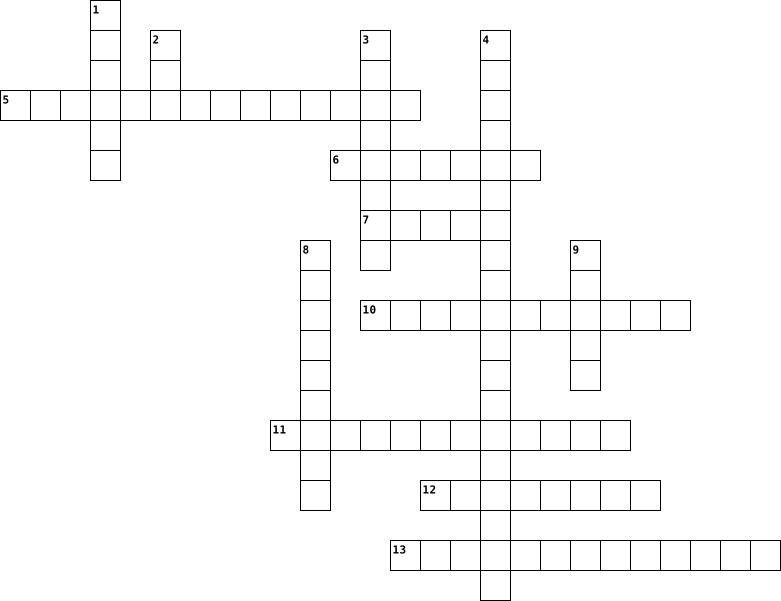
Across
- a title he was known for
- He played a huge part in the peace treaty
- what invention that helps us cook
- Someone ben franklin influenced
- what was his most popular invention
- 1/17/1706
- where he died
Down
- He made an alliance with them
- He signed the biggest document every
- cause of death
- a form of government he was apart of
- who did he get caught by
- 4/17/1790
13 Clues: 4/17/1790 • 1/17/1706 • where he died • cause of death • a title he was known for • who did he get caught by • He made an alliance with them • Someone ben franklin influenced • what invention that helps us cook • what was his most popular invention • He signed the biggest document every • a form of government he was apart of • He played a huge part in the peace treaty
Enlightenment 2017-12-05
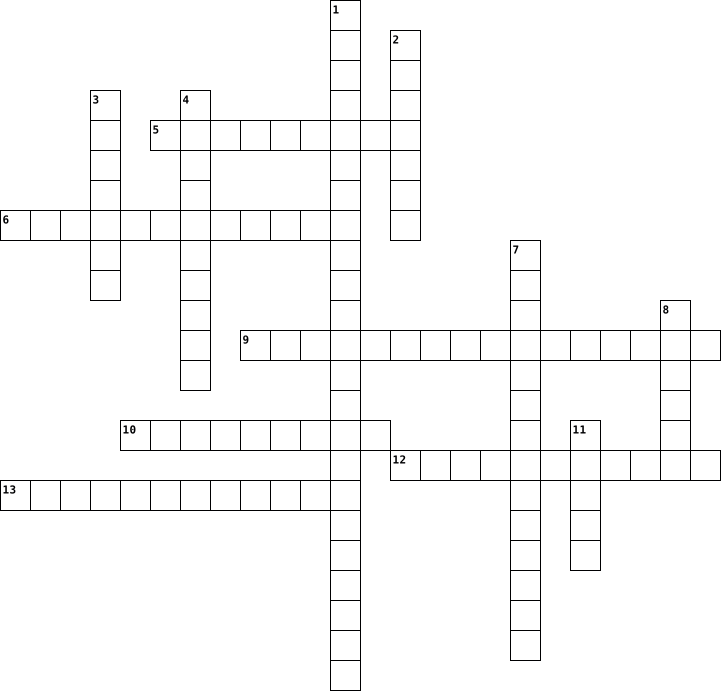
Across
- argued that people are born with a blank mind
- ten amendments that guarantee certain freedoms
- explains why planetary bodies stay in orbit around the sun
- father of modern rationalism
- belief that reason is the chief source of knowledge
- economic doctrine that says the state should not control the economy
Down
- America's first constitution
- region of Austria invaded by Prussia to start the Seven Years War
- his writings made more Europeans aware of the Heliocentric Theory
- believed that the universe was heliocentric
- Rousseau's agreement with society and government to be governed by general will
- believed humans were guided by basic survival instincts
- city where philosophes met to discuss politics
13 Clues: America's first constitution • father of modern rationalism • believed that the universe was heliocentric • argued that people are born with a blank mind • ten amendments that guarantee certain freedoms • city where philosophes met to discuss politics • belief that reason is the chief source of knowledge • believed humans were guided by basic survival instincts • ...
Enlightenment 2024-01-08
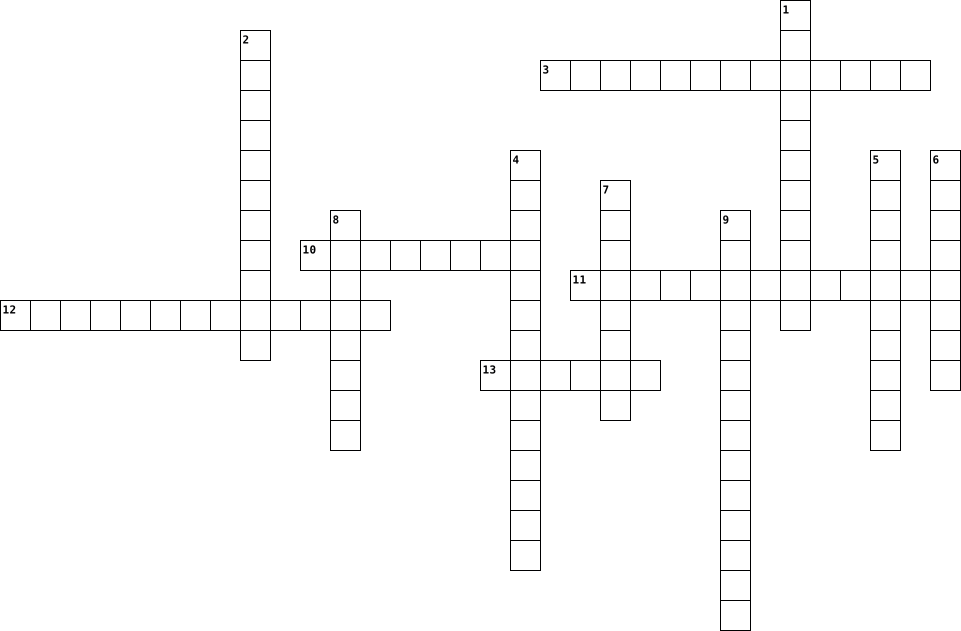
Across
- Period of social and political changes were inspired by the...
- Holy Roman Empire, social reforms, freedom of speech, press, and religion
- Political-Social changes rooted in Enlightenment ideas/concepts
- Life, Liberty, Property
- English, Enlightenment thinker created social contract
Down
- French, Branches of government, took ideas from Greeks and Romans
- Russian Empress, social reforms, banned torture, input from all classes, founded schools for women
- The people willingly submit to the ruler, inspired Constitutional monarchy
- Kingdom of Prussia, social reforms, banned torture, available education
- From Geneva, Social contract is by the people for the people
- French female, wrote the Declaration of the Rights of Women and the Female Citizen
- French writer, freedom of speech, religion, separation of church and state (secularism)
- English female, wrote a vindication for women's rights and education
13 Clues: Life, Liberty, Property • English, Enlightenment thinker created social contract • From Geneva, Social contract is by the people for the people • Period of social and political changes were inspired by the... • Political-Social changes rooted in Enlightenment ideas/concepts • French, Branches of government, took ideas from Greeks and Romans • ...
Hindu,Buddhist,Islamic 2021-12-13
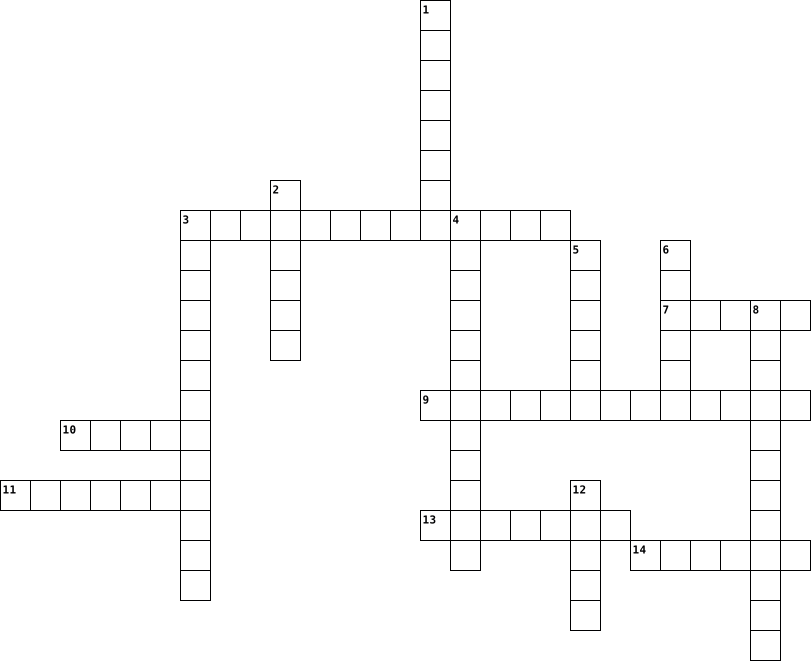
Across
- rules followed to reach enlightenment
- principle of cause and effect
- cycle of death and rebirth
- rankings based on religious status
- founder of three Abrahamic religions
- state of enlightenment
- a god of Hindu
Down
- founder of Islam
- sign of Buddhism
- to find happiness by dropping spiritual desire
- multiple gods
- enlightened one
- end of the cycle of reincarnation
- one god
- birthplace of Hindu and Buddhism
15 Clues: one god • multiple gods • a god of Hindu • enlightened one • founder of Islam • sign of Buddhism • state of enlightenment • cycle of death and rebirth • principle of cause and effect • birthplace of Hindu and Buddhism • end of the cycle of reincarnation • rankings based on religious status • founder of three Abrahamic religions • rules followed to reach enlightenment • ...
The Enlightenment 2024-11-25

Across
- Freedom of ________, which allows people to speak their mind without fear of punishment
- Enlightenment thinker who believed in life, liberty, and property
- First enlightenment thinker - believed people needed strong governments
- Enlightenment thinker who believed in the three branches of government
- Enlightenment thinker who prioritized freedom of speech and religion
- Enlightenment thinker who believed the government should work to serve the people
- Agreement between the people and a government to create a society that serves both parties
Down
- Branch of government concerning creation of laws
- Enlightenment thinker who focused on judicial reform
- Branch of government concerning enforcement of laws
- Freedom of _______, which allows journalists to investigate and report on issues without fear of punishment
- Freedom of ________, which allows people to practice whatever faith they believe in without fear of punishment
- Branch of government concerning punishment
13 Clues: Branch of government concerning punishment • Branch of government concerning creation of laws • Branch of government concerning enforcement of laws • Enlightenment thinker who focused on judicial reform • Enlightenment thinker who believed in life, liberty, and property • Enlightenment thinker who prioritized freedom of speech and religion • ...
Enlightenment 2024-05-17

Across
- Logic wasn't a new ____ back then.
- A philosopher.
- A scottish philospher in 1711-1776.
- A movement that occured in Europe.
- An Enlightenment principle would be _____.
- Who wrote the Principia Matematica?
- Philosophers are also known as ____.
- 17th and 18th _____.
Down
- The end of the revolution was most likely called ____.
- The Enlightenment advocated ____.
- The Enlightenment derives it's name ____.
- _____ of the Middle Ages.
12 Clues: A philosopher. • 17th and 18th _____. • _____ of the Middle Ages. • The Enlightenment advocated ____. • Logic wasn't a new ____ back then. • A movement that occured in Europe. • A scottish philospher in 1711-1776. • Who wrote the Principia Matematica? • Philosophers are also known as ____. • The Enlightenment derives it's name ____. • An Enlightenment principle would be _____. • ...
AH1 Vocab 2020-09-04

Across
- John Smith
- John Winthrop
- Mercantilism
- Enlightenment
- Cash Crop
- Virginia House of Burgesses
- Plymouth Colony
- Quakers
Down
- Mayflower Compact
- Navigation Acts
- Colonization
- Acquisition
- Jamestown
- Puritans
- Roger Williams
15 Clues: Quakers • Puritans • Jamestown • Cash Crop • John Smith • Acquisition • Colonization • Mercantilism • John Winthrop • Enlightenment • Roger Williams • Navigation Acts • Plymouth Colony • Mayflower Compact • Virginia House of Burgesses
Obj 1.1 Crossword 2022-09-30
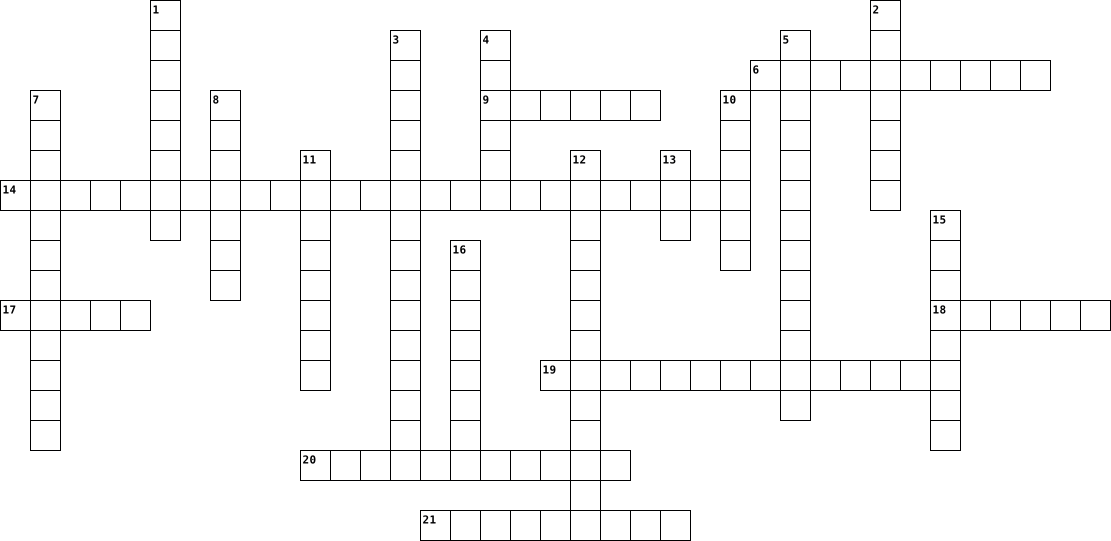
Across
- British document that separated church and state. (2 words)
- The place where direct democracy began
- Rousseau had the most influence on this founding document (3 words)
- Enlightenment thinker who believed in 3 natural rights
- Group of people that were excluded from direct democracy
- Type of democracy where the people choose other people to make decisions on their behalf
- Enlightenment thinker who came up with the separation of powers
- The branch of government that the Articles of Confederation left weak
Down
- Enlightenment thinker who wanted to separate state and church
- The name of the people who was involved in deciding the ideas used in the U.S. government
- English document that protects the people from abuses by the government (3 words)
- Where Montesquieu and Voltaire are from
- Life, Liberty, and Property according to Locke (2 words)
- Present body. It requires the person to be present in court to determine sentence or release (2 words)
- Country where Locke is from
- Type of democracy where the people make decisions
- Another name for representative democracy
- A movement lead by Locke, Montesquieu, Rousseau, and Voltaire
- The number of offices a person can hold in the government. A similarity between the Iroquois Confederacy and U.S. Constitution
- Enlightenment thinker associated with the "Social Contract"
- Native American nation that was used as an example for the U.S. Constitution
21 Clues: Country where Locke is from • The place where direct democracy began • Where Montesquieu and Voltaire are from • Another name for representative democracy • Type of democracy where the people make decisions • Enlightenment thinker who believed in 3 natural rights • Life, Liberty, and Property according to Locke (2 words) • ...
Enlightenment era 2025-03-21

Across
- – Government by the people
- - a social contract theorist
- – Political upheaval inspired by Enlightenment ideas
- - referred to a system of ideas and beliefs about society, government, and human nature that was based on reason, progress, and individual rights.
- - meant freedom from oppression, self-governance, and the right of people to rule themselves based on reason and natural rights.
- - referred to the idea that individuals are born with natural, inherent freedoms that should be protected by governments.
- – Acceptance of different views and beliefs
- - referred to established beliefs or doctrines, often associated with religious or authoritarian institutions, that were accepted without question or evidence.
- – John Locke, a key Enlightenment thinker
- – Freedom from oppressive restrictions
- - The Enlightenment principle advocating fairness in laws and government
Down
- – Study of fundamental questions about existence and knowledge
- – an advocate of direct democracy
- -refers to the use of reason, logic, and critical thinking to understand the world, rather than relying on tradition, superstition, or religious dogma
- – Questioning of traditional beliefs
- - His ideas were based on reason, justice, and human rights.
- - referred to an intellectual and cultural movement in the 17th and 18th centuries that emphasized reason, science, individual rights, and progress
- – Central to Enlightenment thinking
- - referred to the accepted standards, behaviors, and social conventions that were traditionally followed in society.
- – French writer who championed free speech and religious tolerance
20 Clues: – Government by the people • - a social contract theorist • – an advocate of direct democracy • – Central to Enlightenment thinking • – Questioning of traditional beliefs • – Freedom from oppressive restrictions • – John Locke, a key Enlightenment thinker • – Acceptance of different views and beliefs • – Political upheaval inspired by Enlightenment ideas • ...
Enlightenment 2022-09-07
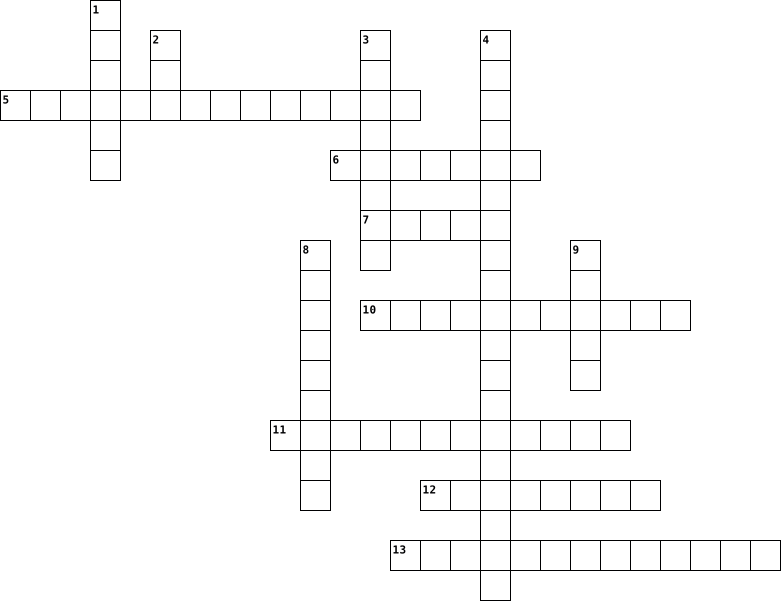
Across
- a title he was known for
- He played a huge part in the peace treaty
- what invention that helps us cook
- Someone ben franklin influenced
- what was his most popular invention
- 1/17/1706
- where he died
Down
- He made an alliance with them
- He signed the biggest document every
- cause of death
- a form of government he was apart of
- who did he get caught by
- 4/17/1790
13 Clues: 4/17/1790 • 1/17/1706 • where he died • cause of death • a title he was known for • who did he get caught by • He made an alliance with them • Someone ben franklin influenced • what invention that helps us cook • what was his most popular invention • He signed the biggest document every • a form of government he was apart of • He played a huge part in the peace treaty
Enlightenment 2022-09-07
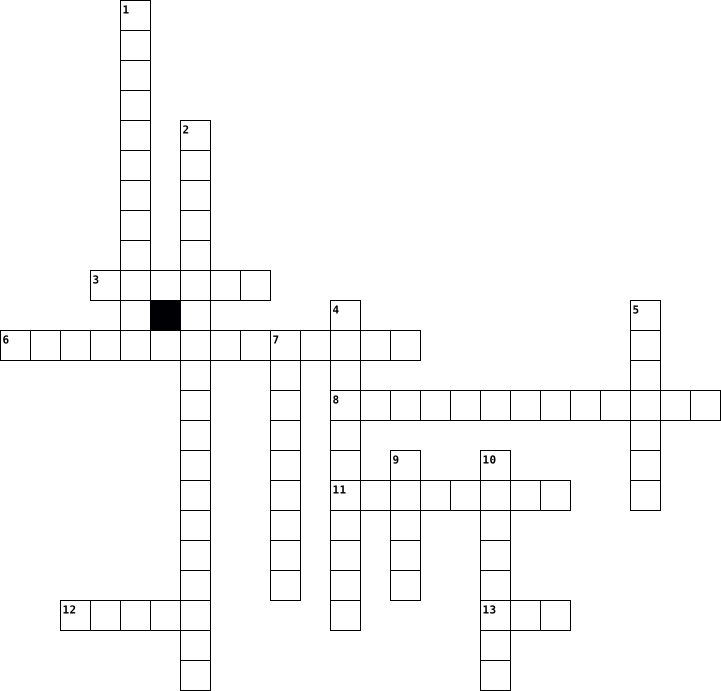
Across
- He made an alliance with them
- a title he was known for
- where he died
- cause of death
- what invention that helps us cook
- He signed the biggest document every
Down
- what was his most popular invention
- a form of government he was apart of
- Someone ben franklin influenced
- He played a huge part in the peace treaty
- who did he get caught by
- 4/17/1790
- 1/17/1706
13 Clues: 4/17/1790 • 1/17/1706 • where he died • cause of death • a title he was known for • who did he get caught by • He made an alliance with them • Someone ben franklin influenced • what invention that helps us cook • what was his most popular invention • a form of government he was apart of • He signed the biggest document every • He played a huge part in the peace treaty
Enlightenment 2022-09-07
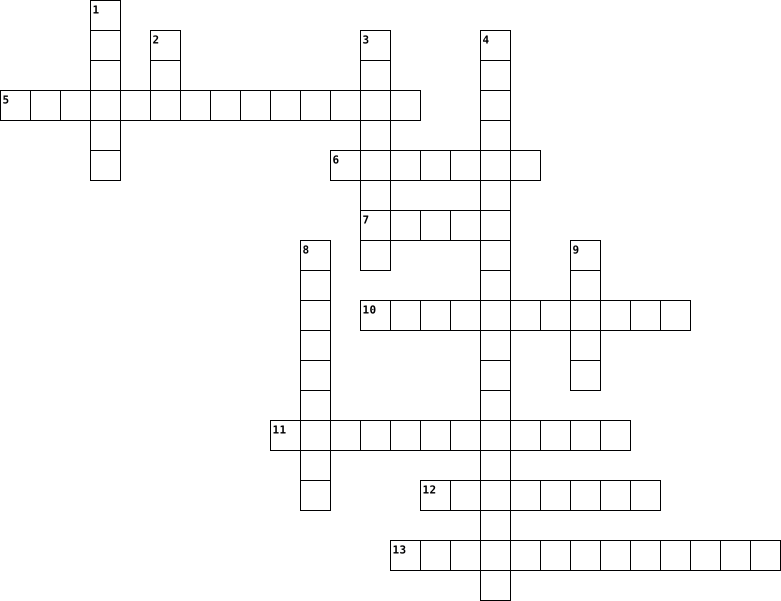
Across
- a title he was known for
- He played a huge part in the peace treaty
- what invention that helps us cook
- Someone ben franklin influenced
- what was his most popular invention
- 1/17/1706
- where he died
Down
- He made an alliance with them
- He signed the biggest document every
- cause of death
- a form of government he was apart of
- who did he get caught by
- 4/17/1790
13 Clues: 4/17/1790 • 1/17/1706 • where he died • cause of death • a title he was known for • who did he get caught by • He made an alliance with them • Someone ben franklin influenced • what invention that helps us cook • what was his most popular invention • He signed the biggest document every • a form of government he was apart of • He played a huge part in the peace treaty
Enlightenment 2021-11-16
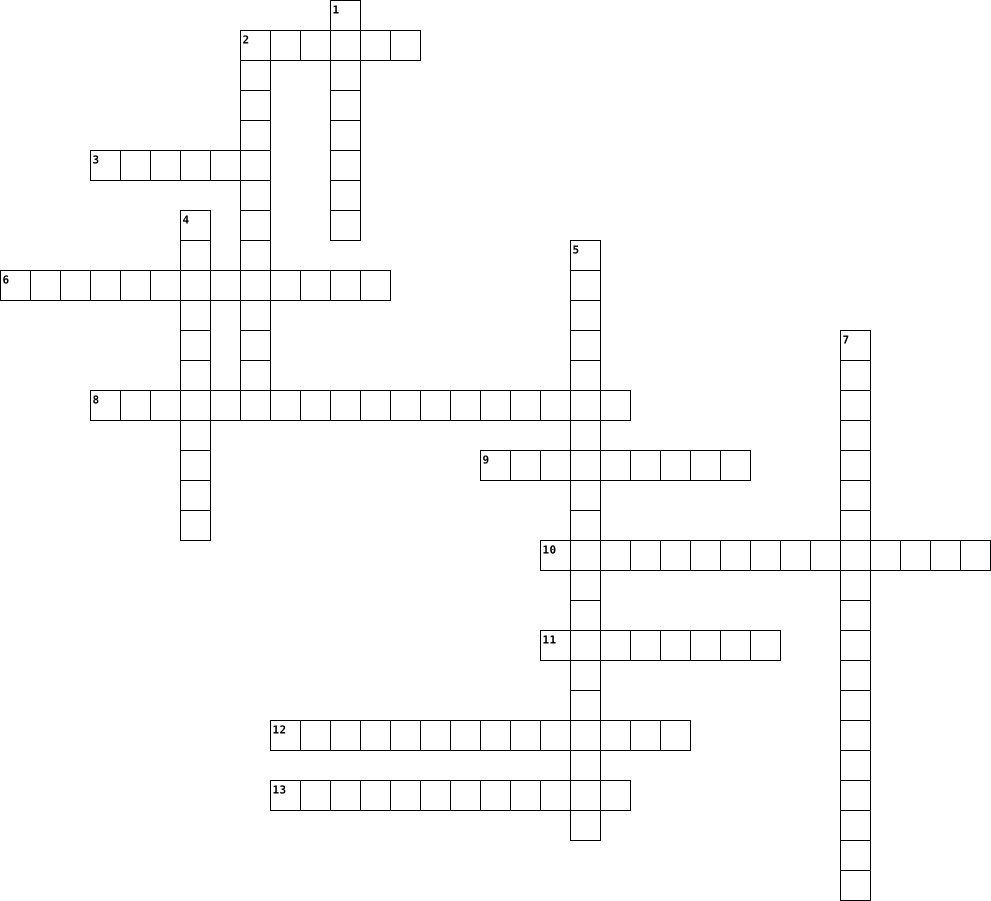
Across
- Places where people gathered during the enlightenment to discuss philosophy and ways to improve human life.
- The area in which the Enlightenment started.
- The idea that a country's leaders should be chosen by it's citizens.
- Also known as the age of reason
- Rule by the people.
- American founding father influenced by John Locke.
- Rule by a king or queen.
- Citizens give up some freedoms in exchange for government protection.
- Wrote the Leviathan and believed in a single sovereign or ruler with total authority.
Down
- The government that Hobbes believed worked best.
- Before governments when everyone had the right to everything according to Hobbes
- Thinker title during this period.
- The idea that if governments failed to uphold the social contract citizens had the right to revolt.
- Our natural rights according to enlightenment thinkers.
14 Clues: Rule by the people. • Rule by a king or queen. • Also known as the age of reason • Thinker title during this period. • The area in which the Enlightenment started. • The government that Hobbes believed worked best. • American founding father influenced by John Locke. • Our natural rights according to enlightenment thinkers. • ...
Enlightenment 2023-08-13
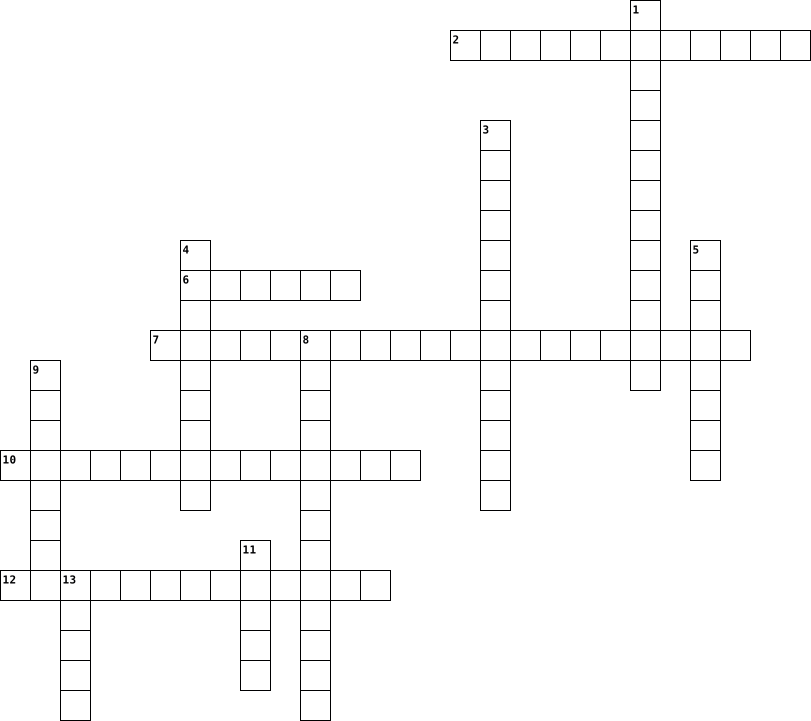
Across
- American document that recognized natural rights
- Continent where the Enlightenment began
- If the government fails to protect citizens, citizens have the right to revolt.
- An agreement where citizens give up some rights in exchange for government protection
- The idea that a country’s leader should be chosen by the citizens in a general election
Down
- Life with complete freedom, no rules, and no government
- A period of time when people developed new ideas about human existence and human rights.
- Some Enlightenment thinkers were afraid of this
- Obtaining something through family ties
- Fundamental, basic rights people are born with
- The kind of authority a king had over citizens
- A place where city people gathered to discuss philosophy
- Famous city where people discussed ideas
13 Clues: Obtaining something through family ties • Continent where the Enlightenment began • Famous city where people discussed ideas • Fundamental, basic rights people are born with • The kind of authority a king had over citizens • Some Enlightenment thinkers were afraid of this • American document that recognized natural rights • ...
Enlightenment 2021-12-07
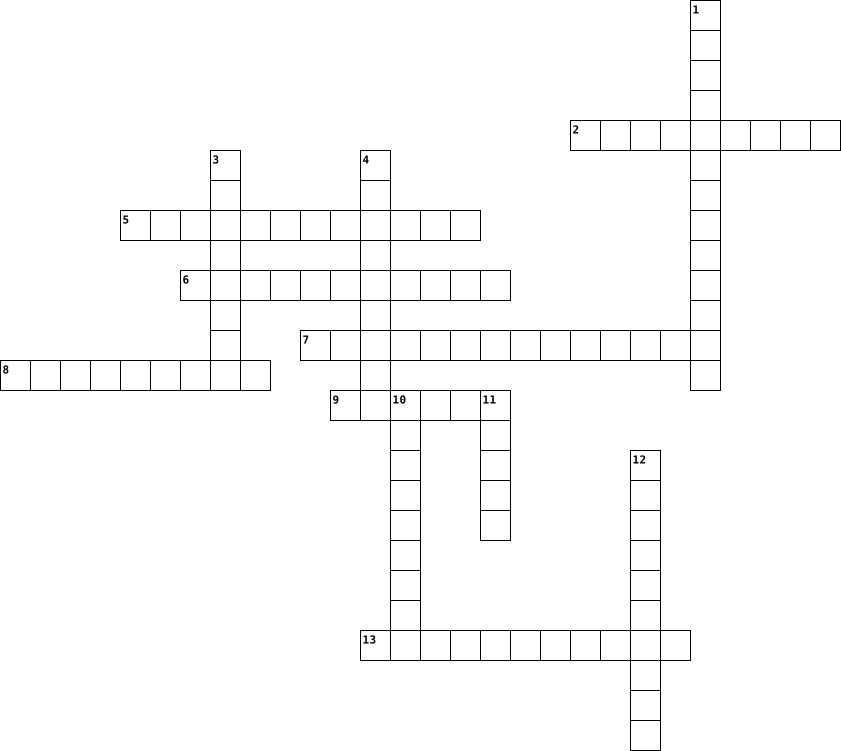
Across
- People have ultimate power
- Lovers of wisdom
- These govern Human Character
- An agreement made by people in which they give up something for an organized Society.
- Knowledge
- Ability to think logically
- Focused on economic reforms
Down
- Freedoms belonging to all humans from birth
- believed that there should be a separation of church and state.
- believed the best form of government was democracy.
- believed that governments should impose the fewest possible restrictions on prices and trade.
- Form of literature developed during the Enlightenment
- Complete power
13 Clues: Knowledge • Complete power • Lovers of wisdom • People have ultimate power • Ability to think logically • Focused on economic reforms • These govern Human Character • Freedoms belonging to all humans from birth • believed the best form of government was democracy. • Form of literature developed during the Enlightenment • ...
Enlightenment 2022-09-07
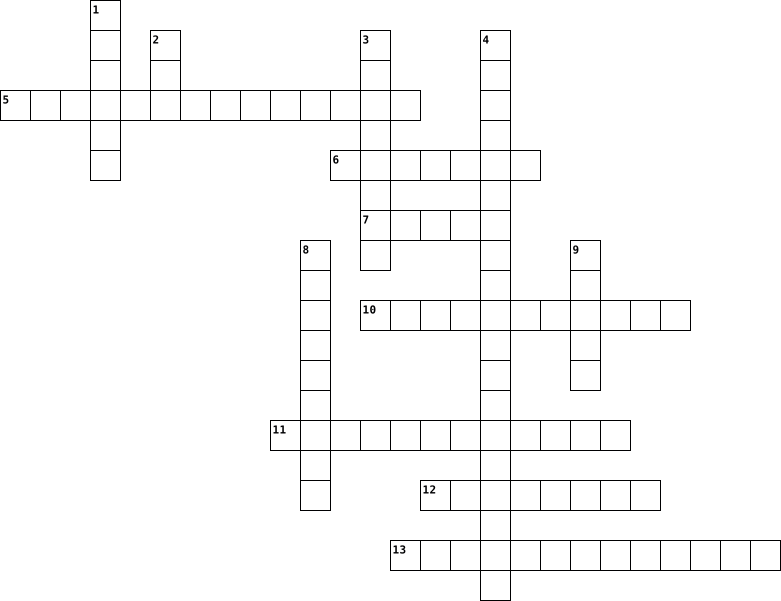
Across
- a title he was known for
- He played a huge part in the peace treaty
- what invention that helps us cook
- Someone ben franklin influenced
- what was his most popular invention
- 1/17/1706
- where he died
Down
- He made an alliance with them
- He signed the biggest document every
- cause of death
- a form of government he was apart of
- who did he get caught by
- 4/17/1790
13 Clues: 4/17/1790 • 1/17/1706 • where he died • cause of death • a title he was known for • who did he get caught by • He made an alliance with them • Someone ben franklin influenced • what invention that helps us cook • what was his most popular invention • He signed the biggest document every • a form of government he was apart of • He played a huge part in the peace treaty
Enlightenment 2022-09-07
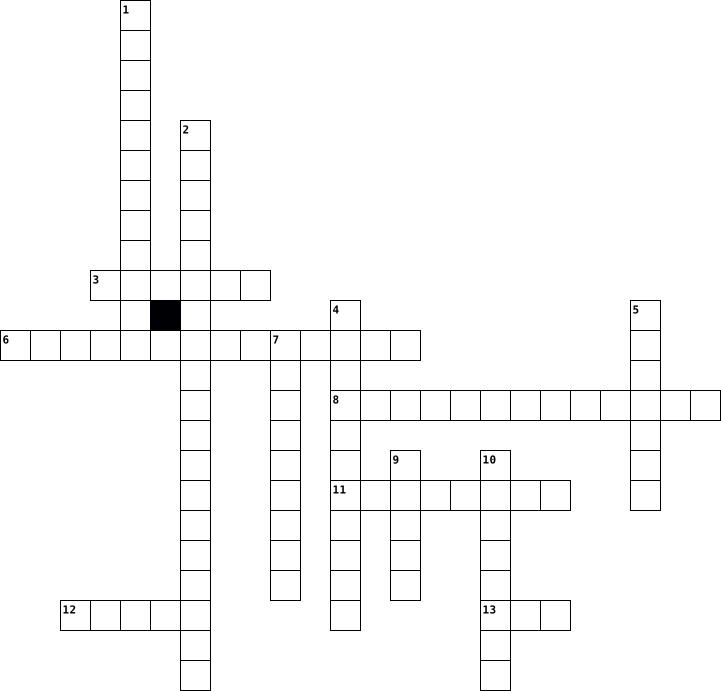
Across
- He made an alliance with them
- a title he was known for
- where he died
- cause of death
- what invention that helps us cook
- He signed the biggest document every
Down
- what was his most popular invention
- a form of government he was apart of
- Someone ben franklin influenced
- He played a huge part in the peace treaty
- who did he get caught by
- 4/17/1790
- 1/17/1706
13 Clues: 4/17/1790 • 1/17/1706 • where he died • cause of death • a title he was known for • who did he get caught by • He made an alliance with them • Someone ben franklin influenced • what invention that helps us cook • what was his most popular invention • a form of government he was apart of • He signed the biggest document every • He played a huge part in the peace treaty
Crossword Puzzle Project 2022-01-18

Across
- Written by Locke
- Enlightenment leader born between 1632-1704
- Enlightenment leader born between 1588-1679
- people give up freedom in exchange for protection from government
- Enlightenment leader born between 1689-1755
- everyone has God given rights that cannot be taken away
Down
- philosophical movement during the 18th century
- Written by Hobbes
- Written by Montesquieu
- Enlightenment leader born between 1712-1778
- power should be divided into 3 branches and each has a job that only it can do
- government should reflect the will of the people
12 Clues: Written by Locke • Written by Hobbes • Written by Montesquieu • Enlightenment leader born between 1712-1778 • Enlightenment leader born between 1632-1704 • Enlightenment leader born between 1588-1679 • Enlightenment leader born between 1689-1755 • philosophical movement during the 18th century • government should reflect the will of the people • ...
The Enlightenment 2014-04-02
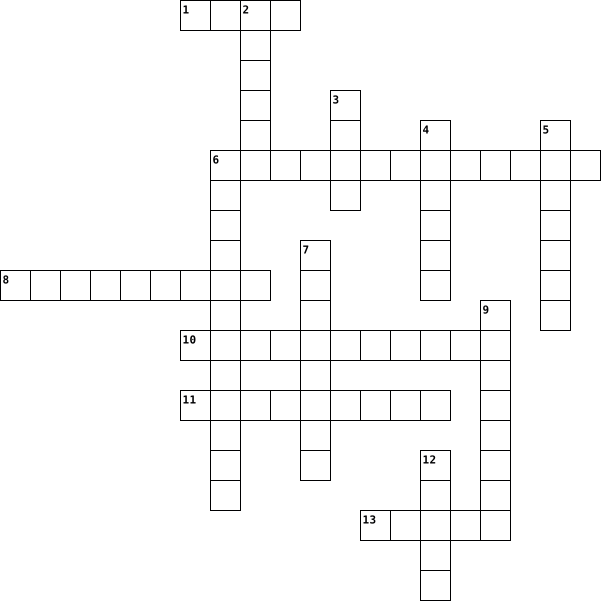
Across
- Summed up the era's motto in the following terms: "Dare to know! Have courage to use your own reason!"
- European politics, philosophy, science, and communications were radically reoriented during this movement
- ______ the Great Unified, rationalized, and modernized Prussia
- The Enlightenment gave way to this in the 19th century
- Writer of Declaration of Independence
- One of the important 17th century precursors; Englishman
Down
- Published the Principia Mathematica
- This Enlightenment was centered on the dialogues and publications of the French "philosophes"
- Natural philosopher of the Scientific Revolution
- There was not this type of Enlightenment
- The signature publication of the period
- These people in Britain, France, and throughout Europe questioned traditional authority
- This revolution was inspired by the Enlightenment ideals
- Published his "Essay Concerning Human Understanding"
14 Clues: Published the Principia Mathematica • Writer of Declaration of Independence • The signature publication of the period • There was not this type of Enlightenment • Natural philosopher of the Scientific Revolution • Published his "Essay Concerning Human Understanding" • The Enlightenment gave way to this in the 19th century • ...
Chapter 10 study guide 2016-02-23

Across
- Newton’s laws of motion
- Law gas law, stating that the pressure and volume of a gas have an inverse relationship, when temperature is held constant.
- political contract is a theory or model, originating during the Age of Enlightenment
- French word that means the government stays out of public and personal affairs
- The law of gravity will pull everything down and to the earth
- Scottish moral philosopher, pioneer of political economy, and a key figure in the Scottish Enlightenment.
- The idea the earth is at the center of the universe
- the most enlightened rulers of the enlightenment period
- Considered the worlds first world war
- a belief or theory that opinions and actions should be based on reason and knowledge rather than on religious belief or emotional response.
- Leader of Russia at the time had worked with Diderot for a time but felt that she would be better off not changing her lands
- The idea planets rotate in an elliptical path around the sun. not a circular
- Theresa The ruler of Austria during the Austrian Succession, & years war, and the enlightenment period
- anatomist, physician, and author of one of the most influential books on human anatomy
- A secular version of art completely different from renaissance
- America's policy of government now to keep things balanced
Down
- Fought for women's rights during the enlightenment
- French lawyer, man of letters, and political philosopher who lived during the Age of Enlightenment.
- Francophone Genevan philosopher, writer, and composer of the 18th century.
- enlightened despotism
- The idea of the sun being at the center of the earth
- Italian criminologist, jurist, philosopher, and politician, who is widely considered as the most talented jurist and one of the greatest thinkers of the Age of Enlightenment.
- Francis Bacon’s process to systematically collect and analyze evidence
- intellectuals of the 18th century Enlightenment.
- logical process in which multiple premises, all believed true or found true most of the time, are combined to obtain a specific conclusion.
- A child prodigy of music performing a solo harpsichord concert at the age of 6
- Creator of the scientific method
- “I think their for I am wrong”
- An astronomer who had been put under house arrest for disagreeing with the pope
- German mathematician, astronomer, and astrologer. A key figure in the 17th century scientific revolution
- English philosopher and physician, widely regarded as one of the most influential of Enlightenment thinkers
- Renaissance Mathematician and astronomer, Came up with the idea that the Sun was at the center of the Universe
- Anglican minister and theologian who, with his brother Charles and fellow cleric George Whitefield, is credited with the foundation of the evangelical movement known as Methodism.
- An enlightened man who created the encyclopedia and worked alongside Catherine The Great
- Found that the heart was the main circulation point of blood
- The room where many people gathered and discussed ideas and spread the enlightenment ideas
36 Clues: enlightened despotism • Newton’s laws of motion • “I think their for I am wrong” • Creator of the scientific method • Considered the worlds first world war • intellectuals of the 18th century Enlightenment. • Fought for women's rights during the enlightenment • The idea the earth is at the center of the universe • The idea of the sun being at the center of the earth • ...
the Enlightenment 2013-11-13
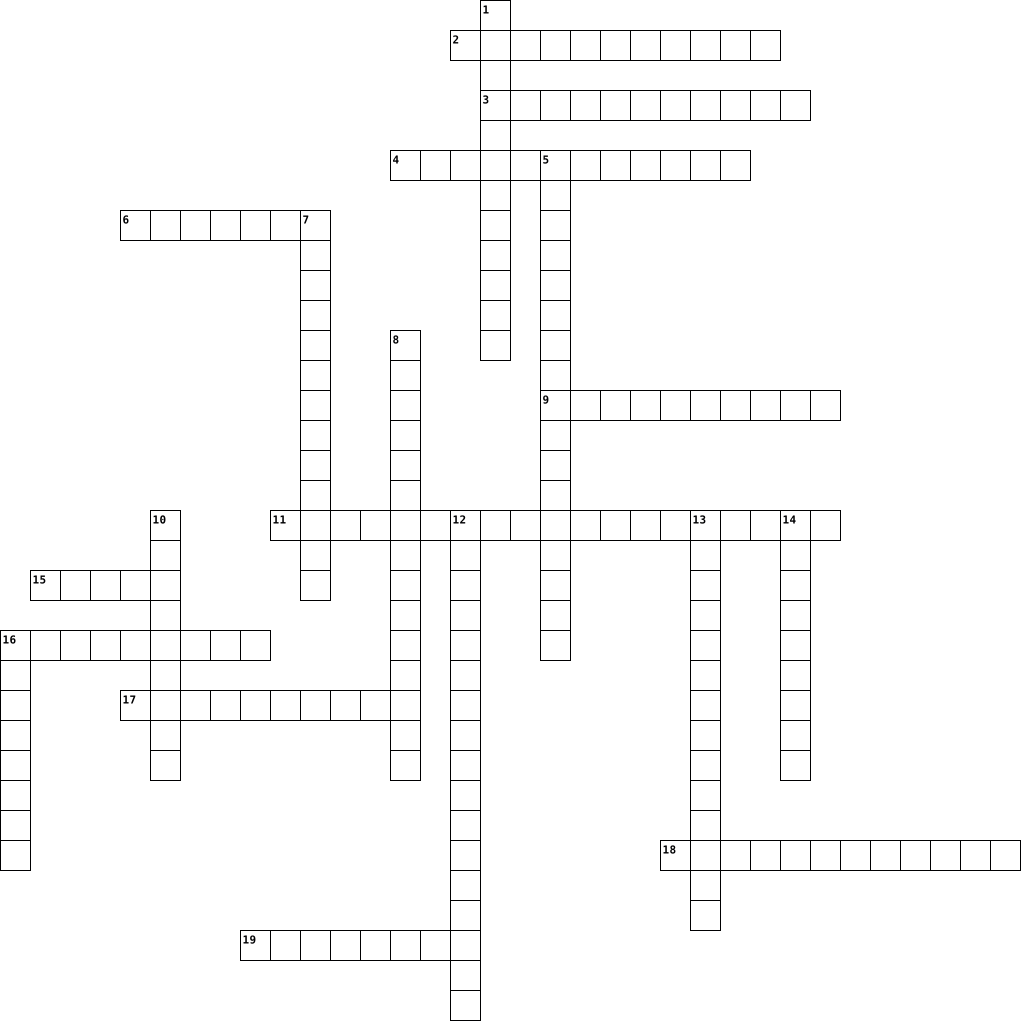
Across
- a person who offers view or theories on profound questions in ethics
- french thinker who developed the ideas of separation of powers
- a policy that allows businesses to operate with very little interference from the government
- a period of artistic style that used exaggerated motion and clear
- rules that govern natural force
- french philosopher who is often referred ti as the father of the french revolution and wrote the book:the social contract
- informal social gatherings
- English philosopher that argued that people were good and theorized natural right,he rejected absolute monarchies
- french enlightenment thinker
- 4th president sometimes referred to as the father of the constitution
- was a french Enlightenment writer
Down
- English enlightenment thinker who argued that people were cruel and selfish by nature and needed to be controlled by an monarchy
- a form of absolute monarchy that accepted enlightenment ideas
- a period of time in which people applied reasons to everyday things and stared thinking for themselves
- principle author of the declaration of independence who believed in equality for all
- suppression of the public communication
- Russian monarch that abolished torture
- a agreement made by people to give up their up their freedom exchange for an organized society
- Scottish philosopher who focused on using natural law
- Austrian monarch that traveled in disguise among his subjects to learn of their problems
20 Clues: informal social gatherings • french enlightenment thinker • rules that govern natural force • was a french Enlightenment writer • Russian monarch that abolished torture • suppression of the public communication • Scottish philosopher who focused on using natural law • a form of absolute monarchy that accepted enlightenment ideas • ...