
enlightenment Crossword Puzzles
Enlightenment era 2025-03-21

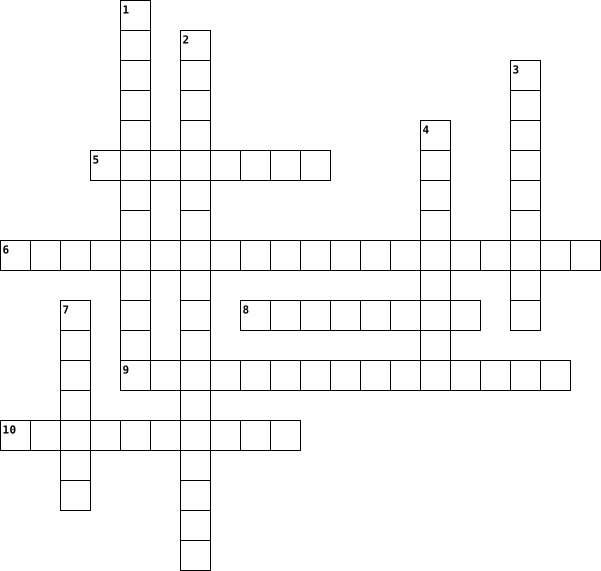
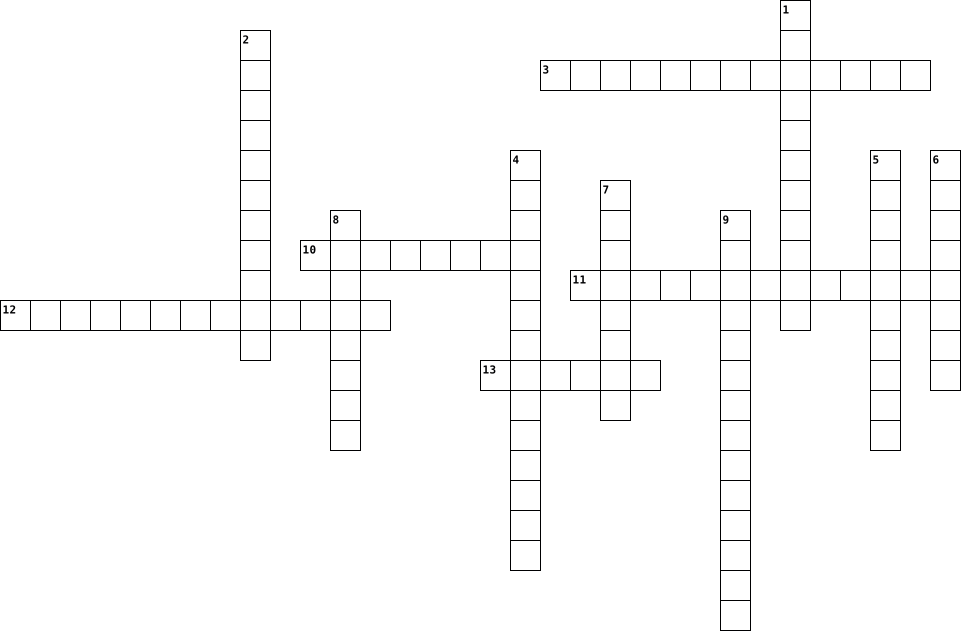
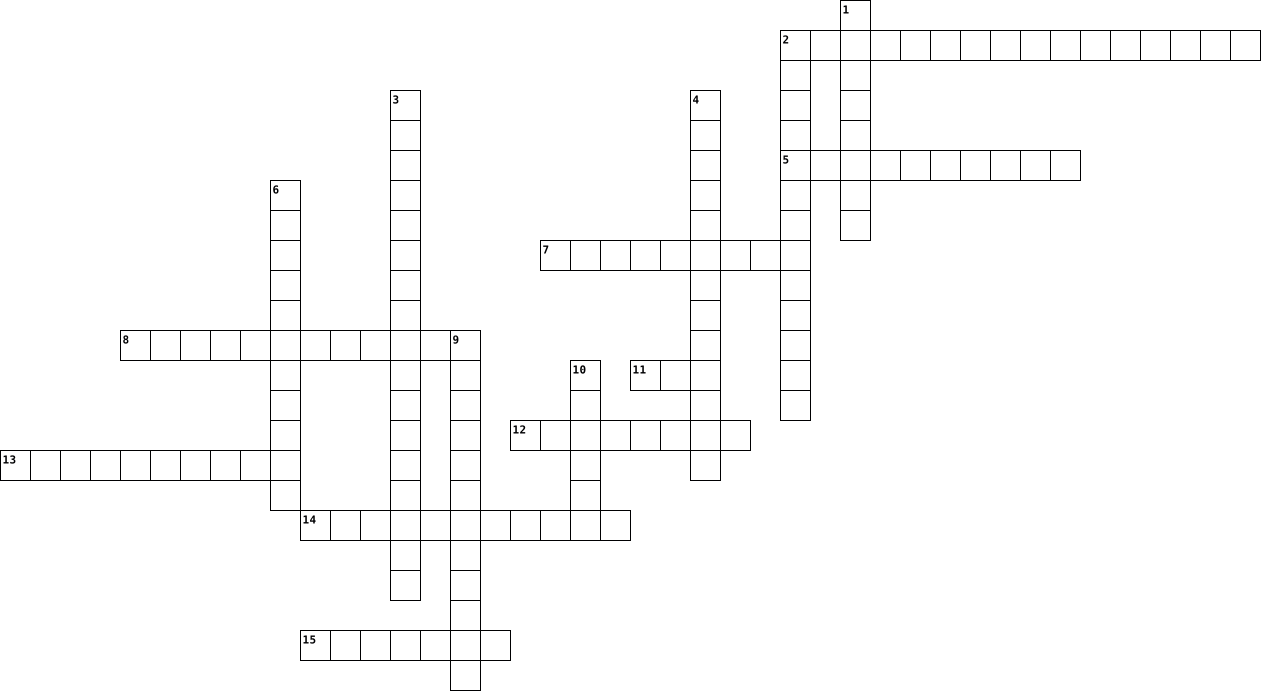
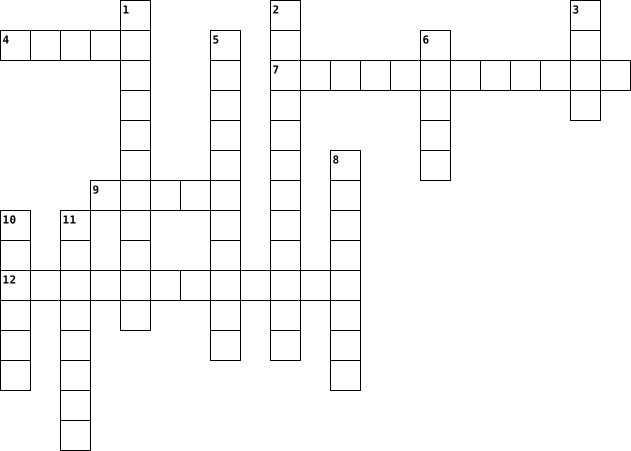
Across
- – Government by the people
- - a social contract theorist
- – Political upheaval inspired by Enlightenment ideas
- - referred to a system of ideas and beliefs about society, government, and human nature that was based on reason, progress, and individual rights.
- - meant freedom from oppression, self-governance, and the right of people to rule themselves based on reason and natural rights.
- - referred to the idea that individuals are born with natural, inherent freedoms that should be protected by governments.
- – Acceptance of different views and beliefs
- - referred to established beliefs or doctrines, often associated with religious or authoritarian institutions, that were accepted without question or evidence.
- – John Locke, a key Enlightenment thinker
- – Freedom from oppressive restrictions
- - The Enlightenment principle advocating fairness in laws and government
Down
- – Study of fundamental questions about existence and knowledge
- – an advocate of direct democracy
- -refers to the use of reason, logic, and critical thinking to understand the world, rather than relying on tradition, superstition, or religious dogma
- – Questioning of traditional beliefs
- - His ideas were based on reason, justice, and human rights.
- - referred to an intellectual and cultural movement in the 17th and 18th centuries that emphasized reason, science, individual rights, and progress
- – Central to Enlightenment thinking
- - referred to the accepted standards, behaviors, and social conventions that were traditionally followed in society.
- – French writer who championed free speech and religious tolerance
20 Clues: – Government by the people • - a social contract theorist • – an advocate of direct democracy • – Central to Enlightenment thinking • – Questioning of traditional beliefs • – Freedom from oppressive restrictions • – John Locke, a key Enlightenment thinker • – Acceptance of different views and beliefs • – Political upheaval inspired by Enlightenment ideas • ...
Enlightenment era 2025-03-21

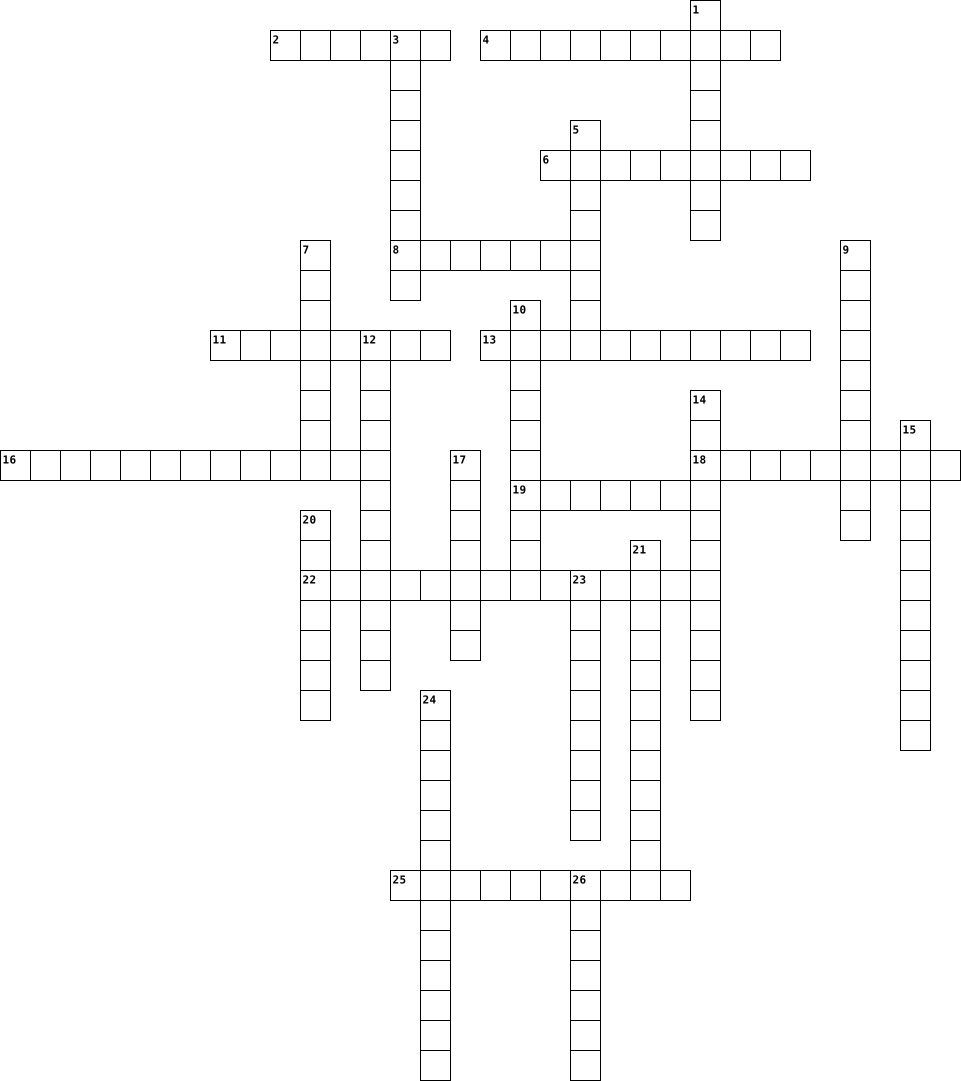
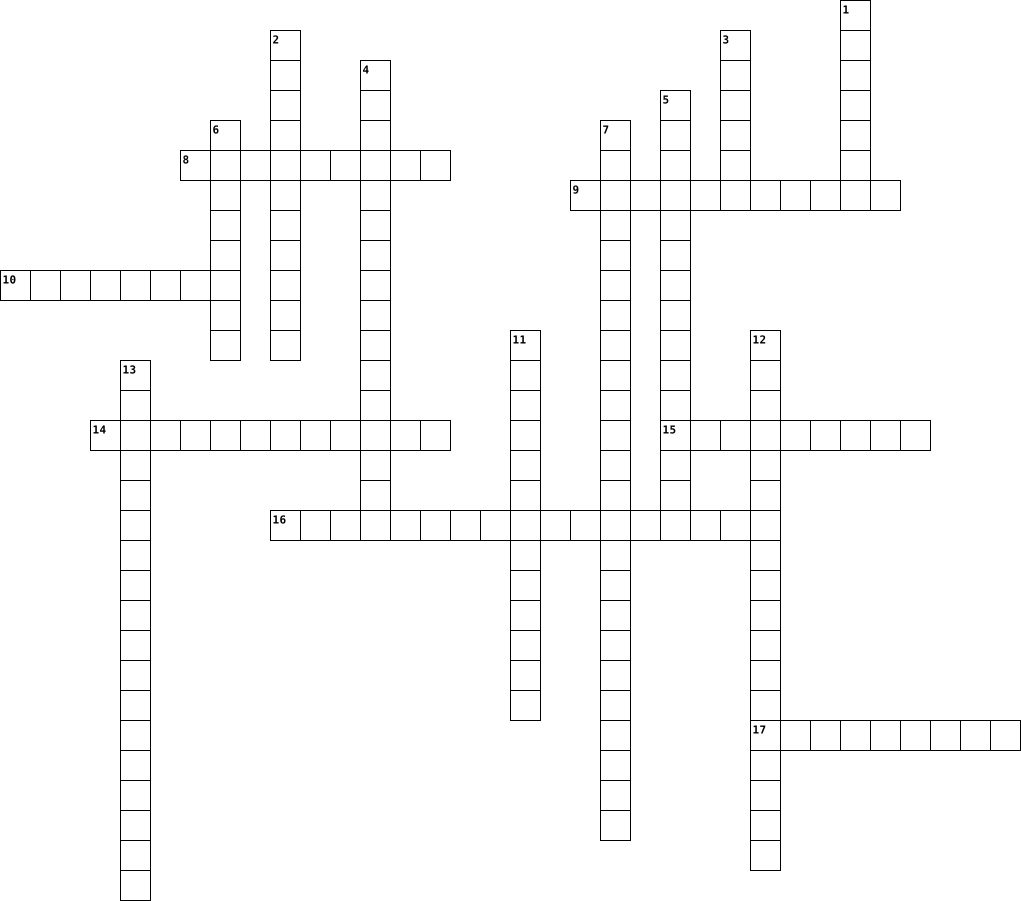
Across
- referred to a system of ideas and beliefs about society, government, and human nature that was based on reason, progress, and individual rights.
- referred to established beliefs or doctrines, often associated with religious or authoritarian institutions, that were accepted without question or evidence.
- referred to an intellectual and cultural movement in the 17th and 18th centuries that emphasized reason, science, individual rights, and progress
- Acceptance of different views and beliefs
- Freedom from oppressive restrictions
- Political upheaval inspired by Enlightenment ideas
- an advocate of direct democracy
- His ideas were based on reason, justice, and human rights.
- The Enlightenment principle advocating fairness in laws and government
- Study of fundamental questions about existence and knowledge
- a social contract theorist
- referred to the idea that individuals are born with natural, inherent freedoms that should be protected by governments.
Down
- referred to the accepted standards, behaviors, and social conventions that were traditionally followed in society.
- meant freedom from oppression, self-governance, and the right of people to rule themselves based on reason and natural rights.
- refers to the use of reason, logic, and critical thinking to understand the world, rather than relying on tradition, superstition, or religious dogma
- Questioning of traditional beliefs
- Central to Enlightenment thinking
- John Locke, a key Enlightenment thinker
- French writer who championed free speech and religious tolerance
- Government by the people
20 Clues: Government by the people • a social contract theorist • an advocate of direct democracy • Central to Enlightenment thinking • Questioning of traditional beliefs • Freedom from oppressive restrictions • John Locke, a key Enlightenment thinker • Acceptance of different views and beliefs • Political upheaval inspired by Enlightenment ideas • ...
Enlightenment Introduction 2019-04-04
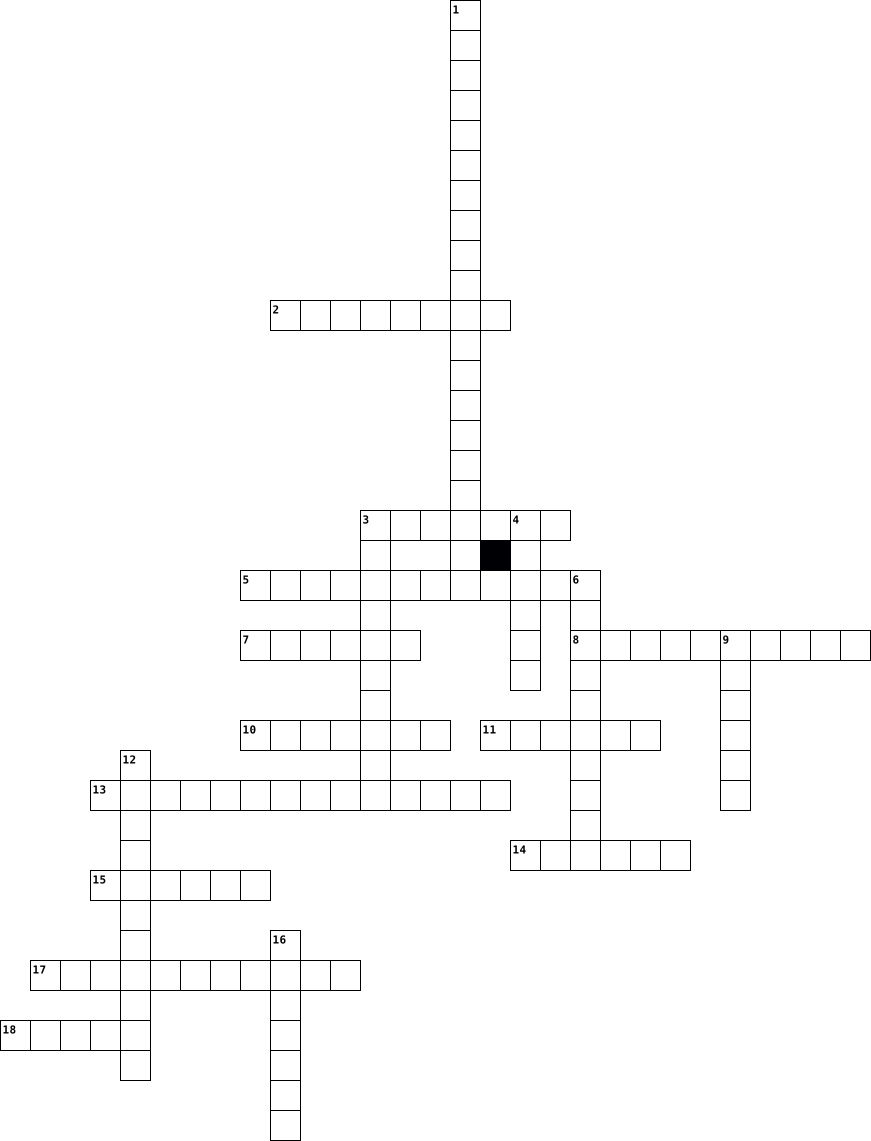
Across
- Enlightenment ____ believed that the human condition was improving over time
- began with Copernicus‘ heliocentric universe theory in 1543
- increased _____ led to more widespread information
- heavily influenced by Enlightenment philosophy
- Kant’s enlightenment slogan (3 words)
Down
- philosophical movement took place primarily in Europe/North America
- Enlightenment intellectuals were skeptical of ________ (4 words)
- economist famous for “invisible hand of the market“ theory
- shout out to the Enlightenment Thinker that represents our class
- one characteristic of the enlightenment
10 Clues: Kant’s enlightenment slogan (3 words) • one characteristic of the enlightenment • heavily influenced by Enlightenment philosophy • increased _____ led to more widespread information • economist famous for “invisible hand of the market“ theory • began with Copernicus‘ heliocentric universe theory in 1543 • ...
Unit 1 2021-12-08
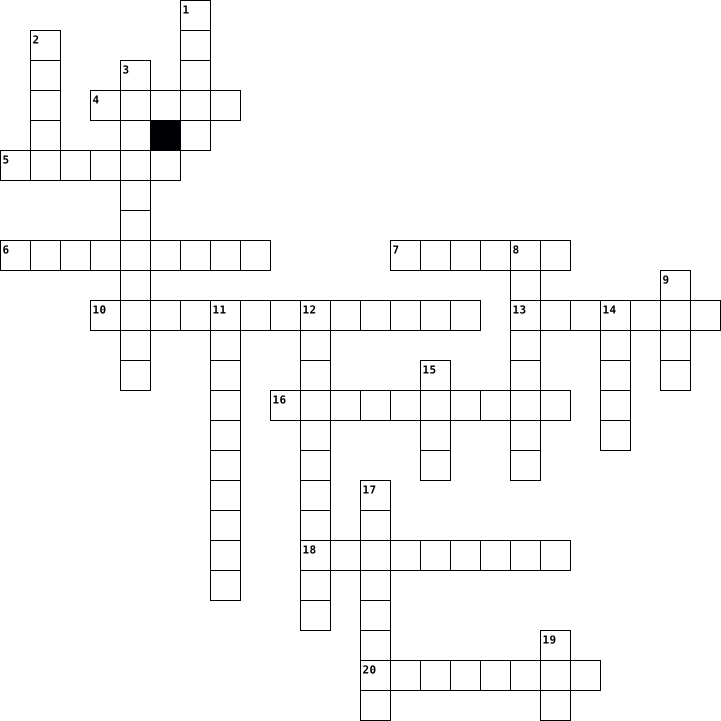
Across
- Separation of Powers
- Federalism
- Common Law
- Article
- Checks & Balance
- Popular Sovereignty
- enlightenment
- New Jersey
- James Madison
- Anti-Federalist
- Federalist
Down
- Virginia
- Rule of Law
- Commerce
- Preamble
- Magna Carta
- Compromise
- constitution
- Connecticut
- Declaration of Independence
- Consent of the Governed
- Elastic (Necessary & Proper)
- Bill of Rights
- Amendment
- Articles of Confederation
- Limited Government
26 Clues: Article • Virginia • Commerce • Preamble • Amendment • Federalism • Common Law • Compromise • New Jersey • Federalist • Rule of Law • Magna Carta • Connecticut • constitution • enlightenment • James Madison • Bill of Rights • Anti-Federalist • Checks & Balance • Limited Government • Popular Sovereignty • Separation of Powers • Consent of the Governed • Articles of Confederation • Declaration of Independence • ...
enlightment 2024-09-22

Across
- - What Enlightenment thinkers believed should guide decisions instead of tradition.
- - The Enlightenment inspired these major events in America and France.
- - The period known as the "Age of Reason," which changed how people viewed government, society, and human rights.
- - This thinker fought for freedom of speech.
- - This thinker believed in democracy and that the will of the people should guide society.
- - Enlightenment thinkers argued that everyone deserves to be treated this way under the law.
Down
- - This field was greatly influenced by the use of reason and observation during the Enlightenment.
- - The Enlightenment argued that people are born with these, which governments must protect.
- - The Enlightenment inspired this concept, where people have the right to make their own choices.
- - This philosopher believed in natural rights such as life, liberty, and property.
- - The century in which the Enlightenment took place.
11 Clues: - This thinker fought for freedom of speech. • - The century in which the Enlightenment took place. • - The Enlightenment inspired these major events in America and France. • - This philosopher believed in natural rights such as life, liberty, and property. • - What Enlightenment thinkers believed should guide decisions instead of tradition. • ...
Unit 4 Crossword 2024-11-22

Across
- Defended freedom of speech by sarcastically mocking the government.
- Rights that exist naturally
- Empress of Russia and enlightened despot.
- Wrote the social contract and believed that people are "essentially good".
- Composer who wrote many operas, symphonies, and orchestras.
- Believed in the separation of government powers
- "Father of capitalism" who advocated for laissez-faire economics
- King of Prussia who believed in Enlightenment Absolutism.
- Period of European history emphasizing reason over tradition
- An idea that is suppressed or prohibited
- Popular gathering places in France during the Enlightenment, commonly with coffee
Down
- Author of the Encyclopedie to "change the general way of thinking".
- German composer who wrote religious works for organs and choirs.
- English philosopher who believed in natural rights and limited government
- Laws that govern the natural order and human nature
- Belief that the government should not interfere with economy
- Art style characterized by its grand and opulent features
- English philosopher who wrote about the social government
- Name given to the French philosophers of the Enlightenment
- Art style characterized by its soft, gentle, and light features.
20 Clues: Rights that exist naturally • An idea that is suppressed or prohibited • Empress of Russia and enlightened despot. • Believed in the separation of government powers • Laws that govern the natural order and human nature • Art style characterized by its grand and opulent features • English philosopher who wrote about the social government • ...
Buddhism puzzle 2024-11-26

Across
- purity of the body
- Japanese temple of Buddhism
- The lead monk of a specific form of Buddhism
- The symbol of vajaranaya
- The highest state of enlightenment someone can attain
- A dome shaped structure
- a sacred phrase of prayer or word
- Similar scriptures containing teachings of Buddha
- stresses erupt the awakening of enlightenment
Down
- desire,thirst,longing and greed
- A religious teacher of Buddhism
- The conservative side of two teachings of Buddhism
- Sudden enlightenment
- Generosity or giving freely
- a spiritual leader
- A collection of scriptures
- quiet sitting and meditation
- The heart of the zen Buddha
18 Clues: purity of the body • a spiritual leader • Sudden enlightenment • A dome shaped structure • The symbol of vajaranaya • A collection of scriptures • Japanese temple of Buddhism • Generosity or giving freely • The heart of the zen Buddha • quiet sitting and meditation • desire,thirst,longing and greed • A religious teacher of Buddhism • a sacred phrase of prayer or word • ...
Enlgihtenment Daniel Rivkin 2023-02-23
Across
- believed in freedom of speech
- Perfected the telescope
- Sun-centered theory
- thought people were born with bad qualities
- people who proposed new ideas during the enlightenment
- produced encyclopedia
- Created the smallpox vaccine
- fought for women's right
- person who rules with absolute power
- developed laws of motion and gravity
- discovered bacteria
- believed in natural rights, life liberty, and pursuit of happiness
Down
- scientific discoveries happening after age of absolutism
- Earth-centered theory
- where enlightenment began
- proposed the heliocentric theory
- parties where people met during the enlightenment to discuss new ideas
- discovered the idea of checks and balances
- beleived that people were naturally good and supported democracy
19 Clues: Sun-centered theory • discovered bacteria • Earth-centered theory • produced encyclopedia • Perfected the telescope • fought for women's right • where enlightenment began • Created the smallpox vaccine • believed in freedom of speech • proposed the heliocentric theory • person who rules with absolute power • developed laws of motion and gravity • ...
Opti 2026-01-09

Across
- "awakened one"
- The earliest collection of Buddhist scriptures.
- Basic Buddhist rules
- The Buddhist idea of “no permanent self.”
- Enlightened beings who help others reach enlightenment.
- The Buddha’s teachings
- Canon The main scriptures of Theravada Buddhism.
- A person who has reached enlightenment
Down
- What Prince Siddhartha saw that made him leave home.
- Sacred geometric designs used in meditation.
- A form of Buddhism using rituals, symbols, and mantras.
- Way The Buddhist path of avoiding extremes.
- A multi‑story tower
- A person who lives very simply and avoids comforts.
- Sacred objects
- Tibetan Buddhist spiritual teachers
- The final goal in Buddhism
- Sacred texts
- Tree The tree where the Buddha reached enlightenment.
- The Buddhist community of monks, nuns, and followers.
20 Clues: Sacred texts • "awakened one" • Sacred objects • A multi‑story tower • Basic Buddhist rules • The Buddha’s teachings • The final goal in Buddhism • Tibetan Buddhist spiritual teachers • A person who has reached enlightenment • The Buddhist idea of “no permanent self.” • Way The Buddhist path of avoiding extremes. • Sacred geometric designs used in meditation. • ...
Unit 6 Crossword 2013-04-10
Across
- "The Most Autocratic Leader"
- The Act of Overthrowing a Government
- Where a countries money doesn't have as much value as before.
- Right The Claim that God gave them the right to rule.
- Main Result of Latin American Revolts
- Claimed to be, "Guardian of the Church"
- Palace of The King and Queen of France
- Persecution Major Cause for English Revolution
- Enlightenment Thinker that said, "Nobility should be abolished."
Down
- IIA Cause of the glorious revolution.
- Enlightenment Thinker that thought, "If the Government no longer protects natural rights, the people have the right to revolt."
- of Independence A very important document that reflects many Enlightenment Ideas
- First Absolute Ruler after French Revolution
- Taxes A Cause of All the Revolutions, (Economic)
- The Act of A Ruler Leading without any Checks and Balances.
- Spearhead of French Revolutionaries, (Got Killed Himself)
- XVI King that was Executed During French Revolution.
- of Rights Major Result of English Revolution
- Enlightenment Thinker that thought, "Freedom of Religion and Speech."
- Major Bankrupting Problem During 1600's-1800's.
20 Clues: "The Most Autocratic Leader" • The Act of Overthrowing a Government • IIA Cause of the glorious revolution. • Main Result of Latin American Revolts • Palace of The King and Queen of France • Claimed to be, "Guardian of the Church" • First Absolute Ruler after French Revolution • of Rights Major Result of English Revolution • Persecution Major Cause for English Revolution • ...
Unit 6 Crossword 2013-04-10
Across
- "The Most Autocratic Leader"
- Persecution Major Cause for English Revolution
- The Act of Overthrowing a Government
- of Independence A very important document that reflects many Enlightenment Ideas
- The Act of A Ruler Leading without any Checks and Balances.
- Spearhead of French Revolutionaries, (Got Killed Himself)
- Where a countries money doesn't have as much value as before.
- Claimed to be, "Guardian of the Church"
- Enlightenment Thinker that thought, "If the Government no longer protects natural rights, the people have the right to revolt."
- IIA Cause of the glorious revolution.
Down
- First Absolute Ruler after French Revolution
- Major Bankrupting Problem During 1600's-1800's.
- Enlightenment Thinker that said, "Nobility should be abolished."
- Enlightenment Thinker that thought, "Freedom of Religion and Speech."
- Palace of The King and Queen of France
- Taxes A Cause of All the Revolutions, (Economic)
- Main Result of Latin American Revolts
- Right The Claim that God gave them the right to rule.
- of Rights Major Result of English Revolution
- XVI King that was Executed During French Revolution.
20 Clues: "The Most Autocratic Leader" • The Act of Overthrowing a Government • Main Result of Latin American Revolts • IIA Cause of the glorious revolution. • Palace of The King and Queen of France • Claimed to be, "Guardian of the Church" • First Absolute Ruler after French Revolution • of Rights Major Result of English Revolution • Persecution Major Cause for English Revolution • ...
Unit 6 Crossword 2013-04-10
Across
- Enlightenment Thinker that thought, "If the Government no longer protects natural rights, the people have the right to revolt."
- Palace of The King and Queen of France
- Where a countries money doesn't have as much value as before.
- Right The Claim that God gave them the right to rule.
- Spearhead of French Revolutionaries, (Got Killed Himself)
- Enlightenment Thinker that said, "Nobility should be abolished."
- Main Result of Latin American Revolts
- XVI King that was Executed During French Revolution.
- Claimed to be, "Guardian of the Church"
- The Act of Overthrowing a Government
- First Absolute Ruler after French Revolution
Down
- Enlightenment Thinker that thought, "Freedom of Religion and Speech."
- Major Cause for English Revolution
- "The Most Autocratic Leader"
- A Cause of the glorious revolution.
- of Independence A very important document that reflects many Enlightenment Ideas
- The Act of A Ruler Leading without any Checks and Balances.
- Taxes A Cause of All the Revolutions, (Economic)
- of Rights Major Result of English Revolution
- Major Bankrupting Problem During 1600's-1800's.
20 Clues: "The Most Autocratic Leader" • Major Cause for English Revolution • A Cause of the glorious revolution. • The Act of Overthrowing a Government • Main Result of Latin American Revolts • Palace of The King and Queen of France • Claimed to be, "Guardian of the Church" • of Rights Major Result of English Revolution • First Absolute Ruler after French Revolution • ...
Enlightenment Take-Down! 2023-02-27
Across
- enlightenment vs.
- wrote the Ancient Mariner (last name)
- wrote Paradise Lost (last name)
- don't shoot me
- painful outcome of enlightenment
Down
- accountability vs.
- lonely outcome of enlightenment
- albatross can sleep while
- is this bliss?
- creature vs.
- the worst type of isolation
- you gotta have a magic...
- science vs.
13 Clues: science vs. • creature vs. • is this bliss? • don't shoot me • enlightenment vs. • accountability vs. • albatross can sleep while • you gotta have a magic... • the worst type of isolation • lonely outcome of enlightenment • wrote Paradise Lost (last name) • painful outcome of enlightenment • wrote the Ancient Mariner (last name)
The Enlightenment 2021-05-27
Across
- A prussian royal and military leader who was king of prussia.
- The idea that the general will is the will of the people as a whole.
- The right of a sovereign to rule as set forth by the theory of government that holds that a monarch receives the right to rule directly from god and not from the people.
- He was an 18th century scottish economist,philosopher, and author.He is considered the father of modern economics with his kost famous books "The Wealth of Nations" .
- A style of architecture,music,dance,painting,sculpture and other arts that flourished in europe from the early 17th century.
- Rhe name of members of a group of enlightenment thinkers who tried to apply the methods of science to the improvement of society.
- This was an acultural movement of intellectuals in the 18th century of europe that sought to mobilize the power of reason,in order to reform society and advance knowledge.
- A product of the enlightenment in the early 18th century, was a key institution in which women played a central role.
- This is a principle that was created to practice one's belief without intervention by the government and to be free of the exercise of authority by a church through thr government.
- The agreement by which people define and limit their individual rights,thus creating an organized society or government .
- An authoritarian leader who exercises their political power according to the principles of the enlightenment.
Down
- The ressurection of modern day science.
- A french enlightenment writer,historian,and philosopher who attacked the catholic church amd advocated freedom of religion,freedom of exoression, and seperatin of church and state.
- Another name that was used to say the period of the enlightenment.
- She reigned over russia for 34 years and led her country into full participation in the political and cultural life of europe.
- Enlightenemnt thinkers created these rights that they valued which is life,liberty, and property.
- He believed that in mans natural state, moral ideas do not exist.
- A movement of the 18th century that stressed the belief that science and logic gave people more knowledge and understanding than tradition and religion.
- A french philosopher of the enlightenment period, whose articulation of the theory of seperation of powers is implemented in many constitutions throughout the world.
- The english philosopher and political theorist, he was the most influential of the enlightenment thinkers and is known as the "father of liberalism" .
20 Clues: The ressurection of modern day science. • A prussian royal and military leader who was king of prussia. • He believed that in mans natural state, moral ideas do not exist. • Another name that was used to say the period of the enlightenment. • The idea that the general will is the will of the people as a whole. • ...
Buddhist Beliefs Key Terms Revision 2021-06-14
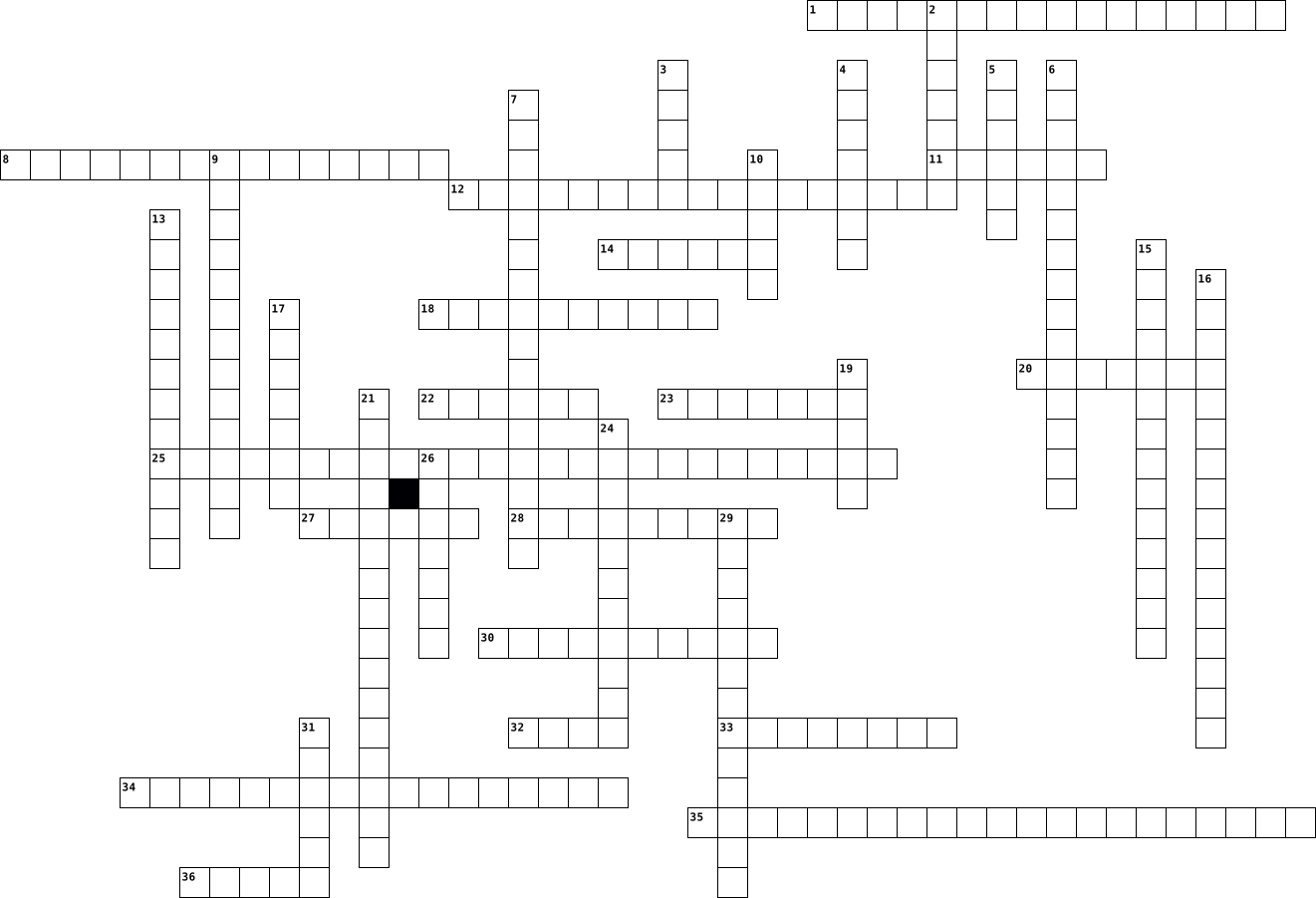
Across
- The idea that all things arise in dependence upon conditions
- The Eightfold Path grouped into the three sections of ethics, meditation and wisdom
- The idea that people do not have a permanent, fixed self or soul
- The five aspects that make up a person
- The first Noble Truth; there is suffering
- When someone achieves enlightenment and becomes a Buddha
- A state of complete enlightenment, happiness and peace
- The title given to someone two has achieved enlightenment; usually used to refer to Siddhartha
- The repeating cycle of birth, life, death, and rebirth
- The three realisations that the Buddha made in order to achieve enlightenment
- Impermanence; the idea that everything changes
- The paradise where Amitabha Buddha lives, and where Pure Land Buddhists aim to be reborn
- A practice of calming and focusing in the mind, and reflecting deeply on specific teachings to penetrate their true meaning
- A demon that represents spiritual obstacles, especially temptation
- The second Noble Truth: there are causes to suffering
- 'The School of the Elders'
- An image that symbolises samsara
- The Fourth Noble Truth: the way to end suffering; the Eightfold Path
Down
- 12 factors that illustrate the process of birth, death and rebirth
- A person's actions; the idea that skilful actions result in happiness and unskilful ones in suffering
- Emptiness; the concept that nothing has a separate independent 'self' or 'soul'
- The popular stories about the lives of the Buddha
- Greed, hatred and ignorance; the main cause of suffering
- A form of Buddhism based on belief in Amitabha Buddha
- The gaining of true knowledge of the self or the nature of reality
- For Theravada Buddhists, someone who has become enlightenment
- The idea that everyone has the essence of a Buddha inside them
- The Buddha worshiped by Pure Land Buddhists
- 'The greater vehicle'
- The Third Noble Truth: suffering can be stopped
- Craving (desiring or wanting something)
- Eight aspects that Buddhists practise and live by in order to achieve enlightenment
- For Mahayana Buddhists, someone who has become enlightened but chooses to remain in the cycle of samsara to help others achieve enlightenment
- Living a simple life with few pleasures or possessions
- Old age, illness, death and a holy man (ascetic); these led the Buddha to leave his life of luxury in the palace
- The Buddha's teachings
36 Clues: 'The greater vehicle' • The Buddha's teachings • 'The School of the Elders' • An image that symbolises samsara • The five aspects that make up a person • Craving (desiring or wanting something) • The first Noble Truth; there is suffering • The Buddha worshiped by Pure Land Buddhists • Impermanence; the idea that everything changes • ...
Introduction to French Rev. Crossword 2025-09-14

Across
- Inequality between the estates and resentment of privileges held by the clergy and nobility.
- New system of laws created by Napoleon that guaranteed equality before the law.
- Pledge by the National Assembly to create a new constitution after being locked out of the Estates General.
- Enlightenment thinker who argued government must follow the general will of the people.
- Clergy in France; less than 1% of the population; paid no taxes.
- Group led by Robespierre that carried out the Reign of Terror.
- July 14, 1789; revolutionaries stormed a prison; symbol of the start of the French Revolution.
- Enlightenment thinker who promoted natural rights and government by consent of the governed.
- Military general who rose to power after the Revolution, reformed taxes, banking, and law (Napoleonic Code).
- Period of new ideas in the 1600s-1700s that stressed reason, equality, and questioning authority.
- Banking system created by Napoleon to stabilize the economy.
- Meeting of European leaders after Napoleon's defeat to restore balance of power.
- First form of representative government formed by the Third Estate to make laws for the French people.
- Period when thousands were executed by guillotine under Robespierre and the Committee of Public Safety.
- Revolutionary document influenced by Enlightenment ideas; declared equality and protected rights.
Down
- Nobility; wealthy landowners with privileges; paid no taxes.
- Enlightenment writer who defended freedom of speech and religion.
- Absolute monarchy, unfair voting in the Estates General, Enlightenment ideas about government.
- Debt from wars, high taxes on the Third Estate, and poor harvests leading to food shortages.
- Economist who supported free markets and natural laws of economics.
- Assembly of representatives from all three estates; called to address taxes but was unfair to the Third Estate.
- Period of panic and peasant uprisings against nobles in the countryside.
- Everyone else (peasants, workers, middle class); 97% of population; paid nearly all the taxes.
- Queen of France, nicknamed 'Madame Deficit' for her spending; executed in 1793.
- Enlightenment thinker who believed in separation of powers in government.
- Rights Enlightenment belief that all people are born with rights such as life, liberty, and property.
- Execution device used during the Revolution, considered quick and 'equal'.
- Contract Rousseau's idea that governments should be based on an agreement between rulers and the people.
- Radical revolutionary who ruled violently during the Reign of Terror.
- French king during the Revolution; weak and indecisive, executed in 1793.
30 Clues: Nobility; wealthy landowners with privileges; paid no taxes. • Banking system created by Napoleon to stabilize the economy. • Group led by Robespierre that carried out the Reign of Terror. • Clergy in France; less than 1% of the population; paid no taxes. • Enlightenment writer who defended freedom of speech and religion. • ...
Unit 6 Crossword 2013-04-10
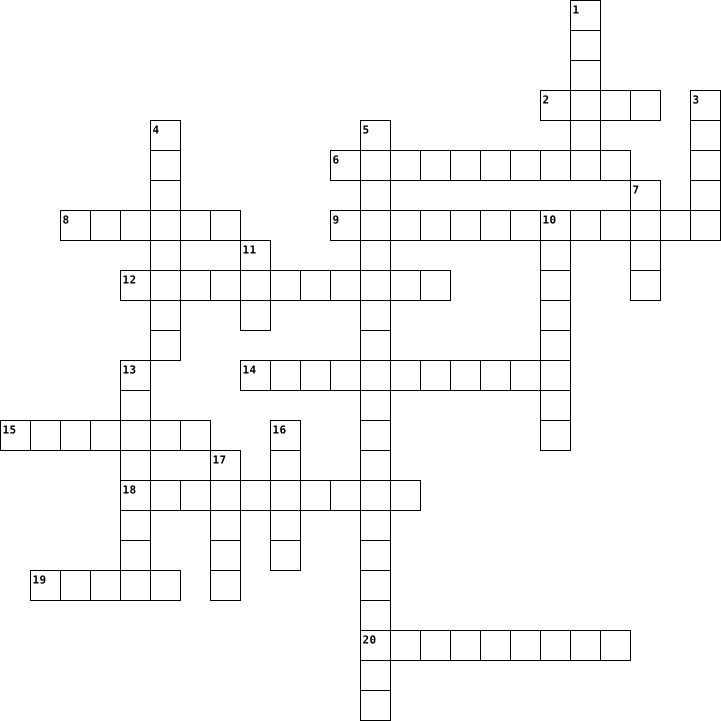
Across
- Taxes A Cause of All the Revolutions, (Economic)
- Palace of The King and Queen of France
- The Act of Overthrowing a Government
- Main Result of Latin American Revolts
- of Independence A very important document that reflects many Enlightenment Ideas
- Spearhead of French Revolutionaries, (Got Killed Himself)
- Claimed to be, "Guardian of the Church"
- The Act of A Ruler Leading without any Checks and Balances.
- "The Most Autocratic Leader"
- Where a countries money doesn't have as much value as before.
Down
- Right The Claim that God gave them the right to rule.
- IIA Cause of the glorious revolution.
- First Absolute Ruler after French Revolution
- Major Cause for English Revolution
- of Rights Major Result of English Revolution
- Enlightenment Thinker that said, "Nobility should be abolished."
- Major Bankrupting Problem During 1600's-1800's.
- Enlightenment Thinker that thought, "Freedom of Religion and Speech."
- XVI King that was Executed During French Revolution.
- Enlightenment Thinker that thought, "If the Government no longer protects natural rights, the people have the right to revolt."
20 Clues: "The Most Autocratic Leader" • Major Cause for English Revolution • The Act of Overthrowing a Government • IIA Cause of the glorious revolution. • Main Result of Latin American Revolts • Palace of The King and Queen of France • Claimed to be, "Guardian of the Church" • First Absolute Ruler after French Revolution • of Rights Major Result of English Revolution • ...
Unit 7: Enlightenment and French Revolution 2024-03-12
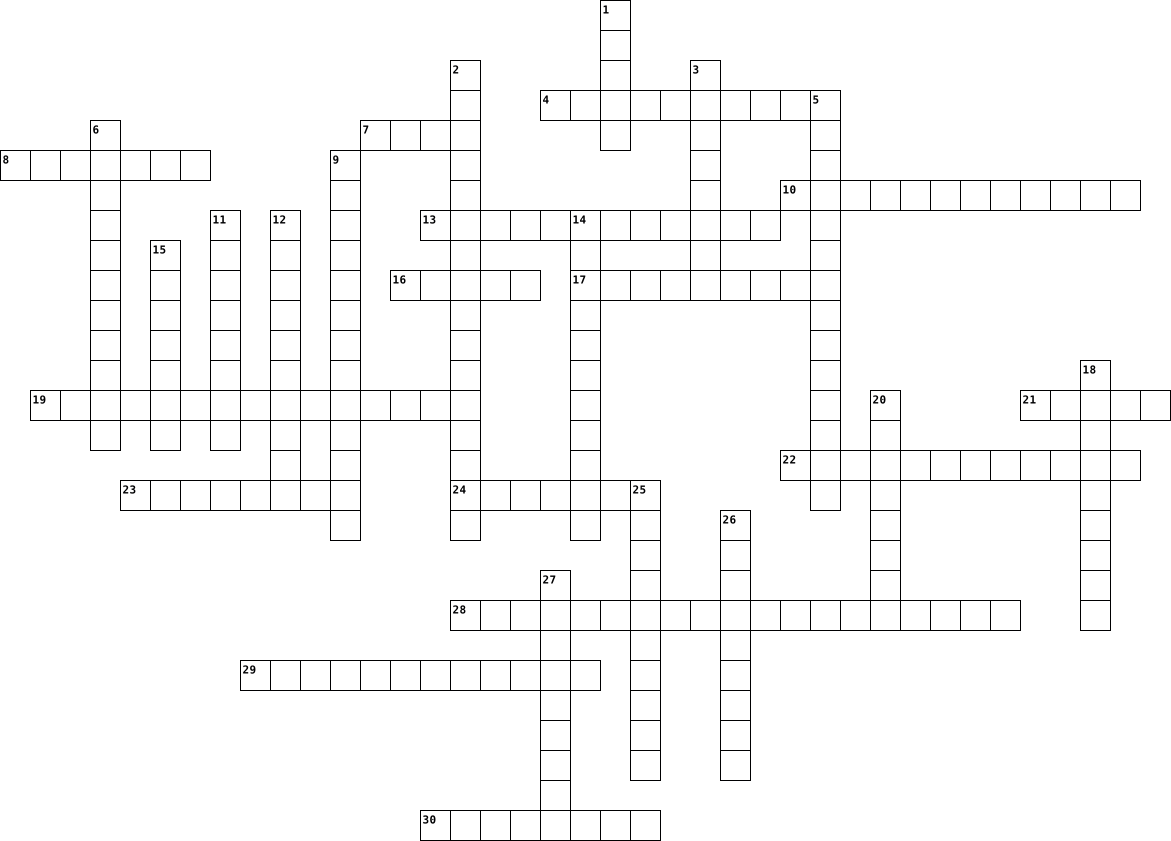
Across
- granted equality in death
- believed it takes courage to use reason
- outline of the constitution (abbreviated)
- Paris’s city government and radical organization
- political and social system before the Rev
- gatherings to discuss enlightened ideals
- royal palace in Paris
- spouse of Louis XVI
- independent state created by a slave revolt
- made a political fashion statement and violent
- overthrew the government in 1799
- increased France’s debt and gained many enemies
- created by the constitution of ‘91
- what the national assembly swore to create
- under him, France’s finances worsened
Down
- capital of the enlightenment and the revolution
- started the Rev and represented France
- greatest figure of the enlightenment
- advisory body called by Louis XVI
- radical leader of the CPS
- intellectual movement focused on reason
- political club that demanded a republic
- intellectual of the enlightenment
- shared communal identification in one’s state
- legal social classes of France
- the executive authority of France in 1795
- medieval fortress that symbolized absolutism
- location of the women’s march
- main expression was tax exemption
- moderate republicans who opposed the jacobins
30 Clues: spouse of Louis XVI • royal palace in Paris • granted equality in death • radical leader of the CPS • location of the women’s march • legal social classes of France • overthrew the government in 1799 • advisory body called by Louis XVI • intellectual of the enlightenment • main expression was tax exemption • created by the constitution of ‘91 • greatest figure of the enlightenment • ...
the enlightenment 2025-10-30

Across
- argued that the goverments power comes from people, not divine right.
- the idea that the sun is at the center of the universe.
- the period following the Enlightenment, which emphasized emotion.
- the American document inspired by Enlightenment ideals that proclaimed individual liberties.
- a title for Enlightenment thinkers.
- believed goverments should have checks and balances.
- argued for womans rights and education.
- contributed to the idea of natrual rights.
- century the enEnlightenment happened.
- a gathering place for social and intellectual exchange.
- the 18th century movement also called the "Age of ___."
- advocated for freedom of speech and expression.
Down
- helped develop the scientific method.
- the practice of applying scientific methods to social and political problems.
- a system of government where power is divided between national and state governments.
- this revolutionary event was fueled by Enlightenment ideals of liberty and equality.
- advocated for a free market econemy.
- influential book on economics published in 1776.
- the idea that rights to life, liberty, and property are natural.
- wrote the phamphlet "common sense".
20 Clues: a title for Enlightenment thinkers. • wrote the phamphlet "common sense". • advocated for a free market econemy. • helped develop the scientific method. • century the enEnlightenment happened. • argued for womans rights and education. • contributed to the idea of natrual rights. • advocated for freedom of speech and expression. • ...
Enlightenment 2023-09-26
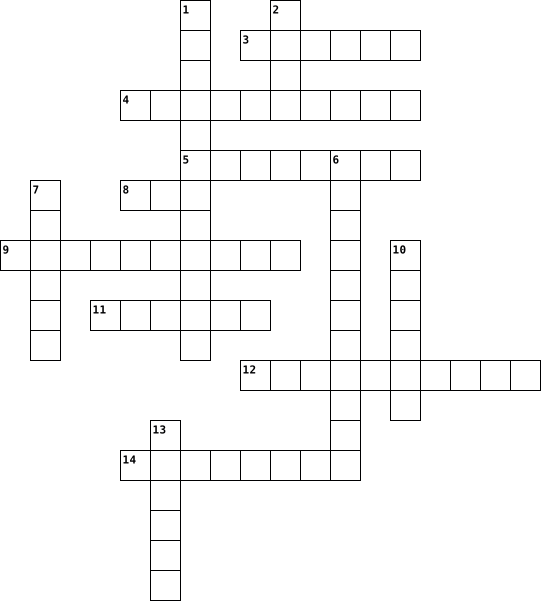
Across
- Parties where people met to discuss new ideas
- The people who presented new ways of thinking during the enlightenment
- shall not make any laws against the freedom of religion as stated in Amendment 1 Voltaire
- right of citizens of the United States to vote shall not be denied or abridged by the United States or by any state Wollstonecraft
- Theory that the Earth was the center of the universe
- Contract Hobbes, Locke, Rousseau
- reason, freedom of religious belief
- in separation of powers as stated in Article 1, 2,and 3 in the Constitution Montesquieu
Down
- Theory that the sun was the center of the universe
- exist to preserve social order Beccaria
- To know something one didn't know before
- and Balances A system in which multiple groups share decision making power, designed to make sure there is no abuse of power
- Contract The theory that there is an agreement between the government and the governed
- A person who rules with absolute power
14 Clues: Contract Hobbes, Locke, Rousseau • reason, freedom of religious belief • A person who rules with absolute power • exist to preserve social order Beccaria • To know something one didn't know before • Parties where people met to discuss new ideas • Theory that the sun was the center of the universe • Theory that the Earth was the center of the universe • ...
Enlightenment 2024-01-08
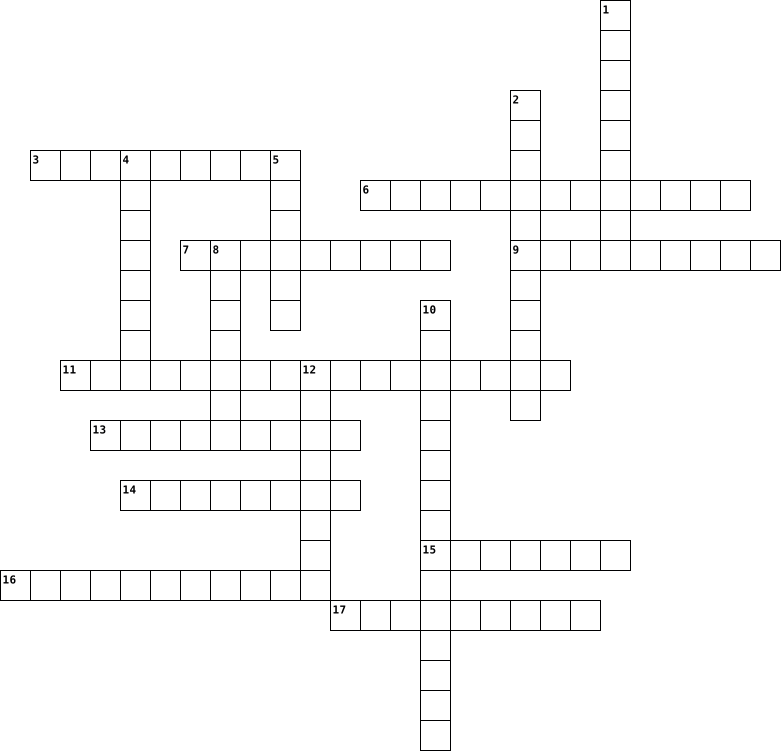
Across
- Period of social and political changes were inspired by the...
- Holy Roman Empire, social reforms, freedom of speech, press, and religion
- Political-Social changes rooted in Enlightenment ideas/concepts
- Life, Liberty, Property
- English, Enlightenment thinker created social contract
Down
- French, Branches of government, took ideas from Greeks and Romans
- Russian Empress, social reforms, banned torture, input from all classes, founded schools for women
- The people willingly submit to the ruler, inspired Constitutional monarchy
- Kingdom of Prussia, social reforms, banned torture, available education
- From Geneva, Social contract is by the people for the people
- French female, wrote the Declaration of the Rights of Women and the Female Citizen
- French writer, freedom of speech, religion, separation of church and state (secularism)
- English female, wrote a vindication for women's rights and education
13 Clues: Life, Liberty, Property • English, Enlightenment thinker created social contract • From Geneva, Social contract is by the people for the people • Period of social and political changes were inspired by the... • Political-Social changes rooted in Enlightenment ideas/concepts • French, Branches of government, took ideas from Greeks and Romans • ...
Paddock U5a Pre-Quiz Crossword 2023-09-27

Across
- Rousseau's idea that the average view of the population should be used for decision
- Adam Smith's book (1776) that explained his views on a Capitalist Economy
- Key Enlightenment concept: an idea that can help those in a difficult situation see that their lives (or the lives of their children) are improving
- One of the three main ideas of the Enlightenment along with Liberty and Equality
- Life, Liberty and Property as proposed by John Locke to support his ideas on Self-Government
- "Leave Alone" Adam Smith's idea that the government should not regulate the economy in order to make it more efficient
- Everyone else, mostly peasants, 97% of population, <70% of wealth, paid all taxes
- Term describing the time period full of new ideas on Education, Economics, Government and Religion.
- Key enlightenment concept: The idea that people should be free to make their own decisions on the course of their life
- Key Enlightenment concept: place humans can look in order to better observe the scientific aspects of life.
- Enlightenment thinker that was focused on educating women
- Catholic Clergy, 1% of population, 10% of wealth, paid no taxes
Down
- Meeting called by the 1st Estate when the Estates General did not work and they were locked out of the Palace of Versailles
- Beccaria's goal for the legal system (instead of revenge)
- Montesquieu's idea that legal responsibility should be dividing throughout 3 different parts of the government in order to allow for Checks and Balances
- Revolutionary leader of the Committee of Public Safety, responsible for thousands of executions
- AKA "The Enlightenment"
- Voltaire's idea that people should respect each other enough to accept our differences
- Enlightenment thinker / French philosophe that pushed for Freedom of Religion & Speech
- Meeting called by King Louis XVI to vote on taxing the 1st & 2nd Estates
- Famous moment of the French Revolution when members of the National Assembly swore they would not leave the Palace of Versailles until they had a constitution
- Book written by Thomas Hobbes to describe his belief that Monarchy was the best government because it was strong and could prevent our selfishness & wickedness from abusing others
- Machine designed to kill threats to the revolution with equality
- Nobles, 2% of population, 20% of wealth, paid no taxes
- French prison that revolutionaries attacked on July 14, 1789 in order to get gun power
25 Clues: AKA "The Enlightenment" • Nobles, 2% of population, 20% of wealth, paid no taxes • Beccaria's goal for the legal system (instead of revenge) • Enlightenment thinker that was focused on educating women • Catholic Clergy, 1% of population, 10% of wealth, paid no taxes • Machine designed to kill threats to the revolution with equality • ...
Introduction to the French Revolution crossword 2025-09-14

Across
- of the Rights of Man Revolutionary document influenced by Enlightenment ideas; declared equality and protected rights.
- Locke Enlightenment thinker who promoted natural rights and government by consent of the governed.
- Estate Everyone else (peasants, workers, middle class); 97% of population; paid nearly all the taxes.
- XVI French king during the Revolution; weak and indecisive, executed in 1793.
- Period of new ideas in the 1600s-1700s that stressed reason, equality, and questioning authority.
- Rights Enlightenment belief that all people are born with rights such as life, liberty, and property.
- of Public Safety Group led by Robespierre that carried out the Reign of Terror.
- Bonaparte Military general who rose to power after the Revolution, reformed taxes, banking, and law (Napoleonic Code).
- Causes Debt from wars, high taxes on the Third Estate, and poor harvests leading to food shortages.
- Contract Rousseau's idea that governments should be based on an agreement between rulers and the people.
- Estate Clergy in France; less than 1% of the population; paid no taxes.
- General Assembly of representatives from all three estates; called to address taxes but was unfair to the Third Estate.
- Execution device used during the Revolution, considered quick and 'equal'.
- Enlightenment thinker who believed in separation of powers in government.
- Court Oath Pledge by the National Assembly to create a new constitution after being locked out of the Estates General.
- of Vienna Meeting of European leaders after Napoleon's defeat to restore balance of power.
Down
- Estate Nobility; wealthy landowners with privileges; paid no taxes.
- Enlightenment writer who defended freedom of speech and religion.
- Bank of France Banking system created by Napoleon to stabilize the economy.
- Great Fear Period of panic and peasant uprisings against nobles in the countryside.
- Code New system of laws created by Napoleon that guaranteed equality before the law.
- Causes Absolute monarchy, unfair voting in the Estates General, Enlightenment ideas about government.
- Rousseau Enlightenment thinker who argued government must follow the general will of the people.
- Assembly First form of representative government formed by the Third Estate to make laws for the French people.
- of Terror Period when thousands were executed by guillotine under Robespierre and the Committee of Public Safety.
- Smith Economist who supported free markets and natural laws of economics.
- Causes Inequality between the estates and resentment of privileges held by the clergy and nobility.
- Antoinette Queen of France, nicknamed 'Madame Deficit' for her spending; executed in 1793.
- Radical revolutionary who ruled violently during the Reign of Terror.
- of the Bastille July 14, 1789; revolutionaries stormed a prison; symbol of the start of the French Revolution.
30 Clues: Enlightenment writer who defended freedom of speech and religion. • Estate Nobility; wealthy landowners with privileges; paid no taxes. • Radical revolutionary who ruled violently during the Reign of Terror. • Estate Clergy in France; less than 1% of the population; paid no taxes. • Smith Economist who supported free markets and natural laws of economics. • ...
Buddhism 2024-02-20
Across
- "three baskets of teaching" Buddha's sermons, rules for monks, and philosophical teachings
- Period of Buddha's life where he meditated unceasingly for 49 days
- Period of Buddha's life when he lived in a palace
- Tibet's exiled political and spiritual leader
- The founder of Buddhism
- "the diamond vehicle"
- a future manifestation of the Buddha
- Period of Buddha's life where he practiced extreme asceticism
- one who reaches enlightenment but refuses to enter nirvana to guide others
- "the teaching of the elders"
Down
- The Buddhist who said enlightenment is available to all
- introduced Buddhism to China
- a transitional realm from which it is easier to attain nirvana
- The warrior king who converted to Buddhism
- The ultimate goal for a Buddhist
- common beliefs contained in the most basic of Buddhist teaching
- The Buddhist who said enlightenment is available to only a few
17 Clues: "the diamond vehicle" • The founder of Buddhism • introduced Buddhism to China • "the teaching of the elders" • The ultimate goal for a Buddhist • a future manifestation of the Buddha • The warrior king who converted to Buddhism • Tibet's exiled political and spiritual leader • Period of Buddha's life when he lived in a palace • ...
Scientific Revolution and the Enlightenment 2024-09-19

Across
- If governments fail, philosophers said people should...
- The idea that all things should be questioned
- During the Enlightenment, people explained religion and society by using
- Revolution that was a new way of looking at things based on what you see
- Diederot created the first book of varied knowledge called the
- Instrument that magnified the sky
- Newton created the laws of univeral
- Cultural Relevance states that all cultures are
Down
- The Enlightenment started in this city
- The Enlightenment was a period that followed the
- Philosopher who said people are evil and need to be ruled by a king
- Theory that the sun is at the center of the universe
- Philosopher who believed women should be given education
- The main idea of the Enlightenment can be summarized as seeing is
- Philosopher who said life, liberty, and property should be protected
- Originator of the sun centered theory
- The Roman Catholic CHurch taught the ___ theory
17 Clues: Instrument that magnified the sky • Newton created the laws of univeral • Originator of the sun centered theory • The Enlightenment started in this city • The idea that all things should be questioned • The Roman Catholic CHurch taught the ___ theory • Cultural Relevance states that all cultures are • The Enlightenment was a period that followed the • ...
Buddhism Crossword 2015-04-21
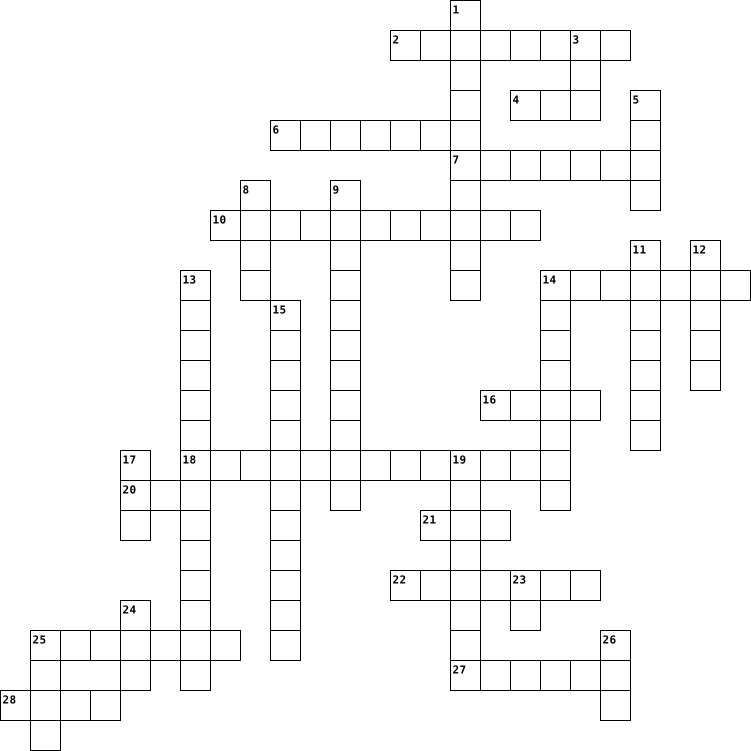
Across
- The belief that all living things are equal.
- Begging-bowl Refers to the story that shortly before
- Recognized as the birth site of Buddha
- Means “there is an end to suffering.”
- This explains that suffering stems from
- Known as concentration, meditation,
- Gaya Where Buddha achieved Enlightenment
- associated with regality, strength and
- able to become more wise which allows for personal
- Bodhi Tree Refers to the tree under which the Buddha
- to being achieved.
- Where Buddha first taught the Dharma
- Means “suffering exists.” This explains
- explains that there are many reasons for suffering
Down
- Where Buddha attained Parinirvana and
- Buddha reached enlightenment. After he reached
- suffering is real and that everyone experiences it. It
- as loss, sickness, failure, etc.
- Similar to Christianity’s “Golden Rule,”
- to control things.
- is based on two fundamental principles
- he is said to have thrown away what little
- Means “there is a cause for
- Contains a cutting of the holy tree, Bodhi
- cremated
- enlightenment.
- unto others as you would have them do unto you.
- mental development. By developing ones mind, they
- Known as virtue, good conduct and morality
- left in the bowl to signify his renunciation of all material
30 Clues: cremated • enlightenment. • to control things. • to being achieved. • Means “there is a cause for • as loss, sickness, failure, etc. • Known as concentration, meditation, • Where Buddha first taught the Dharma • Where Buddha attained Parinirvana and • Means “there is an end to suffering.” • Recognized as the birth site of Buddha • is based on two fundamental principles • ...
John Williamson- Enlightenment and Revolution 2025-12-19

Across
- Tzarina during the Enlightenment.
- Theory that the Earth is the center of the universe.
- Theory that the sun is the center of the solar system.
- Formulated the laws of motion.
- A newer but classical art style.
- Enlightenment figure who is known for "natural rights".
- Advocated for women's education.
- U.S. division of powers.
- Advocated for equality.
- New type of monarch.
- Fancy parties hosted mostly by women.
- The first 10 Amendments to the Constitution.
- A process for making scientific discoveries.
- A continuation of the scientificrevolution with changes in law and authority.
- Advocated for separation of powers.
- Two levels of government.
- Declaration from the American colonies.
Down
- Using logic and reason in society.
- French satirist who advocated for freedom of speech and religion.
- An agreement between government and the people.
- The belief that God created the world but relies on natural law and human reason.
- Founding father and 3rd U.S. president.
- An older, fancier art style.
- Term used for Enlightenment era philosophers.
- A time when science and mathematics changed societal beliefs.
- Astronomer who publicized heliocentric theory.
26 Clues: New type of monarch. • Advocated for equality. • U.S. division of powers. • Two levels of government. • An older, fancier art style. • Formulated the laws of motion. • A newer but classical art style. • Advocated for women's education. • Tzarina during the Enlightenment. • Using logic and reason in society. • Advocated for separation of powers. • ...
Religions: Buddhism, Judaism, Islam, Hinduism, Cristianity 2026-02-25

Across
- Path to elightenment
- Son of God according to the bible
- The spiritual goal, a state of profound awakening, wisdom, and liberation from the cycle of suffering
- The belief in or worship of more than one god.
- The founder of Islam
- Abrahamic religion based on the Quran, believed as the direct word of God; Allah
- A building for religious worship
- The ultimate spiritual goal representing the final liberation from the cycle of suffering, karma, and rebirth
- Religion centered on the life, teachings, death, and resurrection of Jesus
- Cosmic order, law of nature, righteousness, and duty that sustains the universe'
Down
- The truths to end suffering/reach enlightenment
- The central religious text of Islam
- The five obligatory acts of worship of Islam life
- A collection of religious texts
- A relationship between one, all-powerful God and the followers
- Religion around reaching enlightenment
- Practices aimed at developing enlightenment
- A religion based on the pursuit of liberation, moksha, through dharma
- The supreme, ultimate reality or spirit in everything
- Cause and effect
20 Clues: Cause and effect • Path to elightenment • The founder of Islam • A collection of religious texts • A building for religious worship • Son of God according to the bible • The central religious text of Islam • Religion around reaching enlightenment • Practices aimed at developing enlightenment • The belief in or worship of more than one god. • ...
4/10 - Revolutions and Reactions - Choice Board 2026-04-14

Across
- King
- Chief editor of the Encylopedie
- Author of A vindication of the rights of woman
- a social gathering for intellectual discourse
- The city that served as the intellectual heart of the enlightenment
- Believed in the "general will" and the social contract
- italian criminologist who argued torture and the death penalty
- German philospher who urged people to "dare to know"
- The belief that God created the universe but does not intervene
- Argued that government exists to protct natural rights
Down
- The belief that human society could improve through science and reason
- Proposed the seperation of powers into three branches
- Author of Leviathan:believed humans were naturall selfish
- AUTOCRACY
- The intellectual engine of the Enlightenment
- A core Enlightenment value regarding religious and social differences
- A fundamental right often discussed by enlightenment thinkers
- The theory that all knowledge come from sensory experience
- The movement toward seperating religous influence from government
- Father of modern economics and the "invisible hand"
- His scientific laws inspired thinkers to look for natural laws in society
21 Clues: King • AUTOCRACY • Chief editor of the Encylopedie • The intellectual engine of the Enlightenment • a social gathering for intellectual discourse • Author of A vindication of the rights of woman • Father of modern economics and the "invisible hand" • German philospher who urged people to "dare to know" • Proposed the seperation of powers into three branches • ...
Romanticism and "Ozymandias" 2024-04-15
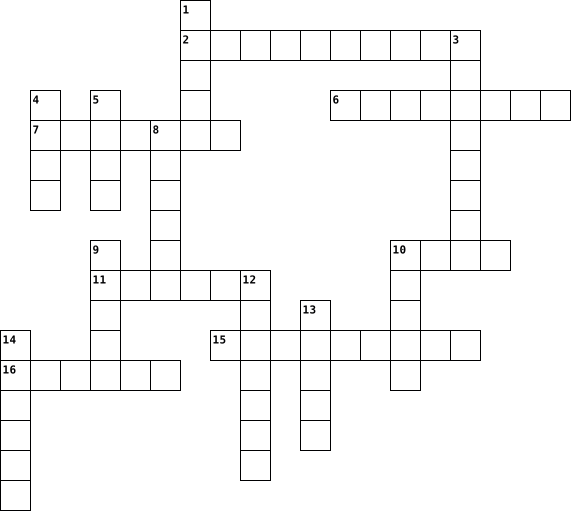
Across
- _____ was written by Percy Shelley.
- The Enlightenment was an "intellectual movement that...___ science and civilization could conquer nature" (par. 4).
- Romanticism was a reaction ____ the Enlightenment and the negative impacts of the Industrial Revolution.
- Romantic poets celebrated the ____.
- Romantic poets pursued the _____ of truth and beauty.
- Followers of Romanticism _____ with the Enlightenment.
- A sculpture of ____II inspired "Ozymandias"
Down
- Romantic ____deeply valued creativity.
- _____ of Ozymandias include the poet (cont.)
- Wife of Shelley: ____ Wollstonecraft Shelley.
- Speaker 2 is "A traveller from an antique___" (line 1).
- The Romantics believed that_____ and beauty were the answer to life's problems.
- Speaker 3 is Ozymandias, "king of ___" (line 10).
- The impermanence of ___ is a theme found in "Ozymandias."
- Followers of Enlightenment believed that _____ and Reason held the answers to life's problems.
- "_____ classics were a part of [Romanticist's] formal education" (par. 11).
- Percy Bysshe Shelley wrote "Ozymandias" as a competition with his ____.
17 Clues: _____ was written by Percy Shelley. • Romantic poets celebrated the ____. • Romantic ____deeply valued creativity. • A sculpture of ____II inspired "Ozymandias" • _____ of Ozymandias include the poet (cont.) • Wife of Shelley: ____ Wollstonecraft Shelley. • Speaker 3 is Ozymandias, "king of ___" (line 10). • Romantic poets pursued the _____ of truth and beauty. • ...
Ivey French Revolution 2022-11-30
Across
- spending more money than you have
- used to behead people
- Everyone has power
- No government= nasty, brutish, and short.
- spreading the revolution by over throwing there kings.
- enlightenment ideas throughout Europe.
- owned 10% of land
- poor and starving
- Thomas Jefferson's declaration of independence
Down
- Separation of church and state.
- applying reason the the human and natural world
- defeated European powers
- Beheaded the ones who betrayed them
- "One has to stand with people not above them"
- owned 25% of land
- Spread enlightenment ideas throughout Europe.
16 Clues: owned 25% of land • owned 10% of land • poor and starving • Everyone has power • used to behead people • defeated European powers • Separation of church and state. • spending more money than you have • Beheaded the ones who betrayed them • enlightenment ideas throughout Europe. • No government= nasty, brutish, and short. • "One has to stand with people not above them" • ...
Enlightenment Review - B 2021-04-30
Across
- type of government Locke would argue for
- the term Rousseau used to
- the most liberal of the enlightened despots
- Adam Smith did not believe ___ should guide economic decisions
- book written by Hobbes
- book written by Rousseau
- thinkers of the Enlightenment saw problems in the world and worked to find ___ to make the world better
Down
- separation of powers is important in preventing any individual or group from ___ its power
- term used to describe intellectuals of the Enlightenment
- Rousseau thought all __ of nobility should be abolished
- book written by Smith
- event Hobbes witnessed which caused him to have a negative view of people
- someone who is free from the influence of society
- book written by Locke
- rights Locke thought people were born with
- what a few monarchs in Europe during the Enlightenment came to be called because they implemented some Enlightenment ideals into their rule
- book written by Montesquieu
17 Clues: book written by Smith • book written by Locke • book written by Hobbes • book written by Rousseau • the term Rousseau used to • book written by Montesquieu • type of government Locke would argue for • rights Locke thought people were born with • the most liberal of the enlightened despots • someone who is free from the influence of society • ...
Enlightenment 2022-02-28
Across
- power should be divided
- believed in separation of powers
- believed in laissez-faire economics
- believed in direct democracy
- authority is from the people
- Believed in natural rights
Down
- wrote the Declaration of Independence
- created the scientific method
- natural rights
- freedom to make choices
- I think, therefore I am
- Believed in absolutism
12 Clues: natural rights • Believed in absolutism • power should be divided • freedom to make choices • I think, therefore I am • Believed in natural rights • believed in direct democracy • authority is from the people • created the scientific method • believed in separation of powers • believed in laissez-faire economics • wrote the Declaration of Independence
Enlightenment 2020-11-18
Across
- A place where people discussed ideas.
- An American document that recognized natural rights.
- the kind of authority a king had over its subjects
- some Enlightenment Thinkers were afraid of this...
- Fundamental, basic rights that people are born with.
- A period of time when people developed new ideas about human existence and human rights.
Down
- Life with complete freedom, no rules, and no government.
- Famous city where people discussed ideas.
- The idea that a country’s leader should be chosen by the citizens in a general election.
- An agreement where citizens give up some rights in exchange for government protection.
- Continent where the Enlightenment began.
- If the government fails to protect citizens, citizens have the right to revolt.
12 Clues: A place where people discussed ideas. • Continent where the Enlightenment began. • Famous city where people discussed ideas. • the kind of authority a king had over its subjects • some Enlightenment Thinkers were afraid of this... • An American document that recognized natural rights. • Fundamental, basic rights that people are born with. • ...
Enlightenment 2023-03-01
Across
- People are born with natural rights/People have the right to overthrow the government
- John Locke believed in this
- Heart of the Enlightenment
- Incorporated Enlightenment ideas/ People’s ideas influenced these
Down
- Thomas Jefferson/ Wrote in 1776
- Montesquieu believed in this
- Life, Liberty, and Property
- Separations between the government/ Wrote Wrote On the Spirit of Laws
- Legislative, Executive, and Judicial
- “Man is born free, and everywhere he is in chains.”/ Wrote The Social Contract
- Wrote Leviathan/ Absolute Monarchy
- Religious toleration/Wrote Candide
12 Clues: Heart of the Enlightenment • Life, Liberty, and Property • John Locke believed in this • Montesquieu believed in this • Thomas Jefferson/ Wrote in 1776 • Wrote Leviathan/ Absolute Monarchy • Religious toleration/Wrote Candide • Legislative, Executive, and Judicial • Incorporated Enlightenment ideas/ People’s ideas influenced these • ...
The Ancien Regime 2026-02-04

Across
- the type of economy in the ancien regime
- a French intellectual who had a theory about the separation of powers
- the largest collection of knowledge in the Western world created during Enlightenment
- a French intellectual who had a theory about the social contract
- the new communications media during Enlightenment
- absolutism was tied to the _____ rights of the kings
- a caffeinated drink that came to Europe from the American colonies
- a system in which the ruler, usually a monarch, holds absolute power over the government and the lives of people
Down
- an economic policy which considers that the wealth of a country came from accumulating precious metals through trade
- a form of absolutism influenced by Enlightenment ideas
- the type of monarchy that England was during the Ancien Regime
- the social group that peasants belonged to
- a French intellectual who had a theory about equality
- a French term that means the State doesn't intervene in the economy
- a new economic policy under Enlightenment that said a country's wealth comes from nature
- the type of trade that happened during the Ancien Regime
- a movement that emerged in France that included ideas like criticism of the Ancien Regime and scientific ways of thinking
17 Clues: the type of economy in the ancien regime • the social group that peasants belonged to • the new communications media during Enlightenment • absolutism was tied to the _____ rights of the kings • a French intellectual who had a theory about equality • a form of absolutism influenced by Enlightenment ideas • the type of trade that happened during the Ancien Regime • ...
The Enlightenment 2026-02-19

Across
- First effect of the enlightenment.
- He believed that the only good government was one that was freely formed by the people and guided by the “general will” of society—a direct democracy.
- He used satire and never stopped fighting for tolerance, reason, freedom of religious belief, and freedom of speech.
- Third effect of the enlightenment.
- A social critic of the enlightenment period.
- A new intellectual movement that stressed reason and thought and the power of individuals to solve problems.
- Division of executive, legislative, and judicial powers.
Down
- Second effect of the enlightenment.
- He regularly criticised common abuses of justice.
- To escape such a bleak life, people had to hand over their rights to a strong ruler.
- Argues that the ruler needed total power to keep citizens under control (absolute monarchy).
- She used Enlightenment arguments about government to criticise the unequal relationship between men and women in marriage.
- She argued that women, like men, need education to become virtuous and useful.
- Argued that all people are born free and equal, with three natural rights— life, liberty, and property.
14 Clues: First effect of the enlightenment. • Third effect of the enlightenment. • Second effect of the enlightenment. • A social critic of the enlightenment period. • He regularly criticised common abuses of justice. • Division of executive, legislative, and judicial powers. • She argued that women, like men, need education to become virtuous and useful. • ...
Age of reason 2023-10-17
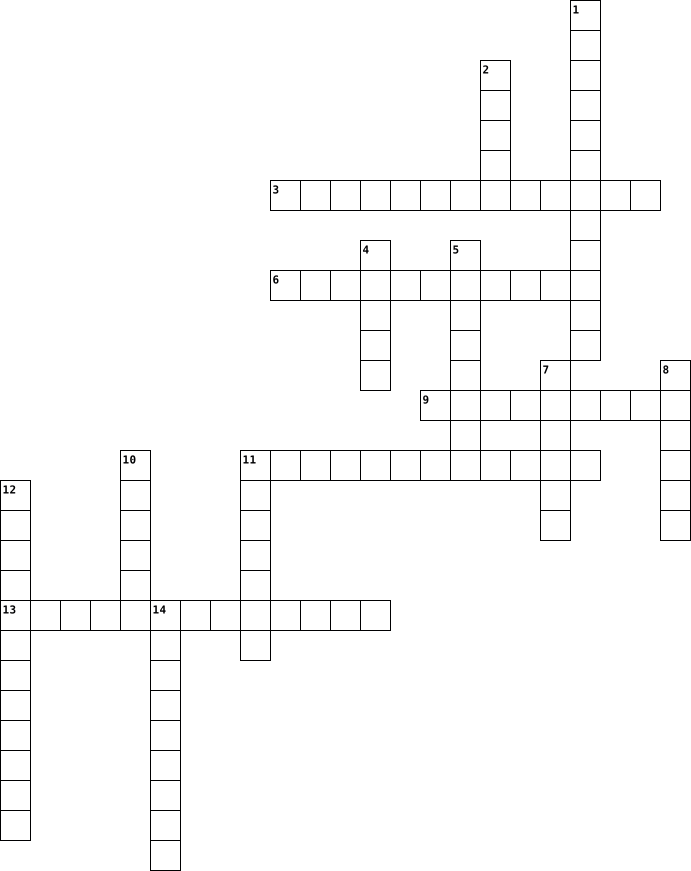
Across
- brought with trade and new European colonials
- first century of the enliEuropeent
- The church that Richard Allen is the founder of
- philosophers during the Enlightenment
- religion that overtook Deism
Down
- The state in America where Richard Allen was born and got involved with the African-American society
- people who were rich and had economic opportunities and financial support
- religion that states that god made the world for human nature and happiness
- First name of the person who was America's leading scientist, inventor, diplomat, writer, and publisher
- what Enlightenment wanted to reject
- The first name of John Hancock's uncle
- continent in which Enlightenment developed
- what colonial society was largely based on
- Declaration of ------------
- the term of achieving success through hard work
15 Clues: Declaration of ------------ • religion that overtook Deism • first century of the enliEuropeent • what Enlightenment wanted to reject • philosophers during the Enlightenment • The first name of John Hancock's uncle • continent in which Enlightenment developed • what colonial society was largely based on • brought with trade and new European colonials • ...
Unit 4 - Exploration, Absolutism, Enlightenment 2025-03-14

Across
- One of the "Three G's" meaning wealth
- The system started by Spanish colonizers where they get free land and in return spread Christianity
- Strong enthusiasm or passion
- Theory that the Sun is the center of the universe
- The name of the exchange of plants, animals and diseases between the Americas and Europe
- Detailed charts and maps used by explorers
- Last name of Enlightenment thinker who thought we are born good but inequalities in society corrupt us
- Sailing vessel that uses triangular lateen sails
- The type of monarch that believed that all power within their state rested in their hands
- Last name of the explorer that tried to sail around the world
- theory Theory that the Earth is the center of the universe
- Last name of Enlightenment thinker who thought we are all terrible so we need a strong government
- John Locke's three natural rights are Life, Liberty and this
- Enlightenment gathering in which intellectual and political ideas were exchanged
- The act of sailing completely around the world
- The country that is credited for starting the Age of Exploration
- The ultimate absolute monarch who ruled in France
- Last name of Enlightenment thinker who argued for the protection of freedoms
- Last name of Enlightenment thinker who focused on criminal justice reform
- Last name of Enlightenment thinker who argued for gender equality
- Last name of Enlightenment thinker who argued for the separation of powers
Down
- Last name of Enlightenment thinker who thought we are generally good so we can get away with a weak government
- The idea that monarchs received their power from God and they were God’s representative on earth
- One of the "Three G's" meaning religion
- Voyage that brought enslaved Africans across Atlantic Ocean
- One of the "Three G's" meaning fame
- The first name of "The Navigator" prince that funded the first explorations
- Louis XIV's palace
- Trade routes stretching from Europe to China
- Last name of the first explorer that sailed west to try to get to the East
- Large farms that specialize in growing one type of crop for a profit
- The first name of the explorer that realized the land to the west was a new world
- Louis XIV's name for himself
- Person appointed to manage a country if monarch is a minor
- Economy in which most businesses are privately owned and seek profit
- Device that can find your location based on the position of the stars
- Economic policy that a nation’s power was related to its wealth
- Device that uses magnetic forces to which direction is north
- Last name of Enlightenment thinker who put together the Encyclopedia
- Name of the French rebellion in which nobles tried to take out the 9-year-old king
- A country or area of land under political control of another country
41 Clues: Louis XIV's palace • Strong enthusiasm or passion • Louis XIV's name for himself • One of the "Three G's" meaning fame • One of the "Three G's" meaning wealth • One of the "Three G's" meaning religion • Detailed charts and maps used by explorers • Trade routes stretching from Europe to China • The act of sailing completely around the world • ...
Enlightenment era 2025-03-21

Across
- – Study of fundamental questions about existence and knowledge
- - The Enlightenment principle advocating fairness in laws and government
- - a social contract theorist
- – French writer who championed free speech and religious tolerance
- – Central to Enlightenment thinking
- – The belief in a rational God who does not interfere with human affairs
- – Freedom from oppressive restrictions
- - His ideas were based on reason, justice, and human rights.
- – Acceptance of different views and beliefs
- - referred to an intellectual and cultural movement in the 17th and 18th centuries that emphasized reason, science, individual rights, and progress
- – Government by the people
Down
- - referred to the idea that individuals are born with natural, inherent freedoms that should be protected by governments.Independence - meant freedom from oppression, self-governance, and the right of people to rule themselves based on reason and natural rights.
- – John Locke, a key Enlightenment thinker
- – an advocate of direct democracy
- – Political upheaval inspired by Enlightenment ideas
- – Questioning of traditional beliefs
- - refers to the use of reason, logic, and critical thinking to understand the world, rather than relying on tradition, superstition, or religious dogma
- - referred to the accepted standards, behaviors, and social conventions that were traditionally followed in society.
- - referred to a system of ideas and beliefs about society, government, and human nature that was based on reason, progress, and individual rights.
- - referred to established beliefs or doctrines, often associated with religious or authoritarian institutions, that were accepted without question or evidence.
20 Clues: – Government by the people • - a social contract theorist • – an advocate of direct democracy • – Central to Enlightenment thinking • – Questioning of traditional beliefs • – Freedom from oppressive restrictions • – John Locke, a key Enlightenment thinker • – Acceptance of different views and beliefs • – Political upheaval inspired by Enlightenment ideas • ...
buddha 2025-04-15

Across
- Perfectly Self-Awakened emphasizing his own realization of enlightenment
- Thus Gone, a title indicating the Buddhas attainment of enlightenment
- Worthy One emphasizing his liberation from suffering
- A core concept in Buddhism, referring to the state of enlightenment achieved by the Buddha
- Knower of the Many Worlds
- Unexcelled trainer of untrained people
- While not the Buddha himself
- Conqueror
Down
- His personal name indicating his birth in the Gautama clan
- Teacher of gods and humans
- Endowed with higher knowledge and ideal conduct
- The Blessed One
- His name before enlightenment signifying his noble birth and potential
- A more comprehensive name combining his personal name with his enlightened state
- Well-Spoken highlighting the Buddhas exemplary conduct and teachings
15 Clues: Conqueror • The Blessed One • Knower of the Many Worlds • Teacher of gods and humans • While not the Buddha himself • Unexcelled trainer of untrained people • Endowed with higher knowledge and ideal conduct • Worthy One emphasizing his liberation from suffering • His personal name indicating his birth in the Gautama clan • ...
AOL Spiritual Crossword Puzzle (July 2013) 2013-06-17
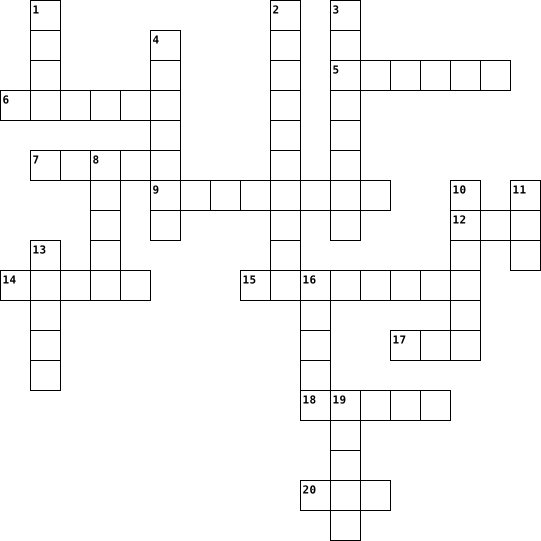
Across
- Number of disciples of Jesus
- Who says - 'Choice is yours, blessing is mine':)
- State which one experiences lethargy
- 108 sun salutations yoga challenge public event
- Faculty which says 'I am'
- Friend of knowledge
- Art of living Children's course age 8-13 years
- Art of Living course that focuses on doing something new/now
- Which entity has lowest prana?
- Sri Sri Ravishankar was born in the month of -------
Down
- Garbage Collector
- Before enlightenment you are a woodcutter, after enlightenment you are a ----
- Pain is inevitable, suffering is ---', says Sri Sri Ravishankar
- Om Namah --------
- Life force
- City which hosted 30th anniversary celebrations of Art of Living
- Life is -----
- Name of tree which Buddha was sitting under at the time of enlightenment
- Ignorant state
- Penance
20 Clues: Penance • Life force • Life is ----- • Ignorant state • Garbage Collector • Om Namah -------- • Friend of knowledge • Faculty which says 'I am' • Number of disciples of Jesus • Which entity has lowest prana? • State which one experiences lethargy • Art of living Children's course age 8-13 years • 108 sun salutations yoga challenge public event • ...
Buddhism 2023-05-31
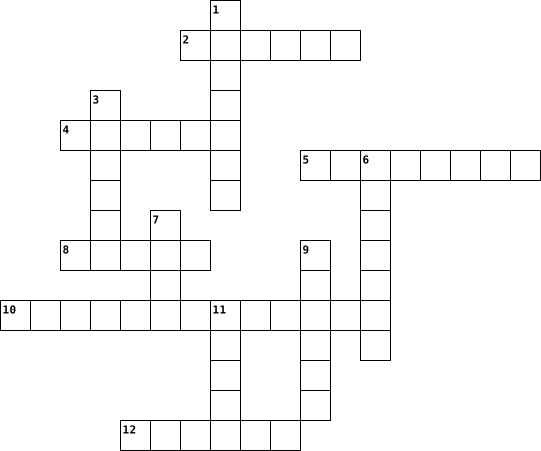
Across
- community of Buddhists
- Buddhist place of worship
- Another faith, had a great influence on Buddhism
- Buddha's place of birth
- belief in the rebirth of the soul
- The three _____. Assist on the path to enlightenment
Down
- A form of art used in meditation
- The ______ way, a path towards enlightenment
- Enlightenment, the ultimate aim
- Distractions and obstacles on the path to enlightenment
- role of the Buddha before he left the palace
- four _____ truths
12 Clues: four _____ truths • community of Buddhists • Buddha's place of birth • Buddhist place of worship • Enlightenment, the ultimate aim • A form of art used in meditation • belief in the rebirth of the soul • The ______ way, a path towards enlightenment • role of the Buddha before he left the palace • Another faith, had a great influence on Buddhism • ...
Thinking Like Americans 2024-11-07

Across
- British money
- 1688 revolution overthrew absolutism
- Mountains separating British and French
- Explosion of religious belief
- Uninvolved god of the Enlightenment
- Offense to American colonists
- Philosophy of reason and science
Down
- Sinners in the hands of an angry God
- Inspiration for American rights
- Cut and paste Enlightenment Bible
- Meetings helping people get to heaven
- Traveling evangelist
- War That greatly expanded British empire
- Route west for British settlers
14 Clues: British money • Traveling evangelist • Explosion of religious belief • Offense to American colonists • Inspiration for American rights • Route west for British settlers • Philosophy of reason and science • Cut and paste Enlightenment Bible • Uninvolved god of the Enlightenment • Sinners in the hands of an angry God • 1688 revolution overthrew absolutism • ...
Garrett Carnes - Chapter 6 2020-12-07
Across
- Observe, hypothesis, experiment, analyze, revise or publish.
- where the sun is the center of the universe and everything revolves around the sun.
- the theory that Earth is the center of the universe and other objects revolve around it.
- justified such ideals as liberty, progress, tolerance, fraternity, constitutional government, and separation of church and state.
- defined the eighteenth-century movement called the Enlightenment.
- advocated the separation of executive and legislative and judicial powers.
Down
- when developments in mathematics, physics, astronomy, biology, and chemistry transformed.
- intellectuals of the Enlightenment.
- a passionate advocate of educational and social equality for women.
- unofficial agreement shared by everyone in a society in which they give up freedom for security.
- known as one of the most influential Enlightenment people.
- invented differential calculus and the theory of universal gravitation.
- His political role influenced the Enlightenment in France and across Europe.
- astronomer and mathematician who was the first to study the stars.
14 Clues: intellectuals of the Enlightenment. • known as one of the most influential Enlightenment people. • Observe, hypothesis, experiment, analyze, revise or publish. • defined the eighteenth-century movement called the Enlightenment. • astronomer and mathematician who was the first to study the stars. • ...
Enlightenment Thinkers 2024-11-12

Across
- A seeker of knowledge during the enlightenment
- Enlightenment philosopher who advocated that all men were born with natural rights
- An agreement among people in a society to sacrifice some personal freedoms
- Scientist who developed three laws of motion, gravity, and calculus
- Period in history where individuals questioned government and a person's natural rights
- Philosopher said people join governments through a social contract
- Scientist who developed the heliocentric model of the universe
- Enlightenment thinker that pushed for religious tolerance, separation of church and state, and freedom of speech
Down
- Advocated for Women's rights to be equal to men
- Model of the universe that put the Earth at the center
- Enlightenment thinker who said there should be a separation of powers
- Model of the universe where the sun is at the center
- Invented a new telescope and used it to confirm the heliocentric model
- Life, Liberty, and Property
- Philosopher who was one of the few that argued for an absolute ruler
15 Clues: Life, Liberty, and Property • A seeker of knowledge during the enlightenment • Advocated for Women's rights to be equal to men • Model of the universe where the sun is at the center • Model of the universe that put the Earth at the center • Scientist who developed the heliocentric model of the universe • ...
Vocabulary Of Religions, Hinduism, and Buddhism 2022-12-12
Across
- every action you do has good and bad consequences
- religion with a singular god
- the type of Buddhism where you reach enlightenment alone
- Hinduism it means your duties in your caste, Buddhism it means teachings of the Buddha
- a person in Mahayana Buddhism that helps others reach enlightenment
- the release from the cycle of Samara into enlightenment
- the state of realization and enlightenment and comes after
- the type of Buddhism where you reach enlightenment but you turn back and help others as well
Down
- swears you must take to never steal, cheat, kill, or get drunk to become a Buddhist monk
- religion with multiple or thousands of gods
- the prince who became the Buddha in the Buddhist religion
- the process of being reborn after your death in the cycle of samsara
- someone in Hinduism that is a priest or teacher of dharma
- the system of life, death, and the recycle of reincarnation
- a level of authority and quality of life in the caste system of Hinduism
15 Clues: religion with a singular god • religion with multiple or thousands of gods • every action you do has good and bad consequences • the release from the cycle of Samara into enlightenment • the type of Buddhism where you reach enlightenment alone • the prince who became the Buddha in the Buddhist religion • someone in Hinduism that is a priest or teacher of dharma • ...
AOL Spiritual Crossword Puzzle (June 2013) 2013-07-05
Across
- Friend of knowledge
- Om Namah --------
- 108 sun salutations yoga challenge public event
- Sri Sri Ravishankar was born in the month of -------
- City which hosted 30th anniversary celebrations of Art of Living
- Garbage Collector
- Ignorant state
- Art of living Children's course age 8-13 years
- Life is -----
- Faculty which says 'I am'
- Name of tree which Buddha was sitting under at the time of enlightenment
Down
- State which one experiences lethargy
- Pain is inevitable, suffering is ---', says Sri Sri Ravishankar
- Life force
- Penance
- Before enlightenment you are a woodcutter, after enlightenment you are a ----
- Who says - 'Choice is yours, blessing is mine':)
- Number of disciples of Jesus
- Which entity has lowest prana?
- Art of Living course that focuses on doing something new/now
20 Clues: Penance • Life force • Life is ----- • Ignorant state • Om Namah -------- • Garbage Collector • Friend of knowledge • Faculty which says 'I am' • Number of disciples of Jesus • Which entity has lowest prana? • State which one experiences lethargy • Art of living Children's course age 8-13 years • 108 sun salutations yoga challenge public event • ...
The Enlightenment 2021-11-17
Across
- Locke Enlightenment thinker who lived from 1632-1704
- natural right by John Locke
- Natural right by John Locke
- John Locke's religion
- Branch of government that makes the laws
- Has all the power
- Enlightenment thinker who lived from 1712-1778
- Country John Locke was located in
- contract Rousseau created this idea
Down
- Country Voltaire was located in
- Believed in the separation of powers
- Believed in the separation of church and state
- of Reason Another name for Enlightenment
- Contract Famous writing by Jean-Jacques Rousseau
- Branch Branch of government that interprets the laws
- of Laws Famous writing by Montesquieu
- King is accountable to ____________
- Branch of government that enforces the laws.
- right of kings power was from god
- Revolution What revolution did John Locke live through
- monarch An all powerful king or queen
- Famous writing by Voltaire
22 Clues: Has all the power • John Locke's religion • Famous writing by Voltaire • natural right by John Locke • Natural right by John Locke • Country Voltaire was located in • right of kings power was from god • Country John Locke was located in • King is accountable to ____________ • contract Rousseau created this idea • Believed in the separation of powers • ...
Enlightenment Review 2023-02-15
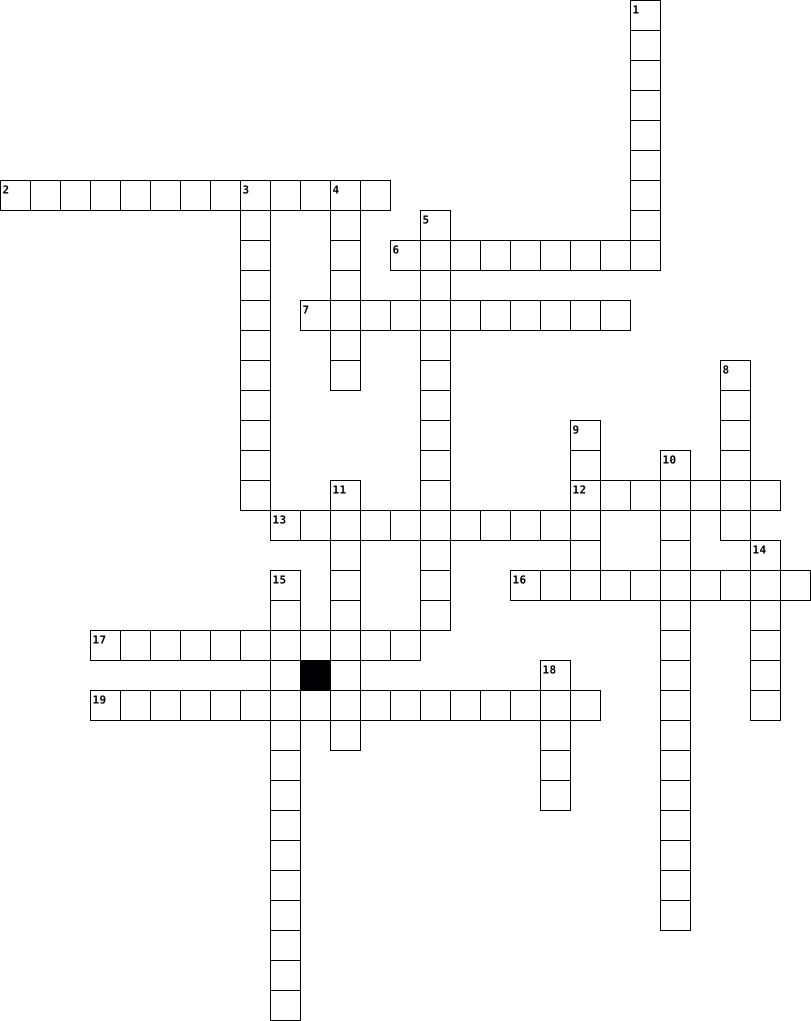
Across
- its opposite is community (sort of); personal freedom
- church/ state
- no one can take your rights away from you
- got influenced by France
- mostly a new idea!
- incompatible with democracies
- writes about the rights of man
- one of the positive (?) outcomes of the Enlightenment
Down
- acceptance of dissenting religious ideas
- from the 17th-19th century
- applying thought and reason to the natural world
- a "deal" between society and the individual that unlocks personal happiness
- one of the epicenters of the Age of Enlightenment
- the opposite of faith?
- when the enlightenment goes wrong
- a reasonable approach to the world
- got an apple dropped on his head
- sheds new light on the world
- everyone gets rights but these guys!
19 Clues: church/ state • mostly a new idea! • the opposite of faith? • got influenced by France • from the 17th-19th century • sheds new light on the world • incompatible with democracies • writes about the rights of man • got an apple dropped on his head • when the enlightenment goes wrong • a reasonable approach to the world • everyone gets rights but these guys! • ...
Buddhism 2023-05-02
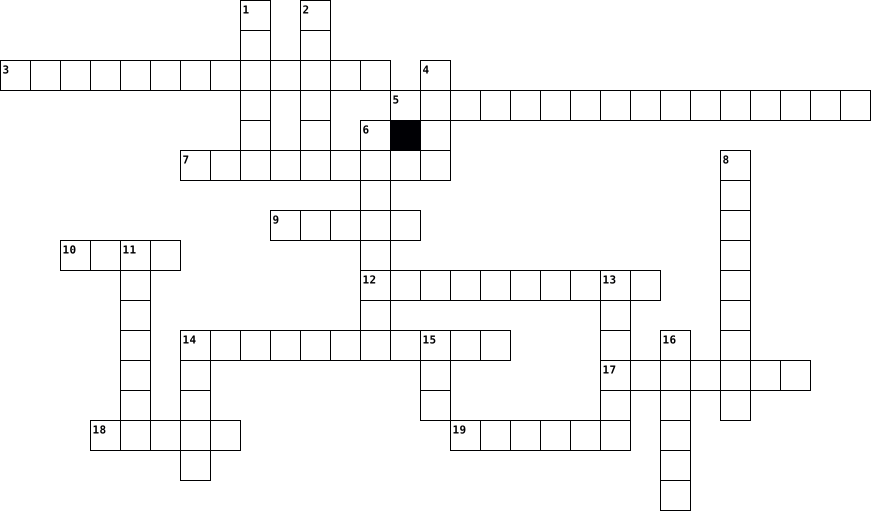
Across
- The Buddha’s path for us to follow
- no-self, impermanence, and suffering are the three…
- What Is the way of the elders(the lesser vehicle)?
- A “saint” in Buddhism
- The Buddha’s father was a…
- Doctrine through which you starve yourself
- a Buddha in the making
- The Buddha’s last name at birth
- Desire
- Buddhism’s ritual are ironic because this person didn’t like rituals
Down
- The first passing sight
- No-self
- God who attempted to stop the Buddha from enlightenment
- Which raft emphasizes meditation(the greater vehicle)?
- Doctrine that allowed the Buddha to enlightenment
- Eternal Bliss
- The Buddhist Community
- tree under which the Buddha gained enlightenment
- How many precepts must monks and nuns follow?
- Desire is the reason for…
20 Clues: Desire • No-self • Eternal Bliss • A “saint” in Buddhism • The Buddhist Community • a Buddha in the making • The first passing sight • Desire is the reason for… • The Buddha’s father was a… • The Buddha’s last name at birth • The Buddha’s path for us to follow • Doctrine through which you starve yourself • How many precepts must monks and nuns follow? • ...
Colton Ritchey Enlightenment and Revolution 2024-12-18

Across
- Earth centered solar system
- Used telescopes to study astronomy
- All branches of government are equal
- Gathering of philisophes
- Classical style
- Giving up rights for protection from the government
- New kind of absolute monarch
- Using reason to answer something
- System of government
- Sun centered solar system
- Smart person during the enlightenment
- Believed in three branches of government
Down
- Thinking rationally
- Russian ruler during enlightenment
- Questioning past theories
- Main person who wrote the declaration of independence
- Belief in the existence of god
- Extravagant style
- Believed people were naturally evil
- Fought for women's rights
- July 4 1777
- Discovered gravity
- Method used to solve something
- Believed in free speech
- The ten amendments
- Believed in natural rights
26 Clues: July 4 1777 • Classical style • Extravagant style • Discovered gravity • The ten amendments • Thinking rationally • System of government • Believed in free speech • Gathering of philisophes • Questioning past theories • Fought for women's rights • Sun centered solar system • Believed in natural rights • Earth centered solar system • New kind of absolute monarch • ...
Ancient India 2025-07-05

Across
- Agricultural worker caste
- The preserver
- The destroyer
- Pleasure
- Eightfold Path The Buddhist way to Enlightenment
- Duty; obligation
- Principle of reward and punishment
- The creator
Down
- Enlightenment
- Teacher
- First Jain
- Buddhist emperor
- Nonviolence
- Warrior caste
- Recommended “right thought, right action”
- King
16 Clues: King • Teacher • Pleasure • First Jain • Nonviolence • The creator • Enlightenment • The preserver • The destroyer • Warrior caste • Buddhist emperor • Duty; obligation • Agricultural worker caste • Principle of reward and punishment • Recommended “right thought, right action” • Eightfold Path The Buddhist way to Enlightenment
Enlightenment 2021-12-07
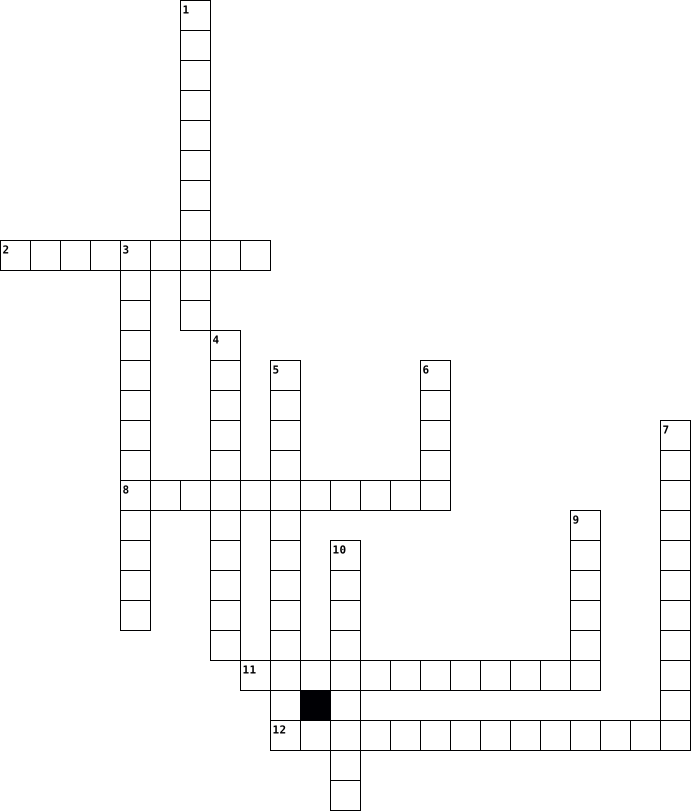
Across
- people have ultimate power
- the enlightenment is also called
- lovers of wisdom
- an agreement where citizens give up some rights in exchange for government protection
Down
- believes in 3 branches of government
- the idea that country's leaders should be chosen by the citizens in a general election
- focused on economic reforms
- freedoms belonging to all humans from birth
- a place where city people gathered to discuss philosophy
- a monarch recieves the right to rule from God
- thought people are born bad
- believes people are born with natural rights
12 Clues: lovers of wisdom • people have ultimate power • focused on economic reforms • thought people are born bad • the enlightenment is also called • believes in 3 branches of government • freedoms belonging to all humans from birth • believes people are born with natural rights • a monarch recieves the right to rule from God • ...
Enlightenment 2023-11-28
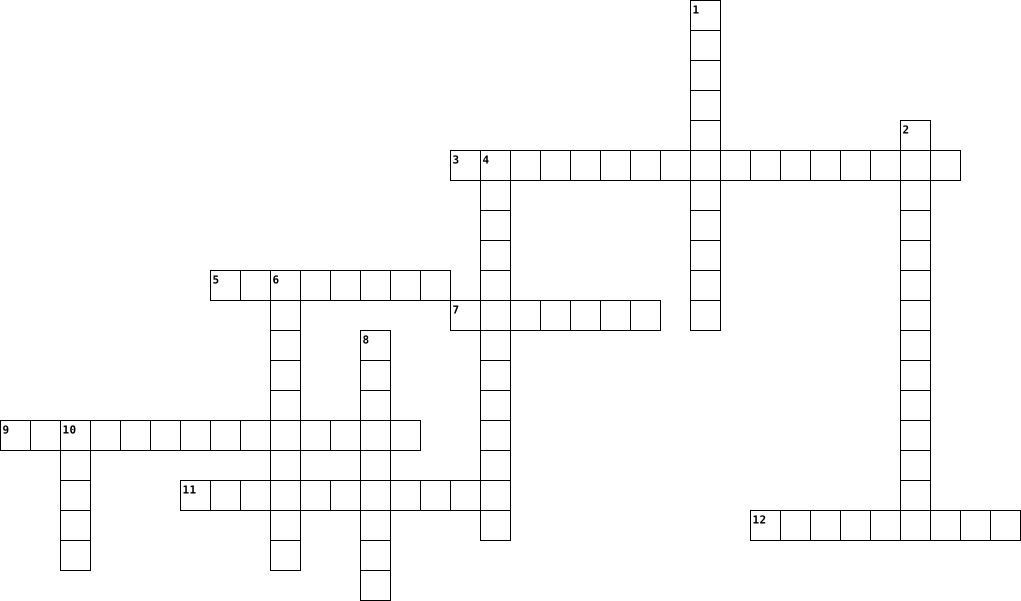
Across
- Absolute ruler who used his or her power to bring about political and social change
- ______________ Monarchy A system of government in which the head of state is a hereditary position and the king or queen has almost complete power
- ___________________of Power distribution of military and economic power that prevents any one nation from becoming too strong
- An adoption of the social, political, or economic institutions of Western—especially European or American—countries.
- Belief that a rulers authority comes directly from god.
- open resistance to authority
Down
- A strong feeling of pride in and devotion to one's country
- _____________________ Monarchy A King or Queen is the official head of state but power is limited by a constitution.
- John Locke; Life, Liberty, and Property; The rights of all people to dignity and worth; also called human rights.
- _______________of Powers Montesquieu's idea: the division of powers among branches of government
- A form of government in which citizens govern themselves
- Informal social gatherings at which writers, artists, philosophes, and others exchanged ideas
12 Clues: open resistance to authority • Belief that a rulers authority comes directly from god. • A form of government in which citizens govern themselves • A strong feeling of pride in and devotion to one's country • Absolute ruler who used his or her power to bring about political and social change • ...
The Enlightenment 2013-11-12
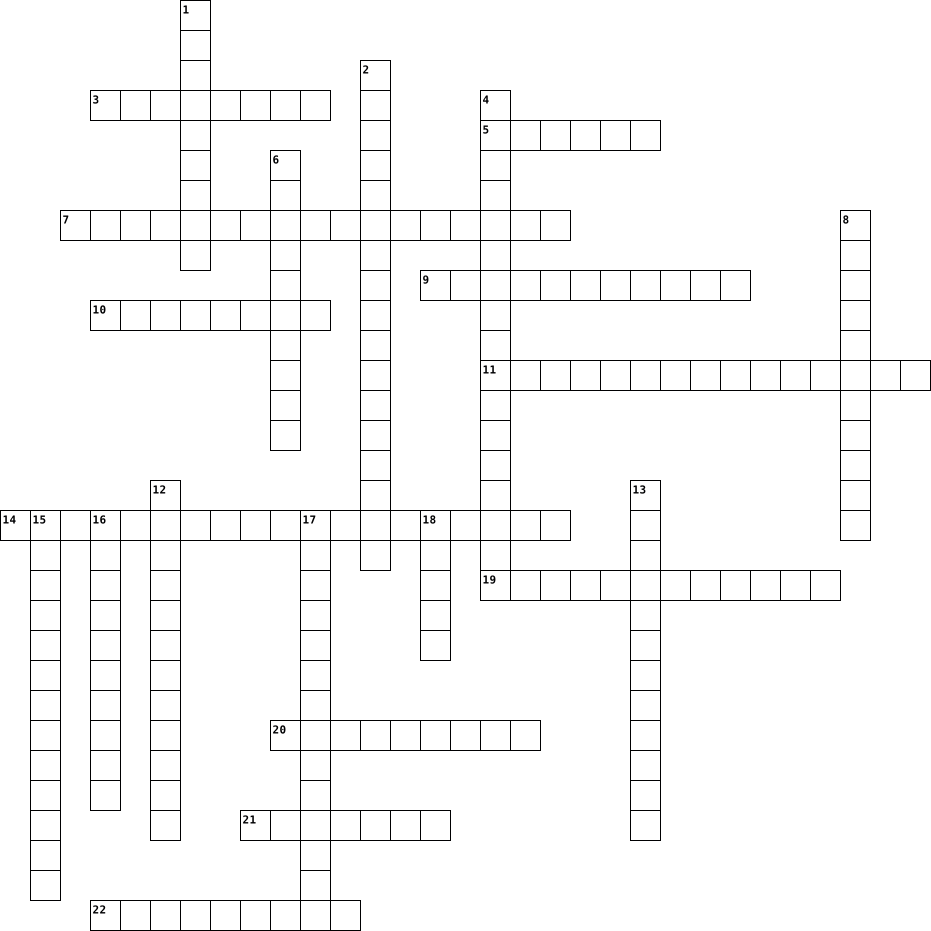
Across
- Austrian monarch that traveled in disguise among his subjects to learn their problems
- style of composition arising in 18th-century France, often viewed as an extension of the baroque, and characterized by a high degree of ornamentation and lightness of expression
- Russian monarch that abolished torture
- French enlightenment thinker
- was a French Enlightenment writer, historian and philosopher famous for his wit and his advocacy of freedom of religion, freedom of expression, and separation of church and state
- principle author of the Declaration of Independence who believed in equality for all
- French philosopher who is often referred to as the father of the French Revolution and wrote the book "The Social Contract"
- English enlightenment thinker who argued that people were cruel and selfish by nature and needed to be controlled by an absolute monarchy
- English philosopher that theorized natural right; He rejected absolute monarchies
- a period of artistic style that used exaggerated motion and clear, easily interpreted detail
- Scottish philosopher who focused on using natural law to reform the economy and urged the policy of Laissez Faire
Down
- French thinker who developed the ideas of separation of powers, checks and balances and minority rights
- a form of absolute monarchy that accepted enlightenment ideas
- Prussian monarch that allowed free press and urged religious tolerance
- suppression of public communication, which was done by burning and banning books as well as jailing others in the enlightenment age
- a person who offers views or theories on profound questions in ethics, metaphysics, logic, and other related fields
- 4th President sometimes referred to as the father of the constitution
- a policy that allows businesses to operate with very little interference from the government
- a period of time in which people applied reasons to everyday things and started thinking for themselves
- rules that govern natural forces such as gravity
- an agreement made by people to give up their freedom in exchange for an organized society
- informal social gatherings
22 Clues: informal social gatherings • French enlightenment thinker • Russian monarch that abolished torture • rules that govern natural forces such as gravity • a form of absolute monarchy that accepted enlightenment ideas • 4th President sometimes referred to as the father of the constitution • Prussian monarch that allowed free press and urged religious tolerance • ...
AOL Spiritual Crossword Puzzle (July 2013) 2013-07-05
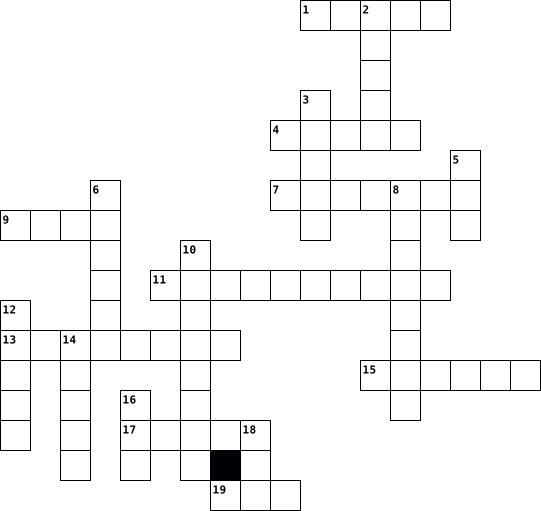
Across
- Friend of knowledge
- Ignorant state
- Om Namah --------
- Garbage Collector
- Before enlightenment you are a woodcutter, after enlightenment you are a ----
- Pain is inevitable, suffering is ---', says Sri Sri Ravishankar
- City which hosted 30th anniversary celebrations of Art of Living
- Which entity has lowest prana?
- Life is -----
Down
- Life force
- State which one experiences lethargy
- Sri Sri Ravishankar was born in the month of -------
- Who says - 'Choice is yours, blessing is mine':)
- Art of living Children's course age 8-13 years
- 108 sun salutations yoga challenge public event
- Name of tree which Buddha was sitting under at the time of enlightenment
- Penance
- Art of Living course that focuses on doing something new/now
- Faculty which says 'I am'
19 Clues: Penance • Life force • Life is ----- • Ignorant state • Om Namah -------- • Garbage Collector • Friend of knowledge • Faculty which says 'I am' • Which entity has lowest prana? • State which one experiences lethargy • Art of living Children's course age 8-13 years • 108 sun salutations yoga challenge public event • Who says - 'Choice is yours, blessing is mine':) • ...
The Enlightenment 2026-03-08

Across
- Major change in government inspired by Enlightenment ideas
- Intellectual movement that emphasized reason and new ideas about government
- Enlightenment thinker who supported freedom of speech and religion
- Law of motion and gravitation
- Enlightenment thinker who believed people have natural rights
Down
- Proposed the heliocentric model of the universe
- Enlightenment thinker who proposed separation of powers
- Improved the telescope
- This thing can be discovered through reason, mathematics, and systematic observation
- Enlightenment thinkers believed people should use this instead of tradition
10 Clues: Improved the telescope • Law of motion and gravitation • Proposed the heliocentric model of the universe • Enlightenment thinker who proposed separation of powers • Major change in government inspired by Enlightenment ideas • Enlightenment thinker who believed people have natural rights • Enlightenment thinker who supported freedom of speech and religion • ...
Enlightenment Crossword 2022-12-08
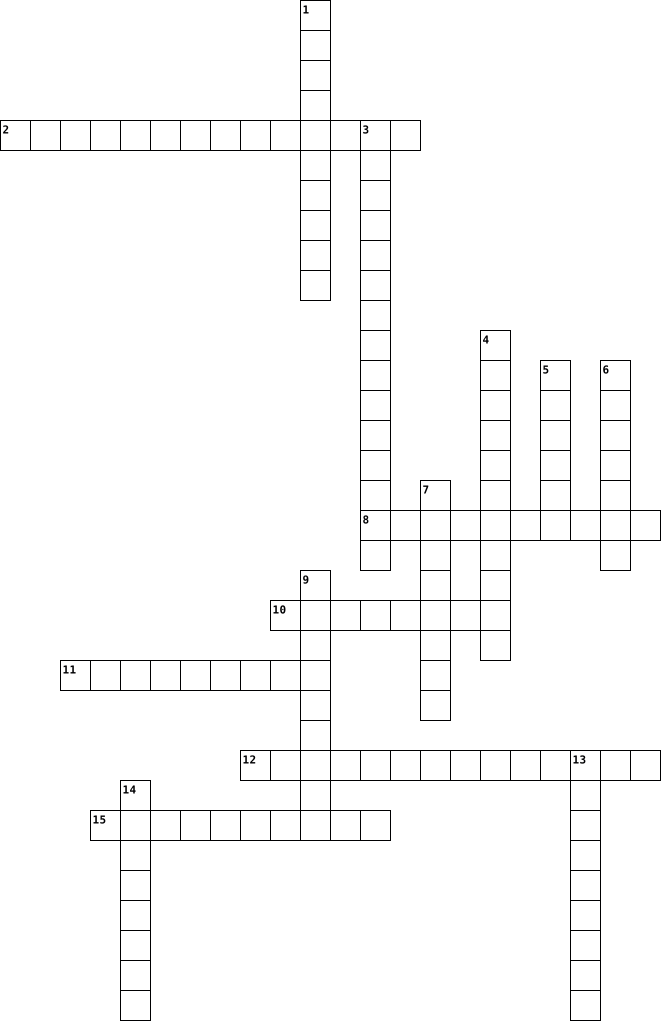
Across
- Enlightenment thinker who believed women's rights.
- Limiting access to ideas and information from Enlightenment thinkers.
- Enlightenment thinker who believed in the freedom of the press and freedom of speech.
- The book written by Thomas Hobbes, which argued that an absolute monarch is needed to control people.
- The ideas of government and society: Society limits people’s behavior too much, only governments elected freely should be able to make laws, and sovereignty should be held in the power of the people.
- One of the main topics of the Enlightnment, and is how a country is run.
Down
- The unchanged principles discovered by reason, that govern human conduct.
- The idea that people should be free to say what they want without facing injustice.
- The French word for “philosopher” which is a person who trys to learn about the world using reason.
- Enlightenment thinker that believed that people are selfish, cruel, and greedy. Author of The Leviathan.
- A country in western Europe, was the home of many philosophers during the Age of Enlightenment.
- Questioning the established order with the idea of finding a better way to do things.
- Enlightenment thinker who believed that people are naturally good, and are born with natural rights.
- A Scotich economist who wrote The Wealth of Nations, a book that argues for a free market, which is a market without interference from the government. He believed that a market should be run by supply and demand.
- Enlightenment thinker who believed that people are naturally good, but are corrupted by society.
15 Clues: Enlightenment thinker who believed women's rights. • Limiting access to ideas and information from Enlightenment thinkers. • One of the main topics of the Enlightnment, and is how a country is run. • The unchanged principles discovered by reason, that govern human conduct. • The idea that people should be free to say what they want without facing injustice. • ...
Buddhism Key Terms 2026-01-13

Across
- Core Buddhist ethical guidelines for followers; Voluntary commitments
- A path that avoids the extremes of indulgence and extreme asceticism
- The teachings of Buddha that lead to liberation
- Buddhist temple or sacred building
- Sacred scripture that relays the teachings and wisdom of Buddha
- An esoteric Buddhist path using rituals, meditation, and symbolism to attain enlightenment
- State of perfect peace, liberation, and freedom from suffering
- A being who has attained full spiritual enlightenment
- Sacred physical remains or objects associated with the enlightenment of Buddhism
- Spiritual teacher who transmits Buddhist teachings
- The spiritual community of Buddhism
Down
- The “Three Baskets,” the foundational scripture collection of Buddhism
- A native tree sacred to Buddhists in India
- Suggesting the practice of severe self-discipline for religious purposes
- The complete collection of scriptures for Theravada Buddhism
- Four profound encounters of Buddhism; An old man, a sick person, a corpse, and a peaceful ascetic
- Profound doctrine of “no-self”, meaning there is no permanent unchanging soul
- Perfected enlightened being who has attained Nirvana
- Sacred geometric symbols representing the universe and a map to enlightenment
- Person who delays Nirvana to save others
20 Clues: Buddhist temple or sacred building • The spiritual community of Buddhism • Person who delays Nirvana to save others • A native tree sacred to Buddhists in India • The teachings of Buddha that lead to liberation • Spiritual teacher who transmits Buddhist teachings • Perfected enlightened being who has attained Nirvana • ...
Enlightenment 2023-01-10
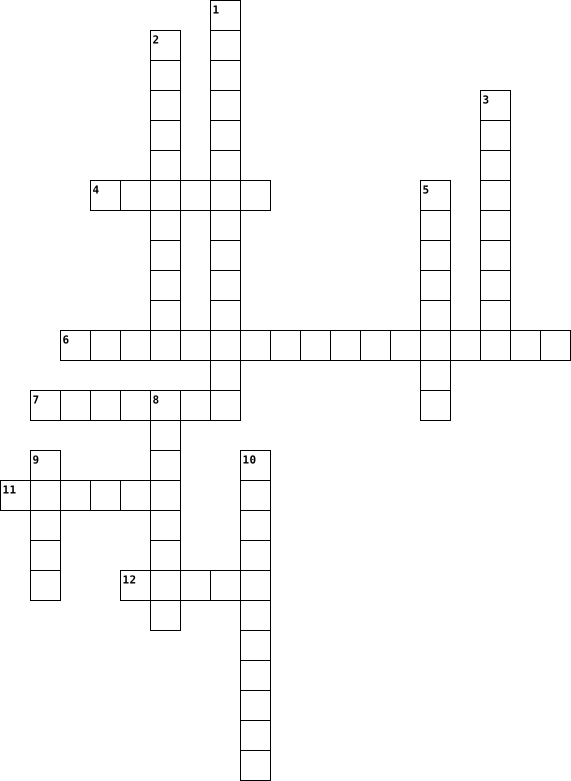
Across
- a ruler that has absolute power and exercises it in a cruel way
- the will of the people
- edited and published the encyclopedia
- favored absolute monarchy
- private meetings to share enlightenment ideas
Down
- wrote "a vindication of the rights for women"
- advocated for separation of powers in government
- principally wrote the Declaration of Independence
- said, "my trade is to say what I think"
- wrote the Social Contract
- protected the natural rights of people
- the right to rule comes directly from God
12 Clues: the will of the people • wrote the Social Contract • favored absolute monarchy • edited and published the encyclopedia • protected the natural rights of people • said, "my trade is to say what I think" • the right to rule comes directly from God • wrote "a vindication of the rights for women" • private meetings to share enlightenment ideas • ...
Enlightenment 2017-08-15
Across
- A rebirth of the artistic forms of ancient Greece and Rome
- An explanation of a group of facts or phenomena
- The process of testing a hypothesis to form a conclusion
- A government with elected officials who represent voters
- Each branch of government limits the power of the others
- A gathering for intellectual discussions
Down
- A new way of seeking truth in the mid-1500s
- The supreme law of the United States
- Open-minded and well educated
- Explanation for something not proven
- Foremost thinker of the French Enlightenment
- An opening statement
12 Clues: An opening statement • Open-minded and well educated • The supreme law of the United States • Explanation for something not proven • A gathering for intellectual discussions • A new way of seeking truth in the mid-1500s • Foremost thinker of the French Enlightenment • An explanation of a group of facts or phenomena • ...
Enlightenment 2024-06-04

Across
- blank slate, natural rights, life, liberty, property
- model that divides the government into separate branches, each has separate and independent powers.
- method of ruling when an absolutist monarch powers of government to establish enlightened policies.
- the separation of religion from civil affairs and the state
- women’s rights education for women
Down
- an absolute ruler who uses enlightenment ideas and introduces social reforms
- male-female equality, declaration, of women and of the female of citizen
- freedom of speech, freedom of religion, separation of church and state
- people agree to give up certain rights and accept a central authority to protect their other rights.
- gathering area for intellectuals to share and discuss new ideas
- branches of government and checks and balances
- system allowing each branch of government to limit powers of other branches to prevent abuse of power
12 Clues: women’s rights education for women • branches of government and checks and balances • blank slate, natural rights, life, liberty, property • the separation of religion from civil affairs and the state • gathering area for intellectuals to share and discuss new ideas • freedom of speech, freedom of religion, separation of church and state • ...
Enlightenment 2024-06-04

Across
- blank slate, natural rights, life, liberty, property
- model that divides the government into separate branches, each has separate and independent powers.
- method of ruling when an absolutist monarch powers of government to establish enlightened policies.
- the separation of religion from civil affairs and the state
- women’s rights education for women
Down
- an absolute ruler who uses enlightenment ideas and introduces social reforms
- male-female equality, declaration, of women and of the female of citizen
- freedom of speech, freedom of religion, separation of church and state
- people agree to give up certain rights and accept a central authority to protect their other rights.
- gathering area for intellectuals to share and discuss new ideas
- branches of government and checks and balances
- system allowing each branch of government to limit powers of other branches to prevent abuse of power
12 Clues: women’s rights education for women • branches of government and checks and balances • blank slate, natural rights, life, liberty, property • the separation of religion from civil affairs and the state • gathering area for intellectuals to share and discuss new ideas • freedom of speech, freedom of religion, separation of church and state • ...
Topic 13 Crossword Puzzle 2026-03-23

Across
- the Great
- II
- American document that declared independence in 1776 (11, 15)
- empress who was influenced by Enlightenment ideas (8, 5)
- ruler who supported some Enlightenment ideas (6, 7)
- Locke
- idea that a king’s power comes from God (5, 5)
- system supported by Adam Smith (10)
Down
- Right
- king known as the “Sun King” (5, 14)
- (supported by Adam Smith)
- XIV
- thinker who wrote Two Treatises of Government (4)
- 1789 revolution that began in France (6, 10)
- of Independence
- who believed in separation of powers (11)
- Revolution
17 Clues: II • XIV • Right • Locke • the Great • Revolution • of Independence • (supported by Adam Smith) • system supported by Adam Smith (10) • king known as the “Sun King” (5, 14) • who believed in separation of powers (11) • 1789 revolution that began in France (6, 10) • idea that a king’s power comes from God (5, 5) • thinker who wrote Two Treatises of Government (4) • ...
Enlightenment 2021-10-07
Across
- most important outcome of the Enlightenment period
- believes all people are born good
- female enlightenment thinker who believes in gender equality
- first step in the scientific method
- thinks government should have separate branches
Down
- believes in separation of church and state
- life, liberty, and property according to locke
- believes you must test everything until it can be proven
- believes all people are born greedy and selfish
- believes direct democracy is the best government type
- Earth is the center of the universe model
- the belief that god created the Earth but does not effect day to day life
- thinks every [person should live under an absolute monarchy
13 Clues: believes all people are born good • first step in the scientific method • Earth is the center of the universe model • believes in separation of church and state • life, liberty, and property according to locke • believes all people are born greedy and selfish • thinks government should have separate branches • most important outcome of the Enlightenment period • ...
Enlightenment 2023-02-16
Across
- believed that life in the state of nature was solitary, rough, brutal, and nasty
- critic of absolutism
- agreement among people/government/humans
- liberty, life, and the pursuit of happiness
- believed the world is full of superstition, intolerance, and irrationality
Down
- to learn, enlighten, and discover
- questioned the ideas of "natural women's inferiority
- argued that women should be included in the social contract
- her daughter wrote, Mary Shelly, Frankenstein
- believed in "general will"
- encyclopedia
- life, liberty, and property
12 Clues: encyclopedia • critic of absolutism • believed in "general will" • life, liberty, and property • to learn, enlighten, and discover • agreement among people/government/humans • liberty, life, and the pursuit of happiness • her daughter wrote, Mary Shelly, Frankenstein • questioned the ideas of "natural women's inferiority • ...
The Enlightenment Crossword by Braden Cook 2021-03-02
Across
- Wrote the famous book Robinson Crusoe.
- Started salons, where many enlightenment ideas spread.
- They cannot be taken away, and are specified in the US Constitution.
- French for "free market."
- Coined the term "Enlightenment."
- When the government limits what its citizens can do, say, etc.
- Said we should all have representation in the government.
- Said that free speech is a right that all people should have.
Down
- Spread the Enlightenment through encyclopedias.
- Came up with the republic style of government.
- Came up with the three branches of government.
- Promoted free trade in a free market.
- Said we need an absolute ruler to keep the common people in line.
- The idea-starters of the Enlightenment.
14 Clues: French for "free market." • Coined the term "Enlightenment." • Promoted free trade in a free market. • Wrote the famous book Robinson Crusoe. • The idea-starters of the Enlightenment. • Came up with the republic style of government. • Came up with the three branches of government. • Spread the Enlightenment through encyclopedias. • ...
Revolution & Enlightenment 2016-02-23
Across
- elegant drawing rooms of the upper class’s urban houses
- child prodigy, gave first concert at age six
- used detailed astronomical data to arrive at his laws of planetary motion
- enlarged Prussian army by recruiting the nobility into civil service
- wrote a collection of knowledge that he edited, “Encyclopedia”
- a universe in which every planet orbits around the earth
- stating that the pressure and volume of a gas have an inverse relationship, when temperature is held constant.
- an egg shaped path of planets around the sun
- means “to let people do what they want”
- Anglican minister who began Methodism
- the most famous philosophe of the later Enlightenment
- a universe in which the planets revolve around the sun
- through this, an entire society agrees to be governed by its general will
- a war that lasted 7 years
- inherited the throne of the Austrian Empire in 1740
- a belief or theory that opinions and actions should be based on reason and knowledge rather than on religious belief or emotional response.
- Isaac Newton’s theory that every object in the universe attracts every other object
- english writer, advanced the strongest statement for the rights of women
- a logical process in which multiple premises, all believed true or found true most of the time, are combined to obtain a specific conclusion
- discovered that we lived in a heliocentric universe
- believed the state should not interfere in economic matters
- philosophe who argued that punishments should not be brutal
Down
- method Francis Bacon process to systematically collect and analyze evidence
- invented a telescope and was the first to make regular observations of outer space
- added to the understanding of human anatomy alongside william harvey
- guy who stated that England’s government had three branches
- ruler of Russia from 1762 to 1796
- said “I think therefore i am”
- war was fought from 1740-1748 in three areas of the world
- in this system rulers tried to govern by Enlightenment principles while maintaining their royal powers
- discovered the laws of motion
- artistic style emphasizing grace, charm and gentle action
- the separation in which the branches limit and control each other in a system of checks and balances
- said every person was born with a tabula rasa or blank mind
- social reformers that talked about all parts of society to make it better
- added to the understanding of human anatomy alongside andreas versalius
36 Clues: a war that lasted 7 years • said “I think therefore i am” • discovered the laws of motion • ruler of Russia from 1762 to 1796 • Anglican minister who began Methodism • means “to let people do what they want” • child prodigy, gave first concert at age six • an egg shaped path of planets around the sun • discovered that we lived in a heliocentric universe • ...
The Enlightenment 2013-11-11
Across
- A companion of Confucius, Plato, and Socrates.
- Pen name of Arouet, was the most famous of the French Enlightenment philosophers.
- A absolute monarch that tries to flow with the spirit of the Enlightenment.
- The period of increased intellectual consciousness.
- Father of the U.S Constitution.
- Brain father of "Laissez Faire."
- Putting blinds on the public.
- Tsarina of Russia, longest ruling female leader of Russia and was very enthusiastic about the Enlightenment until a serf rebellion changed her mind.
- Inventor of the concept "Natural Rights."
- King of Prussia, known for military brilliance and short-lived friendship with Voltaire.
- A gathering of writer, philosophers, and generally intelligent and cultured people in the Pre-French Revolution era.
- Innovator of the concept of "Minority Rights."
- Holy Roman Emperor and Archduke of Austria, Was the only truly enlightened despot that, unfortunately, had his work undone after his death.
- A musical and architectural form of art starting from the early 17th century to the mid 18th.
Down
- God's law.
- Writer of the U.S Declaration of Independence.
- The study of human existence and what goes with it.
- Father of the French Revolution.
- A style of musical composition and architecture originating from 18th century France.
- Advocates the minimum amount of government interference in the economy.
- A social agreement between the governed and government.
- The writer of "The Leviathan."
22 Clues: God's law. • Putting blinds on the public. • The writer of "The Leviathan." • Father of the U.S Constitution. • Father of the French Revolution. • Brain father of "Laissez Faire." • Inventor of the concept "Natural Rights." • Writer of the U.S Declaration of Independence. • A companion of Confucius, Plato, and Socrates. • Innovator of the concept of "Minority Rights." • ...
The Enlightenment 2021-09-23

Across
- Descartes and Bacon came up with the idea
- a theory that the earth is the center of the solar system
- he made a book on the spirit of laws
- she fought for rights for women
- he made a book called the leviathan
- he had an Idea that was the heliocentric
- parties where people met to discuss new ideas
- developed the scientific method
- a theory that the sun is the center of the solar system
- perfected the telescope
- encouraged the scientific method
- The people who presented new ways of thinking during the Enlightenment
- founder of modern chemistry
Down
- proved copernicus theory with mathematical
- A style of art characterized by soft lines and colors. It typically depicted happy scenes with wealthy aristocrats being a usual subject. It reflected a society that was controlled by the aristocracy
- a person who rules with absolute power
- studied bacteria through a microscope
- Developed a vaccine that prevented smallpox
- he made a book called the social contract
- developed laws of motion and gravity
- A style of art characterized by dull colors and strong lines. The subject matter was often battle scenes and more realistic. The style was a return to Greek and Roman art. Neoclassicism was a response to the changing ideas in European society. People began rejecting the aristocratic leanings of Rococo art just as they were rejecting the art craft controlling society
- believed in freedom of speech and freedom of religion
- he made a book On Crimes and Punishments
- he made a book called two treatises on Government
- contract the theory that there is an agreement between the governing and the governed the governed will give up some rights and freedom and the governing will make decisions in the best interest of people
25 Clues: perfected the telescope • founder of modern chemistry • she fought for rights for women • developed the scientific method • encouraged the scientific method • he made a book called the leviathan • he made a book on the spirit of laws • developed laws of motion and gravity • studied bacteria through a microscope • a person who rules with absolute power • ...
The Enlightenment 2021-09-23
Across
- MAde vaccine for smallpox
- Examined red blood cells, looked up close at organisms
- The agreement in which people created a government.
- Heliocentric theory
- Individual freedom, social contract
- Earth is the center of the solar system
- Sun is the center of the solar system
- Laws of motion and gravity
- Separation of power and checks and balances
- Founder of modern chemistry
- Women's rights
- A person who rules with absolute power
- Parties where people met to discuss new ideas
- Freedom of speech/religion
- Experimental method/encouraged use of scientific method
- Believed all humans were born evil, created the social contract
Down
- Depicted happy scenes/soft lines and colors
- Mathematical laws to support the heliocentric theory
- People could learn from experience, supported social contract
- A logical procedure for gathering testing ideas
- Founder of telescope used it to support the heliocentric theory
- Analytical geometry
- Dull colors and lines, about war
- The people who presented new ways of thinking during the Enlightenment.
- Promoted crimical justice
25 Clues: Women's rights • Heliocentric theory • Analytical geometry • MAde vaccine for smallpox • Promoted crimical justice • Laws of motion and gravity • Freedom of speech/religion • Founder of modern chemistry • Dull colors and lines, about war • Individual freedom, social contract • Sun is the center of the solar system • A person who rules with absolute power • ...
Enlightenment Crossword 2021-05-22

Across
- A form of government in which the monarch’s power is limited by a basic set of laws
- An economic system based on investment of money for profit
- The division of powers among branches of government
- philosophe who advocated for religious tolerance and freedom of speech
- first country formed on the basis of Enlightenment ideals
- ancient society that developed a government with separation of powers as a means to prevent despotism
- Voltaire considered freedom of ___ to be one of the most important individual rights
- A monarchy in which the ruler’s power is unlimited
- Voltaire and Emilie de Chatelet explained ___'s ideas in a way that the general population could understand
- induvtive reasoning; the scientific method
Down
- the form of government adopted by the United States of America
- Renaissance idea that places importance on study of the humanities, human achievement, and individual rights
- philosophe who beleived in the categorical imperitive - a rational system for ethical behavior that could be used by anyone and apply to all siturations
- while mercantilism believes in pursuing a positive balance of trade, capitalism believes in ___ trade
- The acceptance of different religious beliefs and customs
- philosophe who advocated for separation of powers
- Rights that belong to people “by nature,” simply because they are human beings
- An agreement in which people give power to a government in exchange for its protection
- the philosophe whos ideas heavily influenced capitalism
- philosophe who wrote the declaration of independence
- capitalism is a ___ economy
- Anything relating to ancient Greece or Rome
- The principle that independent beings must be treated equally by the law
- deductive reasoning
- the philosophe whose ideas on government (natural rights, equality before law, social contract) laid the foundation for the Enlightenment
25 Clues: deductive reasoning • capitalism is a ___ economy • induvtive reasoning; the scientific method • Anything relating to ancient Greece or Rome • philosophe who advocated for separation of powers • A monarchy in which the ruler’s power is unlimited • The division of powers among branches of government • philosophe who wrote the declaration of independence • ...
Absolutism & Enlightenment 2022-11-18

Across
- England's parliament had roots in this 13th century document
- a symbol of Louis XIV's royal power; made his nobles live there
- an event that resulted in the public execution of a monarch
- MONARCHS WHO TOOK OVER IN THE GLORIOUS REVOLUTION
- Which famous document begins like this?...use context clues to figure it out!...whereas the late King James the Second...did endeavour to subvert and extirpate (destroy)the Protestant religion and the laws and liberties of this kingdom; by assuming and exercising a power of dispensing with and suspending of laws and the execution of laws without consent of Parliament...
- a tolerant Mughal emperor
- He proposed natural rights that all men should have; he opposed absolute monarchy (last name only)
- Locke's beliefs influenced __________ in France and the USA
- This event ensured the supremacy of Parliament in England
- Peter the Great controlled _____ by forcing them to move to St. Petersburg
- he supported absolute monarchy, but opposed the idea of "divine right" (last name)
- Ottoman sultans claimed this title
- french protestants scorned by Louis XIV
- 18th century intellectual movement emphasizing human reason and individual rights
Down
- famous Mughal architecture
- Peter the Great controlled this church
- Absolutism can trace its origins to this Holy Roman Emperor
- justified the power of absolute monarchs
- Peter the Great's policies that attempted to make Russia more modern and similar to England & Holland
- Cromwell led England's government, which was not a monarchy but rather a _______
- Charles II became monarch of England during this period
- Tsars were _______________ (2 words, no space) of Russia
- A nation that established a constitutional monarchy by the end of the 17th century
- The ruler Charles II idolized; the "Sun King"
- Middle Eastern empire that tolerated Christians and Jews
- Louis XIV repealed it, removing religious tolerance in France
- this event was the historical context that influenced Hobbes' beliefs in absolutism
- Japan's government that restricted European influence
- He built Russia's first navy
- name of Thomas Hobbes influential book
30 Clues: a tolerant Mughal emperor • famous Mughal architecture • He built Russia's first navy • Ottoman sultans claimed this title • Peter the Great controlled this church • name of Thomas Hobbes influential book • french protestants scorned by Louis XIV • justified the power of absolute monarchs • The ruler Charles II idolized; the "Sun King" • ...
The Enlightenment 2020-09-12
Across
- French author Spirit of Laws
- branch of government that enforces the law
- raged across England for nearly a decade
- nobles forced him to sign Magna Carta
- King vs. __________
- author of Two Treaties of Government
- Voltaire was a strong supporter of this
- putting someone to death
- supported religious tolerance
- Smith's country of origin
Down
- believed people could govern themselves
- branch of government that makes the law
- ruling parliament called every 3 years
- written by Hobbes in 1651
- branch of government that interprets the law
- bill of rights limited the power of the ?
- king's power is __________
- Locke believed in people's what?
- what thinkers were called in France
- objected harsh practices of punishment
20 Clues: King vs. __________ • putting someone to death • written by Hobbes in 1651 • Smith's country of origin • king's power is __________ • French author Spirit of Laws • supported religious tolerance • Locke believed in people's what? • what thinkers were called in France • author of Two Treaties of Government • nobles forced him to sign Magna Carta • ...
The Enlightenment 2020-10-29
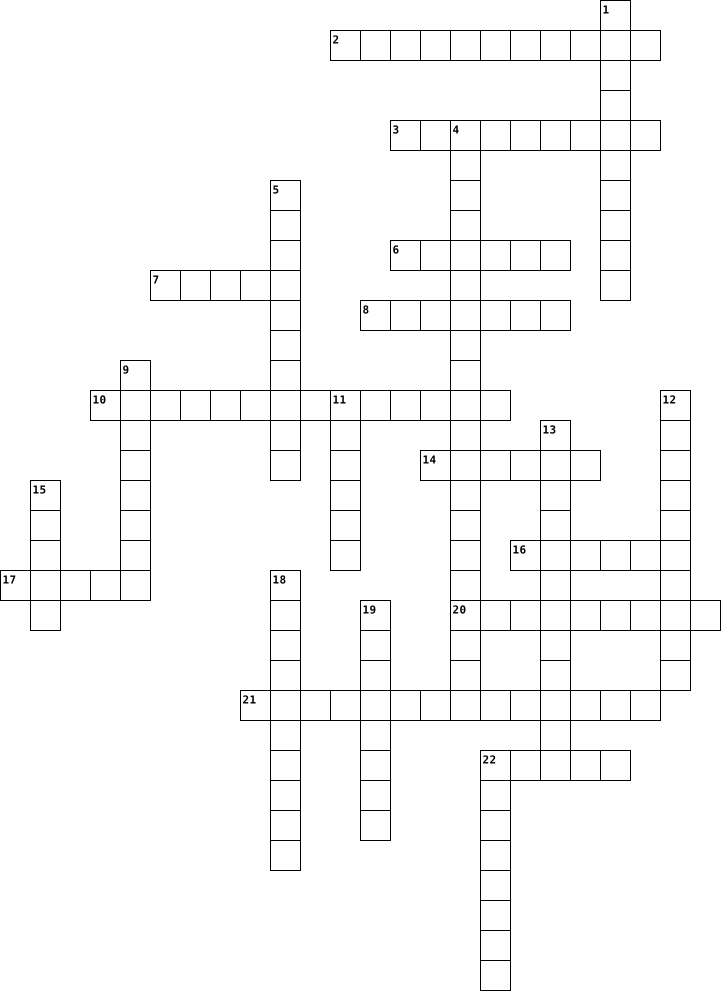
Across
- Believed in the separation of powers
- Helped create the scientific method by adding in mathematics and reasoning
- Created the first smallpox vaccine
- Considered the father of modern chemistry
- Found that the surfaces of the moon and stars were not smooth
- an agreement by which the people create their government
- Using mathematical reasoning, found out that the planets move in ellipses
- Created a book called Leviathan in which he stated that all humans were naturally selfish and wicked
- Believed that all people had the right to equal opportunity, and that people should create a new government if the old one fails
- Created by Galileo and is used to examine far off planets and stars
- Promoted women's rights and education
- Helped create the scientific method and told scientists to find reason
Down
- The theory that the entire solar system revolves around the Earth
- A new way of thinking about the natural world based on careful observation and a willingness to question accepted beliefs
- The first scientist to propose the idea that the earth revolved around the sun
- Fought for freedoms of speech and religion for everyone
- Created laws of gravity and motion
- A social critic of the enlightenment
- The theory that the Earth revolves around the sun
- Where philosophes shared their ideas
- Created by Jannsen and is used to examine small things that we can't see with the human eye
- Believed that the people should hold all of the power in society
- Believed very strongly in what punishment should and should not be
23 Clues: Created the first smallpox vaccine • Created laws of gravity and motion • Believed in the separation of powers • A social critic of the enlightenment • Where philosophes shared their ideas • Promoted women's rights and education • Considered the father of modern chemistry • The theory that the Earth revolves around the sun • ...
Enlightenment vocab 2024-10-04

Across
- made the law of gravitation and his three laws of motion
- the process of objectively establishing facts through testing and experimentation
- first to use a telescope to study the stars and planets
- questioned the purpose and place of government and its responsibility for its citizens
- belief or theory that opinions and actions should be based on reason and knowledge
- English philosopher and political theorist
- author and a major figure of the Enlightenment
- period of drastic change in scientific thought
- style of European architecture, music, and art
- ruler with absolute power who embraces Enlightenment ideals
- 18th century french materialistic writer
Down
- demonstrated a woman's aptitude for independent thought
- classical style or treatment in art, literature, architecture, or music.
- the idea that the Earth is the center of the universe and other objects go around it
- Empress who encouraged the cultural influences of western Europe in Russia
- an agreement among the members of a society
- political philosopher who advocated the separation of powers
- theory that places the Sun at the center of the Solar System
- the belief in the existence of God
- European intellectual movement of the late 17th and 18th centuries
- an informal education for women
21 Clues: an informal education for women • the belief in the existence of God • 18th century french materialistic writer • English philosopher and political theorist • an agreement among the members of a society • author and a major figure of the Enlightenment • period of drastic change in scientific thought • style of European architecture, music, and art • ...
The Enlightenment 2023-02-21
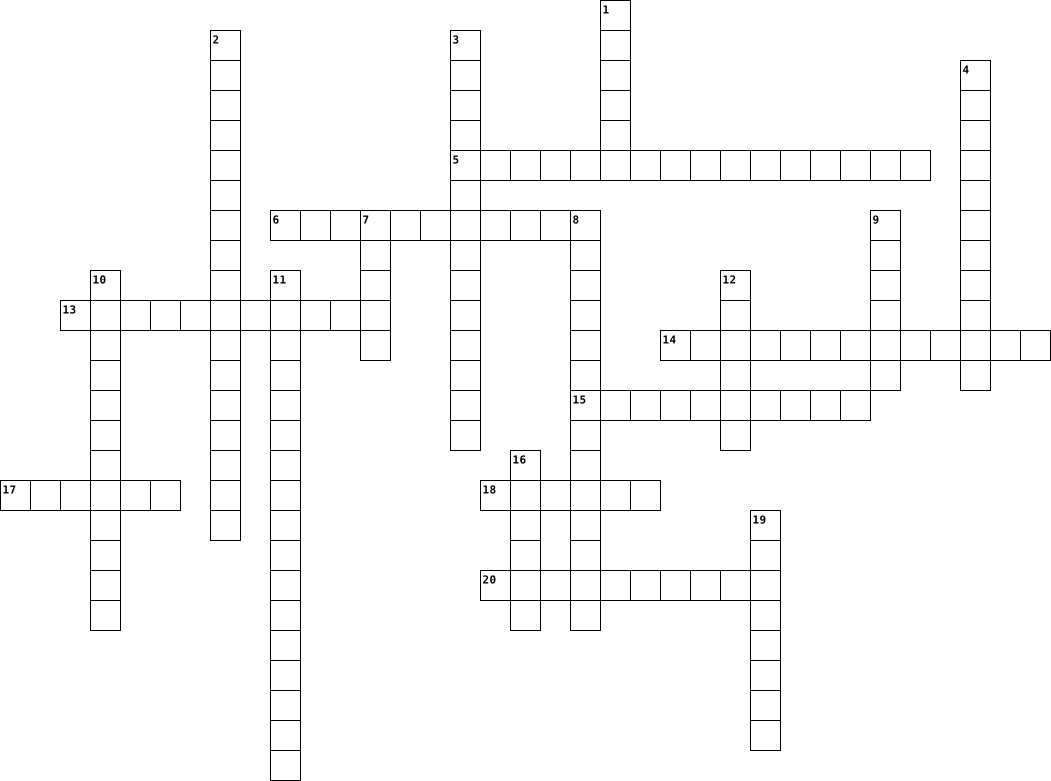
Across
- a process using logic and reasoning to prove or disprove a hypothesis or theory
- the people who presented new ways of thinking during the Enlightenment
- made the first microscope to look at bacteria and cells
- a period in which philosophes created many new ideas about the world
- proposed the idea of a heliocentric theory (sun is the center of the universe)
- made the first vaccine for smallpox using another, less harmful disease called cowpox
- created the laws of gravity
- the theory that the earth is at the center of the universe
Down
- a person who rules with absolute power
- the two philosophes who pioneered the scientific method (B name first then D name)
- a female philosophe said that women deserve the same education as men
- proposed the idea of checks and balances
- proposed that people have a right to self-government but under the social contract still
- the theory that there is an agreement between the governing and the governed
- proposed that people hand their rights to a strong ruler under the social contract
- the theory that the sun is at the center of the universe
- a system in which multiple groups share decision-making power
- parties where people met to discuss new ideas
- proved the idea of the heliocentric theory using mathematics (sun is the center of the universe)
- believed that there should not be cruel and unusual punishment
20 Clues: created the laws of gravity • a person who rules with absolute power • proposed the idea of checks and balances • parties where people met to discuss new ideas • made the first microscope to look at bacteria and cells • the theory that the sun is at the center of the universe • the theory that the earth is at the center of the universe • ...
The Enlightenment 2023-02-21
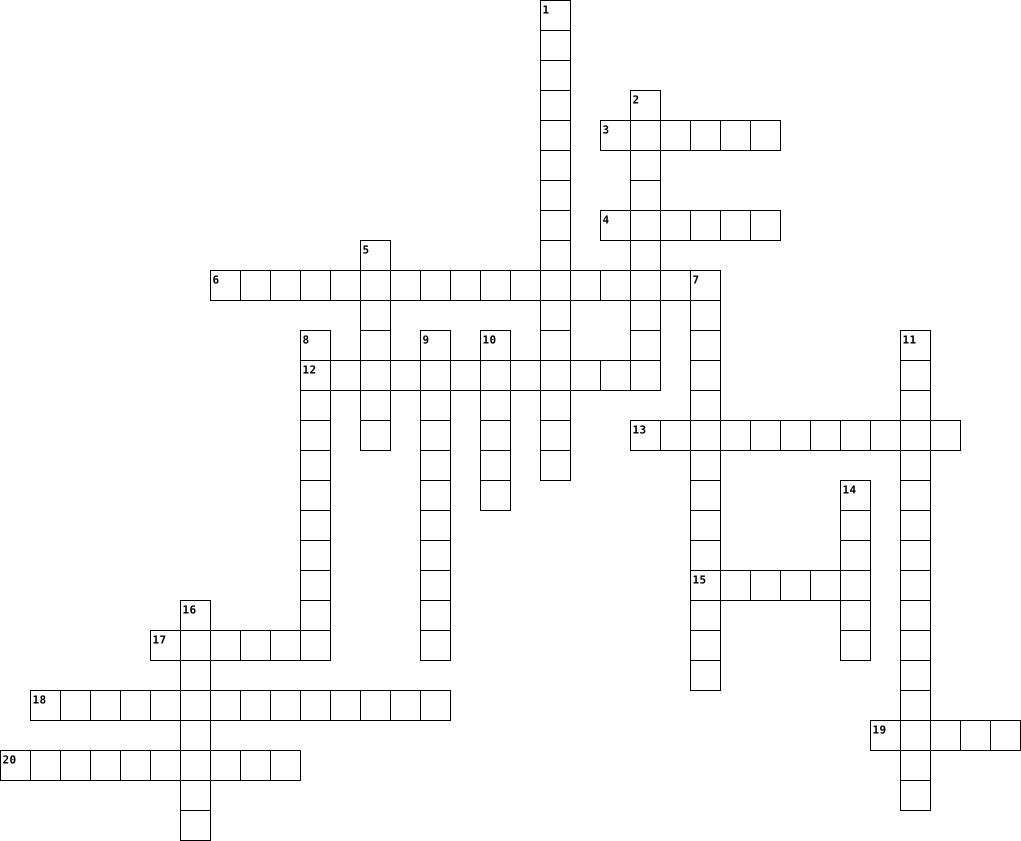
Across
- a person that rules with absolute power
- created the laws of gravity and motion
- popularized the scientific method
- theory that the sun was the center of the universe
- to know something one did not know before
- a style during the 18th century defined by curved asymmetrical forms and elaborate ornamentation
- created "Leviathan"
- wanted women to have equal education as men
- belief that God exist and created the world but does not interfere
- discovered the heliocentric theory
Down
- the process of objectively establishing facts through testing and experimentation
- theory that the earth was the center of the universe
- observed that the moon was not pure and smooth
- theory that the governing and the governed came to an agreement that the governed will give up some rights and the governing will make decisions
- people who presented new ways of thinking
- created the idea "checks and balances"
- made the first vaccine for small pox
- was also called "The Age of Reason"
- parties where people met up to discuss new ideas
- believed in freedom of religion
20 Clues: created "Leviathan" • believed in freedom of religion • popularized the scientific method • discovered the heliocentric theory • was also called "The Age of Reason" • made the first vaccine for small pox • created the laws of gravity and motion • created the idea "checks and balances" • a person that rules with absolute power • people who presented new ways of thinking • ...
Enlightenment puzzle 2026-02-24

Across
- – Personal growth and development over time.
- – Tools and systems created to solve problems and improve life.
- – Devices worn on the body to monitor health or activity.
- – Aristotle’s term for human flourishing through virtue.
- – A feeling of deep meaning or direction in life.
- – Protection of personal information and data.
- – The ability to make personal choices without restriction.
- – Moral principles that guide behavior and decisions.
- – Accessing medical care through online communication.
- – Basic requirements such as food, shelter, and health.
Down
- – Fair access to opportunities and resources.
- – A state of happiness and fulfillment in life.
- – Efficient completion of tasks and responsibilities.
- – Learning and acquiring knowledge, especially through formal or digital means.
- – Acting with moral awareness and accountability.
- – A group of people connected by shared values or location.
- – Maintaining harmony between work, life, and technology.
- – The feeling of being accepted and valued by others.
- – A strong connection or bond between people.
- – Overuse or dependency on something, such as digital devices.
20 Clues: – Personal growth and development over time. • – Fair access to opportunities and resources. • – A strong connection or bond between people. • – Protection of personal information and data. • – A state of happiness and fulfillment in life. • – Acting with moral awareness and accountability. • – A feeling of deep meaning or direction in life. • ...
Enlightenment Review 2025-10-16

Across
- Restriction on access to ideas and information
- Thomas Hobbes’ lived through this event in his country that impacted his view of humans.
- Satirist who targeted the Catholic Church and the French monarchy/government.
- Model with the Sun at the center.
- Economist, masterpiece was An Inquiry into the Nature and Causes of the Wealth of Nation, argued for free markets with little to do with the government, very influential
- an agreement in which people gave up freedom to the government to avoid chaos
- Denis Diderot is well-known for his creation of this one-stop source of knowledge.
- Social gathering, informal, philosophes and others gathered to exchanged ideas
- Polish astronomer who concluded that the sun is the center of the universe around which Earth and the other planets revolve.
- Wrote The Spirit of Laws. Believed that government should be in pieces.
- Model with the Earth at the center.
Down
- In Europe before the Enlightenment, this institution had authority over the theories of the universe.
- This man believed that all people deserve the right to Life, liberty, and property.
- In Spirit of the Laws, Montesquieu discussed this idea, which we call Checks and Balances in the USA.
- The era leading into the Enlightenment.
- privileges that belongs to all humans from birth, such as life, liberty, and property
- Englishman who wrote Leviathan? Had a pessimistic view of human nature.
- Informal social gatherings at which writers, artists, philosophes and others exchanged ideas.
- French term meaning, ‘lovers of wisdom.’ Another name for a French Enlightenment Thinker.
- For the Enlightenment writers, logic and ____________ were the keys to understanding human society.
20 Clues: Model with the Sun at the center. • Model with the Earth at the center. • The era leading into the Enlightenment. • Restriction on access to ideas and information • Englishman who wrote Leviathan? Had a pessimistic view of human nature. • Wrote The Spirit of Laws. Believed that government should be in pieces. • ...
The Enlightenment 2021-09-27

Across
- The idea of Observation; Hypothesis; Experimentation; Analysis; Conclusion.
- Due to its wide array of Enlightenment thinker’s ideas, it was believed to be the most “enlightened” document written at the time.
- Also called the French and Indian War, it allied American colonists with the British shortly before the American Revolution.
- Based many of his ideas on Locke when he wrote the Declaration of Independence.
- Art movement and musical style defined as “grand and ornate”.
- Social critics of the Enlightenment time period.
- Thought that governments should exist to insure life, liberty, and the pursuit of happiness for all its people.
- Many of this document’s ideas were advocated by Voltaire, Rousseau, and Locke.
- Considered one of the most brilliant of the philosophes, he quoted, “I do not agree with a word you say but I will defend to death your right to say it.”
- Felt that the justice system should exist to preserve social order and not to avenge crimes and thought that capital punishment should be abolished.
- Invented the microscope.
- Developed a thermometer that used mercury.
- Argued that civilization corrupted people and said, “man is born free, and everywhere he is in chains.” He also felt that all people should be equal under the eyes of a government.
- This “Great” monarch extended religious freedom and reduced censorship in Prussia and was considered one of the leading Enlightenment despots.
- Collected articles and essays from other philosophes and published them in multiple volumes known as the Encyclopedia.
- Using germs from a cattle disease on humans to prevent smallpox, this physician produced the first vaccination.
- This document pre-empted the U.S. Constitution and proved to too weak to unify a country on.
- Began in the mid-1500s and was a new way of thinking about the “natural world” and it challenged the ideas of ancient thinkers.
Down
- Came up with the idea of a Sun-centered universe and didn’t publicize it until just before his died.
- An intellectual movement that stressed reason, thought, and the power of individuals to solve problems.
- Was one of the first scientists to dissect corpses to study the human anatomy.
- Wrote the Leviathan and claimed that humans are “selfish and wicked” and need to be controlled by an absolute power.
- Claimed that all physical objects are affected by the same force and he called that force “gravity”.
- Art movement defined as “simple and elegant”.
- Wanted to abolish serfdom and the death penalty and was able to gain control of the Black Sea. Something no other Russian ruler was ever able to do.
- Continuing with Brahe’s findings, this person advanced Copernicus’ idea even further by confirming that the planets moved in elliptical patterns and not circular.
- Musical style of the Enlightenment period.
- Felt that women should be educated as much as men so they could be equally as helpful in society. Her daughter wrote Frankenstein.
- Most influential salon hostess during the Enlightenment.
- A type of thinking, supported by Newton’s discoveries, which claims that the universe is like a big clock and that God is the clock maker.
- Built a telescope that discovered Jupiter’s 4 moons and dark spots on the sun. He wrote about them in Starry Messenger.
- Observed bacteria through a microscope for the first time.
- Recorded the movements of the planets as going circular around the sun.
- Believing that Great Britain was the best-governed country in the world, he advocated that other nations follow suit in having a separation of powers within the government.
- Encouraged scientists to adopt the experimental method or empiricism.
- Social gatherings of philosophers, artists, scientists, writers, etc.
- Termed used to define a monarch during the Enlightenment who was influenced by its “thinkers”.
- Invented the barometer.
- Laws imposed on American colonists by the British to control trade and shipping to and from the Americas.
- Originally came up with the idea of an Earth-centered universe.
- By asserting that everything should be doubted until proved by reason, he concluded, for certain, that he existed by claiming, “I think, therefore, I am.”
- Forced Galileo to denounce his and Copernicus’ findings or be persecuted by the Inquisition.
- City where the Enlightenment reached its peak.
- Considered the founder of modern chemistry.
44 Clues: Invented the barometer. • Invented the microscope. • Musical style of the Enlightenment period. • Developed a thermometer that used mercury. • Considered the founder of modern chemistry. • Art movement defined as “simple and elegant”. • City where the Enlightenment reached its peak. • Social critics of the Enlightenment time period. • ...
Revolution & Enlightenment 2026-05-13

Across
- Performed Mas in B minor.
- What were people fighting for?
- a French thinker who believed in freedom of speech and religion.
- Stressed immense power, grandeur and spiritual intensity.
- Heroic deeds supernatural epics and flawless knights.
- The man who believed in separation of powers.
- Wrote great works like Marriage of figaro.
- Enlightenment thinkers.
- Realistic social themes written for a growing middle-class audience.
- Trade with Indian Natives.
- Caused mass paranoia.
- Pioneered Public Concerts.
Down
- The purpose of the government.
- Perfected Messiar.
- The idea that people are born good but corrupted.
- Whats a tyrant ruler?
- Emphasized, grace,charm,and gentle actions.
- what Hobbes believed about absolute monarchs.
- Wrote the book Leviathan.
- Use mass navel superiority..
20 Clues: Perfected Messiar. • Whats a tyrant ruler? • Caused mass paranoia. • Enlightenment thinkers. • Performed Mas in B minor. • Wrote the book Leviathan. • Trade with Indian Natives. • Pioneered Public Concerts. • Use mass navel superiority.. • The purpose of the government. • What were people fighting for? • Wrote great works like Marriage of figaro. • ...
The Enlightenment 2023-01-25
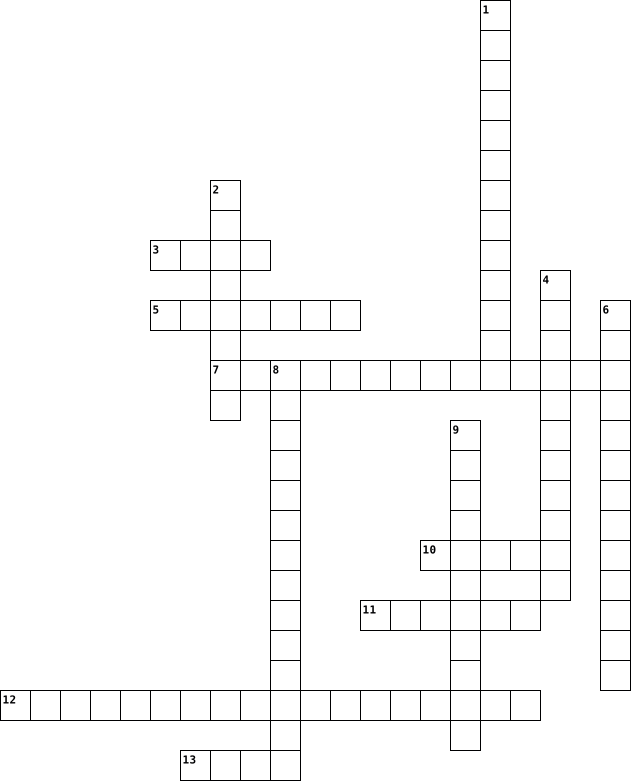
Across
- Locke's view on human nature
- belief that too much power leads to this
- people giving up rights to government who provide law and order in exchange
- new truths can be discovered using ____ and reason
- continent where the Enlightenment began
- idea of Montesquieu
- Hobbes view on human nature
Down
- period of time when people rethought old ideas
- the world can be improved and life can be enjoyed
- one of the causes of the Enlightenment
- life, liberty and pursuit of property
- type of monarchy believed best by Locke
- people who engaged in the ideas of the Enlightenment
13 Clues: idea of Montesquieu • Hobbes view on human nature • Locke's view on human nature • life, liberty and pursuit of property • one of the causes of the Enlightenment • type of monarchy believed best by Locke • continent where the Enlightenment began • belief that too much power leads to this • period of time when people rethought old ideas • ...
- Buddhism - 2023-12-19
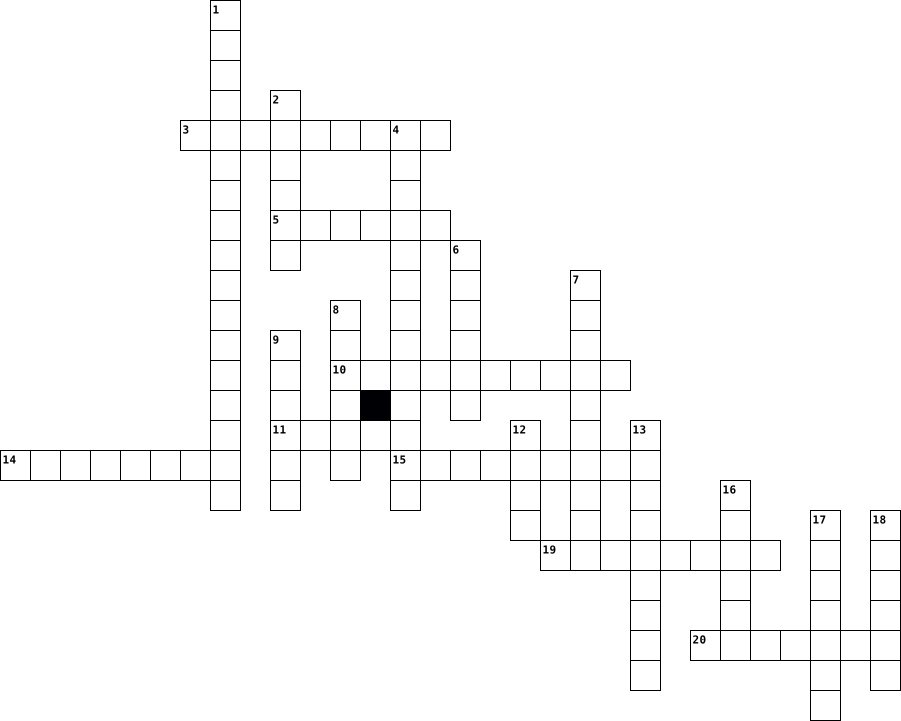
Across
- The tree that the Buddha sat under for three days straight until he found the way to enlightenment
- The breaking of the cycle of rebirth
- The prince of the Hindu Republic and otherwise known as the Buddha
- The effect your actions have on your next life
- The 4000 year old sacred language
- The oldest surviving branch of Buddhism
- Another branch of Buddhism which is significantly younger than the Theravadan branch
- The belief that when you die you will be reborn into a new body
Down
- The basis of Buddhism
- The name for the Buddha's teachings
- The path to enlightenment that consists of Right understanding, Right thought, Right speech, Right action, Right livelihood, Right effort, Right mindfulness,and Right concentration
- The person who found the middle path to enlightenment
- Enlightened beings that stayed behind to help nonenlightened beings reach Moksha
- By ending this you can end suffering
- The reality that all life is suffering
- The language in which the Suttas where written
- Another branch of Buddhism under Mahayana
- The Buddha's community of monks
- The name for enlightenment
- Texts used by the Theravadans based on the teachings of the Buddha
20 Clues: The basis of Buddhism • The name for enlightenment • The Buddha's community of monks • The 4000 year old sacred language • The name for the Buddha's teachings • The breaking of the cycle of rebirth • By ending this you can end suffering • The reality that all life is suffering • The oldest surviving branch of Buddhism • Another branch of Buddhism under Mahayana • ...
Y9 Revision Crossword 2024-11-27

Across
- where the Buddha's remains were placed. Eg Dhamekh _____
- The most important pilgrimage site for Buddhists
- The Five _______. Rules Buddhists follow
- A person who has reached enlightenment, but chooses to be reborn to help others
- The Three _____. You take refuge in them
- The festival of giving cloth to monks
- The old man, sick man, dead man, and holy man
- Your position when you meditate
- The leader of Tibetan Buddhism
- Someone who denies themselves all luxuries
- Where the Buddha gave his first sermon
Down
- The four things the Buddha taught in his first sermon
- The community of Buddhist monks and nuns
- The school of Buddhism which views monks and nuns as very important
- Where the Buddha was born
- Reaching enlightenment
- Buddha Day
- What you achieve once you die after you've reached enlightenment
- Greed, hatred, and delusion
- A circular pattern used for meditation. Is sometimes made out of sand and destroyed
- They're vague, but if you follow them you'll reach enlightenment
- Where the Buddha died
- Neither having everything nor having nothing
- The cycle of life death and rebirth
- Means 'awakened one'
25 Clues: Buddha Day • Means 'awakened one' • Where the Buddha died • Reaching enlightenment • Where the Buddha was born • Greed, hatred, and delusion • The leader of Tibetan Buddhism • Your position when you meditate • The cycle of life death and rebirth • The festival of giving cloth to monks • Where the Buddha gave his first sermon • The community of Buddhist monks and nuns • ...
McKenna and Penny Enlightenment Crossword 2026-02-20

Across
- Believed in separation of power and checks & balances.
- The immediate result of the enlightenment in America.
- The immediate result of the enlightenment in France.
- Believed that without government, there would be war.
- A person who presented new ways of thinking during the enlightenment.
- The part of the declaration of independence that uses the social contract theory.
- Believed in freedom of speech & freedom of religious belief.
- A party where people met to share new ideas.
- Article in the declaration of independence that talked about the judicial branch.
Down
- Believed in women's right to be educated.
- Was against cruel and unusual punishment.
- The amendment that featured Wollstonecraft's ideas.
- The amendment that featured Beccaria's ideas.
- Absolute rulers that embraced ideas of the enlightenment
- Advocated for life, liberty, and property.
- Frederick the II call himself this.
- Article in the declaration of independence that talked about the executive branch?
- Article in the declaration of independence that talked about the legislative branch?
- Argued that all people were equal.
- The theory there's an agreement between the government and the people.
- The amendment that featured Voltaire's ideas.
- A person who rules with absolute power.
22 Clues: Argued that all people were equal. • Frederick the II call himself this. • A person who rules with absolute power. • Believed in women's right to be educated. • Was against cruel and unusual punishment. • Advocated for life, liberty, and property. • A party where people met to share new ideas. • The amendment that featured Beccaria's ideas. • ...
World History and Geography (Bembry)- Unit 2 2024-09-03

Across
- Russian monarch whose ideas were see as "too radical"
- given to English Catholics living in secrecy
- Prussian monarch who believed nobles should be educated
- Enlightenment philosopher who believed people have natural rights that the government mua protect
- Enlightenment philosopher who believed in the "social contract"
- monarch that restored the monarchy after the English Civil Wars
- Monarch that became king after Elizabeth I
- monarch who signed the "Petition of Right"
- Main mineral mined by the Spanish in South America
Down
- Enlightenment philosopher who believed people are naturally wicked
- Enlightenment philosopher who believed in the separation of church and state
- The location for the final battle of the Third English Civil War
- Name of the man who controlled England after defeating Charles II
- Name for the Royal Army
- Palace built by Louis XIV in France
- Name for the Parliamentary army
- Plot to assassinate James I by English Catholics
17 Clues: Name for the Royal Army • Name for the Parliamentary army • Palace built by Louis XIV in France • Monarch that became king after Elizabeth I • monarch who signed the "Petition of Right" • given to English Catholics living in secrecy • Plot to assassinate James I by English Catholics • Main mineral mined by the Spanish in South America • ...
Jainism 2023-05-02
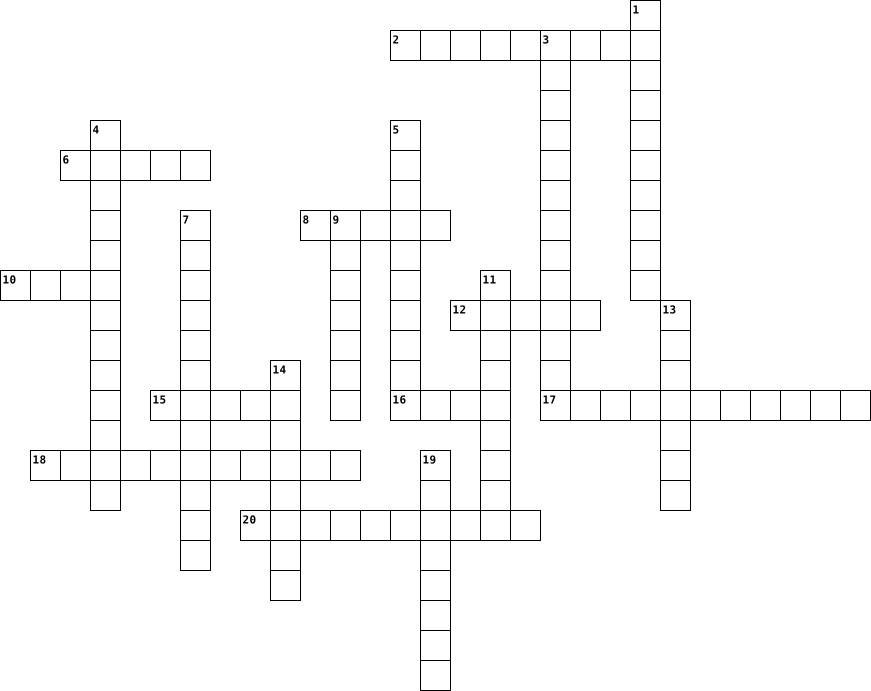
Across
- Warrior in the caste system
- The followers that might not wear clothes
- Followers are calles ________.
- Believe that every plant and animal has a _________.
- Followers always speak the _________.
- Where do most followers live?
- They can't eat this type of vegetable
- The path to enlightenment is through ________.
- These people do not eat meat
- The number of followers today.
Down
- The birth name of the most important spiritual leader.
- Believe in the cycle of birth, death and rebirth
- They don't become attached to these.
- The number of teachers that havr achieved enlightenment.
- Spiritual leaders who have achieved enlightenment
- Practices self-denial of worldly things
- The meaning of the name of the founder.
- A strict code of nonviolence
- The most important spiritual leader.
- Abstaining from marriage and sexual relations
20 Clues: Warrior in the caste system • A strict code of nonviolence • These people do not eat meat • Where do most followers live? • Followers are calles ________. • The number of followers today. • They don't become attached to these. • The most important spiritual leader. • Followers always speak the _________. • They can't eat this type of vegetable • ...
Scientific Revolution 2022-10-06

Across
- created the natural rights of man
- the most common economic system in Europe prior to the Enlightenment
- credited with heliocentric theory
- separation of power
- created the three laws of motion
- country that had the first revolution inspired by the Enlightenment
- the belief that people could use logic and reason to create progress
- writer of the wealth of nations
- one of the materialistic writers and thinkers of the 18th century
- believed humans were naturally evil
- book written by Denis Diderot
- helped create the scientific method
- the idea that governmental power is in the hands of the people
- discovered a supernova
- rights of the accused
- popularized the Scientific Method
Down
- discovered that plants moved elliptically
- freedom of speech
- the idea of a monarch having complete political control
- intellectual gatherings in the homes of the wealthy
- theory that the sun is the center of the universe
- theory that the earth is the center of the universe
- the idea that each branch of government can prevent another from tyranny
- country with the most Enlightenment thinkers
- people who believe in a creator god
- "I think therefore I am"
- first person to theorize heliocentric theory
27 Clues: freedom of speech • separation of power • rights of the accused • discovered a supernova • "I think therefore I am" • book written by Denis Diderot • writer of the wealth of nations • created the three laws of motion • created the natural rights of man • credited with heliocentric theory • popularized the Scientific Method • people who believe in a creator god • ...
US GOV 2022-01-14
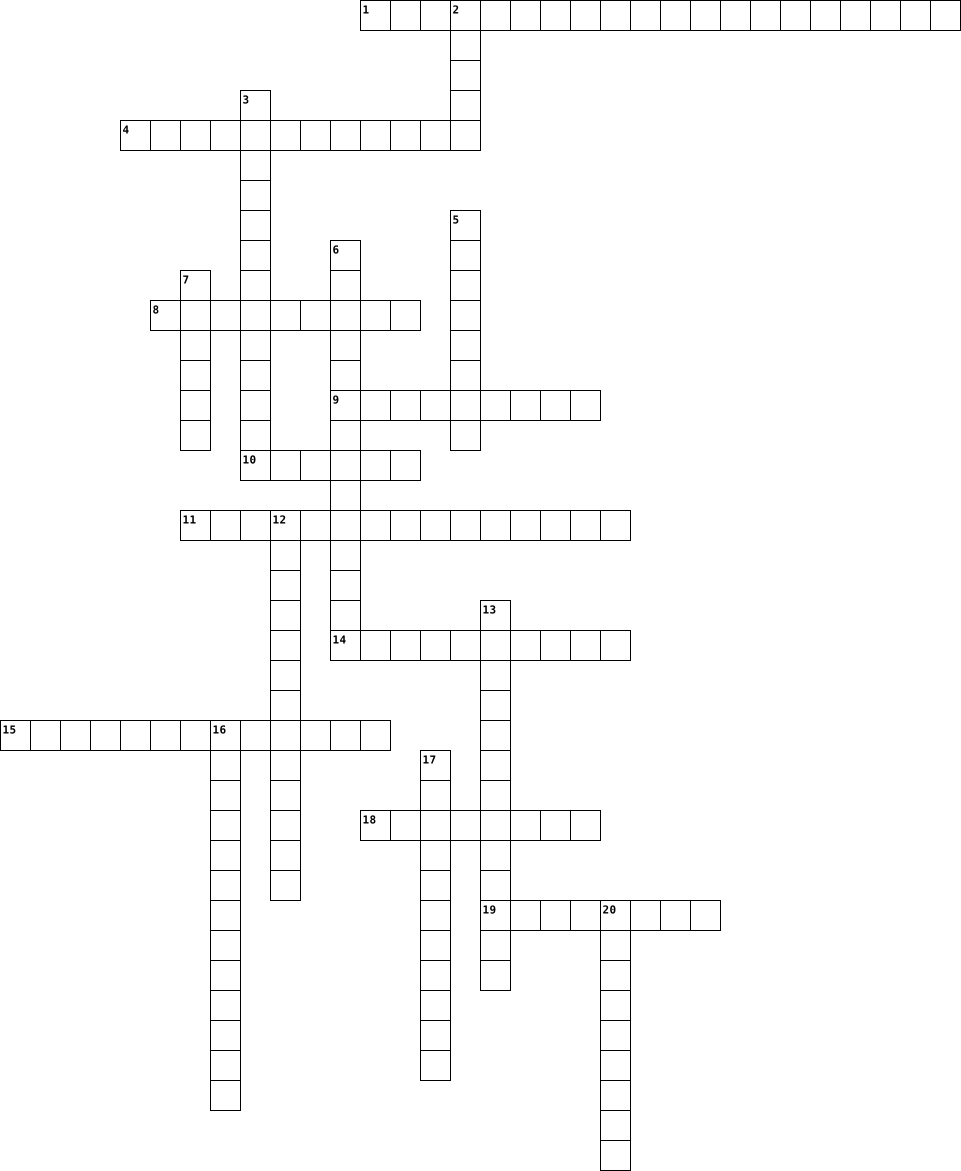
Across
- If the government fails to protect citizens, citizens have the right to revolt.
- document that gave citizens a say in government
- Philosopher born in England
- Book that explains how Hobbes thought the government should work
- where enlightenment began
- When citizens are directly involved in lawmaking
- Means “a blank slate or page”
- _____ happens when people sacrifice some natural freedoms so they can have the freedom that comes with security and protection.
- divided into the house of Representatives and the senate
- How many European leaders gained power
Down
- Building used to discuss philosophy and ways to improve the human experience
- no rules, complete freedom, and without any protection from each other
- Who was in favor of a government of the people, by the people, for the people.
- The idea that people give up rights in exchange for protection from the government
- Author of Leviathan
- a period of time when people developed new ideas about human existence
- Life, Liberty, Property
- Idea most enlightenment thinkers believed in
- Those things that are in the best interest of society as a whole
- what some Enlightenment thinkers were afraid of
20 Clues: Author of Leviathan • Life, Liberty, Property • where enlightenment began • Philosopher born in England • Means “a blank slate or page” • How many European leaders gained power • Idea most enlightenment thinkers believed in • document that gave citizens a say in government • what some Enlightenment thinkers were afraid of • When citizens are directly involved in lawmaking • ...
Enlightenment Unit Review Puzzle 2017-02-25
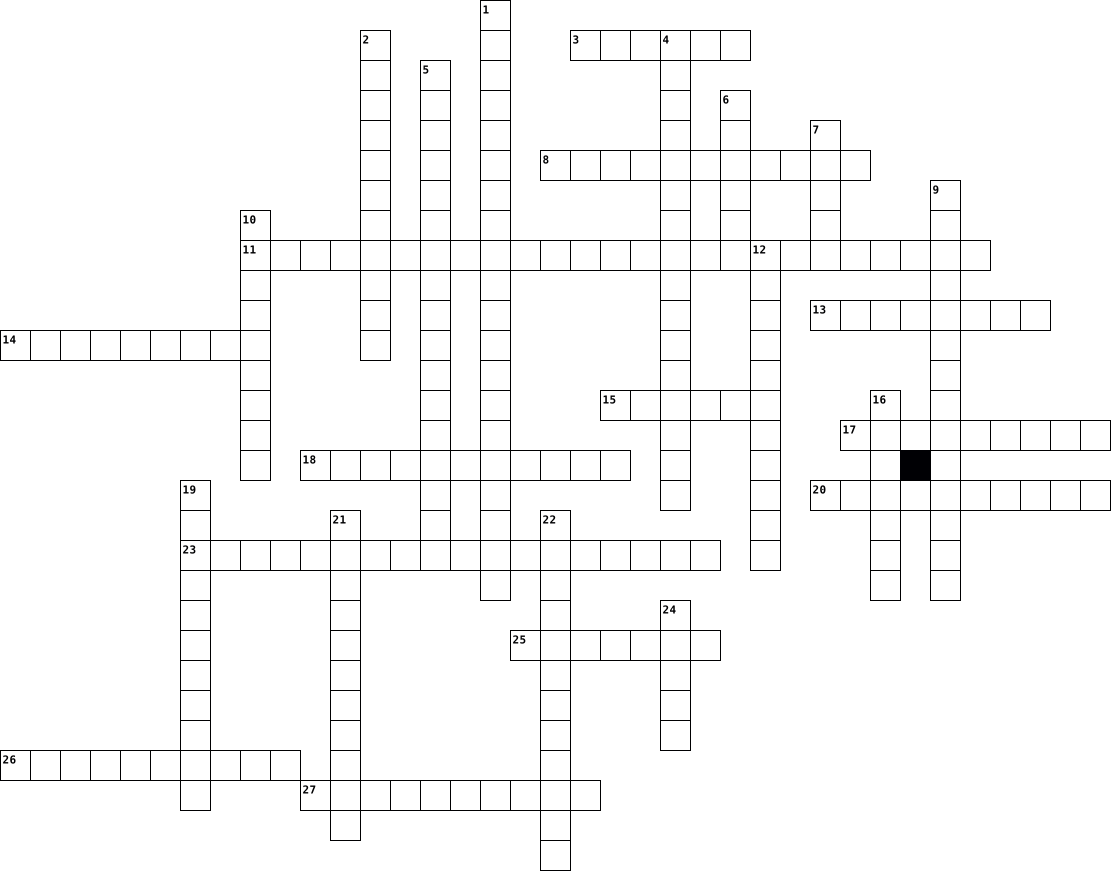
Across
- He wrote a book called the Leviathan. He thought people were selfish & greedy and needed to be controlled by an absolute monarch.
- As some Christians began to question the teachings of the Catholic Church, they also began forming their own ideas about other aspects of the world. This shows the influence of what period on the Enlightenment?
- The US document, written by Jefferson, that states John Locke’s ideas about natural rights. (3 words)
- He suggested that a way to improve society is for people to tolerate other religious beliefs.
- Renaissance scholars who studied the classical works of the Greeks and Romans and influenced Enlightenment thinkers.
- Place were women gathered to exchange & discuss ideas.
- Best known for the idea that all people are born with natural rights. (2 words)
- The ____was the movement to drive the Muslims from Spain.
- He challenged traditional beliefs by suggesting that the Earth moved around the sun.
- Who wrote A Vindication of the Rights of Women? (2 words)
- Rights that belong to all people from birth are called __
- The Catholic Church’s most powerful tool in maintaining its authority in medieval Europe was that it controlled the __.
- He believed in predestination, that faith was revealed through a righteous life, and a strong work ethic.. (2 words)
Down
- Enlightenment thinkers were influenced by the use of the experiments & observations to study nature that were developed during the __ (2 words)
- Another name for the Enlightenment. (3 words)
- Who makes most of the decisions about prices in a free market economy? (3 words)
- This results from the Montesquieu’s separation of powers idea. (3 words)
- What country was the center of Enlightenment?
- Many Enlightenment philosophers supported the idea the equality & liberty should be granted to men, but not to _.
- Rousseau’s theory that people should not follow a government if it did not protect their rights is called _ (2 words)
- Who challenged the traditional economic views by saying governments should have a limited role in the economy? (2 words)
- The writers, scientists, and thinkers who discussed Enlightenment ideas were knowns as__
- A Chinese invention that was valuable to European sailors.
- Enlightenment ideas about government challenged the ideas of an absolute monarch. These ideas eventually shaped _ (type of government) around the world..
- Better products, cheaper products, and more job opportunities are a result of what?
- During the 1700s most governments limited trade with other countries to keep the wealth within the nation. This idea is called _
- During the Middle Ages scholars used __ to communicate with each other.
27 Clues: Another name for the Enlightenment. (3 words) • What country was the center of Enlightenment? • Place were women gathered to exchange & discuss ideas. • The ____was the movement to drive the Muslims from Spain. • Who wrote A Vindication of the Rights of Women? (2 words) • Rights that belong to all people from birth are called __ • ...
Ancient India Crossword 2025-05-21

Across
- The idea that all things come from one original source
- Journey to Hindu holy sites
- Religion created by Prince Siddhartha
- Hindu supreme power/divine force/god
- Collection of sacred texts
- Set of morals Buddists are expected to follow
- When Prince Siddhartha reached Enlightenment
- State of happiness and peace
Down
- Ancient Indian Language
- The goal of the Buddhists
- Cycle of rebirth
- Cycle of cause and effect
- Path to Enlightenment
- Person who denies himself worldly pleasures
- Duty or obligation to live a honorable life
15 Clues: Cycle of rebirth • Path to Enlightenment • Ancient Indian Language • The goal of the Buddhists • Cycle of cause and effect • Collection of sacred texts • Journey to Hindu holy sites • State of happiness and peace • Hindu supreme power/divine force/god • Religion created by Prince Siddhartha • Person who denies himself worldly pleasures • Duty or obligation to live a honorable life • ...
AOL Spiritual Crossword Puzzle (July 2013) 2013-07-05
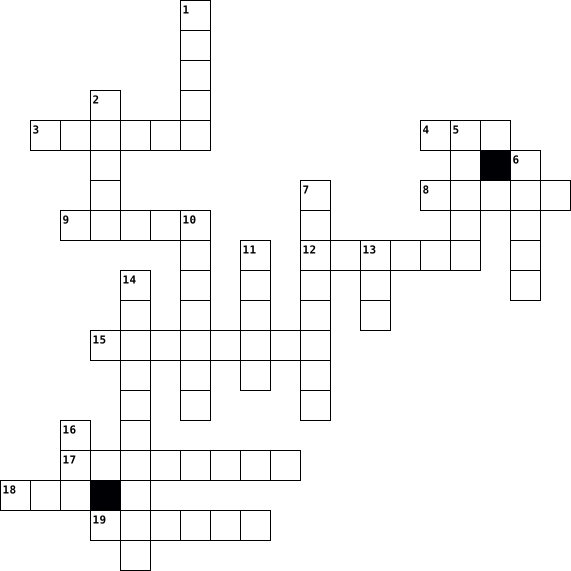
Across
- Who says - 'Choice is yours, blessing is mine':)
- Art of Living course that focuses on doing something new/now
- Friend of knowledge
- Ignorant state
- Number of disciples of Jesus
- 108 sun salutations yoga challenge public event
- Art of living Children's course age 8-13 years
- Life is -----
- City which hosted 30th anniversary celebrations of Art of Living
Down
- Name of tree which Buddha was sitting under at the time of enlightenment
- Life force
- Which entity has lowest prana?
- Penance
- Pain is inevitable, suffering is ---', says Sri Sri Ravishankar
- Om Namah --------
- State which one experiences lethargy
- Faculty which says 'I am'
- Before enlightenment you are a woodcutter, after enlightenment you are a ----
- Sri Sri Ravishankar was born in the month of -------
19 Clues: Penance • Life force • Life is ----- • Ignorant state • Om Namah -------- • Friend of knowledge • Faculty which says 'I am' • Number of disciples of Jesus • Which entity has lowest prana? • State which one experiences lethargy • Art of living Children's course age 8-13 years • 108 sun salutations yoga challenge public event • Who says - 'Choice is yours, blessing is mine':) • ...
Buddhism 2023-05-02
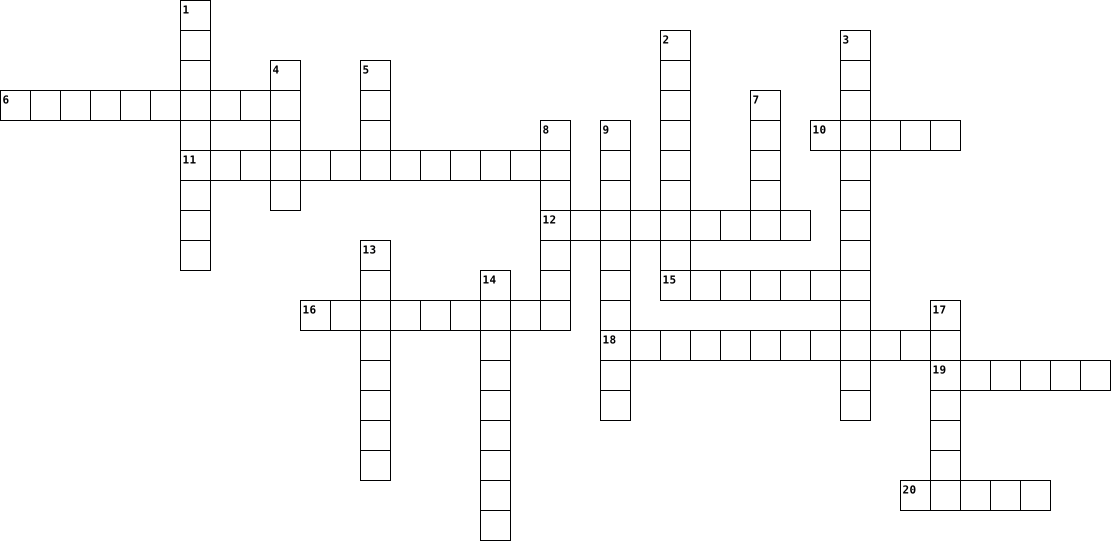
Across
- The awakened
- most followed religion
- known in Tibet as one of the founding fathers of Tibetan Buddhism
- the way of getting to enlightenment
- important bodhisattva worshipped in East Asia
- means three baskets
- number one inescapable, and essentially painful, fact of life.
- is considered an extraordinary being, but not a god
- sacred texts
Down
- earliest appearing bodhisattvas in Mahayana Buddhism
- Buddhists believe that the human life has
- they have reached Nirvana
- a Sanskrit term that literally means "action" or "doing"
- supreme savior and goddess of mercy in Vajrayana Buddhism
- where it started
- life of suffering
- what is a common method in Buddhism
- the Buddha of the future, who will be born to teach enlightenment in the next age
- cuts through ignorance and personifies correct knowledge
- an endless cycle called saṃsāra
20 Clues: The awakened • sacred texts • where it started • life of suffering • means three baskets • most followed religion • they have reached Nirvana • an endless cycle called saṃsāra • what is a common method in Buddhism • the way of getting to enlightenment • Buddhists believe that the human life has • important bodhisattva worshipped in East Asia • ...
MAHAYANA BUDDHISM 2025-09-20

Across
- The compassionate mind aspiring to enlightenment for others.
- Birthplace of Siddhartha Gautama.
- One who achieves enlightenment with the help of a Buddha.
- Village girl who offered food to Gautama.
- An enlightened being who postpones nirvana to help others.
- Tree under which Siddhartha attained enlightenment.
- The father of Siddhartha Gautama.
- Complete nirvana at Buddha's death.
- Doctrine of the three bodies of the Buddha.
- "Great Vehicle" form of Buddhism.
Down
- The collection of three Buddhist scriptures.
- The joy body of Buddha according to Trikaya.
- The Buddhist monastic community.
- Another name for suffering in Buddhism.
- Lord of illusion who tried to distract Siddhartha.
- A Buddhist scripture or discourse.
- Final liberation from suffering and rebirth.
- The son of Siddhartha Gautama.
- Closest companion and cousin of Buddha.
- Sanskrit word for impermanence.
20 Clues: The son of Siddhartha Gautama. • Sanskrit word for impermanence. • The Buddhist monastic community. • Birthplace of Siddhartha Gautama. • The father of Siddhartha Gautama. • "Great Vehicle" form of Buddhism. • A Buddhist scripture or discourse. • Complete nirvana at Buddha's death. • Another name for suffering in Buddhism. • Closest companion and cousin of Buddha. • ...
Japan 2025-03-18

Across
- the samurai code of honor
- japanese religion based on reaching enlightenment
- paper folded into shapes
- japanese religion based on god like nature spirits
- a state of enlightenment outside of the cycle of rebirth
- japenese heavy wresteling
- the capital of japan
Down
- ciy in japan known for it's religious culture
- seaweed wrapped raw fish
- exotic plays with all male actors
- popular green tea powder
- japanese spies and infiltrators
- the way of peace and meditation to achieve enlightenment
- shoguns right hand
- japanese martial art centered on strong hits
15 Clues: shoguns right hand • the capital of japan • seaweed wrapped raw fish • popular green tea powder • paper folded into shapes • the samurai code of honor • japenese heavy wresteling • japanese spies and infiltrators • exotic plays with all male actors • japanese martial art centered on strong hits • ciy in japan known for it's religious culture • ...
Enlightenment 2017-08-15
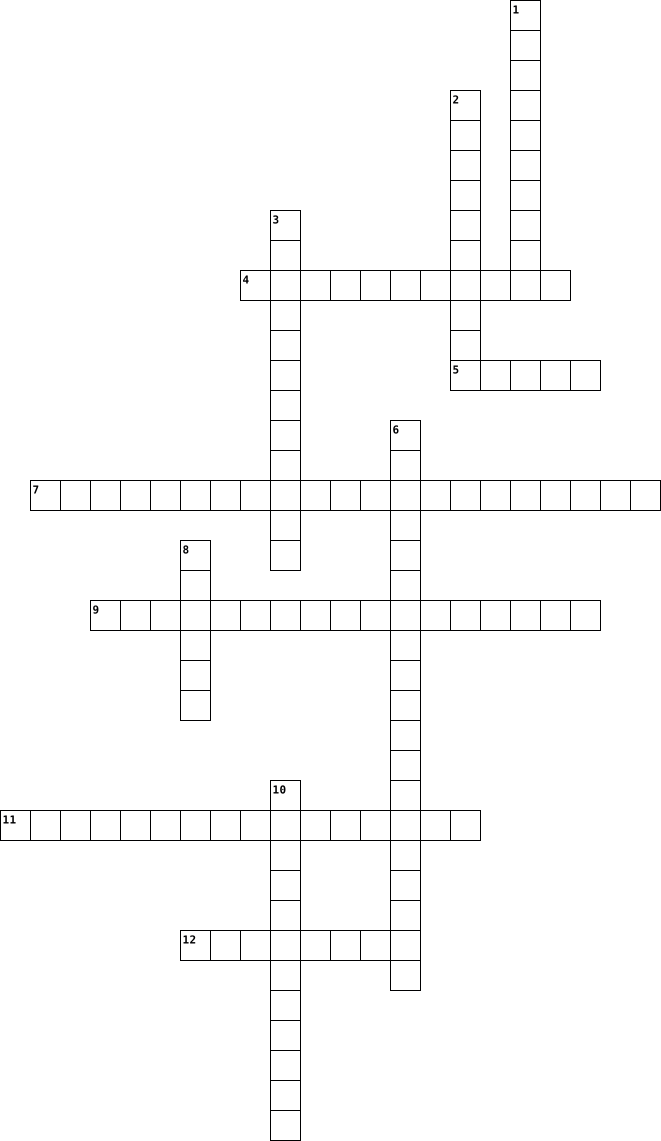
Across
- Open-minded and well educated
- A gathering for intellectual discussions
- A new way of seeking truth in the mid-1500s
- The process of testing a hypothesis to form a conclusion
- A government with elected officials who represent voters
- An opening statement
Down
- Foremost thinker of the French Enlightenment
- Explanation for something not proven
- The supreme law of the United States
- Each branch of government limits the power of the others
- An explanation of a group of facts or phenomena
- A rebirth of the artistic forms of ancient Greece and Rome
12 Clues: An opening statement • Open-minded and well educated • Explanation for something not proven • The supreme law of the United States • A gathering for intellectual discussions • A new way of seeking truth in the mid-1500s • Foremost thinker of the French Enlightenment • An explanation of a group of facts or phenomena • ...
Enlightenment 2021-12-06
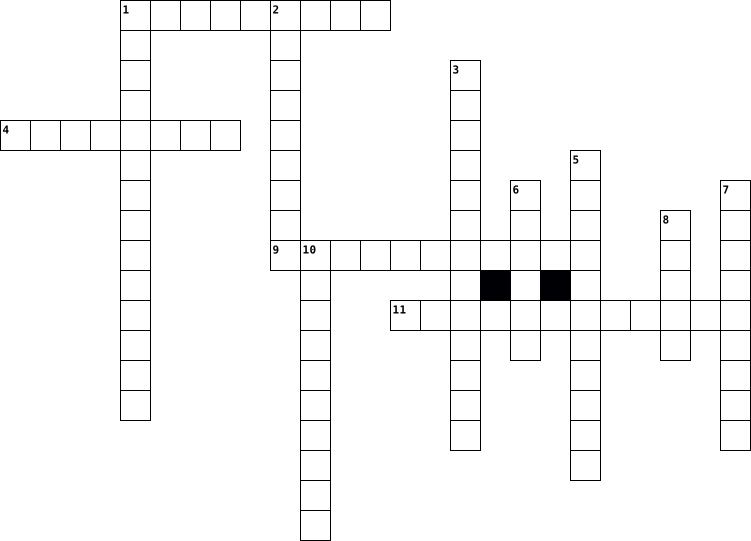
Across
- People have ultimate power
- He believed that there should be a separation of church and state
- These govern Human Character
- Lovers of wisdom
Down
- An agreement made by people in which they give up something for an organized Society.
- Knowledge
- Freedoms belonging to all humans from birth
- Focused on economic reforms
- Ability to think logically
- The Father of Modern Economics was
- Form of literature developed during the Enlightenment
- Complete power
12 Clues: Knowledge • Complete power • Lovers of wisdom • People have ultimate power • Ability to think logically • Focused on economic reforms • These govern Human Character • The Father of Modern Economics was • Freedoms belonging to all humans from birth • Form of literature developed during the Enlightenment • He believed that there should be a separation of church and state • ...
Enlightenment 2022-02-23
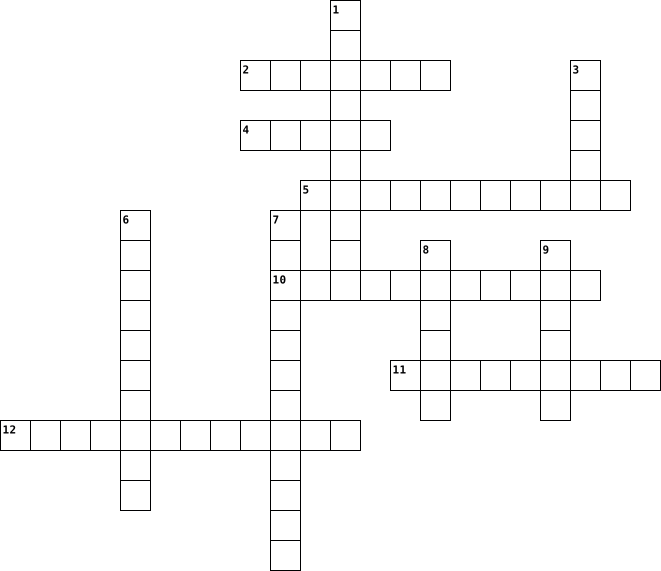
Across
- used the telescope to describe and study the heavens
- came up with the scientific method
- created the theory of checks and balances witch is now in our government today
- invented the microscope
- believed that people were born with natural rights
- creater of the small pox vaccine
Down
- the people who presented new ways of thinking during the Enlightenment
- invented chemistry and considered the first modern chemist
- belief that the earth was the center of the universe
- belief that the sun was the center of the universe
- a person who rules with absolute power
- discovered the laws of gravity and created calculus
12 Clues: invented the microscope • creater of the small pox vaccine • came up with the scientific method • a person who rules with absolute power • belief that the sun was the center of the universe • believed that people were born with natural rights • discovered the laws of gravity and created calculus • used the telescope to describe and study the heavens • ...