
photosynthesis Crossword Puzzles
PLANT ORGANS AND FUNCTION by Ghianne Villasotes 2020-11-27

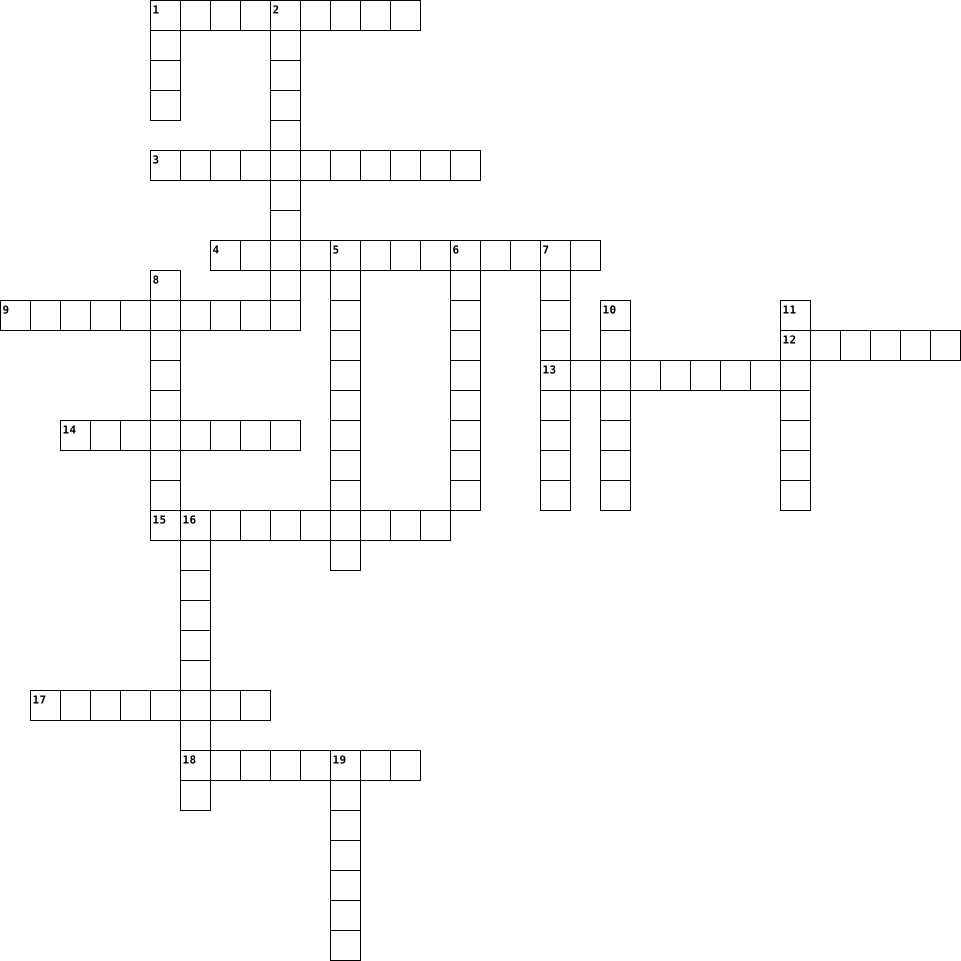
Across
- ________ are the main site for photosynthesis.
- _______ cell walls are flexible and can expand as the cell grows and elongates.
- ________ cells provide protection and have other specialized adaptations in different plant organs.
- It is the shoot support in areas of active growth.
- It is usually found in the area between the base of a leaf and the stem where it can give rise to a branch or a flower.
- _______ stems are soft and typically green.
- It transports water, minerals, and sugars to different parts of the plant.
- It is the growth region in plants found within the root tips and the tips of the new shoots and leaves.
- It is the primary growing point at the top of the stem of a plant.
- ________ stems have divisions and side stems.
- A________ is a part of a tree which grows out from the trunk or from a bough.
- It is a distinct organ system of plants that supports the plants and absorbs water and minerals, is usually underground.
- It is a distinct organ system of plants that grow above ground, where it absorbs the light needed for photosynthesis.
- ________ root systems are located closer to the surface and have a dense network of roots. This root system can help prevent soil erosion.
Down
- It is a part of the shoot system which consists of the leaves and stems.
- __________ stems have a single stem.
- __________ is the photosynthesis in the leaves, and storage in the roots.
- This root structure stores starch.
- It covers and protects the plant, and controls gas exchange and water absorption (in roots).
- It is the shoot support in areas where growth has ceased.
- It is the process by which plants synthesize food.
- It is a part of the shoot system which consists of flowers and fruits.
- Stems and leaves have _______, which are hair-like structures on the epidermal surface.
- _______ are a part of the shoot system of a plant. Their main function is to provide support to the plant, holding leaves, flowers, and buds.
- _______ are specialized pores that allow gas exchange through holes in the cuticle.
25 Clues: This root structure stores starch. • __________ stems have a single stem. • _______ stems are soft and typically green. • ________ stems have divisions and side stems. • ________ are the main site for photosynthesis. • It is the shoot support in areas of active growth. • It is the process by which plants synthesize food. • ...
AP Biology Final 2023-06-09

Across
- The gain of electrons by a substance involved in a redox reaction
- Anaerobic process in which glucose is broken down
- The stored energy that matter possesses as a result of its position or internal structure.
- The ability to do work
- Process by which plants and some other organisms use light energy to convert water and carbon dioxide into oxygen, sugars and starches
- Flattened membrane sacs inside the chloroplast used to convert light energy to chemical energy.
- Heat energy
- source of electrons as "reducing power" that can be passed along to an electron receptor, reducing it. provides electrons for photosynthesis
- A catabolic process that makes a limited amount of ATP from glucose without an electron transport chain or oxygen and that produces ethyl alcohol or lactic acid.
- Process in which organism builds up or breaks down materials.
Down
- The distance between the crests of electromagnetic waves
- Second stage of photosynthesis in which energy from ATP and NADPH is used to make sugars
- Potential energy available for release in a chemical reaction
- The portion of the electromagnetic spectrum that can be detected as various colors by the human eye
- Organelles that capture the energy from sunlight and convert it into chemical energy during photosynthesis
- Protein structure in cell mitochondria that uses energy from H+ ions to convert ADP to ATP by adding a phosphate group
- An energy-carrying coenzyme produced by glycolysis and the Krebs cycle.
- coenzyme present in all cells that helps enzymes transfer electrons during redox reactions of metabolism
- Main energy source that cells use for most of their work
- A chemical reaction that involves the loss of an electron.
- A discrete quantity of light energy that behaves like it is a particle
- The energy of motion
- Fluid of the chloroplast surrounding the thylakoid membrane; involved in the synthesis of organic molecules from carbon dioxide and water
- Proteins that speed up chemical reactions
- Respiration in which oxygen is consumed and glucose is broken down entirely
25 Clues: Heat energy • The energy of motion • The ability to do work • Proteins that speed up chemical reactions • Anaerobic process in which glucose is broken down • The distance between the crests of electromagnetic waves • Main energy source that cells use for most of their work • A chemical reaction that involves the loss of an electron. • ...
Plant Physiology session 6 mario 2024-10-14

Across
- Particles of light that are absorbed by pigments during photosynthesis.
- The haploid, gamete-producing phase of a plant’s life cycle.
- Rigid structure surrounding plant cells, providing support and protection.
- Process that reduces the efficiency of photosynthesis by consuming oxygen and releasing CO2.
- Loss of water vapor from plant leaves, driving water movement through the plant.
- Enzyme that fixes CO2 in C4 and CAM plants, increasing carbon fixation efficiency.
- Property of water molecules sticking together, aiding in water transport through xylem.
- Proteins that facilitate the movement of water across cell membranes.
- Organelle where photosynthesis takes place in plant cells.
- Plant tissue responsible for conducting water and dissolved minerals from the roots.
- Macronutrient needed for ATP synthesis and nucleic acid formation.
- Essential nutrient acting as the central atom in chlorophyll and aiding enzyme function.
Down
- Proteins in cell membranes that allow the passive transport of ions.
- Specialized cells in C4 plants where the Calvin cycle takes place.
- Process by which water moves across a semipermeable membrane, critical for plant water uptake.
- Fluid-filled space inside the chloroplast where the Calvin cycle (carbon reactions) occurs.
- Yellowing of leaves, often indicating a nutrient deficiency.
- Type of cell division responsible for plant growth and repair.
- Essential macronutrient required for amino acids and chlorophyll production.
- Symbiotic association between fungi and plant roots, enhancing nutrient uptake.
- Region in plants where cells actively divide, contributing to growth.
- Movement of ions across membranes requiring energy input (usually ATP).
- Continuous network of cytoplasm between plant cells through plasmodesmata, enabling solute transport.
- Electron carrier produced in the light reactions, used in the Calvin cycle for carbon fixation.
- Force in the xylem that helps pull water upward from roots to leaves.
- Layer of cells in plant roots that regulates ion uptake and water transport into the vascular tissue.
- Plant tissue system that transports water, nutrients, and sugars (xylem and phloem).
- Pathway used by plants like succulents to fix carbon dioxide at night, conserving water.
- Energy-carrying molecule produced during the light reactions of photosynthesis.
- Photosynthetic pathway adapted for hot, sunny environments, reducing photorespiration.
30 Clues: Organelle where photosynthesis takes place in plant cells. • The haploid, gamete-producing phase of a plant’s life cycle. • Yellowing of leaves, often indicating a nutrient deficiency. • Type of cell division responsible for plant growth and repair. • Specialized cells in C4 plants where the Calvin cycle takes place. • ...
Plants I 2025-03-24

Across
- outer layer of the stem/root
- transparent upper layer of cells in a leaf containing no chloroplasts
- bundles areas where phloem and xylem are bundled together
- layer in a leaf that contains air spaces to allow easy diffusion of gases
- layer of cells that contain stomata
- one of the most important minerals for plant growth; needed for chlorophyll to work
- transports water and minerals to the leaf from the roots; made of dead cells
- one of the most important minerals for plant growth; needed to make proteins, chlorophyll and DNA
- controls the opening and closing of the stomata
- the carbohydrate that plants use to make cell walls
- layer of lipid that prevents water loss from leaf
- indicator solution which changes in colour in response to changes in carbon dioxide concentration; yellow – high CO2 levels, orange – atmospheric CO2, purple – low CO2 levels
- the loss of water vapour from the leaves of plants; rate affected by light intensity, temperature, humidity & wind
- the carbohydrate molecule that plants use to store glucose/energy
Down
- main site of photosynthesis in a leaf; cells contain lots of chloroplasts
- transports sucrose and amino acids from the leaf
- carbon dioxide + water → glucose + oxygen; requires light and chlorophyll
- one of the most important minerals for plant growth; need to make DNA and cell membranes
- allow easy diffusion of gases through the leaf
- the organelle where photosynthesis occurs; contains chlorophyll
- specialised pore in a leaf to allow gases to move in and out of leaf
- one of the most important minerals for plant growth; needed for enzymes to work
- of the stem/root that produces new plant cells
- factor the component of a reaction which is it shortest supply so prevents the rate increasing
- passage of water and minerals through the roots, stem and leaves of a plant
- main organ of a plant for photosynthesis
- the movement of oxygen and carbon dioxide in and out of the leaf
27 Clues: outer layer of the stem/root • layer of cells that contain stomata • main organ of a plant for photosynthesis • allow easy diffusion of gases through the leaf • of the stem/root that produces new plant cells • controls the opening and closing of the stomata • transports sucrose and amino acids from the leaf • layer of lipid that prevents water loss from leaf • ...
Bio Vocab Unit 2 2025-10-01

Across
- Sphere of the earth, all soil and rocks on earth
- Process of using light energy to make glucose, starts with CO2 and H2O and ends with C6H12O6 and O2
- Organelle, site of steps 2 and 3 of (aerobic) cellular respiration
- Type of organism than must eat other organisms to obtain energy
- Organelle, site of photosynthesis
- Describes a situation in which oxygen is present
- Sphere of the earth, all living things on earth
- Second step of aerobic cellular respiration, pyruvate is broken down NADH and FADH2 are made, released CO2
- type of organism that is able to make it's own food, base of the food chain
- Substances at the beginning of a chemical reactions, changed into products
- Sphere of the earth, all the water on earth
- Nutrient, forms the backbone for all macromolecules and living things
- Nutrient, used in phosphates of nucleic acids, and phosphate lipids of membranes, often limited
- First step of photosynthesis, uses sunlight to split H2O and make ATP and NADPH, O2 is released
- type of organism that breaks down biotic compounds into abiotic compounds, recyclers
Down
- Sphere of the earth, all the glasses surrounding earth
- Second step of anaerobic cellular respiration, 2 types include alcoholic and lactic acid
- Third step of aerobic cellular respiration, NADH and FADH2 from earlier reactions are used to make 32 units of ATP
- Substances created during a chemical reactions, made from reactants
- Adenosine Diphosphate, uncharged energy storage molecule with 2 phosphates
- Process of breaking down glucose to make ATP, starts with CO2 and H2O and ends with C6H12O6 and O2
- Anything that has mass and takes up space, makes up everything
- Adenosine Triphosphate, charged energy storage molecule with 3 phosphate groups
- Describes a situation in which oxygen is NOT present
- Pigment in chloroplasts, used to trap light energy during photosynthesis
- Nutrient, used in proteins and nucleic acids, must be "fixed" for living things to use, often limited
- First step of cellular respiration breaks down glucose into pyruvate, makes NADH
27 Clues: Organelle, site of photosynthesis • Sphere of the earth, all the water on earth • Sphere of the earth, all living things on earth • Sphere of the earth, all soil and rocks on earth • Describes a situation in which oxygen is present • Describes a situation in which oxygen is NOT present • Sphere of the earth, all the glasses surrounding earth • ...
Biology 2021-10-20

Across
- refers to the fluid are surrounding the grana within the chloroplast
- series of reactions in a membrane that transfers electrons from one chemical to another
- the chemical reactions that convert carbon dioxide and other compounds into glucose
- photosynthetic membranes found in chloroplast that contain the components for photosynthesis
- process in which light energy is absorbed and converted into energy
- principle pigment of plants and other photosynthetic organisms absorbs light energy for photosynthesis
Down
- using light energy to convert water and carbon dioxide into oxygen and glucose
- proves of synthesizing ATP from organic chemicals instead of light
- high energy molecule necessary for cellular processes
- low energy molecule
10 Clues: low energy molecule • high energy molecule necessary for cellular processes • proves of synthesizing ATP from organic chemicals instead of light • process in which light energy is absorbed and converted into energy • refers to the fluid are surrounding the grana within the chloroplast • ...
Photosynthesis and Cellular Respiration 2023-03-07

Across
- The main type of sugar. Major source of energy for cells.
- The organelle that contains chlorophyll and where photosynthesis takes place.
- The substance that goes through change during a reaction.
- The process where enzymes break down glucose.
- The process where green plants use sunlight to draw food from carbon dioxide and water.
- The element represented by the letter C and has an atomic number of 6.
- The intake of oxygen and the release of carbon dioxide.
Down
- The process where oxygen is used to make energy from sugars.
- The green pigment that absorbs the light needed for photosynthesis.
- The powerhouse of the cell.
10 Clues: The powerhouse of the cell. • The process where enzymes break down glucose. • The intake of oxygen and the release of carbon dioxide. • The main type of sugar. Major source of energy for cells. • The substance that goes through change during a reaction. • The process where oxygen is used to make energy from sugars. • ...
Unit 2 Crossward 2021-09-16

Across
- Series of electron transporters, embedded in inner mitochondrial membrane, function is to shuttle electrons from NADH & FADH2, produces most ATP(34).
- Site of light dependent reactions, in chloroplasts.
- Stack of thylakoids, in chloroplasts.
- 6CO2(Carbon Dioxide) + 6H2O(Water) + ATP(Solar Energy) = C6H12O6(Glucose) + 6O2(Oxygen)
- Site of the Calvin Cycle (Dark Reaction), in chloroplasts.
- Uses light energy to make 2 molecules needed for the next stage of photosynthesis, energy storage molecule ATP & electron carrier NADPH, also creates oxygen, takes place in thylakoid membrane.
- Principle chemical compound cells use to store & release energy. Made of adenine, 5 carbon sugar, and 3 phosphate groups.
- "Solar Energy Plant"-Captures energy from the sunlight & converts it into chemical energy in a process called photosynthesis, only found in plants.
Down
- Opposite of photosynthesis reaction, releases energy by breaking down food molecules, takes place in plants & animals, happens in 3 processes.
- "Energy Plant"-Converts chemical energy stored in food into compounds that are more usable for the cell, cite for cellular respiration.
- Takes place in mitochondria, also known as citric acid cycle, breaks down pyruvate into CO2, produces 2ATP & 6NADH.
- Plants produce what animals use, and animals produce what plants use, so plants and animals are _______ to each other.
- Also known as Calvin Cycle, no light needed, takes place in stroma, creates sugar, creates NADP & ADP.
- takes place in cytoplasm, first step in breakdown of glucose to extract energy for cellular metabolism, glucose breaks down into 2-3 carbon molecules called pyruvate, same last step in both organism requiring O2(aerobic) & organisms not requiring O2(anaerobic).
- Large complexes of proteins & pigments (light absorbing molecules) that are used to harvest light, 2 types (PSI & PSII).
- Made of adenine, 5 carbon sugar, and 2 phosphate groups.
16 Clues: Stack of thylakoids, in chloroplasts. • Site of light dependent reactions, in chloroplasts. • Made of adenine, 5 carbon sugar, and 2 phosphate groups. • Site of the Calvin Cycle (Dark Reaction), in chloroplasts. • 6CO2(Carbon Dioxide) + 6H2O(Water) + ATP(Solar Energy) = C6H12O6(Glucose) + 6O2(Oxygen) • ...
photosynthsis 2024-11-01

Across
- Product of photosynthesis
- Gas released during photosynthesis
- Green pigment in plants
Down
- Organelle where photosynthesis occurs
- Energy source for photosynthesis
- dioxide Gas taken in by plants
6 Clues: Green pigment in plants • Product of photosynthesis • dioxide Gas taken in by plants • Energy source for photosynthesis • Gas released during photosynthesis • Organelle where photosynthesis occurs
Animal and Plant kingdom 2020-12-24

Across
- invertebrate with six legs
- Loss of water through leaves
- found in plant cell walls
- The skin of mammals is covered by__________.
- Plants life cycle normally taking two seasons
- Man's best friend
- Fish use these to extract oxygen from water.
- vertebrates like us
- Young plant developing from the zygote
- both vertebrates and invertebrates need to breath in this gas
- group of similar cells performing a function
- they produce milk for their young
- Flying mammal
Down
- Joining on a sperm cell and an egg cell
- Respiration The process by which cells use oxygen to produce energy from food.
- The process by which plants, algea, and some bacteria use sunlight, carbon dioxide, and water to make food.
- A green pigment that captures light energy for photosynthesis.
- Large marsupial
- Likes to chase mice
- invertebrate with 8 legs
- Live in moist environments for reproduction
- Has a trunk
22 Clues: Has a trunk • Flying mammal • Large marsupial • Man's best friend • Likes to chase mice • vertebrates like us • invertebrate with 8 legs • found in plant cell walls • invertebrate with six legs • Loss of water through leaves • they produce milk for their young • Young plant developing from the zygote • Joining on a sperm cell and an egg cell • ...
Jadyn the botanist 2020-09-21

Across
- leaves are narrow and parallel veined
- pores mostly on the underside of the leaf, allowing exchange of gas
- have either leaves or needles
- straight edge
- Wavy edge
- 6CO + 6H20 = C6H12O6 + 6O2
- The production of plant food in the leaf b access to sunlight and water
- A group of similar cells that perform a particular function
Down
- conducts water and minerals absorbed by the root and distrusted upward
- leaf shaped like a heart
- have branching side roots and a main root to access sources of water
- conducts sugars made in the leaves by photosynthesis
- leaf stem
- leaf shaped in a long line
- the underground part of a plant
- have no main stem, but many branches
- leaf found where the petiole contacts the stem
- modified leaf adapted for dry wind and cold weather
- plant that loses their leaves or needle in winter
- leaf shaped like an egg
20 Clues: leaf stem • Wavy edge • straight edge • leaf shaped like an egg • leaf shaped like a heart • leaf shaped in a long line • 6CO + 6H20 = C6H12O6 + 6O2 • have either leaves or needles • the underground part of a plant • have no main stem, but many branches • leaves are narrow and parallel veined • leaf found where the petiole contacts the stem • ...
Biology 2021-09-28

Across
- + CO2 + H2O : Reactants of cellular respiration
- : Transformation of glucose to into ATP
- : Smallest unit of living things
- to stimuli : Fight or flight response
- : Locate at the right side of the arrow
- : The high energy form of adenosine triphosphate
- : Living things that use the sun’s energy directly to make glucose
- : The used form form of adenosine triphosphate
- : Genetic material changes over time through within a species
- Organization : Cell -> Tissue -> Organ -> Organ system -> Organism
- : Maintaining Balance
- : passing DNA through the family
- Fusion : Gravity condolences nuclei and forms atoms to collide and produce the origin of energy
- : Cell division
Down
- + oxygen : Products of Photosynthesis
- : Living thighs that cannot use the sun's energy directly
- : Plants rely on animals and animals rely on plants
- + CO2 + H2O : Reactants of cellular respiration
- : Located at the left side of the arrow
- : A process in which plants use the sun to make glucose
- : The process that transforms glucose into ATP
21 Clues: : Cell division • : Maintaining Balance • : Smallest unit of living things • : passing DNA through the family • + oxygen : Products of Photosynthesis • to stimuli : Fight or flight response • : Transformation of glucose to into ATP • : Located at the left side of the arrow • : Locate at the right side of the arrow • : The used form form of adenosine triphosphate • ...
DThornton 2017-01-23

Across
- formed when plants combine single glucose units
- formed when two monosaccharides chemically combine
- carbohydrates with complicated starches
- nutrient that is a persons main source of energy found most in plants
- sugars extracted from plants and used to sweeten foods
- chemical building blocks
- gives body energy
- sweetest sugar
- a protien with a globular shape
- chemical process by which plants make carbohydrates
- sugars with single unit chemical structures
- reduces hunger
Down
- sugars formed from simple structures
- green pigment in plants must be present for photosynthesis to happen
- single hard seeds
- simple carbohydrates formed from plants made from carbon
- complicated chemical arrangements that plants form by combining single glucose
- substitute in place of sugar to sweeten foods
- plant material that are eaten but can not be digested
- sugar in milk
20 Clues: sugar in milk • sweetest sugar • reduces hunger • single hard seeds • gives body energy • chemical building blocks • a protien with a globular shape • sugars formed from simple structures • carbohydrates with complicated starches • sugars with single unit chemical structures • substitute in place of sugar to sweeten foods • formed when plants combine single glucose units • ...
Cellular Respiration Puzzle 2018-01-29

Across
- CO2 and Water are also reactants for what?
- one of the products of cellular respiration.
- the cause of feeling fatigued and sore.
- required to start glycolysis
- _______ is a net result of 2 ATP and 2 Pyruvate
- where is glucose broken down at.
- Glycolysis is an ________
- _________ is where pyruvate is transported to.
- chain, the final step on the break down of glucose
- the molecule thai it being broken down during Kreb cycle
- the final electron acceptor in the ETC
- another product for cellular respiration
Down
- the molecule that is being broken down during glycolysis
- process which does require oxygen
- The equation for cellular respiration is the ______ for photosynthesis
- adenosine triphosphate
- Organisms obtain energy in a process called
- where electrons are harvested for Cellular Respiration
- What step is pyruvate broken down into CO2?
- the function of cellular respiration
20 Clues: adenosine triphosphate • Glycolysis is an ________ • required to start glycolysis • where is glucose broken down at. • process which does require oxygen • the function of cellular respiration • the final electron acceptor in the ETC • the cause of feeling fatigued and sore. • another product for cellular respiration • CO2 and Water are also reactants for what? • ...
Cellular Respiration 2018-01-29

Across
- broken down into carbon dioxide
- point in which most of the ATP is produced
- Series of reactions in which pyruvate is broken down into Carbon Dioxide
- process in which glucose is broken down in
- where electron transport chain takes place
- process in which organisms obtain energy
- photosynthesis and cellular respiration use are processes that cell use to obtain ______
- is the anaerobic pathway that follows glucose
- process that does not require oxygen
- reason for muscles feeling fatigued and sore
- 3_____ are converted into 2 molecules of pyruvate
Down
- final eand cellular electron acceptor
- reactant needed for photosynthesis
- Oxygen and Glucose are the _____ needed for cellular respiration
- product of cellular respiration
- carries energy to the mitochondria
- final step in break down of glucose
- ______ fermentation occurs in yeast
- requires energy
- used to provide energy for cell to do work
20 Clues: requires energy • broken down into carbon dioxide • product of cellular respiration • reactant needed for photosynthesis • carries energy to the mitochondria • final step in break down of glucose • ______ fermentation occurs in yeast • process that does not require oxygen • final eand cellular electron acceptor • process in which organisms obtain energy • ...
biosphere menu project 2018-11-19

Across
- mutual relationship between two organisms
- both animals benefit
- one harmed one benefited
- only eats meat
- organism delivering nutrients
- organism such as carbon dioxide
- the starting plants in succession
- the population an area can support
- moving to new population
- moving out of population
- part of photosynthesis
- plants and other things make food
- a kind or sort
- the result
- eats meat and plants
Down
- adapting
- has first and secondary
- eats leftover meat
- enclosed area with biotic and abiotic factors
- the prey of a animal
- part of respiration
- one benefits one unharmed
- the ingredients
- breathing
- all the inhabitants of a particular town, area, or country
- the things that limit a organism from living
- a biological community of interacting organisms and their physical environment
- a group of people living in the same place or area
- eats only plants
29 Clues: adapting • breathing • the result • only eats meat • a kind or sort • the ingredients • eats only plants • eats leftover meat • part of respiration • both animals benefit • the prey of a animal • eats meat and plants • part of photosynthesis • has first and secondary • one harmed one benefited • moving to new population • moving out of population • one benefits one unharmed • ...
Anatomy of a Cell 2019-11-18

Across
- carries waste away from the cell
- stores DNA and is the control center for the cell
- produces food for the cell, this process is called photosynthesis
- cells that do not have a nucleus
- non-cancerous cells
- gives the cell strength, protection, and structure
- packages proteins and sends them to the Golgi body
- this person named cells
Down
- transports materials around the cell and to the cell membrane
- this type of cell is typically older
- keeps the organelles inside the cell
- is surrounding the nucleus
- makes lipids and hormones
- stores water and nutrients for the cell
- the powerhouse of the cell, where cellular energy is produced
- helps guard the cell from unwanted intruders
- packages the proteins and sends them to the right place in the cell
- type of prokaryotic cell that obtain energy through photosynthesis
- the definition of organelles
- makes proteins for the cell
20 Clues: non-cancerous cells • this person named cells • makes lipids and hormones • is surrounding the nucleus • makes proteins for the cell • the definition of organelles • carries waste away from the cell • cells that do not have a nucleus • this type of cell is typically older • keeps the organelles inside the cell • stores water and nutrients for the cell • ...
CELLS 2014-11-30
Across
- protoplasm within a living cell
- responsible for the absorption of light to provide energy for photosynthesis
- organelle in the cytoplasm of cells that functions in energy production
- cell with nucleus
- transport that requires energy
- a small dense spherical structure in the nucleus of a cell during interphase
- particle consists of RNA and proteins
- threadlike structure of nucleic acids and protein found in the nucleus
- organelle in the cytoplasm of eukaryotic cells that aids in digestion
- equal osmotic pressure in solution
Down
- basic unit of life
- cell without mitochondria
- where photosynthesis occurs in plant cell
- the spreading of something more widely
- specialized structures within a living cell
- solution of lower osmotic pressure than another solution
- stores water in cell
- transport that doesn't require energy
- a solution of higher osmotic pressure than another solution
- central part of cell
20 Clues: cell with nucleus • basic unit of life • stores water in cell • central part of cell • cell without mitochondria • transport that requires energy • protoplasm within a living cell • equal osmotic pressure in solution • transport that doesn't require energy • the spreading of something more widely • particle consists of RNA and proteins • where photosynthesis occurs in plant cell • ...
Global System 2014-04-09

Across
- process of recycled soil, water, living things and the atmosphere
- thick subsurface layer of soil that remains below freezing point throughout the year
- area of forests or trees
- capable of being renewed
- condition in the atmosphere
- warming of the Earth caused by greenhouse gases
- electromagnetic waves or high-energy particles which cause ionization
- main constituent of natural gas
- when organisms use sunlight to synthesize nutrients
- contain carbon of plants and animals that died
- water which collects as droplets on cold surface when humid air is in contact
- extreme of the Southern Oscillation that causes drought in parts of Australia
- interacting organisms and their physical environment
Down
- living things on Earth
- water on the earths surface
- weather condition
- used in photosynthesis, gas
- for the 'global conveyor belt'
- land masses on Earth
- symbol 'N'
- radiation that cannot pass through glass
- gas surrounding the Earth
22 Clues: symbol 'N' • weather condition • land masses on Earth • living things on Earth • area of forests or trees • capable of being renewed • gas surrounding the Earth • water on the earths surface • used in photosynthesis, gas • condition in the atmosphere • for the 'global conveyor belt' • main constituent of natural gas • radiation that cannot pass through glass • ...
Cells Crossword! 2014-09-08

Across
- The brain of the cell
- digest food, carry oxygen, fight infection and healing are all ____ of cells
- The rest of the cell, made of water is the _____
- A living thing
- Strands of information in each cell that create who we are
- The outside of the cell
- An organism with more than one cell is called a _____
- To see cells clearly we need a _____
- The parts inside a cell
- ____ Hooke the founder of the cell
- the essential components of living cells
- A single-celled organism
Down
- The cleaners of the cell
- Where energy is created for the cell
- The process plants go through to convert light to food
- Where photosynthesis occurs
- Makes proteins for the cell
- The building blocks of life
- The cell ____ is the outside lining of a plant cell
- ______ cellular, an organism containing just one cell
20 Clues: A living thing • The brain of the cell • The outside of the cell • The parts inside a cell • The cleaners of the cell • A single-celled organism • Where photosynthesis occurs • Makes proteins for the cell • The building blocks of life • ____ Hooke the founder of the cell • Where energy is created for the cell • To see cells clearly we need a _____ • ...
Fake Test 2023-06-07

Across
- how body cells are made in eukaryotes
- the combination of genes for one or more traits
- a green pigment in plants and algae where photosynthesis occurs
- the period of a cell cycle where a cell spends most of its life
- an organism's appearance or detectable traits
- a fat molecule
- the powerhouse of the cell
Down
- normally you have 46 of these
- the duplication of a DNA molecule
- the shape of DNA
- one of the small bodies in a cell's cytoplasm
- an organism made of one or more cells
- the diffusion of water through a semipermeable membrane
- transports water from roots to cells
- the maintenance of a constant internal state in a changing environment
- how plants make food
- transports nutrients made in leaf cells to all parts of the plant
- a single-celled organism
- a change in the nucleotide-base sequence
- how gametes are made
20 Clues: a fat molecule • the shape of DNA • how plants make food • how gametes are made • a single-celled organism • the powerhouse of the cell • normally you have 46 of these • the duplication of a DNA molecule • transports water from roots to cells • how body cells are made in eukaryotes • an organism made of one or more cells • a change in the nucleotide-base sequence • ...
the final assignment 2022-12-14

Across
- living cell
- to smell something in a lab you should
- to protect your clothes wear a
- A group of ecosystems that share similar climates and typical
- eats both plants and meat
- eats only plants
- An organelle found in plant and algae cells where photosynthesis
- eats only meat
- what type of shoe should you were in a lab
- Its blood is warm
Down
- Nonliving cell
- to measure mass
- plants get their food by
- A substance made of sugars that is common in the cell walls of many organisms.
- A series of steps in which organisms transfer energy
- made to protect your hands
- protect your eyes in a lab
- Nutrients the body uses to build and maintain its cells and tissues.
- The scientific study of heredity gene A segment of DNA on a chromosome that codes for a
- A rigid layer surrounds the cells of plants
20 Clues: living cell • Nonliving cell • eats only meat • to measure mass • eats only plants • Its blood is warm • plants get their food by • eats both plants and meat • made to protect your hands • protect your eyes in a lab • to protect your clothes wear a • to smell something in a lab you should • what type of shoe should you were in a lab • A rigid layer surrounds the cells of plants • ...
Cell Types and Functions Crossword 2023-05-17

Across
- Makes proteins
- Loosely packed DNA
- Contains digestive enzymes that digest food
- Maintains homeostasis in the cell
- Double membrane that surrounds the nucleus
- Protection, structural support
- Large storage sac found in plants
- Have no nucleus or other membrane-bound organelles
- Makes ribosomes
- Fibers that hold the cell together
- Has centrioles and lysosomes
Down
- Examples include animal,plant and fungal cells
- Modify, package, and transport proteins
- Cellular respiration
- Threadlike structures made of DNA that contain the genes
- Carry out functions in the cell
- Has a vacuole, and performs photosynthesis
- Control center of the cell
- Structure found in animal cells containing centrioles
- Performs photosynthesis
- Help to organize cell division
- Membrane sacs that move products into and out of cells
- Packaging, processing, and secreting of proteins
- Site of lipid and steroid synthesis
- Protects and supports the cell
25 Clues: Makes proteins • Makes ribosomes • Loosely packed DNA • Cellular respiration • Performs photosynthesis • Control center of the cell • Has centrioles and lysosomes • Protection, structural support • Help to organize cell division • Protects and supports the cell • Carry out functions in the cell • Maintains homeostasis in the cell • Large storage sac found in plants • ...
Building Blocks of Life 2023-09-26

Across
- The part of the cell where photosynthesis takes place.
- The process that makes new cells.
- The information or blue print of a cell.
- Animals and plants that live in one place.
- One part of a cell that allows water and food to pass in and out.
- Instrument used to see the first cell.
- Communities of living things interacting with non-living things.
- Most common element found in your body.
- Building blocks that are smaller than atoms.
- The smallest unit of life.
Down
- Cellular conversion of the sun's energy.
- The parts of cells.
- Carrier of Bubonic Plague in Europe in the 17th century.
- Type of membrane surrounding cells.
- There are 60 - 90 ______ cells in an adult human body.
- The control center of a cell.
- Another name for Earth.
- When cells begin to divide uncontrolled.
- Part of a cell called the "power house."
- One type of Carbohydrate.
20 Clues: The parts of cells. • Another name for Earth. • One type of Carbohydrate. • The smallest unit of life. • The control center of a cell. • The process that makes new cells. • Type of membrane surrounding cells. • Instrument used to see the first cell. • Most common element found in your body. • Cellular conversion of the sun's energy. • The information or blue print of a cell. • ...
Biology Crossword Puzzle 2023-09-25

Across
- an organism that can eat plants and meat
- the barrier that protects the cell from the outside world
- a plant eater
- contains genetic material
- stores and transfers substances
- makes ATP
- contains enzymes that break stuff down
- the classification of plants and animals
- a meat eater
- the study of life
- jelly-like substances that is in cells
- the testing of a hypothesis
- the "post office" of the cell
- how organisms get energy from the surroundings to sustain itselfhypothesis
Down
- a network of membranous tubules
- makes proteins
- when one or more cells are grouped together
- a plastid that does photosynthesis
- stores food or waste
- a scientific instrument that enlarges things
- body temperature
- stores the DNA
- a educated statement that explain observations
- how sunlight gives plants energy
- the outside of a plant cell
25 Clues: makes ATP • a meat eater • a plant eater • makes proteins • stores the DNA • body temperature • the study of life • stores food or waste • contains genetic material • the outside of a plant cell • the testing of a hypothesis • the "post office" of the cell • a network of membranous tubules • stores and transfers substances • how sunlight gives plants energy • ...
unit 2 & 2.2 2023-09-29

Across
- where life exist
- made up of adenosine, 5 carbon an sugar and 2 phosphate
- series of electron transporters
- Ex yeast,Lactic acid,acetic acid,alkaline
- total amount of matter
- obtain energy from other organisms
- cycle breaks down pyruvate into C02
- One of the principal compounds the cells use to store energy; energy
- essential for animals and plants;moves in a cycle through rocks,water and soil
- needed for the cycle of oxygen in all organic matter
- process of light being converted into chemical energy
- Energy plant; site of cellular respiration
Down
- Where photosynthesis occurs; gets energy from the sun and converts it into chemical energy
- breaks down organic matter;dead matter
- envelope of gases surrounding the planet
- cycle of releasing energy by breaking down food molecules
- pigment present in all green plants
- breaks down glucose to extract energy
- automatically make their own food
- includes rocks and minerals
20 Clues: where life exist • total amount of matter • includes rocks and minerals • series of electron transporters • automatically make their own food • obtain energy from other organisms • pigment present in all green plants • cycle breaks down pyruvate into C02 • breaks down glucose to extract energy • breaks down organic matter;dead matter • envelope of gases surrounding the planet • ...
Plants and Soil 2025-04-17

Across
- has a scattered vascular bundle
- what the seeds get nourishment from
- what holds the anther up
- the largest soil particle
- what holds up the leaves on the stem
- where the female plants gamete is formed
- where photosynthesis takes place
- the act of converting light energy into food
- the smallest particle of soil
- what moves waters in plants
- the male gamete of a plant
Down
- the male part of the flower
- what do plants grown in
- flowering plants that come back each year
- the order of flowering plants
- a plant that completes its life cycle in 1 oe 2 years
- has flowering parts in multiples of 4 or 5
- what anchors the plant in the ground
- the part of the flower that attracts pollinators
- what transfers sugars and minerals in the plants
- the female part of the flower
21 Clues: what do plants grown in • what holds the anther up • the largest soil particle • the male gamete of a plant • the male part of the flower • what moves waters in plants • the order of flowering plants • the female part of the flower • the smallest particle of soil • has a scattered vascular bundle • where photosynthesis takes place • what the seeds get nourishment from • ...
Decomposer Crossword 2024-11-09

Across
- Decomposers that wiggle and live in gardens
- Gets energy by eating plants & animals
- A hidden network made up of hyphae
- This grows on food that is going bad
- Fungi release this gas when feeding on dead organisms and plants
- These are released by fungi to reproduce
- Fungi were originally classified as _______________
- Plants release this gas as a result of photosynthesis
- An organism that breaks down organic material
Down
- An animal that eats other animals
- These microscopic organisms produce their own food but are not plants
- Fungi are nature's ____________________
- Coprophilous fungi love to live in this
- The process of converting carbon dioxide into oxygen and glucose
- An animal that only eats plants
- Mushrooms are a type of ___________
- An environmental system of life
- This gets its energy from the sun
- An animal that eats both plants and animals
- A type of fungi used to bake bread
20 Clues: An animal that only eats plants • An environmental system of life • An animal that eats other animals • This gets its energy from the sun • A hidden network made up of hyphae • A type of fungi used to bake bread • Mushrooms are a type of ___________ • This grows on food that is going bad • Gets energy by eating plants & animals • Fungi are nature's ____________________ • ...
Atp and Photosynthesis Crossword- Adisyn Porter 2024-10-31

Across
- site where photosynthesis occurs
- a green pigment present in green plants '
- another energy source for light independent
- reactant needed for light dependent
- process which plants use sunlight to create their own food
- also known as light dependent
- product made in light dependent
- creates own food
- outside thylakoid membranes
- stage takes place in stroma
- is a sugar
- reactant needed for light independent
- natural coloring matter of plants
- use sunlight to make their food
Down
- measure of hotness or coldness
- stage takes place in thylakoids
- contain clusters of chlorophyll
- three in ATP molecules and two in ADP
- also known as calvin cycle
- can't produce own food
- don't use sunlight to make their food
- Cycle also known as photosystem one
- a nitrogen compound
- stack of thylakoids
- provides energy for cells
- similar to ATP
- helps cells transfer energy
- energy source for light dependent
28 Clues: is a sugar • similar to ATP • creates own food • a nitrogen compound • stack of thylakoids • can't produce own food • provides energy for cells • also known as calvin cycle • outside thylakoid membranes • helps cells transfer energy • stage takes place in stroma • also known as light dependent • measure of hotness or coldness • stage takes place in thylakoids • ...
EP3 Q1 Science Review 2025-06-30

Across
- materials that don't allow heat to pass through
- to lie or relax in a warm place
- animals that need the sun to stay warm
- stem of a tree
- an animal without a spine
- take in water and hold the plant in place
- plans use sunlight, water and co2 to make sugar
- make the seeds that can become new plants
- flat plant part that makes food by using photosynthesis
- supports branches, leaves and flowers\
Down
- carries water through the leaves
- the average weather in a place
- a part of a tree that grows out from the trunk
- a fine powder made by plants
- keep in one place
- place where animals live and grow
- a hard covering that protects the body of an animal
- animals that keep themselves warm
- an animal with a spine
- a sweet liquid made by flowers
- to stay alive
21 Clues: to stay alive • stem of a tree • keep in one place • an animal with a spine • an animal without a spine • a fine powder made by plants • the average weather in a place • a sweet liquid made by flowers • to lie or relax in a warm place • carries water through the leaves • place where animals live and grow • animals that keep themselves warm • animals that need the sun to stay warm • ...
Blooming Botanicals 2025-07-17

Across
- Exotic, often epiphytic, flowering plant.
- The main stem of a plant.
- Underground stem from which roots and shoots grow.
- Process by which plants convert light into energy.
- Sweet liquid produced by flowers to attract pollinators.
- Tall plant with large yellow heads that track the sun.
- The scientific study of plants.
- The female reproductive organ of a flower.
- Fine powdery substance carried by wind or insects.
- Small embryonic plant enclosed in a covering.
Down
- An unopend flower.
- Green pigment in plants essential for photosynthesis.
- Spring bulb flower, often cup-shaped.
- Plant that grows by climbing or trailing.
- Fragrant shrub with purple or white flowers.
- Common flower with white petals around a yellow center.
- A colorful segment of a flower.
- The act of flowering or a flower itself.
- Male reproductive part of a flower, producing pollen.
- Classic thorny flower, often associated with love.
20 Clues: An unopend flower. • The main stem of a plant. • A colorful segment of a flower. • The scientific study of plants. • Spring bulb flower, often cup-shaped. • The act of flowering or a flower itself. • Exotic, often epiphytic, flowering plant. • Plant that grows by climbing or trailing. • The female reproductive organ of a flower. • Fragrant shrub with purple or white flowers. • ...
Marramolauules 2024-12-11

Across
- the powerhouse of the cell
- they control what goes in and out of cells
- they speed up many different processes in the cell
- is made from carbs and is used as energy
- these combine and make proteins
- these molecules are very important to cells and contains other molecules
- they help get light for photosynthesis
- this pairs two atoms with electricity
- they have many other molecules inside them
- this helps with the process of photosynthesis
- serves as storage for genetic info for people and animals
Down
- they are used as energy for cells
- they store and carry different information for the cell
- this is a weak bond between two molecules
- they protect the cell from outside forces
- this is what you would call water
- they make up the structure of cells
- this protects the cell
- this is what you'd call baking powder
- stands for adenosine triphosphate
20 Clues: this protects the cell • the powerhouse of the cell • these combine and make proteins • they are used as energy for cells • this is what you would call water • stands for adenosine triphosphate • they make up the structure of cells • this pairs two atoms with electricity • this is what you'd call baking powder • they help get light for photosynthesis • ...
Cell Structures 2021-09-12

Across
- An organelle that breaks down food to obtain energy
- Controls a cell's activities; the "command center" of the cell
- Only found in plant cells; forms a strong layer that surrounds and supports the cell
- The barrier between all cells and the world outside them
- Tiny parts that make up a cell; each has a unique job
- The jellylike substance that fills the cell to give it structure and hold organelles in place
Down
- The process by which plants use light energy to manufacture food
- Green pigment necessary for photosynthesis
- Mostly found in plant cells; allows organisms to make their own food through photosynthesis
- The smallest unit of life; building blocks that make up all living things
- Store food and water; more common in plant cells
11 Clues: Green pigment necessary for photosynthesis • Store food and water; more common in plant cells • An organelle that breaks down food to obtain energy • Tiny parts that make up a cell; each has a unique job • The barrier between all cells and the world outside them • Controls a cell's activities; the "command center" of the cell • ...
Unit-3 2023-05-18

Across
- The stored energy that matter possesses as a result of its position or internal structure
- A chemical reaction that involves the loss of an electron.
- A specific reactant acted upon by an enzyme
- Second stage of photosynthesis in which energy from ATP and NADPH is used to make sugars
- Protein substances that speed up chemical reactions
- Heat energy
- Anaerobic process in which glucose is broken down into two molecules of pyruvate and two net ATP and 2 NADH are produced
Down
- The energy of motion
- releases energy by breaking down complex molecules to simpler compounds
- Energy needed to get a reaction started
- The stored energy that matter possesses as a result of its position or internal structure
- The specific portion of an enzyme that attaches to the substrate by means of weak chemical bonds
- Flattened membrane sacs inside the chloroplast (inner membrane), used to convert light energy to chemical energy
- Organelles that capture the energy from sunlight and convert it into chemical energy in a process called photosynthesis
- requires energy to build a complex molecule from simpler compounds
- Energy Potential energy available for release in a chemical reaction
- Process by which plants and some other organisms use light energy to convert water and carbon dioxide into oxygen, sugars and starches
- Fuid of the chloroplast surrounding the thylakoid membrane; involved in the synthesis of organic molecules from carbon dioxide and water
18 Clues: Heat energy • The energy of motion • Energy needed to get a reaction started • A specific reactant acted upon by an enzyme • Protein substances that speed up chemical reactions • A chemical reaction that involves the loss of an electron. • requires energy to build a complex molecule from simpler compounds • ...
Photosynthesis Crossword 2020-06-03

Across
- The fluid surrounding the thylakoid mem-branes within the chloroplast.
- A protein complex involved in the light reactions. There are two photosystems involved in photosynthesis: photosystem II and photosystem I.
- Organisms that produce their own organic compounds (food).
- An electron carrier that transfers some of the energy absorbed from the sun in the light reactions to the Calvin cycle for sugar synthesis.
- The organic compounds produced by photosynthesis.
- Sac-like membranes that are organized into stacks called grana.
Down
- another way autotrophs make food. In this case, the autotrophic organisms use chemical energy instead of light energy.
- The ability to do work. Photosynthetic organ-isms harness light energy from the sun to produce chemical energy stored in sugars.
- Organelles where photosynthesis takes place
9 Clues: Organelles where photosynthesis takes place • The organic compounds produced by photosynthesis. • Organisms that produce their own organic compounds (food). • Sac-like membranes that are organized into stacks called grana. • The fluid surrounding the thylakoid mem-branes within the chloroplast. • ...
Photosynthesis (Chloroplast) 2021-10-19

Across
- the chemical reactions that converts carbon dioxide and other compounds into glucose (AKA light-independent reactions).
- process by which plants and some other organisms use light energy to convert water and carbon dioxide into oxygen and high-energy carbohydrates such as sugars and starches.
- (Adenosine TriPhosphate) high energy molecule necessary for cellular processes.
- process in which light energy is absorbed and converted into ATP and NADPH.
- photosynthetic membranes found in chloroplast that contains the components for photosynthesis.
Down
- series of reactions in a membrane that transfers electrons from one chemical to another across the thylakoids membrane and coupled with the buildup of protons (H+ ions) creates ATP.
- principal pigment prof plants and other photosynthetic organisms; absorbs light energy for photosynthesis.
- process by synthesizing ATP from organic chemicals instead of light.
- (adenosine DiPhosphate)low energy molecule.
9 Clues: (adenosine DiPhosphate)low energy molecule. • process by synthesizing ATP from organic chemicals instead of light. • process in which light energy is absorbed and converted into ATP and NADPH. • (Adenosine TriPhosphate) high energy molecule necessary for cellular processes. • ...
Photosynthesis Notes 2023-02-21

Across
- Organism that cannot make their own food
- Series of reactions that form from simple sugar from carbon dioxide and water
- The process of using sunlight to make food
- Green pigment
Down
- Process of combining ADP with phosphate
- Contains chlorophyll
- Each Grana contains this
- Organism that makes their own food
- The ability to do work
9 Clues: Green pigment • Contains chlorophyll • The ability to do work • Each Grana contains this • Organism that makes their own food • Process of combining ADP with phosphate • Organism that cannot make their own food • The process of using sunlight to make food • Series of reactions that form from simple sugar from carbon dioxide and water
Photosynthesis Crossword 2023-03-28

Across
- green dye
- sweetness
- produce sugar from CO2 and H2O
- sugar chemical formula
- formed from glucose
Down
- process plants use
- powerhouse of the cell
- plant that makes its own food
- Holes in a plant
9 Clues: green dye • sweetness • Holes in a plant • process plants use • formed from glucose • powerhouse of the cell • sugar chemical formula • plant that makes its own food • produce sugar from CO2 and H2O
Photosynthesis Exploration 2022-03-15

Across
- C02 enters the plant through?
- A plants plumbing system
- Something that happens during light
- Plant pigment
- living thing (Not an animal)
- A sugar
- A process plants go through
Down
- Something that happens during dark
- contains plant pigment-necessary
9 Clues: A sugar • Plant pigment • A plants plumbing system • A process plants go through • living thing (Not an animal) • C02 enters the plant through? • contains plant pigment-necessary • Something that happens during dark • Something that happens during light
Photosynthesis Crossword 2024-02-20

Across
- carbon dioide
- small things on a tree
- something that makes a tree stand
- it is a green pigment.
- makes light in the air
Down
- a chemical element that is in the air.
- it contains clorophyll in it.
- H20
- C6H12O
9 Clues: H20 • C6H12O • carbon dioide • small things on a tree • it is a green pigment. • makes light in the air • it contains clorophyll in it. • something that makes a tree stand • a chemical element that is in the air.
Photosynthesis Crossword 2024-02-20

Across
- carbon dioide
- small things on a tree
- something that makes a tree stand
- it is a green pigment.
- makes light in the air
Down
- a chemical element that is in the air.
- it contains clorophyll in it.
- H20
- C6H12O
9 Clues: H20 • C6H12O • carbon dioide • small things on a tree • it is a green pigment. • makes light in the air • it contains clorophyll in it. • something that makes a tree stand • a chemical element that is in the air.
Photosynthesis Crossword 2024-02-20

Across
- carbon dioide
- small things on a tree
- something that makes a tree stand
- it is a green pigment.
- makes light in the air
Down
- a chemical element that is in the air.
- it contains clorophyll in it.
- H20
- C6H12O
9 Clues: H20 • C6H12O • carbon dioide • small things on a tree • it is a green pigment. • makes light in the air • it contains clorophyll in it. • something that makes a tree stand • a chemical element that is in the air.
Photosynthesis Crossword 2024-02-20

Across
- carbon dioide
- small things on a tree
- something that makes a tree stand
- it is a green pigment.
- makes light in the air
Down
- a chemical element that is in the air.
- it contains clorophyll in it.
- H20
- C6H12O
9 Clues: H20 • C6H12O • carbon dioide • small things on a tree • it is a green pigment. • makes light in the air • it contains clorophyll in it. • something that makes a tree stand • a chemical element that is in the air.
Photosynthesis DISN 2025-12-18

Across
- Comes from the sun
- Process by which a green plant makes its own food
- Distributes water to the plant
- Organelle that contains chlorophyll
Down
- vital, colorless, odorless, highly reactive gas
- Pigment which absorbs the sun’s energy
- The factory where photosynthesis happens
- Lets gases in and out of the leaf
- Pigment which absorbs the sun’s energy
- Carries the glucose to the plant for its life processes
10 Clues: Comes from the sun • Distributes water to the plant • Lets gases in and out of the leaf • Organelle that contains chlorophyll • Pigment which absorbs the sun’s energy • Pigment which absorbs the sun’s energy • The factory where photosynthesis happens • vital, colorless, odorless, highly reactive gas • Process by which a green plant makes its own food • ...
Energy (Photosynthesis) 2026-02-03

Across
- The process by which plants make their own food.
- The green substance in leaves that absorbs light.
- Living things need this to carry out life processes.
- The main source of energy for all living things.
Down
- Gas produced during photosynthesis.
- Animals get energy from what they eat.
- Iodine turns blue-black in the presence of this.
- Extra sugar made by plants is stored as this.
- Unit used to measure energy in food.
- Plants use water, carbon dioxide and this to make food.
10 Clues: Gas produced during photosynthesis. • Unit used to measure energy in food. • Animals get energy from what they eat. • Extra sugar made by plants is stored as this. • Iodine turns blue-black in the presence of this. • The process by which plants make their own food. • The main source of energy for all living things. • The green substance in leaves that absorbs light. • ...
Photosynthesis vocabulary 2026-02-19

Across
- A green pigment that allows the plant to absorb sunlight.
- Chemical formula for Oxygen
- What is needed for a reaction to take place.
- The organelles where photosynthesis takes place and is only found in plant cells.
Down
- Chemical formula for water
- The process where plants make food in the form of sugar and produce oxygen.
- Substances that are formed in a chemical reaction.
- a vital vascular tissue in plants responsible for transporting water and dissolved minerals upward from the roots to the stems and leaves
- Chemical formula for Carbon Dioxide
9 Clues: Chemical formula for water • Chemical formula for Oxygen • Chemical formula for Carbon Dioxide • What is needed for a reaction to take place. • Substances that are formed in a chemical reaction. • A green pigment that allows the plant to absorb sunlight. • The process where plants make food in the form of sugar and produce oxygen. • ...
Ru Reh CH 4 Vocab for Mr. Barr Bio 2022-03-21

Across
- a colorless syrupy organic acid formed in sour milk and produced in the muscle tissues during strenuous exercise.
- Respiration in which molecular oxygen is consumed and carbon dioxide and water are produced.
- an organism that is able to form nutritional organic substances from simple inorganic substances such as carbon dioxide.
- the supporting framework or matrix of a cell.
- a simple sugar which is an important energy source in living organisms and is a component of many carbohydrates.
- a nucleotide C10H15N5O10P2 composed of adenosine and two phosphate groups that is formed in living cells as an intermediate between ATP and AMP
- energy-carrying molecule found in the cells of all living things.
- a colorless, odorless gas produced by burning carbon and organic compounds and by respiration.
- an organism deriving its nutritional requirements from complex organic substances.
- The ability to cause some kind of change
- (in green plant cells) a plastid that contains chlorophyll and in which photosynthesis takes place.
- occurs without oxygen and releases less energy but more quickly than aerobic respiration.
- the green coloring matter found mainly in the chloroplasts of plants that absorbs energy from sunlight to produce carbohydrates from carbon dioxide and water during photosynthesis.
Down
- the chemical breakdown of a substance by bacteria, yeasts, or other microorganisms, typically involving effervescence and the giving off of heat.
- A chemical process in which oxygen is used to make energy from carbohydrates (sugars)
- the natural coloring matter of animal or plant tissue.
- the process by which green plants and some other organisms use sunlight to synthesize foods from carbon dioxide and water
- a colorless, odorless gas produced by burning carbon and organic compounds and by respiration. It is naturally present in air (about 0.03 percent) and is absorbed by plants in photosynthesis.
- a complex biochemical process during which yeasts convert sugars to ethanol, carbon dioxide, and other metabolic byproducts that contribute to the chemical composition and sensorial properties of the fermented foodstuffs.
- the chemical processes that occur within a living organism in order to maintain life.
- a minute opening in a surface, especially the skin or integument of an organism, through which gases, liquids, or microscopic particles can pass.
21 Clues: The ability to cause some kind of change • the supporting framework or matrix of a cell. • the natural coloring matter of animal or plant tissue. • energy-carrying molecule found in the cells of all living things. • an organism deriving its nutritional requirements from complex organic substances. • ...
Anatomy of a Cell 2019-11-18

Across
- unicellular and multi-cellular
- packages the proteins and sends them to the right place in the cell
- makes lipids and hormones
- the powerhouse of the cell, where cellular energy is produced
- keeps the organelles inside the cell
- is surrounding the nucleus
- helps guard the cell from unwanted intruders
- carries waste away from the cell
- transports materials around the cell and to the cell membrane
- produces food for the cell, this process is called photosynthesis
- this person named cells
- gives the cell strength, protection, and structure
Down
- this type of cell is typically older
- stores water and nutrients for the cell
- packages proteins and sends them to the Golgi body
- type of prokaryotic cell that obtain energy through photosynthesis
- stores DNA and is the control center for the cell
- the definition of organelles
- makes proteins for the cell
- non-cancerous cells
20 Clues: non-cancerous cells • this person named cells • makes lipids and hormones • is surrounding the nucleus • makes proteins for the cell • the definition of organelles • unicellular and multi-cellular • carries waste away from the cell • this type of cell is typically older • keeps the organelles inside the cell • stores water and nutrients for the cell • ...
Anatomy of a Cell 2019-11-18

Across
- this type of cell is typically older
- the powerhouse of the cell, where cellular energy is produced
- gives the cell strength, protection, and structure
- packages the proteins and sends them to the right place in the cell
- non-cancerous cells
- makes proteins for the cell
- is surrounding the nucleus
- keeps the organelles inside the cell
- produces food for the cell, this process is called photosynthesis
- makes lipids and hormones
- stores DNA and is the control center for the cell
Down
- transports materials around the cell and to the cell membrane
- this person named cells
- packages proteins and sends them to the Golgi body
- helps guard the cell from unwanted intruders
- type of prokaryotic cell that obtain energy through photosynthesis
- carries waste away from the cell
- stores water and nutrients for the cell
- the definition of organelles
- cells that do not have a nucleus
20 Clues: non-cancerous cells • this person named cells • makes lipids and hormones • is surrounding the nucleus • makes proteins for the cell • the definition of organelles • carries waste away from the cell • cells that do not have a nucleus • this type of cell is typically older • keeps the organelles inside the cell • stores water and nutrients for the cell • ...
Cellular Respiration Puzzle 2018-01-29

Across
- the cause of feeling fatigued and sore.
- process which does require oxygen
- _______ is a net result of 2 ATP and 2 Pyruvate
- CO2 and Water are also reactants for what?
- Organisms obtain energy in a process called
- Glycolysis is an ________
- required to start glycolysis
- The equation for cellular respiration is the ______ for photosynthesis
- where is glucose broken down at.
- What step is pyruvate broken down into CO2?
- the molecule that is being broken down during glycolysis
Down
- another product for cellular respiration
- _________ is where pyruvate is transported to.
- adenosine triphosphate
- where electrons are harvested for Cellular Respiration
- the molecule thai it being broken down during Kreb cycle
- chain, the final step on the break down of glucose
- one of the products of cellular respiration.
- the function of cellular respiration
- the final electron acceptor in the ETC
20 Clues: adenosine triphosphate • Glycolysis is an ________ • required to start glycolysis • where is glucose broken down at. • process which does require oxygen • the function of cellular respiration • the final electron acceptor in the ETC • the cause of feeling fatigued and sore. • another product for cellular respiration • CO2 and Water are also reactants for what? • ...
Cellular Respiration- Nichelle Gabrion 2018-01-30

Across
- where does lactic acid build up?
- electrons, hydrogen ions, and NAD+ make____
- what is the final step to break down glucose?
- what does the electron transport chain produce the most of?
- what type of pathways are photosynthesis and cellular?
- what two molecules do 3-carbon compounds convert to?
- what do metabolic pathways break down and produce?
- where is pyruvate transported into?
- what are 6-carbon molecules broken down into?
- the final electron acceptor is ______
Down
- this process happens in the cytoplasm
- what is a common name for light-independent?
- this is good for long term, and large energy storage?
- what is photosynthesis the opposite of?
- alcohol fermentation happens in ___
- glycolysis need two of these groups
- what process requires oxygen?
- anaerobic respiration is also known as_____
- what process is glycolysis?
- what do electrons and hydrogen ions combine with?
20 Clues: what process is glycolysis? • what process requires oxygen? • where does lactic acid build up? • alcohol fermentation happens in ___ • glycolysis need two of these groups • where is pyruvate transported into? • this process happens in the cytoplasm • the final electron acceptor is ______ • what is photosynthesis the opposite of? • electrons, hydrogen ions, and NAD+ make____ • ...
Photosynthesis and Cellular Respiration 2021-08-18

Across
- C₆H₁₂O₆
- Cellular respiration when oxygen is present
- what we breathe in
- a substance present at the start of a chemical reaction
- Cellular respiration when oxygen is not present
- vital for all life
- the sequences of enzyme-catalyzed reactions by which relatively large molecules in living cells are broken down, or degraded
- the process by which the body utilizes the energy released by catabolism to synthesize complex molecules
- captures light
- known as the powerhouse of the cell
- consisting of living cells
Down
- a metabolic process
- the second part of cellular respiration and produces 4 atp
- the process to turn light into chemical energy
- a plastid where photosynthesis takes place
- chemical pathways
- the strength to do work
- animals and humans exhale this
- energy-carrying molecule found in the cells of all living things
- a result of a chemical reaction
- A transport chain
21 Clues: C₆H₁₂O₆ • captures light • chemical pathways • A transport chain • what we breathe in • vital for all life • a metabolic process • the strength to do work • consisting of living cells • animals and humans exhale this • a result of a chemical reaction • known as the powerhouse of the cell • a plastid where photosynthesis takes place • Cellular respiration when oxygen is present • ...
Paper 1 & 2 Crossword 2024-05-14

Across
- Glandular organ producing digestive enzymes
- Change in DNA sequence
- Absorbs water and salts from undigested material
- Movement of water across a semi-permeable membrane
- Main source of energy for the body
- Nutrient important for growth and repair
- All of the genetic material that makes up an organism
- Increase surface area for absorption in the small intestine
- Organ storing bile
- Chemical messenger in the body
Down
- Process by which plants make food
- Site of photosynthesis in plant cells
- Semi-permeable barrier of the cell
- Trait that helps an organism survive in its environment
- Maintenance of internal stability in an organism
- Site of cellular respiration
- Produces when blood insulin is low
- A protein that acts as a biological catalyst
- Group of similar cells performing a specific function
- Change in species over time
- Emulsifies fats for digestion
21 Clues: Organ storing bile • Change in DNA sequence • Change in species over time • Site of cellular respiration • Emulsifies fats for digestion • Chemical messenger in the body • Process by which plants make food • Semi-permeable barrier of the cell • Produces when blood insulin is low • Main source of energy for the body • Site of photosynthesis in plant cells • ...
Biology Crossword 2024-07-03

Across
- Organelle that carries out photosynthesis
- A substance stored in the Gallbladder
- Type of cell that carries water in plants
- Veins have this, arteries don't
- Purpose is to clot blood
- What a lymphocyte releases when it recognises an antigen
- Air sacs in the lungs
- Process where plants lose water from their stomata
- An organism whose cells have a nucleus is called
Down
- Process by which light is converted into energy
- Enzyme that breaks down starch
- This organism feeds through saprotrophic feeding
- What a plant's cell wall is made of
- Connects the stigma to the ovary in a plant
- This makes up 55% of the blood
- A reactant of respiration
- Used for growth and repair
- The largest artery in the body
- Cells that move debris up and out of airways
- Type of muscle in between the ribs
20 Clues: Air sacs in the lungs • Purpose is to clot blood • A reactant of respiration • Used for growth and repair • Enzyme that breaks down starch • This makes up 55% of the blood • The largest artery in the body • Veins have this, arteries don't • Type of muscle in between the ribs • What a plant's cell wall is made of • A substance stored in the Gallbladder • ...
Cells 2024-08-31

Across
- FUNCTIONS IN cellular protein synthesis and carries genetic codes in some viruses
- Jelly-like substance that fills the interior space of cells
- Responsible for the absorption of light to provide energy for photosynthesis
- Plant cells have this, animal cells don't
- The splitting of cells in cells that produce gametes
- Doesn't have a nuclear membrane
- Transports new materials
- Basic unit of life
- Collective name for the different parts of a cell
- The splitting of cells in almost all body cells
- The "brain" of the cell
Down
- Conducts cellular respiration
- Storage organelle found in plant and fungal cells
- Contains the cell's genetic information
- CONDUCTS biological protein synthesis
- Distributes substances to the outer cell membrane
- Responsible for photosynthesis
- Encases and protects the cell
- Has a nuclear membrane
- Break down and recycle unwanted material for the cell
20 Clues: Basic unit of life • Has a nuclear membrane • The "brain" of the cell • Transports new materials • Conducts cellular respiration • Encases and protects the cell • Responsible for photosynthesis • Doesn't have a nuclear membrane • CONDUCTS biological protein synthesis • Contains the cell's genetic information • Plant cells have this, animal cells don't • ...
Energy Flow Vocabulary 2021-09-21

Across
- meat eaters ex: tigers
- a chemical substance that reacts with another
- can only be a primary consumer ex: bunny
- shows the amount of energy need to support the ecosystem
- process in which producers convert CO2 and H2O into sugar and oxygen
- place where photosynthesis takes place
- must eat food to receive energy
- consumers that are hunted and killed
- use radiant energy to create their own food
Down
- the chemical reaction
- show feeding relationships in an ecosystem
- levels of consumers in an ecosystem
- a written expression of a chemical reaction
- receives energy from the primary consumer
- consumers who hunt and kill other consumers
- glucose is an example of this type of energy
- humans are __________
- light energy
- receives energy from the secondary consumer
- another name for sugar
- a chemical substance created in a chemical reaction
- 1st consumer
22 Clues: light energy • 1st consumer • the chemical reaction • humans are __________ • meat eaters ex: tigers • another name for sugar • must eat food to receive energy • levels of consumers in an ecosystem • consumers that are hunted and killed • place where photosynthesis takes place • can only be a primary consumer ex: bunny • receives energy from the primary consumer • ...
Differences between plant and animal cells 2021-10-15

Across
- gives a cell its shape
- contains pigments used in photosynthesis
- regulates passage of materials in and out of a cell
- get rid of waste from the cell
- organizes motion of chromosomes in an animal cell
- Aids in structure of a cell, only appears in plant cells
- converts nutrients to energy, "power house of the cell"
- has a more rounded structure
- synthesizes proteins
- has attached ribosomes
Down
- modifies and packages proteins
- jelly-like substance that fills the cell
- Stores material in a cell, size varies depending on type of organism
- consists of proteins, RNA, and DNA
- has a more rectangular structure
- manufactures and processes chemical compounds
- structure that manufactures ribosomes
- organelle responsible for photosynthesis in a plant cell
- contains DNA and regulates activity inside the cell
- contains the enzyme called catalase that breaks down hydrogen peroxide into water and oxygen
20 Clues: synthesizes proteins • gives a cell its shape • has attached ribosomes • has a more rounded structure • modifies and packages proteins • get rid of waste from the cell • has a more rectangular structure • consists of proteins, RNA, and DNA • structure that manufactures ribosomes • jelly-like substance that fills the cell • contains pigments used in photosynthesis • ...
Chapter 3: Introduction to Atmosphere 2024-12-17

Across
- Fairly even distribution in lower atmosphere
- Ozone layer filters ultraviolet radiation
- Depth varies by location in the troposphere
- Mixture of gases, mostly nitrogen and oxygen
- Early bacteria and plants released oxygen through this process
- Factory and auto emissions release other variable gases
- Temperature decreases with increasing altitude
- Nitrogen and oxygen in the atmosphere
- Decreases with altitude in the troposphere
- Released by early life as part of photosynthesis
Down
- “Cold spot” and upper limit of surface-initiated turbulence
- Altered by volcanic eruptions
- Lowest layer in contact with the surface
- Tiny solid and liquid particles in the atmosphere
- Depth varies by latitude in the troposphere
- Nearly all clouds form in this layer
- Produced from natural and human sources
- Gaseous impurities in the air
- Ozone as a pollutant at the surface
- Depth varies by season in the troposphere
20 Clues: Altered by volcanic eruptions • Gaseous impurities in the air • Ozone as a pollutant at the surface • Nearly all clouds form in this layer • Nitrogen and oxygen in the atmosphere • Produced from natural and human sources • Lowest layer in contact with the surface • Ozone layer filters ultraviolet radiation • Depth varies by season in the troposphere • ...
photosynth & cellular res 2022-03-16

Across
- what is the energy-carrying molecule called
- where chlorophyll is found
- broken down into oxygen and hydrogen
- in humans and animals where do we get glucose
- what simple sugar is broken down in mitochondria
- light-dependant reactions
- light-independent reactions
- pulled from the atmosphere
- what other molecule is needed for the process to happen
- ATP synthase adds _____ to make ADP which makes ATP
- in what organelle does the process happen
- primary pigment used in photosynthesis
Down
- structures that hold the pigments which absorb light energy
- what is the process called
- organisms that get energy from food instead of directly from sunlight
- they make their own chem energy
- the first step of cellular respiration
- what types of cells would need more mitochondria
- the process that plants use to make energy
- organisms that get their energy from the sun
20 Clues: light-dependant reactions • what is the process called • where chlorophyll is found • pulled from the atmosphere • light-independent reactions • they make their own chem energy • broken down into oxygen and hydrogen • the first step of cellular respiration • primary pigment used in photosynthesis • in what organelle does the process happen • ...
Om and Taksh 2022-09-21

Across
- a cell that absorbs water from the ground
- Where energy is released from nutrients
- is a very long strand of cytoplasm
- making food by photosynthesis
- where photosynthesis takes place
- the cell which transport electrical signals
- the green substances in plants that allows them to use energy from the sun
- digests food from the stomach
- holds the cell in shape
Down
- the cell that moves mucus up to the throat
- something that different or similar tissues make up
- controls activities of the cell
- Controls what goes in and out of the cell
- a large fluid filled space inside a plant cell
- cells that carry out special functions
- form blood clots
- a system that is made of similar or different type of organs
- are short strands of cytoplasm
- something that a group of similar cells make up
- tiny hair like structures that extend from the surface of some cells
20 Clues: form blood clots • holds the cell in shape • making food by photosynthesis • digests food from the stomach • are short strands of cytoplasm • controls activities of the cell • where photosynthesis takes place • is a very long strand of cytoplasm • cells that carry out special functions • Where energy is released from nutrients • a cell that absorbs water from the ground • ...
Food Web Crossword 2026-02-25

Across
- another name for plants
- shows the direction that energy flows in a food web
- any living thing (plant, mammal, insect, fish, bird)
- a consumer that eats BOTH plants and animals
- the process by which plants make food
- a decomposer that is usually blue or green
- the sugar that plants make
- a consumer that only eats meat
- required for plants and usually comes from precicpitation
- a decomposer with legs and antennae
Down
- a decomposer that you should never touch (store bought ones CAN be eaten!
- the gas that plants take IN
- a consumer that only eats plants
- a slimy decomposer
- tiny plants that float in ponds and lakes
- a creature that walks on two legs, is furry, and is related to apes and humans
- breaks down dead plants and animals
- the gas that plants send OUT
- what decomposers leave behind in the soil
- the source of energy for photosynthesis
20 Clues: a slimy decomposer • another name for plants • the sugar that plants make • the gas that plants take IN • the gas that plants send OUT • a consumer that only eats meat • a consumer that only eats plants • breaks down dead plants and animals • a decomposer with legs and antennae • the process by which plants make food • the source of energy for photosynthesis • ...
Unit 3 Vocabulary Crossword 2023-10-05

Across
- Mature ovary of a flower.
- The arrangement of cut flowers.
- The process by which carbon dioxide and water are converted into carbohydrates using energy from the sun and chlorophyll.
- The cultivation of flowers, fruits, vegetables, or ornamental plants.
- Transports products of photosynthesis from the leaves to the storage location.
Down
- A plant with a pod or seed vessel, used for feed, food, or soil improvement.
- Transports water and nutrients up the stem and into the leaves for photosynthesis.
- The way something looks.
- The science of planting and care of trees for specific purposes.
- The process by which sugars are converted to energy for growth, reproduction, and other life processes.
10 Clues: The way something looks. • Mature ovary of a flower. • The arrangement of cut flowers. • The science of planting and care of trees for specific purposes. • The cultivation of flowers, fruits, vegetables, or ornamental plants. • A plant with a pod or seed vessel, used for feed, food, or soil improvement. • ...
Science Vocab 2024-02-21

Across
- A substance that takes place in a change
- An Article or substance
- Energy that comes from a source
- Reaction The process in which one or more substances are converted to one substance
- The name of green pigment that plants use to make food during the process called photosynthesis
- Type of sugar you get from foods you eat
- Energy energy that is transferred by electromagnetic wave
Down
- One place to another on Earth, and in its ecosystems
- The process by which plants use sunlight,water,and energy in the form of sugar
- An organelle within the cell of plants and certain algae that is the site of photosynthesis
10 Clues: An Article or substance • Energy that comes from a source • A substance that takes place in a change • Type of sugar you get from foods you eat • One place to another on Earth, and in its ecosystems • Energy energy that is transferred by electromagnetic wave • The process by which plants use sunlight,water,and energy in the form of sugar • ...
plant crossword 2025-08-13

Across
- The part of a plant that anchors it and absorbs water and nutrients.
- The main body or stalk of a plant, supporting leaves and flowers.
- A bloom that often produces seeds.
- The green pigment found in plants, essential for photosynthesis.
- The primary site of photosynthesis in most plants.
- An embryonic plant enclosed in a protective outer covering.
Down
- The process by which green plants convert light energy into chemical energy.
- A fine powdery substance, typically yellow, that is transported by wind or animals for fertilization.
- One of the colorful, often fragrant, parts of a flower.
- A large woody perennial plant with a single main trunk.
10 Clues: A bloom that often produces seeds. • The primary site of photosynthesis in most plants. • One of the colorful, often fragrant, parts of a flower. • A large woody perennial plant with a single main trunk. • An embryonic plant enclosed in a protective outer covering. • The green pigment found in plants, essential for photosynthesis. • ...
Energy Transfer 2018-05-17

Across
- oxygen
- carbon dioxide molecule
- water molecule
- makes its own food
- also known as dark reactions
Down
- set of chemical reactions that take place in the chloroplast during photosynthesis
- a series of organisms each dependent on the next as a source of food
- glucose
- the process by which plants use sunlight to synthesis foods from carbon dioxide and water
- gets food from other organisms , can not make its own food
- energy
- converts biochemical energy from nutrients into ATP
- need light to make the two molecules needed for the process
13 Clues: oxygen • energy • glucose • water molecule • makes its own food • carbon dioxide molecule • also known as dark reactions • converts biochemical energy from nutrients into ATP • gets food from other organisms , can not make its own food • need light to make the two molecules needed for the process • a series of organisms each dependent on the next as a source of food • ...
B4 Revision 2014-01-08

Across
- This is how plants store energy
- The green chemical used to trap sunlight in plants
- This is how plants make food
- This reacts with oxygen in respiration
- The gas taken in during respiration
- Respiration without oxygen
- The name of the acid made by anaerobic respiration
Down
- The part of the cell that contains chlorophyll
- The gas given out during respiration
- This is how cells release energy
- This is where respiration happens in cells
- Respiration using oxygen
- The part of the plant that carries out photosynthesis
13 Clues: Respiration using oxygen • Respiration without oxygen • This is how plants make food • This is how plants store energy • This is how cells release energy • The gas taken in during respiration • The gas given out during respiration • This reacts with oxygen in respiration • This is where respiration happens in cells • The part of the cell that contains chlorophyll • ...
Q3 Crossword Puzzle 2023-03-10

Across
- has never and will never live
- the process the mitochondrion does to provide us with energy
- breaks down dead organisms
- the process plants use to make food
- when 2 organisms help each other
Down
- C6H12O6; produced by plants for food
- the organelle that performs photosynthesis in a plant
- energy flow through an ecosystem
- when one organism preys on another organism
- when 2 or more organisms compete for shared resources
- has or is living
- numbers used to back up a claim
- the "powerhouse" of the cell
13 Clues: has or is living • breaks down dead organisms • the "powerhouse" of the cell • has never and will never live • numbers used to back up a claim • energy flow through an ecosystem • when 2 organisms help each other • the process plants use to make food • C6H12O6; produced by plants for food • when one organism preys on another organism • ...
ThE CRossROad WaY 2018-09-25

Across
- simple carbohydrates formed from plants.
- carbohydrates with complicated structures.
- formed when two monosaccharides combine chemically.
- formed when plants combine single glucose units.
- chemical process by whhich plants make carbohydrates.
- green pigments in plants used for photosynthesis.
- sugars extracted by plants and used to sweaten foods.
Down
- sugars formed from simple one and two unit structures.
- plants form by combining single glucose units.
- sugars with single-unit chemical structures.
- Your main source of energy.
- substances used in place of sugars.
- plant materials that are eaten but can't be digested.
13 Clues: Your main source of energy. • substances used in place of sugars. • simple carbohydrates formed from plants. • carbohydrates with complicated structures. • sugars with single-unit chemical structures. • plants form by combining single glucose units. • formed when plants combine single glucose units. • green pigments in plants used for photosynthesis. • ...
Unit 3 Pre AP Cell Energy 2013-10-27

Across
- A catabolic process that makes a limited amount of ATP from glucose without an electron transport chain and that produces a characteristic end product, such as ethyl alcohol or lactic acid.
- A complex set of chemical reactions involving an energy transformation where potential chemical energy in the bonds of "food" molecules is released and partially captured in the bonds of adenosine triphosphate (ATP) molecules; creating energy or ATP from glucose and oxygen
- An organism that obtains organic food molecules by eating other organisms or substances derived from them.
- Membranes in chloroplasts that are arranged in flattened sacs and make up the grana, the site of the light reactions
- A molecule used to store energy temporarily in organisms. The molecule is broken down to release energy to drive metabolic processes; 3 phosphate groups, 1 ribose, 1 adenine---hydrolyzed to make ADP and release energy
- An organelle found in large numbers in most cells, in which the biochemical processes of respiration and energy production occur.
- a process used by plants and other autotrophs to capture light and energy and use it to power chemical reactions that convert carbon dioxide and water into oxygen and energy-rich carbohydrates, such as sugars and starches.
- An organelle found in plant and algae cells where photosynthesis occurs
- A biochemical pathway of photosynthesis in which carbon dioxide is converted into glucose using ATP and NADPH.
- The steps in photosynthesis that occur on the thylakoid membranes of the chloroplast and that convert solar energy to the chemical energy of ATP and NADPH, evolving oxygen in the process.
- (with oxygen) glucose is completely oxidized to carbon dioxide and water the total oxidation allows for the maximum amount of energy to be released.
Down
- a type of fermentation; the process used by yeast cells and some bacteria to produce carbon dioxide and ethyl alcohol
- acetyl groups from the pyruvic acids (produced by glycolysis) are broken down to carbon dioxide, accompanied by the formation of ATP and electron carriers; occurs in the matrix of mitochondria.
- Fluid within a chloroplast that contains enzymes involved in the synthesis of carbohydrates during photosynthesis.
- A sequence of electron carrier molecules (membrane proteins) that shuttle electrons during the redox reactions that release energy used to make ATP
- Green pigment in plants that absorbs light energy used to carry out photosynthesis.
- A process in chloroplasts and mitochondria in which the movement of protons down their concentration gradient across a membrane is coupled to the synthesis of ATP
- a type of fermentation; the chemical breakdown of carbohydrates that produces lactic acid as the main end product, can cause muscle soreness
- the three-carbon compound that is produced during glycolysis and needed for both the aerobic and anaerobic pathways
- An organism that makes its own food
- A metabolic process that breaks down carbohydrates and sugars through a series of reactions to either pyruvic acid or lactic acid and release energy for the body in the form of ATP
- A part of light-dependent reactions that contains a light-harvesting complex and a reaction-center complex.
- (without oxygen) Break down of carbohydrates without oxygen where less energy is produced
- An energy-carrying coenzyme produced by glycolysis and the Krebs cycle and carries energy to the electron transport chain, where it is stored in ATP.
24 Clues: An organism that makes its own food • An organelle found in plant and algae cells where photosynthesis occurs • Green pigment in plants that absorbs light energy used to carry out photosynthesis. • (without oxygen) Break down of carbohydrates without oxygen where less energy is produced • ...
Y8 2024-06-19

Across
- A tissue that forms a hard structure, used to protect organs and for movement.
- Minerals containing phosphorus for healthy roots.
- A group of similar cells working together to perform a function.
- The substance in blood that carries oxygen around the body.
- web A diagram showing a set of linked food chains.
- The strong, smooth tissue that covers the end of bones to prevent them rubbing together. exhale Breathing out, to remove carbon dioxide.
- Minerals containing nitrogen for healthy growth.
- An optical instrument used to magnify objects, so small details can be seen clearly. nucleus The organelle that controls the cell and contains genetic material.
- Chemical reaction used by microorganisms to convert glucose into ethanol, carbon dioxide, and energy.
- A group of tissues working together to perform a function.
- The organ in which gas exchange takes place.
- The build up of toxic chemicals inside organisms in a food chain.
- debt Extra oxygen required after anaerobic respiration to break down lactic acid. phosphates Minerals containing phosphorus for healthy roots.
- chain A diagram that shows the transfer of energy between organisms.
- All the bones in an organism.
- Green unicellular or multicellular organisms that perform photosynthesis and live underwater.
- The process plants use to make their own food, glucose. In photosynthesis, carbon dioxide and water react together to make glucose and oxygen.
- Reaction performed by bacteria, using energy transferred from chemical reactions to produce glucose.
- Chemical reaction where energy is released from glucose
Down
- The bones that protect the lungs.
- The way in which living organisms depend on each other to survive, grow, and reproduce.
- A lack of minerals, that causes poor growth.
- The smallest functional units in an organism – the building blocks of life.
- An animal that eats other animals.
- Holes found on the bottom of the leaf that allow gases to diffuse in and out of the leaf.
- The movement of liquid or gas particles from a place of high concentration to a place of low concentration.
- The collection of the different types of organism present in an ecosystem.
- The liquid part of blood, which carries carbon dioxide to the lungs where it is exhaled. population The number of plants or animals of the same type that live in the same area.
- Joins a muscle to a bone.
- An animal that is eaten by another animal
- A mineral needed by plants for making chlorophyll.
- A mineral needed by plants for healthy leaves and flowers.
- The area in which an organism lives.
- Breathing in, to take in oxygen.
- A particular place or role that an organism has in an ecosystem.
- Green pigment that absorbs light for use in photosynthesis.
- The plant organelle that contains cell sap and helps to keep the cell firm.
- Organisms that eat other organisms as food.
- The name given to the interaction between plants, animals, and their habitat in a particular location.
- Chemical containing minerals, normally applied to soil.
- The liquid part of blood, which carries carbon dioxide to the lungs where it is exhaled. alveolus A structure inside the lungs where gas exchange takes place with the blood.
- Joins two bones together.
- Organism that makes its own food using photosynthesis.
- The plant cell component where photosynthesis takes place.
- Plants and animals living in the same habitat at the same time.
- A part of the skeleton where two bones join together.
46 Clues: Joins a muscle to a bone. • Joins two bones together. • All the bones in an organism. • Breathing in, to take in oxygen. • The bones that protect the lungs. • An animal that eats other animals. • The area in which an organism lives. • An animal that is eaten by another animal • Organisms that eat other organisms as food. • A lack of minerals, that causes poor growth. • ...
Artificial Intelligence 2024-11-09

Across
- Process by which plants make their own food
- Primary source of energy for photosynthesis
Down
- Tissue in plants where most photosynthesis occurs
- Green pigment in leaves responsible for photosynthesis
- Small pores on the leaf surface for gas exchange
- Simple sugar produced during photosynthesis
6 Clues: Process by which plants make their own food • Simple sugar produced during photosynthesis • Primary source of energy for photosynthesis • Small pores on the leaf surface for gas exchange • Tissue in plants where most photosynthesis occurs • Green pigment in leaves responsible for photosynthesis
Chapter 7 Aiden Burgermeister 2020-09-16

Across
- get their food from something else
- the product of fermentation
- Make their own food
- adenosine triphosphate
Down
- Makes 30-32 ATP
- process of making energy of food into cell
- The pigment that absorbs sunlight
- Photosynthesis occurs in the
- Needed for photosynthesis
9 Clues: Makes 30-32 ATP • Make their own food • adenosine triphosphate • Needed for photosynthesis • the product of fermentation • Photosynthesis occurs in the • The pigment that absorbs sunlight • get their food from something else • process of making energy of food into cell
Photosynthesis & Respiration 2021-10-25

Across
- how plants make their food
- ATP
Down
- how animals create water and carbon dioxide
- water
- glucose
- another name for glucose
- where photosynthesis takes place
- carbon dioxide
8 Clues: ATP • water • glucose • carbon dioxide • another name for glucose • how plants make their food • where photosynthesis takes place • how animals create water and carbon dioxide
B3, B4 and C5 revision 2022-07-19

Across
- How plants may store glucose; what the glucose is turned into. A long chain carbohydrate
- A chemical needed at the start of a reaction
- Opposite reaction to respiration, occurs in the chloroplasts of plant cells
- Type of respiration, occurs when there is lots of oxygen present
- Type of blood cell that fights infection
- Microorganism which causes a communicable disease; there are 4 types
- A chemical formed by a reaction
- All of the reactions occuring in the human body
- Produced by anaerobic respiration in muscles
- A gas produced by respiration
- Reaction which takes in energy, temperature decreases
- Produced by photosynthesis
Down
- A dead or weakened form of pathogen, used to improve immunity
- A________ Energy - the enrgy needed to start a reaction
- Thing which spreads disease, but may not be affected itself; for example, mosquitos act as a ______ for spreading malaria
- Type of pathogen, like Salmonella and Gonnorhea
- Type of pathogen, causes Athletes Foot
- Type of pathogen, like Covid and Influenza
- Type of pathogen, causes Malaria
- Produced by Lymphocytes (white blood cells) to neutralise "poisons" produced by bacteria
- A reactant for photosynthesis, taken in through plant roots
- Produced by lymphocytes, bind to the antigens on the surface of pathogens
- Type of respiration, occurs when there is not enough oxygen present; releases only a small amount of energy
- A gas produced by photosythesis and reacted during respiration
- Reaction which gives out energy, temperature increases
- Phagocytes DO NOT EAT pathogens, they ________ them
26 Clues: Produced by photosynthesis • A gas produced by respiration • A chemical formed by a reaction • Type of pathogen, causes Malaria • Type of pathogen, causes Athletes Foot • Type of blood cell that fights infection • Type of pathogen, like Covid and Influenza • A chemical needed at the start of a reaction • Produced by anaerobic respiration in muscles • ...
Crossword : Engineering an artificiel PPR protein to regulate the expression of a chloroplast gene 2019-05-04

Across
- The amino acid whose code is S
- Circular DNA of bacteria using in biotechnologies as a vector
- The word corresponding to the M of the “EMSA” technique
- enzyme in the Calvin cycle of the photosynthesis, one sub-unit is encoded by the nuclear genome and the other by the chloroplast genome
- A molecular biology technique that consists in producing a recombinant DNA and using it to transform a host organism
- A technic used to transfer protein on a membrane to reveal and identify them
- A microorganism that infect plants, causing tumors and opines production, also used in biotechnologies to transfer a T-DNA in another organism
- A PentatricoPeptide R… protein (PPR) is a protein binding chloroplast RNA
- Tag use to purify a protein on a nickel column
- & Dalgarno Prokaryote RNA sequence recognized by the ribosome to initiate translation
Down
- The model plant in vegetal biology
- A restriction enzyme in the family of nucleases that binds DNA
- The structure in the chloroplast where the photosynthesis occurs
- A big protein composed of two sub-unit responsible of the translation of RNA in protein
- The herbicide whose resistance gene is the bar gene
- The reaction made by plants to convert light energy into chemical energy
- The RBP protein family name stands for RNA B… Protein
- A DNA sequence necessary to the transcription of the downstream coding sequence
- The plant-specific organelle
- The technique used to transform plant female gametophyte
20 Clues: The plant-specific organelle • The amino acid whose code is S • The model plant in vegetal biology • Tag use to purify a protein on a nickel column • The herbicide whose resistance gene is the bar gene • The RBP protein family name stands for RNA B… Protein • The word corresponding to the M of the “EMSA” technique • ...
Cells 2023-05-17
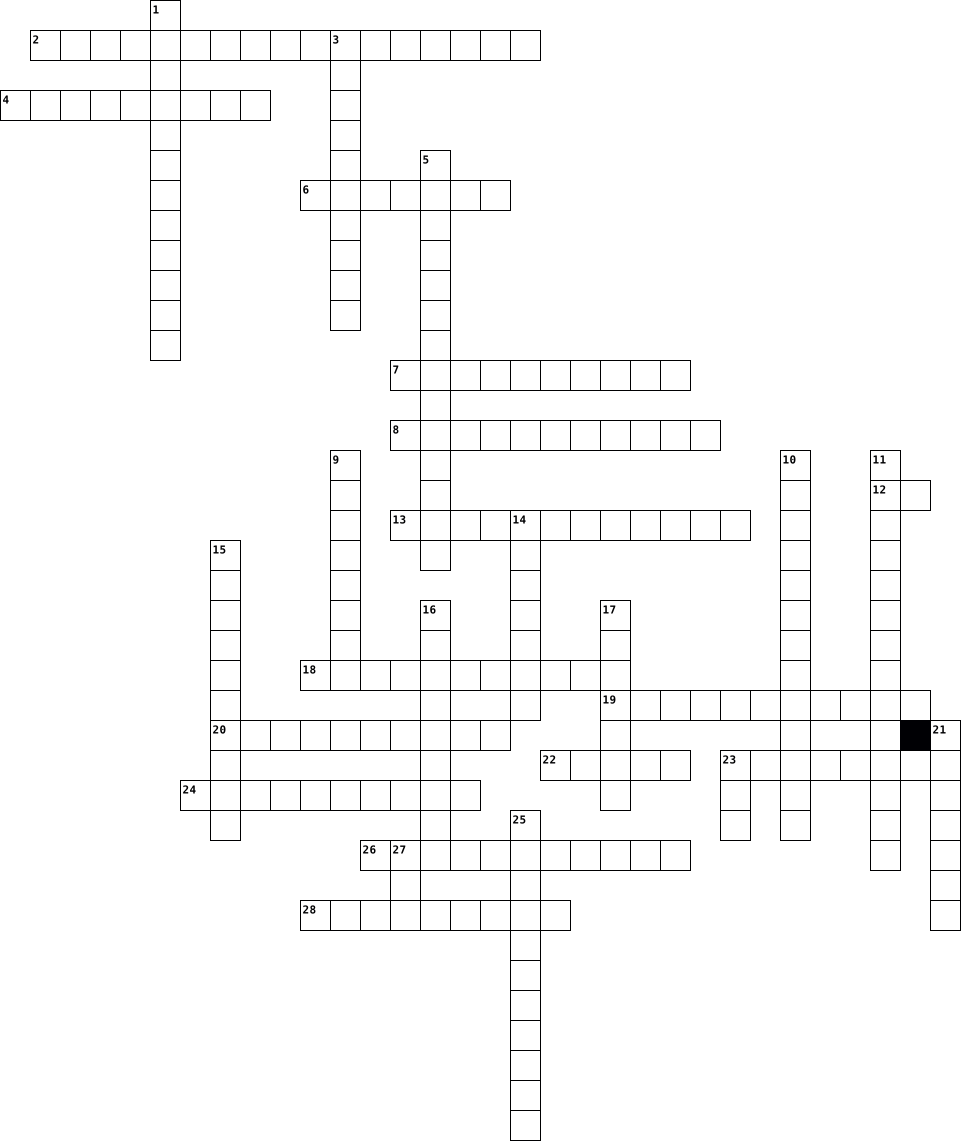
Across
- The boss of the cell, and the boss's computer.
- This jelly-like substance keeps all the cell's parts together.
- The Endoplasmic Reticulum that produces proteins.
- This type of cell makes up animals
- This organelle holds chlorophyll and commits photosynthesis.
- We breathe in this gas.
- This powerhouse of the cell makes energy called ATP
- This type of cell is ancient and relatively simple.
- This is an organism with one cell.
- This type of cell is complicated and is the largest cell.
- The building blocks that make up life.
- This helps a plant cell keep its shape.
- These small parts that make up a cell carry out the cell's life functions.
- This green pigment allows a plant cell to absorb sunlight.
- These have the ability to make proteins.
Down
- This border lets things go in and out.
- The chemical formula for photosynthesis.
- The process that allows plants to make food.
- The Endoplasmic Reticulum that produces lipids.
- This is an organism with more than one cell.
- The packager of cell proteins.
- The chemical formula for glucose.
- These are the rules of cells. There are three parts only.
- This type of cell makes up plants
- This holds food, water, or waste.
- Plants make this sugar as food.
- We breathe out this gas.
- This man discovered and named cells.
- This liquid is necessary for life.
29 Clues: We breathe in this gas. • We breathe out this gas. • The packager of cell proteins. • Plants make this sugar as food. • The chemical formula for glucose. • This type of cell makes up plants • This holds food, water, or waste. • This type of cell makes up animals • This is an organism with one cell. • This liquid is necessary for life. • This man discovered and named cells. • ...
AP BIo unit 3 2023-11-14

Across
- the reduced form of the electron carrier in photosynthesis
- carbon fixation, or the sugar building phase of photosynthesis aka calvin cycle
- the light absorbing pigment in the chloroplast
- a fluid document created to aid and assist students
- most important enzyme involved in the construction of high energy organic molecules in photosynthesis
- the enzyme responsible for attaching the third P group in cellular respiration
- uses a proton gradient to drive atp synthase
- the subatomic particle passed along by light-absorbing pigments in plants
- the prefix that means different or other, hint: not the active site, it rhythms with a plant you put on burns
- the type of respiration that generates a lot of ATP
- the best class on campus
- the location on a leaf where gases are exchanged
- the build of complex molecules from simpler molecules
Down
- when the product in a metabolic reaction stops or slows an enzyme in the pathway from working
- where water is split and oxygen is released in the thylakoid
- when a protein loses its shape due to pH or heat
- happens in the mitochondria right after glucose is split and is useful in generating atp
- using water to break apart a molecule
- generates less atp but is useful in anaerobic conditions
- another word for cytoplasm
- a product that we formed in our muscles using tennis balls
- the first place light is absorbed and electrons are passed along in the chloroplast
22 Clues: the best class on campus • another word for cytoplasm • using water to break apart a molecule • uses a proton gradient to drive atp synthase • the light absorbing pigment in the chloroplast • when a protein loses its shape due to pH or heat • the location on a leaf where gases are exchanged • a fluid document created to aid and assist students • ...
Matter and Energy 2024-05-02

Across
- Evaporation of water from the stoma of leaves
- Chemical energy molecule used by cells that is produced during cellular respiration
- Organelle found in plant cells that is the site of photosynthesis
- Process in which bacteria that live at hydrothermal vents use chemical energy to produce glucose
- Pigment found in chloroplasts that absorbs light energy and reflects green light
- Process by which light energy is used to convert carbon dioxide and water into glucose and oxygen
- Animals that eat only plants
- Animals that eat both plant and animals
- Process by which bacteria in the soil convert organic nitrogen into atmospheric nitrogen
- Process in which oxygen and glucose are converted into carbon dioxide, water, and ATP energy
- Process by which bacteria that live on roots of legume plants fix atmospheric nitrogen into a form usable by plants
Down
- Organisms that must eat other organisms to gain energy
- Animals that eat dead plant material
- Animals that eat other animals
- Organisms that use photosynthesis or chemosynthesis to produce chemical energy in the form of glucose
- Organisms capable of producing their own food for energy
- Organelle found in plant and animal cells that is the site of cellular respiration
- Plants with root nodules that contain nitrogen fixing bacteria
- The breakdown of organic wastes by various organisms that releases carbon dioxide into the atmosphere
- The burning of fossil fuels and wood which releases carbon dioxide into the atmosphere
20 Clues: Animals that eat only plants • Animals that eat other animals • Animals that eat dead plant material • Animals that eat both plant and animals • Evaporation of water from the stoma of leaves • Organisms that must eat other organisms to gain energy • Organisms capable of producing their own food for energy • Plants with root nodules that contain nitrogen fixing bacteria • ...
Plant Physiology 2014-11-09

Across
- The state of a cell when it is full of water, causing the plant to be hard
- A gas utilised during photosynthesis
- The degree to which a stomata is open. The higher the ________, the more open the stoma
- The type of variable that is placed on the y axis
- The study of the structure and function
- Type of pore or cavity that is located immediately proximal to stomata. It allows rapid diffusion
- An opening between guard cells founds in the epidermis
- A type of product that functions to reduce or stop transpiration
- The phenomenon of water molecules sticking together
- A single celled, transparent layer that has little to no chloroplasts
- The name of the process that describes the movement of sucrose from sources to sinks
- Type of mesophyll cell that is irregularly shaped and allows exchange of gases and water
- Type of mesophyll cell that contains more chloroplasts than any other type of cell in the leaf
- The tissue responsible for water movement
- A substance or layer that allows liquids or gases to pass through it. The less ________, the less likely liquid or gas is to pass through it
Down
- Type of cell found in epidermis that controls the opening and closing of stomata
- A by-product of photosynthesis
- Plants with stomata on the _______ epidermis are often found in water environments due to increased water loss
- The tissue responsible for sucrose movement
- A word that describes a hot and dry region, commonly associated with the desert
- The difference between the amount of ions in one region as compared to another (2 words)
- The process of water movement through a plant and to the areas where it is evaporated
- The amount of water vapour in the air
- The name given to sites that sucrose is delivered to
- The diffusion of water molecules across a semipermeable membrane
- Outmost layer of the leaf that functions to protect and prevent water loss (2 words)
- The process of converting light energy into "plant food"
- When water molecules stick to the walls of the xylem vessels
- A type of stomata that is lowered and functions to decrease water loss, increase relative humidity around the stomata and shield stomata from wind
- The movement of molecules from a high concentration to low concentration
- The state of a cell when it lacks water, causing the plant to be floppy
- The green pigment which is responsible for the absorption of light to provide energy for photosynthesis
- A site of photosynthesis
33 Clues: A site of photosynthesis • A by-product of photosynthesis • A gas utilised during photosynthesis • The amount of water vapour in the air • The study of the structure and function • The tissue responsible for water movement • The tissue responsible for sucrose movement • The type of variable that is placed on the y axis • The phenomenon of water molecules sticking together • ...
Connections Club Crossword 2021-03-30

Across
- the energy source for photosynthesis
- the process by which plants use sunlight to make food
- repeating pattern often found in nature (we drew these a couple weeks ago!)
- a test for a hypothesis
Down
- a liquid that most plants require to survive
- a proposed explanation for an observation
- a product of photosynthesis that humans need to survive
- connor's favorite ice cream flavor
8 Clues: a test for a hypothesis • connor's favorite ice cream flavor • the energy source for photosynthesis • a proposed explanation for an observation • a liquid that most plants require to survive • the process by which plants use sunlight to make food • a product of photosynthesis that humans need to survive • ...
Science 2018-11-07

Across
- Gas we breath out
- Green pigment that absorbs sunlight energy
- A gas that is a by-product of photosynthesis
- Suger that is made by photosynthesis
- Orginisms that produces it's own food
Down
- A process used by plants and other organisms to convert light energy into energy that can later be released to fuel the organisms' activities.
- Sunlight (synonym)
- A cell that contains chlorophyll
8 Clues: Gas we breath out • Sunlight (synonym) • A cell that contains chlorophyll • Suger that is made by photosynthesis • Orginisms that produces it's own food • Green pigment that absorbs sunlight energy • A gas that is a by-product of photosynthesis • ...
cells 2022-09-14

Across
- functional-unit
- dispersing
- cytoplasm
- wall polysaccharides
- energy production
- green-pigments
- growth
- nucleotide
Down
- substance
- analogous
- divides
- metabolic-process
- photosynthesis
- DNA
- genetic-information
15 Clues: DNA • growth • divides • substance • analogous • cytoplasm • dispersing • nucleotide • photosynthesis • green-pigments • functional-unit • metabolic-process • energy production • genetic-information • wall polysaccharides
Chapter 5 Terms Urbina and Ordoñez 2021-10-22

Across
- describes a process that requires oxygen.
- the breakdown of carbohydrates by enzymes, bacteria, yeats, or mold in the absence of oxygen.
- the process by which plants, alguae, and some bacteria use sunlight, carbon dioxide, and water to produce carbohydrates and oxygen.
- a series of biochemical reactions that convert pyruvic acids into carbon dioxide and water; it is the major pathway of oxidation in animal bacterial and plant cells, and it releases energy.
- a substance that gives another substance or a mixture its color.
- an organism that produces its own nutrients from inorganic substances or from the environment instead of consuming other organisms.
- a membrane system found within chloroplasts that contains the components for photosynthesis.
Down
- an organism that obtains organic food molecules by eating other organisms or their by products and that cannot synthesize organic compounds from inorganic materials.
- the synthesis of organic compounds from carbon dioxide, such as in photosynthesis.
- describes a process that does not requires oxygen.
- a class of pigments that are present mostly in plants and that aid in photosynthesis.
11 Clues: describes a process that requires oxygen. • describes a process that does not requires oxygen. • a substance that gives another substance or a mixture its color. • the synthesis of organic compounds from carbon dioxide, such as in photosynthesis. • a class of pigments that are present mostly in plants and that aid in photosynthesis. • ...
NS grade 8 Photosynthesis and Respiration 2020-01-08

Across
- Plants absorb ------ and together with water and carbon dioxide make sugars release oxygen in the process of photosynthesis.
- Energy is released from food by a process called-----.
- What is produced when Photosynthesis occurs?
- Where dos photosynthesis mainly take place in plant?
Down
- Gases get into and out of a leaf by------.
- If plants do not get enough water they start to---------
- What is produced when photosynthesis occurs?
- What is the sit for photosynthesis?
8 Clues: What is the sit for photosynthesis? • Gases get into and out of a leaf by------. • What is produced when photosynthesis occurs? • What is produced when Photosynthesis occurs? • Where dos photosynthesis mainly take place in plant? • Energy is released from food by a process called-----. • If plants do not get enough water they start to--------- • ...
Life Science Module Test Vocabulary Review 2024-03-25

Across
- When water changes from a liquid to a gas
- Resources that are consumed from an ecosystem
- The location in a cell where photosynthesis takes place
- When producers use carbon dioxide and water to make glucose and oxygen.
- An organism that eats other organisms
- A consumer that eats both producers and consumers
- Benefits humans receive from ecosystems
- A living thing that CANNOT do photosynthesis and has to eat it's food
- The number and variety of different species in an area
- Anything that prevents a population from increasing
- The relationship where one organism (predator) hunts, kills, and eats the other (prey)
- The community AND abiotic factors in a specific area
- When two or more organisms need the same resource at the same time
- A consumer that eats producers
- When organisms move in from another environment
- The type of symbiosis where one organism benefits and the other is harmed
- A group of organisms of the same species in a specific area
- first species to populate an area during succession
- A diagram that shows the amount of energy at each feeding level
- A living thing that can do photosynthesis to make its own food
- A type of cellular respiration that makes energy WITHOUT oxygen.
- All of the populations in a specific area
- The location in a cell where stage 2 of cellular respiration takes place
- The location in a cell where stage 1 of cellular respiration takes place
- a group of similar organisms that can reproduce with one another
- An organism that makes their own food through photosynthesis
Down
- When organisms use glucose and oxygen to make carbon dioxide, water and energy.
- The practice of using less of a resouce so it can last longer
- A nonliving part of an ecosystem
- A consumer that eats other consumers
- The type of symbiosis where both organisms benefit
- The substances at the BEGINNING of a chemical reaction
- The ability of an ecosystem to maintin biodiversity and production indefinitely
- The type of symbiosis where one organism benefits and the other is unaffected
- When water changes from a gas back into a liquid in a cloud
- The new substances at the END of a chemical reaction
- The series of changes that occur in an area where the ecosystem has been disturbed, but where soil and organisms already exist
- When water falls to the ground from a cloud as rain, snow, sleet, etc.
- The largest population that an ecosystem can support
- The green chemical that traps light energy in photosynthesis
- The practice of helping a degraded or destroyed ecosystem recover from damage
- The series of changes that occur in an area where no soil or organisms exist
- Non-native species introduced by humans that outcompetes native species in an ecosystem.
- Organisms in the nitrogen cycle that can both fix and free nitrogen.
- many interconnected food chains in an ecosystem
- An organism that gets energy from breaking down dead organisms and waste
- When organisms leave an environment
- A series of events in which one organism eats another and obtains energy and nutrients
- A living part of an ecosystem
- Resources in an ecosystem that are used, but not consumed
- One living thing
- A close relationship between organisms of different species
52 Clues: One living thing • A living part of an ecosystem • A consumer that eats producers • A nonliving part of an ecosystem • When organisms leave an environment • A consumer that eats other consumers • An organism that eats other organisms • Benefits humans receive from ecosystems • When water changes from a liquid to a gas • All of the populations in a specific area • ...
Science Puzzle 2021-10-20

Across
- Used for photosynthesis in a plant cell.
- Deoxyribonucleic acid.
- How plants get food.
- another name for tiny organ
Down
- powerhouse of the cell.
- tiny organisms that get you sick.
- Brains of the cell.
- Classification of all organisms.
- Organism that makes other organisms.
9 Clues: Brains of the cell. • How plants get food. • Deoxyribonucleic acid. • powerhouse of the cell. • another name for tiny organ • Classification of all organisms. • tiny organisms that get you sick. • Organism that makes other organisms. • Used for photosynthesis in a plant cell.
Photosynthesis - Pt. 1 2023-02-15

Across
- photosynthetic protist
- contain chlorophyll; where LDR takes place
- fluid portion of the chloroplast
- organelle that completes photosynthesis
Down
- the first phase which requires sunlight
- process that producers use to make glucose
- photosynthetic bacteria
- stacks of thylakoids
- molecule that stores energy for the LIR
9 Clues: stacks of thylakoids • photosynthetic protist • photosynthetic bacteria • fluid portion of the chloroplast • the first phase which requires sunlight • molecule that stores energy for the LIR • organelle that completes photosynthesis • process that producers use to make glucose • contain chlorophyll; where LDR takes place
PLANTS 2021-03-23

Across
- HOJA
- raíces
- HIERBA
- FOTOSÍNTESIS
- All the different plants in one place.
- árbol
- Plants ______________ oxygen to the air.
- luz del sol
Down
- agua
- HOJAS
- RAMAS
- oxígeno
- ARBUSTO
- tallo
- tierra
- nutrientes
16 Clues: agua • HOJA • HOJAS • RAMAS • tallo • árbol • raíces • HIERBA • tierra • oxígeno • ARBUSTO • nutrientes • luz del sol • FOTOSÍNTESIS • All the different plants in one place. • Plants ______________ oxygen to the air.
Photosynthesis 2 2019-03-06

Across
- stage is also considered to be light ________
- vessels glucose is carried in
- from CO2 goes on to make these
- location where the dark stage occurs
Down
- product released into the atmosphere or used in cellular respiration
- the dark stage gets its energy from
- is important for _______ to function
- dioxide enters the plant here
- ADP and phosphate go back to the_______stage
9 Clues: dioxide enters the plant here • vessels glucose is carried in • from CO2 goes on to make these • the dark stage gets its energy from • is important for _______ to function • location where the dark stage occurs • ADP and phosphate go back to the_______stage • stage is also considered to be light ________ • ...
TTS PHOTOSYNTHESIS 2021-05-01

Across
- reagen penguji adanya zat tepung pada tumbuhan.
- tempat penyerapan air yang dibutuhkan untuk fotosintesis
- membuktikan fotosinthesis menghasilkan oksigen
- energi yang di perlukan untuk fotosyntesis
- digunakan untuk melarutkan kloropill pada percobaan sach
Down
- gas diperlukan tumbuhan untuk fotosinthesis
- gas yang dihasilkan daun pada proses fotosintesis
- bagian cell daun tempat terjadinya proses fotosintesis
- zat produk fotosintesis
9 Clues: zat produk fotosintesis • energi yang di perlukan untuk fotosyntesis • gas diperlukan tumbuhan untuk fotosinthesis • membuktikan fotosinthesis menghasilkan oksigen • reagen penguji adanya zat tepung pada tumbuhan. • gas yang dihasilkan daun pada proses fotosintesis • bagian cell daun tempat terjadinya proses fotosintesis • ...
Photosynthesis Vocab 2023-09-26

Across
- Breaks down matter for energy
- Make their own food
- Stored energy for future uses and reactions
Down
- Neat stacks in chloroplasts that consist of thylakoid membranes.
- Cannot make their own food
- Sugar produced by plants in photosynthesis
- Membrane Saclike photosynthetic membranes
- reactions First step in photosynthesis
- independent reactions Second step in photosynthesis
- Region outside the thylakoid membranes
10 Clues: Make their own food • Cannot make their own food • Breaks down matter for energy • reactions First step in photosynthesis • Region outside the thylakoid membranes • Membrane Saclike photosynthetic membranes • Sugar produced by plants in photosynthesis • Stored energy for future uses and reactions • independent reactions Second step in photosynthesis • ...
Photosynthesis vocab 2021-10-20

Across
- principal pigment of plants and other photosynthetic organisms; absorbs light energy for photosynthesis
- series of reactions ina membrane that transfers electrons and other compounds with the buildup of protons (H*ions) creates ATP
- refers to the fluid area surrounding the grana within the chloroplasts (site of LIR)
Down
- photosynthetic membranes founds in chloroplasts that contains the components for photosynthesis
- the chemical reactions that convert carbon dioxide and other compounds into glucose. (Aka light independent reactions)
- process by which plants and come other organisms use light energy to convert water and carbon dioxide into oxygen and high energy carbohydrates such as sugars and starches
- process in which light energy is absorbed and converted into ATP and NADPH
- process of synthesizing ATP from organic chemicals instead of light
- (adenosine triphosphate) high energy molecule necessary for cellular processes
9 Clues: process of synthesizing ATP from organic chemicals instead of light • process in which light energy is absorbed and converted into ATP and NADPH • (adenosine triphosphate) high energy molecule necessary for cellular processes • refers to the fluid area surrounding the grana within the chloroplasts (site of LIR) • ...
Photosynthesis Vocabulary 2024-10-24

Across
- Plants gather the sun's energy with light-absorbing molecules called ____.
- The plants principal pigment is _____. The two types of pigment found in plants do not absorb green light well.
- The fluid portion of the chloroplast, outside of the thylakoids is known as the ____.
- The man who discovered the light-independent reactions.
- The first set of reactions in photosynthesis is known as the light-_____ reactions
Down
- Reactions of photosynthesis that do not use light directly. The light-____ reactions produce high-energy sugars from carbon dioxide.
- chloroplasts contain an abundance of saclike photosynthetic membranes called _____.
- The process by which autotrophs use the energy of sunlight to produce high-energy carbohydrates is known as ____.
- One of the most important compounds that cells use to store and release energy is ___.
9 Clues: The man who discovered the light-independent reactions. • Plants gather the sun's energy with light-absorbing molecules called ____. • The first set of reactions in photosynthesis is known as the light-_____ reactions • chloroplasts contain an abundance of saclike photosynthetic membranes called _____. • ...
Day 6 crossword puzzle 2023-06-22

Across
- simple sugar which is an important energy source in living organisms and is a component of many carbohydrates.
- organism that is able to form nutritional organic substances from simple inorganic substances such as carbon dioxide.
- cells and tissues that support and give structure to organs, glands, or other tissues in the body.
- It is the cycle of chemical reactions where the carbon from the carbon cycle is fixed into sugars
- an internal system of interconnected membranes, that carry out the light reactions of photosynthesis.
- an organism that eats other plants or animals for energy and nutrients.
Down
- plants utilise light energy and synthesise the assimilatory powers ATP and NADPH.
- a green pigment, present in all green plants and in cyanobacteria, responsible for the absorption of light to provide energy for photosynthesis
- the process by which green plants and some other organisms use sunlight to synthesize foods from carbon dioxide and water.
- a plastid that contains chlorophyll and in which photosynthesis takes place.
- substance present in all living cells that provides energy for many metabolic processes and is involved in making RNA.
11 Clues: an organism that eats other plants or animals for energy and nutrients. • a plastid that contains chlorophyll and in which photosynthesis takes place. • plants utilise light energy and synthesise the assimilatory powers ATP and NADPH. • It is the cycle of chemical reactions where the carbon from the carbon cycle is fixed into sugars • ...
Payton 2024-01-25

Across
- reactions set of reactions that don't require light
- carrier molecule that transfers high energy
- light absorbing molecule used by plants
- transport chain series of electron carrier proteins
- cluster of chlorophyll and proteins
- Cycle light dependent reactions of photosynthesis
Down
- reactions set of reactions that use energy
- plants convert the energy of sunlight
- fluid portion of chloroplast
- synthase enzyme for the synthesis of ATP
- principal pigment of plants
- Compound used by cells to store and release energy
12 Clues: principal pigment of plants • fluid portion of chloroplast • cluster of chlorophyll and proteins • plants convert the energy of sunlight • light absorbing molecule used by plants • synthase enzyme for the synthesis of ATP • reactions set of reactions that use energy • carrier molecule that transfers high energy • Compound used by cells to store and release energy • ...
Plants and its parts 2020-06-05

Across
- Attract animals.
- Anchor the plant to the soil.
- The ________ tube carry substance produced by the leaves to all parts of the plant.
- Produce food for the plant.
- Non-flowering plants use this to reproduce.
Down
- Protects the seed.
- The ________ tube carry water to all parts of the plant.
- Traps sunlight for photosynthesis.
- Gaseous product of photosynthesis.
- Keeps the plant upright.
- Grows into a seedling.
11 Clues: Attract animals. • Protects the seed. • Grows into a seedling. • Keeps the plant upright. • Produce food for the plant. • Anchor the plant to the soil. • Traps sunlight for photosynthesis. • Gaseous product of photosynthesis. • Non-flowering plants use this to reproduce. • The ________ tube carry water to all parts of the plant. • ...
Crossword Puzzle 2025-05-09

Across
- process that breaks down glucose for energy
- electron carrier in respiration
- gas taken in by plants during photosynthesis
- organelle where photsynthesis takes place
Down
- what happens when a cell takes in materials
- organelle where respiration takes place in
- main energy molecule of the cell
- stage of respiration that happens in mitochondria
- tiny holes on plant leaves
- simple sugar produced in photosynthesis
- gas released during cellular respiration
11 Clues: tiny holes on plant leaves • electron carrier in respiration • main energy molecule of the cell • simple sugar produced in photosynthesis • gas released during cellular respiration • organelle where photsynthesis takes place • organelle where respiration takes place in • what happens when a cell takes in materials • process that breaks down glucose for energy • ...
Carbon Cycle 2018-10-30

Across
- dioxide __________ is pulled during photosynthesis
- carbon atoms can return to the ____________.
- when an animal dies they release carbon, because their bodies _________________ .
- process that takes carbon in to make food.
- fossil fuels release ____________
Down
- reservoir oceans contain earth's _________ _________ of carbon
- additional carbon is stored here.
- animal die and _________ this at the bottom of the ocean
- carbon atoms are used _________
- most_______ pull carbon in from water to use in shells,etc.
- carbon is _________ are released slowly.
- warming increased carbon dioxide leads to _______ _____________
- ______ helps remove carbon dioxide from the atmosphere
13 Clues: carbon atoms are used _________ • additional carbon is stored here. • fossil fuels release ____________ • carbon is _________ are released slowly. • process that takes carbon in to make food. • carbon atoms can return to the ____________. • dioxide __________ is pulled during photosynthesis • ______ helps remove carbon dioxide from the atmosphere • ...
FOODS 1 CROSSWORD 2018-09-21

Across
- Polysaccharides starches are
- Plants much combine single glucose units into more complicated ones
- Plant material that can't be digested by human enzymes
- Complicated chemical arrangement
- Two monosaccharides
- Used to sweeten foods, while adding few or no calories
Down
- these are sdded to foods or beverages when they are processed or prepared
- "One Sugar"
- Chemical process that makes carbohydrates
- One and two unit structures are chemically simple
- Main source of energy
- Contain C,H, and O chemical elements
- Green pigment in plants for them to preform photosynthesis
13 Clues: "One Sugar" • Two monosaccharides • Main source of energy • Polysaccharides starches are • Complicated chemical arrangement • Contain C,H, and O chemical elements • Chemical process that makes carbohydrates • One and two unit structures are chemically simple • Plant material that can't be digested by human enzymes • Used to sweeten foods, while adding few or no calories • ...
Carbohydrates 2018-09-21

Across
- chemical process that makes carbohydrates is called
- sugar that is added to beverages
- consists of plant materials that can't be digested by human enzymes
- sugars with many units in their structure
- sugars are usually called
- main source of energy
- sugars with two unit structures
Down
- plants combine single glucose units into more complicated chemical arrangements
- used o sweeten foods while adding few or no calories
- starches are considered these
- sugars with one unit structure
- the chemical elements needed to build this
- vital to photosynthesis process
13 Clues: main source of energy • sugars are usually called • starches are considered these • sugars with one unit structure • sugars with two unit structures • vital to photosynthesis process • sugar that is added to beverages • sugars with many units in their structure • the chemical elements needed to build this • chemical process that makes carbohydrates is called • ...