
photosynthesis Crossword Puzzles
Animal Cell 2023-11-13

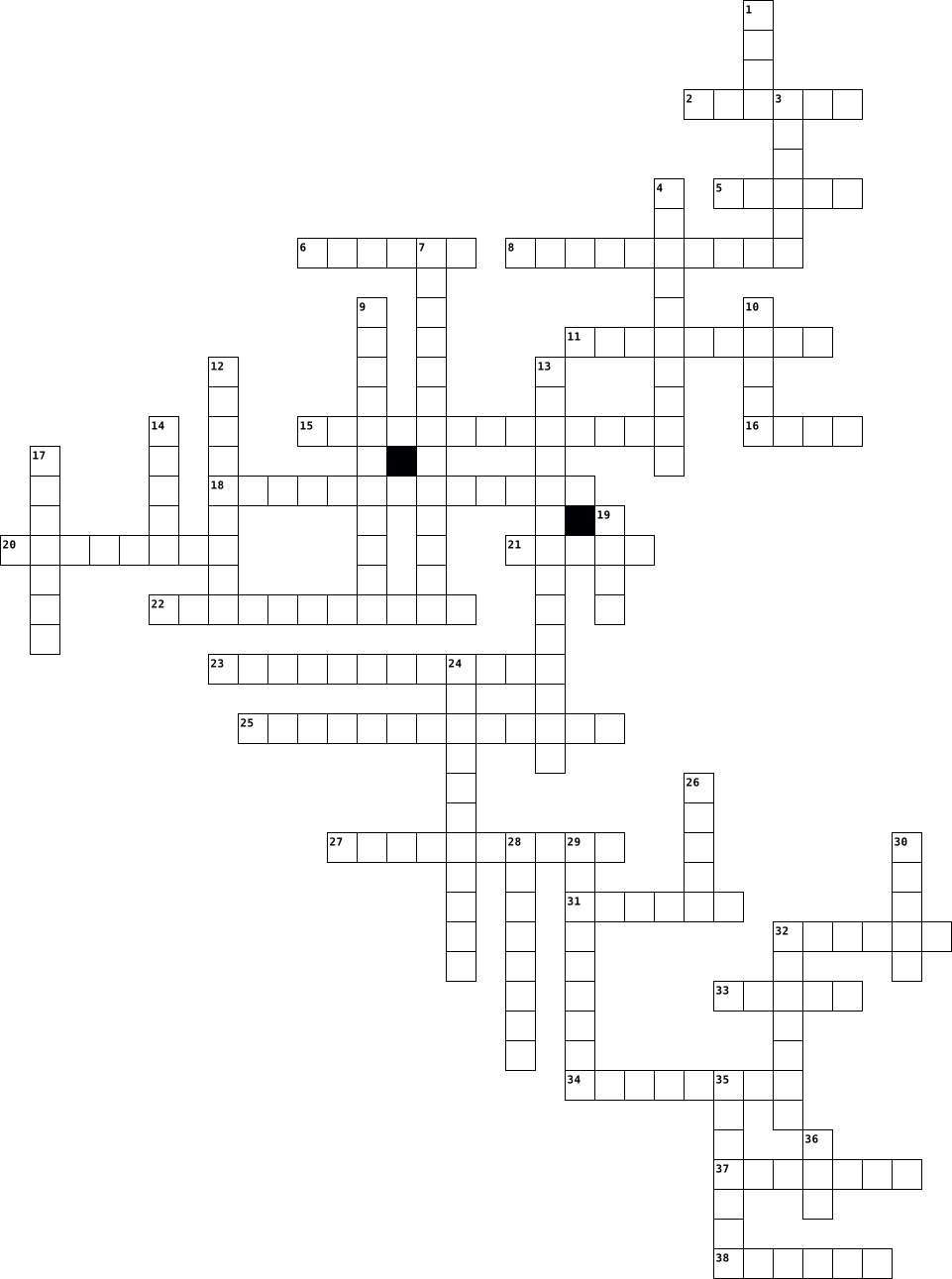
Across
- site of production and quality control of some proteins
- creates almost all proteins
- control center of the cell
- fluid that fills the cell
- a group of structures that work together to keep the cell alive
- outer layer of the animal cell
Down
- destroy the cell when run-down
- an energy process required for plant cells to survive
- makes energy out of proteins
- this cell type requires photosynthesis to survive
- a protective part only needed by the plant cell
- this cell type has fewer organelles
- site of lipid synthesis
13 Clues: site of lipid synthesis • fluid that fills the cell • control center of the cell • creates almost all proteins • makes energy out of proteins • destroy the cell when run-down • outer layer of the animal cell • this cell type has fewer organelles • a protective part only needed by the plant cell • this cell type requires photosynthesis to survive • ...
Chapter 9 Vocab Biology 2024-01-25

Across
- cluster of chlorophyll and proteins
- cluster of proteins that let hydrogen ions pass through it
- Photosynthesis that needs light
- a compound used by cells that is energy
- Set of reactions that does not require light.
Down
- series of electron carrier proteins
- fluid parts of chloroplasts
- photosynthetic membranes found in chloroplasts
- principle pigment of plants
- carrier molecule that transfers high energy molecules
- process used by plants to make oxygen and glucose
- reactions where ATP and NADPH build high energy molecules
- light-absorbing molecules in plants
13 Clues: fluid parts of chloroplasts • principle pigment of plants • Photosynthesis that needs light • series of electron carrier proteins • cluster of chlorophyll and proteins • light-absorbing molecules in plants • a compound used by cells that is energy • Set of reactions that does not require light. • photosynthetic membranes found in chloroplasts • ...
Energy Transfer 2023-12-05

Across
- Process that plants use to make glucose
- Organism that makes its own energy and food
- Organism that only eats meat
- Organelle where photosynthesis takes place
- Process that breaks down glucose to make ATP, water and CO2
- "Powerhouse" of the cell
Down
- Organism that only eats plants
- Organism that eats others to survive
- Natural compound in plants that makes them green
- Source of energy for living cells
- One possible path that nutrients and energy travel in an ecosystem
- Organism that eats plants and meat
- All food chains in an ecosystem
13 Clues: "Powerhouse" of the cell • Organism that only eats meat • Organism that only eats plants • All food chains in an ecosystem • Source of energy for living cells • Organism that eats plants and meat • Organism that eats others to survive • Process that plants use to make glucose • Organelle where photosynthesis takes place • Organism that makes its own energy and food • ...
science 2023-12-05

Across
- a chain where animals eat each other
- able to form nutritional organic substances
- only eat meat
- a green pigment present in green plants
- a system of interlocking and interdependent food chains.
Down
- an organism deriving its nutritional requirements from complex organic substances.
- the action of breathin
- only eat plants
- an organelle found in large numbers in many cells.
- a plastid that contains chlorophyll and in which photosynthesis takes place.
- the process plants do
- eat both meat and plants
- the source of energy for use and storage at the cellular level
13 Clues: only eat meat • only eat plants • the process plants do • the action of breathin • eat both meat and plants • a chain where animals eat each other • a green pigment present in green plants • able to form nutritional organic substances • an organelle found in large numbers in many cells. • a system of interlocking and interdependent food chains. • ...
"Energy Transformations in Living Organisms: From Sunlight to Cellular Fuel" 2025-04-11

Across
- Organelle in plant cells where photosynthesis happens.
- Does not require oxygen
- Simple sugar used by cells for energy
- Process where plants use sunlight to make food.
- Requires oxygen
- Organism that eats other organisms for energy
- Starting materials in a chemical reaction.
- Organelle where cellular respiration occurs; "powerhouse" of the cell.
Down
- Substances made from a chemical reaction
- Two reactions linked; one releases energy, the other uses it
- Process of breaking down food to release energy
- Organism that makes its own food (like plants)
- Main energy molecule used by cells
13 Clues: Requires oxygen • Does not require oxygen • Main energy molecule used by cells • Simple sugar used by cells for energy • Substances made from a chemical reaction • Starting materials in a chemical reaction. • Organism that eats other organisms for energy • Organism that makes its own food (like plants) • Process of breaking down food to release energy • ...
9b. Sugar too much? 2024-11-18

Across
- Organ that produces insulin.
- Disease related to insulin issues.
- Carbohydrates made of one or two sugar molecules.
- Type 2 diabetes can often be managed with this.
- The sugar released into your bloodstream after eating.
- Process plants use to make sugar.
- Insulin pump delivers insulin all ____.
Down
- Sugar is a type of this nutrient.
- A food high in complex carbohydrates.
- A compound that gives sweet flavor to food.
- This organ allows cells to absorb glucose.
- Sugar made during photosynthesis.
- Eating too much sugar can lead to this being stored.
- Fruits contain this type of sugar.
- Carbohydrate form stored by plants and animals.
- Nutrition label lists this about food.
16 Clues: Organ that produces insulin. • Sugar is a type of this nutrient. • Sugar made during photosynthesis. • Process plants use to make sugar. • Disease related to insulin issues. • Fruits contain this type of sugar. • A food high in complex carbohydrates. • Nutrition label lists this about food. • Insulin pump delivers insulin all ____. • ...
Plants! By Evelyn Pence 2025-05-09

Across
- Sharp _____ protect a plant from animals.
- Plants need this to perform photosynthesis.
- A sweet liquid produced by flowers to attract pollinators
- The female reproductive organ in a plant.
- Plants give off _______.
- The male reproductive organ in a plant.
- The transfer of pollen.
Down
- The green pigment in plants.
- The process plants go through to make food.
- Light from the sun, needed to make food.
- Helps plants grow and carry nutrients.
- How a plant gets nutrients and water.
- This part of a plant makes food.
13 Clues: The transfer of pollen. • Plants give off _______. • The green pigment in plants. • This part of a plant makes food. • How a plant gets nutrients and water. • Helps plants grow and carry nutrients. • The male reproductive organ in a plant. • Light from the sun, needed to make food. • Sharp _____ protect a plant from animals. • The female reproductive organ in a plant. • ...
Plants 2016-03-07
Across
- type of vein in a leaf
- energy that is given out by the sun
- fourth in a leaf cell
- process which occurs in the carbon cycle (burning)
- an insoluble substance which is present in the cell wall of a leaf cell
- another part of the photosynthesis reaction
- used to transport water in a leaf
- the state or process of rotting
- present inside the mesophyll ( in a leaf cell) below the upper epidermis
- the vascular tissue in plants which conducts water and dissolved nutrients upwards from the root
- a section in green plant cells which contains chlorophyll/ were photosynthesis takes place
- pasta, rice, bread
- the process of fossilizing a plant or animal that existed in some earlier age
- this occurs when a plant is deprived of starch for a long time
- a substance which is used to test for starch
- iodine is used to test for this
- Colour of leaf with iodine which did not have chlorophyll
- source of energy
- outer layer of a leaf which has a waxy surface
- this is given off during respiration
Down
- the smallest part in an organism
- chemical that we need to breath, plants give it out
- oil, coal and gas are examples of this
- a gas that contributes to the greenhouse effect
- The green part in a plant
- anchor and keep the plant in place
- protects the stoma
- How plants make their food
- where gases enter and leave the leaf
- type of alcohol
- provide large surface area for the absorption of light and carbon dioxide
- a method of obtaining energy from food and is common to all living things
- a part of an organ which is usually vital to its function
- the outer layer of a cell
- the outer layer of cells covering an organism
- appearance of leaf with iodine which received light
- plural of stoma
- part of the photosynthesis reaction
- space spaces found in the spongy mesophyll
39 Clues: type of alcohol • plural of stoma • source of energy • protects the stoma • pasta, rice, bread • fourth in a leaf cell • type of vein in a leaf • The green part in a plant • the outer layer of a cell • How plants make their food • the state or process of rotting • iodine is used to test for this • the smallest part in an organism • used to transport water in a leaf • ...
B3 Keywords Review 2017-07-10

Across
- when the vacuole has lots of water in it and the cell has been stretched
- the space in the middle of a plant cell
- a process in which the cells use energy absorbed from the surroundings
- the stores of the green substance in a plant that is required for photosynthesis
- the spread of a substance which requires no energy (it is passive)
- the movement of water (usually from high to low concentration)
- gradient the comparison of concentrations between two different concentrations
- a biological catalyst
- solution used to test for glucose
- the movement of water along the xylem in a plant
- solution used to test for protein
- the movement of sugars and other chemicals made by a plant along the phloem
- permeable the name given to a membrane that has small holes in it to allow small molecules to pass through it
- a tool used to sample an ecosystem
- transport the movement of a substance with the concentration gradient (from high to low) that is a passive process
- the type of cell in a plant which allows water to travel through it (it has no ends, like a tube)
Down
- a living factor that can affect an ecosystem
- an organism that cannot produce its own food (it needs to be a consumer)
- used to test for starch
- when the vacuole has some liquid to hold the shape of the cell
- the green substance in plants which enables photosynthesis to take place
- the process in which a plant produces its own energy
- produces the energy in a cell
- used to test for fat
- when the vacuole has shrunk due to lack of water
- the type of cell which transports sugars and has a partially permeable membrane on the end.
- an organism that produces its own food
- factors a factor which inhibits a process from taking place
- a substance which speeds up a chemical reaction
- the sugar made by plants during photosynthesis
- a non/living factor that can affect an ecosystem
- site the specific part of an enzyme which connects to the substance to be catalysed
32 Clues: used to test for fat • a biological catalyst • used to test for starch • produces the energy in a cell • solution used to test for glucose • solution used to test for protein • a tool used to sample an ecosystem • an organism that produces its own food • the space in the middle of a plant cell • a living factor that can affect an ecosystem • ...
NUTRITIONS IN PLANTS 2017-04-27

Across
- CELLS Each of a pair of curved cells that surround a stoma, becoming larger or smaller according to the pressure within the cells.
- A thin layer, plate, or scale of sedimentary rock, organic tissue, or other material.
- An animal or plant on or in which a parasite or commensal organism lives.
- An organism that live on dead plants and animals and derive their food from them.
- The mode of nutrition where two different organisms work together for their mutual benefit.
- Nucleus is surrounded by a jelly-like substance called.
- An organism that directly or indirectly depend on green plants for nutrition.
- PLANTS A plant which fulfills its nitrogenous needs by eating insects is called.
- A nitrogen-fixing bacterium that is common in the soil, especially in the root nodules of leguminous plants.
- A cavity within the cytoplasm of a cell, surrounded by a single membrane and containing fluid, food, or metabolic waste.
Down
- A substance that provides nourishment essential for the maintenance of life and for growth.
- A plastid in the cells of green plants and green algae that contains chlorophyll and carotenoid pigments and creates glucose through photosynthesis.
- The process by which green plants and some other organisms use sunlight to synthesize nutrients from carbon dioxide and water. Photosynthesis in plants generally involves the green pigment chlorophyll and generates oxygen as a by-product.
- An organism that live in or on other living organisms derive their food from them.
- The process of taking in food by an organism and its utilization by the body is called.
- A large strengthened vein along the midline of a leaf.
- Leaves take in carbondioxide from air through tiny pores called.
- An organism that can make their food from simple non-living substances.
- A green pigment, present in all green plants and in cyano-bacteria, which is responsible for the absorption of light to provide energy for photosynthesis.
- MEMBRANE Some organisms are made of only one cell.The cell is enclosed by a thin outer boundary, called.
20 Clues: A large strengthened vein along the midline of a leaf. • Nucleus is surrounded by a jelly-like substance called. • Leaves take in carbondioxide from air through tiny pores called. • An organism that can make their food from simple non-living substances. • An animal or plant on or in which a parasite or commensal organism lives. • ...
Biology Unit Two 2021-09-20

Across
- Process that releases energy by breaking down glucose and other food molecules in the presence of oxygen, takes place in plants and animals, happens in 3 processes
- respiration Respiration that does not require oxygen
- respiration Respiration that requires oxygen
- process by which plants and some other organisms use light energy to convert water and carbon dioxide into oxygen and high-energy carbohydrates such as sugars and starches steps include: capture light, light dependent reactions, calvin cycle.
- organism that obtains energy from the foods it consumes; also called a consumer
- Process by which cells release energy in the absence of oxygen
- the passage of energy through the components of the ecosystem
- organelle that is the site of ATP (energy) production
- reactions of photosynthesis that use energy from light to produce ATP and NADPH, also produces O2
- a cluster composed of hundreds of chlorophyll molecules and accessory pigments used to harvest light molecules for photosynthesis
Down
- Transport Chain uses the high-energy electrons from the Krebs cycle to convert ADP into ATP, takes place in the mitochondria, produces the most ATP of any of the processes (34 ATP)
- Produced by fermentation and oxidation of natural carbohydrates is called vinegar
- An organelle found only in plant and algae cell, site of photosynthesis occurs
- A process used by yeast cells and some bacteria to produce carbon dioxide and ethyl alcohol
- second stage of cellular respiration, in which pyruvic acid is broken down into carbon dioxide, takes place in the mitochondria, produces ATP and NADH
- The conversion of pyruvate to lactate with no release of carbon dioxide
- A flattened membrane sac inside the chloroplast, used to convert light energy into chemical energy, site of the light reactions
- The movement of phosphorus atoms from rocks through the biosphere and hydrosphere and back to rocks.
- The fluid of the chloroplast surrounding the thylakoid membrane; involved in the synthesis of organic molecules from carbon dioxide and water (Calvin/Dark reaction)
- Organisms that make their own food
20 Clues: Organisms that make their own food • respiration Respiration that requires oxygen • respiration Respiration that does not require oxygen • organelle that is the site of ATP (energy) production • the passage of energy through the components of the ecosystem • Process by which cells release energy in the absence of oxygen • ...
11BSc Flowering Plants 2021-05-20

Across
- a growth response whereby plants grow towards or away from light.
- an essential catalyst for photosynthesis.
- the meristematic tissue which is the site of primary growth.
- the process which involves the fusion of male and female gametes to form a zygote.
- the site of photosynthesis in a plant cell.
- a hormone that causes cells to elongate and thus drives plant tropisms.
- the process where water moves up the plant against gravity.
- an organelle that is enlarged in plant cells and holds water/dissolved trace minerals.
- trace mineral needed for protein structure and DNA synthesis.
- the vascular tissue in plants which conducts water and dissolved nutrients upwards from the root.
- a growth response whereby plants grow towards or away from gravity.
- a key product of cellular respiration - without this growth cannot occur.
- a type of reproduction that only requires one individual.
- movement of water molecules from a high concentration to a low concentration across a semi-permeable membrane.
- a key product of photosynthesis.
- the vascular tissue in plants which conducts sugars and other metabolic products downwards from the leaves.
- this might happen to enzymes if they are heated up too much or if they are put in the incorrect pH.
- if this decreases too much photosynthesis and ultimately growth will occur very slowly.
Down
- a process whereby pollen from one flowers anther is transferred to the stigma of another flower.
- the site of cellular respiration in a cell.
- the process whereby the embryonic plant emerges from the seed.
- the meristematic tissue which is the site of secondary growth.
- the third stage of primary growth.
- the requirements for successful germination.
- the prefix for water.
- the embryonic shoot.
- the prefix for touch.
- the protective coating of a seed.
- an important structure in a flower that makes nectar.
- a type of growth in plants that creates rings.
- a type of cell found in a leaf which contains lots of chloroplasts.
31 Clues: the embryonic shoot. • the prefix for water. • the prefix for touch. • a key product of photosynthesis. • the protective coating of a seed. • the third stage of primary growth. • an essential catalyst for photosynthesis. • the site of cellular respiration in a cell. • the site of photosynthesis in a plant cell. • the requirements for successful germination. • ...
biology 2023-10-05

Across
- 6
- An organism that makes its own food
- a substance that takes part in and undergoes change during a reaction.
- process by which plants and some other organisms use light energy to convert water and carbon dioxide into oxygen and high-energy carbohydrates such as sugars and starches
- is the type of respiration that converts glucose to energy without oxygen
- P 15
- requires oxygen
- respiration- Process that releases energy by breaking down glucose and other food molecules in the presence of oxygen
- the solid part of the earth consisting of the crust and outer mantle
- all the waters on the earth's surface, such as lakes and seas, and sometimes including water over the earth's surface, such as clouds.
- organelles that convert chemical energy stored in food into compounds more convenient
- first step in releasing the energy of glucose, in which a molecule of glucose is broken into two molecules of pyruvic acid
- an organism, especially a soil bacterium, fungus, or invertebrate, that decomposes organic material.
Down
- site of photosynthesis
- anything that takes up space and has mass
- A thin layer of gases surrounding Earth
- A green pigment found in the chloroplasts of plants, algae, and some bacteria
- (Adenosine Diphosphate) The compound that remains when a phosphate group is removed from ATP, releasing energy
- a substance that forms in a chemical reaction
- reactions- Reactions of photosynthesis that do not require light but use energy produced and stored during light reactions to make glucose
- the part of Earth where life exists
- reactions- The steps in photosynthesis that occur on the thylakoid membranes of the chloroplast and that convert solar energy to the chemical energy of ATP and NADPH, evolving oxygen in the process.
- an organism deriving its nutritional requirements from complex organic substances.
- cycle- second stage of cellular respiration, in which pyruvic acid is broken down into carbon dioxide in a series of energy-extracting reactions
- process that does not require oxygen
- N 7
- chain transport -describes a situation in which oxygen is not present
- main energy source that cells use for most of their work
28 Clues: 6 • N 7 • P 15 • requires oxygen • site of photosynthesis • An organism that makes its own food • the part of Earth where life exists • process that does not require oxygen • A thin layer of gases surrounding Earth • anything that takes up space and has mass • a substance that forms in a chemical reaction • main energy source that cells use for most of their work • ...
Cell and Cellular Processes 2025-10-23

Across
- Abbreviation for Adenosine Triphosphate.
- "Construction sites" within cells where proteins are made.
- Green pigment in plant cells' chloroplasts that absorbs solar energy and converts it into chemical energy in order to make glucose.
- Abbreviation for ribonucleic acid.
- A sugar molecule produced by plants during photosynthesis (and provides chemical energy necessary for survival).
- A structure surrounding plant cells which acts a support layer (and is made out of the complex carbohydrate, cellulose).
- ______ reactions occur in chloroplasts in the presence of sunlight (and produce the energy molecules required for the dark reactions).
- A byproduct of photosynthesis necessary for keeping multicellular organisms alive.
- ______ reactions occur in chloroplasts in the absence of sunlight (and these reactions form glucose).
- The splitting apart of glucose into two 3-carbon compounds (which occurs in the cytoplasm of the cell).
- Cellular organelle in which respiration occurs (also know as the "powerhouse of the cell."
- Molecule made up of carbon and oxygen which, along with water, is required to make sugar during photosynthetis.
- Complex molecules made out of amino acids which are necessary for support, immune responses, cellular messaging and transport.
- The lipid (or "fatty") bi-layer surrounding every cell.
Down
- A series of chemical reactions occurring within the mitochondrial membranes that leads to the production of cellular energy (ATP)
- A series of chemical reactions occurring in a cell's mitochondria that generates energy from carbohydrates (or sugars).
- High energy molecules used by cells, which include sugars and starches.
- An animal's natural coloring or form that helps it blend into its surroundings.
- Process by which organisms (especially plants)use sunlight energy to produce sugars.
- Cellular organelle found in plant cells which carry out photosynthesis.
- The liquid portion of the cell.
- Process by which organisms produce cellular energy required for survival.
- Molecule formed from combination of hydrogen and oxygen at the end of the electron transport chain in mitochondria.
- Long-term storage form of energy made out of fatty acids and glycerol (also known as "fats").
- Cell organelle surrounded by its own membrane for extra protection, and it contains chromosomal DNA.
- Abbreviation for deoxyribonucleic acid.
26 Clues: The liquid portion of the cell. • Abbreviation for ribonucleic acid. • Abbreviation for deoxyribonucleic acid. • Abbreviation for Adenosine Triphosphate. • The lipid (or "fatty") bi-layer surrounding every cell. • "Construction sites" within cells where proteins are made. • High energy molecules used by cells, which include sugars and starches. • ...
Biology Section 2 Crossword 2021-11-30

Across
- Organelles that are needed for photosynthesis and are usually located in the cells of plant leaves
- Name for the process when ATP is generated due to the flow of ions down a concentration gradient
- The process in which light energy is converted into chemical energy
- Light-absorbing molecules
- Flattened, saclike membranes located inside chloroplasts
Down
- Reactions that take place in the grana
- Thylakoid membrane structure is essential for efficient energy transport during this process.
- Absorb light energy from different areas of the visible light spectrum than chlorophyll does
- One of the energy-storing molecules produced during phase one of photosynthesis
- A fluid-filled space inside the chloroplast surrounding the grana
10 Clues: Light-absorbing molecules • Reactions that take place in the grana • Flattened, saclike membranes located inside chloroplasts • A fluid-filled space inside the chloroplast surrounding the grana • The process in which light energy is converted into chemical energy • One of the energy-storing molecules produced during phase one of photosynthesis • ...
Photosynthesis & Respiration 2019-02-18

Across
- we need this to survive
- its a synonym for outcome
- A cycle in plants
- plants give this out
Down
- we give this out
- This occurs in the mitochondria
- Makes plants green
- powerhouse of the cell
- Plants turn glucose to this
9 Clues: we give this out • A cycle in plants • Makes plants green • plants give this out • powerhouse of the cell • we need this to survive • its a synonym for outcome • Plants turn glucose to this • This occurs in the mitochondria
Vocab photosynthesis 2021-11-10

Across
- process that’s requires oxygen
- a chemical bond linking a phosphate group into another
- series of reactions in a membrane that transfers electrons from one chemical to another across the thylakoid membrane and coupled with the buildup of protons
- acid product of fermentation in many types of cells including the muscle cells of animals
- breakdown of carbohydrates by enzymes bacteria yeast or mold anaerobically
Down
- process that produces energy by breaking down glucose and other food molecules in the presence of oxygen
- inner mitochondrial membrane that carries out the ECT reactions
- process that does not not require oxygen
- reaction in which pyruvic acid is broken down into carbon dioxide and water in a series of energy extracting extracting reactions within the mitochondria creating ATP
9 Clues: process that’s requires oxygen • process that does not not require oxygen • a chemical bond linking a phosphate group into another • inner mitochondrial membrane that carries out the ECT reactions • breakdown of carbohydrates by enzymes bacteria yeast or mold anaerobically • acid product of fermentation in many types of cells including the muscle cells of animals • ...
Photosynthesis Investigations 2023-11-22

Across
- This is the colour hydrogencarbonate indicator goes when added to a solution with a low CO2 concentration.
- This is one of the aquatic plants that can be used to measure rate of photosynthesis by measuring the rate of oxygen bubbles produced.
- The solution can be used to absorb carbon dioxide to do an experiment without carbon dioxide present. (2 words)
- This is the colour hydrogencarbonate indicator goes when added to a solution with the same CO2 concentration as the atmosphere.
- Temperature, light intensity and carbon dioxide concentration are the three main ______________ ______________ for photosynthesis.
Down
- This type of indicator can be used to test the concentration of carbon dioxide in a solution.
- This is the colour hydrogencarbonate indicator goes when added to a solution with a high CO2 concentration.
- Adding different masses of this to water can change the concentration of carbon dioxide available to an aquatic plant. (2 words)
- This variable can be changed by moving a lamp further or closer to the plant. (2 words)
9 Clues: This variable can be changed by moving a lamp further or closer to the plant. (2 words) • This type of indicator can be used to test the concentration of carbon dioxide in a solution. • This is the colour hydrogencarbonate indicator goes when added to a solution with a low CO2 concentration. • ...
Photosynthesis Crossword 2024-02-20

Across
- carbon dioide
- small things on a tree
- something that makes a tree stand
- it is a green pigment.
- makes light in the air
Down
- a chemical element that is in the air.
- it contains clorophyll in it.
- H20
- C6H12O
9 Clues: H20 • C6H12O • carbon dioide • small things on a tree • it is a green pigment. • makes light in the air • it contains clorophyll in it. • something that makes a tree stand • a chemical element that is in the air.
Biology 2022-11-09

Across
- use light energy to make two molecules needed for the next stage of photosynthesis, It has to have light to preform its job.
- the source of energy for use and storage at the cellular level.
- the set of compounds that have an intense color and are used in the coloring of other materials.
- photosystem structures within the thylakoid membrane that harvest light and convert it to
- the functional units for photosynthesis, defined by a particular pigment organization and association patterns
- a coenzyme that functions as a universal electron carrier, accepting electrons and hydrogen atoms to form NADPH, or nicotinamide adenine dinucleotide phosphate.
- the cycle of chemical reactions where the carbon from the carbon cycle is fixed into sugars.found in eukaryotic cells
Down
- energy. does not require light to preform its job
- an enzyme that directly generates adenosine triphosphate (ATP) during the process of cellular respiration.
- any of the membranous disks of lamellae within plant chloroplasts that are composed of protein and lipid and are the sites of the photochemical reactions of photosynthesis
- the process by which plants use sunlight, water, and carbon dioxide to create oxygen and energy in the form of sugar.
- the fluid filling up the inner space of the chloroplasts which encircle the grana and the thylakoids.
- a coenzyme that functions as a universal electron carrier, accepting electrons and hydrogen atoms to form NADPH, or nicotinamide adenine dinucleotide phosphate.
13 Clues: energy. does not require light to preform its job • the source of energy for use and storage at the cellular level. • photosystem structures within the thylakoid membrane that harvest light and convert it to • the set of compounds that have an intense color and are used in the coloring of other materials. • ...
Unit 5 Crossword 2021-01-29

Across
- A lamp grows toward the window in your room
- type of energy sunlight is
- site of photosynthesis
- secondary and tertiary consumers are often this
- consumer that eats both plants and animals
- a plant's response to an external stimulus
- also known as a primary consumer
- organism that breaks down dead stuff
- a carnivore that eat animals that have died
- an ivy wraps itself around a fence post
- multi-directional series of feeding relationships
Down
- sites of cellular respiration
- single line of feeding relationships
- the force between a cell membrane and a cell wall that causes water to enter a plant
- the process plants use to make chemical energy from sunlight
- an ingredient of a chemical reaction
- largest product of photosynthesis
- a tree grows upright after a landslide knocks it down sideways
- a result of a chemical reaction
- energy from cellular respiration
- internal stimulus which causes plants to ripen their fruit or go dormant
- the place an organism occupies in a food chain, web, or energy pyramid (primary consumer, tertiary consumer, etc.)
- demonstrates that only some of the energy from producers is able to move up to consumers at the next level
- organism that eats other organisms for energy in a food chain
- happens when turgor pressure is low
- organism that makes energy in a food chain, web, or energy pyramid
- percent of energy that moves from one level to the next in an energy pyramid
27 Clues: site of photosynthesis • type of energy sunlight is • sites of cellular respiration • a result of a chemical reaction • energy from cellular respiration • also known as a primary consumer • largest product of photosynthesis • happens when turgor pressure is low • single line of feeding relationships • organism that breaks down dead stuff • an ingredient of a chemical reaction • ...
Cell and Cell Processes 2021-10-26

Across
- active transport requires _____
- control center of the cell
- also known as consumers
- supports and protects the plant cell (write as one word)
- process that uses energy made from sunlight to make glucose
- ____ have cells that don’t have a nucleus or organelles
- get energy from glucose without oxygen
- makes energy for the cell
- packages products and ships them out of the cell
- large molecules use protein channels for _______ diffusion
- storage place
- basic unit of life
- make proteins
- organelle is a cell structure that is bound by a _______
- organisms that make sugar from sunlight
- plants, animals and fungi have this type of cells
- an organic molecule made during photosynthesis and used by respiration
- this happens in the mitochondria
Down
- respiration burns ____ to make energy
- another word for passive transport
- in photosynthesis ______ + carbon dioxide + light make food
- ______ ER has ribosomes attached
- fluid that fills the cell
- series of passageways for protein delivery
- change in genetic makeup over time
- the organelle that does photosynthesis
- made when ATP gives up energy
- the disadvantage of anaerobic respiration is that it produces _____ amount of energy.
- chemical processes that occur within a living organism in order to maintain life
- _________ respiration requires oxygen
- contains cell’s DNA
- membranes are made up of a _____ phospholipid bilayer that control what comes in and out
- maintaining a stable environment
- ______ ER has no ribosomes attached
- diffusion moves from high to low _________
- animal cells have a ____ vacuole than plant cells
36 Clues: storage place • make proteins • basic unit of life • contains cell’s DNA • also known as consumers • fluid that fills the cell • makes energy for the cell • control center of the cell • made when ATP gives up energy • active transport requires _____ • ______ ER has ribosomes attached • maintaining a stable environment • this happens in the mitochondria • ...
TCAP Review 2022-04-21

Across
- phase of matter that takes the shape of the container
- phase of matter where particles are spread far apart
- sugar made during photosynthesis and needed for respiration
- cell division that ends with the production of 2 daughter cells that are genetically identical
- some cells have this, used for movement
- subatomic particle found outside the nucleus of the atom; has a negative charge
- on the periodic chart, equal to the number of protons
- type of cell with cell wall, chloroplast, and large vacuole
- the second most abundant gas in the atmosphere
- cell does not have a nucleus; bacteria
- controls all the cell's activities; contains DNA
- cell has a nucleus
- subatomic particle of an atom; neutral charge
- the chemical name for energy
- subatomic particle found in the nucleus of an atom; has a positive charge
- system multiple organs working together
- proteins are made here in the cell
Down
- type of cell that lacks a cell wall; has centrioles
- matter is neither created nor destroyed; chemical reactions must be balanced
- process that occurs in the cells mitochondria and produces energy
- basic unit of life
- the most abundant gas in the atmosphere
- made of multiple cells
- cell division that is needed for reproduction
- identical offspring
- dioxide gas that is a reactant for photosynthesis and is a green house gas
- basic unit of matter
- process that uses that autotrophs do to make food and release oxygen gas
- made of multiple tissues working together
29 Clues: basic unit of life • cell has a nucleus • identical offspring • basic unit of matter • made of multiple cells • the chemical name for energy • proteins are made here in the cell • cell does not have a nucleus; bacteria • some cells have this, used for movement • the most abundant gas in the atmosphere • system multiple organs working together • ...
Phototsynthesis and Cellular Respiration 2023-02-21

Across
- distance between crests of an electromagnetic wave
- a type of respiration that occurs in which oxygen is consumed as a reactant
- this transport chain is a sequence of electron carrier molecules that shuttle electrons down a series of redox reactions
- a type of respiration that includes both aerobic and anaerobic processes
- agent in redox reaction that acts as electron acceptor
- type of light that can be detected as various colors by the naked human eye
- loss of electrons from one substance
- product generated by photosynthesis
- organism that uses light as a source of energy to synthesize organic substances
- process of plants turning light energy into chemical energy stored in sugars and other organic molecules
- agent in redox reaction that is the electron donor
Down
- process of adding a phosphate group to a molecule
- partial degradation of sugars or fuels that occur without the use of oxygen
- the break down of glucose into pyruvate and the starting point for fermentation and cellular respiration
- gain of electrons from another substance
- reduced form of NAD+
- organelle involved in making ATP for the cell
- green pigment that gives leaves its green color in plants
- organelle where photosynthesis occurs
- fuel for the cell that is given by formula C6H12O6
- another name for the citric acid cycle to honor a German-British scientist
- starting product for the citric acid cycle and is further oxidized to make fuel
22 Clues: reduced form of NAD+ • product generated by photosynthesis • loss of electrons from one substance • organelle where photosynthesis occurs • gain of electrons from another substance • organelle involved in making ATP for the cell • process of adding a phosphate group to a molecule • distance between crests of an electromagnetic wave • ...
Biomes 2024-09-23

Across
- A chemical process that occurs in plants, algae, and some types of bacteria, when they are exposed to sunlight
- A large area populated by characteristic plant and animal life
- A frozen desert
- The zone of habitation containing all the earths ecosystem
- An organism that breaks down or eats decaying material for its energy source
- How many parts are there in a food chain?
- A type of ecosystem that is a land based community of plants and animals
- Several populations that live together within a particular habitat
- Major Biome that Covers Australia
- A plant that completes its life cycle in one year
Down
- A group of organisms of the same species living together in the same area
- A community of interacting plants and animals and their physical surroundings
- The capacity of an ecosystem to return to its original state after being disturbed
- Primary source of photosynthesis
- The practice of growing crops or raising animals
- a simple way to show the flow of energy in an ecosystem
- A type of agriculture that uses water, energy and chemicals to produce food and other agricultural products for sale
- A plant that produces its own food via photosynthesis
- the tidal mouth of a large river where the tide meets the stream
- An organism that gains its energy requirements by eating plant or animal matter
- A way of life that involves moving across a territory in search of food and water
21 Clues: A frozen desert • Primary source of photosynthesis • Major Biome that Covers Australia • How many parts are there in a food chain? • The practice of growing crops or raising animals • A plant that completes its life cycle in one year • A plant that produces its own food via photosynthesis • a simple way to show the flow of energy in an ecosystem • ...
Energy in Food & Energy Forms 2026-02-01

Across
- Organisms (like fungi and bacteria) that break down dead matter into simple substances (nutrients).
- Organisms that cannot make their own food and must eat plants or animals.
- An animal that hunts and eats other animals for food.
- Another name for potential energy; energy waiting to be used.
- Energy produced by vibrations that we can hear.
- Energy stored in food, batteries, and fuels.
- The form in which plants store extra food/sugar.
- An animal that is hunted and eaten by a predator.
- The energy of a moving object.
Down
- Energy stored in objects that are stretched or compressed (like a spring or rubber band).
- A form of energy that allows us to see and is used by plants to make food.
- Energy stored in an object due to its height from the ground.
- Stored energy in an object due to its position or condition.
- Energy caused by the flow of an electric current.
- Energy that flows from a hotter region to a colder region.
- The process where green plants use light energy, carbon dioxide, and water to make food (sugar) and oxygen.
- The primary source of energy for all living things on Earth.
- Organisms (green plants) that can make their own food.
- A liquid used to test for the presence of starch (it turns from brownish-red to dark blue).
- The immediate food produced by plants during photosynthesis.
- The green pigment in leaves that traps light energy for photosynthesis.
21 Clues: The energy of a moving object. • Energy stored in food, batteries, and fuels. • Energy produced by vibrations that we can hear. • The form in which plants store extra food/sugar. • Energy caused by the flow of an electric current. • An animal that is hunted and eaten by a predator. • An animal that hunts and eats other animals for food. • ...
Investigating Reactions Crossword 2013-04-10

Across
- / uses sunlight
- / a cleaning agent
- / releases heat
Down
- / usually in the form of heat and light
- / product of photosynthesis
- / you breathe it
- / absorption of heat
- / found in rain
8 Clues: / uses sunlight • / found in rain • / releases heat • / you breathe it • / a cleaning agent • / absorption of heat • / product of photosynthesis • / usually in the form of heat and light
Photosynthesis Crossword 2020-06-03

Across
- The fluid surrounding the thylakoid mem-branes within the chloroplast.
- A protein complex involved in the light reactions. There are two photosystems involved in photosynthesis: photosystem II and photosystem I.
- Organisms that produce their own organic compounds (food).
- n electron carrier that transfers some of the energy absorbed from the sun in the light reactions to the Calvin cycle for sugar synthesis.
- The organic compounds produced by photosynthesis.
- Sac-like membranes that are organized into stacks called grana.
Down
- another way autotrophs make food. In this case, the autotrophic organisms use chemical energy instead of light energy.
- The ability to do work. Photosynthetic organ-isms harness light energy from the sun to produce chemical energy stored in sugars.
- Organelles where photosynthesis takes place
9 Clues: Organelles where photosynthesis takes place • The organic compounds produced by photosynthesis. • Organisms that produce their own organic compounds (food). • Sac-like membranes that are organized into stacks called grana. • The fluid surrounding the thylakoid mem-branes within the chloroplast. • ...
Photosynthesis Crossword 2020-06-02

Across
- the structures that contain chlorophyll
- the colour of chlorophyll
- a gas produced by plants in photosynthesis
- the place from which plants get water for synthesis
- tiny holes in a leaf that allow gases to move in and out
Down
- this is absorbed by chlorophyll to provide energy for photosynthesis
- long thin tubes that transport the water to the leaves
- the part of the plant that takes in the water
- this is where the plants get the carbon dioxide used in photosynthsis
9 Clues: the colour of chlorophyll • the structures that contain chlorophyll • a gas produced by plants in photosynthesis • the part of the plant that takes in the water • the place from which plants get water for synthesis • long thin tubes that transport the water to the leaves • tiny holes in a leaf that allow gases to move in and out • ...
Photosynthesis Crossword 2023-03-07

Across
- Chemical name is H2O
- Plants use this cycle to change carbon dioxide to oxygen
- The process of converting energy to food for a plant cell
Down
- A process that converts sunlight to energy in a plant cell
- Colorless fluid surrounding the grana within the chloroplast
- Molecule used to store energy
- A chemical process in which oxygen is used to make energy from carbohydrates
- Essential structural features of the chloroplast thylakoid network
- chemical name is O2
9 Clues: chemical name is O2 • Chemical name is H2O • Molecule used to store energy • Plants use this cycle to change carbon dioxide to oxygen • The process of converting energy to food for a plant cell • A process that converts sunlight to energy in a plant cell • Colorless fluid surrounding the grana within the chloroplast • ...
Photosynthesis/Respiration 2025-12-08

Across
- Occurs in the matrix
- Formula is 6CO2+6H12O6-C6H12O6+6O2
- is created using O2
- Creates energy carrying molecules
- Also Creates energy carrying molecules
Down
- Formula is C6H12O6+cO2-6CO2+6H2O+ATP
- Occurs in the inner membrane
- gets used in light ind. raction
- gets used in Light dep.raction
- is part of the chloroplast
10 Clues: is created using O2 • Occurs in the matrix • is part of the chloroplast • Occurs in the inner membrane • gets used in Light dep.raction • gets used in light ind. raction • Creates energy carrying molecules • Formula is 6CO2+6H12O6-C6H12O6+6O2 • Formula is C6H12O6+cO2-6CO2+6H2O+ATP • Also Creates energy carrying molecules
Juniper+Keira Science Crossword 2025-02-09

Across
- single-celled life form
- organelle within cells of plants + site of photosynthesis
- natural light
- green pigments in chloroplasts
Down
- synonym of sickness
- plants transform light energy into chemical energy
- limbless animal with gills and fins that lives underwater
- aquatic plants
- transparent clear liquid
9 Clues: natural light • aquatic plants • synonym of sickness • single-celled life form • transparent clear liquid • green pigments in chloroplasts • plants transform light energy into chemical energy • limbless animal with gills and fins that lives underwater • organelle within cells of plants + site of photosynthesis
Juniper+Keira Science Crossword 2025-02-09

Across
- single-celled life form
- organelle within cells of plants + site of photosynthesis
- natural light
- green pigments in chloroplasts
Down
- synonym of sickness
- plants transform light energy into chemical energy
- limbless animal with gills and fins that lives underwater
- aquatic plants
- transparent clear liquid
9 Clues: natural light • aquatic plants • synonym of sickness • single-celled life form • transparent clear liquid • green pigments in chloroplasts • plants transform light energy into chemical energy • limbless animal with gills and fins that lives underwater • organelle within cells of plants + site of photosynthesis
B4 revision 2014-01-08

Across
- This is how cells release energy
- The green chemical used to trap sunlight in plants
- This is how plants make food
- This reacts with oxygen in respiration
- Respiration without oxygen
- This is how plants store energy
Down
- dioxide The given out during respiration
- This is where respiration happens in cells
- Respiration using oxygen
- The part of the plant that carries out photosynthesis
- The part of the cell that contains chlorophyll
- The name of the acid made by anaerobic respiration
- The gas taken in during respiration
13 Clues: Respiration using oxygen • Respiration without oxygen • This is how plants make food • This is how plants store energy • This is how cells release energy • The gas taken in during respiration • This reacts with oxygen in respiration • dioxide The given out during respiration • This is where respiration happens in cells • The part of the cell that contains chlorophyll • ...
Aiden smith-carbohydrates crossword puzzle 2018-09-21

Across
- sugar with two units
- carbon hydrogen and oxygen are the elements needed to build ____
- sugars are called ___
- to build ___, plants combine single glucose units into more complicated arrangements
- chemical process that makes carbohydrates
- main source of energy
- the green pigment that must be in the plant for photosynthesis to occur
Down
- extracted from plants to sweeten foods
- starches are classified as ___
- single unit of sugar
- used to sweeten foods while adding few or no calories
- many saccharides
- consists of plant materials that can't be digested by human enzymes
13 Clues: many saccharides • sugar with two units • single unit of sugar • sugars are called ___ • main source of energy • starches are classified as ___ • extracted from plants to sweeten foods • chemical process that makes carbohydrates • used to sweeten foods while adding few or no calories • carbon hydrogen and oxygen are the elements needed to build ____ • ...
Foods 2018-09-21

Across
- green pigment, in plants to go through photosynthesis
- substitutes to sweeten foods while adding few or no calories
- more complicated structure,starches are classified
- plant material that can't be digested by humans
- plants combine single glucose units
- they are made by oxygen and carbohydrates
- two monosaccharides combine chemically
Down
- more than 1 single glucose units "many"
- single units "one"
- sugars that are chemically simple
- chemical process that makes carbohydrates
- sugars extracted from plants and used to sweeten foods
- main source of energy
13 Clues: single units "one" • main source of energy • sugars that are chemically simple • plants combine single glucose units • two monosaccharides combine chemically • more than 1 single glucose units "many" • chemical process that makes carbohydrates • they are made by oxygen and carbohydrates • plant material that can't be digested by humans • ...
Photosynthesis and Cellular Respiration 2024-05-01

Across
- the process of making ATP with no oxygen
- the first step of cellular respiration
- makes their own food
- the organelle where respiration happens
- what is the process that plants use to make food
- organisms that take apart dead organic matter
Down
- what is the process that cells do to obtain energy
- the different levels of energy transfer
- the energy made by cells
- with the presence of air
- what is the name of the food that plants make
- the organelle where photosynthesis happens
- has to eat to gain energy
13 Clues: makes their own food • the energy made by cells • with the presence of air • has to eat to gain energy • the first step of cellular respiration • the different levels of energy transfer • the organelle where respiration happens • the process of making ATP with no oxygen • the organelle where photosynthesis happens • what is the name of the food that plants make • ...
Cell Respiration and Photosynthesis 2025-11-06

Across
- Reactant of Photosynthesis and is formed in the final stage of electron transport chain
- Where chlorophyll happens
- Breaks down glucose stored as chemical energy into a form of ATP
- breaks down glucose that produces a small amount of energy
- Named after Hans Krebs
- Series of complex proteins that transfers electrons to generate large amounts of ATP
Down
- Releases energy from food molecules by producing ATP
- Pigment that captures light(green)
- Converts light into chemical energy
- Main energy of the cell
- carrier
- O^2
- Co^2
13 Clues: O^2 • Co^2 • carrier • Named after Hans Krebs • Main energy of the cell • Where chlorophyll happens • Pigment that captures light(green) • Converts light into chemical energy • Releases energy from food molecules by producing ATP • breaks down glucose that produces a small amount of energy • Breaks down glucose stored as chemical energy into a form of ATP • ...
lila johnson mr.b chapter 8/9 biology 2018-09-11

Across
- energy cells that make and use is called
- make their own food
- produces glucose sugar
- Fermentation
Down
- the energy held by complicated molecules is held temporarily as ATP
- get their food from somewhere else
- makes energy
- catches light for photosynthesis
- Converts the sun’s energy into chemical energy stored in sugar
- is the pigment that absorbs sunlight.
10 Clues: makes energy • Fermentation • make their own food • produces glucose sugar • catches light for photosynthesis • get their food from somewhere else • is the pigment that absorbs sunlight. • energy cells that make and use is called • Converts the sun’s energy into chemical energy stored in sugar • the energy held by complicated molecules is held temporarily as ATP
Investigating Reactions 2013-04-10

Across
- human style photosynthesis
- can have a bitter taste and be soapy
- how do plants get their energy
- humans get this from food
Down
- Indicator changes color and determines if a base or acid
- you use this to cure heartburn
- can dissolve some metals
- we breath this
- gets energy from reactants
- Acid this is in your body
10 Clues: we breath this • can dissolve some metals • humans get this from food • Acid this is in your body • human style photosynthesis • gets energy from reactants • you use this to cure heartburn • how do plants get their energy • can have a bitter taste and be soapy • Indicator changes color and determines if a base or acid
Cell revision 2021-10-27

Across
- The Process of converting particles from high to low concentration
- The process of converting sunlight into food
- the seven life processes
- Basic unit of life
- Simmilar cells coming together to serve a singular function
- Diffusion in liquids
Down
- does respiration
- Cell power house and contains DNA
- Used for Photosynthesis
- Jelly-like substance that holds Organelle
10 Clues: does respiration • Basic unit of life • Diffusion in liquids • Used for Photosynthesis • the seven life processes • Cell power house and contains DNA • Jelly-like substance that holds Organelle • The process of converting sunlight into food • Simmilar cells coming together to serve a singular function • The Process of converting particles from high to low concentration
Characteristics of Organisms 2021-11-02

Across
- makes its own food
- offspring has 50% of each parents DNA
- offspring has 100% of parents DNA
- consumes other organisms to gain energy
- one cell
- makes own food using a process called photosynthesis
Down
- a process that plants use to make energy
- A way to produce energy without sunlight
- multiple cells
- gains energy from eating other organisms
10 Clues: one cell • multiple cells • makes its own food • offspring has 100% of parents DNA • offspring has 50% of each parents DNA • consumes other organisms to gain energy • a process that plants use to make energy • A way to produce energy without sunlight • gains energy from eating other organisms • makes own food using a process called photosynthesis
Test 2022-02-07

Across
- The green pigment that absorbs sunlight
- Comes from the sun
- Carries glucose to the plant
- lets gasses in and out of the plant
- Where photosynthesis happens
- Distributes water to the plant
Down
- What is needed for a reaction
- substances into a chemical reaction
- The organelle that contains chlorophyll
- When a plant makes energy into food
10 Clues: Comes from the sun • Carries glucose to the plant • Where photosynthesis happens • What is needed for a reaction • Distributes water to the plant • substances into a chemical reaction • When a plant makes energy into food • lets gasses in and out of the plant • The green pigment that absorbs sunlight • The organelle that contains chlorophyll
Science 2022-11-30

Across
- requires oxygen
- what is one of the by products of photosynthesis
- doesn't require oxygen
- what organisms use photosynthesis
- where in the cell does Glycolysis take place
Down
- what process do we use to use food
- take energy from animals and other
- make up of cells/or cell
- takes energy from sun
- what organisms use cellular respiration
10 Clues: requires oxygen • takes energy from sun • doesn't require oxygen • make up of cells/or cell • what organisms use photosynthesis • what process do we use to use food • take energy from animals and other • what organisms use cellular respiration • where in the cell does Glycolysis take place • what is one of the by products of photosynthesis
light 2022-10-21

Across
- light: make leaves thinner and wider
- what wavelengths are measured in
- uses blue and red light for photosynthesis and appears green
- Spectrum: how we organize light
- measured light intensities
- light: light we can see
Down
- light:seed germination
- uses blue and green light for photosynthesis
- A plant’s response to light duration/length
- light: prompts steam strength
10 Clues: light:seed germination • light: light we can see • measured light intensities • light: prompts steam strength • Spectrum: how we organize light • what wavelengths are measured in • light: make leaves thinner and wider • A plant’s response to light duration/length • uses blue and green light for photosynthesis • uses blue and red light for photosynthesis and appears green
Photsynthesis and Respiration 2022-10-18

Across
- what will happen to humans when plants disappear
- what a plant does when it's hungry
- the coolest person
- something the sun gives off
- byproduct of photosynthesis
- sugar,like glucagon
Down
- allows plants to convert CO2 into oxygen
- if we don't have it we will die
- the colour of most plants
- key element in photosynthesis
- something the plant filters
11 Clues: the coolest person • sugar,like glucagon • the colour of most plants • something the plant filters • something the sun gives off • byproduct of photosynthesis • key element in photosynthesis • if we don't have it we will die • what a plant does when it's hungry • allows plants to convert CO2 into oxygen • what will happen to humans when plants disappear
DISN - Reproduction 2022-10-18

Across
- Makes their own food using photosynthesis
- An advanced cell
- More then one cell
- A way of reproduction needing only 1 parent
Down
- A way of reproduction needing 2 parents
- A primitive cell
- A way to produce energy without the sun
- A process that autotrophs use needing sun, water, and carbon
- Single-celled organism
- Hunts their own food
10 Clues: A primitive cell • An advanced cell • More then one cell • Hunts their own food • Single-celled organism • A way of reproduction needing 2 parents • A way to produce energy without the sun • Makes their own food using photosynthesis • A way of reproduction needing only 1 parent • A process that autotrophs use needing sun, water, and carbon
Characteristics Of Organisms Crossword 2024-01-03

Across
- What producers do to create energy
- Contains many cells
- Consumes instead of creating energy
- Contains Nucleus and is a advanced cell
- Two parents get together to have offspring
Down
- Has only one cell
- Doesn't have Nucleus and is a primitive cell
- A process like photosynthesis but without sunlight
- Creates and stores energy
- Produces offspring with one parent
10 Clues: Has only one cell • Contains many cells • Creates and stores energy • What producers do to create energy • Produces offspring with one parent • Consumes instead of creating energy • Contains Nucleus and is a advanced cell • Two parents get together to have offspring • Doesn't have Nucleus and is a primitive cell • A process like photosynthesis but without sunlight
Characteristic of Organisms 2023-10-17

Across
- Advanced cell, has DNA in nucleous
- The process of producing energy without the sun
- Diverse offspring, 2 parents
- An organism with 1 cell
Down
- Primitive cell,no defined nucleus
- The process when autotrophs use the sun as energy
- Absorb or hunt food
- Make their own food with photosynthesis
- Organism with more than 1 cell
- Identical offspring, 1 parent
10 Clues: Absorb or hunt food • An organism with 1 cell • Diverse offspring, 2 parents • Identical offspring, 1 parent • Organism with more than 1 cell • Primitive cell,no defined nucleus • Advanced cell, has DNA in nucleous • Make their own food with photosynthesis • The process of producing energy without the sun • The process when autotrophs use the sun as energy
Plants 2023-10-12

Across
- Plants to this to make sugar
- drought tolerator plant
- A fancy name for rain
- plants that avoid droughts
- Grouping of living things
Down
- This is needed for photosynthesis
- Plants that love salty places
- When there is no rain for long periods
- Cells in the leaf that do photosynthesis
- An opening in the leaf for gases
10 Clues: A fancy name for rain • drought tolerator plant • Grouping of living things • plants that avoid droughts • Plants to this to make sugar • Plants that love salty places • An opening in the leaf for gases • This is needed for photosynthesis • When there is no rain for long periods • Cells in the leaf that do photosynthesis
Chapter 8 GARRETT GILLEN 2020-09-15

Across
- occurs in all living things.
- When a cell doesn't have enough oxygen and starts fermentation.
- When a cell has oxygen.
Down
- How plants grow
- Where cellular respiration takes place
- third process in cellular respiration
- Sugar, what a plant needs to produce ATP
- Second process in cellular respiration.
- Photosynthesis without the sun.
- Energy used by the cell.
10 Clues: How plants grow • When a cell has oxygen. • Energy used by the cell. • occurs in all living things. • Photosynthesis without the sun. • third process in cellular respiration • Where cellular respiration takes place • Second process in cellular respiration. • Sugar, what a plant needs to produce ATP • When a cell doesn't have enough oxygen and starts fermentation.
Noah 2023-03-10

Across
- A sugar that plants make for themselvs
- what plants use to grow
- what plants use for photosynthesis
- where organisms work with their environment
- shows the flow of energy
Down
- it breaks down dead organisms
- something that is living or once was
- what allows cellular reparation
- organisms that rely on eating other living things
- something that was never living
10 Clues: what plants use to grow • shows the flow of energy • it breaks down dead organisms • what allows cellular reparation • something that was never living • what plants use for photosynthesis • something that is living or once was • A sugar that plants make for themselvs • where organisms work with their environment • organisms that rely on eating other living things
Noah 2023-03-10

Across
- A sugar that plants make for themselvs
- what plants use to grow
- what plants use for photosynthesis
- where organisms work with their environment
- shows the flow of energy
Down
- it breaks down dead organisms
- something that is living or once was
- what allows cellular reparation
- organisms that rely on eating other living things
- something that was never living
10 Clues: what plants use to grow • shows the flow of energy • it breaks down dead organisms • what allows cellular reparation • something that was never living • what plants use for photosynthesis • something that is living or once was • A sugar that plants make for themselvs • where organisms work with their environment • organisms that rely on eating other living things
Noah 2023-03-10

Across
- A sugar that plants make for themselvs
- what plants use to grow
- what plants use for photosynthesis
- where organisms work with their environment
- shows the flow of energy
Down
- it breaks down dead organisms
- something that is living or once was
- what allows cellular reparation
- organisms that rely on eating other living things
- something that was never living
10 Clues: what plants use to grow • shows the flow of energy • it breaks down dead organisms • what allows cellular reparation • something that was never living • what plants use for photosynthesis • something that is living or once was • A sugar that plants make for themselvs • where organisms work with their environment • organisms that rely on eating other living things
Biology 2024-12-03

Across
- fluid like substance that fills the space in the mitochondria
- solar/light energy
- does not require any solar energy
- humans cannot perform this
- photosynthesis takes place here
Down
- in the absence of oxygen a cell will go through
- carbon dioxide goes in glucose comes out
- requires solar energy
- water goes in oxygen comes out
- cellular respiration happens here
10 Clues: solar/light energy • requires solar energy • humans cannot perform this • water goes in oxygen comes out • photosynthesis takes place here • does not require any solar energy • cellular respiration happens here • carbon dioxide goes in glucose comes out • in the absence of oxygen a cell will go through • fluid like substance that fills the space in the mitochondria
Parts of the leaf! 2025-10-31

Across
- Regulates water loss, O2 release, CO2 intake
- Open and close to control gas exchange
- Limits water loss
- allows for gas exchange
- Where photosynthesis is done
Down
- Transports sugars (glucose)
- Covers upper and lower surfaces of the leaf
- bundle Appears as the veins of the leaf, contains the xylem
- Organelle that helps with photosynthesis
- Transports water and ions
10 Clues: Limits water loss • allows for gas exchange • Transports water and ions • Transports sugars (glucose) • Where photosynthesis is done • Open and close to control gas exchange • Organelle that helps with photosynthesis • Covers upper and lower surfaces of the leaf • Regulates water loss, O2 release, CO2 intake • bundle Appears as the veins of the leaf, contains the xylem
Amanda's Mid Terms Review Crossword 2015-12-10

Across
- What the arrow pointing in one direction for the equation of either photosynthesis or cellular respiration.
- An organelle that only eukaryotic cells have. It is the "control center" for all cell activities. It contains DNA.
- The outer layer of any cell. It allows materials in and out of the cell.
- The green pigment in plant cells. Found in the chloroplasts.
- An observation using numbers.
- Ex:Bacteria.
- The organelles that create proteins
- The process of turning light energy into chemical energy. It only applies to plants and some algae.
- The "power house" of the cell. It creates energy using cellular respiration.
- Reticulum The organelle that moves materials around in the cell. There are 2 kinds:smooth & rough.
Down
- The jelly-like substance that the organelles of a cell are suspended in.
- The organelle where photosynthesis takes place. Only found in plant cells.
- Ex:Plants and animals.
- An observation using your 5 senses.
- The process in which plant and animal cells break down glucose in the presence of oxygen to produce energy.
- The diffusion of water molecules.
- A synonym for energy. Add it to the end of the equation for cellular respiration.
- The process in which molecules go from an area of higher concentration to an area of lower concentration.
- What you do to find the total magnification of 2 lenses together on a microscope.
- The outmost layer of a plant cell. It provides structure and protection.
20 Clues: Ex:Bacteria. • Ex:Plants and animals. • An observation using numbers. • The diffusion of water molecules. • An observation using your 5 senses. • The organelles that create proteins • The green pigment in plant cells. Found in the chloroplasts. • The jelly-like substance that the organelles of a cell are suspended in. • ...
Plants 2016-01-28

Across
- the most common gymnosperm around here
- the waxy layer on leaves
- a plant hormone that speeds up cell growth
- the pigment used in photosynthesis
- a curled up fern frond
- the male reproductive part of a flower
- a gymnosperms reproductive structure
- the organelle that can store food and water
- a response to touch
- the vascular tissue that transports food
- the gymnosperms that resemble palm trees
- the non-vascular plant on page 92
- small pores to allow gases in and out of a leaf
- flowering plant
- a seed plant that makes naked seeds
- produces new xylem and phloem each year
- my daughters name
- the name of a ferns leaves
- an angiosperm with branching veins on its leaves
Down
- my sons name
- a plant which comes back every year
- the colorful part of a flower
- the female reproductive part of a flower
- the type of flower on page 89
- a plant that dies after 1 growing season
- the organelle where photosynthesis takes place
- the seedless vascular plant on page 95
- CO2+H2O+Sunlight
- a response to light
- an angiosperm with 6 petals
- xylem and phloem are what type of tissues?
- a plants response to a stimulus
- a response to gravity
- the vascular tissue that transports water
- plant hibernation
- moss does not have roots, instead it has a _______
- the part the pollen is located on
37 Clues: my sons name • flowering plant • CO2+H2O+Sunlight • plant hibernation • my daughters name • a response to light • a response to touch • a response to gravity • a curled up fern frond • the waxy layer on leaves • the name of a ferns leaves • an angiosperm with 6 petals • the colorful part of a flower • the type of flower on page 89 • a plants response to a stimulus • ...
Crossword : Engineering an artificiel PPR protein to regulate the expression of a chloroplast gene 2019-05-04

Across
- A molecular biology technique that consists in producing a recombinant DNA and using it to transform a host organism
- A PentatricoPeptide R… protein (PPR) is a protein binding chloroplast RNA
- Important enzyme in the Calvin cycle of the photosynthesis, one sub-unit is encoded by the nuclear genome and the other by the chloroplast genome
- A restriction enzyme in the family of nucleases that binds DNA
- The model plant in vegetal biology
- The word corresponding to the M of the “EMSA” technique
- A DNA sequence necessary to the transcription of the downstream coding sequence
- Tag use to purify a protein on a nickel column
Down
- The RBP protein family name stands for RNA B… Protein
- A microorganism that infect plants, causing tumors and opines production, also used in biotechnologies to transfer a T-DNA in another organism
- Prokaryote RNA sequence recognized by the ribosome to initiate translation
- The herbicide whose resistance gene is the bar gene
- The plant-specific organelle
- The amino acid whose code is S
- The structure in the chloroplast where the photosynthesis occurs
- A technic used to transfer protein on a membrane to reveal and identify them
- The technique used to transform plant female gametophyte
- The reaction made by plants to convert light energy into chemical energy
- A big protein composed of two sub-unit responsible of the translation of RNA in protein
- Circular DNA of bacteria using in biotechnologies as a vector
20 Clues: The plant-specific organelle • The amino acid whose code is S • The model plant in vegetal biology • Tag use to purify a protein on a nickel column • The herbicide whose resistance gene is the bar gene • The RBP protein family name stands for RNA B… Protein • The word corresponding to the M of the “EMSA” technique • ...
Crossword : Engineering an artificiel PPR protein to regulate the expression of a chloroplast gene 2019-05-04

Across
- Important enzyme in the Calvin cycle of the photosynthesis, one sub-unit is encoded by the nuclear genome and the other by the chloroplast genome
- Circular DNA of bacteria using in biotechnologies as a vector
- A restriction enzyme in the family of nucleases that binds DNA
- The model plant in vegetal biology
- The plant-specific organelle
- The RBP protein family name stands for RNA B… Protein
- A DNA sequence necessary to the transcription of the downstream coding sequence
- & Dalgarno Prokaryote RNA sequence recognized by the ribosome to initiate translation
- The structure in the chloroplast where the photosynthesis occurs
- The herbicide whose resistance gene is the bar gene
- The amino acid whose code is S
Down
- A molecular biology technique that consists in producing a recombinant DNA and using it to transform a host organism
- A microorganism that infect plants, causing tumors and opines production, also used in biotechnologies to transfer a T-DNA in another organism
- A technic used to transfer protein on a membrane to reveal and identify them
- A PentatricoPeptide R… protein (PPR) is a protein binding chloroplast RNA
- The technique used to transform plant female gametophyte
- The reaction made by plants to convert light energy into chemical energy
- Tag use to purify a protein on a nickel column
- The word corresponding to the M of the “EMSA” technique
- A big protein composed of two sub-unit responsible of the translation of RNA in protein
20 Clues: The plant-specific organelle • The amino acid whose code is S • The model plant in vegetal biology • Tag use to purify a protein on a nickel column • The herbicide whose resistance gene is the bar gene • The RBP protein family name stands for RNA B… Protein • The word corresponding to the M of the “EMSA” technique • ...
Unit 2 Crossword Puzzle 2023-10-05

Across
- The process by which plants use sunlight, water, and carbon dioxide to make oxygen and energy in the form of sugar.
- The source of energy for use and storage at the cellular level.
- Sphere of earth, all the water on earth.
- Type of organism that is able to make its own food, base of the food chain.
- Anything that has mass and it takes up space,makes up everything.
- Electron Transport Chain, Third step of aerobic respiration, NADH and FADH from earlier reactions are used to make 32 units of ATP.
- Type of organism that breaks down biotic compounds, recycles.
- Organelle, site of photosynthesis.
- Adenosine diphosphate, uncharged energy storage with two phosphates.
- Nutrient, used in proteins and nucleic acids, must be fixed for living things to use, often limited
Down
- Pigment in chloroplasts, used to trap light energy during photosynthesis.
- Nutrient, forms the backbone for all macromolecules in living things.
- Sphere of earth, all living things on earth.
- Describes a situation in which oxygen is present.
- Describes a situation in which oxygen is not present.
- Organelle, site of steps two and three aerobic cellular respiration.
- Type of organism that must eat other organism to obtain energy.
- Second step of anaerobic respiration,two types include alcoholic and lactic acid.
- Nutrient, used in phosphates of nucleic acids and phospholipids of membranes, often limited.
- Sphere of earth, all the rocks and soil on earth.
- sphere of earth, all the gases surrounding earth.
21 Clues: Organelle, site of photosynthesis. • Sphere of earth, all the water on earth. • Sphere of earth, all living things on earth. • Describes a situation in which oxygen is present. • Sphere of earth, all the rocks and soil on earth. • sphere of earth, all the gases surrounding earth. • Describes a situation in which oxygen is not present. • ...
science y9 crossword 2024-07-02

Across
- the process by which green plants and certain other organisms transform light energy into chemical energy
- Electric potential difference or force that drives electric current.
- a green pigment, present in all green plants and in cyanobacteria, which is responsible for the absorption of light to provide energy for photosynthesis
- Any substance or mixture of substances intended for preventing, destroying, repelling, or mitigating any pest
- a substance that is toxic to plants, used to destroy unwanted vegetation
- the opposition to the flow of electric current in a conductor.
- a non-metallic, inorganic material typically made from clay.
- a large molecule made of repeating subunits
- The central part of an atom containing protons and neutrons.
- tiny openings or pores in plant tissue that allow for gas exchange
Down
- Upward force exerted on an object immersed in a fluid.
- used to measure electric current in amperes.
- a type of plastid (a saclike organelle with a double membrane) that serves as the site of photosynthesis
- A fertilized egg formed by the fusion of gametes.
- a substance used for killing insects
- Differences within a group or set.
- To receive traits or characteristics from parents or ancestors.
- the movement of molecules from an area of high concentration of the molecules to an area with a lower concentration
- the characteristic of a material that is prone to breaking or shattering when subjected to stress or impact.
- A subatomic particle with a negative charge orbiting the nucleus.
20 Clues: Differences within a group or set. • a substance used for killing insects • a large molecule made of repeating subunits • used to measure electric current in amperes. • A fertilized egg formed by the fusion of gametes. • Upward force exerted on an object immersed in a fluid. • a non-metallic, inorganic material typically made from clay. • ...
Earth as a System 2024-09-09

Across
- process in the water cycle responsible for the formation of clouds
- process in the carbon cycle involving the burning of fossil fuels or trees
- aka heterotrophs, organisms that have to eat plants or animals in order to get energy
- the groundwater supply
- process in the water cycle in which ice directly becomes a gas
- process in the water cycle in which water flows across Earth's surface
- process in the water cycle in which the biosphere releases water vapor
- aka autotrophs, organisms that can make their own food
- organelle in which cellular respiration occurs
- the gases that surround the earth
- the type of energy needed for photosynthesis
Down
- all of the solid water on Earth
- organelle in which photosynthesis occurs
- process in the water cycle in which water moves from the hydrosphere to the atmosphere
- energy of motion
- process used by producers to make food
- the type of energy stored in the sugar, glucose
- the type of energy that is moved in the water cycle
- process in the water cycle in which water seeps through the ground
- energy generated by the movement of charged particles
- all of the liquid water on Earth
- all of the land and earth's interior
- cellular ________ is the process in which the stored energy in sugars are released
- process in the carbon cycle in which dead plant and animal matter are broken down
- the living things on Earth
25 Clues: energy of motion • the groundwater supply • the living things on Earth • all of the solid water on Earth • all of the liquid water on Earth • the gases that surround the earth • all of the land and earth's interior • process used by producers to make food • organelle in which photosynthesis occurs • the type of energy needed for photosynthesis • ...
Unit 6: Carbon Cycle and Ecology 2025-03-01

Across
- Conditions and/or natural resources that control population growth/size
- All of the living and non-living things in one area
- A location that stores more carbon than it releases
- An organism that must consume another organism for energy
- A relationship in which one organism benefits and the other is harmed
- The organelle where photosynthesis takes place
- The sugar that photosynthesis produces
- Describes non-living things
- Movement of an individual OUT OF a population
- Movement of an individual INTO a new population
- All of the members of the same species living in one area
- The energy molecule that cellular respiration produces
Down
- The kind of growth curve that slows due to limiting factors: S-shaped
- The average maximum size a population can grow to and maintain due to limiting factors
- A relationship in which one organism benefits and the other is not affected
- The process of burning carbon-based materials
- The process by which worms, bacteria, and fungi break down dead things
- The percent of energy passed on from one trophic level to the next
- An organism that creates its own energy through photosynthesis
- The correct way to spell your teacher's last name
- The variability of species living in an area
- The organelle where cellular respiration takes place
- A location that releases more carbon than it stores
- A relationship in which both organisms benefit
- Describes living things
- The kind of growth curve that continues unchecked: J-shaped
26 Clues: Describes living things • Describes non-living things • The sugar that photosynthesis produces • The variability of species living in an area • The process of burning carbon-based materials • Movement of an individual OUT OF a population • A relationship in which both organisms benefit • The organelle where photosynthesis takes place • ...
Bio 162 Crossword Puzzle 2024-02-02

Across
- component of an animal's nervous system that evaluates sensory information & triggers appropriate responses
- diffusion of water across a membrane
- a type of photosynthesis which staggers the process temporally
- pores in plants through which gas is exchanged
- a generally flattened portion of a plant usually used for photosynthesis
- _____ pressure causes the flow of water from stem to leaves in trees
- animal that gains most of its heat from external sources
- vascular tissue that moves sugars in plants
- enzyme that catalyzes the first step of the calvin cycle & photorespiration
- space on a stem between nodes
- point on a plant stem from which leaves & buds grow
- array of relatively stable chemical & physical conditions in an organism
Down
- animals that regulate their internal temperature either through physiology or behavior
- animal whose body temperature remains relatively constant
- traits of an individual
- _____ growth is responsible for the thickening of stems and branches
- animal that gains most of its body heat from internal metabolism
- cells involved in photosynthesis, storage, and transport
- ____ feedback increases the difference between the set point and the current state of the system
- _____ growth is responsible for vertical growth and branching in plants
- vascular tissue that conducts water and ions
- the part of a plant generally underground used to absorb water & nutrients
- animal whose body temperature varies with environment
- structural tissue made of cells with thick secondary cell walls, typically containing lignin
- molecule used to provide energy in cells
25 Clues: traits of an individual • space on a stem between nodes • diffusion of water across a membrane • molecule used to provide energy in cells • vascular tissue that moves sugars in plants • vascular tissue that conducts water and ions • pores in plants through which gas is exchanged • point on a plant stem from which leaves & buds grow • ...
FNGLA Crossword Semester Study Guide 2024-12-03

Across
- is a safety procedure ensuring equipment is powered off during maintenance.
- grasses thrive in hot climates, such as Bermuda grass.
- irrigation delivers water directly to plant roots, minimizing waste.
- and Burlap is a method of transporting plants with intact root balls.
- is a sustainable pest control strategy using cultural, biological, mechanical, and chemical methods.
- are documents detailing safety and handling information for chemicals.
- lights are artificial lights providing the spectrum needed for photosynthesis.
- refers to non-living elements of a landscape, such as pathways and patios.
- listening means fully concentrating on what is being said rather than passively hearing.
- is the green pigment in plants critical for photosynthesis.
- is the process by which plants use sunlight, water, and CO₂ to create energy.
- propagation involves methods like cuttings, grafting, and layering to grow plants.
- is the abbreviation for equipment used to protect workers.
- are the primary nutrients required by plants.
Down
- are plants that complete their lifecycle in one growing season.
- involves adjusting equipment to ensure accurate operation.
- describes the media’s ability to remove excess water.
- includes methods to enhance efficiency and sustainability in horticulture.
- is a controlled environment for growing plants.
- allows air to reach roots in the growing media.
- is the science and art of growing plants.
- describes the horticulture sector focusing on cultivation for food.
- refers to the horticulture sector focusing on aesthetic plants used in landscaping.
23 Clues: is the science and art of growing plants. • are the primary nutrients required by plants. • is a controlled environment for growing plants. • allows air to reach roots in the growing media. • describes the media’s ability to remove excess water. • grasses thrive in hot climates, such as Bermuda grass. • involves adjusting equipment to ensure accurate operation. • ...
Marine Ecosystems 2024-03-13

Across
- an aquatic ecosystem that has A LOT of salt
- 200 meters - regular photosynthesis
- in tropical seas, very important!, ¼ of all ocean species live here!
- where oceans and land connect (often flood)
- 1,000 meters - some photosynthesis (twilight zone)
- found in tropical areas
- extremely deep - NO sunlight (midnight zone)
Down
- where oceans and rivers connect
- extremely large and varied
- not alive (sunlight, oxygen, temperature)
- alive (plants, animals, microbes)
11 Clues: found in tropical areas • extremely large and varied • where oceans and rivers connect • alive (plants, animals, microbes) • 200 meters - regular photosynthesis • not alive (sunlight, oxygen, temperature) • an aquatic ecosystem that has A LOT of salt • where oceans and land connect (often flood) • extremely deep - NO sunlight (midnight zone) • ...
Botany and Plants 2024-01-26

Across
- Plant gift
- Bee's job
- Underground
- Plant backbone
- Plant food
- Edible treat
- Green
Down
- Thirsty plant
- Sun + Leaves
- Plant baby
- Flower's dress
- Colorful
- Getting bigger
- Plant scientist
- Earth
15 Clues: Earth • Green • Colorful • Bee's job • Plant baby • Plant gift • Plant food • Underground • Sun + Leaves • Edible treat • Thirsty plant • Flower's dress • Getting bigger • Plant backbone • Plant scientist
More like Borophyll!? 2025-07-23

Across
- The green part of a plant where most photosynthesis happens.
- Green pigment that absorbs light for photosynthesis.
Down
- Main energy source that powers photosynthesis.
- Simple sugar produced during photosynthesis.
- Element plants absorb from the air to form sugars.
- Byproduct released into the air during photosynthesis.
6 Clues: Simple sugar produced during photosynthesis. • Main energy source that powers photosynthesis. • Element plants absorb from the air to form sugars. • Green pigment that absorbs light for photosynthesis. • Byproduct released into the air during photosynthesis. • The green part of a plant where most photosynthesis happens.
plants 2024-02-28
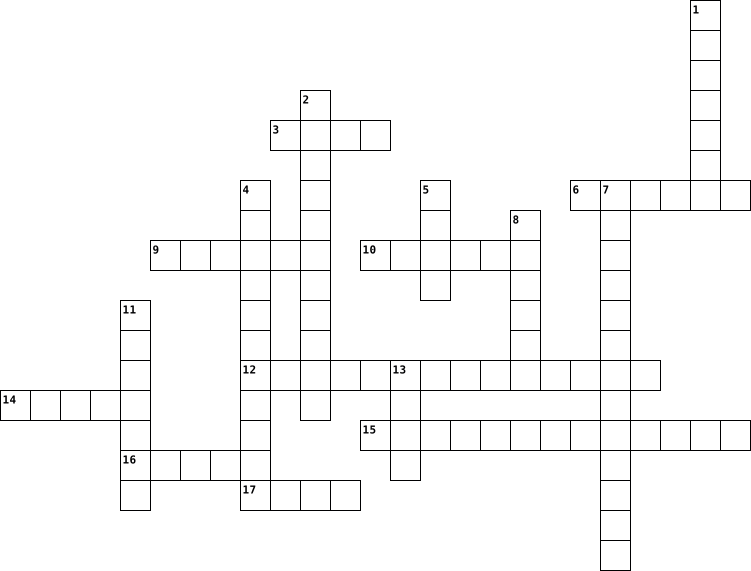
Across
- Small, often hard-covered object that can grow into a new plant.
- Male reproductive part of a flower, consisting of an anther and filament.
- Fine powder produced by flowers that is carried by wind or insects to fertilize other flowers.
- Beautiful, colorful part of a plant that attracts bees and butterflies.
- The process by which green plants and some other organisms use sunlight to synthesize foods.
- Delicious and nutritious part of some plants that contains seeds.
- The fusion of male and female gametes during sexual reproduction in plants.
- Colorful part of a flower that surrounds the reproductive parts.
- Green, flat part of a plant that helps it make food through photosynthesis.
Down
- ChatGPT…
- The process by which a seed begins to grow into a new plant.
- Green pigment in plants that absorbs light energy used to carry out photosynthesis.
- Underground part of a plant that absorbs water and nutrients from the soil.
- The process where plants absorb water through the roots and then give off water vapor through pores in their leaves.
- A part of a tree or shrub that grows out from the trunk or main stem.
- can make mistakes. Consider checking important information.
- The main support structure of a plant, holding up leaves, flowers, and fruits.
17 Clues: ChatGPT… • can make mistakes. Consider checking important information. • The process by which a seed begins to grow into a new plant. • Small, often hard-covered object that can grow into a new plant. • Colorful part of a flower that surrounds the reproductive parts. • Delicious and nutritious part of some plants that contains seeds. • ...
Science Extra Credit 2023-12-15

Across
- a system of interlocking and interdependent food chains.
- a green pigment, present in all green plants and in cyanobacteria, responsible for the absorption of light to provide energy for photosynthesis. Its molecule contains a magnesium atom held in a porphyrin ring.
- a plastid that contains chlorophyll and in which photosynthesis takes place
- an organism that is able to form nutritional organic substances from simple inorganic substances such as carbon dioxide.
- an organelle found in large numbers in most cells, in which the biochemical processes of respiration and energy production occur. It has a double membrane, the inner layer being folded inward to form layers (cristae).
Down
- a hierarchical series of organisms each dependent on the next as a source of food.
- a process in living organisms involving the production of energy, typically with the intake of oxygen and the release of carbon dioxide from the oxidation of complex organic substances.
- the process by which green plants and some other organisms use sunlight to synthesize foods from carbon dioxide and water. Photosynthesis in plants generally involves the green pigment chlorophyll and generates oxygen as a byproduct.
- an animal that feeds on flesh.
- an organism deriving its nutritional requirements from complex organic substances.
- an animal that feeds on plants.
- an animal or person that eats food of both plant and animal origin.
- energy-carrying molecule found in the cells of all living things
13 Clues: an animal that feeds on flesh. • an animal that feeds on plants. • a system of interlocking and interdependent food chains. • energy-carrying molecule found in the cells of all living things • an animal or person that eats food of both plant and animal origin. • a plastid that contains chlorophyll and in which photosynthesis takes place • ...
Living things in their environment 2022-11-16

Across
- the green part of a plant necessary for photosynthesis
- eats only plans
- hunts and eats other animals
- the process green plants use to make food
- Earth's main source of energy
- eats only flesh/meat
- living organisms and everything around them
Down
- is hunted and eaten by other animals
- eats both plants and meat
- makes its own food using energy from the sun
- the place where an organism lives in nature
- can't make their own food. Need to eat plants and/or other organisms
12 Clues: eats only plans • eats only flesh/meat • eats both plants and meat • hunts and eats other animals • Earth's main source of energy • is hunted and eaten by other animals • the process green plants use to make food • the place where an organism lives in nature • living organisms and everything around them • makes its own food using energy from the sun • ...
Science Crossword 2024-01-24

Across
- Eat plants
- Something that defines that position of organisms within a food web
- A plant or animal by eating other plants or animals
- Eat meat/other animals
- Eats both plants and animals
- An organism that eats plants/producers
Down
- Plants use this to make energy
- A diagram that shows the flow of energy between organisms
- An organism that eats secondary consumers
- Plants that make their own food
- Something that is produced by photosynthesis
- An organism that eats primary consumers
12 Clues: Eat plants • Eat meat/other animals • Eats both plants and animals • Plants use this to make energy • Plants that make their own food • An organism that eats plants/producers • An organism that eats primary consumers • An organism that eats secondary consumers • Something that is produced by photosynthesis • A plant or animal by eating other plants or animals • ...
Photosynthesis and Cellular Respiration 2024-05-19

Across
- the process of making ATP with no oxygen
- with the presence of air
- the different levels of energy transfer
- organisms that have to eat to gain energy
- organisms that take apart dead organic matter
- the organelle where photosynthesis takes place
Down
- the organelle where respiration happens
- respiration the process that cells do to obtain energy
- the first step of cellular respiration
- the process that plants use to make food
- organisms that make their own food
- the name of the sugar (food) that plants make
12 Clues: with the presence of air • organisms that make their own food • the first step of cellular respiration • the organelle where respiration happens • the different levels of energy transfer • the process of making ATP with no oxygen • the process that plants use to make food • organisms that have to eat to gain energy • the name of the sugar (food) that plants make • ...
Chapter 7 vocabulary 2021-11-08

Across
- Plants that open their stomata only at night when it is colder to avoid photorespiration.
- Enzyme that bonds carbon dioxide molecules into 3-carbon chains
- Clear fluid inside chloroplast
- Chemical that shuttles electrons in the electron transport chain
- The process whereby plants, algae, and some bacteria form simple sugars from carbon dioxide and water in the presence of light and chlorophyll
- Green pigment in plants and algae
- Opening on the underside of plant leaves
- The anaerobic breakdown of sugars to pyruvate and then to either lactic acid or carbon dioxide and alcohol
- Pigmented sack found inside a chloroplast
- A series of compounds that transfer electrons from electron donor substances to electron acceptors. These chains are an important part in both photosynthesis and cellular respiration
- Plants that use the Calvin cycle to produce three-Carbon precursor of glucose (known as G3P)
Down
- 3-Carbon precursor to glucose made during photosynthesis
- The process by which cells break down glucose or other nutrients to produce usable energy
- Enzyme in the thylakoid membrane that shuttles hydrogen ions into the stroma to store energy
- Describes any chemical process that does NOT require Oxygen
- are plants which cycle carbon dioxide to 4-carbon sugar compounds in order to enter the C3 or the Calvin cycle. These plants are very productive in climatic conditions that are hot and dry and produce a lot of energy.
- The second phase of the aerobic cellular respiration in which pyruvate reacts with enzymes to produce CoA, Carbon Dioxide, Hydrogen ions, ATP, and electrons; also called Kerbs cycle
- 6-Carbon sugar that is a product of photosynthesis
- microscopic openings or pores on the underside of leaves which allows movement of gases in and out of the plant
- the end product of glycolysis, which is converted into acetyl coA that enters the Krebs cycle when there is sufficient oxygen available.
- Describes any chemical process that requires Oxygen
- The first phase of cellular reproduction, in which glucose is broken down into pyruvate
- Stack of thylakoids
23 Clues: Stack of thylakoids • Clear fluid inside chloroplast • Green pigment in plants and algae • Opening on the underside of plant leaves • Pigmented sack found inside a chloroplast • 6-Carbon sugar that is a product of photosynthesis • Describes any chemical process that requires Oxygen • 3-Carbon precursor to glucose made during photosynthesis • ...
Cellular Energy 2023-02-12

Across
- stacks of thylakoids
- light-absorbing colored molecule, such as chlorophyll or carotenoid, in the thylakoid membranes of chloroplasts
- the ability to do work
- the catabolic pathway in which organic molecules are broken down to release energy for use by the cell
- energy-carrying biological molecule, which, when broken down, drives cellular activities
- a metabolic process that requires oxygen
- process in which NAD is regenerated, allowing cells to maintain glycolysis in the absence of oxygen
- organism that captures energy from sunlight or inorganic substances to produce its own food; provides the foundation of the food supply for other organisms; also called a producer
- series of reactions in which pyruvate is broken down into carbon dioxide inside the mitochondria of cells; also called the tricarboxylic acid cycle and the citric acid cycle
- breaking larger molecules down to smaller molecules
- all of the chemical reactions that occur within a cell
- in photosynthesis, the major electron carrier involved in electron transport
- enzyme that converts inorganic carbon dioxide molecules into organic molecules during the final step of the Calvin cycle
Down
- metabolic process that does not require oxygen
- organism that cannot make its own food and gets its nutrients and energy requirements by feeding on other organisms; also called a consumer
- metabolic process in which pyruvate is broken down and electron-carrier molecules are used to produce ATP through electron transport
- in chloroplasts, one of the stacked, flattened, pigment-containing membranes in which light-dependent reactions occur
- an anaerobic process; the first stage of cellular respiration, in which glucose is broken down into two molecules of pyruvate
- the study of the flow and transformation of energy in the universe
- light-independent reactions during phase two of photosynthesis in which energy is stored in organic molecules as glucose
- building larger molecules using smaller molecules
- fluid-filled space outside the grana where the light-independent reactions of photosynthesis take place
- the anabolic process in which light energy from the Sun is converted to chemical energy
23 Clues: stacks of thylakoids • the ability to do work • a metabolic process that requires oxygen • metabolic process that does not require oxygen • building larger molecules using smaller molecules • breaking larger molecules down to smaller molecules • all of the chemical reactions that occur within a cell • the study of the flow and transformation of energy in the universe • ...
Matter and Energy in the Ecosystem 2022-10-14

Across
- a type of energy storage molecule
- the process by which plants and other producers use energy from sunlight to change carbon dioxide and water into oxygen and glucose (an energy storage molecule)
- the part of a cell where cellular respiration happens
- an organism that can make its own energy storage molecules (such as glucose)
- a molecule that organisms can use to release the energy needed to survive
- matter that makes up the nonliving parts of an ecosystem, such as air, water, and rocks
- living things, such as plants, animals, and bacteria
- a set of interacting parts forming a complex whole
- the chemical reaction between oxygen and glucose that releases energy into cells
- a type of energy storage molecule made of many glucose molecules connected together
- an organism that gets energy storage molecules (such as glucose) by breaking down dead matter
- a molecule made of carbon and oxygen atoms
- a type of energy storage molecule
Down
- the part of a cell where photosynthesis happens
- a starting substance that is part of a chemical reaction
- to link two or more things
- matter that makes up the living and dead organisms in an ecosystem
- the ability to make things move or change
- During photosynthesis, plants transforms sunlight, water, and carbon dioxide into _______ and glucose.
- During photosynthesis, plants transforms _______, water, and carbon dioxide into oxygen and glucose.
- an organism that needs to eat in order to get energy storage molecules (such as starch and fat)
- During photosynthesis, plants transforms sunlight, _______, and carbon dioxide into oxygen and glucose.
- all the living and nonliving things interacting in a particular area
- a closed ecosystem made by humans
- the tiny pieces that all matter—all the stuff in the world—is made of
- (byproduct)something that results from a process
- a group of atoms joined together in a particular way
- a type of atom (a tiny piece) that makes up molecules such as carbon dioxide and energy storage molecules
- a molecule that organisms can use to release energy, and that is made of carbon, hydrogen, and oxygen atoms
- an ending substance that is made during a chemical reaction
30 Clues: to link two or more things • a type of energy storage molecule • a closed ecosystem made by humans • a type of energy storage molecule • the ability to make things move or change • a molecule made of carbon and oxygen atoms • the part of a cell where photosynthesis happens • (byproduct)something that results from a process • ...
biology unit 2 2025-09-22

Across
- (oxygen-free) metabolic process where organisms convert carbohydrates
- molecule that serves as a temporary energy storage intermediate
- glucose (sugar) is partially broken down by cells in enzyme reactions that do not need oxygen
- double-membraned organelles in eukaryotic cells that serve as the "powerhouses" by generating most of the cell's chemical energy
- essential gaseous envelope surrounding a planet, particularly Earth
- the chemical element of atomic number 6
- associated with solid portions of the Earth
- um of all ecosystems on Earth, encompassing all living organisms
- organisms, or environments that require or are associated with the presence of oxygen
- light-independent process in which sugar molecules are formed from the carbon dioxide and water molecules
- organisms that consume other organisms for energy
- process cells use to convert chemical energy stored in nutrients
- chemical reactions in aerobic organisms that oxidizes acetyl-CoA
- green pigment in plants, algae, and cyanobacteria that is essential for photosynthesis
Down
- an essential element for all living organisms, forming key components of DNA, RNA, and proteins
- organism that can produce its own food using light, water, carbon dioxide, or other
- organelle within the cells of plants and certain algae that is the site of photosynthesis
- not requiring oxygen
- biological process where organisms like plants, algae, and some bacteria use light energy from the sun
- organism, such as bacteria or fungi, that breaks down dead or decaying organic matter—like
- initial stage of photosynthesis where light energy is captured and converted into chemical energy
- anything that has mass and occupies space
- molecule that serves as the main "energy currency" of the cell, providing readily releasable energy
- eries of protein complexes and molecules in a membrane that transfers electrons from electron donors to acceptors through redox reactions, releasing energy to create a proton gradient that drives ATP synthesis
- an essential element, primarily found as the phosphate ion (PO₄³⁻), crucial for all life
- accumulation of Earth's water—oceans
- The substances which participate in a chemical reaction
- molecule, substance, or entity that is formed at the end of a biological process
28 Clues: not requiring oxygen • accumulation of Earth's water—oceans • the chemical element of atomic number 6 • anything that has mass and occupies space • associated with solid portions of the Earth • organisms that consume other organisms for energy • The substances which participate in a chemical reaction • molecule that serves as a temporary energy storage intermediate • ...
Chapter 9-10 (Unit 4) Vocabulary 2025-11-30

Across
- – Electron-moving proteins in ETC for ATP production.
- II – Splits water, releases O₂, and excites electrons first.
- – 5-carbon CO₂ acceptor in the Calvin cycle.
- – Makes its own food using sunlight or chemicals.
- – Enzyme that fixes CO₂ onto RuBP (can also bind O₂).
- acid fermentation – Converts pyruvate into lactate; no CO₂ released.
- – Electron carrier used in photosynthesis (NADPH = reduced).
- – Stacks of thylakoids inside chloroplasts.
- (G3P) – 3-carbon sugar made in Calvin cycle; used to build glucose.
- – Must eat other organisms for energy.
- A – Carries acyl groups; forms acetyl-CoA for Krebs cycle.
- factors – Light, CO₂, water, temperature affect photosynthesis rate.
- – Cell’s main energy currency; releases energy when bonds break.
- spectrum – Shows which wavelengths a pigment absorbs.
- – Water loss from leaves through stomata.
- plants – Open stomata at night; store CO₂ as acids; conserve water.
- aerobes – Can grow with or without oxygen.
- – 3-carbon product of glycolysis; metabolic crossroads.
- cell – Controls opening and closing of stomata.
Down
- – Electron carrier used in respiration to help make ATP.
- – Leaf pores for gas exchange (CO₂ in, O₂/water out).
- transport system – Proteins that move electrons to create ATP.
- – Fluid in chloroplast around thylakoids; Calvin cycle site.
- mesophyll – Tightly packed leaf cells where most photosynthesis happens.
- mesophyll – Loosely packed leaf cells with air spaces for gas exchange.
- – Breaks glucose into 2 pyruvates; small ATP & NADH gain.
- – Electron carrier used in biosynthesis and photosynthesis.
- fermentation – Converts pyruvate into ethanol + CO₂.
- aerobes – Need oxygen to survive.
- I – Re-energizes electrons and makes NADPH.
- plants – Most plants; vulnerable to photorespiration in heat/light.
- – Rubisco binds O₂, wasting energy + releasing CO₂.
- – Waxy coating on leaves that reduces water loss.
- cycle – Breaks down acetyl-CoA to CO₂; makes NADH, FADH₂, ATP.
- respiration – Uses oxygen to make lots of ATP.
- – Membrane sacs where light reactions occur.
- respiration – Occurs without oxygen; less ATP.
- cycle – Uses ATP + NADPH to make sugar from CO₂.
- – Electron carrier in respiration; donates electrons to ETC.
- plants – Capture CO₂ efficiently; avoid photorespiration in hot climates.
40 Clues: aerobes – Need oxygen to survive. • – Must eat other organisms for energy. • – Water loss from leaves through stomata. • aerobes – Can grow with or without oxygen. • – Stacks of thylakoids inside chloroplasts. • I – Re-energizes electrons and makes NADPH. • – 5-carbon CO₂ acceptor in the Calvin cycle. • – Membrane sacs where light reactions occur. • ...
Photosynthesis Crossword Puzzle 2021-10-22

Across
- the chemical reactions that convert carbon dioxide and other compounds into glucose
- pigment in plants that makes them green and absorbs light for photosynthesis
- process in which plants use light energy to covert water and carbon dioxide into sugars/starch and oxygen
- reactions in a membrane that transfer electrons from one chemical to another and produce ATP.
Down
- photosynthetic membranes found in the chloroplast of plants - help with photosynthesis
- process where light energy is absorbed and converted into ATP and NADPH
- Low energy molecule
- synthesizing of ATP from organic materials instead of light
- the fluid area surrounding the grana within the chloroplast
- High energy molecule
10 Clues: Low energy molecule • High energy molecule • synthesizing of ATP from organic materials instead of light • the fluid area surrounding the grana within the chloroplast • process where light energy is absorbed and converted into ATP and NADPH • pigment in plants that makes them green and absorbs light for photosynthesis • ...
Biology Section 2 Crossword 2021-11-29

Across
- Absorb light energy from different areas of the visible light spectrum than chlorophyll does
- A fluid-filled space inside the chloroplast surrounding the grana
- The process in which light energy is converted into chemical energy
- Reactions that take place in the grana
- One of the energy-storing molecules produced during phase one of photosynthesis
Down
- Organelles needed for photosynthesis and are usually located in the cells of plant leaves
- Flattened,saclike membranes located inside chloroplasts
- Thylakoid membrane structure is essential for efficient energy transport during this process
- Name for the process when ATP is generated due to the flow of electrons down a concentration gradient
- Light-absorbing molecules
10 Clues: Light-absorbing molecules • Reactions that take place in the grana • Flattened,saclike membranes located inside chloroplasts • A fluid-filled space inside the chloroplast surrounding the grana • The process in which light energy is converted into chemical energy • One of the energy-storing molecules produced during phase one of photosynthesis • ...
Energy In Cells Crossword Puzzle 2023-02-21

Across
- organic molecule that is used for energy storage and transport in the cell, has 2 phosphate groups
- main pigment that absorbs light energy within plants
- where photosynthesis occurs
- organisms that can make their own food using light energy from the sun
- organisms that cannot make their own food
Down
- the process of combining ADP with a free phosphate
- where light-dependent reactions of photosynthesis take place in
- organic molecule that is used for energy storage and transport in the cell, has 3 phosphate groups
- the process by which some organisms capture the energy of sunlight and use it to make food from it
- ability to do work
10 Clues: ability to do work • where photosynthesis occurs • organisms that cannot make their own food • the process of combining ADP with a free phosphate • main pigment that absorbs light energy within plants • where light-dependent reactions of photosynthesis take place in • organisms that can make their own food using light energy from the sun • ...
2B Jaia' Hardaway 2021-04-20

Across
- plantsproduceoxygen
- circulationofwaterthroughearth
- fuel naturalfuel
- watermovementthroughplants
- colorlessgas
- wateronearthsurface
- waterthatfallsfromclouds
Down
- gastoliquid
- liquidtogas
- microscopicorganisms
- layerofgasaroundearth
- closedsystemwithlivingthings
12 Clues: gastoliquid • liquidtogas • colorlessgas • fuel naturalfuel • plantsproduceoxygen • wateronearthsurface • microscopicorganisms • layerofgasaroundearth • waterthatfallsfromclouds • watermovementthroughplants • closedsystemwithlivingthings • circulationofwaterthroughearth
Carbon and that 2023-10-16

Across
- PLANTS
- OXYGEN
- DECEASED
- AGRI-
- ROCK BREAKDOWN
- LAVA
Down
- GASES
- PLATES
- EXTRACTION
- CEMENT
- INTERCEPTION
- LATITUDES
- PLANTS
13 Clues: LAVA • GASES • AGRI- • PLANTS • PLATES • CEMENT • OXYGEN • PLANTS • DECEASED • LATITUDES • EXTRACTION • INTERCEPTION • ROCK BREAKDOWN
Photosynthesis Crossword Puzzle 2022-11-16

Across
- Allows plants to absorb sunlight
- Things that are needed for the reaction
- Things that are formed in the reaction
- The factory where photosynthesis occurs
- Organelle that contains chlorophyll
Down
- Allows gases in and out of the leaf
- Process plants use to make food/energy
- Comes from the sun
- Carries glucose throughout the plant
- Distributes water to the plant
10 Clues: Comes from the sun • Distributes water to the plant • Allows plants to absorb sunlight • Allows gases in and out of the leaf • Organelle that contains chlorophyll • Carries glucose throughout the plant • Process plants use to make food/energy • Things that are formed in the reaction • Things that are needed for the reaction • The factory where photosynthesis occurs
Characteristic of Organisms 2022-10-17

Across
- A way of producing energy without the sun
- 2 parents that make an offspring
- multiple cells
- has a nucleus and is a advance cell
- hunts or absorbs their food
Down
- plants use this get food
- a single cell
- makes food through photosynthesis
- no nucleus and is a primitive cell
- 1 parent that makes a identical offspring
10 Clues: a single cell • multiple cells • plants use this get food • hunts or absorbs their food • 2 parents that make an offspring • makes food through photosynthesis • no nucleus and is a primitive cell • has a nucleus and is a advance cell • A way of producing energy without the sun • 1 parent that makes a identical offspring
light 2022-10-20

Across
- light: the light we can see
- light: prompts steam strength
- uses blue and green light for photosynthesis
- Spectrum: how we organize light
- A plant’s response to light duration/length
- what wavelengths are measured in
Down
- measured light intensities
- light: make leaves thinner and wider
- uses blue and red light for photosynthesis and appears green
- light: seed germination
10 Clues: light: seed germination • measured light intensities • light: the light we can see • light: prompts steam strength • Spectrum: how we organize light • what wavelengths are measured in • light: make leaves thinner and wider • A plant’s response to light duration/length • uses blue and green light for photosynthesis • ...
cell characteristics 2021-03-05

Across
- involves one organism to reproduce
- makes their own food/photosynthesis
- more than one cell in the organism
- little thing that makes up every organism
- the process in which organisms make food from the sun
- no defined nucleus, primitive cell
Down
- single-celled organism
- involves two organisms to reproduce
- hunts or absorbs their food
- nucleus with DNA, advanced cell
10 Clues: single-celled organism • hunts or absorbs their food • nucleus with DNA, advanced cell • involves one organism to reproduce • more than one cell in the organism • no defined nucleus, primitive cell • involves two organisms to reproduce • makes their own food/photosynthesis • little thing that makes up every organism • the process in which organisms make food from the sun
Slides 2021-02-22

Across
- its needed for a reaction to take place
- makes the plant a green color
- the energy from the sun
- action plants do to absorb sun energy
- the item that's made from a reaction
- distributes water to the plant
Down
- holds chlorophyll
- plants drink it to survive
- plants turn it into oxygen
- the factory where photosynthesis happens
10 Clues: holds chlorophyll • the energy from the sun • plants drink it to survive • plants turn it into oxygen • makes the plant a green color • distributes water to the plant • the item that's made from a reaction • action plants do to absorb sun energy • its needed for a reaction to take place • the factory where photosynthesis happens
Unit 4 Vocab 1 2021-10-22

Across
- Fluid surrounding chloroplasts
- Low energy molecule
- Transfers electrons from one chemical to another
- Light energy is absorbed and converted to ATP or/and NADPH
- What makes the plant green
- Photosynthetic membranes that contain material used for photosynthesis
Down
- How plants make food
- What actually makes the glucose
- Making food or energy without light
- High energy molecule
10 Clues: Low energy molecule • How plants make food • High energy molecule • What makes the plant green • Fluid surrounding chloroplasts • What actually makes the glucose • Making food or energy without light • Transfers electrons from one chemical to another • Light energy is absorbed and converted to ATP or/and NADPH • ...
Noah 2023-03-10

Across
- A sugar that plants make for themselvs
- what plants use to grow
- what plants use for photosynthesis
- where organisms work with their environment
- shows the flow of energy
Down
- it breaks down dead organisms
- something that is living or once was
- what allows cellular reparation
- organisms that rely on eating other living things
- something that was never living
10 Clues: what plants use to grow • shows the flow of energy • it breaks down dead organisms • what allows cellular reparation • something that was never living • what plants use for photosynthesis • something that is living or once was • A sugar that plants make for themselvs • where organisms work with their environment • organisms that rely on eating other living things
Cell organells 2023-05-11

Across
- hold the dna of a cell
- wall is a rigid outside layer
- creates energy called atp
- the certain jobs of the cells
- a gooey substance that keeps organelles in place
Down
- helps with photosynthesis
- controls what comes into the cell
- holds waste,food,and water
- follows the instructions of the nucleus
- makes energy threw the sun
10 Clues: hold the dna of a cell • helps with photosynthesis • creates energy called atp • holds waste,food,and water • makes energy threw the sun • wall is a rigid outside layer • the certain jobs of the cells • controls what comes into the cell • follows the instructions of the nucleus • a gooey substance that keeps organelles in place
Science by Brooke Frederick and Ashlyn Kluesner 2017-05-11

Across
- plants making their own food
- when molecules go from high to low concentration
- how water molecules enter and exit the cell
- what plants make during photosynthesis
Down
- controls all processes in the cell
- type of unspecialized cell
- the powerhouse and where respiration occurs
- made from tissue
- type of reproduction by 1 parent
- type of reproduction by 2 parent
10 Clues: made from tissue • type of unspecialized cell • plants making their own food • type of reproduction by 1 parent • type of reproduction by 2 parent • controls all processes in the cell • what plants make during photosynthesis • the powerhouse and where respiration occurs • how water molecules enter and exit the cell • when molecules go from high to low concentration
Corinne Science 2024-02-01

Across
- Outer layer of the Earth.
- Organ that pumps blood in the human body.
- Device that magnifies small objects.
- Simplest form of matter.
- Force that pulls objects toward the center of the Earth.*
- Process where plants make their own food.
Down
- Gas essential for photosynthesis
- Solid form of water.
- Energy from the sun
- Unit of measurement for electrical resistance.
10 Clues: Energy from the sun • Solid form of water. • Simplest form of matter. • Outer layer of the Earth. • Gas essential for photosynthesis • Device that magnifies small objects. • Organ that pumps blood in the human body. • Process where plants make their own food. • Unit of measurement for electrical resistance. • Force that pulls objects toward the center of the Earth.*
Crossword 2024-03-08

Across
- part of a plant
- a type of sugar you get from foods you eat
- a living thing that grows on ground and produces oxygen
- green pigment
- the procces a plant does to
Down
- mportant liquid for survival
- what humans release after they breath
- a light that comes from the sun
- contains photosynthesis
- important for humans
10 Clues: green pigment • part of a plant • important for humans • contains photosynthesis • the procces a plant does to • mportant liquid for survival • a light that comes from the sun • what humans release after they breath • a type of sugar you get from foods you eat • a living thing that grows on ground and produces oxygen
Photoysnthesis Lab Stations 2023-10-26

Across
- What's needed for a reaction to take place
- Plant's sugar
- Gas
- Substances that are formed into a chemical reaction
- Organelle that contains chlorophyll
- Lets gasses in and out a leaf
Down
- Pigment that absorbs the suns energy
- The process where plants convert sunlight energy into glucose
- Carries the glucose to the plant
- The factory where photosynthesis happens
10 Clues: Gas • Plant's sugar • Lets gasses in and out a leaf • Carries the glucose to the plant • Organelle that contains chlorophyll • Pigment that absorbs the suns energy • The factory where photosynthesis happens • What's needed for a reaction to take place • Substances that are formed into a chemical reaction • The process where plants convert sunlight energy into glucose
Autotrophs and Herterotrophs 2022-12-08

Across
- Heterotrophs
- Advanced cells with a nucleus that stores dna
- The process where autotrophs make food by using energy, carbon dyoxide, and water
- Autotrophs
- Many celled organisms
Down
- Why to produce energy without sunlight
- An organism that uses photosynthesis
- Primitive cells with no defined nucleus
- Organisms that are unable to make their own food
- One celled organisms
10 Clues: Autotrophs • Heterotrophs • One celled organisms • Many celled organisms • An organism that uses photosynthesis • Why to produce energy without sunlight • Primitive cells with no defined nucleus • Advanced cells with a nucleus that stores dna • Organisms that are unable to make their own food • The process where autotrophs make food by using energy, carbon dyoxide, and water
Ghianne Villasotes Plant Organs and Functions 2020-11-27

Across
- It is the growth region in plants found within the root tips and the tips of the new shoots and leaves.
- __________ is the photosynthesis in the leaves, and storage in the roots.
- The first name of the person who created this crossword.
- _______ cell walls are flexible and can expand as the cell grows and elongates.
- A________ is a part of a tree which grows out from the trunk or from a bough.
- It transports water, minerals, and sugars to different parts of the plant.
- _______ are specialized pores that allow gas exchange through holes in the cuticle.
- _______ are a part of the shoot system of a plant. Their main function is to provide support to the plant, holding leaves, flowers, and buds.
- _________ enable a plant to grow on another plant.
- ________ stems have divisions and side stems.
- _______ stems are soft and typically green.
- ________ cells provide protection and have other specialized adaptations in different plant organs.
- It is the process by which plants synthesize food.
Down
- It is the shoot support in areas where growth has ceased.
- It covers and protects the plant, and controls gas exchange and water absorption (in roots).
- It is usually found in the area between the base of a leaf and the stem where it can give rise to a branch or a flower.
- ________ root systems are located closer to the surface and have a dense network of roots. This root system can help prevent soil erosion.
- Stems and leaves have _______, which are hair-like structures on the epidermal surface.
- ________ are the main site for photosynthesis.
- It is the primary growing point at the top of the stem of a plant.
- __________ stems have a single stem.
- It is a distinct organ system of plants that grow above ground, where it absorbs the light needed for photosynthesis.
- This root structure stores starch.
- It is a distinct organ system of plants that supports the plants and absorbs water and minerals, is usually underground.
- It is the shoot support in areas of active growth.
25 Clues: This root structure stores starch. • __________ stems have a single stem. • _______ stems are soft and typically green. • ________ stems have divisions and side stems. • ________ are the main site for photosynthesis. • _________ enable a plant to grow on another plant. • It is the shoot support in areas of active growth. • ...
11BSc Flowering Plants 2021-05-20

Across
- a type of cell found in a leaf which contains lots of chloroplasts.
- an essential catalyst for photosynthesis.
- the embryonic shoot.
- a key product of photosynthesis.
- the site of cellular respiration in a cell.
- trace mineral needed for protein structure and DNA synthesis.
- the requirements for successful germination.
- the third stage of primary growth.
- a type of growth in plants that creates rings.
- a growth response whereby plants grow towards or away from gravity.
- the meristematic tissue which is the site of secondary growth.
- a key product of cellular respiration - without this growth cannot occur.
- the vascular tissue in plants which conducts water and dissolved nutrients upwards from the root.
- movement of water molecules from a high concentration to a low concentration across a semi-permeable membrane.
- the site of photosynthesis in a plant cell.
- the prefix for water.
Down
- the protective coating of a seed.
- an organelle that is enlarged in plant cells and holds water/dissolved trace minerals.
- if this decreases too much photosynthesis and ultimately growth will occur very slowly.
- a hormone that causes cells to elongate and thus drives plant tropisms.
- this might happen to enzymes if they are heated up too much or if they are put in the incorrect pH.
- the vascular tissue in plants which conducts sugars and other metabolic products downwards from the leaves.
- the prefix for touch.
- a type of reproduction that only requires one individual.
- the process whereby the embryonic plant emerges from the seed.
- the process which involves the fusion of male and female gametes to form a zygote.
- an important structure in a flower that makes nectar.
- the process where water moves up the plant against gravity.
- a growth response whereby plants grow towards or away from light.
- the meristematic tissue which is the site of primary growth.
- a process whereby pollen from one flowers anther is transferred to the stigma of another flower.
31 Clues: the embryonic shoot. • the prefix for touch. • the prefix for water. • a key product of photosynthesis. • the protective coating of a seed. • the third stage of primary growth. • an essential catalyst for photosynthesis. • the site of cellular respiration in a cell. • the site of photosynthesis in a plant cell. • the requirements for successful germination. • ...
chemical 2024-02-22

Across
- The Symbol of oxygen is 'O' and the formula for oxygen is 'O2'.
- an important heat-trapping gas, also known as a greenhouse gas
- a type of sugar you get from foods you eat, and your body uses it for energy.
- a group of atoms bonded together, representing the smallest fundamental unit of a chemical compound that can take part in a chemical reaction.
- substance that takes part in and undergoes change during a reaction.
- a metabolic pathway that uses glucose to produce adenosine triphosphate (ATP)
- physical substance in general, as distinct from mind and spirit; (in physics) that which occupies space and possesses rest mass, especially as distinct from energy.the structure and properties of matter"
- energy that comes from a source and travels through space at the speed of light
- no matter can ever be created or destroyed
- proteins that help speed up metabolism, or the chemical reactions in our bodies
Down
- chemical reaction, a process in which one or more substances, the reactants, are converted to one or more different substances
- the physical energy resulting from electromagnetic radiation, usually observed as it radiates from a source into the surrounding environment.
- the name of the green pigment that plants use to make food during a process called photosynthesis
- the order of events in an ecosystem, where one living organism eats another organism,
- the process by which green plants and some other organisms use sunlight to synthesize foods from carbon dioxide and water. Photosynthesis in plants generally involves the green pigment chlorophyll and generates oxygen as a byproduct.
- made up of building blocks called amino acids
- the movement of matter between the Earth, the atmosphere, and living thingsautotroph
- chemical element with symbol C and atomic number 6.
- the action of breathing
- an organelle within the cells of plants and certain algae that is the site of photosynthesis
- sugar molecules.
- an organism that is able to form nutritional organic substances from simple inorganic substances such as carbon dioxide.
- the source of energy for use and storage at the cellular level
- an article or substance that is manufactured or refined for sale.
24 Clues: sugar molecules. • the action of breathing • no matter can ever be created or destroyed • made up of building blocks called amino acids • chemical element with symbol C and atomic number 6. • an important heat-trapping gas, also known as a greenhouse gas • the source of energy for use and storage at the cellular level • ...