
plate Crossword Puzzles
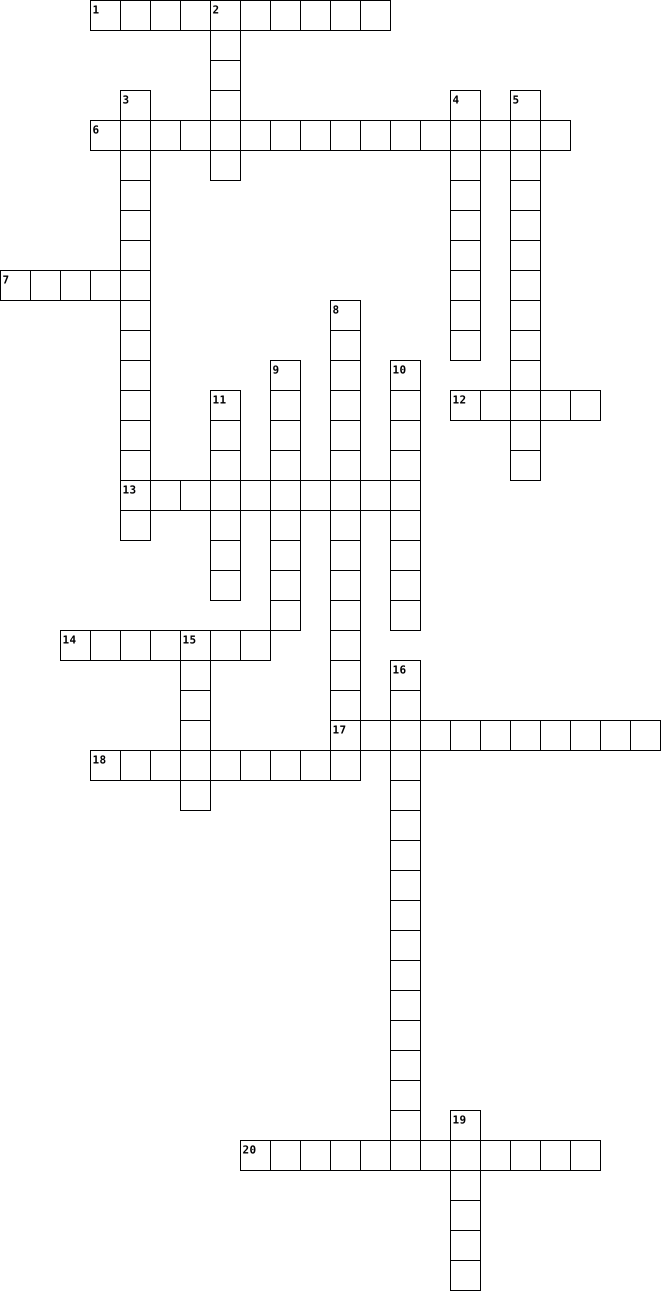
À Mesa Vocabulário (make sure to use accents and use dashes as spaces when needed) 2021-12-21

Across
- Cheque/Bill
- Credit Card
- Cup/Glass
- Gravy Boat
- Teapot
- Fish Fork
- Meat Knife
- Utensils
- Dessert Plate
- Fish Knife
- Butter Knife
- Fruit Knife
- Dishes
- Lunch
- Dinner
Down
- Sugar Bowl
- Napkin
- Pepper Shaker
- Deep Plate
- Meat Fork
- Soup Spoon
- Coffee Cup
- Afternoon Snack
- Saucer
- Creamer
- Salt Shaker
- Fruit Fork
- Tea Spoon
- Dessert Fork
- Table Cloth
- Platter
- The Tip
- Restaurant Table
- Tea Cup
- Bowl
- Breakfast
- Shallow Plate
37 Clues: Bowl • Lunch • Napkin • Teapot • Saucer • Dishes • Dinner • Creamer • Platter • The Tip • Tea Cup • Utensils • Cup/Glass • Meat Fork • Fish Fork • Tea Spoon • Breakfast • Sugar Bowl • Deep Plate • Gravy Boat • Soup Spoon • Coffee Cup • Fruit Fork • Meat Knife • Fish Knife • Cheque/Bill • Credit Card • Salt Shaker • Table Cloth • Fruit Knife • Dessert Fork • Butter Knife • Pepper Shaker • Dessert Plate • Shallow Plate • Afternoon Snack • Restaurant Table
earthquakes & volcanoes 2023-01-13

Across
- Dense ball of solid material at the center of he Earth
- plate that moves an inch every year.
- A plate boundary where two plates move toward each other
- The process by which molten material adds new oceanic crust to the ocean floor
- rumbling tectonic plate
Down
- Cause the plates to move; between the lithosphere and the asthenosphere
- a large mountain that builds up and releases ho
- Alfred Wegener's hypothesis that the continents were once one huge land mass but have since then drifted apart
- A plate boundary where two plates move away from each other
- Thickest layer of the Earth; it consists of two layers - the lithosphere and the asthenosphere
- Theory that pieces of the Earth's lithosphere are in motion,driven by convection currents in the mantle
- A layer of molten iron and nickel that surrounds the inner core of the Earth
- The name of the single landmass that broke apart about 225 million years ago
- A plate boundary where two plates grind against each other, moving it different directions
- The undersea mountain mountain chain where new ocean floor is produced; a divergent plate boundary
15 Clues: rumbling tectonic plate • plate that moves an inch every year. • a large mountain that builds up and releases ho • Dense ball of solid material at the center of he Earth • A plate boundary where two plates move toward each other • A plate boundary where two plates move away from each other • Cause the plates to move; between the lithosphere and the asthenosphere • ...
Plate Tectonic Puzzle 2021-12-09

Across
- What does the movement of the mantle move like, as the plates slide around on top of the layer?
- What type of plate boundary moves alongside each other?
- What happens when plates move?
- What type of rock do the Earth's plates ride on?
- What kind of plate boundary forms mountains?
- What type of plates crust is less dense but thicker?
- What is the name of the ancient supercontinent formed 28 Million Years ago?
Down
- Where does convection occur, as hot, less dense material rises and cold material sinks?
- What happens when plates move convergence?
- When two continental plates move toward each other and slowly collide and crumble, what does it form?
- When a plate moves over a fixed hotspot, what type of geologic features/events create a chain?
- As a plate with ocean floor rock material is on the top edge it subducts beneath another plate, which makes it what?
- What type of plate crusts is denser and thinner?
- Conservation of matter can either be created or what to cause changes with other matter?
- Rock material that makes up Earth's plates, comes from what rock material?
15 Clues: What happens when plates move? • What happens when plates move convergence? • What kind of plate boundary forms mountains? • What type of plate crusts is denser and thinner? • What type of rock do the Earth's plates ride on? • What type of plates crust is less dense but thicker? • What type of plate boundary moves alongside each other? • ...
Plate Tectonics 2021-12-10

Across
- A zone where one plate moves under another plate.
- Places of permanent convection. Volcanoes move in chains.
- A type of fault when the break in the crust is due to compression built up at a convergent boundary.
- A piece of lithosphere that slides slowly over the asthenosphere.
- The tectonic plate that is more dense and thinner.
- A deep valley in the ocean caused by convergent boundary plate movement.
Down
- A type of fault when the break in the crust is due to shearing built up at a transform boundary.
- A boundary where two plates come (move) together.
- What happens when plates move by sliding past each other and the rock slabs rub against each other.
- A super continent made of all the current continents together 225 million years ago.
- A boundary where two plates move along side each other.
- A type of fault when the break in the crust is due to tension built up at a divergent boundary.
- A boundary where two plates move away from each other.
- A landform with magma inside that erupts and is pushed out of an opening and magma becomes lava.
- The tectonic plate that is less dense and thicker.
15 Clues: A zone where one plate moves under another plate. • A boundary where two plates come (move) together. • The tectonic plate that is less dense and thicker. • The tectonic plate that is more dense and thinner. • A boundary where two plates move away from each other. • A boundary where two plates move along side each other. • ...
Y7 End of topic crossword 2020-12-07

Across
- a type of volcano with a wide base and runny lava you can find it at constructive plate boundaries
- a building especially made to withstand earthquakes
- the cloud formed by all the volcanic ash
- the resistance that one surface or object encounters when moving over another
- when hot magma reaches the surface it cools down and turns into this
- working out what might happen
- the place where the magma is held
- the point at which an earthquake originated in the crust
- how badly the earthquake shook the earth
- the epicenter of the Haiti earthquake
Down
- capital city of Belgium
- A long high see wave caused by an earthquake or other natural disasters
- capital city of Australia
- earthquakes are measured on this
- the plate boundary where the oceanic plate sinks under the continental plate, causing volcanic eruptions or earthquakes
- a type of volcano also know as a composite volcano
- capital city of Bulgaria
- capital city of Italy
- the thin out layer (the earths surface)
- the point on the earths surface directly above the focus
20 Clues: capital city of Italy • capital city of Belgium • capital city of Bulgaria • capital city of Australia • working out what might happen • earthquakes are measured on this • the place where the magma is held • the epicenter of the Haiti earthquake • the thin out layer (the earths surface) • the cloud formed by all the volcanic ash • how badly the earthquake shook the earth • ...
Plate Tectonics Pick-A-Project: Project 1 2022-12-12
Across
- Where does the heat that causes the Convection currents, coming from
- the borders of the plates
- What is the coldest layer of Earth
- Is a break in Earth’s crust where slabs of crust slip past each other.
- Two boundaries to go closer to each other.
- A famous supercontinent
- Forms at Transform boundaries
- Forms at Convergent boundaries
- An example of a divergent boundary
Down
- What are underwater mountains called
- what makes up the structure of Earth's crust
- Two plates that slide past each other
- Has the same structure as a normal fault, but blocks move in opposite directions.
- Forms at Divergent boundaries.
- The boundary of two plates moving away from each other
- What are near the borders of the plate boundaries
- What is a factor that causes plate tectonics to be pulled apart.
- During Pangaea,Modern Day South America was connected to ...
- Rocks on either side of the fault slip past each other sideways with little up-or-down motion
- Which layer has a lot of magma and liquid minerals
20 Clues: A famous supercontinent • the borders of the plates • Forms at Transform boundaries • Forms at Divergent boundaries. • Forms at Convergent boundaries • What is the coldest layer of Earth • An example of a divergent boundary • What are underwater mountains called • Two plates that slide past each other • Two boundaries to go closer to each other. • ...
Science Puzzle 4: Tectonic Plates 2015-03-05

Across
- the hottest and most dense of the Earth's layers
- the rock formed from compacting and cementation
- the property of the color of a mineral's powder
- boundary in which 2 tectonic plates divide/separate
- boundary where ocean plate goes under continental plate
- the tectonic plate which is found on the ring of fire
- boundary in which 2 tectonic plates collide
- the property of how a mineral reflects light
Down
- the property of a mineral after dividing its mass and volume
- the rock formed from heat and pressure
- the property of how a mineral resists scratching
- the southern most tectonic plate found on Earth
- the (semisolid, plasticity) layer below the lithosphere
- the mineral which has a "10" in the Moh's scale
- the rock formed from the cooling of magma
- the thinnest and coolest layer of Earth
- the Earth's layer that is liquid
- boundary in which 2 tectonic plates slide against each other
- the thickest layer of the Earth
- the mineral which is a "1" in the Moh's scale
20 Clues: the thickest layer of the Earth • the Earth's layer that is liquid • the rock formed from heat and pressure • the thinnest and coolest layer of Earth • the rock formed from the cooling of magma • boundary in which 2 tectonic plates collide • the property of how a mineral reflects light • the mineral which is a "1" in the Moh's scale • ...
CROSSWORD PUZZLE 2023-10-23

Across
- ,the collision of two plates like continental to continental
- ,the solid bulk interior of earth
- ,pangea broke into two continents called gondwanaland and
- ,the mammal- like reptile and now extinct,the fossils can be found only in south Africa and south America
- ,this is the plate boundary that will move away to each other
- ,the outermost layer of the earth
- ,scientist mapped mid-oceans ridges using what
Down
- ,the kind of crust that is thicker and less dense
- ,the oceanic plate diving down towards the mantle is called
- ,the plate boundary that slide past each other and can cause earthquakes
- ,its a liqiud molten rocks that come out to the mantle
- ,a line of mountains
- ,Philippines plates convert toward what plate?
- ,plant fossil evidence
- ,the theory of alfred wegener
- ,one of the active volcano in the Philippines
- ,the kind of crust that is thinner and denser
- ,the most safest island in the Philippines
- ,the supercontinent called
- ,it is made of nickel and iron and can be found in the innermost layer of the earth
20 Clues: ,a line of mountains • ,plant fossil evidence • ,the supercontinent called • ,the theory of alfred wegener • ,the solid bulk interior of earth • ,the outermost layer of the earth • ,the most safest island in the Philippines • ,one of the active volcano in the Philippines • ,the kind of crust that is thinner and denser • ,Philippines plates convert toward what plate? • ...
Pick-a-project Plate tectonics 2024-10-02

Across
- A mudflow caused by volcanic eruptions
- ____ Lava is sharp and blocky
- ______ Lava is smoother and more ropey
- _____ magma is thick and traps gas bubbles
- Molten rock beneath the surface
- Example of a super volcano (national park)
- A bowl-shaped depression at the vent
- Magma is called this when it reaches the surface
- A volcano that forms in the middle of a plate
- Pebble sized material (tephra)
- Scientist first credited with the theory of continental drift
- A long narrow split where basaltic magma flows out
Down
- San Andreas Fault is an example of this type of plate boundary
- The supercontinent that existed about 300 million years ago
- Mid-ocean ridge is an example of this type of plate boundary
- Solid material ejected from a volcano
- _____ magma causes gentle volcanic eruptions
- most dangerous part of an explosive eruption
- Large rock blown from the crater of a volcano
- An opening where ejecta come out
- Finest material(tephra)
- Himalayas are an example of this type of plate boundary
22 Clues: Finest material(tephra) • ____ Lava is sharp and blocky • Pebble sized material (tephra) • Molten rock beneath the surface • An opening where ejecta come out • A bowl-shaped depression at the vent • Solid material ejected from a volcano • A mudflow caused by volcanic eruptions • ______ Lava is smoother and more ropey • _____ magma is thick and traps gas bubbles • ...
Geology 1 2025-11-22

Across
- The name of the principal that states the laws governing Earth processes are constant over time
- An element with a different number of neutrons compared to protons
- The process where dense minerals sink and light minerals move upwards
- Volcano type that is expected to have basaltic magma
- Mineral formed at low temperatures on Bowen's Reaction Series
- High silica and aluminum content
- A portion of a resource that is legally and economically feasible to extract
- Volcano type that is expected to have rhyolitic magma
- Mineral property that describes how a mineral's surface reflects light
- High magnesium and iron content
- Most abundant mineral group
Down
- Density of oceanic crust
- Mineral property that describes how resistance a mineral's surface is to being scratched
- Plate boundary where two plates are pulled apart
- Mineral formed at high temperatures on Bowen's Reaction Series
- Density of continental crust
- The process by which atoms arrange themselves into an orderly, repeating structure
- Plate boundary where orogenies occur
- Plate boundary where two plates come together
- Plate boundary where plates move horizontally past each other
20 Clues: Density of oceanic crust • Most abundant mineral group • Density of continental crust • High magnesium and iron content • High silica and aluminum content • Plate boundary where orogenies occur • Plate boundary where two plates come together • Plate boundary where two plates are pulled apart • Volcano type that is expected to have basaltic magma • ...
Hope's Crossword Puzzle 2015-05-08

Across
- Measurement instruments used for two general purposes: to measure the magnetization of a magnetic material.
- Two plates moving towards each other
- linear-shaped lowland between several highlands or mountain ranges created by the action of a geologic rift or fault.
- supercontinent
- Two plates slide horizontally past each other.
- a line on a diagram or map connecting points relating to the same time or equal times
- new oceanic crust is formed through volcanic activity and then gradually moves away from the ridge.
- Portion of motion of a tectonic plate that can be accounted for by its subduction.
Down
- Two plates moving away from each other.
- Says the Earth's crust is made up of about a dozen major plates that rest on hot mantle.
- The study of the remnant magnetization in rocks.
- movement of the Earth's continents relative to each other.
- Process that takes place at convergent boundaries by which one tectonic plate moves under another tectonic plate and sinks into the mantle as the plates converge.
- Change in a planet's magnetic field such that the positions of magnetic north and magnetic south are interchanged.
- sliding plate force is a proposed mechanism for plate motion in plate tectonics.
15 Clues: supercontinent • Two plates moving towards each other • Two plates moving away from each other. • Two plates slide horizontally past each other. • The study of the remnant magnetization in rocks. • movement of the Earth's continents relative to each other. • sliding plate force is a proposed mechanism for plate motion in plate tectonics. • ...
8GEO LANDFORMS - Kiran Baireddy 2015-10-06

Across
- The 'plastic' layer of the Earth
- The most devastating type of volcanic eruption
- A type of plate boundary that pushes into another plate boundary
- The 'skin' of the earth
- The thickness of liquids and lava
- Causes the eruptions in Hawaii
Down
- A release of ash, lava and pumice
- A layer of the Earth that is mainly made up of liquid iron
- A type of plate boundary that pulls away from another plate boundary
- Caused the destruction of Pompeii
- The layer of the Earth located beyond the outer core
- A release of pressure in the Earth's tectonic plates
- What the Earth is made up of
- Created by tectonic plates
- A massive wave
15 Clues: A massive wave • The 'skin' of the earth • Created by tectonic plates • What the Earth is made up of • Causes the eruptions in Hawaii • The 'plastic' layer of the Earth • A release of ash, lava and pumice • Caused the destruction of Pompeii • The thickness of liquids and lava • The most devastating type of volcanic eruption • The layer of the Earth located beyond the outer core • ...
Plate Tectonics Crossword 2024-10-08

Across
- The border between two plates
- The earth is made up of 13-20 ______
- Made up of crust and a little bit of the upper mantle
- This may occur as a result of two plates sliding against each other
- Boundary where two plates move towards each other
- The continent that is believed to have once fit into South America
- The creator of the Continental Drift theory's first name
- ________ spreading.The process that forms new ocean floor and oceanic spreading.
- When a plate slides under another
- Boundary where two plates slide against each other
Down
- Boundary where two plates move away from each other
- A crack in a plate
- The outermost shell of the Earth
- Part of the plate where earthquakes occur
- The super-continent in the Continental Drift theory
- The layer of Earth between the core and the crust.
- This is formed by one plate sliding under the other
- A type of evidence that points to the theory being true
- Most plates are made up of continents and some _____
- Alfred Wagner suggested that continents were ________
20 Clues: A crack in a plate • The border between two plates • The outermost shell of the Earth • When a plate slides under another • The earth is made up of 13-20 ______ • Part of the plate where earthquakes occur • Boundary where two plates move towards each other • The layer of Earth between the core and the crust. • Boundary where two plates slide against each other • ...
Plate Tectonics 2025-11-10

Across
- Crust that is less dense, thicker, and older
- Result of tectonic plates moving past each other typically at transform and convergent plate boundaries
- Crust that is denser, thinner, and newer, will subduct at oceanic-continental convergent boundaries
- Plate boundary where two plates are moving together
- When one plate slides under another at a convergent plate boundary
- Large pieces of the Earth’s crust that move on top of the mantle
Down
- A form of divergent plate boundary where a new ocean floor is made
- Plate boundary where two plates slide past each other
- The result of a stationary magma plume from inside the mantle that creates island or mountain chains
- Occur mainly at convergent and divergent plate boundaries and is the result of hot gasses, magma plumes, and pressure
- Plate boundary where two plates are moving apart
11 Clues: Crust that is less dense, thicker, and older • Plate boundary where two plates are moving apart • Plate boundary where two plates are moving together • Plate boundary where two plates slide past each other • Large pieces of the Earth’s crust that move on top of the mantle • A form of divergent plate boundary where a new ocean floor is made • ...
Our Restless Earth :) 2014-04-30

Across
- The country Mount Fuji is located in...
- When earthquakes occur you must ___, cover and hold on
- Type of oceanic landform.
- One of Australia's well known landforms.
- A tectonic plate located in the south.
- The ringoffire is located in the...
- A plate boundary.
- A Fold Mountain Range
- Highest mountain in the world.
- One of the earth's inner layers.
Down
- Type of Glacial landform
- Landforms can be created by...
- A way to measure earthquakes.
- Earthquakes can cause a _________
- there are three types of ______ __________
- Most volcanoes are located along the____ __ ____
- A tectonic plate near south america.
- Where mountains maily occur
- The biggest mountain in the solar system is located on _________
- An oasis is a ___________ landform.
20 Clues: A plate boundary. • A Fold Mountain Range • Type of Glacial landform • Type of oceanic landform. • Where mountains maily occur • A way to measure earthquakes. • Landforms can be created by... • Highest mountain in the world. • One of the earth's inner layers. • Earthquakes can cause a _________ • The ringoffire is located in the... • An oasis is a ___________ landform. • ...
All about the geosphere 2024-10-31

Across
- how often or fast something happens
- A large section of rock that makes up Earth
- two plates slide up and down against each other
- when two plates are moving toward each other
- based on Evidence Scientists have gathered overtime
- a sudden shaking
- A view of the inside
- The deepest layer
- a 3D diagram
- caused by convergent plate boundary
- when two plates are moving away from each other
Down
- where two plates meet
- to examine in detail
- Alfred wegner’s theory
- outmost layer
- soft solid rock underneath earth plates
- something that we observe that happens again and again
- a scientist that studies the Earth
- caused by divergent plate boundary
- erupts lava and gases
20 Clues: a 3D diagram • outmost layer • a sudden shaking • The deepest layer • to examine in detail • A view of the inside • where two plates meet • erupts lava and gases • Alfred wegner’s theory • a scientist that studies the Earth • caused by divergent plate boundary • how often or fast something happens • caused by convergent plate boundary • soft solid rock underneath earth plates • ...
Earth Processes Unit Test Crossword 2023-12-11

Across
- a theory that states Earth is covered in patches of crust called plates, which are pushed along by the convection currents in the Earth’s mantle
- transportation of sediment
- German climatologist and meteorologist who made Continental Drift Theory
- rocks breaking down into sediment
- tectonic plate boundary where plates are sliding against each other horizontally
- the movement of rock matter between different groups
- light-colored igneous rock with large crystals
Down
- a denser plate moving underneath another plate
- fragments of existing rock formed by weathering & erosion
- tectonic plate boundary where plates are colliding
- mountain range located in between India and China that was formed by a convergent plate boundary
- tectonic plate boundary where plates are moving away from each other
12 Clues: transportation of sediment • rocks breaking down into sediment • a denser plate moving underneath another plate • light-colored igneous rock with large crystals • tectonic plate boundary where plates are colliding • the movement of rock matter between different groups • fragments of existing rock formed by weathering & erosion • ...
nails 2024-02-26

Across
- folds of skin that surround the nail plate
- hard keratin plate on top of and slowly sliding across the nail bed as it grows; the most visible and functional part of the nail unit
- part of the nail plate that extends over the tip of the finger or toe
- living skin underneath the PNF found at the nail plate’s base covering the matrix area
- nonliving colorless tissue attached to the nail plate
- collectively; the nail bed (or sterile matrix), nail fold, eponychium, paronychium, and hyponychium
Down
- thin layer of tissue between the nail plate and the nail bed
- area where the nail plate cells are formed; composed of matrix cells that produce the nail plate
- tough band of fibrous tissue that connects bones or holds an organ in place
- visible part of the matrix that extends from underneath the living skin; whitish half-moon shape at the base of the nail
- portion of living skin that supports the nail plate as it grows toward the free edge
- technical term for nails of the fingers or toes
12 Clues: folds of skin that surround the nail plate • technical term for nails of the fingers or toes • nonliving colorless tissue attached to the nail plate • thin layer of tissue between the nail plate and the nail bed • part of the nail plate that extends over the tip of the finger or toe • tough band of fibrous tissue that connects bones or holds an organ in place • ...
Nautraul Disasters and Plate Tectonics 2023-12-06

Across
- Tool that measures earthquakes.
- Magma that reaches the surface.
- Tool that measures the p wave, s wave, and surface wave.
- A point within the Earth where an earthquake took place.
- This plate boundary comes together.
- This layer is located between the crust and outer core.
- This layer is only liquid.
- Plates move do to _______ _______.
- This plate boundary pulls apart from each other.
Down
- A crack or break in the Earth's crust.
- This layer is as hot as the snow.
- Measures the intensity of volcanoes. (the answer is in its abbreviations)
- A type of volcano that is formed from volcanic cinders.
- This plate floats on top of the mantle.
- This plate boundary slides past each other.
- Volcanoes are ____ spots in Earth's crust.
16 Clues: This layer is only liquid. • Tool that measures earthquakes. • Magma that reaches the surface. • This layer is as hot as the snow. • Plates move do to _______ _______. • This plate boundary comes together. • A crack or break in the Earth's crust. • This plate floats on top of the mantle. • Volcanoes are ____ spots in Earth's crust. • ...
Some Body and Arm protection 2025-07-13

Across
- Circular plate that covers the armpit
- A type of padded jacket that was worn as a form of armor during the medieval period
- Gloves that cover from the fingers to the forearms
- Covers the shoulder, armpit and sometimes the back and chest.
- Covers the chest, not the back, but the name is sometimes used to describe the chest and back plates together
- Plate that covers the section of upper arm from elbow to area covered by shoulder armour
- Plate that guards the elbow
Down
- Bands of plate that cover the shoulder and part of upper arm but not the armpit
- Small, horizontal lames that protect the small of the back or the buttocks, attached to a backplate.
- Extra layer of plate armour initially covering the belly. Often decorated.
- Cloth garment, generally canvas or leather, lined with small oblong steel plates riveted to the fabric
- Forearm guard. May be solid metal or splints of metal attached to a leather backing
- Bands to protect the front waist and hips, attached to cuirass
- Mail that protects areas not covered by plate
- Scale armor is usually only secured to the backing by a couple holes near the top of the scale
15 Clues: Plate that guards the elbow • Circular plate that covers the armpit • Mail that protects areas not covered by plate • Gloves that cover from the fingers to the forearms • Covers the shoulder, armpit and sometimes the back and chest. • Bands to protect the front waist and hips, attached to cuirass • ...
Plate Tectonics Vocabulary 2016-05-21

Across
- plate boundary where two plates move past eachother in opposite direction
- landmass that broke apart 200 million years ago
- vibrations caused by breaking rocks along faults
- there were tropical plants found here
- a break or crack in Earth's lithosphere
- deep valley along the ocean floor beneath which oceanic crust slowly sinks towards the mantle
- where transform boundaries mostly occur
- plate boundary where two plates come together
- the process by which oceanic crust sinks beneath ocean trench
- a valley that forms where plates spread apart
- liquid core that surrounds Earth's inner core
- hottest layer of the Earth
Down
- the process which magma adds to the seafloor
- Alfred Wegner's theory
- plate boundary where two plates move away from eachother
- hottest layer inside Earth that is mostly made of iron
- tectonics theory that pieces of Earth are on constant motion
- traces of ancient orgasms that have been preserved
- opening in Earth's surface that often forms mountains
- the amount of layers in the Earth
- the thinnest layer of the Earth
21 Clues: Alfred Wegner's theory • hottest layer of the Earth • the thinnest layer of the Earth • the amount of layers in the Earth • there were tropical plants found here • a break or crack in Earth's lithosphere • where transform boundaries mostly occur • the process which magma adds to the seafloor • plate boundary where two plates come together • ...
Volcano Definitions 2025-02-13

Across
- A layer containing the crust and upper mantle
- A ring around the pacific ocean where the most earthquakes occur
- A place where two oceanic plates collide and subduct, causing a volcanic island
- A hot liquid disputed from a volcano
- A violent shaking in the ground caused by movements in the earths crush or volcanic action
- The less dense crust made up of granite
- A powdery substance
- The more dense crust made up of basalt
Down
- The layer under the lithosphere where convection currents are found
- Where two plates meet and start to rise upwards
- An plate beneath the pacific ocean
- A place where an oceanic plate subducts under a continental plate, creating this
- A place where magma can be found underground
- Spot A spot in a plate where the temperature is hotter and can create volcanic areas
- A hot liquid inside a volcano or underground
- Where two plates meet and one goes under the other
- A place where two plates meet
- Cool magma that was turned into a rock
- A destructive mudslide
- A fast moving current of hot gas
20 Clues: A powdery substance • A destructive mudslide • A place where two plates meet • A fast moving current of hot gas • An plate beneath the pacific ocean • A hot liquid disputed from a volcano • Cool magma that was turned into a rock • The more dense crust made up of basalt • The less dense crust made up of granite • A place where magma can be found underground • ...
RMS changing earth 2025-11-27

Across
- volcano A volcano formed over a plume of hot mantle
- A break or crack in Earth’s crust
- Sudden shaking of Earth’s crust
- A natural, nonliving solid with a crystal structure
- Large landforms created by uplift or collisions
- Where one plate sinks beneath another
- The dropping or settling of sediments
- Deep, narrow valleys on the ocean floor
- Earth’s thin, outermost layer
- Rock changed by heat and pressure
- A plate boundary where two plates move away from each other
- Rock formed from cooled magma or lava
Down
- The breaking down of rocks into smaller pieces
- Openings in Earth where lava, ash, and gases erupt
- Rapid downhill movement of rock and soil
- Rock formed from compacted layers of sediments
- A plate boundary where two plates slide past each other
- A large ocean wave caused by underwater earthquakes
- A supercontinent that existed long ago before breaking apart
- A naturally occurring solid made of minerals
- A plate boundary where two plates move toward each other
- The movement of rock pieces by wind, water, or ice
22 Clues: Earth’s thin, outermost layer • Sudden shaking of Earth’s crust • A break or crack in Earth’s crust • Rock changed by heat and pressure • Where one plate sinks beneath another • The dropping or settling of sediments • Rock formed from cooled magma or lava • Deep, narrow valleys on the ocean floor • Rapid downhill movement of rock and soil • ...
Unit 4 Review Slides 1-24 2026-01-05

Across
- Plate boundary where plates slide past one another.
- Study of landforms and how they are created; the Earth “wants” to be flat.
- Human‑caused driver of erosion through removal of forests.
- Fracture where earthquakes commonly occur.
- Mass movement of weathered materials; often slow, sometimes rapid.
- The biologically active A horizon of mineral soil (topmost layer).
- Ancient supercontinent that later broke apart.
- Large ocean wave caused by an underwater earthquake.
- Breakdown of rocks, minerals, and soils due to exposure to elements.
- Sudden release of built‑up stress at fault lines.
- Land‑based mass of ice/snow/rock moving downslope under its own weight.
- Landform associated with endogenic activity; often at plate boundaries.
- Plate boundary where plates push toward each other.
Down
- Dark, organic‑rich top layer of soil formed from decaying matter.
- Theory of Earth’s plates/layers moving slowly together and apart.
- Subsurface water resource historically supported by glacial activity.
- Processes occurring externally to Earth’s surface.
- Plate boundary where plates push away from each other.
- German scientist who proposed continental drift.
- Processes occurring from within Earth’s surface.
20 Clues: Fracture where earthquakes commonly occur. • Ancient supercontinent that later broke apart. • German scientist who proposed continental drift. • Processes occurring from within Earth’s surface. • Sudden release of built‑up stress at fault lines. • Processes occurring externally to Earth’s surface. • Plate boundary where plates slide past one another. • ...
Plate Tectonics 2021-12-10

Across
- A zone where one plate moves under another plate.
- Places of permanent convection. Volcanoes move in chains.
- A type of fault when the break in the crust is due to compression built up at a convergent boundary.
- A piece of lithosphere that slides slowly over the asthenosphere.
- The tectonic plate that is more dense and thinner.
- A deep valley in the ocean caused by convergent boundary plate movement.
Down
- A type of fault when the break in the crust is due to shearing built up at a transform boundary.
- A boundary where two plates come (move) together.
- What happens when plates move by sliding past each other and the rock slabs rub against each other.
- A super continent made of all the current continents together 225 million years ago.
- A boundary where two plates move along side each other.
- A type of fault when the break in the crust is due to tension built up at a divergent boundary.
- A boundary where two plates move away from each other.
- A landform with magma inside that erupts and is pushed out of an opening and magma becomes lava.
- The tectonic plate that is less dense and thicker.
15 Clues: A zone where one plate moves under another plate. • A boundary where two plates come (move) together. • The tectonic plate that is less dense and thicker. • The tectonic plate that is more dense and thinner. • A boundary where two plates move away from each other. • A boundary where two plates move along side each other. • ...
Layers of the Earth, Plate Tectonics and Volcanoes 2014-03-03

Across
- Feature associated with geothermal activity
- Active volcano that is not erupting, but is supposed to erupt again
- Made up of semi liquid rock
- Tectonic plate boundary where plates slide past eachother
- Example of convergent boundary
- Something in the mantle that causes tectonic plates to move around the planet
- Volcanic centre that lies far away from a plate boundary
- The youngest volcano in Auckland
- Molten rock that has made contact with air
- Tectonic plate boundary where plates move away from eachother
- Type of volcano found in New Zealand e.g. Mt Ruapehu
- Volcano that has erupted in the last 10,000 years
Down
- Molten rock under Earth's crust
- Volcanoes occur where there is a ________ in the crust
- Heavier than continental crust
- Floats on the mantle
- Shockwaves from sudden movement at plate boundaries
- Evidence of Continental Drift
- Volcano that has not erupted for at least 10,000 years
- Made up of solid Fe and Ni
- Magma that forms a Dome volcano
- Type of volcano found in New Zealand e.g. Lake Taupo
22 Clues: Floats on the mantle • Made up of solid Fe and Ni • Made up of semi liquid rock • Evidence of Continental Drift • Heavier than continental crust • Example of convergent boundary • Molten rock under Earth's crust • Magma that forms a Dome volcano • The youngest volcano in Auckland • Molten rock that has made contact with air • Feature associated with geothermal activity • ...
The Geosphere 2013-09-25

Across
- Thin outer layer of Earth
- Mountains that are located between the Indian and Asian continents
- An instrument that measures and records details of earthquakes
- A boundary also known as a destructive plate boundary
- Shaking of the ground
- The sideways and downward movement of the edge of a plate of the earth's crust into the mantle beneath another plate
- Shows progression of how and when rocked form
- The scientist who theorized continental drift
- Point on the earth's surface above the focus of an earthquake
- Long high sea wave caused by disturbances such as earthquakes
Down
- The point where seismic waves originate
- A mountain that explodes causing lava to come out
- A boundary also known as conservative plate boundary
- The upper layer of the earth's mantle, below the lithosphere
- Hypothetical continent including all the landmass of the earth
- Spots A small area or region with a relatively hot temperature
- The number of centimeter that Earth moves each year
- A break in the Earth
- Also known as a constructive boundary or an extensional boundary
- Layer between the crust and core of the Earth
20 Clues: A break in the Earth • Shaking of the ground • Thin outer layer of Earth • The point where seismic waves originate • Shows progression of how and when rocked form • The scientist who theorized continental drift • Layer between the crust and core of the Earth • A mountain that explodes causing lava to come out • The number of centimeter that Earth moves each year • ...
Geospehere 2024-02-14

Across
- boundires-A plate boundary is a three-dimensional surface or zone across which there is a significant change in the velocity
- - a mixture of molten rock found beneth the surface of earth
- - the central part of earth below the mantle
- - a mountain or hill that eruptts with lava
- - the layer between the earths crust and core
- - a sudden violent shaking from the ground
- rock - formed from pre existing rocks
- rock - form when hot molten rock crystallizes and solidfies
- a branch that studies the geosphere
- core-a hot dense ball of mostly iorn
- - a solid material forming part of the surface
Down
- plate - gigantic plate of the earths crust and uper most mantle
- - the solid outer layer of earth
- a solid inorganic substance of natural occurrence.
- - mostly rocky part of earth
- - the thin and solid outermost layer of the earth above the mantle
- crust- the part of earths crust that makes up the sea floor
- a silvery white metal
- liquid, iron-nickel layer of the Earth between the solid inner core and lower mantle.
- a storng hard mataliic silvery/gray metal
20 Clues: a silvery white metal • - mostly rocky part of earth • - the solid outer layer of earth • a branch that studies the geosphere • core-a hot dense ball of mostly iorn • rock - formed from pre existing rocks • a storng hard mataliic silvery/gray metal • - a sudden violent shaking from the ground • - a mountain or hill that eruptts with lava • ...
PLATE TECTONICS 2021-02-11

Across
- Thick, less-dense lithospheric plates that are made of granite and form the continents.
- Larger pieces of Earth's lithosphere that move over the asthenosphere.
- The mostly solid bulk of Earth's interior that lays between Earth's crust and core.
- Earth's lightest, most buoyant layer, which is made of oceanic and continental ____.
- Thin, dense lithospheric plates that are made of basalt and form the ocean floor.
- ____ in the rocks on either side of the mid-ocean ridge.
- ____ was a German climatologist and arctic explorer who suggested the concept of continental drift.
- A lithospheric plate boundary where two plates come together.
- A lithospheric plate boundary where two plates move apart.
- A hypothesis that new seafloor is created at mid-ocean ridges and that in the process the continents are pushed apart from each other.
- ____ is the theory that Earth's outer shell is divided into several plates that glide over Earth's mantle.
Down
- boundary A lithospheric plate boundary where two plates slide by each other.
- Huge mountain ranges that form a continuous chain down the centers of the ocean floors.
- Divergent, convergent, and transform fault boundaries are all types of ____.
- The rigid outer part of the earth, consisting of the crust and upper mantle.
- American geophysicist and Naval officer ____ did some of the mapping of the ocean floor during WWII. His work helped develop the theory of plate tectonics.
- The idea that the continents move around on Earth's surface.
- A process that involves a lithospheric plate sinking into the mantle.
18 Clues: ____ in the rocks on either side of the mid-ocean ridge. • A lithospheric plate boundary where two plates move apart. • The idea that the continents move around on Earth's surface. • A lithospheric plate boundary where two plates come together. • A process that involves a lithospheric plate sinking into the mantle. • ...
Plate Tectonics 2022-01-27

Across
- A Theory That All Continents Were Once Together
- pieces of earth's crust and the top of the mantle
- current in a liquid that results in convection
- top layer of the earth
- Creator Of The Pangea Theory
- thickest layer of the earth
- a tool used to show the magnitude of earthquakes
- earth's tilt
- the second deepest part of the earth, made from liquid iron
- where energy is released creating an earthquake
Down
- center of the earth, solid surface that only stays together due to the pressure
- the surface right above the focus
- energy released from a focus inside the earth that makes the ground shake and rumble
- what makes the continents move 1-4 centimeters every year
- outer part of the earth
- A hole in the surface of the earth created from plates pushing against each other
- where all countries and where we live are
- a preserved part of a long dead plant
18 Clues: earth's tilt • top layer of the earth • outer part of the earth • thickest layer of the earth • Creator Of The Pangea Theory • the surface right above the focus • a preserved part of a long dead plant • where all countries and where we live are • current in a liquid that results in convection • A Theory That All Continents Were Once Together • ...
Plate tectonics. 2016-12-14

Across
- example of a transform boundary
- what GPS stands for
- example of a divergent
- collision when a plate with an oceanic crust collides with a plate with a continental crust
- the boundary between tectonic plates that are sliding past each other horizontally
- the thing that forms at a divergent boundary
- what the asthenosphere is made of
- example of a convergent boundary
- special name of a convergent boundary
Down
- collision when two tectonic plates with continental crust collide
- The boundary formed by the collision of two lithospheric plates
- divided into the tectonic plates that move around and on top of the asthenosphere
- the theory that explains how large pieces of the Earth's outermost layer called tectonic plates move and change shape
- place where tectonic plates touch
- collision when two tectonic plates with oceanic lithosphere collide
- number of types of tectonic plate boundaries
- hot rock from deep within the Earth rises, but cooler rock near the surface sinks
- the boundary between two tectonic plates that are moving away from each other
18 Clues: what GPS stands for • example of a divergent • example of a transform boundary • example of a convergent boundary • place where tectonic plates touch • what the asthenosphere is made of • special name of a convergent boundary • number of types of tectonic plate boundaries • the thing that forms at a divergent boundary • ...
Plate Tectonic 2018-02-18

Across
- the upper layer of the earth's mantle, below the lithosphere, in which there is relatively low resistance to plastic flow and convection is thought to occur.
- A long, narrow, but very deep depression in ocean floor.
- The process by which sounds waves travel through medium.
- the outer layer of the Earth, between the surface and the mantle
- An elastic wave in the earth produced by an earthquake.
- The concept that new oceanic crust is created at the mid ridges as a result of divergence between plate.
- Plates moving toward each other.
- A boundary in which two plates slide past each other.
- A solid sphere in the middle of the core.
Down
- one of the sections of the earth's lithosphere.
- The outer solid part of the earth, including the crust and uppermost mantle.
- The site where tectonic plates move apart and new oceanic crust creates.
- the layer of the earth between the crust and the outer core.
- A theory that explains scientific observation.
- The theory that the earth's surface is divided into few large, thick plates that are constantly moving.
- A current in a fluid that result from convection.
- Plates that moves away from each other.
- The gradual movement of the continental across the earth's surface.
18 Clues: Plates moving toward each other. • Plates that moves away from each other. • A solid sphere in the middle of the core. • A theory that explains scientific observation. • one of the sections of the earth's lithosphere. • A current in a fluid that result from convection. • A boundary in which two plates slide past each other. • ...
Plate tectonics 2019-01-17

Across
- Pieces of Earth's crust and uppermost mantle, together referred to as the lithosphere
- The rigid outer part of the earth
- Boundary between two plates moving away from each other
- A record produced by a seismograph
- A sudden and violent shaking of the ground, sometimes causing great destruction
- The bending of rock layers
- Boundary between two colliding plates
- Supercontinent that existed approximately 335 million years ago
- Layer between the crust and the core
Down
- Boundary between two plates that are sliding past each other
- An instrument that measures and records details of earthquakes, such as force and duration
- New lithosphere is created here
- A mountain or hill, typically conical, having a crater or vent through which lava, rock fragments, hot vapor, and gas are being or have been erupted from the earth's crust
- Outermost layer of the Earth
- Liquid layer of the Earth's core
- A break in the Earth's crust
- The upper layer of the earth's mantle, below the lithosphere
- Solid, dense center of the Earth
18 Clues: The bending of rock layers • Outermost layer of the Earth • A break in the Earth's crust • New lithosphere is created here • Liquid layer of the Earth's core • Solid, dense center of the Earth • The rigid outer part of the earth • A record produced by a seismograph • Layer between the crust and the core • Boundary between two colliding plates • ...
plate tectonics 2023-11-15

Across
- the part of the earth's surface directly above the starting point of an earthquake.
- a graph output
- In physics
- secondary waves
- an area of relatively level high ground
- a measure of the strength of earthquakes
- the reduction in volume
- one in which one side of the fault, the hanging wall, moves up and over the other side, the foot wall
- the block above the fault
Down
- The forces that cause deformation
- Shallow earthquakes produce stronger surface waves
- Measuring instrument
- the place inside Earth's crust where an earthquake originates
- the size or extent of something
- a sudden and violent shaking of the ground
- seismic waves
- the built up stress
- the deformation
18 Clues: In physics • seismic waves • a graph output • secondary waves • the deformation • the built up stress • Measuring instrument • the reduction in volume • the block above the fault • the size or extent of something • The forces that cause deformation • an area of relatively level high ground • a measure of the strength of earthquakes • a sudden and violent shaking of the ground • ...
Plate tectonics 2024-02-13

Across
- boundary that spreads apart
- zone where a oceanic plates subducts under a continental plate
- the thickest layer
- boundary which collides
- rock hard surface we stand on
- the crust, the mantle and the core
- where 2 plates compress
- layer touching the core
- innermost layer
- an area between 2 tectonic plates
Down
- boundary which plates slide across
- Plate tectonics is the scientific theory that Earth's lithosphere comprises a number of large tectonic plates, which have been slowly moving
- ies between the thermosphere and the stratosphere
- a theory of if the tectonic plates drift
- the layer we stand on
- the rigid outer part of the earth, consisting of the crust and upper mantle
- zone of Earth's mantle lying beneath the lithosphere and believed to be much hotter and more fluid than the lithosphere.
- theory that oceanic plates slowly move
18 Clues: innermost layer • the thickest layer • the layer we stand on • boundary which collides • where 2 plates compress • layer touching the core • boundary that spreads apart • rock hard surface we stand on • an area between 2 tectonic plates • boundary which plates slide across • the crust, the mantle and the core • theory that oceanic plates slowly move • ...
Plate tectonics 2023-02-21

Across
- Less dense plates slide under more dense plates
- Hot liquid
- 2 types of plates
- hot magma in the earth moves towards the surface, cools then sinks again
- Less dense plate slides under more dense plate
- Violent shaking of the ground
- The plastic layer below the lithosphere
- Plates below the ocean
- the earths crust and upper mantle
- the sea floor spreading
- broken pieces of earth
Down
- boundaries between two plates that are sliding past each other
- Plates under the continent
- boundaries between two plates that are moving apart or rifting
- boundaries between two plates that are colliding
- The crust and part of the upper mantle
- A huge wave caused by an disturbance in the ocean
- Opening in the crust of planets that erupt molten rock,gas, and ash
18 Clues: Hot liquid • 2 types of plates • Plates below the ocean • broken pieces of earth • the sea floor spreading • Plates under the continent • Violent shaking of the ground • the earths crust and upper mantle • The crust and part of the upper mantle • The plastic layer below the lithosphere • Less dense plate slides under more dense plate • ...
Plate Tectonics 2022-10-03

Across
- Area of land that existed 245 million years ago
- Caused by an earthquake or earth vibration
- Knowledge on which to base belief
- Incapable of or resistant to bending
- Pertaining to the structure or movement of the earth's crust
- Plates that push together
- Plates that pull apart
- Cause to change; make different
- One of the large landmasses of the earth
- The bottom of a sea or ocean
Down
- A large continuous extent of land
- Pushes magma up through a thin hole
- The branch of geology studying the folding and faulting of the earth's crust
- Crash together with violent impact
- Zones where mass of the crust is moving under another
- A single thickness of some substance or material
- A scientist devoted to systematic investigation
- Long narrow depression on the sea floor
18 Clues: Plates that pull apart • Plates that push together • The bottom of a sea or ocean • Cause to change; make different • A large continuous extent of land • Knowledge on which to base belief • Crash together with violent impact • Pushes magma up through a thin hole • Incapable of or resistant to bending • Long narrow depression on the sea floor • ...
Plate Tectonics 2023-05-09

Across
- Devise that helped map the ocean floor
- ___________ tectonics is the theory that the Earth's surface is cracked into large pieces.
- When 2 plates collide and 1 plate sinks into the mantle, under the other plate.
- When tectonic plates slip past each other.
- Geological event that occurs when 2 plates move past each other ad releases energy.
- The border between 2 plates
- The movement of the tectonic plates, made by heat and pressure.
- Name for when all the continents were once joined together millions of years ago.
- Valley a low region that forms where plates move apart
Down
- Last name of the man who first came up with the idea of plate tectonics.
- The rigid outer part of the Earth (includes the crust and upper mantle)
- When 2 continental plates collide they create ____________.
- Where convection currents occur
- When 2 tectonic plates move away from each other
- What the plates are made out of
- When tectonic plates move toward each other and collide.
- Melted rock inside the Earth
- A fracture or zone of fractures between 2 blocks of rock.
18 Clues: The border between 2 plates • Melted rock inside the Earth • Where convection currents occur • What the plates are made out of • Devise that helped map the ocean floor • When tectonic plates slip past each other. • When 2 tectonic plates move away from each other • Valley a low region that forms where plates move apart • ...
Plate Tectonic 2024-10-25

Across
- rupture in the crust of a planetary mass object
- trench steep depression in the seafloor formed at subduction zones where one plate moves downward beneath another
- the solid, outer part of the Earth
- crust a layer of earth's crust that lies under the seven continents. It is about 20 to 40 plates.
- solid shell of a planet
- the border between two tectonic plates
- super continent that existed during the late Paleozoic and early Mesozoic eras
- drift the theory that the earth was one
- assembly of most or all of Earth's continental blocks or cratons to form a a single large landmass
Down
- the process which the oceanic lithosphere and some continental lithosphere is recycled into the Earth's mantle at the convergent
- melted rock beneath Earth's surface
- plate the theory that slabs of crust under ocean and continents move around like jigsaw puzzle pieces
- a crack or fracture in Earth's crust where two tectonic plates grind past each other in a horizontal direction
- tectonic process where plate move away from each other
- a slowly flowing layer of solid and melted rock formed by the heat and pressure
- the layer of Earth between the core and the crust; contains the lower part of the lithosphere and all of the asthenosphere
- shaking resulting from a sudden release of energy in the lithosphere
- tectonic process where plates move toward each other
- of fire created by the subduction of different tectonic plates at convergent boundaries around the Pacific
- melted rock on Earth's surface
20 Clues: solid shell of a planet • melted rock on Earth's surface • the solid, outer part of the Earth • melted rock beneath Earth's surface • the border between two tectonic plates • drift the theory that the earth was one • rupture in the crust of a planetary mass object • tectonic process where plates move toward each other • ...
Plate Tectonics 2024-12-11

Across
- solid outer layer of earth made of crust and upper part of mantle
- single, large ocean that covered earth's surface
- sudden movement of earth's surface
- study of alignment of magnetic minerals in rocks
- boundary where 2 plates are sliding past each other
- boundary where 2 tectonic plate are moving toward each other
- molten rock in earth's surface
- movement of heated material due to differences in density (different temperatures)
- supercontinent that formed 300 million years ago
- boundary where 2 tectonic plates are moving away from earth other
Down
- piece of lithosphere with unique geologic features
- single landmass that broke up to form continents
- process where oceanic seafloor forms when magma rises pushing older seafloor away
- breaking apart of earth's surface
- theory explaining how lithosphere moves and changes shape
- solid plastic part of the mantle
- undersea mountain chain with steep narrow valley
- can form when magma erupts onto earth's surface
18 Clues: molten rock in earth's surface • solid plastic part of the mantle • breaking apart of earth's surface • sudden movement of earth's surface • can form when magma erupts onto earth's surface • single landmass that broke up to form continents • single, large ocean that covered earth's surface • study of alignment of magnetic minerals in rocks • ...
Plate Tectonics 2024-12-11

Across
- piece of lithosphere with unique geologic features
- supercontinent that formed 300 million years ago
- single landmass that broke up to form continents
- boundary where 2 tectonic plates are moving away from earth other
- theory explaining how lithosphere moves and changes shape
- single, large ocean that covered earth's surface
- boundary where 2 tectonic plate are moving toward each other
- breaking apart of earth's surface
- can form when magma erupts onto earth's surface
Down
- solid outer layer of earth made of crust and upper part of mantle
- study of alignment of magnetic minerals in rocks
- movement of heated material due to differences in density (different temperatures)
- process where oceanic seafloor forms when magma rises pushing older seafloor away
- solid plastic part of the mantle
- molten rock in earth's surface
- undersea mountain chain with steep narrow valley
- boundary where 2 plates are sliding past each other
- sudden movement of earth's surface
18 Clues: molten rock in earth's surface • solid plastic part of the mantle • breaking apart of earth's surface • sudden movement of earth's surface • can form when magma erupts onto earth's surface • study of alignment of magnetic minerals in rocks • undersea mountain chain with steep narrow valley • supercontinent that formed 300 million years ago • ...
Sewing Maching 2021-11-15

Across
- : Adjusts the length of stitches
- : Holds the fabric
- : built-in buttonhole maker
- : Holds spool of thread
- : Lever raises and lowers presser
- : Differs the stitch pattern
- : Large wheel on the right side
- : Holds bobbin; under the throat plate
- : Spindle holds bobbin
- : Dial adjusts the tightness
- : Adjusts the width of stitches
- : Set of metal teeth
Down
- : Metal plate under the machine needle
- : Button/lever ;goes backward
- : Regulates machine
- lever : Lever that feeds the thread
- : Small flat spool
- : Guides thread
18 Clues: : Guides thread • : Holds the fabric • : Small flat spool • : Regulates machine • : Set of metal teeth • : Spindle holds bobbin • : Holds spool of thread • : built-in buttonhole maker • : Differs the stitch pattern • : Dial adjusts the tightness • : Button/lever ;goes backward • : Large wheel on the right side • : Adjusts the width of stitches • : Adjusts the length of stitches • ...
Sewing Maching Parts 2021-11-15

Across
- : Metal plate under the machine needle
- : Lever raises and lowers presser
- : Adjusts the width of stitches
- : Set of metal teeth
- : Guides thread
- lever : Lever that feeds the thread
- : Regulates machine
- : Holds spool of thread
- : Large wheel on the right side
- : Spindle holds bobbin
- : built-in buttonhole maker
Down
- : Button/lever ;goes backward
- : Holds bobbin; under the throat plate
- : Differs the stitch pattern
- : Dial adjusts the tightness
- : Adjusts the length of stitches
- : Small flat spool
- : Holds the fabric
18 Clues: : Guides thread • : Small flat spool • : Holds the fabric • : Regulates machine • : Set of metal teeth • : Spindle holds bobbin • : Holds spool of thread • : built-in buttonhole maker • : Differs the stitch pattern • : Dial adjusts the tightness • : Button/lever ;goes backward • : Adjusts the width of stitches • : Large wheel on the right side • : Adjusts the length of stitches • ...
Structure of the earth and plate tectonics revision 2023-10-18

Across
- the san andreas _________ is found in California
- the section of the earth where we live
- the __________ plate is where most of Europe and Asia is found
- this type of plate boundary produces violent earthquakes AND eruptions
- this type of plate boundary doesn't contain volcanoes
- this type of plate boundary produces gentle earthquakes and eruptions
Down
- the name of the process where one plate is forced underneath the other
- the __________ currents move the sections of the earth's crust
- this is what lava is called before it reaches the surface
- this is what we call the various parts of the earth's crust
- Oceanic plates are made of this type of rock
- continental plates are made of this type of rock
- the Mid-Atlantic ________ created the country of Iceland
- core This is the hottest part of the earth
14 Clues: the section of the earth where we live • core This is the hottest part of the earth • Oceanic plates are made of this type of rock • the san andreas _________ is found in California • continental plates are made of this type of rock • this type of plate boundary doesn't contain volcanoes • the Mid-Atlantic ________ created the country of Iceland • ...
Crossword Puzzle 2013-07-31

Across
- refers to the way to set a table with tableware.
- Placed at the top,left,above the salad plate.(1)
- Most rules in Table etiquette requires this.(1)
- Dinner Plate is placed in the______.(1)
- Placed on the lap before starting to eat
- Consist of Butter,dinner and steak knives;salad/dessert,dinner forks
- It must be placed in the lower left and above the napkin.
- The Rule of ______.
- It must be placed at the tip of the knife blade.
- Consist of plates,cups,bowls,saucer,platters and other serving pieces.
- On Plate or separated.
- consist of water goblet,wine glasses and sherbet glass.
- Arrangement of a place setting for one person.
Down
- Reflect part of your personality to others.
- courtesy shown by good manners.
- Glassware contents are serve cold with saucer to catch________condensation.
- Placed at the top,left,above the salad plate.(2)
- Most rules in table etiquette requires this.(2)
- Must be separated according to the rules of proper dinnerware displacement.
- other beverage glasses must be place at the right of the water goblet slightly forward in
- Dinner Plate is placed in the______.(1)
21 Clues: The Rule of ______. • On Plate or separated. • courtesy shown by good manners. • Dinner Plate is placed in the______.(1) • Dinner Plate is placed in the______.(1) • Placed on the lap before starting to eat • Reflect part of your personality to others. • Arrangement of a place setting for one person. • Most rules in Table etiquette requires this.(1) • ...
Plate Tectonics Vocab 2023-02-24

Across
- solid layer between earth's crust and core
- transfer of heat by movements of a heated fluid
- transfer of heat by direct contact of particles
- scientist that hypothesized pangea
- soft layer of mantle
- places where two or more plates meet
- a plate boundary where two plates move past each other in opposite directions
- transfer of energy through empty space
- rigid layer from uppermost part of crust
Down
- crust found on earth's continents
- oceanic crust sinks beneath a trench and back into the mantle
- a break in earth's crust where slabs of rock slip past each other
- type of crust found under earth's oceans
- a device that determines object distance under water by sound waves
- a plate boundary where two plates move away from each other
- hypothesis that continents slowly move across earth's surface
- layer of rock that forms earth's outer surface
- theory that pieces of earth's lithosphere are in motion
- section of lithosphere that slowly move over atmosphere
- geologist who discovered sea floor spreading by sonar
20 Clues: soft layer of mantle • crust found on earth's continents • scientist that hypothesized pangea • places where two or more plates meet • transfer of energy through empty space • type of crust found under earth's oceans • rigid layer from uppermost part of crust • solid layer between earth's crust and core • layer of rock that forms earth's outer surface • ...
Tectonic plates. 2026-02-11

Across
- The type of boundary where plates collide
- The gradual movement of continents over time
- The semi-fluid layer of the mantle that plates glide upon
- A deep valley formed where two plates move apart.
- An undersea mountain chain where new seafloor is created
- A long, narrow, deep depression on the ocean floor
- A major, volcanic, horseshoe-shaped belt around the Pacific Ocean
- Type of boundary where plates move apart
- Molten rock beneath Earth's surface
- The rigid outer layer of Earth, broken into plates
Down
- The process where one plate sinks beneath another
- The type of crust that forms the ocean floor
- The force driving plate movement, often occurring in the mantle
- A mountain that forms where magma erupts
- A deep valley formed where two plates move apart
- The scientist who proposed Continental Drift
- Type of plate boundary where plates slide past each other
- A supercontinent that existed 200 million years ago
- The shaking of the ground caused by plate movement
- The type of crust that forms the continents
20 Clues: Molten rock beneath Earth's surface • A mountain that forms where magma erupts • Type of boundary where plates move apart • The type of boundary where plates collide • The type of crust that forms the continents • The type of crust that forms the ocean floor • The gradual movement of continents over time • The scientist who proposed Continental Drift • ...
Earth's history crossword 2025-01-09

Across
- - The theory that continents have moved over geological time to their current locations.
- - A biological community of interacting organisms and their physical environment.
- - The process by which weathered material is transported by wind, water, or ice.
- - Circular movements of fluid caused by the heat from Earth’s core, driving plate tectonics.
- - A natural event such as an earthquake, volcanic eruption, or severe weather that poses risks to humans and the environment.
- - A natural hazard, such as a volcanic eruption, that can be monitored and forecasted.
- - The breaking down of rocks and minerals on Earth’s surface due to exposure to weather conditions.
- - Building techniques designed to minimize damage from wildfires.
- - The process by which surface water seeps into the ground to replenish groundwater.
- - Earth’s outermost layer, composed of rock.
- - Water on the surface of the Earth, such as rivers, lakes, and oceans.
- - A lowland region formed by the divergence of tectonic plates.
- - A plate boundary where two plates move apart, forming mid-ocean ridges or rift valleys.
- - The release of magma, gas, and ash from a volcano, often occurring at tectonic plate boundaries.
Down
- - Water stored in underground rock pores and aquifers.
- - A plate boundary where two plates slide past each other, often causing earthquakes.
- - A natural hazard, such as an earthquake, that cannot be accurately predicted.
- - The formation of new oceanic crust at mid-ocean ridges as plates move apart.
- - A plate boundary where two plates collide, often forming mountains or causing subduction.
- - Movements in the Earth's crust that often indicate potential earthquakes or volcanic activity.
- - An underwater mountain range formed by divergent plate boundaries and sea-floor spreading.
- - The spread of fossils across continents, providing evidence for plate tectonics and continental drift.
- - The layer of Earth beneath the crust, where convection currents occur.
- - A scientific theory explaining the movement of Earth’s lithosphere, which forms continents, mountains, and ocean ridges.
- - A body of permeable rock that can contain or transmit groundwater.
- - The process by which one tectonic plate moves under another, often at a convergent boundary.
- - A structure built to prevent flooding by holding back water.
- - The rigid outer layer of Earth, consisting of the crust and upper mantle.
- - A large ocean wave caused by underwater earthquakes or volcanic eruptions.
- - A sudden and violent shaking of the ground, often caused by movement along a fault line.
30 Clues: - Earth’s outermost layer, composed of rock. • - Water stored in underground rock pores and aquifers. • - A structure built to prevent flooding by holding back water. • - A lowland region formed by the divergence of tectonic plates. • - Building techniques designed to minimize damage from wildfires. • ...
First Half of Quarter 2 2024-11-15

Across
- Rock made of magma and lava
- results volcanoes from convergent boundary
- heat transfer through empty space
- Liquid rock underground
- the process of changing rocks to other kinds
- results from a divergent boundary
- results from convergent boundary
- Plate boundary going toward each other
- results from a transform boundary
Down
- heat transfer through fluids
- Rock made from little particles
- heat transfer through direct touching
- the wearing away of materials
- Rock made from heat and pressure
- Plate boundary going away from each other
- Plate boundary going past each other
- how much mass there is in a space
- Liquid rock above ground
18 Clues: Liquid rock underground • Liquid rock above ground • Rock made of magma and lava • heat transfer through fluids • the wearing away of materials • Rock made from little particles • Rock made from heat and pressure • results from convergent boundary • heat transfer through empty space • how much mass there is in a space • results from a divergent boundary • ...
Earths Dynamic forces crossword puzzle 2024-10-22

Across
- A location where magma rises from deep within the Earth and can cause volcanic activity, often in the middle of a tectonic plate.
- any of Earth’s main continuous areas of land, such as Africa, Asia, and North America
- moving toward the same place
- Drift: The gradual movement of continents across the Earth’s surface over geological time.
- a diagram that shows what the inside of something looks like
- water
- activity: any of the many processes (such as eruptions and lava flows) in which gas, lava, and ash are pushed out on the surface of the Earth
- the sudden pushing out of something, such as lava from a volcano
- Currents: The movement of fluid in the mantle caused by the heat from the Earth's core, driving plate tectonics.
- the outside or top layer of something
- how often or fast something happens
- boundary: the place where two plates meet
- a long, deep indentation in the ocean floor formed when two plates move together
Down
- hot liquid rock on the surface of Earth
- a set of interacting parts forming a complex whole
- A large sea wave caused by an underwater earthquake, volcanic eruption, or landslide.
- moving apart in different directions
- hot liquid rock below the surface of Earth
- ridge: an underwater mountain range formed when two plates move apart
- Spreading: The process by which new oceanic crust is formed at mid-ocean ridges and slowly moves away from the ridge.
- where two of the tectonic plates slide alongside each other.
- the slow pulling apart of land that is caused by plate movement
- when an oceanic plate runs into a continental plate and slides beneath it
- the layer of soft, solid rock underneath Earth’s plates
- a feature that forms on the surface of a planet, such as a mountain, channel, or sand dune
- The rigid outer layer of the Earth, including the crust and the upper mantle, which is broken into tectonic plates.
- layer: Earth’s outermost layer of hard, solid rock that is underneath the soil, vegetation,
- a sudden shaking of Earth’s surface
- Plates: Large slabs of Earth’s lithosphere that move over the mantle.
- one of the very large sections of hard, solid rock that make up Earth’s outer layer
- Line: A crack in the Earth's crust, typically associated with plate boundaries.
- Waves: Waves of energy that travel through the Earth as a result of an earthquake.
32 Clues: water • moving toward the same place • a sudden shaking of Earth’s surface • how often or fast something happens • moving apart in different directions • the outside or top layer of something • hot liquid rock on the surface of Earth • boundary: the place where two plates meet • hot liquid rock below the surface of Earth • a set of interacting parts forming a complex whole • ...
plate tectonics 2013-01-21

Across
- outer most layer of earth
- tectonics/ theory that says the earth's crust and upper mantle are broken into dections
- core/ solid core composed of dense iron and nickel
- Adreas Fault/example of a transform fault boundry
- boundry/where 2 plates are moving towards each other
- mountains/example of a boundry where continental crust collided
- crust and upper mantle
- drift/ theory that the continents move
- largest layer inside earth
- core/ liquid core composed of iron and nickel
Down
- trench/ deepest spot in the ocean example of converging oceanic plates
- zone/ area where denser converging plate decends or sinks under a less dense converging plate
- boundry/boundry b/w 2 plates that are separating
- plastic layer below the lithosphere
- super continent that existed 200 million yrs ago
- boundry/boundry where 2 plates are moving or sliding next to each other
- wegener/ scientist who thought that the continents were one super continent
- large sections of earth's crust and upper mantle, lithosphere
18 Clues: crust and upper mantle • outer most layer of earth • largest layer inside earth • plastic layer below the lithosphere • drift/ theory that the continents move • core/ liquid core composed of iron and nickel • boundry/boundry b/w 2 plates that are separating • super continent that existed 200 million yrs ago • Adreas Fault/example of a transform fault boundry • ...
Plate Tectonics 2013-01-18

Across
- Partially melted rock is a major property of the_________.
- Mountains are formed from the collision of two lithospheric plates that have the same.
- Ridge ______________ is another name for a seafloor spreading center.
- ___________ Is the driving force that causes plates to move.
- Is a famous example of a Divergent boundary.
- boundary Creates faults and moves in a sliding motion.
- boundary creates seafloor spreading centers.
- Ocean The Ring of Fire follows the border of which body of water?
- of Fire largest active belt that surrounds the Pacific Ocean.
- Flow measure of the amount of heat leaving the rocks of the lithosphere.
Down
- This person came up with the theory of Continental Drift
- Crust What kind of crust is involved in the formation of major mountains?
- The lithosphere and Asthenosphere belong here.
- Andreas Fault ______________ In California is an example of a transform boundary.
- Supercontinent that broke and drifted apart.
- Center Area where lithospheric plates are moving apart.
- Polarity Reversal Present north magnetic pole became the south magnetic pole and the present south magnetic pole became the north magnetic pole.
- tectonics theory of the formation and movement of the rigid pieces, or plates, that cover earths surface.
18 Clues: Supercontinent that broke and drifted apart. • Is a famous example of a Divergent boundary. • boundary creates seafloor spreading centers. • The lithosphere and Asthenosphere belong here. • boundary Creates faults and moves in a sliding motion. • Center Area where lithospheric plates are moving apart. • This person came up with the theory of Continental Drift • ...
Plate tectonics 2013-12-08

Across
- boundary The boundary of plates that collide (also know as a destructive boundary)
- Time Scale A way to date rock by looking at little bits of iron in the rock and use that and the fact that the earth magnetic field has shifted
- A supercontinent that was made of all the continents
- boundaries The boundary of plate, there are three types
- Plastic like layer of the earth than the lithospheric plates float on
- boundary The boundary of plates that are moving away, and then cause lava to flow through the new crack in the earths crust (also know as a constructive boundary)
- boundary The boundary of plates that slide by each other, and causes earthquakes.
- Wegener Continental drift was his theory
Down
- ridge A underwater mountain range that the plates are moving apart and new land is being made
- One of two supercontinent that separated from pangaea
- Layer of earth's crust that is about 100 km thick, made of the crust and the upper mantle
- current currents in earth's mantle and is the cause of plate tectonics
- valley A valley between highlands caused by a fault
- The second layer of the earth, made of lava
- Drift Wegener's theory that all the continents were once we a part of a supercontinent
- floor spreading Hess's theory that new sea floor forms when magma is forced up by plates moving apart
- Hess Sea Floor spreading was his theory
- The point after a surface rock reaches its elastic limit and brake
18 Clues: Hess Sea Floor spreading was his theory • Wegener Continental drift was his theory • The second layer of the earth, made of lava • valley A valley between highlands caused by a fault • One of two supercontinent that separated from pangaea • A supercontinent that was made of all the continents • boundaries The boundary of plate, there are three types • ...
Plate Tectonics 2019-04-02

Across
- drift is the hypothesis that today’s continents were one large landmass
- the outermost physical layer of Earth
- a system of ideas that explains many related observations about the world
- the layer immediately below the lithosphere
- breaks in rocks
- boundary forms when plates move away from one another
- the large moving pieces that the lithosphere is divided into
- a stress that causes a material to twist or become distorted
- a stress that squeezes or shortens material
- a stress that lengthens a material or pulls it apart
Down
- when one plate sinks below another plate
- the bending, tilting, and breaking of rock
- the process when new sea-floor forms from rising magma
- underwater mountain belts
- boundary forms when plates move toward each other and collide
- form along mid-ocean ridges
- the name Wegener called the supercontinent
- boundary forms when two tectonic plates move past each other in opposite directions
18 Clues: breaks in rocks • underwater mountain belts • form along mid-ocean ridges • the outermost physical layer of Earth • when one plate sinks below another plate • the bending, tilting, and breaking of rock • the name Wegener called the supercontinent • the layer immediately below the lithosphere • a stress that squeezes or shortens material • ...
Plate Tectonics 2017-10-23

Across
- very hot rock
- that carry energy
- boundary- Two plates divide
- drift- Wegener's idea that the continents moved over the surface of earth
- core- molten metal covering the inner core
- valley- deep valley
- transferred by motion of a liquid
- ancient thing that is preserved in rock
- spreading- where new oceanic crust is formed through volcanic activity and then gradually moves away from the ridge Deep-ocean trench- long, narrow, steep-sided depression in the ocean bottom
Down
- boundaries- Two plates slide past each other
- All the contents that were together
- soft layer
- Heat transferred by touching
- tectonics-a theory explaining the structure of the earth's crust convergent boundary- Two plates collide
- core- ball of solid mental
- ridge- seams that form mountains that are in the middle of the ocean floor
- top of mantle into a single layer
- break in the crust were they slipped
18 Clues: soft layer • very hot rock • that carry energy • valley- deep valley • core- ball of solid mental • boundary- Two plates divide • Heat transferred by touching • top of mantle into a single layer • transferred by motion of a liquid • All the contents that were together • break in the crust were they slipped • ancient thing that is preserved in rock • ...
plate tectonics 2021-03-30

Across
- thing that move under you and move as fast as your finger nails grow
- made himalayas and folded moutains
- what can harded and make a island
- a place where a lot of volcanos form and is a state
- makes volcanicarcs and aleutain islands in alaska
- volcanos from cascades in washington
- the tallest mountain in the world
- caused by earth tectonic plates sliding past eachother
- formed bay convergent bounderes and are a lot of moutains
Down
- to plates colliding
- sinks below
- older crust that goes under the other one makes
- two plates diverge and make one
- to plates going away from eachother
- two plates divrge and make one
- plates slideing pass eachother
- when the sea floor pulls oposite directions
- a fault that is location is in californa
18 Clues: sinks below • to plates colliding • two plates divrge and make one • plates slideing pass eachother • two plates diverge and make one • what can harded and make a island • the tallest mountain in the world • made himalayas and folded moutains • to plates going away from eachother • volcanos from cascades in washington • a fault that is location is in californa • ...
Plate tectonics 2023-02-21

Across
- Hot liquid
- Opening in the crust of planets that erupt molten rock,gas, and ash
- boundaries between two plates that are sliding past each other
- broken pieces of earth
- Less dense plates slide under more dense plates
- Less dense plate slides under more dense plate
- the sea floor spreading
- Plates below the ocean
- boundaries between two plates that are colliding
- The plastic layer below the lithosphere
- A huge wave caused by an disturbance in the ocean
Down
- Violent shaking of the ground
- the earths crust and upper mantle
- The crust and part of the upper mantle
- Plates under the continent
- hot magma in the earth moves towards the surface, cools then sinks again
- 2 types of plates
- boundaries between two plates that are moving apart or rifting
18 Clues: Hot liquid • 2 types of plates • broken pieces of earth • Plates below the ocean • the sea floor spreading • Plates under the continent • Violent shaking of the ground • the earths crust and upper mantle • The crust and part of the upper mantle • The plastic layer below the lithosphere • Less dense plate slides under more dense plate • ...
Plate Tectonics 2021-10-01

Across
- Plates come together, or converge
- When magma reaches the surface
- The stress force that pulls on the crust and thins rock in the middle and pulls two plates apart.
- A plate boundary where two plates move past each other in opposite directions
- these form along the boundaries of Earth's plates
- The stress force that squeezes rock like a giant trash compactor until it folds or breaks.
- A plate boundary where two plates move apart or away from each other.
- The name that Alfred Wagener gave the super continent that broke apart 200 million years ago and gave rise to today's continents
- A German scientist who proposed the theory of continental drift.
- A string of volcanoes that form as the result of subduction of one oceanic plate beneath a second oceanic plate.
- An area where material from deep within Earth's mantle rises through the crust and melts to form magma, eventually leading to the formation of a volcano.
Down
- A mountain that forms in the Earth's crust when molten material, or magma, reaches the surface.
- A theory stating that the Earth's plates are in slow, constant motion, driven by convection currents in the mantle.
- The movement of rock within the mantle where hot rock rises and cooler rock sinks
- A molten mixture of rock-forming substances, gases, and water from the mantle.
- One major belt of volcanos along the coasts of North and South America and those in Japan and the Philippines.
- The idea, created by Alfred Wegener, that the continents slowly moved across the Earth's surface
- The fault cuts through the rock at an angle, so that one block of rock sits over the fault, while the other block lies under the fault
18 Clues: When magma reaches the surface • Plates come together, or converge • these form along the boundaries of Earth's plates • A German scientist who proposed the theory of continental drift. • A plate boundary where two plates move apart or away from each other. • A plate boundary where two plates move past each other in opposite directions • ...
Plate Motion 2021-12-07

Across
- A feature that forms on the surface of a planet such as a mountain
- evidence of life from the past
- a sudden shaking of Earth's surface
- how often or fast something happens
- an extinct reptile
- something we observe over and over again
- moving toward the same place
- a long deep indentation in the ocean floor formed when 2 plates move together
- boundary where two plates meet
Down
- hot liquid rock below the surface of the Earth
- section shows the inside of something
- a large section of hard solid rock
- moving apart in different directions
- to examine in detail
- ridge an underwater mountain found at divergent plate boundaries
- the layer of soft, solid rock underneath the plates
- layer earth's outermost layer of hard, solid rock
- hot liquid rock on the surface of Earth
- any of earth's main continuous areas of land
19 Clues: an extinct reptile • to examine in detail • moving toward the same place • evidence of life from the past • boundary where two plates meet • a large section of hard solid rock • a sudden shaking of Earth's surface • how often or fast something happens • moving apart in different directions • section shows the inside of something • hot liquid rock on the surface of Earth • ...
Plate Motion 2021-12-09

Across
- an extinct reptile
- earth's outermost layer of hard, solid rock
- a large section of hard solid rock
- a long deep indentation in the ocean floor formed
- evidence of life from the past
- the layer of soft, solid rock underneath the plates
- moving apart in different directions
- to examine in detail
- where two plates meet
Down
- when 2 plates move together
- shows the inside of something
- something we observe over and over again
- hot liquid rock on the surface of Earth
- a sudden shaking of Earth's surface
- an underwater mountain
- feature that forms on the surface of a planet such as a mountain
- any of earth's main continuous areas of land
- how often or fast something happens
- hot liquid rock below the surface of the Earth
19 Clues: an extinct reptile • to examine in detail • where two plates meet • an underwater mountain • when 2 plates move together • shows the inside of something • evidence of life from the past • a large section of hard solid rock • a sudden shaking of Earth's surface • how often or fast something happens • moving apart in different directions • hot liquid rock on the surface of Earth • ...
Plate Tectonics 2024-12-11

Across
- molten rock in earth's surface
- piece of lithosphere with unique geologic features
- can form when magma erupts onto earth's surface
- single, large ocean that covered earth's surface
- process where oceanic seafloor forms when magma rises pushing older seafloor away
- solid outer layer of earth made of crust and upper part of mantle
- boundary where 2 tectonic plates are moving away from earth other
- undersea mountain chain with steep narrow valley
Down
- boundary where 2 plates are sliding past each other
- sudden movement of earth's surface
- breaking apart of earth's surface
- boundary where 2 tectonic plate are moving toward each other
- theory explaining how lithosphere moves and changes shape
- single landmass that broke up to form continents
- study of alignment of magnetic minerals in rocks
- movement of heated material due to differences in density (different temperatures)
- solid plastic part of the mantle
- supercontinent that formed 300 million years ago
18 Clues: molten rock in earth's surface • solid plastic part of the mantle • breaking apart of earth's surface • sudden movement of earth's surface • can form when magma erupts onto earth's surface • single landmass that broke up to form continents • study of alignment of magnetic minerals in rocks • single, large ocean that covered earth's surface • ...
Plate tetonics 2024-04-06

Across
- the thinnest layer of the Earth
- barriers that divide t he plate tectonics
- The original supercontinent made up of all other continents
- Thickest layer of the earth
- the denser, weaker layer beneath the lithospheric mantle
- According to the Theory of Continental Drift, the British Isles Scandinavia and the Caledonian Mountains were once connected with the __________ mountains.
- the amount of major tectonic plates
- Breaking of the Earth's crust
- one results of Continental Drift
Down
- occurs when 2 plate tectonics grind against each other
- Forms underwater when two plate tectonics converge
- one result of continental drift
- Hot semi-fluid material under the crust of the Earth
- Creator of the theory of Continental Drift
- occurs between two plates tectonics that are grinding against one another.
- The cool outermost layer of the Earth that consists of the crust and the uppermost part of the mantle
- a way to describe the state of the mantle
- The main divisions of land
18 Clues: The main divisions of land • Thickest layer of the earth • Breaking of the Earth's crust • the thinnest layer of the Earth • one result of continental drift • one results of Continental Drift • the amount of major tectonic plates • barriers that divide t he plate tectonics • a way to describe the state of the mantle • Creator of the theory of Continental Drift • ...
Plate Tectonics 2022-01-27

Across
- A Theory That All Continents Were Once Together
- pieces of earth's crust and the top of the mantle
- current in a liquid that results in convection
- top layer of the earth
- Creator Of The Pangea Theory
- thickest layer of the earth
- a tool used to show the magnitude of earthquakes
- earth's tilt
- the second deepest part of the earth, made from liquid iron
- where energy is released creating an earthquake
Down
- center of the earth, solid surface that only stays together due to the pressure
- the surface right above the focus
- energy released from a focus inside the earth that makes the ground shake and rumble
- what makes the continents move 1-4 centimeters every year
- outer part of the earth
- A hole in the surface of the earth created from plates pushing against each other
- where all countries and where we live are
- a preserved part of a long dead plant
18 Clues: earth's tilt • top layer of the earth • outer part of the earth • thickest layer of the earth • Creator Of The Pangea Theory • the surface right above the focus • a preserved part of a long dead plant • where all countries and where we live are • current in a liquid that results in convection • A Theory That All Continents Were Once Together • ...
PLATE TECTONICS 2023-01-18

Across
- the floor of the crust and ceiling of the mantle
- cartographer who first mapped the sea floor
- force that drives plate movement
- where pieces of Earth's crust diverge on land
- mountains formed when India collided with China
- boundary type in which 2 plates move apart
- device using soundwaves to map the ocean floor
Down
- tropical fern whose fossils are distributed throughout Earth
- boundary type in which 2 plates move toward each other
- German scientist who proposed Continental Drift theory
- ancient reptile whose fossils are found throughout Earth
- frozen continent that somehow has tropical fern fossils
- an underwater canyon, such as the Mariana Trench
- place where new sea floor is formed
- supercontinent consisting of all 7 continents joined in one landmass
- break in the Earth's crust where rocks have slipped past each other
- when an older, denser plate sinks back into the mantle
- boundary type in which 2 plates slide past each other
18 Clues: force that drives plate movement • place where new sea floor is formed • boundary type in which 2 plates move apart • cartographer who first mapped the sea floor • where pieces of Earth's crust diverge on land • device using soundwaves to map the ocean floor • mountains formed when India collided with China • the floor of the crust and ceiling of the mantle • ...
plate tectonics 2025-06-06

Across
- A vent in the Earth's surface through which molten rock (lava) and gases are expelled.
- Plate Boundary Where two plates move apart, creating new crust.
- Spreading: The process where new oceanic crust is created at divergent boundaries.
- The layer of the Earth between the crust and the core.
- The outermost solid layer of the Earth.
- The soft, plastic layer of the upper mantle beneath the lithosphere.
- Drift The theory that continents have moved over time.
- A shaking of the ground caused by the sudden movement of tectonic plates.
- Plates Large, moving pieces of the Earth's lithosphere
- Zone A convergent boundary where one plate slides under another.
Down
- The supercontinent that existed millions of years ago.
- Fault: A boundary where plates slide past each other.
- Waves Waves of energy that travel through the Earth during an earthquake.
- The rigid outer layer of the Earth, including the crust and upper mantle.
- A sudden shaking of the Earth's crust.
- A fracture in the Earth's crust where movement has occurred.
- Waves Energy released during an earthquake.
- Plate Boundary Where two plates collide.
- Spot A region of high volcanic activity
- The innermost part of the Earth, consisting of a solid inner core and a molten outer core.
20 Clues: A sudden shaking of the Earth's crust. • The outermost solid layer of the Earth. • Spot A region of high volcanic activity • Plate Boundary Where two plates collide. • Waves Energy released during an earthquake. • Fault: A boundary where plates slide past each other. • The supercontinent that existed millions of years ago. • ...
Plate Tectonics 2026-01-22

Across
- The scientist who first proposed the theory of Continental Drift.
- A vent in the crust through which lava and gases erupt.
- A deep depression in the ocean floor caused by a subducting plate.
- The thick layer of hot, solid rock between the crust and the core.
- The outermost chemical layer of the Earth.
- A valley formed by the separation of continental plates.
- The process in the mantle that acts as the driving force for plate movement.
- A fracture in the Earth's crust where significant movement has occurred.
- The process where one plate sinks beneath another into the mantle.
- The bottom of the ocean where new crust is formed at ridges.
- The type of boundary where two tectonic plates move apart.
Down
- The supercontinent that existed approximately 300 million years ago.
- The study of the movement and deformation of Earth’s crust.
- Sudden shaking of the ground caused by movement along a fault.
- The type of boundary where two tectonic plates collide.
- An area of volcanic activity caused by a plume of magma rising from the mantle.
- Molten rock located beneath the Earth's surface.
- The type of boundary where two plates slide past each other horizontally.
18 Clues: The outermost chemical layer of the Earth. • Molten rock located beneath the Earth's surface. • The type of boundary where two tectonic plates collide. • A vent in the crust through which lava and gases erupt. • A valley formed by the separation of continental plates. • The type of boundary where two tectonic plates move apart. • ...
Plate tectonics 2026-03-11

Across
- the study of rocks and their history
- tectonic plates in the ocean
- large elevated masses of rocks
- molten rock underneath the earths surface
- large pieces of earths crust
- tectonic plates rubbing against each other
- tectonic plates moving away from each other
- soft unsettled rock and rubble
- supercontinent before they split
- tectonic plates not underwater
Down
- mountain with magma shooting out of it
- volcano formed from the ocean floor
- natural disaster due to plate tectonics
- tectonic plates collide
- caused by the ground falling in from tectonic movements
- caused by oceanic plates moving apart
- crust and upper mantle
- molten rock that is on the surface
18 Clues: crust and upper mantle • tectonic plates collide • tectonic plates in the ocean • large pieces of earths crust • large elevated masses of rocks • soft unsettled rock and rubble • tectonic plates not underwater • supercontinent before they split • molten rock that is on the surface • volcano formed from the ocean floor • the study of rocks and their history • ...
Plate Motion 2021-12-09

Across
- an extinct reptile
- earth's outermost layer of hard, solid rock
- a large section of hard solid rock
- a long deep indentation in the ocean floor formed
- evidence of life from the past
- the layer of soft, solid rock underneath the plates
- moving apart in different directions
- to examine in detail
- where two plates meet
Down
- when 2 plates move together
- shows the inside of something
- something we observe over and over again
- hot liquid rock on the surface of Earth
- a sudden shaking of Earth's surface
- an underwater mountain
- feature that forms on the surface of a planet such as a mountain
- any of earth's main continuous areas of land
- how often or fast something happens
- hot liquid rock below the surface of the Earth
19 Clues: an extinct reptile • to examine in detail • where two plates meet • an underwater mountain • when 2 plates move together • shows the inside of something • evidence of life from the past • a large section of hard solid rock • a sudden shaking of Earth's surface • how often or fast something happens • moving apart in different directions • hot liquid rock on the surface of Earth • ...
Plate Tectonics 2022-02-18

Across
- The location where two or more plates meet. (2 words, no spaces)
- the movement of material caused by differences in temperature and density. (2 words, no spaces)
- This occurs at divergent boundaries where new ocean floor is formed. (2 words, no spaces)
- German scientist that developed the theory of continental drift. He did not have any proof for how it happened, but he had evidence of fossils and landforms being identical in different parts of the world. (2 words, no spaces)
- a v-shaped valley formed at a subduction zone. (2 words, no spaces.
- The location where oceanic crusts sinks beneath less dense continental crust. (2 words, no spaces)
- The highly-active volcanic area around the Pacific Ocean where multiple plates meet. (3 words, no spaces)
- the name of Alfred Wegener's hypothesized supercontinent.
- when two tectonic plates move away from each other. (2 words, no spaces)
- the landform that is created when two pieces of continental crust separate. (2 words, no spaces)
Down
- The layer of the earth that makes up the upper mantle and crust.
- the scientific term used to explain how or why something occurs in the natural world.
- when two plates move towards each other. (2 words, no spaces)
- A break or crack in the Earth's plate.
- the location where energy is released to cause an earthquake.
- hot molten rock INSIDE the mantle
- The theory developed by Alfred Wegener that states that Earth's plates were once one supercontinent and over thousands of years they broke apart into the continents we have today. (2 words, no spaces)
- a trace of an ancient organism (plant or animal) that has been preserved in rock.
18 Clues: hot molten rock INSIDE the mantle • A break or crack in the Earth's plate. • the name of Alfred Wegener's hypothesized supercontinent. • when two plates move towards each other. (2 words, no spaces) • the location where energy is released to cause an earthquake. • The layer of the earth that makes up the upper mantle and crust. • ...
Plate Tectonics 2013-06-01
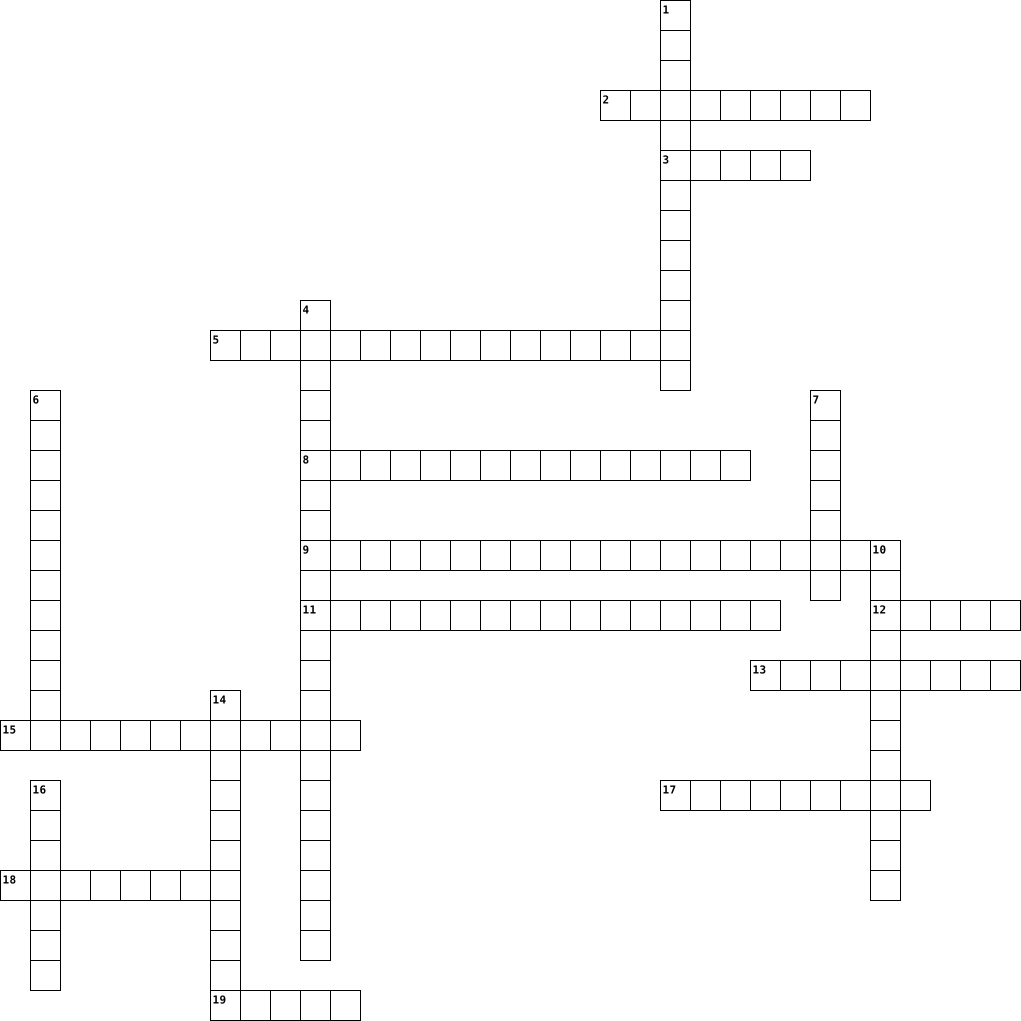
Across
- hole in the ground, not just mountains (7 letters)
- core:the inner-most part of the earth (5,4 letters)
- appears, one section rises over the other (7 letters)
- appears, one section drops (6 letters)
- appears due to sideways movement, one section moves relative to the other (6,4 letters)
- Tectonics (5 letters)
- mantle:the ______ part of the mantle (5,6 letters)
- outer layer of the earth (5 letters)
- material beneath or within the earth’s crust, from which igneous rock is formed (5 letters)
- volcano has many ________ (7 letters)
- molten, fluid rock that issues from a volcano or volcanic vent (4 letters)
- mantle:the ______ part of the mantle (5,6 letters)
Down
- rocks break under pressure (8 letters)
- (9 letters)
- series of vibrations induced in the earth’s crust (10 letters)
- rock:rocks formed by the cooling and solidifying of molten materials (7,4 letters)
- __________ of a volcano (8 letters)
- drifts:is the movement of the Earth’s continents relative to each other by appearing to drift across the ocean bed. (10,6 letters)
- crust:is the part of Earth’s lithosphere that surfaces in the ocean basins (7,5 letters)
19 Clues: (9 letters) • Tectonics (5 letters) • __________ of a volcano (8 letters) • outer layer of the earth (5 letters) • volcano has many ________ (7 letters) • rocks break under pressure (8 letters) • appears, one section drops (6 letters) • hole in the ground, not just mountains (7 letters) • mantle:the ______ part of the mantle (5,6 letters) • ...
Plate tectonics 2013-12-08

Across
- boundaries The boundary of plate, there are three types
- current currents in earth's mantle and is the cause of plate tectonics
- floor spreading Hess's theory that new sea floor forms when magma is forced up by plates moving apart
- Plastic like layer of the earth than the lithospheric plates float on
- Hess Sea Floor spreading was his theory
- The point after a surface rock reaches its elastic limit and brake
- Drift Wegener's theory that all the continents were once we a part of a supercontinent
- The second layer of the earth, made of lava
- boundary The boundary of plates that are moving away, and then cause lava to flow through the new crack in the earths crust (also know as a constructive boundary)
Down
- Layer of earth's crust that is about 100 km thick, made of the crust and the upper mantle
- boundary The boundary of plates that slide by each other, and causes earthquakes.
- One of two supercontinent that separated from pangaea
- Wegener Continental drift was his theory
- valley A valley between highlands caused by a fault
- A supercontinent that was made of all the continents
- ridge A underwater mountain range that the plates are moving apart and new land is being made
- boundary The boundary of plates that collide (also know as a destructive boundary)
- Time Scale A way to date rock by looking at little bits of iron in the rock and use that and the fact that the earth magnetic field has shifted
18 Clues: Hess Sea Floor spreading was his theory • Wegener Continental drift was his theory • The second layer of the earth, made of lava • valley A valley between highlands caused by a fault • One of two supercontinent that separated from pangaea • A supercontinent that was made of all the continents • boundaries The boundary of plate, there are three types • ...
Plate Tectonics 2021-01-12

Across
- A type of crust
- this happens in the mantle
- the energy of an earthquake
- the core surrounding the inner core
- a boundary type that moves in opposite directions
- a boundary type that moves together
- they sit on top of the lithosphere
- The second pysical layer of earth
- The first physical layer of earth
Down
- the center of an earthquake on the surface
- where convection happens
- A type of crust
- I burst and errupt with magma or lava
- the center of the earth
- the outer layer of earth
- a boundary type that moves apart
- The outside of a tectonic plate
- I happen at all boundary types
- The third physical layer of earth
19 Clues: A type of crust • A type of crust • the center of the earth • where convection happens • the outer layer of earth • this happens in the mantle • the energy of an earthquake • I happen at all boundary types • The outside of a tectonic plate • a boundary type that moves apart • The third physical layer of earth • The second pysical layer of earth • The first physical layer of earth • ...
Plate Tectonics 2021-06-16

Across
- when two or more plates collide
- a large slab of rock or parts of the crust which moves slowly, they interact with other plates differently
- when two plates move away from each other
- The deepest layer, solid and is very hot
- scientist who invented the theory of plate tectonics
- a well established explanation with a lot of backing evidence
- hot molten rock on the surface of the crust
- hot molten rock beneath the Earth's surface
Down
- a highly viscous, weak and ductile region of the upper crust
- the scale that measures the magnitude of an earthquake
- vents or openings in the Earth's crust, that release ash, gas, steam and hot liquid rock called lava
- when two plates slide across each other
- The liquid layer deep within the earth
- Thin shell on the outside of the Earth
- A sudden violent shaking of the ground caused by the sudden release of energy along a fault of a plate
- the rocky outer part of the Earth, made up of the brittle crust
- The mostly solid interior of the Earth and the largest layer
- A large wave caused by an earthquake or another disturbance
18 Clues: when two or more plates collide • The liquid layer deep within the earth • Thin shell on the outside of the Earth • when two plates slide across each other • The deepest layer, solid and is very hot • when two plates move away from each other • hot molten rock on the surface of the crust • hot molten rock beneath the Earth's surface • ...
Plate Tectonics 2021-10-20

Across
- earths magnetic field reversals
- the smallest of all plates
- where roughly 80% of earths volcanoes lie
- the theory that tried to explain why the continent moved before plate tectonics
- the largest of all plates
- consists of the crust and the upper mantle
- the number of major plates
- a type of boundary where two plate come together
- a place where lithosphere descends into the mantle
Down
- example of seafloor spreading and a rift zone
- the scientist who proposed continental drift
- ancient magnetism preserved in rocks
- an instrument used to study earthquakes
- a type of boundary where two plates slide past each other
- allows for the movement of the lithosphere
- a type of boundary where two plates move apart
- ancient supercontinent before it was split apart
- caused by the rising of mantle material to form islands and volcanoes
18 Clues: the largest of all plates • the smallest of all plates • the number of major plates • earths magnetic field reversals • ancient magnetism preserved in rocks • an instrument used to study earthquakes • where roughly 80% of earths volcanoes lie • allows for the movement of the lithosphere • consists of the crust and the upper mantle • ...
Plate motion 2022-10-19

Across
- big pieces of earths crust
- moving away
- Below the asthenosphere
- crust and uppermantal
- underground currents
- shaking ground
- Under the lithosphere
- layer of ground under the ocean
Down
- plates moving
- 2nd layer of earth
- 2nd layer way from the center
- liquid rock
- where lava comes out
- outermost earths layer
- magma on the surface
- continents when they were together
- moving together
- center of earth
18 Clues: liquid rock • moving away • plates moving • shaking ground • moving together • center of earth • 2nd layer of earth • where lava comes out • magma on the surface • underground currents • crust and uppermantal • Under the lithosphere • outermost earths layer • Below the asthenosphere • big pieces of earths crust • 2nd layer way from the center • layer of ground under the ocean • ...
Plate Tectonics 2018-06-06

Across
- The place below the ground where an earthquake starts
- is a fast-moving current of deadly hot gas and volcanic matter
- a major area in the basin of the Pacific Ocean where many earthquakes and volcanic eruptions occur.
- basaltic lava rock ejected as fragments from a volcano, typically with a frothy texture
- Chain of islands formed at the edges of colliding tectonic plates where on plate subducts
- Boundary where plates are colliding
- is a continental transform fault that extends roughly 1,200 kilometers through California
- When continents separate and drift
- a supercontinent that existed during the late Paleozoic and early Mesozoic eras
Down
- New crust being formed at the ocean ridges and spreading outwards
- Process of continents breaking up, subsiding and letting the sea in
- Isolated place away from plate boundaries, where a lot of hot magma is being created
- A huge wave in the ocean caused by an undersea earthquake
- An instrument for detecting the seismic waves from an earthquake
- a mountain or hill, typically conical, having a crater or vent through which lava, rock fragments, hot vapour, and gas are or have been erupted from the earth's crust.
- Areas where one crust is sinking below another crust
- The point on the Earth's surface directly above the focus
- hot fluid or semi-fluid material below or within the earth's crust
18 Clues: When continents separate and drift • Boundary where plates are colliding • Areas where one crust is sinking below another crust • The place below the ground where an earthquake starts • A huge wave in the ocean caused by an undersea earthquake • The point on the Earth's surface directly above the focus • is a fast-moving current of deadly hot gas and volcanic matter • ...
Plate Tectonics 2024-12-11

Across
- breaking apart of earth's surface
- boundary where 2 tectonic plate are moving toward each other
- single, large ocean that covered earth's surface
- theory explaining how lithosphere moves and changes shape
- supercontinent that formed 300 million years ago
- study of alignment of magnetic minerals in rocks
- single landmass that broke up to form continents
- molten rock in earth's surface
- solid plastic part of the mantle
- movement of heated material due to differences in density (different temperatures)
Down
- boundary where 2 tectonic plates are moving away from earth other
- process where oceanic seafloor forms when magma rises pushing older seafloor away
- boundary where 2 plates are sliding past each other
- undersea mountain chain with steep narrow valley
- can form when magma erupts onto earth's surface
- solid outer layer of earth made of crust and upper part of mantle
- piece of lithosphere with unique geologic features
- sudden movement of earth's surface
18 Clues: molten rock in earth's surface • solid plastic part of the mantle • breaking apart of earth's surface • sudden movement of earth's surface • can form when magma erupts onto earth's surface • single, large ocean that covered earth's surface • undersea mountain chain with steep narrow valley • supercontinent that formed 300 million years ago • ...
Plate Tectonics 2025-03-09

Across
- the deepest parts of the oceans.
- The Earth's ______________ field reverses from time to time.
- what causes plate tectonics
- Scientist who first proposed that thermal convection in the mantle causes continental drift.
- the most outer solid portion of the planet Earth
- what is one of the three types of boundaries?
- what is one of the three types of boundaries?
- the Theory of Continental _____________.
- what is the plastic layer below the lithosphere
- Alfred Wegener noticed that the coast of South America seemed to fit into the coast of this continent, just like a jigsaw puzzle
Down
- places where the sea floor is forced under
- Plate _____________
- Section of the Earth below the crust
- what is the liquid layer of the earth’s core
- scientist who first proposed the theory that the continents drifted
- what is one of the three types of boundaries?
- what causes sea floor spreading
- paleontologists noticed that these were the same on different continents even though the continents were separated by oceans
- what is the crust and part of the upper mantle
- Seafloor ______________
20 Clues: Plate _____________ • Seafloor ______________ • what causes plate tectonics • what causes sea floor spreading • the deepest parts of the oceans. • Section of the Earth below the crust • the Theory of Continental _____________. • places where the sea floor is forced under • what is the liquid layer of the earth’s core • what is one of the three types of boundaries? • ...
Plate Tectonics 2025-12-07

Across
- ___ crust was close to ridge.
- ___ came up with sea floor spreading.
- What motion does sea floor spreading create?
- HARD: Continents move one ___ annually.
- ___ came up with continental drift.
- ___ crust is created by ridges.
- Evidence of sea floor spreading
- Why was continental drift denied?
- Oceanic crust is subducted to ___.
- Wegener's theory was ___.
Down
- Evidence of continental drift
- What subducts crust?
- Evidence of sea floor spreading
- What century did Wegener discover continental drift?
- What century did Hess discover sea floor spreading?
- Name of super-continent
- Process of crust being pulled down
- Evidence of continental drift
- ___ and SA fit together almost perfectly.
- What does crust come out of?
20 Clues: What subducts crust? • Name of super-continent • Wegener's theory was ___. • What does crust come out of? • Evidence of continental drift • ___ crust was close to ridge. • Evidence of continental drift • Evidence of sea floor spreading • ___ crust is created by ridges. • Evidence of sea floor spreading • Why was continental drift denied? • Process of crust being pulled down • ...
Chapter 3 Vocabulary Game 2016-10-17

Across
- A break in Earth's crust along which rocks move.
- A section of the lithosphere that slowly moves over the asthenosphere, carrying pieces of continental and oceanic crust.
- Preserved remains or traces of an organism that lived in the past.
- A plate boundary where two plate move toward each other.
- The hypothesis that the continents slowly move across the Earth's surface.
- A deep valley along the ocean floor beneath which oceanic crust slowly sinks toward the mantle.
- An undersea mountain chain where new ocean floor is produced; a divergent plate boundary.
Down
- The process by which molten material adds new oceanic crust to the ocean floor.
- A plate boundary where two plates move past each other in opposite directions.
- The process by which oceanic crust sinks beneath a deep-ocean trench and back into the mantle at a convergent plate boundary.
- A plate boundary where two plates move away from each other.
- A deep valley that forms where two plates move apart
- The theory that pieces of Earth's lithosphere are in constant motion, driven by convection currents in the mantle.
- The name of the single landmass that began to break apart 200 million years ago and gave rise to today's continents.
14 Clues: A break in Earth's crust along which rocks move. • A deep valley that forms where two plates move apart • A plate boundary where two plate move toward each other. • A plate boundary where two plates move away from each other. • Preserved remains or traces of an organism that lived in the past. • ...
Science 2020-11-28

Across
- it is rigid, rocky outer layer of the Earth, consisting of the crust and the solid outermost layer of the upper mantle.
- a fracture along which the blocks of crust on either side have moved relative to one another parallel to the fracture.
- Two plate move together
- is the layer on which the lithosphere rest; where rocks deform by flowing due to heat and pressure
- A boundary between the crust and mantle, as inferred from the change in the speed of body waves (point B)is called....
- a series of waves caused by earthquakes or undersea volcanic eruptions.
- a collision between two of Earth's tectonic plates, where one plate sinks into the mantle underneath the other plate.
- extremely hot liquid and semi-liquid rock located under Earth's surface.
- tend to stick together, even though they are constantly
- shaking of the surface of the Earth resulting from a sudden release of energy in the Earth's lithosphere that creates seismic waves.
- a geographical feature consisting of a chain of mountains or hills that form a continuous elevated crest for some distance.
- made up of natural substances called minerals
- The top layer, least dense layer, compose of the continental and oceanic crust.
- Two plates slide past each other horizontally
- inside layer, most dense.
- are created as a result of erosion by rivers or by geological movement of tectonic plates.
- underlies the oceans and is made mostly of heavy, dense basalt.
Down
- the theory that Earth's outer shell is divided into several plates that glide over the mantle, the rocky inner layer above the core.
- a vent or fissure in the planet's crust through which lava, ash, rock and gases erupt.
- _____ plate is the third largest major plate.
- a volcanic rock and and it forms the oceanic crust...
- Two plates move apart from each other
- materials tend to sink
- _____ plate is the only major tectonic plate that is mainly underwater, it is also the largest.
- is a mineral that's a major component of continental crust
- Because the plates are _____,
- a large landform that rises above the surrounding land in a limited area, usually in the form of a peak.
- is a region deep within the Earth's mantle from which heat rises through the process of convection.
- Middle layer, more dense than the crust.
- Is lighter, older, and mostly made of granite.
- volcanic ____ is a chain of volcanoes formed above a subducting plate, positioned in an arc shape as seen from above.
31 Clues: materials tend to sink • Two plate move together • inside layer, most dense. • Because the plates are _____, • Two plates move apart from each other • Middle layer, more dense than the crust. • _____ plate is the third largest major plate. • made up of natural substances called minerals • Two plates slide past each other horizontally • ...
Puzzle 22: Plate Tectonics 2025-09-07

Across
- – Type of plate boundary where plates move toward each other.
- – A valley formed at a divergent boundary.
- – Type of boundary where plates slide past each other.
- – The semi-fluid layer beneath the lithosphere.
- – A rigid section of the Earth's crust.
- – Type of plate boundary where plates move apart.
Down
- – The rigid outer layer of the Earth.
- – Mountain formed by magma erupting through the crust.
- – A crack in the Earth's crust where movement occurs.
- – Sudden shaking of the ground caused by plate movement.
- – The thick layer of Earth beneath the crust.
- – Process where one plate moves under another.
12 Clues: – The rigid outer layer of the Earth. • – A rigid section of the Earth's crust. • – A valley formed at a divergent boundary. • – The thick layer of Earth beneath the crust. • – Process where one plate moves under another. • – The semi-fluid layer beneath the lithosphere. • – Type of plate boundary where plates move apart. • ...
Plate Tectonics 2025-05-09

Across
- An underwater mountain range formed by divergent tectonic plates.
- The process by which new oceanic crust is formed at mid-ocean ridges and slowly moves away.
- A large, rigid piece of the Earth's lithosphere that moves over the asthenosphere.
- Earth's outermost solid layer; includes both continental and oceanic crust.
- A region where one tectonic plate sinks beneath another into the mantle.
- Circular currents in the mantle caused by the heating and cooling of material, driving plate movement.
- A deep depression in the ocean floor caused by subduction.
- A break or crack in Earth's crust where movement has occurred.
Down
- A plate boundary where two plates move toward each other, often resulting in mountain formation or subduction.
- The hypothesis that continents move slowly across Earth’s surface, originally proposed by Alfred Wegener.
- A plate boundary where two plates slide past each other horizontally, often causing earthquakes.
- The semi-fluid layer beneath the lithosphere on which tectonic plates move.
- A deep valley formed where two plates move apart on continental crust.
- A plate boundary where two plates move away from each other, often creating mid-ocean ridges.
- The rigid outer layer of Earth, composed of the crust and uppermost mantle; divided into tectonic plates.
- A location where magma rises through the mantle in the middle of a tectonic plate, creating volcanic activity.
- A mountain formed from the eruption of magma from the mantle to the surface, often found at convergent or divergent boundaries.
- A supercontinent that existed about 300 million years ago and began breaking apart about 200 million years ago.
18 Clues: A deep depression in the ocean floor caused by subduction. • A break or crack in Earth's crust where movement has occurred. • An underwater mountain range formed by divergent tectonic plates. • A deep valley formed where two plates move apart on continental crust. • A region where one tectonic plate sinks beneath another into the mantle. • ...
Tectonic Plates Vocab 2023-09-27

Across
- hot fluid below or within the earth's crust from which lava and other igneous rock is formed on cooling
- plate boundary that separates from each other
- where two plates meet
- when diverging oceanic plates spread ocean floor
- plate boundary that collides into each other, causing the lighter one to sublimate
- the gap left between to diverging plates
- plate boundary that rubs against each other
Down
- when one plate sinks underneath a heaver plate
- a current in a fluid that results from convection.
- piece of the earth's crust
- a mountain that spews lava, caused by converging plates
11 Clues: where two plates meet • piece of the earth's crust • the gap left between to diverging plates • plate boundary that rubs against each other • plate boundary that separates from each other • when one plate sinks underneath a heaver plate • when diverging oceanic plates spread ocean floor • a current in a fluid that results from convection. • ...
Tectonic Plates 2021-04-29

Across
- the solid, outer layer of the earth that consists of the crust and the rigid upper part of the mantle
- The amount of matter in a given space or volume; oceanic crust is thinner, but denser than continental crust.
- The thin and solid outermost layer of the Earth above the mantle
- boundaries when two tectonic plates slide past each other
- Occurs when two tectonic plates move toward each other and collide.
- Occurs when two tectonic plates move away from each other.
- Dense plate composed of iron-rich basalt rocks.
- The place where two different plates have contact.
- term for the super continent which contained all the plates together
- Huge pieces of lithosphere that slowly move on the asthenosphere and consist of the crust and the rigid, uppermost part of the mantle.
Down
- Molten rock spews out from the mantle to the surface of Earth as ash, lava, and gases. Major geological events that occur when a dense plate subducts below a less dense plate.
- Are natural features of the landscape, natural physical features of the earth's surface
- Major geological events that occur when plates shift suddenly and release stored energy; a frequent occurrence along all types of plate boundaries
- is the layer of the upper mantle composed of low-density rock material that is semi plastic.
- one plate is denser then another and is forced below as the two plates converge at their boundary.
- Less dense plate, composed of silica-rich granite rocks.
- underwater chain of mountains.
- Proposed the continental drift theory in the 1900s
- the process by which Earth's crust breaks apart; can occur within continental crust or oceanic crust
19 Clues: underwater chain of mountains. • Dense plate composed of iron-rich basalt rocks. • Proposed the continental drift theory in the 1900s • The place where two different plates have contact. • Less dense plate, composed of silica-rich granite rocks. • Occurs when two tectonic plates move away from each other. • ...
crossword puzzle 2024-10-22

Across
- A location where magma rises from deep within the Earth and can cause volcanic activity, often in the middle of a tectonic plate.
- any of Earth’s main continuous areas of land, such as Africa, Asia, and North America
- that move toward the same place
- Drift: The gradual movement of continents across the Earth’s surface over geological time.
- a diagram that shows what the inside of something looks like
- water
- activity: any of the many processes (such as eruptions and lava flows) in which gas, lava, and ash are pushed out on the surface of the Earth
- the sudden pushing out of something, such as lava from a volcano
- Currents: The movement of fluid in the mantle caused by the heat from the Earth's core, driving plate tectonics.
- the outside or top layer of something
- how often or fast something happens
- boundary: the place where two plates meet
- a long, deep indentation in the ocean floor formed when two plates move together
Down
- hot liquid rock on the surface of Earth
- a set of interacting parts forming a complex whole
- A large sea wave caused by an underwater earthquake, volcanic eruption, or landslide.
- moving apart in different directions
- hot liquid rock below the surface of Earth
- ridge: an underwater mountain range formed when two plates move apart
- Spreading: The process by which new oceanic crust is formed at mid-ocean ridges and slowly moves away from the ridge.
- where two of the tectonic plates slide alongside each other.
- the slow pulling apart of land that is caused by plate movement
- when an oceanic plate runs into a continental plate and slides beneath it
- the layer of soft, solid rock underneath Earth’s plates
- a feature that forms on the surface of a planet, such as a mountain, channel, or sand dune
- The rigid outer layer of the Earth, including the crust and the upper mantle, which is broken into tectonic plates.
- layer: Earth’s outermost layer of hard, solid rock that is underneath the soil, vegetation,
- a sudden shaking of Earth’s surface
- Plates: Large slabs of Earth’s lithosphere that move over the mantle.
- one of the very large sections of hard, solid rock that make up Earth’s outer layer
- Line: A crack in the Earth's crust, typically associated with plate boundaries.
- Waves: Waves of energy that travel through the Earth as a result of an earthquake.
32 Clues: water • that move toward the same place • a sudden shaking of Earth’s surface • how often or fast something happens • moving apart in different directions • the outside or top layer of something • hot liquid rock on the surface of Earth • boundary: the place where two plates meet • hot liquid rock below the surface of Earth • ...
Nail disorders 2023-01-04

Across
- a piece of torn skin at the root of a fingernail
- split or bittle nails have a series of lengthwise ridges around surface
- soft nails that look scooped out
- darkening of the fingernail or toenails
- indentions that run across the nail
- discoloration of the nail
- excessive transverse nail curvature progressively pinching the nail bed distally
- blood clot forms under the nail plate forming dark purplish spots
Down
- white spots, a whitish discoloration of the nails
- also known as cyanosis
- thin white nail plate that are much more flexible then normal nails
- tiny blood clots that tend to run vertically under nail
- folded nail a highly curved nail plate caused by injury to matrix
- an overgrowth or thickening of the nail
- running vertically down the length to the naturalnailplate caused by uneven growth
- abnormal condition that occur when skin is stretched by nail plate
- the living skin splits around the nail cuticle
17 Clues: also known as cyanosis • discoloration of the nail • soft nails that look scooped out • indentions that run across the nail • an overgrowth or thickening of the nail • darkening of the fingernail or toenails • the living skin splits around the nail cuticle • a piece of torn skin at the root of a fingernail • white spots, a whitish discoloration of the nails • ...
Landforms and Mountains 2023-03-13

Across
- Ocean trenches are also called_______trenches.
- A curved line of volcanoes that forms parallel to a plate boundary.
- A collision between two continental plates can produce tall _______.
- enormous splits in Earth's crust.
- Deep underwater troughs created by an oceanic plate subducting under another plate at a convergent plate boundary.
- when regions rise vertically with very little deformation this forms.
- This process has rounded the peaks and lowered the elevations of the Appalachian Mountains.
- Parallel ridges that form where blocks of crust move up or down along faults.
Down
- Being at right angels to a line or plane.
- The largest landforms on Earth are produced by this.
- These are made of layers of rock that are folded.
- An area of many fractured pieces of crust along a large fault.
- These are created from repeated eruptions.
- When two plates collide, one can go under the other and be forced into the mantel in a process called _______.
- Where blocks of crust slide horizontally past each other.
- Distinct landforms are produced by this.
- volcanic mountains can form in the ocean where oceanic plates converge and one plate subducts under another one. These volcanoes emerge as _________.
17 Clues: enormous splits in Earth's crust. • Distinct landforms are produced by this. • Being at right angels to a line or plane. • These are created from repeated eruptions. • Ocean trenches are also called_______trenches. • These are made of layers of rock that are folded. • The largest landforms on Earth are produced by this. • ...
Chapter 8 Crossword Puzzle 2018-12-10

Across
- Stress that pulls something apart
- The upward vertical motion of Earth’s surface
- Areas of subsidence and regions with low elevation
- The equilibrium between continental crust and the denser mantle below it
- Made of many layers of rocks that are folded
- Flat regions with high elevations
- Where tectonic plates slide horizontally past each other
- When large regions rise vertically with very little deformation
- An extensive area of level or rolling land
Down
- Squeezing stress
- The downward vertical motion of Earth’s surface
- A curved line of volcanoes that forms parallel to a plate boundary
- An area of many fractured pieces of crust along a large fault
- A change in the shape of rock caused by stress
- Ridges that form where blocks of crust move up or down along faults
- Deep, underwater troughs created by one plate subducting under another plate at a convergent plate boundary
- Parallel forces acting in opposite directions
17 Clues: Squeezing stress • Stress that pulls something apart • Flat regions with high elevations • An extensive area of level or rolling land • Made of many layers of rocks that are folded • The upward vertical motion of Earth’s surface • Parallel forces acting in opposite directions • A change in the shape of rock caused by stress • ...
My Pals are Here 1B 2013-01-28

Across
- (beside)
- A place where you live
- A place to read books
- (telephone)
- A place to meet a police man
- (under)
- A place to send a letter
- (sofa)
- A place to buy eggs
- (lamp)
- (in)
- (bowl)
Down
- (behind)
- (plate)
- A place to buy burger
- A place to study
- A place to watch a movie
- A place to buy clothes
- (on)
- (spoon)
20 Clues: (on) • (in) • (sofa) • (lamp) • (bowl) • (plate) • (under) • (spoon) • (beside) • (behind) • (telephone) • A place to study • A place to buy eggs • A place to buy burger • A place to read books • A place where you live • A place to buy clothes • A place to watch a movie • A place to send a letter • A place to meet a police man
In the kitchen - crossword 2025-10-16

Across
- Tongs
- Sink
- Trivet
- Spatula
- Can
- Napkin
- Grater
- Spoon
- Bowl
- Dishrack
- Glass
- Tap
- Peeler
- Tablecloth
- Microwave
- Pantry
- Lid
- Ladle
- Can-opener
- Pot
Down
- Utensils
- Blender
- Cuttingboard
- Pan
- Freezer
- Fork
- Steamer
- Scissors
- Dishtowel
- Jar
- Dishes
- Rag
- Cupboard
- Sieve
- Mug
- Cutlery
- Drain
- Cup
- Plate
39 Clues: Can • Pan • Jar • Rag • Tap • Mug • Lid • Cup • Pot • Sink • Fork • Bowl • Tongs • Spoon • Sieve • Glass • Drain • Ladle • Plate • Trivet • Napkin • Grater • Dishes • Peeler • Pantry • Blender • Spatula • Freezer • Steamer • Cutlery • Utensils • Scissors • Dishrack • Cupboard • Dishtowel • Microwave • Tablecloth • Can-opener • Cuttingboard
vocab 2024-04-12

Across
- extinction events that occur over a longer time period.
- hot material rises, cooler materials sink. it drives plate tectonics.
- formed at plate boundaries usually when plates collide.
- tectonic plate move toward each other,usually form mountains and volcanoes.
- the simi-fluid layer of the mantle where convection currents happen.
- sudden events that led to a mass extinction.
- tectonic plates move away from each other, usally from new crust and rift valleys.
- includes the crust and upper part of the mantle, and is decided into plate tectonics.
Down
- located between the mantle and the outer core.
- formed as a result of high temperature and pressure deep within earth changing a rock that already existed.
- a group of the same species living in the same area.
- new oceanic crust is formed as tectonic plates pull apart and magma rises.
- large, rigid peices of the earth's lithosphere that can move and interactv with each other along plate boundaries.
- rock formed when lava or magma cools and hardens.
- where tectonic plates SLIDEpast each other.causes earthquakes.
- name of the ancient supercontinent when it was all one land mass.
- forms after weathering and erosion when sediments compact and cement.
- instruments used to measure and record seismic waves.
18 Clues: sudden events that led to a mass extinction. • located between the mantle and the outer core. • rock formed when lava or magma cools and hardens. • a group of the same species living in the same area. • instruments used to measure and record seismic waves. • extinction events that occur over a longer time period. • ...
Unit 2 2023-10-18

Across
- a crack or a fracture in earth's lithosphere along which movement occurs
- a vent in Earth's crust through which molten rock flows
- a deep, underwater trough created by one plate subducting under another plate at a convergent plate boundary
- the boundary between two plates that move away from eachother
- a large mass of ice, formed by snow accumulation on land, that moves slowly across earth's surface
- magma that erupts onto earth's surface
- a naturally occurring solid composed of minerals, rock fragments, and sometimes other materials such as organic matter
- the process that occurs when one tectonic plate moves under another tectonic plate
- long narrow mountain range on the ocean floor; formed by magma at divergent plate boundaries
Down
- a violent, whirling column of air in contact with the ground
- the mechanical and chemical processes that change Earth's surface over time
- the boundary between two plates that slide past each other
- the process by which new oceanic crust forms along a mid-ocean ridge and older oceanic crust moves away from the ridge
- Wegener's hypothesis that all continents were once connected in a single large landmass that broke apart about 200 million years ago and drifted slowly to their current positions
- the boundary between two plates that move toward each other
- the laying down or settling of eroded material
- vibrations caused by the rupture and sudden movement of rocks along a break or a crack in earth's crust
17 Clues: magma that erupts onto earth's surface • the laying down or settling of eroded material • a vent in Earth's crust through which molten rock flows • the boundary between two plates that slide past each other • the boundary between two plates that move toward each other • a violent, whirling column of air in contact with the ground • ...
Tectonics 2024-12-09

Across
- When a lot of stored-up energy along a boundary line is released, causing the ground to shake.
- A plate boundary that is spreading apart.
- A plate boundary that is crashing together.
- Created when two continental plates diverge.
- This plate smashed into Asia, creating the Himalayan Mountain Range.
- All the surface of Earth, including the ocean floor.
Down
- Created when two continental plates converge.
- The largest tectonic plate. Contains Hawaii.
- The extremely hot center of Earth.
- The many layers of hot material between the crust and the core of Earth.
- When ocean plates diverge, creating new oceanic crust.
- A plate boundary that is sliding side-by-side.
- Lava escaping from a weak point in the crust. Can generate entire islands.
13 Clues: The extremely hot center of Earth. • A plate boundary that is spreading apart. • A plate boundary that is crashing together. • The largest tectonic plate. Contains Hawaii. • Created when two continental plates diverge. • Created when two continental plates converge. • A plate boundary that is sliding side-by-side. • All the surface of Earth, including the ocean floor. • ...
earth science crossword 2017-06-14

Across
- a deep underwater valley
- is the action of one plate pushing below the other
- waves- a body wave that travels about 6 km through earths crust
- a seismometer produces a record of ground motion
- plate boundary- occurs where tectonic plates collide
- ridge- ridge lay right along the middle of the ocean floor
- drift theory- states that the continents have not always been in their present locations but "drifted" there over a million years
- refers both to the extent of ancient glaciers and to the rock makings they have left behind
- fault- a fault that occurs at a transform plate boundary
Down
- is a sudden, ground shaking release of built-up energy at or under Earths surface
- plates- earths broken into large, movable slabs of rock
- pull- as the edge of a tectonic plate sub ducts deep into the mantle, it pulls the rest of the plate with it
- is the study of the magnetic properties of the ancient rocks
- reversal- is the direction that can completely reverse
- a partly molten layer in the upper mantle
- belt- a long chain of volcanoes
- molten rock from beneath the earths surface
17 Clues: a deep underwater valley • belt- a long chain of volcanoes • a partly molten layer in the upper mantle • molten rock from beneath the earths surface • a seismometer produces a record of ground motion • is the action of one plate pushing below the other • plate boundary- occurs where tectonic plates collide • reversal- is the direction that can completely reverse • ...
chapter seven 2021-10-22

Across
- Earth's magnetic field has flipped its polarity many times over the millennia.
- Two plates sliding past each other convergent/plate-boundary two or more lithospheric plates collide subduction
- is a continent that split
- the formation of new areas of oceanic crust, which occurs through the upwelling of magma at mid-ocean ridges and its subsequent outward movement on either side
- scientific theory that explains how major landforms are created as a result of Earth's subterranean movements
- rigid outer part of the earth, consisting of the crust and upper mantle.
Down
- two tectonic plates move away from each other
- is the gradual movement of the continents across the earth's surface through geological time
- is the process by which the North pole is transformed into a South pole and the South pole becomes a North pole
- state of having two opposite or contradictory tendencies, opinions, or aspects
- lithosphere comprises a number of plates
- the pulling force exerted by a cold, dense oceanic plate plunging into the mantle due to its own weight.
- long, seismically active submarine ridge system situated in the middle of an ocean basin and marking the site of the upwelling of magma associated with seafloor spreading
- movement caused within a fluid by the tendency of hotter and therefore less dense material to rise
- sliding plate force is a proposed driving force for plate motion
15 Clues: is a continent that split • lithosphere comprises a number of plates • two tectonic plates move away from each other • sliding plate force is a proposed driving force for plate motion • rigid outer part of the earth, consisting of the crust and upper mantle. • Earth's magnetic field has flipped its polarity many times over the millennia. • ...
chapter seven 2021-10-22

Across
- Earth's magnetic field has flipped its polarity many times over the millennia.
- Two plates sliding past each other convergent/plate-boundary two or more lithospheric plates collide subduction
- is a continent that split
- the formation of new areas of oceanic crust, which occurs through the upwelling of magma at mid-ocean ridges and its subsequent outward movement on either side
- scientific theory that explains how major landforms are created as a result of Earth's subterranean movements
- rigid outer part of the earth, consisting of the crust and upper mantle.
Down
- two tectonic plates move away from each other
- is the gradual movement of the continents across the earth's surface through geological time
- is the process by which the North pole is transformed into a South pole and the South pole becomes a North pole
- state of having two opposite or contradictory tendencies, opinions, or aspects
- lithosphere comprises a number of plates
- the pulling force exerted by a cold, dense oceanic plate plunging into the mantle due to its own weight.
- long, seismically active submarine ridge system situated in the middle of an ocean basin and marking the site of the upwelling of magma associated with seafloor spreading
- movement caused within a fluid by the tendency of hotter and therefore less dense material to rise
- sliding plate force is a proposed driving force for plate motion
15 Clues: is a continent that split • lithosphere comprises a number of plates • two tectonic plates move away from each other • sliding plate force is a proposed driving force for plate motion • rigid outer part of the earth, consisting of the crust and upper mantle. • Earth's magnetic field has flipped its polarity many times over the millennia. • ...
Plate Tectonics 2023-12-20

Across
- the part of the earth where tectonic plates are found
- line, when two plates come together and earthquakes often happen in this area
- _______ plate with land primarily covering it
- magma moves into space created by separating of tectonic plates
- when plates move apart and make space for new crust to form
- an oceanic plate is forced under another
Down
- oceanic and continental plates come together in the ocean and form a
- the continental plate movement that creates folded mountains
- natural disaster that happens at a tranform plate boundary
- when plates move together and create new landforms
- when plates move past one another
- _______ plate with a large body of water on it
- the higher ______ oceanic crust will always be subducted
13 Clues: when plates move past one another • an oceanic plate is forced under another • _______ plate with land primarily covering it • _______ plate with a large body of water on it • when plates move together and create new landforms • the part of the earth where tectonic plates are found • the higher ______ oceanic crust will always be subducted • ...
Pacific ring of fire 2018-07-04

Across
- second plate the ring of fire encircles
- the shape of the Ring of Fire
- most common plate boundary zone on the Ring of Fire
- New Zealand lies directly on top of two colliding plates. These are the Pacific Plate and the
Down
- length of the Ring of Fire
- trench north of New Zealand
- type of plate the pacific plate is
- deepest part of the ocean floor where one plate is subducting under another plate
- portions of the worlds volcanoes, active and dormant on the ring of fire
- ocean the Ring of Fire lies on
10 Clues: length of the Ring of Fire • trench north of New Zealand • the shape of the Ring of Fire • ocean the Ring of Fire lies on • type of plate the pacific plate is • second plate the ring of fire encircles • most common plate boundary zone on the Ring of Fire • portions of the worlds volcanoes, active and dormant on the ring of fire • ...
plate tectonics 2020-08-16

Across
- a system of detection of objects under water
- when rock solidifies while lined up with earths magnetic field
- violent sacking of the ground
- hot fluid within the earths crust
- outer part of earth consist of crust and mantle
- is where two plates slip sideways next to eachother
- center of an earthquake
- an elastic wave produced by earthquakes
Down
- came up with the theory of seafloor spreading
- when two plates collide and one dives under the other
- when two plates move away from each-other
- a mountain made of cooled magma
- the center of earth (really hot)
- a volcanic rock
- when rocks are slowly pulled apart
- the uper layer of earths mantle
- when rocks are squashed together
- a point on earths surface above the focus of an earthquake
18 Clues: a volcanic rock • center of an earthquake • violent sacking of the ground • a mountain made of cooled magma • the uper layer of earths mantle • the center of earth (really hot) • when rocks are squashed together • hot fluid within the earths crust • when rocks are slowly pulled apart • an elastic wave produced by earthquakes • when two plates move away from each-other • ...