
states and capitals Crossword Puzzles
US states 2025-07-17

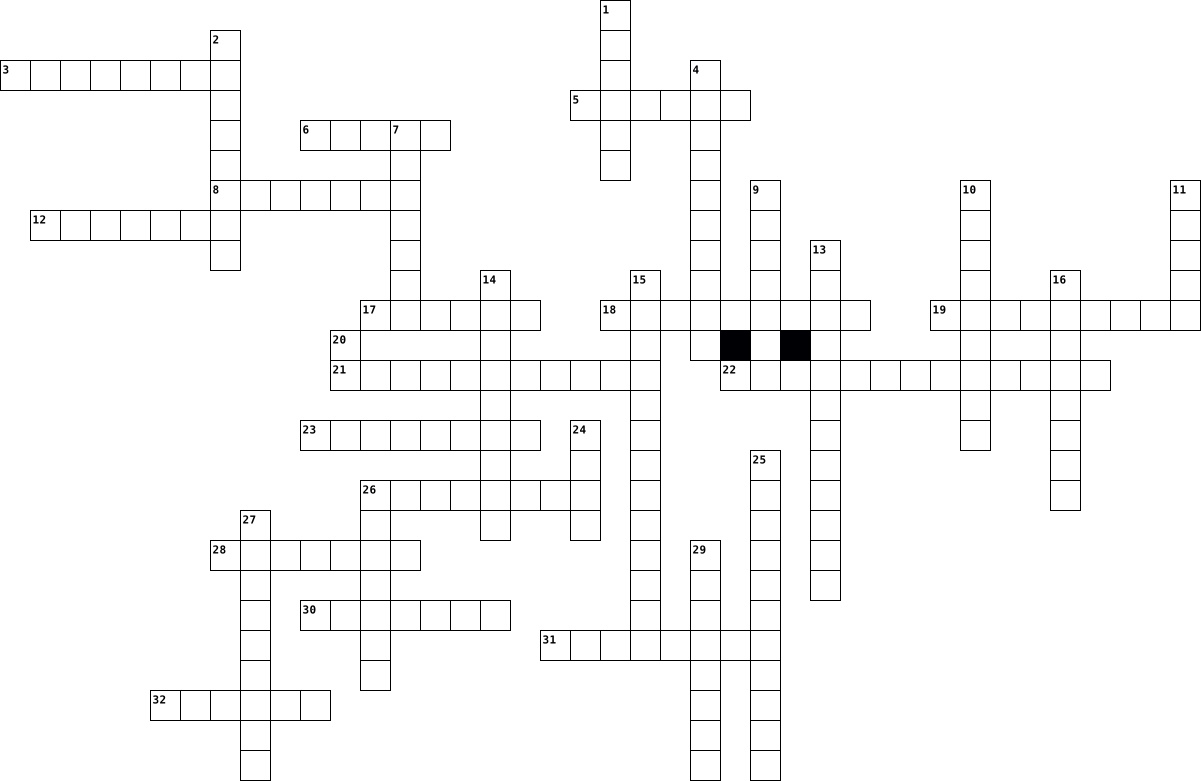
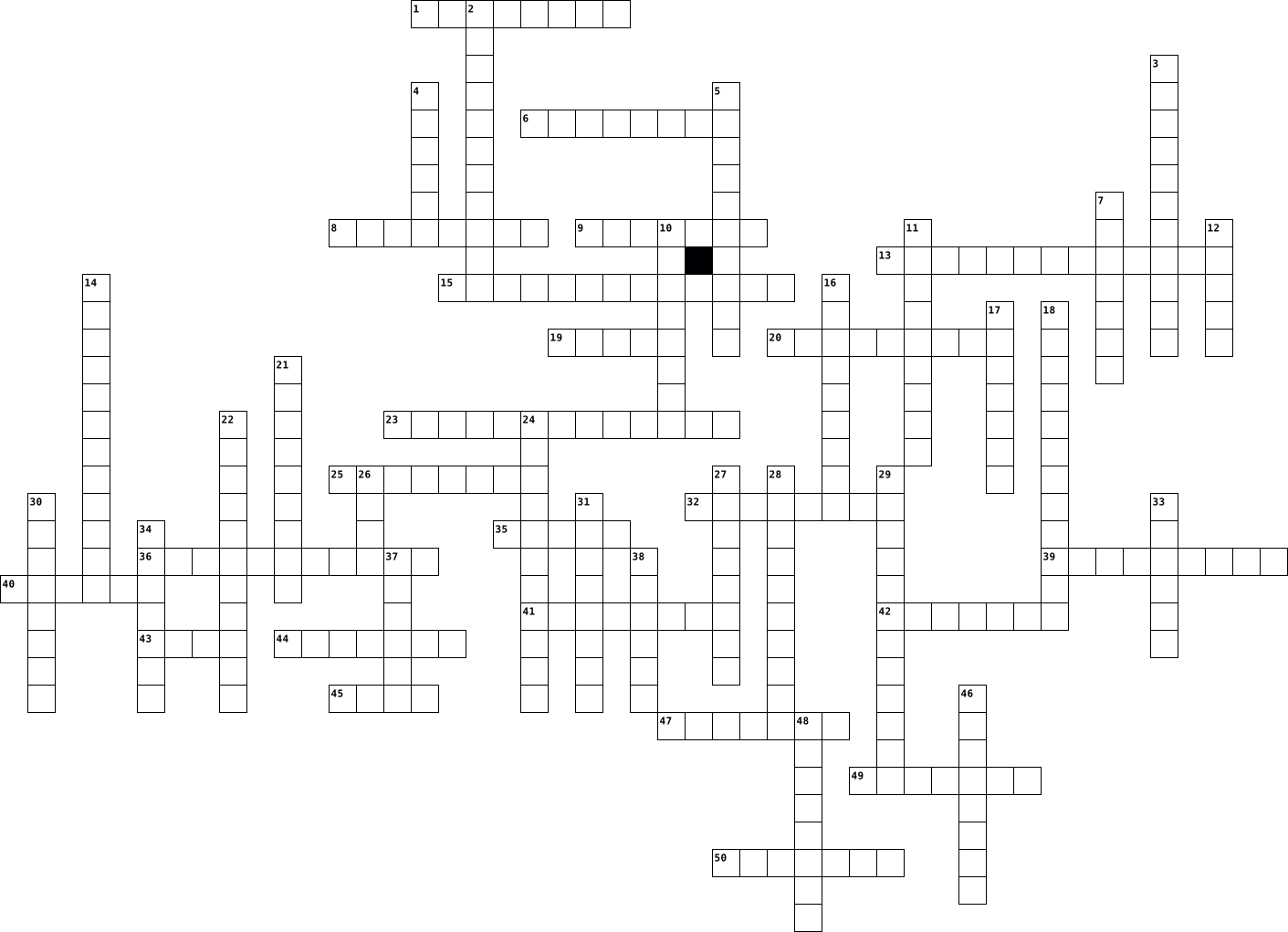
Across
- Hot Springs National Park
- Indianapolis 500 race
- New Orleans Mardi Gras
- Heart of Dixie
- Second largest cowboy culture
- Garden State
- First to ratify Constitution
- Peaches Atlanta
- Land of ten thousand lakes
- Kentucky Derby horse race
- Sunshine State Disney World
- Liberty Bell Independence Hall
- Smallest state
- Islands only state
- First presidential primary
- Golden State Hollywood
- Named after river
- Prairies Cornhuskers football
- Birthplace of aviation
- Virginia Appalachian Mountains
- Cheese dairy farming
- Badlands oil production
- Home of the Grand Canyon
- Big sky Yellowstone
- Yellowstone National Park
Down
- Sunflower State
- Las Vegas
- Boston Tea Party
- Chesapeake Bay
- Old Dominion colonial history
- Crater Lake Pacific coast
- Gateway Arch
- Seattle Space Needle
- Largest state by area
- Great Lakes Detroit
- New York City Niagara Falls
- New England original colony
- Mormon pioneers national parks
- Lobster rocky coastline
- Chicago city
- Desert adobe architecture
- Country music Elvis Presley
- Famous for potatoes
- Wright brothers flight
- Maple syrup fall foliage
- Rocky Mountains
- Charleston plantations
- Mount Rushmore
- Cornfields caucuses
- Tornadoes Native American history
50 Clues: Las Vegas • Gateway Arch • Garden State • Chicago city • Heart of Dixie • Chesapeake Bay • Smallest state • Mount Rushmore • Sunflower State • Peaches Atlanta • Rocky Mountains • Boston Tea Party • Named after river • Islands only state • Great Lakes Detroit • Famous for potatoes • Cornfields caucuses • Big sky Yellowstone • Seattle Space Needle • Cheese dairy farming • Indianapolis 500 race • ...
U.S. States 2022-10-28
Across
- ne
- wy
- tn
- nd
- ca
- pa
- ia
- hi
- ma
- id
- or
- sc
- nc
- mt
- la
- ak
- wa
- de
- ri
- nm
- ny
- ok
- sd
- al
- va
Down
- ar
- me
- vt
- ks
- wv
- fl
- nv
- mi
- ut
- wi
- co
- mn
- ga
- nh
- tx
- il
- az
- oh
- ct
- in
- mo
- nj
- md
- ms
- ky
50 Clues: ar • me • vt • ks • ne • wy • wv • tn • fl • nv • nd • ca • pa • mi • ut • ia • wi • hi • ma • co • id • mn • ga • nh • tx • or • il • sc • az • nc • oh • mt • ct • la • ak • wa • in • mo • nj • de • md • ri • nm • ms • ny • ky • ok • sd • al • va
15 states 2022-12-22
Across
- is located in the south central United States along the west side of the Appalachian Mountains.
- is the 4th smallest State by land area and is occupied by four main land regions; the Atlantic Coastal Plain, the Piedmont, the New England Upland, and the Appalachian Ridge and Valley Region.
- lies on the Pacific Ocean and is bordered by Mexico and the U.S. states of Oregon, Nevada, and Arizona.
- is the world's largest island chain, and it's the only U.S. state completely made up of islands.
- is a state in the South Central region of the United States. At 268,596 square miles (695,662 km2), and with more than 29.1 million residents in 2020, it is the second-largest U.S. state by both area (after Alaska) and population (after California).
- a state of the southeastern US, on the Gulf of Mexico
- is an original state of the Union. It is bounded on the north by North Carolina and on the southwest by Georgia; the Atlantic Ocean is to the southeast.
- surrounded by the states of Virginia (on its southwest side) and Maryland (on its southeast, northeast, and northwest sides)
- It's bordered by Massachusetts in the north and east, the Atlantic Ocean in the south, and Connecticut in the west.
- surrounded primarily by four of the Great Lakes and a variety of nearby islands. The Upper Peninsula is bounded on the southwest by Wisconsin, and the Lower Peninsula is bounded on the south by Indiana and Ohio.
Down
- Located where the Hudson and East rivers empty into one of the world's premier harbours
- is just 112 miles wide but stretches 432 miles from the Appalachian Mountains boundary with North Carolina in the east to the Mississippi River borders with Missouri and Arkansas in the west.
- It is bounded on the north and northeast by Russia, on the east and southeast by Azerbaijan, on the south by Armenia and Turkey, and on the west by the Black Sea.
- constituent state of the United States of America, one of the original 13 colonies. It is bordered by Maryland to the northeast, the Atlantic Ocean to the southeast, North Carolina and Tennessee to the south, Kentucky to the west, and West Virginia to the northwest.
- It borders Lake Michigan and the state of Michigan to the north, Ohio to the east, Kentucky to the south, and Illinois to the west, making it an integral part of the American Midwest.
- is historically known as the "Buckeye State" after its Ohio buckeye trees, and the people that live there are also known as "Buckeyes". Its state flag is the only non-rectangular flag of all the U.S. states.
- lies on the Atlantic Ocean and is bordered by Vermont, New Hampshire, Rhode Island, Connecticut, and New York.
- lies at the extreme northwest of the North American continent, and the Alaska Peninsula is the largest peninsula in the Western Hemisphere.
- is bordered by Wisconsin in the north; Lake Michigan, Indiana, and Kentucky in the east; Kentucky and Missouri in the south; and Missouri and Iowa in the west.
- its hot low-elevation desert covered with cacti and creosote bushes, more than half of the state lies at an elevation of at least 4,000 feet (1,200 metres) above sea level, and it possesses the largest stand of evergreen ponderosa pine trees in the world.
- is bordered by Alabama and Georgia, with the Gulf of Mexico lying to the west and the Atlantic Ocean to the east.
21 Clues: a state of the southeastern US, on the Gulf of Mexico • Located where the Hudson and East rivers empty into one of the world's premier harbours • is located in the south central United States along the west side of the Appalachian Mountains. • is the world's largest island chain, and it's the only U.S. state completely made up of islands. • ...
States Crossword 2022-12-07
Across
- Fried chicken
- Isn't just a city
- The Last Frontier State
- Panhandle
- Smallest state
- Almost heaven
- Blue crabs
- Sweet home _______
- Has a city named after a tiny pebble
- Known for its peaches
Down
- Yee-haw!
- Has a city named after a big rock
- Toto we aren't in ______ anymore
- First state
- Where the most US presidents were born
- Kansas-________ Act of 1854
- Home to the everglades
- Tea
- North and South
- Three sets of double letters
20 Clues: Tea • Yee-haw! • Panhandle • Blue crabs • First state • Fried chicken • Almost heaven • Smallest state • North and South • Isn't just a city • Sweet home _______ • Known for its peaches • Home to the everglades • The Last Frontier State • Kansas-________ Act of 1854 • Three sets of double letters • Toto we aren't in ______ anymore • Has a city named after a big rock • ...
States Crossword 2022-12-09
Across
- Known for its peaches
- Tea in the sea
- Smallest state
- Isn't just a city
- Potato
- Split into two sections
- Contains a large population of Mormon
- Close to mountain in Spanish
- Toto we aren't in ______ anymore
- Corn
- Name means Sky-blue waters
- Fried chicken
- Sounds like the word for "good morning" in Japanese
- Contains a "French Quarter" in its capital
- City named after a chile
- Not D.C.
- Southeastern state of the four corers
- Almost heaven
- Home to the everglades
- Gettysburg
- Jones
- Sweet home _______
Down
- Heart of country music
- Blue crabs
- Garden State
- North and South
- Reaper
- Green mountain state
- Three sets of double letters
- Has a city named after a tiny pebble
- Last state
- Yale resides in this state
- Where the most US presidents were born
- Has a city named after a big rock
- Vegas
- ________ Compromise
- The Last Frontier State
- Capital at Madison
- Only state whose name is one syllable
- Panhandle
- The ______ Trail
- First state to ratify the 13th amendment
- Smallest population
- Tea
- Yee-haw!
- First state
- Live free or die
- Kansas-________ Act of 1854
48 Clues: Tea • Corn • Vegas • Jones • Reaper • Potato • Yee-haw! • Not D.C. • Panhandle • Blue crabs • Last state • Gettysburg • First state • Garden State • Fried chicken • Almost heaven • Tea in the sea • Smallest state • North and South • The ______ Trail • Live free or die • Isn't just a city • Capital at Madison • Sweet home _______ • ________ Compromise • Smallest population • Green mountain state • Known for its peaches • ...
U.S. States 2026-02-03

Across
- Last state alphabetically.
- State where Las Vegas abides.
- Has the longest coastline of the U.S. and least dense populated.
- (t's capital is Sacramento.
- The "Garden State". (2 words)
- Home to New Orleans' Mardi Gras.
- Home to Mount Rushmore (2 words)
- Home to the Grand Canyon.
- Last state to join the Union.
- It's capital is Detroit.
Down
- State directly to the north of California.
- Home of the NCAA national championship football team.
- Home to the most expensive diamond mine.
- The land of Lincoln.
- State where the State of Liberty is located.(2 words)
- This state has 4 "I's) but can't see.
- Home to the Rocky Mountains.
- Home to the Salt Lakes.
- Home to Disney World.
- The first state alphabetically.
- Home to the Dallas Cowboys football team.
21 Clues: The land of Lincoln. • Home to Disney World. • Home to the Salt Lakes. • It's capital is Detroit. • Home to the Grand Canyon. • Last state alphabetically. • (t's capital is Sacramento. • Home to the Rocky Mountains. • State where Las Vegas abides. • The "Garden State". (2 words) • Last state to join the Union. • The first state alphabetically. • Home to New Orleans' Mardi Gras. • ...
United States 2025-08-25

Across
- barbecue and pine tar
- golden gates and redwoods
- big apples and lady liberty
- blue hens and number one
- jazz and gumbo
- cowboys and old faithful
- fossils and salt lakes
- aloha and surfing
- green mountains and maple syrup
- lutefisk and 10,000 lakes
- buffalo and bismarck
- buckeyes and burgees
- rocky mountains and ski slopes
- lobsters and moose
- sweet homes and rocket ships
- clams and red hens
- pilgrims and patriots
- turnpikes and pine barrens
- evergreen trees and space needles
- diamonds and hot springs
- blue crabs and quartered flags
- archways and steamboats
- bears and aurora borealis
Down
- charter oaks and yankee doodle
- sunshine and cacti
- delta blues and magnolias
- cowboys and alamos
- dogwoods and jamestown
- sagebrush and casinos
- covered wagons and fir trees
- alligators and oranges
- country music and the smokies
- big skies and grizzlies
- badlands and rushmore
- palmettos and boiled peanuts
- great lakes and cars
- pueblos and chiles
- roughnecks and sooners
- cornfields and hawkeyes
- granite and old mountain men
- hoosiers and basketball
- keystones and quakers
- peaches and football
- coal mines and country roads
- lincoln and da bears
- sunflowers and twisters
- gems and potatoes
- cheese and badgers
- thoroughbreds and bourbon
- cornhuskers and football
50 Clues: jazz and gumbo • aloha and surfing • gems and potatoes • sunshine and cacti • cowboys and alamos • pueblos and chiles • lobsters and moose • clams and red hens • cheese and badgers • great lakes and cars • buffalo and bismarck • buckeyes and burgees • peaches and football • lincoln and da bears • barbecue and pine tar • sagebrush and casinos • badlands and rushmore • keystones and quakers • ...
US States 2025-12-27

Across
- = RI
- = ID
- = MO
- = AZ
- = WY
- = AR
- = OH
- = HI
- = UT
- = IL
- = TX
- = CT
- = VT
- = MN
- = AK
- = ND
- = WV
- = AL
- = ME
- = WA
- = CA
- = FL
- = GA
- = KS
- = NH
- = OR
Down
- = SC
- = VA
- = SD
- = NY
- = NV
- = MS
- = LA
- = NC
- = PA
- = WI
- = DE
- = MI
- = NM
- = IA
- = MD
- = CO
- = NE
- = MA
- = KY
- = IN
- = MT
- = NJ
- = TN
- = OK
50 Clues: = SC • = VA • = SD • = NY • = RI • = ID • = NV • = MO • = MS • = AZ • = LA • = WY • = AR • = NC • = PA • = OH • = WI • = DE • = HI • = UT • = MI • = IL • = NM • = IA • = MD • = TX • = CT • = CO • = NE • = MA • = KY • = VT • = MN • = AK • = ND • = WV • = IN • = AL • = MT • = ME • = WA • = NJ • = CA • = FL • = TN • = OK • = GA • = KS • = NH • = OR
Stage 5 Geography 2019-10-19

Across
- A herbivore is also known as a __________________ producer
- the second largest country in the world by area
- The variety of plant and animal life in the world or in a particular habitat
- A word that means a species is at serious risk of extinction
- All life on earth
- Rome, London, Paris and Berlin are capitals of countries on which continent
- The state of the atmosphere at a particular place and time as regards heat, cloudiness, dryness, sunshine, wind, rain etc.
- the longest river on earth
Down
- All water found under, on and over the earths surface
- The driest continent
- The capital of NSW
- security The ability of humans to have physical, economic and social access to sufficient, safe and nutritious food that meets their dietary needs
- the largest country in the world by population
- A large, naturally occurring environment of flora and fauna occupying a habitat
- How plants, animals and climate interact with one another
- The total weight of organisms in a given area
- The name for the top layer of a rainforest biome
- the largest continent on earth
18 Clues: All life on earth • The capital of NSW • The driest continent • the longest river on earth • the largest continent on earth • The total weight of organisms in a given area • the largest country in the world by population • the second largest country in the world by area • The name for the top layer of a rainforest biome • All water found under, on and over the earths surface • ...
Unit 4 2021-12-08

Across
- This group was created to assist newly freed people in establishing a new life.
- This act was included in the Compromise of 1850 and required any escaped enslaved person to be returned (3 words)
- This day celebrates the end of slavery in the United States.
- These states allowed slavery but did not secede from the Union: Kentucky, Missouri, Delaware, Maryland, and West Virginia
- Sherman and his troops' journey from Atlanta to Savannah
- Individuals that wanted to end slavery everywhere
- The plan to surround the seceded states and suffocate or squeeze them of supplies
- Another term for "total war" that invloves burning to the ground
- Winner of the Presidential election of 1860.
- This amendment ended slavery across the entire United States after the Civil War
- Union army general that believed in total war
- This plan for reconstruction was much more harsh on the Confederate states and sent Union troops to the south to oversee reconstruction.
- Sherman believed in this approach to war
- When a change is made to the constitution it is called an
- another word for taxes
- Under this arrangement, laborers with no land of their own worked on farm plots owned by others, and at the end of the season landowners paid workers a share of the crop.
- This event lasted 4 years and took place within the United States between the North and the South.
- This person became president after Lincoln's assassination.
- This compromise brought California into the Union as a free state (three words)
- The northern and western states that remained united during the Civil War were called this
- Series of battles that took place in Atlanta resulting in the destruction of the city and railroads under William Sherman
Down
- These plans for reconstruction were considered too lenient or easy on the Confederate states
- This amendment states that all people born or naturalized in the United States are considered citizens and have basic rights, regardless of color.
- The south's economy was based on this.
- The southern states that seceded from the Union during the Civil War were called this
- When union troops blocked the southeastern coastline, preventing southern states from importing or exporting goods
- The action of cancelling or ignoring a federal law deemed unconstitutional by an individual state.
- governmental power reserved for individual states. Southern states intended to use this to allow slavery.
- This declaration from Abraham Lincoln freed slaves, but only in Confederate States
- Georgia's response to the Compromise of 1850 which said that Georgia would agree to the compromise if the Fugitive Slave Act was included.
- This Civil War battle was fought in northern Georgia, near Chattanooga, Tennessee
- Black men that served in Georgia's General Assembly until removed from office in 1876
- This amendment gave all men the right to vote.
- Under this arrangement, laborers with no land of their own worked farm plots owned by others, but owned their own supplies and kept around 2/3 of their harvest.
- The the years immediately following the end of the Civil War are called
- Prison camp in Georgia that inhumanely held Union soldiers
- Terrorist group developed by Confederate veterans to support white supremacy
- When the citizens of an individual state vote on the legalization of slavery (two words)
- To separate from
- This person took his owner to court to sue for his freedom. The case ruled that African Americans were not considered citizens and did not have rights.
40 Clues: To separate from • another word for taxes • The south's economy was based on this. • Sherman believed in this approach to war • Winner of the Presidential election of 1860. • Union army general that believed in total war • This amendment gave all men the right to vote. • Individuals that wanted to end slavery everywhere • ...
AP CROSSWORD 2022-02-19

Across
- It is a culture that was brought by Alexander The Great in Africa.
- Global trade creates employment and job opportunities. Thus increasing the peoples abilities to become self sufficient.
- An aggregate concept that refers to increasing global linkages created through cross- border financial flows.
- One of the goals of of European was to bring and spread
- It is referred to as exchange of goods, services and capitals.
- Combination of North and Eastern culture.
- Example of a South Korean company
- Old name of World Trade Organisation
- The increasing interdependence of world economies as a result of the growing scale of cross-border trade of commodities and services, flow of international capital and wide and rapid spread of technologies.
- It is the production of less than enough to satisfy the demand or of less than the usual amount.
- A process of interaction and integration among people, companies, and governments worldwide.
- A social theory that aims to explain globalization using the spread of science and technology.
- Distinguished itself from modern globalization on the basis of expansionism, the method of managing global trade, and the level of information exchange.
- A person who buys goods
Down
- It is when countries don’t charge each other tariffs when trading
- Organization and hierarchy of different regions of the world that is constantly changing.
- It refers to the advocacy system or theory of protecting domestic producers by impeding or limiting as by tariffs or quotas, the importation of foreign goods and services.
- Top 5 country dominated WTO
- Sharing of ideas and information between and through different countries.
- Is a compulsory financial charge
- It is the old name for Globalization
- A phase in the history of globalization, and conventionally refers to globalizing events and developments from the time of the earliest civilizations until roughly 1600.
- Its loans helped rebuild countries devastated by World War
- Is the delegation of one or more IT-intensive business processes to an external provider that, in turn, owns, administrates and manages the selected processes based on defined and measurable performance metrics.
- Growth of the worldwide political system, both in size and complexity.
- A person who buys goods
- Trade routes connecting East and West.
- Two countries trading products, services and capitals between them eventually form cooperation from political nature
- It describes the process by which a piece of property, project, or business goes from being owned by a national government to being privately owned.
- Information spread faster and more easily through the internet and cyberspace technology
- Is an intergovernmental organization aiming to maintain international peace and security
31 Clues: A person who buys goods • A person who buys goods • Top 5 country dominated WTO • Is a compulsory financial charge • Example of a South Korean company • It is the old name for Globalization • Old name of World Trade Organisation • Trade routes connecting East and West. • Combination of North and Eastern culture. • One of the goals of of European was to bring and spread • ...
Chapter 2 Definition 2023-10-05

Across
- having a single legislative chamber
- a proposal for the structure of the United States Government presented during the Constitutional Convention of 1787.
- government based on consent of the people.
- a person who advocates or supports a system of government in which several states unite under a central authority.
- an American statesman, attorney, diplomat, writer, and Founding Father who served as the second president of the United States from 1797 to 1801
- an organization which consists of a number of parties
- a political structure where laws are limited
Down
- Connecticut is a U.S. state in southern New England that has a mix of coastal cities and rural areas dotted with small towns
- an English philosopher and physician, widely regarded as one of the most influential of Enlightenment thinkers and commonly known as the "father of liberalism
- the best-known description of the doctrines of English law.
- great charter
- an American statesman, patriot, diplomat, abolitionist
- Daniel Shays was an American soldier, revolutionary and farmer famous for allegedly leading Shays' Rebellion
- an American statesman, political philosopher, and a Founding Father of the United States.
- a proposal to the United States Constitutional Convention for the creation of a supreme national government
- the action of signing or giving formal consent to a treaty, contract, or agreement, making it officially valid.
- a Scottish-born American Founding Father, legal scholar, jurist, and statesman who served as an associate justice of the United States Supreme Court from 1789 to 1798
- a person sent or authorized to represent others
- a person who shapes or creates a concept, plan, or system.
- an American statesman, diplomat, and Founding Father who served as the fourth president of the United States from 1809 to 1817.
20 Clues: great charter • having a single legislative chamber • government based on consent of the people. • a political structure where laws are limited • a person sent or authorized to represent others • an organization which consists of a number of parties • an American statesman, patriot, diplomat, abolitionist • a person who shapes or creates a concept, plan, or system. • ...
History Vocab 2020-09-30

Across
- was issued by King George III on October 7, 1763,
- This act, passed on July 1, 1862, provided Federal subsidies in land and loans for the construction of a transcontinental railroad across the United States.
- granted African American men the right to vote by declaring that the "right of citizens of the United States to vote shall not be denied or abridged by the United States or by any state on account of race, color, or previous condition of servitude."
- the German Battle, ending on October 19, 1781
- British legislation aimed at ending the smuggling trade in sugar and molasses
- American political leader, military general, statesman, and founding father
- Freedmen and Abandoned Lands, was established in 1865 by Congress to help millions of former black slaves and poor whites in the South in the aftermath of the Civil War.
- United States Constitution abolished slavery and involuntary servitude, except as punishment for a crime.
- a tax on the legal recognition of documents
- comprises the first ten amendments to the United States Constitution.
- form of democracy in which people decide on policy initiatives directly.
- was a proposal to the United States Constitutional Convention for the creation of a supreme national government with three branches and a bicameral legislature.
- American statesman, politician, legal scholar, military commander, lawyer, banker, and economist.
- known to the Lakota and other Plains Indians as the Battle of the Greasy Grass and also commonly referred to as Custer's Last Stand
- was a small but pivotal battle during the American Revolutionary
- a large-scale estate meant for farming that specializes in cash crops.
- were state and local laws that enforced racial segregation in the Southern United States
- began in 1754 and ended with the Treaty of Paris in 1763. The war provided Great Britain enormous territorial gains in North America
- was a conflict between the United States and Mexico, fought from April 1846 to February 1848. ... It stemmed from the annexation of the Republic of Texas by the U.S. in 1845
- authorized the federal government to break up tribal lands by partitioning them into individual plots.
- massacre of Cheyenne and Arapaho people by the U.S. Army in the American Indian Wars that occurred on November 29,
- was an American social reformer, abolitionist, orator, writer, and statesman. After escaping from slavery in Maryland, he became a national leader of the abolitionist movement
- fought in Appomattox County, Virginia, on the morning of April 9
- was a conflict fought between the United States and its allies, and the United Kingdom of Great Britain and Ireland and its allies
Down
- Proclamation 95, was a presidential proclamation and executive order issued by United States President Abraham Lincoln
- was a 2,170-mile east-west, large-wheeled wagon route and emigrant trail in the United States that connected the Missouri River to valleys in Oregon.
- signed on February 2, 1848, ended the war between the United States and Mexico
- pronouncement adopted by the Second Continental Congress meeting in Philadelphia, Pennsylvania, on July 4, 1776.
- American statesman, diplomat, lawyer, architect, philosopher, and Founding Father
- was a landmark decision in which the Supreme Court of the United States held that the US Constitution was not meant to include American citizenship for black people
- belief in the benefits of profitable trading; commercialism.
- was a 1,912-mile continuous railroad line constructed between 1863 and 1869 that connected the existing eastern U.S. rail network at Council Bluffs, Iowa with the Pacific coast at the Oakland Long Wharf on San Francisco Bay.
- a political and mercantile protest by the Sons of Liberty in Boston
- is the process in which a minority group or culture comes to resemble a dominant group or assume the values, behaviors, and beliefs of another group.
- was an American stage actor who assassinated President Abraham
- The plan was created in response to the Virginia Plan, which called for two houses of Congress, both elected with apportionment according to population.
- the 19th-century doctrine or belief that the expansion of the US throughout the American continents was both justified and inevitable.
- to the United States Constitution was adopted on July 9, 1868, as one of the Reconstruction Amendments.
- King of Great Britain and King of Ireland
- was a series of forced relocations of approximately 60,000 Native Americans between 1830 and 1850 by the United States government.
- a person who favors the abolition of a practice or institution, especially capital punishment or (formerly) slavery.
- series of laws passed by the British Parliament that imposed restrictions on colonial trade trade between the imperialist states and the colonial and dependent countries
- acquisition of the territory of Louisiana by the United States from France in 1803.
- is a form of government operating on principles adopted from a republic and a democracy
44 Clues: King of Great Britain and King of Ireland • a tax on the legal recognition of documents • the German Battle, ending on October 19, 1781 • was issued by King George III on October 7, 1763, • belief in the benefits of profitable trading; commercialism. • was an American stage actor who assassinated President Abraham • ...
Fraser's Grammar crossword 2024-11-17

Across
- Used for listing
- describing word
- giving more information about somthing.
- exclaiming somthing
- Comparing two things together Eg. The night was a shadow.
Down
- two things together sayingit is like or as.
- used at the start of a sentance
- Doing word
- Giving a non human thing a human trait
- Person place or thing
10 Clues: Doing word • describing word • Used for listing • exclaiming somthing • Person place or thing • used at the start of a sentance • Giving a non human thing a human trait • giving more information about somthing. • two things together sayingit is like or as. • Comparing two things together Eg. The night was a shadow.
Ranchi meet-up 4.O (Gir × Wayanad) 2025-05-18

Across
- Young opener from Rajasthan Royals making headlines in 2025
- the number of matches remaining in IPL 2025 after resumption
- Purple cap is given to the top ___ taker
- The league's orange cap is awarded for most
- Former MI captain who was traded to CSK
Down
- Iconic West Indian who coached Kolkata Knight Riders
- the league was suspended dew to tension between india and ?
- The IPL franchise co-owned by Sanjiv Goenka
- Number of teams in the IPL 2025 season
- City where Delhi Capitals play their home matches
- Nickname of the Royal Challengers Bengaluru team
11 Clues: Number of teams in the IPL 2025 season • Former MI captain who was traded to CSK • Purple cap is given to the top ___ taker • The IPL franchise co-owned by Sanjiv Goenka • The league's orange cap is awarded for most • Nickname of the Royal Challengers Bengaluru team • City where Delhi Capitals play their home matches • ...
States of matter 2023-09-05

Across
- The ability of a fluid, liquid, or gas to exact and upward force on an object immersed in it.
- A change in chemical property or composition of a substance resulting in the formation of at least one new substance.
- When matter changes states from a liquid to a gas form.
- of states the change of a substance from one physical state to another.
- When matter changes states from a solid to liquid form.
- When matter changes states from liquid to gas form.
- An increase or decrease in the size of a substance when the temperature is changed
- When matter changes states from a gas to liquid form
Down
- The resistance of a fluid to flowing.
- When energy is released and loses heat
- When energy is released and gains heat
- When matter changes states from liquid to solid matter.
- Object still has the same composition and is just represented in a different form.
- Point The exact temperature that liquid matter changes states into a solid matter
- When matter changes states from solid to liquid form.
- The exact temperature that liquid matter changes states to a gas form.
- The force exerted per unit area
17 Clues: The force exerted per unit area • The resistance of a fluid to flowing. • When energy is released and loses heat • When energy is released and gains heat • When matter changes states from liquid to gas form. • When matter changes states from a gas to liquid form • When matter changes states from solid to liquid form. • ...
Sports teams 2024-09-19

Across
- The most local NHL team
- most local NFL team
- Won the NFL
- share a stadium with the giants
- worst team in the NFL by record last year
- the most local MLB team
Down
- Won the MLB
- The only NFL team in NY
- Won a world series in 2002
- Has Lebron James
- Had the CY Young award winner last year
11 Clues: Won the MLB • Won the NFL • Has Lebron James • most local NFL team • The only NFL team in NY • The most local NHL team • the most local MLB team • Won a world series in 2002 • share a stadium with the giants • Had the CY Young award winner last year • worst team in the NFL by record last year
The Progressive Era 2016-02-21

Across
- Name given to US journalists and other writers who exposed corruption in politics and business in the early 20th century.
- Ring an American politician most notable for being the "boss" of Tammany Hall
- The National Association for the Advancement of Colored People
- is an important amendment that allows the federal (United States) government to levy (collect) an income tax from all Americans.
- was an American author who wrote nearly 100 books and other works across a number of genres.
- was an American statesman, author, explorer, soldier, naturalist, and reformer
- a period of widespread social activism and political reform across the United States
- was a New York City political organization founded in 1786
- he ability to assess and initiate things independently.
Down
- the action of conserving something, in particular.
- a law passed in 1906 to remove harmful and misrepresented foods and drugs from the market and regulate the manufacture
- to the United States Constitution established the popular election of United States Senators by the people of the states
- is an independent agency of the United States government
- is defined as the time between the Civil War and World War I during which the U.S. population and economy grew quickly
- is a United States Congress Act that works to prevent adulterated or misbranded meat and meat products from being sold as food
- One that seeks to prosecute or dissolve business trusts.
- the power to control appointments to office or the right to privileges.
- a political organization in which an authoritative boss or small group commands the support of a corps of supporters and businesses
- a general vote by the electorate on a single political question that has been referred to them for a direct decision.
- A supporter of the rights and power of the people.
20 Clues: the action of conserving something, in particular. • A supporter of the rights and power of the people. • he ability to assess and initiate things independently. • is an independent agency of the United States government • One that seeks to prosecute or dissolve business trusts. • was a New York City political organization founded in 1786 • ...
US States 2021-02-07
Across
- The longest rive in the US is named after this state
- "Toto, I have a feeling we're not in ___ anymore."
- Are you going to the barbecue?
- Best known for a delicious fruit, peaches!
- The first state in alphabetical order
- Where the water is clear and the waves are for surfing
- Mardi Gras: It's party time!
- Los Alamos
- Where the Constitution was signed
- the Landing place for the Mayflower and the pilgrims
- Known for its blue crabs
- Location of George Washington's house
- Hamilton, Wicked, Hairspray, A Chorus Line...
- The last state in alphabetical order
- Known for its tornadoes
- Brrrr its really cold
Down
- Casino/Gambling time
- Let's go for a boat ride on a lake
- Movie making time
- The Yellowhammer State
- Disney World, Universal Studios, Sea World...
- Elvis Presley
- Mashed, boiled, fries, chips, POTATOES!
- Home of the Liberty Bell
- Cheese is all I need to say
- "First in Flight"
- Did you watch the horse race?
- 51 state?
- Gorgeous National Parks
- George Washington, Thomas Jefferson, Abraham Lincoln and Theodore Roosevelt
- The birthplace of Ben and Jerry's
- Where you can't pump your own gas
- The best place to ski
33 Clues: 51 state? • Los Alamos • Elvis Presley • Movie making time • "First in Flight" • Casino/Gambling time • The best place to ski • Brrrr its really cold • The Yellowhammer State • Gorgeous National Parks • Known for its tornadoes • Home of the Liberty Bell • Known for its blue crabs • Cheese is all I need to say • Mardi Gras: It's party time! • Did you watch the horse race? • ...
50 States 2020-03-31
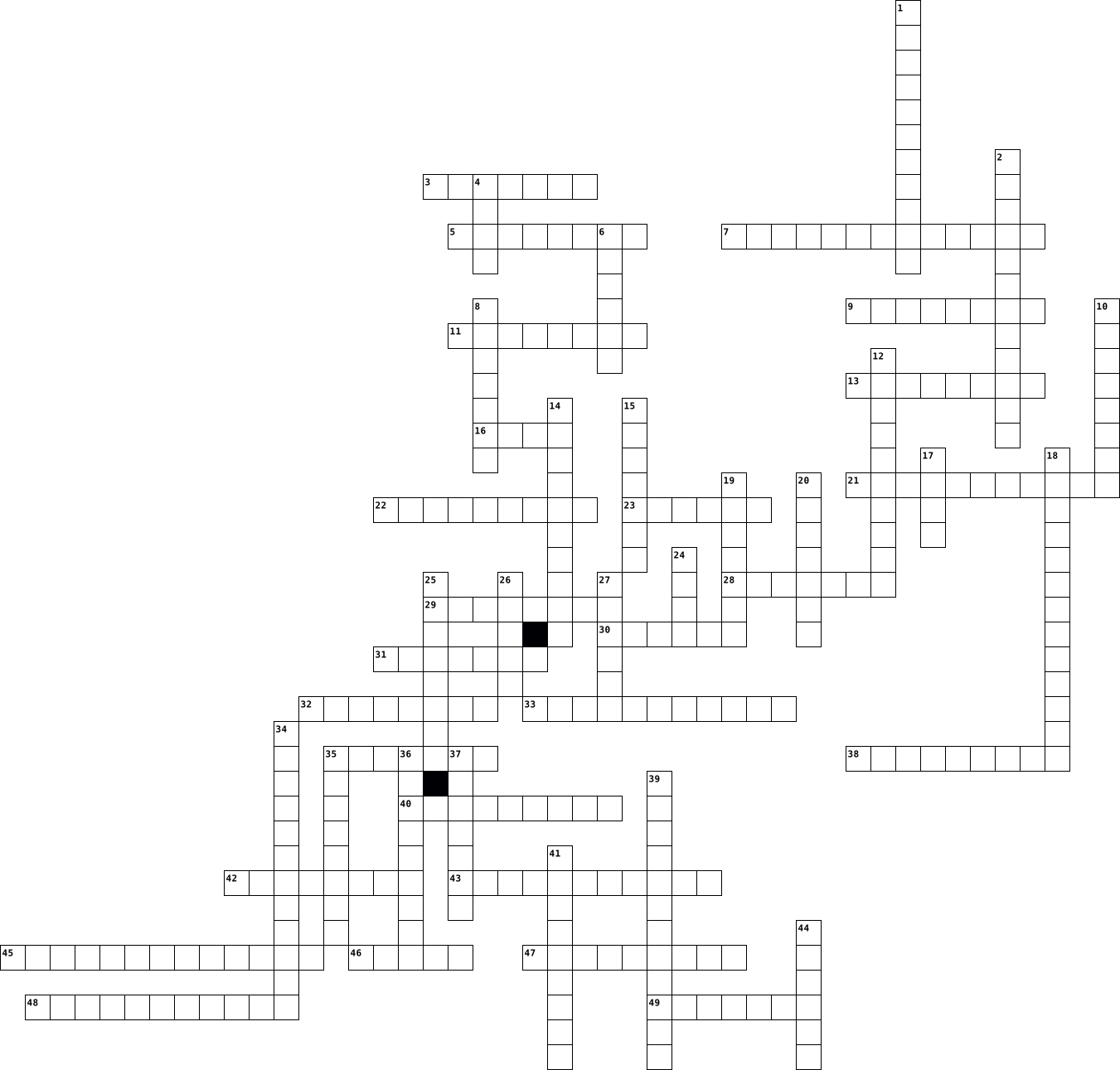
Across
- Sunshine State
- Great Lake State
- Bay State
- Show Me State
- Bluegrass State
- Old Line State
- Hawkeye State
- Flickertail State
- Badger State
- Beaver State
- Natural State
- Sooner State
- Silver State
- Equality State
- First State
- Magnolia State
- Green Mountain State
- Pelican State
- Land of Enchantment
- Land of Lincoln
- Ocean State
- Palmetto State
- Gem State
- Volunteer State
- The Mount Rushmore State
- Hoosier State
Down
- Constitution State
- Mountain State
- Buckeye State
- The Last Frontier
- Peach State
- Cornhusker State
- Golden State
- Evergreen State
- Grand Canyon State
- Beehive State
- Tar Heel State
- Big Sky Country
- Yellowhammer State
- Lone Star State
- Centennial State
- Pine Tree State
- Sunflower State
- Keystone State
- The Old Dominion
- Land of 10,000 Lakes
- Empire State
- Granite State
- Garden State
- Aloha State
50 Clues: Bay State • Gem State • Peach State • First State • Ocean State • Aloha State • Golden State • Badger State • Beaver State • Sooner State • Silver State • Empire State • Garden State • Buckeye State • Show Me State • Hawkeye State • Beehive State • Natural State • Pelican State • Granite State • Hoosier State • Mountain State • Sunshine State • Old Line State • Tar Heel State • Equality State • Magnolia State • Keystone State • ...
US States 2020-05-18
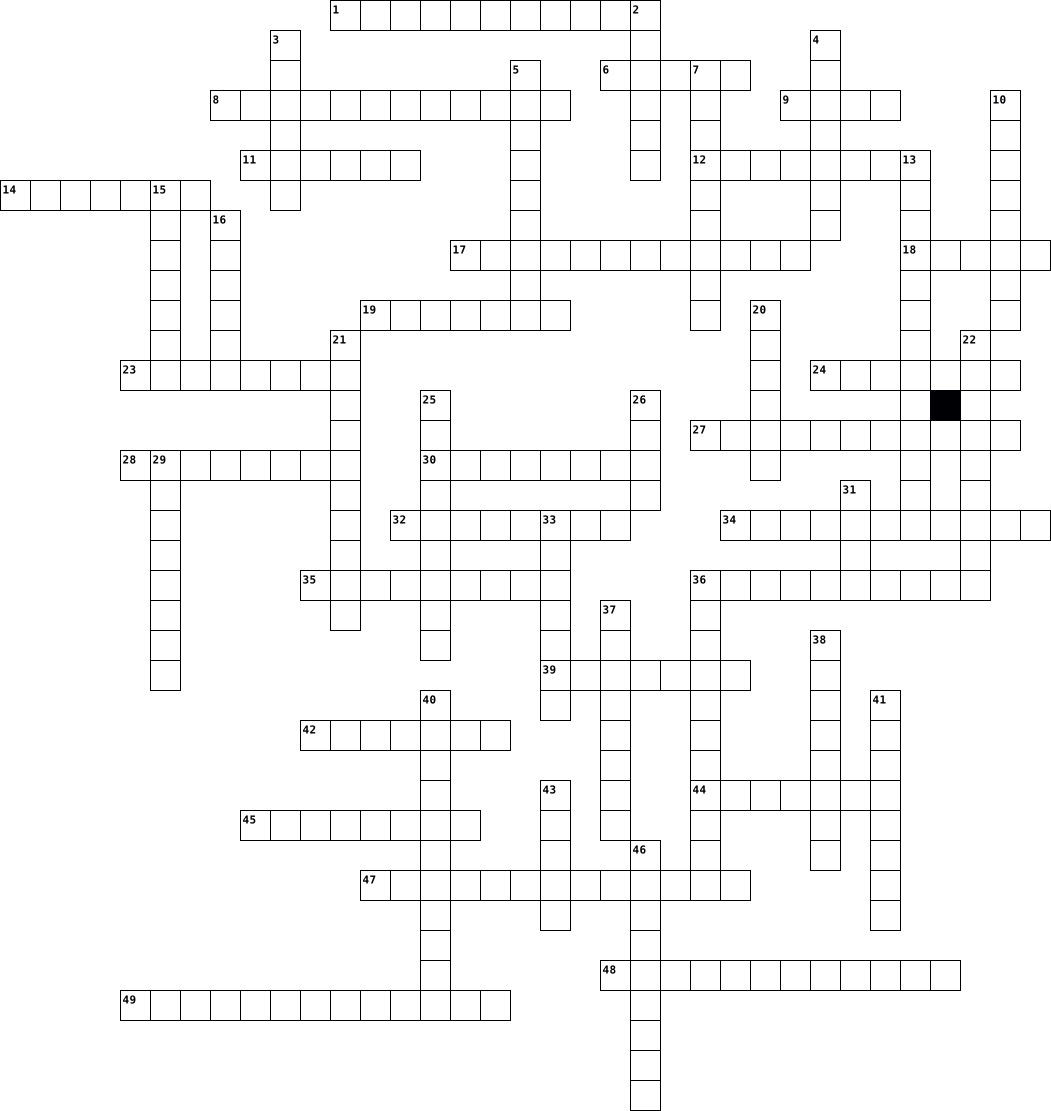
Across
- 34
- 19
- 38
- 15
- 11
- 22
- 45
- 48
- 43
- 3
- 36
- 10
- 39
- 25
- 27
- 8
- 41
- 18
- 5
- 26
- 9
- 14
- 46
- 21
- 29
- 40
Down
- 2
- 16
- 50
- 49
- 31
- 20
- 33
- 32
- 28
- 37
- 47
- 23
- 42
- 44
- 13
- 35
- 1
- 7
- 17
- 6
- 24
- 4
- 12
- 30
50 Clues: 2 • 3 • 8 • 1 • 5 • 7 • 6 • 4 • 9 • 34 • 16 • 50 • 49 • 19 • 31 • 38 • 15 • 20 • 11 • 22 • 33 • 45 • 32 • 28 • 48 • 43 • 37 • 47 • 23 • 36 • 10 • 42 • 44 • 39 • 25 • 13 • 27 • 35 • 41 • 18 • 17 • 26 • 24 • 12 • 14 • 46 • 30 • 21 • 29 • 40
distinguished states 2021-05-02
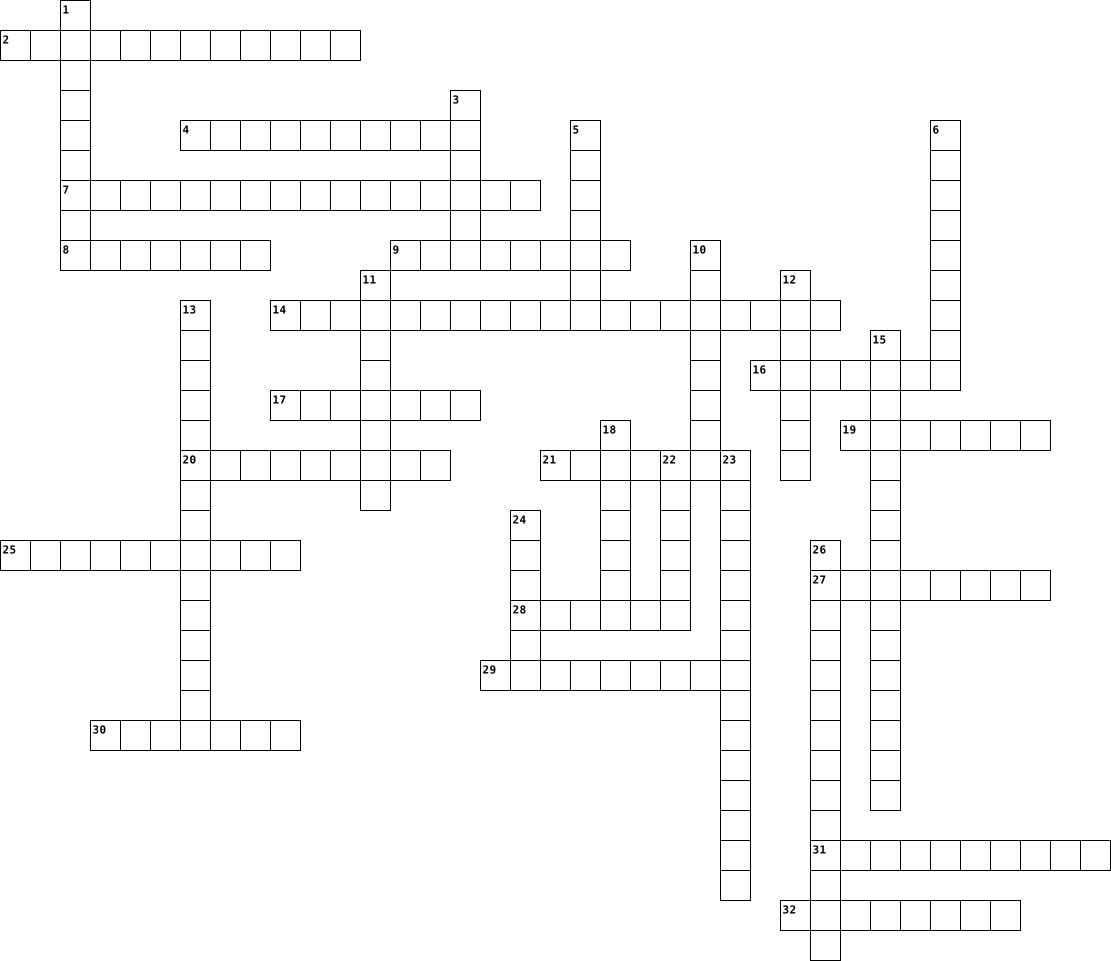
Across
- here was the Taking of Chan Santa Cruz by General Ignacio A. Bravo. in 1901
- here is the teatro juarez
- it changed its name in 2015 from D.F. to...
- Here the National Fair of Tepic takes place in the month of March
- here is the Xicohténcatl Theater
- the carnival of peace takes place here
- its capital is also known as guanatos
- Dr. Francisco González Arias died here in 1946
- aqui se lleva a cabo el festival del chocolate
- the basaseachi waterfall is here
- its name comes from tepechiapan
- here the Carnival of the Port of Tampico takes place
- acapulco is located here
- its name comes from the Nahuatl "Huāxyacac"
- its typical dish is the asado de boda
- its typical dance is the jarana
- here is the cable car to the Grutas de García
- tajín is located here
Down
- in 1522 it was conquered by cristobal de olid
- The Ixtlahuacán Chayacates Celebration takes place here
- here is the monumental clock of cuautepec
- here is the hill of the bells
- Venustiano Carranza was born here
- It is the only walled city in Mexico
- It is the fourth largest state in Mexico
- the ethnic group cucapá resides here
- It is the state that embraces the CDMX
- Its capital is Culiacán
- This is where chalupas come from
- here the devil dance takes place
- here the deer dance takes place
- here the villa de nuestra señora de la asuncion was founded
32 Clues: tajín is located here • Its capital is Culiacán • acapulco is located here • here is the teatro juarez • here is the hill of the bells • its name comes from tepechiapan • here the deer dance takes place • its typical dance is the jarana • here is the Xicohténcatl Theater • the basaseachi waterfall is here • This is where chalupas come from • here the devil dance takes place • ...
US States 2021-10-26
Across
- Potato State.
- Aloha State
- Empire State
- _____ City,OK
- Buckeye State
- The Old Dominion
- mid-west state, where topeka is
- Nation's Capital
- Garden State
- Big Sky Country
- "Live Free or Die"
Down
- Isla del Encanto/Island of Enchantment
- Where you can find the great lakes
- The First State
- Lone Star State
- Golden State
- Mountain state with lots of deer.
- Peach State
- Sunshine State
- The Last Frontier
20 Clues: Aloha State • Peach State • Empire State • Golden State • Garden State • Potato State. • _____ City,OK • Buckeye State • Sunshine State • The First State • Lone Star State • Big Sky Country • The Old Dominion • Nation's Capital • The Last Frontier • "Live Free or Die" • mid-west state, where topeka is • Mountain state with lots of deer. • Where you can find the great lakes • ...
Indian states 2021-10-01
Across
- imphal
- gangtok
- Ranchi
- jaipur
- amaravati
- itanagar
- bhopal
- hyderabad
- Kolkatta
- mumbai
Down
- aizawl
- bengaluru
- thiruvananthapuram
- shimla
- shillong
- Patna
- Dispur
- Chandigarh
- kohima
- Gandhi nagar
- agartala
21 Clues: Patna • aizawl • imphal • shimla • Ranchi • Dispur • jaipur • kohima • bhopal • mumbai • gangtok • shillong • itanagar • Kolkatta • agartala • bengaluru • amaravati • hyderabad • Chandigarh • Gandhi nagar • thiruvananthapuram
US States 2021-11-22
Across
- Capital is Providence
- Capital is Boise
- Capital is Jefferson City
- Capital is Pheonix
- Capital is Olympia
- Capital is Little Rock
- Capital is Columbus
- Capital is Honolulu
- Capital is Salt Lake City
- Capital is Springfield
- Capital is Huston
- Capital is Hartford
- Capital is Montpelier
- Capital is St. Paul
- Capital is Juneau
- Capital is Bismarck
- Capital is Charleston
- Capital is Montgomery
- Capital is Augusta
- Capital is Olympia
- Capital is Sacramento
- Capital is Tallahassee
- Capital is Atlanta
- Capital is Topeka
- Capital is Concord
- Capital is Oregon
Down
- Capital is Columbia
- Capital is Richmond
- Capital is Pierre
- Capital is Albany
- Capital is Carson City
- Capital is Jackson
- Capital is Baton Rouge
- Capital is Raleigh
- Capital is Harrisburg
- Capital is Madison
- Capital is Dover
- Capital is Lansing
- Capital is Santa Fe
- Capital is Des Moines
- Capital is Annapolis
- Capital is Denver
- Capital is Lincoln
- Capital is Boston
- Capital is Frankfurt
- Capital is Indianopolis
- Capital is Helena
- Capital is Trenton
- Capital is Nashville
- Capital is Oklahoma City
50 Clues: Capital is Boise • Capital is Dover • Capital is Pierre • Capital is Albany • Capital is Huston • Capital is Denver • Capital is Boston • Capital is Juneau • Capital is Helena • Capital is Topeka • Capital is Oregon • Capital is Jackson • Capital is Pheonix • Capital is Olympia • Capital is Raleigh • Capital is Madison • Capital is Lansing • Capital is Lincoln • Capital is Augusta • Capital is Olympia • ...
50 states 2022-02-14
Across
- Providence
- Boise
- Jefferson City
- Phoenix
- Cheyenne
- Little Rock
- Columbus
- Honolulu
- Salt Lake City
- Springfield
- Austin
- Hartford
- Montpelier
- Saint Paul
- Juneau
- Bismarck
- Charleston
- Montgomery
- Augusta
- Olympia
- Sacramento
- Tallahassee
- Atlanta
- Topeka
- Concord
- Salem
Down
- Columbia
- Richmond
- Pierre
- Albany
- Carson City
- Jackson
- Baton Rouge
- Raleigh
- Harrisburg
- Madison
- Dover
- Lansing
- Santa Fe
- Des Moines
- Annapolis
- Denver
- Lincoln
- Boston
- Frankfort
- Indianapolis
- Helena
- Trenton
- Nashville
- Oklahoma City
50 Clues: Boise • Dover • Salem • Pierre • Albany • Austin • Denver • Boston • Juneau • Helena • Topeka • Jackson • Phoenix • Raleigh • Madison • Lansing • Lincoln • Augusta • Olympia • Trenton • Atlanta • Concord • Columbia • Richmond • Cheyenne • Columbus • Honolulu • Santa Fe • Hartford • Bismarck • Annapolis • Frankfort • Nashville • Providence • Harrisburg • Des Moines • Montpelier • Saint Paul • Charleston • Montgomery • Sacramento • Carson City • Baton Rouge • Little Rock • ...
US States 2014-07-18
Across
- 41
- 18
- 24
- 48
- 44
- 11
- 22
- 25
- 15
- 10
- 29
- 2
- 1
- 49
- 3
- 34
- 19
- 8
- 40
- 38
- 12
- 36
- 46
- 50
Down
- 5
- 33
- 43
- 16
- 6
- 26
- 32
- 39
- 21
- 30
- 28
- 47
- 31
- 14
- 42
- 45
- 27
- 9
- 37
- 7
- 17
- 4
- 23
- 35
- 13
- 20
50 Clues: 5 • 6 • 2 • 1 • 9 • 3 • 7 • 8 • 4 • 33 • 41 • 43 • 16 • 26 • 32 • 39 • 21 • 18 • 30 • 24 • 48 • 28 • 44 • 11 • 47 • 22 • 25 • 15 • 31 • 14 • 10 • 42 • 29 • 45 • 27 • 49 • 37 • 34 • 19 • 40 • 17 • 38 • 12 • 23 • 35 • 13 • 36 • 20 • 46 • 50
hot states 2016-05-08
Across
- põhjus
- kuni
- hasartmäng
- pealik
- kulutama
- tilk, pisar
- vedelik
- harva
- peakorter
- millegi poolest kuulus
- maa peal
- hirv
- hämmastunud
Down
- kesklinnsunset päikeseloojang
- tegelikult
- päriselanikud
- see oleks
- giidiga ekskursioon
- ülesanne
- kõrb
- lahing
- uitama, hulkuma
- piirkond, pindala
23 Clues: kuni • kõrb • hirv • harva • põhjus • pealik • lahing • vedelik • kulutama • ülesanne • maa peal • see oleks • peakorter • tegelikult • hasartmäng • tilk, pisar • hämmastunud • päriselanikud • uitama, hulkuma • piirkond, pindala • giidiga ekskursioon • millegi poolest kuulus • kesklinnsunset päikeseloojang
States & countries 2023-11-20
Across
- not KFC
- WWIII enemy
- not D.C.
- KANGAROOS!!!
- Icier than Iceland
- the state on fire
- home of the dead queen
- older than the U.S.A.
- maple syrup
Down
- not New Mexico
- vacationland
- looks like a face
- infamous for being peaceful
- smallest state
- home of the bagpipes
- largest population
- almost canada
- greener than Greenland
- not Mexico
- almost a desert
20 Clues: not KFC • not D.C. • not Mexico • WWIII enemy • maple syrup • vacationland • KANGAROOS!!! • almost canada • not New Mexico • smallest state • almost a desert • looks like a face • the state on fire • Icier than Iceland • largest population • home of the bagpipes • older than the U.S.A. • greener than Greenland • home of the dead queen • infamous for being peaceful
US States 2023-11-22
Across
- Home of Sin City
- Land of Enchantment
- Used to be the center of the Automotive Industry in America
- Has Cities/Towns like Eureka, Klamath, Tulare & Visalia
- Has multiple active Volcanoe
- The Heart of Dixie
- Land of 10,000 Lakes
- Has the 4th Largest Casino city in America
- Fracking, and frozen wastelands
- The Corn Husker State
- Excelsior
Down
- Ditat Deus is the state motto
- Rich with history, Founding Fathers, an Original Colony, bordering DC
- Known for its rich culture, history and great music
- _______ Man is in the news what seems like once a week...
- It's State Capital is Olympia
- Where they have "mean" streets are
- Lobster Capital of America
- Where the Potatoes come from
- Where Corvettes have been produced since 1983
- Known for its Silverware and Fine Jewelery
- The Place you think all the Cheese comes from
- Helena is the Capital
- Where the Aleutian Islands are
24 Clues: Excelsior • Home of Sin City • The Heart of Dixie • Land of Enchantment • Land of 10,000 Lakes • Helena is the Capital • The Corn Husker State • Lobster Capital of America • Where the Potatoes come from • Has multiple active Volcanoe • Ditat Deus is the state motto • It's State Capital is Olympia • Where the Aleutian Islands are • Fracking, and frozen wastelands • ...
US States 2024-01-26
Across
- Eureka!
- state fruit: Scuppernong grape
- Its the Beehive state
- This state's flower is the Indian Paintbrush
- Live Free or Die
- the state animal is a black bear
- Friendship is their state motto
- American robin is the state bird
Down
- The Green Mountain State
- North to the future
- "Nothing Without Providence"
- its state food is the potato
- For All Our Country
- The state motto is "I lead"
- State fish is Reef triggerfish
- Boston is in this state
- The Big Apple
- The Sunshine State
- It Goes as it Grows
- This state's official animal is the Grey Squirrel
20 Clues: Eureka! • The Big Apple • Live Free or Die • The Sunshine State • North to the future • For All Our Country • It Goes as it Grows • Its the Beehive state • Boston is in this state • The Green Mountain State • The state motto is "I lead" • "Nothing Without Providence" • its state food is the potato • state fruit: Scuppernong grape • State fish is Reef triggerfish • ...
Nation states 2024-01-29
Across
- place of declaring unified Germany
- the right to vote
- wrote Rerum Novarum
- opposition of workers and the bourgeoisie
- colony with its own government but policies guided by a foreign power
- fighters for women's franchise
- state insurance scheme providing benefits for pensioners and those who are unemployed or disa
- Iron and Blood policy
- largest colonial power in Africa
- Represented Bonapartism
- steady development of the towndwellers
Down
- Main group of Russian Socialists
- Battle of German Unification defeating Austria
- wrote Communist Manifesto
- Freedom fighter for the unification of Italy
- American president abolishing slavery
- Main document for Christian
- battle of German unification, defeating France
- pride in your country, support of its policies, and feeling of superiority
- chancellor of the German empire
20 Clues: the right to vote • wrote Rerum Novarum • Iron and Blood policy • Represented Bonapartism • wrote Communist Manifesto • Main document for Christian • fighters for women's franchise • chancellor of the German empire • Main group of Russian Socialists • largest colonial power in Africa • place of declaring unified Germany • American president abolishing slavery • ...
states review 2023-12-06
Across
- the capital of florida
- the capital of this state is sacramento
- the capital of maryland
- the capital of this state is honolulu
- the capital of mississppii
- the capital of this state is topeka
- the capital of this state is lansing
- the capital of this state is frankfurt
- the capital of arizona
- the capital of this state is jefferson city
- the capital of this state is montgamery
- the capital of massachutes
Down
- the capital of minnesota
- the capital of alaska
- the capital of georgia
- the capital of this state is spingfield
- the capital of this state is little rock
- the capital of Maine
- the capital of this state is providence
- the capital of this state is boise
20 Clues: the capital of Maine • the capital of alaska • the capital of florida • the capital of georgia • the capital of arizona • the capital of maryland • the capital of minnesota • the capital of mississppii • the capital of massachutes • the capital of this state is boise • the capital of this state is topeka • the capital of this state is lansing • the capital of this state is honolulu • ...
Mountain States 2023-12-28
Across
- National Park in Wyoming
- capital of Montana
- capital of Nevada
- the landform that the Mountain States share
- National Park in Montana
- capital of Colorado
- grows the most potatoes
- capital of Idaho
- known for its hard workers
- Utah's nickname
- capital of Wyoming
Down
- the number of national parks in Utah
- a landmark that divides four states
- Nevada's nickname
- capital of Utah
- windy state with lots of farming and ranching
- popular state for skiing
- largest mountain state
- known for mining silver
- invisible line that seperates rivers
20 Clues: capital of Utah • Utah's nickname • capital of Idaho • Nevada's nickname • capital of Nevada • capital of Montana • capital of Wyoming • capital of Colorado • largest mountain state • known for mining silver • grows the most potatoes • National Park in Wyoming • popular state for skiing • National Park in Montana • known for its hard workers • a landmark that divides four states • ...
American States 2023-03-31
Across
- Which state is home to Harvard University?
- Which state is home to the Rocky Mountains?
- Which state is home to Yellowstone National Park?
- Which state is home to the famous Gateway Arch?
- Which states flag has a bear on it?
- Which state is home to the "Gateway City of the West"?
- Which state is known as the "Sunshine State"?
- Which state is known as the "Garden State"?
- Which state is home the "Mardi Gras"?
- Which state is known for its delicious maple syrup?
- Which state has a chicken restaurant named after it?
- Which state is Minneapolis in?
- Which state is home to the Space Needle?
- Which state is known for its peaches?
- Which state is known for its checkered flag?
- Which state is known as the "Big Sky Country"?
Down
- Which state is home to North America's Tallest peak?
- Which state is home to Mount Rushmore?
- Which state is Indianapolis in?
- Which state has a palm tree on its flag?
- Which state is known as the "Empire State"?
- Which state has the largest Navy Base?
- Which state is home to the Green Bay Packers?
- Which state is known as the "Lone-Star" state?
- Which state is known for its lobster and cold weather?
- Which state is the famous Willis Tower in?
- Which state is the Grand Canyon in?
- Which state is Las Vegas in?
- Which state is home to "Motor City"?
- Which state is Charlotte in?
30 Clues: Which state is Las Vegas in? • Which state is Charlotte in? • Which state is Minneapolis in? • Which state is Indianapolis in? • Which states flag has a bear on it? • Which state is the Grand Canyon in? • Which state is home to "Motor City"? • Which state is home the "Mardi Gras"? • Which state is known for its peaches? • Which state is home to Mount Rushmore? • ...
U.S. States 2024-02-28
Across
- Last state, alphabetically
- Peaches
- A little on the nose with its state flag
- Always fighting with New York
- Nashville, Memphis, Chattanooga, etc.
- Home to Kansas City
- Home to Yale
- Looks like a cute little pot!
- Crater Lake
- Des Moines, very french (for some reason)
- Glacier NP
- Sunshine, oranges, and keys
- William Penn
- Add -polis for the capital city
- Montpelier
- State + Cardinal Direction
- Charlotte
- Very . . . interesting flag
- The name of another state with ar- added
- Minus the ar-
- Home to the redwoods
- Chicago could be its own state, I guess. . .
- Northern Sister
- Our first president
- First state, alphabetically
Down
- Acadia NP
- The smallest state
- JFK
- Santa Fe, my old friend!
- The stars are so lonely
- Lincoln
- Named after a French king
- Great Sodas, I assume anyways
- Rainbows and sharks!
- Madison
- Lots of S's
- The Statue of Liberty
- The ________ Dynasty
- The largest state
- Vegas!
- Oh it's so high up!
- Mammoth Cave
- Fort Sumter
- Potatoes
- Great Lakes
- First state, chronologically
- Its capital shares a name with a fictional bird
- Southern Sister
- The lake is awfully salty
49 Clues: JFK • Vegas! • Peaches • Lincoln • Madison • Potatoes • Acadia NP • Charlotte • Glacier NP • Montpelier • Crater Lake • Lots of S's • Fort Sumter • Great Lakes • Home to Yale • William Penn • Mammoth Cave • Minus the ar- • Southern Sister • Northern Sister • The largest state • The smallest state • Home to Kansas City • Oh it's so high up! • Our first president • Rainbows and sharks! • The ________ Dynasty • ...
US States 2024-05-03

Across
- One of the State that starts with a V
- The name of this State is a President of the USA
- The Statue of Liberty
- They have the worst people
- Where theorists say The Simpsons live
- This State used to be owned by Massachusetts
- The State with Mount Rushmore
- Hollywood
- Boston Celtics
- Sounds like India
- Coldest State
- Was a meme at some point
- Potatoes
Down
- Got hit by airplanes in WWII
- Opposite of North Carolina
- The hottest State
- A smaller New York
- The smallest State
- Part of the name has a Country in it
- The first 4 letters are the Same letters as Mary Poppins
- Has a kind of meat in its name
- The Great Lakes
- The 30th State
- The flag looks like one of the Spanish flags from a long time ago
- Least populated State
- Mr beast
- Roadhouse
- Chicago
- A square shape State
29 Clues: Chicago • Mr beast • Potatoes • Roadhouse • Hollywood • Coldest State • The 30th State • Boston Celtics • The Great Lakes • The hottest State • Sounds like India • A smaller New York • The smallest State • A square shape State • The Statue of Liberty • Least populated State • Was a meme at some point • Opposite of North Carolina • They have the worst people • Got hit by airplanes in WWII • ...
50 States 2024-08-11

Across
- Its Capital is Named for Lincoln
- Indianapolis is the Capital
- This State just changed its Flag
- A State in the Trial-State Area
- Graceland
- Land of 10,000 States
- This State was admitted by Lincoln during the Civil War
- Bought from France in 1803
- The Sunflower State
- Means Mountain in Spanish
- The Granite State
- Indian Territory
- Land of Enchantment
- The Beaver State
- The First State
- Yellowstone
- The Heart of Dixie
- The Last Frontier
- The Mount Rushmore State
- Fought for Independence from Mexico
- The Buckeye State
- Potatoes!
- The Smallest State
- Home of the First Disneyland
- Bismarck is the Capital
- The Land of Lincoln
- This State has Niagara Falls, Albany, and Buffalo
- Famous for Crabs and Orioles
Down
- Mormons live here
- The 25th State
- The Home of 4 of the First 5 Presidents
- Named for our First President
- The Pine Tree State
- Philadelphia is the Largest City
- Famous for its Automobiles
- The State that possesses the Southernmost point of Continental US
- Home of the Outer Banks
- Has a City known for Gambling
- The Gateway Arch is here
- The Green Mountain State
- The Garden State
- The 50th State
- Home of a Huge Horse Race
- The Peach State
- Named after King Charles
- Mile High City
- The Badger State
- Where Boston is located
- Des Moines is the Capital
- Home of the Grand Canyon
50 Clues: Graceland • Potatoes! • Yellowstone • The 25th State • The 50th State • Mile High City • The Peach State • The First State • The Garden State • Indian Territory • The Beaver State • The Badger State • Mormons live here • The Granite State • The Last Frontier • The Buckeye State • The Heart of Dixie • The Smallest State • The Pine Tree State • The Sunflower State • Land of Enchantment • The Land of Lincoln • ...
States Airports 2024-08-18

Across
- MKE
- MSP
- Far
- JFK
- MIA
- OMA
- MHT
- jan
- SDF
- HNL
- ILG
- DEN
- BWI
- BOI
- CRW
- PHX
- ICT
- BZN
- LAS
- EWR
- SLC
- CMH
- DFW
- LAX
- MSY
- CHS
- SEA
Down
- PHL
- BOS
- DSM
- ATL
- OKC
- ANC
- ABQ
- DTW
- ORD
- FSD
- PVD
- LIT
- PWM
- DCA
- BTV
- CLT
- BHM
- BDL
- STL
- IND
- PDX
48 Clues: PHL • BOS • DSM • MKE • MSP • ATL • Far • OKC • JFK • MIA • ANC • OMA • ABQ • MHT • DTW • ORD • jan • FSD • PVD • SDF • HNL • ILG • DEN • LIT • PWM • BWI • BOI • DCA • CRW • PHX • BTV • ICT • BZN • LAS • CLT • BHM • EWR • BDL • SLC • CMH • DFW • STL • IND • LAX • MSY • PDX • CHS • SEA
U.S. States 2023-04-11
Across
- America's second-largest state by population and by area; it shares a border with Mexico
- the United States purchased this state from Russia in 1867; it is very cold here
- many people come here to go skiing
- home of Nashville, the country music capital of the U.S.
- made up of many islands in the Pacific Ocean
- Jez was born and raised here
- America's least populated state
- the name of this state has 3 vowels and 1 consonant
- has a lot of alligators and Cuban-Americans
Down
- known as the "land of 10,000 lakes"
- Harvard University is located in this state
- famous for the Grand Canyon
- Jez went to college here
- famous for its history as a former French colony; some people still speak French here today
- this state formed during the American civil war, breaking away from another state to remain loyal to the U.S.
- famous for its potatoes
- home to Chicago, America's third-largest city
- Jamestown, the first British colony in North America, was settled here
- this east coast state's largest city is known as "The Big Apple"
- famous for having many people who follow Mormonism (a sect of Christianity)
20 Clues: famous for its potatoes • Jez went to college here • famous for the Grand Canyon • Jez was born and raised here • America's least populated state • many people come here to go skiing • known as the "land of 10,000 lakes" • Harvard University is located in this state • has a lot of alligators and Cuban-Americans • made up of many islands in the Pacific Ocean • ...
United States 2023-05-07

Across
- Which state is known as the "Old Dominion"?
- Which state is known for its Appalachian Mountains and coal mining history?
- Which state is home to Mount Rushmore National Memorial?
- Which state is home to the Gateway Arch?
- Which state is known for its cheese and Green Bay Packers football team?
- Which state is known as the "Land of Enchantment"?
- Which state is the smallest in terms of land area?
- Which state has the most dense system of highways and railroads in the US?
- Which state is known for its fall foliage and White Mountains?
- Which state is the second largest state in the US by area?
- Which state is known as the "First State"?
- Which state is home to Yale University?
- Which state is known for its caucuses during presidential election years?
- Which state is known for its Hot Springs National Park and Crater of Diamonds State Park?
- Which state is home to the Statue of Liberty and Niagara Falls?
- Which state is known for its jazz music, Mardi Gras celebrations, and Cajun cuisine?
- Which state is known for its peaches and Coca-Cola?
- Which state is known as "Big Sky Country"?
- Which state is made up entirely of islands?
- Which state is known for the Grand Canyon and the city of Phoenix?
- Which state is known as the "Cornhusker State"?
- Which state is known for its Great Lakes and the city of Detroit?
Down
- Which state is home to the longest river in North America?
- Which state is home to Las Vegas and Area 51?
- Which state is known for its Rocky Mountains and skiing destinations like Aspen and Vail?
- Which state is known for its lobsters and lighthouses?
- Which state is known for its beaches and historic cities like Charleston?
- Which state is home to the National Cowboy & Western Heritage Museum?
- Which state is known for its country music scene and the Grand Ole Opry?
- Which state is home to Mount Rainier and the Space Needle?
- Which state is known as the "Heart of Dixie"?
- Which state is home to the Wright Brothers National Memorial?
- Which state is known as the "Bluegrass State"?
- Which state is known for its maple syrup?
- Which state is home to the US Naval Academy and the National Aquarium?
- Which state is known for its potatoes?
- Which state is home to Harvard University and MIT?
- Which state is home to five national parks, including Zion and Bryce Canyon?
- Which state is the least visited state in the US?
- Which state is known for its Pacific coastline and the city of Portland?
40 Clues: Which state is known for its potatoes? • Which state is home to Yale University? • Which state is home to the Gateway Arch? • Which state is known for its maple syrup? • Which state is known as the "First State"? • Which state is known as "Big Sky Country"? • Which state is known as the "Old Dominion"? • Which state is made up entirely of islands? • ...
US States 2022-11-10
Across
- 43
- 15
- 46
- 19
- 38
- 6
- 37
- 2
- 42
- 16
- 18
- 45
- 49
- 41
- 8
- 48
- 29
- 10
- 28
- 14
- 13
- 1
- 34
- 27
- 36
Down
- 20
- 24
- 7
- 25
- 31
- 50
- 35
- 47
- 23
- 26
- 11
- 22
- 40
- 21
- 33
- 9
- 3
- 17
- 12
- 30
- 4
- 44
- 5
- 32
- 39
50 Clues: 7 • 6 • 2 • 9 • 8 • 3 • 4 • 5 • 1 • 20 • 43 • 24 • 25 • 31 • 15 • 46 • 19 • 50 • 35 • 38 • 47 • 37 • 23 • 26 • 42 • 11 • 22 • 40 • 16 • 18 • 21 • 45 • 49 • 33 • 41 • 48 • 17 • 29 • 10 • 28 • 12 • 30 • 44 • 14 • 32 • 39 • 13 • 34 • 27 • 36
The states 2022-11-08
Across
- This state has a famous horse race
- The first english Colony was established in this state
- This state has a nickname called the sooners
- Is home to the yellowstone
- This state is home to the third oldest river in the world
- This state is home to the oldest Major League Baseball stadium
- Is home of the potato
- This state is known for its country music
- This is the palmetto state
- This state touches the most great lakes
- Was the first state to ratify the constitution
- This state is tied for third in the catagory of most sports teams
- This is the smallest state in the united states
- is home to great wine
- Is the most expensive state to live in
- has the 3rd largest city in the united states
- Is the 4th biggest state in the united states
- This is the only state to have two NFL football teams both of their names starting with B's
- This state has gulf state park in it
- This state has more plastic surgeons per capita than any other state
- This states football team moved from baltimore
- has the biggest city in the united states
- The braves play here
Down
- this state leads the nation in production of spring wheat
- This state is named after a major river
- Is the biggest state in the united states
- Amazon is headquartered here
- Is known for its luxurious beaches
- This state has the gateway to the west
- This state is known for its crawfish
- This state produces 90% of the united states toothpicks
- This is the state that benjamin franklin lived in
- Has the biggest mall
- This state is the top producer of maple syrup
- This state was created because it didn't want to succeed from the union
- This states capital is named after a father of the constitution
- Has a famous monument dedicated to 4 presidents
- This state is nicknamed the constitution state
- Produces the most corn in the united states
- This state is called the cornhusker state
- has the largest population for any state
- Has the least populous capital
- This state has the Ozarks in it
- This state has the smallest area for any state capital
- This state has no sales tax and touches an ocean for at least 20 miles
- This state has the oldest NFL team
- its biggest city is the casino capital of the united states
- has the 28th highest peak compared to all of the other states highest peak
- Is home of the cheeseburger
- Is the fourth most expensive states to live in
50 Clues: Has the biggest mall • The braves play here • Is home of the potato • is home to great wine • Is home to the yellowstone • This is the palmetto state • Is home of the cheeseburger • Amazon is headquartered here • Has the least populous capital • This state has the Ozarks in it • This state has a famous horse race • Is known for its luxurious beaches • ...
u.s. states 2022-06-03
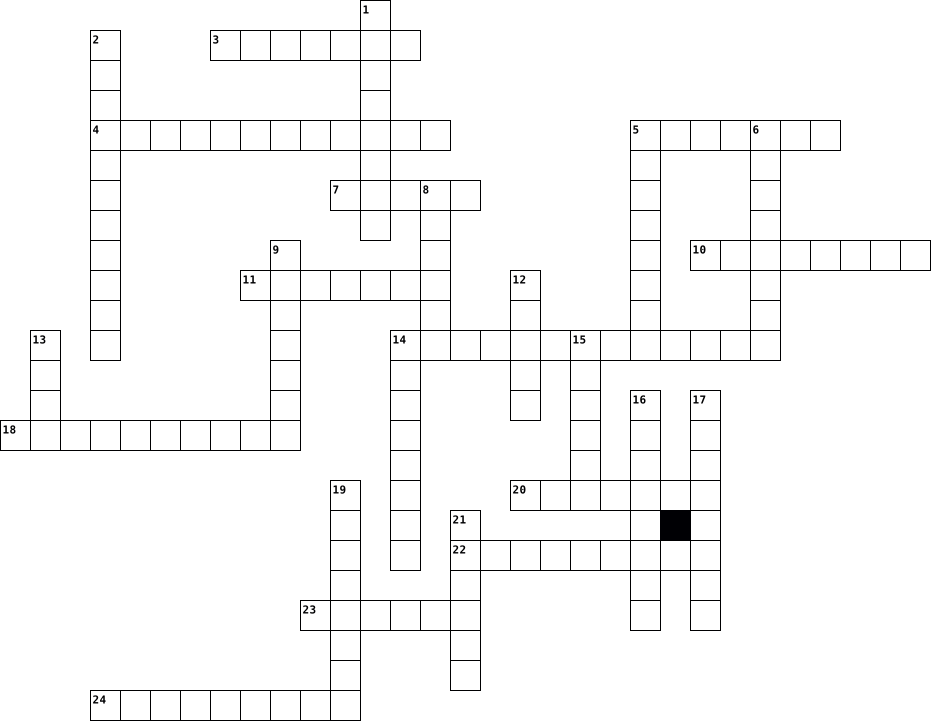
Across
- Nickname: The Peach State
- where ladies bathtub is
- State flower: Peony
- where we live
- abe lincoln was from this state
- the flag is a red x on a white background
- home of the new england patriots
- wine country region
- also known as the grand canyon state
- the capital is baton rouge
- "toto, i don't think we are in ------ anymore."
- Capital: St. Paul
Down
- Capital: Lansing
- yale university is here
- Motto: State sovereignty, national union
- capital is little rock
- people go here all the time to gamble
- mostly known for its alligators
- they are known for growing potato's
- Motto: Our liberties we prize and our rights we will maintain
- the first person to step on omaha beach is from here
- State flower: Yellow Hibiscus
- the 38th state
- second smallest state
- the capital is lincoln
- the capital is anchorage
26 Clues: where we live • the 38th state • Capital: Lansing • Capital: St. Paul • State flower: Peony • wine country region • second smallest state • capital is little rock • the capital is lincoln • yale university is here • where ladies bathtub is • the capital is anchorage • Nickname: The Peach State • the capital is baton rouge • State flower: Yellow Hibiscus • mostly known for its alligators • ...
u.s. states 2022-06-03
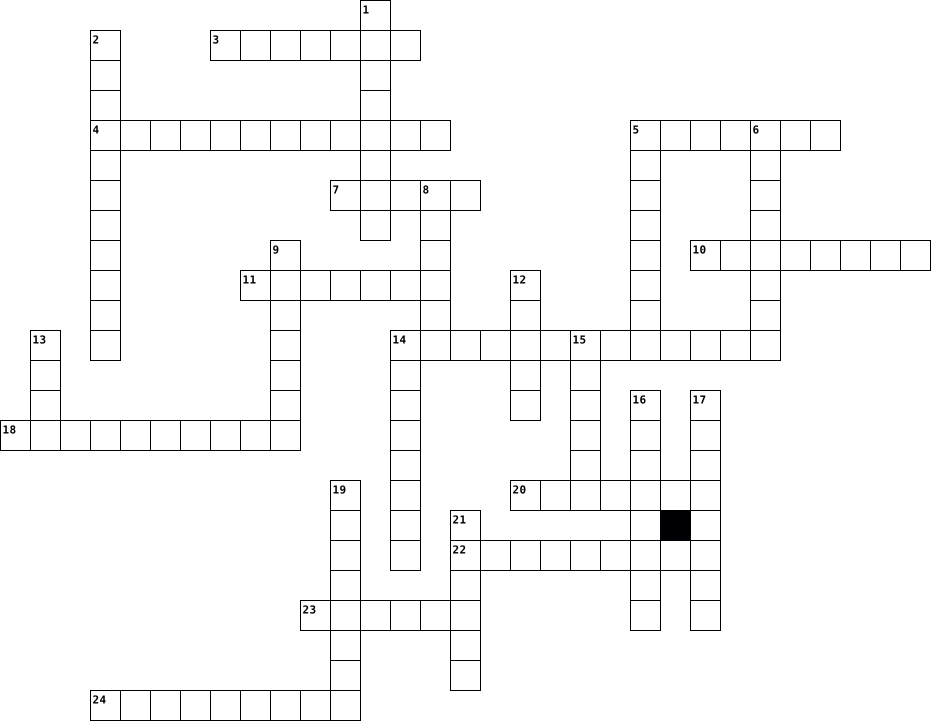
Across
- Nickname: The Peach State
- where ladies bathtub is
- State flower: Peony
- where we live
- abe lincoln was from this state
- the flag is a red x on a white background
- home of the new england patriots
- wine country region
- also known as the grand canyon state
- the capital is baton rouge
- "toto, i don't think we are in ------ anymore."
- Capital: St. Paul
Down
- Capital: Lansing
- yale university is here
- Motto: State sovereignty, national union
- capital is little rock
- people go here all the time to gamble
- mostly known for its alligators
- they are known for growing potato's
- Motto: Our liberties we prize and our rights we will maintain
- the first person to step on omaha beach is from here
- State flower: Yellow Hibiscus
- the 38th state
- second smallest state
- the capital is lincoln
- the capital is anchorage
26 Clues: where we live • the 38th state • Capital: Lansing • Capital: St. Paul • State flower: Peony • wine country region • second smallest state • capital is little rock • the capital is lincoln • yale university is here • where ladies bathtub is • the capital is anchorage • Nickname: The Peach State • the capital is baton rouge • State flower: Yellow Hibiscus • mostly known for its alligators • ...
50 States 2022-10-06
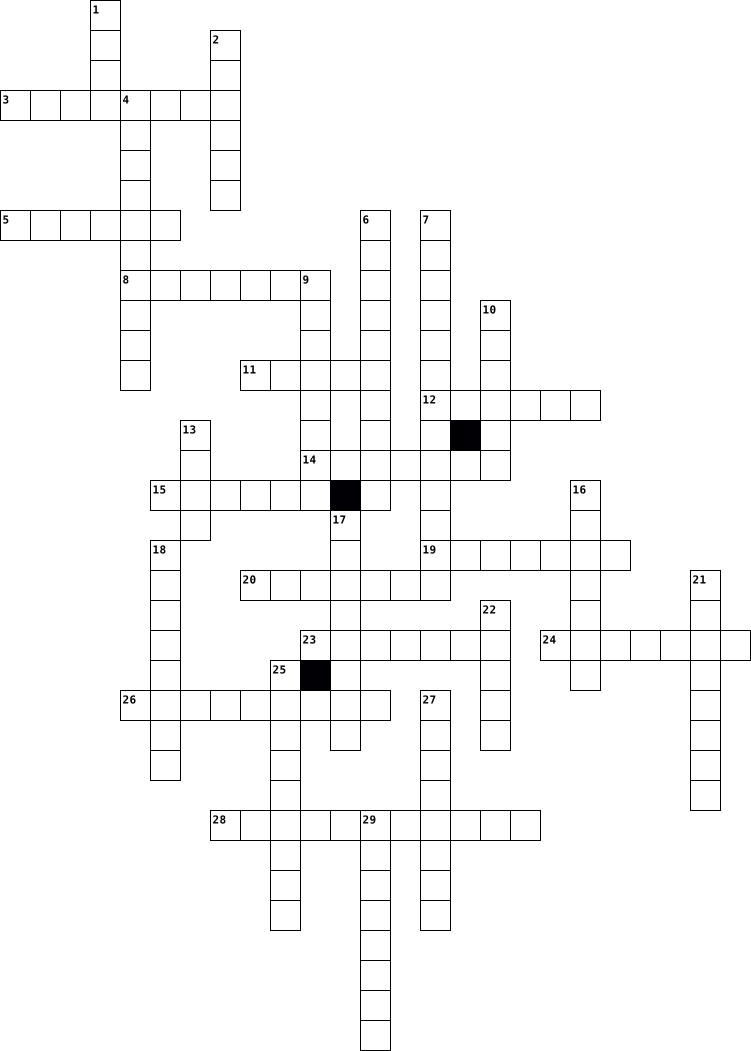
Across
- small state
- Aloha
- produces the most peanuts
- Baked, Mashed, or Au Gratin
- longest coastline
- Grand Canyon
- Dorothy doesn't think we're here anymore
- The Large Red Fruit
- The sunshine state
- Roll Tide!!
- Indy 500
- Crayfish or Crawfish?
- Hartford
Down
- borders Missouri and Mississippi rivers
- Willamette Valley Pinot Noir
- borders canada
- The Governator
- myrtle beach
- Only state to have another state in its name
- Sin City
- Rocky Mountains
- cheddar
- neighbor to the presidents
- the land of lincoln
- Fried Chicken
- lobster
- Cheese heads
- George Washington
- largest silver nugget found here
29 Clues: Aloha • cheddar • lobster • Sin City • Indy 500 • Hartford • small state • Roll Tide!! • myrtle beach • Grand Canyon • Cheese heads • Fried Chicken • borders canada • The Governator • Rocky Mountains • longest coastline • George Washington • The sunshine state • the land of lincoln • The Large Red Fruit • Crayfish or Crawfish? • produces the most peanuts • neighbor to the presidents • Baked, Mashed, or Au Gratin • ...
US States 2022-05-20
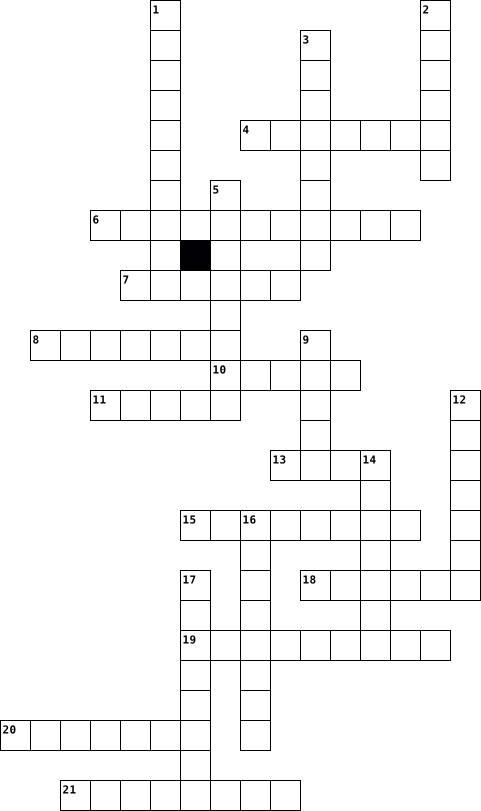
Across
- State with Phoenix capital
- Constitution State
- The Aloha State
- State that grows lots of oranges
- Island The smallest state
- State with one syllable
- State with Capital Des Moines
- Its capital includes the opposite of big in its name
- The 49th state
- State shaped like a boot
- State famous for peaches
- State with the Gateway Arch
Down
- State where you can find Disneyland
- State famous for sunflowers
- State including Chicago
- State named after Baron Del La Warr
- State famous for potatoes
- People from this state are called Hoosiers
- Abbreviated AL
- State with abbreviation KY
- Centennial State
21 Clues: Abbreviated AL • The 49th state • The Aloha State • Centennial State • Constitution State • State including Chicago • State with one syllable • State shaped like a boot • State famous for peaches • State famous for potatoes • Island The smallest state • State with Phoenix capital • State with abbreviation KY • State famous for sunflowers • State with the Gateway Arch • ...
United States 2022-05-27
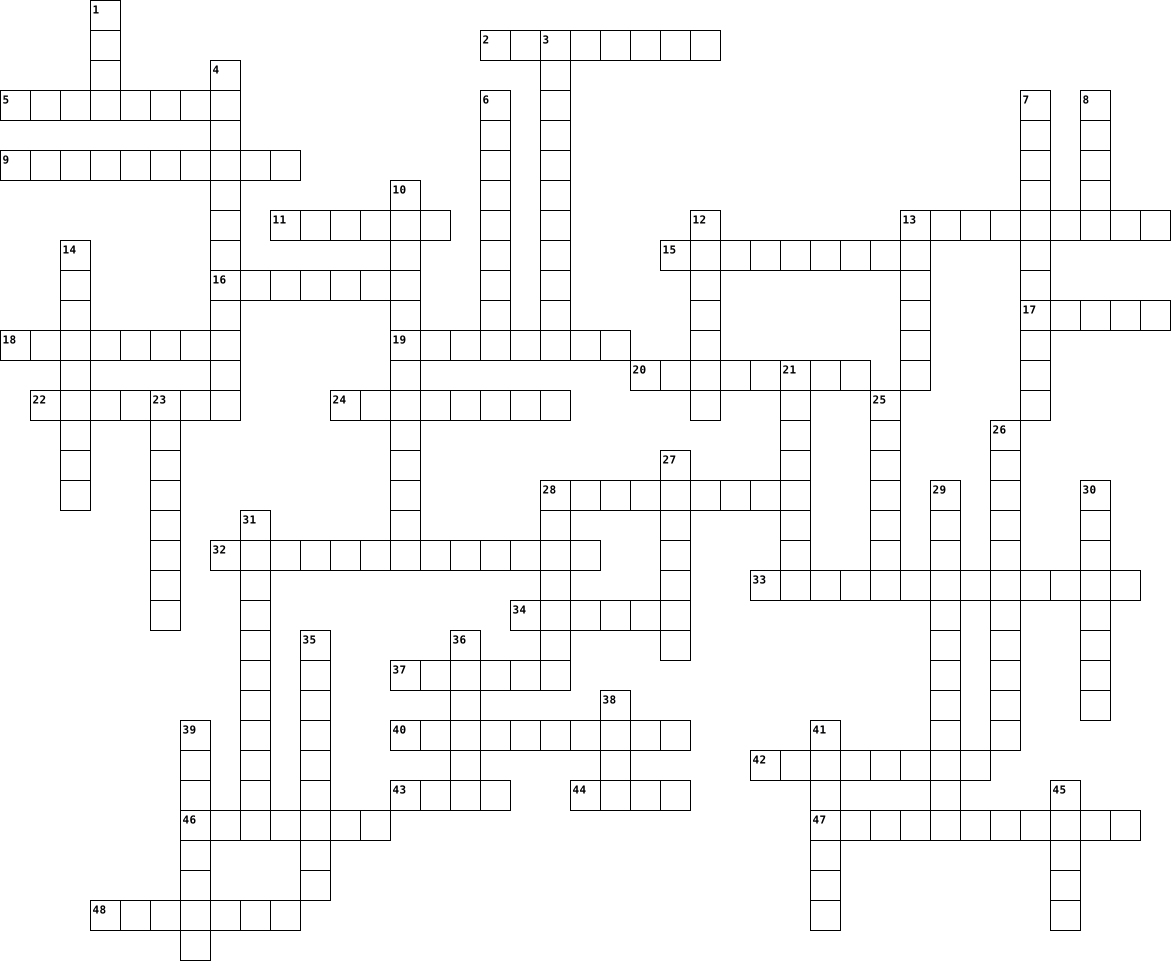
Across
- Kansas City
- Dover
- Sacramento
- Salem Portland
- Trenton Newark
- Nashville Memphis
- Montpelier
- Boise
- Lansing
- Denver
- Richmond
- Indianapolis
- Annapolis
- St. Paul Minneapolis
- Raleigh Charlotte
- Boston
- Honolulu
- Juneau Anchorage
- Seattle
- Springfield
- Virginia
- Columbus
- Montgomery
- Providence
- Cheyenne
Down
- Des Moines
- Pierre Sioux Falls
- Philadelphia
- Santa Fe Albuquerque
- Hartford
- Austin Houston
- Columbia
- Albany
- Las Vegas
- Madison Milwaukee
- Lincoln Omaha
- Little Rock
- Phoenix Phoenix
- Jackson
- Atlanta
- Helena
- Manchester
- Frankfort
- Bismarck Fargo
- Baton Rouge
- Topeka
- Salt Lake City
- Oklahoma City
- Tallahassee
- Augusta
50 Clues: Dover • Boise • Albany • Denver • Helena • Boston • Topeka • Lansing • Jackson • Atlanta • Seattle • Augusta • Hartford • Columbia • Richmond • Honolulu • Virginia • Columbus • Cheyenne • Las Vegas • Annapolis • Frankfort • Des Moines • Sacramento • Montpelier • Manchester • Montgomery • Providence • Kansas City • Little Rock • Baton Rouge • Tallahassee • Springfield • Philadelphia • Indianapolis • Lincoln Omaha • Oklahoma City • Austin Houston • ...
US States 2023-06-02
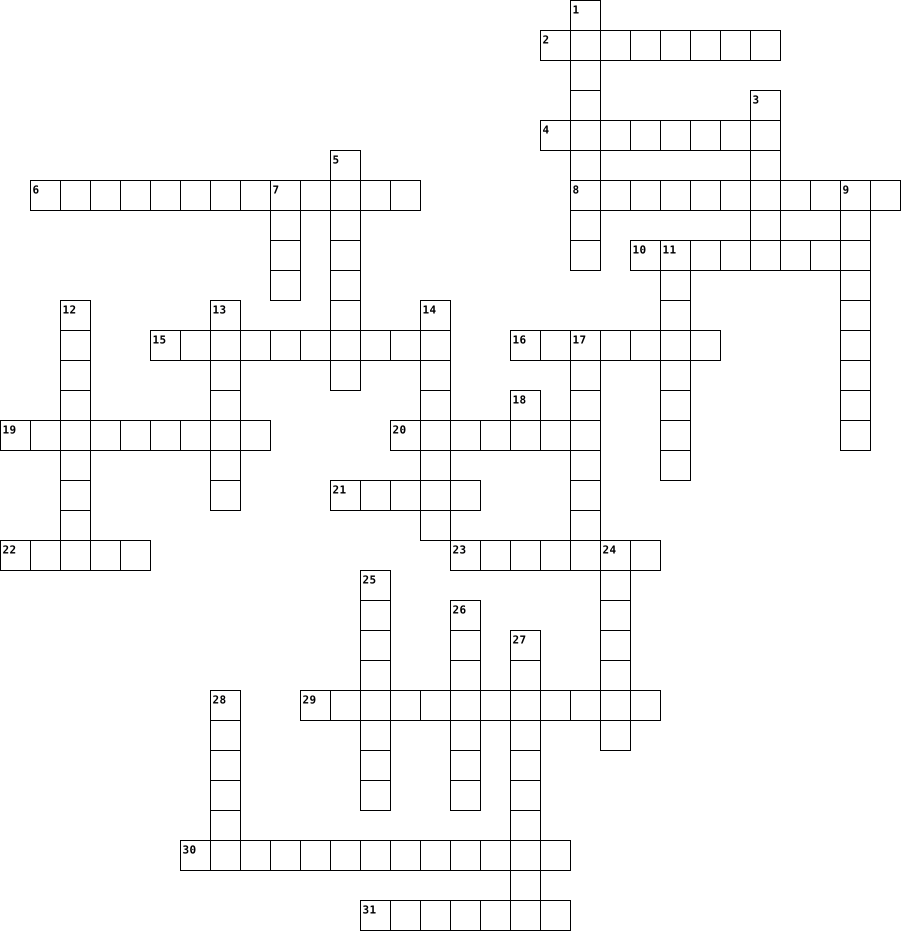
Across
- Known for the Derby
- It is known for corn
- Palmetto trees
- Mt. Rushmore home
- Home of the Motor City
- Beverly Hills
- One of the world's busiest airports
- Say "cheese"
- First state in the alphabet
- Moose capital of New England
- Potatoes
- Home of Indy 500
- Concord is there
- Red Sox
- Grand Canyon State
Down
- Newark and Trenton are there
- Aloha
- The Gateway Arch
- 7 P.O.T.U.S. born here
- Nashville
- Home of the "Windy City"
- The "Big Easy"
- The Sunshine State
- Baltimore is there
- North of Texas
- Acronym for home state of Liberty Bell
- Jets/Giants
- First state in union
- Makes famous ice-cream
- Space Needle
- What happens here stays here
31 Clues: Aloha • Red Sox • Potatoes • Nashville • Jets/Giants • Say "cheese" • Space Needle • Beverly Hills • Palmetto trees • The "Big Easy" • North of Texas • The Gateway Arch • Home of Indy 500 • Concord is there • Mt. Rushmore home • The Sunshine State • Baltimore is there • Grand Canyon State • Known for the Derby • It is known for corn • First state in union • 7 P.O.T.U.S. born here • Home of the Motor City • ...
50 States 2024-09-15
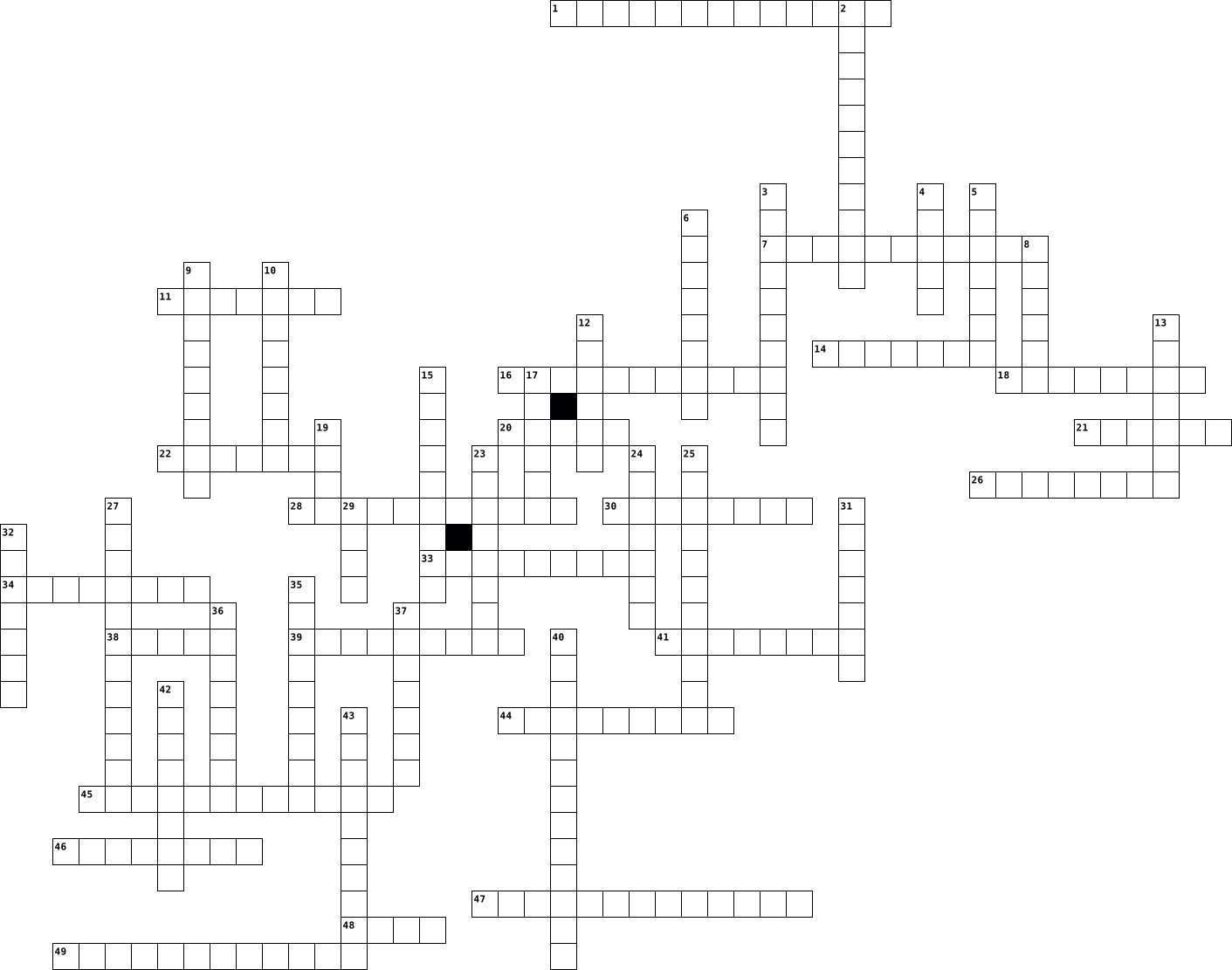
Across
- Raleigh
- Pierre
- Albany
- Montgomery
- Hartford
- Annapolis
- Austin
- Honolulu
- Montpelier
- Richmond
- Providence
- Kansas City
- Santa Fe
- Oklahoma City
- Augusta
- Trenton
- Lansing
- Madison
- Pittsburgh
- Lincoln
- Columbia
- Des Moines
- Charleston
Down
- Bismarck
- Olympia
- Boise
- Tallahassee
- Springfield
- Juneau
- Nashville
- Denver
- Topeka
- Helena
- Baton Rouge
- Salem
- Salt Lake City
- Dover
- Phoenix
- Jackson
- Concord
- Columbus
- Indianapolis
- Cheyenne
- St. Paul
- Frankfort
- Atlanta
- Boston
- Little Rock
- Sacramento
49 Clues: Boise • Salem • Dover • Pierre • Juneau • Denver • Albany • Topeka • Helena • Austin • Boston • Raleigh • Olympia • Phoenix • Jackson • Concord • Atlanta • Augusta • Trenton • Lansing • Madison • Lincoln • Bismarck • Hartford • Honolulu • Richmond • Columbus • Cheyenne • Santa Fe • St. Paul • Columbia • Nashville • Annapolis • Frankfort • Montgomery • Montpelier • Providence • Sacramento • Pittsburgh • Des Moines • Charleston • Tallahassee • Springfield • Baton Rouge • ...
50 States 2024-09-17

Across
- "Home of the Grand Canyon."
- "Lobster lovers’ paradise."
- "Where the corn grows tall and the sand hills roll."
- "Not in Dorothy’s backyard anymore."
- "Where deserts meet hot air balloons."
- "Land of 10,000 lakes."
- "Home of Mount Rushmore."
- "Windy city’s state."
- "Famous for cold winters and wide-open plains."
- "Aloha from this island state."
- "Where Seattle meets Mount Rainier."
- "Say cheese!"
- "Birthplace of more presidents than any other state."
- "The first state to join the union."
- "Crater Lake and endless rain."
- "The birthplace of the Boston Tea Party."
- "Hollywood."
- "Cornfields as far as the eye can see."
- "Where the wind comes sweeping down the plains."
- "First in flight."
- "Famous for bluegrass music and fried chicken."
- "Everything’s bigger in this Lone Star state."
Down
- "Yellowstone is this state’s crown jewel."
- "Home to the Garden State Parkway."
- "Home of desert skies and 24/7 lights."
- "Sounds like Kansas, but it's not!"
- "Famous for sunshine and oranges."
- "Salt Lake and stunning red rocks."
- "Famous for jazz music and spicy gumbo."
- "Show me the way to St. Louis!"
- "The mitten-shaped state with Great Lakes views."
- "Maple syrup capital of the U.S."
- "Big Sky Country."
- "Live free or die state."
- "The home of the Indy 500 car race."
- "Appalachian trails and coal mines."
- "The Empire State of mind."
- "Home of country music and the Smoky Mountains."
- "Warm beaches and palm trees."
- "A river runs through it."
- "A peachy southern state."
- "Small but mighty state."
- "Sweet home state."
- "Home of the Liberty Bell."
- "Rocky Mountain high."
- "Spud central."
- "The Last Frontier of the USA."
- "The Nutmeg State."
- "The Chesapeake Bay State."
- "The Buckeye State."
50 Clues: "Hollywood." • "Say cheese!" • "Spud central." • "Big Sky Country." • "First in flight." • "Sweet home state." • "The Nutmeg State." • "The Buckeye State." • "Windy city’s state." • "Rocky Mountain high." • "Land of 10,000 lakes." • "Live free or die state." • "Home of Mount Rushmore." • "Small but mighty state." • "A river runs through it." • "A peachy southern state." • ...
U.S States 2024-10-25

Across
- The Pelican State
- Isla del Encanto
- The Mountain State
- The Lone Star State
- The Land of Opportunity
- The Sunshine State
- America's Dairyland
- The Grand Canyon State
- Tar Heel State
- The Last Frontier
- Gem State
- The Equality State
- The Constitution State
- Bluegrass State
- The Beehive State
- The Hawkeye State
- The Bay State
- The Granite State
- Old Dominion
- Land of 10,000 Lakes
- Small Wonder
- The Empire State
- The Pine Tree State
- The Old Line State
- Beaver State
Down
- The Aloha State
- The Yellowhammer State
- Peach State
- The Show-Me State
- The Green Mountain State
- Land of Enchantment
- The Magnolia State
- Mount Rushmore State
- The Evergreen State
- The Silver State
- The Peace Garden State
- The Centennial State
- The Keystone State
- The Palmetto State
- The Garden State
- Land of Lincoln
- The Sunflower State
- Sooner State
- The Ocean State
- Taxation without Representation
- The Volunteer State
- Birthplace of Aviation
- The Treasure State
- The Golden State
- Cornhusker State
- The Hoosier State
- The Wolverine State
52 Clues: Gem State • Peach State • Sooner State • Old Dominion • Small Wonder • Beaver State • The Bay State • Tar Heel State • The Aloha State • Land of Lincoln • The Ocean State • Bluegrass State • Isla del Encanto • The Silver State • The Garden State • The Golden State • Cornhusker State • The Empire State • The Show-Me State • The Pelican State • The Last Frontier • The Beehive State • The Hawkeye State • ...
US States 2025-04-15

Across
- Honolulu
- Cheyenne
- Tallahassee
- Columbia
- SantaFe
- Juneau
- JeffersonCity
- Jackson
- Richmond
- Lincoln
- Dover
- StPaul
- Indianapolis
- Lansing
- Montpelier
- Montgomery
- Columbus
- Pierre
- Denver
- Nashville
- Boston
- CarsonCity
- Frankfort
- Sacramento
- Bismarck
- Albany
Down
- Trenton
- Madison
- Providence
- Harrisburg
- Atlanta
- Concord
- SaltLakeCity
- Charleston
- Topika
- Augusta
- Springfield
- BatonRouge
- Boise
- OklahomaCity
- Olympia
- DesMoines
- Helena
- Raleigh
- Austin
- Phoenix
- Hartford
- LittleRock
- Salem
49 Clues: Dover • Boise • Salem • Juneau • Topika • StPaul • Pierre • Helena • Austin • Denver • Boston • Albany • Trenton • Madison • Atlanta • Concord • SantaFe • Augusta • Jackson • Lincoln • Lansing • Olympia • Raleigh • Phoenix • Honolulu • Cheyenne • Columbia • Richmond • Columbus • Hartford • Bismarck • DesMoines • Nashville • Frankfort • Providence • Harrisburg • Charleston • BatonRouge • Montpelier • Montgomery • CarsonCity • Sacramento • LittleRock • Tallahassee • Springfield • ...
US STATES 2025-05-13

Across
- home to Atlantic City, Ocean City, and Wildwood
- the Peach State
- the Alamo is found here and George Bush born here
- the Sooner State
- the First State
- home of the Reds, Buckeyes, and Blue Jackets
- state Motto is "Live Free or Die"
- US Naval Academy is found here
- first Mormon settlement by Brigham Young
- has more Moose than any other state
- smallest state in area
- Mardi Gras and Mississippi River delta
- the Last Frontier
- state that first gave women the right to vote
- Mauna Loa is found here
- home of Dodgers and Chargers
- Lynard Skynard sings about it
- Custer lost his life here
- home to Choctaw and Chickasaw Indians
- Omaha and Lincoln are two major cities here
- the Mountain State
- Notre Dame is here
Down
- Mt St. Helens erupted in 1980
- universities in Winston Salem, Chapel Hill, and Durham
- Catskill Mountains and Rip Van Winkle are here
- Grand Canyon National Park
- the Battle of Bunker hill fought here
- divorce capital of the world found here
- its capital is Montpelier; known for maple syrup
- Pike's Peak
- has the Delaware, Susquehanna, and Allegheny Rivers
- keeps a large portion of the US gold reserve in Fort Knox
- boyhood home of Elvis Presley found here
- first state to secede from the Union
- home of the Green Bay Packers
- Everglades are found here
- the Hawkeye State
- Dakota Mt. Rushmore is found here
- one of every three people are Norwegian
- capital is Springfield
- has amusement parks Busch Gardens and Kings Dominion
- Mall of America found here
- had the first nuclear submarine
- football team beat Ohio State by one point
- made famous by the Wizard of Oz
- the Show Me State
- the roadrunner is the state bird
- birthplace of Bill Clinton
- has an upper and lower peninsula
49 Clues: Pike's Peak • the Peach State • the First State • the Sooner State • the Hawkeye State • the Last Frontier • the Show Me State • the Mountain State • Notre Dame is here • capital is Springfield • smallest state in area • Mauna Loa is found here • Everglades are found here • Custer lost his life here • Grand Canyon National Park • Mall of America found here • birthplace of Bill Clinton • ...
U.S States 2024-11-03

Across
- 45
- 3
- 48
- 31
- 46
- 24
- 5
- 36
- 11
- 13
- 23
- 2
- 20
- 14
- 41
- 19
- 42
- 44
- 30
- 16
- 10
- 4
- 9
- 47
- 1
- 28
Down
- 38
- 22
- 37
- 40
- 6
- 15
- 25
- 32
- 8
- 33
- 35
- 17
- 49
- 18
- 7
- 43
- 29
- 26
- 39
- 34
- 50
- 27
- 12
- 21
50 Clues: 3 • 6 • 8 • 5 • 7 • 2 • 4 • 9 • 1 • 38 • 45 • 22 • 37 • 40 • 48 • 31 • 46 • 15 • 25 • 24 • 32 • 33 • 36 • 35 • 17 • 49 • 11 • 13 • 18 • 23 • 43 • 29 • 26 • 20 • 39 • 14 • 41 • 34 • 19 • 42 • 44 • 30 • 16 • 10 • 50 • 27 • 12 • 21 • 47 • 28
Late States 2025-05-29

Across
- Trenton
- OklahomaCity
- Salem
- SaltLakeCity
- Providence
- Austin
- Cheyenne
- Olympia
- Madison
- Columbus
- Albany
- Concord
- SantaFe
- Harrisburg
Down
- Bismarck
- Nashville
- Columbia
- Pierre
- Raleigh
- Montpelier
- Charleston
- CarsonCity
- Richmond
- Lincoln
- Helena
25 Clues: Salem • Pierre • Austin • Albany • Helena • Trenton • Raleigh • Olympia • Madison • Lincoln • Concord • SantaFe • Bismarck • Columbia • Cheyenne • Columbus • Richmond • Nashville • Providence • Montpelier • Charleston • CarsonCity • Harrisburg • OklahomaCity • SaltLakeCity
USA States 2025-08-14

Across
- Rhode Island
- Idaho
- Missouri
- Arizona
- Wyoming
- Arkansas
- Ohio
- Hawaii
- Utah
- Illinois
- Texas
- Connecticut
- Vermont
- Minnesota
- Alaska
- Northdakota
- West Virginia
- Alabama
- Maine
- Washington
- California
- Florida
- Georgia
- Kansas
- New Hampshire
- Oregon
Down
- South Carolina
- Virginia
- South Dakota
- New York
- Nevada
- Mississippi
- Louisiana
- North Carolina
- Pennsylvania
- Wisconsin
- Delaware
- Michigan
- New Mexico
- Iowa
- Maryland
- Colorado
- Nebraska
- Massachusetts
- Kentucky
- Indiana
- Montana
- New Jersey
- Tennessee
- Oklahoma
50 Clues: Ohio • Utah • Iowa • Idaho • Texas • Maine • Nevada • Hawaii • Alaska • Kansas • Oregon • Arizona • Wyoming • Vermont • Indiana • Alabama • Montana • Florida • Georgia • Virginia • New York • Missouri • Arkansas • Delaware • Michigan • Illinois • Maryland • Colorado • Nebraska • Kentucky • Oklahoma • Louisiana • Wisconsin • Minnesota • Tennessee • New Mexico • Washington • New Jersey • California • Mississippi • Connecticut • Northdakota • South Dakota • Rhode Island • ...
UNITED STATES 2025-10-08

Across
- – Known for the Great Lakes.
- – Known for cheese.
- – Land of 10,000 lakes.
- – “Big Sky Country.”
- – Known for Hollywood.
- – Las Vegas is here.
- – Gateway Arch state.
- – Boston is here.
- – Island state in the Pacific.
- – Known for Montgomery and civil rights.
- – Statue of Liberty state.
- Carolina – Known for Charleston.
- – Home to Jamestown.
- – Motto: “Live Free or Die.”
- – Seattle is here.
- – Home of the Grand Canyon.
- – Known for prairies.
- Island – Smallest state.
- – Close to New York City.
- – Second largest state.
- – Big corn producer.
- – Known for Great Plains.
- – Known for desert and Santa Fe.
- – Known for peaches.
- – Known for red rock canyons.
- – Known for wheat fields.
Down
- – Mardi Gras in New Orleans.
- Virginia – Appalachian Mountains.
- – Chicago is here.
- – Famous for the Outer Banks.
- – Named after a major river.
- – Country with 50 states.
- – One of the original 13 colonies.
- – First state to ratify the Constitution.
- Dakota – Mount Rushmore is here.
- – Birthplace of many presidents.
- – Largest state by area.
- – State where Walmart began.
- – Famous for potatoes.
- – Famous for country music.
- – Known for lobster.
- – Famous for the Rocky Mountains.
- – Famous for maple syrup.
- – Liberty Bell state.
- – Chesapeake Bay state.
- – Known for the Indy 500 race.
- – Famous for horse racing.
- – Known for tornadoes.
- – Home to Disney World.
- – Known for forests and coastline.
- – Yellowstone National Park.
51 Clues: – Boston is here. • – Chicago is here. • – Seattle is here. • – Known for cheese. • – “Big Sky Country.” • – Las Vegas is here. • – Home to Jamestown. • – Known for lobster. • – Big corn producer. • – Known for peaches. • – Gateway Arch state. • – Known for prairies. • – Liberty Bell state. • – Known for Hollywood. • – Famous for potatoes. • – Known for tornadoes. • – Land of 10,000 lakes. • ...
50 States 2025-10-31

Across
- RhodeIsland
- Idaho
- Missouri
- Arizona
- Wyoming
- Arkansas
- Ohio
- Hawaii
- Utah
- Illinois
- Texas
- Connecticut
- Vermont
- Minnesota
- Alaska
- NorthDakota
- WestVirginia
- Alabama
- Maine
- Washington
- California
- Florida
- Georgia
- Kansas
- NewHampshire
- Oregon
Down
- SouthCarolina
- Virginia
- SouthDakota
- NewYork
- Nevada
- Mississippi
- Louisiana
- NorthCarolina
- Pennsylvania
- Wisconsin
- Delaware
- Michigan
- NewMexico
- Iowa
- Maryland
- Colorado
- Nebraska
- Massachusetts
- Kentucky
- Indiana
- Montana
- NewJersey
- Tennessee
- Oklahoma
50 Clues: Ohio • Utah • Iowa • Idaho • Texas • Maine • Nevada • Hawaii • Alaska • Kansas • Oregon • NewYork • Arizona • Wyoming • Vermont • Indiana • Alabama • Montana • Florida • Georgia • Virginia • Missouri • Arkansas • Delaware • Michigan • Illinois • Maryland • Colorado • Nebraska • Kentucky • Oklahoma • Louisiana • Wisconsin • NewMexico • Minnesota • NewJersey • Tennessee • Washington • California • SouthDakota • RhodeIsland • Mississippi • Connecticut • NorthDakota • Pennsylvania • ...
United States 2025-11-05

Across
- Maine
- nevada
- wisconsin
- Georgia
- oregon
- Hawaii
- ohio
- wyoming
- Connecticut
- newjersey
- Florida
- Alaska
- Maryland
- nebraska
- Indiana
- Colorado
- Iowa
- Mississippi
- newhampshire
- Louisiana
- Massachusettes
- Kansas
- Alabama
Down
- westvirginia
- newmexico
- southcarolina
- newyork
- vermont
- washington
- northcarolina
- California
- tennessee
- Delaware
- Michigan
- Missouri
- Arizona
- Montana
- Arkansas
- northdakota
- Kentucky
- utah
- Idaho
- virginia
- southdakota
- Illinois
- pennsylvania
- oklahoma
- texas
- rhodeisland
- Minnesota
50 Clues: ohio • utah • Iowa • Maine • Idaho • texas • nevada • oregon • Hawaii • Alaska • Kansas • newyork • Georgia • vermont • wyoming • Arizona • Montana • Florida • Indiana • Alabama • Delaware • Michigan • Missouri • Arkansas • Maryland • nebraska • Kentucky • virginia • Colorado • Illinois • oklahoma • newmexico • wisconsin • tennessee • newjersey • Minnesota • Louisiana • washington • California • Connecticut • northdakota • Mississippi • southdakota • rhodeisland • westvirginia • ...
Indian States 2026-01-30

Across
- Himalayan state
- Konark temple state
- Desert state
- Heavy rainfall state
- Gir lions state
- Hornbill festival state
- State around Delhi
- Northeastern state
- Taj Mahal state
- Hill state
- Heart of India
- Bengaluru is here
Down
- State of temples
- Ancient university state
- Small northeastern state
- Beach state
- Central Indian state
- Land of five rivers
- Kolkata state
- Hyderabad state
- Mineral rich state
- One horned rhino state
- Char Dham state
- God’s Own Country
- Mumbai state
25 Clues: Hill state • Beach state • Desert state • Mumbai state • Kolkata state • Heart of India • Himalayan state • Hyderabad state • Gir lions state • Char Dham state • Taj Mahal state • State of temples • God’s Own Country • Bengaluru is here • Mineral rich state • State around Delhi • Northeastern state • Land of five rivers • Konark temple state • Central Indian state • Heavy rainfall state • ...
States Directions 2026-04-22

Across
- North of Massachusetts; East of New York
- North of New Mexico; West of Kansas
- South of Tennessee; East of Arkansas
- South of Virginia; East of Tennessee
- North of Maryland; East of Ohio
- North of Oregon; West of Idaho
- South of Iowa; East of Kansas
- North of California; West of Idaho
- North of Indiana; East of Wisconsin
- South of Indiana; West of West Virginia
- South of Utah; West of New Mexico
- North of North Carolina; East of Kentucky
Down
- North of Iowa; East of South Dakota
- North of Alabama; West of North Carolina
- South of Arkansas; West of Mississippi
- North of Wyoming; West of North Dakota
- South of New Jersey; East of Maryland
- North of Pennsylvania; West of Connecticut
- South of Oklahoma; West of Louisiana
- North of Nebraska; West of Minnesota
- South of Wisconsin; West of Indiana
- South of Oregon; West of Nevada
- North of Florida; East of Alabama
- North of Kentucky; West of Pennsylvania
- South of Idaho; West of Colorado
25 Clues: South of Iowa; East of Kansas • North of Oregon; West of Idaho • North of Maryland; East of Ohio • South of Oregon; West of Nevada • South of Idaho; West of Colorado • North of Florida; East of Alabama • South of Utah; West of New Mexico • North of California; West of Idaho • North of Iowa; East of South Dakota • North of New Mexico; West of Kansas • ...
US States 2026-05-13

Across
- A southern state named after the biggest river in the United States. Jackson is its capital city.
- A small state in the New England region that borders the state of New York. Its capital is Hartford. Its abbreviation is CT.
- Located in the north-central United States. Has a long shoreline along Lake Michigan. Contains the city Milwaukee. Abbreviation is WI.
- A big state on the west side, borders California. Most of it is desert. Contains Las-Vegas and the Hoover Dam.
- Contains the cities Philadelphia and Pittsburg, has borders with New York and New Jersey.
- Contains the cities Columbus, Cleveland and Cincinnati. Known historically as the "Buckeye State"
- The largest state (by area) in the contiguous United States. Contains Dallas and Houston. It is associated with cowboys and oil wells.
- Contains the Grand Canyon National Park. Its capital and largest city is Phoenix.
- Contains the cities Memphis and Nashville, and the Great Smoky Mountains National Park. Its abbreviation is TN.
- Contains most of the Southern Rocky Mountains, and the city of Denver.
- It is named after the Native Americans.
- The state contains the following landmarks: Niagara Falls, the Statue of Liberty, Brooklyn Bridge.
- A small state on the east coast that contains the cities Baltimore and Annapolis. Its abbreviation is MD.
- Contains the city of New Orleans. Borders with the Atlantic ocean and the state of Texas. Suffers from hurricanes.
- A small state in the New England region of the northeastern United States. Its abbreviation is VT.
- A state in the Southeastern United States. Its capital city is Columbia. Its abbreviation is: SC.
- Located in the Midwest. "Toto we're not in _______ any more." Abbreviation is KS.
- It is nicknamed: "Old Dominion" and the "Mother of Presidents" after the eight U.S. presidents born there. Its abbreviation is VA.
- Located on the east coast. Its size is the second smallest from all states. It is bordered to the south and west by Maryland, to the northeast by New Jersey, and to the north by Pennsylvania.
- Contains Salt Lake City. One of the "Mountain States". Its abbreviation is UT.
- Its one of the Mountain States and the least populated state in the US. Its where the Great Plains meet the Rocky Mountains. Abbreviation is WY.
- Bordered by the Mississippi river to the east and Missouri River to the west. Its capital city is Des Moines. Its abbreviation is IA.
- Contains the cities Louisville and Lexington. Nicknamed: "Bluegrass State". The birthplace of Abraham Lincoln. "_____ Fried Chicken".
Down
- A southern state, Little Rock is its capital city. Its abbreviation is AR.
- Lies on the west coast & borders with Canada. Contains the city Seattle. Named after the first US president.
- An eastern state. Its capital city is Charleston. Considered to be the "southern most northern state". Its abbreviation is WV.
- A northern state that contains Detroit and is bounded by four of the five Great Lakes. Called the "Great Lakes State".
- A state located in the Midwestern region of the United States along the Canadian border. Its capital city is Bismarck. Its abbreviation is ND.
- A state in the Southeastern United States. Contains the city Charlotte. In this state the Wright Brothers made the first ever powered flight by man. Its abbreviation is NC.
- Contains the city of Chicago and lies to the shore of Lake Michigan.
- The state with the smallest area. Located in the New England region. Nicknamed "The Ocean State". Its abbreviation is RI.
- The last state to join United States and the only one made up entirely of islands. Has lots of volcanoes.
- One of the Mountain States in the northwest. Its capital is Boise. Borders with Washington and Oregon. Nicknamed "Gem State" and "Potato State". Abbreviation is ID.
- A state in the southeast. Contains the city of Atlanta. Named after King George II of Great Britain.
- A small state boarding New York and Pennsylvania. It's the most densely populated state in the US. Contains Newark and Atlantic City.
- Located in the Midwestern region of the United States. It houses Mount Rushmore and the Badlands National Park.
- Contains the cities St. Louis and Kansas City. Nicknamed "the show me state". Its abbreviation is MO.
- The most southern state on the east coast. Contains the cities Miami and Orlando.
- borders the Pacific Ocean to the west and Washington State to the north. Contains the cities Portland and Eugene. Its name resembles that of a big music instrument played at church.
- A small state in the New England region of the northeastern United States. Its abbreviation is NH.
- Located in the South Central region of the United States. Contains the cities: Oklahoma City and Tulsa.
- The largest state (by area) located at the north-west of Canada. Was bought from Russia for 2 cents per acre. Much oil was discovered there later.
- Its name is similar to the country south of the United States. Contains the city Albuquerque. Its capital city is Santa Fe.
- A large northern state that borders Canada. One of the Mountain States. Contains three of the five entrances to Yellowstone National Park. Abbreviation is MT.
- Located in the southeast. Contains the cities Birmingham & Huntsville. According to the song: "Sweet home _____. Where the skies are so blue."
- the eastern and northernmost state on the east coast. It borders Canada, and has a border with only one other US state - New Hampshire.
- Located on the Great Plains of the Midwestern United States. Its state capital is Lincoln and its largest city is Omaha. Its abbreviation is NE.
- Nicknamed the "Land of 10,000 Lakes". Contains Minneapolis and Saint Paul also known as the "Twin Cities". Contains the gigantic "Mall of America" shopping center.
48 Clues: It is named after the Native Americans. • Contains the city of Chicago and lies to the shore of Lake Michigan. • Contains most of the Southern Rocky Mountains, and the city of Denver. • A southern state, Little Rock is its capital city. Its abbreviation is AR. • Contains Salt Lake City. One of the "Mountain States". Its abbreviation is UT. • ...
U.S.A. States 2026-08-17

Across
- Louis Anna
- new ham sire
- fir in a
- wiz con sin
- why om ing
- mass achoo sets
- pen sill van a
- text us
- New Jury see
- ill annoy
- cold rad
- Paris zone
- north da coat a
- call foreign a
- west fir in a
- mount anna
- vrrr mount
- south da coat a
- George a
- mini soda
- I d ho
- north carol in a
Down
- can sis
- south carol in a
- ha wail (without the l)
- You tall
- Kent yucky
- washing ton
- in d anna
- main
- miss our e
- Miss Is pea
- merry land
- connect cut
- ark and saws
- road island
- a boom a
- mochi gang
- no Vader
- oak la home a
- flora d
- l wary
- I owe a
- tenis see
- o hello
- new pork
- no Alaska
- ore gone
- new Mexican
- all ski
50 Clues: main • l wary • I d ho • can sis • text us • flora d • I owe a • o hello • all ski • You tall • fir in a • a boom a • no Vader • cold rad • new pork • ore gone • George a • in d anna • ill annoy • tenis see • no Alaska • mini soda • Louis Anna • Kent yucky • miss our e • why om ing • merry land • mochi gang • Paris zone • mount anna • vrrr mount • washing ton • Miss Is pea • wiz con sin • connect cut • road island • new Mexican • new ham sire • ark and saws • ...
States Crossword 2026-09-03

Across
- Green Mountain State with French origins ending in "-mont".
- Four-letter Midwestern state that begins and ends with O.
- North Star State featuring a double N right in the middle.
- Granite State with a sneaky "P" wedged into its second word.
- Ocean State requiring a silent "H" in its first five-letter word.
- Grand Canyon State featuring the letter Z.
- Last Frontier state that relies on three A's separated by consonants.
- Keystone State spelled with a double N.
- Hawkeye State composed of 75% vowels across four total letters.
- First State whose suffix is spelled "-ware" rather than "-wear".
- Bay State sporting a double S, a double T, and a "ch" all in one word.
- Sooner State with an "H" tucked between A and O.
Down
- Land of Lincoln ends with a silent S and contains a double L.
- Mr. Steele is from this state but don't tell him you root for the Ducks!
- New state State featuring the letter X.
- Don't forget the silent "C" hidden right in the middle of this Constitution State.
- Badger State where the "sk" sound is spelled with a C instead of a K.
- Southern state that uses the letter A four separate times.
- Spellers must remember to double the N, double the S, and double the E.
- Trips up spellers with four I's, four S's, and two P's.
- Pelican State boasting three vowels in a row (O-U-I) near the start.
- Bluegrass state rhyming with "lucky"
- State spelled with a double S and a trailing I.
- This state is written with a silent S at the end.
- Aloha state that uniquely ends with two consecutive I's.
25 Clues: Bluegrass state rhyming with "lucky" • New state State featuring the letter X. • Keystone State spelled with a double N. • Grand Canyon State featuring the letter Z. • State spelled with a double S and a trailing I. • Sooner State with an "H" tucked between A and O. • This state is written with a silent S at the end. • ...
States Capitols 2026-10-09

Across
- Montpelier
- Columbus
- Boston
- Helena
- Santa Fe
- Rock Arkansas
- Indiana
- California
- Concord
- Nashville
- Georgia
- Delaware
- Trenton
- Oklahoma City
- Bismarck
- Raleigh
- Jefferson City
- Richmond
- Saint Paul
- Albany
- Arizona
- Illinois
- Annapolis
- Columbia
- Alabama
Down
- Jackson
- Florida
- Baton Rouge
- Iowa
- Pierre
- Harrisburg
- Olympia
- Cheyenne
- Salt Lake City
- Hawaii
- Carson City
- Colorado
- Austin
- Providence
- Charleston
- Topeka
- Alaska
- Madison
- Idaho
- Frankfurt
- Connecticut
- Lincoln
- Salem
- Lansing
- Augusta
50 Clues: Iowa • Idaho • Salem • Pierre • Boston • Hawaii • Helena • Austin • Topeka • Alaska • Albany • Jackson • Florida • Olympia • Indiana • Concord • Georgia • Trenton • Raleigh • Madison • Arizona • Lincoln • Lansing • Augusta • Alabama • Columbus • Cheyenne • Santa Fe • Colorado • Delaware • Bismarck • Richmond • Illinois • Columbia • Nashville • Frankfurt • Annapolis • Montpelier • Harrisburg • California • Providence • Charleston • Saint Paul • Baton Rouge • Carson City • ...
North American Countries 2019-09-14

Across
- Dominica
- British Virgin Islands
- Aruba
- Barbados
- Grenada
- Haiti
- Costa Rica
- United States Minor
- Bahamas
- Antigua And Barbuda
- Canada
- Guatemala
- Salvador El Salvador
- Nicaragua
- Saint Lucia
- Martinique
- Puerto Rico
- Anguilla
- Saint Martin
- Saint Barthélemy
Down
- Belize
- Cuba
- Saint Pierre And Miquelon
- Honduras
- United States
- Curacao
- Cayman Islands
- Mexico
- Dominican Republic
- Sint Maarten
- Bermuda
- United States Virgin Islands
- Saint Vincent And The Grenadines
- Jamaica
- Saint Kitts And Nevis
- Panama
- Montserrat
- Greenland
38 Clues: Cuba • Aruba • Haiti • Belize • Mexico • Canada • Panama • Curacao • Grenada • Bermuda • Bahamas • Jamaica • Dominica • Honduras • Barbados • Anguilla • Guatemala • Nicaragua • Greenland • Costa Rica • Martinique • Montserrat • Saint Lucia • Puerto Rico • Sint Maarten • Saint Martin • United States • Cayman Islands • Saint Barthélemy • Dominican Republic • United States Minor • Antigua And Barbuda • Salvador El Salvador • Saint Kitts And Nevis • ...
Causes of The Civil War 2022-03-02

Across
- Southern states, below 36°30 line
- Balancing the amount of slave states and free states
- Abraham Lincoln became the 16th president
- U.S. expands westward causing power imbalances between Northern and Southern states
- 11 southern states leave the Union
- Loyalty to your section (North, South, or West)
- Sued his master for his freedom
- people who worked to get rid of slavery
Down
- Some states thought they could leave the union if they didn't like the laws
- Requires citizens to catch runaway slaves
- New states vote if they should be admitted as a free or slave state
- William Proviso
- Northern states, above 36°30 line
- African american skaves worked on plantations
- Abolitionist that launched a slave revolt in 1859
15 Clues: William Proviso • Sued his master for his freedom • Southern states, below 36°30 line • Northern states, above 36°30 line • 11 southern states leave the Union • people who worked to get rid of slavery • Requires citizens to catch runaway slaves • Abraham Lincoln became the 16th president • African american skaves worked on plantations • ...
Adams to Jackson 2020-02-21

Across
- Chief Justice of the United States from 1801 to 1835
- Poor men had a rise for rights and suffrage
- peace treaty that ended the War of 1812 between the United States of America and the United Kingdom
- Telling Europe to stay on the Eastern hemisphere
- Protestant revival movement during the early nineteenth century
- Founding Father who served as the third president of the United States from 1801 to 1809
- marked the first time that power in America passed from one party to another
- Lewis and Clarke
- Plan by Henry Clay to pass high tariffs (taxes) on imports to protect American businesses and to increase revenues
- transition to new manufacturing processes in Europe and the United States
- U.S. Supreme Court case that established the principle of judicial review
- strong federal government political party in the middle of the 19th century
- connecting Lake Erie with the Hudson River
- Founding Father who served as the second president of the United States, from 1797 to 1801
Down
- authorized the president to negotiate with southern Native American tribes for their removal to federal territory west of the Mississippi River
- moderation or voluntary self-restraint of alcohol
- established by Marbury v Madison
- acquisition of the territory of Louisiana by the United States from France in 1803
- suffrage to most white men over the age of 21 under Jackson
- fifth president of the United States from 1817 to 1825
- to make education available to more children by Horace Mann
- passed by the Federalist Congress in 1798 to deport foreigners as well as making it harder for new immigrants to vote
- soldier and statesman who served as the seventh president of the United States from 1829 to 1837
- began in 1848, when a women's rights convention was held in Seneca Falls, New York
- American abolitionist, journalist, suffragist, and social reformer
- Advocates to end slavery
- explorers who went on the first American expedition to cross the western portion of the U.S.
- conflict fought between the United States and the United Kingdom during Napoleonic Wars
- After escaping from slavery in Maryland, he became a national leader of the abolitionist movement
- confrontation between the state of South Carolina and the federal government
- Founding Father who served as the fourth president of the United States from 1809 to 1817
- first publicly known white American female advocates of abolition of slavery and women's rights
32 Clues: Lewis and Clarke • Advocates to end slavery • established by Marbury v Madison • connecting Lake Erie with the Hudson River • Poor men had a rise for rights and suffrage • Telling Europe to stay on the Eastern hemisphere • moderation or voluntary self-restraint of alcohol • Chief Justice of the United States from 1801 to 1835 • ...
Unit #5- Manifest Destiny, pre-causes of the Civil War 2020-02-21

Across
- State in which slavery was legal.
- Limits and Settlement between the United States of America and the Mexican Republic, is the peace treaty signed on February 2, 1848, in the Villa de Guadalupe Hidalgo.
- Were forces that fought principally on horseback, armed with carbines, pistols, and sabers. Only a small percentage of Civil War forces met this definition—primarily Union mounted forces in the Eastern Theater during the first half of the war.
- Is a treaty between Great Britain and the United States that was signed on June 15, 1846, in Washington, D.C.
- An organized incorporated territory of the United States that existed from August 14, 1848, until February 14, 1859, when the southwestern portion of the territory was admitted to the Union as the State of Oregon.
- Was passed by the U.S. Congress on May 30, 1854. It allowed people in the territories of Kansas and Nebraska to decide for themselves whether or not to allow slavery within their borders.
- Was a U.S. state in which the practice of slavery was legal at a particular point in time and the other was one in which slavery was prohibited.
- Waged between the United States and Mexico from 1846 to 1848, helped to fulfill America's "manifest destiny" to expand its territory across the entire North American continent.
- Is the administrative action and concept in international law relating to the forcible acquisition of one state's territory by another state and is generally held to be an illegal act.
- A river in North America, rising in SW Colorado and flowing southeast to the Gulf of Mexico, forming the border between the US and Mexico.
- Is loyalty to one's own region or section of the country, rather than to the country as a whole.
- A year later with the Treaty of Guadalupe Hidalgo, signed on February 2nd, 1848. ... The frenzy of the California Gold Rush drew in hundreds of thousands of people from all over the world and propelled California into becoming a state in 1850.
- Polk called for expansion that included Texas, California, and the entire Oregon territory. The northern boundary of Oregon was the latitude line of 54 degrees, 40 minutes.
- Compromise was the legislation that provided for the admission of Maine to the United States as a free state along with Missouri as a slave state.
Down
- Was an unsuccessful 1846 proposal in the United States Congress to ban slavery in territory acquired from Mexico in the Mexican–American War.
- Was the 1845 annexation of the Republic of Texas into the United States of America, which was admitted to the Union as the 28th state on December 29, 1845.
- Was a landmark decision of the U.S. Supreme Court in which the Court held that the Constitution of the United States was not meant to include American citizenship.
- Was a package of five separate bills passed by the United States Congress in September 1850 that defused a political confrontation between slave and free states on the status of territories acquired in the Mexican–American War.
- Was the 11th president of the United States, serving from 1845 to 1849.
- Was a politician who served as the 14th vice president of the United States and as a Confederate general during the Civil War
- Was the 12th president of the United States, serving from March 1849 until his death in July 1850.
- Played a major role in formulating the three landmark sectional compromises of his day: the Missouri Compromise of 1820, the Tariff Compromise of 1833, and the Compromise of 1850.
- A state of the US in which slavery was illegal.
- Was an 1859 effort by abolitionist John Brown to initiate an armed slave revolt in Southern states by taking over a United States arsenal at Harper's Ferry, Virginia.
- Is the principle that the authority of a state and its government are created and sustained by the consent of its people, through their elected representatives, who are the source of all political power.
- Was a series of violent civil confrontations in the United States between 1854 and 1861 which emerged from a political and ideological conflict over the legality of slavery in the proposed state of Kansas.
- Was a widely held belief in the 19th-century United States that its settlers were destined to expand across North America.
- Was a pivotal event in the Texas Revolution. Following a 13-day siege, Mexican troops under President General Antonio López de Santa Anna reclaimed the Alamo Mission near San Antonio de Béxar, killing the Texian and immigrant occupiers.
- Was the portion of the country that remained loyal to the Federal government during the Civil War.
- Was an organized incorporated territory of the United States that existed from July 4, 1805, until June 4, 1812, when it was renamed the Missouri Territory.
- Was the 19th quadrennial presidential election. It was held on Tuesday, November 6, 1860. In a four-way contest, the Republican Party ticket of Abraham Lincoln and Hannibal Hamlin emerged triumphant.
31 Clues: State in which slavery was legal. • A state of the US in which slavery was illegal. • Was the 11th president of the United States, serving from 1845 to 1849. • Is loyalty to one's own region or section of the country, rather than to the country as a whole. • Was the 12th president of the United States, serving from March 1849 until his death in July 1850. • ...
Alina's Birthday Crossword 2024-01-31

Across
- Poem dedicated to a person
- Alina's middle name
- Technique Alina is expert in
- Busybodies
- Country in Africa, also a name for a lad
- How Ross says goodbye after a long day of science
- Overused clue in the NYT crossword; black and white cookie
- Weirdest kim lab swag we've ever gotten
- Alina's astrological sign
- Where Alina went to college
- Alina’s most proliferative hobby
Down
- Julie's favorite hormone
- Alina's most recent Halloween costume
- Language Alina studied, besides English
- Alina's alcoholic beverage of choice
- prison, or what is feels like you’re in when finishing your PhD
- Alina's hot beverage of choice
- Alina's partner
- Finish this sentence: “see ya later _______”
- Vast quantity of time
- Hilarious clue; means “to know intuitively” or “to understand”
- Alina's model system of choice
- Best form of transportation
- Alina's word game of choice
- 12 across but bigger
- Alina and Ross’s newfound fun activity
- Street name on which 2 members of the kim lab have lived
27 Clues: Busybodies • Alina's partner • Alina's middle name • 12 across but bigger • Vast quantity of time • Julie's favorite hormone • Alina's astrological sign • Poem dedicated to a person • Best form of transportation • Alina's word game of choice • Where Alina went to college • Technique Alina is expert in • Alina's hot beverage of choice • Alina's model system of choice • ...
Civil War Vocab 2021-03-23

Across
- Part of a country leaves
- To print something from a flat surface, the first photos
- Court house where surrender was signed
- A group working against something (violent)
- The South during the Civil war
- Reporting and the news
- Sumper First battle of the War, Confederate Victory
- When you get pooled to go to war
- Ending Slavery
- President of the Confederate States of America
- illegal war materials, stolen
- Address Speech given by Lincoln, turning point in the War
- states Slave states that stayed connected with the free states
Down
- Carolina First state to secede from the Union
- To free
- President of the United States
- The North (United States) during the Civil war
- The differences between the Northern & Southern states that pushed them to war
- Proclamation - War tactic by Lincoln "military necessity"
- Morse code texting over lines
20 Clues: To free • Ending Slavery • Reporting and the news • Part of a country leaves • Morse code texting over lines • illegal war materials, stolen • President of the United States • The South during the Civil war • When you get pooled to go to war • Court house where surrender was signed • A group working against something (violent) • Carolina First state to secede from the Union • ...
Unit 1 Vocab 2022-04-22

Across
- A field of political science concerned with examining the definition and meaning of the concept of democracy
- system in which both federal government and state governments cooperate in solving problems
- requirements imposed on the national government upon the states. Some are unfunded
- principle in which ultimate political authority rests with the people
- Powers held by the states through the 10th amendment.
- Group of 85 essays written by Madison, Hamilton, and Jay for the purpose of persuading the people to adopt the Constitution
- principle in which the powers of a government are divided among the branches
- Money granted by the federal government to the states for a narrow purpose
- 1789 revolt by Massachusetts farmers seeking relief from debt and foreclosure which was a factor in the Constitutional Convention.
- powers of the courts to rule on the constitutionality of laws and government actions. Established by Marbury v. Madison
- Formal approval and adoption of a document or amendment
Down
- Those held by both Congress and the states
- Money granted by the federal government to the states for a broad purpose
- emphasizes broad and active citizen participation in politics and civil society.
- Gives Congress the power to regulate commerce among the states, with foreign nations, and among Indian tribe
- those that are specifically granted by the Constitution to the government branches. Also known as expressed power.
- A change in the meaning or application, not the wording, of the Constitution
- Constitutional system in which power is wielded by both a central government and state government
- states the Congress can exercise those powers that are "necessary and proper" for carrying out the enumerated powers
- those that are "necessary and proper" to carry out Congress' enumerated powers, and are granted to Congress through the elastic clause
- a majority grater than 50+1
- Rights that accrue to an individual simply by virtue of existing. The concept comes from John Locke.
22 Clues: a majority grater than 50+1 • Those held by both Congress and the states • Powers held by the states through the 10th amendment. • Formal approval and adoption of a document or amendment • principle in which ultimate political authority rests with the people • Money granted by the federal government to the states for a broad purpose • ...
1st Semester Vocab review project 2020-12-15

Across
- Man who assassinated Abraham lincoln.
- The North American conflict in a larger imperial war between Great Britain and France are known as the Seven Years' War.
- An amendment to the United States Constitution that gave all persons who were born in the United States to have citizenship in the United States.
- Third president of the United States and author of the Declaration of Independence.
- A person who sought to abolish slavery during the 19th century.
- A huge land deal between the United States and France.
- An amendment to the United States Constitution that protects the voting rights of all citizens, regardless of race or color.
- An idea that the United States had. A god-given right to take over every part of Northern American.
- 5 men were appointed by Continental Congress to write to the King the grievances and reason for Independence.
- All Legal documents and printed papers used have to be stamped.
- Patriots dressed as natives to dump over 342 chests of tea.
- Protects freedom.
- Native Americans were marched over 1,200 miles of land. Over 4,000 died.
- Confederate General Robert E. Lee surrendered his Army of Northern Virginia to Union General Ulysses S. Grant.
Down
- A form of government in which the people elect or choose their leaders.
- A form of government where all laws are created by a general vote of society.
- Ruled Great Britain during the American Revolution.
- an order issued by President Lincoln in 1862 to free the slaves, effective January 1, 1863.
- An agency created by the government that helped and protected newly freed African Americans to find jobs, homes, education, and a better life.
- An amendment to the United States Constitution that abolished slavery.
- A country attempts to mass wealth through trade with other countries.
- First railroad built that crosses the Atlantic to Pacific ocean.
- Americans could not settle in or buy any land in the west of the Appalachian mountains.
- 675 U.S. troops made a surprise attack on a surrendered Cheyenne Indian Camp.
- Conflict between the United States and Mexico from 1846 to 1848.
- A abolitionist who escaped slavery. Became a leader in the abolitionist movement.
- 1st President of the United States.
- Tax on sugar, molasses, coffee, and indigo.
- A large area of land where crops are grown and harvested.
- A trail used by American pioneers in the mid-1800s to emigrate west.
30 Clues: Protects freedom. • 1st President of the United States. • Man who assassinated Abraham lincoln. • Tax on sugar, molasses, coffee, and indigo. • Ruled Great Britain during the American Revolution. • A huge land deal between the United States and France. • A large area of land where crops are grown and harvested. • ...
Civil War Vocab 2023-01-20

Across
- Puts the local interests
- nickname for people from the North
- When the southern states leave the USA
- fought for the north in the civil war
- Soldiers that fight and travel by foot.
- Law was A law passed by Congress in 1850
- The northern states of the United States
- The side of an army or military unit.
- A nickname for the Confederate States of America
- When a person is killed for political rsn
- A person who wanted to eliminate slavery
Down
- An army of citizens used during emergencies
- An attempt to stop people and items
- The rebuilding of war southern states
- was A nickname for the South.
- slave states who didn't leave the union
- Fought for the south in the civil war
- soldier that is wounded,killed during battle
18 Clues: Puts the local interests • was A nickname for the South. • nickname for people from the North • An attempt to stop people and items • The rebuilding of war southern states • fought for the north in the civil war • Fought for the south in the civil war • The side of an army or military unit. • When the southern states leave the USA • slave states who didn't leave the union • ...
Makenzie Bass - Georgia Geography 2022-05-12

Across
- How many regions does georgia have?
- What region is in the middle of Blue Ridge and the Appalachainplateau?
- What continent is georgia on?
- Which region is Atlanta and the Chattahoochee River located in?
- Which region is Brasstown Bald. located in?
- What state is west of Georgia?
- What is the abbreviation for all of Georgia capitals in order?
- What region of the country is Georgia in?
- What state is east of Georgia?
- Which region has the TAG corner?
- What is a natural zone that seperates the Piedmont region and the costal plain region?
- The basic unit of study in geography.
Down
- Chain of islands off the coast of Georgia.
- What is the largest freshwater swamp called?
- What is the abbreviation for Georgia?
- What river is formed aroud the Georgia and Alabama border?
- What is the largest region?
- Study of the earth as the home of human kind.
- What river is located in Savannah
- What is the capital of Georgia today?
- What is georgia's state fruit?
21 Clues: What is the largest region? • What continent is georgia on? • What state is west of Georgia? • What state is east of Georgia? • What is georgia's state fruit? • Which region has the TAG corner? • What river is located in Savannah • How many regions does georgia have? • What is the abbreviation for Georgia? • What is the capital of Georgia today? • ...
Crossword 2: Famous Hockey Players 2024-12-17

Across
- - Finnish Flash and NHL superstar.
- - Known as "The Dominator."
- - Record-setting New Jersey Devils goalie.
- - Star player for the Edmonton Oilers.
- - Legendary goaltender with multiple Stanley Cups.
- - Leader of the 1970s Philadelphia Flyers.
- - Defenseman with the most career points.
- - Three-time Stanley Cup champion.
- - Los Angeles Kings’ Slovenian captain.
- - Known for his powerful slapshot.
- - Known as "The Great One."
- - Current captain of the Pittsburgh Penguins.
- - Six-time Stanley Cup champion.
- - Revolutionary defenseman for the Boston Bruins.
- - Known as "Killer" during his NHL career.
- - Known for his scoring prowess in the 1970s.
- - The "Russian Rocket."
- - Colorado Avalanche legend.
Down
- - Detroit Red Wings defensive stalwart.
- - Washington Capitals’ goal-scoring machine.
- - Pittsburgh Penguins legend.
- - Montreal Canadiens captain and legend.
- - Longtime Detroit Red Wings captain.
- - Tallest player in NHL history.
- - Longtime captain of the Chicago Blackhawks.
- - Swedish star with finesse and power.
- - Czech star with a long NHL career.
- - Former goalie known as "The King."
- - Called "Mr. Hockey."
- - Montreal Canadiens winger with speed and skill.
30 Clues: - Called "Mr. Hockey." • - The "Russian Rocket." • - Known as "The Dominator." • - Known as "The Great One." • - Colorado Avalanche legend. • - Pittsburgh Penguins legend. • - Tallest player in NHL history. • - Six-time Stanley Cup champion. • - Finnish Flash and NHL superstar. • - Three-time Stanley Cup champion. • - Known for his powerful slapshot. • ...
Tema 1 L'inici de l'edat mitjana 2014-12-10

Across
- La nova capital l'imperi musulmà
- Art bizantí que cobrien les parets i sostres de palaus i esglésies
- Va derrocar l'últim monarca franc
- Dirigia l'exercit, l'administració i era el cap religiós.
- Separació entre l'església catòlica i l'ortodoxa
- Va intentar reconstruir l'Imperi romà
- Van firmar el tractat de Verdun
- Eren els jutges
Down
- Púlpit des d'on l'imam dirigeix l'oració
- Per ajudar els pobres
- La capitals era la ciutat Constantinoble
- Governava províncies
- Es van establir a Hispnica
13 Clues: Eren els jutges • Governava províncies • Per ajudar els pobres • Es van establir a Hispnica • Van firmar el tractat de Verdun • La nova capital l'imperi musulmà • Va derrocar l'últim monarca franc • Va intentar reconstruir l'Imperi romà • Púlpit des d'on l'imam dirigeix l'oració • La capitals era la ciutat Constantinoble • Separació entre l'església catòlica i l'ortodoxa • ...
Words we use in the classroom 2022-05-24
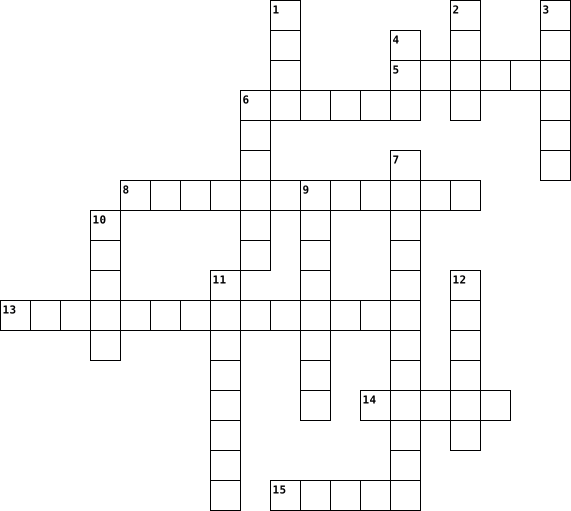
Across
- Your teachers favourite colour
- Found on our prayer space
- Two words joined together using a '
- We use groups in this Maths topic
- Found on our prayer space
- Light of the World
Down
- We are learning about this Maths topic NOW
- We do this at midday everyday
- The name of our class
- Your teachers first name
- We went here today
- Words that connect sentences
- We use this at the start of our sentences
- The colour of Easter
- We use 'sharing' in this Maths topic
- The colour of Lent
16 Clues: We went here today • The colour of Lent • Light of the World • The colour of Easter • The name of our class • Your teachers first name • Found on our prayer space • Found on our prayer space • Words that connect sentences • We do this at midday everyday • Your teachers favourite colour • We use groups in this Maths topic • Two words joined together using a ' • ...
Interim Review Crossword Puzzle 2023-11-27

Across
- Process where a government's executive is subject to review by the judiciary.
- France fought against shifting European powers.
- War between the US and indigenous allies against the UK and indigenous allies.
- New constitution written in Philadelphia during 1787.
- War between British Army and the United States Army in 1815.
- Guide person for Lewis and Clark's expedition.
- British navy enslaving men into their army during 1812
- Adopted by the Continental Congress on November 15, 1777.
- Land deal between the United States and France, bought 827,000 square miles of land west for $15 million.
- The United States anthem.
Down
- An official way to verify a treaty.
- The first ten amendments in the Constitution.
- Movement against the creation of a stronger U.S. government.
- A new method for admitting new states to the Union.
- Fort used during the Battle of Baltimore.
- A serious felony punishable by fines and prison time.
- An agreement reached during the Constitutional Convention of 1787.
- A collection of articles written by Alexander Hamilton, James Madison, and John Jay.
- Established judicial review in the United States in 1803.
- Violent uprising in the Massachusetts countryside from 1786-1787.
20 Clues: The United States anthem. • An official way to verify a treaty. • Fort used during the Battle of Baltimore. • The first ten amendments in the Constitution. • Guide person for Lewis and Clark's expedition. • France fought against shifting European powers. • A new method for admitting new states to the Union. • New constitution written in Philadelphia during 1787. • ...
Midterm Review 2026-01-21

Across
- uprising done by Nathan bacon
- mass movement of the LDS
- United States belief that they needed to expand
- lincolns speech for the dedication of the soldiers
- also known as the seven year war
- war that was against two sides of the united states
- first ten amendments
- United States fourth president
- founding document of the United states
- believed limited federal government, strong state government
- purchase of land by Thomas jefferson
- french support American colonists against british
- person with very strict moral or religious principle
Down
- opposed European colonization
- division of government branches
- the journey from West Africa to the west indies
- believed in strong central government
- confrontation between British soldiers and colonists
- being used for work unlawfully
- machine that separates cotton and its seeds
- states form unity but remain independant
- the railroad that spread from the east to the west
- people looking work in the United states
- 16th president, ended slavery
- government power restricted by law
25 Clues: first ten amendments • mass movement of the LDS • opposed European colonization • uprising done by Nathan bacon • 16th president, ended slavery • being used for work unlawfully • United States fourth president • division of government branches • also known as the seven year war • government power restricted by law • purchase of land by Thomas jefferson • ...
Hockey Players 2013-01-23

Across
- Current captain of the Jets
- Starting goalie for the Canucks.
- Starting goalie for the Jets.
- Number 40 on the Red Wings.
- Current captain of the Flames.
- Current captain of the Capitals.
Down
- Number 9 on the Jets.
- Number 93 on the Oilers
- Current captain of the Penguins.
- Number 4 on the Oilers
10 Clues: Number 9 on the Jets. • Number 4 on the Oilers • Number 93 on the Oilers • Current captain of the Jets • Number 40 on the Red Wings. • Starting goalie for the Jets. • Current captain of the Flames. • Starting goalie for the Canucks. • Current captain of the Penguins. • Current captain of the Capitals.
Hockey Players 2013-01-23

Across
- Number 40 on the Red Wings.
- Current captain of the Jets
- Number 93 on the Oilers
- Starting goalie for the Canucks.
- Current captain of the Penguins.
Down
- Number 4 on the Oilers
- Number 9 on the Jets.
- Current captain of the Capitals.
- Starting goalie for the Jets.
- Current captain of the Flames.
10 Clues: Number 9 on the Jets. • Number 4 on the Oilers • Number 93 on the Oilers • Number 40 on the Red Wings. • Current captain of the Jets • Starting goalie for the Jets. • Current captain of the Flames. • Current captain of the Capitals. • Starting goalie for the Canucks. • Current captain of the Penguins.
Feliciamo 2023-04-11

Across
- animal I resemble of
- your drink of choice
- my drink of choice
- number of capitals we have visited together
- our first date location
- you ruin everything you stupid...
Down
- musical name of two words with no space
- something I miss about Romania
- viral tiktok song animal
- something you miss from Greece
10 Clues: my drink of choice • animal I resemble of • your drink of choice • our first date location • viral tiktok song animal • something I miss about Romania • something you miss from Greece • you ruin everything you stupid... • musical name of two words with no space • number of capitals we have visited together
famous peoples in 70s 2024-02-22

Across
- Actress and Hollywood icon.
- Lead vocalist of The Rolling Stones.
- Former First Lady of the United States.
- Guitarist and rock icon.
- Lead vocalist of Queen.
- Boxer and cultural figure.
- Musician and member of The Beatles.
- King of Rock and Roll.
Down
- Director known for films like "Jaws" and "Close Encounters of the Third Kind."
- 37th President of the United States.
- 39th President of the United States.
- Singer-songwriter and musician.
- Singer and actress.
- Artist and leading figure in the pop art movement.
- Iconic Swedish pop group.
- Actress and model, known for "Charlie's Angels."
- Godfather of Soul.
- Musician and actor.
- Actor known for "Saturday Night Fever" and "Grease."
- Martial artist and actor.
20 Clues: Godfather of Soul. • Singer and actress. • Musician and actor. • King of Rock and Roll. • Lead vocalist of Queen. • Guitarist and rock icon. • Iconic Swedish pop group. • Martial artist and actor. • Boxer and cultural figure. • Actress and Hollywood icon. • Singer-songwriter and musician. • Musician and member of The Beatles. • 37th President of the United States. • ...
The Pretoria Capitals Crossword 2025-04-28

Across
- Highest wicket-taker for PC in SA20 2025
- The Capitals' home ground
- Right arm pacer who's a Pretoria local
Down
- Something that both our logo and Keagan's last name have in common
- Wicketkeeper-batter
- Which CSA T20 team did Marques, Eathan and Kyle Simmonds all play for?
- Highest run scorer for PC in SA20 2025
7 Clues: Wicketkeeper-batter • The Capitals' home ground • Highest run scorer for PC in SA20 2025 • Right arm pacer who's a Pretoria local • Highest wicket-taker for PC in SA20 2025 • Something that both our logo and Keagan's last name have in common • Which CSA T20 team did Marques, Eathan and Kyle Simmonds all play for?
Civil War Crossword 2025-12-18

Across
- Drug used for civil war medicine
- States that were next to confederate states
- Name that the southern states called themselves
- Baseball team and term for northern soldiers
- Type of warfare that involves hit and run attacks
- Type of soldier
- What southern states did before the civil war
- A very common disease at the time
- Type of new hard metal boat
- People against slavery at the time
Down
- Type of hard biscuit soldiers ate
- that ended slavery 13th Amendment
- A very large gun
- Speech Abe Lincoln gave that freed slaves in Confederate States
- War over slavery
- Original term for U.S. Money
- the way they chose who would fight in the civil war
- Bloodiest battle of the civil war
- 16th President
- Type of rifle used in the civil war
20 Clues: 16th President • Type of soldier • A very large gun • War over slavery • Type of new hard metal boat • Original term for U.S. Money • Drug used for civil war medicine • Type of hard biscuit soldiers ate • that ended slavery 13th Amendment • Bloodiest battle of the civil war • A very common disease at the time • People against slavery at the time • Type of rifle used in the civil war • ...
Chapter 2 Definition 2023-10-05

Across
- having a single legislative chamber
- a proposal for the structure of the United States Government presented during the Constitutional Convention of 1787.
- government based on consent of the people.
- a person who advocates or supports a system of government in which several states unite under a central authority.
- an American statesman, attorney, diplomat, writer, and Founding Father who served as the second president of the United States from 1797 to 1801
- an organization which consists of a number of parties
- a political structure where laws are limited
Down
- Connecticut is a U.S. state in southern New England that has a mix of coastal cities and rural areas dotted with small towns
- an English philosopher and physician, widely regarded as one of the most influential of Enlightenment thinkers and commonly known as the "father of liberalism
- the best-known description of the doctrines of English law.
- great charter
- an American statesman, patriot, diplomat, abolitionist
- Daniel Shays was an American soldier, revolutionary and farmer famous for allegedly leading Shays' Rebellion
- an American statesman, political philosopher, and a Founding Father of the United States.
- a proposal to the United States Constitutional Convention for the creation of a supreme national government
- the action of signing or giving formal consent to a treaty, contract, or agreement, making it officially valid.
- a Scottish-born American Founding Father, legal scholar, jurist, and statesman who served as an associate justice of the United States Supreme Court from 1789 to 1798
- a person sent or authorized to represent others
- a person who shapes or creates a concept, plan, or system.
- an American statesman, diplomat, and Founding Father who served as the fourth president of the United States from 1809 to 1817.
20 Clues: great charter • having a single legislative chamber • government based on consent of the people. • a political structure where laws are limited • a person sent or authorized to represent others • an organization which consists of a number of parties • an American statesman, patriot, diplomat, abolitionist • a person who shapes or creates a concept, plan, or system. • ...
CIVIL WAR CROSSWORD 2023-01-25

Across
- A long blade or knife attached to the end of a musket. Soldiers would use it like a spear in close combat.
- A nickname given to people in the South supporting the Confederate States.
- Large caliber firearms like cannons and mortars.
- When a person is murdered for political reasons.
- A term meaning "before war". It was often used to describe the United States before the Civil War.
- The northern states of the United States, also called the Union.
- A boundary or border that split the free states from the slave states. It went between Pennsylvania to the north and Virginia, Maryland, and Delaware to the south.
Down
- A long gun with a smooth bore that soldiers shot from the shoulder.
- An army of citizens used during emergencies.
- A soldier that is wounded or killed during battle.
- These states were slave states that did not leave the Union, but largely supported the cause of the Confederates. They included Missouri, Kentucky, Maryland, and Delaware.
- A decision made by the Supreme Court that said Congress could not outlaw slavery and that people of African descent were not necessarily U.S. citizens.Fugitive Slave Law A law passed by Congress in 1850 that said escaped enslaved people in free states had to be returned to their owners.
- An attempt to stop people and supplies from going in or out of a port.
- A large farm in the southern United States. Before the Civil War many of the workers on plantations were enslaved.
- A person who wanted to eliminate or "abolish" slavery.
- The rebuilding of war torn southern states so they could be readmitted into the Union after the Civil War.
16 Clues: An army of citizens used during emergencies. • Large caliber firearms like cannons and mortars. • When a person is murdered for political reasons. • A soldier that is wounded or killed during battle. • A person who wanted to eliminate or "abolish" slavery. • The northern states of the United States, also called the Union. • ...
Crossword 2: Famous Hockey Players 2024-12-17

Across
- - Pittsburgh Penguins legend.
- - Known for his powerful slapshot.
- - Called "Mr. Hockey."
- - Known as "The Dominator."
- - Legendary goaltender with multiple Stanley Cups.
- - Longtime Detroit Red Wings captain.
- - Los Angeles Kings’ Slovenian captain.
- - Known as "The Great One."
- - Current captain of the Pittsburgh Penguins.
- - Six-time Stanley Cup champion.
- - Colorado Avalanche legend.
- - Known as "Killer" during his NHL career.
- - Former goalie known as "The King."
- - Tallest player in NHL history.
- - Longtime captain of the Chicago Blackhawks.
- - Known for his scoring prowess in the 1970s.
- - Finnish Flash and NHL superstar.
Down
- - Star player for the Edmonton Oilers.
- - Washington Capitals’ goal-scoring machine.
- - Swedish star with finesse and power.
- - Detroit Red Wings defensive stalwart.
- - Leader of the 1970s Philadelphia Flyers.
- - Czech star with a long NHL career.
- - Three-time Stanley Cup champion.
- - Defenseman with the most career points.
- - Record-setting New Jersey Devils goalie.
- - Montreal Canadiens winger with speed and skill.
- - Montreal Canadiens captain and legend.
- - Revolutionary defenseman for the Boston Bruins.
- - The "Russian Rocket."
30 Clues: - Called "Mr. Hockey." • - The "Russian Rocket." • - Known as "The Dominator." • - Known as "The Great One." • - Colorado Avalanche legend. • - Pittsburgh Penguins legend. • - Six-time Stanley Cup champion. • - Tallest player in NHL history. • - Known for his powerful slapshot. • - Three-time Stanley Cup champion. • - Finnish Flash and NHL superstar. • ...
Crossword 2: Famous Hockey Players 2024-12-12

Across
- - Known as "The Dominator."
- - Finnish Flash and NHL superstar.
- - Known as "The Great One."
- - Three-time Stanley Cup champion.
- - Colorado Avalanche legend.
- - Legendary goaltender with multiple Stanley Cups.
- - Revolutionary defenseman for the Boston Bruins.
- - Former goalie known as "The King."
- - Los Angeles Kings’ Slovenian captain.
- - Known as "Killer" during his NHL career.
- - Leader of the 1970s Philadelphia Flyers.
- - Montreal Canadiens winger with speed and skill.
- - Longtime captain of the Chicago Blackhawks.
- - The "Russian Rocket."
- - Star player for the Edmonton Oilers.
- - Pittsburgh Penguins legend.
Down
- - Current captain of the Pittsburgh Penguins.
- - Longtime Detroit Red Wings captain.
- - Washington Capitals’ goal-scoring machine.
- - Detroit Red Wings defensive stalwart.
- - Known for his scoring prowess in the 1970s.
- - Swedish star with finesse and power.
- - Tallest player in NHL history.
- - Six-time Stanley Cup champion.
- - Known for his powerful slapshot.
- - Montreal Canadiens captain and legend.
- - Record-setting New Jersey Devils goalie.
- - Called "Mr. Hockey."
- - Czech star with a long NHL career.
- - Defenseman with the most career points.
30 Clues: - Called "Mr. Hockey." • - The "Russian Rocket." • - Known as "The Dominator." • - Known as "The Great One." • - Colorado Avalanche legend. • - Pittsburgh Penguins legend. • - Tallest player in NHL history. • - Six-time Stanley Cup champion. • - Finnish Flash and NHL superstar. • - Three-time Stanley Cup champion. • - Known for his powerful slapshot. • ...
PUZZL 1950S 2024-04-23

Across
- - The act of safely bringing a spacecraft to the ground.
- - The name of a series of United States satellites launched during the Space Race.
- - A series of United States space missions launched in the late 1950s.
- - A vehicle propelled by engines that expel gases at high speeds.
- - Relating to the Moon, as in "lunar landing" or "lunar orbit."
- - The United States' National Aeronautics and Space Administration, founded in 1958.
- - The site of many United States space launches during the Space Race.
- - The first artificial satellite, launched by the Soviet Union in 1957.
- - A Soviet astronaut or space traveler.
Down
- - A series of United States satellites, including the first American satellite launched in 1958.
- - A vehicle designed for travel or operation in outer space.
- - The moment when a rocket begins its ascent into space.
- - The first United States human spaceflight program.
- - The act of an astronaut moving around in space outside a spacecraft.
- - The celestial body orbited by both Soviet and American spacecraft during the Space Race.
- - The name of a family of United States rockets used during the Space Race.
- - The competition between the United States and the Soviet Union to achieve milestones in space exploration.
- - The name of a series of Soviet spacecraft sent to the Moon.
- - The second Soviet spacecraft to reach the Moon, launched in 1959.
- - The path followed by a spacecraft as it revolves around another object in space.
20 Clues: - A Soviet astronaut or space traveler. • - The first United States human spaceflight program. • - The moment when a rocket begins its ascent into space. • - The act of safely bringing a spacecraft to the ground. • - A vehicle designed for travel or operation in outer space. • - The name of a series of Soviet spacecraft sent to the Moon. • ...
Police brutality in the US 2024-11-25

Across
- A symbol of the United States, known for its red, white, and blue design.
- The legislative branch of the U.S. government, consisting of the Senate and House of Representatives.
- Abbreviation for the United States of America.
- 16th President of the United States, known for his leadership during the Civil War.
- A political entity within the United States, like California or Texas.
- A system of government where citizens elect their leaders.
- The foundational document that established the government of the United States.
- A famous American surname (e.g., actor Alec Baldwin).
- The city where a country's government is based, in the U.S., it is Washington, D.C.
Down
- Freedom and independence, symbolized by the Statue of Liberty.
- A sudden, complete change, such as the American Revolution in 1776.
- First President of the United States; also the capital city.
- National bird of the United States, a symbol of freedom.
- The power or right to act, speak, or think as one wants without hindrance.
- A person who vigorously supports their country, especially in times of war.
- The month in which the United States celebrates its Independence Day.
- A person who is among the first to explore or settle in a new country or area.
- The state of being free from control, as declared on July 4, 1776.
- The largest U.S. state by area, located in the far north.
- Shortened form of "mountain," as in Mount Rushmore, featuring U.S. presidents.
20 Clues: Abbreviation for the United States of America. • A famous American surname (e.g., actor Alec Baldwin). • National bird of the United States, a symbol of freedom. • The largest U.S. state by area, located in the far north. • A system of government where citizens elect their leaders. • First President of the United States; also the capital city. • ...
Globalization Crossword Puzzle 2022-02-14

Across
- Routes, also known as Maritime Silk Roads, is the name given to the network of sea routes that link the East with the West.
- refers to the advocacy system or theory of protecting domestic producers by impeding or limiting as by tariffs or quotas, the importation of foreign goods and services.
- Global trade creates employment and job opportunities. Thus increasing the peoples abilities to become self sufficient.
- Date when the western countries such as Spain, Portugal, England and Holland were into brisk trade
- Date when The catholic missionaries from Europe also spread Catholicism in Latin America
- the free and comprehensive interaction of countries in the world in the areas of politics, economics, society, technology and culture.
- the unlawful use of violence and intimidation, especially against civilians, in the pursuit of political aims.
- brought porcelain, silk, ivory, spices, and myriad other exotic goods from China to Mexico in exchange for New World silver.
- Two countries trading products, services and capitals between them eventually form cooperation of a political nature.
- Changes that affect individuals' surroundings (architecture, arts, customs, rituals etc.) owing to influxes of tourists constitute cultural impacts.
- The date where Alexander the Great brought culture of Ancient Greek to Southwest Asia, North Africa and Southern Europe.
- It is the religion that was brought by european
Down
- Monetary Fund (IMF) – an organization working to faster global monetary cooperation, secure financial stability, facilitate international trade, promote high employment and sustainable economic growth and reduce poverty around the world.
- During the 15th and 16th centuries, the western countries such as Spain, Portugal, England and Holland were into what?
- His invasions were among reasons behind hastening of globalization
- it happened in a number of places in the world during the last of 18th century up to the early part of the 19th century.
- is the combination of the western and eastern culture was formed because of this.
- the introduction of machines or automatic devices into a process, activity, or place.
- The culture that alexander the great brought to to Southwest Asia, North Africa and Southern Europe
- Date of the Galleon Trade
- Date when The catholic missionaries from Europe also spread Catholicism in the Philippines
- the perception of ethnic and cultural inferiority and a form of internalized racial oppression.
- Bank (WB) – it was founded after world war in 1944
- the trade route between China andother countries during the 207 - 220 B.C.E.
- It is said that benefits can be gained in trading products, services and capitals with the other countries because the number of products one can choose from the market increases significantly.
- Wiseman, Who wrote the “ Australia and the Politics of Globalization.”
26 Clues: Date of the Galleon Trade • It is the religion that was brought by european • Bank (WB) – it was founded after world war in 1944 • His invasions were among reasons behind hastening of globalization • Wiseman, Who wrote the “ Australia and the Politics of Globalization.” • the trade route between China andother countries during the 207 - 220 B.C.E. • ...
Articles of Confederation - A New Nation 2024-02-27

Across
- The branch that interprets laws
- The Articles did not let Congress recruit this, only the states
- The branch that carries out laws
- One of two things people were afraid states might lose
- The chamber of Congress where each state gets two votes
- In the House of Representatives, the number of votes a state gets depends on its:
- Under the Virginia Plan, these states would have more power
- One problem was that states charged these on goods from other states
- A group of individuals united for a purpose
- States must treat their own citizens and other states’ citizens this way
- Fraction of states that must agree to change the Constitution
- One of two things people were afraid states might lose
Down
- The only state that did not attend the Constitutional Convention
- The branch that makes laws
- The Constitution says laws passed by Congress are __________________ to state laws.
- States send these to Congress
- The Articles of Confederation was the first plan for a U.S.:
- Under the New Jersey plan, these states would have more power
- These were the “individuals” in the “confederation” created by the Articles
- Under the A of C, Congress could not do this to its laws, so states could just ignore laws
- The Articles of Confederation created a government that had only one of these
- The document that replaced the Articles of Confederation
- Under the Articles, the U.S. did not have one of these
23 Clues: The branch that makes laws • States send these to Congress • The branch that interprets laws • The branch that carries out laws • A group of individuals united for a purpose • One of two things people were afraid states might lose • Under the Articles, the U.S. did not have one of these • One of two things people were afraid states might lose • ...
Articles of Confederation 2020-09-29

Across
- states must treat their own citizens and other states’ citizens this way
- the Articles did not let Congress create this
- the branch that makes laws
- the Articles of Confederation created a government that had only one of these
- the Articles of Confederation was America’s first plan for _____.
- in the House of Representatives, the number of votes a state gets depends on this
- the Constitution says laws passed by Congress are ___ to state laws.
- states send these to Congress
- one of two things people were afraid states might lose
- under the Articles, America did not have one of these
Down
- under the New Jersey plan, these states would have more power
- the branch that interprets laws
- one problem was that states charged these on goods from other states
- under the Virginia Plan, these states would have more power
- the chamber of Congress where each state gets two votes
- fraction of states that must agree to change the Constitution
- These were the “individuals” in the “confederation” created by the Articles
- the document that replaced the Articles of Confederation
- a group of individuals united together for a purpose
- early Americans had something in common with this fictional character!
- one of two things people were afraid states might lose
- the branch that carries out laws
- under the Articles of Confederation, congress could not do this to its laws, so states could just ignore laws
23 Clues: the branch that makes laws • states send these to Congress • the branch that interprets laws • the branch that carries out laws • the Articles did not let Congress create this • a group of individuals united together for a purpose • under the Articles, America did not have one of these • one of two things people were afraid states might lose • ...
Wanted: A Just Right Government 2022-11-11

Across
- states must treat their own citizens and other states' citizens this way
- the Articles did not let Congress create this
- the branch that makes the laws
- the Articles of Confederation created a government that had only one of these
- the Articles of Confederation was America's first plan for ____
- in the House of Representatives, the number of votes a state gets depends on this
- the Constitution says laws passed by Congress are ____ to state laws
- states send these to Congress
- one of two things people were afraid states might lose
- under the Articles of Confederation, America did not have one of these
Down
- under the New Jersey plan, these states would have more power
- the branch that interprets laws
- one problem was that states charged these on goods from other states
- under the Virginia Plan, these states would have more power
- the chamber of Congress where each state gets two votes
- fraction of states that must agree to change the Constitution
- these were the "individuals" in the "confederation" created by the Articles
- the document that replaced the Articles of Confederation
- a group of individuals united together for a purpose
- early Americans had something in common with this fictional character
- one of two things people were afraid states might lose
- the branch that carries out the laws
- under the Articles of Confederation, Congress could not do this to its laws, so states could just ignore laws
23 Clues: states send these to Congress • the branch that makes the laws • the branch that interprets laws • the branch that carries out the laws • the Articles did not let Congress create this • a group of individuals united together for a purpose • one of two things people were afraid states might lose • one of two things people were afraid states might lose • ...
Civil War Crossword 2022-05-23

Across
- The right of citizens of the United States to vote shall not be denied or abridged by the United States or by any State on account of race, color, or previous condition of servitude.
- an informal, unwritten deal that settled the disputed 1876 U.S. Presidential election
- the process by which a legislative body or other legally constituted tribunal initiates charges against a public official for misconduct.
- restricted black people's right to own property, conduct business, buy and lease land, and move freely through public spaces.
- a member of the United States House of Representatives from Pennsylvania. He was one of the leaders of the Radical Republican faction of the Republican Party during the 1860s.
- A case in which the Court held that the creation of a Louisiana slaughterhouse monopoly did not violate the Thirteenth and Fourteenth Amendments.
- a United States federal law in force from 1867 to 1887 that was intended to restrict the power of the president to remove certain office-holders without the approval of the Senate.
- a largely historical term used by Southerners to describe opportunistic Northerners who came to the Southern states after the American Civil War
- an American politician who served as the 25th Governor of New York and was the Democratic candidate for president in the disputed 1876 United States presidential election.
- an American politician, minister in the African Methodist Episcopal Church, and a college administrator.
- granted citizenship and equal civil and legal rights to African Americans and enslaved people who had been emancipated after the American Civil War.
- a legal arrangement with regard to agricultural land in which a landowner allows a tenant to use the land in return for a share of the crops produced on that land.
- the 17th president of the United States, serving from 1865 to 1869.
Down
- abolished slavery and involuntary servitude, except as punishment for a crime.
- an American lawyer and politician who served as the 19th president of the United States from 1877 to 1881, after serving in the U.S. House of Representatives and as governor of Ohio.
- tate and local laws enforcing racial segregation in the Southern United States.
- a faction of American politicians within the Republican Party from the founding of the Republican Party in 1854 until the end of Reconstruction in the Compromise of 1877.
- Bill required that 50% of all voters in the Confederate states, as opposed to Lincoln's proposed 10%, must pledge allegiance to the Union before reunification
- a war that is unrestricted in terms of the weapons used, the territory or combatants involved, or the objectives pursued, especially one in which the laws of war are disregarded.
- a person who resides on land owned by a landlord.
- an American white supremacist terrorist hate group founded in 1865
- white Southerners who supported Reconstruction policies and efforts after the conclusion of the American Civil War
- the period after the American Civil War from 1865 to 1877, during which the United States grappled with the challenges of reintegrating into the Union the states that had seceded and determining the legal status of African Americans.
- to provide food, shelter, clothing, medical services, and land to displaced Southerners, including newly freed African Americans.
- a financial crisis that triggered an economic depression in Europe and North America that lasted from 1873 to 1877 or 1879 in France and in Britain.
25 Clues: a person who resides on land owned by a landlord. • an American white supremacist terrorist hate group founded in 1865 • the 17th president of the United States, serving from 1865 to 1869. • abolished slavery and involuntary servitude, except as punishment for a crime. • tate and local laws enforcing racial segregation in the Southern United States. • ...
Los Paises Hispanohablantes 2026-04-01

Across
- Capital: Buenos Aires — Famous for tango dancing
- Capital: Tegucigalpa — Mountainous Central American country
- Capital: Caracas — Has large oil reserves
- Capital: San José — No standing army
- Capital: Malabo — Only Spanish-speaking country in Africa
- Capital: Guatemala City — Known for ancient Mayan ruins
- Capital: Bogotá — Known for coffee production
- Capital: Santiago — Long and narrow country along the Andes
- Capital: Havana — Known for classic cars
Down
- Capital: Madrid — Located in Europe
- Capital: Managua — Has many volcanoes
- Capital: Santo Domingo — Shares an island with Haiti
- Capital: Quito — Located on the equator
- Capital: San Salvador — Smallest country in Central America
- Capital: Mexico City — Largest Spanish-speaking country
- Capital: Asunción — Landlocked South American country
- Capital: Lima — Known for Machu Picchu
- Capital: Montevideo — Small country between Brazil & Argentina
- Capital: Panama City — Home to a famous canal
- Capital: La Paz — Has one of the highest capitals in the world
20 Clues: Capital: Madrid — Located in Europe • Capital: San José — No standing army • Capital: Managua — Has many volcanoes • Capital: Lima — Known for Machu Picchu • Capital: Quito — Located on the equator • Capital: Havana — Known for classic cars • Capital: Caracas — Has large oil reserves • Capital: Panama City — Home to a famous canal • ...
Geography and History 2025-07-13

Across
- Which country borders Spain?
- This country is famous for men in dresses
- This country is where most domestic workers come from
- What is the smallest island country?
- Which country is famous for the Northern Lights?
- This is the only double landlocked country in Europe
- This country is famous for its cookies in a tin
- This is the largest island
- This country is famous for the Eiffel Tower
- Chichen Itza is located in this country
Down
- What is the birthplace of an infamous German dictator?
- This country is often forgotten on world maps
- Which state is the Golden Gate Bridge located?
- Which country is in war with Russia?
- Africa Which country has 3 capitals?
- Which transcontinental country borders Greece?
- Which country does Justin Bieber come from?
- It is a small island near Greenland
- What is the captial of Bosnia and Herzegovina?
- What is the capital of Switzerland?
20 Clues: This is the largest island • Which country borders Spain? • It is a small island near Greenland • What is the capital of Switzerland? • What is the smallest island country? • Which country is in war with Russia? • Africa Which country has 3 capitals? • Chichen Itza is located in this country • This country is famous for men in dresses • ...