
states and capitals Crossword Puzzles
Famous Politicians 2023-06-09

Across
- - 42nd President of the United States, remembered for his economic prosperity, welfare reform, and controversial impeachment proceedings.
- - Collective name for two influential American presidents: Franklin D. Roosevelt (32nd President), known for his New Deal policies, and Theodore Roosevelt (26th President), known for his progressivism and conservation efforts.
- - French President, serving as the 25th President of France, known for his centrist policies, economic reforms, and efforts towards European integration.
- - Indian Prime Minister, currently serving as the 14th Prime Minister of India, known for his economic reforms, nationalist agenda, and digital initiatives.
- - 37th President of the United States, who resigned from office amid the Watergate scandal, leaving a lasting impact on American politics.
- - Russian President, currently serving as the President of Russia, known for his strong leadership, assertive foreign policy, and consolidation of power.
- - 16th President of the United States, who led the country through the American Civil War and played a pivotal role in abolishing slavery.
- - 33rd President of the United States, who made the decision to drop atomic bombs on Hiroshima and Nagasaki, effectively ending World War II.
- - British Prime Minister, also known as the "Iron Lady," who implemented conservative policies and played a pivotal role in shaping modern British politics.
- - 40th President of the United States, known for his conservative policies, economic reforms, and role in ending the Cold War.
Down
- - American politician and former U.S. Secretary of State, known for her presidential campaign in 2016 and her long career in public service.
- - 16th President of the United States, known for leading the country during the American Civil War and issuing the Emancipation Proclamation.
- - Long-serving German Chancellor, known for her pragmatic leadership, handling of the European debt crisis, and refugee policy.
- - British statesman and Prime Minister during World War II, renowned for his leadership, powerful speeches, and unwavering resolve.
- - Indian independence leader and political figure, known for his nonviolent resistance against British colonial rule and advocacy for civil rights.
- - 44th President of the United States, the first African American to hold the office and known for his healthcare reform, economic policies, and efforts towards diplomacy.
- - 35th President of the United States, who inspired a generation with his charisma, leadership, and commitment to civil rights.
- - 46th President of the United States, known for his long political career, experience as Vice President under Obama, and focus on domestic and foreign policy challenges.
- - American businessman and politician, who served as the 45th President of the United States, known for his unconventional style, populist rhetoric, and controversial policies.
- - Canadian Prime Minister, currently serving as the 23rd Prime Minister of Canada, known for his progressive policies and charismatic leadership.
20 Clues: - 40th President of the United States, known for his conservative policies, economic reforms, and role in ending the Cold War. • - Long-serving German Chancellor, known for her pragmatic leadership, handling of the European debt crisis, and refugee policy. • ...
The End of the War 2023-07-06

Across
- The United States soldiers were untrained and lacked ______
- The battles of ______ and Concord marked the start of the war
- Great Britain was ______ with the territory
- The United States had strong ______ from officers
- Great Britain had _____ leadership and officers
- Great Britain had a powerful _____ government
- Great Britain had a strong and ______ army
- The United States fought for an unorganized ______
Down
- The army for the United States was called the ______ army
- Being familiar with the surrounding area is a strength for which country
- Having motivationally charged soldiers was a ______ for the United States
- The acting commander-in-chief during the Revolutionary War
- Great Britain had support from _____
- The United States lacked proper ______
- The soldiers for Great Britain were ______ from home
15 Clues: Great Britain had support from _____ • The United States lacked proper ______ • Great Britain had a strong and ______ army • Great Britain was ______ with the territory • Great Britain had a powerful _____ government • Great Britain had _____ leadership and officers • The United States had strong ______ from officers • The United States fought for an unorganized ______ • ...
civil war crossword 2013-05-23

Across
- Term for a Northerner who opposed the war effort.
- Party/ The major political party in America most sympathetic to states rights and willing to tolerate the spread of slavery to the territories. Democrats opposed a strong Federal government. Most Southern men were Democrats before the War.
- Loyal to the government of the United States. Also known as Union, Yankee, or Northern.
- The effort by the North to keep ships from entering or leaving Southern ports
- Freedom from slavery
- A metal blade, like a long knife or short sword, that could be attached to the end of a musket or rifle-musket and used as a spear or pike in hand-to-hand combat.
- Long, cylindrical metal rod used to push the cartridge down the barrel of a musket in preparation for firing.
- Also called the South or the Confederate States of America, the Confederacy incorporated the states that seceded from the United States of America to form their own nation. Confederate states were: Alabama, Arkansas, Florida, Georgia, Louisiana, Mississippi, North Carolina, South Carolina, Tennessee, Texas, and Virginia.
- To formally approve or sanction.
- Loyal to the Confederate States. Also Southern or Confederate.
- Actively attacking someone
- A soldier who was wounded, killed, or missing in action.
- To practice marching, military formations and the steps in firing and handling one's weapon
- A branch of the military using ships to conduct warfare. During the Civil War, “blue water” ships cruised the oceans and “brown water” boats floated up and down the rivers
- Monkey/ A sailor (sometimes a child) who carried explosives from the ship's magazine to the ship's guns
- A place where weapons and other military supplies are stored.
Down
- Troops, like the National Guard, who are only called out to defend the land in an emergency.
- The cruel killing of a number of helpless or unresisting people.
- Crop/ A crop such as tobacco or cotton which was grown to be sold for cash --not grown for food like corn or wheat
- A ship protected by iron armor.
- Gunboats using stacked cotton bales to protect themselves from enemy fire.
- Also called the Union or the United States the North was the part of the country that remained loyal to the Federal government during the Civil War. Northern states were: Connecticut, Delaware, Illinois, Indiana, Iowa, Kansas, Maine, Massachusetts, Michigan, Minnesota, New Hampshire, New Jersey, New York, Ohio, Pennsylvania, Rhode Island, Vermont, and Wisconsin. West Virginia became a Northern state in 1863 and California and Oregon were also officially Northern but they had little direct involvement in the War.
- Someone who wishes to abolish or get rid of slavery.
- Also called the North or the United States, the Union was the portion of the country that remained loyal to the Federal government during the Civil War
- The science of growing crops or raising livestock; farming
- The long metal tube on a gun through which a projectile is fired
- Resisting or protecting against attack from someone
- Yell/ A high-pitched cry that Confederate soldiers would shout when attacking. First heard at First Manassas (First Bull Run) Union troops found the eerie noise unnerving.
- Loyal to the Confederacy. Also Southern or Rebel.
- To lie in wait for an unexpected attack
- States/ The states of Maryland, Delaware, Kentucky, and Missouri. Although these states did not officially join the Confederacy, many of their citizens supported the South.
- To rush towards the enemy.
32 Clues: Freedom from slavery • To rush towards the enemy. • Actively attacking someone • A ship protected by iron armor. • To formally approve or sanction. • To lie in wait for an unexpected attack • Term for a Northerner who opposed the war effort. • Loyal to the Confederacy. Also Southern or Rebel. • Resisting or protecting against attack from someone • ...
INDIAN RIVERS 2016-06-29

Across
- This river is a trans-boundary river of Asia which flows through the nations of India and Bangladesh.
- is a trans-boundary river and one of the major rivers of Asia.
- the second longest river in India after the river Ganges having its source at Tryambakeshwar, Maharashtra.
- Its main tributaries are the Mandakini, Nandakini, and Pindar rivers.
- This is the longest of the five rivers that flow through the historic crossroads region of Punjab in northern India and Pakistan.
- Originating from the Yamunotri Glacier this river is the longest and the second largest tributary river of the Ganges in northern India.
- Ahmedabad and Gandhinagar, the commercial and political capitals of Gujarat respectively, were established on the banks of this river.
- This river flows for some 470 kilometres to the Sutlej River in the Indian state of Punjab.
- this river is a tributary of the Yamuna River in central India, and thus forms part of the greater Gangetic drainage system.
- It is one of only three rivers in peninsular India that run from east to west - the others being the Narmada River and the Mahi River.
Down
- also called the Sindhū River, or Abāsīn, is a major south-flowing river in South Asia.
- also called the Rewa, is a river in central India and the fifth longest river in the Indian subcontinent.
- the river flows through the states of Chhattisgarh and Odisha.it is also called 'The Great River'.
- This river is an approximately 260-kilometre-long distributary of the Ganga river in West Bengal, India.
- It was observed that major Indus Valley Civilization sites at Kalibangan , Banawali and Rakhigarhi , Dholavira and Lothal lay along this river.
- This is a major river in West Bengal, India, with a long history of devastating floods.
- It carves out verdant Himalayan temperate and tropical river valleys and forms the border between Sikkim and West Bengal.
- In Hindu mythology and culture, this river is considered the source stream of the Ganges.
- This river is a stream of the river Godavari. Its starting point is found to be the Ghats of Dandakaranya range.
- The origin of the river is at Talakaveri, Kodagu in Karnataka, flows generally south and east through Karnataka and Tamil Nadu.
20 Clues: is a trans-boundary river and one of the major rivers of Asia. • Its main tributaries are the Mandakini, Nandakini, and Pindar rivers. • also called the Sindhū River, or Abāsīn, is a major south-flowing river in South Asia. • This is a major river in West Bengal, India, with a long history of devastating floods. • ...
INDIAN RIVERS 2016-06-29

Across
- This river flows for some 470 kilometres to the Sutlej River in the Indian state of Punjab.
- the second longest river in India after the river Ganges having its source at Tryambakeshwar, Maharashtra.
- this river is a tributary of the Yamuna River in central India, and thus forms part of the greater Gangetic drainage system.
- It was observed that major Indus Valley Civilization sites at Kalibangan , Banawali and Rakhigarhi , Dholavira and Lothal lay along this river.
- This river is a trans-boundary river of Asia which flows through the nations of India and Bangladesh.
- This is the longest of the five rivers that flow through the historic crossroads region of Punjab in northern India and Pakistan.
- is a trans-boundary river and one of the major rivers of Asia.
- This river is a stream of the river Godavari. Its starting point is found to be the Ghats of Dandakaranya range.
- It is one of only three rivers in peninsular India that run from east to west - the others being the Narmada River and the Mahi River.
- In Hindu mythology and culture, this river is considered the source stream of the Ganges.
- Originating from the Yamunotri Glacier this river is the longest and the second largest tributary river of the Ganges in northern India.
Down
- The origin of the river is at Talakaveri, Kodagu in Karnataka, flows generally south and east through Karnataka and Tamil Nadu.
- the river flows through the states of Chhattisgarh and Odisha.it is also called 'The Great River'.
- This river is an approximately 260-kilometre-long distributary of the Ganga river in West Bengal, India.
- Its main tributaries are the Mandakini, Nandakini, and Pindar rivers.
- It carves out verdant Himalayan temperate and tropical river valleys and forms the border between Sikkim and West Bengal.
- This is a major river in West Bengal, India, with a long history of devastating floods.
- Ahmedabad and Gandhinagar, the commercial and political capitals of Gujarat respectively, were established on the banks of this river.
- also called the Sindhū River, or Abāsīn, is a major south-flowing river in South Asia.
- also called the Rewa, is a river in central India and the fifth longest river in the Indian subcontinent.
20 Clues: is a trans-boundary river and one of the major rivers of Asia. • Its main tributaries are the Mandakini, Nandakini, and Pindar rivers. • also called the Sindhū River, or Abāsīn, is a major south-flowing river in South Asia. • This is a major river in West Bengal, India, with a long history of devastating floods. • ...
INDIAN RIVERS 2016-06-29

Across
- This river flows for some 470 kilometres to the Sutlej River in the Indian state of Punjab.
- It carves out verdant Himalayan temperate and tropical river valleys and forms the border between Sikkim and West Bengal.
- In Hindu mythology and culture, this river is considered the source stream of the Ganges.
- This is a major river in West Bengal, India, with a long history of devastating floods.
- This river is an approximately 260-kilometre-long distributary of the Ganga river in West Bengal, India.
- This river is a stream of the river Godavari. Its starting point is found to be the Ghats of Dandakaranya range.
- Ahmedabad and Gandhinagar, the commercial and political capitals of Gujarat respectively, were established on the banks of this river.
- also called the Rewa, is a river in central India and the fifth longest river in the Indian subcontinent.
- the second longest river in India after the river Ganges having its source at Tryambakeshwar, Maharashtra.
- It is one of only three rivers in peninsular India that run from east to west - the others being the Narmada River and the Mahi River.
Down
- The origin of the river is at Talakaveri, Kodagu in Karnataka, flows generally south and east through Karnataka and Tamil Nadu.
- This is the longest of the five rivers that flow through the historic crossroads region of Punjab in northern India and Pakistan.
- is a trans-boundary river and one of the major rivers of Asia.
- Its main tributaries are the Mandakini, Nandakini, and Pindar rivers.
- also called the Sindhū River, or Abāsīn, is a major south-flowing river in South Asia.
- It was observed that major Indus Valley Civilization sites at Kalibangan , Banawali and Rakhigarhi , Dholavira and Lothal lay along this river.
- this river is a tributary of the Yamuna River in central India, and thus forms part of the greater Gangetic drainage system.
- the river flows through the states of Chhattisgarh and Odisha.it is also called 'The Great River'.
- This river is a trans-boundary river of Asia which flows through the nations of India and Bangladesh.
- Originating from the Yamunotri Glacier this river is the longest and the second largest tributary river of the Ganges in northern India.
20 Clues: is a trans-boundary river and one of the major rivers of Asia. • Its main tributaries are the Mandakini, Nandakini, and Pindar rivers. • also called the Sindhū River, or Abāsīn, is a major south-flowing river in South Asia. • This is a major river in West Bengal, India, with a long history of devastating floods. • ...
Cold War Crossword 2014-03-04

Across
- United States' political system
- United States' economic system
- Commander of UN forces in Korean War and oversaw Japanese occupation
- international peace organization created in Yalta Conference
- Plan that gave $13 billion in loans to Western European countries
- symbolic line between communist and democratic countries in Europe
- Money to veterans for scholarships, farms, houses, and businesses
- Alliance between Soviet Union and satellites
- The dividing line between North and South Korea is the 38th _________
- Doctrine that gave aid to Greece and Turkey to resist communism
- 1945 conference that divided Germany into four zones
- _________ Korea invaded South Korea in 1950
Down
- ideological war between Soviet Union and United States
- Event in which U.S. airlifted supplies after the Berlin Blockade
- Congressional act against labor unions
- Temporary loans to support war effort
- Truman gave labor unions higher minimum wage and expanded Social Security benefits
- Political system of North Korea
- Senator who led investigations on federal employees
- Alliance between United States, Iceland, Canada, and Western Europe
20 Clues: United States' economic system • United States' political system • Political system of North Korea • Temporary loans to support war effort • Congressional act against labor unions • _________ Korea invaded South Korea in 1950 • Alliance between Soviet Union and satellites • Senator who led investigations on federal employees • ...
Global Politics 2021-10-05

Across
- Official orders or laws stopping trade or communication with another state, as a way of forcing its leaders to make political changes.
- The capacity to convert potential power into realized power (2 words, no gap)
- The ability to achieve one's purposes or goals.
- any doctorine or agenda that supports one-sided action
- A type of power when states use relationships to influence other states.
- Type of realism which is based on the idea that states are led by individuals with an innate need to dominate.
- Type of power that means achieving aims through force.
- Type of power that is a combination of hard and soft power.
- Type of power that is used by states to influence political ideas and structures of other states.
Down
- a relationship or cooperation between states that are commited to using their armed forces in supporting military objectives (2 words,no gap)
- the procces that provides to follow international norms and pay more respect to international insitutions
- A theoretical perspective in which power is seen as the currency of global politics.
- Type of realism that is based on the idea that states pursue power because of the nature of the international system.
- Type of power that refers to the internet empowering new groups at both state and individual level.
- A model of international relations which includes one state that is more powerful than all the others.
- A model of international relations which includes many powerful states that compete with each other.
- Level of analysis that refers to geographic area in which social organisation is created.
- A model of international relations which includes two states that are equally powerful. The main competition is between these two states.
- Level of analysis that is narrower than global but nonetheless refers to events that impact several states.
- Type of power that means achieving aims through cultural ties and influence.
20 Clues: The ability to achieve one's purposes or goals. • any doctorine or agenda that supports one-sided action • Type of power that means achieving aims through force. • Type of power that is a combination of hard and soft power. • A type of power when states use relationships to influence other states. • ...
10 2021-11-12

Across
- where Abraham Lincoln defeated three opponents to win the presidency; upon
- the U.S. Civil War and brought about the emancipation of slaves.
- – 1865) - The 16th president of the United States, Lincoln preserved the Union
- election Southern states seceded from the Union. -
- in exchange for the passage of the Fugitive Slave Act.
- eleven southern states from the Union in 1860, leading to the Civil War.
- of 1850.
- position supported by several prominent Georgia politicians who supported the
- machine invented by Eli Whitney in 1793 that quickly removed seeds from the cotton
- - important Georgia politician who was a U.S. Senator, Georgia
- - Supreme Court ruling that declared slaves were not citizens of the United States.
- in the United States.
Down
- (1850) - act that required runaway slaves to be returned to their masters if caught
- (1820) - compromise that brought Missouri into the Union as a slave state and
- as a free state; in addition, Congress banned slavery north of the 36˚20’ line of latitude.
- act of making legally null and void.
- compromise between the North and South that allowed California to enter the
- and Vice-President of the Confederate States of America (C.S.A.).
- the act of separating from a nation or state and becoming independent; the withdrawal
19 Clues: of 1850. • in the United States. • act of making legally null and void. • in exchange for the passage of the Fugitive Slave Act. • election Southern states seceded from the Union. - • - important Georgia politician who was a U.S. Senator, Georgia • the U.S. Civil War and brought about the emancipation of slaves. • ...
Constitution Unit Crossword 2021-01-08

Across
- government can’t take property without pay
- amendment one, freedom of
- a jury, normally of twenty-three jurors, selected to examine the validity of an accusation before trial.
- sets the number of state ratifications necessary in order for the Constitution to take effect and prescribes the method through which the states may ratify it.
- amendment two, the right to
- A group of people selected from each of the states to cast votes in presidential electionsfederalism U.s. system of government in which power is distributed betweena central government and individual states.
- stating that all laws made furthering the Constitution and all treaties made under the authority of the United States are the
- enforce laws
- printed lies
- Checks and B_____es a system established by the constitution that prevents any branch of government from becoming too powerful.
Down
- provides framework for government in united states states
- official changes, corrections, or addition to law or constitution
- laws apply to all
- Congress can only make laws that the constitution gives them direct authority over
- makes laws
- bill of ___ the first 10 amendments to the constitution
- first ten amendments
- A set of basic principles that determines the powers and duties of a government.
- the belief in and worship of a superhuman controlling power, especially a personal God or gods
- the action or crime of making a false spoken statement damaging to a person's reputation
20 Clues: makes laws • enforce laws • printed lies • laws apply to all • first ten amendments • amendment one, freedom of • amendment two, the right to • government can’t take property without pay • bill of ___ the first 10 amendments to the constitution • provides framework for government in united states states • official changes, corrections, or addition to law or constitution • ...
A More Perfect Union 2014-11-11

Across
- plan the plan that called for the legislative branch of the central government to be made up of two houses with the representation for states based on their population.
- ordinance set up the three-step process of admitting new states
- Madison often called the "Father of the Constitution"
- Convention The meeting of delegates in which the Articles of Confederation were scrapped in favor of a new United States Constitution
- the division of government between the central government and the constituent units as in the national government and the states
- a period when business activity slows prices and wages drop, and unemployment rises
- Sherman framer of the Constitution from Connecticut who believed common people could not be an integral part of the government decision making
- branch the branch of government that makes laws
- branch the branch of government that enforces the laws
- three-fifths compromise decided how slaves would be counted for states' populations
- person who officially represents their state
- to approve something formally
Down
- a document stating the rules under which a government will operate
- against the Constitution and favored states having more power than the central government
- of confederation The United States' first written plan for government
- Morris framer of the constitution from Pennsylvania who believed common people were the cornerstone of the democratic process
- and balances the idea that each branch of government has specific ways to limit the power of the other branches.
- branch: the branch of government that is a system of courts set up to interpret the laws
- supported the Constitution and favored a strong central, or national, government
- Washington President of the Constitutional Convention
- a change or addition to a document
- Jersey plan the plan that called for a one house legislative branch with each state being equally represented
- rebellion The Massachusetts farmers' uprising that made it clear to many that the central government was too weak to protect states from popular unrest
23 Clues: to approve something formally • a change or addition to a document • person who officially represents their state • branch the branch of government that makes laws • Madison often called the "Father of the Constitution" • Washington President of the Constitutional Convention • branch the branch of government that enforces the laws • ...
Our Puzzling Government #2 - Madeline Spears 2021-12-03

Across
- Laws relating to disputes between individuals, groups, or within the states
- Requirement set by the congress that prohibits a local or state government from exercising a certain power
- State must not discriminate against against citizens of another state
- The beginning procedure for admission
- Power to assume responsibility for a state government function
- Powers directly expressed or stated in the constitution by the founders
- Nearly all activities concerned with the production, buying, selling, and the transportation of goods
- Powers based on the necessary and proper clause, also known as the elastic clause
- Ratified in 1913
- Written agreements between two or more states
- Forbid racial discrimination in public accomidations
- Imposing mandates that take away
- Powers the constitution grants or delegates to the national government
- The certain powers congress gives to the states
Down
- Under this person the court often supported states’ rights against powers of the national government
- Powers the national government express simply because they can
- Each state must recognize the laws and legal proceedings of every other state
- Levied individual earnings
- Federal order requiring states to provide a service or undertake an activity in a manner that meets minimum national standards set by congress
- Main way national government provides money to the states
- Favors national action when dealing with federalism
- Court ruling between the national and state governments, the national government won, in 1819
- Return to the state
- Both the national government and the states have
- Favors state and local action when dealing with federalism
25 Clues: Ratified in 1913 • Return to the state • Levied individual earnings • Imposing mandates that take away • The beginning procedure for admission • Written agreements between two or more states • The certain powers congress gives to the states • Both the national government and the states have • Favors national action when dealing with federalism • ...
THE UNITED STATES CONSTITUTION 2024-12-08

Across
- a law in 1787 that established a procedure for the admission of new states to the Union
- supporters of the Constitution and of a strong national government
- the branch of government that administers and enforces the laws
- a document, adopted by the Second Continental Congress in 1777 and finally approved by the states in 1781, that outlined the form of government of the new United States
- a government in which the citizens rule through elected representatives
- a group selected by the states to elect the president and the vice-president, in which each state's number of electors is equal to the number of its senators and representatives in Congress
- an opponent of a strong central government
- the branch of government that interprets the laws and the Constitution
- a key figure in the Great Compromise, which established the structure of the United States Congress, the plan ultimately resolved a deadlock between large and small states over how legislative voting should work
- a political system in which a national government and constituent units, such as state governments, share power
- the first ten amendments to the U.S. Constitution, added in 1791 and consisting of a formal list of citizens' rights and freedoms
- the Constitutional Convention's agreement to establish a two-house national legislature, with all states having equal representation in one house and each state having representation based on its population in the other house
Down
- the branch of government that makes laws
- an alliance permitting states or nations to act together on matters of mutual concern
- a series of essays defending and explaining the Constitution, written by Alexander Hamilton, James Madison, and John Jay
- the provisions in the U.S. Constitution that prevent any branch of the U.S. government from dominating the other two branches
- believed the Articles of Confederation had several weaknesses, including a weak central government, an inability to conduct foreign policy, and a lack of structure to serve the new democracy
- the belief that government should be based on the consent of the people
- an uprising of debt-ridden Massachusetts farmers protesting increased state taxes in 1787
- the official approval of the Constitution, or of an amendment, by the states
- the Constitutional Convention's agreement to count three-fifths of a state's slaves as population for purposes of representation and taxation
- a law in 1785 that established a plan for surveying and selling the federally owned lands west of the Appalachian Mountains
22 Clues: the branch of government that makes laws • an opponent of a strong central government • the branch of government that administers and enforces the laws • supporters of the Constitution and of a strong national government • the branch of government that interprets the laws and the Constitution • ...
Geography - Africa 2021-11-02

Across
- this is located on the horn of Africa and borders Ethiopia
- the "Arab Spring" started in this country
- The country with the largest population in West Africa
- the capital of this country is Accra
Down
- The capital of this country is Narobi
- The newest country in Africa
- this country is home to the namib desert
- This African nation has three capitals
- this country suffered a genocide in the 1990's
- Most of the Nile is found in this country
10 Clues: The newest country in Africa • the capital of this country is Accra • The capital of this country is Narobi • This African nation has three capitals • this country is home to the namib desert • the "Arab Spring" started in this country • Most of the Nile is found in this country • this country suffered a genocide in the 1990's • ...
WORLD CAPITALS 2022-03-29

Across
- ΚΑΜΠΟΤΖΗ
- ΚΑΖΑΚΣΤΑΝ
- ΑΥΓΑΝΙΣΤΑΝ
- ΣΕΡΒΙΑ
- ΜΟΛΔΑΒΙΑ
- ΣΟΥΔΑΝ
- ΑΛΒΑΝΙΑ
Down
- ΜΑΥΡΟΒΟΥΝΙΟ
- ΟΥΚΡΑΝΙΑ
- ΤΑΙΛΑΝΔΗ
- ΒΟΣΝΙΑ ΕΡΖΕΓΟΒΙΝΗ
- ΛΙΒΑΝΟΣ
- ΣΥΡΙΑ
- ΤΟΥΡΚΙΑ
14 Clues: ΣΥΡΙΑ • ΣΕΡΒΙΑ • ΣΟΥΔΑΝ • ΛΙΒΑΝΟΣ • ΑΛΒΑΝΙΑ • ΤΟΥΡΚΙΑ • ΚΑΜΠΟΤΖΗ • ΟΥΚΡΑΝΙΑ • ΤΑΙΛΑΝΔΗ • ΜΟΛΔΑΒΙΑ • ΚΑΖΑΚΣΤΑΝ • ΑΥΓΑΝΙΣΤΑΝ • ΜΑΥΡΟΒΟΥΝΙΟ • ΒΟΣΝΙΑ ΕΡΖΕΓΟΒΙΝΗ
Largest capitals 2023-07-31

Across
- Peru
- Ireland
- Ukraine
- Canada
- Germany
- Japan
- Russia
Down
- Azerbaijan
- Turkey
- China
- Norway
- Finland
- Italy
- United Kingdom
14 Clues: Peru • China • Italy • Japan • Turkey • Canada • Norway • Russia • Ireland • Ukraine • Finland • Germany • Azerbaijan • United Kingdom
Canadian Capitals 2024-06-16

Across
- Capital of Newfoundland & Labrador
- Capital of Yukon
- Capital of Saskatchewan
- Capital of Ontario
- Capital of Alberta
- Capital of Nova Scotia
- Capital of New Brunswick
- Capital of Northwest Territories
Down
- Capital of Prince Edward Island
- Capital of Nunavut
- Capital of Canada
- Capital of Manitoba
- Capital of Quebec
- Capital of British Columbia
14 Clues: Capital of Yukon • Capital of Canada • Capital of Quebec • Capital of Nunavut • Capital of Ontario • Capital of Alberta • Capital of Manitoba • Capital of Nova Scotia • Capital of Saskatchewan • Capital of New Brunswick • Capital of British Columbia • Capital of Prince Edward Island • Capital of Northwest Territories • Capital of Newfoundland & Labrador
State Capitals 2024-11-06

Across
- Olympia
- Santa Fe (2 words)
- Salt Lake City
- Sacramento
- Oklahoma city
Down
- Denver
- Austin
- Indianapolis
- Atlanta
- Albany (2 words)
- Lincoln
- Columbus
- Tallahassee
- Honolulu
14 Clues: Denver • Austin • Atlanta • Olympia • Lincoln • Columbus • Honolulu • Sacramento • Tallahassee • Indianapolis • Oklahoma city • Salt Lake City • Albany (2 words) • Santa Fe (2 words)
Just Right Government 2021-03-04

Across
- One of two things people were afraid states might lose
- Under the Virginia Plan, these states would have more power
- The chamber of Congress where each state gets two votes
- fraction of states that must agree to change the constitution
- the branch that carries out laws
- One problem was that states charged these on goods from other states
- A group of individuals united together for a purpose
- In the House of Representatives, the number of votes a
- Under the New Jersey plan, these states would have more power
- The branch that makes laws
Down
- One of two things people were afraid states might lose
- Under the Articles of Confederation, congress could not do this to its laws, so states could just ignore laws
- The Articles of Confederation was America’s first plan for _____.
- The Articles of Confederation created a government that had only one of these
- Under the Articles, America did not have one of these
- These were the “individuals” in the “confederation” created by the Articles
- The document that replaced the Articles of
- The Constitution says laws passed by Congress are ___ to state laws.
- States must treat their own citizens and other states’ citizens this way
- The Articles did not let Congress create this
- The branch that interprets laws
- gets depends on this
- states send these to Congress
- Early Americans had something in common with this fictional
24 Clues: gets depends on this • The branch that makes laws • states send these to Congress • The branch that interprets laws • the branch that carries out laws • The document that replaced the Articles of • The Articles did not let Congress create this • A group of individuals united together for a purpose • Under the Articles, America did not have one of these • ...
A Just Right Government 2022-10-11

Across
- The Articles did not let Congress create this
- These were the “individuals” in the “confederation” created by the Articles
- Under the Virginia Plan, these states would have more power
- One of two things people were afraid states might lose
- In the House of Representatives, the number of votes a state gets depends on this
- States must treat their own citizens and other states' citizens this way
- The Constitution says laws passed by Congress are ___ to state laws.
- Under the Articles, America did not have one of these
- fraction of states that must agree to change the constitution
- Early Americans had something in common with this fictional character!
- One problem was that states charged these on goods from other states
- the branch that carries out laws
- The chamber of Congress where each state gets two votes
Down
- A group of individuals united together for a purpose
- the branch that interprets laws
- The Articles of Confederation created a government that had only one of these
- Under the New Jersey plan, these states would have more power
- States send these to Congress
- Under the Articles of Confederation, congress could not do this to its laws, so states could just ignore laws
- The document that replaced the Articles of
- The branch that makes laws
- The Articles of Confederation was America’s first plan for _____.
- One of two things people were afraid states might lose
23 Clues: The branch that makes laws • States send these to Congress • the branch that interprets laws • the branch that carries out laws • The document that replaced the Articles of • The Articles did not let Congress create this • A group of individuals united together for a purpose • Under the Articles, America did not have one of these • ...
Just Right Crossword 2020-11-18

Across
- Fraction of states that must agree to change the Constitution
- the Articles of Confederation created a government that had only one of these
- States must treat their own citizens and other states’ citizens this way
- In the House of Representatives, the number of votes a state gets depends on this
- Under the Virginia Plan, these states would have more power
- Under the Articles of Confederation, congress could not do this to its laws, so states could just ignore laws
- States send these to Congress
- the branch that carries out laws
- Early Americans had something in common with this fictional character!
- The Articles of Confederation was America’s first plan for _____.
Down
- One of two things people were afraid states might lose
- The Constitution says laws passed by Congress are ___ to state laws.
- These were the “individuals” in the “confederation” created by the Articles
- The document that replaced the Articles of Confederation
- A group of individuals united together for a purpose
- One of two things people were afraid states might lose
- The Articles did not let Congress create this
- Under the New Jersey plan, these states would have more power
- Under the Articles, America did not have one of these
- The branch that interprets laws
- The chamber of Congress where each state gets two votes
- the branch that makes laws
- One problem was that states charged these on goods from other states
23 Clues: the branch that makes laws • States send these to Congress • The branch that interprets laws • the branch that carries out laws • The Articles did not let Congress create this • A group of individuals united together for a purpose • Under the Articles, America did not have one of these • One of two things people were afraid states might lose • ...
Chapter 12 - Reconstruction 2024-06-06

Across
- guaranteed that the right to vote could not be denied based on “race, color, or previous condition of servitude.”
- the process of bringing charges against a government official for wrongdoing
- promoted a social liberal platform that includes support for Social Security and unemployment insurance. The New Deal attracted strong support for the party from recent European immigrants but diminished the party's pro-business wing.
- believed they should be given equal rights and have the same opportunities as white people. They also wanted the leaders of the Confederate States of America to be punished for any part they played in the Civil War.
- an American white supremacist hate group. It was started in Pulaski, Tennessee on December 24, 1865
- an American military officer and politician who served as the 19th president of the United States from 1877 to 1881.
- the 17th President of the United States, assumed office after the assassination of Abraham Lincoln and faced significant challenges during the Reconstruction era, fought with Congress over the integration of Southern states and the rights of freed slaves. His opposition to the Radical Republicans' policies led to his impeachment by the House, though he was acquitted by a single vote in the Senate.
- would also have abolished slavery, but it required that 50 percent of a state's White males take a loyalty oath to the United States (and swear they had never assisted the Confederacy) to be readmitted to the Union.
- an American politician and lawyer who served as a member of the United States House of Representatives from Pennsylvania, being one of the leaders of the Radical Republican faction of the Republican Party during the 1860s.
- led the Union Armies to victory over the Confederacy in the American Civil War. As an American hero, Grant was later elected the 18th President of the United States
- a purported informal, unwritten deal that settled the intensely disputed 1876 U.S. presidential election, pulled federal troops out of state politics in the South, and ended the Reconstruction Era.
- granted citizenship to all persons "born or naturalized in the United States," including formerly enslaved people, and provided all citizens with “equal protection under the laws,”
- declared all persons born in the United States to be citizens, "without distinction of race or color, or previous condition of slavery or involuntary servitude.”
- outlined the terms for readmission to representation of rebel states.
Down
- military courts designed to judicially try members of enemy forces during wartime, operating outside the scope of conventional criminal and civil proceedings.
- abolished slavery as an institution in all U.S. states and territories
- The right to vote in presidential elections
- the first institution of higher learning for African Americans
- an agricultural production system in which landowners contribute their land and often a measure of operating capital and management
- restricted black people's right to own property, conduct business, buy and lease land, and move freely through public spaces.
- someone who is dishonest and untrustworthy
- a system where the landlord/planter allows a tenant to use the land in exchange for a share of the crop
- provided assistance to tens of thousands of formerly enslaved people and impoverished whites in the Southern States and the District of Columbia in the years following the war
- Republicans that might vote democratic
- a person who tries to take advantage of a group by joining it only for his own personal benefit.
25 Clues: Republicans that might vote democratic • someone who is dishonest and untrustworthy • The right to vote in presidential elections • the first institution of higher learning for African Americans • outlined the terms for readmission to representation of rebel states. • abolished slavery as an institution in all U.S. states and territories • ...
4th of July 2026-06-30

Across
- Red, white, and blue are our national _____.
- The bird that represents the United States.
- Bright explosions in the night sky.
- The color of the stars on the U.S. flag.
- The Star-Spangled _____.
- Uncle _____.
- Sweet summer fruit with a green rind.
Down
- Outdoor meal with family and friends.
- Cookout favorite served in a bun.
- The month Independence Day is celebrated.
- A July 4th celebration that marches down the street.
- The holiday celebrates our country's _____.
- WASHINGTON First President of the United States.
- HOUSE Where the President lives.
- The United States has 50 of these.
- Red, white, and _____.
- Our nation's banner.
- The Liberty _____.
- One of the colors of the stripes on the U.S. flag.
19 Clues: Uncle _____. • The Liberty _____. • Our nation's banner. • Red, white, and _____. • The Star-Spangled _____. • Cookout favorite served in a bun. • HOUSE Where the President lives. • The United States has 50 of these. • Bright explosions in the night sky. • Outdoor meal with family and friends. • Sweet summer fruit with a green rind. • The color of the stars on the U.S. flag. • ...
Fifty States Of United States 2021-10-14
Across
- Second State
- Forty Four State
- Sixteenth State
- Thirty-Seventh
- Forty-Two State
- Twenty-Sixth State
- Fourteenth State
- Twenty-Seventh State
- Fourth State
- Twenty-Ninth State
- Tenth State
- Forty
- First State
- Thirty-Ninth State
- Nineteen State
- Forty-Eight State
- Forty Sixth State
- Thirty-One State
- Fifthteen State
- Twenty-Fifth State
- Forty-Third State
- Thirty-Third State
- Eighteenth State
- Forty-Fifth State
- Thirty-Two State
- Twenty State
- Thirty -Fifth State
Down
- Fifth State
- Twenty-Fourth State
- Thirty-Fourth State
- Ninth State
- Twenty-Eight State
- Twenty-One State
- Twelfth State
- Thirty
- Forty-Seventh State
- Twenty-Two State
- Forty-One State
- Thirty-Eight State
- Third State
- Eleventh State
- Eighth State
- Fifty
- Thirteenth State
- Forty-Ninth State
- Twenty-Third State
- Sixth State
- Thirty-Sixth State
- Seventeenth State
- Seventh State
50 Clues: Forty • Fifty • Thirty • Fifth State • Ninth State • Tenth State • First State • Third State • Sixth State • Second State • Fourth State • Eighth State • Twenty State • Twelfth State • Seventh State • Thirty-Seventh • Nineteen State • Eleventh State • Sixteenth State • Forty-Two State • Forty-One State • Fifthteen State • Forty Four State • Twenty-One State • Twenty-Two State • Fourteenth State • Thirteenth State • ...
"Just Right" Government 2021-01-15

Across
- Articles did not let Congress create this
- Under the Virginia Plan, these states would have more power
- The branch that interprets laws
- The Articles of Confederation created a government that had only one of these
- The Constitution says laws passed by Congress are ___ to state laws.
- A group of individuals united together for a purpose
- The Articles of Confederation was America’s first plan for _____.
- Fraction of states that must agree to change the Constitution
- The branch that makes laws
- Under the Articles of Confederation, congress could not do this to its laws, so states could just ignore laws
- One of two things people were afraid states might lose
- Under the Articles, America did not have one of these
Down
- In the House of Representatives, the number of votes a state gets depends on this
- These were the “individuals” in the “confederation” created by the Articles
- Under the New Jersey plan, these states would have more power
- One problem was that states charged these on goods from other states
- States send these to Congress
- The document that replaced the Articles of Confederation
- The chamber of Congress where each state gets two votes
- States must treat their own citizens and other states’ citizens this way
- Early Americans had something in common with this fictional character!
- the branch that carries out laws
- One of two things people were afraid states might lose
23 Clues: The branch that makes laws • States send these to Congress • The branch that interprets laws • the branch that carries out laws • Articles did not let Congress create this • A group of individuals united together for a purpose • Under the Articles, America did not have one of these • One of two things people were afraid states might lose • ...
"Wanted: Just Right Government" Crossword Puzzle 2020-12-21

Across
- The Articles of Confederation created a government that had only one of these
- In the House of Representatives, the number of votes a state gets depends on this
- Under the New Jersey plan, these states would have more power
- Under the Virginia Plan, these states would have more power
- One of two things people were afraid states might lose
- Fraction of states that must agree to change the Constitution
- One problem was that states charged these on goods from other states
- Early Americans had something in common with this fictional character!
- The Articles let Congress create this but not pay for it
- Under the Articles of Confederation, congress could not do this to its laws, so states could just ignore laws
- These were the “individuals” in the “confederation” created by the Articles
Down
- The Constitution says laws passed by Congress are ___ to state laws.
- The branch that interprets laws
- The branch that makes laws
- One of two things people were afraid states might lose
- the branch that carries out laws
- A group of individuals united together for a purpose
- The document that replaced the Articles of
- Under the Articles, America did not have one of these
- The Articles of Confederation was America’s first plan for this
- States send these to Congress
- The chamber of Congress where each state gets two votes
- States must treat their own citizens and other states’ citizens this way
23 Clues: The branch that makes laws • States send these to Congress • The branch that interprets laws • the branch that carries out laws • The document that replaced the Articles of • A group of individuals united together for a purpose • Under the Articles, America did not have one of these • One of two things people were afraid states might lose • ...
O' Canada ! 2012-09-23

Across
- What is the tallest mountain in Canada?
- What is the longest river in Canada?
- What is the fastest growing city?
- What is the name of the ship on the dime?
- What province has a lot of dinosaur remains?
- How many time zones does Canada have?
- What is the largest region in Canada?
- What is Halifax known for?
- What is the biggest territory?
- How many territories does Canada have?
- What is the largest island in Canada?
Down
- Where did we first communicate with Europe?
- What continent is Canada in?
- What province is 50-50? (English and French).
- What is the capital of Canada?
- What province is known for its icebergs?
- What is one of the most isolated capitals?
- Where was the RCMP formed?
- How many provinces does Canada have?
- List one of the things that P.E.I is known for.
20 Clues: Where was the RCMP formed? • What is Halifax known for? • What continent is Canada in? • What is the capital of Canada? • What is the biggest territory? • What is the fastest growing city? • What is the longest river in Canada? • How many provinces does Canada have? • How many time zones does Canada have? • What is the largest region in Canada? • ...
MHS VWE 2025-05-05

Across
- Area that divided North and South Vietnam
- The US was fighting an enemy that looked just like the people they were protecting
- Theory if South Vietnam fell to communism all the SE Asian countries would fall under communism too
- Hanoi is a city in which Vietnam?
- Classified Government history of Americas involvement in Vietnam
- He was appointed as Secretary of Defense after Robert Mcnamara
- Coordinated attacks on 36 provincial capitals, 5 major cities, and the US embassy in Saigon
- Where does the red river empties into?
Down
- Broke with Johnson's war policy
- American Soldiers were searching for enemy troops but the enemy was posed as civilians
- Leader of North Vietnam, his goal is to rule all of Vietnam and become one Communist country
- Leader of South Vietnam who rigged his election
- Another word for deaths
- Supported Johnson's war policy
- Presidential candidate and brother of John F. Kennedy
15 Clues: Another word for deaths • Supported Johnson's war policy • Broke with Johnson's war policy • Hanoi is a city in which Vietnam? • Where does the red river empties into? • Area that divided North and South Vietnam • Leader of South Vietnam who rigged his election • Presidential candidate and brother of John F. Kennedy • ...
POS124 2014-02-22

Across
- amendment: ratified in 1797 and reserving powers to the state.
- The ability of government to respond effectively to change, make decisions efficiently and responsively, and manage conflict.
- This conflict is particularly common in two policy areas very dear to state and local governments.
- reducing the size and cost of something, especially government.
- This is an unofficial region of the united states, generally compromising the South and the West.
- As a rule, state governments prefer to increase user charges, gasoline taxes, and so-called sin taxes on alcohol and tobacco and only reluctantly raises sales and income taxes.
- This is an unofficial region of the United States, generally consisting of the Northeast and the Midwest.
Down
- the first state sponsored program to help residents buy cheaper prescription drugs in Ireland and Canada
- This state gives the police broad power to detain anyone suspected of being in the country illegally.
- What is the United States a nation of?
- to citizenship: A federal proposal that sets up a procedure for becoming a legal resident.
- system in government in which powers are divided between a national government and state governments.
- An anticipatory condition, as opposed to a reactive one.
- Wars: These are political conflicts that emerge from deeply held moral values.
- A characteristic of a government that is open and understandable, one in which officials are accountable to the public.
- Territorial range of government authority.
- culture: The attitudes, values, and beliefs that people hold toward government.
- day funds: money set aside when a states finances are healthy, for use when state revenues decline.
- Mandates: the costly requirements that federal legislation imposes on states and localities.
- What is the most intractable problem for states and localities.
- Foundation: Each year they sponsor Innovations in American Government.
21 Clues: What is the United States a nation of? • Territorial range of government authority. • An anticipatory condition, as opposed to a reactive one. • amendment: ratified in 1797 and reserving powers to the state. • reducing the size and cost of something, especially government. • What is the most intractable problem for states and localities. • ...
Andean Crossword 2026-01-22

Across
- River that begins in Peru and flows across much of South America
- This country is famous for having two capitals
- Valuable crop for which Colombia is world-famous (not the illegal one)
- Ancient civilization famous for Machu Picchu
Down
- This country has the largest reserve of oil of any country.
- Capital of Chile
- Capital city of Venezuela
- Long, narrow country that stretches along South America’s Pacific coast
- This country is named for being so close to the equator
- Mountain range that dominates much of South America
10 Clues: Capital of Chile • Capital city of Venezuela • Ancient civilization famous for Machu Picchu • This country is famous for having two capitals • Mountain range that dominates much of South America • This country is named for being so close to the equator • This country has the largest reserve of oil of any country. • ...
Civil War 2022-05-31

Across
- A nickname given to people in the South supporting the Confederate States.
- Crackers eaten by Civil War soldiers made from flour, water, and salt.
- a side that supported slavery
- large weapons like cannons
- Line A boundary or border that split the free states from the slave states. It went between Pennsylvania to the north and Virginia, Maryland, and Delaware to the south.
- An army of citizens used during emergencies.
- The northern states of the United States, also called the Union.
- The rebuilding of war torn southern states so they could be readmitted into the Union after the Civil War.
- A long gun with a smooth bore that soldiers shot from the shoulder.
- A long blade or knife attached to the end of
- A canvas bag that many Civil War soldiers used to carry their food.
Down
- When the southern states chose to leave the United States and to no longer be a part of the country.
- a person who wanted to get rid of slavery
- A large farm in the southern United States. Before the Civil War many of the workers on plantations were enslaved.
- When a person is murdered for political
- A nickname for southern whites who supported the Republican Party.
- Soldiers that fight and travel by foot.
- An attempt to stop people and supplies from going in or out of a port
- a side that didn’t support slavery
19 Clues: large weapons like cannons • a side that supported slavery • a side that didn’t support slavery • When a person is murdered for political • Soldiers that fight and travel by foot. • a person who wanted to get rid of slavery • An army of citizens used during emergencies. • A long blade or knife attached to the end of • ...
articles of confederation 2014-12-18

Across
- Madison/ fourth president signer of the constitution writer of the federalist papers leader of the democratic- republican party
- a group of diverse individuals that formed to oppose the ratification of the new federal constitution in 1787
- de Montesquieu/ one of the most influential and renowned representatives of the enlightenment in France
- compromise/ a disproportionate representative relative to the voters in the north until the civil war
- Hamilton/ a soldier and political leader of the late 18th and early 19th centuries one of the founding fathers of the united states
- of rights/ the first ten amendments to the U.S. constitution ratified in 1791 and guaranteeing such rights as the freedoms of speech assembly and worship
- branch/ the part the united states government that creates laws
- and balances / limits imposed on all branches of a government by vesting in each branch the right to amend or void those acts of another that fall within its purview
- branch/ the branch of federal and state government that is broadly responsible for implementing supporting and enforcing the laws that were made
Down
- branch / the part of the U.S. government that interprets the law and administers justice
- compromise/ an agreement that large and small states reached during the constitutional convention of 1787 that in part defined the legislative structure and represent that each state would have under the united states constitution
- rights/ the rights and powers held by individual U.S. states rather than by the federal government
- of confederation/ the original constitution of the us ratified in 1781 which was replaced by the us constitution in 1789
- a member or supporter of the federalist party
- a condition compared to that of a slave in respect of exhausting labor or restricted freedom
- shays rebellion/ an armed uprising that took place in Massachusetts during 1786 and 1787
- constitution/ a document that embodies the fundamental laws and principles by which the united states is governed
- of powers/ an act of vesting the legislative executive and judicial powers of government in separate bodies
- government/ a political system in which legalized force is restricted through delegated and enumerated powers
- federalist papers/ a collection of 85 articles and essays written by alexander Hamilton James Madison and john jay promoting the ratification of the united states constitution
20 Clues: a member or supporter of the federalist party • branch/ the part the united states government that creates laws • branch / the part of the U.S. government that interprets the law and administers justice • shays rebellion/ an armed uprising that took place in Massachusetts during 1786 and 1787 • ...
Unit 3 Vocabulary 2023-02-24

Across
- case that established that the Constitution grants the federal government implied powers that the states cannot step over
- a formal agreement between two or more sovereign states
- The government may only do the things the people have allowed it to do.
- powers that are granted to the government in the Constitution: expressed, implied, and inherent
- those powers that belong to the National Government that are listed in the Constitution
- powers that can only be exercised by the National government; they cannot be exercised by the states
- government and its officers are always subject to-never above-the law
- the name that things are given that overstep a branch’s powers or go against the Constitution
- the power of a court to determine the constitutionality of a governmental action
- lower federal courts under the Supreme Court
- those powers that the Constitution does not grant to the federal government, but does not deny to the states
- an advisory body to the President
- grants of federal money or other resources to the States and their cities, counties, and other local units
- the idea that three basic powers are distributed/separated among three distinct branches of government
- a pact made by the President directly with a foreign head of state
- changes or additions that become apart of the written language of the Constitution
- changes to the Constitution
- an act directing the people of the territory to frame a proposed state constitution
- secures that states must accept the public acts, records, and judicial proceedings of every other state
- an unwritten rule that is closely followed in the Senate
Down
- powers not expressly states in the Constitution, but are suggested
- an act creating the a new state
- a provision that declares that the Constitution and treaties of the United States rank above all other forms of law in the nation
- approval
- a legislature made up of two houses
- each branch of government is subject to a series of constitutional restraints by other branches of government
- Article II of the Constitution that creates the executive branch of government
- the body that makes the formal selection of the nation’s President
- no state can draw unreasonable distinctions between its own residents and those who happen to live in another state
- the President’s power to reject an act of Congress
- government must be conducted according to constitutional principles
- government’s power comes from the people
- the Constitution assigns certain powers to the National Government and reserves others to states
- the first 10 amendments in the Constitution
- the legal process by which a fugitive from justice in one state can be returned to that state, preventing a person from escaping justice
- powers that both the National Government and the States possess and exercise
- agreements among states between themselves and other foreign states
- government’s powers are divided among the National and State levels
38 Clues: approval • changes to the Constitution • an act creating the a new state • an advisory body to the President • a legislature made up of two houses • government’s power comes from the people • the first 10 amendments in the Constitution • lower federal courts under the Supreme Court • the President’s power to reject an act of Congress • ...
civil war and reconstruction 2020-02-28

Across
- everyone born in the untied states is automatically american citizen
- American soldier, businessman, educator, and author. He served as a general in the Union Army during the American Civil War
- Second Inaugural delivered on March 4, 1865, during his second inauguration as President of the United States.
- authorized the president of the United States to suspend the privilege of the writ
- a group of states or nations united into one political body
- battle involved the largest number of casualties of the entire war and is often described as the war's turning point.
- American soldier and politician who served as the 18th president of the United States
- abolished slavery and involuntary servitude, except as punishment for a crime
- first American president to be impeached on March 2–3, 1868
- period after the Civil War in which the federal government enacted and attempted to enforce equal suffrage
- is any system in which principles of property law are applied to people
- was an informal, unwritten deal, that settled the intensely disputed 1876 U.S. presidential election
- last major Confederate stronghold on the Mississippi River; therefore, capturing it completed the second part of the Northern strategy, the Anaconda Plan.
- American white supremacist hate group, whose primary target is African Americans.
- was an American politician who served as the president of the Confederate States from 1861 to 1865
- near Charleston, South Carolina by the South Carolina militia, and the return gunfire and subsequent surrender by the United States Army, that started the American Civil War
- executive order issued by United States President Abraham Lincoln on September 2, 1862
Down
- served as a Confederate general during the American Civil War, and became one of the best-known Confederate commanders after General Robert E. Lee.
- actor who assassinated President Abraham Lincoln at Ford's Theatre in Washington, D.C., on April 14, 1865
- speech that U.S. President Abraham Lincoln delivered during the American Civil War
- assassinated by well-known stage actor John Wilkes Booth on April 14, 1865
- he 23rd quadrennial presidential election, held on Tuesday, November 7, 1876
- southern states who fought the northern states in the American Civil War.
- President Andrew Johnson implemented a plan of Reconstruction that gave the white South a free hand in regulating the transition from slavery to freedom
- established in 1865 by Congress to help millions of former black slaves and poor whites in the South in the aftermath of the Civil War
- American and Confederate soldier, best known as a commander of the Confederate States Army.
- fought on July 22, 1864, just southeast of Atlanta, Georgia
- was a battle of the American Civil War, fought on September 17, 1862, between Confederate General Robert E. Lee's Army of Northern Virginia and Union General George B. McClellan's Army of the Potomac
- was the period in American history which lasted from 1863 to 1877
- war between north and south of America from 1861 to 1865
- 1860 United States presidential election was the 19th quadrennial presidential election.
- were laws governing the conduct of African Americans
32 Clues: were laws governing the conduct of African Americans • war between north and south of America from 1861 to 1865 • fought on July 22, 1864, just southeast of Atlanta, Georgia • a group of states or nations united into one political body • first American president to be impeached on March 2–3, 1868 • was the period in American history which lasted from 1863 to 1877 • ...
Category Naming 2022-03-19

Across
- dog, bird, horse, cow
- Gleaner, Telegraph Journal, Bugle, Gazette
- Alberta New Brunswick, Manitoba, PEI
- Fredericton, Halifax, Edmonton, Ottawa
- notepad, pen, stapler, tape
- cloudy, rainy, snowy, sunny
- strawberry shortcake, cupcake, brownie, ice cream
- jeans, socks, shirt, sweater
- March, December, September, April
- Christmas, Easter, New Years, Father's Day
- bed, table, chair, desk
- coffee, tea, milkshake, water
Down
- toyota, hyundai, chevrolet, lexis
- spring, summer, winter, fall
- spoon, fork, spatula, whisk
- Tennis, Soccer, baseball, hockey
- car, truck, motorcycle, van
- Trudeau, Higgs, Kenney, Singh
- Fredericton, Moncton, Saint John, Halifax
- apple, banana, mango, strawberry
- maple, cedar, oak, birch
- wrench, hammer, saw, screwdriver
- cyan, navy, teal, sky
- cream, milk, yogurt, cheese
24 Clues: dog, bird, horse, cow • cyan, navy, teal, sky • bed, table, chair, desk • maple, cedar, oak, birch • spoon, fork, spatula, whisk • car, truck, motorcycle, van • notepad, pen, stapler, tape • cloudy, rainy, snowy, sunny • cream, milk, yogurt, cheese • spring, summer, winter, fall • jeans, socks, shirt, sweater • Trudeau, Higgs, Kenney, Singh • coffee, tea, milkshake, water • ...
Category Naming 2022-03-19

Across
- wrench, hammer, saw, screwdriver
- coffee, tea, milkshake, water
- Tennis, Soccer, baseball, hockey
- cream, milk, yogurt, cheese
- apple, banana, mango, strawberry
- car, truck, motorcycle, van
- jeans, socks, shirt, sweater
- bed, table, chair, desk
- Trudeau, Higgs, Kenney, Singh
- March, December, September, April
- Fredericton, Moncton, Saint John, Halifax
- cloudy, rainy, snowy, sunny
- Gleaner, Telegraph Journal, Bugle, Gazette
Down
- Christmas, Easter, New Years, Father's Day
- notepad, pen, stapler, tape
- toyota, hyundai, chevrolet, lexis
- maple, cedar, oak, birch
- Alberta New Brunswick, Manitoba, PEI
- spoon, fork, spatula, whisk
- strawberry shortcake, cupcake, brownie, ice cream
- Fredericton, Halifax, Edmonton, Ottawa
- dog, bird, horse, cow
- spring, summer, winter, fall
- cyan, navy, teal, sky
24 Clues: dog, bird, horse, cow • cyan, navy, teal, sky • bed, table, chair, desk • maple, cedar, oak, birch • notepad, pen, stapler, tape • cream, milk, yogurt, cheese • spoon, fork, spatula, whisk • car, truck, motorcycle, van • cloudy, rainy, snowy, sunny • jeans, socks, shirt, sweater • spring, summer, winter, fall • coffee, tea, milkshake, water • Trudeau, Higgs, Kenney, Singh • ...
MockingJay Crossword 2022-10-16

Across
- The capitals failed experiment
- Got Captured by the Capital
- Katniss's Home District
- The "Game" that occurs once a year in Panem
- The Country that has All Districts
- Katniss's favorite thing to do
- Resistance Mocking Jay
- District 13 made these
- The item Peeta gives to Katniss during the Quarter Quell
Down
- What Snow left for Katniss
- Leader of Panem
- A worse Hunger Games that happens every 25 Years
- Against the Capital
- The Resistance Base
- Katniss's Little sister
- The Icon of the Rebellion
- Creators of the Hunger Games
- The President of District 13
- Gets bombed by the Capital
- The capital dropped these on District 12
20 Clues: Leader of Panem • Against the Capital • The Resistance Base • Resistance Mocking Jay • District 13 made these • Katniss's Little sister • Katniss's Home District • The Icon of the Rebellion • What Snow left for Katniss • Gets bombed by the Capital • Got Captured by the Capital • Creators of the Hunger Games • The President of District 13 • The capitals failed experiment • ...
Civil War Vocab 2023-01-20

Across
- Puts the local interests
- nickname for people from the North
- When the southern states leave the USA
- fought for the north in the civil war
- Soldiers that fight and travel by foot.
- Law was A law passed by Congress in 1850
- The northern states of the United States
- The side of an army or military unit.
- A nickname for the Confederate States of America
- When a person is killed for political rsn
- A person who wanted to eliminate slavery
Down
- An army of citizens used during emergencies
- An attempt to stop people and items
- The rebuilding of war southern states
- was A nickname for the South.
- slave states who didn't leave the union
- Fought for the south in the civil war
- soldier that is wounded,killed during battle
18 Clues: Puts the local interests • was A nickname for the South. • nickname for people from the North • An attempt to stop people and items • The rebuilding of war southern states • fought for the north in the civil war • Fought for the south in the civil war • The side of an army or military unit. • When the southern states leave the USA • slave states who didn't leave the union • ...
Grade 7 English: Term 2 Revision 2024-04-22

Across
- Johannesburg (what type of noun?) is the city of gold.
- She sold sea shells. (Figure of Speech?)
- Adding a prefix, change "respect" to its antonym.
- The children (were/was) singing in the choir.
- You may sit on THE (which article) chair.
- The BEAUTIFUL girl was a LOVELY person (name the Part of Speech in capitals).
- Frank was the .......(noisy) boy in class.
- It is raining. (what type of sentence?)
- The mountain was the .......... (beautiful)one she had ever seen.
- Create a synonym for thankful.
- An angry letter of complaint was sent by Paul (Active of Passive Voice?)
- Paul sent an angry letter of complaint (Active or Passive Voice?).
Down
- I have the world on my shoulders (Figure of Speech?).
- The collective noun for owls.
- She sprinted as fast as lightning (Figure of Speech?).
- The comics of the boys. (boy's comics or boys' comics?) [The apostrophe occupies its own block)
- Shut the windows. (what type of sentence?)
- The collective noun for geese.
- Choose AN (which article)apple from the bowl(Part of Speech?).
- Did you hear thunder? (what type of sentence?)
- Peter is eating his spaghetti (which present tense?).
- The class of children (was/were) waiting for the teacher.
- The work of the children.(children's childrens')[The apostrophe occupies its own block)
- She taught art (which past tense?)
- The synonym for quick.
- The tree fell over with a CRASH, BOOM, BANG (Figure of Speech?).
- The sea is a hungry lion. (name the Figure of Speech)
- He ran extremely FAST (Part of Speech in capitals)?).
- There was LOVE (name the type of noun) in the room.
- The antonym for SPORADIC.
- The root word for disrespectful.
31 Clues: The synonym for quick. • The antonym for SPORADIC. • The collective noun for owls. • The collective noun for geese. • Create a synonym for thankful. • The root word for disrespectful. • She taught art (which past tense?) • It is raining. (what type of sentence?) • She sold sea shells. (Figure of Speech?) • You may sit on THE (which article) chair. • ...
Final Exam Crossword Puzzle 2020-06-02

Across
- was a meeting in the Pacific Northwest between the United States and sovereign tribal nations
- a United States policy that opposed European colonialism in the Americas
- a mix of European and Indigenous ancestry
- a Lemhi Shoshone woman who lead Lewis and clark on their expedetion
- a point jutting into Puget Sound, the westernmost landform in West Seattle
- otter pelts
- a Canadian retail business group
- a 19th-century fur trading post that was the headquarters of the Hudson's Bay Company's Columbia Department
- was built by the Hudson's Bay Company at Kettle Falls on the Columbia River in 1825
- an American explorer, solider, and Indian agent
- an international incident and political dispute between the Spanish Empire, the Kingdom of Great Britain, and the U.S.
- an American career Army officer and politician
- best known for his role as the leader of the Lewis and Clark Expedition
Down
- a British officer of the Royal Navy
- a mountain pass in the northwest United States, through the Cascade Range in Washington
- a confrontation in 1859 between the United States and United Kingdom
- a widely held cultural belief in the 19th-century
- The Convention respecting fisheries, boundary and the restoration of slaves between the United States and the United Kingdom
- a conflict between the United States and the Yakama
- the first Governor of the U.S. State of Washington
- a Suquamish and Duwamish chief
- a British explorer, navigator, and cartographer
- he encampment of the Lewis and Clark Expedition
- an entrepreneur and a politician, regarded as a founder of the city of Seattle
- was a Greek maritime pilot in the service of the King of Spain
25 Clues: otter pelts • a Suquamish and Duwamish chief • a Canadian retail business group • a British officer of the Royal Navy • a mix of European and Indigenous ancestry • an American career Army officer and politician • a British explorer, navigator, and cartographer • he encampment of the Lewis and Clark Expedition • an American explorer, solider, and Indian agent • ...
Canada's Capitals 2017-08-24

Across
- Ottawa
- Yellowknife
- Fredericton
- St. John's
- Winnipeg
- Victoria
- Edmonton
Down
- Iqaluit
- Whitehorse
- Charlottetown
- Toronto
- Halifax
- Regina
- Québec City
14 Clues: Ottawa • Regina • Iqaluit • Toronto • Halifax • Winnipeg • Victoria • Edmonton • Whitehorse • St. John's • Yellowknife • Fredericton • Québec City • Charlottetown
Country Capitals 2023-06-16

Across
- - Ottawa The capital of Canada. It is a multicultural city known for its historic landmarks, government buildings, and natural beauty, including the Rideau Canal.
- - Mexico City The capital of Mexico. It is one of the largest cities in the world, known for its rich history, vibrant culture, and ancient ruins like Teotihuacan.
- - Paris The capital of France. It is famous for its art, fashion, cuisine, and landmarks such as the Eiffel Tower and the Louvre Museum.
- - Rome The capital of Italy. It is a city steeped in history and home to iconic landmarks such as the Colosseum, the Roman Forum, and the Vatican City.
- Kingdom - London The capital of the United Kingdom. It is a vibrant city known for its rich history, iconic landmarks, and cultural diversity.
- - Canberra The capital of Australia. It is a purpose-built city known for its national monuments, museums, and proximity to natural parks and reserves.
- States - Washington, D.C. The capital of the United States. It is home to important government buildings, monuments, and museums.
Down
- - Moscow The capital of Russia. It is known for its stunning architecture, such as the Red Square, St. Basil's Cathedral, and the Kremlin.
- - Berlin The capital of Germany. It is a vibrant city with a rich history, cultural attractions, and notable landmarks like the Brandenburg Gate and the Berlin Wall.
- - Madrid The capital of Spain. It is a cosmopolitan city with beautiful architecture, world-class museums, and a vibrant culinary scene.
- - Tokyo The capital of Japan. It is a modern and dynamic city known for its technological advancements, vibrant nightlife, and cultural landmarks.
- - Beijing The capital of China. It is a bustling city with a mix of modern and traditional architecture, including the Great Wall and the Forbidden City.
- - New Delhi The capital of India. It is a bustling metropolis with iconic landmarks, including the India Gate, the Red Fort, and numerous temples and mosques.
- - Brasília The capital of Brazil. It is a planned city designed with modernist architecture and serves as the political and administrative center of the country.
- Korea - Seoul The capital of South Korea. It is a bustling city that blends modern skyscrapers and historic palaces, offering a mix of traditional and contemporary culture.
15 Clues: States - Washington, D.C. The capital of the United States. It is home to important government buildings, monuments, and museums. • - Madrid The capital of Spain. It is a cosmopolitan city with beautiful architecture, world-class museums, and a vibrant culinary scene. • ...
Country Capitals 2025-02-20

Across
- Capital of Bangladesh
- Capital of Bhutan
- Capital of Pakistan
- Capital of Russia
- Capital of Indonesia
- Capital of Syria
Down
- Capital of Spain
- Capital of Myanmar
- Capital of France
- Capital of Germany
- Capital of Turkiye
- Capital of Canada
- Capital of Nepal
- Capital of Belarus
14 Clues: Capital of Spain • Capital of Nepal • Capital of Syria • Capital of France • Capital of Canada • Capital of Bhutan • Capital of Russia • Capital of Myanmar • Capital of Germany • Capital of Turkiye • Capital of Belarus • Capital of Pakistan • Capital of Indonesia • Capital of Bangladesh
European Capitals 2023-01-02

Across
- Which country is Skopje the capital of?
- Which European capital is the world’s most northerly capital?
- Which country is Nicosia the capital of?
- What is the capital of Armenia?
- Which country is Pristina the capital of?
- In which European capital can you find the acropolis?
- What was the first capital of Italy?
Down
- Which two capital cities are enclaves in Italy?
- In which European capital can you find Saint Basil’s Cathedral?
- In which European capital can you find the Eiffel Tower?
- What is the largest capital in Europe?
- What is the capital of Malta?
- What is the capital of Netherlands?
- what is the capital of Lithuania?
14 Clues: What is the capital of Malta? • What is the capital of Armenia? • what is the capital of Lithuania? • What is the capital of Netherlands? • What was the first capital of Italy? • What is the largest capital in Europe? • Which country is Skopje the capital of? • Which country is Nicosia the capital of? • Which country is Pristina the capital of? • ...
World capitals 2025-11-03

Across
- Capital of Norway
- Capital of New Zealand
- Capital of Romania
- Capital of Turkey
- Capital of Bulgaria
- Capital of Australia
Down
- Capital of South Korea
- Capital of Philippines
- Capital of Switzerland
- Capital of Algeria
- Capital of Canada
- Capital of China
- Capital of Denmark
- Capital of Poland
14 Clues: Capital of China • Capital of Norway • Capital of Canada • Capital of Poland • Capital of Turkey • Capital of Algeria • Capital of Romania • Capital of Denmark • Capital of Bulgaria • Capital of Australia • Capital of South Korea • Capital of Philippines • Capital of Switzerland • Capital of New Zealand
United States 2015-04-17
Across
- farming: A farming method used in dry regions in which crops are grown that rely on the natural precipitation.
- a channel or pipeline for carrying a large quantity of flowing water.
- The source of a steam or river.
- River: One of the longest rivers in North America.
- haze caused by the interaction of ultraviolet solar radiation.
- Plains: The climate of the ______ ________ reflects its location in the center of the continent.
- York City: largest city.
- Railroad- a network of safe house in the United States that helped thousands of enslaved people escape to freedom.
- McKinley: The highest point in the United States.
- Divide: A high ridge in the Rocky Mountains.
- Islands: Formed when magma erupted from the spot on the seafloor.
- A large population concentration made up of several large and many smaller cities.
- legal proceeding in which a borrower's rights to a property are relinquished due to his or her inability to make payments on the loan.
- ________ threatens many wetland areas, which include marshes, ponds, and swamps.
- __________ occurs when the amount of fish that are caught exceeds the amount that can be resupplied.
- _________ colonies fought for independence from Britain in the American Revolution.
- the removal of all trees in a stand of timber.
- A large, powerful windstorm that forms over warm ocean waters.
- Line: A boundary in the eastern United States where the higher land of the Piedmont drops to the lower Atlantic Plain.
Down
- A high point or ridge that determines the direction rivers flow.
- A small river or stream that feeds into a larger river.
- musical form that developed in the United States in the early 1900s.
- Mountains: The oldest mountain range on the North American continent.
- A mild climate region in the southern and southwestern portions of the United States.
- ________ is a major cash crop in the South.
- Violent spring and summer thunderstorms.
- ____________ fishing in the Atlantic and Pacific Oceans and the Gulf of Mexico is important to the U.S.
- Dry wind called _________ blows down the eastern slopes of the Rockies.
- economy that emphasizes and technology rather than industry and manufacturing.
- belt: A concentrated region of manufacturing industries in the northeastern and midwestern United States.
- The average ___________ density of the United States is about 87 people per square mile.
- market: The United States has always been based on a _______ ________ economy.
- Fuel: A resource formed in the Earth by plant and animal remains.
- Lakes: Formed when glacier basins filled with water.
- _________ coast cities provide important links to the rest of the world trade.
35 Clues: York City: largest city. • The source of a steam or river. • Violent spring and summer thunderstorms. • ________ is a major cash crop in the South. • Divide: A high ridge in the Rocky Mountains. • the removal of all trees in a stand of timber. • McKinley: The highest point in the United States. • River: One of the longest rivers in North America. • ...
US States 2023-03-09
Across
- The Prarie State
- The Garden State
- The Pelican State
- The North Star State
- The Badger State
- The Bluegrass State
- The Equality State
- The Pine Tree State
- The Magnolia State
- The Mount Rushmore State
- The Green Mountain State
- The Palmetto State
- The Old Line State
- The Constitution State
- The Golden State
- The Land of Enchantment
- The Sunflower State
- The Last Frontier
- The Granite State
- The Peach State
- The Treasure State
- The Old Dominion State
- The Grand Canyon State
- The Bay State
- The Sunshine State
- The Natural State
Down
- The Ocean State
- The Silver State
- The Evergreen State
- The Empire State
- The Wolverine State
- The Aloha State
- The Keystone State
- The Beaver State
- The Centennial State
- The Beehive State
- The Tar of Heel State
- The Peace of Garden State
- The First State
- The Lone Star State
- The Mountain State
- The Volunteer State
- The Hoosier State
- The Yellowhammer State
- The Sooner State
- The Hawkeye State
- The Gem State
- The Show-Me State
- The Cornhusker State
- The Buckeye State
50 Clues: The Gem State • The Bay State • The Ocean State • The Aloha State • The First State • The Peach State • The Prarie State • The Silver State • The Garden State • The Empire State • The Badger State • The Beaver State • The Golden State • The Sooner State • The Pelican State • The Beehive State • The Hoosier State • The Hawkeye State • The Show-Me State • The Last Frontier • The Granite State • The Buckeye State • ...
US States 2022-12-03
Across
- 6 letters starts with n ends with a
- 4 letters starts with o ends with o
- 5 letters starts with t end with s
- 7 letters starts with g end with a
- 8 letters starts with m end with n
- 7 letters starts with a end with a
- 11 letters starts with n end with a
- York 7 letters starts with n end with k
- 7 letters starts with f ends with a
- 5 letters starts with i ends with o
Down
- 8 letters starts with v ends with a
- 12 letters starts with p ends with a
- 5 letters starts with m end with e
- 8 letters starts with d ends with e
- 8 letters starts with v ends with a
- 13 letters starts with n ends with a
- 4 letters starts with u ends with h
- 8 letters starts with m end with i
- 8 letters starts with n ends with a
- 10 letters starts with w ends with n
- 9 letters starts with m ends with a
21 Clues: 5 letters starts with m end with e • 5 letters starts with t end with s • 8 letters starts with m end with i • 7 letters starts with g end with a • 8 letters starts with m end with n • 7 letters starts with a end with a • 8 letters starts with v ends with a • 6 letters starts with n ends with a • 8 letters starts with d ends with e • 8 letters starts with v ends with a • ...
American States 2023-03-31
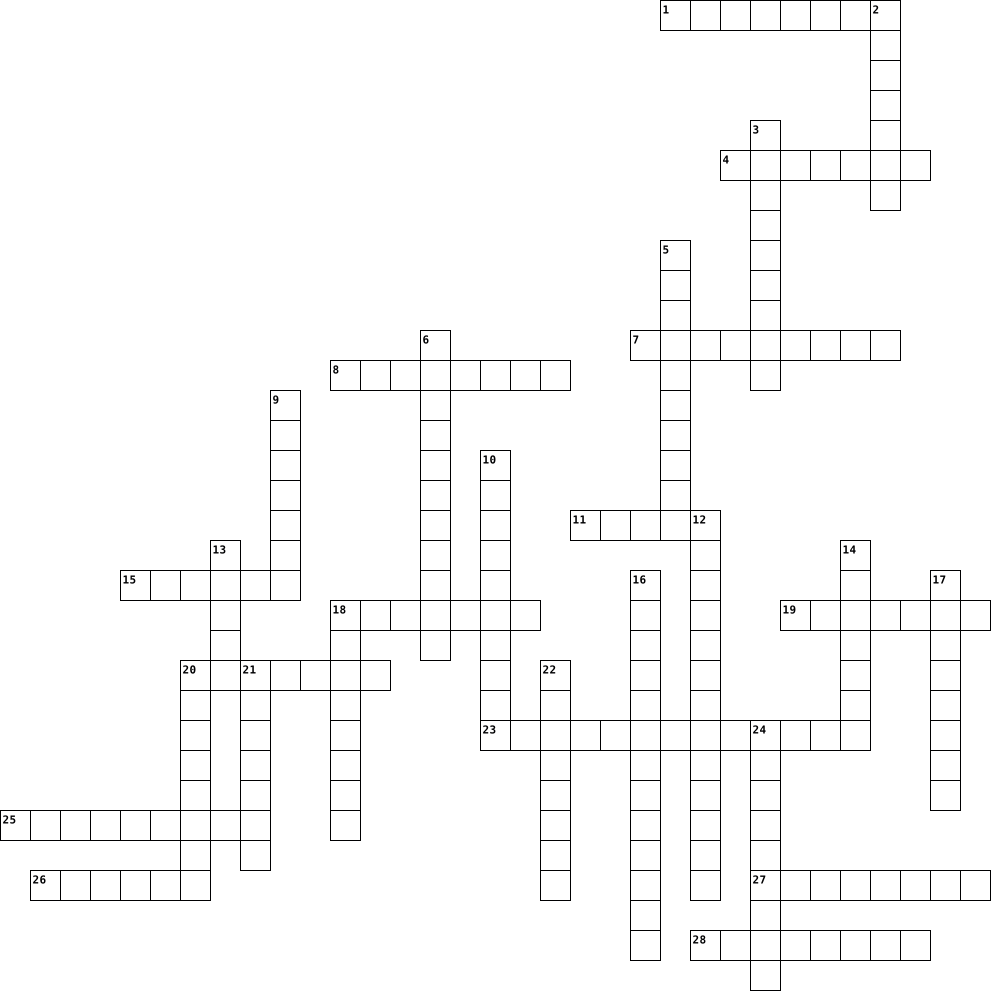
Across
- Which state is home to the famous Gateway Arch?
- Which state is known for its delicious maple syrup?
- Which state is Minneapolis in?
- Which state is home to the Rocky Mountains?
- Which state is known as the "Lone-Star" state?
- Which state is Las Vegas in?
- Which state is known as the "Big Sky Country"?
- Which state is known for its peaches?
- Which state is known as the "Empire State"?
- Which state is Charlotte in?
- Which state is home to the Green Bay Packers?
- Which state is home to North America's Tallest peak?
- Which state is the famous Willis Tower in?
- Which state has a chicken restaurant named after it?
Down
- Which state is Indianapolis in?
- Which state is known as the "Garden State"?
- Which states flag has a bear on it?
- Which state is home to Mount Rushmore?
- Which state is the Grand Canyon in?
- Which state is home to the Space Needle?
- Which state has a palm tree on its flag?
- Which state is known for its lobster and cold weather?
- Which state is known as the "Sunshine State"?
- Which state is home to Harvard University?
- Which state is home to "Motor City"?
- Which state is known for its checkered flag?
- Which state is home to the "Gateway City of the West"?
- Which state is home to Yellowstone National Park?
- Which state has the largest Navy Base?
- Which state is home the "Mardi Gras"?
30 Clues: Which state is Las Vegas in? • Which state is Charlotte in? • Which state is Minneapolis in? • Which state is Indianapolis in? • Which states flag has a bear on it? • Which state is the Grand Canyon in? • Which state is home to "Motor City"? • Which state is known for its peaches? • Which state is home the "Mardi Gras"? • Which state is home to Mount Rushmore? • ...
United States 2023-02-17
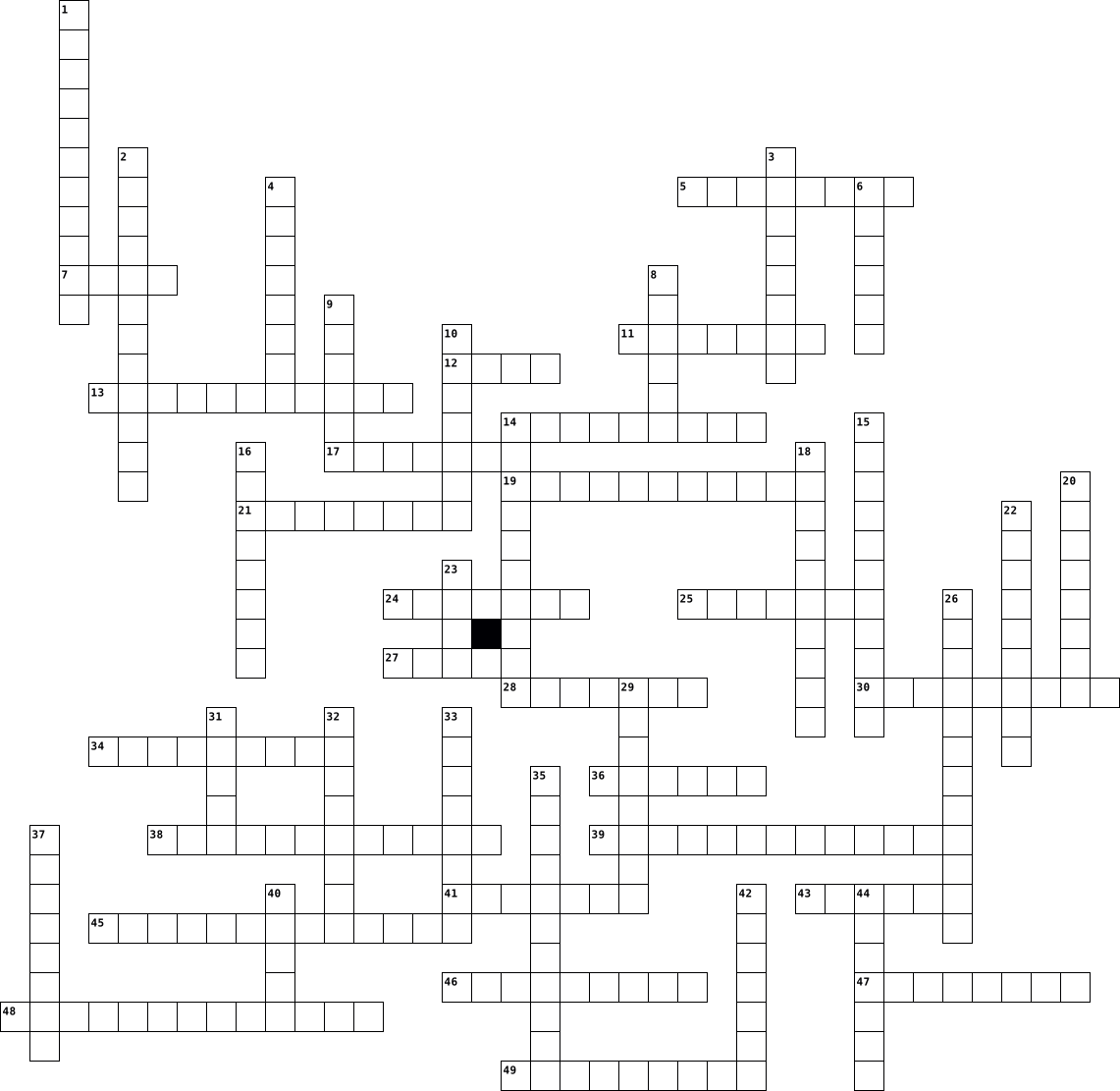
Across
- AR
- UT
- VT
- OH
- RI
- WI
- AL
- SD
- NE
- GA
- AZ
- ID
- NY
- TN
- NM
- KS
- WV
- SC
- IN
- HI
- NC
- LA
- MO
- MA
- MN
Down
- CT
- NH
- MD
- IL
- AK
- OR
- NV
- MT
- WA
- ND
- KY
- CA
- DE
- NJ
- IA
- PA
- OK
- TX
- CO
- VA
- MS
- MI
- ME
- FL
- WI
50 Clues: CT • NH • MD • IL • AR • AK • UT • OR • NV • MT • VT • OH • RI • WI • WA • ND • KY • AL • CA • SD • DE • NE • NJ • IA • GA • AZ • PA • ID • NY • OK • TN • TX • CO • VA • NM • MS • KS • MI • WV • SC • ME • IN • FL • HI • WI • NC • LA • MO • MA • MN
United States! 2021-04-20
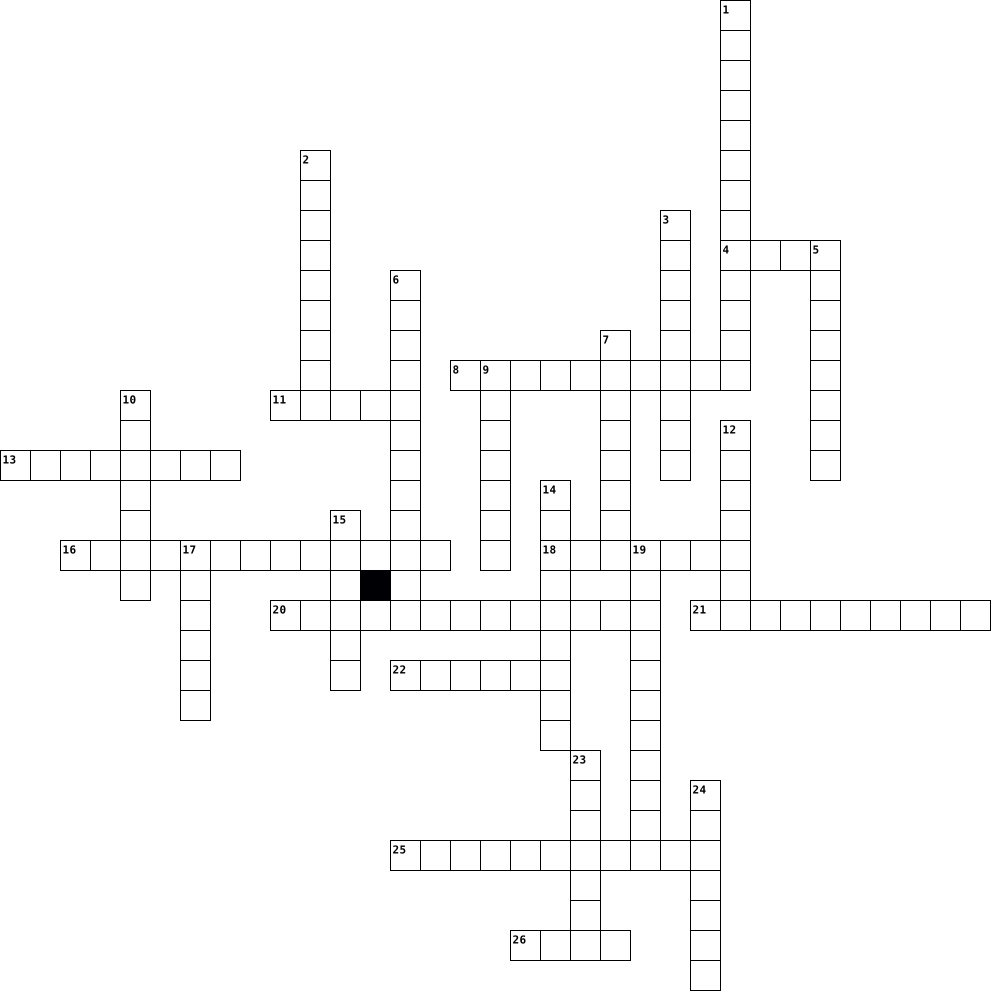
Across
- the buckeye state
- the golden state
- the lone star state
- the first state
- the tarheel state
- the equality state
- the old colony state
- the evergreen state
- the sunflower state
- the mountain state
- the beehive state
Down
- the palmetto state
- the volunteer state
- the badger state
- the sooner state
- the keystone state
- the centennial state
- the grand canyon state
- the empire state
- the peach state
- the garden state
- the last frontier
- the aloha state
- the magnolia state
- the sunshine state
- the cotton state
26 Clues: the peach state • the first state • the aloha state • the badger state • the sooner state • the golden state • the empire state • the garden state • the cotton state • the buckeye state • the last frontier • the tarheel state • the beehive state • the palmetto state • the keystone state • the equality state • the magnolia state • the sunshine state • the mountain state • the volunteer state • ...
Oxford States 2021-06-02
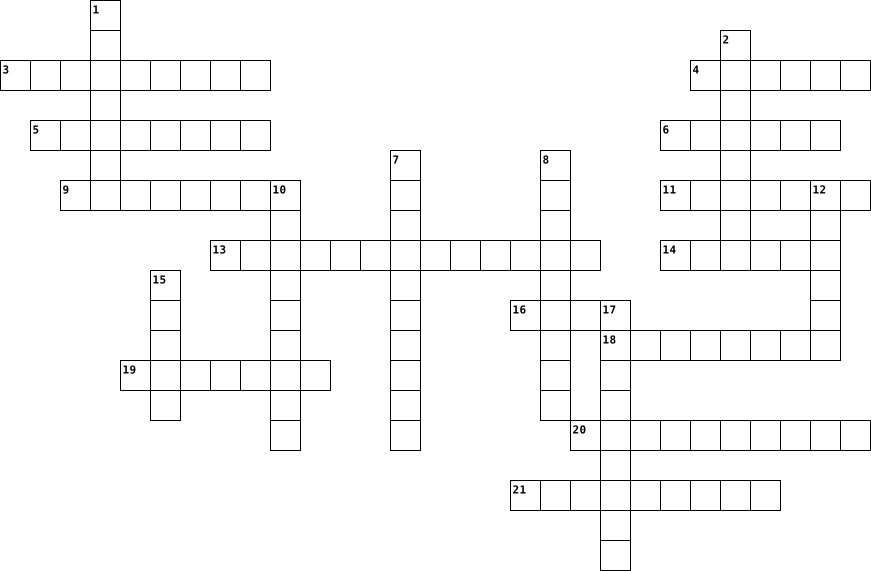
Across
- President who purchased Louisiana from Napoleon
- Name used instead of "county" in Louisiana
- Another name for edible mudbug from Louisiana
- Kansas is the geographic ________ of the U.S.
- Kansas ranks second in the U.S. for these terrible weather occurrences
- Louisiana is nicknamed the "________ State"
- Lake that has longest continuous bridge over water in the world
- Between 1682 and 1783 Louisiana was a colony of this Country
- Seems like this "atmospheric phenomenon" is always present in Kansas
- Kansas "sits" on top of this state.
- Nickname for Kansas "_______" State
- Lowest elevation in Louisiana (New Orleans)
- Louisiana has the highest population of this reptile
Down
- Kansas' state animal
- Louisiana state flower
- Famous movie shown every year that started with a little girl in Kansas
- Kansas came to the US as part of this purchase in 1803
- State Flower of Kansas
- First name of (Kansas) woman to fly over the Atlantic
- Kansas is the largest producer of this commodity
- Kansas town famous for the "wild west"
21 Clues: Kansas' state animal • Louisiana state flower • State Flower of Kansas • Kansas "sits" on top of this state. • Nickname for Kansas "_______" State • Kansas town famous for the "wild west" • Name used instead of "county" in Louisiana • Louisiana is nicknamed the "________ State" • Lowest elevation in Louisiana (New Orleans) • Another name for edible mudbug from Louisiana • ...
states 2 2021-07-27
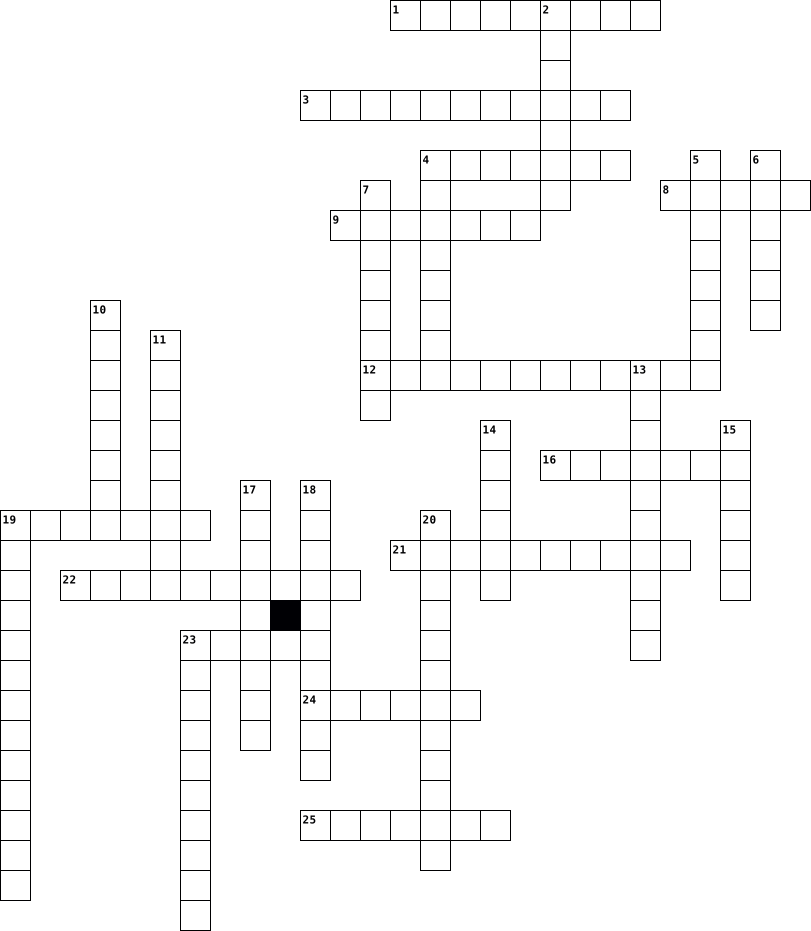
Across
- Capital of Minnesota
- Capital of Illinois
- Capital of North Carolina
- Capital of Delaware
- Capital of New Hampshire
- Capital of Indiana
- Capital of New Mexico
- Capital of Mississippi
- Capital of Pennsylvania
- Capital of Alabama
- Capital of Idaho
- Capital of Kansas
- Capital of New Jersey
Down
- Capital of Arizona
- Capital of Virginia
- Capital of Ohio
- Capital of Colorado
- Capital of South Carolina
- Capital of North Dakota
- Capital of Kentucky
- Capital of Arkansas
- Capital of South Dakota
- Capital of Montana
- Capital of Iowa
- Capital of West Virginia
- Capital of Missouri
- Capital of Utah
- Capital of Louisiana
28 Clues: Capital of Ohio • Capital of Iowa • Capital of Utah • Capital of Idaho • Capital of Kansas • Capital of Arizona • Capital of Indiana • Capital of Montana • Capital of Alabama • Capital of Illinois • Capital of Virginia • Capital of Colorado • Capital of Delaware • Capital of Kentucky • Capital of Arkansas • Capital of Missouri • Capital of Minnesota • Capital of Louisiana • Capital of New Mexico • ...
Indian states 2021-10-01
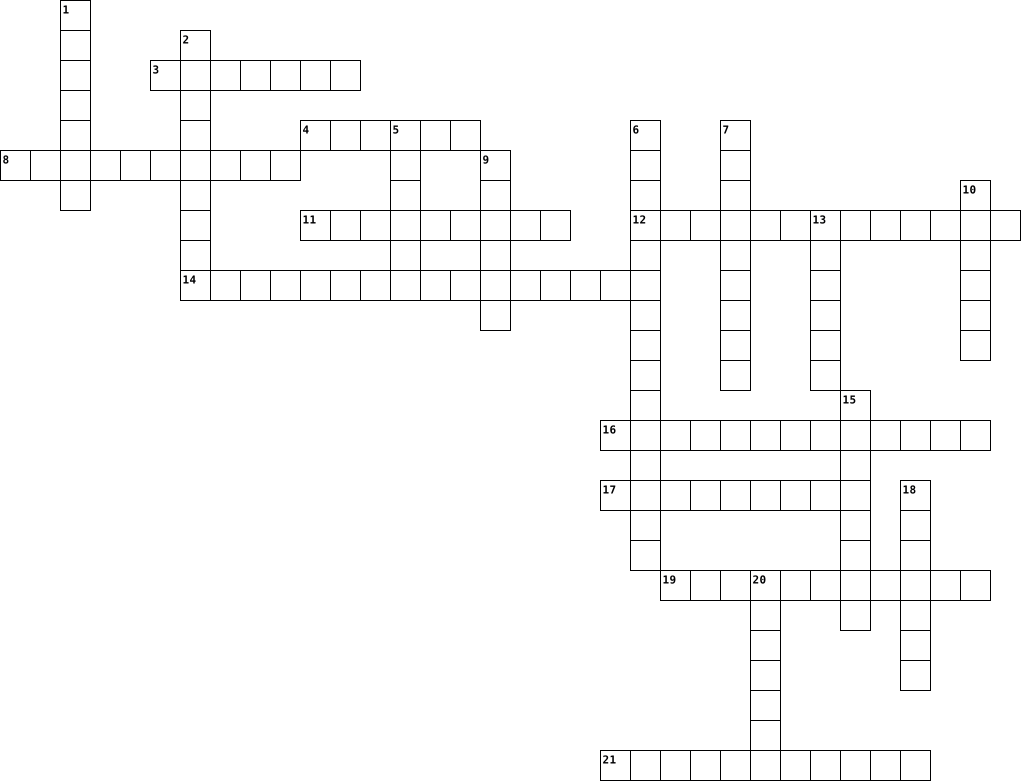
Across
- imphal
- gangtok
- Ranchi
- jaipur
- amaravati
- itanagar
- bhopal
- hyderabad
- Kolkatta
- mumbai
Down
- aizawl
- bengaluru
- thiruvananthapuram
- shimla
- shillong
- Patna
- Dispur
- Chandigarh
- kohima
- Gandhi nagar
- agartala
21 Clues: Patna • aizawl • imphal • shimla • Ranchi • Dispur • jaipur • kohima • bhopal • mumbai • gangtok • shillong • itanagar • Kolkatta • agartala • bengaluru • amaravati • hyderabad • Chandigarh • Gandhi nagar • thiruvananthapuram
Mackenzie States 2022-05-23
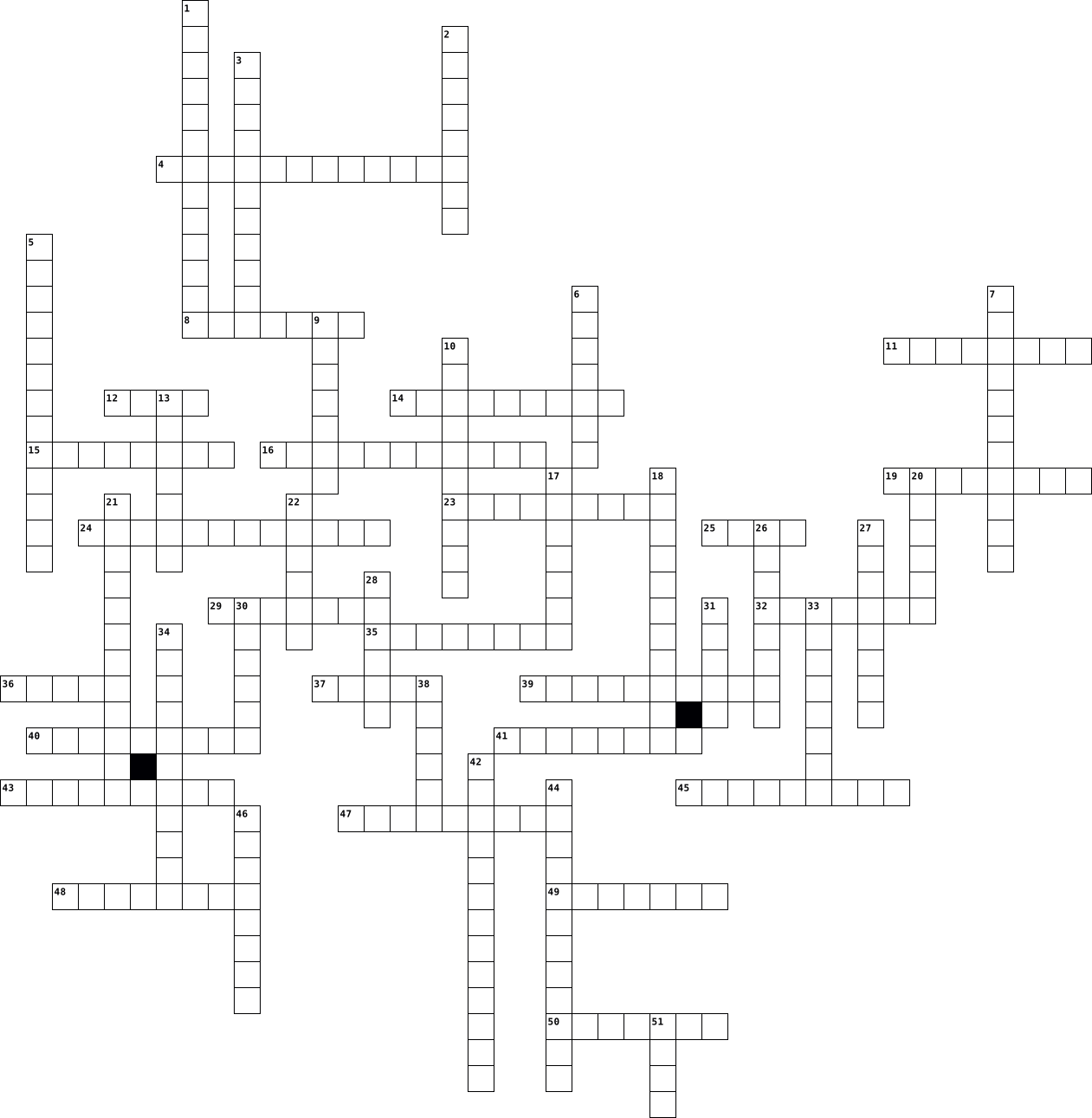
Across
- US capital
- The capital of this place is Montgomery.
- St. Louis ark is here.
- Has the most pigs out of any state.
- Green Bay is my oldest city.
- Abbreviation is OK.
- State song in yankee doodle.
- Famous for their blue crabs.
- You can see 5 states from a place in this state.
- Known for the liberty bell.
- Second driest state.
- Larry Bird is from this state.
- The Grand Canyon is mostly in the state.
- Kool-Aid was invented here.
- My motto is friendship.
- Known as the gem state.
- The golden state.
- State bird is the pelican.
- This state has the great lakes.
- The Garden State.
- The land of 10,000 lakes.
- under kentucky
- The first Thanksgiving was here.
- The Green Mountain State.
- The tallest building in the US is here.
Down
- Oldest city in this place is Charleston
- This state invented fried chicken.
- Mount Rushmore is here.
- Pepsi originated here.
- This state has a peninsula.
- Smallest state.
- Yellowstone Nation park is here.
- Im in the uppest west corner.
- The Sate with the smallest population.
- The peach state.
- Capital is Bismark.
- The 49th state.
- The white tail deer is the state animal.
- The 50th state.
- This state is officially known as the natural state.
- Denver is the capital.
- Home to dorothy.
- The largest city here is Las Vegas.
- Vacationland.
- The windy city is located in this state.
- Elvis Presley grew up here.
- State fruit is the pear.
- Boston is its capital.
- My capital is charleston.
- The first state.
- Cleveland is here.
51 Clues: US capital • Vacationland. • under kentucky • Smallest state. • The 49th state. • The 50th state. • The peach state. • Home to dorothy. • The first state. • The golden state. • The Garden State. • Cleveland is here. • Abbreviation is OK. • Capital is Bismark. • Second driest state. • Pepsi originated here. • St. Louis ark is here. • Denver is the capital. • Boston is its capital. • ...
United States 2022-05-23
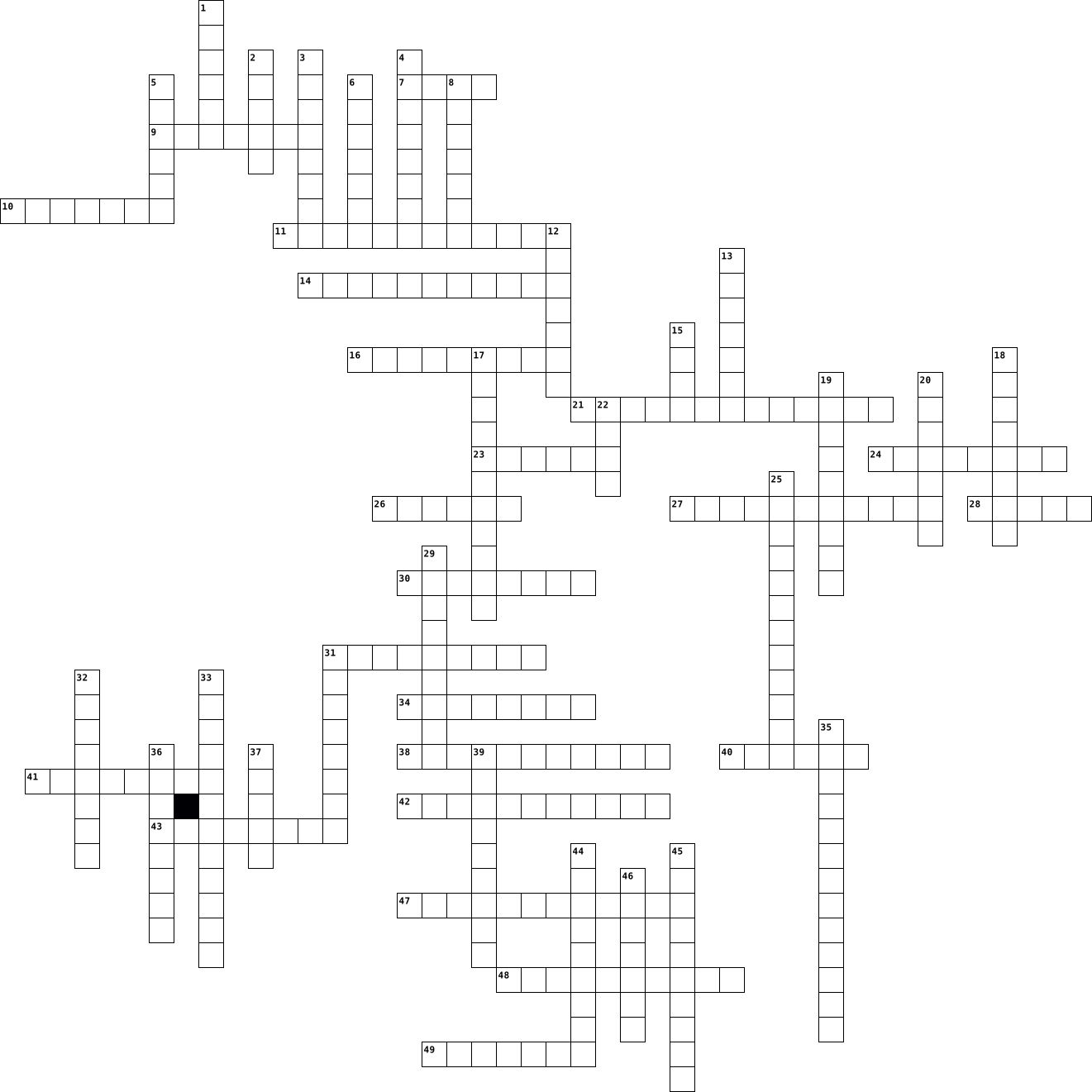
Across
- I am under Minnesota
- the cotton state
- the state animal is the grizzly bear
- the state that is west of virginia
- the magnolia state
- I am next to Michigan
- the state that is next to tennessee
- I am the aloha state
- the Appalachian Trail state
- "Toto, I don't think we're in _______ anymore
- the smallest state next to Connecticut
- the pine tree state
- "________ fried chicken and a pizza hut!"
- the state that is under New York to the right
- there is a great lake named after me
- this state is home to Mount Rushmore
- the only state with a state nut; the hazelnut
- Chicago resides in me
- the state that is under Massachusets
- I am above Texas
- the state that is home to Boston
- the redwood tree state
- the state that is known for peaches
Down
- Las Vegas resides in me
- the lone star state
- the state that is next to Maryland
- the Joplin tornado struck in me
- I am the northernmost state, but I am in Canada
- the skiing state
- I am to the right of Idaho
- the state that is home to Phoenix
- basketball was invented in me
- I am to the right of Nevada
- the state flower is the prairie rose
- I am famous for poultry
- this state is home to timber wolves
- the sunshine state
- I am under Lake Erie
- the state that borders maine
- the state that is next to Texas
- this state invented Kool-Aid
- the state that is under pennsyvania
- the state next to New Jersey
- the state that is above georgia
- I am the centennial state
- the state with the nickname of "Gem State"
- Faith has been here a lot
- the jazz music state
- the state that has the city of Seattle
- the state that is home to the Big Apple
50 Clues: the skiing state • the cotton state • I am above Texas • the magnolia state • the sunshine state • the lone star state • the pine tree state • I am under Minnesota • I am under Lake Erie • I am the aloha state • the jazz music state • I am next to Michigan • Chicago resides in me • the redwood tree state • Las Vegas resides in me • I am famous for poultry • I am the centennial state • ...
USA states 2022-05-25
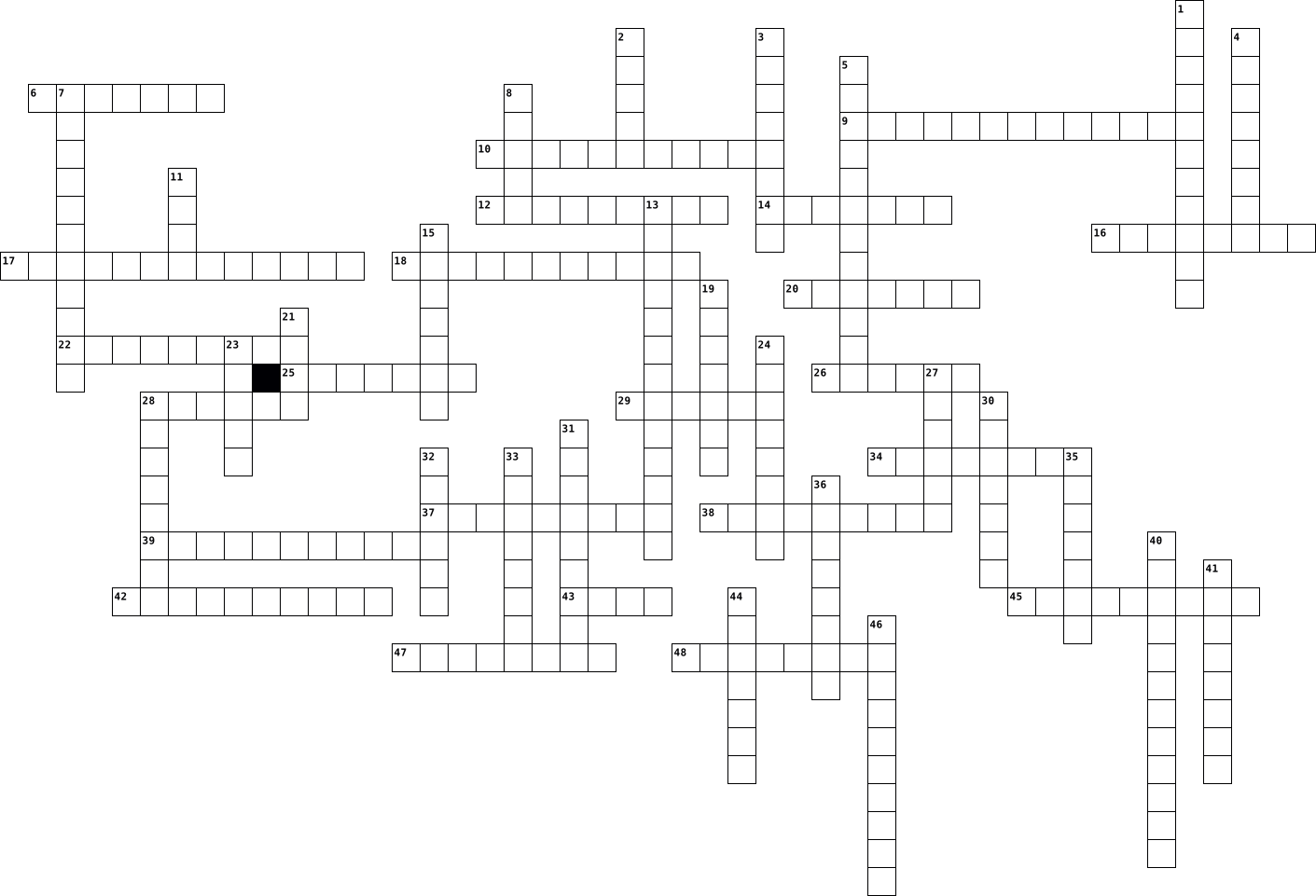
Across
- famous landmark grand canyon national park
- home to topsail island
- long name has a lot of s's
- capital is trenton
- Known for the statue of liberty.
- home to city chicago
- boston is home to this state
- Home to city stonington
- Home to city montgomery
- albu
- rymes with wyman
- Wizard of oz takes place here.
- Home to the city las vegas
- home to city jacksonville
- Home to city st. louis
- Home to Madison
- Home to Oaklahoma city
- mount rush more
- home to the president
- buck eye state
- Home to city nashville
- Home to city hot springs
- capital is richmond
Down
- massachusetts is next to it.
- known for their cowboys.
- Home to city new orleans
- home to the city denver
- state starts with pen
- next to massachusetts
- known for their bar harber bay and lobster
- Home to city salt lake city
- South of north carolina
- famous tv show that stared myley cyrus starts with m
- famous landamark high museum of art
- Home to lowa city
- home to idaho falls
- Name ends with tucky
- not the artic or antartic but is very cold
- rymes with aska
- Known for Disney World.
- home to city minnopilis
- known for their pom trees and hula dancing
- home to city detroit
- Home to the city gary
- Home to city silver spring
- take me home to the place I belong
- home to delaware city
- starts with v and a is known for their pretty trees and hiking trails
- home to los angeles
49 Clues: albu • buck eye state • rymes with aska • Home to Madison • mount rush more • rymes with wyman • Home to lowa city • capital is trenton • home to idaho falls • home to los angeles • capital is richmond • home to city chicago • Name ends with tucky • home to city detroit • state starts with pen • next to massachusetts • Home to the city gary • home to delaware city • home to the president • ...
States-AddyB1 2022-05-24
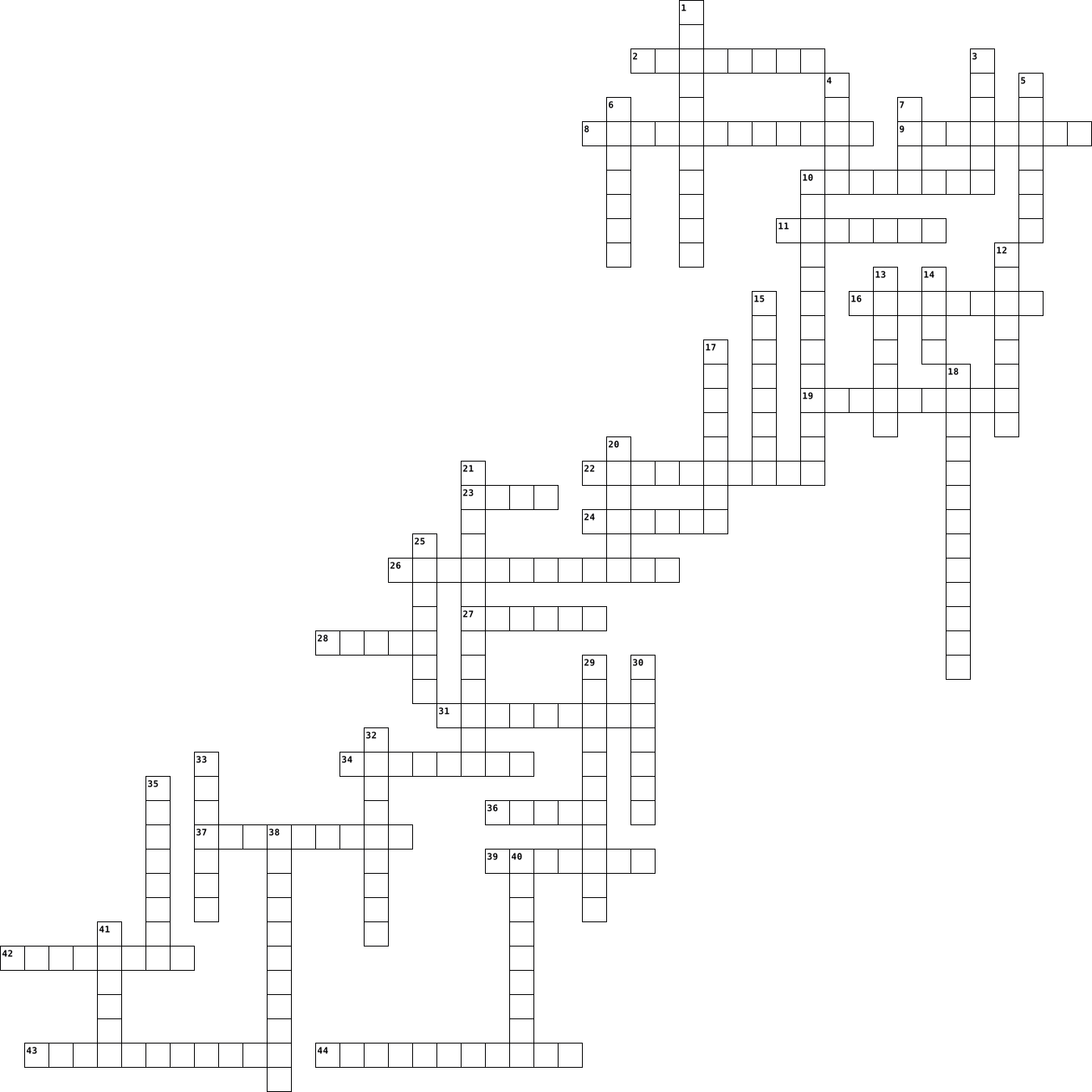
Across
- The Gateway Arch in St.Lewis!
- The first baseball stadium was built in Pittsburgh(a state here) in 1909.
- The first Girl Scout Cookie was sold in Muskogee(a town in this state) in 1917.
- The birthplace of Kool-Aid.
- this place was not a state till 1912!
- Post-its were invented there.
- was named in honor of King Louis
- The biggest city here is Las Angeles.
- Tony stewart's dirt track, hall of fame for rock and role!
- It's illegal to shoot rabbits from a motorboat.
- Our state nabor
- Some people don't know where to find this state because it isn't where you think.
- The capital is Boise
- Capital St. Paul.
- This state is the second smallest one!
- Elon Musk moved here!
- a lake was created by an earthquake.
- its love of basketball and for producing stars such as Larry,Bird also corn!
- Home to the world's deepest hot springs
- In Hartford,(one of the towns in this state) it's illegal to cross the street by walking on your hands.
- Visitors here Spend More Than $1 Billion.
Down
- The mississippi river is names after this state!
- The Silver State.
- The state we live in!
- Alligators live here, also the orange state!
- Long Island, or NYC!
- This state has no state mammal!
- birthplace of Pepsi-Cola.
- The capital is little rock!
- This is the peach state!
- The second driest state
- The capital is Lansing
- Chicago is the capital!
- The capital is boston
- This place is tropical,Honolulu!
- Barbecue Was Born here!
- The Green Mountain State
- Smallest state in the USA!
- Where the first rocket was built!
- The horse is this pleases state animal
- has the largest population for grizzly bears
- Became a British Colony in 1634.
- The world's largest hamburger was eaten in Rutland (a state here.)
- There is a country with the same name.
- Right next to washington.
45 Clues: Our state nabor • The Silver State. • Capital St. Paul. • Long Island, or NYC! • The capital is Boise • The state we live in! • The capital is boston • Elon Musk moved here! • The capital is Lansing • The second driest state • Chicago is the capital! • Barbecue Was Born here! • This is the peach state! • The Green Mountain State • birthplace of Pepsi-Cola. • Right next to washington. • ...
US States 2022-05-24
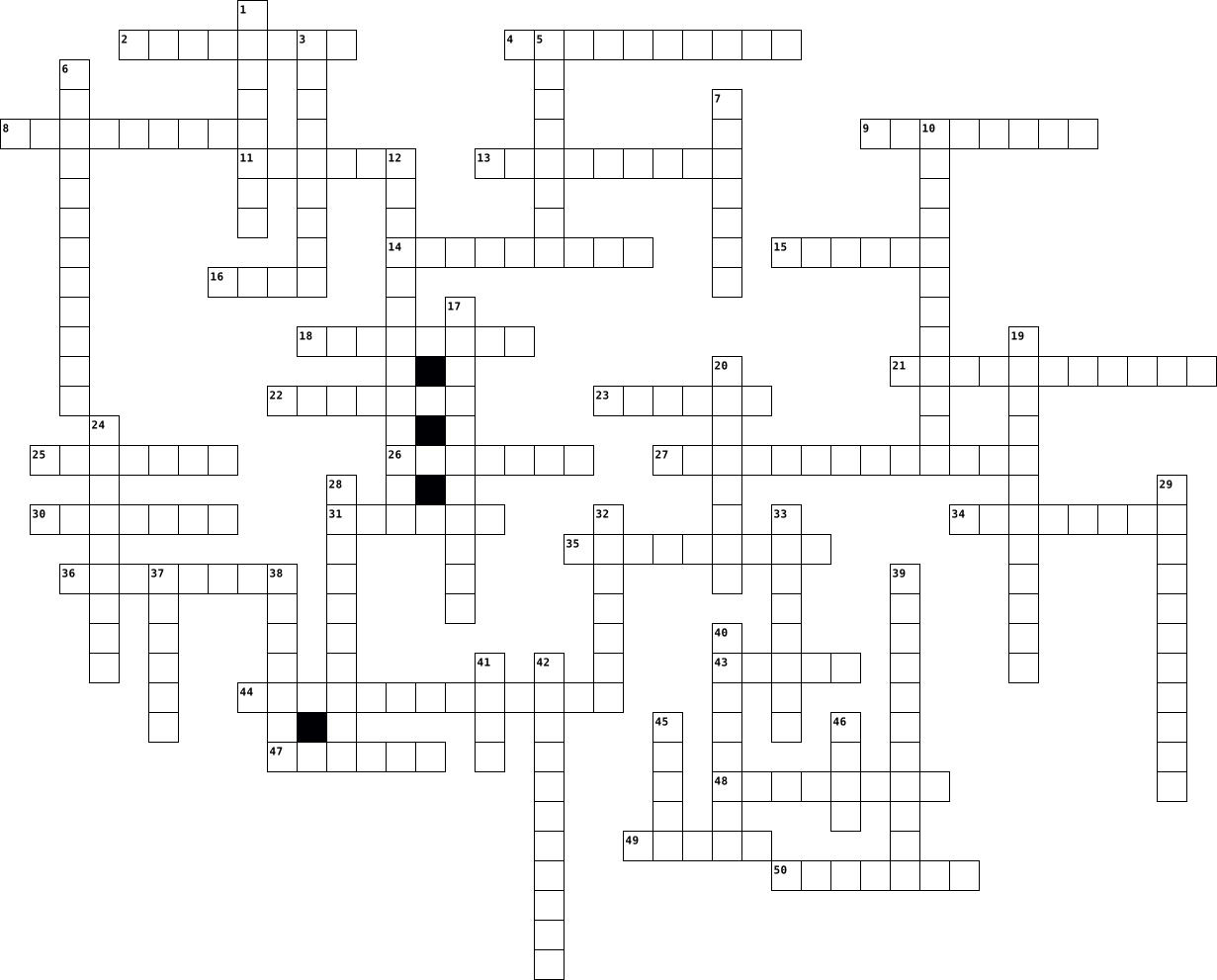
Across
- I have a city named Baltimore
- I have the largest population in the US
- My capital is Madison
- My capital is Frankfort
- My capital is Salem
- My Capital is St Paul
- I have most country songs in history
- I am nicknamed the Silver State
- I am nicknamed the Buckeye State
- I am nicknamed the Sooner State
- I am the smallest state
- My capital is Montpeller
- I am nicknamed the Orange State
- I was the first state to have woman's rights
- My state color is blue and gold
- I have the longest name in the US
- I became a state in 1912
- I am the biggest state in the US
- I have a football team named the Denver Broncos
- I have a state seashell
- I have a city named Detroit
- I am nicknamed the Gem State
- I am south of North Carolina
- My state song is Home on the Range
- My capital is Lincoln
- I am nicknamed the Lone Star State
- My first capital was Virginia City
Down
- I have a city named Chicago
- My nickname is the wine country
- My capital is Little Rock
- I am west of virginia
- I built the first rocket for the moon
- My nickname is the granite state
- I am north of South Carolina
- The worlds largest hamburger was ate here
- The first piano was built in 1775
- My capital is Jefferson City
- I have a city named New Orleans
- I was named after George Washington
- I was the first state to do a speed limit
- I am nicknamed the Peach State
- I am the second smallest state
- I am the only state with islands
- My nickname is the state that never sleeps
- My capital is Pierre
- I have a city named Virginia Beach
- My capital is Des Moines
- root beer was invented in biloxi in 1898
- I became a state in 1820
- My capital is Salt Lake City
50 Clues: My capital is Salem • My capital is Pierre • I am west of virginia • My capital is Madison • My Capital is St Paul • My capital is Lincoln • My capital is Frankfort • I am the smallest state • I have a state seashell • My capital is Montpeller • I became a state in 1912 • My capital is Des Moines • I became a state in 1820 • My capital is Little Rock • I have a city named Chicago • ...
u.s. states 2022-06-03
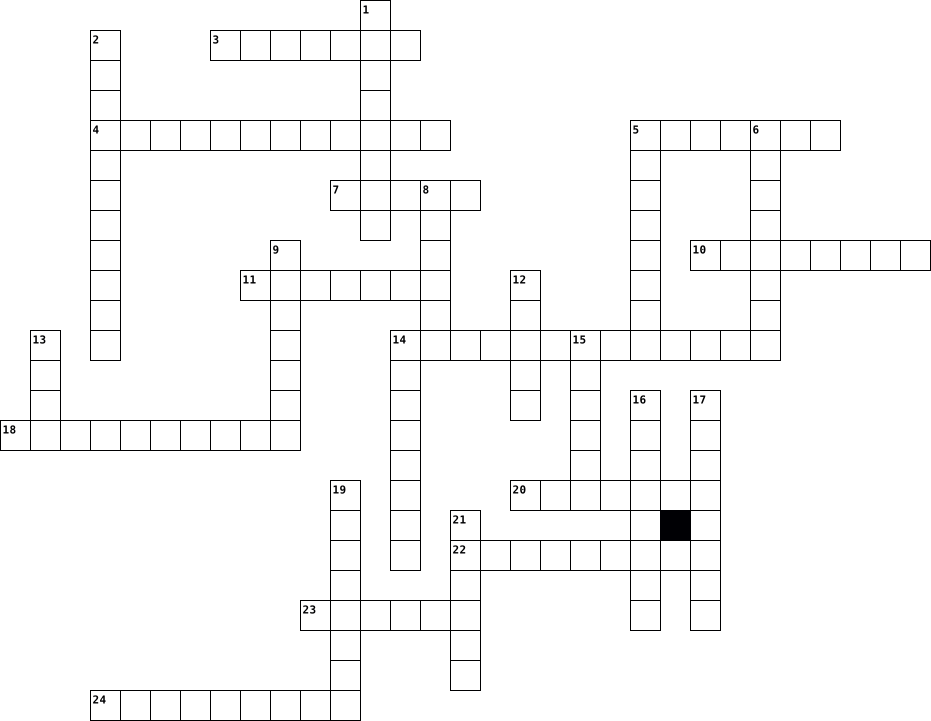
Across
- Nickname: The Peach State
- where ladies bathtub is
- State flower: Peony
- where we live
- abe lincoln was from this state
- the flag is a red x on a white background
- home of the new england patriots
- wine country region
- also known as the grand canyon state
- the capital is baton rouge
- "toto, i don't think we are in ------ anymore."
- Capital: St. Paul
Down
- Capital: Lansing
- yale university is here
- Motto: State sovereignty, national union
- capital is little rock
- people go here all the time to gamble
- mostly known for its alligators
- they are known for growing potato's
- Motto: Our liberties we prize and our rights we will maintain
- the first person to step on omaha beach is from here
- State flower: Yellow Hibiscus
- the 38th state
- second smallest state
- the capital is lincoln
- the capital is anchorage
26 Clues: where we live • the 38th state • Capital: Lansing • Capital: St. Paul • State flower: Peony • wine country region • second smallest state • capital is little rock • the capital is lincoln • yale university is here • where ladies bathtub is • the capital is anchorage • Nickname: The Peach State • the capital is baton rouge • State flower: Yellow Hibiscus • mostly known for its alligators • ...
u.s. states 2022-06-03
Across
- Nickname: The Peach State
- where ladies bathtub is
- State flower: Peony
- where we live
- abe lincoln was from this state
- the flag is a red x on a white background
- home of the new england patriots
- wine country region
- also known as the grand canyon state
- the capital is baton rouge
- "toto, i don't think we are in ------ anymore."
- Capital: St. Paul
Down
- Capital: Lansing
- yale university is here
- Motto: State sovereignty, national union
- capital is little rock
- people go here all the time to gamble
- mostly known for its alligators
- they are known for growing potato's
- Motto: Our liberties we prize and our rights we will maintain
- the first person to step on omaha beach is from here
- State flower: Yellow Hibiscus
- the 38th state
- second smallest state
- the capital is lincoln
- the capital is anchorage
26 Clues: where we live • the 38th state • Capital: Lansing • Capital: St. Paul • State flower: Peony • wine country region • second smallest state • capital is little rock • the capital is lincoln • yale university is here • where ladies bathtub is • the capital is anchorage • Nickname: The Peach State • the capital is baton rouge • State flower: Yellow Hibiscus • mostly known for its alligators • ...
u.s. states 2022-06-03
Across
- Nickname: The Peach State
- where ladies bathtub is
- State flower: Peony
- where we live
- abe lincoln was from this state
- the flag is a red x on a white background
- home of the new england patriots
- wine country region
- also known as the grand canyon state
- the capital is baton rouge
- "toto, i don't think we are in ------ anymore."
- Capital: St. Paul
Down
- Capital: Lansing
- yale university is here
- Motto: State sovereignty, national union
- capital is little rock
- people go here all the time to gamble
- mostly known for its alligators
- they are known for growing potato's
- Motto: Our liberties we prize and our rights we will maintain
- the first person to step on omaha beach is from here
- State flower: Yellow Hibiscus
- the 38th state
- second smallest state
- the capital is lincoln
- the capital is anchorage
26 Clues: where we live • the 38th state • Capital: Lansing • Capital: St. Paul • State flower: Peony • wine country region • second smallest state • capital is little rock • the capital is lincoln • yale university is here • where ladies bathtub is • the capital is anchorage • Nickname: The Peach State • the capital is baton rouge • State flower: Yellow Hibiscus • mostly known for its alligators • ...
u.s. states 2022-06-03
Across
- Nickname: The Peach State
- where ladies bathtub is
- State flower: Peony
- where we live
- abe lincoln was from this state
- the flag is a red x on a white background
- home of the new england patriots
- wine country region
- also known as the grand canyon state
- the capital is baton rouge
- "toto, i don't think we are in ------ anymore."
- Capital: St. Paul
Down
- Capital: Lansing
- yale university is here
- Motto: State sovereignty, national union
- capital is little rock
- people go here all the time to gamble
- mostly known for its alligators
- they are known for growing potato's
- Motto: Our liberties we prize and our rights we will maintain
- the first person to step on omaha beach is from here
- State flower: Yellow Hibiscus
- the 38th state
- second smallest state
- the capital is lincoln
- the capital is anchorage
26 Clues: where we live • the 38th state • Capital: Lansing • Capital: St. Paul • State flower: Peony • wine country region • second smallest state • capital is little rock • the capital is lincoln • yale university is here • where ladies bathtub is • the capital is anchorage • Nickname: The Peach State • the capital is baton rouge • State flower: Yellow Hibiscus • mostly known for its alligators • ...
u.s. states 2022-06-03
Across
- Nickname: The Peach State
- where ladies bathtub is
- State flower: Peony
- where we live
- abe lincoln was from this state
- the flag is a red x on a white background
- home of the new england patriots
- wine country region
- also known as the grand canyon state
- the capital is baton rouge
- "toto, i don't think we are in ------ anymore."
- Capital: St. Paul
Down
- Capital: Lansing
- yale university is here
- Motto: State sovereignty, national union
- capital is little rock
- people go here all the time to gamble
- mostly known for its alligators
- they are known for growing potato's
- Motto: Our liberties we prize and our rights we will maintain
- the first person to step on omaha beach is from here
- State flower: Yellow Hibiscus
- the 38th state
- second smallest state
- the capital is lincoln
- the capital is anchorage
26 Clues: where we live • the 38th state • Capital: Lansing • Capital: St. Paul • State flower: Peony • wine country region • second smallest state • capital is little rock • the capital is lincoln • yale university is here • where ladies bathtub is • the capital is anchorage • Nickname: The Peach State • the capital is baton rouge • State flower: Yellow Hibiscus • mostly known for its alligators • ...
American States 2022-10-15
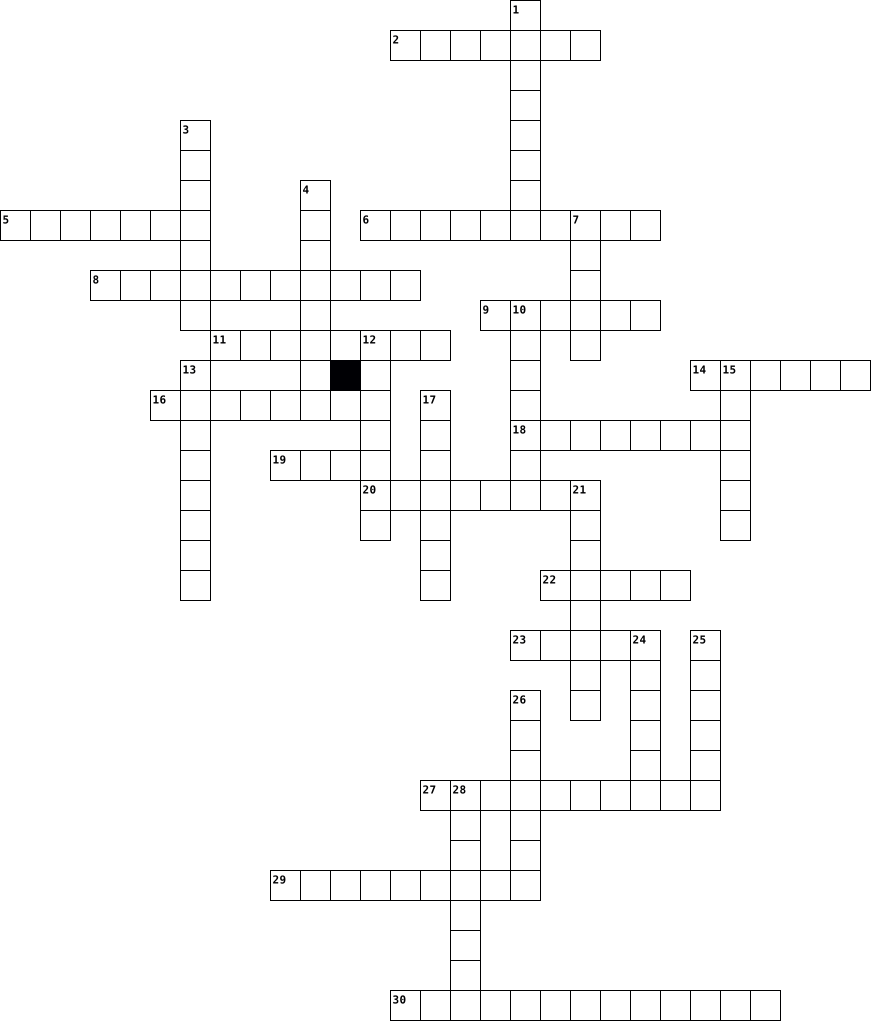
Across
- Swamp
- Maple Syrup
- Founder
- We have a - - - - - - - - - -
- Pacific
- East Utah
- Oz
- Corn
- Tornado Alley
- Mississippi + Missouri Rivers
- Land
- Lobster
- Potatoes
- Girl of the Valley
- France
- Universities
Down
- Upper and Lower
- Blue sky state
- Cloud Gate
- Population
- Mexico Border
- Sweet Home
- Chicken
- North
- Caucuses
- The oldest state
- South Washington
- East California
- Eastern Midwest
- A State of Diamonds
30 Clues: Oz • Corn • Land • Swamp • North • France • Founder • Pacific • Chicken • Lobster • Caucuses • Potatoes • East Utah • Cloud Gate • Population • Sweet Home • Maple Syrup • Universities • Mexico Border • Tornado Alley • Blue sky state • Upper and Lower • East California • Eastern Midwest • The oldest state • South Washington • Girl of the Valley • A State of Diamonds • We have a - - - - - - - - - - • Mississippi + Missouri Rivers
States#1 2022-08-26
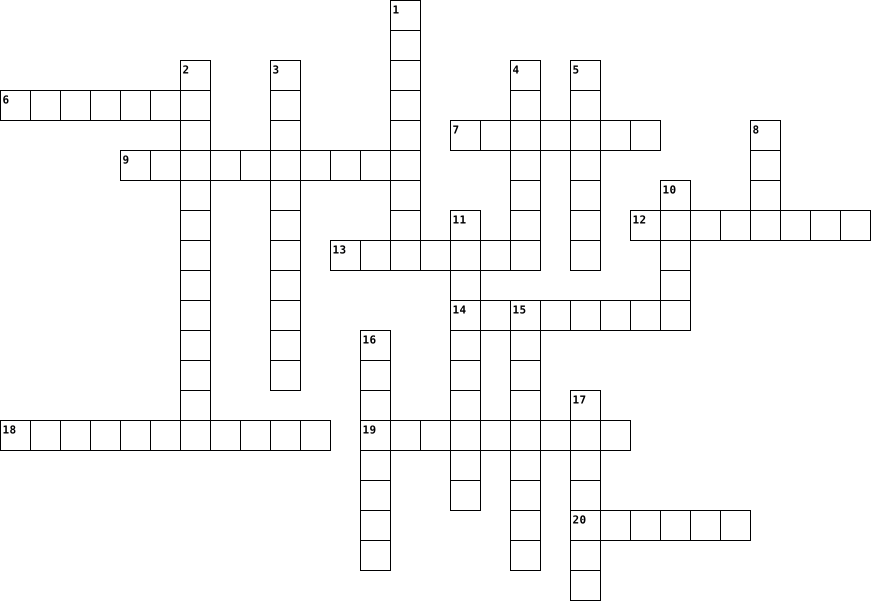
Across
- the peach state
- the least populated state
- rainy on the pacific
- it's nickname is "the cornhusker state"
- the name hints that there are a lot of many mountains
- in it's largest city sometimes the river turns green
- a river with the same name runs through it
- a well known brown alcoholic beverage comes from here
- between #1 and #3
Down
- if you think of dairy, you think of this state
- the state capital is also it's biggest city
- the hamburger was invented here
- if you want to see alligators and beaches, go there
- you will find a cactus here
- between #3 and #10
- where else do people say howdy?
- sunshine state
- the biggest city has a french name
- not only famous for fried chickens
- big apple
20 Clues: big apple • sunshine state • the peach state • between #1 and #3 • between #3 and #10 • rainy on the pacific • the least populated state • you will find a cactus here • the hamburger was invented here • where else do people say howdy? • the biggest city has a french name • not only famous for fried chickens • it's nickname is "the cornhusker state" • ...
U.S. States 2022-11-29

Across
- Has a lot of prairies
- Is Famous for sourdough
- san antonio is here
- has no sales tax
- Grows Potatoes
- Nickname is The Natural State
- Has a lot of spring swimming pools
- Has the worlds largest pecan nursery
- Sioux falls is here
- home to largest pyramid
- the old dominion state
- mountain dew is from here
- known for cars
- capitol is raleigh
- the equality state
- Sixth state to join the new union
- Surfing happens here
- known as graden state
- more than 4,000 islands off its coast
- known as the swing state
- Smith Island is its famous island
- named after native americans
- Has forested hills
- Grand Canyon is here
- known for blue skys
Down
- the evergreen state
- Cajun Cuisine
- governor is steve sisolak
- produces the most peaches in the u.s
- Nickname is The Golden State
- Cornhuskers are their football team
- the badger state
- Hawkeye state
- Grows a lot of oranges
- ben franklin live here
- first mothers day
- highest population density
- St paul is the capital
- Thomas Jefferson called this state a jewel
- Grows peaches
- Known as the treasure state
- has maysville
- Has 4 million people currently
- Windshield wipers were invented here
- smallest U.s state
- very large city
- first state to own a constitution
- gets name from two french names
- had worst recorded tornado
- is Famous for basketball
50 Clues: Cajun Cuisine • Hawkeye state • Grows peaches • has maysville • Grows Potatoes • known for cars • very large city • has no sales tax • the badger state • first mothers day • capitol is raleigh • the equality state • smallest U.s state • Has forested hills • the evergreen state • san antonio is here • Sioux falls is here • known for blue skys • Surfing happens here • Grand Canyon is here • ...
50 States 2024-01-17
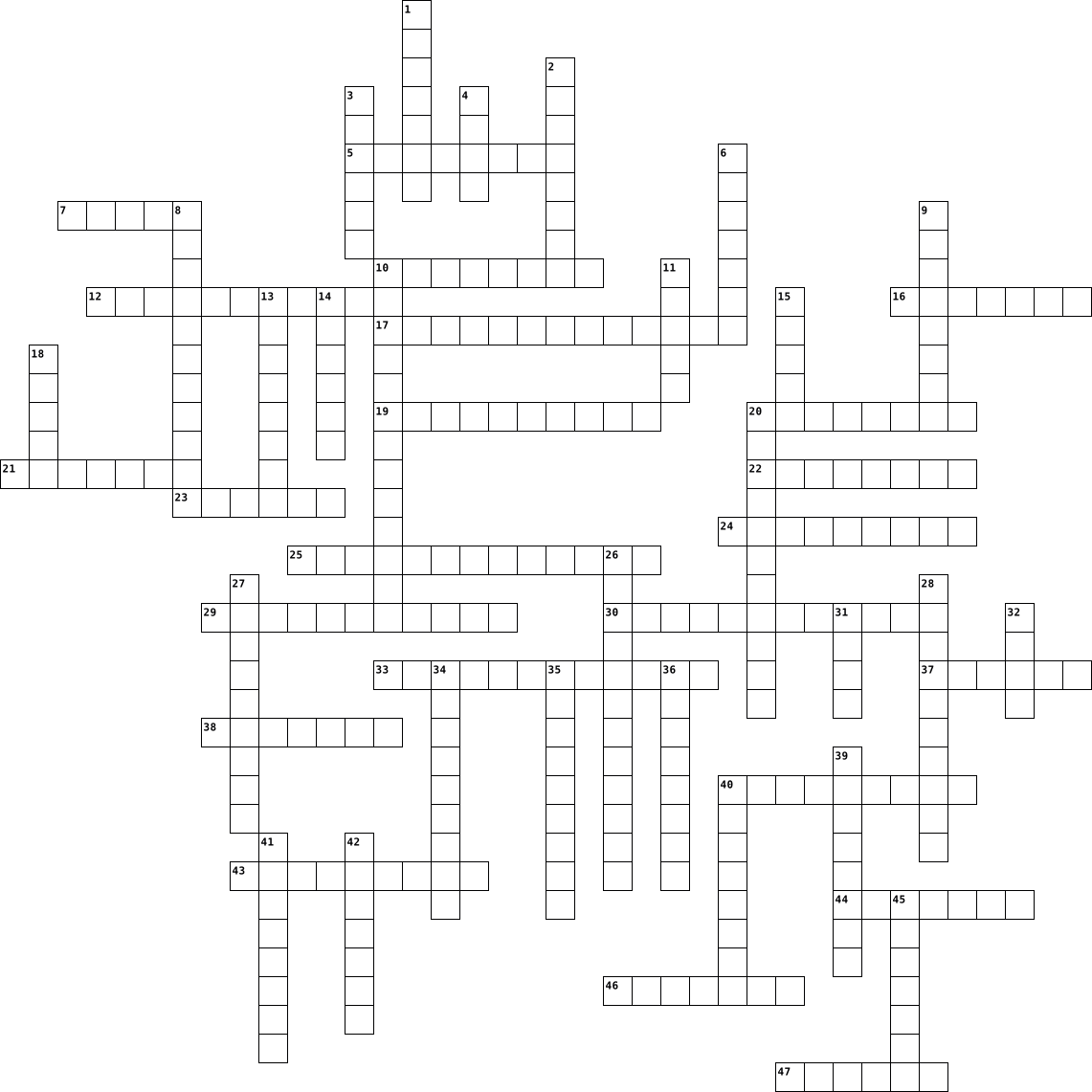
Across
- Richmond, Virginia Beach
- Dallas, Houston
- Detroit, Lansing, Marquette
- North Of South Dakota
- Last State In Alphabet
- Myrtle Beach
- Los Angeles, San Francisco
- Denver
- Looks Up Side Down, Known For Grapes
- Omaha, Lots Of Corn
- Fairbanks, Anchorage, A LOT of snow, VERY cold
- Alburquerque, Santa Fe
- Charlotte, North Of South Carolina
- Named After Big River
- Western Virginia
- Pittsburgh, Philadelphia
- Honolulu, Island
- Indianapolis
- Minneapolis, Mini Soda
- Gatlinburg, Nashville, Smoky Mts
- Birmingham, Montgomery
- Miami, Hurricanes, Flo Rida
- Topeka, Tornadoes
Down
- New York City, Buffalo
- Oklahoma City, Tulsa
- Las Vegas
- Cleveland, Cincinnati
- Billings, Lots Of Guns
- South Of North Dakota
- Baltimore, Mary Land
- Boston
- Portland, Screwed Up Shape
- Little Rock
- Salem, Portland
- Boisie, Famous Potatoes
- Island Providence, Smallest State
- Hartford, Connect I Cut
- New Hamp Shire
- Cheese, Milwaukee
- Seattle, Walla Walla
- Des Moines, I-Away
- Salt Lake City
- Atlantic City, Trenton
- New Orleans, Louis Siana
- Chicago
- Dover, First State
- St. Louis, Kansas City
- Lexington, Louisville
- Atlanta
- Phoenix, HOT
50 Clues: Boston • Denver • Chicago • Atlanta • Las Vegas • Little Rock • Myrtle Beach • Indianapolis • Phoenix, HOT • New Hamp Shire • Salt Lake City • Dallas, Houston • Salem, Portland • Western Virginia • Honolulu, Island • Cheese, Milwaukee • Topeka, Tornadoes • Des Moines, I-Away • Dover, First State • Omaha, Lots Of Corn • Oklahoma City, Tulsa • Baltimore, Mary Land • Seattle, Walla Walla • Cleveland, Cincinnati • ...
US States 2023-12-01
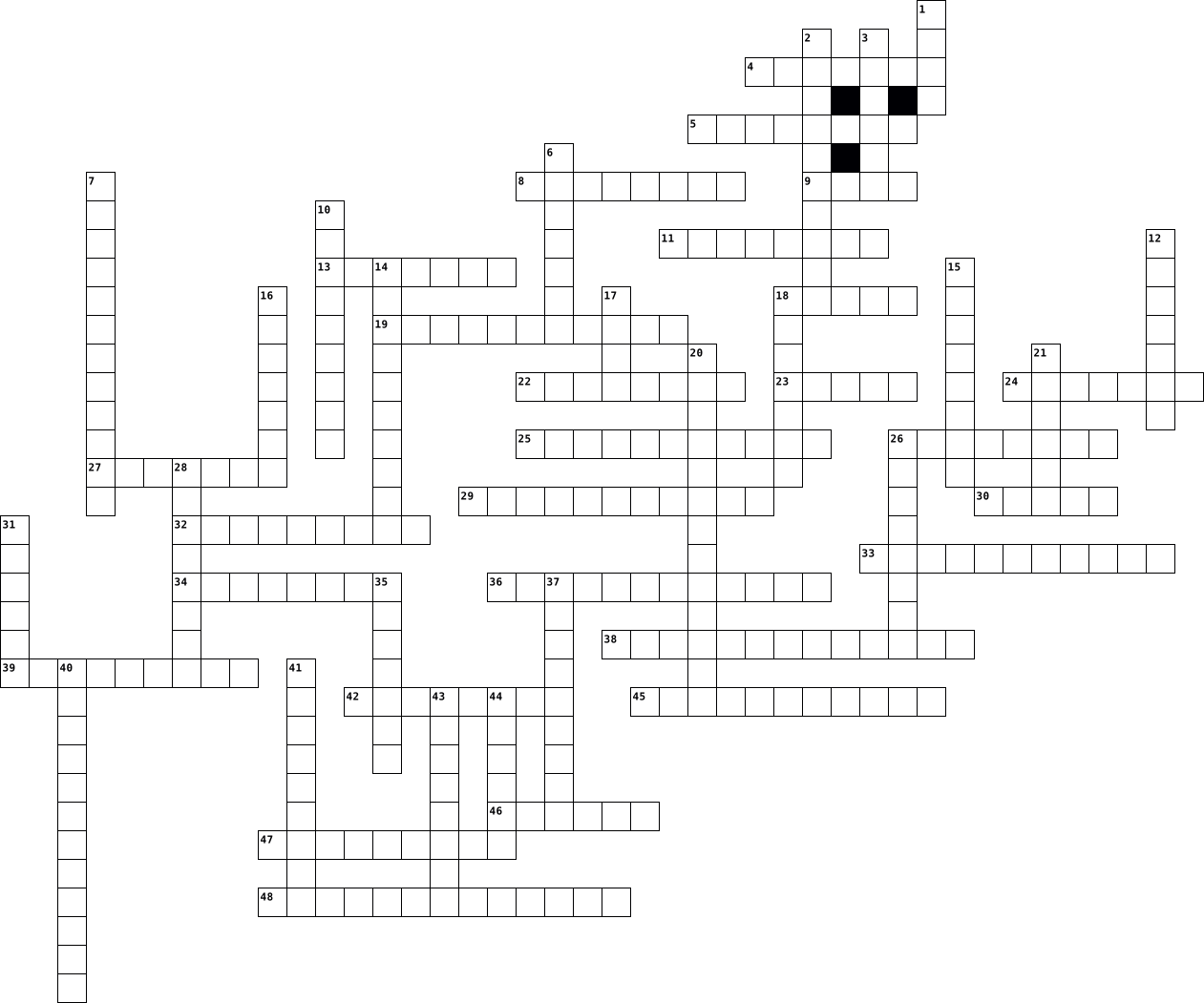
Across
- AL
- MI
- KY
- OH
- VA
- NY
- ME
- SD
- AR
- TX
- VT
- RI
- MD
- IN
- CT
- ID
- LA
- ND
- NE
- NH
- NC
- NJ
- CO
- MS
- KS
- MN
- SC
Down
- UT
- CA
- HI
- GA
- PA
- TN
- WY
- WA
- DE
- FL
- IA
- MT
- MA
- NV
- MO
- IL
- OR
- AZ
- WI
- WV
- NM
- OK
- AK
50 Clues: UT • CA • HI • AL • MI • GA • PA • KY • OH • TN • VA • WY • NY • WA • DE • FL • IA • ME • MT • SD • MA • NV • AR • TX • VT • RI • MD • MO • IN • IL • CT • ID • OR • LA • ND • NE • AZ • NH • WI • NC • NJ • WV • NM • CO • OK • AK • MS • KS • MN • SC
us states 2023-11-30

Across
- the only towns are ghost towns
- where you dont have turn down the heat to get hypothermia
- a very strange place
- is non existent during hurricane season
- not real
- smallest beach
- fields, highway ads, and the occasional house
- country music and the worst pick up line
- dating app is ancestry
- largest farmhouse ever
- type of piano and machines inside your body
- good pizza bad state
- montana but dakota
- small canada
- give the upper peninsula back
- just boston
- budget florida
- way to many memes
- go here not florida
- cheese n alcohol
- hands down has the coolest dinosaur
- why would aliens want to come here
- 77,348 miles of corn
- chugs old bay seasoning
- all the ´philes be living here
- upstate is way better
- oz is way better than here
- imagine once being controlled by m******usetts
Down
- worst state hands down
- h e l l but cold
- burning
- white ghetto
- didnt make among us
- mini mexico with even more aliens
- fat white redneck farmers
- i thought you said ¨in the annapolis¨
- peaceful forests and oh no theres seattle
- an unlivable h e l l
- 2 worst cities
- the mood here is just as the name implies
- nothing without potatoes
- better than the north
- is actually an island in a terrible us state
- created the hit game among us
- poor natives had to come here
- the ar variant of kansas (its way better)
- chicken that hurts my stomach
- yee haw luk aht mah guhns
- there is no rado on the color palette
49 Clues: burning • not real • just boston • white ghetto • small canada • smallest beach • 2 worst cities • budget florida • h e l l but cold • cheese n alcohol • way to many memes • montana but dakota • didnt make among us • go here not florida • a very strange place • an unlivable h e l l • good pizza bad state • 77,348 miles of corn • better than the north • upstate is way better • worst state hands down • ...
US STATEs 2023-09-22
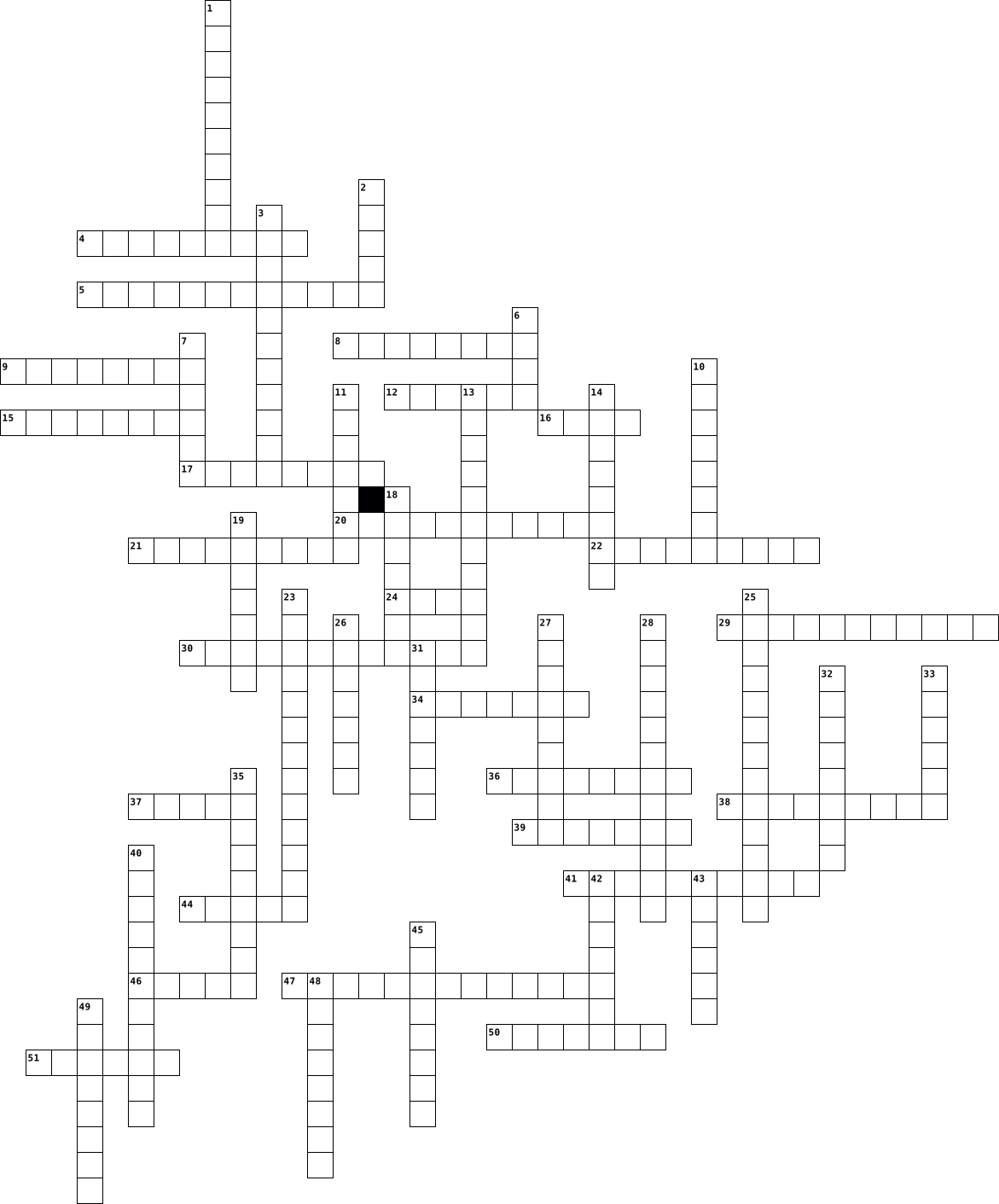
Across
- WI
- NH
- CO
- VA
- AK
- NE
- UT
- IL
- ND
- MN
- NJ
- OH
- CT
- PA
- WY
- MO
- ME
- LA
- GA
- CA
- TX
- ID
- NC
- MT
- KS
Down
- WA
- Abbreviation
- MS
- IA
- HI
- DE
- IN
- SD
- MD
- AZ
- VT
- MA
- SC
- FL
- TN
- WV
- NY
- AR
- NV
- NM
- RI
- AL
- OR
- MI
- OK
- KY
51 Clues: WA • MS • WI • NH • IA • HI • CO • VA • DE • IN • AK • SD • MD • NE • UT • IL • AZ • VT • ND • MN • NJ • MA • OH • SC • FL • TN • WV • CT • PA • NY • AR • NV • WY • NM • MO • ME • LA • GA • RI • CA • AL • OR • TX • MI • ID • NC • OK • KY • MT • KS • Abbreviation
US STATEs 2023-09-22
Across
- RI
- ID
- MO
- AZ
- WY
- AR
- OH
- HI
- UT
- IL
- TX
- CT
- VT
- MN
- AK
- ND
- WV
- AL
- ME
- WA
- CA
- FL
- GA
- KS
- NH
- OR
Down
- SC
- VA
- SD
- NY
- NV
- MS
- LA
- NC
- PA
- WI
- DE
- MI
- NM
- IA
- MD
- CO
- NE
- MA
- KY
- IN
- MT
- NJ
- TN
- OK
50 Clues: SC • VA • SD • NY • RI • ID • NV • MO • MS • AZ • LA • WY • AR • NC • PA • OH • WI • DE • HI • UT • MI • IL • NM • IA • MD • TX • CT • CO • NE • MA • KY • VT • MN • AK • ND • WV • IN • AL • MT • ME • WA • NJ • CA • FL • TN • OK • GA • KS • NH • OR
U.S States 2023-12-18
Across
- The smallest U.S state
- Potatoes are grown here
- The Gateway Arch is a major landmark
- Home of the saguaro cactus
- The least populous state
- The Diamond State
- The capital is Columbus
- Pineapples are grown here
- The Beehive State
- Land of Lincoln
- Known for the Alamo
- The charter oak was here
- Known for The Green Mountain Boys
- State bird is the common loon
- Known for the northern lights
- The Peace Garden State
- The Mountain State
- Heart of Dixie
- Known for lobsters
- Named after a president
- Redwood trees grow here
- Tallahassee is the capital
- The Peach State
- Topeka is the capital
- Switzerland of America
- The Beaver State
Down
- The Palmetto State
- The Mother of Presidents
- Known for Mt. Rushmore
- Holds the most populous city in the U.S
- Known for gambling
- Jackson is the capital
- The Creole State
- Raleigh is the capital
- The Keystone State
- The Badger State
- The First State
- Separated into two peninsulas
- State bird is the roadrunner
- Field of Dreams was filmed here
- Annapolis is the capital
- Denver is the capital
- The Cornhusker State
- Known for the Boston Tea Party
- Known for horse racing
- Known for the Indy 500
- The Treasure State
- Trenton is the capital
- Known for country music
- Name means "Red People"
50 Clues: Heart of Dixie • The First State • Land of Lincoln • The Peach State • The Creole State • The Badger State • The Beaver State • The Diamond State • The Beehive State • The Palmetto State • Known for gambling • The Keystone State • The Mountain State • The Treasure State • Known for lobsters • Known for the Alamo • The Cornhusker State • Denver is the capital • Topeka is the capital • ...
United States 2024-08-06

Across
- New Hampshire
- Idaho, Oregon
- Oklahoma, Nebraska
- Texas, Arizona, Colorado
- Alabama, Virginia, North Carolina
- North Dakota, South Dakota, Iowa
- Mississippi, Georgia
- Nevada, Arizona, Oregon
- Florida, South Carolina
- Wyoming, Arizona, Idaho
Down
- New Mexico, Oklahoma, Arkansas
- Maryland, New Jersey
- Nevada, Washington, Wyoming
- Michigan, West Virginia, Kentucky
- Louisiana, Tennessee, Oklahoma
- Kentucky, Illinois, Michigan
- Mississippi, Texas, Arkansas
- Kansas, Colorado, Iowa
- Missouri, Illinois, Virginia
- Texas, New Mexico, Missouri
- Pennsylvania, Vermont, Connecticut
- Missouri, Nebraska, Illinois
22 Clues: New Hampshire • Idaho, Oregon • Oklahoma, Nebraska • Maryland, New Jersey • Mississippi, Georgia • Kansas, Colorado, Iowa • Nevada, Arizona, Oregon • Florida, South Carolina • Wyoming, Arizona, Idaho • Texas, Arizona, Colorado • Nevada, Washington, Wyoming • Texas, New Mexico, Missouri • Kentucky, Illinois, Michigan • Mississippi, Texas, Arkansas • Missouri, Illinois, Virginia • ...
50 States 2022-09-30
Across
- MA
- ME
- AZ
- WI
- WY
- TN
- KY
- VA
- LA
- MT
- ND
- OK
- MI
- AK
- IN
- MS
- KS
- MD
- AR
- PR
- SC
- NE
- OR
- PA
- VT
- CT
- RI
Down
- NH
- SD
- WA
- TX
- NJ
- DC
- NM
- MP
- IL
- WV
- AS
- NV
- MO
- HI
- CA
- CO
- AL
- DE
- GU
- NC
- IA
- OH
- NY
- ID
- GA
- MN
- FL
- UT
55 Clues: NH • SD • WA • TX • MA • ME • NJ • DC • AZ • WI • NM • MP • WY • IL • WV • AS • TN • NV • MO • KY • VA • LA • MT • ND • OK • HI • MI • CA • CO • AK • IN • AL • MS • KS • DE • GU • MD • AR • NC • PR • IA • OH • SC • NY • NE • OR • ID • GA • MN • PA • FL • UT • VT • CT • RI
50 States 2025-12-08

Across
- – Smallest U.S. state.
- – Mountain state famous for potatoes.
- – Gateway Arch is located in this state.
- – Home to the Grand Canyon.
- – Home to Yellowstone National Park.
- – “The Natural State,” capital is Little Rock.
- – Midwest state known for Cleveland and Columbus.
- – Island state in the Pacific Ocean.
- – State known for salt flats and red rock canyons.
- – Midwest state with Chicago.
- – Second-largest state; famous for ranches and Houston.
- – New England state with the city of Hartford.
- – New England state famous for maple syrup.
- – “Land of 10,000 Lakes.”
- – Largest U.S. state, separated from the rest of the country.
- – Northern Plains state with the city of Fargo.
- – Mountainous Appalachian state.
- – Southern state known for the city of Montgomery.
- – Northeasternmost state; famous for lobster.
- – Pacific Northwest state with Seattle.
- – Most populated state; home to Hollywood.
- – Peninsula state famous for beaches and Miami.
- – Peach State with Atlanta as its capital.
- – Great Plains state known for wheat fields.
- – New England state with the White Mountains.
- – Pacific Northwest state with the city of Portland.
Down
- – Palmetto State with Charleston.
- – Birthplace of many U.S. presidents.
- – Home to Mount Rushmore.
- – State with the Statue of Liberty.
- – Desert state famous for Las Vegas.
- – State named after a major U.S. river.
- – Home of New Orleans and the Mississippi River delta.
- – East Coast state with the Outer Banks.
- – State where the Declaration of Independence was signed.
- – Midwest state known for dairy and cheese.
- – First state to ratify the Constitution.
- – State shaped like a mitten; touches the Great Lakes.
- – Southwestern state known for deserts and Santa Fe.
- – Farmland-heavy state between the Missouri and Mississippi Rivers.
- – Chesapeake Bay borders this state.
- – State known for the Rocky Mountains and Denver.
- – Great Plains state known for corn and prairies.
- – New England state home to Boston.
- – State known for horse racing and bourbon.
- – Midwest state famous for the Indy 500 race.
- – Big Sky Country with wide open plains.
- – East Coast state across the river from New York City.
- – State known for Nashville and country music.
- – Tornado Alley state with prairies and plains.
50 Clues: – Smallest U.S. state. • – Home to Mount Rushmore. • – “Land of 10,000 Lakes.” • – Home to the Grand Canyon. • – Midwest state with Chicago. • – Mountainous Appalachian state. • – Palmetto State with Charleston. • – State with the Statue of Liberty. • – New England state home to Boston. • – Desert state famous for Las Vegas. • – Home to Yellowstone National Park. • ...
US States 2026-03-17

Across
- The "Green Mountain State," famous for maple syrup
- New ___: The "Garden State," located across from NYC
- South ___: The "Palmetto State," known for its beaches
- The "Great Lakes State," shaped like a mitten
- The "Beehive State," home to Salt Lake City
- The "Keystone State," where the Liberty Bell is
- The "Old Line State," famous for blue crabs
- The "Pine Tree State," famous for lobsters
- The "Hawkeye State," famous for corn fields
- The "Centennial State," home to the Rocky Mountains
- The "Last Frontier"; the largest state by area
- The "Bluegrass State," home of the ___ Derby
- The "Beaver State," known for its rainy forests
- The "Buckeye State," shaped like a heart, "Only in ___"
- The "Silver State," home to Las Vegas
- The "Golden State," home to Hollywood
- The "Sunshine State," home to Disney World
Down
- The "Old Dominion," where "lovers" go
- The "Peach State," famous for Southern charm
- New ___: The "Empire State," home to the Statue of Liberty
- The "Evergreen State," home to the Space Needle
- The "Big Sky Country" in the Northwest
- The "Aloha State," made of Pacific islands
- The "Sunflower State," where Dorothy is from
- The "Volunteer State," home of country music
- The "Grand Canyon State," known for its deserts
- North ___: The "Tar Heel State," where flight began
- The "Pelican State," home to Mardi Gras
- The "Lone Star State"; everything is bigger here
29 Clues: The "Old Dominion," where "lovers" go • The "Silver State," home to Las Vegas • The "Golden State," home to Hollywood • The "Big Sky Country" in the Northwest • The "Pelican State," home to Mardi Gras • The "Aloha State," made of Pacific islands • The "Pine Tree State," famous for lobsters • The "Sunshine State," home to Disney World • ...
US states 2026-04-11

Across
- capital is Trenton
- capital is Montgomery
- capital is Concord
- capital is Boise
- capital is Lansing
- capital is Columbus
- capital is Cheyenne
- capital is Pierre
- capital is Salt Lake City
- capital is Montpelier
- capital is Salem
- capital is Jackson
- capital is Tallahassee
- capital is Little Rock
- capital is Helena
- capital is Springfield
- capital is Indianapolis
- capital is Columbia
- capital is Juneau
- capital is Augusta
- capital is Olympia
- capital is St.Paul
Down
- capital is Frankfort
- capital is Atlanta
- capital is Phoenix
- capital is Richmond
- capital is Nashville
- capital is Honolulu
- capital is Bismarck
- capital is Sacramento
- capital is Dover
- capital is Hartford
- capital is Providence
- capital is Baton Rouge
- capital is Denver
- capital is Raleigh
- capital is Charleston
- capital is Annapolis
- capital is Santa Fe
- capital is Des Moines
- capital is Harrisburg
- capital is Jefferson City
- capital is Oklahoma City
- capital is Topeka
- capital is Lincoln
- capital is New York City
- capital is Boston
- capital is Carson City
- capital is Madison
- capital is Austin
50 Clues: capital is Dover • capital is Boise • capital is Salem • capital is Denver • capital is Pierre • capital is Topeka • capital is Helena • capital is Juneau • capital is Boston • capital is Austin • capital is Atlanta • capital is Phoenix • capital is Trenton • capital is Concord • capital is Lansing • capital is Raleigh • capital is Jackson • capital is Lincoln • capital is Augusta • capital is Olympia • ...
50 states 2024-10-22

Across
- a most famous national park in Montana
- the mountains in West Virginia
- capital city of Louisiana
- the sunshine state
- the craddle of independence
- it was sold by Napoleon in 1803
- where Area 51 is located
- it contains 4,000 tons of gold
- this state produces 1/3 of the total production of potatoes
- a racist movement born in Arkansas
- a famous university located in New Jersey
Down
- a former Russian colony
- where the Navajos live
- capital city of South Dakota
- the capital city of Texas
- name of one of the Great Lakes bordering Michigan
- route 66 starts in this Illinois city
- state of the 3 Cs
- Albany is the capital city of this state
- a peace treaty between Israel & Palestine in 1978
20 Clues: state of the 3 Cs • the sunshine state • where the Navajos live • a former Russian colony • where Area 51 is located • capital city of Louisiana • the capital city of Texas • the craddle of independence • capital city of South Dakota • the mountains in West Virginia • it contains 4,000 tons of gold • it was sold by Napoleon in 1803 • a racist movement born in Arkansas • ...
50 States 2024-11-15

Across
- Old Dominion State, Roanoke, Norfolk, Richmond
- Granite State, Concord, Manchester
- Equality State, Casper, Jackson Hole, Cheyenne
- Centennial State, Denver, Fort Collins, Boulder
- Silver State, Las Vegas, Reno, Carson City
- Tar Heel State, Charlotte, Raleigh, Wilmington
- Show Me State, St. Louis, Kansas City, Springfield
- Golden State, San Francisco, Los Angeles
- Great Lakes State, Detroit, Grand Rapids, Lansing
- Old Line State, Annapolis, Baltimore
- Beehive State, Salt Lake City, St. George, Ogden, Logan
- Volunteer State, Nashville, Memphis, Chattanooga, Knoxville
- Keystone State, Philadelphia, Harrisburg, Pittsburgh
- Ocean State, Providence, Pawtucket
- Bay State, Boston, Plymouth, Worcester
- Mount Rushmore State, Sioux Falls, Rapid City, Aberdeen
- Evergreen State, Spokane, Seattle, Olympia, Tacoma
- Empire State, Buffalo, Rochester, Albany
- Beaver State, Portland, Bend, Eugene
- Cornhusker State, Omaha, Lincoln, Hastings
- First State, Wilmington, Dover
- The Grand Canyon State, Phoenix, Tempe, Flagstaff
Down
- North Star State, Minneapolis, Rochester, Duluth
- Pelican State, New Orleans, Baton Rouge, Shreveport
- The Land of Enchantment, Albuquerque, Santa Fe, Roswell
- Lone Star State, Austin, Houston, Dallas, El Paso
- Badger State, Madison, Milwaukee, Green Bay, Eau Claire
- Sooner State, Tulsa, Norman
- Hawkeye State, Des Moines, Davenport, Cedar Rapids
- Sunflower State, Wichita, Topeka, Dodge City, Salina
- Buckeye State, Dayton, Cincinnati, Columbus, Cleveland
- Pine Tree State, Bangor, Augusta, Portland
- Bluegrass State, Lexington, Louisville, Paducah
- Sunshine State, Miami, Orlando, Jacksonville
- Peach State, Atlanta, Macon, Augusta
- Mountain State, Morgantown, Charleston
- Prairie State, Chicago, Peoria, Springfield, Decatur, Champaign
- Aloha State, Honolulu, Hilo
- Magnolia State, Jackson, Hattiesburg, Starkville
- Garden State, Newark, Trenton, Atlantic City
- Hoosier State, Indianapolis, Evansville
- Where the White House is located
- Green Mountain State, Burlington, Montpelier
- Palmetto State, Columbia, Charleston, Myrtle Beach
- The Natural State, Little Rock, Fayetteville
- Gem State, Boise, Twin Falls
- The Last Frontier, Juneau, Fairbanks, Anchorage
- Treasure State, Billings, Great Falls, Missoula
- Constitution State, New Haven, Hartford, Stamford
- The Yellowhammer State, Birmingham, Montgomery, Tuscaloosa
50 Clues: Sooner State, Tulsa, Norman • Aloha State, Honolulu, Hilo • Gem State, Boise, Twin Falls • First State, Wilmington, Dover • Where the White House is located • Granite State, Concord, Manchester • Ocean State, Providence, Pawtucket • Peach State, Atlanta, Macon, Augusta • Old Line State, Annapolis, Baltimore • Beaver State, Portland, Bend, Eugene • ...
50 States 2025-03-17

Across
- WA
- NM
- OK
- AK
- HI
- MD
- VA
- NV
- WY
- MA
- MI
- GA
- IN
- KY
- AZ
- IL
- CT
- AL
- CO
- NJ
- FL
- WI
- IA
- MN
Down
- SC
- SD
- PA
- NY
- RI
- TX
- WV
- MT
- ND
- ME
- ID
- NH
- MS
- KS
- DE
- NC
- LA
- MO
- VT
- AR
- NE
- CA
- OH
- TN
- OR
- UT
50 Clues: SC • SD • PA • WA • NY • NM • RI • TX • WV • MT • ND • OK • AK • ME • HI • ID • MD • NH • MS • KS • VA • DE • NC • NV • WY • LA • MO • MA • MI • GA • IN • KY • VT • AZ • AR • IL • CT • NE • CA • AL • CO • OH • TN • OR • NJ • FL • WI • IA • UT • MN
USA STATES 2025-03-01

Across
- - Home to Nashville and its country music scene.
- - Famous for Yellowstone National Park.
- - Famous for peaches and the city of Atlanta.
- - Known for its beaches and Walt Disney World.
- - The largest state, known for its glaciers and wildlife.
- - Known for Chicago, the Windy City.
- - Known as the "Golden State" and home to Hollywood.
- - Known for Seattle, the Space Needle, and coffee culture.
- - Famous for its Rocky Mountains and ski resorts.
- - The only U.S. state made up entirely of islands.
Down
- - Famous for Las Vegas and its desert landscapes.
- - Known for the Liberty Bell and historical landmarks.
- - Known for New Orleans and its vibrant Mardi Gras.
- - Known for its Great Lakes and auto industry.
- - The Lone Star State, famous for its BBQ and cowboy culture.
- - Known for its Derby and bourbon distilleries.
- - Home to Boston and rich colonial history.
- - Known for its lush forests and the city of Portland.
- - Home to the Statue of Liberty and Times Square.
- - Home to the Grand Canyon.
20 Clues: - Home to the Grand Canyon. • - Known for Chicago, the Windy City. • - Famous for Yellowstone National Park. • - Home to Boston and rich colonial history. • - Famous for peaches and the city of Atlanta. • - Known for its Great Lakes and auto industry. • - Known for its beaches and Walt Disney World. • - Known for its Derby and bourbon distilleries. • ...
Katakana States 2025-02-18

Across
- メイン
- カンザス
- オレゴン
- ウィスコンシン
- ニューヨーク
- ジョージア
- アラスカ
- ハワイ
- アラバマ
- テキサス
- オハイオ
- コロラド
- アイオワ
Down
- ユタ
- ミネソタ
- アリゾナ
- フロリダ
- ワシントン
- バージニア
- ネバダ
- ミシガン
- ルイジアナ
- カリフォルニア
- モンタナ
24 Clues: ユタ • メイン • ネバダ • ハワイ • ミネソタ • カンザス • アリゾナ • フロリダ • オレゴン • アラスカ • アラバマ • ミシガン • テキサス • オハイオ • モンタナ • コロラド • アイオワ • ワシントン • バージニア • ジョージア • ルイジアナ • ニューヨーク • ウィスコンシン • カリフォルニア
U.S. States 2025-04-09

Across
- Arizonaimage
- Idahoimage
- Arkansasimage
- Oklahomaimage
- Kentuckyimage
- RhodeIslandimage
- Nevadaimage
- Michiganimage
- Delawareimage
- NorthDakotaimage
- Virginiaimage
- Californiaimage
- Vermontimage
- Wisconsinimage
- Coloradoimage
- Louisianaimage
- NorthCarolinaimage
- Washingtonimage
- Utahimage
- SouthCarolinaimage
- NewYorkimage
- Georgiaimage
- NewHampshireimage
- NewMexicoimage
Down
- Missouriimage
- Massachusettsimage
- Alabamaimage
- SouthDakotaimage
- Marylandimage
- Pennsylvaniaimage
- Floridaimage
- Oregonimage
- Ohioimage
- Wyomingimage
- Maineimage
- Connecticutimage
- WestVirginiaimage
- Nebraskaimage
- Iowaimage
- Indianaimage
- Mississippiimage
- Hawaiiimage
- Illinoisimage
- Montanaimage
- Alaskaimage
- Tennesseeimage
- Texasimage
- Minnesotaimage
- Kansasimage
- NewJerseyimage
50 Clues: Ohioimage • Iowaimage • Utahimage • Idahoimage • Maineimage • Texasimage • Oregonimage • Nevadaimage • Hawaiiimage • Alaskaimage • Kansasimage • Alabamaimage • Arizonaimage • Floridaimage • Wyomingimage • Indianaimage • Vermontimage • Montanaimage • NewYorkimage • Georgiaimage • Missouriimage • Marylandimage • Arkansasimage • Oklahomaimage • Kentuckyimage • Nebraskaimage • Michiganimage • Delawareimage • Virginiaimage • Illinoisimage • ...
U.S States 2025-05-13

Across
- Where the oldest working carousel is located
- Where the TV was first invented
- Where 1.4 billion pounds of cheese is kept
- Hasn't observed daylight savings time since 1968
- Where there are only two escalators in the state
- Where it is illegal to mispronounce the states name
- Where the world's largest troll collection is
- Where can you mail a whole coconut
- Where the government controls 70% of the land
- Where the world's first skyscraper was built
- The only state with their own power grid
- Where a pickle is only legally considered a pickle if it bounces
- Where the smallest state capital is located
- Where the Mall of America is located
- Where poison ivy and poison oak do not exist
- Where there are more cows than people
- Where the first Mother's Day occurred
- Has 210 species of freshwater snails
- Where billboards are banned
- Where there are more dogs than children
- Where wearing cowboy boots is illegal unless you own two cows
- Where crocodiles and alligators live together
- Where "Hogzilla" was found
- Where the largest ball of twine if located
- Where the first potato was planted
- Where does every November 12 mark Exploding Whale Day
Down
- Where fishing with a yo-yo is illegal
- Where the world's largest office building is located
- Where mashed potato wrestling contests annually
- The first state to require automobile license plates
- Where is it considered one of the brightest spots on Earth
- Where the capital is build on top of a dormant volcano
- Where the music genre of jazz was born
- Where the pirate "Blackbeard" died
- Known as the "Chocolate Capital of the USA"
- Where the ice cream sundae was invented
- Where the ratio of chickens to people is 200:1
- Nicknamed "Motor City"
- The only state that has an official state question
- Where the most cereal is produced
- Where you have to pay for using your own bathroom
- The only state to turn down a hosting of the Olympics
- Where the most triplets are born
- Where the lake with the longest name is located
- Where the longest cave system in the world is located
- Where is it against the law to catch fish with dynamite, firearms, a crossbow or barehanded
- Where the largest snowflake ever was found
- Where the official state dance is the Square Dance
- Where an exact-size replica of the Parthenon and Eiffel Tower is located
- Where tattoos used to be illegal
50 Clues: Nicknamed "Motor City" • Where "Hogzilla" was found • Where billboards are banned • Where the TV was first invented • Where the most triplets are born • Where tattoos used to be illegal • Where the most cereal is produced • Where the pirate "Blackbeard" died • Where can you mail a whole coconut • Where the first potato was planted • Where the Mall of America is located • ...
50 States 2025-09-05

Across
- Pago Pago
- St. Paul
- Sacramento
- Bismarck
- Santa Fe
- Frankfort
- Montpelier
- Olympia
- Des Moines
- Denver
- Madison
- Springfield
- Providence
- Pierre
- Hartford
- Boise
- Salt Lake City
- Trenton
- Richmond
- Columbia
- Lincoln
- Austin
- Juneau
- Harrisburg
- Honolulu
- Raleigh
- Jefferson City
- Dover
Down
- Lansing
- Charlotte Amalie
- Helena
- San Juan
- Jackson
- Concord
- Hagatna
- Columbus
- Carson City
- Albany
- Saipan
- Nashville
- Tallahassee
- Salem
- Oklahoma City
- Phoenix
- Cheyenne
- Augusta
- Boston
- Annapolis
- Atlanta
- Baton Rouge
- Montgomery
- Topeka
- Charleston
- Little Rock
54 Clues: Salem • Boise • Dover • Helena • Albany • Saipan • Denver • Boston • Pierre • Topeka • Austin • Juneau • Lansing • Jackson • Concord • Hagatna • Olympia • Phoenix • Madison • Augusta • Trenton • Atlanta • Lincoln • Raleigh • San Juan • St. Paul • Columbus • Bismarck • Santa Fe • Cheyenne • Hartford • Richmond • Columbia • Honolulu • Pago Pago • Frankfort • Nashville • Annapolis • Sacramento • Montpelier • Des Moines • Providence • Montgomery • Charleston • Harrisburg • Carson City • ...
Union States 2026-05-30

Across
- east coast; between New York and New Hampshire
- east coast; north of Pennsylvania
- west coast; north of California
- midwest; north of Iowa
- furthest north state
- midwest; east of Missouri
- midwest; between Illinois and Ohio
- midwest; between Missouri and Minnesota
- on the west coast, biggest Union state
- border state; furthest east
- east coast; between Ohio and New Jersey
- midwest; between Minnesota and Michigan
Down
- east coast; east of Pennsylvania
- east coast; west of Maine
- smallest state
- furthest west, not on the coast
- midwest; between Indiana and Pennsylvania
- east coast; east of New York
- border state; furthest west
- midwest; split into two parts
- border state; east of Kentucky
- east coast; south of Massachusetts
- border state; Washington DC
- border state; south of Vermont and New Hampshire
24 Clues: smallest state • furthest north state • midwest; north of Iowa • east coast; west of Maine • midwest; east of Missouri • border state; furthest west • border state; Washington DC • border state; furthest east • east coast; east of New York • midwest; split into two parts • border state; east of Kentucky • furthest west, not on the coast • west coast; north of California • ...
State of Matter Vocab 2024-08-30

Across
- An increase or decrease in the size of a substance when the temperature is chnaged
- The change of a substance from one physical state to another
- When matter changes states from a solid to gas form
- When energy is taken in, and gains heat
- A change in chemical properties or composition of a substance, resulting in the formation of at least one new substance
- When matter changes states from liquid to gas form
- When matter changes states from a solid to liquid form
- The exact temperature that liquid matter changes states to a gas form
- When matter changes states from a liquid to gas form
- The resistance of a fluid to flowing
Down
- the force exerted per unit area
- When matter changes states from liquid to solid form
- Object still has the same composition,and is represented in a different form
- Matter that has enough energy to overcome not just the attractive forces between its particles, but also the attractive forces within its atoms
- When matter changes states from gas to liquid form
- The exact temperature that liquid matter changes states into a solid matter
- The ability of a fluid, liquid, or gas to exact an upward force on an object immersed in it
- When energy is released, and loses heat
18 Clues: the force exerted per unit area • The resistance of a fluid to flowing • When energy is taken in, and gains heat • When energy is released, and loses heat • When matter changes states from gas to liquid form • When matter changes states from liquid to gas form • When matter changes states from a solid to gas form • When matter changes states from liquid to solid form • ...
Test you knowledge of Matthew & Laura 2023-07-07

Across
- Church Laura & Matt attend
- Matt and Laura's love language
- Matron of honor and Laura's sister
- Where is the wedding dress from (Two words)
- When they met, Laura and Matt both owned a ___.
- What sport did Matt play
- First restaurant they ate at (And is Laura's favorite) 2 words
- The street Laura and Matt will live on
- Laura's longest place she worked
- Bride's Father
- Matt's favorite season
- Brides new last name
- Matt's favorite color
- Their boy dog's name
- Laura's middle name
- Ministry school Laura attended
- How far of a drive in hours did they live apart (Avg)
- Their girl dog's name
Down
- Laura's favorite color
- Honeymoon location (Two words)
- Month Laura and Matt met
- Name of their wedding venue
- Where did Matt and Laura meet
- Who said I love you first
- What is Matt's middle name
- Love is _______, Love is kind
- Matt's favorite hockey team
- Something Matt makes for Laura every morning
- The best man and Matt's older brother
- College Matt graduated from (Two words)
- Groom's mother
- Which one of them sings well
32 Clues: Bride's Father • Groom's mother • Laura's middle name • Brides new last name • Their boy dog's name • Matt's favorite color • Their girl dog's name • Laura's favorite color • Matt's favorite season • Month Laura and Matt met • What sport did Matt play • Who said I love you first • Church Laura & Matt attend • What is Matt's middle name • Name of their wedding venue • ...
Year 13 revision: Theories 2025-04-29

Across
- Tpye of utilitarianism Hare and Singer prefer
- The only thing that is good without qualification
- Everything is physical or supervenes upon the physical (this includes properties, events, objects and any substance(s) that exist).
- Theory that it is moral to maximise pleasure
- The argumetn for substance dualism: Mind is unextended and thinking
- an absolute command
- There are no mind-independent moral properties/facts.
- A mental state that is 'about' something
- Hume's gap: issue with realism and utilitarianism
- Type of machine Nozick uses
- The property dualist that uses the zombie argument
- Moral statements are used to give instructions
- The first formulation of the CI
- moral properties are non-natural or super natural properties
- Bentham's version
- All mental states are identical to brain states (‘ontological’ reduction) although ‘mental state’ and ‘brain state’ are not synonymous (so not an ‘analytic’ reduction)
- An 'If then' command
- the theory that we make a flaw when making moral statements
- Another word for intentional mental states
- There are mind-independent moral properties/facts
- You should act 'out' of this
- The subjective mental experience
- moral _______: an issue with moral anti-realism
- Moral statements are statements of emotion
Down
- A physical duplicate that lacks qualia
- all mental states can be characterised in terms of functional roles which can be multiply realised.
- Some or all common-sense (“folk-psychological”) mental states/properties do not exist and our common-sense understanding is radically mistaken.
- Acording to Mill: Pleasures of the mind
- An issue with Behaviourism and Mind-brain type identity theory, not functionalism though!
- The arguments for substance Dualism: using Liebniz's law
- What is missing from epiphenomenalism
- A moral rules
- Mental states are just a byproduct of physical processes- But they exist!
- The analogy Aristotle uses, e.g. playing a piano
- Type of behaviourism: propositions about mental states are propositions about behavioural dispositions (ie propositions that use ordinary language)
- Mary's dad, I guess? Loves polar bears...
- The type of dualism that states mental states and physical states can impact each other
- Minds exist and are not identical to bodies or to parts of bodies.
- There are at least some mental properties that are neither reducible to nor supervenient upon physical properties.
- The ultimate ends for human life: Aristotle
- What should you not use people as, according to Kant
- According to aristotle: A character trait in excess or deficiancy
- She gains something new leaving the room...
- Moral properties are natural properties
- This is the 'slave of passion' according to Hume
- Type of behaviourism: All propositions about mental states can be reduced without loss of meaning to propositions that exclusively use the language of physics to talk about bodily states/movements
46 Clues: A moral rules • Bentham's version • an absolute command • An 'If then' command • Type of machine Nozick uses • You should act 'out' of this • The first formulation of the CI • The subjective mental experience • What is missing from epiphenomenalism • A physical duplicate that lacks qualia • Acording to Mill: Pleasures of the mind • Moral properties are natural properties • ...
Articles of Confederation vs Constitution 2021-02-23

Across
- These were the "individuals" in the "confederation" created by the Articles.
- The Constitution says laws passed by Congress are ___ to state laws.
- The chamber of Congress where each state gets two votes.
- The branch that carries out laws.
- The Articles of Confederation created a government that only had one of these.
- A group of individuals united together for a purpose.
- Under the New Jersey plan, these states would have more power.
- The document that replaced the Articles of Confederation.
- The Articles let Congress create this but not pay for it.
- Under the Articles, America did not have one of these.
- The Articles of Confederation was America's first plan for _____.
Down
- States send these to Congress.
- One of two things people were afraid states might lose.
- One problem was that states charged these on goods from other states.
- The branch that interprets laws.
- Fraction of states that must agree to change the Constitution.
- Under the Articles of Confederation, congress could not do this to its laws, so states could just ignore laws.
- States must treat their own citizens and other states' citizens this way.
- The branch that makes laws.
- One of two things people were afraid states might lose.
- In the House of Representatives, the number of votes a state gets depends on this.
21 Clues: The branch that makes laws. • States send these to Congress. • The branch that interprets laws. • The branch that carries out laws. • A group of individuals united together for a purpose. • Under the Articles, America did not have one of these. • One of two things people were afraid states might lose. • One of two things people were afraid states might lose. • ...
vocab #5 crossword 2022-02-11

Across
- warns European nations that the United States would not tolerate further colonization or puppet monarchs
- an African-American infantry unit in WWI
- an international organization
- the state policy, practice, or advocacy of extending power and dominion
- the extension of military influence into civilian social, political, and economic spheres
- American politician, statesman, conservationist, naturalist, historian, and writer who served as the 26th president of the United States
- a British passenger ship that was owned by the Cunard Line
- the 28th president of the United States from 1913 to 1921
- World War I coalition that consisted primarily of the German Empire and Austria-Hungary
Down
- guide the activities and relationships of one state in its interactions with other states
- to the German ambassador to Mexico proposing a Mexican-German alliance in the case of war
- an idea and movement that holds that the nation should be congruent with the state
- the legal status arising from the abstention of a state from all participation in a war between other states
- a last resort to ensure that other nations in the Western Hemisphere fulfilled their obligations to international creditors
- a formal agreement between two or more states for mutual support in case of war
- a United States Navy ship that sank in Havana Harbor on February 15, 1898
- outlining his vision for ending World War I
- refers to President Theodore Roosevelt's foreign policy
- powerful enough to affect the entire world by its influence or actions
- a person, group, or nation that is associated with another or others
- a constructed waterway that connects the Atlantic and Pacific oceans across the Isthmus of Panama
- a style of newspaper
22 Clues: a style of newspaper • an international organization • an African-American infantry unit in WWI • outlining his vision for ending World War I • refers to President Theodore Roosevelt's foreign policy • the 28th president of the United States from 1913 to 1921 • a British passenger ship that was owned by the Cunard Line • ...
Extra credit 2025-11-16

Across
- – Federal money with strict rules on how states must spend it.
- – Says powers not given to the federal government go to the states.
- – Court case limiting Congress’ power under the Commerce Clause.
- – Wanted a strong national government.
- – “Layer cake” federalism where state and federal powers stay separate.
- – Court case that strengthened federal power over states.
- – “Marble cake” federalism where governments work together.
Down
- – Problems like no power to tax or enforce laws.
- – Federal money given to states with few rules.
- – Court case that ended bans on interracial marriage.
- – Feared a strong central government.
- – Rights you are born with, like life and liberty.
- – When the federal government orders states to do something.
- – The idea that the people rule.
- – Government only has the powers the Constitution gives it.
- – Part of the Constitution that lets Congress control trade.
- – System where power is shared between states and the federal government.
17 Clues: – The idea that the people rule. • – Feared a strong central government. • – Wanted a strong national government. • – Federal money given to states with few rules. • – Problems like no power to tax or enforce laws. • – Rights you are born with, like life and liberty. • – Court case that ended bans on interracial marriage. • ...
Cotton Gin, Creek, and Trail of Tears Review 2025-11-19

Across
- Chief ___ of the Cherokee tried to save his people's lands
- the final and current GA state capital
- Chief John McIntosh betrayed the __ tribe he led.
- The Native Am. group that was forced on the Trail of Tears
- Mary ___ helped negotiate the creation of Savannah
- Cotton ___ was a machine that made working with cotton easier
Down
- people who were/are citizens of the USA
- The 1st people in North Am. are called __ Americans.
- Andrew __ was the US President who took Cherokee lands
- Trail of __: Cherokee journey from GA to AL
- ___ was found on Cherokee land
- State capitals in GA gradually shifted ___
12 Clues: ___ was found on Cherokee land • the final and current GA state capital • people who were/are citizens of the USA • State capitals in GA gradually shifted ___ • Trail of __: Cherokee journey from GA to AL • Chief John McIntosh betrayed the __ tribe he led. • Mary ___ helped negotiate the creation of Savannah • The 1st people in North Am. are called __ Americans. • ...
Vocabulary Review 2023-05-17

Across
- The political idea that all property should be publicly owned by a central government.
- Collective defense treaty established by the Soviet Union and satellite states of Eastern Europe
- Motivated by fears that a conventional war between the United States and the Soviet Union would result in nuclear disaster
- At the Yalta Conference, the Soviet Union, US and the Great Britain agreed to start an international organization to keep peace
- A conflict between communist North Korea hoping to unify the country under a Communist government and democratic South Korea. North Korea was allied with the Chinese, and South Korea was allied with UN forces led by the United States.
- Failed invasion led by the CIA to overthrow Castro's communist government
- US president during the Cuban Missile Crisis
- Term coined by Winston Churchill to symbolize the political division between communist countries and democratic countries during the Cold War.
- The collapse of the _____ ____ came in 1989 after years of economic weakness, military overspending, and growing resistance from satellite states
Down
- Conflict between Communist and non-Communist forces that began in 1955. The United States was heavily involved in the war. Afterward, the nation became united under a Communist government.
- the closest the world has ever been to nuclear warfare
- Mao's policy of purging the Communist Party of his opponents & instill revolutionary values in younger generations.
- Students & workers protested here to address corruption in the Chinese Communist Party
- Leader of the Communists in China’s Civil War
- American policy to help European states rebuild after WWII
- Mao's plan to grow more food & allow more people to work in industry.
- Collective defense treaty of the US & other western-allied states
- The period of tension between the US and the USSR
- Soviet leader who took over after Stalin & narrowly avoided nuclear war over Cuba, he conducted successful negotiations with the United States to reduce Cold War tensions
19 Clues: US president during the Cuban Missile Crisis • Leader of the Communists in China’s Civil War • The period of tension between the US and the USSR • the closest the world has ever been to nuclear warfare • American policy to help European states rebuild after WWII • Collective defense treaty of the US & other western-allied states • ...
POSI Test 1 Crossword 2024-02-06

Across
- Branches have the ability to veto or amend acts in order to protect from tyranny
- Favored large states; proposed a bicameral legislature
- Most popular form of government in the world; America's first system of government
- AKA the Great Compromise; proposed a bicameral legislature, one house by population and one that was equal
- The Constitution specifies powers granted and restricted in order to insure against unnecessary government interference in peoples lives
- Constitutional division of power between the national government and the states in which they each enforce their laws directly on the people, but neither party can alter the arrangements
- Powers not directly stated in the constitution
- Powers not given specifically to the national government; They are therefore given to the states
- The number of amendments in the Constitution
Down
- The court case that broadened congressional power and national supremacy; states cannot double tax federal banks
- Type of government in which power flows between the national government and the states; America's current form of government
- Powers are split between the three branches so they all have individual duties and purpose
- The court case that established Judicial Review; gave the Judiciary branch a lot more power
- Event that led to the Constitutional Convention; showed the weaknesses of the Articles of Confederation
- Powers shared by the national and state governments
- Political authority held in the hands of the people.
- Favored the Constitution; Hamilton, Madison, Jay
- Type of government in which power flows from the states to the federal government; America's second form of government
- Powers that are given only to the national government
- Did not want the Constitution; only allowed it to pass after adding the Bill of Rights
- Favored small states; proposed a unicameral legislature
21 Clues: The number of amendments in the Constitution • Powers not directly stated in the constitution • Favored the Constitution; Hamilton, Madison, Jay • Powers shared by the national and state governments • Political authority held in the hands of the people. • Powers that are given only to the national government • Favored large states; proposed a bicameral legislature • ...
7.3 2025-04-15

Across
- A process of voting, in writing and typically in secret.
- The Southern states that seceded from the United States to form their own country.
- The President of the Confederate States of America.
- A speech given during the ceremony to mark the beginning of a new president's term.
- A Southern Democrat who wanted to allow slavery everywhere.
- The Northern states during the Civil War that were against the secession of the Southern states.
- The practice of owning people as property and forcing them to work without pay.
- Military buildings designed for defense against attacks.
- The act of withdrawing from an organization, union, or political entity.
- A place on the coast where ships may moor in shelter.
- The location near Fort Sumter where the first shots of the Civil War were fired.
- To give up or yield to the power or control of another.
- To maintain something in its original or existing state.
- A Northern Democrat who believed in popular sovereignty regarding slavery.
Down
- The idea that each state or territory should vote on whether to allow slavery.
- Areas of land that are not yet states but are controlled by the government.
- The group of Southern states that seceded from the United States in 1860-1861.
- To withdraw formally from membership in a federal union, an alliance, or a political or religious organization.
- A speech given by a president at the beginning of their term to outline their intentions and policies.
- 16th President of the United States who led the country during the Civil War.
- Large, heavy guns typically mounted on wheels, used in warfare.
- A military fort in Charleston, South Carolina, where the first battle of the Civil War took place.
- A candidate from the Constitutional Union Party who tried to avoid the slavery debate.
23 Clues: The President of the Confederate States of America. • A place on the coast where ships may moor in shelter. • To give up or yield to the power or control of another. • A process of voting, in writing and typically in secret. • Military buildings designed for defense against attacks. • To maintain something in its original or existing state. • ...
Civil War 2026-03-12

Across
- Troops, like the National Guard, who are only called out to defend the land in an emergency.
- A doctrine that allowed the people of newly formed states to allow or deny slavery.
- A term used to describe people who supported the Union.
- This doctrine held the powers of the individual states as greater than the powers of the Federal government.
- Also called the Union or the United States the North was the part of the country that remained loyal to the Federal government during the Civil War.
- Loyal to the Confederacy.
- The states of Maryland, Delaware, Kentucky, and Missouri. Although these states did not officially join the Confederacy, many of their citizens supported the South.
- A secret network that helped enslaved African Americans escape to freedom the south.
- Lincoln most famous speech after traveling to Gettysburg in 11/19/1863.
- Offered fast transportation, mostly in the north.
- Underground Railroad lingo given to escaping slaves.
- The turning point in the war.
Down
- The first and only president of the Confederate States of America
- Freedom from slavery.
- Someone who wishes to abolish or get rid of slavery.
- A law passed by Congress in 1850 that said escaped enslaved people in free states had to be returned to their owners.
- Later became the 18th president of America
- The replacement for George Mcclellan as the commander for the Union.
- The most famous battle of the American civil war and largest battle in the western hemisphere.
- Underground Railroad lingo given to leaders who led escapes.
- The 16th president of the United States.
- The Confederate army commander.
- A new way of conducting war appeared during the Civil War.
- Withdrawal from the Federal government of the United States.
- The Union army commander, later replaced.
25 Clues: Freedom from slavery. • Loyal to the Confederacy. • The turning point in the war. • The Confederate army commander. • The 16th president of the United States. • The Union army commander, later replaced. • Later became the 18th president of America • Offered fast transportation, mostly in the north. • Someone who wishes to abolish or get rid of slavery. • ...
Articles of Confederation 2022-12-13

Across
- The Confederation Government could _______ war.
- No state may have navies, ______, or fight in war.
- How many states must approve a new state being added?
- States with higher ________ ______ will pay more money for the government.
- States are supposed to protect and ____ each other.
- Each state can bring two to seven _________ to congress.
- Who will raise money for the United States to pay for things?
- If someone commits a crime in one state and tries to run away they will be _________ back to the state where the crime was committed and tried there.
Down
- What will the name of the new nation be? (don't put a space between words)
- Each state gets ____ vote in congress.
- The Confederation government could set weights and _____________.
- Only the Confederation government is allowed to conduct ________ ______. (don't put a space between words)
- Congress would serve as a ______ court for disagreements between states.
- Each state gets to keep its sovereignty, ___________, and independence.
- People can ____ freely from one state to another.
- What area is approved to join the United States, if it applies?
- The Articles of confederation can only be changed if ____ of the states agree.
17 Clues: Each state gets ____ vote in congress. • The Confederation Government could _______ war. • People can ____ freely from one state to another. • No state may have navies, ______, or fight in war. • States are supposed to protect and ____ each other. • How many states must approve a new state being added? • Each state can bring two to seven _________ to congress. • ...
Delegated, Reserved, and Concurrent Powers 2021-09-20

Across
- Only the national government has the power of ______ war
- the national government has the power of ______ money
- states have the power to make laws about _______
- the national government will make _____ with other nations
- a government in which the people have the power and rule
- state will create ______ government
- states will create and run
- the national government will allow new ______
- both state and national governments collect ______
Down
- both state and national governments have the power of ______ money
- the national government will create and use a ______
- the city the Constitution was created in
- Powers given by the states to the national government
- a government run by one person or small group of people
- powers kept by each state
- the national government creates the _______ system
- powers that both national and state governments have
- both state and national governments write and enforce _____
- both state and national governments create _____
- the national government makes rules about _______
20 Clues: powers kept by each state • states will create and run • state will create ______ government • the city the Constitution was created in • the national government will allow new ______ • states have the power to make laws about _______ • both state and national governments create _____ • the national government makes rules about _______ • ...