
world war 2 Crossword Puzzles
World War 1 2021-05-18

Across
- war/economies, and populations of participating nations to an extent never seen before in history
- Warfare/ long, deep ditches dug as protective defenses
- Front/ a theater of operations that encompassed at its greatest extent the entire frontier between the Russian Empire and Romania
- Declaration/a statement issued by the British government in 1917
- Alliance/A secret agreement between Germany Austria-Hungary, and Italy
- Princip/assassinated Archduke Franz Ferdinand of Austria and the Archduke's wife, Sophie
- The rest of the world conducted the war with each other.
- note/ was a secret diplomatic communication issued from the German Foreign Office in January 1917
- the assassination of Archduke Franz Ferdinand in Sarajevo in June 1914, an event that led directly to the outbreak
- War/ The mechanized mass destruction of enemy combatants, grew ever more deadly.
- an international organization headquartered in Geneva, Switzerland, created after the First World War to provide a forum for resolving international disputes.
- of Nations/ a proposal made by U.S. President Woodrow Wilson in a speech before Congress
- Front/ the main theatre of war during the First World War.
- used to sink 5,000 ships measuring more than 13 million gross register tons during the war.
Down
- led by Vladimir Lenin and a group of revolutionaries
- Treaty/ levied on the Central Powers after World War I to compensate the Allies for some of their war costs.
- Rasputin/was the infamous 'holy man' whose ability to heal the Tsar, and Tsarina's son Alexis led to his being adopted
- Entente/the nucleus of the Allied Powers
- Wilson/ leader of the Progressive Movement, was the 28th President of the United States.
- Points/ the armistice signed at Le Francport near Compiègne that ended fighting on land.
- Trotsky/ headed the Red Army as People's Commissar for Military and Naval Affairs and played a vital role in the Bolshevik victory in the Russian Civil War of 1917-1922.
- all the national parties in the Socialist International/ supported their respective governments in the war crisis
- proposed a military alliance between Germany and Mexico if the United States entered World War I again.
- Powers/ also known as the Central Empires, was one of the two main coalitions that fought
- Ferdinand/was the heir presumptive to the throne of Austria-Hungary
- Powers/ formally linked by the Treaty of London of September 5, 1914.
- War/ The initial British contribution to the total allied
27 Clues: Entente/the nucleus of the Allied Powers • led by Vladimir Lenin and a group of revolutionaries • Warfare/ long, deep ditches dug as protective defenses • The rest of the world conducted the war with each other. • War/ The initial British contribution to the total allied • Front/ the main theatre of war during the First World War. • ...
The Great Depression & WWII 2022-03-08

Across
- Which US president ordered the first atomic bomb to be dropped on the Japanese city of Hiroshima?
- Which US president died in office during World War II?
- Who was the US president during the beginning of the Great Depression?
- Which agency put Americans to work building roads, airports, and bridges, as well as painting murals, during the Great Depression?
- What was the Pacific Island where the Japanese put up a fierce battle but eventually lost to US Marines?
- What was the largest sea invasion in history that ultimately pushed the Germans out of France known as?
- Who was the dictator of Italy and an ally of Hitler during World War II?
- What was the name of the city where the first atomic bomb was dropped?
- Which New Deal program was created to build dams and electric power stations in the Tennessee River Valley?
- What was the day that the Japanese finally surrendered known as?
- What was President Roosevelt’s plan to help pull America out of the Great Depression called?
Down
- Which New Deal program gave jobs building roads, planting forests, and working on national parks projects to young men?
- What was the effect of severe drought, strong prairie winds, and dust on the Great Plains?
- Which famous African American pilots protected bomber planes during World War II?
- Who was the leader of Japan during World War II?
- Who was the dictator of Germany who was responsible for starting World War II and the Holocaust?
- Which African American athlete won 4 gold medals at the1936 Olympics?
- Who was a famous pianist, composer, and band leader during the “Swing Era”?
- What was the murder of millions of Jewish people by the Nazis called?
- Which US president pushed for New Deal laws to help America out of the Great Depression?
- When the government put limits on buying goods.
- What occurred when the price of stocks rapidly decreased, causing people to panic and sell their stocks?
- What is the day that Americans and Europeans celebrated Germany’s surrender known as?
- What was the name of the city where the second atomic bomb was dropped? This was the reason Japan surrendered.
- Japan attacked which naval base on December 7, 1941, which led the US to join World War II?
- What charity provided food to the needy during the Great Depression?
- Who wrote Gone with the Wind, a book about the South during the Civil War?
- What was the symbol that represented women going to work in factories while the men were away at war?
- What international organization was created after World War II to keep world peace (Eleanor Roosevelt helped start this)?
29 Clues: When the government put limits on buying goods. • Who was the leader of Japan during World War II? • Which US president died in office during World War II? • What was the day that the Japanese finally surrendered known as? • What charity provided food to the needy during the Great Depression? • Which African American athlete won 4 gold medals at the1936 Olympics? • ...
I LOVE U 2025-09-25

Across
- who started the war
- cutie
- what is my favorite type of media
- who killed charlie kirk
Down
- lior
- 6
- spencer hawk, answer in
- who is the cutest in the world
- 2
- just ___ me
- rhymes with deffer
11 Clues: 6 • 2 • lior • cutie • just ___ me • rhymes with deffer • who started the war • spencer hawk, answer in • who killed charlie kirk • who is the cutest in the world • what is my favorite type of media
5.4+5.5: Soldiers of Empire and Evacuation 2022-01-16

Across
- Nine percent of this country's population fought on Britain's side on several fronts during World War Two.
- A method of finding a foster family for evacuated children. Children would be lined up and local would choose.
- This country contributed two and a half million men to the British war effort. It was the largest volunteer army in history.
- A navigator on a British bomber plane during the Second World War. He was from Trinidad and was born in 1917.
- Germany's fuhrer during World War Two.
- This country contributed more than 330,000 soldiers to the British war effort.
- India's most famous independence leader.
- This country lost 27,000 men in the Second World War. They fought for Britain.
Down
- Britain's Prime Minister during World War Two.
- A method of finding a foster family for evacuated children. The children were led door-to-door until they were adopted.
- This region supplied 6,000 men to Britain's Royal Air force.
- This term describes the British government's decision to move over a million people out of harm's way.
- A term used to describe the mass bombings of British cities by the German Luftwaffe.
- This country lost 45,000 soldiers fighting on Britain's side in the war.
- This continent supplied vital raw materials to Britain and provided military bases for the British army.
15 Clues: Germany's fuhrer during World War Two. • India's most famous independence leader. • Britain's Prime Minister during World War Two. • This region supplied 6,000 men to Britain's Royal Air force. • This country lost 45,000 soldiers fighting on Britain's side in the war. • This country contributed more than 330,000 soldiers to the British war effort. • ...
The Cold War 2022-04-20

Across
- American Volunteers who helped disadvantaged people in developing countries around the world.
- A small scale war without the use of nuclear weapons; it involves just one area of the world.
- The Soviet Union and China and other communist countries of Eastern Europe and Asia.
- The United States, Great Britain, France, and other Democratic nations
- Countries remaining neutral during the cold war; including India, Sweden, Switzerland, and many African and Asian nations.
- The rivalry between the United States and the Soviet union for exploration and control of space exploration and control
- The Soviet Union's tight control over travel and communication between soviet dominated Eastern Europe and the Free World.
- Made up of countries with non-communist governments
- The countries in Eastern Europe which came under the control of the Soviet Union right after World War 2
Down
- The East and West decided to cooperate in areas such as space, trade, education, and science
- Broadcasts from the West supporting democratic principles and ideals--transmitted to people living behind the iron curtain.
- Ideas spread by one side in the Cold War to support it's own policies or to criticize the actions and beliefs of the other side.
- A western policy of political, economic, and military pressure to restrict the spread of communism.
- A time of improved relations between the soviet union and the United States during the 1970s.
14 Clues: Made up of countries with non-communist governments • The United States, Great Britain, France, and other Democratic nations • The Soviet Union and China and other communist countries of Eastern Europe and Asia. • The East and West decided to cooperate in areas such as space, trade, education, and science • ...
Imperialism Term Review 2023-02-21

Across
- wealthiest colony that Britain controlled
- colonial government in which local rulers are allowed to maintain their power (2 words)
- constructed In 1860s to facilitate British trade with India (2 words)
- Britain occupied this country in order to protect their interests in the Suez Canal
- British East India Company established to control the trade of this item
- policy of one culture being absorbed by another.
- After the Spanish-American War. _____ gained independence
- Hawaii’s natural harbor here was the envy of the US, Britain, & France
- Diamond tycoon who founded colony of Rhodesia; Great Britain to continue to spread its influence
- colonial government where locals are removed from power (2 words)
- a political unit (a country) that relies on another for protection
- European countries met here to carve up Africa (2 words)
- Japan sought to take over this to keep Russia out of Korea
- President who annexed Hawaii
- countries practice this to protect against foreign contact
- diplomacy that seeks to strengthen the power of a country by using financial resources (2 words)
- After China’s surrender, Britain took control of this island (2 words)
- Spanish-American War was fought by (5 words)
- native to a region
- author who coined the term “crimes against humanity” (last name only)
- diplomacy back by the threat of military force (2 words)
- His mission was end Japanese isolationism
- Industrialized nations seek resources from _____ parts of the world.
- location of Belgian atrocities
- launched war to dominate Korea in 1894
- led to ineffective government or education, and constant warfare and unstable societies (3 words)
- goal of this conflict was to gain control of all of southern Africa & institute a federation government (2 words)
- After the Spanish-American War the US over control of (2 words)
- England fought wars with China to sell this in China
Down
- British leave, in 1947 with Indian independence movement led by (last name only)
- the belief the race determines a person’s traits and capabilities
- Claimed to be the brother of Jesus; led a civil war in China
- Nationalism, or extreme national pride, so extreme that one feels a _____over other cultures & countries.
- a farmer who works land owned by another & pays rent in cash or shares of crops (2 words)
- Sepoys rebel over this because it was offensive to their faiths
- philosophy stronger nations had an obligation to care for a weaker nation.
- this place serves a great refueling station for ships.
- governor who rules as a representative of a monarch
- to send a product for sale to another country
- to make use of meanly or unfairly for one’s own advantage
- Most profitable French colonial possessions (2 words)
- India had tea, raw materials and these
- After the Spanish-American War the US over control of (2 words)
- The East India Company’s policies pushed this religion
- Americans led by this man overthrew Queen Liliuokalani in 1883
- Indian soldier hired by the British East India Company
- to incorporate into an existing country
- mysteriously exploded while stationed in Cuba
- The US entered Vietnam War to prevent against the spread of
- Policy that European countries would not carve up China(2 words)
- After the Spanish-American War the US took control of (1 word)
- King whose agents were brutal to the local Congo people to obtain obedience
- The French focused on growing this not industry
- British turned Malay into massive producer of this
- the extension of one nation’s power over other lands
- Social Darwinism states that stronger nations will ______________weaker ones
- a country or area under the political control of another country
57 Clues: native to a region • President who annexed Hawaii • location of Belgian atrocities • India had tea, raw materials and these • launched war to dominate Korea in 1894 • to incorporate into an existing country • wealthiest colony that Britain controlled • His mission was end Japanese isolationism • Spanish-American War was fought by (5 words) • ...
ww1 cross word puzzle 2026-04-22

Across
- — Long, narrow ditch used by soldiers for protection in battle
- — Severe damage and devastation caused by warfare
- — Title used by the German emperor during World War I
- — Policy of growing a nation’s territory or power
- Powers — Alliance of Germany, Italy, and Japan during World War II
- — The act of forcefully putting down opposition or resistance
- — Countries that joined together to fight against a common enemy
- _ communist leader in germany
Down
- Ferdinand — Archduke of Austria whose assassination triggered World War I
- — Strong pride and loyalty to one’s country and its interests
- _intense, uncontrollable anger
- — Extreme belief that one’s nation is superior to all others
- — Agreement made to stop fighting and end the war
- — German submarine used to attack enemy ships at sea
- — German political party led by Adolf Hitler during World War II
15 Clues: _ communist leader in germany • _intense, uncontrollable anger • — Severe damage and devastation caused by warfare • — Policy of growing a nation’s territory or power • — Agreement made to stop fighting and end the war • — German submarine used to attack enemy ships at sea • — Title used by the German emperor during World War I • ...
WWII Vocab (Unit 8) 2024-02-22

Across
- USA, USSR, England
- confinement or restriction in movement during wartime conditions
- a group of international laws for the humane treatment of wounded or captured military personnel, medical personnel and non-military civilians during war
- African American Airmen who fought in WWII
- a law passed to ship arms and other supplies to other nations fighting in a war without immediate payment
- separated
- a refusal to take part in a war between other nations
- allow each person to have only a fixed amount of something
- Germany, Italy, Japan
- an import tax
Down
- the systematic murder-or genocide-of Jews and other groups in Europe by the Nazis during World War II
- a way to draft men to fight a war
- forcible transfer of 65 miles by the Japanese army of American and Filipino prisoners to a prison camp in the Philippines
- movement from one island to another as a strategy during World War II
- Navajo Soldiers in WWII
- is a United States federal law that granted reparations to Japanese Americans who had been interned by the United States government during World War II
- Japanese American WWII soldiers
- opposition to political and economic entanglements with other nations
- an area in a war where military events are taking place
- Loaning money to the government to get money back at a later date
- an evil act
21 Clues: separated • an evil act • an import tax • USA, USSR, England • Germany, Italy, Japan • Navajo Soldiers in WWII • Japanese American WWII soldiers • a way to draft men to fight a war • African American Airmen who fought in WWII • a refusal to take part in a war between other nations • an area in a war where military events are taking place • ...
WWI Jigsaw 2023-02-03

Across
- Title of the German emperor
- Number of points that Wilson tried to make
- An unofficial truce happened on this holiday on Western Front
- League of _____
- Much of the fighting on the Western Front was ____ warfare
- Type of government set up by the Bolsheviks after the Russian Revolution
- Germany was forced to pay these as punishment for starting the war
- United States president during World War I
- This luxury passenger ship was sunk by a German submarine
- Germany's main ally was _____
Down
- He led the Russian Revolution
- they fought the Axis Powers
- This was signed in Versailles, bringing World War I to an end
- Tsar of the Russian Empire at the start of the war
- This empire became the country of Turkey after the war
- this country entered the war on the side of the Allies in 1917
- These vehicles were used to transport troops through Paris during the First Battle of the Marne
- Front where the Russians fought the Germans
- This Archduke's assassination sparked the start of World War I
- The Big ___ included the United States, Britain, France, and Italy
- Date, time, and month when the fighting ended
- The Triple _____ was an early alliance between France, Britain, and Russia
- Country that used the Schlieffen Plan to fight a war on two fronts
- Name for a German submarine
24 Clues: League of _____ • Title of the German emperor • Name for a German submarine • He led the Russian Revolution • Germany's main ally was _____ • they fought the Axis Powers • Number of points that Wilson tried to make • United States president during World War I • Front where the Russians fought the Germans • Date, time, and month when the fighting ended • ...
Fofai Jozsef 2023-12-20

Across
- a final demand tied to a deadline, which doesn't allow further negotiations
- a conflict, where neither side is able to gain substantial progress in the war because of the near-equal balance of power
- a strategy devised by the German military during the First World War, which is based on unexpected, concentrated and quick attacks
- the British Minister of War during the First World War
- a series of battles fought between the Italians Austro-Hungarians in Northern Italy and Western Slovenia
- at first Osman pasha (high ranking army officer), later on a statesman for the newly founded Republic of Turkey
- the scene of the bloodiest ground battle of the First World War
Down
- a naval vessel capable of traveling underwater
- II the emperor of the German Empire during the First World War
- a Serbian nationalist, who assassinated Archduke Franz Ferdinand, resulting the in the start of the First World War
- a heavily armed and armored, tracked vehicle used by military forces
- cavalry general and officer of the Russian army, he is considered the most successful Russian commander of his time
- a lockdown or isolation of a country, initiated by an another country
- a tactic, it's aim is to exhaust the enemies' resources, before your own runs out
- a Russian communist leader who participated in the dismantling of the Russian Empire and later founded the Soviet Union
15 Clues: a naval vessel capable of traveling underwater • the British Minister of War during the First World War • II the emperor of the German Empire during the First World War • the scene of the bloodiest ground battle of the First World War • a heavily armed and armored, tracked vehicle used by military forces • ...
Countrys 2021-03-08

Across
- The country with th most popular football league.
- The country with the red leaf on their flag.
- The country that owns the Canary Islands.
- The country with the highest mountain.
- The country where Messi was born.
- The country that started 2. world war.
Down
- The country with the jesus statue.
- The country with the most skinniest popularity.
- The country that had vikings first.
- The most futureristic country in the world.
- The biggest country in the world.
- The country that has the most insane political systems.
- The country with the best mangos
- The country where ABBA came from.
- The country with the Eiffel tower.
- The country that is known for pizza.
- The country that has their own new year.
17 Clues: The country with the best mangos • The biggest country in the world. • The country where Messi was born. • The country where ABBA came from. • The country with the jesus statue. • The country with the Eiffel tower. • The country that had vikings first. • The country that is known for pizza. • The country with the highest mountain. • The country that started 2. world war. • ...
Cold War 2025-02-06

Across
- Wall built in 1961
- country located only 90 miles from the USA
- two words to describe a term that represented the tension between communist and democratic countries
- owned
- people believed this group was trying to take over the world
- President of the USA during the Cuban Missile Crisis
- a belief the other country wanted to rule the world
- formed to help protect a country
- earliest hot spot in the cold war
- area of extreme tension during the cold war
Down
- war that started in 1950
- competition for science
- A country that was divided into four sections after WWII
- last name of the president during Korean War
- a system of carrying supplies into Berlin during the Cold War
- President in 1973
- After nearly 30 years Germany was reunited
- country in South East Asia
- The US believed that businesses should be
- North Atlantic treaty organization
- fighting between multiple countries
21 Clues: owned • President in 1973 • Wall built in 1961 • competition for science • war that started in 1950 • country in South East Asia • formed to help protect a country • earliest hot spot in the cold war • North Atlantic treaty organization • fighting between multiple countries • The US believed that businesses should be • country located only 90 miles from the USA • ...
global 2017-03-03

Across
- Germany,Italy and Japan agreed to work together during WW 2
- Great Britain, France, Russia,U.S.A. agreed to work together during World War 2
- A type of warfare that uses surprise attacks and massive attacks on land
- leader of Geermany during World War 2
Down
- A U.S. navy base in Hawaii that was attacked by the Japanese
- leader of Great Britain during WW 2
- A type of govt that takes power away from away from the people and places it in the hand of one person
- giving in to someone"s demands in order to keep the peace
8 Clues: leader of Great Britain during WW 2 • leader of Geermany during World War 2 • giving in to someone"s demands in order to keep the peace • Germany,Italy and Japan agreed to work together during WW 2 • A U.S. navy base in Hawaii that was attacked by the Japanese • A type of warfare that uses surprise attacks and massive attacks on land • ...
MODULE 6 AND 7 TEST REVIEW 2021-12-08

Across
- Group that moved North for economic opportunities.
- New technology used during the war that involved digging deep ditches to fight in.
- Alliance of Germany, Italy, and Austria-Hungary.
- A war fought between the U.S. and Spain fought in Cuba.
- Terrorist group responsible for the assassination of Franz Ferdinand.
- Alliance of France, Britain, and Russia.
- Treaty that ended World War 1.
- Person whose assassination started war in Europe.
- Wilson's plan for peace
- Passenger ship sunk by the Germans that killed 128 Americans and provoked America into World War 1.
- group that stepped up during the war to work in jobs even though they couldn't vote.
- Wilson's 14th point called for the creation of what?
Down
- Led by George Creel; used propaganda to promote U.S. public opinion.
- Law that required young men ages 18-25 to register for military service.
- Telegram intercepted by British intelligence that angered Americans.
- Coordinated the production of war materials.
- Treaty of Versailles required Germany to do 3 things: reduce their army/navy, take responsibility for the war and.......
- Formed to manage and increase food production.
- Made sure fuel made it to our troops and allies.
- A competition for land and territory between industrialized nations.
- group that faced discrimination because of anti-german feelings.
- Method that involved surrounding supply ships with destroyers to protect them across the Atlantic.
- Which one is missing: 4 causes of world war 1, militarism, imperialism, system of alliances.
23 Clues: Wilson's plan for peace • Treaty that ended World War 1. • Alliance of France, Britain, and Russia. • Coordinated the production of war materials. • Formed to manage and increase food production. • Alliance of Germany, Italy, and Austria-Hungary. • Made sure fuel made it to our troops and allies. • Person whose assassination started war in Europe. • ...
11.1 World War Causes 2026-02-03

Across
- One of the main countries in the Triple Alliance
- Empire whose actions helped start World War I
- Building up armies and weapons to prepare for war
- Region of Europe with intense nationalist tensions
- How one event caused many countries to enter the war
- Strong pride in one’s country that can cause conflict
Down
- Competition between nations for land and colonies
- Agreements between countries to support each other in war
- Title of Germany’s ruler before World War I
- Acronym used to remember the main causes of World War I
- Alliance group that included Britain, France, and Russia
- Title of Russia’s ruler before World War I
12 Clues: Title of Russia’s ruler before World War I • Title of Germany’s ruler before World War I • Empire whose actions helped start World War I • One of the main countries in the Triple Alliance • Competition between nations for land and colonies • Building up armies and weapons to prepare for war • Region of Europe with intense nationalist tensions • ...
World War I 2023-04-04

Across
- Extending a country's power or influence through diplomatic means or military force
- Alliance made up of Germany, Austria-Hungary, Italy and the Ottoman Empire
- Used by Germany to patrol the seas during WWI with no restrictions
- A secret message from Germany to Mexico seeking an alliance
- The passenger liner that was shot down by a German U-Boat
- Policy of no foreign involvement that America wanted to follow at the end of the war
- Created by Woodrow Wilson to serve as the Peace Keepers of the Western World
- Treaty that ended the first World War
- An acronym describing the causes of World War I
Down
- Assassinated in Sarajevo
- President of the US during WWI
- Main form of fighting between the allied and central powers
- The method used to popularize the war on the American Front
- The 50th state, an volcanic island chain used for sugar
- Later known as Veterans Day
- Alliance made up of England, France, and Russia
- A method used to pay for the war
- Created by Woodrow Wilson explaining the next steps after the War
- A method used to preserve food for the Allied forces
- The 49th state known for oil, Russia's biggest mistake
20 Clues: Assassinated in Sarajevo • Later known as Veterans Day • President of the US during WWI • A method used to pay for the war • Treaty that ended the first World War • Alliance made up of England, France, and Russia • An acronym describing the causes of World War I • A method used to preserve food for the Allied forces • The 49th state known for oil, Russia's biggest mistake • ...
American Government Vocab Crossword 2022-11-10

Across
- Government by the people; the form of government the USA uses.
- Giving people the right to vote.
- When people own human beings, like property, to do all their dirty work and be their servants for free.
- A person that wants to put an end to slavery.
- This place was bombed by Japan to include US into World War 2
- The side of the Civil War that wanted to give slaves freedom.
- What the law is called before it is signed by the president
- The basic principles and laws of America. Written in 1787, and ratified in 1788.
- The first British settlement established in America or "the new world." Located in current day Virginia.
- America fought within itself for the freedom of slaves.
- The ship that transported pilgrims to "the new world."
- A area that is under full or partial control by another country, usually a country from far away.
Down
- This is what the Confederate States of America did from the Union.
- Americans fought for freedom against the British Empire.
- The side of the Civil War that was against giving slaves freedom.
- A worldwide economic depression where the stock market crashed wiping out millions and millions of investors.
- The time period before a war
- Rise in prices and decrease in the value of money.
- The first ten amendments written in the constitution.
- When the president decides not to pass the bill.
- A plant that is made for financial gain rather than being used by the grower.
- Tax on imports.
- British people did this thing without representation which angered the colonists and was one of the causes of the American Revolution.
23 Clues: Tax on imports. • The time period before a war • Giving people the right to vote. • A person that wants to put an end to slavery. • When the president decides not to pass the bill. • Rise in prices and decrease in the value of money. • The first ten amendments written in the constitution. • The ship that transported pilgrims to "the new world." • ...
World War I 2025-04-28

Across
- an organization proposed by President Woodrow Wilson where countries would work together to protect each other's independence. Ultimately, the U.S. did NOT join this organization.
- A British luxury liner that was struck by a German torpedo by accident.
- the name of the military alliance that the United States fought against
- A nation that was blamed for the assassination that launched World War I.
- One of the four MAIN causes of World War I. A policy of glorifying military power, ideas, and values.
- The archduke whose assassination kickstarted the war.
- the last name of the President who was in office during the war.
- One of the four MAIN causes of World War I. An agreement formed between two countries designed to benefit both nations, especially in military and defense settings.
- A law passed in 1917 that made it a crime to interfere with the military draft, as well as set severe punishments for spying.
- the name of the military alliance that the United States fought with
Down
- a nickname for submarines, which became a popular vessel during this time.
- A document issued by the US government that promises to repay an amount of money, plus some additional money. The government sold these to raise money for the war effort.
- One of the four MAIN causes of World War I. The policy of extending a nation's power by gaining political and economic control over other countries.
- the number of points in Wilson's plan for World Peace
- A law passed in 1918 that made it a crime to say anything disloyal about the government.
- One of the four MAIN causes of World War I. Devotion to a national or ethnic identity, including the desire for independence from rule by foreign countries.
- The Central Powers nation that was the most harshly punished by the Treaty of Versailles
- A new form of warfare where soldiers dug ditches and used them as cover from the enemy.
18 Clues: the number of points in Wilson's plan for World Peace • The archduke whose assassination kickstarted the war. • the last name of the President who was in office during the war. • the name of the military alliance that the United States fought with • A British luxury liner that was struck by a German torpedo by accident. • ...
World War 2019-05-22

Across
- head of the commitee on public information
- Building up armed forces to prepare for war
- A devotion to the interests and culture of ones nation
- Young heir whose assassination triggered World War I
- payment made by defeated countries after a war
- One side in World War I Germany,Austria-Hungary, and Ottoman states
- Having merchant ships travel in groups protected by warships
- American war hero
Down
- fighting between fortified ditches
- Truce agreement
- A kind of biased communication design to influence peoples thoughts and actions
- Act of giving two different sides equal strength or power
- Movement of many African Americans to Norther cities from the south in the early 1900
13 Clues: Truce agreement • American war hero • fighting between fortified ditches • head of the commitee on public information • Building up armed forces to prepare for war • payment made by defeated countries after a war • Young heir whose assassination triggered World War I • A devotion to the interests and culture of ones nation • ...
countries 2024-04-03

Across
- Highest elevation based on sea level
- Highest beer consumption per person
- Maple syrup
- Biggest country
- Highest populated African country
- Most powerful country
- Highest crime rate
- Highest olive oil production
- Country that is also a continent
Down
- Smallest country
- Most densely populated country
- Most populated country
- Sushi and anime
- Highest average elevation
- Most Michelin stars
- World War 2
- Modern day country of Carthage
- Least densely populated country
- Most tea consumption per person
19 Clues: Maple syrup • World War 2 • Sushi and anime • Biggest country • Smallest country • Highest crime rate • Most Michelin stars • Most powerful country • Most populated country • Highest average elevation • Highest olive oil production • Most densely populated country • Modern day country of Carthage • Least densely populated country • Most tea consumption per person • ...
World War 1 2021-05-18

Across
- War / The mechanized mass destruction of enemy combatants, grew ever more deadly.
- war /economies, and populations of participating nations to an extent never seen before in history
- Front / the main theatre of war during the First World War.
- Entente /the nucleus of the Allied Powers
- used to sink 5,000 ships measuring more than 13 million gross register tons during the war.
- Treaty / levied on the Central Powers after World War I to compensate the Allies for some of their war costs.
- Warfare / long, deep ditches dug as protective defenses
- The rest of the world conducted the war with each other.
- Points / the armistice signed at Le Francport near Compiègne that ended fighting on land.
- Declaration /a statement issued by the British government in 1917
- Ferdinand /was the heir presumptive to the throne of Austria-Hungary
- Alliance /A secret agreement between Germany Austria-Hungary, and Italy
- Princip /assassinated Archduke Franz Ferdinand of Austria and the Archduke's wife, Sophie
- the assassination of Archduke Franz Ferdinand in Sarajevo in June 1914, an event that led directly to the outbreak
- note / was a secret diplomatic communication issued from the German Foreign Office in January 1917
- proposed a military alliance between Germany and Mexico if the United States entered World War I again.
- Wilson / leader of the Progressive Movement, was the 28th President of the United States.
Down
- all the national parties in the Socialist International/ supported their respective governments in the war crisis
- Powers / formally linked by the Treaty of London of September 5, 1914.
- Front / a theater of operations that encompassed at its greatest extent the entire frontier between the Russian Empire and Romania
- Trotsky / headed the Red Army as People's Commissar for Military and Naval Affairs and played a vital role in the Bolshevik victory in the Russian Civil War of 1917-1922.
- of Nations / a proposal made by U.S. President Woodrow Wilson in a speech before Congress
- Powers / also known as the Central Empires, was one of the two main coalitions that fought
- /were led by Vladimir Lenin and a group of revolutionaries
- an international organization headquartered in Geneva, Switzerland, created after the First World War to provide a forum for resolving international disputes.
- War / The initial British contribution to the total allied
- Rasputin /was the infamous 'holy man' whose ability to heal the Tsar, and Tsarina's son Alexis led to his being adopted
27 Clues: Entente /the nucleus of the Allied Powers • The rest of the world conducted the war with each other. • /were led by Vladimir Lenin and a group of revolutionaries • Warfare / long, deep ditches dug as protective defenses • Front / the main theatre of war during the First World War. • ...
FA Cup winners by 7bets4free.com 2020-04-13

Across
- The only Scottish club to have made the final doing so in both 1884 and 1885 (6,4)
- Team who lost in 2019 to 13 down and 2-0 to Everton in 1984 (7)
- Venue first used in 1923 (7,7)
- Winners of the first final to be held at 9 down in 2001 (9)
- Venue of the first cup final (10,4)
- The Villans who stole the trophy in 1920 the first post World War One final (5,5)
- Who scored the first FA Cup Final hat-trick in the 'Matthews Final' for 27 across (4,9)
- Team who won the reply beating Leeds United 2-1 at 23 down in 1970 (7)
- Team who first won the cup in 1939 had to wait 69 years before lifting the trophy again in 2008 (10)
- Team who lifted the cup for the second time beating 3 down 2-0 in 1975 (4,3,6)
- North East team who won the cup in 1937 and 1973 (10)
- Scorer of both 8 across goals in their 2-1 win over Arsenal in 2001 (7,4)
- Who lost 3-2 after extra time to 14 down in an epic 2014 encounter (4,4)
- Scorer of the only goal in the first final of the 21st century in the 73rd minute (7,2,6)
- Which team won the 'Matthews Final' in 1953 beating 11 down 4-3 (9)
- East Midlands club who won the first post World War Two final in 1946 (5,6)
- The only Welsh club to win the cup doing so in 1927 (7,4)
Down
- The first winners from the north of the country (9,7)
- The Terriers who lost to 12 across in 1920 (12,4)
- Lost to 20 across in their only final appearance in 1975 (6)
- Manager of 19 across when they won the 2008 final (5,8)
- Venue which staged the final for six seasons whilst Wembley was being given a face lift (10,7)
- Winners of the first final to be held at 7 across (6,9)
- Who are the current holders having won 6-0 in 2019 (10,4)
- This North London club holds the record for the most wins gained their first win in 1930 (7)
- London side who won the cup in 1901 breaking the northern stranglehold (9,7)
- Winner of the 2013 final who shocked Man City 1-0 (5,8)
- London side who lost to 28 across in the first post World War Two final in 1946 (8,8)
- Venue used for the reply in 1970 (3,8)
29 Clues: Venue first used in 1923 (7,7) • Venue of the first cup final (10,4) • Venue used for the reply in 1970 (3,8) • The Terriers who lost to 12 across in 1920 (12,4) • The first winners from the north of the country (9,7) • North East team who won the cup in 1937 and 1973 (10) • Manager of 19 across when they won the 2008 final (5,8) • ...
Unit 10 Review 2026-03-19

Across
- Movement of African American from the rural south into Northern and Western cities.
- Short-term loans that individual citizens made to the government that financed two-thirds of the war's cost.
- Environmental disaster that caused massive storms and made the nationwide Great Depression harder to recover from.
- Farmers in Georgia could not grow any crops due to this environmental disaster. It led to an early depression in Georgia.
- A factor that led to the Great Depression; economic fears caused consumers to stop buying manufactured products, which led to companies losing money and laying off more employees, leading to high unemployment rates.
- Major historical period that occured around the world in between World War I and World War II.
- Produced Liberty Ships during World War II.
- Planes that contributed to the allies win in WWII, produced in Marietta, GA.
- Event that changed the opinions of most Americans about remaining neutral during World War I
- this term describes GA's economy prior to the Boll Weevil & Droughts of the 1920s. The economy was weak because GA only relied on cotton and nothing else.
- Georgia governor that opposed FDR's New Deal programs because they helped African Americans.
- Due to this problem, Georgia was forced to diversify their agriculture (growing crops other than cotton, such as peanuts) which helped the economy in the long-term.
- Inspired by FDR's visits to Georgia after he witnessed the extreme poverty in rural Georgia and wanted to bring infrastructure to rural parts of the state.
- Helped plant millions of trees and helped build state parks that are still in use in Georgia.
- President of the US during Great Depression and World War II.
- Also produced Liberty Ships during World War II.
- Providing more military bases than any other state and growing cotton to produce textiles for uniforms.
- Georgia was home to more of these than any other state during World War I
- letter intercepted by U.S. that made Americans want to enter WW1 against Germany.
- Produced B-29 "Superfortress" bombers for the U.S. war effort.
- Plunge in stock market prices that marked the beginning of the Great Depression.
- Created a tax on workers and employers. That money provided monthly benefit payments to disabled and retired people.
Down
- A series of reforms and laws enacted by FDR with the goal of ending the Great Depression.
- Event that changed the opinions of most Americans about remaining neutral during World War II.
- Helped Georgia's economy by bringing military bases to GA. Nicknamed the "father of the school lunch program"
- Backyard gardens; Americans were encouraged to grow their own vegetables to support the war effort
- Location of the "Little White House", where FDR would visit for his polio treatments.
- 100,000 Georgians did this during World War I. 3,000 of them died
- Made electricity available at low rates to American farm families in areas that private power companies refused to service. (abbreviation)
- Practiced by U.S. did not get involved during the early years of World War II because it was unpopular with the American public, who were trying to recover from the Great Depression.
- A condition caused by the lack of demand in goods. It causes prices to decrease. Major cause of the Great Depression.
- Allowed the president to give aid and weapons to any nation whose defense he believed was vital to American security.
- Producing Liberty Ships in Savannah & Brunswick & Producing Bombers at the Bell Bomber Plant in Marietta
- The lasting impact of the Bell Bomber Plant is that this industry continued to grow in Georgia even after World War II.
- Law that tried to solve the problem of overprduction of crops during the Great Depression.
- Supported expansion of the Navy. Nicknamed the "Father of the two ocean navy".
- Largest conflict in human history. Fought from 1939 to 1945 between the Allies (UK, France, Russia) and the Axis (Germany, Japan).
- The New Deal program that attempted to raise the price of crops. (abbreviation)
- New Deal program created to help solve problem of unemployment
- Built in the ports of Savannah and Brunswick, GA. They helped carry goods and troops during WWII.
40 Clues: Produced Liberty Ships during World War II. • Also produced Liberty Ships during World War II. • President of the US during Great Depression and World War II. • New Deal program created to help solve problem of unemployment • Produced B-29 "Superfortress" bombers for the U.S. war effort. • 100,000 Georgians did this during World War I. 3,000 of them died • ...
Imperialism Term Review 2023-02-21

Across
- this place serves a great refueling station for ships.
- Nationalism, or extreme national pride, so extreme that one feels a _____over other cultures & countries.
- European countries met here to carve up Africa (2 words)
- India had tea, raw materials and these
- After the Spanish-American War the US took control of (1 word)
- the extension of one nation’s power over other lands
- diplomacy back by the threat of military force (2 words)
- Social Darwinism states that stronger nations will ______________weaker ones
- to make use of meanly or unfairly for one’s own advantage
- launched war to dominate Korea in 1894
- native to a region
- President who annexed Hawaii
- King whose agents were brutal to the local Congo people to obtain obedience
- policy of one culture being absorbed by another.
- goal of this conflict was to gain control of all of southern Africa & institute a federation government (2 words)
- Diamond tycoon who founded colony of Rhodesia; Great Britain to continue to spread its influence
- British leave, in 1947 with Indian independence movement led by (last name only)
- Japan sought to take over this to keep Russia out of Korea
- Britain occupied this country in order to protect their interests in the Suez Canal
- The French focused on growing this not industry
- Policy that European countries would not carve up China(2 words)
- Most profitable French colonial possessions (2 words)
- After the Spanish-American War. _____ gained independence
- to send a product for sale to another country
- England fought wars with China to sell this in China
- Americans led by this man overthrew Queen Liliuokalani in 1883
Down
- philosophy stronger nations had an obligation to care for a weaker nation.
- a political unit (a country) that relies on another for protection
- His mission was end Japanese isolationism
- colonial government where locals are removed from power (2 words)
- Indian soldier hired by the British East India Company
- After China’s surrender, Britain took control of this island (2 words)
- British turned Malay into massive producer of this
- Spanish-American War was fought by (5 words)
- Industrialized nations seek resources from _____ parts of the world.
- Claimed to be the brother of Jesus; led a civil war in China
- diplomacy that seeks to strengthen the power of a country by using financial resources (2 words)
- Hawaii’s natural harbor here was the envy of the US, Britain, & France
- a farmer who works land owned by another & pays rent in cash or shares of crops (2 words)
- location of Belgian atrocities
- The US entered Vietnam War to prevent against the spread of
- After the Spanish-American War the US over control of (2 words)
- countries practice this to protect against foreign contact
- constructed In 1860s to facilitate British trade with India (2 words)
- wealthiest colony that Britain controlled
- The East India Company’s policies pushed this religion
- mysteriously exploded while stationed in Cuba
- governor who rules as a representative of a monarch
- colonial government in which local rulers are allowed to maintain their power (2 words)
- a country or area under the political control of another country
- author who coined the term “crimes against humanity” (last name only)
- to incorporate into an existing country
- British East India Company established to control the trade of this item
- led to ineffective government or education, and constant warfare and unstable societies (3 words)
- After the Spanish-American War the US over control of (2 words)
- the belief the race determines a person’s traits and capabilities
- Sepoys rebel over this because it was offensive to their faiths
57 Clues: native to a region • President who annexed Hawaii • location of Belgian atrocities • India had tea, raw materials and these • launched war to dominate Korea in 1894 • to incorporate into an existing country • His mission was end Japanese isolationism • wealthiest colony that Britain controlled • Spanish-American War was fought by (5 words) • ...
World War II (Part 2) 2025-01-28

Across
- FDR's vice president, became president after FDR died in office. Finished the war as President of the US
- City named after Stalin that withstood the Germans (now St. Petersburg)
- Commander of the joint British and American forces during the war
- The big three met to decide the final stages of the war and post-war Europe
- Japanese suicide pilots
- 60 mile march in the Philippines with no food, water, or protection from heat
- capturing and island to use as a stepping-stone for the next objective
- Trials for crimes against humanity in the same city Hitler passed the anti-Jewish laws (Nuremberg Laws)
- confinement during wartime of Japanese descent
- General of American forces in the Pacific during the island hopping
- First city the Atomic bomb was used; 70,000 were killed (August 6)
- President of the US during the war (big three)
Down
- symbol of women building ships, planes, and munitions
- Leader of the Soviet Union during the war (big three)
- Similar to the League of Nations, organized to prevent future wars
- the day the Allies landed on the beaches of Normandy, France
- 2nd city the bomb was used; 40,000 were killed (August 8)
- first successful atomic bomb testing
- Prime Minister of Britain during the war (never surrender) (big three)
19 Clues: Japanese suicide pilots • first successful atomic bomb testing • confinement during wartime of Japanese descent • President of the US during the war (big three) • symbol of women building ships, planes, and munitions • Leader of the Soviet Union during the war (big three) • 2nd city the bomb was used; 40,000 were killed (August 8) • ...
Book project 2023-10-31

Across
- 7. one of the most racists states in the US
- 10. she got arrested for sitting in the front
- 9. the civil rights leader that got shot during a speech
- 8. the civil rights leader that got shot at his house
- barnett 18. the governor
- 20. chief of police
- 14. a soldier in the world war 2
- 15. armstrong he was a target for six months
- 19. to become a freedom rider you couldn't ___
- 2. Spanish civil war
- 5. the name of the bus the freedom riders took
Down
- 6. in the 1960s blacks and whites were____
- 3. college students that protested
- 1. veteran of the civil rights movement
- 17. the first freedom riders in Mississippi
- 11. the school the professer graduated from
- 4. a racist gang full of white people greyhound
- 13. 12 year old that got arrested
- 16. my grandmother(p.g.89)
- 12. the amount of blacks that voted at the time
20 Clues: 20. chief of police • 2. Spanish civil war • 16. my grandmother(p.g.89) • barnett 18. the governor • 14. a soldier in the world war 2 • 13. 12 year old that got arrested • 3. college students that protested • 1. veteran of the civil rights movement • 6. in the 1960s blacks and whites were____ • 7. one of the most racists states in the US • ...
Veterans Day Crossword 2023-10-25

Across
- This was the president during World War 1.
- Person who served in the military.
- of honor highest military decoration a person can get
- The original name for Veteran's Day
- Veterans Day marks the end of _____
- What year was the veterans day holiday created?
- mandatory recruitment for military service
- Service personal injured or killed in military action
- Youngest army officer ever promoted to General
- the act of serving one's country in the military
- Courage in the face of danger
- John F. Kennedy was commander of __-___ which was sunk by a Japanese destroyer in World War 2
Down
- The attack on Normandy on June 6th, 1944. Also known multinationally as operation _________.
- The president is the __________ __ _____ of the armed forces
- The Treaty of __________ ended WW1
- President ___________________ officially changed the name of the holiday from Armistice Day to Veterans Day.
- The Tomb of the Unknown Soldier is in ____________ National Cemetery
- What day of the year does veterans day take place?
- symbolic flower for veterans day
19 Clues: Courage in the face of danger • symbolic flower for veterans day • Person who served in the military. • The Treaty of __________ ended WW1 • The original name for Veteran's Day • Veterans Day marks the end of _____ • This was the president during World War 1. • mandatory recruitment for military service • Youngest army officer ever promoted to General • ...
WORLD WAR II - BATTLES AND PEOPLE 2020-05-07

Across
- Japanese suicide pilots
- Last large attack by Germans stopped by Allies
- Russian military
- British and German air forces fight in 1940-41
- Japanese city bombed by Allies on August 6, 1945
- British general drove Germans out of Egypt in 1942
- US Navy & Australian forces victory-turning point
- Leader of French government-in-exile during World War 2
- U.S. general led Allies-Battles of Leyte Gulf& Okinawa
- Italian dictator
- Japanese admiral who lead attack on US fleet in Hawaii
- Declaration of principles by Churchill&Roosevelt
- US Navy base attacked by Japanese on December 1941
- US sent planes to drop bombs on Tokyo in 1942
- Agreement
- U.S. general who helped lead Operation Torch
Down
- Moved to West Coast relocation camps
- To not invade or attack
- Allies save Australia from Japan May 1942
- US & Australian troops beat Japan - Feb 1943
- Killed himself in April 30, 1945
- Russian army forced Germans out of Russia1943
- U.S. President after Franklin D. Roosevelt
- Huge Allied invasion to retake France in 1944,i
- U.S. President during most of World War II
- Japanese city bombed by Allies to mark the end of WWII
- German general led troops in North Africa in WWII in 1942
- Warfare of surprise attacks followed by land attacks
- City captured by U.S. & British troops-Invasion of Italy
- Another name for Blitzkrieg
- Controlled amounts & kinds of goods people can have
- Leader of Britain during World War II
32 Clues: Agreement • Russian military • Italian dictator • Japanese suicide pilots • To not invade or attack • Another name for Blitzkrieg • Killed himself in April 30, 1945 • Moved to West Coast relocation camps • Leader of Britain during World War II • Allies save Australia from Japan May 1942 • U.S. President after Franklin D. Roosevelt • U.S. President during most of World War II • ...
Lawrence Kohlberg 2021-11-16

Across
- University
- Career
- end of world war 2
- stage 1
Down
- stage1
- Graduates
- lawerence brithday
- He lived
8 Clues: stage1 • Career • stage 1 • He lived • Graduates • University • lawerence brithday • end of world war 2
MAS Review 2021-12-09

Across
- a leader in the texas revolution and was also a president of the republic
- they made the first calander
- overthrow diaz dictatorship
- she stood up against people who were trying to burn down her print shop
- someone who comes from a native place
- social system based by birth
- girls who fought in the war
- he wanted to end slavery
Down
- signed on February 2, 1848 to help end the war between mexico and the united states
- would exchange food,dieses, and crops from new world to old world
- texas gained its independance from mexico
- made the white cross bridge
- teacher, feminist, poet, and a writer
- someone who was born as a european and indigenous mixed
14 Clues: he wanted to end slavery • made the white cross bridge • overthrow diaz dictatorship • girls who fought in the war • they made the first calander • social system based by birth • teacher, feminist, poet, and a writer • someone who comes from a native place • texas gained its independance from mexico • someone who was born as a european and indigenous mixed • ...
Countries 2024-07-26

Across
- most happiest country in the world
- lanka- called as ceylon
- capital of great britain
- world's most population
- arabic country for enjoy life
Down
- paradise in south asia
- famous for chocolate brand
- connected to world war 2
- bangkok is the capital
9 Clues: paradise in south asia • bangkok is the capital • lanka- called as ceylon • world's most population • connected to world war 2 • capital of great britain • famous for chocolate brand • arabic country for enjoy life • most happiest country in the world
Ethnic Violence, Migrations, and Genocide 2015-04-21

Across
- party responsible for the holocaust
- committed by the Ottoman Empire
- genocide of the Tutsi
- Asians to _________
- to ___________
- during world war 2
Down
- occupied by Israel post 6-day war
- the Cambodian genocide
- superiority Genocide like to the holocaust
- instituted by the Greeks
10 Clues: to ___________ • during world war 2 • Asians to _________ • genocide of the Tutsi • the Cambodian genocide • instituted by the Greeks • committed by the Ottoman Empire • occupied by Israel post 6-day war • party responsible for the holocaust • superiority Genocide like to the holocaust
World War II Crossword 2025-02-20

Across
- Event that kill millions of Jews
- entirely in the air
- Battle that got the US into the war
- When the Allies attacked Normandy
- The project for the first atomic bomb
Down
- British Prime Minister
- Battle between Russia and Germany
- Suiced planes
- Japan's ruler during world war 2
- Germany's ruler during WWII
10 Clues: Suiced planes • entirely in the air • British Prime Minister • Germany's ruler during WWII • Event that kill millions of Jews • Japan's ruler during world war 2 • Battle between Russia and Germany • When the Allies attacked Normandy • Battle that got the US into the war • The project for the first atomic bomb
Ryleigh copeland 2023-11-14

Across
- when two countries fight
- selling something to prevent goods or people from entering i ot out
- powers the two main coalitions that fought i world war one
- a machine army's use
- when you are forced to go to war
- definition
- ships made to battle
- a wound suffered by soldiers
Down
- a long narrow ditch
- front major theater of combat during world war one
- where the battle held place
- to blend it somewhere
- a US infantryman, especially one in World War I.
- of living the level of pricing relating to a range of everyday items
- non rigid airship
15 Clues: definition • non rigid airship • a long narrow ditch • a machine army's use • ships made to battle • to blend it somewhere • when two countries fight • where the battle held place • a wound suffered by soldiers • when you are forced to go to war • a US infantryman, especially one in World War I. • front major theater of combat during world war one • ...
The End of the War 2026-03-24

Across
- League of Nations made to _________ another war.
- Over 10 ___________ soldiers killed in the war.
- Has to pay for all war costs.
- Had to accept blame for the war.
- Treaty of ___________ signed on June 28, 1919
- Declares war on Germany in April 1917.
- Germany thought the treaty was _________.
- The Treaty would help cause the _________ World War.
Down
- Four years of war caused immense _________.
- Wants to see Germany weakened.
- Germany was not ___________ to the peace conference.
- The war ends on ____________ 11, 1918.
- Gets Alsace-Lorraine back from Germany
- This country signs a peace treaty with Germany in March 1918
- Decrease German _______ to 100 000 soldiers.
- Wants a League of Nations.
- Canada's Hundred _______ between August 8th and November 11th.
- Canada played an __________ role in World War I.
18 Clues: Wants a League of Nations. • Has to pay for all war costs. • Wants to see Germany weakened. • Had to accept blame for the war. • The war ends on ____________ 11, 1918. • Gets Alsace-Lorraine back from Germany • Declares war on Germany in April 1917. • Germany thought the treaty was _________. • Four years of war caused immense _________. • ...
Presidents 2024-05-14

Across
- president assassinated by an anarchist
- president who decided to use the atomic bombs to end World War II
- president who was a general during World War II
- president when the 9/11 terrorist attacks happened
- president during the Civil War
- credited with ending the Cold War
- president during World War I
- president nick-named "Old Hickory"
Down
- only president to resign from his presidency
- president during the Iranian Hostage Crisis
- only president to serve more than two terms
- recognized as first president of the United States
- president who also authored the Declaration of Independence
- president who was assassinated in Dallas, Tx.
- president who is also known as the Father of the Constitution
15 Clues: president during World War I • president during the Civil War • credited with ending the Cold War • president nick-named "Old Hickory" • president assassinated by an anarchist • president during the Iranian Hostage Crisis • only president to serve more than two terms • only president to resign from his presidency • president who was assassinated in Dallas, Tx. • ...
Veterans Day 2023-10-25

Across
- This was the president during World War 1.
- Youngest army officer ever promoted to General
- The Treaty of __________ ended WW1
- Veterans Day marks the end of _____
- of honor highest military decoration a person can get
- John F. Kennedy was commander of __-___ which was sunk by a Japanese destroyer in World War 2
- The original name for Veteran's Day
- What day of the year does veterans day take place?
- President ___________________ officially changed the name of the holiday from Armistice Day to Veterans Day.
- What year was the veterans day holiday created?
Down
- the act of serving one's country in the military
- The attack on Normandy on June 6th, 1944. Also known multinationally as operation _________.
- The president is the __________ __ _____ of the armed forces
- mandatory recruitment for military service
- Courage in the face of danger
- Service personal injured or killed in military action
- symbolic flower for veterans day
- Person who served in the military.
- The Tomb of the Unknown Soldier is in ____________ National Cemetery
19 Clues: Courage in the face of danger • symbolic flower for veterans day • The Treaty of __________ ended WW1 • Person who served in the military. • Veterans Day marks the end of _____ • The original name for Veteran's Day • This was the president during World War 1. • mandatory recruitment for military service • Youngest army officer ever promoted to General • ...
1.2 2025-02-20

Across
- Agreement signed on November 11, 1918, to end World War I
- German term for the Treaty of Versailles, meaning "dictated peace"
- Last name of the Canadian Prime Minister who introduced conscription in 1917
- Country that joined the war in 1917 after unrestricted submarine warfare resumed
- Italian leader at the Paris Peace Conference
- Second battle of this location in 1918 marked the beginning of Germany's defeat
- International organization proposed to prevent future wars
- Treaty that ended World War I and imposed heavy penalties on Germany
- Peace treaty between Germany and Russia after the Russian Revolution
- 1918 German military push before the arrival of American forces
- Pandemic that killed millions globally at the end of the war
- French leader who pushed for harsh terms in the Treaty of Versailles
- British leader at the Paris Peace ConferenceLusitania Ship sunk by German U-boats, influencing U.S. entry into the war
- Payments Germany was forced to make after World War I
Down
- Defensive line to which Germany withdrew in 1917
- Opposition leader who opposed conscription
- City where store windows were smashed and police clashed with demonstrators in August 1917
- City where the 1919 peace conference was held
- Communist group that seized power in Russia
- Series of battles leading to Germany's defeat in 1918
- Major 1916 battle where the Germans attempted a breakthrough
- U.S. President who proposed the Fourteen Points for peace
- Rebellions in the French and Russian armies during World War I
- 1918 violent protests in Quebec City against conscription
24 Clues: Opposition leader who opposed conscription • Communist group that seized power in Russia • Italian leader at the Paris Peace Conference • City where the 1919 peace conference was held • Defensive line to which Germany withdrew in 1917 • Series of battles leading to Germany's defeat in 1918 • Payments Germany was forced to make after World War I • ...
WW1_Lakatos_Márton 2023-12-19

Across
- It was the headquarters of the invading German army in the Franco-German War of 1870–71 and was occupied by the Germans again in World War I.
- Russian general distinguished for the “Brusilov breakthrough” on the Eastern Front against Austria-Hungary (June–August 1916), which aided Russia’s Western allies at a crucial time during World War I.
- any naval vessel that is capable of propelling itself beneath the water as well as on the water’s surface
- British prime minister (1916–22) who dominated the British political scene in the latter part of World War I. He was raised to the peerage in the year of his death.
- In World War I it became the main line of Italian defense after the Austrian breakthrough at Caporetto in 1917.
- a heavily armed and armored combat vehicle
- Germany's strategy to avoid a long war in the first phase of World War II in Europe. Germany's strategy was to defeat its opponents in a series of short campaigns
- sealing off a place to prevent goods or people from entering or leaving
Down
- A costly and largely unsuccessful Allied offensive on the Western Front during World War I. The horrific bloodshed on the first day of the battle became a metaphor for futile and indiscriminate slaughter.
- an agreement for surrender
- battle plan first proposed in 1905 by Alfred, Graf (count) von Schlieffen, chief of the German general staff, that was designed to allow Germany to wage a successful two-front war
- A World War I engagement in which the French repulsed a major German offensive. It was one of the longest, bloodiest, and most-ferocious battles of the war. Some 300,000 were killed.
- founder of the Russian Communist Party (Bolsheviks), inspirer and leader of the Bolshevik Revolution (1917), and the architect, builder, and first head (1917–24) of the Soviet state
- British statesman, orator, and author who as prime minister rallied the British people during World War II and led his country from the brink of defeat to victory
- By the terms of this treaty, Hungary was shorn of at least two-thirds of its former territory and two-thirds of its inhabitants
15 Clues: an agreement for surrender • a heavily armed and armored combat vehicle • sealing off a place to prevent goods or people from entering or leaving • any naval vessel that is capable of propelling itself beneath the water as well as on the water’s surface • ...
WWII Crossword 2025-01-28

Across
- During World War II, women played crucial roles in the workforce and military, exemplified by figures like Rosie the Riveter.
- The term for second-generation Japanese Americans, many of whom served in the 442nd Regimental Combat Team during World War II.
- Individuals trained to operate aircraft; during World War II, the Tuskegee Airmen were notable African American pilots.
- Members of the air force; the Tuskegee Airmen were a group of African American military pilots who served with distinction during World War II.
- A person skilled in the art of encoding and decoding messages, essential for secure military communications.
- The forced relocation and confinement of individuals, notably Japanese Americans during World War II.
Down
- Abbreviation for World War Il, the global conflict from 1939 to 1945, during which these groups made significant contributions.
- Pertains to the armed forces; during World War II, various groups, including the Navajo Code Talkers and Tuskegee Airmen, contributed significantly to military efforts.
- Symbolizes the women who worked in factories and shipyards during World War Il, epitomized by the "Rosie the Riveter" icon.
- Refers to the Native American tribe whose language was used by the Code Talkers to create an unbreakable code during World War II.
- Describes units or operations capable of functioning independently without external support, often used in military contexts.
- Refers to the enforced separation of different racial or ethnic groups, particularly prevalent in the U.S. military during World War II.
12 Clues: The forced relocation and confinement of individuals, notably Japanese Americans during World War II. • A person skilled in the art of encoding and decoding messages, essential for secure military communications. • Individuals trained to operate aircraft; during World War II, the Tuskegee Airmen were notable African American pilots. • ...
WW2 Vocabulary Crossword 2024-03-07

Across
- Bombing of Pearl Harbor in Hawaii by Japan on December 7, 1941.
- A political system headed by a dictator that calls for extreme nationalism and racism and no tolerance of opposition
- A methodical plan orchestrated by Hitler to ensure German supremacy. It called for the elimination of Jews, non-conformists, homosexuals, Roma, non-Aryans, and mentally and physically disabled people.
- Accepting demands in order to avoid conflict
- A 1944-1945 battle in which Allied forces turned back the last major German offensive of World War II.
- "Victory over Japan day" is the celebration of the Surrender of Japan, which was announced on August 15, 1945
- A battle in February and March 1945 in which U.S. forces took Iwo Jima, a small but strategically important island off the Japanese coast.
- A theory or system of social organization based on the holding of all property in common, usually owned by the government.
- Code name for the U.S. effort during World War II to produce the atomic bomb. Much of the early research was done in New York City by refugee physicists in the United States.
- June 6, 1944 - Led by Eisenhower, over a million troops (the largest invasion force in history) stormed the beaches at Normandy and began the process of re-taking France. The turning point of World War II.
Down
- Two Japanese cities on which the U.S. dropped the atomic bombs to end World War II.
- Two Post WWII meetings of the allies where the division of Germany, the creation of the United Nations, and trials for war criminals were discussed.
- a category of activities, made illegal at the Nuremberg war crime trials, condemning states that abuse human rights
- Alliance of Germany, Italy, and Japan during World War II.
- Internment Japanese and Japanese Americans from the West Coast of the United States during WWII. Approximately 110,000 men, women and children-were sent to hastily constructed camps called "War Relocation Centers" in rural areas of the US.
- WWII strategy of conquering only certain Pacific islands that were important to the Allied advance toward Japan
- May 8, 1945; victory in Europe Day when the Germans surrendered
- Alliance of Great Britain, Soviet Union, United States, and France during World War II.
- a nuclear weapon in which enormous energy is released by nuclear fission (splitting the nuclei of a heavy element like uranium 235 or plutonium 239)
- U.S. naval victory over the Japanese fleet in June 1942, in which the Japanese lost four of their best aircraft carriers. It marked a turning point in World War II.
20 Clues: Accepting demands in order to avoid conflict • Alliance of Germany, Italy, and Japan during World War II. • Bombing of Pearl Harbor in Hawaii by Japan on December 7, 1941. • May 8, 1945; victory in Europe Day when the Germans surrendered • Two Japanese cities on which the U.S. dropped the atomic bombs to end World War II. • ...
World War 1 2022-11-03

Across
- The help of another country
- is a condition of war
- The war of the world
- not in the military
- formed in Germany after the WW1 they capitalized on the anger of the people of Germany
- a country in Europe that played a big role in WW1
- people that serve in the military
- the president of the USA during WW1
- now called turkey
- the person that got assassinated and started WW1
Down
- a country that got split up into smaller countries after the world war
- the treaty that ended the war
- the ship that sunk and lead america into WW1
- The winner of the WW1
- the year the war started
- Lead Russia Into signing the armistice treaty with Germany
- The Loser of WW1
- The next war
- when a country takes the land and government of another country
- the year the war ended
- a form of protection from enemy fire that is dug into the earth
21 Clues: The next war • The Loser of WW1 • now called turkey • not in the military • The war of the world • The winner of the WW1 • is a condition of war • the year the war ended • the year the war started • The help of another country • the treaty that ended the war • people that serve in the military • the president of the USA during WW1 • the ship that sunk and lead america into WW1 • ...
olympics during world war 2 2021-04-21

Across
- Norwegian speed skater who won his 7th olympic medal in 1936
- a kind of curling was a demonstration sport
- summer olympic oath was by
- more than this many tickets were sold in the 1936 summer olympics
- common sport introduced for the first time in the 1936 olympics
- won her third consecutive Olympic gold medal in women’s figure skating
- winter Olympic Oath was by
Down
- youngest medallist ever in an individual event
- these places because so hostile that the olympics supposed to be in 1940 and 1944 impossible
- was lit for the first time ever in the winter olympics
- this event was included for the first time in the winter olympics and boycotted the same year
- Officially opened the winter olympics in 1936
- 1935 winter olympics was held here
- who won the 100 meter run in 1936
- for the first time this sport similar to basketball was introduced in the 1936 summer olympics
- won ice hockey in 1936 winter olympics
- where was the summer olympics held in 1936
- Officially opened the summer olympics in 1936
- youngest female gold medallist in the history of the Summer Olympic Games
- where sonja henie is from
20 Clues: where sonja henie is from • summer olympic oath was by • winter Olympic Oath was by • who won the 100 meter run in 1936 • 1935 winter olympics was held here • won ice hockey in 1936 winter olympics • where was the summer olympics held in 1936 • a kind of curling was a demonstration sport • Officially opened the winter olympics in 1936 • ...
world war 2 for germany 2017-07-25

Across
- which group was loyal to Nazism and therefore not trustworthy in Hitlers eyes?
- what did the allies have that Germany did not?
- what was the night called where Hitler said you could attack the jews and no one would be prosecuted or arrested?
- who was the leader of the SA?
- what was the group called that tried to oppose Hitler all over Germany by refusing to join the Hitler youth,by mixing boys and girls,listening to modren music and by beating up members from Hitler youth?
- whatwas the group of students from Munich University called that tried to resist Hitler founded in 1941?
- which country did Germany fail to defeat in the air and sea war?
- what month did Hitler marry,write his will and commit suicide in in 1945?
- what was the battle which was the turning point on the war in 1942?
Down
- who was the director of propaganda in Germany?
- what was the night called where Hitler ordered his enemies to be killed? 400 people were killed in 4 days.
- who was Hitlers wife?
- what did the allies do to Germany to kill the spirit of the German people?
- what was the government in Germany called?
- what was the senior officer called that tried to kill Hitler in 1944?
- which country joined the war in 1944?
- what term should Germany have started at the beginning of the war instead of 1942 (Britain had this since the beginning of the war)
- what country did Hitler try to invade but failed?
- which group was loyal to Hitler and called Hitlers bodyguards?
19 Clues: who was Hitlers wife? • who was the leader of the SA? • which country joined the war in 1944? • what was the government in Germany called? • who was the director of propaganda in Germany? • what did the allies have that Germany did not? • what country did Hitler try to invade but failed? • which group was loyal to Hitler and called Hitlers bodyguards? • ...
Veterans Day 2024-11-06

Across
- This was the president during World War 1.
- Youngest army officer ever promoted to General
- The Treaty of __________ ended WW1
- Veterans Day marks the end of _____
- of honor highest military decoration a person can get
- John F. Kennedy was commander of __-___ which was sunk by a Japanese destroyer in World War 2
- The original name for Veteran's Day
- What day of the year does veterans day take place?
- President ___________________ officially changed the name of the holiday from Armistice Day to Veterans Day.
- What year was the veterans day holiday created?
Down
- the act of serving one's country in the military
- The attack on Normandy on June 6th, 1944. Also known multinationally as operation _________.
- The president is the __________ __ _____ of the armed forces
- mandatory recruitment for military service
- Courage in the face of danger
- Service personal injured or killed in military action
- symbolic flower for veterans day
- Person who served in the military.
- The Tomb of the Unknown Soldier is in ____________ National Cemetery
19 Clues: Courage in the face of danger • symbolic flower for veterans day • The Treaty of __________ ended WW1 • Person who served in the military. • Veterans Day marks the end of _____ • The original name for Veteran's Day • This was the president during World War 1. • mandatory recruitment for military service • Youngest army officer ever promoted to General • ...
Noel´s crossword 2024-12-02

Across
- Legoland is here
- States World best military
- panda lives here
- started world war 2
Down
- capital is Helsinki
- Imbrahimovich was born here
- they eat pizza a lot
- koala lives here
8 Clues: Legoland is here • panda lives here • koala lives here • capital is Helsinki • started world war 2 • they eat pizza a lot • States World best military • Imbrahimovich was born here
BBMS School Crossword 2023-05-10

Across
- typing stuff to make things online work
- using music instruments to create music
- education on physical activity and mental health involving things that might harm that stuff.
- what you keep your stuff on during classtime
- 1 + 1 or 2 divided by 1
- physical activity outside or inside involving mostly sports
- music assisted with mechanical/tech
- higher knowledge class/ smarter class harder work
- making art behind the computer
Down
- what you use in all of your classes
- investigation on your personal career interests
- what you use in your classes for online assignments
- SIMIlE, Onomatopeia, Fiction Figurative Language
- chemistry of all types and learning of the earth and the history behind it
- world history based mostly on world war 2
15 Clues: 1 + 1 or 2 divided by 1 • making art behind the computer • what you use in all of your classes • music assisted with mechanical/tech • typing stuff to make things online work • using music instruments to create music • world history based mostly on world war 2 • what you keep your stuff on during classtime • investigation on your personal career interests • ...
Chapter 3 Review 2025-10-08

Across
- A policy of extending a nation's power and influence through colonization or military force
- Recognition of the claims and dominions of the great nations of Europe, each ruled by their individual established monarchies
- A region in Southeast Europe that was a hotspot for nationalist tensions leading up to World War I
- A nationalist movement aimed at unifying people of the Balkans; contributed to the rejection of outside authorities such as Austria-Hungary
- The compromise of 1867 that created the Dual Monarchy of Austria-Hungary
- A U.S. naval officer who played a key role in opening Japan to the West in the mid-19th century
- love of one's country and ethnic identity; inspired countless revolution throughout the world
- The political structure of Austria-Hungary, established by the Ausgleich, consisting of two separate kingdoms, Austria and Hungary, under one monarch
- Archduke of Austria whose assassination in 1914 triggered the outbreak of World War I
- A conflict between China and Japan (1894-1895) that marked Japan's emergence as a world power
Down
- Czechs, Poles, Slovakians, Bosnians, Bulgarians, Croatians, Macedonians, Serbians, Slovenians, etc.
- A policy of avoiding involvement in international affairs; avoiding relationships with other nations
- A military ruler in Japan during the period of feudalism, holding power over even the emperor
- A Balkan nation whose nationalist aspirations contributed to tensions leading to World War I
- A conflict that grew out of rival imperialist ambitions over Manchuria and Korea
- The assassin of Archduke Franz Ferdinand, whose actions contributed to the start of World War I
- An 1854 agreement that opened Japan to trade with the United States, ending its isolationism
- A secret society in Serbia that aimed to create a Greater Serbia; linked to the assassination of Franz Ferdinand.
- The belief in building up strong armed forces to prepare for war and to hopefully prevent it: prevalent in pre-World War I Europe
19 Clues: The compromise of 1867 that created the Dual Monarchy of Austria-Hungary • A conflict that grew out of rival imperialist ambitions over Manchuria and Korea • Archduke of Austria whose assassination in 1914 triggered the outbreak of World War I • A policy of extending a nation's power and influence through colonization or military force • ...
Non-Human Primates 2026-05-01

Across
- (2 words) Thickened pads on the rump of many Old World primates
- Great ape species
- (2 words) Reproductive cycle observed in many Old World females
- Primitive primates such as lemurs and tarsiers
- Nostrils used to differentiate New World and Old World primates
- Disease transmissible from primates to humans
- Large Old World monkey with complex social hierarchy
- (2 words) Essential nutrient required by all non‑human primates
- Advanced primates including monkeys and apes
- Highly intelligent great ape closely related to humans
- Order of mammals that includes lemurs, monkeys, apes, and humans
- Hierarchical social structure in primate groups
- (2 words) Old World primate commonly used in biomedical research
- Isolation period required before primates enter research colonies
- Humane ending of life via barbiturate overdose
- Injectable anesthetic commonly used in primates
- Tree‑dwelling lifestyle characteristic of many primates
- Intelligent New World primate sometimes kept as a pet
- Zoonotic respiratory disease requiring repeated testing
- (2 words) Cage with a restraint mechanism for safe handling
- Disease caused by vitamin C deficiency
- Primates partially acclimated to captivity
Down
- (2 words) Primates native to Africa and Asia
- One of the lesser apes.
- Drug‑induced unconsciousness for procedures
- Nocturnal prosimian with large forward‑facing eyes
- Pregnancy period lasting approximately 5–7 months
- (2 words) Storage pouches in the cheeks of some Old World primates
- Social grooming behavior that strengthens bonds
- Large arboreal great ape from Southeast Asia
- (2 words) Hand adaptation allowing fine manipulation
- (2 words) New World primate where females can be mistaken for males
- (3 words) Primates excluding humans, commonly used in research
- Small nocturnal primate with very large eyes
- Environmental stimulation to support psychological well‑being
- (2 words) Primates native to Central and South America
- Tail adapted for grasping, common in New World primates
- (2 words) Primates born and raised in controlled breeding facilities
- (2 words) Wild‑caught primates not yet adapted to captivity
39 Clues: Great ape species • One of the lesser apes. • Disease caused by vitamin C deficiency • Primates partially acclimated to captivity • Drug‑induced unconsciousness for procedures • (2 words) Primates native to Africa and Asia • Large arboreal great ape from Southeast Asia • Advanced primates including monkeys and apes • Small nocturnal primate with very large eyes • ...
World War ll 2026-02-03

Across
- Name of first atomic bomb dropped
- Navy tactic to protect Merchant ships carrying supplies for allied soldies
- First battle between U.S. troops and German forces in North Africa
- Destruction and slaughter of massive amounts of jews
- President of the United States During World War II
- Led Island hopping Strategy
Down
- Prime Minister of Great Britain, during World War II
- Japanese Soldier
- First Uthe .S. attack on Jtacticse home island
- Code name D-day
- Camps in which the Japanese were kept after the attack on Pearl Harbor
- Dictaor of Germany during World War II
- Reason for the united states jioned world war two
- plane used to drop bombs on Hiroshima & Nagasaki
- Name of the Second bomb dropped
15 Clues: Code name D-day • Japanese Soldier • Led Island hopping Strategy • Name of the Second bomb dropped • Name of first atomic bomb dropped • Dictaor of Germany during World War II • First Uthe .S. attack on Jtacticse home island • plane used to drop bombs on Hiroshima & Nagasaki • Reason for the united states jioned world war two • ...
Do You Know the Thiessen Family? 2022-07-09
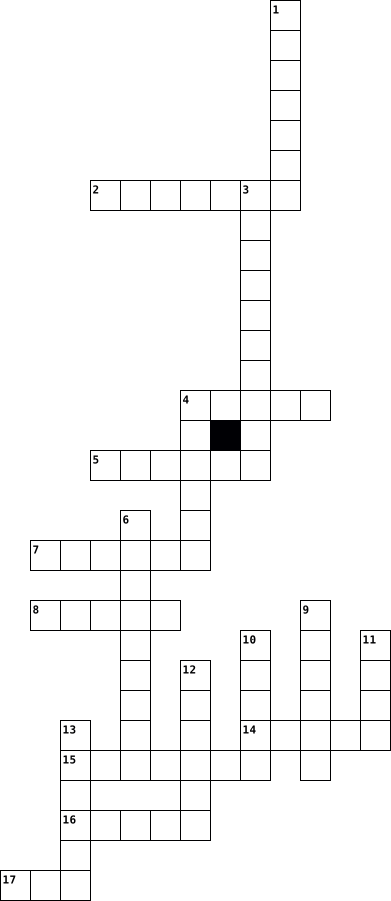
Across
- actually the youngest present at the reunion
- War 1, which war did Henry Thiessen serve in (3 words)?
- Evelyn's brother's name
- What Art drove for years
- current youngest member of the family
- Art or Evelyn's mother's name
- Who was older between Evelyn & Art?
- oldest living member of the family
- Number of years Art & Evelyn were married
Down
- Art's full name
- Where Art & Evelyn were married
- Evelyn's maiden name
- Brethren, Denomination where Art & Evelyn attended church (2 words)
- traveled the furthest to the reunion
- Who rode the train with Evelyn to OK?
- largest family (including in-laws, babies)
- the family that prays together ________ together
- Art or Evelyn's father's name
18 Clues: Art's full name • Evelyn's maiden name • Evelyn's brother's name • What Art drove for years • Art or Evelyn's father's name • Art or Evelyn's mother's name • Where Art & Evelyn were married • oldest living member of the family • Who was older between Evelyn & Art? • traveled the furthest to the reunion • current youngest member of the family • Who rode the train with Evelyn to OK? • ...
Douglas MacArthur Crossword 2022-02-17

Across
- Other than both World Wars (including the Pacific War) what war was MacArthur involved in militarily?
- What is the name of the military academy that MacArthur attended?
- What port was MacArthur in charge of Papua New Guinea?
- After World War II ended, MacArthur took charge in the ________ occupation.
- During the Korean war, MacArthur was in charge of which military forces?
- Upon returning to what place did MacArthur state “I have returned”?
Down
- Many documents, letters, photos, and other historical artifacts are kept at the ________ in Norfolk, VA.
- The name of Douglas MacArthur’s autobiography.
- What US state was he born in in 1880?
- Bay On September 2, 1945 Macarthur was in charge of the Japanese surrender at _______.
10 Clues: What US state was he born in in 1880? • The name of Douglas MacArthur’s autobiography. • What port was MacArthur in charge of Papua New Guinea? • What is the name of the military academy that MacArthur attended? • Upon returning to what place did MacArthur state “I have returned”? • During the Korean war, MacArthur was in charge of which military forces? • ...
American Colonies Crossword 2024-09-23

Across
- Business entity where company stocks can be bought and owned by shareholders who then own a portion of the company and can profit from it. (3 words)
- Leader of the Jamestown colony who took control during the "starving time." (2 words)
- Strict religious group who fled England and settled in Massachusetts Bay Colony.
- Wealthy quaker who founded Pennsylvania and was known for peaceful interaction with Native tribes. (2 words)
- The first elected assembly of the New World. It represented the people of Jamestown Colony. (3 words)
- Native American leader in Virginia who made peace with the colonists of the Jamestown colony after many conflicts.
- The sea journey undertaken by slave ships from West Africa to the West Indies as part of the Triangle of Trade between the Old World and New World. (2 words)
- First governing document of Plymouth Colony which was written aboard the Mayflower by the Pilgrims before settling the colony. (2 words)
- Puritan who was banished from Massachusetts Bay colony, so she founded Rhode Island. (2 words)
- Stock company who received a charter to establish Jamestown Colony for a profit. (2 words)
Down
- Young Native American girl who allegedly save John Smith, a colonial leader in Jamestown. She married John Rolfe and established peace between the two groups.
- Colonies in Delaware, New York, New Jersey, Pennsylvania, and Maryland. (2 words)
- Colonies in Virginia Maryland, North Carolina, South Carolina, and Georgia. (2 words)
- Uprising by former indentured servants and lower classes against Jamestown Colony over lack of protection and other injustices they felt. (2 words)
- Form of democracy where each person votes on issues and was used in Plymouth. (2 words)
- Religious revival movement in the American Colonies during the 1700’s when travelling preachers reached thousands with fiery sermons. (2 words)
- Puritan who was banished from Massachusetts Bay colony who supported the separation of church and state. (2 words)
- Someone who agrees to work for a period (usually 7 years) in exchange for passage to the New World. (2 words)
- Minister who was popular during the Great Awakening. His most famous sermon was called, "Sinners in the Hands of an Angry God." (2 words)
- Also known as King Phillip, this was a Wampanoag leader who waged war with the English after they expanded into his territory.
- Colonies in Massachusetts, New Hampshire, Connecticut, and Rhode Island (3 words)
- Puritan leader who described the Massachusetts Bay Colony as a "city upon a hill."
- Peaceful religious group who settled in Pennsylvania after William Penn established the colony.
23 Clues: Strict religious group who fled England and settled in Massachusetts Bay Colony. • Colonies in Delaware, New York, New Jersey, Pennsylvania, and Maryland. (2 words) • Colonies in Massachusetts, New Hampshire, Connecticut, and Rhode Island (3 words) • Puritan leader who described the Massachusetts Bay Colony as a "city upon a hill." • ...
Chapter 33 - Key Terms and People 2021-03-18

Across
- Passed amidst worries about the effects that labor strikes would have on war production, this law allowed the federal government to seize and operate plants threatened by labor disputes. It also criminalized strike action against government-run companies.
- From July 17 to August 2, 1945, President Harry S. Truman met with Soviet leader Joseph Stalin and British leaders Winston Churchill and later Clement Attlee (when the Labour party defeated Churchill’s Conservative party) near Berlin to deliver an ultimatum to Japan: surrender or be destroyed.
- Civil Rights leader and head of the Brotherhood of Sleeping Car Porters who threatened to march on Washington to demand equal opportunities for blacks in war jobs and in the armed forces.
- The women’s branch of the U.S. Coast Guard established during World War II to employ women in noncombatant jobs. The women’s branch of the U.S. Army established during World War II to employ women in noncombatant jobs. Women now participated in the armed services in ways that went beyond their traditional roles as nurses.
- August 15, 1945, heralded the surrender of Japan and the final end to World War II.
- The women’s branch of the U.S. Navy established during World War II to employ women in noncombatant jobs. The women’s branch of the U.S. Army established during World War II to employ women in noncombatant jobs. Women now participated in the armed services in ways that went beyond their traditional roles as nurses.
- Supreme commander of U.S. forces in Europe during World War II. Later became the thirty-fourth president of the United States.
- The flamboyant, vain, and brilliant American commander in the Philippines and mastermind of the "leapfrogging" strategy for bypassing strongly defended Japanese islands during World War II. MacArthur would go on to command American troops in the Korean War until he was relieved of his duties by President Harry S. Truman for insubordination in 1951.
- So named because of the bulge in Allied lines caused by the last desperate German offensive on the western front in WWII. A force of some 400,000 German soldiers, 1000 aircraft, and several hundred tanks launched a surprise attack through the snow-clad Ardennes forest on December 16, 1944, aiming to divide and encircle the Allied forces and cut off access to the Belgian resupply port of Antwerp. The Germans were eventually stopped in late January 1945 at a cost of more than 8000 U.S. soldiers killed in action. It was the single costliest American battle of WWII.
- Established in 1942 by executive order to direct all war production, including procuring and allocating raw materials, to maximize the nation’s war machine. Had sweeping powers over the U.S. economy and was abolished in November 1945 soon after Japan’s defeat.
- Chose to use nuclear weapons against Japan at Hiroshima and Nagasaki.
- The source of frenzied rejoicing, May 8, 1945, marked the official end to the war in Europe, following the unconditional surrender of what remained of the German government.
- Program established by agreement with the Mexican government to recruit temporary Mexican agricultural workers to the United States to make up for wartime labor shortages in the Far West. The program persisted until 1964, by which time it had sponsored 4.5 million border crossings.
- An agreement between Britain and the United States developed at a conference in Washington, D.C., between January 29 and March 27, 1941, that should the United States enter World War II, the two nations and their allies would coordinate their military planning, making a priority of protecting the British Commonwealth. That would mean “getting Germany first” in the Atlantic and the European theater and fighting more defensively on other military fronts.
- Signed by President Franklin D. Roosevelt on February 19, 1942, it authorized the secretary of war to designate military zones from which certain categories of people could be excluded. Fueled by historic anti-Japanese sentiment as well as panic following the December 7, 1941, attack on Pearl Harbor, the order led to the forced removal of some 120,000 persons of Japanese ancestry (70,000 of them U.S. citizens) from the Western Military Zone (the coastal sections of Washington, Oregon, and California). Most but not all of those removed were interned in relocation camps in the interior West. The order was rescinded in December 1944, and legislation passed in 1988 offered an official government apology and modest financial compensation to surviving citizen internees.
Down
- A critically important wartime agency charged with regulating the consumer economy by rationing scarce supplies, such as automobiles, tires, fuel, nylon, and sugar, and by curbing inflation by setting ceilings on the price of goods. Rents were controlled as well in parts of the country overwhelmed by war workers. Extended after World War II ended to continue the fight against inflation.
- Threatened with a massive “Negro March on Washington” to demand equal opportunities in war jobs and in the military, Franklin D. Roosevelt’s administration issued an executive order forbidding racial discrimination in all defense plants operating under contract with the federal government.
- Established by President Franklin D. Roosevelt to act as an arbitration tribunal and mediate disputes between labor and management that might have led to war stoppages and thereby undermined the war effort. Charged with adjusting wages with an eye to controlling inflation.
- U.S. Navy admiral who was commander in chief of the Pacific naval forces for the United States and its allies during World War II. He strategized the important victories in the Battles of Midway and the Coral Sea.
- Native American men who served in the military by transmitting radio messages in their native languages, which were undecipherable by German and Japanese spies.
- Nonviolent civil rights organization founded in 1942 and committed to the “Double V”—victory over fascism abroad and racism at home. After World War II. Would become a major force in the civil rights movement.
- The women’s branch of the U.S. Army established during World War II to employ women in noncombatant jobs. Women now participated in the armed services in ways that went beyond their traditional roles as nurses.
- Code name for the American commission established in 1942 to develop the atomic bomb. The first experimental bomb was detonated on July 16, 1945, in the desert of New Mexico. Atomic bombs were then dropped on two cities in Japan in hopes of bringing the war to an end: Hiroshima on August 6, 1945, and Nagasaki on August 9, 1945.
- German-born scientist who immigrated to the United States in 1933 to escape the Nazis. He helped to persuade FDR to push ahead with preparations for developing the atomic bomb, but he later ruefully declared that "annihilation of any life on earth has been brought within the range of technical possibilities."
- A massive military operation led by American forces in Normandy beginning on June 6, 1944. The pivotal battle led to the liberation of France and brought on the final phases of World War II in Europe.
- A pivotal naval battle fought near the island of Midway on June 3–6, 1942. The victory halted Japanese advances in the Pacific.
26 Clues: Chose to use nuclear weapons against Japan at Hiroshima and Nagasaki. • August 15, 1945, heralded the surrender of Japan and the final end to World War II. • Supreme commander of U.S. forces in Europe during World War II. Later became the thirty-fourth president of the United States. • ...
1.2 Crossword 2025-02-24

Across
- Rebellions in the French and Russian armies during World War I
- Second battle of this location in 1918 marked the beginning of Germany's defeat
- Last name of the Canadian Prime Minister who introduced conscription in 1917
- Payments Germany was forced to make after World War I
- Agreement signed on November 11, 1918, to end World War I
- City where the 1919 peace conference was held
- Treaty that ended World War I and imposed heavy penalties on Germany
- International organization proposed to prevent future wars
- Country that joined the war in 1917 after unrestricted submarine warfare resumed
- Series of battles leading to Germany's defeat in 1918
- French leader who pushed for harsh terms in the Treaty of Versailles
- U.S. President who proposed the Fourteen Points for peace
- German term for the Treaty of Versailles, meaning "dictated peace"
- Major 1916 battle where the Germans attempted a breakthrough
Down
- Defensive line to which Germany withdrew in 1917
- Communist group that seized power in Russia
- City where store windows were smashed and police clashed with demonstrators in August 1917
- 1918 violent protests in Quebec City against conscription
- Italian leader at the Paris Peace Conference
- Pandemic that killed millions globally at the end of the war
- 1918 German military push before the arrival of American forces
- Opposition leader who opposed conscription
- Peace treaty between Germany and Russia after the Russian Revolution
- British leader at the Paris Peace ConferenceLusitania Ship sunk by German U-boats, influencing U.S. entry into the war
24 Clues: Opposition leader who opposed conscription • Communist group that seized power in Russia • Italian leader at the Paris Peace Conference • City where the 1919 peace conference was held • Defensive line to which Germany withdrew in 1917 • Payments Germany was forced to make after World War I • Series of battles leading to Germany's defeat in 1918 • ...
MLG COLE 2016-05-11

Across
- hates dogs
- NFL
- game console
- can buy things
- Mexican food
- ware on your feet
Down
- of duty world war 2 game
- need to drink to survive
- really good basketball player
- hates cats
10 Clues: NFL • hates dogs • hates cats • game console • Mexican food • can buy things • ware on your feet • of duty world war 2 game • need to drink to survive • really good basketball player
The iron curtain 2020-04-29

Across
- this nation was led by Hitler in world war 2.
- the capital of Germany
- all businesses are owned by the government
Down
- the opposite of communism
- a time when Russia and the USA were on the verge of nuclear war.
- this nation formed after World war 2, created by Russia.
6 Clues: the capital of Germany • the opposite of communism • all businesses are owned by the government • this nation was led by Hitler in world war 2. • this nation formed after World war 2, created by Russia. • a time when Russia and the USA were on the verge of nuclear war.
Devon morgan-key id-chapter 13 2021-03-15

Across
- attack strategie
- two main coalitions fought in the war.
- theatre of combat during World War I that included operations on the main Russian front as well as campaigns in Romania.
- was the main theatre of war during the First World War.
- the controlled distribution of scarce resources, goods, services, or an artificial restriction of demand.
- a group that is associated with another group
- was an American politician and academic who served as the 28th president of the United States from 1913 to 1921.
- the most important of the peace treaties that brought World War I to an end
- process by which a country determines its own statehood and forms its own allegiances and government
- the belief or desire of a government or people that a country should maintain a strong military capability and be prepared to use it aggressively to defend or promote national interests.
- war that is unrestricted in terms of the weaponing
- an international diplomatic group developed after World War I as a way to solve disputes between countries before they erupted into open warfare.
Down
- communication that is primarily used to influence an audience and further an agenda,
- operational plan for a designated attack on France once Russia, in response to international tension, had started to mobilise her forces near the German border.
- a type of naval warfare in which submarines sink vessels such as freighters and tankers without warning
- a statement of principles for peace that was to be used for peace negotiations in order to end World War I.
- describes the informal understanding between the Russian Empire, the French Third Republic and Great Britain.
- was the last German Emperor and King of Prussia, reigning from 15 June 1888 until his abdication on 9 November 1918
- was a French statesman who served as Prime Minister of France from 1906 to 1909 and again from 1917 until 1920.
- secret agreement between Germany, Austria-Hungary, and Italy that was formed on the 20th of May 1882.
- agreement made by opposing sides in a war to stop fighting for a certain time
21 Clues: attack strategie • two main coalitions fought in the war. • a group that is associated with another group • war that is unrestricted in terms of the weaponing • was the main theatre of war during the First World War. • the most important of the peace treaties that brought World War I to an end • ...
20th-Century Global Conflicts Crossword 1 2024-05-09

Across
- strong wire with sharp barbs used in trench warfare
- the Empire disintegrated due to nationalist movements within the empire, leading to the creation of several independent nations after WWI.
- chemical weapons used in warfare, used in WWI
- campaign of political repression in the Soviet Union from 1936 to 1938
- policy of forced consolidation of individual peasant households in Soviet Russia
- first of two revolutions in Russia in 1917, resulting in the abdication of Tsar Nicholas II
- an independent republic but with significant territorial losses, political instability, and economic hardships
- mass murder and expulsion of 1.5 million ethnic Armenians carried out in Turkey
- Following the collapse of the Ottoman Empire after World War I, established in 1923.
- rapid-fire automatic gun that shoots bullets continuously. Used in WWI.
Down
- Arab Revolt (1916-1918) against the Ottoman Turkish rule, influenced by the desire for Arab independence
- Enlarged size and population and romanian populations from Hungary and Russia
- League of Nations policy that assigned former German and Ottoman territories to the victorious powers of World War I.
- watercraft used during World Wars for stealth capabilities
- significant point of morale crisis and mutinies within the French army, failure of the Nivelle Offensive
- Established in 1918 after World War I, ending over a century of partitions by Russia, Prussia, and Austria
- series of nationalized plans for economic development in the Soviet Union
- armed insurrection in Ireland during Easter Week, April 1916.
- During WWI, this country was of the allies seizing German territories in Pacific and China
- armored fighting vehicle for front lined combat
20 Clues: chemical weapons used in warfare, used in WWI • armored fighting vehicle for front lined combat • strong wire with sharp barbs used in trench warfare • watercraft used during World Wars for stealth capabilities • armed insurrection in Ireland during Easter Week, April 1916. • campaign of political repression in the Soviet Union from 1936 to 1938 • ...
Unit 8 2024-05-04

Across
- Gave low interest loans to people to install electricity in their rural homes
- What was Roosevelt series of programs called
- Huge boats built in Savannah and Brunswick that provided job during World War II
- What was the relationship between President Roosevelt and Georgia
- Paid young men to work on outside project such as planting trees and building parks
- A world led to unemployment across the U.S.
- An Attack on Hawaii by the Japanese that convinced Americans to support fighting in the World War II
Down
- Program that led U.S. send military supplies to allies fighting Germany and Japan in World War II
- Bug that eat cotton
- Georgia representative who suppoorted military spending, especially on Navy
- Paid farmers to grow less crops
- Provided unemployment, retirement and disability insurance to people
- Georgia senator who supported military growth and spending in the state
- A long period of time where there are little or no rain
- A war plan that was built in Georgia and provided jobs during World War II
15 Clues: Bug that eat cotton • Paid farmers to grow less crops • A world led to unemployment across the U.S. • What was Roosevelt series of programs called • A long period of time where there are little or no rain • What was the relationship between President Roosevelt and Georgia • Provided unemployment, retirement and disability insurance to people • ...
Vocab 5 2022-02-11

Across
- refers to President Theodore Roosevelt's foreign policy. "speak softly and carry a big stick; you will go far"
- not helping/supporting either side in a conflict, etc.
- Maine was a US Navy ship that sunk in Havana Harbor on February 15, 1898
- states that the US could intervene in the internal affairs of Latin American countries if they committed flagrant and chronic wrongdoings
- the best known US policy toward the western hemisphere
- was a British ocean liner that was launched by the Cunard line in 1906
- identification with one's own nation and support for its interest
Down
- was one of two main coalitions that fought in world war 1
- a union or association formed for mutual benefit
- was a secret diplomatic communication issued from the German Foreign office in January 1917
- the belief or desire of a government or people that a country should maintain a strong military capability
- a country that has significant influence in international affairs
- an American politician, statesman, conservationist, naturalist, and writer who was the 26th US president
- was an American politician and the 28th US president
- Journalism that is based upon sensationalism and crude exaggeration
- was US president Woodrow Wilson's speech outlining his vision for ending world war 1
- an American news publication found in 1970
- was an infantry regiment of the NY Army Nation Guard during World war 1 and 2
- a state formally cooperating with another for a militaries or other purpose
- a policy of extending a country's power and influence through diplomacy or military force
- the first worldwide intergovernmental organization whose principal mission was to maintain world peace
- is an artificial waterway in Panama that connects the Atlantic and Pacific ocean and divides North and South America
22 Clues: an American news publication found in 1970 • a union or association formed for mutual benefit • was an American politician and the 28th US president • not helping/supporting either side in a conflict, etc. • the best known US policy toward the western hemisphere • was one of two main coalitions that fought in world war 1 • ...
World War One Crossword 2026-03-16

Across
- The coalition of Germany, Austria-Hungary, the Ottoman Empire, and Bulgaria during World War I.
- The policy of extending a country's power and influence through colonization or military force.
- A system for selecting individuals for military service.
- An alliance between Great Britain, France, and Russia before World War I.
- Not taking sides in a conflict or disagreement.
- An agreement made by opposing sides in a war to stop fighting for a certain time.
- A type of combat in which soldiers fight from deep ditches called trenches.
- The belief in building up strong armed forces to prepare for war.
- The area between opposing armies where no one can safely go.
Down
- A bond issued by a government to help finance military operations during wartime.
- A situation in which neither side can gain an advantage or win.
- Information, especially biased or misleading, used to promote a political cause or point of view.
- A union or association formed for mutual benefit, especially between countries.
- Payments made by a country to compensate for damage caused during a war.
- Large-caliber guns used in warfare on land.
- A strong feeling of pride in and devotion to one's country.
- A German submarine used during World War I and World War II.
17 Clues: Large-caliber guns used in warfare on land. • Not taking sides in a conflict or disagreement. • A system for selecting individuals for military service. • A strong feeling of pride in and devotion to one's country. • A German submarine used during World War I and World War II. • The area between opposing armies where no one can safely go. • ...
Final Study Aid 2018-01-17

Across
- Continent on which WWII was fought
- Million Total people killed during the Holocaust
- A switch from war to peacetime economy
- President who helped pull U.S. out of Depression
- Pearl Harbor attack took place in this state
- Hitler's book written while incarcerated
- America's spy agency
- The country with the most death camps
- Form of non-violent protest used by Dr. King
- Organization formed after WWII to promote peace
- War II This war began with the German invasion of Poland
Down
- Code name for the D-Day invasion
- Hatred towards Jews
- Closest the world ever came to nuclear war
- Treaty that stopped the Korean War
- Country where the D-Day invasion took place
- U.S. policy of partially withdrawing from world affairs
- First satilite launched into space
- Solution Hitler's plan to kill ALL Jews
- Peace treaty that ended WWI
- President blamed for depression
- Consumed by fire (Greek)
- Japanese city hit with an atomic bomb (not Nagasaki)
- June 6, 1944...turning point in WWII
24 Clues: Hatred towards Jews • America's spy agency • Consumed by fire (Greek) • Peace treaty that ended WWI • President blamed for depression • Code name for the D-Day invasion • Continent on which WWII was fought • Treaty that stopped the Korean War • First satilite launched into space • June 6, 1944...turning point in WWII • The country with the most death camps • ...
Final Study Aid 2018-01-17

Across
- First satilite launched into space
- Form of non-violent protest used by Dr. King
- Japanese city hit with an atomic bomb (not Nagasaki)
- June 6, 1944...turning point in WWII
- Treaty that stopped the Korean War
- Continent on which WWII was fought
- Hitler's book written while incarcerated
- Hatred towards Jews
- A switch from war to peacetime economy
- President who helped pull U.S. out of Depression
- Peace treaty that ended WWI
- America's spy agency
- President blamed for depression
- Country where the D-Day invasion took place
Down
- Pearl Harbor attack took place in this state
- Organization formed after WWII to promote peace
- U.S. policy of partially withdrawing from world affairs
- Closest the world ever came to nuclear war
- Code name for the D-Day invasion
- Solution Hitler's plan to kill ALL Jews
- The country with the most death camps
- War II This war began with the German invasion of Poland
- Consumed by fire (Greek)
- Million Total people killed during the Holocaust
24 Clues: Hatred towards Jews • America's spy agency • Consumed by fire (Greek) • Peace treaty that ended WWI • President blamed for depression • Code name for the D-Day invasion • First satilite launched into space • Treaty that stopped the Korean War • Continent on which WWII was fought • June 6, 1944...turning point in WWII • The country with the most death camps • ...
Eras and Time Periods 2025-06-09

Across
- 1945-early1990s; Intense tension between the U.S. and the Soviet Union
- 1861-1865: The war between the northern and southern United States
- 1890-1920; An American movement with social reform that encompassed modern ideas such as working conditions, unions, and female suffrage
Down
- 1914-1918; A modern global war
- 1919-1939; The 2-year span between World War I and World War II
- 1939-1945; The second modern global war
- 1750-1850; A time before there were machines and tools to help perform tasks
- 18th/19th Centuries; Industrial and technological advances
- 1800-1900 (19th Century); A British era matching with the reign of Queen Victoria
9 Clues: 1914-1918; A modern global war • 1939-1945; The second modern global war • 18th/19th Centuries; Industrial and technological advances • 1919-1939; The 2-year span between World War I and World War II • 1861-1865: The war between the northern and southern United States • 1945-early1990s; Intense tension between the U.S. and the Soviet Union • ...
Eras and Time Periods 2025-06-09

Across
- 18th/19th Centuries; Industrial and technological advances
- 1939-1945; The second modern global war
- 1945-early1990s; Intense tension between the U.S. and the Soviet Union
- 1890-1920; An American movement with social reform that encompassed modern ideas such as working conditions, unions, and female suffrage
- 1861-1865: The war between the northern and southern United States
- 1750-1850; A time before there were machines and tools to help perform tasks
Down
- 1919-1939; The 2-year span between World War I and World War II
- 1914-1918; A modern global war
- 1800-1900 (19th Century); A British era matching with the reign of Queen Victoria
9 Clues: 1914-1918; A modern global war • 1939-1945; The second modern global war • 18th/19th Centuries; Industrial and technological advances • 1919-1939; The 2-year span between World War I and World War II • 1861-1865: The war between the northern and southern United States • 1945-early1990s; Intense tension between the U.S. and the Soviet Union • ...
Citizenship 2017-07-26

Across
- a new citizen promises to be _____ to the U.S.
- World War _____ was fought in the 1900s
- _____ Wilson was President during World War I
- one right in the First Amendment
- the U.S. fought _____, Germany and Italy in World War II
- a state that borders Canada
- branch of government reviews, explains, and interprets laws
- type of economic system in the U.S.
- number of justices on the Supreme Court
- part of legislature with 435 members
- one power of the states
- George _____ was the father of our country
- current president of the U.S.
- Civil Rights _____ tried to end racial discrimination
- Franklin _____ was President during the Great Depression and World War II
- number of years a Senator serves
- part of legislature with 100 members
- Abraham Lincoln freed the _____
Down
- a state that borders Mexico
- the Statue of Liberty is in New York _____
- number of years a President serves
- Constitution was written at the Constitutional _____
- the national anthem is called the Star _____ Banner
- Number of U.S. Representatives depends on the state's _____
- Massachusetts congressman for New Bedford and Cape Cod
- Chief Justice of the Supreme Court
- one right and responsibility reserved for citizens
- the month we celebrate Independence Day
- U.S. general during World War II who became President
- change or addition to the Constitution
- Susan Anthony fought for the rights of _____
- the 13 stripes of the flag represent the original _____
- Martin _____ King fought for Civil Rights
33 Clues: one power of the states • a state that borders Mexico • a state that borders Canada • current president of the U.S. • Abraham Lincoln freed the _____ • one right in the First Amendment • number of years a Senator serves • number of years a President serves • Chief Justice of the Supreme Court • type of economic system in the U.S. • part of legislature with 435 members • ...
Lesson 22 and 23 Crossword 2023-12-07

Across
- the World War I coalition, headed by Germany and Austria-Hungary and later including the Ottoman Empire and Bulgaria, that opposed the Allied powers
- the glorification of military power and values
- an unarmed British ocean liner whose sinking by a German U-boat on May 7, 1915, influenced the U.S. decision to enter World War I
- in World War I, the final Allied offensive that brought about the end of the war
- the largest and most heavily armored type of warship
- information or rumors spread by a group or government to promote its cause or ideas or to damage an opposing cause or idea
- soldiers who fight on foot
- a weapon that contains a poisonous substance
- a law passed by Congress in 1917 to create a national draft
Down
- a type of cannon
- a person who physically fights a war
- in World War I, the first U.S. military force to be deployed to France
- the World War I coalition, headed by France, Britain, and Russia and later including Portugal, Japan, and Italy, that opposed the Central powers
- a form of warfare in which armies conduct attacks on each other from opposition positions in fortified trenches
- a group of vessels or vehicles that travel together, often under the protection of an armed escort
- a strong feeling of pride in and loyalty to one's nation
- a situation in a contest or conflict in which neither side can make a useful move
17 Clues: a type of cannon • soldiers who fight on foot • a person who physically fights a war • a weapon that contains a poisonous substance • the glorification of military power and values • the largest and most heavily armored type of warship • a strong feeling of pride in and loyalty to one's nation • a law passed by Congress in 1917 to create a national draft • ...
WW2 Vocabulary 2025-05-20

Across
- the limiting of goods or services that are in high demand and short supply
- Day Germany unconditionally surrendered its military forces to the Allies, including the United States
- Day marks the end of World War II, specifically the Allied victory over Japan, on August 14, 1945
- The economy and other parts of society are heavily and closely controlled by the government
- A swift, sudden, and intense military attack designed to quickly achieve victory
- Harbor Japan uses kamikaze to bomb pearl harbor.
- Churchill The leader of Great Britain
- A government-imposed restriction or ban on trade, often used as a political tool to pressure another country
- Torch the codename for the Allied invasion of French North Africa during World War II
- Gardens vegetable gardens planted during the world wars in order to ensure an adequate food supply for civilians and troops.
- Overlord the codename for the Allied invasion of French North Africa during World War II
Down
- Hitler Germany leader and the cause if World War II
- Great Migration The period from 1940 to 1970 when approximately 5 million African Americans moved from the South to the North, Midwest, and West, seeking better job opportunities and escaping racial discrimination in the South
- Giving in to someone's demands or demands in order to avoid conflict or preserve peace
- D Roosevelt led the US to victory in World War II
- Stalin the leader of the soviet union during World War II
- Freedoms Speech Freedom of speech, freedom of worship, freedom from want, and freedom from fear.
- hopping a US military strategy in the Pacific Theater where Allied forces captured strategically important islands while bypassing heavily fortified Japanese positions
- defence zone a geographical region, like the Western Hemisphere, that is defended by a country to protect itself and its allies
- Raid a daring air raid launched by the U.S. Army Air Forces on April 18, 1942, during World War II
20 Clues: Churchill The leader of Great Britain • Harbor Japan uses kamikaze to bomb pearl harbor. • D Roosevelt led the US to victory in World War II • Hitler Germany leader and the cause if World War II • Stalin the leader of the soviet union during World War II • the limiting of goods or services that are in high demand and short supply • ...
Vocab 5 2022-02-11

Across
- was an American politician and the 28th US president
- an American politician, statesman, conservationist, naturalist, and writer who was the 26th US president
- was an infantry regiment of the NY Army Nation Guard during World war 1 and 2
- a state formally cooperating with another for a militaries or other purpose
- was a British ocean liner that was launched by the Cunard line in 1906
- refers to President Theodore Roosevelt's foreign policy. "speak softly and carry a big stick; you will go far"
- Maine was a US Navy ship that sunk in Havana Harbor on February 15, 1898
Down
- was a secret diplomatic communication issued from the German Foreign office in January 1917
- states that the US could intervene in the internal affairs of Latin American countries if they committed flagrant and chronic wrongdoings
- was US president Woodrow Wilson's speech outlining his vision for ending world war 1
- a country that has significant influence in international affairs
- Journalism that is based upon sensationalism and crude exaggeration
- the best known US policy toward the western hemisphere
- not helping/supporting either side in a conflict, etc.
- was one of two main coalitions that fought in world war 1
- an American news publication found in 1970
- the first worldwide intergovernmental organization whose principal mission was to maintain world peace
- the belief or desire of a government or people that a country should maintain a strong military capability
- a union or association formed for mutual benefit
- a policy of extending a country's power and influence through diplomacy or military force
- is an artificial waterway in Panama that connects the Atlantic and Pacific ocean and divides North and South America
- identification with one's own nation and support for its interest
22 Clues: an American news publication found in 1970 • a union or association formed for mutual benefit • was an American politician and the 28th US president • the best known US policy toward the western hemisphere • not helping/supporting either side in a conflict, etc. • was one of two main coalitions that fought in world war 1 • ...
TEST PREP PERIOD 6 - US Imperialism & WWI 2021-05-25

Across
- California Gold Rush, Homestead Act, and the Completion of transcontinental railroad all factors that contributed to Westward _________________.
- _________________ telegram was part of an effort to enlist Mexican support for Germany if the United States declared war.
- construction of the _________________ become more important to the United States after the Spanish-American War because the navy needed a faster way to move ships between the Atlantic and Pacific Oceans.
- Renewal of unrestricted _________________ warfare by Germany was one of the events that influenced President Woodrow Wilson’s decision to enter World War I
- Securing land for the Panama Canal and military interventions in Latin America are examples of Roosevelt's use of the "________________" diplomacy.
- _________________ companies sold land in the West for very low price.
- After World War I, senators who opposed United States participation in the ___________________ argued that American membership in the organization would involve the nation in future world conflicts.
- As a result of low land prices and the Homestaed Act many farmers moved West and the Native American Indians on the Great Plains were forced onto _________________.
- _________________ policy of unrestricted submarine warfare, interception of the Zimmermann Note, and American loans to Allied nations led to United States entry into World War I.
- ____________________ bonds were used during the administration of President Woodrow Wilson to help finance (pay for) the war effort.
- Some of the major reasons for United States _________________ included: the desire for markets and raw materials; closing of the western frontier; missionary spirit; belief in the White Man's Burden.
- The United States Senate refused to ratify the Treaty of Versailles after World War I because many senators believed that the League of Nations could draw the United States into future ___________________.
- President Theodore Roosevelt's __________________ strengthened the Monroe Doctrine by establishing the policy that the United States would intervene in Latin America to prevent European interference.
Down
- The United States tried to avoid involvement in World War I by following a policy of _________________.
- President Theodore Roosevelt’s commitment to the proverb, “Speak softly and carry a big stick; you will go far,” was most clearly shown when he intervened in _________________ affairs.
- The primary goal of the _________________ of 1887 regarding Native American Indians was to assimilate Native American Indians into mainstream American life.
- _________________ Offered free 160 acres of land in the West to anyone willing to live on it for 5 years.
- The disclosure of the Zimmerman document contributed to the entry of the United States into _________________.
- During World War I, President Woodrow Wilson outlined the ___________________ suggesting a peace plan to prevent future wars.
- The federal government supported rail road construction by giving rail road companies _________________ grants.
- One of the major characteristics of American imperialism in the late 19th and early 20th centuries was acquiring _________________ to promote economic and strategic interests.
- A major result of the _________________ War (1898) was that the United States assumed a more prominent role in world affairs.
- American newspapers used yellow journalism to build public support for the war against _________________.
- Secretary of State John Hay sent his Open Door Notes (1899–1900) to world powers to gain equal access to _________________ markets.
- The Homestead Act and grants of land to railroads were used to encourage settlement of the _________________.
- Exaggerated, sensational newspaper headlines and articles are often referred to as __________________ journalism.
- The establishment of the Open Door policy (1899–1900) and the response to the _________________ Rebellion (1900) showed that the United States wanted to protect American trading interests in China.
27 Clues: _________________ companies sold land in the West for very low price. • The United States tried to avoid involvement in World War I by following a policy of _________________. • _________________ Offered free 160 acres of land in the West to anyone willing to live on it for 5 years. • ...
MLG COLE 2016-05-11

Across
- hates dogs
- NFL
- game console
- can buy things
- Mexican food
- ware on your feet
Down
- of duty world war 2 game
- need to drink to survive
- really good basketball player
- hates cats
10 Clues: NFL • hates dogs • hates cats • game console • Mexican food • can buy things • ware on your feet • of duty world war 2 game • need to drink to survive • really good basketball player
Battles 2020-04-30

Across
- A major battle fought near Japan by United States Marine and Army forces against the Imperial Japanese Army.
- code name for the Axis invasion of the Soviet Union.
- Naval base in Hawaii known for being bombed by Japanese jets
- one of the bloodiest battles in the history of warfare, with an estimated 2 million total casualties. Germany and the soviet union fought against each other in this war.
- also known as the Ardennes Counteroffensive, was the last major German offensive campaign during World War II.
- also known as the Tokyo Raid by the United States on the Japanese capital, Tokyo
- comparative inaction at the beginning of World War II between the German invasion of Poland and Norway
Down
- Japanese city known for being bombed
- concentration of offensive weapons (such as tanks, planes, and artillery) along a narrow front to break through opponents line of defense.
- took place on 4–7 June 1942, six months after Japan’s attack on Pearl Harbor and one month after the Battle of the Coral Sea.
- a battle happened in this city in France
- Allied invasion of French North Africa during the Second World War.
- transfer by the Imperial Japanese Army of 60,000–80,000 American and Filipino prisoners of war.
- A tiny Japanese island 680 miles away from Toky in which a battle happened
- largest naval battle in history, with over 200,000 naval personnel involved. It was fought in waters near the Philippine islands.
15 Clues: Japanese city known for being bombed • a battle happened in this city in France • code name for the Axis invasion of the Soviet Union. • Naval base in Hawaii known for being bombed by Japanese jets • Allied invasion of French North Africa during the Second World War. • A tiny Japanese island 680 miles away from Toky in which a battle happened • ...
28 2025-02-16

Across
- Chemical used in Vietnam
- Symbol of war resistance
- Cold War nuclear trials
- Cold War conflicts in Asia
- Negotiations in Vietnam War
- Vietnam War general
- Capital of South Vietnam
- Cold War spies switching sides
- Political opponents forced out
- US president after JFK
- Soviet leader ousted in 1964
- Anti-war demonstrations
- US defense headquarters
- Youth in China’s revolution
Down
- Explosive used in Vietnam
- Warfare strategy in Vietnam
- Laos conflict during Vietnam
- Forced military service
- Opposed the Vietnam War
- Agreement to stop fighting
- Talks to end Vietnam War
- US Cold War rival
- Overthrowing of governments
- Supported the Vietnam War
- Conference on world affairs
25 Clues: US Cold War rival • Vietnam War general • US president after JFK • Cold War nuclear trials • Forced military service • Opposed the Vietnam War • Anti-war demonstrations • US defense headquarters • Chemical used in Vietnam • Symbol of war resistance • Talks to end Vietnam War • Capital of South Vietnam • Explosive used in Vietnam • Supported the Vietnam War • Agreement to stop fighting • ...
TEST PREP PERIOD 4 - US Imperialism & WWI 2021-05-25

Across
- California Gold Rush, Homestead Act, and the Completion of transcontinental railroad all factors that contributed to Westward _________________.
- _________________ telegram was part of an effort to enlist Mexican support for Germany if the United States declared war.
- construction of the _________________ become more important to the United States after the Spanish-American War because the navy needed a faster way to move ships between the Atlantic and Pacific Oceans.
- Renewal of unrestricted _________________ warfare by Germany was one of the events that influenced President Woodrow Wilson’s decision to enter World War I
- Securing land for the Panama Canal and military interventions in Latin America are examples of Roosevelt's use of the "________________" diplomacy.
- _________________ companies sold land in the West for very low price.
- After World War I, senators who opposed United States participation in the ___________________ argued that American membership in the organization would involve the nation in future world conflicts.
- As a result of low land prices and the Homestaed Act many farmers moved West and the Native American Indians on the Great Plains were forced onto _________________.
- _________________ policy of unrestricted submarine warfare, interception of the Zimmermann Note, and American loans to Allied nations led to United States entry into World War I.
- ____________________ bonds were used during the administration of President Woodrow Wilson to help finance (pay for) the war effort.
- Some of the major reasons for United States _________________ included: the desire for markets and raw materials; closing of the western frontier; missionary spirit; belief in the White Man's Burden.
- The United States Senate refused to ratify the Treaty of Versailles after World War I because many senators believed that the League of Nations could draw the United States into future ___________________.
- President Theodore Roosevelt's __________________ strengthened the Monroe Doctrine by establishing the policy that the United States would intervene in Latin America to prevent European interference.
Down
- The United States tried to avoid involvement in World War I by following a policy of _________________.
- President Theodore Roosevelt’s commitment to the proverb, “Speak softly and carry a big stick; you will go far,” was most clearly shown when he intervened in _________________ affairs.
- The primary goal of the _________________ of 1887 regarding Native American Indians was to assimilate Native American Indians into mainstream American life.
- _________________ Offered free 160 acres of land in the West to anyone willing to live on it for 5 years.
- The disclosure of the Zimmerman document contributed to the entry of the United States into _________________.
- During World War I, President Woodrow Wilson outlined the ___________________ suggesting a peace plan to prevent future wars.
- The federal government supported rail road construction by giving rail road companies _________________ grants.
- One of the major characteristics of American imperialism in the late 19th and early 20th centuries was acquiring _________________ to promote economic and strategic interests.
- A major result of the _________________ War (1898) was that the United States assumed a more prominent role in world affairs.
- American newspapers used yellow journalism to build public support for the war against _________________.
- Secretary of State John Hay sent his Open Door Notes (1899–1900) to world powers to gain equal access to _________________ markets.
- The Homestead Act and grants of land to railroads were used to encourage settlement of the _________________.
- Exaggerated, sensational newspaper headlines and articles are often referred to as __________________ journalism.
- The establishment of the Open Door policy (1899–1900) and the response to the _________________ Rebellion (1900) showed that the United States wanted to protect American trading interests in China.
27 Clues: _________________ companies sold land in the West for very low price. • The United States tried to avoid involvement in World War I by following a policy of _________________. • _________________ Offered free 160 acres of land in the West to anyone willing to live on it for 5 years. • ...
World War I Crossword Puzzle! 2012-04-21

Across
- In World War I, the region of northern France where the forces of Allies and the Central Powers battled each other.
- In World War I, the nations of Germany and Austria-Hungary, along with the other nations that fought on their side.
- A military alliance between Germany, Austria-Hungary, and Italy in the years preceding World War I.
- The ruler of Germany from 1859-1941.
- An agreement to stop fighting.
- Information or material spread to advance a cause or to damage an opponent’s cause.
- In World War I, the nations of Great Britain, France, Russia, along with the other nations that fought on their side; also, the group of nations—including Great Britain, the Soviet Union, and the United States—that opposed the Axis Powers in World War II.
- The limiting of the amounts of goods people can buy—often imposed by government during wartime, when goods are in short supply.
Down
- A conflict in which the participating countries devote all their resources to the war effort.
- The use of submarines to sink without warning any ship (including neutral ships and unarmed passenger liners) found in an enemy’s waters.
- In World War I, the region along the German-Russia border where Russians and Serbs battled Germans, Austrians, and Turks.
- A military alliance between Great Britain, France, and Russia in the years preceding World War I.
- A policy of glorifying military power and keeping a standing army always prepared for war.
- A form of warfare in which opposing armies fight each other from trenches dug in the battlefield.
14 Clues: An agreement to stop fighting. • The ruler of Germany from 1859-1941. • Information or material spread to advance a cause or to damage an opponent’s cause. • A policy of glorifying military power and keeping a standing army always prepared for war. • A conflict in which the participating countries devote all their resources to the war effort. • ...
apush unit 4 2022-12-13

Across
- (2)act in 1862 to subsidize infrastructure, give railroad companies land for every mile of track that they lay (incentivizing railroads)
- union's champion general
- (3)aid society to send northerners to kansas to shift the vote to antislavery
- compromise vetoed by lincoln that would've protected slavery in the south & prevented civil war
- (2)democratic nominee in election of 1848
- (2)__house where lee surrendered to grant & the civil war ended
- (2)act in 1861 to increase duties & gives republicans the stereotype of high tariffs
- (2)legislature to use military force to stop groups like the kkk
- (2)pro-slavery ppl who fan the issue of what to do abt slaves in mex acquired territory
- (3)act passed to justify senate trying to impeach johnson
- act made by douglas that split 2 states apart and had the issue of slavery decided by pop sov
- assassinated lincoln
- (2)act in 1863 to stimulate sale of gov’t bonds, est a standard bank-note currency & step to unified banking system
- (2)confederate general who won bullrun
- commerce-raider that the british made for the confederate navy
- (2)party formed in election of 1864 where republicans combine with war democrats & lead lincoln to win
- wrote the impending crisis of the south
- confederate champion general
- railroad run by harriet tubman
- northerners who moved south for opportunity
- (2)where first shots of civil war fired
- guy who was beat up in senate & became radical republican leader in senate for reconstruction
- during pierce admin, went to japan & made them open up trade with amer
- (2)party big around 1848 anti-slavery for economic reasons
- (3)act that gives states $ to use to make colleges
- extreme antiwar democrats, attacked the draft
- constitution in kansas that declared it a slave state w/o pop sov after proslavery gov't elected
- (2)john brown's attack to free slaves where he is caught & hung in martyrdom
- (2)reconstruction program to provide blacks with education, food, and supplies
- ___ proclamation that changed the character of war to be about slavery
- democrats who didn't want civil war
- act passed by lincoln in 1863 which disproportionately effected the poor
- (3)terrorist group in the south to scare blacks and scalawags from voting
- (2)movement that was yassified manifest destiny
- (2)act of 1866 to give blacks amer citizenship
- (2)democrat that wins 1852 election bc whig party was split
- (2)incident where union ship stops brit ship & seizes confed diplomats -> makes brits pissed & prepared for war
Down
- dem who wins the election of 1856
- freedmen who moved west
- (2)party that looked like it would take power after whigs died, but republicans did instead
- (2)prez of confederacy
- uproar from the conscription act in big cities
- wrote uncle tom's cabin
- doctrine from lincoln-douglas debate that says popular sovereignty will triumph supreme court decision if ppl don't want slavery
- (2)___ around the ___ = campaign of johnson to get southerners elected into senate, but backfired
- __ 54th = honored black troop that suffered heavy casualties in the civil war
- act that gives pioneers moving west during the civil war free land
- battle that changed the course of war to favor union & led lincoln to announce emancipation proclamation
- won 1860 election
- union's paper money that fluctuated in value with the nation's capital
- (2)speech by lincoln to dedicate memorial cemetery and encourage fighting spirit of north
- (2)laws put in place in the south to make it hard for blacks to be independent
- (2)wins election of 1848, whig
- (2)guy that started bleeding kansas & later hung as a abolitionist martyr
- purchase from mex for land to build transcontinental railroad
- (2)treaty says that amer will not seek exclusive control over isthmian waterway
- (2)pierce wanted to buy cuba from spain or threatened war, but leaked & north angry bc it would spread slavery
- (2)guy who wanted to spread slavery & made himself nicaragua prez
- (2)is supposed to protect due process; suspended by lincoln
- (2)the same as the know-nothing party
- higher-law northern abolitionist who wants no MO comp, but purchases alaska later
- (2)law to make slaves escaping harder
- democrat who supported popular sovereignty
- (2)president after lincoln, only vp bc he was a southern democrat, so he balanced the ballot
- first battle of civil war where confederacy unexpectedly won with power of stonewall jackson
- ___ union party = middle ground democratic party in election of 1860
- (2)john brown starts this quasi civil war over slavery
- (2)where southerners romanticize life before the war & claim the north destroyed perfect life
- (4)sherman's campaign thru the south that tore up/burned cities like atlanta
- union general that led pillaging thru south
- ___ of 1850 allows cali to become free, but creates strict fugitive slave law
- massacre that was john brown's first attack
- attacked sumner with a cane over k-n act & became southern hero
- union general slow to move & lost to lee in seven day's war
- (3)scotus rules against lincoln's suspension of habeus corpus
- state which sec of state seward bought from russia
- republican/whig whites in the south
- (3)scotus rules that civilians can't be tried in a military court, lincoln ignores this
- (3)speech by webster to push for compromise in slavery issue of cali/new territory
- supreme court decision that further legalized slavery saying blacks weren't citizens
- (2)economic sys in the south like slavery that keeps rich whites in power
81 Clues: won 1860 election • assassinated lincoln • (2)prez of confederacy • freedmen who moved west • wrote uncle tom's cabin • union's champion general • confederate champion general • (2)wins election of 1848, whig • railroad run by harriet tubman • dem who wins the election of 1856 • republican/whig whites in the south • democrats who didn't want civil war • ...
Final Exam Review 2017-06-12

Across
- Switch from peacetime to wartime
- ban on Alcohol
- Treaty that ended World War I
- Korean and Vietnam wars were this type of war
- Well organized political organizations in the 1800s
- June 6 1944
- Period of Political Corruption
- Most recent U.S. President to be impeached
- Dirty cramped city apartments
- America's government spy agency
- Laws intended to limit the rights of newly freed Blacks
- Number of Americans killed during the American Civil War
Down
- Hatred towards Jews
- President Wilson's plan for world peace
- First all black regiment
- policy to withdraw from world affairs
- Plessy v. Ferguson decision
- Provided food, shelter, education to Southerners
- Banned discrimination in public places
- President's plan to pull America out of the Great Depression
20 Clues: June 6 1944 • ban on Alcohol • Hatred towards Jews • First all black regiment • Plessy v. Ferguson decision • Treaty that ended World War I • Dirty cramped city apartments • Period of Political Corruption • America's government spy agency • Switch from peacetime to wartime • policy to withdraw from world affairs • Banned discrimination in public places • ...
Final Exam Review 2017-06-12

Across
- Switch from peacetime to wartime
- Laws intended to limit the rights of newly freed Blacks
- Well organized political organizations in the 1800s
- ban on Alcohol
- Plessy v. Ferguson decision
- June 6 1944
- Dirty cramped city apartments
- Number of Americans killed during the American Civil War
- America's government spy agency
Down
- Korean and Vietnam wars were this type of war
- Hatred towards Jews
- First all black regiment
- Most recent U.S. President to be impeached
- Provided food, shelter, education to Southerners
- Treaty that ended World War I
- President Wilson's plan for world peace
- Banned discrimination in public places
- Period of Political Corruption
- policy to withdraw from world affairs
- President's plan to pull America out of the Great Depression
20 Clues: June 6 1944 • ban on Alcohol • Hatred towards Jews • First all black regiment • Plessy v. Ferguson decision • Treaty that ended World War I • Dirty cramped city apartments • Period of Political Corruption • America's government spy agency • Switch from peacetime to wartime • policy to withdraw from world affairs • Banned discrimination in public places • ...
Final Exam Review 2017-06-13

Across
- Banned discrimination in public places
- ban on Alcohol
- Provided food, shelter, education to Southerners
- Hatred towards Jews
- Dirty cramped city apartments
- June 6 1944
- Period of Political Corruption
Down
- Well organized political organizations in the 1800s
- Plessy v. Ferguson decision
- First all black regiment
- President Wilson's plan for world peace
- Switch from peacetime to wartime
- policy to withdraw from world affairs
- America's government spy agency
- Korean and Vietnam wars were this type of war
- Most recent U.S. President to be impeached
- Number of Americans killed during the American Civil War
- Laws intended to limit the rights of newly freed Blacks
- Treaty that ended World War I
- President's plan to pull America out of the Great Depression
20 Clues: June 6 1944 • ban on Alcohol • Hatred towards Jews • First all black regiment • Plessy v. Ferguson decision • Treaty that ended World War I • Dirty cramped city apartments • Period of Political Corruption • America's government spy agency • Switch from peacetime to wartime • policy to withdraw from world affairs • Banned discrimination in public places • ...
Citizenship 2017-07-26

Across
- branch of government reviews, explains, and interprets laws
- Abraham Lincoln freed the _____
- Civil Rights _____ tried to end racial discrimination
- the U.S. fought _____, Germany and Italy in World War II
- Franklin _____ was President during the Great Depression and World War II
- _____ Wilson was President during World War I
- Number of U.S. Representatives depends on the state's _____
- one power of the states
- number of justices on the Supreme Court
- type of economic system in the U.S.
- change or addition to the Constitution
- current president of the U.S.
- World War _____ was fought in the 1900s
- U.S. general during World War II who became President
- Susan Anthony fought for the rights of _____
- the national anthem is called the Star _____ Banner
- a state that borders Canada
- number of years a President serves
- Martin _____ King fought for Civil Rights
Down
- part of legislature with 435 members
- one of the authors of the Federalist Papers
- Constitution was written at the Constitutional _____
- number of years a Senator serves
- George _____ was the father of our country
- a state that borders Mexico
- ocean on the East Coast of the U.S.
- ocean on the West Coast of the U.S.
- main concern of the U.S. during the Cold War
- Chief Justice of the Supreme Court
- first ten amendments to the Constitution
- the month we celebrate Christmas
- Massachusetts congressman for New Bedford and Cape Cod
- the Statue of Liberty is in New York _____
- the month we celebrate Independence Day
- a state that borders Canada
- the 13 stripes of the flag represent the original _____
- one right in the First Amendment
- one right and responsibility reserved for citizens
- part of legislature with 100 members
- a new citizen promises to be _____ to the U.S.
40 Clues: one power of the states • a state that borders Mexico • a state that borders Canada • a state that borders Canada • current president of the U.S. • Abraham Lincoln freed the _____ • number of years a Senator serves • the month we celebrate Christmas • one right in the First Amendment • Chief Justice of the Supreme Court • number of years a President serves • ...
Start of the Cold War 2023-07-17

Across
- agreement among the US and its allies to protect each other from communism
- the city of __ would be divided into zones
- The USSR was a __ nation that wanted to ensure political dominance of the Communist Party.
- Hundreds of planes filled with food brought supplies to the residents of West Berlin during the blockade (2 words)
- Alliance of communist nations (2 words)
Down
- The US foreign policy consisted of __ of communism to prevent the spread of Communism around the world.
- the US would do whatever necessary to prevent the spread of communism (2 words)
- The __ plan provided Europe with funds to rebuild after the war
- The "big 4" countries were the US, the USSR, Britain, and __
- the allies met at the __ Conference to make plans for what to do after Hitler's defeat
- During the Cold War, fighting took place in __ wars in third world countries.
11 Clues: Alliance of communist nations (2 words) • the city of __ would be divided into zones • The "big 4" countries were the US, the USSR, Britain, and __ • The __ plan provided Europe with funds to rebuild after the war • agreement among the US and its allies to protect each other from communism • ...
Unit 7 Crossword Puzzle 2023-05-16

Across
- information designed to get people's thinking aligned with government interests concerning the war
- formally ending World War One. The terms of the treaty required that Germany pay financial reparations, disarm, lose territory, and give up all of its overseas colonies.O
- opposing armies on the Western Front had dug miles of parallel trenches to protect themselves from enemy fire.
- Mobilization, refusal to compromise, the blurring of roles between soldier and civilians, and total control of society
- Great Britain, France, and Russia.
- Designed as guidelines for the rebuilding of the postwar world,
- was a Russian lawyer, revolutionary, politician, and political theorist. He served as the first and founding head of government of Soviet Russia from 1917 to 1924 and of the Soviet Union from 1922 to 1924.
- The German naval tactic of WWI. Britain's blockade across the North Sea and the English Channel cut the flow of war supplies, food, and fuel to Germany during World War I
- 1914, the battle lines were clearly drawn. On one side were Germany and Austria-Hungary.
- setting limits on purchasing certain high-demand items
- an international organization, headquartered in Geneva, Switzerland, created after the First World War to provide a forum for resolving international disputes
Down
- The "lower" or "working" classes, the members of which must under capitalism sell their labor in order to earn a living.
- a nation—a group of people with similar political ambitions—can seek to create its own independent government or state.
- Facing a war on two fronts, Germany had developed a battle strategy known as the
- the war turned into a long and bloody stalemate, or dead-lock, along the battlefields of France.
- Prime Minister of France during World War One and for being one of the "Big Three" that shaped the peace treaties after the war. In the peace conference, he pushed to weaken Germany and get reparations for France.
- the ceasefire that ended hostilities between the Allies and Germany on the 11th of November 1918
- major theatre of combat during World War I that included operations on the main Russian front as well as campaigns in Romania
- member of a wing of the Russian Social-Democratic Workers' Party, which, led by Vladimir Lenin, seized control of the government in Russia
- a leader of the Progressive Movement, was the 28th President of the United States (1913-1921)
20 Clues: Great Britain, France, and Russia. • setting limits on purchasing certain high-demand items • Designed as guidelines for the rebuilding of the postwar world, • Facing a war on two fronts, Germany had developed a battle strategy known as the • 1914, the battle lines were clearly drawn. On one side were Germany and Austria-Hungary. • ...
Fighting the Great War 2024-11-28

Across
- What was the term used for the forced marches and killings of Armenians during World War I?
- Which peninsula did the Allies unsuccessfully attempt to invade during World War I?
- Which country withdrew from World War I in 1917 after facing heavy losses?
- What new technology made the infantry charge particularly deadly during World War I?
- Which Asian country allied with the Allies during World War I and seized German territories in the Pacific?
- Countries such as France,Great Britain, Russia
Down
- Countries such as Germany, Austria-Hungary, Ottoman Empire
- What defensive strategy did Germany and the Allies rely on during the stalemate?
- What economic consequence arose from the excessive printing of money during the war?
- improved its status by helping settle the war over Manchuria
- surpassed Britain as Europe’s leading industrial power;had a navy that made Britain feel threatened
- What group faced mass killings and deportations by the Ottoman government during World War I?
12 Clues: Countries such as France,Great Britain, Russia • Countries such as Germany, Austria-Hungary, Ottoman Empire • improved its status by helping settle the war over Manchuria • Which country withdrew from World War I in 1917 after facing heavy losses? • What defensive strategy did Germany and the Allies rely on during the stalemate? • ...
Global goals 2023-09-26

Across
- girls are treated the same as boys
- clean the oceans to achieve this goal
- 17 of them
- people learning all subjects and going to school
- pick up trash and help the world to achieve this goal
- global goal #3 helps people around the world have _
- help eachother achieve these goals and help eachother out through everything
- recycle to help achieve this goal
Down
- building blocks of a good community
- it connects to global goals 1,7, and 4
- everyone is equal no matter what
- not everyone has lights, so this goal will help
- goes with 17, no war, and help eachother
- clean up the ground and help the animals to achieve this goal
- global goal #8
- global goal #2
- will help out number 2 if we achieve it
- you could get sick if you drink bad water, so make sure everyone has _
18 Clues: 17 of them • global goal #8 • global goal #2 • everyone is equal no matter what • recycle to help achieve this goal • girls are treated the same as boys • building blocks of a good community • clean the oceans to achieve this goal • it connects to global goals 1,7, and 4 • will help out number 2 if we achieve it • goes with 17, no war, and help eachother • ...
The Places You've Been 2018-08-30

Across
- This city is one of the oldest cities in the world, and one of the oldest in Western Europe, predating other modern European capitals such as London, Paris and Rome by centuries.
- The reconstruction of this city post WW2 was not tied to the countries pre-war appearance as a means of culturally cleansing and destroying all traces of German influence.
- This city is commonly nicknamed the "The Florence of the South” due to its rich Baroque architectural monuments.
- This destination was an essential stop for the ancient Greeks and Phoenicians on their expeditions to western areas. It is said that the coastal village was named after Poseidon, God of the Sea.
- This island is so dry that plants depend on the moisture provided by early morning fog condensing on the ground as dew to survive.
- This city hosts the world's largest annual international arts festival.
- In 2010 this country was noted by Guinness World Records as "the Greenest Country", reaching highest score by the Environmental Sustainability Index.
- After world war 2 this city was divided into 2 and eventually reunified in 1990.
- This city is often referred to as the Venice of the north.
Down
- Which city is the pictured roman-era theatre in?
- This amazing city is our second home
- This capital city is regarded as the birthplace of the Italian Renaissance
- This city is home to one of the visited museum in the world.
- This was our most visited European city.
- This city’s media is a UNESCO world Heritage site bordered by modern neighbourhoods.
- This city is situated near the North Anatolian Fault, close to the boundary between the African and Eurasian Plates. This fault zone has been responsible for several deadly earthquakes throughout the city's history.
- This city is the capital of a country that as under communist reign until 1991.
- Terre This destination has some of the best coastline hiking trails in the world but is very prone to landslides.
18 Clues: This amazing city is our second home • This was our most visited European city. • Which city is the pictured roman-era theatre in? • This city is often referred to as the Venice of the north. • This city is home to one of the visited museum in the world. • This city hosts the world's largest annual international arts festival. • ...
Civil War 2014-12-10

Across
- 1) owned their own tools 2) owns their own animals
- 1) A slave was suing his owner 2) do you slave lost and was returned to his owner
- 1) made African-American citizens of the United States 2) required that African-Americans are given the same rights as all US citizens
- 1) Led by Alexander Stevens 2) prevented the Civil War for 11 years
- 1) A.k.a. Sherman's march through Georgia 2) lead to separate military campaigns in the state of Georgia
- 1) private citizens who took the risk of invading the Union blockade for a chance at huge profits 2) were supposed to make it to Europe
- 1) A famous speech Pres. Abraham Lincoln gave 2) after the "turning point" of the Civil War
- 1) California was admitted as a free state 2) The fugitive slave act was created
- 1) one of the major conflicts of the Civil War 2) The amount of power the local and federal government had to make decisions
- 1) The return of runaway slaves 2) was included in the compromise of 1850
- 1) Brought nothing but their labor 2) had to buy tools from the landowner
- 1) The final event that led to the Civil War 2) Abraham Lincoln, John Beckenridge, john bell, and Stephen Douglas ran for president
- 1) most prominent black legislator 2) elected to the constitutional convention of 1867 and the Georgia House of Representatives
- 1) begin 1867 in Tennessee 2) intimidated freed blacks and white Republicans
Down
- 1) officially ended slavery 2) due to the passage of this, George was readmitted into the union
- 1) A.k.a. the Union blockade 2) prevented the south from shipping cotton to England
- 1) an example of popular sovereignty 2) The states could choose if they want to be slave states or free states
- 1) The "turning point"of the Civil War 2) The South retreated back to Virginia
- 1) laws that said blacks could not vote, testify against whites in court, and serve as jurors 2) they created the 14th amendment because of these
- 1) begin or 15th, 1864 and ended December 21, 1864 2) an attempt to capture savannah
- 1) was governor of Georgia 2) unionist who resisted slavery till the very end
- 1) this group because of the Cottongin 2) abolitionists try to end this
- 1) A prisoner of war camp 2) located in macon county
23 Clues: 1) owned their own tools 2) owns their own animals • 1) A prisoner of war camp 2) located in macon county • 1) Led by Alexander Stevens 2) prevented the Civil War for 11 years • 1) this group because of the Cottongin 2) abolitionists try to end this • 1) The return of runaway slaves 2) was included in the compromise of 1850 • ...
World War II Review 2020-03-29

Across
- President of the U.S. during most of World War II
- PROJECT Code name for the secret project to develop the atomic bomb
- Day Day that celebrated the end of WWII in the Pacific
- World War II powers that included the USA, the UK, and the Soviet Union
- government during WWII, seen by many as unjust
- Theater of war that included the Battles of Iwo Jim and Okinawa
Down
- Theater of war that included the Battle of the Bulge and the Battle of Berlin
- The relocation of Japanese Americans into camps by the
- Allied invasion of France
- Type of bomb that the U.S. dropped on Hiroshima and Nagasaki
- American president who authorized dropping the atomic bombs
- DAY Day that celebrated the end of WWII in Europe
- HARBOR Event that caused the U.S. to enter World War II
- HOPPING U.S. military strategy in the Pacific
- World War II powers that included Japan, Germany, and Italy
15 Clues: Allied invasion of France • HOPPING U.S. military strategy in the Pacific • government during WWII, seen by many as unjust • President of the U.S. during most of World War II • DAY Day that celebrated the end of WWII in Europe • The relocation of Japanese Americans into camps by the • Day Day that celebrated the end of WWII in the Pacific • ...
World War II 2014-01-31

Across
- leader of Germany from 1933 until his suicide in 1945
- came to power in 1922 and ruled Italy as an absolute dictator
- General secretary of the Communist Party of the Soviet Union
- The code name for the German invasion of the Soviet Union in 1941
- August 15, 1945, the day on which the Allied forces declared victory over Japan.
- a highly flammable sticky jelly used in incendiary bombs and flamethrowers, consisting of gasoline thickened with special soaps.
- U.S. president who led the country through the bulk of World War II
- one of the peace treaties at the end of World War I. It ended the state of war between Germany and the Allied Powers.
- a state formally cooperating with another for a military or other purpose, typically by treaty.
- May 8, 1945, the day on which the Allied forces declared victory in Europe.
Down
- Emperor of Japan from 1926 until his death in 1989
- laws restricted blacks from entering many public and private facilities designated for whites
- a Japanese aircraft loaded with explosives and making a deliberate suicidal crash on an enemy target.
- The US government's crash program to build an atomic bomb
- president Franklin D. Roosevelt, British prime minister Winston Churchill, and Soviet president Josef Stalin—met at Yalta to make arrangements
- location of a United States naval base that was attacked by the Japanese on 7 Dec 1941
- a German submarine used in World War I or World War II.
- was almost completely destroyed by the first atomic bomb dropped on a populated area
- the alliance of Germany, Italy, and Japan formed the Axis powers.
- the day in World War II on which Allied forces invaded northern France by means of beach landings in Normandy
20 Clues: Emperor of Japan from 1926 until his death in 1989 • leader of Germany from 1933 until his suicide in 1945 • a German submarine used in World War I or World War II. • The US government's crash program to build an atomic bomb • General secretary of the Communist Party of the Soviet Union • came to power in 1922 and ruled Italy as an absolute dictator • ...
World War I 2015-10-20

Across
- information, especially of a biased or misleading nature, used to promote or publicize a particular political cause or point of view
- A British ship carrying American passengers; that was sunk by the Germans ;angered many in the US
- blueprint for world peace that was to be used for peace negotiations after World War I
- Treaty signed in France that ended the First World War.
- consisted of US Armed forces sent to Europe
- combat in which each side occupies a system of protective trenches
- the group of nations that opposed the Allies ( Germany, Austria-Hungary, and Ottoman Empire)
- a group of merchant vessels sailing together with or without naval escort, for mutual security and longer protection.
- compensations that imposed during the Paris Peace Conference upon the Central Powers following their defeat in the First World War.
Down
- intergovernmental organisation founded as a result of the Paris Peace Conference that ended the First World War
- cease fire
- authorized the federal government to raise a national army for the American entry into WWI
- A person who opposes warfare on moral grounds
- an area between opposing armies, over which no control has been established
- the group of nations that opposed the Central Powers (Great Britain and France)
- opening article of the reparations section of the Treaty of Versailles
- the movement of 6 million African Americans out of the rural Southern United States to the urban Northeast, Midwest, and West.
- promised that ifGermany went to war with the US, they would give Mexico "lost territory"
- the policy of building up armed forces in aggressive preparedness for war
- a devotion to the interests and culture of one's nation
20 Clues: cease fire • consisted of US Armed forces sent to Europe • A person who opposes warfare on moral grounds • Treaty signed in France that ended the First World War. • a devotion to the interests and culture of one's nation • combat in which each side occupies a system of protective trenches • opening article of the reparations section of the Treaty of Versailles • ...
world war 2 puzzle 2023-05-05

Across
- suicide bombing tactic used by the Empire of Japan during World War II
- a mountainous region in the N Czech Republic
- a place where large numbers of people, especially political prisoners or members of persecuted minorities
- giving into avoid conflict
- destruction or slaughter on a mass scale, especially caused by fire or nuclear war.
- political union of Austria with Germany
- air weapon
Down
- an intense military campaign intended to bring about a swift victory.
- the principle that the US should give support to countries or peoples threatened by Soviet forces or Communist insurrection
- an alliance of countries from Europe and North America
- proposed that the United States provide economic assistance to restore the economic infrastructure of postwar Europe
- An Act to Promote the Defense of the United States
- the belief that any violence, including war, is unjustifiable under any circumstances, and that all disputes should be settled by peaceful means.
13 Clues: air weapon • giving into avoid conflict • political union of Austria with Germany • a mountainous region in the N Czech Republic • An Act to Promote the Defense of the United States • an alliance of countries from Europe and North America • an intense military campaign intended to bring about a swift victory. • ...
Cold War and Contemporary Europe 2023-05-03

Across
- The goal of many of Europe’s colonies following the world wars; India achieved this in 1947
- This form of government was embraced by the Soviet Union and China, but eventually they had to adapt certain capitalist policies
- This was spurred in Europe by violence and hardship in the Middle East and was one of the leading factors behind Brexit
- The first female British prime minister, she instituted many conservative reforms in the British government and was a target of anger for the Irish Republican Army
- This international organization was the successor to the British Empire
- This region of Spain and France was isolated from the rest of Europe for a long time and experienced some unrest against Spanish rule in the 20th century
- This was a brief period of mass protests and political liberalization in 1968 in Czechoslovakia that was brutally repressed by the Soviet Union under Nikita Khrushchev
- A defensive alliance between the US and its allies after World War II; several former Soviet-bloc countries such as Romania and Lithuania joined in 2004
- This explosion in population occurred following the Second World War; its aging members are posing problems to the different welfare states worldwide
- Following World War 2, there were two of these types of nations on earth, each possessing the power to exert influence all over the world
- This leader of the Soviet Union instituted Destalinization and was in charge during the Cuban Missile Crisis
- A 20th-century avant-garde movement in art and literature which sought to release the creative potential of the unconscious mind; Salvador Dali was a famous artist in this movement
- A protracted war in this country is often described as one of the causes of the fall of the Soviet Union
- Literally meaning “openness,” this Russian term was a new policy of openness and transparency regarding the government of the Soviet Union
- The Soviet Union used a series of these multi-year plans to achieve rapid industrialization
- The leader of the Soviet Union following the death of Vladimir Lenin, he was infamous for sending dissidents to gulags in Siberia
- This American initiative provided massive amounts of foreign aid to Western Europe; the cooperation between nations in how to implement it was a step towards the European Union
- A defensive alliance between the Soviet Union and its allies after World War II; it was eventually replaced by the Collective Security Treaty
- Russia fought a series of wars in this region against separatists and Islamist fighters in this region in the late 1990s and early 2000s
Down
- He was the final leader of the Soviet Union; before this he attempted to institute policies of glasnost and perestroika to modernize the governance of his nation
- The leader of the UK in World War II, he eventually lost election after the war following the war as the left-leaning Labour Party came to power
- This meeting was held near the end of World War II; Allied leaders decided at this point how to administer Germany and other issues surrounding the postwar order
- This was a period of tension between the US and the Soviet Union that always held the threat of nuclear war
- Balkan country came into existence in 1918’ when it dissolved in the 1990s, violence erupted between its ethnic groups;
- An organization created after World War II to integrate the coal and steel industries of different European nations
- This was the understated name of the conflict between Irish Nationalists and the UK government between the 1960s and 90s that to multiple acts of violence
- The foundational treaty of the European Union, it created three “pillars” for cooperation
- The current government of France that replaced the old parliamentary republic with a semi-presidential system
- Founded by the Maastricht Treaty, this is a political union of many nations on the European continent
- A movement that seeks to advance the status of women worldwide; it expanded into movements for better treatment of LGBT people and people with disabilities
- This barrier divided the capital of Germany in the twentieth century; its fall was one of the defining moments of the end of the Cold War
- The US and the Soviet Union fought a series of these in Korea, Vietnam, and elsewhere instead of fighting each other directly
- Literally meaning “reconstruction,” this Russian term was a movement of political reform in the later days of the Soviet Union
33 Clues: This international organization was the successor to the British Empire • The foundational treaty of the European Union, it created three “pillars” for cooperation • The goal of many of Europe’s colonies following the world wars; India achieved this in 1947 • The Soviet Union used a series of these multi-year plans to achieve rapid industrialization • ...
TEST PREP PERIOD 3 - US Imperialism & WWI 2021-05-25

Across
- California Gold Rush, Homestead Act, and the Completion of transcontinental railroad all factors that contributed to Westward _________________.
- _________________ telegram was part of an effort to enlist Mexican support for Germany if the United States declared war.
- construction of the _________________ become more important to the United States after the Spanish-American War because the navy needed a faster way to move ships between the Atlantic and Pacific Oceans.
- Renewal of unrestricted _________________ warfare by Germany was one of the events that influenced President Woodrow Wilson’s decision to enter World War I
- Securing land for the Panama Canal and military interventions in Latin America are examples of Roosevelt's use of the "________________" diplomacy.
- _________________ companies sold land in the West for very low price.
- After World War I, senators who opposed United States participation in the ___________________ argued that American membership in the organization would involve the nation in future world conflicts.
- As a result of low land prices and the Homestaed Act many farmers moved West and the Native American Indians on the Great Plains were forced onto _________________.
- _________________ policy of unrestricted submarine warfare, interception of the Zimmermann Note, and American loans to Allied nations led to United States entry into World War I.
- ____________________ bonds were used during the administration of President Woodrow Wilson to help finance (pay for) the war effort.
- Some of the major reasons for United States _________________ included: the desire for markets and raw materials; closing of the western frontier; missionary spirit; belief in the White Man's Burden.
- The United States Senate refused to ratify the Treaty of Versailles after World War I because many senators believed that the League of Nations could draw the United States into future ___________________.
- President Theodore Roosevelt's __________________ strengthened the Monroe Doctrine by establishing the policy that the United States would intervene in Latin America to prevent European interference.
Down
- The United States tried to avoid involvement in World War I by following a policy of _________________.
- President Theodore Roosevelt’s commitment to the proverb, “Speak softly and carry a big stick; you will go far,” was most clearly shown when he intervened in _________________ affairs.
- The primary goal of the _________________ of 1887 regarding Native American Indians was to assimilate Native American Indians into mainstream American life.
- _________________ Offered free 160 acres of land in the West to anyone willing to live on it for 5 years.
- The disclosure of the Zimmerman document contributed to the entry of the United States into _________________.
- During World War I, President Woodrow Wilson outlined the ___________________ suggesting a peace plan to prevent future wars.
- The federal government supported rail road construction by giving rail road companies _________________ grants.
- One of the major characteristics of American imperialism in the late 19th and early 20th centuries was acquiring _________________ to promote economic and strategic interests.
- A major result of the _________________ War (1898) was that the United States assumed a more prominent role in world affairs.
- American newspapers used yellow journalism to build public support for the war against _________________.
- Secretary of State John Hay sent his Open Door Notes (1899–1900) to world powers to gain equal access to _________________ markets.
- The Homestead Act and grants of land to railroads were used to encourage settlement of the _________________.
- Exaggerated, sensational newspaper headlines and articles are often referred to as __________________ journalism.
- The establishment of the Open Door policy (1899–1900) and the response to the _________________ Rebellion (1900) showed that the United States wanted to protect American trading interests in China.
27 Clues: _________________ companies sold land in the West for very low price. • The United States tried to avoid involvement in World War I by following a policy of _________________. • _________________ Offered free 160 acres of land in the West to anyone willing to live on it for 5 years. • ...
world war 2 2023-03-01

Across
- The trapped British army evacuates to England from------ France, surviving to fight another day.
- ------ surrenders to German troops. Poland holds out for another 9 days before capitulating.
- -----falls to German forces. France capitulates 11 days later.
- harbor The surprise attack struck a critical blow against the U.S. Pacific fleet and drew the United States irrevocably into World War II.
Down
- Germany invades ----- ending a 6-month period of limited land operations called the “Phony War.”
- what month did the Soviet Union Invades Poland.
- War 2 Begins September 1, 1939.
- initiated World War II in Europe by invading Poland on 1 September 1939
8 Clues: War 2 Begins September 1, 1939. • what month did the Soviet Union Invades Poland. • -----falls to German forces. France capitulates 11 days later. • initiated World War II in Europe by invading Poland on 1 September 1939 • ------ surrenders to German troops. Poland holds out for another 9 days before capitulating. • ...
TEST PREP - US Imperialism & WWI 2021-05-25

Across
- California Gold Rush, Homestead Act, and the Completion of transcontinental railroad all factors that contributed to Westward _________________.
- _________________ telegram was part of an effort to enlist Mexican support for Germany if the United States declared war.
- construction of the _________________ become more important to the United States after the Spanish-American War because the navy needed a faster way to move ships between the Atlantic and Pacific Oceans.
- Renewal of unrestricted _________________ warfare by Germany was one of the events that influenced President Woodrow Wilson’s decision to enter World War I
- Securing land for the Panama Canal and military interventions in Latin America are examples of Roosevelt's use of the "________________" diplomacy.
- _________________ companies sold land in the West for very low price.
- After World War I, senators who opposed United States participation in the ___________________ argued that American membership in the organization would involve the nation in future world conflicts.
- As a result of low land prices and the Homestaed Act many farmers moved West and the Native American Indians on the Great Plains were forced onto _________________.
- _________________ policy of unrestricted submarine warfare, interception of the Zimmermann Note, and American loans to Allied nations led to United States entry into World War I.
- ____________________ bonds were used during the administration of President Woodrow Wilson to help finance (pay for) the war effort.
- Some of the major reasons for United States _________________ included: the desire for markets and raw materials; closing of the western frontier; missionary spirit; belief in the White Man's Burden.
- The United States Senate refused to ratify the Treaty of Versailles after World War I because many senators believed that the League of Nations could draw the United States into future ___________________.
- President Theodore Roosevelt's __________________ strengthened the Monroe Doctrine by establishing the policy that the United States would intervene in Latin America to prevent European interference.
Down
- The United States tried to avoid involvement in World War I by following a policy of _________________.
- President Theodore Roosevelt’s commitment to the proverb, “Speak softly and carry a big stick; you will go far,” was most clearly shown when he intervened in _________________ affairs.
- The primary goal of the _________________ of 1887 regarding Native American Indians was to assimilate Native American Indians into mainstream American life.
- _________________ Offered free 160 acres of land in the West to anyone willing to live on it for 5 years.
- The disclosure of the Zimmerman document contributed to the entry of the United States into _________________.
- During World War I, President Woodrow Wilson outlined the ___________________ suggesting a peace plan to prevent future wars.
- The federal government supported rail road construction by giving rail road companies _________________ grants.
- One of the major characteristics of American imperialism in the late 19th and early 20th centuries was acquiring _________________ to promote economic and strategic interests.
- A major result of the _________________ War (1898) was that the United States assumed a more prominent role in world affairs.
- American newspapers used yellow journalism to build public support for the war against _________________.
- Secretary of State John Hay sent his Open Door Notes (1899–1900) to world powers to gain equal access to _________________ markets.
- The Homestead Act and grants of land to railroads were used to encourage settlement of the _________________.
- Exaggerated, sensational newspaper headlines and articles are often referred to as __________________ journalism.
- The establishment of the Open Door policy (1899–1900) and the response to the _________________ Rebellion (1900) showed that the United States wanted to protect American trading interests in China.
27 Clues: _________________ companies sold land in the West for very low price. • The United States tried to avoid involvement in World War I by following a policy of _________________. • _________________ Offered free 160 acres of land in the West to anyone willing to live on it for 5 years. • ...
TEST PREP PERIOD 9 - US Imperialism & WWI 2021-05-25

Across
- California Gold Rush, Homestead Act, and the Completion of transcontinental railroad all factors that contributed to Westward _________________.
- _________________ telegram was part of an effort to enlist Mexican support for Germany if the United States declared war.
- construction of the _________________ become more important to the United States after the Spanish-American War because the navy needed a faster way to move ships between the Atlantic and Pacific Oceans.
- Renewal of unrestricted _________________ warfare by Germany was one of the events that influenced President Woodrow Wilson’s decision to enter World War I
- Securing land for the Panama Canal and military interventions in Latin America are examples of Roosevelt's use of the "________________" diplomacy.
- _________________ companies sold land in the West for very low price.
- After World War I, senators who opposed United States participation in the ___________________ argued that American membership in the organization would involve the nation in future world conflicts.
- As a result of low land prices and the Homestaed Act many farmers moved West and the Native American Indians on the Great Plains were forced onto _________________.
- _________________ policy of unrestricted submarine warfare, interception of the Zimmermann Note, and American loans to Allied nations led to United States entry into World War I.
- ____________________ bonds were used during the administration of President Woodrow Wilson to help finance (pay for) the war effort.
- Some of the major reasons for United States _________________ included: the desire for markets and raw materials; closing of the western frontier; missionary spirit; belief in the White Man's Burden.
- The United States Senate refused to ratify the Treaty of Versailles after World War I because many senators believed that the League of Nations could draw the United States into future ___________________.
- President Theodore Roosevelt's __________________ strengthened the Monroe Doctrine by establishing the policy that the United States would intervene in Latin America to prevent European interference.
Down
- The United States tried to avoid involvement in World War I by following a policy of _________________.
- President Theodore Roosevelt’s commitment to the proverb, “Speak softly and carry a big stick; you will go far,” was most clearly shown when he intervened in _________________ affairs.
- The primary goal of the _________________ of 1887 regarding Native American Indians was to assimilate Native American Indians into mainstream American life.
- _________________ Offered free 160 acres of land in the West to anyone willing to live on it for 5 years.
- The disclosure of the Zimmerman document contributed to the entry of the United States into _________________.
- During World War I, President Woodrow Wilson outlined the ___________________ suggesting a peace plan to prevent future wars.
- The federal government supported rail road construction by giving rail road companies _________________ grants.
- One of the major characteristics of American imperialism in the late 19th and early 20th centuries was acquiring _________________ to promote economic and strategic interests.
- A major result of the _________________ War (1898) was that the United States assumed a more prominent role in world affairs.
- American newspapers used yellow journalism to build public support for the war against _________________.
- Secretary of State John Hay sent his Open Door Notes (1899–1900) to world powers to gain equal access to _________________ markets.
- The Homestead Act and grants of land to railroads were used to encourage settlement of the _________________.
- Exaggerated, sensational newspaper headlines and articles are often referred to as __________________ journalism.
- The establishment of the Open Door policy (1899–1900) and the response to the _________________ Rebellion (1900) showed that the United States wanted to protect American trading interests in China.
27 Clues: _________________ companies sold land in the West for very low price. • The United States tried to avoid involvement in World War I by following a policy of _________________. • _________________ Offered free 160 acres of land in the West to anyone willing to live on it for 5 years. • ...
Unit 2 Vocabulary 2023-12-11

Across
- A name given to independent women in the 1920s that wore shorter skirts. cut their hair short, and danced to jazz.
- A secret message from Germany to Mexico proposing a partnership during World War I. The message seized by the British and caused the United States to enter the war.
- Corps A New Deal program to put young men to work on the land, especially in national and state parks.
- A mass movement of African Americans from the South to big cities in the North beginning around World War I.
- I A great war that began in Europe in 1914 between the Allied and the Central Powers. Eventually, more than 30 countries would become involved. The Allied Powers won!
- A British passenger ship that was attacked by a German submarine during World War I. This led to the deaths to 128 Americans.
- When people owe money for the things they have bought. This is the result of using credit to pay for goods.
- An artistic and literary movement that began because of the Great Migration. It began in the Harlem district of New York City and celebrated African American history and culture.
- A New Deal program that provided money to retired and unemployed workers.
- the total number of people who do not have a job
- The president of the United States during World War I. He came up with the idea of the League of Nations. Also, he believed in the Progressive Movement.
- A time of very high unemployment and slow economic activity that began in 1929.
- An alliance of Great Britain, France, and Russia in the early 1900s. Later, the United States joined the Allied Powers in World War I.
- Places that provided free meals to people who were homeless or did not have jobs.
Down
- A new style of music invented by black musicians in New Orleans. It features lively, sometimes offbeat rhythms, and is sometimes made up as the musicians play.
- Administration A New Deal program that paid farmers not to grow crops to increase demand for farm goods.
- A New Deal program to create jobs for people in cities as well as artists, writers, and photographers.
- The only American president to be elected to four terms. Also known as FDR, he led the country through the Great Depression and most of World War II.
- An alliance of Germany, Austria-Hungary, and the Ottoman Empire during World War I.
- An organization created by Woodrow Wilson that would work to keep peace around the world.
- A nickname given to shakes built from scraps of wood or metal. This name was meant to express anger at President Hoover, who people felt was not doing enough to end the Great Depression.
- The treaty that officially ended World War I. It placed the blame for the war on Germany.
- A long period of little to no rain
- A way for a person to pay for a product a little bit at a time, rather than all at once.
- Franklin Roosevelt's program to use government money to put people back to work and end the Great Depression.
25 Clues: A long period of little to no rain • the total number of people who do not have a job • A New Deal program that provided money to retired and unemployed workers. • A time of very high unemployment and slow economic activity that began in 1929. • Places that provided free meals to people who were homeless or did not have jobs. • ...
apush unit 4 2023-04-21

Across
- won 1860 election
- (2)confederate general who won bullrun
- higher-law northern abolitionist who wants no MO comp, but purchases alaska later
- (4)sherman's campaign thru the south that tore up/burned cities like atlanta
- wrote the impending crisis of the south
- dem who wins the election of 1856
- (3)aid society to send northerners to kansas to shift the vote to antislavery
- assassinated lincoln
- union general that led pillaging thru south
- ___ of 1850 allows cali to become free, but creates strict fugitive slave law
- confederate champion general
- (2)party big around 1848 anti-slavery for economic reasons
- union's champion general
- ___ proclamation that changed the character of war to be about slavery
- act passed by lincoln in 1863 which disproportionately effected the poor
- first battle of civil war where confederacy unexpectedly won with power of stonewall jackson
- (2)john brown starts this quasi civil war over slavery
- attacked sumner with a cane over k-n act & became southern hero
- massacre that was john brown's first attack
- battle that changed the course of war to favor union & led lincoln to announce emancipation proclamation
- (2)movement that was yassified manifest destiny
- (2)prez of confederacy
- (2)wins election of 1848, whig
- wrote uncle tom's cabin
- (2)party formed in election of 1864 where republicans combine with war democrats & lead lincoln to win
- (2)democratic nominee in election of 1848
- (3)terrorist group in the south to scare blacks and scalawags from voting
- democrat who supported popular sovereignty
- act that gives pioneers moving west during the civil war free land
- freedmen who moved west
- doctrine from lincoln-douglas debate that says popular sovereignty will triumph supreme court decision if ppl don't want slavery
- extreme antiwar democrats, attacked the draft
- (2)economic sys in the south like slavery that keeps rich whites in power
- (2)pro-slavery ppl who fan the issue of what to do abt slaves in mex acquired territory
- state which sec of state seward bought from russia
- (2)reconstruction program to provide blacks with education, food, and supplies
- compromise vetoed by lincoln that would've protected slavery in the south & prevented civil war
- (2)legislature to use military force to stop groups like the kkk
- __ 54th = honored black troop that suffered heavy casualties in the civil war
- (2)president after lincoln, only vp bc he was a southern democrat, so he balanced the ballot
- (2)___ around the ___ = campaign of johnson to get southerners elected into senate, but backfired
- (2)the same as the know-nothing party
- ___ union party = middle ground democratic party in election of 1860
- (3)speech by webster to push for compromise in slavery issue of cali/new territory
Down
- (2)pierce wanted to buy cuba from spain or threatened war, but leaked & north angry bc it would spread slavery
- union general slow to move & lost to lee in seven day's war
- (2)treaty says that amer will not seek exclusive control over isthmian waterway
- (2)act in 1863 to stimulate sale of gov’t bonds, est a standard bank-note currency & step to unified banking system
- (2)where southerners romanticize life before the war & claim the north destroyed perfect life
- constitution in kansas that declared it a slave state w/o pop sov after proslavery gov't elected
- northerners who moved south for opportunity
- (2)democrat that wins 1852 election bc whig party was split
- (2)incident where union ship stops brit ship & seizes confed diplomats -> makes brits pissed & prepared for war
- supreme court decision that further legalized slavery saying blacks weren't citizens
- (2)speech by lincoln to dedicate memorial cemetery and encourage fighting spirit of north
- (2)where first shots of civil war fired
- act made by douglas that split 2 states apart and had the issue of slavery decided by pop sov
- (2)act of 1866 to give blacks amer citizenship
- guy who was beat up in senate & became radical republican leader in senate for reconstruction
- (2)act in 1862 to subsidize infrastructure, give railroad companies land for every mile of track that they lay (incentivizing railroads)
- railroad run by harriet tubman
- (2)guy that started bleeding kansas & later hung as a abolitionist martyr
- democrats who didn't want civil war
- (2)party that looked like it would take power after whigs died, but republicans did instead
- (2)is supposed to protect due process; suspended by lincoln
- union's paper money that fluctuated in value with the nation's capital
- during pierce admin, went to japan & made them open up trade with amer
- (2)john brown's attack to free slaves where he is caught & hung in martyrdom
- republican/whig whites in the south
- (2)act in 1861 to increase duties & gives republicans the stereotype of high tariffs
- (2)guy who wanted to spread slavery & made himself nicaragua prez
- (3)act passed to justify senate trying to impeach johnson
- (2)laws put in place in the south to make it hard for blacks to be independent
- purchase from mex for land to build transcontinental railroad
- (3)act that gives states $ to use to make colleges
- (3)scotus rules against lincoln's suspension of habeus corpus
- (2)__house where lee surrendered to grant & the civil war ended
- commerce-raider that the british made for the confederate navy
- (3)scotus rules that civilians can't be tried in a military court, lincoln ignores this
- (2)law to make slaves escaping harder
- uproar from the conscription act in big cities
81 Clues: won 1860 election • assassinated lincoln • (2)prez of confederacy • wrote uncle tom's cabin • freedmen who moved west • union's champion general • confederate champion general • railroad run by harriet tubman • (2)wins election of 1848, whig • dem who wins the election of 1856 • democrats who didn't want civil war • republican/whig whites in the south • ...
Greece And Rome!* 2021-02-12

Across
- He was taught by Aristotle.(3)
- A series of wars between rome and carthage. (2)
- A very powerful city. (1)
- Became dictator for life after defeating his enemies. (2)
- Another name for dagger. (1)
- He nearly doubled the size of the empire. (1)
- It was controlled by a consul and two senates. (2)
Down
- A prolonged battle between persia and sparta. (3)
- A war between athens and sparta.(2)
- God of wisdom. (1)
- Hosted games like gladiator fights.(1)
- Another name for farming.(1)
- He was a famous philosopher that taught alexander the great. (1)
- One of the oldest cities in the world.(1)
- King of the underworld. (1)
- The god of sky and rain. (1)
16 Clues: God of wisdom. (1) • King of the underworld. (1) • Another name for farming.(1) • A very powerful city. (1) • Another name for dagger. (1) • The god of sky and rain. (1) • He was taught by Aristotle.(3) • A war between athens and sparta.(2) • Hosted games like gladiator fights.(1) • One of the oldest cities in the world.(1) • He nearly doubled the size of the empire. (1) • ...
History 10 review 2016-06-03

Across
- what Hitler thought was the master race
- american soldiers wearing steel helmets that look like pie plates
- a hand written log of thoughts and feelings
- people being freed from captivity
- 32nd president
- people thinking badly of an event
- church
- to become stronger
Down
- money given to cover up a crime
- american women that worked in factories during world war 2
- fixed amount of food or goods per person during war time
- help
12 Clues: help • church • 32nd president • to become stronger • money given to cover up a crime • people being freed from captivity • people thinking badly of an event • what Hitler thought was the master race • a hand written log of thoughts and feelings • fixed amount of food or goods per person during war time • american women that worked in factories during world war 2 • ...