
biology&title=crosswordlabs.com Crossword Puzzles
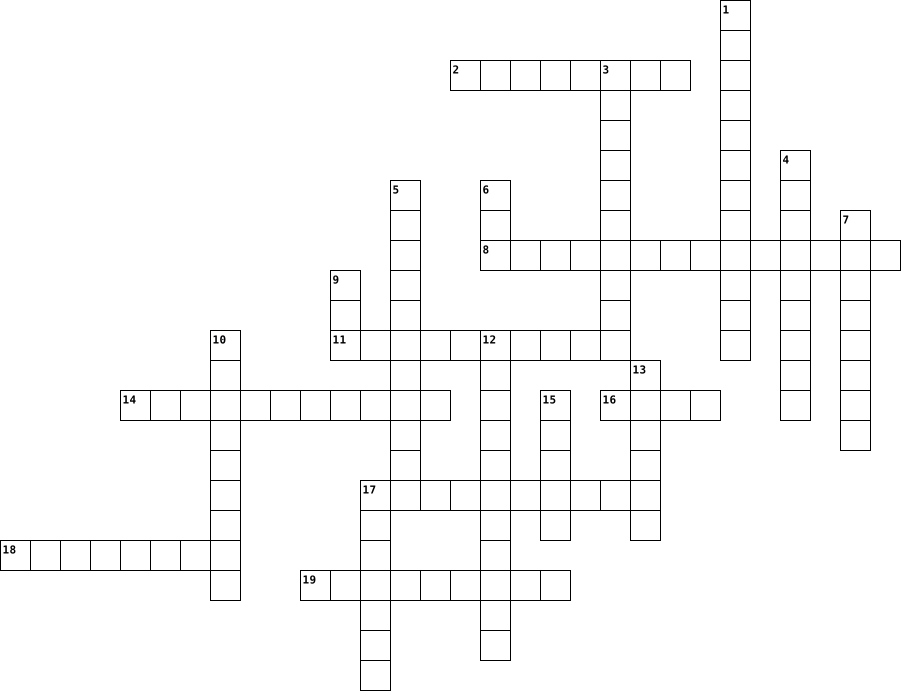
Biology 2018-06-21
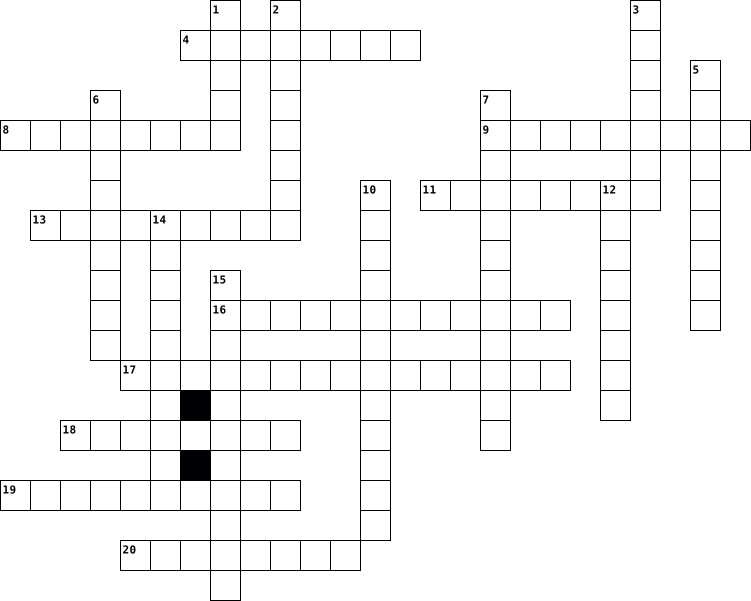
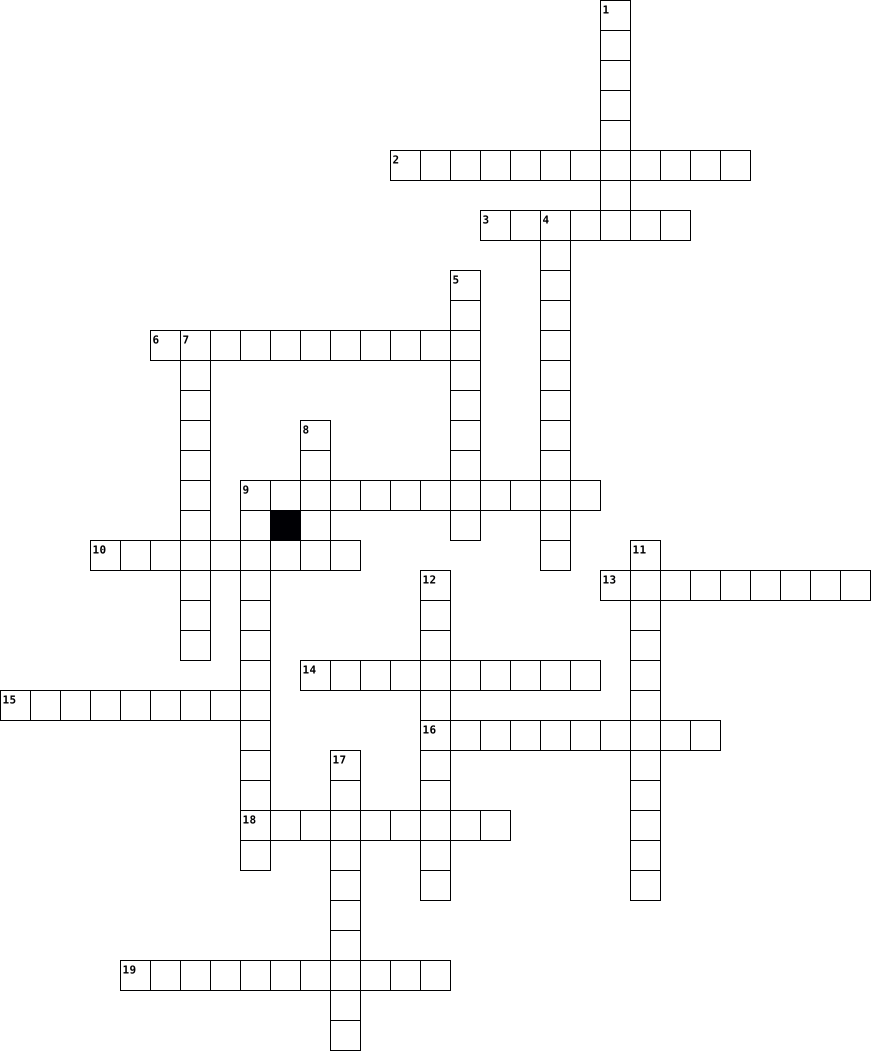
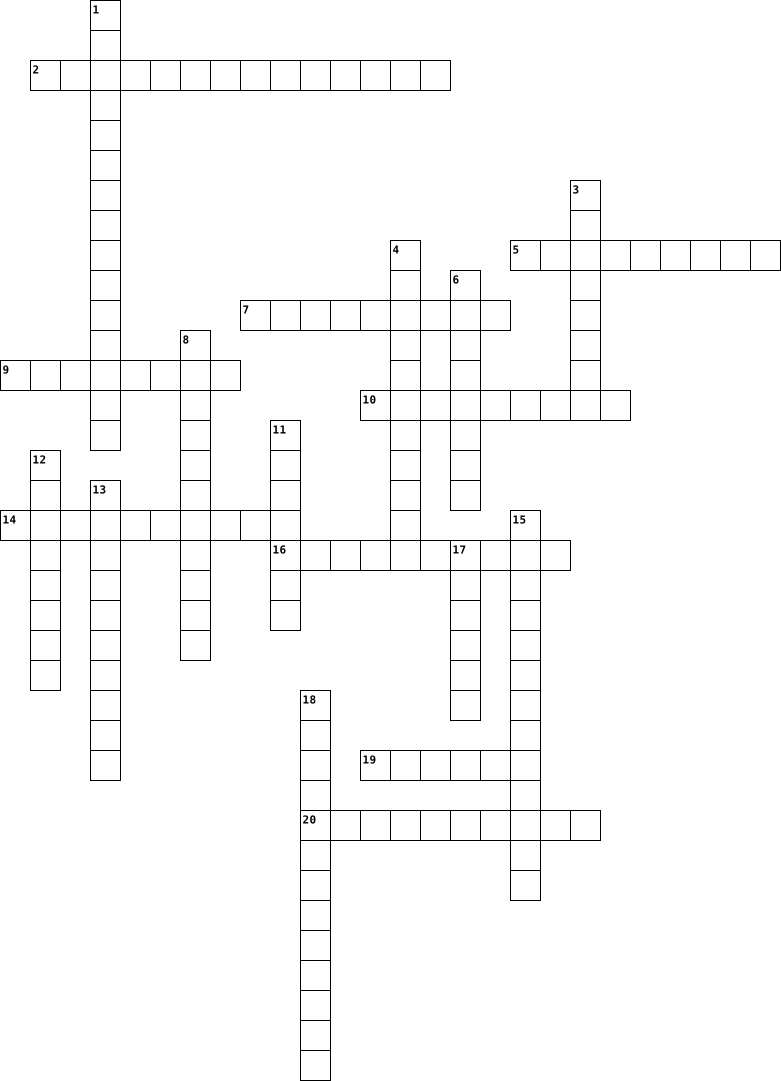
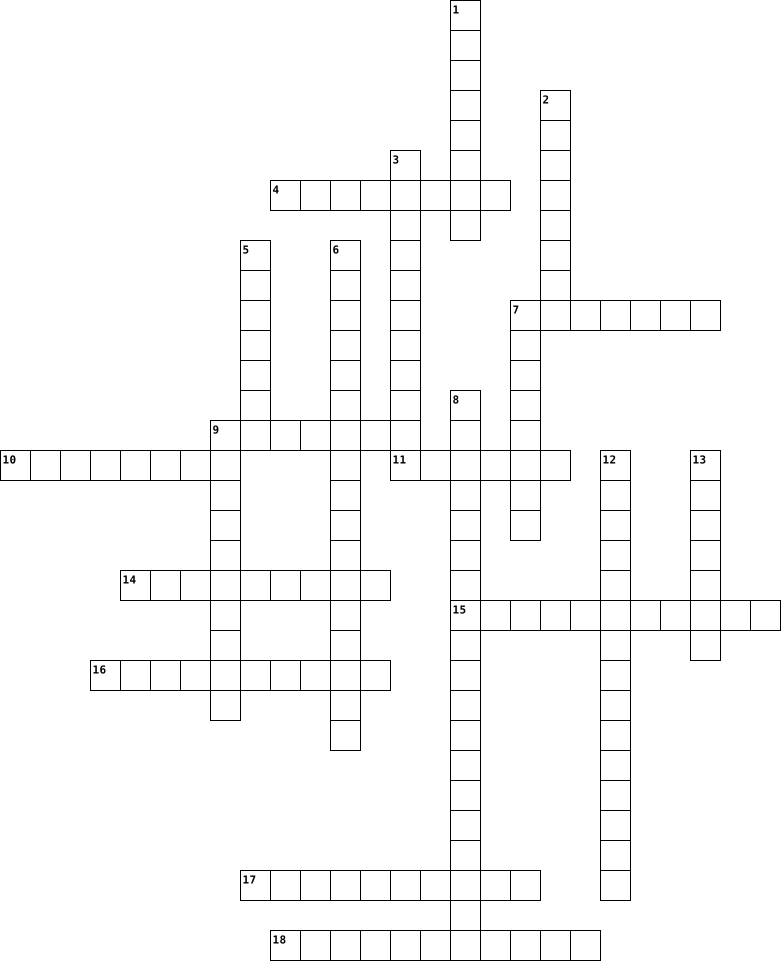
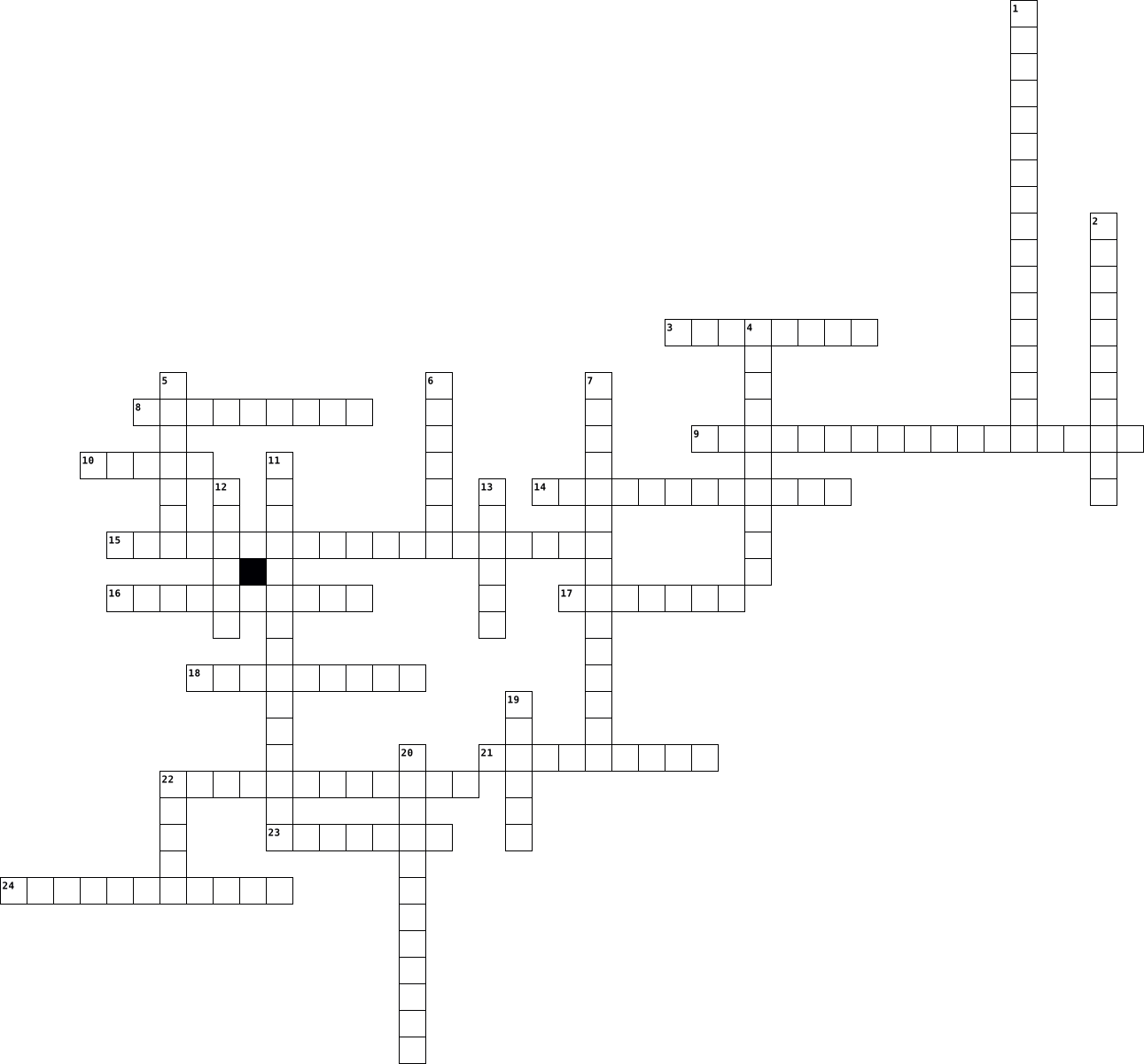
Across
- Traits that are expressed
- The study of heredity
- Body chromosomes
- The study of cells
- The study of tissues
- Combination of teo different alleles
- Mating of two organisms
- The classification of a living thing
- Combination of two same alleles
- Transfer of traits
Down
- Containment of genes
- The study of viruses
- The study of the environment
- Refers to external appearance
- Traits that are hidden
- The study of bacteria
- The study of microorganisms
- Combination of genes in an organism
- The study of organ
- Genes located inside the nucleus
20 Clues: Body chromosomes • The study of cells • The study of organ • Transfer of traits • Containment of genes • The study of viruses • The study of tissues • The study of bacteria • The study of heredity • Traits that are hidden • Mating of two organisms • Traits that are expressed • The study of microorganisms • The study of the environment • Refers to external appearance • ...
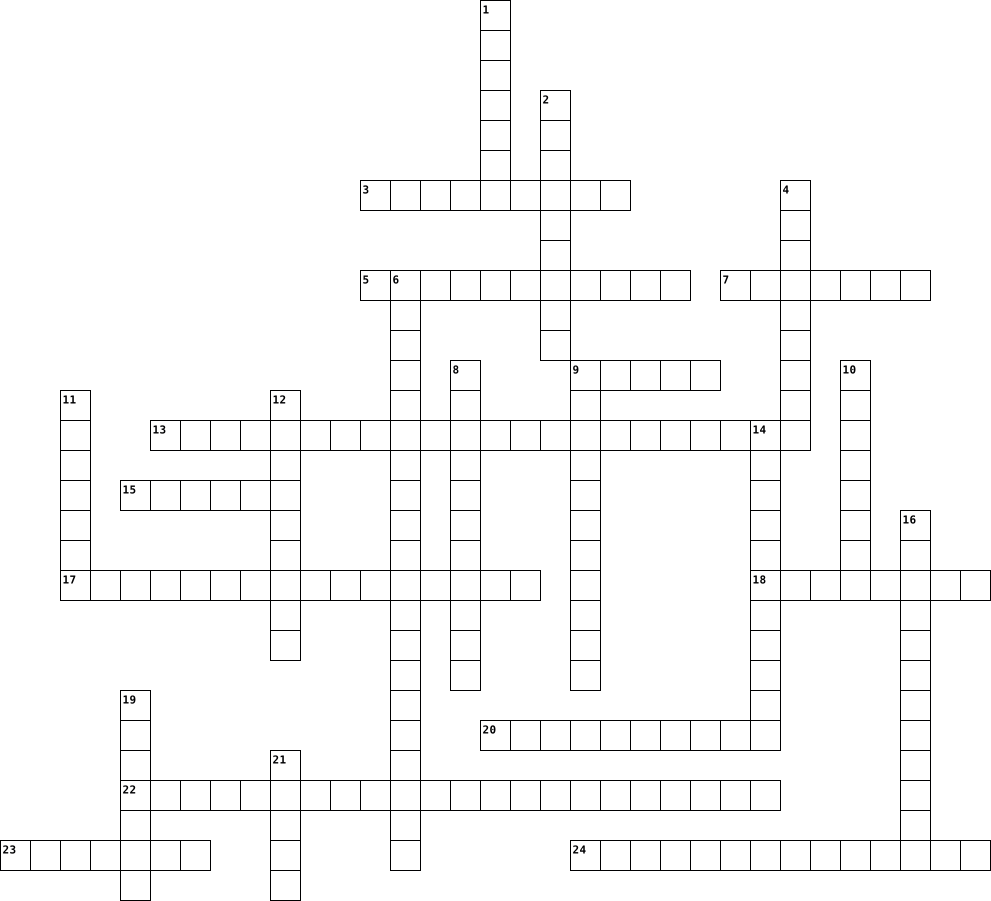
Biology 2018-06-20
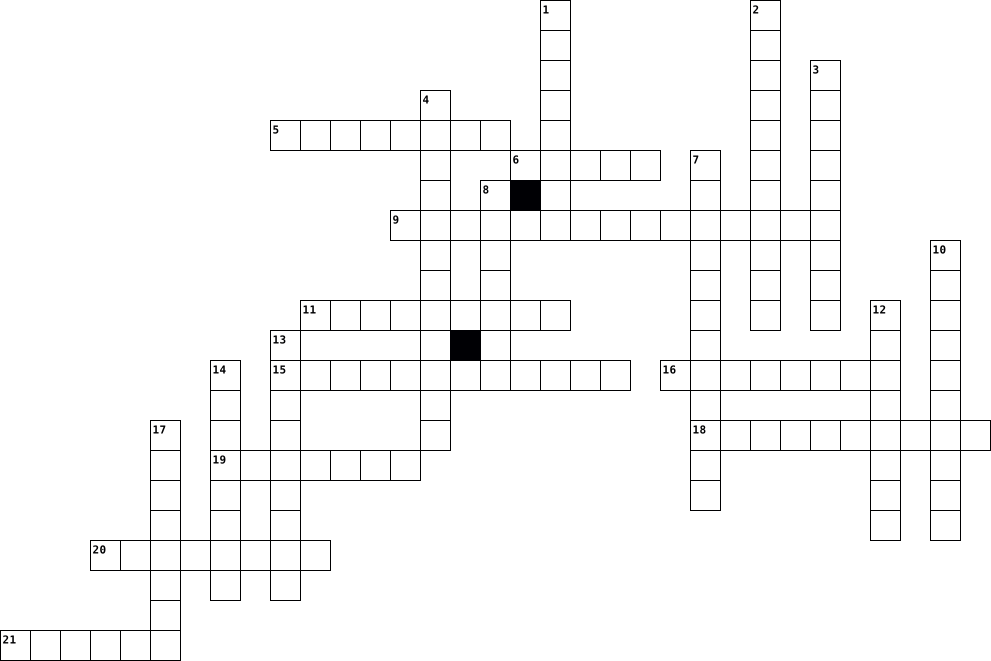
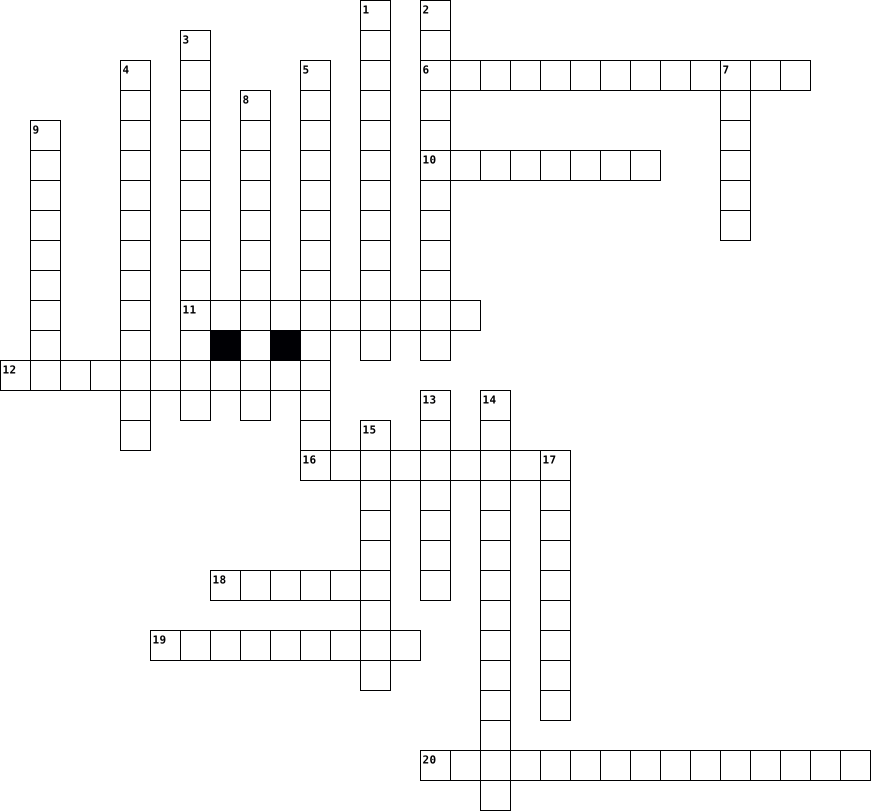
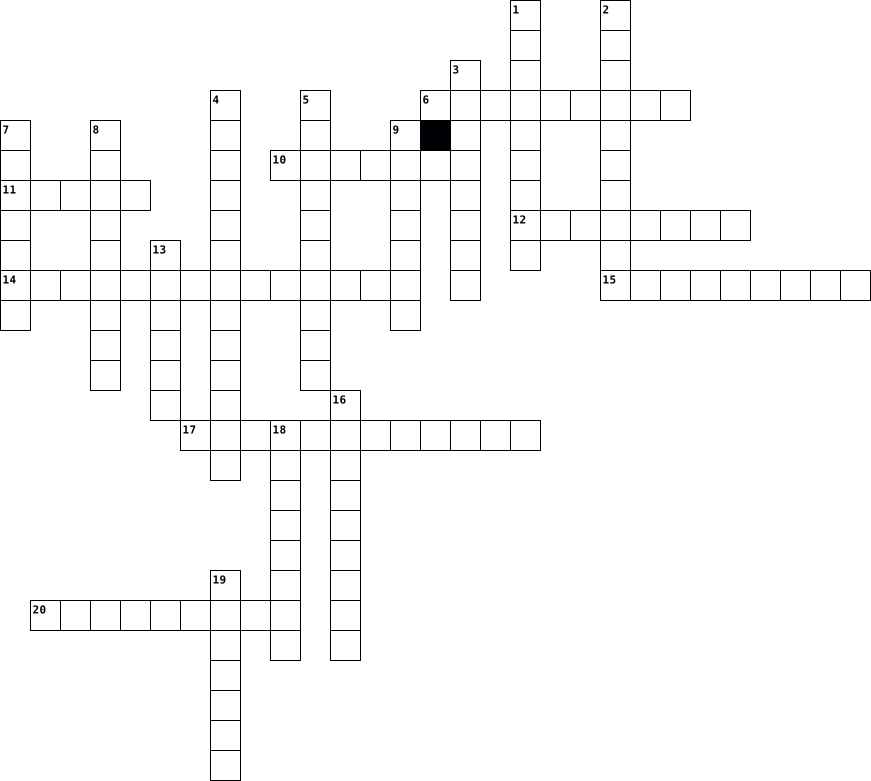
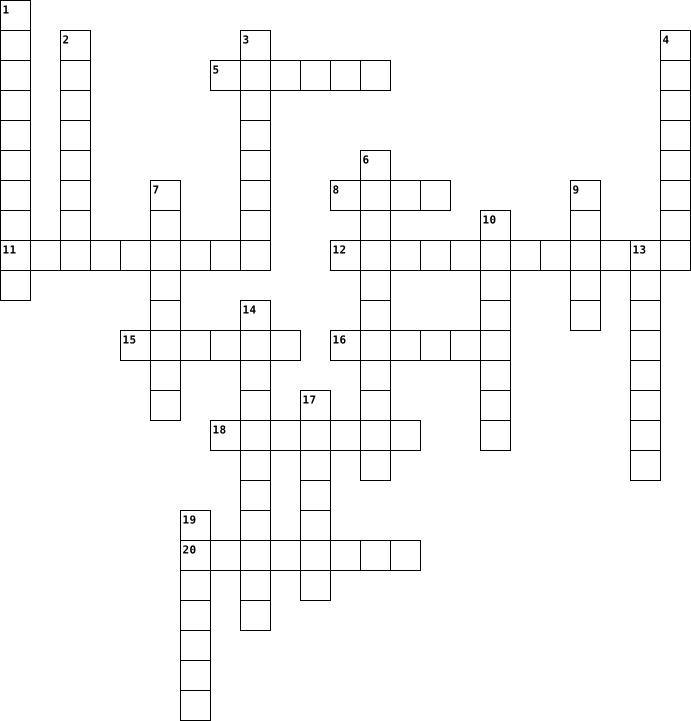
Across
- study of heredity
- container of genes
- mating of 2 organism that different in only in one character
- study of tissues
- combination of 2 different alleles
- traits that are expressed
- study of organs
- study of relationship between a living and non-living thing
- combination of genes in an organism
- study of plants
Down
- study of viruses
- made up of genes located inside the nucleus
- traits that are hidden
- study of micro organisms
- study of bacteria
- study of animals
- combinations of 2 same alleles
- study of cells
- external appearance of an organism
- transfer of characteristics from parents to offspring
- naming,growing and classifying living things
21 Clues: study of cells • study of organs • study of plants • study of viruses • study of animals • study of tissues • study of heredity • study of bacteria • container of genes • traits that are hidden • study of micro organisms • traits that are expressed • combinations of 2 same alleles • external appearance of an organism • combination of 2 different alleles • combination of genes in an organism • ...
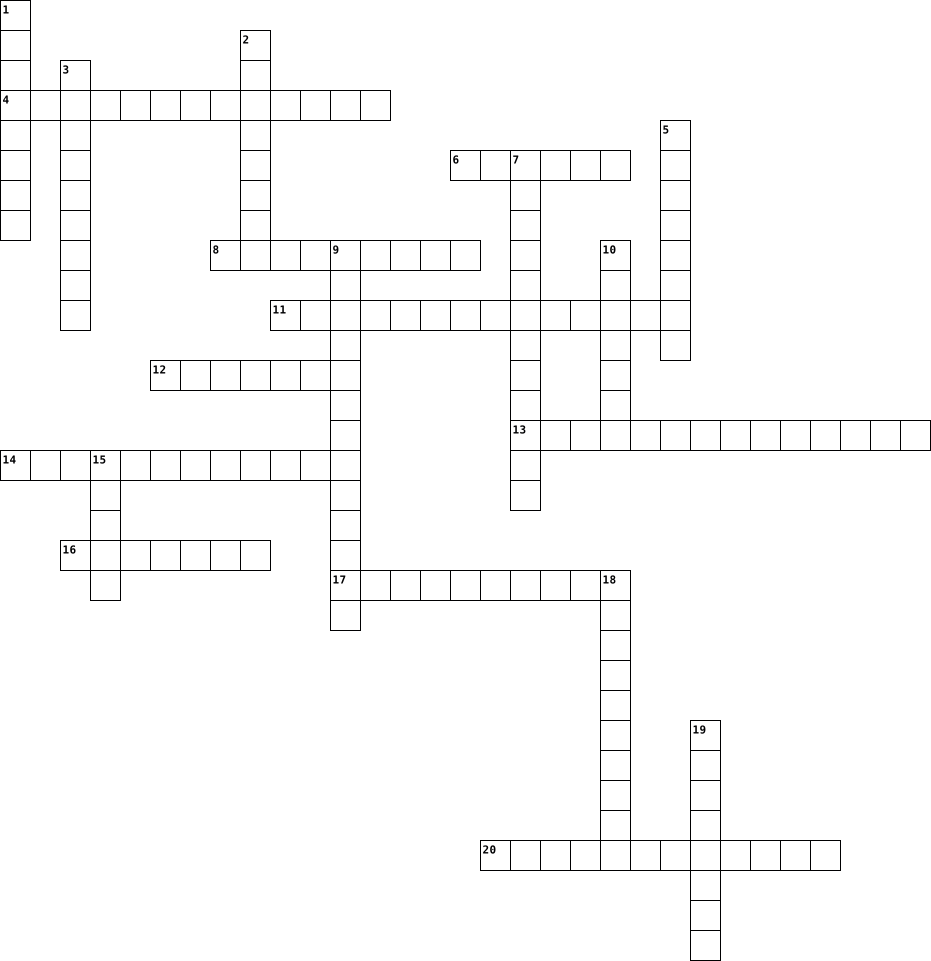
Biology 2019-01-01
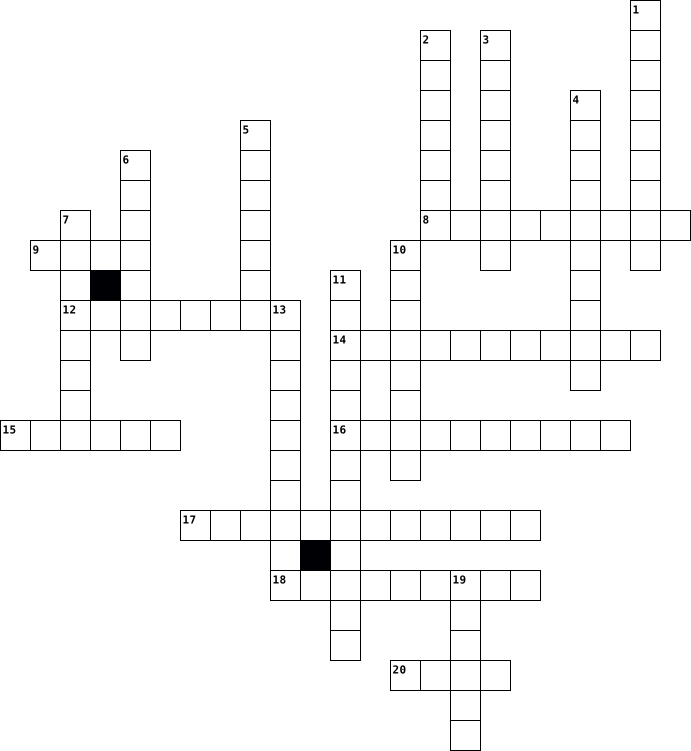
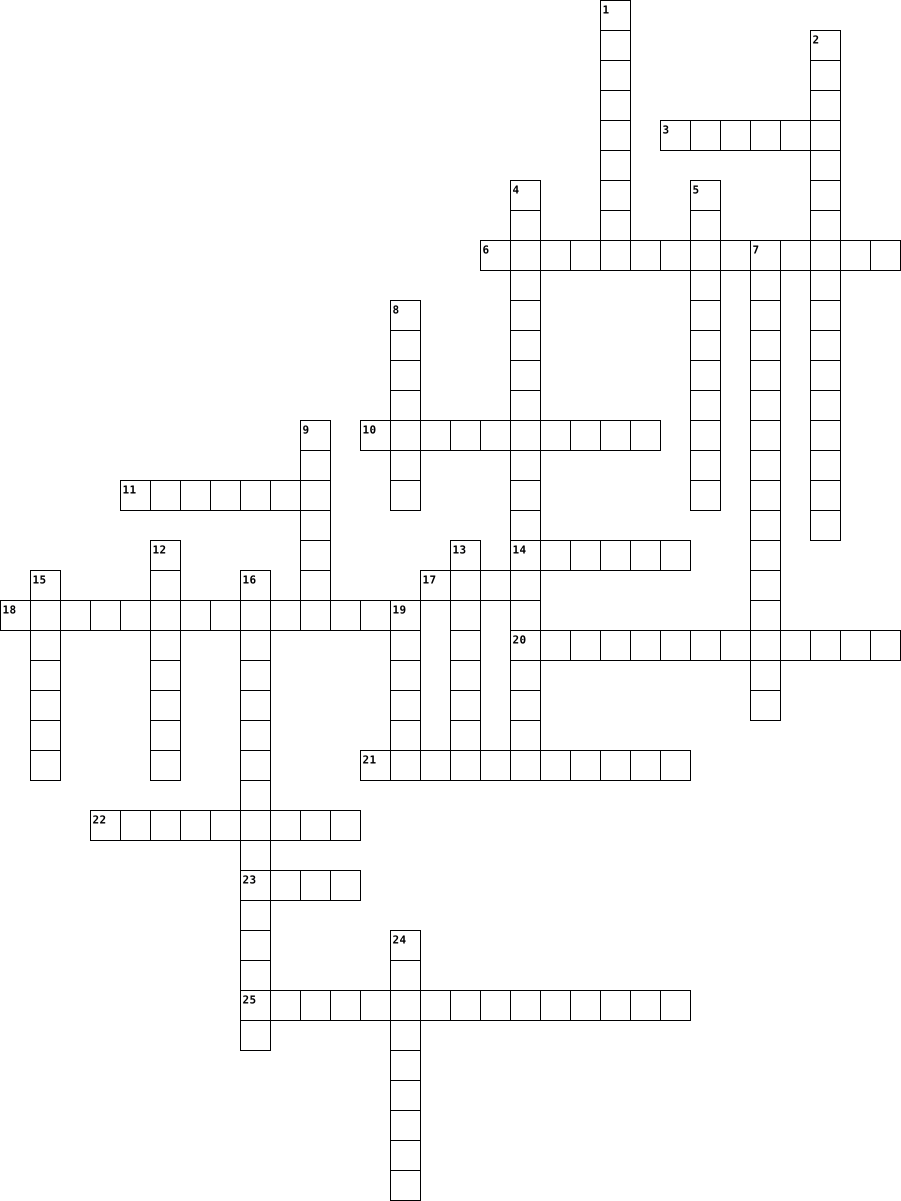
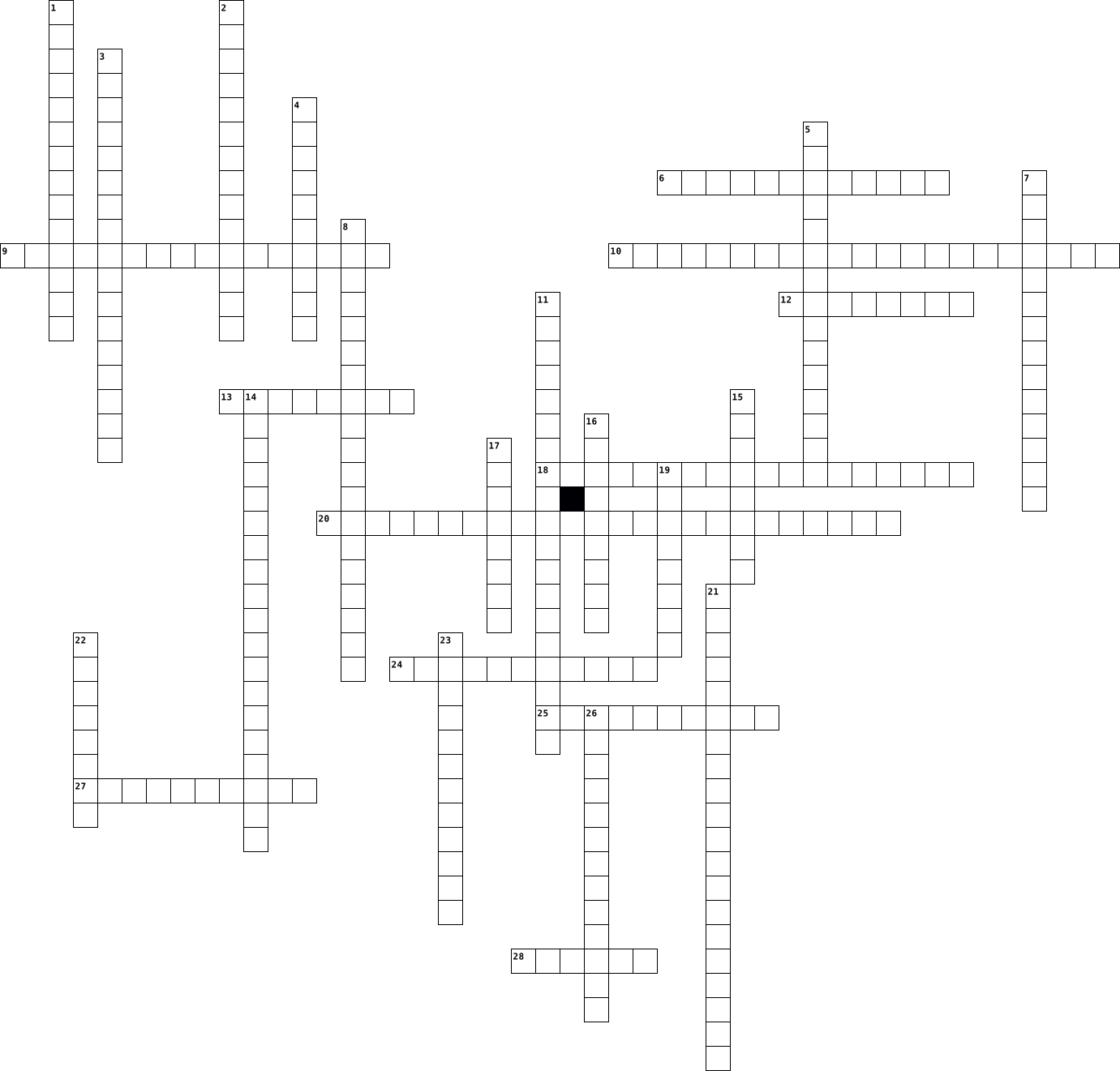
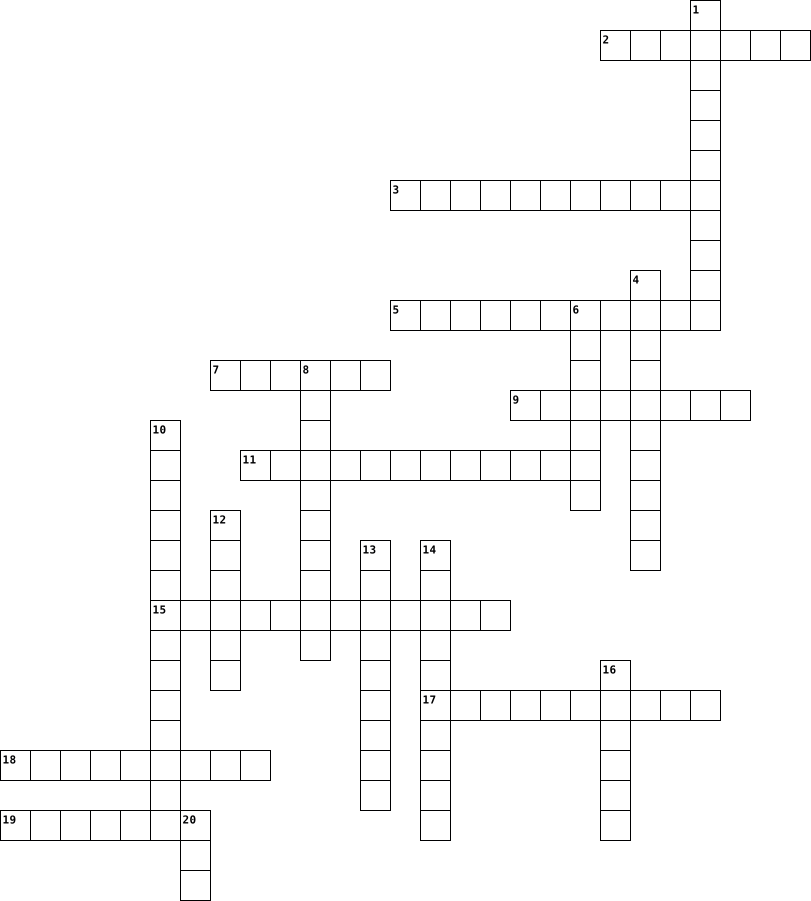
Across
- is the change in living things over time. More specifically, evolution is a change in the genetic makeup of a subgroup, or population, of a species
- is the basic unit of life. In fact, microscopic, single-celled organisms are the most common forms of life on Earth.
- is any individual living thing. All organisms on Earth share certain characteristics
- includes using our senses to study the world
- is an organized group of related parts that interact to form a whole.
- are cylinder-shaped organelles made of short microtubules arranged in a circle
- are organelles that carry out photosynthesis
- is a physical environment with different species that interact with one another and with nonliving things
- is the smallest basic unit of matter.
Down
- is the movement of molecules in a fluid or gas from a region of higher concentration to a region of lower concentration
- is a fluid-filled sac used for the storage of materials needed by a cell
- is a protein that detects a signal molecule and performs an action in response.
- is a proposed answer for a scientific question. A hypothesis must be specific and testable
- are catalysts for chemical reactions in living things
- is the scientific study of all forms of life
- is the study and comparison of genomes both within and across species. Here again, biologists need to use computers
- The conditions that do not change during an experiment
- is the use and application of living things and biological processes
- provides an enlarged image of an object
- is a proposed explanation for a wide range of observations and experimental results that is supported by a wide range of evidence
20 Clues: is the smallest basic unit of matter. • provides an enlarged image of an object • is the scientific study of all forms of life • includes using our senses to study the world • are organelles that carry out photosynthesis • are catalysts for chemical reactions in living things • The conditions that do not change during an experiment • ...
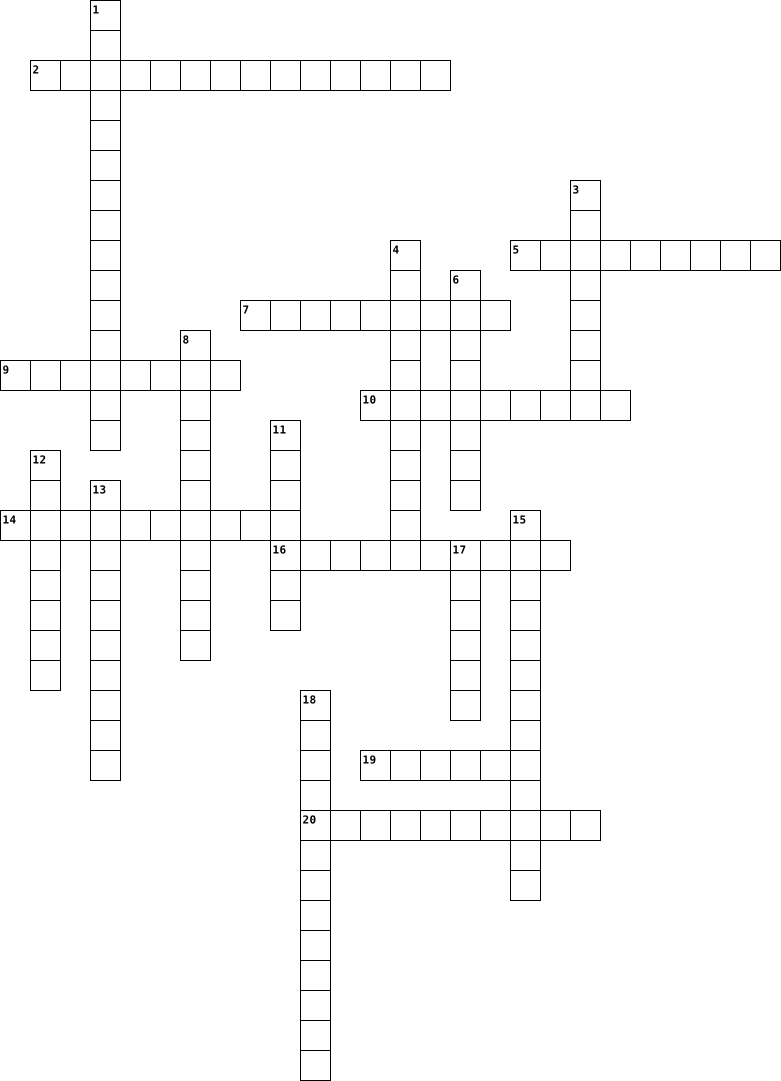
Biology 2019-01-02
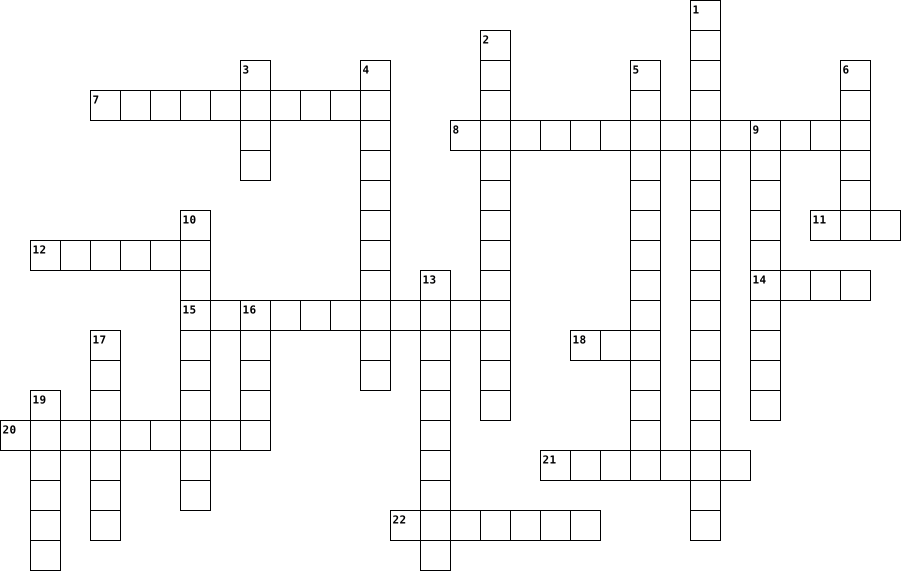
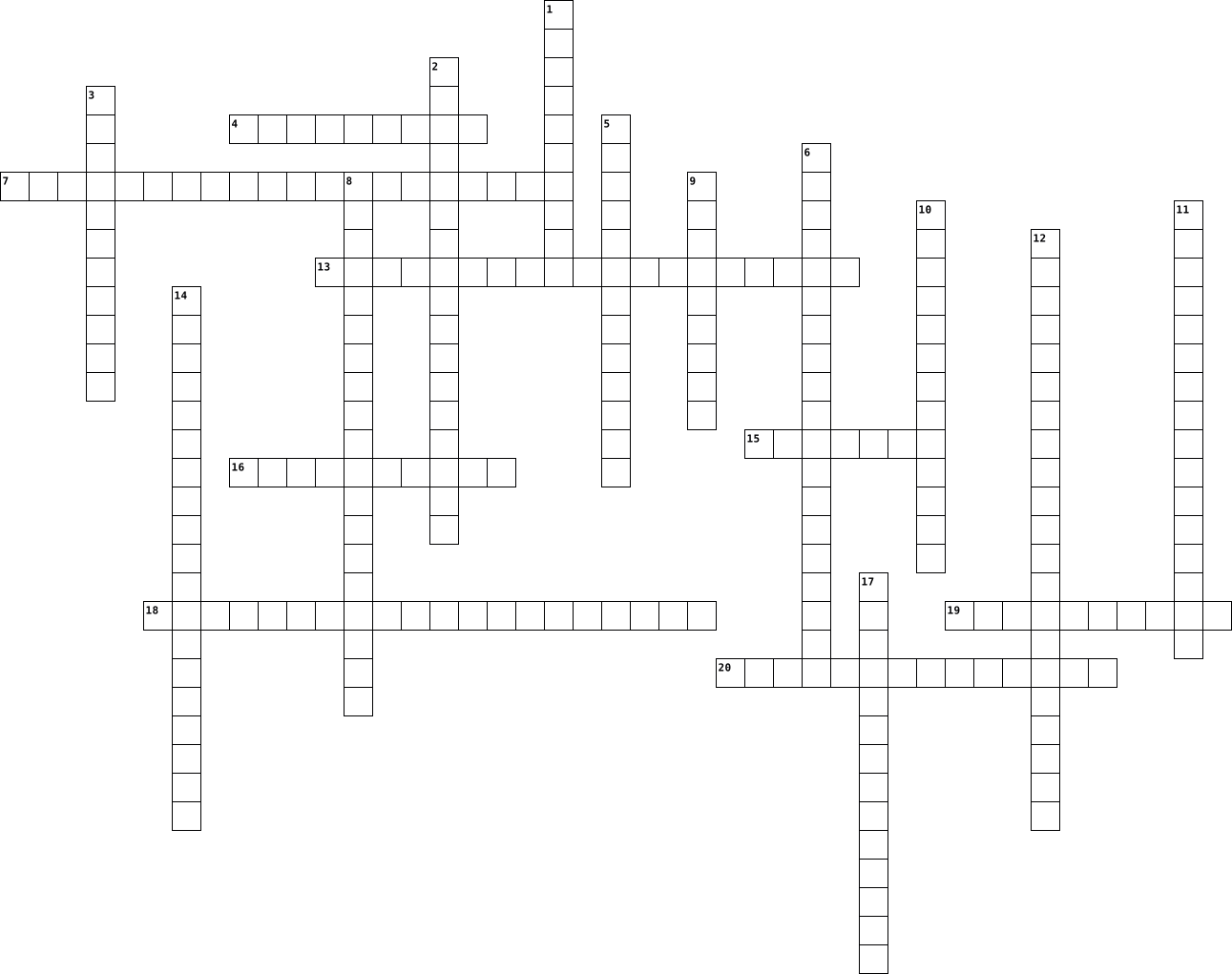
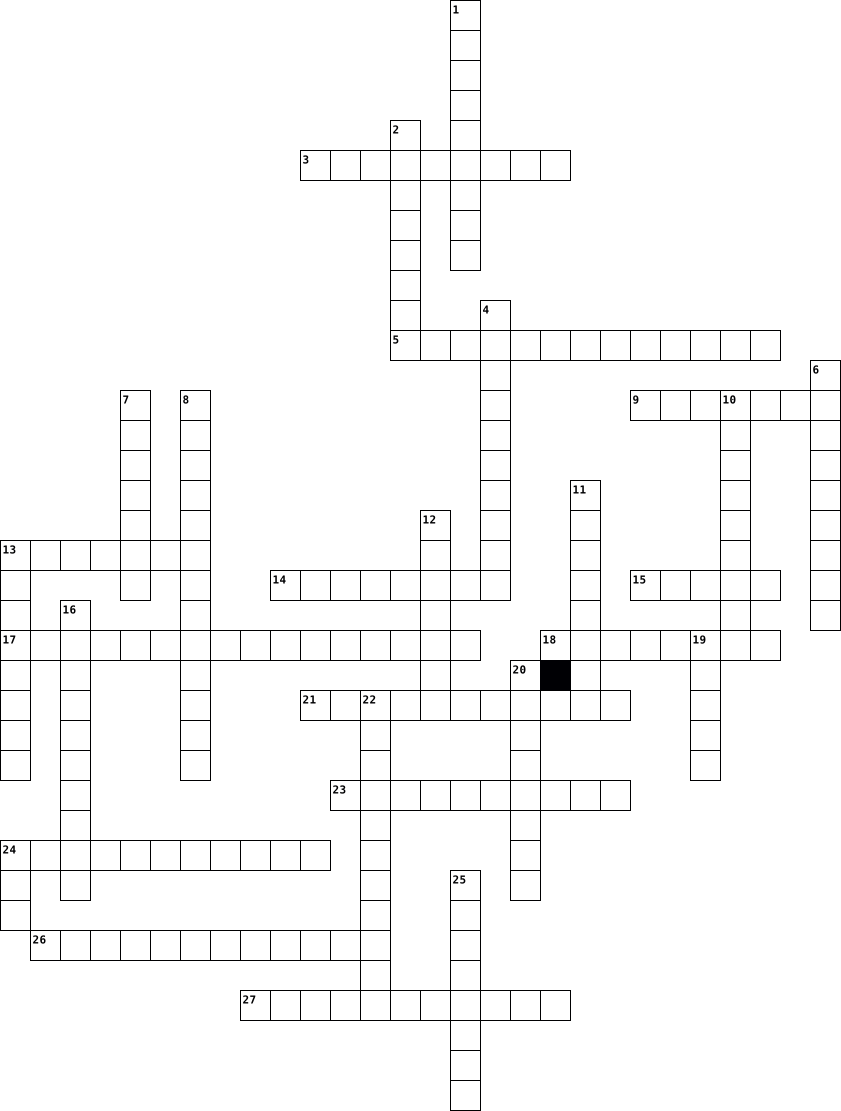
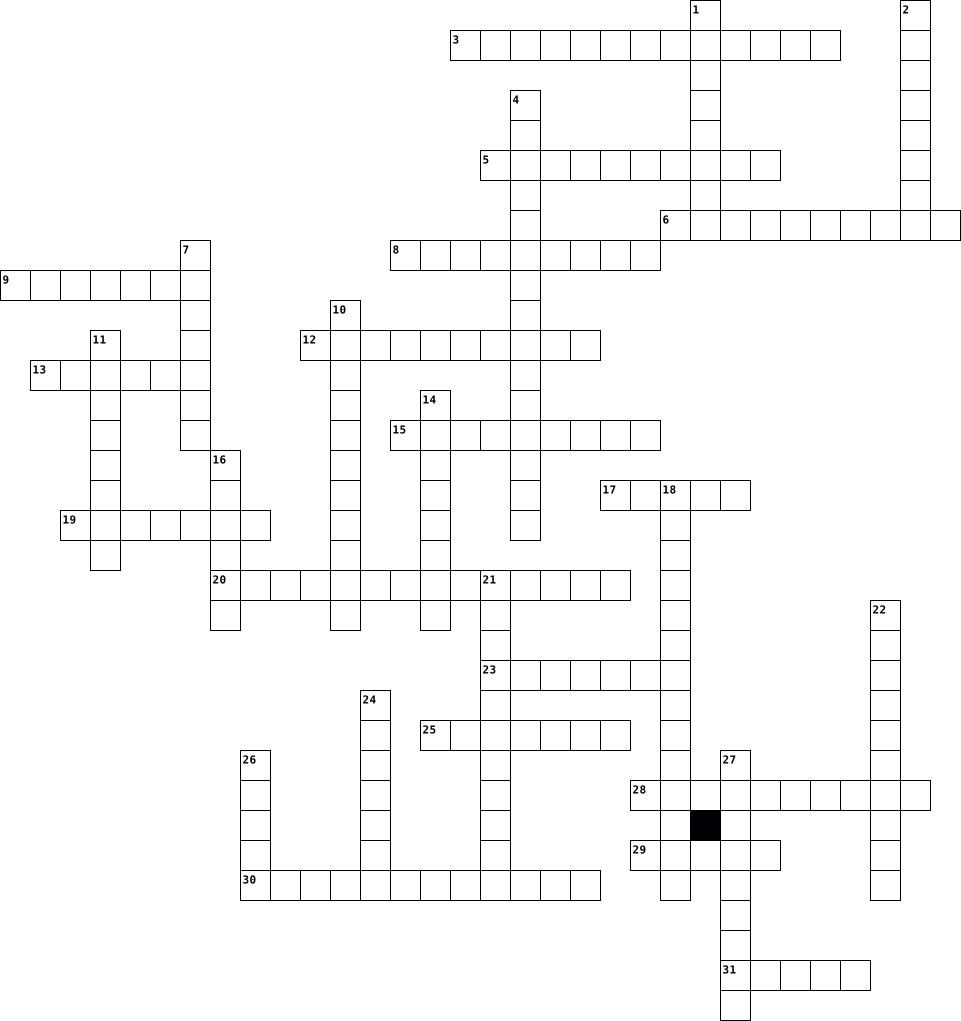
Across
- Chain Reaction series of heating and cooling cycles used to make millions of copies of a DNA segment
- Bacterial cells take up recombinant plasmid DNA through a process called transformation
- Eltrophoresis sepearating DNA fragments by size using and elctric current
- a selection of DNA that contains the genes necessary for a metabolic pathway (Repressible: Usually on but can be turned off, Triptophan) (Influencible: usually off but can be turned on,Lae)
- Splicing 1.) Find a gene, 2.)Isolate the gene, 3.) Replace gene, 4.)Insert Gene
- DNA DNa from one functional DNA
- Sequencing identifies the DNA sequence of cloned recombinant DNA molecules for further study
- Breeding choose the organismthat you want to breed to get the desired outcome (Artificial Selection)
- Circular piece of Dna found in bacteria cells used as a vector
- Engineering the technology involves manipulating the DNA of one organism in order to insert exogenous DNA that is the DNA of another organism
Down
- the study of how genetic ineritence affects the bodies response to drugs
- Selecting Organisms from different species and sub secies with the desired traits to produce offspring with a combination of desired traits
- Cross Crossing organisms of unknown genotype with a homozygous recessive organism in order to determine genotype
- Enzyme Used to cut DNA at a specific gene, recognizes unique palendromic, sequences hundreds of restricion enzymes. Ex: EcoRI: GAA TTC (CTT GAA) CTT AAG (GAA TTC) ecoli restricion enzyme 1
- creating and maintaing databases of biological information. The analysis of sequence information involves finding genes in DNA sequences in various organisms and developing methods to predict the structure and function of newly discovered proteins
- Nucleotide Polymorphs: Variations in the DNA sequence that occur in a single nucleotide in the genome is altedered, it occurs in at least 1% of the population for it to be and SNP
- Organism (GMO (Genetically Modified Organism)) An organism with functional recombinant DNA
- Breeding Closely related indeviduals in order to maintain desired traits and or eliminate undesired traits
- Regions of linked variations in the human genome
- Organisms with the exact same DNA
- (Hox genes) controls expression of genes corresponding to body regions
- Used to inser DNA into a host cell (Biological: Plasmid, Vector) (Mechanical: Micro Pippettes, Gene Gun)
22 Clues: DNA DNa from one functional DNA • Organisms with the exact same DNA • Regions of linked variations in the human genome • Circular piece of Dna found in bacteria cells used as a vector • (Hox genes) controls expression of genes corresponding to body regions • the study of how genetic ineritence affects the bodies response to drugs • ...
biology 2019-01-01
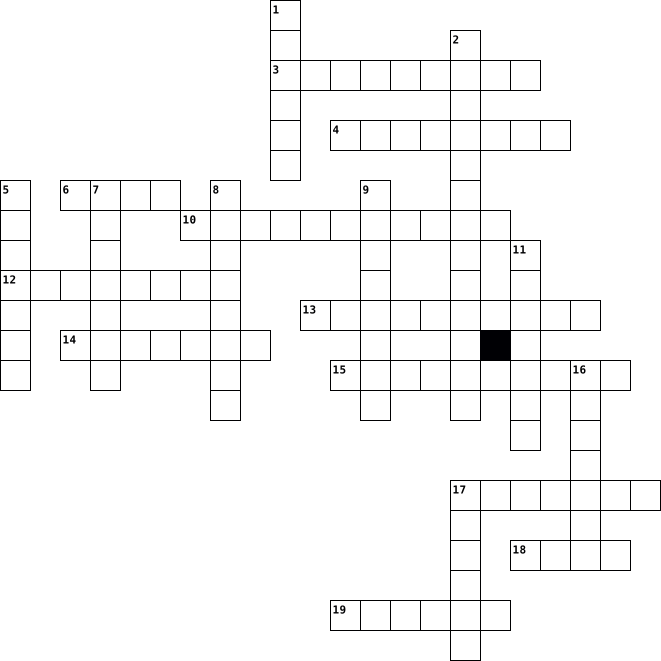
Across
- The evolutionary history of a species
- the substances changed during a chemical reaction. On left side of equation
- compounds that remove H+ ions from a solution
- division of the cytoplasm
- organelle that contains enzymes
- release of substances out of cell by the fusion of vesicle with the membrane
- multi-phase division of the nucleus
- tool that provides an enlarged image of an object
- the substance that is present in the greater amount of a solution and dissolves into another substance
- a segment of DNA that stores genetic information
- fungus that grows symbiotically with algae, resulting in a composite organs that grows on rocks or tree trunks
Down
- Outer protein coat of a virus
- fusion of an egg and sperm cell
- cell that has only one copy of each chromosome
- Process that requires oxygen to occur
- an underground network of hyphae.
- Process that does not require oxygen
- small organelle that contains and transports materials within the cytoplasm
- a polymer made of monomers called amino acids
- an organized group of related parts that interact to form a whole
20 Clues: division of the cytoplasm • Outer protein coat of a virus • fusion of an egg and sperm cell • organelle that contains enzymes • an underground network of hyphae. • multi-phase division of the nucleus • Process that does not require oxygen • The evolutionary history of a species • Process that requires oxygen to occur • compounds that remove H+ ions from a solution • ...
Biology 2021-05-20
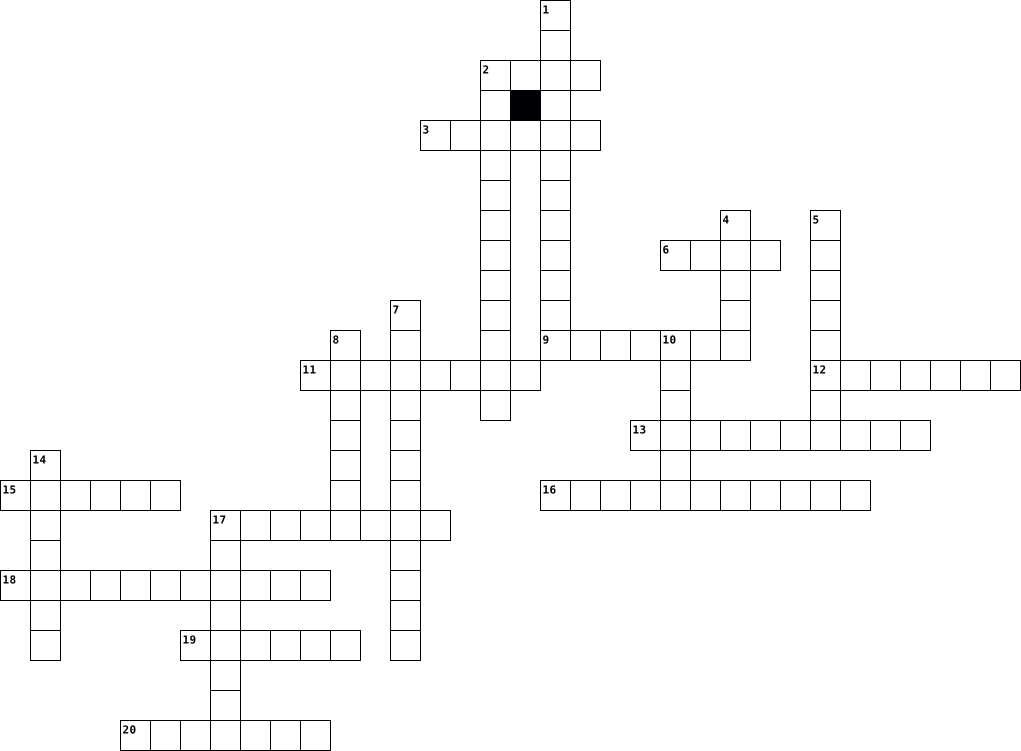
Across
- transfer amino acid to ribosomes during protein synthesis
- cell long, thin stems and rounded tips, produce mucus
- carry blood back to the hear
- protect DNA and controlling cell activities
- live by itself and easy to kill by antibotic
- diffusions in the water
- add water to beak the bonds
- protein, carbohydrates
- active site bind to substrate
- contains C,H,O,N,S. The monomer are amino acid and peptide bond.
- have 70S ribomsome, don't have true bacteria. example are bacteria, viruses,...
- transporting food, nutrient for plants
- tiny hollow sacs, thin wall and singular is
Down
- release water to building molecule
- airbone water droplets from coughing or sneezing
- need host cell to live and not easy to kill
- y shaped, found on surface B cells. Human white blood cell produce against antigen
- "power house "energy. Made cell deaths and renewal
- cell organelle that stores material such as
- protein act as biology catalyst
- infected by female mosquito
- - chromosome condense and spindle fibrous are appear
22 Clues: protein, carbohydrates • diffusions in the water • add water to beak the bonds • infected by female mosquito • carry blood back to the hear • active site bind to substrate • protein act as biology catalyst • release water to building molecule • transporting food, nutrient for plants • need host cell to live and not easy to kill • cell organelle that stores material such as • ...
Biology 2021-03-22
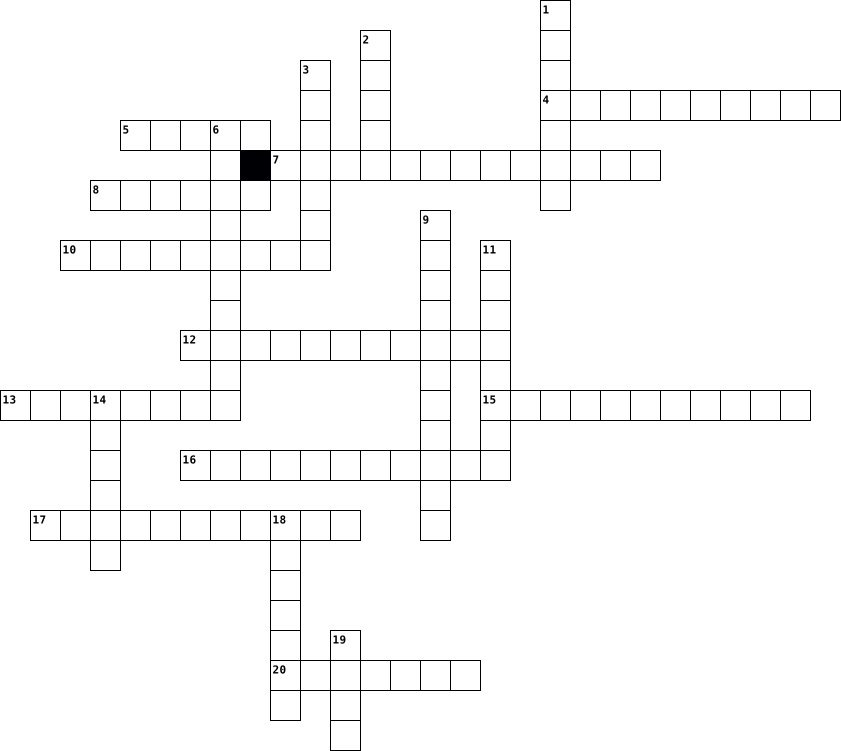
Across
- cells, have a set defined nucleus
- the crust that is formed over a wound
- the range on how traits are sorted
- bacteria that results in multiple diseases
- the ability to remain in an environment
- cells, does not have a set nucleus
- adaptations, the change in the way that an organism moves
- the result of a population being removed
- the evolution of different species
- the process in which someone can receive a new organ
- reproduction, the process when bacteria copy themselves
Down
- drift, a change in alleles that are caused by a sudden incident
- variation, the different colored spots on an animal
- the physical and behavioral effects that can be seen
- adaptations, the change in a way that an organism thinks
- the ability to conform to an environment
- the general population of animals
- reproduction, the process by which humans are made
- selection, when an organism adapts to its environment
- flow, the transfer of genetic material to other populations
20 Clues: cells, have a set defined nucleus • the general population of animals • the range on how traits are sorted • cells, does not have a set nucleus • the evolution of different species • the crust that is formed over a wound • the ability to remain in an environment • the ability to conform to an environment • the result of a population being removed • ...
Biology 2021-04-02
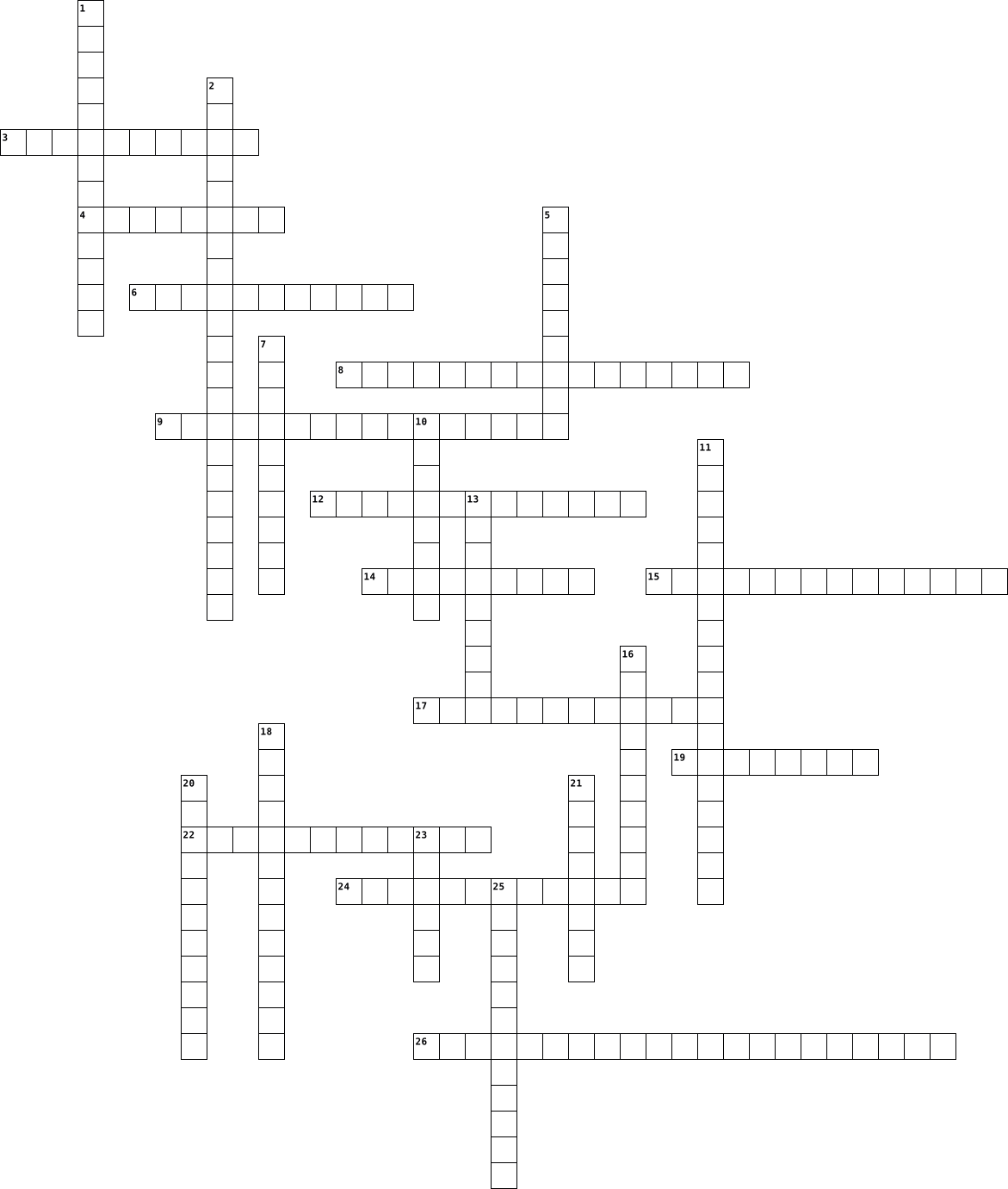
Across
- an animal that develops from two separate embryonic germ layers
- The internal body cavity seen in arthropods
- a rigid external covering for the body in some invertebrate animals, especially arthropods, providing both support and protection
- made classification
- a series of separate bones that surround the spinal cords in vertebrates
- a phylum of deuterostomes with spiny skin; exclusively marine organisms
- The layer of cells that lines the outer surface of an animal
- an air-filled bone
- the layer of cells that lines the gastrovascular cavity of cnidarians
- frogs, salamanders, and caecilians
- Having no plane of symmetry
- An animal that does not have a backbone
- a system in echinoderms in which water is the circulatory fluid
Down
- a fused head and thorax
- the central cavity bounded by the gastrodermis in cnidarians
- the shape and symmetry of an organism
- an amoeba-like cell of sponges whose functions include distribution of nutrients to other cells in the sponge
- specialized gills in mollusks
- a typos of symmetry where there is only one plane of symmetry that creates two mirror-image sides
- Having two genders
- An animal that has a backbone
- a form of asexual reproduction in which a portion of the body of an organism breaks off and develops into a living independent organism; found in plants, sponges, and some other invertebrates
- a jawed fish
- humans, monkeys, lemurs, and apes
- a lined body cavity derived from mesodermal embryonic tissue
- an internal skeleton, such as the bony or cartilaginous skeleton of vertebrates
26 Clues: a jawed fish • Having two genders • an air-filled bone • made classification • a fused head and thorax • Having no plane of symmetry • specialized gills in mollusks • An animal that has a backbone • humans, monkeys, lemurs, and apes • frogs, salamanders, and caecilians • the shape and symmetry of an organism • An animal that does not have a backbone • ...
Biology 2021-08-03
Across
- Name for cell membrane
- Possess DNA and vital Organelles
- A fat-like substance
- Convert light
- Solution within cell
- Uses RNA to convert material
- A Cell with a Nucleus
- Allows for movement
- Waste removal
- Produces RNA
- Doesn't contain a nucleus
Down
- Protein destruction
- Skeletal system
- Barrier of the cell
- Repels
- Sacterial movement
- A thin layer on the cell border
- Powerhouse
- Attracts
- Processes proteins within the cell
20 Clues: Repels • Attracts • Powerhouse • Produces RNA • Convert light • Waste removal • Skeletal system • Sacterial movement • Protein destruction • Barrier of the cell • Allows for movement • A fat-like substance • Solution within cell • A Cell with a Nucleus • Name for cell membrane • Doesn't contain a nucleus • Uses RNA to convert material • A thin layer on the cell border • ...
Biology 2024-05-23

Across
- It suspends the organelles and provides an environment for chemical reactions within the cell
- Organisms who's cells lack a nucleus and other organelles
- Provides shape, structure, and protection for the cell
- Any cell or organism that possesses a clearly defined nucleus
- The small rings of DNA
- Stores genetic information
- Where the DNA is prokaryotic cells
- Creates special structures called spindle fibers that are used on cell division
- Modifies, sorts, and ships proteins
- Projections that aid in locations and feeding
- Flattened stack of tubular membranes that modifies proteins and packages them for distribution outside the cell
- A structure that has one or more specific jobs to preform in a cell
- Makes lipids and membranes (detoxifies the liver, stores calcium in the muscle
Down
- Uses enzymes to digest bacteria, viruses, and old organelles
- Stores water in order to maintain plant shapes
- Hair-like structures that helps with movement and attachment
- The site of photosynthesis
- Crates energy or ATP from food
- Any number of organized structures with a living cell
- Provides structure for cells and movement for organelles
- Makes proteins
- Maintains homeostasis by controlling what enters and leaves the cell
- Makes and transports proteins
- Stores food, water, or wastes within the cells
24 Clues: Makes proteins • The small rings of DNA • The site of photosynthesis • Stores genetic information • Makes and transports proteins • Crates energy or ATP from food • Where the DNA is prokaryotic cells • Modifies, sorts, and ships proteins • Projections that aid in locations and feeding • Stores water in order to maintain plant shapes • ...
Biology 2024-05-21

Across
- A molecule containing a Macro amount of Atoms.
- The area where the Substrate will go into the Enzyme that will fit perfectly according to the Substrate. s
- The reactant needed for the enzyme to make a reaction.
- The Enzyme that breaks down Cellulose.
- Energy need for the body.
- They are Compound Lipids.
- Macromolecules made out of Nucleotides
- Nucleic Acids.
- Sugars that are linked together.
Down
- Simple units of sugar.
- They are a nitrogenous base, a pentose sugar and a phosphate.
- They are Enzymes.
- A certain amount of molecules linked together.
- A monomer that is used for quick energy.
- A monomer that is a fat.
- Molecules that form proteins.
- A molecule that can be bonded with other molecules to create a Polymer.
- Amino acid block that are bonded together.
- They are used in Nucleotides.
- They are Proteins.
20 Clues: Nucleic Acids. • They are Enzymes. • They are Proteins. • Simple units of sugar. • A monomer that is a fat. • Energy need for the body. • They are Compound Lipids. • Molecules that form proteins. • They are used in Nucleotides. • Sugars that are linked together. • The Enzyme that breaks down Cellulose. • Macromolecules made out of Nucleotides • ...
Biology 2023-10-04
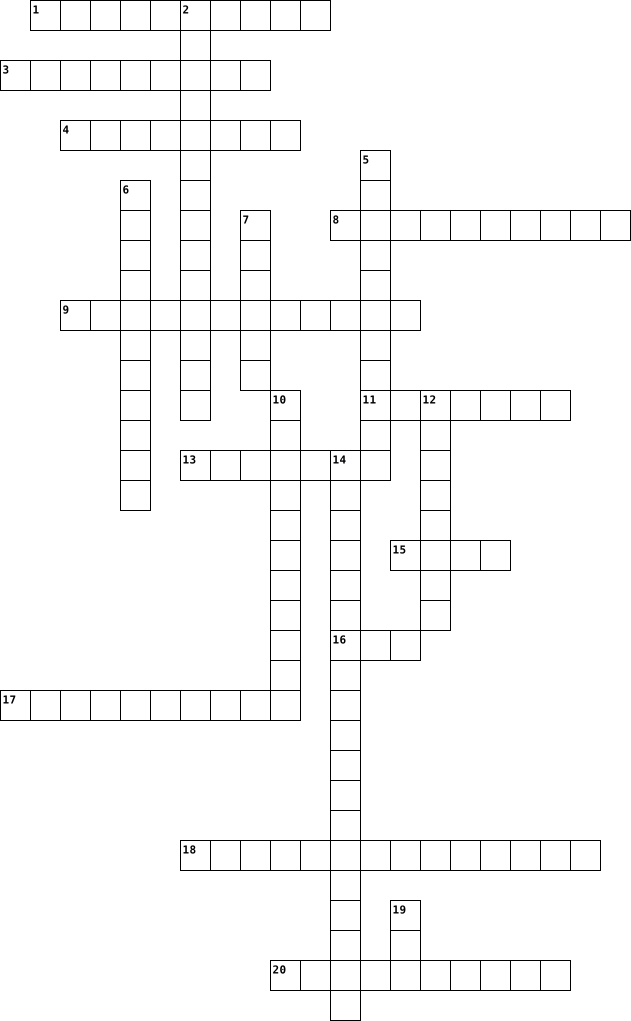
Across
- Sphere of earth, all the gases surrounding earth.
- Type of organism that is able to make its own food, base of the food chain
- nutrient, used in proteins and nucleic acids must be fixed or living things to use, often limited
- First step of Aerobic respiration breaks down glucose into pyruvate, make some NADH.
- second step of anaerobic respiration, 2 types include alcoholic and lactic acid
- Describes a situation in which oxygen is present
- substance created during a chemical reaction, made from reactants.
- Reactions Second step of photosynthesis, uses energy ATP and NADPH to make glucose from CO2
- Adenosine triphosphate, changed energy storage molecule with 3 phosphorus groups
- sphere of earth, all the rocks and soil on earth.
- First step of photosynthesis, uses sunlight to split H2O and make ATP and NADPH, O2 is released
- Nutrient, used in phosphates of Nucleic Acids and Phospholipids of membranes,often limited
Down
- Process of using light energy to move glucose.
- Organelle site of photosynthesis
- Pigment in Chloroplasts, used to triphosphate energy during photosynthesis
- anything that has mass and it takes up space, makes up everything
- Sphere of earth, all the water of earth
- substances at the beginning of of chemical reaction changed into products
- process of breaking down glucose to make ATP
- Adenosine diphosphate, unchanged energy storage molecule with 2 phosphates.
20 Clues: Organelle site of photosynthesis • Sphere of earth, all the water of earth • process of breaking down glucose to make ATP • Process of using light energy to move glucose. • Describes a situation in which oxygen is present • Sphere of earth, all the gases surrounding earth. • sphere of earth, all the rocks and soil on earth. • ...
Biology 2023-09-30
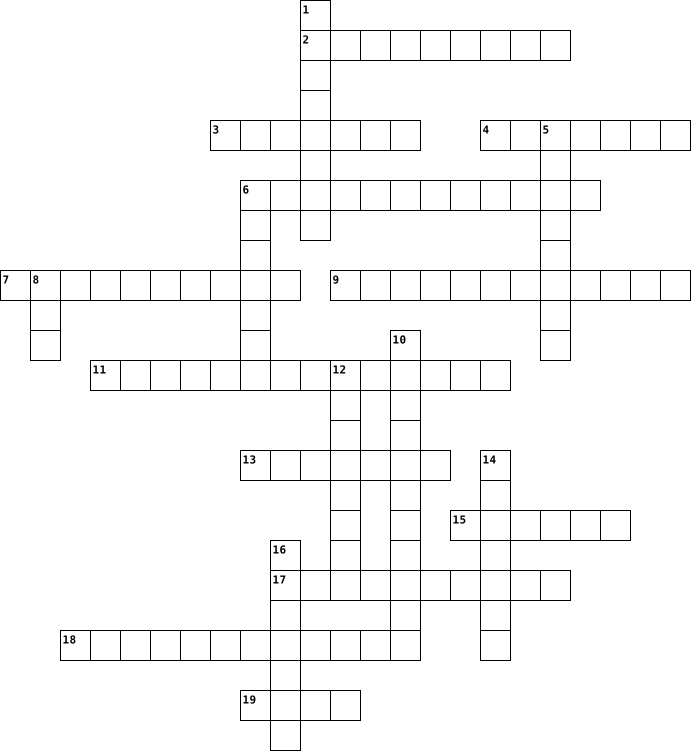
Across
- Change in heritable characteristics over successive generations.
- Study of the structure and organization of organisms.
- Study of animals and their behavior, physiology, and genetics.
- Study of microorganisms, including bacteria, viruses, and fungi.
- Characteristics or features that help an organism survive and reproduce in its environment.
- Study of chemical processes in living organisms.
- Process by which plants and other organisms convert light energy into chemical energy.
- Cell division process resulting in two identical daughter cells.
- Study of plants, including their physiology, structure, genetics, and ecology.
- Study of the functions and processes of living organisms.
- Biological process of producing offspring.
- Basic unit of life and the building block of organisms.
Down
- Study of genes, heredity, and genetic variation.
- Any individual living entity, such as plants or animals.
- Cell division process resulting in four non-identical daughter cells.
- Molecule carrying genetic instructions for life.
- Process by which organisms exchange gases with their environment.
- Science of classifying and naming organisms.
- Study of the relationships between organisms and their environments.
- Group of organisms capable of interbreeding and producing fertile offspring.
20 Clues: Biological process of producing offspring. • Science of classifying and naming organisms. • Study of genes, heredity, and genetic variation. • Molecule carrying genetic instructions for life. • Study of chemical processes in living organisms. • Study of the structure and organization of organisms. • Basic unit of life and the building block of organisms. • ...
Biology 2023-10-05
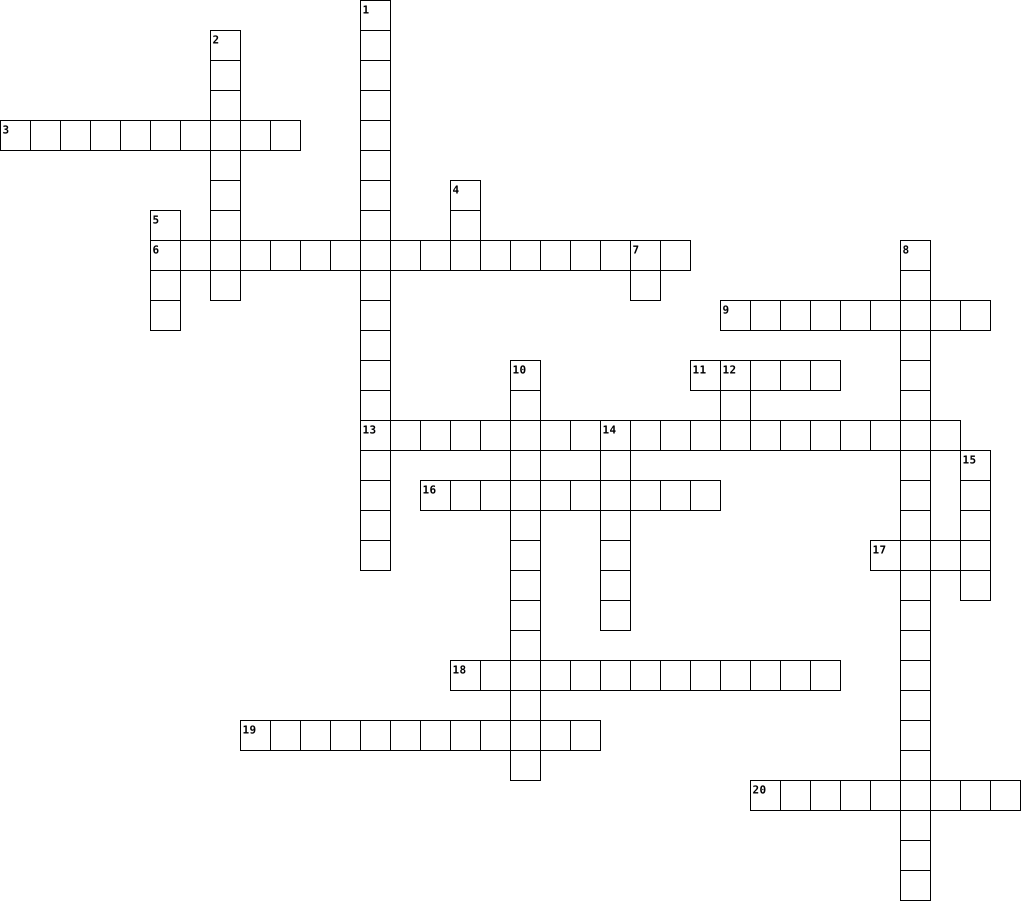
Across
- first step in releasing the energy of glucose, in which a molecule of glucose is broken into two molecules of pyruvic acid
- Respiration that requires oxygen
- The mostly solid, rocky part of the Earth; extends from the center of the core to the surface of the crust.
- an electron carrier that provides the high-energy electrons needed to make carbon-hydrogen bonds in the third stage of photosynthesis
- Respiration that does not require oxygen
- the envelope of gases surrounding the earth or another planet.
- electron carrier that stores energy used to make ATP
- second stage of cellular respiration, in which pyruvic acid is broken down into carbon dioxide in a series of energy-extracting reactions
- Process by which cells release energy in the absence of oxygen
- a natural mineral containing chemical compounds often used in fertilizers
Down
- Process that releases energy by breaking down glucose and other food molecules in the presence of oxygen
- Consists of all life on Earth and all parts of the Earth in which life exists
- (adenosine triphosphate) main energy source that cells use for most of their work
- electron carrier involved in glycolysis
- oxygen
- series of electron carrier proteins that shuttle high-energy electrons during ATP-generating reactions
- Conversion of light energy from the sun into chemical energy.
- (Adenosine Diphosphate) The compound that remains when a phosphate group is removed from ATP, releasing
- chemical formula for glucose
- During aerobic respiration, which of the following directly donates electrons to the electron transport chain at the lowest energy level
20 Clues: oxygen • chemical formula for glucose • Respiration that requires oxygen • electron carrier involved in glycolysis • Respiration that does not require oxygen • electron carrier that stores energy used to make ATP • Conversion of light energy from the sun into chemical energy. • the envelope of gases surrounding the earth or another planet. • ...
biology 2023-10-05
Across
- substances at the beginning of a chemical reaction, changed into products.
- process of using light energy to make glucose,starts with CO2 and H2O and ends with C6H12O6 and O2
- nutrient, used in phosphates of nucleic acids and phospholipids of membranes, often limited.
- pigment in chloroplasts, used to trap light energy during photosynthesis.
- reactions second step of photosynthesis, uses energy in ATP and NADPH to make glucose(C6H12O6) from CO2.
- describes a situation in which oxygen is present
- respiration process of breaking down glucose to make ATP, starts with C6H12O6 and O2 and ends with CO2 and H2O.
- sphere of the earth, all living things on earth.
Down
- second step of anaerobic respiration, 2 types include alcoholic and lactic acid.
- type of organism that is able to make it's own base of the food chain.
- describes a situation in which oxygen is not present,
- organelle,site of photosynthesis
- adenosine triphosphate, charged energy storage molecule with 3 phosphorus groups.
- nutrient, used in proteins and nucleic acids, must be "fixed" for living things to use, often limited.
- adenosine diphosphate, uncharged energy storage molecule with 2 phosphates.
- sphere of earth, all the soil and rocks on earth.
- sphere of earth,all the water on earth.
- anything that has mass and takes up space, makes up everything.
- reactions substances created during a chemical reaction, made from reactants.
- describes a situation in which oxygen is present.
20 Clues: organelle,site of photosynthesis • sphere of earth,all the water on earth. • describes a situation in which oxygen is present • sphere of the earth, all living things on earth. • sphere of earth, all the soil and rocks on earth. • describes a situation in which oxygen is present. • describes a situation in which oxygen is not present, • ...
Biology 2023-11-13
Across
- Aids in waste elimination
- Facilitates breathing
- The study of living things
- Fundamental units of living organisms
- Living things with more than one cell
- Enables movement
- Blood cells, muscle cells, nerve cells
- Pertaining to bones
- Constituent elements of plants
- Living things with only one cell
- Cell's control center
- Microscopic boundary of the cell
Down
- Stores waste and nutrients
- The cell's interior
- Minute particles in the cytoplasm
- Network of tubules in a eukaryotic cell
- Site of photosynthesis
- Ensures blood circulation
- Boundary between the cell inside and outside
- A set of things working together as parts of a mechanism
- Extracts nutrients from food
- Tools for magnification
- Powerhouse of the cell
- Distinct materials in animals or plants
- Facilitates sensation
25 Clues: Enables movement • The cell's interior • Pertaining to bones • Facilitates breathing • Facilitates sensation • Cell's control center • Site of photosynthesis • Powerhouse of the cell • Tools for magnification • Aids in waste elimination • Ensures blood circulation • Stores waste and nutrients • The study of living things • Extracts nutrients from food • Constituent elements of plants • ...
BIOLOGY 2023-11-13
Across
- An organic compound composed of carbon, hydrogen, and oxygen.
- Fatty compounds that perform a variety of functions in your body.
- Needed for the diet/Not made in the body.
- A type of carbohydrate with a simple sugar structure.
- A simple sugar that serves as a building block for carbohydrates.
- A carbohydrate made up of multiple simple sugar units.
- A carbohydrate that consists of two simple sugar molecules.
- Proteins that act as biological catalysts, speeding up chemical reactions.
- Proteins that protect you when an unwanted substance enters your body.
- The primary energy storage molecule in animals.
Down
- Is a three-carbon alcohol with three hydroxyl groups attached to each carbon.
- Serves as chemical messengers.
- Protein that transports substances to cells.
- The primary storage form of carbohydrates in animals.
- A type of lipid that is a major component of cell membranes.
- Not needed for diet/can be made in the body.
- structure The specific sequence of amino acids in a protein.
- acids The building blocks of proteins.
- Protein that helps form cell parts.
- Large molecules composed of amino acids, often with structural and enzymatic roles.
20 Clues: Serves as chemical messengers. • Protein that helps form cell parts. • acids The building blocks of proteins. • Needed for the diet/Not made in the body. • Protein that transports substances to cells. • Not needed for diet/can be made in the body. • The primary energy storage molecule in animals. • The primary storage form of carbohydrates in animals. • ...
Biology 2024-05-16

Across
- A group of viruses that infect the cells on the surface of the skin
- A highly contagious respiratory disease caused by the SARS-CoV-2 virus
- a form of non-ionizing radiation that is emitted by the sun and artificial sources, such as tanning beds.
- an organism deficient in coloring matter.
- the cell grows physically larger, copies organelles, and makes the molecular building blocks it will need in later steps
- the phase of the cell cycle in which a typical cell spends most of its life.
- virus that causes severe inflammation and tissue damage throughout the bod
- virus that attacks the body's immune system
- the action of ______ a body or plant to study its internal parts.
- A nutrient that the body needs in small amounts to function and stay healthy
- any of a group of DNA viruses first discovered in adenoid tissue, most of which cause respiratory diseases.
Down
- a series of steps during which the chromosomes and other cell material double to make two copies
- a single stranded RNA virus that infects plants, especially tobacco and other members of the family Solanaceae
- an infectious disease caused by a virus. The virus is carried by infected mosquitoes, including the Aedes aegypti and Aedes albopictus species
- virus that causes influenza (the flu), a highly contagious respiratory illnes
- a contagious and fatal viral disease of dogs and other mammals that causes madness and convulsions, transmissible through the saliva to humans.
- usually cause cell lysis of their hosts (known as a lytic infection)
- a dark brown to black pigment occurring in the hair, skin, and iris of the eye in people and animals. It is responsible for tanning of skin exposed to sunlight.
- a series of events that takes place in a cell as it grows and divides
- a swelling of a part of the body, generally without inflammation, caused by an abnormal growth of tissue, whether benign or malignant.
20 Clues: an organism deficient in coloring matter. • virus that attacks the body's immune system • the action of ______ a body or plant to study its internal parts. • A group of viruses that infect the cells on the surface of the skin • usually cause cell lysis of their hosts (known as a lytic infection) • ...
Biology 2024-05-06

Across
- Controlled by the spleen, helps form clots
- Supra (Root)
- The area with less solute
- Carries water, salt, and enzymes.
- The substance in which molecules dissolve in
- Hypo (Root)
- Bring oxygen rich blood from heart to the bodies cells
- The area with more solute
- Pulmo (Root)
- The blood cells that carry oxygen throughout the body
- The universal solvent
- Ren (Root)
- Infra (Root)
- Cor (Root)
- The attraction of two molecules of different substances
- The part of the cell membrane that is hydrophilic
- Outer cells that transport sugar and sap through the plant
- A (Root)
- The polarity of water allows for this
- Hemo (Root)
- The largest artery in the body that oxygen and nutrients travel to the heart and other organs with
- Separates chambers in the heart
- The blood cells that help protect from diseases
- Water hating
- Bronch(Root)
- Uses adhesion and cohesion to bring water up a plant
Down
- The process where water leaves the plant through the stomata
- The transport that does require energy
- The circulation that connects arteries to veins
- The circulation that brings deoxygenated blood back to the heart
- Hyper (Root)
- Inter (Root)
- The reason water can support objects heavier than itself
- The attraction of two molecules of the same substance
- The substance that dissolves in
- Hepat (Root)
- Sub (Root)
- The part of the cell membrane that is hydrophobic
- Dead cells that transport water through the plant
- Water is lighter as a solid because the solid is less
- Gastr (Root)
- The transport that does not require energy
- Water loving
- Movement of molecules across a membrane from an area of more solute to less solute
- The circulation that brings functional blood supply to the bodies tissues
- Movement of water across a membrane from an area with less solute to more solute
- Intra (Root)
47 Clues: A (Root) • Sub (Root) • Ren (Root) • Cor (Root) • Hypo (Root) • Hemo (Root) • Supra (Root) • Hyper (Root) • Inter (Root) • Pulmo (Root) • Hepat (Root) • Infra (Root) • Gastr (Root) • Water loving • Intra (Root) • Water hating • Bronch(Root) • The universal solvent • The area with less solute • The area with more solute • The substance that dissolves in • Separates chambers in the heart • ...
Biology 2024-05-13

Across
- Genotype with two identical forms of an allele; AA or aa
- Any change in DNA
- Second most specific level of classification; comes first in binomial nomenclature
- Pairs with Adenine (A) in RNA
- Process in which mRNA is read by a ribosome to make a protein
- Type of inheritance where two dominant traits both show up fully
- Domain that contains all prokaryote that live in extreme environments
- Process in which a new copy of DNA is made from original DNA
- ______ nomenclature; type of scientific naming that uses two Latin names
- DNA is changed by removing a single base
- Type of inheritance where two dominant traits mix
- Type of inheritance where a gene is passed to offspring on the X or Y chromosome
- Idea that organisms fit for their environment survive, breed and pass on good traits
- English biology who thought successful individuals would breed and pass on good traits
Down
- Three copies of a single chromosome
- Organism or group of organisms on a cladogram that share no traits; usually farthest to left
- V-shaped diagram used to show evolutionary relationships between organisms
- DNA is changed by replacing a single base with another base
- Most specific level of classification; comes second in binomial nomenclature
- Domain that contains the majority of prokaryote cells
- French biologist who thought organisms changed their body structures
- Adjective given to replication, because each new DNA is one old strand, one new strand
- Structures that no longer serve their original purpose for an organism (human tailbone)
- DNA is changed by adding a single base
- Structures with similar function, but not made of the same tissues (bird wing vs butterfly wing)
- Domain that contains all cells with a nucleus
- Genotype with two different forms of an allele; Aa
- Pairs with Adenine (A) in DNA
- Structures with similar functions and made of similar tissues (bird wing vs bat wing)
- Process in which mRNA is made from DNA
30 Clues: Any change in DNA • Pairs with Adenine (A) in RNA • Pairs with Adenine (A) in DNA • Three copies of a single chromosome • DNA is changed by adding a single base • Process in which mRNA is made from DNA • DNA is changed by removing a single base • Domain that contains all cells with a nucleus • Type of inheritance where two dominant traits mix • ...
Biology 2024-02-22
Across
- studies fossils
- multicellular embryo
- Related Genes
- Outer layer
- Diagram
- Adapting
- Eliminated
- Fertilized egg
- study of formation
Down
- Mutation Rate
- Early Embryo
- Affects evolution
- Middle layer
- Mouth Develops First
- Reproductive Success
- Innermost layer
- Populations evolve
- Fossil Ages
- educated guess
- Second mouth
20 Clues: Diagram • Adapting • Eliminated • Outer layer • Fossil Ages • Early Embryo • Middle layer • Second mouth • Mutation Rate • Related Genes • educated guess • Fertilized egg • studies fossils • Innermost layer • Affects evolution • Populations evolve • study of formation • multicellular embryo • Mouth Develops First • Reproductive Success
Biology 2024-02-22
Across
- studies fossils
- multicellular embryo
- Related Genes
- Outer layer
- Diagram
- Adapting
- Eliminated
- Fertilized egg
- study of formation
Down
- Mutation Rate
- Early Embryo
- Affects evolution
- Middle layer
- Mouth Develops First
- Reproductive Success
- Innermost layer
- Populations evolve
- Fossil Ages
- educated guess
- Second mouth
20 Clues: Diagram • Adapting • Eliminated • Outer layer • Fossil Ages • Early Embryo • Middle layer • Second mouth • Mutation Rate • Related Genes • educated guess • Fertilized egg • studies fossils • Innermost layer • Affects evolution • Populations evolve • study of formation • multicellular embryo • Mouth Develops First • Reproductive Success
Biology 2024-02-15
Across
- the different levels of organisms based on there spot on the food chain
- an organism that eats both plant and animal(meat)
- an organism that can produce their own food
- animal that feels on organic material (detritus)
- an an animal that eats primarily meat
- living organisms is an ecosystem
- organisms that obtain energy by feeding on other living organisms
- organism that feeds directly on producers (plants)
Down
- process when gas changes to liquid
- organisms that cannot produce there own food
- model that shows the flow of energy
- moisture is carried through plants and changes its vapor before getting released back into the atmosphere
- process by which certain organisms produce organic molecules
- capacity of organisms to do work (growth, movement, reproduction, etc.)
- organisms extract energy from food
- an animal that primarily eats plant based material
- non-living components in an ecosystem
- process by which plants bacteria convert light energy into chemical energy (oxygen)
- organisms that make there own food
- community of living organisms
20 Clues: community of living organisms • living organisms is an ecosystem • process when gas changes to liquid • organisms extract energy from food • organisms that make there own food • model that shows the flow of energy • non-living components in an ecosystem • an an animal that eats primarily meat • an organism that can produce their own food • ...
Biology 2024-02-08
Across
- resists change or lower slightly
- carbohydrates building block, a single sugar that consists of carbon rings
- the basic building block of nucleic acids (RNA and DNA)
- CHON, amino acid and carboxl group, used to form muscles
- CHO, provide insulation and store energy for long term use
- pH values > 7
- more than two monosaccharides bonded together
- CHO, ratio of 1:2:1, a quick source of energy
- chemical bond that is formed by joining the carboxyl group of one amino acid to the amino group of another
- the surface on which an organism (such as a plant, fungus, or animal) lives
- pH values < 7
- contains carbon-hydrogen (C-H) bond. Molecules associated with living organisms
Down
- that combine to form proteins
- does not contain carbon-hydrogen (C-H) bond
- molecule that carries genetic information for the development and functioning of an organism
- CHONP, 5-carbon sugar, phosphate group, nitrogenous base, and stores and transmits genetic information
- the minimum amount of extra energy required by a reacting molecule to get converted into a product
- end substances after a biological process has occurred
- atoms or small molecules that bond together to form more complex structures such as polymers
- rearrangement of the atoms or molecules of two or more substances that come into contact with each other, resulting in the formation of one or more new substances
- substance that speeds up a chemical reaction, or lowers the temperature or pressure needed to start one, without itself being consumed during the reaction
- joint amino acids that form a molecule
- a process in which one or more substances, the reactants, are converted to one or more different substances, the products
- biological catalyst
- molecules that combine to form proteins
25 Clues: pH values > 7 • pH values < 7 • biological catalyst • that combine to form proteins • resists change or lower slightly • joint amino acids that form a molecule • molecules that combine to form proteins • does not contain carbon-hydrogen (C-H) bond • more than two monosaccharides bonded together • CHO, ratio of 1:2:1, a quick source of energy • ...
Biology 2024-07-29

Across
- The body part that birds use for grasping, often adapted for their diet
- A bird characterized by its large size and strong talons
- The process by which birds replace their feathers
- The covering of feathers on a bird's body
- A type of songbird known for its complex melodies
- The upper surface of a bird’s wing
- A type of bird found in the tropics, known for its bright feathers and large beak
- The study of birds
- A long-legged bird often found near water, known for its graceful movements
- It is the main diet of most birds
- A migratory bird known for its distinctive "quack"
- The general term for a group of birds
- A small bird known for its ability to mimic sounds
- A branch of science that deals with living organisms and their vital processes
Down
- It is what feathers are made of
- The act of birds traveling long distances between breeding and wintering grounds
- A small, often colorful bird, known for its ability to hover
- The part that is covered in feathers that helps birds to fly
- Known as the largest and heaviest living bird
- A bird known for its elaborate courtship displays and vibrant colors
- A type of bird known for its bright red chest and song
- A common bird of prey that feeds on small mammals and insects
- Birds of prey, such as eagles and hawks
- A common term for a young bird
- A bird that catches insects in mid-air
25 Clues: The study of birds • A common term for a young bird • It is what feathers are made of • It is the main diet of most birds • The upper surface of a bird’s wing • The general term for a group of birds • A bird that catches insects in mid-air • Birds of prey, such as eagles and hawks • The covering of feathers on a bird's body • Known as the largest and heaviest living bird • ...
Biology 2024-08-19

Across
- deoxyribonucleic acid, it is the carrier of genetic information.
- a molecule that is made of many bonded subunits called nucleotides
- all of the chemical reactions that occur within an organism
- a large biomolecule made mostly of carbon and hydrogen with a small amount of oxygen
- the simplest forms of sugar and the building block or monomer from which all carbohydrates are built
- a substance that increases the speed of a chemical reaction without being consumed in the process
- a complex carbohydrate made up of smaller carbohydrates called monosaccharides
- a lipid that contains phosphorus and is a structural component in cell membranes
- a solution that forms OH- ions in water; PH greater than 7
- a large, complex polymer composed of carbon, hydrogen, oxygen, nitrogen, and sometimes sulfur
- the basic subunit, building block, or monomer of a nucleic acid
- a special type of protein that changes the rate of a chemical reaction
- a molecule that is made of many bonded subunits (monomers)
Down
- a self-regulating process that allows organisms to maintain stability and adjust to conditions that are best for survival.
- the basic building block or monomer of protein
- a pure substance that cannot be broken down into other substances; building blocks of all matter
- ribonucleic acid; a nucleic acid that plays an important role in the production of proteins
- a polysaccharide that is the main structural component of plant cell walls
- a covalent bond formed between the amino acids of proteins
- small subunit of a molecule that bond to form larger molecules
- measure of how acidic or basic a substance is
- a biomolecule composed of carbon, hydrogen, and oxygen
- a solution that forms H+ ions in water, pH is less than 7
- monosaccharide that is the main source of energy for living organisms.
- a chain of amino acids that are linked together by peptide bonds
25 Clues: measure of how acidic or basic a substance is • the basic building block or monomer of protein • a biomolecule composed of carbon, hydrogen, and oxygen • a solution that forms H+ ions in water, pH is less than 7 • a covalent bond formed between the amino acids of proteins • a solution that forms OH- ions in water; PH greater than 7 • ...
BIOLOGY 2024-08-21

Across
- tissue, transmitting of informations
- between phospholipid bilayer which helps to maintain level of fluidity
- tissue, cells covering surfaces
- present in the tail of spermatozoa
- hair like extensions of their cilia.
- single layer and wide its function are secretion and absorption
- single row of tall can be found with secretory and absorptive area
- repels water
- muscle, consciously or voluntary movement and attached by tendons to bones
- also called brush border it increases surface area for absorption
- tissue, it transports mineral through xylem and phloem
- protein, attached either inner or outer layer of phospolipidbilayer
- sites, also known as identity markers they are glycoproteins that allows white blood cells to recognize your cells
Down
- muscle, involuntary movement in various internal structures
- tissue, muscle fibers that contain actin and myosin
- catalyze chemical reaction
- attracted to water
- proteins, embedded in the cell membrane to help transport large molecules
- muscle, walls of the heart and involuntary
- or the cell membrane
- protein, also called intrinsic proteins embedded in lipid bilayer
- tissue, supports and binds other tissues
- two opposite ends
- short hair-like structures its function is for movement
- site protein, communicate with external environment
- tissue, covers and protect plants and monitors exchange of gases and absorption
- single layer and flat where compounds can move through via passive diffusion
27 Clues: repels water • two opposite ends • attracted to water • or the cell membrane • catalyze chemical reaction • tissue, cells covering surfaces • present in the tail of spermatozoa • tissue, transmitting of informations • hair like extensions of their cilia. • tissue, supports and binds other tissues • muscle, walls of the heart and involuntary • ...
biology 2024-09-05

Across
- Organelle, modifies sorts and packages proteins into vesicles
- Macromolecule, made of nucleotides, stores genetic information
- Organelle, full of enzymes to break down substances
- Organelle, boundary of the cell, decides what comes in and out of the cell
- Basic unit of structure and function in living things
- Passive transport process, causes water to move towards the hypertonic side of a membrane
- Organelle, site of cellular respiration, creates ATP
- Macromolecule, made of amino acids, used for enzymes, transport, and cell structures
- Place on an a enzyme that binds to a substrate-
- Organelle, makes proteins,created in the nucleus
Down
- Small sunbunit, used to build polymers-
- Type of cellular transport that does require energy, includes solute pumping, endocytosis, and exocytosis
- Organelle, control center of the cell, holds DNA
- Reticulum Organelle, folds transports and exports proteins (rough) or lipids (smooth)-
- Macromolecule,made of a glycerol and fatty acids, used for energy storage and memebranes
- Type of cellular transport that does not require energy,includes diffusion, facilitated diffusion, and osmosis
- Organelle, used to some substances, plants have one large, animals have many small
- Protien that speeds up biological reaction by lowering the activation energy
- Organelle, site of photosynthesis, creates glucose
- Organelle, used for structure and support is some cells,plants and fungi
- Macromolecule, made of monosaccharides, source of energy for living things
- Process of building monomers into polymers
22 Clues: Small sunbunit, used to build polymers- • Process of building monomers into polymers • Place on an a enzyme that binds to a substrate- • Organelle, control center of the cell, holds DNA • Organelle, makes proteins,created in the nucleus • Organelle, site of photosynthesis, creates glucose • Organelle, full of enzymes to break down substances • ...
biology 2023-02-24
Across
- Diagram that shows the evolutionary relationships among a group of organisms
- process by which individuals that are better suited to their environment survive and reproduce most successfully
- Process by which unrelated organisms independently evolve similarities when adapting to similar environments
- able to survive and reproduce viable offspring
- A trait that helps an organism survive and reproduce
- competition among members of a species for food, living space, and the other necessities of life
- the diminishing of a conditioned response; occurs in classical conditioning when an unconditioned stimulus (US) does not follow a conditioned stimulus (CS); occurs in operant conditioning when a response is no longer reinforced.
- A scientist who studies fossils
Down
- Formation of new species
- An evolutionary pattern in which many species evolve from a single ancestral species
- Process by which two species evolve in response to changes in each other
- English natural scientist who formulated a theory of evolution by natural selection (1809-1882)
- The division of the Earth's history into a series of named units.
- theory that eukaryotic cells formed from a symbiosis among several different prokaryotic organisms
- Change over time
- principle that all living things were derived from common ancestors
- A process in which individuals that have certain inherited traits tend to survive and reproduce at higher rates than other individuals because of those traits.
- Pattern of evolution in which long stable periods are interrupted by brief periods of more rapid change
- Structures in different species that are similar because of common ancestry.
- mutations
20 Clues: mutations • Change over time • Formation of new species • A scientist who studies fossils • able to survive and reproduce viable offspring • A trait that helps an organism survive and reproduce • The division of the Earth's history into a series of named units. • principle that all living things were derived from common ancestors • ...
Biology 2023-03-01
Across
- nucleus disappears in this phase
- identical cell
- furrow pinches and splits in two
- cell is growing
- offspring look different
- chromosomes attach to spindles
- DNA
- contains G1, S, and G2
- where the spindles attach to chromosomes
- splitting of cells
Down
- growing and preparing for division
- pull chromosomes apart
- move away from each other
- second phase duplicates genetic material
- insertion of a new cell wall
- chromatids move to opposite ends
- 2 parents reproduction
- half of a chromosomes
- helps split the cells
- cell spends least amount of time
20 Clues: DNA • identical cell • cell is growing • splitting of cells • half of a chromosomes • helps split the cells • pull chromosomes apart • 2 parents reproduction • contains G1, S, and G2 • offspring look different • move away from each other • insertion of a new cell wall • chromosomes attach to spindles • nucleus disappears in this phase • chromatids move to opposite ends • ...
biology 2023-03-07
Across
- A hierarchical series of organisms each dependent on the next as a source of food.
- organisms that can interbreed with each other & produce fertile offspring
- a large region characterized by a specific type of climate and certain types of plants and animal communities.
- an organism that eats plants and animals.
- non-living chemical and physical parts of the environment that affect living organisms and the functioning of ecosystems.
- a type of symbiotic relationship where all species involved benefit from their interactions.
- A set of species occupying one level of the ecological food chain.
- an animal that only eats plants
Down
- An interaction in wich one organism kills and eats another.
- Association between two different organisms wherein one benefits at the expense of the other.
- organism on the food chain that depends on autotrophs (producers) or other consumers for food, nutrition, and energy.
- any living component that affects the population of another organism, or the environment.
- a group of organisms, all of the same species that live in a specific area.
- an environment in which a species normally lives or the location of a living organism.
- A close relationship between two species that benefits at least one of the species.
- organic matter that can be used to obtain energy.
- the role an organism plays in a community
- part of earth in which life exists including lands, water, air or atmosphere.
- organisms that make their own food
- The network of all the inter-related food chains in a biological community
20 Clues: an animal that only eats plants • organisms that make their own food • an organism that eats plants and animals. • the role an organism plays in a community • organic matter that can be used to obtain energy. • An interaction in wich one organism kills and eats another. • A set of species occupying one level of the ecological food chain. • ...
biology 2023-02-23
Across
- small group of species diversity into many distinct forms
- middle layer of cells in the gastrula develops into the muscles
- inner layer of cells in the gastra develops into the digestive system
- fertilized egg
- unrelated organisms will evolve to look similar due to similar environmental demands
- newly adapted characteristic used to separate species
- long periods of genetic equilibrium interrupted by long periods of rapid change
- master control genes that determine placement of limbs
- outer layer of cells in the gastrula
- section of the evolutionary tree that shows derived character
- collection of fossilized remains that shows changes in organisms
Down
- pattern of evolution when a species is no longer present on earth
- stage of the developing embryo classified as a hollow ball of cells
- 2 part scientific naming system used to identify organisms
- study of the early stages of development in a zygote
- scientific classification that organizes living things into related categories
- when 2 species that closely interact evolve in response
- organisms grouped together because the gastrula of the developing embryo
- those organisms best suited to their environment survive and reproduce
- unused structures or organs in an organism
- stage of the developing embryo classified as a hollow ball of cells folded in on itself
- theory that explains how the first eukaryotic cells came from a symbiotic relationship
- different structures of an organism are used for similar functions
- develops into 3 germ layers called the endoderm mesoderm ectoderm
- small scale change in allele frequencies in a population
- organisms grouped together because the gastrula developing the embryo
- some structures of different species are used in different ways
- random neutral mutations accumulate in the genome of a species
28 Clues: fertilized egg • outer layer of cells in the gastrula • unused structures or organs in an organism • study of the early stages of development in a zygote • newly adapted characteristic used to separate species • master control genes that determine placement of limbs • when 2 species that closely interact evolve in response • ...
Biology 2023-04-11
Across
- new nuclei form around each set of chromosomes
- copying part of DNA to make mRNA
- pairs with adenine
- pairs with thymine
- chromosomes become visible
- makes up the sugar-phosphate backbone in DNA
- the process of transcription and translation
- bases carry information for specific traits
- single units that make up DNA
- the cross between two homozygous organisms, resulting in the opposite phenotype
- structure of DNA
- the presence of two different alleles
- using mRNA to build an amino acid protein chain
Down
- portion of the DNA backbone that provides structural support
- the relationship between two versions of a gene
- a cell spends the most time in this phase
- a trait that is expressed only when a genotype is homozygous
- nuclear cell division
- a property of double-stranded nucleic acids
- chromosomes line up along the middle
- pairs with guanine
- pairs with cytosine
- chromatids are pulled to opposite poles of the cell
- the presence of two identical alleles
- cell growth
- the cross between two organisms that are identical for two traits
- division of cytoplasm
- contains code for every protein
- a random change in a sequence of gene
29 Clues: cell growth • structure of DNA • pairs with adenine • pairs with guanine • pairs with thymine • pairs with cytosine • nuclear cell division • division of cytoplasm • chromosomes become visible • single units that make up DNA • contains code for every protein • copying part of DNA to make mRNA • chromosomes line up along the middle • the presence of two identical alleles • ...
Biology 2023-04-14
Across
- nutrient poor soils, canopy structure, very diverse species
- seasons, deciduous forests
- when succession begins from bare rock - no soil
- communities of coral/polyps that build reefs/calcium carbonate barriers
- area with aquatic plants in substrate/soil
- when succesion begins with some soil present
- between low and high tide, organisms deal with waves and partial dry times
- where rivers meet the sea, sediments/nutrients often dropped from rivers, buffer between fresh and marine waters, very productive ecosystems
- all the biotic and abiotic components interacting in an area
- fires, very nutrient rich soils
- measurement of the variety and richness of species in an ecosystem
- fires, woody trees, wet/dry season
- shallow seas
Down
- chemosynthesis supports food chain, pocket ecosystems
- no light, no photosynthesis, depends on input from above
- where light penetrates, photosynthesis
- open water, sparse organisms
- ocean seafloor, depend on nutrient input from above
- an organism that helps define an entire ecosystem - without it, the ecosystem would be drastically different or collapse
- Non-native species that is placed in a community
- low growth, frozen desert, permafrost
- sparse vegetation, mineral rich soil, biocrust
- acidic soil, coniferous trees
- open water
- collection of ecosystems with similar temperatures, rainfall totals, and climax/mature communities
25 Clues: open water • shallow seas • seasons, deciduous forests • open water, sparse organisms • acidic soil, coniferous trees • fires, very nutrient rich soils • fires, woody trees, wet/dry season • low growth, frozen desert, permafrost • where light penetrates, photosynthesis • area with aquatic plants in substrate/soil • when succesion begins with some soil present • ...
Biology 2023-05-02
Across
- Anything that has mass and takes up space
- To shed an old outer covering so that it can be replaced with a new one
- The period of time during which an embryo develops before being born
- Organisms that depend on other organisms for good
- A fine dust that contains the sperm of seed-producing plants
- Number The number of protons in an atom - unique to each type of atom
- Requiring Oxygen
- The study of cells
Down
- The study of life processes in an organism
- The science that studies how characteristics are passed from parent to offspring
- An organism that causes disease
- Blood vessels that carry blood away from the heart
- The maintenace of stable internal conditions
- Proteins in your immune system used to attack specific antigens
- A group of ecosystems classified by climate and plant life
- Chemicals that result when tow or more atoms join together chemically
- A special structure used by an organism to anchor itself
- Animals that possess a backbone
- Preserved remains of once living organisms
- The study of the interactions between living and nonliving things
20 Clues: Requiring Oxygen • The study of cells • An organism that causes disease • Animals that possess a backbone • Anything that has mass and takes up space • The study of life processes in an organism • Preserved remains of once living organisms • The maintenace of stable internal conditions • Organisms that depend on other organisms for good • ...
Biology 2023-06-14
Across
- The ultimate end part of the Respiratory System
- Ameoba takes in food using temporary f8nger like extensions called
- which cells produces mucus in the Respiratory passage
- Small part of the intestine increase the surface area
- During photosynthesis conversion of light energy to chemical energy and splitting of water molecules into oxygen and ___
- Breakdown of pyruvate using oxygen takes place in the organelle
- Conversion of the absorbed digested food into body material
- It connects the stomach to small intestine
- The colour of the bile due to the presence of the pigment
- It contains sea shaped rings of cartilage
Down
- wave of constriction caused by the circular muscles of the gut pushing the food
- Breakdown of glucose
- Sphincter is present at the front end of the stomach to prevent back flow of food into the Oesophagus
- Is the end product of anaerobic respiration
- Some air is always left in the lungs even after forcibly breathing out
- Protein digesting enzyme in our sigestive system
- the muscular sheet which separates the thoracic and abdominal chamber of the human body
- The entrance to the trachea is guarded by a plap
- It is commonly known as Adam's apple
- Energy currency of cell
20 Clues: Breakdown of glucose • Energy currency of cell • It is commonly known as Adam's apple • It contains sea shaped rings of cartilage • It connects the stomach to small intestine • Is the end product of anaerobic respiration • The ultimate end part of the Respiratory System • Protein digesting enzyme in our sigestive system • The entrance to the trachea is guarded by a plap • ...
Biology 2023-06-16
Across
- microscopic organisms that live in watery environments, both salty and fresh
- made up of the trees, shrubs, and herbaceous plants that exist below the canopy
- a permanently frozen layer on or under Earth's surface
- the ability to endure unusually large doses of a drug or toxin
- the long-term, predictable atmospheric conditions of a specific area
- the act of leaving one's own country to settle permanently in another; moving abroad.
- the increases in cell size and number that take place during the life history of an organism
- an organism that can produce its own food using light, water, carbon dioxide, or other chemicals
- the role an organism plays in a community.
- lands where saturation with water is the dominant factor determining the nature of soil development and the types of plant and animal communities living in the soil and on its surface.
- the process by which plants use sunlight, water, and carbon dioxide to create oxygen and energy in the form of sugar
- a partially enclosed, coastal water body where freshwater from rivers and streams mixes with salt water from the ocean
- the amount of living material provided by a given area or volume of the earth's surface, whether terrestrial or aquatic.
- the study of the characteristics of populations
- the largest unit used by scientists to describe geographic regions around the world that share similar characteristics
- the part of the earth's atmosphere which extends from the top of the troposphere to about 30 miles (50 kilometers) above the surface and in which temperature increases gradually to about 32°F (0°C) and clouds rarely form.
- biome (major life zone) of vegetation composed primarily of cone-bearing needle-leaved or scale-leaved evergreen trees, found in northern circumpolar forested regions characterized by long winters and moderate to high annual precipitation.
Down
- the terrestrial biosphere in its contemporary, human-altered form using global ecosystem units defined by patterns of sustained direct human interaction.
- matter composed of leaves and other plant parts, animal remains, waste products, and other organic debris that falls onto the soil or into bodies of water from surrounding terrestrial communities.
- the microbial process of reducing nitrate and nitrite to gaseous forms of nitrogen, principally nitrous oxide (N2O) and nitrogen (N2)
- the short term state of the atmosphere at a specific time and place, including the temperature, humidity, cloud cover, precipitation, wind, etc.
- the action of coming to live permanently in a foreign country.
- organism on the food chain that depends on autotrophs (producers) or other consumers for food, nutrition, and energy
- the taking in and use of food and other nourishing material by the body.
- the above-ground portion of vegetation in forests consisting of the tops of trees forming a kind of ceiling
- the synthesis of organic compounds by bacteria or other living organisms using energy derived from reactions involving inorganic chemicals, typically in the absence of sunlight.
- an organism that consumes other organisms in a food chain
- made of the layers of gases surrounding a planet or other celestial body
- an area with a particular combination of physical and biological environmental factors that affect which organisms can live within it
- dark, organic material that forms in soil when plant and animal matter decays
- a group of people living in the same place or having a particular characteristic in common
31 Clues: the role an organism plays in a community. • the study of the characteristics of populations • a permanently frozen layer on or under Earth's surface • an organism that consumes other organisms in a food chain • the ability to endure unusually large doses of a drug or toxin • the action of coming to live permanently in a foreign country. • ...
Biology 2023-05-19
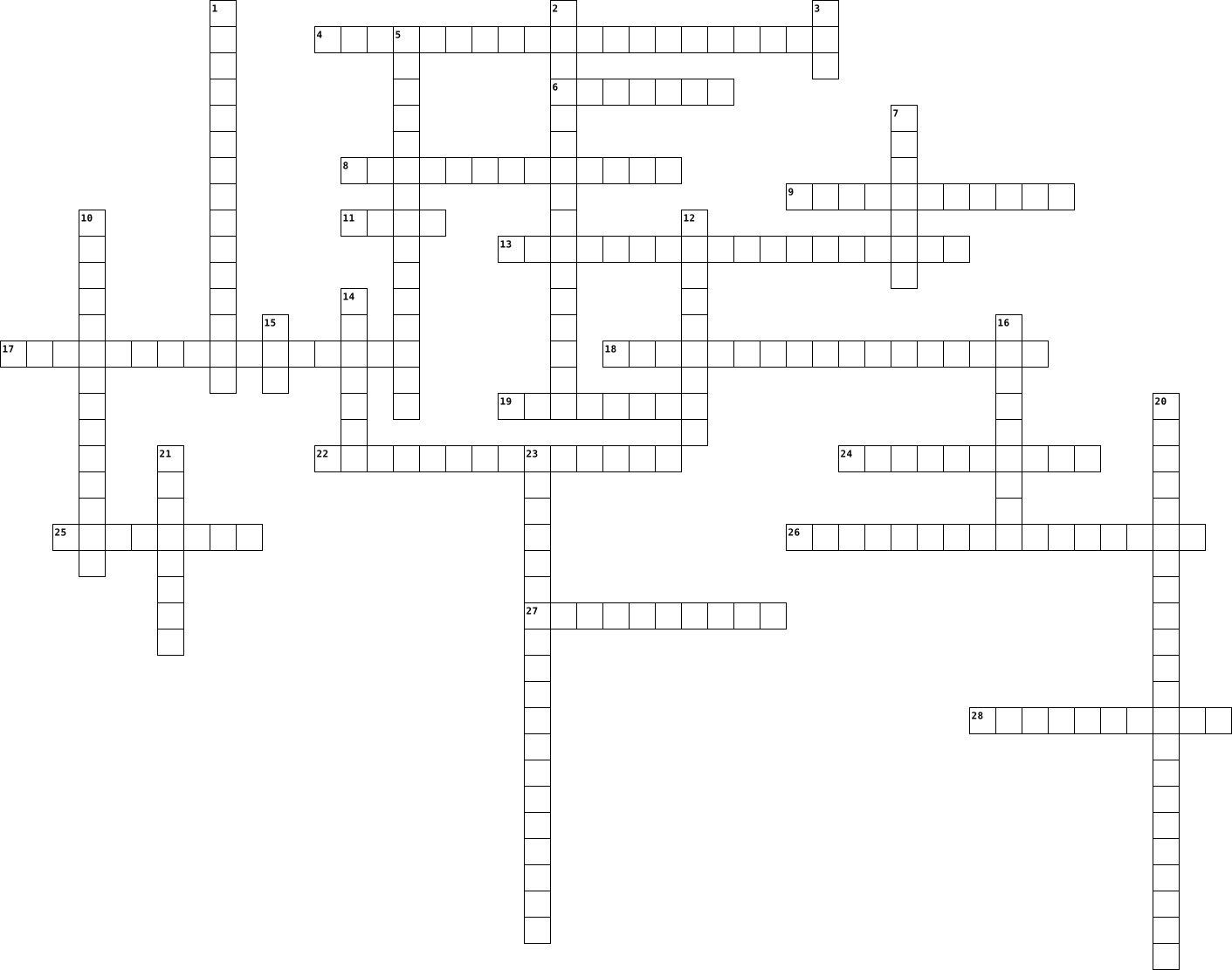
Across
- atomic, molecular, cellular, tissue, organ, organismal, group, population, community, ecosystem, landscape, and biosphere levels
- A type of cell division that results in four daughter cells.
- your body's command center
- nature's way of reusing carbon atoms, which travel from the atmosphere into organisms in the Earth and then back into the atmosphere over and over again.
- is a molecule that contains the instructions or recipe that directs the cells to make a protein using its natural machinery
- when the severity of disturbance is insufficient to remove all the existing vegetation and soil from a site
- is defined as movement of a solute from a region of high electrochemical potential on one side of the cell membrane to a region of lower electrochemical potential on the opposite side.
- Delivers oxygen and nutrients to cells and takes away wastes.
- animals that get their energy by eating plants or other animals.
- A form of viral reproduction involving the fusion of the nucleic acid of a bacteriophage with that of a host, followed by proliferation of the resulting prophage.
- One of the two cycles of viral reproduction
- cycle The nitrogen cycle is a repeating cycle of processes during which nitrogen moves through both living and non-living things
- a mechanism of evolution
- molecules that combine to form proteins.
- diagrams which depict the relationships between different groups of taxa called “clades”.
Down
- the movement of ions or molecules across a cell membrane into a region of higher concentration, assisted by enzymes and requiring energy.
- happens when a new patch of land is created or exposed for the first time
- ribonucleic acid, a nucleic acid present in all living cells.
- A complex network of glands and organs
- A type of cell division that results in two daughter cells
- the process by which green plants and some other organisms use sunlight to synthesize foods from carbon dioxide and water.
- Photosynthesizing organisms
- The study of living organisms
- A self-Replicating material that is present in nearly all living organisms as the main constituent of chromosomes
- The process a cell goes through each time it divides
- the close associations formed between pairs of species
- he science of classification, but more strictly the classification of living and extinct organisms
- A chemical process in which oxygen is used to make energy from carbohydrates
28 Clues: a mechanism of evolution • your body's command center • Photosynthesizing organisms • The study of living organisms • A complex network of glands and organs • molecules that combine to form proteins. • One of the two cycles of viral reproduction • The process a cell goes through each time it divides • the close associations formed between pairs of species • ...
Biology 2023-08-20
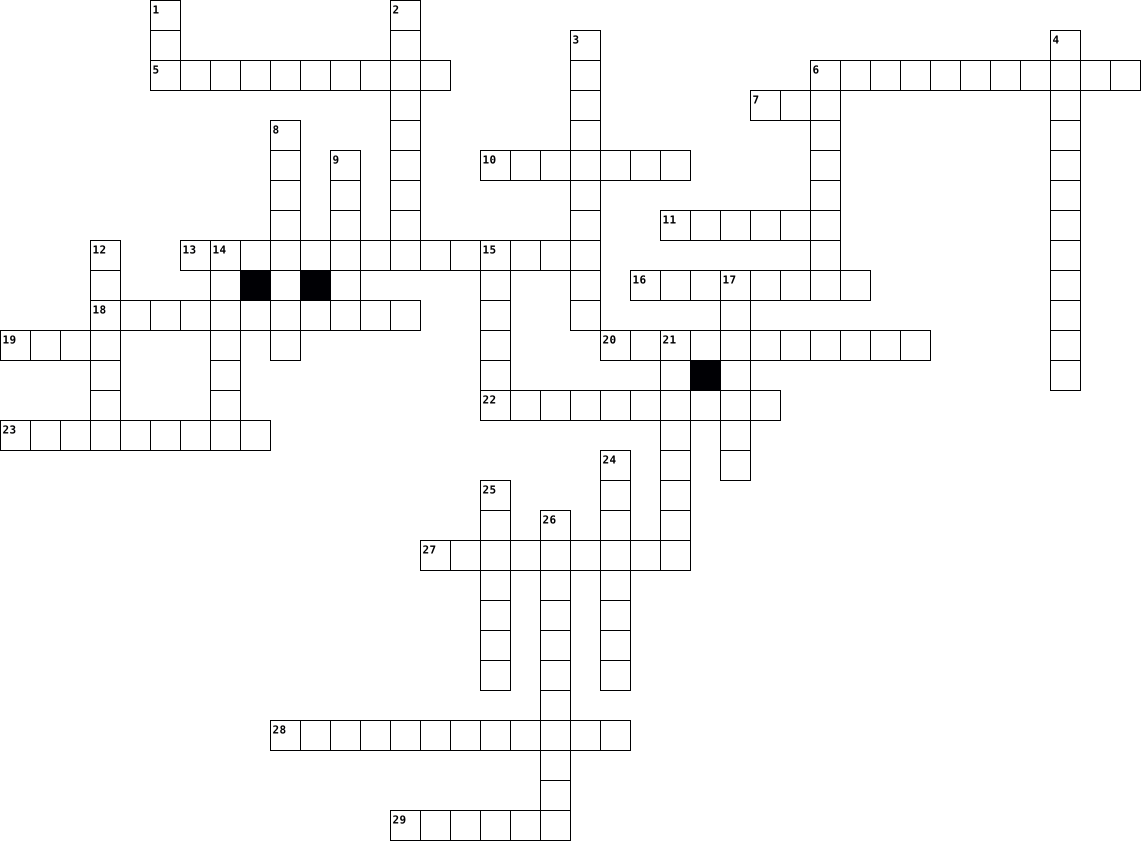
Across
- Trait that helps an organism survive in its environment.
- Movement of blood through the body.
- Single-stranded molecule involved in protein synthesis.
- Cell division for growth and repair.
- Fission Asexual reproduction in single-celled organisms.
- Process by which plants convert light energy into food.
- Passing of traits from parents to offspring.
- Site of photosynthesis in plant cells.
- Basic unit of life.
- Maintenance of stable internal conditions.
- Complete loss of a species.
- Community of living organisms and their environment.
- Term for inheritance patterns studied by Gregor Mendel.
- Internal structural system in vertebrates.
- Nerve cell for transmitting signals.
Down
- Genetic material containing instructions for traits.
- Gradual change in species over time.
- Initial step in cellular respiration.
- Variety of life forms within an ecosystem.
- Substance that increases the rate of a chemical reaction.
- Genetic makeup of an organism.
- Membrane Cell's outer boundary, controls entry and exit.
- Control center of the cell, contains DNA.
- Chemical messenger that regulates bodily functions.
- Protein that speeds up chemical reactions.
- Study of interactions between organisms and their environment.
- A change in DNA sequence.
- Protein that fights off foreign invaders.
- Square Tool used to predict offspring genotypes.
- Process of converting glucose into energy.
30 Clues: Basic unit of life. • A change in DNA sequence. • Complete loss of a species. • Genetic makeup of an organism. • Movement of blood through the body. • Gradual change in species over time. • Cell division for growth and repair. • Nerve cell for transmitting signals. • Initial step in cellular respiration. • Site of photosynthesis in plant cells. • ...
Biology 2021-09-29
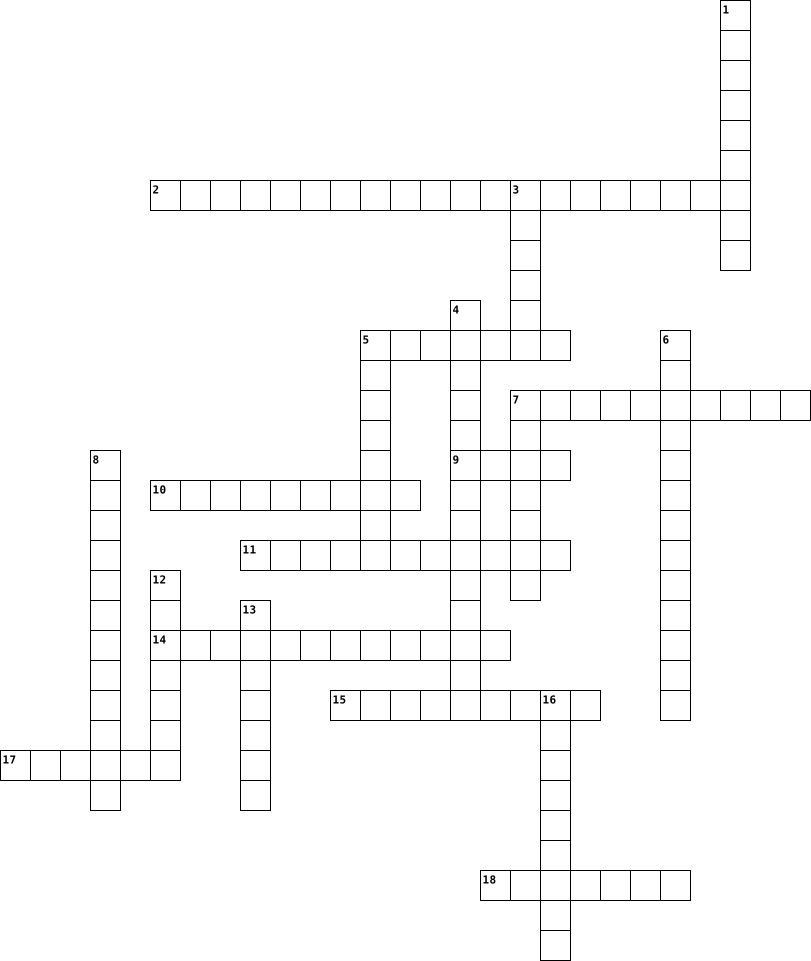
Across
- A cell structure that forms a maze of passageways in which proteins and other materials are carried from one part of the cell to another.
- a molecule that can be bonded to other identical molecules to form a polymer
- A unicellular organism that lacks a nucleus and membrane bound organelles
- basic unit of matter
- produces ribosomes
- macromolecule containing hydrogen, oxygen, nitrogen, carbon, and phosphorus examples include DNA and RNA, monomers are nucleotides
- organelles that capture the energy from sunlight and convert it into chemical energy in a process called photosynthesis
- site of protein synthesis
- Energy-rich organic compounds, such as fats, oils, and waxes, that are made of carbon, hydrogen, and oxygen, monomers are glycerol and fatty acids.
- the study of organisms
Down
- cell organelle filled with enzymes needed to break down certain materials in the cell
- A type of protein that speeds up a chemical reaction in a living thing, end in ase example :lactase
- A system of membranes that modifies and packages proteins for export by the cell
- A group of atoms bonded together
- the starches and sugars present in foods, monomers are glucose
- macromolecule that contains carbon, hydrogen, oxygen, and nitrogen; needed by the body for growth and repair, monomers are amino acids
- Powerhouse of the cell, organelle that is the site of ATP (energy) production
- A part of the cell containing DNA and responsible for growth and reproduction, only in eukaryotic cells
- A long molecule consisting of many similar or identical
- A cell that contains a nucleus and membrane bound organelles
20 Clues: produces ribosomes • basic unit of matter • the study of organisms • site of protein synthesis • A group of atoms bonded together • A long molecule consisting of many similar or identical • A cell that contains a nucleus and membrane bound organelles • the starches and sugars present in foods, monomers are glucose • ...
Biology 2021-09-13
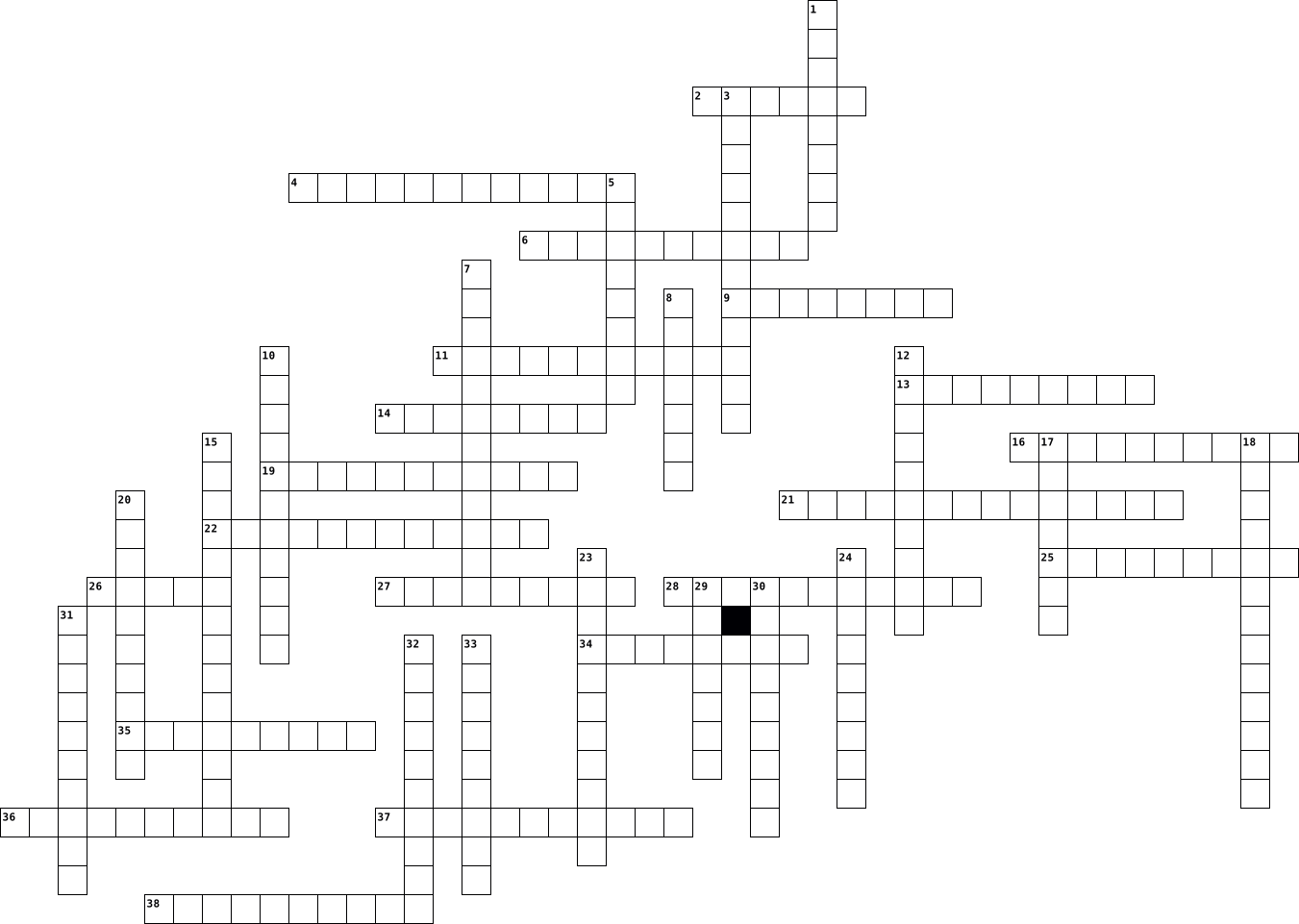
Across
- reproduction Process by which two parents produce genetically different offspring.
- Organisms that depend on other organisms for their food
- The sum total of all processes in an organism that convert energy and matter from outside sources and use that energy and matter to sustain the organism's life functions
- The collected body of data from experiments and observations.
- variable The variable manipulated by the experimenter
- The sum total of all processes in an organism that use energy and simple chemical building blocks to produce large chemicals and structures necessary for life.
- A factor that changes in an experiment
- theory An explanation of some part of the natural world that has been thoroughly tested and is supported by a significant amount of evidence from observations and experiments
- The process by which physical and biological characteristics are transmitted from the parent (parents) to the offspring.
- Living creatures that are too small to see with the naked eye
- electron microscope A microscope that transmits a beam of electrons through a thinly sliced specimen
- Special structures that allow living organisms to sense the conditions of their internal or external environment.
- The smallest units of an organism considered alive
- variable The variable responding to the manipulated variable
- Idea that long ago, very simple life forms spontaneously appeared through chemical reactions
- light microscope A microscope that shines light through a specimen using two lenses to magnify an image
- Logical interpretation based on prior knowledge, experience, or evidence
- A suggested, testable answer to a well-defined scientific question or a possible, testable explanation for observations
- The maintenance of stable internal conditions
- Organisms that only eat plants.
Down
- An abrupt and marked change in the DNA of an organism compared to that of its parents
- group The group in an experiment that is manipulated
- electron microscope A microscope that passes a beam of electrons over the surface of a specimen
- observations Observations involving numbers, such as counting or measuring.
- reproduction Process by which a single organism produces genetically identical offspring
- observations Observations that are not easily counted or measured, such as color or texture
- The sum total of all processes in an organism that break down chemicals to produce energy and simple chemical building blocks
- The process by which green plants and some other organisms use the energy of sunlight and simple chemicals to produce their own food.
- control The group in an experiment that experiences no manipulation (does not contain the independent variable)
- system of units The metric system (SI), which is the most widely used system of measurement in science
- law A description of a natural relationship or principle, often expressed in mathematical terms, and supported by a significant amount of evidence
- The Latin prefix uni means "one", so unicellular means "single-celled"
- Organism that is internally warmed by heat-generating metabolic process.
- The study of life. the Greek word bios means "life", and -logy means "study of".
- Organisms that eat both plants and other organisms.
- Organisms that are able to make their own food
- Organisms that eat only organisms other than plants.
- Organism that lacks an internal mechanism for regulating body heat
38 Clues: Organisms that only eat plants. • A factor that changes in an experiment • The maintenance of stable internal conditions • Organisms that are able to make their own food • The smallest units of an organism considered alive • Organisms that eat both plants and other organisms. • group The group in an experiment that is manipulated • ...
BIOLOGY 2021-10-30
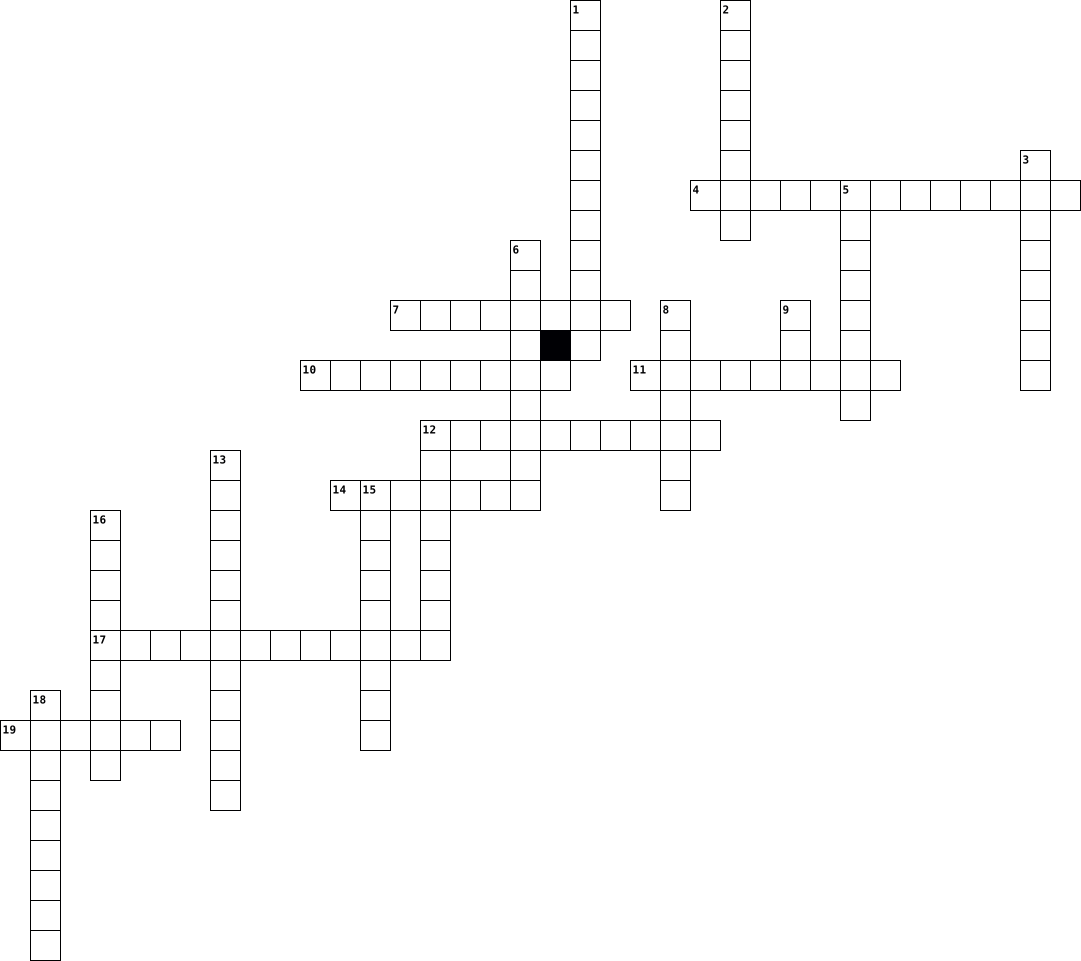
Across
- sinonimi i sheqernave
- qelizat e trurit
- obezitet
- lejon hyrjen e ajrit ne qelizat e gjethes
- njesia me e vogel qe nderton proteinen
- hapesira ne pjesen e bremdshme te qelizes bimore
- organela te vogla ne gjethe
- karbohidrat lipid celuloze
Down
- procesi i formimit te ushqimit tek bimet
- jane lipide
- nje organizem brenda gjethes
- qeliza mesazhere
- perdoren per riparuar vetveten
- sinonimi i yndyrnave
- qelizor- mur i jashtem i qelizes
- depozitimi i yndyrnave ne gjak shkakton..
- semundja e shkaktuar nga mungesa e proteinave
- depozitimi i yndynave ne gjak
- nje pjese e jashtme qe mbulon si citoplazme qelizat e gjethes
- lende kimike qe nevojiten ne sasi te vogla
20 Clues: obezitet • jane lipide • qeliza mesazhere • qelizat e trurit • sinonimi i yndyrnave • sinonimi i sheqernave • karbohidrat lipid celuloze • organela te vogla ne gjethe • nje organizem brenda gjethes • depozitimi i yndynave ne gjak • perdoren per riparuar vetveten • qelizor- mur i jashtem i qelizes • njesia me e vogel qe nderton proteinen • procesi i formimit te ushqimit tek bimet • ...
BIOLOGY 2021-10-30
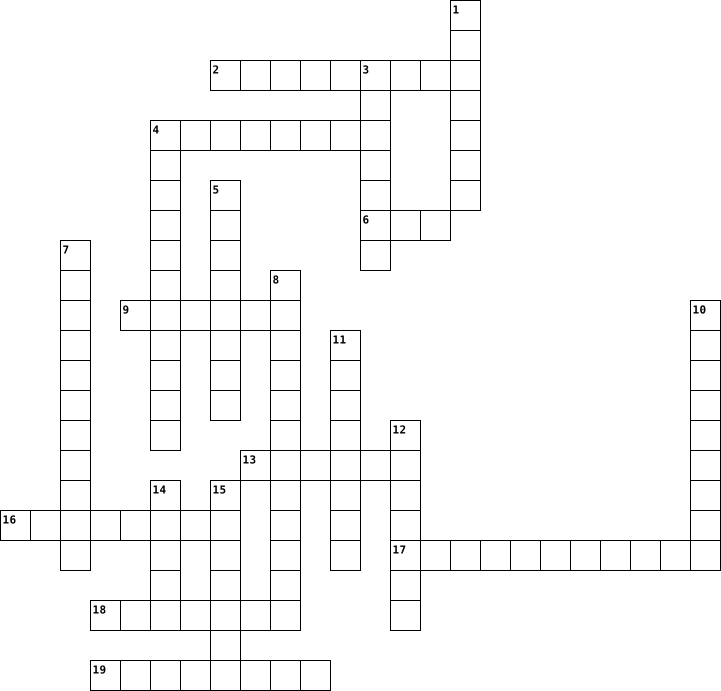
Across
- njesia me e vogel qe nderton proteinen
- nje pjese e jashtme qe mbulon si citoplazme qelizat e gjethes
- qelizor- mur i jashtem i qelizes
- hapesira ne pjesen e bremdshme te qelizes bimore
- sinonimi i yndyrnave
- lende kimike qe nevojiten ne sasi te vogla
- procesi i formimit te ushqimit tek bimet
- qeliza mesazhere
- perdoren per riparuar vetveten
Down
- jane lipide
- depozitimi i yndyrnave ne gjak shkakton..
- semundja e shkaktuar nga mungesa e proteinave
- lejon hyrjen e ajrit ne qelizat e gjethes
- organela te vogla ne gjethe
- sinonimi i sheqernave
- obezitet
- depozitimi i yndynave ne gjak
- nje organizem brenda gjethes
- karbohidrat lipid celuloze
- qelizat e trurit
20 Clues: obezitet • jane lipide • qelizat e trurit • qeliza mesazhere • sinonimi i yndyrnave • sinonimi i sheqernave • karbohidrat lipid celuloze • organela te vogla ne gjethe • nje organizem brenda gjethes • depozitimi i yndynave ne gjak • perdoren per riparuar vetveten • qelizor- mur i jashtem i qelizes • njesia me e vogel qe nderton proteinen • procesi i formimit te ushqimit tek bimet • ...
BIOLOGY 2021-10-30
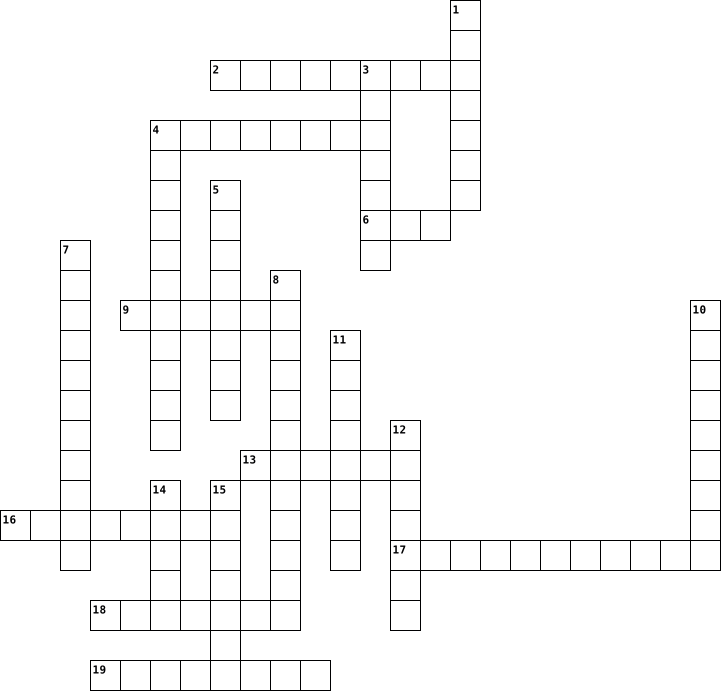
Across
- njesia me e vogel qe nderton proteinen
- nje pjese e jashtme qe mbulon si citoplazme qelizat e gjethes
- qelizor- mur i jashtem i qelizes
- hapesira ne pjesen e bremdshme te qelizes bimore
- sinonimi i yndyrnave
- lende kimike qe nevojiten ne sasi te vogla
- procesi i formimit te ushqimit tek bimet
- qeliza mesazhere
- perdoren per riparuar vetveten
Down
- jane lipide
- depozitimi i yndyrnave ne gjak shkakton..
- semundja e shkaktuar nga mungesa e proteinave
- lejon hyrjen e ajrit ne qelizat e gjethes
- organela te vogla ne gjethe
- sinonimi i sheqernave
- obezitet
- depozitimi i yndynave ne gjak
- nje organizem brenda gjethes
- karbohidrat lipid celuloze
- qelizat e trurit
20 Clues: obezitet • jane lipide • qelizat e trurit • qeliza mesazhere • sinonimi i yndyrnave • sinonimi i sheqernave • karbohidrat lipid celuloze • organela te vogla ne gjethe • nje organizem brenda gjethes • depozitimi i yndynave ne gjak • perdoren per riparuar vetveten • qelizor- mur i jashtem i qelizes • njesia me e vogel qe nderton proteinen • procesi i formimit te ushqimit tek bimet • ...
BIOLOGY 2021-10-30
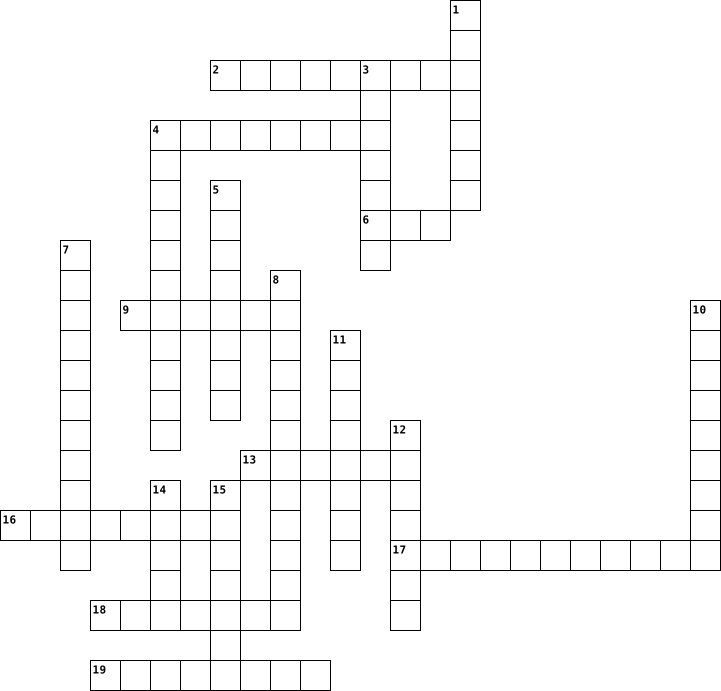
Across
- njesia me e vogel qe nderton proteinen
- nje pjese e jashtme qe mbulon si citoplazme qelizat e gjethes
- qelizor- mur i jashtem i qelizes
- hapesira ne pjesen e bremdshme te qelizes bimore
- sinonimi i yndyrnave
- lende kimike qe nevojiten ne sasi te vogla
- procesi i formimit te ushqimit tek bimet
- qeliza mesazhere
- perdoren per riparuar vetveten
Down
- jane lipide
- depozitimi i yndyrnave ne gjak shkakton..
- semundja e shkaktuar nga mungesa e proteinave
- lejon hyrjen e ajrit ne qelizat e gjethes
- organela te vogla ne gjethe
- sinonimi i sheqernave
- obezitet
- depozitimi i yndynave ne gjak
- nje organizem brenda gjethes
- karbohidrat lipid celuloze
- qelizat e trurit
20 Clues: obezitet • jane lipide • qelizat e trurit • qeliza mesazhere • sinonimi i yndyrnave • sinonimi i sheqernave • karbohidrat lipid celuloze • organela te vogla ne gjethe • nje organizem brenda gjethes • depozitimi i yndynave ne gjak • perdoren per riparuar vetveten • qelizor- mur i jashtem i qelizes • njesia me e vogel qe nderton proteinen • procesi i formimit te ushqimit tek bimet • ...
Biology 2021-11-22
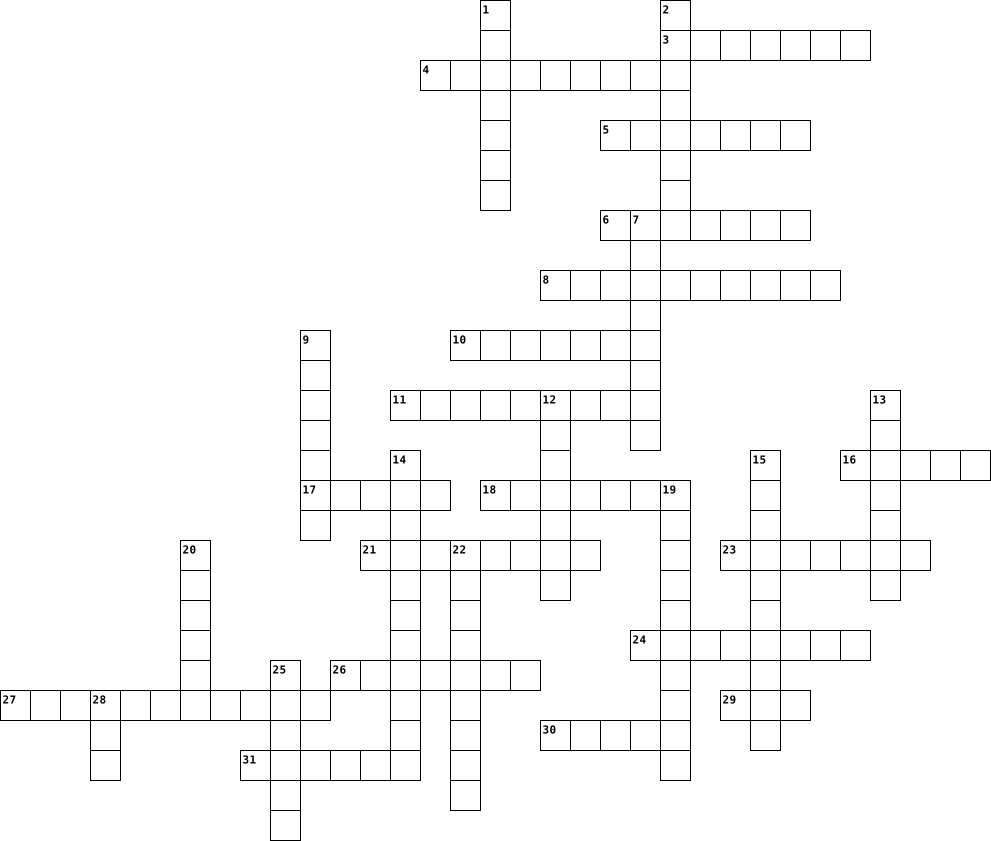
Across
- Enzim dalam darah yang berfungsi membekukan darah
- Contoh dari penguraiaan molekul kompleks menjadi molekul sederhana
- sederhana menjadi molekul yang lebih kompleks
- Bagian tumbuhan di atas tanah atau perkecambahan yang di tandai dengan bagian hipokotil terangkat ke permukaan tanah
- Tempat berlangsungnya proses glikolisis
- Memecah Zat pati (karbohidrat) menjadi gula (glukosa) dan bekerja di luar sel
- Tempat berlangsungnya proses fotosintesis
- Media tanam bagi tanaman dan menyediakan makanan, unsur hara dan garam mineral
- Zat yang kaya akan energi dan berfungsi sebagai energi utama untuk proses metabolisme tubuh
- Bahan dasar respirasi
- Orang tubuh yang menghasilkan enzim pencernaan
- Bahasa Yunani “metabole”
- Salah satu faktor reaksi fotosintesis
- enzim amilase yang terdapat di dalam ludah
- Keseluruhan proses kimiawi suatu organisme atau makhluk hidup
- Apa itu H2O
- Senyawa organik yang mempercepat suatu reaksi kimia
- salah satu enzim yang terdapat dalam ragi
Down
- pembuangan hasil sisa metabolisme yang tidak dibutuhkan oleh tubuh
- Suatu keadaan bertambah panjangnya suatu tanaman karena kekurangan cahaya dalam pertumbuhannya
- Enzim pencernaan yang bertugas untuk memecah protein dalam makanan menjadi asam amino
- Pucuk lembaga/calon batang
- Senyawa kimia hasil dari metabolisme glukosa yang disebut glikosisis
- tumbuhan
- Proses perombakan atau penguraiaan senyawa atau molekul yang kompleks menjadi senyawa atau molekul sederhana
- Dalam glikolisis dihasilkan 4 molekul ATP untuk setiap satu molekul glukosa. Dua molekul ATP diantarnya digunakan dalam reaksi
- Proses pembentukan atau penyusunan
- bagian tubuh yang berfungsi memisahkan produk bagian metabolisme dalam darah
- Daun biji/daun lembaga
- Proses penyerapan air oleh biji sehingga beratnya bertambah
- Senyawa berenergi tinggi yang diperoleh melalu proses respirasi seluler
31 Clues: tumbuhan • Apa itu H2O • Bahan dasar respirasi • Daun biji/daun lembaga • Bahasa Yunani “metabole” • Pucuk lembaga/calon batang • Proses pembentukan atau penyusunan • Salah satu faktor reaksi fotosintesis • Tempat berlangsungnya proses glikolisis • Tempat berlangsungnya proses fotosintesis • salah satu enzim yang terdapat dalam ragi • enzim amilase yang terdapat di dalam ludah • ...
Biology 2021-11-22
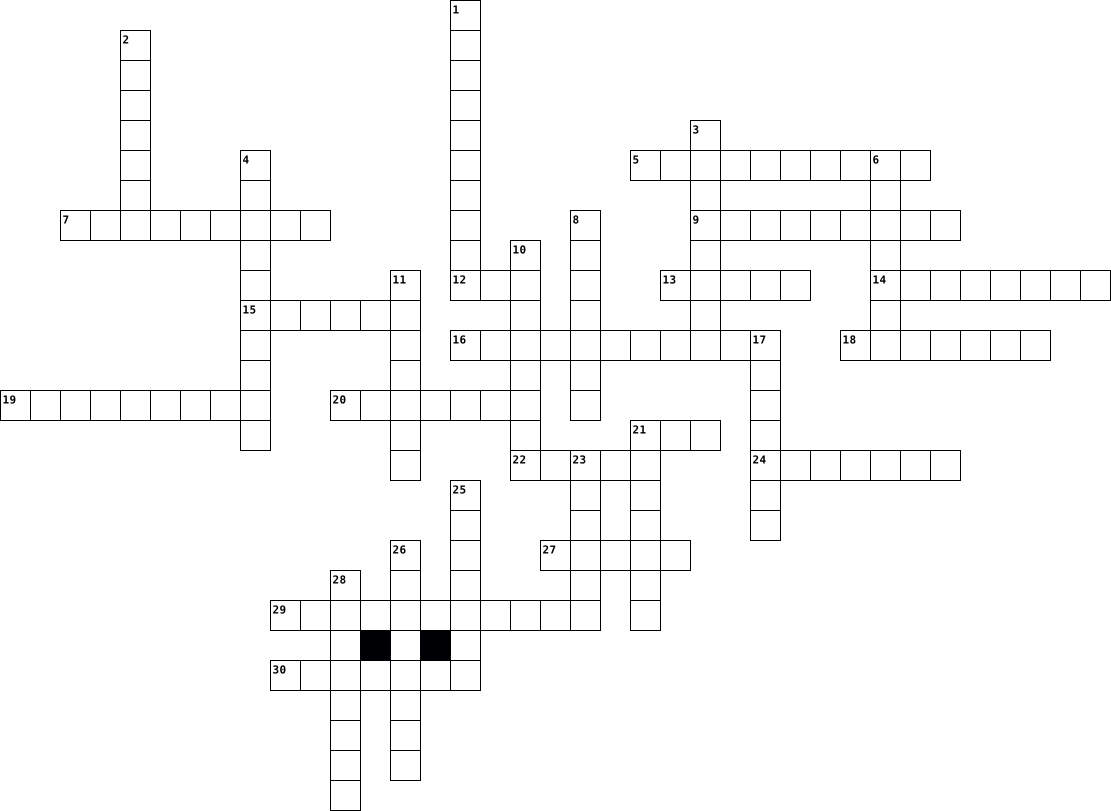
Across
- Proses pembentukan atau penyusunan
- Daun biji/daun lembaga
- Tempat berlangsungnya proses fotosintesis
- Apa itu H2O
- Zat yang kaya akan energi dan berfungsi sebagai energi utama untuk proses metabolisme tubuh
- Salah satu faktor reaksi fotosintesis
- bagian tubuh yang berfungsi memisahkan produk bagian metabolisme dalam darah
- Proses perombakan atau penguraiaan senyawa atau molekul yang kompleks menjadi senyawa atau molekul sederhana
- tumbuhan
- Contoh dari penguraiaan molekul kompleks menjadi molekul sederhana
- Bahan dasar respirasi
- Senyawa berenergi tinggi yang diperoleh melalu proses respirasi seluler
- Senyawa organik yang mempercepat suatu reaksi kimia
- Bagian tumbuhan di atas tanah atau perkecambahan yang di tandai dengan bagian hipokotil terangkat ke permukaan tanah
- Media tanam bagi tanaman dan menyediakan makanan, unsur hara dan garam mineral
- Keseluruhan proses kimiawi suatu organisme atau makhluk hidup
- Enzim dalam darah yang berfungsi membekukan darah
Down
- Tempat berlangsungnya proses glikolisis
- Senyawa kimia hasil dari metabolisme glukosa yang disebut glikosisis
- Orang tubuh yang menghasilkan enzim pencernaan
- Dalam glikolisis dihasilkan 4 molekul ATP untuk setiap satu molekul glukosa. Dua molekul ATP diantarnya digunakan dalam reaksi
- sederhana menjadi molekul yang lebih kompleks
- Bahasa Yunani “metabole”
- Enzim pencernaan yang bertugas untuk memecah protein dalam makanan menjadi asam amino
- Pucuk lembaga/calon batang
- pembuangan hasil sisa metabolisme yang tidak dibutuhkan oleh tubuh
- Memecah Zat pati (karbohidrat) menjadi gula (glukosa) dan bekerja di luar sel
- salah satu enzim yang terdapat dalam ragi
- enzim amilase yang terdapat di dalam ludah
- Proses penyerapan air oleh biji sehingga beratnya bertambah
- Suatu keadaan bertambah panjangnya suatu tanaman karena kekurangan cahaya dalam pertumbuhannya
31 Clues: tumbuhan • Apa itu H2O • Bahan dasar respirasi • Daun biji/daun lembaga • Bahasa Yunani “metabole” • Pucuk lembaga/calon batang • Proses pembentukan atau penyusunan • Salah satu faktor reaksi fotosintesis • Tempat berlangsungnya proses glikolisis • Tempat berlangsungnya proses fotosintesis • salah satu enzim yang terdapat dalam ragi • enzim amilase yang terdapat di dalam ludah • ...
Biology 2021-11-22
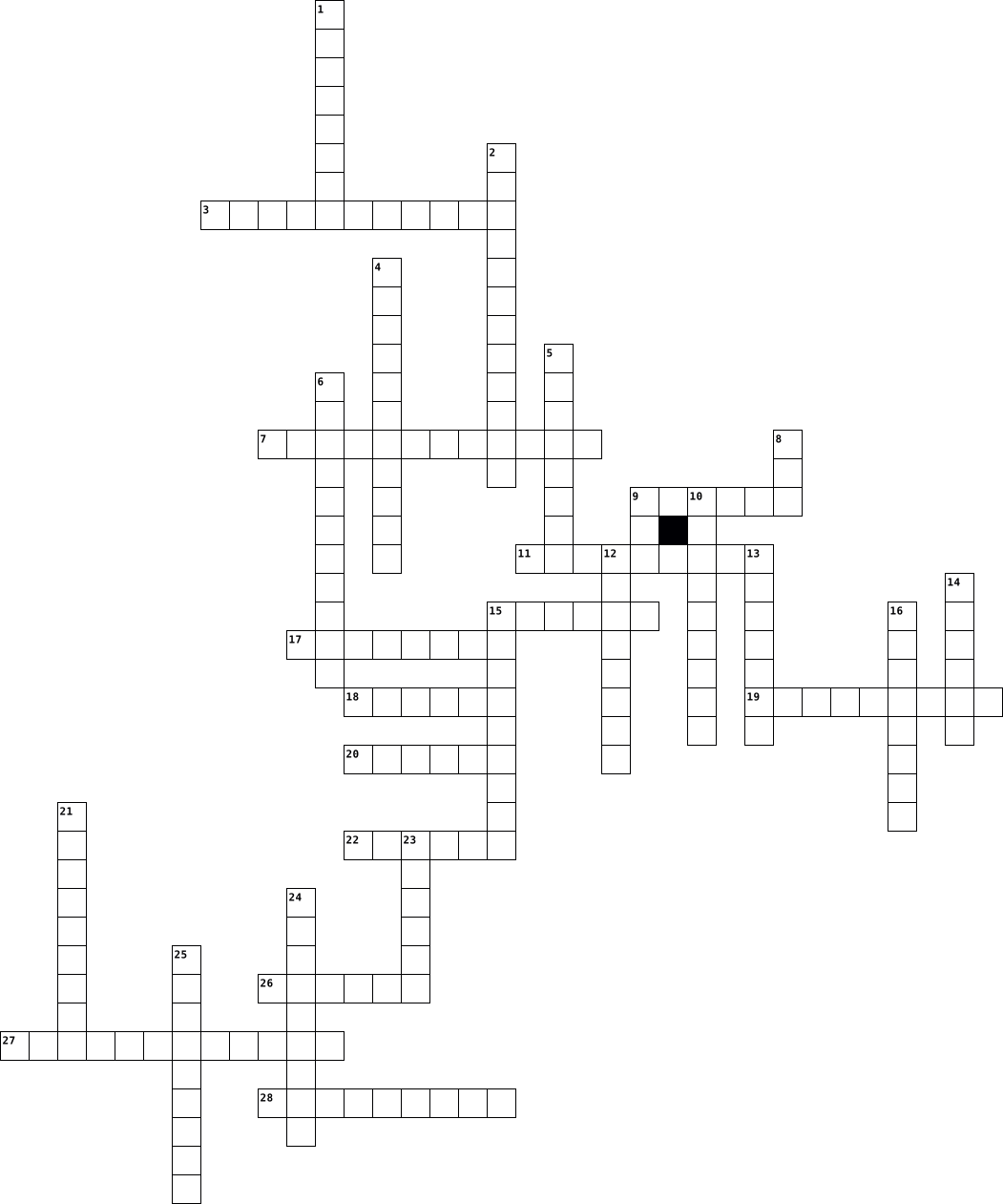
Across
- Peluruhan daun pada musim kering disebabkan oleh hormon
- Pertumbuhan tanaman yang menuju arah datangnya cahaya
- Hormon yang berfungsi untuk memperlambat gugurnya daun
- Terbentuknya buah sebelum penyerbukan dan buah tanpa biji dapat diusahakan dengan penambahan
- auksin berasal dari bahasa Yunani yaitu
- Unsur yang dibutuhkan oleh tumbuhan untuk bahan fotosintesis dan didapat dari tanah yaitu
- Hasil individu baru dari pembuahan gamet betina oleh gamet jantan dan mengalami pertumbuhan pada reproduksi seksual
- Hormon yang berfungsi untuk menunda pengguguran daun, bunga dan buah
- salah satu faktor eksternal pertumbuhan tanaman
- Tunas tumbuhan dapat bengkok keatas karena pengaruh hormon
- Contoh hormon sitokinin yaitu
- alat untuk mengukur kecepatan pertumbuhan tanaman
- Pada kecambah yang batang dan akarnya tumbuh tinggi, dan terletak di sebelah bawah kotiledon
Down
- Calon akar
- Salah satu contoh reaksi anabolisme adalah
- Penebalan dinding rahim dipengaruhi oleh hormon
- Tidak berkecambah atau gagal berkecambah. Biji tersebut sebenarnya hidup walaupun diletakan di tempat yang dianggap telah memenuhi persyaratan bagi suatu perkecambahan
- Organel tempat berlangsungnya reaksi respirasi aerob di dalam sel makhluk hidup adalah
- Faktor dalam atau internal yang mempengaruhi pertumbuhan dan perkembangan pada tumbuhan
- Pelarut dan media untuk terjadianya reaksi metabolisme tubuh
- pada biji monokotil terdapat suatu struktur yang berfungsi untuk melindungi plumula yaitu
- tumbuhan dapat tumbuh sangat cepat ditempat gelap
- Makakan/mineral yang sangat diperlukan untuk pertumbuhan
- Akar tanaman dapat terus tumbuh ke bawah tanah karena adanya pengaruh hormon
- Hormon yang berfungsi untuk meransang pembentukan bunga dan buah
- Proses meresapnya air ke dalam biji yang dapat memicu perkecambahan disebut dengan
- Kultur tanaman yang dilakukan dengan cara menggunakan larutan nutrisi yang disemprotkan pada akar tanaman yaitu
- Unsur yang didapat dari udara untuk pertumbuhan serta perkembangan tumbuhan hijau yaitu
- Hormon yang berfungsi untuk memperbesar ukuran buah
- Pada proses perkecambahan, embrio memanfaatkan cadangan makanan yang ada dalam biji. Cadangan makanan di simpan pada bagian
30 Clues: Calon akar • Contoh hormon sitokinin yaitu • auksin berasal dari bahasa Yunani yaitu • Salah satu contoh reaksi anabolisme adalah • Penebalan dinding rahim dipengaruhi oleh hormon • salah satu faktor eksternal pertumbuhan tanaman • tumbuhan dapat tumbuh sangat cepat ditempat gelap • alat untuk mengukur kecepatan pertumbuhan tanaman • ...
BIOLOGY 2021-11-28
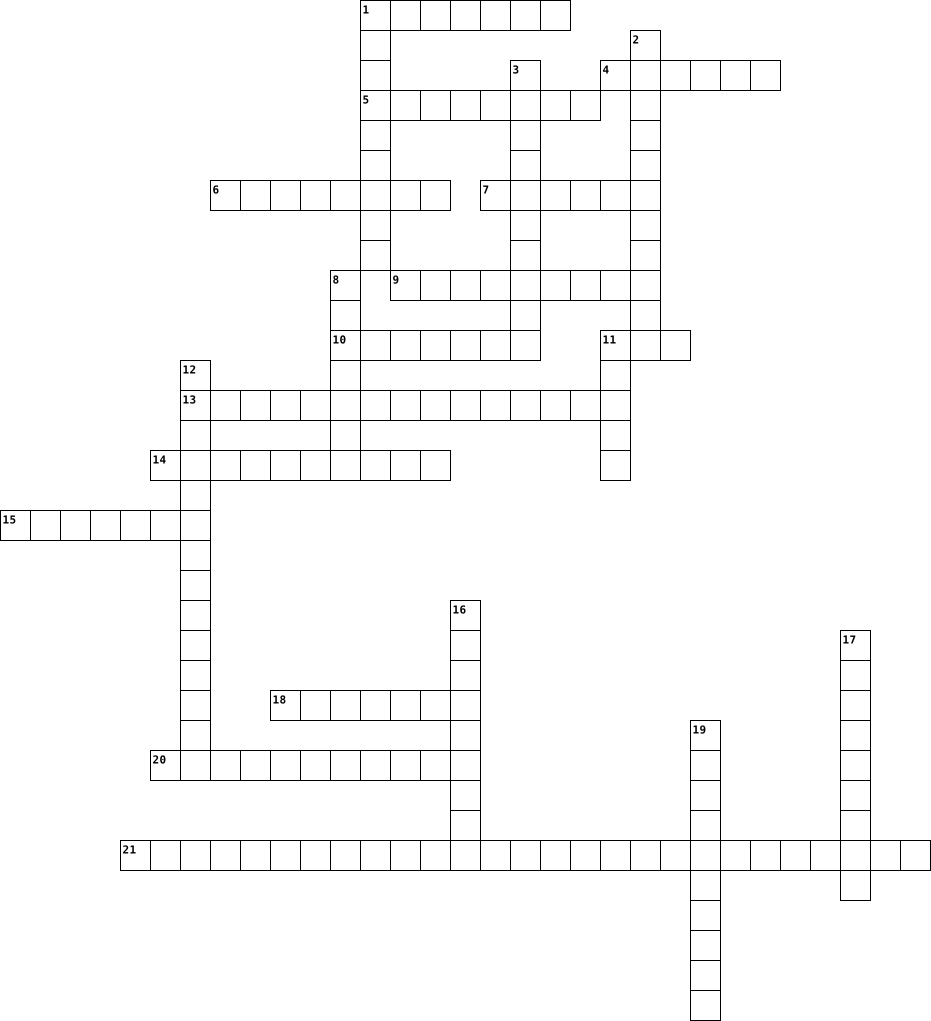
Across
- Binds with Thymine
- connects the pelvis of the kidney to the bladder
- A phase of the heart where all the muscles are relaxed and blood flows into the heart
- Change in sequence of basees in a DNA
- Another name for of insect borne diseases
- Nicotine is a __________
- How do cells take a picute
- What do you call a fish with no eyes
- Against the concentration gradient
- Dent in an enzyme
- Which absorbs digested fats
- What did one cell say to his sister when she stepped in his toe
- Increase in complexity
- ____ contracts to decrease the pressure inside the lungs
Down
- THE REAL BIO GOD
- No internal membrane-bound organelles
- Path for Pollen grains to travel from stigma to the ovoule
- What do you call the leader of a biology gang
- I was once an embryo but have now gone through eight weeks of development. What am I?
- a strand of conducting vessels in the stem or leaves of a plant
- What is blood’s message to the world
- We are Unspecialized
- Abnormal growth of plants due to lack of sunlight
23 Clues: THE REAL BIO GOD • Dent in an enzyme • Binds with Thymine • We are Unspecialized • Increase in complexity • Nicotine is a __________ • How do cells take a picute • Which absorbs digested fats • Against the concentration gradient • What do you call a fish with no eyes • What is blood’s message to the world • No internal membrane-bound organelles • Change in sequence of basees in a DNA • ...
Biology 2021-12-06
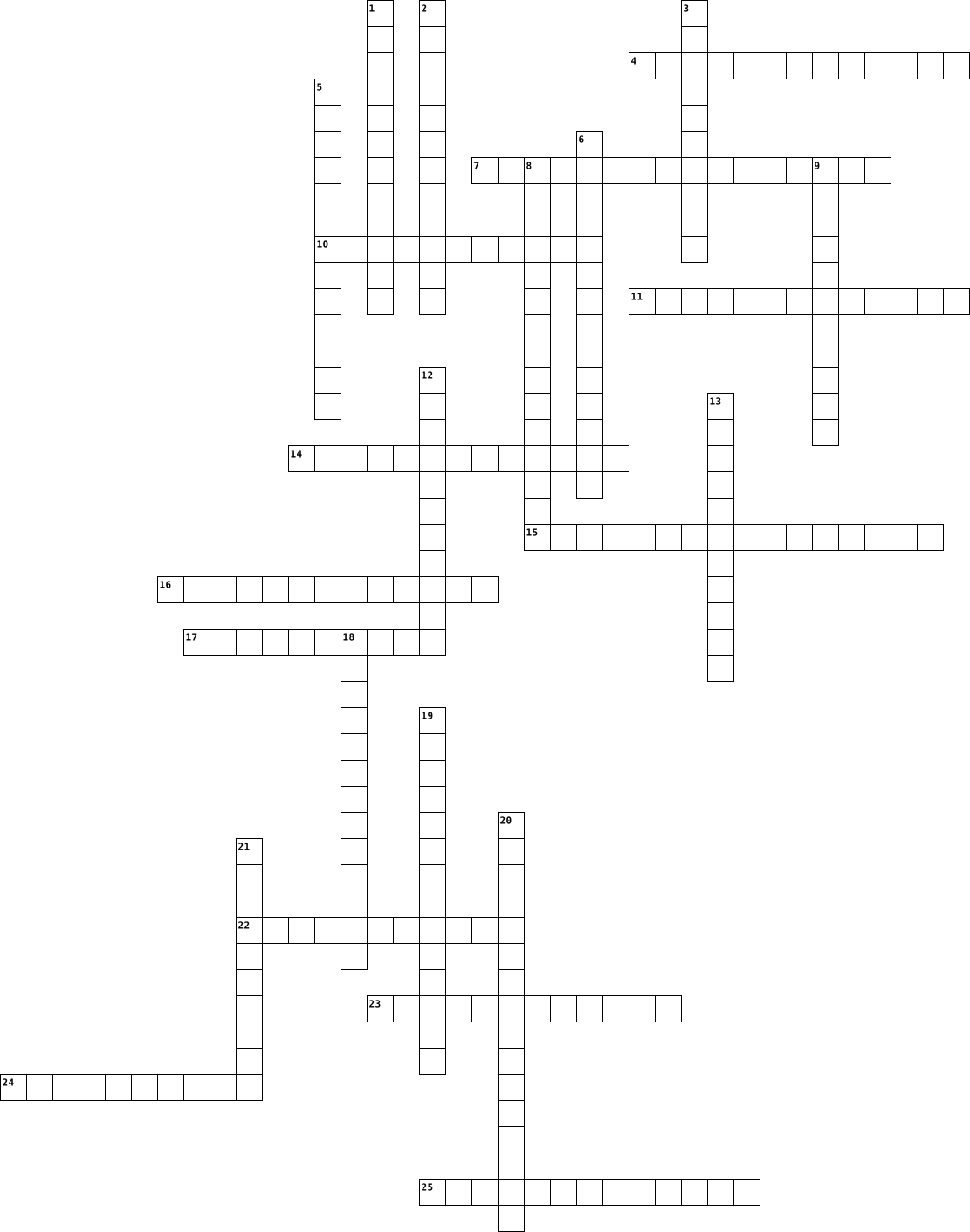
Across
- gradual increase in the overall temperature of the earth's atmosphere generally attributed to the greenhouse effect caused by increased levels of carbon dioxide, CFCs, and other pollutants
- A cycle which comprises the weathering of an existing rock, followed by the erosion of minerals, their transport and deposition, then burial
- gradual process that occurs when the impact of water or wind detaches and removes soil particles, causing the soil to deteriorate
- the series of processes by which nitrogen and its compounds are interconverted in the environment and in living organisms, including nitrogen fixation and decomposition
- state or process of rotting
- Natural or industrial process that causes free nitrogen
- oxidation of ammonium salts to nitrites
- process of burning something
- process of Formation of water vapours by heating
- type of biogeochemical cycle in which the reservoir is the air or the oceans (via evaporation)
- envelope of gases surrounding the earth or another planet
- Another word for rain
Down
- Conversion of vapour or gas to liquid
- second layer of the atmosphere as you go upward
- layer in the earth's stratosphere at an altitude of about 10 km (6.2 miles) containing a high concentration of ozone, which absorbs most of the ultraviolet radiation reaching the earth from the sun
- action of clearing a wide area of trees
- Process of breaking down nitrogen containing chemicals from dead organic matter
- loss of nitrogen from soil
- biogeochemical cycle where various carbon compounds are interchanged among the various layers of the earth, namely, the biosphere, geosphere, pedosphere, hydrosphere and atmosphere
- Process of breathing
- way oxygen moves in arious forms through nature
- Exhalation of water vapour through stomata
- Process used by plants to make energy in form of sugar
- process that occurs when gases in Earth's atmosphere trap the Sun's heat
- way water moves between being water vapour to liquid water then back to water vapour
25 Clues: Process of breathing • Another word for rain • loss of nitrogen from soil • state or process of rotting • process of burning something • Conversion of vapour or gas to liquid • action of clearing a wide area of trees • oxidation of ammonium salts to nitrites • Exhalation of water vapour through stomata • second layer of the atmosphere as you go upward • ...
Biology 2021-05-12
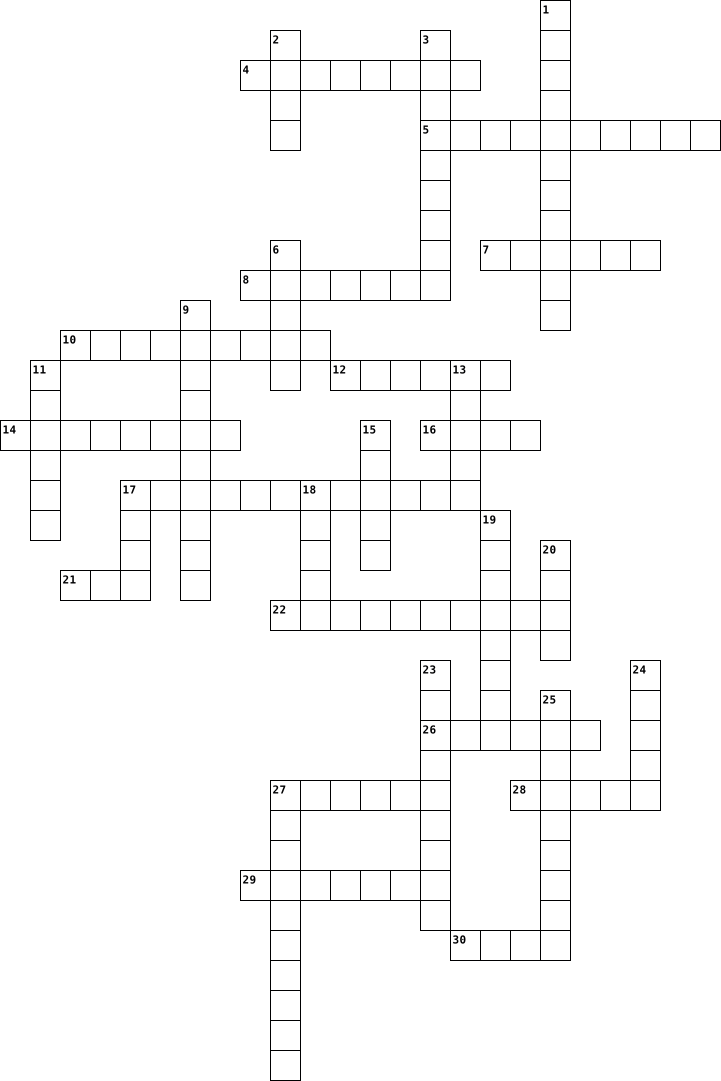
Across
- Antibiotics are used against this pathogen
- A primitive cell
- Seattle's new hockey team
- Something that fights or prevents a virus
- Another name for hay fever
- Material released from flowers and trees
- Rod shaped bacteria
- A yellow fruit
- Cell powerhouse
- Genetic material found in the nucleus
- A popular antibiotic
- This fertilizes the plant egg
- Knife blade that cuts bread
- Antibiotics cannot kill it
- Broadleaf evergreen tree
- Virus type of covid 19
Down
- Contains plant pigment
- Best way to fight Covid is to wear a ____
- Yellow fruit without seeds
- Drink 8 cups of this every day
- What seniors look forward to
- Not a true tree nut
- A viral disease found in Africa
- This tree has scale-like leaves
- Bacterial disease
- A plant egg
- Plant cells have this but not animal cells
- Needles are in bunches of 2, 3, or 5.
- Tree that has palmate venation
- A non-living pathogen
- Trees that lose their leaves in the fall
- Seeds are on the outside of this fruit
32 Clues: A plant egg • A yellow fruit • Cell powerhouse • A primitive cell • Bacterial disease • Not a true tree nut • Rod shaped bacteria • A popular antibiotic • A non-living pathogen • Contains plant pigment • Virus type of covid 19 • Broadleaf evergreen tree • Seattle's new hockey team • Yellow fruit without seeds • Another name for hay fever • Antibiotics cannot kill it • Knife blade that cuts bread • ...
Biology 2022-04-01
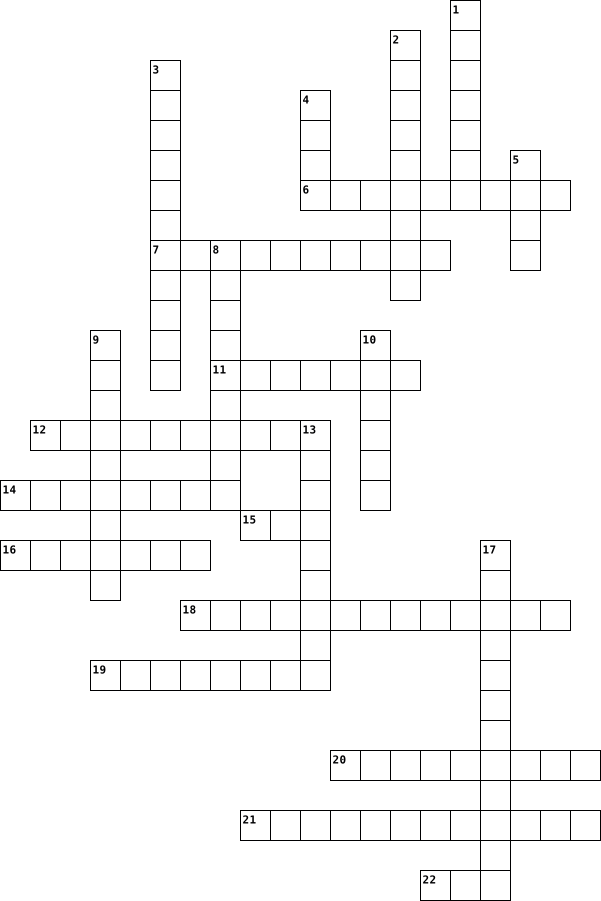
Across
- community of living and nonliving things
- all the same species living in an area
- diffusion of water molecules
- does not have a nucleus
- allele combination for traits
- ribonucleic acid
- different forms of a gene
- energy sources like sugars and starches
- family tree diagram that shows the inheritance
- all of the same species living in an area
- controls what enters and leaves the cell
- deoxyribonucleic acid
Down
- contains DNA in Eukaryotes
- movement of small uncharged cells
- carries out photosynthesis
- flow individuals move in and out of a population
- segment of DNA that codes for a protein
- physical trait determined by genotype
- make protein
- make up cell membranes and store extra energy
- does have a nucleus
- break down glucose
22 Clues: make protein • ribonucleic acid • break down glucose • does have a nucleus • deoxyribonucleic acid • does not have a nucleus • different forms of a gene • contains DNA in Eukaryotes • carries out photosynthesis • diffusion of water molecules • allele combination for traits • movement of small uncharged cells • physical trait determined by genotype • ...
Biology 2022-02-23
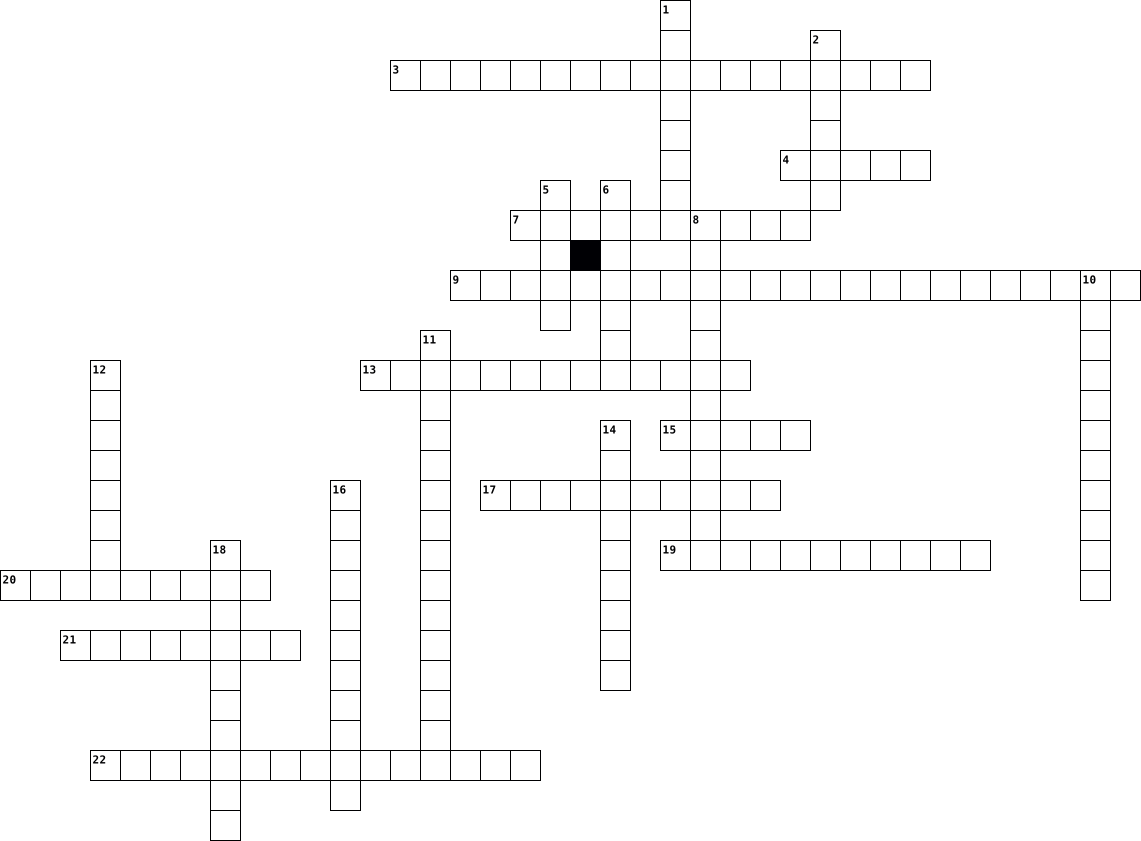
Across
- regulation of water and elimination of excess water is done by organelle called
- is a unicellular fungus that causes dough to rise
- a representative ciliate is the
- spread by the tsetse fly which only lives in Africa
- can contaminate water and cause diarrhea
- short hair like structures
- some can change form, depending upon environment they are in- this ability is called
- all are one-celled
- histolytica that causes severe diarrhea called
- free swimming or fixed to an object
- which type of movement is it
Down
- its slipper shape is maintained by the flexible and firm outer covering called
- mouth pore through a short tube is called
- they can respond to a stimulus; this action is called
- in human history caused more deaths than any other disease
- reproduction also can be asexual by
- feed on dead organic material
- includes all organisms that are not animals, plants , or fungi
- indigestible wastes pass out of the ciliate by the
- feed on/in living organisms
- sexual reproduction called
- food gets swept into the indentation called
22 Clues: all are one-celled • short hair like structures • sexual reproduction called • feed on/in living organisms • which type of movement is it • feed on dead organic material • a representative ciliate is the • reproduction also can be asexual by • free swimming or fixed to an object • can contaminate water and cause diarrhea • mouth pore through a short tube is called • ...
biology 2022-05-20
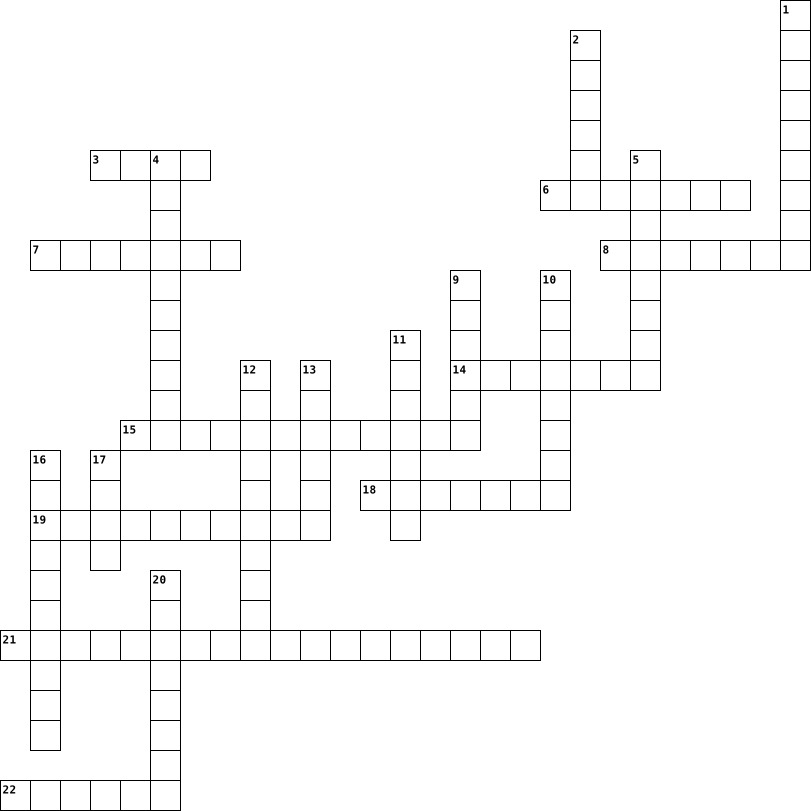
Across
- cells-cells with the potential to develop into many different types of cells in the body.
- traits-individuals who are diploid for that trait have two alleles, getting one copy of their genome from each parent
- selection-the process through which populations of living organisms adapt and change.
- the highest taxonomic rank in the hierarchical biological classification system, above the kingdom level
- the ability to do work
- process that occurs during cellular division where two identical molecules of DNA are created from a single molecule of DNA
- group of individuals related by blood or marriage or by a feeling of closeness.
- an evolutionary tree that diagrams the ancestral relationships among organisms.
- occurring in plant or animal tissue and producing a characteristic color telomeres
- basic unit of heredity passed from parent to child
Down
- the first phase of mitosis, the process that separates the duplicated genetic material carried in the nucleus of a parent cell into two identical daughter cells.
- helix-term used to describe the physical structure of DNA.
- early developmental stage of an animal while it is in the egg or within the uterus of the mother
- process of nuclear division in eukaryotic cells that occurs when a parent cell divides to produce two identical daughter cells
- A taxonomic rank used in classifying organisms, generally below the class, and comprised of families sharing a set of similar nature or character.
- an individual who carries one deleterious allele for an autosomal recessive disorder
- a compact mass of fungal hyphae producing perithecia or pycnidia.
- circumstance where the expression of one gene is modified (e.g., masked, inhibited or suppressed) by the expression of one or more other genes
- a taxonomic rank, as well as a taxonomic unit, a taxon, in that rank
- a type of allele which will not be manifested in an individual unless both of the individual's copies of that gene have that particular genotype.
- polyphyletic group of viruses that have double-stranded genomes made of ribonucleic acid
- the scientific study of genes and heredity
22 Clues: the ability to do work • the scientific study of genes and heredity • basic unit of heredity passed from parent to child • helix-term used to describe the physical structure of DNA. • a compact mass of fungal hyphae producing perithecia or pycnidia. • a taxonomic rank, as well as a taxonomic unit, a taxon, in that rank • ...
biology 2025-01-30

Across
- : things that make their own food
- : Most important basic unit of life
- :When a creature produces with a mate
- : a space in the tissue
- : When it has a tonnn of cells
- : they make protein to get you buff
- : breaks down food
- : stores materials or DNA
- : nature chooses who lives and who dies
- :Scientist had a theory
Down
- : they eat other organisms
- : When a creature reproduces without a mate
- :Circulate blood through the body
- : they learn how to act to fit their environment
- : they are made of DNA
- : you get it from your parents
- : When it only has one cell
- : Lets things in and out of the cell
- : A living thing
- : It provides protection
20 Clues: : breaks down food • : A living thing • :Scientist had a theory • : they are made of DNA • : It provides protection • : they eat other organisms • : a space in the tissue • : When it only has one cell • : When it has a tonnn of cells • : stores materials or DNA • :Circulate blood through the body • : Lets things in and out of the cell • ...
biology 2024-09-25

Across
- cell will shrink and water will movement of the cell
- flatten sacs inside a chloroplast
- movement of water from high to low
- semi permeable membrane surrounding the cytoplasm
- used by living organism to store and release energy
- an organism that produces they own food
- 1 side has a + charge and other has a - charge
- cell will burst from too much work that has moved inside
- doesn't require oxygen
- equal on both of the cell membrane
- can occur in light or dark
- maintaining internal body condition
- the breakdown of glucose by enzymes
- able to dissolve substance
Down
- movement of particles from high to low
- breaks down of food to produce energy
- dependent can occur in the light
- does not require energy
- what dissolves in a solution
- holes in leaf
- listed on the left side of an equation
- listed on the right side of the arrow in an equation
- sugar
- plants make their own food
- convert sugar into cellular energy
- attracted to water
- cell drinking
- requires energy (atp) low to high
- require oxygen
- green pigment found in plants
- cell eating taking in larger particles in the cell
- repells water
32 Clues: sugar • holes in leaf • cell drinking • repells water • require oxygen • attracted to water • doesn't require oxygen • does not require energy • plants make their own food • can occur in light or dark • able to dissolve substance • what dissolves in a solution • green pigment found in plants • dependent can occur in the light • flatten sacs inside a chloroplast • ...
biology 2024-09-19

Across
- obtain their carbon from CO2
- one of two strongest bonds
- allows for membrane fluidity
- can undergo reactions that release a large amount of energy
- not known to be infectious to humans
- a statement that describes a natural occurrence that appears to always be true
- A substance consisting of two or more different elements combined in a fixed ratio
- Neither the experimental subjects, nor the experimenter, knows which treatment each subject receives
- Pathogenic bacteria typically cause illness by producing poison
- based on the H+ ion concentration
- can be broken down into glucose monomers by an enzyme called
Down
- a proposed explanation for a phenomenon that can lead to testable predictions
- essential to cells as they are the main components of cell membranes
- what cannot be measured by science?
- substance that does not have an affinity for water
- a group of individuals who are not exposed to a particular experimental treatment
- the substance dissolved in a solution
- occurs when water molecules move fast enough to break the hydrogen bonds between them and enter a gaseous state
- misfolding of proteins is a serious problem in cells that can lead to diseases including
- type of nucleic acid
- a term that describes how many covalent bonds an atom can form
- This can lower the pH of seawater, thus affecting water-based life forms
- pleated sheets
- the functional phosphate group
- formed by the peptide bonding of amino acids to each other in long chains
25 Clues: pleated sheets • type of nucleic acid • one of two strongest bonds • obtain their carbon from CO2 • allows for membrane fluidity • the functional phosphate group • based on the H+ ion concentration • what cannot be measured by science? • not known to be infectious to humans • the substance dissolved in a solution • substance that does not have an affinity for water • ...
Biology 2024-09-20

Across
- Storage polysaccharide in plants
- Important part of giving an organic compound its job
- positive charged particle in the nucleus of the atom.
- Types of Nucleotides in RNA
- The strongest type of Chemical bond
- The Structure of a protein that has hydrogen or other types of bonds
- The way polymers are broken down
- The Acronym for 96% of what living things are made of.
- The polysaccharide that makes up plant cell walls
- How bacteria reproduce
- An example of a monosaccharide
- The lipid that consists of 4 fused carbon rings
Down
- Turns glucose into ATP (powerhouse of the cell)
- Is Made from amino acids
- Disaccharide that is mainly called table sugar
- The Organic compound that does not mix with water
- Typically the head of fats
- How many chromosomes a prokaryotic bacteria has
- Storage polysaccharide in animals
- One of water's properties
- Types of nucleotides in DNA
- Makes proteins for cells
- A statement that can have a testable prediction
- Energy currency for cellular activities
- Can hold anti-biotic resistances.
25 Clues: How bacteria reproduce • Is Made from amino acids • Makes proteins for cells • One of water's properties • Typically the head of fats • Types of Nucleotides in RNA • Types of nucleotides in DNA • An example of a monosaccharide • Storage polysaccharide in plants • The way polymers are broken down • Storage polysaccharide in animals • Can hold anti-biotic resistances. • ...
BIOLOGY 2024-09-12

Across
- Kelompok sel darah putih yang terdiri dari neutrofil, eosinotil dan basotil disebut?
- Nama istilah medis untuk tekanan darah rendah?
- Apa nama ilmiah dari sel darah merah?
- Vitamin K dihasilkan oleh bakteri?
- Yang berperan dalam Pembekuan darah adalah?
- Gangguan ketika darah membeku secara tidak normal adalah...
- Nama lain dari keping darah?
- Komponen plasma darah yang berfungsi untuk menjaga tekanan osmotik darah adalah...
- Metode yang digunakan untuk mempercepat proses pengendapan partikel-partikel disebut?
- Sel darah merah berfungsi untuk mengikat apa?
- Apa warna darah manusia yang kaya oksigen?
- Komponen plasma darah yang berfungsi untuk pembuatan antibody
- Apa komponen utama dari plasma darah?
- Apa organ utama yang memproduksi sel darah merah?
Down
- Apa nama protein dalam plasma yang membantu melawan infeksi?
- Apa jenis sel darah putih yang memproduksi antibodi?
- Proses mentransfer darah disebut ... darah
- Protein yang ada di dalam sel darah merah
- Apa nama ilmiah dari sel darah putih?
- Sistem peredaran darah terdiri atas arteri kapiler dan...?
- Sebutkan komponen plasma darah yang berjumlah 8%
- Golongan darah O disebut donor universal karena golongan darah O tidak memiliki...
- Sebutkan fungsi peredaran darah?
- Nama kelainan darah yang menyebabkan kelebihan sel darah putih?
- Ion anorganik dalam plasma yang dibutuhkan untuk pembekuan darah adalah Ion...
- Penyakit yang menyembakan trombosut turun disebabkan oleh nyamuk adalah...
- Apa nama kelainan darah yang disebabkan oleh kekurangan hemoglobin?
27 Clues: Nama lain dari keping darah? • Sebutkan fungsi peredaran darah? • Vitamin K dihasilkan oleh bakteri? • Apa nama ilmiah dari sel darah merah? • Apa nama ilmiah dari sel darah putih? • Apa komponen utama dari plasma darah? • Protein yang ada di dalam sel darah merah • Proses mentransfer darah disebut ... darah • Apa warna darah manusia yang kaya oksigen? • ...
Biology 2025-03-06

Across
- first eukaryotes evolved from 1 prokaryote living within another
- single species or multiple species die out
- organisms on Earth have been changing as seen in preserved organisms Convergent evolution-organisms under similar environmental pressures evolve similarly
- inner most layer-digestive system, trachea, lungs
- early stage of embryonic development, occurs after fertilization of egg + formation of zygote
- organisms have unused organs or structures
- same structures can evolve for different uses depending on environmental demand
- single species or group diversifies into many distinct forms
- outermost layer-skin, hair, nails
- different structures can evolve to fulfill similar demands based on environmental demands
Down
- major group of animals characterized by their embryonic development Derived character - feature present in organism that was absent in last common ancestor group Protostome - characterized from embryonic development - phyla
- 2 species living in close proximity evolve in response to each other
- genus species used to make scientific name for organism
- master control gene, determines placement and activation development in organism clocks- Randomocks-random mutations accumulate over time at a consistent rate-# of mutations differences can be used to predict when an evolutionary split occurred
- small changes in a population
- early stage of embryonic development - follows Blastula - formation of the layers, Ectoderm - mesoderm - endoderm Zygote - initial cell formed after fertilization of egg
- small changes over time compound into large changes
- section Binomial nomenclature-tries to show ancestry
- long periods of equilibrium interrupted by rapid change
- middle layer in germ layer-gives variety of structures in body
- study of embryos and their development, formation, growth, development
- a scientific naming system used to identify organisms
22 Clues: small changes in a population • outermost layer-skin, hair, nails • organisms have unused organs or structures • single species or multiple species die out • inner most layer-digestive system, trachea, lungs • small changes over time compound into large changes • a scientific naming system used to identify organisms • ...
biology 2025-03-15

Across
- replication the process by which the genome's DNA is copied in cells.
- the basic building block of nucleic acids
- the process of making an RNA copy of a gene's DNA sequence
- molecules carry the genetic information needed to make proteins
- the process by which a cell replicates its chromosomes and then segregates them
- enzymes that bind and may even remodel nucleic acid
- the process that cells use to create proteins
- A molecule made up of amino acids
- genetic information inside the cells of the body that helps make people who they are
- Any change in the DNA sequence of a cell
Down
- acids large biomolecules that play essential roles in all cells and viruses
- a type of cell division in sexually reproducing organisms that reduces the number of chromosomes in gametes
- structure found inside the nucleus of a cell
- the process by which a cell makes proteins using the genetic information carried in mRna
- nucleic acid present in all living cells that has structural similarities to DNA
- brings about the formation of a particular polymer,
- unit of heredity passed from parent to child
- an enzyme which brings about ligation of DNA or another substance.
- ribozyme which carries out protein synthesis in ribosomes.
- an enzyme that synthesizes short RNA sequences called primers.
- type of RNA molecule that helps decode a mRna sequence into a protein.
21 Clues: A molecule made up of amino acids • Any change in the DNA sequence of a cell • the basic building block of nucleic acids • structure found inside the nucleus of a cell • unit of heredity passed from parent to child • the process that cells use to create proteins • brings about the formation of a particular polymer, • enzymes that bind and may even remodel nucleic acid • ...
Biology 2023-12-21
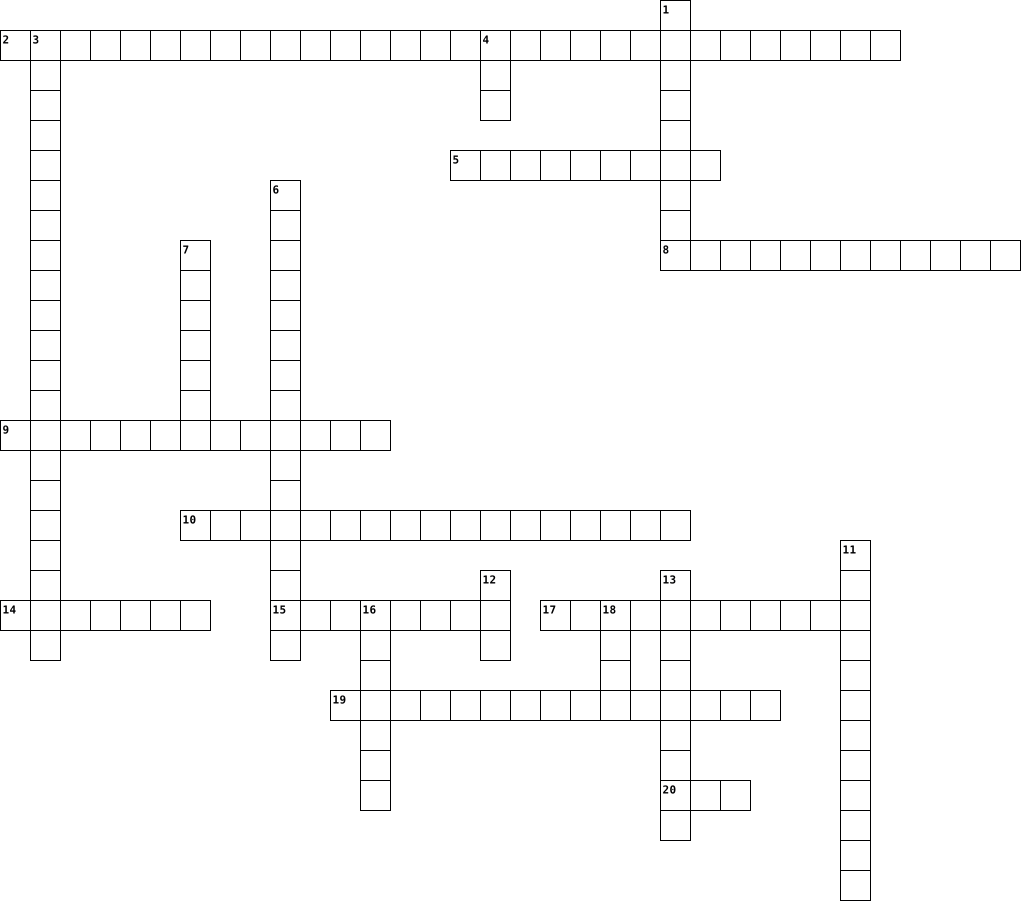
Across
- I can’t think of anything else to put here
- a strong, protective structure that surrounds a plant cell
- Powerhouse of the cell
- Controls what goes in/out
- Always occurs in the same direction from an environment with a high solute concentration to a low
- Contains DNA of the cell
- Produces the protiens
- Turns Co2 and H20 into food
- packs and ships the protiens
- transmitting electron microscope
Down
- material that fills up the cell
- Produces lipids
- contains the insturctions needed for an organism to develop and survive
- Always occurs in an environment of low solute concentration to high
- Contains water
- Helps maintain the shape of the cell
- Scanning electron microscope
- Cell that has no nucleus
- water molecules move from an area of low solute concentration to an area of high solute concentration
- Last universal common ancestor
20 Clues: Contains water • Produces lipids • Produces the protiens • Powerhouse of the cell • Cell that has no nucleus • Contains DNA of the cell • Controls what goes in/out • Turns Co2 and H20 into food • Scanning electron microscope • packs and ships the protiens • Last universal common ancestor • material that fills up the cell • transmitting electron microscope • ...
Biology 2023-12-14
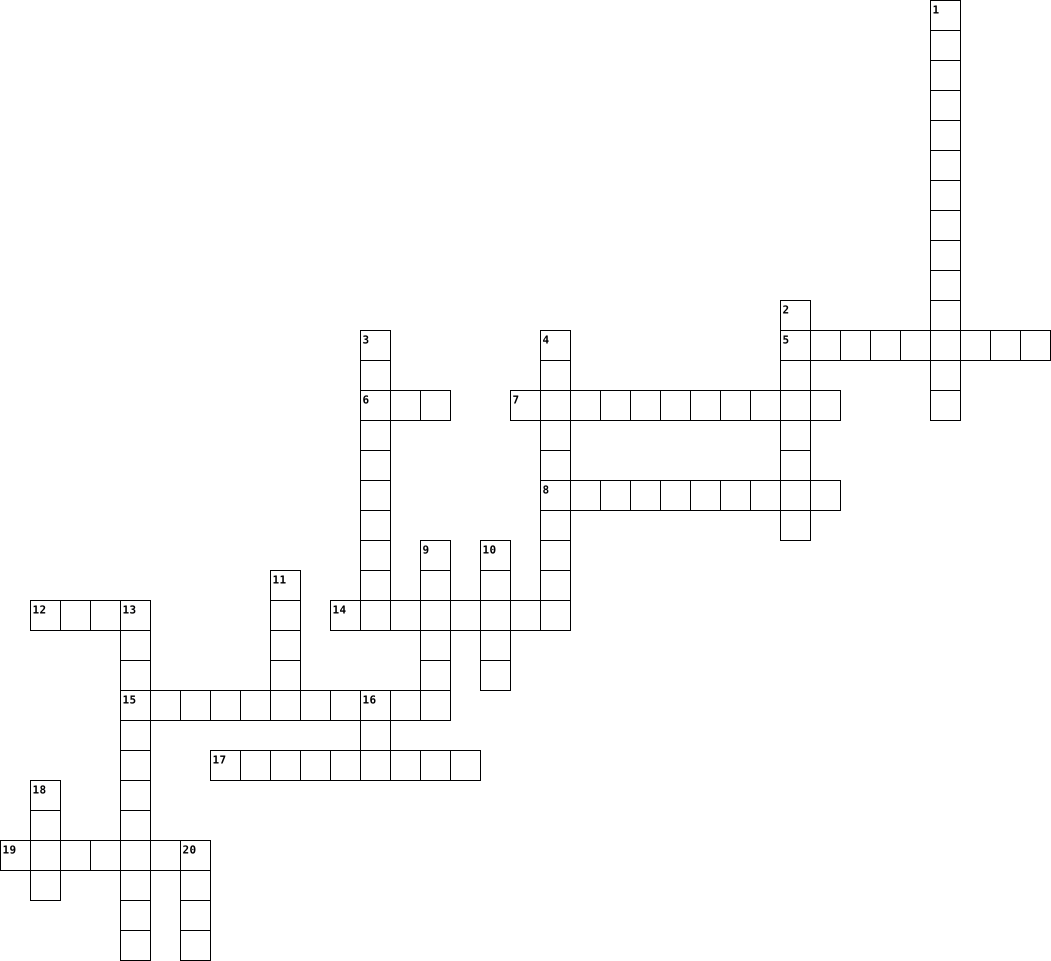
Across
- organelle which proteins are made
- single stranded nucleic acid used by cells.
- gene mutation- when a base is added or deleted +changes all amino acids after the mutation
- 3 letter section of trna that matches a codn
- mutation- gene mutation when a base is substituted only changes 1 amino acid.
- strand replicating strand of dna that adds nucleotides moving toward helicase.
- monomer of nucleic acids made of a sugar +nitrogen base
- enzyme used to unzip the DNA molecule during DNA replication.
- strand- replication strand of DNA that adds nucleotides moving away from helicase.
Down
- 1st step of protein synthesis takes place in the nucleus
- macromolecule of amino acids
- mutation- type of mutation that changes whole sections of chromosome by adding or deleting and bases.
- refers to DNA histone protein that made up chromosomes.
- 3 letter structure of MRNA that codes for amino acid
- strand of RNA created during transcription- each 3 letter section is a codon.
- acid- monomer of a protein- these are carried by tRNA molecules during transcription
- 2nd step of protein synthesis takes place at the ribosome.
- replication- making a copy of DNA- occurs in s phase
- double stranded nucleic acid that has all the genetic material
- mutations- type of mutation that only affects any gene by substituting or and any base
20 Clues: macromolecule of amino acids • organelle which proteins are made • single stranded nucleic acid used by cells. • 3 letter section of trna that matches a codn • 3 letter structure of MRNA that codes for amino acid • replication- making a copy of DNA- occurs in s phase • refers to DNA histone protein that made up chromosomes. • ...
BIOLOGY 2023-12-09
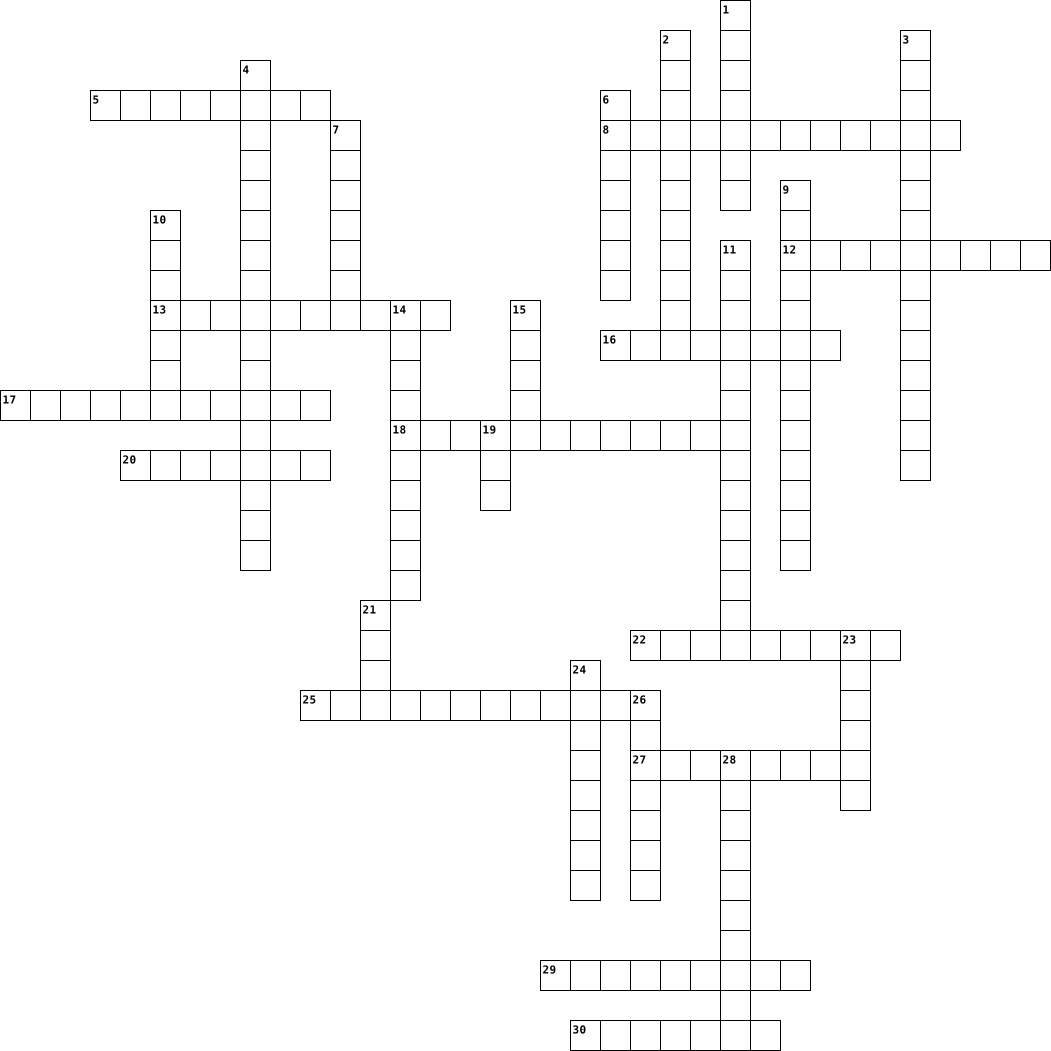
Across
- Genetic change
- Producing offspring
- Cell structure with a specific function
- DNA structure
- Study of heredity
- Internal stability in organisms
- Variety of life forms
- Cell division process
- Community and its environment
- Barrier around the cell
- Living entity
- Process of gradual change
- Chemical messenger in the body
Down
- Study of body structure
- Breathing and energy production
- Glands producing hormones
- Transport of nutrients in the body
- Essential biomolecule
- Cell's control center
- Using living organisms in technology
- Group of similar organisms
- Process converting light to energy
- Chemical processes in the body
- Kingdom of organisms like mushrooms
- Genetic material
- Basic unit of life
- Catalyst in biological reactions
- Classifying organisms
- Study of interactions in nature
- Trait for survival
30 Clues: DNA structure • Living entity • Genetic change • Genetic material • Study of heredity • Basic unit of life • Trait for survival • Producing offspring • Essential biomolecule • Cell's control center • Variety of life forms • Cell division process • Classifying organisms • Study of body structure • Barrier around the cell • Glands producing hormones • Process of gradual change • ...
biology 2024-01-17
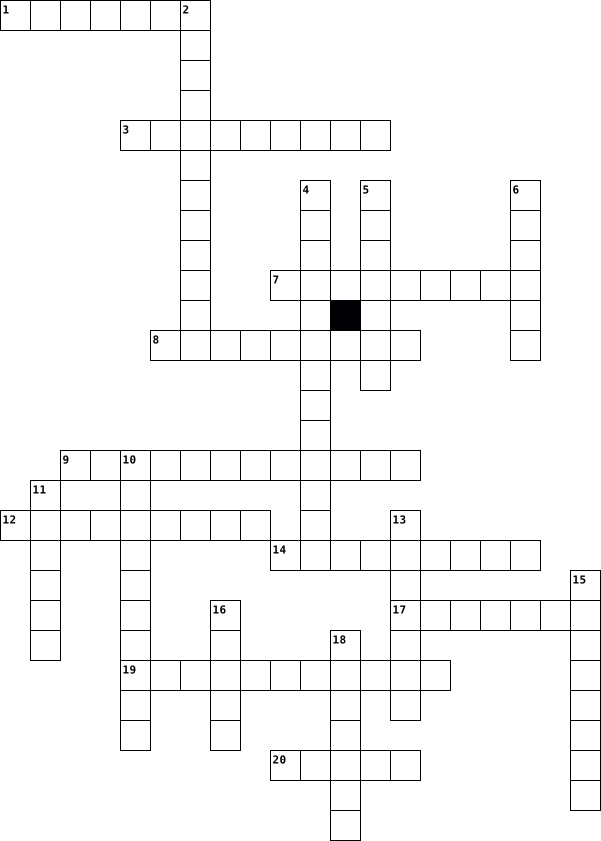
Across
- C6H1206
- tempat klorofil
- Lumut
- Bunga,buah,biji
- Paku-pakuan
- kelopak bunga kelipatan 3
- fase dominan pada lumut
- Contoh Gymnospermae
- belum dapat di bedakan organnya
- pembuluh tapis
Down
- Biji tertutup
- Menghasilkan embrio
- Daun menyirip
- Organ vegetatif
- + membran inti sel
- Organ sudah jelas
- Tempat keluar masuknya udara
- cara pengangkutan air pada lumut
- pembuluh kayu
- Paling bawah di lumut
20 Clues: Lumut • C6H1206 • Paku-pakuan • Biji tertutup • Daun menyirip • pembuluh kayu • pembuluh tapis • tempat klorofil • Organ vegetatif • Bunga,buah,biji • Organ sudah jelas • + membran inti sel • Menghasilkan embrio • Contoh Gymnospermae • Paling bawah di lumut • fase dominan pada lumut • kelopak bunga kelipatan 3 • Tempat keluar masuknya udara • belum dapat di bedakan organnya • ...
Biology 2024-02-06
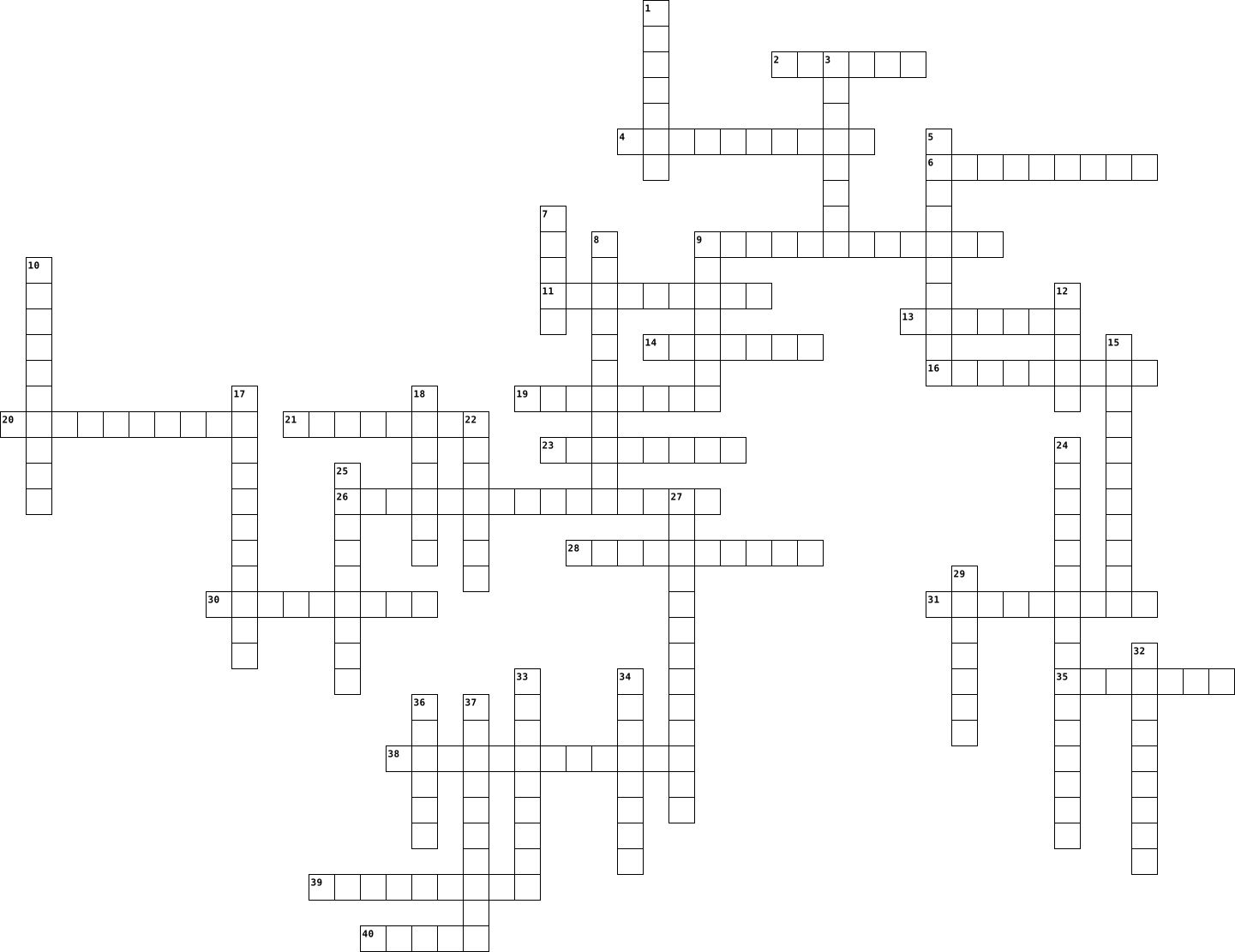
Across
- a substance that takes part in a biochemical reaction or a biological process.
- the relationship between different species in which one organism lives on or in the other organism and benefits from it by causing some harm.”
- an organism that mostly feeds on plants
- study of the loss of Earth's biological diversity and the ways this loss can be prevented.
- the doctrine that mutual dependence is necessary to social well-being
- all of the food chains in an ecosystem.
- the state of the atmosphere at a place and time as regards heat, dryness, sunshine, wind, rain, etc.
- a biological community of interacting organisms and their physical environment.
- an animal or person that eats food of both plant and animal origin.
- a group of individuals of the same species living and interbreeding within a given area.
- Living things that are capable of reacting to stimuli, reproduction, growth, and homeostasis.
- an organism that creates its own food or energy.
- nonnative organism (disease, parasite, plant, or animal) that begins to spread or expand its range from the site of its original introduction and that has the potential to cause harm to the environment, the economy, or to human health.
- the process by which the mix of species and habitat in an area changes over time
- a linear sequence of organisms through which nutrients and energy pass as one organism eats another.
- an animal that feeds on carrion, dead plant material, or refuse.
- physical rather than biological; not derived from living organisms.
- an association between two organisms in which one benefits and the other derives neither benefit nor harm.
- study of the pattern and interaction between ecosystems within a region of interest
- the match of a species to a specific environmental condition
Down
- the natural home or environment of a plant, animal, or other organism.
- an organism that cannot produce its own food and must eat other plants and/or animals to get energy.
- the uppermost layer of a body of water that receives sunlight, allowing phytoplankton to perform photosynthesis
- A biome is a distinct geographical region with specific climate, vegetation, and animal life
- an animal which feeds on dead organic material, especially plant detritus.
- the long-term, predictable atmospheric conditions of a specific area
- an organism, especially a soil bacterium, fungus, or invertebrate, that decomposes organic material.
- a deep or seemingly bottomless chasm.
- the lowest ecological zone in a water body
- an insectivorous animal or plant
- the mass of living biological organisms in a given area or ecosystem at a given time.
- the close external resemblance of an animal or plant (or part of one) to another animal, plant, or inanimate object.
- The carrying capacity of an environment is the maximum population size of a biological species that can be sustained by that specific environment, given the food, habitat, water, and other resources available.
- a global ecosystem made up of living organisms (biota) and the nonliving (abiotic) factors that provide them with energy and nutrients
- a model that shows the flow of energy from one trophic, or feeding, level to the next in an ecosystem.
- the branch of biology that deals with the relations of organisms to one another and to their physical surroundings.
- an interacting group of various species in a common location
- an animal that feeds on flesh
- an environmental factor or variable that has the capacity to restrict the growth, abundance, or distribution of a population in an ecosystem
- relating to or resulting from living things, especially in their ecological relations.
- hide or disguise the presence of (a person, animal, or object) by means of camouflage.
41 Clues: an animal that feeds on flesh • an insectivorous animal or plant • a deep or seemingly bottomless chasm. • an organism that mostly feeds on plants • all of the food chains in an ecosystem. • the lowest ecological zone in a water body • an organism that creates its own food or energy. • an interacting group of various species in a common location • ...
Biology 2024-10-10

Across
- - A structure of DNA and protein that carries genetic information.
- - A chemical substance produced in the body that controls and regulates the activity of cells or organs.
- - A community of living organisms and their physical environment interacting as a system.
- - The cell formed by the fusion of a sperm and an egg cell.
- - A close and long-term biological interaction between two different species.
- - The genetic makeup of an organism.
- - The basic structural and functional unit of all living organisms.
- - The process of producing genetically identical individuals.
- - The process by which plants convert sunlight into chemical energy.
- - An individual living thing.
- - The movement of water molecules through a selectively permeable membrane.
- - The membrane-bound organelle that contains the cell’s chromosomes.
- - A group of similar cells that perform a specific function.
- - The organelle in plant cells where photosynthesis occurs.
- - The ability of an organism to maintain stable internal conditions.
- - A trait that helps an organism survive and reproduce in its environment.
- - A change in the DNA sequence of a gene.
Down
- - The branch of biology that studies interactions between organisms and their environment.
- - A microscopic infectious agent that can only replicate inside living cells.
- - A protein that acts as a biological catalyst, speeding up reactions in living organisms.
- - The process by which species change over time through natural selection.
- - The set of life-sustaining chemical reactions in organisms.
- - The physical characteristics or traits of an organism.
- - Single-celled microorganisms that can be beneficial or harmful.
- - A segment of DNA that codes for a specific protein or trait.
- - A group of organisms that can interbreed and produce fertile offspring.
- - A type of cell division that reduces the chromosome number by half, producing four gamete cells.
- - The powerhouse of the cell, responsible for producing energy.
- - The molecule that carries genetic information in living organisms.
- - A nerve cell responsible for transmitting signals in the nervous system.
30 Clues: - An individual living thing. • - The genetic makeup of an organism. • - A change in the DNA sequence of a gene. • - The physical characteristics or traits of an organism. • - The cell formed by the fusion of a sperm and an egg cell. • - The organelle in plant cells where photosynthesis occurs. • - A group of similar cells that perform a specific function. • ...
Biology 2024-11-18

Across
- – Molecule essential for life (e.g., carbohydrates, proteins).
- – Maintenance of a stable internal environment.
- – Type of cell with a nucleus.
- – Movement of particles from high to low concentration.
- – Gel-like substance inside a cell.
- – Protein that helps fight infections.
- – Protein in red blood cells that carries oxygen.
- – Organelle responsible for photosynthesis in plant cells.
- – Protein that speeds up chemical reactions.
- – Organic molecule used for long-term energy storage.
- – Community of living organisms and their environment.
- – Movement of water across a membrane.
- – Segment of DNA that codes for a trait.
- – Structural polysaccharide in fungi and arthropods.
- – Macromolecule made of amino acids.
- – Organism that consumes others for energy.
- – Molecule involved in protein synthesis.
Down
- – Process by which plants make their own food using sunlight.
- – Organelle that modifies and packages proteins.
- – Cell division resulting in two identical cells.
- – Type of cell without a nucleus.
- – Change in DNA sequence.
- – Molecule carrying genetic instructions.
- – Organism that makes its own food.
- – Cell division that produces gametes.
- – Basic unit of life.
- – Organelle containing genetic material.
- – Organelle that synthesizes proteins.
- – Organelle where energy production occurs.
- – Group of individuals of the same species in an area.
30 Clues: – Basic unit of life. • – Change in DNA sequence. • – Type of cell with a nucleus. • – Type of cell without a nucleus. • – Gel-like substance inside a cell. • – Organism that makes its own food. • – Macromolecule made of amino acids. • – Cell division that produces gametes. • – Protein that helps fight infections. • – Organelle that synthesizes proteins. • ...
Biology 2024-10-21

Across
- - The ability to maintain ecological balance by using resources in a way that does not deplete them.
- - The natural environment in which a species or community of organisms lives and thrives.
- - The green pigment found in plants that captures light energy for photosynthesis.
- - A macromolecule made of amino acids that performs various functions in the body, including structure and catalysis.
- - A specialized cell that transmits nerve impulses in the nervous system.
- - A close and long-term interaction between two different biological species, which can be beneficial or harmful.
- - The biochemical process in which cells convert glucose and oxygen into energy, carbon dioxide, and water.
- - The process by which green plants convert sunlight, water, and carbon dioxide into glucose and oxygen.
- - A segment of DNA that codes for a specific protein or function, determining hereditary traits.
- - A type of cell division that produces gametes (sperm and eggs) with half the number of chromosomes.
- - The basic structural and functional unit of all living organisms.
- - A group of cells that work together to perform a specific function in an organism.
- - The process by which living organisms maintain stable internal conditions despite changes in their external environment.
Down
- - A microscopic organism, such as bacteria, viruses, fungi, and protozoa.
- - Relating to the chemical processes and substances that occur within living organisms.
- - Pertaining to the cell, including its structure, function, and processes.
- - A structure composed of different tissues that perform a specific function within an organism.
- - The variety of life in a particular habitat or ecosystem, including the number of species and genetic variability.
- Selection - The mechanism by which individuals with advantageous traits are more likely to survive and reproduce.
- - A process of cell division that results in two identical daughter cells, crucial for growth and repair.
- - A structure composed of DNA and protein that carries genetic information; humans have 46 chromosomes.
- - A protein that acts as a catalyst to accelerate biochemical reactions in the body.
- - A community of living organisms interacting with their physical environment, including both biotic and abiotic components.
- - The preserved remains or impressions of ancient organisms, providing evidence of past life on Earth.
- - Deoxyribonucleic acid, the molecule that carries genetic information in living organisms.
- - A group of organisms that can interbreed and produce fertile offspring, sharing common characteristics.
- System - The body's defense system against infections and diseases, involving cells, tissues, and organs.
- - The process through which populations of organisms change over generations, leading to the emergence of new species.
- - A protein produced by the immune system to identify and neutralize foreign objects like bacteria and viruses.
- - A substance that stimulates the immune system to recognize and combat specific pathogens without causing disease.
30 Clues: - The basic structural and functional unit of all living organisms. • - A microscopic organism, such as bacteria, viruses, fungi, and protozoa. • - A specialized cell that transmits nerve impulses in the nervous system. • - Pertaining to the cell, including its structure, function, and processes. • ...
BIOLOGY 2024-11-19

Across
- Organisms (like fungi or bacteria) that break down dead things.
- All the parts of Earth where life exists, including land, water, and air.
- A large area with similar plants, animals, and climate (e.g., forests, deserts).
- The variety of different species and ecosystems on Earth.
- The place where an organism lives.
- Non-living things in an ecosystem, like water, sunlight, and temperature.
- When organisms fight for the same resources, like food or space.
- The study of how living things interact with each other and their environment.
- A relationship where one organism benefits and the other is harmed.
- Zonation: Different life zones found at different heights, like in mountains or oceans.
Down
- A relationship where both organisms benefit.
- The role or job of an organism in its environment.
- Living things in an ecosystem, like plants and animals.
- A relationship where one organism is harmed, and the other is not affected.
- Organisms, like plants, that make their own food using sunlight.
- A community of living things and their environment, working together.
- Dead plants and animals that decay and provide nutrients.
- A group of the same species living in one area.
- A close relationship between two different species.
- A relationship where neither organism is affected.
- Organisms that eat other organisms for energy.
- Pyramid: A chart showing the amount of energy or living things at each level in an ecosystem.
- A relationship where one organism benefits, and the other is not affected.
- Web: A system showing how energy moves between different organisms in an ecosystem.
24 Clues: The place where an organism lives. • A relationship where both organisms benefit. • Organisms that eat other organisms for energy. • A group of the same species living in one area. • The role or job of an organism in its environment. • A relationship where neither organism is affected. • A close relationship between two different species. • ...
Biology 2024-09-11

Across
- passive transport process, causes water to move toward the hypertonic side of a membrane
- organelle, full of enzymes to break down substances
- organelle, site of cellular respirations creates ATP
- Study of all living things
- Place on an enzyme that binds into a substance
- type of cellular transport requires energy including solute pumping
- macromolecule, made of nucleotide and stores genetic info
- organelle, folds, transports, and exports proteins or lipids
- small subunit used to build polymers
Down
- macromolecule made of glycerol and fatty acids, used for energy storage
- process of building monomers into polymers
- organelle, the site of photosynthesis, creates glucose
- organelle modifies sorts and packages proteins into vesicles
- macromolecule made of amino acids, used for transporting, enzymes, and cell structures
- protein that speeds up biological reactions by lowering the activation energy
- basic unit of structure and function in living things
- type of cellular transport that does not require energy, includes diffusion and osmosis
- organelle, control center of the cell, holds DNA
- organelle, the boundary of the cell, decides what comes in and out
- source of energy for all living things
- organelle used for structure and support in some cells, plants, and fungi
21 Clues: Study of all living things • small subunit used to build polymers • source of energy for all living things • process of building monomers into polymers • Place on an enzyme that binds into a substance • organelle, control center of the cell, holds DNA • organelle, full of enzymes to break down substances • organelle, site of cellular respirations creates ATP • ...
Biology 2024-10-27

Across
- Penbentukan batu di ginjal atau di saluran kemih.
- Gangguan pencernaan asam lambung naik yang parah.
- Gangguan aliran empedu dari hati
- Infeksi paru-paru yang disebabkan oleh Mycobacterium tuberculosis
- Penyempitan saluran pernafasan yang menyebabkan sesak nafas.
- Nyeri atau kesulitan saat buang air kecil
- Ketidaknyamanan pada perut setelah makan, seperti kembung
- Radang pada amandel akinat infeksi bakteri.
- Penumpukan cairan di paru-paru yang mengganggu pernapasan.
- Penyakit paru-paru akibat menghirup debu silika
Down
- Penyakit infeksi serius pada paru-pari.
- Adanya darah dalam urin, sering disebabkan oleh infeksi atau batu ginjal
- Radang pada hati yang sering disebabkan oleh virus Hepatitis.
- Radang pada saluran bronkus yang menyebabkan batuk.
- Infeksi usus kecil yang disebabkan oleh parasit Giardia
- Kerusakan pada ginjal akibat penyakit seperti diabetes
- Kondisi ketika tubuh kekurangan sel darah merah yang sehat.
- Ketidakmampuan ginjal untuk menyaring limbah dari darah
- Gangguan autoimun di mana gluten merusak usus kecil
- Kadar asam urat yang tinggi dalam darah
- Infeksi virus yang menuerang saluran pernapasan.
21 Clues: Gangguan aliran empedu dari hati • Penyakit infeksi serius pada paru-pari. • Kadar asam urat yang tinggi dalam darah • Nyeri atau kesulitan saat buang air kecil • Radang pada amandel akinat infeksi bakteri. • Penyakit paru-paru akibat menghirup debu silika • Infeksi virus yang menuerang saluran pernapasan. • Penbentukan batu di ginjal atau di saluran kemih. • ...
biology 2024-10-28

Across
- the ability to do work or to create some kind of change
- An inorganic ion that helps enzymes function.
- A catalyst that speeds up chemical reactions.
- Stored energy based on position or state.
- The matter relevant to a particular energy transfer.
- Enzymes change shape to fit substrates better.
- Energy that is not usable for work.
- The chemical reactions that take place in cells
- Energy available to do work after losses.
- The molecule an enzyme acts upon.
- Regulation by the product of a reaction to maintain balance.
- (Adenosine Triphosphate) The main energy currency in cells.
- -A reaction that absorbs energy.
- Potential energy stored in chemical bonds.
- -A measure of disorder in a system.
- All chemical reactions in a living organism that convert energy.
- Energy cannot be created or destroyed.
Down
- A reaction that releases energy.
- Measure of disorder; high entropy means less available energy.
- the study of energy and energy transfer involving physical matter
- Inhibitor competes with substrate for enzyme’s active site.
- Energy of an object in motion.
- Energy cannot be created or destroyed, only transformed.
- The energy required to start a reaction.
- a term used to describe the concept of energy flow through living systems
25 Clues: Energy of an object in motion. • A reaction that releases energy. • -A reaction that absorbs energy. • The molecule an enzyme acts upon. • Energy that is not usable for work. • -A measure of disorder in a system. • Energy cannot be created or destroyed. • The energy required to start a reaction. • Stored energy based on position or state. • ...
Biology 2024-11-01

Across
- Bodies Delivers protein for the cell
- Group of similar organisms
- A group of cells
- Animal with backbone
- Breaks down waste
- Produce protein for cells
- Membrane Controls what goes in & out of the cell
- Change over time
- A living thing
- Basic unit of structure and function
- energy for a cell
- Single-celled organism with no nucleus
- Tiny cell structure
Down
- Largest organism ever
- Single celled organism
- A tiny non-living particle
- The control center of a cell
- A balance of body parts
- Multi celled organism
- A bunch of tissues
- Stores food, water, waste
- An organisms species
- an organisms genus
- An organism that provides a source of energy
- Animal without backbone
25 Clues: A living thing • A group of cells • Change over time • Breaks down waste • energy for a cell • A bunch of tissues • an organisms genus • Tiny cell structure • Animal with backbone • An organisms species • Largest organism ever • Multi celled organism • Single celled organism • A balance of body parts • Animal without backbone • Stores food, water, waste • Produce protein for cells • ...
Biology 2024-11-20

Across
- DNA is pulled toward opposite ends by spindle fibers.
- Cell begins to form two separate daughter cells by forming a nucleus on each side
- Single set of DNA
- What ribo refers to
- What two strands of DNA are held together by.
- How many strands of mRNA are made.
- Chromosomes line up in the middle of cells and spinal fibers attach to centromeres.
- What a group of three bases is called
- Produces many offspring and no mate is required.
- Cell membrane starts to pinch in to form two daughter cells
- Nucleic acids are made of
- The type of reproduction that produces very few offspring and takes a long amount of time.
- One cell replicates itself by splitting its DNA into two.
Down
- Reads the condons and brings in the correct amino acids
- The enzyme that opens The DNA and adds RNA bases.
- Condensed strands of DNA.
- Where proteins are made
- The process that creates gametes
- Where DNA is found in all cells.
- DNA in the nucleus condenses and becomes visible and spindle fibers begin to form
- The product of transcription
- The shape of the structure of DNA
- The cell that contains all of the cells' genetic information/ Deoxyribonucleic acid
- What a condo signify's
- Egg and Sperm cells.
- Means missing or a lack of oxygen
26 Clues: Single set of DNA • What ribo refers to • Egg and Sperm cells. • What a condo signify's • Where proteins are made • Condensed strands of DNA. • Nucleic acids are made of • The product of transcription • The process that creates gametes • Where DNA is found in all cells. • The shape of the structure of DNA • Means missing or a lack of oxygen • How many strands of mRNA are made. • ...
Biology 2024-11-11

Across
- 37
- 13
- 47
- 32
- 28
- 49
- 18
- 19
- 11
- 12
- 10
- 31
- 5
- 41
- 20
- 21
- 39
- 6
- 17
- 29
- 4
- 34
- 44
- 42
- 24
Down
- 8
- 36
- 50
- 40
- 33
- 1
- 23
- 16
- 48
- 35
- 27
- 26
- 38
- 22
- 7
- 2
- 45
- 46
- 25
- 3
- 14
- 30
- 43
- 9
- 15
50 Clues: 8 • 1 • 7 • 5 • 2 • 6 • 3 • 4 • 9 • 37 • 36 • 50 • 40 • 13 • 33 • 47 • 23 • 16 • 32 • 48 • 28 • 49 • 18 • 35 • 27 • 26 • 19 • 11 • 12 • 10 • 38 • 22 • 31 • 41 • 45 • 20 • 46 • 25 • 21 • 39 • 17 • 29 • 14 • 30 • 43 • 34 • 15 • 44 • 42 • 24
Biology 2025-03-28

Across
- A type of symbiosis where one species benefits while the other is neither helped nor harmed.
- Living components that affect the ecosystem, such as plants, animals, and microorganisms.
- The natural environment in which an organism lives.
- A close and long-term interaction between two different species.
- A community of living organisms and their physical environment interacting as a system.
- The concept that two species competing for the same resources cannot coexist at constant population values.
- The global sum of all ecosystems; the zone of life on Earth.
- A type of symbiosis where both species benefit from the interaction.
- The study of interactions between organisms and their environment.
- The position an organism occupies in a food chain.
- Non-living components that affect the ecosystem, such as climate, soil, and water.
- The role or function of an organism or species within an ecosystem.
- Organisms that feed on dead organic matter.
- Organisms that eat both plants and animals.
Down
- Organisms that primarily eat other animals.
- A type of symbiosis where one organism benefits at the expense of another.
- Organisms that cannot produce their own food and must consume other organisms.
- A large geographic biotic unit, a major community of plants and animals with similar life forms and environmental conditions.
- All the different populations that live together in a defined area.
- Organisms that produce their own food through photosynthesis or chemosynthesis.
- The total mass of living matter in a given area or region
- A graphical representation showing the relationship between different organisms in an ecosystem, often depicting energy or biomass.
- An interaction where one organism (the predator) hunts and eats another organism (the prey).
- A linear sequence of organisms through which nutrients and energy pass as one organism eats another.
- A group of individuals of the same species living in a specific area.
- Organisms that primarily eat plants.
- Organisms that break down dead material and recycle nutrients back into the ecosystem.
27 Clues: Organisms that primarily eat plants. • Organisms that primarily eat other animals. • Organisms that feed on dead organic matter. • Organisms that eat both plants and animals. • The position an organism occupies in a food chain. • The natural environment in which an organism lives. • The total mass of living matter in a given area or region • ...
Biology 2025-04-04

Across
- 2 identical alleles
- A form of phosphoric acid
- translates from RNA to DNA
- translates from DNA to RNA
- predict genotype and phenotype
- chromosomes align in the middle
- replicates chromosomes before mitosis
- More powerful
- cell division of cytoplasm into 2 daughter cells
- Helix
- a change in an organism's DNA sequence
Down
- First Growth and Second Growth
- building block,or monomer,of nucleic acids
- cell division producing 2 identical cells
- provides energy, structural support,cell signaling
- One of the nucleic bases (T)
- Bases Building blocks for nucleic acids
- sister chromatids separate and move to opposite poles
- stage of Mitosis, prepares the cell for division
- less powerful
- Interdependent or matching
- One of the nucleic bases (C)
- cells create proteins from DNA
- Genetic Material
- One of the nucleic bases (G)
- 2 different alleles
- One of the nucleic bases (A)
- the final mitosis/meiosis stage
28 Clues: Helix • less powerful • More powerful • Genetic Material • 2 identical alleles • 2 different alleles • A form of phosphoric acid • translates from RNA to DNA • translates from DNA to RNA • Interdependent or matching • One of the nucleic bases (T) • One of the nucleic bases (C) • One of the nucleic bases (G) • One of the nucleic bases (A) • First Growth and Second Growth • ...
Biology 2025-04-06

Across
- Dense network of thin, branching roots typically found near the soil surface.
- Process where unspecialized cells become specialized in form and function.
- First root structure that grows downward from a germinating seed.
- Lateral extension growing out from the main root to aid in absorption and anchorage.
- Secondary meristem that produces outer protective layers in woody plants.
- Living tissue formed inward by a secondary meristem as part of the outer covering.
- Swellings on roots housing nitrogen-fixing bacteria in mutualistic relationships.
- Waterproof band in the walls of certain cells that blocks passive flow of materials.
- Layer of ground tissue between the outer surface and central vascular region, often used for storage.
- Inner layer of the cortex that controls the movement of water and solutes into the vascular system.
- Dead protective cells with suberized walls that help prevent water loss.
- Meristematic tissue that produces additional layers of xylem and phloem.
- Area where newly formed cells increase in length to push the root deeper into the soil.
- Secondary protective tissue composed of cork, cork cambium, and inner supportive layers.
Down
- Vascular arrangement surrounding a central pith and enclosed by ground tissue.
- Conductive system that transports water, minerals, and sugars throughout the plant.
- Simplest vascular configuration with a solid core of conducting tissue and no central cavity.
- Outer cell layer in roots that replaces the original outermost layer in older regions.
- Symbiotic association between fungi and plant roots that improves nutrient absorption.
- Thickened roots adapted to hold reserves of starch, sugars, or water.
- Layer just inside the endodermis that can give rise to lateral roots and other structures.
- Central vascular region in roots and stems that contains conducting tissues.
- Roots developing from organs other than existing root structures, like stems or leaves.
- Type of root structure featuring one main deep-growing root with smaller branches.
- Specialized cells that form a selective barrier to substances entering the vascular tissues.
- Embryonic structure that emerges first from a seed during germination.
- Outer protective layer of cells covering the surface of a young root or stem.
- Central part of a stem or root composed of parenchyma cells used mainly for storage.
28 Clues: First root structure that grows downward from a germinating seed. • Thickened roots adapted to hold reserves of starch, sugars, or water. • Embryonic structure that emerges first from a seed during germination. • Dead protective cells with suberized walls that help prevent water loss. • Meristematic tissue that produces additional layers of xylem and phloem. • ...
Biology 2025-04-30

Across
- dualisme merupakan kelainan yang disebabkan oleh
- master of glands ada di bagian
- insulin hormon dapat menghasilkan glikogen dari hasil pengubahan
- hormon yang mengatur produksi ASI
- zona yang berfungsi untuk mengatur kadar mineral dalam tubuh
- proses pematangan sperma adalah
- hormon yang berfungsi menurunkan volume urine dan meningkatkan tekanan darah dengan cara menyempitkan pembuluh darah
- bagian tengah dari lobus hipofisis
- gonadocorticoid berfungsi untuk menstimulasi hormon
- kretinisme merupakan penyakit yang disebabkan oleh hiposekresi
- meningkatkan tekanan darah dan menstimulasi otot jantung adalah prinsip kerja dari
- ovarium mensekresi hormon
- hormon yang berfungsi untuk metabolisme kalsium dan fosfat
- hormon yang berfungsi untuk pembuatan pigmen kulit
Down
- sistem yangberfungsi merangsang hormon lain untuk bekerja
- hormon glukagon dapat muncul saat kondisi seseorang sedang
- hasil sekresi dari eksokrin
- menghasilkan hormon insulin
- pulau yang terdapat di pankreas
- testo sasaran dapat mempengaruhi proses
- hormon yang dapat ditemukan pada perempuan dan laki-laki
- sistem yang tersusun atas sel-sel sekretori pada kelenjar endokrin
- penyakit akibat kekurangan iodium
- kelainan yang menyebabkan pelebaran pada tulang
- kelenjar yang dapat mengatur kelenjar lain
- hasil dari sekresi saraf
- contoh pertumbuhan primer pada laki-laki
- tesis merupakan kelenjar kelamin laki-laki yang mengandung
- hormon yang berfungsi untuk menstimulasi kontraksi saat melahirkan
- menurunkan kadal kalsium dalam darah dengan cara mempercepat absorpsi kalsium oleh tulang
30 Clues: hasil dari sekresi saraf • ovarium mensekresi hormon • hasil sekresi dari eksokrin • menghasilkan hormon insulin • master of glands ada di bagian • pulau yang terdapat di pankreas • proses pematangan sperma adalah • hormon yang mengatur produksi ASI • penyakit akibat kekurangan iodium • bagian tengah dari lobus hipofisis • testo sasaran dapat mempengaruhi proses • ...
biology 2025-05-06

Across
- the same/alike/equal balance, the work/ process of staying in balance
- membrane that surrounds plant cells
- first stage of cell division where chromosomes condense
- pores in plant leaves that allow for gas exchange
- main sugar used for energy
- controls what enters and exits the cell
- an organelle in plant cells where photosynthesis happens
- a large biomolecule that is made of carbon & hydrogen
- a process where plants make food using light
- the maximum number of individuals an environment can support
- a process or organism that requires the presence of oxygen to function/ survive
- substances that start a chemical reaction
- breaks down waste materials within the cell
- proportion/ rate of specific allele/ phenotype appears in a population
- deoxyribonucleic acid
- modifies, sorts, and packages proteins and lipids
- a segment of DNA that controls the protein production & cell cycle
- growth patterns where a population grows faster as it increases in size
Down
- final stage of cell division with 2 new nuclei
- cell organelles are produced to prepare for division
- organisms with genes from another species
- a group of organisms that can naturally breed & produce fertile offspring
- weak chemical bond formed by the attraction of positive charged atoms to other negative atoms
- number of offspring produced by a population in a given time period
- substances that are formed in a chemical reaction
- something that restricts population growth
- when an environment is over capacity
- cell manager
- stores water, nutrients, and waste products
- cell structure that carries genetic material that is copied & passed from generation to generation of cells
30 Clues: cell manager • deoxyribonucleic acid • main sugar used for energy • membrane that surrounds plant cells • when an environment is over capacity • controls what enters and exits the cell • organisms with genes from another species • substances that start a chemical reaction • something that restricts population growth • breaks down waste materials within the cell • ...
Biology 2025-05-06

Across
- More prominent; requires one recessive allele
- Makes their own food
- A group of the same species become physically seperated
- Important molecules in all living organisms
- Building blocks of life
- Asexual form of cell reproduction; ends with 2 identical cells
- Forms a copy of DNA for production of proteins
- Process of turning light energy into chemical energy
- Changing of RNA to proteins
- Way of treatment against bacterial disease
- One recessive allele one dominant
- Both recessive or dominant allele
- Process of cell reproduction
- Process where a molecule makes an eact copy of itself
- Asexual form of cell reproduction; ends with 4 identical cells
- What you start with in a chemical equation
Down
- Too much of a species, effecting the environment
- Powerhouse of the cell
- Changing of DNA to RNA
- Maintaining same conditions
- What you end with in a chemical equation
- Capture light energy and turns it into chemical energy; found in plants
- Concept describing flow of genetic information within a cell
- Multiple species fight over the same resources
- Naturally occurring way to force species to evolve
- Less prominent; requires two recessive alleles
- Cell structures carrying genetic material copied from generations
- Segment of DNA that control protein production and cell cycle
- How creature change over long period of time
- Multi-step tool that helps identify an organism
30 Clues: Makes their own food • Powerhouse of the cell • Changing of DNA to RNA • Building blocks of life • Maintaining same conditions • Changing of RNA to proteins • Process of cell reproduction • One recessive allele one dominant • Both recessive or dominant allele • What you end with in a chemical equation • Way of treatment against bacterial disease • ...
Biology 2025-05-08

Across
- Nutrients enter water sources.
- Blooms Overgrowth of algae
- Species Species that can harm the ecosystem.
- Fighting for resources.
- Kills bacteria.
- isolation A group of the same species becomes separated.
- Living things stay about the same.
- Ecosystems go back to their natural state.
- When plants and animals gradually take over an area.
- capacity The maximum number of living things can support.
- Gases Gases that trap heat and cause global temperatures to rise.
- DNA makes a copy of itself.
- Living things that often interact in special ways and depend on each other for survival.
- How fast organisms have babies.
Down
- New DNA that consists of one original strand.
- factor Something that prevents a population from growing too big.
- growth Where the number of organisms keeps getting bigger and bigger.
- The gradual change.
- growth Where growth slows down as the population reaches the carrying capacity.
- How often.
- To live.
- Different species in an ecosystem.
- Make their own food.
- selection Survival of the fittest.
- Kills/prevents insects
- Immunity
- Impact People's effects on the environment.
- New species evolves.
- Structures that contain DNA
- To many species for resources available.
30 Clues: To live. • Immunity • How often. • Kills bacteria. • The gradual change. • Make their own food. • New species evolves. • Kills/prevents insects • Fighting for resources. • Blooms Overgrowth of algae • Structures that contain DNA • DNA makes a copy of itself. • Nutrients enter water sources. • How fast organisms have babies. • Different species in an ecosystem. • ...
Biology 2025-04-11

Across
- single stranded Dna
- pairs with cytosine
- cell makes an Rna copy of itself
- two different alleles
- process of cell division
- chromosomes are split and copied
- chromosomes align along the middle of the cell
- pairs with uracil and thymine
- pairs with adenine in Dna
- pairs with guanine
- final stage of mitosis and miosis
- a change in the dna sequence
- shape of Dna
- second growth faze
- genetic information
- breeding focused on the inheritance of 2 traits
- has to have two same alleles to be expressed in phenotype
Down
- cells create proteins using genetic material
- expressed in the phenotype nomader the other allel
- signaling proteins that act as messengers
- initial growth faze cell prepares for replication
- translating Dna amino acids to Rna(mRNA)
- another word for glucose
- backbone of Dna(double helix)
- the specific pairing of nucleic acids
- first phase of mitosis
- pairs with adenine in Mrna
- stage where cell grows and replicates dna
- two same alleles
- Guanine,thymine,cytosine,adenine and uracil
- basic building block of Dna/Rna
- breeding focused on the inheritance of 1 trait
32 Clues: shape of Dna • two same alleles • pairs with guanine • second growth faze • single stranded Dna • pairs with cytosine • genetic information • two different alleles • first phase of mitosis • process of cell division • another word for glucose • pairs with adenine in Dna • pairs with adenine in Mrna • a change in the dna sequence • backbone of Dna(double helix) • pairs with uracil and thymine • ...
Biology 2025-03-17

Across
- Сс
- байрлах
- Хуурайсаг
- Хялгасан
- ус,эрдэс хөөрнө
- ккк
- өнгөгүй
- хоёр янзтай
- модлог
- ус,намгийн
- Мэдэхгүй
- Чийгсэг
Down
- уусдаггүй
- шингэн
- Улаан
- тараагуур
- долон
- хураагуур
- ус уурших
- рбррб
20 Clues: Сс • ккк • Улаан • долон • рбррб • шингэн • модлог • байрлах • өнгөгүй • Чийгсэг • Хялгасан • Мэдэхгүй • уусдаггүй • тараагуур • Хуурайсаг • хураагуур • ус уурших • ус,намгийн • хоёр янзтай • ус,эрдэс хөөрнө
Biology 2025-03-17

Across
- Сс
- байрлах
- Хуурайсаг
- Хялгасан
- ус,эрдэс хөөрнө
- ккк
- өнгөгүй
- хоёр янзтай
- модлог
- ус,намгийн
- Мэдэхгүй
- Чийгсэг
Down
- уусдаггүй
- шингэн
- Улаан
- тараагуур
- долон
- хураагуур
- ус уурших
- рбррб
20 Clues: Сс • ккк • Улаан • долон • рбррб • шингэн • модлог • байрлах • өнгөгүй • Чийгсэг • Хялгасан • Мэдэхгүй • уусдаггүй • тараагуур • Хуурайсаг • хураагуур • ус уурших • ус,намгийн • хоёр янзтай • ус,эрдэс хөөрнө
biology 2025-04-28

Across
- small, infectious agent that can replicate only inside the living cells of other organisms
- the continuous movement of carbon atoms between the atmosphere
- passing on their advantageous trait
- relating to or resulting from living things
- organisms whose cells lack a nucleus and other organelles
- drift
- an organism whose cells contain a nucleus
- basic unit of a plant
- the scientific study of how living organisms interact with each other and their physical environment
- the process by which plants, algae, and some bacteria convert light energy into chemical energy
- the biogeochemical process by which nitrogen is converted between different chemical forms.
- a type of cell division where a single parent cell divides into two genetically identical daughter cells
Down
- the movement of water molecules across a selectively permeable membrane from a region
- a natural process where individuals or groups best adapted to their environment survive and reproduce more successful
- fluctuation of allele frequencies within a population
- the body's ability to maintain a stable internal environment
- study of the heredity info
- in the heritable traits of a population of organisms over successive
- a membrane-bound organelle within eukaryotic cells
- physical rather than biological; not derived from living organisms.
- the collection of all fossilized remains and traces of past life, ordered by their age and geological context
21 Clues: drift • basic unit of a plant • study of the heredity info • passing on their advantageous trait • an organism whose cells contain a nucleus • relating to or resulting from living things • a membrane-bound organelle within eukaryotic cells • fluctuation of allele frequencies within a population • organisms whose cells lack a nucleus and other organelles • ...
biology 2025-05-13

Across
- mataning body conditions
- nucleic acid
- uses energy from sun
- powerhouse
- doing
- develoup traits
- DNA copying itself
- kill pests
- more life than food
- no oxygen
- has orgenells found in plats
- need oxygen
- carry genetic material
- the change
- group of species like lizards can get separated
Down
- weak chemical
- kill bacteria
- segment of DNA
- what you start with
- light absorbing
- tolerance/immunaty
- biomolecule can be made into
- nucleiic acid
- what is made
- foundational concept
- protein
- new dna
- biulding
28 Clues: doing • protein • new dna • biulding • no oxygen • powerhouse • kill pests • the change • need oxygen • nucleic acid • what is made • weak chemical • kill bacteria • nucleiic acid • segment of DNA • light absorbing • develoup traits • tolerance/immunaty • DNA copying itself • what you start with • more life than food • uses energy from sun • foundational concept • carry genetic material • mataning body conditions • ...
Biology 2025-05-14

Across
- Garbage disposal of cell
- Monosaccharide for sugars
- Cell membrane
- Basic unit of life
- Contains Carbon
- Creation of protein
- Sugar rings
- Controls cell activity
- Single stranded
- Living things
Down
- Large in size
- Single ringed
- No carbon
- Benedicts test
- Iodine used as indicator
- Non-living things
- Fats and oils
- Double stranded
- Supply energy
- Small in size
20 Clues: No carbon • Sugar rings • Large in size • Single ringed • Cell membrane • Fats and oils • Supply energy • Small in size • Living things • Benedicts test • Double stranded • Contains Carbon • Single stranded • Non-living things • Basic unit of life • Creation of protein • Controls cell activity • Garbage disposal of cell • Iodine used as indicator • Monosaccharide for sugars
Biology 2024-03-04
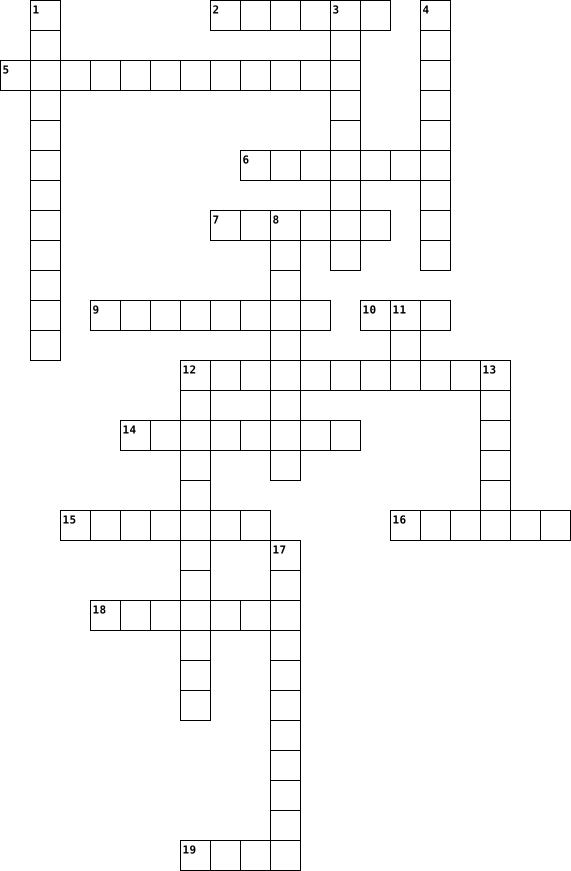
Across
- What does an aerobic process require?
- Glycerol with 3 fatty acids is called a ____?
- What type of cell division results in clones of the original cell?
- RNA replaces Thymine with ____?
- Different forms of the same element are called ___
- What is known as the energy currency of the cell?
- Most humans have 46 of these
- What is gene expression regulated by?
- In DNA replication the ____ strand has okazaki fragments?
- Most common type of mutation in DNA (for short)
- What is the FLUID inside the cell called?
- What part of a phospholipid is hydrophobic?
Down
- Which macromolecule’s basic formula is (CH2O)n?
- Which type of chemical reaction has energy as a product?
- Transport in the cell that requires no energy is called Passive transport or___
- What type of respiration does not require oxygen?
- The first shell of an atom holds a maximum of ___ electrons
- occurs only in prophase 1 of meiosis (2words)
- RNA structure is usually _____ stranded
- What is the pigment that makes plants green called?
20 Clues: Most humans have 46 of these • RNA replaces Thymine with ____? • What does an aerobic process require? • What is gene expression regulated by? • RNA structure is usually _____ stranded • What is the FLUID inside the cell called? • What part of a phospholipid is hydrophobic? • Glycerol with 3 fatty acids is called a ____? • occurs only in prophase 1 of meiosis (2words) • ...
Biology 2024-03-13
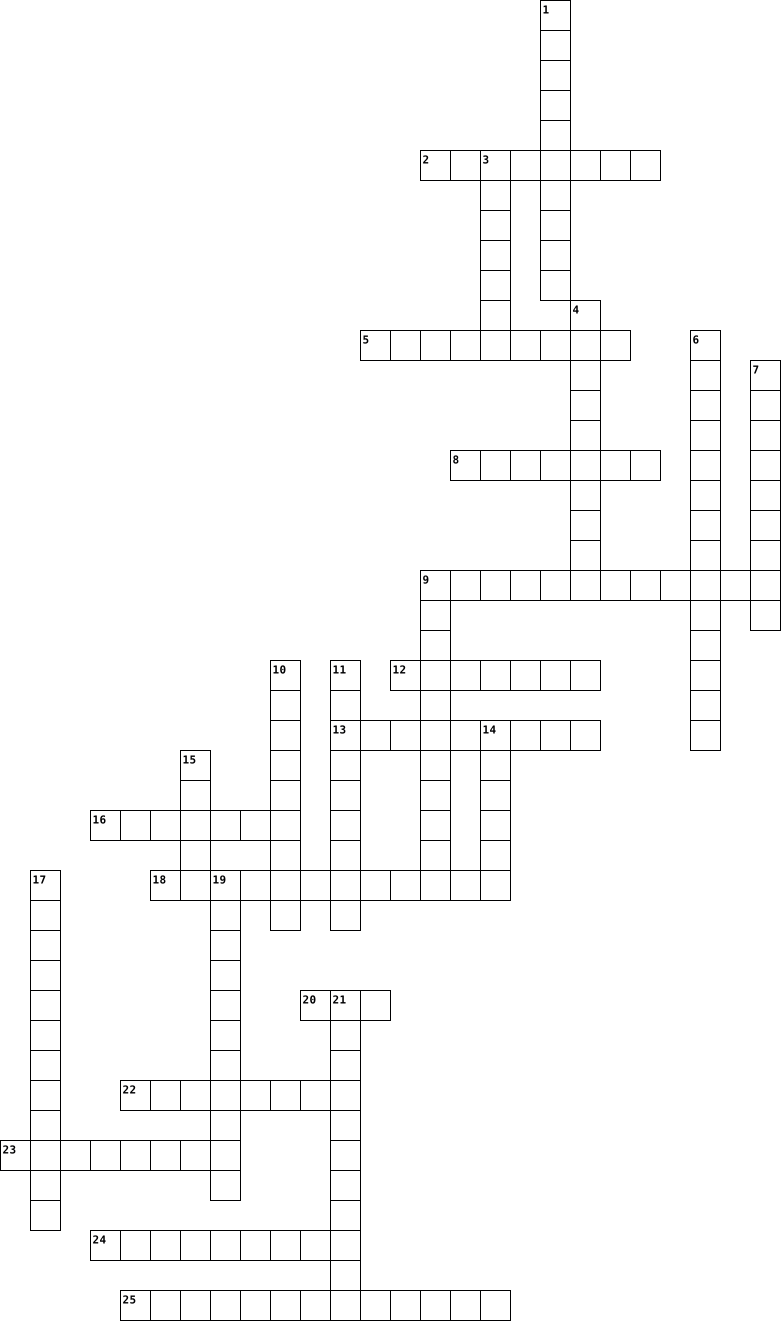
Across
- transports proteins
- organelles that make proteins
- "hides" waste products
- separates the interior of the cell from the outside environment
- has ribosomes on it
- gel-like liquid in cell
- houses genetic information and is the cell's control center
- major components of the cytoskeleton
- the molecule that carries genetic information for the development and functioning of an organism
- layer that is specifically designed to provide structural support and rigidity in plant cells
- amino acids
- too much water in the cell
- sugars
Down
- too little water in the cell
- movement of water through a semi-permeable surface
- the main organizer of the microtubule cytoskeleton in animals
- stores water and nutrients in plant cells
- organelles that serve as a "clean-up crew"
- is the natural compound present in green plants that gives them their color
- high concentration to low concentration
- a small dense spherical structure in the nucleus of a cell
- fats
- is a cell organelle that helps process and package proteins and lipids
- generates ATP energy for the cell
- produces energy through photosynthesis
- genetic information
26 Clues: fats • sugars • amino acids • transports proteins • has ribosomes on it • genetic information • "hides" waste products • gel-like liquid in cell • too much water in the cell • too little water in the cell • organelles that make proteins • generates ATP energy for the cell • major components of the cytoskeleton • produces energy through photosynthesis • ...
biology 2024-04-11
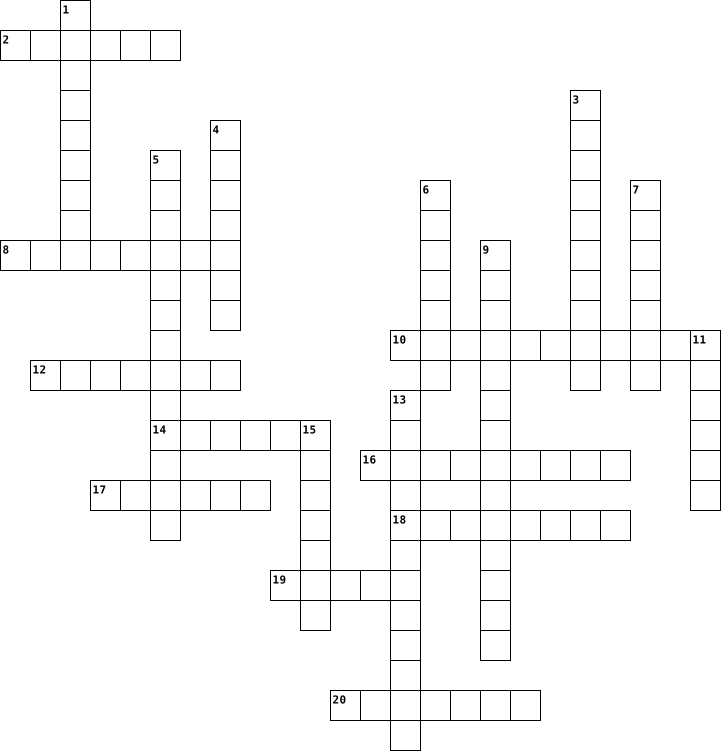
Across
- light
- species largely depend on
- relating to earth
- no sunlight
- cold
- harmful effect
- warming hot earth
- species invade
- classified
- salt freshwater
Down
- group of people
- harmful substance
- species' first colonizers
- trees
- combined food chains
- species nowhere else
- too many people
- symbiotic relationship
- variety
- biome water
20 Clues: cold • light • trees • variety • classified • no sunlight • biome water • harmful effect • group of people • too many people • species invade • salt freshwater • harmful substance • relating to earth • warming hot earth • combined food chains • species nowhere else • symbiotic relationship • species' first colonizers • species largely depend on
Biology 2024-04-08
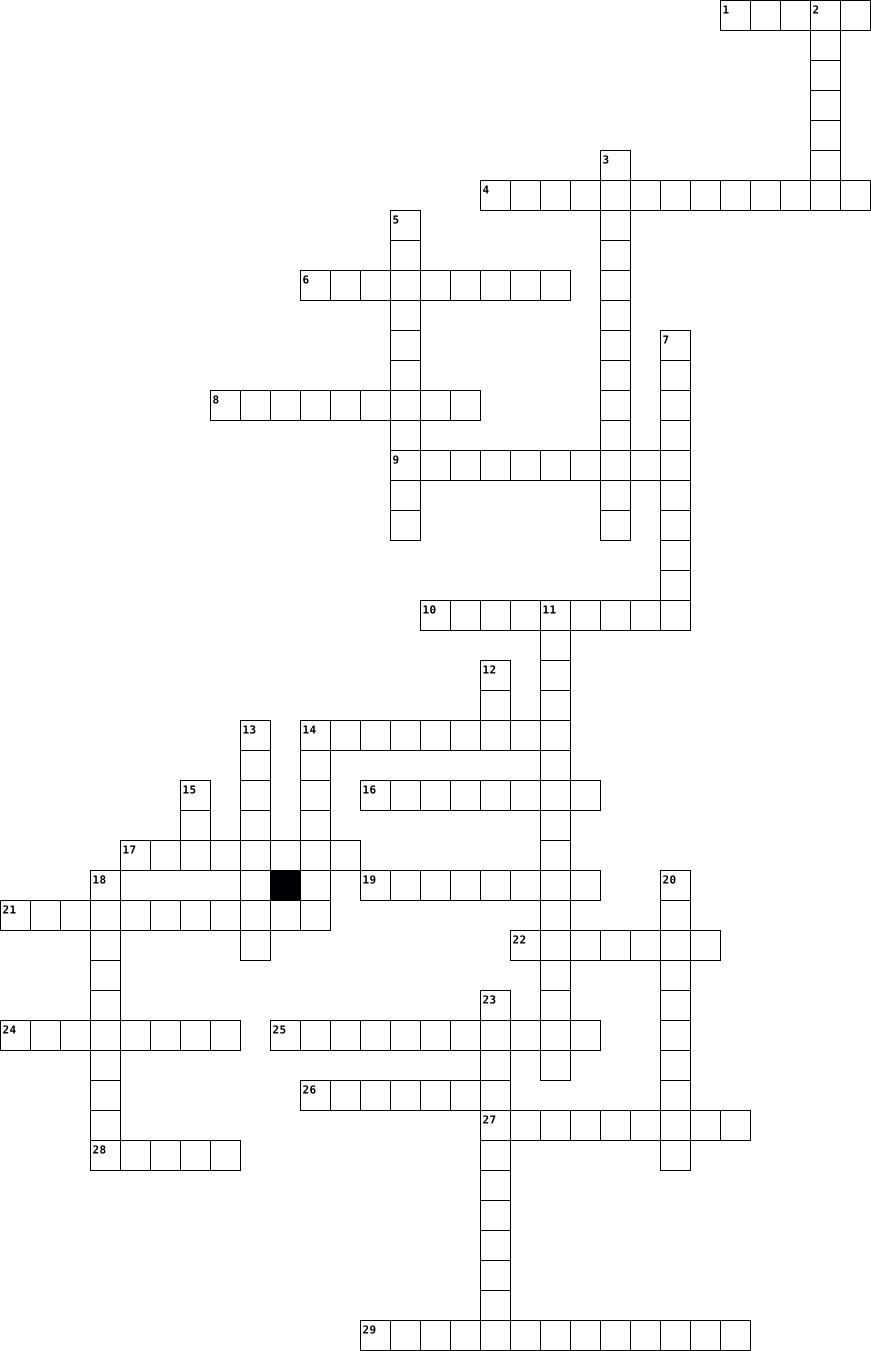
Across
- Two phases in interphase where the cell grows
- Adenine, Guanin, Cytosine, and Thymine
- A change in the DNA sequence that creates a change which can be beneficial, harmful, or no effect
- Has a covalent bond with sugar in a nucleotide
- Phases before mitosis contains G1, G2, and S phase
- Phase of cell division is where the chromosomes move to opposite ends and the new nucleus surrounds it in mitosis
- When the chromosomes meet in the middle
- The allele that overrides the recessive one showing the dominant phenotype
- When the chromosomes pull apart in mitosis
- Nitrogen base that matches with guanine
- Final part of cell division where two cells are created
- Nitrogen base that matches with adenine
- Cross between two traits
- Two strands intertwined together
- Nitrogen base that matches with Thymine
- Alleles must be homozygous to show
- In between the phosphate and the base in the nucleotide
- The creation of an mRNA strand
Down
- Nitrogen base that matches with cytosine
- When the bases go together like adenine and thymine
- The creation of amino acids for proteins using the mRNA strand
- Made of phosphate, sugar, and either adenine, guanine, cytosine, or thymine
- The production of proteins
- Double helix nucleic acid
- When the chromosomes become visible in mitosis
- The creation of two identical daughter cells
- Single strand(instead of thymine it uses uracil)
- The alleles are the same so either two littles or two bigs
- Cross between one trait
- The alleles are different so one big and one small
30 Clues: Cross between one trait • Cross between two traits • Double helix nucleic acid • The production of proteins • The creation of an mRNA strand • Two strands intertwined together • Alleles must be homozygous to show • Adenine, Guanin, Cytosine, and Thymine • When the chromosomes meet in the middle • Nitrogen base that matches with guanine • Nitrogen base that matches with adenine • ...
biology 2024-03-21
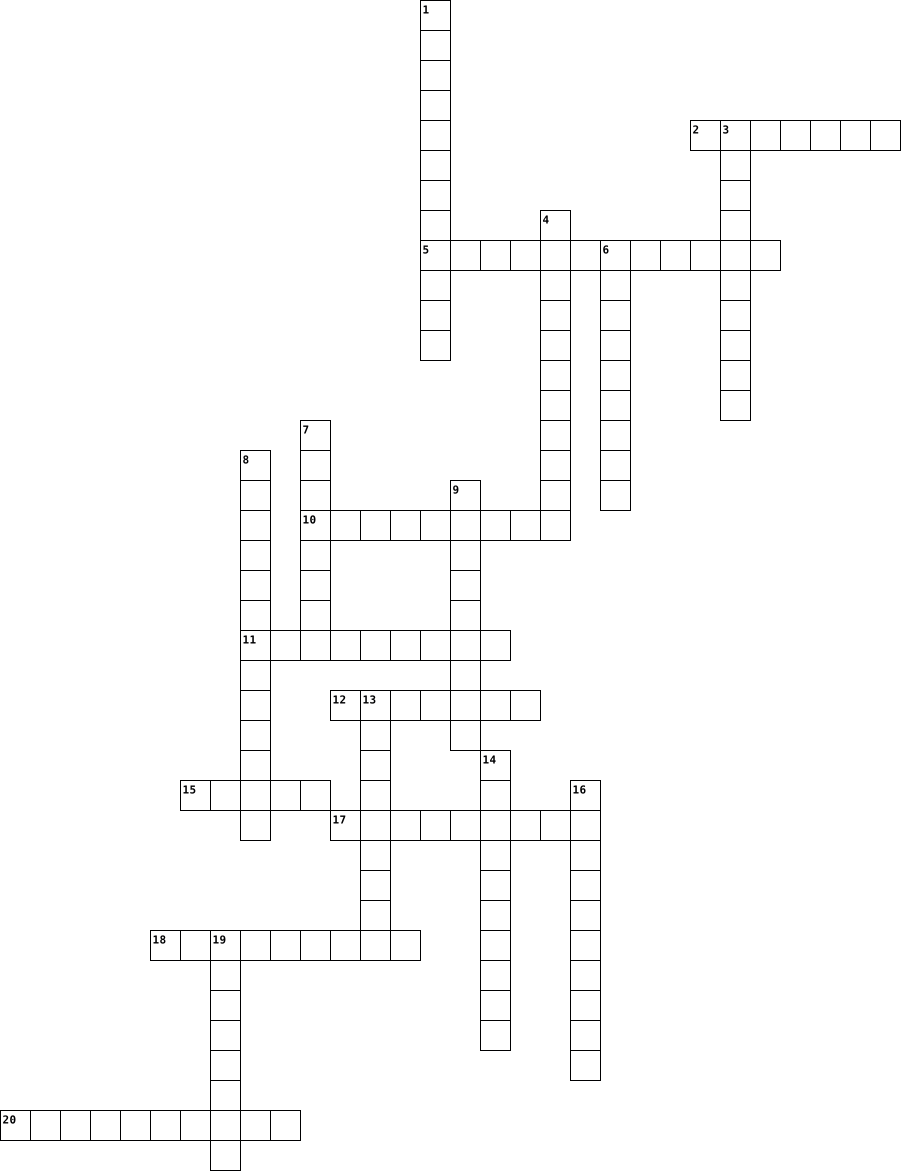
Across
- a group of living organisms consisting of similar individuals capable of exchanging genes or interbreeding.
- A relationship between two organisms in which one organism benefits and the other is unaffected
- An organism that makes its own food
- A group of interdependent organisms inhabiting the same region and interacting with each other
- Scientific study of interactions among organisms and between organisms and their environment
- A group of ecosystems that share similar climates and typical organisms
- all the parts of the planet that are inhabited by living things; sum of all Earth's ecosystems
- A biological community of interacting organisms and their physical environment.
- Consumers that eat only plants
Down
- Any living part of the environment with which an organism might interact
- A relationship between two organisms of different species where one benefits and the other is harmed
- An organism that cannot make its own food.
- A close relationship between two species that benefits at least one of the species.
- symbiotic relationship in which both species benefit from the relationship
- physical, or nonliving, factor that shapes an ecosystem
- An interaction in which one organism captures and feeds on another organism
- A consumer that eats only animals.
- A group of individuals that belong to the same species and live in the same area
- An organism that breaks down wastes and dead organisms
- An animal that eats both plants and animals
20 Clues: Consumers that eat only plants • A consumer that eats only animals. • An organism that makes its own food • An organism that cannot make its own food. • An animal that eats both plants and animals • An organism that breaks down wastes and dead organisms • physical, or nonliving, factor that shapes an ecosystem • ...
Biology 2024-04-16
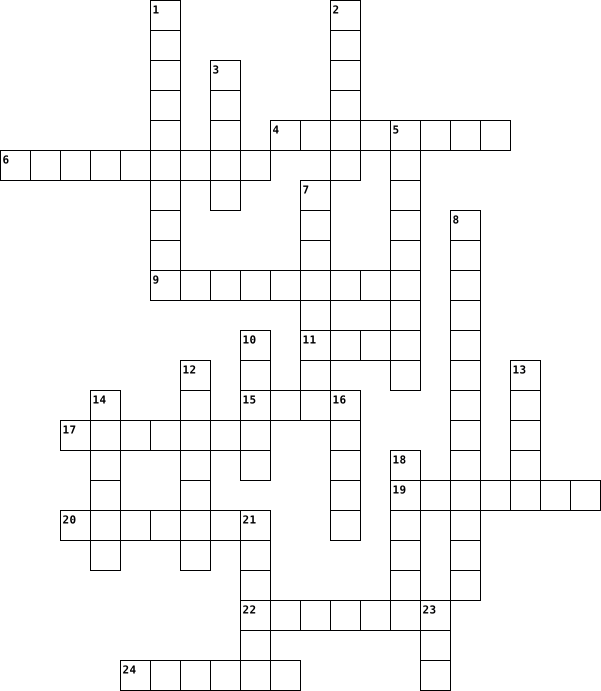
Across
- system that protects and supports
- system that releases hormones
- system that filters blood
- part of the plant that absorbs water
- organ where photosynthesis occurs
- energy source created by autotrophs
- cell division that creates body cells
- cell division that creates gametes
- live in extreme environments
- transports food in plants
Down
- lack membrane-bound organelles
- caused by uncontrolled cell growth
- cell wall made of cellulose
- have a nuclear membrane
- cell wall made of peptidoglycan
- system that protects from environment
- transports water in plants
- unicellular eukaryotic organism
- does not replicate independently
- reproductive part of the plant
- cell wall made of chitin
- system that fights off pathogens
- when DNA is replicated
- energy created during cellular respiration
24 Clues: when DNA is replicated • have a nuclear membrane • cell wall made of chitin • system that filters blood • transports food in plants • transports water in plants • cell wall made of cellulose • live in extreme environments • system that releases hormones • lack membrane-bound organelles • reproductive part of the plant • cell wall made of peptidoglycan • ...
Biology 2021-05-28
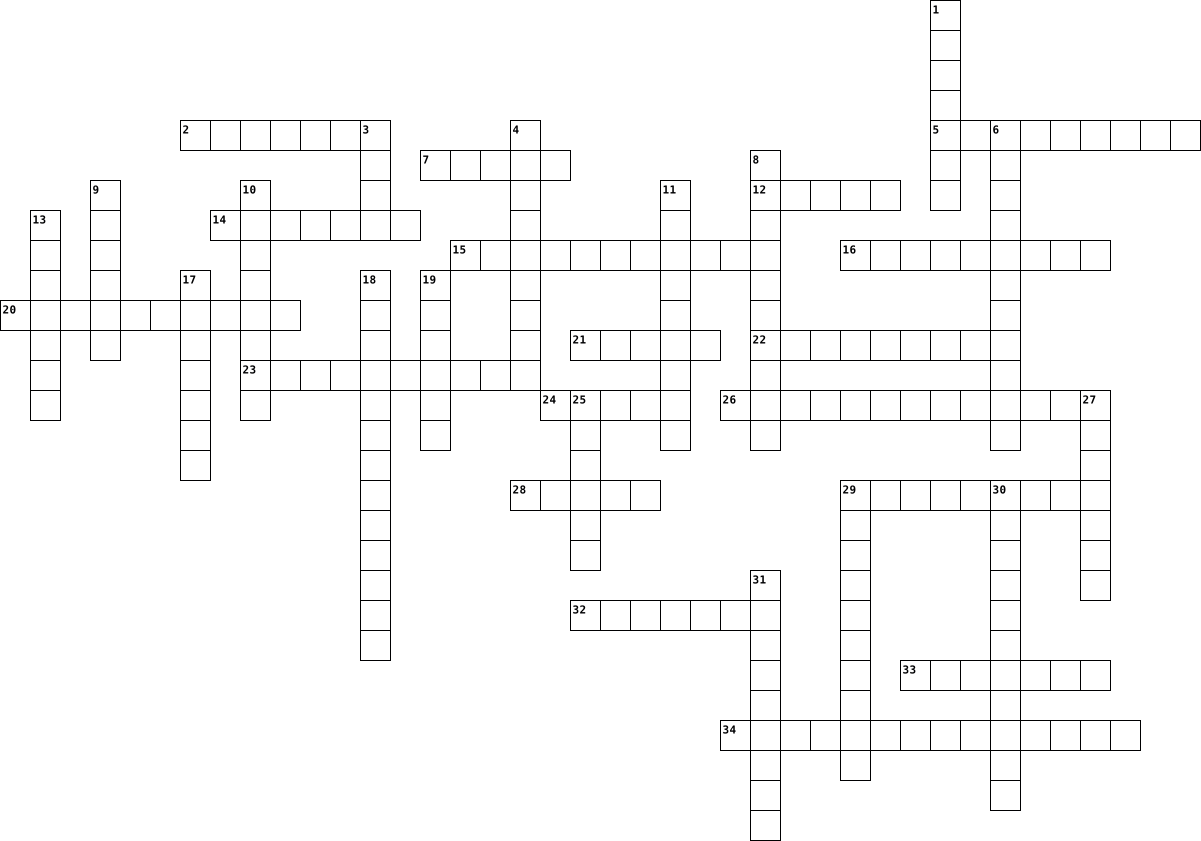
Across
- a non living component of an ecosystem
- Eliminated waste
- organ that serves as the center of the nervous system in all vertebrate and most invertebrate animals.
- pair of breathing organs located with the chest which remove carbon dioxide from and bring oxygen to the blood.
- small space in the tissues of an organism containing air, waste, fluids and nutrients
- movement of oxygen from the outside environment to the cells within tissues, and the removal of carbon dioxide in the opposite direction
- The muscle that separates the chest cavity from the abdomen.
- a muscular tube that food passes through and absorbs nutrients
- The skeleton of the head of a vertebrate animal
- structural layer surrounding some types of cells, just outside the cell membrane.
- The drawing of air or other substances into the lungs.
- an organ that forms the skeleton of vertebrates.
- the components of the circulatory system that transport blood throughout the human body.
- muscular organ of vertebrates that moves blood through the body by repeated, rhythmic contractions.
- community or group of living organisms that live in and interact with each other in a physical environment.
- Part of the body that produces movement
- raspatory system in birds, fish, insects and mammals
- Plants convert this gas to oxygen during a process called photosynthesis
Down
- The brain of a cell
- Smallest structural and functional unit of an organism
- when food is broken down and converted so it can be absorbed by an organism and used to maintain vital bodily functions.
- an organelle within the cells of plants and certain algae that is the site of photosynthesis
- basic unit of life in organisms of the kingdom Plantae.
- Transmits impulses from one part of the body to another
- also called germs, are microscopic organisms not visible with the naked eye.
- a thick solution that fills each cell and is enclosed by the cell membrane.
- an organ whose function is primarily for excretion of extra fluids as wastes.
- a group of cells which is made to preform a specific function
- separates the interior of the cell from the outside environment.
- a living component of an ecosystem
- a collection of tissues that structurally form a functional unit to perform a particular function.
- a digestive sac where your food is held after swallowing.
- part of breathing where the air is drawn out of the lungs
- A cord that stretches from your brain down the the end of your spine
- . A long hollow muscular tube that connects the pharynx to the stomach.
35 Clues: Eliminated waste • The brain of a cell • a living component of an ecosystem • a non living component of an ecosystem • Part of the body that produces movement • The skeleton of the head of a vertebrate animal • an organ that forms the skeleton of vertebrates. • raspatory system in birds, fish, insects and mammals • Smallest structural and functional unit of an organism • ...
biology 2022-10-17
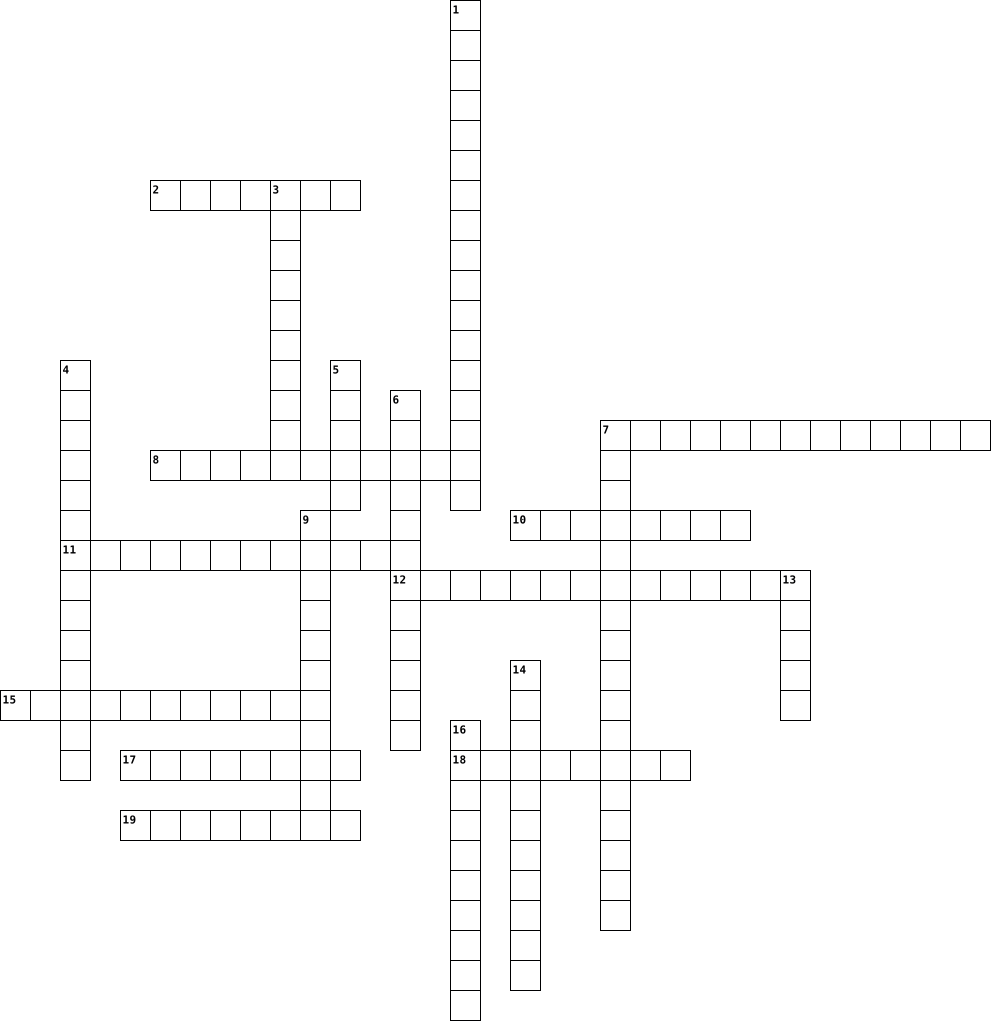
Across
- Bagian terdalam dari epidermis
- Nama lain dari periderm
- Nama lain penguapan air
- Pengganti epidermis yang rusak
- Tumbuhan berbiji tertutup
- Pendukung pertumbuhan tumbuhan
- Kelompok tanaman tidak berpembuluh
- Zat hijau daun
- Partikel penyusun atom bermuatan negatif
- Ahli botani dan farmasi pada 1990-1248 M
Down
- Contoh dari jaringan pelindung
- Lapisan terdalam korteks
- Nama lain jaringan permanen
- Alat kelamin betina pada bunga
- Kelompok tanaman berpembuluh
- Nama lain jaringan meristem
- Nama latin padi
- Jaringan yang mengangkut hasil fotosintesis
- Penemu bahwa serbuk sari, dll memiliki inti sel
- Alat kelamin jantan pada bunga
20 Clues: Zat hijau daun • Nama latin padi • Nama lain dari periderm • Nama lain penguapan air • Lapisan terdalam korteks • Tumbuhan berbiji tertutup • Nama lain jaringan permanen • Nama lain jaringan meristem • Kelompok tanaman berpembuluh • Contoh dari jaringan pelindung • Bagian terdalam dari epidermis • Alat kelamin betina pada bunga • Pengganti epidermis yang rusak • ...
biology 2022-10-17
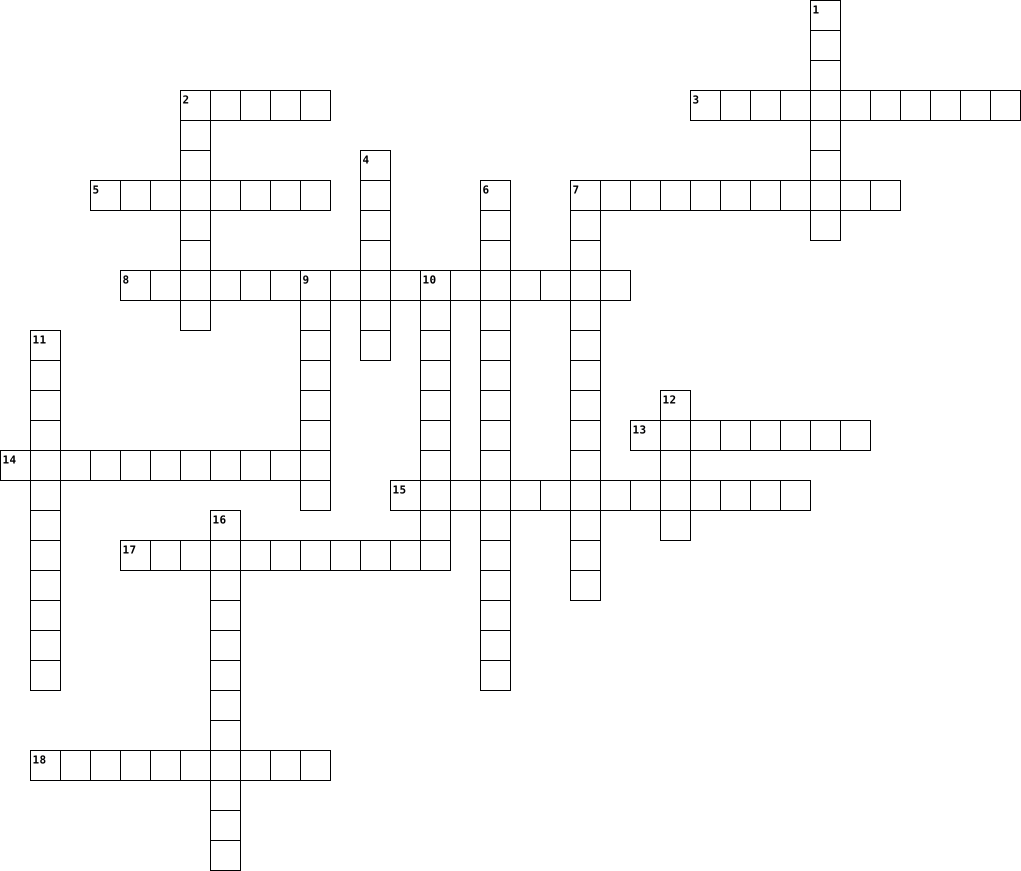
Across
- Alat kelamin betina pada bunga
- Penemu bahwa serbuk sari, dll memiliki inti sel
- Daun yang dilapisi lapisan lilin
- Nama latin padi
- Nama lain jaringan meristem
- Partikel penyusun atom bermuatan negatif
- Kelompok tanaman tidak berpembuluh
- Nama lain jaringan permanen
- Nama lain penguapan air
- Lapisan terdalam korteks
Down
- Zat hijau daun
- Pengganti epidermis yang rusak
- Bagian terdalam dari epidermis
- Contoh dari jaringan pelindung
- Pendukung pertumbuhan tumbuhan
- Ahli botani dan farmasi pada 1990-1248 M
- Alat kelamin jantan pada bunga
- Kelompok tanaman berpembuluh
- Jaringan yang mengangkut hasil fotosintesis
- Tumbuhan berbiji tertutup
20 Clues: Zat hijau daun • Nama latin padi • Nama lain penguapan air • Lapisan terdalam korteks • Tumbuhan berbiji tertutup • Nama lain jaringan meristem • Nama lain jaringan permanen • Kelompok tanaman berpembuluh • Alat kelamin betina pada bunga • Pengganti epidermis yang rusak • Bagian terdalam dari epidermis • Contoh dari jaringan pelindung • Pendukung pertumbuhan tumbuhan • ...
Biology 2022-10-11
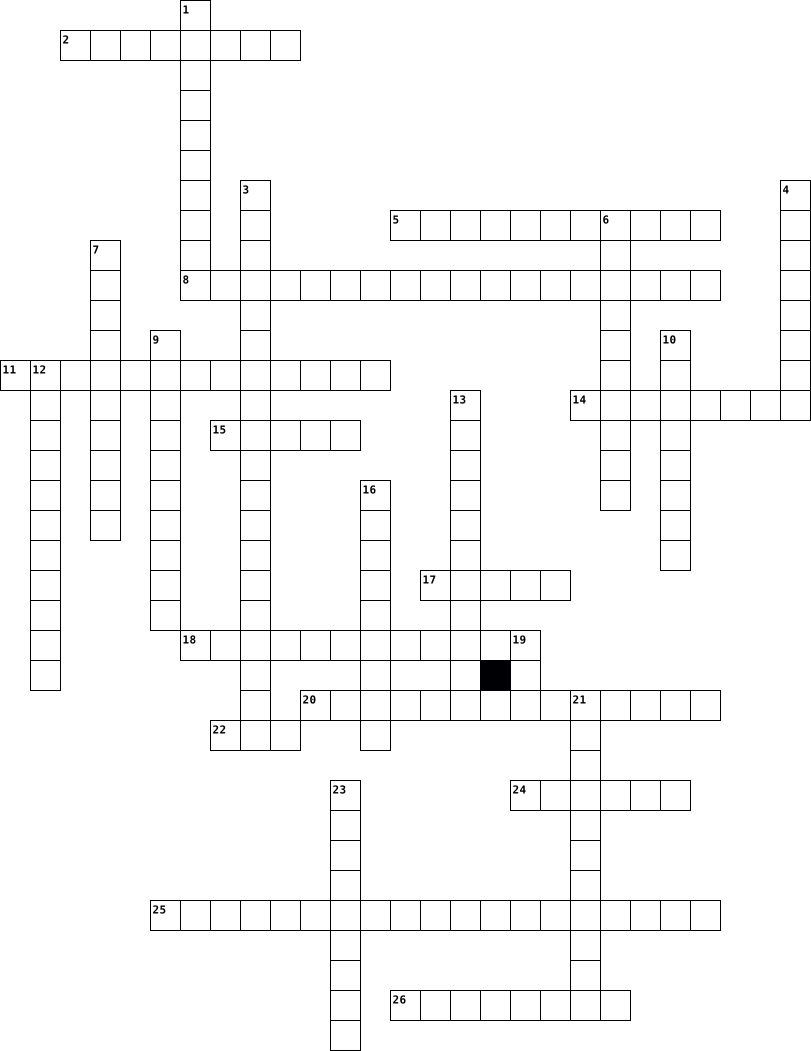
Across
- A signal to which an organism responds
- key A tool used to identify a species by answering a series of questions based on contrasting features that have two possible outcomes
- The production of new living organisms by combining genetic material from two different members of the same species
- Organisms made up of more than one cell
- To arrange in categories based off of shared characteristics
- The smallest units that make up living things
- A distinguished characteristic
- Organisms that must eat other organisms to get food for energy
- The process by which plants use energy from the sun to combine carbon dioxide and water to make carbs
- The genetic code found in every cell
- The ability to cause change in matter, especially to do work
- The main process which provides energy for life by releasing the energy store in the chemical bonds of sugar molecules
- An individual form of life such as a plant, animal, bacterium, protist, or fungus
Down
- Organisms that make their own food
- Offspring that is generated being genetically identical to a single parent
- The classification and naming of living things
- The total sum of all chemical reactions in a living organism
- A possible explanation or answer to a scientific question
- name The taxanomic name of an organism that consists of the genus and species
- A reaction to something in the environment
- Organisms made up of one cell
- Organisms that use chemicals for food or energy
- The process by which food is broken down into simpler substances
- The primary source of energy on earth
- Strategies used by living things to maintain stable conditions even when external conditions change
- Factors that vary in an experiment
26 Clues: Organisms made up of one cell • A distinguished characteristic • Organisms that make their own food • Factors that vary in an experiment • The genetic code found in every cell • The primary source of energy on earth • A signal to which an organism responds • Organisms made up of more than one cell • A reaction to something in the environment • ...
Biology 2022-10-19
Across
- the division of the autonomic nervous system that calms the body, conserving its energy
- A person with this type of aphasia cannot speak in clear words, BUT can understand you.
- Potential: The electrical charge that travels down the axon of a neuron.
- controls language reception; brain area involved in language comprehension and expression
- the space between the axon tip of the sending neuron and the dendrite or cell body of the receiving neuron
- This "brain" regulates emotions and includes the hippocampus, amygdala and hypothalamus
- This "brain" is oldest part and central core. It is responsible for automatic survival functions. AKA “The reptile brain.”
- maintaining a balanced internal equilibrium, such as temperature, blood glucose and hydration around a particular level.
- tissue destruction to examine brain tissue
- periodic, natural loss of consciousness distinct from unconsciousness from a coma, general anesthesia, or hibernation
- __________Scan A diagnostic method of examining the inside of the body, using hundreds of x-ray images from different angles that are combined by a computer to build up a 3d detailed picture
- _______vu that eerie sense that “I’ve experienced this before;” cues from the current situation may unconsciously trigger retrieval of an earlier experience
- These rhythms are physical, mental, and behavioral changes that follow a 24-hour cycle and encourage sleep. These natural processes respond primarily to light and dark and affect most living things, including animals, plants, and microbes.
- _________scan a visual display of brain activity that detects where a radioactive form of glucose goes while the brain performs a given task
- a part of the brain that is ths control center of the endocrine system. It regulates the pituitary gland & Homeostasis.
- This division of the Peripheral nervous system controls voluntary muscle movements.
- recurring problems in falling or staying asleep
- psychedelic drugs , like LSD, that distort perceptions and evoke sensory images in the absence of sensory input
- A sleep Disorder where a person stops breathing during sleep
- Night________ a sleep disorder characterized by high arousal and an appearance of being terrified.
- A small structure on the brainstem that relays motor and sensory signals to the cerebral cortex. Damage to this area leads to coma
- the brain’s ability to reorganize itself by forming new neural connections throughout life
- these neurons carry outgoing information from the brain and spinal cord to the muscles and glands; efferent neurons
- drugs (such as alcohol, barbiturates, and opiates) that reduce neural activity and slow body functions
- two almond–sized neural clusters in the limbic system that prepare us for life and death situations. They are at the root of anxiety attacks
- the mental state of being awake and aware of one's surroundings. Alterations in this state include sleep, hypnosis or Coma
- ________Sheath a fatty tissue layer segmentally encasing the axons of some neurons; enables vastly greater transmission speed as neural impulses hop from one node to the next
- drugs (such as caffeine, nicotine, and the more powerful amphetamines, cocaine, Ecstasy, and methamphetamine) that excite neural activity and speed up body functions
- a nerve cell; the basic building block of the nervous system
Down
- _____ Cortex: an area at the rear of the frontal lobes that controls voluntary movements
- Sleep disorder characterized by overwhelming daytime drowsiness with sudden attacks of sleep
- _________Cortex: This "brain" is the wrinkled layer of gray matter that covers the outside of the brain and is associated with higher cognitive functions, such as language, learning, perception, and planning.
- A sleep disorder where what happens in your dream gets acted out in real life while still asleep
- _________Syndome is a chromosomal disorder in females in which either an X chromosome is missing, or part of one X chromosome is deleted.
- The end of a chromosome that holds DNA together like Aglates on a shoelace
- a neurotransmitter believed to help regulate mood and social behavior, appetite and digestion, sleep, memory, and sexual desire and function
- a Suggestion made during a hypnosis session, it’s to be carried out after the subject is no longer hypnotized; used by some clinicians to help control undesired symptoms and behaviors
- a molecule that, by binding to a receptor site blocks a response
- cells in the nervous system that support, nourish, and protect neurons. They are the most numerous cells in the brain
- ______Neurons carry incoming information from the sensory receptors to the brain and spinal cord
- This hypothesis suggests dreams are created by changes in neuron activity that activates the brainstem during REM sleep
- a recurring sleep stage during which vivid dreams commonly occur; also known as paradoxical sleep because the muscles are relaxed (except for minor twitches) but other body systems are active
- The lobe of the Cerebral cortex responsible for processing visual information
- __________processing theory dream theory based on idea that humans process the information they receive, rather than merely responding to stimuli
- division of the autonomic nervous system that arouses the body, mobilizing its energy in stressful situations
- a molecule that, by binding to a receptor site, stimulates a response
- the diminishing effect with regular use of the same dose of a drug, requiring the user to take larger and larger doses before experiencing the drug’s effect
- A chemical substance, such as acetylcholine or dopamine, transmits nerve impulses across a synapse.
- the base of the brainstem; controls heart-beat and breathing
- the discomfort and distress that follow discontinuing an addictive drug or behavior
- The body's "slow" chemical communication system; a set of glands that secrete hormones into the bloodstream.
- opium and its derivatives, such as morphine and heroin; depress neural activity, temporarily lessening pain and anxiety
- This test uses powerful magnets to see what is occuring in the soft tissues of a structure
53 Clues: tissue destruction to examine brain tissue • recurring problems in falling or staying asleep • the base of the brainstem; controls heart-beat and breathing • A sleep Disorder where a person stops breathing during sleep • a nerve cell; the basic building block of the nervous system • a molecule that, by binding to a receptor site blocks a response • ...