
chinese Crossword Puzzles
China Review 2025-02-26

Across
- chinese philosophy that focuses on finding societal harmony
- river that ancient Chinese civilization started around
- founder of Confucianism
- first unified emperor of China that was buried with 8,000 terracotta warriors
- series of trade networks that exchanged goods and ideas from Asia to Europe
- chinese philosophy that believes in looking for harmony with nature or the whole world
Down
- chinese explorer that was command in chief of the largest naval expedition
- group of people who travel together for the safety of each other
- winner of the Chinese Civil War
- a country that has the ability to exercise and influence anywhere in the world
- last ruling emperor of China
- fantastical and did not happen in real life
- a series of rulers from the same ruling family
- first dynasty of China
- first communist leader in China
15 Clues: first dynasty of China • founder of Confucianism • last ruling emperor of China • winner of the Chinese Civil War • first communist leader in China • fantastical and did not happen in real life • a series of rulers from the same ruling family • river that ancient Chinese civilization started around • chinese philosophy that focuses on finding societal harmony • ...
Excxtera credit 2026-03-13

Across
- japan's capital
- japanese and chinese fire breathing lizard
- japanese noodles
- japan ancient leaders
- 2022 olympics
- japan's warriors
- japanese seafood wrapped stuff
- one edged sword
Down
- one of china's main rivers
- chinese and indian religion
- china's most populated city
- japan's most farmed crop
- diney movie about china
- a chinese fighting style
- continent with countries such as japan and china
15 Clues: 2022 olympics • japan's capital • one edged sword • japanese noodles • japan's warriors • japan ancient leaders • diney movie about china • japan's most farmed crop • a chinese fighting style • one of china's main rivers • chinese and indian religion • china's most populated city • japanese seafood wrapped stuff • japanese and chinese fire breathing lizard • ...
Unit 4 China Crossword 2014-12-03

Across
- a line of rulers from the same family
- Chinese leader that wanted it to become a democracy
- type of economic system in which the government controls all aspects of the country
- Mao Zedong’s attempt to rid China of political rivals
- as a result of this Britain took over Hong Kong
- the idea that heaven choose who should rule
Down
- location of an attack in 1989 on protesters calling for freedom of speech
- Chinese philosopher that taught to respect your elders
- China’s Communist leader from 1949-1976
- major religion of China that came way of India
- Mao Zedong’s attempt to improve China’s production that led to starvation in China
- leader of the Mongols that created the Yuan Dynasty
- group of Chinese that rebelled against foreigners in China
- Chinese leader from 1927-1949
- Chinese philosopher that founded Taoism
15 Clues: Chinese leader from 1927-1949 • a line of rulers from the same family • China’s Communist leader from 1949-1976 • Chinese philosopher that founded Taoism • the idea that heaven choose who should rule • major religion of China that came way of India • as a result of this Britain took over Hong Kong • Chinese leader that wanted it to become a democracy • ...
Ronans Immigrants 2024-11-22

Across
- The Place on the east coast where the immigrants entered the country
- Romes Rilgoin
- Taco Bell
- Americas hat
- Vohka
- What never changes
- The coast that Chinese immigrants go to
- Started WWII
Down
- making a person American
- Italyn criminals
- People who built the railroads
- Reason Chinese Cam to America
- Dirty and compact living area
- Mexicans come from here
- Another word for Immigrant
15 Clues: Vohka • Taco Bell • Americas hat • Started WWII • Romes Rilgoin • Italyn criminals • What never changes • Mexicans come from here • making a person American • Another word for Immigrant • Reason Chinese Cam to America • Dirty and compact living area • People who built the railroads • The coast that Chinese immigrants go to • ...
Crossword Puzzle Late Imperial China (Weeks 1-7) 2015-11-10

Across
- The Ayutthaya Kingdom (1351-1767) ruled approximately the area that is the modern nation of…
- First word in the English title of a famous Ming novel (first print 1592) about a monk and a monkey travelling to India
- The Qing produced a famous multilingual glossary in Chinese, Manchu, Uyghur, Tibetan, and…
- Family name of the ruling Ming family
- Five East India Companies were founded in the 17th century by the British, the Portuguese, the French, the Danish, and the…
- Widespread European fascination with things Chinese in the 17-18th centuries
- Capital of the early Ming dynasty
- The Mongols encouraged cultivation of it; the Ming produced it so systematically that some scholars speak of early capitalism
- If Manchus, Mongols, etc., adopt Chinese customs and language, the process is called…
- Capital of the middle and late Ming dynasty
- Family name of a famous Italian Jesuit who lived in late Ming China and had impressive Chinese language skills
- Admiral Zheng He was born 1371 in Yunnan and the religion of his father had been…
Down
- Chinese product that became a smash hit in 18th-century Britain
- Family name of the man who led the first British mission to Qing China in 1793 and may or may not have kowtowed before the Chinese emperor
- First word in the English title of a famous Qing novel of 1791 which is regarded a masterpiece of Chinese and world literature
- Guiding political philosophy in imperial China
- Family name of the scholar who wrote ‘The Social Life of Opium in China’ (2005)
- Manchu emperor and Chinese poet with the greatest output (quantitatively)
- Mao Zedong (1893-1976) and the first Ming emperor, Hongwu (1328-1398), both came from a family of…
- Mongol dynasty in China, 1271-1368
- City-state on the west Indian coast that was one of the most important ports for Zheng He
- Manchu dynasty in China, 1644-1912
- The Majapahit Empire (1293 - circa 1500) ruled various islands that form the modern nation of…
- There was a specific kind of Buddhism at the court of the Yuan, Ming, and Qing dynasties. Which country did it come from?
- Very tall animal from Africa that Zheng He’s ships brought to China
- The Wanli emperor (reigned 1572-1620) liked to smoke it
26 Clues: Capital of the early Ming dynasty • Mongol dynasty in China, 1271-1368 • Manchu dynasty in China, 1644-1912 • Family name of the ruling Ming family • Capital of the middle and late Ming dynasty • Guiding political philosophy in imperial China • The Wanli emperor (reigned 1572-1620) liked to smoke it • Chinese product that became a smash hit in 18th-century Britain • ...
Ancient China and India Choice Board Project 2023-02-01

Across
- a hard gemstone often used in jewelry
- someone or something having power, authority, or influence; a master or ruler.
- A Chinese philosophy that was devoted to strengthen and expand the state through increased agricultural work and military service.
- a valuable cloth, originally made only in China from threads spun by caterpillars called silkworms. Diffusion the process of spread of a feature or trend from one place to another over time.
- A Hindu social class system that controlled every aspect of daily life
- A religion in China which emphasizes the removal from society and to become one with nature.
- followed the route on his journey to.
- An extreme aesthetic who founded the religion Jainism and thought of several Hindu concepts, such as karma, in a very concrete way
- A device that records ground movements caused by seismic waves as they move through Earth. acupuncture Chinese medical practice of inserting needles into certain areas of the body.
Down
- Founder of the short-lived Qin dynasty and creator of the Chinese Empire (r. 221-210 B.C.E.). He is remembered for his ruthless conquests of rival states and standardization.
- a vast Chinese defensive fortification begun in the 3rd century B.C. and running along the northern border of the country for 2,400 km
- (551-479 BCE) A Chinese philosopher known also as Kong Fuzi and created one of the most influential philosophies in Chinese history.
- a person who does farm work for wealthy landowners
- An ancient trade route between China and the Mediterranean Sea extending some 6,440 km (4,000 mi) and linking China with the Roman Empire.
- a sacred shrine where a priest or priestess spoke for a god or goddess
- the principles of right and wrong that guide an individual in making decisions.
- uses the position of shadows cast by the sun to tell the time of day
- A philosophy that adheres to the teachings of the Chinese philosopher Confucius. It shows the way to ensure a stable government and an orderly society in the present world and stresses a moral code of conduct.
- The belief that actions in this life, whether good or bad, will decide your place in the next life.
- Chinese Daoist philosopher; taught that governments were of secondary importance and recommended retreat from society into nature.
20 Clues: a hard gemstone often used in jewelry • followed the route on his journey to. • a person who does farm work for wealthy landowners • uses the position of shadows cast by the sun to tell the time of day • a sacred shrine where a priest or priestess spoke for a god or goddess • A Hindu social class system that controlled every aspect of daily life • ...
Leonie & Andy's Supreme Ancient Crossword 2020-11-18

Across
- The ancient civilisation famous for its pyramids (7,5)
- The ancient civilisation that is now the most populated city in Italy (7,4)
- Egypt's most famous river (3,4)
- A Chinese river that is the worlds longest river (3,7,5)
- One of Ancient Persia's greatest leader he also created the Behistun Inscription, which helped decipher the cuneiform script. (6,3,5)
- One of the Chinese inventions that copies an original piece using wood
- One of the Chinese inventions that was made from the bark of a mulberry tree
- commonly known as BCE
- The ancient civilisation that believed in the 12 Olympians(7,6)
- One of the Chinese inventions that is made from silkworm cocoons
- A fermented fish sauce used as a condiment in Rome (4,5)
- The goddess of war tactics she has a city named after her in Greece and the Parthenon is dedicated to her.
- The ancient civilization that created the wheel (7,11)
Down
- A very well known leader who first founded the Persian Empire or Archmenids Empire (5,3,5)
- A multi-lingual relief that helped to decipher the cuneiform script (3,8, 11)
- A Chinese river that's the sixth-longest river in the world (3,6,5)
- The goddess of the hearth, she is was given sacrifices every day from people of Ancient Greece
- A very large statue of King Khafre's face located in Egypt, one of Egypt's most famous landmark (3,6,2,4)
- The ancient civilisation that only lasted around 200 years (7,6)
- One of the Chinese inventions that helps to guide large ships
- Rulers who belong to the same royal family for generations.
- A mountain range in Asia it has many of Earth's highest peaks, including the highest, Mount Everest, at the border between Nepal and China (3,9)
- A common title used for the monarchs of ancient Egypt from the First Dynasty
- Commonly known as CE
- Really, really old
- The ancient civilisation that created gun powder and silk (7,5)
- One of the Chinese inventions that uses magnets to tell you the direction
- China's first emperor (3,3,5)
- One of the Chinese inventions that sis used to make guns, bombs, mines and even rockets
- A system of roads that allowed Darius The great to send messages to the 20 provinces (3,5,4)
30 Clues: Really, really old • Commonly known as CE • commonly known as BCE • China's first emperor (3,3,5) • Egypt's most famous river (3,4) • The ancient civilisation famous for its pyramids (7,5) • The ancient civilization that created the wheel (7,11) • A Chinese river that is the worlds longest river (3,7,5) • A fermented fish sauce used as a condiment in Rome (4,5) • ...
填字游戏 Crossword Puzzle 2022-09-07

Across
- "you" in chinese
- "teacher" in chinese
- "me" in chinese
- "they" in chinese
- "You" but more than 1 people in chinese
Down
- "he,she,it" in chinese
- "hello" in chinese
- "we" in chinese
- "hello" but this greeting for people older than you in chinese
9 Clues: "me" in chinese • "we" in chinese • "you" in chinese • "they" in chinese • "hello" in chinese • "teacher" in chinese • "he,she,it" in chinese • "You" but more than 1 people in chinese • "hello" but this greeting for people older than you in chinese
Chinese New Year Crossword Puzzle 2024-01-23

Across
- a chinese character which means good luck
- the colour that means “good luck”
- a type of dance that is popular in chinese new year
- a food you eat in chinese new year that is crunchy
- an action of remembering our grandparents
- a type of cake eaten in chinese new year
Down
- a meal where all your family member reunites
- something you give with money inside to friends and family
- a type of flower chinese people use for decorations
- a market chinese people go to to shop for flowers
- a fruit that is popular in chinese new year
11 Clues: the colour that means “good luck” • a type of cake eaten in chinese new year • a chinese character which means good luck • an action of remembering our grandparents • a fruit that is popular in chinese new year • a meal where all your family member reunites • a market chinese people go to to shop for flowers • a food you eat in chinese new year that is crunchy • ...
chapter 4 2024-02-29

Across
- what you eat in Chinese New year
- a special Chinese festival in September
- you light and play with this in Mid-Autumn Festival (it has fire!)
- you watch this in Chinese New Year
- you stick this at home in Chinese New Year (e.g. on the door)
- you do this cleaning in Ching Ming Festival
- you give special food to dead ____ in Ching Ming Festival
Down
- a fruit you eat in Mid-Autumn Festival
- a performance you see in Chinese New Year
- what you eat in Mid-Autumn Festival
- what you eat in Chinese New Year
- a guessing game and you tie them to the lanterns
- ______ display in Chinese New Year
13 Clues: what you eat in Chinese New year • what you eat in Chinese New Year • you watch this in Chinese New Year • ______ display in Chinese New Year • what you eat in Mid-Autumn Festival • a fruit you eat in Mid-Autumn Festival • a special Chinese festival in September • a performance you see in Chinese New Year • you do this cleaning in Ching Ming Festival • ...
Puppet Puzzle Practice 2016-10-02

Across
- Shadow screen of Balinese origin
- Puppet performer, Indonesian
- Wooden rod puppets in the Indonesian tradition
- Crass half of comedic duo, in Greek theatre
- Comic relief character of Chinese tradition
- Progenitor of Turkish shadow puppetry, according to legend
- Woodcutter of Turkish shadow
- Lowbrow component of Indonesian comedy duo
- Dialog between the two comedic protagonists in Turkish Shadow
- Tree of life in Turkish shadow
- Tree of Life of Indonesian performances
- Chinese goddess of mercy
- Clown servants in Indonesian shadow
- Introduction to a Turkish shadow performance
- More cultured half of Turkish duo
- Main plot in Turkish shadow
- Muslim holy period of fasting, with evening meals typically accompanied by puppet performances
- A play in the Indian tradition
- Male role in traditional Chinese theatre
- Also known as Vishnu
Down
- Male protagonist of Chinese tradition
- Traditional percussion ensemble which accompanies Indonesian shadow theatre
- Female role in traditional Chinese theatre
- Whistle accompanying Turkish shadow
- Grieving emperor who found solace in puppetry
- Shadow puppetry in the Indonesian tradition
- Wife of Rama
- Intellectual half of Greek comedy duo
- Young dandy of Turkish puppet theatre
- Leather puppets of Chinese origin
- Epic ddepicting the Karukshetra war
- Dwarf of Turkish shadow
- Indonesian epic of Rama and Sita
- 5 brothers and chief protagonists in Balinese shadow epic
- Traditional hide puppet of Turkish origin
- Farting clown servant of Indonesian origin
- Progenitor of Greek shadow theatre
- kind of Lanka and primary antagonist in Indonesian shadow
- Puppet performer, Turkish
- Generic Turkish word for puppet
40 Clues: Wife of Rama • Also known as Vishnu • Dwarf of Turkish shadow • Chinese goddess of mercy • Puppet performer, Turkish • Main plot in Turkish shadow • Puppet performer, Indonesian • Woodcutter of Turkish shadow • Tree of life in Turkish shadow • A play in the Indian tradition • Generic Turkish word for puppet • Shadow screen of Balinese origin • Indonesian epic of Rama and Sita • ...
Sino-African Relations: The Case of Zambia and Agency 2026-04-25

Across
- Fiscal tools adjusted by Hichilema to revive Zambia’s “comatose” sector (6,5)
- Policy requiring states not to recognise Taiwan (3,5)
- Structural condition inherited from colonial extraction (10)
- Scholar arguing colonialism reconstructed African economies (4)
- Region central to Zambia’s mining identity and labour politics (10)
- Zambia’s dominant export commodity (6)
- Economic pattern centred on resource removal (10)
- Second president of Zambia (7)
- China’s adaptable influence strategy in Africa, as outlined by Carmody and Taylor (2010) (11)
- Area of contention in Chinese‑operated mines that triggered public backlash (5,6)
- Opposition leader who mobilised anti‑Chinese sentiment (4)
- System of elite‑centred personal rule (17)
- Process central to co‑constructed Sino‑African relations (11)
- Zambia’s first president associated with one‑party rule (6)
- Contested narrative about Chinese lending practices (8)
- Economic reform opening Zambia to foreign investment (14)
- Political tool deeply rooted in Zambian identity (7)
Down
- Political system of North Rhodesia (11)
- Actor that pressured the state to regulate Chinese mines (5,7)
- Colonial company controlling land and labour in Northern Rhodesia (4)
- Practice where political elites distribute resources for loyalty rather than development (9)
- Current president emphasising strategic neutrality (9)
- Chinese enterprises operating in Zambia (4)
- Capacity of African states to shape external engagement (6)
- IMF‑backed reforms reshaping Zambia’s economy in the 1970s and 80s (10,10)
- Economic activity shifting from aid to commercial engagement (10)
- National autonomy debated in discussions of Chinese loans (10)
- National mining company later privatised (4)
- Political system enabling accountability and opposition (9)
- Railway symbolising early China–Zambia solidarity (6)
- Strategy of refusing to choose between major powers (12)
- Kaunda’s ruling party during one‑party rule (4)
32 Clues: Second president of Zambia (7) • Zambia’s dominant export commodity (6) • Political system of North Rhodesia (11) • System of elite‑centred personal rule (17) • Chinese enterprises operating in Zambia (4) • National mining company later privatised (4) • Kaunda’s ruling party during one‑party rule (4) • Economic pattern centred on resource removal (10) • ...
china 2018-03-25

Across
- the most popular food in China
- a famous dance is called with this name
- the famous chinese symbol called "Great ..."
- one of the two calendars used in China
- the duration of the Chinese New Year
- remedies used by chinese population to get rid of evil spirits
- the second month of the year
- a typical food similar to Italian spaghetti
- some little fruits like oranges but smaller
Down
- the capital of China
- the neighbourhood used to represent China in foreign towns
- a colour that symbolizes wealth
- they were used to scare away evil spirits
- there is money or sweets inside them
- the other name of "chinese New Year"
- history scenes or legends are often painted on it
- a famous black and white symbol
17 Clues: the capital of China • the second month of the year • the most popular food in China • a colour that symbolizes wealth • a famous black and white symbol • there is money or sweets inside them • the other name of "chinese New Year" • the duration of the Chinese New Year • one of the two calendars used in China • a famous dance is called with this name • ...
Revision of China 2013-05-30

Across
- Mao Zedong was the founder of this in China
- The longest river in China
- The capital city of China
- Native animal to China
- A policy set in China legislating on the number of children allowed per family
- Chinese have many of these a year and are represented through a dragon
- Beginning of a dynasty where a 6 year old boy ruled
- The People's Republic of China is commonly referred to as
- Most common religion in China
Down
- The highest point in China
- The era where many things were invented
- Completion of this landmark occurred in 214
- Number of stars on the Chinese flag
- Currency in China
- Mao Zedong and his Communist men and soldiers walked this to make a stand
- Chinese system that represents the year it is through an animal symbol
- The philosophy many Chinese citizens followed
- Current year of, in China
18 Clues: Currency in China • Native animal to China • The capital city of China • Current year of, in China • The highest point in China • The longest river in China • Most common religion in China • Number of stars on the Chinese flag • The era where many things were invented • Completion of this landmark occurred in 214 • Mao Zedong was the founder of this in China • ...
The Han Dynasty, Leisure's of the Rich 2023-03-14

Across
- Shadow Boxing
- Chinese Chess
- One of Chinas oldest toys
- Someone who play things such as brass bells
- Bamboo sticks are thrown as you move counters around the board
- A delightful art form experience for a family that elevates the person performing
- Chinese football
- Someone who brings joy to other people
- An animal valued for its music and fights
Down
- A form of animal transportation
- A form of martial arts based on the movements of animals
- Chinese soccer or kickball
- A Silk and bamboo mix flown across the sky as a hobby
- A performance that includes singing and dancing, and usually represents upper class
- One who maneuvers there body as an art form
- The worlds oldest board game
- Chinese Hacky Sack
17 Clues: Shadow Boxing • Chinese Chess • Chinese football • Chinese Hacky Sack • One of Chinas oldest toys • Chinese soccer or kickball • The worlds oldest board game • A form of animal transportation • Someone who brings joy to other people • An animal valued for its music and fights • Someone who play things such as brass bells • One who maneuvers there body as an art form • ...
East and South Asia Review (AP World History) 2021-09-15

Across
- This Chinese Dynasty was known for technological innovation, economic prosperity, but a weak military
- An indian belief system that believes suffering comes from desire
- The hierarchy used in both Medieval Japan and Medieval Europe
- This was the Japanese equivalent of a knight in their hierarchy
- The hierarchy used in india that was based on Hinduism
- A type of religion that adapts or changes to a new region/society
- Native Chinese belief that emphasized harmony with nature and balance
- A religion that believes in many gods
Down
- Native Chinese belief that emphasized logic, respect, and reasoning
- A non-Native Chinese belief system that compared itself to Confucianism and Daoism
- This Chinese invention helped sailors determine their direction
- This is the person who ruled over Medieval Japan
- This was a religion that combined parts of Hinduism and Islam
- A polytheistic indian belief system that believed in reincarnation and karma
- This type of currency replaced the gold and silver coins used in China
- An islamic empire in north india
- The Lord in Europe gave land to this person
17 Clues: An islamic empire in north india • A religion that believes in many gods • The Lord in Europe gave land to this person • This is the person who ruled over Medieval Japan • The hierarchy used in india that was based on Hinduism • This was a religion that combined parts of Hinduism and Islam • The hierarchy used in both Medieval Japan and Medieval Europe • ...
Post-Dynasty China 2022-02-18

Across
- named by mao zedong
- great social credit
- the government is this
- healed deaf and mute children
- the place were chinese people live
- chinese leader in economy
- created to increase birth rate
Down
- killed 20-45 million
- environmental issue
- planet where china is located
- created to limit birth rate
- started great leap forward
- another name for yellow river
- Chinese president
- giant event throughout the world
- created to stable birth rate
16 Clues: Chinese president • environmental issue • named by mao zedong • great social credit • killed 20-45 million • the government is this • chinese leader in economy • started great leap forward • created to limit birth rate • created to stable birth rate • planet where china is located • another name for yellow river • healed deaf and mute children • created to increase birth rate • ...
Tiger's Crossword 2022-01-29

Across
- The place where chinese new year originated
- A filled, rolled appetizers found in East Asia
- A chinese myth creature that symbolize good luck
- A traditional chinese cake that symbolizes completeness and togetherness.
- A type of cloth known as the mandarin gown
- A red envelope that consist of money
- A lamp that often to be seen in festivals
- The largest cat species
Down
- A chinese traditional food with fillings cover with dough
- A phase of moon that means peace and prosperity.
- A low explosion devices for the purpose of entertaiments especially in celebrations
- A traditional dance that is often seen in festival
- The official language of china
- A fruit that is popular especially in Chinese New year
14 Clues: The largest cat species • The official language of china • A red envelope that consist of money • A lamp that often to be seen in festivals • A type of cloth known as the mandarin gown • The place where chinese new year originated • A filled, rolled appetizers found in East Asia • A phase of moon that means peace and prosperity. • ...
Red Scarf Girl 2017-11-13

Across
- Who the memoir is about
- Summer labor was done here
- home city
- Good Class status
- Took place from 1966 to 1976
- Homeless man at all the ratings
- Three wheeled bike
- Dad
- Chinese penny
- Leader of the Cultural Revolution
- Enforced the law
- Goverment owns everything
- Chinese dollar
- Ji Li's grandfather was this
Down
- Someone who opposed to the Cultural Revolution
- Moslem God
- agent investigating her family
- language of china
- Ji-Li's birthday
- Old ways they wanted to get rid of
- Chinese word for poster
- Chapter Six Tittle
- Capital of China
- Bad class status
- Neither red or black status
25 Clues: Dad • home city • Moslem God • Chinese penny • Chinese dollar • Ji-Li's birthday • Capital of China • Bad class status • Enforced the law • language of china • Good Class status • Chapter Six Tittle • Three wheeled bike • Who the memoir is about • Chinese word for poster • Goverment owns everything • Summer labor was done here • Neither red or black status • Took place from 1966 to 1976 • ...
AP WORLD VOCAB 2025-10-31

Across
- Grandson of Chinggis Khan
- Rapid communication system
- Mongol Capital
- A combo of Daoism, Buddhist and Confucianism
- Largest temple built by the Khmer kingdom
- A monks bowl used for Buddhist traditions
- Major commercial city in West Africa
- Widely spoken in East Africa
- Arab traveler
- Where Borobudur is located
- Muslim Chinese admiral
Down
- Chinese developed ships
- Stop areas
- Bacteria responsible for the 'Black Plague'
- Richest person to ever live
- Arabian / Indian developed ships
- Important role of West African culture of people who serve their community
- Dynastic title suggesting a new beginning in Chinese history
- Mongol support for commerce (state approved associations)
- Role given to cadre of castratal men
20 Clues: Stop areas • Arab traveler • Mongol Capital • Muslim Chinese admiral • Chinese developed ships • Grandson of Chinggis Khan • Rapid communication system • Where Borobudur is located • Richest person to ever live • Widely spoken in East Africa • Arabian / Indian developed ships • Major commercial city in West Africa • Role given to cadre of castratal men • ...
Chinese numbers 2021-06-27

Across
- first
- tenth
- forty-two
- four
- eleventh
- three
- one
Down
- forty-second
- ten
- third
- two
- fourth
- second
- eleven
14 Clues: ten • two • one • four • first • third • tenth • three • fourth • second • eleven • eleventh • forty-two • forty-second
Chinese Crossword 2012-12-01

Across
- How many days would the Chinese people have to wait until they buried the dead?
- What was discovered in March 1974 in China?
- The Great Wall of China is more that ______ long.
- Men and women both had _____ hair because they believed it was a gift from their parents.
- What was the name of the popular board game that was around in 2000 B.C.?
- What was accidentally discovered by alchemists in the 9th century A.D.?
- What was the name of the dynasty that finished the Great Wall of China?
- What was the name of the rule that started building the Great Wall of China?
Down
- China is one of the ______ written languages.
- What did China invent from silk worms?
- What took over 2000 years to build?
- What is the name of the bush that tea is made from?
- What was the name of the dynasty that ruled 589-618 B.C.?
- What traditionally did women do to their feet?
14 Clues: What took over 2000 years to build? • What did China invent from silk worms? • What was discovered in March 1974 in China? • China is one of the ______ written languages. • What traditionally did women do to their feet? • The Great Wall of China is more that ______ long. • What is the name of the bush that tea is made from? • ...
Chinese Philosophy 2016-01-19

Across
- = The Lord of Humanity (one of the Three Purities) and legendary founder of Daoism
- = The Way
- = Daoists view the body as a _________________ of the universe
- = Virtue in Chinese
- = ________________ bones were means of foretelling the future during the Shang dynasty
- = Mandate of Heaven (or emperors’ right to rule China, provided that they govern justly), a concept created by the Zhou to justify their rule
- = Breath of Life
Down
- = Famous dynasty of the 6th c. BCE
- = Receptive aspect of reality (associated with darkness, heaviness, femaleness, and earth)
- = School of Chinese philosophy advocating strict enforcement of laws by an authoritarian state (prevalent under the Qin dynasty)
- = The classic scripture of Daoism
- = Non action
- = Ruler of the universe and ancestor of the Chinese people
- = Active aspect of reality (associated with light, lightness, maleness, and heaven)
14 Clues: = The Way • = Non action • = Breath of Life • = Virtue in Chinese • = The classic scripture of Daoism • = Famous dynasty of the 6th c. BCE • = Ruler of the universe and ancestor of the Chinese people • = Daoists view the body as a _________________ of the universe • = The Lord of Humanity (one of the Three Purities) and legendary founder of Daoism • ...
Chinese 1cp 2017-10-17

Across
- things that the Chinese government ignored with the 1cp
- what most family trees look like
- what you wouldn't have if you had more than one child when the policy was introduced
- what most girls born would become as they don't carry the family's name on
- what there would be lots off as the Chinese government tried to show that a perfect family only had one child
- what the only child's parent would make them
- something you would have to pay for if you had more than one child
Down
- what there was as most girls were aborted
- what the government would do to people who have more than 1 child
- what would happen to you at work if they found out you had more than one child
- what the government would make people have to get rid of there child
- what you would get given if you had only one child
- one of the main reasons the Chinese government introduced the 1cp to keep it low
- something that the government had to much of as they could force abortions on women
14 Clues: what most family trees look like • what there was as most girls were aborted • what the only child's parent would make them • what you would get given if you had only one child • things that the Chinese government ignored with the 1cp • what the government would do to people who have more than 1 child • ...
Chinese Cuisine 2023-07-27

Across
- Stuffed dumplings in soup
- Common vegetable in Chinese cooking
- Roasted duck specialty
- Spicy Sichuan dish
- Communal soup dish
- Steamed or fried savory bites
- Classic Chinese condiment
Down
- Utensils for eating
- Festive pastry for Mid-Autumn Festival
- Crispy filled pastries
- Stir-fried grains with vegetables and meat
- Spicy tofu and minced meat
- Staple of Chinese dishes
- Assorted bite-sized snacks
14 Clues: Spicy Sichuan dish • Communal soup dish • Utensils for eating • Crispy filled pastries • Roasted duck specialty • Staple of Chinese dishes • Stuffed dumplings in soup • Classic Chinese condiment • Spicy tofu and minced meat • Assorted bite-sized snacks • Steamed or fried savory bites • Common vegetable in Chinese cooking • Festive pastry for Mid-Autumn Festival • ...
Chinese Exploration 2024-02-09

Across
- a Southern European country
- a new dynasty that started in 1644
- the society, culture, and way of life of a particular area.
- a long journey involving travel by sea or in space.
- a fabric that was originally made in china
Down
- also known as ships
- A port in Southern China
- An area northeast of CHina’s Great Wall
- uncivilized people
- Ceramic material made of raw materials
- a person born in or coming from a country other than one's own.
- a Chinese Muslim and court official
- termcode-convert-145-800
- a succession of rulers of the same line of descent
14 Clues: uncivilized people • also known as ships • A port in Southern China • termcode-convert-145-800 • a Southern European country • a new dynasty that started in 1644 • a Chinese Muslim and court official • Ceramic material made of raw materials • An area northeast of CHina’s Great Wall • a fabric that was originally made in china • a succession of rulers of the same line of descent • ...
Metro 2024-10-24

Across
- SPAIN
- 52
- 88
- FIRST MONTH OF THE YEAR
- 13
- 2ND
- CHINESE
- 1:15
- BACKPACK
- ERASER
- 100
- 40
Down
- 29
- 6:45
- AMERICAN
- ITALY
- TODAY IS
- YESTERDAY WAS
- WINTER HOLIDAYS
- PENCILCASE
- CHRISTMAS
- 2:00
- CLOCK
- SUNDAY
- 7TH
- 21ST
- BOOK
- WINDOW
- 0
29 Clues: 0 • 29 • 52 • 88 • 13 • 40 • 2ND • 7TH • 100 • 6:45 • 2:00 • 1:15 • 21ST • BOOK • SPAIN • ITALY • CLOCK • SUNDAY • ERASER • WINDOW • CHINESE • AMERICAN • TODAY IS • BACKPACK • CHRISTMAS • PENCILCASE • YESTERDAY WAS • WINTER HOLIDAYS • FIRST MONTH OF THE YEAR
China 2012-11-08

Across
- Name a food grown in China
- What continent is China in?
- What is China's capital city?
- The ........... City
- What colour are the stars on the Chinese flag?
Down
- Name a drink grown in China
- What colour is the background of the Chinese flag?
- How many toes do Chinese dragons have?
- The Great Wall Of China is mainly made from .....
- What is China's main religion?
- Name a weapon the Chinese made
- Silk is made by the?
- Qin Shi Huang was the ............ Emperor
- The ......... wall of China
14 Clues: Silk is made by the? • The ........... City • Name a food grown in China • Name a drink grown in China • What continent is China in? • The ......... wall of China • What is China's capital city? • What is China's main religion? • Name a weapon the Chinese made • How many toes do Chinese dragons have? • Qin Shi Huang was the ............ Emperor • ...
Heian Crossword 2019-03-13

Across
- noun, Chinese origin; the dried and prepared leaves of a shrub, Camellia sinensis, from which a somewhat bitter, aromatic beverage is prepared by infusion in hot water.
- noun, Chinese origin; a)the soft, lustrous fiber obtained as a filament from the cocoon of the silkworm. b) thread made from this fiber. c) cloth made from this fiber.
- noun, Japanese origin; an act of singing along to a music video, especially one from which the original vocals have been electronically eliminated.
- noun, Japanese origin; a bowl of clear soup containing noodles, vegetables, and often bits of meat.
- noun, Japanese origin; a small Japanese-style charcoal brazier covered with a grill, usually used for outdoor cooking
- noun, Chinese origin; one of a Tibetan breed of toy dogs having a long luxurious coat of any color, formerly bred in imperial China as a pet of the nobility.
- noun, Chinese origin; a) ( often initial capital letter ) a member of a feudal Japanese society of mercenary agents, highly trained in martial arts and stealth (ninjutsu) , who were hired for covert purposes ranging from espionage to sabotage and assassination. b) a person who is expert or highly skilled in a specified field or activity (often used attributively):marketing ninjas; ninja gamers.
- noun, Chinese origin; a tropical cyclone or hurricane of the western Pacific area and the China seas.
- noun, Chinese origin; a major form of Japanese verse, written in 17 syllables divided into 3 lines of 5, 7, and 5 syllables, and employing highly evocative allusions and comparisons, often on the subject of nature or one of the seasons.
- noun, Japanese origin; an Asian plant, Eutrema wasabi, of the mustard family. the pungent, greenish root of this plant, which can be grated and used as a condiment.
Down
- noun, Japanese origin; a dish of grilled slices of beef, chicken, or fish that have been marinated in soy sauce seasoned with sake, ginger, and sugar.
- noun, Japanese origin; a puzzle printed on a square grid of nine large squares each subdivided into nine smaller squares, the object of which is to fill in each of the 81 squares so that each column, row, and large square contains every number from 1 to 9.
- noun, Chinese origin; a condiment consisting of puréed tomatoes, onions, vinegar, sugar, spices, etc.
- noun, Chinese origin; a seagoing ship with a traditional Chinese design and used primarily in Chinese waters, having square sails spread by battens, a high stern, and usually a flat bottom
- noun, Japanese origin; a) the traditional Japanese art or technique of folding paper into a variety of decorative or representational forms, as of animals or flowers. b) an object made by origami.
- noun, Japanese origin; an unusually large sea wave produced by a seaquake or undersea volcanic eruption.
- noun, Chinese origin; a) a bushy Old World plant, Glycine max, of the legume family, grown in the U.S., chiefly for forage and soil improvement. b) the seed of this plant, used for food, as a livestock feed, and for a variety of other commercial uses.
- noun, Japanese origin; a leader, especially an assertive leader; chief.
- noun, Chinese origin; a soft, bland, white cheese-like food, high in protein content, made from curdled soybean milk: used in Asian and vegetarian cookery.
- noun, Japanese origin; cold boiled rice moistened with rice vinegar, usually shaped into bite-size pieces and topped with raw seafood (nigiri-zushi)or formed into a long seaweed-wrapped roll, often around strips of vegetable or raw fish, and sliced into bite-size pieces(maki-zushi)
20 Clues: noun, Japanese origin; a leader, especially an assertive leader; chief. • noun, Japanese origin; a bowl of clear soup containing noodles, vegetables, and often bits of meat. • noun, Chinese origin; a condiment consisting of puréed tomatoes, onions, vinegar, sugar, spices, etc. • ...
NCT 2022-06-12

Across
- in NCTdream NCTU and NCT127
- youngestmember
- is in 127 and is korean
- WayV and Chinese
- born on august 13
- Japanese and featured in MAW
- born in Chicago
- Main Visual of 127
- oldest member
Down
- Quit NCT to be an actor
- loves watermelon
- is in NCT Dream and is korean
- Leader of WayV
- Is in 'make a wish' and 127
- is in NCT dream and is chinese
- has a brother who is famous
- has 3 letters in their name
- known as 'Henpunzel'
- In wayV and has 5 letters in name
- born on august 8
- New member and is in NCT U
- Chinese and secong youngest
- Japanese
23 Clues: Japanese • youngestmember • Leader of WayV • oldest member • WayV and Chinese • born on august 8 • born on august 13 • loves watermelon • born in Chicago • Main Visual of 127 • known as 'Henpunzel' • Quit NCT to be an actor • is in 127 and is korean • New member and is in NCT U • in NCTdream NCTU and NCT127 • Is in 'make a wish' and 127 • has a brother who is famous • ...
Paper Menagerie 2023-08-17

Across
- Japanese art of paper folding
- Mom died of this
- The major events that killed 30 million Chinese
- Jack was born in the year of the _ _ _ _ _"
- This happened in 1966
- Love
- The Chinese characters for this word were written on the Mom's letter
- Mark's toy said this
- Mom was almost this age when she died
- State where the family lived
Down
- Chinese Festival for the Dead
- The noise Laohu made
- Jerk kid
- Material Laohu was made of
- Where the mom is from
- The mother was purchased from this
- a collection of wild animals kept in captivity for exhibition
- Author of story
- Jack's girlfriend
- "_ _ _ _ _ _ _ felt good, like wine."
20 Clues: Love • Jerk kid • Author of story • Mom died of this • Jack's girlfriend • The noise Laohu made • Mark's toy said this • Where the mom is from • This happened in 1966 • Material Laohu was made of • State where the family lived • Chinese Festival for the Dead • Japanese art of paper folding • The mother was purchased from this • "_ _ _ _ _ _ _ felt good, like wine." • ...
module 10 lesson 3 2022-11-19

Across
- east asian ethnic group
- act of deep respect shown by prostration
- a dynasty of shoguns
- a philosophy,a religion, and a way of life
- the hereditary military nobility
- he ordered the reconstruction of beijing
- chinese dynasty that ruled from 1368-1644
- native people to manchuria
- japanese general
- constructed many public works and was patron of arts
- a japanese form of poetry
Down
- an ancient chinese belief system
- a province in southwestern china
- a chinese writer during the qing dynasty
- china's last dynasty
- first emperor of the ming dynasty
- a type of japanese drama
- ambitious japanese warrior-chieftain
- a japanese feudal lord, commanded private army
- admiral,diplomat,and explorer
20 Clues: japanese general • china's last dynasty • a dynasty of shoguns • east asian ethnic group • a type of japanese drama • a japanese form of poetry • native people to manchuria • admiral,diplomat,and explorer • an ancient chinese belief system • a province in southwestern china • the hereditary military nobility • first emperor of the ming dynasty • ambitious japanese warrior-chieftain • ...
Ancient China Crossword 2024-04-18

Across
- Belief in multiple gods.
- A road made of silk used to exchange culture and goods.
- The last Chinese dynasty.
- The second main river of China.
- Philosophical and spiritual belief attributed to Laozi.
Down
- A good that Chinese made mostly used in war.
- One of the most known Chinese monuments.
- The Chinese social structure.
- A tool that was made for helping with the navigation.
- Turned yellow because of the sediment.
- Philosophical and Ethical believe based on the teaches of cofucius.
- The first known Chinese dynasty.
12 Clues: Belief in multiple gods. • The last Chinese dynasty. • The Chinese social structure. • The second main river of China. • The first known Chinese dynasty. • Turned yellow because of the sediment. • One of the most known Chinese monuments. • A good that Chinese made mostly used in war. • A tool that was made for helping with the navigation. • ...
Workers of the Central and Union Railroad 2025-11-11

Across
- Men who connected rails by fastening them together.
- Record-setting feat where track crews laid an astonishing distance in a single day.
- Nickname some Americans used for Chinese workers because of their beliefs.
- Civil War general who became chief engineer of the Union Pacific.
- Central Pacific leader who eventually pushed for hiring more Chinese workers.
- Serious illness caused by contaminated water; avoided by Chinese workers who drank tea.
- Area near Donner Pass where conditions were so brutal workers lived in snow tunnels.
- Skilled stoneworkers; Crocker famously argued Chinese could replace striking Irish ones.
Down
- Rowdy end-of-track towns full of saloons, gambling, and vice that followed the railroad west.
- Workers who drove carts loaded with rails and supplies to the track site.
- Foreman who resisted hiring Chinese men at first, then relied on them heavily.
- Massacre in 1866 that terrified Union Pacific laborers on the plains.
- The “Mountain of Gold” rumored to be waiting in California.
- Province in China where many Chinese railroad workers originally came from.
- Eastern starting point of the Union Pacific Railroad.
15 Clues: Men who connected rails by fastening them together. • Eastern starting point of the Union Pacific Railroad. • The “Mountain of Gold” rumored to be waiting in California. • Civil War general who became chief engineer of the Union Pacific. • Massacre in 1866 that terrified Union Pacific laborers on the plains. • ...
juncee's peranakan crossword 2024-05-03

Across
- primarily to Straits-born Chinese—that is, to those born in the former
- ____ representeaaad power in Chinese
- this is planted in the field
- Spicy fish cake wrapped in banana leaves and grilled or steamed. It is typically made with a mixture of fish, coconut milk, spices,and herbs.
- often referred to as Nyonya or Straits Chinese cuisine, is a unique blend of Chinese, Malay, and Indonesian flavors.
- A spicy noodle soup with a coconut milk base, often served with prawns, chicken, or tofu, and topped with fresh herbs.
- Peranakans are descendants of Chinese immigrants who settle in ______
- mainly from the southern regions of Fujian and _________-, settled in the area during the 15th and 16th centuries.
- often depicted alongside other auspicious symbols such as peonies, phoenixes, and dragons.
Down
- Peranakan tiles are _________
- highly symbolic flowers in Peranakan culture
- what currencies do the peranakan use?
- The term of peranakan is "_________"or "peranakan"
- often represented in various art forms, including textiles, ceramics, and embroidery.
- The history of the Peranakan people is a rich tapestry woven from the intermingling of malay, _______and sometimes Indonesian cultures
15 Clues: this is planted in the field • Peranakan tiles are _________ • ____ representeaaad power in Chinese • what currencies do the peranakan use? • highly symbolic flowers in Peranakan culture • The term of peranakan is "_________"or "peranakan" • primarily to Straits-born Chinese—that is, to those born in the former • ...
world history 2023-01-11

Across
- pan
- killed first chinese emperor
- pandora's ___
- ____of heaven
- snake hair
- yang
- long race
- egyptian river
- egyptian king
- _____ bones
- chinese phlosopher
- raided churches
- the great
- Greek warrior
- queen of spain
- black _______
- birth of ____
- top greek god
- god of the egyptian underworld
- christians versus muslims
- spread bubonic plague
Down
- looked like qilin
- egyptian burial place
- terra cotta
- greek sports
- chinese sailor
- egyptian queen
- troy trick, wooden ____
- ended middle ages
- discovered america
- middle ages warrior
- alexander the
- greek city
- oil(greek)
- god of the greek underworld
- ghengis
- one eyed monster
- japanese warrior
38 Clues: pan • yang • ghengis • long race • the great • snake hair • greek city • oil(greek) • terra cotta • _____ bones • greek sports • pandora's ___ • ____of heaven • egyptian king • alexander the • Greek warrior • black _______ • birth of ____ • top greek god • chinese sailor • egyptian river • egyptian queen • queen of spain • raided churches • one eyed monster • japanese warrior • looked like qilin • ended middle ages • ...
Exam Review 8-10 2023-05-18

Across
- Wrote Wealth of Nations
- How did Japan keep control of the Daimyo
- Manchu Pigtail
- Builder of the Taj Mahal
- Chinese ruler from 1661 to 1722
- Nicholas Copernicus' model of the universe was.
- Wrote Spirit of the Laws
- to leave alone
- He believed in Inductive Reasoning
Down
- wrote Concerning Human Understanding
- Chinese Tradition that limited female mobility.
- theory that the earth is the center of the univese.
- Known as the Law giver
- Greatest Chinese Admiral
- Nickname for Korea
- How many Unifiers of Japan were there?
- This Dynasty renovated the Grand Canal.
- Manchus who conquered China
- Babur's Grandson
- Founder of the Mogul dynasty.
20 Clues: Manchu Pigtail • to leave alone • Babur's Grandson • Nickname for Korea • Known as the Law giver • Wrote Wealth of Nations • Greatest Chinese Admiral • Builder of the Taj Mahal • Wrote Spirit of the Laws • Manchus who conquered China • Founder of the Mogul dynasty. • Chinese ruler from 1661 to 1722 • He believed in Inductive Reasoning • wrote Concerning Human Understanding • ...
Chinese Tea Ceremony 2013-11-21

Across
- Who can now enjoy Chinese tea
- what is the way of tea translated to in English
- Where do you put the tea leaves
- How is peace spelled in Chinese
- How many steps are there in making Chinese tea
- What should the tea selection be
- What kind of medicine did monks first use tea for
- What is jing translated to in English
- What is used to pour the tea into the cups
Down
- What kind of table ware should be used
- What is the English for yi
- What is tea art translated to in English
- What kind of water should be used
- What is truth in Chinese
- What should the ambiance be like
- What Dynasty was the tea ceremony first mentioned
16 Clues: What is truth in Chinese • What is the English for yi • Who can now enjoy Chinese tea • Where do you put the tea leaves • How is peace spelled in Chinese • What should the ambiance be like • What should the tea selection be • What kind of water should be used • What is jing translated to in English • What kind of table ware should be used • ...
World History Unit 4: China 2022-02-02

Across
- political philosophy in China that gave emperors the divine right to rule
- The first Chinese dynasty
- The Confucian virtue of honoring your elders
- The last Chinese dynasty ruled by the Han Chinese
- The founder of the Ming Dynasty
Down
- The last Chinese dynasty
- Known as one of the greatest Chinese emperors; created the first Mandarin Chinese dictionary
- The ethnicity of the Chinese rulers during the Qing Dynasty
- The drug that Great Britain forced upon the Chinese during the 19th century
- The modern-day capital of China
10 Clues: The last Chinese dynasty • The first Chinese dynasty • The modern-day capital of China • The founder of the Ming Dynasty • The Confucian virtue of honoring your elders • The last Chinese dynasty ruled by the Han Chinese • The ethnicity of the Chinese rulers during the Qing Dynasty • political philosophy in China that gave emperors the divine right to rule • ...
Ancient China Crossword 2025-12-09

Across
- A family that rules for many years
- A famous Chinese teacher and thinker
- A Chinese invention used in fireworks
- A Chinese invention used for writing
- Beautiful and artistic writing
- A tall tower with many levels
- A trade route where silk and goods were sold
- Bones used to ask questions about the future
Down
- Clay soldiers found in the first emperor’s tomb
- The idea that a ruler is chosen by the gods
- A river in China also called the Yellow River
- A long wall built to protect China
- Eating tools used in China
- A Chinese invention that shows direction
- The king or ruler of ancient China
15 Clues: Eating tools used in China • A tall tower with many levels • Beautiful and artistic writing • A family that rules for many years • A long wall built to protect China • The king or ruler of ancient China • A famous Chinese teacher and thinker • A Chinese invention used for writing • A Chinese invention used in fireworks • A Chinese invention that shows direction • ...
Chinese American(1800s) Crossword Puzzle 2022-02-25

Across
- The Chinese faced many challenges such as ______.
- The Qing Dynasty(1644-1911) _______ was characterised by an astounding wealth and variety of robe types presented garments, including clothing both for men and women as well as accessories of children's clothing.
- The Chinese tried to strike this precious medal
- They worked hard to bring back ______ to their family's.
- The Chinese looked for gold in the _____.
- The reason they went to America was to find...?
- The place the Chinese went to so they could find gold.
Down
- In order to find gold the Chinese worked as?
- A common piece of clothing the Chinese wore in the 1800s.
- From 1863 and 1869, roughly 15,000 Chinese workers helped build the ________.
- Another precious medal the Chinese were also trying to get.
11 Clues: The Chinese looked for gold in the _____. • In order to find gold the Chinese worked as? • The Chinese tried to strike this precious medal • The reason they went to America was to find...? • The Chinese faced many challenges such as ______. • The place the Chinese went to so they could find gold. • They worked hard to bring back ______ to their family's. • ...
history crossword 4 2022-09-29

Across
- homestead
- vertical
- dawes
- urbanization
- industrialization
- horizontal
- mrcc
Down
- political
- assimilate
- Chinese
- capitalism
- communism
- nativism
- robber
- tenements
15 Clues: mrcc • dawes • robber • Chinese • vertical • nativism • political • homestead • communism • tenements • assimilate • capitalism • horizontal • urbanization • industrialization
Chinese New Year Crossword 2018-03-25

Across
- things used to scare evil spirits
- a typical dish
- the second longest river in China
- 2018 is the year of the ...
- an animal associated with the family reunion
- what older people give to younger people
- it comes after the Spring festival
- a popular fruit at New Year
Down
- dance performed by two dancers
- it represents misfortune
- Chinese currency
- a religious place
- a dish not eaten at New Year
- another name for the Chinese New Year
- the symbol of prosperity
- Chinese calendar
- a lucky colour
- it represents surplus and wealth
18 Clues: a typical dish • a lucky colour • Chinese currency • Chinese calendar • a religious place • it represents misfortune • the symbol of prosperity • 2018 is the year of the ... • a popular fruit at New Year • a dish not eaten at New Year • dance performed by two dancers • it represents surplus and wealth • things used to scare evil spirits • the second longest river in China • ...
UNDERSTANDING MULTICULTURE IN MALAYSIA 2025-07-17

Across
- Most Iban live in ____________
- chinese cuisine that are enjoyed by Malaysian
- dessert based on Baba and Nyonya
- what nyonya often wear
- what Malay celebrated after 30days of fasting
- chinese traditional attire
- chinese celebrated _________ festival
- Most KadazanDusun live in ___________
Down
- Iban celebrated __________ festival
- Most KadazanDusun celebrated ________ festival
- language spoken by Indian
- Most malay are _______. Their religion is Islam.
- Celebration that are celebrated by Indian
- traditional alphabet of Malay community
- famous viral food by Indian custom
- Baba & Nyonya use _____ of Malay and Hokkien lingo.
- KadazanDusun traditional food
- Iban traditional food
18 Clues: Iban traditional food • what nyonya often wear • language spoken by Indian • chinese traditional attire • KadazanDusun traditional food • Most Iban live in ____________ • dessert based on Baba and Nyonya • famous viral food by Indian custom • Iban celebrated __________ festival • chinese celebrated _________ festival • Most KadazanDusun live in ___________ • ...
Chinese miners’ perspective-understanding 2024-08-27

Across
- How were Chinese miners often described in terms of their work?
- What did chinese miners leave behind in the New Zealand after the gold rush?
- Where did many Chinese miners come from to join the New Zealand gold rush?
- Why did Chinese miners travel to New Zealand during the gold rush?
- Beside mining,what other jobs did Chinese miners take on?
Down
- What was a major barrier for Chinese miners in New Zealand?
- What did Chinese miners from among themselves in the goldfields?
- Who often helped Chinese miners with communities and legal issues?
- What did Chinese miners face from other miners and settlers?
- what did Chinese miners maintain that was different from European miners?
10 Clues: Beside mining,what other jobs did Chinese miners take on? • What was a major barrier for Chinese miners in New Zealand? • What did Chinese miners face from other miners and settlers? • How were Chinese miners often described in terms of their work? • What did Chinese miners from among themselves in the goldfields? • ...
Chinese New Year Crosswords 2025-12-01

Across
- Type of calendar that the Chinese new year is based on.
- The mythical monster frightened away by loud noises and red colour.
- Number of animals in the Chinese calendar.
- What children receive in red envelopes if they have been good?
- The lucky character often displayed upside down to symbolise blessings arriving.
- Season in which Chinese New Year takes place.
Down
- Fruit that symbolises wealth and good fortune.
- Animal for the year 2026 in the Chinese calendar.
- These are decorated, hung in the temples, and carried during a parade.
- The first animal in the Chinese zodiac.
- Must have dish for Chinese New Year dinner.
- Colour that is believed to drive away bad luck.
12 Clues: The first animal in the Chinese zodiac. • Number of animals in the Chinese calendar. • Must have dish for Chinese New Year dinner. • Season in which Chinese New Year takes place. • Fruit that symbolises wealth and good fortune. • Colour that is believed to drive away bad luck. • Animal for the year 2026 in the Chinese calendar. • ...
Chinese New Year Crosswords 2025-12-01

Across
- Type of calendar that the Chinese new year is based on.
- The mythical monster frightened away by loud noises and red colour.
- Number of animals in the Chinese calendar.
- What children receive in red envelopes if they have been good?
- The lucky character often displayed upside down to symbolise blessings arriving.
- Season in which Chinese New Year takes place.
Down
- Fruit that symbolises wealth and good fortune.
- Animal for the year 2026 in the Chinese calendar.
- These are decorated, hung in the temples, and carried during a parade.
- The first animal in the Chinese zodiac.
- Must have dish for Chinese New Year dinner.
- Colour that is believed to drive away bad luck.
12 Clues: The first animal in the Chinese zodiac. • Number of animals in the Chinese calendar. • Must have dish for Chinese New Year dinner. • Season in which Chinese New Year takes place. • Fruit that symbolises wealth and good fortune. • Colour that is believed to drive away bad luck. • Animal for the year 2026 in the Chinese calendar. • ...
Continuity and Innovation of State Forms and Their Interactions (600-1450 CE) 2013-05-12

Across
- system in which peoples were forced to pay a tax in the form of goods and labor
- social system in which the male is the primary authority
- Second Chinese Dynasty
- Leaders of the Islamic Community
- Muslims borrowed traditions from...
- Third Chinese Dynasty
- Form of government used by Aztecs and Incans
Down
- First Chinese Dynasty
- Form of government in Japan and Europe
- Muslim Iberia
- autonomous state consisting of a city and surrounding territory
- Sultanate Muslim sultanate in north India from the 13th to the 16th century
- Japanese borrowed traditions from...
- Technological and cultural transfers during the...
- traditional source of power and legitimacy
15 Clues: Muslim Iberia • First Chinese Dynasty • Third Chinese Dynasty • Second Chinese Dynasty • Leaders of the Islamic Community • Muslims borrowed traditions from... • Japanese borrowed traditions from... • Form of government in Japan and Europe • traditional source of power and legitimacy • Form of government used by Aztecs and Incans • ...
Chinese Crossword 2017-02-28

Across
- like
- tomorrow
- here
- we
- one
- Chinese language
- she/he/it
- university
Down
- eat
- goodbye
- friend
- hello
- to be called
- five
14 Clues: we • eat • one • like • here • five • hello • friend • goodbye • tomorrow • she/he/it • university • to be called • Chinese language
chinese dynasty 2024-01-11

Across
- Road An ancient network of trade routes that connected China with the Middle East, Europe, and Africa. It facilitated cultural exchange and the spread of goods, ideas, and technologies.
- River Also known as the Huang He, it is the second-longest river in China and played a crucial role in the development of Chinese civilization.
- Wall A series of fortifications built along the northern border of China to protect against invasions. The Great Wall is one of the most famous landmarks in the world.
- Bones Animal bones or turtle shells used in divination rituals during the Shang Dynasty. Inscriptions on the bones provide valuable insights into ancient Chinese culture and history.
- The Han Dynasty was one of the longest ruling dynasties in Chinese history, known for its advancements in science, technology, and arts.
- the first dynasty to unify China under a centralized government, known for the construction of the Great Wall and the Terracotta Army.
- A philosophical and religious tradition that emphasizes living in harmony with the Tao, the fundamental force that flows through all things.
- was the first recorded dynasty in Ancient China, known for its bronze casting, oracle bone script, and early writing system.
- was a significant period in Ancient China, known for its feudal system, the Mandate of Heaven, and the emergence of Confucianism and Taoism.
Down
- River Also known as the Chang Jiang, it is the longest river in China and has been a significant transportation route and a source of irrigation for centuries.
- The process of creating new ideas, methods, or inventions. Ancient China was known for its numerous innovations, including papermaking, gunpowder, and the compass.
- The Xia Dynasty is considered the first dynasty in Chinese history, although there is limited archaeological evidence to support its existence.
- A philosophy and ethical system developed by Confucius, emphasizing the importance of moral values, social harmony, and respect for authority.
- The art of beautiful and expressive writing, often using a brush and ink. Calligraphy has been an important part of Chinese culture for thousands of years.
14 Clues: was the first recorded dynasty in Ancient China, known for its bronze casting, oracle bone script, and early writing system. • the first dynasty to unify China under a centralized government, known for the construction of the Great Wall and the Terracotta Army. • ...
Chinese History 2025-04-27

Across
- cartoon bear banned in china due to memes that likened him to China's president Xi
- considered a 'rogue province' by the PRoC
- __ of Heaven, a dynasty's right to rule
- a rebellion vs western influence in China in 1899
- leader of the 1960s Cultural Revolution in China
- the treaty that ended the Opium Wars
- the second C in 'CCP'
Down
- a network of trade routes linking Asia, the middle east, and Europe
- the nation that China fought in the Opium Wars
- considered the 'golden age' of Chinese dynasties
- 1989 site of a major protest for political and economic reoforms
- China's controlling style of government
- how ancient China referred to itself
- group that the US supported in the Chinese civil war
14 Clues: the second C in 'CCP' • how ancient China referred to itself • the treaty that ended the Opium Wars • China's controlling style of government • __ of Heaven, a dynasty's right to rule • considered a 'rogue province' by the PRoC • the nation that China fought in the Opium Wars • considered the 'golden age' of Chinese dynasties • ...
Ancient Everyday Lives - Games 2013-09-08

Across
- Associated with most games in all three civilizations
- Mesoamerican board game
- Roman Ball game
- Earliest form of Golf
- Skull racks surrounding the Mesoamerican ball court
- Roman game carnival
- Mesoamerican ball game
- Popular Roman game similar to chess
- Chinese football was an effective form of ______ training
Down
- Chinese sport of wrestling
- An ancient Chinese tile game
- Roman ________ battles
- Builder of the colosseum
- Earliest form of Soccer
- The Aztec God of games
- Mesoamericans threw small, red ______ in their ball game
16 Clues: Roman Ball game • Roman game carnival • Earliest form of Golf • Roman ________ battles • The Aztec God of games • Mesoamerican ball game • Earliest form of Soccer • Mesoamerican board game • Builder of the colosseum • Chinese sport of wrestling • An ancient Chinese tile game • Popular Roman game similar to chess • Skull racks surrounding the Mesoamerican ball court • ...
The Paper Menagerie 2024-08-22

Across
- Main character's name
- Jack was born in the Chinese Year of the _____
- Jack's girlfriend
- Jack's grandma fell died by falling down one of these
- Holiday for the dead
- Type of paper art
- Village the mother was born in
- Mom's cause of death
- A stable of animals
- "Here's your stupid cheap Chinese _______"
Down
- State where the family lives
- Material the tiger is made from
- Paper tiger
- How the dad met the mother
- "Love" in Chinese
- The sound the tiger makes
16 Clues: Paper tiger • Jack's girlfriend • Type of paper art • "Love" in Chinese • A stable of animals • Holiday for the dead • Mom's cause of death • Main character's name • The sound the tiger makes • How the dad met the mother • State where the family lives • Village the mother was born in • Material the tiger is made from • "Here's your stupid cheap Chinese _______" • ...
All Goals Crossword 2024-04-30

Across
- Algeria's revolutionary Group?
- Com. Treaty
- Indian P.M.
- Conference
- Country near Israel
- Palestinian Support Group
- Pak. Leader
Down
- Gandhi's Practice
- Where Nat. Chinese fled?
- Dem. Treaty
- Com. Chinese Leader
- Nat. Chinese Leader
12 Clues: Conference • Com. Treaty • Indian P.M. • Dem. Treaty • Pak. Leader • Gandhi's Practice • Com. Chinese Leader • Nat. Chinese Leader • Country near Israel • Where Nat. Chinese fled? • Palestinian Support Group • Algeria's revolutionary Group?
China Crossword 2013-02-24

Across
- After the Opium Wars, important commercial parts of China were conquered and divided into these.
- It was Mao's second Five-Year Plan to industrialize China.
- First leader of the People's Republic of China
- These students supported Mao during the Cultural Revolution.
- During this event, some Chinese individuals rebelled and tried to remove foreign influence from China.
- His four modernizations built up China's economy
- During this period, Mao removed his enemies through humiliation, exile, and execution
- This conflict began after Chiang Kai-Shek forced the Communists out of the Nationalist party.
- The square in Beijing where protesters were attacked by the army in 1989
- Continual change of dynasties due to the Mandate of Heaven, this occurred.
- It was the last Chinese dynasty, also known as the Manchu dynasty.
- During this Age, Europeans conquered parts of China for natural resources and markets
- The Chinese Communists won largely because of the support of these people.
Down
- These ruling families governed China throughout much of Chinese history
- This nationalist leader of China had ideas for democracy, nationalism, and socialism.
- Under this, a foreigner in China was tried under his own laws in his own courts.
- This country took over Manchuria and Korea, and invaded China during WWII
- He assumed control of the Nationalist (KMT) party after the death of Sun Yixian.
- The Chinese belief that the gods chose the emperor to rule but could remove a corrupt emperor.
- During this conflict, the British defeated China and insisted on selling what they wanted in China.
- This belief encouraged the Chinese to fight against foreign influence and fight for independence.
21 Clues: First leader of the People's Republic of China • His four modernizations built up China's economy • It was Mao's second Five-Year Plan to industrialize China. • These students supported Mao during the Cultural Revolution. • It was the last Chinese dynasty, also known as the Manchu dynasty. • These ruling families governed China throughout much of Chinese history • ...
China Crossword 2013-02-24

Across
- During this event, some Chinese individuals rebelled and tried to remove foreign influence from China.
- The Chinese belief that the gods chose the emperor to rule but could remove a corrupt emperor.
- The square in Beijing where protesters were attacked by the army in 1989
- It was the last Chinese dynasty, also known as the Manchu dynasty.
- After the Opium Wars, important commercial parts of China were conquered and divided into these.
- Continual change of dynasties due to the Mandate of Heaven, this occurred.
- These students supported Mao during the Cultural Revolution.
- This country took over Manchuria and Korea, and invaded China during WWII
- He assumed control of the Nationalist (KMT) party after the death of Sun Yixian.
- During this Age, Europeans conquered parts of China for natural resources and markets
- It was Mao's second Five-Year Plan to industrialize China.
- This belief encouraged the Chinese to fight against foreign influence and fight for independence.
Down
- First leader of the People's Republic of China
- Under this, a foreigner in China was tried under his own laws in his own courts.
- These ruling families governed China throughout much of Chinese history
- The Chinese Communists won largely because of the support of these people.
- His four modernizations built up China's economy
- During this period, Mao removed his enemies through humiliation, exile, and execution
- This nationalist leader of China had ideas for democracy, nationalism, and socialism.
- This conflict began after Chiang Kai-Shek forced the Communists out of the Nationalist party.
- During this conflict, the British defeated China and insisted on selling what they wanted in China.
21 Clues: First leader of the People's Republic of China • His four modernizations built up China's economy • It was Mao's second Five-Year Plan to industrialize China. • These students supported Mao during the Cultural Revolution. • It was the last Chinese dynasty, also known as the Manchu dynasty. • These ruling families governed China throughout much of Chinese history • ...
Middle Ages China Dynasties and Religions 2025-01-01

Across
- A philosopher who greatly influenced Chinese culture and governance.
- A vehicle used in ancient Chinese warfare and ceremonies.
- A strict philosophical system that emphasized law and order.
- A scholar or follower of Confucian teachings.
- A system of thought emphasizing social harmony and respect for elders.
- A dynasty considered a golden age for arts and culture.
- A Chinese philosophy emphasizing harmony with nature.
- The active, male principle in Daoism.
- A dynasty known for cultural and scientific advancements.
- A massive fortification built to protect China from invaders.
- Examinations that determined government positions in imperial China.
- Bones used for divination in ancient China.
- A dynasty known for its porcelain and naval explorations.
- A Daoist text and its author.
- Ceremonial acts central to religious practices.
- The earliest recorded Chinese dynasty.
- A central concept in Chinese cosmology.
Down
- A being who seeks enlightenment in Mahayana Buddhism.
- Clay soldiers buried with China's first emperor.
- A religion originating in India, later spreading to China.
- A city in Beijing symbolizing imperial power.
- The passive, female principle in Daoism.
- A multi-tiered structure often associated with Buddhism.
- An ancient trade route connecting China to the West.
- Reverence for family members who have passed away.
- The founder of Daoism.
- A valuable material that played a major role in China's economy and trade.
- The last imperial dynasty of China.
- A series of rulers from the same family.
- A key principle in Confucian and Daoist philosophy.
- The supreme ruler of imperial China.
- A dynasty associated with the Mandate of Heaven.
- A divine approval believed to justify the emperor's rule.
- The dynasty established by the Mongols.
- A symbol of cosmic power in Chinese culture.
35 Clues: The founder of Daoism. • A Daoist text and its author. • The last imperial dynasty of China. • The supreme ruler of imperial China. • The active, male principle in Daoism. • The earliest recorded Chinese dynasty. • The dynasty established by the Mongols. • A central concept in Chinese cosmology. • The passive, female principle in Daoism. • ...
Medieval China 2026-02-04

Across
- One of the greaest natural isolating physical barriers surrounding the Chinese.
- All of the dynasties we studied, in chronological order and with no spaces between them.
- A name for the type of person Zheng He was surgically turned into to ensure he was not a threat of forming his own dynasty.
- The boundary that was meant as protection from the Mongols.
- Person who becomes enraged when students refuse to tent their computers while he is speaking.
- A high 'table' of land on China's eastern border
- This family ruling group was defeated by the Mongol army.
- He was China's greatest explorer.
- The last Chinese dynasty
Down
- The way many Mongols made their living in the time of Genghis Khan
- the Chinese were the first civilization in the world to use this type of currency.
- The vinegar taster whose face didn't change at all.
- Its founder was very focused on proper human relationships.
- Zheng He brought these home from his journeys to Africa
- The son of the great khan, he expanded the Yuan Dynasty to an even larger empire.
- One of the two great Chinese Rivers.
- A period of peace in which the Silk Road was reopened.
- This was discovered by Chinese alchemists who were searching for the secret to eternal life.
- The mongols under Genghis Khan has the largest empire of this type in history.
- The city from which Zheng He started all of his voyages.
- The Japanese words for 'Divine Wind', this storm saved the Japanese home islands from the Mongols.
- A famous Chinese artistic invention, featuring heavily the use of blue dye.
22 Clues: The last Chinese dynasty • He was China's greatest explorer. • One of the two great Chinese Rivers. • A high 'table' of land on China's eastern border • The vinegar taster whose face didn't change at all. • A period of peace in which the Silk Road was reopened. • Zheng He brought these home from his journeys to Africa • ...
ELA 504 2022-11-03

Across
- American inventor that took ideas from others; a noisy boy
- jar something to put jam in; when a door is not a door
- a Chinese staple food rearranged
- unpopulated continent; married to Uncle Tarctica
- the only room you cannot enter
- many of these at the ends of my arms; just like my teacher
- a large hole in the ground; look at silver in Chinese
- a questions word; three girls in our class
Down
- dry area you don't eat after dinner
- a small body of water; sounds like Hanna
- summer weather; sounds like Dora
- Chinese money; a girl in the class
- youthful; sounds like a Chinese name
- orange and sounds like a parrot
- this number is more than you want
- unmarried woman who is always wrong
- inclement weather; Catherine
- a group of individuals; the first word of your country
18 Clues: inclement weather; Catherine • the only room you cannot enter • orange and sounds like a parrot • summer weather; sounds like Dora • a Chinese staple food rearranged • this number is more than you want • Chinese money; a girl in the class • dry area you don't eat after dinner • unmarried woman who is always wrong • youthful; sounds like a Chinese name • ...
Chinese Medicine History, UTS 2017-10-16

Across
- The Jin Gui Yao Lue is translated as “Essential Prescriptions from the _______ Cabinent”.
- A line of hereditary rulers.
- The _________ States period (247-221BC) was the last of the Zhou Dynasty Era.
- The author of the Shang Han Za Bin Lung, and founder of the Cold Damage school of Chinese medicine, Zhang __________.
- Tang Dynasty author of the Beiji Qian Jin Yao Fang ("Essential Formulas for Emergencies Worth a Thousand Pieces of Gold"), Sun _______.
- This is the site of the tombs where the earliest examples of Chinese medical scrolls shave been found.
- The “Systematic Classic of Acupuncture and Moxibustion” was compiled by ___________ Mi in the Jin Dynasty.
- The author of the Bencao Gangmu (great compendium of herbs), Li __________.
- In Daoist mythology there are eight of these “supreme beings”.
- The Three _________ period in Chinese History spanned from 220 to 280AD.
Down
- The first Emperor of the Yuan Dynasty, and grandson of Genghis Khan, ______ Khan.
- One of the earliest references to acupuncture appears in the Shan Hai Jing, or The Classic of _________ and Seas.
- The Ling Shu is also known as the ___________ Pivot.
- An early form acupuncture needles, called “Bian Shi” were made from this material.
- The Nan Jing is translated as the Classic of ____________ Issues.
- This famous orator is depicted in the Chinese Medicine Learning Resources menu Speaking image.
- The I Ching is also known as the Classic / Book of _________.
- Chinese health practitioners who worked in rural areas were referred to as __________ doctors.
- The earliest examples of written Chinese characters are the _______ bones, used for divination during the Xia and Shang Dynasties.
19 Clues: A line of hereditary rulers. • The Ling Shu is also known as the ___________ Pivot. • The I Ching is also known as the Classic / Book of _________. • In Daoist mythology there are eight of these “supreme beings”. • The Nan Jing is translated as the Classic of ____________ Issues. • The Three _________ period in Chinese History spanned from 220 to 280AD. • ...
Erin's Crossword 2019-03-13

Across
- One of the Han's many important inventions that we still use today
- The Haung River is also known as
- The status of each person depended on there
- Yellow Brown Soil is also known as
- The Chinese were very serious about
- The rule that stands for don't do to others what you wouldn't want done to yourself
- The Han Dynasty lasted --------- years from A.d105 to A.d 200
- The Northern China Plain has --------
- The teachings of Confucius lead to basic training in
- The ----- Dynasty was the first known civilization in China
- The Chinese were the first to make the school
- The first Chinese civilizations began around 5000BC when people started
- ----'s are used to hold back and control water
Down
- The amount of generations in a family that can be in one household in China
- a system of beliefs and values also know as
- carrying out day jobs for the government
- The continent China is on
- A road that spread across Asia for people to trade
- A Chinese philosopher and teacher that greatly influenced Chinese life
- The thing people would trade on a certian trail that spread across Asia
- Closely related family of seven generations
- When a oldman died his ---- was split up amongst his Sons
- They passed down ----- from genaration to genaration
- During the Han Dynasty China became the most -------- civilization in the world
24 Clues: The continent China is on • The Haung River is also known as • Yellow Brown Soil is also known as • The Chinese were very serious about • The Northern China Plain has -------- • carrying out day jobs for the government • a system of beliefs and values also know as • The status of each person depended on there • Closely related family of seven generations • ...
Ancient China 2019-09-19

Across
- What mythological creature is associated with strength and power
- This Chinese invention is used everyday for eating and drinking
- What insect was used for fighting games in Ancient China
- What tool of writing was invented in 100BC
- What Ancient Chinese instrument if similar to a violin
- What is the name of the army of statues that were made to protect the Emperor
- What is the title given to Ancient China supreme leader
- This ball game was invented over 2000 years ago
- The Great Wall was built to protect from invaders from which direction
- Wearing your hair in this way meant that you were young and unmarried
Down
- What is the third main religion apart from Taoism and Confucianism
- What type of fish is considered sacred in Ancient Chinese mythology
- What instrument was invented in 200BC that shows direction
- What was the medical practise that used needles to cure sickness
- This Ancient Chinese invention has now evolved to detect earthquakes
- What dessert was invented that had frozen snow , milk and rice mixture
- What annual celebration do people celebrate their birthday
- What Ancient China invention is used in fireworks and for the militaary
- What number is thought to be unlucky in Ancient Chinese folklore
- What man made wonder can be seen from space
- This number is considered to be lucky
21 Clues: This number is considered to be lucky • What tool of writing was invented in 100BC • What man made wonder can be seen from space • This ball game was invented over 2000 years ago • What Ancient Chinese instrument if similar to a violin • What is the title given to Ancient China supreme leader • What insect was used for fighting games in Ancient China • ...
China Braun 2022-01-19

Across
- What is a political system in which nobles give land to someone in return for protection called?
- Who was the first family to rule the middle kingdom?
- To concentrate power from a single source or location
- What do the Chinese characters stand for?
- What were the Shang Artisans mostly known for?
- Where do rulers of the Zhou dynasty get their power from?
- China was the most ___ of the ancient cities
- What is the battle between three Chinese states?
- Symbol for balance
- What helped unify the country?
- What did China have surrounding it that made it isolated?
- What was central to Chinese society?
- What is someone who works for the government called?
- What conquered the Shang Dynasty around 1027 BC?
Down
- Where did the civilization start?
- What would you have in your house to pay respect to elders?
- What is the criteria that needs to be met to accomplish an objective?
- Who gets the most respect in the Chinese family?
- What was China known for making?
- What was used to keep intruders away from the north?
- Philosophy based on nature
- Who gets the least respect in the Chinese family?
- What was the capital of the middle kingdom?
- What would priests write questions on?
- What is it called to bring people together?
- What do roads between cities create?
26 Clues: Symbol for balance • Philosophy based on nature • What helped unify the country? • What was China known for making? • Where did the civilization start? • What was central to Chinese society? • What do roads between cities create? • What would priests write questions on? • What do the Chinese characters stand for? • What was the capital of the middle kingdom? • ...
Crossword. Ancient China 2022-05-13

Across
- this army is made up of __________ sculptures depicting the armies of Qin Shi Huang, the first Emperor of China.
- The advancement of __________ technology used these weapons to give the Shang military great advantage over their enemies.
- The Grand Canal reached a new ________ in the 13th centaury.
- we are learning about ancient china __________.
- The creator of this Crossword.
- What road was an ancient trade route that linked the Western world with the Middle East and Asia.
- At the end of the presentation is the ________.
- Ancient china Economy was based on what?
- The_______ dynasty lived between 207 B.C. - 220 A.D.
- We are studying ________ China.
Down
- what invention could be traced back to the third centaury.
- The Great _______ of China was built across the historical northern borders of ancient Chinese states and Imperial China as protection.
- In what centaury can the wheelbarrow be traced back to?
- The learning intention is: How ONE of the following ___________ or discoveries changed the way people lived.
- There is an annotated _______ of the silk Road and Grand Canal.
- What does China use as currency.
- The _________ bone inscriptions are the oldest known form of Chinese writing.
- the Chinese government operated over 11,000 grain barges on the ________ to transport food to the north.
- The ______ canal was built to enable successive Chinese dynasties to transport surplus grain.
- What dynasty had the only female emperor in Chinese history?
20 Clues: The creator of this Crossword. • We are studying ________ China. • What does China use as currency. • Ancient china Economy was based on what? • we are learning about ancient china __________. • At the end of the presentation is the ________. • The_______ dynasty lived between 207 B.C. - 220 A.D. • In what centaury can the wheelbarrow be traced back to? • ...
Famous Buildings 2023-05-18

Across
- Swiss mountain station
- London suspension bridge
- Italian bell tower
- French Gothic cathedral
- Japanese castle
- American theme park
- Yemeni palace
- Honduran pyramid
- American Art Deco ocean liner
- Malaysian skyscraper
- British royal palace
- Natural American wonder
- San Francisco public park
- Tallest building in the world
- Italian city state
- Italian Gothic cathedral
- London cathedral
- Italian Gothic basilica
- Peruvian Incan citadel
- American neon sign museum
- American legislative building
- Toronto skyscraper
- Egyptian tombs
- French royal palace
- Mughal mausoleum
- Roman amphitheater
- Croatian cathedral
- Ancient Greek citadel
- German hilltop castle
- Indian sandstone fort
- San Francisco suspension bridge
- Home of US President
- British royal abbey
- Iranian Armenian cathedral
- Australian natural harbor
- Canadian geodesic dome
- Indian colonial fort
- Chinese skyscrapers
- London skyscraper
- Brazilian Art Deco statue
- American hydroelectric dam
- Chinese Taoist temple
- American Victorian mansion
Down
- Chinese imperial palace
- Australian performing arts center
- Chinese city gate
- Indonesian mosque
- Greek ruins
- Russian Orthodox cathedral
- Scottish castle
- Chinese fortification
- Scottish castle
- London clock tower
- Cambodian temple
- Japanese theme park
- Brazilian diplomatic palace
- Sri Lankan fortress
- Russian art museum
- Hong Kong monument
- German neoclassical monument
- American mid century modern architecture
- Indian Mughal palace
- Italian Baroque palace
- Spanish fortress
- Russian public square
- Parisian landmark
- German feudal castle
- New York Art Deco skyscraper
- Symbol of freedom
- London observation wheel
- German fairytale castle
- Paris art museum
- Spanish basilica
- Ukrainian neoclassical opera house
- Chinese mausoleum
- Mayan ruins
76 Clues: Greek ruins • Mayan ruins • Yemeni palace • Egyptian tombs • Scottish castle • Japanese castle • Scottish castle • Honduran pyramid • Cambodian temple • London cathedral • Spanish fortress • Paris art museum • Mughal mausoleum • Spanish basilica • Chinese city gate • Indonesian mosque • Parisian landmark • Symbol of freedom • Chinese mausoleum • London skyscraper • Italian bell tower • London clock tower • ...
Cross-Cultural Interaction- Patel 3rd (no spaces) 2024-10-15

Across
- Region near the Great Lakes with a social hierarchy and exchange of goods due to a river
- A cultural example of Arabic and African trade interaction used in commercial city-states
- Locations that housed merchants of varying origins through their journeys
- A grand temple inside a wall that was used by 2 religions
- A subclass of a religion which originated in Japan due to samurai
- A subclass of a religion which emphasizes rebirth and accepts all
- A direct effect of a large empire uniting Afro-Eurasia which led to greater innovation and exploration
- 5 main cities with other, smaller settlements that traded turquoise with Mesopotamia
- Javanese kingdom that had agricultural wealth and Hindu-Buddhist blending
- African trading city with Chinese + Islamic cross cultural interaction and centers of learning
- A Islamic tower built on the ruins of another religion
- Chinese inventions that facilitated the Sea Roads and had specialized hulls
Down
- Arabic scholar who traveled around Afro-Eurasia, recording his findings such as Islam in Africa
- Name given to a group of people similar to the Mongols in conquering and facilitating cross-cultural interaction
- A semi-religious philosophy that adopted elements of Buddhism
- A Chinese invention to create a common currency for trade
- A Mongol bureaucratic center where people of various religions were brought together for the sake of skilled innovation
- Arabian/Indian inventions on the Sea Roads built with triangular sails
- A Chinese Muslim ruler whose actions led to the spread of Chinese inventions
- Merchant settlements that were huge sources of cultural diffusion
- An extremely rich ruler who collected revenue from trans-Saharan trade and spread wealth on his hajj
- A Chinese dynastic title adopted by the Mongols
22 Clues: A Chinese dynastic title adopted by the Mongols • A Islamic tower built on the ruins of another religion • A Chinese invention to create a common currency for trade • A grand temple inside a wall that was used by 2 religions • A semi-religious philosophy that adopted elements of Buddhism • A subclass of a religion which originated in Japan due to samurai • ...
Famous buildings 2023-05-18

Across
- Peruvian Incan citadel
- American Victorian mansion
- German neoclassical monument
- French Gothic cathedral
- Greek ruins
- London skyscraper
- Chinese skyscrapers
- American legislative building
- Italian Gothic cathedral
- Russian public square
- Sri Lankan fortress
- Indian Mughal palace
- Canadian geodesic dome
- Mayan ruins
- Croatian cathedral
- Indian sandstone fort
- German hilltop castle
- Japanese theme park
- Russian art museum
- Spanish fortress
- Toronto skyscraper
- Brazilian diplomatic palace
- British royal palace
- Yemeni palace
- Ukrainian neoclassical opera house
- Scottish castle
- Symbol of freedom
- Italian bell tower
- French royal palace
- American mid century modern architecture
- Home of US President
- Swiss mountain station
- Parisian landmark
- Australian natural harbor
- German fairytale castle
Down
- Japanese castle
- American theme park
- Ancient Greek citadel
- Cambodian temple
- Natural American wonder
- Russian Orthodox cathedral
- American hydroelectric dam
- Chinese imperial palace
- Italian Baroque palace
- Roman amphitheater
- Iranian Armenian cathedral
- Paris art museum
- Chinese city gate
- San Francisco public park
- Scottish castle
- Spanish basilica
- Chinese mausoleum
- Hong Kong monument
- London suspension bridge
- San Francisco suspension bridge
- Egyptian tombs
- London cathedral
- Mughal mausoleum
- Tallest building in the world
- Honduran pyramid
- German feudal castle
- Italian Gothic basilica
- Indonesian mosque
- Chinese fortification
- London observation wheel
- New York Art Deco skyscraper
- London clock tower
- Chinese Taoist temple
- Indian colonial fort
- British royal abbey
- Brazilian Art Deco statue
- American Art Deco ocean liner
- Australian performing arts center
- American neon sign museum
- Italian city state
75 Clues: Greek ruins • Mayan ruins • Yemeni palace • Egyptian tombs • Japanese castle • Scottish castle • Scottish castle • Cambodian temple • Paris art museum • Spanish basilica • London cathedral • Mughal mausoleum • Honduran pyramid • Spanish fortress • London skyscraper • Chinese city gate • Chinese mausoleum • Indonesian mosque • Symbol of freedom • Parisian landmark • Roman amphitheater • Hong Kong monument • ...
Module 6 2021-03-02

Across
- an early Chinese belief that stressed living in harmony with the guiding force of all reality
- the most famous Daoist teacher
- an early Chinese belief that people were bad by nature and needed to be controlled
- a hard gemstone
- a prediction
- people of high rank
- the most influential teacher in Chinese history
Down
- the ideas of Confucius
- Which geographical feature south of the Tibetan Plateau forms part of China's southern border?
- Which crop did Chinese farmers discover grew well in the Chang Jiang Valley?
- moral values
- The _____ or Yellow River, has caused severe flooding resulting in the deaths of millions of Chinese people.
- farmers with small farms
13 Clues: a prediction • moral values • a hard gemstone • people of high rank • the ideas of Confucius • farmers with small farms • the most famous Daoist teacher • the most influential teacher in Chinese history • Which crop did Chinese farmers discover grew well in the Chang Jiang Valley? • an early Chinese belief that people were bad by nature and needed to be controlled • ...
Ancient China 2022-09-02

Across
- The belief in many gods
- The Chinese used these to see the future
- The first Chinese Dynasty
- China's most valuable export
- Which river is also called the Yellow River?
- The flooding on the Huang He caused it to also be called the River of _____________
- Chinese divine right to rule was called the ______ of Heaven
Down
- Characteristic of civilization that let the Chinese people communicate with one another
- The Chinese called themselves the _______ Kingdom
- This was used to control flooding
- The Dynasty that replaced the Shang
- Goods sent to another place and sold to another people
- Most people in ancient Chine were _____________
13 Clues: The belief in many gods • The first Chinese Dynasty • China's most valuable export • This was used to control flooding • The Dynasty that replaced the Shang • The Chinese used these to see the future • Which river is also called the Yellow River? • Most people in ancient Chine were _____________ • The Chinese called themselves the _______ Kingdom • ...
Chinese Food and Medicine 2021-03-17

Across
- Chinese medicine revolves around the belief that everything is blank
- Chinese agriculture feeds about blank of the world's population
- blank is associated with cold
- a huge problem in the Chinese fishing industry
- what is known as "the first food to taste in china"
- where rice is primarily grown
- foods are consumed as close to blank as possible
Down
- a form of medicine that involves the intricate placement of needles in the body
- only about blank percent of Chinese land can be used for cultivation
- chinese farming involves both flat and blank cultivation
- a dish that involves flat pieces of dough wrapped around a filling
- used to relieve digestive issues
- a name for the exterior of the body
- stir-fried noodles that often contain meat or vegetables
- what is the name of the fundamental entitity of essence?
- a cooking method that originates in china that involves cooking meats in vegetables in stock at the dinner table
16 Clues: blank is associated with cold • where rice is primarily grown • used to relieve digestive issues • a name for the exterior of the body • a huge problem in the Chinese fishing industry • foods are consumed as close to blank as possible • what is known as "the first food to taste in china" • chinese farming involves both flat and blank cultivation • ...
Ancient China 2023-11-21

Across
- Who was the only female emperor of China?
- How many guiding principles did legalism have?
- What was invented during the Han Dynasty the is used a lot even today?
- What did legalism introduce to Ancient China?
- What was the use of knife and fork replaced by?
- What was Tian not considered?
- What did the Chinese call the Europeans?
- What were oracle bones used for?
- From where was Buddhism introduced into China?
Down
- What did the Chinese accidentally invent?
- What is the translation of the word "ren"?
- What did the Chinese become (fear of foreigners)?
- What was Confucius (job)?
- Which city was the cultural centre of Asia?
- Who did the kings worship?
- In the early period, from who did the children take their surnames from?
- What did tiny feet in golden slippers resemble?
- What is something only the Chinese knew how to make?
18 Clues: What was Confucius (job)? • Who did the kings worship? • What was Tian not considered? • What were oracle bones used for? • What did the Chinese call the Europeans? • What did the Chinese accidentally invent? • Who was the only female emperor of China? • What is the translation of the word "ren"? • Which city was the cultural centre of Asia? • ...
Doucette Xmas 2022-12-22

Across
- what dynasty overthrew the shang dynasty
- ________ of Heaven was the belief that the Chinese emperor had a divine right to rule given him by the god
- first Chinese dynasty according to legend
- largest country in the world in land area
- capital of China
- largest plateau in India
- what was the large building project the Qin Dynasty started? The ___________ of China
- The _______ States period was an era in ancient Chinese history characterized by warfare, as well as bureaucratic and military reforms and consolidation.
- largest plateau in the world - The ______ Plateau
- longest river in Asia
- your social studies teacher (last name)
Down
- highest mountain peak in Asia
- largest mountain range in Asia
- first centralized imperial dynasty of China
- the oldest Chinese dynasty whose existence is supported by archaeological finds
- most populated country in the world
- largest desert in Asia
- who won the world cup this year
18 Clues: capital of China • longest river in Asia • largest desert in Asia • largest plateau in India • highest mountain peak in Asia • largest mountain range in Asia • who won the world cup this year • most populated country in the world • your social studies teacher (last name) • what dynasty overthrew the shang dynasty • first Chinese dynasty according to legend • ...
Ancient China 2023-11-21

Across
- Who was the only female emperor of China?
- How many guiding principles did legalism have?
- What was invented during the Han Dynasty the is used a lot even today?
- What did legalism introduce to Ancient China?
- What was the use of knife and fork replaced by?
- What was Tian not considered?
- What did the Chinese call the Europeans?
- What were oracle bones used for?
- From where was Buddhism introduced into China?
Down
- What did the Chinese accidentally invent?
- What is the translation of the word "ren"?
- What did the Chinese become (fear of foreigners)?
- What was Confucius (job)?
- Which city was the cultural centre of Asia?
- Who did the kings worship?
- In the early period, from who did the children take their surnames from?
- What did tiny feet in golden slippers resemble?
- What is something only the Chinese knew how to make?
18 Clues: What was Confucius (job)? • Who did the kings worship? • What was Tian not considered? • What were oracle bones used for? • What did the Chinese call the Europeans? • What did the Chinese accidentally invent? • Who was the only female emperor of China? • What is the translation of the word "ren"? • Which city was the cultural centre of Asia? • ...
Chinese Crossword 2012-12-01

Across
- Men and women both had _____ hair because they believed it was a gift from their parents.
- What was discovered in March 1974 in China?
- What was the name of the popular board game that was around in 2000 B.C.?
- China is one of the ______ written languages.
- What was accidentally discovered by alchemists in the 9th century A.D.?
- What was the name of the rule that started building the Great Wall of China?
- What was the name of the dynasty that finished the Great Wall of China?
- What was the name of the dynasty that ruled 589-618 B.C.?
Down
- What traditionally did women do to their feet?
- What took over 2000 years to build?
- What is the name of the bush that tea is made from?
- What did China invent from silk worms?
- How many days would the Chinese people have to wait until they buried the dead?
- The Great Wall of China is more that ______ long.
14 Clues: What took over 2000 years to build? • What did China invent from silk worms? • What was discovered in March 1974 in China? • China is one of the ______ written languages. • What traditionally did women do to their feet? • The Great Wall of China is more that ______ long. • What is the name of the bush that tea is made from? • ...
Chinese Vocabulary 2023-06-20

Across
- 地铁
- 公车
- 朋友
- 中国
- 看
- 有
- 美国
Down
- 名字
- 学习
- 但是
- 学校
- 喜欢
- 爸爸
- 吃
14 Clues: 看 • 有 • 吃 • 名字 • 地铁 • 学习 • 公车 • 但是 • 学校 • 喜欢 • 朋友 • 爸爸 • 中国 • 美国
Chinese geography 2022-05-12

Across
- Earths highest mountain above sea level.
- Was an imperial dynasty of China that ruled from 618 to 907 AD
- An idyllic, often imaginary past time of peace, prosperity, and happiness
- The longest river in Asia
- A mountain in Zhangjiajie in the Hunan Province
- A series of fortifications that were built across the historical northern borders
- Was a successor state to the Mongol Empire
- Was the second imperial dynasty of China, established by Liu Bang and ruled by the House of Liu.
- A vast, arid region in northern China and southern Mongolia.
Down
- The second-longest river in China
- Was the Manchu-led last dynasty in the imperial history of China
- Also known as the Qinghai and the Qing-Zang Plateau or as the Himalayan Plateau in India.
- Belonging to the very distant and no longer in existence.
- The Martial King of Zhou
14 Clues: The Martial King of Zhou • The longest river in Asia • The second-longest river in China • Earths highest mountain above sea level. • Was a successor state to the Mongol Empire • A mountain in Zhangjiajie in the Hunan Province • Belonging to the very distant and no longer in existence. • A vast, arid region in northern China and southern Mongolia. • ...
CHINESE INSTRUMENTS 2025-10-21

Across
- a double-headed Chinese war drum shaped like a barrel
- A a very ancient wind instrument with a soft tone
- free-reed wind instrument known for its mellow, clarinet-like sound. Its name co
- carved shaped like a fish struck like a mallet
- drum played strapped to the waist called a waist drum
- four-stringed, pear-shaped instrument with narrow neck
Down
- plucked string instrument with a round, lute-like body, a long, straight neck, and four strings
- two-stringed, bowed Chinese musical instrument, also known as the "Chinese violin" or "southern fiddle"
- large, circular, metal percussion instrument usually bronze
- flat soundboard with multiple strings stretched across it, and is played by plucking the strings has 16 to 21 strings
- a set of ancient bronze bells hung in a wooden frame and struck with mallets
- a two-stringed Chinese bowed instrument smallest and highest pitched instrument
- loud, double-reed wind instrument from China, also known as the "Chinese trumpet" or laba
- bamboo flute with a distinctive buzzing sound
14 Clues: bamboo flute with a distinctive buzzing sound • carved shaped like a fish struck like a mallet • A a very ancient wind instrument with a soft tone • a double-headed Chinese war drum shaped like a barrel • drum played strapped to the waist called a waist drum • four-stringed, pear-shaped instrument with narrow neck • ...
Davis Shadow Crossword 2018-09-29

Across
- male lead in Chinese shadow performance
- Greek character of Turkish Karagoz
- Mechanical scaling device used to reduce silhouette portraits
- Cambodian version of Ramayana
- Introductory picture for Turkish shadow theatre
- Classic French shadow play
- Clown in Chinese shadow performances
- Cafe club that held shadow shows on Friday nights in France
- White shadow figures cut out from a black background
- Prologue to Karagoz shadow play
- Master shadow puppeteer Turkish
- Published book on shadow theatre in 1897
- Hero of Ramayana
- Swivel used to turn puppet in Turkish shadow theatre
- Classic fairy tale source for Chinese shadow puppet plays
- Motionless pieces such as decor in Turkish shadow theatre
- Master Puppeteer for Indonesian shadow theatre
- Theatre of leather shadows
- Indonesian shadow puppets
- Chinese for puppet
Down
- Taoist priest who made shadow figure of concubine
- Leaf shaped shadow figure of Java
- Plays for Indonesian shadow theatre
- Turkish for puppet
- German anthropologist and sinologist
- Whistle used for sound effects in Turkish shadow theatre
- Italian showman who gave shadow shows in Paris
- French name for black silhouette shadow figures
- Established shadow theatrein 1784 in Paris
- Inventor and patron saint of Turkish shadow theatre
- Female lead in Chinese shadow performances
- white cotton shadow screen in Java
- Theatre of large shadows
- Animator of The Adventures of Prince Achmet in 1926
- hero in Mahabharata
- Large hides shadow theatre
- Muslim month of fasting
- Goddess of Mercy and patron deity of Chinese shadow theatre
- Ensemble of musical instruments
- Shadow shows given in London streets
40 Clues: Hero of Ramayana • Turkish for puppet • Chinese for puppet • hero in Mahabharata • Muslim month of fasting • Theatre of large shadows • Indonesian shadow puppets • Classic French shadow play • Large hides shadow theatre • Theatre of leather shadows • Cambodian version of Ramayana • Prologue to Karagoz shadow play • Master shadow puppeteer Turkish • Ensemble of musical instruments • ...
Wild Swans Crossword 2022-03-25

Across
- During the famine, people would kill _______ and sell them as "rabbit meat"
- Which child, born in 1962, was the favorite
- Skin disease Xiao-hei was born with
- Months that Jung Chang's mother was kept away from her children during the investigation
- Fruit that Chinese ate to show patriotism
- How many millions of people were estimated to have died in the Chinese Famine
- Chinese name that means "martial affairs"
- Place Jung Chang's father sent his mother-in-law
- Number of stars on Chinese Flag
- Jung Chang never learned to do this in school
- Made you a better Communist
- Chinese people donated this during the Korean War to help buy fighter planes
- Where Jung Chang's mother and other pregnant women hid from the Broadsword Brigade
- Jung Chang's mother was frustrated that her husband's loyalty was to this instead of her
- Grade 13 and above
- Jung Chang worked in this industry at age six
Down
- Mao hated this type of bird because it stole grain
- The Communists pledged to combat this
- An execution could extend to cousins _____ times removed
- One sixth of an acre
- City that fell on December 11, 1949
- Mao identified himself with this Soviet Leader
- Child that was most attached to wet nurse
- What sport was Jung Chang selected for
- In 1965, Mao ordered everyone to remove all of this
- Jung Chang's father's "home" was his ______
- Percentage of peasants that couldn't feed their families
- Jung Chang's oldest sister
- Chinese custom to show submissive manner
- Mao became more godlike by surrounding himself with ______
- Capital of Sichuan
- Set out on her own to march across China to Yibin
32 Clues: Capital of Sichuan • Grade 13 and above • One sixth of an acre • Jung Chang's oldest sister • Made you a better Communist • Number of stars on Chinese Flag • Skin disease Xiao-hei was born with • City that fell on December 11, 1949 • The Communists pledged to combat this • What sport was Jung Chang selected for • Chinese custom to show submissive manner • ...
62. 2021-03-19

Across
- Chinese beverages
- "Beverage crystals" since 1957
- Chinese drink claret? (3,4)
- The bends around a river where the Chinese drink (3,5)
- "MASH" beverage
Down
- Variety of the fragrant garden flower named for a note of the popular Chinese beverage in its scent
- Chinese beverage (variation)
- "Roma" beverage
- Chinese beverages come in black / green
- 12-proof beverage
10 Clues: "Roma" beverage • "MASH" beverage • Chinese beverages • 12-proof beverage • Chinese drink claret? (3,4) • Chinese beverage (variation) • "Beverage crystals" since 1957 • Chinese beverages come in black / green • The bends around a river where the Chinese drink (3,5) • Variety of the fragrant garden flower named for a note of the popular Chinese beverage in its scent
East Asia in the Medieval Period 2018-11-08

Across
- Chinese Buddhism focusing on harmony with nature
- the early credit based system of Song China...making trade easier and safer
- female Vietnamese rebel leaders against Chinese rule
- revived during the Sui, Tang, and Song to choose bureaucrats
- a division of the Mongol Empire after the death of Genghis
- Buddhism in Japan that blends a reverence of nature into its practice
- Japanese feudal warlords
- the Mongol Peace...thriving economic trade connections
- the best of the best students scoring on the civil service exam
- the Medieval Period of China began with the collapse of the Han
Down
- the political philosophy favored by late Tang and Song emperors...
- written by Lady Murasaki...a look into Japanese court life
- the process of adopting Chinese culture by non-Chinese peoples
- type of Chinese Buddhism focusing on salvation...popular with masses
- the purposeful policy of Japanese rulers to "sinify" Japan
- the massive "unifying" building project of the Sui Dynasty
16 Clues: Japanese feudal warlords • Chinese Buddhism focusing on harmony with nature • female Vietnamese rebel leaders against Chinese rule • the Mongol Peace...thriving economic trade connections • written by Lady Murasaki...a look into Japanese court life • the purposeful policy of Japanese rulers to "sinify" Japan • ...
Happy New Year! 2019-02-03

Across
- The lion dance is performed to drive away evil spirits and bring good _____.
- What children will receive in red envelop during Chinese new year?
- We visit our _______ and friends during Chinese New Year.
- this is an action like this: 10,9,8,7,6,5,4,3,2,1,0
- something that can burn brightly and colourfully into the sky
- People say this word and raise their glass before they drink
- 2018 is the year of _____.
Down
- number of animals in the Chinese zodiac
- a tool which is for picking up food
- A big,round,red object which is hung high in the house.
- the animal for the year 2019 in the Chinese calendar
- the colour which is believed to drive away bad luck.
- To celebrate new year, we will wear new _____.
- the month that follows December
- This is a Chinese traditional art which is done by scissors and paper.
15 Clues: 2018 is the year of _____. • the month that follows December • a tool which is for picking up food • number of animals in the Chinese zodiac • To celebrate new year, we will wear new _____. • this is an action like this: 10,9,8,7,6,5,4,3,2,1,0 • the animal for the year 2019 in the Chinese calendar • the colour which is believed to drive away bad luck. • ...
Chapter 6 Festivals and Celebrations 2023-01-06

Across
- a kind of bamboos that can release the sound of"bang”
- I’m a Rabbit in the Chinese zodiac and 2023 is my ___________year
- A kind of food we eat on Mid-Autumn Festival
- _____________Festival is a traditional Chinese festival which falls on the fifteenth day of the first lunar month
- _____________cuttings are decorations we put up on windows in Spring Festival
- Chinese worship the god of____________for good fortune
- Red_______________ containing money are given by parents in Chinese New Year
Down
- ______ off = to start
- Cai Ming is a regular actress in Spring Festival _____________
- _____________boat festival is called “Duan Wu” in Chinese
- ______back = come from
- ____________dinner brings people together on New Years’ Eve
- to take part in special enjoyable activities in order to show that a particular occasion is important
- We put up _____________ beside doors to express hopes for the future
- 2023 is the Year of the _____________
15 Clues: ______ off = to start • ______back = come from • 2023 is the Year of the _____________ • A kind of food we eat on Mid-Autumn Festival • a kind of bamboos that can release the sound of"bang” • Chinese worship the god of____________for good fortune • _____________boat festival is called “Duan Wu” in Chinese • ____________dinner brings people together on New Years’ Eve • ...
History 2024-04-29

Across
- a region in the Huang He River valley, where Chinese civilization began
- a part or section of a country
- places, usually in a desert, where water can be found
- location where ruins were found from the Shang dynasty, China's first civilization
- a system of government based on landowners and tenants
- a person who works for a government
- a Chinese philosophy that emphasizes living in harmony with nature
Down
- a stream or river that feeds into a larger stream, river, or lake
- the Daoist concept of opposing forces of nature
- a line of rulers in China that ruled after the Shang dynasty
- a power or law believed to be granted by the heavens
- a Chinese philosophy that emphasizes proper behavior
- a Chinese philosophy that emphasizes strict obedience to laws
- light, fertile soil that yields bountiful grain crops
- one of the first Chinese dynasties, ruled from 1750 to 1040 B.C.E.
15 Clues: a part or section of a country • a person who works for a government • the Daoist concept of opposing forces of nature • a power or law believed to be granted by the heavens • a Chinese philosophy that emphasizes proper behavior • light, fertile soil that yields bountiful grain crops • places, usually in a desert, where water can be found • ...
Asia 2025-10-20

Across
- The ruler of an empire or dynasty; in China, the highest authority in the imperial system.
- He, A Chinese Muslim admiral who led seven major voyages across Asia and Africa, showcasing China’s wealth and power.
- Dynasty, The final imperial dynasty of China; maintained Chinese traditions and expanded the empire’s borders.
- States Period, A period of civil war in Japan where local lords (daimyo) fought for power.
- People from northeast Asia who invaded China, overthrew the Ming, and established the Qing Dynasty.
- Shogunate, The military government that unified Japan under Tokugawa Ieyasu and established order.
- A series of rulers from the same family; a period in which one family maintains power over a country.
- Hongwu’s son; promoted exploration and moved the capital to Beijing; sponsored Zheng He’s voyages.
Down
- System, A system where foreign nations had to pay tribute and perform rituals like the “kowtow” to trade with China, showing respect and submission.
- Dynasty, The Chinese dynasty that defeated the Mongols and restored Chinese rule, focusing on stability, agriculture, and power.
- Qing emperor who ruled for 60 years; reduced government expenses, lowered taxes, and supported scholars.
- Founder and first emperor of the Ming Dynasty; restored farmland, erased Mongol influence, and strengthened Chinese traditions.
- Powerful Japanese feudal lords who ruled local lands and had their own armies of samurai.
- A policy of limiting foreign influence and trade; under the Ming, China restricted contact with outsiders and allowed limited trade at specific ports.
- Country Policy, Japan’s policy to isolate itself from most foreign contact; only the Dutch and Chinese could trade at Nagasaki port.
- Grandson of Kangxi; expanded China to its largest size and brought great prosperity.
- A ritual of kneeling and touching one’s head to the ground in respect to the Chinese emperor.
17 Clues: Grandson of Kangxi; expanded China to its largest size and brought great prosperity. • Powerful Japanese feudal lords who ruled local lands and had their own armies of samurai. • The ruler of an empire or dynasty; in China, the highest authority in the imperial system. • ...
Ancient China Vocabulary 2025-02-12

Across
- the spread of ideas, goods, and tech from one culture to one another
- the practice using fine needles through the skin at points to cure disease or pain
- a farmer with a small farm
- Chinese philosopher was the most famous daoist teacher laozi is credited with writing "the way and it's power" 500s to 400s bc
- a person of high rank who owned land but owed loyalty to his king
- Chinese philosopher emphasized ethical behavior for individuals and governments most influential teacher in Chinese history 551-479 bc
- The Chinese belief that people were bad to nature and needed to be controlled
- a hard gemstone commonly used for jewelry
- a series of Chinese trade routes
Down
- ruler of China he united it for the first time built roads and canals and began the great wall of china imposed systems of laws, money, writing, and weights
- device that is used to determine the strength of an earthquake
- a barrier made of walls across China northern frontier
- a philosophy based on the ideas of Confunctions the focuses on morality, family order, social harmony, and government
- a philosophy that developed in china and stressed the belief that one should live in harmony with the Doa, the guiding force of all reality
- moral values
- device that used shadows to determine the time
- a prediction made by a wise person who makes predictions
- a highly valued Chinese fabric developed in china
18 Clues: moral values • a farmer with a small farm • a series of Chinese trade routes • a hard gemstone commonly used for jewelry • device that used shadows to determine the time • a highly valued Chinese fabric developed in china • a barrier made of walls across China northern frontier • a prediction made by a wise person who makes predictions • ...
APWH Asia (China, Japan, India, and Philippines)(Unit 1) 2020-08-31

Across
- This is when a religion adapts to a new region
- This term can be used to describe both Medieval Europe and Medieval Japan
- Also know as "Flying Cash"
- This Chinese dynasty was know for their technological innovation, economic prosperity, and weak military
- This kingdom was founded in South India and resisted Islamic invasion
- This Islamic Empire was founded in North India
- This Chinese Dynasty was known for their naval power and maritime trade
- This religion originated from India but made its way into China
- This Philippine Empire conquered most of the 17,000 islands in the region
Down
- This act was performed on young girls in order to show off a family's wealth
- An islamic governor or ruler
- This was an invention from China that we still use today to make guns
- These were the Japanese equivalent of European knights
- A religion originating in India and very prominent in South India
- This religion originated in the Middle East but soon made its way into India
- A syncretic religion that attempted to blur the line between Hinduism and Islam
- This Chinese dynasty was founded by the Mongols
- This Chinese belief was founded in logic and reasoning and was the basis of their education system
- This Chinese belief taught that there should be harmony with nature
19 Clues: Also know as "Flying Cash" • An islamic governor or ruler • This is when a religion adapts to a new region • This Islamic Empire was founded in North India • This Chinese dynasty was founded by the Mongols • These were the Japanese equivalent of European knights • This religion originated from India but made its way into China • ...
Crocodile Ramen 1 2023-09-23

Across
- A restaurant in Taiwan has a new ingredient – ________________ foot.
- Ramen is popular ______________ the world.
- It is Chinese-style noodles in a ___________ or miso broth.
- A restaurant in Taiwan has a new ___________________ – crocodile foot.
- It is Chinese-style ______________ in a soy or miso broth.
- It is Chinese-style noodles in a soy or ____________ broth.
- There is a _____________ wait to eat at the restaurant.
Down
- Toppings include ___________, seaweed and bamboo.
- ___________ is popular around the world.
- Ramen is ______________ around the world.
- _____________ include pork, seaweed and bamboo.
- Toppings include pork, _____________ and bamboo.
- It is Chinese-style noodles in a soy or miso ______________.
- Photos of it have __________________ on social media.
- Toppings include pork, seaweed and _____________.
- Internet users call it "________________ ramen".
16 Clues: ___________ is popular around the world. • Ramen is ______________ around the world. • Ramen is popular ______________ the world. • _____________ include pork, seaweed and bamboo. • Toppings include pork, _____________ and bamboo. • Internet users call it "________________ ramen". • Toppings include ___________, seaweed and bamboo. • ...
Tūtū’s 95th 2022-04-01

Across
- Dessert
- Pasttime
- High School
- Book Genre
- Day of week born
- Chinese Name
- Faith
- Sinatra
- Oldest Sibling
- Youngest Sibling
- Middle School
- Grandkids
- Favorite Color
- KauKau Korner
- Hospital born
Down
- Dad
- Great-Grandkids
- Papaya pairing
- Chinese Dish
- Sport
- Elementary School
- Childhood City
- Mom
- First pet
- Fish
- Blonde or Black?
- Lipstick
27 Clues: Dad • Mom • Fish • Sport • Faith • Dessert • Sinatra • Pasttime • Lipstick • First pet • Grandkids • Book Genre • High School • Chinese Dish • Chinese Name • Middle School • KauKau Korner • Hospital born • Papaya pairing • Childhood City • Oldest Sibling • Favorite Color • Great-Grandkids • Day of week born • Youngest Sibling • Blonde or Black? • Elementary School
Unit 7 Pre-Modern Asia Test Review Crossword 2026-04-20

Across
- Empire founded by Babur that ruled most of India
- Chinese dynasty known for moveable type and magnetic compass
- Chinese Dynasty ruled by Mongols
- Chinese emperor who founded the Yuan Dynasty
- Capital city established by Kublai Khan, now called Beijing
- Indian empire considered a "golden age" for mathematics and art
- Central Asian nomadic warriors led by Genghis Khan
- Mongol successor state that controlled Persia
- Explosive invention of the Song Dynasty
Down
- Mountain range through which invaders entered India
- Empire that ruled northern India before the Mughals
- Famous building constructed by the Mughals
- Religion practiced by the Mughal rulers
- Birth name of Genghis Khan
- Type of military unit that made the Mongols successful
- Short-lived Chinese dynasty overthrown in 618 CE
16 Clues: Birth name of Genghis Khan • Chinese Dynasty ruled by Mongols • Religion practiced by the Mughal rulers • Explosive invention of the Song Dynasty • Famous building constructed by the Mughals • Chinese emperor who founded the Yuan Dynasty • Mongol successor state that controlled Persia • Empire founded by Babur that ruled most of India • ...
China: Empires in Collision 2023-03-30

Across
- Chinese dynasty that succeeded the Ming Dynasty
- nomadic group who overtook the Ming Dynasty led by Nurhaci
- wealthy merchants who engaged in Chinese trades with the outside world during Qing dynasty
- rebellious daughter who argued that liberated women were an integral part of the Chinese society
- Chinese movement to industrialize and modernize but that had limited success
- rebellion to expel Westernizers from China to limit their imperialist power over China
- Confucian scholar and emperor of Qing dynasty who induced a high sense of Sinification
- the war between China and Britain due to the trade imbalances caused by a drug
Down
- state of China when the area was dominated by Western powers but retained its own government
- Civil War caused by China's loss in Opium War
- last emperor of Qing dynasty who established a republican government in China
- semi-Christianized prophet who established the Taiping Heavenly Kingdom and proclaimed himself the younger brother of Jesus
- distinguished official who was ordered by the emperor to stamp out the opium trade in China
- Chinese emperor who rejected British trading requests because he saw Europeans as "barbarians"
- ultraconservative Chinese empress who supported the Boxer Rebellion to eliminate Western influences from China
- an act that represents obedience to the emperor
16 Clues: Civil War caused by China's loss in Opium War • Chinese dynasty that succeeded the Ming Dynasty • an act that represents obedience to the emperor • nomadic group who overtook the Ming Dynasty led by Nurhaci • Chinese movement to industrialize and modernize but that had limited success • last emperor of Qing dynasty who established a republican government in China • ...
Confucian Ethics 2016-01-19

Across
- = ___________ piety (Hsiao) is the quality in children of showing respect and care for their parents and all ancestors
- = Foretelling the future
- = Government or institution in which individuals are awarded office based on their education and talents rather than on their birth or social status
- = Chinese dynasty that promoted Confucian texts and education (also time of deification of Laozi and Confucius)
- = Chinese philosopher (d. 289 BCE), who argued that rulers should provide for the common people
- = Naturalistic Chinese philosophy calling on people to live in harmony with nature
- = Chinese dynasty that favored authoritarian rule and outlawed Confucian texts
Down
- = “Noble person, aristocrat, gentleman” (the refined human ideal in Confucianism)
- = A system of thought in China based on proper human relationships and family respect
- = Benevolence, empathy
- = propriety, ritual, etiquette
- = Authoritarian school of philosophy
- = Chinese name of Confucius
- = Book containing the sayings attributed to Confucius
- = Confucius lived at the time of the ___________ dynasty
15 Clues: = Benevolence, empathy • = Foretelling the future • = Chinese name of Confucius • = propriety, ritual, etiquette • = Authoritarian school of philosophy • = Book containing the sayings attributed to Confucius • = Confucius lived at the time of the ___________ dynasty • = Chinese dynasty that favored authoritarian rule and outlawed Confucian texts • ...
Ela 504 Nov 29th 2022-11-29

Across
- a girl's name or sunrise
- where your neighbour lives; enter a room through this
- to exchange money but it is not a preposition
- the day when the Sun and the Moon meet
- the last chance; used for drinking
- a moving verb; Amy in the past tense
- equal shape where you meet people
- move towards you; sounds like a boy's name
- what you do when you hear something humorous
- enter a prize or make a picture; not something you put things in
- the majority Chinese race; Allen
- imperial measurement or body part; the bottom of a mountain
- a kind of a problem; my teacher has none
- a direction; sounds like part of Yu Ge
- Chinese island; what you say when you see your grandma
- name of an important person or story
- cardinal direction; first syllable of your city
- conditional word; sounds like Hao Run
- object pronoun; Yiran or Minwen
- American magazine; it never stands still
- past tense used for cutting wood
Down
- a group of aquatic animals who learn a lot
- the only place where tomorrow comes before yesterday
- somewhere you go; sounds like Alisa
- this animal is the same as where it lives
- a king who is always in a straight line
- this food makes you crazy
- preposition that you do to hit the golf ball in a hole
- a party for Cinderella but with no sport
- a hole in the ground; to look at silver in Chinese
- this Chinese city will hurt you
- someone in fiction used to write Chinese
- part of your foot in the Chinese army
- question word for a Chinese person
- accept responsibility for causing an earthquake
- an opposite lady married to Uncle Onymn.
- used to help food taste better
- a small purple fruit; goes before on
- check your knowledge; you get every day outside
- to put something up; sounds like a city with a lake
- this superhero is good at baseball
41 Clues: a girl's name or sunrise • this food makes you crazy • used to help food taste better • this Chinese city will hurt you • object pronoun; Yiran or Minwen • the majority Chinese race; Allen • past tense used for cutting wood • equal shape where you meet people • the last chance; used for drinking • question word for a Chinese person • this superhero is good at baseball • ...
Roman, Arabic, Chinese, and Hindi invention Crossword 2021-11-11

Across
- the Romans uses this to create dome roofs and vaulted ceilings.
- they created these tools to operate operations and was invented by the Romans.
- it was invented by the Romans and in today’s time it is a house/room for rent that you usually pay every month.
- it is a measuring tool that is commonly twelve inch long and was introduced to us by Indus-Hindi civilization.
- it is a traditional Chinese treatment where they use thin, solid, metallic needles that penetrates certain part of the body.
- it was invented by the Romans to spread news around their town.
- used for guns and in Chinese it is called huo yao meaning flaming medicine.
- it was invented by the Chinese during the Han dynasty and usually partnered with ball pen.
- it is a numeral system that is originated in Rome.
- it was invented by Romans and they created this path to withstand time.
- the Chinese are famous for this and they are made with ceramics that are usually vases.
Down
- it is also another type of surgery in order for us to treat or blurry eyesight. Also introduced by the said civilization.
- it was invented by the Arabic. It is used for writing and the first known record of it was from Al-Tahimi’s book.
- it is a device that is used to detect the ground’s movement during an earthquake and was created by a Chinese astronomer Zhang Heng.
- this is a type of surgery where you want to change a certain part of your body. It was introduced by the Indus-Hindi civilization
- it is the standard for denoting integer and non-integer numbers and was also invented Indus-Hindi civilization.
- this invention was famously invented by the Chinese, it was used for worship by ancient china but today it is used to know the right direction.
- first soap that has a pleasant smell and was invented by the Arabic.
- it was invented by the Chinese during the Tang dynasty
- Invented by the Arabic. This is also the first model or version of the flying machine.
20 Clues: it is a numeral system that is originated in Rome. • it was invented by the Chinese during the Tang dynasty • the Romans uses this to create dome roofs and vaulted ceilings. • it was invented by the Romans to spread news around their town. • first soap that has a pleasant smell and was invented by the Arabic. • ...
East Asia Review Crossword 2013-11-25

Across
- This is the name of a famous trade route across northern China.
- This person's ideas influenced China to create a civil service exam.
- These individuals did the most to spread Buddhism.
- This ultimate goal is common to Hinduism and Buddhism.
- This is the name of the ship developed by the Han dynasty.
- This is where the majority of Chinese live today.
- This is a technique used to farm mountainous land.
- This is the way that the Zhou Dynasty justified their overthrow of the Shang Dynasty and justified their rule.
- This is the river that the Mauryan and Gupta empires developed along.
- This is a book of Confucius quotes.
- This is yellow silt that is left by the Huang He river.
- After this battle, emperor Asoka converted to Buddhism.
- This culture group arrived in India through the Kyber Pass.
- This Chinese dynasty's greatest contribution was poetry and literature.
- This engineering accomplishment was completed in the Sui Dynasty.
- This is the Chinese dynasty credited with block printing and the compass.
- This term describes Chinese buildings being oriented into nature and harmony with the heavens.
- Chinese civilization began along this river.
- The Great Wall was able to be built because of this philosophy.
Down
- Life is suffering is party of this which was preached by Buddha.
- This, a type of suicide, was committed by Samurai warriors.
- These mountains separate India from the rest of Asia.
- This is a repressive practice towards women practiced in the Tang and Song dynasties.
- Indian civilization began along this river.
- Shintoism believes in worshiping these spirits.
- This is the name of the European who traveled China during Mongol rule.
- This is the Indian word for caste.
- This is the Chinese dynasty controlled by the Mongols.
- This is the term that refers to periodic chaos in Chinese history.
- Army of clay soldiers created by Emperor Qin.
- This is the "Golden Age" of India, and included developing the concept of zero.
- This is the first leader of the Mongol Empire.
- This dynasty is known for writing records on oracle bones.
33 Clues: This is the Indian word for caste. • This is a book of Confucius quotes. • Indian civilization began along this river. • Chinese civilization began along this river. • Army of clay soldiers created by Emperor Qin. • This is the first leader of the Mongol Empire. • Shintoism believes in worshiping these spirits. • This is where the majority of Chinese live today. • ...
subjets 2021-08-18
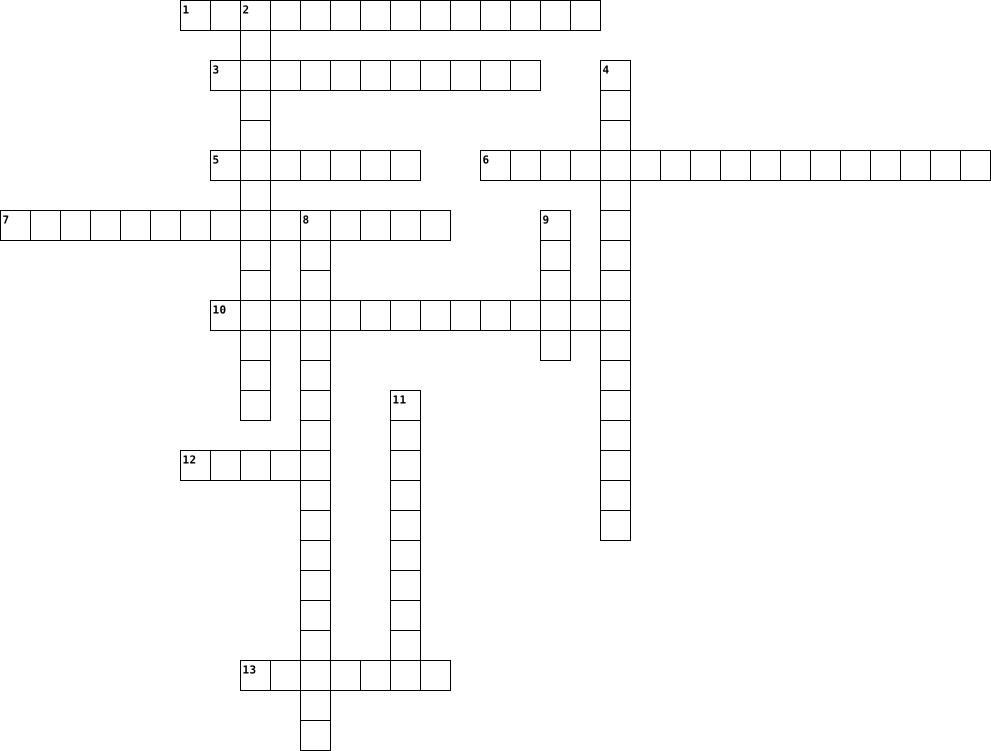
Across
- performingarts
- mathematics
- english
- physicaleducation
- learningtolearn
- generalstudies
- dance
- chinese
Down
- readingtolearn
- religiousstudies
- lifevalueeducation
- music
- visualarts
13 Clues: music • dance • english • chinese • visualarts • mathematics • performingarts • readingtolearn • generalstudies • learningtolearn • religiousstudies • physicaleducation • lifevalueeducation
Chinese New Year crosswords 2025-12-02

Across
- Type of calendar that the Chinese new year is based on.
- The mythical monster frightened away by loud noises and red colour.
- Number of animals in the Chinese calendar.
- What children receive in red envelopes if they have been good?
- The lucky character often displayed upside down to symbolise blessings arriving.
- Season in which Chinese New Year takes place.
Down
- Fruit that symbolises wealth and good fortune.
- Animal for the year 2026 in the Chinese calendar.
- These are decorated, hung in the temples, and carried during a parade.
- The first animal in the Chinese zodiac.
- Must have dish for Chinese New Year dinner.
- Colour that is believed to drive away bad luck.
12 Clues: The first animal in the Chinese zodiac. • Number of animals in the Chinese calendar. • Must have dish for Chinese New Year dinner. • Season in which Chinese New Year takes place. • Fruit that symbolises wealth and good fortune. • Colour that is believed to drive away bad luck. • Animal for the year 2026 in the Chinese calendar. • ...
They Don't Mean It 1 2022-12-09

Across
- 183 changes little by little and not quickly
- 184 noise-makers for CNY
- 187 very crowded
- 187 ate quickly and happily
- 185 the hardest dish for CNY dinner
- the "Y" in CNY
- 184 what Mother used to use to kill the fish
- 187 food served after dinner, usually sweet
- 187 a nutty flavor sometimes used in cookies
- 184 Western New Year
- 183 calling someone old and fat in Chinese culture
- 184 about the moon
- 186 where guests choose and put the food on their own plates before sitting down to eat
- 184 about the sun
- the "C" in CNY
- 185 the longest day of the coldest part of the year
- how Mary describes her family
- one of the families invited to the CNY party
Down
- 187 a "magic" word
- 185 made of algae and fungus
- a place in most big cities known for Chinese culture
- 183 a beautiful look in America
- 185 If you clean on new years day you will have this
- the main character's Chinese name
- 183 Eating soup in Chinese culture is different from American culture
- What his friends always call Mary's brother
- the main character's American name
- 187 Monday through Friday
- one of the families invited to the CNY party
- the "N" in CNY
- 187 bad things about something
- one of the families invited to the CNY party
- 183 causing sadness in other people
33 Clues: the "Y" in CNY • the "C" in CNY • the "N" in CNY • 187 very crowded • 184 about the sun • 187 a "magic" word • 184 about the moon • 184 Western New Year • 184 noise-makers for CNY • 187 Monday through Friday • 187 ate quickly and happily • 185 made of algae and fungus • how Mary describes her family • 187 bad things about something • 183 a beautiful look in America • ...
History Test #5 2023-11-16

Across
- world's largest city; capital of Japan
- capital Taipei
- capital Seoul
- capital Manila
- world's third largest country; capital is Beijing
- found in Japan
- Italian trader who wrote a book about his experiences in China once he returned to Europe
- where a move for freedom was brutally crushed in 1989
- a Chinese tower with many stories, each with its own roof
- Japan's most famous landmark
- only Southeast Asian country never under European rule; capital is Bangkok
- cities in Japan
- trade route between China and the Roman Empire
- Chinese philosopher and teacher
- Communist Chinese leader
- silk, paper, printing are all discoveries of which people
- Nationalist Chinese leader
- "Father of American Missions"
Down
- world's coldest desert (outside Antarctica)
- the fractional part of the world's population that lives in China
- the main food crop of China
- remained Communist after the Korean War
- emperor who ordered the completion of the Great Wall of China
- largest empire in history
- capital Singapore
- called the "Land of the Rising Sun"
- the dynasty that China got its name from
- emperor of Japan during WWII
- world's largest island
- often referred to as the "spice islands" or "East Indies"
- "Father of Faith Missions"
- world's longest man-made waterway
- missionary who was martyred in Communist China
- Where the Nationalists flee to after the Communist takeover of mainland China
34 Clues: capital Seoul • capital Taipei • capital Manila • found in Japan • cities in Japan • capital Singapore • world's largest island • Communist Chinese leader • largest empire in history • "Father of Faith Missions" • Nationalist Chinese leader • the main food crop of China • Japan's most famous landmark • emperor of Japan during WWII • "Father of American Missions" • ...
China Quiz 2023-02-28

Across
- What is the name of the Chinese province that is famous for its tea production?
- What is the capital city of China?
- What is the name of the highest mountain in Germany?
- What is the first name of the German tennis player who won the Wimbledon singles title in 1985 and 1993?
- Which German city is famous for its Christmas market?
- Whatis Germany's national dish?
- What is the name of the Chinese dish made with steamed dumplings filled with pork and cabbage?
- What is the name of the river that is considered the "mother river" of China?
- What is the name of the Chinese sport that involves a ball and a circular net?
Down
- What is the name of the German soccer league?
- What is the name of the Chinese sport that involves a shuttlecock and a racquet-like object?
- What is the name of the Chinese martial art that involves slow, flowing movements?
- What is the name of the Chinese city that is known as the "Venice of the East"?
- What is the name of the German car manufacturer that produces the luxury brand Audi?
- In which German city can you find the Brandenburg Gate?
- What is the name of the famous German composer of classical music who wrote Symphony No. 9 (surname)?
- Which German city is famous for its beer festival, Oktoberfest?
- What is the name of the Chinese city that is home to the famous Terracotta Warriors?
18 Clues: Whatis Germany's national dish? • What is the capital city of China? • What is the name of the German soccer league? • What is the name of the highest mountain in Germany? • Which German city is famous for its Christmas market? • In which German city can you find the Brandenburg Gate? • Which German city is famous for its beer festival, Oktoberfest? • ...