
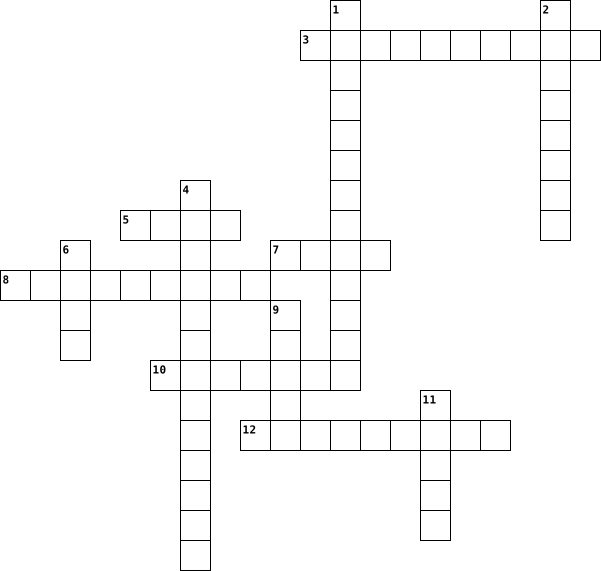
color theory Crossword Puzzles
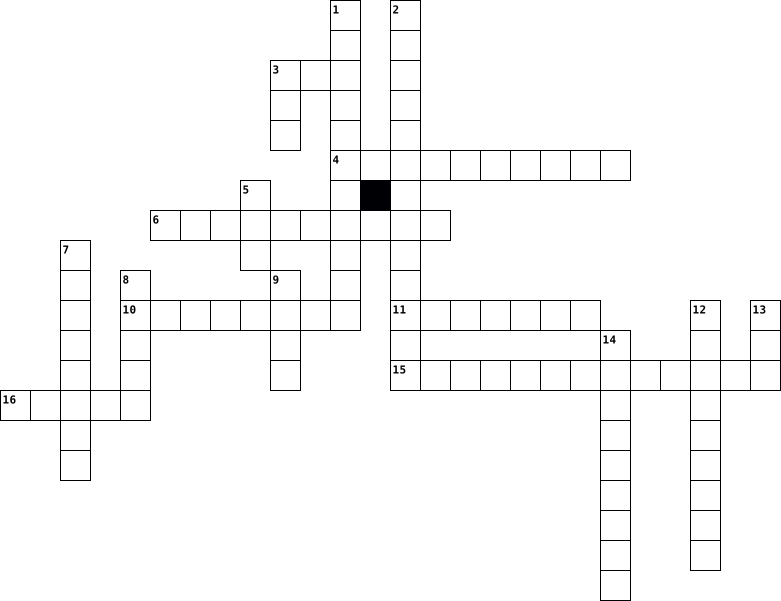
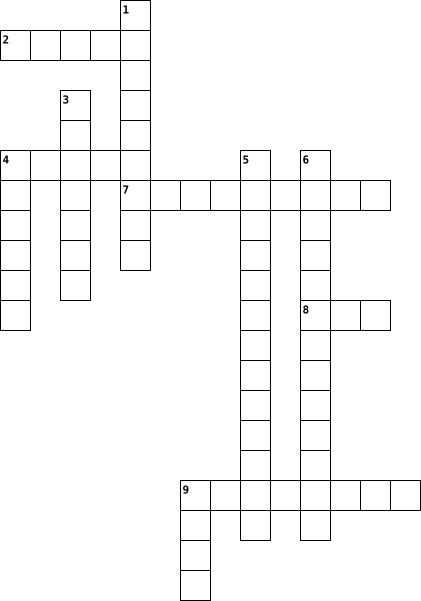
Color Theory Review 2016-04-26
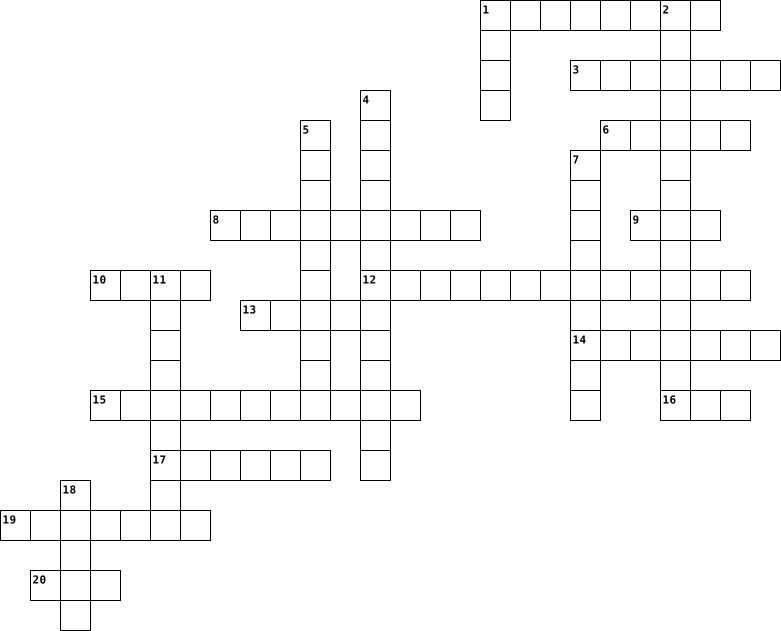
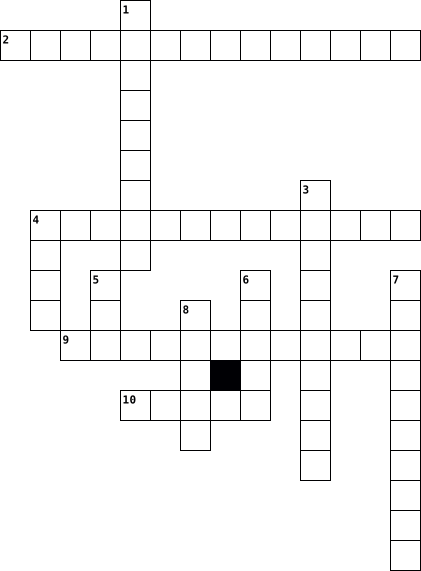
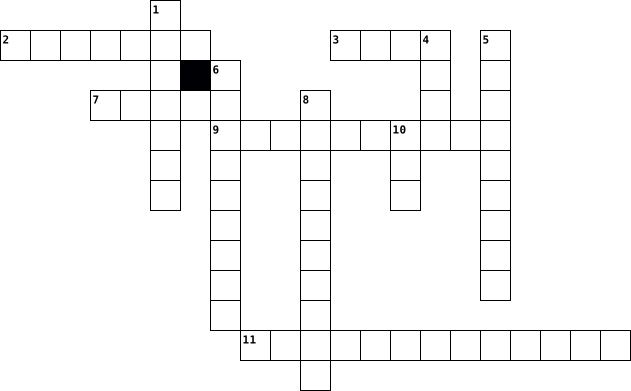
Across
- monochromatic color scheme lacks this
- these colors are evenly spaced on the color wheel
- the only color not analogous in this group: green, blue, blue-purple, purple
- monochromatic color scheme is also described as being…
- this is how many colors should dominate in complimentary color schemes
- colors these colors should not be used as background colors
- this color scheme is made up of just one color
- how many colors make up an analogous color scheme
- Reds, yellows and these are all part of the warm color scheme
- what shape triadic colors make on the color wheel
- This is how many colors are in the warm color scheme
- this is yellow’s complimentary color
- Blues, greens and these are all part of the cool color scheme
- this is how many colors should be accents in the triadic color scheme.
Down
- make you feel more calm
- monochromatic is made up of one color plus what?
- these colors are opposite each other on the color wheel
- this is yellow-orange’s complimentary color
- all colors share a color in this color sheme
- is the third color in the triad with yellow-orange and blue-green
- when mixed together, complimentary colors make this color
21 Clues: make you feel more calm • this is yellow’s complimentary color • monochromatic color scheme lacks this • this is yellow-orange’s complimentary color • all colors share a color in this color sheme • this color scheme is made up of just one color • monochromatic is made up of one color plus what? • these colors are evenly spaced on the color wheel • ...
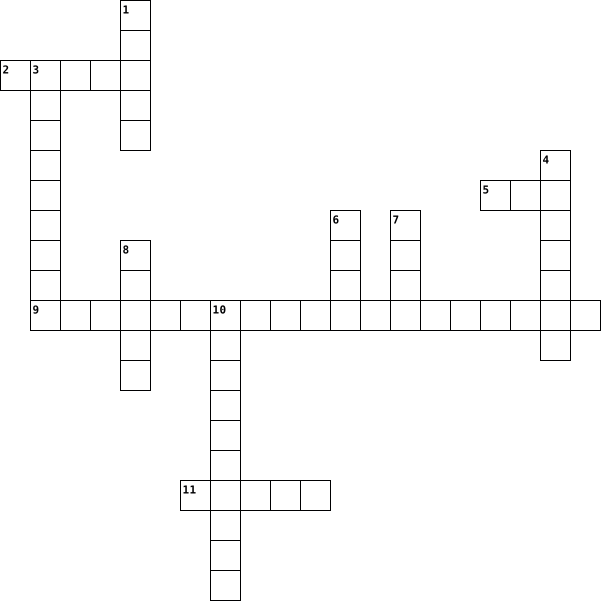
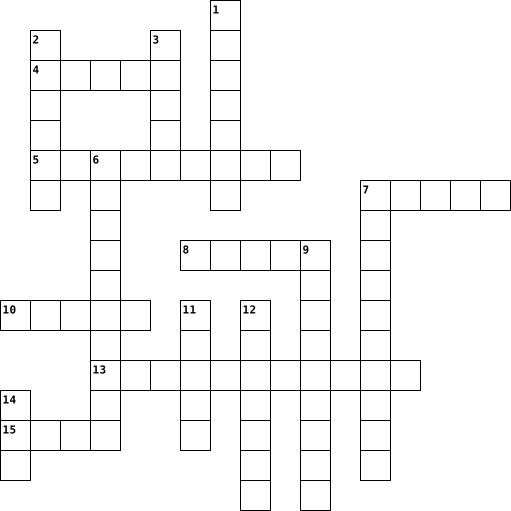
Color Theory Crossword 2024-09-03

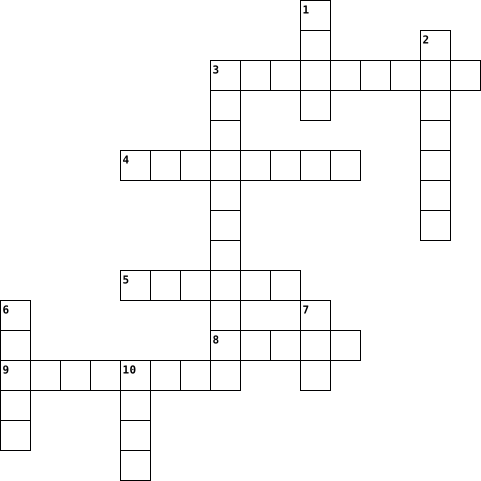
Across
- light all colors of light combined
- A design done in one family of color (all reds etc.)
- Lightness and darkness
- Intensity of color
- Primary colors are commonly used for _____
- Most common tint
- Black added to a color
- Complimentary colors with their neighbors
- Colors like (red orange & Blue green)
- Hues mixed with Greys
Down
- Most common shade
- Complimentary color of orange
- Secondary colors are commonly used for ____
- 2 colors across from each other
- Colors that are next to each other on color wheel
- Complimentary color of red
- A triangle shape on a color wheel
- Printing colors
- Primary colors of light
- The K in CMYK stand for _____
- White added to a hue
21 Clues: Printing colors • Most common tint • Most common shade • Intensity of color • White added to a hue • Hues mixed with Greys • Lightness and darkness • Black added to a color • Primary colors of light • Complimentary color of red • Complimentary color of orange • The K in CMYK stand for _____ • 2 colors across from each other • A triangle shape on a color wheel • ...
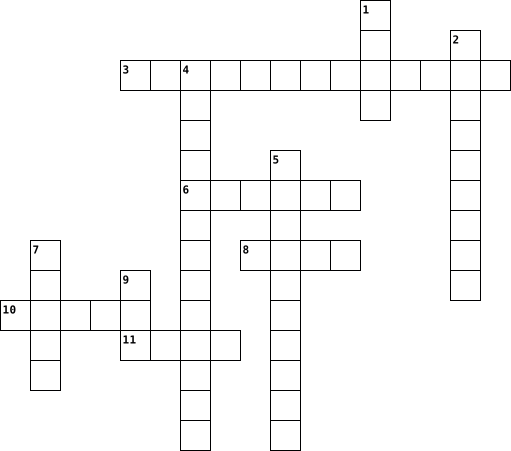
color theory 2023-03-08
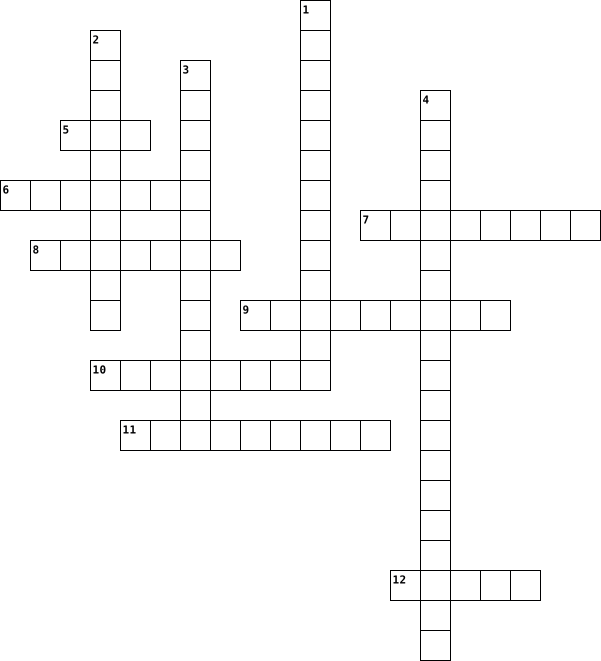
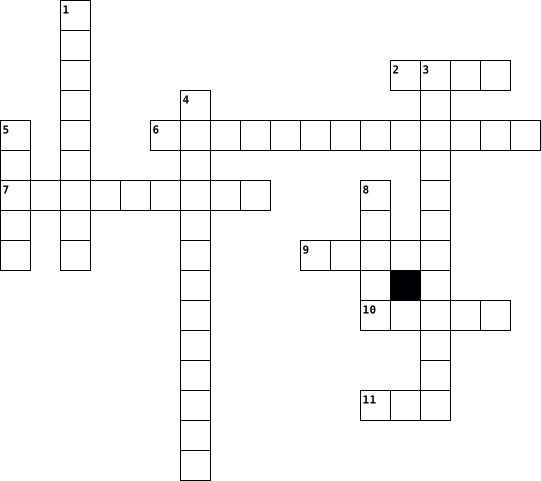
Across
- a color or shade
- 3 evenly spaced colors that form a triangle on the color wheel
- 4 colors with two pairs of complementary colors
- red, yellow, blue
- 3-4 colors that are next to each other on the color wheel
- red-violet, red-orange, yellow-orange, yellow-green, blue-green, blue-violet
- orange, green, violet
- the lightness or darkness of a color
Down
- 2 colors that are across from each other on the color wheel
- the intensity of a color
- different tints, tones and shades of one color
- any color with two colors on either side of its complement
12 Clues: a color or shade • red, yellow, blue • orange, green, violet • the intensity of a color • the lightness or darkness of a color • different tints, tones and shades of one color • 4 colors with two pairs of complementary colors • 3-4 colors that are next to each other on the color wheel • 2 colors that are across from each other on the color wheel • ...
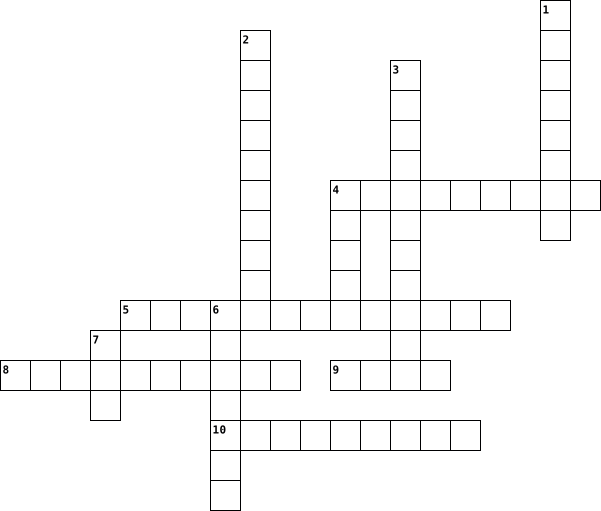
Color Theory 2021-11-09
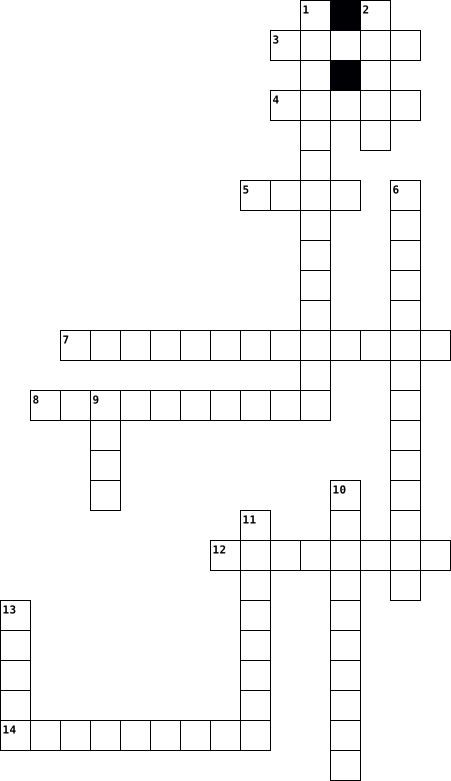
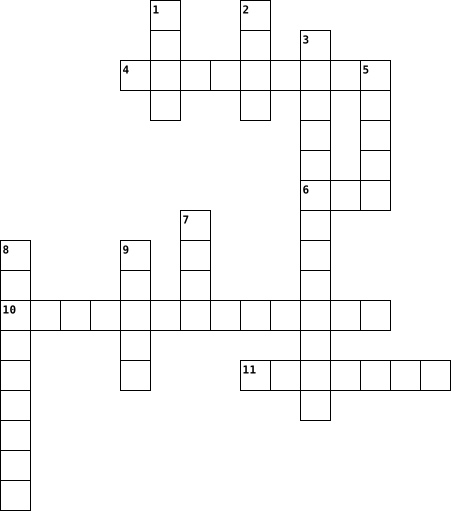
Across
- Scheme, A color relationship in how multiple colors work together.
- Temperature, The warmth or coolness of a color.
- Colors, Colors that that make us feel warm when looking at them. Ex: Red, Yellow, Orange.
- Another word for Tertiary.
- Colors created by primary colors.
- Colors that can create other colors but cannot be created by anything else.
- Colors created by primary and secondary colors.
Down
- Color scheme that only uses one color in multiple hues.
- Wheel, Many color hues placed around in a circle.
- Colors that can be found across each other on the color wheel.
- Colors, Colors that that make us feel cold when looking at them. Ex: Blue, Green, Purple.
- Colors that are found besides each other on the color wheel.
- Color scheme where three colors are equally across from each other.
- Complementary, Color scheme where one color is on one end of the wheel while two colors are directly across.
14 Clues: Another word for Tertiary. • Colors created by primary colors. • Temperature, The warmth or coolness of a color. • Colors created by primary and secondary colors. • Wheel, Many color hues placed around in a circle. • Color scheme that only uses one color in multiple hues. • Colors that are found besides each other on the color wheel. • ...
Color Theory 2022-08-31
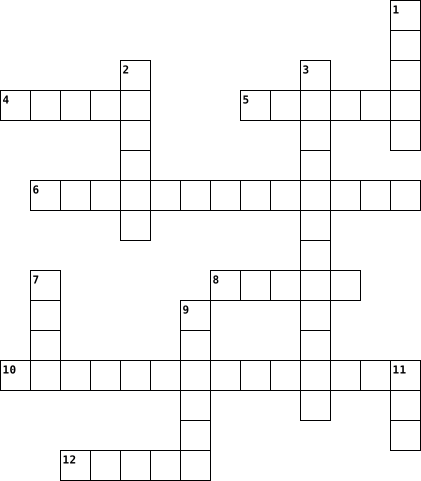
Across
- The absence of color
- The color of royalty
- One color
- The absence of light
- Green Orange and Purple
- The scale of light from white to black
Down
- The color of banking and farming
- The color of travel
- Yellow Red and Blue
- The color of trust
- The color used mostly in sports
- The color that makes you hungry
12 Clues: One color • The color of trust • The color of travel • Yellow Red and Blue • The absence of color • The color of royalty • The absence of light • Green Orange and Purple • The color used mostly in sports • The color that makes you hungry • The color of banking and farming • The scale of light from white to black
Color Theory 2024-11-07

Across
- Red, Blue, and Yellow
- Primary + Secondary
- Add Black
- Add White
- 3-5 neighbors on the color wheel
- Orange, Green, Violet
Down
- Crayola's term for Violet
- Red, Orange and Yellow
- One color & its tints and shades
- Colors not on the color wheel
- Color associated with water
- Blue, Violet, green
12 Clues: Add Black • Add White • Primary + Secondary • Blue, Violet, green • Red, Blue, and Yellow • Orange, Green, Violet • Red, Orange and Yellow • Crayola's term for Violet • Color associated with water • Colors not on the color wheel • One color & its tints and shades • 3-5 neighbors on the color wheel
color theory 2021-03-11
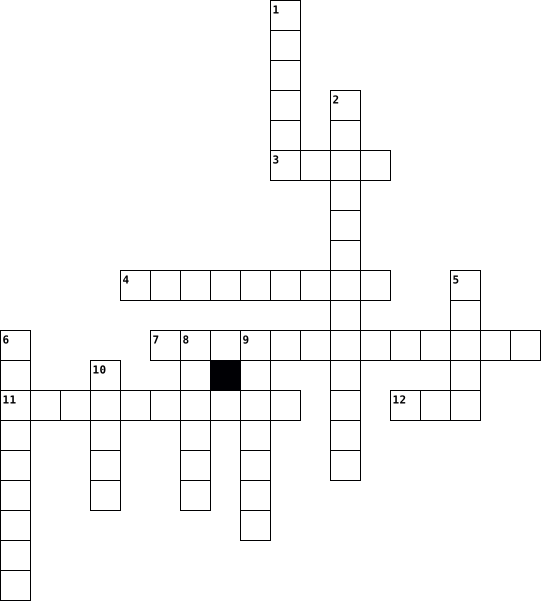
Across
- add white to colo
- colors made by mixing two primary colors
- colors opposite on the color wheel
- black and white
- color
Down
- mix of blue and red
- color scheme with one color
- add black to color
- colors next to each other on the color wheel
- mix of yellow and red
- red, yellow, blue
- mix of blue and yellow
12 Clues: color • black and white • add white to colo • red, yellow, blue • add black to color • mix of blue and red • mix of yellow and red • mix of blue and yellow • color scheme with one color • colors opposite on the color wheel • colors made by mixing two primary colors • colors next to each other on the color wheel
Color Theory 2021-12-07
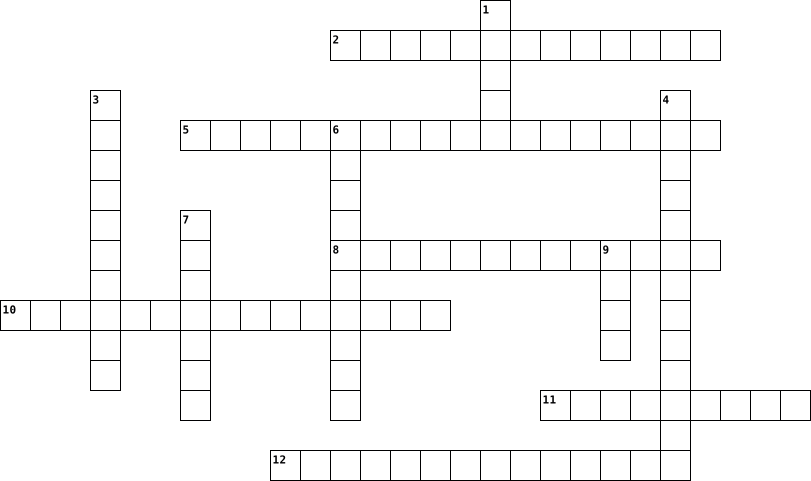
Across
- Tints and shades of one color
- A Color and colors surrounding its complement
- Opposite colors on the color wheel
- Two primary colors mixed together
- Colors next to each other
- A primary color and secondary color mixed
Down
- Adding black to a color
- Summer colors
- Can't be mixed from other colors
- Winter colors
- A perfect Triangle
- Adding white to a color
12 Clues: Summer colors • Winter colors • A perfect Triangle • Adding black to a color • Adding white to a color • Colors next to each other • Tints and shades of one color • Can't be mixed from other colors • Two primary colors mixed together • Opposite colors on the color wheel • A primary color and secondary color mixed • A Color and colors surrounding its complement
Color Theory 2021-12-07
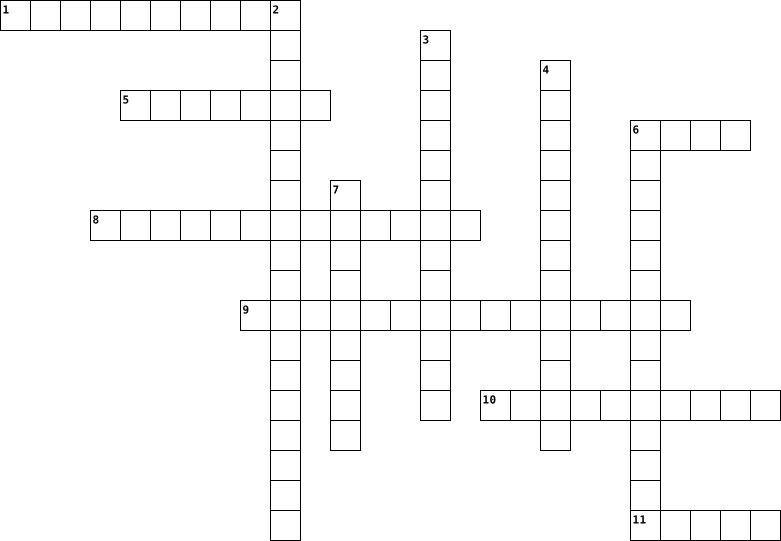
Across
- Winter colors
- A perfect Triangle
- Adding white to a color
- Across from each other on the color wheel
- Two primary colors mixed together
- Summer colors
- Adding black to a color
Down
- A color and the two colors on either side of its complement
- Tints and shades of one color
- Can't be mixed from other colors
- A primary and secondary color mixed together
- Next to each other on the color wheel
12 Clues: Winter colors • Summer colors • A perfect Triangle • Adding white to a color • Adding black to a color • Tints and shades of one color • Can't be mixed from other colors • Two primary colors mixed together • Next to each other on the color wheel • Across from each other on the color wheel • A primary and secondary color mixed together • ...
Color Theory 2015-01-28
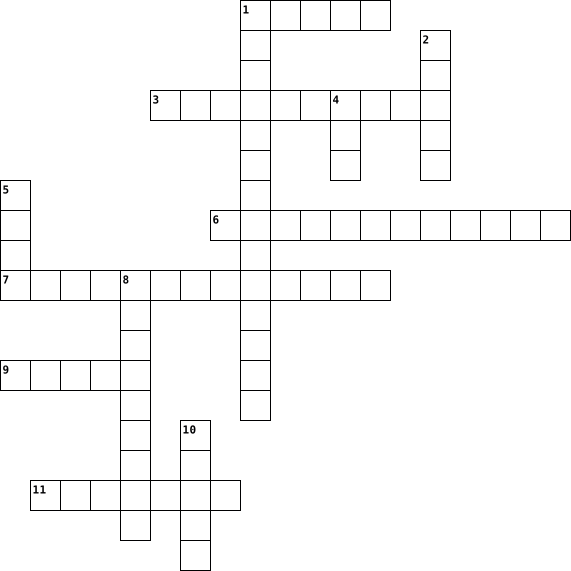
Across
- made by adding black to a color
- chart showing how colors relate to each other
- red, yellow, blue
- combination of a primary color and adjoining secondary color
- the absence of all pigment
- white, black, beige, brown
Down
- orange, green, violet
- the amount of white of black in a color
- the name of a color
- made by adding white to a color
- the brightness or dullness of a color
- the presence of all pigment
12 Clues: red, yellow, blue • the name of a color • orange, green, violet • the absence of all pigment • white, black, beige, brown • the presence of all pigment • made by adding black to a color • made by adding white to a color • the brightness or dullness of a color • the amount of white of black in a color • chart showing how colors relate to each other • ...
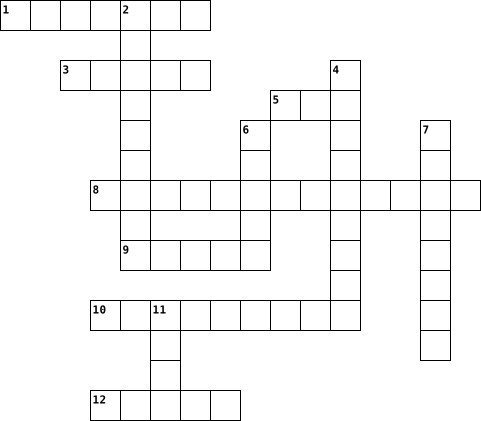
Color Theory 2023-02-28
Across
- shows colors arranged in a circle
- blue, green, violet
- colors diluted with white
- colors that are next to each other on the color wheel
- colors red, yellow, and blue
- colors orange, green, and violet
Down
- colors that are directly across from each other on the color wheel
- colors created by mixing one primary color and one secondary color
- one color
- red, orange, yellow
- colors diluted with black
- lightness and darkness of color
12 Clues: one color • blue, green, violet • red, orange, yellow • colors diluted with white • colors diluted with black • colors red, yellow, and blue • lightness and darkness of color • colors orange, green, and violet • shows colors arranged in a circle • colors that are next to each other on the color wheel • colors that are directly across from each other on the color wheel • ...
Color Theory 2023-08-28
Across
- red blue and yellow belong to this color group
- this has low value
- another word for color
- blue and orange are an example of this
- this is when black is added to a color
- saturation refers to this
- the opposite of saturated
Down
- these are colors that are beside each other on the color wheel
- purple orange and green belong to this color group
- this has high value
- combinations like red-orange and blue-green belong to this color group
- this is when white is added to a color
12 Clues: this has low value • this has high value • another word for color • saturation refers to this • the opposite of saturated • blue and orange are an example of this • this is when black is added to a color • this is when white is added to a color • red blue and yellow belong to this color group • purple orange and green belong to this color group • ...
Color Theory 2026-04-18

Across
- Colors next to each other on the color wheel.
- _______ colors are made by mixing equal parts of two primary colors.
- How bright or dull a color appears.
- A base color without any black or white added.
- wheel, A circular arrangement of colors.
- Adding white to a hue/color to make it lighter.
- Colors that can’t be made by mixing any other colors together.
Down
- Using only one color plus white or black.
- Blue + yellow makes this color.
- Colors across from each other on the color wheel.
- Adding black to a hue/color to make it darker.
- Red + Yellow makes this color.
12 Clues: Red + Yellow makes this color. • Blue + yellow makes this color. • How bright or dull a color appears. • wheel, A circular arrangement of colors. • Using only one color plus white or black. • Colors next to each other on the color wheel. • Adding black to a hue/color to make it darker. • A base color without any black or white added. • ...
Color Theory Crossword 2025-04-09

Across
- color of anger and passion
- red, yellow, and orange are all _______ colors
- scheme that has one color in many shades
- blue, green and purple are all _______ colors
- sad and calm color
- primary and secondary colors make ____________
- adding white to a color
- adding black to a color
- the color and fruit are the same
- color that gives sickly but also wealth (money)
Down
- colors that are across each other on color wheel
- the color of Joy
- color of royalty
- what are blue, yellow and red on the color wheel?
- graph to show how colors relate to each other
- another name for purple
- the primary colors make these
- an element of art
- colors that are next to each other on the color wheel
19 Clues: the color of Joy • color of royalty • an element of art • sad and calm color • another name for purple • adding white to a color • adding black to a color • color of anger and passion • the primary colors make these • the color and fruit are the same • scheme that has one color in many shades • graph to show how colors relate to each other • ...
Color Theory 2021-11-16
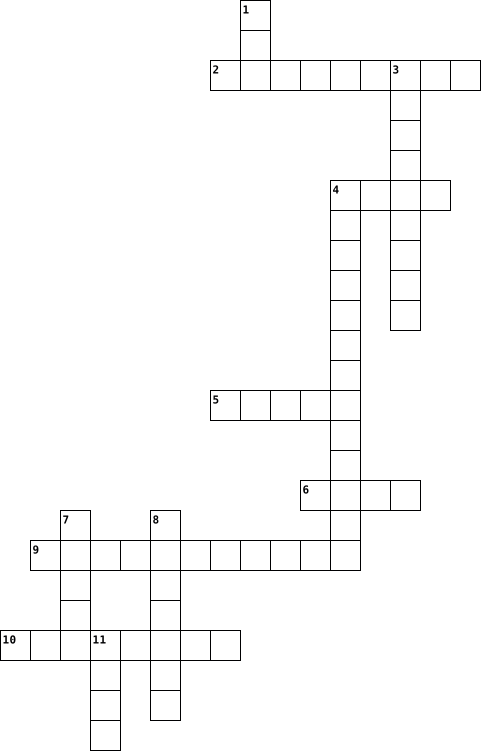
Across
- colors-that are created from two primary colors
- colors-the hues green/blue/violet
- color +black
- colors-the hues red/orange/yellow
- the title of this puzzle with no space and how we study colors in relation to each other
- colors- red-violet, blue-violet, yellow-green
Down
- another word for color
- Color scheme that neighbor each other on the color wheel
- colors- that are opposite each other on color wheel
- the way an object reflects or emits lights
- colors-red/yellow/blue
- color +white
12 Clues: color +black • color +white • another word for color • colors-red/yellow/blue • colors-the hues green/blue/violet • colors-the hues red/orange/yellow • the way an object reflects or emits lights • colors- red-violet, blue-violet, yellow-green • colors-that are created from two primary colors • colors- that are opposite each other on color wheel • ...
Color Theory 2023-12-08
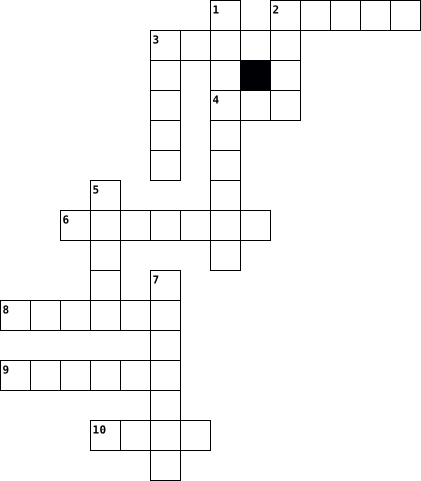
Across
- Add this color to create a shade
- The color ________ is a guide to help you understand color theory
- Monochromatic art uses _____ color
- These colors cannot be mixed
- Mix yellow and red
- Green, Orange, and _________
- Mix black and white
Down
- These colors are made from primary colors
- Red, Yellow, and _________
- Add this color to create a tint
- Mix yellow and blue
- _________ colors include brown and gray
12 Clues: Mix yellow and red • Mix yellow and blue • Mix black and white • Red, Yellow, and _________ • These colors cannot be mixed • Green, Orange, and _________ • Add this color to create a tint • Add this color to create a shade • Monochromatic art uses _____ color • _________ colors include brown and gray • These colors are made from primary colors • ...
Color Theory 2025-04-03

Across
- all the tints and shades of one hue
- pure color without tint or shade
- an element of art that is derived from reflected light
- what you get when you add white to a hue
- _____ colors = green, orange, violet
- _____ colors = red, blue, yellow
Down
- brightness or dullness of a color
- lightness and darkness
- what you get when you add gray to a hue
- colors that are opposite from each other on the color wheel
- ____ color examples are red-orange, yellow-green, blue-green, etc.
- what you get when you add black to a hue
12 Clues: lightness and darkness • pure color without tint or shade • _____ colors = red, blue, yellow • brightness or dullness of a color • all the tints and shades of one hue • _____ colors = green, orange, violet • what you get when you add gray to a hue • what you get when you add white to a hue • what you get when you add black to a hue • ...
COLOR THEORY TERMS 2024-08-20

Across
- color scheme using one color to includes tints and shades
- colors that are opposite each other on the color wheel
- colors created by mixing colors that are opposite each other on the color wheel creating dull earth tone hues
- colors created by mixing a primary color with an adjacent secondary color
- element of art that is derived from reflected light
- the visible portion of the electromagnetic light spectrum arranged by longest to shortest wavelength ROYGBIV
- weak image of a complimentary color created on the retina as a physical reaction to staring at a color
- plan for organizing colors
- a dark value of any color created by mixing black into it
- the spectrum bent into a circle used as a tool for organizing colors and identifying color schemes
Down
- the brightness or dullness of a hue
- one hue and the hues on either side of its compliment
- colors that sit side by side on the color wheel and share a common hue
- colors that cannot be mixed from other colors but are mixed together to create all other colors R,Y,B
- a light value of any color created by mixing the color into white
- scheme that uses three colors that are equally spaced on the color wheel
- colors created by mixing two primary colors together O,G,P
- The name of a spectral color related to the wavelength of reflected light
- the lightness or darkness of a hue
19 Clues: plan for organizing colors • the lightness or darkness of a hue • the brightness or dullness of a hue • element of art that is derived from reflected light • one hue and the hues on either side of its compliment • colors that are opposite each other on the color wheel • color scheme using one color to includes tints and shades • ...
Color Theory! 2020-09-23
Across
- A mix of two primary colors.
- A mix of a primary and a secondar color.
- A color mixed with its complement.
- A hue plus black.
Down
- The brightness of a color.
- Colors like blue, purple, and green.
- A hue plus white.
- The truest form of a color.
- The lightness or darkness of a color.
- Colors like red, orange, and yellow.
- 3 equally spaced colors.
11 Clues: A hue plus white. • A hue plus black. • 3 equally spaced colors. • The brightness of a color. • The truest form of a color. • A mix of two primary colors. • A color mixed with its complement. • Colors like blue, purple, and green. • Colors like red, orange, and yellow. • The lightness or darkness of a color. • A mix of a primary and a secondar color.
Color Theory 2013-08-19
Across
- Purple, green and orange are known as the _______ colors.
- Red-violet is known as a _______ color.
- In Photoshop, when you found a color you wanted to use, you created a _______ of that color for easy access.
- The lightness or darkness of a color is known as ________.
- These colors are illuminated from behind, such as on a monitor.
Down
- Blue, green and purple are ______ colors.
- Red, yellow and blue are known as the _______ colors.
- These colors appear because light is reflected off of a surface.
- A dark value is called a _______.
- A base color can also be referred to as a ____.
- A light value is called a _______.
11 Clues: A dark value is called a _______. • A light value is called a _______. • Red-violet is known as a _______ color. • Blue, green and purple are ______ colors. • A base color can also be referred to as a ____. • Red, yellow and blue are known as the _______ colors. • Purple, green and orange are known as the _______ colors. • ...
color theory 2021-09-08
Across
- Made when white is added to the color, becoming lighter than the pure hue.
- Color scheme uses opposite hues on the color wheel.
- Color plan that uses neighboring colors on the color wheel.
- The lightness or darkness of a color.
- A color scheme that is three colors equidistant on the color wheel.
- The name given to a color.
Down
- These hues are orange, green, and violet.
- Colors made by combining equal amounts of adjoining primary and secondary hues.
- A color plan that uses different tints, shades and intensities of the same hue.
- Made when black is added to the color, becoming darker than the pure hue.
- _________ -complementary color scheme is the use of one color with the two colors on each side of its complement on the color wheel.
11 Clues: The name given to a color. • The lightness or darkness of a color. • These hues are orange, green, and violet. • Color scheme uses opposite hues on the color wheel. • Color plan that uses neighboring colors on the color wheel. • A color scheme that is three colors equidistant on the color wheel. • ...
Color Theory 2020-04-14
Across
- A group of colors that sit next to each other on the color wheel
- Its just another word for color
- A group of colors that site directly across from each other on the color wheel
- Red Yellow Blue
Down
- Add white to a color
- Violet Blue Green
- One color and it's shades and tints.
- Add Black to a color
- Yellow Orange Red
- Violet Green Orange
- The darkness or lightness of a color.
11 Clues: Red Yellow Blue • Violet Blue Green • Yellow Orange Red • Violet Green Orange • Add white to a color • Add Black to a color • Its just another word for color • One color and it's shades and tints. • The darkness or lightness of a color. • A group of colors that sit next to each other on the color wheel • ...
Color Theory 2023-01-31
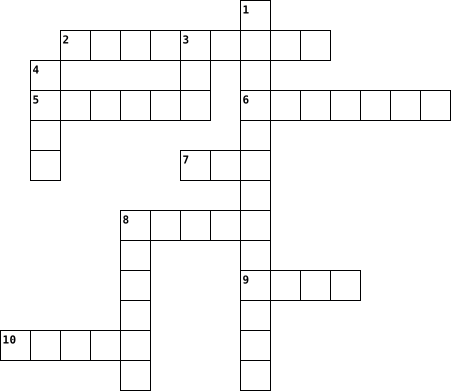
Across
- Red, blue and yellow.
- Refers to any hue or mixture of pure colors to which white is added.
- a hue or mixture of pure colors to which only black is added.
- an illustrative tool used to help us define colors and their relationships to one another
- colors that are directly opposite each other on the color wheel.
Down
- three hues equally spaced around a color wheel.
- a hue or mixture of pure colors to which only pure gray is added.
- a group of colors that are next to each other on the color wheel.
- Orange, green and purple.
- A term that describes an image that is made up of only one colour, although it may include varying tones of that single colour.
- is a pure pigment without tint or shade.
11 Clues: Red, blue and yellow. • Orange, green and purple. • is a pure pigment without tint or shade. • three hues equally spaced around a color wheel. • a hue or mixture of pure colors to which only black is added. • colors that are directly opposite each other on the color wheel. • a hue or mixture of pure colors to which only pure gray is added. • ...
Color Theory 2025-02-01

Across
- The primary colors in the color wheel: red, yellow, and blue.
- The term for colors that appear to advance or pop out in a floral arrangement.
- Colors that are opposite each other on the color wheel.
- A combination of warm and cool colors in an arrangement.
- The property of a color that indicates its brightness or dullness.
- These colors are considered calming and are often used in peaceful floral designs.
Down
- The term used for colors that are composed of hues of yellow, red, and orange.
- A color that is often associated with energy, passion, and warmth in floral design.
- This color scheme uses colors next to each other on the color wheel.
- A color that is created by mixing a primary color with a secondary color.
- A color made by mixing two primary colors.
11 Clues: A color made by mixing two primary colors. • Colors that are opposite each other on the color wheel. • A combination of warm and cool colors in an arrangement. • The primary colors in the color wheel: red, yellow, and blue. • The property of a color that indicates its brightness or dullness. • This color scheme uses colors next to each other on the color wheel. • ...
color theory 2022-03-14
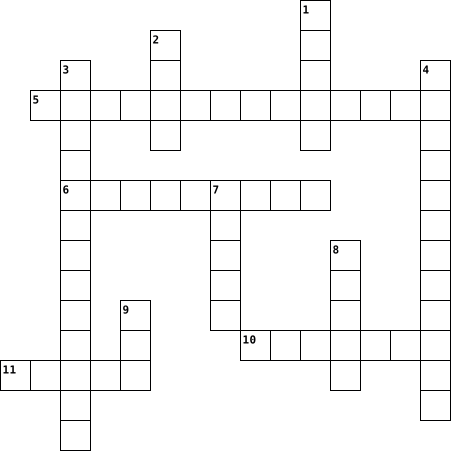
Across
- Colors next to each other on the color wheel.
- What do red and Yellow make?
- Red, yellow and blue are _____ colors.
- Another word for color
- The lightness and darkness of a color.
- Adding white to a color.
- What you get by adding black to a color.
Down
- colors opposite each other on the color wheel.
- Monochromatic uses different values of _____ color.
- Colors associated with ice or water.
- What do red and blue make?
11 Clues: Another word for color • Adding white to a color. • What do red and blue make? • What do red and Yellow make? • Colors associated with ice or water. • Red, yellow and blue are _____ colors. • The lightness and darkness of a color. • What you get by adding black to a color. • Colors next to each other on the color wheel. • colors opposite each other on the color wheel. • ...
Color Theory 2015-01-28
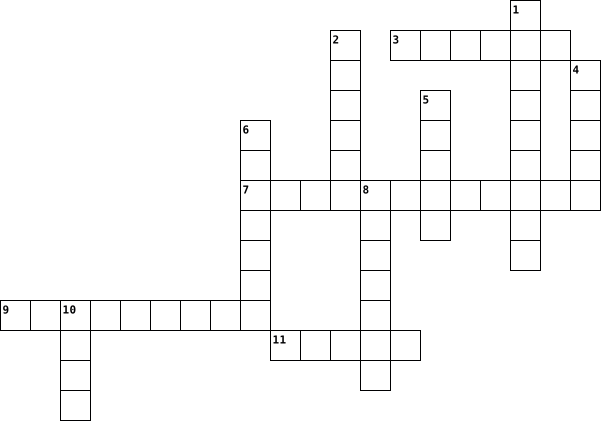
Across
- orange, green, violet
- the brightness or dullness of a color
- white, black, beige, brown
- the amount of white of black in a color
Down
- the presence of all pigment
- made by adding white to a color
- combination of a primary color and adjoining secondary color
- red, yellow, blue
- made by adding black to a color
- the absence of all pigment
- the name of a color
11 Clues: red, yellow, blue • the name of a color • orange, green, violet • the absence of all pigment • white, black, beige, brown • the presence of all pigment • made by adding white to a color • made by adding black to a color • the brightness or dullness of a color • the amount of white of black in a color • combination of a primary color and adjoining secondary color
Color Theory 2022-07-28
Across
- dark values of a color
- colors made by mixing equal amounts of primary and secondary colors
- the brightness or dullness of a color
- (hue) is one of the elements of art.
Down
- made by mixing two primary colors
- made by mixing yellow and red
- is the lightness or darkness of a color
- made by mixing yellow and blue
- red blue yellow
- white light that is broken apart by the moisture in the air
- light values of a color
11 Clues: red blue yellow • dark values of a color • light values of a color • made by mixing yellow and red • made by mixing yellow and blue • made by mixing two primary colors • (hue) is one of the elements of art. • the brightness or dullness of a color • is the lightness or darkness of a color • white light that is broken apart by the moisture in the air • ...
Color Theory Crossword 2022-10-10
Across
- primary colors for a subtractive system
- scheme that uses only black, white and range of gray is called
- how subtle or vibrant the color is called
- color system is light based
- colors are evenly spaced around the color wheel and tend to be very bright and dynamic
- colors are opposite on color wheel
- is a hue to which black has been added
Down
- color system is pigment based
- color scheme uses one hue with black or white
- primary colors for an additive system
- a synonym for color
- colors made from primary and secondary colors
- how light or dark the color is called
- is a hue to which white has been added
- colors sit next to one another on the color wheel
- primary colors for a subtractive system used in the printing industry
- colors created when primary colors are mixed
17 Clues: a synonym for color • color system is light based • color system is pigment based • colors are opposite on color wheel • primary colors for an additive system • how light or dark the color is called • is a hue to which white has been added • is a hue to which black has been added • primary colors for a subtractive system • how subtle or vibrant the color is called • ...
Color Theory Vocabulary 2023-01-26

Across
- green, blue, and violet
- names and abbreviations of colors
- numbering system that identifies the lightness or darkness
- 12-hue color circle
- yellow, orange or red
- the predominate tone in artificial color
- vividness, brightness, or saturation of a color
- Colors found opposite one another on the color wheel
Down
- red/yellow pigment
- The degree of coarseness or fineness in the hair
- major categories of dark, medium, light
- The visual perception of the reflection of light.
- lightness or darkness of a color
- ability of the hair to absorb moisture
- Pigment that gives hair its natural color
- black pigment
- Cannot be created by mixing together any other colors
17 Clues: black pigment • red/yellow pigment • 12-hue color circle • yellow, orange or red • green, blue, and violet • lightness or darkness of a color • names and abbreviations of colors • ability of the hair to absorb moisture • major categories of dark, medium, light • the predominate tone in artificial color • Pigment that gives hair its natural color • ...
Color Theory 2015-02-27
Across
- The lightness or darkness of colors. Tints have a light value. Shades have a dark value.
- Another word for color.
- A color scheme that includes a main color and the two colors on each side of its complementary (opposite) color on the color wheel. (Y)
- A color made by adding black to a hue. For example, adding black to green results in dark green. Also a dark value of a color.
Down
- To mix or rub colors together.
- Colors that are next to each other on the color wheel. This kind of color scheme is often found in nature and is pleasing to the eye.
- A chalky, water-based paint. Also called poster paint.
- The family of colors that includes greens, blues, and violets.
- The family of colors that includes, reds, yellows, and oranges.
- A color scheme in which 3 colors of equally distant distribution on the color wheel are used.
- Colors arranged in a certain order in the shape of a circle.
11 Clues: Another word for color. • To mix or rub colors together. • A chalky, water-based paint. Also called poster paint. • Colors arranged in a certain order in the shape of a circle. • The family of colors that includes greens, blues, and violets. • The family of colors that includes, reds, yellows, and oranges. • ...
Color theory 2022-05-09
Across
- a harmony created by pairing the two colors positioned directly across the color wheel from one another
- attribute that expresses the purity of a color
- when a hue is blended with gray
- gives you the ability to see objects as three-dimensiona
- a combination of two colors that are separated by one color on the color wheel
Down
- when a hue is blended with white
- a tool for determine the value of a color
- one color harmony
- a tool for organizing colors and understanding color relationships
- darker value of a color, made by adding black
- primary color
11 Clues: primary color • one color harmony • when a hue is blended with gray • when a hue is blended with white • a tool for determine the value of a color • darker value of a color, made by adding black • attribute that expresses the purity of a color • gives you the ability to see objects as three-dimensiona • a tool for organizing colors and understanding color relationships • ...
Color Theory 2022-01-31
Across
- "Blank" colors are formed by mixing the primary colors
- Any two colors which are directly opposite of each other
- Brighter colors indicate a higher "blank"
- White is added to a color to create a lighter version of the color called "blank"
- Any three colors which are side by side on a twelve part color wheel
Down
- "Blank" colors that are formed by mixing a primary and a secondary color
- A circular chart that shows each color in relationship to other colors
- A scientist who developed the color wheel in 1666
- Black is added to a color to create a darker version of the color called "blank"
- Three colors that can not be mixed or formed by any combination of other colors
- Undiluted colors
11 Clues: Undiluted colors • Brighter colors indicate a higher "blank" • A scientist who developed the color wheel in 1666 • "Blank" colors are formed by mixing the primary colors • Any two colors which are directly opposite of each other • Any three colors which are side by side on a twelve part color wheel • ...
Color Theory 2022-01-19
Across
- black plus a hue
- colors equal distance from each other on the color wheel
- colors side by side on the color wheel
- refers to the name of a color
- colors made from mixing a primary color with a secondary color
Down
- colors made from mixing two primary colors
- all colors are made from these
- number of colors on the color wheel
- colors opposite each other on the color wheel
- tints and shades of one hue
- white plus a hue
11 Clues: black plus a hue • white plus a hue • tints and shades of one hue • refers to the name of a color • all colors are made from these • number of colors on the color wheel • colors side by side on the color wheel • colors made from mixing two primary colors • colors opposite each other on the color wheel • colors equal distance from each other on the color wheel • ...
Sculpture: Color theory 2024-04-29

Across
- Colors: Colors that are opposite each other on the color wheel and when placed together create a strong contrast.
- Colors: Colors like blue, green, and purple that are calming and soothing.
- Isaac Newton: A famous English scientist known for his contributions to mathematics, physics, and optics, including the discovery that white light is made up of all the colors of the rainbow.
- Colors created by adding black to a pure hue, resulting in darker versions of that color.
- The arrangement of elements such as color, form, and line in a visually pleasing way.
- Colors: Colors formed by mixing a primary color with a secondary color.
- The name of a color, such as red, blue, or green.
- Colors created by adding gray to a pure hue, resulting in muted or desaturated versions of that color.
- Colors: Colors like red, orange, and yellow that are associated with warmth and energy.
Down
- A repeated decorative design.
- Colors: Colors created by mixing two primary colors: orange, green, and purple.
- A framework used to support a sculpture.
- The study of how colors interact with each other and how they can be used effectively in art and design.
- Colors: The colors red, blue, and yellow, which are the basis for all other colors.
- Colors created by adding white to a pure hue, resulting in lighter versions of that color.
- A craft technique using paper and a paste to create various shapes and forms.
- The lightness or darkness of a color.
17 Clues: A repeated decorative design. • The lightness or darkness of a color. • A framework used to support a sculpture. • The name of a color, such as red, blue, or green. • Colors: Colors formed by mixing a primary color with a secondary color. • Colors: Colors like blue, green, and purple that are calming and soothing. • ...
Color Theory Crossword 2024-10-08

Across
- yellow-green, green, blue-green, blue, blue-violet, violet
- a color + black
- blue and red make
- blue and yellow make
- red and yellow make
- red, yellow, blue
- colors across from each other on the color wheel are
- comes from one color and its tints, tones, and shades
Down
- another word for purple
- Another word for color
- colors that are not on the color wheel are
- a color + white
- Orange, green, violet
- Red is the complement of
- red-violet, red, red-orange, orange, yellow, yellow-orange
- blue is the compliment of
- colors that are in between primary and secondary on the color wheel
- Yellow is the complement of
- three colors that are next to each other on the color wheel
- a color + grey
20 Clues: a color + grey • a color + white • a color + black • blue and red make • red, yellow, blue • red and yellow make • blue and yellow make • Orange, green, violet • Another word for color • another word for purple • Red is the complement of • blue is the compliment of • Yellow is the complement of • colors that are not on the color wheel are • ...
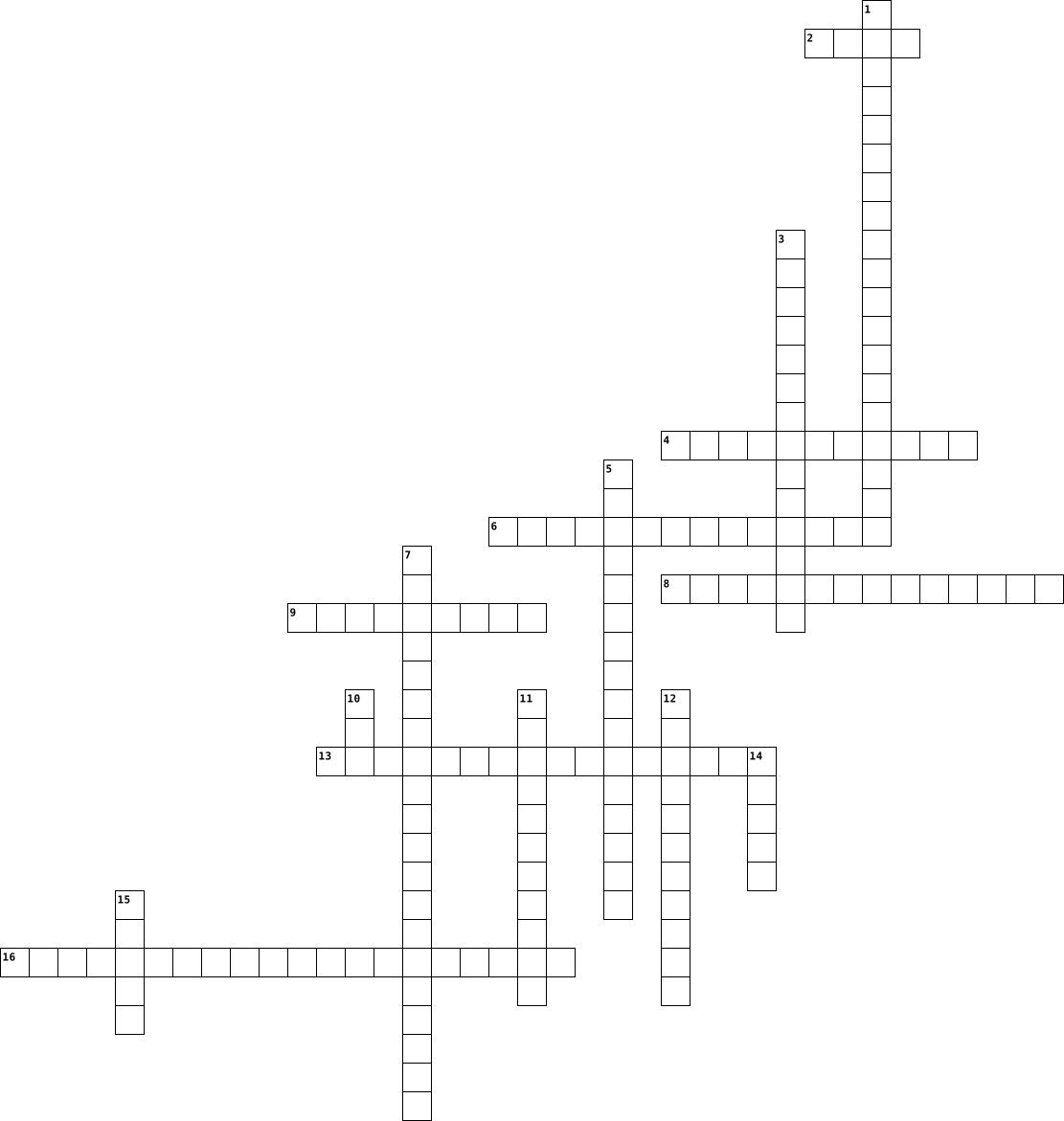
Color Theory Studyguide 2015-11-30
Across
- Hue refers to the name of a ________________.
- Tertiary colors are mixed from an equal amount of a primary color and a _______________________ color.
- A shade is when _________________________ is added to a color.
- Secondary colors are formed by mixing __________________ amounts of two primary colors.
- Primary colors cannot be ________________________ by any combination of other colors.
- Tetrad colors are three colors __________________________ on the color wheel.
- Analogous colors are any three or more colors that are ____________________ to each other on the color wheel.
Down
- Mixing equal amounts of two complements will create a ____________________ brown.
- Complementary colors are directly _____________________ from each other or opposites on the color wheel.
- Neutral colors include _____________________, white, black, and grey.
- Split complementary colors take the two colors on either side of one color’s __________________________.
- Intensity refers to the ______________________ or dullness of a color.
- Value refers to the _______________________ or darkness of a color.
- A tint is when ____________________ is added to a color.
- Mixing all three ______________ colors will create black.
- Monochromatic colors use __________________ color, plus black and white.
16 Clues: Hue refers to the name of a ________________. • A tint is when ____________________ is added to a color. • Mixing all three ______________ colors will create black. • A shade is when _________________________ is added to a color. • Value refers to the _______________________ or darkness of a color. • ...
color theory vocab 2023-11-10
Across
- a light value of a hue;made by adding white
- hues that remind us of cold;green, violet, blue
- red, yellow, and blue pigments;pure colors from which other colors are mixed
- band of colors caused when a beam of light is passed through a prism
- the purity of a hue;may be bright, dull or neutral
- orange, green, and violet; obtained by mixing equal parts of two primary colors
- colors that are opposite on the color wheel
Down
- red-orange, yellow-orange, red-violet, blue-violet, yellow-green, blue-green;obtained by mixing primary and secondary hues
- colors which form an equilateral triangle on the color wheel
- colors that are close together on the color wheel
- values or intensities of one color
- Pure color
- hues that remind us of heat;red, yellow, orange
- a circle or wheel of colors, used by artists as a tool in organizing and understanding color
- a dark value of a hue;made by adding black
- Element of art comprising hues produced through the reflection of light to the eye
16 Clues: Pure color • values or intensities of one color • a dark value of a hue;made by adding black • a light value of a hue;made by adding white • colors that are opposite on the color wheel • hues that remind us of cold;green, violet, blue • hues that remind us of heat;red, yellow, orange • colors that are close together on the color wheel • ...
Color Theory Crossword 2023-10-20
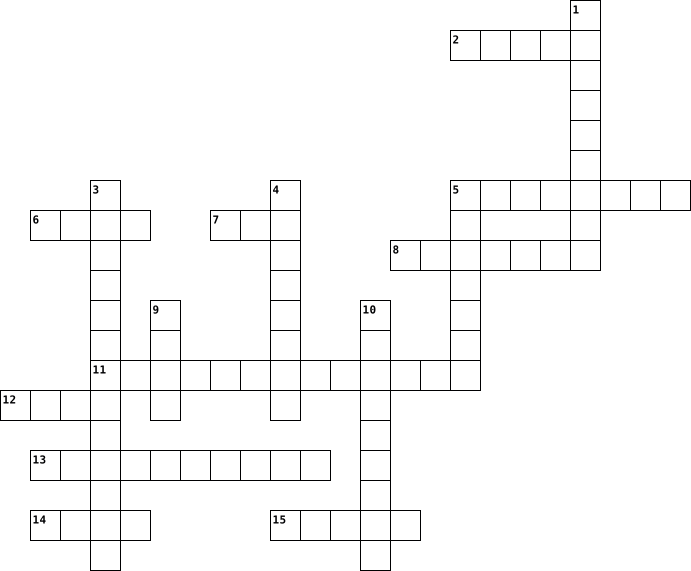
Across
- Colors with black added.
- Two sets of complimentary colors.
- Blues, greens, and violets.
- A pure pigment without any tints, shades, or tones.
- Colors that can't be made by mixing other colors.
- Color schemes using only one hue.
- Colors with gray added.
- The intensity and purity of a color in an image.
- Reds, oranges, and yellows.
- How light or dark a color is. It is the only dimension of color that may exist by itself.
Down
- Colors made by mixing two primary colors.
- Two colors directly opposite from each other on the color wheel.
- Colors made by mixing a primary and a secondary color.
- Three hues at equal distance from each other on the color wheel.
- Colors with white added.
- Four colors directly next to each other on the color wheel.
16 Clues: Colors with gray added. • Colors with black added. • Colors with white added. • Blues, greens, and violets. • Reds, oranges, and yellows. • Two sets of complimentary colors. • Color schemes using only one hue. • Colors made by mixing two primary colors. • The intensity and purity of a color in an image. • Colors that can't be made by mixing other colors. • ...
Color Theory Crossword 2023-01-03

Across
- created by reflected light
- an arrangement or combination of colors
- the warmth or coolness of a color
- red+yellow
- strength or purity of a color
- colors that are directly across from each other on the color wheel
- a color scheme that includes one color and all its tints and shades
- a primary color
Down
- lightness or darkness of a color
- colors that are created by combining two primary colors
- another word for color names
- a primary color
- yellow+blue
- colors that are created by combining a primary and a secondary color
- colors that are directly next to each other on the color wheel
- colors that cannot be broken down into other colors
- blue+red
- a primary color
18 Clues: blue+red • red+yellow • yellow+blue • a primary color • a primary color • a primary color • created by reflected light • another word for color names • strength or purity of a color • lightness or darkness of a color • the warmth or coolness of a color • an arrangement or combination of colors • colors that cannot be broken down into other colors • ...
Color Theory 2020-11-30

Across
- red, yellow and blue
- a tool artists use to learn about color
- created through light, perceived through vision
- the order of the colors
- black, white and gray
- orange, green and violet
Down
- the colors that we can see
- across from each other on the color wheel
- next to each other on the color wheel
- the color spectrum found in nature
10 Clues: red, yellow and blue • black, white and gray • the order of the colors • orange, green and violet • the colors that we can see • the color spectrum found in nature • next to each other on the color wheel • a tool artists use to learn about color • across from each other on the color wheel • created through light, perceived through vision
Color Theory 2024-10-21

Across
- Color scheme made up of variations of one color are called:
- A wheel used to teach students about color theory, color mixtures, and color schemes.
- When you use analogous colors in a design, they create visual...
- Colors that are next to each other on the color wheel are called:
- When two primary colors are mixed together they create...
Down
- Red, yellow, and blue are referred to as...
- Colors that are across from each other on the color wheel are called:
- When you mix red and green they create this color.
- When a primary and secondary color are mixed together they create...
- When you use complementary colors in a design, they create visual...
10 Clues: Red, yellow, and blue are referred to as... • When you mix red and green they create this color. • When two primary colors are mixed together they create... • Color scheme made up of variations of one color are called: • When you use analogous colors in a design, they create visual... • Colors that are next to each other on the color wheel are called: • ...
Color Theory 2022-07-28

Across
- what has to be filled out before going to the restroom
- what color restrooms are you allowed to use.
- what policy states that only one person may leave the room at any given time
- What grade equals 60%
- this item is required by mid november and totals the amount of $30
Down
- What gets turned in at the door to be counted present?
- what are not allowed to be present at any time unless specified by the teacher?
- what grade equals 40%?
- The first class to completely turn their feed in before Thanksgiving Break will receive this a prize.
- what is assigned to store phones for the entire class period
10 Clues: What grade equals 60% • what grade equals 40%? • what color restrooms are you allowed to use. • What gets turned in at the door to be counted present? • what has to be filled out before going to the restroom • what is assigned to store phones for the entire class period • this item is required by mid november and totals the amount of $30 • ...
Color Theory 2023-09-15

Across
- Reds, yellows, and oranges
- black, white, gray, brown
- colors that are side by side on the color wheel
- colors that are across from each other on the color wheel
- orange, violet, and green
Down
- red, yellow, and blue
- different values of a single color
- another word for colors
- the visual quality of objects created by the amount of light they reflect or absorb
- greens, blues, violets
10 Clues: red, yellow, and blue • greens, blues, violets • another word for colors • black, white, gray, brown • orange, violet, and green • Reds, yellows, and oranges • different values of a single color • colors that are side by side on the color wheel • colors that are across from each other on the color wheel • ...
COLOR THEORY 2025-03-31

Across
- Are the purest colors and cannot be created by mixing other colors
- Adding BLACK to a color creates a _______
- Refers to the LIGHTNESS & DARKNESS of a Color
- A circular diagram that organizes colors to show relationships between them.
- These colors do not appear on the color wheel
- Are created by mixing a primary and secondary color
Down
- Is defined as the light reflected by an object.
- Refers to the BRIGHTNESS or DULLNESS of a Color.
- Are made by mixing primary colors
- Adding WHITE to a color creates a _______
10 Clues: Are made by mixing primary colors • Adding BLACK to a color creates a _______ • Adding WHITE to a color creates a _______ • Refers to the LIGHTNESS & DARKNESS of a Color • These colors do not appear on the color wheel • Is defined as the light reflected by an object. • Refers to the BRIGHTNESS or DULLNESS of a Color. • ...
Color Theory 2021-07-22

Across
- When gray is added to a color.
- Chart used to compare colors. (Two words)
- One of three primary colors.
- Three colors from which all colors are made.
- Colors created by mixing a primary and secondary color.
- When black is added to a color.
Down
- Three colors next to each other on a color wheel.
- Colors created by mixing two primary colors.
- One of three primary colors.
- One of three primary colors.
- Colors directly across from each other on a color wheel.
- When white is added to a color.
12 Clues: One of three primary colors. • One of three primary colors. • One of three primary colors. • When gray is added to a color. • When white is added to a color. • When black is added to a color. • Chart used to compare colors. (Two words) • Colors created by mixing two primary colors. • Three colors from which all colors are made. • ...
Color Theory 2024-01-12

Across
- A circular diagram that illustrates color relationships and is a fundamental tool in art
- Red, Blue, and Yellow
- These set of colors can express a feeling of coziness
- These colors are created by mixing primary colors together
- The darkness or lightness of an object
- The understanding of how colors interact and how they can be combined
Down
- Colors that are opposite from each other on the color wheel
- These set of colors can give a refreshing feeling
- This is the color that is between your primary and your secondary
- What we see when light reflects off an object, creating different hues
10 Clues: Red, Blue, and Yellow • The darkness or lightness of an object • These set of colors can give a refreshing feeling • These set of colors can express a feeling of coziness • These colors are created by mixing primary colors together • Colors that are opposite from each other on the color wheel • This is the color that is between your primary and your secondary • ...
Color Theory 2025-03-21

Across
- one primary color mixed with one secondary color.
- color is the visual perception of the _______ of light.
- the 12-hue wheel that can be used as a tool for corecting hair color.
- the degree of lightness or darkness of a color.
- yellow, orange, red fall in the ______ half of the color wheel
- Colors that can not be mix.
Down
- also known as wavelengths
- colors found opposite one another on the color wheel.
- varying proportions of blue and yellow creates this color?
- 2 of the 3 primary colors mixed in varying proportions.
10 Clues: also known as wavelengths • Colors that can not be mix. • the degree of lightness or darkness of a color. • one primary color mixed with one secondary color. • colors found opposite one another on the color wheel. • 2 of the 3 primary colors mixed in varying proportions. • color is the visual perception of the _______ of light. • ...
Color Theory 2023-02-28

Across
- when a color gets lighter or darker
- this is a primary color
- this is a secondary color
- when you mix a little bit of yellow and more blue
- red is what kind of color
- a pair of primary colors make this
Down
- what is the complement of blue
- a pair of colors that are directly across from each other in the color wheel
- this is a primary color
- red-orange is what kind of color
- a secondary color
- this is a primary color
12 Clues: a secondary color • this is a primary color • this is a primary color • this is a primary color • this is a secondary color • red is what kind of color • what is the complement of blue • red-orange is what kind of color • a pair of primary colors make this • when a color gets lighter or darker • when you mix a little bit of yellow and more blue • ...
Color Theory 2024-09-17

Across
- name of a color, which distinguishes it from other colors (e.g., red, blue, yellow).
- Colors/Colors formed by mixing a primary color with a secondary color; examples include red-orange and blue-green.
- Wheel/A circular diagram that represents colors and their relationships to one another, often used to understand color mixing.
- of a color created by adding white, which lightens the color.
- of a color created by adding black, which darkens the color.
- Colors/The basic colors that cannot be created by mixing other colors; in traditional color theory, these are red, blue, and yellow.
Down
- brightness or dullness of a color, which can be altered by adding gray or its complementary color.
- characteristic of visual perception described through color categories, such as red, blue, green, etc.
- Colors/Colors created by mixing two primary colors together; examples include green (blue + yellow), orange (red + yellow), and purple (red + blue).
- color that has been modified by adding gray, affecting its intensity and richness.
10 Clues: of a color created by adding black, which darkens the color. • of a color created by adding white, which lightens the color. • color that has been modified by adding gray, affecting its intensity and richness. • name of a color, which distinguishes it from other colors (e.g., red, blue, yellow). • ...
Color Theory 2025-04-27

Across
- — A color that is lightened by adding white.
- — The name of a color, such as red, blue, or yellow.
- — Colors that are opposite each other on the color wheel (e.g., red and green).
- — The three basic colors (red, yellow, blue) that cannot be created by mixing other colors.
- — Colors that are next to each other on the color wheel, such as blue, blue-green, and green.
Down
- — A color scheme using different shades, tints, or tones of one color.
- — The intensity or purity of a color, how vibrant or dull it is.
- — Colors made by mixing two primary colors (orange, green, purple).
- — The lightness or darkness of a color, determined by adding white or black.
- — Colors created by mixing a primary color with a secondary color (e.g., red-orange, yellow-green).
10 Clues: — A color that is lightened by adding white. • — The name of a color, such as red, blue, or yellow. • — The intensity or purity of a color, how vibrant or dull it is. • — Colors made by mixing two primary colors (orange, green, purple). • — A color scheme using different shades, tints, or tones of one color. • ...
Color Theory 2022-07-28

Across
- what has to be filled out before going to the restroom
- what color restrooms are you allowed to use.
- what policy states that only one person may leave the room at any given time
- What grade equals 60%
- this item is required by mid november and totals the amount of $30
Down
- What gets turned in at the door to be counted present?
- what are not allowed to be present at any time unless specified by the teacher?
- what grade equals 40%?
- The first class to completely turn their feed in before Thanksgiving Break will receive this a prize.
- what is assigned to store phones for the entire class period
10 Clues: What grade equals 60% • what grade equals 40%? • what color restrooms are you allowed to use. • What gets turned in at the door to be counted present? • what has to be filled out before going to the restroom • what is assigned to store phones for the entire class period • this item is required by mid november and totals the amount of $30 • ...
Color Theory Crossword 2015-10-20

Across
- 3 colors right next to each other on the color wheel.
- a color with white added to it.
- blue, red, and yellow, these colors make all others
- the name of the color
- colors that are located directly opposite of each other on the color wheel...green & red
- green, purple, and blue
- green, purple, and orange... these colors are made by mixing two primary colors
- a color with black added.
Down
- one color chosen with only white and black added to show different values.
- red, yellow, and orange
- colors that are made by mixing a primary color with a secondary color... also called tertiary.
- Quality of brightness and purity of the color.
- helps you know which colors to mix to make other colors
- Lightness and darkness of a color's change within its hue.
- Black, White, Gray, and Brown
15 Clues: the name of the color • red, yellow, and orange • green, purple, and blue • a color with black added. • Black, White, Gray, and Brown • a color with white added to it. • Quality of brightness and purity of the color. • blue, red, and yellow, these colors make all others • 3 colors right next to each other on the color wheel. • ...
Color Theory Review 2014-04-06

Across
- Scheme Planned combination of colors
- Colors Side by side and share a common color
- Used to make tints of color
- Colors Opposite colors on color wheel
- A specific color
- Brightness or dullness of hue
- Soup Can Example of Pop Art
- Issac Newton Inventor of Color Wheel
- Art Means popular culture
- The lightness or darkness of a hue
Down
- One color and its tints and shades
- Used to make shades of color
- Colors Created by mixing primary plus adjacent
- Warhol Example of Pop Artist
- Colors Created by mixing two primary colors
15 Clues: A specific color • Art Means popular culture • Used to make tints of color • Soup Can Example of Pop Art • Used to make shades of color • Warhol Example of Pop Artist • Brightness or dullness of hue • One color and its tints and shades • The lightness or darkness of a hue • Scheme Planned combination of colors • Issac Newton Inventor of Color Wheel • ...
Color Theory & Palettes 2025-10-13

Across
- Value
- Cool tones
- Analogous palette
- Saturation
- Primary color
- Warm tones
- Tone
Down
- Hue
- Complementary color
- Neutral palette
- Accent color
- Monochromatic scheme
- Color blocking
- Shade
- Tint
15 Clues: Hue • Tint • Tone • Value • Shade • Cool tones • Saturation • Warm tones • Accent color • Primary color • Color blocking • Neutral palette • Analogous palette • Complementary color • Monochromatic scheme
Color Theory Vocabulary 2020-03-05

Across
- Hue with black added
- the presence of saturation in a hue; Also called tone.
- quiet, melancholy colors; colors tend to recede and move away from the viewer so they look smaller than they actually are.
- A body of practical guidance to color mixing and the visual impacts of specific color combinations.
- Colors created using two PRIMARY colors.
- Referred to as parent colors because from these all other hues on the wheel can be created.
Down
- Hue with grey added
- Active cheery colors; colors that tend to dominate arrangements and are readily seen from a distance.
- Hue with white added
- hues that do not appear on the color wheel; black, white and grey
- Created by mixing a primary color with a secondary color on the color wheel.
- the lightness or darkness of a color
- The property of colors by which they can be perceived as ranging from red through yellow, green, and blue, as determined by the dominant wavelength of the light.
- The appearance of objects or light sources described in terms of the individual's perception.
14 Clues: Hue with grey added • Hue with white added • Hue with black added • the lightness or darkness of a color • Colors created using two PRIMARY colors. • the presence of saturation in a hue; Also called tone. • hues that do not appear on the color wheel; black, white and grey • Created by mixing a primary color with a secondary color on the color wheel. • ...
Color Theory & Palettes 2025-10-13

Across
- Earthy, natural palette
- Opposite colors on the wheel
- Red + Yellow + Blue
- Monochrome + accent
- White + any color
- Mixing primary colors
- Adjacent colors on the wheel
Down
- Black + any color
- Vibrant, saturated palette
- Blue + Orange
- Warm colors like red, orange
- Cool colors like blue, green
- Shades of a single color
- Soft muted palette
- Adding gray to a color
15 Clues: Blue + Orange • Black + any color • White + any color • Soft muted palette • Red + Yellow + Blue • Monochrome + accent • Mixing primary colors • Adding gray to a color • Earthy, natural palette • Shades of a single color • Vibrant, saturated palette • Warm colors like red, orange • Cool colors like blue, green • Opposite colors on the wheel • Adjacent colors on the wheel
Design 2026-03-31

Across
- Design sin: filling all four corners of a layout instead of grouping elements thoughtfully
- Design sin: a single short line stranded alone at the top of a column
- Design principle: echoing visual elements throughout a piece to create unity and consistency
- Typography: spacing adjusted between two specific characters
- Design principle: arranging elements to signal their relative order of importance
- Design sin: a lonely line left by itself at the bottom of a text block
- Color theory: colors sitting directly opposite each other on the color wheel
- Design principle: every element should have a visual connection to something else on the page
- Typography: the part of a lowercase letter that rises above the x-height
- Color theory: the intensity or purity of a color
- Design sin: justified text that creates distracting white gaps running down a paragraph
- Typography: a typeface with small finishing strokes at the ends of letterforms
- Typography: vertical space between lines of type, measured baseline to baseline
Down
- Typography: the invisible line on which most letters sit
- Design sin: a photo stretched or squeezed out of its original proportions
- Design principle: intentional empty area that gives content room to breathe
- Color theory: a color scheme built from variations of a single hue
- Color theory: the pure name of a color, such as red, blue, or yellow
- Design principle: using opposing values, sizes, or colors to create visual interest and hierarchy
- Design sin: negative space caught in the interior of a layout rather than pushed to the edges
- Color theory: a color lightened by mixing it with white
- Design principle: grouping related items together to reduce clutter and show organization
- Design sin: every element placed on a central axis with no strong edge for the eye to follow
- Design sin: thick decorative boxes and borders that overwhelm a layout
- Color theory: colors that sit side by side on the color wheel
25 Clues: Color theory: the intensity or purity of a color • Color theory: a color lightened by mixing it with white • Typography: the invisible line on which most letters sit • Typography: spacing adjusted between two specific characters • Color theory: colors that sit side by side on the color wheel • Color theory: a color scheme built from variations of a single hue • ...
Color theory 2024-06-07

Across
- also called quaternary colors, are created by mixing equal amounts of one primary color with one of its adjacent secondary colors.
- is a system for understanding color relationships
- are basic or true colors that cannot be created by combining other colors.
- are primary and secondary colors positioned directly opposite each other on the color wheel.
Down
- is the basic name of a color, such as red, yellow, or violet.
- the predominant tone of a color, which greatly influences the final color result
- describes the warmth or coolness of a color
- are basic or true colors that cannot be created by combining other colors.
- refers to the degree of concentration or amount of pigment
- a unit of measurement used to identify the lightness or darkness of a color
10 Clues: describes the warmth or coolness of a color • is a system for understanding color relationships • refers to the degree of concentration or amount of pigment • is the basic name of a color, such as red, yellow, or violet. • are basic or true colors that cannot be created by combining other colors. • ...
Color Theory 2015-12-09

Across
- that are next to each other on the color wheel
- color plus its tints and shades
- color plus white
- on the color wheel
- include red-violet and red-orange
Down
- include yellow and blue
- include orange and green
- complementary pairs together
- color plus black
9 Clues: color plus white • color plus black • on the color wheel • include yellow and blue • include orange and green • complementary pairs together • color plus its tints and shades • include red-violet and red-orange • that are next to each other on the color wheel
Color Theory 2015-12-09

Across
- colors that are next to each other on the color wheel
- mix complementary pairs together
- one color plus its tints and shades
- one color plus white
- examples include red-violet and red-orange
- one color plus black
Down
- opposites on the color wheel
- examples include orange and green
- examples include yellow and blue
9 Clues: one color plus white • one color plus black • opposites on the color wheel • mix complementary pairs together • examples include yellow and blue • examples include orange and green • one color plus its tints and shades • examples include red-violet and red-orange • colors that are next to each other on the color wheel
Color Theory 2023-01-17

Across
- colors side-by-side to each other
- green, blue, and purple
- a primary and a secondary color
- red, yellow, and orange
Down
- one hue with tints and shades
- colors across from each other on the color wheel
- color arangement that please the eye
- primary color mixed with a primary color
- red, blue, and yellow
9 Clues: red, blue, and yellow • green, blue, and purple • red, yellow, and orange • one hue with tints and shades • a primary and a secondary color • colors side-by-side to each other • color arangement that please the eye • primary color mixed with a primary color • colors across from each other on the color wheel
Color Theory 2021-10-26

Across
- Colors that are next to each other on the color wheel
- Colors that are directly opposite one another on the color wheel
- colors The others obtained by mixing equal parts of 2 primary colors
- the lightness or darkness of a hue
Down
- The results of mixing equal parts of two complementary colors.
- Colors with a warm temperature
- color mixed with white to achieve a lighter huu
- color mixed with black to achieve a darker value
- Consisting of only one color
9 Clues: Consisting of only one color • Colors with a warm temperature • the lightness or darkness of a hue • color mixed with white to achieve a lighter huu • color mixed with black to achieve a darker value • Colors that are next to each other on the color wheel • The results of mixing equal parts of two complementary colors. • ...
Color Theory 2023-11-29

Across
- An arrangement of colors organized by their relationship to one another
- The cool or warm tones of a color
- Wedge shaped glass
Down
- The colors created when light passes through a wedge shaped glass
- The purity of a color
- The lightness or darkness of a hue
- The Brightness or dullness of a hue
- The name of a color
- The colors created from a prism
9 Clues: Wedge shaped glass • The name of a color • The purity of a color • The colors created from a prism • The cool or warm tones of a color • The lightness or darkness of a hue • The Brightness or dullness of a hue • The colors created when light passes through a wedge shaped glass • An arrangement of colors organized by their relationship to one another
Color Theory 2021-10-26

Across
- Consisting of only one color
- colors The others obtained by mixing equal parts of 2 primary colors
- The results of mixing equal parts of two complementary colors.
- Colors that are directly opposite one another on the color wheel
- Colors with a warm temperature
- color mixed with black to achieve a darker value
Down
- Colors that are next to each other on the color wheel
- color mixed with white to achieve a lighter huu
- the lightness or darkness of a hue
9 Clues: Consisting of only one color • Colors with a warm temperature • the lightness or darkness of a hue • color mixed with white to achieve a lighter huu • color mixed with black to achieve a darker value • Colors that are next to each other on the color wheel • The results of mixing equal parts of two complementary colors. • ...
Color Theory 2022-10-18

Across
- Sit next to one another on the color wheel.
- Describes a color that is mixed with black.
- These are the colors formed by mixing two primary colors.
- Describes a color that is mixed with white.
- Colors that are opposite each other on the color wheel.
Down
- Can not be mixed or formed by any combination of other colors. All other colors are derived from these 3 hues.
- Refers to the use of one color or various shades and tints of one color in a single form.
- These are the colors formed by mixing a primary and a secondary color.
- Describes a color that is mixed with gray.
9 Clues: Describes a color that is mixed with gray. • Sit next to one another on the color wheel. • Describes a color that is mixed with black. • Describes a color that is mixed with white. • Colors that are opposite each other on the color wheel. • These are the colors formed by mixing two primary colors. • ...
Color Theory 2025-03-02

Across
- Colors that include blue, green and violet and appear to move away from the viewer
- A darker version of a color made by mixing black with a color
- Colors that include red, yellow and orange and appear to move towards the viewer.
- The third set of colors made by mixing equal parts of one primary and one secondary color, yellow-orange, yellow-green, red-orange, red-violet, blue-green and blue-violet.
Down
- Colors that are directly opposite each other on the color wheel
- The second set of colors that are created by mixing equal parts of two primary colors.
- A lighter version of a color by mixing white with a color
- Basic set of colors: red, yellow and blue. They can not be made by mixing any other colors. They appear naturally in nature.
- Colors that are beside each other on the color wheel and share a common color
9 Clues: A lighter version of a color by mixing white with a color • A darker version of a color made by mixing black with a color • Colors that are directly opposite each other on the color wheel • Colors that are beside each other on the color wheel and share a common color • Colors that include red, yellow and orange and appear to move towards the viewer. • ...
Haircolor/Color Theory/Draping 2016-02-26

Across
- What is the unit of measurement used to identify the lightness or darkness of a color?
- Pure or fundamental colors that cannot be achieved from a mixture are?
- Which type of hair color penetrates the hair shaft and is formulated to deposit but not lift?
- When hair is violet, it is recommended that you use______ to balance it
- Hair color levels are arranged on a scale from 0 to__
- Undertone;varying degrees of warmth exposed during a permanent color or lightening process
- Sanex strip, drape
- On a lightner retouch, new growth is lightened
- The medium primary color is___
- Layer of hair that provides strength and elasticity is?
- Oxidizing agents or catalyst
Down
- The strongest, only cool primary color is ___
- The term____ refers to the first time the hair is colored
- Temporary color pigment molecules do not penetrate because they are?
- Towel,drape,towel
- Drape with a towel then a cape?
- Hair color tones can be described as?
- Semipermanent color is___
- Equal proportions of primary color will produce_____
- Strength of a color
20 Clues: Towel,drape,towel • Sanex strip, drape • Strength of a color • Semipermanent color is___ • Oxidizing agents or catalyst • The medium primary color is___ • Drape with a towel then a cape? • Hair color tones can be described as? • The strongest, only cool primary color is ___ • On a lightner retouch, new growth is lightened • Equal proportions of primary color will produce_____ • ...
Color Theory Crossword Puzzle 2021-03-03

Across
- / shapes that represent something from nature
- / colors created by mixing equal amounts of the primary colors. Orange. green, purple
- / The repetition of the elements of art
- / a work of art created by using only one hue and all of its values.
- / Color that can not be mixed by any other colors.
- / values of white + a color
- / the lightness or darkness of a color
- / another word for color
- / Artist use this utensil to apply paint.
- / a plate or tray on which artist mix colors for painting
- / Colors made when you mix primary colors with secondary colors.
- / it is also known as a hue and is an element of art that deals with reflected light.
Down
- / shapes that have edges and points
- / shapes that represent something
- / a principle of design in which the artist draws your attention to one part or area.
- / a curvy shape that has no definite form.
- / the area in which you create your artwork.
- / something that lacks visual subject matter
- / Colors that are opposite on the color wheel.
- / The comfortable arrangement of the elements
- / values of color + a color
21 Clues: / another word for color • / values of white + a color • / values of color + a color • / shapes that represent something • / shapes that have edges and points • / the lightness or darkness of a color • / The repetition of the elements of art • / Artist use this utensil to apply paint. • / a curvy shape that has no definite form. • ...
Vision 2021-05-03

Across
- concept that we maintain consistent color, brightness, shapes, and sizes of objects (2)
- specialized cells, aid with dim light vision
- outer covering of eye
- theory theory of color vision that states we have 3 cone receptor types, red green and blue
- theory of color vision that states we have pairs of colors that are excited or inhibited (2)
- changes shape, focuses image
- point where optic nerves leaves eye (2)
- neurons that respond to edges, lines, etc (2)
Down
- adjustable opening of eye
- property that determines color
- colorblind, only 1 cone
- contains the rods and cones
- our brain integrates the separate components together
- specialized cells, aid with color and detail
- carries message from eyes to the brain (2)
- property that determines intensity of color
- colorblind, only 2 cones
- colored ring that controls pupil
- point of focus in the retina
- normal vision, all 3 cones
20 Clues: outer covering of eye • colorblind, only 1 cone • colorblind, only 2 cones • adjustable opening of eye • normal vision, all 3 cones • contains the rods and cones • point of focus in the retina • changes shape, focuses image • property that determines color • colored ring that controls pupil • point where optic nerves leaves eye (2) • carries message from eyes to the brain (2) • ...
36 2024-01-05

Across
- shock
- cart
- pollution
- theory
- pancake
- bear
- grain
- range
Down
- creature
- circle
- paint
- squirrel
- poison
- color
- reading
15 Clues: cart • bear • shock • paint • color • grain • range • circle • poison • theory • pancake • reading • creature • squirrel • pollution
110.1 Color Theory 2024-09-12

Across
- The _____ system is a numbering system that identifies the lightness or darkness of hair colors in small specific increments.
- When two of the three primary colors are mixed in varying proportions, they produce the three _________ colors: orange, green and violet.
- Complementary colors are often used to correct or __________ unwanted tones.
- When _____________ colors are mixed they produce a neutral color.
- Refers to the vividness, brightness or saturation of a color within its own level.
- Mixing a primary color with its neighboring secondary color in varying proportions makes ________ colors.
- Synthetic hair colorants used today change color in one of two ways: temporarily and ___________.
Down
- Complementary colors are found ________ one another on the color wheel.
- The tone of a hair color can be described as warm, ____ or neutral.
- Wavelengths that can be seen create color and are known as “_______ light”
- Colors that do not exhibit warm or cool tones.
- _____ is the visual perception of the reflection of light.
- The law of color states that only three colors -yellow, red and blue, called _______ colors- are “pure” colors.
13 Clues: Colors that do not exhibit warm or cool tones. • _____ is the visual perception of the reflection of light. • When _____________ colors are mixed they produce a neutral color. • The tone of a hair color can be described as warm, ____ or neutral. • Complementary colors are found ________ one another on the color wheel. • ...
2.01 Vocab Color Theory 2023-02-24

Across
- (achromatic) Colors with no hue; such as black, white, gray, brown, tan, ivory, beige.
- “You may need to tone the hue orange if you plan to use it as a wall color.”
- Lighter value of a hue created by adding white.
- colors The colors from yellow through orange to red on the color wheel. These colors remind us of the sun and fire. They seem to advance and are energizing.
- Describes the lightness or darkness of a color.
- The duller or desaturated version of a hue created by adding gray; to make a hue duller by adding gray.
- harmony Color combinations based on color wheel relationships which are widely considered to create pleasing and balanced color schemes.
- colors Hues located opposite each other on the color wheel.
- (meh-TAM-er-izm) Occurs when a color appears different under one light source than it does under another.
- scheme (color story) A choice of colors to be used in combination.
Down
- colors The colors from green through blue to violet on the color wheel. These colors remind us of water and sky. They seem to recede and are calming and soothing.
- Refers to only one color including its variations in value and intensity.
- example:
- The pure color at the base of all variations of a color. For example, the hue blue is at the base of the color navy, while the hue orange is the base of peach. Hues are shown on the color wheel.
- colors Hues created by mixing two primary hues. They are: orange, violet (purple), green.
- Darker value of a hue created by adding black.
- colors Hues located next to each other on the color wheel.
- “The color olive is a tone of the hue yellow-green.”
- colors Hues created by mixing a primary hue and a secondary hue. The tertiary colors are red-orange, yellow-orange, yellow-green, blue-green, blue-violet, and red-violet.
- or Saturation: Describes the brightness or dullness of a color. Hues are at full intensity.
- colors The three hues red, yellow, and blue which form the foundation of the color wheel and from which all other hues are made.
- wheel A diagram of the spectrum of hues in a continuous circle representing their relationship to each other.
22 Clues: example: • Darker value of a hue created by adding black. • Lighter value of a hue created by adding white. • Describes the lightness or darkness of a color. • “The color olive is a tone of the hue yellow-green.” • colors Hues located next to each other on the color wheel. • colors Hues located opposite each other on the color wheel. • ...
Color Theory 25 CLUES 2025-10-28

Across
- Psychology Study of how colors affect emotions and behavior
- Colors Colors that balance or calm a design
- Can show nature, growth, or calmness
- A color mixed with black, making it darker
- Can show calm, trust, or sadness
- How bright or dull a color is
- Impact How colors influence feelings, mood, or behavior
- Can show creativity, luxury, or mystery
- Can show passion, excitement, or danger
- Harmony Using colors together in a way that is pleasing
- Colors Colors made by mixing two primary colors
- Contrast Using colors that are very different to stand out
- Can show happiness, energy, or caution
Down
- A color mixed with white, making it lighter
- Can show energy, warmth, or excitement
- Colors Different shades, tints, or tones of the same color
- Colors Colors made by mixing a primary color with a secondary color
- Colors Colors next to each other on the color wheel
- Colors The three main colors that cannot be made by mixing other colors
- How light or dark a color is
- Another word for “color” itself
- Colors Colors opposite each other on the color wheel
- A color mixed with gray, making it less intense
- Colors Colors that feel energetic or cozy
- Colors Colors that feel calm or relaxed
25 Clues: How light or dark a color is • How bright or dull a color is • Another word for “color” itself • Can show calm, trust, or sadness • Can show nature, growth, or calmness • Can show energy, warmth, or excitement • Can show happiness, energy, or caution • Can show creativity, luxury, or mystery • Can show passion, excitement, or danger • Colors Colors that feel calm or relaxed • ...
Color Theory Unit 2015-02-16

Across
- 2 colors that make each appear brighter
- water, ice, sky
- 3 or 4 colors side by side on the color wheel
- another word for color
- colors made by mixing one primary and one secondary color
- a color plus white
- lights and darks of a color
Down
- 3 colors that form a triangle on the color wheel
- a color scheme with only one color
- sun or fire
- colors used by Roy Lichtenstein
- a color plus black
- a color plus grey
13 Clues: sun or fire • water, ice, sky • a color plus grey • a color plus black • a color plus white • another word for color • lights and darks of a color • colors used by Roy Lichtenstein • a color scheme with only one color • 2 colors that make each appear brighter • 3 or 4 colors side by side on the color wheel • 3 colors that form a triangle on the color wheel • ...
Color Theory with Rhoades 2021-01-08

Across
- adding black to a color
- when you mix orange and blue together you get _____
- the degree of lightness and darkness
- a scheme with brown in it
- the color blue
- a scheme where colors are next to each other on the color wheel
- when you mix magenta and blue together you get _____
- colors opposite on the color wheel
Down
- a scheme of black, white and grays
- color families
- when you mix blue and yellow together you get ____
- primary, secondary and tertiary colors that have not been shaded, tinted or dulled
- primary color
- yellow-green color
- a synonym for white and light
- light reflected from a surface
- a scheme with black, white or gray added to a color
- violet is a ______ color
- brownish color
- secondary color
20 Clues: primary color • color families • the color blue • brownish color • secondary color • yellow-green color • adding black to a color • violet is a ______ color • a scheme with brown in it • a synonym for white and light • light reflected from a surface • a scheme of black, white and grays • colors opposite on the color wheel • the degree of lightness and darkness • ...
2.01 Vocab Color Theory 2023-02-24

Across
- Lighter value of a hue created by adding white.
- (color story) A choice of colors to be used in combination.
- A diagram of the spectrum of hues in a continuous circle representing their relationship to each other.
- Hues created by mixing two primary hues. They are: orange, violet (purple), green.
- Hues located opposite each other on the color wheel.
- The colors from yellow through orange to red on the color wheel. These colors remind us of the sun and fire. They seem to advance and are energizing.
- Color combinations based on color wheel relationships which are widely considered to create pleasing and balanced color schemes.
- (meh-TAM-er-izm) Occurs when a color appears different under one light source than it does under another.
- Describes the lightness or darkness of a color.
- The duller or desaturated version of a hue created by adding gray; to make a hue duller by adding gray.
- Describes the brightness or dullness of a color. Hues are at full intensity.
Down
- Hues created by mixing a primary hue and a secondary hue. The tertiary colors are red-orange, yellow-orange, yellow-green, blue-green, blue-violet, and red-violet.
- The three hues red, yellow, and blue which form the foundation of the color wheel and from which all other hues are made.
- The colors from green through blue to violet on the color wheel. These colors remind us of water and sky. They seem to recede and are calming and soothing.
- The pure color at the base of all variations of a color. For example, the hue blue is at the base of the color navy, while the hue orange is the base of peach. Hues are shown on the color wheel.
- Hues located next to each other on the color wheel.
- (achromatic) Colors with no hue; such as black, white, gray, brown, tan, ivory, beige.
- Refers to only one color including its variations in value and intensity.
- Darker value of a hue created by adding black.
19 Clues: Darker value of a hue created by adding black. • Lighter value of a hue created by adding white. • Describes the lightness or darkness of a color. • Hues located next to each other on the color wheel. • Hues located opposite each other on the color wheel. • (color story) A choice of colors to be used in combination. • ...
7th Grade Color Theory 2025-09-10

Across
- A neutral color.
- A color group that remind us of fire.
- A tertiary color.
- What you get if you mix blue and red together.
- What you get if you mix red and yellow together.
- A color group that reminds us of water or nature.
- Only using one color.
- Colors that are across from each other on the color wheel.
- Pure color.
- When you add grey to a color.
- The first group of colors.
Down
- A color that is both a warm color and a cool color.
- A tertiary color.
- The second group of colors.
- What you get if you mix yellow and blue together.
- Colors that a next to each other on the color wheel.
- When you add black to a color.
- This circle is what we are studying that is split into 12 parts.
- The third group of colors.
- When you add white to a color.
20 Clues: Pure color. • A neutral color. • A tertiary color. • A tertiary color. • Only using one color. • The third group of colors. • The first group of colors. • The second group of colors. • When you add grey to a color. • When you add black to a color. • When you add white to a color. • A color group that remind us of fire. • What you get if you mix blue and red together. • ...
Light and Heat 2014-01-05

Across
- A heat transfer that requires no medium.
- He proposed the quantum theory.
- These are the man-made sources of light.
- A theory which states that light is consists of tiny particles called corpuscles.
- The color with the greatest frequency.
- The color with the least frequency.
- This color is in between blue and yellow in the light spectrum.
- The most important natural source of light.
- Examples of this source of light are the incandescent lamp,burning candles, and heated metals.
- This color is in between orange and green in the light spectrum.
- The familiar example of this light source is the fluorescent tube.
- Heat transfer through the vibrations of molecules in matter.
- The unit for luminous intensity.
- A special kind of refraction that provided us color lights.
Down
- Examples of gas ___?____ source are neon lamp and sodium lamps.
- A quantity tahtcan be measured with a thermometer or calorimeter.
- A theory of light proposed by James Maxwell .
- He proposed the wave theory of light.
- A color which has a longer wavelength than violet but shorter than green.
- This color has a greater frequency than red but lesser than yellow.
- Energy transferred due to temperature difference.
- Heat transfer through the actual motion of matter with greater energy.
22 Clues: He proposed the quantum theory. • The unit for luminous intensity. • The color with the least frequency. • He proposed the wave theory of light. • The color with the greatest frequency. • A heat transfer that requires no medium. • These are the man-made sources of light. • The most important natural source of light. • A theory of light proposed by James Maxwell . • ...
2.01 Vocab Color Theory 2023-02-24

Across
- (meh-TAM-er-izm) Occurs when a color appears different under one light source than it does under another.
- A diagram of the spectrum of hues in a continuous circle representing their relationship to each other.
- The pure color at the base of all variations of a color. For example, the hue blue is at the base of the color navy, while the hue orange is the base of peach. Hues are shown on the color wheel.
- Lighter value of a hue created by adding white.
- Hues located next to each other on the color wheel.
- Darker value of a hue created by adding black.
- The colors from yellow through orange to red on the color wheel. These colors remind us of the sun and fire. They seem to advance and are energizing.
- Hues created by mixing two primary hues. They are: orange, violet (purple), green.
- Hues created by mixing a primary hue and a secondary hue. The tertiary colors are red-orange, yellow-orange, yellow-green, blue-green, blue-violet, and red-violet.
- (color story) A choice of colors to be used in combination.
- (achromatic) Colors with no hue; such as black, white, gray, brown, tan, ivory, beige.
Down
- Describes the brightness or dullness of a color. Hues are at full intensity.
- Hues located opposite each other on the color wheel.
- Describes the lightness or darkness of a color.
- The colors from green through blue to violet on the color wheel. These colors remind us of water and sky. They seem to recede and are calming and soothing.
- The three hues red, yellow, and blue which form the foundation of the color wheel and from which all other hues are made.
- Refers to only one color including its variations in value and intensity.
- Color combinations based on color wheel relationships which are widely considered to create pleasing and balanced color schemes.
- The duller or desaturated version of a hue created by adding gray; to make a hue duller by adding gray.
19 Clues: Darker value of a hue created by adding black. • Describes the lightness or darkness of a color. • Lighter value of a hue created by adding white. • Hues located next to each other on the color wheel. • Hues located opposite each other on the color wheel. • (color story) A choice of colors to be used in combination. • ...
Color Theory 2025-06-02

Across
- cancels orange
- non-pigmented hair
- second layer of hair shaft
- top layer of hair shaft
- deepest layer of hair shaft
Down
- permanent color requires the use of
- cancels red
- cancels yellow
8 Clues: cancels red • cancels orange • cancels yellow • non-pigmented hair • top layer of hair shaft • second layer of hair shaft • deepest layer of hair shaft • permanent color requires the use of
Color Theory Crossword 2022-11-03

Across
- Adding black to a color.
- Colors that appear to come towards viewer. Make shapes and forms appear larger.
- Colors that appear to recede or move away in space. Make shapes and forms appear smaller.
- Mixing 2 Primaries will create this.
- Colors right next to each other on the color wheel.
- Mixing a primary color and secondary color.
- Adding white to a color.
Down
- Considered a lack of color and not found on the color wheel.
- One color plus Tints and Shades.
- Derived from reflected light.
- Red, Yellow, and Blue on the color wheel.
- Opposite or across from each other on the color wheel.
12 Clues: Adding black to a color. • Adding white to a color. • Derived from reflected light. • One color plus Tints and Shades. • Mixing 2 Primaries will create this. • Red, Yellow, and Blue on the color wheel. • Mixing a primary color and secondary color. • Colors right next to each other on the color wheel. • Opposite or across from each other on the color wheel. • ...
Color Theory Crossword 2022-11-03

Across
- Colors that appear to recede or move away in space. Make shapes and forms appear smaller.
- Red, Yellow, and Blue on the color wheel.
- Mixing a primary color and secondary color.
- Adding white to a color.
- Derived from reflected light.
- Colors right next to each other on the color wheel.
Down
- Mixing 2 Primaries will create this.
- Opposite or across from each other on the color wheel.
- Adding black to a color.
- Considered a lack of color and not found on the color wheel.
- Colors that appear to come towards viewer. Make shapes and forms appear larger.
- One color plus Tints and Shades.
12 Clues: Adding black to a color. • Adding white to a color. • Derived from reflected light. • One color plus Tints and Shades. • Mixing 2 Primaries will create this. • Red, Yellow, and Blue on the color wheel. • Mixing a primary color and secondary color. • Colors right next to each other on the color wheel. • Opposite or across from each other on the color wheel. • ...
Color Theory Final 2022-07-30

Across
- dark values of a color, made by mixing black
- they cannot be made from any other colors. They are the colors from which all other colors are mixed.
- colors are colors that are opposite on the color wheel.
- colors are not overpowering and tend to recede in space. For this reason, cool colors typically make a space seem larger. Examples of cool colors include green, blue, and violet (think calming blue waters)
- look at the color wheel and find the compliment of blue
- look at the color wheel and find the compliment of green
Down
- colors made by mixing two primary colors
- colors are made by mixing equal amounts of primary and secondary colors.
- the lightness or darkness of a color
- light values of a color, made by mixing white
- (hue) is one of the elements of art. Artists use color in many different ways. The colors we see are light waves absorbed or reflected by everything around us.
- colors are those that tend to advance in space and can be overwhelming. Examples of warm colors include red, yellow, and orange
12 Clues: the lightness or darkness of a color • colors made by mixing two primary colors • dark values of a color, made by mixing black • light values of a color, made by mixing white • colors are colors that are opposite on the color wheel. • look at the color wheel and find the compliment of blue • look at the color wheel and find the compliment of green • ...
Color Theory Crossword 2022-11-03

Across
- Adding black to a color.
- Colors that appear to come towards viewer. Make shapes and forms appear larger.
- Colors that appear to recede or move away in space. Make shapes and forms appear smaller.
- Mixing 2 Primaries will create this.
- Colors right next to each other on the color wheel
- Mixing a primary color and secondary color will make an
- Adding white to a color.
Down
- Considered a lack of color and not found on the color wheel.
- One color plus Tints and Shades.
- Derived from reflected light.
- Red, Yellow, and Blue on the color wheel.
- Opposite or across from each other on the color wheel
12 Clues: Adding black to a color. • Adding white to a color. • Derived from reflected light. • One color plus Tints and Shades. • Mixing 2 Primaries will create this. • Red, Yellow, and Blue on the color wheel. • Colors right next to each other on the color wheel • Opposite or across from each other on the color wheel • Mixing a primary color and secondary color will make an • ...
Color Theory Review 2025-02-05

Across
- Complementary color of red
- These colors are created by mixing one primary and one secondary color
- These colors are created by mixing 2 primary colors
- Colors located across from each other on the color wheel
- mixing the primary colors of yellow and blue
- _______Wheel- colors are arranged in a visual circular relationship
Down
- blue-violet, red-orange, yellow-green
- These colors cannot be created
- complementary color of yellow-green
- mixing red, yellow, and more red
- Yellow,red, orange
- blue,green,violet
- yellow, yellow-green, and green
- sun and moon image when one side is warm color and the other is cool color
14 Clues: blue,green,violet • Yellow,red, orange • Complementary color of red • These colors cannot be created • yellow, yellow-green, and green • mixing red, yellow, and more red • complementary color of yellow-green • blue-violet, red-orange, yellow-green • mixing the primary colors of yellow and blue • These colors are created by mixing 2 primary colors • ...
Color Theory 2024-09-26

Across
- Red and what color are associated with hunger?
- Tertiary color in the RGB color model
- Blue and yellow make what?
Down
- Mosquitoes love what color?
- First color to be synthetically produced
- What color do you get when you mix all the colors together?
- Color with a calming effect
- What is the first color a baby can see?
8 Clues: Blue and yellow make what? • Mosquitoes love what color? • Color with a calming effect • Tertiary color in the RGB color model • What is the first color a baby can see? • First color to be synthetically produced • Red and what color are associated with hunger? • What color do you get when you mix all the colors together?
Color Theory Crossword 2022-11-03

Across
- One color plus Tints and Shades.
- Colors right next to each other on the color wheel.
- Red, Yellow, and Blue on the color wheel.
- Opposite or across from each other on the color wheel.
- Colors that appear to come towards viewer. Make shapes and forms appear larger.
- Adding white to a color.
Down
- Mixing 2 Primaries will create this.
- Colors that appear to recede or move away in space. Make shapes and forms appear smaller.
- Mixing a primary color and secondary color.
- Derived from reflected light.
- Adding black to a color.
- Considered a lack of color and not found on the color wheel.
12 Clues: Adding black to a color. • Adding white to a color. • Derived from reflected light. • One color plus Tints and Shades. • Mixing 2 Primaries will create this. • Red, Yellow, and Blue on the color wheel. • Mixing a primary color and secondary color. • Colors right next to each other on the color wheel. • Opposite or across from each other on the color wheel. • ...
Color Theory Crosswrod 2020-11-04

Across
- Red, Blue and Yellow
- color made by adding white
- 2-4 colors next to one another aka a family
- name of a color
- reds, oranges and yellows
- Made from mixing primary colors
- different shades and tints of one color
Down
- a base color and 2 colors opposite it
- color made by adding black
- Made from mixing primary and secondary color
- greens, blues and purples
- opposite one another on the color wheel
12 Clues: name of a color • Red, Blue and Yellow • reds, oranges and yellows • greens, blues and purples • color made by adding white • color made by adding black • Made from mixing primary colors • a base color and 2 colors opposite it • opposite one another on the color wheel • different shades and tints of one color • 2-4 colors next to one another aka a family • ...
Color Theory- Floral Design 2021-08-31

Across
- combination of all color harmonies; showing a variety or change of colors
- two colors on either side of a complement; a hue and any two adjacent colors
- four colors equally spaced on a color wheel; a group or arrangement of four
- mixture of a primary color and a secondary color in equal amounts
- light reflected off an object; also referred to as hue
- mixture of two primary colors in equal amounts
- color theory of one chroma in different values; having or consisting of one color or hue
- refers to the amount of black in a color; hue darkened by the addition of black
- are created using reds, oranges, and yellows or various combinations of each; tend to represent sunlight and/or heat
Down
- any two colors which are directly opposite each other on a color wheel
- the basic building blocks of the color system; red, blue, yellow
- are created by using blues, greens, and purples or various combinations of each; tends to represent water or the sky
- measure of color intensity when gray is added to a hue
- used to describe the brightness or dullness of a color; used to measure the pureness of a color; quality of color combining hue and saturation
- combination of any three colors equally distant from one another on a color wheel; union or group of three
- refers to the amount of white in a color; adding white to a color lightens it
- any three colors which are side by side on a 12-part color wheel
17 Clues: mixture of two primary colors in equal amounts • light reflected off an object; also referred to as hue • measure of color intensity when gray is added to a hue • the basic building blocks of the color system; red, blue, yellow • any three colors which are side by side on a 12-part color wheel • mixture of a primary color and a secondary color in equal amounts • ...
Color Theory Part 2 2024-02-28

Across
- Pleasing color organization
- Colors across from each other
- amount of pigment
- Darken the value
- JMU colored complement
- Change the saturation
- UVA colored complement
- Adding black
- Adding white
- Adding gray
Down
- Single hue scheme
- Christmas colored complement
- Includes tertiary colors
- Goes from light to dark
- Color family
- Lighten the value
- Darkness or lightness
17 Clues: Adding gray • Color family • Adding black • Adding white • Darken the value • Single hue scheme • amount of pigment • Lighten the value • Darkness or lightness • Change the saturation • JMU colored complement • UVA colored complement • Goes from light to dark • Includes tertiary colors • Pleasing color organization • Christmas colored complement • Colors across from each other
Color Theory Crossword 2022-05-27

Across
- red, yellow, blue
- another word for color
- orange, green, violet
- another word for purple
- blue and yellow make
- colors that are opposite on the color wheel
Down
- red-violet, red, red-orange, orange, yellow-orange, yellow
- red and yellow make
- colors that are not on the color wheel
- green, blue-green, blue, blue-violet, violet
- colors that are inbetween primary and secondary colors on the color wheel
11 Clues: red, yellow, blue • red and yellow make • blue and yellow make • orange, green, violet • another word for color • another word for purple • colors that are not on the color wheel • colors that are opposite on the color wheel • green, blue-green, blue, blue-violet, violet • red-violet, red, red-orange, orange, yellow-orange, yellow • ...
Color Theory Quiz 2021-02-16

Across
- Two to four colors that are next to each other. Simplest and most appealing
- color position around the color wheel and brightest, purest version of each color.
- Two colors from opposite sides of the wheel
- How dark and light the color is
- Intensity or chroma
Down
- what is your Art teacher's full name?
- Three colors evely spaced around the wheel like a triangle.
- Four colors in a rectangle shape made up of two sets of complementary colors together as one palette
- one base color, hue from the wheel and uses different shades, tones, or tints to create a group of colors
- Red, Yello, and Blue
- From mixing primary colors with secondary colors
11 Clues: Intensity or chroma • Red, Yello, and Blue • How dark and light the color is • what is your Art teacher's full name? • Two colors from opposite sides of the wheel • From mixing primary colors with secondary colors • Three colors evely spaced around the wheel like a triangle. • Two to four colors that are next to each other. Simplest and most appealing • ...
Color Theory 1 2025-12-05

Across
- Red + white = ________.
- Yellow + blue = ________.
- Black + white = ________.
- Blue + white = ________ blue.
- Purple, green, and ________ are cool colors.
- Blue + black = _______ blue.
Down
- Blue + red = _________.
- Red + yellow = ________.
- Blue + red + yellow = _______.
- Green is next to ________ on the color wheel.
- Yellow, orange, and _______ are warm colors.
11 Clues: Blue + red = _________. • Red + white = ________. • Red + yellow = ________. • Yellow + blue = ________. • Black + white = ________. • Blue + black = _______ blue. • Blue + white = ________ blue. • Blue + red + yellow = _______. • Yellow, orange, and _______ are warm colors. • Purple, green, and ________ are cool colors. • Green is next to ________ on the color wheel.
Cubism, Fauvism, Color Theory 2024-12-09

Across
- color mixed with white to make it lighter
- art style where objects are broken down into geometric forms
- purest colors that cannot be made by mixing other colors
- phase of Cubism that involved simpler shapes and the use of collage
- A famous Fauvist artist known for works like The Joy of Life
- color mixed with gray
- Bright and vibrant use of color used to express emotion
- Pairs of colors that are opposite each other on the color wheel
Down
- phase of Cubism focusing on breaking objects into smaller, fragmented pieces
- art style that explored emotional expression through intense colors and simplified forms
- famous Cubist artist who co-founded the movement and painted Les Demoiselles d’Avignon
- colors are next to each other on the color wheel
- created by mixing two primary colors
- color mixed with black to make it darker
- key feature of Cubist art, creating abstract forms through lines and planes
- created by mixing a primary color and a secondary color
16 Clues: color mixed with gray • created by mixing two primary colors • color mixed with black to make it darker • color mixed with white to make it lighter • colors are next to each other on the color wheel • Bright and vibrant use of color used to express emotion • created by mixing a primary color and a secondary color • ...
Chapter 6 2016-07-28

Across
- these cells do not respond to the exact location of a stimulus, but rather to a pattern of light in a particular orientation
- where light enters the eye through an opening in the center of the iris
- the theory proposing that we see color through three kinds of cones that are each more sensitive to a different color
- a part of the thalamus, where most ganglion axons go
- the theory that the cortex compares information from parts of the retina to determine the brightness and color for each area
- also known as area V1 or the striate cortex
- tiny area specialized for acute and detailed vision
Down
- the discrepancy between what the right and left eyes see
- inability to recognize faces
- the theory that we perceive color in terms of opposites
- that area in visual space that excites or inhibits it
- have small cell bodies and small receptive fields, are mostly in or near the fovea
- neurons with larger cell bodies and receptive fields, distributed equally throughout the retina
- the reduction of activity in one neuron by activity in neighboring neurons
- stimulation from both eyes
- a cell with a receptive field with fixed excitatory and inhibitory zones
- the stream through parietal cortex, the “where” pathway
- the rear surface of the eye that is lined with visual receptors
- the stream through the temporal cortex, the “what” pathway
- the blurring of vision for lines in one direction
20 Clues: stimulation from both eyes • inability to recognize faces • also known as area V1 or the striate cortex • the blurring of vision for lines in one direction • tiny area specialized for acute and detailed vision • a part of the thalamus, where most ganglion axons go • that area in visual space that excites or inhibits it • ...
Psychology 1.6b-c 2025-12-10

Across
- Dent in retina containing used for focused vision
- hearing loss due to damage to nerve
- The perceived frequency
- fluid filled/snail shaped
- theory that different pitches are picked up in different parts of the ear
- Strength of a stimulus
- Area with no light receptors due to optic nerve
- implant that bypasses ear and transduces noise straight to nerve
- Color/shade
- Eyes reflex to focus and change focus
- Light sensitive receptors that pick up color
- Space between each peak of a wave
- Layer of eye that contains light sensitive receptors
- Theory explaining vision that cant be explained by trichomaniac theory alone
- Brains ability to process sound
Down
- contains ear bones and ear drum
- Light sensitive receptors that pick up grays
- theory that explains pitch perception
- Controls size of pupil
- Theory were 3 different cones make up all color vision
- Hole of eye where light enters
- contains cochlea
- Mechanism of brain were brain makes sense of what its seeing
- loss of hearing due to blockage in ear
- Transparent, focuses light
- The rate in which something is repeated
- Transfers electrical signals from eye to brain
- Clear layer that protects the eye
28 Clues: Color/shade • contains cochlea • Controls size of pupil • Strength of a stimulus • The perceived frequency • fluid filled/snail shaped • Transparent, focuses light • Hole of eye where light enters • contains ear bones and ear drum • Brains ability to process sound • Space between each peak of a wave • Clear layer that protects the eye • hearing loss due to damage to nerve • ...
Branding and Color Theory 2024-09-10

Across
- A symbol or design that represents a company or product
- A modern and clean font style
- The identity of a product, company, or individual
- Another term for color
- A quality of a good logo that leaves a lasting impression
- The style and appearance of printed or written material
- The color model used for printing
- A traditional and reliable font style
- A color scheme that uses three colors evenly spaced around the color wheel
Down
- A logo’s ability to function well in various sizes and formats
- A color scheme that uses only one color and its shades
- Colors that are opposite each other on the color wheel
- The color model used for digital screens
- One of the three basic colors in color theory: Red, Yellow, Blue
- The color associated with luxury and royalty
- Key in branding, it builds recognition and trust
16 Clues: Another term for color • A modern and clean font style • The color model used for printing • A traditional and reliable font style • The color model used for digital screens • The color associated with luxury and royalty • Key in branding, it builds recognition and trust • The identity of a product, company, or individual • ...
Chapter 6 2016-07-28

Across
- a cell with a receptive field with fixed excitatory and inhibitory zones
- tiny area specialized for acute and detailed vision
- the theory proposing that we see color through three kinds of cones that are each more sensitive to a different color
- where light enters the eye through an opening in the center of the iris
- the stream through parietal cortex, the “where” pathway
- stimulation from both eyes
- have small cell bodies and small receptive fields, are mostly in or near the fovea
- the stream through the temporal cortex, the “what” pathway
- a part of the thalamus, where most ganglion axons go
Down
- also known as area V1 or the striate cortex
- the reduction of activity in one neuron by activity in neighboring neurons
- the blurring of vision for lines in one direction
- inability to recognize faces
- these cells do not respond to the exact location of a stimulus, but rather to a pattern of light in a particular orientation
- the theory that we perceive color in terms of opposites
- neurons with larger cell bodies and receptive fields, distributed equally throughout the retina
- the discrepancy between what the right and left eyes see
- the rear surface of the eye that is lined with visual receptors
- the theory that the cortex compares information from parts of the retina to determine the brightness and color for each area
- that area in visual space that excites or inhibits it
20 Clues: stimulation from both eyes • inability to recognize faces • also known as area V1 or the striate cortex • the blurring of vision for lines in one direction • tiny area specialized for acute and detailed vision • a part of the thalamus, where most ganglion axons go • that area in visual space that excites or inhibits it • ...
Color Theory Review 2022-10-26

Across
- containing or using only one color
- reds, oranges and yellows
- colors from which all other colors are made
- colors made from a pair of primary and secondary colors
Down
- colors that are opposite on the color wheel
- a color plus white
- colors that are created from a pair of primary colors
- blues, greens and violets
- a color plus black
- what the eye sees when light is reflected
- 3-5 consecutive colors on the color wheel
11 Clues: a color plus white • a color plus black • blues, greens and violets • reds, oranges and yellows • containing or using only one color • what the eye sees when light is reflected • 3-5 consecutive colors on the color wheel • colors that are opposite on the color wheel • colors from which all other colors are made • colors that are created from a pair of primary colors • ...
AP psychology, unit 4 vocab 2021-03-02

Across
- the brain's natural mode of information processing many things at once
- the theory that links pitch to the rate auditory signals race up nerves
- senses interacting and influencing one another
- the process of turning stimuli energies into neural impulses that our brain can interpret
- losing sensitivity in response to unchanging stimulus
- the tendency to organize stimuli into groups
- the process of organizing and representing stimulus information, and allowing us to make connections to objects
- the minimum amount of stimulus needed to sense that particular stimulus 50% of the time
- in hearing the theory that links pitch with the place where the cochlea is stimulated
- the theory predicting how and when we sense a particular stimulus among background noise
- the place where no receptor cells are located, creating a___
- the ability to adjust changed sensory input.
- the part of the sensory nerve that responds to stimuli
- the conscious awareness of a particular stimuli
- the retina contains 3 types of color receptors that when stimulated in combination can produce color vision
Down
- the process where the brain receives and represents stimulus from our environment
- the brain's filtering of vision to focus on an object that stands out
- a laboratory device used for testing depth perception
- our movement sense for sensing the movement of individual body parts
- the analysis that works with sensory receptors, and works up to help the brain integrate sensory information
- the theory that opposing retinal processes enable color vision
- the minimum stimulus difference needed to be just noticeable 50% of the time
- the principle to be perceived different, two stimulus must differ by a constant minimum percentage
- the theory that there is a neurological gate that can block off or open up to pain
- psychokinesis, telepathy, clairvoyance, precognition
- the influence of bodily sensations and cognitive preferences.
- depth cues that help us sense depth perception
- information processing that is guided by higher mental processes and draws off of experiences
- a binocular cue for perceiving depth, telling us how close something is
- perceiving objects as consistent coloration
30 Clues: perceiving objects as consistent coloration • the tendency to organize stimuli into groups • the ability to adjust changed sensory input. • senses interacting and influencing one another • depth cues that help us sense depth perception • the conscious awareness of a particular stimuli • psychokinesis, telepathy, clairvoyance, precognition • ...