
energy Crossword Puzzles
physics crossword puzzle by dashawn 2022-02-18

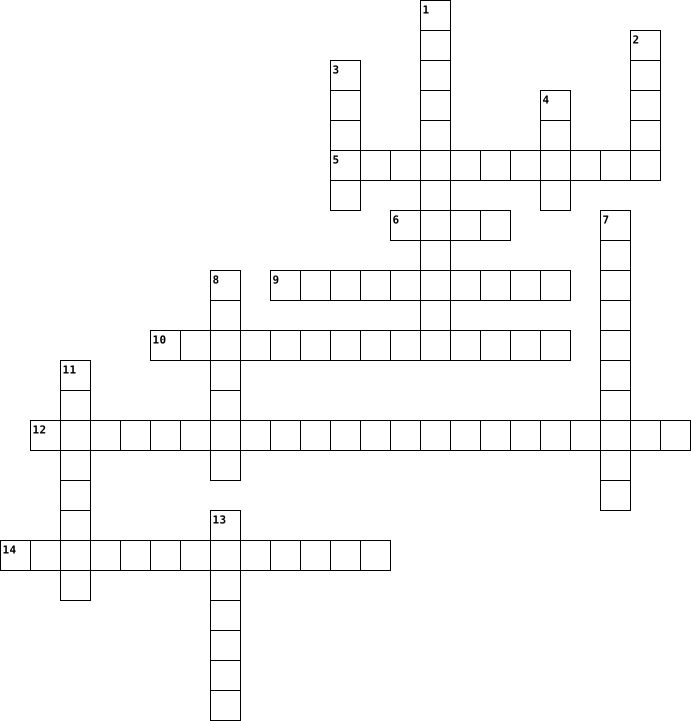
Across
- the rate at which work is done
- f/d
- - law of ___ states______
- wheel on an axle
- -the percentage ratio of the output energy to the input energy
- - device used to multiply forces
- - requires less work
Down
- - when energy changes
- - energy that is moving
- unit for work
- to do work
- unit of power
- advantage -a measure of the ratio of output force to input force in a system
- a simple machine
- point of which lever rest
- stored energy
16 Clues: f/d • to do work • unit for work • unit of power • stored energy • wheel on an axle • a simple machine • - requires less work • - when energy changes • - energy that is moving • - law of ___ states______ • point of which lever rest • the rate at which work is done • - device used to multiply forces • -the percentage ratio of the output energy to the input energy • ...
Photosynthesis 2024-10-04

Across
- Another photosynthetic pigment
- Organelle function of photosynthesis
- Before using light energy
- Stored in the plants roots.
- Energy
- Helps photosynthesis to occur quicker
Down
- A form of energy that light energy is converted into to
- Makes their own food by photosynthesis
- Waste product that occurs in photosynthesis
- Reactant
- Sugar: Stored in chemical energy
- Where sunlight and water make Glucose and oxygen
- How animal obtain glucose
- Outputs that are produced in combining recants
- Inside of Chloroplasts
- A stack of Thylakoids
16 Clues: Energy • Reactant • A stack of Thylakoids • Inside of Chloroplasts • How animal obtain glucose • Before using light energy • Stored in the plants roots. • Another photosynthetic pigment • Sugar: Stored in chemical energy • Organelle function of photosynthesis • Helps photosynthesis to occur quicker • Makes their own food by photosynthesis • Waste product that occurs in photosynthesis • ...
Energy By: Clayton, Grayson, and Chase 2020-12-08

Across
- The movement of electrons in a current.
- Uses water to generate electricity.
- Stored energy from chemicals.
- gas/ Fossil energy source formed deep under the Earth's surface.
- The flow of air.
- Heat within the Earth.
Down
- Liquid from decayed plants and animals.
- The ability to do work.
- Stored chemical energy from the Sun found in plants and animals.
- Heat.
- Light and Solar energy.
- Combustible rock.
- Energy due to motion.
- Splitting atoms that form energy.
- Rays from the Sun.
15 Clues: Heat. • The flow of air. • Combustible rock. • Rays from the Sun. • Energy due to motion. • Heat within the Earth. • The ability to do work. • Light and Solar energy. • Stored energy from chemicals. • Splitting atoms that form energy. • Uses water to generate electricity. • Liquid from decayed plants and animals. • The movement of electrons in a current. • ...
Temperature, Heat, and Thermal E. 2022-05-12

Across
- move around and hit each other, medium kinetic energy
- vibrate in place and less kinetic energy
- units for thermal energy
- commonly used by scientists
- average KE
- total KE
- transfer of energy by EM waves
- transfer of energy by direct contact
Down
- commonly used by physicists
- motion of particles stop
- far apart, move quickly, and most kinetic energy
- transfer of energy by convection currents
- transferred from warmer object to colder object
- food calorie
- commonly used in U.S.
15 Clues: total KE • average KE • food calorie • commonly used in U.S. • motion of particles stop • units for thermal energy • commonly used by physicists • commonly used by scientists • transfer of energy by EM waves • transfer of energy by direct contact • vibrate in place and less kinetic energy • transfer of energy by convection currents • transferred from warmer object to colder object • ...
Conservation of Energy 2025-12-12

Across
- — Rate at which work is done.
- — Ability to do work.
- — Vertical distance above a reference.
- — Force applied over a distance.
- — A push or pull.
- — Energy of motion.
- ENERGY — Sum of potential and kinetic energy.
- — SI unit of power.
Down
- — SI unit of energy.
- — Opposes motion and converts ME to heat.
- — Stored energy due to position.
- — Object or set of objects being studied.
- — Speed with direction.
- — Amount of matter.
- — Energy cannot be created or destroyed.
15 Clues: — A push or pull. • — Energy of motion. • — Amount of matter. • — SI unit of power. • — SI unit of energy. • — Ability to do work. • — Speed with direction. • — Rate at which work is done. • — Stored energy due to position. • — Force applied over a distance. • — Vertical distance above a reference. • — Energy cannot be created or destroyed. • — Opposes motion and converts ME to heat. • ...
energy transformations crossword 2018-08-07

Across
- the rearrangement of atoms to form one or more new substances
- A bond formed by the sharing of electrons
- a measure of the warmth or coldness of an object or substance with reference to some standard value
- defined as the use of energy in an optimum manner to achieve the same service that could have been achieved using a common less efficient manner
- energy that is stored in an something
- Energy cannot be created or destroyed, it can be transformed or transferred from one form to another
- a derived unit of energy in the International System of Units.
- he process of generating energy in the form of electricity and/or heat from the primary treatment of waste.
Down
- is the smallest amount of something, particularly of a chemical substance, that can exist on its own.
- energy that is stored in atoms and the bonds between atoms and can be released by various chemical reactions
- the defining structure of an element, which cannot be broken by any chemical means
- the process of changing energy from one of its forms into another.
- a device that keeps the heart beating at a normal pace
- the movement of energy from one object to another, possibly undergoing a transformation at the same time
- used to specify the rate at which electrical energy isdissipated, or the rate at which electromagnetic energy is radiated, absorbed, or dissipated.
- mechanical energy that someone or something has by virtue of its being in motion
- refers to the amount of energy consumed by an individual or organization, or to the process or system of such consumption
- defined as the ability to produce something with a minimum amount of effort
18 Clues: energy that is stored in an something • A bond formed by the sharing of electrons • a device that keeps the heart beating at a normal pace • the rearrangement of atoms to form one or more new substances • a derived unit of energy in the International System of Units. • the process of changing energy from one of its forms into another. • ...
olivia.heinberg-enregy puzzle 2017-04-25

Across
- energy stored in the nucleus
- movement of energy through substances
- energy of position or place
- a source that is unlimited
- the movement from one place to the other
Down
- a source that is limited
- the vibration of atoms and molecules
- heat transfer of direct heat contact
- moving electrons
- energy in motion
- energy not in motion
- electromatic energy that travels in waves
- split into two catagories
- energy that is stored
14 Clues: moving electrons • energy in motion • energy not in motion • energy that is stored • a source that is limited • split into two catagories • a source that is unlimited • energy of position or place • energy stored in the nucleus • the vibration of atoms and molecules • heat transfer of direct heat contact • movement of energy through substances • ...
physics terms 2025-12-17

Across
- energy in motion
- a measure of resistance
- motion
- energy an object has from motion or position
- The rate of which velocity changes over time
- elastic energy occurs when objects are impermatently compressed
- a force exerted on an object
- manifesting heat
Down
- potential energy potential energy associated with the gravitational field
- chemical reactions
- amount of energy
- stored energy
- can't be created or destroyed
- transfer of energy
- force that attracts a body toward the other side of the earth
15 Clues: motion • stored energy • energy in motion • amount of energy • manifesting heat • chemical reactions • transfer of energy • a measure of resistance • a force exerted on an object • can't be created or destroyed • energy an object has from motion or position • The rate of which velocity changes over time • force that attracts a body toward the other side of the earth • ...
deezz 2023-04-06

Across
- energy that is stored
- a state of matter that adapts to what its on
- two or more elements combined
- the basic unit of a chemical element
- can't be used again
- a firm state of matter
- guess educated
- something you change
- what holds us down
- can be used again
Down
- the space something takes up
- energy that comes from the sun
- what you measure
- the last step to an experiment
- how much something weighs
- earths natural satellite
- energy that is moving
- living things
- nonliving things
- energy that is heat
- on energy changing to another
- a state of matter that we can't see
22 Clues: living things • guess educated • what you measure • nonliving things • can be used again • what holds us down • can't be used again • energy that is heat • something you change • energy that is stored • energy that is moving • a firm state of matter • earths natural satellite • how much something weighs • the space something takes up • two or more elements combined • ...
deezz 2023-04-06

Across
- energy that is stored
- a state of matter that adapts to what its on
- two or more elements combined
- the basic unit of a chemical element
- can't be used again
- a firm state of matter
- guess educated
- something you change
- what holds us down
- can be used again
Down
- the space something takes up
- energy that comes from the sun
- what you measure
- the last step to an experiment
- how much something weighs
- earths natural satellite
- energy that is moving
- living things
- nonliving things
- energy that is heat
- on energy changing to another
- a state of matter that we can't see
22 Clues: living things • guess educated • what you measure • nonliving things • can be used again • what holds us down • can't be used again • energy that is heat • something you change • energy that is stored • energy that is moving • a firm state of matter • earths natural satellite • how much something weighs • the space something takes up • two or more elements combined • ...
deezz 2023-04-06

Across
- energy that is stored
- a state of matter that adapts to what its on
- two or more elements combined
- the basic unit of a chemical element
- can't be used again
- a firm state of matter
- guess educated
- something you change
- what holds us down
- can be used again
Down
- the space something takes up
- energy that comes from the sun
- what you measure
- the last step to an experiment
- how much something weighs
- earths natural satellite
- energy that is moving
- living things
- nonliving things
- energy that is heat
- on energy changing to another
- a state of matter that we can't see
22 Clues: living things • guess educated • what you measure • nonliving things • can be used again • what holds us down • can't be used again • energy that is heat • something you change • energy that is stored • energy that is moving • a firm state of matter • earths natural satellite • how much something weighs • the space something takes up • two or more elements combined • ...
deezz 2023-04-06

Across
- energy that is stored
- a state of matter that adapts to what its on
- two or more elements combined
- the basic unit of a chemical element
- can't be used again
- a firm state of matter
- guess educated
- something you change
- what holds us down
- can be used again
Down
- the space something takes up
- energy that comes from the sun
- what you measure
- the last step to an experiment
- how much something weighs
- earths natural satellite
- energy that is moving
- living things
- nonliving things
- energy that is heat
- on energy changing to another
- a state of matter that we can't see
22 Clues: living things • guess educated • what you measure • nonliving things • can be used again • what holds us down • can't be used again • energy that is heat • something you change • energy that is stored • energy that is moving • a firm state of matter • earths natural satellite • how much something weighs • the space something takes up • two or more elements combined • ...
Unit 1.1 and 1.2- Helena R 2024-02-16

Across
- Larger and more complex
- How do paramecia move?
- Manufacture their won energy
- Name the outer coating of a prokaryote
- reproduction without partner
- Using the energy of the sun to make their own food
- Liquid food
- Prokaryotes and Eukaryotic both have __
Down
- What was the first life on earth?
- Produces the cell's energy
- Used for movement and gathering food
- Solid food
- Getting energy by consuming other organisms
- What organelle carries out photosynthesis?
- Kingdom of Eukaryotes
- Protein factorys
- Where can you find paramecia?
- Using Chemicals to make their own food
- Only Eukaryotic cells have __
- What do prokaryotic cells and eukaryotic cells in common?
- Smaller and less complex
21 Clues: Solid food • Liquid food • Protein factorys • Kingdom of Eukaryotes • How do paramecia move? • Larger and more complex • Smaller and less complex • Produces the cell's energy • Manufacture their won energy • reproduction without partner • Where can you find paramecia? • Only Eukaryotic cells have __ • What was the first life on earth? • Used for movement and gathering food • ...
Ayden Reaper energy 4th 2024-05-06

Across
- Is a part of Fission and Fusion
- Used in old steam trains
- Example is Solar energy
- A cool dude with long hair that likes metal music
- When transported some energy is lost
- sun heats and provides light
- Anything that moves or can move
- Energy stored
- Gas used by transportation
- Example is Coal
Down
- Heat from a gas stove
- Energy not created nor destroyed
- Used to heat homes
- Work put into something
- Waste of living organisms
- Earth spins the air in the sky is moving
- Everything has this
- water falling from the sky (Water that is moving)
- Heat waves
- The earths temperatures
- Very radioactive
21 Clues: Heat waves • Energy stored • Example is Coal • Very radioactive • Used to heat homes • Everything has this • Heat from a gas stove • Example is Solar energy • Work put into something • The earths temperatures • Used in old steam trains • Waste of living organisms • Gas used by transportation • sun heats and provides light • Is a part of Fission and Fusion • Anything that moves or can move • ...
World of Cells 2022-12-12

Across
- stored energy;such as oil, waxes, etc..
- convert solar energy to chemical energy stored in foods
- higher osmotic outside the cell than inside
- requires no energy ; high to low
- positive charge
- word for sugar
- center of a plant and animal cell
- contains a nucleus and mitochondria
- builds strength and muscle
- no charge
- anything that takes up space
- substance that cannot be broken
Down
- contains 2 fatty acid chains that are nonpolar
- a negative charge
- doesn't contain a nucleus or mitochondria
- large fungi surrounding their cells
- atoms bonded together
- formula, H2O
- requires energy; low to high
- surround every layer of a plant
20 Clues: no charge • formula, H2O • word for sugar • positive charge • a negative charge • atoms bonded together • builds strength and muscle • requires energy; low to high • anything that takes up space • surround every layer of a plant • substance that cannot be broken • requires no energy ; high to low • center of a plant and animal cell • large fungi surrounding their cells • ...
Science 2022-12-13

Across
- You lose when you run
- Makes it own food
- the animal kingdom
- Tempature when it turns to gas
- The energy ofa warm tea
- Tempature when it turn to liquid
- makes energy with the help of wind
- Produces energy with the help of sun
- energy produced by water
- The part in an animal cell which looks like a wifi symbol
- solid form of water
Down
- Food and fuels
- animals that have a backbone
- An object raised above the ground
- The big part in an animal cell
- moving objects
- only eats plants
- Nuclear power plants
- animals that don't have a backbone
- the kingdom of all green plants
20 Clues: Food and fuels • moving objects • only eats plants • Makes it own food • the animal kingdom • solid form of water • Nuclear power plants • You lose when you run • The energy ofa warm tea • energy produced by water • animals that have a backbone • The big part in an animal cell • Tempature when it turns to gas • the kingdom of all green plants • Tempature when it turn to liquid • ...
Science 2022-12-13

Across
- You lose when you run
- Makes it own food
- the animal kingdom
- Tempature when it turns to gas
- The energy ofa warm tea
- Tempature when it turn to liquid
- makes energy with the help of wind
- Produces energy with the help of sun
- energy produced by water
- The part in an animal cell which looks like a wifi symbol
- solid form of water
Down
- Food and fuels
- animals that have a backbone
- An object raised above the ground
- The big part in an animal cell
- moving objects
- only eats plants
- Nuclear power plants
- animals that don't have a backbone
- the kingdom of all green plants
20 Clues: Food and fuels • moving objects • only eats plants • Makes it own food • the animal kingdom • solid form of water • Nuclear power plants • You lose when you run • The energy ofa warm tea • energy produced by water • animals that have a backbone • The big part in an animal cell • Tempature when it turns to gas • the kingdom of all green plants • Tempature when it turn to liquid • ...
Science 2022-12-13

Across
- You lose when you run
- Makes it own food
- the animal kingdom
- Tempature when it turns to gas
- The energy ofa warm tea
- Tempature when it turn to liquid
- makes energy with the help of wind
- Produces energy with the help of sun
- energy produced by water
- The part in an animal cell which looks like a wifi symbol
- solid form of water
Down
- Food and fuels
- animals that have a backbone
- An object raised above the ground
- The big part in an animal cell
- moving objects
- only eats plants
- Nuclear power plants
- animals that don't have a backbone
- the kingdom of all green plants
20 Clues: Food and fuels • moving objects • only eats plants • Makes it own food • the animal kingdom • solid form of water • Nuclear power plants • You lose when you run • The energy ofa warm tea • energy produced by water • animals that have a backbone • The big part in an animal cell • Tempature when it turns to gas • the kingdom of all green plants • Tempature when it turn to liquid • ...
Biology Unit 2 crossword 2022-09-28

Across
- powerhouse of the cell, ATP is produced
- plants use the sun to make energy,oxygen
- process that requires oxygen
- cells release energy in place of oxygen
- fluid portion of chloroplast
- sugar that provides energy
- breakdown of glucose by enzymes
- process that does't require oxygen
- reaction of photosynthesis, no light
- molecule that stores energy for etc
Down
- compound produced by chemical reaction
- anything that has mass/takes up space
- reaction of photosynthesis, yes light
- flatten membrane sack inside chloroplast
- where photosynthesis takes place
- the reduced form of NAD+
- adenosine triphosphate (energy source)
- jelly like fluid inside of cells
- starting material in chemical reaction
- second stage of cellular respiration
20 Clues: the reduced form of NAD+ • sugar that provides energy • process that requires oxygen • fluid portion of chloroplast • breakdown of glucose by enzymes • where photosynthesis takes place • jelly like fluid inside of cells • process that does't require oxygen • molecule that stores energy for etc • second stage of cellular respiration • reaction of photosynthesis, no light • ...
chapter vocabulary 2023-12-01

Across
- energy of the particles in matter due to their random
- ability to cause change
- current
- energy stored in the
- energy total energy of
- energy stored energy due to interactions between objects or particles
Down
- waves
- energy transfer to an object by a force, making the object move in the direction of the force
- object or group of objects due to large-scale motions and interactions
- energy carried by an
- energy carried by
- energy due to motion
- energy carried by sound
- energy sum of kinetic and
- of an atom
15 Clues: waves • current • of an atom • energy carried by • energy carried by an • energy due to motion • energy stored in the • energy total energy of • ability to cause change • energy carried by sound • energy sum of kinetic and • energy of the particles in matter due to their random • energy stored energy due to interactions between objects or particles • ...
The justice and equity implications of the clean energy transition 2024-03-27

Across
- Global paradigm shift in between energy transition and energy justice bodies of literature that focuses on fairness
- Program to improve the affordability of energy services
- Energy that utilizes energy from fast moving air
- Less developed countries that rarely have the means for renewable energy
- Positive or negative residual effects of something
- An industry that is declining due to underfunding, affecting jobs and tax revenues
- Shift from one dominant energy resource to another
- Most common, high-carbon form of energy
Down
- Focus area of the article, includes countries with high GDPs and highly developed
- Rely on coal and host coal-fired power plants
- Branch of environmental justice focused on full life-cycle of energy resources
- Fairness of energy processes and tenet of energy justice
- Energy that utilizes energy from the sun
- Proposal that embeds equity and social justice within climate change mitigation goals
14 Clues: Most common, high-carbon form of energy • Energy that utilizes energy from the sun • Rely on coal and host coal-fired power plants • Energy that utilizes energy from fast moving air • Positive or negative residual effects of something • Shift from one dominant energy resource to another • Program to improve the affordability of energy services • ...
Chapter 15 vocab 2023-05-01

Across
- rich deposits of hydrocarbon mixtures that formed from the remains of organisms
- a source of energy that in limited quantities and, once used, cannot be replaced except over the course of millions of years
- the energy stored in atomic nuclei
- potential energy that depends upon an object's height above a reference point
- the energy associated with electrie charges
- the energy stored in chemical bonds
- the total potential and kinetic energy of all the particles in an object
- the process of changing energy from one form to another
- the energy associated with the motion and position of everyday objects
- the energy an object has due to its motion
Down
- the potential energy of an object that is stretched or compressed
- energy that is stored as a result of position or shape
- a form of energy consisting of changing electric and magnetic fields
- the ability to do work
14 Clues: the ability to do work • the energy stored in atomic nuclei • the energy stored in chemical bonds • the energy an object has due to its motion • the energy associated with electrie charges • energy that is stored as a result of position or shape • the process of changing energy from one form to another • the potential energy of an object that is stretched or compressed • ...
Photosynthesis :) 2022-03-06

Across
- Enzyme assisted reactions that produce a three-carbon sugar
- Light energy from the sun converted to chemical energy
- You make _____ by physically harnessing the flow of H⁺ ions
- Needed with carbon dioxide to create glucose and oxygen
- Light reactions occur here
- Created along with oxygen
- Stored in ATP and NADPH
- The process by which light is converted into an energy source
- Needed with water to create glucose and oxygen
Down
- The process by which carbon from CO₂ is converted to sugars
- Pigments that allow the plant to capture more light energy
- Glucose is a type of ______
- Autotroph that uses photosynthesis to make energy
- (Other) accessory pigments
- Most common pigment in thylakoids
- Where the Calvin Cycle occurs
- Sunlight is made up of many colors called the ________
- Responsible for collecting sunlight
- Created along with glucose
- Chemical energy is temporarily stored in ATP and _______
20 Clues: Stored in ATP and NADPH • Created along with oxygen • (Other) accessory pigments • Light reactions occur here • Created along with glucose • Glucose is a type of ______ • Where the Calvin Cycle occurs • Most common pigment in thylakoids • Responsible for collecting sunlight • Needed with water to create glucose and oxygen • Autotroph that uses photosynthesis to make energy • ...
Kaylees Photosynthesis Crossword Puzzle 2021-11-22

Across
- Incorporation of CO2 into organic compounds
- Series of enzyme-assisted chemical reactions
- An alternate pathway that allows plants to fix CO2 into four carbon compounds
- Light energy is converted into chemical energy
- Pigments of color
- Convert light energy from the sun into chemical energy
- Compound found in the thylakoid membrane
- Membrane found inside the inner membrane
- Acceptor of electrons lost from chlorophyll
- Animals that must get energy from food
- Solution that surrounds the grana
Down
- The poors that plants loose water from
- Plants fix carbon through a pathway
- The way thylakoids are connected and layered
- Electrons that are donated to molecules
- Synthesis of ATP
- Compounds that absorb light
- Organelles found in the cells of plant
- Cluster of pigment molecules
- Organisms that use energy from sunlight or from chemical bonds in inorganic substances to make organic compounds
20 Clues: Synthesis of ATP • Pigments of color • Compounds that absorb light • Cluster of pigment molecules • Solution that surrounds the grana • Plants fix carbon through a pathway • The poors that plants loose water from • Organelles found in the cells of plant • Animals that must get energy from food • Electrons that are donated to molecules • Compound found in the thylakoid membrane • ...
Unit 4 Crossword Puzzle 2012-12-09

Across
- nucleotide needed in photosynthesis and gycolysis
- in thylakoid and absorb energy from sunlight
- stacks of thylakoids
- converts glucose into pyruvate
- where light reactions take place
- converts energy into usable for cell
- process to convert light energy into chemical energy
- converts comounds into glucose in the stroma
- end product of the anaerobic part of glycolysis
- electron carrier in cellular respiration
- nucleotide with high energy that releases it when broken
- green pigment
Down
- converts ADP to ATP
- converts oxygen into carbon dioxide
- process that does not require oxygen
- creates its own food source
- colorless fluid surrounding grana
- tissue between cells
- first stage of photosynthesis where sunlight energy is stored
- series of biochemical reactions that ocur in stroma
- eats other animals for food
- coenzyme in reactions
- site of light-dependent reactions
- heat required to raise 1g of water by 1 C
- process that requires oxygen
25 Clues: green pigment • converts ADP to ATP • stacks of thylakoids • tissue between cells • coenzyme in reactions • creates its own food source • eats other animals for food • process that requires oxygen • converts glucose into pyruvate • where light reactions take place • colorless fluid surrounding grana • site of light-dependent reactions • converts oxygen into carbon dioxide • ...
Chemistry Ch. 5 Vocab 2015-11-04

Across
- emission spectrum set of frequencies
- energy levels major energy level
- uncertainty principle impossible to know the velocity and position
- mechanical model of the atom electrons treated as waves
- configuration arrangement of electrons
- spectrum range of wavelengths and frequencies
- state lowest energy of an atom
- part of electromagnetic radiation with no mass
- constant 6.626 ×〖10〗^(-34)
- rule single electrons must have same orbitals
Down
- shortest distance on a continuous wave
- waves height from beginning to certain area
- principle electron has lowest energy
- amount of waves that pass a point per second
- electron electrons on the outside
- effect electrons are emitted from a metal's surface
- sublevels what energy levels have
- quantum numbers indicate the size and energies
- exclusion principle maximum of two electrons in one atom
- structure the whole structure
- Broglie equation λ=h/mv
21 Clues: Broglie equation λ=h/mv • constant 6.626 ×〖10〗^(-34) • structure the whole structure • state lowest energy of an atom • energy levels major energy level • electron electrons on the outside • sublevels what energy levels have • emission spectrum set of frequencies • principle electron has lowest energy • shortest distance on a continuous wave • ...
Science Crossword 2022-12-09

Across
- heat moving through air or water
- liquid to Gas
- Force exerted on matter through contact
- Liquid to solid
- Energy of motion
- Has defiant shape and volume
- Solid to Liquid
- transfer of energy through direct touch
- A pure substance made of only 1 type of atom
- Total motion energy of tiny particles
- #1 on the periodic table
- Smallest unit or matter
- energy transferred from 2 objects of different temps
- Anything that has mass and takes up space is
Down
- gas to liquid
- To strike or hit something with force
- no defiant shape or volume
- Holds the electrons
- heat moving in invisible waves
- Multiple elements combined make a new substance
- the measure of how hot something is
- Has no defiant shape but has volume
- The simplest unit of a chemical compound
- energy stored within an object or system
- moving energy from 1 system to another
25 Clues: gas to liquid • liquid to Gas • Liquid to solid • Solid to Liquid • Energy of motion • Holds the electrons • Smallest unit or matter • #1 on the periodic table • no defiant shape or volume • Has defiant shape and volume • heat moving in invisible waves • heat moving through air or water • the measure of how hot something is • Has no defiant shape but has volume • ...
Kinematics 2020-01-24

Across
- displacement as a result of a force
- the momentum change of an object
- 2 objects collide and exert force on each other
- a force by earths mass
- describing the motion of objects
- the stored energy of an object based on height
- product needed to work
- the speed o an object with direction, can be negative
- the force of gravity
- a string or compression resulting in potential energy
- 1/60 of an hour
- a push or pull
- how long it takes to make something happen
Down
- how far an object as traveled
- 60 minutes
- 1000 grams
- the energy of an object based on motion
- the absolute value of velocity
- the amount of matter in an object
- the shortest distance between an objects path
- an increase of speed
- the motion of a moving object
- the fundamental unit of time
- 100 millimeters
24 Clues: 60 minutes • 1000 grams • a push or pull • 1/60 of an hour • 100 millimeters • an increase of speed • the force of gravity • a force by earths mass • product needed to work • the fundamental unit of time • how far an object as traveled • the motion of a moving object • the absolute value of velocity • the momentum change of an object • describing the motion of objects • ...
Revision Crossword 2021-03-18

Across
- comprised of cells, follows MRNGREWW
- only consumes producers
- community of biotic and abiotic organisms
- inter-related food chains
- only consume animals
- shows the transfer of nutrients and energy from one organism to the next
- describes living components of an ecosystem
- branching system of organisation
- an organism that is consumed by another
- basic building blocks of life
- ___ levels describe the order of consumption in a food web
- organisms that use the sun for energy
Down
- the process of sorting organisms
- an organism that consumes plants and animals
- substances the body uses for energy
- converting solar energy into chemical energy for life
- there are 8 ___ of life
- consume other organisms for energy
- describes non-living components of an ecosystem
- a detectable change in the environment
- To create new offspring
- an organism that consumes prey
22 Clues: only consume animals • only consumes producers • there are 8 ___ of life • To create new offspring • inter-related food chains • basic building blocks of life • an organism that consumes prey • the process of sorting organisms • branching system of organisation • consume other organisms for energy • substances the body uses for energy • comprised of cells, follows MRNGREWW • ...
Energy Flow In Ecosystems 2021-10-21

Across
- Organism that eats other organisms (means "other feed")
- ______ levels in an ecosystem show organisms with similar feeding function
- Shows how food chains are connected
- Breaks down organic material
- Eats dead organisms and waste
- Energy ______ shows levels of feeding relationships
- Organism that eats plans and animals
- Process of making glucose using H2O, CO2, & sunlight
- Energy not stored is lost as _________
- Process of making food from chemical energy
- Anything that has mass and takes up space
- ________ consumer that only eats animals
Down
- Organism that only eats animals
- _______ consumer that eats plants and animals
- Organism that only eats plants
- ________ consumer that only eats plants
- Model showing energy flow in an ecosystem
- % of energy passed on to the next trophic level
- Organisms that eat other organisms
- Organism that uses photosynthesis( means "self feed")
- Main source of energy for life on Earth
- Makes its food through photosynthesis
22 Clues: Breaks down organic material • Eats dead organisms and waste • Organism that only eats plants • Organism that only eats animals • Organisms that eat other organisms • Shows how food chains are connected • Organism that eats plans and animals • Makes its food through photosynthesis • Energy not stored is lost as _________ • ________ consumer that only eats plants • ...
Physics review 2022-06-07

Across
- How hard it is to stop an object
- causes a change in energy
- occurs when objects are in contact and have relative motion
- Energy from an objects height
- heat is a _______ force
- Energy in the nucleus of atoms
- Constant velocity means no _______.
- Energy from a material that is stretched or compressed
- Gravity is a _______ force
- Energy associated with heat
Down
- Energy in the bonds of molecules
- maximum displacement from equilibrium state
- complete oscillations per second
- the inward force required to keep an object moving in a circular path
- Static friction is almost always _____ than kinetic friction
- free fall, but generally with a horizontal component
- Momentum can be negative because ____ can be negative
- opposites _____
- resources that cannot be replaced in a short period of time. Most are burned to produce electricity.
- at what degree must an angle be for work to be 0?
20 Clues: opposites _____ • heat is a _______ force • causes a change in energy • Gravity is a _______ force • Energy associated with heat • Energy from an objects height • Energy in the nucleus of atoms • Energy in the bonds of molecules • complete oscillations per second • How hard it is to stop an object • Constant velocity means no _______. • maximum displacement from equilibrium state • ...
Science Terms 2022-10-17

Across
- the movement of electrons between atoms.
- a type of matter that has no defined shape or volume.
- particles moving through direct contact.
- material that is a poor conductor.
- the degree of hotness or coldness in an
- movement of energy from one place to another.
- a collection of elements.
- mass of a unit volume of a material substance.
- stored energy.
Down
- heat is transferred by movement of a heated fluid.
- a fluid that has no independent shape.
- a minute quantity or fragment.
- / energy of motion.
- energy that is transferred from one thing to another.
- a substance that is in the solid state.
- the ability to do work.
- /the energy in a system that is responsible for its temperature.
- anything that takes up space and can be weighed.
- electromagnetic waves that produce heat from light from the sun
- force applied over a distance.
20 Clues: stored energy. • / energy of motion. • the ability to do work. • a collection of elements. • a minute quantity or fragment. • force applied over a distance. • material that is a poor conductor. • a fluid that has no independent shape. • a substance that is in the solid state. • the degree of hotness or coldness in an • the movement of electrons between atoms. • ...
science words 2022-10-17

Across
- a substance that flows freely
- the degree of compactness of a substance
- heat and energy is through direct contact
- the measure of hotness or coldness
- activity involving mental or physical effort
- travels through space at the speed of light
- that heat is transferred by movement of a heated liquid
- the energy contained within a system.
- a speed of something in a given direction
- firm and stable in shape
Down
- a substance of which does not allow the passage of heat or sound
- stored energy
- physical substance in general
- energy that is transferred from one thing to another
- energy of motion
- a set of things that work together
- a minute portion of matter
- move from one place to another
- the strength required for sustained for physical or mental activity
- a substance of matter that will expand
20 Clues: stored energy • energy of motion • firm and stable in shape • a minute portion of matter • a substance that flows freely • physical substance in general • move from one place to another • the measure of hotness or coldness • a set of things that work together • the energy contained within a system. • a substance of matter that will expand • the degree of compactness of a substance • ...
science words 2022-10-17

Across
- a substance that flows freely
- the degree of compactness of a substance
- heat and energy is through direct contact
- the measure of hotness or coldness
- activity involving mental or physical effort
- travels through space at the speed of light
- that heat is transferred by movement of a heated liquid
- the energy contained within a system.
- a speed of something in a given direction
- firm and stable in shape
Down
- a substance of which does not allow the passage of heat or sound
- stored energy
- physical substance in general
- energy that is transferred from one thing to another
- energy of motion
- a set of things that work together
- a minute portion of matter
- move from one place to another
- the strength required for sustained for physical or mental activity
- a substance of matter that will expand
20 Clues: stored energy • energy of motion • firm and stable in shape • a minute portion of matter • a substance that flows freely • physical substance in general • move from one place to another • the measure of hotness or coldness • a set of things that work together • the energy contained within a system. • a substance of matter that will expand • the degree of compactness of a substance • ...
Matter and Energy Crossword 2017-01-19

Across
- How much of the universe is matter?
- Tool used to measure volume.
- The pull of gravity on an object or organism.
- The amount of space an object or organism takes up.
- The part of the universe that is not matter.
- The major source of energy in the solar system.
- Place where mass and weight are equal.
- Something energy can do to matter.
- Basic SI unit for measuring length.
Down
- Formed from a chemical reaction.
- The force that pulls objects together
- Anything that has mass and volume.
- Something energy makes happen to matter.
- Everything in the __________ is either matter or energy.
- Tool used to measure mass.
- Basic SI unit for measuring mass.
- Distance from one point to another.
- Cannot be broken down into simpler substances.
- Basic SI unit for measuring volume.
- The amount of matter in an object or organism.
- Something energy can make matter do.
21 Clues: Tool used to measure mass. • Tool used to measure volume. • Formed from a chemical reaction. • Basic SI unit for measuring mass. • Anything that has mass and volume. • Something energy can do to matter. • How much of the universe is matter? • Distance from one point to another. • Basic SI unit for measuring volume. • Basic SI unit for measuring length. • ...
mm icream so good 2024-02-08

Across
- The measurement of electrical power.
- The space around a magnet
- The measure of the pressure of electricty
- Electricity that does not move.
- The using of a resource.
- Poor conductors of electricity
- A device that produces electricity by converting chemical energy into electrical energy.
- A device that converts electrical energy into mechanical electricty.
- Uncharged, the atom has a equal number of electrons and protons
- The abilty to do work.
- A source of energy that is not depleted by use
Down
- An atom has more protons then electrons.
- A negtave charge that does not move
- Materials that let electricity pass through easily
- A device for making breaking changing the connections in the electrical circut.
- what objects are made of
- A negative charge that spins around the nucleas
- A positve charge in the nucleus.
- The center of an atom.
- The measure of an electrical current.
- A source of energy that is depleted by use.
21 Clues: The center of an atom. • The abilty to do work. • what objects are made of • The using of a resource. • The space around a magnet • Poor conductors of electricity • Electricity that does not move. • A positve charge in the nucleus. • A negtave charge that does not move • The measurement of electrical power. • The measure of an electrical current. • ...
Electron Configuration 2025-11-19

Across
- – Region around nucleus where electrons exist.
- – Principle that no two electrons share the same quantum numbers.
- – Metals with partially filled d orbitals.
- – Lowest energy state of an atom.
- – Visual representation of electron arrangement.
- – Region where an electron is most likely found.
- – Shorthand for electron configuration (e.g., 1s² 2s²).
- – Rule that electrons occupy orbitals singly before pairing.
- – Set of numbers describing electron properties.
- – Higher energy state than the ground state.
- – Inner electrons not involved in bonding.
- – Division within an energy level (s, p, d, f).
Down
- – Negatively charged particle orbiting the nucleus.
- – Elements with electrons filling f orbitals.
- – Arrangement of electrons in an atom’s orbitals.
- – Principle stating electrons fill lowest energy orbitals first.
- – Law stating properties repeat with atomic number.
- – Refers to noble gas shorthand for configurations.
- – Electrons in the outermost energy level.
- – Group of orbitals within a principal energy level.
- – Electron property with two possible orientations.
21 Clues: – Lowest energy state of an atom. • – Metals with partially filled d orbitals. • – Electrons in the outermost energy level. • – Inner electrons not involved in bonding. • – Higher energy state than the ground state. • – Elements with electrons filling f orbitals. • – Region around nucleus where electrons exist. • – Division within an energy level (s, p, d, f). • ...
Ecology 2025-03-13

Across
- creates its own food through photosynthesis
- organism breaks down dead matter and recycles nutrients into soil
- variety of genes within a species
- caused due to human activities like burning fossil fuels
- movement of energy from one location to another
- shows how energy flows from one organism to another
- relies on eating other organisms for energy
- a community of living organisms
Down
- a behavior an organism is born with
- only a percentage of energy is transferred to the next level of the food chain
- the struggle between organisms for limited resources
- used to measure energy in ecosystem
- often top of the food chain
- The natural environment where an organism lives
- shows the feeding relationships
- increase in earths temperature
- simple sugar needed for living organisms
- continuous progress of precipitation, condensation, evaporation
- predators hunt for
- shows distribution of energy from different levels in ecosystem
20 Clues: predators hunt for • often top of the food chain • increase in earths temperature • shows the feeding relationships • a community of living organisms • variety of genes within a species • a behavior an organism is born with • used to measure energy in ecosystem • simple sugar needed for living organisms • creates its own food through photosynthesis • ...
Year 10 Science Revision 2025-09-18

Across
- substance made of one type of atom
- bond sharing of electrons between atoms
- energy stored energy
- observable characteristics of an organism
- selection process where better-adapted individuals survive
- table chart of all known elements
- thread-like structure of DNA
- genetic makeup of an organism
- different version of a gene
- force applied over a distance
- reaction releases energy
- bond transfer of electrons from one atom to another
- characteristic that increases survival
Down
- formation of a new species
- speed in a given direction
- change in velocity over time
- reaction absorbs energy
- change in DNA sequence
- carries genetic information in cells
- new substance formed in a chemical reaction
- energy energy of motion
- substance made of two or more elements chemically bonded
- starting substance in a chemical reaction
- segment of DNA that codes for a trait
- differences between individuals of a species
25 Clues: energy stored energy • change in DNA sequence • reaction absorbs energy • energy energy of motion • reaction releases energy • formation of a new species • speed in a given direction • different version of a gene • change in velocity over time • thread-like structure of DNA • genetic makeup of an organism • force applied over a distance • table chart of all known elements • ...
End of year Crossword 2025-07-11

Across
- Energy stored when two charges are moved close together
- When an object is exposed to and touches a radioactive material
- Something is done to transfer energy
- Man responsible for demonstrating the atom has a nucleus
- Component that lets current flow in one direction
- Rate of energy transfer
- Component whose resistance decreases as temperature increases
- First sub atomic particle discovered
- Radiation that is most ionising
Down
- Energy cannot be created of destroyed, it is…
- Material needed to absorb beta radiation
- How particles in a solid move
- Rate of flow of charge
- Energy store linked to speed
- Transforming from a solid to a liquid
- Object used to measure the density of an irregular object is a ______ Beaker
- Current and Voltage of an ohmic conductor are ________ Proportional
- Energy store that changes when a substance changes state
- Mass per unit volume
- Colour of the live wire in a plug
20 Clues: Mass per unit volume • Rate of flow of charge • Rate of energy transfer • Energy store linked to speed • How particles in a solid move • Radiation that is most ionising • Colour of the live wire in a plug • Something is done to transfer energy • First sub atomic particle discovered • Transforming from a solid to a liquid • Material needed to absorb beta radiation • ...
Fundamentals of Energy 2024-04-24
Across
- A form of energy that can be stored
- The quantity of matter in a body. It is measured in kg
- The percentage of energy that is used for a useful task and how much is wasted.
- A form of energy that results in one energy store becoming another type of energy store.
- The energy stored in an object by raising it up high. If it fell down to the ground all of this would be converted into kinetic/heat.
- A visual representation of the conservation of energy that shows how much energy is useful and how much energy is wasted from a give input.
Down
- The value is kept constant before and after a change.
- The unit for energy. [J]
- The rate of energy transfer (work done per second).
- Unit of Power
- Material or process that prevents the transfer of heat by conduction, convection or radiation.
- Heat energy.
- The energy used to move an object a certain distance.
- Movement energy
14 Clues: Heat energy. • Unit of Power • Movement energy • The unit for energy. [J] • A form of energy that can be stored • The rate of energy transfer (work done per second). • The value is kept constant before and after a change. • The energy used to move an object a certain distance. • The quantity of matter in a body. It is measured in kg • ...
Science crossword vocabulary 2021-02-09

Across
- An organelle in eukaryotic cells that is the site of cellular respiration and generates most of the cell’s ATP
- Conversion of carbohydrates into alcohol
- Organisms which carry out the process of decomposition by breaking down dead or decaying organisms
- The breakdown of glucose through a series of biochemical reactions produces two molecules each of ATP, pyruvate, and NADH
- A carbohydrate; produced by photosynthesis; primary source of energy for some plant and animal cells
- A long-chain carbohydrate formed from glucose units joined by glycosidic bonds
- The process that occurs when the chemical energy of "food" molecules, carbohydrates, fats, and proteins, is released and partially captured in the form of adenosine triphosphate (ATP)
- The amount of energy that is stored in an object; energy that an object has because of its position relative to other objects
- The form of in cell respiration that requires free oxygen
- An organism that eats other living things to get energy; an organism that does not produce its own food
- the process in which plants and some other organisms use the energy in sunlight to make food
Down
- The form of cell respiration that can take place in the absence of free oxygen
- A green pigment that traps energy from the sun
- An organism that makes its own food; an organism that does not consume other plants or animals
- The energy in an object due to its motion
- Energy that does not need matter to travel; light
- An organelle in a plant cell that turns energy from the sun into chemical energy for the plant to use
- The energy that is stored in the bonds between atoms
18 Clues: Conversion of carbohydrates into alcohol • The energy in an object due to its motion • A green pigment that traps energy from the sun • Energy that does not need matter to travel; light • The energy that is stored in the bonds between atoms • The form of in cell respiration that requires free oxygen • ...
VOCABULARY HEAT 2018-08-16

Across
- energy- energy in the form of heat
- law of thermodynamics- states that energy can only transfer from a higher energy state into a lower energy state and the movement of energy stops when both states are in equilibrium
- A gas-like state of matter in which most of the particles are charged ions, nuclear reactions separate positive electrons from hydrogen and helium atoms
- the study of effects of changes in temperature, pressure, and volume using statistics to analyze the collective motion of their particles
- the state of matter that has a defined shape and volume with molecules that are closely packed and vibrate in place, atoms or molecules are held together by strong bonds, giving the solid a fixed shape and volume
- a measure of the average kinetic energy of the atoms in a system, used to express thermal energy in degrees
- a state of matter with a defined volume but no defined shape and whose molecules roll past each other
- point- the temperature at which a liquid turns into a solid
- point- the temperature at which matter changes from solid to liquid state
Down
- measure of the amount of energy in a physical system that is not available to do work
- the ability to do work or cause change
- matter phase change from solid directly to gas
- a unit of heat energy in the metric system
- heat- amount of heat, expressed in calories, needed to raise one gram of a substance by 1°C
- the process in which matter changes from a liquid to a gas
- the process by which a gas changes into a liquid
- the transfer of thermal energy
- a state of matter without any defined volume or shape in which atoms or molecules move about freely
18 Clues: the transfer of thermal energy • energy- energy in the form of heat • the ability to do work or cause change • a unit of heat energy in the metric system • matter phase change from solid directly to gas • the process by which a gas changes into a liquid • the process in which matter changes from a liquid to a gas • ...
science crossword puzzle chapter 17 2021-11-18

Across
- the energy an object has because of its position or shape
- a nuclear power plant contains this
- the energy that an object has to do its motion
- the splitting of an atom's nucleus into two smaller nuclei
- occurs when sulfide minerals in exposed rock surfaces react with rainwater and oxygen to produce sulfuric acid
- energy made available by the flow of an electric charge
- rock filled with a mixture of hydrocarbons
- chemical compounds that are derived from oil and used to make products
- a dark liquid fossil fuel made up mostly of hydrocarbons
- the extraction of a mineral by removing a trip of the layers of soil and rock on top of the mineral deposit
Down
- the ability to do work or cause change
- the practice of reducing energy use
- the expression of how much the energy put into a system actually does useful work
- icelike solid that consists of molecules of methane
- two smaller nuclei fuse into one nucleus
- energy used quicker than it can replenish
- the practice of digging shafts deep into the ground to find and remove a mineral
- deposits of moist sand and clay that contain bitumen
- is the energy that holds these particles together in the nucleus
- energy that replenishes itself faster than it is used
- a nuclear catastrophe occuring at a nuclear power plant
- the process in which a fuel burns because it combines rapidly with oxygen
22 Clues: the practice of reducing energy use • a nuclear power plant contains this • the ability to do work or cause change • two smaller nuclei fuse into one nucleus • energy used quicker than it can replenish • rock filled with a mixture of hydrocarbons • the energy that an object has to do its motion • icelike solid that consists of molecules of methane • ...
maggies vocab 2024-02-07

Across
- breaks down sugars to produce energy in the form of ATP
- he natural compound present in green plants that gives them their color
- end substances after a biological process has occurred
- an organelle found in large numbers in most cells, in which the biochemical processes of respiration and energy production
- 2 phosphate groups
- substance that takes part in and undergoes change during a reaction
- use stored chemical energy from the light-dependent reactions to “fix” CO2 and create a product that can be converted into glucose
- splits glucose into two pyruvate molecules
- the process by which organisms combine oxygen with foodstuff molecules, diverting the chemical energy in these substances into life-sustaining activities and discarding, as waste products, carbon dioxide and water.
Down
- electrons are passed from one molecule to another,
- the chemical breakdown of a substance by bacteria
- a biological process which converts sugars such as glucose, fructose, and sucrose into cellular energy
- a process in which one or more substances, the reactants, are converted to one or more different substances
- The sunlight is converted to chemical energy during these reactions
- series of reactions in the mitochondria
- 3 phosphate groups
- energy he energy which is stored in the bonds of chemical compounds (molecules and atoms)
- using oxygen
- without oxygen
- the process by which plants use sunlight, water, and carbon dioxide to create oxygen and energy in the form of sugar.
20 Clues: using oxygen • without oxygen • 3 phosphate groups • 2 phosphate groups • series of reactions in the mitochondria • splits glucose into two pyruvate molecules • the chemical breakdown of a substance by bacteria • electrons are passed from one molecule to another, • end substances after a biological process has occurred • ...
Emma's Crossword 2023-05-24

Across
- Thermal energy is transferred through matter by direct contact of particles by.
- The top of the bridge on which we drive or walk.
- A long rigid horizontal support member of a structure.
- A mass of masonry, receiving the arch, beam, truss, at each end of a bridge.
- Bridge A bridge in which the deck is hung from cables.
- Thermal energy that flows from a higher to a lower temperature.
- Bridge A bridge that consists of beams supported by columns (piers, towers).
- A pulling or stretching force that tends to lengthen objects.
- The transfer of thermal energy by movement of matter is.
- A pushing force that tends to shorten objects
- Collector A device that absorbs radiant energy from the Sun is an.
Down
- Any device for securing a suspension bridge at either end.
- Materials in which thermal energy does not move easily are.
- Energy Is the total kinetic and potential energy of the particles in a material.
- Thermal energy transfer that does not require matter is.
- A very strong rope made of strands of metal wire, as used to support cable cars and etc.
- Increases when the average kinetic energy of the particles in a material increases.
- Law of Thermodynamics According to the,heat never flows spontaneously from a lower to a higher temperature.
- Bridge A bridge that forms the shape of an arch.
- for the benefit of humanity and our world.
- A person who applies their understanding of science and math to creating
21 Clues: for the benefit of humanity and our world. • A pushing force that tends to shorten objects • The top of the bridge on which we drive or walk. • Bridge A bridge that forms the shape of an arch. • A long rigid horizontal support member of a structure. • Bridge A bridge in which the deck is hung from cables. • Thermal energy transfer that does not require matter is. • ...
5.1 - 5.4 Vocab 2025-01-06

Across
- The place where something comes from.
- The process of removing salt from seawater to make it drinkable.
- [2w] Thinking about how actions affect the environment.
- 'Carbon ____'. Gases released into the air from burning fuels.
- To make or produce something, like electricity.
- 'Power ___'. A place where energy or electricity is generated.
- A material or thing that people use, like water or coal.
- [2w] A machine that makes energy from splitting atoms.
- '____ power'. that comes from heat under the Earth.
- 'Nuclear _____'. Dangerous material left after making nuclear energy.
- The work of growing plants and raising animals for food.
- '____ fuel'. Fuel made from old plants and animals, like coal or oil.
Down
- A machine with blades that spin to make energy.
- [2w]Safe for the environment; does not harm nature.
- [2w] When two substances mix and change into something new.
- 'Energy _____'. Using less energy to do the same work.
- '____ power'. Energy made from moving water.
- Giving off dangerous energy from certain materials.
- [2w]When the total amount of C02 produced is also absorbed.
- [2w] To stop using something slowly over time.
- '_____ resource'. A resource that will run out, like oil.
- 'Solar ___'. A flat device that collects sunlight to make electricity.
- Man-made streams that deliver water to plants to help them grow.
- 'Solar ___'. A small part of a solar panel that turns sunlight into energy.
24 Clues: The place where something comes from. • '____ power'. Energy made from moving water. • [2w] To stop using something slowly over time. • A machine with blades that spin to make energy. • To make or produce something, like electricity. • [2w]Safe for the environment; does not harm nature. • Giving off dangerous energy from certain materials. • ...
Unit 7 Vocabulary 2026-03-25

Across
- energy from heat inside Earth
- energy from living or once living material
- taking responsibility for caring for Earth
- natural resource used to produce energy
- energy from the sun
- replaced as fast as it is used
- air pollution that forms a brown haze
- harmful substances in the environment
- energy from moving air
- protecting and wisely using resources
- contamination of land by waste
- harmful gases or particles in the air
- movement of soil by wind water or ice
- anything in nature people use
- energy from moving water
- rain rain mixed with pollution that damages the environment
- splitting atoms to release energy
- energy from sources that will not run out
- damaging environments where organisms live
Down
- cutting down large areas of trees
- used faster than it can be replaced
- contamination of water sources
- gas in the atmosphere that protects Earth from UV rays
- increase in Earths temperature
- using fewer resources
- reusing materials to reduce waste
- fuel from ancient plants and animals
- planting trees to replace those cut down
- removing minerals or resources from Earth
- energy from the nucleus of an atom
- growth of cities and human development
- gas gaseous fossil fuel used for heating and cooking
- using resources so they last for future generations
- using items again instead of throwing them away
- solid fossil fuel used for electricity
- liquid fossil fuel used for gasoline
36 Clues: energy from the sun • using fewer resources • energy from moving air • energy from moving water • energy from heat inside Earth • anything in nature people use • contamination of water sources • increase in Earths temperature • replaced as fast as it is used • contamination of land by waste • cutting down large areas of trees • reusing materials to reduce waste • ...
David's Crossword Puzzle 8th grade Science 2023-01-25

Across
- a principle stating that energy cannot be created or destroyed, but can be altered from one form to another.
- the result of the movement of tiny particles called atoms, molecules or ions in solids, liquids and gases.
- the strength and vitality required for sustained physical or mental activity.
- the energy possessed by a body by virtue of its position relative to others, stresses within itself, electric charge, and other factors.
- the energy of either an object in motion or the energy that is stored in objects by their position.
- (of a collision) involving no decrease of kinetic energy.
- the energy released during nuclear fission or fusion, especially when used to generate electricity.
Down
- the energy generated by the movement of electrons from one point to another.
- the energy contained within a system that is responsible for its temperature.
- denoting a forceful attraction or movement toward something.
- the speed of something in a given direction.
- Energy stored in the bonds of chemical compounds.
- a kind of kinetic energy with the ability to make types of light visible to human eyes.
- comes from vibrations moving through something.
- energy which a body possesses by virtue of being in motion.
- a coherent, typically large body of matter with no definite shape.
16 Clues: the speed of something in a given direction. • comes from vibrations moving through something. • Energy stored in the bonds of chemical compounds. • (of a collision) involving no decrease of kinetic energy. • energy which a body possesses by virtue of being in motion. • denoting a forceful attraction or movement toward something. • ...
Chapter 4.2, 5.1, & 5.2 Review 2023-03-26

Across
- Measure of the average kinetic energy of the particles that make up that object
- Process by which heat energy is transmitted through collisions between neighboring atoms or molecules
- Energy due to gravitational forces between objects
- Amount of heat that is needed to raise the temperature of 1 kg of a substance by 1°C
- The sum of the kinetic energy and potential energy of all the particles that compose an object
- Anything you can imagine a boundary around
- Thermal energy that is transferred from something at a higher temperature to something at a lower temperature
- Energy stored due to chemical bonds
Down
- Energy which a body possesses by virtue of being in motion
- Process by which heat is transferred from the hotter end to the colder end of an object
- Stored energy that depends upon the relative position of various parts of a system
- Material of relatively low heat conductivity used to shield a volume against loss or entrance
- ability to do work
- Energy that comes from a source and travels through space at the speed of light
- Process by which heat is transferred by the movement of a heated fluid such as air or water
- Energy stored by something that can stretch or compress, such as a rubber band or spring
16 Clues: ability to do work • Energy stored due to chemical bonds • Anything you can imagine a boundary around • Energy due to gravitational forces between objects • Energy which a body possesses by virtue of being in motion • Measure of the average kinetic energy of the particles that make up that object • ...
Unit 4 Thermal Energy 2024-10-24

Across
- The state of matter that can have the most thermal energy
- A hot piece of iron is placed in water, heating the water is an example of which type of thermal energy transfer?
- A measure of the average kinetic energy of the particles in an object
- A description of an amount, a number, or a size
- ___________ energy is the energy of an object that is due to the object's motion.
- A microwave oven heating food is an example of which type of thermal energy transfer?
- The total kinetic energy of a substance's particles.
Down
- A set of interacting parts that work together
- A group of atoms that are held together by chemical forces
- The state of matter that has the least amount of thermal energy
- Thermal energy no longer transfers between objects once there are the __________ temperature.
- Hot air rises over land, cools high in the air, and falls back toward land- what type of thermal energy transfer?
- Energy transferred between objects that are at different temperatures.
- Thermal _____________ is the state in which objects in physical contact with each other have identical temperatures or exchange no energy as heat.
- The tool used to measure temperature.
- Heat travels away from the ____________ object.
16 Clues: The tool used to measure temperature. • A set of interacting parts that work together • A description of an amount, a number, or a size • Heat travels away from the ____________ object. • The total kinetic energy of a substance's particles. • The state of matter that can have the most thermal energy • A group of atoms that are held together by chemical forces • ...
Energy Crossword Puzzle 2017-03-03

Across
- Energy stored in the bonds of chemical compounds
- the energy of an object or system due to its motion or position
- states that the total energy of an isolated system remains constant
- energy that is stored in an object due to its position relative to some zero position
- the emission of energy as electromagnetic waves or as moving subatomic particles, especially high-energy particles that cause ionization
- energy released during a nuclear reaction as a result of fission or fusion
- internal energy of an object due to the kinetic energy of its atoms and/or molecules
Down
- energy that an object possesses due to its motion
- energy that can be reflected or emitted from objects through electrical or magnetic waves traveling through space.
- energy an object possesses because of its position in a gravitational field
- Potential energy stored as a result of deformation of an elastic object, such as the stretching of a spring
- energy is transferred by the movement of electrons or ions
- heat transfer by mass motion of a fluid such as air or water when the heated fluid is caused to move away from the source of heat, carrying energy with it
- the capacity for doing work
14 Clues: the capacity for doing work • Energy stored in the bonds of chemical compounds • energy that an object possesses due to its motion • energy is transferred by the movement of electrons or ions • the energy of an object or system due to its motion or position • states that the total energy of an isolated system remains constant • ...
Photosynthesis and Cellular Respiration: Loghan Young 2017-09-21

Across
- molecule that transfers energy from the breakdown of food molecules to cell processes
- a process that captures energy from sunlight to make sugars that store chemical energy
- are stacks of coin-shaped, membrane-enclosed compartments
- organelle composed of numerous membranes that are used to convert solar energy into chemical energy
- process that requires oxygen to occur
- Cycle process by which a photosynthetic organism uses energy to synthesize simple sugars from CO2
Down
- an organelle found in large numbers in most cells, in which the biochemical processes of respiration and energy production occur
- anaerobic process by which ATP is produced by glycolysis
- cycle the sequence of reactions by which most living cells generate energy during the process of aerobic respiration.
- a molecule that absorbs some of the energy in visible light
- a process by which some organisms use chemical energy instead of light energy to make energy-storing carbon-based molecules.
- Acid a colorless syrupy organic acid formed in sour milk and produced in the muscle tissues during strenuous exercise
- relating to, involving, or requiring an absence of free oxygen
- Respiration process of producing ATP by breaking down carbon-based molecules when oxygen is present
- anaerobic process in which glucose is broken down into two molecules of pyruvate and two net ATP are produced
- a lower-energy molecule that can be converted into ATP by the addition of a phosphate group
16 Clues: process that requires oxygen to occur • anaerobic process by which ATP is produced by glycolysis • are stacks of coin-shaped, membrane-enclosed compartments • a molecule that absorbs some of the energy in visible light • relating to, involving, or requiring an absence of free oxygen • ...
lucas is king 2025-01-23

Across
- the changing of energy from one type to another, e.g. from kinetic energy to electrical energy, or from potential energy to kinetic energy.
- (PE) - is the energy found in the nuclei of atoms.
- (KE) - Sound is energy that we can hear. It is a type of kinetic energy that is made from the vibration of matter. Sound moves from the source of its vibration through other matter, like air or water.
- of Energy - a principle stating that energy cannot be created or destroyed, but can be altered from one form to another.
- (PE) - the energy that is needed to move a charge against an electric field.
- a machine that transforms rotational energy from a fluid that is picked up by a rotor system into usable work or energy.
- (KE) - moving energy. It is the movement of tiny particles called electrons and
- (KE) - the physical energy resulting from electromagnetic radiation, usually observed as it radiates from a source into the surrounding environment. Radiant energy sources include the entire electromagnetic radiation spectrum, including gamma rays, x-rays, radio frequencies, microwaves, light and heat.
- a device consisting of a hub fitted with blades that is made to turn rapidly by an engine.
Down
- (PE) - energy stored in the bonds of atoms and molecules. Batteries, biomass, petroleum, natural gas, and coal are examples of chemical energy.
- (KE & PE) - all the energy that an object has because of its motion (kinetic energy) and its position (potential energy)
- (KE) - the energy contained within a system that is responsible for its temperature.
- (KE) - the energy of motion. All moving objects have kinetic energy.
- (PE) - the energy that an object has because of its position and is measured in Joules (J).
- - a substance that does not possess a definite shape and easily yields to external pressure. Fluid is any liquid or gas or any material that is unable to withstand a shearing or tangential force, when at rest.
15 Clues: (PE) - is the energy found in the nuclei of atoms. • (KE) - the energy of motion. All moving objects have kinetic energy. • (PE) - the energy that is needed to move a charge against an electric field. • (KE) - moving energy. It is the movement of tiny particles called electrons and • ...
science words 2022-10-17

Across
- a substance that flows freely
- the degree of compactness of a substance
- heat and energy is through direct contact
- the measure of hotness or coldness
- activity involving mental or physical effort
- travels through space at the speed of light
- that heat is transferred by movement of a heated liquid
- the energy contained within a system.
- a speed of something in a given direction
- firm and stable in shape
Down
- a substance of which does not allow the passage of heat or sound
- stored energy
- physical substance in general
- energy that is transferred from one thing to another
- energy of motion
- a set of things that work together
- a minute portion of matter
- move from one place to another
- the strength required for sustained for physical or mental activity
- a substance of matter that will expand
20 Clues: stored energy • energy of motion • firm and stable in shape • a minute portion of matter • a substance that flows freely • physical substance in general • move from one place to another • the measure of hotness or coldness • a set of things that work together • the energy contained within a system. • a substance of matter that will expand • the degree of compactness of a substance • ...
Energy By Jackson Roberts 2022-10-14

Across
- all elements in a table
- number of particles in a certain area
- the transfer of heat between 2 touching things
- the measure in which thermal energy is measured in
- a type of heat only through electromagnetic waves
- heat transfer in water.
- the energy contained within a system that is responsible for its temperature
- matter that is stable
Down
- a thing that keeps thermal energy in
- i am the energy of all things still.
- everything in the universe
- the transfer of kinetic energy from one object to another
- i am the force of motion.
- a cycle of things
- tiny pieces of matter that everything is made of
- the application of force
- passing something on one thing to another
- matter that is not stable
- the ability to do work
- matter that isnt solid nor liquid
20 Clues: a cycle of things • matter that is stable • the ability to do work • all elements in a table • heat transfer in water. • the application of force • i am the force of motion. • matter that is not stable • everything in the universe • matter that isnt solid nor liquid • a thing that keeps thermal energy in • i am the energy of all things still. • number of particles in a certain area • ...
Nutrition in Plants 2016-02-29
Across
- / Removal of starch
- / Many minute openings in lower epidermis
- / Provides a large surface area for maximum absorbtion of light (2 words)
- / Process in which light energy absorbed by chlorophyll is transformed into chemical energy
- / Lies just between the upper and lower epidermis
- / Simplest energy-rich organic molecules
- / Product of photosynthesis
- / Holds leaf in position to absorb maximum light energy
- / Transports water and mineral salts to mesophyll cells
Down
- / Other name of leaf blade
- / Has chemical formula CO2
- / Used in light energy to split water moleccules into O2 and hydrogen atoms
- / Has chemical formula H2O
- / Pigment in plants that absorbs sunlight
- / Simplest form of carbohydrates
- / Liquid to test whether starch is present or not
- / Waxy and transparent covering the outside of upper epidermis
- / Gas produced during photosynthesis
- / Energy essential for photosynthesis
- / Transports sugar away from leaf
20 Clues: / Removal of starch • / Other name of leaf blade • / Has chemical formula CO2 • / Has chemical formula H2O • / Product of photosynthesis • / Simplest form of carbohydrates • / Transports sugar away from leaf • / Gas produced during photosynthesis • / Energy essential for photosynthesis • / Simplest energy-rich organic molecules • / Pigment in plants that absorbs sunlight • ...
Organelles or smth 2023-10-03

Across
- The basic unit in life.
- Eats primary consumers
- The cells that contain lysosomes, and centrosomes.
- The digestive system.
- The process in which converts glucose into usable energy.
- Energy from the sun.
- The cell that only has a cell wall, and Chloroplast.
- The organelle in which creates glucose.
- Energy that converts into kinetic.
- The "Battery" of the cell.
Down
- Helps maintain the shape.
- The "Cafeteria" Of the cell. Is larger in plant cells.
- Is only in plant cells. Protects the cell
- The consumer that eats plants.
- Breaks down dead animals
- Energy of heat.
- Moving energy
- The control center of the cell.
- Controls what enters, and what exits the cell.
- Is unicelluar
- Jelly like fluid that holds the cell together.
- Divison of cells.
- Energy of sound.
- Eats secondary consumers.
- Created by Photosynthesis, also is used in Cellular respiration.
25 Clues: Moving energy • Is unicelluar • Energy of heat. • Energy of sound. • Divison of cells. • Energy from the sun. • The digestive system. • Eats primary consumers • The basic unit in life. • Breaks down dead animals • Helps maintain the shape. • Eats secondary consumers. • The "Battery" of the cell. • The consumer that eats plants. • The control center of the cell. • ...
Electricity 2023-11-05
Across
- A circuit that is arranged in a single path
- A unit used for measuring the current in a circuit
- Produces light
- Flow of electrons
- A unit that measures the resistance in a circuit
- A unit to measure the rate of electrical current
- An electric charge often created by friction
- The process of how energy is moved from one system to another
- A rotating machine that converts electric energy into mechanical energy
- A device used to measure the energy potential in a volt
- The execution of two or more operations at the same time
- A negatively charged subatomic particle
- Complete part of electricities to flow
Down
- The pressure from an electrical current
- An electrical device that allows electrical power
- Energy changes from one form to another
- A unit of electrical potential
- The ability to work
- A force that counteracts the flow of current
- A flow of electrical power
20 Clues: Produces light • Flow of electrons • The ability to work • A flow of electrical power • A unit of electrical potential • Complete part of electricities to flow • The pressure from an electrical current • Energy changes from one form to another • A negatively charged subatomic particle • A circuit that is arranged in a single path • An electric charge often created by friction • ...
Omarion Davis 2023-09-19

Across
- a chemical rule of thumb
- describes how long the wave is
- an atom with a net of electric charge
- a positively charged ion
- a negatively charged ion
- the shell of an atoms nucleus
- a particle that is emitted from the nucleus
- describes where electrons are located
- particle showing quantum light
- penetrating electromagnetic radiation
- the lowest state of energy
- sum of mass and atomic number
- energy level described as quantum theory
Down
- the number of waves that pass time
- a model of how valence shells are shown
- electrons in the outermost shell
- particles that have two protons and neutrons
- compound of spectrum frequencies
- the flow of energy at the speed of light
- energy that travels through the speed of light
- the smallest unit
- ionizing radiation particles
22 Clues: the smallest unit • a chemical rule of thumb • a positively charged ion • a negatively charged ion • the lowest state of energy • ionizing radiation particles • the shell of an atoms nucleus • sum of mass and atomic number • describes how long the wave is • particle showing quantum light • electrons in the outermost shell • compound of spectrum frequencies • ...
Health1 - Teacher: Coach Batts - Unit:Nutrition 2025-10-08

Across
- Type of fat found in butter and meat.
- Provides energy and helps absorb vitamins.
- The kinds of food a person regularly eats.
- A type of carbohydrate that aids digestion.
- Healthier type of fat found in oils and nuts.
- Process of breaking down food into nutrients.
- Main source of energy for the body.
- Complex carbohydrate found in bread and pasta.
- A unit used to measure energy in food.
Down
- Process by which the body converts food into energy.
- Simple carbohydrate that provides quick energy.
- What macronutrients provide to the body.
- Building block of protein.
- Unhealthy fat often found in processed foods.
- Having the right proportion of each macronutrient.
- Micronutrient that supports overall health.
- Healthy fat found in fish and flaxseed.
- Substance that provides nourishment essential for growth.
- Builds and repairs body tissues.
- A fat-like substance found in animal foods.
20 Clues: Building block of protein. • Builds and repairs body tissues. • Main source of energy for the body. • Type of fat found in butter and meat. • A unit used to measure energy in food. • Healthy fat found in fish and flaxseed. • What macronutrients provide to the body. • Provides energy and helps absorb vitamins. • The kinds of food a person regularly eats. • ...
M3 Midterm Crossword Puzzle 2025-12-16

Across
- makes chemical energy become electrical energy
- highest point of a wave
- unit to measure current
- the circuit that will NOT close if one part breaks
- the circuit that will close if only one part breaks
- ______ resistance is the sum of a all resistances in the series
- unit to measure electrical energy
- waves with the longest wavelength
- device used to open or close a circuit
- device that makes electrical energy become mechanical energy
Down
- mechanical waves that move perpendicular to the vibrations
- amount of waves per second
- waves with the shortest wavelength and highest frequency
- the medium that sound travels the fastest through
- great conductor for electricity
- total time for one wave cycle to finish
- the rate of flow of electrical energy
- waves that doctors use to look at your bones
- mechanical waves that move parallel to the vibrations
- unit to measure resistance
20 Clues: highest point of a wave • unit to measure current • amount of waves per second • unit to measure resistance • great conductor for electricity • unit to measure electrical energy • waves with the longest wavelength • the rate of flow of electrical energy • device used to open or close a circuit • total time for one wave cycle to finish • ...
Physics 2025-07-17

Across
- Type of current supplied by batteries DC
- device that melts when too much current flows
- rate of flow of charge
- In a series circuit, current is the ______ everywhere
- Scientist who proposed the plum pudding model
- Energy stored due to an object’s position above the ground
- how far travelled in total
- when a solid goes straight to a gas
- has magnitude and direction
- The state of matter with the least kinetic energy
Down
- how far from original position
- The rate of flow of electric charge Current
- has magnitude only
- The energy stored in a stretched spring
- Energy transferred per unit charge potential-difference
- a measure of how hard it is for current to flow
- Scientist who proposed the nuclear model
- unit of mass
- Energy stored in a moving object Kinetic
- Unit of electrical resistance
- heat Energy needed to change state without changing temperature
21 Clues: unit of mass • has magnitude only • rate of flow of charge • how far travelled in total • has magnitude and direction • how far from original position • Unit of electrical resistance • when a solid goes straight to a gas • Scientist who proposed the nuclear model • Energy stored in a moving object Kinetic • Type of current supplied by batteries DC • ...
BeniciaCassieIzzy 2024-04-16

Across
- energy transmits in a scattered arrangement
- bounces of a material
- Repeated motion caused by a disturbance
- Barrier like wall
- distance from crest to crest or trough to trough
- a meeting of two or more people or things
- Mid point of a wave
- a scale used to classify things or ideas between opposing ends
- radiation that has a low frequency
- a movement of energy outward away from a source
- Top of a wave
Down
- White light
- Distance(Height) from midpoint
- energy passes through a material
- The ability to do work
- the change of direction of any wave
- How many times a wave repeats in a specific time interval
- energy stays within
- "Stuff", materials, atoms and molecules
- Reliable pathways, energy can get where it needs or ON and OFF
- how much space an object or substance takes up
- the bottom of a wave
22 Clues: White light • Top of a wave • Barrier like wall • energy stays within • Mid point of a wave • the bottom of a wave • bounces of a material • The ability to do work • Distance(Height) from midpoint • energy passes through a material • radiation that has a low frequency • the change of direction of any wave • Repeated motion caused by a disturbance • ...
8th Grade Science review 1 2025-01-14

Across
- Used to represent systems that are to large or to small to see.
- A possible explanation or answer for a problem or question.
- When something is given off.
- The measurement of the average kinetic energy of molecules in a material.
- To take something in.
- Information gathered by an investigation.
- Used to support or refute a claim.
- Where light originates from.
- Used to convince someone of something.
- The substances after a chemical reaction occurs.
Down
- The substances before a chemical reaction occurs.
- What atoms do during a chemical reaction.
- Stored Energy.
- H on the periodic table of elements.
- The energy of movement.
- When energy is changed from one type to another.
- A guess at what might happen.
- When energy moves from one place to another.
- The ability to cause movement or change.
- A pure substance that only made of one type of atom.
20 Clues: Stored Energy. • To take something in. • The energy of movement. • When something is given off. • Where light originates from. • A guess at what might happen. • Used to support or refute a claim. • H on the periodic table of elements. • Used to convince someone of something. • The ability to cause movement or change. • What atoms do during a chemical reaction. • ...
Austin's Photosynthesis crossward 2024-10-31

Across
- a plants process of making food
- outside the thylakoid membrane
- a factor that can slow or stop photosynthesis
- Nicotinamide adenine dinucleotide phosphate
- producer
- consumer
- does the same thing as ATP but without one of the phosphates
- the chemical compouund that living things use to store and release energy is called
- stack of thylakoids
- a 5 carbon suger
- second stage of photosynthesis stage
- product of photosynthesis
Down
- reactant needed for photosynthesis
- lightdependant
- holds the energy for ATP
- reactant of photosynthesis stage
- takes place in thylakoids of chloroplast
- autotroph
- a molecule in every living plant
- nitrogen containing compound
- sac like membranes in chloroplast contain chlorophyll
- heterotroph
- where photosynthesis takes place
- lightindependant
- longer working energy
- suns energy with light absorbing molecules
- high energy sugars are produced during the
- energy source
28 Clues: producer • consumer • autotroph • heterotroph • energy source • lightdependant • lightindependant • a 5 carbon suger • stack of thylakoids • longer working energy • holds the energy for ATP • product of photosynthesis • nitrogen containing compound • outside the thylakoid membrane • a plants process of making food • reactant of photosynthesis stage • a molecule in every living plant • ...
Science 2026-04-23

Across
- Force that pulls objects toward Earth
- Two or more atoms bonded together
- Force that resists motion between surfaces
- tectonics Theory explaining movement of Earth’s plates
- energy Energy of motion
- Speed in a given direction
- Substance present at the start of a reaction
- The ability to do work
- A push or pull on an object
- Breakdown of rocks into smaller pieces
- energy Stored energy
- Substance formed from two or more elements chemically combined
Down
- A disturbance that transfers energy
- A pure substance made of one type of atom
- Distance between waves
- Substance formed in a reaction
- The smallest unit of matter
- Change in velocity over time
- Number of waves passing a point in a given time
- Change in position over time
- reaction Process where substances change into new substances
- Movement of sediment from one place to another
22 Clues: energy Stored energy • Distance between waves • The ability to do work • energy Energy of motion • Speed in a given direction • The smallest unit of matter • A push or pull on an object • Change in velocity over time • Change in position over time • Substance formed in a reaction • Two or more atoms bonded together • A disturbance that transfers energy • ...
roman 1st 2021-10-14

Across
- DNA and RNA stores in formation for all cellular
- sugar energy from food
- process of making glucose from co2 water and sunlight
- no energy required for movement
- to kick out the cell
- energy stored in bonds
- energy is used for molecules
Down
- spreading out
- releases energy using 02
- chain of sugar molecules used for energy
- water molecules spread out
- fats,oils,and,waxes
- builds and repairs tissue
- captures sunlight
- energy is required for movement
15 Clues: spreading out • captures sunlight • fats,oils,and,waxes • to kick out the cell • sugar energy from food • energy stored in bonds • releases energy using 02 • builds and repairs tissue • water molecules spread out • energy is used for molecules • no energy required for movement • energy is required for movement • chain of sugar molecules used for energy • ...
Solar power 2023-04-18
Across
- amount of light
- converts sunlight into electricity
- something that is considered "cheap" like solar energy
- can provide light
- absorbs the heat of the sun
- uses solar energy to heat water
Down
- the use of suns energy.
- cause to produce solar
- conversion of energy from sunlight into electricity
- absorbs the suns light for generating or heating
- converts solar radiation into energy
- send out light
- change in form
- gives solar the energy to power.
- to produce light
15 Clues: send out light • change in form • amount of light • to produce light • can provide light • cause to produce solar • the use of suns energy. • absorbs the heat of the sun • uses solar energy to heat water • gives solar the energy to power. • converts sunlight into electricity • converts solar radiation into energy • absorbs the suns light for generating or heating • ...
Temperature, Heat, and Thermal E. 2022-05-12

Across
- move around and hit each other, medium kinetic energy
- vibrate in place and less kinetic energy
- units for thermal energy
- commonly used by scientists
- average KE
- total KE
- transfer of energy by EM waves
- transfer of energy by direct contact
Down
- commonly used by physicists
- motion of particles stop
- far apart, move quickly, and most kinetic energy
- transfer of energy by convection currents
- transferred from warmer object to colder object
- food calorie
- commonly used in U.S.
15 Clues: total KE • average KE • food calorie • commonly used in U.S. • motion of particles stop • units for thermal energy • commonly used by physicists • commonly used by scientists • transfer of energy by EM waves • transfer of energy by direct contact • vibrate in place and less kinetic energy • transfer of energy by convection currents • transferred from warmer object to colder object • ...
Cross-ergy by Nate K 2025-12-05

Across
- Part of an electrical generator, likes to stick together
- Phones, laptop PC's and EV's need this
- Energy in motion
- This energy comes from moving air
- Transports electrical energy
- Fills up the dark
- This energy comes from the sun
Down
- Shiny, black and ignites
- This is an unstable type of energy
- One part of HVAC
- Orange you glad it conducts electricity?
- Nobody likes a cold burger
- The door to the Internet
- Spins for energy
- This energy comes from under the Earth's mantle
15 Clues: One part of HVAC • Energy in motion • Spins for energy • Fills up the dark • Shiny, black and ignites • The door to the Internet • Nobody likes a cold burger • Transports electrical energy • This energy comes from the sun • This energy comes from moving air • This is an unstable type of energy • Phones, laptop PC's and EV's need this • Orange you glad it conducts electricity? • ...
olivia.heinberg-enregy puzzle 2017-04-25

Across
- the vibration of atoms and molecules
- movement of energy through substances
- energy in motion
- energy that is stored
- heat transfer of direct heat contact
- energy stored in the nucleus
- moving electrons
- energy of position or place
- split into two catagories
Down
- the movement from one place to the other
- energy not in motion
- a source that is limited
- a source that is unlimited
- electromatic energy that travels in waves
14 Clues: energy in motion • moving electrons • energy not in motion • energy that is stored • a source that is limited • split into two catagories • a source that is unlimited • energy of position or place • energy stored in the nucleus • the vibration of atoms and molecules • heat transfer of direct heat contact • movement of energy through substances • ...
Renewable & NonRenewable Resources 2014-01-23

Across
- ENERGY The transport of energy by ocean surface waves
- Yellow-to-black liquid found beneath the Earth's surface used to make fuel
- POWER A form of hydropower that converts the energy of tides into useful forms of power
- Used for making batteries
- Used for electric wiring
- A colorless, odorless, tasteless, gaseous mixture of nitrogen and oxygen in the Earth's atmosphere
- Energy from plants and plant-derived materials
- Used to make cans
- Using the sun to generte heat,light,hot water,electricity
Down
- Wood used as a building material
- Fuels produced from living organisms
- POWER Using water to generate electricity
- Using the natural sources of heat inside the Earth to produce heat or electricity
- FUEL A fuel that provides nuclear energy
- Using the wind to generate electricity
- Dark brown to black graphite like material used as a fuel
- ENERGY Energy of electromagnetic waves
- Precious metal used to make coins
- FUEL Fuel formed by decomposition of buried dead organisms
19 Clues: Used to make cans • Used for electric wiring • Used for making batteries • Wood used as a building material • Precious metal used to make coins • Fuels produced from living organisms • Using the wind to generate electricity • ENERGY Energy of electromagnetic waves • FUEL A fuel that provides nuclear energy • POWER Using water to generate electricity • ...
Electromagnetic Force Review 2023-02-02

Across
- stored energy
- a device that transfers kinetic to electric energy
- a force that resists motion between surfaces
- the standard unit for measuring force
- material (on wires) that reduce the transfer of energy
- push or a pull
- opposite poles on a magnet do this
- ___ force is the sum of all forces
- a resource that is easily replaced by nature
- a tool to measure force (two words no space)
Down
- the ends of a magnet
- this is only transferred. Not created or destroyed
- a piece of iron that becomes a temp. magnet when electricity flows through the coiled wires wrapped around it
- a resource that cannot be replaced once it is used up
- a type of energy that is motion/movement
- a device that transfers electric energy to kinetic energy
- a force that pulls everything toward the center of the earth
- a piece of metal that behaves like a magnet for a short period of time
- a magnetic field can ___ iron to create a temporary magnet
19 Clues: stored energy • push or a pull • the ends of a magnet • opposite poles on a magnet do this • ___ force is the sum of all forces • the standard unit for measuring force • a type of energy that is motion/movement • a force that resists motion between surfaces • a resource that is easily replaced by nature • a tool to measure force (two words no space) • ...
Environment Crossword 2025-01-16

Across
- The part of Earth that supports life.
- Made up of biotic and abiotic factors that affect it.
- The study of the interactions among organims and their environment.
- Get energy from eating other organisms.
- The job or rule of an organism in the ecosystem.
- Groups of populations that interact with each other in a given area.
- All the members of one species that live together.
- Gets energy from dead organisms.
- The place where an organism lives.
- Organisms that get energy from the environment, such as sunlight, and they make their own food.
- Made to show the amount of the energy available in each step of the food chain.
Down
- Regions with plant and animal groups.
- Non-living parts of the environment.
- Get energy from eating other consumers.
- Get energy from eating plants.
- Model that shows how energy flows in an ecosystem.
- To show how food chains in a community are interconnected.
- Eat both producers and consumers.
- Living or once-living organisms in the environment.
19 Clues: Get energy from eating plants. • Gets energy from dead organisms. • Eat both producers and consumers. • The place where an organism lives. • Non-living parts of the environment. • Regions with plant and animal groups. • The part of Earth that supports life. • Get energy from eating other consumers. • Get energy from eating other organisms. • ...
Cycles 2014-12-02

Across
- Ways that matter or energy is moved through a cycle
- Going directly from solid to gas
- Places where matter or energy is stored in a cycle
- Type of change that creates a new substance, a reaction occurs.
- Change in size, shape or state.
- The type of matter with the highest kinetic energy; particles fly freely.
- Reservoir that stores the majority of water on Earth as salt water.
- One of the processes that moves water from the biosphere to the atmosphere; evaporation from plants.
- The energy that drives all the water cycle.
- Drives the cycles.
- Evaporation of water from animals.
- Series of repeating events that move energy and/or matter through a system - no beginning or end
- Reservoir that stores 2% of water on Earth as solid water
- Describes a change where energy is taken away - deposition, freezing, condensation
- A state change; water to water vapor.
- The system that includes the Earth's crust, mantle, and core
- The system that protects the Earth; a layer of gases like a blanket.
Down
- Going directly from water vapor to solid, like frost.
- The type of matter with the lowest kinetic energy; particles just vibrate in place.
- Process that forms clouds.
- Solid state of water
- H2O
- Rain, hail, snow, sleet.
- Process in plants that takes water from the atmosphere into the biosphere and uses it to create energy.
- Describes a change where energy is added - melting, sublimation, or evaporation.
- When water falls on the crust and goes into the Earth
- All the water on the planet.
- Water that falls on land and moves to reservoirs.
- Water that has infiltrated the crust and is stored there.
- All the organisms on Earth
- Gaseous state of water.
31 Clues: H2O • Drives the cycles. • Solid state of water • Gaseous state of water. • Rain, hail, snow, sleet. • Process that forms clouds. • All the organisms on Earth • All the water on the planet. • Change in size, shape or state. • Going directly from solid to gas • Evaporation of water from animals. • A state change; water to water vapor. • The energy that drives all the water cycle. • ...
Cycles 2014-12-02

Across
- The system that includes the Earth's crust, mantle, and core
- Describes a change where energy is taken away - deposition, freezing, condensation
- When water falls on the crust and goes into the Earth
- Process in plants that takes water from the atmosphere into the biosphere and uses it to create energy.
- Ways that matter or energy is moved through a cycle
- Describes a change where energy is added - melting, sublimation, or evaporation.
- Reservoir that stores the majority of water on Earth as salt water.
- The type of matter with the highest kinetic energy; particles fly freely.
- Reservoir that stores 2% of water on Earth as solid water
- Places where matter or energy is stored in a cycle
- Process that forms clouds.
- H2O
Down
- Solid state of water
- Going directly from water vapor to solid, like frost.
- Change in size, shape or state.
- Series of repeating events that move energy and/or matter through a system - no beginning or end
- Type of change that creates a new substance, a reaction occurs.
- Evaporation of water from animals.
- The system that protects the Earth; a layer of gases like a blanket.
- The energy that drives all the water cycle.
- Drives the cycles.
- Rain, hail, snow, sleet.
- One of the processes that moves water from the biosphere to the atmosphere; evaporation from plants.
- Going directly from solid to gas
- All the water on the planet.
- The type of matter with the lowest kinetic energy; particles just vibrate in place.
- Water that falls on land and moves to reservoirs.
- Water that has infiltrated the crust and is stored there.
- Gaseous state of water.
- All the organisms on Earth
- A state change; water to water vapor.
31 Clues: H2O • Drives the cycles. • Solid state of water • Gaseous state of water. • Rain, hail, snow, sleet. • All the organisms on Earth • Process that forms clouds. • All the water on the planet. • Change in size, shape or state. • Going directly from solid to gas • Evaporation of water from animals. • A state change; water to water vapor. • The energy that drives all the water cycle. • ...
Science 8 Terms Definitions Crossword 2022-05-24

Across
- said in newton's third law that every action has an equal and opposite________
- a simple machine that has a wheel that has a groove on the outside edge
- this wave has compressions and rarefactions
- a simple machine that is a large wheel connected to a cylinder
- using a force to move an object a distance
- this type of energy is
- this is the product of mass and acceleration
- what type of force picture 2 represents
- a simple machine that is a sloping surface like a ramp
- what picture 4 represents in a circuit
- what picture 5 represents in a circuit
- what picture 3 represents in a circuit
- the measurement used to measure energy
- this type of energy is always lost in transfers because of the law of thermodynamics
Down
- when visible light travels, it travels in the form of this type of wave
- this is the acronym that is used to remember energy types
- this type of energy is the result of the flow of electrical charges
- this type of energy comes from the sun
- the rate at which work is done
- what picture 6 represents in a circuit
- this type of energy is when something has the potential to do something
- a simple machine that has a straight rod or board that moves on a fulcrum
- a simple machine that is two inclined planes joined back to back
- a disturbance that carries energy from place to place
- this type of energy is used in batteries
- a simple machine that is an inclined plane wrapped around a cylinder
- what type of force picture 1 represents
- this type of energy is stored in the nuclei of atoms
28 Clues: this type of energy is • the rate at which work is done • this type of energy comes from the sun • what picture 6 represents in a circuit • what picture 4 represents in a circuit • what picture 5 represents in a circuit • what picture 3 represents in a circuit • the measurement used to measure energy • what type of force picture 1 represents • ...
Unit 2 Thermal Energy Vocab 2023-11-08

Across
- a small portion of matter
- movement of energy from one place or object to another
- light energy hits a surface and converts into heat energy
- matter is not able to enter or leave a system
- matter can leave from or escape to the surroundings
- a state of matter that has a definite shape & definite volume
- a substance that reduces the transfer of thermal energy
- the variable that is manipulated or changed; the variable that causes the effect that is being studied
- the state of matter that has a definite volume but no definite shape
- energy that is radiated or transmitted in the form of rays or waves or particles
- the variable in an experiment that a scientist purposely keeps the same
Down
- a change of energy from one form to another
- a state of mater with no definite shape or volume
- the change of state from a liquid to a gas
- the movement of energy from a warmer object to a cooler object
- the variable that is the result or effect being measured; the variable that may change in response to manipulations of the independent variable
- the total energy of motion in the particles of a substance
- the change of state from a gas to a liquid when a cold surface meets warmed air
- a measure of how hot or cold something is; specifically, a measure of the average kinetic energy of the particles in an object
- a measure of the amount of matter in an object
- a from of heat transfer where energy is directly transferred between molecules through molecular collisions or direct contact
- compares the amount of matter an object has to its volume
22 Clues: a small portion of matter • the change of state from a liquid to a gas • a change of energy from one form to another • matter is not able to enter or leave a system • a measure of the amount of matter in an object • a state of mater with no definite shape or volume • matter can leave from or escape to the surroundings • ...
Energy and change and system and control 2020-11-02

Across
- energy, the energy we need to ‘put in’ to start a fuel burning
- a rod that turns, with blades arranged like a wheel around it
- socket, the part of the wall where an electrical appliance can be connected to an electrical circuit
- to put something out
- cell, changes the energy in chemicals into electricity
- a machine that produces electricity
- source of stored energy that is made of one or more cells
- a rod attached to a wheel
- axle, a system in which the axle remains fixed while the wheels rotate around it
- people who are trained to help put out uncontrolled fires
- centre point
- parts of a machine that do specific jobs to make the machine work
Down
- energy, energy that is stored in something, for example in food or fuel; it can be changed
- energy, the energy, such as heat and light energy, that is produced when a fuel burns
- to keep something from happening
- controls, the electricity in an electric circuit
- box, the place where electricity from a substation is connected to the electrical circuits in a building
- a material that returns quickly to its original shape after it has been bent or stretched.
- the part of an electrical appliance that can be connected to a wall socket
- circuit, a system that provides a path for the transfer of electricity
- a substance that can be eaten or burned to produce energy
- two or more parts that work together to carry out a function
- axle, a system in which the axle turns together with the wheels
- squeeze or push the parts of something together.
24 Clues: centre point • to put something out • a rod attached to a wheel • to keep something from happening • a machine that produces electricity • controls, the electricity in an electric circuit • squeeze or push the parts of something together. • cell, changes the energy in chemicals into electricity • a substance that can be eaten or burned to produce energy • ...
M&E in Ecosystems!!! 2025-04-04

Across
- A type of organism that breaks down dead matter to get its ESM's.
- The part of the cell that photosynthesis occurs in a plant cell.
- The substance that starts at chemical reaction.
- A type of molecule that is used to release energy when needed.
- A chemical reaction that occurs with oxygen and glucose atoms that release energy into cells.
- Something that is used for a process.
- A type of atom that makes up energy storage molecules.
- The end substance after a chemical reaction occurs.
- A type of ESM made of that can join together to make starch.
- All the matter in an ecosystem that is NON-living.
- All the matter in an ecosystem the IS living.
Down
- To join multiple things together.
- A type of ESM with a lower energy density then fat.
- The result of a process.
- The ability to make things move or change.
- A group of atoms joined together in a particular.
- A type of organism that has to eat in order to get ESM's.
- An organism that makes its own ESM's through energy from the sunlight.
- All the abiotic and biotic matter in an ecosystem.
- A molecule made up of 1 carbon atom and 2 oxygen atoms.
- The molecule made when multiple glucose molecules are joined together.
- A tiny particle that everything is made of.
- An organelle that cellular respiration occurs.
- A type of Energy Storage Molecule that has a higher energy density then glycogen.
- The process when producers use energy from the sunlight to get energy storage molecules.
- The set of parts forming a complex whole.
- Another word for biotic matter, representing all living things
- A man-made ecosystem.
28 Clues: A man-made ecosystem. • The result of a process. • To join multiple things together. • Something that is used for a process. • The set of parts forming a complex whole. • The ability to make things move or change. • A tiny particle that everything is made of. • All the matter in an ecosystem the IS living. • An organelle that cellular respiration occurs. • ...
Physics Phinal Phun 2025-05-14

Across
- Distance between wave crests
- Force through a rope or string
- Circuit type with multiple paths
- Interaction of electric and magnetic fields
- Quantity with magnitude and direction
- Force opposing motion between surfaces
- Resistance to change in motion
- Rate of doing work or using energy
- SI unit of energy
- Time for one full wave cycle
- Energy transfer through waves
- Quantity of matter in an object
- Amplified vibration at natural frequency
- Capacity to do work
- Product of force and time; change in momentum
- Rate of change of velocity
- Bending of waves around obstacles
- Speed with a direction
- Study of motion
- Energy-carrying disturbance
- Law stating energy or momentum is not lost, just transformed
- Distance over time
- Push or pull on an object
- Stored energy due to position
- Quantity with only magnitude
- Force from magnets attracting or repelling
- Measure of average kinetic energy
- Circuit with a single path
Down
- SI unit of force
- Opposition to current flow
- SI unit of resistance
- Force applied over a distance
- Attractive force between objects with mass
- Electric potential difference
- Wave bouncing off a surface
- Mass per unit volume
- Product of mass and velocity
- Number of waves per second
- Bending of waves due to speed change
- Study of heat and temperature
- Flow of electric charge
- Rotational force
- Energy of motion
- Vector quantity of position change
- Maximum displacement from equilibrium
- Useful output divided by total input
- Heat transfer through direct contact
- Repetitive back and forth motion
- Energy from the presence of charged particles
- Force directed toward the center of a circular path
- Force per unit area
51 Clues: Study of motion • SI unit of force • Rotational force • Energy of motion • SI unit of energy • Distance over time • Capacity to do work • Force per unit area • Mass per unit volume • SI unit of resistance • Speed with a direction • Flow of electric charge • Push or pull on an object • Opposition to current flow • Number of waves per second • Rate of change of velocity • ...
Thermochemistry 2022-12-13

Across
- enthalpy change for the formation of one mole of the substance in its standard state from its elements in their reference forms and in their standard states
- its surroundings.
- A non SI unit of energy
- A chemical reaction or a physical change in which heat is absorbed(positive)
- the heat absorbed by one mole of that substance as it is converted from a liquid to a gas.
- The branch of chemistry concerned with the quantities of heat evolved or absorbed during chemical reactions.
- The energy associated with an object by virtue of its motion
- used to measure amounts of heat transferred to or from a substance.
- A chemical or physical change in which heat is envolved(negitive)
Down
- The energy stored in the chemical bonds of a substance.
- Energy may be converted from one form to another but total quantity of energy remains
- change in enthalpy for a reaction at a given temperature and pressure
- The energy an object has by virtue of its position in a field of force
- The energy that flows into or out of a system because of a difference in temperature between a thermodynamic
- the heat absorbed by one mole of that substance as it is converted from a solid to a liquid.
- The Si unit of energy
- A measure of the average kinetic energy of the atoms or molecules in the system
- The potential or capacity to move matter
- The quantity of heat needed to rise the temperature of the sample of substance by 1c
- An extensive property of a substance that can be used to obtain the heat absorbed or evolved in a chemical reaction
20 Clues: its surroundings. • The Si unit of energy • A non SI unit of energy • The potential or capacity to move matter • The energy stored in the chemical bonds of a substance. • The energy associated with an object by virtue of its motion • A chemical or physical change in which heat is envolved(negitive) • used to measure amounts of heat transferred to or from a substance. • ...
UNIT 7: HEAT AND ENERGY 2024-12-09

Across
- Process at constant temperature.
- Transition between solid, liquid, and gas.
- Substance speeding up a reaction without being consumed.
- States enthalpy change is independent of reaction pathway.
- Temperature at which liquid becomes gas.
- Heat required to vaporize a liquid.
- SI unit of energy.
- Minimum energy required for a reaction to occur.
- Energy available to do work.
- Tendency of a process to occur without external input.
- Energy required to break a chemical bond.
- Direct change from gas to solid.
- Stored energy within chemical bonds.
- Heat transfer through direct contact.
- When two objects reach the same temperature.
- Reaction that releases heat.
- Temperature at which solid becomes liquid.
Down
- Unit of heat; energy to raise 1 g of water by 1°C.
- Process at constant pressure.
- Heat content of a system.
- Heat required to raise temperature of a unit mass by 1°C.
- Total heat required to raise an object's temperature.
- Everything outside the system.
- Heat required for phase change without temperature change.
- Heat transfer via electromagnetic waves.
- Heat released during complete burning of a substance.
- Energy of motion, often related to temperature.
- Heat transfer through fluid movement.
- Energy transfer by force over distance.
- Heat required to melt a solid.
- Temperature at which liquid becomes solid.
- Measure of thermal energy.
- Direct change from solid to gas.
- Process with no heat exchange.
- The study of energy transformations.
- Measure of system disorder.
- Reaction that absorbs heat.
- Device used to measure heat changes in reactions.
- Process at constant volume.
- Part of the universe being studied.
40 Clues: SI unit of energy. • Heat content of a system. • Measure of thermal energy. • Measure of system disorder. • Reaction that absorbs heat. • Process at constant volume. • Energy available to do work. • Reaction that releases heat. • Process at constant pressure. • Everything outside the system. • Heat required to melt a solid. • Process with no heat exchange. • ...
photosynthesis vocab quiz 2025-09-05

Across
- reactant of light dependent reactions
- reaction in photosynthesis that does not require the direct involvement of sunlight
- organism that captures energy from the sun or inorganic substances to make their own food
- the small openings on the leaves through which O2 and CO2 move in and out
- electron donor; drops off an H to be used in carbon fixation
- organelle that captures light energy and converts it to chemical energy
- organism that makes their own food from chemicals
- stacks of thylakoids found in chloroplasts
- reaction in photosynthesis that requires direct involvement of sunlight
- site of light independent reactions of photosynthesis
- a description of how matter is used and reused by living things
Down
- process where atmospheric CO2 is converted to a usable form of C
- organism that makes their own food from light energy
- electron carrier; picks up an H to be used in Calvin Cycle
- the process where a phosphate group is added to a molecule; ADP forms to ATP
- site of light dependent reactions of photosynthesis
- reactant of the light independent reactions; undergoes carbon fixation
- organism that obtains food and energy from consuming living organisms
- main pigment found in plants that cause them to appear green
- main product of light dependent reactions in photosynthesis
- monosaccharide that serves as the primary source of energy
- light independent reaction that produces glucose by using ATP, NADPH, and CO2
- basic energy source used by all cells and contains three phosphate groups
- smaller energy molecule composed of two phosphate groups, an adenine base, and a ribose sugar
- movement of energy through a system; transfer of energy from one form to another
25 Clues: reactant of light dependent reactions • stacks of thylakoids found in chloroplasts • organism that makes their own food from chemicals • site of light dependent reactions of photosynthesis • organism that makes their own food from light energy • site of light independent reactions of photosynthesis • electron carrier; picks up an H to be used in Calvin Cycle • ...
LS: Intro to Physics 2023-06-04

Across
- food is a form of this energy
- both a wave and particle
- father of modern physics
- hidden force between surface & object
- takes up space
- light splits into these 7 colours
- tendency to do nothing
- name for thermal energy
- type of energy from movement
- Newton's First Name
- Force = mass x _____
Down
- force by which planets pull objects to itself
- word for randomness/disorder
- sun produces this energy
- he discovered gravity
- for every action there is an equal & opposite ___
- energy can be neither created nor destroyed
- most efficient lightbulb
- the units of mass
19 Clues: takes up space • the units of mass • Newton's First Name • Force = mass x _____ • he discovered gravity • tendency to do nothing • name for thermal energy • sun produces this energy • both a wave and particle • father of modern physics • most efficient lightbulb • word for randomness/disorder • type of energy from movement • food is a form of this energy • light splits into these 7 colours • ...
Term 3 Vocabulary 2025-06-09

Across
- The outside of a shape
- Holes main character
- American _______________
- A resource that brought many to BC
- Joining a country
- a cold biome
- Early settlers doubted they would keep their promises
- a warm biome
- Allows you to move
Down
- What causes sound energy by moving back and forth
- Venomous nails
- Energy that makes things hot
- Sun, light bulbs, fires
- Vibrations cause this energy
- One reason to join a country
- The inside of a shape
- ride a bike or throw a ball
- energy that powers machines
18 Clues: a cold biome • a warm biome • Venomous nails • Joining a country • Allows you to move • Holes main character • The inside of a shape • The outside of a shape • Sun, light bulbs, fires • American _______________ • ride a bike or throw a ball • energy that powers machines • Energy that makes things hot • Vibrations cause this energy • One reason to join a country • ...
the year of review in physics 2022-05-06

Across
- what nonconservative force is most common
- what do you use to move from velocity to position
- what does v represent in the formulas
- what does w represent in the formulas
- what dose x in the elastic energy formula represent
- what type of energy repeals
- what do you use to move from a position to velocity
- a resource that can't be created again
- what is the shape of each planet's orbit in our solar system
Down
- what type of energy is not part of mechanical energy
- what does x represent in the formulas
- what type of energy use energy from an objection height
- what is the same in all parts of a series circuit
- what type of energy attracts
- what type of energy is made from a meterial that is stretched or compressed
- what does t represent in the formulas
- what type of energy is in the nucleus of an atom
- a resource that can be create again is a
18 Clues: what type of energy repeals • what type of energy attracts • what does x represent in the formulas • what does v represent in the formulas • what does w represent in the formulas • what does t represent in the formulas • a resource that can't be created again • a resource that can be create again is a • what nonconservative force is most common • ...
energy transformations crossword 2018-08-07

Across
- the rearrangement of atoms to form one or more new substances
- A bond formed by the sharing of electrons
- a measure of the warmth or coldness of an object or substance with reference to some standard value
- defined as the use of energy in an optimum manner to achieve the same service that could have been achieved using a common less efficient manner
- energy that is stored in an something
- Energy cannot be created or destroyed, it can be transformed or transferred from one form to another
- a derived unit of energy in the International System of Units.
- he process of generating energy in the form of electricity and/or heat from the primary treatment of waste.
Down
- is the smallest amount of something, particularly of a chemical substance, that can exist on its own.
- energy that is stored in atoms and the bonds between atoms and can be released by various chemical reactions
- the defining structure of an element, which cannot be broken by any chemical means
- the process of changing energy from one of its forms into another.
- a device that keeps the heart beating at a normal pace
- the movement of energy from one object to another, possibly undergoing a transformation at the same time
- used to specify the rate at which electrical energy isdissipated, or the rate at which electromagnetic energy is radiated, absorbed, or dissipated.
- mechanical energy that someone or something has by virtue of its being in motion
- refers to the amount of energy consumed by an individual or organization, or to the process or system of such consumption
- defined as the ability to produce something with a minimum amount of effort
18 Clues: energy that is stored in an something • A bond formed by the sharing of electrons • a device that keeps the heart beating at a normal pace • the rearrangement of atoms to form one or more new substances • a derived unit of energy in the International System of Units. • the process of changing energy from one of its forms into another. • ...
Gas Laws Vocabulary 2016-05-15

Across
- law: states that the volume of a fixed amount of gas held at constant temperature varies inversely with the pressure
- zero: zero on the Kevin scale, which represents the lowest possible theoretical temperature
- volume: is the volume of one mole of a substance
- energy: energy which an object has because of its positon
- a form of energy that flows from a warmer object to a cooler object
- a chemical reaction or process in which a greater amount of energy is required to break the existing bonds in the reactants than is released when the new bonds form in the products molecules
- the heat content of a system at constant pressure
- law: states that the pressure of a fixed mass of gas varies directly with the kelvin temperature when the volume remains constant
- heat: the amount of heat required to raise the temperature of one gram of a given substance by one degree Celsius
- an insulated device that is used to measure the amount of heat released or absorbed during a physical or chemical process
Down
- temperature and pressure: temperature of 273 K and 1 (atm) pressure
- a chemical reaction or process in which more energy is release than is required to break bonds in the in the initial reactants
- the SI unit of heat and energy
- a measure of the average kinetic energy of the particles in a sample of matter
- law: states that the volume of a given mass of gas is directly proportional to its kelvin temperature at constant pressure
- gas law: describes the physical behavior of an ideal gas in terms of pressure, volume, temperature, and number of moles of gas
- energy: energy an object possesses due to its motion
- of conservation of energy: states that in any chemical reaction or physical process, energy may change from one form to another, but it is neither created nor destroyed
- the capacity to do work or produce heat
19 Clues: the SI unit of heat and energy • the capacity to do work or produce heat • volume: is the volume of one mole of a substance • the heat content of a system at constant pressure • energy: energy an object possesses due to its motion • energy: energy which an object has because of its positon • temperature and pressure: temperature of 273 K and 1 (atm) pressure • ...
Chapter 18 vocab 2022-12-06

Across
- heat from the sun is collected, stored and used primarily for domestic hot water heating but also can be used for space heating
- energy that is renewable
- the efficiency of energy
- how to farm wind
- Energy from water
- the conservation of energy
- acts as a drug and is produced by fermentation of grains, fruits, or other sources of sugar.
- generation of electricity and other energy jointly, especially the utilization of the steam left over from electricity generation to produce heat.
Down
- collects heat as the sun shines through south-facing windows and retains it in materials that store heat
- Energy from the heat of the Earth
- Fuel that is made from biomass
- the conversion from ocean to thermal energy
- energy from tidal movements
- a cell is fuel for a vehicle or power plants
- energy that alternative
- (CH4) is a hydrocarbon that is a primary component of natural gas.
16 Clues: how to farm wind • Energy from water • energy that alternative • energy that is renewable • the efficiency of energy • the conservation of energy • energy from tidal movements • Fuel that is made from biomass • Energy from the heat of the Earth • the conversion from ocean to thermal energy • a cell is fuel for a vehicle or power plants • ...
The Introduction To Energy 2022-09-21

Across
- energy can't be created/destroyed
- flow of electrons carry a charge
- movement of energy form to form
- energy stored in nucleus in atoms
- Kinetic+Potential Energy
- vibration of particles in matter
Down
- The kinetic energy of particles joules Unit of measure for energy
- energy you get from any system
- stored energy of a position
- energy stored in bonds in atoms lightEnergy electromagnetic waves transmitted via space
- Energy that is always reused
- energy of an object due to motion
- ability to do work/cause change
13 Clues: Kinetic+Potential Energy • stored energy of a position • Energy that is always reused • energy you get from any system • movement of energy form to form • ability to do work/cause change • flow of electrons carry a charge • vibration of particles in matter • energy can't be created/destroyed • energy of an object due to motion • energy stored in nucleus in atoms • ...
POE Key Terms 2021-12-15

Across
- The lever, the wheel and axle, the pulley, the inclined plane, the wedge, and the screw.
- A resource that can be replaced when needed.
- Converts energy from Sun to electrical energy.
- The net transfer of electric charge per unit of time.
- Percentage of the work input that is converted to work output.
- Distance between adjacent threads in a screw.
- A coulomb/second
- Energy An energy source that will never run out.
- Gear positioned between driver and driven gear.
- The ability to make something move.
- Effort distance/resistance distance
- A resource that cannot be replaced once used.
Down
- A Joule/Coulomb
- The turning effect of a force about a point.
- Resistance force/effort force
- A resource that cannot be replaced once used.
- Uses hydrogen and oxygen to generate electricity.
- Any source of energy other than fossil fuels.
- The fixed point around which a lever rotates.
- Transfers rotary motion through interlocking teeth.
- The process separating the hydrogen-oxygen bond in water using an electrical current.
- The rate at which work is performed or energy is expended.
22 Clues: A Joule/Coulomb • A coulomb/second • Resistance force/effort force • The ability to make something move. • Effort distance/resistance distance • The turning effect of a force about a point. • A resource that can be replaced when needed. • A resource that cannot be replaced once used. • Any source of energy other than fossil fuels. • ...
Electricity Vocab 2022-03-01

Across
- Complete circuit so electricity can flow
- Allow electrons to move freely
- Power energy from the wind
- law Law Used to find current, resistance, voltage and power in a circuit
- Movement of electrons
- Diagram Diagram that shows how to construct a circuit
- An amount of electricity flowing through a circuit
- Slows down the flow of electricity
- Power Fossil furl decomposing over years found underground
- breaker opens circuit when current is too strong
- Power uses energy from the sun generated the solar panels
Down
- Power fission that produces it
- power wood waste that burns into energy
- energy produced by moving water
- How fast electrical energy is converted to other energy forms
- Gas Power gas gets extracted from earth
- Set of compounds that allows electricity to flow
- power heat within the earth and that produces energy
- Fired Power burning coal to produce power
- If current is too strong, metal inside breaks
- Does not allow electrons to flow
- Space in the circuit so electricity can NOT flow
- How fast the current is pushed
23 Clues: Movement of electrons • Power energy from the wind • Power fission that produces it • Allow electrons to move freely • How fast the current is pushed • energy produced by moving water • Does not allow electrons to flow • Slows down the flow of electricity • power wood waste that burns into energy • Gas Power gas gets extracted from earth • ...
7th grade symester exam/ Bradley Gray 2021-12-07

Across
- an organisms characteristics.
- the storage area of the cell
- Theory- cells are basic unit of life living things one or more cells.
- group of cells that do the same sort of work.
- An orgaisms chareteristics
- the basic unit of life
- scientific study of heredity.
- of energy- The movement of energy through food chain in a ecosystem
- group of tissues that work together to perform a specific task
- organism or organisms resulting from sexual or a-sexual reproduction.
- a simple sugar which is only important energy source.
Down
- energy- energy of life
- loss- Energy given off during transformation IE heat
- change from one form to another.
- segment of DNA that has the code for a specific trait.
- an organism is built or arranged
- pan of genes that controls a certain characteristics.
- long chains of molecules containing genetic information that makes up chromosomes.
- reproduction- the production of offspring from a single parent.
- web-a diagram that shows many overlapping food chains.
- controls activity of cells.
21 Clues: energy- energy of life • the basic unit of life • An orgaisms chareteristics • controls activity of cells. • the storage area of the cell • an organisms characteristics. • scientific study of heredity. • change from one form to another. • an organism is built or arranged • group of cells that do the same sort of work. • pan of genes that controls a certain characteristics. • ...
CH 8 terms Shane 2015-11-15

Across
- a device that measures the amount of potential difference between two locations
- difference/the amount of electric potential
- electricity/the continuous flow of charge
- an electrical component that slows down the flow of electrical current
- load/any device that transforms electrical energy into other forms of energy
- rubbing two materials together
- cells/electrodes in electrolyte that convert chemical energy into electrical energy
- a substance that conducts electricity
- law/the mathematical relationship comparing voltage and resistance
- terminals on a battery
- unit for measuring electric current
- energy/energy a moving object has
- ability to do work
- a combination of electrochemical cells
Down
- the property of any material that slows down the flow of electrons
- current/the amount of charge passing a point
- the unit of measurement for electrical resistance
- end points where we make a connection
- resistance/the ratio of voltage to current
- a device used to transform heat energy into electrical energy
- unit for measuring potential difference
- circuit/a complete pathway that allows electrons to flow
- other name for potential difference
- a device that measures resistance
- diagrams/diagrams that use symbols
25 Clues: ability to do work • terminals on a battery • energy/energy a moving object has • rubbing two materials together • diagrams/diagrams that use symbols • other name for potential difference • end points where we make a connection • unit for measuring potential difference • electricity/the continuous flow of charge • resistance/the ratio of voltage to current • ...
Electricity Year 7 2015-05-09

Across
- This component measures current (7)
- This component converts electrical energy to sound energy (6)
- The opposite of positive (8)
- The yellow/green wire in a plug (5)
- This component converts electrical energy to light energy (4)
- The energy changes of electric charge around a circuit (7)
- The brown wire in a plug (4)
- A material through which a current can flow (9)
- When several cells are put together (7)
- A material through which a current cannot flow (9)
- This component measures voltage (9)
- The unit of current (3)
- The flow of electric charge in a circuit (7)
Down
- A type of circuit where there are branches (8)
- A safety feature in plugs (4)
- The unit of voltage (4)
- The particle which carries electric charge in a circuit (8)
- A danger of electricity (13)
- This can either be open or closed (6)
- The opposite of negative (8)
- The blue wire in a plug (7)
- A type of circuit without any branches (6)
- This component converts chemical energy to electrical energy (4)
23 Clues: The unit of voltage (4) • The unit of current (3) • The blue wire in a plug (7) • The opposite of positive (8) • A danger of electricity (13) • The brown wire in a plug (4) • The opposite of negative (8) • A safety feature in plugs (4) • This component measures current (7) • The yellow/green wire in a plug (5) • This component measures voltage (9) • ...
Physics 1 Forces and Motion 2024-01-09

Across
- Another word for pivot
- A way of transferring energy from hot substances to cooler ones
- A type of energy made by vibrations
- The force put on something, especially a lever
- Unit for speed
- A way of transferring energy through wires
- The force acting on an object due to gravity
- The total distance traveled by the object
- Speed of one object compared to another
- A way of saying how much energy something wastes
- A sloping surface
- A natural substance formed from the buried remains of organisms
- A name used to describe energy when it is stored inside materials
- A force that pushes things up in liquids in gases
Down
- A gas or a liquid
- Another name for air resistance or water resistance
- In balance
- Change shape
- Energy from Sun
- The difference between forces in two opposite directions
- The unit for the moment of a force
- To change speed
- A mechanical device
- The energy which is stored in the bonds
- Spread out
25 Clues: In balance • Spread out • Change shape • Unit for speed • Energy from Sun • To change speed • A gas or a liquid • A sloping surface • A mechanical device • Another word for pivot • The unit for the moment of a force • A type of energy made by vibrations • The energy which is stored in the bonds • Speed of one object compared to another • The total distance traveled by the object • ...
Science crossword puzzle by: Anthanae Clarke 2023-10-04

Across
- Wasted energy is usually taken from
- The organelle is missing in prokaryotic cells by
- A mushroom is known as a_______ in a food web
- An animal that eats both plants and meat
- The cellular organelle that the glycolysis occurs is
- Energy of motion is a
- The energy generated when a speaker vibrates the air is a
- The layer of a cell that protects and supports the plant cell is
- All living things are made of
Down
- The organelle that is used for storage is a
- Plants need ______ for photosynthesis
- The simple sugar that is produced in photosynthesis is
- Mechanical energy is the sum of kinetic and
- When observing cells, the tool you have to use is the
- Heat transfer by electromagnetic waves is known as
- Humans play int eh part in a food web by being a
- Photosynthesis energy is used by
- The type of energy that is stored in a battery is
- A _______ makes its own energy and starts the food chain
- The three things needed for photosynthesis are carbon dioxide, water and
20 Clues: Energy of motion is a • All living things are made of • Photosynthesis energy is used by • Wasted energy is usually taken from • Plants need ______ for photosynthesis • An animal that eats both plants and meat • The organelle that is used for storage is a • Mechanical energy is the sum of kinetic and • A mushroom is known as a_______ in a food web • ...
Unit 6 Review: 2026-02-12

Across
- Black, sticky tar that can be refined to petroleum
- turbine powered by the kinetic energy of a river
- Wood, charcoal, and biofuels
- How radioactivity decays
- Biofuel made from corn and sugar cane
- Lowest quality coal
- Non-renewable, hydrocarbon energy sources
- Highest quality coal
- A resource with a limited, fixed amount that cannot be replaced
- The precursor to coal
- Splitting of a heavy, unstable nucleus to create energy
- A resource that can be renewable if the rate of use is lower than the rate of regeneration
- Energy from Earth’s heat
Down
- Technique to make PPs more efficient by using energy from hot water
- A resource that will never be depleted
- Generating electricity by combining hydrogen and oxygen
- Energy from the kinetic motion of the ocean’s waves
- Device that converts sunlight into electricity via photoelectric effect
- FF obtained through drilling and fracking; cleanest burning
- The FF with the most CO2 and pollution
- Using the sun directly for heat or cooking
- Energy captured from the movement of air from uneven heating of the Earth
22 Clues: Lowest quality coal • Highest quality coal • The precursor to coal • How radioactivity decays • Energy from Earth’s heat • Wood, charcoal, and biofuels • Biofuel made from corn and sugar cane • A resource that will never be depleted • The FF with the most CO2 and pollution • Non-renewable, hydrocarbon energy sources • Using the sun directly for heat or cooking • ...