
environmental economics Crossword Puzzles
Business Economics 2022-10-31

Across
- Coal is an example of __ factors of production
- Type of economy that uses elements of all three
- level of income
- How much something is worth
- Created as a result of process
- of money
- A person who employ workers to producer goods
- The type of money that circulates in different
- Macroeconomics deals with
- Consumer's desire and willingness to pay a price
- Putting money aside to spend on a later date
- Valuable things to pay some goods or service
- The money used to start a business
- A picture or a symbol representing a business
Down
- Action of buying and selling goods and services
- services
- Knowledge about the production, consumption,
- People who buy your product
- Where buyers and sellers interact
- Goods and services sold to other countries
- The study of individual
- The sudden rise in price
- necessary for survival
- good
- Amount of money required to pay for a good or
- The situation that exists when there are not enough resources to meet human wants
- A luxury item
- Reward paid for unskilled labour
- The money paid to the government depending on
- Input factor classified as skilled, semiskilled and unskilled
30 Clues: good • services • of money • A luxury item • level of income • necessary for survival • The study of individual • The sudden rise in price • Macroeconomics deals with • People who buy your product • How much something is worth • Created as a result of process • Reward paid for unskilled labour • Where buyers and sellers interact • The money used to start a business • ...
Business Economics 2022-10-31

Across
- Coal is an example of __ factors of production
- Type of economy that uses elements of all three
- level of income
- How much something is worth
- Created as a result of process
- of money
- A person who employ workers to producer goods
- The type of money that circulates in different
- Macroeconomics deals with
- Consumer's desire and willingness to pay a price
- Putting money aside to spend on a later date
- Valuable things to pay some goods or service
- The money used to start a business
- A picture or a symbol representing a business
Down
- Action of buying and selling goods and services
- services
- Knowledge about the production, consumption,
- People who buy your product
- Where buyers and sellers interact
- Goods and services sold to other countries
- The study of individual
- The sudden rise in price
- necessary for survival
- good
- Amount of money required to pay for a good or
- The situation that exists when there are not enough resources to meet human wants
- A luxury item
- Reward paid for unskilled labour
- The money paid to the government depending on
- Input factor classified as skilled, semiskilled and unskilled
30 Clues: good • services • of money • A luxury item • level of income • necessary for survival • The study of individual • The sudden rise in price • Macroeconomics deals with • People who buy your product • How much something is worth • Created as a result of process • Reward paid for unskilled labour • Where buyers and sellers interact • The money used to start a business • ...
Business Economics 2022-10-31

Across
- Coal is an example of __ factors of production
- Type of economy that uses elements of all three
- level of income
- How much something is worth
- Created as a result of process
- of money
- A person who employ workers to producer goods
- The type of money that circulates in different
- Macroeconomics deals with
- Consumer's desire and willingness to pay a price
- Putting money aside to spend on a later date
- Valuable things to pay some goods or service
- The money used to start a business
- A picture or a symbol representing a business
Down
- Action of buying and selling goods and services
- services
- Knowledge about the production, consumption,
- People who buy your product
- Where buyers and sellers interact
- Goods and services sold to other countries
- The study of individual
- The sudden rise in price
- necessary for survival
- good
- Amount of money required to pay for a good or
- The situation that exists when there are not enough resources to meet human wants
- A luxury item
- Reward paid for unskilled labour
- The money paid to the government depending on
- Input factor classified as skilled, semiskilled and unskilled
30 Clues: good • services • of money • A luxury item • level of income • necessary for survival • The study of individual • The sudden rise in price • Macroeconomics deals with • People who buy your product • How much something is worth • Created as a result of process • Reward paid for unskilled labour • Where buyers and sellers interact • The money used to start a business • ...
Business Economics 2022-10-31

Across
- Coal is an example of __ factors of production
- Type of economy that uses elements of all three
- level of income
- How much something is worth
- Created as a result of process
- of money
- A person who employ workers to producer goods
- The type of money that circulates in different
- Macroeconomics deals with
- Consumer's desire and willingness to pay a price
- Putting money aside to spend on a later date
- Valuable things to pay some goods or service
- The money used to start a business
- A picture or a symbol representing a business
Down
- Action of buying and selling goods and services
- services
- Knowledge about the production, consumption,
- People who buy your product
- Where buyers and sellers interact
- Goods and services sold to other countries
- The study of individual
- The sudden rise in price
- necessary for survival
- good
- Amount of money required to pay for a good or
- The situation that exists when there are not enough resources to meet human wants
- A luxury item
- Reward paid for unskilled labour
- The money paid to the government depending on
- Input factor classified as skilled, semiskilled and unskilled
30 Clues: good • services • of money • A luxury item • level of income • necessary for survival • The study of individual • The sudden rise in price • Macroeconomics deals with • People who buy your product • How much something is worth • Created as a result of process • Reward paid for unskilled labour • Where buyers and sellers interact • The money used to start a business • ...
Business Economics 2022-10-31
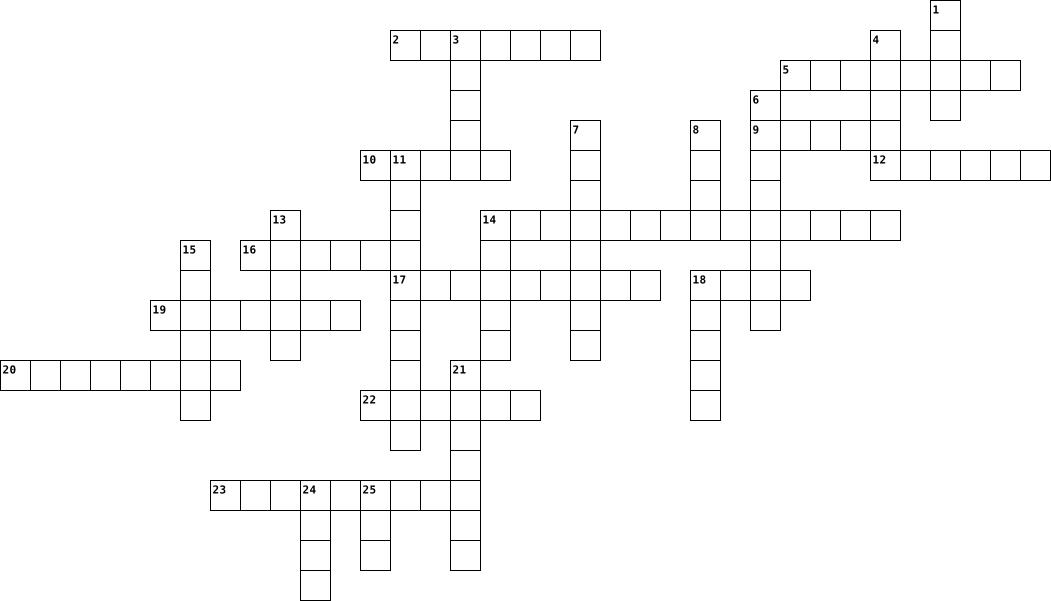
Across
- The money used to start a business
- The type of money that circulates in different countries
- Type of economy that uses elements of all three economies
- Reward paid for unskilled labour
- Goods and services sold to other countries
- The study of individual
- Input factor classified as skilled, semiskilled and unskilled
- Knowledge about the production, consumption, transfer of money
- A good or service that is required for survival
- Created as a result of process
- People who buy your product
- Consumer's desire and willingness to pay a price for good
- The sudden rise in price
Down
- A luxury item
- Amount of money required to pay for a good or service
- Action of buying and selling goods and services
- A person who employ workers to producer goods and services
- The situation that exists when there are not enough resources to meet human wants
- A picture or a symbol representing a business
- Macroeconomics deals with
- How much something is worth
- Valuable things to pay some goods or service
- Where buyers and sellers interact
- Things that are necessary for survival
- Putting money aside to spend on a later date
- Coal is an example of __ factors of production
- The money paid to the government depending on your level of income
27 Clues: A luxury item • The study of individual • The sudden rise in price • Macroeconomics deals with • How much something is worth • People who buy your product • Created as a result of process • Reward paid for unskilled labour • Where buyers and sellers interact • The money used to start a business • Things that are necessary for survival • Goods and services sold to other countries • ...
Business Economics 2022-10-31

Across
- The money used to start a business
- The type of money that circulates in different countries
- Type of economy that uses elements of all three economies
- Reward paid for unskilled labour
- Goods and services sold to other countries
- The study of individual
- Input factor classified as skilled, semiskilled and unskilled
- Knowledge about the production, consumption, transfer of money
- A good or service that is required for survival
- Created as a result of process
- People who buy your product
- Consumer's desire and willingness to pay a price for good
- The sudden rise in price
Down
- A luxury item
- Amount of money required to pay for a good or service
- Action of buying and selling goods and services
- A person who employ workers to producer goods and services
- The situation that exists when there are not enough resources to meet human wants
- A picture or a symbol representing a business
- Macroeconomics deals with
- How much something is worth
- Valuable things to pay some goods or service
- Where buyers and sellers interact
- Things that are necessary for survival
- Putting money aside to spend on a later date
- Coal is an example of __ factors of production
- The money paid to the government depending on your level of income
27 Clues: A luxury item • The study of individual • The sudden rise in price • Macroeconomics deals with • How much something is worth • People who buy your product • Created as a result of process • Reward paid for unskilled labour • Where buyers and sellers interact • The money used to start a business • Things that are necessary for survival • Goods and services sold to other countries • ...
Economics Terms 2022-11-01

Across
- the money you actually get to take home and spend after deductions
- IRS requires employers to report wage and salary information for employees on this form
- one of the official documents (most common one) that US taxpayers use to file their annual income tax
- a document that is provided with each paycheck and that shows the amount of money that the employee earned and the amount that was removed for deductions
- collects income taxes for the Federal Government
- higher rates of tax on higher levels of income
- cash amounts taken out of the emoployee's gress wages that include taxes and contributions
- income received from taxes by a government
- verifies identity and employment authorization of individuals hired for employment in the US
- a federal payroll tax that is deducted from each paycheck for medicare and social security
Down
- if you are an independent contractor or self-employed, the work you do may be the same as an employee, but will recieve an earnings statement on this form
- money an individual or business receives, usually in exchange for providing a good service or through investing capital
- an illegal activity in which a person or entity deliberately avoids paying a true tax liability
- the time period, generally between Jan 1 and April 15 of each year, when individual taxpayers prepare financial statements and reports for the previous year and submit their tax returns
- IRS tax form that is filled out by employees to indicate their tax situation to their employer
- the money you earn before any deduction
- provides for national programs such as national defense, veterans and foreign affairs, social programs, law enforcement, and interest on the national debt
- the amount per hour people are paid
- the amount per year people are paid
- a required payment to a local, state, or national(federal) government
20 Clues: the amount per hour people are paid • the amount per year people are paid • the money you earn before any deduction • income received from taxes by a government • higher rates of tax on higher levels of income • collects income taxes for the Federal Government • the money you actually get to take home and spend after deductions • ...
Economics Vocab 2022-10-27

Across
- helath maintenance organization
- go for sickness or injury
- comes out of your check to provide coverage
- incase of terminal illness proceeds are paid
- date which insurance policy becomes eligible to pay for claims
- set for period and does not build cash value
- person named in life insurance policy who gets proceeds
- application with preexisting poor health or fat
- set fee payed by policy holder for medical expenses
- covers medical expenses bodily injury or death.
Down
- period to sign up for insurance
- amount of money you give to beneficiary
- basic type of permanent life insurance
- package that allows employees to pick their own benefit
- give free money to the needy
- policy issued to one that is expired
- insurance policy without a deductible
- how ling you live
- someone who buys or sells something on their behalf
- amount policy holder must pay within period before insurance pays for coverage
20 Clues: how ling you live • go for sickness or injury • give free money to the needy • period to sign up for insurance • helath maintenance organization • policy issued to one that is expired • insurance policy without a deductible • basic type of permanent life insurance • amount of money you give to beneficiary • comes out of your check to provide coverage • ...
Economics Terms 2022-10-20

Across
- a set of actions to control a nation's overall money supply and achieve economic growth
- the amount a lender charges a borrower and is a percentage of the principal
- occurs when securities are on the rise
- a condition or state in which economic forces are balanced
- a period of increased commercial activity within either a business, market, industry, or economy as a whole
- the value or benefit given up by engaging in that activity, relative to engaging in an alternative activity
- when a company or business grows so large that the costs per unit increase.
- the average tax rate, or amount of tax paid as a percentage of income, decreases as income increases
- the use of government spending and taxation to influence the economy
Down
- monetary measure of the market value of all the final goods and services produced and sold in a specific time period by countries.
- the cost advantages that enterprises obtain due to their scale of operation
- a good that is both non-excludable and non-rivalrous
- commodities that the public sector provides free or cheaply because the government wishes to encourage their consumption.
- a principle of economics that captures the consumer's desire to buy the product or service
- the rate of increase in prices over a given period of time
- occurs when securities fall for a sustained period of time
- a tax where the. average tax rate, or the total amount of. tax paid as a percentage of income, increases as the taxpayer's income. increases.
- when a supplier sets a fixed price for a good or service for a certain time period
- a significant decline in economic activity spread across the market
- the total amount of a given product or service a supplier offers to consumers at a given period and a given price level.
20 Clues: occurs when securities are on the rise • a good that is both non-excludable and non-rivalrous • the rate of increase in prices over a given period of time • occurs when securities fall for a sustained period of time • a condition or state in which economic forces are balanced • a significant decline in economic activity spread across the market • ...
ECONOMICS TERMS 2022-09-08

Across
- the funds collected from taxes on income and profits
- a person who receives and lives on a pension
- money entering the circular flow
- money leaving the circular flow
- the number of people unemployed expressed as a percentage of the labour force
- the currency of Australia
- when people are in-between jobs
- the total amount of a given product or service a supplier offers to consumers at a given period and a given price and level.
- quantity of consumers who are willing and able to buy products at various prices during a given period of time.
- the monetary values of goods and services that producers and consumers purchase
- an estimate of income in a set period of time
- the demand for a good or service is greater than the availability of the good or service.
- a percentage of income is levied by the government
- abbreviation for gross domestic product
- a sustained period of weak or negative growth in real GDP (output) that is accompanied by significant rise in the Unemployment rate
- a spendable income after receiving gov welfare and paying personal income tax.
Down
- a graphical representation of the distribution of income or wealth.
- a strategy in attempting to settle an issue
- discouraged job seekers who are no longer actively seeking for work
- total amount of income generated by the sales of goods and services.
- an unemployment caused by automation and technology
- FOREIGN made goods and services purchased by Australian households, businesses, governments or other organisations
- a sector where people spend money on products not produced in Australia, so money flows out (import) or money flows in (export)
- C+I+G1+G2+X-M = GDP
- consists of those aged over 15 years who are actively employed & those who are unemployed but are actively seeking paid employment.
- consumer confidence increasing, disposable income increasing, interest rates decreasing are all factors of..
- instead of spending income, consumers put it into their own savings and store it
- money received for work or through investments
- AUSTRALIAN made goods and services purchased by foreign households, businesses, governments, and other organisations
29 Clues: C+I+G1+G2+X-M = GDP • the currency of Australia • money leaving the circular flow • when people are in-between jobs • money entering the circular flow • abbreviation for gross domestic product • a strategy in attempting to settle an issue • a person who receives and lives on a pension • an estimate of income in a set period of time • ...
Economics Crossword 2022-09-09

Across
- income remaining after deduction of taxes
- transfer of goods and services from one person or entity to another
- More than what is needed (more supplies than demand)
- Jobs replaced by machinery
- efficiency of production of goods or services
- and services
- The people who work in for a business
- Loss of other alternatives for the best option
- Being unemployed longer than a year
- A person who purchases goods and services for certain uses
- As profits go up, your payback will increase
- studies of production, distribution, and consumption of goods and services.
- an organization that provides something needed such as a product
- An amount the lender charges a borrower and is a percentage of the principle = the amount loaned
- the amount paid or charged for something
- Having a job over the age of 15
- an item used that is generally accepted as payment for
- converting one currency to another
- any resource owned or controlled by a business or an economic entity
- People bouncing between jobs
- Increase in Income received after interest rate goes down
- replacing a product for a similar product e.g sprit instead of fanta
- Term used to designate the situation of those who are able to find employment only for shorter than normal periods
Down
- temporary economic decline
- amount paid to employees wages
- lack Of AD
- Limited resources irrespective to our unlimited wants
- Few competitors selling product who are generally price makers
- Unique seller of the one product, the price maker
- paying others to handle products
- Receiving goods from overseas
- fairness in economics
- When people are optimistic and pessimistic about their future spending
- monetary measure of the market value of all the final goods and services
- Not Having a Job
- Amount of money that a government requires people to pay according to their income
- Amount of people in a certain place
- Changes in climate that affect supplies
- quantity of a good that consumers are willing to purchase at various prices during a given period of time and place.
- Sending Goods overseas to buyers
- Importation of materials to be used for the product
- anything that has utility and adds value to your life
42 Clues: lack Of AD • and services • Not Having a Job • fairness in economics • temporary economic decline • Jobs replaced by machinery • People bouncing between jobs • Receiving goods from overseas • amount paid to employees wages • Having a job over the age of 15 • paying others to handle products • Sending Goods overseas to buyers • converting one currency to another • ...
ECONOMICS CROSSWORD 2022-11-18

Across
- minimum price set by the government
- producers should produce less, buyers should buy more
- quantity supplied is less than quantity demanded
- quantity supplied is greater than quantity demanded
- The M in GROOM
- First O in GROOM
- Second O in GROOM
- Price goes Up quantity demanded goes down (vise versa)
- ideal price for sellers and buyers
- R in GROOM
Down
- interaction of buyers and sellers
- G in GROOM
- I in Bride
- producers should produce more, buyers should buy less
- B in BRIDE
- a certain quantity of a good or service
- maximum price set by the government
- D in Bride
- R in BRIDE
- consumer's desire and willingness to buy a product or service
- E in Bride
21 Clues: G in GROOM • I in Bride • B in BRIDE • D in Bride • R in BRIDE • E in Bride • R in GROOM • The M in GROOM • First O in GROOM • Second O in GROOM • interaction of buyers and sellers • ideal price for sellers and buyers • minimum price set by the government • maximum price set by the government • a certain quantity of a good or service • quantity supplied is less than quantity demanded • ...
Economics Vocabulary 2022-11-28

Across
- Type of resource made up of people
- Having too much supply
- The people Factor of Production
- How much of something is available
- Affects prices based on the number of stores selling the same product
- People who buy and use goods
- Limited resources, not having enough supply
- Digging for Minerals
- What you give up when making a choice
- The amount people want
- Something someone does for you (can’t touch)
- A good or tool used to make another good or service
- Can’t live without it
- Factor of Production found in Nature
- People who manufacture or make goods
Down
- Making goods often in a factory
- Shipping OUT of goods
- Depend on one another for certain things
- Importing and Exporting goods through a port
- A desire, can live without it
- Type of resource found in nature
- Something you consume or use (can touch)
- Shipping IN goods
- Another word for farming
- Factor of Production that makes the decisions and creates the idea
25 Clues: Shipping IN goods • Digging for Minerals • Shipping OUT of goods • Can’t live without it • Having too much supply • The amount people want • Another word for farming • People who buy and use goods • A desire, can live without it • Making goods often in a factory • The people Factor of Production • Type of resource found in nature • How much of something is available • ...
Economics Crossword 2016-09-26

Across
- What is scarce?
- The service sector
- Finite resources
- The decisions that have to be made because we cant have everything
- What the Government distributes to people
- Things that are infinite
- The people who decide what they want
- Human input into produce
- Ideas and risk takers in business'
- Something essential to have to stay alive
- Goods used to produce others
Down
- Intangible e.g. services
- Raw materials being manufactured
- Those who use recourses in order to supply wants
- Combining recourses in order to produce output that will satisfy
- Something physical (you can touch it)e.g. goods
- What factories are built on and the resources used from it
- The cost of things
- Extraction of raw materials
- What is available to provide people with
- Wants of the public
21 Clues: What is scarce? • Finite resources • The service sector • The cost of things • Wants of the public • Intangible e.g. services • Things that are infinite • Human input into produce • Extraction of raw materials • Goods used to produce others • Raw materials being manufactured • Ideas and risk takers in business' • The people who decide what they want • ...
Economics Crossword 2016-11-06

Across
- a firm who has some control over the price it charges.
- when resources are used to secure monopoly rights through the political process
- The opportunity cost of doing business.
- Refers to the way firms in a market relate to each other.
- Man-made resources used to create the final product.
- Tangible out-of-pocket costs.
- Restrictions that make it difficult for a new firm to enter a market.
- Additional revenue generated by the production and sale of one more unit of output.
- Costs that do not vary with a firms output in the short run.
- The amount of money a firm receives from selling a product.
- When a small number of firms sell a product in a market with high barriers to entry.
- The things a firm needs to make its output.
Down
- Occurs when a markets result of production is inefficient.
- Where firms have little to no market power.
- Incremental changes.
- An entity having the exclusive right or control over the selling of a product.
- Involves breaking up a job into tasks and assigning those tasks to individuals.
- The increase in cost that occurs from producing one additional unit of output.
- A person who conceives and starts a business.
- Things that convey information about profitability of various markets.
20 Clues: Incremental changes. • Tangible out-of-pocket costs. • The opportunity cost of doing business. • Where firms have little to no market power. • The things a firm needs to make its output. • A person who conceives and starts a business. • Man-made resources used to create the final product. • a firm who has some control over the price it charges. • ...
Economics System 2016-11-14

Across
- general level of pricing and services are rising while the purchasing power of currency is falling.
- is an economic principle that describes a consumer's desire to pay an amount of money for a products.
- which a good or service is offered in the market place.
- an entrepreneur have the rights plan out the production,investments, and incomes for their business.
- the basic needs and facilities(ex: roads,buildings and etc) needed for the operation of a society.
- a part of economics concerned with single factors and the effects of individuals decisions.
- an economy in which everything (production,investments,prices,and incomes) are determined by the government.
- level of wealth,material goods,and necessities available to a certain economics class in certain geographic area.
- a state in which opposing forces or influences are balanced.
Down
- an economic that is both private and public ownership.
- the state of being scarce or in short supply.
- a person who purchase needs and wants for personal uses.
- a part of economics concerned with large-scale/general factors such as interest rates and national productivity.
- a stock or supply of money and other assets can be drawn on by a person or a group of organization.
- a person.company, or an group of organization that makes and grow supplies and demands.
- a financial gain.
- a person who is willingly takes the risk to organizes,manage, and open a business.
- a material that satisfies the consumers wants and needs and provide utility.
- is an area of the production,distribution,or trade, and consumption of goods and services.
- make needs and wants available to the consumers.
20 Clues: a financial gain. • the state of being scarce or in short supply. • make needs and wants available to the consumers. • an economic that is both private and public ownership. • which a good or service is offered in the market place. • a person who purchase needs and wants for personal uses. • a state in which opposing forces or influences are balanced. • ...
Economics Vocabulary 2016-11-14

Across
- Anything with monetary value that can be used for your business
- The rate at which the prices for goods and services rises and falls, and how valuable money is
- The part of economics concerned with large-scale economic factors
- A person, group, or country that makes things to sell
- When there is not enough supply for the demand
- Taking a risk and starting a business on your own
- A state where the market supply and demand balance each other and prices become stable
- How much of a product people overall want or need
- The difference between the cost of your products and the amount of money earned
- An economic system where a country's trade and industry are controlled by private owners for profit rather than the state
- A supply of money, materials, and other assets used for a business to function effectively
- Tangible things bought, sold, and exchanged
Down
- Added value to a product
- The price of a commodity when sold in a given market
- The basic structures and facilities needed for a society or enterprise to function
- This measures the amount of goods and services(or real gross domestic product) produced by an hour of labor
- The total value of goods produced and services provided in a country during one year
- The part of economics concerned with single factors and the effects of individual decisions
- A person who purchases and uses something
- The degree of wealth and material comfort available to a person or community
- Intangible acts bought, sold, or exchanged
- How much of a product is available
22 Clues: Added value to a product • How much of a product is available • A person who purchases and uses something • Intangible acts bought, sold, or exchanged • Tangible things bought, sold, and exchanged • When there is not enough supply for the demand • Taking a risk and starting a business on your own • How much of a product people overall want or need • ...
Economics quiz 2018-02-05

Across
- rate Rate at which Central Bank lends money to its clients against government securities
- A grant or a financial support
- Acquisition tactic to obtain a controlling interest in a target by buying shares at a premium from target shareholders
- Setting the price of a good below the market price
- clause Let the old rules apply to the present add new rules to the future
- Develop and grow keeping in mind that important for our future generations too
- the most important leather bag in meaning or An estimate of income and expenditure for a set period of time
- GDP Index of economic growth with environmental consequences of that growth factored into total value of goods and services produced within a country
- It is heavily priced and high in demand you can't buy it until and unless you have Deep pockets
- Act of stripping a currency unit of its status as a legal tender
- Bank The old banker to every Indian
- Market value less the amount of loan received
Down
- Possession of mortgage property when the mortgage fails to keep up there money payments
- Guarantee against the loan
- deficit More expenditure less revenue
- Deliberate adjustment to the value of currency related to the another currency
- Link your phones with it as soon as possible
- A part of a cycle which has four wheels
- Market of gold products
- Marshall Economics is the study of mankind in the ordinary business of life JM keynes Dig the Wells and fill it
- My actions either good or bad will affect you without being paid or penalised
- effect In the time of crisis consumers buy less costly luxury goods
- The watch dog
- Nash A beautiful mind originates the Game Theory
- Stock market Catastrophe that took place on September 24 1869 After a period of rampant speculation the price of gold plummeted and market crashed
- Famous cartel of 14 countries found in 1960
- Transfer Or reversion of estate assets to the state when the holder dies without declaring a will or legal heir
27 Clues: The watch dog • Market of gold products • Guarantee against the loan • A grant or a financial support • Bank The old banker to every Indian • deficit More expenditure less revenue • A part of a cycle which has four wheels • Link your phones with it as soon as possible • Famous cartel of 14 countries found in 1960 • Market value less the amount of loan received • ...
Development Economics 2019-04-11

Across
- Aid given directly from one government to another
- A firm that owns production units in more than one country. Mainly parent company in North America, Japan and Europe
- Areas such as good roads, railways, gas, electricity, water, schools, hospitals and housing need to be in place for development to occur
- A deliberate effort to replace major consumer imports by promoting the emergence and expansion of domestic industries such as textiles, shoes and household appliances.
- Loans that are given at an interest rate that is below market rates, or where repayments are delayed to after a certain date
- A system protecting people’s property rights needs to be in place to enable security to investors and also landowners
- Organization of Economic Co-operation and Development.
- The practice of giving small loans to individuals who otherwise would be excluded from the finance sector, and would have to resort to loan sharks. Usually based on a group responsibility, predominantly women
- Foreign aid in the form of bilateral loans or grants that require the recipient country to use the funds to purchase goods and services from the donor country
Down
- Encourages free trade in goods and the free movement of capital and labor.
- A transfer of funds to a foreign country by a local citizen or business.
- Aid given through a multilateral agency like the World Bank, Regional Development Bank and UN agencies.
- The need to protect newly formed industries until they can compete on the international market. Tariffs can be removed once they are large enough and efficient enough.
- are centered on three areas - Increased use of market mechanism, Devaluation of exchange rate and, Deflation of the economy
- An autonomous financial institution that originated in the Bretton Woods Conference of 1944.
- An outright transfer payment , usually from one country to another (Foreign aid); a gift of money or technical assistance that does not have to be repaid.
- two distinct economies i. CBD usually modern and somewhat similar to MDC’s and ii. slums (RIO, Bombay and Manila) which often have informal markets
- A non government agency examples Oxfam, Care, Red Cross. NGO’s are often considered better at dealing with poor people in villages and slums.
- The connection between low incomes, low savings, low investment and so on and the idea that poverty perpetuates itself from one generation to the next
- Overseas investment by multinational corporations
- Net disbursements of loans or grants made on concessional terms by official agencies of member countries of the OECD
21 Clues: Aid given directly from one government to another • Overseas investment by multinational corporations • Organization of Economic Co-operation and Development. • A transfer of funds to a foreign country by a local citizen or business. • Encourages free trade in goods and the free movement of capital and labor. • ...
ECONOMICS PUZZLE 2019-07-13

Across
- SUBJECTIVE IN NATURE
- WHERE ECONOMIC ACTIVITIES OCCUR
- DERIVED FROM GREEK WORD MEANING HOME MANAGEMENT
- IT IS MEASURED COLLECTED REPORTED AND ANALYSED
- OWNER OF FACTORS OF PRODUCTION
- HIGHEST CONTRIBUTOR TO GDP
- LUXURY GOOD
- IMMOBILE IN NATURE
- SHOWS COMBINATION OF TWO GOODS TO BE PRODUCED
- A BENEFIT GIVEN BY GOVERNMENT FOR INCREASING PRODUCTION
- DOWNWARD AND UPWARD MOVEMENT OF GDP
- GROUP HAVING COMMON CURRENCY
- STORE OF VALUE
- REMUNERATION TO LAND
Down
- OCCURS DUE TO RISE IN INPUT PRICES
- UNLIMITED IN NATURE
- PRODUCED MEANS OF PRODUCTION
- INTEGRATION OF AN ECONOMY WITH THE WORLD ECONOMY
- SINGLE SELLER
- PRESENT IN A CAPITALIST ECONOMY
- IT IMPLIES BALANCE
- USED IN BEST POSSIBLE MANNER
- PRIMARY SECTOR
- BUILDINGS,ROADS AND BRIDGES
- NUMERICAL FACTS
- VARIABLE FACTOR OF PRODUCTION
- IT HAS A SHAPE
- LIMITED IN NATURE
28 Clues: LUXURY GOOD • SINGLE SELLER • PRIMARY SECTOR • IT HAS A SHAPE • STORE OF VALUE • NUMERICAL FACTS • LIMITED IN NATURE • IT IMPLIES BALANCE • IMMOBILE IN NATURE • UNLIMITED IN NATURE • SUBJECTIVE IN NATURE • REMUNERATION TO LAND • HIGHEST CONTRIBUTOR TO GDP • BUILDINGS,ROADS AND BRIDGES • PRODUCED MEANS OF PRODUCTION • USED IN BEST POSSIBLE MANNER • GROUP HAVING COMMON CURRENCY • ...
ECONOMICS CROSSWORD 2019-09-04

Across
- competition no participants are large enough to have the market power to set the price of a homogeneous product.
- advantage the ability of an individual or group to carry out a particular economic activity more efficiently than another individual or group.
- the state of being scarce or in short supply; shortage.
- an insistent and peremptory request, made as if by right.
- a company or group of people authorized to act as a single entity (legally a person) and recognized as such in law.
- enterprise system freedom of private business to organize and operate for profit in a competitive system without interference by government beyond regulation necessary to protect public interest and keep the national economy in balance.
- the activity of setting up a business or businesses, taking on financial risks in the hope of profit.
- flow model illustrates the movement of goods and services in an economy.
- competition industry in which many firms offer products or services that are similar, but not perfect substitutes.
- the exclusive possession or control of the supply of or trade in a commodity or service.
- a general increase in prices and fall in the purchasing value of money.
- a state of limited competition, in which a market is shared by a small number of producers or sellers.
Down
- cycle a cycle or series of cycles of economic expansion and contraction.
- rights the exclusive authority to determine how a resource is used, whether that resource is owned by government or by individuals.
- advantage the ability of an individual or group to carry out a particular economic activity (such as making a specific product) more efficiently than another activity.
- a stock or supply of money, materials, staff, and other assets that can be drawn on by a person or organization in order to function effectively.
- price market price that represents a state of perfect balance between supply and demand.
- an association of two or more people as partners.
- the process of concentrating on and becoming expert in a particular subject or skill.
- of production three basic resources or factors of production: land, labor, and capital.
- an area or arena in which commercial dealings are conducted.
- system a system of production, resource allocation and distribution of goods and services within a society or a given geographic area.
- anything in demand that is sold in a competitive marketplace, supply is most used to refer to goods, services, or labor.
- cost the loss of potential gain from other alternatives when one alternative is chosen.
- proprietorship an unincorporated business owned by one individual, making it the simplest form of business to start and operate.
25 Clues: an association of two or more people as partners. • the state of being scarce or in short supply; shortage. • an insistent and peremptory request, made as if by right. • an area or arena in which commercial dealings are conducted. • a general increase in prices and fall in the purchasing value of money. • ...
Economics Crossword 2023-05-25

Across
- Anything that has value and can retain value over time.
- A point of transition in the business cycle from contraction to expansion.
- The use of government revenue collection and expenditure to influence a country's economy.
- The quantity of goods and services that may be acquired by a given level of income at a given level of prices.
- The amount of money that a bank has in reserve that it can loan
- Deliberate changes in government spending and tax collection designed to achieve full employement, control inflation, and encourage economic growth.
- Goods that deliver consumption services over an extended period of time.
- Growth in aggregate output
- The amount of a good or service that producers are willing and able to produce at different prices.
- A relationship between real GDP and the price level
- GDP measured at current prices
- The use of resources of an individual, firm, region, or nation to produce one or a few goods or services rather than the entire range.
- A higher price level increases the demand for money.
- Change in spending causes an even larger increase in GDP than the initial change in spending.
- The percentage of extra income that's consumed
- Something tangible that satisfies our wants and needs
Down
- The amount of income that households have left over after paying their personal taxes.
- An increase in household debt will increase consumer spending
- The percentage of income that's saved
- Something intangible that satisfies our wants and needs
- The purchase of capital goods.
- The dollar value of all final goods and services produced within a country in one year.
- Expectations of higher future income or higher future prices will increase consumer spending.
- A rise in the general level of prices
- The amount of money that a bank must keep in reserve and not loan out.
- The purchase of foreign produced goods and services by domestic buyers
26 Clues: Growth in aggregate output • The purchase of capital goods. • GDP measured at current prices • The percentage of income that's saved • A rise in the general level of prices • The percentage of extra income that's consumed • A relationship between real GDP and the price level • A higher price level increases the demand for money. • ...
Economics Vocab 2023-05-09

Across
- document
- medicare
- average
- after
- compensation
- verify
- fileform
- before
- withheld
- generated
Down
- recieved
- subtracted
- mandatory
- 12-months
- payment
- illegal
- service
- information
- annual
- different
20 Clues: after • verify • annual • before • payment • illegal • service • average • recieved • document • medicare • fileform • withheld • mandatory • 12-months • different • generated • subtracted • information • compensation
Home Economics 2023-06-02

Across
- The kitchen equipment you bake in
- The kitchen equipment you cook on
- A liquid on high heat with big bubbles
- The Swedish word for dish brush
- The Swedish word for electric hand mixer
- Using your hands to mix dry and wet ingredients
- Tool to weigh dry ingredients
- You can turn on the ___ to take a way smell from cooking
- Using medium heat to fry food
- 5 dl of milk is measure with a measuring ___
- Heat up the oven before use
Down
- The tool to make whipped cream with
- Tool to chop food on
- The safety tools to take hot food with from the oven
- Using an oven to heat food
- You do the dishes with ___ water
- Using a pot to make a solid item liquid
- The tool used to take the peel away
- 1 Tbsp of flour is measured with a measuring ___
- We use a ______ to dry the aprons and towels in
- The Swedish name for sponge
- The Swedish word for electric hand blender
- The Swedish word for a tool you use for drying after washing up
- The place you store ice creams in
24 Clues: Tool to chop food on • Using an oven to heat food • The Swedish name for sponge • Heat up the oven before use • Tool to weigh dry ingredients • Using medium heat to fry food • The Swedish word for dish brush • You do the dishes with ___ water • The kitchen equipment you bake in • The kitchen equipment you cook on • The place you store ice creams in • ...
economics crossword 2023-05-31

Across
- price of living cost based on changes in retail prices
- the ________ confirms the individuals position at the fed
- where buyers and sellers exchange equity
- an act that someone is willing to pay for
- total value of goods and services produced by a country's economy
- a product ready for sale
- a system that gives people money who have low or no income that you can be eligible for when you're in your 60s
- anything found on earth
- the highest price
- people who are willing to work
- advocates for shielding a country's domestic industries
- any one 16 and above who are trying to find a job but can't
Down
- A decline in production and employment
- someone who starts a business
- prices rising at an extremely high rate
- lowest legal price for something
- the government spends more than it makes
- the government makes more than it spends
- reserve sets monetary policy for the economy to thrive
- high inflation and economic stagnation
- tools used to make other goods
- the branch in charge of deciding to print money
- prices going up at a high rate
- any physical product that people are willing to buy
- the ______ nominates members to the fed
25 Clues: the highest price • anything found on earth • a product ready for sale • someone who starts a business • tools used to make other goods • prices going up at a high rate • people who are willing to work • lowest legal price for something • A decline in production and employment • high inflation and economic stagnation • prices rising at an extremely high rate • ...
Economics Review 2023-05-31

Across
- Is the united states current income taxes system
- When people lose their job due to changes in the season
- Use the consumer price index to calculate this
- The amount of a good or services that produces are able to produce
- The amount of a good or service that consumers are willing to buy at different prices
- The employed people plus unemployed people
- The feds use this policy when there is high inflation
- Inflation ___ people who save money and loan money to others
- When the unemployment rate is greater than 5 percent
- Goods that are bought but resold later on
- The price of products change causing shift in the supply curve
- The amount of money that people make
- People in other countries who buy american made goods or services
Down
- People who take the risk to start up there own business
- When the feds increase or decrease the money supply
- High inflation and recession combined
- Cost of the next best thing
- When price change and cause a big change in quantity demand
- Land,labor,capital, entrepreneurship are called what
- The government plan on how it is going to spend is money it makes from tax
- Inflation at a really high rate that is uncontrollable
- decreasing satisfaction of one more unit of the same resource
- Believed the government should not be active during times of recession or high inflation
- Was not in favor of free trade and wanted to keep americans money in america
- The government pays this to people who are retired, old age, and disabled
- Acts as a bank for the US Government, supervise banks, increase or decrease money
26 Clues: Cost of the next best thing • The amount of money that people make • High inflation and recession combined • Goods that are bought but resold later on • The employed people plus unemployed people • Use the consumer price index to calculate this • Is the united states current income taxes system • When the feds increase or decrease the money supply • ...
Economics Crossword 2023-08-15

Across
- not fully utilising resources (in terms of labour)
- how optimistic or pessimistic businesses are in regards to their spending and investments
- measures the value of final goods and services produced in Australia at current prices
- a form of employment where a person's skills are not being fully utilised in their position or job
- A market structure where there are a few businesses that dominate the market that also set prices and producer sovereignty
- characterised by inflation, high employment and incomes, high consumer confidence, decreased government spending
- a business whereby the owner licences its operations—along with its products, branding, and knowledge—in exchange for a franchise fee
- a larger form of unemployment that occurs due to aggregate supply and is always occuring
- The people that are not counted or considered in employment statistics.
- characterised by two negative GDP growths, deflation, high unemployment, and increased government spending
- a situation in which someone chooses not to work, either because they will not take a job with low pay, or they are satisfied with the amount they receive from the government in benefits while not working.
- increased deflation, a decrease in GDP, higher unemployment, and some business bankruptcies
- they promote competition and fair trading and regulates national infrastructure to make markets work for everyone.
- This form of unemployment refers to unemployment via industrial reorganisation, typically due to technological change.
- goods that are utilised by the customer jointly and are useless when used alone
- occurs among individuals who have been without a job for a relatively long time, usually due to disability or criminal records.
- a market where essentially infinite businesses compete within a market and adheres to the supply and demand of consumers and suppliers
- a natural form of unemployment that occurs due to a lack of aggregate demand (AD), and continually fluctuates as a business cycle does.
- the purchase of equipment, machinery and inventory (capital goods and services, and spending)
- an economic cycle which refers to economic fluctuations between periods of expansion and contraction and apexing at peaks and recessions
- the total amount of a given product or service a supplier offers to consumers at a given period and a given price level
- a global marketplace for exchanging national currencies
- a increase in the general price level of goods and services in an economy due to greater demand than supply
- the mean of all wages earned by employees over a 7 day period
- a deterrent placed by the government on specific goods and services like cigarettes, alcohol, or fuel/patrol
- the percentages that indicate how much extra money a householder that is paying a loan with interest needs to pay back when you borrow money or how much you earn when you save or invest money
- regarded by the customer to be the same, such that they may be used in place of one another and deliver the same amount of satisfaction.
- goods and services purchased by Australia that are manufactured overseas
- characterised by some inflation, decreasing unemployment rates, and increases in GDP
- occurs when the economy is consistently growing between 3-3.5%
- the unemployment which exists due to people being in the process from moving one job to another, or in between jobs.
Down
- Those people who are actively looking for work but cannot find it
- Spendable income after receiving government support and paying personal income tax, available to spend on whatever one wishes.
- when people are unemployed at particular times (seasons) of the year when demand for labour is lower than usual.
- materials or substances used in the primary production or manufacturing of goods
- all persons aged 15 years and above who are able and willing to work. It includes those persons classified as as employed and those who are unemployed
- the percentage of the labour force over that of the poulation
- a market structure where one business dominates the consumer market and prices are set by the business because there is no competition
- the percentages at which your income or certain transactions are taxed by the government.
- What homeowners are spending on final products that aren’t investments (an increase can occur via a promotion/wage increase or a decrease in tax rates). It comprises approximately 60% of AD in Australia.
- the ratio from inputs to outputs. Inputs can be either material goods or factors of production (capital and labour) used to produce goods and services
- relates to a consumer's desire to purchase goods and services and willingness to pay a specific price for them
- the increase in the number of people living in a specific area over a certain period of time.
- goods and services that are made in Australia and purchased by foreign residents
- the money you set aside from your income instead of spending it immediately. It's usually kept in a bank or other financial institution to use for future needs or goals.
- A product in the market can be affected by its ability to produce
- the largest portion of tax that goes to the government; imposed on income
- the living standards/non-material living standards
- among individuals who have been without a job for a relatively long time, usually due to disability or criminal records.
- is the better measure of GDP an inflation-adjusted measure that reflects the value of all goods and service
- Rate The price or value of our currency when swapped for other currencies.
- a decrease in the general price level of goods and services in an economy due to lesser demand then supply
- money you earn from various sources, such as your job, investments, or business activities. It's the total amount of money coming in before any expenses or taxes are deducted.
- defined as being without paid work and/or have been looking for working, for a year or more.
- having a job or being engaged in work for which you receive payment or compensation.
- a form of measuring how many goods and services people purchase over a given time period (usually measured monthly, quarterly, or annually). It suggests that as the price falls, demand increases, and vice versa.
- how optimistic or pessimistic consumers are in regards to their spending and purchases
- a tax imposed by one country on the goods and services imported from another country
- When the maximum level of employment is achieved without triggering excessive inflationary pressures, or when cyclical unemployment is at 0% and the unemployment rate is at the NAIRU of 4.25%. Any statistics under or above the NAIRU of 4.25% is not reaching the goal as it triggers excessive inflationary pressures.
- a tax charged on corporate income in Australia
60 Clues: a tax charged on corporate income in Australia • not fully utilising resources (in terms of labour) • the living standards/non-material living standards • a global marketplace for exchanging national currencies • the percentage of the labour force over that of the poulation • the mean of all wages earned by employees over a 7 day period • ...
Economics Crossword 2023-12-19

Across
- a partnership where one partner makes management decisions, and the other has limited liability
- company that can traverse borders of multiple nations
- multiple firms working to fix prices
- a company managed by a single person, often ends with their death
- a type of competition marked by many buyers and sellers with identical goods and no control over price
- company that sells multiple unrelated products
- a card allowing users to buy now pay later
- a type of competition marked by a small number of big corporations
- a stock market index with prominent tech companies
- a single seller has domination of the market of a specific good
Down
- what you would call water pollution as the result of a new recycling plant
- when the price of one good increases, demand for this other good increases
- goods when the price of one good decreases, demand for this other good increases
- a type of competition marked by slight variation in goods
- government agency to protect investors, manages the stock market
- goods demand for this decreases as income increases
- inflation and unemployment increases
- a card allowing users to purchase with funds directly from an account
- an iPhone: designed in California, parts made in China, assembled in the US
- a stock market index with 30 prominent companies
20 Clues: multiple firms working to fix prices • inflation and unemployment increases • a card allowing users to buy now pay later • company that sells multiple unrelated products • a stock market index with 30 prominent companies • a stock market index with prominent tech companies • goods demand for this decreases as income increases • ...
Economics Vocabulary 2024-01-23

Across
- - goods and services
- - the rights of individual to own property with in an economic system
- - a business organization made up of a legal entity owned by individual stockholders
- freedom - the right to make your own economic decisions
- - a business organization owned by two or more people
- - the flow of resources and finished products between businesses and households
- economic system with centrally planed economy and government control
- - a curve that shows alternative ways to use economic resources
- - offering that encourages people to behave in a certain way
- income - rent, wages, interest, and profit
Down
- - using fewer resources than an economy is capable of using
- limited quantities of resources to meet unlimited wants
- expenditure - money spent by households to purchase products
- - economic system with evenly distributed wealth and combined government control and private ownership
- - The market in which households are sellers and businesses are buyers
- - using resources in such a way as to maximize the production of goods and services
- - the market in which businesses are sellers and household are buyers
- - economic cost of choices
- - Land, labor, capital, entrepreneurship
- - economic system with private ownership and very little government intervention
- - the flow of money as income and consumer expenditures between households and businesses
- - the struggle among producers to gain the business of consumers
- - the model showing the flow between households and businesses
- - the sector of the economy that purchases resources and provide products
- - the sector of the economy that provides resources and purchases products
25 Clues: - goods and services • - economic cost of choices • - Land, labor, capital, entrepreneurship • income - rent, wages, interest, and profit • - a business organization owned by two or more people • limited quantities of resources to meet unlimited wants • freedom - the right to make your own economic decisions • - using fewer resources than an economy is capable of using • ...
Economics Vocabulary 2024-01-23

Across
- - goods and services
- - the rights of individual to own property with in an economic system
- - a business organization made up of a legal entity owned by individual stockholders
- freedom - the right to make your own economic decisions
- - a business organization owned by two or more people
- - the flow of resources and finished products between businesses and households
- economic system with centrally planed economy and government control
- - a curve that shows alternative ways to use economic resources
- - offering that encourages people to behave in a certain way
- income - rent, wages, interest, and profit
Down
- - using fewer resources than an economy is capable of using
- limited quantities of resources to meet unlimited wants
- expenditure - money spent by households to purchase products
- - economic system with evenly distributed wealth and combined government control and private ownership
- - The market in which households are sellers and businesses are buyers
- - using resources in such a way as to maximize the production of goods and services
- - the market in which businesses are sellers and household are buyers
- - economic cost of choices
- - Land, labor, capital, entrepreneurship
- - economic system with private ownership and very little government intervention
- - the flow of money as income and consumer expenditures between households and businesses
- - the struggle among producers to gain the business of consumers
- - the model showing the flow between households and businesses
- - the sector of the economy that purchases resources and provide products
- - the sector of the economy that provides resources and purchases products
25 Clues: - goods and services • - economic cost of choices • - Land, labor, capital, entrepreneurship • income - rent, wages, interest, and profit • - a business organization owned by two or more people • limited quantities of resources to meet unlimited wants • freedom - the right to make your own economic decisions • - using fewer resources than an economy is capable of using • ...
Economics Vocab 2024-01-23

Across
- - goods and services
- - the rights of individual to own property with in an economic system
- - a business organization made up of a legal entity owned by individual stockholders
- freedom - the right to make your own economic decisions
- - a business organization owned by two or more people
- - the flow of resources and finished products between businesses and households
- economic system with centrally planed economy and government control
- - a curve that shows alternative ways to use economic resources
- - offering that encourages people to behave in a certain way
- income - rent, wages, interest, and profit
Down
- - using fewer resources than an economy is capable of using
- limited quantities of resources to meet unlimited wants
- expenditure - money spent by households to purchase products
- - economic system with evenly distributed wealth and combined government control and private ownership
- - The market in which households are sellers and businesses are buyers
- - using resources in such a way as to maximize the production of goods and services
- - the market in which businesses are sellers and household are buyers
- - economic cost of choices
- - Land, labor, capital, entrepreneurship
- - economic system with private ownership and very little government intervention
- - the flow of money as income and consumer expenditures between households and businesses
- - the struggle among producers to gain the business of consumers
- - the model showing the flow between households and businesses
- - the sector of the economy that purchases resources and provide products
- - the sector of the economy that provides resources and purchases products
25 Clues: - goods and services • - economic cost of choices • - Land, labor, capital, entrepreneurship • income - rent, wages, interest, and profit • - a business organization owned by two or more people • limited quantities of resources to meet unlimited wants • freedom - the right to make your own economic decisions • - using fewer resources than an economy is capable of using • ...
Humanities Economics 2023-11-10

Across
- taking personal responsibility for consequences of what you purchase and use
- market for infostructure
- convenient to have but is not needed
- money left over from costs
- someone who thinks how there purchase may effect the environment
- the amount of people that want that product
- a place were people gather to buy and sell
- a place where people sell their skills
- the amount that is owed in order to obtain something
- how much of a item is available for use
- amount of money that is required for an item
Down
- someone who studies economics
- a group of people who work together to achieve a goal
- things that a business needs to pay for
- What you miss out on when you buy something else
- what a consumer is entitled to when a item breaks
- relating to the economy
- someone who buys goods or services
- essential to live
- someone who provides a product or service
20 Clues: essential to live • relating to the economy • market for infostructure • money left over from costs • someone who studies economics • someone who buys goods or services • convenient to have but is not needed • a place where people sell their skills • things that a business needs to pay for • how much of a item is available for use • someone who provides a product or service • ...
Economics Vocabulary 2023-08-28

Across
- people or businesses that buy or consume or use products
- the struggle among producers for consumers' money
- a type of economy in which individuals make economic decisions (also called capitalism)
- money a company has left after subtracting the costs of doing business
- people or businesses that make and sell products
- the amount of good or service that is available for use
- the desire for a certain good or service
- the cost of what you have to give up
- a government law or policy that restricts international trade
Down
- a type of economy in which the government has control over all economic decisions
- the business practice of concentrating on a limited number or type of products
- goods produced by a country and sold outside its borders
- goods brought into a country from other countries
- the study of how people get what they want and need
- a word that describes a country with a strong economy and high standard of living
- a limited amount of resources to meet unlimited wants
- the money earned by selling goods and services
- the total value of all goods and services produced in a country in a year
- a tax on imports
- a type of economy influenced by customs and habits and where wants and needs are met by farming and hunting
20 Clues: a tax on imports • the cost of what you have to give up • the desire for a certain good or service • the money earned by selling goods and services • people or businesses that make and sell products • goods brought into a country from other countries • the struggle among producers for consumers' money • the study of how people get what they want and need • ...
Business/Economics 2023-08-24

Across
- the increase in value of an object or investment over time
- represent fractional ownership in a company
- facilitates transactions between buyers, sellers and traders
- someone who takes a risk and sets up a business with an idea
- a system of money specific or common across countries
- Work, normally physical
- Someone who is paid to do something
- a regular payment to a landlord or owner to live/ use something
- Amount of money paid per hour to an employee
- bring goods or services into a country from abroad for sale.
- Sending goods somewhere else
Down
- Money given which has interest applied on it
- A person appointed to manage the financial asstets of a business person etc
- someone who is giving a loan illegally who might target those who cant get loans from banksq
- a small fraction of a company being sold to the public on a trade site
- a percentage of your wage paid to the government
- a system of resources and their value
- to distribute money earned to pay off certain things or to buy things
- the increase of price nation wide
- A place where goods/services are bought and sold
- a percentage of money that is charged extra per agreed time
- make or manufacture from components or raw materials
22 Clues: Work, normally physical • Sending goods somewhere else • the increase of price nation wide • Someone who is paid to do something • a system of resources and their value • represent fractional ownership in a company • Money given which has interest applied on it • Amount of money paid per hour to an employee • a percentage of your wage paid to the government • ...
Business/Economics 2023-08-24

Across
- the increase in value of an object or investment over time
- represent fractional ownership in a company
- facilitates transactions between buyers, sellers and traders
- someone who takes a risk and sets up a business with an idea
- a system of money specific or common across countries
- Work, normally physical
- Someone who is paid to do something
- a regular payment to a landlord or owner to live/ use something
- Amount of money paid per hour to an employee
- bring goods or services into a country from abroad for sale.
- Sending goods somewhere else
Down
- Money given which has interest applied on it
- A person appointed to manage the financial asstets of a business person etc
- someone who is giving a loan illegally who might target those who cant get loans from banksq
- a small fraction of a company being sold to the public on a trade site
- a percentage of your wage paid to the government
- a system of resources and their value
- to distribute money earned to pay off certain things or to buy things
- the increase of price nation wide
- A place where goods/services are bought and sold
- a percentage of money that is charged extra per agreed time
- make or manufacture from components or raw materials
22 Clues: Work, normally physical • Sending goods somewhere else • the increase of price nation wide • Someone who is paid to do something • a system of resources and their value • represent fractional ownership in a company • Money given which has interest applied on it • Amount of money paid per hour to an employee • a percentage of your wage paid to the government • ...
Economics Crossword 2023-09-20

Across
- Something that is able to be viewed and is tangible
- Trees are an example of what type of resource?
- The point where prices are fair and there is a good amount of supply; the balance of supply and demand
- The creation of a product, service or process that has not been made before
- Resources that are nice to have, but are not necessary in order to survive
- Amount of supply, good or service, available at a specific price (_____ demanded)
- Equipment, buildings and money are an example of what kind of resource?
- The amount of people who want to purchase goods and services
- Resources necessary for survival
- A good that is of better quality and costs more money (_____ goods)
- Someone who uses, but not always purchases, goods or services; synonym for client
- Aid that a person or organization provides to improve the lives of others, typically in exchange for money
- Amount of demand at a specific price (______ demanded)
- Food, shelter, and water are _____ goods
Down
- Tennis rackets and tennis balls (________ goods)
- A product or service that has become pointless because there are improved versions of it and/or it has become outdated
- Crayola is an example of a producer/consumer?
- Unable to be grasped. (adj.)
- The use of technology, materials or processes to enhance a product, or how it is manufactured and sold
- The amount of a product or service that a company is willing and able to provide at a given time
- The workers who make goods and services (____ resource)
- People or organizations that purchase services or goods
- A curve on a graph used to show the amount of supply (_____ curve)
- A curve on a graph used to show the amount of demand (_______ curve)
- Goods used in place of another good because of a change in circumstances (______ goods)
25 Clues: Unable to be grasped. (adj.) • Resources necessary for survival • Food, shelter, and water are _____ goods • Crayola is an example of a producer/consumer? • Trees are an example of what type of resource? • Tennis rackets and tennis balls (________ goods) • Something that is able to be viewed and is tangible • Amount of demand at a specific price (______ demanded) • ...
Economics Crossword 2023-09-20

Across
- Individuals or entities that purchase goods or services from a business.
- The increase in the general price level of goods and services in an economy over time.
- Products that are typically used together, and the demand for one is linked to the demand for the other, such as smartphones and mobile data plans.
- Products that can replace each other in fulfilling a particular need or want, such as different brands of soda.
- An organization engaged in activities such as producing, selling, or providing goods and services in order to generate profit.
- Abraham Maslow's theory of human motivation categorizes human needs into a hierarchical structure, with basic physiological needs at the base and self-actualization needs at the top.
- The creation or application of new ideas, methods, or technologies to improve products, services, or processes.
- The people who work for a company, including employees, managers, and executives.
- The quantity of a product or service that producers are willing and able to provide at various prices.
- Desires or preferences for goods and services beyond basic needs.
- The quantity of a product or service that consumers are willing and able to purchase at various prices.
- High-end or non-essential products and services.
- The mutual reliance or dependence of different businesses, industries, or individuals on each other within an economic system.
Down
- Raw materials and elements derived from the environment, such as water, minerals, and forests.
- The inputs, including labor, land, capital, and entrepreneurship, used in the production of goods and services.
- No longer in use or relevant, often referring to products, technologies, or practices that have been replaced by newer alternatives.
- Intangible actions or tasks provided by a business to fulfill customer needs or wants.
- A person or entity that purchases and uses goods or services.
- Man-made tools, machinery, and equipment used in the production of goods and services.
- Products or services that are necessary for basic living and well-being, such as food and healthcare.
- Basic requirements for survival and well-being, such as food, clothing, and shelter.
- The creation of a new product, process, or idea.
- products or items that can be touched that are produced and can be bought or sold.
- A business or individual that creates goods or services for sale.
- A state in which the supply and demand for a product or service are in balance, resulting in stable prices.
25 Clues: The creation of a new product, process, or idea. • High-end or non-essential products and services. • A person or entity that purchases and uses goods or services. • A business or individual that creates goods or services for sale. • Desires or preferences for goods and services beyond basic needs. • ...
Applied Economics 2024-05-11

Across
- is the art of turning an item ideas a buisness
- the desire for non essential items
- is a system that combines characteristics of market, command, and traditional economies.
- it is a form of market in which there are large numbers of sellers selling differential product which is simillar in but not homogenous
- a mandotory financial changes or some otjer type of too levy imposed upon a tax payer by a governmental oragnization in order to fund various public expenditures
- is when good is scarce compare to its demand
- is when supply is limited
- this refers to the minimum amount of remuneration that an employer is required to pay wage earn for the work perform during a given period
- the processed material, equipment, and buildings used in production
- A situation where for a particular good supply = demand.
- application of economic theory to determine the likely outcomes associated with various possible courses of action in the real world.
- means single in greek
- resources came from nature that ate used in production
- occurs when demand is greater than supply
- physical and human effort exerted in production
- is a market situation in which there are fer(more that two)seller.
- business take loan to fund capital project and expand thier operation by purchasing fixed and long term assest.
- is the reason why people practice economics
- the limited nature of resources
- an economy in which production, investment, prices, and incomes are determined centrally by a government.
- quantities of particular good or services consumers are willing and able to buy at different possible prices
- a person who purchases goods and services for personal use:
- this law establishes a minimum amount that an employer can pay a worker for one day of labor
- is a system in which the development and distribution of goods and services are determined by customs, traditions, and time-honored beliefs.
Down
- the calculations businesses perform to understand the impact marketing activities have on brand recognition, market position and product and service sales.
- a person who sells something
- is a process and it exist when a group of buyer and seller communicate and exchange goods and services
- it describe how price affect producers
- is a market structure in which large number of sellers sell a homogenous product at a uniform price
- the effort of people involved in production
- an article or substance that is manufactured or refined for sale:
- refers to the value of best alternative
- any economic market that does not meet the rigorous assumptions of a hypothetical perfectly competitive market
- firm is one that producers the entire market supply of a particular good or services
- is a social science that involves the use of scarce resources to satisgy unlimited wants
- a property from which the owner recieves payment from the occupant, known as tenants, in return for occupying or using the properly
- the problem of having unlimited wants but limited resources
- soil and natural resources that are found in nature
- the amount of production what is offered for sales at all possible prices
- is an asset or item acquired with the goal of generating income or appreciation
- the amount of money expected, required, or given in payment for something
- when income goes up consumers bbuy more, and less when income when goes down
- the essentials of life such as food and shelter
- studies the decisions and choices of the individual units and how these decisions affect the price of good in the market
- the greek word for many
- it describe how prices affect consumers
- man-made resources used in the production of goods and services which include machinaries and equipment
- describe economics as a study of mankind in the ordinary buisness life
- is a division of economics that is concerned with the performance of the entire economy
- assemble and then intergrate all the resources needed the money,the people,the buisness model,and the strategy
- it a market situation in which there are two sellers of a commodity
51 Clues: means single in greek • the greek word for many • is when supply is limited • a person who sells something • the limited nature of resources • the desire for non essential items • it describe how price affect producers • refers to the value of best alternative • it describe how prices affect consumers • occurs when demand is greater than supply • ...
Economics Terms 2024-05-09

Across
- type of tax on worker's income/profits
- action of ceasing to work
- type of tax property owners must pay
- type of economy with both private and public enterprises
- products or services seen essentially the same
- human factor of production
- the type of gains on money you make
- investigation of your taxes
- type of cost that changes as volume changes
- plan for how to spend/use your money each month
- endeavoring to start or create a new business
Down
- the charge for the use of borrowed money
- type of cost based on time rather than production or sales
- type of market when stocks go down
- advertising tactic sharing another's experience
- Father of modern Economics
- type of market when there is growth
- shares of companies that you can buy
- occurs when prices rise faster than income
- founder of modern macroeconomics
20 Clues: action of ceasing to work • Father of modern Economics • human factor of production • investigation of your taxes • founder of modern macroeconomics • type of market when stocks go down • type of market when there is growth • the type of gains on money you make • type of tax property owners must pay • shares of companies that you can buy • type of tax on worker's income/profits • ...
APPLIED ECONOMICS 2024-04-23

Across
- - authoritative system
- - man-made resources
- - good and services are in balance
- - best foregone alternative
- - limited nature of resources
- - control over supply
- - equation
- - Focuses on consumers
- - state of equal and balanced
- - efforts of human
- - operates a business
- - Large number of sellers
- - Good is scarce
- - Two seller of commodity
- - easy to enter easy to exit
- - study of how society use scarce resources
- - soil and natural resources
- - most democratic system
- - essential
- - supply is limited
Down
- - He described economic as study of mankind
- - Based on traditions
- - physical and human efforts
- - interaction of buyers and sellers
- - sells a homogeneous product
- - processed material
- - No competition
- - One
- - similar in nature but not in homogeneous
- - problem of having unlimited wants
- - non-essential
- - two
- - Focuses on sellers
- - process of setting prices of good
- - came from nature
- - overall performance
- - Few seller
- - specific type of oligopoly
- - seller
39 Clues: - One • - two • - seller • - equation • - essential • - Few seller • - non-essential • - No competition • - Good is scarce • - efforts of human • - came from nature • - supply is limited • - man-made resources • - processed material • - Focuses on sellers • - Based on traditions • - control over supply • - operates a business • - overall performance • - authoritative system • - Focuses on consumers • ...
hass economics 2024-08-14

Across
- someone who buys goods and services
- things humans need to survive
- the resource to make our wants are limited
- land, labour, capital, enterprize
- creates or provides goods and services
- decrease in prize for goods and services
- something you can see, hold, buy
- long-lasting man-made things used to create goods and survives
- individuals that combine factors of production
- something needed or wanted available to someone
Down
- a person's regular occupation, profession, or trade
- increase of prize for goods and services
- things we desire but don't need to survive
- physical and mental work from people
- choosing between 2 or more things
- money received, especially on a regular basis, for work
- skills,knowledge and effort that someone provides
- an area or arena in which commercial dealings are conducted
- a current currency in the form of coins a notes
- resources that come from a natural environment
20 Clues: things humans need to survive • something you can see, hold, buy • choosing between 2 or more things • land, labour, capital, enterprize • someone who buys goods and services • physical and mental work from people • creates or provides goods and services • increase of prize for goods and services • decrease in prize for goods and services • ...
Economics Terms 2024-03-21

Across
- what to produce, how to produce, how much to produce, and for whom to produce
- the quantity of a good or service consumers are willing and able to buy
- tangible (touchable) things such as food, clothing, cars, MP3 players, and DVDs
- the amount left over after costs are subtracted from the price
- cannot be replaced by nature once they are used
- the quanitity of a good or service offered for sale
- customs, habits, and beliefs determine how the four basic economic questions are answered
- the money or property used to produce goods and services
- food, clothing, shelter
- the people who produce goods or provide services
- a limited supply or amount
Down
- individuals answer the four basic economic questions based on supply and demand
- nonrenewable, inorganic substances taht were formed by Earth's geological processes
- the government controls the economy and answers the four basic economic questions
- can replace themselves over time
- come from nature
- the study of the consumption, production, distribution, and exchange of goods and services
- things that people would like to have to make their lives more comfortable
- activities people do for a fee
- occurs when you give up one thing in order to achieve a more desirable outcome
- the person or business that makes the goods or provides the services
- a person who purchases a product or service
22 Clues: come from nature • food, clothing, shelter • a limited supply or amount • activities people do for a fee • can replace themselves over time • a person who purchases a product or service • cannot be replaced by nature once they are used • the people who produce goods or provide services • the quanitity of a good or service offered for sale • ...
Economics Vocabulary 2024-03-04

Across
- allowances/dependents
- permanent workers/residents
- taken out
- collectors
- tax season
- income based
- before
Down
- reports withholdings
- self employed
- national programs
- money generated
- medicare/social security
- illegal fraud
- money received
- after
- hourly
- money earned minus deductions
- contribution
- annual
- verifies employment
20 Clues: after • hourly • annual • before • taken out • collectors • tax season • contribution • income based • self employed • illegal fraud • money received • money generated • national programs • verifies employment • reports withholdings • allowances/dependents • medicare/social security • permanent workers/residents • money earned minus deductions
Economics katherine 2024-03-01

Across
- goods and services produced domestically and sold to costomers overseas
- the quantity of goods and services that producers are willing ang able to offer for sale
- the skills knoledge and effort provided by a worker
- to much are supplied
- the genral increase in prices of goods and services
- part onwership of a comany
- not enough is supplied
- the quantiy of goods and services that consumers are willing and able to purchace at a given price
- a person who buys things to use
- refers to things that contribue to happiness such as freedom low crime rates access to facilies and free elections
- goods and services that are bought by consumers of a county that are produced overseas
- our needs and wants are unlimited but our economic resources are limited
- a person or buiness who makes and sells for a profit
Down
- the buying and selling of goods and services between diffrent contries
- the way and indervidual busniss or country can focus on the production of a particular good or scirvice
- refures to access to physical goods and services
- the study of how people and society use resorces to saticfy our needs and wats
- the percentage of people who are unemployed out of all the people who are able to work
- refers to how we divide recourses and how these recources are then distributed to consumers
- a person who makes and sells things for a profit
- a given price at a given point in time
21 Clues: to much are supplied • not enough is supplied • part onwership of a comany • a person who buys things to use • a given price at a given point in time • refures to access to physical goods and services • a person who makes and sells things for a profit • the skills knoledge and effort provided by a worker • the genral increase in prices of goods and services • ...
Economics Vocab 2024-02-26

Across
- the quantity purchased varies inversely with price
- table that shows the quantity demanded of a good or service
- the total amount of money that a company earns through the selling of its goods and services, over a time period
- a graph that shows the relationship between price and supply
- the number of goods or services that suppliers will produce and sell at a given market price
- a graphical representation of the relationship between the price of a good or service and the quantity demanded for a given period of time
- an expense that changes in proportion to production output or sales
- a graph that shows the relationship between price and supply
- the change in total production cost that comes from making or producing one
- a product or service that consumers see as essentially the same or similar-enough to another product
- the cost that is required to produce a product
- an item that becomes less desirable as the income of consumers increases
- the static quantity of a good or service when its price changes
- an economic concept used to measure the change in the aggregate quantity demanded of a good or service in relation to price movements of that good or service
- the use of population data as a way to study the patterns of behavior among groups of people that impact the economy
- an economic theory that predicts how the price of goods and services affects their supply
- indicators that show us the current trends in the economy
- as the price of a good or service increases, the quantity of goods or services increases
- adding an additional factor of production results in smaller increases in output
- a tabulation of the quantity of a good that all consumers in a market will purchase at a given price
- takes place when the demand and subsequent sales numbers for a particular product decrease as the result of a price increase
Down
- taxes levied on specific goods or services like fuel, tobacco, and alcohol
- a direct or indirect payment to individuals or firms, usually in the form of a cash payment from the government or a targeted tax cut
- all variables are the same
- the change in output that results from employing an added unit of labor
- the increase in revenue that results from the sale of one additional unit of output
- average fixed cost equals the total variable cost per unit of produced quantity
- describes how an increase in income can change the quantity of goods that consumers will demand
- The scenario where the additional unit of a variable factor of production results in higher output per unit, given that all other factors are constant
- rules that limit who can enter a business (entry controls) and what prices they may charge
- costs that are independent of volume
- measures how much the quantity supplied of a good or service changes when there is a price change
- a given percentage change in price leads to an equal percentage change in quantity demanded or supplied
- the degree to which demand responds to a change in an economic factor
- a good that adds value to another good when they are consumed together
- ongoing expenses incurred from the normal day-to-day of running a business
- a good that experiences an increase in demand due to an increase in a consumer's income
- a table that lists the quantity supplied for a good or service that suppliers throughout the whole economy are willing and able to supply at all possible prices
- An increase in orders and shipments of capital good
- a table that shows the quantity supplied at each price
40 Clues: all variables are the same • costs that are independent of volume • the cost that is required to produce a product • the quantity purchased varies inversely with price • An increase in orders and shipments of capital good • a table that shows the quantity supplied at each price • indicators that show us the current trends in the economy • ...
Economics Crossword 2024-02-26

Across
- a product or service that consumers see as essentially the same or similar-enough to another product
- an economic theory that predicts how the price of goods and services affects their supply
- table that shows the quantity demanded of a good or service
- the change in output that results from employing an added unit of labor
- a good that experiences an increase in demand due to an increase in a consumer's income
- the static quantity of a good or service when its price changes
- a table that shows the quantity supplied at each price
- the use of population data as a way to study the patterns of behavior among groups of people that impact the economy
- a direct or indirect payment to individuals or firms, usually in the form of a cash payment from the government or a targeted tax cut
- a graphical representation of the relationship between the price of a good or service and the quantity demanded for a given period of time
- average fixed cost equals the total variable cost per unit of produced quantity
- the total amount of money that a company earns through the selling of its goods and services, over a time period
- taxes levied on specific goods or services like fuel, tobacco, and alcohol
- the change in total production cost that comes from making or producing one
- an item that becomes less desirable as the income of consumers increases
- the cost that is required to produce a product
- measures how much the quantity supplied of a good or service changes when there is a price change
- an economic concept used to measure the change in the aggregate quantity demanded of a good or service in relation to price movements of that good or service
- ongoing expenses incurred from the normal day-to-day of running a business
- a tabulation of the quantity of a good that all consumers in a market will purchase at a given price
- adding an additional factor of production results in smaller increases in output
- takes place when the demand and subsequent sales numbers for a particular product decrease as the result of a price increase
Down
- the degree to which demand responds to a change in an economic factor
- as the price of a good or service increases, the quantity of goods or services increases
- the number of goods or services that suppliers will produce and sell at a given market price
- the quantity purchased varies inversely with price
- describes how an increase in income can change the quantity of goods that consumers will demand
- a table that lists the quantity supplied for a good or service that suppliers throughout the whole economy are willing and able to supply at all possible prices
- an expense that changes in proportion to production output or sales
- The scenario where the additional unit of a variable factor of production results in higher output per unit, given that all other factors are constant
- indicators that show us the current trends in the economy
- all variables are the same
- costs that are independent of volume
- rules that limit who can enter a business (entry controls) and what prices they may charge
- a given percentage change in price leads to an equal percentage change in quantity demanded or supplied
- a graph that shows the relationship between price and supply
- the increase in revenue that results from the sale of one additional unit of output
- a good that adds value to another good when they are consumed together
- a graph that shows the relationship between price and supply
- An increase in orders and shipments of capital good
40 Clues: all variables are the same • costs that are independent of volume • the cost that is required to produce a product • the quantity purchased varies inversely with price • An increase in orders and shipments of capital good • a table that shows the quantity supplied at each price • indicators that show us the current trends in the economy • ...
Economics Project 2024-02-21

Across
- a level of production at which the marginal product of labor decreases as the number of workers increases
- a table that lists the quantity of a good a person buys at various prices in a market
- producers offer more of a good as its price increases and less as its price falls
- describes demand that is very sensitive to a change in price
- the cost of operating a facility such as a factory or store
- a tax on the production or sale of a good
- the change in consumption that results when a price increase causes real income to decline
- a graph of the quantity supplied of a good by all suppliers at various prices
- a latin phrase that means "all other things held constant"
- describes demand that is not very sensitive to price changes
- two goods that are bought and used together
- a graph of the quantity supplied of a good at various prices
- the desire to own something and the ability to pay for it
- the amount that a supplier is willing and able to supply at a specific price
- the total cost divided by the quantity produced
- a graphic representation of a demand schedule
- a chart that lists how much of a good a supplier will offer at various prices
- the cost of producing one more unit of a good
- when consumers react to an increase in a goods price by consuming less of that good and more of a substitution good
Down
- a cost that does not change no matter how much of a good is produced
- a good that consumers demand less of when their incomes increase
- consumers will buy more of a good if the price is lower or less when its price is higher
- A measure of the way quantity supplied reacts to a change in price
- a table that lists the quantity of a good all consumers will buy at various prices
- a good that consumers demand more of when their incomes increase
- a cost that rises or falls depending on the quantity produced
- the additional income from selling one more unit of a good sometimes equal to price
- a chart that lists how much a good all suppliers will offer at various prices
- a level of production in which the marginal product of labor increases as the number of workers increase
- government intervention in a market that affects the production of a good
- the change in output from hiring one additional unit of labor
- a measure of how consumers respond to price changes
- the total amount of money a company receives by selling goods or services
- the amount of goods available
- describes demand whose elasticity is exactly equal to 1
- a government payment that supports a business or market
- a factor that can change
- the sum of fixed cost plus variable cost
- goods that are used in place of one another
- the statistical characteristics of populations and population segments, especially when used to identify consumer markets
40 Clues: a factor that can change • the amount of goods available • the sum of fixed cost plus variable cost • a tax on the production or sale of a good • two goods that are bought and used together • goods that are used in place of one another • a graphic representation of a demand schedule • the cost of producing one more unit of a good • ...
Economics Project 2024-02-21

Across
- a level of production at which the marginal product of labor decreases as the number of workers increases
- a table that lists the quantity of a good a person buys at various prices in a market
- producers offer more of a good as its price increases and less as its price falls
- describes demand that is very sensitive to a change in price
- the cost of operating a facility such as a factory or store
- a tax on the production or sale of a good
- the change in consumption that results when a price increase causes real income to decline
- a graph of the quantity supplied of a good by all suppliers at various prices
- a latin phrase that means "all other things held constant"
- describes demand that is not very sensitive to price changes
- two goods that are bought and used together
- a graph of the quantity supplied of a good at various prices
- the desire to own something and the ability to pay for it
- the amount that a supplier is willing and able to supply at a specific price
- the total cost divided by the quantity produced
- a graphic representation of a demand schedule
- a chart that lists how much of a good a supplier will offer at various prices
- the cost of producing one more unit of a good
- when consumers react to an increase in a goods price by consuming less of that good and more of a substitution good
Down
- a cost that does not change no matter how much of a good is produced
- a good that consumers demand less of when their incomes increase
- consumers will buy more of a good if the price is lower or less when its price is higher
- A measure of the way quantity supplied reacts to a change in price
- a table that lists the quantity of a good all consumers will buy at various prices
- a good that consumers demand more of when their incomes increase
- a cost that rises or falls depending on the quantity produced
- the additional income from selling one more unit of a good sometimes equal to price
- a chart that lists how much a good all suppliers will offer at various prices
- a level of production in which the marginal product of labor increases as the number of workers increase
- government intervention in a market that affects the production of a good
- the change in output from hiring one additional unit of labor
- a measure of how consumers respond to price changes
- the total amount of money a company receives by selling goods or services
- the amount of goods available
- describes demand whose elasticity is exactly equal to 1
- a government payment that supports a business or market
- a factor that can change
- the sum of fixed cost plus variable cost
- goods that are used in place of one another
- the statistical characteristics of populations and population segments, especially when used to identify consumer markets
40 Clues: a factor that can change • the amount of goods available • the sum of fixed cost plus variable cost • a tax on the production or sale of a good • two goods that are bought and used together • goods that are used in place of one another • a graphic representation of a demand schedule • the cost of producing one more unit of a good • ...
economics vocab 2024-02-14

Across
- level of satisfaction derived from consumption of a good
- a cost that has already been incurred and that cannot be recovered
- demand for a good or service remains unchanged even when the price changes
- a good which can be used in place of another
- a schedule of the quantities to be purchased at several different prices
- someoen who uses goods or services to satisfy wants and needs
- total revenue minus total cost
- the amount of money received during a specified period
- a change in price leads to a significant shift in demand
- free markets coexist with government intervention
- what you are giving up or sacrificing by turning down one opportunity inorder to take advantage of another opportunity
Down
- your income measured in terms of how many goods you can purchase
- A market structure characterized by a single seller, selling a unique product in the market
- the point at which supply is equal to demand
- government makes all economic decisions
- a good used in conjunction with other goods
- Produced physical products
- good or service people desire, but do not need to survive
- increasing amount of one factor of production increases, an increase in productivity will only occur to a certain point
- a state of limited competition, in which a market is shared by a small number of producers or sellers
- very little government interference
- someone who makes goods and services to satisfy wants and needs
- actions performed for you
- profits are equal to the costs
- good or service necessary for survival
- the demand for a good or service is greater than the availability of the good or service
- a schedule of the quantities to be supplied at several different prices
27 Clues: actions performed for you • Produced physical products • total revenue minus total cost • profits are equal to the costs • very little government interference • good or service necessary for survival • government makes all economic decisions • a good used in conjunction with other goods • the point at which supply is equal to demand • ...
Economics Vocabulary 2023-10-17

Across
- the amount of money a country makes in a year per person
- moving a product from where it's made to where it can be sold or used
- the formula to make sure you are getting the fair amount of currency when you trade
- the money (coins and bills) that is used in a country
- selling products you can make easily, using the money to buy other things you need
- trading the currency you have for the currency another country uses
- a person who has an idea for a new product or business and takes the risks to make it happen
- training and education for people who make and distribute product to make it easier to do their jobs
Down
- a type of economy where decisions are made by the government
- a rule that decreases trade between two countries
- the amount of money that a country makes in a year
- a type of economy where decisions are made based on how things have been done in the past
- a type of economy where decisions are made by buyers and sellers
- buying and selling products between countries
- has some market traits and some command traits
- a tax on products brought from another country to make them more expensive
- the number of people in an area who can read and write
- spending money on something hoping to make more money back
- not allowed to trade with another country
- how comfortable it is to live in a country based on what people who live there have access to
- things that make it easier to produce and distribute products that can be seen and touched
- using a product
- making a product (something to sell)
- the study of how countries make money and how much money they have
- a limit on products brought from another country to make them more expensive
25 Clues: using a product • making a product (something to sell) • not allowed to trade with another country • buying and selling products between countries • has some market traits and some command traits • a rule that decreases trade between two countries • the amount of money that a country makes in a year • the money (coins and bills) that is used in a country • ...
Economics Final 2024-06-07

Across
- money spent by officials
- the loss of potential gain from other alternatives when one is chosen
- the current president of the US
- mandatory payment to the government to cover costs of general government
- the amount of $ a lender or financial institution recieves for lending $
- the amount of goods/services that are available to buy vs the amount people want to buy
- the way one thing changes in a given environment in response to another variable that has changed value
- where investors buy/sell shares of companies
- an economic/political system where property, business
- how to produce, what to produce, for who to produce it
Down
- using borrowed $ with the agreement of paying it back
- when $ is given to another party in exchange for repayment of the loan principal amount and interest on top
- an event caused by the stock market crashing, lasted from 1929-1941
- the rate of increase in prices over a given period of time
- a spending plan based on income and expenses
- method used by companies to adjust prices based on demand
- Land, Labor, Capital
- form of payment, can be physical/digital
- a measurement of how much $ is earned vs amount spent
- the ability of someone to buy things/use money before paying, " " score
20 Clues: Land, Labor, Capital • money spent by officials • the current president of the US • form of payment, can be physical/digital • a spending plan based on income and expenses • where investors buy/sell shares of companies • using borrowed $ with the agreement of paying it back • a measurement of how much $ is earned vs amount spent • ...
HEALTH ECONOMICS 2024-09-14

Across
- Clues:
- Health - International health issues and challenges.
- - Financial planning for healthcare services.
- - The desire or need for healthcare services.
- - The ability to maintain healthcare services long term.
- - A person or institution that delivers medical services.
- - The ability to use or obtain healthcare.
- - The economic system for buying and selling healthcare services.
- - The financial requirement for healthcare services.
- - Variety within healthcare workforce or population served.
- - The management of money within healthcare.
- - Fair and impartial healthcare access for all.
- - Something that encourages specific behavior in healthcare.
- Chain - The network involved in producing and distributing healthcare goods.
Down
- - The availability of health resources like medication and staff.
- - Related to government-supported healthcare.
- Clues:
- - The result of healthcare interventions and services.
- - Individuals or groups with an interest in healthcare outcomes.
- - The optimal use of resources to deliver healthcare.
- - Actions taken to prevent illness or injury.
- - Financial protection covering health-related expenses.
- - Systematic investigation into health issues and solutions.
- - Moral principles guiding healthcare decisions.
- - The care provided to manage or cure health conditions.
- - New methods, ideas, or products in healthcare.
- - A comparison of the benefits and costs of health interventions.
- - The ability to reach or use healthcare services.
- - Plans or decisions guiding healthcare practices.
- - Information gathered to make healthcare decisions.
- - Financial assets or resources for healthcare systems.
- - The wealth and resources of a country affecting healthcare.
32 Clues: Clues: • Clues: • - The ability to use or obtain healthcare. • - The management of money within healthcare. • - Related to government-supported healthcare. • - Financial planning for healthcare services. • - Actions taken to prevent illness or injury. • - The desire or need for healthcare services. • - Fair and impartial healthcare access for all. • ...
HEALTH ECONOMICS 2024-09-14

Across
- - Plan for healthcare spending.
- - Ability to use healthcare.
- - Individuals interested in healthcare.
- - Study to improve healthcare.
- - Relating to moral decisions in healthcare.
- - Price of healthcare services.
- - Calculating healthcare expenses.
- - Information for healthcare decisions.
- - New healthcare methods or products.
- - Resources for healthcare investment.
- - Management of money in healthcare.
- - Care given to manage a health condition.
- - Need for healthcare services.
- - Maintain healthcare long-term.
- - Fairness in healthcare distribution.
Down
- - Moral principles in healthcare.
- - Government-supported healthcare.
- - Availability of healthcare services.
- - Optimal use of health resources.
- - Standard of healthcare services.
- - Results of healthcare services.
- - The healthcare economy.
- - Financial protection for health expenses.
- - Encouragement for specific actions in healthcare.
- - International health issues.
- - Avoiding illness or injury.
- - Ensuring fairness in healthcare distribution.
- - Variety in healthcare populations.
- - Availability of health resources.
- - Guidelines for healthcare practices.
30 Clues: - The healthcare economy. • - Ability to use healthcare. • - Avoiding illness or injury. • - Study to improve healthcare. • - International health issues. • - Plan for healthcare spending. • - Price of healthcare services. • - Need for healthcare services. • - Maintain healthcare long-term. • - Moral principles in healthcare. • - Results of healthcare services. • ...
APPLIED ECONOMICS 2024-04-27

Across
- there is only one seller
- name of our subject
- there are large numbers of sellers selling differentiated products which are similar in nature but not homogenous
- is a division of economics that is concerned with the overall performance of the entire economy
- consumers buy more of a good when its price decreases and less when its price increases
- the study of production, distribution, selling and use of goods and services
- a process and it exists when a group of buyers and sellers communicate to exchange goods and services
- This is the authoritative system wherein decision-making is centralized in the government or a planning committee
- Methods are stagnant and therefore not progressive
- assemble and integrate all the resources needed- the money, the people, the business model, the strategy- needed to transform an idea into business
- how many branches of economics are there
- how many basic economic problems of society are the
- the essential of life, such as food and shelter
- a market situation in which there are few firms producing either different goods or closely differential goods or closely differential goods
- a property from which the owner receives payment from the occupant(s), known as tenants, in return for occupying or using the property
- is when a good is scarce compared to its demand
- physical and human effort exerted in production
- the limited nature of resources, which underlies the basic economic problem
- a state in which the supply and demand for a given good or service are in balance
- the processed materials, equipment, and buildings used in production
- the law of demand describes how prices affects ____
- Soil and natural resources that are found in nature and are not manmade
- the law of supply describes how price affects ______
Down
- refers to the value of the best foregone alternative
- captain of the industry
- can exist in one place or another; can also be virtual
- quantities of a particular good or service consumers are willing and able to buy at a different possible prices
- described economics as study of mankind in the ordinary business life
- desires for non-essential items
- refers to and increase in the value of an asset over time
- mixture of market and command economy
- graphical representation
- refers to the minimum amount of remuneration that an employer is required to pay wage earners for the work performed during a given period
- means single
- came from nature that are used in production, including land, raw materials, and natural process
- process of setting prices of goods
- an asset or item acquired with the goal of generating income or appreciation
- there are two sellers of a commodity such that actions of each seller has predictable effect on the other seller/rival
- studies the decision and choices of the individual units and how these decisions affect the prices of goods in the market
- is when supply is limited
- businesses take loans to fund projects and pay back in installments
- large number of sellers sell a homogenous product at uniform price
- the art of turning idea into business
- This is the most democratic form of economic system
- a good that can be used in place of another
- tendency of suppliers to offer more of a good at a higher price and less at lower prices
- all about the machines needed in the production
- the a mount of a product that is offered for sale at all possible prices in the market
- a mandatory financial charge or some other type of levy imposed upon a taxpayer by a governmental organization in order to fund various public expenditures
- means seller
50 Clues: means single • means seller • name of our subject • captain of the industry • there is only one seller • graphical representation • is when supply is limited • desires for non-essential items • process of setting prices of goods • mixture of market and command economy • the art of turning idea into business • how many branches of economics are there • ...
Applied Economics 2024-09-29

Across
- The process of combining land, labor, and capital to create new businesses and products, taking risks and innovating.
- Dishonest or fraudulent conduct by those in positions of power, often for personal gain.
- The perspective of the economy as a whole, encompassing national or global economic trends and factors.
- The amount of a good or service that consumers are willing and able to purchase at a given price.
- Unemployment A situation where a small percentage of the labor force is unemployed, indicating a healthy and active economy.
- Distribution The way in which national income is divided among different individuals and households within an economy.
- An economic system where prices and production are determined by the forces of supply and demand, with minimal government intervention.
- Goods or services that are often consumed together.
- The act of selecting one option from a set of alternatives, often based on preferences, needs, and available resources.
- growth that benefits all members of society, especially those who are typically excluded or disadvantaged.
- An economic system where the government controls all aspects of production, distribution, and pricing.
- The increase in the production of goods and services in an economy over time, usually measured as the percentage change in GDP.
- The state of being equal in terms of rights, opportunities, and treatment.
- The study of how individuals, businesses, and governments make choices about how to allocate scarce resources to satisfy their unlimited wants and needs
- Fairness and justice in the distribution of resources and opportunities.
- The perspective of individual consumers, businesses, or specific markets within the broader economy.
- A graphical representation of the relationship between the price of a good or service and the quantity demanded at each price point.
- Goods or services that can be used in place of each other.
- The human effort and skills used in the production of goods and services.
- Consumer preferences for goods and services.
- An upward movement along the demand or supply curve, indicating a higher quantity demanded or supplied at a higher price.
- The value of the best alternative forgone when making a choice. It represents the potential benefits missed by choosing one option over another.
- price at which the quantity demanded of a good or service equals the quantity supplied.
Down
- A movement of the entire demand or supply curve to the left or right.
- A situation where the quantity supplied of a good or service exceeds the quantity demanded, leading to lower prices and potential waste.
- A government-imposed minimum price that can be charged for a good or service.
- A government-imposed maximum price that can be charged for a good or service.
- The principle that, all other factors being equal, as the price of a good or service increases, the quantity demanded decreases.
- The amount of money earned by individuals or households.
- The payment made for the use of land or property.
- The state of being extremely poor, lacking basic necessities like food, shelter, and healthcare.
- A method of calculating GDP by adding up all the incomes earned in an economy, including wages, salaries, profits, and rents.
- A graphical representation of the relationship between the price of a good or service and the quantity supplied at each price point.
- The branch of economics that studies the behavior of individual consumers, businesses, and markets, focusing on topics like supply and demand, pricing, and resource allocation.
- The process of improving the standard of living in a country or region, including factors like increased income, better infrastructure, education, healthcare, and overall well-being.
- The cost of borrowing money, typically expressed as a percentage of the principal amount.
- The fundamental economic problem that arises from the fact that human wants and needs are unlimited, while the resources available to satisfy them are finite.
- The set of rules, institutions, and mechanisms that govern the production, distribution, and consumption
- Inequality The uneven distribution of income within a society, where some individuals and households have significantly higher incomes than others.
- A political and economic ideology that advocates for a classless society where the means of production are owned and controlled by the stat
- In economics, land refers to all natural resources used in production, including raw materials, minerals, and land itself.
- The branch of economics that studies the behavior of the economy as a whole, including topics like inflation, unemployment, economic growth, and government policies.
- The point where the quantity demanded of a good or service equals the quantity supplied, resulting in a stable price.
- The tools, equipment, machinery, and infrastructure used in production. It includes both physical capital (factories, computers) and human capital (education, skills).
- The act of using goods and services to satisfy wants and needs.
- A situation where the quantity demanded of a good or service exceeds the quantity supplied, leading to higher prices and potential rationing.
- An economic system where the means of production are owned and controlled by the state or collectively by the people.
- Power The ability of suppliers to influence the terms of trade in their favor.
- The difference between total revenue and total costs, representing the financial gain earned by a business.
- The payment received by workers for their labor, typically expressed as an hourly rate or annual salary.
- The satisfaction or benefit that a consumer derives from consuming a good or service.
51 Clues: Consumer preferences for goods and services. • The payment made for the use of land or property. • Goods or services that are often consumed together. • The amount of money earned by individuals or households. • Goods or services that can be used in place of each other. • The act of using goods and services to satisfy wants and needs. • ...
Macro Economics 2025-12-04

Across
- Pattern of economic expansions and contractions
- When government revenue exceeds spending
- Policy used to slow inflation through higher interest rates
- Value of one currency compared to another
- GDP divided by population
- General rise in the price level over time
- Short-run relationship between price level and output
- Index measuring life expectancy, education, and income
- Canada’s goal to keep inflation near 2%
- Government use of spending and taxation
- Tax system where higher incomes pay higher rates
- Two consecutive quarters of negative GDP growth
- When government spending exceeds revenue
- Key interest rate set by the Bank of Canada
- Inflation caused by excess demand
Down
- Percentage of the labour force without a job
- Index used to measure changes in the cost of a basket of goods
- Inflation caused by rising production costs
- Policy used to boost the economy through lower interest rates
- GDP measured using current prices
- Cost of borrowing money
- Idea that $1 of spending creates more than $1 of economic activity
- Long-run maximum sustainable output
- GDP adjusted for inflation
- Bank of Canada actions to influence interest rates and money supply
- Total value of all final goods and services produced in a country
26 Clues: Cost of borrowing money • GDP divided by population • GDP adjusted for inflation • GDP measured using current prices • Inflation caused by excess demand • Long-run maximum sustainable output • Canada’s goal to keep inflation near 2% • Government use of spending and taxation • When government revenue exceeds spending • When government spending exceeds revenue • ...
International Economics 2025-11-24

Across
- A high form of integration where member nations share policies and often a currency.
- A deliberate downward adjustment of a fixed exchange rate.
- Sudden currency changes that a floating system helps absorb.
- An exchange rate determined by demand and supply for a currency.
- When one country can produce more output from the same resources than another.
- The reduction or removal of trade barriers.
- A system where the government sets and maintains the value of the currency.
- Records investment flows and foreign asset transactions.
- Advantage gained through innovation, productivity or strategy (Porter).
- A fall in the value of a currency.
- A country’s natural resources, labour and capital that influence what it can trade.
- The amount Australians owe to overseas lenders.
- The composition and direction of Australia’s exports and imports over time.
- The ability to meet international financial obligations without excessive foreign debt.
- A deliberate upward adjustment of a fixed exchange rate.
Down
- When one country can produce a good at a lower opportunity cost than another.
- When a central bank intervenes to influence the value of a currency.
- Model showing income flows in an open economy with injections and leakages.
- Full employment and low inflation within the economy.
- The value of exports minus imports of goods.
- Increasing cooperation between countries through trade agreements.
- When debits in the current account exceed credits.
- An increase in the value of a currency.
- Record of all financial transactions between a country and the world.
- Trade without tariffs, quotas, or subsidies.
- The value of one currency in terms of another.
- Overseas funds invested into Australian assets or businesses.
- An economy that engages in international trade and financial flows.
- Part of the BOP recording trade, income and transfers.
- The ratio of export prices to import prices.
30 Clues: A fall in the value of a currency. • An increase in the value of a currency. • The reduction or removal of trade barriers. • The value of exports minus imports of goods. • Trade without tariffs, quotas, or subsidies. • The ratio of export prices to import prices. • The value of one currency in terms of another. • The amount Australians owe to overseas lenders. • ...
Home Economics 2025-12-17

Across
- When food becomes unsafe due to germs or dirt.
- Plan for how money will be spent.
- Vitamins and minerals required in small quantities for healthy body function.
- Mineral needed for strong bones and teeth.
- Mineral that helps carry oxygen in the blood.
- What the body gets from food to function and stay active.
- Nutrient needed for growth and repair of the body.
- Helps digestion and prevents constipation.
- Main source of energy in the diet.
- Nutrients needed in large amounts that provide energy and support growth.
- Appliance used for baking and roasting.
- Proof of purchase.
Down
- Getting good quality for the price paid.
- Cutting food into small pieces.
- Diet that includes all nutrients in the correct amounts.
- Food group that provides vitamins and fibre.
- Purchasing items without planning or considering need.
- How much something costs.
- Foods that should make up a large part of a healthy diet.
- Substances needed in small amounts to keep the body healthy.
- What surfaces and hands should be before food preparation.
- Micro-organisms that can cause food poisoning.
- Nutrient needed for hydration and temperature control.
- Practices that keep food safe to eat.
- Keeping food cold to slow down bacterial growth.
- Nutrient that provides insulation and stores energy.
- Nutrients such as iron and calcium needed for strong bones and blood.
- Amount of food eaten at one time.
28 Clues: Proof of purchase. • How much something costs. • Cutting food into small pieces. • Plan for how money will be spent. • Amount of food eaten at one time. • Main source of energy in the diet. • Practices that keep food safe to eat. • Appliance used for baking and roasting. • Getting good quality for the price paid. • Mineral needed for strong bones and teeth. • ...
Economics Crossword 2026-01-05

Across
- goods where an increase in price for one results to a decrease in demand for the other
- the general increase in costs
- getting the most out of your available resources
- the measure of the responsiveness of one economic variable to a change in another
- a tax on goods produced abroad and sold domestically
- a common measure to show an economy's size
- the limited nature of a resource
- a market where a single seller dominates a product
- focusing on one area
- goods produced domestically and sold abroad
- the impact of one person's decisions on another person
- quantity demanded > quantity supplied
- the value of a sacrifice to reach a goal (monetarily in most cases)
Down
- the quantity of a good that consumers are willing to purchase
- quantity demanded = quantity supplied
- the equipment and structures used to create goods and services
- goods produced abroad and sold domestically
- a market where only a few sellers offer similar or identical product
- total revenue - total cost
- the feeling of being safe or secure
- quantity supplied > quantity demanded
- the study of making choices when resources are limited
- the amount of resources available
- goods where an increase in price for one results to an increase in demand for the other
24 Clues: focusing on one area • total revenue - total cost • the general increase in costs • the limited nature of a resource • the amount of resources available • the feeling of being safe or secure • quantity demanded = quantity supplied • quantity supplied > quantity demanded • quantity demanded > quantity supplied • a common measure to show an economy's size • ...
Economics Review 2025-11-24

Across
- An economic system characterized by shared goods and services and no classes.
- When demand exceeds supply.
- A period of temporary economic decline, often seen in a prolonged decrease in GDP
- Responsiveness to a change in price.
- a significant decline in GDP, employment, and consumer confidence spanning months or years
- A market-determined fair price where supply is commensurate with demand.
- Total spending on all final goods at a given time
- Owners of the means of production
- Increase in the costs of goods and services over time
- Experts view the economy as a _________, sometimes one of prosperity, other times one of doom.
- Banks that offer financial planning and supports people building long-term wealth; high risk, high reward
- Industrial average of the key industries of the stock market
- A sudden, drastic, and often excessive price increase on essential goods; marked by the incentive to exploit consumers’ needs for profit.
- An economic system characterized by free markets and little government regulation.
- National Detective Agency used by employers to break up strikes.
- what must be sacrificed to obtain a scarce good
Down
- someone who reduces transaction costs and facilitates exchanges between producers and consumers
- Wages remain stagnant while costs increase
- Exclusive ownership or control of the supply or trade of a commodity.
- The rate at which folks who are old enough and physically able to work are looking for a job, but unable to get one.
- Banks that hold checking and savings accounts and offers loans for businesses, homes, automobiles, and other assets
- Anything that drains income.
- When supply exceeds demand.
- The economic principle introduced by Adam Smith referring to the force that leads individuals to an unintended end
- Anything that adds to income.
- The amount of a good consumers are willing and able to buy
- The amount of a good producers are willing and able to sell
- A rapid, but often illusory or artificial, growth in an industry
- Regulated the kinds of business practices commercial banks could engage in
- Often confused with unemployment, includes about 50% of the US population
30 Clues: When demand exceeds supply. • When supply exceeds demand. • Anything that drains income. • Anything that adds to income. • Owners of the means of production • Responsiveness to a change in price. • Wages remain stagnant while costs increase • what must be sacrificed to obtain a scarce good • Total spending on all final goods at a given time • ...
Myers - Economics 2025-02-04

Across
- when the quantity supplied is greater than the quantity demanded
- A rise in business activity after a recession or depression
- is the slow of economic activity (usually 2 quarters in a row)
- economic system in which economic decisions are made in the marketplace
- an index of the prices of a "market basket" of goods and services purchased by typical urban consumers.
- the study of how a society uses scarce resources to produce and distribute goods and services.
- measures the number of people who are able and willing to work but cannot find work during a given period.
- price the point at which the quantity demanded and the quantity supplied meet
- all the economic resources necessary to produce a society's goods and services
- raw materials from nature that are used to produce goods
- an organization that strives for a profit by providing goods and services desired by its customers.
- the sum of goods and services sold to businesses, consumers, the government, and other countries used in one year.
- is a peak of economic activity.
Down
- measures the prices paid by producers and wholesalers for various commodities, such as raw materials, partially finished goods, and finished products
- the quantity of a good or service that people are willing to buy at various prices
- the level of material comfort as measured by the goods and services that are available.
- used by the people who recognize opportunities and start businesses
- an organization that exists to achieve some goal other than profit.
- the combination of policies, laws, and choices made by its government to establish the systems that determine what goods and services are produced and how they are allocated.
- a general increase in the price of goods and services.
- economic system in which the basic industries are owned by the government or by the private sector under strong government control.
- the quantity of a good or service that businesses will make available at various prices
- the loss of potential gain from other alternatives when one alternative is chosen
- economic system in which a central authority makes the key economic decisions.
- when the quantity demanded is greater than the quantity supplied
- an economy that contains both private and public enterprises
- any situation where making one choice means losing something else.
- people who make the goods and services for which they are paid
- synthetic resources businesses need to produce goods or services
29 Clues: is a peak of economic activity. • a general increase in the price of goods and services. • raw materials from nature that are used to produce goods • A rise in business activity after a recession or depression • an economy that contains both private and public enterprises • is the slow of economic activity (usually 2 quarters in a row) • ...
Applied Economics 2024-11-30

Across
- the price of every unit of a foreign currency
- are commercially available goods and services
- arrangement where the employee will provide services for the employer
- people who leave one country or region
- which a nations currency price is determined
- The point at which labor demand and labor supply converge and intersect
- known as suit and tie workers who do professionals
- negative reasons that cause people to leave their homes
Down
- helps the government support
- The amount of labor that employees wish to hire at a given time
- occurs when people are in between job
- these are people from the Philippines who live work
- are workers who engages in hard manual labor
- an average spike in the price of commodities
- it is the amount of individuals from one place to another
- It is a major components of every economy in commodities and services markets
- enter and settled in foreign country
- Fewer people will work if the wage rate is low
- Amount of labor offered for hire within a given period
- are products that serve as important needs for consumer lives and survival Primecommodities are products that are not considered to be basic necessities but are necessary to consumer
- positive aspects that attract people to move to another region or location
21 Clues: helps the government support • enter and settled in foreign country • occurs when people are in between job • people who leave one country or region • are workers who engages in hard manual labor • an average spike in the price of commodities • which a nations currency price is determined • the price of every unit of a foreign currency • ...
Applied Economics 2024-11-28

Across
- It's show the positive relationship between wage rate and labor quantity
- Point of labor supply and labor demand converge and intersect
- Positive aspect the people attract to move another region or location
- A people who have immigrated to a new country or region because of the problem of their former home
- Not considered as basic commodities but necessary to consumer
- Manual labor
- Negative reason that people leave their former home
- Who leave one county or region to settle in another
- A movement of individuals from one place to another
- Excess demand in the market
- Suit and tie
- Determine based on supply and demand of other currencies in the forex market
- Commercially available goods and services
- Bangko Central ng Pilipinas
- Consist of the demand and supply of labor
Down
- Amount of labor offered for hire within a given period
- Average spike in the price of commodities
- It's shows the negative relationship between wage rate and labor quantity
- People do not have a work
- Big loans promote inflation and if inflation is high
- Between the domestic and foreign currency by the central bank
- Excess supply in the market
- People have a work
- Ratio of export rate an import price
- Opportunity cost of engaging in leisure
- Consumers live and survival
- Enter and settle in a foreign country
- Amount of labor that employers wish to hire at a given time
- Price of every unit of a foreign currency
29 Clues: Manual labor • Suit and tie • People have a work • People do not have a work • Excess supply in the market • Consumers live and survival • Excess demand in the market • Bangko Central ng Pilipinas • Ratio of export rate an import price • Enter and settle in a foreign country • Opportunity cost of engaging in leisure • Average spike in the price of commodities • ...
Applied economics 2024-11-28

Across
- The physical premises where it conducts its operations.
- The performance difference of a business and those of other businesses.
- People often demand higher wages to prepare for future price increases when they expect prices to rise.
- Intangible products that are the result of one or more people's work.
- Is a good or service that a business sells to consumers.
- market Is a specific group of potential customers who a business aims to reach with its products or services.
- Is a plan to put money to work today to obtain a greater amount of money in the future. It is also the primary way people save for major purchases or retirement.
- rate Is a pricing strategy that charges customers a predetermined fee for a specific product or service, regardless of the time spent or resources utilized.
- Is imposed on the net income of corporations, partnerships, and other entities engaged in business activities.
Down
- Is a statistical term that designates the pool from which a sample is drawn for a study.
- The effect of your actions, decisions, products, or services on your organization's performance, goals, and stakeholders.
- Is an amount of money earned that exceeds that which is economically or socially necessary.
- Rates The amount charged on top of the principal by a lender to a borrower for the use of assets.
- Is apredetermined target that a business or individual plans to achieve in a set period of time.
- wage The lowest amount of money that employers can legally pay their employees for a given period of work.
- The business of granting to any person rights to use any goods other than books whether pursuant to a lease bailment or licence or otherwise.
- The value of the business's balance sheet is at least a starting point for determining the business's worth.
- Are used in business to measure change and express quantity in relation to a whole.
- Is any factor that could negatively impact a company's finances or operations, such as lost profits or failure.
- The money it has available to fund its day-to-day operations and to bankroll its expansion for the future.
20 Clues: The physical premises where it conducts its operations. • Is a good or service that a business sells to consumers. • Intangible products that are the result of one or more people's work. • The performance difference of a business and those of other businesses. • Are used in business to measure change and express quantity in relation to a whole. • ...
APPLIED ECONOMICS 2024-11-04

Across
- - table that shows the relationship between the price of a good and the quantity producers are willing to sell at each price.
- - Represents the value of a currency in terms of the amount of goods and services that can be bought with a given unit of money.
- - policy refers to the use of government spending and taxation to influence the overall economy.
- - this is where the buyers and sellers meet to exchange good and services.
- - When a person actively searches for a job and is unable to find work.
- - A general decrease in the price level of goods and services over time.
- - the abuse of entrusted power for private gain.
- - political and economic system in which property and the means of production are owned in common, typically controlled by the state or government
- - The movement of people from one place to another.
- - Greek word of administration
- - graphic representation of the relationship between product price and the quantity of the product demanded.
- - The physical or financial resources used to produce value in an economy.
- - Theory argues that population growth tends to outpace the growth of food supply and other resources.
- - Refers to an increase in the size of a country's economy over a period of time.
- - a policy of minimum governmental interference in the economic affairs of individuals and society.
- - condition where the quantity of a product or service demanded is greater than the quantity supplied at the market price
- - financial assistance, usually from the government, given to individuals, businesses, or industries to encourage specific activities or reduce their costs.
- - Refers to the situation where individuals who are actively seeking employment are unable to find work.
- - the lowest hourly wage that employers are legally allowed to pay their workers
- - usually performs manual labor or skilled trades, often in non-office settings.
- - tax governments impose on income generated by businesses and individuals within their jurisdiction
- - when the quantity demanded or supplied changes due to a change in price, holding all other factors constant.
- - the movement of people from one place to another.
- - Refers to the transfer of money, goods, or services from one party to another
- - Positive aspects that attracts people to move to another region or location.
- - consumption tax imposed by the government on the sale of goods and services.
- - The loss of potential gain from other alternatives when one alternative is chosen.
- - a higher price leads to a lower quantity demanded and that a lower price leads to a higher quantity demanded.
- - refers to the total amount of work that individuals in an economy are willing and able to offer at a given wage level
- - Essential raw materials or goods that are widely used in production and consumption.
- - represents the interaction between employers seeking workers and individuals seeking employment.
- - The price at which one currency can be exchanged for another
- -individuals who leave their home country to live permanently in another country.
- - the income derived from the ownership of land and other free gifts of nature
- - not having enough money to meet basic needs
- - the act of using resources to satisfy current needs and wants.
- - focuses on the total income generated by all factors of production within an economy during a specific period.
- - The rate of increase in prices over a given period of time.
- - Subset of economics that focuses in the decisions of smaller agents.
- - the income derived from the ownership of land and other free gifts of nature.
- - The uneven distribution of income among individuals or households in a society
Down
- - The demand for a good or service is greater than the availability of the good or service.
- - Form of currency that exists digitally or virtually and uses cryptography to secure transactions.
- - Goods not considered as basic necessities but are essential to consumers.
- - the compensation paid to workers for their labor
- - typically performs professional, administrative, or managerial tasks in an office setting,
- - set of all quantities supplied at different price levels.
- - Refers to the total number of people living in a specific area, country, or region.
- - The total amount of money owed by a government to individuals, businesses.
- - when a factor other than price changes, such as consumer preferences, input costs, or government regulations, leading to a new relationship between price and quantity.
- - refers to the allocation of resources, typically financial capital, towards the creation or acquisition of assets with the expectation of generating future income or appreciation in value.
- - Goods whose demand decreases as consumer income increases.
- - the transfer of money sent by migrants to their families or friends back home
- - The quantity of a good or service supplied by producers equals the quantity demanded by consumers at a specific price.
- - Greek word of household management.
- - Goods that can be used in place of each other to satisfy a similar need.
- - raw materials or basic goods that are interchangeable with other goods of the same type
- - a graph that shows the relationship between price and supply.
- - refers to the quantity of labor that employers are willing and able to hire at various wage rates
- - A general increase in the price level of goods and services over time,
- - Greek word of household
- - Mental and physical contributions.
- - individuals who have moved to a new country to live permanently.
- - refers to the state of being paid to work for a company or organization
- - the difference between a country's total value of exports (goods and services sold to other countries) and its total value of imports (goods and services purchased from other countries).
- - Subset of economics that focuses on aggregates and groups of agent.
- - the market price where the quantity of goods supplied is equal to the quantity of goods demanded.
- - the total amount of work that individuals in an economy are willing and able to offer at different wage levels
- - The total satusfaction or benefit from consuming a good or service.
- - it is a a net total of the flow of payments received in a given time period.
- - table that shows the relationship between the price of a good and the quantity consumers are willing to buy at each price.
- - giving everyone the same resources.
- - the set of all quantities demanded at different price levels.
- - Payment made by an employer to an employee for work done in a specific period of time
- - an economic system in which the production of goods or services privately owned and operated for a profit.
- - the amount of money that a buyer gives to a seller in exchange for a good or a service
- - individuals who has been forced to flee conflict or persecution and has crossed an international border to seek safety.
- - refer to the market values of raw materials or basic goods.
- - An individual's subjective ranking of goods and services based on their relative desirability.
- - as the price of a good or service increases, the quantity of that good or service that suppliers offer will increase, and vice versa.
- - negative reason s that cause people to leave their homes.
- - the financial gain realized when a business's total revenue exceeds its total costs.
- - taxes imposed by a government on imported goods,
- - Refers to the intellectual capacity to organize and put together the other factors of production in coordinated effort.
- - Refers to renewable and non-renewable natural resources.
- - the mandated maximum amount that a seller is permitted to charge for a product or service.
- - Latin phrase meaning "all else being equal".
- - the branch of knowledge concerned with the production, consumption, and transfer of wealth.
- - when the quantity of a good or service supplied exceeds the quantity demanded, leading to lower prices.
- - Fairness, giving more to those who need more.
90 Clues: - Greek word of household • - Greek word of administration • - Mental and physical contributions. • - Greek word of household management. • - giving everyone the same resources. • - not having enough money to meet basic needs • - Latin phrase meaning "all else being equal". • - Fairness, giving more to those who need more. • ...
1.1 Economics 2024-12-11

Across
- Subjective assessment influenced by personal beliefs
- Breaking production into tasks for efficiency
- Objective assertion that can be tested or proven
- Scarcity causing choices to allocate limited resources
- Human effort, physical or mental, in production
- A resource that is exhaustible and cannot be replaced
- Industries providing services like retail or healthcare
- Trading goods, services, or money between parties
- The study of how scarce resources meet infinite wants
- Describes a resource that is limited and exhaustible
- Focusing on producing a limited range of goods
- Industries involved in manufacturing and construction
- Extra satisfaction from consuming one more unit
- Latin for “all other things being equal” in economics
- Man-made resources like machinery used in production
- Economist famous for the invisible hand concept
- Economist known for free market advocacy
- Systems combining markets and government intervention
Down
- Economist who critiqued capitalism and proposed socialism
- Value of the next best alternative foregone
- Natural resources like soil, water, and minerals
- Simplified representations used to explain economic phenomena
- Systems where market forces allocate resources
- Describes unlimited human wants
- Combining resources and taking risks in production
- Categories of primary, secondary, and tertiary activities
- Systems where central planning allocates resources
- A good that is scarce and has an opportunity cost
- Value-based claim on what ought to be
- A resource that can replenish naturally over time
- Science A field of study analyzing human behavior, including economics
- Output per unit of input, like per worker
- Systems where buyers and sellers interact
- Process by which supply and demand allocate resources
- Industries like farming and fishing that extract resources
- Worth of a good or service based on utility and scarcity
- A medium of exchange, store of value, and unit of account
37 Clues: Describes unlimited human wants • Value-based claim on what ought to be • Economist known for free market advocacy • Output per unit of input, like per worker • Systems where buyers and sellers interact • Value of the next best alternative foregone • Breaking production into tasks for efficiency • Systems where market forces allocate resources • ...
APPLIED ECONOMICS 2025-03-19

Across
- What is the point where supply and demand meet?
- What do you call a person who buys goods and services?
- What is financial support from the government to businesses or individuals?
- What is the total market value of all final goods and services produced in a country?
- What branch of economics studies the economy as a whole?
- What is bringing goods into a country from abroad?
- What is a financial plan for income and expenses?
- What is an economic system based on private ownership?
- What is the money collected by the government from individuals and businesses?
- What is a person who starts and runs a business?
- What is a group of firms that agree to control prices?
- What is a tax imposed on imported goods?
- What is the human effort used in production?
- What is the act of using money to generate future wealth?
- What is the cost of borrowing money?
- What is the economic policy of minimal government interference?
- What measures how quantity demanded responds to price changes?
- Policy What is government policy on taxation and spending?
- Policy What is the regulation of money supply by a central bank?
- What is the condition of being jobless and actively seeking work?
Down
- What is a market structure with only one seller?
- What is it called when supply is greater than demand?
- What branch of economics studies individuals and businesses?
- What is payment for labor?
- What is the process of increased economic integration worldwide?
- What is a market dominated by a few large firms?
- What is it called when demand exceeds supply?
- What do you call a person or business that makes goods?
- What is the loss of value of an asset over time?
- What is a period of economic decline?
- What is the fundamental problem of economics?
- What is the share of profits paid to stockholders?
- What is sending goods to another country for sale?
- What is the willingness and ability to buy a product?
- Cost What is the value of the next best alternative foregone?
- What is the general rise in price levels over time?
- What is the quantity of a good that producers are willing to sell?
- What is the financial gain after costs are deducted?
- What is the opposite of inflation?
- What is a place where buyers and sellers interact?
40 Clues: What is payment for labor? • What is the opposite of inflation? • What is the cost of borrowing money? • What is a period of economic decline? • What is a tax imposed on imported goods? • What is the human effort used in production? • What is it called when demand exceeds supply? • What is the fundamental problem of economics? • ...
Economics 8.1 2025-03-04

Across
- A place or piece of equipment provided for a specific purpose.
- The act of buying something.
- The degree to which demand or supply changes in response to price changes.
- The basic physical systems and structures needed for a society to function.
- A restriction or boundary on what is possible.
- A situation where there is not enough of something to meet demand.
- A system or process used to achieve a particular result.
- An amount of something left over after requirements are met.
- The act of determining the size, amount, or degree of something.
- Something that blocks or hinders progress or movement.
Down
- The act of reducing or relieving something, such as poverty or pain.
- The minimum resources needed to support life.
- A rise and fall in levels or amounts, often unpredictably.
- The process of keeping something in good condition.
- An amount of something that is more than needed.
- The evaluation or estimation of the nature, quality, or value of something.
- Measures taken to guard against harm or damage.
- The act of substituting one thing for another.
- Shares representing ownership in a company.
- The desire and ability of consumers to buy goods or services.
20 Clues: The act of buying something. • Shares representing ownership in a company. • The minimum resources needed to support life. • A restriction or boundary on what is possible. • The act of substituting one thing for another. • Measures taken to guard against harm or damage. • An amount of something that is more than needed. • ...
Economics Crossword 2025-02-19

Across
- 3 basic economic questions
- individuals who use all three categories of factors of production to produce goods and services
- Basic term in Economics, supply of a good is available, demand is the amount that consumers are willing to buy
- measures how efficiently resources are used to produce goods and services
- are based on morals or ethics
- Domestic Product the total value of the final goods and services a country produces
- individuals who are not working but are seeking work
- limited resources
- Stability prices remain constant
- tools, machinery, factories, or manufactured goods used to produce goods and services
- choosing one option over the other option
- assurances people have
- financial plan that outlines expected income over a certain period of time
- Next best alternative
Down
- resources used to produce goods and services
- incentives that alter the cost or benefits
- increase in the value of goods and services
- where goods and services are bought or exchanged
- the goods and services you can manufacture or create with the resources that are available
- resources that are natural
- using resources efficiently (7 Econ Goals)
- fair distribution of wealth
- making your own economic decisions
- rewards or penalties that motivate individuals or businesses
- individuals or groups who purchase and use goods and services
- resources that require human effort to produce goods and services
26 Clues: limited resources • Next best alternative • assurances people have • 3 basic economic questions • resources that are natural • fair distribution of wealth • are based on morals or ethics • making your own economic decisions • choosing one option over the other option • incentives that alter the cost or benefits • using resources efficiently (7 Econ Goals) • ...
Economics Crossword 2025-03-01

Across
- - A good or service that customers no longer desire because it has been suspended by a new/better one or no longer relevant
- - Condition of the economy where unemployment rates are high and standards of living and income declines
- Cycle - Alternating periods of expansion and contraction leading to changes in the real GDP
- Goods - Something that is visible and touchable but unnecessary
- - Enhancing the production and distribution of current items by using new materials and technologies
- - People who use a product or service
- - The quantity of goods and services that people can and will purchase at a specific price
- Resources - Method by which consumers can access goods and services
- Goods - A product that can be seen or touched and is vital for surviving
- - To develop an original concept, idea, or creation that no one has ever seen or heard of
- Resources - Money, buildings, and equipment utilised in the production of goods and services
Down
- - Items that enhance comfort but is not necessary for survival
- - Producing/selling goods or services to meet consumer expectations, wants, and needs to earn profit
- - Something that is visible or touchable
- - An object required for survival
- - General rising costs for goods and services throughout a certain period of time
- Resources - Employees that work for a company to create goods or services
- - Cannot be felt with the naked eye
- - The quantity of goods and services that companies can and will sell at specific pricing
- - A person or company that produces goods
- Goods - Products that are used at the same time
- Goods - The consumption of most goods rises as people’s incomes rise
- Goods - Goods that consumers use less of as their income rises
- Goods - Products that, due to altered circumstances, can be used (or consumed) in place of another
- Resources - Raw materials from the earth, water, air
25 Clues: - An object required for survival • - Cannot be felt with the naked eye • - People who use a product or service • - Something that is visible or touchable • - A person or company that produces goods • Goods - Products that are used at the same time • Resources - Raw materials from the earth, water, air • - Items that enhance comfort but is not necessary for survival • ...
APPLIED ECONOMICS 2024-12-09

Across
- The amount of labor that employers wish to hire at a given time, illustrated by the labor demand curve Labor demand curve it shows the negative relationship between wage rate
- In cities with weak economies, there will be a housings
- Every economy in commodities and services markets.
- possesses the features of both monopoly and perfect competition. Monopoly The graph of a monopolistic competitive market
- An arrangement where the employee will provide services for the employer, and the
- High unemployment cannot persist in a long run
- The price of every unit of a foreign currency valued in the domestic currency.
- They are used primarily in creating other products,
- People migrated to a new country or religion
- A system where a par value is set between the domestic and the foreign currency by the central bank
- This is a market structure with many buyers and sellers
Down
- Buyers and sellers must accept market prices
- people who leave one country or region to settle in another.
- Amount of labor offered
- A system in which a nation's currency price is determined based on supply and demand of other currencies in the forex market.
- The high demand for houses in growing cities creates
- This is characterized by a few sellers producing similar
- Fewer people will work if the wages rate is low
- shall be compensated.
- enter and settle in a foreign country region, leaving a past home
20 Clues: shall be compensated. • Amount of labor offered • Buyers and sellers must accept market prices • People migrated to a new country or religion • High unemployment cannot persist in a long run • Fewer people will work if the wages rate is low • Every economy in commodities and services markets. • They are used primarily in creating other products, • ...
Economics Crossword 2025-02-25

Across
- workforce or people that work to produce goods and services in a business
- amount of goods and services businesses are willing and able to sell at certain prices
- a good that helps complete another in some way, ex. ketchup and hamburger buns
- raw materials that we get from the earth, water and air
- general increase in the price of goods and services over a period of time
- an item necessary for survival, ex. food, clothing, shelter
- anyone who buys or uses goods and services
- equipment, building, money, that is used to produce goods and services
- an item that can be seen or touched
- an individual or business that makes a product
- a combination of consumers, businesses and government make the decisions
- a product or service that consumers no longer want because it has become outdated
- emphasizes the government as the most important decision-maker
Down
- total value of goods produced and services provided at one place in a period of time
- low point, economy has large unemployment rates, decrease in income, etc.
- as the prices of goods and services increases, quantity demanded decreases
- goods that can be used to replace each other
- changes that results from changes in the price of a product
- sense of love and belonging, affection, acceptance and inclusion
- item not necessary for survival but that adds pleasure and comfort to life
- as people's income increases, consumption of most products raises
- used to measure general changes in market prices of a selected group of goods and services purchased by typical urban family
- when businesses rely on other businesses in order to keep going
- increase in output, income, employment, prices and profit
- four parts are recession, depression, expansion and peak
25 Clues: an item that can be seen or touched • anyone who buys or uses goods and services • goods that can be used to replace each other • an individual or business that makes a product • raw materials that we get from the earth, water and air • four parts are recession, depression, expansion and peak • increase in output, income, employment, prices and profit • ...
Economics Crossword 2025-02-26

Across
- Economy Decision are made based on religious or generational beliefs
- Economy The government has control over what and how to produce items
- Individual or company that makes the products
- A need that adheres to the people around oneself
- A need that adheres to feeling good about oneself
- A need that adheres to one’s well-being
- How much of the product they have in inventory
- Goods Items essential for survival
- Decrease in demand
- Business that rely on each other to thrive
- When product/service price increases over time
- Something that is not a physical object that satisfies wants
- Point where there is a decrease in income and decline of demand
- Cannot be touched
- Item that is not necessary for survival
Down
- When both parties are happy with the price
- Those who use the product/service
- Product that is no longer wanted
- Items that go well together
- Goods Items not essential for survival
- How much people are willing to purchase the product
- Only one part of the process to create the product
- Replace something else
- Demand increases and production increases
- Increase in output, income, employment, prices and profit
- Economy Businesses, government and consumers make decisions of what is produce and what is consumed
- A need that adheres to one’s basic needs to survive
- Item necessary for survival
- Actualization A need that adheres to being the best one can possibly be
- Those who buy the product/service
- Item that can be seen or touched
- An new idea/product
- Improve products that already exist
33 Clues: Cannot be touched • Decrease in demand • An new idea/product • Replace something else • Items that go well together • Item necessary for survival • Product that is no longer wanted • Item that can be seen or touched • Those who use the product/service • Those who buy the product/service • Improve products that already exist • Goods Items essential for survival • ...
Economics Crossword 2025-02-26

Across
- Individuals or businesses that create goods and services to satisfy consumer demand.
- Needs for belonging, relationships, and social connections, like friendship and community.
- Inputs used to produce goods and services, including natural, human, and capital resources.
- The quantity of goods or services that consumers are willing and able to purchase at various prices.
- Goods that are necessary for survival, like food, water, and basic shelter.
- An increase in the production of goods and services, often measured by GDP (Gross Domestic Product).
- Basic human survival needs such as food, water, and shelter.
- Tools, machinery, buildings, and technology used to produce goods and services.
- Organizations or entities engaged in the production or sale of goods and services.
- The labor force, or the skills, knowledge, and effort of people used to produce goods and services.
- Raw materials provided by nature, such as water, minerals, and forests.
- Products that can replace each other, such as butter and margarine.
Down
- Products that are typically consumed together, like printers and ink cartridges.
- Tangible products that satisfy people's needs or wants, like food, clothing, or electronics.
- Essentially the same as consumers, but specifically refer to people or organizations that buy goods and services.
- The desire for personal growth, achieving one’s potential, and fulfilling one’s purpose.
- A general increase in prices, leading to a decrease in the purchasing power of money.
- The point where supply equals demand, meaning the market is stable and there is no excess of goods or services.
- A severe and prolonged downturn in economic activity, often marked by high unemployment and reduced consumer spending.
- Needs related to security, stability, and protection, such as health and employment security.
- Intangible offerings that satisfy needs or wants, like healthcare, education, or entertainment.
- Goods Non-essential items that are desired for comfort or status, like designer clothing or expensive cars.
- Needs for self-esteem, respect, and recognition from others.
- The quantity of goods or services that producers are willing and able to offer for sale at various prices.
- Individuals or groups who purchase and use goods and services.
25 Clues: Basic human survival needs such as food, water, and shelter. • Needs for self-esteem, respect, and recognition from others. • Individuals or groups who purchase and use goods and services. • Products that can replace each other, such as butter and margarine. • Raw materials provided by nature, such as water, minerals, and forests. • ...
Economics Crossword 2025-02-26

Across
- The increase in the size of a country's economy (GDP)
- Needs related to human survival. such as food, water, and shelter.
- Resources in the form of the labour force, or the skills and effort people use to produce goods/services.
- The amount of goods/services the customers want to purchase at a certain price
- Resources in the form of tools, machinery, and buildings used to manufacture goods/services.
- Acts or assistance that are intangible (aren’t physical things) that satisfy wants/needs.
- Needs related to a sense of belonging, relationships, and social connections, like friendship and community.
- The rate of price increases over time, also leading to a decrease in the value of money.
- Goods that are usually bought together, like printers and ink cartridges.
- Products that are tangible (are physical things) that satisfy people's wants/needs.
- The point where the price of a good/service satisfies both the producer and the consumer, usually then becoming the sale price
Down
- Goods that are non-essential to survival and provide comfort or status, like designer clothing and expensive cars.
- Individuals or groups that provide goods/services to satisfy consumers.
- Resources in the form of raw materials provided by the Earth, such as water, metals, and wood.
- Goods that are a necessity for survival, like food, water, and shelter.
- Individuals or groups who purchase goods/services.
- All the resources used to produce goods/services from the Earth's materials.
- A long period of economic decline, which causes high unemployment and reduced spending.
- Organizations engaged in the production/sale of goods/services.
- Goods that compete with and can replace other goods due to changes, like Pepsi and Coke.
- Needs related to self-esteem, respect, and recognition from others, such as a nice car or watch.
- The final need, the realization of the desire for personal growth, achieving one’s full potential, and fulfilling one’s purpose.
- Needs related to security, stability, and protection, such as life insurance or a helmet.
- The amount of goods/services a producer has available to sell at a certain price
- Individuals or groups who use goods/services.
25 Clues: Individuals or groups who use goods/services. • Individuals or groups who purchase goods/services. • The increase in the size of a country's economy (GDP) • Organizations engaged in the production/sale of goods/services. • Needs related to human survival. such as food, water, and shelter. • Individuals or groups that provide goods/services to satisfy consumers. • ...
Applied Economics 2025-03-04

Across
- schedule – A table that lists the quantity of a good consumers are willing to buy at different prices.
- – The willingness and ability of producers to offer goods for sale at different prices.
- – Natural resources, including soil, minerals, and forests, used for economic activities.
- – The branch of economics that focuses on individual and business decisions.
- – The study of how people allocate limited resources to satisfy their unlimited wants.
- resources – The limited factors used to produce goods and services to meet human wants.
- – Non-essential goods and services that people desire but do not need for survival.
- resources – Raw materials such as land, water, and minerals used for production.
- scarcity – When the availability of a good is low compared to the demand for it.
- – A situation where demand exceeds supply, often leading to higher prices.
- – Essential items required for survival, such as food, water, and shelter.
- goods – Products that can replace each other, like tea and coffee.
- – The consumer's willingness and ability to purchase goods at various prices.
- – A place or system where buyers and sellers interact to exchange goods and services.
- scarcity – A situation where resources are naturally limited and cannot be increased.
- – Resources such as labor, capital, and raw materials used in production.
- economy – An economic system where the government makes all major economic decisions.
- cost – The value of the next best alternative forgone when making a choice.
- function – A mathematical equation that shows the relationship between quantity demanded and factors affecting it.
Down
- Marshall – An economist who defined economics as the study of mankind in the ordinary business of life.
- – The amount of money required to purchase a good or service.
- – The human effort, both physical and mental, used in production.
- – The fundamental economic problem of having seemingly unlimited human wants in a world of limited resources.
- in taste and preference – A factor that influences consumer demand based on trends and habits.
- – The study of the overall economic performance of a nation or global economy.
- – The final goods or services produced using various inputs.
- goods – Products that are often used together, like peanut butter and jelly.
- resource – The workforce, including labor and entrepreneurship, involved in production.
- – The efficiency of production, measured as output per unit of input.
- you like me to refine or simplify any of these clues further?
- material – Unprocessed natural materials used to manufacture products.
- resource – Tools, machinery, and buildings used in the production of goods and services.
- economy – An economic system where decisions are based on customs and heritage.
- economy – An economic system driven by consumer choices and competition.
- – The state in which supply and demand are balanced in a market.
35 Clues: – The final goods or services produced using various inputs. • – The amount of money required to purchase a good or service. • you like me to refine or simplify any of these clues further? • – The state in which supply and demand are balanced in a market. • – The human effort, both physical and mental, used in production. • ...
Sports Economics 2024-12-19

Across
- How much of a certain product is available
- An organization that represents the players in discussions with the league
- Where supply and demand intersect
- A new team joining a league
- Allows players whose contracts expired to sign with any team
- When a large group of players decides not to play
- A player who is allowed to sign with any team at any price
- A limit on the amount of money each team can pay its players
- Negotiation between the players association and the league
- A legal document that determines a player's salary
- Temporary limitation on how much of a good exists
- A player who can sign with any team as long as his former team doesn't match the offer
- When there are no exceptions that allow a team to go over the salary cap
Down
- How expansion teams get there first players
- A player who is very important to the team's success
- A fee that teams have to pay for going over the salary cap in some leagues
- Gives a team an opportunity to match any offer made to one former player
- A contract offered to a restricted free agent
- MLB Players Association
- When owners decide that there aren't going to be any games
- Trading players, signing free agents, and negotiating salaries
- Prevents a player from going to another team
- National Basketball Players Association
- NHL Players Association
- How many people want to buy a product
- Permanent limitation on how much of a good exists
- Resources that are used to make products
- NFL Players Association
- When there are exceptions that allow a team to go over the salary cap
- When supply is greater than demand
30 Clues: MLB Players Association • NHL Players Association • NFL Players Association • A new team joining a league • Where supply and demand intersect • When supply is greater than demand • How many people want to buy a product • National Basketball Players Association • Resources that are used to make products • How much of a certain product is available • ...
Business & Economics 2025-06-09

Across
- Consumer desire for goods or services.
- Related to nearby businesses or communities.
- The cost of borrowing money.
- Essential items for survival.
- People who buy and use products.
- Money spent to operate a business.
- Rights – Legal or ethical entitlements.
- Duties or obligations to fulfill.
- cost The trade-off of choosing one option over another.
- An item or service offered for sale.
Down
- body Authority enforcing rules and laws.
- Australian watchdog for consumer protection.
- Non-essential desires.
- Intangible offerings like banking or education.
- Brings goods into a country for sale.
- an organization that provides goods or services for profit.
- A financial plan for spending.
- Payment for work, often hourly or weekly.
- Provides products to businesses or customers.
- Putting money into assets for future returns.
- The potential for financial loss or uncertainty.
- The amount of goods available for sale.
- Physical items sold to consumers.
- benefits Weighing expenses against advantages.
24 Clues: Non-essential desires. • The cost of borrowing money. • Essential items for survival. • A financial plan for spending. • People who buy and use products. • Duties or obligations to fulfill. • Physical items sold to consumers. • Money spent to operate a business. • An item or service offered for sale. • Brings goods into a country for sale. • ...
Economics Terms 2025-05-08

Across
- anything a company does to try to persuade you to buy their product
- borrowed money
- your point of view
- a written plan for your money
- the power to persuade
- appreciation for what you have instead of comparing yourself to other people
- things you buy that change in price
- something you own
- a base that you build on
- to stop something from happening
- the idea that it is a good to buy lots of things
- a person who buys things
Down
- when people have a connection with and can easily identify a company's product or logo
- something you owe
- a feeling of guilt after buying something unnecessary
- willing to give money or time to other people
- when a thief steals and uses someone's personal information
- money you earn
- to buy things
- things you buy that do not change in price
- a behavior that is repeated over and over again
- the strong desire to do something
- to put money away to use in the future
23 Clues: to buy things • borrowed money • money you earn • something you owe • something you own • your point of view • the power to persuade • a base that you build on • a person who buys things • a written plan for your money • to stop something from happening • the strong desire to do something • things you buy that change in price • to put money away to use in the future • ...
Economics Crossword 2025-09-30

Across
- Market dominated by a few large firms
- Non-excludable and non-rivalrous good
- A good consumed with another
- A good that can replace another
- Organisation representing workers’ interests
- Transfer of state assets to private ownership
- People willing and able to work without jobs
- Increasing interconnectedness of economies
Down
- Concentrating on one task to improve efficiency
- Single seller in the market
- Total spending in an economy
- Output per unit of input
- Central bank control of interest rates and money supply
- Next best alternative forgone
- Responsiveness of demand to a change in price
- Spillover effect on third parties
- Point where demand equals supply
- Limited resources versus unlimited wants
- Sustained rise in the general price level
- Government spending and taxation decisions
20 Clues: Output per unit of input • Single seller in the market • Total spending in an economy • A good consumed with another • Next best alternative forgone • A good that can replace another • Point where demand equals supply • Spillover effect on third parties • Market dominated by a few large firms • Non-excludable and non-rivalrous good • Limited resources versus unlimited wants • ...
Economics Vocabulary 2025-10-14

Across
- The business of growing crops to sell
- Characteristics of human population such as age, GDP per capita, or literacy rate
- Money and items bought by companies that help get work done, like buildings and machinery
- A person who buys and uses goods
- Land and extracted resources from the earth, like crops, fish, oil, and natural gas
- Too much of a certain good or product
- Farming to grow only enough food for families to eat, not sell
- A place where people go to buy or sell goods, in-person or virtual
- Humans that do physical and mental work, like a workforce, staff, or employees
- The dependance of other countries for goods, raw materials, services, labor, and markets in which to sell goods
Down
- individuals that organize the factors to create a company
- The desire from buyers(consumers) for goods or products
- Merchandise or possessions
- Buy a product from an exporting country; a product going to a country
- The study of how resources are managed in the production, exchange, and use of goods and services
- Not enough productive resources to provide all goods and services
- Sell and send to another country; a product from a country
- The basic facilities and installations that help a government or community run
- The process where a business or organization develops international influence or start operating on an international scale
- Tasks or jobs you need done
- The amount of goods or products available
21 Clues: Merchandise or possessions • Tasks or jobs you need done • A person who buys and uses goods • The business of growing crops to sell • Too much of a certain good or product • The amount of goods or products available • The desire from buyers(consumers) for goods or products • individuals that organize the factors to create a company • ...
Indian economics 2025-07-08

Across
- An increase in the general price level
- When supply is more than demand
- A business owned by one person
- Government’s income from taxes
- Economic policy introduced in 1991 – Liberalization, ________, and Privatization.
- A tax on income or profits
- A person who buys goods or services
- India’s largest sector by employment.
- The apex bank of India.
- Goods bought from other countries
- Scarcity causes people to make this
- Type of inflation where prices increase due to high demand.
Down
- A reward for capital
- Something used to produce goods/services
- The cost of the next best alternative
- A place where goods are bought and sold
- Goods sold to other countries
- Study of money, goods, and services
- Money earned for work
- Ministry Government body that prepares the Union Budget.
- A person who makes goods or offers services
- Scheme guaranteeing 100 days of wage employment.
- The total market value of goods and services produced in a year (Abbreviation).
- Buying and selling of goods
- The opposite of demand
- Central bank of India
- A financial gain from business
- A basic human requirement
- A five-year period plan for economic development.
29 Clues: A reward for capital • Money earned for work • Central bank of India • The opposite of demand • The apex bank of India. • A basic human requirement • A tax on income or profits • Buying and selling of goods • Goods sold to other countries • A business owned by one person • Government’s income from taxes • A financial gain from business • When supply is more than demand • ...
ECONOMICS KEYWORDS 2025-08-05

Across
- Income a firm receives from selling products
- Where buyers and sellers interact
- 2 words - The next best alternative forgone
- Basic requirements for survival
- Things people desire but do not need to survive
- The quantity consumers are willing to buy
- The amount paid to buy a good or service
- Revenue minus costs
- Goods bought from other countries
Down
- People able and willing to work but can't find jobs
- Rise in general price levels over time
- Goods sold to other countries
- Decision made when resources are limited
- Exchange of goods and services between countries
- A person who buys goods and services
- Money spent to produce goods or services
- A person or firm that makes goods or services
- The quantity producers are willing to sell
- Money collected by the government from people/firms
- Not enough resources to meet all wants
20 Clues: Revenue minus costs • Goods sold to other countries • Basic requirements for survival • Where buyers and sellers interact • Goods bought from other countries • A person who buys goods and services • Rise in general price levels over time • Not enough resources to meet all wants • Decision made when resources are limited • Money spent to produce goods or services • ...
💰 Economics 2026-02-02

Across
- – Goods brought into a country
- – Materials used to make goods
- – Human work used to produce goods
- – Physical items that people buy and sell
- – Things people must have to survive
- – Trading without using money
- – Work done for others
- – A person or business that makes goods
- – Buying and selling goods or services
- – When resources are limited but wants are unlimited
- – Money earned after costs are paid
- – Money paid to the government
- – A person who buys goods or services
- – Government controls the economy
- – Things people would like to have
Down
- – What you give up when choosing
- – How much people want a product
- – Economy based on customs
- – Businesses trying to sell better products
- – Buyers and sellers make decisions
- – Goods sent to another country
- – The amount of a product available
- – Money used to buy goods and services
- – Businesses operate with little government control
- – Money or tools used to start businesses
25 Clues: – Work done for others • – Economy based on customs • – Trading without using money • – Goods brought into a country • – Materials used to make goods • – Money paid to the government • – Goods sent to another country • – What you give up when choosing • – How much people want a product • – Government controls the economy • – Human work used to produce goods • ...
Vocabulary: Economics 2026-05-11

Across
- tili
- kulu/meno
- kuluttaja
- osake
- inflaatio
- palauttaa/takaisinmaksu
- osakekanta/arvopaperit
- asuntolaina
- lasku/laskuttaa
- käydä kauppaa/kaupankäynti
- osakas/osakkeenomistaja
- varallisuus
- lama
Down
- pääoma
- konkurssi
- kulutus
- veloittaa/veloitus
- taantuma
- joukkovelkakirja
- ylittäätili
- kauppasaarto
- kuitti
- sijoitus
- tallettaa/käsiraha
- saldo
- omaisuus, varat
- osinko
27 Clues: tili • lama • osake • saldo • pääoma • kuitti • osinko • kulutus • taantuma • sijoitus • konkurssi • kulu/meno • kuluttaja • inflaatio • ylittäätili • asuntolaina • varallisuus • kauppasaarto • lasku/laskuttaa • omaisuus, varat • joukkovelkakirja • veloittaa/veloitus • tallettaa/käsiraha • osakekanta/arvopaperit • palauttaa/takaisinmaksu • osakas/osakkeenomistaja • käydä kauppaa/kaupankäynti
Forest Economics 2026-05-11

Across
- Work done by people
- Useful material from nature
- Businesses that make or sell products
- Person or company that makes products
- System of money, trade, and business
- Buying goods from another country
- Money put into a business to make more money
- Place where goods are bought and sold
- Collecting forest products
- Amount of a product available
Down
- Person who buys products
- Protecting forests and natural resources
- Place where logs are cut into lumber
- Cutting down trees for use or sale
- Money left after costs are paid
- Forest planted and managed by people
- How much people want a product
- Wood harvested from forests
- Selling goods to another country
- Money earned from selling forest products
20 Clues: Work done by people • Person who buys products • Collecting forest products • Useful material from nature • Wood harvested from forests • Amount of a product available • How much people want a product • Money left after costs are paid • Selling goods to another country • Buying goods from another country • Cutting down trees for use or sale • Place where logs are cut into lumber • ...
Forest Economics 2026-05-11

Across
- Businesses that make or sell products
- Collecting forest products
- Forest planted and managed by people
- Money left after costs are paid
- Protecting forests and natural resources
- How much people want a product
- Cutting down trees for use or sale
- Useful material from nature
- Place where goods are bought and sold
- Selling goods to another country
- System of money, trade, and business
Down
- Buying goods from another country
- Buying and selling goods
- Money put into a business to make more money
- Wood harvested from forests
- Money earned from selling forest products
- Place where logs are cut into lumber
- Person or company that makes products
- Person who buys products
- Work done by people
- Amount of a product available
21 Clues: Work done by people • Buying and selling goods • Person who buys products • Collecting forest products • Wood harvested from forests • Useful material from nature • Amount of a product available • How much people want a product • Money left after costs are paid • Selling goods to another country • Buying goods from another country • Cutting down trees for use or sale • ...
ECONOMICS REVIEW 2026-05-15

Across
- a measure of howconsumers react to a change in price
- economic and political system in which factors of production are collectively owned and directed by the state
- quantity demanded is greater than quantity supplied
- the struggle among sellers to attract consumers with the best products at the lowest prices
- the monetary value of a product
- lowest legal price a seller can charge
- small number of firms with large control over an industry
- the tools, equipment, machinery, and factories used in the production of goods and services
- a flaw in the market leads to inefficient allocation of goods
- risk-taking individual in search of profits
- goods that can be used in place of another
- goods that consumers demand more of when their incomes increase
Down
- firms producing identical products
- uncompensated side effects that either harm or benefit a third party
- one seller, lots of buyers
- economic activity is based on ritual, habit, or custom
- the desire to own something and the ability to pay for it
- condition that results from society not having enough resources to produce all the things people would like to have
- using resources in such a way as to maximize the production or output of goods and services
- monetary value of all final goods, services, and structures produced within a country’s national borders during a one-year period
- difference between the revenue from sales and the full opportunity cost of resources involved in producing the sales
- the study of how people try to satisfy needs and wants through the use of scarce resources
- highest legal cost a seller can charge
- goods that go together
- quantity supplied greater than quantity demanded
25 Clues: goods that go together • one seller, lots of buyers • the monetary value of a product • firms producing identical products • lowest legal price a seller can charge • highest legal cost a seller can charge • goods that can be used in place of another • risk-taking individual in search of profits • quantity supplied greater than quantity demanded • ...
Zimpfer Economic Basics 2022-01-11

Across
- skills, training, knowledge of a person used to generate profit
- actions that someone is paid to do for another
- human-made goods used to produce more goods
- unlimited wants but limited resources
- contradiction between the high value of a nonessential item and the low value of an essential item
- person who combines the 3 FOP to generate profit
- a tangible economic product that is transferable
- the study of how people deal with scarcity
- the ability of a good or service to be useful
- example of the FOP land
Down
- human made objects that are used to make profit
- the economic problem
- father of economics
- basic for survival
- human resources
- natural resources
- the materials from which all goods are made
- not essential for survival
- motivation of an entrepreneur
19 Clues: human resources • natural resources • basic for survival • father of economics • the economic problem • example of the FOP land • not essential for survival • motivation of an entrepreneur • unlimited wants but limited resources • the study of how people deal with scarcity • human-made goods used to produce more goods • the materials from which all goods are made • ...
Micro-Economics 2021-01-23

Across
- The raw materials and other factors of
- The selection of appropriate alternatives
- A measure of the satisfaction received from consumption of goods and services
- where or when buyers and sellers meet to trade or exchange products
- perfect balance in supply and demand
- the quantity and quality of human resources
- A situation in the allocation of resources where the benefits of consuming one more unit is exactly equal to the costs or producing that good
- Preferences for goods and services over and above human needs
- the output of goods and services
- Unlimited wants and needs but limited resources
- The fee that borrowers pay to lenders for the use of their funds
- that enter the production process
Down
- The Value of the next best choice
- The study of how a given society allocates scarce resources to meet the unlimited wants and need of its individuals
- Goods and services essential for human survival
- The rate of increase in prices over a given period of time
- paper bills and coins in the hands of the public
- A good where quantity demanded increases when consumer income increases
- A measure of the responsiveness of one variable to changes in another variable
- A market condition where the quantity demanded of a particular good or service exceed the quantity available
- someone who bears the risks of the business and who organises production
- Goods or services used to produce other goods
- the calculation involved in deciding on whether to give up one good for another
- An economic agent that desires to purchase goods and services with the goal of maximizing the satisfaction from consumption of those goods and services
24 Clues: the output of goods and services • The Value of the next best choice • that enter the production process • perfect balance in supply and demand • The raw materials and other factors of • The selection of appropriate alternatives • the quantity and quality of human resources • Goods or services used to produce other goods • Goods and services essential for human survival • ...
Economics Terms 2021-01-21

Across
- the basic materials that people cannot live without
- A company that is the only one producing a good or providing a service
- someone who owns shares in a corporation
- someone who provides goods or services
- shares of ownership in a corporation
- producers will produce more when they can sell at higher prices
- human effort, skills and abilities used to produce goods and services
- money remaining after all expenses have been paid
- A type of business that is recognized as a separate legal entity from the people who own it
- type of economy in which the government makes all the decisions
- type of economy in which people may grow their own food and make their own goods
- a small business owned by one person
- social science which studies the production, distribution and consumption of goods and services
- person who creates and assumes the risk of establishing a business
- type of economy in which people have the freedom to obtain goods and services however they choose
- corporate profits paid to people who own stock
Down
- licensed financial institutions that buy and sell securities
- things that are not necessary for survival but they have value to consumers
- licensed professional who buys and sells securities
- work provided for others as an occupation or business
- lack of a particular resource
- items found in nature used to produce goods and services
- manufactured goods used to produce more goods and services
- Business in which two or more people share in the responsibilities, costs, profits and losses
- a loan made by an investor, typically a corporation or the government
- someone who purchases goods and services
- A group that provides goods or services without seeking a profit
- buyers will want more when they can buy at lower prices
- items that satisfy human wants and needs
29 Clues: lack of a particular resource • shares of ownership in a corporation • a small business owned by one person • someone who provides goods or services • someone who owns shares in a corporation • someone who purchases goods and services • items that satisfy human wants and needs • corporate profits paid to people who own stock • ...
Economics Vocabulary 2020-12-07

Across
- to use money to earn interest or income
- economic system in which individuals control the production and distribution of goods and services
- when expenses exceed income
- a good that is brought into one country from another
- someone who buys and uses goods or services
- a situation where sellers of similar goods and services each try to get consumers to buy their product
- Both command and market; governments makes decision
- the money a person pays to borrow money
- a plan of how much money a person, business or government is able to spend and how it will be spent
- a good that is sent from one country to another
Down
- the people or businesses that provides goods and services is called
- when something is both desirable and limited
- intangible items that can be bought and sold
- Studies the behavior of individuals within economy
- money bought in buy a business
- tangible items that can be bought and sold
- money received on regular basis for work and investment
- money that a government collects from people and businesses
- money loaned, usually for a fee, that must be paid back
- Individual producers and consumers determine what and how things are made
- A certain amount of product out of a given input
- A certain amount of input to get a given product
- money a business makes after paying expenses
23 Clues: when expenses exceed income • money bought in buy a business • to use money to earn interest or income • the money a person pays to borrow money • tangible items that can be bought and sold • someone who buys and uses goods or services • when something is both desirable and limited • intangible items that can be bought and sold • ...
Economics 5 2020-10-28

Across
- More products more money
- More demand the higher the price
- To get a product need pay
- Schedule
- When price changes it affects demand
- Income in products
- Support
- Increase
- Product to substitute another need it
- Demand
- Manufacturing
- Ability
- Market demand schedule
- output
- Resources
Down
- Additional product
- data on product demand
- When 2 products increase demand one after another
- Products not needed because there’s more mouthy income
- The income help decided brand and product
- Taxes
- Products to substitute
- Lower prices more consumers
- Laws
- The cost of workers
25 Clues: Laws • Taxes • Demand • output • Support • Ability • Schedule • Increase • Resources • Manufacturing • Additional product • Income in products • The cost of workers • data on product demand • Products to substitute • Market demand schedule • More products more money • To get a product need pay • Lower prices more consumers • More demand the higher the price • When price changes it affects demand • ...
Economics Crossword 2020-10-20

Across
- tangible commodity
- the study the production and distribution of goods and service
- the ability to produce vast amounts of goods (economic products) in an efficient manner
- Durable Goods, Any item that lasts less than 3 years when used on a regular basis
- the fundamental economic problem facing ALL societies
- An assignment of worth
- people who use these goods and services
- products, goods and services that are useful, relatively scarce and transferable
- Goods, Any good that lasts more than three years when used on a regular basis
- Simply the desires of citizens
Down
- the work force
- Goods, Goods that are intended for final use by the consumer
- Work that is performed for someone
- Consumption, Use of a good or service to impress others
- These are basic requirements for survival like food and water and shelter
- capacity to be useful
- Products, Air, sunshine are and other items so plentiful no one could own them
- Cost, the cost of an economic decision
- the sum collection of those economic products that are tangible, scarce and useful
- Goods, Items used in the creation of other goods. factory machinery, trucks, etc
20 Clues: the work force • tangible commodity • capacity to be useful • An assignment of worth • Simply the desires of citizens • Work that is performed for someone • Cost, the cost of an economic decision • people who use these goods and services • the fundamental economic problem facing ALL societies • Consumption, Use of a good or service to impress others • ...
Economics Revision 2020-03-02

Across
- where two or more companies, organisations etc join together to form a larger company etc.
- where the actions of one large firm in an oligopolistic market will have a direct effect on others.
- are legal license that gives rights to company to manufactured a good or service under their names, other companies must pay royalties to the original designer for their use
- a situation where there is one dominant seller in a market.
- where one firm in the industry reduces price causing others to do the same.
- a communications company and is the only internet provider in Burkina Faso, a small country in West Africa.
- the commercial exploitation of a new invention.
- the only supplier of a unique product
- the rivalry that exists between firms when trying to sell goods in a particular market.
Down
- where a dominant business is able to set the price charged in the whole market.
- firms try to persuade consumers that their product is different from those of rivals
- a situation that occurs when one firm in an industry can serve the entire market at a lower cost than would be possible if the industry were composed of many smaller firms.
- a smaller market, usually within a large market or industry.
- where a group of firms or countries join together and agree on pricing or output levels in the market.
- the act of getting control of a company by buying over 50 per cent of its shares.
- Which of the following is a barrier to entry? A Diseconomies of scale B High start-up costs C Low labour productivity D Inflation
- the dominant firms in the industry set up agreements to restrict competition
- A market that is dominated by a few very large producers
- It is also argued that firms in competitive markets are more _______.
- The main disadvantage to a firm operating in a competitive market is that the amount of ______ made will be limited
20 Clues: the only supplier of a unique product • the commercial exploitation of a new invention. • A market that is dominated by a few very large producers • a situation where there is one dominant seller in a market. • a smaller market, usually within a large market or industry. • It is also argued that firms in competitive markets are more _______. • ...
Economics Glossary 2020-04-28

Across
- market Place where factors of production are bought and sold.
- All human effort, both physical and intellectual
- Where actions by one party have impacts on another, particularly economically.
- Money paid at a particular rate for the money lent
- Payment per year for labour
- Income flows which are added to the Circular Flow of Income model (investment, govt. spending, exports)
- Financial assistance given to people by the Government
- Institution which handles money for households and firms
- Goods and services bought from overseas
- Purchase of new capital
- Cost The cost of the next-best alternative opportunity
- Action of only doing one part of the process
- National Company A company that operates in many countries with independent headquarters in each.(McDonalds)
- That part of earnings not spent
- Organization with authority to make decisions for the population
- market Place where goods and services are bought and sold (Coles, Seek.com, Fremantle markets) Same as Market
- Used to pay for goods and services
- Compulsory government levy
- An economy where people produce only enough goods and services for their own family
- chain Complex group of firms in many countries each producing a component of a final product.
- Situation where demand is greater than supply
- Payment earned by entrepreneurs
Down
- Final users of goods and services to satisfy their needs and wants
- A system which allows private ownership of the factors of production
- Payment per hour for labour
- Equipment used to make goods and services
- Basic necessities for life
- Income flows that are removed from the Circular Flow model. (savings, tax, imports)
- Basic units used to make goods and services
- All resources provided by nature
- Ability to combine all resources to make something (plan, recipe, system etc)
- The study of how people use scarce resources to satisfy needs and wants
- A system where factors of production are owned by the government
- Organisations that make goods and services
- National Company A company which operates in several countries with its headquarters in the parent country. (Apple)
- An organization that sells goods
- Goods and services sold overseas
- of production Raw materials used to make goods and services (land, labour, capital & enterprise)
- Reward for the use of resources
- Physical items used by consumer and services for a profit
- Goods and services which we desire but don’t need
- Payment for use of land
- A system where all factors of production, distribution and consumption of goods and services are controlled by the government
- Actions done for consumers by producers
- Place where goods and services are bought and sold.
45 Clues: Purchase of new capital • Payment for use of land • Basic necessities for life • Compulsory government levy • Payment per hour for labour • Payment per year for labour • That part of earnings not spent • Reward for the use of resources • Payment earned by entrepreneurs • All resources provided by nature • An organization that sells goods • Goods and services sold overseas • ...
Economics Glossary 2020-04-28

Across
- market Place where factors of production are bought and sold.
- Organization with authority to make decisions for the population
- All resources provided by nature
- National Company A company which operates in several countries with its headquarters in the parent country. (Apple)
- The study of how people use scarce resources to satisfy needs and wants
- Compulsory government levy
- Institution which handles money for households and firms
- Reward for the use of resources
- Place where goods and services are bought and sold.
- Action of only doing one part of the process
- Goods and services which we desire but don’t need
- Income flows that are removed from the Circular Flow model. (savings, tax, imports)
- All human effort, both physical and intellectual
- Financial assistance given to people by the Government
- Payment earned by entrepreneurs
- An economy where people produce only enough goods and services for their own family
- An organization that sells goods
- Actions done for consumers by producers
- Ability to combine all resources to make something (plan, recipe, system etc)
- Payment per hour for labour
- Income flows which are added to the Circular Flow of Income model (investment, govt. spending, exports)
- Where actions by one party have impacts on another, particularly economically.
- Situation where demand is greater than supply
- Final users of goods and services to satisfy their needs and wants
- Cost The cost of the next-best alternative opportunity
Down
- A system where all factors of production, distribution and consumption of goods and services are controlled by the government
- Organisations that make goods and services
- A system where factors of production are owned by the government
- Goods and services sold overseas
- chain Complex group of firms in many countries each producing a component of a final product.
- Goods and services bought from overseas
- Payment for use of land
- Equipment used to make goods and services
- Money paid at a particular rate for the money lent
- Payment per year for labour
- National Company A company that operates in many countries with independent headquarters in each.(McDonalds)
- That part of earnings not spent
- of production Raw materials used to make goods and services (land, labour, capital & enterprise)
- Used to pay for goods and services
- Basic units used to make goods and services
- Basic necessities for life
- Physical items used by consumer and services for a profit
- A system which allows private ownership of the factors of production
- Purchase of new capital
- market Place where goods and services are bought and sold (Coles, Seek.com, Fremantle markets) Same as Market
45 Clues: Payment for use of land • Purchase of new capital • Compulsory government levy • Basic necessities for life • Payment per year for labour • Payment per hour for labour • Reward for the use of resources • That part of earnings not spent • Payment earned by entrepreneurs • All resources provided by nature • Goods and services sold overseas • An organization that sells goods • ...
Economics - Inflation 2020-06-16

Across
- C+I+G+NX equals to this
- putting your money into ______ isn't as good during inflation
- a general increase in prices and fall in the purchasing value of money.
- fixed income earners get impacted _____ during inflation
- a period of extremely high inflation
- the business cycle has this many phases
- the RBNZ controls these to lessen inflation issues
- man-made goods used to produce other goods and services
- this is a policy that central banks use to change interest rates for controlling velocity of money
Down
- The amount of goods and services which can be purchased by a person's income
- a demand for increased wages causes a left shift in ______
- when you buy goods or services now as you expect it's price to increase later
- when an individual is specially trained in one specific area to increase productivity
- Increased Govt. spending has a ______ impact on Aggregate Supply
- in the business cycle when Consumption is falling & investment is falling
- this is a policy when the govt controls taxes to try to control velocity of money
- It states that in the equation MxV = PxY, both V and Y remain relatively constant
- purchases of capital equipment
- this increases during a recovery phase as well as consumption
- an index of the variation in prices for retail goods and other items.
- during inflation, workers in firms may be _____ ___
21 Clues: C+I+G+NX equals to this • purchases of capital equipment • a period of extremely high inflation • the business cycle has this many phases • the RBNZ controls these to lessen inflation issues • during inflation, workers in firms may be _____ ___ • man-made goods used to produce other goods and services • fixed income earners get impacted _____ during inflation • ...
Economics Puzzle 2020-09-14

Across
- land labor and capital resources
- inequality exists
- combines economic resources
- positive rewards
- human resources
- skills to operate a business
- study of economy as a whole
- losses
- highest value alternative
Down
- getting a product to consumers
- completes the want satisfaction chain
- gains
- extra costs
- fines or punishment
- natural resources
- allows exchanges
- used to produce final goods
- exchanging something for something else
- social science involves people
- total sales greater than total costs
- study of individual consumers
21 Clues: gains • losses • extra costs • human resources • allows exchanges • positive rewards • inequality exists • natural resources • fines or punishment • highest value alternative • used to produce final goods • combines economic resources • study of economy as a whole • skills to operate a business • study of individual consumers • getting a product to consumers • social science involves people • ...
Economics crossword 2021-03-24

Across
- any situation where making one choice means losing something else
- an economy's ability to produce goods or services at lower opportunity cost than competitors
- he mandated maximum amount a seller is allowed to charge for a product or service.
- someone that acquires goods or services for direct use or ownership
- a situation in which demand for a product or service exceeds the available supply.
- something that motivates a group or individual to do something.
- a government-imposed trade restriction that limits the number or monetary value of goods that a country can import or export.
- the amount of physical, mental, and social effort used to produce goods and services in an economy.
- the lack of resources to be used to fulfill wants and needs or the gap between what one has and what one wants.
- the amount of want or need there is for a specific product to be available for purchase
- the price at which supply equals demand for a product
- is the spread of products, technology, information, and jobs across national borders and cultures.
- someone who creates and supplies goods or services.
Down
- an economic system based on supply and demand with little or no government control and consumers have free will when buying
- the human-created assets that can enhance one's power to perform economically useful work
- the natural resources in production especially the space on which the factory is built.
- the curve that shows the maximum use of resources to produce various combinations of products (use first letter of each word)
- the potential benefits an individual, investor, or business misses out on when choosing one alternative over another.
- the study of how people try to satisfy unlimited wants and needs with limited resources
- the inputs needed for the creation of goods or services
- a method of production whereby an entity focuses on the production of a limited scope of goods to gain a greater degree of effectiveness
- A surplus describes the amount of an asset or resource that exceeds the portion that's actively utilized.
- a tax imposed by one country on goods and services imported from another country.
- governments impose absolutely no tariffs, taxes, or duties on imports, or quotas on exports.
- when a producer can produce a good or service in greater quantity for the same cost or lower than competitors
- the law that states that, the higher the price of something is, the lower the demand will be
- the law that states that, as the price of something goes up, the number of sources offering that thing will also go up.
- An embargo is when a government refuses to trade with a country or a certain part of a country.
- a fundamental economic concept that describes the total amount of a specific good or service that is available to consumers.
- the lowest amount at which a good or service may be sold and still function within the traditional supply and demand model.
30 Clues: someone who creates and supplies goods or services. • the price at which supply equals demand for a product • the inputs needed for the creation of goods or services • something that motivates a group or individual to do something. • any situation where making one choice means losing something else • ...