
forms of energy Crossword Puzzles
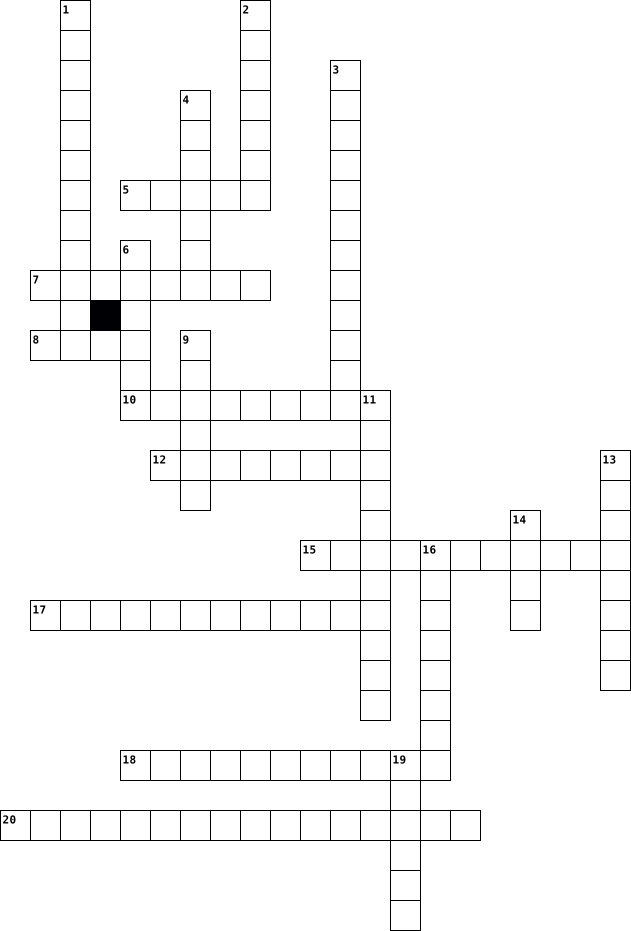
solve the crossword using the clues 2026-04-18

Across
- the centrally placed cell organelle in plants
- wall the rigid outline of a cell of plant
- complex carbohydrate that forms the cell
- the process by which amoeba engulfs food
- powerhouse of cell
- the enoplasmic reticulumn that makes lipids
Down
- the green plastids that caryy out photosynthesis
- the controlm centre of the brain
- the fluid content in a cell
- the suicidal bags of cell
- the energy currency of the cell
- the movememt if water across selectively permeable membrane
- the membrane bound network tubules also forming the cellular framework
13 Clues: powerhouse of cell • the suicidal bags of cell • the fluid content in a cell • the energy currency of the cell • the controlm centre of the brain • complex carbohydrate that forms the cell • the process by which amoeba engulfs food • wall the rigid outline of a cell of plant • the enoplasmic reticulumn that makes lipids • the centrally placed cell organelle in plants • ...
FTKKI-PRISMA UMT Crossword Contest 2020 2020-06-30

Across
- Materials with a characteristic length scale smaller than 100 nm
- _________ Law applies when the number of moles and the temperature are constant
- A numerical analysis software which able to plot data, implementation of algorithms and matrix manipulations
- The flow of energy due to a temperature different
- A basic component of an electric device.
- _________ point is a point that separates the two types of turning points in a continuous curve
- The process of combining something into a collective one
- A force that can be attractive or repulsive
- _______ has a solid angle of 2π
- _________ Law that applies when the number of moles and pressure are constant
- Occurs when an atom or molecule gains either positive or negative charge.
- Snake that do coding
- Main memory is _________ when all the data is lost if the program terminates or computer is turned off
- A system uses an air compressor to reduce the volume of the air and increasing the pressure of the gas to do work
- Thermodynamic process in which the temperature of the system remain constant.
- A gradient of a curve can be determined by _____
- How many times something occurs in a given time
- An object at rest tend to stay at rest and object with motion will stay in motion
- Enables something to do physical work involving the application of a force
- Production of electricity from steam, heat, or other forms of energy produced as a by-product of another process
- It’s SI unit named after the British physicist Michael Faraday
- A real value that is large and does not ends refers to _________
- Data _________ is a process to discover useful information in terms of pattern from large data set
- It is a secondary energy source which can converted to other kind of energy. It produced by primary renewable or nonrenewable energy
- Chemical reaction rate.
- A process that is used to transfer the results of fuzzy inference into a crisp output
Down
- A device for measuring electromotive force or potential difference
- A very large cluster of stars in space
- _________ algorithms used to solve a problem in a faster and more efficient
- Step-by-step instructions to solve a problem
- A line that touches only one point of the curve
- A root of the characteristic equation of a matrix
- Relationship between heat and other forms of energy
- _________ heat is a quantity of heat absorbed or released by a substances to change its physical state without any changes in temperature
- Relationship between reactant and product in a chemical reaction to determine desired quantitative data.
- A sequences that each number is the sum of the two preceding ones.
- Another term for repetition
- The unit of the measure light perceived power
- Mechanism by which matter is transported through matter
- ________ can be done to find the area under the curve
- A general form of logic which consists of truth, indeterminacy and falsity values
- _________ tendency also called as average/mean
- Works in the direction opposite with the direction in which the object is moving
- Machine language are in ______ numbers
- __________ chain is a process that has either a discrete state space or a discrete index set.
- Measure of the opposition to current flow in an electrical circuit
- ________ distribution is a probability distribution that is symmetric about the mean
- The distance between the rest point and the peak of the through.
- ________ sensor can measure distance by reflected light waves
- _______ number is a single point or single number
50 Clues: Snake that do coding • Chemical reaction rate. • Another term for repetition • _______ has a solid angle of 2π • A very large cluster of stars in space • Machine language are in ______ numbers • A basic component of an electric device. • A force that can be attractive or repulsive • Step-by-step instructions to solve a problem • The unit of the measure light perceived power • ...
Nutrition in Plants Grade 10th CBSE 2023 2023-05-15

Across
- The movement of water through the plant against gravity.
- The process of converting light energy into chemical energy in plants.
- The pigment responsible for absorbing light energy in photosynthesis.
- The specialized cells responsible for transporting water and minerals in plants.
Down
- The process of taking in and utilizing organic substances produced by other plants.
- fixation The process of converting atmospheric nitrogen into a form usable by plants.
- A complex carbohydrate that forms the primary structural component of the cell wall.
- The openings on the surface of leaves that allow for gas exchange.
8 Clues: The movement of water through the plant against gravity. • The openings on the surface of leaves that allow for gas exchange. • The pigment responsible for absorbing light energy in photosynthesis. • The process of converting light energy into chemical energy in plants. • The specialized cells responsible for transporting water and minerals in plants. • ...
will crossword 2014-03-07

Across
- breeze cooler air blows out from land and warmer air rises over water at nigh
- the boundary between air masses
- air mass large volume of air that forms over air
- effect the process by which certain certain gases in a plant’s atmosphere absor and emit infared radiation resulting in an increase surfaces temperature
- wind changes daily in a regular pattern like sea breezes and mountain
- air mass age volume of air that forms over water
- a tropical low – pressure system with sustiaint wind of 120 kilometers per hour or more
Down
- layer of the atmosphere narest the earth’s surface
- a vlolently rotating column of air stretching fome a cloud to the gourd
- wind wind that travel long distances in steady patterns over several weeks
- the outer layer of gases of a large body in space
- energy that travels across distancesas certain types of waves
- the conditions of earth atmosphere at a particular time and space
- breeze warmer air rises over land during the dy and cooler air in the nigh
- the horizontal movement of air caused by differences in air pressuure
15 Clues: the boundary between air masses • air mass large volume of air that forms over air • air mass age volume of air that forms over water • the outer layer of gases of a large body in space • layer of the atmosphere narest the earth’s surface • energy that travels across distancesas certain types of waves • ...
will cross word 2014-03-10

Across
- the boundary between air masses
- the conditions of earth atmosphere at a particular time and space
- breeze cooler air blows out from land and warmer air rises over water at nigh
- wind changes daily in a regular pattern like sea breezes and mountain
- layer of the atmosphere narest the earth’s surface
- the outer layer of gases of a large body in space
Down
- a vlolently rotating column of air stretching fome a cloud to the gourd
- the horizontal movement of air caused by differences in air pressuure
- a tropical low – pressure system with sustiaint wind of 120 kilometers per hour or more
- energy that travels across distancesas certain types of waves
- effect the process by which certain certain gases in a plant’s atmosphere absor and emit infared radiation resulting in an increase surfaces temperature
- air mass age volume of air that forms over water
- air mass large volume of air that forms over air
- breeze warmer air rises over land during the dy and cooler air in the nigh
- wind wind that travel long distances in steady patterns over several weeks
15 Clues: the boundary between air masses • air mass age volume of air that forms over water • air mass large volume of air that forms over air • the outer layer of gases of a large body in space • layer of the atmosphere narest the earth’s surface • energy that travels across distancesas certain types of waves • ...
HEALTHY EATING 2023-10-16

Across
- the function of protein in the body
- the number of portions you should eat of fruit and vegetables
- a healthier drink
- nutrient provided by dairy products
- nutrient important for our blood
- also forms part of healthy living
Down
- the diagram showing what you should eat the most and the least
- an example of a dairy product
- a healthy snack that is better than eating chocolates!
- a good source of iron
- what carbohydrates provide the body with
- the nutrient found in meat
12 Clues: a healthier drink • a good source of iron • the nutrient found in meat • an example of a dairy product • nutrient important for our blood • also forms part of healthy living • the function of protein in the body • nutrient provided by dairy products • what carbohydrates provide the body with • a healthy snack that is better than eating chocolates! • ...
Unit 2 Cells, Organization, and energy 2026-03-26

Across
- basic unit of matter
- when the shape of an active site changes
- movement from high to low concentration
- region of an enzyme where the substrate fits
- makes up the bilayer of the cell
- basic unit of life
- reactant molecules that enzymes bind to
- made of cells; what your organs are formed from
- water loving
Down
- all of your organ systems
- molecules move accross a membrane using a transport protien
- water fearing
- special proteins that make chemical reactions of metabolism possible
- the energy required to start a chemical process
- multiple molecules combined
- multiple organs; make up an organism
- combination of at oms; combine to form organelles
- some things can pass through, and others can't
- what forms when an enzyme binds to a substrate
- molecules naturally becoming more spaced out
- diffusion of water
21 Clues: water loving • water fearing • basic unit of life • diffusion of water • basic unit of matter • all of your organ systems • multiple molecules combined • makes up the bilayer of the cell • multiple organs; make up an organism • movement from high to low concentration • reactant molecules that enzymes bind to • when the shape of an active site changes • ...
Biological Molecules Revision 2026-01-04

Across
- Bond linking nucleotides in DNA and RNA
- Lipid formed from glycerol and three fatty acids
- Protein that lowers activation energy of reactions
- Molecules forming plasma membrane bilayers and long-term energy stores
- Storage polysaccharide found in animal cells
- Disaccharide formed from glucose and fructose
- Polymers that act as enzymes, messengers, and structural components
- Double-stranded nucleic acid storing genetic information
- Inorganic ions found in ATP and nucleic acids
- Polysaccharide made of β-glucose in plant cell walls
- Chain formed from many amino acids joined together
- Describes a fatty acid with one or more double bonds
- A small unit that joins with others to form a polymer
Down
- Carbon-based molecules commonly used as respiratory substrates
- Bond formed between two monosaccharides
- Universal energy currency of cells
- A large molecule made from many repeating subunits
- Bond formed between two amino acids
- Level of protein structure giving the protein its 3D shape
- Disaccharide made from two glucose molecules
- Reaction that forms a bond between molecules by removing water
- Molecules that carry genetic information in cells
- Monomer unit of proteins
- Region of an enzyme where the substrate binds
- Bond formed between glycerol and fatty acids
- Single-stranded nucleic acid involved in protein synthesis
- Weak bonds holding DNA strands together
- The most abundant component of living cells
- Reaction that breaks a bond using water
- Single sugar unit such as glucose or fructose
30 Clues: Monomer unit of proteins • Universal energy currency of cells • Bond formed between two amino acids • Bond formed between two monosaccharides • Bond linking nucleotides in DNA and RNA • Weak bonds holding DNA strands together • Reaction that breaks a bond using water • The most abundant component of living cells • Disaccharide made from two glucose molecules • ...
Plate Tectonics 2024-11-25

Across
- - Related to earthquakes and tectonic activity.
- - Process of sediment turning into rock.
- - Plates sliding past each other.
- - Study of Earth’s structure and processes.
- - Line on the ground surface that indicates a fault.
- - Volcanic region fed by underlying mantle.
- - Large section of Earth's crust that moves.
- - Plates moving towards each other.
- - Process where one plate moves under another.
- - Movement of rock and soil by wind or water.
- - The bottom of the ocean, where plate interactions occur.
- - Study of Earth's structural features.
- - Earth's outermost layer.
- - Elevated area on the seafloor formed by divergent plates.
- - Stress that builds up along fault lines.
- - Movement of Earth along a fault.
- - Semi-fluid layer beneath the lithosphere.
- - Rocks formed under pressure and temperature changes.
- - Scale used to measure earthquake magnitude.
- - Pertaining to the movement and deformation of Earth's crust.
- - Rigid outer layer of the Earth.
- - Fracture in Earth's crust where movement occurs.
Down
- - When tectonic plates push against each other.
- - Type of crust that forms ocean floors.
- - Type of rock that forms oceanic crust.
- - Type of rock that forms continental crust.
- - Molten rock beneath the Earth's surface.
- - Breakdown of rocks at Earth's surface.
- - Landform created by volcanic activity at tectonic boundaries.
- - Deep oceanic depression formed by subduction.
- - A low area where sediment accumulates.
- - Rock cavity lined with crystals, often formed near faults.
- - Opening in Earth's crust where lava erupts.
- - Thick layer of rock between crust and core.
- - Movement of tectonic plates apart.
- - Underwater mountain ranges formed by tectonic activity.
- - Study of earthquakes and seismic waves.
- - Supercontinent that existed 300 million years ago.
- - Point within Earth where an earthquake originates.
- - Area where the Earth's crust is being pulled apart.
- - Point on Earth's surface directly above a quake's focus.
- - Measure of the energy released in an earthquake.
- - Rocks formed from compressed sediments.
- - Large ocean wave caused by underwater disturbances.
- - Bend in rock layers caused by tectonic pressure.
- - Type of crust that forms landmasses.
- - Boundary where two tectonic plates meet.
- - The process where one plate sinks beneath another.
- - Region around the Pacific Ocean known for tectonic activity.
- - Molten rock that reaches Earth's surface.
50 Clues: - Earth's outermost layer. • - Plates sliding past each other. • - Rigid outer layer of the Earth. • - Movement of Earth along a fault. • - Plates moving towards each other. • - Movement of tectonic plates apart. • - Type of crust that forms landmasses. • - Study of Earth's structural features. • - Type of crust that forms ocean floors. • ...
VOCAB REVIEW 2019-07-25

Across
- change the form, character, or function of something
- counteract something by having an equal and opposite force or effect
- able to have its electrical energy restored by connection to a power supply
- achieving maximum productivity with minimum wasted effort or expense
- use up a resource
Down
- a thing used for transporting people or goods, especially on land, such as a car, lorry, or cart
- existing or occurring inside a particular country; not foreign or international
- the process of keeping something in good condition
- following traditional forms and principles
- store electrical energy in a battery
10 Clues: use up a resource • store electrical energy in a battery • following traditional forms and principles • the process of keeping something in good condition • change the form, character, or function of something • counteract something by having an equal and opposite force or effect • achieving maximum productivity with minimum wasted effort or expense • ...
GLOBAL SYSTEMS 2014-10-15

Across
- All the water on Earth.
- An example of a body of water that covers 71% of Earth's surface
- Liquid which forms the seas, lakes, rivers and rain and is the basis of the fluids of living organisms.
- The chemical element with atomic number 15, a poisonous, combustible non-metal.
- The process by which green plants and some other organisms use sunlight to absorb nutrients from carbon dioxide and water.
- The chemical element with atomic number 6, a non-metal which has two main forms (diamond and graphite) and which also occurs in impure form in coal, charcoal and soot.
- The name of the process when heat is transferred by mass motion of a fluid such as air or water when the heated fluid is caused to move away from the source of heat, carrying energy with it.
- A gaseous sphere that envelops the Earth.
- A phase of matter which is firm and stable in shape.
Down
- A phase of matter which is a substance that flows freely but is of constant volume.
- A phase of matter which is an air-like fluid substance which expands freely to fill any space available, irrespective of its quantity.
- The action or process of depositing a substance out of a solution.
- An individual animal, plant, or single-celled life form.
- All life on earth, including man, and all organisms.
- The negative ion in CaCO3
- The Earth's solid surface, often called crust on the Earth.
- layer of the atmosphere that burns meteorites
- The top layer of Earth. (2 words: First word 11 letters and second word 5 letters)
- The chemical element with atomic number 7, a colourless, odourless unreactive gas that forms about 78 per cent of the earth's atmosphere.
- The smallest particle of a chemical element that can exist on its own.
20 Clues: All the water on Earth. • The negative ion in CaCO3 • A gaseous sphere that envelops the Earth. • layer of the atmosphere that burns meteorites • All life on earth, including man, and all organisms. • A phase of matter which is firm and stable in shape. • An individual animal, plant, or single-celled life form. • ...
Physical Science 6th Grade Section 1 2024-09-10

Across
- Materials or substances found in nature that people use.
- The process of changing from one state of matter to another, such as melting or boiling.
- The temperature at which a solid turns into a liquid.
- Groups of two or more atoms joined together. Molecules make up substances.
- Man-made materials created through chemical processes.
- The process of examining and interpreting data to understand patterns, make conclusions, or solve problems.
- The energy an object has due to its motion.
- Characteristics or qualities of a substance that can be observed or measured, such as color, size, shape, and texture.
- The energy that comes from heat. It is the total energy of all the moving particles in a substance.
- The temperature at which a liquid turns into a gas.
- The series of steps or reactions that occur when substances change into new substances.
- The smallest unit of matter that makes up everything around us. Atoms are like tiny building blocks that combine to form molecules.
- Simplified representations of complex objects or processes used to help understand and explain how things work.
Down
- The ability of a substance to catch fire and burn easily.
- A process where substances (reactants) change into new substances (products) with different properties.
- The amount of mass in a given volume. It is calculated by dividing mass by volume.
- The different forms that matter can take: solid, liquid, and gas.
- The smell of a substance.
- How well a substance can dissolve in a liquid.
19 Clues: The smell of a substance. • The energy an object has due to its motion. • How well a substance can dissolve in a liquid. • The temperature at which a liquid turns into a gas. • The temperature at which a solid turns into a liquid. • Man-made materials created through chemical processes. • Materials or substances found in nature that people use. • ...
Climate change 2024-07-08

Across
- ability to control people and events
- a current of air moving approximately horizontally, especially one strong enough to be felt
- damage caused to water, air, etc. by harmful substances or waste
- the power and ability to be physically and mentally active
- of or from the sun, or using the energy from the sun to produce electric power
Down
- the act of sending out gas, heat, light, etc.
- the mark made by a person's or animal's foot
- forms of energy can be produced as quickly as they are used
- a chemical element that exists in its pure form as diamond or graphite, and is an important part of other substances
9 Clues: ability to control people and events • the mark made by a person's or animal's foot • the act of sending out gas, heat, light, etc. • the power and ability to be physically and mentally active • forms of energy can be produced as quickly as they are used • damage caused to water, air, etc. by harmful substances or waste • ...
The Chemistry of Life 2020-12-03

Across
- element that forms the basis of organic compounds
- solution with a pH less than 7
- heat ____; protects aquatic organisms from drastic temperature changes
- elements or compounds produced in a reaction
- single sugar molecule/monomer
- mixture; components evenly distributed
- chemical combination of 2 or more elements
- individual unit of a polymer
- play many roles; have primary, secondary, tertiary structure
- substance that speeds up rate of a reaction
- protein that acts as biological catalyst
- attraction between molecules of same substance
- van der ______; forces holding molecules together
- negatively charged particle
- main source of energy for living things
- contain glycerol and fatty acid chains
- attraction between molecules of different substances
- positively or negatively charged atom
- may affect activity of enzymes
- a substance in a solution that is dissolved
- at the center of the atom
- type of bond between two water molecules
Down
- atoms of same element, different # of neutrons
- type of reaction that changes one set of chemicals into another
- ___ energy; energy needed to start reaction
- ___ acid; monomer of proteins
- type of bond in which electrons are shared
- composed of more than one monomer
- a lipid with no double bonds in its fatty acid chains
- the substance in which a solute dissolves
- type of carbohydrate that includes starch and cellulose
- 2 or more atoms in covalent compound
- elements or compounds that enter a reaction
- reactants of enzyme-catalyzed reactions
- always absorbed or released in chemical reactions
- weak acid or base that prevents changes in pH
- molecule with uneven distribution of charges
- monomers that make up nucleic acids
- basic unit of matter
- ___ site; where substrates go on an enzyme
- solution with a pH greater than 7
- scale that indicates concentration of H+ ions
- type of bond in which electrons are transferred
- mixture of water and nondissolved material
- consists of one type of atom
45 Clues: basic unit of matter • at the center of the atom • negatively charged particle • individual unit of a polymer • consists of one type of atom • ___ acid; monomer of proteins • single sugar molecule/monomer • solution with a pH less than 7 • may affect activity of enzymes • composed of more than one monomer • solution with a pH greater than 7 • monomers that make up nucleic acids • ...
Weather Vocabulary 2022-09-18

Across
- Front forms when a warm air mass gets caught between two cold air masses
- Forms when a relatively moist, warm air mass slides up and over a cold air mass.
- Is the state of the atmosphere at a particular place during a short period of time.
- A huge body of air that has similar temperature, humidity, and air pressure at any given height.
- A front that is not moving, not appearing to move.
- Is a condition in which something takes in another substance.
- A large stream of moving water that flows through the oceans.
- The force exerted on a surface by the air above it as gravity pulls it to earth.
- The boundary where unlike air masses meet but do not mix.
- Surface currents are driven by global wind systems that are fueled by energy from the sun. These currents bring heat from the tropics to polar regions.
Down
- Are relatively narrow bands of strong wind in the upper levels of the atmosphere.
- Result from differences in water density. These currents occur when cold, dense water at the poles sink.
- A fact or situation that is observed to exist or happen, especially one whose cause or explanation is in question.
- A scientist who studies the causes of weather and tries to predict it.
- The result of Earth's rotation (unequal heating of Earth by the sun) on weather patterns and ocean currents.
- The average annual conditions of temperature, precipitation, winds, and clouds in an area.
- The amount of dissolved salt in water.
- Forms when a cold air mass pushes into a warmer air mass.
18 Clues: The amount of dissolved salt in water. • A front that is not moving, not appearing to move. • Forms when a cold air mass pushes into a warmer air mass. • The boundary where unlike air masses meet but do not mix. • Is a condition in which something takes in another substance. • A large stream of moving water that flows through the oceans. • ...
Science Terms 2022-05-27

Across
- heat transfer through direct contact
- what all mater is made of
- the visible light spectrum lets us see
- scientific study of sight and the behavior of light, or the properties of transmission and deflection of other forms of radiation
- when energy vibrates matter in the air it creates
- a sound or series of sounds caused by the reflection of sound waves from a surface back to the listener
- helium is an
- used to kill germs and see secret messages
- used to transfer energy, without the use of a medium
- the fact or phenomenon of light, radio waves, etc. being deflected in passing obliquely through the interface between one medium and another or through a medium of varying density
- what keeps us on the ground
- EM wave with the shortest wavelength
- waves carry
- the place in a longitudinal wave where the compressions are farthest apart
- invisible wave, but can be felt as heat
- the way electromagnetic waves are organized
- color with the longest wavelength
- what type of wave is sound
Down
- heat transfer through fluids
- the distance between 2 crests or troughs in a wave
- sugar is a
- convection in the air creates
- what kind of energy does a battery use to make electricity
- what is water
- a type of magnet in which the magnetic field is produced by an electric current
- the devising or choosing of names for things, especially in a science or other discipline
- EM wave with the longest wavelength
- when light hits an object and reflects straight back
- a substance that has inertia and occupies physical space
- used to warm food quickly
- the amount of newtons law of motion
- a compound that we breath in
- what type of wave is light
- color with the shortest wavelength
- what kind of energy is sound
- fastest heat conductors
- these EM waves are used to check for broke bones
37 Clues: sugar is a • waves carry • helium is an • what is water • fastest heat conductors • what all mater is made of • used to warm food quickly • what type of wave is light • what type of wave is sound • what keeps us on the ground • heat transfer through fluids • a compound that we breath in • what kind of energy is sound • convection in the air creates • color with the longest wavelength • ...
Bones of the Cranium 2023-10-09

Across
- A paired bone that forms the forehead.
- The region of the head pertaining to or located around the eye is called?
- This bone is located inside the orbital socket.
- A paired bone that forms most of the roof and upper sides of the cranium
- A paired bone that forms the upper jaw.
- This bone is located in front of the temporal bone.
- A paired bone that forms the sides and base of cranium.
Down
- A paired bone that forms the bridge of your nose.
- The jagged line where bones articulate and form a joint that does not moved is called what?
- A single bone that forms the bone of the skull.
- A paired bone that forms your hard palate.
- A paired bone that forms the cheeks below and side of the eye.
- The study of the shape and structure of the human body.
13 Clues: A paired bone that forms the forehead. • A paired bone that forms the upper jaw. • A paired bone that forms your hard palate. • A single bone that forms the bone of the skull. • This bone is located inside the orbital socket. • A paired bone that forms the bridge of your nose. • This bone is located in front of the temporal bone. • ...
Unit 6: Energy Resources and Consumption 2024-05-07

Across
- A reaction when lighter nuclei are forced together to produce heavier nuclei.
- A cylindrical device inserted between the fuel rods in a nuclear reactor to absorb excess neutrons and slow or stop the fission reaction.
- An energy source that is bought and sold.
- An activity that does not change atmospheric CO2 concentrations.
- The use of a fuel to generate electricity and produce heat. Also known as combined heat and power.
- Finding and implementing ways to use less energy.
- Fuel derived from radioactive materials that give off energy.
- Electricity generated by the kinetic energy of moving water.
- Fuel derived from radioactive materials that give off energy.
- A power plant that uses both exhaust gasses and steam turbines to generate electricity.
- A network of interconnected transmission lines that joins power plants together and links them with end users of electricity.
- The fraction of time a power plant operates in a year.
- An energy source gathered by individuals for their own immediate needs.
- Liquid petroleum removed from the ground.
- In energy management, an energy source that is either potentially renewable or nondepletable.
- energy resource An energy source with a finite supply, primarily the fossil fuels and nuclear fuels.
- A device with blades that can be turned by water, wind, steam, or exhaust gas from combustion that turns a generator in an electricity-producing plant.
- A vehicle that runs on either gasoline or a gasoline/ethanol mixture.
- Carbon in fossil fuels.
- Hydroelectricity generation in which water is retained behind a low dam or no dam.
- A fossil fuel that occurs in underground deposits, composed of a liquid mixture of hydrocarbons, water, and sulfur.
- Construction designed to take advantage of solar radiation without active technology.
- An energy source that can be regenerated indefinitely as long as it is not overharvested.
- A fuel derived from biological material that became fossilized millions of years ago.
- A property of a building material that allows it to maintain heat or cold.
Down
- Something that can move and deliver energy in a convenient, usable form to end users.
- The process of converting solid coal into liquid fuel.
- An efficient, self-regulating electricity distribution network that accepts any source of electricity and distributes it automatically to end users.
- The energy use per unit of gross domestic product.
- An energy source with a finite supply, primarily the fossil fuels and nuclear fuels.
- Unit that measures the rate at which a sample of radioactive material decays; 1 Bq = decay of 1 atom or nucleus per second.
- A nuclear reaction in which a neutron strikes a relatively large atomic nucleus, which then splits into two or more parts, releasing additional neutrons and energy in the form of heat.
- A solid fuel formed primarily from the remains of trees, ferns, and other plant materials preserved 280 million to 360 million years ago.
- The process of removing more than is replaced by growth, typically used when referring to carbon.
- A diesel substitute produced by extracting and chemically altering oil from plants.
- A unit of measure for radiation; 1 curie = 37 billion decays per second.
- Carbon in biomass that was recently in the atmosphere.
- The storage of water in a reservoir behind a dam.
- In reference to an electricity-generating plant, the maximum electrical output.
- Nuclear fuel that can no longer produce enough heat to be useful in a power plant but continues to emit radioactivity.
- Liquid fuel created from processed or refined biomass.
- A cylindrical tube that encloses nuclear fuel within a nuclear reactor.
- A billing system used by some electric companies in which customers pay higher rates as their use goes up.
- Energy that comes from the movement of water driven by the gravitational pull of the Moon.
- A degraded petroleum that forms when petroleum migrates to the surface of Earth and is modified by bacteria.
- A fuel derived from biological material that became fossilized millions of years ago.
- Slow-flowing, viscous deposits of bitumen mixed with sand, water, and clay.
- Alcohol made by converting starches and sugars from plant material into alcohol and CO2.
- An energy source that cannot be used up.
- The greatest quantity of energy used at any one time.
50 Clues: Carbon in fossil fuels. • An energy source that cannot be used up. • An energy source that is bought and sold. • Liquid petroleum removed from the ground. • Finding and implementing ways to use less energy. • The storage of water in a reservoir behind a dam. • The energy use per unit of gross domestic product. • The greatest quantity of energy used at any one time. • ...
Unit 6: Energy Resources and Consumption 2024-05-07

Across
- A reaction when lighter nuclei are forced together to produce heavier nuclei.
- A cylindrical device inserted between the fuel rods in a nuclear reactor to absorb excess neutrons and slow or stop the fission reaction.
- An energy source that is bought and sold.
- An activity that does not change atmospheric CO2 concentrations.
- The use of a fuel to generate electricity and produce heat. Also known as combined heat and power.
- Finding and implementing ways to use less energy.
- Fuel derived from radioactive materials that give off energy.
- Electricity generated by the kinetic energy of moving water.
- Fuel derived from radioactive materials that give off energy.
- A power plant that uses both exhaust gasses and steam turbines to generate electricity.
- A network of interconnected transmission lines that joins power plants together and links them with end users of electricity.
- The fraction of time a power plant operates in a year.
- An energy source gathered by individuals for their own immediate needs.
- Liquid petroleum removed from the ground.
- In energy management, an energy source that is either potentially renewable or nondepletable.
- energy resource An energy source with a finite supply, primarily the fossil fuels and nuclear fuels.
- A device with blades that can be turned by water, wind, steam, or exhaust gas from combustion that turns a generator in an electricity-producing plant.
- A vehicle that runs on either gasoline or a gasoline/ethanol mixture.
- Carbon in fossil fuels.
- Hydroelectricity generation in which water is retained behind a low dam or no dam.
- A fossil fuel that occurs in underground deposits, composed of a liquid mixture of hydrocarbons, water, and sulfur.
- Construction designed to take advantage of solar radiation without active technology.
- An energy source that can be regenerated indefinitely as long as it is not overharvested.
- A fuel derived from biological material that became fossilized millions of years ago.
- A property of a building material that allows it to maintain heat or cold.
Down
- Something that can move and deliver energy in a convenient, usable form to end users.
- The process of converting solid coal into liquid fuel.
- An efficient, self-regulating electricity distribution network that accepts any source of electricity and distributes it automatically to end users.
- The energy use per unit of gross domestic product.
- An energy source with a finite supply, primarily the fossil fuels and nuclear fuels.
- Unit that measures the rate at which a sample of radioactive material decays; 1 Bq = decay of 1 atom or nucleus per second.
- A nuclear reaction in which a neutron strikes a relatively large atomic nucleus, which then splits into two or more parts, releasing additional neutrons and energy in the form of heat.
- A solid fuel formed primarily from the remains of trees, ferns, and other plant materials preserved 280 million to 360 million years ago.
- The process of removing more than is replaced by growth, typically used when referring to carbon.
- A diesel substitute produced by extracting and chemically altering oil from plants.
- A unit of measure for radiation; 1 curie = 37 billion decays per second.
- Carbon in biomass that was recently in the atmosphere.
- The storage of water in a reservoir behind a dam.
- In reference to an electricity-generating plant, the maximum electrical output.
- Nuclear fuel that can no longer produce enough heat to be useful in a power plant but continues to emit radioactivity.
- Liquid fuel created from processed or refined biomass.
- A cylindrical tube that encloses nuclear fuel within a nuclear reactor.
- A billing system used by some electric companies in which customers pay higher rates as their use goes up.
- Energy that comes from the movement of water driven by the gravitational pull of the Moon.
- A degraded petroleum that forms when petroleum migrates to the surface of Earth and is modified by bacteria.
- A fuel derived from biological material that became fossilized millions of years ago.
- Slow-flowing, viscous deposits of bitumen mixed with sand, water, and clay.
- Alcohol made by converting starches and sugars from plant material into alcohol and CO2.
- An energy source that cannot be used up.
- The greatest quantity of energy used at any one time.
50 Clues: Carbon in fossil fuels. • An energy source that cannot be used up. • An energy source that is bought and sold. • Liquid petroleum removed from the ground. • Finding and implementing ways to use less energy. • The storage of water in a reservoir behind a dam. • The energy use per unit of gross domestic product. • The greatest quantity of energy used at any one time. • ...
Plate Tectonics 2014-09-12

Across
- Molten rock stored beneath Earth's surface
- The process that results when a dense oceanic plate sinks beneath a more buoyant plate
- The type of rock that forms when lava crystallizes and cools
- The thick middle layer of the Earth
- The process by which new oceanic crust forms along a mid-ocean ridge and older crust moves away
- The type of boundary between two plates that move toward each other
- The circulation of particles within a material caused by differences in thermal energy and density
- The dense metallic center of the Earth
- The rigid outermost layer of the Earth that includes the upper mantle and crust
- The type of boundary between two plates that slide past one another
Down
- Name given to a supercontinent that began to break apart 200 million years ago
- Magma that erupts onto Earth's surface
- The process that occurs when one tectonic plate moves under another tectonic plate
- The partially melted portion of the mantle below the lithosphere
- the rigid slabs of rock that make up the Earth's surface
- The movement of Earth's continents over time
- Long, narrow mountain range on the ocean floor
- The process that results when magma rises and pushes oceanic plates in two different directions
- The brittle, rocky outer layer of Earth
- The type of boundary between two plates that move away from each other
20 Clues: The thick middle layer of the Earth • Magma that erupts onto Earth's surface • The dense metallic center of the Earth • The brittle, rocky outer layer of Earth • Molten rock stored beneath Earth's surface • The movement of Earth's continents over time • Long, narrow mountain range on the ocean floor • the rigid slabs of rock that make up the Earth's surface • ...
Griffin Crossword 2021-05-14

Across
- point the point at which a solid changes to a liquid
- the location inside earth's crust where an earthquake began
- a pure sentence that forms naturally as a solid inside the earth
- weathering the wearing down of rocks by physical forces, such as water, ice, or wind
- point the point at which a liquid changes to a solid
- an opening in earth's crust through which solid and molten rock, ash, and gases escape
- a material that does not allow heat energy to move through it easily
- energy the energy that is transferred from matter at a higher temperature to matter at a very lower temperature
- rock any type of rock that has changed from one type of rock to another type due to heat and pressure
- magma that reaches Earth's surface, as through a volcano
Down
- weathering the wearing down of rocks by physical forces, such as water, ice, or wind
- a shaking of earth caused by a sudden breaking of rock in the crust layer
- the movement of rock materials and soil by water, wind or ice
- point the point at which a liquid changes to a solid
- rock a type of rock formed from cooled magma
- hot liquid rock
- the removal of minerals from the earth
- of plate tectonics the theory that the continents started as a supercontinent, Pangaea, and drifted to their current locations over hundreds of millions of years
18 Clues: hot liquid rock • the removal of minerals from the earth • rock a type of rock formed from cooled magma • point the point at which a solid changes to a liquid • point the point at which a liquid changes to a solid • point the point at which a liquid changes to a solid • magma that reaches Earth's surface, as through a volcano • ...
Physical Science Chapter 6 2024-12-04

Across
- Any chemical change in which one species is oxidized (loses electrons) and another species is reduced (gains elections) also called redox reaction
- A part, substance, or element that lies beneath and supports another part, substance, or element; the reactant in reactions catalyzed by enzymes
- A reaction in which one element or radical takes the place of another element or radical in a compound
- A substance that forms in a chemical reaction
- A state of balance in which the rate of a forward reaction equals the rate of the reverse reaction and the concentrations of products and reactants remain unchanged
- A chemical reaction that requires heat
- A substance or molecule that participates in a chemical reaction
- A substance that changes the rate of a chemical reaction without being consumed or changed significantly
- A reaction in which a single compound breaks down to simpler substances
Down
- The oxidation reaction of an organic compound, in which heat is released
- A reaction in which two or more substances combine to form a new compound
- A reaction in which a gas, a solid precipitate, or a molecular compound forms from the apparent exchange of atoms or ions between two compounds
- A chemical reaction in which heat is released to the surroundings
- The process in which an electric current is used to produce a chemical reaction, such as the decomposition of water
- An organic group that has one or more elections avaliable for bonding
- The energy released when a chemical compound reacts to produce new compounds
- A type of protein that speeds up metabolic reactions in plants and animals without being permanently changed or destroyed
17 Clues: A chemical reaction that requires heat • A substance that forms in a chemical reaction • A substance or molecule that participates in a chemical reaction • A chemical reaction in which heat is released to the surroundings • An organic group that has one or more elections avaliable for bonding • ...
1 2025-11-24

Across
- Neutral particle in nucleus
- Lightest element
- Element found in all life forms
- Ionized gas state
- Major gas in Earth’s atmosphere
- Substance made of two or more elements
- State of matter with no fixed volume
- Pure substance made of one kind of atom
- Physical blend of substances
- Arrangement of elements by properties
- Atom with a charge
- State of matter with definite shape
Down
- Light noble gas
- Ability to do work
- Gas essential for respiration
- Force holding atoms together
- Positively charged particle in nucleus
- Same element, different number of neutrons
- Process that changes substances
- Repeating pattern in elements
- Two or more atoms bonded together
- Smallest unit of an element
- Negatively charged particle
- State of matter with fixed volume
- One- or two-letter code for an element
25 Clues: Light noble gas • Lightest element • Ionized gas state • Ability to do work • Atom with a charge • Neutral particle in nucleus • Smallest unit of an element • Negatively charged particle • Force holding atoms together • Physical blend of substances • Gas essential for respiration • Repeating pattern in elements • Element found in all life forms • Process that changes substances • ...
Q2 menu Crossword puzzle 2026-01-14

Across
- the transfer of energy by electromagnetic waves
- boundary a plate boundary where 2 plates slide past each other opposite ways
- the transfer of thermal energy from one particle to another
- when magma reaches the surface it becomes _____
- the transfer of thermal energy by the movement of fluid
- boundary a plate boundary where 2 plates move away from each other
- oceanic crust sinks beneath an ocean trench into the mantle
Down
- spot an area where magma from deep within the mantle
- any trace of ancient organisms
- the molten mixture of rock forming gases and water
- currents the flow the transfers heat within a fluid
- of fire a major belt of volcanos along the coasts of north and south america
- boundary a plate boundary where 2 plates move toward each other
- Ocean trench a deep valley along the floor beneath crust slowly sinks in
- a mountain that forms earths crust when molten magma reaches the surface
15 Clues: any trace of ancient organisms • the transfer of energy by electromagnetic waves • when magma reaches the surface it becomes _____ • the molten mixture of rock forming gases and water • currents the flow the transfers heat within a fluid • the transfer of thermal energy by the movement of fluid • spot an area where magma from deep within the mantle • ...
galaxies 2025-04-08

Across
- galaxies with no defined shape or structure
- collection of dust,gas,stars and solar systems
- all of space, matter, energy, time,and it contents,including planets, stars, galaxies, and all other forms of matter and energy
- galaxies with all different shapes and sizes
- a tightly packed group of stars within a larger star formation
- their bulge and all their spiral arms are clearly visible
Down
- a star with a group of heavenly bodies that revolve around it
- the region referred to as the nucleus
- the angle at which it is seen from earth
- oval and round shaped galaxies with old stars
10 Clues: the region referred to as the nucleus • the angle at which it is seen from earth • galaxies with no defined shape or structure • galaxies with all different shapes and sizes • oval and round shaped galaxies with old stars • collection of dust,gas,stars and solar systems • their bulge and all their spiral arms are clearly visible • ...
Macromolecules 2023-01-07

Across
- main structural component of cell membranes
- Organic compound whose function is determined by its structure
- Greasy, oily, or waxy non-polar organic molecule
- Organic molecule used for energy and structural materials
Down
- Has a five-carbon sugar, a nitrogen-containing base, and phosphate groups
- lipid with three fatty acid tails attached to a glycerol backbone
- chain of amino acids linked by peptide bonds
- one of the simplest forms of carbohydrates
- Organic molecule that functions as energy carriers, enzyme helpers, chemical messengers, and subunits of DNA and RNA
- small organic compound with a carboxyl group, amine group, and a characteristic side group
10 Clues: one of the simplest forms of carbohydrates • main structural component of cell membranes • chain of amino acids linked by peptide bonds • Greasy, oily, or waxy non-polar organic molecule • Organic molecule used for energy and structural materials • Organic compound whose function is determined by its structure • ...
Energy Types and Transformations Crossword Puzzle 2023-12-10

Across
- The energy of heat
- The law of ________ states that energy can neither be created nor destroyed
- Plants use to turn light energy into chemical energy and use it as food.
- When running you are turning stored energy into _______
- The energy in moving objects
- the process of splitting an atom
- Energy that is stored within an object
- Light from the sun is known as ____ Energy
- Energy of light; also referred to as light energy or electromagnetic energy
- Someone eating ____ is an example of Mechanical to Chemical energy
- A _____ is an example of sound energy
- _____ is a product of thermal energy
- two or more atoms violently join together to make a larger atom
Down
- Energy stored in the bonds of molecules
- The energy from vibrations in matter
- The energy of moving electrons or electric charges
- The energy locked in the nucleus of an atom
- A stretched rubber band is an example of ______ potential energy
- _____ is stored in all matter
- A change in one form of energy to another form of energy
20 Clues: The energy of heat • The energy in moving objects • _____ is stored in all matter • the process of splitting an atom • The energy from vibrations in matter • _____ is a product of thermal energy • A _____ is an example of sound energy • Energy that is stored within an object • Energy stored in the bonds of molecules • Light from the sun is known as ____ Energy • ...
Rocks and Soil 2023-08-29

Across
- Larger than clay, smaller than sand
- These small particles along with water, air, and decayed organic matirial make up the soil
- The loose material on the surface of the earth
- People who enjoy exploring caves
- When the carbon dioxide in the water, a weak acid forms
- Forms below Earth's crust by great heat and pressure
- Hang from the ceiling and look like stone icicles
- Grow up from the ground as a result of the dripping of dissolved calcite
- Forms when the sediment and the remains of tiny living things settle and harden
- The changing of rock
- The second layer of soil
- Forms when magma cools below or above Earth's surface
Down
- The third layer of soil
- Smallest type of particle
- Largest type of particle
- Combined with sand, silt, and clay
- Scientists who study soil
- Underneath all the horizons
- Soil consists of multiple layers
19 Clues: The changing of rock • The third layer of soil • Largest type of particle • The second layer of soil • Smallest type of particle • Scientists who study soil • Underneath all the horizons • People who enjoy exploring caves • Soil consists of multiple layers • Combined with sand, silt, and clay • Larger than clay, smaller than sand • The loose material on the surface of the earth • ...
Chapter 2 Vocabulary: Sections 1 & 2 2017-08-31

Across
- bond between a positive and negative ion
- all chemical reactions that occur in an organism
- 3-dimensional region around the nucleus that shows the location of electrons
- one or more substances change to produce one or more different substances
- a reactant loses electrons
- total number of protons and neutrons in an atom
- substances that cannot be broken down into simpler substances
- ability to do work
- simplest part of a substance that has all properties of that substance
- number of protons in an atom
- central region that makes up most of the mass of a cell
Down
- shown on the right side of a chemical equation. New compounds that are formed
- forms when 2 atoms share one or more pairs of electrons
- atom or molecule with an electrical charge
- the amount of energy needed to start a reaction
- reactant gains electrons
- attractive forces that hold atoms together
- positively charged subatomic particle found in the nucleus
- amount of matter an object has
- simplest particle of an element that retains all of the properties of an element
- shown on the left side of a chemical equation
- subatomic particle found in the nucleus that has no charge
- atoms of the same element that have different numbers of neutrons
- anything that has mass and takes up space
- negatively charged particles
- protein or RNA molecule that speeds up reactions without being permanently changed or destroyed
- reduce the amount of activation energy needed to start a reaction
- made of atoms of 2 or more elements
28 Clues: ability to do work • reactant gains electrons • a reactant loses electrons • negatively charged particles • number of protons in an atom • amount of matter an object has • made of atoms of 2 or more elements • bond between a positive and negative ion • anything that has mass and takes up space • atom or molecule with an electrical charge • ...
Chemistry of Life 2024-10-10

Across
- Long chains of carbon and hydrogen joined together
- The use of cell energy to move materials across a cell membrane
- The carbohydrate that forms the cell walls of plant cells
- A form of endocytosis in which solid particles are engulfed by cells
- A three carbon chain molecule containing three hydroxyl groups
- A difference in the number of molecules or ions of a substance between adjoining regions
- An organic molecule that is half of a glucose molecule with the molecular formula C3H6O3
- A solution where the concentration of solute molecules outside a cell is equal to the molecules inside the cell
- The raw materials needed for cell metabolism
- A series of chemical reactions that allow two molecules to bond by the formation of a water molecule
Down
- A solution where the concentration of solutes outside a cell is lower than that found inside the cell
- The basic structural units of nucleic acid
- A solution where the concentration of solutes outside a cell is higher than that found inside the cell
- The diffusion of water molecules across a selectively permeable membrane
- The process by which plants use chlorophyll to trap sunlight energy and use it to produce carbohydrates
- Artificial lipid vesicles
- Nutrients made up of a single sugar molecule or many sugar molecules
- A large carbohydrate molecule used by plants to store energy
- The form of carbohydrate storage in animals
- The loss of electrons from an atom or molecule
- The movement of molecules from an area of high to low concentration
21 Clues: Artificial lipid vesicles • The basic structural units of nucleic acid • The form of carbohydrate storage in animals • The raw materials needed for cell metabolism • The loss of electrons from an atom or molecule • Long chains of carbon and hydrogen joined together • The carbohydrate that forms the cell walls of plant cells • ...
Cell Transport 2020-05-11

Across
- The prefix endo means this
- Transport requiring energy
- Process when a cell forms a vesicle around unwanted particles and expels it out of the cell
- Proteins that change their shape after interacting with specific molecules in order to let it pass through
- The prefix exo means this
- When a cell gets to much water it is this
- The prefix cyto means this
- Diffusion of polar substances or ions across a semipermeable membrane that requires transport proteins
- Diffusion of molecules across a semipermeable membrane without using transport proteins
Down
- When a cell has the same amount of water inside and out
- Proteins that are simple tunnels that molecules can use to enter or exit the cell.
- Process when a cell surrounds and engulfs a substance that is to big to enter
- When a cell gets to little water
- Diffusion of water across a semipermeable membrane
- When concentrations on both sides of membrane are equal
- Transport requiring no energy
16 Clues: The prefix exo means this • The prefix endo means this • Transport requiring energy • The prefix cyto means this • Transport requiring no energy • When a cell gets to little water • When a cell gets to much water it is this • Diffusion of water across a semipermeable membrane • When a cell has the same amount of water inside and out • ...
Lesson 1 & 2 2021-02-26

Across
- has genetic material stored in DNA
- does not dissolve in water
- a fluid inside a cell that has salt
- wall, stiff structure outside the cell
- are membrane-bound that use light energy and make food
- Theory, states that all living things are made of one or more cell
- long chains of amino acid
- acid, are macromolecules that forms long chains
Down
- form by joining many small molecules
- long chains of sugar molecules
- membrane,flexible covering the protects the cell
- is a network of dreadlike proteins
- have specialized functions
13 Clues: long chains of amino acid • does not dissolve in water • have specialized functions • long chains of sugar molecules • has genetic material stored in DNA • is a network of dreadlike proteins • a fluid inside a cell that has salt • form by joining many small molecules • wall, stiff structure outside the cell • acid, are macromolecules that forms long chains • ...
Land forms 2023-06-21

Across
- It's a huge mass of ice that moves slowly down a mountain. Glaciers can shape the land and leave behind valleys and lakes.
- It's a large body of water surrounded by land. Lakes can be freshwater or saltwater and are great for swimming or boating.
- It's a piece of land that is surrounded by water on all sides. Islands can be big or small and have their own unique plants and animals.
- It's a large and flat area of land without many hills or mountains. Plains are great for farming because the soil is usually rich.
- It's where the land meets the sea or ocean. Coasts can have sandy beaches, rocky cliffs, and lots of marine life.
- It's a long and flowing body of water that moves from high areas to lower areas. Rivers are home to many fish and plants.
- It's a triangular piece of land formed at the mouth of a river. Deltas are usually very fertile and have lots of plants and wildlife.
- It's a tall and rocky landform that reaches high into the sky. Mountains are often covered in snow and have steep slopes.
- It's a smaller landform than a mountain, but still higher than the surrounding land. Hills are often covered in grass or trees.
Down
- It's a low area of land between two mountains or hills. Valleys are usually filled with green grass, rivers, and sometimes farms.
- It's a piece of land that is surrounded by water on three sides. Peninsulas can have beautiful beaches and are great for exploring.
- It's a deep and narrow valley with steep sides. Canyons are often formed by rivers and can have amazing rock formations.
- It's a place where a river falls from a high point to a lower point. Waterfalls can be very beautiful and make a loud splashing sound.
- It's a hollow space underground or in the side of a mountain. Caves can be dark and mysterious, with amazing rock formations.
- It's a dry and sandy landform with little rainfall. Deserts can be very hot during the day and very cold at night.
- It's a flat and elevated landform with steep sides. Plateaus are like giant steps in the land and can have beautiful views.
16 Clues: It's where the land meets the sea or ocean. Coasts can have sandy beaches, rocky cliffs, and lots of marine life. • It's a dry and sandy landform with little rainfall. Deserts can be very hot during the day and very cold at night. • It's a deep and narrow valley with steep sides. Canyons are often formed by rivers and can have amazing rock formations. • ...
Future forms 2023-02-19

Across
- I won't ... your camera, I promise!
- The train (leave) at 10 o'clock.
- The Browns are (move) to the country next week.
- Can you see this woman? She ... have a baby.
- Do you think our team (win) the cup?
- Look at the sky! It is ... to rain.
- The shop (close) at midnight.
- I'm sure our teacher ... give us any homework.
Down
- We ... going to go to Rio this summer.
- My sister is (get) married on Sunday.
- Those cars are going too fast! They ... crash.
- Lily is (see) the dentist tomorrow.
- I (meet) my friends today.
- The train (arrive)at 7.00.
- I think that people ... live on the moon by 2050.
- Mark's mother believes that he (be) famous.
- We are .... to have a party tonight.
17 Clues: I (meet) my friends today. • The train (arrive)at 7.00. • The shop (close) at midnight. • The train (leave) at 10 o'clock. • I won't ... your camera, I promise! • Lily is (see) the dentist tomorrow. • Look at the sky! It is ... to rain. • We are .... to have a party tonight. • Do you think our team (win) the cup? • My sister is (get) married on Sunday. • ...
Forms & Prices 2021-12-10

Across
- disabled application
- t-20
- price of standard tag
- t-22b
- price of trailer tag
- statement of title held by lienholder
- family transfer affidavit
- price of military tag
- price of title correction
Down
- military tag application
- price of specialty tag
- price of prestige tag
- voluntary registration cancellation
- price of wildlife tag
- mv-9b
- price of title replcaement
16 Clues: t-20 • t-22b • mv-9b • disabled application • price of trailer tag • price of standard tag • price of prestige tag • price of wildlife tag • price of military tag • price of specialty tag • military tag application • family transfer affidavit • price of title correction • price of title replcaement • voluntary registration cancellation • statement of title held by lienholder
Physics 2024-01-09
Across
- An action exerted on an object which may change the object's state of rest or motion
- The motion of a body when only the force due to gravity is acting on the body
- The energy transferred between objects because of a difference in their temperatures
- A vector that represents the sum of two or more vectors
- The perpendicular distance from the axis of rotation to a line drawn along the direction of the force
- A force that acts on a surface in a direction perpendicular to the surface
- The change in position of an object
- The concentration of matter of an object, measured as the mass per unit volume of a subtance
- The sum of kinetic energy and all forms of potential energy
Down
- The upward force exerted by a liquid on an object immersed in or floating on the liquid
- The product of the force and the time over which the ofrce acts on an object
- The rate at which velocity changes over time
- The tendency of an object to resist being moved or, if the object is moving, to resist a change in speed ir direction
- A physical quantity that has both magnitude and direction
- A set of particles or interacting components considered to be a distinct physical entity for the purpose of study.
- A measure of the average kinetic energy of the particles in a substance
- A quantity defined as the product of the mass and velocity of an object
- The product of the component of a force along the direction of displcement and the magnitude of the displacement
- A description of how close a measurement is to the correct or accepted value of the quantity measured
- A quantity that measures the ability of a force to rotate an object around some axis
20 Clues: The change in position of an object • The rate at which velocity changes over time • A vector that represents the sum of two or more vectors • A physical quantity that has both magnitude and direction • The sum of kinetic energy and all forms of potential energy • A measure of the average kinetic energy of the particles in a substance • ...
Cell Organelle 2021-10-07

Across
- Synthesizes secretory products
- Synthesize proteins
- Increases the surface area of the cell
- Allows the CELL to move through surrounding fluid
- Support and protects the cell
- Provides strength and support fo the cell
- Contains DNA
Down
- Provide the energy for the cell
- Remove damaged organelles
- Envelope Double membrane that surrounds the nucleus
- Breakdown fats and other organic compounds
- Stores, alters, and packages secretory products and forms lysosomes
- Allows substances to move over the surface of the cell
13 Clues: Contains DNA • Synthesize proteins • Remove damaged organelles • Support and protects the cell • Synthesizes secretory products • Provide the energy for the cell • Increases the surface area of the cell • Provides strength and support fo the cell • Breakdown fats and other organic compounds • Allows the CELL to move through surrounding fluid • ...
Knowledge Based Certification 2023-03-07

Across
- Coverts nutrients into food for plants
- Do not require a focal point
- Geometric shape that forms outline of flower
- Process of cutting flowers to extend their freshnness
- Relationship between flower and container
Down
- Tight flower clusters that form rounded hills
- Two primary colors combined in equal amounts
- Bride's bouquet
- Food converts into energy for plants
- Floral material with an airy look
- Several layers create flowering effect
- Wrapping material together to make a larger unit
- Japanese style floral arrangement
13 Clues: Bride's bouquet • Do not require a focal point • Floral material with an airy look • Japanese style floral arrangement • Food converts into energy for plants • Coverts nutrients into food for plants • Several layers create flowering effect • Relationship between flower and container • Two primary colors combined in equal amounts • Geometric shape that forms outline of flower • ...
Earthquakes 2021-10-20

Across
- -a large wave produced by an earthquake on the ocean floor.
- fault -a type of fault in which rocks on either side move past each other sideways with little up or down motion.
- -shearing can cause rock to break and slip apart or to a change its shape.
- -the record of an earthquake's seismic waves produced by a seismograph.
- isolated building - a building mounted on bearings designed to absorb the energy of an earthquake.
- -the process by which an earthquake's violent movement suddenly turns lose soil into liquid mud.
- fault -In a normal fault,the fault is at an angle,so one block of rock lies above the fault while the other block lies below the fault.
- scale - a scale that rates an earthquake's magnitude based on the size of its seismic waves.
- - the measurement of an earthquake's strength based on seismic waves and movement along faults.
- -s waves are seismic waves that vibrate from side to side to side as well as up and down.
- scale -A scale that rates earthquakes according to there intensity and how much damage they cause at a particular place.
- -the point beneath earth's surface where rock breaks under stress and causes an earthquake.
Down
- wall - the block that forms the upper half of a fault.
- -a force that acts on rock to change its shape or volume.
- -the shaking that results from the movement of rock beneath earths surface.
- waves -A type of seismic wave that forms when p waves and s waves reach earth's surface.
- -a type of seismic wave and that compresses and expands the ground.
- -the point on earth's surface directly above an earthquake's focus.
- wall -the block of rock that forms the lower half of a fault.
- - a device that records ground movement caused by seismic waves as they move through Earth.
- magnitude scale - a scale that rates earthquakes by estimating the total energy released by an earthquake.
- -squeezes rock until it folds or breaks.
- -an earthquake that occurs after a larger earthquake in the same area.
- fault -a type of fault where the hanging wall slides upward;caused by compression in the crust.
- - the force that opposes the motion of one surface as it moves across another surface
- -pulls on the crust, stretching rock so that it becomes thinner in the middle.
26 Clues: -squeezes rock until it folds or breaks. • wall - the block that forms the upper half of a fault. • -a force that acts on rock to change its shape or volume. • -a large wave produced by an earthquake on the ocean floor. • wall -the block of rock that forms the lower half of a fault. • -a type of seismic wave and that compresses and expands the ground. • ...
Earthquakes 2021-10-21

Across
- -a large wave produced by an earthquake on the ocean floor.
- -the shaking that results from the movement of rock beneath earths surface.
- - the measurement of an earthquake's strength based on seismic waves and movement along faults.
- -the point beneath earth's surface where rock breaks under stress and causes an earthquake.
- scale -A scale that rates earthquakes according to there intensity and how much damage they cause at a particular place.
- -squeezes rock until it folds or breaks.
- scale - a scale that rates an earthquake's magnitude based on the size of its seismic waves.
- -shearing can cause rock to break and slip apart or to a change its shape.
- waves -A type of seismic wave that forms when p waves and s waves reach earth's surface.
- - a device that records ground movement caused by seismic waves as they move through Earth.
- -a type of seismic wave and that compresses and expands the ground.
- -an earthquake that occurs after a larger earthquake in the same area.
Down
- magnitude scale - a scale that rates earthquakes by estimating the total energy released by an earthquake.
- - the force that opposes the motion of one surface as it moves across another surface
- isolated building - a building mounted on bearings designed to absorb the energy of an earthquake.
- -a force that acts on rock to change its shape or volume.
- -pulls on the crust, stretching rock so that it becomes thinner in the middle.
- -the point on earth's surface directly above an earthquake's focus.
- wall -the block of rock that forms the lower half of a fault.
- -the record of an earthquake's seismic waves produced by a seismograph.
- fault -a type of fault in which rocks on either side move past each other sideways with little up or down motion.
- wall - the block that forms the upper half of a fault.
- -s waves are seismic waves that vibrate from side to side to side as well as up and down.
- -the process by which an earthquake's violent movement suddenly turns lose soil into liquid mud.
- fault -In a normal fault,the fault is at an angle,so one block of rock lies above the fault while the other block lies below the fault.
- fault -a type of fault where the hanging wall slides upward;caused by compression in the crust.
26 Clues: -squeezes rock until it folds or breaks. • wall - the block that forms the upper half of a fault. • -a force that acts on rock to change its shape or volume. • -a large wave produced by an earthquake on the ocean floor. • wall -the block of rock that forms the lower half of a fault. • -the point on earth's surface directly above an earthquake's focus. • ...
air masses and fronts 2015-03-02

Across
- a storm with a strong winds and rains that forms over tropical waters
- cold, dry air masses
- boundary where air masses meet
- cold and warm air masses meet but neither can move another
- a funnel shaped cloud or column of air that rotates at high speeds and extends downward from a cloud to the ground
- the measure of how or cold the air is outside
- the part of the atmosphere closest to earth
- warm, humid air masses
- to guess what happens in the future
Down
- huge body of air that has similar temperature, humidity, and air pressure
- the third planet from the sun the planet that we live on
- the transfer of energy
- a warm air mass overtakes a slow moving cold air mass
- hot, dry air masses
- the properties of the atmosphere at a given time and location including temperature, air movement and precipitation
- the ability to do work or cause change
- cool, humid air masses
- a warm air masses is caught between two cooler air masses
- a fast moving cold air mass overtakes a warm air mass
- liquid water that falls from the sky
20 Clues: hot, dry air masses • cold, dry air masses • the transfer of energy • warm, humid air masses • cool, humid air masses • boundary where air masses meet • to guess what happens in the future • liquid water that falls from the sky • the ability to do work or cause change • the part of the atmosphere closest to earth • the measure of how or cold the air is outside • ...
Unit 3 2013-12-15

Across
- Strong supporting layer around the cell membrane in some cells.
- Process used by plants and other autotrophs to capture light energy and use it to power chemical reactions and convert carbon dioxide and water into oxygen and energy rich carbohydrates such as sugars and starches.
- Set of reactions in photosynthesis that use energy from light to produce ATP and NADPH.
- Cell organelle that stores materials such as water,salts,proteins, and carbohydrates.
- principal pigment of plants and other photosynthetic organisms.
- in cells structure that contains the cell’s genetic material in the form of DNA.
- Organism that obtains food by consuming other living things, also called a consumer.
- the amount of energy needed to raise the temperature of 1 gram of water by 1 degree celsius.
- first and longest phase of Mitosis in which the genetic material inside the nucleus condenses and the chromosomes become visible.
- A Fundamental concept of biology.
- organism whose cells contain a nucleus.
- Cell Organelle consisting of RNA and protein found throughout the cytoplasm in a cell, the site of protein synthesis.
- Compound used by cells to store and release energy.
- Organism that is able to capture energy from sunlight or chemicals and use it to produce its own food from inorganic compounds also called a producer.
- Specialized structure that performs important cellular functions within a eukaryotic cell.
- light absorbing molecules used by plants to gather the suns energy.
- organelle in cells that modifies, sorts, and packages proteins and other materials from the endoplasmic reticulum for storage in the cell or release outside the cell.
- cell organelle that converts the chemical energy stored in food into compounds that are more convenient for the cell to use.
- Network of protein filaments in a eukaryotic cell that gives the cell its shape and internal organization and is involved in movement.
- Fluid portion of the chloroplast, outside of the thylakoids.
- Thin, flexible barrier that surrounds all cells, regulates what enters and leaves the cell.
- Saclike photosynthetic membranes found in chloroplasts.
- Flexible double-layered sheet that makes up the cell membrane and forms a barrier between the cell and its surroundings.
- Phase of mitosis in which the chromosomes line up across the center of the cell.
Down
- Property of biological membranes that allow some substances to pass across it while others cannot, also called semi permeable membrane.
- Structure in an animal cell that helps to organize cell division.
- Process that does not require oxygen.
- carrier molecule that transfers high energy electrons from chlorophyll to other molecules.
- process that requires oxygen.
- Set of reactions in photosynthesis that do not requrie light, energy from ATP and NADPH is used to build high energy compounds such as sugar also called the Calvin Cycle.
- organelle found in cells of plants and some other organisms thatt captures the energy from sunlight and converts it into chemical energy.
- Cell organelle that breaks down lipids, carbohydrates and proteins into small molecules that can used by the rest of the cell.
- Unicellular organism that lacks a nucleus.
- Fluid portion of the cell outside the nucleus.
- threadlike structure within the nucleus that contains genetic information that is passed on from one generation the the next.
- Process that releases energy from food in the presence of oxygen.
- internal membrane system found in eukaryotic cells, place where lipid components of the cell membrane are assembled.
- Part of eukaryotic cell division during which the cell nucleus divides.
- Cycle Series of events in which a cell grows, prepares for division and divides to form two daughter cells.
39 Clues: process that requires oxygen. • A Fundamental concept of biology. • Process that does not require oxygen. • organism whose cells contain a nucleus. • Unicellular organism that lacks a nucleus. • Fluid portion of the cell outside the nucleus. • Compound used by cells to store and release energy. • Saclike photosynthetic membranes found in chloroplasts. • ...
Crossword puzzle by Sarah Wight 2024-10-07

Across
- being broken down by natural forces
- Rock that is morphed from heat and pressure
- When sediment is squished together
- any physical substance
- The center of our planet
- wearing away of rock
- a force that can never run out
- when rock is moved by natural forces
Down
- Rock made from dried lava
- tiny bits of rock that settle at the bottom of a body of water
- When rock is morphed because of heat and pressure
- Magma that dries and forms crystals
- sediment that has been compacted together
- a star in our solar system
14 Clues: wearing away of rock • any physical substance • The center of our planet • Rock made from dried lava • a star in our solar system • a force that can never run out • When sediment is squished together • being broken down by natural forces • Magma that dries and forms crystals • when rock is moved by natural forces • sediment that has been compacted together • ...
cells crossword 2022-10-25

Across
- the readily stainable substance of a cell nucleus, consisting of DNA, RNA, and various proteins, that forms chromosomes during cell division.
- the part of a cell that holds the DNA
- the definite boundary or wall that is part of the outer structure of certain cells, as a plant cell.
- provides the energy for the cell
- the gelatinous liquid that fills the inside of a cell
- as a protective barrier
- a membrane-bound cavity within a cell, often containing a watery liquid or secretion.
Down
- a network of tubular membranes within the cytoplasm of the cell
- a part of a plant cell that absorbs energy from sunlight
- an outer layer of a cell that
- a starchy creature that resides on mars and is capable of flight
- an organelle, consisting of layers of flattened sacs, that takes up and processes secretory and synthetic products from the endoplasmic reticulum
- part of a cells that creates protien
- serves to kill and digest bacteria
- a conspicuous, rounded body within the nucleus of a cell.
15 Clues: as a protective barrier • an outer layer of a cell that • provides the energy for the cell • serves to kill and digest bacteria • part of a cells that creates protien • the part of a cell that holds the DNA • the gelatinous liquid that fills the inside of a cell • a part of a plant cell that absorbs energy from sunlight • ...
Sustainability 2021-11-07

Across
- The action of using something more than once.
- The primary greenhouse gas emitted by human activities.
- An arrangement between people to make a regular journey in a single vehicle.
- The process of transforming decayed organic material into plant fertilizer
- The action or process of converting waste into reusable material.
Down
- The ability to be maintained at a certain rate or level.
- The type of power obtained by harnessing the energy of the wind.
- The type of power obtained by harnessing the energy of the sun's rays.
- The air we breathe.
- The third planet in our solar system from the sun.
- Fuels that come from old life forms that decomposed over a long period of time
11 Clues: The air we breathe. • The action of using something more than once. • The third planet in our solar system from the sun. • The primary greenhouse gas emitted by human activities. • The ability to be maintained at a certain rate or level. • The type of power obtained by harnessing the energy of the wind. • ...
Types of Energy Crossword 2023-03-05

Across
- This type of energy is from the distortion of an object
- An example of elastic energy (that is in the classroom)
- A type of radiant energy (that we need to see)
- A force that causes thermal energy
- The heat/light from this planet is made by nuclear fusion
- This type of waste is made by nuclear energy
- An example of chemical energy (that we put in cars)
- The type of energy that charges phones
- An example of elastic energy (in a mattress)
- An example of chemical energy (That powers certain devices)
- This type of energy is stored in chemical bonds
- Elastic energy is created when an object is compressed or _____
- An appliance that uses radiant energy to heat food
Down
- The ability to cause motion or create forces
- An object that is on a high shelf has a lot of _____ energy
- Radiant energy is energy from the ______ spectrum
- This type of energy is from an atom's nucleus undergoing fission or fusion
- Kinetic energy is the energy of _____
- A speeding car has a lot of ____ energy
- An example of chemical energy (that we eat)
- Gravitational energy is due to an object's ______
- This type of energy is also known as light energy
- This type of energy comes from a vibrating source and moves through matter
- The energy from vibrating atoms and molecules
- Electrical energy is the movement of ______
- If something is ______, it has more thermal energy
- Any kind of potential or kinetic energy
27 Clues: A force that causes thermal energy • Kinetic energy is the energy of _____ • The type of energy that charges phones • A speeding car has a lot of ____ energy • Any kind of potential or kinetic energy • An example of chemical energy (that we eat) • Electrical energy is the movement of ______ • The ability to cause motion or create forces • ...
types of energy crossword 2023-12-06

Across
- energystoredinobjects
- travelsinwavesandspansabroadspectrum
- storedenergy
- energystoredinbondsofmolecules
- splitintotwoformsofenergy.kineticandpotential
- energyoflight
- energylockedintheucleousofanatom
- afeelingofaliveness
- energyanobjecthasduetomotion
Down
- associatedwithgravityorgravitationalforce
- thequantityofenergythatisolatesanatom
- energyofheat
- potententialenergystoredinanelastiobject
- energyofmovingobjects
- energypossedbyanobjectduetoachangeinitspositionwhenitispresentinthegravitationalfield
- therateatwhichenergyisused
- anactionthatchangesthemotionofabodyorobject
- energyofmovingelectrons
- aformofelectromagneticradiation
- energyfromvibrationsinmatter
20 Clues: energyofheat • storedenergy • energyoflight • afeelingofaliveness • energyofmovingobjects • energystoredinobjects • energyofmovingelectrons • therateatwhichenergyisused • energyfromvibrationsinmatter • energyanobjecthasduetomotion • energystoredinbondsofmolecules • aformofelectromagneticradiation • energylockedintheucleousofanatom • travelsinwavesandspansabroadspectrum • ...
Unit 6: Energy Resources and Consumption 2024-05-07

Across
- Liquid fuel created from processed or refined biomass.
- An energy source that cannot be used up.
- A fossil fuel that occurs in underground deposits, composed of a liquid mixture of hydrocarbons, water, and sulfur.
- A degraded petroleum that forms when petroleum migrates to the surface of Earth and is modified by bacteria.
- The energy use per unit of gross domestic product.
- The fraction of time a power plant operates in a year.
- An energy source gathered by individuals for their own immediate needs.
- Liquid petroleum removed from the ground.
- Energy that comes from the movement of water driven by the gravitational pull of the Moon.
- energy resource An energy source with a finite supply, primarily the fossil fuels and nuclear fuels.
- In energy management, an energy source that is either potentially renewable or nondepletable.
- A power plant that uses both exhaust gasses and steam turbines to generate electricity.
- A device with blades that can be turned by water, wind, steam, or exhaust gas from combustion that turns a generator in an electricity-producing plant.
- An efficient, self-regulating electricity distribution network that accepts any source of electricity and distributes it automatically to end users.
- Construction designed to take advantage of solar radiation without active technology.
- Something that can move and deliver energy in a convenient, usable form to end users.
- A billing system used by some electric companies in which customers pay higher rates as their use goes up.
- The process of converting solid coal into liquid fuel.
- The greatest quantity of energy used at any one time.
- An energy source that is bought and sold.
- A nuclear reaction in which a neutron strikes a relatively large atomic nucleus, which then splits into two or more parts, releasing additional neutrons and energy in the form of heat.
- A unit of measure for radiation; 1 curie = 37 billion decays per second.
- Fuel derived from radioactive materials that give off energy.
- Nuclear fuel that can no longer produce enough heat to be useful in a power plant but continues to emit radioactivity.
Down
- Unit that measures the rate at which a sample of radioactive material decays; 1 Bq = decay of 1 atom or nucleus per second.
- Carbon in fossil fuels.
- The use of a fuel to generate electricity and produce heat. Also known as combined heat and power.
- A cylindrical device inserted between the fuel rods in a nuclear reactor to absorb excess neutrons and slow or stop the fission reaction.
- An energy source with a finite supply, primarily the fossil fuels and nuclear fuels.
- In reference to an electricity-generating plant, the maximum electrical output.
- A fuel derived from biological material that became fossilized millions of years ago.
- A diesel substitute produced by extracting and chemically altering oil from plants.
- Carbon in biomass that was recently in the atmosphere.
- A fuel derived from biological material that became fossilized millions of years ago.
- The storage of water in a reservoir behind a dam.
- Alcohol made by converting starches and sugars from plant material into alcohol and CO2.
- Hydroelectricity generation in which water is retained behind a low dam or no dam.
- A cylindrical tube that encloses nuclear fuel within a nuclear reactor.
- A network of interconnected transmission lines that joins power plants together and links them with end users of electricity.
- A solid fuel formed primarily from the remains of trees, ferns, and other plant materials preserved 280 million to 360 million years ago.
- The process of removing more than is replaced by growth, typically used when referring to carbon.
- Finding and implementing ways to use less energy.
- An activity that does not change atmospheric CO2 concentrations.
- An energy source that can be regenerated indefinitely as long as it is not overharvested.
- A property of a building material that allows it to maintain heat or cold.
- Electricity generated by the kinetic energy of moving water.
- A vehicle that runs on either gasoline or a gasoline/ethanol mixture.
- A reaction when lighter nuclei are forced together to produce heavier nuclei.
- Slow-flowing, viscous deposits of bitumen mixed with sand, water, and clay.
- Fuel derived from radioactive materials that give off energy.
50 Clues: Carbon in fossil fuels. • An energy source that cannot be used up. • Liquid petroleum removed from the ground. • An energy source that is bought and sold. • The storage of water in a reservoir behind a dam. • Finding and implementing ways to use less energy. • The energy use per unit of gross domestic product. • The greatest quantity of energy used at any one time. • ...
Earth Science 2015-05-25

Across
- when a substance is cooled to below freezing
- forms when cold air masses overtake a warm air mass
- how direction of the wind is determined
- a gradual increase in the average global temperatures
- water vapor that has condensed very close to earths surface
- the formation larger droplets
- forms when cold air retreats from one area
- develops over warm, tropical oceans
- two thermometers mounted together
- when solid changes right into a gas
- stands for radio detection
- heavy storm with rain, thunder, lighting and strong winds
- the gaseous phase of water
- the movement of matter due to differences in density
- lowest layer of atmosphere
- gas molecule made up of 3 oxygen atoms
- blows east to west from 30 degrees latitude to equator
Down
- cloud with a dark bottom and top that looks like cotton ball
- and form of water that falls to earths surface
- scientist that study past and present climate
- blows in upper troposphere
- uppermost layer of atmosphere
- fluffy looking object in the sky
- thee transfer of heat energy as heat through a material
- composed of ice crystals with the highest altitude of any cloud in the sky
- an instrument that measures atmospheric pressure
- measures temperature, you use when you feel sick.
- measures wind speed
- mixture of gasses sounding earth
- a destructive rotating column of air
30 Clues: measures wind speed • blows in upper troposphere • stands for radio detection • the gaseous phase of water • lowest layer of atmosphere • the formation larger droplets • uppermost layer of atmosphere • fluffy looking object in the sky • mixture of gasses sounding earth • two thermometers mounted together • develops over warm, tropical oceans • when solid changes right into a gas • ...
Cell Structure & Function Choice Board Puzzle 2021-10-11

Across
- Helps produce protein for the cell.
- forms when DNA coils tightly during division and assembles
- centrioles are only found in this type of cell
- known as the "microtubule organizing center"
- inside chloroplasts and trap sunlight for energy
- A round structure within the nucleus that produces ribosomes.
- proteins made by the rough ER travel to the Golgi in sacks called this
- the cell membrane is also called this
- Surrounds and protects the nucleus.
- The command center of the cell that contains DNA
- has digestive enzymes that destroy damaged organelles and invaders.
- Builds and transports substances through the cell; attached ribosomes on it's surface give it a rough texture.
- the basic unit of life
Down
- the largest organelle in plant cells
- the cell membrane has this property
- Processes and packages materials for the cell.
- term for the process of cell division
- the process of making protein
- Builds and transports substances through the cell; does not have attached ribosomes.
- Jelly-like fluid that surrounds and protects the organelles.
- A double layer that supports and protects the cell and only allows certain substances in and out.
- Known as the "powerhouse” of the cell; breaks down food to produce energy in the form of ATP.
- Stores food and water.
- Gives shape and protection to plant cells.
- converts sunlight into energy for plant cell and contains a green pigment called chlorophyll.
25 Clues: Stores food and water. • the basic unit of life • the process of making protein • Helps produce protein for the cell. • the cell membrane has this property • Surrounds and protects the nucleus. • the largest organelle in plant cells • term for the process of cell division • the cell membrane is also called this • Gives shape and protection to plant cells. • ...
Democracy and Progress 2022-01-26

Across
- French officer wrongfully accused of spying for the Germans.
- Discovered that atoms were surrounded by smaller parts known as electrons.
- Wrote J’Accuse that defended Dreyfus.
- His research led to the science of genetics.
- One of two new forms of energy in the late 1800s.
- Religious discrimination that was believed to be the reason behind the Dreyfus Affair.
- Coined the term “Social Darwinism” to describe the status of certain individuals over others.
- Claimed New Zealand and Australia for Great Britain.
- His theory claims that life evolved from earlier forms and that natural selection would allow certain forms to exist over others.
- These brothers’ efforts resulted in the aircraft industry.
- Took control of Canada after they defeated the French in the French and Indian War.
- Natives of New Zealand.
- Term used by the Irish to describe their desire for local control over internal affairs.
- First European country to colonize Canada.
- The main source of tension between French and English colonists in Canada after Great Britain took control.
- By 1910, over 5 million people would attend 10,000 of these a day in America.
- Coined the term “radioactivity” and was the first woman to win the Nobel Prize. She later died of leukemia due to her research in radioactivity.
- Husband of Marie Curie who did instrumental work in magnetism and left his work to assist his wife.
Down
- Responsible for the Germ Theory of Disease by observing the fermentation of alcohol.
- Discovered x-rays in 1895.
- Marconi invented this which would be a precursor to our modern-day musical listening devices.
- Responsible for the mass production of automobiles that made the price for one as low as $300.
- Canada became one of these as a nation that self-governs in domestic affairs but still remains a part of a dominant foreign empire.
- The modern version of these began in 1896.
- Theorized that all matter is made of tiny particles called atoms.
- His research resulted in 85% of his patients surviving surgery due to the use of antiseptics (Think mouthwash.)
- Believed to be the “real spy” of the Dreyfus Affair.
- Country responsible for the automobile.
- The appeal of art, writing, music, and other forms of entertainment to a large audience.
- These natives of Australia are believed to be the longest ongoing culture in the world.
- The other form of new energy.
- Became Cajuns when they moved from eastern Canada to southern Louisiana early in the 18th century.
- Ireland fell victim to this due to a fungus amongst its potato crops from 1845-1848.
- The northern part of Ireland.
- This country’s first “industry” was as a penal colony for convicted criminals.
- This political reform was first used in Australia.
- In 1893, New Zealand became the first country to allow these people to vote.
- Cities began to build these types of systems after they understood that simple cleanliness would prevent devastating diseases.
38 Clues: Natives of New Zealand. • Discovered x-rays in 1895. • The other form of new energy. • The northern part of Ireland. • Wrote J’Accuse that defended Dreyfus. • Country responsible for the automobile. • The modern version of these began in 1896. • First European country to colonize Canada. • His research led to the science of genetics. • ...
Bones of the Skull 2022-11-15

Across
- Forms the sides of the head in the ear region
- Forms the prominence of the cheeks
- Forms the top of the cranium
- Forms the forehead
- Forms the back of the skull
- The smallest and most fragile bones of the face, are situated at the front inside part of the eye socket
Down
- Forms the lower jawbone
- Light, spongy bone between the eye socket that forms part of the nasal cavities
- Two bones that form the bridge of the nose
- Forms the sides of the eye socket
- forms the upper jaw
11 Clues: Forms the forehead • forms the upper jaw • Forms the lower jawbone • Forms the back of the skull • Forms the top of the cranium • Forms the sides of the eye socket • Forms the prominence of the cheeks • Two bones that form the bridge of the nose • Forms the sides of the head in the ear region • Light, spongy bone between the eye socket that forms part of the nasal cavities • ...
Ecology part 2 2023-03-15

Across
- the series of processes by which nitrogen and its compounds are interconverted in the environment and in living organisms, including nitrogen fixation and decomposition.
- long-term shifts in temperatures and weather patterns.
- A chemical process in which oxygen is used to make energy from carbohydrates (sugars).
- the process by which plants use sunlight, water, and carbon dioxide to create oxygen and energy in the form of sugar.
- a biological occurrence wherein the output of a system amplifies the system (positive feedback) or inhibits the system (negative feedback).
- the type of respiration through which cells can break down sugars to generate energy in the absence of oxygen.
- any external solution that has a high solute concentration and low water concentration compared to body fluids.
- the process by which organisms combine oxygen with foodstuff molecules, diverting the chemical energy in these substances into life-sustaining activities and discarding, as waste products, carbon dioxide and water.
- the process in which carbon atoms continually travel from the atmosphere to the Earth and then back into the atmosphere.
Down
- the membrane found in all cells that separates the interior of the cell from the outside environment.
- a waste product made by the body.
- a type of cellular transport in which substances such as ions and molecules move down their respective concentration gradients.
- the net passive movement of molecules or particles from regions of higher to regions of lower concentration.
- a chemical compound made up of a carbon atom and two oxygen atoms.
- A type of sugar; the chief source of energy for living organisms.
- a kind of cellular transport where substances move against a concentration gradient.
- any external solution that has the same solute concentration and water concentration compared to body fluids.
- the continuous movement of water within the Earth and atmosphere.
- the net movement of water across a semipermeable membrane.
- circulation of phosphorus in various forms through nature.
20 Clues: a waste product made by the body. • long-term shifts in temperatures and weather patterns. • the net movement of water across a semipermeable membrane. • circulation of phosphorus in various forms through nature. • A type of sugar; the chief source of energy for living organisms. • the continuous movement of water within the Earth and atmosphere. • ...
June 20th Jeff's Class BRC 2024-06-18

Across
- An animal that eats only meat is called a _____.
- Rows on the periodic table are called _____.
- Sound is made from objects doing what?
- The part of a plant that transports water and food.
- The _____ animal group has scaly skin, lungs, and leathery eggs.
- _____ rocks are made from cooling magma or lava.
- A huge storm that forms over the ocean is called a _____.
Down
- Energy resources are things that can be turned into _____.
- Living things gets their energy from _____.
- _____ is the force that pulls all objects together.
- Very important body organs (brain, heart) are usually encased in _____.
- When light waves bounce off a smooth surface, it is called a _____.
- _____ is the largest planet in the solar system.
- There are 2 types of water: _____ and salt.
- How many legs does a crustacean have?
15 Clues: How many legs does a crustacean have? • Sound is made from objects doing what? • Living things gets their energy from _____. • There are 2 types of water: _____ and salt. • Rows on the periodic table are called _____. • An animal that eats only meat is called a _____. • _____ is the largest planet in the solar system. • _____ rocks are made from cooling magma or lava. • ...
Animal and Plant kingdom 2020-12-30

Across
- method of composting that utilizes earthworms
- biological membrane that separates the interior of all cells from the outside environment which protects the cell from its environment
- illegal hunting, often referred to in a protected area
- a group of living organisms consisting of similar individuals capable of exchanging genes or interbreeding
- a sequence of nucleotides in DNA or RNA that encodes the synthesis of a gene product, either RNA or protein
- they make their own food
- the variety of life on Earth
- earthworms show this kind of segmentation
- the species faces a very high risk of extinction in the wild
- is a defense or tactic that organisms use to disguise their appearance, usually to blend in with their surroundings
Down
- the production and emission of light by a living organism
- an organism that requires an external supply of energy in the form of food, as it cannot synthesize its own
- seed-bearing plants
- a change in the form and often habits of an animal after the embryonic stage during normal development
- second largest animal phylum
- able to be maintained indefinitely, often referred to in regards to resource use
- the process by which green plants and certain other organisms transform light energy into chemical energy
- no longer in existence
- natural or artificial substance containing the chemical elements that improve growth and productiveness of plants
- one of two, or more, forms of a given gene variant
- pigment responsible for photosynthesis in plants
- a system formed by the interaction of a community of organisms with their physical environment
22 Clues: seed-bearing plants • no longer in existence • they make their own food • second largest animal phylum • the variety of life on Earth • earthworms show this kind of segmentation • method of composting that utilizes earthworms • pigment responsible for photosynthesis in plants • one of two, or more, forms of a given gene variant • ...
ch 38 radiography 2018-05-09

Across
- the ability to do work
- process by which electrons are removed from atoms causing the harmful effects of radiation in humans
- a device used to detect and measure an accumulated dosage of radiation
- exposures should be kept as low as reasonable achievable
- xrays at the center of the beam
- image produced on photosensitive film by exposing the film to radiation and then processing it.
- effects of radiation that cause illness and are responsible for poor health
- the blurred or indistinct area that surrounds an image
- proportional enlargement of an image
- negative electrode in the xray tube
- a minute bundle of pure energy that has no weight or mass
- anything that occupies space and has form or shape
Down
- forms of waves of energy emission through space or material
- time between exposure to ionizing radiation and appearance of symptoms
- the process of recording images of teeth and adjacent structures by exposure to x-radiation
- change in the size of an image caused by incorrect vertical angulation
- effects of radiation that are passed on to future generations through genetic cells
- device used to protect the reproductive and blood-forming tissues from scatter radiation
- differences in degrees of blackness on an image
- the most penetrating beam produced at the target of the anode
- a measure of how well an image reproduces the fine details or outline of an object
- portion of the xray unit that contains the master switch, indicator light and buttons
- positive electode in the xray tube
- basic unit of matter
24 Clues: basic unit of matter • the ability to do work • xrays at the center of the beam • positive electode in the xray tube • negative electrode in the xray tube • proportional enlargement of an image • differences in degrees of blackness on an image • anything that occupies space and has form or shape • the blurred or indistinct area that surrounds an image • ...
Affordable and clean energy for all 2022-10-26

Across
- to not have any or enough of something that you need or want
- designed to make economical use of different forms of energy
- an energy you have enough money to be able to pay for it
- the process of damaging the air
Down
- the changes that are thought to be affecting the world’s weather so that it is becoming warmer
- an energy that does not damage the atmosphere when used
- a black substance made from burnt wood
- digestive emission, urea, or similar substances emitted by animals
- a gas that stops heat (calore) from escaping from the atmosphere
- a substance that produces heat or power when it is burned made from decayed material from animals or plants that lived many thousands of years ago
10 Clues: the process of damaging the air • a black substance made from burnt wood • an energy that does not damage the atmosphere when used • an energy you have enough money to be able to pay for it • to not have any or enough of something that you need or want • designed to make economical use of different forms of energy • ...
Types of energy and transformations 2023-12-12

Across
- thermal energy to kinetic energy use to run trains
- Movements of electrons inside a wire
- Chemical energy to Electrical energy it is used to power TV remotes
- An object that is moving
- Electrical energy to sound energy it is used by old people
- energy stored in an object due to its vertical position or height
- Electrical energy to mechanical energy to thermal energy it is used for drying
- stored energy in the bonds of atoms and molecules
- Electrical energy to thermal energy to sound energy it is used to make a breaakfast
- type of energy that travels in waves also known as light energy
- Mechanical energy to Electrical energy
- Energy related to the objects motion
- Chemical energy to thermal energy it is used for cooking
Down
- An object that is able to work
- Movement of energy through an objects
- When an energy helps creates/make another energy
- Energy that is stored in its object
- energy stored in the nucleus of an atom
- Mechanical energy to electrical energy it is a generator
- Something that is able to stretch
- Responsible for temperature
21 Clues: An object that is moving • Responsible for temperature • An object that is able to work • Something that is able to stretch • Energy that is stored in its object • Movements of electrons inside a wire • Energy related to the objects motion • Movement of energy through an objects • Mechanical energy to Electrical energy • energy stored in the nucleus of an atom • ...
Unit 4 Math/Science 2022-02-02

Across
- a pair of numbers used to locate a point on a coordinate plane
- a rock that forms when sediments are compacted and cemented together forming layers
- a table of values that follow a rule
- natural resources that are always available and are considered forms of energy used to replace fossil fuels.
- the amount of money received in a particular time in exchange for work
- a continuous process that repeats over and over
- PEMDAS, the order in which the operations are completed within an expression
- a rock that forms when magma or lava cools and hardens
- the rigid outer shell of the earth
- the total amount of money a worker earns BEORE taxes and other deductions are withheld
- natural resources that can be replaced as they are used.
Down
- the distance around a closed 2 dimensional shape
- a process by which wind, waves, water or ice drops sediments in a new location
- the number of square units needed to cover a surface with no gaps or overlaps
- a rock that is in the process of changing from sedimentary to igneous or igneous to sedimentary by heat and pressure.
- the layer of gases that surround the earth and contain the clouds
- a period of ten years
- the water part of the earth's surface
- natural resources that take millions of years to form and can be used up.
- picking up and moving of sediment by wind, waves, water and ice
- the total amount of money a worker takes home AFTER taxes and other deductions are withheld.
- a period of a hundred years
- a period of a thousand years
- the breaking down and wearing away of rock and soil, which creates sediments, by wind, water, waves and ice
- the number of cubic units need to fill a 3 dimensional solid.
25 Clues: a period of ten years • a period of a hundred years • a period of a thousand years • the rigid outer shell of the earth • a table of values that follow a rule • the water part of the earth's surface • a continuous process that repeats over and over • the distance around a closed 2 dimensional shape • a rock that forms when magma or lava cools and hardens • ...
Air Quality Vocabulary 2021-01-21

Across
- forms around cities where there is a lot of vehicle traffic
- precipitation caused by excess atmospheric pollution
- a type of renewable energy that uses photovoltaic cells to create electrical energy
- a type of renewable energy that is heavily used in the coastal bend
- a greenhouse gas that can be found naturally in Earth's atmosphere but has an increased concentration due to the burning of fossil fuels and the cattle industry
Down
- a device that removes pollution including particulate and gases from the exhaust fumes of factories and industry
- a radioactive chemical element that produces a colorless, odorless gas
- small solids that may be removed from the air through the use of devices that use electrical power
- a process the ocean is undergoing due to its uptake of carbon dioxide from the atmosphere
- a type of renewable energy that uses the natural heat that can be accessed below Earth's surface
10 Clues: precipitation caused by excess atmospheric pollution • forms around cities where there is a lot of vehicle traffic • a type of renewable energy that is heavily used in the coastal bend • a radioactive chemical element that produces a colorless, odorless gas • a type of renewable energy that uses photovoltaic cells to create electrical energy • ...
Topical Crosswords series: Physics - Energy 2024-05-21

Across
- Ratio of useful energy output to total energy input
- Manipulation of matter on an atomic, molecular, and supramolecular scale
- Unit of energy often used in food
- Basic unit of a chemical element, central in energy changes in reactions
- Amount of matter in an object, often a factor in potential energy
- Material that resists energy transfer
- Reaction that releases energy
- Reaction that absorbs energy
- Energy stored in bonds of molecules
- Energy transfer through electromagnetic waves
- Study of heat and energy transfer
- Energy stored due to position
- Movement of energy from one place or object to another
Down
- Heat transfer through fluid movement
- SI unit of energy
- Form of energy transfer between bodies due to temperature difference
- Heat transfer through direct contact
- Force that attracts two bodies toward each other, related to potential energy
- Measure of the average kinetic energy of particles
- Quantum of electromagnetic radiation
- Force that opposes motion and converts kinetic energy to thermal energy
- Substance that provides energy as a result of a chemical change
- Energy due to motion or position
- Energy transfer when a force is applied over a distance
- Rate of energy transfer
- Energy of motion
- Total heat content of a system
- Device that converts chemical energy into electrical energy
- Type of energy harnessed from the sun
- A set of interacting components considered to be a distinct physical entity for study
30 Clues: Energy of motion • SI unit of energy • Rate of energy transfer • Reaction that absorbs energy • Reaction that releases energy • Energy stored due to position • Total heat content of a system • Energy due to motion or position • Unit of energy often used in food • Study of heat and energy transfer • Energy stored in bonds of molecules • Heat transfer through fluid movement • ...
Rocks 2026-06-02

Across
- when a mineral breaks in rough or jagged ways
- the scale used to determine the hardness of minerals
- naturally occurring inorganic solid with a definite chemical composition
- the placement/accumulation of broken down rock
- rock that forms from deposition, compaction, and cementation
- rock subtype that forms from magma
- process that includes deposition, compaction and cementation
- rock that forms from extreme heat
Down
- the breaking down of exposed rocks on Earth's surface by wind, water, ice, or biological activity
- rock subtype that forms from lava
- solid with atoms, molecules, or ions are arranged in a highly ordered, repeated pattern
- rock subtype that has distinct lines
- rock that forms from magma or lava
- how light reflects off the surface of minerals
- when a mineral breaks in smooth, clean lines
- rock subtype that does not have distinct lines
- the movement of broken down rock
- a type of testing used on minerals to determine their hardness
18 Clues: the movement of broken down rock • rock subtype that forms from lava • rock that forms from extreme heat • rock that forms from magma or lava • rock subtype that forms from magma • rock subtype that has distinct lines • when a mineral breaks in smooth, clean lines • when a mineral breaks in rough or jagged ways • how light reflects off the surface of minerals • ...
Biology Vocab 2017-09-21

Across
- getting rid of undigested food
- Activities that con troll and coordinate an organism
- maintaining a constant internal environment
- two parents make offspring
- removal of metabolic wastes
- breakdown of food materials into simple forms
- making new offspring
- materials enter an organism and leave or get moved
- Increase in an organism's size
- substances in a food that an organism needs
- study of life
Down
- how an organism takes materials from the environment and uses them
- producing new offspring with only one parent
- combining simple substances to make complex substances
- taking in food
- all the chemical reactions carried on in an organism
- something capable of living on its own
- releasing chemical energy from complex reactions
18 Clues: study of life • taking in food • making new offspring • two parents make offspring • removal of metabolic wastes • getting rid of undigested food • Increase in an organism's size • something capable of living on its own • maintaining a constant internal environment • substances in a food that an organism needs • producing new offspring with only one parent • ...
Biotechnology 2019-07-27

Across
- Most popular bacteria for genetics
- Sustainable and eco-friendly energy
- Mendel loved these plants
- Lets us see what we cannot see normally
- Other side of the (dna) coin
- Controls and forms biology of all organisms
- Scientist, as well as a plate
- All around us, but we cannot see
- Study of tiny living things
- Kills that which ails us
Down
- Cutting edge innovation in gene editing and cutting
- I just can't express myself properly
- Hasn't yet decided what it wants to be
- Technology for creating monoclonal antibodies
- Absorb UV and give light
- Keeps things sterile by blowing air
- Saved many lives during World War II
- Study of all that makes us what we are
- Before him, there was no biotechnology
- Can't infect me now :)
20 Clues: Can't infect me now :) • Absorb UV and give light • Kills that which ails us • Mendel loved these plants • Study of tiny living things • Other side of the (dna) coin • Scientist, as well as a plate • All around us, but we cannot see • Most popular bacteria for genetics • Sustainable and eco-friendly energy • Keeps things sterile by blowing air • ...
Science Final 2026-05-18

Across
- this part of your eye can burn if it looks at sun
- this forms when mts. stop rain from the valley
- plant-eating
- the center part of earth
- meat-eating
- when water vapor becomes a liquid
- does the hunting
- first level in the trophic levels; plants
- land; rocks and soil
- the animal being hunted
- the practice of protecting our ecosystem
- earth rotates on this
Down
- water;ocean, pond, lake
- breaks down matter and gives nutrients to soil
- air; clouds and oxygen
- condensation; water droplets
- eats other plants or animals
- living things; plants and animals
- these get colder as they rise into the atmosphere
- scientists who study living things
- what green plants contribute to the food chain
- the outer part of earth
22 Clues: meat-eating • plant-eating • does the hunting • land; rocks and soil • earth rotates on this • air; clouds and oxygen • water;ocean, pond, lake • the animal being hunted • the outer part of earth • the center part of earth • condensation; water droplets • eats other plants or animals • living things; plants and animals • when water vapor becomes a liquid • ...
The human body 2023-10-03

Across
- Sudden expulsion of air from the lungs
- Medical doctor who treats diseases of the cardiovascular system
- Sleep disorder that can make it hard to fall asleep
- Discolourated, damaged skin
- Swelling and tenderness of one or more joints
- The bone that protects the brain
- High-pitched whistling sound made while breathing
- Pain or discomfort after eating
- Lack of energy and motivation
- Medical practitioner qualified to practise surgery
Down
- Eye care specialist
- Clear layer of the eye
- Medical doctor who specializes in treating the skin
- Skeletal structure that forms the chest
- The bone below the eye
- The front of the leg below the knee
- Skin condition that causes dry and itchy patches of skin
- Break down food
- Take air into the lungs and then expel it
19 Clues: Break down food • Eye care specialist • Clear layer of the eye • The bone below the eye • Discolourated, damaged skin • Lack of energy and motivation • Pain or discomfort after eating • The bone that protects the brain • The front of the leg below the knee • Sudden expulsion of air from the lungs • Skeletal structure that forms the chest • Take air into the lungs and then expel it • ...
Olivia Humphreys n9958479 2017-08-19

Across
- Branch of staphylococcus that causes meningitis, pneumonia.
- Single celled bacteria, one circular dsDNA chromosome.
- Organelles in prokaryotes are not bound by.
- Staphylococcus reproduction.
- Type of prokaryote; cell wall differs, forms filaments/clusters.
- Prokaryotes contain extra DNA structures called.
- Measurement for size of bacteria.
- Prokaryotes DNA region.
Down
- Classification of bacteria above species and below family.
- Staphylococcus do not require oxygen.
- What part of blood does staphylococcus feed on?
- Gram-positive bacteria (very thick __ layer in cell wall).
- Shape of staphylococcus molecule.
- What process must occur to organic matter for staphylococcus to gain energy from?
14 Clues: Prokaryotes DNA region. • Staphylococcus reproduction. • Shape of staphylococcus molecule. • Measurement for size of bacteria. • Staphylococcus do not require oxygen. • Organelles in prokaryotes are not bound by. • What part of blood does staphylococcus feed on? • Prokaryotes contain extra DNA structures called. • Single celled bacteria, one circular dsDNA chromosome. • ...
Our Solar System 2026-01-26

Across
- Letters 6-10 of our 26 letter alphabet
- May have evidence of ancient life
- Once called 9th planet, now a "dwarf planet"
- Most distant true planet from sun
- Letters 1-5 of our 26 letter alphabet
- Closest planet to the sun
- Third largest planet
- Takes 365 days to orbit around sun
Down
- Has amazing rings made of ice & rock
- Letters 11-15 of our 26 letter alphabet
- Largest planet in our solar system
- Primary energy source for our planet
- Carbon based life forms live on this planet
- Orbit comes closest to Earth for short time
- Abbreviation for molecule of life on our planet
15 Clues: Third largest planet • Closest planet to the sun • May have evidence of ancient life • Most distant true planet from sun • Largest planet in our solar system • Takes 365 days to orbit around sun • Has amazing rings made of ice & rock • Primary energy source for our planet • Letters 1-5 of our 26 letter alphabet • Letters 6-10 of our 26 letter alphabet • ...
Week 4 2022-06-02

Across
- negative electrode of the x-ray tube
- beneath the tongue
- describes a material that easily transmits x-ray energy with very little absorption
- catheter inserted directly into the vein for drug administration
- function of a display monitor; changes image lightness/darkness
- positive electrode of the X-ray tube
- manipulation of medical images after they have been acquired through x-ray exposure in order to improve image quality and diagnostic yield
- examination by means of the fluoroscope, employing image intensification
- mnemonic meaning to keep all radiation exposure as low as reasonably acheivable
- forms of energy emitted and transferred through matter
- compound formed by bonding of two identical simpler molecules
- form of electromagnetic radiation traveling at the speed of light, possessing the ability to penetrate matter
- within or between the layers of skin
- small sealed glass container that holds a single dose of parenteral solution in a sterile condition
Down
- degree of darkening blackness of exposed and processed photographic or radiographic film
- drugs that relieve pain without causing a loss of consciousness
- stable groups of bonded atoms having specific chemical properties
- process by which a beam of radiation is reduced in energy when passing through tissue or other materials
- misrepresentation of the true size or shape of an object
- resembling an immune system response to foreign material
- difference between adjacent image receptor exposures on a radiographic image
- inadequate blood flow within the body with resulting loss of oxygen and therefore energy
- entering through the skin
- drugs that promote the excretion of urine
- process of clot formation
- interactions between electrons of atoms that hold the atoms together in a stable group
- subnormal concentration of erythrocytes or hemoglobin in the blood
- presence of abnormally large amounts of fluid in the tissues of the body
28 Clues: beneath the tongue • entering through the skin • process of clot formation • negative electrode of the x-ray tube • positive electrode of the X-ray tube • within or between the layers of skin • drugs that promote the excretion of urine • forms of energy emitted and transferred through matter • misrepresentation of the true size or shape of an object • ...
Milk puzzle 2013-05-16

Across
- Usually the first step to cooking which requires heating the milk just below 82 degrees
- Milk that had removed 3 percent of water contents.
- is canned milk that is produced by removing 60% of water
- The carbohydrate found in milk.
- The enrichment of foods with the addiction of vitamins
- Partly skimmed, or skim milk can be used in make this substance
- A object that can maintain a low heat for scalding milk
- Whole milk that has been treated to break fat globules.
- The term is used when a layer of protein that forms a layer on the top of milk when it is heated.
- A protein that forms the curd from which most cheese are made.
- Made commercially by adding a bacterial culture to partly skimmed milk
- The mineral that is needed by all the body cells to help release energy to the body
Down
- The most important part of milk
- is canned milk but is condensed to one-third of it's original volume, usually thick, cream coloured liquid
- Destroys any harmful bacteria without losing nutrient value of the milk
- Most cheeses uses a enzyme called...
- How pioneers first made butter
- "The building blocks" of all protein foods which contains high quality proteins.
- Essentical to the condition and function of the skin.
- A mixture that has equal parts of fat and flour
20 Clues: How pioneers first made butter • The most important part of milk • The carbohydrate found in milk. • Most cheeses uses a enzyme called... • A mixture that has equal parts of fat and flour • Milk that had removed 3 percent of water contents. • Essentical to the condition and function of the skin. • The enrichment of foods with the addiction of vitamins • ...
BioMolecules 2022-01-03

Across
- A molecule that has Carbon and hydrogen bonds
- also called a building block it is the smallest sub-unit that can react with other building blocks to form polymers
- a bond that involves the sharing of electrons
- the format that an element is written as. Ex: C = Carbon
- process in which one or more substances, also called reactants, are converted to one or more different substances, known as products. TWO WORDS
- The element found in proteins that is not present in lipids or carbohydrates
- the symbols for the 4 main elements that make up organic life forms
- the building block of proteins TWO WORDS
- the process of making larger molecules (polymers) from smaller molecules through chemical reactions
Down
- Element that makes up organic life forms and is often referred to as the backbone of life
- a pH of 9
- a molecule such as H2O, CO2, and O2
- a pH of 7
- The _________ or sequence of amino acids determines the function
- a pH of 3
- the monomer or building block of carbohydrates
- a bond formed from the removal of an electron and different charges
- have a ring structure and their main importance is being converted into ATP energy
- made of a glycerol and 3 fatty acids
- a molecule made of three or more smaller sub-units
20 Clues: a pH of 9 • a pH of 7 • a pH of 3 • a molecule such as H2O, CO2, and O2 • made of a glycerol and 3 fatty acids • the building block of proteins TWO WORDS • A molecule that has Carbon and hydrogen bonds • a bond that involves the sharing of electrons • the monomer or building block of carbohydrates • a molecule made of three or more smaller sub-units • ...
energy vocab crossword by Levi 2019-02-21

Across
- A result of a force moving an object a certain distance.
- A device that is thick at one end and tapers to a thin edge at the other end.
- An inclined plane wrapped around a cylinder
- one of the six basic types of machines, which are the basis for all other forms of machines
- the number of times a machine increases a force exerted on it
- Energyenergy of motion
- A circuit that contains more than one path for current flow.
- the force exerted on a machine
Down
- simple machine consisting of two circular objects of different sizes; the wheel is the larger of the two circular objects
- Energythe energy associated with the motion and position of everyday objects
- An electric circuit with a single path
- a flat, sloped surface
- is a path in which electrons from a voltage or current source flow.
- stored energy
- rigid bar that is free to move around a fixed point
- the force exerted on an object by a machine
- A simple machine that consists of a rope that fits into a groove in a wheel
17 Clues: stored energy • a flat, sloped surface • Energyenergy of motion • the force exerted on a machine • An electric circuit with a single path • An inclined plane wrapped around a cylinder • the force exerted on an object by a machine • rigid bar that is free to move around a fixed point • A result of a force moving an object a certain distance. • ...
The Chemicals of Life 2013-09-16

Across
- an atom or molecule with a net electric charge due to the loss or gain of one or more electrons
- carbohydrate/ Carbohydrates such as starch and cellulose that contain more than ten linked glucose units.
- a molecule containing a very large number of atoms, such as a protein, nucleic acid, or synthetic polymer.
- The movement of a chemical substance through a gradient of concentration or electrical potential in the direction opposite to normal diffusion, requiring the expenditure of energy
- the process by which different kinds of living organisms are thought to have developed and diversified from earlier forms during the history of the earth
- bond a mutual attraction between two atoms resulting from a redistribution of their outer electrons
Down
- of, relating to, or derived from living matter.
- the simplest unit of a chemical compound that can exist, consisting of two or more atoms held together by chemical bonds
- a thing that is composed of two or more separate elements; a mixture
- the chemical element of atomic number 6, a nonmetal that has two main forms (diamond and graphite) and that also occurs in impure form in charcoal, soot, and coal.
- of or relating to the interrelation of electric currents or fields and magnetic fields.
- the strength and vitality required for sustained physical or mental activity
12 Clues: of, relating to, or derived from living matter. • a thing that is composed of two or more separate elements; a mixture • the strength and vitality required for sustained physical or mental activity • of or relating to the interrelation of electric currents or fields and magnetic fields. • ...
Photosynthesis and Cellular Respiration name :Corinne calvin 2017-09-21

Across
- They are organelles that act like a digestive system
- the absorption of light to provide energy
- short for adenosine diphosphate
- breaks down glucose and forms pyruvate
- the chemical breakdown of a substance by bacteria
- Respiration take place in the cells of organisms
- A saclike membrane that contains the chlorophyll
Down
- adenosine phosphate
- Cycle reactions that occur in the stroma of chloroplasts
- Photosynthesis
- a plastid that contains chlorophyll
- relating , involving, or requiring oxygen
- an absence of free oxygen
- Acid normally in blood and muscle tissue as a product of the anaerobic metabolism of glucose
- Cycle The citric acid cycle
15 Clues: Photosynthesis • adenosine phosphate • an absence of free oxygen • Cycle The citric acid cycle • short for adenosine diphosphate • a plastid that contains chlorophyll • breaks down glucose and forms pyruvate • the absorption of light to provide energy • relating , involving, or requiring oxygen • Respiration take place in the cells of organisms • ...
Josh Crosses Words 2014-02-27

Across
- no energy lost
- the ability of an object to do work
- positive energy we put into a system
- metric unit used for power
- Produced from potential nuclear energy
- Produced from radiation potential energy
- Produced from potential sound energy
- energy due to the height of an object
- Produced from potential Ionized energy
Down
- Energy lost
- energy of motion
- Produced from potential magnetic energy
- Unit of measure for energy
- rate at which work is done
- Produced from thermal potential energy
- All energy lost
- energy taken out of a system
- little to no energy lost
- Produced from potential chemical energy
- Produced from electric potential energy
- measure of work
21 Clues: Energy lost • no energy lost • All energy lost • measure of work • energy of motion • little to no energy lost • Unit of measure for energy • rate at which work is done • metric unit used for power • energy taken out of a system • the ability of an object to do work • positive energy we put into a system • Produced from potential sound energy • energy due to the height of an object • ...
Energy 2021-09-20

Across
- akku
- turve
- säteily
- biopolttoaine
- päästöt
- vähentää
- päästää, vapauttaa
- metaani
Down
- polttoaine
- hydraulinen rikkominen, vesisärötys
- pato
- hybridi, risteymä
- hiili
- päästöjen aiheuttaja
- tekoallas
- savusumu
- tuulivoimapuisto
- (AmE) rajoitettu sähkönjakelu
- virta
19 Clues: pato • akku • turve • hiili • virta • säteily • päästöt • metaani • savusumu • vähentää • tekoallas • polttoaine • biopolttoaine • tuulivoimapuisto • hybridi, risteymä • päästää, vapauttaa • päästöjen aiheuttaja • (AmE) rajoitettu sähkönjakelu • hydraulinen rikkominen, vesisärötys
Energy 2016-12-21

Across
- energy due to chemical bonds
- coal, oil, and natural gas
- energy due to temperature
- energy made from moving water
- energy due to weight and height
- energy made from moving wind
- energy made from heat in the earth
- energy due to stretching and compressing
- energy made from fossilized plants
- stored energy
Down
- energy made from organic matter
- energy made from fossilized algae under high pressure
- energy made from fossilized algae
- energy due to radiant waves
- energy made from splitting an atom
- energy due to motion and position
- energy due to moving charges
- energy due to motion
- energy made from sunlight
19 Clues: stored energy • energy due to motion • energy due to temperature • energy made from sunlight • coal, oil, and natural gas • energy due to radiant waves • energy due to chemical bonds • energy made from moving wind • energy due to moving charges • energy made from moving water • energy made from organic matter • energy due to weight and height • energy made from fossilized algae • ...
Energy 2017-04-19

Across
- rocks that can keep you warm but are quite dirty
- toxic chemicals released into the environment
- energy that is stored
- energy that runs out, but supply renews
- Energy produced by water, from storing it in dams
- fuel that is not a liquid or solid
- energy that will eventually run out
- resources that do not regenerate once all used up
- power from giant turbines
- energy made from sunlight
Down
- energy made from physical force
- Power produced by the Earth's heat
- uranium is the source of this energy
- energy that never runs out
- the most abundant inexhaustible fuel source
- energy harnessed through electrical currents
- Thick liquid extracted by rigs or wells
- energy made from processing of chemicals
- fuel from trees
19 Clues: fuel from trees • energy that is stored • power from giant turbines • energy made from sunlight • energy that never runs out • energy made from physical force • Power produced by the Earth's heat • fuel that is not a liquid or solid • energy that will eventually run out • uranium is the source of this energy • energy that runs out, but supply renews • ...
Energy 2013-04-17

Across
- Measure of thermal energy.
- The warmer the object, the ________ the atoms move.
- Sound is created by an object vibrating, causing _____ to vibrate, which causes your ear drum to vibrate
- Objects that do not let light pass through
- When light hits a mirror, the light bounces off or _________.
- Objects that let most light pass through.
- Our major source of light
- Thermal energy ALWAYS travels from hot to ______.
- These are good conductors
- Allows heat to pass easily
- When objects are heated, they _______.
Down
- Sound is created by ________.
- This measures thermal energy.
- When light goes through a lense, light is refracted or _______.
- When heat energy is transferred by objects TOUCHING
- Objects that let some light pass.
- What sound travels the fastest through
- Slow vibrations will result in a _____ pitch
- The only thing sound can't travel through.
19 Clues: Our major source of light • These are good conductors • Measure of thermal energy. • Allows heat to pass easily • Sound is created by ________. • This measures thermal energy. • Objects that let some light pass. • What sound travels the fastest through • When objects are heated, they _______. • Objects that let most light pass through. • ...
Energy 2013-08-01

Across
- Energy change its _______ constantly.
- Energy cannot be...
- A rubber band is part of ______ energy.
- The batteries transfers stored chemical energy as _____ energy.
- Bombs are ____ energy.
- Energy is the a-b-l--y to work.
- With what matrial do you need to grab the caustic soda pellets?
- Energy comes from the...
Down
- Light bulbs, a bunsen flame are part of ______ energy.
- A book on a shelf is ______ energy.
- Food, batteries, burning things are part of ______ energy.
- Sound energy can be transfered to your eardrum as _____ energy.
- If the test tube starts becoming hot, you have _____ energy.
- Another word for kinetic is:
- Energy cannot be...
- How many different kinds of energy are there?
- Are light bulbs electrical energy?
- Hot water, a hot radiator are an example for ______ energy.
- When you talkor you hear a rafdio, you have ______ energy.
- Can you increase or decrease the amount of energy?
20 Clues: Energy cannot be... • Energy cannot be... • Bombs are ____ energy. • Energy comes from the... • Another word for kinetic is: • Energy is the a-b-l--y to work. • Are light bulbs electrical energy? • A book on a shelf is ______ energy. • Energy change its _______ constantly. • A rubber band is part of ______ energy. • How many different kinds of energy are there? • ...
Energy 2013-11-04

Across
- using two or multiple types of energy
- a person whose job is to design or build machines, engines, or electrical equipment (ingenieur)
- a device that changes energy from the sun into electricity (zonnepaneel)
- the amount of carbon dioxide that a person/object's activities produce
- a large structure with equipment for removing oil from under the ground, especially from under the sea (boor site)
- a system of wires through which electricity is connected to different power stations across a region (netwerk)
- oil from rocks underground in a natural state that has not yet been treated (ruw)
- to broadcast something, or to send out (doorsturen)
Down
- a movement of water, air, or electricity in a certain direction (stroom)
- describes a form of energy that can be produced as quickly as it is used (hernieuwbaar)
- ...current; an electrical current that regularly changes the direction in which it moves (wisselstroom)
- damage caused to water, air, etc. by harmful substances or waste (vervuiling)
- when there is power due to an electricity failure (stroompanne)
- fuels, such as gas, coal, and oil, that were formed underground from plant and animal remains millions of years ago (fossiele brandstof)
- waterstof
- the air, water, and land in or on which people, animals, and plants live (milieu)
- the process of burning (ontsteking, ontbranding)
- a set of conductors used to transmit electricity (hoogspanningskabel)
- ...current; electrical current that moves in one direction only (gelijkstroom)
19 Clues: waterstof • using two or multiple types of energy • the process of burning (ontsteking, ontbranding) • to broadcast something, or to send out (doorsturen) • when there is power due to an electricity failure (stroompanne) • a set of conductors used to transmit electricity (hoogspanningskabel) • the amount of carbon dioxide that a person/object's activities produce • ...
Energy 2014-09-07

Across
- force The force exerted by the machine.
- A device that applies force.
- Energy A energy that has potential energy stored in chemical bonds that hold chemical compounds.
- Energy A form of energy that is reflected or emitted from objects in the form of electrical and magnetic waves.
- The emission of energy as electromagnetic waves or as moving subatomic particles, especially high-energy particles that cause ionization.
- Fuel A natural fuel such as coal or gas.
- A activity involving mental or physical effort.
Down
- The rate of doing work.
- energy The total potential and kinetic energy of the particles in an object.
- The process by which heat or electricity is directly transmitted through a substance.
- of Energy A principle stating that energy cannot be created or destroyed, but can be altered from one form to another.
- Energy The energy of electric charges is electric energy.
- The movement caused within a fluid by the tendency of hotter and therefore less dense material to rise.
- Advantage The ratio of the force produced by a machine to the force applied to it.
- Energy The energy an object has due to its motion.
- Energy Stored energy based on position and shape of an object.
- Transformation The process of changing one form of energy to another.
- Force The force exerted on a machine.
- Energy The energy in the nucleus of an atom.
19 Clues: The rate of doing work. • A device that applies force. • Force The force exerted on a machine. • force The force exerted by the machine. • Fuel A natural fuel such as coal or gas. • Energy The energy in the nucleus of an atom. • A activity involving mental or physical effort. • Energy The energy an object has due to its motion. • ...
Energy 2024-01-19

Across
- fire produces ____ energy
- ____ energy is stored energy
- batteries are an example of ___ energy
- good insulator from nature
- energy in motion
- The amount of stuff something is made of
- you can not create or ____ energy
- The something moves at
- a ball on top of a hill
- rubber is a good ____
- Thomas Young created the word ____
Down
- stored energy due to an object's height
- gold is a good ___
- good conductor and pennies are made out of
- when heat is transferred by direct touch
- a type of heat transfer that only happens in liquids and gases
- energy that comes from a source and travels at the speed of light
- lion roaring
- electrical converted to light
- to turn a lamp on you use ___ energy
20 Clues: lion roaring • energy in motion • gold is a good ___ • rubber is a good ____ • The something moves at • a ball on top of a hill • fire produces ____ energy • good insulator from nature • ____ energy is stored energy • electrical converted to light • you can not create or ____ energy • Thomas Young created the word ____ • to turn a lamp on you use ___ energy • ...
Energy 2024-03-01
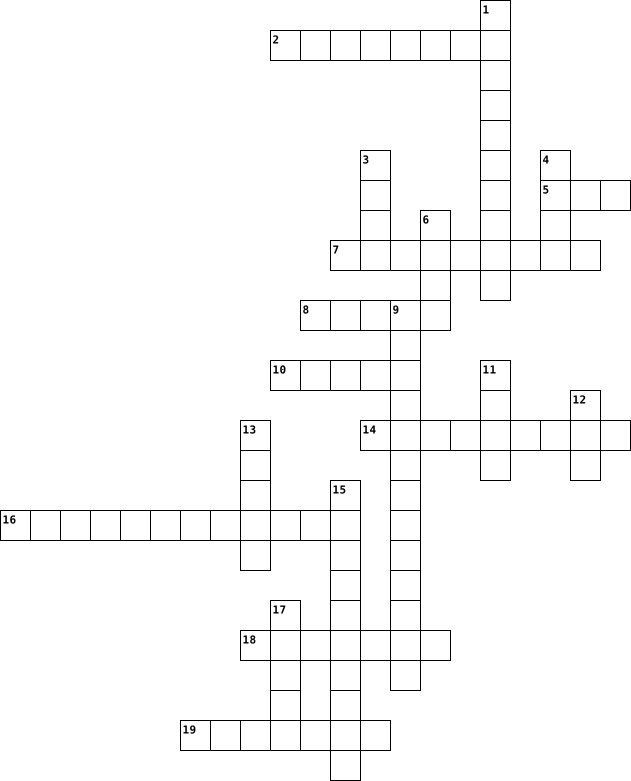
Across
- Energy found in food or fuel
- Fuel extracted from the Earth using Rigs at sea
- Types of energy that can be used again
- Energy from a light bulb
- Energy given off from a bell
- Energy stored when something is stretched or up high
- Types of energy that will run out
- Energy when something moves
- Energy found in atoms
Down
- Energy used to power items
- Energy produced on the surface of the sea from wind
- Fuel mined from underground
- Energy from a radiator
- Energy produced from flowing water
- Energy produced from turbines moving on a windy day
- Fuel used to heat homes
- Energy produced from the sun
- Energy produced from the heat of the Earth
- Energy produced from the movement of the sea
19 Clues: Energy found in atoms • Energy from a radiator • Fuel used to heat homes • Energy from a light bulb • Energy used to power items • Fuel mined from underground • Energy when something moves • Energy found in food or fuel • Energy given off from a bell • Energy produced from the sun • Types of energy that will run out • Energy produced from flowing water • ...
ENERGY 2024-06-05

Across
- potential energy energy found in a rubber band
- potential energy the bread fruit in a tree is an example of
- energy in charged particles in a electric field
- energy can neither be destroyed or _____
- energy a spinning fan is an example of
- what law states that energy cannot be destroyed or created
- energy produced when something vibrates
- to save energy
- energy the sun gives us _______
Down
- fossil fuels have what type of energy
- a change from one to another
- energy another term for heat energy
- energy in electronic appliances
- there are _____ types of energy
- energy can only be _________
- SI UNIT for energy
- energy stored withing an object due to its position or state
- the ability of a body to work
- energy energy stored in a nuclear of an atom
19 Clues: to save energy • SI UNIT for energy • a change from one to another • energy can only be _________ • the ability of a body to work • energy in electronic appliances • there are _____ types of energy • energy the sun gives us _______ • energy another term for heat energy • fossil fuels have what type of energy • energy a spinning fan is an example of • ...
Energy 2022-10-14

Across
- A thickness of an object, or the obesity.
- A way to work, and heat up things.
- Small particles, that is only visible with a microscope, and is always small.
- Water, or any form of non-solid shapes. Like melted Metal, or lakes.
- A origin, like the beginning to end.
- Energy with the object in place. Stiff and still like an rock.
- A way to say mass, and the important things. In one simple word.
- A series of different heat. Cold, Hot, and warm.
- A invisible or visible substance,that's like steam, and air.
Down
- The heat in a form of waves, and transferring heat through an empty space.
- A way to transfer heat from an object to another in DIRECT contact.
- Energy a nice movement of an object,Like rolling!
- A shape that's not a plane shape, instead is sturdy, and isn't hollow. Like liquids
- A object or thing that is meant to hold certain things. WITHOUT using the energy.
- Miniature germs, and gas,that's invisible without a microscope.
- A way to give something, or take away something.
- A heat transfer through gasses, and solid liquids.
- Energy A form of energy that has 3 transfers. And is a form of warmth.
- A way to say Hot, but differently.
19 Clues: A way to work, and heat up things. • A way to say Hot, but differently. • A origin, like the beginning to end. • A thickness of an object, or the obesity. • A way to give something, or take away something. • A series of different heat. Cold, Hot, and warm. • Energy a nice movement of an object,Like rolling! • A heat transfer through gasses, and solid liquids. • ...
Energy 2025-02-20

Across
- - A safety device with a thin metal strip that will melt if too much current passes through a circuit.
- - A circuit with more than one path for current flow.
- - to send something across places; to pass along
- - Allowing light to pass through
- - To move or travel smoothly in a certain direction.
- - A circuit with only one path for current flow
- - A material that allows electricity to flow easily.
- - A piece of glass that separates white light into colors of the spectrum.
- - A material that does not allow electric charges to flow easily.
- - to soak up or take in
- - A clear piece of curved glass or plastic that bends passing light to focus or spread the light rays
Down
- - To make larger or to make seem larger
- - material that moves energy or light from one substance to another
- - An electrical path for current electricity.
- - not letting light through
- - Permitting light to pass through, but not transparent
- - The bouncing back of a wave when it hits a surface through which it cannot pass.
- - a device that opens or closes a circuit.
- - the bending of a wave as it enters a new medium at an angle
19 Clues: - to soak up or take in • - not letting light through • - Allowing light to pass through • - To make larger or to make seem larger • - a device that opens or closes a circuit. • - An electrical path for current electricity. • - A circuit with only one path for current flow • - to send something across places; to pass along • ...
Energy 2026-03-10

Across
- energy being put to use
- the thing energys measured in
- think of a repair shop
- ______ reactions
- velcro
- broken arm
- storm
- the compacity to do work
- energy stored
Down
- skin cancer
- camp ___
- heat
- ___ powerplant
- electicity
- physical electricity
- energy
- how tall something is
- energy that could be used
- gravitatinal potentail energy
19 Clues: heat • storm • energy • velcro • camp ___ • electicity • broken arm • skin cancer • energy stored • ___ powerplant • ______ reactions • physical electricity • how tall something is • think of a repair shop • energy being put to use • the compacity to do work • energy that could be used • the thing energys measured in • gravitatinal potentail energy
science vocab 2013-05-20
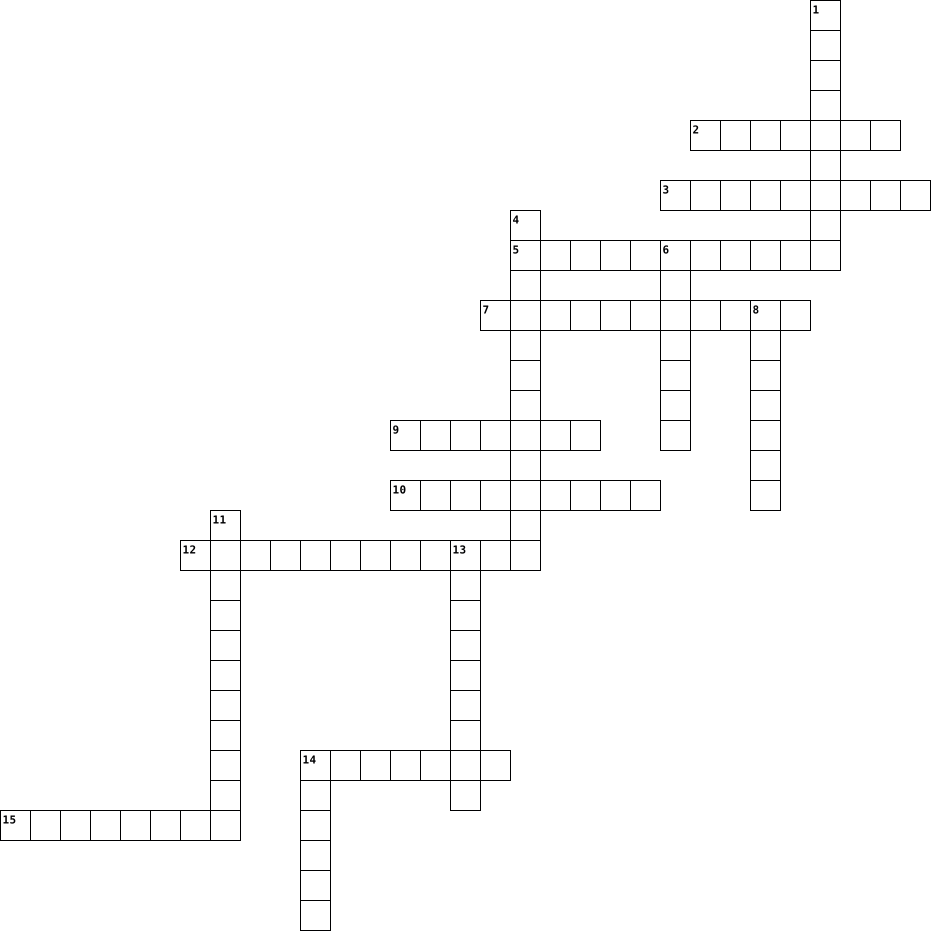
Across
- the science that deals with matter, energy, motion, and force
- ( used with a singular verb ) Physics. the branch of physics that deals with sound and sound waves.
- the scientific study of historic or prehistoric peoples and their cultures by analysis of their artifacts, inscriptions, monuments, and other such remains, especially those that have been excavated.
- the science dealing with the atmosphere and its phenomena, including weather and climate.
- the science or branch of biology dealing with animals.
- the science that deals with the material universe beyond the earth's atmosphere.
- the branch of physical geography dealing with the ocean.
- the science of life or living matter in all its forms and phenomena, especially with reference to origin, growth, reproduction, structure, and behavior.
- the science of soil management and the production of field crops.
Down
- the science that deals with the composition and properties of substances and various elementary forms of matter. Compare element
- the science of the forms of life existing in former geologic periods, as represented by their fossils.
- the branch of biology dealing with the relations and interactions between organisms and their environment, including other organisms.
- the science that deals with the dynamics and physical history of the earth, the rocks of which it is composed, and the physical, chemical, and biological changes that the earth has undergone or is undergoing.
- the branch of zoology dealing with fishes.
- the science or the study of the origin, nature, and course of diseases.
- the science of plants; the branch of biology that deals with plant life.
16 Clues: the branch of zoology dealing with fishes. • the science or branch of biology dealing with animals. • the branch of physical geography dealing with the ocean. • the science that deals with matter, energy, motion, and force • the science of soil management and the production of field crops. • the science or the study of the origin, nature, and course of diseases. • ...
Crosscience 2022-09-15

Across
- cells: multicellular, has a nucleus.
- cell: cell that can divide into 2 or more daughter cells,
- cell: cells that result from the division of a single parent cell.
- a threadlike structure of nucleic acids and protein found in the nucleus of most living cells.
- a new cell wall forms in the middle
- chromosomes line up in a single file at the middle of the cell.
- wall: structural layer surrounding some types of cells, just outside the cell membrane.
- sister cromatids searate.
- vopied DNA condenses into chromosomes
- theory: one of the basic principles of biology.
- a space or vesicle within the cytoplasm of a cell, enclosed by a membrane and typically containing fluid.
- self-replicating material that is present in nearly all living organisms as the main constituent of chromosomes.
Down
- plastid that contains chlorophyll and in which photosynthesis takes place.
- cells: single celled organism that doesn't have a nucleus or organells.
- organelle found in large numbers in most cells, in which the biochemical processes of respiration and energy production occur. It has a double membrane.
- sinthesis phase
- a space or vesicle within the cytoplasm of a cell, enclosed by a membrane and typically containing fluid.
- a nuclear memebrane forms around the chrematin.
- the first of four phases of the cell cycle that takes place in eukaryotic cell division.
- the period in the cell cycle from the completion of DNA replication to the beginning of cell division
20 Clues: sinthesis phase • sister cromatids searate. • a new cell wall forms in the middle • cells: multicellular, has a nucleus. • vopied DNA condenses into chromosomes • a nuclear memebrane forms around the chrematin. • theory: one of the basic principles of biology. • cell: cell that can divide into 2 or more daughter cells, • ...
Earthquakes and Tectonic Plates 2026-04-17

Across
- Cause of mantle's movement
- Location on earth's surface that represents the origin of an earthquake
- This type of wave creates the rolling motion observed on Earth's surface
- This island country was formed along the MidAtlantic Ridge by magma cooling at Earth's surface
- Boundary type were plates slide past each other
- Forms at continental/continental divergent boundaries
- landfrom created at a continental/continental convergent boundary
- Magma layer that creates Earth's magnetic field
- How energy is released during an earthquake
- Machines that measure seismic waves
Down
- The denser of the two types of crust
- Stress is a type of...
- Tectonic plates are always slowing moving but get stuck due to this
- Name of scientist who first proposed the idea of plate tectonics
- This happens when one plate slides beneath another
- This keeps the inner core a solid despite extreme hot temperatures
- Fastest waves move longitudinal inside Earth
- Minimum amount of locations needed for earthquake triangulation
- This boundary type creates new crust
- places where breaks in Earth's crust from and two tectonic plates meet
- This rock makes up a large majority of oceanic crust
- Seismic waves travel outward from the...
- Waves that cause horizontal shaking on Earth's surface
- Forms at ocean/ocean divergent boundary
- This type of wave can only travel through the mantle
25 Clues: Stress is a type of... • Cause of mantle's movement • Machines that measure seismic waves • The denser of the two types of crust • This boundary type creates new crust • Forms at ocean/ocean divergent boundary • Seismic waves travel outward from the... • How energy is released during an earthquake • Fastest waves move longitudinal inside Earth • ...
Cell Structure & Function Choice Board Puzzle 2021-10-11

Across
- Helps produce protein for the cell.
- forms when DNA coils tightly during division and assembles
- centrioles are only found in this type of cell
- known as the "microtubule organizing center"
- inside chloroplasts and trap sunlight for energy
- A round structure within the nucleus that produces ribosomes.
- proteins made by the rough ER travel to the Golgi in sacks called this
- the cell membrane is also called this
- Surrounds and protects the nucleus.
- The command center of the cell that contains DNA
- has digestive enzymes that destroy damaged organelles and invaders.
- Builds and transports substances through the cell; attached ribosomes on it's surface give it a rough texture.
- the most basic unit of life
Down
- the largest organelle in plant cells
- the cell membrane has this property
- Processes and packages materials for the cell.
- term for the process of cell division
- the process of making protein
- Builds and transports substances through the cell; does not have attached ribosomes.
- Jelly-like fluid that surrounds and protects the organelles.
- A double layer that supports and protects the cell and only allows certain substances in and out.
- Known as the "powerhouse” of the cell; breaks down food to produce energy in the form of ATP.
- Stores food and water.
- Gives shape and protection to plant cells.
- converts sunlight into energy for plant cell and contains a green pigment called chlorophyll.
25 Clues: Stores food and water. • the most basic unit of life • the process of making protein • Helps produce protein for the cell. • the cell membrane has this property • Surrounds and protects the nucleus. • the largest organelle in plant cells • term for the process of cell division • the cell membrane is also called this • Gives shape and protection to plant cells. • ...
Chapter 1 Healthy Body 2025-01-22

Across
- wavelike contractions that moves food
- hormone that triggers sleepiness
- what term refers to an unborn baby
- helps move undigested waste materials
- body's largest internal organ
- gland secretes hormones that regulate metabolism
- mineral vital in energy production
- substances that neutralize free radicals
- change from childhood to adulthood
Down
- what gland is referred to as the "master gland"
- doctor that treats digestive system
- the hardest substances in the body
- the "emergency action" hormone
- study of the endocrine system
- structure that forms between mother and baby
- refers to the visible part of a tooth
- three blood vessels that connect baby to mom
17 Clues: study of the endocrine system • body's largest internal organ • the "emergency action" hormone • hormone that triggers sleepiness • the hardest substances in the body • what term refers to an unborn baby • mineral vital in energy production • change from childhood to adulthood • doctor that treats digestive system • wavelike contractions that moves food • ...
Vocabulary for Terminale S - EURO 2013-09-04

Across
- English physicist and mathematician who is widely known for most of classical mechanics
- light amplification by stimulated emission of radiation
- German-born theoretical physicist who developed the general theory of relativity, best known for his mass–energy equivalence formula
- Infrared technology that is widely used by chemists and forensic scientists to identify chemical compounds
- also called sustainable chemistry, is a philosophy that encourages the design of products and processes that minimize the use and generation of hazardous substances
- the rate at which the velocity of a body changes with time
- graphic representation of the molecular structure, showing how the atoms are arranged
- laboratory techniques for the separation of mixtures originally based on color
- method of separating mixtures based on differences in volatility of components in a boiling liquid mixture
- a conserved quantity with different forms that can take : kinetics, potential, electric, chemical…
Down
- mechanical wave that is an oscillation of pressure transmitted through some medium
- For cyclical processes defines the number of cycles per unit time
- a substance that increase the rate of a chemical reaction
- laboratory method of quantitative chemical analysis that is used to determine the unknown concentration of an identified compound
- distance travelled by the object divided by the duration
- disturbance or oscillation that travels through space and matter, accompanied by a transfer of energy
- chemical compounds whose molecules contain carbon, hydrogen, oxygen or nitrogen
- molecules with the same molecular formula but different chemical structures
- Electromagnetic radiation
- Aqueous solutions that have a pH of less than 7
20 Clues: Electromagnetic radiation • Aqueous solutions that have a pH of less than 7 • light amplification by stimulated emission of radiation • distance travelled by the object divided by the duration • a substance that increase the rate of a chemical reaction • the rate at which the velocity of a body changes with time • ...
Leonard's crossword 2017-08-17

Across
- the amount of force presses on a area
- fertile soil of flooding waters and is great for growing crops
- a layer of hot, solid material that is between Earth's crust
- vibrations that carry energy that is released in a earthquake as they travel through the Earth
- a rigid layer that forms near the crust in the Earth's interior
Down
- The region between the Tigris and the Euphrates
- a soft layer of Earth's interior that forms further bellow the crust
- a period of time with not enough rain or snow to help the crops grow
- A climate with very little rainfall and warm temperatures
- when you have more than you need, especially in relation of food
10 Clues: the amount of force presses on a area • The region between the Tigris and the Euphrates • A climate with very little rainfall and warm temperatures • a layer of hot, solid material that is between Earth's crust • fertile soil of flooding waters and is great for growing crops • a rigid layer that forms near the crust in the Earth's interior • ...
Science 2021-03-30

Across
- small solid pieces of material that comes from rocks of living things
- core a layer of molten metal surrounding the inner core
- waves vibrations that travel through Earth carrying the energy released during an earthquake
- the process by which atoms are arranged to form a material that has a crystal structure
- the repeating pattern of a mineral´s particles form a solid
Down
- core a dense ball of solid metal
- a layer of hot rock
- rock rock that forms from cooled magma or lava
- the rock that forms Earth´s outer layer
- a naturally occurring solid that can form by inorganic processes and has a crystal structure and definite chemical composition
10 Clues: a layer of hot rock • core a dense ball of solid metal • the rock that forms Earth´s outer layer • rock rock that forms from cooled magma or lava • core a layer of molten metal surrounding the inner core • the repeating pattern of a mineral´s particles form a solid • small solid pieces of material that comes from rocks of living things • ...
Skeletal System Crossword 2022-03-25

Across
- Ankle bone
- Connects sternum to shoulder
- Breastbone, connects with ribcage
- Connection between upper & lower body
- Helps you chew food
- Other forearm bone
- Posterior shoulder bone
- Forms ball of your foot
- Largest bone in the body
Down
- These make up your spine
- Bone located at front of skull
- Bone located in your upper arm
- Bone located on the back of your skull
- Kneecap
- Fingers
- Lateral lower leg bone
- This connects your upper and lower arm, elbow
- Forms heel of your foot
- Where shin splints occur
- Forearm bone connect w/ humerus, forms elbow
20 Clues: Kneecap • Fingers • Ankle bone • Other forearm bone • Helps you chew food • Lateral lower leg bone • Forms heel of your foot • Posterior shoulder bone • Forms ball of your foot • These make up your spine • Where shin splints occur • Largest bone in the body • Connects sternum to shoulder • Bone located at front of skull • Bone located in your upper arm • Breastbone, connects with ribcage • ...
science 2019 year in review holiday xword 2019-12-20

Across
- process that changes substances into new substances
- substances that are formed during a chemical reaction
- a combination of substances that can be physically separated from one another
- the amount of space that an object occupies
- energy of motion
- two or more atoms joined together
- subatomic particle with no electric charge
- matter without any defined volume or shape
- the transfer of heat energy through a solid
- a pure substance that cannot be broken down into simpler substances by chemical reactions
- rock that is created from previously existing rock by the action of intense heat and pressure
- electron that resides in the outermost shell
- matter with a defined volume but no defined shape
- measure of the average kinetic energy of the atoms in a system, used to express thermal energy
- energy in the form of heat
- subatomic particle with a positive charge
- the number of protons in the nucleus of an atom
- measurements or observations
- variable in an experiment that is a fair test; the variable that a scientist changes
- The combined mass of all of the protons and neutrons of an atom
- an observation that deals with characteristics that cannot be expressed in numbers
- rock formed by gravity pressing fragments of other rocks and minerals together
- the force of gravity on an object
- energy in the form of heat
- the substances present before a chemical reaction
- variable that is affected when another factor, trait or condition is changed in a scientific experiment
- rock that forms when melted rock cools and hardens
Down
- change in matter that does not affect its chemical composition
- plate boundary at which two tectonic plates move toward each other
- the sinking of an oceanic plate beneath a plate of lesser density
- the ability to do work or cause change
- a pure substance that is formed when two or more different elements combine
- a prediction based on background knowledge saying what is expected to happen in an experiment
- the transfer of heat through a fluid
- reaction that gives off heat energy
- reaction that absorbs heat energy
- observation that deals with a number or amount
- in an experiment, a group that is kept under normal or ideal conditions while others are changed
- an object's mass divided by its volume
- material that has mass and takes up some amount of space
- the amount of matter in an object
- matter with a fixed volume and shape
- plate boundary at which two tectonic plates move away from each other
- energy that does not need matter to travel
- an early sample, model, or release of a product built to test a concept or process.
- plate boundary along which plates slide horizontally past one another
- subatomic particle that has a negative charge
- stored energy
- the smallest unit of an element that has the properties of that element
- a crack in a body of rock that the rock can move along
50 Clues: stored energy • energy of motion • energy in the form of heat • energy in the form of heat • measurements or observations • two or more atoms joined together • reaction that absorbs heat energy • the amount of matter in an object • the force of gravity on an object • reaction that gives off heat energy • the transfer of heat through a fluid • matter with a fixed volume and shape • ...
Carbohydrate and fat metabolism by Prabhav K 2021-03-17

Across
- a hormone that promotes breaking down glucose in the liver
- a sugar that is the most common and most important source of energy for a living organism
- the process where glucose is added to glycogen for storage
- a process where fatty acids are broken down to produce oxygen
- break down of glucose using enzymes to release energy
- to break down lipids into fatty acids and glycerol
Down
- this process forms glucose from a non-glucose source
- It is a polysaccharide of glucose that acts as fuel storage
- regulates the amount of glucose in the blood
- the breakdown of glycogen into glucose
- this molecule is the output of the metabolism of glucose
11 Clues: the breakdown of glycogen into glucose • regulates the amount of glucose in the blood • to break down lipids into fatty acids and glycerol • this process forms glucose from a non-glucose source • break down of glucose using enzymes to release energy • this molecule is the output of the metabolism of glucose • ...
Cell Structures 2023-05-23

Across
- Controls many functions of the cell – including growth, metabolism, and reproduction.
- Supports, strengthens and protects plant cells
- Digest cell nutrients and waste. Helps keep the plant rigid
- Manufacture protein such as enzymes and hormones
- Jelly-like liquid that fills up most of the space in a cell and contains hundreds of different chemicals.
Down
- “Powerhouse” of the cell. Produces energy by converting the stored energy in glucose into ATP
- Transports materials through the cell
- Contains digestive enzymes that digest cell nutrients and cell debris
- Packages substances for transport out of the cell. The cell “factory”
- Forms a barrier between the inside and the outside of the cell.
- Contain chlorophyll, site of photosynthesis
11 Clues: Transports materials through the cell • Contain chlorophyll, site of photosynthesis • Supports, strengthens and protects plant cells • Manufacture protein such as enzymes and hormones • Digest cell nutrients and waste. Helps keep the plant rigid • Forms a barrier between the inside and the outside of the cell. • ...